EP2878576A1 - Porous carbon and method for manufacturing same - Google Patents
Porous carbon and method for manufacturing same Download PDFInfo
- Publication number
- EP2878576A1 EP2878576A1 EP13822559.4A EP13822559A EP2878576A1 EP 2878576 A1 EP2878576 A1 EP 2878576A1 EP 13822559 A EP13822559 A EP 13822559A EP 2878576 A1 EP2878576 A1 EP 2878576A1
- Authority
- EP
- European Patent Office
- Prior art keywords
- porous carbon
- formula
- carbide compound
- carbon
- gas
- Prior art date
- Legal status (The legal status is an assumption and is not a legal conclusion. Google has not performed a legal analysis and makes no representation as to the accuracy of the status listed.)
- Withdrawn
Links
Images



Classifications
-
- C—CHEMISTRY; METALLURGY
- C01—INORGANIC CHEMISTRY
- C01B—NON-METALLIC ELEMENTS; COMPOUNDS THEREOF; METALLOIDS OR COMPOUNDS THEREOF NOT COVERED BY SUBCLASS C01C
- C01B32/00—Carbon; Compounds thereof
- C01B32/05—Preparation or purification of carbon not covered by groups C01B32/15, C01B32/20, C01B32/25, C01B32/30
-
- C—CHEMISTRY; METALLURGY
- C01—INORGANIC CHEMISTRY
- C01B—NON-METALLIC ELEMENTS; COMPOUNDS THEREOF; METALLOIDS OR COMPOUNDS THEREOF NOT COVERED BY SUBCLASS C01C
- C01B32/00—Carbon; Compounds thereof
- C01B32/30—Active carbon
- C01B32/312—Preparation
- C01B32/336—Preparation characterised by gaseous activating agents
-
- C—CHEMISTRY; METALLURGY
- C01—INORGANIC CHEMISTRY
- C01G—COMPOUNDS CONTAINING METALS NOT COVERED BY SUBCLASSES C01D OR C01F
- C01G1/00—Methods of preparing compounds of metals not covered by subclasses C01B, C01C, C01D, or C01F, in general
-
- C—CHEMISTRY; METALLURGY
- C01—INORGANIC CHEMISTRY
- C01G—COMPOUNDS CONTAINING METALS NOT COVERED BY SUBCLASSES C01D OR C01F
- C01G23/00—Compounds of titanium
-
- C—CHEMISTRY; METALLURGY
- C01—INORGANIC CHEMISTRY
- C01G—COMPOUNDS CONTAINING METALS NOT COVERED BY SUBCLASSES C01D OR C01F
- C01G23/00—Compounds of titanium
- C01G23/002—Compounds containing titanium, with or without oxygen or hydrogen, and containing two or more other elements
-
- C—CHEMISTRY; METALLURGY
- C01—INORGANIC CHEMISTRY
- C01G—COMPOUNDS CONTAINING METALS NOT COVERED BY SUBCLASSES C01D OR C01F
- C01G41/00—Compounds of tungsten
- C01G41/006—Compounds containing tungsten, with or without oxygen or hydrogen, and containing two or more other elements
-
- C—CHEMISTRY; METALLURGY
- C01—INORGANIC CHEMISTRY
- C01P—INDEXING SCHEME RELATING TO STRUCTURAL AND PHYSICAL ASPECTS OF SOLID INORGANIC COMPOUNDS
- C01P2002/00—Crystal-structural characteristics
- C01P2002/70—Crystal-structural characteristics defined by measured X-ray, neutron or electron diffraction data
- C01P2002/72—Crystal-structural characteristics defined by measured X-ray, neutron or electron diffraction data by d-values or two theta-values, e.g. as X-ray diagram
-
- C—CHEMISTRY; METALLURGY
- C01—INORGANIC CHEMISTRY
- C01P—INDEXING SCHEME RELATING TO STRUCTURAL AND PHYSICAL ASPECTS OF SOLID INORGANIC COMPOUNDS
- C01P2006/00—Physical properties of inorganic compounds
- C01P2006/12—Surface area
-
- C—CHEMISTRY; METALLURGY
- C01—INORGANIC CHEMISTRY
- C01P—INDEXING SCHEME RELATING TO STRUCTURAL AND PHYSICAL ASPECTS OF SOLID INORGANIC COMPOUNDS
- C01P2006/00—Physical properties of inorganic compounds
- C01P2006/14—Pore volume
-
- C—CHEMISTRY; METALLURGY
- C01—INORGANIC CHEMISTRY
- C01P—INDEXING SCHEME RELATING TO STRUCTURAL AND PHYSICAL ASPECTS OF SOLID INORGANIC COMPOUNDS
- C01P2006/00—Physical properties of inorganic compounds
- C01P2006/16—Pore diameter
Definitions
- the carbide compound may be a substitutional solid solution or an interstitial solid solution wherein in the Formula 1, at least one of hydrogen(H) or boron(B) is substitutionally or interstitially inserted partially at the oxygen site.
Landscapes
- Chemical & Material Sciences (AREA)
- Organic Chemistry (AREA)
- Inorganic Chemistry (AREA)
- Life Sciences & Earth Sciences (AREA)
- Environmental & Geological Engineering (AREA)
- General Life Sciences & Earth Sciences (AREA)
- Geology (AREA)
- Carbon And Carbon Compounds (AREA)
- Catalysts (AREA)
Abstract
Description
- The present invention relates to porous carbon and a method for preparing the same. More particularly, the present invention relates to highly porous carbon having large specific surface area, and a method for preparing the same. This application claims the priority of Korean Patent Application No.
10-2012-0082714 - Carbon material is very useful material that is applied in many different industries such as a catalyst, a fuel cell, electrode material for a secondary cell, a super capacitor, composite materials, a gas sensor, a solar cell, various eletronic devices and the like. Carbon is being applied in a great variety of forms.
- Particularly, carbon fiber, carbon nanotube and the like have very excellent mechanical properties while having high conductivity, and for active carbon or amorphous carbon with very high specific surface area, due to the high porosity and stable property, a lot of studies are being progressed in the field of electrode material for a fuel cell and a secondary cell. And, it draws attention as gas storage material for fuel such as hydrocarbon and hydrogen and the like, or a separation body that can purify contaminated area or harmful gas such as carbon dioxide and the like
- Recently, carbide derived carbon (CDC) is studied as porous carbon material, and is receiving lots of attention (Gogotsi et al. 1997 J. Mater. Chem.7:1841-1848; Boehm et al. Proc.12 th Biennial Conf. on Carbon 149-150 (Pergamon, Oxford, 1975). Most amorphous CDC has micropores of 2 nm or less, and thus, it was reported to selectively produce 0.6∼0.9 nm pores that are ideal for hydrogen storage.
- However, mesopores of 2nm or more are also in great demand in various industries such as semiconductor or large gas storage, adsorption body of medical therapeutics or lubricant adsorbent and the like.
- Recently, control of pore volume as well as control of specific surface area and pore size draws attention as more important property. Thus, in order to control pores, CDC synthesis was attempted using various raw materials. As the raw materials of CDC, most carbides such as TiC, ZrC, WC, SiC, TaC, B4C, HfC, Al4C3 and the like were used, but noticeable result according to the kind of metal atoms of carbide was not obtained, and CDC that can form mesopores of 2 nm or more has not been reported yet.
- In order to solve the problems of the prior art, it is an object of the invention to provide porous carbon with high specific surface area including micropores and mesopores.
- It is another object of the invention to provide a method for preparing the porous carbon.
- The present invention provides porous carbon derived from a carbide compound having a composition represented by the following Formula 1:
[Formula 1] M(CxOy)
(in theFormula 1, M is at least one metal selected from the group consisting of Ti, V, Cr, Zr, Nb, Mo, W, Hf, and Ta;
X is 0.6 to 0.99, and y is 0.01 to 0.4). - The present invention also provides porous carbon derived from a carbide compound having a composition represented by the following Formula 2:
[Formula 2] M(CxOyAz)
(in theFormula 2, M is at least one metal selected from the group consisting of Ti, V, Cr, Zr, Nb, Mo, W, Hf, and Ta;
A is boron(B) or hydrogen(H);
X is 0.6 to 0.99, y is 0.01 to 0.4, and z is 0.01 to 0.4). - The present invention also provides a method for preparing porous carbon comprising the steps of:
- mixing at least one metal source selected the group consisting of metal selected from Ti, V, Cr, Zr, Nb, Mo, W, Hf, Ta, and oxides thereof with a carbon source;
- heating the mixture to form a carbide compound;
- reacting the carbide compound with halogen gas; and
- heating the reaction mixture under hydrogen atmosphere.
-
-
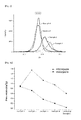
Fig. 1 is a graph showing the XRD results of the carbide compounds prepared according to Examples 1 to 4. -
Fig. 2 is a graph showing the (111) peak shifts in the XRDs of the carbide compounds prepared according to Examples 1 to 4. -
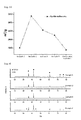
Fig. 3a is a graph showing the volumes of the micro- and mesopores of the porous carbons prepared according to Examples 1 to 4 and Comparative Example 1. -
Fig. 3b is a graph showing the specific surface areas of the porous carbons prepared according to Examples 1 to 4 and Comparative Example 1. -
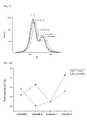
Fig. 4 is a graph showing the XRD results of the carbide compounds prepared according to Examples 5 to 8. -
Fig. 5 is a graph showing the (111) peak shifts according to the change in lattice constant in the XRDs of the carbide compounds prepared according to Examples 5 to 8. -
Fig. 6a is a graph showing the volumes of the micro- and mesopores of the porous carbons prepared according to Examples 5 to 8. -
Fig. 6b is a graph showing the specific surface areas of the porous carbons prepared according to Examples 5 to 8. -
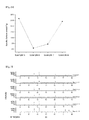
Fig. 7 is a graph showing the XRD results of the carbide compounds prepared according to Examples 9 to 14. -
Fig. 8 is a graph showing the (111) peak shifts in the XRDs of the carbide compounds prepared according to Examples 9 to 14. -
Fig. 9a is a graph showing the volumes of the micro- and mesopores of the porous carbons prepared according to Examples 9 to 14. -
Fig. 9b is a graph showing the specific surface areas of the porous carbons prepared according to Examples 9 to 14. - The porous carbon of the present invention may be usefully used in various application fields requiring relatively large pores as well as in the fields requiring small pores, by including mesopores with a size of 2 nm or more together with micropores with a size less than 2 nm,
- And, according to the preparation method of porous carbon of the present invention, by controlling the compositional ratio of each component of a carbide compound, porous carbon having pores of various sizes and specific surface areas may be easily prepared by a simple method.
- The porous carbon according to one embodiment of the invention is derived from a carbide compound having a composition represented by the following
Formula 1.
[Formula 1] M(CxOy)
(in theFormula 1, M is at least one metal selected from the group consisting of Ti, V, Cr, Zr, Nb, Mo, W, Hf, and Ta;
X is 0.6 to 0.99, and y is 0.01 to 0.4). - The porous carbon according to another embodiment of the invention is derived from a carbide compound having a composition represented by the following Formula 2:
[Formula 2] M(CxOyAz)
(in theFormula 2, M is at least one metal selected from the group consisting of Ti, V, Cr, Zr, Nb, Mo, W, Hf, and Ta;
A is boron(B) or hydrogen(H);
X is 0.6 to 0.99, y is 0.01 to 0.4, and z is 0.01 to 0.4). - And, the preparation method of porous carbon according to one embodiment of the invention comprises the steps of: mixing at least one metal source selected the group consisting of metal selected from Ti, V, Cr, Zr, Nb, Mo, W, Hf, Ta, and oxides thereof with a carbon source; heating the mixture to form a carbide compound; reacting the carbide compound with halogen gas; and heating the reaction mixture under hydrogen atmosphere.
- Hereinafter, porous carbon and a method for preparing the same according to the present invention will be explained in detail with reference to drawings.
- According to one aspect of the invention, provided is porous carbon derived from a carbide compound having a composition represented by the following Formula 1:
[Formula 1] M(CxOy)
(in theFormula 1, M is at least one metal selected from the group consisting of Ti, V, Cr, Zr, Nb, Mo, W, Hf, and Ta;
x is 0.6 to 0.99, and y is 0.01 to 0.4). - In the composition of the
Formula 1, the metal(M) may be at least one selected from the group consisting of Ti, V, Cr, Zr, Nb, Mo, W, Hf and Ta. - According to one embodiment of the invention, the metal(M) may be Ti.
- In the
Formula 1, x is the mole ratio of carbon, and may have a broad compositional range because carbon vacancy is stable. And, y is the mole ratio of oxygen, has relatively small compositional range, and if y is greater than 0.4, remaining unreacted oxygen may produce oxides such as Ti2O3 and the like. - Since the carbide compound having a composition represented by the following
Formula 1 allows vacancy according to the size or binding capacity of metal and carbon in the crystal, M:(CxOy) may have a non-stoichimetric composition. - According to one embodiment of the invention, x may be 0.6 to 0.09, preferably 0.6 to 0.9, more preferably 0.6 to 0.8. And, y may be 0.01 to 0.4, preferably 0.1 to 0.4, more preferably 0.2 to 0.4.
- According to another embodiment of the invention, the metal(M) may be a composite metal including Ti and other metal(M') atoms, namely, at least one selected from the group consisting of V, Cr, Zr, Nb, Mo, W, Hf, and Ta. Wherein, the carbide compound of the
Formula 1 may be represented by the following Formula 1a.
[Formula 1a] (Th1-aM'a) (CxOy)
(in the Formula 1a, M'is at least one metal selected from the group consisting of V, Cr, Zr, Nb, Mo, W, Hf, and Ta;
a is 0.01 to 0.3, x is 0.6 to 0.99, and y is 0.01 to 0.4). - In the composition of the Formula 1a, a denotes the mole ratio of M', x denotes the mole ratio of carbon, and y denotes the mole ratio of oxygen.
- According to one embodiment of the invention, a may be 0.01 to 0.3, preferably 0.01 to 0.2. And, x may be 0.6 to 0.99, preferably 0.6 to 0.7. And, y may be 0.01 to 0.4, preferably 0.1 to 0.4, more preferably 0.2 to 0.4.
- The carbide compound represented by the Formula 1a may be a substitutional solid solution wherein metal(M) includes Ti and at least one selected from the group consisting of Ti, V, Cr, Zr, Nb, Mo, W, Hf, and Ta is substitutionally inserted partially at the Ti site.
- According to one embodiment of the invention, the carbide compound of the
Formula 1 or Formula 1a may be a solid solution compound consisting only of metal, oxygen and carbon. - According to another embodiment of the invention, the carbide compound may be a substitutional solid solution or an interstitial solid solution wherein in the
Formula 1, at least one of hydrogen(H) or boron(B) is substitutionally or interstitially inserted partially at the oxygen site. - In case an oxygen atom is substituted with at least one of hydrogen(H) or boron(B) in the substitutional or interstitial form, the carbide compound may have a composition represented by the following
Formula 2. Thus, the porous carbon according to one embodiment of the invention may be porous carbon derived from a carbide compound having a composition represented by the followingFormula 2.
[Formula 2] M(CxOyAz)
(in theFormula 2, M is at least one metal selected from the group consisting of Ti, V, Cr, Zr, Nb, Mo, W, Hf, and Ta;
A is boron(B) or hydrogen(H);
X is 0.6 to 0.99, y is 0.01 to 0.4, and z is 0.01 to 0.4). - In the composition of the
Formula 2, x denotes the mole ratio of carbon, y denotes the mole ratio of oxygen, and z denotes the mole ratio of boron or hydrogen. - According to one embodiment of the invention, x may be 0.6 to 0.99, preferably 0.6 to 0.7. And, y may be 0.01 to 0.4, preferably 0.1 to 0.4, more preferably 0.2 to 0.4. And, z may be 0.01 to 0.4, preferably 0.01 to 0.3.
- The porous carbon of the present invention is carbide derived carbon (CDC). The carbide derived carbon is a carbon prepared by thermochemically reacting a carbide compound with halogen-containing gas to extract atoms other than carbon in the carbide compound, and it exhibits satisfactory physical properties as hydrogen storage material and electrode material compared to the existing activated carbon, and thus, it is drawing attention.
- For carbide derived carbon, although porous carbide derived carbon having micropores of 2 nm or less is known, it is not easy to form pores of various sizes including mesopores of a size of 2 nm or more.
- As used herein, micropores mean pores having a diameter less than about 2 nm, and mesopores mean pores having a diameter of about 2 nm or more, for example, about 2 to 50 nm.
- On the surface of the porous carbon of the present invention, a plurality of pores that include both micropores and mesopores are formed.
- As explained above, since the porous carbon of the present invention includes both micropores less than 2 nm and mesopores of 2 nm or more, it may be usefully used in various application fields including the field requiring relatively large pores, for example, storage of larger gas than hydrogen, adsorption body of medical therapeutics or lubricant adsorbent, a catalyst, an electrode of a super capacitor, a filter, and the like, as well as storage and adsorption of small gas such as hydrogen.
- And, the volume ratio of the pores including micropores and mesopores may be about 60% or more, for example, about 60 to about 85%, preferably about 70 to about 85%, based on the total volume of the porous carbon. The volume of the pores is measured by introducing nitrogen gas from 0 to 1 atm and converting the amount of adsorbed nitrogen into volume, while maintaining a constant temperature, for example, maintaining 77K using liquid nitrogen. Wherein, the volume ratio of the pores may be calculated by dividing the volume of the pores by the total volume, based on the pores full of gas.
- According to one embodiment of the invention, in the porous carbon, micropores having a diameter less than 2 nm may be about 0.001 to about 1.5 cm3/g, preferably about 0.01 to about 1.2 cm3/g, and mesopores having a diameter of 2 nm or more may be about 0.01 to about 2.5 cm3/g, preferably about 0.1 to about 2.3 cm3/g.
- According to one embodiment of the invention, the porous carbon may have specific surface area of about 400 m2/g or more, for example, about 400 to about 4,000 m2/g, preferably about 500 to about 3,500 m2/g. The specific surface area may be calculated by the following
Formula 1, on the assumption that nitrogen is adsorbed into a monomolecular layer under each pressure condition while introducing nitrogen gas from 0 atm to 1 atm, while maintaining a constant temperature, for example, maintaining 77K using liquid nitrogen.
(SSA = specific surface area[m2/g], Vmono = measurement volume of nitrogen adsorbed into a monomolecular layer per gram of pore[m3/g], 22400 = volume of 1mol nitrogen[m3/mol], σ=cross sectional area of nitrogen [m2/atom], N=Avogadro's number[atom/mol]) - The porous carbon may be obtained by mixing at least one metal source selected from the group consisting of metals selected from Ti, V, Cr, Zr, Nb, Mo, W, Hf, and Ta, and oxides thereof with a carbon source, heating the mixture to form a carbide compound, and extracting atoms other than carbon, as described in detail below.
- According to another aspect of the invention, provided is a method for preparing porous carbon comprising the steps of: mixing at least one metal source selected the group consisting of metals selected from Ti, V, Cr, Zr, Nb, Mo, W, Hf, and Ta, and oxides thereof with a carbon source; heating the mixture to form a carbide compound; reacting the carbide compound with halogen gas; and heating the reaction mixture under hydrogen atmosphere.
- According to one embodiment of the invention, the carbide compound may have a composition represented by the following
Formula 1.
[Formula 1] M(CxOy)
- In the
Formula 1, M is at least one metal selected from the group consisting of Ti, V, Cr, Zr, Nb, Mo, W, Hf, and Ta;
x is 0.6 to 0.99, and y is 0.01 to 0.4. - In the composition of the
Formula 1, the metal(M) may be at least one selected from the group consisting of Ti, V, Cr, Zr, Nb, Mo, W, Hf and Ta. - According to one embodiment of the invention, the metal(M) may be titanium(Ti).
- According to another embodiment of the invention, the metal(M) may be a composite metal including Ti and other metal(M') atoms, namely, at least one selected from the group consisting of V, Cr, Zr, Nb, Mo, W, Hf, and Ta.
- Wherein, the carbide compound of the
Formula 1 may be represented by the following Formula 1a.
[Formula 1a] (Ti1-aM'a) (CxOy)
- In the Formula 1a, M'is at least one metal selected from the group consisting of V, Cr, Zr, Nb, Mo, W, Hf, and Ta;
a is 0.01 to 0.3, x is 0.6 to 0.99, and y is 0.01 to 0.4. - In the composition of the Formula 1a, a denotes the mole ratio of M', x denotes the mole ratio of carbon, and y denotes the mole ratio of oxygen.
- In the carbide compound of the
Formula 1 or Formula 1a, the carbide compound may be solid solution powder. - According to one embodiment of the invention, in the step of mixing metal or oxide thereof with a carbon source, a hydrogen(H) or boron(B) source may be further added and mixed. The hydrogen source or boron source may be gas, liquid or solid state element or molecule as long as it includes hydrogen or boron. And, an oxide, a hydrate, or a metal compound and the like may be used without specific limitations as long as it includes hydrogen or boron.
- In case a hydrogen(H) or boron(B) source is further added and mixed in the step of mixing metal or oxide thereof with a carbon source, the carbide compound may have a composition represented by the following
Formula 2. Thus, the porous carbon according to one embodiment of the invention may be porous carbon derived from a carbide compound having a composition represented by the followingFormula 2.
[Formula 2] M(CxOyAz)
- In the
Formula 2, M is at least one metal selected from the group consisting of Ti, V, Cr, Zr, Nb, Mo, W, Hf, and Ta;
A is boron(B) or hydrogen(H);
x is 0.6 to 0.99, y is 0.01 to 0.4, and z is 0.01 to 0.4. - In the composition of the
Formula 2, x denotes the mole ratio of carbon, y denotes the mole ratio of oxygen, and z denotes the mole ratio of boron or hydrogen. - The details of the
Formulae - According to one embodiment of the invention, simultaneously with or after the step of mixing at least one metal source selected from the group consisting of metals and oxides thereof with a carbon source, a pulverization process may be conducted. The pulverization process may be conducted, for example, using a high energy ball mill. By using the high energy ball mill, the mixture of a metal source and a carbon source may be more uniformly mixed, and since the mixture is pulverized with higher energy than a common ball mill, the amount of defects may be increased to stably prepare carbide solid solution powder at a temperature of about 800 to about 1,600°C, which is lower than the common carbide powder preparation temperature of about 1,700 to about 2,200°C.
- When pulverization is conducted using the high energy ball mill, for example, means such as an attritor mill, a planetary mill or a horizontal mill and the like may be used, and it is preferable to conduct dry pulverization at a BPR (ball-to-power ratio) of about 10:1 or more, and a milling speed of about 50rpm or more.
- The step of heating the mixture to form a carbide compound may be conducted at a temperature of about 800 to about 1,600°C, preferably about 1,300 to about 1,500°C for about 5 minutes to about 5 hours, preferably about 1 hour to about 2 hours.
- The step of reacting the carbide compound with halogen gas to form porous carbon may be conducted at a temperature of about 400 to about 1,200°C, preferably about 400 to about 800°C for about 1 to about 5 hours, preferably about 1 to about 3 hours. Wherein, the halogen gas used may be preferably chlorine gas.
- By reacting the carbide compound with halogen gas, most metals(M), oxygen, boron and hydrogen other than carbon are extracted in the carbide compound, thus forming pores at the sites of these atoms, thereby obtaining porous carbon.
- After reacting the carbide compound with halogen gas, the step of heating under hydrogen atmosphere is conducted. The step of heating under hydrogen atmosphere may be conducted at a temperature of about 400 to about 1,000°C, preferably about 400 to about 800°C, whereby remaining halogen gas may be removed.
- And, according to one embodiment of the invention, after the step of heating under hydrogen atmosphere to remove remaining halogen gas, the step of activating pores may be further conducted.
- By conducting the step of activating pores, more pores may be generated on the surface, or the diameter of pores may be increased, thus more increasing surface area per unit mass. However, the conventional pore activation process using carbon dioxide may cause significant mass loss because carbon is decomposed during the activation process.
- According to one embodiment of the invention, the step of activating pores may be conducted by heating porous carbon powder until a specific temperature, for example, about 25 to about 1,000°C is reached, in the atmosphere of at least one gas selected from the group consisting of inert gas such as He or Ar and N2 gas, and heating at the reached temperature for a specific time, for example, about 10 minutes to about 2 hours, using carbon dioxide gas(CO2). By conducting pore activation using inert gas before introducing carbon dioxide, pore activation may be effectively achieved while reducing carbon loss.
- Hereinafter, the present invention will be explained in detail with reference to the following examples. However, these examples are only to illustrate the invention, and the scope of the invention is not limited thereto.
- 18.7848 g of TiO2 and 6.2152 g of carbon powder were prepared and mixed.
- The mixture was dry-pulverized with a Planetary mill at 250rpm at BPR(Ball-to-Powder Ratio) of 30:1 for 20 hours using a YSZ(Yittrium Stabilized Zirconia) ball.
- After the milling was completed, the pulverized mixture was heated under vacuum at 1,500°C for 2 hours using a graphite vacuum furnace to prepare carbide compound powder having a composition of Ti(C0.648O0.273) through reduction and carbonization processes.
- 3.00g of the prepared carbide compound powder was treated with chlorine gas at 800°C for 3 hours, and then, heated at 600°C for 2 hours under hydrogen atmosphere, thereby removing remaining chlorine gas to obtain porous carbon powder.
- Porous carbon powder was prepared by the same method as Example 1, except changing the amounts of TiO2 and carbon powder.
- The amount of raw materials used and the resulting compositions of the carbide compounds are shown in the following Table 1.
- And, the specific surface area(SSA), the volume of micropores and the volume of mesopores of the porous carbon according to each Example are also shown in the following Table 1.
- 3.00g of commercially available TiC powder(Aldrich, 1-3 µm) was treated with chlorine gas at 800°C for 3 hours, and then, heated under hydrogen atmosphere at 600°C for 2 hours, thereby removing remaining chlorine gas to prepare porous carbon powder.
[Table 1] Example No. Composition of carbide compound Raw materials SSA (unit: m2/g) Volume of micropores (unit: cm3/g) Volume of mesopores (unit: cm3/g) TiO2 (unit: g) C (unit: g) 1 Ti(C0.648O0.273) 18.7848 6.2152 1607 0.523 0.311 2 Ti(C0.753O0.231) 18.3697 6.6303 2574 0.9344 0.3384 3 Ti(C0.827O0.167) 17.9725 7.0275 1914 0.7299 0.1775 4 Ti(C0.954O0.118) 17.5921 7.4079 1621 0.5982 0.1154 Comparative Example 1 TiC TiC3.00g 1512 0.6 0.04 - From the Table 1, it can be seen that total specific surface area(SSA) is in proportion to the volume of micropores.
- The maximum value of the micropores, mesopores and specific surface area was obtained in Example 2 that is derived from a carbide compound having a C:O composition of 0.753:0.231.
-
Fig. 1 shows the XRD results of the carbide compounds prepared according to Examples 1 to 4. - Referring to
Fig. 1 , it can be seen that only Ti(CO) phase and graphite phase exist. -
Fig. 2 shows (111) peak shifts in the XRDs of the carbide compounds prepared according to Examples 1 to 4. - Referring to
Fig. 2 , it can be seen that although lattice constant of crystal changes in proportion to the fraction of carbon and oxygen in the porous carbon, even if oxygen content in the carbide composition increases from about 0.1 to about 0.3, only the interval in the crystal changes without change in the crystal structure. -
Fig. 3a is a graph showing the volume of micropores and mesopores of the porous carbons prepared according to Examples 1 to 4 and Comparative Example 1. -
Fig. 3b is a graph showing specific surface areas of the porous carbons prepared according to Examples 1 to 4 and Comparative Example 1. - Referring to
Figs. 3a and3b , it can be seen that as oxygen content in the composition of porous carbon increases from Example 1 to 4, the amount of micropores increases, and that Example 2 having the mole fraction of oxygen of about 0.231 exhibits maximum pore volume and specific surface area. - To prepare porous carbon from a carbide compound that is a solid solution in which boron(B) is substitutionally inserted, 18.2108 g of TiO2, 0.158 g of B2O3, and 6.6305 g of carbon powder were prepared and mixed.
- Thereafter, remaining processes were conducted by the same method as Example 1, to prepare porous carbon powder of Example 5.
- For Examples 6 to 8, carbide compounds were prepared while changing the contents of B2O3, and then, porous carbon powders were prepared by the same method as Example 1.
- The amounts of raw materials used and the resulting composition of carbide compounds are shown in the following Table 2.
- And, the specific surface area(SSA), the volume of micropores and the volume of mesopores of the porous carbons according to each Example were measured, and the results are also shown in the following Table 2.
[Table 2] Example No. Composition of carbide compound Raw materials SSA (m2/g) Volume of micropores (cm3/g) Volume of mesopores (cm3/g) TiO2(g) B2O3(g) C(g) 5 Ti(C0.686B0.02O0.294) 18.2108 0.1586 6.6305 2534.6 0.9196 0.6014 6 Ti(C0.672B0.04O0.308) 18.0527 0.3146 6.6326 476.55 0.0129 1.1478 7 Ti(C0.658B0.06O0.322) 17.8973 0.4678 6.6347 762.6 0.249 0.2249 8 Ti(C0.644B0.08O0.336) 17.7446 0.6184 6.6368 2331 0.7955 1.641 -
Fig. 4 is a graph showing the XRD results of the carbide compounds prepared according to Examples 5 to 8. -
Fig. 5 is a graph showing (111) peak shifts according to change in lattice constant in the XRDs of the carbide compounds prepared according to Examples 5 to 8. - Referring to
Figs. 4 and5 , it can be seen that even if boron content increases in Examples 5 to 8, only the interval in the crystal changes without change in the crystal structure. Thus, it can be seen that the carbide compounds are solid solutions in which boron is substitutionally inserted. -
Fig. 6a is a graph showing the volumes of micropores and mesopores of the porous carbons prepared according to Examples 5 to 8. -
Fig. 6b is a graph showing the specific surface areas of the porous carbons prepared according to Examples 5 to 8. -
Figs. 6a and6b show that in case porous carbon is obtained from a carbide compound solid solution in which boron is substitutionally inserted, the volumes of mesopores remarkably increase except Example 7. It may be interpreted that if an appropriate amount of boron exists, it is evaporated in a gas phase together with oxygen in the process of preparing porous carbon. However, it was difficult to find out a tendency according to the compositional ratio due to the complexity of evaporation. - To prepare porous carbon from a solid solution carbide compound in which hydrogen(H) is interstitially inserted, 18.3335g of TiO2, 0.0575g of TiH2 and 6.6089 g of carbon powder were prepared and mixed.
- Thereafter, remaining processes were conducted by the same method as Example 1, to prepare porous carbon powder of Example 9.
- For Examples 10 to 14, carbide compounds were prepared while changing the contents of TiH2, and then, porous carbon powders were prepared by the same method as Example 1.
- The amounts of raw materials used and the resulting compositions of the carbide compounds are shown in the following Table 3.
[Table 3] Example No. Composition of carbide compound Raw materials SSA (unit: m2/g) Volume of micropores (unit: cm3/g) Volume of mesopores (unit: cm3/g) TiO2 (g) TiH2(g) C(g) 9 Ti(C0.730H<0.01>O0.306) 18.3335 0.0575 6.6089 469.12 0.0028 0.2156 10 Ti(C0.700H<0.03>O0.330) 18.2563 0.1736 6.5699 2566.5 0.8865 0.4461 11 Ti(C0.667H<0.05>O0.319) 18.1783 0.2911 6.5305 3053.1 1.0494 1.0847 12 Ti(C0.655H<0.07>O0.336) 18.0994 0.4099 6.4906 662.8 0.2451 0.0978 13 Ti(C0.691H<0.10>O0.336) 17.9792 0.5909 6.4298 2553.2 0.8366 0.4527 14 Ti(C0.617H<0.30>O0.331) 17.1186 1.8867 5.9945 2468.3 0.8754 0.8653 -
Fig. 7 is a graph showing the XRD results of the carbide compounds prepared according to Examples 9 to 14. -
Fig. 8 is a graph showing (111) peak shifts in the XRDs of the carbide compounds prepared according to Examples 9 to 14. - Referring to
Figs. 7 and8 , it can be seen that in Examples 9 to 14, even if oxygen contents increase, only lattice constant change without change in the crystal structure. -
Fig. 9a is a graph showing the volumes of micropores and mesopores of the porous carbons prepared according to Examples 9 to 14. -
Fig. 9b is a graph showing the specific surface areas of the porous carbons prepared according to Example 9 to 14. - Referring to
Figs. 9a and9b , it can be seen that in the porous carbon powders prepared according to Examples 9 to 14, both micropores and mesopores are present. Particularly, such a phenomenon is apparent in Example 11 having a composition of Ti(C0.665H<0.05>O0.285) - To prepare porous carbon from a solid solution carbide compound in which tungsten(W) is substitutionally inserted at the titanium(Ti) site, 12.9607g of TiO2, 5.1294g of WO3 and 6.9104g of carbon powder were prepared and mixed.
- Thereafter, remaining processes were conducted by the same method as Example 1, to prepare porous carbon powder.
- The specific surface area(SSA), volume of micropores and volume of mesopores of the porous carbon are shown in the following Table 4, in comparison to Comparative Example 1 and Example 4.
- According to the result, Example 15 is more excellent in terms of specific surface area, microporosity and mesoporosity than Comparative Example 1. And, it is shown that the porous carbon prepared from a carbide compound in which tungsten(W) is substitutionally inserted may be more favorable in terms of increase in specific surface area and multi-porosity than Example 14 that uses only titanium(Ti) as a metal atom.
[Table 4] Example No. Composition of carbide compound SSA (unit: m2/g) Volume of total pores (unit: cm3/g) Volume of micropore s (unit: cm3/g) Volume of mesopores (unit: cm3/g) Comparati ve Example 1 TiC 1512.0 0.64 0.6 0.04 Example 4 Ti(C0.954O0.118) 1621 0.75150 0.5982 0.1154 Example 15 (Ti0.88W0.12) C0.893O0.072) 1778.4 1.0665 0.7550 0.3594 - Carbide compound powder having a composition of Ti(C0.827O0.167) that was prepared by the same method as Example 1 was treated with chlorine gas at 1,000°C for 3 hours, and then, heated at 600°C for 2 hours, thereby removing remaining chlorine gas to obtain porous carbon powder.
- The porous carbon powder obtained in Example 16 was heated under He atmosphere, and when a temperature of 970°C was reached, a pore activation process was conducted by flowing CO2 at 30sccm for 30 minutes.
- The specific surface areas(SSA), volumes of micropores, and volumes of mesopores of the porous carbons according to Examples 16 and 17 were measured, and the results are shown in the following Table 5.
[Table 5] Example No. Composition of carbide compound SSA (unit:m2/g) Volume of micropores (unit:cm3/g) Volume of mesopores (unit:cm3/g) Example 16 Ti(C0.827O0.167) 2290.9 1.14 0.50 Example 17 Ti(C0.827O0.167) 1729.3 0.73 2.27 - As shown, according to the activation process of the present invention, by using inert gas such as He, N2 and the like as temperature elevating atmosphere, carbon loss may be reduced, and remarkable CO2 activation effect for increasing mesopores is exhibited.
- According to the conventional pore activation process, CO2 gas was flowed from room temperature, and during the activation process at 970°C for 2 hours, about 70% carbon loss occurred, while according to the activation process of the present invention, even though CO2 activation was conducted only for 30 minutes at 970°C, less carbon loss, for example, about 60% carbon loss occurred, and mesopores could be effectively increased.
Claims (20)
- Porous carbon derived from a carbide compound having a composition represented by the following Formula 1:
[Formula 1] M(CxOy)
in the Formula 1, M is at least one metal selected from the group consisting of Ti, V, Cr, Zr, Nb, Mo, W, Hf, and Ta; X is 0.6 to 0.99, and y is 0.01 to 0.4. - The porous carbon according to claim 1, wherein the porous carbon comprises micropores with a diameter less than 2 nm and mesopores with a diameter of 2 to 50 nm.
- The porous carbon according to claim 2, wherein the total volume fraction of the pores is 60 to 85%.
- The porous carbon according to claim 1, wherein the porous carbon has specific surface area of 400 to 4,000 m2/g.
- The porous carbon according to claim 1, wherein the carbide compound is solid solution powder, and the porous carbon is derived from the solid solution powder.
- The porous carbon according to claim 1, wherein the carbide compound of the Formula 1 is represented by the following Formula 1a:
[Formula 1a] (Ti1-aM'a) (CxOy)
in the Formula 1a, M'is at least one metal selected from the group consisting of V, Cr, Zr, Nb, Mo, W, Hf, and Ta;
a is 0.01 to 0.3, x is 0.6 to 0.99, and y is 0.01 to 0.4. - Porous carbon derived from a carbide compound having a composition represented by the following Formula 2:
[Formula 2] M(CxOyAz)
in the Formula 2, M is at least one metal selected from the group consisting of Ti, V, Cr, Zr, Nb, Mo, W, Hf, and Ta;
A is boron(B) or hydrogen(H);
X is 0.6 to 0.99, y is 0.01 to 0.4, and z is 0.01 to 0.4. - The porous carbon according to claim 7, wherein the carbide compound is solid solution powder in which at least one of hydrogen(H) or boron(B) is partially inserted in the substitutional or interstitial form.
- A method for preparing porous carbon comprising the steps of:mixing at least one metal source selected the group consisting of metal selected from Ti, V, Cr, Zr, Nb, Mo, W, Hf, Ta, and oxides thereof with a carbon source;heating the mixture to form a carbide compound;reacting the carbide compound with halogen gas; andheating the reaction mixture under hydrogen atmosphere.
- The method according to claim 9, wherein the carbide compound has a composition represented by the following Formula 1:
[Formula 1] M(CxOy)
in the Formula 1, M is at least one metal selected from the group consisting of Ti, V, Cr, Zr, Nb, Mo, W, Hf, and Ta;
X is 0.6 to 0.99, and y is 0.01 to 0.4. - The method according to claim 9, wherein in the step of mixing a metal source with a carbon source, a hydrogen(H) source or a boron(B) source is further added and mixed.
- The method according to claim 11, wherein the carbide compound has a composition represented by the following Formula 2:
[Formula 2] M(CxOyAz)
in the Formula 2, M is at least one metal selected from the group consisting of Ti, V, Cr, Zr, Nb, Mo, W, Hf, and Ta;
A is boron(B) or hydrogen(H);
x is 0.6 to 0.99, y is 0.01 to 0.4, and z is 0.01 to 0.4. - The method according to claim 9, further comprising the step of pulverizing the mixture, simultaneously with or after the step of mixing a metal source with a carbon source.
- The method according to claim 13, wherein the step of pulverizing the mixture is conducted using a high energy ball mill.
- The method according to claim 9, wherein the step of heating the mixture to form a carbide compound is conducted at a temperature of 800 to 1,600°C for 5 minutes to 5 hours.
- The method according to claim 9, wherein the halogen gas is chlorine (Cl2) gas.
- The method according to claim 9, wherein the step of reacting a carbide compound with halogen gas is conducted at a temperature of 400 to 1,200°C for 1 to 5 hours.
- The method according to claim 9, wherein the step of heating under hydrogen atmosphere is conducted at a temperature of 400 to 1,000°C.
- The method according to claim 9, further comprising the step of activating pores, after the step of heating under hydrogen atmosphere.
- The method according to claim 19, wherein the step of activating pores comprises heating the porous carbon under atmosphere of at least one gas selected from the group consisting of inert gas and N2 gas; and
flowing carbon dioxide gas(CO2) at the heated temperature.
Applications Claiming Priority (2)
| Application Number | Priority Date | Filing Date | Title |
|---|---|---|---|
| KR1020120082714A KR101442813B1 (en) | 2012-07-27 | 2012-07-27 | Porous carbon and method for preparing the same |
| PCT/KR2013/006638 WO2014017834A1 (en) | 2012-07-27 | 2013-07-24 | Porous carbon and method for manufacturing same |
Publications (2)
| Publication Number | Publication Date |
|---|---|
| EP2878576A1 true EP2878576A1 (en) | 2015-06-03 |
| EP2878576A4 EP2878576A4 (en) | 2016-07-20 |
Family
ID=49997572
Family Applications (1)
| Application Number | Title | Priority Date | Filing Date |
|---|---|---|---|
| EP13822559.4A Withdrawn EP2878576A4 (en) | 2012-07-27 | 2013-07-24 | POROUS CARBON AND METHOD FOR PRODUCING THE SAME |
Country Status (6)
| Country | Link |
|---|---|
| US (1) | US9919924B2 (en) |
| EP (1) | EP2878576A4 (en) |
| JP (1) | JP6122113B2 (en) |
| KR (1) | KR101442813B1 (en) |
| CN (1) | CN104507861A (en) |
| WO (1) | WO2014017834A1 (en) |
Families Citing this family (10)
| Publication number | Priority date | Publication date | Assignee | Title |
|---|---|---|---|---|
| MX363125B (en) | 2013-03-15 | 2019-03-11 | Univ West Virginia | PROCESS FOR THE PRODUCTION OF PURE CARBON, COMPOSITIONS, AND THEIR METHODS. |
| KR20170078701A (en) | 2014-10-21 | 2017-07-07 | 웨스트 버지니아 유니버시티 리서치 코포레이션 | Methods and apparatuses for production of carbon, carbide electrodes, and carbon compositions |
| KR102318232B1 (en) * | 2015-03-24 | 2021-10-27 | 엘지이노텍 주식회사 | Electrode material and capacitor comprising the same |
| EP3445895A2 (en) | 2016-04-20 | 2019-02-27 | West Virginia University Research Corporation | Methods, apparatuses, and electrodes for carbide-to-carbon conversion with nanostructured carbide chemical compounds |
| KR101969970B1 (en) * | 2016-04-21 | 2019-04-18 | 한국과학기술원 | Method of Synthesizing Boron-Doped Carbon Materials from Carbon Dioxide by Impregnation of Transition Metal Oxide |
| KR20180013524A (en) * | 2016-07-29 | 2018-02-07 | 삼성전자주식회사 | Electronic device and method for authenticating biometric information |
| JP6988886B2 (en) * | 2017-04-14 | 2022-01-05 | 住友電気工業株式会社 | Manufacturing method of porous carbon material |
| CN108232160B (en) * | 2018-01-05 | 2020-06-23 | 武汉大学 | A method of preparing porous metal-carbon composites |
| KR102516308B1 (en) * | 2020-12-30 | 2023-03-31 | 재단법인대구경북과학기술원 | Method for manufacturing 3d carbon network based thermal conductive sheet and thermal conductive sheet manufactured thereby |
| KR102829421B1 (en) * | 2021-04-21 | 2025-07-04 | 한국과학기술원 | Method of Preparing Carbon Materials Having Hierarchical Porous Graphitic Structure Using Carbon Dioxide Gas |
Family Cites Families (19)
| Publication number | Priority date | Publication date | Assignee | Title |
|---|---|---|---|---|
| US2849275A (en) | 1954-01-21 | 1958-08-26 | Allegheny Ludlum Steel | Production of refractory metal carbides |
| JPS5135558B2 (en) * | 1973-06-18 | 1976-10-02 | ||
| JPS61151012A (en) * | 1984-12-25 | 1986-07-09 | Mitsubishi Chem Ind Ltd | Carbide activation method |
| JPH06206780A (en) * | 1993-01-07 | 1994-07-26 | Tokai Carbon Co Ltd | Method for producing activated porous carbon structure |
| US5380688A (en) * | 1993-08-09 | 1995-01-10 | The Dow Chemical Company | Method for making submicrometer carbides, submicrometer solid solution carbides, and the material resulting therefrom |
| US5990041A (en) | 1996-04-05 | 1999-11-23 | Research Foundation Of State University Of New York At Buffalo | Mesoporous activated carbon filaments |
| RU2151737C1 (en) | 1997-05-30 | 2000-06-27 | Акционерное общество закрытого типа "Карбид" | Method of preparing porous carbon product and porous carbon product obtained by said method |
| US6214309B1 (en) * | 1997-09-24 | 2001-04-10 | University Of Connecticut | Sinterable carbides from oxides using high energy milling |
| US6793875B1 (en) | 1997-09-24 | 2004-09-21 | The University Of Connecticut | Nanostructured carbide cermet powders by high energy ball milling |
| AU2002214042A1 (en) | 2000-11-09 | 2002-05-21 | Foc Frankenburg Oil Company Est. | A supercapacitor and a method of manufacturing such a supercapacitor |
| AU2004257183A1 (en) | 2003-07-03 | 2005-01-27 | Drexel University | Nanoporous carbide derived carbon with tunable pore size |
| US7803345B2 (en) | 2004-06-01 | 2010-09-28 | Hlr Development Ou | Method of making the porous carbon material of different pore sizes and porous carbon materials produced by the method |
| JP2008536786A (en) * | 2005-04-14 | 2008-09-11 | ドレクセル ユニバーシティー | High surface area nanocellular materials and methods of use and production thereof |
| US20060251565A1 (en) * | 2005-04-22 | 2006-11-09 | Tartu Tehnoloogiad Ou | Method for manufacturing the nanoporous skeletonC material |
| US20090301902A1 (en) * | 2005-06-01 | 2009-12-10 | Yury Gogotsi | Process for producing nanoporous carbide-derived carbon with increased gas storage capability |
| KR20080112234A (en) * | 2006-02-15 | 2008-12-24 | 루디야드 라일 이스트반 | Mesoporous activated carbon |
| JP2011093774A (en) | 2009-11-02 | 2011-05-12 | Jx Nippon Oil & Energy Corp | Activated carbon, process for producing the same, method of refining liquid using the same, and fuel cell system |
| KR101206913B1 (en) * | 2010-11-16 | 2012-11-30 | 한국에너지기술연구원 | Preparation method for meso-porous carbon material and the fuel cell catalyst support manufactured by using the same |
| CN102583317A (en) | 2012-02-22 | 2012-07-18 | 燕山大学 | Method for enhancing structural order of carbide derived carbon |
-
2012
- 2012-07-27 KR KR1020120082714A patent/KR101442813B1/en active Active
-
2013
- 2013-07-24 US US14/417,279 patent/US9919924B2/en active Active
- 2013-07-24 EP EP13822559.4A patent/EP2878576A4/en not_active Withdrawn
- 2013-07-24 JP JP2015524179A patent/JP6122113B2/en active Active
- 2013-07-24 CN CN201380040057.8A patent/CN104507861A/en active Pending
- 2013-07-24 WO PCT/KR2013/006638 patent/WO2014017834A1/en not_active Ceased
Also Published As
| Publication number | Publication date |
|---|---|
| US9919924B2 (en) | 2018-03-20 |
| JP6122113B2 (en) | 2017-04-26 |
| KR101442813B1 (en) | 2014-09-23 |
| JP2015526372A (en) | 2015-09-10 |
| CN104507861A (en) | 2015-04-08 |
| US20150210547A1 (en) | 2015-07-30 |
| KR20140015985A (en) | 2014-02-07 |
| EP2878576A4 (en) | 2016-07-20 |
| WO2014017834A1 (en) | 2014-01-30 |
Similar Documents
| Publication | Publication Date | Title |
|---|---|---|
| US9919924B2 (en) | Porous carbon and method of preparing the same | |
| Yu et al. | Ordered mesoporous nanocrystalline titanium‐carbide/carbon composites from in situ carbothermal reduction | |
| EP2010687B1 (en) | Hard metal body and method for producing the same | |
| EP2878575A1 (en) | Porous carbon and method for manufacturing same | |
| US20220115660A1 (en) | High entropy mxenes and methods of making thereof | |
| EP2878578B1 (en) | Method for manufacturing porous boron nitride | |
| EP1905751A1 (en) | Composite sintered compact | |
| KR20150134170A (en) | Porous carbon and method for preparing the same | |
| KR20000070755A (en) | Carbonitride Powder, Method for Producing Same, And Use Thereof | |
| EP3712304A1 (en) | Polycrystalline diamond and method for producing same | |
| Kim et al. | Core− shell Nanostructured Nanopowders along (CeO x) x (Al2O3) 1− x Tie-Line by Liquid-Feed Flame Spray Pyrolysis (LF-FSP) | |
| US20110123822A1 (en) | Nanosize structures composed of valve metals and valve metal suboxides and process for producing them | |
| KR100962062B1 (en) | Method for preparing nanocrystalline nanoporous transition metal oxide | |
| Datta et al. | Synthesis and reactivity study of gadolinia doped ceria–nickel: A potential anode material for solid oxide fuel cell | |
| US20200299136A1 (en) | Low-temperature pyrolysis of organic acid salts providing graphene rich carbons | |
| Ku et al. | Heterogeneous mesoporous oxides grown in porous anodic alumina | |
| CN104507862B (en) | Porous boron nitride and preparation method of the porous boron nitride | |
| Dai et al. | Oxidation-Stable (Ti0. 95M0. 05) 3 (Si0. 95Al0. 05) C2 (M= Nb, Ta) ceramics for High-Temperature solar absorbers | |
| Mascolo et al. | Grain boundary evolution on sintering in yttria (8 mol%)-stabilized zirconia assisted by one or two driving forces | |
| Tamayo et al. | Characterization of polymer-derived ceramers subjected to wet-etching and the evolution of the carbon phase during thermal conversion | |
| Mori et al. | Pore Formation during Sintering of (Sr0. 9La0. 1) 1− xTiO3+ δ Perovskites (x= 0, 0.04) Synthesized by the Pechini Method |
Legal Events
| Date | Code | Title | Description |
|---|---|---|---|
| PUAI | Public reference made under article 153(3) epc to a published international application that has entered the european phase |
Free format text: ORIGINAL CODE: 0009012 |
|
| 17P | Request for examination filed |
Effective date: 20150129 |
|
| AK | Designated contracting states |
Kind code of ref document: A1 Designated state(s): AL AT BE BG CH CY CZ DE DK EE ES FI FR GB GR HR HU IE IS IT LI LT LU LV MC MK MT NL NO PL PT RO RS SE SI SK SM TR |
|
| AX | Request for extension of the european patent |
Extension state: BA ME |
|
| DAX | Request for extension of the european patent (deleted) | ||
| RIC1 | Information provided on ipc code assigned before grant |
Ipc: C01B 31/00 20060101ALI20160315BHEP Ipc: C01B 31/08 20060101AFI20160315BHEP Ipc: C01B 31/10 20060101ALI20160315BHEP Ipc: B01J 35/10 20060101ALI20160315BHEP |
|
| RA4 | Supplementary search report drawn up and despatched (corrected) |
Effective date: 20160621 |
|
| RIC1 | Information provided on ipc code assigned before grant |
Ipc: C01B 31/08 20060101AFI20160615BHEP Ipc: B01J 35/10 20060101ALI20160615BHEP Ipc: C01B 31/10 20060101ALI20160615BHEP Ipc: C01B 31/00 20060101ALI20160615BHEP |
|
| 17Q | First examination report despatched |
Effective date: 20170809 |
|
| GRAP | Despatch of communication of intention to grant a patent |
Free format text: ORIGINAL CODE: EPIDOSNIGR1 |
|
| RIC1 | Information provided on ipc code assigned before grant |
Ipc: C01G 23/04 20060101ALI20171102BHEP Ipc: C01B 32/336 20170101ALI20171102BHEP Ipc: C01B 32/05 20170101AFI20171102BHEP |
|
| RIC1 | Information provided on ipc code assigned before grant |
Ipc: C01G 23/00 20060101ALI20171103BHEP Ipc: C01B 32/336 20170101ALI20171103BHEP Ipc: C01G 41/00 20060101ALI20171103BHEP Ipc: C01G 1/00 20060101ALI20171103BHEP Ipc: C01B 32/05 20170101AFI20171103BHEP |
|
| INTG | Intention to grant announced |
Effective date: 20171129 |
|
| RIN1 | Information on inventor provided before grant (corrected) |
Inventor name: IHM, JI-SOON Inventor name: KANG, SHIN-HOO Inventor name: KIM, DONG-OK |
|
| STAA | Information on the status of an ep patent application or granted ep patent |
Free format text: STATUS: THE APPLICATION IS DEEMED TO BE WITHDRAWN |
|
| 18D | Application deemed to be withdrawn |
Effective date: 20180410 |