EP2878486A2 - Vehicular lamp - Google Patents
Vehicular lamp Download PDFInfo
- Publication number
- EP2878486A2 EP2878486A2 EP14194669.9A EP14194669A EP2878486A2 EP 2878486 A2 EP2878486 A2 EP 2878486A2 EP 14194669 A EP14194669 A EP 14194669A EP 2878486 A2 EP2878486 A2 EP 2878486A2
- Authority
- EP
- European Patent Office
- Prior art keywords
- light
- incident
- illumination
- face
- emitted
- Prior art date
- Legal status (The legal status is an assumption and is not a legal conclusion. Google has not performed a legal analysis and makes no representation as to the accuracy of the status listed.)
- Withdrawn
Links
Images

Classifications
-
- B—PERFORMING OPERATIONS; TRANSPORTING
- B60—VEHICLES IN GENERAL
- B60Q—ARRANGEMENT OF SIGNALLING OR LIGHTING DEVICES, THE MOUNTING OR SUPPORTING THEREOF OR CIRCUITS THEREFOR, FOR VEHICLES IN GENERAL
- B60Q1/00—Arrangement of optical signalling or lighting devices, the mounting or supporting thereof or circuits therefor
- B60Q1/0029—Spatial arrangement
- B60Q1/0041—Spatial arrangement of several lamps in relation to each other
- B60Q1/0052—Spatial arrangement of several lamps in relation to each other concentric
-
- F—MECHANICAL ENGINEERING; LIGHTING; HEATING; WEAPONS; BLASTING
- F21—LIGHTING
- F21S—NON-PORTABLE LIGHTING DEVICES; SYSTEMS THEREOF; VEHICLE LIGHTING DEVICES SPECIALLY ADAPTED FOR VEHICLE EXTERIORS
- F21S41/00—Illuminating devices specially adapted for vehicle exteriors, e.g. headlamps
- F21S41/10—Illuminating devices specially adapted for vehicle exteriors, e.g. headlamps characterised by the light source
- F21S41/14—Illuminating devices specially adapted for vehicle exteriors, e.g. headlamps characterised by the light source characterised by the type of light source
- F21S41/141—Light emitting diodes [LED]
- F21S41/147—Light emitting diodes [LED] the main emission direction of the LED being angled to the optical axis of the illuminating device
- F21S41/148—Light emitting diodes [LED] the main emission direction of the LED being angled to the optical axis of the illuminating device the main emission direction of the LED being perpendicular to the optical axis
-
- F—MECHANICAL ENGINEERING; LIGHTING; HEATING; WEAPONS; BLASTING
- F21—LIGHTING
- F21S—NON-PORTABLE LIGHTING DEVICES; SYSTEMS THEREOF; VEHICLE LIGHTING DEVICES SPECIALLY ADAPTED FOR VEHICLE EXTERIORS
- F21S43/00—Signalling devices specially adapted for vehicle exteriors, e.g. brake lamps, direction indicator lights or reversing lights
- F21S43/10—Signalling devices specially adapted for vehicle exteriors, e.g. brake lamps, direction indicator lights or reversing lights characterised by the light source
- F21S43/13—Signalling devices specially adapted for vehicle exteriors, e.g. brake lamps, direction indicator lights or reversing lights characterised by the light source characterised by the type of light source
- F21S43/14—Light emitting diodes [LED]
-
- F—MECHANICAL ENGINEERING; LIGHTING; HEATING; WEAPONS; BLASTING
- F21—LIGHTING
- F21S—NON-PORTABLE LIGHTING DEVICES; SYSTEMS THEREOF; VEHICLE LIGHTING DEVICES SPECIALLY ADAPTED FOR VEHICLE EXTERIORS
- F21S43/00—Signalling devices specially adapted for vehicle exteriors, e.g. brake lamps, direction indicator lights or reversing lights
- F21S43/30—Signalling devices specially adapted for vehicle exteriors, e.g. brake lamps, direction indicator lights or reversing lights characterised by reflectors
- F21S43/31—Optical layout thereof
-
- F—MECHANICAL ENGINEERING; LIGHTING; HEATING; WEAPONS; BLASTING
- F21—LIGHTING
- F21S—NON-PORTABLE LIGHTING DEVICES; SYSTEMS THEREOF; VEHICLE LIGHTING DEVICES SPECIALLY ADAPTED FOR VEHICLE EXTERIORS
- F21S43/00—Signalling devices specially adapted for vehicle exteriors, e.g. brake lamps, direction indicator lights or reversing lights
- F21S43/30—Signalling devices specially adapted for vehicle exteriors, e.g. brake lamps, direction indicator lights or reversing lights characterised by reflectors
- F21S43/31—Optical layout thereof
- F21S43/315—Optical layout thereof using total internal reflection
-
- F—MECHANICAL ENGINEERING; LIGHTING; HEATING; WEAPONS; BLASTING
- F21—LIGHTING
- F21S—NON-PORTABLE LIGHTING DEVICES; SYSTEMS THEREOF; VEHICLE LIGHTING DEVICES SPECIALLY ADAPTED FOR VEHICLE EXTERIORS
- F21S43/00—Signalling devices specially adapted for vehicle exteriors, e.g. brake lamps, direction indicator lights or reversing lights
- F21S43/40—Signalling devices specially adapted for vehicle exteriors, e.g. brake lamps, direction indicator lights or reversing lights characterised by the combination of reflectors and refractors
-
- B—PERFORMING OPERATIONS; TRANSPORTING
- B60—VEHICLES IN GENERAL
- B60Q—ARRANGEMENT OF SIGNALLING OR LIGHTING DEVICES, THE MOUNTING OR SUPPORTING THEREOF OR CIRCUITS THEREFOR, FOR VEHICLES IN GENERAL
- B60Q2400/00—Special features or arrangements of exterior signal lamps for vehicles
- B60Q2400/30—Daytime running lights [DRL], e.g. circuits or arrangements therefor
Definitions
- the present invention relates to a technical field of a vehicular lamp including a reflector with a reflective face which reflects light, and two light sources.
- Existing vehicular lamps include a reflector with a reflective face that reflects light, and two types of light sources that have different functions (see, for example, JP-A-2013-73687 and JP-A-2001-210110 ).
- a vehicular lamp described in JP-A-2013-73687 has a configuration in which light emitted from a first light source for a turn signal lamp is reflected by a reflective face of a reflector, and illuminated toward the front, and light emitted from a second light source for a clearance lamp is incident to and guided by a light guiding body, and illuminated toward the front.
- a vehicular lamp described in JP-A-2001-210110 has a configuration in which light emitted from a first light source for a headlamp is reflected by a reflective face of a reflector and illuminated toward the front, and a portion of light emitted from a second light source for a clearance lamp passes through a clearance lamp lens and is illuminated toward the front, and other light emitted from the second light source is incident to the reflector through a light-passing hole, reflected by the reflective face, and illuminated toward the front.
- Broadening the light illumination range in this manner improves visibility for the vehicle driver, and also improves visibility for drivers of other vehicles, pedestrians, and the like.
- the vehicular lamp described in JP-A-2013-73687 includes plural light sources with different functions disposed in a row, and includes the reflector formed with its length in the direction of the row of light sources, and the light guiding body likewise formed with its length in the direction of the row of light sources, resulting in a large overall size and complex structure.
- a lamp unit including the second light source for the clearance lamp and the lens for the clearance lamp is disposed further to the outside than the outer periphery of the reflector, thereby hindering a reduction in size.
- Exemplary embodiments of the invention is to provide a vehicular lamp which can achieve a broader illumination range for the light emitted from each of the light sources as well as securing a smaller size and a simpler structure.
- a portion of the light emitted from the second light source is illuminated by the illumination portion of the illumination control body that is positioned further inside than the outer periphery of the reflector, and the other light is guided to the reflective face of the reflector by the direction control portion.
- a light guiding body configured to guide incident light internally may be employed as the illumination control body.
- Light emitted from the second light source is thereby guided to both the illumination portion and the direction control portion by the light guiding body.
- the illumination control body may include a plurality of incident faces facing in different directions to each other, with light emitted from the second light source incident to each of the incident faces, and light may be incident to the direction control portion from at least one of the incident faces out of the plurality of incident faces.
- Light is thereby divided between the illumination portion and the direction control portion by the plural incident faces that face in different directions to each other.
- a reflective body may be configured to reflect incident light is employed as the illumination control body.
- Light emitted from the second light source is thereby reflected by the reflective body, and guided to both the illumination portion and the direction control portion.
- a portion of the light emitted from the second light source is illuminated by the illumination portion of the illumination control body that is positioned further inside than the outer periphery of the reflector, and the other light is guided to the reflective face of the reflector by the direction control portion, and illuminated. Accordingly, as well as securing a smaller size and a simpler structure, a broader illumination range can also be achieved for the light emitted from each of the light sources.
- the embodiment described below is applied to a combination lamp including a clearance lamp that illuminates light to the front, and functions as a headlamp and a side marker lamp, and a daytime running lamp that functions as a daytime marker lamp.
- a combination lamp including a clearance lamp that illuminates light to the front, and functions as a headlamp and a side marker lamp, and a daytime running lamp that functions as a daytime marker lamp.
- the invention can be applied to a wide range of various combination lamps combining the functions of two or more types of lamp, including various lamps such as headlamps, tail lamps, clearance lamps, turn signal lamps, stop lamps, daytime running lamps, cornering lamps, hazard lamps, position lamps, back lamps, and fog lamps, etc.
- Vehicular lamps 1, 1 are, for example, disposed attached to respective right and left end portions at a front end portion of a non-illustrated vehicle body.
- the vehicular lamp 1 includes a lamp housing including a concave portion open to the front, and a cover that closes off the opening of the lamp housing (see Fig. 1 ).
- a lamp outer housing 2 is configured by the lamp housing and the cover, and an inner space of the lamp outer housing 2 forms a lamp chamber 3.
- a first lamp unit 4 and a second lamp unit 5 are, for example, disposed in a row from left to right in the lamp chamber 3.
- the first lamp unit 4 includes a concave shaped reflector 6 opening to the front, and an inner lens 7 that closes off the opening of the reflector 6.
- the first lamp unit 4 functions as a headlamp, for example, provided as a low beam lamp unit that illuminates the near distance.
- An insertion hole 6a is formed at a central portion of a rear end portion of the reflector 6.
- An inner face of the reflector 6 is formed as a reflective face 6b that reflects light.
- An attachment hole 7a is formed at a central portion of a front end portion of the inner lens 7.
- An illumination control body 8 formed of a transparent material, is attached to the inner lens 7 (see Fig. 2 and Fig. 3 ).
- the illumination control body 8 functions to control illumination of the light and the propagation direction of the light, and a front end portion thereof is inserted into the attachment hole 7a and attached to the inner lens 7.
- the illumination control body 8 is therefore positioned further inside than the outer periphery of the reflector 6.
- the illumination control body 8 is integrally formed with an illumination portion 9 that illuminates light, and a flange shaped direction control portion 10 that protrudes outward from a rear end portion of the illumination portion 9.
- An outer peripheral face of a substantially rear half portion of the illumination portion 9 is formed as a sloped face that is displaced inward on progression rearward, the sloped face forming a first internal reflection face 9a.
- a concave portion opening to the rear is formed at a rear end portion of the illumination portion 9.
- the concave portion is formed by a first incident face 9d which faces the rear, a second incident face 9e which is contiguous to the outer periphery of the first incident face 9d, and which slopes so as to be displaced outward on progression rearward, and a circular ring shaped third incident face 9f which is contiguous to a rear end of the second incident face 9e.
- a front face and a rear face of the direction control portion 10 form respective internal reflection faces 10a, 10a, and an outer peripheral face of the direction control portion 10 forms an emission face 10b.
- a pillar shaped attachment body 11 that extends from front to rear is disposed in an inserted state through the insertion hole 6a of the reflector 6 at the rear side of the illumination control body 8.
- a first light source 12 is disposed at an outer peripheral face of the attachment body 11. Note that there may be plural of the first light sources 12 disposed in a circumferential direction.
- a Light Emitting Diode (LED), for example, is employed as the first light source 12.
- a second light source 13 is disposed at a front face of the attachment body 11.
- a Light Emitting Diode (LED), for example, is employed as the second light source 13.
- a ring shaped extension 14 is disposed at the outer peripheral side of the attachment body 11.
- the extension 14 is disposed so as to cover a portion that is substantially the front side half of the attachment body 11 from the outside, and functions to improve appearance by making the attachment body 11 less visible from the outside.
- the second lamp unit 5 is configured similarly to the first lamp unit 4. Configuration of the 5 is therefore explained simply below.
- the second lamp unit 5 includes a reflector 15 and an inner lens 16.
- the second lamp unit 5 functions as a headlamp, for example provided as a high beam lamp unit that illuminates the far distance.
- An insertion hole 15a is formed to the reflector 15.
- An inner face of the reflector 15 forms a reflective face 15b.
- An attachment hole 16a is formed to the inner lens 16.
- the illumination control body 17 functions to control illumination of the light and the propagation direction of the light, and a front end portion thereof is inserted into the attachment hole 16a and attached to the inner lens 16.
- the illumination control body 17 is therefore positioned further inside than the outer periphery of the reflector 15.
- the illumination control body 17 is integrally formed with an illumination portion 18 and a direction control portion 19.
- a first internal reflection face 18a, a second internal reflection face 18b, and an emission face 18c are formed to the illumination portion 18.
- a first incident face 18d, a second incident face 18e, and a third incident face 18f are formed to a rear end portion of the illumination portion 18.
- An attachment body 20 is disposed to the illumination control body 17 in an inserted state through the insertion hole 15a of the reflector 15.
- a first light source 21 is disposed at an outer peripheral face of the attachment body 20. Note that plural first light sources 21 may be disposed in a circumferential direction.
- a Light Emitting Diode (LED), for example, is employed as the first light source 21.
- a second light source 22 is disposed at a front face of the attachment body 20.
- a Light Emitting Diode (LED), for example, is employed as the second light source 22.
- An extension 23 is disposed at the outer peripheral side of the attachment body 20.
- the extension 23 is disposed so as to cover a portion that is substantially the front side half of the attachment body 20 from the outside, and functions to improve appearance by making the attachment body 20 less visible from the outside.
- the emitted light is incident to the reflector 6, reflected by the reflector 6, passes through the inner lens 7 and the cover, and is illuminated toward the front.
- light is also present that is reflected by the reflector 6 and incident to the illumination portion 9 of the illumination control body 8.
- the light incident to the illumination portion 9 is emitted from the emission face 9c, passes through the cover, and is illuminated toward the front.
- the emitted light is incident to the reflector 15, reflected by the reflector 15, passes through the inner lens 16 and the cover, and is illuminated toward the front.
- light is also present that is reflected by the reflector 15 and incident to the illumination portion 18 of the illumination control body 17.
- the light incident to the illumination portion 18 is emitted from the emission face 18c, passes through the cover, and is illuminated toward the front.
- Light is emitted from the first light source 21 of the second lamp unit 5 during light emission from the first light source 12 of the first lamp unit 4.
- a portion of the emitted light is incident through the first incident face 9d and the second incident face 9e to the illumination portion 9 of the illumination control body 8, and is internally reflected by the first internal reflection face 9a and the second internal reflection face 9b, or is guided to the emission face 9c side of the illumination portion 9 without reaching the first internal reflection face 9a or the second internal reflection face 9b, and emitted from the emission face 9c.
- the light emitted from the emission face 9c passes through the cover, and is illuminated toward the front.
- the other light emitted from the second light source 13 of the first lamp unit 4 is incident through the third incident face 9f to the direction control portion 10 of the illumination control body 8, internally reflected by the internal reflection faces 10a, 10a, guided to the emission face 10b side of the direction control portion 10, and emitted from the emission face 10b.
- the light emitted from the emission face 10b is incident to the reflector 6, reflected by the reflector 6, passes through the inner lens 7 and the cover, and is illuminated toward the front.
- the second light source 22 of the second lamp unit 5 when light is emitted from the second light source 22 of the second lamp unit 5, a portion of the emitted light is incident through the first incident face 18d and the second incident face 18e to the illumination portion 18 of the illumination control body 17, and is internally reflected by the first internal reflection face 18a and the second internal reflection face 18b, or is guided to the emission face 18c side of the illumination portion 18 without reaching the first internal reflection face 18a or the second internal reflection face 18b, and emitted from the emission face 18c.
- the light emitted from the emission face 18c passes through the cover, and is illuminated toward the front.
- the other light emitted from the second light source 22 of the second lamp unit 5 is incident through the third incident face 18f to the direction control portion 19 of the illumination control body 17, internally reflected by the internal reflection faces 19a, 19a, guided to the emission face 19b side of the direction control portion 19, and emitted from the emission face 19b.
- the light emitted from the emission face 19b is incident to the reflector 15, reflected by the reflector 15, passes through the inner lens 16 and the cover, and is illuminated toward the front.
- Light emitted from the second light source 13 of the first lamp unit 4 and the second light source 22 of the second lamp unit 5 is thus emitted from the illumination control bodies 8, 17, and also guided by the direction control portions 10, 19 and reflected by the reflectors 6, 15, to illuminate a clearance beam or a daytime running beam toward the front.
- the illumination control body 8 in the vehicular lamp 1 since a light guiding body that internally guides incident light is employed as the illumination control body 8 in the vehicular lamp 1, the light can be guided in a desired direction, and the propagation direction of the light can be controlled using a simple structure.
- plural incident faces (the first incident faces 9d, 18d, the second incident faces 9e, 18e, and the third incident faces 9f, 18f) facing in different directions are formed to the illumination control bodies 8, 17, and light is incident through at least one of the incident faces (the third incident faces 9f, 18f) out of the plural incident faces to the direction control portions 10, 19.
- the light is thereby divided between the illumination portions 9, 18 and the direction control portions 10, 19 by the plural incident faces facing in different directions, such that the light can be reliably divided using a simple configuration.
- illumination control bodies 8, 17 employ light guiding bodies
- illumination control bodies 8A, 17A that are reflective bodies that reflect light may for example be employed as the illumination control bodies instead of the light guiding bodies (see Fig. 4 ).
- the illumination control body 8A includes an illumination portion 9A that is formed in a concave shape open to the front, and direction control portions 10A, 10A... that protrude outward from the illumination portion 9A.
- An inner face of the illumination portion 9A forms a first reflective face 9g.
- the direction control portions 10A, 10A... are provided at intervals in the circumferential direction, and rear faces of the direction control portions 10A, 10A... form respective second reflective faces 10c, 10c...
- Respective light passing holes 8a, 8a... are formed at the immediate rear side of the direction control portions 10A, 10A... in the illumination portion 9A of the illumination control body 8A.
- the illumination control body 17A includes an illumination portion 18A that is formed in a concave shape open to the front, and direction control portions 19A, 19A... that protrude outward from the illumination portion 18A.
- An inner face of the illumination portion 18A forms a first reflective face 18g.
- the direction control portions 19A, 19A... are provided at intervals in the circumferential direction, and rear faces of the direction control portions 19A, 19A... form respective second reflective faces 19c, 19c...
- Respective light passing holes 17a, 17a... are formed at the immediate rear side of the direction control portions 19A, 19A... in the illumination portion 18A of the illumination control body 17A.
- the illumination control bodies 8A, 17A are employed instead of the illumination control bodies 8, 17, there is no need to form attachment holes 7a, 16a to the inner lenses 7, 16, and the illumination control bodies 8A, 17A may, for example, be attached to respective front end portions of the attachment bodies 11, 20.
- Light is also simultaneously emitted from the second light source 13 of the first lamp unit 4 and the second light source 22 of the second lamp unit 5 in a case in which the illumination control bodies 8A, 17A are employed.
- portions of the emitted light are respectively incident to the first reflective face 9g of the illumination portion 9A and the second reflective faces 10c, 10c... in the illumination control body 8A.
- Light incident to the second reflective faces 10c, 10c... is light that has passed through the light passing holes 8a, 8a...
- Light incident to the first reflective face 9g is reflected by the first reflective face 9g, passes through the inner lens 7 and the cover, and is illuminated toward the front.
- Light incident to the second reflective faces 10c, 10c... is reflected by the second reflective faces 10c, 10c..., is incident to the reflector 6, reflected by the reflector 6, passes through the inner lens 7 and the cover, and is illuminated toward the front.
- portions of the emitted light are respectively incident to the first reflective face 18g of the illumination portion 18A and the second reflective faces 19c, 19c... in the illumination control body 17A.
- Light incident to the second reflective faces 19c, 19c... is light that has passed through the light passing holes 17a, 17a...
- Light incident to the first reflective face 18g is reflected by the first reflective face 18g, passes through the inner lens 16 and the cover, and is illuminated toward the front.
- Light incident to the second reflective faces 19c, 19c... is reflected by the second reflective faces 19c, 19c..., is incident to the reflector 15, reflected by the reflector 15, passes through the inner lens 16 and the cover, and is illuminated toward the front.
- the vehicular lamp 1 is provided with the illumination control bodies 8, 8A including the illumination portions 9, 18 or illumination portions 9A, 18A that illuminate incident light toward a specific direction, and the direction control portions 10, 19 or direction control portions 10A, 19A that control the propagation direction of the incident light to guide the light to the reflective faces 6b, 15b of the reflectors 6, 15, with the illumination control bodies 8, 8A positioned further to the inside than the outer periphery of the reflectors 6, 15 illumination control bodies.
- a portion of the light emitted by the second light sources 13, 22 is illuminated by the illumination portions 9, 18 or the illumination portions 9A, 18A of the illumination control bodies 8, 8A, that are positioned further to the inside than the outer periphery of the reflectors 6, 15, and the other light is guided to and illuminated by the reflective faces 6b, 15b of the reflectors 6, 15 by the direction control portions 10, 19 or the direction control portions 10A, 19A.
- a high performance vehicular lamp 1 can be provided meeting regulations that "require the distance between illumination regions to be a specific distance or less for light emitted from plural light sources with the same function".
Landscapes
- Engineering & Computer Science (AREA)
- General Engineering & Computer Science (AREA)
- Physics & Mathematics (AREA)
- Microelectronics & Electronic Packaging (AREA)
- Optics & Photonics (AREA)
- Mechanical Engineering (AREA)
- Non-Portable Lighting Devices Or Systems Thereof (AREA)
Abstract

Description
- The present invention relates to a technical field of a vehicular lamp including a reflector with a reflective face which reflects light, and two light sources.
- Existing vehicular lamps include a reflector with a reflective face that reflects light, and two types of light sources that have different functions (see, for example,
JP-A-2013-73687 JP-A-2001-210110 - A vehicular lamp described in
JP-A-2013-73687 - A vehicular lamp described in
JP-A-2001-210110 - In each of the vehicular lamps described in
JP-A-2013-73687 JP-A-2001-210110 - Broadening the light illumination range in this manner improves visibility for the vehicle driver, and also improves visibility for drivers of other vehicles, pedestrians, and the like.
- In the vehicular lamp described in
JP-A-2013-73687 - However, the vehicular lamp described in
JP-A-2013-73687 - Moreover, in the vehicular lamp described in
JP-A-2001-210110 - Exemplary embodiments of the invention is to provide a vehicular lamp which can achieve a broader illumination range for the light emitted from each of the light sources as well as securing a smaller size and a simpler structure.
- A vehicular lamp according to an exemplary embodiment of the invention comprises:
- a reflector including a reflective face configured to reflect light;
- a first light source whose emitted light is reflected by the reflective face and illuminated;
- an illumination control body positioned further inside than an outer periphery of the reflector and including an illumination portion configured to illuminate incident light in a specific direction, and a direction control portion configured to control the propagation direction of incident light and to guide the incident light to the reflective face; and
- a second light source, whose emitted light includes a portion of emitted light which is incident to the illumination portion and other emitted light which is incident to the direction control portion.
- Accordingly, a portion of the light emitted from the second light source is illuminated by the illumination portion of the illumination control body that is positioned further inside than the outer periphery of the reflector, and the other light is guided to the reflective face of the reflector by the direction control portion.
- In the vehicular lamp, a light guiding body configured to guide incident light internally may be employed as the illumination control body.
- Light emitted from the second light source is thereby guided to both the illumination portion and the direction control portion by the light guiding body.
- In the vehicular lamp, the illumination control body may include a plurality of incident faces facing in different directions to each other, with light emitted from the second light source incident to each of the incident faces, and light may be incident to the direction control portion from at least one of the incident faces out of the plurality of incident faces.
- Light is thereby divided between the illumination portion and the direction control portion by the plural incident faces that face in different directions to each other.
- In the vehicular lamp, a reflective body may be configured to reflect incident light is employed as the illumination control body.
- Light emitted from the second light source is thereby reflected by the reflective body, and guided to both the illumination portion and the direction control portion.
- According to the invention, a portion of the light emitted from the second light source is illuminated by the illumination portion of the illumination control body that is positioned further inside than the outer periphery of the reflector, and the other light is guided to the reflective face of the reflector by the direction control portion, and illuminated. Accordingly, as well as securing a smaller size and a simpler structure, a broader illumination range can also be achieved for the light emitted from each of the light sources.
-
-
Fig. 1 illustrates an embodiment of a vehicular lamp of the invention together withFig. 2 to Fig. 4 , and is a schematic face-on view of the vehicular lamp, -
Fig. 2 is a schematic horizontal cross-section view illustrating an inner structure of the vehicular lamp, in a state with a portion omitted. -
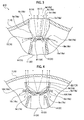
Fig. 3 is a schematic enlarged cross-section view illustrating a configuration of an illumination control body, etc., together with a path of light emitted from a second light source. -
Fig. 4 is a schematic enlarged cross-section view illustrating an example of a reflective body employed as an illumination control body. - Explanation follows regarding an embodiment of a vehicular lamp of the invention, with reference to the attached drawings.
- The embodiment described below is applied to a combination lamp including a clearance lamp that illuminates light to the front, and functions as a headlamp and a side marker lamp, and a daytime running lamp that functions as a daytime marker lamp. Note that the invention can be applied to a wide range of various combination lamps combining the functions of two or more types of lamp, including various lamps such as headlamps, tail lamps, clearance lamps, turn signal lamps, stop lamps, daytime running lamps, cornering lamps, hazard lamps, position lamps, back lamps, and fog lamps, etc.
- Vehicular lamps 1, 1 are, for example, disposed attached to respective right and left end portions at a front end portion of a non-illustrated vehicle body.
- The vehicular lamp 1 includes a lamp housing including a concave portion open to the front, and a cover that closes off the opening of the lamp housing (see
Fig. 1 ). A lampouter housing 2 is configured by the lamp housing and the cover, and an inner space of the lampouter housing 2 forms alamp chamber 3. - A
first lamp unit 4 and asecond lamp unit 5 are, for example, disposed in a row from left to right in thelamp chamber 3. - The
first lamp unit 4 includes a concaveshaped reflector 6 opening to the front, and aninner lens 7 that closes off the opening of thereflector 6. Thefirst lamp unit 4 functions as a headlamp, for example, provided as a low beam lamp unit that illuminates the near distance. - An
insertion hole 6a is formed at a central portion of a rear end portion of thereflector 6. An inner face of thereflector 6 is formed as areflective face 6b that reflects light. - An
attachment hole 7a is formed at a central portion of a front end portion of theinner lens 7. - An
illumination control body 8, formed of a transparent material, is attached to the inner lens 7 (seeFig. 2 andFig. 3 ). Theillumination control body 8 functions to control illumination of the light and the propagation direction of the light, and a front end portion thereof is inserted into theattachment hole 7a and attached to theinner lens 7. Theillumination control body 8 is therefore positioned further inside than the outer periphery of thereflector 6. - The
illumination control body 8 is integrally formed with anillumination portion 9 that illuminates light, and a flange shapeddirection control portion 10 that protrudes outward from a rear end portion of theillumination portion 9. - An outer peripheral face of a substantially rear half portion of the
illumination portion 9 is formed as a sloped face that is displaced inward on progression rearward, the sloped face forming a firstinternal reflection face 9a. An outer peripheral face of theillumination portion 9, further to the front side than the firstinternal reflection face 9a, forms a secondinternal reflection face 9b, and a front face of theillumination portion 9 forms anemission face 9c. - A concave portion opening to the rear is formed at a rear end portion of the
illumination portion 9. The concave portion is formed by afirst incident face 9d which faces the rear, asecond incident face 9e which is contiguous to the outer periphery of thefirst incident face 9d, and which slopes so as to be displaced outward on progression rearward, and a circular ring shapedthird incident face 9f which is contiguous to a rear end of thesecond incident face 9e. - A front face and a rear face of the
direction control portion 10 form respective internal reflection faces 10a, 10a, and an outer peripheral face of thedirection control portion 10 forms anemission face 10b. - A pillar shaped
attachment body 11 that extends from front to rear is disposed in an inserted state through theinsertion hole 6a of thereflector 6 at the rear side of theillumination control body 8. - A
first light source 12 is disposed at an outer peripheral face of theattachment body 11. Note that there may be plural of thefirst light sources 12 disposed in a circumferential direction. A Light Emitting Diode (LED), for example, is employed as thefirst light source 12. Asecond light source 13 is disposed at a front face of theattachment body 11. A Light Emitting Diode (LED), for example, is employed as thesecond light source 13. - A ring shaped
extension 14 is disposed at the outer peripheral side of theattachment body 11. Theextension 14 is disposed so as to cover a portion that is substantially the front side half of theattachment body 11 from the outside, and functions to improve appearance by making theattachment body 11 less visible from the outside. - Although differing in size to the
first lamp unit 4, thesecond lamp unit 5 is configured similarly to thefirst lamp unit 4. Configuration of the 5 is therefore explained simply below. - The
second lamp unit 5 includes areflector 15 and aninner lens 16. Thesecond lamp unit 5 functions as a headlamp, for example provided as a high beam lamp unit that illuminates the far distance. - An
insertion hole 15a is formed to thereflector 15. An inner face of thereflector 15 forms areflective face 15b. - An
attachment hole 16a is formed to theinner lens 16. - An
illumination control body 17, formed of a transparent material, is attached to theinner lens 16. Theillumination control body 17 functions to control illumination of the light and the propagation direction of the light, and a front end portion thereof is inserted into theattachment hole 16a and attached to theinner lens 16. Theillumination control body 17 is therefore positioned further inside than the outer periphery of thereflector 15. - The
illumination control body 17 is integrally formed with anillumination portion 18 and adirection control portion 19. - A first
internal reflection face 18a, a secondinternal reflection face 18b, and anemission face 18c are formed to theillumination portion 18. - A
first incident face 18d, asecond incident face 18e, and athird incident face 18f are formed to a rear end portion of theillumination portion 18. - Internal reflection faces 19a, 19a, and an
emission face 19b are formed to thedirection control portion 19. - An
attachment body 20 is disposed to theillumination control body 17 in an inserted state through theinsertion hole 15a of thereflector 15. - A
first light source 21 is disposed at an outer peripheral face of theattachment body 20. Note that pluralfirst light sources 21 may be disposed in a circumferential direction. A Light Emitting Diode (LED), for example, is employed as thefirst light source 21. A secondlight source 22 is disposed at a front face of theattachment body 20. A Light Emitting Diode (LED), for example, is employed as the secondlight source 22. - An
extension 23 is disposed at the outer peripheral side of theattachment body 20. Theextension 23 is disposed so as to cover a portion that is substantially the front side half of theattachment body 20 from the outside, and functions to improve appearance by making theattachment body 20 less visible from the outside. - In the vehicular lamp 1 with the above-described configuration, as illustrated in
Fig. 2 , when light is emitted from thefirst light source 12 of thefirst lamp unit 4, the emitted light is incident to thereflector 6, reflected by thereflector 6, passes through theinner lens 7 and the cover, and is illuminated toward the front. When this occurs, light is also present that is reflected by thereflector 6 and incident to theillumination portion 9 of theillumination control body 8. The light incident to theillumination portion 9 is emitted from theemission face 9c, passes through the cover, and is illuminated toward the front. - Light emitted from the
first light source 12 of thefirst lamp unit 4 is reflected by thereflector 6, thereby illuminating a headlamp low beam toward the front. - As illustrated in
Fig. 2 , when light is emitted from thefirst light source 21 of thesecond lamp unit 5, the emitted light is incident to thereflector 15, reflected by thereflector 15, passes through theinner lens 16 and the cover, and is illuminated toward the front. When this occurs, light is also present that is reflected by thereflector 15 and incident to theillumination portion 18 of theillumination control body 17. The light incident to theillumination portion 18 is emitted from theemission face 18c, passes through the cover, and is illuminated toward the front. - Light is emitted from the
first light source 21 of thesecond lamp unit 5 during light emission from thefirst light source 12 of thefirst lamp unit 4. - In this way, light emitted from the
first light source 12 of thefirst lamp unit 4 and reflected by thereflector 6, as well as light emitted from thefirst light source 21 of thesecond lamp unit 5 and reflected by thereflector 15, thereby illuminates a high beam for a headlamp toward the front. - In the vehicular lamp 1 with the above-described configuration, light is simultaneously emitted from the second
light source 13 of thefirst lamp unit 4 and the secondlight source 22 of the second lamp unit 5 (seeFig. 3 ). - When light is emitted from the second
light source 13 of thefirst lamp unit 4, a portion of the emitted light is incident through thefirst incident face 9d and thesecond incident face 9e to theillumination portion 9 of theillumination control body 8, and is internally reflected by the firstinternal reflection face 9a and the secondinternal reflection face 9b, or is guided to theemission face 9c side of theillumination portion 9 without reaching the firstinternal reflection face 9a or the secondinternal reflection face 9b, and emitted from theemission face 9c. The light emitted from the emission face 9c passes through the cover, and is illuminated toward the front. - The other light emitted from the second
light source 13 of thefirst lamp unit 4 is incident through thethird incident face 9f to thedirection control portion 10 of theillumination control body 8, internally reflected by the internal reflection faces 10a, 10a, guided to theemission face 10b side of thedirection control portion 10, and emitted from theemission face 10b. The light emitted from theemission face 10b is incident to thereflector 6, reflected by thereflector 6, passes through theinner lens 7 and the cover, and is illuminated toward the front. - At the same time, when light is emitted from the second
light source 22 of thesecond lamp unit 5, a portion of the emitted light is incident through thefirst incident face 18d and thesecond incident face 18e to theillumination portion 18 of theillumination control body 17, and is internally reflected by the firstinternal reflection face 18a and the secondinternal reflection face 18b, or is guided to theemission face 18c side of theillumination portion 18 without reaching the firstinternal reflection face 18a or the secondinternal reflection face 18b, and emitted from theemission face 18c. The light emitted from theemission face 18c passes through the cover, and is illuminated toward the front. - The other light emitted from the second
light source 22 of thesecond lamp unit 5 is incident through thethird incident face 18f to thedirection control portion 19 of theillumination control body 17, internally reflected by the internal reflection faces 19a, 19a, guided to theemission face 19b side of thedirection control portion 19, and emitted from theemission face 19b. The light emitted from theemission face 19b is incident to thereflector 15, reflected by thereflector 15, passes through theinner lens 16 and the cover, and is illuminated toward the front. - Light emitted from the second
light source 13 of thefirst lamp unit 4 and the secondlight source 22 of thesecond lamp unit 5 is thus emitted from theillumination control bodies direction control portions reflectors - As described above, since a light guiding body that internally guides incident light is employed as the
illumination control body 8 in the vehicular lamp 1, the light can be guided in a desired direction, and the propagation direction of the light can be controlled using a simple structure. - Moreover, plural incident faces (the first incident faces 9d, 18d, the second incident faces 9e, 18e, and the third incident faces 9f, 18f) facing in different directions are formed to the
illumination control bodies direction control portions - The light is thereby divided between the
illumination portions direction control portions - Although an example is given in which the
illumination control bodies illumination control bodies Fig. 4 ). - The
illumination control body 8A includes anillumination portion 9A that is formed in a concave shape open to the front, anddirection control portions illumination portion 9A. An inner face of theillumination portion 9A forms a firstreflective face 9g. Thedirection control portions direction control portions reflective faces - Respective
light passing holes direction control portions illumination portion 9A of theillumination control body 8A. - The
illumination control body 17A includes anillumination portion 18A that is formed in a concave shape open to the front, anddirection control portions illumination portion 18A. An inner face of theillumination portion 18A forms a firstreflective face 18g. Thedirection control portions direction control portions reflective faces - Respective
light passing holes direction control portions illumination portion 18A of theillumination control body 17A. - Note that, in a case in which the
illumination control bodies illumination control bodies attachment holes inner lenses illumination control bodies attachment bodies - Light is also simultaneously emitted from the second
light source 13 of thefirst lamp unit 4 and the secondlight source 22 of thesecond lamp unit 5 in a case in which theillumination control bodies - When light is emitted from the second
light source 13 of thefirst lamp unit 4, portions of the emitted light are respectively incident to the firstreflective face 9g of theillumination portion 9A and the secondreflective faces illumination control body 8A. Light incident to the secondreflective faces light passing holes reflective face 9g is reflected by the firstreflective face 9g, passes through theinner lens 7 and the cover, and is illuminated toward the front. Light incident to the secondreflective faces reflective faces reflector 6, reflected by thereflector 6, passes through theinner lens 7 and the cover, and is illuminated toward the front. - At the same time, when light is emitted from the second
light source 22 of thesecond lamp unit 5, portions of the emitted light are respectively incident to the firstreflective face 18g of theillumination portion 18A and the secondreflective faces illumination control body 17A. Light incident to the secondreflective faces light passing holes reflective face 18g is reflected by the firstreflective face 18g, passes through theinner lens 16 and the cover, and is illuminated toward the front. Light incident to the secondreflective faces reflective faces reflector 15, reflected by thereflector 15, passes through theinner lens 16 and the cover, and is illuminated toward the front. - Light emitted from the second
light source 13 of thefirst lamp unit 4 and the secondlight source 22 of thesecond lamp unit 5, is thus emitted from theillumination control bodies direction control portions reflectors - By using reflective bodies that reflect incident light as the
illumination control bodies - As described above, the vehicular lamp 1 is provided with the
illumination control bodies illumination portions illumination portions direction control portions direction control portions reflective faces reflectors illumination control bodies reflectors - Thus, in the vehicular lamp 1, a portion of the light emitted by the second
light sources illumination portions illumination portions illumination control bodies reflectors reflective faces reflectors direction control portions direction control portions - Since, besides the light illuminated from the
illumination portions illumination portions reflectors reflectors light sources - Moreover, since the illumination range of light can be broadened, a high performance vehicular lamp 1 can be provided meeting regulations that "require the distance between illumination regions to be a specific distance or less for light emitted from plural light sources with the same function".
Claims (4)
- A vehicular lamp comprising:a reflector (6, 15) including a reflective face (6b, 15b) configured to reflect light;a first light source (12, 21) whose emitted light is reflected by the reflective face (6b, 15b) and illuminated;an illumination control body (8, 17, 8A, 17A) positioned further inside than an outer periphery of the reflector (6, 15) and including an illumination portion (9, 18) configured to illuminate incident light in a specific direction, and a direction control portion (10, 19) configured to control the propagation direction of incident light and to guide the incident light to the reflective face (6, 15); anda second light source (13, 22), whose emitted light includes a portion of emitted light which is incident to the illumination portion (9, 18) and other emitted light which is incident to the direction control portion (10, 19).
- The vehicular lamp of Claim 1, wherein a light guiding body (8, 17) configured to guide incident light internally is employed as the illumination control body.
- The vehicular lamp of Claim 2, wherein:the illumination control body (8, 17) includes a plurality of incident faces (9d, 9e, 9f, 18d, 18e, 18f) facing in different directions to each other, with light emitted from the second light source (13, 22) incident to each of the incident faces; andlight is incident to the direction control portion (10, 19) from at least one of the incident faces (9f, 18f) out of the plurality of incident faces.
- The vehicular lamp of Claim 1, wherein a reflective body (8A, 17A) configured to reflect incident light is employed as the illumination control body.
Applications Claiming Priority (1)
| Application Number | Priority Date | Filing Date | Title |
|---|---|---|---|
| JP2013243003A JP2015103396A (en) | 2013-11-25 | 2013-11-25 | Vehicular lighting fixture |
Publications (2)
| Publication Number | Publication Date |
|---|---|
| EP2878486A2 true EP2878486A2 (en) | 2015-06-03 |
| EP2878486A3 EP2878486A3 (en) | 2015-08-19 |
Family
ID=52015839
Family Applications (1)
| Application Number | Title | Priority Date | Filing Date |
|---|---|---|---|
| EP14194669.9A Withdrawn EP2878486A3 (en) | 2013-11-25 | 2014-11-25 | Vehicular lamp |
Country Status (2)
| Country | Link |
|---|---|
| EP (1) | EP2878486A3 (en) |
| JP (1) | JP2015103396A (en) |
Cited By (1)
| Publication number | Priority date | Publication date | Assignee | Title |
|---|---|---|---|---|
| EP3620329A1 (en) * | 2018-09-07 | 2020-03-11 | T.Y.C. Brother Industrial Co., Ltd. | Vehicle lamp |
Citations (2)
| Publication number | Priority date | Publication date | Assignee | Title |
|---|---|---|---|---|
| JP2001210110A (en) | 2000-01-25 | 2001-08-03 | Koito Mfg Co Ltd | Vehicle headlamp |
| JP2013073687A (en) | 2011-09-26 | 2013-04-22 | Koito Mfg Co Ltd | Vehicular lamp fitting |
Family Cites Families (7)
| Publication number | Priority date | Publication date | Assignee | Title |
|---|---|---|---|---|
| DE4229728C1 (en) * | 1992-09-05 | 1994-01-27 | Bosch Gmbh Robert | Dual-reflector headlamp assembly for vehicle - has cut=outs in edge of dipped beam reflector to illuminate driving beam reflector |
| JP2002075025A (en) * | 2000-08-25 | 2002-03-15 | Stanley Electric Co Ltd | Led lighting fixture for vehicle |
| JP4485698B2 (en) * | 2001-01-22 | 2010-06-23 | スタンレー電気株式会社 | Vehicle signal lights |
| JP4049260B2 (en) * | 2003-03-11 | 2008-02-20 | 株式会社小糸製作所 | Vehicle lighting |
| JP4191658B2 (en) * | 2004-08-09 | 2008-12-03 | 株式会社小糸製作所 | Vehicle lighting |
| DE202005007501U1 (en) * | 2005-05-12 | 2005-08-18 | Automotive Lighting Reutlingen Gmbh | Vehicle light, consists of at least one light diode chip mechanically and electrically fixed to a circuit board |
| JP2009158386A (en) * | 2007-12-27 | 2009-07-16 | Koito Mfg Co Ltd | Vehicle headlamp |
-
2013
- 2013-11-25 JP JP2013243003A patent/JP2015103396A/en active Pending
-
2014
- 2014-11-25 EP EP14194669.9A patent/EP2878486A3/en not_active Withdrawn
Patent Citations (2)
| Publication number | Priority date | Publication date | Assignee | Title |
|---|---|---|---|---|
| JP2001210110A (en) | 2000-01-25 | 2001-08-03 | Koito Mfg Co Ltd | Vehicle headlamp |
| JP2013073687A (en) | 2011-09-26 | 2013-04-22 | Koito Mfg Co Ltd | Vehicular lamp fitting |
Cited By (1)
| Publication number | Priority date | Publication date | Assignee | Title |
|---|---|---|---|---|
| EP3620329A1 (en) * | 2018-09-07 | 2020-03-11 | T.Y.C. Brother Industrial Co., Ltd. | Vehicle lamp |
Also Published As
| Publication number | Publication date |
|---|---|
| EP2878486A3 (en) | 2015-08-19 |
| JP2015103396A (en) | 2015-06-04 |
Similar Documents
| Publication | Publication Date | Title |
|---|---|---|
| US3759084A (en) | Headlamps of vehicles | |
| US9416935B2 (en) | Vehicle direction indicator light having a light emitting body including an outer emitting surface, an inner emitting surface, a tip surface, and a light guide body | |
| US8840289B2 (en) | Headlamp light pipe and side marker integration | |
| CN102865539A (en) | Vehicle headlamp | |
| US11499690B2 (en) | Automotive lighting and/or signaling device | |
| JP7081977B2 (en) | Vehicle lighting | |
| JP2013008674A (en) | Reflector signal lamp with hidden light source | |
| JP2021002449A (en) | Vehicular lighting fixture | |
| CN204201720U (en) | Car light | |
| US7572041B2 (en) | Vehicle lamp | |
| CN104470756A (en) | Multifunctional vehicle optical unit having controllable light sources and brightness | |
| US20090207610A1 (en) | Combination rear lighting system | |
| KR20140083807A (en) | Light guide unit | |
| US7311429B2 (en) | Vehicle lamp | |
| JP2015153577A (en) | vehicle lamp | |
| JP2015185480A (en) | Vehicle lamp | |
| JP2013122872A (en) | Illumination lamp fitting for vehicle | |
| EP3839330B1 (en) | Automotive lighting and/or signaling device | |
| EP2878486A2 (en) | Vehicular lamp | |
| JP2013149553A (en) | Vehicular lamp having lamp units of different functions | |
| KR20150112149A (en) | Head lamp for vehicle | |
| KR20190033346A (en) | lamp for vehicle | |
| JP5790422B2 (en) | Vehicle lighting | |
| EP2824382A1 (en) | Vehicle lamp fitting | |
| KR101767993B1 (en) | A lamp for vehicles |
Legal Events
| Date | Code | Title | Description |
|---|---|---|---|
| PUAI | Public reference made under article 153(3) epc to a published international application that has entered the european phase |
Free format text: ORIGINAL CODE: 0009012 |
|
| 17P | Request for examination filed |
Effective date: 20141125 |
|
| AK | Designated contracting states |
Kind code of ref document: A2 Designated state(s): AL AT BE BG CH CY CZ DE DK EE ES FI FR GB GR HR HU IE IS IT LI LT LU LV MC MK MT NL NO PL PT RO RS SE SI SK SM TR |
|
| AX | Request for extension of the european patent |
Extension state: BA ME |
|
| PUAL | Search report despatched |
Free format text: ORIGINAL CODE: 0009013 |
|
| AK | Designated contracting states |
Kind code of ref document: A3 Designated state(s): AL AT BE BG CH CY CZ DE DK EE ES FI FR GB GR HR HU IE IS IT LI LT LU LV MC MK MT NL NO PL PT RO RS SE SI SK SM TR |
|
| AX | Request for extension of the european patent |
Extension state: BA ME |
|
| RIC1 | Information provided on ipc code assigned before grant |
Ipc: F21S 8/10 20060101ALI20150714BHEP Ipc: B60Q 1/00 20060101AFI20150714BHEP |
|
| STAA | Information on the status of an ep patent application or granted ep patent |
Free format text: STATUS: THE APPLICATION HAS BEEN WITHDRAWN |
|
| 18W | Application withdrawn |
Effective date: 20191002 |