EP2875663B1 - Benutzerkontrolle über wifi-netzwerkzugang - Google Patents
Benutzerkontrolle über wifi-netzwerkzugang Download PDFInfo
- Publication number
- EP2875663B1 EP2875663B1 EP13742116.0A EP13742116A EP2875663B1 EP 2875663 B1 EP2875663 B1 EP 2875663B1 EP 13742116 A EP13742116 A EP 13742116A EP 2875663 B1 EP2875663 B1 EP 2875663B1
- Authority
- EP
- European Patent Office
- Prior art keywords
- user
- communication device
- access
- wifi
- password
- Prior art date
- Legal status (The legal status is an assumption and is not a legal conclusion. Google has not performed a legal analysis and makes no representation as to the accuracy of the status listed.)
- Active
Links
Images




Classifications
-
- H—ELECTRICITY
- H04—ELECTRIC COMMUNICATION TECHNIQUE
- H04L—TRANSMISSION OF DIGITAL INFORMATION, e.g. TELEGRAPHIC COMMUNICATION
- H04L63/00—Network architectures or network communication protocols for network security
- H04L63/06—Network architectures or network communication protocols for network security for supporting key management in a packet data network
-
- H—ELECTRICITY
- H04—ELECTRIC COMMUNICATION TECHNIQUE
- H04L—TRANSMISSION OF DIGITAL INFORMATION, e.g. TELEGRAPHIC COMMUNICATION
- H04L63/00—Network architectures or network communication protocols for network security
- H04L63/08—Network architectures or network communication protocols for network security for authentication of entities
- H04L63/0884—Network architectures or network communication protocols for network security for authentication of entities by delegation of authentication, e.g. a proxy authenticates an entity to be authenticated on behalf of this entity vis-à-vis an authentication entity
-
- H—ELECTRICITY
- H04—ELECTRIC COMMUNICATION TECHNIQUE
- H04L—TRANSMISSION OF DIGITAL INFORMATION, e.g. TELEGRAPHIC COMMUNICATION
- H04L63/00—Network architectures or network communication protocols for network security
- H04L63/10—Network architectures or network communication protocols for network security for controlling access to devices or network resources
-
- H—ELECTRICITY
- H04—ELECTRIC COMMUNICATION TECHNIQUE
- H04L—TRANSMISSION OF DIGITAL INFORMATION, e.g. TELEGRAPHIC COMMUNICATION
- H04L63/00—Network architectures or network communication protocols for network security
- H04L63/20—Network architectures or network communication protocols for network security for managing network security; network security policies in general
-
- H—ELECTRICITY
- H04—ELECTRIC COMMUNICATION TECHNIQUE
- H04W—WIRELESS COMMUNICATION NETWORKS
- H04W12/00—Security arrangements; Authentication; Protecting privacy or anonymity
- H04W12/04—Key management, e.g. using generic bootstrapping architecture [GBA]
-
- H—ELECTRICITY
- H04—ELECTRIC COMMUNICATION TECHNIQUE
- H04W—WIRELESS COMMUNICATION NETWORKS
- H04W12/00—Security arrangements; Authentication; Protecting privacy or anonymity
- H04W12/06—Authentication
-
- H—ELECTRICITY
- H04—ELECTRIC COMMUNICATION TECHNIQUE
- H04W—WIRELESS COMMUNICATION NETWORKS
- H04W12/00—Security arrangements; Authentication; Protecting privacy or anonymity
- H04W12/08—Access security
-
- H—ELECTRICITY
- H04—ELECTRIC COMMUNICATION TECHNIQUE
- H04L—TRANSMISSION OF DIGITAL INFORMATION, e.g. TELEGRAPHIC COMMUNICATION
- H04L63/00—Network architectures or network communication protocols for network security
- H04L63/08—Network architectures or network communication protocols for network security for authentication of entities
- H04L63/083—Network architectures or network communication protocols for network security for authentication of entities using passwords
-
- H—ELECTRICITY
- H04—ELECTRIC COMMUNICATION TECHNIQUE
- H04W—WIRELESS COMMUNICATION NETWORKS
- H04W12/00—Security arrangements; Authentication; Protecting privacy or anonymity
- H04W12/60—Context-dependent security
- H04W12/61—Time-dependent
-
- H—ELECTRICITY
- H04—ELECTRIC COMMUNICATION TECHNIQUE
- H04W—WIRELESS COMMUNICATION NETWORKS
- H04W84/00—Network topologies
- H04W84/02—Hierarchically pre-organised networks, e.g. paging networks, cellular networks, WLAN [Wireless Local Area Network] or WLL [Wireless Local Loop]
- H04W84/10—Small scale networks; Flat hierarchical networks
- H04W84/12—WLAN [Wireless Local Area Networks]
Definitions
- WiFi Wireless Fidelity
- a WiFi access point broadcasts a Service Set Identification (SSID) that is detected by user devices.
- the user devices typically respond to the SSID with an access code that is pre-stored in the WiFi access point.
- the WiFi access point provides network access if the user-provided access code matches the pre-stored access code.
- the user typically manages multiple access codes for the various WiFi access points that they use. Unfortunately, these WiFi access points are not used to provide effective and efficient user control over WiFi network access.
- wireless networks also include user authorization systems that control network access.
- 3G networks may have an Authentication, Authorization, and Accounting (AAA) system
- 4G networks may have a Home Subscriber Server (HSS).
- AAA Authentication, Authorization, and Accounting
- HSS Home Subscriber Server
- WiFi access points and these other wireless networks are not effectively used in an integrated manner to provide efficient user control over WiFi network access.
- Document EP2200223 discloses a method for performing roaming in WLAN by only managing a common/single authentication information (password&login) to be used for a plurality of AP.
- the UE When requesting access to a WiFi, the UE sends these credentials to the AP, which then forwards it to the authentication server which decides when to approve UE's access to said AP.
- the present invention relates to a method and a system as set forth in claims 1 and 4. Further embodiments are set forth in the dependent claims.
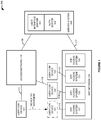
- FIG. 1 illustrates communication system 100 to provide user control over access to WiFi network 120 having geographically-distributed WiFi access systems 121-124.
- Communication system 100 comprises user communication devices 101-103, access network 110, WiFi network 120, and server system 130.
- Server system 130 comprises user interface server 131 and authorization server 132.
- User communication devices 101-103 comprise phones, computers, media players, machine transceivers, or some other WiFi communication equipment.
- User communication devices 101-102 and access network 110 communicate over respective access links 111-112.
- User communication devices 101-103 and WiFi access systems 121-123 communicate over respective WiFi links 113-115.
- Access network 110 and WiFi network 120 communicate with server system 130 over respective network links 116-117.
- user interface server 131 transfers display data to user communication device 101 over access network 110 and links 111 and 116 for presentation to a user.
- the user selects WiFi access systems 121-123 but not access system 124.
- the user also selects a single password for the user-selected WiFi access systems 121-123.
- the display data renders geographic maps that indicate WiFi access systems 121-124 for selection.
- the display data may also include a data collection module to collect the password from the user.
- User communication device 101 transfers user data for delivery to user interface server 131.
- the user data indicates the user-selected WiFi network access systems 121-123, the user-selected password, and possibly other user selections and data.
- User interface server 131 receives and transfers the user data to user authorization server 132.
- Authorization server 132 stores an association between the user-selected WiFi network access systems 121-123 and the user-selected password. Subsequently, user communication device 101 moves near WiFi access system 121 and transfers an access request to WiFi access system 121 using the user-selected password. WiFi access system 121 transfers the access request for delivery to authorization server 132.
- Authorization server 132 receives the access request for access to user-selected WiFi network access system 121 using the user-selected password. Based on the stored association between the user-selected WiFi network access system 121 and the user-selected password, authorization server 132 transfers a positive response for delivery to WiFi network access system 121.
- WiFi network access system 121 then provides WiFi access (typically to the Internet) to wireless communication device 101 over WiFi link 113.
- User wireless communication device 102 could select and use multiple WiFi access systems with a single password in a similar manner.
- wireless communication device 101 is used to select the WiFi access systems and password
- communication device 102 and/or communication device 103 are used to access the selected WiFi access systems with the password.
- a user may have different passwords for different groups of access systems, devices, timeframes, and the like. If desired, the user may also use a given password for only one access system.
- a password could be any sequence of letters, numbers, symbols, or other data.
- additional items are selected by the user responsive to the display data. These additional items may be indicated in the user data, stored in the association, and used in combination to transfer the positive response to the access request.
- the user may specify a user name to use when accessing their selected WiFi network access systems.
- the user specifies a communication device to use when accessing their selected WiFi network access systems.
- the user specifies a timeframe for access to their selected WiFi network access systems.
- user interface server 131 transfers configuration data for delivery to user communication device 101 and/or user communication device 102 over access network 110.
- the configuration data associates broadcast identification signals for the user-selected WiFi network access systems with the user-selected password.
- User communication devices 101-102 use the configuration data to obtain the password from the user and to transfer the access request when in range of one of the selected WiFi network access systems.
- the configuration data includes an access key that is correlated to the broadcast identification signals for the user-selected WiFi network access systems and with the user-selected password.
- the access key is stored in authorization server 132 in association with the user-selected WiFi network access systems.
- User communication device 101 would provide the access key in their access request when in range of one of the selected WiFi network access systems and if the password is provided by the user.
- Authorization server 132 could then return a positive response based on its own stored access key.
- the configuration data indicates a dynamically-changing network key, such as time-of-day, that is correlated to the broadcast identification signals for the user-selected WiFi network access systems and with the user-selected password.
- a dynamically-changing network key such as time-of-day
- user communication device 101 uses the dynamically-changing network key to generate a hash value for their access request.
- authorization server 132 could generate its own hash value based the dynamically-changing network key for comparison to the hash value from the access request. If the comparison indicates the relationship, then authorization server 132 returns the positive response for WiFi access. For example, if the dynamically-changing network key is time-of-day, then both hash values should correlate if calculated within the same timeframe.
- Access network 110 comprises computer and communications equipment that use Wireless Fidelity (WiFi), Long Term Evolution (LTE), Global System for Mobile Communications (GSM), Evolution Data Only (EVDO), Bluetooth, DOCSYS, T1, Ethernet, Internet Protocol (IP), or some other communication protocols - including combinations thereof.
- Server system 130 comprises computer equipment and software that may be implemented in a single platform or may be distributed across multiple platforms.
- Communication links 111-112 and 116-117 might be wireless, optical, metallic, or some other communication media - including combinations thereof.
- Communication links 111-112 and 116-117 may individually comprise multiple parallel connections that utilize different protocols and paths.
- Communication links 111-112 and 116-117 may also include various intermediate networks, systems, and devices.
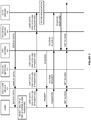
- FIG. 2 illustrates the operation of communication system 100 to provide user control over access to WiFi network 120.
- User interface server 131 transfers display data to user communication device 101 over access network 110, and user communication device 101 graphically presents the resulting display data to the user.
- user communication device might present the display data in the form of geographic maps that indicate WiFi access systems 121-124 for selection.
- the user selects WiFi access systems 121-123.
- the user also specifies a password for user-selected WiFi access systems 121-123.
- User communication device 101 transfers user data over access network 110 to user interface server 131.
- the user data indicates user-selected WiFi network access systems 121-123, the user-selected password, and possibly other user selections and data.
- User interface server 131 transfers the user data to user authorization server 132.
- Authorization server 132 stores an association between the user-selected WiFi network access systems 121-123 and the user-selected password - and typically other pertinent data. Various techniques to store this association are described herein.
- WiFi access system 121 transmits a wireless identification signal for reception by in-range devices, such as an SSID signal, pilot signal, and the like. Subsequently, user communication device 101 detects the identification signal from WiFi access system 121 and prompts the user for a password. The user provides their selected password to user communication device 101, and device 101 transfers an access request to WiFi access system 121 using the user-selected password. Various techniques to use the password are described herein. WiFi access system 121 transfers the access request to authorization server 132.
- Authorization server 132 processes the access request and the stored association between user-selected WiFi network access system 121 and user-selected password to determine that the request should be granted. Authorization server 132 then transfers a positive response to WiFi network access system 121. Based on the positive response, WiFi network access system 121 provides wireless communication device 101 and the user with WiFi network access to some other data system, such as the Internet (not shown).
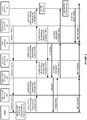
- Figure 3 illustrates the operation of communication system 100 to provide user control over access to WiFi network 120 by allowing user-selection of communication devices.
- User interface server 131 transfers display data to user communication device 101 over access network 110, and user communication device 101 graphically presents the resulting display data to the user.
- the user selects WiFi access systems 121-123 and a password.
- the user also selects communication device 103 to access user-selected WiFi access systems 121-123.
- the user may specify communication device 103 by name, address, number, and the like.
- User interface server 131 may also identify communication device 103 in the display data for selection by the user.
- User communication device 101 transfers user data over access network 110 to user interface server 131.
- the user data indicates user-selected WiFi network access systems 121-123, user-selected communication device 103, the user-selected password, and possibly other information.
- User interface server 131 transfers the user data to user authorization server 132.
- Authorization server 132 stores an association between the user-selected WiFi network access systems 121-123, user-selected communication device 103, the user-selected password, and other data. Various techniques to store this association are described herein.
- WiFi access system 123 transmits its wireless identification signal.
- User communication device 103 detects the identification signal from WiFi access system 123 and prompts the user for a password. The user provides their selected password to user communication device 103, and device 103 transfers an access request to WiFi access system 123 using the user-selected password.
- Various techniques to use the password are described herein.
- WiFi access system 123 transfers the access request to authorization server 132.
- Authorization server 132 processes the access request and the stored association between user-selected WiFi network access system 123, user-selected communication device 103, and the user-selected password to determine that the request should be granted.
- Authorization server 132 then transfers a positive response to WiFi network access system 123.
- WiFi network access system 123 Based on the positive response, WiFi network access system 123 provides user communication device 103 with WiFi network access to another data system, such as the Internet (not shown). Note that other items could be also selected by the user and used for authorization, such as timeframes, security formats, and the like.
- Figure 4 illustrates the operation of communication system 100 to provide user control over access to WiFi network 120 by transferring configuration data to user communication device 101.
- User interface server 131 transfers display data to user communication device 101 over access network 110, and user communication device 101 graphically presents the resulting display data to the user.
- the user selects WiFi access systems 121-123 and a password.
- User communication device 101 transfers user data over access network 110 to user interface server 131.
- the user data indicates user-selected WiFi network access systems 121-123, the user-selected password, and possibly other user selections and data.
- User interface server 131 transfers the user data to user authorization server 132.
- Authorization server 132 stores an association between the user-selected WiFi network access systems 121-123 and one or more access keys for systems 121-123. The stored association may also indicate the user-selected password and other pertinent data.
- user interface server 131 transfers configuration data over access network 110 to user communication device 101.
- the configuration data indicates identification signals (SSIDs and the like) for user-selected WiFi network access systems 121-123.
- the configuration data also indicates the password, the access key, and perhaps other data. Note that user interface server 131 may also transfer the configuration data to other user-selected communication devices.
- User-selected WiFi access system 121 transmits its wireless identification signal, and eventually, user communication device 101 detects this identification signal from WiFi access system 121. Based on the configuration data and the ID signal, user communication device 101 prompts the user for a password. The user provides their selected password to user communication device 101, and device 101 transfers an access request to WiFi access system 121 using the user-selected password. In this example, user communication device 101 uses the password for verification, and if the user-supplied password matches the password from the configuration data, then device 101 transfers the access key to user-selected WiFi access system 121.
- WiFi access system 121 transfers the access request including the access key to authorization server 132.
- Authorization server 132 processes the access request and the stored association between user-selected WiFi network access system 121 and user-supplied access key to determine that the request should be granted.
- Authorization server 132 then transfers a positive response to WiFi network access system 121. Based on the positive response, WiFi network access system 121 provides user communication device 101 and the user with WiFi network access to some other data system, such as the Internet (not shown).
- Figure 5 illustrates the operation of communication system 100 to provide user control over access to WiFi network 120 by using dynamic access keys.
- User interface server 131 transfers display data to user communication device 101 over access network 110, and user communication device 101 graphically presents the resulting display data to the user.
- the user selects WiFi access systems 121-123, a password, and user communication device 102.
- User communication device 101 transfers user data over access network 110 to user interface server 131.
- the user data indicates user-selected WiFi network access systems 121-123, user communication device 102, the user-selected password, and possibly other data.
- User interface server 131 transfers the user data to user authorization server 132.
- Authorization server 132 stores an association between the user-selected WiFi network access systems 121-123 and a secret code used to generate the dynamic key. The stored association may also indicate the user-selected password and other pertinent data.
- user interface server 131 transfers configuration data over access network 110 to user communication device 102.
- the configuration data indicates identification signals for user-selected WiFi network access systems 121-123.
- the configuration data also indicates the password, secret code, dynamic key instructions, and perhaps other data. Note that user interface server 131 may also transfer the configuration data to other user-selected communication devices.
- User-selected WiFi access system 122 transmits its wireless identification signal, and eventually, user communication device 102 detects this identification signal from WiFi access system 122. Based on the configuration data and the ID signal, user communication device 102 prompts the user for a password. The user provides their selected password to user communication device 102, and device 102 transfers an access request to WiFi access system 122 using the user-selected password.
- user communication device 102 uses the password for verification, and if the user-supplied password matches the password from the configuration data, then device 102 generates and transfers a dynamic access key to user-selected WiFi access system 122.
- the dynamic key is a mathematical hash between the secret code from the configuration data and dynamically changing network data.
- the secret code could be mathematically combined with the current time-of-day to generate the dynamic access key.
- WiFi access system 122 transfers the access request including the dynamic access key to authorization server 132.
- Authorization server 132 processes the access request and the stored association (the secret code) to generate the dynamic access key in a similar manner to device 102. If the two dynamic access keys correlate, then the access request should be granted. Note that the correlation may not require a strict match. For example, if time of day is used for the dynamic key, then two keys generated around the same time would have a detectable mathematical relationship and would correlate. Various other dynamic key techniques could be used in a similar manner.
- Authorization server 132 then transfers a positive response to WiFi network access system 122. Based on the positive response, WiFi network access system 122 provides user communication device 102 and the user with WiFi network access to some other data system, such as the Internet (not shown).
- Figure 6 illustrates communication device display 600 that renders a geographic map for a user to select WiFi network access systems 601-604 and specify passwords.
- the geographic map is depicted by a simple grid on Figure 6 . Note that navigation controls would be provided on the map, but they are not depicted for clarity.
- the user has selected WiFi access systems 602-603 as indicated by the frame around systems 602-603.
- Text boxes are associated with the selected WiFi access systems 602-603 and provide a mechanism for the user to specify passwords, user names, user devices, security settings, and the like.
- the text boxes also provide access system information, such as SSIDs, location, and possibly other data.
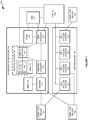
- FIG. 7 illustrates LTE/WiFi communication system 700 to provide user control over access to WiFi network 720 having geographically-distributed WiFi access systems 721-724.
- LTE/WiFi communication system 700 comprises user communication devices 701-703, wireless LTE network 710, WiFi network 720, IP Multimedia Subsystem (IMS) 717, and IP networks 718.
- Wireless LTE network 710 includes eNodeB 711, serving gateway 712, Packet Data Network (PDN) gateway 713, Mobility Management Entity (MME) 714, Home Subscriber Server (HSS) 715, and Policy Charging and Rules Function (PCRF) 716.
- PDN Packet Data Network
- MME Mobility Management Entity
- HSS Home Subscriber Server
- PCRF Policy Charging and Rules Function
- Wireless LTE network 710 also includes server system 730 that comprises user interface server 731 and authorization server 732.
- User interface server 731 and authorization server 732 operate like servers 131-132 described above.
- the authorization server 732 is hosted by or integrated within HSS 715.
- wireless LTE network 710 operates like access network 110 described above.
- wireless LTE network 710 transfers the display data, receives user-selections, transfers configuration data, and provides WiFi authorization as described above.
- the user may operate one of communication devices 701-703 to access user interface server 731 and select WiFi access systems 721-722 and 724, a user name, a password, user devices 701-703, timeframes, and the like.
- WiFi access systems 721-722 and 724 When one of the selected user communication devices 701-703 is proximate to one of the selected WiFi access systems 721-722 and 724, then the user device will interact with the proximate WiFi access system as described above.
- the proximate WiFi access system will transfer access requests to authorization server 732 in HSS 715 - typically through various proxies and interfaces.
- Authorization server 732 in HSS 715 transfers positive responses as described above.
- FIG. 8 illustrates WiFi communication system 800 to provide user control over access to WiFi network 820 having geographically-distributed WiFi access systems 821-824.
- WiFi communication system 800 comprises user communication devices 801-803, IP access network 810, IP networks 818, and server system 830.
- Server system 830 resides in the core of a nationwide wireless communication network.
- Server system 830 comprises user interface server 831 and authorization server 832.
- User interface server 831 and authorization server 832 and operate like servers 131-132 described above.
- server system 830 transfers the display data, receives user-selections, transfers configuration data, and provides WiFi authorization as described above.
- the user may operate one of communication devices 801-803 to access user interface server 831 and select WiFi access systems 821-822 and 824, a user name, a password, user devices 801-803, timeframes, and the like.
- WiFi access systems 821-822 and 824 select WiFi access systems 821-822 and 824, a user name, a password, user devices 801-803, timeframes, and the like.
- the user device When one of the selected user communication devices 801-803 is proximate to one of the selected WiFi access systems 821-822 and 824, then the user device will interact with the proximate WiFi access system as described above.
- the proximate WiFi access system will transfer access requests to authorization server 832.
- Authorization server 832 transfers positive responses as described above.
- portions of the server systems described herein could be integrated into the authorization systems of other networks.
- the AAA system in a 2G or 3G network could host the user interface server and/or the authorization servers described herein.
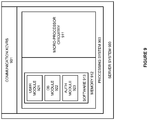
- FIG. 9 illustrates server system 900 to provide user control over access to WiFi networks.
- Server system 900 is an example of the server system 130, although system 130 may use alternative configurations and operations.
- Server system 900 comprises communication transceivers 901 and processing system 903.
- Processing system 903 comprises micro-processing circuitry 911 and memory 912.
- Memory 912 stores software 913.
- Server system 900 may be integrated into a single platform or may be distributed across multiple diverse computer and communication systems. Some conventional aspects of server system 900 are omitted for clarity, such as power supplies, enclosures, and the like.
- Communication transceivers 901 comprise communication components, such as ports, circuitry, memory, software, and the like. Communication transceivers 901 typically utilize Ethernet, Internet, or some other networking protocol - including combinations thereof.
- Micro-processor circuitry 911 comprises circuit boards that hold integrated circuitry and associated electronics.
- Memory 912 comprises non-transitory, computer-readable, data storage media, such as flash drives, disc drives, and the like.
- Software 913 comprises computer-readable instructions that control the operation of micro-processor circuitry 911 when executed.
- Software 913 includes modules 921-923 and may also include operating systems, applications, utilities, databases, and the like.
- Micro-processor circuitry 911 and memory 912 may be integrated into a single computer system or may be distributed across multiple computer systems.
- user module 921 When executed by circuitry 911, user module 921 directs circuitry 911 to interact with user devices to enable the user to select access systems, passwords, and the like. User module 921 also directs circuitry 911 to transfer configuration data in some examples.
- database module 922 When executed by circuitry 911, database module 922 directs circuitry 911 to stores the associations as described above.
- authorization module 923 When executed by circuitry 911, authorization module 923 directs circuitry 911 to provide positive or negative responses to WiFi access requests based on the stored associations.
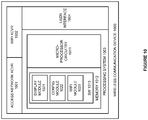
- FIG. 10 illustrates wireless communication device 1000 to provide user control over access to WiFi networks.
- Wireless communication device 1000 is an example of user communication devices 101-103, although devices 101-103 may use alternative configurations and operations.
- Wireless communication device 1000 comprises access network transceiver 1001, network transceiver 1002, processing system 1003, and user interface 1004.
- Processing system 1003 comprises micro-processing circuitry 1011 and memory 1012.
- Memory 1012 stores software 1013.
- Some conventional aspects of wireless communication device 1000 are omitted for clarity, such as power supplies, enclosures, and the like.
- Wireless communication device 1000 may be integrated into other systems or devices.
- Access network transceiver 1001 and WiFi transceiver 1002 each comprise communication components, such as circuitry, memory, software, antennas, amplifiers, filters, modulators, signal processors, and the like.
- the radio communications include multiple transceiver sub-systems for near-field, local network, and wide-area network data communications.
- Access network transceiver 1001 exchanges user data and configuration data as described above.
- WiFi network transceiver 1002 detects WiFi identification signals, transfers WiFi access requests, and provides WiFi network access.
- User interface 1004 includes components to interact with a human operator, such as a touch display, speaker, microphone, camera, buttons, and switches.
- User interface 1004 displays maps, text boxes, user prompts and the like.
- a touch display in user interface 1004 receives the user instructions that trigger the actions described herein.
- Micro-processor circuitry 1011 comprises one or more circuit boards that hold integrated circuit chips and associated electronics.
- Memory 1012 comprises non-transitory data storage media, such as flash drives, disc drives, and the like.
- Software 1013 comprises computer-readable instructions that control the operation of micro-processor circuitry 1011 when executed.
- Software 1013 includes modules 1021-1023 and may also include additional operating systems, applications, utilities, databases, and the like.
- display module 1021 directs circuitry 1011 to display maps, text boxes, and the like to receive user selections.
- configuration module 1022 direct circuitry 1011 to receive and store configuration data as described herein.
- WiFi module 1023 directs circuitry 1011 to prompt for passwords and transfer access requests as described herein.
Landscapes
- Engineering & Computer Science (AREA)
- Computer Security & Cryptography (AREA)
- Computer Networks & Wireless Communication (AREA)
- Signal Processing (AREA)
- Computer Hardware Design (AREA)
- Computing Systems (AREA)
- General Engineering & Computer Science (AREA)
- Mobile Radio Communication Systems (AREA)
Claims (6)
- Verfahren zum Betreiben eines Systems (100), das eine Benutzerkommunikationsvorrichtung (101-103) und ein Serversystem (130) umfasst, um den Zugang zu einem Wireless-Fidelity-(WiFi)-Netzwerk (120) zu kontrollieren, das eine Vielzahl von geographisch verteilten WiFi-Zugangssystemen (121-124) umfasst, wobei das Verfahren Folgendes umfasst:Übertragen von Anzeigedaten von dem Serversystem (130) zur Präsentation durch die Benutzerkommunikationsvorrichtung (101-103), und als Antwort Empfangen, in der Benutzerkommunikationsvorrichtung (101 - 103), von Benutzerauswahlen von mehr als einem der geographisch verteilten WiFi-Zugangssysteme (121-124) und einem einzelnen benutzergewählten Namen und einem einzelnen benutzergewählten Passwort zur Verwendung beim Zugang zu den mehreren benutzergewählten Wi-Fi-Zugangssystemen (121-124), Empfangen, von der Benutzerkommunikationsvorrichtung (101-103), von Benutzerdaten in dem Serversystem (130), welche die mehreren benutzergewählten Wi-Fi-Netzwerkzugangssysteme (121 - 124), den einzelnen benutzergewählten Namen und das einzelne benutzergewählte Passwort angeben; undSpeichern einer Assoziation zwischen den mehreren benutzergewählten WiFi-Netzwerkzugangssystemen (121-124), dem einzelnen benutzergewählten Namen und dem einzelnen benutzergewählten Passwort;Empfangen, von der Benutzerkommunikationsvorrichtung (101-103), einer Zugangsanforderung, umfassend den einzelnen benutzergewählten Namen und das einzelne benutzergewählte Passwort, in dem Serversystem (130) zum Zugang zu einem der mehreren benutzergewählten WiFi-Netzwerkzugangssysteme (121-124) unter Verwendung des einzelnen benutzergewählten Namens und des einzelnen benutzergewählten Passworts;Verarbeiten der Zugangsanforderung und der gespeicherten Assoziation zwischen den mehreren benutzergewählten WiFi-Netzwerkzugangssystemen (121-124), dem einzelnen benutzergewählten Namen und dem einzelnen benutzergewählten Passwort, um zu bestimmen, ob Zugang zu den mehreren benutzergewählten WiFi-Netzwerkzugangssystemen (121-124) gewährt werden sollte; undÜbertragen einer positiven Antwort auf die Zugangsanforderung von dem Serversystem (130) auf Grundlage einer Bestimmung, dass Zugang gewährt werden sollte.
- Verfahren nach Anspruch 1, wobei:die Benutzerkommunikationsvorrichtung (101-103) verwendet wird, um eine Kommunikationsvorrichtung (101-103) zum Zugang zu den mehreren benutzergewählten WiFi-Zugangssystemen (121-124) als Antwort auf die Anzeigedaten auszuwählen;das Empfangen der Benutzerdaten das Empfangen der Benutzerdaten, welche die benutzergewählte Kommunikationsvorrichtung (101-103) angeben, umfasst;das Speichern der Assoziation das Speichern der Assoziation zwischen den mehreren benutzergewählten WiFi-Netzwerkzugangssystemen (121-124), dem einzelnen benutzergewählten Namen, dem einzelnen benutzergewählten Passwort und der benutzergewählten Kommunikationsvorrichtung (101-103) umfasst;das Empfangen der Zugangsanforderung das Empfangen der Zugangsanforderung, welche die benutzergewählte Kommunikationsvorrichtung (101-103) angibt, umfasst; unddas Verarbeiten das Verarbeiten der Zugangsanforderung und der gespeicherten Assoziation zwischen den mehreren benutzergewählten WiFi-Netzwerkzugangssystemen (121-124), dem einzelnen benutzergewählten Namen, dem einzelnen benutzergewählten Passwort und der benutzergewählten Kommunikationsvorrichtung (101-103) umfasst.
- Verfahren nach Anspruch 2, ferner umfassend das Übertragen von Konfigurationsdaten zur Abgabe an die benutzergewählte Kommunikationsvorrichtung (101-103), wobei die Konfigurationsdaten ausgestrahlte Identifizierungssignale für die benutzergewählten WiFi-Netzwerkzugangssysteme (121-124) mit dem einzelnen benutzergewählten Passwort assoziieren.
- System (100), das eine Benutzerkommunikationsvorrichtung (101-103) und ein Serversystem (130) umfasst, um den Zugang zu einem Wireless-Fidelity-(WiFi)-Netzwerk (120) zu kontrollieren, das eine Vielzahl von geographisch verteilten WiFi-Zugangssystemen (121-124) umfasst, wobei das Serversystem (130) Folgendes umfasst:einen Benutzerschnittstellenserver (131), der konfiguriert ist, um Anzeigedaten von dem Serversystem (130) zur Präsentation durch die Benutzerkommunikationsvorrichtung (101-103) zu übertragen, wobei die Benutzerkommunikationsvorrichtung (101-103) konfiguriert ist, um Benutzerauswahlen von mehr als einem der geographisch verteilten WiFi-Zugangssysteme (121-124) und einen einzelnen benutzergewählten Namen für die mehreren benutzergewählten WiFi-Zugangssysteme (121-124) und ein einzelnes Passwort für die mehreren benutzergewählten WiFi-Zugangssysteme (121-124) als Antwort auf die Anzeigedaten zu empfangen, wobei die Benutzerkommunikationsvorrichtung (101-103) ferner konfiguriert ist, um Benutzerdaten an den Benutzerschnittstellenserver (131) zu übertragen, wobei der Benutzerschnittstellenserver (131) ferner konfiguriert ist, um die Benutzerdaten in dem Serversystem (130) zu empfangen, wobei die Benutzerdaten die benutzergewählten WiFi-Netzwerkzugangssysteme (121-124), den einzelnen benutzergewählten Namen und das einzelne benutzergewählte Passwort angeben; undeinen Autorisierungsserver (132), der mit dem Benutzerschnittstellenserver (131) wirkverbunden und konfiguriert ist,um eine Assoziation zwischen den mehreren benutzergewählten WiFi-Netzwerkzugangssystemen (121-124), dem einzelnen benutzergewählten Namen und dem einzelnen benutzergewählten Passwort zu speichern,wobei die Benutzerkommunikationsvorrichtung (101-103) ferner konfiguriert ist, um eine Zugangsanforderung zu senden, die den benutzergewählten Namen und das einzelne benutzergewählte Passwort umfasst,wobei der Autorisierungsserver (132) ferner konfiguriert ist, um die Zugangsanforderung in dem Serversystem (130) zum Zugang zu einem der benutzergewählten WiFi-Netzwerkzugangssysteme (121-124) unter Verwendung des einzelnen benutzergewählten Namens und des einzelnen benutzergewählten Passworts zu empfangen,um die Zugangsanforderung und die gespeicherte Assoziation zwischen den mehreren benutzergewählten WiFi-Netzwerkzugangssystemen (121 - 124), dem einzelnen benutzergewählten Namen und dem einzelnen benutzergewählten Passwort zu verarbeiten, um zu bestimmen, ob Zugang zu den mehreren benutzergewählten WiFi-Netzwerkzugangssystemen (121-124) gewährt werden sollte; undum eine positive Antwort auf die Zugangsanforderung von dem Serversystem (130) auf Grundlage einer Bestimmung, dass Zugang gewährt werden sollte, zu übertragen.
- System (100) nach Anspruch 4, wobei:die Benutzerkommunikationsvorrichtung (101-103) ferner konfiguriert ist, um verwendet zu werden, um eine Kommunikationsvorrichtung (101-103) zum Zugang zu den mehreren benutzergewählten WiFi-Zugangssystemen (121-124) als Antwort auf die Anzeigedaten auszuwählen;der Benutzerschnittstellenserver (131) konfiguriert ist, um Daten zu empfangen, welche die benutzergewählte Kommunikationsvorrichtung (101-103) angeben;der Autorisierungsserver (132) konfiguriert ist,um die Assoziation zwischen den mehreren benutzergewählten WiFi-Netzwerkzugangssystemen (121 - 124), dem einzelnen benutzergewählten Namen, dem einzelnen benutzergewählten Passwort und der benutzergewählten Kommunikationsvorrichtung (101-103) zu speichern; und der Autorisierungsserver (132) konfiguriert ist,um die Zugangsanforderung zu empfangen, welche die benutzergewählte Kommunikationsvorrichtung (101-103) angibt und die Zugangsanforderung und die gespeicherte Assoziation zwischen den mehreren benutzergewählten WiFi-Netzwerkzugangssystemen (121 - 124), der benutzergewählten Kommunikationsvorrichtung (101-103) und dem einzelnen benutzergewählten Benutzernamen zu verarbeiten.
- System (100) nach Anspruch 5, wobei der Benutzerschnittstellenserver (131) konfiguriert ist, um Konfigurationsdaten zur Abgabe an die benutzergewählte Kommunikationsvorrichtung (101-103) zu übertragen, wobei die Konfigurationsdaten ausgestrahlte Identifizierungssignale für die mehreren benutzergewählten WiFi-Netzwerkzugangssysteme (121-124) mit dem einzelnen benutzergewählten Passwort assoziieren.
Applications Claiming Priority (2)
| Application Number | Priority Date | Filing Date | Title |
|---|---|---|---|
| US13/552,749 US9344452B2 (en) | 2012-07-19 | 2012-07-19 | User control over WiFi network access |
| PCT/US2013/050635 WO2014014880A1 (en) | 2012-07-19 | 2013-07-16 | User control over wifi network access |
Publications (2)
| Publication Number | Publication Date |
|---|---|
| EP2875663A1 EP2875663A1 (de) | 2015-05-27 |
| EP2875663B1 true EP2875663B1 (de) | 2018-01-10 |
Family
ID=48875786
Family Applications (1)
| Application Number | Title | Priority Date | Filing Date |
|---|---|---|---|
| EP13742116.0A Active EP2875663B1 (de) | 2012-07-19 | 2013-07-16 | Benutzerkontrolle über wifi-netzwerkzugang |
Country Status (4)
| Country | Link |
|---|---|
| US (2) | US9344452B2 (de) |
| EP (1) | EP2875663B1 (de) |
| CA (1) | CA2879117C (de) |
| WO (1) | WO2014014880A1 (de) |
Families Citing this family (26)
| Publication number | Priority date | Publication date | Assignee | Title |
|---|---|---|---|---|
| US8984277B2 (en) * | 2012-09-28 | 2015-03-17 | Cisco Technology, Inc. | Reduced authentication times in constrained computer networks |
| US9763098B2 (en) * | 2013-01-11 | 2017-09-12 | Apple Inc. | Bypassing security authentication scheme on a lost device to return the device to the owner |
| CN104519020B (zh) | 2013-09-29 | 2017-10-13 | 阿里巴巴集团控股有限公司 | 管理无线网络登录密码分享功能的方法、服务器及系统 |
| US8922590B1 (en) | 2013-10-01 | 2014-12-30 | Myth Innovations, Inc. | Augmented reality interface and method of use |
| US9686692B2 (en) | 2014-03-20 | 2017-06-20 | Microsoft Technology Licesning, LLC | Wi-Fi tile transfer |
| CN105282862B (zh) | 2014-06-17 | 2020-07-31 | 南京中兴软件有限责任公司 | 一种无线网络访问接入点连接方法及终端 |
| US20160261576A1 (en) * | 2015-03-05 | 2016-09-08 | M-Files Oy | Method, an apparatus, a computer program product and a server for secure access to an information management system |
| US20160328120A1 (en) * | 2015-05-04 | 2016-11-10 | Rivada Networks, Llc | Methods and System for Dynamic Spectrum Arbitrage with a Graphic Administration Application |
| US9756505B1 (en) * | 2015-06-08 | 2017-09-05 | Symantec Corporation | Systems and methods for utilizing authentication requests for on-demand provisioning of access-point accounts |
| US9628992B2 (en) | 2015-07-31 | 2017-04-18 | Wyfi, Inc. | WiFi access management system and methods of operation thereof |
| US9922225B2 (en) * | 2015-09-16 | 2018-03-20 | CloudMondo, Inc. | Cloud-based authentication of user devices for onboarding to a Wi-Fi network |
| US10064058B2 (en) * | 2015-12-08 | 2018-08-28 | Cisco Technology, Inc. | Node selection using a combination of subscription entitlement and nodal characteristics |
| JP2018029220A (ja) * | 2016-08-15 | 2018-02-22 | 富士ゼロックス株式会社 | 無線ネットワーク機器、画像形成装置、無線ネットワークシステム及びプログラム |
| WO2018125682A1 (en) | 2016-12-27 | 2018-07-05 | Bandwidthx Inc. | Auto-discovery of amenities |
| WO2018125704A1 (en) | 2016-12-27 | 2018-07-05 | Bandwidthx Inc. | Radio management based on user intervention |
| WO2018125703A1 (en) * | 2016-12-27 | 2018-07-05 | Bandwidthx Inc. | Environment signatures |
| CN108282736B (zh) * | 2016-12-30 | 2020-11-10 | 腾讯科技(深圳)有限公司 | 智能终端的联网方法和装置 |
| CN108696868B (zh) * | 2017-03-01 | 2020-06-19 | 西安西电捷通无线网络通信股份有限公司 | 用于网络连接的凭证信息的处理方法和装置 |
| US10820361B2 (en) | 2017-05-02 | 2020-10-27 | Samsung Electronics Co., Ltd. | Method and system for application-controlled multiple Wi-Fi connections |
| US11496902B2 (en) | 2017-09-29 | 2022-11-08 | Plume Design, Inc. | Access to Wi-Fi networks via two-step and two-party control |
| US11689925B2 (en) * | 2017-09-29 | 2023-06-27 | Plume Design, Inc. | Controlled guest access to Wi-Fi networks |
| US12526646B2 (en) | 2017-09-29 | 2026-01-13 | Plume Design, Inc. | Wi-Fi networks with multiple party control and management |
| KR102414927B1 (ko) * | 2018-03-21 | 2022-06-30 | 삼성전자 주식회사 | 무선랜 서비스를 사용하는 기기의 인증 방법 및 장치 |
| CN111726807A (zh) * | 2020-04-22 | 2020-09-29 | 深圳市伟文无线通讯技术有限公司 | 一种语音交互实现嵌入式wifi模块入网的装置和方法 |
| US11930548B2 (en) | 2021-06-23 | 2024-03-12 | Microsoft Technology Licensing, Llc | Establishing multiple infrastructure connections to multiple access points via a single wireless network interface controller |
| US12531778B2 (en) | 2022-09-26 | 2026-01-20 | Plume Design, Inc. | Automatically configuring a gateway device arranged in a network |
Family Cites Families (41)
| Publication number | Priority date | Publication date | Assignee | Title |
|---|---|---|---|---|
| US6614774B1 (en) | 1998-12-04 | 2003-09-02 | Lucent Technologies Inc. | Method and system for providing wireless mobile server and peer-to-peer services with dynamic DNS update |
| GB9921029D0 (en) | 1999-09-06 | 1999-11-10 | Univ Bristol | Communication networks |
| DE60022778T2 (de) | 1999-12-03 | 2006-08-10 | At & T Corp. | System und verfahren zur kodierung von benutzerinformation in domänennamen |
| US6944167B1 (en) | 2000-10-24 | 2005-09-13 | Sprint Communications Company L.P. | Method and apparatus for dynamic allocation of private address space based upon domain name service queries |
| US7447182B2 (en) | 2001-04-06 | 2008-11-04 | Nortel Networks Limited | Discovering an address of a name server |
| JP4009136B2 (ja) | 2001-06-07 | 2007-11-14 | 富士通株式会社 | 課金システム |
| US7224673B1 (en) | 2002-05-24 | 2007-05-29 | Cisco Technology, Inc. | Mobile IP registration message compression |
| EP1518183A2 (de) | 2002-06-28 | 2005-03-30 | Nokia Corporation | Verfahren zum registrieren einer heimatadresse eines mobilknotens mit einem heimat-agent |
| US7606242B2 (en) | 2002-08-02 | 2009-10-20 | Wavelink Corporation | Managed roaming for WLANS |
| US7545762B1 (en) | 2002-08-20 | 2009-06-09 | Sprint Spectrum L.P. | Method and system for network presence notification |
| US7218609B2 (en) | 2002-08-30 | 2007-05-15 | Utstarcom, Inc. | Method and system of transferring session speed and state information between access and home networks |
| US7668174B1 (en) | 2002-10-17 | 2010-02-23 | Cisco Technology, Inc. | Methods and apparatus for home address management at home agent for NAI based mobile nodes |
| ATE382902T1 (de) | 2002-11-06 | 2008-01-15 | Tellique Kommunikationstechnik | Verfahren zum vorabübertragen strukturierter datenmengen zwischen einer clienteinrichtung und einer servereinrichtung |
| US7707310B2 (en) | 2002-11-20 | 2010-04-27 | Cisco Technology, Inc. | Mobile IP registration supporting port identification |
| US7624270B2 (en) * | 2002-11-26 | 2009-11-24 | Cisco Technology, Inc. | Inter subnet roaming system and method |
| JP4270888B2 (ja) | 2003-01-14 | 2009-06-03 | パナソニック株式会社 | Wlan相互接続におけるサービス及びアドレス管理方法 |
| JP2004266568A (ja) | 2003-02-28 | 2004-09-24 | Nec Corp | 名前解決サーバおよびパケット転送装置 |
| KR100493894B1 (ko) | 2003-04-03 | 2005-06-10 | 삼성전자주식회사 | 디바이스에 대한 닉네임을 자동으로 결정하는 방법과,네트워크 상의 디바이스의 중복 닉네임 문제 해결 방법,및 이를 위한 네트워크 시스템 |
| KR20040097849A (ko) | 2003-05-13 | 2004-11-18 | 삼성전자주식회사 | 도메인 네임 자동 등록방법 및 시스템 |
| GB0311921D0 (en) | 2003-05-23 | 2003-06-25 | Ericsson Telefon Ab L M | Mobile security |
| CN1266891C (zh) | 2003-06-06 | 2006-07-26 | 华为技术有限公司 | 无线局域网中用户接入授权的方法 |
| US7944947B2 (en) | 2003-09-05 | 2011-05-17 | Nokia Corporation | Providing address information for reaching a wireless terminal |
| US20060098610A1 (en) * | 2004-11-05 | 2006-05-11 | Krister Sundberg | Method for providing a mobile station with seamless coverage in a 2G/3G communication network and a WLAN |
| GB0507988D0 (en) * | 2005-04-20 | 2005-05-25 | Connect Spot Ltd | Wireless access system |
| DE102005026788A1 (de) | 2005-06-10 | 2006-12-21 | Deutsche Telekom Ag | Verfahren und System zur Lokalisierung eines mobilen WLAN-Clients |
| US7920531B2 (en) * | 2005-10-11 | 2011-04-05 | Hewlett-Packard Development Company, L.P. | Technique for managing wireless networks |
| WO2008011628A2 (en) | 2006-07-21 | 2008-01-24 | Google Inc. | Device authentication |
| US8068499B2 (en) | 2006-08-10 | 2011-11-29 | Motorola Solutions, Inc. | Optimized tunneling methods in a network |
| US7768952B2 (en) | 2006-08-18 | 2010-08-03 | WI-FI Rail, Inc. | System and method of wirelessly communicating with mobile devices |
| US8457594B2 (en) * | 2006-08-25 | 2013-06-04 | Qwest Communications International Inc. | Protection against unauthorized wireless access points |
| US8289862B2 (en) | 2007-06-27 | 2012-10-16 | Futurewei Technologies, Inc. | Method and apparatus for dynamic LMA assignment in proxy mobile IPv6 protocol |
| EP2200223A4 (de) | 2007-09-12 | 2012-03-07 | Panasonic Corp | Drahtloses endgerät, drahtloses verbindungsverfahren und programm |
| US9100381B2 (en) * | 2008-01-31 | 2015-08-04 | Alcatel Lucent | Method and apparatus for providing virtual Wi-Fi access |
| US8619988B2 (en) * | 2008-01-31 | 2013-12-31 | Alcatel Lucent | Method and apparatus for virtual Wi-Fi service with authentication and accounting control |
| US8707387B2 (en) | 2008-10-22 | 2014-04-22 | Personal Capital Technology Corporation | Secure network computing |
| US8059643B1 (en) | 2009-05-11 | 2011-11-15 | Sprint Communications Company L.P. | IPv4 and IPv6 single session on a home agent |
| US8614976B1 (en) | 2010-03-29 | 2013-12-24 | Sprint Spectrum L.P. | Method and system for registering a nickname associated with a mobile node |
| US8917651B2 (en) * | 2011-10-05 | 2014-12-23 | Cisco Technology, Inc. | Associating wi-fi stations with an access point in a multi-access point infrastructure network |
| US8732801B2 (en) * | 2011-12-09 | 2014-05-20 | Verizon Patent And Licensing Inc. | Wireless connection method and device |
| US9042266B2 (en) * | 2011-12-21 | 2015-05-26 | Kik Interactive, Inc. | Methods and apparatus for initializing a network connection for an output device |
| US9288674B2 (en) * | 2012-04-24 | 2016-03-15 | Time Warner Cable Enterprises Llc | Convenient WiFi network access using unique identifier value |
-
2012
- 2012-07-19 US US13/552,749 patent/US9344452B2/en active Active
-
2013
- 2013-07-16 WO PCT/US2013/050635 patent/WO2014014880A1/en not_active Ceased
- 2013-07-16 EP EP13742116.0A patent/EP2875663B1/de active Active
- 2013-07-16 CA CA2879117A patent/CA2879117C/en active Active
-
2016
- 2016-04-18 US US15/131,889 patent/US9985938B2/en active Active
Also Published As
| Publication number | Publication date |
|---|---|
| US20160234179A1 (en) | 2016-08-11 |
| US20140026192A1 (en) | 2014-01-23 |
| US9344452B2 (en) | 2016-05-17 |
| CA2879117C (en) | 2017-04-11 |
| WO2014014880A1 (en) | 2014-01-23 |
| US9985938B2 (en) | 2018-05-29 |
| EP2875663A1 (de) | 2015-05-27 |
| CA2879117A1 (en) | 2014-01-23 |
Similar Documents
| Publication | Publication Date | Title |
|---|---|---|
| EP2875663B1 (de) | Benutzerkontrolle über wifi-netzwerkzugang | |
| US10812461B2 (en) | Connecting IMSI-less devices to the EPC | |
| EP3429274B1 (de) | Verfahren und vorrichtung zur bereitstellung von netzwerkkapazitäten zur verbindung mit einem zugangsnetz | |
| EP3661268B1 (de) | Bereitstellung von konnektivitätsinformationen zum verbinden eines drahtlosen endgeräts mit einem zugangsnetzwerk | |
| EP2569987B1 (de) | Verfahren und vorrichtung zur erkennung von netzwerkkapazitäten zur verbindung mit einem zugangsnetz | |
| KR101323358B1 (ko) | 무선 네트워크 환경들에서 외부 네트워크들에 등록하기 위한 방법들 및 장치 | |
| US8774211B2 (en) | Autonomous network access congestion and collision control | |
| US10887745B2 (en) | Method and device for sharing file between different terminals | |
| CN116996876A (zh) | 蜂窝服务账户转移和认证 | |
| US9942763B2 (en) | Method and apparatus of triggering applications in a wireless environment | |
| CN109891832A (zh) | 网络切片发现和选择 | |
| NO340354B1 (no) | Forbedret bruk av kommunikasjonstjenester | |
| KR20150006289A (ko) | 휴대형 단말기 | |
| US9560047B1 (en) | Multi-device authorization to access wireless network communications based on shared event times | |
| KR101832366B1 (ko) | 인바운드 로머에 무 SIM 기기를 통한 WiFi 무선 인터넷 서비스 제공 방법 | |
| US8977260B1 (en) | Preventing clone device registration in a wireless communication system | |
| EP3520366B1 (de) | Verfahren, datensendender steuerungsserver, speicherungsserver, verarbeitungsserver und system zum senden von daten an mindestens eine vorrichtung | |
| JP2016208099A (ja) | 通信システム及び接続方法 | |
| CN120239037A (zh) | 通信方法及通信装置 | |
| HK40029419A (en) | Methods and apparatus to register with external networks in wireless network environments | |
| HK40029419B (en) | Methods and apparatus to register with external networks in wireless network environments | |
| EP2747480A1 (de) | Verfahren für den Zugang zu einem zweiten Datenkommunikationsnetzwerk und entsprechende Vorrichtung und System | |
| KR20160100044A (ko) | 근거리 무선 제어를 제공하는 중계장치 |
Legal Events
| Date | Code | Title | Description |
|---|---|---|---|
| PUAI | Public reference made under article 153(3) epc to a published international application that has entered the european phase |
Free format text: ORIGINAL CODE: 0009012 |
|
| 17P | Request for examination filed |
Effective date: 20150119 |
|
| AK | Designated contracting states |
Kind code of ref document: A1 Designated state(s): AL AT BE BG CH CY CZ DE DK EE ES FI FR GB GR HR HU IE IS IT LI LT LU LV MC MK MT NL NO PL PT RO RS SE SI SK SM TR |
|
| AX | Request for extension of the european patent |
Extension state: BA ME |
|
| RIN1 | Information on inventor provided before grant (corrected) |
Inventor name: SCHNITZER, LEE ALAN Inventor name: WOODRUM, SHARON L. Inventor name: GATEWOOD, JOHN M. Inventor name: VORUGANTI, BHANU PRAKASH |
|
| DAX | Request for extension of the european patent (deleted) | ||
| STAA | Information on the status of an ep patent application or granted ep patent |
Free format text: STATUS: EXAMINATION IS IN PROGRESS |
|
| 17Q | First examination report despatched |
Effective date: 20171002 |
|
| GRAP | Despatch of communication of intention to grant a patent |
Free format text: ORIGINAL CODE: EPIDOSNIGR1 |
|
| STAA | Information on the status of an ep patent application or granted ep patent |
Free format text: STATUS: GRANT OF PATENT IS INTENDED |
|
| RIC1 | Information provided on ipc code assigned before grant |
Ipc: H04W 12/06 20090101AFI20171006BHEP Ipc: H04W 84/12 20090101ALN20171006BHEP |
|
| GRAS | Grant fee paid |
Free format text: ORIGINAL CODE: EPIDOSNIGR3 |
|
| INTG | Intention to grant announced |
Effective date: 20171108 |
|
| GRAA | (expected) grant |
Free format text: ORIGINAL CODE: 0009210 |
|
| STAA | Information on the status of an ep patent application or granted ep patent |
Free format text: STATUS: THE PATENT HAS BEEN GRANTED |
|
| AK | Designated contracting states |
Kind code of ref document: B1 Designated state(s): AL AT BE BG CH CY CZ DE DK EE ES FI FR GB GR HR HU IE IS IT LI LT LU LV MC MK MT NL NO PL PT RO RS SE SI SK SM TR |
|
| REG | Reference to a national code |
Ref country code: CH Ref legal event code: EP Ref country code: AT Ref legal event code: REF Ref document number: 963697 Country of ref document: AT Kind code of ref document: T Effective date: 20180115 |
|
| REG | Reference to a national code |
Ref country code: IE Ref legal event code: FG4D |
|
| REG | Reference to a national code |
Ref country code: DE Ref legal event code: R096 Ref document number: 602013032077 Country of ref document: DE |
|
| REG | Reference to a national code |
Ref country code: NL Ref legal event code: MP Effective date: 20180110 |
|
| REG | Reference to a national code |
Ref country code: AT Ref legal event code: MK05 Ref document number: 963697 Country of ref document: AT Kind code of ref document: T Effective date: 20180110 |
|
| PG25 | Lapsed in a contracting state [announced via postgrant information from national office to epo] |
Ref country code: NL Free format text: LAPSE BECAUSE OF FAILURE TO SUBMIT A TRANSLATION OF THE DESCRIPTION OR TO PAY THE FEE WITHIN THE PRESCRIBED TIME-LIMIT Effective date: 20180110 |
|
| PG25 | Lapsed in a contracting state [announced via postgrant information from national office to epo] |
Ref country code: FI Free format text: LAPSE BECAUSE OF FAILURE TO SUBMIT A TRANSLATION OF THE DESCRIPTION OR TO PAY THE FEE WITHIN THE PRESCRIBED TIME-LIMIT Effective date: 20180110 Ref country code: LT Free format text: LAPSE BECAUSE OF FAILURE TO SUBMIT A TRANSLATION OF THE DESCRIPTION OR TO PAY THE FEE WITHIN THE PRESCRIBED TIME-LIMIT Effective date: 20180110 Ref country code: CY Free format text: LAPSE BECAUSE OF FAILURE TO SUBMIT A TRANSLATION OF THE DESCRIPTION OR TO PAY THE FEE WITHIN THE PRESCRIBED TIME-LIMIT Effective date: 20180110 Ref country code: ES Free format text: LAPSE BECAUSE OF FAILURE TO SUBMIT A TRANSLATION OF THE DESCRIPTION OR TO PAY THE FEE WITHIN THE PRESCRIBED TIME-LIMIT Effective date: 20180110 Ref country code: HR Free format text: LAPSE BECAUSE OF FAILURE TO SUBMIT A TRANSLATION OF THE DESCRIPTION OR TO PAY THE FEE WITHIN THE PRESCRIBED TIME-LIMIT Effective date: 20180110 Ref country code: NO Free format text: LAPSE BECAUSE OF FAILURE TO SUBMIT A TRANSLATION OF THE DESCRIPTION OR TO PAY THE FEE WITHIN THE PRESCRIBED TIME-LIMIT Effective date: 20180410 |
|
| PG25 | Lapsed in a contracting state [announced via postgrant information from national office to epo] |
Ref country code: GR Free format text: LAPSE BECAUSE OF FAILURE TO SUBMIT A TRANSLATION OF THE DESCRIPTION OR TO PAY THE FEE WITHIN THE PRESCRIBED TIME-LIMIT Effective date: 20180411 Ref country code: BG Free format text: LAPSE BECAUSE OF FAILURE TO SUBMIT A TRANSLATION OF THE DESCRIPTION OR TO PAY THE FEE WITHIN THE PRESCRIBED TIME-LIMIT Effective date: 20180410 Ref country code: PL Free format text: LAPSE BECAUSE OF FAILURE TO SUBMIT A TRANSLATION OF THE DESCRIPTION OR TO PAY THE FEE WITHIN THE PRESCRIBED TIME-LIMIT Effective date: 20180110 Ref country code: AT Free format text: LAPSE BECAUSE OF FAILURE TO SUBMIT A TRANSLATION OF THE DESCRIPTION OR TO PAY THE FEE WITHIN THE PRESCRIBED TIME-LIMIT Effective date: 20180110 Ref country code: IS Free format text: LAPSE BECAUSE OF FAILURE TO SUBMIT A TRANSLATION OF THE DESCRIPTION OR TO PAY THE FEE WITHIN THE PRESCRIBED TIME-LIMIT Effective date: 20180510 Ref country code: RS Free format text: LAPSE BECAUSE OF FAILURE TO SUBMIT A TRANSLATION OF THE DESCRIPTION OR TO PAY THE FEE WITHIN THE PRESCRIBED TIME-LIMIT Effective date: 20180110 Ref country code: LV Free format text: LAPSE BECAUSE OF FAILURE TO SUBMIT A TRANSLATION OF THE DESCRIPTION OR TO PAY THE FEE WITHIN THE PRESCRIBED TIME-LIMIT Effective date: 20180110 Ref country code: SE Free format text: LAPSE BECAUSE OF FAILURE TO SUBMIT A TRANSLATION OF THE DESCRIPTION OR TO PAY THE FEE WITHIN THE PRESCRIBED TIME-LIMIT Effective date: 20180110 |
|
| REG | Reference to a national code |
Ref country code: DE Ref legal event code: R097 Ref document number: 602013032077 Country of ref document: DE |
|
| PG25 | Lapsed in a contracting state [announced via postgrant information from national office to epo] |
Ref country code: RO Free format text: LAPSE BECAUSE OF FAILURE TO SUBMIT A TRANSLATION OF THE DESCRIPTION OR TO PAY THE FEE WITHIN THE PRESCRIBED TIME-LIMIT Effective date: 20180110 Ref country code: AL Free format text: LAPSE BECAUSE OF FAILURE TO SUBMIT A TRANSLATION OF THE DESCRIPTION OR TO PAY THE FEE WITHIN THE PRESCRIBED TIME-LIMIT Effective date: 20180110 Ref country code: EE Free format text: LAPSE BECAUSE OF FAILURE TO SUBMIT A TRANSLATION OF THE DESCRIPTION OR TO PAY THE FEE WITHIN THE PRESCRIBED TIME-LIMIT Effective date: 20180110 Ref country code: IT Free format text: LAPSE BECAUSE OF FAILURE TO SUBMIT A TRANSLATION OF THE DESCRIPTION OR TO PAY THE FEE WITHIN THE PRESCRIBED TIME-LIMIT Effective date: 20180110 |
|
| PLBE | No opposition filed within time limit |
Free format text: ORIGINAL CODE: 0009261 |
|
| STAA | Information on the status of an ep patent application or granted ep patent |
Free format text: STATUS: NO OPPOSITION FILED WITHIN TIME LIMIT |
|
| PG25 | Lapsed in a contracting state [announced via postgrant information from national office to epo] |
Ref country code: CZ Free format text: LAPSE BECAUSE OF FAILURE TO SUBMIT A TRANSLATION OF THE DESCRIPTION OR TO PAY THE FEE WITHIN THE PRESCRIBED TIME-LIMIT Effective date: 20180110 Ref country code: SM Free format text: LAPSE BECAUSE OF FAILURE TO SUBMIT A TRANSLATION OF THE DESCRIPTION OR TO PAY THE FEE WITHIN THE PRESCRIBED TIME-LIMIT Effective date: 20180110 Ref country code: DK Free format text: LAPSE BECAUSE OF FAILURE TO SUBMIT A TRANSLATION OF THE DESCRIPTION OR TO PAY THE FEE WITHIN THE PRESCRIBED TIME-LIMIT Effective date: 20180110 Ref country code: SK Free format text: LAPSE BECAUSE OF FAILURE TO SUBMIT A TRANSLATION OF THE DESCRIPTION OR TO PAY THE FEE WITHIN THE PRESCRIBED TIME-LIMIT Effective date: 20180110 |
|
| 26N | No opposition filed |
Effective date: 20181011 |
|
| PG25 | Lapsed in a contracting state [announced via postgrant information from national office to epo] |
Ref country code: SI Free format text: LAPSE BECAUSE OF FAILURE TO SUBMIT A TRANSLATION OF THE DESCRIPTION OR TO PAY THE FEE WITHIN THE PRESCRIBED TIME-LIMIT Effective date: 20180110 |
|
| REG | Reference to a national code |
Ref country code: CH Ref legal event code: PL |
|
| PG25 | Lapsed in a contracting state [announced via postgrant information from national office to epo] |
Ref country code: LU Free format text: LAPSE BECAUSE OF NON-PAYMENT OF DUE FEES Effective date: 20180716 Ref country code: MC Free format text: LAPSE BECAUSE OF FAILURE TO SUBMIT A TRANSLATION OF THE DESCRIPTION OR TO PAY THE FEE WITHIN THE PRESCRIBED TIME-LIMIT Effective date: 20180110 |
|
| REG | Reference to a national code |
Ref country code: BE Ref legal event code: MM Effective date: 20180731 |
|
| REG | Reference to a national code |
Ref country code: IE Ref legal event code: MM4A |
|
| PG25 | Lapsed in a contracting state [announced via postgrant information from national office to epo] |
Ref country code: CH Free format text: LAPSE BECAUSE OF NON-PAYMENT OF DUE FEES Effective date: 20180731 Ref country code: LI Free format text: LAPSE BECAUSE OF NON-PAYMENT OF DUE FEES Effective date: 20180731 Ref country code: FR Free format text: LAPSE BECAUSE OF NON-PAYMENT OF DUE FEES Effective date: 20180731 Ref country code: IE Free format text: LAPSE BECAUSE OF NON-PAYMENT OF DUE FEES Effective date: 20180716 |
|
| PG25 | Lapsed in a contracting state [announced via postgrant information from national office to epo] |
Ref country code: BE Free format text: LAPSE BECAUSE OF NON-PAYMENT OF DUE FEES Effective date: 20180731 |
|
| PG25 | Lapsed in a contracting state [announced via postgrant information from national office to epo] |
Ref country code: MT Free format text: LAPSE BECAUSE OF NON-PAYMENT OF DUE FEES Effective date: 20180716 |
|
| PG25 | Lapsed in a contracting state [announced via postgrant information from national office to epo] |
Ref country code: TR Free format text: LAPSE BECAUSE OF FAILURE TO SUBMIT A TRANSLATION OF THE DESCRIPTION OR TO PAY THE FEE WITHIN THE PRESCRIBED TIME-LIMIT Effective date: 20180110 |
|
| PG25 | Lapsed in a contracting state [announced via postgrant information from national office to epo] |
Ref country code: PT Free format text: LAPSE BECAUSE OF FAILURE TO SUBMIT A TRANSLATION OF THE DESCRIPTION OR TO PAY THE FEE WITHIN THE PRESCRIBED TIME-LIMIT Effective date: 20180110 Ref country code: HU Free format text: LAPSE BECAUSE OF FAILURE TO SUBMIT A TRANSLATION OF THE DESCRIPTION OR TO PAY THE FEE WITHIN THE PRESCRIBED TIME-LIMIT; INVALID AB INITIO Effective date: 20130716 |
|
| PG25 | Lapsed in a contracting state [announced via postgrant information from national office to epo] |
Ref country code: MK Free format text: LAPSE BECAUSE OF NON-PAYMENT OF DUE FEES Effective date: 20180110 |
|
| PGFP | Annual fee paid to national office [announced via postgrant information from national office to epo] |
Ref country code: GB Payment date: 20250619 Year of fee payment: 13 |
|
| PGFP | Annual fee paid to national office [announced via postgrant information from national office to epo] |
Ref country code: DE Payment date: 20250620 Year of fee payment: 13 |