EP2873232B1 - Parametrisierter dienstedeskriptor für fortgeschrittene fernsehdienste - Google Patents
Parametrisierter dienstedeskriptor für fortgeschrittene fernsehdienste Download PDFInfo
- Publication number
- EP2873232B1 EP2873232B1 EP13817234.1A EP13817234A EP2873232B1 EP 2873232 B1 EP2873232 B1 EP 2873232B1 EP 13817234 A EP13817234 A EP 13817234A EP 2873232 B1 EP2873232 B1 EP 2873232B1
- Authority
- EP
- European Patent Office
- Prior art keywords
- reception apparatus
- psd
- vct
- descriptor
- virtual channel
- Prior art date
- Legal status (The legal status is an assumption and is not a legal conclusion. Google has not performed a legal analysis and makes no representation as to the accuracy of the status listed.)
- Not-in-force
Links
Images




Classifications
-
- H—ELECTRICITY
- H04—ELECTRIC COMMUNICATION TECHNIQUE
- H04N—PICTORIAL COMMUNICATION, e.g. TELEVISION
- H04N13/00—Stereoscopic video systems; Multi-view video systems; Details thereof
- H04N13/10—Processing, recording or transmission of stereoscopic or multi-view image signals
- H04N13/106—Processing image signals
- H04N13/172—Processing image signals image signals comprising non-image signal components, e.g. headers or format information
- H04N13/178—Metadata, e.g. disparity information
-
- H—ELECTRICITY
- H04—ELECTRIC COMMUNICATION TECHNIQUE
- H04N—PICTORIAL COMMUNICATION, e.g. TELEVISION
- H04N13/00—Stereoscopic video systems; Multi-view video systems; Details thereof
- H04N13/10—Processing, recording or transmission of stereoscopic or multi-view image signals
- H04N13/194—Transmission of image signals
-
- H—ELECTRICITY
- H04—ELECTRIC COMMUNICATION TECHNIQUE
- H04N—PICTORIAL COMMUNICATION, e.g. TELEVISION
- H04N21/00—Selective content distribution, e.g. interactive television or video on demand [VOD]
- H04N21/40—Client devices specifically adapted for the reception of or interaction with content, e.g. set-top-box [STB]; Operations thereof
- H04N21/43—Processing of content or additional data, e.g. demultiplexing additional data from a digital video stream; Elementary client operations, e.g. monitoring of home network or synchronising decoder's clock; Client middleware
- H04N21/434—Disassembling of a multiplex stream, e.g. demultiplexing audio and video streams, extraction of additional data from a video stream; Remultiplexing of multiplex streams; Extraction or processing of SI; Disassembling of packetised elementary stream
- H04N21/4345—Extraction or processing of SI, e.g. extracting service information from an MPEG stream
-
- H—ELECTRICITY
- H04—ELECTRIC COMMUNICATION TECHNIQUE
- H04N—PICTORIAL COMMUNICATION, e.g. TELEVISION
- H04N21/00—Selective content distribution, e.g. interactive television or video on demand [VOD]
- H04N21/40—Client devices specifically adapted for the reception of or interaction with content, e.g. set-top-box [STB]; Operations thereof
- H04N21/45—Management operations performed by the client for facilitating the reception of or the interaction with the content or administrating data related to the end-user or to the client device itself, e.g. learning user preferences for recommending movies, resolving scheduling conflicts
- H04N21/4508—Management of client data or end-user data
- H04N21/4516—Management of client data or end-user data involving client characteristics, e.g. Set-Top-Box type, software version or amount of memory available
-
- H—ELECTRICITY
- H04—ELECTRIC COMMUNICATION TECHNIQUE
- H04N—PICTORIAL COMMUNICATION, e.g. TELEVISION
- H04N21/00—Selective content distribution, e.g. interactive television or video on demand [VOD]
- H04N21/40—Client devices specifically adapted for the reception of or interaction with content, e.g. set-top-box [STB]; Operations thereof
- H04N21/47—End-user applications
- H04N21/482—End-user interface for programme selection
-
- H—ELECTRICITY
- H04—ELECTRIC COMMUNICATION TECHNIQUE
- H04N—PICTORIAL COMMUNICATION, e.g. TELEVISION
- H04N21/00—Selective content distribution, e.g. interactive television or video on demand [VOD]
- H04N21/40—Client devices specifically adapted for the reception of or interaction with content, e.g. set-top-box [STB]; Operations thereof
- H04N21/47—End-user applications
- H04N21/482—End-user interface for programme selection
- H04N21/4823—End-user interface for programme selection using a channel name
-
- H—ELECTRICITY
- H04—ELECTRIC COMMUNICATION TECHNIQUE
- H04N—PICTORIAL COMMUNICATION, e.g. TELEVISION
- H04N21/00—Selective content distribution, e.g. interactive television or video on demand [VOD]
- H04N21/80—Generation or processing of content or additional data by content creator independently of the distribution process; Content per se
- H04N21/81—Monomedia components thereof
- H04N21/816—Monomedia components thereof involving special video data, e.g 3D video
-
- H—ELECTRICITY
- H04—ELECTRIC COMMUNICATION TECHNIQUE
- H04N—PICTORIAL COMMUNICATION, e.g. TELEVISION
- H04N21/00—Selective content distribution, e.g. interactive television or video on demand [VOD]
- H04N21/80—Generation or processing of content or additional data by content creator independently of the distribution process; Content per se
- H04N21/83—Generation or processing of protective or descriptive data associated with content; Content structuring
Definitions
- Embodiments described herein relate generally to a method, computer program, reception apparatus, and information providing apparatus for signaling in a television broadcast.
- Modem televisions allow users to view content of various service types.
- a content provider may provide regular digital television services and/or audio-only services.
- signaling to allow a receiver to determine whether it can support new services while maintaining backwards compatibility.
- the present disclosure presents a method of a reception apparatus for accessing content as defined in claim 1, a reception apparatus as defined in claim 7 and an information providing apparatus.
- the present embodiments are directed to allowing a receiver to determine whether it can support one or more received services while maintaining backwards compatibility.
- a method of a reception apparatus for accessing content includes receiving a transport stream from a content provider.
- a virtual channel table (VCT) is extracted from the transport stream. Further, a determination is made as to whether one or more services, corresponding to an entry included in the VCT, are supported by the reception apparatus based on one or more parameterized service descriptor (PSD) instances, which are associated with a predetermined Service Type and included in the VCT.
- PSD parameterized service descriptor
- the PSD includes a descriptor tag, a descriptor length, an application tag, and application data.
- the PSD is associated with Service Type 0x09.
- the step of determining includes parsing a component list descriptor including one or more stream types and determining whether the one or more stream types are supported by the reception apparatus.
- the component list descriptor is included in the VCT.
- the step of determining includes determining whether the application tag included in the PSD is recognized, whether the length of the PSD is within a predetermined range, and whether each mode defined in the application data is supported by the reception apparatus.
- the reception apparatus determines whether the one of more services, corresponding to the entry included in the VCT, are supported by the reception apparatus when the application tag is recognized, the length of the PSD is within the predetermined range, and each mode defined in the application data is supported.
- a computer-readable storage medium having instructions embedded therein, which, when executed by a computer, cause the computer to perform the method of the reception apparatus, as discussed above.
- a reception apparatus includes a receiving unit, an extracting unit, and a processor.
- the receiving unit is configured to receive a transport stream from a content provider.
- the extracting unit is configured to extract a VCT from the transport stream.
- the processor is configured to determine whether one or more services, corresponding to an entry included in the VCT, are supported by the reception apparatus based on one or more PSD instances, which are associated with a predetermined Service Type and included in the VCT.
- the PSD includes a descriptor tag, a descriptor length, an application tag, and application data.
- the PSD is associated with Service Type 0x09.
- the processor is further configured to parse at least one component list descriptor including one or more stream types and determine whether the one or more stream types are supported by the reception apparatus.
- the component list descriptor is included in the VCT.
- the processor is further configured to determine whether the application tag included in the PSD is recognized, whether the length of the PSD is within a predetermined range, and whether each mode defined in the application data is supported by the reception apparatus.
- the processor determines whether the one of more services, corresponding to the entry included in the VCT, are supported by the reception apparatus when the application tag is recognized, the length of the PSD is within the predetermined range, and each mode defined in the application data is supported.
- an information providing apparatus includes a content supplying unit, an encoder, and a multiplexer.
- the content supplying unit is configured to store or receive content.
- the encoder is configured to encode the content.
- the multiplexer is configured to generate a transport stream including the encoded content and a VCT.
- the VCT includes one or more PSD instances associated with a predetermined Service Type.
- Certain embodiments described herein relate generally to signaling in a television broadcast that allows the reception apparatus to determine whether or not it has the necessary hardware and/or software resources to be able to provide a meaningful presentation of one or more services on a given channel.
- A/53 and A/65 new types of services can be specified by defining new values of a parameter called "Service Type.”
- Each defined Virtual Channel (see A/65) is associated with a Service Type value.
- a regular Digital Television (DTV) service is Service Type 0x02. Note: the "0x" prefix denotes hexadecimal notation.
- An audio-only virtual channel can be broadcast using Service Type 0x03.
- Receivers encountering a Virtual Channel with a Service Type value that is either known to be unsupported, or which is unrecognized, are expected to disregard the channel (i.e., not offer it to the user for selection or viewing).
- ATSC Standard A/71 defines a generalized method that allows the broadcaster to create a new broadcast service using new codecs.
- A/71 defines a new Service Type value 0x07 (called "Parameterized Service").
- the signaling required for broadcast of a Parameterized Service is a descriptor identifying the types of streams that must be decoded for the receiver to be able to offer the service to the viewer.
- Codecs and values of stream_type are defined by the Moving Picture Experts Group (MPEG) or other standards bodies. For example, since the time of the original ATSC DTV standard, Advanced Video Codec (AVC) has been standardized by MPEG and assigned stream_type value 0x1B.
- MPEG Moving Picture Experts Group
- stream_info_details() a data structure is defined for each stream type to provide further information the receiver may need to determine if it has the resources necessary to decode the stream. This information is carried in a generalized data structure called stream_info_details().
- the syntax and semantics for stream_info_details() varies according to which stream_type is being defined. ATSC has standardized a stream_info_details() for AVC in ATSC Standard A/72.
- the stream_info_details() signals parameters convey the level of difficulty in decoding the stream.
- these parameters are typically embodied in what are known as “profiles and levels.”
- Service Type 0x07 could be used when a broadcaster wished to offer a linear TV service using codecs other than the normal MPEG-2 video and AC-3 audio. So, a service using AVC for video and AC-3 for audio could be signaled by use of Service Type 0x07, using the stream_info_details() for AVC defined in ATSC Standard A/72.
- A/71 fails to provide the necessary level of signaling.
- frame-compatible 3D one 1920x1080 coded video frame carries two images, one for the left eye and one for the right eye.
- the frame can be split either horizontally (known as top-and-bottom, "TnB") or vertically (known as side-by-side, "SbS").
- an additional view may be delivered by other means, for example ATSC M/H (a standard for mobile digital TV, which allows broadcasts to be received by mobile devices), non-real-time delivery, or the Internet.
- ATSC M/H a standard for mobile digital TV, which allows broadcasts to be received by mobile devices
- non-real-time delivery or the Internet.
- the stream_info_details() cannot convey the transport method of the stream, or information such as "high speed internet connection required.”
- the A/71 method can be utilized.
- the CLD can include stream_info_details() for both base and alternative views.
- the stream_info_details() for the alternate view could also indicate requirements for combining the views (e.g., upsampling, scaling).
- EPS Extended Parameterized Service
- the descriptor that describes the streams and the stream_info_details() may optionally be used with an EPS.
- Service Type 0x09 is used to identify an EPS.
- other unassigned Service Type numbers may be used to identify the EPS.
- a plurality of unassigned Service Type numbers are used.
- the EPS provides VCT-level signaling for 3D-TV.
- the EPS allows for all information a 3D-capable receiver needs to determine whether or not it can decode the channel. For example, using the EPS, the 3D-capable receiver determines whether it is signal service-compatible, frame compatible, or compatible with further modes (e.g., hybrid modes).
- One approach for the EPS is to require the presence of one or more descriptors in the virtual channel definition of a channel of Service Type 0x09, where the descriptors define receiver requirements for proper decoding of the channel.
- the expected receiver behavior when processing a channel of Service Type 0x09 would be to look at each descriptor and decide whether (1) the tag value (identity) of the descriptor is recognized and, if so, (2) whether the receiver can support the modes of operation for the service identified in the descriptor.
- PSD Parameterized Service Descriptor
- an application identifier that establishes the syntax and semantics of the remainder of the descriptor. The expected behavior of the receiver is thus to process each PSD, determine if the application identifier is known and supported, and if so, parse the additional data to see if the modes of operation are also supported.
- FIG. 1 is a block diagram that shows an exemplary broadcast system 2, including a content provider 10 and a reception apparatus 20.
- the content provider 10 includes a transmission apparatus with a transmitter that is configured to transmit one or more content to the reception apparatus 20.
- Each content is associated with a Virtual Channel defined in a Virtual Channel Table (VCT), and is received by the reception apparatus 20 via a tuner interface.
- VCT Virtual Channel Table
- the VCT is static over time and does not change on an event-by-event basis. Further, the VCT indicates the "most-difficult" situation (e.g., 3D even if some portions of programming are 2D).
- the reception apparatus 20 is configured to receive content from the content provider 10 via a terrestrial broadcast.
- the reception apparatus 20 uses a Terrestrial Virtual Channel Table (TVCT) to tune to the content provided by the content provider 10.
- the content provider 10 provides the content via at least one of a satellite broadcast, a cable television transmission, a terrestrial television broadcast, cellular network, and data communication network such as a local area network (LAN), wide area network (WAN), or the Internet.
- the reception apparatus 20 uses a Cable Virtual Channel Table (CVCT) to tune to the content provided by the content provider 10. Examples of the TVCT and CVCT are described in ATSC Standard A/65.
- a virtual channel is a channel designation which may differ from the actual channel or frequency on which a signal travels over a transport stream.
- the term is often applied in the television environment, where several Digital Television (DTV) channels may be present within a single 6 MHz physical channel.
- DTV Digital Television
- a station branded as Channel 8 might actually use RF channel 32 for its transmitted signal, but a VCT allows viewers to "tune in” the station on channel 8 on a digital television.
- the virtual channel entry in the VCT thus enables viewers to select the station by choosing the same channel number as they would have prior to the transition to digital broadcasting.
- the VCT accomplishes this by using defined parameters to link a channel number to content received from a terrestrial broadcast, cable television transmission, satellite broadcast, etc. These defined parameters may include the major channel number, minor channel number, short name, service type, descriptor(s), etc.
- the content provided by the content provider 10 includes one or more television programs, without regard to whether the content is a movie, sporting event, segment of a multi-part series, news broadcast, etc. Further, the content provided by the content provider 10 may also include advertisements, infomercials, and other program-like content which may not be reported as a program in an electronic program guide (EPG).
- EPG electronic program guide
- FIG. 2 is a basic diagram of an exemplary content provider 10.
- a single content provider 10 may provide multiple programs over one or more transport streams.
- the audio, video, caption data, etc. are provided to an encoder which encodes the data into packets suitable for distribution.
- the audio and video program material is encoded by audio and video encoders 204 which are then provided to a transport stream multiplexer 208 which then provides an output that can be distributed via a physical channel medium such as a terrestrial or cable broadcast.
- the transport stream multiplexer 208 adds each program stream and VCT data to a transport stream for distribution via the physical channel medium.
- a receiver is depicted as reception apparatus 20 in Figure 3 wherein content is received via any suitable source such as terrestrial broadcast, cable or satellite at a reception apparatus 20's tuner/demodulator 302.
- the transport stream including triggered declarative objects (TDOs), triggers, VCT data, etc. from the tuner/demodulator 302 is demultiplexed at demultiplexer 306 into audio and video streams.
- the audio is decoded at an audio decoder 310 while the video is decoded at a video decoder 314.
- Uncompressed A/V data may also be received via an uncompressed AN interface 318 that can be selectively utilized.
- AN content including the VCT data, TDOs, data, and triggers may also be received via the Internet 322 via a network interface and/or modem 326.
- Network interface 326 also provides for a back channel for communication with a broadcaster or other content provider.
- storage 330 can be provided for non-real time (NRT) or Internet-delivered content such as Internet Protocol Television (IPTV).
- NRT non-real time
- IPTV Internet Protocol Television
- the stored content can be played by demultiplexing at 306 in a manner similar to that of other sources of content.
- the reception apparatus 20 generally operates under control of a processor such as CPU 338 which is interconnected to working memory 340 and program memory 342 as well as a graphics subsystem 344 via one or more buses such as 350.
- the CPU 338 receives closed caption data from the demultiplexer 306 as well as any other information such as TDO announcements and electronic programming guides used for rendering graphic content and passes the information to the graphics subsystem 344 and the images are composited at the compositor and video interface 360 to produce an output suitable for display on a video display.
- the CPU 338 operates to carry out various processes within the context of the subject matter disclosed herein including generation of elements used in rendering of a user interface.
- CPU 338 further operates to execute any scripts contained in the TDO and/or its trigger(s).
- the script can cause display of a program guide or schedule for a particular TV program.
- CPU 338 also operates to oversee control of the digital television receiver including the tuner/demodulator 302 and other television resources. For example, the CPU 338 extracts the VCT data from the transport stream to determine if content contained in the transport stream can be presented by the reception apparatus 20.
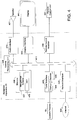
- FIG. 4 is a block diagram of an exemplary reception apparatus 20 which can take on many forms including a television set, set-top box, etc.
- the reception apparatus 20 includes a central processing unit (CPU) 338, a memory 430, an audio interface 420, a display interface 440, a remote control receiver 460, a tuner interface 450, and a network interface 326
- Data is communicated via one or more buses 411. Audio and/or video streams that have been decoded by the tuner interface 450 are retrieved. The decoded audio stream is sent to the audio interface 420 and the decoded video stream is sent to the display interface 440.
- the CPU 338 also receives data from and sends data to the Internet 322 via the network interface 326. Further, the CPU 338 executes commands received by the remote control receiver 460. These commands can be in the form of a direct channel entry through the keypad of the remote control unit 461 or inputs from the remote control unit 461 using an on-screen channel guide.
- the memory 430 stores the data used by the reception apparatus 20.
- the memory 430 within the reception apparatus 20 can be implemented using disc storage form as well as other forms of storage such as non-transitory storage devices including for example network memory devices, magnetic storage elements, magneto-optical storage elements, flash memory, core memory and/or other non-volatile storage technologies. Additionally, the memory 430 can provide for non-real time (NRT) or Internet-delivered content such as Internet Protocol Television (IPTV).
- NRT non-real time
- IPTV Internet Protocol Television
- the memory stores a navigational scheme 431 which provides, for example, the on-screen channel guide or an electronic programming guide (EPG), that allows the user to select desired content accessible via one or more communication interfaces to content sources such as a television broadcast and the Internet.
- a VCT provides a channel map for the CPU 338 to determine what content received by the tuner interface 450 corresponds to a user selected virtual channel entered via the remote control unit 461 or the navigational scheme 431.
- the tuner interface 450 receives content provided through any suitable delivery source such as a terrestrial broadcast, cable transmission, satellite broadcast, or the Internet.
- the content is provided by one or more content providers.
- the content is contained in a transport stream that includes one or more of channel data, VCT data, etc.
- the transport stream is received at the tuner interface 450 and is demultiplexed at demultiplexer 306 into audio, video, and/or data streams.
- the audio and/or video streams are decoded at decoder 410 within the tuner interface 450.
- Data streams from the content provider 10 contain information such as VCT data corresponding to the channels provided by the content provider 10. This data provided by the content provider 10 is placed in the VCT 432 within the reception apparatus memory 430 via the CPU 338.
- the reception apparatus 20 generally operates under control of a processor such as CPU 338 which may be interconnected to any one or a combination of a memory 430, an audio interface 420, display interface 440, and remote control receiver 460 via one or more buses 411.
- a processor such as CPU 338 which may be interconnected to any one or a combination of a memory 430, an audio interface 420, display interface 440, and remote control receiver 460 via one or more buses 411.
- the demultiplexer 306 audio and video data are sent to the decoder 410 for decoding and sent to the audio interface 420 and display interface 440, respectively.
- the demultiplexer also receives VCT data updated by the content provider 10 to the VCT 432 in the memory 430.
- the data in the VCT 432 is then used to update the navigational scheme 431 available to the user with the respective content available from the transport stream provided by the content provider 10.
- the user can also access the Internet 322 through a network interface 326 with Internet content being generated and displayed via a browser
- the VCT 432 stored in the reception apparatus 20 is initially created using VCT data acquired via, for example, a channel scanning function of the reception apparatus 20. After the VCT data is initially acquired, in one embodiment, the VCT data is temporarily stored in the memory 430 for further processing. In one embodiment, the reception apparatus 20 processes the information for each channel in the received VCT data to determine if it has the necessary hardware and/or software resources to be able to offer a meaningful presentation of the channel. Based on the determination result for each channel, the reception apparatus 20 creates and stores the VCT 432 with an indicator of whether each of the channels as supported or unsupported. In another embodiment, the VCT 432 may be configured to only identify supported channels. In a further embodiment, the VCT data is used to create the VCT 432 without preprocessing being performed by the reception apparatus 20. Instead, the VCT data for a particular channel is processed when it is selected by a user of the reception apparatus 20.
- the CPU 338 When the user enters a channel number using the remote control unit 461 or selects a channel number via the navigational scheme 431, as presented on the display 441, the CPU 338 will receive the desired virtual channel number and access the VCT 432 in order to determine if there is a corresponding entry. If a match is found, then the CPU 338 will first process the information about the channel found in the VCT 432. If the information indicates that the reception apparatus 20 has the necessary hardware and/or software resources to be able to offer a meaningful presentation of the channel, it will instruct the tuner interface 450 to tune to the selected physical transmission channel and present the content associated with the channel via the display interface 440 and audio interface 420, which are connected to the display 441 and a speaker 421, respectively.
- the reception apparatus 20 does not present the content associated with the channel.
- the CPU 338 determines whether the reception apparatus 20 is able to offer a meaningful presentation of the channel based on an indicator (e.g., supported or not supported) in, or associated with, the VCT 432.
- the VCT 432 instructs the tuner interface 450 to tune to the selected physical transmission channel based on the inclusion of the channel in the VCT 432, when the VCT 432 is configured to only store supported channels.
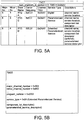
- FIG. 5A illustrates an exemplary VCT.
- the VCT is populated with virtual channels corresponding to one or more content providers.
- the VCT is populated in response to, for example, a channel scanning function.
- each virtual channel includes a Service Type.
- the service_type field is a 6-bit field that carries the Service Type identifier, which identifies the type of service carried in the respective virtual channel. For example, as noted above, Service Type 0x02 identifies a regular DTV service.
- the reception apparatus 20 refers to the Service Type information contained in the VCT to determine whether it can present the programming content provided by each virtual channel.
- the reception apparatus 20 analyzes each virtual channel before determining whether the virtual channel should be added to the VCT stored in the reception apparatus 20. In another embodiment, the reception apparatus 20 adds all the virtual channels to the reception apparatus 20 and subsequently removes, or marks as "not presentable," any virtual channels that are not supported. For example, the reception apparatus 20 performs the removal process after all available virtual channels have been identified, for example by a channel scanning function, or performs the removal process at the time the virtual channel is first tuned. In another embodiment, a virtual channel with an unsupported service type is stored in the reception apparatus 20 but an indicator is added to identify the virtual channel as not presentable.
- the reception apparatus 20 performs a new channel scanning function or another function to determine whether any of the previously unsupported virtual channels are now supported by the reception apparatus 20. For example, if a virtual channel requires an Internet connection, the reception apparatus 20 optionally updates the status of the channel to receivable when an Internet connection is subsequently detected.
- Figure 5B illustrates exemplary field values of a virtual channel entry of a VCT.
- the TVCT includes a service_type field value of 0x09 designating the Service Type as EPS.
- the service_type field value may be used to designate the EPS, as specified in a standard developed by a standards body.
- the virtual channel of the Service Type EPS includes descriptors such as one or more optional component_list_descriptor()s and one or more parameterized_service_descriptor()s.
- a virtual channel with a value 0x09 in the service_type field indicates a service of type EPS.
- the VCT signaling in an EPS conveys information the receptions apparatus 20 can use to determine whether or not it has the hardware and/or software resources needed to create a meaningful presentation of the service.
- this information can be conveyed in the component_list_descriptor(), further discussed below, and/or in one or more Parameterized Service Descriptors (PSD) whose payload is predefined in, for example, other ATSC standards.
- PSD Parameterized Service Descriptors
- the component_list_descriptor() is included in the VCT and conveys information the reception apparatus 20 can use to determine whether or not it has the hardware and/or software resources needed to create a meaningful presentation of a service.
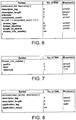
- An exemplary bit stream syntax for the component_list_descriptor() is defined in the ATSC A/71 standard and is illustrated in Figure 6 .
- Each instance of the component_list_descriptor() identifies a set of components (which can include more than one instance of a particular stream_type) that, if supported in the reception apparatus 20, allows the reception apparatus 20 to properly render and present all programming on the corresponding Virtual Channel.
- the component_list_descriptor() includes a descriptor_tag (e.g., 0xBB) that identifies the descriptor as a component_list_descriptor(); a descriptor_length that specifies the number of bytes immediately following this field to the end of the descriptor; an alternate flag to indicate whether the instance of the component_list_descriptor() is a primary or alternate description of streams associated with a virtual channel; a component_count specifying the number of components specified in the following "for" loop (e.g., in the range of 1 to 126); a stream_type indicating the stream_type associated with a component of a particular iteration of the "for" loop; a format_identifier corresponding to the format_identifier in the MPEG-2 Registration Descriptor defined in ISO/IEC 13818-1 Sec.
- a descriptor_tag e.g., 0xBB
- FIG. 7 illustrates an exemplary stream_information_details syntax for a stream_type as described in the ATSC A/71 standard.
- one, or at most two instances of the component_list_descriptor() may be present in the descriptor loop following the descriptors_length field of a terrestrial_virtual_channel_table_section() or cable_virtual_channel_table_section() in which the value of the service_type field is 0x09.
- the component_list_descriptor() need not be included in the descriptor loop. Further, in other embodiments, more than two component_list_descriptors() may be included in the descriptor loop.
- component_list_descriptor() contains stream_info_details() for each essential stream_type other than the following:
- the stream types included are not limited to those appearing in the Program Map Table (PMT) sections within the MPEG-2 Transport Stream; they may be transported and identified in other protocol layers, for example in a Service Map Table carried in an IP subnet tunneled via an elementary stream component of the program.
- PMT Program Map Table
- one or more PSDs must be present in the descriptor loop following the descriptors_length field for virtual channels of service_type value 0x09.
- Each PSD signals further information about the service pertinent to the reception apparatus 20 when deciding whether or not it can offer a meaningful presentation of the service to the user.
- Future protocols may extend the length of the PSD and/or stream_info_details() data structures by adding new fields at the ends.
- the newly-defined fields may indicate modes of operation that are not supported by the reception apparatus 20. Therefore, in one embodiment, the reception apparatus 20 is configured to conclude that it does not have the necessary resources to decode the channel, when encountering these unexpected extensions.
- Figure 8 is an exemplary bit stream syntax for the PSD.
- the parameterized_service_descriptor() is delivered in a virtual channel of service_type value 0x09 to convey specific information the reception apparatus 20 can use to determine whether or not it can create a meaningful presentation of the services on the channel.
- the PSD as defined, carries a payload whose syntax and semantics are application-specific.
- a field called application_tag identifies the application to which the payload applies.
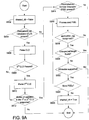
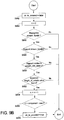
- Figures 9A and 9B illustrate exemplary algorithms used by the reception apparatus 20 to process the PSD(s) and component_list_descriptor()(s) in a virtual channel of service_type value 0x09.
- Figure 9A is an exemplary algorithm used by the reception apparatus 20 when processing a Virtual Channel Table entry indicating a service_type value of 0x09, corresponding to the EPS.
- the algorithm uses the "Parse Component List Descriptor" routine illustrated in Figure 9B .
- the process involves first checking the Component List Descriptor to see if the stream types are supported, and for each supported stream type, if the stream_info_details() indicates a supported mode of operation. If no unsupported modes are found in the Component List Descriptor, the Parameterized Service Descriptors are checked. In one embodiment, the case that no PSD is found represents an error in the received signal; the expected response by the reception apparatus 20 in this case is to decide the channel is unavailable.
- each PSD is checked in turn to see if the application_tag value is recognized, and if it is, whether or not the modes of operation of the channel described in the descriptor are supported. If the descriptor_length field indicates a value larger or smaller than expected, in one embodiment, the reception apparatus 20 concludes that the channel cannot be reliably decoded (the assumption being that the unrecognized parameters provided may indicate an unsupported mode of operation).
- the reception apparatus 20 sets a channel_ok status for a Virtual Channel to an initial "tentative result" value (e.g., false). However, in other embodiments, the setting of the initial value may be skipped and the value of the result set just prior to exiting the routine.
- the reception apparatus 20 determines whether a component_list_descriptor() (CLD) corresponding to the virtual channel is present.
- CLD component_list_descriptor()
- An exemplary CLD is illustrated in Figure 13A . When a CLD is not present, the reception apparatus 20 proceeds to step S914 to determine whether a PSD is present, as described below.
- step S906 the reception apparatus 20 determines whether a second CLD is present. When a second CLD is not present, the reception apparatus 20 proceeds to step S912. However, if a second CLD is determined to be present in step S908, the second CLD is parsed in step S910 in a similar manner as the first CLD. The logic depicted allows the process to continue if either of the two CLDs indicates "ok to proceed.”
- the reception apparatus 20 determines whether mode(s) of operation included in the first CLD are supported by the reception apparatus 20. When the first CLD is determined to be supported, the reception apparatus 20 proceeds directly to step S914 without regard to whether a second CLD is present.
- step S912 the reception apparatus 20 determines whether mode(s) of operation included in either the first CLD or the second CLD (when present) are supported by the reception apparatus 20. When no CLD is determined to be supported, the process ends and, in one embodiment, the reception apparatus 20 proceeds to analyze any remaining virtual channels. When at least one CLD is determined to be supported in step S912, the reception apparatus 20 proceeds to step S914, at which time the reception apparatus 20 determines if any PSDs are present. In one embodiment the process ends if no PSDs are present. If a PSD is determined to be present, the reception apparatus 20 proceeds to step S916 to process the PSD. In step S918, the reception apparatus 20 determines if the application_tag included in the PSD is recognized.
- step S920 determines if the length of the PSD is expected. If the length is determined to be expected, the reception apparatus 20 proceeds to step S922 to determine if each mode listed in the PSD is supported. In one embodiment the process ends if the application_tag is not recognized in step S918, an unexpected length is found in step S920, or any mode is determined not to be supported in step S922.
- step S924 the reception apparatus 20 determines if there are any additional PSDs.
- the reception apparatus 20 repeats steps S916, S918, S920, S922, and S924 if additional PSDs are present. If the reception apparatus 20 continues the process until step S926 is reached, the Virtual Channel is set as supported by the reception apparatus 20.
- Figure 9B illustrates an exemplary Parse Component List Descriptor routine.
- the component list descriptor is checked to see if the stream types are supported, and for each supported stream type, if the stream_info_details() indicates a supported mode of operation. In one embodiment, two instances of the CLD may be present in the Virtual Channel Table entry. If the reception apparatus 20 determines that it can handle the stream_type values described in either one, along with any PSDs, it will be able to reliably present the channel.
- Step S942 the reception apparatus 20 optionally sets a channel_ok status for a Virtual Channel to an initial value (e.g., false).
- step S944 a count n is set to 0 to begin analysis of the first component included in the CLD.
- step S946 is the stream type value recognized;
- step S948 is the stream type supported in the reception apparatus hardware and/or software;
- step S950 for this stream type, are the modes of operation described in stream_info_details() supported;
- step S952 is the value of length_of_details as expected. In one embodiment if the answer to any of these questions is "no,” the routine returns a value of "false” in the variable called “ok_to_proceed,” otherwise a value of "true” is returned.
- the reception apparatus 20 need not support all modes of operation defined in each PSD to present the Virtual Channel. Further, for example, as illustrated in Figure 9A , the processing of PSD is described in a specific order (e.g., S918, S920, and S922). However, embodiments of the disclosure are not so limited and the steps performed by the reception apparatus 20 may be performed concurrently or in different orders.
- a 3D service is an example of an application identified by a PSD.
- the 3D service is assigned to an application_tag value of 1.
- SBC hybrid-coded
- the left view and right view are transported in different elementary streams.
- One view is offered as a 2D TV service and the audio may or may not be common between the 2D and 3D views.
- IC3D independent-coded 3D
- the left view and right view are transported in different elementary streams or are transported in one elementary stream.
- Neither view is offered as a 2D service.
- whether or not a 2D version of the 3D content is offered on another channel is irrelevant with respect to a given Virtual Channel because the decoder just needs to know whether it can handle the decoding of content.
- FIG 10A illustrates an exemplary stream_info_details syntax for a Service Compatible Hybrid Coding (SCHC) 3D service in which an additional view is encoded using AVC.
- a Virtual Channel that carries a stereoscopic 3DTV service is identified by service_type 0x09 in the VCT.
- the VCT includes the following descriptors in the descriptor loop following the descriptors_length field of the terrestrial_virtual_channel_table_section() or cable_virtual_channel_table_section(): (1) a CLD; and (2) a PSD.
- the component_list_descriptor() provides information about the codecs used to encode the SCHC service.
- the parameterized_service_descriptor() provides information about the type of 3D service carried., which can facilitate the behaviors of the 3DTV receivers (e.g., reception apparatus 20) to display the stereoscopic video.
- the component_list_descriptor() is present in the descriptor loop of the TVCT (or CVCT when present) to describe video components of an SCHC service.
- the component_list_descriptor() includes a stream_info_details() entry for the video stream comprising the base view, for example, in the case that it is not MPEG-2 video constrained by A/53 Part 4, and a stream_info_details() entry for the video stream comprising the additional view.
- the component_list_descriptor() includes stream_info_details for stream_type 0x23.
- the stream_info_details for the stream_type 0x23 includes the following fields:
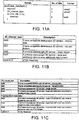
- Figure 11A illustrates exemplary application_data() included in a PSD for an SCHC service.
- the value of application_tag for the SCHC service is 0x01.
- the application_data() for application_tag value 0x01 includes 3D_channel_type, which indicates the type of 3D service carried in the Virtual Channel associated with the PSD.
- the 3D_channel_type is an unsigned integer field of, for example, 5 bits.
- Exemplary coding for the 3D_channel_type is illustrated in Figures 11B and 11C .
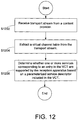
- FIG 12 illustrates an exemplary general method performed by the reception apparatus 20 to identify content that can be presented to a user.
- the reception apparatus 20 receives a transport stream from a content provider.
- the reception apparatus 20 extracts a VCT from the transport stream.
- the reception apparatus determines whether one or more services, corresponding to an entry included in the VCT, are supported by the reception apparatus based on a parameterized service descriptor (PSD).
- PSD parameterized service descriptor
- Embodiments of the present disclosure avoid unnecessary assignment of new descriptor_tag values (for example, every time a new application for a Virtual Channel arises), provide a flexible, extensible mechanism to signal new types of DTV services, and allow the retention of the standard rule whereby receivers are allowed to disregard unrecognized descriptors (ones for which the descriptor_tag is unrecognized).
- a stereoscopic channel descriptor can be used as an alternative or in conjunction with the PSD.
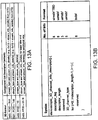
- the required descriptors include a component list descriptor and a stereoscopic channel info descriptor.
- the component list descriptor identifies the one or more codecs used and profile/level information.
- the stereoscopic channel info descriptor identifies the 3D format (e.g., full-frame, frame-compatible), for frame compatible the frame packing arrangement, and references other standards for alternate transport paths for an additional view.
- Figure 13A illustrates exemplary component list descriptor contents
- Figure 13B illustrates an exemplary stereoscopic channel info descriptor.
- Figure 14 is a block diagram showing an example of a hardware configuration of a computer 1400 configured to function as any one or a combination of the content provider 10 and reception apparatus 20.
- the computer 1400 includes a central processing unit (CPU) 1402, read only memory (ROM) 1404, and a random access memory (RAM) 1406 interconnected to each other via one or more buses 1408.
- the one or more buses 1408 is further connected with an input-output interface 1410.
- the input-output interface 1410 is connected with an input portion 1412 formed by a keyboard, a mouse, a microphone, remote controller, etc.
- the input-output interface 1410 is also connected to a output portion 1414 formed by an audio interface, video interface, display, speaker, etc.; a recording portion 1416 formed by a hard disk, a non-volatile memory, etc.; a communication portion 1418 formed by a network interface, modem, USB interface, fire wire interface, etc.; and a drive 1420 for driving removable media 1422 such as a magnetic disk, an optical disk, a magneto-optical disk, a semiconductor memory, etc.
- the CPU 1402 loads a program stored in the recording portion 1416 into the RAM 1406 via the input-output interface 1410 and the bus 1408, and then executes a program configured to provide the functionality of the one or combination of the content provider 10 and reception apparatus 20.
- programs may be processed by a single computer or by a plurality of computers on a distributed basis.
- the programs may also be transferred to a remote computer or computers for execution.
- system means an aggregate of a plurality of component elements (apparatuses, modules (parts), etc.). All component elements may or may not be housed in a single enclosure. Therefore, a plurality of apparatuses each housed in a separate enclosure and connected via a network are considered a network, and a single apparatus formed by a plurality of modules housed in a single enclosure are also regarded as a system.
- this technology may be structured for cloud computing whereby a single function is shared and processed in collaboration among a plurality of apparatuses via a network.
- each of the steps explained in reference to the above-described flowcharts may be executed not only by a single apparatus but also by a plurality of apparatuses in a shared manner.
- one step includes a plurality of processes
- these processes included in the step may be performed not only by a single apparatus but also by a plurality of apparatuses in a shared manner.
Landscapes
- Engineering & Computer Science (AREA)
- Multimedia (AREA)
- Signal Processing (AREA)
- Human Computer Interaction (AREA)
- Databases & Information Systems (AREA)
- Library & Information Science (AREA)
- Two-Way Televisions, Distribution Of Moving Picture Or The Like (AREA)
Claims (12)
- Verfahren einer Empfangsvorrichtung zum Zugreifen auf Inhalt mit:Empfangen eines Transportstroms von einem Inhaltsprovider;Extrahieren einer virtuellen Kanaltabelle, VCT, aus dem Transportstrom; undgekennzeichnet durch, wenn ein in der VCT definierter virtueller Kanal verknüpft ist mit einem vorbestimmten Diensttyp für einen erweiterten parametrisierten Dienst, der einen parametrisierten Dienstdeskriptor, PSD, übermittelt,Bestimmen, ob ein Komponentenlistendeskriptor, CLD, enthalten ist für den virtuellen Kanal in der VCT, undBestimmen, ob ein oder mehrere Dienste entsprechend dem virtuellen Kanal unterstützt werden von der Empfangsvorrichtung basierend auf dem in der VCT enthaltenen PSD,wobei der PSD in einem virtuellen Kanal geliefert wird und eine Nutzlast trägt, dessen Syntax und Semantik anwendungsspezifisch sind.
- Verfahren gemäß Anspruch 1, wobei
der PSD ein Deskriptor-Tag, eine Deskriptorlänge, ein Anwendungs-Tag und Anwendungsdaten umfasst, wobei das Anwendungs-Tag eine Anwendung, für die die Anwendungsdaten gelten, identifiziert. - Verfahren gemäß Anspruch 1, wobei
der PSD mit Diensttyp 0x09 verknüpft ist. - Verfahren gemäß Anspruch 2, wobei der Schritt des Bestimmens umfasst:Analysieren wenigstens eines CLD umfassend einen oder mehrere Stromtypen, wobei der wenigstens eine CLD in der VCT enthalten ist; undBestimmen, ob die einen oder mehreren Stromtypen von der Empfangsvorrichtung unterstützt werden.
- Verfahren gemäß Anspruch 2, wobei der Schritt des Bestimmens umfasst:Bestimmen, ob das in dem PSD enthaltene Anwendungs-Tag erkannt wird;Bestimmen, ob die Länge des PSD innerhalb eines vorbestimmten Bereichs liegt;Bestimmen, ob jeder in den Anwendungsdaten definierte Betriebsmodus unterstützt wird von der Empfangsvorrichtung; undBestimmen, ob die einen oder mehreren Dienste entsprechend dem virtuellen Kanal von der Empfangsvorrichtung unterstützt werden, wenn das Anwendungs-Tag erkannt wird, die Länge des PSD innerhalb des vorbestimmten Bereichs liegt und jeder in den Anwendungsdaten definierte Betriebsmodus unterstützt wird.
- Computerlesbares Speichermedium mit darin eingebetteten Instruktionen, die, wenn sie von einem Computer ausgeführt werden, den Computer veranlassen, ein Verfahren wie in Anspruch 1 beansprucht durchzuführen.
- Empfangsvorrichtung mit:einer Empfangseinheit (450) zum Empfangen eines Transportstroms von einem Inhaltsprovider;einer Extrahierungseinheit (338) zum Extrahieren einer virtuellen Kanaltabelle, VCT, aus dem Transportstrom; undgekennzeichnet durch einen Prozessor (338) zum Durchführen, wenn ein in der VCT definierter virtueller Kanal verknüpft ist mit einem vorbestimmten Diensttyp für einen erweiterten parametrisierten Dienst, der einen parametrisierten Dienstdeskriptor, PSD, übermittelt, der SchritteBestimmen, ob ein Komponentenlistendeskriptor, CLD, enthalten ist für den virtuellen Kanal in der VCT, undBestimmen, ob ein oder mehrere Dienste entsprechend dem virtuellen Kanal unterstützt werden von der Empfangsvorrichtung basierend auf dem in der VCT enthaltenen PSD,wobei der PSD in einem virtuellen Kanal geliefert wird und eine Nutzlast trägt, dessen Syntax und Semantik anwendungsspezifisch sind.
- Empfangsvorrichtung gemäß Anspruch 7, wobei
der PSD ein Deskriptor-Tag, eine Deskriptorlänge, ein Anwendungs-Tag und Anwendungsdaten umfasst, wobei das Anwendungs-Tag eine Anwendung, für die die Anwendungsdaten gelten, identifiziert. - Empfangsvorrichtung gemäß Anspruch 7, wobei
der PSD mit Diensttyp 0x09 verknüpft ist. - Empfangsvorrichtung gemäß 8, wobei der Prozessor (338) ferner ausgestattet ist zum
Analysieren wenigstens eines CLD umfassend einen oder mehrere Stromtypen, wobei der wenigstens eine CLD in der VCT enthalten ist; und
Bestimmen, ob die einen oder mehreren Stromtypen von der Empfangsvorrichtung unterstützt werden. - Empfangsvorrichtung gemäß Anspruch 8, wobei der Prozessor (338) ferner ausgestattet ist zum
Bestimmen, ob das in dem PSD enthaltene Anwendungs-Tag erkannt wird;
Bestimmen, ob die Länge des PSD innerhalb eines vorbestimmten Bereichs liegt;
Bestimmen, ob jeder in den Anwendungsdaten definierte Betriebsmodus unterstützt wird von der Empfangsvorrichtung; und
Bestimmen, ob die einen oder mehreren Dienste entsprechend dem virtuellen Kanal von der Empfangsvorrichtung unterstützt werden, wenn das Anwendungs-Tag erkannt wird, die Länge des PSD innerhalb des vorbestimmten Bereichs liegt und jeder in den Anwendungsdaten definierte Betriebsmodus unterstützt wird. - Informationsverarbeitungsvorrichtung mit:einer Inhaltsversorgungseinheit (10) zum Speichern und Empfangen von Inhalt;einem Codierer (204a, 204n) zum Codieren des Inhalts; undgekennzeichnet durch einen Multiplexer (208) zum Erzeugen eines Transportstroms, der den codierten Inhalt und eine virtuelle Kanaltabelle, VCT, beinhaltet, wobei die VCT einen parametrisierten Dienstdeskriptor, PSD, für einen virtuellen Kanal beinhaltet, der verknüpft ist mit einem vorbestimmten Diensttyp für einen erweiterten parametrisierten Dienst, der einen parametrisierten Dienstdeskriptor, PSD, übermittelt;wobei, wenn ein Komponentenlistendeskriptor, CLD, für den virtuellen Kanal in der VCT enthalten ist, der PSD in einem virtuellen Kanal geliefert wird und eine Nutzlast trägt, deren Syntax und Semantik anwendungsspezifisch sind.
Applications Claiming Priority (2)
| Application Number | Priority Date | Filing Date | Title |
|---|---|---|---|
| US201261671020P | 2012-07-12 | 2012-07-12 | |
| PCT/US2013/045878 WO2014011355A1 (en) | 2012-07-12 | 2013-06-14 | Parameterized services descriptor for advanced television services |
Publications (3)
| Publication Number | Publication Date |
|---|---|
| EP2873232A1 EP2873232A1 (de) | 2015-05-20 |
| EP2873232A4 EP2873232A4 (de) | 2016-03-09 |
| EP2873232B1 true EP2873232B1 (de) | 2018-04-25 |
Family
ID=49915181
Family Applications (1)
| Application Number | Title | Priority Date | Filing Date |
|---|---|---|---|
| EP13817234.1A Not-in-force EP2873232B1 (de) | 2012-07-12 | 2013-06-14 | Parametrisierter dienstedeskriptor für fortgeschrittene fernsehdienste |
Country Status (10)
| Country | Link |
|---|---|
| US (3) | US8898720B2 (de) |
| EP (1) | EP2873232B1 (de) |
| KR (1) | KR20150035567A (de) |
| CN (1) | CN104272724B (de) |
| AR (1) | AR091672A1 (de) |
| CA (1) | CA2869533A1 (de) |
| IN (1) | IN2014MN02573A (de) |
| MX (1) | MX337934B (de) |
| MY (1) | MY177736A (de) |
| WO (1) | WO2014011355A1 (de) |
Families Citing this family (54)
| Publication number | Priority date | Publication date | Assignee | Title |
|---|---|---|---|---|
| US8705933B2 (en) | 2009-09-25 | 2014-04-22 | Sony Corporation | Video bookmarking |
| US8878913B2 (en) | 2010-03-12 | 2014-11-04 | Sony Corporation | Extended command stream for closed caption disparity |
| US8760498B2 (en) | 2011-03-14 | 2014-06-24 | Sony Corporation | Disparity data transport in standard caption service |
| US8941779B2 (en) | 2012-03-21 | 2015-01-27 | Sony Corporation | Non-closed caption data transport in standard caption service |
| US8839338B2 (en) | 2012-03-28 | 2014-09-16 | Sony Corporation | Service usage reporting data transport |
| US8863171B2 (en) | 2010-06-14 | 2014-10-14 | Sony Corporation | Announcement of program synchronized triggered declarative objects |
| US8893210B2 (en) | 2010-08-20 | 2014-11-18 | Sony Corporation | Server load balancing for interactive television |
| US8898723B2 (en) | 2010-08-20 | 2014-11-25 | Sony Corporation | Virtual channel declarative script binding |
| US8875169B2 (en) | 2010-08-27 | 2014-10-28 | Sony Corporation | Transmission and reception apparatus, methods, and systems for filtering content |
| US8909694B2 (en) | 2010-08-27 | 2014-12-09 | Sony Corporation | Transmission apparatus and method, reception apparatus and method, and transmission and reception system |
| US8918801B2 (en) | 2010-08-30 | 2014-12-23 | Sony Corporation | Transmission apparatus, transmission method, reception apparatus, reception method, program, and broadcasting system |
| US8595783B2 (en) | 2010-08-30 | 2013-11-26 | Sony Corporation | Receiving device, receiving method, program, and broadcasting system |
| US9179188B2 (en) | 2010-08-30 | 2015-11-03 | Sony Corporation | Transmission apparatus and method, reception apparatus and method, and transmission and reception system |
| EP2624549A4 (de) | 2010-10-01 | 2014-06-04 | Sony Corp | Informationsverarbeitungsvorrichtung, informationsverarbeitungsverfahren und programm |
| US9179198B2 (en) | 2010-10-01 | 2015-11-03 | Sony Corporation | Receiving apparatus, receiving method, and program |
| US8908103B2 (en) | 2010-10-01 | 2014-12-09 | Sony Corporation | Content supplying apparatus, content supplying method, content reproduction apparatus, content reproduction method, program and content viewing system |
| US9078031B2 (en) | 2010-10-01 | 2015-07-07 | Sony Corporation | Reception apparatus, reception method, and program |
| US8872888B2 (en) | 2010-10-01 | 2014-10-28 | Sony Corporation | Content transmission apparatus, content transmission method, content reproduction apparatus, content reproduction method, program and content delivery system |
| TWI545955B (zh) | 2011-04-28 | 2016-08-11 | Sony Corp | Signal receiving apparatus and method, a signal transmission apparatus and method, and program |
| US9554175B2 (en) | 2011-07-20 | 2017-01-24 | Sony Corporation | Method, computer program, reception apparatus, and information providing apparatus for trigger compaction |
| US8917358B2 (en) | 2011-07-27 | 2014-12-23 | Sony Corporation | Reception apparatus, terminal apparatus, control method, program, and communication system |
| MX2014001202A (es) | 2011-08-05 | 2014-03-21 | Sony Corp | Dispositivo de recepcion, metodo de recepcion, programa y sistema de procesamiento de informacion. |
| TWI528749B (zh) | 2011-09-06 | 2016-04-01 | Sony Corp | A signal receiving device, a signal receiving method, an information processing program and an information processing system |
| US9015785B2 (en) | 2011-11-29 | 2015-04-21 | Sony Corporation | Terminal apparatus, server apparatus, information processing method, program, and linking application supply system |
| US8930988B2 (en) | 2011-12-21 | 2015-01-06 | Sony Corporation | Reception apparatus, reception method, program, and information processing system |
| KR102222166B1 (ko) | 2012-06-19 | 2021-03-04 | 소니 주식회사 | 대화형 텔레비전을 위한 트리거 파라미터 테이블의 확장 |
| KR20150035567A (ko) | 2012-07-12 | 2015-04-06 | 소니 주식회사 | 고급 텔레비전 서비스들에 대한 파라미터화된 서비스 디스크립터 |
| US9154840B2 (en) | 2012-07-31 | 2015-10-06 | Sony Corporation | Reception apparatus, reception method, transmission apparatus, and transmission method |
| US9883247B2 (en) | 2012-08-13 | 2018-01-30 | Saturn Licensing Llc | Reception apparatus, reception method, transmission apparatus, and transmission method |
| US9253518B2 (en) | 2012-11-09 | 2016-02-02 | Sony Corporation | On-demand access to scheduled content |
| US9148676B2 (en) | 2012-12-04 | 2015-09-29 | Sony Corporation | Broadcast transition channel |
| BR102013003187A2 (pt) * | 2013-02-08 | 2014-09-16 | Tqtvd Software Ltda | Interface de usuário integrada de acesso a conteúdo multimídia linear e não-linear oriundos de múltiplas fontes e método para sua implementação |
| US9137566B2 (en) | 2013-06-28 | 2015-09-15 | Sony Corporation | Distribution system, reception apparatus, and methods for transitioning to new services |
| US9038095B2 (en) | 2013-07-03 | 2015-05-19 | Sony Corporation | Methods, information providing system, and reception apparatus for distribution of at least one content version |
| US8884800B1 (en) | 2013-07-31 | 2014-11-11 | Sony Corporation | Method and apparatus for performing analog-to-digital conversion on multiple input signals |
| KR101731770B1 (ko) | 2014-03-13 | 2017-04-28 | 베란스 코오포레이션 | 임베디드 코드를 사용한 양방향 콘텐츠 획득 |
| US10504200B2 (en) | 2014-03-13 | 2019-12-10 | Verance Corporation | Metadata acquisition using embedded watermarks |
| WO2016028936A1 (en) | 2014-08-20 | 2016-02-25 | Verance Corporation | Watermark detection using a multiplicity of predicted patterns |
| KR102271817B1 (ko) * | 2014-09-26 | 2021-07-01 | 삼성전자주식회사 | 증강현실을 위한 스마트 콘택렌즈와 그 제조 및 동작방법 |
| WO2016086047A1 (en) | 2014-11-25 | 2016-06-02 | Verance Corporation | Enhanced metadata and content delivery using watermarks |
| US9942602B2 (en) | 2014-11-25 | 2018-04-10 | Verance Corporation | Watermark detection and metadata delivery associated with a primary content |
| US9326295B1 (en) | 2014-12-10 | 2016-04-26 | Sony Corporation | Method and apparatus for transmitting a-priori information in a communication system |
| WO2016100916A1 (en) | 2014-12-18 | 2016-06-23 | Verance Corporation | Service signaling recovery for multimedia content using embedded watermarks |
| US20160204804A1 (en) | 2015-01-13 | 2016-07-14 | Sony Corporation | Data processing apparatus and method |
| US9762354B2 (en) | 2015-01-27 | 2017-09-12 | Sony Corporation | Signaling methods and apparatus |
| US9912986B2 (en) | 2015-03-19 | 2018-03-06 | Sony Corporation | System for distributing metadata embedded in video |
| US9756401B2 (en) | 2015-04-07 | 2017-09-05 | Sony Corporation | Processing and providing an image in which a plurality of symbols are encoded |
| US9590782B2 (en) | 2015-06-22 | 2017-03-07 | Sony Corporation | Signaling methods and apparatus |
| US10205991B2 (en) | 2015-07-27 | 2019-02-12 | Sony Corporation | Hidden replaceable media slots |
| US9800819B2 (en) * | 2016-02-19 | 2017-10-24 | Sony Corporation | Methodologies and apparatus for reducing delays when receiving, processing, or switching content |
| US20180316953A1 (en) * | 2017-04-28 | 2018-11-01 | Sony Interactive Entertainment LLC | Integrating media content for local channels and subscription channels |
| US20210076095A1 (en) | 2019-08-28 | 2021-03-11 | Verance Corporation | Watermark-based dynamic ad insertion |
| US11722741B2 (en) | 2021-02-08 | 2023-08-08 | Verance Corporation | System and method for tracking content timeline in the presence of playback rate changes |
| US12425371B2 (en) * | 2022-09-16 | 2025-09-23 | Cisco Technology, Inc. | System and method for providing SCHC-based edge firewalling |
Family Cites Families (87)
| Publication number | Priority date | Publication date | Assignee | Title |
|---|---|---|---|---|
| WO2001059569A2 (en) | 2000-02-09 | 2001-08-16 | Apriva, Inc. | Communication systems, components, and methods with programmable wireless devices |
| KR20060046333A (ko) * | 2004-11-03 | 2006-05-17 | 엘지전자 주식회사 | 데이터 방송 정보 데이터 구조, 데이터 방송 구분 방법그리고, 데이터 방송 송수신 시스템 |
| BRPI0614926A2 (pt) * | 2005-08-22 | 2011-04-19 | Korea Electronics Telecomm | metadado de extensão de pmcp, dispositivo de geração de fluxo de dados, sistema de emissão de difusão de dados digitais e método de emissão de difusão de dados digitais do mesmo |
| CA2677024C (en) * | 2008-09-19 | 2019-04-16 | Sony Corporation | System and method for terrestrial broadcast of emergency alerts |
| EP2538684A1 (de) * | 2008-12-18 | 2012-12-26 | LG Electronics Inc. | Digitales Rundfunkempfangsverfahren zur Anzeige Stereoskopischer Bilder sowie Digitale Rundfunkempfangsvorrichtung damit |
| US8910233B2 (en) * | 2008-12-22 | 2014-12-09 | Mediatek Inc. | Signal processing apparatuses capable of processing initially reproduced packets prior to buffering the initially reproduced packets |
| KR101350261B1 (ko) * | 2008-12-30 | 2014-01-13 | 엘지전자 주식회사 | 이차원 영상과 3d 영상의 통합 서비스가 가능한 디지털 방송 수신방법, 및 이를 이용한 디지털 방송 수신장치 |
| US8705933B2 (en) | 2009-09-25 | 2014-04-22 | Sony Corporation | Video bookmarking |
| US9277183B2 (en) | 2009-10-13 | 2016-03-01 | Sony Corporation | System and method for distributing auxiliary data embedded in video data |
| WO2011108903A2 (ko) * | 2010-03-05 | 2011-09-09 | 한국전자통신연구원 | 복수 전송 계층 연동형 3dtv 방송 서비스 제공을 위한 송신 및 수신 방법, 송신 및 수신 장치 |
| US8941779B2 (en) | 2012-03-21 | 2015-01-27 | Sony Corporation | Non-closed caption data transport in standard caption service |
| US8760498B2 (en) | 2011-03-14 | 2014-06-24 | Sony Corporation | Disparity data transport in standard caption service |
| US8878913B2 (en) | 2010-03-12 | 2014-11-04 | Sony Corporation | Extended command stream for closed caption disparity |
| US8839338B2 (en) | 2012-03-28 | 2014-09-16 | Sony Corporation | Service usage reporting data transport |
| US20110247028A1 (en) | 2010-04-01 | 2011-10-06 | Mark Eyer | Receiver and System Using an Electronic Questionnaire for Advanced Broadcast Services |
| US9706158B2 (en) | 2010-04-01 | 2017-07-11 | Saturn Licensing Llc | Receiver and method for reporting the usage of advanced television services |
| US9723360B2 (en) | 2010-04-01 | 2017-08-01 | Saturn Licensing Llc | Interests and demographics profile for advanced broadcast services |
| US20110302611A1 (en) | 2010-06-07 | 2011-12-08 | Mark Kenneth Eyer | Scripted Interactivity for Non-Real-Time Services |
| US8863171B2 (en) | 2010-06-14 | 2014-10-14 | Sony Corporation | Announcement of program synchronized triggered declarative objects |
| US8893210B2 (en) | 2010-08-20 | 2014-11-18 | Sony Corporation | Server load balancing for interactive television |
| US8898723B2 (en) | 2010-08-20 | 2014-11-25 | Sony Corporation | Virtual channel declarative script binding |
| US8909694B2 (en) | 2010-08-27 | 2014-12-09 | Sony Corporation | Transmission apparatus and method, reception apparatus and method, and transmission and reception system |
| US8875169B2 (en) | 2010-08-27 | 2014-10-28 | Sony Corporation | Transmission and reception apparatus, methods, and systems for filtering content |
| JP5765558B2 (ja) | 2010-08-27 | 2015-08-19 | ソニー株式会社 | 受信装置、受信方法、送信装置、送信方法、プログラム、および放送システム |
| US8918801B2 (en) | 2010-08-30 | 2014-12-23 | Sony Corporation | Transmission apparatus, transmission method, reception apparatus, reception method, program, and broadcasting system |
| US8595783B2 (en) | 2010-08-30 | 2013-11-26 | Sony Corporation | Receiving device, receiving method, program, and broadcasting system |
| US20120050619A1 (en) | 2010-08-30 | 2012-03-01 | Sony Corporation | Reception apparatus, reception method, transmission apparatus, transmission method, program, and broadcasting system |
| US8892636B2 (en) | 2010-08-30 | 2014-11-18 | Sony Corporation | Transmission apparatus and method, reception apparatus and method, and transmission and reception system |
| US9179188B2 (en) | 2010-08-30 | 2015-11-03 | Sony Corporation | Transmission apparatus and method, reception apparatus and method, and transmission and reception system |
| MX2013002076A (es) | 2010-08-30 | 2013-10-28 | Sony Corp | Dispositivo de recepcion metodo de recepcion, y programa. |
| US10511887B2 (en) | 2010-08-30 | 2019-12-17 | Saturn Licensing Llc | Reception apparatus, reception method, transmission apparatus, transmission method, program, and broadcasting system |
| JP5757075B2 (ja) | 2010-09-15 | 2015-07-29 | ソニー株式会社 | 送信装置、送信方法、受信装置、受信方法、プログラム、および放送システム |
| US9986270B2 (en) | 2010-09-21 | 2018-05-29 | Saturn Licensing Llc | Reception and transmission of trigger information for application program control |
| JP5703664B2 (ja) | 2010-09-30 | 2015-04-22 | ソニー株式会社 | 受信装置、受信方法、送信装置、送信方法、プログラム、および放送システム |
| US8842974B2 (en) | 2010-10-01 | 2014-09-23 | Sony Corporation | Content transmission apparatus, content transmission method, content reproduction apparatus, content reproduction method, program, and content delivery system |
| US9078031B2 (en) | 2010-10-01 | 2015-07-07 | Sony Corporation | Reception apparatus, reception method, and program |
| US9179198B2 (en) | 2010-10-01 | 2015-11-03 | Sony Corporation | Receiving apparatus, receiving method, and program |
| EP2624549A4 (de) | 2010-10-01 | 2014-06-04 | Sony Corp | Informationsverarbeitungsvorrichtung, informationsverarbeitungsverfahren und programm |
| US8872888B2 (en) | 2010-10-01 | 2014-10-28 | Sony Corporation | Content transmission apparatus, content transmission method, content reproduction apparatus, content reproduction method, program and content delivery system |
| US8908103B2 (en) | 2010-10-01 | 2014-12-09 | Sony Corporation | Content supplying apparatus, content supplying method, content reproduction apparatus, content reproduction method, program and content viewing system |
| US20120127266A1 (en) * | 2010-11-24 | 2012-05-24 | Electronics And Telecommunications Research Institute | Method and apparatus for providing stereoscopic 3d broadcasting service compatible with hd broadcasting service |
| CA2820025C (en) * | 2010-12-08 | 2017-08-29 | Lg Electronics Inc. | Device and method for receiving digital broadcast signal |
| US20120185888A1 (en) | 2011-01-19 | 2012-07-19 | Sony Corporation | Schema for interests and demographics profile for advanced broadcast services |
| JP5793871B2 (ja) | 2011-01-25 | 2015-10-14 | ソニー株式会社 | 受信装置、受信方法、供給装置、供給方法、プログラム、および放送システム |
| JP5783402B2 (ja) | 2011-01-25 | 2015-09-24 | ソニー株式会社 | 受信装置、受信方法、供給装置、供給方法、プログラム、および放送システム |
| JP5668512B2 (ja) | 2011-02-15 | 2015-02-12 | ソニー株式会社 | 情報処理装置、及び、情報処理方法 |
| TWI574565B (zh) | 2011-03-31 | 2017-03-11 | Sony Corp | A transmitting apparatus, a transmitting method, a receiving apparatus, a receiving method, a computer-readable medium, and a broadcasting system |
| US8886009B2 (en) | 2011-04-26 | 2014-11-11 | Sony Corporation | Creation of video bookmarks via scripted interactivity in advanced digital television |
| TWI545955B (zh) | 2011-04-28 | 2016-08-11 | Sony Corp | Signal receiving apparatus and method, a signal transmission apparatus and method, and program |
| US9554175B2 (en) | 2011-07-20 | 2017-01-24 | Sony Corporation | Method, computer program, reception apparatus, and information providing apparatus for trigger compaction |
| US8917358B2 (en) | 2011-07-27 | 2014-12-23 | Sony Corporation | Reception apparatus, terminal apparatus, control method, program, and communication system |
| US10491966B2 (en) | 2011-08-04 | 2019-11-26 | Saturn Licensing Llc | Reception apparatus, method, computer program, and information providing apparatus for providing an alert service |
| MX2014001202A (es) | 2011-08-05 | 2014-03-21 | Sony Corp | Dispositivo de recepcion, metodo de recepcion, programa y sistema de procesamiento de informacion. |
| CN103748895B (zh) | 2011-08-24 | 2018-11-13 | 索尼公司 | 接收装置、接收方法和信息处理系统 |
| US20130055313A1 (en) | 2011-08-31 | 2013-02-28 | Sony Corporation | Method, computer program, reception apparatus, and information providing apparatus for accessing content from a plurality of content sources |
| TWI528749B (zh) | 2011-09-06 | 2016-04-01 | Sony Corp | A signal receiving device, a signal receiving method, an information processing program and an information processing system |
| US9374620B2 (en) | 2011-10-21 | 2016-06-21 | Sony Corporation | Terminal apparatus, server apparatus, information processing method, program, and interlocked application feed system |
| US9015785B2 (en) | 2011-11-29 | 2015-04-21 | Sony Corporation | Terminal apparatus, server apparatus, information processing method, program, and linking application supply system |
| JP5901956B2 (ja) | 2011-12-16 | 2016-04-13 | 株式会社コガネイ | 直線往復動装置 |
| US9113230B2 (en) | 2011-12-21 | 2015-08-18 | Sony Corporation | Method, computer program, and reception apparatus for delivery of supplemental content |
| US8930988B2 (en) | 2011-12-21 | 2015-01-06 | Sony Corporation | Reception apparatus, reception method, program, and information processing system |
| JP6082946B2 (ja) | 2012-01-24 | 2017-02-22 | サターン ライセンシング エルエルシーSaturn Licensing LLC | 受信装置、受信方法、プログラム、及び情報処理システム |
| KR102033809B1 (ko) | 2012-02-07 | 2019-10-17 | 소니 주식회사 | 수신 장치, 수신 방법 및 프로그램 |
| US9936231B2 (en) | 2012-03-21 | 2018-04-03 | Saturn Licensing Llc | Trigger compaction |
| US20130282870A1 (en) | 2012-04-18 | 2013-10-24 | Sony Corporation | Reception apparatus, reception method, transmission apparatus, transmission method, and program |
| KR102222166B1 (ko) | 2012-06-19 | 2021-03-04 | 소니 주식회사 | 대화형 텔레비전을 위한 트리거 파라미터 테이블의 확장 |
| US9456245B2 (en) | 2012-07-05 | 2016-09-27 | Sony Corporation | Receiving device, receiving method, transmitting device, and transmitting method for controlling applications |
| KR20150035567A (ko) | 2012-07-12 | 2015-04-06 | 소니 주식회사 | 고급 텔레비전 서비스들에 대한 파라미터화된 서비스 디스크립터 |
| US9154840B2 (en) | 2012-07-31 | 2015-10-06 | Sony Corporation | Reception apparatus, reception method, transmission apparatus, and transmission method |
| US9432744B2 (en) | 2012-07-31 | 2016-08-30 | Sony Corporation | Receiving device, receiving method, transmitting device, and transmitting method |
| US9883247B2 (en) | 2012-08-13 | 2018-01-30 | Saturn Licensing Llc | Reception apparatus, reception method, transmission apparatus, and transmission method |
| WO2014028255A1 (en) | 2012-08-15 | 2014-02-20 | Sony Corporation | Broadband delivery of personalization information for advanced tv services |
| US9264648B2 (en) | 2012-10-09 | 2016-02-16 | Sony Corporation | Receiving device, receiving method, transmitting device, and transmitting method |
| US10002206B2 (en) | 2012-10-26 | 2018-06-19 | Saturn Licensing Llc | Information processing device and information processing method |
| US9253518B2 (en) | 2012-11-09 | 2016-02-02 | Sony Corporation | On-demand access to scheduled content |
| US9769503B2 (en) | 2012-11-14 | 2017-09-19 | Saturn Licensing Llc | Information processor, information processing method and program |
| US9936256B2 (en) | 2012-11-28 | 2018-04-03 | Saturn Licensing Llc | Receiver, reception method, transmitter and transmission method |
| US9148676B2 (en) | 2012-12-04 | 2015-09-29 | Sony Corporation | Broadcast transition channel |
| US8914832B2 (en) | 2012-12-14 | 2014-12-16 | Sony Corporation | Information processing apparatus, information processing method, and program |
| US9942601B2 (en) | 2013-01-24 | 2018-04-10 | Saturn Licensing Llc | Storing non-real time content |
| US10257564B2 (en) | 2013-01-24 | 2019-04-09 | Saturn Licensing Llc | Distributed non-real-time content |
| US20140229580A1 (en) | 2013-02-12 | 2014-08-14 | Sony Corporation | Information processing device, information processing method, and information processing system |
| US9300896B2 (en) | 2013-06-03 | 2016-03-29 | Sony Corporation | Method, computer-readable storage medium, reception apparatus, and information providing apparatus for identifying available channels and/or services |
| US9980014B2 (en) | 2013-06-28 | 2018-05-22 | Saturn Licensing Llc | Methods, information providing system, and reception apparatus for protecting content |
| US9137566B2 (en) | 2013-06-28 | 2015-09-15 | Sony Corporation | Distribution system, reception apparatus, and methods for transitioning to new services |
| US9038095B2 (en) | 2013-07-03 | 2015-05-19 | Sony Corporation | Methods, information providing system, and reception apparatus for distribution of at least one content version |
| US8884800B1 (en) | 2013-07-31 | 2014-11-11 | Sony Corporation | Method and apparatus for performing analog-to-digital conversion on multiple input signals |
-
2013
- 2013-06-14 KR KR20147033988A patent/KR20150035567A/ko not_active Withdrawn
- 2013-06-14 WO PCT/US2013/045878 patent/WO2014011355A1/en not_active Ceased
- 2013-06-14 MY MYPI2014703587A patent/MY177736A/en unknown
- 2013-06-14 CA CA2869533A patent/CA2869533A1/en not_active Abandoned
- 2013-06-14 MX MX2014012401A patent/MX337934B/es active IP Right Grant
- 2013-06-14 EP EP13817234.1A patent/EP2873232B1/de not_active Not-in-force
- 2013-06-14 CN CN201380023652.0A patent/CN104272724B/zh not_active Expired - Fee Related
- 2013-07-03 US US13/934,581 patent/US8898720B2/en not_active Expired - Fee Related
- 2013-07-04 AR ARP130102386 patent/AR091672A1/es active IP Right Grant
-
2014
- 2014-10-08 US US14/509,200 patent/US9204187B2/en not_active Expired - Fee Related
- 2014-12-18 IN IN2573MUN2014 patent/IN2014MN02573A/en unknown
-
2015
- 2015-10-29 US US14/926,186 patent/US9894408B2/en not_active Expired - Fee Related
Non-Patent Citations (1)
| Title |
|---|
| None * |
Also Published As
| Publication number | Publication date |
|---|---|
| US20140020042A1 (en) | 2014-01-16 |
| MX2014012401A (es) | 2015-01-12 |
| CA2869533A1 (en) | 2014-01-16 |
| AR091672A1 (es) | 2015-02-18 |
| US9894408B2 (en) | 2018-02-13 |
| MY177736A (en) | 2020-09-23 |
| MX337934B (es) | 2016-03-28 |
| KR20150035567A (ko) | 2015-04-06 |
| CN104272724A (zh) | 2015-01-07 |
| US8898720B2 (en) | 2014-11-25 |
| IN2014MN02573A (de) | 2015-07-24 |
| US20160050451A1 (en) | 2016-02-18 |
| US20150026730A1 (en) | 2015-01-22 |
| EP2873232A1 (de) | 2015-05-20 |
| WO2014011355A1 (en) | 2014-01-16 |
| US9204187B2 (en) | 2015-12-01 |
| CN104272724B (zh) | 2018-07-03 |
| EP2873232A4 (de) | 2016-03-09 |
Similar Documents
| Publication | Publication Date | Title |
|---|---|---|
| EP2873232B1 (de) | Parametrisierter dienstedeskriptor für fortgeschrittene fernsehdienste | |
| CN102474635B (zh) | 用于3d tv的立体视图的同播 | |
| US9088817B2 (en) | Broadcast transmitter, broadcast receiver and 3D video processing method thereof | |
| US9357198B2 (en) | Digital broadcast receiving method providing two-dimensional image and 3D image integration service, and digital broadcast receiving device using the same | |
| US10708611B2 (en) | Systems and methods for signaling of video parameters and information associated with caption services | |
| EP3288270B1 (de) | Rundfunksignalsendevorrichtung, rundfunksignalempfangsvorrichtung, rundfunksignalsendeverfahren und rundfunksignalempfangsverfahren | |
| KR20090062216A (ko) | Dmb 연동형 스테레오스코픽 데이터 처리방법 및스테레오스코픽 데이터 처리장치 | |
| US9900578B2 (en) | Method and apparatus for processing broadcast signals for 3D broadcast service | |
| EP2685714A2 (de) | Verfahren und vorrichtung zum senden/empfangen eines stereoskopischen rundfunkdienstes in nicht-echtzeit | |
| US20140049606A1 (en) | Image data transmission device, image data transmission method, image data reception device, and image data reception method | |
| MX2013005885A (es) | Metodo para servicio tipo compatibilidad que transmite en radiodifusion digital. | |
| US20130088572A1 (en) | Image data transmission device, image data transmission method, image data reception device, and image data reception method | |
| KR101818141B1 (ko) | 디지털 방송에서 서비스 호환 방식 전송 방법 | |
| KR102204830B1 (ko) | 비-실시간 서비스 기반 지상파 3차원 방송 제공 방법 및 장치 |
Legal Events
| Date | Code | Title | Description |
|---|---|---|---|
| PUAI | Public reference made under article 153(3) epc to a published international application that has entered the european phase |
Free format text: ORIGINAL CODE: 0009012 |
|
| 17P | Request for examination filed |
Effective date: 20141219 |
|
| AK | Designated contracting states |
Kind code of ref document: A1 Designated state(s): AL AT BE BG CH CY CZ DE DK EE ES FI FR GB GR HR HU IE IS IT LI LT LU LV MC MK MT NL NO PL PT RO RS SE SI SK SM TR |
|
| AX | Request for extension of the european patent |
Extension state: BA ME |
|
| DAX | Request for extension of the european patent (deleted) | ||
| RA4 | Supplementary search report drawn up and despatched (corrected) |
Effective date: 20160208 |
|
| RIC1 | Information provided on ipc code assigned before grant |
Ipc: H04N 5/46 20060101AFI20160202BHEP Ipc: H04N 13/00 20060101ALI20160202BHEP Ipc: H04N 21/434 20110101ALI20160202BHEP |
|
| 17Q | First examination report despatched |
Effective date: 20161209 |
|
| RAP1 | Party data changed (applicant data changed or rights of an application transferred) |
Owner name: SATURN LICENSING LLC |
|
| GRAP | Despatch of communication of intention to grant a patent |
Free format text: ORIGINAL CODE: EPIDOSNIGR1 |
|
| INTG | Intention to grant announced |
Effective date: 20171117 |
|
| GRAA | (expected) grant |
Free format text: ORIGINAL CODE: 0009210 |
|
| GRAS | Grant fee paid |
Free format text: ORIGINAL CODE: EPIDOSNIGR3 |
|
| AK | Designated contracting states |
Kind code of ref document: B1 Designated state(s): AL AT BE BG CH CY CZ DE DK EE ES FI FR GB GR HR HU IE IS IT LI LT LU LV MC MK MT NL NO PL PT RO RS SE SI SK SM TR |
|
| REG | Reference to a national code |
Ref country code: GB Ref legal event code: FG4D |
|
| REG | Reference to a national code |
Ref country code: CH Ref legal event code: EP |
|
| REG | Reference to a national code |
Ref country code: AT Ref legal event code: REF Ref document number: 994086 Country of ref document: AT Kind code of ref document: T Effective date: 20180515 |
|
| REG | Reference to a national code |
Ref country code: IE Ref legal event code: FG4D |
|
| REG | Reference to a national code |
Ref country code: DE Ref legal event code: R096 Ref document number: 602013036610 Country of ref document: DE |
|
| REG | Reference to a national code |
Ref country code: FR Ref legal event code: PLFP Year of fee payment: 6 |
|
| REG | Reference to a national code |
Ref country code: NL Ref legal event code: MP Effective date: 20180425 |
|
| REG | Reference to a national code |
Ref country code: LT Ref legal event code: MG4D |
|
| PG25 | Lapsed in a contracting state [announced via postgrant information from national office to epo] |
Ref country code: NL Free format text: LAPSE BECAUSE OF FAILURE TO SUBMIT A TRANSLATION OF THE DESCRIPTION OR TO PAY THE FEE WITHIN THE PRESCRIBED TIME-LIMIT Effective date: 20180425 |
|
| PG25 | Lapsed in a contracting state [announced via postgrant information from national office to epo] |
Ref country code: LT Free format text: LAPSE BECAUSE OF FAILURE TO SUBMIT A TRANSLATION OF THE DESCRIPTION OR TO PAY THE FEE WITHIN THE PRESCRIBED TIME-LIMIT Effective date: 20180425 Ref country code: BG Free format text: LAPSE BECAUSE OF FAILURE TO SUBMIT A TRANSLATION OF THE DESCRIPTION OR TO PAY THE FEE WITHIN THE PRESCRIBED TIME-LIMIT Effective date: 20180725 Ref country code: PL Free format text: LAPSE BECAUSE OF FAILURE TO SUBMIT A TRANSLATION OF THE DESCRIPTION OR TO PAY THE FEE WITHIN THE PRESCRIBED TIME-LIMIT Effective date: 20180425 Ref country code: SE Free format text: LAPSE BECAUSE OF FAILURE TO SUBMIT A TRANSLATION OF THE DESCRIPTION OR TO PAY THE FEE WITHIN THE PRESCRIBED TIME-LIMIT Effective date: 20180425 Ref country code: NO Free format text: LAPSE BECAUSE OF FAILURE TO SUBMIT A TRANSLATION OF THE DESCRIPTION OR TO PAY THE FEE WITHIN THE PRESCRIBED TIME-LIMIT Effective date: 20180725 Ref country code: FI Free format text: LAPSE BECAUSE OF FAILURE TO SUBMIT A TRANSLATION OF THE DESCRIPTION OR TO PAY THE FEE WITHIN THE PRESCRIBED TIME-LIMIT Effective date: 20180425 Ref country code: ES Free format text: LAPSE BECAUSE OF FAILURE TO SUBMIT A TRANSLATION OF THE DESCRIPTION OR TO PAY THE FEE WITHIN THE PRESCRIBED TIME-LIMIT Effective date: 20180425 |
|
| PG25 | Lapsed in a contracting state [announced via postgrant information from national office to epo] |
Ref country code: GR Free format text: LAPSE BECAUSE OF FAILURE TO SUBMIT A TRANSLATION OF THE DESCRIPTION OR TO PAY THE FEE WITHIN THE PRESCRIBED TIME-LIMIT Effective date: 20180726 Ref country code: HR Free format text: LAPSE BECAUSE OF FAILURE TO SUBMIT A TRANSLATION OF THE DESCRIPTION OR TO PAY THE FEE WITHIN THE PRESCRIBED TIME-LIMIT Effective date: 20180425 Ref country code: LV Free format text: LAPSE BECAUSE OF FAILURE TO SUBMIT A TRANSLATION OF THE DESCRIPTION OR TO PAY THE FEE WITHIN THE PRESCRIBED TIME-LIMIT Effective date: 20180425 Ref country code: RS Free format text: LAPSE BECAUSE OF FAILURE TO SUBMIT A TRANSLATION OF THE DESCRIPTION OR TO PAY THE FEE WITHIN THE PRESCRIBED TIME-LIMIT Effective date: 20180425 |
|
| REG | Reference to a national code |
Ref country code: AT Ref legal event code: MK05 Ref document number: 994086 Country of ref document: AT Kind code of ref document: T Effective date: 20180425 |
|
| PG25 | Lapsed in a contracting state [announced via postgrant information from national office to epo] |
Ref country code: PT Free format text: LAPSE BECAUSE OF FAILURE TO SUBMIT A TRANSLATION OF THE DESCRIPTION OR TO PAY THE FEE WITHIN THE PRESCRIBED TIME-LIMIT Effective date: 20180827 |
|
| REG | Reference to a national code |
Ref country code: DE Ref legal event code: R097 Ref document number: 602013036610 Country of ref document: DE |
|
| PG25 | Lapsed in a contracting state [announced via postgrant information from national office to epo] |
Ref country code: DK Free format text: LAPSE BECAUSE OF FAILURE TO SUBMIT A TRANSLATION OF THE DESCRIPTION OR TO PAY THE FEE WITHIN THE PRESCRIBED TIME-LIMIT Effective date: 20180425 Ref country code: EE Free format text: LAPSE BECAUSE OF FAILURE TO SUBMIT A TRANSLATION OF THE DESCRIPTION OR TO PAY THE FEE WITHIN THE PRESCRIBED TIME-LIMIT Effective date: 20180425 Ref country code: AT Free format text: LAPSE BECAUSE OF FAILURE TO SUBMIT A TRANSLATION OF THE DESCRIPTION OR TO PAY THE FEE WITHIN THE PRESCRIBED TIME-LIMIT Effective date: 20180425 Ref country code: RO Free format text: LAPSE BECAUSE OF FAILURE TO SUBMIT A TRANSLATION OF THE DESCRIPTION OR TO PAY THE FEE WITHIN THE PRESCRIBED TIME-LIMIT Effective date: 20180425 Ref country code: SK Free format text: LAPSE BECAUSE OF FAILURE TO SUBMIT A TRANSLATION OF THE DESCRIPTION OR TO PAY THE FEE WITHIN THE PRESCRIBED TIME-LIMIT Effective date: 20180425 Ref country code: CZ Free format text: LAPSE BECAUSE OF FAILURE TO SUBMIT A TRANSLATION OF THE DESCRIPTION OR TO PAY THE FEE WITHIN THE PRESCRIBED TIME-LIMIT Effective date: 20180425 |
|
| REG | Reference to a national code |
Ref country code: CH Ref legal event code: PL |
|
| PG25 | Lapsed in a contracting state [announced via postgrant information from national office to epo] |
Ref country code: SM Free format text: LAPSE BECAUSE OF FAILURE TO SUBMIT A TRANSLATION OF THE DESCRIPTION OR TO PAY THE FEE WITHIN THE PRESCRIBED TIME-LIMIT Effective date: 20180425 Ref country code: IT Free format text: LAPSE BECAUSE OF FAILURE TO SUBMIT A TRANSLATION OF THE DESCRIPTION OR TO PAY THE FEE WITHIN THE PRESCRIBED TIME-LIMIT Effective date: 20180425 |
|
| PLBE | No opposition filed within time limit |
Free format text: ORIGINAL CODE: 0009261 |
|
| STAA | Information on the status of an ep patent application or granted ep patent |
Free format text: STATUS: NO OPPOSITION FILED WITHIN TIME LIMIT |
|
| REG | Reference to a national code |
Ref country code: BE Ref legal event code: MM Effective date: 20180630 |
|
| REG | Reference to a national code |
Ref country code: IE Ref legal event code: MM4A |
|
| GBPC | Gb: european patent ceased through non-payment of renewal fee |
Effective date: 20180725 |
|
| PG25 | Lapsed in a contracting state [announced via postgrant information from national office to epo] |
Ref country code: LU Free format text: LAPSE BECAUSE OF NON-PAYMENT OF DUE FEES Effective date: 20180614 Ref country code: MC Free format text: LAPSE BECAUSE OF FAILURE TO SUBMIT A TRANSLATION OF THE DESCRIPTION OR TO PAY THE FEE WITHIN THE PRESCRIBED TIME-LIMIT Effective date: 20180425 |
|
| 26N | No opposition filed |
Effective date: 20190128 |
|
| PG25 | Lapsed in a contracting state [announced via postgrant information from national office to epo] |
Ref country code: IE Free format text: LAPSE BECAUSE OF NON-PAYMENT OF DUE FEES Effective date: 20180614 Ref country code: GB Free format text: LAPSE BECAUSE OF NON-PAYMENT OF DUE FEES Effective date: 20180725 Ref country code: LI Free format text: LAPSE BECAUSE OF NON-PAYMENT OF DUE FEES Effective date: 20180630 Ref country code: CH Free format text: LAPSE BECAUSE OF NON-PAYMENT OF DUE FEES Effective date: 20180630 |
|
| PG25 | Lapsed in a contracting state [announced via postgrant information from national office to epo] |
Ref country code: SI Free format text: LAPSE BECAUSE OF FAILURE TO SUBMIT A TRANSLATION OF THE DESCRIPTION OR TO PAY THE FEE WITHIN THE PRESCRIBED TIME-LIMIT Effective date: 20180425 Ref country code: BE Free format text: LAPSE BECAUSE OF NON-PAYMENT OF DUE FEES Effective date: 20180630 |
|
| PG25 | Lapsed in a contracting state [announced via postgrant information from national office to epo] |
Ref country code: AL Free format text: LAPSE BECAUSE OF FAILURE TO SUBMIT A TRANSLATION OF THE DESCRIPTION OR TO PAY THE FEE WITHIN THE PRESCRIBED TIME-LIMIT Effective date: 20180425 |
|
| PG25 | Lapsed in a contracting state [announced via postgrant information from national office to epo] |
Ref country code: MT Free format text: LAPSE BECAUSE OF NON-PAYMENT OF DUE FEES Effective date: 20180614 |
|
| PG25 | Lapsed in a contracting state [announced via postgrant information from national office to epo] |
Ref country code: TR Free format text: LAPSE BECAUSE OF FAILURE TO SUBMIT A TRANSLATION OF THE DESCRIPTION OR TO PAY THE FEE WITHIN THE PRESCRIBED TIME-LIMIT Effective date: 20180425 |
|
| PG25 | Lapsed in a contracting state [announced via postgrant information from national office to epo] |
Ref country code: HU Free format text: LAPSE BECAUSE OF FAILURE TO SUBMIT A TRANSLATION OF THE DESCRIPTION OR TO PAY THE FEE WITHIN THE PRESCRIBED TIME-LIMIT; INVALID AB INITIO Effective date: 20130614 Ref country code: CY Free format text: LAPSE BECAUSE OF FAILURE TO SUBMIT A TRANSLATION OF THE DESCRIPTION OR TO PAY THE FEE WITHIN THE PRESCRIBED TIME-LIMIT Effective date: 20180425 Ref country code: MK Free format text: LAPSE BECAUSE OF NON-PAYMENT OF DUE FEES Effective date: 20180425 |
|
| PG25 | Lapsed in a contracting state [announced via postgrant information from national office to epo] |
Ref country code: IS Free format text: LAPSE BECAUSE OF FAILURE TO SUBMIT A TRANSLATION OF THE DESCRIPTION OR TO PAY THE FEE WITHIN THE PRESCRIBED TIME-LIMIT Effective date: 20180825 |
|
| PGFP | Annual fee paid to national office [announced via postgrant information from national office to epo] |
Ref country code: DE Payment date: 20200630 Year of fee payment: 8 |
|
| REG | Reference to a national code |
Ref country code: DE Ref legal event code: R119 Ref document number: 602013036610 Country of ref document: DE |
|
| PG25 | Lapsed in a contracting state [announced via postgrant information from national office to epo] |
Ref country code: DE Free format text: LAPSE BECAUSE OF NON-PAYMENT OF DUE FEES Effective date: 20220101 |
|
| PGFP | Annual fee paid to national office [announced via postgrant information from national office to epo] |
Ref country code: FR Payment date: 20220623 Year of fee payment: 10 |
|
| PG25 | Lapsed in a contracting state [announced via postgrant information from national office to epo] |
Ref country code: FR Free format text: LAPSE BECAUSE OF NON-PAYMENT OF DUE FEES Effective date: 20230630 |