EP2871964B1 - Potentiating agents for protecting plants from fungal infections - Google Patents
Potentiating agents for protecting plants from fungal infections Download PDFInfo
- Publication number
- EP2871964B1 EP2871964B1 EP13731833.3A EP13731833A EP2871964B1 EP 2871964 B1 EP2871964 B1 EP 2871964B1 EP 13731833 A EP13731833 A EP 13731833A EP 2871964 B1 EP2871964 B1 EP 2871964B1
- Authority
- EP
- European Patent Office
- Prior art keywords
- plant
- composition
- plant defense
- defense molecule
- molecule
- Prior art date
- Legal status (The legal status is an assumption and is not a legal conclusion. Google has not performed a legal analysis and makes no representation as to the accuracy of the status listed.)
- Active
Links
- 0 CCOC(c(cc(*C)c(OC=*)c1)c1-c1ncc(cc(c(OC)c2)OC)c2c1C)=C Chemical compound CCOC(c(cc(*C)c(OC=*)c1)c1-c1ncc(cc(c(OC)c2)OC)c2c1C)=C 0.000 description 2
- DMZFXUICFDRKIU-UHFFFAOYSA-N CCCOc(c1c2)cc3c(cc(c(OC)c4)OCC)c4cnc3c1cc(OO)c2OC Chemical compound CCCOc(c1c2)cc3c(cc(c(OC)c4)OCC)c4cnc3c1cc(OO)c2OC DMZFXUICFDRKIU-UHFFFAOYSA-N 0.000 description 1
- MCUMDVLIZSXSJB-UHFFFAOYSA-N C[n+]1cc(c(OC)c(cc2)OC)c2c(ccc2c3)c1c2cc1c3O[IH]O1 Chemical compound C[n+]1cc(c(OC)c(cc2)OC)c2c(ccc2c3)c1c2cc1c3O[IH]O1 MCUMDVLIZSXSJB-UHFFFAOYSA-N 0.000 description 1
Images



Classifications
-
- A—HUMAN NECESSITIES
- A01—AGRICULTURE; FORESTRY; ANIMAL HUSBANDRY; HUNTING; TRAPPING; FISHING
- A01N—PRESERVATION OF BODIES OF HUMANS OR ANIMALS OR PLANTS OR PARTS THEREOF; BIOCIDES, e.g. AS DISINFECTANTS, AS PESTICIDES OR AS HERBICIDES; PEST REPELLANTS OR ATTRACTANTS; PLANT GROWTH REGULATORS
- A01N43/00—Biocides, pest repellants or attractants, or plant growth regulators containing heterocyclic compounds
- A01N43/90—Biocides, pest repellants or attractants, or plant growth regulators containing heterocyclic compounds having two or more relevant hetero rings, condensed among themselves or with a common carbocyclic ring system
-
- A—HUMAN NECESSITIES
- A01—AGRICULTURE; FORESTRY; ANIMAL HUSBANDRY; HUNTING; TRAPPING; FISHING
- A01N—PRESERVATION OF BODIES OF HUMANS OR ANIMALS OR PLANTS OR PARTS THEREOF; BIOCIDES, e.g. AS DISINFECTANTS, AS PESTICIDES OR AS HERBICIDES; PEST REPELLANTS OR ATTRACTANTS; PLANT GROWTH REGULATORS
- A01N25/00—Biocides, pest repellants or attractants, or plant growth regulators, characterised by their forms, or by their non-active ingredients or by their methods of application, e.g. seed treatment or sequential application; Substances for reducing the noxious effect of the active ingredients to organisms other than pests
-
- A—HUMAN NECESSITIES
- A01—AGRICULTURE; FORESTRY; ANIMAL HUSBANDRY; HUNTING; TRAPPING; FISHING
- A01N—PRESERVATION OF BODIES OF HUMANS OR ANIMALS OR PLANTS OR PARTS THEREOF; BIOCIDES, e.g. AS DISINFECTANTS, AS PESTICIDES OR AS HERBICIDES; PEST REPELLANTS OR ATTRACTANTS; PLANT GROWTH REGULATORS
- A01N31/00—Biocides, pest repellants or attractants, or plant growth regulators containing organic oxygen or sulfur compounds
- A01N31/06—Oxygen or sulfur directly attached to a cycloaliphatic ring system
-
- A—HUMAN NECESSITIES
- A01—AGRICULTURE; FORESTRY; ANIMAL HUSBANDRY; HUNTING; TRAPPING; FISHING
- A01N—PRESERVATION OF BODIES OF HUMANS OR ANIMALS OR PLANTS OR PARTS THEREOF; BIOCIDES, e.g. AS DISINFECTANTS, AS PESTICIDES OR AS HERBICIDES; PEST REPELLANTS OR ATTRACTANTS; PLANT GROWTH REGULATORS
- A01N43/00—Biocides, pest repellants or attractants, or plant growth regulators containing heterocyclic compounds
- A01N43/02—Biocides, pest repellants or attractants, or plant growth regulators containing heterocyclic compounds having rings with one or more oxygen or sulfur atoms as the only ring hetero atoms
- A01N43/04—Biocides, pest repellants or attractants, or plant growth regulators containing heterocyclic compounds having rings with one or more oxygen or sulfur atoms as the only ring hetero atoms with one hetero atom
- A01N43/14—Biocides, pest repellants or attractants, or plant growth regulators containing heterocyclic compounds having rings with one or more oxygen or sulfur atoms as the only ring hetero atoms with one hetero atom six-membered rings
- A01N43/16—Biocides, pest repellants or attractants, or plant growth regulators containing heterocyclic compounds having rings with one or more oxygen or sulfur atoms as the only ring hetero atoms with one hetero atom six-membered rings with oxygen as the ring hetero atom
-
- A—HUMAN NECESSITIES
- A01—AGRICULTURE; FORESTRY; ANIMAL HUSBANDRY; HUNTING; TRAPPING; FISHING
- A01N—PRESERVATION OF BODIES OF HUMANS OR ANIMALS OR PLANTS OR PARTS THEREOF; BIOCIDES, e.g. AS DISINFECTANTS, AS PESTICIDES OR AS HERBICIDES; PEST REPELLANTS OR ATTRACTANTS; PLANT GROWTH REGULATORS
- A01N43/00—Biocides, pest repellants or attractants, or plant growth regulators containing heterocyclic compounds
- A01N43/34—Biocides, pest repellants or attractants, or plant growth regulators containing heterocyclic compounds having rings with one nitrogen atom as the only ring hetero atom
- A01N43/36—Biocides, pest repellants or attractants, or plant growth regulators containing heterocyclic compounds having rings with one nitrogen atom as the only ring hetero atom five-membered rings
- A01N43/38—Biocides, pest repellants or attractants, or plant growth regulators containing heterocyclic compounds having rings with one nitrogen atom as the only ring hetero atom five-membered rings condensed with carbocyclic rings
-
- A—HUMAN NECESSITIES
- A01—AGRICULTURE; FORESTRY; ANIMAL HUSBANDRY; HUNTING; TRAPPING; FISHING
- A01N—PRESERVATION OF BODIES OF HUMANS OR ANIMALS OR PLANTS OR PARTS THEREOF; BIOCIDES, e.g. AS DISINFECTANTS, AS PESTICIDES OR AS HERBICIDES; PEST REPELLANTS OR ATTRACTANTS; PLANT GROWTH REGULATORS
- A01N43/00—Biocides, pest repellants or attractants, or plant growth regulators containing heterocyclic compounds
- A01N43/34—Biocides, pest repellants or attractants, or plant growth regulators containing heterocyclic compounds having rings with one nitrogen atom as the only ring hetero atom
- A01N43/40—Biocides, pest repellants or attractants, or plant growth regulators containing heterocyclic compounds having rings with one nitrogen atom as the only ring hetero atom six-membered rings
- A01N43/42—Biocides, pest repellants or attractants, or plant growth regulators containing heterocyclic compounds having rings with one nitrogen atom as the only ring hetero atom six-membered rings condensed with carbocyclic rings
Definitions
- the present invention pertains to the protection of crops against fungal infections.
- the present invention more specifically relates to potentiating agents and compositions comprising the same, useful for protecting plant organs against fungal infections.
- Phytopathogenic fungi may affect a variety of plant organs, such as leaves, stems, fruits and seeds. Infected plant fruits are usually unfitted for sale, and an infection of leaves or seeds may alter plant development or germination, causing significant reduction of productivity. Therefore, fungal infections may result in substantial economic losses. The control of fungal infections of crops is thus a major economic issue.
- fungi target fungal pathways, such as, for example, metabolic pathways.
- Sterol biosynthesis inhibitors such as, for example, triadimenol, have been used to control fungi.
- WO2006/066974 describes the use of methionine synthase inhibitors for the treatment of fungal diseases of crops.
- inhibitors present a large spectrum of action, and may thus have an inhibitory effect on fungi naturally present in the soil, thereby inducing a disturbance of soil ecosystem.
- plants synthesize antifungal defense molecules, such as, for example, phytoalexins.
- antifungal defense molecules such as, for example, phytoalexins.
- the inventors showed that a phytopathogenic fungus may adapt its metabolism to protect itself against the toxic effects of these molecules, especially via the activation of signalization pathways. Developing an inhibitor of said pathways may thus be a promising way for protecting plants without any disturbance of the soil ecosystem.
- WO 01/62089 discloses the use of natural products belonging to the class of alkaloids such as chelerythrin, camptothecin, chelidonine, corycavamine and/or corycacidine, alone or as mixtures.
- US 2006/0228428 teaches the anti-fungal properties of plant extracts containing berberine and other alkaloids. Both WO 01/62089 and US 2006/0228428 attribute the anti-fungal properties to berberine possessing non-selective anti-fungal activities. Furthermore, as generally recognized in the art, these documents suggest the use of increasing concentrations of anti-fungal compounds in order to obtain an effective fungicide.
- the inventors herein identified agents that potentiate the action of plant defense molecules, such as, for example, inhibitors of signalization pathways activated in a phytopathogenic fungus in response to a plant defense molecule. Due to this potentiating effect, it is possible to reduce the amount of fungicide applied on crops.
- the present invention thus relates to a composition or product comprising such a potentiating agent.
- the invention focuses on destructing fungi when the fungi actually is attacking a plant of interest, while not impacting fungi of the soil, thus avoiding any disturbance of the soil ecosystem.
- This invention relates to a method for preventing, controlling or treating a fungal infection on a plant organ comprising applying to said plant organ a composition comprising a potentiating agent of a plant defense molecule selected from: Compound Structure 1 2 3 4 5 Chelerythrin Sanguinarin in association with a phytopharmaceutical vehicle, wherein: the potentiating agent is in amount ranging from 10 to 200 ⁇ M; and the plant defense molecule is a molecule selected from brassinin, camalexin, resveratrol, 3,5-dihydroxybiphenyl, aucuparin and 6-methoxymellein, and belonging to the immune system of the plant and used by a plant organ to resist to a fungal infection.
- a potentiating agent of a plant defense molecule selected from: Compound Structure 1 2 3 4 5 Chelerythrin Sanguinarin in association with a phytopharmaceutical vehicle, wherein: the potentiating agent is in amount ranging from 10 to 200 ⁇ M
- This invention also relates to a composition
- a composition comprising a potentiating agent of a plant defense molecule as described above in an amount ranging from 10 to 200 ⁇ M and a plant defense molecule selected from brassinin, camalexin, resveratrol, 3,5-dihydroxybiphenyl, aucuparin and 6-methoxymellein.
- Another object of this invention is a phytosanitary or phytopharmaceutical composition comprising the composition as described above, in association with a phytopharmaceutical vehicle.
- the fungal infection is an infection by a phytopathogenic fungus, preferably selected from the group comprising Alternaria brassicicola, Botrytis cinerea, Alternaria dauci and Venturia inaequalis.
- a phytopathogenic fungus preferably selected from the group comprising Alternaria brassicicola, Botrytis cinerea, Alternaria dauci and Venturia inaequalis.
- the plant organ may be selected from the list comprising Brassicacae family, such as, for example, Brassica oleracea; Apiaceae family, such as, for example, Daucus carota subsp. Sativus; Vitaceae family, such as, for example, Vitis vinifera; and Rosaceae family, such as, for example, Malus domestica.
- Brassicacae family such as, for example, Brassica oleracea
- Apiaceae family such as, for example, Daucus carota subsp. Sativus
- Vitaceae family such as, for example, Vitis vinifera
- Rosaceae family such as, for example, Malus domestica.
- the potentiating agent of a plant defense molecule selected from the molecules as disclosed above may be a homologous potentiating agent of a plant defense molecule or a heterologous potentiating agent of a plant defense molecule.
- the potentiating agent of a plant defense molecule is chelerythrin.
- the method is implemented on a plant organ which is Brassica oleracea, for preventing, controlling or treating a fungal infection by Alternaria brassicicola; in this embodiment, the potentiating agent of a plant defense molecule preferably is chelerythrin.
- composition of the invention further comprises (1) an agent for stimulating the synthesis of a plant defense molecule, (2) an insecticide and/or (3) a herbicide.
- a further object of this invention is a coating, dressing, or pelleting composition comprising the product of the composition as described above.
- This invention also relates to a seed coated, dressed or pelleted with a product or a composition of the invention.
- Methods for determining the non-fungicidal amount of a product are well known from the skilled artisan. Examples of such methods include, but are not limited to, growth test in presence of increasing concentrations of said product, which may be carried out in culture in liquid or solid medium.
- the fungistatic or fungicidal effect is measured after at least 5 hours of culture, preferably at least 10 hours, more preferably at least 20 hours, and even more preferably at least 30 hours. In one embodiment of the invention, the fungistatic or fungicidal effect is assessed by comparing growth of treated fungi with growth of untreated fungi (controls cultured in the absence of the tested product).
- Test A One example of such a method may be the following ( Test A ):
- Suspensions of fungal conidia are cultured in liquid medium, such as, for example, 300 ⁇ L of PBD medium, on microplate wells at 25°C with shaking at 175 rpm for 5 minutes every 10 minutes. Increasing concentrations of the tested product are added on wells, and fungal growth is measured, during at least 5 hours, preferably at least 10, 20, 30 hours. Methods for measuring fungal growth are well known from the skilled artisan.
- Such methods include, but are not limited to, photometry, such as, for example, spectrophotometric methods; or nephelometry, such as, for example, laser nephelometry as described in Joubert et al (Biotechniques, 2010, 48:399-404 ). Growth inhibition is measured by comparing the Area Under Curves (AUC) of treated samples and of untreated controls. Test A is carried out in Example 1.
- “Potentiating agent of a plant defense molecule” refers to an agent which, when associated, in a non-fungicidal amount, with a plant defense molecule has a fungicidal or fungistatic effect; preferably the potentiating agent and the plant defense molecule are both used in a non-fungicidal amount.
- the potentiating agent is a product capable of altering and/or inhibiting the signaling pathways involved in the growth and/or development of fungi, when applied in a non-fungicidal amount.
- the potentiating agent is not selected in the group consisting of a phosphorous acid or a derivative of phosphorous acid; salicylic acid; succinic acid; lactic acid; jasmonic acid; isonicotinic acid; arachidonic acid; dichloroisonicotinic acid; berberin or berberin chloride; a yeast extract or fragment thereof; an algae extract; a glycoconjugate; a polysaccharide, including chitosan; a benzothiadiazole.
- a fungicidal or fungistatic effect means that no fungal growth is measured after 5 hours of culture, preferably after 10, 20, 30, or more hours of culture.
- a fungicidal or fungistatic effect means that fungal growth of treated fungi is reduced by at least 50%, preferably at least 60, 70, 80, 90% as compared to untreated fungi or to fungi treated with a non-fungicidal amount of said agent or of said plant defense molecule after 5 hours of culture, preferably after 10, 20, 30, or more hours of culture.
- a potentiating agent of a plant defense molecule is an agent having fungicidal or fungistatic effect when tried in the conditions of Test B.
- Test B is carried out in Example 1.
- the potentiating agent of a plant defense molecule is a homologous potentiating agent.
- a "homologous" potentiating agent of a plant defense molecule potentiates the effect of the plant defense molecule synthesized by the plant organ to be treated.
- the potentiating agent of a plant defense molecule is a heterologous potentiating agent.
- a heterologous potentiating agent of a plant defense molecule potentiates the effect of a plant defense molecule which is not the plant defense molecule synthesized by the plant organ to be treated.
- Potentiating amount refers to the amount of said potentiating agent, which is non-fungicidal per se, but which, when combined to a plant defense molecule, preferably to a non-fungicidal per se amount of said plant defense molecule, is fungicidal or fungistatic, preferably fungistatic, i.e. it inhibits or stops fungal growth.
- the potentiating amount of a potentiating agent of a plant defense molecule is determined according to Test B.
- Synergistic effect defines the interaction of two or more agents acting together in a positive way to produce an effect in an amount that they could not separately reach.
- An "additive synergy” defines a synergy wherein the combined effect of the agents is equal to the sum of the effects of each agent alone. When the combined effect is greater than the sum of the effects of each agent operating by itself, the synergy is referred to as a "potentiating effect".
- the synergistic effect is an additive synergy.
- the synergistic effect is a potentiating effect.
- phytopathogenic fungi refers to fungi pathogens for plant organs.
- phytopathogenic fungi include, but are not limited to, fungi belonging to the Ascomycetes and Basidiomycetes classes, such as, for example, fungi of the order of Erysiphales (such as, for example, family Erysiphaceae, genera Uncinula, Erysiphe, Sphaerotheca); fungi of the order of Dothideales (such as, for example, family Venturiaceae genus Venturia); fungi of the order of Helotiales (such as, for example, family Sclerotiniaceae, genera Sclerotinia, Monilia/Monilinia, Botrytis/ Botryotinia); fungi of the order of Taphrinales (such as, for example, family Taphrinaceae, genus Taphrina); fungi of the order of Pleosporales (such as, for, for
- Plant organ refers to a plant, a part of plant or a plant propagation material.
- plant organs include, but are not limited to, whole plants, leaves, stems, fruits, seeds, plants, part of plants, cuttings, tubers, roots, bulbs, rhizomes and the like.
- phytopharmaceutical vehicle refers to a vehicle that does not produce an adverse or other untoward reaction when applied on a plant organ.
- An example of phytopharmaceutical vehicle includes, but is not limited to, water.
- Agent for stimulating the production of a plant defense molecule refers to a compound that, when applied on a plant organ, leads to biochemical and/or physiologic cell reactions resulting in the synthesis, or to an increase of the synthesis of a plant defense molecule, such as, for example, phytoalexin. Said agents may also be referred as "natural defense stimulators”. Agents for stimulating the synthesis of a plant defense molecule are known in the prior art, and may be of natural (animal, vegetal or mineral) origin, or synthetic. When these agents enter into contact with the organ plant, signaling pathways are activated. The metabolism of the plant if modified and plant defense molecules are synthesized at a non-fungicidal amount.
- agents of natural origin include, but are not limited to, algae extracts such as, for example, laminarin; and plant extract such as, for example, Reynoutria sachalinensis extract.
- agents include, but are not limited to, acibenzolar-S-methyl, sulfur-containing amino acids, such as, for example, methionine, cysteine and cystine; D-glucose and mixtures of sulfur-containing amino acids and D-glucose.
- “Phytosanitary or phytopharmaceutical product” refers to active substances and preparations containing one or more active substances, intended to protect plant organs against a harmful organism or prevent the action of a harmful organism.
- Preventing means avoiding occurrence of at least one adverse effect or symptom of a fungal infection.
- Controlling means stopping the progression of the fungal infection, and preventing its spread across the healthy parts of the plant organ.
- Treating means eliminating fungal contamination, i.e. that there is no viable fungus in the plant organ anymore.
- “Phytopharmaceutically effective amount” refers to the amount of an agent necessary and sufficient for, without causing significant negative or adverse side effect to the plant organ, (i) preventing a fungal infection, (ii) slowing down or stopping the progression, aggravation or deterioration of one or more symptoms of the fungal infection; (iii) alleviating said symptoms and/or (iv) eliminating fungal contamination.
- “Improving the growing characteristics of a plant organ” may manifest in improving the yield and/or vigour of the plant and/or quality of the harvested product from the plant, or the root rating, or emergence, or protein content, or increased tillering, or bigger leaf blade, or less dead basal leaves, or stronger tillers, or less fertilizer needed, or less seeds needed, or more productive tillers, or earlier flowering, or early grain maturity, or less plant verse (lodging), or increased shoot growth, or earlier germination, or any combination of these factors, or any other advantages familiar to a person skilled in the art.
- “Dressing”, “coating” and “pelleting” all refer to the direct application of one or more product(s) on a plant organ, generally on a seed, in order to facilitate the seedling and to improve the rate of success of the seedling.
- “Dressing” is the simplest operation, wherein the product or the mix of products is in the form of a powder or of a wet paste.
- the product or the mix of product is associated with a fixative agent, in order to enhance the adherence of the product.
- “Pelleting” of a seed refers to the application of products in successive layers, wherein each layer confers specific properties to the seed.
- the present invention relates to a method for preventing, controlling or treating a fungal infection on a plant organ comprising applying to said plant organ a composition comprising a potentiating agent of a plant defense molecule selected from: Compound Structure 1 2 3 4 5 Chelerythrin Sanguinarin in association with a phytopharmaceutical vehicle, wherein:
- the present invention also relates to the use of a phytosanitary composition
- a phytosanitary composition comprising a potentiating agent as described above, in an amount ranging from 10 to 200 ⁇ M, in association with a phytopharmaceutical vehicle, in protecting a plant or a crop against a fungal infection.
- the present invention also relates a composition
- a composition comprising a potentiating agent of a plant defense molecule as described above in an amount ranging from 10 to 200 ⁇ M and a plant defense molecule selected from brassinin, camalexin, resveratrol, 3,5-dihydroxybiphenyl, aucuparin and 6-methoxymellein.
- the potentiating agents are selected from: Compound Structure 1 2 3 4 5 Chelerythrin Sanguinarin
- the potentiating agent is an inhibitor of a signalization pathway activated in a given phytopathogenic fungus, said activation being for example in response to an exposure to a plant defense molecule.
- a “signalization pathway” refers to a network of proteins acting together to control one or more cell functions. After the first molecule of the pathway has received a signal, it activates another molecule. This process is repeated until the last molecule is activated and the cell function involved is carried out.
- One example of signalization pathway includes as a first molecule a transmembrane receptor, then a set of kinases, and at last a transcription factor.
- an "inhibitor of a signalization pathway” is a compound that limits, prevents or stops the activation of anyone of the proteins of a signalization pathway, resulting in the incapacity of the pathway to control the cell function it usually controls.
- an inhibitor may act, without limitation, on the transmembrane receptor (for example, the inhibitor may be an agonist of said receptor), on the catalytic activity of a kinase (for example, the inhibitor may be a catalytic inhibitor of the enzymatic activity of the kinase) or may prevent the action of the transcription factor.
- a signalization pathway activated refers to a signalization pathway wherein the first molecule has received a signal leading to the activation of the other proteins of the network.
- Methods for determining if a signalization pathway is activated in response to the exposure of a particular molecule are well known from the skilled artisan, and may be carried out on cultures of fungus. Examples of said methods include, without limitation, analysis of the phosphorylation status of kinases of the pathway (for example by Western Blot) or analysis of a reporter gene placed under the control of a promoter specific of the transcription factor.
- the expression of the reporter gene is assessed by RT-PCR or RT-qPCR.
- the expression of the reporter gene induces visually identifiable characteristics to a cell.
- reporter genes include, but are not limited to, genes encoding fluorescent or luminescent proteins, such as, for example, GFP or luciferase.
- Another example of a reporter gene is the gene encoding the beta-galactosidase enzyme, whose expression may be easily visualized on culture medium comprising an uncolored substrate analog that is transformed by the enzyme in a colored product.
- the signalization pathway activated in the phytopathogenic fungus in response to an exposure to a plant defense molecule is the CWI, the HOG and/or the UPR pathway, and the inhibitor used in the present invention is thus an inhibitor of the CWI, the HOG and/or the UPR pathway respectively.
- the signalization pathway is the CWI pathway.
- the CWI pathway (wherein CWI stands for Cell Wall Integrity) is a signalization pathway involved in the strengthening of the cell wall, and in the repair of damages of the cell wall, in conditions of environmental stress.
- Proteins of the CWI pathway include, but are not limited to, the Serine/Threonine kinase Pkc1 (Protein Kinase C 1); proteins of a cascade of MAP kinases (Mitogen activated protein kinases): Bck1 (Bypass of C Kinase), Mkk1 (Mitogen-activated protein Kinase-Kinase 1), Mkk2 (Mitogen-activated protein Kinase-Kinase 2), Slt2 (Suppression at Low Temperature 2); and the transcription factor Rlm1 (Resistance to Lethality of MKK1P386 overexpression 1), or homologs of these proteins in filamentous fungi.
- the activation of the CWI pathway may be determined through the analysis of the phosphorylation status of the proteins Bck1, Mkk1, Mkk2 and/or Slt2, wherein the phosphorylation of said proteins is indicative of the activation of the CWI pathway.
- Another way to analyze the activation status of the CWI pathway is the analysis of the expression of a gene placed under the control of a promoter responsive to the Rlm1 transcription factor.
- the inhibitor of the CWI pathway is an inhibitor of the kinase Pkc1, Bkc1, Mkk1, Mkk2 and/or Slt2. In another embodiment, the inhibitor of the CWI pathway is an inhibitor of the transcription factor Rlm1. In another embodiment, the inhibitor of the CWI pathway is an inhibitor of the protein Rom1 and/or Rho1.
- the inhibitor of the CWI pathway is an inhibitor of Pkc1.
- said inhibitor is a specific inhibitor of PKC from fungus.
- kits for measurement of PKC activity may be selected among PepTag Assay (Promega), MESACUP PKA/PKC assay kit ; Cyclex PKC superfamily kinase assay kit (MBL); Protein kinase C assay kits (PANVERA); Z'-Lyte FRET based kinase assay (Invitrogen); Omnia assay kit (Invitrogen).
- PepTag Assay Promega
- MESACUP PKA/PKC assay kit Cyclex PKC superfamily kinase assay kit
- PANVERA Protein kinase C assay kits
- Z'-Lyte FRET based kinase assay Invitrogen
- Omnia assay kit Invitrogen
- Other examples of such a method are biological tests carried out in the model yeast Saccharomyces cerevisiae (Tests C and D).
- Test C is based on the essential role of Pkc1 in fungal cells: if its essential function is inhibited, the growth of the fungal cells will be affected. Therefore, in Test C, two different strains of S. cerevisiae are cultured in the presence of the tested compound: the first one is a wild-type strain, whereas the second overexpresses the fungal Pkc1 gene. If the tested compound is an inhibitor of the fungal Pkc1 protein, the growth of the wild-type strain will be inhibited, whereas the induction of the overexpression of the heterologous fungal Pkc1 gene will restore, at least partially, the growth rate. Test C is carried out in Example 3.
- Test D is based on the fact that the protein Pkc1 is implied in the CWI pathway. In a situation where the CWI pathway is impaired, growth of fungal cells is less affected by a high osmotic pressure. Consequently, in Test D, a S. cerevisiae strain is cultured in conditions of high osmotic pressure, in the presence or in absence of the tested compound. If said compound is a Pkc1 inhibitor, it will inhibit the growth of cells in normal osmotic pressure conditions, but not, or less, in high osmotic pressure conditions. Test D is carried out in Example 3.
- inhibitors of Pkc1 include, but are not limited to chelerythrin, chelerythrin chloride, 3-(1H-indol-3-yl)-4-[2-(4-methylpiperazin-1-yl)quinazolin-4-yl]pyrrole-2,5 - dione (AEB071), 13-HODE, AEB-071, Annexin V, Aprinocarsen, ARC, Bisindolylmaleimide GF 109203X, bisphosphonate, Bryostatin-1, BSP-A1/-A2, Butein, Calphostin C, Curcumin, Daphnetin, Dexamethasone, Enzastaurin, Erbstatin, GO6976, H-7 Hispidin, Hypocrellin A, hypericin, LY333531, Midostaurin, MT477, N-myristyl-Lys-Arg-Thr-Leu-Arg, NPC 15437, PAP, PKC
- PKC inhibitors also include, but are not limited to, compounds 1 to 4, chelerythrin, sanguinarin.
- the signalization pathway is the HOG pathway.
- the HOG pathway (wherein HOG stands for High Osmolarity Glycerol) is a signalization pathway involved in the cellular response to an elevation in external osmolarity and potentially in cell wall biogenesis.
- Proteins of the HOG pathway include, but are not limited to, Ypd1 (tyrosine (Y) Phosphatase Dependent), Ssk1, Ssk2 and Ssk22 (Suppressor of Sensor Kinase 1, 2 and 22), Cdc42 (Cell Division Ring 42), Ste11, Ste 20 and Ste50 (STErile 11, 22 and 50), Pbs2 (Polymyxin B Sensitivity 2) and Hog1 (High Osmolarity Glycerol response 1), or homologs of these proteins in filamentous fungi.
- Ypd1 tyrosine (Y) Phosphatase Dependent
- Ssk1, Ssk2 and Ssk22 Purpressor of Sensor Kinase 1, 2 and 22
- Cdc42 Cell Division Ring 42
- Ste11, Ste 20 and Ste50 STErile 11, 22 and 50
- Pbs2 Polymyxin B Sensitivity 2
- Hog1 High Osmolarity Glycerol response 1
- the activation of the HOG pathway may be determined through the analysis of the phosphorylation status of the proteins Ypdl, Ssk1, Ssk2, Ssk22, Cdc42, Ste11, Ste 20, Ste50, Pbs2 and/or Hog1.
- the inhibitor of the HOG pathway is an inhibitor of the protein Ypd1, Ssk1, Ssk2, Ssk22, Cdc42, Ste11, Ste 20, Ste50, Pbs2 and/or Hog1.
- the signalization pathway is the UPR pathway.
- the UPR pathway (wherein UPR stands for Unfolded Protein Response) is a stress signalization pathway involved in the cellular development and environmental adaptation in fungi. This pathway is more particularly involved in maintaining the Endoplasmic Reticulum homeostasis. Proteins of the UPR pathway include, but are not limited to, the serine-threonine kinase and endoribonuclease Ire1 (Inositol REquiring 1), the transcription factor Hacl, and homologs of these proteins in filamentous fungi.
- the activation of the UPR pathway may be determined through the analysis of the splicing of the hacA transcripts and the transcriptional induction of well-known UPR target genes, such as the chaperone Kar2 and the protein disulfide isomerase Pdi1.
- the inhibitor of the UPR pathway is an inhibitor of the serine-threonine kinase and endoribonuclease Ire1 and/or the transcription factor Hac1.
- the non-fungicidal amount of the potentiating agent is an amount of the inhibitor wherein said product does not have any fungistatic effect when fungi are cultured in the presence of said potentiating agent during 5 hours, preferably 10 hours, more preferably 20, 30 hours or more.
- the non-fungicidal amount of the potentiating agent is an amount of the inhibitor wherein said product has a fungistatic effect but inhibits the growth of fungi by less than 20% as compared to control fungi cultured without the potentiating agent, when fungi are cultured in the presence of said potentiating agent during 5 hours, preferably 10 hours, more preferably 20, 30 hours or more.
- non-fungicidal amount of a compound are well known from the skilled artisan. Examples of such methods include, but are not limited to, growth test in presence of increasing concentrations of said compound, which may be carried out in liquid or solid medium. Preferably, the non-fungicidal amount of the potentiating agent is determined according to Test A as hereinabove described.
- the potentiating agent amount ranges from 10 to 200 ⁇ M, preferably from 25 to 100 ⁇ M.
- the potentiating agent of a plant defense molecule is chelerythrin.
- said pathogenic fungus is selected from the group comprising Alternaria brassicicola, Botrytis cinerea, Alternatria dauci and Venturia inaequalis.
- the phytopathogenic fungi are pathogens of plants belonging to the clade of Angiosperms, preferably to the clade of Eudicots, more preferably to the clade of Rosids, even more preferably to the order of Brassicales and even more preferably to the family of Brassicacae, also referred as Crucifers family.
- plants from the Brassicacae family include, but are not limited to, Brassica carinata, Brassica juncea, Brassica oleracea, Brassica napus, Brassica nigra and Brassica rapa.
- the phytopathogenic fungi are pathogens of plants selected from the list comprising plants of the Brassicacae family, such as, for example, Brassica oleracea; plants of the Apiaceae family, such as, for example, Daucus carota subsp. Sativus; plants of the Vitaceae family, such as, for example, Vitis vinifera; or plants of the Rosaceae family, such as, for example, Malus domestica.
- phytopathogenic fungi examples include: Brassica oleracea Alternaria brassicicola Daucus carota subsp. Sativus Alternaria dauci Vitis vinifera Botrytis cinerea Malus domestica Venturia inaequalis
- the plant defense molecule is a phytoalexin selected from brassinin, camalexin, resveratrol, 3,5-dihydroxybiphenyl, aucuparin and 6-methoxymellein.
- the exposure to a plant defense molecule may be a natural or an artificial exposure.
- a "natural exposure” refers to an exposure during infection, in planta. Under natural exposure, an accumulation of plant defense molecule may occur as a result of the fungal infection, or as a result of other stimuli triggering the defense system of the plant organ.
- an “artificial exposure” refers to a provoked exposure to the molecule, for example in a culture medium or by application of said plant defense molecule on a fungus or on a culture of fungus.
- Table 2 Plant Plant defense molecule Arabidopsis thaliana camalexin Brassica oleracea Brassinin Daucus carota subsp. Sativus 6-methoxymellein Vitis vinifera Resveratrol Malus domestica 3,5-dihydroxybiphenyl
- the activation of a signalization pathway is determined after natural exposure to the molecule, for example by harvesting fungus from an infected plant.
- a non-limiting example of a method for determining the activation of a signalization pathway after natural exposure to the molecule is inoculating plant organs with said fungus, harvesting infected plant tissues comprising the phytopathogenic fungus, and extracting either proteins (for determining the activation of the CWI and/or HOG pathway(s)) or RNAs (for determining the activation of the UPR pathway) for analysis of the phosphorylation profile or of the expression profile, respectively.
- the activation of a signalization pathway is determined after artificial exposure to the molecule, for example by adding the molecule to the culture medium of a cultivated fungus, and harvesting exposed fungus.
- a non-limiting example of a method for determining the activation of a signalization pathway after artificial exposure to the molecule comprises adding said molecule to the culture medium of a cultivated fungus, harvesting the fungus, and extracting either proteins (for determining the activation of the CWI and/or HOG pathway(s)) or RNAs (for determining the activation of the UPR pathway) for analysis of the phosphorylation profile or of the expression profile, respectively.
- said plant defense molecule is present in the composition in a non-fungicidal amount.
- the non-fungicidal amount of the plant defense molecule is an amount of the plant defense molecule wherein said molecule does not have any fungistatic effect when fungi are cultured in the presence of said potentiating agent during 5 hours, preferably 10 hours, more preferably 20, 30 hours or more.
- the non-fungicidal amount of the plant defense molecule is an amount of the plant defense molecule wherein said product has a fungicidal effect but inhibits the growth of fungi by less than 20% as compared to control fungi cultured without the plant defense molecule, when fungi are cultured in the presence of said potentiating agent during 5 hours, preferably 10 hours, more preferably 20, 30 hours or more.
- non-fungicidal amount of a plant defense molecule are well known from the skilled artisan. Examples of such methods include, but are not limited to, growth test in presence of increasing concentrations of said compounds, which may be carried out in liquid or solid medium. Preferably, the non-fungicidal amount of a plant defense molecule is determined according to Test A as hereinabove described.
- the plant defense molecule is a phytoalexin selected from brassinin, camalexin, resveratrol, 3,5-dihydroxybiphenyl, aucuparin and 6-methoxymellein.
- the plant defense molecule present in the composition is the same than the plant defense molecule synthesized by the plant organ to be protected by the composition of the invention.
- the potentiating agent of a plant defense molecule is a homologous potentiating agent.
- the plant defense molecule present in the composition is different from the plant defense molecule synthesized by the plant organ to be protected by the composition of the invention.
- the potentiating agent of a plant defense molecule may be a homologous or a heterologous potentiating agent of a plant defense molecule.
- the composition of the invention further comprises an agent for stimulating the production of a plant defense molecule such as, for example, phytoalexin, by a plant organ; an insecticide and/or a herbicide.
- a plant defense molecule such as, for example, phytoalexin, by a plant organ; an insecticide and/or a herbicide.
- said agent for stimulating the production of a plant defense molecule is present in the composition in a non-fungicidal amount.
- said non-fungicidal amount is determined according to Test A.
- composition of the invention does not comprise a fungicide in a fungicidal amount.
- the composition of the invention consists of a combination of a homologous potentiating agent of a plant defense molecule and an agent for stimulating the production of said plant defense molecule by the plant organ to be protected or treated.
- the composition or the product of the invention is in a solid form, such as, for example, granules, wettable powders, water dispersable granules or powders and the like.
- the composition of the invention is in a liquid form, such as, for example, a suspension, a solution or an emulsion, such as, for example, an oil-in-water emulsion or a water-in-oil emulsion.
- composition of the invention may be formulated as a concentrate to be diluted, such as, for example, a soluble concentrate, an emulsifiable concentrate, and the like.
- composition of the invention may comprise additional agents, such as, for example, natural or regenerated mineral substances, solvents, dispersants, solid carriers, surfactants, wetting agents, tackifiers, thickeners, or binders.
- additional agents such as, for example, natural or regenerated mineral substances, solvents, dispersants, solid carriers, surfactants, wetting agents, tackifiers, thickeners, or binders.
- solvents include, but are not limited to, aromatic hydrocarbons, such as, for example, xylene mixtures or substituted naphthalenes; phthalates, such as, for example, dibutyl phthalate or dioctyl phthalate; aliphatic hydrocarbons, such as, for example, cyclohexane or paraffins; alcohols and glycols and their ethers and esters, such as, for example, ethanol, ethylene glycol, ethylene glycol monomethyl or monoethyl ether; ketones, such as, for example, cyclohexanone; strongly polar solvents, such as, for example, N-methyl-2-pyrrolidone, dimethyl sulfoxide or dimethylformamide; vegetable oils or epoxidised vegetable oils, such as, for example, epoxidised coconut oil or soybean oil; and water.
- aromatic hydrocarbons such as, for example, xylene mixtures or substituted naphthalenes
- phthalates such
- solid carriers include, but are not limited to, natural mineral fillers, such as, for example, calcite, talcum, kaolin, montmorillonite or attapulgite; highly dispersed silicic acid or highly dispersed absorbent polymers; pumice, broken brick, sepiolite or bentonite; calcite or sand; dolomite or pulverized plant residues.
- natural mineral fillers such as, for example, calcite, talcum, kaolin, montmorillonite or attapulgite
- highly dispersed silicic acid or highly dispersed absorbent polymers pumice, broken brick, sepiolite or bentonite
- calcite or sand dolomite or pulverized plant residues.
- surfactants include, but are not limited to, anionic surfactants including; alkylsulfosuccinic acid salts, condensated phosphate acid salts, alkylbenzenesulfonic acid salts such as, for example, dodecylbenzenesulfonic acid sodium salt, alkylnaphthalenesulfonic acid salts, formalin condensates of naphthalenesulfonic acid salts, ligninsulfonic acid salts, polycarboxylic acid salts, alkylethersulfuric acid salts, polyoxyethylene-alkylarylphenylether-sulfuric acid salts, polyoxyethylene-alkylarylether-sulfuric acid salts, polyoxyethylene-alkylaryl-sulfuric acid salts, polyoxyethylene-alkylaryether-sulfate ester salts, polyoxyethylene-alkylarylether-acetate ester-sulfuric acid salts; nonionic surfactants such as
- the present invention also relates to a coating, dressing or pelleting composition comprising or consisting of a composition as herein above described.
- the present invention also relates to a composition
- a composition comprising or consisting of a composition as herein above described for use for coating, dressing or pelleting a plant organ, preferably a seed.
- the present invention also relates to the use of a composition as herein above described for coating, dressing or pelleting a plant organ, preferably a seed.
- the present invention also relates to a coated, dressed or pelleted plant organ, preferably a coated, dressed or pelleted seed, wherein said coating, dressing or pelleting comprises or consists of or consists essentially of a composition according to the invention.
- the coating, dressing or pelleting composition comprises or consists of or consists essentially of a potentiating agent of a plant defense molecule combined with said plant defense molecule.
- the coated, dressed or pelleted plant organ, preferably seed is coated, dressed or pelleted with a composition comprising or consisting of or consisting essentially of a potentiating agent of a plant defense molecule combined with said plant defense molecule.
- the present invention also relates to a method for preventing, controlling or treating a fungal infection on a plant organ comprising applying on said plant organ the composition according to the invention.
- a phytopharmaceutically effective amount of said composition is applied on the plant organ.
- the present invention also relates to a composition as herein above described for, or for use in, preventing, controlling or treating a fungal infection on a plant organ, wherein said composition, preferably a phytopharmaceutically effective amount of said composition, is applied on said plant organ.
- the present invention also relates to the use of a composition as herein above described for preventing, controlling or treating a fungal infection on a plant organ, wherein said composition, preferably a phytopharmaceutically effective amount of said composition, is applied on said plant organ.
- the present invention also relates to a method for preventing, controlling or treating a fungal infection on a plant organ comprising applying to said plant organ a non-fungicidal amount or a potentiating amount of a composition comprising a potentiating agent of a plant defense molecule, in association with a phytopharmaceutical vehicle.
- the present invention also relates to a method for preventing, controlling or treating damages caused by a fungal infection on a plant organ comprising applying on said plant organ the composition according to the invention.
- a phytopharmaceutically effective amount of said composition or product of the invention is applied on the plant organ.
- Examples of damages caused by a fungal infection on a plant organ include, but are not limited to, necrosis, wilting, rot, damping off.
- the present invention also relates to a composition as herein above described for, or for use in, preventing, controlling or treating damages caused by a fungal infection on a plant organ, wherein said composition, preferably a phytopharmaceutically effective amount of said composition, is applied on said plant organ.
- the present invention also relates to the use of a composition as herein above described for preventing, controlling or treating damages caused by a fungal infection on a plant organ, wherein said composition, preferably a phytopharmaceutically effective amount of said composition, is applied on said plant organ.
- the inventors suggest that by preventing, controlling and/or treating fungal infections, the composition or product of the invention allows a decrease of the part of the metabolism of the plant dedicated to the fight against said fungal infections.
- the application of the composition of the invention on said plant organ is carried out by foliar application, drench, spraying, atomizing, dusting, scattering, coating or pouring.
- the potentiating agent of a plant defense molecule is present in the composition in a potentiating amount.
- the methods of the invention as herein above described comprise the application of a potentiating amount of the potentiating agent on said plant organ.
- potentiating amount of the potentiating agent are well known from the skilled artisan. Examples of such methods include, but are not limited to, growth test in presence of increasing concentrations of said compounds, which may be carried out in liquid or solid medium. Preferably, the potentiating amount of the potentiating agent is determined according to Test B as hereinabove described.
- the present invention is further illustrated by the following examples.
- spectrometry was performed using the SPECTROstar nano device commercialized by BMG LABTECH.
- Example 1 Determination of the potentiating amount of chelerythrin
- Alternaria brassicicola strains were cultivated at 24°C on potato dextrose (PD) medium (Cat. No. 213200; Becton Dickinson, USA).
- PD potato dextrose
- conidia were collected from 8-days-old solid cultures by adding PD broth followed by gentle scraping of the agar plates. They were counted in a Thoma's chamber and the conidial suspensions were diluted to the concentration of 10 5 conidia/mL.
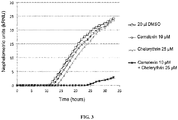
- a concentration of 25 ⁇ M of chelerythrin does not inhibit Alternaria brassicicola growth. Said concentration thus corresponds to a non-fungicidal amount.
- the concentrations of 10 and 20 ⁇ M of camalexin do not inhibit Alternaria brassicicola growth of more than 20%. Said concentrations thus correspond to non-fungicidal amounts.
- the potentiating effect of chelerythrin is measured in a suspension of conidia treated with a plant defense molecule, camalexin, which is present at a non-fungicidal amount as determined hereinabove. Said non-fungicidal amount is consistent with the amount of camalexin produced by an infected plant organ.
- Alternaria brassicicola growth was measured as described hereinabove. A non-fungicidal amount of chelerythrin (as determined in Example 1a) and/or a non-fungicidal amount of camalexin (as determined in Example 1b) or 10 ⁇ L of DMSO are added per well, and growth curves were drawn ( Figure 3 ).
- Example 2 discloses a protocol for determining the in vivo efficacy of the composition of the invention, comprising a potentiating amount of chelerythrin (25 ⁇ M), as determined in Example 1.
- composition of the invention limits in vivo the fungal infection of cabbage leafs.
- Example 3 In vivo determination of the inhibition of PKC by chelerythrin
- the cDNA encoding the Pkc1 gene of Alternaria brassicicola (http://genome.jgi-psf.org/Altbr1/Altbr1.home.html ; sequence ref : AB07449.1) was amplified by PCR and cloned into a pYES2-CT vector (Invitrogen, Paisley, UK). The resulting vector (pYES-PKC) was inserted in a BY4743 strain of Saccharomyces cerevisiae.
- Table 3 Condition (concentration of chelerythrin) Area under the curve Inhibition pYES2-CT 15,1 --- pYES2-CT (25 ⁇ M) 8,6 43% pYES2-CT (50 ⁇ M) 3,2 79% pYES2-CT (75 ⁇ M) 2,5 84% pYES2-PKC 12,6 --- pYES2-PKC (25 ⁇ M) 10,7 15% pYES2-PKC 50 (50 ⁇ M) 9,4 25% pYES2-PKC 75 (75 ⁇ M) 8,8 30%
- Chelerythrin inhibits the growth of strains expressing normal levels of Pkc1. The inhibition is less efficient in cells overexpressing Pkc1. Therefore, chelerythrin probably is an inhibitor of Pkc1.
- Chelerythrin inhibits the growth of a wild-type strain in normal osmotic pressure conditions, but not in high osmotic pressure conditions. This result seems to confirm the inhibitory action of chelerythrin on Pkc.
- Example 4 Triads compounds / plant defense molecules / phytopathogenic fungus
Landscapes
- Life Sciences & Earth Sciences (AREA)
- Health & Medical Sciences (AREA)
- General Health & Medical Sciences (AREA)
- Dentistry (AREA)
- Plant Pathology (AREA)
- Engineering & Computer Science (AREA)
- Pest Control & Pesticides (AREA)
- Agronomy & Crop Science (AREA)
- Wood Science & Technology (AREA)
- Zoology (AREA)
- Environmental Sciences (AREA)
- Toxicology (AREA)
- Agricultural Chemicals And Associated Chemicals (AREA)
Description
- The present invention pertains to the protection of crops against fungal infections. The present invention more specifically relates to potentiating agents and compositions comprising the same, useful for protecting plant organs against fungal infections.
- Phytopathogenic fungi may affect a variety of plant organs, such as leaves, stems, fruits and seeds. Infected plant fruits are usually unfitted for sale, and an infection of leaves or seeds may alter plant development or germination, causing significant reduction of productivity. Therefore, fungal infections may result in substantial economic losses. The control of fungal infections of crops is thus a major economic issue.
- Conventional chemical fungicides commonly used to protect crops against fungal infection present the drawback to be highly pollutant for the environment, especially for soil and water supply. Moreover, these products may be toxic for humans.
- Other agents target fungal pathways, such as, for example, metabolic pathways. Sterol biosynthesis inhibitors, such as, for example, triadimenol, have been used to control fungi. Moreover,
WO2006/066974 describes the use of methionine synthase inhibitors for the treatment of fungal diseases of crops. - However, such inhibitors present a large spectrum of action, and may thus have an inhibitory effect on fungi naturally present in the soil, thereby inducing a disturbance of soil ecosystem.
- There is thus a need for a fungicidal composition specific of fungi attacking a plant of interest, while not impacting fungi of the soil.
- In response to a fungal infection, plants synthesize antifungal defense molecules, such as, for example, phytoalexins. The inventors showed that a phytopathogenic fungus may adapt its metabolism to protect itself against the toxic effects of these molecules, especially via the activation of signalization pathways. Developing an inhibitor of said pathways may thus be a promising way for protecting plants without any disturbance of the soil ecosystem.
- Moreover, for human health sake, it could be of interest to reduce the amount of fungicide applied on crops. Indeed, as fungicide applied on crops may be found on food, precautionary principle requires minimizing the amount of fungicide used.
-
WO 01/62089 - Furthermore,
US 2006/0228428 teaches the anti-fungal properties of plant extracts containing berberine and other alkaloids. BothWO 01/62089 US 2006/0228428 attribute the anti-fungal properties to berberine possessing non-selective anti-fungal activities. Furthermore, as generally recognized in the art, these documents suggest the use of increasing concentrations of anti-fungal compounds in order to obtain an effective fungicide. - Both
WO 01/62089 US 2006/0228428 do not teach how to minimize the amount of a selective anti-fungal compound and still obtain the desired fungicidal or fungistatic effects. - The inventors herein identified agents that potentiate the action of plant defense molecules, such as, for example, inhibitors of signalization pathways activated in a phytopathogenic fungus in response to a plant defense molecule. Due to this potentiating effect, it is possible to reduce the amount of fungicide applied on crops.
- The present invention thus relates to a composition or product comprising such a potentiating agent. In one embodiment, the invention focuses on destructing fungi when the fungi actually is attacking a plant of interest, while not impacting fungi of the soil, thus avoiding any disturbance of the soil ecosystem.
- This invention relates to a method for preventing, controlling or treating a fungal infection on a plant organ comprising applying to said plant organ a composition comprising a potentiating agent of a plant defense molecule selected from:
Compound Structure 1 
2 
3 
4 
5 
Chelerythrin 
Sanguinarin 
wherein:
the potentiating agent is in amount ranging from 10 to 200 µM; and the plant defense molecule is a molecule selected from brassinin, camalexin, resveratrol, 3,5-dihydroxybiphenyl, aucuparin and 6-methoxymellein, and belonging to the immune system of the plant and used by a plant organ to resist to a fungal infection. - This invention also relates to a composition comprising a potentiating agent of a plant defense molecule as described above in an amount ranging from 10 to 200 µM and a plant defense molecule selected from brassinin, camalexin, resveratrol, 3,5-dihydroxybiphenyl, aucuparin and 6-methoxymellein.. Another object of this invention is a phytosanitary or phytopharmaceutical composition comprising the composition as described above, in association with a phytopharmaceutical vehicle.
- In an embodiment, the fungal infection is an infection by a phytopathogenic fungus, preferably selected from the group comprising Alternaria brassicicola, Botrytis cinerea, Alternaria dauci and Venturia inaequalis.
- According to the invention, the plant organ may be selected from the list comprising Brassicacae family, such as, for example, Brassica oleracea; Apiaceae family, such as, for example, Daucus carota subsp. Sativus; Vitaceae family, such as, for example, Vitis vinifera; and Rosaceae family, such as, for example, Malus domestica.
- According to the invention, the potentiating agent of a plant defense molecule selected from the molecules as disclosed above may be a homologous potentiating agent of a plant defense molecule or a heterologous potentiating agent of a plant defense molecule.
- In a preferred embodiment of the invention, the potentiating agent of a plant defense molecule is chelerythrin.
- In a preferred embodiment of the invention, the method is implemented on a plant organ which is Brassica oleracea, for preventing, controlling or treating a fungal infection by Alternaria brassicicola; in this embodiment, the potentiating agent of a plant defense molecule preferably is chelerythrin.
- In an embodiment, the composition of the invention further comprises (1) an agent for stimulating the synthesis of a plant defense molecule, (2) an insecticide and/or (3) a herbicide.
- A further object of this invention is a coating, dressing, or pelleting composition comprising the product of the composition as described above.
- This invention also relates to a seed coated, dressed or pelleted with a product or a composition of the invention.
- In the sense of the present invention, the following terms have the following meanings:
- "Alkyle": any saturated linear or branched hydrocarbon chain, with 1 to 12 carbon atoms, preferably 1 to 6 carbon atoms, and more preferably methyl, ethyl, propyl, isopropyl, n-butyl, sec-butyl, isobutyl and tert-butyl.
- "Alkenyl": any linear or branched hydrocarbon chain having at least one double bond, of 2 to 12 carbon atoms, preferably 2 to 6 carbon atoms, and more preferably methylene, ethylene, propylene, isopropylene, n-butylene, sec-butylene, isobutylene and tert-butylene.
- "Alkylsufonate": any O-SO2-alkyl group.
- "Alkaloid": refers to a large group of naturally occurring compounds comprising basic nitrogen atoms. Examples of alkaloids include, but are not limited to, isoquinoline derivatives, indole derivatives, pyridine derivatives, pyrrolidine derivatives, tropane derivatives, pyrrolizidine derivatives, piperidine derivatives, quinolizidine derivatives, indolizidine derivatives, oxazole derivatives, isoxazole derivatives, thiazole derivatives, isothiazole derivatives, quinazoline derivatives, acridine derivatives, quinolone derivatives, imidazole derivatives and purine derivatives.
- "Ring" refers to a cyclic molecular arrangement of 4 to 20 atoms, preferably of 5 or 6 atoms. The ring may be an homocycle, where all atoms are carbons, or an heterocycle, where at least one atom is not carbon, and preferably is N, O or S.
- "Plant defense molecule" refers to a molecule belonging to the immune system of the plant and used by a plant organ to resist to an aggression, such as, for example, a fungal infection. A plant defense molecule may thus be toxic for the phytopathogenic fungus infecting the plant organ. In one embodiment, a plant defense molecule is a molecule whose synthesis is not constitutive (i.e. the molecule is not synthesized at a constant level by the plant organ) but is induced by an aggression or an elicitor (inducer of pathogen resistance). In one embodiment, said plant defense molecule is a phytoalexin.
- "Non-fungicidal amount" represents an amount necessary to alter and/or inhibit the signaling pathways involved in the growth and/or development of fungi, said amount being lower than a fungicidal amount. As used herein, a "fungistatic effect" refers to an inhibiting and/or stopping and/or controlling effect upon the growth and/or development of fungi without destroying them, whereas a "fungicidal effect" refers to the destruction of fungi.
- Methods for determining the non-fungicidal amount of a product are well known from the skilled artisan. Examples of such methods include, but are not limited to, growth test in presence of increasing concentrations of said product, which may be carried out in culture in liquid or solid medium.
- In one embodiment of the invention, the fungistatic or fungicidal effect is measured after at least 5 hours of culture, preferably at least 10 hours, more preferably at least 20 hours, and even more preferably at least 30 hours.
In one embodiment of the invention, the fungistatic or fungicidal effect is assessed by comparing growth of treated fungi with growth of untreated fungi (controls cultured in the absence of the tested product). - Suspensions of fungal conidia (starting material being for example 105 conidia/mL) are cultured in liquid medium, such as, for example, 300 µL of PBD medium, on microplate wells at 25°C with shaking at 175 rpm for 5 minutes every 10 minutes. Increasing concentrations of the tested product are added on wells, and fungal growth is measured, during at least 5 hours, preferably at least 10, 20, 30 hours. Methods for measuring fungal growth are well known from the skilled artisan. Examples of such methods include, but are not limited to, photometry, such as, for example, spectrophotometric methods; or nephelometry, such as, for example, laser nephelometry as described in Joubert et al (Biotechniques, 2010, 48:399-404). Growth inhibition is measured by comparing the Area Under Curves (AUC) of treated samples and of untreated controls. Test A is carried out in Example 1.
- "Potentiating agent of a plant defense molecule" refers to an agent which, when associated, in a non-fungicidal amount, with a plant defense molecule has a fungicidal or fungistatic effect; preferably the potentiating agent and the plant defense molecule are both used in a non-fungicidal amount. In the present invention, the potentiating agent is a product capable of altering and/or inhibiting the signaling pathways involved in the growth and/or development of fungi, when applied in a non-fungicidal amount. In an embodiment, the potentiating agent is not selected in the group consisting of a phosphorous acid or a derivative of phosphorous acid; salicylic acid; succinic acid; lactic acid; jasmonic acid; isonicotinic acid; arachidonic acid; dichloroisonicotinic acid; berberin or berberin chloride; a yeast extract or fragment thereof; an algae extract; a glycoconjugate; a polysaccharide, including chitosan; a benzothiadiazole.
- In one embodiment, a fungicidal or fungistatic effect means that no fungal growth is measured after 5 hours of culture, preferably after 10, 20, 30, or more hours of culture. In another embodiment, a fungicidal or fungistatic effect means that fungal growth of treated fungi is reduced by at least 50%, preferably at least 60, 70, 80, 90% as compared to untreated fungi or to fungi treated with a non-fungicidal amount of said agent or of said plant defense molecule after 5 hours of culture, preferably after 10, 20, 30, or more hours of culture.
- In one embodiment, a potentiating agent of a plant defense molecule is an agent having fungicidal or fungistatic effect when tried in the conditions of Test B.
-
- 1) Determining a non-fungicidal amount of said agent, preferably according to Test A;
- 2) Determining a non-fungicidal amount of a plant defense molecule, preferably according to Test A;
- 3) Measuring growth of fungal conidia in a medium comprising a combination of a non-fungicidal amount of the agent, as determined in step 1, and a non-fungicidal amount of the plant defense molecule, as determined in step 2. In one embodiment, the growth is measured as follows: Suspensions of fungal conidia (starting material: 105 conidia/mL) are cultured in liquid medium, such as, for example, 300 µL of PBD medium, on microplate wells at 25°C with shaking at 175 rpm for 5 minutes every 10 minutes. Non-fungicidal concentrations of the tested agent and of the tested plant defense molecule are added on wells, and fungal growth is measured during at least 5 hours, preferably at least 10, 20, 30 hours. Methods for measuring fungal growth are well known from the skilled artisan. Examples of such methods include, but are not limited to, photometry, such as, for example, spectrophotometric methods; or nephelometry, such as, for example, laser nephelometry as described in Joubert et al (Biotechniques, 2010, 48:399-404). Growth inhibition is measured by comparing the Area Under Curves (AUC) of treated samples and of untreated controls.
- In one embodiment, the potentiating agent of a plant defense molecule is a homologous potentiating agent. As used herein, a "homologous" potentiating agent of a plant defense molecule potentiates the effect of the plant defense molecule synthesized by the plant organ to be treated.
- In another embodiment, the potentiating agent of a plant defense molecule is a heterologous potentiating agent. As used herein, a "heterologous" potentiating agent of a plant defense molecule potentiates the effect of a plant defense molecule which is not the plant defense molecule synthesized by the plant organ to be treated.
- "Potentiating amount" refers to the amount of said potentiating agent, which is non-fungicidal per se, but which, when combined to a plant defense molecule, preferably to a non-fungicidal per se amount of said plant defense molecule, is fungicidal or fungistatic, preferably fungistatic, i.e. it inhibits or stops fungal growth. In one embodiment, the potentiating amount of a potentiating agent of a plant defense molecule is determined according to Test B.
- "Synergistic effect": defines the interaction of two or more agents acting together in a positive way to produce an effect in an amount that they could not separately reach. An "additive synergy" defines a synergy wherein the combined effect of the agents is equal to the sum of the effects of each agent alone. When the combined effect is greater than the sum of the effects of each agent operating by itself, the synergy is referred to as a "potentiating effect". In one embodiment, the synergistic effect is an additive synergy. In another embodiment, the synergistic effect is a potentiating effect.
- "Phytopathogenic fungi" refers to fungi pathogens for plant organs.
Examples of phytopathogenic fungi include, but are not limited to, fungi belonging to the Ascomycetes and Basidiomycetes classes, such as, for example, fungi of the order of Erysiphales (such as, for example, family Erysiphaceae, genera Uncinula, Erysiphe, Sphaerotheca); fungi of the order of Dothideales (such as, for example, family Venturiaceae genus Venturia); fungi of the order of Helotiales (such as, for example, family Sclerotiniaceae, genera Sclerotinia, Monilia/Monilinia, Botrytis/ Botryotinia); fungi of the order of Taphrinales (such as, for example, family Taphrinaceae, genus Taphrina); fungi of the order of Pleosporales (such as, for example, family Pleosporaceae, genus Alternaria); fungi of the order of Magnaporthales (such as, for example, family Magnaportaceae genus Magnaporthe - Pyricularia); fungi of the order of Hypocreales (such as, for example, family Nectriaceae, genus Fusarium); fungi of the order of Uredinales (such as, for example, family Pucciniaceae, genus Puccinia); and fungi of the order of Ustilaginales (such as, for example, family Ustilaginaceae, genus Ustilago). - "Plant organ" refers to a plant, a part of plant or a plant propagation material. Examples of plant organs include, but are not limited to, whole plants, leaves, stems, fruits, seeds, plants, part of plants, cuttings, tubers, roots, bulbs, rhizomes and the like.
- "Phytopharmaceutical vehicle" refers to a vehicle that does not produce an adverse or other untoward reaction when applied on a plant organ. An example of phytopharmaceutical vehicle includes, but is not limited to, water.
- "Agent for stimulating the production of a plant defense molecule" or "elicitor" refers to a compound that, when applied on a plant organ, leads to biochemical and/or physiologic cell reactions resulting in the synthesis, or to an increase of the synthesis of a plant defense molecule, such as, for example, phytoalexin. Said agents may also be referred as "natural defense stimulators". Agents for stimulating the synthesis of a plant defense molecule are known in the prior art, and may be of natural (animal, vegetal or mineral) origin, or synthetic. When these agents enter into contact with the organ plant, signaling pathways are activated. The metabolism of the plant if modified and plant defense molecules are synthesized at a non-fungicidal amount.
- Examples of said agents of natural origin include, but are not limited to, algae extracts such as, for example, laminarin; and plant extract such as, for example, Reynoutria sachalinensis extract.
- Other examples of said agents include, but are not limited to, acibenzolar-S-methyl, sulfur-containing amino acids, such as, for example, methionine, cysteine and cystine; D-glucose and mixtures of sulfur-containing amino acids and D-glucose.
- "Phytosanitary or phytopharmaceutical product" refers to active substances and preparations containing one or more active substances, intended to protect plant organs against a harmful organism or prevent the action of a harmful organism.
- "Preventing" means avoiding occurrence of at least one adverse effect or symptom of a fungal infection.
- "Controlling" means stopping the progression of the fungal infection, and preventing its spread across the healthy parts of the plant organ.
- "Treating" means eliminating fungal contamination, i.e. that there is no viable fungus in the plant organ anymore.
- "Phytopharmaceutically effective amount" refers to the amount of an agent necessary and sufficient for, without causing significant negative or adverse side effect to the plant organ, (i) preventing a fungal infection, (ii) slowing down or stopping the progression, aggravation or deterioration of one or more symptoms of the fungal infection; (iii) alleviating said symptoms and/or (iv) eliminating fungal contamination.
- "Improving the growing characteristics of a plant organ" may manifest in improving the yield and/or vigour of the plant and/or quality of the harvested product from the plant, or the root rating, or emergence, or protein content, or increased tillering, or bigger leaf blade, or less dead basal leaves, or stronger tillers, or less fertilizer needed, or less seeds needed, or more productive tillers, or earlier flowering, or early grain maturity, or less plant verse (lodging), or increased shoot growth, or earlier germination, or any combination of these factors, or any other advantages familiar to a person skilled in the art.
- "Dressing", "coating" and "pelleting" all refer to the direct application of one or more product(s) on a plant organ, generally on a seed, in order to facilitate the seedling and to improve the rate of success of the seedling. "Dressing" is the simplest operation, wherein the product or the mix of products is in the form of a powder or of a wet paste. For "coating", the product or the mix of product is associated with a fixative agent, in order to enhance the adherence of the product. "Pelleting" of a seed refers to the application of products in successive layers, wherein each layer confers specific properties to the seed.
- "About" preceding a figure means more or less 10% of the value of said figure.
- The present invention relates to a method for preventing, controlling or treating a fungal infection on a plant organ comprising applying to said plant organ a composition comprising a potentiating agent of a plant defense molecule selected from:
Compound Structure 1 
2 
3 
4 
5 
Chelerythrin 
Sanguinarin 
wherein: - the potentiating agent is in an amount ranging from 10 to 200 µM; and
- the plant defense molecule is a molecule selected from brassinin, camalexin, resveratrol, 3,5-dihydroxybiphenyl, aucuparin and 6-methoxymellein, and belonging to the immune system of the plant and used by a plant organ to resist to a fungal infection.
- The present invention also relates to the use of a phytosanitary composition comprising a potentiating agent as described above, in an amount ranging from 10 to 200 µM, in association with a phytopharmaceutical vehicle, in protecting a plant or a crop against a fungal infection.
- The present invention also relates a composition comprising a potentiating agent of a plant defense molecule as described above in an amount ranging from 10 to 200 µM and a plant defense molecule selected from brassinin, camalexin, resveratrol, 3,5-dihydroxybiphenyl, aucuparin and 6-methoxymellein.
- According to the invention, the potentiating agents are selected from:
Compound Structure 1 
2 
3 
4 
5 
Chelerythrin 
Sanguinarin 
- According to the invention, the potentiating agent is an inhibitor of a signalization pathway activated in a given phytopathogenic fungus, said activation being for example in response to an exposure to a plant defense molecule.
- As used herein, a "signalization pathway" refers to a network of proteins acting together to control one or more cell functions. After the first molecule of the pathway has received a signal, it activates another molecule. This process is repeated until the last molecule is activated and the cell function involved is carried out. One example of signalization pathway includes as a first molecule a transmembrane receptor, then a set of kinases, and at last a transcription factor.
- Accordingly, an "inhibitor of a signalization pathway" is a compound that limits, prevents or stops the activation of anyone of the proteins of a signalization pathway, resulting in the incapacity of the pathway to control the cell function it usually controls. Referring to the example of the preceding paragraph, an inhibitor may act, without limitation, on the transmembrane receptor (for example, the inhibitor may be an agonist of said receptor), on the catalytic activity of a kinase (for example, the inhibitor may be a catalytic inhibitor of the enzymatic activity of the kinase) or may prevent the action of the transcription factor.
- The term "a signalization pathway activated" refers to a signalization pathway wherein the first molecule has received a signal leading to the activation of the other proteins of the network. Methods for determining if a signalization pathway is activated in response to the exposure of a particular molecule are well known from the skilled artisan, and may be carried out on cultures of fungus. Examples of said methods include, without limitation, analysis of the phosphorylation status of kinases of the pathway (for example by Western Blot) or analysis of a reporter gene placed under the control of a promoter specific of the transcription factor. In one embodiment, the expression of the reporter gene is assessed by RT-PCR or RT-qPCR. In another embodiment, the expression of the reporter gene induces visually identifiable characteristics to a cell. Examples of such reporter genes include, but are not limited to, genes encoding fluorescent or luminescent proteins, such as, for example, GFP or luciferase. Another example of a reporter gene is the gene encoding the beta-galactosidase enzyme, whose expression may be easily visualized on culture medium comprising an uncolored substrate analog that is transformed by the enzyme in a colored product.
- In one embodiment of the invention, the signalization pathway activated in the phytopathogenic fungus in response to an exposure to a plant defense molecule is the CWI, the HOG and/or the UPR pathway, and the inhibitor used in the present invention is thus an inhibitor of the CWI, the HOG and/or the UPR pathway respectively.
- In one embodiment, the signalization pathway is the CWI pathway. The CWI pathway (wherein CWI stands for Cell Wall Integrity) is a signalization pathway involved in the strengthening of the cell wall, and in the repair of damages of the cell wall, in conditions of environmental stress. Proteins of the CWI pathway include, but are not limited to, the Serine/Threonine kinase Pkc1 (Protein Kinase C 1); proteins of a cascade of MAP kinases (Mitogen activated protein kinases): Bck1 (Bypass of C Kinase), Mkk1 (Mitogen-activated protein Kinase-Kinase 1), Mkk2 (Mitogen-activated protein Kinase-Kinase 2), Slt2 (Suppression at Low Temperature 2); and the transcription factor Rlm1 (Resistance to Lethality of MKK1P386 overexpression 1), or homologs of these proteins in filamentous fungi.
- In one embodiment, the activation of the CWI pathway may be determined through the analysis of the phosphorylation status of the proteins Bck1, Mkk1, Mkk2 and/or Slt2, wherein the phosphorylation of said proteins is indicative of the activation of the CWI pathway. Another way to analyze the activation status of the CWI pathway is the analysis of the expression of a gene placed under the control of a promoter responsive to the Rlm1 transcription factor.
- Names of genes and proteins herein presented correspond to the genes and proteins of Saccharomyces cerevisiae. The skilled artisan knows how to identify the corresponding genes or proteins in another species of fungus.
- In one embodiment of the invention, the inhibitor of the CWI pathway is an inhibitor of the kinase Pkc1, Bkc1, Mkk1, Mkk2 and/or Slt2. In another embodiment, the inhibitor of the CWI pathway is an inhibitor of the transcription factor Rlm1. In another embodiment, the inhibitor of the CWI pathway is an inhibitor of the protein Rom1 and/or Rho1.
- In a preferred embodiment, the inhibitor of the CWI pathway is an inhibitor of Pkc1. In one embodiment, said inhibitor is a specific inhibitor of PKC from fungus.
- Methods for identifying Pkc1 inhibitors are well known of the skilled artisan. An example of such method includes, but is not limited to, measuring the kinase activity of (partially) purified Pkclin presence of increasing amounts of potential inhibitors. Useful kits for measurement of PKC activity may be selected among PepTag Assay (Promega), MESACUP PKA/PKC assay kit ; Cyclex PKC superfamily kinase assay kit (MBL); Protein kinase C assay kits (PANVERA); Z'-Lyte FRET based kinase assay (Invitrogen); Omnia assay kit (Invitrogen). Other examples of such a method are biological tests carried out in the model yeast Saccharomyces cerevisiae (Tests C and D).
- Test C is based on the essential role of Pkc1 in fungal cells: if its essential function is inhibited, the growth of the fungal cells will be affected. Therefore, in Test C, two different strains of S. cerevisiae are cultured in the presence of the tested compound: the first one is a wild-type strain, whereas the second overexpresses the fungal Pkc1 gene. If the tested compound is an inhibitor of the fungal Pkc1 protein, the growth of the wild-type strain will be inhibited, whereas the induction of the overexpression of the heterologous fungal Pkc1 gene will restore, at least partially, the growth rate. Test C is carried out in Example 3.
- Test D is based on the fact that the protein Pkc1 is implied in the CWI pathway. In a situation where the CWI pathway is impaired, growth of fungal cells is less affected by a high osmotic pressure. Consequently, in Test D, a S. cerevisiae strain is cultured in conditions of high osmotic pressure, in the presence or in absence of the tested compound. If said compound is a Pkc1 inhibitor, it will inhibit the growth of cells in normal osmotic pressure conditions, but not, or less, in high osmotic pressure conditions. Test D is carried out in Example 3.
- Examples of inhibitors of Pkc1 include, but are not limited to chelerythrin, chelerythrin chloride, 3-(1H-indol-3-yl)-4-[2-(4-methylpiperazin-1-yl)quinazolin-4-yl]pyrrole-2,5 - dione (AEB071), 13-HODE, AEB-071, Annexin V, Aprinocarsen, ARC, Bisindolylmaleimide GF 109203X, bisphosphonate, Bryostatin-1, BSP-A1/-A2, Butein, Calphostin C, Curcumin, Daphnetin, Dexamethasone, Enzastaurin, Erbstatin, GO6976, H-7 Hispidin, Hypocrellin A, hypericin, LY333531, Midostaurin, MT477, N-myristyl-Lys-Arg-Thr-Leu-Arg, NPC 15437, PAP, PKC412, R8605, RK-286C, Ro 31-8220, Rottlerin, ruboxistaurin, Sotrastaurin, Staurosporine, UCN-01, UCN-02, Vanicosides A and B, and Verbascoside.
- Examples of PKC inhibitors also include, but are not limited to, compounds 1 to 4, chelerythrin, sanguinarin.
- In one embodiment, the signalization pathway is the HOG pathway. The HOG pathway (wherein HOG stands for High Osmolarity Glycerol) is a signalization pathway involved in the cellular response to an elevation in external osmolarity and potentially in cell wall biogenesis. Proteins of the HOG pathway include, but are not limited to, Ypd1 (tyrosine (Y) Phosphatase Dependent), Ssk1, Ssk2 and Ssk22 (Suppressor of Sensor Kinase 1, 2 and 22), Cdc42 (Cell Division Ring 42), Ste11,
Ste 20 and Ste50 (STErile 11, 22 and 50), Pbs2 (Polymyxin B Sensitivity 2) and Hog1 (High Osmolarity Glycerol response 1), or homologs of these proteins in filamentous fungi. - In one embodiment, the activation of the HOG pathway may be determined through the analysis of the phosphorylation status of the proteins Ypdl, Ssk1, Ssk2, Ssk22, Cdc42, Ste11,
Ste 20, Ste50, Pbs2 and/or Hog1. - In one embodiment of the invention, the inhibitor of the HOG pathway is an inhibitor of the protein Ypd1, Ssk1, Ssk2, Ssk22, Cdc42, Ste11,
Ste 20, Ste50, Pbs2 and/or Hog1. - In one embodiment, the signalization pathway is the UPR pathway. The UPR pathway (wherein UPR stands for Unfolded Protein Response) is a stress signalization pathway involved in the cellular development and environmental adaptation in fungi. This pathway is more particularly involved in maintaining the Endoplasmic Reticulum homeostasis. Proteins of the UPR pathway include, but are not limited to, the serine-threonine kinase and endoribonuclease Ire1 (Inositol REquiring 1), the transcription factor Hacl, and homologs of these proteins in filamentous fungi.
- In one embodiment, the activation of the UPR pathway may be determined through the analysis of the splicing of the hacA transcripts and the transcriptional induction of well-known UPR target genes, such as the chaperone Kar2 and the protein disulfide isomerase Pdi1.
- In one embodiment of the invention, the inhibitor of the UPR pathway is an inhibitor of the serine-threonine kinase and endoribonuclease Ire1 and/or the transcription factor Hac1.
- In one embodiment, the non-fungicidal amount of the potentiating agent is an amount of the inhibitor wherein said product does not have any fungistatic effect when fungi are cultured in the presence of said potentiating agent during 5 hours, preferably 10 hours, more preferably 20, 30 hours or more.
- In another embodiment, the non-fungicidal amount of the potentiating agent is an amount of the inhibitor wherein said product has a fungistatic effect but inhibits the growth of fungi by less than 20% as compared to control fungi cultured without the potentiating agent, when fungi are cultured in the presence of said potentiating agent during 5 hours, preferably 10 hours, more preferably 20, 30 hours or more.
- Methods for determining non-fungicidal amount of a compound are well known from the skilled artisan. Examples of such methods include, but are not limited to, growth test in presence of increasing concentrations of said compound, which may be carried out in liquid or solid medium. Preferably, the non-fungicidal amount of the potentiating agent is determined according to Test A as hereinabove described.
- According to the invention, the potentiating agent amount ranges from 10 to 200 µM, preferably from 25 to 100 µM.
- In one embodiment of the invention, the potentiating agent of a plant defense molecule is chelerythrin.
- In one embodiment, said pathogenic fungus is selected from the group comprising Alternaria brassicicola, Botrytis cinerea, Alternatria dauci and Venturia inaequalis.
- In one embodiment, the phytopathogenic fungi are pathogens of plants belonging to the clade of Angiosperms, preferably to the clade of Eudicots, more preferably to the clade of Rosids, even more preferably to the order of Brassicales and even more preferably to the family of Brassicacae, also referred as Crucifers family. Examples of plants from the Brassicacae family include, but are not limited to, Brassica carinata, Brassica juncea, Brassica oleracea, Brassica napus, Brassica nigra and Brassica rapa.
- In one embodiment of the invention, the phytopathogenic fungi are pathogens of plants selected from the list comprising plants of the Brassicacae family, such as, for example, Brassica oleracea; plants of the Apiaceae family, such as, for example, Daucus carota subsp. Sativus; plants of the Vitaceae family, such as, for example, Vitis vinifera; or plants of the Rosaceae family, such as, for example, Malus domestica.
- Examples of phytopathogenic fungi for specific plants are given in Table 1.
Table 1 Plant Phytopathogenic fungi Brassica oleracea Alternaria brassicicola Daucus carota subsp. Sativus Alternaria dauci Vitis vinifera Botrytis cinerea Malus domestica Venturia inaequalis - According to the invention, the plant defense molecule is a phytoalexin selected from brassinin, camalexin, resveratrol, 3,5-dihydroxybiphenyl, aucuparin and 6-methoxymellein.
- According to an embodiment, the exposure to a plant defense molecule may be a natural or an artificial exposure. As used herein, a "natural exposure" refers to an exposure during infection, in planta. Under natural exposure, an accumulation of plant defense molecule may occur as a result of the fungal infection, or as a result of other stimuli triggering the defense system of the plant organ. On the contrary, an "artificial exposure" refers to a provoked exposure to the molecule, for example in a culture medium or by application of said plant defense molecule on a fungus or on a culture of fungus.
- Examples of plant defense molecules synthesized by selected plants are shown in Table 2.
Table 2 Plant Plant defense molecule Arabidopsis thaliana camalexin Brassica oleracea Brassinin Daucus carota subsp. Sativus 6-methoxymellein Vitis vinifera Resveratrol Malus domestica 3,5-dihydroxybiphenyl - In one embodiment, the activation of a signalization pathway is determined after natural exposure to the molecule, for example by harvesting fungus from an infected plant. A non-limiting example of a method for determining the activation of a signalization pathway after natural exposure to the molecule is inoculating plant organs with said fungus, harvesting infected plant tissues comprising the phytopathogenic fungus, and extracting either proteins (for determining the activation of the CWI and/or HOG pathway(s)) or RNAs (for determining the activation of the UPR pathway) for analysis of the phosphorylation profile or of the expression profile, respectively.
- In another embodiment, the activation of a signalization pathway is determined after artificial exposure to the molecule, for example by adding the molecule to the culture medium of a cultivated fungus, and harvesting exposed fungus. A non-limiting example of a method for determining the activation of a signalization pathway after artificial exposure to the molecule comprises adding said molecule to the culture medium of a cultivated fungus, harvesting the fungus, and extracting either proteins (for determining the activation of the CWI and/or HOG pathway(s)) or RNAs (for determining the activation of the UPR pathway) for analysis of the phosphorylation profile or of the expression profile, respectively.
- In one embodiment of the invention, said plant defense molecule is present in the composition in a non-fungicidal amount.
- In one embodiment, the non-fungicidal amount of the plant defense molecule is an amount of the plant defense molecule wherein said molecule does not have any fungistatic effect when fungi are cultured in the presence of said potentiating agent during 5 hours, preferably 10 hours, more preferably 20, 30 hours or more.
- In another embodiment, the non-fungicidal amount of the plant defense molecule is an amount of the plant defense molecule wherein said product has a fungicidal effect but inhibits the growth of fungi by less than 20% as compared to control fungi cultured without the plant defense molecule, when fungi are cultured in the presence of said potentiating agent during 5 hours, preferably 10 hours, more preferably 20, 30 hours or more.
- Methods for determining non-fungicidal amount of a plant defense molecule are well known from the skilled artisan. Examples of such methods include, but are not limited to, growth test in presence of increasing concentrations of said compounds, which may be carried out in liquid or solid medium. Preferably, the non-fungicidal amount of a plant defense molecule is determined according to Test A as hereinabove described.
- According to the invention, the plant defense molecule is a phytoalexin selected from brassinin, camalexin, resveratrol, 3,5-dihydroxybiphenyl, aucuparin and 6-methoxymellein.
- In one embodiment of the invention, the plant defense molecule present in the composition is the same than the plant defense molecule synthesized by the plant organ to be protected by the composition of the invention. Preferably, according to this embodiment, the potentiating agent of a plant defense molecule is a homologous potentiating agent.
- In another embodiment of the invention, the plant defense molecule present in the composition is different from the plant defense molecule synthesized by the plant organ to be protected by the composition of the invention. According to this embodiment, the potentiating agent of a plant defense molecule may be a homologous or a heterologous potentiating agent of a plant defense molecule.
- In one embodiment, the composition of the invention further comprises an agent for stimulating the production of a plant defense molecule such as, for example, phytoalexin, by a plant organ; an insecticide and/or a herbicide.
- In one embodiment, said agent for stimulating the production of a plant defense molecule is present in the composition in a non-fungicidal amount. Preferably, said non-fungicidal amount is determined according to Test A.
- In an embodiment, the composition of the invention does not comprise a fungicide in a fungicidal amount.
- In one embodiment of the invention, the composition of the invention consists of a combination of a homologous potentiating agent of a plant defense molecule and an agent for stimulating the production of said plant defense molecule by the plant organ to be protected or treated.
- In one embodiment, the composition or the product of the invention is in a solid form, such as, for example, granules, wettable powders, water dispersable granules or powders and the like.
- In another embodiment, the composition of the invention is in a liquid form, such as, for example, a suspension, a solution or an emulsion, such as, for example, an oil-in-water emulsion or a water-in-oil emulsion.
- In one embodiment, the composition of the invention may be formulated as a concentrate to be diluted, such as, for example, a soluble concentrate, an emulsifiable concentrate, and the like.
- In one embodiment, the composition of the invention may comprise additional agents, such as, for example, natural or regenerated mineral substances, solvents, dispersants, solid carriers, surfactants, wetting agents, tackifiers, thickeners, or binders.
- Examples of solvents include, but are not limited to, aromatic hydrocarbons, such as, for example, xylene mixtures or substituted naphthalenes; phthalates, such as, for example, dibutyl phthalate or dioctyl phthalate; aliphatic hydrocarbons, such as, for example, cyclohexane or paraffins; alcohols and glycols and their ethers and esters, such as, for example, ethanol, ethylene glycol, ethylene glycol monomethyl or monoethyl ether; ketones, such as, for example, cyclohexanone; strongly polar solvents, such as, for example, N-methyl-2-pyrrolidone, dimethyl sulfoxide or dimethylformamide; vegetable oils or epoxidised vegetable oils, such as, for example, epoxidised coconut oil or soybean oil; and water.
- Examples of solid carriers include, but are not limited to, natural mineral fillers, such as, for example, calcite, talcum, kaolin, montmorillonite or attapulgite; highly dispersed silicic acid or highly dispersed absorbent polymers; pumice, broken brick, sepiolite or bentonite; calcite or sand; dolomite or pulverized plant residues.
- Examples of surfactants include, but are not limited to, anionic surfactants including; alkylsulfosuccinic acid salts, condensated phosphate acid salts, alkylbenzenesulfonic acid salts such as, for example, dodecylbenzenesulfonic acid sodium salt, alkylnaphthalenesulfonic acid salts, formalin condensates of naphthalenesulfonic acid salts, ligninsulfonic acid salts, polycarboxylic acid salts, alkylethersulfuric acid salts, polyoxyethylene-alkylarylphenylether-sulfuric acid salts, polyoxyethylene-alkylarylether-sulfuric acid salts, polyoxyethylene-alkylaryl-sulfuric acid salts, polyoxyethylene-alkylaryether-sulfate ester salts, polyoxyethylene-alkylarylether-acetate ester-sulfuric acid salts; nonionic surfactants such as, for example, polyoxyethylene-alkylether, polyoxyethylene-alkylarylether, polyoxyethylene-alkylarylphenylether, polyoxyethylene-styrylphenylether, polyoxyethylene-alkyl ester, sorbitan-alkyl-ester, polyoxyethylene-sorbitanalkyl-ester, and polyoxyethylene-polyoxypropyleneglycol. As used herein, the salt form includes alkali-metal salts, ammonium salts, and amine salts.
- The present invention also relates to a coating, dressing or pelleting composition comprising or consisting of a composition as herein above described.
- The present invention also relates to a composition comprising or consisting of a composition as herein above described for use for coating, dressing or pelleting a plant organ, preferably a seed.
- The present invention also relates to the use of a composition as herein above described for coating, dressing or pelleting a plant organ, preferably a seed.
- The present invention also relates to a coated, dressed or pelleted plant organ, preferably a coated, dressed or pelleted seed, wherein said coating, dressing or pelleting comprises or consists of or consists essentially of a composition according to the invention.
- In one embodiment, the coating, dressing or pelleting composition comprises or consists of or consists essentially of a potentiating agent of a plant defense molecule combined with said plant defense molecule. In one embodiment, the coated, dressed or pelleted plant organ, preferably seed, is coated, dressed or pelleted with a composition comprising or consisting of or consisting essentially of a potentiating agent of a plant defense molecule combined with said plant defense molecule.
- The present invention also relates to a method for preventing, controlling or treating a fungal infection on a plant organ comprising applying on said plant organ the composition according to the invention. Preferably, a phytopharmaceutically effective amount of said composition is applied on the plant organ.
- The present invention also relates to a composition as herein above described for, or for use in, preventing, controlling or treating a fungal infection on a plant organ, wherein said composition, preferably a phytopharmaceutically effective amount of said composition, is applied on said plant organ.
- The present invention also relates to the use of a composition as herein above described for preventing, controlling or treating a fungal infection on a plant organ, wherein said composition, preferably a phytopharmaceutically effective amount of said composition, is applied on said plant organ.
- The present invention also relates to a method for preventing, controlling or treating a fungal infection on a plant organ comprising applying to said plant organ a non-fungicidal amount or a potentiating amount of a composition comprising a potentiating agent of a plant defense molecule, in association with a phytopharmaceutical vehicle.
- The present invention also relates to a method for preventing, controlling or treating damages caused by a fungal infection on a plant organ comprising applying on said plant organ the composition according to the invention. Preferably, a phytopharmaceutically effective amount of said composition or product of the invention is applied on the plant organ.
- Examples of damages caused by a fungal infection on a plant organ include, but are not limited to, necrosis, wilting, rot, damping off.
- The present invention also relates to a composition as herein above described for, or for use in, preventing, controlling or treating damages caused by a fungal infection on a plant organ, wherein said composition, preferably a phytopharmaceutically effective amount of said composition, is applied on said plant organ.
- The present invention also relates to the use of a composition as herein above described for preventing, controlling or treating damages caused by a fungal infection on a plant organ, wherein said composition, preferably a phytopharmaceutically effective amount of said composition, is applied on said plant organ.
- Without willing to be bound to a theory, the inventors suggest that by preventing, controlling and/or treating fungal infections, the composition or product of the invention allows a decrease of the part of the metabolism of the plant dedicated to the fight against said fungal infections.
- In one embodiment, in the methods of the invention as herein above described, the application of the composition of the invention on said plant organ is carried out by foliar application, drench, spraying, atomizing, dusting, scattering, coating or pouring.
- In one embodiment of the invention, the potentiating agent of a plant defense molecule is present in the composition in a potentiating amount. In one embodiment, the methods of the invention as herein above described comprise the application of a potentiating amount of the potentiating agent on said plant organ.
- Methods for determining potentiating amount of the potentiating agent are well known from the skilled artisan. Examples of such methods include, but are not limited to, growth test in presence of increasing concentrations of said compounds, which may be carried out in liquid or solid medium. Preferably, the potentiating amount of the potentiating agent is determined according to Test B as hereinabove described.
- The compositions of the invention present the following advantages:
- In one embodiment, the composition of the invention allows a decrease of the quantity of fungicides to be used to fight against a fungal infection, as non-fungicidal amounts of potentiating agents of plant defense molecules, of plant defense molecules, of insecticide, of herbicide and of agents for stimulating the synthesis of a plant defense molecule are present in the composition of the invention.
- In one embodiment, the composition of the invention may be used for fungi destruction in situ, i.e. when said fungi are attacking a plant organ of interest. Said embodiment applied, for example, when the potentiating agent is a homologous potentiating agent. The composition of the invention is thus selective of fungi attacking a plant organ of interest.
- In another embodiment, the composition of the invention is fungicide whatever the situation, i.e. when fungi are attacking a plant organ or not. Said embodiment applied, for example, when the composition of the invention comprises a plant defense molecule and a potentiating agent of said plant defense molecule.
- In one embodiment, the composition may be adapted to a particular situation of attack of a particular plant organ by a particular fungus. According to this embodiment, the inhibitor may be specific from said particular fungus. Still according to this embodiment, the plant defense molecule, or the agent for stimulating the production of a plant defense molecule may be specific of the attacked plant organ.
-
-
Figure 1 is a growth curve describing the effect of increasing concentrations of chelerythrin on Alternaria brassicicola. -
Figure 2 is a growth curve describing the effect of increasing concentrations of camalexin on Alternaria brassicicola. -
Figure 3 is a growth curve showing the synergistic effect of 25 µM of chelerythrin and of 10 µM of camalexin on growth of Alternaria brassicicola. -
Figure 4 is a combination of pictures of cabbage leaves (Brassica oleracea cv Bartolo) inoculated with Alternaria brassicicola, and treated with a control solution or with the composition of the invention, as stated in Panel C. (A) unwounded leaves. (B) wounded leaves. - The present invention is further illustrated by the following examples. In these examples, spectrometry was performed using the SPECTROstar nano device commercialized by BMG LABTECH.
- Alternaria brassicicola strains were cultivated at 24°C on potato dextrose (PD) medium (Cat. No. 213200; Becton Dickinson, USA).
- For inoculum preparation, conidia were collected from 8-days-old solid cultures by adding PD broth followed by gentle scraping of the agar plates. They were counted in a Thoma's chamber and the conidial suspensions were diluted to the concentration of 105 conidia/mL.
- Growth was automatically recorded for at least 30 hours at 25°C using a nephelometric reader (NEPHELOstar Galaxy, BMG Labtech, Germany) equipped with a 635-nm laser as radiation source. During incubation, the 96-well plates were subjected to shaking at 175 rpm for 5 minutes every 10 minutes. Measurements were done every hour with a gain value of 90 and a percentage of the maximum value of 20%. Each well was measured for 0.1 second with a laser beam of 2.5 mm.
- Chelerythrin (25 µM or 50 µM, test wells) or 10 µL of DMSO (chelerythrin solvent, control wells) were added on wells, and growth curves were drawn (
Figure 1 ). - As shown in
Figure 1 , a concentration of 25 µM of chelerythrin does not inhibit Alternaria brassicicola growth. Said concentration thus corresponds to a non-fungicidal amount. - Alternaria brassicicola growth was measured as described in Example 1a.
- Camalexin (10, 20, 40 or 60 µM, test wells) or 10 µL of DMSO (chelerythrin solvent, control wells) were added on wells, and growth curves were drawn (
Figure 2 ). - As shown in
Figure 2 , the concentrations of 10 and 20 µM of camalexin do not inhibit Alternaria brassicicola growth of more than 20%. Said concentrations thus correspond to non-fungicidal amounts. - The potentiating effect of chelerythrin is measured in a suspension of conidia treated with a plant defense molecule, camalexin, which is present at a non-fungicidal amount as determined hereinabove. Said non-fungicidal amount is consistent with the amount of camalexin produced by an infected plant organ.
- Alternaria brassicicola growth was measured as described hereinabove.
A non-fungicidal amount of chelerythrin (as determined in Example 1a) and/or a non-fungicidal amount of camalexin (as determined in Example 1b) or 10µL of DMSO are added per well, and growth curves were drawn (Figure 3 ). - As shown in
Figure 3 , a surprising synergistic effect, which is a potentiating effect, is shown on growth of Alternaria brassicicola. Indeed, the combination of a non-fungicidal amount of chelerythrin and of a non-fungicidal amount of camalexin leads to a drastic inhibition of Alternaria brassicicola growth. The concentration of 25 µM of chelerythrin is thus a potentiating amount. - Example 2 discloses a protocol for determining the in vivo efficacy of the composition of the invention, comprising a potentiating amount of chelerythrin (25 µM), as determined in Example 1.
- 5 µL drops of Alternaria brassicicola conidia suspension (105 to 103 conidia/mL) were inoculated on intact or prewounded (i.e wherein the synthesis of plant defense molecules such as Brassinin was naturally triggered by the aggression) leaves of B oleracea cv Bartolo plants at stages 4-6 leaves per plant. Inocula were deposited on the left and right sides symmetrically from the central vein: inocula comprising 25 µM of chelerythrin were deposited on the right side, and inocula comprising DMSO were deposited on the left side. The plants were then maintained under saturing humidity (100% relative humidity). Symptoms were observed at day 6 post-infection (6 dpi).
- As shown in
Figure 4 , the composition of the invention limits in vivo the fungal infection of cabbage leafs. - The cDNA encoding the Pkc1 gene of Alternaria brassicicola (http://genome.jgi-psf.org/Altbr1/Altbr1.home.html ; sequence ref : AB07449.1) was amplified by PCR and cloned into a pYES2-CT vector (Invitrogen, Paisley, UK). The resulting vector (pYES-PKC) was inserted in a BY4743 strain of Saccharomyces cerevisiae.
- Growth of this strain was monitored in an inducing medium (GS uracil-free medium supplemented with galactose) in presence of increasing concentrations of chelerythrin (0, 25, 50 or 75 µM), and was compared with the growth of a control strain (BY4743 strain transformed with the empty pYES2-CT vector). Growth was measured by spectrometry (Optic density: 600 nm). Inhibition of growth was assessed by comparison of the area under the curves.
- Results are shown in Table 3 below.
Table 3 Condition (concentration of chelerythrin) Area under the curve Inhibition pYES2- CT 15,1 --- pYES2-CT (25 µM) 8,6 43% pYES2-CT (50 µM) 3,2 79% pYES2-CT (75 µM) 2,5 84% pYES2-PKC 12,6 --- pYES2-PKC (25 µM) 10,7 15% pYES2-PKC 50 (50 µM) 9,4 25% pYES2-PKC 75 (75 µM) 8,8 30% - Chelerythrin inhibits the growth of strains expressing normal levels of Pkc1. The inhibition is less efficient in cells overexpressing Pkc1. Therefore, chelerythrin probably is an inhibitor of Pkc1.
- The growth of a BY4743 strain of Saccharomyces cerevisiae on a liquid SD medium comprising increasing concentrations of chelerythrin (0, 10, 15, 20 or 25 µM) was monitored and compared to the growth of the same strain on a liquid SD medium containing 1M of sorbitol (high osmotic pressure conditions) in presence of increasing concentrations of chelerythrin.
- Growth was measured by spectrometry (optic density: 600 nm) Inhibition of growth was assessed by comparison of the area under the curves. Results are shown in the Table 4 below.
Table 4 Medium Concentration of chelerythrin (µM) Area under the curve Inhibition (%) SD 0 15.7 --- 10 14.3 10 15 11.8 26 20 10.4 35 25 8.1 49 SD + Sorbitol 0 5.0 --- 10 5.2 -3 15 5.0 1 20 2.0 0 - Chelerythrin inhibits the growth of a wild-type strain in normal osmotic pressure conditions, but not in high osmotic pressure conditions. This result seems to confirm the inhibitory action of chelerythrin on Pkc.
- In the Table 5 below are shown compounds (column 1) having a potentiating effect of a plant defense molecule (column 2) for the inhibition of a pathogenic fungus (column 3). The type of the potentiating agent in this particular situation is given in column 4 (homologous or heterologous). Triads were identified according to Test B.
Table 5 Compound Plant defense molecule Phytopathogenic fungus Type of potentiating agent 1 Resveratrol Alternaria brassicicola Heterologous 2 Brassinin Alternaria brassicicola Homologous Brassinin Botrytis cinerea Homologous Camalexin Botrytis cinerea Homologous 6-methoxymellein Alternaria dauci Homologous 3 Resveratrol Alternaria brassicicola Heterologous 4 Brassinin Alternaria brassicicola Homologous Resveratrol Alternaria brassicicola Heterologous 5 Brassinin Alternaria brassicicola Homologous Resveratrol Alternaria brassicicola Heterologous Chelerythrin Brassinin Alternaria brassicicola Homologous Camalexin Alternaria brassicicola Homologous
Claims (15)
- A method for preventing, controlling or treating a fungal infection on a plant organ comprising applying to said plant organ a composition comprising a potentiating agent of a plant defense molecule selected from:
Compound Structure 1 
2 
3 
4 
5 
Chelerythrin 
Sanguinarin 
wherein:the potentiating agent is in an amount ranging from 10 to 200 µM; andthe plant defense molecule is a molecule selected from brassinin, camalexin, resveratrol, 3,5-dihydroxybiphenyl, aucuparin and 6-methoxymellein, and belonging to the immune system of the plant and used by a plant organ to resist to a fungal infection. - The method according to claim 1, wherein the amount of the potentiating agent is in an amount ranging from 25 to 100 µM.
- The method according to claim 1 or 2, wherein said fungal infection is an infection by a phytopathogenic fungus.
- The method according to anyone of claims 1 to 3, wherein the plant organ is selected from the list comprising Brassicacae family; Apiaceae family; Vitaceae family; and Rosaceae family.
- The method according to anyone of claims 1 to 4, wherein- said plant organ is Brassica oleracea;- said fungal infection is an infection by Alternaria brassicicola; and- said potentiating agent of a plant defense molecule is chelerythrin.
- The method according to anyone of claims 1 to 4, wherein said potentiating agent of a plant defense molecule is sanguinarin.
- The method according to anyone of claims 1 to 5, wherein said potentiating agent of a plant defense molecule is chelerythrin.
- The method according to anyone of claims 1 to 7, wherein the composition further comprises a plant defense molecule selected from brassinin, camalexin, resveratrol, 3,5-dihydroxybiphenyl, aucuparin and 6-methoxymellein.
- The method according to anyone of claims 1 to 8, wherein the composition further comprises an agent for stimulating the synthesis of a plant defense molecule, an insecticide and/or a herbicide.
- Use of a phytosanitary composition comprising a potentiating agent of a plant defense molecule as described in any one of claims 1 to 7, in an amount ranging from 10 to 200 µM, in association with a phytopharmaceutical vehicle, in protecting a plant or a crop against a fungal infection.
- A composition comprising a potentiating agent of a plant defense molecule as described in any one of claims 1 to 7 in an amount ranging from 10 to 200 µM and a plant defense molecule selected from brassinin, camalexin, resveratrol, 3,5-dihydroxybiphenyl, aucuparin and 6-methoxymellein.
- The composition according to claim 11, wherein the potentiating agent of a plant defense molecule is in an amount ranging from 25 to 100 µM.
- A phytosanitary or phytopharmaceutical composition comprising the composition according to claim 11 or claim 12, in association with a phytopharmaceutical vehicle.
- A coating, dressing, or pelleting composition comprising the composition according to anyone of claims 11 to 13.
- A seed coated, dressed or pelleted with the composition according to claim 14.
Priority Applications (2)
| Application Number | Priority Date | Filing Date | Title |
|---|---|---|---|
| EP13731833.3A EP2871964B1 (en) | 2012-07-16 | 2013-06-27 | Potentiating agents for protecting plants from fungal infections |
| PL13731833T PL2871964T3 (en) | 2012-07-16 | 2013-06-27 | Potentiating agents for protecting plants from fungal infections |
Applications Claiming Priority (3)
| Application Number | Priority Date | Filing Date | Title |
|---|---|---|---|
| EP12176613.3A EP2687097A1 (en) | 2012-07-16 | 2012-07-16 | Potentiating agents for protecting plants from fungal infections |
| EP13731833.3A EP2871964B1 (en) | 2012-07-16 | 2013-06-27 | Potentiating agents for protecting plants from fungal infections |
| PCT/EP2013/063574 WO2014012766A1 (en) | 2012-07-16 | 2013-06-27 | Potentiating agents for protecting plants from fungal infections |
Publications (2)
| Publication Number | Publication Date |
|---|---|
| EP2871964A1 EP2871964A1 (en) | 2015-05-20 |
| EP2871964B1 true EP2871964B1 (en) | 2019-08-21 |
Family
ID=48699838
Family Applications (2)
| Application Number | Title | Priority Date | Filing Date |
|---|---|---|---|
| EP12176613.3A Withdrawn EP2687097A1 (en) | 2012-07-16 | 2012-07-16 | Potentiating agents for protecting plants from fungal infections |
| EP13731833.3A Active EP2871964B1 (en) | 2012-07-16 | 2013-06-27 | Potentiating agents for protecting plants from fungal infections |
Family Applications Before (1)
| Application Number | Title | Priority Date | Filing Date |
|---|---|---|---|
| EP12176613.3A Withdrawn EP2687097A1 (en) | 2012-07-16 | 2012-07-16 | Potentiating agents for protecting plants from fungal infections |
Country Status (5)
| Country | Link |
|---|---|
| US (1) | US10405550B2 (en) |
| EP (2) | EP2687097A1 (en) |
| ES (1) | ES2757843T3 (en) |
| PL (1) | PL2871964T3 (en) |
| WO (1) | WO2014012766A1 (en) |
Families Citing this family (7)
| Publication number | Priority date | Publication date | Assignee | Title |
|---|---|---|---|---|
| US11566260B2 (en) * | 2012-07-16 | 2023-01-31 | Universite D'angers | Potentiating agents for protecting plants from fungal infections |
| US20190000079A1 (en) * | 2015-01-20 | 2019-01-03 | Lipotec Laboratories, Llc | Methods and Formulation for Treatment of Nuts, Seeds, Grains, Cereals, Plant Growth Media, and Plants |
| CN110720275B (en) * | 2019-09-24 | 2021-11-12 | 湖南农业大学 | Cultivation method for improving salt resistance of macleaya cordata |
| WO2021261909A1 (en) * | 2020-06-25 | 2021-12-30 | 연세대학교 산학협력단 | Composition for preventing or treating fibrosis |
| EP4186367A1 (en) * | 2021-11-30 | 2023-05-31 | Institut national de recherche pour l'agriculture, l'alimentation et l'environnement (INRAE) | Compositions and methods for controlling phytopathogenic infections |
| FR3145464A1 (en) | 2023-02-02 | 2024-08-09 | Green Impulse | Method of processing plants |
| CN117378610B (en) * | 2023-10-12 | 2025-07-11 | 四川农业大学 | Use of hypericin in regulating flowering and pod bearing of plant |
Family Cites Families (24)
| Publication number | Priority date | Publication date | Assignee | Title |
|---|---|---|---|---|
| DE231482C (en) | ||||
| DE242555C (en) | ||||
| US2844506A (en) * | 1955-03-16 | 1958-07-22 | Hercules Powder Co Ltd | Fungicidal compositions |
| DD231482B5 (en) * | 1984-12-17 | 1993-10-21 | Conrad Klaus Dipl Biol Dr Sc | MEANS FOR CONTROLLING PHYTOPATHOGENIC MICROORGANISMS |
| DD242555A1 (en) * | 1985-11-18 | 1987-02-04 | Adw Ddr | FUNGICIDAL AGENT |
| DE19775050I2 (en) | 1987-08-21 | 2010-12-16 | Syngenta Participations Ag | Benzothiadiazoles and their use in processes and agents for plant diseases. |
| US6031153A (en) * | 1995-01-23 | 2000-02-29 | Novartis Ag | Method for protecting plants |
| JP3725923B2 (en) * | 1995-11-20 | 2005-12-14 | 焼津水産化学工業株式会社 | Plant vitality agent |
| JPH09175919A (en) * | 1995-12-28 | 1997-07-08 | Hiroshi Kawai | Prevention of pyricularia oryzae and composition therefor |
| ZA973751B (en) * | 1996-05-03 | 1998-05-11 | Camas Technologies Inc | Pesticides comprising benzophenanthridine alkaloids. |
| FR2751172A1 (en) * | 1996-07-18 | 1998-01-23 | Rhone Poulenc Agrochimie | Synergistic plant fungicides |
| RU2158510C2 (en) * | 1997-05-15 | 2000-11-10 | Всероссийский научно-исследовательский институт защиты растений | Composition for increasing resistance of plants to diseases (variants) |
| DE69810761T2 (en) * | 1997-04-16 | 2004-01-08 | Dan Zvi-Tov | SYNERGISTIC MIXTURES OF SELECTED AMINO ACIDS |
| HRP20000693B8 (en) * | 1998-04-16 | 2007-06-30 | Aventis Cropscience S.A. | Novel use of antifungal and/or antibacterial and/or antiviral compounds |
| CA2353645C (en) * | 1998-12-03 | 2013-03-12 | Redox Chemicals, Inc. | Novel methods of protecting plants from pathogens |
| WO2001007034A1 (en) * | 1999-07-23 | 2001-02-01 | Colorado State University Research Foundation | Multidrug resistance pump inhibitors and uses thereof |
| IT1316994B1 (en) * | 2000-02-25 | 2003-05-26 | Michelangelo Leis | USE OF PIPERIDINE BENZODERIVATES AS FUNGICIDES. |
| EP1358801A1 (en) * | 2002-04-30 | 2003-11-05 | Bayer CropScience S.A. | Fungicidal composition |
| WO2006050183A2 (en) * | 2004-10-28 | 2006-05-11 | Board Of Trustees Of The University Of Arkansas | Inhibitors of sporeforming pathogens and applications of the same |
| US7955828B2 (en) | 2004-12-21 | 2011-06-07 | Bayer Cropscience Ag | Use of methionine synthase inhibitors for the treatment of fungal diseases of crops |
| KR20060106958A (en) * | 2005-04-07 | 2006-10-12 | (주)한국바이오케미칼 | Composition for controlling plant pathogens and preparation method thereof |
| FR2894771B1 (en) | 2005-12-21 | 2008-04-18 | Lesaffre & Cie | PLANT PROTECTION AGAINST PATHOGENIC AGENTS |
| CN101952300B (en) * | 2007-07-19 | 2014-08-06 | 综合植物遗传股份有限公司 | Application of a bacteriophage outer membrane-disrupting protein expressed in plants for the control of Gram-negative bacteria |
| ITMI20080395A1 (en) * | 2008-03-10 | 2009-09-11 | Indena Spa | FORMULATIONS FOR THE TREATMENT OF VARUCHE AND PSORIATIC PLATES |
-
2012
- 2012-07-16 EP EP12176613.3A patent/EP2687097A1/en not_active Withdrawn
-
2013
- 2013-06-27 EP EP13731833.3A patent/EP2871964B1/en active Active
- 2013-06-27 WO PCT/EP2013/063574 patent/WO2014012766A1/en not_active Ceased
- 2013-06-27 ES ES13731833T patent/ES2757843T3/en active Active
- 2013-06-27 PL PL13731833T patent/PL2871964T3/en unknown
- 2013-06-27 US US14/414,788 patent/US10405550B2/en active Active
Non-Patent Citations (1)
| Title |
|---|
| None * |
Also Published As
| Publication number | Publication date |
|---|---|
| PL2871964T3 (en) | 2020-03-31 |
| ES2757843T3 (en) | 2020-04-30 |
| WO2014012766A1 (en) | 2014-01-23 |
| US10405550B2 (en) | 2019-09-10 |
| EP2871964A1 (en) | 2015-05-20 |
| US20150216174A1 (en) | 2015-08-06 |
| EP2687097A1 (en) | 2014-01-22 |
Similar Documents
| Publication | Publication Date | Title |
|---|---|---|
| US10405550B2 (en) | Potentiating agents for protecting plants from fungal infections | |
| Bundó et al. | Enhancing blast disease resistance by overexpression of the calcium‐dependent protein kinase Os CPK 4 in rice | |
| Repka et al. | Methyl jasmonate is a potent elicitor of multiple defense responses in grapevine leaves and cell-suspension cultures | |
| Kravchuk et al. | Priming for JA-dependent defenses using hexanoic acid is an effective mechanism to protect Arabidopsis against B. cinerea | |
| PT2819518T (en) | Active compound combinations containing a thiazoylisoxazoline and a fungicide | |
| BRPI0815421B1 (en) | methods of starting and increasing resistance to a plant pathogen | |
| EP2086322B1 (en) | Non-steroidal brassinosteroid mimetic | |
| Hansjakob et al. | Appressorium morphogenesis and cell cycle progression are linked in the grass powdery mildew fungus Blumeria graminis | |
| Yu et al. | Bismerthiazol inhibits Xanthomonas citri subsp. citri growth and induces differential expression of citrus defense-related genes | |
| Gharbi et al. | Differential biochemical and physiological responses of two olive cultivars differing by their susceptibility to the hemibiotrophic pathogen Verticillium dahliae | |
| US10194659B2 (en) | Active compound combinations | |
| KR20170129699A (en) | Fungicide enhancers effective in treating plants infected with fungal pathogens | |
| US20240389587A1 (en) | Compositions and methods for controlling phytopathogenic infections | |
| Duhan et al. | Phytohormones mediated antifungal resistance against Fusarium oxysporum | |
| CN105283450B (en) | Triazole derivative | |
| Ruocco et al. | Four potato (Solanum tuberosum) ABCG transporters and their expression in response to abiotic factors and Phytophthora infestans infection | |
| US11566260B2 (en) | Potentiating agents for protecting plants from fungal infections | |
| JP6717980B2 (en) | Bactericidal composition containing validamycin and ipconazole and its application | |
| KR20150023412A (en) | Delphacidae control method | |
| Reglinski et al. | Saccharin induces resistance against Pseudomonas syringae pv. actinidiae (Psa biovar 3) in glasshouse kiwifruit and orchard vines | |
| ZA200402155B (en) | Herbicidal and bacteriostatic compounds from Centaurea maculosa. | |
| WO2022167503A1 (en) | Novel antifungal compounds | |
| Shcherbakova et al. | Potential for integrated control of the wheat pathogen, Stagonospora nodorum, by Folicur and extracellular compounds produced by isolate FS-94 of Fusarium sambucinum | |
| EP3217794B1 (en) | Use of alkyl gallate to stimulate the natural defenses of plants | |
| EP4075977B1 (en) | Use of dehydroascorbic acid against nematode infection in plants |
Legal Events
| Date | Code | Title | Description |
|---|---|---|---|
| PUAI | Public reference made under article 153(3) epc to a published international application that has entered the european phase |
Free format text: ORIGINAL CODE: 0009012 |
|
| 17P | Request for examination filed |
Effective date: 20150216 |
|
| AK | Designated contracting states |
Kind code of ref document: A1 Designated state(s): AL AT BE BG CH CY CZ DE DK EE ES FI FR GB GR HR HU IE IS IT LI LT LU LV MC MK MT NL NO PL PT RO RS SE SI SK SM TR |
|
| AX | Request for extension of the european patent |
Extension state: BA ME |
|
| DAX | Request for extension of the european patent (deleted) | ||
| STAA | Information on the status of an ep patent application or granted ep patent |
Free format text: STATUS: EXAMINATION IS IN PROGRESS |
|
| 17Q | First examination report despatched |
Effective date: 20161207 |
|
| RIC1 | Information provided on ipc code assigned before grant |
Ipc: A01N 43/78 20060101ALI20190110BHEP Ipc: A01N 47/14 20060101ALI20190110BHEP Ipc: A01P 3/00 20060101AFI20190110BHEP Ipc: A01N 31/16 20060101ALI20190110BHEP Ipc: A01N 43/16 20060101ALI20190110BHEP Ipc: A01N 43/90 20060101ALI20190110BHEP Ipc: A01N 43/42 20060101ALI20190110BHEP |
|
| GRAP | Despatch of communication of intention to grant a patent |
Free format text: ORIGINAL CODE: EPIDOSNIGR1 |
|
| STAA | Information on the status of an ep patent application or granted ep patent |
Free format text: STATUS: GRANT OF PATENT IS INTENDED |
|
| INTG | Intention to grant announced |
Effective date: 20190219 |
|
| GRAJ | Information related to disapproval of communication of intention to grant by the applicant or resumption of examination proceedings by the epo deleted |
Free format text: ORIGINAL CODE: EPIDOSDIGR1 |
|
| STAA | Information on the status of an ep patent application or granted ep patent |
Free format text: STATUS: EXAMINATION IS IN PROGRESS |
|
| GRAR | Information related to intention to grant a patent recorded |
Free format text: ORIGINAL CODE: EPIDOSNIGR71 |
|
| GRAS | Grant fee paid |
Free format text: ORIGINAL CODE: EPIDOSNIGR3 |
|
| STAA | Information on the status of an ep patent application or granted ep patent |
Free format text: STATUS: GRANT OF PATENT IS INTENDED |
|
| GRAA | (expected) grant |
Free format text: ORIGINAL CODE: 0009210 |
|
| STAA | Information on the status of an ep patent application or granted ep patent |
Free format text: STATUS: THE PATENT HAS BEEN GRANTED |
|
| INTC | Intention to grant announced (deleted) | ||
| RIN1 | Information on inventor provided before grant (corrected) |
Inventor name: HELESBEUX, JEAN-JACQUES Inventor name: SIMONEAU, PHILIPPE Inventor name: RICHOMME, PASCAL Inventor name: GUILLEMETTE, THOMAS |
|
| INTG | Intention to grant announced |
Effective date: 20190710 |
|
| AK | Designated contracting states |
Kind code of ref document: B1 Designated state(s): AL AT BE BG CH CY CZ DE DK EE ES FI FR GB GR HR HU IE IS IT LI LT LU LV MC MK MT NL NO PL PT RO RS SE SI SK SM TR |
|
| REG | Reference to a national code |
Ref country code: GB Ref legal event code: FG4D |
|
| REG | Reference to a national code |
Ref country code: CH Ref legal event code: EP |
|
| REG | Reference to a national code |
Ref country code: DE Ref legal event code: R096 Ref document number: 602013059443 Country of ref document: DE |
|
| REG | Reference to a national code |
Ref country code: AT Ref legal event code: REF Ref document number: 1168642 Country of ref document: AT Kind code of ref document: T Effective date: 20190915 |
|
| REG | Reference to a national code |
Ref country code: IE Ref legal event code: FG4D |
|
| REG | Reference to a national code |
Ref country code: CH Ref legal event code: NV Representative=s name: TR-IP CONSULTING LLC, CH |
|
| REG | Reference to a national code |
Ref country code: NL Ref legal event code: FP |
|
| REG | Reference to a national code |
Ref country code: LT Ref legal event code: MG4D |
|
| PG25 | Lapsed in a contracting state [announced via postgrant information from national office to epo] |
Ref country code: PT Free format text: LAPSE BECAUSE OF FAILURE TO SUBMIT A TRANSLATION OF THE DESCRIPTION OR TO PAY THE FEE WITHIN THE PRESCRIBED TIME-LIMIT Effective date: 20191223 Ref country code: BG Free format text: LAPSE BECAUSE OF FAILURE TO SUBMIT A TRANSLATION OF THE DESCRIPTION OR TO PAY THE FEE WITHIN THE PRESCRIBED TIME-LIMIT Effective date: 20191121 Ref country code: NO Free format text: LAPSE BECAUSE OF FAILURE TO SUBMIT A TRANSLATION OF THE DESCRIPTION OR TO PAY THE FEE WITHIN THE PRESCRIBED TIME-LIMIT Effective date: 20191121 Ref country code: FI Free format text: LAPSE BECAUSE OF FAILURE TO SUBMIT A TRANSLATION OF THE DESCRIPTION OR TO PAY THE FEE WITHIN THE PRESCRIBED TIME-LIMIT Effective date: 20190821 Ref country code: LT Free format text: LAPSE BECAUSE OF FAILURE TO SUBMIT A TRANSLATION OF THE DESCRIPTION OR TO PAY THE FEE WITHIN THE PRESCRIBED TIME-LIMIT Effective date: 20190821 Ref country code: SE Free format text: LAPSE BECAUSE OF FAILURE TO SUBMIT A TRANSLATION OF THE DESCRIPTION OR TO PAY THE FEE WITHIN THE PRESCRIBED TIME-LIMIT Effective date: 20190821 Ref country code: HR Free format text: LAPSE BECAUSE OF FAILURE TO SUBMIT A TRANSLATION OF THE DESCRIPTION OR TO PAY THE FEE WITHIN THE PRESCRIBED TIME-LIMIT Effective date: 20190821 |
|
| REG | Reference to a national code |
Ref country code: CH Ref legal event code: PCAR Free format text: NEW ADDRESS: ROUTE DU COUTSET 18, 1485 NUVILLY (CH) |
|
| PG25 | Lapsed in a contracting state [announced via postgrant information from national office to epo] |
Ref country code: AL Free format text: LAPSE BECAUSE OF FAILURE TO SUBMIT A TRANSLATION OF THE DESCRIPTION OR TO PAY THE FEE WITHIN THE PRESCRIBED TIME-LIMIT Effective date: 20190821 Ref country code: GR Free format text: LAPSE BECAUSE OF FAILURE TO SUBMIT A TRANSLATION OF THE DESCRIPTION OR TO PAY THE FEE WITHIN THE PRESCRIBED TIME-LIMIT Effective date: 20191122 Ref country code: RS Free format text: LAPSE BECAUSE OF FAILURE TO SUBMIT A TRANSLATION OF THE DESCRIPTION OR TO PAY THE FEE WITHIN THE PRESCRIBED TIME-LIMIT Effective date: 20190821 Ref country code: IS Free format text: LAPSE BECAUSE OF FAILURE TO SUBMIT A TRANSLATION OF THE DESCRIPTION OR TO PAY THE FEE WITHIN THE PRESCRIBED TIME-LIMIT Effective date: 20191221 Ref country code: LV Free format text: LAPSE BECAUSE OF FAILURE TO SUBMIT A TRANSLATION OF THE DESCRIPTION OR TO PAY THE FEE WITHIN THE PRESCRIBED TIME-LIMIT Effective date: 20190821 |
|
| REG | Reference to a national code |
Ref country code: AT Ref legal event code: MK05 Ref document number: 1168642 Country of ref document: AT Kind code of ref document: T Effective date: 20190821 |
|
| PG25 | Lapsed in a contracting state [announced via postgrant information from national office to epo] |
Ref country code: TR Free format text: LAPSE BECAUSE OF FAILURE TO SUBMIT A TRANSLATION OF THE DESCRIPTION OR TO PAY THE FEE WITHIN THE PRESCRIBED TIME-LIMIT Effective date: 20190821 |
|
| REG | Reference to a national code |
Ref country code: DE Ref legal event code: R088 Ref document number: 602013059443 Country of ref document: DE |
|
| REG | Reference to a national code |
Ref country code: CH Ref legal event code: PLI Free format text: EXCLUSIVE LICENCE Name of requester: OUEST VALORISATION, FR |
|
| REG | Reference to a national code |
Ref country code: ES Ref legal event code: FG2A Ref document number: 2757843 Country of ref document: ES Kind code of ref document: T3 Effective date: 20200430 |
|
| PG25 | Lapsed in a contracting state [announced via postgrant information from national office to epo] |
Ref country code: RO Free format text: LAPSE BECAUSE OF FAILURE TO SUBMIT A TRANSLATION OF THE DESCRIPTION OR TO PAY THE FEE WITHIN THE PRESCRIBED TIME-LIMIT Effective date: 20190821 Ref country code: DK Free format text: LAPSE BECAUSE OF FAILURE TO SUBMIT A TRANSLATION OF THE DESCRIPTION OR TO PAY THE FEE WITHIN THE PRESCRIBED TIME-LIMIT Effective date: 20190821 Ref country code: EE Free format text: LAPSE BECAUSE OF FAILURE TO SUBMIT A TRANSLATION OF THE DESCRIPTION OR TO PAY THE FEE WITHIN THE PRESCRIBED TIME-LIMIT Effective date: 20190821 Ref country code: AT Free format text: LAPSE BECAUSE OF FAILURE TO SUBMIT A TRANSLATION OF THE DESCRIPTION OR TO PAY THE FEE WITHIN THE PRESCRIBED TIME-LIMIT Effective date: 20190821 |
|
| PG25 | Lapsed in a contracting state [announced via postgrant information from national office to epo] |
Ref country code: IS Free format text: LAPSE BECAUSE OF FAILURE TO SUBMIT A TRANSLATION OF THE DESCRIPTION OR TO PAY THE FEE WITHIN THE PRESCRIBED TIME-LIMIT Effective date: 20200224 Ref country code: CZ Free format text: LAPSE BECAUSE OF FAILURE TO SUBMIT A TRANSLATION OF THE DESCRIPTION OR TO PAY THE FEE WITHIN THE PRESCRIBED TIME-LIMIT Effective date: 20190821 Ref country code: SM Free format text: LAPSE BECAUSE OF FAILURE TO SUBMIT A TRANSLATION OF THE DESCRIPTION OR TO PAY THE FEE WITHIN THE PRESCRIBED TIME-LIMIT Effective date: 20190821 Ref country code: SK Free format text: LAPSE BECAUSE OF FAILURE TO SUBMIT A TRANSLATION OF THE DESCRIPTION OR TO PAY THE FEE WITHIN THE PRESCRIBED TIME-LIMIT Effective date: 20190821 |
|
| REG | Reference to a national code |
Ref country code: DE Ref legal event code: R097 Ref document number: 602013059443 Country of ref document: DE |
|
| REG | Reference to a national code |
Ref country code: GB Ref legal event code: 732E Free format text: REGISTERED BETWEEN 20200514 AND 20200520 |
|
| REG | Reference to a national code |
Ref country code: CH Ref legal event code: PLI Free format text: AUSSCHLIESSLICHE UNTERLIZENZ Name of requester: OUEST VALORISATION, FR |
|
| PLBE | No opposition filed within time limit |
Free format text: ORIGINAL CODE: 0009261 |
|
| STAA | Information on the status of an ep patent application or granted ep patent |
Free format text: STATUS: NO OPPOSITION FILED WITHIN TIME LIMIT |
|
| REG | Reference to a national code |
Ref country code: GB Ref legal event code: 732E Free format text: REGISTERED BETWEEN 20200625 AND 20200701 |
|
| PG2D | Information on lapse in contracting state deleted |
Ref country code: IS |
|
| REG | Reference to a national code |
Ref country code: ES Ref legal event code: GD2A Effective date: 20200730 |
|
| REG | Reference to a national code |
Ref country code: BE Ref legal event code: QB Free format text: DETAILS LICENCE: LICENCE, ENREGISTREMENT D'UNE NOUVELLE LICENCE, SOUS-LICENCE Name of requester: GREEN IMPULSE SAS Effective date: 20200602 Ref country code: BE Ref legal event code: QB Free format text: DETAILS LICENCE: LICENCE, ENREGISTREMENT D'UNE NOUVELLE LICENCE Name of requester: OUEST VALORISATION Effective date: 20200509 |
|
| 26N | No opposition filed |
Effective date: 20200603 |
|
| PG25 | Lapsed in a contracting state [announced via postgrant information from national office to epo] |
Ref country code: SI Free format text: LAPSE BECAUSE OF FAILURE TO SUBMIT A TRANSLATION OF THE DESCRIPTION OR TO PAY THE FEE WITHIN THE PRESCRIBED TIME-LIMIT Effective date: 20190821 |
|
| REG | Reference to a national code |
Ref country code: ES Ref legal event code: GD2A Effective date: 20210121 |
|
| PG25 | Lapsed in a contracting state [announced via postgrant information from national office to epo] |
Ref country code: MC Free format text: LAPSE BECAUSE OF FAILURE TO SUBMIT A TRANSLATION OF THE DESCRIPTION OR TO PAY THE FEE WITHIN THE PRESCRIBED TIME-LIMIT Effective date: 20190821 |
|
| PG25 | Lapsed in a contracting state [announced via postgrant information from national office to epo] |
Ref country code: LU Free format text: LAPSE BECAUSE OF NON-PAYMENT OF DUE FEES Effective date: 20200627 |
|
| REG | Reference to a national code |
Ref country code: NL Ref legal event code: QB Free format text: DETAILS LICENCE OR PLEDGE: LICENCE, NEW LICENCE REGISTRATION Name of requester: OUEST VALORISATION Effective date: 20220407 |
|
| PG25 | Lapsed in a contracting state [announced via postgrant information from national office to epo] |
Ref country code: MT Free format text: LAPSE BECAUSE OF FAILURE TO SUBMIT A TRANSLATION OF THE DESCRIPTION OR TO PAY THE FEE WITHIN THE PRESCRIBED TIME-LIMIT Effective date: 20190821 Ref country code: CY Free format text: LAPSE BECAUSE OF FAILURE TO SUBMIT A TRANSLATION OF THE DESCRIPTION OR TO PAY THE FEE WITHIN THE PRESCRIBED TIME-LIMIT Effective date: 20190821 |
|
| PG25 | Lapsed in a contracting state [announced via postgrant information from national office to epo] |
Ref country code: MK Free format text: LAPSE BECAUSE OF FAILURE TO SUBMIT A TRANSLATION OF THE DESCRIPTION OR TO PAY THE FEE WITHIN THE PRESCRIBED TIME-LIMIT Effective date: 20190821 |
|
| REG | Reference to a national code |
Ref country code: NL Ref legal event code: QB Free format text: DETAILS LICENCE OR PLEDGE: LICENCE, NEW LICENCE REGISTRATION, BETREFT EXCLUSIEVE SUBLICENTIE Name of requester: GREEN IMPULSE SAS Effective date: 20230110 |
|
| P01 | Opt-out of the competence of the unified patent court (upc) registered |
Effective date: 20230525 |
|
| PGFP | Annual fee paid to national office [announced via postgrant information from national office to epo] |
Ref country code: IE Payment date: 20240619 Year of fee payment: 12 |
|
| PGFP | Annual fee paid to national office [announced via postgrant information from national office to epo] |
Ref country code: GB Payment date: 20240620 Year of fee payment: 12 |
|
| PGFP | Annual fee paid to national office [announced via postgrant information from national office to epo] |
Ref country code: DE Payment date: 20240619 Year of fee payment: 12 |
|
| PGFP | Annual fee paid to national office [announced via postgrant information from national office to epo] |
Ref country code: NL Payment date: 20240619 Year of fee payment: 12 |
|
| PGFP | Annual fee paid to national office [announced via postgrant information from national office to epo] |
Ref country code: FR Payment date: 20240628 Year of fee payment: 12 |
|
| PGFP | Annual fee paid to national office [announced via postgrant information from national office to epo] |
Ref country code: PL Payment date: 20240523 Year of fee payment: 12 |
|
| PGFP | Annual fee paid to national office [announced via postgrant information from national office to epo] |
Ref country code: BE Payment date: 20240619 Year of fee payment: 12 |
|
| PGFP | Annual fee paid to national office [announced via postgrant information from national office to epo] |
Ref country code: IT Payment date: 20240625 Year of fee payment: 12 |
|
| PGFP | Annual fee paid to national office [announced via postgrant information from national office to epo] |
Ref country code: ES Payment date: 20240731 Year of fee payment: 12 Ref country code: CH Payment date: 20240701 Year of fee payment: 12 |
|
| REG | Reference to a national code |
Ref country code: DE Ref legal event code: R119 Ref document number: 602013059443 Country of ref document: DE |
|
| REG | Reference to a national code |
Ref country code: CH Ref legal event code: H13 Free format text: ST27 STATUS EVENT CODE: U-0-0-H10-H13 (AS PROVIDED BY THE NATIONAL OFFICE) Effective date: 20260127 |
|
| REG | Reference to a national code |
Ref country code: NL Ref legal event code: MM Effective date: 20250701 |
|
| GBPC | Gb: european patent ceased through non-payment of renewal fee |
Effective date: 20250627 |
|
| REG | Reference to a national code |
Ref country code: BE Ref legal event code: MM Effective date: 20250630 |
|
| PG25 | Lapsed in a contracting state [announced via postgrant information from national office to epo] |
Ref country code: NL Free format text: LAPSE BECAUSE OF NON-PAYMENT OF DUE FEES Effective date: 20250701 |
|
| PG25 | Lapsed in a contracting state [announced via postgrant information from national office to epo] |
Ref country code: GB Free format text: LAPSE BECAUSE OF NON-PAYMENT OF DUE FEES Effective date: 20250627 |
|
| PG25 | Lapsed in a contracting state [announced via postgrant information from national office to epo] |
Ref country code: IE Free format text: LAPSE BECAUSE OF NON-PAYMENT OF DUE FEES Effective date: 20250627 Ref country code: DE Free format text: LAPSE BECAUSE OF NON-PAYMENT OF DUE FEES Effective date: 20260101 |
|
| PG25 | Lapsed in a contracting state [announced via postgrant information from national office to epo] |
Ref country code: BE Free format text: LAPSE BECAUSE OF NON-PAYMENT OF DUE FEES Effective date: 20250630 Ref country code: IT Free format text: LAPSE BECAUSE OF NON-PAYMENT OF DUE FEES Effective date: 20250627 |
|
| PG25 | Lapsed in a contracting state [announced via postgrant information from national office to epo] |
Ref country code: FR Free format text: LAPSE BECAUSE OF NON-PAYMENT OF DUE FEES Effective date: 20250630 |
|
| PG25 | Lapsed in a contracting state [announced via postgrant information from national office to epo] |
Ref country code: CH Free format text: LAPSE BECAUSE OF NON-PAYMENT OF DUE FEES Effective date: 20250630 |