EP2868629A1 - Rare-earth contained y type molecular sieve and preparation method thereof - Google Patents
Rare-earth contained y type molecular sieve and preparation method thereof Download PDFInfo
- Publication number
- EP2868629A1 EP2868629A1 EP20130810624 EP13810624A EP2868629A1 EP 2868629 A1 EP2868629 A1 EP 2868629A1 EP 20130810624 EP20130810624 EP 20130810624 EP 13810624 A EP13810624 A EP 13810624A EP 2868629 A1 EP2868629 A1 EP 2868629A1
- Authority
- EP
- European Patent Office
- Prior art keywords
- rare earth
- zeolite
- sodium
- solution
- hours
- Prior art date
- Legal status (The legal status is an assumption and is not a legal conclusion. Google has not performed a legal analysis and makes no representation as to the accuracy of the status listed.)
- Granted
Links
Images
Classifications
-
- B—PERFORMING OPERATIONS; TRANSPORTING
- B01—PHYSICAL OR CHEMICAL PROCESSES OR APPARATUS IN GENERAL
- B01J—CHEMICAL OR PHYSICAL PROCESSES, e.g. CATALYSIS OR COLLOID CHEMISTRY; THEIR RELEVANT APPARATUS
- B01J37/00—Processes, in general, for preparing catalysts; Processes, in general, for activation of catalysts
- B01J37/30—Ion-exchange
-
- B—PERFORMING OPERATIONS; TRANSPORTING
- B01—PHYSICAL OR CHEMICAL PROCESSES OR APPARATUS IN GENERAL
- B01J—CHEMICAL OR PHYSICAL PROCESSES, e.g. CATALYSIS OR COLLOID CHEMISTRY; THEIR RELEVANT APPARATUS
- B01J29/00—Catalysts comprising molecular sieves
- B01J29/04—Catalysts comprising molecular sieves having base-exchange properties, e.g. crystalline zeolites
- B01J29/06—Crystalline aluminosilicate zeolites; Isomorphous compounds thereof
- B01J29/08—Crystalline aluminosilicate zeolites; Isomorphous compounds thereof of the faujasite type, e.g. type X or Y
- B01J29/085—Crystalline aluminosilicate zeolites; Isomorphous compounds thereof of the faujasite type, e.g. type X or Y containing rare earth elements, titanium, zirconium, hafnium, zinc, cadmium, mercury, gallium, indium, thallium, tin or lead
- B01J29/088—Y-type faujasite
-
- B—PERFORMING OPERATIONS; TRANSPORTING
- B01—PHYSICAL OR CHEMICAL PROCESSES OR APPARATUS IN GENERAL
- B01J—CHEMICAL OR PHYSICAL PROCESSES, e.g. CATALYSIS OR COLLOID CHEMISTRY; THEIR RELEVANT APPARATUS
- B01J37/00—Processes, in general, for preparing catalysts; Processes, in general, for activation of catalysts
- B01J37/0009—Use of binding agents; Moulding; Pressing; Powdering; Granulating; Addition of materials ameliorating the mechanical properties of the product catalyst
- B01J37/0018—Addition of a binding agent or of material, later completely removed among others as result of heat treatment, leaching or washing,(e.g. forming of pores; protective layer, desintegrating by heat)
-
- B—PERFORMING OPERATIONS; TRANSPORTING
- B01—PHYSICAL OR CHEMICAL PROCESSES OR APPARATUS IN GENERAL
- B01J—CHEMICAL OR PHYSICAL PROCESSES, e.g. CATALYSIS OR COLLOID CHEMISTRY; THEIR RELEVANT APPARATUS
- B01J37/00—Processes, in general, for preparing catalysts; Processes, in general, for activation of catalysts
- B01J37/04—Mixing
-
- C—CHEMISTRY; METALLURGY
- C01—INORGANIC CHEMISTRY
- C01B—NON-METALLIC ELEMENTS; COMPOUNDS THEREOF; METALLOIDS OR COMPOUNDS THEREOF NOT COVERED BY SUBCLASS C01C
- C01B39/00—Compounds having molecular sieve and base-exchange properties, e.g. crystalline zeolites; Their preparation; After-treatment, e.g. ion-exchange or dealumination
- C01B39/02—Crystalline aluminosilicate zeolites; Isomorphous compounds thereof; Direct preparation thereof; Preparation thereof starting from a reaction mixture containing a crystalline zeolite of another type, or from preformed reactants; After-treatment thereof
- C01B39/026—After-treatment
-
- C—CHEMISTRY; METALLURGY
- C01—INORGANIC CHEMISTRY
- C01B—NON-METALLIC ELEMENTS; COMPOUNDS THEREOF; METALLOIDS OR COMPOUNDS THEREOF NOT COVERED BY SUBCLASS C01C
- C01B39/00—Compounds having molecular sieve and base-exchange properties, e.g. crystalline zeolites; Their preparation; After-treatment, e.g. ion-exchange or dealumination
- C01B39/02—Crystalline aluminosilicate zeolites; Isomorphous compounds thereof; Direct preparation thereof; Preparation thereof starting from a reaction mixture containing a crystalline zeolite of another type, or from preformed reactants; After-treatment thereof
- C01B39/20—Faujasite type, e.g. type X or Y
- C01B39/24—Type Y
-
- C—CHEMISTRY; METALLURGY
- C01—INORGANIC CHEMISTRY
- C01B—NON-METALLIC ELEMENTS; COMPOUNDS THEREOF; METALLOIDS OR COMPOUNDS THEREOF NOT COVERED BY SUBCLASS C01C
- C01B33/00—Silicon; Compounds thereof
- C01B33/20—Silicates
- C01B33/24—Alkaline-earth metal silicates
Definitions
- the present invention relates to a rare earth-containing Y zeolite and a preparation process thereof.
- Fluid catalytic cracking is an important process for the petroleum refinement. In china, about 70-80% of gasoline is obtained from the FCC process. Due to the increased environmental awareness and the continuing issuance of the stricter environment protection regulations and the stricter emission standard, the requirement on the quality of FCC gasoline is being increased, especially for the olefin content. Therefore there is a need in the art for a catalytic cracking catalyst having a capability of reducing the olefin content.
- the currently used active component for reducing the olefin content in gasoline is mostly the rare earth-containing Y zeolite.
- References can be made to CN1317547A , CN1506161A , CN101537366A , CN1436727A , CN1382631A , CN101823726A , CN100344374C , CN1053808A , CN1069553C , CN1026225C , and CN101147875A .
- CN101147875A discloses a catalytic cracking catalyst, which contains a high rare earth ultra stable Y zeolite.
- Said high rare earth ultra stable Y zeolite is prepared as follows. An ultra stable Y zeolite used as starting material is mixed with an acid. The mixture is stirred, washed and filtered. To the mixture is added a solution of rare earth salt to conduct an exchange. Then the mixture is washed, filtered and dried.
- the rare earth-containing Y zeolite can be prepared through a one-exchange-and-one-calcination procedure (the ion exchange is conducted once and the high temperature calcination is conducted once, references can be made to, for example, CN1436727A , CN101823726A and CN100344374C ), or a two-exchange-and-two-calcination procedure (the liquid-phase rare earth ion exchanges are conducted twice and the high temperature calcinations are conducted twice, references can be made to, for example, CN1506161A and CN101537366A ).
- the amount of rare earth in the product is usually lower than the total fed amount of rare earth. Even if many rare earth ions are located in sodalite cages, it is inevitable that some rare earth ions are still present in super cages. The rare earth ions in super cages can be backwashed off in the subsequent washing procedures, resulting in the loss of rare earth and the decrease of the rare earth utilization.
- an object of the present invention is to aim at the shortcomings in the prior art, and based on the prior art, provide a Y zeolite, which is different from those in the prior art and has good structure and activity stability, and high rare earth utilization.
- Another object of the present invention is to provide a process for preparing the rare earth-containing Y zeolite, which process has a short technological flow and a low production cost, and is able to produce the rare earth-containing Y zeolite having good structure and activity stability, and high rare earth utilization.
- the present inventors Based on a large quantity of the experiments on the preparation of the rare earth-containing Y zeolite, the present inventors have found that the process combining the two-exchange-and-two-calcination of NaY zeolite with the deposition of rare earth results in a rare earth-containing Y zeolite that has a specific physiochemical property.
- the new rare earth-containing Y zeolite is superior in the rare earth utilization and the zeolite structure stability.
- the present invention provides a rare earth-containing Y zeolite, which is characterized in that, the rare earth content as rare earth oxide is 10-25wt%, e.g. 11-23wt%, the unit cell size is 2.440-2.472nm, e.g. 2.450-2.470nm, the crystallinity is 35-65%, e.g.
- the Si/Al atom ratio in the skeleton is 2.5-5.0
- the rare earth-containing Y zeolite of the present invention has a crystallinity retention after 17 hours of aging treatment at 800°C in a condition of 100% steam of greater than 40%, e.g. greater than 45%.
- the present invention provides a process for preparing a rare earth-containing Y zeolite.
- the preparation process is a process combining the two-exchange-and-two-calcination procedure with the deposition of rare earth.
- the present invention provides the following technical solutions:
- the utilization efficiency of the rare earth starting material can be shown by rare earth utilization.
- the rare earth utilization refers to a ratio of the rare earth amount as rare earth oxide (RE 2 O 3 ) in the product to the theoretical rare earth feeding amount as rare earth oxide (RE 2 O 3 ), as a weight percent.
- the rare earth-containing Y zeolite of the present invention has a rare earth utilization of higher than 98%.
- the upper limit of that product is not limited, for example, the upper limit can be 200, e.g. 100.
- the range of that product is 48-200, e.g. 48-100. More preferably, that product is higher than 55, higher than 60, higher than 70, e.g. 55-200, such as 55-90.
- said crystallinity retention is the ratio of the crystallinity of the sample after the aging treatment to that before the aging treatment, wherein the aging treatment comprises: mixng the zeolite and an ammonium chloride solution to exchange until the content of Na 2 O is below 0.3wt%, then filtering, drying, and aging at 800°C in a condition of 100% steam for 17 hours; if the zeolite has a Na 2 O content of below 0.3wt%, then directly aging at 800°C in a condition of 100% steam for 17 hours without the exchange, filtering and drying.
- the rare earth-containing Y zeolite of the present invention is characterized in that, the rare earth content as rare earth oxide is 10-25wt%, e.g. 11-23wt%, the unit cell size is 2.440-2.472nm, e.g. 2.450-2.470nm, the crystallinity is 35-65%, e.g.
- the Si/Al atom ratio in the skeleton is 2.5-5.0
- the rare earth-containing Y zeolite of the present invention has a crystallinity retention after 17 hours of aging treatment at 800°C in a condition of 100% steam of greater than 40%, e.g. greater than 45%.
- the present invention provides a process for preparing a rare earth-containing Y zeolite.
- the preparation process is a process combining the two-exchange-and-two-calcination with the deposition of rare earth.
- the process for preparing the rare earth-containing Y zeolite of the present invention comprises the following steps:
- the process for preparing the rare earth-containing Y zeolite of the present invention comprises the following steps:
- the NaY zeolite as starting material has a Si/Al atom ratio in the skeleton of preferably > 2.5 and a crystallinity of >80%.
- the ammonium salt is selected from the group consisting of ammonium chloride, ammonium nitrate, ammonium carbonate, ammonium hydrogen carbonate and any mixture thereof.
- the weight ratio of the rare earth solution (as rare earth oxide) to the NaY zeolite (on the dry basis) is 0.06-0.14, e.g. 0.07-0.12
- the weight ratio of the ammonium salt (as ammonium chloride) to the rare earth solution (as rare earth oxide) is 0-10, e.g. 0-5, such as 0.2-3
- said ammonium salt is selected from the group consisting of ammonium chloride, ammonium nitrate, ammonium carbonate, ammonium hydrogen carbonate and any mixture thereof
- the pH is adjusted to 3.0-5.0
- the weight ratio of water:zeolite is controlled to 5-30, e.g. 7-15
- said contact is conducted at room temperature (such as 18-26°C) to 100°C, e.g. 70-95°C for at least 0.3 hour, e.g. 0.5-3 hours, such as 0.5-1.5 hours.
- step (2) of the process for preparing the rare earth-containing Y zeolite said first calcination is conducted at 500-650°C, e.g. 530-630°C, such as 550-620°C, in a condition of 0-100% steam for at least 0.5 hour, e.g. 0.5-4.0 hours, 1.0-4.0 hours or 1.5-3.0 hours.
- the calcination can promote the migration of rare earth ions from the super cages of the zeolite to the sodalite cages.
- the first calcination is preferably conducted in a condition of 1-100%, preferably 20-100%, more preferably 100% steam.
- step (3) of the process for preparing the rare earth-containing Y zeolite for the case of contacting the rare earth- and sodium-containing Y zeolite with the ammonium salt solution, the contact is conducted at room temperature to 100°C, e.g. 60-80°C for at least 0.3 hour, e.g. 0.3-3.0 hours, 0.5-3 hours or 0.5-1.5 hours, wherein for the proportions of the rare earth- and sodium-containing Y zeolite and the ammonium salt solution, the weight ratio of the zeolite (dry basis):ammonium saltwater is 1:(0.05-0.5):(5-30), e.g.
- the rare earth solution is subsequently added in such an amount that the weight ratio of the rare earth element (as rare earth oxide (RE 2 O 3 )) in the rare earth solution to the rare earth- and sodium-containing Y zeolite (on a dry basis of the zeolite) is 0.01-0.2, e.g., 0.02-0.12; said ammonium salt is selected from the group consisting of ammonium chloride, ammonium nitrate, ammonium carbonate, ammonium hydrogen carbonate and any mixture thereof; for the case of contacting the rare earth- and sodium-containing Y zeolite with the acid solution, the contact is conducted at room temperature to 100°C, e.g.
- the weight ratio of zeolite (dry basis):acid:water is 1:(0.03-0.2):(5-30), e.g.
- the rare earth solution is subsequently added in such an amount that the weight ratio of the rare earth element (as rare earth oxide (RE 2 O 3 )) in the rare earth solution to the rare earth- and sodium-containing Y zeolite (on a dry basis of the zeolite) is 0.01-0.2, e.g., 0.02-0.12;
- said acid can be an inorganic acid or an organic acid, the inorganic acid can be selected from the group consisting of sulphuric acid, hydrochloric acid, nitric acid and any mixture thereof, the organic acid can be selected from the group consisting of oxalic acid, acetic acid, citric acid, tartaric acid, and any mixture thereof; for the case of contacting the rare earth- and sodium-containing Y zeolite with the mixed solution of ammonium salt and rare earth solution, the contact is conducted at room temperature to 100°C, e.g.
- the weight ratio of zeolite (dry basis):ammonium salt:rare earth oxide (RE 2 O 3 ):water is 1:(0.05-0.5):(0.01-0.2):(5-30), e.g. 1:(0.1-0.4):(0.02-0.12):(8-15);
- said ammonium salt is selected from the group consisting of ammonium chloride, ammonium nitrate, ammonium carbonate, ammonium hydrogen carbonate and any mixture thereof;
- the mixture is adjusted with an alkaline liquid to a pH of 6-10, preferably 7-9, and more preferably 7.5-8.2, so that all of rare earth ions deposit to form rare earth hydroxide, i.e. the deposition of rare earth.
- the time is not particularly limited, for example, 5 minutes to 2 hours, e.g 10 minutes to 60 minutes, 10 minutes to 30 minutes.
- Said alkaline liquid can be selected from the group consisting of aqueous ammonia, sodium silicate, sodium metaaluminate, sodium hydroxide and any mixture thereof.
- step (4) of the process for preparing the rare earth-containing Y zeolite said second calcination is conducted at 500-650°C, in a condition of 0-100% steam for 0.5-4 hours, e.g. 1-3 hours.
- the second calcination is preferably conducted in a condition of 1-100%, preferably 20-100%, more preferably 100% steam.
- rare earth is selected from the group consisting of lanthanum (La), cerium (Ce), praseodymium (Pr), neodymium (Nd), promethium (Pm), samarium (Sm), europium (Eu), gadolinium (Gd), terbium (Tb), dysprosium (Dy), holmium (Ho), erbium (Er), thulium (Tm), ytterbium (Yb), lutetium (Lu), scandium (Sc) and yttrium (Y).
- rare earth is selected from the group consisting of lanthanum (La) and cerium (Ce).
- the rare earth starting material can be provided in a form of soluble salt such as nitrate and hydrochloride.
- the rare earth starting material can be a rare earth chloride or a rare earth nitrate containing a single rare earth element, such as lanthanum chloride, lanthanum nitrate, cerium chloride, and cerium nitrate, and also can be a mixed rare earth material having a various rare earth element ratio, such as a cerium-rich or lanthanum-rich mixed rare earth material.
- said rare earth solution can be a solution containing one or more of lanthanum nitrate, cerium nitrate, lanthanum chloride, cerium chloride, a mixed rare earth nitrate, and a mixed rare earth chloride, wherein the mixed rare earth nitrate refers to (REx1REx2...RExn)(NO3)3, wherein REx1, REx2, ..., RExn refer to rare earth elements, wherein n is an integer of 2 or more, the sum of x1+x2+...+xn equals to 1; a mixed rare earth chloride (also named rare earth chloride) refers to (REy1REy2...REyn)Cl3, wherein REy1, REy2, ..., REyn refer to rare earth elements, wherein n is an integer of 2 or more, the sum of y1+y2+...+yn equals to 1.
- the rare earth-containing Y zeolite is prepared through one liquid phase exchange of rare earth ions and one solid-phase migration of rare earth ions.
- the process having the rare earth exchange and the rare earth deposition in combination with two calcinations ensure few or no loss of rare earth and the migration of rare earth ions from the super cages to the sodalite cages.
- the rare earth content can be flexibly adjusted and accurately controlled, and the operation is simple.
- the filtering step can be omitted. Therefore, the preparation process is shortened and the loss of rare earth can be further reduced.
- the earth utilization can be up to 98% or more. The rare earth resource is effectively saved and the production cost is further decreased.
- the rare earth-containing Y zeolites obtained according to the prior method have a crystallinity retention after 17 hours of aging treatment at 800°C in a condition of 100% steam of less than 40%.
- the rare earth-containing Y zeolite of the present invention has a higher crystallinity retention after 17 hours of aging treatment at 800°C in a condition of 100% steam, e.g. greater than 40%, e.g. greater than 45%, which shows good structure stability. Therefore, in comparison with the prior art, the rare earth-containing Y zeolite of the present invention has good structure stability.
- the rare earth-containing Y zeolite of the present invention has good activity stability (high light oil micro-activity (MA) value).
- MA high light oil micro-activity
- the Si/Al atom ratio in the skeleton of the zeolite is obtained by the nuclear magnetic resonance (NMR) measurement and calculation.
- the light oil micro-activity (MA) is measured according to the standard method RIPP92-90.
- Fig. 1 The X-ray diffraction spectrogram of Y-A was shown in Fig. 1 .
- Y-A Na 2 O 1.5wt%, rare earth oxide 11.9wt%, crystallinity 50.1%, unit cell size 2.458nm, the Si/Al atom ratio in the skeleton 3.5.
- Y-B Na 2 O 1.5wt%, rare earth oxide 11.9wt%, crystallinity 50.6%, unit cell size 2.463nm, the Si/Al atom ratio in the skeleton 2.9.
- Y-C Na 2 O 1.3wt%, rare earth oxide 13.9wt%, crystallinity 48.8%, unit cell size 2.465nm, the Si/Al atom ratio in the skeleton 3.1.
- Y-F had a similar X-ray diffraction spectrogram as that shown in Fig. 1 .
- the resulting material was re-pulped and to the slurry was added 0.13L of the rare earth chloride solution having a concentration of 300gRE 2 O 3 /L.
- the slurry was stirred evenly.
- aqueous ammonia To the slurry was added aqueous ammonia, and the slurry was adjusted to a pH of 7.8 and the stirring was continued for 10 minutes, optionally filtered and water-washed, dried, then calcined in air at 570°C for 2 hours to obtain the present rare earth-containing Y zeolite product, named as YY-B.
- the slurry was warmed up to 80°C and the slurry was adjusted with a diluted hydrochloric acid to a pH of 3.8, continued to exchange for 1 hour, filtered, water-washed, dried, then calcined in a condition of 50% steam at 570°C for 2 hours to obtain the "one-exchange-and-one-calcination" rare earth- and sodium-containing Y zeolite YY-C1, YY-C1 having the following chemical composition: Na 2 O 4.9wt%, rare earth oxide 9.9wt%.
- YY-C Na 2 O 1.3wt%, rare earth oxide 13.9wt%, crystallinity 48.8%, unit cell size 2.465nm, the Si/Al atom ratio in the skeleton 3.1.
- YY-D Na 2 O 1.3wt%, rare earth oxide 15.9wt%, crystallinity 46.9%, unit cell size 2.466nm, the Si/Al atom ratio in the skeleton 3.0.
- YY-E Na 2 O 1.3wt%, rare earth oxide 17.9wt%, crystallinity 45.2%, unit cell size 2.467nm, the Si/Al atom ratio in the skeleton 3.2.
- the rare earth-containing Y zeolite was prepared according to the method disclosed in CN1053808A .
- the rare earth-containing Y zeolite was prepared according to the conventional two-exchange-and-two-calcination method.
- the rare earth-containing Y zeolite was prepared according to the method disclosed in CN100344374C .
- DB-4 had a similar X-ray diffraction spectrogram as that shown in Fig. 2 .
- Table 2 Zeolite samples RE 2 O 3 Content/% Unit Cell Size/nm Crystallinity Retention /% MA Y-A 11.8 2.436 45.7 63.3 Y-B 11.9 2.436 45.9 63.3 Y-C 13.8 2.438 46.0 65.0 Y-D 15.9 2.439 47.0 67.2 Y-E 17.9 2.441 47.8 70.0 Y-F 21.9 2.445 46.3 72.1 YY-A 11.7 2.436 45.4 63.0 YY-B 11.8 2.436 45.9 63.0 YY-C 13.8 2.438 46.0 65.0 YY-D 15.9 2.439 46.3 67.0 YY-E 17.9 2.441 47.8 70.0 YY-F 21.8 2.445 46.0 72.0 DB-1 11.8 2.433 27.1 56.1 DB-2 17.1 2.438 35.0 65.2 DB-3 19.5 2.441 39.6 68.0 DB-4 11.3 2.433 34.9 56.4
Landscapes
- Chemical & Material Sciences (AREA)
- Organic Chemistry (AREA)
- Materials Engineering (AREA)
- Engineering & Computer Science (AREA)
- Chemical Kinetics & Catalysis (AREA)
- Geology (AREA)
- Life Sciences & Earth Sciences (AREA)
- General Life Sciences & Earth Sciences (AREA)
- Inorganic Chemistry (AREA)
- Crystallography & Structural Chemistry (AREA)
- Catalysts (AREA)
- Production Of Liquid Hydrocarbon Mixture For Refining Petroleum (AREA)
- Silicates, Zeolites, And Molecular Sieves (AREA)
- Physics & Mathematics (AREA)
- Thermal Sciences (AREA)
Abstract
Description
- The present invention relates to a rare earth-containing Y zeolite and a preparation process thereof.
- Fluid catalytic cracking (FCC) is an important process for the petroleum refinement. In china, about 70-80% of gasoline is obtained from the FCC process. Due to the increased environmental awareness and the continuing issuance of the stricter environment protection regulations and the stricter emission standard, the requirement on the quality of FCC gasoline is being increased, especially for the olefin content. Therefore there is a need in the art for a catalytic cracking catalyst having a capability of reducing the olefin content.
- The currently used active component for reducing the olefin content in gasoline is mostly the rare earth-containing Y zeolite. References can be made to
CN1317547A ,CN1506161A ,CN101537366A ,CN1436727A ,CN1382631A ,CN101823726A ,CN100344374C ,CN1053808A ,CN1069553C ,CN1026225C , andCN101147875A . - For example,
CN101147875A discloses a catalytic cracking catalyst, which contains a high rare earth ultra stable Y zeolite. Said high rare earth ultra stable Y zeolite is prepared as follows. An ultra stable Y zeolite used as starting material is mixed with an acid. The mixture is stirred, washed and filtered. To the mixture is added a solution of rare earth salt to conduct an exchange. Then the mixture is washed, filtered and dried. The product of the ratio of the strength I1 of the peak at 2θ=11.8±0.1° to the strength I2 of the peak at 2θ=12.3±0.1° (I1/I2) in the X-ray diffraction spectrogram of said high rare earth ultra stable Y zeolite and the rare earth content in the zeolite (RE2O3%) is not higher than 40. - The rare earth-containing Y zeolite can be prepared through a one-exchange-and-one-calcination procedure (the ion exchange is conducted once and the high temperature calcination is conducted once, references can be made to, for example,
CN1436727A ,CN101823726A andCN100344374C ), or a two-exchange-and-two-calcination procedure (the liquid-phase rare earth ion exchanges are conducted twice and the high temperature calcinations are conducted twice, references can be made to, for example,CN1506161A andCN101537366A ). - For either the prior two-exchange-and-two-calcination procedure or the prior one-exchange-and-one-calcination procedure, in the preparation of the rare earth-containing Y zeolite, the amount of rare earth in the product is usually lower than the total fed amount of rare earth. Even if many rare earth ions are located in sodalite cages, it is inevitable that some rare earth ions are still present in super cages. The rare earth ions in super cages can be backwashed off in the subsequent washing procedures, resulting in the loss of rare earth and the decrease of the rare earth utilization.
- In the current industry, for saving the production cost and increasing the product efficiencies, upon the preparation of the Y zeolite having high rare earth content, a two-exchange-and-one-calcination procedure is mostly used. That is to say, after the first calcination, the rare earth exchange is conducted once more, but the second calcination is not done. Due to the lack of the second calcination, the effective migration of rare earth ions cannot be achieved, and most of rare earth ions are still present in super cages. The rare earth ions in super cages can be backwashed off in the subsequent washing procedures, also resulting in the decrease of the rare earth utilization.
- Therefore, an object of the present invention is to aim at the shortcomings in the prior art, and based on the prior art, provide a Y zeolite, which is different from those in the prior art and has good structure and activity stability, and high rare earth utilization. Another object of the present invention is to provide a process for preparing the rare earth-containing Y zeolite, which process has a short technological flow and a low production cost, and is able to produce the rare earth-containing Y zeolite having good structure and activity stability, and high rare earth utilization.
- Based on a large quantity of the experiments on the preparation of the rare earth-containing Y zeolite, the present inventors have found that the process combining the two-exchange-and-two-calcination of NaY zeolite with the deposition of rare earth results in a rare earth-containing Y zeolite that has a specific physiochemical property. The new rare earth-containing Y zeolite is superior in the rare earth utilization and the zeolite structure stability. In particular, based on a large quantity of experiment data, it has been surprisingly found that there exists a unique relationship between the ratio of the strength I1 of the peak at 2θ=11.8±0.1° to the strength I2 of the peak at 2θ=12.3±0.1° (I1/I2) in the X-ray diffraction spectrogram of the resulting rare earth-containing Y zeolite and the rare earth content in the zeolite (RE2O3%). Based on this, the present invention is achieved.
- In an aspect of the present invention, the present invention provides a rare earth-containing Y zeolite, which is characterized in that, the rare earth content as rare earth oxide is 10-25wt%, e.g. 11-23wt%, the unit cell size is 2.440-2.472nm, e.g. 2.450-2.470nm, the crystallinity is 35-65%, e.g. 40-60%, the Si/Al atom ratio in the skeleton is 2.5-5.0, the product of the ratio of the strength I1 of the peak at 2θ=11.8±0.1° to the strength I2 of the peak at 2θ=12.3±0.1° (I1/I2) in the X-ray diffraction spectrogram of the zeolite and the weight percent of rare earth as rare earth oxide in the zeolite is higher than 48. The rare earth-containing Y zeolite of the present invention has a crystallinity retention after 17 hours of aging treatment at 800°C in a condition of 100% steam of greater than 40%, e.g. greater than 45%.
- In another aspect of the present invention, the present invention provides a process for preparing a rare earth-containing Y zeolite. The preparation process is a process combining the two-exchange-and-two-calcination procedure with the deposition of rare earth.
- Specifically, the present invention provides the following technical solutions:
- 1. A rare earth-containing Y zeolite, which has a rare earth content as rare earth oxide of 10-25wt%, e.g. 11-23wt%; a unit cell size of 2.440-2.472nm, e.g. 2.450-2.470nm; a crystallinity of 35-65%, e.g. 40-60%; a Si/Al atom ratio in the skeleton of 2.5-5.0; and a product of the ratio of the strength I1 of the peak at 2θ=11.8±0.1° to the strength I2 of the peak at 2θ=12.3±0.1° in the X-ray diffraction spectrogram of the zeolite and the weight percent of rare earth as rare earth oxide in the zeolite of higher than 48, e.g. higher than 55.
- 2. The rare earth-containing Y zeolite according to the technical solution 1, wherein said rare earth-containing Y zeolite has a crystallinity retention after 17 hours of aging treatment at 800°C in a condition of 100% steam of greater than 40%, e.g. greater than 45%.
- 3. A process for preparing a rare earth-containing Y zeolite, which comprises the following steps:
- (1) a NaY zeolite and a rare earth solution or a mixed solution of ammonium salt and rare earth solution are contacted to obtain a rare earth- and sodium-containing Y zeolite;
- (2) the rare earth- and sodium-containing Y zeolite obtained in step (1) is subjected to a first calcination to obtain a rare earth- and sodium-containing Y zeolite;
- (3) then either the rare earth- and sodium-containing Y zeolite obtained in step (2) is contacted with an ammonium salt solution or an acid solution, and then mixed with a rare earth solution, and the mixture is adjusted to a pH of 6-10, or the rare earth- and sodium-containing Y zeolite obtained in step (2) is contacted with a mixed solution of ammonium salt and rare earth solution, and then the mixture is adjusted to a pH of 6-10, to obtain a rare earth- and sodium-containing Y zeolite;
- (4) the rare earth- and sodium-containing Y zeolite obtained in step (3) is subjected to a second calcination to obtain the target rare earth-containing Y zeolite.
- 4. A process for preparing a rare earth-containing Y zeolite, which comprises the following steps:
- (1) a NaY zeolite and a rare earth solution or a mixed solution of ammonium salt and rare earth solution are contacted to obtain a rare earth- and sodium-containing Y zeolite;
- (2) the rare earth- and sodium-containing Y zeolite obtained in step (1), after being filtered and washed with water, and dried, is subjected to a first calcination to obtain a rare earth- and sodium-containing Y zeolite;
- (3) then either the rare earth- and sodium-containing Y zeolite obtained in step (2) is contacted with an ammonium salt solution, and then mixed with a rare earth solution without filtration, and the mixture is adjusted to a pH of 6-10, or the rare earth- and sodium-containing Y zeolite obtained in step (2) is contacted with a mixed solution of ammonium salt and rare earth solution, and then the mixture is adjusted to a pH of 6-10, to obtain a rare earth- and sodium-containing Y zeolite;
- (4) the rare earth- and sodium-containing Y zeolite obtained in step (3), after being filtered and washed with water, and dried, is subjected to a second calcination to obtain the target rare earth-containing Y zeolite.
- 5. A process for preparing a rare earth-containing Y zeolite, which comprises the following steps:
- (1) a NaY zeolite and a rare earth solution or a mixed solution of ammonium salt and rare earth solution are contacted to obtain a rare earth- and sodium-containing Y zeolite;
- (2) the rare earth- and sodium-containing Y zeolite obtained in step (1), after being filtered and washed with water, and dried, is subjected to a first calcination to obtain a rare earth- and sodium-containing Y zeolite;
- (3) the rare earth- and sodium-containing Y zeolite obtained in step (2) is contacted with an ammonium salt solution or an acid solution, filtered, and then mixed with a rare earth solution, and the mixture is adjusted to a pH of 6-10, to obtain a rare earth- and sodium-containing Y zeolite;
- (4) the rare earth- and sodium-containing Y zeolite obtained in step (3), after being optionally filtered and washed with water, and dried, is subjected to a second calcination to obtain the target rare earth-containing Y zeolite.
- 6. The process according to any one of the technical solutions 3-5, wherein the ammonium salt is selected from the group consisting of ammonium chloride, ammonium nitrate, ammonium carbonate, ammonium hydrogen carbonate and any mixture thereof.
- 7. The process according to any one of the technical solutions 3-5, wherein in step (1), the weight ratio of the rare earth solution (as rare earth oxide) to the NaY zeolite (on the dry basis) is 0.06-0.14, e.g. 0.07-0.12, the weight ratio of the ammonium salt (as ammonium chloride) to the rare earth solution (as rare earth oxide) is 0-10, e.g. 0-5, such as 0.2-3, said ammonium salt is selected from the group consisting of ammonium chloride, ammonium nitrate, ammonium carbonate, ammonium hydrogen carbonate and any mixture thereof, the pH is adjusted to 3.0-5.0, the weight ratio of water:zeolite is controlled to 5-30, e.g. 7-15, said contact is conducted at room temperature (such as 18-26°C) to 100°C, e.g. 70-95°C for at least 0.3 hour, e.g. 0.5-3 hours, such as 0.5-1.5 hours.
- 8. The process according to any one of the technical solutions 3-5, wherein in step (2), said first calcination is conducted at 500-650°C, e.g. 530-630°C, such as 550-620°C, in a condition of 0-100% steam for at least 0.5 hour, e.g. 0.5-4.0 hours, 1.0-4.0 hours or 1.5-3.0 hours.
- 9. The process according to any one of the technical solutions 3-5, wherein in step (3), for the case of contacting the rare earth- and sodium-containing Y zeolite with the ammonium salt solution, the contact is conducted at room temperature to 100°C, e.g. 60-80°C for at least 0.3 hour, e.g. 0.3-3.0 hours, 0.5-3 hours or 0.5-1.5 hours, wherein for the proportions of the rare earth- and sodium-containing Y zeolite and the ammonium salt solution, the weight ratio of the zeolite (dry basis):ammonium saltwater is 1:(0.05-0.5):(5-30), e.g. 1:(0.1-0.4):(8-15); the rare earth solution is subsequently added in such an amount that the weight ratio of the rare earth element (as rare earth oxide (RE2O3)) in the rare earth solution to the rare earth- and sodium-containing Y zeolite (on a dry basis of the zeolite) is 0.01-0.2, e.g., 0.02-0.12; said ammonium salt is selected from the group consisting of ammonium chloride, ammonium nitrate, ammonium carbonate, ammonium hydrogen carbonate and any mixture thereof;
for the case of contacting the rare earth- and sodium-containing Y zeolite with the acid solution, the contact is conducted at room temperature to 100°C, e.g. 60-80°C for at least 0.3 hour, e.g. 0.3-3.0 hours, 0.5-3 hours or 0.5-1.5 hours, wherein for the proportions of the rare earth- and sodium-containing Y zeolite and the acid solution, the weight ratio of zeolite (dry basis):acid:water is 1:(0.03-0.2):(5-30), e.g. 1:(0.05-0.1):(8-15); the rare earth solution is subsequently added in such an amount that the weight ratio of the rare earth element (as rare earth oxide (RE2O3)) in the rare earth solution to the rare earth- and sodium-containing Y zeolite (on a dry basis of the zeolite) is 0.01-0.2, e.g., 0.02-0.12; said acid can be an inorganic acid or an organic acid, the inorganic acid can be selected from the group consisting of sulphuric acid, hydrochloric acid, nitric acid and any mixture thereof, the organic acid can be selected from the group consisting of oxalic acid, acetic acid, citric acid, tartaric acid, and any mixture thereof;
for the case of contacting the rare earth- and sodium-containing Y zeolite with the mixed solution of ammonium salt and rare earth solution, the contact is conducted at room temperature to 100°C, e.g. 60-80°C for at least 0.3 hour, e.g. 0.3-3.0 hours, 0.5-3 hours or 0.5-1.5 hours, wherein for the proportions of the rare earth- and sodium-containing Y zeolite, the ammonium salt, and the rare earth solution, the weight ratio of zeolite (dry basis):ammonium salt:rare earth oxide (RE2O3):water is 1:(0.05-0.5):(0.01-0.2):(5-30), preferably 1:(0.1-0.4):(0.02-0.12):(8-15); said ammonium salt is selected from the group consisting of ammonium chloride, ammonium nitrate, ammonium carbonate, ammonium hydrogen carbonate and any mixture thereof. - 10. The process according to the technical solution 9, wherein in step (3), after the contact, the mixture is adjusted with an alkaline liquid to a pH of 6-10, e.g. 7-9, such as 7.5-8.2.
- 11. The process according to the
technical solution 10, wherein said alkaline liquid can be selected from the group consisting of aqueous ammonia, sodium silicate, sodium metaaluminate, sodium hydroxide and any mixture thereof. - 12. The process according to any one of the technical solutions 3-5, wherein in step (4), said second calcination is conducted at 500-650°C, in a condition of 0-100% steam for 0.5-4 hours, e.g. 1-3 hours.
-
-
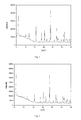
Fig. 1 is an X-ray diffraction spectrogram of the rare earth-containing Y zeolite prepared according to Example 1. -
Fig. 2 is an X-ray diffraction spectrogram of the rare earth-containing Y zeolite prepared according to Comparative Example 1. - According to the present invention, the utilization efficiency of the rare earth starting material can be shown by rare earth utilization. The rare earth utilization refers to a ratio of the rare earth amount as rare earth oxide (RE2O3) in the product to the theoretical rare earth feeding amount as rare earth oxide (RE2O3), as a weight percent. The rare earth-containing Y zeolite of the present invention has a rare earth utilization of higher than 98%.
- The Si/Al atom ratio in the skeleton according to the present invention refers to the atomic molar ratio of Si and Al in the rare earth-containing Y zeolite of the present invention. There also several measurements for the Si/Al ratio. For example, the Si/Al ratio can be obtained by the measurement for crystal cell parameter s with X-ray diffraction and calculation, or by the infrared spectroscopy, or by the nuclear magnetic resonance (NMR) measurement and calculation. In the present invention, the Si/Al atom ratio in the skeleton is obtained by the nuclear magnetic resonance (NMR) measurement and calculation. The Si/Al ratio of the zeolite mentioned in the present invention refers to the Si/Al atom ratio in the skeleton of the zeolite.
- For the rare earth-containing Y zeolite, in its X-ray diffraction spectrogram, the peak at 2θ=11.8±0.1° can be used to characterize the rare earth distribution in the sodalite cage, and I1 is used to represent its peak strength; the peak at 2θ=12.3±0.1° can be used to characterize the rare earth distribution in the super cage, and I2 is used to represent its peak strength; the ratio of I1 to I2 can be used to characterize the migration degree of rare earth ions from the super cages to the sodalite cages. According to the present invention, the peak strength is a relative strength relative to a peak-forming plane (in other words, the peak strength is a peak strength subtracting the base line strength). For example, if the ratio of the strength I1 of the peak at 2θ=11.8±0.1° to the strength I2 of the peak at 2θ=12.3±0.1° (I1/I2) in the X-ray diffraction spectrogram of a rare earth-containing zeolite is 5, and the weight percent of rare earth as rare earth oxide in the zeolite is 10%, then the product is 5 × 10=50. The product of the ratio of the strength I1 of the peak at 2θ=11.8±0.1° to the strength I2 of the peak at 2θ=12.3±0.1° (I1/I2) in the X-ray diffraction spectrogram of the rare earth-containing Y zeolite of the present invention and the weight percent of rare earth as rare earth oxide in the zeolite is higher than 48. According to the present invention, the upper limit of that product is not limited, for example, the upper limit can be 200, e.g. 100. In a preferable embodiment of the present invention, the range of that product is 48-200, e.g. 48-100. More preferably, that product is higher than 55, higher than 60, higher than 70, e.g. 55-200, such as 55-90.
- According to the present invention, said crystallinity retention is the ratio of the crystallinity of the sample after the aging treatment to that before the aging treatment, wherein the aging treatment comprises: mixng the zeolite and an ammonium chloride solution to exchange until the content of Na2O is below 0.3wt%, then filtering, drying, and aging at 800°C in a condition of 100% steam for 17 hours; if the zeolite has a Na2O content of below 0.3wt%, then directly aging at 800°C in a condition of 100% steam for 17 hours without the exchange, filtering and drying.
- In an aspect of the present invention, the rare earth-containing Y zeolite of the present invention is characterized in that, the rare earth content as rare earth oxide is 10-25wt%, e.g. 11-23wt%, the unit cell size is 2.440-2.472nm, e.g. 2.450-2.470nm, the crystallinity is 35-65%, e.g. 40-60%, the Si/Al atom ratio in the skeleton is 2.5-5.0, the product of the ratio of the strength I1 of the peak at 2θ=11.8±0.1° to the strength I2 of the peak at 2θ=12.3±0.1° (I1/I2) in the X-ray diffraction spectrogram of the zeolite and the weight percent of rare earth as rare earth oxide in the zeolite is higher than 48. The rare earth-containing Y zeolite of the present invention has a crystallinity retention after 17 hours of aging treatment at 800°C in a condition of 100% steam of greater than 40%, e.g. greater than 45%.
- In another aspect of the present invention, the present invention provides a process for preparing a rare earth-containing Y zeolite. The preparation process is a process combining the two-exchange-and-two-calcination with the deposition of rare earth.
- In an embodiment of the present invention, the process for preparing the rare earth-containing Y zeolite of the present invention comprises the following steps:
- (1) a NaY zeolite and a rare earth solution or a mixed solution of ammonium salt and rare earth solution are contacted to obtain a rare earth- and sodium-containing Y zeolite;
- (2) the rare earth- and sodium-containing Y zeolite obtained in step (1) is subjected to a first calcination to obtain a rare earth- and sodium-containing Y zeolite;
- (3) then either the rare earth- and sodium-containing Y zeolite obtained in step (2) is contacted with an ammonium salt solution or an acid solution, and then mixed with a rare earth solution, and the mixture is adjusted to a pH of 6-10, or the rare earth- and sodium-containing Y zeolite obtained in step (2) is contacted with a mixed solution of ammonium salt and rare earth solution, and then the mixture is adjusted to a pH of 6-10, to obtain a rare earth- and sodium-containing Y zeolite;
- (4) the rare earth- and sodium-containing Y zeolite obtained in step (3) is subjected to a second calcination to obtain the target rare earth-containing Y zeolite.
- In another embodiment of the present invention, the process for preparing the rare earth-containing Y zeolite of the present invention comprises the following steps:
- (1) a NaY zeolite and a rare earth solution or a mixed solution of ammonium salt and rare earth solution are contacted to obtain a rare earth- and sodium-containing Y zeolite;
- (2) the rare earth- and sodium-containing Y zeolite obtained in step (1), after being filtered and washed with water, and dried, is subjected to a first calcination to obtain a rare earth- and sodium-containing Y zeolite;
- (3) then either the rare earth- and sodium-containing Y zeolite obtained in step (2) is contacted with an ammonium salt solution, and then mixed with a rare earth solution without filtration, and the mixture is adjusted to a pH of 6-10, or the rare earth- and sodium-containing Y zeolite obtained in step (2) is contacted with a mixed solution of ammonium salt and rare earth solution, and then the mixture is adjusted to a pH of 6-10, to obtain a rare earth- and sodium-containing Y zeolite;
- (4) the rare earth- and sodium-containing Y zeolite obtained in step (3), after being filtered and washed with water, and dried, is subjected to a second calcination to obtain the target rare earth-containing Y zeolite.
- In another embodiment of the present invention, the process for preparing the rare earth-containing Y zeolite of the present invention comprises the following steps:
- (1) a NaY zeolite and a rare earth solution or a mixed solution of ammonium salt and rare earth solution are contacted to obtain a rare earth- and sodium-containing Y zeolite;
- (2) the rare earth- and sodium-containing Y zeolite obtained in step (1), after being filtered and washed with water, and dried, is subjected to a first calcination to obtain a rare earth- and sodium-containing Y zeolite;
- (3) the rare earth- and sodium-containing Y zeolite obtained in step (2) is contacted with an ammonium salt solution or an acid solution, filtered, and then mixed with a rare earth solution, and the mixture is adjusted to a pH of 6-10, to obtain a rare earth- and sodium-containing Y zeolite;
- (4) the rare earth- and sodium-containing Y zeolite obtained in step (3), after being optionally filtered and washed with water, and dried, is subjected to a second calcination to obtain the target rare earth-containing Y zeolite.
- According to the preparation process of the present invention, the NaY zeolite as starting material has a Si/Al atom ratio in the skeleton of preferably > 2.5 and a crystallinity of >80%.
- According to the preparation process of the present invention, the ammonium salt is selected from the group consisting of ammonium chloride, ammonium nitrate, ammonium carbonate, ammonium hydrogen carbonate and any mixture thereof.
- In step (1) of the process for preparing the rare earth-containing Y zeolite, the weight ratio of the rare earth solution (as rare earth oxide) to the NaY zeolite (on the dry basis) is 0.06-0.14, e.g. 0.07-0.12, the weight ratio of the ammonium salt (as ammonium chloride) to the rare earth solution (as rare earth oxide) is 0-10, e.g. 0-5, such as 0.2-3, said ammonium salt is selected from the group consisting of ammonium chloride, ammonium nitrate, ammonium carbonate, ammonium hydrogen carbonate and any mixture thereof, the pH is adjusted to 3.0-5.0, the weight ratio of water:zeolite is controlled to 5-30, e.g. 7-15, said contact is conducted at room temperature (such as 18-26°C) to 100°C, e.g. 70-95°C for at least 0.3 hour, e.g. 0.5-3 hours, such as 0.5-1.5 hours.
- In step (2) of the process for preparing the rare earth-containing Y zeolite, said first calcination is conducted at 500-650°C, e.g. 530-630°C, such as 550-620°C, in a condition of 0-100% steam for at least 0.5 hour, e.g. 0.5-4.0 hours, 1.0-4.0 hours or 1.5-3.0 hours. The calcination can promote the migration of rare earth ions from the super cages of the zeolite to the sodalite cages. The first calcination is preferably conducted in a condition of 1-100%, preferably 20-100%, more preferably 100% steam.
- In step (3) of the process for preparing the rare earth-containing Y zeolite, for the case of contacting the rare earth- and sodium-containing Y zeolite with the ammonium salt solution, the contact is conducted at room temperature to 100°C, e.g. 60-80°C for at least 0.3 hour, e.g. 0.3-3.0 hours, 0.5-3 hours or 0.5-1.5 hours, wherein for the proportions of the rare earth- and sodium-containing Y zeolite and the ammonium salt solution, the weight ratio of the zeolite (dry basis):ammonium saltwater is 1:(0.05-0.5):(5-30), e.g. 1:(0.1-0.4):(8-15); the rare earth solution is subsequently added in such an amount that the weight ratio of the rare earth element (as rare earth oxide (RE2O3)) in the rare earth solution to the rare earth- and sodium-containing Y zeolite (on a dry basis of the zeolite) is 0.01-0.2, e.g., 0.02-0.12; said ammonium salt is selected from the group consisting of ammonium chloride, ammonium nitrate, ammonium carbonate, ammonium hydrogen carbonate and any mixture thereof;
for the case of contacting the rare earth- and sodium-containing Y zeolite with the acid solution, the contact is conducted at room temperature to 100°C, e.g. 60-80°C for at least 0.3 hour, e.g. 0.3-3.0 hours, 0.5-3 hours or 0.5-1.5 hours, wherein for the proportions of the rare earth- and sodium-containing Y zeolite and the acid solution, the weight ratio of zeolite (dry basis):acid:water is 1:(0.03-0.2):(5-30), e.g. 1:(0.05-0.1):(8-15); the rare earth solution is subsequently added in such an amount that the weight ratio of the rare earth element (as rare earth oxide (RE2O3)) in the rare earth solution to the rare earth- and sodium-containing Y zeolite (on a dry basis of the zeolite) is 0.01-0.2, e.g., 0.02-0.12; said acid can be an inorganic acid or an organic acid, the inorganic acid can be selected from the group consisting of sulphuric acid, hydrochloric acid, nitric acid and any mixture thereof, the organic acid can be selected from the group consisting of oxalic acid, acetic acid, citric acid, tartaric acid, and any mixture thereof;
for the case of contacting the rare earth- and sodium-containing Y zeolite with the mixed solution of ammonium salt and rare earth solution, the contact is conducted at room temperature to 100°C, e.g. 60-80°C for at least 0.3 hour, e.g. 0.3-3.0 hours, 0.5-3 hours or 0.5-1.5 hours, wherein for the proportions of the rare earth- and sodium-containing Y zeolite, the ammonium salt, and the rare earth solution, the weight ratio of zeolite (dry basis):ammonium salt:rare earth oxide (RE2O3):water is 1:(0.05-0.5):(0.01-0.2):(5-30), e.g. 1:(0.1-0.4):(0.02-0.12):(8-15); said ammonium salt is selected from the group consisting of ammonium chloride, ammonium nitrate, ammonium carbonate, ammonium hydrogen carbonate and any mixture thereof; - After the above contact, the mixture is adjusted with an alkaline liquid to a pH of 6-10, preferably 7-9, and more preferably 7.5-8.2, so that all of rare earth ions deposit to form rare earth hydroxide, i.e. the deposition of rare earth. The time is not particularly limited, for example, 5 minutes to 2 hours, e.g 10 minutes to 60 minutes, 10 minutes to 30 minutes. Said alkaline liquid can be selected from the group consisting of aqueous ammonia, sodium silicate, sodium metaaluminate, sodium hydroxide and any mixture thereof.
- In step (4) of the process for preparing the rare earth-containing Y zeolite, said second calcination is conducted at 500-650°C, in a condition of 0-100% steam for 0.5-4 hours, e.g. 1-3 hours. The second calcination is preferably conducted in a condition of 1-100%, preferably 20-100%, more preferably 100% steam.
- The various conditions listed in the above steps (1) to (4) (including the preferable conditions and exemplified conditions) can be combined to obtain a technical solution, which is also in the scope of the present invention.
- According to the preparation process of the present invention, rare earth is selected from the group consisting of lanthanum (La), cerium (Ce), praseodymium (Pr), neodymium (Nd), promethium (Pm), samarium (Sm), europium (Eu), gadolinium (Gd), terbium (Tb), dysprosium (Dy), holmium (Ho), erbium (Er), thulium (Tm), ytterbium (Yb), lutetium (Lu), scandium (Sc) and yttrium (Y). Preferably, rare earth is selected from the group consisting of lanthanum (La) and cerium (Ce). The rare earth starting material can be provided in a form of soluble salt such as nitrate and hydrochloride. The rare earth starting material can be a rare earth chloride or a rare earth nitrate containing a single rare earth element, such as lanthanum chloride, lanthanum nitrate, cerium chloride, and cerium nitrate, and also can be a mixed rare earth material having a various rare earth element ratio, such as a cerium-rich or lanthanum-rich mixed rare earth material. For example, said rare earth solution can be a solution containing one or more of lanthanum nitrate, cerium nitrate, lanthanum chloride, cerium chloride, a mixed rare earth nitrate, and a mixed rare earth chloride, wherein the mixed rare earth nitrate refers to (REx1REx2...RExn)(NO3)3, wherein REx1, REx2, ..., RExn refer to rare earth elements, wherein n is an integer of 2 or more, the sum of x1+x2+...+xn equals to 1; a mixed rare earth chloride (also named rare earth chloride) refers to (REy1REy2...REyn)Cl3, wherein REy1, REy2, ..., REyn refer to rare earth elements, wherein n is an integer of 2 or more, the sum of y1+y2+...+yn equals to 1.
- According to the preparation process of the present invention, the rare earth-containing Y zeolite is prepared through one liquid phase exchange of rare earth ions and one solid-phase migration of rare earth ions. The process having the rare earth exchange and the rare earth deposition in combination with two calcinations ensure few or no loss of rare earth and the migration of rare earth ions from the super cages to the sodalite cages. The rare earth content can be flexibly adjusted and accurately controlled, and the operation is simple. Furthermore, in the second exchange using an ammonium salt, after contacting with the ammonium salt and before the deposition of rare earth, the filtering step can be omitted. Therefore, the preparation process is shortened and the loss of rare earth can be further reduced. According to the present invention, the earth utilization can be up to 98% or more. The rare earth resource is effectively saved and the production cost is further decreased.
- The rare earth-containing Y zeolites obtained according to the prior method (such as those in
CN1053808A andCN100344374C , or the conventional industrial two-exchange-and-two-calcination procedure) have a crystallinity retention after 17 hours of aging treatment at 800°C in a condition of 100% steam of less than 40%. On the contrary, the rare earth-containing Y zeolite of the present invention has a higher crystallinity retention after 17 hours of aging treatment at 800°C in a condition of 100% steam, e.g. greater than 40%, e.g. greater than 45%, which shows good structure stability. Therefore, in comparison with the prior art, the rare earth-containing Y zeolite of the present invention has good structure stability. The rare earth-containing Y zeolite of the present invention has good activity stability (high light oil micro-activity (MA) value). When the rare earth-containing Y zeolite of the present invention is used as the active component of the catalyst, the used amount in the catalyst can be reduced and the catalyst production cost can be decreased. - Hereinafter, the present invention will be further illustrated with the examples, but the scope of the present invention is not limited thereto.
- According to the present invention, the chemical composition of the zeolite is determined by X-ray fluorescence spectrometry. A reference can be made to Analytical Methods in Petrochemical Industry (RIPP Experiment Techniques), Yang Cuiding et.al, Science Press, 1990.
- The phase data (such as the unit cell size) and the crystallinity data of the molecular size are determined by X-ray diffraction according to the standard methods RIPP145-90 and RIPP146-90 respectively. A reference can be made to Analytical Methods in Petrochemical Industry (RIPP Experiment Techniques), Yang Cuiding et.al, Science Press, 1990.
- The Si/Al atom ratio in the skeleton of the zeolite is obtained by the nuclear magnetic resonance (NMR) measurement and calculation.
- The light oil micro-activity (MA) is measured according to the standard method RIPP92-90.
- In the Examples and Comparative Examples, the used starting materials are commercially available and their detailed specifications are as follows.
NaY zeolite, industrial grade, available from Sinopec Catalyst Company, Qilu Division.
Rare earth chloride: industrial grade, available from Sinopec Catalyst Company, Qilu Division, the mass ratio of lanthanum (as La2O3):cerium(as Ce2O3)=55:45;
Others: chemically pure. - 2.6kg NaY zeolite (Qilu catalyst company, calcination loss by 22.5wt%, Si/Al ratio 2.7, crystallinity 88%, the same below) and 15kg deionized water were mixed and pulped. To the mixture were added 1.0L of the rare earth chloride solution having a concentration of 160gRE2O3/L and 0.24kg ammonium chloride solid. After stirring, the slurry was warmed up to 70°C and the slurry was adjusted with a diluted hydrochloric acid to a pH of 4.0, continued to exchange for 1.5 hours, filtered, water-washed, dried, then calcined in a condition of 100% steam at 550°C for 2 hours to obtain the "one-exchange-and-one-calcination" rare earth- and sodium-containing Y zeolite Y-A1, Y-A1 having the following chemical composition: Na2O 5.1wt%, rare earth oxide 7.8wt%. Then a slurry was formulated and pulped in a ratio of zeolite:NH4Cl:H2O=1:0.2:10 and exchanged at 70°C for 1 hour. To the slurry was added 0.27L of the rare earth chloride solution having a concentration of 300gRE2O3/L. The slurry was stirred evenly. To the slurry was added aqueous ammonia, and the slurry was adjusted to a pH of 7.5 and the stirring was continued for 10 minutes, filtered, water-washed, dried, then calcined in a condition of 100% steam at 600°C for 2 hours to obtain the present rare earth-containing Y zeolite product, named as Y-A.
- The X-ray diffraction spectrogram of Y-A was shown in
Fig. 1 . - Y-A: Na2O 1.5wt%, rare earth oxide 11.9wt%, crystallinity 50.1%, unit cell size 2.458nm, the Si/Al atom ratio in the skeleton 3.5. The product of the ratio of the strength I1 of the peak at 2θ=11.8±0.1° to the strength I2 of the peak at 2θ=12.3±0.1° (I1/I2) and the weight percent of rare earth as rare earth oxide in the zeolite is 90.0.
- 2.6kg NaY zeolite and 18kg deionized water were mixed and pulped. To the mixture were added 1.25L of the rare earth chloride solution having a concentration of 160gRE2O3/L and 0.12kg ammonium chloride solid. After stirring, the slurry was warmed up to 80°C and the slurry was adjusted with a diluted hydrochloric acid to a pH of 3.8, continued to exchange for 1 hour, filtered, water-washed, dried, then calcined in air at 570°C for 2 hours to obtain the "one-exchange-and-one-calcination" rare earth- and sodium-containing Y zeolite Y-B1, Y-B1 having the following chemical composition: Na2O 4.9wt%, rare earth oxide 9.9wt%. Then a slurry was formulated and pulped in a ratio of zeolite :NH4Cl:H2O=1:0.3:10 and exchanged at 60°C for 0.5 hour. To the slurry was added 0.13L of the rare earth chloride solution having a concentration of 300gRE2O3/L. The slurry was stirred evenly. To the slurry was added aqueous ammonia, and the slurry was adjusted to a pH of 7.8 and the stirring was continued for 10 minutes, filtered, water-washed, dried, then calcined in air at 570°C for 2 hours to obtain the present rare earth-containing Y zeolite product, named as Y-B.
- Y-B had a similar X-ray diffraction spectrogram as that shown in
Fig. 1 . - Y-B: Na2O 1.5wt%, rare earth oxide 11.9wt%, crystallinity 50.6%, unit cell size 2.463nm, the Si/Al atom ratio in the skeleton 2.9. The product of the ratio of the strength I1 of the peak at 2θ=11.8±0.1° to the strength I2 of the peak at 2θ=12.3±0.1° (I1/I2) and the weight percent of rare earth as rare earth oxide in the zeolite is 54.1.
- 2.6kg NaY zeolite and 18kg deionized water were mixed and pulped. To the mixture were added 1.25L of the rare earth chloride solution having a concentration of 160gRE2O3/L and 0.12kg ammonium chloride solid. After stirring, the slurry was warmed up to 80°C and the slurry was adjusted with a diluted hydrochloric acid to a pH of 3.8, continued to exchange for 1 hour, filtered, water-washed, dried, then calcined in a condition of 50% steam at 570°C for 2 hours to obtain the "one-exchange-and-one-calcination" rare earth- and sodium-containing Y zeolite Y-C1, Y-C1 having the following chemical composition: Na2O 4.9wt%, rare earth oxide 9.9wt%. Then a slurry was formulated and pulped in a ratio of zeolite :NH4Cl:H2O=1:0.15:12 and exchanged at 75°C for 1 hour. Then to the slurry was added 0.27L of the rare earth chloride solution having a concentration of 300gRE2O3/L. The slurry was stirred evenly. To the slurry was added sodium silicate, and the slurry was adjusted to a pH of 8.0 and the stirring was continued for 10 minutes, filtered, water-washed, dried, then calcined in air at 570°C for 2 hours to obtain the present rare earth-containing Y zeolite product, named as Y-C.
- Y-C had a similar X-ray diffraction spectrogram as that shown in
Fig. 1 . - Y-C: Na2O 1.3wt%, rare earth oxide 13.9wt%, crystallinity 48.8%, unit cell size 2.465nm, the Si/Al atom ratio in the skeleton 3.1. The product of the ratio of the strength I1 of the peak at 2θ=11.8±0.1° to the strength I2 of the peak at 2θ=12.3±0.1° (I1/I2) and the weight percent of rare earth as rare earth oxide in the zeolite is 55.6.
- 2.6kg NaY zeolite and 18kg deionized water were mixed and pulped. To the mixture were added 1.25L of the rare earth chloride solution having a concentration of 160gRE2O3/L and 0.12kg ammonium chloride solid. After stirring, the slurry was warmed up to 80°C and the slurry was adjusted with a diluted hydrochloric acid to a pH of 3.8, continued to exchange for 1 hour, filtered, water-washed, dried, then calcined in air at 600°C for 1.5 hours to obtain the "one-exchange-and-one-calcination" rare earth- and sodium-containing Y zeolite Y-D1, Y-D1 having the following chemical composition: Na2O 4.9wt%, rare earth oxide 9.9wt%. Then Y-D1, ammonium chloride and the rare earth chloride solution having a concentration of 300gRE2O3/L were mixed and pulped in a ratio of zeolite :NH4Cl:RE2O3:H2O=1:0.15:0.06:12 and exchanged at 75°C for 1 hour. Then to the slurry was added sodium silicate, and the slurry was adjusted to a pH of 8.0 and the stirring was continued for 10 minutes, filtered, water-washed, dried, then calcined in a condition of 100% steam at 570°C for 3 hours to obtain the present rare earth-containing Y zeolite product, named as Y-D.
- Y-D had a similar X-ray diffraction spectrogram as that shown in
Fig. 1 . - Y-D: Na2O 1.3wt%, rare earth oxide 16.0wt%, crystallinity : 46.6%, unit cell size : 2.467nm, the Si/Al atom ratio in the skeleton 3.0. The product of the ratio of the strength I1 of the peak at 2θ=11.8±0.1° to the strength I2 of the peak at 2θ=12.3±0.1° (I1/I2) and the weight percent of rare earth as rare earth oxide in the zeolite is 57.2.
- 2.6kg NaY zeolite and 20kg deionized water were mixed and pulped. To the mixture was added 1.5L of the rare earth chloride solution having a concentration of 160gRE2O3/L. After stirring, the slurry was warmed up to 75°C and the slurry was adjusted with a diluted hydrochloric acid to a pH of 3.5, continued to exchange for 1 hour, filtered, water-washed, dired, then calcined in a condition of 100% steam at 600°C for 2 hours to obtain the "one-exchange-and-one-calcination" rare earth- and sodium-containing Y zeolite Y-E1, Y-E1 having the following chemical composition: Na2O 4.8wt%, rare earth oxide 11.9wt%. Then a slurry was formulated and pulped in a ratio of zeolite:NH4Cl:H2O=1:0.3:10 and exchanged at 70°C for 1 hour. Then to slurry was added 0.4L of the rare earth chloride solution having a concentration of 300gRE2O3/L. The slurry was stirred evenly. To the slurry was added aqueous ammonia, and the slurry was adjusted to a pH of 7.9 and the stirring was continued for 10 minutes, filtered, water-washed, dried, then calcined in a condition of 80% steam at 600°C for 2 hours to obtain the present rare earth-containing Y zeolite product, named as Y-E.
- Y-E had a similar X-ray diffraction spectrogram as that shown in
Fig. 1 . - Y-E: Na2O 1.3wt%, rare earth oxide 17.9wt%, crystallinity 45.2%, unit cell size 2.467nm, the Si/Al atom ratio in the skeleton 3.2. The product of the ratio of the strength I1 of the peak at 2θ=11.8±0.1° to the strength I2 of the peak at 2θ=12.3±0.1° (I1/I2) and the weight percent of rare earth as rare earth oxide in the zeolite is 62.6.
- 2.6kg NaY zeolite and 20kg deionized water were mixed and pulped. To the mixture was added 1.5L of the lanthanum chloride solution having a concentration of 160gLa2O3/L. After stirring, the slurry was warmed up to 75°C and the slurry was adjusted with a diluted hydrochloric acid to a pH of 3.5, continued to exchange for 1 hour, filtered, water-washed, dired, then calcined in air at 620°C for 2 hours to obtain the "one-exchange-and-one-calcination" rare earth- and sodium-containing Y zeolite Y-F1, Y-F1 having the following chemical composition: Na2O 4.8wt%, lanthanum oxide 11.9wt%. Then Y-F1, ammonium chloride and the lanthanum chloride solution were mixed and pulped in a ratio of zeolite:NH4Cl:La2O3:H2O=1:0.18:0.10:12 and exchanged at 65°C for 1 hour. To the slurry was added aqueous ammonia, and the slurry was adjusted to a pH of 8.2 and the stirring was continued for 10 minutes, filtered, water-washed, dried, then calcined in a condition of 100% steam at 620°C for 3 hours to obtain the present rare earth-containing Y zeolite product, named as Y-F.
- Y-F had a similar X-ray diffraction spectrogram as that shown in
Fig. 1 . - Y-F: Na2O 1.5wt%, lanthanum oxide 22.0wt%, crystallinity 41.3%, unit cell size 2.470nm, the Si/Al atom ratio in the skeleton 3.1. The product of the ratio of the strength I1 of the peak at 2θ=11.8±0.1° to the strength I2 of the peak at 2θ=12.3±0.1° (I1/I2) and the weight percent of rare earth as rare earth oxide in the zeolite is 70.1.
- 2.6kg NaY zeolite (Qilu catalyst company, calcination loss by 22.5wt%, Si/Al ratio 2.7, crystallinity 88%, the same below) and 15kg deionized water were mixed and pulped. To the mixture were added 1.0L of the rare earth chloride solution having a concentration of 160gRE2O3/L and 0.24kg ammonium chloride solid. After stirring, the slurry was warmed up to 70°C and the slurry was adjusted with a diluted hydrochloric acid to a pH of 4.0, continued to exchange for 1.5 hours, filtered, water-washed, dired, then calcined in a condition of 100% steam at 550°C for 2 hours to obtain the "one-exchange-and-one-calcination" rare earth- and sodium-containing Y zeolite YY-A1, YY-A1 having the following chemical composition: Na2O 5.1wt%, rare earth oxide 7.8wt%. Then a slurry was formulated and pulped in a ratio of zeolite :NH4Cl:H2O=1:0.2:10 and exchanged at 70°C for 1 hour. After filtering and water-washing, the resulting material was re-pulped and to the slurry was added 0.27L of the rare earth chloride solution having a concentration of 300gRE2O3/L. The slurry was stirred evenly. To the slurry was added aqueous ammonia, and the slurry was adjusted to a pH of 7.5 and the stirring was continued for 10 minutes, optionally filtered and water-washed, dried, then calcined in a condition of 100% steam at 600°C for 2 hours to obtain the present rare earth-containing Y zeolite product, named as YY-A.
- YY-A: Na2O 1.5wt%, rare earth oxide 11.8wt%, crystallinity : 50.3%, unit cell size : 2.458nm, the Si/Al atom ratio in the skeleton 3.5. The product of the ratio of the strength I1 of the peak at 2θ=11.8±0.1° to the strength I2 of the peak at 2θ=12.3±0.1° (I1/I2) and the weight percent of rare earth as rare earth oxide in the zeolite is 89.7.
- 2.6kg NaY zeolite and 18kg deionized water were mixed and pulped. To the mixture were added 1.25L of the rare earth chloride solution having a concentration of 160gRE2O3/L and 0.12kg ammonium chloride solid. After stirring, the slurry was warmed up to 80°C and the slurry was adjusted with a diluted hydrochloric acid to a pH of 3.8, continued to exchange for 1 hour, filtered, water-washed, dried, then calcined in air at 570°C for 2 hours to obtain the "one-exchange-and-one-calcination" rare earth- and sodium-containing Y zeolite YY-B1, YY-B1 having the following chemical composition: Na2O 4.9wt%, rare earth oxide 9.9wt%. Then a slurry was formulated and pulped in a ratio of zeolite:HCl:H2O=1:0.05:10 and exchanged at 60°C for 0.5 hour. After filtering and water-washing, the resulting material was re-pulped and to the slurry was added 0.13L of the rare earth chloride solution having a concentration of 300gRE2O3/L. The slurry was stirred evenly. To the slurry was added aqueous ammonia, and the slurry was adjusted to a pH of 7.8 and the stirring was continued for 10 minutes, optionally filtered and water-washed, dried, then calcined in air at 570°C for 2 hours to obtain the present rare earth-containing Y zeolite product, named as YY-B.
- YY-B: Na2O 1.5wt%, rare earth oxide 11.9wt%, crystallinity 50.6%, unit cell size 2.463nm, the Si/Al atom ratio in the skeleton 2.9. The product of the ratio of the strength I1 of the peak at 2θ=11.8±0.1° to the strength I2 of the peak at 2θ=12.3±0.1° (I1/I2) and the weight percent of rare earth as rare earth oxide in the zeolite is 48.8.
- 2.6kg NaY zeolite and 18kg deionized water were mixed and pulped. To the mixture were added 1.25L of the rare earth chloride solution having a concentration of 160gRE2O3/L and 0.12kg ammonium chloride solid. After stirring, the slurry was warmed up to 80°C and the slurry was adjusted with a diluted hydrochloric acid to a pH of 3.8, continued to exchange for 1 hour, filtered, water-washed, dried, then calcined in a condition of 50% steam at 570°C for 2 hours to obtain the "one-exchange-and-one-calcination" rare earth- and sodium-containing Y zeolite YY-C1, YY-C1 having the following chemical composition: Na2O 4.9wt%, rare earth oxide 9.9wt%. Then a slurry was formulated and pulped in a ratio of zeolite :NH4Cl:H2O=1:0.15:12 and exchanged at 75°C for 1hour. After filtering and water-washing, the resulting material was re-pulped and to the slurry was added 0.27L of the rare earth chloride solution having a concentration of 300gRE2O3/L. The slurry was stirred evenly. To the slurry was added sodium silicate, and the slurry was adjusted to a pH of 8.0 and the stirring was continued for 10 minutes, optionally filtered and water-washed, dried, then calcined in air at 570°C for 2 hours to obtain the present rare earth-containing Y zeolite product, named as YY-C.
- YY-C: Na2O 1.3wt%, rare earth oxide 13.9wt%, crystallinity 48.8%, unit cell size 2.465nm, the Si/Al atom ratio in the skeleton 3.1. The product of the ratio of the strength I1 of the peak at 2θ=11.8±0.1° to the strength I2 of the peak at 2θ=12.3±0.1° (I1/I2) and the weight percent of rare earth as rare earth oxide in the zeolite is 55.6.
- 2.6kg NaY zeolite and 18kg deionized water were mixed and pulped. To the mixture were added 1.25L of the rare earth chloride solution having a concentration of 160gRE2O3/L and 0.12kg ammonium chloride solid. After stirring, the slurry was warmed up to 80°C and the slurry was adjusted with a diluted hydrochloric acid to a pH of 3.8, continued to exchange for 1 hour, filtered, water-washed, dried, then calcined in air at 600°C for 1.5 hours to obtain the "one-exchange-and-one-calcination" rare earth- and sodium-containing Y zeolite YY-D1, YY-D1 having the following chemical composition: Na2O 4.9wt%, rare earth oxide 9.9wt%. Then a slurry was formulated and pulped in a ratio of zeolite:NH4Cl:H2O=1:0.15:12 and exchanged at 75°C for 1hour. After filtering and water-washing, the resulting material was re-pulped and to the slurry was added 0.4L of the rare earth chloride solution having a concentration of 300gRE2O3/L. The slurry was stirred evenly. To the slurry was added sodium silicate, and the slurry was adjusted to a pH of 8.0 and the stirring was continued for 10 minutes, optionally filtered and water-washed, dried, then calcined in a condition of 100% steam at 570°C for 3 hours to obtain the present rare earth-containing Y zeolite product, named as YY-D.
- YY-D: Na2O 1.3wt%, rare earth oxide 15.9wt%, crystallinity 46.9%, unit cell size 2.466nm, the Si/Al atom ratio in the skeleton 3.0. The product of the ratio of the strength I1 of the peak at 2θ=11.8±0.1° to the strength I2 of the peak at 2θ=12.3±0.1° (I1/I2) and the weight percent of rare earth as rare earth oxide in the zeolite is 57.2.
- 2.6kg NaY zeolite and 20kg deionized water were mixed and pulped. To the mixture was added 1.5L of the rare earth chloride solution having a concentration of 160gRE2O3/L. After stirring, the slurry was warmed up to 75°C and the slurry was adjusted with a diluted hydrochloric acid to a pH of 3.5, continued to exchange for 1 hour, filtered, water-washed, dried, then calcined in a condition of 100% steam at 600°C for 2 hours to obtain the "one-exchange-and-one-calcination" rare earth- and sodium-containing Y zeolite YY-E1, YY-E1 having the following chemical composition: Na2O 4.8wt%, rare earth oxide 11.9wt%. Then a slurry was formulated and pulped in a ratio of zeolite :NH4Cl:H2O=1:0.3:10 and exchanged at 70°C for 1 hour. After filtering and water-washing, the resulting material was re-pulped and to the slurry was added 0.4L of the rare earth chloride solution having a concentration of 300gRE2O3/L. The slurry was stirred evenly. To the slurry was added aqueous ammonia, and the slurry was adjusted to a pH of 7.9 and the stirring was continued for 10 minutes, optionally filtered and water-washed, dried, then calcined in a condition of 80% steam at 600°C for 2 hours to obtain the present rare earth-containing Y zeolite product, named as YY-E.
- YY-E: Na2O 1.3wt%, rare earth oxide 17.9wt%, crystallinity 45.2%, unit cell size 2.467nm, the Si/Al atom ratio in the skeleton 3.2. The product of the ratio of the strength I1 of the peak at 2θ=11.8±0.1° to the strength I2 of the peak at 2θ=12.3±0.1° (I1/I2) and the weight percent of rare earth as rare earth oxide in the zeolite is 62.6.
- 2.6kg NaY zeolite and 20kg deionized water were mixed and pulped. To the mixture was added 1.5L of the lanthanum chloride solution having a concentration of 160gLa2O3/L. After stirring, the slurry was warmed up to 75°C and the slurry was adjusted with a diluted hydrochloric acid to a pH of 3.5, continued to exchange for 1 hour, filtered, water-washed, dried, then calcined in air at 620°C for 2 hours to obtain the "one-exchange-and-one-calcination" rare earth- and sodium-containing Y zeolite YY-F1, YY-F1 having the following chemical composition: Na2O 4.8wt%, lanthanum oxide11.9wt%. Then a slurry was formulated and pulped in a ratio of zeolite :oxalic acid :H2O=1:0.08:12 and exchanged at 65°C for 1 hour. After filtering and water-washing, the resulting material was re-pulped and to the slurry was added 0.67L of the lanthanum chloride solution having a concentration of 300gLa2O3/L. The slurry was stirred evenly. To the slurry was added aqueous ammonia, and the slurry was adjusted to a pH of 8.2 and the stirring was continued for 10 minutes, optionally filtered and water-washed, dried, then calcined in a condition of 100% steam at 620°C for 3 hours to obtain the present rare earth-containing Y zeolite product, named as YY-F.
- YY-F: Na2O 1.5wt%, lanthanum oxide 21.9wt%, crystallinity 41.7%, unit cell size 2.470nm, the Si/Al atom ratio in the skeleton 3.1. The product of the ratio of the strength I1 of the peak at 2θ=11.8±0.1° to the strength I2 of the peak at 2θ=12.3±0.1° (I1/I2) and the weight percent of rare earth as rare earth oxide in the zeolite is 70.1.
- In this Comparative Example, the rare earth-containing Y zeolite was prepared according to the method disclosed in
CN1053808A . - 2.6kg NaY zeolite, 1.75L of the rare earth chloride solution (160gRE2O3/L) and 30kg deionized water were mixed. The slurry was adjusted to a pH of 3.5 and exchanged at 90°C for 1 hour. After stirring and water-washing, the filtered cake was placed in a tube-furnace. Upon heating up to 200 °C, steam was passed in. The heating-up was continued to 550°C, and the calcination was conducted for 2 hours. The resulting zeolite, (NH4)2SO4 and H2O were pulped in a ratio of 1:0.2:40, and the slurry was exchanged at 60°C for 15mins, filtered and dried to obtain a comparative sample, named as DB-1.
- The X-ray diffraction spectrogram of DB-1 was shown in
Fig. 2 DB-1: Na2O 1.3wt%, rare earth oxide 12.1wt%, crystallinity 56.7%, unit cell size 2.468nm, the Si/Al atom ratio in the skeleton 4.2. The product of the ratio of the strength I1 of the peak at 2θ=11.8±0.1° to the strength I2 of the peak at 2θ=12.3±0.1° (I1/I2) and the weight percent of rare earth as rare earth oxide in the zeolite is 15.7. - In this Comparative Example, the rare earth-containing Y zeolite was prepared according to the conventional two-exchange-and-two-calcination method.
- 2.6kg NaY zeolite, 3.0L of the rare earth chloride solution (160gRE2O3/L) and 20kg deionized water were mixed, exchanged at 90°C for 1 hour, filtered, water-washed, dried, calcined in air at 520°C for 2 hours. The resulting zeolite, the rare earth chloride solution and H2O were pulped in a ratio of 1:0.12:10 and exchanged at 90°C for 1 hour, filtered, dired, and calcined at 520°C for 2 hours to obtain a comparative sample, named as DB-2.
- DB-2 had a similar X-ray diffraction spectrogram as that shown in
Fig. 2 . - DB-2: Na2O 1.9wt%, rare earth oxide 18.2wt%, crystallinity 43.6%, unit cell size 2.469nm, the Si/Al atom ratio in the skeleton 2.7. the product of the ratio of the strength I1 of the peak at 2θ=11.8±0.1° to the strength I2 of the peak at 2θ=12.3±0.1° (I1/I2) and the weight percent of rare earth as rare earth oxide in the zeolite is 16.4.
- In this Comparative Example, the rare earth-containing Y zeolite was prepared according to the method disclosed in
CN100344374C . - 2.6kg NaY zeolite and 20kg deionized water were mixed and warmed up to 90°C. To the slurry was added 0.3kg ammonium sulfate, and the resulting slurry was adjusted with hydrochloric acid to a pH of 3.5-4.0. The exchange was conducted for 1 hour. After filtering, to the filtered cake was added 20kg water and then added 2.87L of the rare earth chloride solution (160gRE2O3/L). The slurry was pulped and adjusted with hydrochloric acid to a pH of 3.5-5.5. The slurry was stirred at room temperature for 1 hour. Then to the slurry was added aqueous ammonia, and stirred for 5 mins. After water-washing and drying, the calcination was conducted at 540°C in 0.1/h WHSV steam for 1.5 hours. The calcined zeolite was washed with the ammonium chloride solution in a ratio of zeolite: ammonium salt:water = 1:0.1:10 at 60 °C for 10 mins, and dried to obtain a comparative sample, named as DB-3.
- DB-3 had a similar X-ray diffraction spectrogram as that shown in
Fig. 2 . - DB-3: Na2O 0.2wt%, rare earth oxide 20.6wt%, crystallinity 50.7%, unit cell size 2.472nm, the Si/Al atom ratio in the skeleton 3.7. The product of the ratio of the strength I1 of the peak at 2θ=11.8±0.1° to the strength I2 of the peak at 2θ=12.3±0.1° (I1/I2) and the weight percent of rare earth as rare earth oxide in the zeolite is 26.8.
- In this Comparative Example, the rare earth-containing Y zeolite was prepared according to the method disclosed in
CN100344374C . - 2.6kg NaY zeolite and 20kg deionized water were mixed and pulped. To the slurry was added 1.63L of the rare earth chloride solution (160gRE2O3/L). The resulting slurry was stirred at 60 °C for 5 mins and adjusted with hydrochloric acid to a pH of 3.5-5.5. After continuing to stir for 1 hour, to the slurry was added aqueous ammonia. The slurry was stirred for 5 mins and filtered. After water-washing and drying, the calcination was conducted at 600°C in 0.2/h WHSV steam for 1.5 hours. The calcined zeolite was washed with the ammonium chloride solution in a ratio of zeolite: ammonium salt:water = 1:0.1:10 at 90 °C for 10 mins, and dried to obtain a comparative sample, named as DB-4.
- DB-4 had a similar X-ray diffraction spectrogram as that shown in
Fig. 2 . - DB-4: Na2O 0.8wt%, rare earth oxide 11.8wt%, crystallinity 56.5%, unit cell size 2.465nm, the Si/Al atom ratio in the skeleton 3.3. The product of the ratio of the strength I1 of the peak at 2θ=11.8±0.1° to the strength I2 of the peak at 2θ=12.3±0.1° (I1/I2) and the weight percent of rare earth as rare earth oxide in the zeolite is 40.1.
- In this Comparative Example, the rare earth-containing Y zeolite was prepared according to the method disclosed in
CN100344374C . - 2.6kg NaY zeolite and 20kg deionized water were mixed and pulped. To the slurry was added 2.19L of the rare earth chloride solution (160gRE2O3/L). The resulting slurry was stirred at 60°C for 5 mins and adjusted with hydrochloric acid to a pH of 3.5-5.5. After continuing to stir for 1 hour, to the slurry was added aqueous ammonia. The slurry was stirred for 5 mins and filtered. After water-washing and drying, the calcination was conducted at 550°C in air for 1.5 hours. The calcined zeolite was washed with the ammonium chloride solution in a ratio of zeolite: ammonium saltwater = 1:0.1:10 at 60 °C for 10 mins, and dried to obtain a comparative sample, named as DB-5.
- DB-5 had a similar X-ray diffraction spectrogram as that shown in
Fig. 2 . - DB-5: Na2O 1.0wt%, rare earth oxide 15.7wt%, crystallinity 52.9%, unit cell size 2.467nm, the Si/Al atom ratio in the skeleton 3.6. The product of the ratio of the strength I1 of the peak at 2θ=11.8±0.1° to the strength I2 of the peak at 2θ=12.3±0.1° (I1/I2) and the weight percent of rare earth as rare earth oxide in the zeolite is 30.9.
- In this example, the data about rare earth utilization of the rare earth-containing Y zeolites in Examples 1-6 and 11-16 and Comparative Examples 1-5 are summarized in Table 1.
Table 1 Zeolite samples Theoretical rare earth feeding amount /% RE2O3 content in the product /% Rare earth utilization/% Y-A 12.0 11.9 99.2 Y-B 12.0 11.9 99.2 Y-C 14.0 13.9 99.3 Y-D 16.0 16.0 100 Y-E 18.0 17.9 99.4 Y-F 22.0 22.0 100 YY-A 12.0 11.8 98.3 YY-B 12.0 11.9 99.2 YY-C 14.0 13.9 99.3 YY-D 16.0 15.9 99.4 YY-E 18.0 17.9 99.4 YY-F 22.0 21.9 99.5 DB-1 14.0 12.1 86.4 DB-2 24.0 18.2 75.8 DB-3 23.0 20.6 89.6 DB-4 13.0 11.8 90.7 DB-5 17.5 15.7 89.7 - It can be seen from the Table 1 that the rare earth utilization of each zeolite in the Examples is higher than 98%, while the rare earth utilization in Comparative Examples are lower. The rare earth utilization in Comparative Example 2 is only about 75%, others are substantially lower than 90%. By the process having the two-exchange-and-two-calcination in combination with the deposition of rare earth according to the present invention, the rare earth utilization is effectively increased, and the rare earth resource can be saved.
- This example will show the physiochemical data for the rare earth-containing Y zeolite of the present invention after 17 hours aging treatment at 800 °C in a condition of 100% steam.
- The zeolites in the above Examples and Comparative Examples were mixed with the ammonium chloride solution, and exchanged until the content of Na2O is below 0.3wt%. After filtering and drying, the zeolites were aged at 800°C in a condition of 100% steam for 17 hours. The aged zeolites were measured for physical-chemical characterization and for the light oil micro-activity MA.
- The conditions for the light oil micro-activity (MA) include:
- zeolite loading: 2g,
- the feedstock: Dagang straight run light diesel fuel
- the feedstock amount: 1.56g,
- the reaction temperature: 460°C.
- The results are shown in Table 2.
Table 2 Zeolite samples RE2O3 Content/% Unit Cell Size/nm Crystallinity Retention /% MA Y-A 11.8 2.436 45.7 63.3 Y-B 11.9 2.436 45.9 63.3 Y-C 13.8 2.438 46.0 65.0 Y-D 15.9 2.439 47.0 67.2 Y-E 17.9 2.441 47.8 70.0 Y-F 21.9 2.445 46.3 72.1 YY-A 11.7 2.436 45.4 63.0 YY-B 11.8 2.436 45.9 63.0 YY-C 13.8 2.438 46.0 65.0 YY-D 15.9 2.439 46.3 67.0 YY-E 17.9 2.441 47.8 70.0 YY-F 21.8 2.445 46.0 72.0 DB-1 11.8 2.433 27.1 56.1 DB-2 17.1 2.438 35.0 65.2 DB-3 19.5 2.441 39.6 68.0 DB-4 11.3 2.433 34.9 56.4 DB-5 14.9 2.436 38.4 63.0 - It can be seen from Table 2 that for the zeolites in Examples, after ammonium-exchanging and sodium-removal, their rare earth contents were substantially unchanged. This showed that the rare earth ions were mainly located in the sodalite cages of the zeolite and could not be reverse-exchanged out. The location of rare earth ions in sodalite cages had a significant stabilizing effect on the zeolite structure. The zeolites in Examples had a crystallinity retention of higher than 45%, and a light oil micro-activity higher than those in Comparative Examples having the comparable rare earth contents.
Claims (12)
- A rare earth-containing Y zeolite, which has a rare earth content as rare earth oxide of 10-25wt%, e.g. 11-23wt%; a unit cell size of 2.440-2.472nm, e.g. 2.450-2.470nm; a crystallinity of 35-65%, e.g. 40-60%; a Si/Al atom ratio in the skeleton of 2.5-5.0; and a product of the ratio of the strength I1 of the peak at 2θ=11.8±0.1° to the strength I2 of the peak at 2θ=12.3±0.1° in the X-ray diffraction spectrogram of the zeolite and the weight percent of rare earth as rare earth oxide in the zeolite of higher than 48, e.g. higher than 55.
- The rare earth-containing Y zeolite of claim 1, which has a crystallinity retention after 17 hours of aging treatment at 800°C in a condition of 100% steam of greater than 40%, e.g. greater than 45%.
- A process for preparing a rare earth-containing Y zeolite, which comprises the following steps:(1) a NaY zeolite and a rare earth solution or a mixed solution of ammonium salt and rare earth solution are contacted to obtain a rare earth- and sodium-containing Y zeolite;(2) the rare earth- and sodium-containing Y zeolite obtained in step (1) is subjected to a first calcination to obtain a rare earth- and sodium-containing Y zeolite;(3) then either the rare earth- and sodium-containing Y zeolite obtained in step (2) is contacted with an ammonium salt solution or an acid solution, and then mixed with a rare earth solution, and the mixture is adjusted to a pH of 6-10, or the rare earth- and sodium-containing Y zeolite obtained in step (2) is contacted with a mixed solution of ammonium salt and rare earth solution, and then the mixture is adjusted to a pH of 6-10, to obtain a rare earth- and sodium-containing Y zeolite;(4) the rare earth- and sodium-containing Y zeolite obtained in step (3) is subjected to a second calcination to obtain the target rare earth-containing Y zeolite.
- A process for preparing a rare earth-containing Y zeolite, which comprises the following steps:(1) a NaY zeolite and a rare earth solution or a mixed solution of ammonium salt and rare earth solution are contacted to obtain a rare earth- and sodium-containing Y zeolite;(2) the rare earth- and sodium-containing Y zeolite obtained in step (1), after being filtered and washed with water, and dried, is subjected to a first calcination to obtain a rare earth- and sodium-containing Y zeolite;(3) then either the rare earth- and sodium-containing Y zeolite obtained in step (2) is contacted with an ammonium salt solution, and then mixed with a rare earth solution without filtration, and the mixture is adjusted to a pH of 6-10, or the rare earth- and sodium-containing Y zeolite obtained in step (2) is contacted with a mixed solution of ammonium salt and rare earth solution, and then the mixture is adjusted to a pH of 6-10, to obtain a rare earth- and sodium-containing Y zeolite;(4) the rare earth- and sodium-containing Y zeolite obtained in step (3), after being filtered and washed with water, and dried, is subjected to a second calcination to obtain the target rare earth-containing Y zeolite.
- A process for preparing a rare earth-containing Y zeolite, which comprises the following steps:(1) a NaY zeolite and a rare earth solution or a mixed solution of ammonium salt and rare earth solution are contacted to obtain a rare earth- and sodium-containing Y zeolite;(2) the rare earth- and sodium-containing Y zeolite obtained in step (1), after being filtered and washed with water, and dried, is subjected to a first calcination to obtain a rare earth- and sodium-containing Y zeolite;(3) the rare earth- and sodium-containing Y zeolite obtained in step (2) is contacted with an ammonium salt solution or an acid solution, filtered, and then mixed with a rare earth solution, and the mixture is adjusted to a pH of 6-10, to obtain a rare earth- and sodium-containing Y zeolite;(4) the rare earth- and sodium-containing Y zeolite obtained in step (3), after being optionally filtered and washed with water, and dried, is subjected to a second calcination to obtain the target rare earth-containing Y zeolite.
- The process according to any one of claims 3-5, wherein the ammonium salt is selected from the group consisting of ammonium chloride, ammonium nitrate, ammonium carbonate, ammonium hydrogen carbonate and any mixture thereof.
- The process according to any one of claims 3-5, wherein in step (1), the weight ratio of the rare earth solution (as rare earth oxide) to the NaY zeolite (on the dry basis) is 0.06-0.14, e.g. 0.07-0.12, the weight ratio of the ammonium salt (as ammonium chloride) to the rare earth solution (as rare earth oxide) is 0-10, e.g. 0-5, such as 0.2-3, said ammonium salt is selected from the group consisting of ammonium chloride, ammonium nitrate, ammonium carbonate, ammonium hydrogen carbonate and any mixture thereof, the pH is adjusted to 3.0-5.0, the weight ratio of water:zeolite is controlled to 5-30, e.g. 7-15, said contact is conducted at room temperature (such as 18-26°C) to 100°C, e.g. 70-95°C for at least 0.3 hour, e.g. 0.5-3 hours, such as 0.5-1.5 hours.
- The process according to any one of claims 3-5, wherein in step (2), said first calcination is conducted at 500-650°C, e.g. 530-630°C, such as 550-620°C, in a condition of 0-100% steam for at least 0.5 hour, e.g. 0.5-4.0 hours, 1.0-4.0 hours or 1.5-3.0 hours.
- The process according to any one of claims 3-5, wherein in step (3), for the case of contacting the rare earth- and sodium-containing Y zeolite with the ammonium salt solution, the contact is conducted at room temperature to 100°C, e.g. 60-80°C for at least 0.3 hour, e.g. 0.3-3.0 hours, 0.5-3 hours or 0.5-1.5 hours, wherein for the proportions of the rare earth- and sodium-containing Y zeolite and the ammonium salt solution, the weight ratio of the zeolite (dry basis):ammonium saltwater is 1:(0.05-0.5):(5-30), e.g. 1:(0.1-0.4):(8-15); the rare earth solution is subsequently added in such an amount that the weight ratio of the rare earth element (as rare earth oxide (RE2O3)) in the rare earth solution to the rare earth- and sodium-containing Y zeolite (on a dry basis of the zeolite) is 0.01-0.2, e.g., 0.02-0.12; said ammonium salt is selected from the group consisting of ammonium chloride, ammonium nitrate, ammonium carbonate, ammonium hydrogen carbonate and any mixture thereof;
for the case of contacting the rare earth- and sodium-containing Y zeolite with the acid solution, the contact is conducted at room temperature to 100°C, e.g. 60-80°C for at least 0.3 hour, e.g. 0.3-3.0 hours, 0.5-3 hours or 0.5-1.5 hours, wherein for the proportions of the rare earth- and sodium-containing Y zeolite and the acid solution, the weight ratio of zeolite (dry basis):acid:water is 1:(0.03-0.2):(5-30), e.g. 1:(0.05-0.1):(8-15); the rare earth solution is subsequently added in such an amount that the weight ratio of the rare earth element (as rare earth oxide (RE2O3)) in the rare earth solution to the rare earth- and sodium-containing Y zeolite (on a dry basis of the zeolite) is 0.01-0.2, e.g., 0.02-0.12; said acid can be an inorganic acid or an organic acid, the inorganic acid can be selected from the group consisting of sulphuric acid, hydrochloric acid, nitric acid and any mixture thereof, the organic acid can be selected from the group consisting of oxalic acid, acetic acid, citric acid, tartaric acid, and any mixture thereof;
for the case of contacting the rare earth- and sodium-containing Y zeolite with the mixed solution of ammonium salt and rare earth solution, the contact is conducted at room temperature to 100°C, e.g. 60-80°C for at least 0.3 hour, e.g. 0.3-3.0 hours, 0.5-3 hours or 0.5-1.5 hours, wherein for the proportions of the rare earth- and sodium-containing Y zeolite, the ammonium salt, and the rare earth solution, the weight ratio of zeolite (dry basis):ammonium salt:rare earth oxide (RE2O3):water is 1:(0.05-0.5):(0.01-0.2):(5-30), e.g. 1:(0.1-0.4):(0.02-0.12):(8-15); said ammonium salt is selected from the group consisting of ammonium chloride, ammonium nitrate, ammonium carbonate, ammonium hydrogen carbonate and any mixture thereof. - The process according to claim 9, wherein in step (3), after the contact, the mixture is adjusted with an alkaline liquid to a pH of 6-10, e.g. 7-9, such as 7.5-8.2.
- The process according to claim 10, wherein said alkaline liquid can be selected from the group consisting of aqueous ammonia, sodium silicate, sodium metaaluminate, sodium hydroxide and any mixture thereof.
- The process according to any one of claims 3-5, wherein in step (4), said second calcination is conducted at 500-650°C, in a condition of 0-100% steam for 0.5-4 hours, e.g. 1-3 hours.
Applications Claiming Priority (2)
| Application Number | Priority Date | Filing Date | Title |
|---|---|---|---|
| CN201210218361.4A CN103508467B (en) | 2012-06-27 | 2012-06-27 | A kind of rare-earth Y molecular sieve and preparation method thereof |
| PCT/CN2013/000768 WO2014000422A1 (en) | 2012-06-27 | 2013-06-27 | Rare-earth contained y type molecular sieve and preparation method thereof |
Publications (3)
| Publication Number | Publication Date |
|---|---|
| EP2868629A1 true EP2868629A1 (en) | 2015-05-06 |
| EP2868629A4 EP2868629A4 (en) | 2016-04-20 |
| EP2868629B1 EP2868629B1 (en) | 2019-05-22 |
Family
ID=49782160
Family Applications (1)
| Application Number | Title | Priority Date | Filing Date |
|---|---|---|---|
| EP13810624.0A Active EP2868629B1 (en) | 2012-06-27 | 2013-06-27 | Rare-earth contained y type molecular sieve and preparation method thereof |
Country Status (11)
| Country | Link |
|---|---|
| US (1) | US10130944B2 (en) |
| EP (1) | EP2868629B1 (en) |
| JP (1) | JP6276257B2 (en) |
| KR (1) | KR102048325B1 (en) |
| CN (1) | CN103508467B (en) |
| AU (1) | AU2013284233B2 (en) |
| MY (1) | MY169239A (en) |
| RU (1) | RU2617477C2 (en) |
| SG (1) | SG11201408767UA (en) |
| TW (1) | TWI566832B (en) |
| WO (1) | WO2014000422A1 (en) |
Cited By (1)
| Publication number | Priority date | Publication date | Assignee | Title |
|---|---|---|---|---|
| EP2896456A4 (en) * | 2012-09-14 | 2016-06-29 | China Petroleum & Chemical | CATALYTIC CRACKING CATALYST BASED ON RARE EARTH TYPE Y-SAMPLE MOLECULAR SIEVE AND PROCESS FOR PREPARING THE SAME |
Families Citing this family (28)
| Publication number | Priority date | Publication date | Assignee | Title |
|---|---|---|---|---|
| CN106927483B (en) * | 2015-12-29 | 2019-09-03 | 中国石油天然气股份有限公司 | Preparation method of modified Y-type molecular sieve |
| US10518219B2 (en) * | 2016-04-19 | 2019-12-31 | China Petroleum & Chemical Corporation | Ion-exchange process |
| US10888848B2 (en) * | 2017-02-22 | 2021-01-12 | China Petroleum & Chemical Corporation | Catalytic cracking catalyst and preparation thereof |
| CN107089668B (en) * | 2017-05-26 | 2020-01-03 | 中海油天津化工研究设计院有限公司 | Preparation method of rare earth-containing Y-type molecular sieve |
| CN108097288A (en) * | 2017-12-09 | 2018-06-01 | 北京惠尔三吉绿色化学科技有限公司 | A kind of method for preparing rare earth Y type molecular sieve |
| CN110862095B (en) * | 2018-08-28 | 2023-08-15 | 中国石油化工股份有限公司 | A kind of preparation method of rare earth Y-type molecular sieve |
| CN111085244A (en) * | 2018-10-23 | 2020-05-01 | 中国石油化工股份有限公司 | Preparation method of hierarchical pore composite material |
| CN111617796A (en) * | 2019-02-28 | 2020-09-04 | 中国石油化工股份有限公司 | A kind of modified composite material and preparation method thereof |
| CN111617798A (en) * | 2019-02-28 | 2020-09-04 | 中国石油化工股份有限公司 | A kind of preparation method of rare earth modified composite material |
| CN111617797A (en) * | 2019-02-28 | 2020-09-04 | 中国石油化工股份有限公司 | A kind of preparation method of rare earth type composite catalytic material |
| CN111620350B (en) * | 2019-02-28 | 2024-04-02 | 中国石油化工股份有限公司 | Micro-mesoporous composite material and preparation method thereof |
| CN111747425B (en) * | 2019-03-27 | 2023-05-05 | 中国石油化工股份有限公司 | A porous catalytic material containing mesopores and micropores |
| CN111744528B (en) * | 2019-03-27 | 2023-04-07 | 中国石油化工股份有限公司 | Preparation method of multi-metal modified composite material |
| CN111744529A (en) * | 2019-03-27 | 2020-10-09 | 中国石油化工股份有限公司 | Method for Rare Earth Modified Composite Catalytic Material |
| CN111744536A (en) * | 2019-03-27 | 2020-10-09 | 中国石油化工股份有限公司 | A kind of catalytic material containing rare earth and magnesium and preparation method thereof |
| CN111744533A (en) * | 2019-03-27 | 2020-10-09 | 中国石油化工股份有限公司 | Preparation method of rare earth type hierarchical pore material |
| JP7595056B2 (en) | 2019-07-09 | 2024-12-05 | 中国石油化工股▲ふん▼有限公司 | Y-type molecular sieve containing rare earth, its manufacturing method, and catalytic cracking catalyst containing said molecular sieve |
| CN113318777A (en) * | 2020-02-28 | 2021-08-31 | 中国石油化工股份有限公司 | Catalytic cracking catalyst containing rare earth Y-type molecular sieve |
| CN112209401B (en) * | 2019-07-09 | 2022-07-15 | 中国石油化工股份有限公司 | A modification method and a rare earth Y-type molecular sieve |
| TWI887252B (en) | 2019-07-09 | 2025-06-21 | 大陸商中國石油化工科技開發有限公司 | Y-type molecular sieve containing rare earth and preparation method thereof, and catalytic cracking catalyst containing the molecular sieve |
| CN114762830B (en) | 2021-01-11 | 2023-06-09 | 中国石油化工股份有限公司 | Preparation method and preparation system of catalytic cracking catalyst |
| CN117225459B (en) * | 2022-06-07 | 2026-03-24 | 中国石油天然气股份有限公司 | A catalytic cracking catalyst and its preparation method |
| CN117654590A (en) * | 2022-08-26 | 2024-03-08 | 中国石油化工股份有限公司 | Solid acid catalyst and preparation method thereof and method for preparing long-chain alkylbenzene |
| CN117658755A (en) * | 2022-08-26 | 2024-03-08 | 中国石油化工股份有限公司 | Preparation method of long chain alkylbenzene |
| CN117654589B (en) * | 2022-08-26 | 2026-07-14 | 中国石油化工股份有限公司 | Modified molecular sieve and preparation method and application thereof |
| CN117654587A (en) * | 2022-08-26 | 2024-03-08 | 中国石油化工股份有限公司 | Metal-modified molecular sieve and preparation method thereof and long-chain olefin alkylation method |
| CN117654588A (en) * | 2022-08-26 | 2024-03-08 | 中国石油化工股份有限公司 | Solid acid catalyst and preparation method and application thereof |
| CN117776204B (en) * | 2022-09-20 | 2025-02-25 | 中国石油天然气股份有限公司 | Modified molecular sieve and its preparation method and application |
Family Cites Families (28)
| Publication number | Priority date | Publication date | Assignee | Title |
|---|---|---|---|---|
| US4125591A (en) * | 1972-03-15 | 1978-11-14 | American Cyanamid Company | Process for producing rare earth exchanged crystalline aluminosilicate |
| CA1045069A (en) | 1973-11-15 | 1978-12-26 | W.R. Grace And Co. | Hydrocarbon cracking process |
| US4459271A (en) * | 1980-12-29 | 1984-07-10 | Harshaw/Filtrol Partnership | Process for the exchange of crystalline zeolites |
| US4584287A (en) | 1981-12-04 | 1986-04-22 | Union Oil Company Of California | Rare earth-containing Y zeolite compositions |
| JPS59150539A (en) * | 1983-02-16 | 1984-08-28 | Res Assoc Residual Oil Process<Rarop> | hydrocarbon conversion catalyst |
| JPH0818819B2 (en) | 1989-10-04 | 1996-02-28 | 出光興産株式会社 | Novel faujasite type aluminosilicate, its production method and heavy oil hydrocracking catalyst |
| CN1026225C (en) | 1991-02-28 | 1994-10-19 | 中国石油化工总公司石油化工科学研究院 | Preparation method for rare earth Y molecular sieve |
| CN1069553C (en) | 1997-11-25 | 2001-08-15 | 中国石油化工总公司 | Method for preparation of rare earth Y type molecular sieve |
| CN1201864C (en) | 2000-04-07 | 2005-05-18 | 中国石油天然气股份有限公司兰州炼化分公司 | FCC catalyst for reducing olefin content in gasoline and its preparing process |
| CN1162327C (en) | 2001-04-28 | 2004-08-18 | 中国石油化工股份有限公司 | A kind of rare earth Y-type zeolite |
| CN1209288C (en) | 2002-02-07 | 2005-07-06 | 中国石油天然气股份有限公司 | A kind of modified faujasite |
| CN1291789C (en) | 2002-02-07 | 2006-12-27 | 中国石油天然气股份有限公司 | A kind of hydrocarbon cracking catalyst containing modified faujasite |
| CN1230496C (en) * | 2002-10-28 | 2005-12-07 | 中国石油化工股份有限公司 | Petroleum hydrocarbon cracking catalyst containing rare earthy type zeolite and its preparation method |
| CN1215905C (en) * | 2002-12-13 | 2005-08-24 | 中国石油天然气股份有限公司 | An ultra-stable rare earth Y molecular sieve active component and its preparation method |
| RU2229933C1 (en) * | 2003-03-12 | 2004-06-10 | ООО "Компания Катахим" | Method of preparing bead-shaped oil feedstock cracking catalyst |
| CN1275855C (en) | 2003-03-28 | 2006-09-20 | 中国石油化工股份有限公司 | Nano-grade Y type zeolite synthesized from kaolin and its preparation metod |
| CN1307098C (en) * | 2004-03-31 | 2007-03-28 | 中国石油化工股份有限公司 | Method for preparing rare-earth ultrastable Y-type zeolite |
| CN100344374C (en) | 2004-08-13 | 2007-10-24 | 中国石油化工股份有限公司 | Rare earth Y molecular screen and process for preparing the same |
| CN100357399C (en) * | 2005-03-31 | 2007-12-26 | 中国石油化工股份有限公司 | Process for preparing cracking catalyst |
| RU2300420C2 (en) * | 2005-06-28 | 2007-06-10 | Институт проблем переработки углеводородов Сибирского отделения Российской Академии наук | Method of preparing microspherical oil fraction cracking catalyst |
| CN100422081C (en) | 2005-10-19 | 2008-10-01 | 中国石油化工股份有限公司 | A kind of modified Y zeolite and preparation method thereof |
| CN101081369B (en) | 2006-05-31 | 2010-05-12 | 中国石油化工股份有限公司 | A kind of rare earth-containing high silicon Y-type zeolite and its preparation method |
| CN100537029C (en) | 2006-09-20 | 2009-09-09 | 中国石油化工股份有限公司 | Catalytic cracking catalyst |
| CN101537366B (en) * | 2008-03-19 | 2011-08-03 | 中国石油天然气股份有限公司 | Modified molecular sieve capable of improving coking performance |
| CN101250428B (en) | 2008-04-07 | 2015-11-25 | 华东理工大学 | A kind of in-situ crystallization cracking catalyst and preparation method thereof |
| CN101823726B (en) | 2009-03-04 | 2012-03-07 | 中国石油天然气股份有限公司 | Modified Y molecular sieve |
| CN103130240B (en) * | 2011-12-01 | 2015-07-01 | 中国石油化工股份有限公司 | Modified Y type molecular sieve and preparation method thereof |
| SG11201501897RA (en) * | 2012-09-14 | 2015-04-29 | China Petroleum & Chemical | A catalytic cracking catalyst having a rare earth-containing y zeolite and a preparation process thereof |
-
2012
- 2012-06-27 CN CN201210218361.4A patent/CN103508467B/en active Active
-
2013
- 2013-06-27 KR KR1020157002099A patent/KR102048325B1/en active Active
- 2013-06-27 AU AU2013284233A patent/AU2013284233B2/en active Active
- 2013-06-27 WO PCT/CN2013/000768 patent/WO2014000422A1/en not_active Ceased
- 2013-06-27 TW TW102123135A patent/TWI566832B/en active
- 2013-06-27 RU RU2015102346A patent/RU2617477C2/en active
- 2013-06-27 US US14/411,797 patent/US10130944B2/en active Active
- 2013-06-27 JP JP2015518792A patent/JP6276257B2/en active Active
- 2013-06-27 MY MYPI2014704021A patent/MY169239A/en unknown
- 2013-06-27 SG SG11201408767UA patent/SG11201408767UA/en unknown
- 2013-06-27 EP EP13810624.0A patent/EP2868629B1/en active Active
Cited By (2)
| Publication number | Priority date | Publication date | Assignee | Title |
|---|---|---|---|---|
| EP2896456A4 (en) * | 2012-09-14 | 2016-06-29 | China Petroleum & Chemical | CATALYTIC CRACKING CATALYST BASED ON RARE EARTH TYPE Y-SAMPLE MOLECULAR SIEVE AND PROCESS FOR PREPARING THE SAME |
| US9656255B2 (en) | 2012-09-14 | 2017-05-23 | China Petroleum & Chemical Corporation | Catalytic cracking catalyst having a rare earth-containing Y zeolite and a preparation process thereof |
Also Published As
| Publication number | Publication date |
|---|---|
| AU2013284233A1 (en) | 2015-02-19 |
| CN103508467A (en) | 2014-01-15 |
| US20150158025A1 (en) | 2015-06-11 |
| KR102048325B1 (en) | 2019-11-25 |
| TW201400184A (en) | 2014-01-01 |
| JP6276257B2 (en) | 2018-02-07 |
| JP2015525726A (en) | 2015-09-07 |
| RU2617477C2 (en) | 2017-04-25 |
| WO2014000422A1 (en) | 2014-01-03 |
| AU2013284233B2 (en) | 2017-02-09 |
| MY169239A (en) | 2019-03-19 |
| RU2015102346A (en) | 2016-08-20 |
| SG11201408767UA (en) | 2015-02-27 |
| US10130944B2 (en) | 2018-11-20 |
| EP2868629A4 (en) | 2016-04-20 |
| EP2868629B1 (en) | 2019-05-22 |
| KR20150032729A (en) | 2015-03-27 |
| TWI566832B (en) | 2017-01-21 |
| CN103508467B (en) | 2015-09-23 |
Similar Documents
| Publication | Publication Date | Title |
|---|---|---|
| AU2013284233B2 (en) | Rare-earth contained Y type molecular sieve and preparation method thereof | |
| EP2896456B1 (en) | Catalytic cracking catalyst of rare earth-containing y-type molecular sieve and preparation method therefor | |
| CN103130240B (en) | Modified Y type molecular sieve and preparation method thereof | |
| US11084024B2 (en) | Method for modifying molecular sieve and a catalytic cracking catalyst containing the molecular sieve | |
| CN102173436B (en) | Preparation method of rare earth (RE) yttrium (Y) molecular sieve | |
| CN103159228B (en) | A kind of ultra-stable rare earth Y-type molecular sieve and preparation method thereof | |
| US9968909B2 (en) | Mn+-exchanged beta zeolite, gas adsorbent comprising same, method for producing same, and method for removing nitrogen monoxide | |
| CN101890353A (en) | A kind of high-temperature methanation catalyst and its preparation method and application | |
| CN106315609B (en) | A kind of preparation method of rare earth one-step method complexing backbone doped micropore mesoporous composite molecular sieve | |
| CN102442685B (en) | Modification method of in-situ Y zeolite | |
| CN103381360A (en) | Oxygen storage material for purifying automobile exhaust and preparation method of oxygen storage material | |
| CN102806098B (en) | Rare earth-containing Y-shaped molecular sieve cracking catalyst and preparation method thereof | |
| CN102806096A (en) | Rare earth-containing Y-type molecular sieve cracking catalyst and preparation method thereof | |
| CN116477638A (en) | A kind of preparation method and application of high stability mordenite molecular sieve | |
| CN120838425A (en) | A cerium-based solid solution-supported iron-based oxygen vacancy-enhanced low-temperature ammonia synthesis catalyst | |
| CN114433181B (en) | Catalytic cracking catalyst and preparation method thereof | |
| CN105056876A (en) | Preparation method and application of rare earth yttrium-doped alumina nano-material | |
| CN115959682A (en) | Boron-containing ZSM-48 molecular sieve and preparation method and application thereof | |
| CN102806099A (en) | Rare earth-containing Y-shaped molecular sieve cracking catalyst and preparation method thereof | |
| US20240216894A1 (en) | Composite catalyst for carbon dioxide absorbent regeneration | |
| CN103785387B (en) | Benzene selective Hydrogenation for the catalyst and its preparation method and application of cyclohexene and benzene selective Hydrogenation for the method for cyclohexene | |
| CN110862095B (en) | A kind of preparation method of rare earth Y-type molecular sieve | |
| CN102806097B (en) | Rare-earth-containing Y type molecular sieve cracking catalyst and method for preparing same |
Legal Events
| Date | Code | Title | Description |
|---|---|---|---|
| PUAI | Public reference made under article 153(3) epc to a published international application that has entered the european phase |
Free format text: ORIGINAL CODE: 0009012 |
|
| 17P | Request for examination filed |
Effective date: 20150126 |
|
| AK | Designated contracting states |
Kind code of ref document: A1 Designated state(s): AL AT BE BG CH CY CZ DE DK EE ES FI FR GB GR HR HU IE IS IT LI LT LU LV MC MK MT NL NO PL PT RO RS SE SI SK SM TR |
|
| AX | Request for extension of the european patent |
Extension state: BA ME |
|
| DAX | Request for extension of the european patent (deleted) | ||
| REG | Reference to a national code |
Ref country code: DE Ref legal event code: R079 Ref document number: 602013055835 Country of ref document: DE Free format text: PREVIOUS MAIN CLASS: C01B0039240000 Ipc: C01B0039020000 |
|
| RA4 | Supplementary search report drawn up and despatched (corrected) |
Effective date: 20160322 |
|
| RIC1 | Information provided on ipc code assigned before grant |
Ipc: C01B 39/24 20060101ALI20160316BHEP Ipc: C01B 39/02 20060101AFI20160316BHEP |
|
| STAA | Information on the status of an ep patent application or granted ep patent |
Free format text: STATUS: EXAMINATION IS IN PROGRESS |
|
| 17Q | First examination report despatched |
Effective date: 20171005 |
|
| GRAP | Despatch of communication of intention to grant a patent |
Free format text: ORIGINAL CODE: EPIDOSNIGR1 |
|
| STAA | Information on the status of an ep patent application or granted ep patent |
Free format text: STATUS: GRANT OF PATENT IS INTENDED |
|
| INTG | Intention to grant announced |
Effective date: 20190122 |
|
| GRAS | Grant fee paid |
Free format text: ORIGINAL CODE: EPIDOSNIGR3 |
|
| GRAA | (expected) grant |
Free format text: ORIGINAL CODE: 0009210 |
|
| STAA | Information on the status of an ep patent application or granted ep patent |
Free format text: STATUS: THE PATENT HAS BEEN GRANTED |
|
| AK | Designated contracting states |
Kind code of ref document: B1 Designated state(s): AL AT BE BG CH CY CZ DE DK EE ES FI FR GB GR HR HU IE IS IT LI LT LU LV MC MK MT NL NO PL PT RO RS SE SI SK SM TR |
|
| REG | Reference to a national code |
Ref country code: GB Ref legal event code: FG4D |
|
| REG | Reference to a national code |
Ref country code: CH Ref legal event code: EP |
|
| REG | Reference to a national code |
Ref country code: IE Ref legal event code: FG4D |
|
| REG | Reference to a national code |
Ref country code: DE Ref legal event code: R096 Ref document number: 602013055835 Country of ref document: DE |
|
| REG | Reference to a national code |
Ref country code: AT Ref legal event code: REF Ref document number: 1135882 Country of ref document: AT Kind code of ref document: T Effective date: 20190615 |
|
| REG | Reference to a national code |
Ref country code: NL Ref legal event code: FP |
|
| REG | Reference to a national code |
Ref country code: LT Ref legal event code: MG4D |
|
| PG25 | Lapsed in a contracting state [announced via postgrant information from national office to epo] |
Ref country code: AL Free format text: LAPSE BECAUSE OF FAILURE TO SUBMIT A TRANSLATION OF THE DESCRIPTION OR TO PAY THE FEE WITHIN THE PRESCRIBED TIME-LIMIT Effective date: 20190522 Ref country code: PT Free format text: LAPSE BECAUSE OF FAILURE TO SUBMIT A TRANSLATION OF THE DESCRIPTION OR TO PAY THE FEE WITHIN THE PRESCRIBED TIME-LIMIT Effective date: 20190922 Ref country code: ES Free format text: LAPSE BECAUSE OF FAILURE TO SUBMIT A TRANSLATION OF THE DESCRIPTION OR TO PAY THE FEE WITHIN THE PRESCRIBED TIME-LIMIT Effective date: 20190522 Ref country code: SE Free format text: LAPSE BECAUSE OF FAILURE TO SUBMIT A TRANSLATION OF THE DESCRIPTION OR TO PAY THE FEE WITHIN THE PRESCRIBED TIME-LIMIT Effective date: 20190522 Ref country code: HR Free format text: LAPSE BECAUSE OF FAILURE TO SUBMIT A TRANSLATION OF THE DESCRIPTION OR TO PAY THE FEE WITHIN THE PRESCRIBED TIME-LIMIT Effective date: 20190522 Ref country code: NO Free format text: LAPSE BECAUSE OF FAILURE TO SUBMIT A TRANSLATION OF THE DESCRIPTION OR TO PAY THE FEE WITHIN THE PRESCRIBED TIME-LIMIT Effective date: 20190822 Ref country code: LT Free format text: LAPSE BECAUSE OF FAILURE TO SUBMIT A TRANSLATION OF THE DESCRIPTION OR TO PAY THE FEE WITHIN THE PRESCRIBED TIME-LIMIT Effective date: 20190522 Ref country code: FI Free format text: LAPSE BECAUSE OF FAILURE TO SUBMIT A TRANSLATION OF THE DESCRIPTION OR TO PAY THE FEE WITHIN THE PRESCRIBED TIME-LIMIT Effective date: 20190522 |
|
| PG25 | Lapsed in a contracting state [announced via postgrant information from national office to epo] |
Ref country code: RS Free format text: LAPSE BECAUSE OF FAILURE TO SUBMIT A TRANSLATION OF THE DESCRIPTION OR TO PAY THE FEE WITHIN THE PRESCRIBED TIME-LIMIT Effective date: 20190522 Ref country code: LV Free format text: LAPSE BECAUSE OF FAILURE TO SUBMIT A TRANSLATION OF THE DESCRIPTION OR TO PAY THE FEE WITHIN THE PRESCRIBED TIME-LIMIT Effective date: 20190522 Ref country code: GR Free format text: LAPSE BECAUSE OF FAILURE TO SUBMIT A TRANSLATION OF THE DESCRIPTION OR TO PAY THE FEE WITHIN THE PRESCRIBED TIME-LIMIT Effective date: 20190823 Ref country code: BG Free format text: LAPSE BECAUSE OF FAILURE TO SUBMIT A TRANSLATION OF THE DESCRIPTION OR TO PAY THE FEE WITHIN THE PRESCRIBED TIME-LIMIT Effective date: 20190822 |
|
| REG | Reference to a national code |
Ref country code: AT Ref legal event code: MK05 Ref document number: 1135882 Country of ref document: AT Kind code of ref document: T Effective date: 20190522 |
|
| PG25 | Lapsed in a contracting state [announced via postgrant information from national office to epo] |
Ref country code: DK Free format text: LAPSE BECAUSE OF FAILURE TO SUBMIT A TRANSLATION OF THE DESCRIPTION OR TO PAY THE FEE WITHIN THE PRESCRIBED TIME-LIMIT Effective date: 20190522 Ref country code: SK Free format text: LAPSE BECAUSE OF FAILURE TO SUBMIT A TRANSLATION OF THE DESCRIPTION OR TO PAY THE FEE WITHIN THE PRESCRIBED TIME-LIMIT Effective date: 20190522 Ref country code: CZ Free format text: LAPSE BECAUSE OF FAILURE TO SUBMIT A TRANSLATION OF THE DESCRIPTION OR TO PAY THE FEE WITHIN THE PRESCRIBED TIME-LIMIT Effective date: 20190522 Ref country code: EE Free format text: LAPSE BECAUSE OF FAILURE TO SUBMIT A TRANSLATION OF THE DESCRIPTION OR TO PAY THE FEE WITHIN THE PRESCRIBED TIME-LIMIT Effective date: 20190522 Ref country code: AT Free format text: LAPSE BECAUSE OF FAILURE TO SUBMIT A TRANSLATION OF THE DESCRIPTION OR TO PAY THE FEE WITHIN THE PRESCRIBED TIME-LIMIT Effective date: 20190522 Ref country code: RO Free format text: LAPSE BECAUSE OF FAILURE TO SUBMIT A TRANSLATION OF THE DESCRIPTION OR TO PAY THE FEE WITHIN THE PRESCRIBED TIME-LIMIT Effective date: 20190522 |
|
| REG | Reference to a national code |
Ref country code: CH Ref legal event code: PL |
|
| REG | Reference to a national code |
Ref country code: DE Ref legal event code: R097 Ref document number: 602013055835 Country of ref document: DE |
|
| PG25 | Lapsed in a contracting state [announced via postgrant information from national office to epo] |
Ref country code: MC Free format text: LAPSE BECAUSE OF FAILURE TO SUBMIT A TRANSLATION OF THE DESCRIPTION OR TO PAY THE FEE WITHIN THE PRESCRIBED TIME-LIMIT Effective date: 20190522 Ref country code: IT Free format text: LAPSE BECAUSE OF FAILURE TO SUBMIT A TRANSLATION OF THE DESCRIPTION OR TO PAY THE FEE WITHIN THE PRESCRIBED TIME-LIMIT Effective date: 20190522 Ref country code: SM Free format text: LAPSE BECAUSE OF FAILURE TO SUBMIT A TRANSLATION OF THE DESCRIPTION OR TO PAY THE FEE WITHIN THE PRESCRIBED TIME-LIMIT Effective date: 20190522 |
|
| PLBE | No opposition filed within time limit |
Free format text: ORIGINAL CODE: 0009261 |
|
| REG | Reference to a national code |
Ref country code: BE Ref legal event code: MM Effective date: 20190630 |
|
| STAA | Information on the status of an ep patent application or granted ep patent |
Free format text: STATUS: NO OPPOSITION FILED WITHIN TIME LIMIT |
|
| PG25 | Lapsed in a contracting state [announced via postgrant information from national office to epo] |
Ref country code: TR Free format text: LAPSE BECAUSE OF FAILURE TO SUBMIT A TRANSLATION OF THE DESCRIPTION OR TO PAY THE FEE WITHIN THE PRESCRIBED TIME-LIMIT Effective date: 20190522 |
|
| 26N | No opposition filed |
Effective date: 20200225 |
|
| PG25 | Lapsed in a contracting state [announced via postgrant information from national office to epo] |
Ref country code: IE Free format text: LAPSE BECAUSE OF NON-PAYMENT OF DUE FEES Effective date: 20190627 Ref country code: PL Free format text: LAPSE BECAUSE OF FAILURE TO SUBMIT A TRANSLATION OF THE DESCRIPTION OR TO PAY THE FEE WITHIN THE PRESCRIBED TIME-LIMIT Effective date: 20190522 |
|
| PG25 | Lapsed in a contracting state [announced via postgrant information from national office to epo] |
Ref country code: BE Free format text: LAPSE BECAUSE OF NON-PAYMENT OF DUE FEES Effective date: 20190630 Ref country code: LU Free format text: LAPSE BECAUSE OF NON-PAYMENT OF DUE FEES Effective date: 20190627 Ref country code: SI Free format text: LAPSE BECAUSE OF FAILURE TO SUBMIT A TRANSLATION OF THE DESCRIPTION OR TO PAY THE FEE WITHIN THE PRESCRIBED TIME-LIMIT Effective date: 20190522 Ref country code: LI Free format text: LAPSE BECAUSE OF NON-PAYMENT OF DUE FEES Effective date: 20190630 Ref country code: CH Free format text: LAPSE BECAUSE OF NON-PAYMENT OF DUE FEES Effective date: 20190630 |
|
| PG25 | Lapsed in a contracting state [announced via postgrant information from national office to epo] |
Ref country code: CY Free format text: LAPSE BECAUSE OF FAILURE TO SUBMIT A TRANSLATION OF THE DESCRIPTION OR TO PAY THE FEE WITHIN THE PRESCRIBED TIME-LIMIT Effective date: 20190522 |
|
| PG25 | Lapsed in a contracting state [announced via postgrant information from national office to epo] |
Ref country code: IS Free format text: LAPSE BECAUSE OF FAILURE TO SUBMIT A TRANSLATION OF THE DESCRIPTION OR TO PAY THE FEE WITHIN THE PRESCRIBED TIME-LIMIT Effective date: 20190922 |
|
| PG25 | Lapsed in a contracting state [announced via postgrant information from national office to epo] |
Ref country code: HU Free format text: LAPSE BECAUSE OF FAILURE TO SUBMIT A TRANSLATION OF THE DESCRIPTION OR TO PAY THE FEE WITHIN THE PRESCRIBED TIME-LIMIT; INVALID AB INITIO Effective date: 20130627 Ref country code: MT Free format text: LAPSE BECAUSE OF FAILURE TO SUBMIT A TRANSLATION OF THE DESCRIPTION OR TO PAY THE FEE WITHIN THE PRESCRIBED TIME-LIMIT Effective date: 20190522 |
|
| PG25 | Lapsed in a contracting state [announced via postgrant information from national office to epo] |
Ref country code: MK Free format text: LAPSE BECAUSE OF FAILURE TO SUBMIT A TRANSLATION OF THE DESCRIPTION OR TO PAY THE FEE WITHIN THE PRESCRIBED TIME-LIMIT Effective date: 20190522 |
|
| P01 | Opt-out of the competence of the unified patent court (upc) registered |
Effective date: 20230502 |
|
| PGFP | Annual fee paid to national office [announced via postgrant information from national office to epo] |
Ref country code: NL Payment date: 20260408 Year of fee payment: 14 |
|
| PGFP | Annual fee paid to national office [announced via postgrant information from national office to epo] |
Ref country code: GB Payment date: 20260409 Year of fee payment: 14 |
|
| PGFP | Annual fee paid to national office [announced via postgrant information from national office to epo] |
Ref country code: DE Payment date: 20260402 Year of fee payment: 14 |
|
| PGFP | Annual fee paid to national office [announced via postgrant information from national office to epo] |
Ref country code: FR Payment date: 20260401 Year of fee payment: 14 |