EP2867163B1 - Method and apparatus for manufacturing graphite oxide - Google Patents
Method and apparatus for manufacturing graphite oxide Download PDFInfo
- Publication number
- EP2867163B1 EP2867163B1 EP12879713.1A EP12879713A EP2867163B1 EP 2867163 B1 EP2867163 B1 EP 2867163B1 EP 12879713 A EP12879713 A EP 12879713A EP 2867163 B1 EP2867163 B1 EP 2867163B1
- Authority
- EP
- European Patent Office
- Prior art keywords
- graphite
- range
- tube type
- oxidizer
- type reactor
- Prior art date
- Legal status (The legal status is an assumption and is not a legal conclusion. Google has not performed a legal analysis and makes no representation as to the accuracy of the status listed.)
- Not-in-force
Links
- OKTJSMMVPCPJKN-UHFFFAOYSA-N Carbon Chemical compound [C] OKTJSMMVPCPJKN-UHFFFAOYSA-N 0.000 title claims description 213
- 229910002804 graphite Inorganic materials 0.000 title claims description 166
- 239000010439 graphite Substances 0.000 title claims description 166
- 238000000034 method Methods 0.000 title claims description 30
- 238000004519 manufacturing process Methods 0.000 title claims description 14
- QAOWNCQODCNURD-UHFFFAOYSA-N Sulfuric acid Chemical compound OS(O)(=O)=O QAOWNCQODCNURD-UHFFFAOYSA-N 0.000 claims description 77
- 239000007800 oxidant agent Substances 0.000 claims description 71
- 238000007254 oxidation reaction Methods 0.000 claims description 71
- MHAJPDPJQMAIIY-UHFFFAOYSA-N Hydrogen peroxide Chemical compound OO MHAJPDPJQMAIIY-UHFFFAOYSA-N 0.000 claims description 67
- XLYOFNOQVPJJNP-UHFFFAOYSA-N water Substances O XLYOFNOQVPJJNP-UHFFFAOYSA-N 0.000 claims description 39
- 239000002002 slurry Substances 0.000 claims description 38
- 239000011541 reaction mixture Substances 0.000 claims description 34
- 238000012163 sequencing technique Methods 0.000 claims description 31
- 238000006243 chemical reaction Methods 0.000 claims description 30
- 239000007864 aqueous solution Substances 0.000 claims description 23
- 238000002156 mixing Methods 0.000 claims description 15
- 229910052799 carbon Inorganic materials 0.000 claims description 11
- MYMOFIZGZYHOMD-UHFFFAOYSA-N Dioxygen Chemical compound O=O MYMOFIZGZYHOMD-UHFFFAOYSA-N 0.000 claims description 10
- 229910052760 oxygen Inorganic materials 0.000 claims description 10
- 239000001301 oxygen Substances 0.000 claims description 10
- 239000002245 particle Substances 0.000 claims description 9
- 238000005406 washing Methods 0.000 claims description 9
- 239000002253 acid Substances 0.000 claims description 7
- 238000001035 drying Methods 0.000 claims description 7
- 239000000203 mixture Substances 0.000 claims description 7
- 239000000243 solution Substances 0.000 claims description 7
- 238000002441 X-ray diffraction Methods 0.000 claims description 6
- 238000003825 pressing Methods 0.000 claims description 2
- 229910021389 graphene Inorganic materials 0.000 description 19
- 238000004880 explosion Methods 0.000 description 11
- 238000004299 exfoliation Methods 0.000 description 7
- 230000003247 decreasing effect Effects 0.000 description 6
- 229910000471 manganese heptoxide Inorganic materials 0.000 description 6
- 239000012286 potassium permanganate Substances 0.000 description 6
- 230000020169 heat generation Effects 0.000 description 4
- 239000000463 material Substances 0.000 description 4
- 230000000704 physical effect Effects 0.000 description 4
- 239000002994 raw material Substances 0.000 description 4
- 230000035939 shock Effects 0.000 description 4
- VWDWKYIASSYTQR-UHFFFAOYSA-N sodium nitrate Chemical compound [Na+].[O-][N+]([O-])=O VWDWKYIASSYTQR-UHFFFAOYSA-N 0.000 description 4
- 239000002041 carbon nanotube Substances 0.000 description 3
- 229910021393 carbon nanotube Inorganic materials 0.000 description 3
- 238000001816 cooling Methods 0.000 description 3
- 230000000694 effects Effects 0.000 description 3
- 238000000921 elemental analysis Methods 0.000 description 3
- 125000000524 functional group Chemical group 0.000 description 3
- 125000002887 hydroxy group Chemical group [H]O* 0.000 description 3
- 239000011268 mixed slurry Substances 0.000 description 3
- 238000002525 ultrasonication Methods 0.000 description 3
- SIWNEELMSUHJGO-UHFFFAOYSA-N 2-(4-bromophenyl)-4,5,6,7-tetrahydro-[1,3]oxazolo[4,5-c]pyridine Chemical compound C1=CC(Br)=CC=C1C(O1)=NC2=C1CCNC2 SIWNEELMSUHJGO-UHFFFAOYSA-N 0.000 description 2
- JYLNVJYYQQXNEK-UHFFFAOYSA-N 3-amino-2-(4-chlorophenyl)-1-propanesulfonic acid Chemical compound OS(=O)(=O)CC(CN)C1=CC=C(Cl)C=C1 JYLNVJYYQQXNEK-UHFFFAOYSA-N 0.000 description 2
- QGZKDVFQNNGYKY-UHFFFAOYSA-O Ammonium Chemical compound [NH4+] QGZKDVFQNNGYKY-UHFFFAOYSA-O 0.000 description 2
- OAKJQQAXSVQMHS-UHFFFAOYSA-N Hydrazine Chemical compound NN OAKJQQAXSVQMHS-UHFFFAOYSA-N 0.000 description 2
- 239000006227 byproduct Substances 0.000 description 2
- 125000002843 carboxylic acid group Chemical group 0.000 description 2
- 239000013078 crystal Substances 0.000 description 2
- 238000010586 diagram Methods 0.000 description 2
- 125000003700 epoxy group Chemical group 0.000 description 2
- 238000012423 maintenance Methods 0.000 description 2
- 238000013021 overheating Methods 0.000 description 2
- 238000002360 preparation method Methods 0.000 description 2
- 238000005086 pumping Methods 0.000 description 2
- 239000000376 reactant Substances 0.000 description 2
- 230000035484 reaction time Effects 0.000 description 2
- 235000010344 sodium nitrate Nutrition 0.000 description 2
- 239000004317 sodium nitrate Substances 0.000 description 2
- 239000002699 waste material Substances 0.000 description 2
- 230000005355 Hall effect Effects 0.000 description 1
- GRYLNZFGIOXLOG-UHFFFAOYSA-N Nitric acid Chemical compound O[N+]([O-])=O GRYLNZFGIOXLOG-UHFFFAOYSA-N 0.000 description 1
- 230000001133 acceleration Effects 0.000 description 1
- 150000007513 acids Chemical class 0.000 description 1
- 238000010923 batch production Methods 0.000 description 1
- 125000003178 carboxy group Chemical group [H]OC(*)=O 0.000 description 1
- 238000005229 chemical vapour deposition Methods 0.000 description 1
- 238000005520 cutting process Methods 0.000 description 1
- AXZAYXJCENRGIM-UHFFFAOYSA-J dipotassium;tetrabromoplatinum(2-) Chemical compound [K+].[K+].[Br-].[Br-].[Br-].[Br-].[Pt+2] AXZAYXJCENRGIM-UHFFFAOYSA-J 0.000 description 1
- 239000000945 filler Substances 0.000 description 1
- 238000009830 intercalation Methods 0.000 description 1
- 239000002071 nanotube Substances 0.000 description 1
- 230000003647 oxidation Effects 0.000 description 1
- 239000012466 permeate Substances 0.000 description 1
- 229910001487 potassium perchlorate Inorganic materials 0.000 description 1
- 238000003860 storage Methods 0.000 description 1
- 239000000126 substance Substances 0.000 description 1
- 239000000758 substrate Substances 0.000 description 1
Images

Classifications
-
- C—CHEMISTRY; METALLURGY
- C01—INORGANIC CHEMISTRY
- C01B—NON-METALLIC ELEMENTS; COMPOUNDS THEREOF; METALLOIDS OR COMPOUNDS THEREOF NOT COVERED BY SUBCLASS C01C
- C01B32/00—Carbon; Compounds thereof
- C01B32/20—Graphite
- C01B32/21—After-treatment
- C01B32/23—Oxidation
-
- B—PERFORMING OPERATIONS; TRANSPORTING
- B01—PHYSICAL OR CHEMICAL PROCESSES OR APPARATUS IN GENERAL
- B01J—CHEMICAL OR PHYSICAL PROCESSES, e.g. CATALYSIS OR COLLOID CHEMISTRY; THEIR RELEVANT APPARATUS
- B01J19/00—Chemical, physical or physico-chemical processes in general; Their relevant apparatus
- B01J19/08—Processes employing the direct application of electric or wave energy, or particle radiation; Apparatus therefor
- B01J19/10—Processes employing the direct application of electric or wave energy, or particle radiation; Apparatus therefor employing sonic or ultrasonic vibrations
-
- B—PERFORMING OPERATIONS; TRANSPORTING
- B01—PHYSICAL OR CHEMICAL PROCESSES OR APPARATUS IN GENERAL
- B01J—CHEMICAL OR PHYSICAL PROCESSES, e.g. CATALYSIS OR COLLOID CHEMISTRY; THEIR RELEVANT APPARATUS
- B01J19/00—Chemical, physical or physico-chemical processes in general; Their relevant apparatus
- B01J19/18—Stationary reactors having moving elements inside
-
- B—PERFORMING OPERATIONS; TRANSPORTING
- B01—PHYSICAL OR CHEMICAL PROCESSES OR APPARATUS IN GENERAL
- B01J—CHEMICAL OR PHYSICAL PROCESSES, e.g. CATALYSIS OR COLLOID CHEMISTRY; THEIR RELEVANT APPARATUS
- B01J19/00—Chemical, physical or physico-chemical processes in general; Their relevant apparatus
- B01J19/18—Stationary reactors having moving elements inside
- B01J19/1812—Tubular reactors
- B01J19/1831—Tubular reactors spirally, concentrically or zigzag wound
-
- B—PERFORMING OPERATIONS; TRANSPORTING
- B01—PHYSICAL OR CHEMICAL PROCESSES OR APPARATUS IN GENERAL
- B01J—CHEMICAL OR PHYSICAL PROCESSES, e.g. CATALYSIS OR COLLOID CHEMISTRY; THEIR RELEVANT APPARATUS
- B01J19/00—Chemical, physical or physico-chemical processes in general; Their relevant apparatus
- B01J19/18—Stationary reactors having moving elements inside
- B01J19/1862—Stationary reactors having moving elements inside placed in series
-
- B—PERFORMING OPERATIONS; TRANSPORTING
- B01—PHYSICAL OR CHEMICAL PROCESSES OR APPARATUS IN GENERAL
- B01J—CHEMICAL OR PHYSICAL PROCESSES, e.g. CATALYSIS OR COLLOID CHEMISTRY; THEIR RELEVANT APPARATUS
- B01J8/00—Chemical or physical processes in general, conducted in the presence of fluids and solid particles; Apparatus for such processes
- B01J8/18—Chemical or physical processes in general, conducted in the presence of fluids and solid particles; Apparatus for such processes with fluidised particles
- B01J8/20—Chemical or physical processes in general, conducted in the presence of fluids and solid particles; Apparatus for such processes with fluidised particles with liquid as a fluidising medium
-
- C—CHEMISTRY; METALLURGY
- C01—INORGANIC CHEMISTRY
- C01B—NON-METALLIC ELEMENTS; COMPOUNDS THEREOF; METALLOIDS OR COMPOUNDS THEREOF NOT COVERED BY SUBCLASS C01C
- C01B32/00—Carbon; Compounds thereof
- C01B32/15—Nano-sized carbon materials
- C01B32/182—Graphene
- C01B32/184—Preparation
- C01B32/19—Preparation by exfoliation
- C01B32/192—Preparation by exfoliation starting from graphitic oxides
-
- B—PERFORMING OPERATIONS; TRANSPORTING
- B01—PHYSICAL OR CHEMICAL PROCESSES OR APPARATUS IN GENERAL
- B01J—CHEMICAL OR PHYSICAL PROCESSES, e.g. CATALYSIS OR COLLOID CHEMISTRY; THEIR RELEVANT APPARATUS
- B01J2208/00—Processes carried out in the presence of solid particles; Reactors therefor
- B01J2208/00008—Controlling the process
- B01J2208/00017—Controlling the temperature
- B01J2208/00106—Controlling the temperature by indirect heat exchange
- B01J2208/00168—Controlling the temperature by indirect heat exchange with heat exchange elements outside the bed of solid particles
- B01J2208/00176—Controlling the temperature by indirect heat exchange with heat exchange elements outside the bed of solid particles outside the reactor
-
- B—PERFORMING OPERATIONS; TRANSPORTING
- B01—PHYSICAL OR CHEMICAL PROCESSES OR APPARATUS IN GENERAL
- B01J—CHEMICAL OR PHYSICAL PROCESSES, e.g. CATALYSIS OR COLLOID CHEMISTRY; THEIR RELEVANT APPARATUS
- B01J2219/00—Chemical, physical or physico-chemical processes in general; Their relevant apparatus
- B01J2219/00002—Chemical plants
- B01J2219/00027—Process aspects
- B01J2219/0004—Processes in series
-
- B—PERFORMING OPERATIONS; TRANSPORTING
- B01—PHYSICAL OR CHEMICAL PROCESSES OR APPARATUS IN GENERAL
- B01J—CHEMICAL OR PHYSICAL PROCESSES, e.g. CATALYSIS OR COLLOID CHEMISTRY; THEIR RELEVANT APPARATUS
- B01J2219/00—Chemical, physical or physico-chemical processes in general; Their relevant apparatus
- B01J2219/00049—Controlling or regulating processes
- B01J2219/00051—Controlling the temperature
- B01J2219/00074—Controlling the temperature by indirect heating or cooling employing heat exchange fluids
- B01J2219/00087—Controlling the temperature by indirect heating or cooling employing heat exchange fluids with heat exchange elements outside the reactor
- B01J2219/00099—Controlling the temperature by indirect heating or cooling employing heat exchange fluids with heat exchange elements outside the reactor the reactor being immersed in the heat exchange medium
-
- B—PERFORMING OPERATIONS; TRANSPORTING
- B01—PHYSICAL OR CHEMICAL PROCESSES OR APPARATUS IN GENERAL
- B01J—CHEMICAL OR PHYSICAL PROCESSES, e.g. CATALYSIS OR COLLOID CHEMISTRY; THEIR RELEVANT APPARATUS
- B01J2219/00—Chemical, physical or physico-chemical processes in general; Their relevant apparatus
- B01J2219/00049—Controlling or regulating processes
- B01J2219/00051—Controlling the temperature
- B01J2219/00074—Controlling the temperature by indirect heating or cooling employing heat exchange fluids
- B01J2219/00087—Controlling the temperature by indirect heating or cooling employing heat exchange fluids with heat exchange elements outside the reactor
- B01J2219/00103—Controlling the temperature by indirect heating or cooling employing heat exchange fluids with heat exchange elements outside the reactor in a heat exchanger separate from the reactor
-
- B—PERFORMING OPERATIONS; TRANSPORTING
- B01—PHYSICAL OR CHEMICAL PROCESSES OR APPARATUS IN GENERAL
- B01J—CHEMICAL OR PHYSICAL PROCESSES, e.g. CATALYSIS OR COLLOID CHEMISTRY; THEIR RELEVANT APPARATUS
- B01J2219/00—Chemical, physical or physico-chemical processes in general; Their relevant apparatus
- B01J2219/00049—Controlling or regulating processes
- B01J2219/00245—Avoiding undesirable reactions or side-effects
- B01J2219/00259—Preventing runaway of the chemical reaction
- B01J2219/00263—Preventing explosion of the chemical mixture
-
- B—PERFORMING OPERATIONS; TRANSPORTING
- B82—NANOTECHNOLOGY
- B82Y—SPECIFIC USES OR APPLICATIONS OF NANOSTRUCTURES; MEASUREMENT OR ANALYSIS OF NANOSTRUCTURES; MANUFACTURE OR TREATMENT OF NANOSTRUCTURES
- B82Y40/00—Manufacture or treatment of nanostructures
Definitions
- the present disclosure relates to a method and an apparatus for manufacturing graphite oxide, and particularly, relates to a method and an apparatus for manufacturing graphite oxide serving as an intermediate used for preparing a graphene-structured material.
- expanded graphite a shape of which is worm-like or accordion-like, by intercalating graphite flakes between graphite crystal layers by adding acids to the graphite flakes and adding a thermal shock thereto has been known since long before.
- Such worm-like expanded graphite is used as a filler or compression-processed to be used as a sheet having anisotropic conductivity.
- Such expanded graphite resulting from loose bonding between layers of part of graphite is inferior to graphene in physical properties and its particulate size is much bigger than graphene.
- a reaction of mixing a sulfuric acid, sodium nitrate, and potassium permanganate together is an exothermic reaction and during the mixing reaction, dimanganese heptoxide (Mn 2 O 7 ) produced by a reaction between a sulfuric acid and potassium permanganate may cause an explosion at about 55 °C or more.
- graphite oxide in a very small amount can be prepared only by a batch process and there is a limit on mass production of graphite oxide. Therefore, it is required to develop a process for solving the problems and allowing mass production of graphite oxide.
- WO-A-2011019184 describes an apparatus to produce nanoscale graphite oxide with graphene structure with reduced risk of explosion comprising: a tank for mixing graphite and sulfuric acid slurry, a microchannel mixer with the zig-zag shape placed before a series of microchannel tube type reactors equipped with ultrasonic waves application means able to be kept at a predetermined temperature, followed by further microchannel oxidation reactors with the zig-zag shape to add water and hydrogen oxide, further followed by washing and drying means.
- the present disclosure provides a method and an apparatus for preparing graphite oxide suitable to prepare a nano-size graphene-structured material.
- a method for manufacturing graphite oxide includes preparing graphite slurry by mixing graphite and a sulfuric acid at a temperature in a range of from 0 °C to 60 °C; mixing the graphite slurry with an oxidizer selected from the group consisting of a permanganic acid, permanganate, and a permanganate sulfuric acid solution by supplying the oxidizer by stages into sequencing batch oxidizer mixers connected to one another in multiple stages, wherein the oxidizer is supplied to the sequencing batch oxidizer mixers sequentially by a fixed-quantity pump connected thereto; making an intermediate reaction by pressing a reaction mixture mixed with the oxidizer into a tube type reactor having an inner diameter of from 5 mm to 50 mm and a length in a range of from 10 m to 1000 m, and equipped within a thermostat bath to be applied with ultrasonic waves and keeping the reaction mixture for a residence time in a range of from 0.2 hours to 5 hours,
- an apparatus for manufacturing graphite oxide includes a graphite slurry mixer configured to prepare graphite slurry by mixing graphite and a sulfuric acid at a temperature in a range of from 0 °C to 60 °C; sequencing batch oxidizer mixers connected to the graphite slurry mixer in multiple stages from two stages to ten stages in series, wherein the oxidizer is supplied to the sequencing batch oxidizer mixers sequentially by a fixed-quantity pump connected thereto; a tube type reactor having an inner diameter in a range of from 5 mm to 50 mm, a residence time in a range of from 0.2 hours to 5 hours, and a length in a range of from 10 m to 1000 m that is sequentially connected to the sequencing batch oxidizer mixers and equipped within a thermostat bath to be applied with ultrasonic waves to prepare an intermediate reaction mixture, wherein the tube type reactor is maintained at a temperature in a range of from 5 °C to 54 °C, wherein 50 % to
- a carbon/oxygen ratio of graphite oxide is smaller than 1/1, small graphene can be obtained in the process of exfoliating, and if the carbon/oxygen ratio is greater than 5/1, an amount of exfoliated graphene is decreased. In both cases, physical properties of graphene become degraded.
- a gap between the layers of graphite powder as a source is 3.4 ⁇ , and in the graphite oxide of the present disclosure, a functional group such as a hydroxyl group, a carboxylic acid group, and an epoxy group is formed at each layer through an oxidation reaction. Thus, the gap in the graphite oxide is increased to 7 ⁇ .
- the graphite oxide does not have a significant peak except a trace in 2 ⁇ of 26° which is one of characteristics of graphite powder but has a peak in 2 ⁇ of 12° in a range of from 12° to 14°, for example, from 12° to 13° or from 13° to 14°, and desirably, at 12.7° according to an XRD analysis.
- a weight ratio of graphite to a sulfuric acid can be in a range of from 1:10 to 1:100, for example, from 1:10 to 1:90, from 1:20 to 1:80 or from 1:30 to 1:70, and desirably, from 1:30 to 1:70. If the weight ratio of graphite to a sulfuric acid is too high, a viscosity of the graphite slurry is increased, and, thus, it is difficult to transfer and mix a reactant within a tube type reactor. If the weight ratio of graphite to a sulfuric acid is too low, reaction efficiency is decreased and a large amount of a waste sulfuric acid by-product can be generated.
- the graphite has a bigger particle size and graphite of 1 ⁇ m or more can be used.
- graphite powder of from 1 ⁇ m to 300 ⁇ m, from 1 ⁇ m to 250 ⁇ m, from 1 ⁇ m to 200 ⁇ m, from 1 ,nm to 150 ⁇ m or from 1 ⁇ m to 100 ⁇ m may be used, and desirably, graphite powder of from 1 ⁇ m to 100 ⁇ m may be used. If a particle size of the graphite is too small, an expansion effect affected by a weight density is low and graphene may not be formed well by exfoliation.
- the sulfuric acid may have a concentration of 70 % or more, for example, from 85 % to 98 %.
- the graphite slurry can be prepared by dispersing the graphite powder into the sulfuric acid.
- a mixture within the graphite slurry mixer is maintained at a temperature in a range of from 0 °C to 60 °C, for example, from 2 °C to 50 °C, from 4 °C to 40 °C, from 6°C to 30°C, from 7°C to 20°C or from 8°C to 10°C so as to be maintained during an after-treatment.
- the mixture may be maintained at a temperature in a range of from 8°C to 10°C.
- the graphite slurry is supplied to a sequencing batch oxidizer mixer connected in multiple stages and each mixer has the same capacity.
- An oxidizer is supplied by stages to be mixed.
- permanganate and a sulfuric acid need to be mixed with each other at a low temperature in a range of from 0°C to 54°C.
- dimanganese heptoxide (Mn 2 O 7 ) produced by a reaction between permanganate and a sulfuric acid may cause an explosion at about 55°C or more.
- a permanganic acid or permanganate needs to be supplied by stages in a very small amount to be mixed.
- a temperature within the sequencing batch oxidizer mixer is maintained at a low temperature of 30°C or less, for example, from 5 °C to 30°C, from 5 °C to 25°C, from 5 °C to 20°C, from 5°C to 15°C, from 5°C to 10°C or from 8°C to 10°C, and desirably, from 5°C to 30°C, in order to suppress an oxidation reaction and insure safety.
- less than 20 % of an oxidation reaction can be allowed in a safe range.
- the sequencing batch oxidizer mixers may be connected to one another in, for example, from two stages or more to ten stages or less.
- the oxidizer is selected from the group consisting of a permanganic acid, permanganate, and a permanganate sulfuric acid solution.
- a weight ratio of permanganate to a sulfuric acid is in a range of from 1:2 to 1:50, for example, from 1:3 to 1:40, from 1:4 to 1:30 or from 1:5 to 1:30. Desirably, the weight ratio of permanganate to a sulfuric acid is from 1:5 to 1:30.
- the permanganate includes potassium permanganate, sodium permanganate, ammonium permanganate or calcium permanganate. If the weight ratio of permanganate to a sulfuric acid is smaller than the above-described range, an oxidation reaction cannot proceed smoothly. If it is greater, a production cost may be increased due to an increase in a cost of raw materials.
- the oxidizer such as the permanganate is supplied to the sequencing batch oxidizer mixer by a fixed-quantity pump connected thereto.
- the amount of the supplied permanganate is strictly controlled by a fixed-quantity method.
- the graphite slurry to which the oxidizer is added is pressed into the tube type reactor in order to prevent a risk caused by heat generation in the early stage of the oxidation reaction and to uniformly carry out the oxidation reaction.
- the tube type reactor is equipped in a thermostat bath in order to accurately control a temperature.
- the thermostat bath includes a heat exchanger equipped with a cooling unit to control a temperature in a predetermined range.
- An inner diameter of the tube type reactor is in a range of from 5 mm to 50 mm, for example, from 6 mm to 35mm, from 7 mm to 20 mm or from 8 mm to 12 mm. Desirably, the inner diameter of the tube type reactor is in a range of from 8 mm to 12 mm.
- a residence time of the tube type reactor is in a range of from 0.2 hours to 5 hours, for example, from 0.5 hours to 4 hours or from 1 hour to 3 hours. Desirably, the residence time of the tube type reactor is from 1 hour to 3 hours.
- a length of the tube type reactor is in a range of from 10 m to 1000 m, for example, from 20 m to 800 m, from 40 m to 600 m, from 60 m to 400 m or from 100 m to 300 m. Desirably, the length of the tube type reactor is from 100 m to 300 m.
- an output of the ultrasonic waves is in a range of from 0.05 W/cm 3 to 5.0 W/cm 3 .
- the tube type reactor is maintained at a temperature in a range of from 5°C to 54 °C, for example, from 15°C to 50 °C, from 25°C to 50 °C, from 30°C to 50°C or from 35°C to 50°C. Desirably, the tube type reactor is maintained at a temperature in a range of from 35°C to 50°C. This is because a high temperature facilitates acceleration in the oxidation reaction.
- the graphite oxidation reaction of from 40 % to 90 % for example, from 45 % to 80 %, from 50 % to 70 % or from 55 % to 65 % may occur based on a carbon/oxygen elemental analysis.
- the graphite oxidation reaction of from 50 % to 70 % occurs in the tube type reactor.
- a rapid oxidation reaction occurs in the tube type reactor, and, thus, a target temperature of the continuous stirred tank reactor is set in a range of from 8°C to 30°C to be lower than the tube type reactor for the sake of safety.
- the rest, i.e. 10 % to 50%, of the oxidation reaction may occur additionally.
- a residence time is in a range of, for example, from 0.5 hours to 5 hours.
- Water supply unit is connected to an additional reaction mixture taken out of the continuous stirred tank reactor to add water to an additional reaction mixture.
- the water may have a low temperature.
- the water having a low temperature may be, for example, water having the room temperature or less or subcooled water having a temperature of about 0°C or less.
- the remaining oxidizer is diluted with the added water. Then, a hydrogen peroxide supply unit is connected and an 3 % hydrogen peroxide aqueous solution is supplied into a hydrogen peroxide mixer through a fixed-quantity pump. The reaction mixture of the oxidation reaction is washed in a washer and it is separated and dried. As a result, graphite oxide can be obtained.
- a weight ratio of graphite to water is in a range of, for example, from 1:1 to 1:50, from 1:1 to 1:80, from 1:1 to 1:100, from 1:1 to 1:130 or from 1:1 to 1:150. Desirably, the weight ratio of graphite to water is in a range of from 1:1 to 1:100. If the weight ratio of graphite to water is smaller than the above-described range, the oxidation reaction cannot be ended smoothly. If it is greater, a production cost may be increased due to an increase in a cost of raw materials.
- hydrogen peroxide has a concentration in a range of, but not limited to, from 1 weight % to 10 weight %, for example, from 2 weight % to 7 weight % or from 3 weight % to 6 weight %. Desirably, the concentration is in a range of from 2 weight % to 7 weight %.
- a weight ratio of graphite to a hydrogen peroxide aqueous solution is not fixed.
- the weight ratio of graphite to a hydrogen peroxide aqueous solution may be in a range of from 1:10 to 1:100, for example, from 1:20 to 1:90, from 1:30 to 1:80, from 1:30 to 1:70 or from 1:40 to 1:60 in a similar way to the weight ratio of graphite to a sulfuric acid.
- the weight ratio of graphite to a hydrogen peroxide aqueous solution is in a range of from 1:30 to 1:70.
- the hydrogen peroxide aqueous solution reduces the remaining permanganate, so that the oxidation reaction of the graphite is ended.
- a maintenance time may be within several ten minutes.
- the reaction mixture of the oxidation reaction is washed with pure water or water of an appropriate pH, for example, from 5 to 6 one or more times and dried in a depressurized state at 200°C or less, for example, 150°C, 120°C, 100°C or, desirably, 80°C or less, for less than 96 hours.
- the process of washing and drying can be performed separately from or continuously with the previous stage.
- the washed graphite oxide is separated, dried, and stored in a graphite oxide storage.
- an oxidizer when added by stages into a sequencing batch oxidizer mixer connected in multiple stages at a constantly low temperature, the oxidizer is mixed therein while suppressing an oxidation reaction.
- a tube type reactor equipped in a heat exchanger is used to accurately control a local temperature and the oxidizer can permeate between layers of the graphite with increased efficiency under ultrasonication.
- a continuous stirred tank reactor is used to mature the oxidation reaction, so that a risk of explosion during manufacturing of graphite oxide can be reduced and a great amount of graphite oxide can be mass-produced economically.
- a nano-size graphene-structured material obtained by exfoliating the graphite oxide has physical properties comparable to those of a carbon nanotube. Further, the nano-size graphene-structured material easily obtains superior dispersibility as compared with a carbon nanotube having low dispersibility due to a small amount of a remaining functional group such as a carboxyl group or a hydroxyl group.
- graphite powder and a concentrated sulfuric acid solution having a concentration of 70 % or more, for example, from 85 % to 98 %, are supplied to a graphite slurry mixer 10 with a capacity of 501 at a weight ratio of 1:50 so as to prepare graphite slurry of 401.
- a temperature in the graphite slurry mixer 10 is maintained in a range of from 0°C to 60°C, for example, from 2°C to 50°C, from 4°C to 40°C, from 6°C to 30°C, from 7°C to 20°C or from 8°C to 10°C for the following process. Desirably, the temperature in the graphite slurry mixer 10 is maintained in a range of from 8°C to 10°C.
- the graphite slurry can be prepared by dispersing the graphite powder into the sulfuric acid solution.
- the temperature in the graphite slurry mixer 10 can be maintained by, for example, a heat exchanger equipped with a cooling unit.
- the weight ratio of graphite to a sulfuric acid is in a range of from 1:10 to 1:100, from 1:10 to 1:90, from 1:20 to 1:80, from 1:30 to 1:70 or from 1:40 to 1:60. Desirably, the weight ratio of graphite to a sulfuric acid is in a range of from 1:30 to 1:70.
- graphite used for the graphite slurry is prefer as a particle size is increased the graphite having the particle size of 1 ⁇ m or more can be used.
- graphite powder has a particle size in a range of, for example, from 1 ⁇ m to 300 ⁇ m, from 1 ⁇ m to 250 ⁇ m, from 1 ⁇ m to 200 ⁇ m, from 1 ⁇ m to 150 ⁇ m or from 1 ⁇ m to 100 ⁇ m.
- the graphite powder has a particle size in a range of from 1 ⁇ m to 100 ⁇ m. If a particle size of the graphite is too small, an expansion effect affected by a weight density is low and graphene may not be formed well by exfoliation.
- the sulfuric acid has a concentration of 70 % or more, for example, from 85 % to 98 %.
- the graphite slurry obtained from the graphite slurry mixer 10 is supplied into a sequencing batch oxidizer mixer 21 connected in five stages in series.
- An oxidation reaction occurring in sequencing batch oxidizer mixers 21, 22, 23, 24, and 25 is an exothermic reaction, and during the oxidation reaction, dimanganese heptoxide (Mn 2 O 7 ) produced by the reaction may cause an explosion at 55°C or more. Therefore, an oxidizer in a small amount of about 21 is introduced into the sequencing batch oxidizer mixers 21, 22, 23, 24, and 25 in order to prevent an explosion caused by local overheating.
- a temperature of the slurry mixed with the oxidizer is controlled accurately in a range of from 8°C to 10°C and permanganate serving as the oxidizer is distributed and added into the respective sequencing batch oxidizer mixers 21, 22, 23, 24, and 25.
- a weight ratio of permanganate to a sulfuric acid is in a range of from 1:2 to 1:50, for example, from 1:3 to 1:40, from 1:4 to 1:30 or from 1:5 to 1:30. Desirably, the weight ratio of permanganate to a sulfuric acid is from 1:5 to 1:30.
- the permanganate includes potassium permanganate, sodium permanganate, ammonium permanganate or calcium permanganate. If the weight ratio of permanganate to a sulfuric acid is smaller than the above-described range, the oxidation reaction cannot proceed smoothly. If it is greater, a production cost may be increased due to an increase in a cost of raw materials.
- each of the sequencing batch oxidizer mixers 21, 22, 23, 24, and 25 includes a fixed-quantity pump and a valve, and, thus, the amount of the supplied permanganate serving as the oxidizer is strictly controlled by a fixed-quantity method and the supplied permanganate is distributed and added to respective sequencing batch oxidizer mixers 21, 22, 23, 24, and 25.
- the sequencing batch oxidizer mixers 21, 22, 23, 24, and 25 less than 20 % of an oxidation reaction can be allowed in a safe range.
- sequencing batch oxidizer mixers 21, 22, 23, 24, and 25 may be connected to one another in, for example, about two stages to about ten stages in series if necessary.
- a temperature in the respective sequencing batch oxidizer mixers 21, 22, 23, 24, and 25 can be maintained by, for example, a heat exchanger equipped with a cooling unit provided in the respective sequencing batch oxidizer mixers 21, 22, 23, 24, and 25.
- the temperature in the respective sequencing batch oxidizer mixers 21, 22, 23, 24, and 25 is maintained in a range of, for example, from 5°C to 30°C, from 5°C to 25°C, from 5°C to 20°C, from 5°C to 15°C, from 5°C to 10°C or from 8°C to 10°C.
- the temperature in the respective sequencing batch oxidizer mixers 21, 22, 23, 24, and 25 is maintained in a range of from 5°C to 30°C.
- the oxidizer-mixed slurry added with the oxidizer in five stages is pressed into a tube type reactor 30 having an inner diameter of 10 mm and including four stages through a pump 26.
- the tube type reactor 30 is equipped in a thermostat bath 31 including an ultrasonic wave transducer 32 and a cooler 33.
- three pumps 27, 28, and 29 are provided therebetween to increase a pressure.
- a total length of the tube type reactor 30 is 200 m and a residence time is 2 hours.
- a depressurizing device 36 is connected to the respective pumps 26, 27, 28, and 29, so that a pumping pressure can be controlled according to an internal pressure of the tube type reactor 30.
- the oxidizer-mixed slurry is pressed into the tube type reactor 30 in order to prevent a risk caused by heat generation in the early stage of the oxidation reaction and to uniformly carry out the oxidation reaction.
- the oxidation reaction of the oxidizer-mixed slurry is an exothermic reaction and there is a risk of explosion during the reaction.
- the cooler 33 is provided within the thermostat bath 31, so that it is possible to prevent the risk of explosion and also possible to maintain the temperature in the tube type reactor 30 in a predetermined range.
- the ultrasonic wave transducer 32 is provided within the thermostat bath 31, so that it is possible to increase efficiency of expansion and exfoliation between layers of the graphite under ultrasonication.
- an output of ultrasonic waves output from the ultrasonic wave transducer 32 is in a range of from 0.05 W/cm 3 to 5.0 W/cm 3 .
- the tube type reactor 30 may have a small inner diameter and a long length in a spiral shape so as to be provided within the thermostat bath 31. There is made an intermediate oxidation reaction of the graphite within the tube type reactor 30. The intermediate oxidation reaction occurs where the most violent exothermic reaction takes place. Therefore, in order to accurately control a local temperature, desirably, the tube type reactor 30 has a small inner diameter.
- the inner diameter of the tube type reactor 30 is in a range of from 5 mm to 50 mm, for example, from 6 mm to 35 mm, from 7 mm to 20 mm or from 8 mm to 12 mm. Desirably, the inner diameter of the tube type reactor is in a range of from 8 mm to 12 mm.
- the graphite oxidation reaction of from 40 % to 90 % for example, from 45 % to 80 %, from 50 % to 70 % or from 55 % to 65 % may occur based on a carbon/oxygen elemental analysis. Desirably, the graphite oxidation reaction of from 50 % to 70 % may occur.
- the tube type reactor 30 may be longer an a total length thereof may be in a range of from 10 m to 1000 m, for example, from 20 m to 800 m, from 40 m to 600 m, from 60 m to 400 m or from 100 m to 300 m. Desirably, the total length of the tube type reactor 30 may be 200 m.
- the tube type reactor 30 is formed in a spiral shape, the number of contacts between the graphite slurry and the oxidizer in the tube type reactor 30 is increased and the oxidation reaction can proceed actively.
- the tube type reactor 30 is formed in a spiral shape, a space occupied by the long tube type reactor 30 in the thermostat bath 31 is decreased, and, thus, a size of the thermostat bath 31 can be reduced. Therefore, a size of the apparatus for preparing the graphite oxide can be minimized and a limit on a space occupied by the apparatus for preparing the graphite oxide can be reduced.
- the spiral-shaped tube type reactor 30 includes multiple stages, for example, four stages, and the pumps 27, 28, and 29 are provided between the stages to increase a pressure and decreased the head loss.
- the depressurizing device 36 is connected to the respective pumps 27, 28, and 29, so that a pumping pressure can be controlled according to an internal pressure of the tube type reactor 30.
- the tube type reactor 30 is maintained at a temperature in a range of from 5°C to 54°C, for example, from 15°C to 50°C, from 25°C to 50°C, from 30°C to 50°C or from 35°C to 50°C.
- the tube type reactor 30 is maintained at a temperature in a range of from 30°C to 50°C. This is because a high temperature is advantageous for accelerating the oxidation reaction between the graphite and the oxidizer.
- An intermediate graphite oxide A pressed out of the tube type reactor 30 is additionally oxidized in a continuous stirred tank reactor 40 with a capacity of about 50 1 as depicted in Fig. 2 .
- Target graphite oxide can be obtained from the additional oxidation reaction of the intermediate graphite oxide A in which the oxidizer is intercalated between layers within the tube type reactor 30.
- a residence time is 2 hours.
- the rest i.e. 20 % to 60%, of the oxidation reaction may occur in the continuous stirred tank reactor 40.
- a rapid oxidation reaction occurs in the tube type reactor 30, and, thus, a target temperature of the continuous stirred tank reactor 40 is set in a range of from 8°C to 30°C to be lower than the tube type reactor for the sake of safety.
- a water mixer 50 connects a water supply unit 55 to add water to the additional reaction mixture supplied from the continuous stirred tank reactor 40 and prepare a reaction mixture 60 diluted with the remaining oxidizer. Then, the reaction mixture 60 diluted with the remaining oxidizer is connected to a hydrogen peroxide supply unit 75 and an 3 % hydrogen peroxide aqueous solution is supplied to a hydrogen peroxide mixer 70 through a fixed-quantity pump, and the oxidation reaction is terminated.
- the water added from the water supply unit 55 may have a low temperature, for example, the room temperature or less or 0°C or less. Desirably, the temperature may be 0°C or less.
- a weight ratio of graphite to water is in a range of, for example, from 1:1 to 1:50, from 1:1 to 1:80, from 1:1 to 1:100, from 1:1 to 1:130 or from 1:1 to 1:150. Desirably, the weight ratio of graphite to water is in a range of from 1:1 to 1:100. If the weight ratio of graphite to water is smaller than the above-described range, the oxidation reaction cannot be ended smoothly. If it is greater, a production cost may be increased due to an increase in a cost of raw materials.
- the hydrogen peroxide aqueous solution supplied from the hydrogen peroxide supply unit 75 reduces the remaining permanganate, so that the oxidation reaction of the graphite is terminated.
- a process of washing and drying is costly.
- a small amount of the hydrogen peroxide aqueous solution is supplied, the oxidation reaction cannot be terminated.
- a maintenance time may be within several ten minutes.
- the hydrogen peroxide aqueous solution has a concentration in a range of, but not limited to, from 1 weight % to 10 weight %, for example, from 2 weight % to 7 weight % or from 3 weight % to 6 weight %. Desirably, the concentration is in a range of from 2 weight % to 7 weight %.
- a weight ratio of graphite to a hydrogen peroxide aqueous solution is not quantitative.
- the weight ratio of graphite to a hydrogen peroxide aqueous solution may be in a range of from 1:10 to 1:100, for example, from 1:20 to 1:90, from 1:30 to 1:80, from 1:30 to 1:70 or from 1:40 to 1:60 in a similar way to the weight ratio of graphite to a sulfuric acid.
- the weight ratio of graphite to a hydrogen peroxide aqueous solution is in a range of from 1:30 to 1:70.
- washed graphite oxide B supplied from a washer 80 is separated and dried.
- target graphite oxide can be obtained.
- the obtained graphite oxide B has a chemical formula of C 1 O 3.65 H 2.45 according to an elemental analysis.
- the reaction mixture of the oxidation reaction is supplied into the washer 80 before being dried.
- water used in the washer 80 may have a pH in a range of from 5 to 6. Further, the reaction mixture is washed with such water one or more times.
- the washed reaction mixture is dried in a depressurized state at 200°C or less, for example, 150°C, 120°C, 100°C or, desirably, 80°C or less, for less than 96 hours.
- the process of washing and drying can be performed separately from or continuously with the previous stage.
- a carbon/oxygen ratio of graphite oxide obtained in accordance with the present disclosure is smaller than 1/1, small graphene can be obtained in the process of exfoliating, and if the carbon/oxygen ratio is greater than 5/1, an amount of exfoliated graphene is decreased. In both cases, physical properties of graphene become degraded.
- a gap in graphite powder as a source is 3.4 ⁇ , and in the graphite oxide obtained in accordance with the present disclosure, a functional group such as a hydroxyl group, a carboxylic acid group, and an epoxy group is formed at each layer through an oxidation reaction. Thus, a gap between layers of the graphite oxide is increased to 7 ⁇ .
- the graphite oxide does not have a significant peak except a trace in 2 ⁇ of around 26° which is one of characteristics of graphite powder but has a peak in 2 ⁇ of around 12° in a range of from 12° to 14°, for example, from 12° to 13° or from 13° to 14°, and desirably, at 12.7° according to an XRD analysis.
Landscapes
- Chemical & Material Sciences (AREA)
- Organic Chemistry (AREA)
- Chemical Kinetics & Catalysis (AREA)
- Engineering & Computer Science (AREA)
- Inorganic Chemistry (AREA)
- Combustion & Propulsion (AREA)
- Health & Medical Sciences (AREA)
- General Health & Medical Sciences (AREA)
- Toxicology (AREA)
- Nanotechnology (AREA)
- Materials Engineering (AREA)
- Life Sciences & Earth Sciences (AREA)
- General Life Sciences & Earth Sciences (AREA)
- Geology (AREA)
- Carbon And Carbon Compounds (AREA)
Description
- The present disclosure relates to a method and an apparatus for manufacturing graphite oxide, and particularly, relates to a method and an apparatus for manufacturing graphite oxide serving as an intermediate used for preparing a graphene-structured material.
- In 2004, Professor Andre Geim et al. from the University of Manchester first mechanically exfoliated graphene from graphite by using "Scotch tape method" and found excellent electric conductivity of graphene through the study of a quantum hall effect by using the exfoliated graphene. In 2008, James Hone et al., researchers from Colombia University, confirmed superior strength of graphene. In the same year, Alexander Balandin et al., researchers from University of California, Riverside, measured thermal conductivity of graphene as 5300 pW/mpK, which is double that of carbon nanotubes.
- For preparation of graphene, exfoliation of a graphite oxide with a thermal shock, mechanical exfoliation of graphite crystals as carried out by Professor Andre Geim et al., epitaxial growth on substrates, hydrazine reduction on graphite oxide sheet, chemical vapor deposition, and cutting nanotubes in a solution of potassium permanganate and a sulfuric acid have been known but all of them but the exfoliation of a graphite oxide with a thermal shock do not go beyond laboratory preparation levels.
- On the other hand, a method of producing expanded graphite, a shape of which is worm-like or accordion-like, by intercalating graphite flakes between graphite crystal layers by adding acids to the graphite flakes and adding a thermal shock thereto has been known since long before. Such worm-like expanded graphite is used as a filler or compression-processed to be used as a sheet having anisotropic conductivity. Such expanded graphite resulting from loose bonding between layers of part of graphite is inferior to graphene in physical properties and its particulate size is much bigger than graphene.
- As a method for preparing graphite oxide, there has been known a Staudenmaier method in which graphite powder reacts with a sulfuric acid, a fuming nitric acid, and potassium perchlorate for days to produce graphite oxide. Further, it is described in
US patent No. 2798878 that Hummers shortened a reaction time by using a sulfuric acid, sodium nitrate, and potassium permanganate as oxidants. - A reaction of mixing a sulfuric acid, sodium nitrate, and potassium permanganate together is an exothermic reaction and during the mixing reaction, dimanganese heptoxide (Mn2O7) produced by a reaction between a sulfuric acid and potassium permanganate may cause an explosion at about 55 °C or more. Thus, in this method, graphite oxide in a very small amount can be prepared only by a batch process and there is a limit on mass production of graphite oxide. Therefore, it is required to develop a process for solving the problems and allowing mass production of graphite oxide.
- In Korean Patent Application No.
2010-76871 -
WO-A-2011019184 describes an apparatus to produce nanoscale graphite oxide with graphene structure with reduced risk of explosion comprising: a tank for mixing graphite and sulfuric acid slurry, a microchannel mixer with the zig-zag shape placed before a series of microchannel tube type reactors equipped with ultrasonic waves application means able to be kept at a predetermined temperature, followed by further microchannel oxidation reactors with the zig-zag shape to add water and hydrogen oxide, further followed by washing and drying means. - The present disclosure provides a method and an apparatus for preparing graphite oxide suitable to prepare a nano-size graphene-structured material.
- In view of the foregoing, there is provided a method for manufacturing graphite oxide, the method includes preparing graphite slurry by mixing graphite and a sulfuric acid at a temperature in a range of from 0 °C to 60 °C; mixing the graphite slurry with an oxidizer selected from the group consisting of a permanganic acid, permanganate, and a permanganate sulfuric acid solution by supplying the oxidizer by stages into sequencing batch oxidizer mixers connected to one another in multiple stages, wherein the oxidizer is supplied to the sequencing batch oxidizer mixers sequentially by a fixed-quantity pump connected thereto; making an intermediate reaction by pressing a reaction mixture mixed with the oxidizer into a tube type reactor having an inner diameter of from 5 mm to 50 mm and a length in a range of from 10 m to 1000 m, and equipped within a thermostat bath to be applied with ultrasonic waves and keeping the reaction mixture for a residence time in a range of from 0.2 hours to 5 hours, wherein the tube type reactor is maintained at a temperature in a range of from 5 °C to 54 °C, wherein 50 % to 70 % of the total oxidation reaction of the graphite occurs in the tube type reactor, wherein, preferably, the rest of the oxidation reaction additionally occurs in a continuous stirred tank reactor; making an additional reaction by supplying a reaction mixture of the intermediate reaction into the continuous stirred tank reactor at a temperature of from 8 °C to 30 °C; mixing a reaction mixture of the additional reaction with water added; adding a hydrogen peroxide aqueous solution to the reaction mixture mixed with the water and mixing them to terminate an oxidation reaction; washing and separating graphite oxide from the reaction mixture of the terminated oxidation reaction; and, drying the separated graphite oxide, wherein a carbon/oxygen ratio of the graphite oxide is in a range of from 1/1 to 5/1 according to an elemental analyzer and the graphite oxide has a maximum peak in 2θ of around from 12° to 14° according to an XRD analysis.
- Further, there is provided an apparatus for manufacturing graphite oxide, the apparatus includes a graphite slurry mixer configured to prepare graphite slurry by mixing graphite and a sulfuric acid at a temperature in a range of from 0 °C to 60 °C; sequencing batch oxidizer mixers connected to the graphite slurry mixer in multiple stages from two stages to ten stages in series, wherein the oxidizer is supplied to the sequencing batch oxidizer mixers sequentially by a fixed-quantity pump connected thereto; a tube type reactor having an inner diameter in a range of from 5 mm to 50 mm, a residence time in a range of from 0.2 hours to 5 hours, and a length in a range of from 10 m to 1000 m that is sequentially connected to the sequencing batch oxidizer mixers and equipped within a thermostat bath to be applied with ultrasonic waves to prepare an intermediate reaction mixture, wherein the tube type reactor is maintained at a temperature in a range of from 5 °C to 54 °C, wherein 50 % to 70 % of the total oxidation reaction of the graphite occurs in the tube type reactor, wherein, preferably, the rest of the oxidation reaction additionally occurs in a continuous stirred tank reactor; the continuous stirred tank reactor that is connected to the tube type reactor and makes an additional reaction with the intermediate reaction mixture at a temperature of from 8 °C to 30 °C; a water mixer configured to add water with a reactor mixture of the additional reaction; a hydrogen peroxide mixer configured to add and mix a hydrogen peroxide aqueous solution to a reaction mixture mixed with the water and mix them to terminate an oxidation reaction; a washing and separating unit configured to wash and separate graphite oxide from a reaction mixture of the terminated oxidation reaction; and, a dryer configured to dry the separated graphite oxide, wherein a carbon/oxygen ratio of the graphite oxide is in a range of from 1/1 to 5/1 according to an elemental analyzer and the graphite oxide has a maximum peak in 2θ of from 12° to 14° according to an XRD analysis.
- In the present disclosure, if a carbon/oxygen ratio of graphite oxide is smaller than 1/1, small graphene can be obtained in the process of exfoliating, and if the carbon/oxygen ratio is greater than 5/1, an amount of exfoliated graphene is decreased. In both cases, physical properties of graphene become degraded. A gap between the layers of graphite powder as a source is 3.4 Å, and in the graphite oxide of the present disclosure, a functional group such as a hydroxyl group, a carboxylic acid group, and an epoxy group is formed at each layer through an oxidation reaction. Thus, the gap in the graphite oxide is increased to 7 Å. The graphite oxide does not have a significant peak except a trace in 2θ of 26° which is one of characteristics of graphite powder but has a peak in 2θ of 12° in a range of from 12° to 14°, for example, from 12° to 13° or from 13° to 14°, and desirably, at 12.7° according to an XRD analysis.
- In the graphite slurry, a weight ratio of graphite to a sulfuric acid can be in a range of from 1:10 to 1:100, for example, from 1:10 to 1:90, from 1:20 to 1:80 or from 1:30 to 1:70, and desirably, from 1:30 to 1:70. If the weight ratio of graphite to a sulfuric acid is too high, a viscosity of the graphite slurry is increased, and, thus, it is difficult to transfer and mix a reactant within a tube type reactor. If the weight ratio of graphite to a sulfuric acid is too low, reaction efficiency is decreased and a large amount of a waste sulfuric acid by-product can be generated.
- Generally, the graphite has a bigger particle size and graphite of 1 µm or more can be used. By way of example, graphite powder of from 1 µm to 300 µm, from 1 µm to 250 µm, from 1 µm to 200 µm, from 1 ,nm to 150 µm or from 1 µm to 100 µm may be used, and desirably, graphite powder of from 1 µm to 100 µm may be used. If a particle size of the graphite is too small, an expansion effect affected by a weight density is low and graphene may not be formed well by exfoliation. Moreover, the sulfuric acid may have a concentration of 70 % or more, for example, from 85 % to 98 %. The graphite slurry can be prepared by dispersing the graphite powder into the sulfuric acid. A mixture within the graphite slurry mixer is maintained at a temperature in a range of from 0 °C to 60 °C, for example, from 2 °C to 50 °C, from 4 °C to 40 °C, from 6°C to 30°C, from 7°C to 20°C or from 8°C to 10°C so as to be maintained during an after-treatment. Desirably, the mixture may be maintained at a temperature in a range of from 8°C to 10°C.
- The graphite slurry is supplied to a sequencing batch oxidizer mixer connected in multiple stages and each mixer has the same capacity. An oxidizer is supplied by stages to be mixed. In the sequencing batch oxidizer mixer, permanganate and a sulfuric acid need to be mixed with each other at a low temperature in a range of from 0°C to 54°C. In particular, dimanganese heptoxide (Mn2O7) produced by a reaction between permanganate and a sulfuric acid may cause an explosion at about 55°C or more. Thus, a permanganic acid or permanganate needs to be supplied by stages in a very small amount to be mixed. Preferably, a temperature within the sequencing batch oxidizer mixer is maintained at a low temperature of 30°C or less, for example, from 5 °C to 30°C, from 5 °C to 25°C, from 5 °C to 20°C, from 5°C to 15°C, from 5°C to 10°C or from 8°C to 10°C, and desirably, from 5°C to 30°C, in order to suppress an oxidation reaction and insure safety. Within the sequencing batch oxidizer mixer, less than 20 % of an oxidation reaction can be allowed in a safe range. The sequencing batch oxidizer mixers may be connected to one another in, for example, from two stages or more to ten stages or less. The oxidizer is selected from the group consisting of a permanganic acid, permanganate, and a permanganate sulfuric acid solution.
- In the oxidizer supplied over all, a weight ratio of permanganate to a sulfuric acid is in a range of from 1:2 to 1:50, for example, from 1:3 to 1:40, from 1:4 to 1:30 or from 1:5 to 1:30. Desirably, the weight ratio of permanganate to a sulfuric acid is from 1:5 to 1:30. The permanganate includes potassium permanganate, sodium permanganate, ammonium permanganate or calcium permanganate. If the weight ratio of permanganate to a sulfuric acid is smaller than the above-described range, an oxidation reaction cannot proceed smoothly. If it is greater, a production cost may be increased due to an increase in a cost of raw materials.
- The oxidizer such as the permanganate is supplied to the sequencing batch oxidizer mixer by a fixed-quantity pump connected thereto. The amount of the supplied permanganate is strictly controlled by a fixed-quantity method. The graphite slurry to which the oxidizer is added is pressed into the tube type reactor in order to prevent a risk caused by heat generation in the early stage of the oxidation reaction and to uniformly carry out the oxidation reaction. The tube type reactor is equipped in a thermostat bath in order to accurately control a temperature. The thermostat bath includes a heat exchanger equipped with a cooling unit to control a temperature in a predetermined range. Further, the thermostat bath is applied with ultrasonic waves in order to prepare graphene of a good quality by means of thermal expansion by increasing efficiency of expansion and exfoliation between layers of the graphite. An inner diameter of the tube type reactor is in a range of from 5 mm to 50 mm, for example, from 6 mm to 35mm, from 7 mm to 20 mm or from 8 mm to 12 mm. Desirably, the inner diameter of the tube type reactor is in a range of from 8 mm to 12 mm. A residence time of the tube type reactor is in a range of from 0.2 hours to 5 hours, for example, from 0.5 hours to 4 hours or from 1 hour to 3 hours. Desirably, the residence time of the tube type reactor is from 1 hour to 3 hours. A length of the tube type reactor is in a range of from 10 m to 1000 m, for example, from 20 m to 800 m, from 40 m to 600 m, from 60 m to 400 m or from 100 m to 300 m. Desirably, the length of the tube type reactor is from 100 m to 300 m. In this case, an output of the ultrasonic waves is in a range of from 0.05 W/cm3 to 5.0 W/cm3. There is made an intermediate oxidation reaction of the graphite within the tube type reactor. The intermediate oxidation reaction occurs where the most violent exothermic reaction takes place. Therefore, in order to accurately control a local temperature, the tube type reactor having a small inner diameter is used. In order to accelerate an oxidation reaction between the graphite and the oxidizer, the tube type reactor is maintained at a temperature in a range of from 5°C to 54 °C, for example, from 15°C to 50 °C, from 25°C to 50 °C, from 30°C to 50°C or from 35°C to 50°C. Desirably, the tube type reactor is maintained at a temperature in a range of from 35°C to 50°C. This is because a high temperature facilitates acceleration in the oxidation reaction. In the tube type reactor, the graphite oxidation reaction of from 40 % to 90 %, for example, from 45 % to 80 %, from 50 % to 70 % or from 55 % to 65 % may occur based on a carbon/oxygen elemental analysis. According to the present invention, the graphite oxidation reaction of from 50 % to 70 % occurs in the tube type reactor. After the oxidizer and the graphite are combined with each other within the tube type reactor, at the last part of the oxidation reaction between the remaining graphite and oxidizer, a risk of local heat generation and explosion is greatly reduced. Therefore, by using a continuous stirred tank reactor instead of the long tube type reactor, a preparing apparatus can be simplified and efficient. A rapid oxidation reaction occurs in the tube type reactor, and, thus, a target temperature of the continuous stirred tank reactor is set in a range of from 8°C to 30°C to be lower than the tube type reactor for the sake of safety. The rest, i.e. 10 % to 50%, of the oxidation reaction may occur additionally. A residence time is in a range of, for example, from 0.5 hours to 5 hours. Water supply unit is connected to an additional reaction mixture taken out of the continuous stirred tank reactor to add water to an additional reaction mixture. In this case, desirably, the water may have a low temperature. The water having a low temperature may be, for example, water having the room temperature or less or subcooled water having a temperature of about 0°C or less. The remaining oxidizer is diluted with the added water. Then, a hydrogen peroxide supply unit is connected and an 3 % hydrogen peroxide aqueous solution is supplied into a hydrogen peroxide mixer through a fixed-quantity pump. The reaction mixture of the oxidation reaction is washed in a washer and it is separated and dried. As a result, graphite oxide can be obtained.
- In order to terminate the oxidation reaction, water is added to the additional reaction mixture in a water mixer. In the water mixer, a weight ratio of graphite to water is in a range of, for example, from 1:1 to 1:50, from 1:1 to 1:80, from 1:1 to 1:100, from 1:1 to 1:130 or from 1:1 to 1:150. Desirably, the weight ratio of graphite to water is in a range of from 1:1 to 1:100. If the weight ratio of graphite to water is smaller than the above-described range, the oxidation reaction cannot be ended smoothly. If it is greater, a production cost may be increased due to an increase in a cost of raw materials.
- In the hydrogen peroxide aqueous solution, hydrogen peroxide has a concentration in a range of, but not limited to, from 1 weight % to 10 weight %, for example, from 2 weight % to 7 weight % or from 3 weight % to 6 weight %. Desirably, the concentration is in a range of from 2 weight % to 7 weight %. A weight ratio of graphite to a hydrogen peroxide aqueous solution is not fixed. However, according to a rule-of-thumb, when a concentration of the hydrogen peroxide is 3 weight %, the weight ratio of graphite to a hydrogen peroxide aqueous solution may be in a range of from 1:10 to 1:100, for example, from 1:20 to 1:90, from 1:30 to 1:80, from 1:30 to 1:70 or from 1:40 to 1:60 in a similar way to the weight ratio of graphite to a sulfuric acid. Desirably, the weight ratio of graphite to a hydrogen peroxide aqueous solution is in a range of from 1:30 to 1:70. The hydrogen peroxide aqueous solution reduces the remaining permanganate, so that the oxidation reaction of the graphite is ended. When an excessive amount of the hydrogen peroxide aqueous solution is supplied, the process of washing and drying is costly. When a small amount of the hydrogen peroxide aqueous solution is supplied, the oxidation reaction cannot be ended. After the hydrogen peroxide aqueous solution is supplied, a maintenance time may be within several ten minutes.
- When the hydrogen peroxide aqueous solution is supplied, the remaining permanganic acid is reduced. The reaction mixture of the oxidation reaction is washed with pure water or water of an appropriate pH, for example, from 5 to 6 one or more times and dried in a depressurized state at 200°C or less, for example, 150°C, 120°C, 100°C or, desirably, 80°C or less, for less than 96 hours. The process of washing and drying can be performed separately from or continuously with the previous stage.
- The washed graphite oxide is separated, dried, and stored in a graphite oxide storage.
- In accordance with the present disclosure, when an oxidizer is added by stages into a sequencing batch oxidizer mixer connected in multiple stages at a constantly low temperature, the oxidizer is mixed therein while suppressing an oxidation reaction. During an oxidation reaction of graphite, in a risky range of overheating and explosion, a tube type reactor equipped in a heat exchanger is used to accurately control a local temperature and the oxidizer can permeate between layers of the graphite with increased efficiency under ultrasonication. In an additional reaction range out of the risky range, a continuous stirred tank reactor is used to mature the oxidation reaction, so that a risk of explosion during manufacturing of graphite oxide can be reduced and a great amount of graphite oxide can be mass-produced economically.
- A nano-size graphene-structured material obtained by exfoliating the graphite oxide has physical properties comparable to those of a carbon nanotube. Further, the nano-size graphene-structured material easily obtains superior dispersibility as compared with a carbon nanotube having low dispersibility due to a small amount of a remaining functional group such as a carboxyl group or a hydroxyl group.
-
-
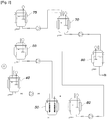
Fig. 1 is a process diagram showing a process up to an intermediate oxidation reaction in an apparatus for preparing graphite oxide in accordance with an illustrative embodiment of the present disclosure; -
Fig. 2 is a process diagram after the process as shown inFig. 1 in an apparatus for preparing graphite oxide in accordance with an illustrative embodiment of the present disclosure. - Hereinafter, illustrative embodiments of the present disclosure will be described in detail with reference to the accompanying drawings. The drawings are provided in a pilot plant scale and can be scaled up by adjusting a reaction temperature and extending a reaction time.
- Referring to
Fig. 1 , graphite powder and a concentrated sulfuric acid solution having a concentration of 70 % or more, for example, from 85 % to 98 %, are supplied to agraphite slurry mixer 10 with a capacity of 501 at a weight ratio of 1:50 so as to prepare graphite slurry of 401. - A temperature in the
graphite slurry mixer 10 is maintained in a range of from 0°C to 60°C, for example, from 2°C to 50°C, from 4°C to 40°C, from 6°C to 30°C, from 7°C to 20°C or from 8°C to 10°C for the following process. Desirably, the temperature in thegraphite slurry mixer 10 is maintained in a range of from 8°C to 10°C. The graphite slurry can be prepared by dispersing the graphite powder into the sulfuric acid solution. - The temperature in the
graphite slurry mixer 10 can be maintained by, for example, a heat exchanger equipped with a cooling unit. - If a weight ratio of graphite to a sulfuric acid is too high, a viscosity of the graphite slurry is increased and reactants cannot be transferred and mixed smoothly within a tube type reactor. If the weight ratio of graphite to a sulfuric acid is too low, reaction efficiency is decreased and a large amount of a waste sulfuric acid by-product can be generated. Therefore, the weight ratio of graphite to a sulfuric acid is in a range of from 1:10 to 1:100, from 1:10 to 1:90, from 1:20 to 1:80, from 1:30 to 1:70 or from 1:40 to 1:60. Desirably, the weight ratio of graphite to a sulfuric acid is in a range of from 1:30 to 1:70.
- Generally, graphite used for the graphite slurry is prefer as a particle size is increased the graphite having the particle size of 1 µm or more can be used. By way of example, graphite powder has a particle size in a range of, for example, from 1µm to 300 µm, from 1µm to 250 µm, from 1µm to 200 µm, from 1µm to 150 µm or from 1µm to 100 µm. Desirably, the graphite powder has a particle size in a range of from 1µm to 100 µm. If a particle size of the graphite is too small, an expansion effect affected by a weight density is low and graphene may not be formed well by exfoliation.
- Further, desirably, the sulfuric acid has a concentration of 70 % or more, for example, from 85 % to 98 %.
- Referring to
Fig. 1 , the graphite slurry obtained from thegraphite slurry mixer 10 is supplied into a sequencingbatch oxidizer mixer 21 connected in five stages in series. An oxidation reaction occurring in sequencingbatch oxidizer mixers batch oxidizer mixers batch oxidizer mixers - In the oxidizer supplied over all, a weight ratio of permanganate to a sulfuric acid is in a range of from 1:2 to 1:50, for example, from 1:3 to 1:40, from 1:4 to 1:30 or from 1:5 to 1:30. Desirably, the weight ratio of permanganate to a sulfuric acid is from 1:5 to 1:30. The permanganate includes potassium permanganate, sodium permanganate, ammonium permanganate or calcium permanganate. If the weight ratio of permanganate to a sulfuric acid is smaller than the above-described range, the oxidation reaction cannot proceed smoothly. If it is greater, a production cost may be increased due to an increase in a cost of raw materials.
- Referring to
Fig. 1 , each of the sequencingbatch oxidizer mixers batch oxidizer mixers batch oxidizer mixers - It is not necessary to connect the sequencing
batch oxidizer mixers batch oxidizer mixers - A temperature in the respective sequencing
batch oxidizer mixers batch oxidizer mixers batch oxidizer mixers batch oxidizer mixers - Referring to
Fig. 1 , the oxidizer-mixed slurry added with the oxidizer in five stages is pressed into atube type reactor 30 having an inner diameter of 10 mm and including four stages through apump 26. Thetube type reactor 30 is equipped in athermostat bath 31 including anultrasonic wave transducer 32 and a cooler 33. In order to reduce a head loss of the pressed slurry, threepumps tube type reactor 30 is 200 m and a residence time is 2 hours. A depressurizingdevice 36 is connected to the respective pumps 26, 27, 28, and 29, so that a pumping pressure can be controlled according to an internal pressure of thetube type reactor 30. - The oxidizer-mixed slurry is pressed into the
tube type reactor 30 in order to prevent a risk caused by heat generation in the early stage of the oxidation reaction and to uniformly carry out the oxidation reaction. - As explained above, the oxidation reaction of the oxidizer-mixed slurry is an exothermic reaction and there is a risk of explosion during the reaction. Further, in order to accelerate the oxidation reaction between the graphite and the oxidizer, it is desirable to maintain a temperature in the
tube type reactor 30 in a predetermined range. Therefore, as depicted inFig. 1 , the cooler 33 is provided within thethermostat bath 31, so that it is possible to prevent the risk of explosion and also possible to maintain the temperature in thetube type reactor 30 in a predetermined range. Further, theultrasonic wave transducer 32 is provided within thethermostat bath 31, so that it is possible to increase efficiency of expansion and exfoliation between layers of the graphite under ultrasonication. In this way, graphene of a good quality can be prepared by means of thermal expansion. By way of example, an output of ultrasonic waves output from theultrasonic wave transducer 32 is in a range of from 0.05 W/cm3 to 5.0 W/cm3. - The
tube type reactor 30 may have a small inner diameter and a long length in a spiral shape so as to be provided within thethermostat bath 31. There is made an intermediate oxidation reaction of the graphite within thetube type reactor 30. The intermediate oxidation reaction occurs where the most violent exothermic reaction takes place. Therefore, in order to accurately control a local temperature, desirably, thetube type reactor 30 has a small inner diameter. By way of example, the inner diameter of thetube type reactor 30 is in a range of from 5 mm to 50 mm, for example, from 6 mm to 35 mm, from 7 mm to 20 mm or from 8 mm to 12 mm. Desirably, the inner diameter of the tube type reactor is in a range of from 8 mm to 12 mm. - In the
tube type reactor 30, the graphite oxidation reaction of from 40 % to 90 %, for example, from 45 % to 80 %, from 50 % to 70 % or from 55 % to 65 % may occur based on a carbon/oxygen elemental analysis. Desirably, the graphite oxidation reaction of from 50 % to 70 % may occur. In order to make an oxidation reaction of the graphite as described above, thetube type reactor 30 may be longer an a total length thereof may be in a range of from 10 m to 1000 m, for example, from 20 m to 800 m, from 40 m to 600 m, from 60 m to 400 m or from 100 m to 300 m. Desirably, the total length of thetube type reactor 30 may be 200 m. - Since the
tube type reactor 30 is formed in a spiral shape, the number of contacts between the graphite slurry and the oxidizer in thetube type reactor 30 is increased and the oxidation reaction can proceed actively. - Further, if the
tube type reactor 30 is formed in a spiral shape, a space occupied by the longtube type reactor 30 in thethermostat bath 31 is decreased, and, thus, a size of thethermostat bath 31 can be reduced. Therefore, a size of the apparatus for preparing the graphite oxide can be minimized and a limit on a space occupied by the apparatus for preparing the graphite oxide can be reduced. - Furthermore, if the
tube type reactor 30 has a long length, there may be a head loss while the graphite slurry pressed into thetube type reactor 30 passes through thetube type reactor 30. Therefore, as depicted inFig. 1 , the spiral-shapedtube type reactor 30 includes multiple stages, for example, four stages, and thepumps device 36 is connected to the respective pumps 27, 28, and 29, so that a pumping pressure can be controlled according to an internal pressure of thetube type reactor 30. - The
tube type reactor 30 is maintained at a temperature in a range of from 5°C to 54°C, for example, from 15°C to 50°C, from 25°C to 50°C, from 30°C to 50°C or from 35°C to 50°C. - Desirably, the
tube type reactor 30 is maintained at a temperature in a range of from 30°C to 50°C. This is because a high temperature is advantageous for accelerating the oxidation reaction between the graphite and the oxidizer. - An intermediate graphite oxide A pressed out of the
tube type reactor 30 is additionally oxidized in a continuous stirredtank reactor 40 with a capacity of about 50 1 as depicted inFig. 2 . - Target graphite oxide can be obtained from the additional oxidation reaction of the intermediate graphite oxide A in which the oxidizer is intercalated between layers within the
tube type reactor 30. A residence time is 2 hours. After the oxidizer and the graphite are combined with each other within thetube type reactor 30, at the last part of the oxidation reaction between the remaining graphite and oxidizer, a risk of local heat generation and explosion is greatly reduced. Therefore, by using the continuous stirredtank reactor 40 instead of the longtube type reactor 30, the preparing apparatus can be simplified and efficient. - By way of example, if 40 % to 80 % of the oxidation reaction between the graphite and the oxidizer occurs in the
tube type reactor 30, the rest, i.e. 20 % to 60%, of the oxidation reaction may occur in the continuous stirredtank reactor 40. - A rapid oxidation reaction occurs in the
tube type reactor 30, and, thus, a target temperature of the continuous stirredtank reactor 40 is set in a range of from 8°C to 30°C to be lower than the tube type reactor for the sake of safety. - The additional oxidation reaction between the intermediate graphite oxide A and the remaining graphite and oxidizer within the continuous stirred
tank reactor 40 and an additional reaction mixture is prepared accordingly. - Referring to
Fig. 2 , awater mixer 50 connects awater supply unit 55 to add water to the additional reaction mixture supplied from the continuous stirredtank reactor 40 and prepare areaction mixture 60 diluted with the remaining oxidizer. Then, thereaction mixture 60 diluted with the remaining oxidizer is connected to a hydrogenperoxide supply unit 75 and an 3 % hydrogen peroxide aqueous solution is supplied to ahydrogen peroxide mixer 70 through a fixed-quantity pump, and the oxidation reaction is terminated. - The water added from the
water supply unit 55 may have a low temperature, for example, the room temperature or less or 0°C or less. Desirably, the temperature may be 0°C or less. - Further, regarding the water added from the
water supply unit 55, a weight ratio of graphite to water is in a range of, for example, from 1:1 to 1:50, from 1:1 to 1:80, from 1:1 to 1:100, from 1:1 to 1:130 or from 1:1 to 1:150. Desirably, the weight ratio of graphite to water is in a range of from 1:1 to 1:100. If the weight ratio of graphite to water is smaller than the above-described range, the oxidation reaction cannot be ended smoothly. If it is greater, a production cost may be increased due to an increase in a cost of raw materials. - The hydrogen peroxide aqueous solution supplied from the hydrogen
peroxide supply unit 75 reduces the remaining permanganate, so that the oxidation reaction of the graphite is terminated. When an excessive amount of the hydrogen peroxide aqueous solution is supplied, a process of washing and drying is costly. When a small amount of the hydrogen peroxide aqueous solution is supplied, the oxidation reaction cannot be terminated. - After the hydrogen peroxide aqueous solution is supplied, a maintenance time may be within several ten minutes.
- The hydrogen peroxide aqueous solution has a concentration in a range of, but not limited to, from 1 weight % to 10 weight %, for example, from 2 weight % to 7 weight % or from 3 weight % to 6 weight %. Desirably, the concentration is in a range of from 2 weight % to 7 weight %.
- Further, a weight ratio of graphite to a hydrogen peroxide aqueous solution is not quantitative. However, according to a rule-of-thumb, when a concentration of hydrogen peroxide is 3 weight %, the weight ratio of graphite to a hydrogen peroxide aqueous solution may be in a range of from 1:10 to 1:100, for example, from 1:20 to 1:90, from 1:30 to 1:80, from 1:30 to 1:70 or from 1:40 to 1:60 in a similar way to the weight ratio of graphite to a sulfuric acid. Desirably, the weight ratio of graphite to a hydrogen peroxide aqueous solution is in a range of from 1:30 to 1:70.
- In the reaction mixture of the oxidation reaction, washed graphite oxide B supplied from a
washer 80 is separated and dried. As a result, target graphite oxide can be obtained. The obtained graphite oxide B has a chemical formula of C1O3.65H2.45 according to an elemental analysis. - Desirably, the reaction mixture of the oxidation reaction is supplied into the
washer 80 before being dried. - By way of example, water used in the
washer 80 may have a pH in a range of from 5 to 6. Further, the reaction mixture is washed with such water one or more times. - The washed reaction mixture is dried in a depressurized state at 200°C or less, for example, 150°C, 120°C, 100°C or, desirably, 80°C or less, for less than 96 hours. The process of washing and drying can be performed separately from or continuously with the previous stage.
- If a carbon/oxygen ratio of graphite oxide obtained in accordance with the present disclosure is smaller than 1/1, small graphene can be obtained in the process of exfoliating, and if the carbon/oxygen ratio is greater than 5/1, an amount of exfoliated graphene is decreased. In both cases, physical properties of graphene become degraded. A gap in graphite powder as a source is 3.4 Å, and in the graphite oxide obtained in accordance with the present disclosure, a functional group such as a hydroxyl group, a carboxylic acid group, and an epoxy group is formed at each layer through an oxidation reaction. Thus, a gap between layers of the graphite oxide is increased to 7 Å. The graphite oxide does not have a significant peak except a trace in 2θ of around 26° which is one of characteristics of graphite powder but has a peak in 2θ of around 12° in a range of from 12° to 14°, for example, from 12° to 13° or from 13° to 14°, and desirably, at 12.7° according to an XRD analysis.
- Regarding the graphite oxide B obtained as described above, an oxidation reaction occurs uniformly between layers of the graphite oxide B under ultrasonication and the graphite oxide B is exfoliated with a thermal shock. As a result, graphene of a good quality can be obtained.
Claims (10)
- A method for manufacturing graphite oxide, the method comprising:preparing graphite slurry by mixing graphite and a sulfuric acid at a temperature in a range of from 0 °C to 60 °C;mixing the graphite slurry with an oxidizer selected from the group consisting of a permanganic acid, permanganate, and a permanganate sulfuric acid solution by supplying the oxidizer by stages into sequencing batch oxidizer mixers (21-25) connected to one another in multiple stages, wherein the oxidizer is supplied to the sequencing batch oxidizer mixers (21) sequentially by a fixed-quantity pump connected thereto;making an intermediate reaction by pressing (26) a reaction mixture mixed with the oxidizer into a tube type reactor (30) having an inner diameter of from 5 mm to 50 mm, and a length in a range of from 10 m to 1000 m, and equipped within a thermostat bath (31) to be applied with ultrasonic waves and keeping the reaction mixture for a residence time in a range of from 0.2 hours to 5 hours, wherein the tube type reactor (30) is maintained at a temperature in a range of from 5 °C to 54 °C, wherein 50 % to 70 % of the total oxidation reaction of the graphite occurs in the tube type reactor (30), wherein, preferably, the rest of the oxidation reaction additionally occurs in a continuous stirred tank reactor (40);making an additional reaction by supplying a reaction mixture (A) of the intermediate reaction into the continuous stirred tank reactor (40) at a temperature of from 8 °C to 30 °C;mixing a reaction mixture of the additional reaction with water added;adding a hydrogen peroxide aqueous solution to the reaction mixture mixed with the water and mixing them to terminate an oxidation reaction;washing and separating graphite oxide from the reaction mixture of the terminated oxidation reaction; anddrying the separated graphite oxide,wherein a carbon/oxygen ratio of the graphite oxide is in a range of from 1/1 to 5/1 according to an elemental analyzer and the graphite oxide has a maximum peak in 2θ of from 12° to 14° according to an XRD analysis.
- The method of claim 1, wherein the graphite slurry is mixed at a weight ratio of graphite to a sulfuric acid in a range of from 1:30 to 1:70, or
wherein the graphite slurry is supplied to the sequencing batch oxidizer mixers (21) connected to one another in from two stages to ten stages and each having a same capacity and the oxidizer is supplied by stages to be mixed with the graphite slurry. - The method of claim 1, wherein graphite powder of the graphite slurry has a particle size in a range of from 1 µm to 100 µm.
- An apparatus for manufacturing graphite oxide, the apparatus comprising:a graphite slurry mixer (10) configured to prepare graphite slurry by mixing graphite and a sulfuric acid at a temperature in a range of from 0 °C to 60 °C;sequencing batch oxidizer mixers (21-25) connected to the graphite slurry mixer in multiple stages from two stages to ten stages in series, wherein the oxidizer is supplied to the sequencing batch oxidizer mixers (21) sequentially by a fixed-quantity pump connected thereto;a tube type reactor (30) having an inner diameter in a range of from 5 mm to 50 mm, a residence time in a range of from 0.2 hours to 5 hours, and a length in a range of from 10 m to 1000 m that is sequentially connected to the sequencing batch oxidizer mixers (21) and equipped within a thermostat bath (31) to be applied with ultrasonic waves to prepare an intermediate reaction mixture, wherein the tube type reactor (30) is maintained at a temperature in a range of from 5 °C to 54 °C, wherein 50 % to 70 % of the total oxidation reaction of the graphite occurs in the tube type reactor (30), wherein, preferably, the rest of the oxidation reaction additionally occurs in a continuous stirred tank reactor (40);the continuous stirred tank reactor (40) that is connected to the tube type reactor (30) and makes an additional reaction with the intermediate reaction mixture at a temperature of from 8 °C to 30 °C;a water mixer (50) configured to add water to a reaction and mixing them water with a reaction mixture of the additional reaction;a hydrogen peroxide mixer (70) configured to add and mix a hydrogen peroxide aqueous solution to a reaction mixture mixed with the water and mixing them to terminate an oxidation reaction;a washing and separating unit configured to wash and separate graphite oxide from a reaction mixture of the terminated oxidation reaction; anda dryer configured to dry the separated graphite oxide,wherein a carbon/oxygen ratio of the graphite oxide is in a range of from 1/1 to 5/1 according to an elemental analyzer and the graphite oxide has a maximum peak in 2θ of from 12° to 14° according to an XRD analysis.
- The apparatus of claim 4, wherein the graphite slurry is mixed at a weight ratio of graphite to a sulfuric acid in a range of from 1:30 to 1:70, or
wherein graphite powder of the graphite slurry has a particle size in a range of from 1 µm to 100 µm. - The apparatus of claim 4, wherein the tube type reactor (30) has an inner diameter in a range of from 8 mm to 12 mm, a residence time in a range of from 1 hour to 3 hours, and a length in a range of from 100 m to 300 m.
- The apparatus of claim 4, wherein the thermostat bath (31) comprising:an ultrasonic wave transducer (32) configured to applying the ultrasonic waves; anda cooler (33) configured to maintain a temperature of the thermostat bath (31).
- The apparatus of claim 4, wherein the tube type reactor (30) has an inner diameter of from 8 mm to 12 mm, to accurately control a local temperature.
- The apparatus of claim 5, wherein the tube type reactor (30) is formed in a spiral shape.
- The apparatus of claim 6, wherein the tube type reactor (30) includes multiple stages, and pumps (26), (27), (28) and (29) each connected to a depressurizing device (36) are provided between the stages to decrease a head loss of graphite slurry pressed into the tube type reactor (30).
Applications Claiming Priority (2)
| Application Number | Priority Date | Filing Date | Title |
|---|---|---|---|
| KR20120070071 | 2012-06-28 | ||
| PCT/KR2012/008808 WO2014003252A1 (en) | 2012-06-28 | 2012-10-25 | Method and apparatus for manufacturing graphite oxide |
Publications (3)
| Publication Number | Publication Date |
|---|---|
| EP2867163A1 EP2867163A1 (en) | 2015-05-06 |
| EP2867163A4 EP2867163A4 (en) | 2016-04-13 |
| EP2867163B1 true EP2867163B1 (en) | 2019-02-27 |
Family
ID=49783369
Family Applications (1)
| Application Number | Title | Priority Date | Filing Date |
|---|---|---|---|
| EP12879713.1A Not-in-force EP2867163B1 (en) | 2012-06-28 | 2012-10-25 | Method and apparatus for manufacturing graphite oxide |
Country Status (3)
| Country | Link |
|---|---|
| US (1) | US9266737B2 (en) |
| EP (1) | EP2867163B1 (en) |
| WO (1) | WO2014003252A1 (en) |
Cited By (1)
| Publication number | Priority date | Publication date | Assignee | Title |
|---|---|---|---|---|
| CN109970164A (en) * | 2019-04-26 | 2019-07-05 | 苏州艾吉克膜科技有限公司 | A kind of high ammonia-nitrogen wastewater treatment process for preventing reaction from overheating |
Families Citing this family (11)
| Publication number | Priority date | Publication date | Assignee | Title |
|---|---|---|---|---|
| WO2016045035A1 (en) * | 2014-09-25 | 2016-03-31 | 深圳粤网节能技术服务有限公司 | Method for preparing graphene |
| TWI542540B (en) * | 2014-12-11 | 2016-07-21 | 中原大學 | Method for producing a graphene |
| CN104876219B (en) * | 2015-06-19 | 2017-03-15 | 湖南农业大学 | A kind of method of easy synthesis graphene oxide under room temperature |
| TWI737685B (en) * | 2016-02-26 | 2021-09-01 | 美商奈米科技能源公司 | Methods, devices and systems for processing of carbonaceous compositions |
| US10336619B2 (en) * | 2016-07-27 | 2019-07-02 | Sri Lanka Institute of Nanotechnology (Pvt) Ltd. | Method for the synthesis of graphene oxide |
| CN106882803B (en) * | 2017-03-10 | 2019-04-05 | 江南石墨烯研究院 | A kind of method and device thereof preparing graphene oxide |
| CN109987620A (en) * | 2017-12-29 | 2019-07-09 | 中国核动力研究设计院 | A kind of Ba14CO3Dry process device |
| CN110894070A (en) * | 2019-12-06 | 2020-03-20 | 中国科学院山西煤炭化学研究所 | Device and method for continuously preparing graphite oxide |
| KR102644774B1 (en) * | 2021-05-04 | 2024-03-08 | 티엠티피 랩스, 아이엔씨. | Apparatus and method for exfoliating graphite |
| CN116692800B (en) * | 2022-02-28 | 2026-02-06 | 中钢天源股份有限公司 | Preparation method of continuous nanoscale iron phosphate |
| DE102023101927A1 (en) * | 2023-01-26 | 2024-08-01 | Karlsruher Institut für Technologie, Körperschaft des öffentlichen Rechts | Process for continuous cluster and nanoparticle synthesis |
Family Cites Families (7)
| Publication number | Priority date | Publication date | Assignee | Title |
|---|---|---|---|---|
| US2798878A (en) | 1954-07-19 | 1957-07-09 | Nat Lead Co | Preparation of graphitic acid |
| DE102005029997B4 (en) * | 2005-06-28 | 2009-08-13 | Hilti Aktiengesellschaft | Polyurethane-graphite oxide composite, process for its preparation and its use |
| US8747656B2 (en) * | 2008-10-10 | 2014-06-10 | Velocys, Inc. | Process and apparatus employing microchannel process technology |
| JP5346744B2 (en) | 2008-12-26 | 2013-11-20 | ジルトロニック アクチエンゲゼルシャフト | Silicon wafer and manufacturing method thereof |
| WO2011019184A2 (en) | 2009-08-10 | 2011-02-17 | 엔바로테크 주식회사 | Method and apparatus for producing a nanoscale material having a graphene structure |
| EP2493812B1 (en) | 2009-08-10 | 2018-02-14 | Standardgraphene Co., Ltd. | A method of producing nano-size graphene-based material and an equipment for producing the same |
| KR101103672B1 (en) * | 2011-05-18 | 2012-01-11 | 성균관대학교산학협력단 | Centrifugal Continuous Continuous Purification Apparatus of Graphene Oxide for Mass Production, and Synthesis and Purification Method of Graphene Oxide Using the Same |
-
2012
- 2012-10-25 WO PCT/KR2012/008808 patent/WO2014003252A1/en not_active Ceased
- 2012-10-25 EP EP12879713.1A patent/EP2867163B1/en not_active Not-in-force
-
2014
- 2014-12-23 US US14/581,150 patent/US9266737B2/en active Active
Non-Patent Citations (1)
| Title |
|---|
| None * |
Cited By (1)
| Publication number | Priority date | Publication date | Assignee | Title |
|---|---|---|---|---|
| CN109970164A (en) * | 2019-04-26 | 2019-07-05 | 苏州艾吉克膜科技有限公司 | A kind of high ammonia-nitrogen wastewater treatment process for preventing reaction from overheating |
Also Published As
| Publication number | Publication date |
|---|---|
| US20150108400A1 (en) | 2015-04-23 |
| WO2014003252A1 (en) | 2014-01-03 |
| EP2867163A4 (en) | 2016-04-13 |
| EP2867163A1 (en) | 2015-05-06 |
| US9266737B2 (en) | 2016-02-23 |
Similar Documents
| Publication | Publication Date | Title |
|---|---|---|
| US9266737B2 (en) | Method and apparatus for manufacturing graphite oxide | |
| KR101265709B1 (en) | a method and apparatus for manufacturing graphite oxide | |
| EP2495216B1 (en) | Method and apparatus for producing a nanoscale material having a graphene structure | |
| CN104071782A (en) | Preparation method of graphene | |
| CN103887480A (en) | Self-assembled Composite Of Graphene Oxide And Tetravalent Vanadium Oxohydroxide | |
| US12264072B2 (en) | Continuous production of pristine graphene and graphene oxide | |
| WO2011019184A2 (en) | Method and apparatus for producing a nanoscale material having a graphene structure | |
| CN102145282B (en) | Preparation method of graphene-supported nano MnOOH composite material | |
| US9624108B2 (en) | Apparatus for manufacturing nano-size graphene-structured material | |
| Li et al. | Two-dimensional nanosheets enhanced phase-change materials for thermal management applications | |
| CN111285361B (en) | High-performance liquid-phase mechanical preparation method of low-defect and high-dispersion graphene | |
| US11339054B2 (en) | Continuous process and apparatus for producing graphene | |
| US11027252B2 (en) | Reactor for continuous production of graphene and 2D inorganic compounds | |
| CN101746713B (en) | Preparation method of carbon nanotube-supported Bi2Te3 nanosphere composite material | |
| Zhou et al. | Scalable synthesis of few-layered MoS2/C sandwiched nanocomposites via ionic crystal (NH4) 2MoS4 assisted ball-milling method and their enhanced high-rate lithium storage property | |
| CN107082416B (en) | A kind of method for preparing graphene based on ozone oxidation | |
| CN115448367B (en) | Preparation method of yellow-tungstic acid catalyst and application of yellow-tungstic acid catalyst in piezocatalysis of hydrogen peroxide | |
| CN106477572B (en) | A kind of method that ultrasonic wave added method prepares graphene oxide | |
| Al-Ali et al. | Kinetic Analysis of Catalytic Dry Reforming of Methane Using Ni-ZrO2/MCM-41 Catalyst | |
| JP2007161511A (en) | Surface-modified carbon material and method for producing the same | |
| CN108046249A (en) | A kind of preparation method of graphene | |
| CN116730332B (en) | Weak-oxidation large-size graphene oxide and preparation method thereof | |
| CN110395717A (en) | A kind of preparation method of wrinkled graphene | |
| CN105712346A (en) | Flake oxide graphene GO free from high temperature oxidation process and preparation method thereof | |
| CN119100380A (en) | A method for dissociating and dispersing single-layer graphene oxide |
Legal Events
| Date | Code | Title | Description |
|---|---|---|---|
| PUAI | Public reference made under article 153(3) epc to a published international application that has entered the european phase |
Free format text: ORIGINAL CODE: 0009012 |
|
| 17P | Request for examination filed |
Effective date: 20150115 |
|
| AK | Designated contracting states |
Kind code of ref document: A1 Designated state(s): AL AT BE BG CH CY CZ DE DK EE ES FI FR GB GR HR HU IE IS IT LI LT LU LV MC MK MT NL NO PL PT RO RS SE SI SK SM TR |
|
| AX | Request for extension of the european patent |
Extension state: BA ME |
|
| DAX | Request for extension of the european patent (deleted) | ||
| RAP1 | Party data changed (applicant data changed or rights of an application transferred) |
Owner name: STANDARDGRAPHENE CO., LTD. |
|
| RA4 | Supplementary search report drawn up and despatched (corrected) |
Effective date: 20160315 |
|
| RIC1 | Information provided on ipc code assigned before grant |
Ipc: C01B 31/04 20060101AFI20160309BHEP Ipc: B01J 19/10 20060101ALI20160309BHEP Ipc: B82B 3/00 20060101ALI20160309BHEP |
|
| STAA | Information on the status of an ep patent application or granted ep patent |
Free format text: STATUS: EXAMINATION IS IN PROGRESS |
|
| 17Q | First examination report despatched |
Effective date: 20171009 |
|
| REG | Reference to a national code |
Ref country code: DE Ref legal event code: R079 Ref document number: 602012057297 Country of ref document: DE Free format text: PREVIOUS MAIN CLASS: C01B0031040000 Ipc: C01B0032230000 |
|
| GRAP | Despatch of communication of intention to grant a patent |
Free format text: ORIGINAL CODE: EPIDOSNIGR1 |
|
| STAA | Information on the status of an ep patent application or granted ep patent |
Free format text: STATUS: GRANT OF PATENT IS INTENDED |
|
| RIC1 | Information provided on ipc code assigned before grant |
Ipc: C01B 32/23 20170101AFI20180810BHEP Ipc: C01B 32/192 20170101ALI20180810BHEP |
|
| INTG | Intention to grant announced |
Effective date: 20180911 |
|
| GRAS | Grant fee paid |
Free format text: ORIGINAL CODE: EPIDOSNIGR3 |
|
| GRAA | (expected) grant |
Free format text: ORIGINAL CODE: 0009210 |
|
| STAA | Information on the status of an ep patent application or granted ep patent |
Free format text: STATUS: THE PATENT HAS BEEN GRANTED |
|
| AK | Designated contracting states |
Kind code of ref document: B1 Designated state(s): AL AT BE BG CH CY CZ DE DK EE ES FI FR GB GR HR HU IE IS IT LI LT LU LV MC MK MT NL NO PL PT RO RS SE SI SK SM TR |
|
| REG | Reference to a national code |
Ref country code: GB Ref legal event code: FG4D |
|
| REG | Reference to a national code |
Ref country code: CH Ref legal event code: EP |
|
| REG | Reference to a national code |
Ref country code: AT Ref legal event code: REF Ref document number: 1101020 Country of ref document: AT Kind code of ref document: T Effective date: 20190315 |
|
| REG | Reference to a national code |
Ref country code: IE Ref legal event code: FG4D |
|
| REG | Reference to a national code |
Ref country code: DE Ref legal event code: R096 Ref document number: 602012057297 Country of ref document: DE |
|
| REG | Reference to a national code |
Ref country code: NL Ref legal event code: MP Effective date: 20190227 |
|
| REG | Reference to a national code |
Ref country code: LT Ref legal event code: MG4D |
|
| PG25 | Lapsed in a contracting state [announced via postgrant information from national office to epo] |
Ref country code: FI Free format text: LAPSE BECAUSE OF FAILURE TO SUBMIT A TRANSLATION OF THE DESCRIPTION OR TO PAY THE FEE WITHIN THE PRESCRIBED TIME-LIMIT Effective date: 20190227 Ref country code: NO Free format text: LAPSE BECAUSE OF FAILURE TO SUBMIT A TRANSLATION OF THE DESCRIPTION OR TO PAY THE FEE WITHIN THE PRESCRIBED TIME-LIMIT Effective date: 20190527 Ref country code: PT Free format text: LAPSE BECAUSE OF FAILURE TO SUBMIT A TRANSLATION OF THE DESCRIPTION OR TO PAY THE FEE WITHIN THE PRESCRIBED TIME-LIMIT Effective date: 20190627 Ref country code: SE Free format text: LAPSE BECAUSE OF FAILURE TO SUBMIT A TRANSLATION OF THE DESCRIPTION OR TO PAY THE FEE WITHIN THE PRESCRIBED TIME-LIMIT Effective date: 20190227 Ref country code: LT Free format text: LAPSE BECAUSE OF FAILURE TO SUBMIT A TRANSLATION OF THE DESCRIPTION OR TO PAY THE FEE WITHIN THE PRESCRIBED TIME-LIMIT Effective date: 20190227 Ref country code: NL Free format text: LAPSE BECAUSE OF FAILURE TO SUBMIT A TRANSLATION OF THE DESCRIPTION OR TO PAY THE FEE WITHIN THE PRESCRIBED TIME-LIMIT Effective date: 20190227 |
|
| PG25 | Lapsed in a contracting state [announced via postgrant information from national office to epo] |
Ref country code: GR Free format text: LAPSE BECAUSE OF FAILURE TO SUBMIT A TRANSLATION OF THE DESCRIPTION OR TO PAY THE FEE WITHIN THE PRESCRIBED TIME-LIMIT Effective date: 20190528 Ref country code: HR Free format text: LAPSE BECAUSE OF FAILURE TO SUBMIT A TRANSLATION OF THE DESCRIPTION OR TO PAY THE FEE WITHIN THE PRESCRIBED TIME-LIMIT Effective date: 20190227 Ref country code: BG Free format text: LAPSE BECAUSE OF FAILURE TO SUBMIT A TRANSLATION OF THE DESCRIPTION OR TO PAY THE FEE WITHIN THE PRESCRIBED TIME-LIMIT Effective date: 20190527 Ref country code: IS Free format text: LAPSE BECAUSE OF FAILURE TO SUBMIT A TRANSLATION OF THE DESCRIPTION OR TO PAY THE FEE WITHIN THE PRESCRIBED TIME-LIMIT Effective date: 20190627 Ref country code: LV Free format text: LAPSE BECAUSE OF FAILURE TO SUBMIT A TRANSLATION OF THE DESCRIPTION OR TO PAY THE FEE WITHIN THE PRESCRIBED TIME-LIMIT Effective date: 20190227 Ref country code: RS Free format text: LAPSE BECAUSE OF FAILURE TO SUBMIT A TRANSLATION OF THE DESCRIPTION OR TO PAY THE FEE WITHIN THE PRESCRIBED TIME-LIMIT Effective date: 20190227 |
|
| REG | Reference to a national code |
Ref country code: AT Ref legal event code: MK05 Ref document number: 1101020 Country of ref document: AT Kind code of ref document: T Effective date: 20190227 |
|
| PG25 | Lapsed in a contracting state [announced via postgrant information from national office to epo] |
Ref country code: RO Free format text: LAPSE BECAUSE OF FAILURE TO SUBMIT A TRANSLATION OF THE DESCRIPTION OR TO PAY THE FEE WITHIN THE PRESCRIBED TIME-LIMIT Effective date: 20190227 Ref country code: SK Free format text: LAPSE BECAUSE OF FAILURE TO SUBMIT A TRANSLATION OF THE DESCRIPTION OR TO PAY THE FEE WITHIN THE PRESCRIBED TIME-LIMIT Effective date: 20190227 Ref country code: EE Free format text: LAPSE BECAUSE OF FAILURE TO SUBMIT A TRANSLATION OF THE DESCRIPTION OR TO PAY THE FEE WITHIN THE PRESCRIBED TIME-LIMIT Effective date: 20190227 Ref country code: IT Free format text: LAPSE BECAUSE OF FAILURE TO SUBMIT A TRANSLATION OF THE DESCRIPTION OR TO PAY THE FEE WITHIN THE PRESCRIBED TIME-LIMIT Effective date: 20190227 Ref country code: DK Free format text: LAPSE BECAUSE OF FAILURE TO SUBMIT A TRANSLATION OF THE DESCRIPTION OR TO PAY THE FEE WITHIN THE PRESCRIBED TIME-LIMIT Effective date: 20190227 Ref country code: ES Free format text: LAPSE BECAUSE OF FAILURE TO SUBMIT A TRANSLATION OF THE DESCRIPTION OR TO PAY THE FEE WITHIN THE PRESCRIBED TIME-LIMIT Effective date: 20190227 Ref country code: AL Free format text: LAPSE BECAUSE OF FAILURE TO SUBMIT A TRANSLATION OF THE DESCRIPTION OR TO PAY THE FEE WITHIN THE PRESCRIBED TIME-LIMIT Effective date: 20190227 Ref country code: CZ Free format text: LAPSE BECAUSE OF FAILURE TO SUBMIT A TRANSLATION OF THE DESCRIPTION OR TO PAY THE FEE WITHIN THE PRESCRIBED TIME-LIMIT Effective date: 20190227 |
|
| REG | Reference to a national code |
Ref country code: DE Ref legal event code: R097 Ref document number: 602012057297 Country of ref document: DE |
|
| PG25 | Lapsed in a contracting state [announced via postgrant information from national office to epo] |
Ref country code: SM Free format text: LAPSE BECAUSE OF FAILURE TO SUBMIT A TRANSLATION OF THE DESCRIPTION OR TO PAY THE FEE WITHIN THE PRESCRIBED TIME-LIMIT Effective date: 20190227 Ref country code: PL Free format text: LAPSE BECAUSE OF FAILURE TO SUBMIT A TRANSLATION OF THE DESCRIPTION OR TO PAY THE FEE WITHIN THE PRESCRIBED TIME-LIMIT Effective date: 20190227 |
|
| PG25 | Lapsed in a contracting state [announced via postgrant information from national office to epo] |
Ref country code: AT Free format text: LAPSE BECAUSE OF FAILURE TO SUBMIT A TRANSLATION OF THE DESCRIPTION OR TO PAY THE FEE WITHIN THE PRESCRIBED TIME-LIMIT Effective date: 20190227 |
|
| PLBE | No opposition filed within time limit |
Free format text: ORIGINAL CODE: 0009261 |
|
| STAA | Information on the status of an ep patent application or granted ep patent |
Free format text: STATUS: NO OPPOSITION FILED WITHIN TIME LIMIT |
|
| 26N | No opposition filed |
Effective date: 20191128 |
|
| PG25 | Lapsed in a contracting state [announced via postgrant information from national office to epo] |
Ref country code: SI Free format text: LAPSE BECAUSE OF FAILURE TO SUBMIT A TRANSLATION OF THE DESCRIPTION OR TO PAY THE FEE WITHIN THE PRESCRIBED TIME-LIMIT Effective date: 20190227 |
|
| PG25 | Lapsed in a contracting state [announced via postgrant information from national office to epo] |
Ref country code: TR Free format text: LAPSE BECAUSE OF FAILURE TO SUBMIT A TRANSLATION OF THE DESCRIPTION OR TO PAY THE FEE WITHIN THE PRESCRIBED TIME-LIMIT Effective date: 20190227 |
|
| PG25 | Lapsed in a contracting state [announced via postgrant information from national office to epo] |
Ref country code: MC Free format text: LAPSE BECAUSE OF FAILURE TO SUBMIT A TRANSLATION OF THE DESCRIPTION OR TO PAY THE FEE WITHIN THE PRESCRIBED TIME-LIMIT Effective date: 20190227 |
|
| REG | Reference to a national code |
Ref country code: CH Ref legal event code: PL |
|
| PG25 | Lapsed in a contracting state [announced via postgrant information from national office to epo] |
Ref country code: LI Free format text: LAPSE BECAUSE OF NON-PAYMENT OF DUE FEES Effective date: 20191031 Ref country code: LU Free format text: LAPSE BECAUSE OF NON-PAYMENT OF DUE FEES Effective date: 20191025 Ref country code: CH Free format text: LAPSE BECAUSE OF NON-PAYMENT OF DUE FEES Effective date: 20191031 |
|
| REG | Reference to a national code |
Ref country code: BE Ref legal event code: MM Effective date: 20191031 |
|
| PG25 | Lapsed in a contracting state [announced via postgrant information from national office to epo] |
Ref country code: BE Free format text: LAPSE BECAUSE OF NON-PAYMENT OF DUE FEES Effective date: 20191031 |
|
| PG25 | Lapsed in a contracting state [announced via postgrant information from national office to epo] |
Ref country code: FR Free format text: LAPSE BECAUSE OF NON-PAYMENT OF DUE FEES Effective date: 20191031 Ref country code: IE Free format text: LAPSE BECAUSE OF NON-PAYMENT OF DUE FEES Effective date: 20191025 |
|
| PGFP | Annual fee paid to national office [announced via postgrant information from national office to epo] |
Ref country code: DE Payment date: 20201030 Year of fee payment: 9 Ref country code: GB Payment date: 20201022 Year of fee payment: 9 |
|
| PG25 | Lapsed in a contracting state [announced via postgrant information from national office to epo] |
Ref country code: CY Free format text: LAPSE BECAUSE OF FAILURE TO SUBMIT A TRANSLATION OF THE DESCRIPTION OR TO PAY THE FEE WITHIN THE PRESCRIBED TIME-LIMIT Effective date: 20190227 |
|
| PG25 | Lapsed in a contracting state [announced via postgrant information from national office to epo] |
Ref country code: HU Free format text: LAPSE BECAUSE OF FAILURE TO SUBMIT A TRANSLATION OF THE DESCRIPTION OR TO PAY THE FEE WITHIN THE PRESCRIBED TIME-LIMIT; INVALID AB INITIO Effective date: 20121025 Ref country code: MT Free format text: LAPSE BECAUSE OF FAILURE TO SUBMIT A TRANSLATION OF THE DESCRIPTION OR TO PAY THE FEE WITHIN THE PRESCRIBED TIME-LIMIT Effective date: 20190227 |
|
| REG | Reference to a national code |
Ref country code: DE Ref legal event code: R119 Ref document number: 602012057297 Country of ref document: DE |
|
| GBPC | Gb: european patent ceased through non-payment of renewal fee |
Effective date: 20211025 |
|
| PG25 | Lapsed in a contracting state [announced via postgrant information from national office to epo] |
Ref country code: MK Free format text: LAPSE BECAUSE OF FAILURE TO SUBMIT A TRANSLATION OF THE DESCRIPTION OR TO PAY THE FEE WITHIN THE PRESCRIBED TIME-LIMIT Effective date: 20190227 |
|
| PG25 | Lapsed in a contracting state [announced via postgrant information from national office to epo] |
Ref country code: GB Free format text: LAPSE BECAUSE OF NON-PAYMENT OF DUE FEES Effective date: 20211025 Ref country code: DE Free format text: LAPSE BECAUSE OF NON-PAYMENT OF DUE FEES Effective date: 20220503 |