EP2865543A1 - Pneumatic tire with multi-compound tread cap - Google Patents
Pneumatic tire with multi-compound tread cap Download PDFInfo
- Publication number
- EP2865543A1 EP2865543A1 EP20140189296 EP14189296A EP2865543A1 EP 2865543 A1 EP2865543 A1 EP 2865543A1 EP 20140189296 EP20140189296 EP 20140189296 EP 14189296 A EP14189296 A EP 14189296A EP 2865543 A1 EP2865543 A1 EP 2865543A1
- Authority
- EP
- European Patent Office
- Prior art keywords
- tread
- cap layer
- layer
- compound
- tread cap
- Prior art date
- Legal status (The legal status is an assumption and is not a legal conclusion. Google has not performed a legal analysis and makes no representation as to the accuracy of the status listed.)
- Granted
Links
Images
Classifications
-
- B—PERFORMING OPERATIONS; TRANSPORTING
- B60—VEHICLES IN GENERAL
- B60C—VEHICLE TYRES; TYRE INFLATION; TYRE CHANGING; CONNECTING VALVES TO INFLATABLE ELASTIC BODIES IN GENERAL; DEVICES OR ARRANGEMENTS RELATED TO TYRES
- B60C1/00—Tyres characterised by the chemical composition or the physical arrangement or mixture of the composition
- B60C1/0016—Compositions of the tread
-
- B—PERFORMING OPERATIONS; TRANSPORTING
- B60—VEHICLES IN GENERAL
- B60C—VEHICLE TYRES; TYRE INFLATION; TYRE CHANGING; CONNECTING VALVES TO INFLATABLE ELASTIC BODIES IN GENERAL; DEVICES OR ARRANGEMENTS RELATED TO TYRES
- B60C11/00—Tyre tread bands; Tread patterns; Anti-skid inserts
- B60C11/0008—Tyre tread bands; Tread patterns; Anti-skid inserts characterised by the tread rubber
-
- B—PERFORMING OPERATIONS; TRANSPORTING
- B60—VEHICLES IN GENERAL
- B60C—VEHICLE TYRES; TYRE INFLATION; TYRE CHANGING; CONNECTING VALVES TO INFLATABLE ELASTIC BODIES IN GENERAL; DEVICES OR ARRANGEMENTS RELATED TO TYRES
- B60C11/00—Tyre tread bands; Tread patterns; Anti-skid inserts
- B60C11/0041—Tyre tread bands; Tread patterns; Anti-skid inserts comprising different tread rubber layers
- B60C11/005—Tyre tread bands; Tread patterns; Anti-skid inserts comprising different tread rubber layers with cap and base layers
- B60C11/0058—Tyre tread bands; Tread patterns; Anti-skid inserts comprising different tread rubber layers with cap and base layers with different cap rubber layers in the axial direction
-
- B—PERFORMING OPERATIONS; TRANSPORTING
- B60—VEHICLES IN GENERAL
- B60C—VEHICLE TYRES; TYRE INFLATION; TYRE CHANGING; CONNECTING VALVES TO INFLATABLE ELASTIC BODIES IN GENERAL; DEVICES OR ARRANGEMENTS RELATED TO TYRES
- B60C11/00—Tyre tread bands; Tread patterns; Anti-skid inserts
- B60C11/0041—Tyre tread bands; Tread patterns; Anti-skid inserts comprising different tread rubber layers
- B60C11/005—Tyre tread bands; Tread patterns; Anti-skid inserts comprising different tread rubber layers with cap and base layers
- B60C11/0058—Tyre tread bands; Tread patterns; Anti-skid inserts comprising different tread rubber layers with cap and base layers with different cap rubber layers in the axial direction
- B60C11/0066—Tyre tread bands; Tread patterns; Anti-skid inserts comprising different tread rubber layers with cap and base layers with different cap rubber layers in the axial direction having an asymmetric arrangement
-
- B—PERFORMING OPERATIONS; TRANSPORTING
- B60—VEHICLES IN GENERAL
- B60C—VEHICLE TYRES; TYRE INFLATION; TYRE CHANGING; CONNECTING VALVES TO INFLATABLE ELASTIC BODIES IN GENERAL; DEVICES OR ARRANGEMENTS RELATED TO TYRES
- B60C19/00—Tyre parts or constructions not otherwise provided for
- B60C19/08—Electric-charge-dissipating arrangements
- B60C19/082—Electric-charge-dissipating arrangements comprising a conductive tread insert
-
- B—PERFORMING OPERATIONS; TRANSPORTING
- B60—VEHICLES IN GENERAL
- B60C—VEHICLE TYRES; TYRE INFLATION; TYRE CHANGING; CONNECTING VALVES TO INFLATABLE ELASTIC BODIES IN GENERAL; DEVICES OR ARRANGEMENTS RELATED TO TYRES
- B60C11/00—Tyre tread bands; Tread patterns; Anti-skid inserts
- B60C11/0008—Tyre tread bands; Tread patterns; Anti-skid inserts characterised by the tread rubber
- B60C2011/0016—Physical properties or dimensions
- B60C2011/0025—Modulus or tan delta
-
- B—PERFORMING OPERATIONS; TRANSPORTING
- B60—VEHICLES IN GENERAL
- B60C—VEHICLE TYRES; TYRE INFLATION; TYRE CHANGING; CONNECTING VALVES TO INFLATABLE ELASTIC BODIES IN GENERAL; DEVICES OR ARRANGEMENTS RELATED TO TYRES
- B60C11/00—Tyre tread bands; Tread patterns; Anti-skid inserts
- B60C11/0008—Tyre tread bands; Tread patterns; Anti-skid inserts characterised by the tread rubber
- B60C2011/0016—Physical properties or dimensions
- B60C2011/0033—Thickness of the tread
-
- Y—GENERAL TAGGING OF NEW TECHNOLOGICAL DEVELOPMENTS; GENERAL TAGGING OF CROSS-SECTIONAL TECHNOLOGIES SPANNING OVER SEVERAL SECTIONS OF THE IPC; TECHNICAL SUBJECTS COVERED BY FORMER USPC CROSS-REFERENCE ART COLLECTIONS [XRACs] AND DIGESTS
- Y02—TECHNOLOGIES OR APPLICATIONS FOR MITIGATION OR ADAPTATION AGAINST CLIMATE CHANGE
- Y02T—CLIMATE CHANGE MITIGATION TECHNOLOGIES RELATED TO TRANSPORTATION
- Y02T10/00—Road transport of goods or passengers
- Y02T10/80—Technologies aiming to reduce greenhouse gasses emissions common to all road transportation technologies
- Y02T10/86—Optimisation of rolling resistance, e.g. weight reduction
Definitions
- Pneumatic tires are often constructed by applying an outer homogenous tread stock over a supporting carcass structure and vulcanizing the resulting composite structure.
- An outer matrix of grooves is molded or otherwise provided in the outer portions of this homogenous tread stock to provide traction as well as other desirable characteristics.
- tread compounds provide better traction than others. Also, certain tread compounds provide better rolling resistance than others. Although a tire which has both low rolling resistance and a maximum amount of traction is desirable, a tread compound which provides good rolling resistance in a tire may not generally provide a maximum amount of traction, and a tread compound which provides a maximum amount of traction may not provide as low of rolling resistance as may be desired.
- Pneumatic tires having a tread/running surface comprised of a silica-rich rubber composition while sometimes desirable to impart various physical properties to the tire tread such as, for example, reduced rolling resistance and suitable traction, may be disadvantageous because of the relatively high ratio of silica to carbon black in the reinforcing filler content.
- Such high silica/carbon black ratios represent a significant increase in cost of the silica-rich tread in terms of increased material cost (the silica) and increased cost of processing the silica-rich rubber composition.
- silica-rich tread rubber with its minimal carbon black content, may have a relatively low electrical conductivity and may therefore be electrically resistive to conducting static electrical charge from the tire tread to the ground.
- a path of increased electrical conductivity for a silica-rich tread may be provided, for example, by positioning a strip of a carbon black rich rubber composition either as a thin cover strip over a portion of the running surface of the tread or as a thin, non load bearing, strip extending through the body of the tread to its running surface as described in EP-A-0 718 127 .
- Some tire treads (see for instance again EP-A-0 718 127 ) have a cap/base construction, with the tread cap designed to be ground-contacting with a lug/groove configuration, and with the tread base underlying and supporting the tread cap and positioned between the tread cap and the tire carcass/belt structure.
- the tread base is not intended to be ground-contacting and, thus, not normally intended to have the same tread properties as, for example, the desired tread cap properties of traction and treadwear.
- the tread cap in a tread cap/base construction, may be designed to be ground-contacting and, therefore, provide traction in combination with acceptable tread wear and rolling resistance
- the underlying tread base may be designed to fulfill an entirely different function and not be designed to be ground-contacting at all.
- the tread base may fulfill a function of transmitting multiaxial tread cap forces to the tire carcass, usually with relatively low heat generation. These forces may include forces resulting from the tread cap working under forces such as compression, bending, and/or shear, all of which may generate heat, cause temperature build-up, and cause the forces to undesirably impact on the tire carcass itself. Such forces may result, for example, from the tire's cornering, braking, and/or varied handling activities, all of which may generate heat within the tire tread.
- the tread running surface may be divided into two distinct laterally adjacent load bearing zones as described in EP-A-2 565 056 .
- each of the three distinct running surface tread cap zones may extend from the outer surface of the tread to the underlying distinct in general carbon black-rich tread base rubber layer so that all of the load on the tire is communicated by each of the tread cap layer zones directly to the tread base layer instead of directly to the tire carcass itself.
- the invention relates to a tread for a pneumatic tire in accordance with claim 1 and to a pneumatic tire having such a tread in accordance with claim 15.
- a tread for a pneumatic tire comprising a tread base layer comprising a tread base compound, a first tread cap layer comprising a first tread cap layer compound and located radially outside of the tread base layer, a second tread cap layer comprising a second tread cap layer compound and located radially outside of the tread base layer and axially adjacent the first tread cap layer, and a third intermediate tread layer comprising an intermediate tread layer compound and located radially between the tread base layer and the first and the second tread cap layer, wherein the first tread cap layer compound is different in composition from the second tread cap layer compound, wherein the intermediate tread layer compound is different in composition from the first and/or the second tread cap layer compound (preferably different in composition from the first and the second tread cap layer compound), wherein the tread base layer compound is different in composition from the intermediate tread layer compound, and wherein the first tread cap layer and/or the second tread cap layer has at least one protrusion extending radially inward from an inner surface of the respective first or second tread cap layer having
- the respective tread cap layer having the protrusion has a maximum thickness in a range for from 5 to 15 mm, alternatively 5 to 10 mm or 8 to 11 mm.
- the respective tread cap layer having the protrusion has a minimum thickness in a range for from 2 to 5 mm.
- the at least one protrusion extends 2 to 10 mm, alternatively 4 to 8 mm, from a radially outermost surface of the third intermediate tread layer radially inward into the third intermediate tread layer.
- the third intermediate tread layer has a maximum thickness in a range of from 3 to 10 mm, alternatively 4 to 8 mm, and a minimum thickness in a range of from 1 to 5 mm, alternatively 2 to 4 mm.
- the first and the second tread cap layer are operationally ground contacting when the tread is new and unworn and wherein the third intermediate tread layer is operationally not ground contacting when the tread is new and unworn.
- the third intermediate tread layer is operationally ground contacting when the tread is between 2 and 8 mm, alternatively 2 to 5 mm or 3 to 4 mm, worn.
- the tread base layer comprises a radial extension extending radially to the tread surface when the tread is new and unworn.
- the at least one protrusion has a triangular, rectangular or trapezoidal shape in axial cross section through the tread.
- the first tread cap layer extends over 10 to 80 percent of the total axial tread width and the wherein the second tread cap layer extends over 10 to 80 percent of the total axial tread width and wherein the first tread cap layer and the second tread cap layer together extend over 70 to 100 percent, alternatively 80 to 95 percent, of the total axial tread width.
- the first tread cap layer has the protrusion and the protrusion extends radially inward and into the third intermediate tread layer more than a main body of the first tread cap layer and the second tread cap layer thereby allowing the first tread cap layer to provide the overall tread with enhanced performance characteristics after the main body of the first tread cap layer and the second tread cap layer have worn away.
- the protrusion may extend radially inward from a rib of a four rib tread and another rib of the four rib tread comprises a structure for grounding a static charge.
- the protrusion may extend radially inward from two ribs of a five rib tread.
- two protrusions may each extend radially inward from two ribs of a five rib tread and a middle rib of the five rib tread may comprise a structure for grounding a static charge.
- the tread base layer may comprise a rubber composition comprising a diene based elastomer having from 20 part by weight to 150 part by weight, per 100 parts by weight of elastomer, of carbon black and is preferably free of silica or comprises less than 10 phr of silica.
- the second tread cap layer and/or the first tread cap layer comprises a diene based elastomer having from 20 parts by weight to 160 parts by weight, preferably 50 to 160 parts by weight, per 100 parts by weight of elastomer, of silica.
- the tread base layer compound is different in composition from the first and the second tread cap layer compound.
- only one of the first and the second tread cap layer may comprise the protrusion.
- the tread comprises 1 to 4, alternatively 1 or 2, of the protrusions.
- the tread may be symmetric in terms of construction and layer composition with respect to the midcircumferential plane of the tread and when disregarding the radial extension of the tread base layer.
- the tread may be asymmetric in terms of construction and layer composition with respect to midcircumferential plane of the tread.
- the tread base layer has a tan delta ranging from 0.1 to 0.2, a storage modulus ranging from 4 MPa to 13 MPa, and a shore A hardness ranging from 45 to 70.
- the second tread cap layer and/or the first tread cap layer has a tan delta ranging from 0.05 to 0.20, a storage modulus ranging from 4 MPa to 12 MPa, and a shore A hardness ranging from 50 to 75.
- the second tread cap layer and/or the first tread cap layer may each comprise a conjugated diene-based elastomer having from 30 phr to 70 phr of a rubber reinforcing filler having from 30 phr to 80 phr carbon black and zero to 40 phr, alternatively 10 to 40 phr, of silica.
- the second tread cap layer may comprises 50 phr to 80 phr carbon black and/or 10 phr to 25 phr of silica.
- the first tread cap layer may comprises 50 phr to 80 phr carbon black and/or 10 phr to 25 phr of silica.
- the second tread cap layer and/or the first tread cap layer may comprises a conjugated diene-based elastomer and a reinforcing filler having from 50 phr to 80 phr of silica and from 10 phr to 40 phr of carbon black.
- a tread for a pneumatic tire in accordance with the present invention may include a tread base layer, a first tread cap layer radially outside of the tread base layer, a second tread cap layer radially outside of the tread base layer and both radially outside and axially adjacent the first tread cap layer, and a third intermediate layer radially between the tread base layer and the first and second tread cap layers.
- the first tread cap layer may have a protrusion extending radially inward and into the third intermediate layer more than a main body of the first tread cap layer and the second tread cap layer thereby allowing the first tread cap layer to provide the overall tread with enhanced performance characteristics after the main body of the first tread cap layer and the second tread cap layer have worn away.
- a pneumatic tire in accordance with the present invention usually includes the tread, a carcass, a belt layer, spaced apart relatively inextensible beads, and sidewalls.
- the first tread cap layer is extruded as a unitary extrudate of a single rubber compound in one extruder and the second cap layer is extruded by another extruder.
- Asymmetric tread means a tread that has a tread pattern not symmetrical about the centerplane or equatorial plane EP (also called midcircumferential plane) of the tire.
- “Circumferential” means lines or directions extending along the perimeter of the surface of the annular tire parallel to the Equatorial Plane (EP) and perpendicular to the axial direction.
- Equatorial plane means the plane perpendicular to the tire's axis of rotation and passing through the center of its tread or the plane containing the circumferential centerline of the tread.
- “Groove” means an elongated void area in a tread that may extend circumferentially or laterally about the tread in a straight, curved, or zigzag manner. Circumferentially and laterally extending grooves sometimes have common portions.
- the "groove width" may be the tread surface occupied by a groove or groove portion divided by the length of such groove or groove portion; thus, the groove width may be its average width over its length.
- Grooves may be of varying depths in a tire. The depth of a groove may vary around the circumference of the tread, or the depth of one groove may be constant but vary from the depth of another groove in the tire.
- narrow or wide grooves are of substantially reduced depth as compared to wide circumferential grooves, which they interconnect, they may be regarded as forming "tie bars" tending to maintain a rib-like character in the tread region involved.
- a groove is intended to have a width large enough to remain open in the tires contact patch or footprint.
- “Lateral” means an axial direction.
- Non-directional tread means a tread that has no preferred direction of forward travel and is not required to be positioned on a vehicle in a specific wheel position or positions to ensure that the tread pattern is aligned with the preferred direction of travel. Conversely, a directional tread pattern has a preferred direction of travel requiring specific wheel positioning.
- Phr means parts by weight of a respective material per 100 parts by weight of rubber or elastomer.
- Ring and radially are used to mean directions radially toward or away from the axis of rotation of the tire.
- Ring means a circumferentially extending strip of rubber on the tread which is defined by at least one circumferential groove and either a second such groove or a lateral edge, the strip being laterally undivided by full-depth grooves.
- Thread means a molded rubber component which, when bonded to a tire casing, includes that portion of the tire that comes into contact with the road when the tire is normally inflated and under normal load.
- Thread element or “traction element” means a rib or a block element.
- Thread width means the arc length of the tread surface in a plane including the axis of rotation of the tire.
- a tread in accordance with the present invention address this challenge and allows it to balance wet traction, rolling resistance, and tread wear.
- Such a tread may utilize vertical and horizontal cross-sectional splits to maximize wet traction (wet grip index (WGI), braking, water, handling), rolling resistance, and tread wear of a tire throughout its serviceable life.
- WGI wet grip index
- Such a tread provides a contoured shape allowing an upper wet tread compound remain in contact with the road even after wear.
- a tread in accordance with the present invention may place compound where the compounds can contribute the most its main advantage.
- a preferably four rib tread 100 in accordance with the present invention combine a first wet traction compound or first tread cap layer 110, a second low rolling resistance compound or second tread cap layer 120, a third intermediate, preferably ultra low rolling resistance compound 130 or third intermediate tread layer 130, and a tread base layer 140 preferably comprising a chimney structure or radial extension 140' which may or may not be an integral structure for conducting static electrical charge to ground.
- the first compound or first tread cap layer 110 may contact the road on the left side (in Fig. 1 ) of the tread 100.
- the interface between the first tread cap layer 110 and the third intermediate tread layer 130 under the rib 149 define a shape or contour 150 for allowing the first compound or layer 110 to remain in contact with the road continuously as the tread 100 wears while the third compound or layer 130 contributes to low rolling resistance with less wearing since the third compound or layer 130 does not contact the road until most of the first compound or layer 110 and the second compound or layer 120 have worn away.
- the second compound or layer 120 while preferably providing low rolling resistance, is in contact with the road initially and provides better wear characteristics than the third compound or layer 130.
- the second and third compounds 120, 130 may be the same compound.
- the contour 150 has a protrusion 152 that extends radially inward into the third compound or layer 130 more than the main body of the first layer 110 and the second layer 120.
- This protrusion 152 allows the first compound 110 to provide the overall tread 100 with enhanced wet traction characteristics after the main body of the first compound 110 and the second compound 120 have worn away.
- a five rib tread 200 in accordance with an embodiment of the present invention combines a first wet traction compound or first tread cap layer 210, a second low rolling resistance compound or second tread cap layer 220, a third intermediate, preferably ultra low rolling resistance compound or third intermediate tread layer 230, and a tread base layer 240 preferably having a chimney structure or radial extension 240' which may or may not be an integral structure for conducting static electrical charge to ground.
- the first layer 210 contacts the road in the tread middle region ( Fig. 2 ) of the tread 200.
- the interface between the first layer 210 and the third layer 230 under the ribs 249 defines a shape or contour 250 for allowing the respective first compound to remain in contact with the road continuously as the tread 100 wears while the respective third compound preferably contributes to low rolling resistance with less wearing since the third compound does not contact the road until most of the first compound 210 and the second compound 220 have worn away.
- the second compound 220 while preferably having low rolling resistance, is in contact with the road initially and provides better wear characteristics than the third compound 230.
- the second and third compounds 120, 130 may be the same compound.
- the contours 250 have a protrusion 252 that extends radially inward more than the main body of the first compound or layer 210 and the second compound or layer 220.
- This protrusion 252 preferably allows the first compound 210 to provide the overall tread 200 with enhanced wet traction characteristics after the main body of the first compound and the second compound 220 have worn away.
- a pneumatic tire for use with such a tread 100, 200 includes a carcass and a rubber encapsulated belt layer between spaced apart relatively inextensible beads and sidewalls, as well as an innerliner layer.
- This example tread of the pneumatic tire may split two tread cap compounds not only in a horizontal or a vertical direction, but in both directions, in order to optimize rolling resistance and wet and dry traction.
- the pneumatic tire may have a ground contacting composite tread comprising a tread base layer, a ground contacting first tread cap layer radially outside of the tread base layer, a ground contacting second tread cap layer radially outside of the tread base layer and both radially outside and axially adjacent the first tread cap layer, a first tread skirt disposed at an inner tread edge of the pneumatic tire and axially adjacent the tread base layer and the first tread cap layer, and a second tread skirt disposed at an outer tread edge of the pneumatic tire and axially adjacent the tread base layer and the second tread cap layer.
- the axially outer end portion of the second tread cap layer also extends radially inward to a junction of the tread base layer, the first tread cap layer, and the second tread skirt.
- the tread may be a co-extruded, multi-component rubber extrudate and may be prepared by co-extruding at least two different rubber compositions by using an individual extruder for each rubber composition which individually cause an extruded rubber composition to flow through a suitable die member to, in turn, cause the individual rubber compositions to controllably flow and join within the die member and exit therefrom in a profiled multi-component rubber extrudate.
- the first cap layer may be extruded as a unitary extrudate of a single rubber compound in one extruder and the second cap layer may be extruded by another extruder.
- the tread base layer, first tread cap layer, second tread cap layer, first tread skirt, and/or second tread skirt may exemplarily comprise at least one conjugated diene-based elastomer and from 30 phr to 70 phr of rubber reinforcing filler selected from carbon black and precipitated silica wherein the filler comprises from 30 phr to 80 phr of said carbon black and from zero to 40 phr of silica such as precipitated silica.
- the tread base layer, first tread cap layer, second tread cap layer, first tread skirt, and/or second tread skirt may exemplarily further comprise 50 phr to 80 phr carbon black.
- the tread base layer, first tread cap layer, second tread cap layer, first tread skirt, and/or second tread skirt may exemplarily further comprise 10 phr to 25 phr silica such as precipitated silica.
- the tread base layer, first tread cap layer, second tread cap layer, first tread skirt, and/or second tread skirt may exemplarily further comprise a fully rubber reinforcing carbon black.
- the tread base layer, first tread cap layer, second tread cap layer, first tread skirt, and/or second tread skirt may exemplarily further comprise additives, such as curatives, processing aids, antidegradants, etc.
- the tread base layer, first tread cap layer, second tread cap layer, first tread skirt, and/or second tread skirt may exemplarily further be characterized as having specific physical properties making it suitable for use in the pneumatic tire.
- the tread base layer, first tread cap layer, second tread cap layer, first tread skirt, and/or second tread skirt may exemplarily have a tan delta ranging from 0.1 to 0.2, a storage modulus ranging from 4 MPa to 13 MPa, and a shore A hardness ranging from 45 to 70. Tan delta and storage modulus E* are measured by using a viscoelastic spectrometer at 70 oC. Shore A hardness is measured according to DIN 53505 at room temperature.
- the tread base layer, first tread cap layer, second tread cap layer, first tread skirt, and/or second tread skirt may exemplarily further comprise at least one conjugated diene-based elastomer and a reinforcing filler comprising 50 phr to 80 phr silica and 10 phr to 40 phr carbon black.
- the tread base layer, first tread cap layer, second tread cap layer, first tread skirt, and/or second tread skirt may exemplarily further comprise additives, such as curatives, processing aids, antidegradants, etc.
- the tread base layer, first tread cap layer, second tread cap layer, first tread skirt, and/or second tread skirt may exemplarily further be characterized as having specific physical properties making it suitable for use in the pneumatic tire.
- the tread base layer, first tread cap layer, second tread cap layer, first tread skirt, and/or second tread skirt may exemplarily further have a tan delta ranging from 0.05 to 0.20, a storage modulus ranging from 4 MPa to 12 MPa, and a shore A hardness ranging from 50 to 75.
- the tread base layer, first tread cap layer, second tread cap layer, first tread skirt, and/or second tread skirt may exemplarily further be used with rubbers or elastomers containing olefinic unsaturation.
- the phrases “rubber” or “elastomer containing olefinic unsaturation” or “conjugated diene-based elastomer” are intended to include both natural rubber and its various raw and reclaimed forms, as well as various synthetic rubbers.
- the terms “rubber” and “elastomer” may be used interchangeably, unless otherwise prescribed.
- the terms “rubber composition”, “compounded rubber”, and “rubber compound” may be used interchangeably to refer to rubber which has been blended or mixed with various ingredients and materials for use in the rubber mixing or rubber compounding.
- Representative synthetic polymers may be the homopolymerization products of butadiene and its homologues and derivatives, for example, methylbutadiene, dimethylbutadiene, and pentadiene, as well as copolymers such as those formed from butadiene or its homologues or derivatives with other unsaturated monomers.
- acetylenes for example, vinyl acetylene
- olefins for example, isobutylene, which copolymerizes with isoprene to form butyl rubber
- vinyl compounds for example, acrylic acid, acrylonitrile (which polymerize with butadiene to form NBR), methacrylic acid, and styrene.
- the latter compound may polymerize with butadiene to form SBR, as well as vinyl esters and various unsaturated aldehydes, ketones, and ethers, e.g., acrolein, methyl isopropenyl ketone, and vinylethyl ether.
- synthetic rubbers may include neoprene (polychloroprene), polybutadiene (including cis-1,4-polybutadiene), polyisoprene (including cis-1,4-polyisoprene), butyl rubber, halobutyl rubber such as chlorobutyl rubber or bromobutyl rubber, styrene/isoprene/butadiene rubber, copolymers of 1,3-butadiene or isoprene with monomers such as styrene, acrylonitrile, and methyl methacrylate, as well as ethylene/propylene terpolymers, also known as ethylene/propylene/diene monomer (EPDM), and ethylene/propylene/dicyclopentadiene terpolymers.
- Additional examples of rubbers may include silicon-coupled and tin-coupled star-branched polymers.
- the tread base layer, first tread cap layer, second tread cap layer, first tread skirt, and/or second tread skirt may exemplarily further comprise at least two of diene based rubbers, e.g., a combination of two or more rubbers such as cis 1,4-polyisoprene rubber (natural or synthetic), 3,4-polyisoprene rubber, styrene/isoprene/butadiene rubber, emulsion, and solution polymerization derived styrene/butadiene rubbers, cis 1,4-polybutadiene rubbers and emulsion polymerization prepared butadiene/acrylonitrile copolymers.
- diene based rubbers e.g., a combination of two or more rubbers such as cis 1,4-polyisoprene rubber (natural or synthetic), 3,4-polyisoprene rubber, styrene/isoprene/butadiene rubber, emulsion,
- An emulsion polymerization may be derived styrene/butadiene (E-SBR) having a styrene content of 20 percent bound styrene to 28 percent bound styrene or an E-SBR having a medium to relatively high bound styrene content, e.g., a bound styrene content of 30 percent to 45 percent.
- the styrene content of 30 percent to 45 percent for the E-SBR may be beneficial for enhancing traction, or skid resistance, of the tread 10.
- the presence of the E-SBR itself may be beneficial for enhancing processability of the uncured elastomer composition mixture, especially in comparison to a utilization of a solution polymerization prepared SBR (S-SBR).
- An emulsion polymerization prepared E-SBR may be styrene and 1,3-butadiene copolymerized as an aqueous emulsion.
- the bound styrene content may vary, for example, from 5 percent to 50 percent.
- the E-SBR may also contain acrylonitrile to form a terpolymer rubber, such as E-SBAR, in amounts, for example, of 2 weight percent acrylonitrile to 30 weight percent bound acrylonitrile in the terpolymer.
- Diene based rubbers for use in the pneumatic tire 1 may be emulsion polymerization prepared styrene/butadiene/acrylonitrile copolymer rubbers containing 2 weight percent bound acrylonitrile to 40 weight percent bound acrylonitrile in the copolymer.
- the solution polymerization prepared SBR may have a bound styrene content from 5 percent to 50 percent or 9 percent to 36 percent.
- the S-SBR may be prepared, for example, by organo lithium catalyzation in the presence of an organic hydrocarbon solvent.
- the S-SBR may improve tire rolling resistance as a result of lower hysteresis when it is used in the tread 10.
- the 3,4-polyisoprene rubber (3,4-PI) in the tread 10 may enhance traction.
- the 3,4-PI and use thereof is more fully described in US-A-5,087,668 which is incorporated herein by reference.
- Tg is the glass transition temperature which is determined by a differential scanning calorimeter at a heating rate of 10°C per minute.
- BR cis 1,4-polybutadiene rubber
- the cis 1,4-polybutadiene rubber (BR) in the tread 10 often enhances tire treadwear and rolling resistance.
- BR may be prepared, for example, by organic solution polymerization of 1,3-butadiene. Further, BR may have at least 90 percent cis 1,4 content.
- the rubber compositions may additionally contain a sulfur containing organosilicon compound, such as: Z-Alk-Sn-Alk-Z in which Z is selected from the group consisting of where R 3 is an alkyl group of 1 to 4 carbon atoms, cyclohexyl, or phenyl; R 4 is alkoxy of 1 to 8 carbon atoms, or cycloalkoxy of 5 to 8 carbon atoms; Alk is a divalent hydrocarbon of 1 to 18 carbon atoms and n is an integer between 2 and 8.
- a sulfur containing organosilicon compound such as: Z-Alk-Sn-Alk-Z in which Z is selected from the group consisting of where R 3 is an alkyl group of 1 to 4 carbon atoms, cyclohexyl, or phenyl; R 4 is alkoxy of 1 to 8 carbon atoms, or cycloalkoxy of 5 to 8 carbon atoms; Alk is a divalent hydrocarbon of 1 to 18 carbon
- Sulfur containing organosilicon compounds include 3,3'-bis(trimethoxy or triethoxy silylpropyl) sulfides; 3,3'-bis(triethoxysilylpropyl) disulfide; and 3,3'-bis(triethoxysilylpropyl) tetrasulfide. Therefore, for the above formula, Z may be where R 4 is an alkoxy of 2 to 4 carbon atoms; alk is a divalent hydrocarbon of 2 to 4 carbon atoms; and n is an integer from 2 to 5.
- the amount of the sulfur containing organosilicon compound in the above formula in a rubber composition may vary depending on the level of other additives.
- the amount of the compound in the above formula may range from 0.5 phr to 20.0 phr or 1.0 phr to 10.0 phr. Fillers such as silica and carbon black may also be present.
- silicas commercially available from PPG Industries under the Hi-Sil trademark with designations 210 and 243
- silicas available from Rhone-Poulenc with, for example, designations of Z1165MP and Z165GR
- silicas available from Degussa AG with, for example, designations VN2 and VN3.
- carbon blacks include N110, N121, N220, N231, N234, N242, N293, N299, S315, N326, N330, M332, N339, N343, N347, N351, N358, N375, N539, N550, N582, N630, N642, N650, N683, N754, N762, N765, N774, N787, N907, N908, N990, and N991.
- These carbon blacks may have iodine absorptions ranging from 9 g/kg to 145 g/kg and a DBP number ranging from 34 cm 3 /100 g to 150 cm 3 /100 g.
- the rubber composition may be compounded by various methods, such as mixing the various sulfur-vulcanizable constituent rubbers with various additive materials, such as, for example, sulfur donors, curing aids, such as activators and retarders and processing additives, such as oils, resins including tackifying resins and plasticizers, fillers, pigments, fatty acid, zinc oxide, waxes, antioxidants and antiozonants, and peptizing agents.
- sulfur donors include: elemental sulfur (free sulfur); an amine disulfide; polymeric polysulfide; and sulfur olefin adducts.
- the sulfur vulcanizing agent may be elemental sulfur.
- the sulfur vulcanizing agent may range from 0.5 phr to 8.0 phr or from 1.5 phr to 6.0 phr.
- Tackifier resins may comprise 0.5 phr to 10.0 phr or 1.0 phr to 5.0 phr.
- Processing aids may comprise 1 phr to 80 phr.
- Such processing aids may include, for example, aromatic, naphthenic, paraffinic processing oils, and/or low PCA oils characterized by a polycyclic aromatic content of less than 3% (IP 346 method); such low PCA oils may include MES, TDAE, and heavy naphthenic oils.
- Amounts of antioxidants may comprise 1 phr to 5 phr.
- Antioxidants may be, for example, diphenyl-p-phenylenediamine.
- Amounts of antiozonants may comprise 1 phr to 5 phr.
- Amounts of fatty acids may include stearic acid having 0.5 phr to 3.0 phr.
- Amounts of zinc oxide may 1 phr to 5 phr.
- Amounts of waxes comprise 1 phr to 5 phr.
- Microcrystalline waxes may be used.
- Amounts of peptizers may comprise 0.1 phr to 1 phr.
- Peptizers may be, for example, pentachlorothiophenol and dibenzamidodiphenyl disulfide.
- the sulfur vulcanizable rubber composition may then be sulfur-cured or vulcanized.
- Accelerators may control the time and/or temperature required for vulcanization and improvement of the properties of the vulcanizate.
- a single accelerator system may be used, e.g., a primary accelerator.
- the primary accelerator(s) may have amounts ranging from 0.5 phr to 4 phr.
- Combinations of a primary and a secondary accelerator may be used with the secondary accelerator having from 0.05 phr to 3.00 phr in order to activate and improve the properties of the vulcanizate.
- delayed action accelerators may be used which are not affected by normal processing temperatures but produce a satisfactory cure at ordinary vulcanization temperatures.
- Vulcanization retarders may also be used.
- Suitable accelerators may be amines, disulfides, guanidines, thioureas, thiazoles, thiurams, sulfenamides, dithiocarbamates, and xanthates.
- the primary accelerator may be a sulfenamide.
- the secondary accelerator may be a guanidine, dithiocarbamate, or thiuram compound.
- the ingredients of the rubber composition are preferably mixed in two stages - at least one non-productive stage followed by a productive mix stage.
- the final curatives may include sulfur vulcanizing agents mixed in the final stage (e.g., the "productive" mix stage in which the mixing occurs at a temperature, or ultimate temperature, lower than the mix temperature(s) than preceding non-productive mix stages).
- the rubber may be mixed in one or more non-productive mix stages.
- thermomechanical mixing step comprises a mechanical working in a mixer or extruder for a period of time suitable for producing a rubber temperature between 140°C and 190°C.
- the appropriate duration of the thermomechanical working may vary as a function of the operating conditions and the volume and nature of the components. For example, the thermomechanical working may be from 1 minute to 20 minutes.
- Vulcanization of the rubber composition is generally be carried out at temperatures ranging from 100°C to 200°C.
- Vulcanization processes such as heating in a press or mold, heating with superheated steam or hot air, or heated with superheated steam in a salt bath, may be used.
- the pneumatic tire can be built, shaped, molded, and cured by various methods.
- the pneumatic tire can be a passenger tire, aircraft tire or truck tire and may be a radial or bias tire.
- the tire is a radial passenger tire.
Landscapes
- Engineering & Computer Science (AREA)
- Mechanical Engineering (AREA)
- Tires In General (AREA)
- Compositions Of Macromolecular Compounds (AREA)
Abstract
Description
- Pneumatic tires are often constructed by applying an outer homogenous tread stock over a supporting carcass structure and vulcanizing the resulting composite structure. An outer matrix of grooves is molded or otherwise provided in the outer portions of this homogenous tread stock to provide traction as well as other desirable characteristics.
- Certain tread compounds provide better traction than others. Also, certain tread compounds provide better rolling resistance than others. Although a tire which has both low rolling resistance and a maximum amount of traction is desirable, a tread compound which provides good rolling resistance in a tire may not generally provide a maximum amount of traction, and a tread compound which provides a maximum amount of traction may not provide as low of rolling resistance as may be desired.
- Pneumatic tires having a tread/running surface comprised of a silica-rich rubber composition, while sometimes desirable to impart various physical properties to the tire tread such as, for example, reduced rolling resistance and suitable traction, may be disadvantageous because of the relatively high ratio of silica to carbon black in the reinforcing filler content. Such high silica/carbon black ratios represent a significant increase in cost of the silica-rich tread in terms of increased material cost (the silica) and increased cost of processing the silica-rich rubber composition. Further, such silica-rich tread rubber, with its minimal carbon black content, may have a relatively low electrical conductivity and may therefore be electrically resistive to conducting static electrical charge from the tire tread to the ground.
- A path of increased electrical conductivity for a silica-rich tread may be provided, for example, by positioning a strip of a carbon black rich rubber composition either as a thin cover strip over a portion of the running surface of the tread or as a thin, non load bearing, strip extending through the body of the tread to its running surface as described in
EP-A-0 718 127 . - Some tire treads (see for instance again
EP-A-0 718 127 ) have a cap/base construction, with the tread cap designed to be ground-contacting with a lug/groove configuration, and with the tread base underlying and supporting the tread cap and positioned between the tread cap and the tire carcass/belt structure. The tread base is not intended to be ground-contacting and, thus, not normally intended to have the same tread properties as, for example, the desired tread cap properties of traction and treadwear. - While the tread cap, in a tread cap/base construction, may be designed to be ground-contacting and, therefore, provide traction in combination with acceptable tread wear and rolling resistance, the underlying tread base may be designed to fulfill an entirely different function and not be designed to be ground-contacting at all. In particular, the tread base may fulfill a function of transmitting multiaxial tread cap forces to the tire carcass, usually with relatively low heat generation. These forces may include forces resulting from the tread cap working under forces such as compression, bending, and/or shear, all of which may generate heat, cause temperature build-up, and cause the forces to undesirably impact on the tire carcass itself. Such forces may result, for example, from the tire's cornering, braking, and/or varied handling activities, all of which may generate heat within the tire tread.
- In one conventional pneumatic tire, in order to reduce the material and fabrication cost of a silica-rich tread, to provide a path of increased electrical conductivity from the tire through its tread to the ground, or to allow to adapt the tire performance to specific needs, the tread running surface may be divided into two distinct laterally adjacent load bearing zones as described in
EP-A-2 565 056 . - By requiring the tread cap zones to be load-bearing, each of the three distinct running surface tread cap zones may extend from the outer surface of the tread to the underlying distinct in general carbon black-rich tread base rubber layer so that all of the load on the tire is communicated by each of the tread cap layer zones directly to the tread base layer instead of directly to the tire carcass itself.
- The invention relates to a tread for a pneumatic tire in accordance with claim 1 and to a pneumatic tire having such a tread in accordance with claim 15.
- Dependent claims refer to preferred embodiments of the invention.
- In one aspect of the invention, a tread for a pneumatic tire is disclosed, the tread comprising a tread base layer comprising a tread base compound, a first tread cap layer comprising a first tread cap layer compound and located radially outside of the tread base layer, a second tread cap layer comprising a second tread cap layer compound and located radially outside of the tread base layer and axially adjacent the first tread cap layer, and a third intermediate tread layer comprising an intermediate tread layer compound and located radially between the tread base layer and the first and the second tread cap layer, wherein the first tread cap layer compound is different in composition from the second tread cap layer compound, wherein the intermediate tread layer compound is different in composition from the first and/or the second tread cap layer compound (preferably different in composition from the first and the second tread cap layer compound), wherein the tread base layer compound is different in composition from the intermediate tread layer compound, and wherein the first tread cap layer and/or the second tread cap layer has at least one protrusion extending radially inward from an inner surface of the respective first or second tread cap layer having the at least one protrusion into the third intermediate tread layer.
- In a preferred aspect of the invention, the respective tread cap layer having the protrusion has a maximum thickness in a range for from 5 to 15 mm, alternatively 5 to 10 mm or 8 to 11 mm.
- In a preferred aspect of the invention, the respective tread cap layer having the protrusion has a minimum thickness in a range for from 2 to 5 mm.
- In a preferred aspect of the invention, the at least one protrusion extends 2 to 10 mm, alternatively 4 to 8 mm, from a radially outermost surface of the third intermediate tread layer radially inward into the third intermediate tread layer.
- In a preferred aspect of the invention, the third intermediate tread layer has a maximum thickness in a range of from 3 to 10 mm, alternatively 4 to 8 mm, and a minimum thickness in a range of from 1 to 5 mm, alternatively 2 to 4 mm.
- In a preferred aspect of the invention, the first and the second tread cap layer are operationally ground contacting when the tread is new and unworn and wherein the third intermediate tread layer is operationally not ground contacting when the tread is new and unworn.
- In a preferred aspect of the invention, the third intermediate tread layer is operationally ground contacting when the tread is between 2 and 8 mm, alternatively 2 to 5 mm or 3 to 4 mm, worn.
- In a preferred aspect of the invention, the tread base layer comprises a radial extension extending radially to the tread surface when the tread is new and unworn.
- In a preferred aspect of the invention, the at least one protrusion has a triangular, rectangular or trapezoidal shape in axial cross section through the tread.
- In a preferred aspect of the invention, the first tread cap layer extends over 10 to 80 percent of the total axial tread width and the wherein the second tread cap layer extends over 10 to 80 percent of the total axial tread width and wherein the first tread cap layer and the second tread cap layer together extend over 70 to 100 percent, alternatively 80 to 95 percent, of the total axial tread width.
- In a preferred aspect of the invention, the first tread cap layer has the protrusion and the protrusion extends radially inward and into the third intermediate tread layer more than a main body of the first tread cap layer and the second tread cap layer thereby allowing the first tread cap layer to provide the overall tread with enhanced performance characteristics after the main body of the first tread cap layer and the second tread cap layer have worn away.
- In one aspect of the invention, the protrusion may extend radially inward from a rib of a four rib tread and another rib of the four rib tread comprises a structure for grounding a static charge.
- In another aspect of the invention, the protrusion may extend radially inward from two ribs of a five rib tread.
- In another aspect of the invention, two protrusions may each extend radially inward from two ribs of a five rib tread and a middle rib of the five rib tread may comprise a structure for grounding a static charge.
- In one aspect of the invention, the tread base layer may comprise a rubber composition comprising a diene based elastomer having from 20 part by weight to 150 part by weight, per 100 parts by weight of elastomer, of carbon black and is preferably free of silica or comprises less than 10 phr of silica.
- In one aspect of the invention, the second tread cap layer and/or the first tread cap layer comprises a diene based elastomer having from 20 parts by weight to 160 parts by weight, preferably 50 to 160 parts by weight, per 100 parts by weight of elastomer, of silica.
- In a preferred aspect of the invention, the tread base layer compound is different in composition from the first and the second tread cap layer compound.
- In a preferred aspect of the invention, only one of the first and the second tread cap layer may comprise the protrusion.
- In a preferred aspect of the invention, the tread comprises 1 to 4, alternatively 1 or 2, of the protrusions.
- In one aspect of the invention, the tread may be symmetric in terms of construction and layer composition with respect to the midcircumferential plane of the tread and when disregarding the radial extension of the tread base layer.
- In another aspect of the invention, the tread may be asymmetric in terms of construction and layer composition with respect to midcircumferential plane of the tread.
- In a preferred aspect of the invention, the tread base layer has a tan delta ranging from 0.1 to 0.2, a storage modulus ranging from 4 MPa to 13 MPa, and a shore A hardness ranging from 45 to 70.
- In a preferred aspect of the invention, the second tread cap layer and/or the first tread cap layer has a tan delta ranging from 0.05 to 0.20, a storage modulus ranging from 4 MPa to 12 MPa, and a shore A hardness ranging from 50 to 75.
- In one aspect of the invention, the second tread cap layer and/or the first tread cap layer may each comprise a conjugated diene-based elastomer having from 30 phr to 70 phr of a rubber reinforcing filler having from 30 phr to 80 phr carbon black and zero to 40 phr, alternatively 10 to 40 phr, of silica.
- In one aspect of the invention, the second tread cap layer may comprises 50 phr to 80 phr carbon black and/or 10 phr to 25 phr of silica.
- In one aspect of the invention, the first tread cap layer may comprises 50 phr to 80 phr carbon black and/or 10 phr to 25 phr of silica.
- In one aspect of the invention, the second tread cap layer and/or the first tread cap layer may comprises a conjugated diene-based elastomer and a reinforcing filler having from 50 phr to 80 phr of silica and from 10 phr to 40 phr of carbon black.
- Hence, a tread for a pneumatic tire in accordance with the present invention may include a tread base layer, a first tread cap layer radially outside of the tread base layer, a second tread cap layer radially outside of the tread base layer and both radially outside and axially adjacent the first tread cap layer, and a third intermediate layer radially between the tread base layer and the first and second tread cap layers. The first tread cap layer may have a protrusion extending radially inward and into the third intermediate layer more than a main body of the first tread cap layer and the second tread cap layer thereby allowing the first tread cap layer to provide the overall tread with enhanced performance characteristics after the main body of the first tread cap layer and the second tread cap layer have worn away.
- A pneumatic tire in accordance with the present invention usually includes the tread, a carcass, a belt layer, spaced apart relatively inextensible beads, and sidewalls.
- Preferably, the first tread cap layer is extruded as a unitary extrudate of a single rubber compound in one extruder and the second cap layer is extruded by another extruder.
-
-
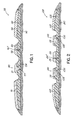
Figure 1 is a schematic cross section of one example pneumatic tire in accordance with the present invention. -
Figure 2 is a schematic cross section of another example pneumatic tire in accordance with the present invention. - The following definitions are controlling for the present invention.
- "Asymmetric tread" means a tread that has a tread pattern not symmetrical about the centerplane or equatorial plane EP (also called midcircumferential plane) of the tire.
- "Axial" and "axially" are used herein to refer to lines or directions that are parallel to the axis of rotation of the tire.
- "Circumferential" means lines or directions extending along the perimeter of the surface of the annular tire parallel to the Equatorial Plane (EP) and perpendicular to the axial direction.
- "Equatorial plane (EP)" means the plane perpendicular to the tire's axis of rotation and passing through the center of its tread or the plane containing the circumferential centerline of the tread.
- "Groove" means an elongated void area in a tread that may extend circumferentially or laterally about the tread in a straight, curved, or zigzag manner. Circumferentially and laterally extending grooves sometimes have common portions. The "groove width" may be the tread surface occupied by a groove or groove portion divided by the length of such groove or groove portion; thus, the groove width may be its average width over its length. Grooves may be of varying depths in a tire. The depth of a groove may vary around the circumference of the tread, or the depth of one groove may be constant but vary from the depth of another groove in the tire. If such narrow or wide grooves are of substantially reduced depth as compared to wide circumferential grooves, which they interconnect, they may be regarded as forming "tie bars" tending to maintain a rib-like character in the tread region involved. As used herein, a groove is intended to have a width large enough to remain open in the tires contact patch or footprint.
- "Lateral" means an axial direction.
- "Non-directional tread" means a tread that has no preferred direction of forward travel and is not required to be positioned on a vehicle in a specific wheel position or positions to ensure that the tread pattern is aligned with the preferred direction of travel. Conversely, a directional tread pattern has a preferred direction of travel requiring specific wheel positioning.
- "Phr" means parts by weight of a respective material per 100 parts by weight of rubber or elastomer.
- "Radial" and "radially" are used to mean directions radially toward or away from the axis of rotation of the tire.
- "Rib" means a circumferentially extending strip of rubber on the tread which is defined by at least one circumferential groove and either a second such groove or a lateral edge, the strip being laterally undivided by full-depth grooves.
- "Tread" means a molded rubber component which, when bonded to a tire casing, includes that portion of the tire that comes into contact with the road when the tire is normally inflated and under normal load.
- "Tread element" or "traction element" means a rib or a block element.
- "Tread width" means the arc length of the tread surface in a plane including the axis of rotation of the tire.
- A performance challenge exists between high rolling resistance tread materials and high traction tread materials in a pneumatic tire. A tread in accordance with the present invention address this challenge and allows it to balance wet traction, rolling resistance, and tread wear. Such a tread may utilize vertical and horizontal cross-sectional splits to maximize wet traction (wet grip index (WGI), braking, water, handling), rolling resistance, and tread wear of a tire throughout its serviceable life. Such a tread provides a contoured shape allowing an upper wet tread compound remain in contact with the road even after wear.
- The different areas of the tread do not equally contribute to the various tire performance characteristics. Thus, a tread in accordance with the present invention may place compound where the compounds can contribute the most its main advantage.
- As shown in
Fig. 1 , a preferably fourrib tread 100 in accordance with the present invention combine a first wet traction compound or firsttread cap layer 110, a second low rolling resistance compound or secondtread cap layer 120, a third intermediate, preferably ultra low rollingresistance compound 130 or thirdintermediate tread layer 130, and atread base layer 140 preferably comprising a chimney structure or radial extension 140' which may or may not be an integral structure for conducting static electrical charge to ground. The first compound or firsttread cap layer 110 may contact the road on the left side (inFig. 1 ) of thetread 100. The interface between the firsttread cap layer 110 and the thirdintermediate tread layer 130 under therib 149 define a shape orcontour 150 for allowing the first compound orlayer 110 to remain in contact with the road continuously as thetread 100 wears while the third compound orlayer 130 contributes to low rolling resistance with less wearing since the third compound orlayer 130 does not contact the road until most of the first compound orlayer 110 and the second compound orlayer 120 have worn away. The second compound orlayer 120, while preferably providing low rolling resistance, is in contact with the road initially and provides better wear characteristics than the third compound orlayer 130. Alternatively, the second andthird compounds - As shown in
Fig. 1 , thecontour 150 has aprotrusion 152 that extends radially inward into the third compound or layer 130 more than the main body of thefirst layer 110 and thesecond layer 120. Thisprotrusion 152 allows thefirst compound 110 to provide theoverall tread 100 with enhanced wet traction characteristics after the main body of thefirst compound 110 and thesecond compound 120 have worn away. - As shown in
Fig. 2 , a fiverib tread 200 in accordance with an embodiment of the present invention combines a first wet traction compound or firsttread cap layer 210, a second low rolling resistance compound or secondtread cap layer 220, a third intermediate, preferably ultra low rolling resistance compound or thirdintermediate tread layer 230, and atread base layer 240 preferably having a chimney structure or radial extension 240' which may or may not be an integral structure for conducting static electrical charge to ground. Thefirst layer 210 contacts the road in the tread middle region (Fig. 2 ) of thetread 200. The interface between thefirst layer 210 and thethird layer 230 under theribs 249 defines a shape orcontour 250 for allowing the respective first compound to remain in contact with the road continuously as thetread 100 wears while the respective third compound preferably contributes to low rolling resistance with less wearing since the third compound does not contact the road until most of thefirst compound 210 and thesecond compound 220 have worn away. Thesecond compound 220, while preferably having low rolling resistance, is in contact with the road initially and provides better wear characteristics than thethird compound 230. Alternatively, the second andthird compounds - As shown in
Fig. 2 , thecontours 250 have aprotrusion 252 that extends radially inward more than the main body of the first compound orlayer 210 and the second compound orlayer 220. Thisprotrusion 252 preferably allows thefirst compound 210 to provide theoverall tread 200 with enhanced wet traction characteristics after the main body of the first compound and thesecond compound 220 have worn away. - Below is a description of other example tire structures as set out in
EP-A-2 565 056 , which is herein incorporated by reference. A pneumatic tire for use with such atread - The tread may be a co-extruded, multi-component rubber extrudate and may be prepared by co-extruding at least two different rubber compositions by using an individual extruder for each rubber composition which individually cause an extruded rubber composition to flow through a suitable die member to, in turn, cause the individual rubber compositions to controllably flow and join within the die member and exit therefrom in a profiled multi-component rubber extrudate. Thus, the first cap layer may be extruded as a unitary extrudate of a single rubber compound in one extruder and the second cap layer may be extruded by another extruder.
- The tread base layer, first tread cap layer, second tread cap layer, first tread skirt, and/or second tread skirt may exemplarily comprise at least one conjugated diene-based elastomer and from 30 phr to 70 phr of rubber reinforcing filler selected from carbon black and precipitated silica wherein the filler comprises from 30 phr to 80 phr of said carbon black and from zero to 40 phr of silica such as precipitated silica. The tread base layer, first tread cap layer, second tread cap layer, first tread skirt, and/or second tread skirt may exemplarily further comprise 50 phr to 80 phr carbon black. The tread base layer, first tread cap layer, second tread cap layer, first tread skirt, and/or second tread skirt may exemplarily further comprise 10 phr to 25 phr silica such as precipitated silica. The tread base layer, first tread cap layer, second tread cap layer, first tread skirt, and/or second tread skirt may exemplarily further comprise a fully rubber reinforcing carbon black. The tread base layer, first tread cap layer, second tread cap layer, first tread skirt, and/or second tread skirt may exemplarily further comprise additives, such as curatives, processing aids, antidegradants, etc.
- The tread base layer, first tread cap layer, second tread cap layer, first tread skirt, and/or second tread skirt may exemplarily further be characterized as having specific physical properties making it suitable for use in the pneumatic tire. The tread base layer, first tread cap layer, second tread cap layer, first tread skirt, and/or second tread skirt may exemplarily have a tan delta ranging from 0.1 to 0.2, a storage modulus ranging from 4 MPa to 13 MPa, and a shore A hardness ranging from 45 to 70. Tan delta and storage modulus E* are measured by using a viscoelastic spectrometer at 70 ºC. Shore A hardness is measured according to DIN 53505 at room temperature.
- The tread base layer, first tread cap layer, second tread cap layer, first tread skirt, and/or second tread skirt may exemplarily further comprise at least one conjugated diene-based elastomer and a reinforcing filler comprising 50 phr to 80 phr silica and 10 phr to 40 phr carbon black. As stated above, the tread base layer, first tread cap layer, second tread cap layer, first tread skirt, and/or second tread skirt may exemplarily further comprise additives, such as curatives, processing aids, antidegradants, etc.
- Alternatively, the tread base layer, first tread cap layer, second tread cap layer, first tread skirt, and/or second tread skirt may exemplarily further be characterized as having specific physical properties making it suitable for use in the pneumatic tire. The tread base layer, first tread cap layer, second tread cap layer, first tread skirt, and/or second tread skirt may exemplarily further have a tan delta ranging from 0.05 to 0.20, a storage modulus ranging from 4 MPa to 12 MPa, and a shore A hardness ranging from 50 to 75.
- The tread base layer, first tread cap layer, second tread cap layer, first tread skirt, and/or second tread skirt may exemplarily further be used with rubbers or elastomers containing olefinic unsaturation. The phrases "rubber" or "elastomer containing olefinic unsaturation" or "conjugated diene-based elastomer" are intended to include both natural rubber and its various raw and reclaimed forms, as well as various synthetic rubbers. The terms "rubber" and "elastomer" may be used interchangeably, unless otherwise prescribed. The terms "rubber composition", "compounded rubber", and "rubber compound" may be used interchangeably to refer to rubber which has been blended or mixed with various ingredients and materials for use in the rubber mixing or rubber compounding. Representative synthetic polymers may be the homopolymerization products of butadiene and its homologues and derivatives, for example, methylbutadiene, dimethylbutadiene, and pentadiene, as well as copolymers such as those formed from butadiene or its homologues or derivatives with other unsaturated monomers. Among the latter may be acetylenes, for example, vinyl acetylene; olefins, for example, isobutylene, which copolymerizes with isoprene to form butyl rubber; vinyl compounds, for example, acrylic acid, acrylonitrile (which polymerize with butadiene to form NBR), methacrylic acid, and styrene. The latter compound may polymerize with butadiene to form SBR, as well as vinyl esters and various unsaturated aldehydes, ketones, and ethers, e.g., acrolein, methyl isopropenyl ketone, and vinylethyl ether. Specific examples of synthetic rubbers may include neoprene (polychloroprene), polybutadiene (including cis-1,4-polybutadiene), polyisoprene (including cis-1,4-polyisoprene), butyl rubber, halobutyl rubber such as chlorobutyl rubber or bromobutyl rubber, styrene/isoprene/butadiene rubber, copolymers of 1,3-butadiene or isoprene with monomers such as styrene, acrylonitrile, and methyl methacrylate, as well as ethylene/propylene terpolymers, also known as ethylene/propylene/diene monomer (EPDM), and ethylene/propylene/dicyclopentadiene terpolymers. Additional examples of rubbers may include silicon-coupled and tin-coupled star-branched polymers.
- The tread base layer, first tread cap layer, second tread cap layer, first tread skirt, and/or second tread skirt may exemplarily further comprise at least two of diene based rubbers, e.g., a combination of two or more rubbers such as cis 1,4-polyisoprene rubber (natural or synthetic), 3,4-polyisoprene rubber, styrene/isoprene/butadiene rubber, emulsion, and solution polymerization derived styrene/butadiene rubbers, cis 1,4-polybutadiene rubbers and emulsion polymerization prepared butadiene/acrylonitrile copolymers.
- An emulsion polymerization may be derived styrene/butadiene (E-SBR) having a styrene content of 20 percent bound styrene to 28 percent bound styrene or an E-SBR having a medium to relatively high bound styrene content, e.g., a bound styrene content of 30 percent to 45 percent. The styrene content of 30 percent to 45 percent for the E-SBR may be beneficial for enhancing traction, or skid resistance, of the tread 10. The presence of the E-SBR itself may be beneficial for enhancing processability of the uncured elastomer composition mixture, especially in comparison to a utilization of a solution polymerization prepared SBR (S-SBR).
- An emulsion polymerization prepared E-SBR may be styrene and 1,3-butadiene copolymerized as an aqueous emulsion. The bound styrene content may vary, for example, from 5 percent to 50 percent. The E-SBR may also contain acrylonitrile to form a terpolymer rubber, such as E-SBAR, in amounts, for example, of 2 weight percent acrylonitrile to 30 weight percent bound acrylonitrile in the terpolymer. Diene based rubbers for use in the pneumatic tire 1 may be emulsion polymerization prepared styrene/butadiene/acrylonitrile copolymer rubbers containing 2 weight percent bound acrylonitrile to 40 weight percent bound acrylonitrile in the copolymer.
- The solution polymerization prepared SBR (S-SBR) may have a bound styrene content from 5 percent to 50 percent or 9 percent to 36 percent. The S-SBR may be prepared, for example, by organo lithium catalyzation in the presence of an organic hydrocarbon solvent. The S-SBR may improve tire rolling resistance as a result of lower hysteresis when it is used in the tread 10.
- The 3,4-polyisoprene rubber (3,4-PI) in the tread 10 may enhance traction. The 3,4-PI and use thereof is more fully described in
US-A-5,087,668 which is incorporated herein by reference. Tg is the glass transition temperature which is determined by a differential scanning calorimeter at a heating rate of 10°C per minute. - The cis 1,4-polybutadiene rubber (BR) in the tread 10 often enhances tire treadwear and rolling resistance. BR may be prepared, for example, by organic solution polymerization of 1,3-butadiene. Further, BR may have at least 90 percent cis 1,4 content. The rubber compositions may additionally contain a sulfur containing organosilicon compound, such as:
Z-Alk-Sn-Alk-Z
in which Z is selected from the group consisting of
- Sulfur containing organosilicon compounds include 3,3'-bis(trimethoxy or triethoxy silylpropyl) sulfides; 3,3'-bis(triethoxysilylpropyl) disulfide; and 3,3'-bis(triethoxysilylpropyl) tetrasulfide. Therefore, for the above formula, Z may be
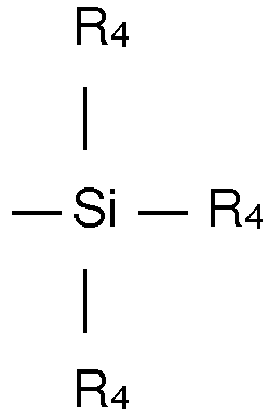
- The amount of the sulfur containing organosilicon compound in the above formula in a rubber composition may vary depending on the level of other additives. The amount of the compound in the above formula may range from 0.5 phr to 20.0 phr or 1.0 phr to 10.0 phr. Fillers such as silica and carbon black may also be present.
- Various commercially available silicas may be used, such as silicas commercially available from PPG Industries under the Hi-Sil trademark with
designations 210 and 243, silicas available from Rhone-Poulenc, with, for example, designations of Z1165MP and Z165GR, and silicas available from Degussa AG with, for example, designations VN2 and VN3. - Representative examples of carbon blacks include N110, N121, N220, N231, N234, N242, N293, N299, S315, N326, N330, M332, N339, N343, N347, N351, N358, N375, N539, N550, N582, N630, N642, N650, N683, N754, N762, N765, N774, N787, N907, N908, N990, and N991. These carbon blacks may have iodine absorptions ranging from 9 g/kg to 145 g/kg and a DBP number ranging from 34 cm3/100 g to 150 cm3/100 g.
- The rubber composition may be compounded by various methods, such as mixing the various sulfur-vulcanizable constituent rubbers with various additive materials, such as, for example, sulfur donors, curing aids, such as activators and retarders and processing additives, such as oils, resins including tackifying resins and plasticizers, fillers, pigments, fatty acid, zinc oxide, waxes, antioxidants and antiozonants, and peptizing agents. Examples of sulfur donors include: elemental sulfur (free sulfur); an amine disulfide; polymeric polysulfide; and sulfur olefin adducts. The sulfur vulcanizing agent may be elemental sulfur. The sulfur vulcanizing agent may range from 0.5 phr to 8.0 phr or from 1.5 phr to 6.0 phr. Tackifier resins may comprise 0.5 phr to 10.0 phr or 1.0 phr to 5.0 phr. Processing aids may comprise 1 phr to 80 phr. Such processing aids may include, for example, aromatic, naphthenic, paraffinic processing oils, and/or low PCA oils characterized by a polycyclic aromatic content of less than 3% (IP 346 method); such low PCA oils may include MES, TDAE, and heavy naphthenic oils.
- Amounts of antioxidants may comprise 1 phr to 5 phr. Antioxidants may be, for example, diphenyl-p-phenylenediamine. Amounts of antiozonants may comprise 1 phr to 5 phr. Amounts of fatty acids may include stearic acid having 0.5 phr to 3.0 phr. Amounts of zinc oxide may 1 phr to 5 phr. Amounts of waxes comprise 1 phr to 5 phr. Microcrystalline waxes may be used. Amounts of peptizers may comprise 0.1 phr to 1 phr. Peptizers may be, for example, pentachlorothiophenol and dibenzamidodiphenyl disulfide. The sulfur vulcanizable rubber composition may then be sulfur-cured or vulcanized.
- Accelerators may control the time and/or temperature required for vulcanization and improvement of the properties of the vulcanizate. A single accelerator system may be used, e.g., a primary accelerator. The primary accelerator(s) may have amounts ranging from 0.5 phr to 4 phr. Combinations of a primary and a secondary accelerator may be used with the secondary accelerator having from 0.05 phr to 3.00 phr in order to activate and improve the properties of the vulcanizate. In addition, delayed action accelerators may be used which are not affected by normal processing temperatures but produce a satisfactory cure at ordinary vulcanization temperatures. Vulcanization retarders may also be used. Suitable accelerators may be amines, disulfides, guanidines, thioureas, thiazoles, thiurams, sulfenamides, dithiocarbamates, and xanthates. The primary accelerator may be a sulfenamide. The secondary accelerator may be a guanidine, dithiocarbamate, or thiuram compound.
- The ingredients of the rubber composition are preferably mixed in two stages - at least one non-productive stage followed by a productive mix stage. The final curatives may include sulfur vulcanizing agents mixed in the final stage (e.g., the "productive" mix stage in which the mixing occurs at a temperature, or ultimate temperature, lower than the mix temperature(s) than preceding non-productive mix stages). The rubber may be mixed in one or more non-productive mix stages.
- A rubber composition containing the sulfur-containing organosilicon compound may be subjected to a thermomechanical mixing step. The thermomechanical mixing step comprises a mechanical working in a mixer or extruder for a period of time suitable for producing a rubber temperature between 140°C and 190°C. The appropriate duration of the thermomechanical working may vary as a function of the operating conditions and the volume and nature of the components. For example, the thermomechanical working may be from 1 minute to 20 minutes.
- Vulcanization of the rubber composition is generally be carried out at temperatures ranging from 100°C to 200°C. Vulcanization processes such as heating in a press or mold, heating with superheated steam or hot air, or heated with superheated steam in a salt bath, may be used.
- The pneumatic tire can be built, shaped, molded, and cured by various methods. The pneumatic tire can be a passenger tire, aircraft tire or truck tire and may be a radial or bias tire. Preferably, the tire is a radial passenger tire.
Claims (15)
- A tread for a pneumatic tire, the tread comprising a tread base layer (140) comprising a tread base compound, a first tread cap layer (110) comprising a first tread cap layer compound and located radially outside of the tread base layer (140), a second tread cap layer (120) comprising a second tread cap layer compound and located radially outside of the tread base layer (140) and axially adjacent the first tread cap layer (110), and a third intermediate tread layer (130) comprising an intermediate tread layer compound and located radially between the tread base layer (140) and the first and the second tread cap layer (110, 120), wherein the first tread cap layer compound is different in composition from the second tread cap layer compound, wherein the intermediate tread layer compound is different in composition from the first and/or the second tread cap layer compound, wherein the tread base layer compound is different in composition from the intermediate tread layer compound, and wherein the first tread cap layer (110) and/or the second tread cap layer (120) has at least one protrusion (152) extending radially inward from an inner surface of the respective first or second tread cap layer (110, 120) having the at least one protrusion (152) into the third intermediate tread layer (130).
- The tread of claim 1 wherein the respective tread cap layer (110, 120) having the protrusion (152) has a maximum thickness in a range for from 5 to 15 mm, alternatively 5 to 10 mm or 8 to 11 mm.
- The tread of claim 1 or 2 wherein the respective tread cap layer (110, 120) having the protrusion (152) has a minimum thickness in a range for from 2 to 5 mm.
- The tread of claim 1, 2 or 3 wherein the at least one protrusion (152) extends 2 to 10 mm, alternatively 4 to 8 mm, from a radially outermost surface of the third intermediate tread layer (130) radially inward into the third intermediate tread layer (130).
- The tread of at least one of the previous claims wherein the third intermediate tread layer (130) has a maximum thickness in a range of from 3 to 10 mm, alternatively 4 to 8 mm, and a minimum thickness in a range of from 1 to 5 mm, alternatively 2 to 4 mm.
- The tread of at least one of the previous claims wherein the first and the second tread cap layer (110, 120) are operationally ground contacting when the tread (100) is new and unworn and wherein the third intermediate tread layer (130) is operationally not ground contacting when the tread (100) is new and unworn.
- The tread of at least one of the previous claims wherein the third intermediate tread layer (130) is operationally ground contacting when the tread (100) is between 2 and 8 mm, alternatively 2 to 5 mm or 3 to 4 mm, worn.
- The tread of at least one of the previous claims wherein the tread base layer (140) comprises a radial extension (140') extending radially to the tread surface when the tread (100) is new and unworn.
- The tread of at least one of the previous claims wherein the at least one protrusion (152) has a triangular, rectangular or trapezoidal shape in axial cross section through the tread.
- The tread of at least one of the previous claims wherein the first tread cap layer (110) extends over 10 to 80 percent of the axial tread width and the wherein the second tread cap layer (120) extends over 10 to 80 percent of the axial tread width and wherein the first tread cap layer (110) and the second tread cap layer (120) together extend over 70 to 100 percent, alternatively 80 to 95 percent of the axial tread width.
- The tread of at least one of the previous claims wherein the first tread cap layer (110) having said protrusion (152) and wherein said protrusion (152) extends radially inward and into the third intermediate tread layer (130) more than a main body of the first tread cap layer (110) and the second tread cap layer (120) thereby allowing the first tread cap layer (110) to provide the overall tread (100) with enhanced performance characteristics after the main body of the first tread cap layer (110) and the second tread cap layer (120) have worn away.
- The tread of at least one of the previous claims wherein(i) the protrusion (152) extends radially inward from a rib of a four rib tread and another rib of the four rib tread comprises a structure for grounding a static charge; or(ii) two protrusions (252) each extend radially inward from two ribs of a five rib tread; or(iii) two protrusions (252) each extend radially inward from two ribs of a five rib tread and a middle rib of the five rib tread comprises a structure for grounding a static charge.
- The tread of at least one of the previous claims wherein the tread base layer (140) comprises a rubber composition comprising a diene based elastomer having from 20 part by weight to 150 part by weight, per 100 parts by weight of elastomer, of carbon black and is preferably free of silica or comprises less than 10 phr of silica.
- The tread of at least one of the previous claims wherein the second tread cap layer (120) and/or the first tread cap layer (110) comprises a diene based elastomer having from 20 parts by weight to 160 parts by weight, preferably 50 to 160 parts by weight, per 100 parts by weight of elastomer, of silica.
- A pneumatic tire having a tread (100) in accordance with at least one of the previous claims.
Applications Claiming Priority (1)
| Application Number | Priority Date | Filing Date | Title |
|---|---|---|---|
| US14/059,866 US9352615B2 (en) | 2013-10-22 | 2013-10-22 | Pneumatic tire with multi-tread cap |
Publications (2)
| Publication Number | Publication Date |
|---|---|
| EP2865543A1 true EP2865543A1 (en) | 2015-04-29 |
| EP2865543B1 EP2865543B1 (en) | 2018-12-26 |
Family
ID=51743332
Family Applications (1)
| Application Number | Title | Priority Date | Filing Date |
|---|---|---|---|
| EP14189296.8A Active EP2865543B1 (en) | 2013-10-22 | 2014-10-17 | Pneumatic tire with multi-compound tread cap |
Country Status (6)
| Country | Link |
|---|---|
| US (1) | US9352615B2 (en) |
| EP (1) | EP2865543B1 (en) |
| JP (1) | JP2015081085A (en) |
| KR (1) | KR102291354B1 (en) |
| CN (1) | CN104553620B (en) |
| BR (1) | BR102014025872B1 (en) |
Cited By (11)
| Publication number | Priority date | Publication date | Assignee | Title |
|---|---|---|---|---|
| WO2017109392A1 (en) * | 2015-12-23 | 2017-06-29 | Compagnie Generale Des Etablissements Michelin | Method for co-extruding a complex rubber profile intended for manufacturing a tyre |
| WO2019016440A1 (en) | 2017-07-17 | 2019-01-24 | Compagnie Generale Des Etablissements Michelin | Tyre having tread sub-layer flush with the groove bottom and reinforcing elements made of high modulus rubber integrated into the tread |
| US10596740B2 (en) | 2015-12-23 | 2020-03-24 | Compagnie Generale Des Etablissements Michelin | Co-extrusion head for co-extruding complex rubber profile section for manufacturing a tire |
| US10967594B2 (en) | 2016-12-20 | 2021-04-06 | Compagnie Generale Des Etablissements Michelin | Head for the co-extrusion of a complex rubber profiled element intended for the manufacture of a tire |
| EP3838617A1 (en) * | 2019-12-20 | 2021-06-23 | The Goodyear Tire & Rubber Company | A rubber composition and a tire |
| WO2021260335A1 (en) * | 2020-06-26 | 2021-12-30 | Compagnie Generale Des Etablissements Michelin | Tyre comprising a tread optimised for grip on wet ground in the worn condition |
| WO2025056349A1 (en) | 2023-09-14 | 2025-03-20 | Compagnie Generale Des Etablissements Michelin | Tyre optimised for driving performance and rolling resistance |
| WO2025056348A1 (en) | 2023-09-14 | 2025-03-20 | Compagnie Generale Des Etablissements Michelin | Tyre optimised for driving performance and rolling resistance |
| WO2025132981A1 (en) | 2023-12-21 | 2025-06-26 | Compagnie Generale Des Etablissements Michelin | Tyre optimized in terms of rolling resistance |
| FR3157271A1 (en) | 2023-12-21 | 2025-06-27 | Compagnie Generale Des Etablissements Michelin | Tire optimized for rolling resistance without degrading road handling |
| FR3157270A1 (en) | 2023-12-21 | 2025-06-27 | Compagnie Generale Des Etablissements Michelin | Tire optimized for road behavior without degrading rolling resistance |
Families Citing this family (40)
| Publication number | Priority date | Publication date | Assignee | Title |
|---|---|---|---|---|
| FR3035616A1 (en) * | 2015-04-28 | 2016-11-04 | Michelin & Cie | PNEUMATIC WITH A TREAD WITH REINFORCING ELEMENTS |
| EP3288782B1 (en) | 2015-04-28 | 2019-08-07 | Compagnie Générale des Etablissements Michelin | Tyre with a tread comprising reinforcing elements |
| US20170001399A1 (en) * | 2015-06-30 | 2017-01-05 | The Goodyear Tire & Rubber Company | Method for forming a tread |
| FR3044009B1 (en) * | 2015-11-19 | 2017-12-08 | Michelin & Cie | TIRE TREAD FOR TIRE AIRCRAFT |
| FR3044007B1 (en) * | 2015-11-19 | 2017-12-08 | Michelin & Cie | TIRE TREAD FOR TIRE AIRCRAFT |
| FR3044008B1 (en) * | 2015-11-19 | 2017-12-08 | Michelin & Cie | TIRE TREAD FOR TIRE AIRCRAFT |
| WO2017116393A1 (en) * | 2015-12-28 | 2017-07-06 | Compagnie Generale Des Etablissements Michelin | Heavy truck tire |
| WO2018002487A1 (en) | 2016-06-27 | 2018-01-04 | Compagnie Generale Des Etablissements Michelin | Tyre with a tread comprising reinforcing elements |
| US11518194B2 (en) | 2016-06-30 | 2022-12-06 | Compagnie Generale Des Etablissements Michelin | Tire comprising a tread containing reinforcing elements |
| RU2702296C1 (en) * | 2016-09-02 | 2019-10-07 | Дзе Йокогама Раббер Ко., Лтд. | Pneumatic tire |
| JP6922180B2 (en) * | 2016-10-03 | 2021-08-18 | 横浜ゴム株式会社 | Pneumatic tires |
| FR3059601A3 (en) | 2016-12-02 | 2018-06-08 | Michelin & Cie | PNEUMATIC WITH A TREAD WITH CIRCUMFERENTIAL REINFORCING ELEMENTS IN THE UNDERCOAT |
| FR3059942A3 (en) | 2016-12-13 | 2018-06-15 | Michelin & Cie | PNEUMATIC WITH A TREAD WITH REINFORCING ELEMENTS |
| FR3059943A1 (en) | 2016-12-13 | 2018-06-15 | Compagnie Generale Des Etablissements Michelin | PNEUMATIC WITH A TREAD WITH REINFORCING ELEMENTS |
| WO2018118023A1 (en) * | 2016-12-20 | 2018-06-28 | Compagnie General Des Etablissements Michelin | Heavy truck tire |
| CN106739833A (en) * | 2017-01-04 | 2017-05-31 | 万力轮胎股份有限公司 | A kind of tire |
| FR3063678A1 (en) * | 2017-03-10 | 2018-09-14 | Compagnie Generale Des Etablissements Michelin | PNEUMATIC COMPRISING A TREAD TAPE CONSISTING OF SEVERAL ELASTOMERIC MIXTURES |
| KR102007300B1 (en) | 2017-12-01 | 2019-08-05 | 금호타이어 주식회사 | Anti-Crack Multi-Tread |
| JP2021519725A (en) | 2018-03-30 | 2021-08-12 | コンパニー ゼネラール デ エタブリッスマン ミシュラン | Tires including tread |
| US20210363332A1 (en) * | 2018-03-30 | 2021-11-25 | Compagnie Generale Des Etablissements Michelin | A tire comprising a tread |
| KR20200122567A (en) | 2019-04-18 | 2020-10-28 | 한국타이어앤테크놀로지 주식회사 | Pneumatic tire improved handling |
| FR3102092A1 (en) * | 2019-10-22 | 2021-04-23 | Compagnie Generale Des Etablissements Michelin | Advanced tread tire |
| FR3102091A1 (en) * | 2019-10-22 | 2021-04-23 | Compagnie Generale Des Etablissements Michelin | Advanced tread tire |
| US11851549B2 (en) * | 2019-11-11 | 2023-12-26 | The Goodyear Tire & Rubber Company | Tire |
| KR102278896B1 (en) | 2019-12-20 | 2021-07-19 | 넥센타이어 주식회사 | Tire having the multi tread |
| WO2021261221A1 (en) * | 2020-06-25 | 2021-12-30 | 住友ゴム工業株式会社 | Tire |
| US11731461B2 (en) * | 2020-06-30 | 2023-08-22 | The Goodyear Tire & Rubber Company | Tire having a multilayer tread cap |
| JP7484521B2 (en) * | 2020-07-16 | 2024-05-16 | 住友ゴム工業株式会社 | tire |
| FR3115234B1 (en) * | 2020-10-19 | 2022-09-02 | Michelin & Cie | Tire comprising a tread consisting of several elastomeric compounds |
| US11628695B2 (en) * | 2020-12-15 | 2023-04-18 | The Goodyear Tire & Rubber Company | Tire sensor container system for improved sensor functionality and longevity |
| US11738604B2 (en) | 2020-12-15 | 2023-08-29 | The Goodyear Tire & Rubber Company | Sensor retaining system for vehicle tire |
| US11964515B2 (en) | 2020-12-15 | 2024-04-23 | The Goodyear Tire & Rubber Company | Integrated tread wear sensor and TPMS container for a tire |
| US11639077B2 (en) | 2020-12-15 | 2023-05-02 | The Goodyear Tire & Rubber Company | Tire with tread wear sensor plug |
| JP7596894B2 (en) * | 2021-03-30 | 2024-12-10 | 住友ゴム工業株式会社 | tire |
| JP7756856B2 (en) * | 2021-11-26 | 2025-10-21 | 住友ゴム工業株式会社 | pneumatic tires |
| US12234341B2 (en) | 2021-12-15 | 2025-02-25 | The Goodyear Tire & Rubber Company | Conductive rubber compositions and articles composed of the same |
| IT202200011684A1 (en) * | 2022-06-01 | 2023-12-01 | Pirelli | Big enduro motorcycle tire |
| US12583952B2 (en) * | 2022-12-14 | 2026-03-24 | The Goodyear Tire & Rubber Company | Rubber composition and tire |
| US12552201B2 (en) | 2023-03-15 | 2026-02-17 | The Goodyear Tire & Rubber Company | Pneumatic tire |
| US12545059B2 (en) | 2023-06-08 | 2026-02-10 | The Goodyear Tire & Rubber Company | Systems and methods for tire treadwear sensing |
Citations (6)
| Publication number | Priority date | Publication date | Assignee | Title |
|---|---|---|---|---|
| US5087668A (en) | 1990-10-19 | 1992-02-11 | The Goodyear Tire & Rubber Company | Rubber blend and tire with tread thereof |
| EP0718127A1 (en) | 1994-12-21 | 1996-06-26 | Sp Reifenwerke Gmbh | Vehicle tyre |
| EP1398182A2 (en) * | 2002-09-13 | 2004-03-17 | The Goodyear Tire & Rubber Company | tire with a multi-layered tread |
| EP2108528A1 (en) * | 2008-04-11 | 2009-10-14 | Continental Aktiengesellschaft | Pneumatic tyres for a vehicle |
| FR2952855A1 (en) * | 2009-11-26 | 2011-05-27 | Michelin Soc Tech | TIRE FOR EQUIPPING A VEHICLE CARRYING HEAVY LOADS |
| EP2565056A1 (en) | 2011-08-30 | 2013-03-06 | The Goodyear Tire & Rubber Company | Pneumatic tire with dual tread cap |
Family Cites Families (29)
| Publication number | Priority date | Publication date | Assignee | Title |
|---|---|---|---|---|
| US1769694A (en) | 1928-11-10 | 1930-07-01 | Goodyear Tire & Rubber | Vehicle tire |
| US2224141A (en) | 1938-07-08 | 1940-12-10 | Clark Ernest | Nonskid tire |
| US2445725A (en) | 1944-06-14 | 1948-07-20 | Firestone Tire & Rubber Co | Tire construction |
| GB1100135A (en) | 1964-07-24 | 1968-01-24 | Dunlop Co Ltd | Pneumatic tyre |
| US3537500A (en) | 1969-03-07 | 1970-11-03 | Firestone Tire & Rubber Co | Tire construction |
| FR2110703A5 (en) | 1970-10-27 | 1972-06-02 | Kleber Colombes | |
| US3931844A (en) | 1973-05-14 | 1976-01-13 | Uniroyal, S.A. | Cushioned tread tire |
| JPS5850883B2 (en) | 1979-12-31 | 1983-11-12 | 東洋ゴム工業株式会社 | A pneumatic tire with a tread made of at least two types of rubber |
| US4478266A (en) * | 1982-09-17 | 1984-10-23 | The Goodyear Tire & Rubber Company | Composite tread having good traction and reduced rolling resistance upon wear |
| AT376401B (en) | 1982-10-20 | 1984-11-26 | Semperit Ag | VEHICLE AIR TIRE WITH A RADIAL CARCASE, METHOD FOR THE PRODUCTION OF SUCH A TIRE AND METHOD AND DEVICE FOR THE PRODUCTION OF A TIRE PART FOR SUCH A TIRE |
| US5225011A (en) | 1985-06-15 | 1993-07-06 | Toyo Tire & Rubber Company Limited | Tire of superior cut resistance |
| JPS63235105A (en) | 1987-03-23 | 1988-09-30 | Bridgestone Corp | Pneumatic tire |
| JP3150176B2 (en) | 1991-11-18 | 2001-03-26 | 株式会社ブリヂストン | Low noise tire |
| GB9409453D0 (en) | 1994-05-12 | 1994-06-29 | Sumitomo Rubber Ind | tyre tread and tyres incorporating them |
| JP3964511B2 (en) * | 1996-10-17 | 2007-08-22 | 住友ゴム工業株式会社 | Pneumatic tire |
| IT1290083B1 (en) | 1997-03-14 | 1998-10-19 | Pirelli | LOW WORKING TEMPERATURE TIRE |
| US6523585B1 (en) | 1997-03-18 | 2003-02-25 | Bridgestone Corporation | Antistatic tire |
| FR2765525B1 (en) | 1997-07-02 | 1999-12-03 | Michelin & Cie | TIRE WITH COLOR MIXTURES |
| KR100624121B1 (en) | 1998-12-21 | 2006-09-19 | 피렐리 타이어 소시에떼 퍼 아찌오니 | Dual structure tread band for tire |
| US7131474B2 (en) | 2002-12-12 | 2006-11-07 | The Goodyear Tire & Rubber Company | Tire with rubber tread of load bearing central and lateral zones |
| US6959744B2 (en) | 2002-12-20 | 2005-11-01 | The Goodyear Tire & Rubber Company | Tire with rubber tread of diverse zoned rubber compositions |
| CA2491190C (en) | 2004-02-03 | 2013-02-12 | The Goodyear Tire & Rubber Company | Tire with rubber tread of circumferential zones with graduated physical properties |
| US7441572B2 (en) * | 2004-09-17 | 2008-10-28 | The Goodyear Tire & Rubber Company | Pneumatic tire having a tread containing immiscible rubber blend and silica |
| US7789117B2 (en) | 2006-01-27 | 2010-09-07 | The Goodyear Tire & Rubber Company | Tire with circumferential rubber tread having a lateral outboard control element |
| US8800620B2 (en) * | 2006-03-27 | 2014-08-12 | The Goodyear Tire & Rubber Company | Tire with rubber tread composed of a primary and at least one lateral tread portion containing a dispersion of short carbon fibers |
| BRPI0903293B1 (en) * | 2008-09-11 | 2020-10-13 | The Goodyear Tire & Rubber Company | tire having a tire tread |
| US9126457B2 (en) * | 2010-12-06 | 2015-09-08 | The Goodyear Tire & Rubber Company | Pneumatic tire having first tread cap zone and second tread cap zone |
| JP2013028196A (en) * | 2011-07-26 | 2013-02-07 | Sumitomo Rubber Ind Ltd | Pneumatic tire |
| US9050860B2 (en) * | 2012-08-07 | 2015-06-09 | The Goodyear Tire & Rubber Company | Tread made from multi cap compounds |
-
2013
- 2013-10-22 US US14/059,866 patent/US9352615B2/en active Active
-
2014
- 2014-10-16 BR BR102014025872-8A patent/BR102014025872B1/en active IP Right Grant
- 2014-10-17 EP EP14189296.8A patent/EP2865543B1/en active Active
- 2014-10-20 JP JP2014213477A patent/JP2015081085A/en active Pending
- 2014-10-21 KR KR1020140142425A patent/KR102291354B1/en active Active
- 2014-10-22 CN CN201410569617.5A patent/CN104553620B/en not_active Expired - Fee Related
Patent Citations (6)
| Publication number | Priority date | Publication date | Assignee | Title |
|---|---|---|---|---|
| US5087668A (en) | 1990-10-19 | 1992-02-11 | The Goodyear Tire & Rubber Company | Rubber blend and tire with tread thereof |
| EP0718127A1 (en) | 1994-12-21 | 1996-06-26 | Sp Reifenwerke Gmbh | Vehicle tyre |
| EP1398182A2 (en) * | 2002-09-13 | 2004-03-17 | The Goodyear Tire & Rubber Company | tire with a multi-layered tread |
| EP2108528A1 (en) * | 2008-04-11 | 2009-10-14 | Continental Aktiengesellschaft | Pneumatic tyres for a vehicle |
| FR2952855A1 (en) * | 2009-11-26 | 2011-05-27 | Michelin Soc Tech | TIRE FOR EQUIPPING A VEHICLE CARRYING HEAVY LOADS |
| EP2565056A1 (en) | 2011-08-30 | 2013-03-06 | The Goodyear Tire & Rubber Company | Pneumatic tire with dual tread cap |
Cited By (19)
| Publication number | Priority date | Publication date | Assignee | Title |
|---|---|---|---|---|
| US10596740B2 (en) | 2015-12-23 | 2020-03-24 | Compagnie Generale Des Etablissements Michelin | Co-extrusion head for co-extruding complex rubber profile section for manufacturing a tire |
| WO2017109392A1 (en) * | 2015-12-23 | 2017-06-29 | Compagnie Generale Des Etablissements Michelin | Method for co-extruding a complex rubber profile intended for manufacturing a tyre |
| US10967594B2 (en) | 2016-12-20 | 2021-04-06 | Compagnie Generale Des Etablissements Michelin | Head for the co-extrusion of a complex rubber profiled element intended for the manufacture of a tire |
| US11752802B2 (en) | 2017-07-17 | 2023-09-12 | Compagnie Generale Des Etablissements Michelin | Tire having tread sub-layer flush with the groove bottom and reinforcing elements made of high modulus rubber integrated into the tread |
| WO2019016440A1 (en) | 2017-07-17 | 2019-01-24 | Compagnie Generale Des Etablissements Michelin | Tyre having tread sub-layer flush with the groove bottom and reinforcing elements made of high modulus rubber integrated into the tread |
| US11912067B2 (en) | 2019-12-20 | 2024-02-27 | The Goodyear Tire & Rubber Company | Rubber composition and a tire |
| EP3838617A1 (en) * | 2019-12-20 | 2021-06-23 | The Goodyear Tire & Rubber Company | A rubber composition and a tire |
| FR3111845A1 (en) * | 2020-06-26 | 2021-12-31 | Compagnie Generale Des Etablissements Michelin | Tire with a tread optimized for wet grip in worn condition |
| WO2021260335A1 (en) * | 2020-06-26 | 2021-12-30 | Compagnie Generale Des Etablissements Michelin | Tyre comprising a tread optimised for grip on wet ground in the worn condition |
| US12115817B2 (en) | 2020-06-26 | 2024-10-15 | Compagnie Generale Des Etablissements Michelin | Tire comprising a tread optimized for grip on wet grounds in the worn condition |
| FR3153025A1 (en) | 2023-09-14 | 2025-03-21 | Compagnie Generale Des Etablissements Michelin | Tire optimized for road behavior and rolling resistance |
| WO2025056348A1 (en) | 2023-09-14 | 2025-03-20 | Compagnie Generale Des Etablissements Michelin | Tyre optimised for driving performance and rolling resistance |
| WO2025056349A1 (en) | 2023-09-14 | 2025-03-20 | Compagnie Generale Des Etablissements Michelin | Tyre optimised for driving performance and rolling resistance |
| FR3153026A1 (en) | 2023-09-14 | 2025-03-21 | Compagnie Generale Des Etablissements Michelin | Tire optimized for road behavior and rolling resistance |
| WO2025132981A1 (en) | 2023-12-21 | 2025-06-26 | Compagnie Generale Des Etablissements Michelin | Tyre optimized in terms of rolling resistance |
| WO2025132984A1 (en) | 2023-12-21 | 2025-06-26 | Compagnie Generale Des Etablissements Michelin | Tyre with optimized roadholding |
| WO2025132979A1 (en) | 2023-12-21 | 2025-06-26 | Compagnie Generale Des Etablissements Michelin | Tyre with optimized rolling resistance |
| FR3157271A1 (en) | 2023-12-21 | 2025-06-27 | Compagnie Generale Des Etablissements Michelin | Tire optimized for rolling resistance without degrading road handling |
| FR3157270A1 (en) | 2023-12-21 | 2025-06-27 | Compagnie Generale Des Etablissements Michelin | Tire optimized for road behavior without degrading rolling resistance |
Also Published As
| Publication number | Publication date |
|---|---|
| KR20150046740A (en) | 2015-04-30 |
| US20150107735A1 (en) | 2015-04-23 |
| BR102014025872B1 (en) | 2020-12-15 |
| CN104553620B (en) | 2017-10-03 |
| EP2865543B1 (en) | 2018-12-26 |
| BR102014025872A2 (en) | 2015-09-22 |
| CN104553620A (en) | 2015-04-29 |
| KR102291354B1 (en) | 2021-08-19 |
| US9352615B2 (en) | 2016-05-31 |
| JP2015081085A (en) | 2015-04-27 |
Similar Documents
| Publication | Publication Date | Title |
|---|---|---|
| EP2865543B1 (en) | Pneumatic tire with multi-compound tread cap | |
| EP2565056B1 (en) | Pneumatic tire with dual tread cap | |
| US8413697B2 (en) | Pneumatic tire having a dual layer tread | |
| EP2460670B1 (en) | Pneumatic tire | |
| US8215350B2 (en) | Truck racing tire | |
| EP1745946A2 (en) | Tire with tread of cap/semibase construction | |
| JP5149587B2 (en) | Tire with sidewall insert | |
| US12005740B2 (en) | Tire tread and a tire comprising a tread | |
| EP3778262B1 (en) | A tire tread and a tire comprising a tread | |
| US5772807A (en) | Truck tire with thread of rib/groove configuration | |
| EP2199114B1 (en) | Tire with chafer | |
| EP2380757A2 (en) | Pneumatic tire with a tread comprising fibers | |
| EP2730608B1 (en) | Tire with chafer and sidewall | |
| EP4183595B1 (en) | A tire having an improved shoulder design | |
| US12187895B2 (en) | Rubber composition and a tire | |
| US12435210B2 (en) | Rubber composition and a tire | |
| EP3778263B1 (en) | A tire tread and a tire comprising a tread | |
| US20250091390A1 (en) | Dual layer tire tread |
Legal Events
| Date | Code | Title | Description |
|---|---|---|---|
| PUAI | Public reference made under article 153(3) epc to a published international application that has entered the european phase |
Free format text: ORIGINAL CODE: 0009012 |
|
| 17P | Request for examination filed |
Effective date: 20141017 |
|
| AK | Designated contracting states |
Kind code of ref document: A1 Designated state(s): AL AT BE BG CH CY CZ DE DK EE ES FI FR GB GR HR HU IE IS IT LI LT LU LV MC MK MT NL NO PL PT RO RS SE SI SK SM TR |
|
| AX | Request for extension of the european patent |
Extension state: BA ME |
|
| R17P | Request for examination filed (corrected) |
Effective date: 20151029 |
|
| RBV | Designated contracting states (corrected) |
Designated state(s): AL AT BE BG CH CY CZ DE DK EE ES FI FR GB GR HR HU IE IS IT LI LT LU LV MC MK MT NL NO PL PT RO RS SE SI SK SM TR |
|
| GRAP | Despatch of communication of intention to grant a patent |
Free format text: ORIGINAL CODE: EPIDOSNIGR1 |
|
| STAA | Information on the status of an ep patent application or granted ep patent |
Free format text: STATUS: GRANT OF PATENT IS INTENDED |
|
| RIC1 | Information provided on ipc code assigned before grant |
Ipc: B60C 1/00 20060101ALI20180703BHEP Ipc: B60C 11/00 20060101AFI20180703BHEP Ipc: B60C 19/08 20060101ALI20180703BHEP |
|
| INTG | Intention to grant announced |
Effective date: 20180726 |
|
| GRAS | Grant fee paid |
Free format text: ORIGINAL CODE: EPIDOSNIGR3 |
|
| GRAA | (expected) grant |
Free format text: ORIGINAL CODE: 0009210 |
|
| STAA | Information on the status of an ep patent application or granted ep patent |
Free format text: STATUS: THE PATENT HAS BEEN GRANTED |
|
| AK | Designated contracting states |
Kind code of ref document: B1 Designated state(s): AL AT BE BG CH CY CZ DE DK EE ES FI FR GB GR HR HU IE IS IT LI LT LU LV MC MK MT NL NO PL PT RO RS SE SI SK SM TR |
|
| REG | Reference to a national code |
Ref country code: GB Ref legal event code: FG4D |
|
| REG | Reference to a national code |
Ref country code: CH Ref legal event code: EP |
|
| REG | Reference to a national code |
Ref country code: AT Ref legal event code: REF Ref document number: 1080890 Country of ref document: AT Kind code of ref document: T Effective date: 20190115 |
|
| REG | Reference to a national code |
Ref country code: DE Ref legal event code: R096 Ref document number: 602014038519 Country of ref document: DE |
|
| REG | Reference to a national code |
Ref country code: IE Ref legal event code: FG4D |
|
| PG25 | Lapsed in a contracting state [announced via postgrant information from national office to epo] |
Ref country code: LV Free format text: LAPSE BECAUSE OF FAILURE TO SUBMIT A TRANSLATION OF THE DESCRIPTION OR TO PAY THE FEE WITHIN THE PRESCRIBED TIME-LIMIT Effective date: 20181226 Ref country code: HR Free format text: LAPSE BECAUSE OF FAILURE TO SUBMIT A TRANSLATION OF THE DESCRIPTION OR TO PAY THE FEE WITHIN THE PRESCRIBED TIME-LIMIT Effective date: 20181226 Ref country code: BG Free format text: LAPSE BECAUSE OF FAILURE TO SUBMIT A TRANSLATION OF THE DESCRIPTION OR TO PAY THE FEE WITHIN THE PRESCRIBED TIME-LIMIT Effective date: 20190326 Ref country code: NO Free format text: LAPSE BECAUSE OF FAILURE TO SUBMIT A TRANSLATION OF THE DESCRIPTION OR TO PAY THE FEE WITHIN THE PRESCRIBED TIME-LIMIT Effective date: 20190326 Ref country code: LT Free format text: LAPSE BECAUSE OF FAILURE TO SUBMIT A TRANSLATION OF THE DESCRIPTION OR TO PAY THE FEE WITHIN THE PRESCRIBED TIME-LIMIT Effective date: 20181226 Ref country code: FI Free format text: LAPSE BECAUSE OF FAILURE TO SUBMIT A TRANSLATION OF THE DESCRIPTION OR TO PAY THE FEE WITHIN THE PRESCRIBED TIME-LIMIT Effective date: 20181226 |
|
| REG | Reference to a national code |
Ref country code: NL Ref legal event code: MP Effective date: 20181226 |
|
| REG | Reference to a national code |
Ref country code: LT Ref legal event code: MG4D |
|
| PG25 | Lapsed in a contracting state [announced via postgrant information from national office to epo] |
Ref country code: GR Free format text: LAPSE BECAUSE OF FAILURE TO SUBMIT A TRANSLATION OF THE DESCRIPTION OR TO PAY THE FEE WITHIN THE PRESCRIBED TIME-LIMIT Effective date: 20190327 Ref country code: SE Free format text: LAPSE BECAUSE OF FAILURE TO SUBMIT A TRANSLATION OF THE DESCRIPTION OR TO PAY THE FEE WITHIN THE PRESCRIBED TIME-LIMIT Effective date: 20181226 Ref country code: RS Free format text: LAPSE BECAUSE OF FAILURE TO SUBMIT A TRANSLATION OF THE DESCRIPTION OR TO PAY THE FEE WITHIN THE PRESCRIBED TIME-LIMIT Effective date: 20181226 Ref country code: AL Free format text: LAPSE BECAUSE OF FAILURE TO SUBMIT A TRANSLATION OF THE DESCRIPTION OR TO PAY THE FEE WITHIN THE PRESCRIBED TIME-LIMIT Effective date: 20181226 |
|
| REG | Reference to a national code |
Ref country code: AT Ref legal event code: MK05 Ref document number: 1080890 Country of ref document: AT Kind code of ref document: T Effective date: 20181226 |
|
| PG25 | Lapsed in a contracting state [announced via postgrant information from national office to epo] |
Ref country code: NL Free format text: LAPSE BECAUSE OF FAILURE TO SUBMIT A TRANSLATION OF THE DESCRIPTION OR TO PAY THE FEE WITHIN THE PRESCRIBED TIME-LIMIT Effective date: 20181226 |
|
| PG25 | Lapsed in a contracting state [announced via postgrant information from national office to epo] |
Ref country code: PL Free format text: LAPSE BECAUSE OF FAILURE TO SUBMIT A TRANSLATION OF THE DESCRIPTION OR TO PAY THE FEE WITHIN THE PRESCRIBED TIME-LIMIT Effective date: 20181226 Ref country code: CZ Free format text: LAPSE BECAUSE OF FAILURE TO SUBMIT A TRANSLATION OF THE DESCRIPTION OR TO PAY THE FEE WITHIN THE PRESCRIBED TIME-LIMIT Effective date: 20181226 Ref country code: PT Free format text: LAPSE BECAUSE OF FAILURE TO SUBMIT A TRANSLATION OF THE DESCRIPTION OR TO PAY THE FEE WITHIN THE PRESCRIBED TIME-LIMIT Effective date: 20190426 Ref country code: ES Free format text: LAPSE BECAUSE OF FAILURE TO SUBMIT A TRANSLATION OF THE DESCRIPTION OR TO PAY THE FEE WITHIN THE PRESCRIBED TIME-LIMIT Effective date: 20181226 |
|
| PG25 | Lapsed in a contracting state [announced via postgrant information from national office to epo] |
Ref country code: RO Free format text: LAPSE BECAUSE OF FAILURE TO SUBMIT A TRANSLATION OF THE DESCRIPTION OR TO PAY THE FEE WITHIN THE PRESCRIBED TIME-LIMIT Effective date: 20181226 Ref country code: SK Free format text: LAPSE BECAUSE OF FAILURE TO SUBMIT A TRANSLATION OF THE DESCRIPTION OR TO PAY THE FEE WITHIN THE PRESCRIBED TIME-LIMIT Effective date: 20181226 Ref country code: IS Free format text: LAPSE BECAUSE OF FAILURE TO SUBMIT A TRANSLATION OF THE DESCRIPTION OR TO PAY THE FEE WITHIN THE PRESCRIBED TIME-LIMIT Effective date: 20190426 Ref country code: EE Free format text: LAPSE BECAUSE OF FAILURE TO SUBMIT A TRANSLATION OF THE DESCRIPTION OR TO PAY THE FEE WITHIN THE PRESCRIBED TIME-LIMIT Effective date: 20181226 Ref country code: SM Free format text: LAPSE BECAUSE OF FAILURE TO SUBMIT A TRANSLATION OF THE DESCRIPTION OR TO PAY THE FEE WITHIN THE PRESCRIBED TIME-LIMIT Effective date: 20181226 |
|
| REG | Reference to a national code |
Ref country code: DE Ref legal event code: R097 Ref document number: 602014038519 Country of ref document: DE |
|
| PG25 | Lapsed in a contracting state [announced via postgrant information from national office to epo] |
Ref country code: AT Free format text: LAPSE BECAUSE OF FAILURE TO SUBMIT A TRANSLATION OF THE DESCRIPTION OR TO PAY THE FEE WITHIN THE PRESCRIBED TIME-LIMIT Effective date: 20181226 Ref country code: DK Free format text: LAPSE BECAUSE OF FAILURE TO SUBMIT A TRANSLATION OF THE DESCRIPTION OR TO PAY THE FEE WITHIN THE PRESCRIBED TIME-LIMIT Effective date: 20181226 |
|
| PLBE | No opposition filed within time limit |
Free format text: ORIGINAL CODE: 0009261 |
|
| STAA | Information on the status of an ep patent application or granted ep patent |
Free format text: STATUS: NO OPPOSITION FILED WITHIN TIME LIMIT |
|
| 26N | No opposition filed |
Effective date: 20190927 |
|
| PG25 | Lapsed in a contracting state [announced via postgrant information from national office to epo] |
Ref country code: SI Free format text: LAPSE BECAUSE OF FAILURE TO SUBMIT A TRANSLATION OF THE DESCRIPTION OR TO PAY THE FEE WITHIN THE PRESCRIBED TIME-LIMIT Effective date: 20181226 |
|
| PG25 | Lapsed in a contracting state [announced via postgrant information from national office to epo] |
Ref country code: TR Free format text: LAPSE BECAUSE OF FAILURE TO SUBMIT A TRANSLATION OF THE DESCRIPTION OR TO PAY THE FEE WITHIN THE PRESCRIBED TIME-LIMIT Effective date: 20181226 |
|
| PG25 | Lapsed in a contracting state [announced via postgrant information from national office to epo] |
Ref country code: MC Free format text: LAPSE BECAUSE OF FAILURE TO SUBMIT A TRANSLATION OF THE DESCRIPTION OR TO PAY THE FEE WITHIN THE PRESCRIBED TIME-LIMIT Effective date: 20181226 |
|
| REG | Reference to a national code |
Ref country code: CH Ref legal event code: PL |
|
| PG25 | Lapsed in a contracting state [announced via postgrant information from national office to epo] |
Ref country code: LI Free format text: LAPSE BECAUSE OF NON-PAYMENT OF DUE FEES Effective date: 20191031 Ref country code: LU Free format text: LAPSE BECAUSE OF NON-PAYMENT OF DUE FEES Effective date: 20191017 Ref country code: CH Free format text: LAPSE BECAUSE OF NON-PAYMENT OF DUE FEES Effective date: 20191031 |
|
| REG | Reference to a national code |
Ref country code: BE Ref legal event code: MM Effective date: 20191031 |
|
| PG25 | Lapsed in a contracting state [announced via postgrant information from national office to epo] |
Ref country code: BE Free format text: LAPSE BECAUSE OF NON-PAYMENT OF DUE FEES Effective date: 20191031 |
|
| GBPC | Gb: european patent ceased through non-payment of renewal fee |
Effective date: 20191017 |
|
| PG25 | Lapsed in a contracting state [announced via postgrant information from national office to epo] |
Ref country code: IE Free format text: LAPSE BECAUSE OF NON-PAYMENT OF DUE FEES Effective date: 20191017 Ref country code: GB Free format text: LAPSE BECAUSE OF NON-PAYMENT OF DUE FEES Effective date: 20191017 |
|
| PG25 | Lapsed in a contracting state [announced via postgrant information from national office to epo] |
Ref country code: CY Free format text: LAPSE BECAUSE OF FAILURE TO SUBMIT A TRANSLATION OF THE DESCRIPTION OR TO PAY THE FEE WITHIN THE PRESCRIBED TIME-LIMIT Effective date: 20181226 |
|
| PG25 | Lapsed in a contracting state [announced via postgrant information from national office to epo] |
Ref country code: MT Free format text: LAPSE BECAUSE OF FAILURE TO SUBMIT A TRANSLATION OF THE DESCRIPTION OR TO PAY THE FEE WITHIN THE PRESCRIBED TIME-LIMIT Effective date: 20181226 Ref country code: HU Free format text: LAPSE BECAUSE OF FAILURE TO SUBMIT A TRANSLATION OF THE DESCRIPTION OR TO PAY THE FEE WITHIN THE PRESCRIBED TIME-LIMIT; INVALID AB INITIO Effective date: 20141017 |
|
| PG25 | Lapsed in a contracting state [announced via postgrant information from national office to epo] |
Ref country code: MK Free format text: LAPSE BECAUSE OF FAILURE TO SUBMIT A TRANSLATION OF THE DESCRIPTION OR TO PAY THE FEE WITHIN THE PRESCRIBED TIME-LIMIT Effective date: 20181226 |
|
| PGFP | Annual fee paid to national office [announced via postgrant information from national office to epo] |
Ref country code: IT Payment date: 20250923 Year of fee payment: 12 |
|
| PGFP | Annual fee paid to national office [announced via postgrant information from national office to epo] |
Ref country code: FR Payment date: 20250924 Year of fee payment: 12 |
|
| PGFP | Annual fee paid to national office [announced via postgrant information from national office to epo] |
Ref country code: DE Payment date: 20250923 Year of fee payment: 12 |