EP2859124B1 - Verfahren zur quantifizierung verschiedener viraler formen der dns des hiv-virus - Google Patents
Verfahren zur quantifizierung verschiedener viraler formen der dns des hiv-virus Download PDFInfo
- Publication number
- EP2859124B1 EP2859124B1 EP13744827.0A EP13744827A EP2859124B1 EP 2859124 B1 EP2859124 B1 EP 2859124B1 EP 13744827 A EP13744827 A EP 13744827A EP 2859124 B1 EP2859124 B1 EP 2859124B1
- Authority
- EP
- European Patent Office
- Prior art keywords
- dna
- hiv
- ltr
- linear
- pcr
- Prior art date
- Legal status (The legal status is an assumption and is not a legal conclusion. Google has not performed a legal analysis and makes no representation as to the accuracy of the status listed.)
- Active
Links
Images



Classifications
-
- C—CHEMISTRY; METALLURGY
- C12—BIOCHEMISTRY; BEER; SPIRITS; WINE; VINEGAR; MICROBIOLOGY; ENZYMOLOGY; MUTATION OR GENETIC ENGINEERING
- C12Q—MEASURING OR TESTING PROCESSES INVOLVING ENZYMES, NUCLEIC ACIDS OR MICROORGANISMS; COMPOSITIONS OR TEST PAPERS THEREFOR; PROCESSES OF PREPARING SUCH COMPOSITIONS; CONDITION-RESPONSIVE CONTROL IN MICROBIOLOGICAL OR ENZYMOLOGICAL PROCESSES
- C12Q1/00—Measuring or testing processes involving enzymes, nucleic acids or microorganisms; Compositions therefor; Processes of preparing such compositions
- C12Q1/70—Measuring or testing processes involving enzymes, nucleic acids or microorganisms; Compositions therefor; Processes of preparing such compositions involving virus or bacteriophage
- C12Q1/701—Specific hybridization probes
- C12Q1/702—Specific hybridization probes for retroviruses
- C12Q1/703—Viruses associated with AIDS
-
- C—CHEMISTRY; METALLURGY
- C12—BIOCHEMISTRY; BEER; SPIRITS; WINE; VINEGAR; MICROBIOLOGY; ENZYMOLOGY; MUTATION OR GENETIC ENGINEERING
- C12Q—MEASURING OR TESTING PROCESSES INVOLVING ENZYMES, NUCLEIC ACIDS OR MICROORGANISMS; COMPOSITIONS OR TEST PAPERS THEREFOR; PROCESSES OF PREPARING SUCH COMPOSITIONS; CONDITION-RESPONSIVE CONTROL IN MICROBIOLOGICAL OR ENZYMOLOGICAL PROCESSES
- C12Q1/00—Measuring or testing processes involving enzymes, nucleic acids or microorganisms; Compositions therefor; Processes of preparing such compositions
- C12Q1/68—Measuring or testing processes involving enzymes, nucleic acids or microorganisms; Compositions therefor; Processes of preparing such compositions involving nucleic acids
- C12Q1/6844—Nucleic acid amplification reactions
- C12Q1/6853—Nucleic acid amplification reactions using modified primers or templates
- C12Q1/6855—Ligating adaptors
-
- C—CHEMISTRY; METALLURGY
- C12—BIOCHEMISTRY; BEER; SPIRITS; WINE; VINEGAR; MICROBIOLOGY; ENZYMOLOGY; MUTATION OR GENETIC ENGINEERING
- C12Q—MEASURING OR TESTING PROCESSES INVOLVING ENZYMES, NUCLEIC ACIDS OR MICROORGANISMS; COMPOSITIONS OR TEST PAPERS THEREFOR; PROCESSES OF PREPARING SUCH COMPOSITIONS; CONDITION-RESPONSIVE CONTROL IN MICROBIOLOGICAL OR ENZYMOLOGICAL PROCESSES
- C12Q2525/00—Reactions involving modified oligonucleotides, nucleic acids, or nucleotides
- C12Q2525/10—Modifications characterised by
- C12Q2525/155—Modifications characterised by incorporating/generating a new priming site
-
- C—CHEMISTRY; METALLURGY
- C12—BIOCHEMISTRY; BEER; SPIRITS; WINE; VINEGAR; MICROBIOLOGY; ENZYMOLOGY; MUTATION OR GENETIC ENGINEERING
- C12Q—MEASURING OR TESTING PROCESSES INVOLVING ENZYMES, NUCLEIC ACIDS OR MICROORGANISMS; COMPOSITIONS OR TEST PAPERS THEREFOR; PROCESSES OF PREPARING SUCH COMPOSITIONS; CONDITION-RESPONSIVE CONTROL IN MICROBIOLOGICAL OR ENZYMOLOGICAL PROCESSES
- C12Q2545/00—Reactions characterised by their quantitative nature
- C12Q2545/10—Reactions characterised by their quantitative nature the purpose being quantitative analysis
- C12Q2545/114—Reactions characterised by their quantitative nature the purpose being quantitative analysis involving a quantitation step
-
- C—CHEMISTRY; METALLURGY
- C12—BIOCHEMISTRY; BEER; SPIRITS; WINE; VINEGAR; MICROBIOLOGY; ENZYMOLOGY; MUTATION OR GENETIC ENGINEERING
- C12Q—MEASURING OR TESTING PROCESSES INVOLVING ENZYMES, NUCLEIC ACIDS OR MICROORGANISMS; COMPOSITIONS OR TEST PAPERS THEREFOR; PROCESSES OF PREPARING SUCH COMPOSITIONS; CONDITION-RESPONSIVE CONTROL IN MICROBIOLOGICAL OR ENZYMOLOGICAL PROCESSES
- C12Q2600/00—Oligonucleotides characterized by their use
- C12Q2600/136—Screening for pharmacological compounds
-
- C—CHEMISTRY; METALLURGY
- C12—BIOCHEMISTRY; BEER; SPIRITS; WINE; VINEGAR; MICROBIOLOGY; ENZYMOLOGY; MUTATION OR GENETIC ENGINEERING
- C12Q—MEASURING OR TESTING PROCESSES INVOLVING ENZYMES, NUCLEIC ACIDS OR MICROORGANISMS; COMPOSITIONS OR TEST PAPERS THEREFOR; PROCESSES OF PREPARING SUCH COMPOSITIONS; CONDITION-RESPONSIVE CONTROL IN MICROBIOLOGICAL OR ENZYMOLOGICAL PROCESSES
- C12Q2600/00—Oligonucleotides characterized by their use
- C12Q2600/158—Expression markers
Definitions
- the present invention relates to a method for quantifying the different forms that can adopt the viral DNA of the human immunodeficiency virus (HIV), including linear forms, matured or not, and the circular form 1-LTR.
- HAV human immunodeficiency virus
- the human immunodeficiency virus is part of the Retrovirus family.
- the viral RNA is converted into a double-stranded linear viral DNA molecule.
- the linear DNA resulting from the reverse transcription then undergoes a ripening step at its ends LTR ( Long Terminal Repeat ).
- This step also called 3'-processing consists of an endonucleolytic attack which removes two bases, at each 3 'end of the virus ( Delelis et al. (2008) Retrovirology 5: 114 .).
- the processing step is essential to make the DNA ends compatible with the integration reaction.
- This step of integration of the DNA viral genome is described in the literature as an unavoidable step of the replication cycle ( Brown et al. (1990) Curr. Top. Microbiol.
- integrase the integration of the virus, provided by the viral enzyme called integrase, ensures the maintenance of the virus information within the cell but also the production of new infectious viral particles and thus the spread of the virus.
- viral DNA can also be found in circular forms (1 or 2-LTR) in the cell but that these viral forms are considered as having no major function in the replication cycle and viral progression.
- the present invention results from the development by the inventors of a method, based on the Linker-mediated PCR (LM- PCR ), for the quantification of linear forms and the 1-LTR circular form of the DNA genome of the HIV-1.
- LM- PCR Linker-mediated PCR
- the genome of HIV-1 can be RNA, as in the virion. It can also be DNA, in integrated form, in the genome of the host, or in non-integrated form. In the latter case, it can then be in linear form or in circular form.
- the circular shapes are called 1-LTR or 2-LTR, depending on whether they have a single LTR (Long Terminal Repeat) or two.
- the linear forms can in turn be matured or not matured at the 3 'end.
- PCR Polymerase Chain Reaction, chain polymerization reaction
- a quantitative PCR is a chain polymerization reaction for determining the amount of nucleic acid to be amplified initially present in the PCR sample.
- Many types of quantitative PCR are known to those skilled in the art.
- a “quantification” and a “quantity” according to the invention are absolute, and not relative, that is to say that they give access to a number of molecules, to a number of moles, or a mass, and the corresponding concentrations or percentages.
- the double-stranded oligonucleotide may also be called a linker oligonucleotide or " linker ", it is formed by the hybridization association of two oligonucleotides of which at least part of their sequences are complementary.
- the ligation reaction is well known to those skilled in the art, it consists in creating a covalent bond between the 3 'end of a nucleic acid and the 5' end of another nucleic acid. It is generally carried out using a ligase.
- the linker defined above allows a ligation with the 3 'linear matured form and the 3' non-matured linear form of the HIV-1 DNA genome and comprises a sticky end of two 5 'sequence nucleotides. -GT-3 ', and the total amount of linear forms of the HIV-1 genome in the sample is deduced from the quantitative PCR.
- the binding oligonucleotide is then formed of the association of a sequence 5'-GCGGTGACCCGGGAGATCTGAATTC-3 '(SEQ ID NO: 5), or a sequence having at least 90% identity with SEQ ID NO: 5, and a 5'-GTGAATTCAGATC-3 sequence (SEQ ID NO: 6) ), or a sequence having at least 90% identity with SEQ ID NO: 6.
- a double-stranded nucleic acid is said to have a sticky tip when at least one of the ends of the nucleic acid has a protruding strand that can not be matched to the other strand.
- a double-stranded nucleic acid is said to present a free end when at least one of the ends of the nucleic acid the two strands are completely matched.
- a sequence having at least 90% identity with SEQ ID NO: X according to the invention preferably has at least 95% identity with SEQ ID NO: X.
- This sequence differs in particular from SEQ ID NO: X by insertion, deletion or substitution of at least one nucleotide.
- the percentage identity between two sequences is defined as the number of positions for which the bases are identical when the sequences are optimally aligned, divided by the total number of bases of the larger of the two. sequences. Two sequences are said to be optimally aligned when the percentage of identity is maximum.
- sequence having at least 90% identity with SEQ ID NO: X retains the function, in particular of primer or probe, of SEQ ID NO: X, that is to say that it allows amplification or detection of the nucleic acid to be amplified.
- the binding oligonucleotide defined above allows a ligation specifically with the linear non-matured 3 'form of the linear form of the HIV-1 genome and comprises a blunt end, and quantitative PCR is deduced. the amount of the non-matured linear form of the HIV-1 genome in the sample. More preferably, the binding oligonucleotide is then formed by the combination of a 5'-GCGGTGACCCGGGAGATCTGAATTC-3 'sequence (SEQ ID NO: 5), or a sequence having at least 90% identity with SEQ ID NO: 5, and a 5'-GAATTCAGATC-3 'sequence (SEQ ID NO: 7), or a sequence having at least 90% identity with SEQ ID NO: 7.
- the amount of the linear mature form of the HIV-1 genome in the sample is determined by subtracting (i) the amount of the non-matured linear form of the HIV-1 genome in the sample determined according to the invention to (ii) the quantity total of the linear forms of the genome of HIV-1 in the sample determined according to the invention.
- the quantitative PCR according to the invention is a real-time PCR, more preferably carried out with probes of the hybridization probe type.
- Real-time PCR is well known to those skilled in the art. Briefly, real-time PCR combines the amplification of a nucleic acid and the fluorescence detection of the amplified nucleic acid.
- a conventional PCR is generally carried out in the presence of probes, in particular hybridization probes, that is to say probes which hybridize to the amplified nucleic acid and which emit a fluorescent signal in response to this hybridization.
- the fluorescence emission is measured according to PCR cycles.
- the PCR cycle for which the emitted florescence signal is measured above a threshold level, generally above the basal level or the fluorescence background level, is called the threshold cycle (Ct).
- Ct is proportional to the decimal logarithm of the amount of nucleic acid to be amplified initially present in the PCR reaction (see for example “ Real-time PCR “in Advanced Methods S., Dorak T. M ed, Taylor and Francis, Oxford, 2006 ).
- the quantitative PCR according to the invention is carried out in two steps: a first amplification step without quantification of the amplified nucleic acid and a second amplification step with quantification of the amplified nucleic acid.
- the first step of the quantitative PCR according to the invention is carried out with a primer comprising a 5'-GCGGTGACCCGGGAGATCTGAATTC-3 'sequence (SEQ ID NO: 5), such as a 5'-GCGCGCGGCGGTGACCCGGGAGATCTGAATTC-3 sequence. (SEQ ID NO: 25), or a sequence having at least 90% identity with SEQ ID NO: 5 or 25, and with a primer comprising a sequence 5'-CTCGCCTCTTGCCGTGCGCG-3 '(SEQ ID NO: 9) , or a sequence having at least 90% identity with SEQ ID NO: 9.
- the second step of the quantitative PCR according to the invention is carried out with a primer comprising a sequence 5'-GCGGTGACCCGGGAGATCTGAATTC-3 '(SEQ ID NO: 5), or a sequence having at least 90% identity.
- SEQ ID NO: 5 a primer comprising a sequence 5'-GAGTCCTGCGTCGAGAGATC-3 ' (SEQ ID NO: 26), or a sequence having at least 90% identity with SEQ ID NO: 26, and a hybridization probe comprising a 5'-CCCTCAGACCCTTTTAGTCAGTGTGGAA-3 'sequence (SEQ ID NO: 27), or a sequence having at least 90% identity with SEQ ID NO: 27, and / or a hybridization probe comprising a 5'-TCTCTAGCAGTGGCGCCCGAACAG-3 'sequence (SEQ ID NO: 28), or a probe exhibiting at least 90% identity with SEQ ID NO: 28.
- the first step of the quantitative PCR comprises from 9 to 30 cycles, more preferably 10 to 14 cycles, and still more preferably about 12 cycles.
- the step of deducing the amount of the 3 'linear matured form and / or the 3' linear non-matured linear form of the HIV-1 DNA genome in the sample may in particular be implemented by reference to a curve calibration.
- This calibration curve can in particular be obtained by performing the first two steps of the quantification method according to the invention from known quantities of double-stranded DNA molecules mimicking the 3 'linear matured form and / or the non-matured linear form. 3 'of the HIV-1 DNA genome.
- These known amounts of DNA molecules mimicking the 3 'linear matured form and / or the 3' non-matured linear form of the HIV-1 DNA genome are preferably obtained by digesting known amounts of a plasmid at the same time.
- double-stranded DNA molecules having at least one free end for molecules mimicking the non-matured linear form, or at least one sticky end of 2 nucleotides, for the molecules mimicking the shape linear non-matured.
- double-stranded DNA molecules mimicking the 3 'matured linear form and / or the 3' non-matured linear form of the HIV-1 DNA genome have substantially the same size and / or substantially the same size. sequence than the latter. However, variations in size or limited sequences are acceptable.
- the 2-nucleotide sticky end of the double-stranded DNA molecule mimicking the mature linear form of the HIV-1 DNA genome may have a different sequence than the linear mature form; in this case, one skilled in the art will understand that the sticky end of the binding oligonucleotide adapted for ligation with this double-stranded DNA and used in the preparation of the calibration curve should be modified accordingly, so that it is complementary to that of double-stranded DNA.
- the invention also relates to a method for quantifying the 1-LTR circular form of the HIV-1 DNA genome in a sample, in which a quantitative PCR according to the invention using two primers respectively comprising a sequence 5'-GCGCTTCAGCAAGCCGAGTCCT-3 '(SEQ ID NO: 1), or a sequence having at least 90% identity with SEQ ID NO: 1 , and a 5'-GTCACACCTCAGGTACCTTTAAGACCAATGAC-3 'sequence (SEQ ID NO: 2), or a sequence having at least 90% identity with SEQ ID NO: 2.
- the quantitative PCR is conducted with a hybridization probe comprising the sequence 5'-CACAACAGACGGGCACACACTACTTGA-3 '(SEQ ID NO: 3), or a sequence having at least 90% identity with SEQ ID NO: 3 and or with a hybridization probe comprising the sequence 5'-CACTCAAGGCAAGCTTTATTGAGGC-3 '(SEQ ID NO: 4), or a sequence having at least 90% identity with SEQ ID NO: 4.
- the quantitative PCR implemented in the method for quantifying the circular 1-LTR form of the HIV-1 DNA genome according to the invention requires the definition of a precise duration of the elongation step of the PCR.
- the elongation step i.e. the step conducted at a temperature promoting the activity of the thermostable DNA polymerase, has a duration of 20 to 30 seconds, more preferably 23 to 30 seconds. at 27 seconds, and even more preferably about 25 seconds.
- the invention also relates to a method for screening compounds capable of modifying the amount of a non-integrated form of the HIV-1 genome, comprising the use of a method for quantifying linear forms or the circular form at 1 -LTR as defined above.
- the compounds are capable of inhibiting the maturation of the linear form of the HIV-1 DNA genome and a quantization method of the linear forms as defined is used. above.
- the lymphoid cell line CEM (NIH, catalog number 117) was cultured in RPMI1640 medium (Invitrogen, Cat # 61870-044) supplemented with 10% fetal calf serum (FCS) (PAA, Lot # A10109-113).
- FCS fetal calf serum
- 293T and HeLa cells were cultured in DMEM (Invitrogen, Cat # 31966-047) ( Dulbecco's modified Eagle medium ) supplemented with 10% of FCS.
- HIV-1 stocks were prepared by transfection of 293T cells with the different molecular clones derived from pNL4-3 ( Gelderblom et al. (2008) Retrovirology 9; 5: 60 ).
- ⁇ env NLENG1-ES-IRES WT and NLENG1-ES-IRES D116N viruses respectively encode the wild type and the catalytically inactive D116N mutant of the integrase.
- the IRES element is necessary for the expression of GFP.
- ⁇ env virus pseudotyping was performed by co-transfection of 293T cells with a VSV-G plasmid (Addgene, plasmid 8454) using the calcium phosphate method. The viral supernatants were filtered through a 0.45 ⁇ m pore size filter (Sartorius, reference 16537K) and then frozen at -80 ° C.
- HIV-1 culture supernatants The p24 gag antigen content of HIV-1 culture supernatants was determined by ELISA (Perkin-Elmer Life Sciences, Paris, France Ref .: NEK050B001KT). 40ng of antigen p24 gag for 10 6 cells, which corresponds to a multiplicity of infection (me) of 0.1, were used for the infection. When necessary, the cells were treated in the presence of the integrase inhibitor raltegravir (RAL) at 500 nM. 2 to 5 million cells were collected at different times after infection. The cells were then washed in PBS, then centrifuged, and the dry cell pellets were frozen at -80 ° C until use.
- RAL integrase inhibitor
- the total cellular DNA of cells infected with the CEM cell line was purified using the QIAamp DNA Blood kit mini kit (Qiagen, reference 51104) according to the manufacturer's instructions.
- the extracted DNA was incubated with 5U Dpn I (NEB, reference R0176S) in a buffer comprising 20mM Tris pH 7.9 for 4 hours at 37 ° C.
- Plasmids Four plasmids were constructed: p1-LTR, p2-LTR, pLIN-HIV-ScaI and pLIN-HIV-NdeI.
- pLIN-HIV-ScaI was constructed as follows: PCR amplification using 25tSca-HIV oligonucleotide (5'-GCGGTGACCCGGGAGATCTGAATTCAGT ACTGGAAGGGCTAATTTGGTCCC -3 ', SEQ ID NO: 8) and oligonucleotide MS1 (5' -CTCGCCTCTTGCCGTGCGCG-3 ', SEQ ID NO: 9) using plasmid pNL4.3 as template. The amplification product was then purified and introduced into the pGEMT-easy vector (Proméga, reference A1360). The underlined nucleotides represent the viral DNA sequence of LTR5 '(U3 region).
- a Sca I site (5'-AGTACT-3 ', SEQ ID NO: 10) exists at position 315 in the plasmid pNL4.3.
- This Sca I site has been modified to a site that does not allow cleavage with the Sca I restriction enzyme (5'AGTACT-3 'mutated to 5'-AGAACT-3', SEQ ID NO: 11) by a method of Site-specific site-specific mutagenesis ( QuikChange Lightning Kits, Agilent) using oligonucleotides of 5'-CCCGAGAGCTGCATCCGGAGAACTACAAAGACTGCTGACATCG-3 'sequences (SEQ ID NO: 12) and 5'-CGATGTCAGCAGTCTTTGTAGTTCTCCGGATGCAGCTCTCGGG-3', SEQ ID NO: 13).
- pLIN-HIV-NdeI was constructed by site-specific mutagenesis ( QuikChange Lightning Kits , Agilent) of plasmid pLIN-HIV-ScaI, mutating Sca I site (5'-AGTACT-3 ', SEQ ID NO: 10) at an Nde I site (5'-CATATG-3 ', SEQ ID NO: 14) at the end of the viral DNA using the oligonucleotides of sequences 5'-CCGGGAGATCTGAATTCAGTCATATGGAAGGGCTAATTTGGTCC-3' (SEQ ID NO: 15 ) and 5'-GGACCAAATTAGCCCTTCCATATGACTGAATTCAGATCTCCCGG-3 '(SEQ ID NO: 16).
- Nde I and Aat II Digestion with Nde I and Aat II (whose digestion site is present only in the pGEMT-easy vector) leads to a fragment mimicking the mature 3 'end of the viral DNA. After purification, this fragment is used as standard for PCR to quantify the 3 'mature DNA. It is important to note that the double digestion Nde I and Aat II makes it possible to obtain a fragment mimicking the mature DNA of HIV-1 (cohesive end of 2 base pairs 5'-TA-3 '). However, the nature of these bases differs with those found at the end of the mature genome (5'-AC-3 '). However, the nature of these bases does not interfere with the method of quantification of the mature viral DNA.
- the 1LTR LA1 (5'-GCGCTTCAGCAAGCCGAGTCCT-3 ', SEQ ID NO: 1) and 1LTR LA16 (5'-GTCACACCTCAGGTACCTTTAAGACCAATGAC-3', SEQ ID NO: 2) primers were used to PCR amplify the env-LTR-1 region. gag contained in circular molecules at 1-LTR from extracts of cells infected with HIV-1. Plasmid p1-LTR was then obtained by cloning the amplification product into the pGEMT-easy vector.
- Plasmid p2-LTR was constructed as follows: ScaI-LTR3 'primers (5'-CGGGAGATCTGAATTCAGTACTGCTAGAGATTTTCCACACTGACTAAAAG-3', SEQ ID NO: 17) and 1LTR LA16 (5'-GTCACACCTCAGGTACCTTTAAGACCAATGAC-3 ', SEQ ID NO: 2) were used to amplify the env -LTR3 'region and the product amplification was inserted into the pGEMT-easy vector to give the intermediate plasmid pSca-LTR3 '.
- the Sca I site (5'-AGTACT-3 ', SEQ ID NO: 10), present in the LTR3' at position 10715 of the viral genome, was mutated to 5'-AGCACT-3 '(SEQ ID NO: 18) by a site-specific site-specific mutagenesis method ( QuikChange Lightning Kits, Agilent) using oligonucleotides of 5'-AGCTGCATCCGGAGCACTTCAAGAACTGCT-3 'sequences (SEQ ID NO: 19) and 5'-AGCAGTTCTTGAAGTACTCCGGATGCAGCT-3' (SEQ ID NO: 20).
- Plasmid pSca-LTR3 'and plasmid pLIN-HIV-ScaI were digested with Sca I enzyme. The resulting fragments, 2520pb and 1920pb, respectively, were purified and ligated to obtain plasmid p2-LTR. Finally, the Sca I site (5'-AGTACT-3 ', SEQ ID NO: 10) present in the vector pGEMT-easy (at position 1890 of the vector) was mutated to a 5'-AATACT-3' site (SEQ ID No.
- Quantification of 3 'unaged and matured linear forms of HIV-1 DNA by LM-PCR Quantification of 3 'unaged and matured linear forms of HIV-1 DNA by LM-PCR .
- the strategy used to quantify the linear viral DNA is based on the ligation of a binding oligonucleotide (or "linker") at the termini of the viral ends followed by two PCRs according to the protocol of Pierson et al. ( Pierson et al. (2002) Journal of Virology 17: 8518-8531 ). Major improvements have been made to implement a quantitative PCR approach.
- linker 11b The linker consisting of two oligonucleotides 25t and 11b (25t: 5'-GCGGTGACC CGGGAGATCTGAATTC-3 ', SEQ ID NO: 5, 11b: 5'-GAATTCAGATC-3', SEQ ID NO: 7) (linker 11b) and the linker consisting of oligonucleotides 25t and 11GT (25t: 5'-GCGGTGACCCGGGAGATCTGAATTC-3 ', SEQ ID NO: 5, 11GT: 5'-GTGAATTCAGATC-3', SEQ ID NO: 6) (11GTb linker), were respectively used for quantification of non-matured linear DNA of HIV-1 and linear mature HIV-1 DNA.
- the efficiency of the ligation-amplification procedure was determined by adding the binding oligonucleotide (linker 11b) to serial dilutions of the pLIN digest fragment.
- -HIV-ScaI obtained by digestion by the enzymes Sca I and Aat II. Serial dilutions of this fragment constitute the calibration range of the immature DNA.
- the efficiency of the ligation-amplification procedure was determined by adding the binding oligonucleotide (linker 11TAb) consisting of oligonucleotides 25t and 11TA (11TA: 5'-TAGAATTCAGATC- 3 ', SEQ ID NO: 24) at serial dilutions of fragments obtained by digestion of pLIN-HIV-NdeI with Nde I and Aat II. Serial dilutions of this fragment constitute the calibration range of the mature DNA.
- linker 11TAb consisting of oligonucleotides 25t and 11TA (11TA: 5'-TAGAATTCAGATC- 3 ', SEQ ID NO: 24)
- the different calibration curves were performed in the presence of uninfected cell DNA in order to verify that the efficiency of the ligation / amplification was not influenced by the uptake of DNA binding oligonucleotide from uninfected cells. .
- Binding oligonucleotides were combined by heating each complementary strand (at the final concentration of 3 ⁇ M) at 95 ° C for 5 min followed by slow cooling to room temperature. The binding oligonucleotides were added at the final concentration of 30nM to an amount of 200ng to 2 ⁇ g of infected cell DNA in a final volume of 20 ⁇ l in the presence of the ligase of the Quick ligation kit 0.8 ⁇ l, or 300 units of enzymes. (NEB, reference M2200S) for 2 hours at room temperature in a final volume of 20 ⁇ L. The ligated DNA products were then purified with the PCR switch charge purification kit (Life Technology, CS12000) according to the manufacturer's instructions and then eluted in 20 ⁇ l and subjected to a real-time PCR.
- the PCR switch charge purification kit Life Technology, CS12000
- Quantifications were carried out by real-time PCR on a Light Cycler device (Roche Diagnostics, Meylan, France). Quantifications, relative to the range used, were calculated using the second derivative method provided by the Light Cycler Quantification Software, version 3.5 (Roche Diagnostics).
- the conditions of the first round of PCR were as follows: a denaturation step of 8 min at 95 ° C. and then 12 amplification cycles (95 ° C. for 10 seconds, 60 ° C. for 10 seconds, and 72 ° C. for 31 seconds) .
- the second round of nested PCR was carried out on 1/100 of the product of the first round of PCR in a mixture comprising Buffer 1 x LightCycler FastStart DNA Master Hybprobes , 4 mM MgCl 2 , 300 nM primers 25t (5 -GCGGTGACCCGGGAGATCTGAATTC-3 ', SEQ ID NO: 5) and MS2 (5'-GAGTCCTGCGTCGAGAGATC-3', SEQ ID NO: 26) and 200nM MHFL * hybridization probes (5'-CCCTCAGACCCTTTTAGTCAGTGTGGAA a -3 ', SEQ ID NO: 27) and MHLC * (5'-TCTCTAGCAGTGGCGCCCGAACAG b -3 ', SEQ ID NO: 28) (a: Fluorescein at 3'; b: LCred640 at 5 'and phosphorylated at 3').
- the number of copies of the linear DNA matured and non-matured was determined by reference to calibration curves prepared by amplifying quantities ranging from 10 than 10 5 copies of the digested fragments corresponding.
- Quantification of 1-LTR circles The quantifications were performed by real-time PCR on a Light Cycler device (Roche Diagnostics, Meylan, France) using the second derivative method provided by the Light Cycler Quantification Software, version 3.5 (Roche Diagnostics) .
- the number of DNA copies of the 1-LTR circles was determined by quantifying the viral molecules using primers that hybridize to the gag and env genes , as well as two hybridization probes.
- the reaction mixtures contain 1 x LightCycle FastStart DNA master HybProbes buffer (Roche Diagnostics reference 12239272001), 4mM MgCl 2 , 300nM primers 1LTR LA1 (5'-GCGCTTCAGCAAGCCGAGTCCT-3 ', SEQ ID NO: 1) and 1LTR LA16 (5' -GTCACACCTCAGGTACCTTTAAGACCAATGAC-3 ', SEQ ID NO: 2) and 200nM LTR FL * hybridization probes (5'-CACAACAGACGGGCACACACTACTTGA a -3', SEQ ID NO: 3) and LTR LC * (5'-CACTCAAGGCAAGCTTTATTGAGGC b -3 SEQ ID NO: 4) ( a Fluorescein at the 3 'end; b LC red 640 at the 5' end and phosphorylated at the 3 'end) in a final volume of 20 ⁇ l.
- the conditions of the PCR cycles for quantitation of 1-LTR circles are as follows: denaturation step for 8 minutes followed by 40 cycles (95 ° C for 10s, 60 ° C for 10s, and 72 ° C for 25s).
- the number of copies of 1-LTR circles has been determined by reference to a calibration curve prepared by amplifying amounts ranging from 100 to 10 5 copies of p1-LTR.
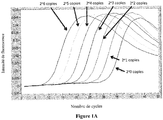
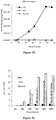
- pLIN-HIV-ScaI The efficiency and sensitivity of quantitative PCR with primers 25t and MS2 are shown for pLIN-HIV-ScaI ( Figure 1A ).
- the parameters used for pLIN-HIV-NdeI were identical to those determined for pLIN-HIV-ScaI indicating that the difference of the two plasmids concerning the end of the viral DNA (a Sca I site for pLIN-HIV-ScaI and a site Nde I for pLIN-HIV-NdeI) does not influence quantitative PCR as expected.
- DNA mimicking the non-matured end was obtained by Sca I / Aat II digestion followed by purification.
- DNA mimicking the mature 3 'end was obtained by digestion with Nde I / Aat II and purification. After purification, these fragments were quantified by quantitative PCR using primers and probes for quantification of total viral DNA (see Table 1 ).
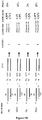
- the LM-PCR with the 11GTb linker leads to the detection of 3 'matured linear viral DNA and not matured with an efficiency of 90% and a sensitivity of 10 copies per 200,000 cells in both cases (as indicated in the material and methods part the effectiveness was in fact determined using the linker 11TAb whose sticky end of 2 nucleotides is complementary to that generated by the cutoff Nde I but for the sake of simplification it is the linker 11GTb which is represented in the figure).
- LM-PCR with the linker oligonucleotide (linker 11b) is only capable of detecting and quantifying undigested viral DNA.
- the amount of 3 'matured DNA is deduced by subtracting the amount obtained with the binding oligonucleotide (11GTb linker) from that obtained with the binding oligonucleotide (linker 11b).
- For each quantitation non-matured linear viral DNA and 3 'mature linear DNA, several dilutions of the corresponding fragments were made in uninfected cell DNA (200 ng / ⁇ l).
- a binding oligonucleotide (11GTb linker for non-matured linear DNA and 11b linker for mature linear DNA) was ligated with each dilution. end of viral DNA (not matured or matured 3 '). As a result, the quantification obtained after PCR takes into account the ligation efficiency. After ligation, the ligated DNA was purified using magnetic beads according to the manufacturer's instructions (Invitrogen) to prevent inhibition of PCR due to mixing of the ligation reaction. The ligated DNA (1/10 of the ligation reaction) was then subjected to real-time PCR amplification with primers 32t and MS1 (see Table 1 ).
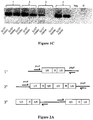
- the number of cycles has been determined empirically. In order to remain in the exponential phase, only 12 cycles of PCR were performed. Unexpectedly, decreasing the number of cycles (for example 8 cycles) during the first PCR results in weak amplification of the samples resulting in erroneous quantification. Likewise, increasing the number of cycles does not improve quantification. Moreover, after 30 cycles, the curves of the plasmid range used for the quantification (dilution of 10 to 10) are almost superimposed; therefore, the quantification of the sample is impossible. Thus, 12 cycles are sufficient to allow quantification of all dilutions of ligated DNA at the end of the second PCR. The amplified products (1/100) were then subjected to the second PCR. The efficiency of each quantification (immature and matured in 3 ') is described in Figure 1B and 1 C .
- the end of the Nde I digest fragment is similar but not identical to that found at the 3 'end in the infected cells (5'-ATTG and not 5).
- -ACTG in infected cells
- the binding oligonucleotide is able to detect the undigested viral end.
- the reason may be that the sticky end of the binding oligonucleotide (5'-GT) is not involved in the ligation with the phosphate on the 5 'side of the genome.
- this binding oligonucleotide 11GTb linker
- both the immature end and the 3 'mature end can be efficiently detected.
- the inventors have shown that asymmetric binding oligonucleotides can be used for efficient quantification of the ends of the viral DNA.
- the 25t / 11GT and 25t / 11b pairs will be used to quantify both undried and matured 3 'ends during the natural course of infection.
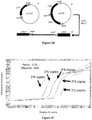
- Quantitative PCR using 1LTR LA1 and 1LTR LA16 primers and with p1-LTR as template leads to sensitive detection ( Figures 2C and 2D Table 2 ) and effective (200 copies / 10 6 cells) of 1-LTR DNA.
- p2-LTR subjected to the same protocol, leads to a weak amplification signal ( Figures 2C and 2D Table 2 ).
- p2-LTR was digested with Sca I to mimic the linear viral DNA found in the infected cells. The inventors have precisely quantified the purified DNA according to the protocol adapted to the total viral DNA.
- the inventors quantified the different forms of viral DNA during infection of cells with HIV-1 viruses derived from pNL4-3: ⁇ env NLENG1-ES-IRES virus type wild (wt) and NLENG1-ES-IRES D116N ( Gelderblom et al. (2008) Retrovirology 9; 5: 60 ).
- VSV-G envelope pseudotyped virus 30ng p24 antigen per million cells.
- 3 conditions of infection are achieved: infection with a virus whose integrase is catalytically active (wild type , WT) in the absence or in the presence of 500nM of raltegravir (RAL), an inhibitor of the integration reaction ( Steigbigel et al. (2008) New England Journal of Medicine 359.4: 339-354 ).
- the last condition is infection with a virus whose integrase is catalytically inactive (D116N) ( Shin et al. (1994), Journal of Virology 68,3: 1633-1642 ).
- the cells are washed in phosphate buffer (PBS), contacted with trypsin for 1 minute at 37 ° C.
- PBS phosphate buffer
- the cells are then washed once in culture medium and twice in a large volume of PBS.
- the cells are then cultured in RPMI 1640 medium containing 10% fetal calf serum.
- a sample of 3 million cells is constituted.
- the cell pellet is subjected to digestion with 1,500 U of DNaseI (Invitrogen, reference AM2238) in a buffer containing 20 mM Tris-HCl pH 8.3, 50 mM KCl, 2 mM MgCl 2 for 10 minutes at room temperature.
- the cell pellet is then washed in PBS and the cells are centrifuged and then put at -80 ° C before use.
- the DNA is then extracted using the QIAamp DNA blood mini kit (Qiagen, reference 51104).
- Total viral DNA copy number is determined using primers ( Butler et al. (2001) Nature Medicine 7: 631-634 ) hybridizing in the U5 region of the LTR (primer MH531: 5'-TGTGTGCCCGTCTGTTGTGT-3 ', SEQ ID NO: 29) and in the gag gene (MH532 primer: GAGTCCTGCGTCGAGAGAGC-3', SEQ ID NO: 30) as well as MH FL * hybridization probes (5'-CCCTCAGACCCTTTTAGTCAGTGTGGAAa-3 ', SEQ ID NO: 31) and MH LC * (5'-TCTCTAGCAGTGGCGCCCGAACAGb, SEQ ID NO: 32) (a: Fluorescein at the 3'end; b: LC red 640 at the 5 'end and phosphorylation at the 3' end) ( Table 1 ).
- the 2-LTR circles are amplified by the primers flanking the LTR-LTR junction (HIVF and HIVR1 primers) ( Brussel & Sonigo (2003) Journal of Virology 77: 10119-10124 ).
- the integrated viral DNA is quantified by Alu-PCR ( Brussel & Sonigo (2003) Journal of Virology 77: 10119-10124 ).
- U5-gag sequences, 2-LTR junctions as well as specific amplification of the integrated DNA are amplified in duplicate from 1/50 of the cellular DNA extraction. The number of copies is normalized per ⁇ g of DNA by measuring the amount of ⁇ -globin gene in 1/50 of the DNA extract ( Table 1 ).
- Raltegravir an integrase inhibitor
- integrase inhibitor an inhibitor of the integration reaction and not of the maturation of the extremities in the context of an infection ( Nguyen et al. (2011) Ann. NY Acad Sci. 1222: 83-9 ).
- the effectiveness of this drug is proven in the 3D Figure (Inhibition of integrated viral DNA detection, similar to inhibition of integration by catalytic site mutant (D116N)).
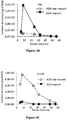
- the amount of mature viral DNA with or without raltegravir is similar ( Figure 4A-4B ).
- the mature viral DNA is almost undetectable in the case of an infection by the mutant of the catalytic site which has been shown to be completely devoid of activity, thus including for the catalysis of the maturation stage ( Figure 4C ).
- Linear viral DNA is the least stable viral form among the different viral genomes.
- Styrylquinolines are, in vitro, inhibitors of integrase binding on viral DNA ( Deprez et al. (2004) Mol. Pharmacol. 65: 85-98 ) and thus represent a different class from that of raltegravir since the SQs act as competitive inhibitors of the maturation stage. Although effective during a viral infection, the step targeted by these inhibitors could never be clearly identified by lack of tools allowing, ex vivo , to characterize the stage of viral DNA processing ( Bonnieri et al. (2004) Journal of Virology 78: 5728-36 ). The method according to the invention has thus made it possible to demonstrate that the styrylquinolines, whose molecule FZ41 is the prototype, well inhibits the reaction of maturation of the viral DNA.
- CEM cells have been infected with the virus having a catalytically active "wild-type" integrase.
- the cells were treated or not, at the time of infection, with 20 ⁇ M of FZ41.
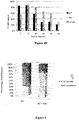
- 20 hours post-infection mature linear viral DNA and immature viral DNA are quantified and reported Figure 5 .
- the results show an inhibition of the viral DNA processing by the compound FZ41.
- the percentage of mature viral DNA is 75% in the absence of SQ (and consequently 25% of immature DNA) against 28% of mature DNA in the presence of FZ41. Inhibition of the processing of viral DNA is therefore important in the presence of SQ.
- the method according to the invention reliable, sensitive, inexpensive, is well suited to the screening of integrase inhibiting compounds to test their activity on the processing of linear DNA, the sole substrate of the integration reaction.
- this method can be broken down into a clinical test for a predictive test of patient escape, the viral load being associated with the amount of viral DNA in the infected cells.
- the results of the inventors confirm the strong inhibition (factor 40) of the formation of 2-LTR circles for both wild-type and D116N viruses in Nalm-114 cells compared to Nalm-6 cells.
- the amounts of 1-LTR circles are similar for cell lines infected with wild type or D116N viruses.
- ligase-4 is not involved in the formation of 1-LTR circles.
- the inventors noticed that the amount of 1-LTR circles was essentially unchanged regardless of the accumulation level of the 2-LTR circles, which confirms that using the quantitative approach of the invention, an exact quantification of circles at 1-LTR in the cellular context and possible unbiased due to the presence of 2-LTR circles.
- RAL remained essentially ineffective up to concentrations of 5 ⁇ M where 80% of the maturation activity was still visible.
- the maturation activity was greatly affected at 2.5 or 5 ⁇ M DTG and EVG (maturation efficiency at about 40% and less than 25% at 2.5 ⁇ M and 5 ⁇ M respectively).
- IC 50 values for the maturation reaction are respectively 2 ⁇ M, 5 ⁇ M and 10 ⁇ M for DTG, EVG and RAL.
- the processing efficiency was measured during the infection of primary CD4 + T lymphocytes using a previously described wild type ⁇ env virus (+/- RAL, EVG or DTG at 5 ⁇ M). It is observed that the efficiency of the ripening reaction is high (75%) but slightly slowed down in the primary cells (the maximum of maturation is reached 24 hours post-infection) and influenced by EVG and DTG (at 5 ⁇ M) but not by RAL. In addition, the accumulation kinetics of 1-LTR and 2-LTR circles are similar in primary cells as compared to cell line cells.
- 1-LTR circles require homologous recombination between 2 LTR of linear DNA in the nucleus while for others it involves a reverse transcription step in the cytoplasmic compartment.
- the peptides NLS-IN-Pen and SV40-NLS-Pen which have been described as inhibiting the nuclear import of the pre-integration complex via the inhibition of the interaction between integrase and importin ⁇ ( Levin et al. (2009) Retrovirology 6: 112 ), were used to determine whether the 1-LTR circles are formed only during the reverse transcription step and does not require translocation of the preintegration complex.
- HeLa cells, treated with one of the two peptides, were infected with a pNL4.3 virus in the presence of RAL. Without peptide, 2-LTR circles accumulate to 19.3% of total viral DNA at 48h post-infection.
- the inhibition of nuclear import of the pre-integration complex could also be carried out more specifically by mutations in the FLAP and / or CTS regions of the virus.
- HeLa cells were infected with a defective mutant, both in the CTS and PPT regions.
- the amounts of 1-LTR and 2-LTR circles were normalized to the amounts determined under wild-type conditions at 24 h post-infection.
- the inventors have found that the abrogation of the FLAP structure partially, but not completely, inhibits the nuclear import of the pre-integration complex, the inventors have observed a substantial decrease in the amount of 2-LTR circles (approximately 2 times). In this context, the inventors have demonstrated a concomitant decrease in the amount of circles at 1-LTR but to a lesser degree (1.4 times).
- 1-LTR circles could be formed in the cytoplasm during the reverse transcription phase but most of the circles at 1-LTR (90%) would be formed by homologous recombination, in the nucleus, after translocation of the pre-integration complex.
Landscapes
- Chemical & Material Sciences (AREA)
- Health & Medical Sciences (AREA)
- Life Sciences & Earth Sciences (AREA)
- Organic Chemistry (AREA)
- Zoology (AREA)
- Wood Science & Technology (AREA)
- Proteomics, Peptides & Aminoacids (AREA)
- Engineering & Computer Science (AREA)
- Virology (AREA)
- Immunology (AREA)
- Molecular Biology (AREA)
- Bioinformatics & Cheminformatics (AREA)
- Biotechnology (AREA)
- Biophysics (AREA)
- Analytical Chemistry (AREA)
- Physics & Mathematics (AREA)
- Biochemistry (AREA)
- Microbiology (AREA)
- General Engineering & Computer Science (AREA)
- General Health & Medical Sciences (AREA)
- Genetics & Genomics (AREA)
- AIDS & HIV (AREA)
- Chemical Kinetics & Catalysis (AREA)
- Measuring Or Testing Involving Enzymes Or Micro-Organisms (AREA)
Claims (8)
- Quantifizierungsverfahren der gereiften linearen Form im 3' des DNA-Genoms des menschlichen Immunschwächevirus 1 (HIV-1) in einer Probe, in der:(i) totale lineare Formen des Genoms des HIV-1 quantifiziert werden, wobei die Quantifikation des Schritts (i) per quantitativer PCR ausgehend von dem Ligationsprodukt realisiert ist, das per Durchführung einer Ligationsreaktion mit einem doppelsträngigen Oligonukleid erhalten ist, das eine Ligation mit der gereiften linearen Form in 3' und der nicht gereiften linearen Form in 3' des DNA-Genoms des HIV-1 zulässt und ein kohäsives Ende von zwei Nukleotiden der Sequenz 5' - GT-3' umfasst und(ii) die nicht gereifte lineare Form des DNA-Genoms des HIV-1 quantifiziert wirdbei dem die Menge der gereiften linearen Form in 3' durch Substraktion der Menge der nicht gereiften linearen Form des DNA-Genoms des HIV-1 abgezogen wird, die in Schritt (ii) der Gesamtmenge der linearen Formen des Genoms des HIV-1 quantifiziert ist, die in Schritt (i) quantifiziert ist, in der der Schritt (ii) per quantitativer PCR ausgehend von dem Ligationsprodukt realisiert ist, das per Durchführen einer Ligationsreaktion mit einem doppelsträngigen Oligonukleotid erhalten ist, das eine Ligation spezifisch mit der nicht gereiften linearen Form in 3' des DNA-Genoms des HIV-1 zulässt und ein freies Ende umfasst.
- Verfahren gemäß Anspruch 1, bei dem die quantitative PCR in zwei Schritten realisiert ist: einem ersten Amplifizierungsschritt ohne Quantifizierung der amplifizierten Nukleinsäure und einem zweiten Amplifizierungsschritt mit Quantifizierung der amplifizierten Nukleinsäure.
- Verfahren gemäß Anspruch 2, bei dem der erste Schritt der quantitativen PCR 9 bis 30 Zyklen umfasst.
- Verfahren gemäß Anspruch 2 oder 3, bei dem der erste Schritt der quantitativen PCR 10 bis 14 Zyklen umfasst.
- Verfahren gemäß einem der Ansprüche 1 bis 4, bei dem die quantitative PCR eine PCR in Echtzeit ist.
- Verfahren gemäß Anspruch 5, bei dem die PCR in Echtzeit mit Hybridationssonden geführt ist.
- Aussiebungsverfahren von Verbindungen, die geeignet sind, die Menge einer nicht integrierten Form des Genoms des HIV-1 zu modifizieren, umfassend die Umsetzung eines Verfahrens gemäß Definition in einem der Ansprüche 1 bis 6.
- Aussiebungsverfahren von Verbindungen gemäß Anspruch 7, bei dem die Verbindungen geeignet sind, die Reifung der linearen Form des DNA-Genoms des HIV-1 zu inhibieren und ein Verfahren gemäß Definition in einem der Ansprüche 1 bis 6 umgesetzt wird.
Applications Claiming Priority (2)
| Application Number | Priority Date | Filing Date | Title |
|---|---|---|---|
| FR1255489A FR2991692A1 (fr) | 2012-06-12 | 2012-06-12 | Methode de quantification des differentes formes virales de l'adn du vih |
| PCT/IB2013/054809 WO2013186718A1 (fr) | 2012-06-12 | 2013-06-12 | Methode de quantification des differentes formes virales de l'adn du vih |
Publications (2)
| Publication Number | Publication Date |
|---|---|
| EP2859124A1 EP2859124A1 (de) | 2015-04-15 |
| EP2859124B1 true EP2859124B1 (de) | 2018-04-25 |
Family
ID=48914382
Family Applications (1)
| Application Number | Title | Priority Date | Filing Date |
|---|---|---|---|
| EP13744827.0A Active EP2859124B1 (de) | 2012-06-12 | 2013-06-12 | Verfahren zur quantifizierung verschiedener viraler formen der dns des hiv-virus |
Country Status (7)
| Country | Link |
|---|---|
| US (1) | US20150232954A1 (de) |
| EP (1) | EP2859124B1 (de) |
| JP (1) | JP6368302B2 (de) |
| CA (1) | CA2876152C (de) |
| ES (1) | ES2683381T3 (de) |
| FR (1) | FR2991692A1 (de) |
| WO (1) | WO2013186718A1 (de) |
Family Cites Families (3)
| Publication number | Priority date | Publication date | Assignee | Title |
|---|---|---|---|---|
| AU2735797A (en) | 1996-04-12 | 1998-03-26 | Public Health Research Institute Of The City Of New York, Inc., The | Detection probes, kits and assays |
| AUPP561098A0 (en) * | 1998-09-02 | 1998-09-24 | Medvet Science Pty. Ltd. | Measurement of persistent-latent HIV viral load |
| US8748088B2 (en) * | 2009-01-30 | 2014-06-10 | University Of Massachusetts | Methods of monitoring treatment effectiveness in HIV-infected patients receiveing intensified HAART regimens by measuring episomal 2-LTR circles |
-
2012
- 2012-06-12 FR FR1255489A patent/FR2991692A1/fr not_active Withdrawn
-
2013
- 2013-06-12 JP JP2015516727A patent/JP6368302B2/ja active Active
- 2013-06-12 CA CA2876152A patent/CA2876152C/fr active Active
- 2013-06-12 EP EP13744827.0A patent/EP2859124B1/de active Active
- 2013-06-12 US US14/406,767 patent/US20150232954A1/en not_active Abandoned
- 2013-06-12 WO PCT/IB2013/054809 patent/WO2013186718A1/fr not_active Ceased
- 2013-06-12 ES ES13744827.0T patent/ES2683381T3/es active Active
Non-Patent Citations (1)
| Title |
|---|
| None * |
Also Published As
| Publication number | Publication date |
|---|---|
| EP2859124A1 (de) | 2015-04-15 |
| FR2991692A1 (fr) | 2013-12-13 |
| ES2683381T3 (es) | 2018-09-26 |
| CA2876152C (fr) | 2020-06-02 |
| CA2876152A1 (fr) | 2013-12-19 |
| JP6368302B2 (ja) | 2018-08-01 |
| US20150232954A1 (en) | 2015-08-20 |
| JP2015519074A (ja) | 2015-07-09 |
| WO2013186718A1 (fr) | 2013-12-19 |
Similar Documents
| Publication | Publication Date | Title |
|---|---|---|
| EP3455239B1 (de) | Teilchen für die einkapselung eines genomtechnischen systems | |
| Mayer et al. | Human endogenous retroviruses in the primate lineage and their influence on host genomes | |
| Terry et al. | Expression of HERV-K108 envelope interferes with HIV-1 production | |
| EP0245136B1 (de) | Für ein Glykoprotein des AIDS-Virus kodierende Virus-Vektoren, Vakzin und Antikörper | |
| KR20180091099A (ko) | 단백질 제조를 위한 개선된 진핵 세포 및 이들을 제조하는 방법 | |
| EP0273782A1 (de) | Defektes rekombinantes Retrovirus | |
| Jennings et al. | The HIV-1 capsid serves as a nanoscale reaction vessel for reverse transcription | |
| WO2002038792A2 (fr) | Nouvelle methode d'analyse des caracteristiques phenotypiques des virus de l'immunodeficience humaine (vih) | |
| US20250230511A1 (en) | Methods and reagents for amplifying viral vector nucleic acid products | |
| Afonso et al. | Absence of accessory genes in a divergent simian T-lymphotropic virus type 1 isolated from a bonnet macaque (Macaca radiata) | |
| CA2876152C (fr) | Methode de quantification des differentes formes virales de l'adn du vih | |
| EP2473629B1 (de) | Identifizierung von virus tropismus | |
| EP0796338B1 (de) | Verpackungszellinie zur transkomplementierung von defektiven retroviren-vektoren | |
| Jiang et al. | Construction and characterization of HIV type 1 CRF07_BC infectious molecular clone from men who have sex with men | |
| Berry et al. | Mitochondrial DNA and retroviral RNA analyses of archival oral polio vaccine (OPV CHAT) materials: evidence of macaque nuclear sequences confirms substrate identity | |
| FR2816635A1 (fr) | Nouvelle methode d'analyse des caracteristiques phenotypiques des virus de l'immunodeficience humaine (vih) | |
| Hernández | Role of viral proteins and nucleic acids interactions in the selective packaging of the foamy virus RNA genome | |
| Aguilar Hernández | Role of viral proteins and nucleic acids interactions in the selective packaging of the foamy virus RNA genome | |
| WO2020120778A1 (fr) | Méthode d'identification de cellules infectees par le vih | |
| FR2829506A1 (fr) | Nouvelle methode d'analyse des caracteristiques phenotypiques des virus de l'immunodeficience humaine(hiv) | |
| Sánchez-Jiménez et al. | Evidence of ongoing replication in a human immunodeficiency virus type 1 persistently infected cell line. | |
| WO2006087465A2 (fr) | Methode de preparation de fragments synthetiques d'acides nucleiques bicatenaires | |
| FR2829503A1 (fr) | Nouvelee methode d'analyse des caracteristiques phenotypiques des virus de l'immunodeficience humaine(vih) | |
| FR2829502A1 (fr) | Nouvelle methode d'analyse des caracteristiques phenotypiques des virus de l'immunodeficience humaine(vih) | |
| FR2816634A1 (fr) | Nouvelle methode d'analyse des caracteristiques phenotypiques des virus de l'immunodeficience humaine (vih) |
Legal Events
| Date | Code | Title | Description |
|---|---|---|---|
| PUAI | Public reference made under article 153(3) epc to a published international application that has entered the european phase |
Free format text: ORIGINAL CODE: 0009012 |
|
| 17P | Request for examination filed |
Effective date: 20141231 |
|
| AK | Designated contracting states |
Kind code of ref document: A1 Designated state(s): AL AT BE BG CH CY CZ DE DK EE ES FI FR GB GR HR HU IE IS IT LI LT LU LV MC MK MT NL NO PL PT RO RS SE SI SK SM TR |
|
| AX | Request for extension of the european patent |
Extension state: BA ME |
|
| DAX | Request for extension of the european patent (deleted) | ||
| 17Q | First examination report despatched |
Effective date: 20160406 |
|
| GRAP | Despatch of communication of intention to grant a patent |
Free format text: ORIGINAL CODE: EPIDOSNIGR1 |
|
| INTG | Intention to grant announced |
Effective date: 20171123 |
|
| GRAA | (expected) grant |
Free format text: ORIGINAL CODE: 0009210 |
|
| GRAS | Grant fee paid |
Free format text: ORIGINAL CODE: EPIDOSNIGR3 |
|
| AK | Designated contracting states |
Kind code of ref document: B1 Designated state(s): AL AT BE BG CH CY CZ DE DK EE ES FI FR GB GR HR HU IE IS IT LI LT LU LV MC MK MT NL NO PL PT RO RS SE SI SK SM TR |
|
| REG | Reference to a national code |
Ref country code: GB Ref legal event code: FG4D Free format text: NOT ENGLISH |
|
| REG | Reference to a national code |
Ref country code: CH Ref legal event code: EP |
|
| REG | Reference to a national code |
Ref country code: AT Ref legal event code: REF Ref document number: 992987 Country of ref document: AT Kind code of ref document: T Effective date: 20180515 |
|
| REG | Reference to a national code |
Ref country code: IE Ref legal event code: FG4D Free format text: LANGUAGE OF EP DOCUMENT: FRENCH |
|
| REG | Reference to a national code |
Ref country code: DE Ref legal event code: R096 Ref document number: 602013036489 Country of ref document: DE |
|
| REG | Reference to a national code |
Ref country code: CH Ref legal event code: NV Representative=s name: MICHELI AND CIE SA, CH Ref country code: FR Ref legal event code: PLFP Year of fee payment: 6 |
|
| REG | Reference to a national code |
Ref country code: NL Ref legal event code: MP Effective date: 20180425 |
|
| REG | Reference to a national code |
Ref country code: LT Ref legal event code: MG4D |
|
| REG | Reference to a national code |
Ref country code: ES Ref legal event code: FG2A Ref document number: 2683381 Country of ref document: ES Kind code of ref document: T3 Effective date: 20180926 |
|
| PG25 | Lapsed in a contracting state [announced via postgrant information from national office to epo] |
Ref country code: NL Free format text: LAPSE BECAUSE OF FAILURE TO SUBMIT A TRANSLATION OF THE DESCRIPTION OR TO PAY THE FEE WITHIN THE PRESCRIBED TIME-LIMIT Effective date: 20180425 |
|
| PG25 | Lapsed in a contracting state [announced via postgrant information from national office to epo] |
Ref country code: BG Free format text: LAPSE BECAUSE OF FAILURE TO SUBMIT A TRANSLATION OF THE DESCRIPTION OR TO PAY THE FEE WITHIN THE PRESCRIBED TIME-LIMIT Effective date: 20180725 Ref country code: FI Free format text: LAPSE BECAUSE OF FAILURE TO SUBMIT A TRANSLATION OF THE DESCRIPTION OR TO PAY THE FEE WITHIN THE PRESCRIBED TIME-LIMIT Effective date: 20180425 Ref country code: PL Free format text: LAPSE BECAUSE OF FAILURE TO SUBMIT A TRANSLATION OF THE DESCRIPTION OR TO PAY THE FEE WITHIN THE PRESCRIBED TIME-LIMIT Effective date: 20180425 Ref country code: SE Free format text: LAPSE BECAUSE OF FAILURE TO SUBMIT A TRANSLATION OF THE DESCRIPTION OR TO PAY THE FEE WITHIN THE PRESCRIBED TIME-LIMIT Effective date: 20180425 Ref country code: NO Free format text: LAPSE BECAUSE OF FAILURE TO SUBMIT A TRANSLATION OF THE DESCRIPTION OR TO PAY THE FEE WITHIN THE PRESCRIBED TIME-LIMIT Effective date: 20180725 Ref country code: LT Free format text: LAPSE BECAUSE OF FAILURE TO SUBMIT A TRANSLATION OF THE DESCRIPTION OR TO PAY THE FEE WITHIN THE PRESCRIBED TIME-LIMIT Effective date: 20180425 |
|
| PG25 | Lapsed in a contracting state [announced via postgrant information from national office to epo] |
Ref country code: LV Free format text: LAPSE BECAUSE OF FAILURE TO SUBMIT A TRANSLATION OF THE DESCRIPTION OR TO PAY THE FEE WITHIN THE PRESCRIBED TIME-LIMIT Effective date: 20180425 Ref country code: HR Free format text: LAPSE BECAUSE OF FAILURE TO SUBMIT A TRANSLATION OF THE DESCRIPTION OR TO PAY THE FEE WITHIN THE PRESCRIBED TIME-LIMIT Effective date: 20180425 Ref country code: RS Free format text: LAPSE BECAUSE OF FAILURE TO SUBMIT A TRANSLATION OF THE DESCRIPTION OR TO PAY THE FEE WITHIN THE PRESCRIBED TIME-LIMIT Effective date: 20180425 Ref country code: GR Free format text: LAPSE BECAUSE OF FAILURE TO SUBMIT A TRANSLATION OF THE DESCRIPTION OR TO PAY THE FEE WITHIN THE PRESCRIBED TIME-LIMIT Effective date: 20180726 |
|
| REG | Reference to a national code |
Ref country code: AT Ref legal event code: MK05 Ref document number: 992987 Country of ref document: AT Kind code of ref document: T Effective date: 20180425 |
|
| PG25 | Lapsed in a contracting state [announced via postgrant information from national office to epo] |
Ref country code: PT Free format text: LAPSE BECAUSE OF FAILURE TO SUBMIT A TRANSLATION OF THE DESCRIPTION OR TO PAY THE FEE WITHIN THE PRESCRIBED TIME-LIMIT Effective date: 20180827 |
|
| REG | Reference to a national code |
Ref country code: DE Ref legal event code: R097 Ref document number: 602013036489 Country of ref document: DE |
|
| PG25 | Lapsed in a contracting state [announced via postgrant information from national office to epo] |
Ref country code: EE Free format text: LAPSE BECAUSE OF FAILURE TO SUBMIT A TRANSLATION OF THE DESCRIPTION OR TO PAY THE FEE WITHIN THE PRESCRIBED TIME-LIMIT Effective date: 20180425 Ref country code: DK Free format text: LAPSE BECAUSE OF FAILURE TO SUBMIT A TRANSLATION OF THE DESCRIPTION OR TO PAY THE FEE WITHIN THE PRESCRIBED TIME-LIMIT Effective date: 20180425 Ref country code: AT Free format text: LAPSE BECAUSE OF FAILURE TO SUBMIT A TRANSLATION OF THE DESCRIPTION OR TO PAY THE FEE WITHIN THE PRESCRIBED TIME-LIMIT Effective date: 20180425 Ref country code: CZ Free format text: LAPSE BECAUSE OF FAILURE TO SUBMIT A TRANSLATION OF THE DESCRIPTION OR TO PAY THE FEE WITHIN THE PRESCRIBED TIME-LIMIT Effective date: 20180425 Ref country code: RO Free format text: LAPSE BECAUSE OF FAILURE TO SUBMIT A TRANSLATION OF THE DESCRIPTION OR TO PAY THE FEE WITHIN THE PRESCRIBED TIME-LIMIT Effective date: 20180425 Ref country code: SK Free format text: LAPSE BECAUSE OF FAILURE TO SUBMIT A TRANSLATION OF THE DESCRIPTION OR TO PAY THE FEE WITHIN THE PRESCRIBED TIME-LIMIT Effective date: 20180425 |
|
| PG25 | Lapsed in a contracting state [announced via postgrant information from national office to epo] |
Ref country code: SM Free format text: LAPSE BECAUSE OF FAILURE TO SUBMIT A TRANSLATION OF THE DESCRIPTION OR TO PAY THE FEE WITHIN THE PRESCRIBED TIME-LIMIT Effective date: 20180425 |
|
| PLBE | No opposition filed within time limit |
Free format text: ORIGINAL CODE: 0009261 |
|
| STAA | Information on the status of an ep patent application or granted ep patent |
Free format text: STATUS: NO OPPOSITION FILED WITHIN TIME LIMIT |
|
| REG | Reference to a national code |
Ref country code: BE Ref legal event code: MM Effective date: 20180630 |
|
| REG | Reference to a national code |
Ref country code: IE Ref legal event code: MM4A |
|
| PG25 | Lapsed in a contracting state [announced via postgrant information from national office to epo] |
Ref country code: LU Free format text: LAPSE BECAUSE OF NON-PAYMENT OF DUE FEES Effective date: 20180612 Ref country code: MC Free format text: LAPSE BECAUSE OF FAILURE TO SUBMIT A TRANSLATION OF THE DESCRIPTION OR TO PAY THE FEE WITHIN THE PRESCRIBED TIME-LIMIT Effective date: 20180425 |
|
| 26N | No opposition filed |
Effective date: 20190128 |
|
| PG25 | Lapsed in a contracting state [announced via postgrant information from national office to epo] |
Ref country code: IE Free format text: LAPSE BECAUSE OF NON-PAYMENT OF DUE FEES Effective date: 20180612 |
|
| PG25 | Lapsed in a contracting state [announced via postgrant information from national office to epo] |
Ref country code: SI Free format text: LAPSE BECAUSE OF FAILURE TO SUBMIT A TRANSLATION OF THE DESCRIPTION OR TO PAY THE FEE WITHIN THE PRESCRIBED TIME-LIMIT Effective date: 20180425 Ref country code: BE Free format text: LAPSE BECAUSE OF NON-PAYMENT OF DUE FEES Effective date: 20180630 |
|
| PG25 | Lapsed in a contracting state [announced via postgrant information from national office to epo] |
Ref country code: AL Free format text: LAPSE BECAUSE OF FAILURE TO SUBMIT A TRANSLATION OF THE DESCRIPTION OR TO PAY THE FEE WITHIN THE PRESCRIBED TIME-LIMIT Effective date: 20180425 |
|
| PG25 | Lapsed in a contracting state [announced via postgrant information from national office to epo] |
Ref country code: MT Free format text: LAPSE BECAUSE OF FAILURE TO SUBMIT A TRANSLATION OF THE DESCRIPTION OR TO PAY THE FEE WITHIN THE PRESCRIBED TIME-LIMIT Effective date: 20180425 |
|
| PG25 | Lapsed in a contracting state [announced via postgrant information from national office to epo] |
Ref country code: TR Free format text: LAPSE BECAUSE OF FAILURE TO SUBMIT A TRANSLATION OF THE DESCRIPTION OR TO PAY THE FEE WITHIN THE PRESCRIBED TIME-LIMIT Effective date: 20180425 |
|
| PG25 | Lapsed in a contracting state [announced via postgrant information from national office to epo] |
Ref country code: CY Free format text: LAPSE BECAUSE OF FAILURE TO SUBMIT A TRANSLATION OF THE DESCRIPTION OR TO PAY THE FEE WITHIN THE PRESCRIBED TIME-LIMIT Effective date: 20180425 Ref country code: HU Free format text: LAPSE BECAUSE OF FAILURE TO SUBMIT A TRANSLATION OF THE DESCRIPTION OR TO PAY THE FEE WITHIN THE PRESCRIBED TIME-LIMIT; INVALID AB INITIO Effective date: 20130612 Ref country code: MK Free format text: LAPSE BECAUSE OF NON-PAYMENT OF DUE FEES Effective date: 20180425 |
|
| PG25 | Lapsed in a contracting state [announced via postgrant information from national office to epo] |
Ref country code: IS Free format text: LAPSE BECAUSE OF FAILURE TO SUBMIT A TRANSLATION OF THE DESCRIPTION OR TO PAY THE FEE WITHIN THE PRESCRIBED TIME-LIMIT Effective date: 20180825 |
|
| REG | Reference to a national code |
Ref country code: GB Ref legal event code: 732E Free format text: REGISTERED BETWEEN 20220707 AND 20220713 |
|
| REG | Reference to a national code |
Ref country code: DE Ref legal event code: R081 Ref document number: 602013036489 Country of ref document: DE Owner name: UNIVERSITE PARIS CITE, FR Free format text: FORMER OWNERS: CENTRE NATIONAL DE LA RECHERCHE SCIENTIFIQUE (C.N.R.S.), PARIS, FR; ECOLE NORMALE SUPERIEURE DE CACHAN, CACHAN, FR; UNIVERSITE PARIS DIDEROT - PARIS 7, PARIS, FR Ref country code: DE Ref legal event code: R081 Ref document number: 602013036489 Country of ref document: DE Owner name: ECOLE NORMALE SUPERIEURE DE CACHAN, FR Free format text: FORMER OWNERS: CENTRE NATIONAL DE LA RECHERCHE SCIENTIFIQUE (C.N.R.S.), PARIS, FR; ECOLE NORMALE SUPERIEURE DE CACHAN, CACHAN, FR; UNIVERSITE PARIS DIDEROT - PARIS 7, PARIS, FR Ref country code: DE Ref legal event code: R081 Ref document number: 602013036489 Country of ref document: DE Owner name: CENTRE NATIONAL DE LA RECHERCHE SCIENTIFIQUE (, FR Free format text: FORMER OWNERS: CENTRE NATIONAL DE LA RECHERCHE SCIENTIFIQUE (C.N.R.S.), PARIS, FR; ECOLE NORMALE SUPERIEURE DE CACHAN, CACHAN, FR; UNIVERSITE PARIS DIDEROT - PARIS 7, PARIS, FR |
|
| REG | Reference to a national code |
Ref country code: ES Ref legal event code: PC2A Owner name: UNIVERSITE DE PARIS Effective date: 20221216 |
|
| REG | Reference to a national code |
Ref country code: ES Ref legal event code: PC2A Owner name: UNIVERSITE PARIS CITE Effective date: 20230131 |
|
| PGFP | Annual fee paid to national office [announced via postgrant information from national office to epo] |
Ref country code: GB Payment date: 20250626 Year of fee payment: 13 |
|
| PGFP | Annual fee paid to national office [announced via postgrant information from national office to epo] |
Ref country code: FR Payment date: 20250626 Year of fee payment: 13 |
|
| PGFP | Annual fee paid to national office [announced via postgrant information from national office to epo] |
Ref country code: ES Payment date: 20250828 Year of fee payment: 13 |
|
| PGFP | Annual fee paid to national office [announced via postgrant information from national office to epo] |
Ref country code: DE Payment date: 20250725 Year of fee payment: 13 |
|
| PGFP | Annual fee paid to national office [announced via postgrant information from national office to epo] |
Ref country code: IT Payment date: 20250626 Year of fee payment: 13 |
|
| PGFP | Annual fee paid to national office [announced via postgrant information from national office to epo] |
Ref country code: CH Payment date: 20250711 Year of fee payment: 13 |