EP2858647B1 - H4 receptor inhibitors for treating tinnitus - Google Patents
H4 receptor inhibitors for treating tinnitus Download PDFInfo
- Publication number
- EP2858647B1 EP2858647B1 EP13727899.0A EP13727899A EP2858647B1 EP 2858647 B1 EP2858647 B1 EP 2858647B1 EP 13727899 A EP13727899 A EP 13727899A EP 2858647 B1 EP2858647 B1 EP 2858647B1
- Authority
- EP
- European Patent Office
- Prior art keywords
- amine
- pyrimidin
- methylamino
- pyrrolidin
- azetidin
- Prior art date
- Legal status (The legal status is an assumption and is not a legal conclusion. Google has not performed a legal analysis and makes no representation as to the accuracy of the status listed.)
- Not-in-force
Links
Images


Classifications
-
- A—HUMAN NECESSITIES
- A61—MEDICAL OR VETERINARY SCIENCE; HYGIENE
- A61K—PREPARATIONS FOR MEDICAL, DENTAL OR TOILETRY PURPOSES
- A61K31/00—Medicinal preparations containing organic active ingredients
- A61K31/33—Heterocyclic compounds
- A61K31/395—Heterocyclic compounds having nitrogen as a ring hetero atom, e.g. guanethidine or rifamycins
- A61K31/435—Heterocyclic compounds having nitrogen as a ring hetero atom, e.g. guanethidine or rifamycins having six-membered rings with one nitrogen as the only ring hetero atom
- A61K31/44—Non condensed pyridines; Hydrogenated derivatives thereof
- A61K31/445—Non condensed piperidines, e.g. piperocaine
- A61K31/4523—Non condensed piperidines, e.g. piperocaine containing further heterocyclic ring systems
- A61K31/454—Non condensed piperidines, e.g. piperocaine containing further heterocyclic ring systems containing a five-membered ring with nitrogen as a ring hetero atom, e.g. pimozide, domperidone
-
- C—CHEMISTRY; METALLURGY
- C12—BIOCHEMISTRY; BEER; SPIRITS; WINE; VINEGAR; MICROBIOLOGY; ENZYMOLOGY; MUTATION OR GENETIC ENGINEERING
- C12N—MICROORGANISMS OR ENZYMES; COMPOSITIONS THEREOF; PROPAGATING, PRESERVING, OR MAINTAINING MICROORGANISMS; MUTATION OR GENETIC ENGINEERING; CULTURE MEDIA
- C12N15/00—Mutation or genetic engineering; DNA or RNA concerning genetic engineering, vectors, e.g. plasmids, or their isolation, preparation or purification; Use of hosts therefor
- C12N15/09—Recombinant DNA-technology
- C12N15/11—DNA or RNA fragments; Modified forms thereof; Non-coding nucleic acids having a biological activity
- C12N15/113—Non-coding nucleic acids modulating the expression of genes, e.g. antisense oligonucleotides; Antisense DNA or RNA; Triplex- forming oligonucleotides; Catalytic nucleic acids, e.g. ribozymes; Nucleic acids used in co-suppression or gene silencing
- C12N15/1138—Non-coding nucleic acids modulating the expression of genes, e.g. antisense oligonucleotides; Antisense DNA or RNA; Triplex- forming oligonucleotides; Catalytic nucleic acids, e.g. ribozymes; Nucleic acids used in co-suppression or gene silencing against receptors or cell surface proteins
-
- A—HUMAN NECESSITIES
- A61—MEDICAL OR VETERINARY SCIENCE; HYGIENE
- A61K—PREPARATIONS FOR MEDICAL, DENTAL OR TOILETRY PURPOSES
- A61K31/00—Medicinal preparations containing organic active ingredients
- A61K31/33—Heterocyclic compounds
- A61K31/395—Heterocyclic compounds having nitrogen as a ring hetero atom, e.g. guanethidine or rifamycins
- A61K31/435—Heterocyclic compounds having nitrogen as a ring hetero atom, e.g. guanethidine or rifamycins having six-membered rings with one nitrogen as the only ring hetero atom
- A61K31/47—Quinolines; Isoquinolines
-
- A—HUMAN NECESSITIES
- A61—MEDICAL OR VETERINARY SCIENCE; HYGIENE
- A61K—PREPARATIONS FOR MEDICAL, DENTAL OR TOILETRY PURPOSES
- A61K31/00—Medicinal preparations containing organic active ingredients
- A61K31/33—Heterocyclic compounds
- A61K31/395—Heterocyclic compounds having nitrogen as a ring hetero atom, e.g. guanethidine or rifamycins
- A61K31/495—Heterocyclic compounds having nitrogen as a ring hetero atom, e.g. guanethidine or rifamycins having six-membered rings with two or more nitrogen atoms as the only ring heteroatoms, e.g. piperazine or tetrazines
- A61K31/496—Non-condensed piperazines containing further heterocyclic rings, e.g. rifampin, thiothixene or sparfloxacin
-
- A—HUMAN NECESSITIES
- A61—MEDICAL OR VETERINARY SCIENCE; HYGIENE
- A61K—PREPARATIONS FOR MEDICAL, DENTAL OR TOILETRY PURPOSES
- A61K31/00—Medicinal preparations containing organic active ingredients
- A61K31/33—Heterocyclic compounds
- A61K31/395—Heterocyclic compounds having nitrogen as a ring hetero atom, e.g. guanethidine or rifamycins
- A61K31/495—Heterocyclic compounds having nitrogen as a ring hetero atom, e.g. guanethidine or rifamycins having six-membered rings with two or more nitrogen atoms as the only ring heteroatoms, e.g. piperazine or tetrazines
- A61K31/505—Pyrimidines; Hydrogenated pyrimidines, e.g. trimethoprim
- A61K31/506—Pyrimidines; Hydrogenated pyrimidines, e.g. trimethoprim not condensed and containing further heterocyclic rings
-
- A—HUMAN NECESSITIES
- A61—MEDICAL OR VETERINARY SCIENCE; HYGIENE
- A61K—PREPARATIONS FOR MEDICAL, DENTAL OR TOILETRY PURPOSES
- A61K31/00—Medicinal preparations containing organic active ingredients
- A61K31/33—Heterocyclic compounds
- A61K31/395—Heterocyclic compounds having nitrogen as a ring hetero atom, e.g. guanethidine or rifamycins
- A61K31/495—Heterocyclic compounds having nitrogen as a ring hetero atom, e.g. guanethidine or rifamycins having six-membered rings with two or more nitrogen atoms as the only ring heteroatoms, e.g. piperazine or tetrazines
- A61K31/505—Pyrimidines; Hydrogenated pyrimidines, e.g. trimethoprim
- A61K31/519—Pyrimidines; Hydrogenated pyrimidines, e.g. trimethoprim ortho- or peri-condensed with heterocyclic rings
-
- A—HUMAN NECESSITIES
- A61—MEDICAL OR VETERINARY SCIENCE; HYGIENE
- A61K—PREPARATIONS FOR MEDICAL, DENTAL OR TOILETRY PURPOSES
- A61K31/00—Medicinal preparations containing organic active ingredients
- A61K31/70—Carbohydrates; Sugars; Derivatives thereof
- A61K31/7088—Compounds having three or more nucleosides or nucleotides
- A61K31/7105—Natural ribonucleic acids, i.e. containing only riboses attached to adenine, guanine, cytosine or uracil and having 3'-5' phosphodiester links
-
- A—HUMAN NECESSITIES
- A61—MEDICAL OR VETERINARY SCIENCE; HYGIENE
- A61K—PREPARATIONS FOR MEDICAL, DENTAL OR TOILETRY PURPOSES
- A61K31/00—Medicinal preparations containing organic active ingredients
- A61K31/70—Carbohydrates; Sugars; Derivatives thereof
- A61K31/7088—Compounds having three or more nucleosides or nucleotides
- A61K31/713—Double-stranded nucleic acids or oligonucleotides
-
- A—HUMAN NECESSITIES
- A61—MEDICAL OR VETERINARY SCIENCE; HYGIENE
- A61P—SPECIFIC THERAPEUTIC ACTIVITY OF CHEMICAL COMPOUNDS OR MEDICINAL PREPARATIONS
- A61P25/00—Drugs for disorders of the nervous system
- A61P25/02—Drugs for disorders of the nervous system for peripheral neuropathies
-
- A—HUMAN NECESSITIES
- A61—MEDICAL OR VETERINARY SCIENCE; HYGIENE
- A61P—SPECIFIC THERAPEUTIC ACTIVITY OF CHEMICAL COMPOUNDS OR MEDICINAL PREPARATIONS
- A61P27/00—Drugs for disorders of the senses
-
- A—HUMAN NECESSITIES
- A61—MEDICAL OR VETERINARY SCIENCE; HYGIENE
- A61P—SPECIFIC THERAPEUTIC ACTIVITY OF CHEMICAL COMPOUNDS OR MEDICINAL PREPARATIONS
- A61P27/00—Drugs for disorders of the senses
- A61P27/16—Otologicals
-
- A—HUMAN NECESSITIES
- A61—MEDICAL OR VETERINARY SCIENCE; HYGIENE
- A61P—SPECIFIC THERAPEUTIC ACTIVITY OF CHEMICAL COMPOUNDS OR MEDICINAL PREPARATIONS
- A61P43/00—Drugs for specific purposes, not provided for in groups A61P1/00-A61P41/00
-
- C—CHEMISTRY; METALLURGY
- C12—BIOCHEMISTRY; BEER; SPIRITS; WINE; VINEGAR; MICROBIOLOGY; ENZYMOLOGY; MUTATION OR GENETIC ENGINEERING
- C12N—MICROORGANISMS OR ENZYMES; COMPOSITIONS THEREOF; PROPAGATING, PRESERVING, OR MAINTAINING MICROORGANISMS; MUTATION OR GENETIC ENGINEERING; CULTURE MEDIA
- C12N2310/00—Structure or type of the nucleic acid
- C12N2310/10—Type of nucleic acid
Definitions
- the invention relates to Histamine type 4 receptor (H4R) antagonists for use in treating tinnitus.
- H4R Histamine type 4 receptor
- the inner ear is the innermost part of the vertebrate ear where two sensory organs are hosted in the temporal bone:
- the vestibular system and the cochlea exhibit organ-dependent differences. Indeed, numbers of ion channels and neurotransmitter-gated receptors are differently expressed in those sensory organs. This is particularly true for ions channels involved in nerve cells excitability. As such, endogenous heterogeneity is for example responsible for very strong differences in action potential discharge patterns between the cochlea and the vestibule ( Zun-Li MO and Robin Davis, 1997. J Neurophysiol. 77(3):1294-305 ; Eatock et al., 2008 J. Exp Biol. 211(Pt 11): 1764-74 ). Therefore, impairing/modulating the expression or function of ions channels or receptor, either pharmacologically or genetically can have significantly different consequences on hearing and balance functions. Similarly, when receptors or ion channels expressed in one organ have unknown mechanisms, their likely effectors or molecular partners in the other inner ear organ are hard to foretell, and hence the outcome of their modulation/mutation is unpredictable itself.
- Kv7 Potassium channels family associated with neurons excitability are expressed in both tissue neurons, their modulation or mutation have very distinct functional consequences on the two sensory modalities: a progressive and severe deafness ( Kharkovets T. et al., 2006 EMBO J. 25(3):642-652 ) but normal balance function ( Spitzmaul G et al., 2013 J Biol Chem. 288(13):9334-44 ).
- H4R Histamine type 4 receptor
- Tinnitus is a phantom sensation of hearing in the absence of external sounds. It refers to objective tinnitus, which is caused by sound generated somewhere in the body and subjective tinnitus which is the perception of meaningless sounds without any physical sound being present. Tinnitus affects approximately 10% of the population. Approximately 50 million US adults reported having any tinnitus, and 16 million US adults reported having frequent tinnitus in the past year. The prevalence of frequent tinnitus increases with age, peaking at 14.3% between 60 and 69 years old. Tinnitus may significantly impair quality of life as it causes irritability, agitation, stress, insomnia, anxiety and depression. In fact, for one in 100 adults, tinnitus affects their ability to lead a normal day-to-day life.
- Subjective tinnitus is the perception of sound without any auditory stimulus. Many people experience transient tinnitus lasting seconds or minutes after exposure to loud noise. The sounds associated with subjective tinnitus have been described as ringing, hissing, water running, humming, crickets, cicadas, whistling, wind blowing. Most patients experience a high pitch noise typically above 3,000Hz. Although there is no consensus on a single and common pathomechanisms to tinnitus, there is currently cumulative evidence for a main peripheral auditory system theory of subjective tinnitus.
- Spontaneous otoacoustic emissions increased spontaneous activity in the cochlear area such as aberrant firing of the auditory nerve and discordant dysfunction of damaged outer hair cells and intact inner hair cells have been postulated as putative cause for tinnitus.
- tinnitus Due to the lack of pathophysiological bases, the rationale behind pharmacological treatments for tinnitus is to treat the co-morbidities that come along with tinnitus, like depression and anxiety. Others treatments use drugs which are effective in disorders thought to share some commonalities with tinnitus, like anticonvulsants used in epilepsy and the calcium antagonist gabapentin used in neuropathic pain. Although a wide variety of compounds is used off-label to treat tinnitus patients, there is still no US Food and Drug Administration (FDA) or European Medicines Agency (EMA) approved drug on the market.
- FDA US Food and Drug Administration
- EMA European Medicines Agency
- the list of used compounds includes anticonvulsants, anxiolytic, antidepressants, NMDA antagonists, cholinergic antagonists, antihistamines, vasodilators, antipsychotics, and calcium antagonists.
- WO2010113109 and WO2012/042314 described the use of cyclobenzaprine for treating tinnitus.
- the present invention aims to provide compositions for use in treating tinnitus.
- the invention provides inhibitors of Histamine type 4 receptor (H4R) as defined in claims 1-5 for use in the treatment of tinnitus.
- H4R Histamine type 4 receptor
- said inhibitor is 1-[(5-chloro-1H-indol-2-yl)carbonyl]-4-methylpiperazine or 4-((3R)-3-aminopyrrolidin-1-yl)-6,7-dihydro-5H-benzo[6,7]cyclohepta[1,2-d]pyrimidin-2-ylamine or cis-4-(piperazin-1-yl)-5,6,7a,8,9,10,11,11a-octahydrobenzofuro[2,3- h]quinazolin-2-amine or 7-(furan-2-yl)-4-(piperazin-1-yl)quinazolin-2-amine or 1-(7-(2-amino-6-(4-methylpiperazin-1-yl)pyrimidin-4-yl)-3,4-dihydroisoquinolin-2(1H)-yl)-2-cyclopentylethanone or 1-[(5-chloro-1H-benzyl)
- Another object of the invention is a pharmaceutical composition comprising an inhibitor of H4R as defined in claims 1-5 for use in the treatment of tinnitus.
- Histamine H4 receptor has its general meaning in the art. The term may include naturally occurring Histamine H4 receptors and variants and modified forms thereof.
- the Histamine H4 receptor can be from any source, but typically is a mammalian (e.g., human and non-human primate) Histamine H4 receptor, particularly a human Histamine H4 receptor. Sequences for Histamine H4 receptor have been published under the references NM_021624 (Homo sapiens), NM_153087 (Mus musculus) and NM_131909 (Rattus norvegicus).
- receptor antagonist is used indifferently to denote a “true” antagonist and an inverse agonist of a receptor.
- a "true” receptor antagonist is a compound which binds the receptor and blocks the biological activation of the receptor, and thereby the action of the receptor agonist, for example, by competing with the agonist for said receptor.
- An inverse agonist is a compound which binds to the same receptor as the agonist but exerts the opposite effect. Inverse agonists have the ability to decrease the constitutive level of receptor activation in the absence of an agonist.
- Histamine H4 receptor antagonist includes any chemical entity that, upon administration to a patient, results in inhibition or down-regulation of a biological activity associated with activation of the Histamine H4 receptor in the patient, including any of the downstream biological effects otherwise resulting from the binding to Histamine H4 receptor of its natural ligand.
- Histamine H4 receptor antagonists include any agent that can block Histamine H4 receptor activation or any of the downstream biological effects of Histamine H4 receptor activation.
- Histamine H4 receptor antagonists can act by occupying the ligand binding site or a portion thereof of the Histamine H4 receptor, thereby making the receptor inaccessible to its natural ligand so that its normal biological activity is prevented or reduced.
- Histamine H4 receptor antagonists are selective for the Histamine H4 receptor as compared with the other histamine receptors, such as histamine H1 receptor, histamine H2 receptor, and histamine H3 receptor.
- selective it is meant that the affinity of the antagonist for the human Histamine H4 receptor is at least 10-fold, preferably 25-fold, more preferably 100-fold, still preferably 500-fold higher than the affinity for the other human histamine receptor (H1, H2 and H3).
- the affinity of an antagonist for Histamine H4 receptor may be quantified by measuring the activity of Histamine H4 receptor or the biological effect resulting from antagonism of the receptor in the presence of a range of concentrations of said antagonist in order to establish a dose-response curve. From that dose response curve, an IC 50 value may be deduced which represents the concentration of antagonist necessary to inhibit 50% of a biological activity induced by an agonist in defined concentration.
- the IC 50 value may be readily determined by the one skilled in the art by fitting the dose-response plots with a dose-response equation as described by De Lean et al., (1979). IC 50 values can be converted into affinity constant (Ki) using the assumptions of Cheng and Prusoff (1973).
- a selective Histamine H4 receptor antagonist is a compound for which at least one of the ratios (i) Ki H3 : Ki H4, and (ii) IC 50 H3: IC 50 H4, is above 10:1, preferably 25:1, more preferably 100:1, still preferably 1000:1.
- the antagonistic activity of compounds towards the Histamine H4 receptors may be determined using various methods, such as those described in Thurmond RL et al., (2004) or Venable JD. et al., (2005).
- small organic molecule refers to a molecule of a size comparable to those organic molecules generally used in pharmaceuticals.
- Preferred small organic molecules range in size up to 5000 Da, more preferably up to 2000 Da, and most preferably up to 1000 Da.
- a subject denotes a mammal, such as a rodent, a feline, a canine, and a primate.
- a subject according to the invention is a human.
- treating refers to preventing (i.e. keeping from happening), reducing or alleviating at least one adverse effect or symptom of a disease, disorder or condition associated with a deficiency in or absence of an organ, tissue or cell function. Accordingly, the aim of the invention is to provide an ending of the tinnitus, a decrease of tinnitus loudness or an amelioration of the subject's condition by protecting or restoring the functionality or part of the functionality of the cochlea.
- the present invention relates to H4 receptor antagonists for treating or for use in treating tinnitus.
- the tinnitus to be treated may be provoked by acoustic trauma, presbycusis, fluctuation in the blood supply to the cochlea leading to ischemia, anoxia treatments with ototoxic medications, sudden deafness, or other cochlear excitotoxic-inducing occurrence.
- Tinnitus is thought to arise from neural hyperactivity. Without willing to be bound to a theory, the inventors suggest that efficient and selective pharmacological control of the primary auditory neurons excitability is a solution to attenuate tinnitus. Indeed, as histamine type 4 receptor (H4R) is found to be expressed in spiral ganglion neuron, H4R selective antagonists may efficiently modulate the electrical activity of mammal cochlear primary neurons.
- H4 receptor antagonist as defined in claims 1-5 is a selective H4 receptor antagonist.
- a selective H4 receptor antagonist as defined in claims 1-5 refers to a molecule that has an affinity for H4 receptor at least 10 fold, preferably 25 fold, preferably 50 fold, more preferably 100 fold, and even more preferably 500 fold higher than its affinity for any one of H1, H2 or H3 receptor.
- a selective H4 receptor antagonist as defined in claims 1-5 is a molecule for which one of the ratios Ki H3 : Ki H4 and (ii) IC50 H3 : IC50 H4 is above 10:1, preferably 25:1, preferably 50:1, more preferably 100:1 and even more preferably between 500:1 to 1000:1.
- the affinity for H4 receptor and others (HI, H2 and H3) receptors may be characterized by any conventional technique known in the art. For example, it can be determined by binding assays. Said assays use cells pellets from cells such as SK-N-MC or HEK293 T, cells transfected with human, rat or mouse H4, H3, H2 or H1 receptor (Lovenberg et al., 1999, Liu et al., 2001a,b, Thurmond et al., 2004). Cells can be homogenized in 50 mM Tris pH 7.5 containing 5 mM EDTA, and supernatants from an 800 g spin are collected and recentrifuged at 30 000g for 30 min.
- Pellets are then homogenized in 50 mM Tris pH 7.5 containing 5 mM EDTA.
- human, mouse or rat cells are incubated using different concentrations of [ 3 H] histamine (specific for each species, for example 10, 40 and 50 nM respectively), in the presence or absence of the molecule to be tested, for 45 min at 25°C.
- the non-specific binding is defined using 100 ⁇ M unlabelled histamine or using 10 -6 M of specific or selective H4 receptor antagonist such as JNJ-7777120 or JNJ-10191584.
- the Kd values for the human, mouse and rat H4 receptor were determined with this method to be 5, 42 and 178 nM respectively, and the Bmax values were determined to be 1.12, 1.7 and 0.68 pmol/mg protein, respectively.
- the ligand used for the H3 receptor binding assays is for example [ 3 H]N-a-methyl histamine, and the non-specific binding is defined using 100 ⁇ M unlabelled histamine.
- the Kd value for human H3 receptor was determined with this method to be 1 nM and the Bmax value 2.13 pmol/mg protein.
- the ligand used for the H1 receptor binding was [ 3 H]pyrilamine and the non-specific activity is defined using 10 ⁇ M unlabelled diphenhydramine.
- the Kd value for human H1 receptor was determined with this method to be 1 nM and the Bmax value 2.68 pmol/mg protein.
- the cells are typically incubated with different concentration of such as 10 -11 to 10 -4 M of molecule to be tested.
- the person skilled in the art willing to verify or determine the antagonist activity of the molecule to be tested may use any method known in the art and for example a cell-based cAMP assay.
- Said assay use SK-n-MC cell lines transfected with H4, H3, H2 or H1 receptor and a reporter gene construct such as b-galactosidase under the control of cyclic AMP-responsive elements. Cells are plated overnight before the assay. Histamine is used as the agonist molecule.
- molecules to be tested are added 10 min prior to the addition of agonist.
- Forskolin (5 ⁇ M final concentration) is added 10 min after the addition of histamine.
- Cells are then maintained at 37°C for 6 hours, and then after washing lysed with 25 ⁇ l of 0.1x assay buffer (10 mM sodium phosphate, pH 8, 0.2 mM MgSO 4 and 0.01 mM MnCl 2 ) and incubated at room temperature for 10 min. Cells are then incubated for 10 min with 100 ⁇ l of 1x assay buffer containing 0.5% (v/v) Triton X-100 and 40 mM -mercaptoethanol. Color can be developed using 25 ⁇ l of 1 mg/ml substrate solution such as chlorophenol red b-D-galactopyranoside, and quantified by measuring the absorbance at 570 nm. The data obtained for each concentration-response curve can be fitted to a sigmoidal curve to obtain the maximum response, Hill coefficient and EC 50 .
- 0.1x assay buffer 10 mM sodium phosphate, pH 8, 0.2 mM MgSO 4 and 0.01 mM MnCl 2
- Histamine H4 antagonists and Selective Histamine H4 antagonists that are contemplated by the invention are defined in claims 1-5.
- the Histamine H4 antagonist or selective H4 antagonist is selected among 2-aminopyrimidine compounds such as the ones described in WO2008/100565 ; 4-amino-pyrimidine derivatives such as the ones described in WO2009/080721 ; pyrimidine compounds such as the ones described in WO2007/072163 .
- the Histamine H4 antagonist or selective Histamine H4 antagonists are selected from those described in the International Patent Application WO2008/100565 : (R)-4-(3-Amino-pyrrolidin-1-yl)-6-isopropyl-pyrimidin-2-ylamine; and pharmaceutically acceptable salts thereof.
- the Histamine H4 antagonist or selective Histamine H4 antagonists are selected from those described in the international Patent Application WO2009/080721 : 2-isobutyl-6-((3R)-3-(methylamino)pyrrolidin-1-yl)pyrimidin-4-amine; 2-cyclohexylmethyl-6-((3R)-3-(methylamino)pyrrolidin-1-yl)pyrimidin-4-amine; 2-(4-fluorobenzyl)-6-(3-(methylamino)azetidin-1-yl)pyrimidin-4-amine; 2-lsobutyl-6-(3-(methylamino)azetidin-1-yl)pyrimidin-4-amine; 2-cyclopropyl-6-(3-(methylamino)azetidin-1-yl)pyrimidin-4-amine; 2-tert-butyl-6-(3-(methylamino)azetidin-1-yl)pyrimidin-4-amine;
- the Histamine H4 antagonist or selective Histamine H4 antagonists are selected from those described in the international Patent Application WO2007/072163 : N 4 -(cyclopropylmethyl)-6-[(3R)-3-(methylamino)pyrrolidin-1-yl]pyrimidine-2,4-diamine and N 4 -(cyclopropylmethyl)-6-[(3R)-3-(methylamino)pyrrolidin-1-yl]pyrimidine-2,4-diamine tartrate.
- the Histamine H4 receptor antagonist is 1-[(5-chloro-1H-benzimidazol-2-yl)carbonyl]-4-methylpiperazine (also named JNJ 10191584 or VUF 6002) described by Herman D. et al. (2005).
- the selective Histamine H4 receptor antagonist is 1-[(5-chloro-1H-indol-2-yl)carbonyl]-4-methylpiperazine (also named JNJ 7777120) described by Robin L. et al. (2004).
- the Histamine H4 receptor antagonist is JNJ 39758979 and comprises the formula:
- the selective Histamine H4 receptor antagonist is 1-[(5-chloro-1H-benzimidazol-2-yl)carbonyl]-4-methylpiperazine maleate (also named JNJ 10191584).
- the selective Histamine H4 receptor antagonist is 4-((3R)-3-aminopyrrolidin-1-yl)-6,7-dihydro-5H-benzo[6,7]cyclohepta[1,2-d]pyrimidin-2-ylamine (also named A-943931) described by Cowart MD. et al., (2008).
- the selective Histamine H4 receptor antagonist is cis-4-(piperazin-1-yl)-5,6,7a,8,9,10,11,11a-octahydrobenzofuro[2,3-h]quinazolin-2-amine (also named A-987306) described by Liu H et al., (2008).
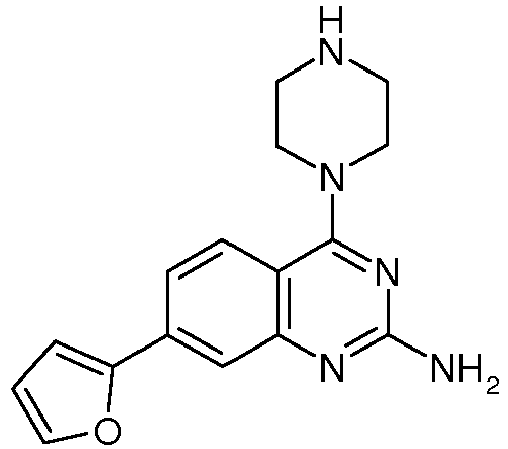
- the Histamine H4 receptor antagonist is 7-(furan-2-yl)-4-(piperazin-1-yl)quinazolin-2-amine (also named VUF11489):
- the Histamine H4 receptor antagonist is PF-3893787:
- the Histamine H4 receptor antagonist is PF-3893787-18:
- the Histamine H4 receptor antagonist is 1-(7-(2-amino-6-(4-methylpiperazin-1-yl)pyrimidin-4-yl)-3 ,4-dihydroisoquinolin-2(1H)-yl)-2-cyclopentylethanone (also named INCB38579).
- Another object of the invention relates to a selective Histamine H4 receptor antagonist for use in treating tinnitus, wherein said Histamine H4 receptor antagonist is to be administered to a subject in need thereof.
- the compound of the invention can be administered prior to, during or after tinnitus has been induced.
- Selective Histamine H4 receptor antagonists may be administered in the form of a pharmaceutical composition, as defined below.
- said antagonists are administered in a therapeutically effective amount.
- a “therapeutically effective amount” is meant a sufficient amount of the selective Histamine H4 receptor antagonist to treat tinnitus at a reasonable benefit/risk ratio applicable to any medical treatment.
- the total daily usage of the compounds and compositions of the present invention will be decided by the attending physician within the scope of sound medical judgment.
- the specific therapeutically effective dose level for any particular patient will depend upon a variety of factors including the disorder being treated and the severity of the disorder; activity of the specific compound employed; the specific composition employed, the age, body weight, general health, sex and diet of the patient; the time of administration, route of administration, and rate of excretion of the specific compound employed; the duration of the treatment; drugs used in combination or coincidental with the specific polypeptide employed; and like factors well known in the medical arts.
- the daily dosage of the products may be varied over a wide range from 0.01 to 1,000 mg per adult per day.
- the compositions contain 0.01, 0.05, 0.1, 0.5, 1.0, 2.5, 5.0, 10.0, 15.0, 25.0, 50.0, 100, 250 and 500 mg of the active ingredient for the symptomatic adjustment of the dosage to the patient to be treated.
- a medicament typically contains from 0.01 mg to 500 mg of the active ingredient, preferably from 1 mg to 100 mg of the active ingredient.
- An effective amount of the drug is ordinarily supplied at a dosage level from 0.0002 mg/kg to 20 mg/kg of body weight per day, especially from 0.001 mg/kg to 7 mg/kg of body weight per day.
- the selective Histamine H4 receptor antagonists may be combined with pharmaceutically acceptable excipients, and optionally sustained-release matrices, such as biodegradable polymers, to form therapeutic compositions.
- the active principle in the pharmaceutical compositions of the present invention, can be administered in a unit administration form, as a mixture with conventional pharmaceutical supports, to animals and human beings.
- Suitable unit administration forms comprise oral-route forms such as tablets, gel capsules, powders, granules and oral suspensions or solutions, sublingual and buccal administration forms, aerosols, implants, subcutaneous, transdermal, topical, intraperitoneal, intramuscular, intravenous, subdermal, transdermal, intrathecal and intranasal administration forms and rectal administration forms.
- the pharmaceutical compositions contain vehicles which are pharmaceutically acceptable for a formulation capable of being injected.
- vehicles which are pharmaceutically acceptable for a formulation capable of being injected.
- These may be in particular isotonic, sterile, saline solutions (monosodium or disodium phosphate, sodium, potassium, calcium or magnesium chloride or mixtures of such salts), or dry, especially freeze-dried compositions which upon addition, depending on the case, of sterilized water or physiological saline, permit the constitution of injectable solutions.
- the pharmaceutical forms suitable for injectable use include sterile aqueous solutions or dispersions; formulations including sesame oil, peanut oil or aqueous propylene glycol; and sterile powders for the extemporaneous preparation of sterile injectable solutions or dispersions.
- the form must be sterile and must be fluid to the extent that easy syringability exists. It must be stable under the conditions of manufacture and storage and must be preserved against the contaminating action of microorganisms, such as bacteria and fungi.
- Solutions comprising compounds of the invention as free base or pharmacologically acceptable salts can be prepared in water suitably mixed with a surfactant, such as hydroxypropylcellulose. Dispersions can also be prepared in glycerol, liquid polyethylene glycols, and mixtures thereof and in oils. Under ordinary conditions of storage and use, these preparations contain a preservative to prevent the growth of microorganisms.
- the selective Histamine H4 receptor antagonists of the invention can be formulated into a composition in a neutral or salt form.
- Pharmaceutically acceptable salts include the acid addition salts (formed with the free amino groups of the protein) and which are formed with inorganic acids such as, for example, hydrochloric or phosphoric acids, or organic acids such as acetic, oxalic, tartaric or mandelic. Salts formed with the free carboxyl groups can also be derived from inorganic bases such as, for example, sodium, potassium, ammonium, calcium, or ferric hydroxides, and organic bases such as isopropylamine, trimethylamine, histidine or procaine.
- the carrier can also be a solvent or dispersion medium containing, for example, water, ethanol, polyol (for example, glycerol, propylene glycol, and liquid polyethylene glycol,), suitable mixtures thereof, and vegetables oils.
- the proper fluidity can be maintained, for example, by the use of a coating, such as lecithin, by the maintenance of the required particle size in the case of dispersion and by the use of surfactants.
- the prevention of the action of microorganisms can be brought about by various antibacterial and antifungal agents, for example, parabens, chlorobutanol, phenol, sorbic acid and thimerosal. In many cases, it will be preferable to include isotonic agents, for example, sugars or sodium chloride. Prolonged absorption of the injectable compositions can be brought about by the use in the compositions of agents delaying absorption, for example, aluminium monostearate and gelatine.
- Sterile injectable solutions are prepared by incorporating the active polypeptides in the required amount in the appropriate solvent with one or several of the other ingredients enumerated above, as required, followed by filtered sterilization.
- dispersions are prepared by incorporating the various sterilized active ingredients into a sterile vehicle which contains the basic dispersion medium and the required other ingredients from those enumerated above.
- the preferred methods of preparation are vacuum-drying and freeze-drying techniques which yield a powder of the active ingredient plus any additional desired ingredient from a previously sterile-filtered solution thereof.
- solutions Upon formulation, solutions will be administered in a manner compatible with the dosage formulation and in such amount as is therapeutically effective.
- the formulations are easily administered in a variety of dosage forms, such as the type of injectable solutions described above, but drug release capsules can also be employed.
- aqueous solutions For parenteral administration in an aqueous solution, for example, the solution should be suitably buffered if necessary and the liquid diluent first rendered isotonic with sufficient saline or glucose.
- aqueous solutions are especially suitable for intravenous, intramuscular, subcutaneous and intraperitoneal administration.
- sterile aqueous media which can be employed will be known to those of skill in the art in light of the present disclosure.
- one dosage could be dissolved in 1 ml of isotonic NaCl solution and either added to 1000 ml of hypodermoclysis fluid or injected at the proposed site of infusion. Some variation in dosage will necessarily occur depending on the condition of the subject being treated. The person responsible for administration will, in any event, determine the appropriate dose for the individual subject.
- the selective Histamine H4 receptor antagonists of the invention may be formulated within a therapeutic mixture to comprise 0.0001 to 1.0 milligrams, or 0.001 to 0.1 milligrams, or 0.1 to 1.0 or even 10 milligrams per dose or so. Multiple doses can also be administered.
- parenteral administration such as intravenous or intramuscular injection
- other pharmaceutically acceptable forms include, e.g. tablets or other solids for oral administration; liposomal formulations; time release capsules; and any other form currently used.
- the selective Histamine H4 receptor antagonists are administered directly in the inner ear.
- This administration route may be preferred for introducing a direct and long term effect on the vestibule.
- Said administration can be accomplished by various delivery techniques, including the use of devices or drug carriers to transport and/or deliver the H4 receptor antagonists to the membranes of the round or oval window, where it diffuses into the inner ear or is actively infused. Examples include otowicks, round window catheters, various types of gels, foams, fibrins or other drug carriers, which are placed in the round window niche or on the oval window, and loaded with the compound of the invention for sustained release. It also includes devices that are inserted into the cochlear duct or any other part of the cochlea.
- the compound of the invention may also be administered to the inner ear by transtympanic or intratympanic injection.
- Example 1 Expression of H4R mRNA in postnatal (P) 9-11 rat cochlea.
- Cochlea of postnatal (P) 9-12 Wistar rats were dissected from the temporal bone and were flash frozen in liquid nitrogen immediately after dissection from adult rats.
- at least 4-6 cochlea and 1 spleen (used a tissue (positive) control to test H4R mRNA expression) were used to extract the total RNA using a standard protocol with TRIzol (RiboPure, Ambion) and chloroform.
- First-strand cDNA synthesis reverse transcription, RT was performed with 0.5-1 ⁇ g of total RNA DNAse treated and Oligo(dT) primers (Kit Quantitect reverse transcription, Qiagen). Reaction was done at 42°C for 30 min. followed by 95°C for 3 min.
- PCR was performed with 1-2 ⁇ l of RT reactions. Amplification was for 30 cycles for spleen and cochlear ganglia with 30 s at 95°C, 30 sec at the primer-specific annealing temperature (58-60°C) and 1 min at 72°C. A final extension was done at 72°C for 7 min.
- RT was preferentially done using sequence specific primer and PCR products (1 ⁇ l) were resolved on 2% agarose gels containing ethidium bromide (10%). Results were obtained in 3 different (independents) experiments and PCR products were systematically sequenced to attest the nature of the amplified product as from H4R sequence. To avoid genomic cDNA contaminations a reverse transcription without the reverse transcriptase enzyme was performed.
- primer sets were designed across intron-exon boundaries as determined from H4R rat sequence (SEQ ID NO: 1) and GAPDH rat sequence (SEQ ID NO: 6) using the free NCBI/Primer-Blast software ( Figure 1 ) and nested PCR were performed using the first PCR products.
- GAPDH primers SEQ ID NO: 7 and SEQ ID NO: 8 were used as a positive control and for H 4 R; primers (SEQ ID NO: 2 to SEQ ID NO: 5) were systematically tested for quality on spleen tissue.
- Temporal bones were postfixed in the same solution before the cochlea was dissected in PBS.
- Vestibular endorgans were embedded in 4% agarose, and 40 ⁇ m thick sections were cut with a vibratome (HM650V, Microm).
- the free-floating sections were first permeabilized with 4% Triton X-100, non-specific binding was prevented by a pre-incubation step in a blocking solution of 0.5% fish gelatin, 0.5% Triton X-100 and 1% BSA. Samples were then incubated with primary antibodies: polyclonal rat anti-H4R (0.5ug/ml; Gift from P. Chazot Laboratory) diluted in the blocking solution.
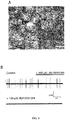
- H4R have been localized in SGNs (double labeled with anti-Neurofilament) in all turns of the cochlea (apical, middle and basal) with an increasing gradient of expression during the development: P10 rat cochlear neurons expressed H4R in low density (correlating with our RT-PCR data at this age) ( Figure 1B ) while P27 cochlea showed a higher expression of H4R in these neurons ( Figure 1C ). H4R were expressed as well in SGNs from adult cochlea (data not shown). Interestingly, the co-labeling with the anti-neurofilament antibody revealed that H4R was localized in a large majority of SGNs, although a small population did not express the receptor. At the cellular level, H4R were found to be localized preferentially in the membranous and sub membranous regions.
- Example 2 H4R antagonists are modulators of spiral ganglion excitability.
- the head of 5-8 days old Wistar rats (CERJ, Le Genest, Berthevin, France) was hemi-sectioned aseptically and the cochlea dissected from the temporal bone.
- L15 (Leibovitz) medium Gibco
- the spiral ganglion was separated from the organ of Corti just before the habenula perforata, and enzymatically (collagenase 0.75 mg.mL -1 , dispase 1 mg.mL -1 and DNAse 0.75 mg.mL -1 ) dissociated for 15 min at 25°C.
- a transfer pipette was used to gently dissociate the ganglion neurons in culture medium (DMEM/ F-12 medium 1:1, 2% N2 nutrient, 28 mM Glc, 1.5 mM Gln, 15 mM HEPES, 2 ⁇ M AraC, 10 ng mL-1 BDNF and 1% penicillin/streptomycin).
- the spiral ganglion neurons were plated onto culture dishes previously coated with 10 ⁇ g.mL-1 laminin (Sigma). These low density cultures were maintained at 37°C in 5% CO2 for 3 to 5 days prior whole cell patch-clamp experiments.
- H4R antagonist Efficacy of H4R antagonist has been tested using two patch clamp technics: whole-cell current-clamp recordings with dissociated spiral ganglion neurons (SGNs) and loose-patch recordings for SGNs in semi-intact cochlea preparations. For these experiments postnatal day (P) 10-14 Wistar rats were used at DIV2-5.
- the recording solution contained (in mM): NaCl 135, HEPES 10, glucose 10, MgCl 2 1, KC1 5, and CaCl 2 2.5, (pH 7.35).
- recording glass pipettes (4-6 M ⁇ ) were coated with Wax to reduce pipette capacitance and were filled with (in mM): KC1 135, HEPES 10, glucose 10, NaCl 5, EGTA 5, Mg-ATP 3, GTP-Na 1, pH 7.35.
- KC1 135, HEPES 10, glucose 10, NaCl 5, EGTA 5, Mg-ATP 3, GTP-Na 1, pH 7.35 For these solutions a minor 3.7 mV liquid junction potential could be measured but membrane voltages were not corrected for it.
- the osmolarity of all solutions was adjusted to 300 mOsm/L.
- the control and test solutions were applied using a multiple capillary perfusion system (flow rate ⁇ 500 ⁇ l/min). After each application of the tested drug, the cells were washed with control buffer.
- Electrodes for loose-patch SGN recordings had a tip resistance of 1.0-1.5 M ⁇ and filled with the recording solution. In these semi-intact cochlea preparations, spontaneous discharges of action potential were directly recorded. For each test, the compound was applied for at least 2 minutes. To verify the response reversibility, neurons were washed with control medium after each drug test. In vitro results were expressed as means ⁇ S.E.M.
- JNJ7777120 and JNJ10191584 reduced the mean number of step-evoked action potentials in a dose-dependent manner ( Figure 2C ).
- H4R antagonists are able to modulate SGNs excitability in a "pathological" condition (similar to hyperexcited SGNs in tinnitus models), we are testing the efficacy of these compounds on SGNs with increased A.P discharge.
- SGNs hyperexcitability can be induced for instance by 3-5 mM sodium salicylate, known to strongly enhance synaptically-induced A.P in rodent.
- the positive outcome of this experiment reinforce the modulatory efficacy of H4R antagonists in sustained spikers SGNs or any type of SGNs that would have an increased A.P discharge activity.
- Example 3 Efficacy of H4R antagonists to decrease behavioral model of tinnitus
- the aim of these in vivo tests is to measure the efficacy of H4R antagonists to decrease (transient and permanent) tinnitus symptoms induced either by sodium salicylate or by high level noise exposure.
- Evaluation of efficacy is performed in adult rats using the tinnitus test developed by Turner et al., 2006: the Gap-Prepulse Inhibition of Acoustic Startle (GPIAS) behavioral model.
- GPIAS Gap-Prepulse Inhibition of Acoustic Startle
- the level of GPIAS is measured in baseline condition in a cohort of 6 to 8 adult rats.
- Tinnitus is induced by an i.p. administration of sodium salicylate (250 mg/kg) and GPIAS is measured at T1h post-induction to measure the reduction in GPIAS (attesting presence of tinnitus).
- Rats are treated with H4R antagonists (single i.p. administration) or with the vehicle the same day and GPIAS is measured at different time points according to the PK profile of the compounds
- tinnitus is induced by a unilateral exposure to a 12 kHz narrow band noise presented at 120-126 dB SPL (the contralateral ear is protected with an ear plug) for 2h.
- Two types of noise are used for this form of tinnitus induction: 120 dB noise to induce a transient tinnitus (lasting up to 2 days) and 126 dB to induce a permanent tinnitus (lasting ⁇ 10 days).
- 120 dB noise to induce a transient tinnitus (lasting up to 2 days)
- 126 dB to induce a permanent tinnitus (lasting ⁇ 10 days).
- a 120-126 dB exposure is used to induce tinnitus and GPIAS is measured 24h after the exposure to assess the reduction in GPIAS (attesting presence of noise induced transient tinnitus); and up to 10 days to attest the presence of a (noise-induced) permanent tinnitus.
- Animals with transient tinnitus are treated with H4R antagonists (single i.p. administration) T24h post tinnitus induction and changes in GPIAS are measured at different time points according to the PK profile of the H4R antagonists.
- animals with permanent tinnitus ⁇ 10 days
- H4R antagonists single i.p. administration
Landscapes
- Health & Medical Sciences (AREA)
- Life Sciences & Earth Sciences (AREA)
- Chemical & Material Sciences (AREA)
- General Health & Medical Sciences (AREA)
- Medicinal Chemistry (AREA)
- Veterinary Medicine (AREA)
- Public Health (AREA)
- Pharmacology & Pharmacy (AREA)
- Animal Behavior & Ethology (AREA)
- Epidemiology (AREA)
- Engineering & Computer Science (AREA)
- Molecular Biology (AREA)
- Biochemistry (AREA)
- Organic Chemistry (AREA)
- Bioinformatics & Cheminformatics (AREA)
- Genetics & Genomics (AREA)
- Biomedical Technology (AREA)
- Nuclear Medicine, Radiotherapy & Molecular Imaging (AREA)
- General Chemical & Material Sciences (AREA)
- Chemical Kinetics & Catalysis (AREA)
- Biotechnology (AREA)
- Wood Science & Technology (AREA)
- Zoology (AREA)
- General Engineering & Computer Science (AREA)
- Physics & Mathematics (AREA)
- Biophysics (AREA)
- Plant Pathology (AREA)
- Microbiology (AREA)
- Neurology (AREA)
- Neurosurgery (AREA)
- Pharmaceuticals Containing Other Organic And Inorganic Compounds (AREA)
- Medicines That Contain Protein Lipid Enzymes And Other Medicines (AREA)
- Peptides Or Proteins (AREA)
- Medicines Containing Antibodies Or Antigens For Use As Internal Diagnostic Agents (AREA)
Description
- The invention relates to
Histamine type 4 receptor (H4R) antagonists for use in treating tinnitus. - The inner ear is the innermost part of the vertebrate ear where two sensory organs are hosted in the temporal bone:
- The cochlea, dedicated to the auditory function, converting sound pressure patterns from the outer ear into electrochemical impulses which are passed on to the brain via the auditory nerve. The cochlea constitutes the ventral region of the inner ear and it contains the organ of Corti that comprises mechanosensory hair cells and supporting cells.
- The vestibular system, dedicated to balance, acceleration, and gravity. This organ has a totally different function from cochlea, said function consisting in the detection of linear and angular accelerations of the head in order to transmit to the brain information on movements to achieve the equilibration function in collaboration with visual and proprioceptive information. It is also constituted of mechanosensory hair cells that convert mechanical actions into electrical potentials, and supporting cells.
- Although these two organs have sensory hair cells responsible of the receptor potential and the subsequent action potentials, their distinct morphology, synaptic connections and overall function imply differences in molecular and cellular mechanisms underlying their action.
- The vestibular system and the cochlea exhibit organ-dependent differences. Indeed, numbers of ion channels and neurotransmitter-gated receptors are differently expressed in those sensory organs. This is particularly true for ions channels involved in nerve cells excitability. As such, endogenous heterogeneity is for example responsible for very strong differences in action potential discharge patterns between the cochlea and the vestibule (Zun-Li MO and Robin Davis, 1997. J Neurophysiol. 77(3):1294-305; Eatock et al., 2008 J. Exp Biol. 211(Pt 11): 1764-74). Therefore, impairing/modulating the expression or function of ions channels or receptor, either pharmacologically or genetically can have significantly different consequences on hearing and balance functions. Similarly, when receptors or ion channels expressed in one organ have unknown mechanisms, their likely effectors or molecular partners in the other inner ear organ are hard to foretell, and hence the outcome of their modulation/mutation is unpredictable itself.
- In a more specific example, Kv7. Potassium channels family associated with neurons excitability are expressed in both tissue neurons, their modulation or mutation have very distinct functional consequences on the two sensory modalities: a progressive and severe deafness (Kharkovets T. et al., 2006 EMBO J. 25(3):642-652) but normal balance function (Spitzmaul G et al., 2013 J Biol Chem. 288(13):9334-44).
- In summary, such structural, functional and pathological differences between the cochlea and the vestibule lead the search for cochlear therapeutic treatment as being highly specific to this peculiar sensory organ.
- In the art, several disclosures have taught the use of
Histamine type 4 receptor (H4R) antagonists, for the treatment of vestibular disorders (International patent applicationWO2010/072829 ; Kiss et al., Expert Opin Ther Pat. 2012 Mar;22(3):205-21; Desmadryl et al., Br J Pharmacol. 2012 Oct;167(4):905-16). - Tinnitus is a phantom sensation of hearing in the absence of external sounds. It refers to objective tinnitus, which is caused by sound generated somewhere in the body and subjective tinnitus which is the perception of meaningless sounds without any physical sound being present. Tinnitus affects approximately 10% of the population. Approximately 50 million US adults reported having any tinnitus, and 16 million US adults reported having frequent tinnitus in the past year. The prevalence of frequent tinnitus increases with age, peaking at 14.3% between 60 and 69 years old. Tinnitus may significantly impair quality of life as it causes irritability, agitation, stress, insomnia, anxiety and depression. In fact, for one in 100 adults, tinnitus affects their ability to lead a normal day-to-day life.
- Subjective tinnitus is the perception of sound without any auditory stimulus. Many people experience transient tinnitus lasting seconds or minutes after exposure to loud noise. The sounds associated with subjective tinnitus have been described as ringing, hissing, water running, humming, crickets, cicadas, whistling, wind blowing. Most patients experience a high pitch noise typically above 3,000Hz. Although there is no consensus on a single and common pathomechanisms to tinnitus, there is currently cumulative evidence for a main peripheral auditory system theory of subjective tinnitus. Spontaneous otoacoustic emissions, increased spontaneous activity in the cochlear area such as aberrant firing of the auditory nerve and discordant dysfunction of damaged outer hair cells and intact inner hair cells have been postulated as putative cause for tinnitus.
- Due to the lack of pathophysiological bases, the rationale behind pharmacological treatments for tinnitus is to treat the co-morbidities that come along with tinnitus, like depression and anxiety. Others treatments use drugs which are effective in disorders thought to share some commonalities with tinnitus, like anticonvulsants used in epilepsy and the calcium antagonist gabapentin used in neuropathic pain. Although a wide variety of compounds is used off-label to treat tinnitus patients, there is still no US Food and Drug Administration (FDA) or European Medicines Agency (EMA) approved drug on the market. The list of used compounds includes anticonvulsants, anxiolytic, antidepressants, NMDA antagonists, cholinergic antagonists, antihistamines, vasodilators, antipsychotics, and calcium antagonists. For example,
WO2010113109 andWO2012/042314 described the use of cyclobenzaprine for treating tinnitus. - However, most drugs have not proven sufficient effectiveness in randomized controlled clinical trials in order to be approved and marketed specifically for tinnitus.
- The present invention aims to provide compositions for use in treating tinnitus.
- The invention provides inhibitors of
Histamine type 4 receptor (H4R) as defined in claims 1-5 for use in the treatment of tinnitus. - In another embodiment, said inhibitor is 1-[(5-chloro-1H-indol-2-yl)carbonyl]-4-methylpiperazine or 4-((3R)-3-aminopyrrolidin-1-yl)-6,7-dihydro-5H-benzo[6,7]cyclohepta[1,2-d]pyrimidin-2-ylamine or cis-4-(piperazin-1-yl)-5,6,7a,8,9,10,11,11a-octahydrobenzofuro[2,3- h]quinazolin-2-amine or 7-(furan-2-yl)-4-(piperazin-1-yl)quinazolin-2-amine or 1-(7-(2-amino-6-(4-methylpiperazin-1-yl)pyrimidin-4-yl)-3,4-dihydroisoquinolin-2(1H)-yl)-2-cyclopentylethanone or 1-[(5-chloro-1H-benzimidazol-2-yl)carbonyl]-4-methylpiperazine maleate or PF-3893787 or PF-3893787-18 or JNJ39758979.
- Another object of the invention is a pharmaceutical composition comprising an inhibitor of H4R as defined in claims 1-5 for use in the treatment of tinnitus.
- The term "Histamine H4 receptor" has its general meaning in the art. The term may include naturally occurring Histamine H4 receptors and variants and modified forms thereof. The Histamine H4 receptor can be from any source, but typically is a mammalian (e.g., human and non-human primate) Histamine H4 receptor, particularly a human Histamine H4 receptor. Sequences for Histamine H4 receptor have been published under the references NM_021624 (Homo sapiens), NM_153087 (Mus musculus) and NM_131909 (Rattus norvegicus).
- The term "receptor antagonist" is used indifferently to denote a "true" antagonist and an inverse agonist of a receptor. A "true" receptor antagonist is a compound which binds the receptor and blocks the biological activation of the receptor, and thereby the action of the receptor agonist, for example, by competing with the agonist for said receptor. An inverse agonist is a compound which binds to the same receptor as the agonist but exerts the opposite effect. Inverse agonists have the ability to decrease the constitutive level of receptor activation in the absence of an agonist.
- The term "Histamine H4 receptor antagonist" includes any chemical entity that, upon administration to a patient, results in inhibition or down-regulation of a biological activity associated with activation of the Histamine H4 receptor in the patient, including any of the downstream biological effects otherwise resulting from the binding to Histamine H4 receptor of its natural ligand. Such Histamine H4 receptor antagonists include any agent that can block Histamine H4 receptor activation or any of the downstream biological effects of Histamine H4 receptor activation. For example, such Histamine H4 receptor antagonists can act by occupying the ligand binding site or a portion thereof of the Histamine H4 receptor, thereby making the receptor inaccessible to its natural ligand so that its normal biological activity is prevented or reduced. In the context of the present invention, Histamine H4 receptor antagonists are selective for the Histamine H4 receptor as compared with the other histamine receptors, such as histamine H1 receptor, histamine H2 receptor, and histamine H3 receptor. By "selective" it is meant that the affinity of the antagonist for the human Histamine H4 receptor is at least 10-fold, preferably 25-fold, more preferably 100-fold, still preferably 500-fold higher than the affinity for the other human histamine receptor (H1, H2 and H3).
- The affinity of an antagonist for Histamine H4 receptor may be quantified by measuring the activity of Histamine H4 receptor or the biological effect resulting from antagonism of the receptor in the presence of a range of concentrations of said antagonist in order to establish a dose-response curve. From that dose response curve, an IC50 value may be deduced which represents the concentration of antagonist necessary to inhibit 50% of a biological activity induced by an agonist in defined concentration. The IC50 value may be readily determined by the one skilled in the art by fitting the dose-response plots with a dose-response equation as described by De Lean et al., (1979). IC50 values can be converted into affinity constant (Ki) using the assumptions of Cheng and Prusoff (1973).
- Accordingly, a selective Histamine H4 receptor antagonist is a compound for which at least one of the ratios (i) Ki H3 : Ki H4, and (ii) IC50 H3: IC50 H4, is above 10:1, preferably 25:1, more preferably 100:1, still preferably 1000:1.
- The antagonistic activity of compounds towards the Histamine H4 receptors may be determined using various methods, such as those described in Thurmond RL et al., (2004) or Venable JD. et al., (2005).
- The term "small organic molecule" refers to a molecule of a size comparable to those organic molecules generally used in pharmaceuticals. The term excludes biological macromolecules (e.g., proteins, nucleic acids). Preferred small organic molecules range in size up to 5000 Da, more preferably up to 2000 Da, and most preferably up to 1000 Da.
- As used herein, the term "subject" denotes a mammal, such as a rodent, a feline, a canine, and a primate. Preferably, a subject according to the invention is a human.
- The term "treating" refers to preventing (i.e. keeping from happening), reducing or alleviating at least one adverse effect or symptom of a disease, disorder or condition associated with a deficiency in or absence of an organ, tissue or cell function. Accordingly, the aim of the invention is to provide an ending of the tinnitus, a decrease of tinnitus loudness or an amelioration of the subject's condition by protecting or restoring the functionality or part of the functionality of the cochlea.
- The present invention relates to H4 receptor antagonists for treating or for use in treating tinnitus.
- The tinnitus to be treated may be provoked by acoustic trauma, presbycusis, fluctuation in the blood supply to the cochlea leading to ischemia, anoxia treatments with ototoxic medications, sudden deafness, or other cochlear excitotoxic-inducing occurrence.
- Tinnitus is thought to arise from neural hyperactivity. Without willing to be bound to a theory, the inventors suggest that efficient and selective pharmacological control of the primary auditory neurons excitability is a solution to attenuate tinnitus. Indeed, as
histamine type 4 receptor (H4R) is found to be expressed in spiral ganglion neuron, H4R selective antagonists may efficiently modulate the electrical activity of mammal cochlear primary neurons. The H4 receptor antagonist as defined in claims 1-5 is a selective H4 receptor antagonist. - According to one embodiment of the invention, a selective H4 receptor antagonist as defined in claims 1-5 refers to a molecule that has an affinity for H4 receptor at least 10 fold, preferably 25 fold, preferably 50 fold, more preferably 100 fold, and even more preferably 500 fold higher than its affinity for any one of H1, H2 or H3 receptor.
- According to another embodiment of the invention, a selective H4 receptor antagonist as defined in claims 1-5 is a molecule for which one of the ratios Ki H3 : Ki H4 and (ii) IC50 H3 : IC50 H4 is above 10:1, preferably 25:1, preferably 50:1, more preferably 100:1 and even more preferably between 500:1 to 1000:1.
- The affinity for H4 receptor and others (HI, H2 and H3) receptors may be characterized by any conventional technique known in the art. For example, it can be determined by binding assays. Said assays use cells pellets from cells such as SK-N-MC or HEK293 T, cells transfected with human, rat or mouse H4, H3, H2 or H1 receptor (Lovenberg et al., 1999, Liu et al., 2001a,b, Thurmond et al., 2004). Cells can be homogenized in 50 mM Tris pH 7.5 containing 5 mM EDTA, and supernatants from an 800 g spin are collected and recentrifuged at 30 000g for 30 min. Pellets are then homogenized in 50 mM Tris pH 7.5 containing 5 mM EDTA. For H4 competition binding studies, human, mouse or rat cells are incubated using different concentrations of [3H] histamine (specific for each species, for example 10, 40 and 50 nM respectively), in the presence or absence of the molecule to be tested, for 45 min at 25°C. The non-specific binding is defined using 100 µM unlabelled histamine or using 10-6 M of specific or selective H4 receptor antagonist such as JNJ-7777120 or JNJ-10191584. The Kd values for the human, mouse and rat H4 receptor were determined with this method to be 5, 42 and 178 nM respectively, and the Bmax values were determined to be 1.12, 1.7 and 0.68 pmol/mg protein, respectively. Similarly, the ligand used for the H3 receptor binding assays is for example [3H]N-a-methyl histamine, and the non-specific binding is defined using 100 µM unlabelled histamine. The Kd value for human H3 receptor was determined with this method to be 1 nM and the Bmax value 2.13 pmol/mg protein. The ligand used for the H1 receptor binding was [3H]pyrilamine and the non-specific activity is defined using 10 µM unlabelled diphenhydramine. The Kd value for human H1 receptor was determined with this method to be 1 nM and the Bmax value 2.68 pmol/mg protein. In these assays, the cells are typically incubated with different concentration of such as 10-11 to 10-4 M of molecule to be tested.
- The person skilled in the art willing to verify or determine the antagonist activity of the molecule to be tested may use any method known in the art and for example a cell-based cAMP assay. Said assay use SK-n-MC cell lines transfected with H4, H3, H2 or H1 receptor and a reporter gene construct such as b-galactosidase under the control of cyclic AMP-responsive elements. Cells are plated overnight before the assay. Histamine is used as the agonist molecule. For determination of antagonist activity, molecules to be tested are added 10 min prior to the addition of agonist. Forskolin (5 µM final concentration) is added 10 min after the addition of histamine. Cells are then maintained at 37°C for 6 hours, and then after washing lysed with 25 µl of 0.1x assay buffer (10 mM sodium phosphate, pH 8, 0.2 mM MgSO4 and 0.01 mM MnCl2) and incubated at room temperature for 10 min. Cells are then incubated for 10 min with 100 µl of 1x assay buffer containing 0.5% (v/v) Triton X-100 and 40 mM -mercaptoethanol. Color can be developed using 25 µl of 1 mg/ml substrate solution such as chlorophenol red b-D-galactopyranoside, and quantified by measuring the absorbance at 570 nm. The data obtained for each concentration-response curve can be fitted to a sigmoidal curve to obtain the maximum response, Hill coefficient and EC50.
- Histamine H4 antagonists and Selective Histamine H4 antagonists that are contemplated by the invention are defined in claims 1-5. In one embodiment of the invention, the Histamine H4 antagonist or selective H4 antagonist is selected among 2-aminopyrimidine compounds such as the ones described in
WO2008/100565 ; 4-amino-pyrimidine derivatives such as the ones described inWO2009/080721 ; pyrimidine compounds such as the ones described inWO2007/072163 . - In another embodiment, the Histamine H4 antagonist or selective Histamine H4 antagonists are selected from those described in the International Patent Application
WO2008/100565 : (R)-4-(3-Amino-pyrrolidin-1-yl)-6-isopropyl-pyrimidin-2-ylamine; and pharmaceutically acceptable salts thereof. - In another embodiment, the Histamine H4 antagonist or selective Histamine H4 antagonists are selected from those described in the international Patent Application
WO2009/080721 : 2-isobutyl-6-((3R)-3-(methylamino)pyrrolidin-1-yl)pyrimidin-4-amine; 2-cyclohexylmethyl-6-((3R)-3-(methylamino)pyrrolidin-1-yl)pyrimidin-4-amine; 2-(4-fluorobenzyl)-6-(3-(methylamino)azetidin-1-yl)pyrimidin-4-amine; 2-lsobutyl-6-(3-(methylamino)azetidin-1-yl)pyrimidin-4-amine; 2-cyclopropyl-6-(3-(methylamino)azetidin-1-yl)pyrimidin-4-amine; 2-tert-butyl-6-(3-(methylamino)azetidin-1-yl)pyrimidin-4-amine; 2-isopropyl-6-(3 - (methylamino)azetidin-1-yl)pyrimidin-4-amine; 2-(cyclopropylmethyl)-6-(3-(methylamino)azetidin- 1 -yl)pyrimidin-4-amine; 6-(3 -(methylamino)azetidin- 1 -yl)-2-(phenoxymethyl)pyrimidin-4-amine; 2-cyclopropyl-6-((3R)-3-(methylamino)pyrrolidin-1-yl)pyrimidin-4-amine; 2-tert-butyl-6-((3R)-3 -(methylamino)pyrrolidin-1 - yl)pyrimidin-4-amine; 2-isopropyl-6-((3R)-3-(methylamino)pyrrolidin-1-yl)pyrimidin-4-amine; 6-((3R)-3-(methylamino)pyrrolidin-1-yl)-2-(phenoxymethyl)pyrimidin-4-amine; 6-(3-aminoazetidin-1-yl)-2-isobutylpyrimidin-4-amine; 2-isobutyl-6-(3-methyl-3-(methylamino)azetidin-1-yl)pyrimidin-4-amine; 6-((3R)-3 -aminopyrrolidin-1 -yl)-2-isobutylpyrimidin-4-amine; 2-cyclobutyl-6-(3-(methylamino)azetidin-1-yl)pyrimidin-4-amine; 2-cyclobutyl-6-((3R)-3-(methylamino)pyrrolidin-1-yl)pyrimidin-4-amine; 2-cyclopentyl-6-(3-(methylamino)azetidin-1-yl)pyrimidin-4-amine; 2-cyclopentyl-6-((3R)-3-(methylamino)pyrrolidin-1-yl)pyrimidin-4-amine; 2-(2,2-dimethylpropyl)-6-(3-(methylamino)azetidin-1-yl)pyrimidin-4-amine; 2-(2,2-dimethylpropyl)-6-((3R)-3-(methylamino)pyrrolidin-1-yl)pyrimidin-4-amine; 2-(2-cyclopentylethyl)-6-((3R)-3-(methylamino)pyrrolidin-1-yl)pyrimidin-4-amine; 2-cyclohexylmethyl-6-(3-(methylamino)azetidin-1-yl)pyrimidin-4-amine; 2-cyclopropylmethyl-6-((3R)-3-(methylamino)pyrrolidin-1-yl)pyrimidin-4-amine; 2-cyclohexyl-6-(3-(methylamino)azetidin-1-yl)pyrimidin-4-amine; 2-cyclohexyl-6-((3R)-3-(methylamino)pyrrolidin-1-yl)pyrimidin-4-amine; and 2-(4-fluorobenzyl)-6-((3R)-3-(methylamino)pyrrolidin-1-yl)pyrimidin-4-amine, or a salt thereof. - In another embodiment, the Histamine H4 antagonist or selective Histamine H4 antagonists are selected from those described in the international Patent Application
WO2007/072163 : N4-(cyclopropylmethyl)-6-[(3R)-3-(methylamino)pyrrolidin-1-yl]pyrimidine-2,4-diamine and N4-(cyclopropylmethyl)-6-[(3R)-3-(methylamino)pyrrolidin-1-yl]pyrimidine-2,4-diamine tartrate. In a particular embodiment, the Histamine H4 receptor antagonist is 1-[(5-chloro-1H-benzimidazol-2-yl)carbonyl]-4-methylpiperazine (also named JNJ 10191584 or VUF 6002) described by Herman D. et al. (2005). This selective antagonist binds with high affinity the human Histamine H4 receptor (Ki = 26 nM). This affinity is 540-fold more selective over the H3 receptor (Ki = 14.1 µM) (Zhang M. et al. 2007). - In a particular embodiment, the selective Histamine H4 receptor antagonist is 1-[(5-chloro-1H-indol-2-yl)carbonyl]-4-methylpiperazine (also named JNJ 7777120) described by Robin L. et al. (2004).
- In a particular embodiment, the Histamine H4 receptor antagonist is JNJ 39758979 and comprises the formula:

- In a particular embodiment, the selective Histamine H4 receptor antagonist is 1-[(5-chloro-1H-benzimidazol-2-yl)carbonyl]-4-methylpiperazine maleate (also named JNJ 10191584).
- In a particular embodiment, the selective Histamine H4 receptor antagonist is 4-((3R)-3-aminopyrrolidin-1-yl)-6,7-dihydro-5H-benzo[6,7]cyclohepta[1,2-d]pyrimidin-2-ylamine (also named A-943931) described by Cowart MD. et al., (2008).
- In a particular embodiment, the selective Histamine H4 receptor antagonist is cis-4-(piperazin-1-yl)-5,6,7a,8,9,10,11,11a-octahydrobenzofuro[2,3-h]quinazolin-2-amine (also named A-987306) described by Liu H et al., (2008).
- In a particular embodiment, the Histamine H4 receptor antagonist is 7-(furan-2-yl)-4-(piperazin-1-yl)quinazolin-2-amine (also named VUF11489):
- In a particular embodiment, the Histamine H4 receptor antagonist is PF-3893787:

- In a particular embodiment, the Histamine H4 receptor antagonist is PF-3893787-18:

- In a particular embodiment, the Histamine H4 receptor antagonist is 1-(7-(2-amino-6-(4-methylpiperazin-1-yl)pyrimidin-4-yl)-3 ,4-dihydroisoquinolin-2(1H)-yl)-2-cyclopentylethanone (also named INCB38579).
- Another object of the invention relates to a selective Histamine H4 receptor antagonist for use in treating tinnitus, wherein said Histamine H4 receptor antagonist is to be administered to a subject in need thereof.
- The compound of the invention can be administered prior to, during or after tinnitus has been induced.
- Selective Histamine H4 receptor antagonists may be administered in the form of a pharmaceutical composition, as defined below.
- Preferably, said antagonists are administered in a therapeutically effective amount.
- By a "therapeutically effective amount" is meant a sufficient amount of the selective Histamine H4 receptor antagonist to treat tinnitus at a reasonable benefit/risk ratio applicable to any medical treatment.
- It will be understood that the total daily usage of the compounds and compositions of the present invention will be decided by the attending physician within the scope of sound medical judgment. The specific therapeutically effective dose level for any particular patient will depend upon a variety of factors including the disorder being treated and the severity of the disorder; activity of the specific compound employed; the specific composition employed, the age, body weight, general health, sex and diet of the patient; the time of administration, route of administration, and rate of excretion of the specific compound employed; the duration of the treatment; drugs used in combination or coincidental with the specific polypeptide employed; and like factors well known in the medical arts. For example, it is well within the skill of the art to start doses of the compound at levels lower than those required to achieve the desired therapeutic effect and to gradually increase the dosage until the desired effect is achieved. However, the daily dosage of the products may be varied over a wide range from 0.01 to 1,000 mg per adult per day. Preferably, the compositions contain 0.01, 0.05, 0.1, 0.5, 1.0, 2.5, 5.0, 10.0, 15.0, 25.0, 50.0, 100, 250 and 500 mg of the active ingredient for the symptomatic adjustment of the dosage to the patient to be treated. A medicament typically contains from 0.01 mg to 500 mg of the active ingredient, preferably from 1 mg to 100 mg of the active ingredient. An effective amount of the drug is ordinarily supplied at a dosage level from 0.0002 mg/kg to 20 mg/kg of body weight per day, especially from 0.001 mg/kg to 7 mg/kg of body weight per day.
- The selective Histamine H4 receptor antagonists may be combined with pharmaceutically acceptable excipients, and optionally sustained-release matrices, such as biodegradable polymers, to form therapeutic compositions.
- In the pharmaceutical compositions of the present invention, the active principle, alone or in combination with another active principle, can be administered in a unit administration form, as a mixture with conventional pharmaceutical supports, to animals and human beings. Suitable unit administration forms comprise oral-route forms such as tablets, gel capsules, powders, granules and oral suspensions or solutions, sublingual and buccal administration forms, aerosols, implants, subcutaneous, transdermal, topical, intraperitoneal, intramuscular, intravenous, subdermal, transdermal, intrathecal and intranasal administration forms and rectal administration forms.
- Preferably, the pharmaceutical compositions contain vehicles which are pharmaceutically acceptable for a formulation capable of being injected. These may be in particular isotonic, sterile, saline solutions (monosodium or disodium phosphate, sodium, potassium, calcium or magnesium chloride or mixtures of such salts), or dry, especially freeze-dried compositions which upon addition, depending on the case, of sterilized water or physiological saline, permit the constitution of injectable solutions.
- The pharmaceutical forms suitable for injectable use include sterile aqueous solutions or dispersions; formulations including sesame oil, peanut oil or aqueous propylene glycol; and sterile powders for the extemporaneous preparation of sterile injectable solutions or dispersions. In all cases, the form must be sterile and must be fluid to the extent that easy syringability exists. It must be stable under the conditions of manufacture and storage and must be preserved against the contaminating action of microorganisms, such as bacteria and fungi.
- Solutions comprising compounds of the invention as free base or pharmacologically acceptable salts can be prepared in water suitably mixed with a surfactant, such as hydroxypropylcellulose. Dispersions can also be prepared in glycerol, liquid polyethylene glycols, and mixtures thereof and in oils. Under ordinary conditions of storage and use, these preparations contain a preservative to prevent the growth of microorganisms.
- The selective Histamine H4 receptor antagonists of the invention can be formulated into a composition in a neutral or salt form. Pharmaceutically acceptable salts include the acid addition salts (formed with the free amino groups of the protein) and which are formed with inorganic acids such as, for example, hydrochloric or phosphoric acids, or organic acids such as acetic, oxalic, tartaric or mandelic. Salts formed with the free carboxyl groups can also be derived from inorganic bases such as, for example, sodium, potassium, ammonium, calcium, or ferric hydroxides, and organic bases such as isopropylamine, trimethylamine, histidine or procaine.
- The carrier can also be a solvent or dispersion medium containing, for example, water, ethanol, polyol (for example, glycerol, propylene glycol, and liquid polyethylene glycol,), suitable mixtures thereof, and vegetables oils. The proper fluidity can be maintained, for example, by the use of a coating, such as lecithin, by the maintenance of the required particle size in the case of dispersion and by the use of surfactants. The prevention of the action of microorganisms can be brought about by various antibacterial and antifungal agents, for example, parabens, chlorobutanol, phenol, sorbic acid and thimerosal. In many cases, it will be preferable to include isotonic agents, for example, sugars or sodium chloride. Prolonged absorption of the injectable compositions can be brought about by the use in the compositions of agents delaying absorption, for example, aluminium monostearate and gelatine.
- Sterile injectable solutions are prepared by incorporating the active polypeptides in the required amount in the appropriate solvent with one or several of the other ingredients enumerated above, as required, followed by filtered sterilization. Generally, dispersions are prepared by incorporating the various sterilized active ingredients into a sterile vehicle which contains the basic dispersion medium and the required other ingredients from those enumerated above. In the case of sterile powders for the preparation of sterile injectable solutions, the preferred methods of preparation are vacuum-drying and freeze-drying techniques which yield a powder of the active ingredient plus any additional desired ingredient from a previously sterile-filtered solution thereof.
- Upon formulation, solutions will be administered in a manner compatible with the dosage formulation and in such amount as is therapeutically effective. The formulations are easily administered in a variety of dosage forms, such as the type of injectable solutions described above, but drug release capsules can also be employed.
- For parenteral administration in an aqueous solution, for example, the solution should be suitably buffered if necessary and the liquid diluent first rendered isotonic with sufficient saline or glucose. These particular aqueous solutions are especially suitable for intravenous, intramuscular, subcutaneous and intraperitoneal administration. In this connection, sterile aqueous media which can be employed will be known to those of skill in the art in light of the present disclosure. For example, one dosage could be dissolved in 1 ml of isotonic NaCl solution and either added to 1000 ml of hypodermoclysis fluid or injected at the proposed site of infusion. Some variation in dosage will necessarily occur depending on the condition of the subject being treated. The person responsible for administration will, in any event, determine the appropriate dose for the individual subject.
- The selective Histamine H4 receptor antagonists of the invention may be formulated within a therapeutic mixture to comprise 0.0001 to 1.0 milligrams, or 0.001 to 0.1 milligrams, or 0.1 to 1.0 or even 10 milligrams per dose or so. Multiple doses can also be administered.
- In addition to the compounds of the invention formulated for parenteral administration, such as intravenous or intramuscular injection, other pharmaceutically acceptable forms include, e.g. tablets or other solids for oral administration; liposomal formulations; time release capsules; and any other form currently used.
- In a particular aspect the selective Histamine H4 receptor antagonists are administered directly in the inner ear. This administration route may be preferred for introducing a direct and long term effect on the vestibule. Said administration can be accomplished by various delivery techniques, including the use of devices or drug carriers to transport and/or deliver the H4 receptor antagonists to the membranes of the round or oval window, where it diffuses into the inner ear or is actively infused. Examples include otowicks, round window catheters, various types of gels, foams, fibrins or other drug carriers, which are placed in the round window niche or on the oval window, and loaded with the compound of the invention for sustained release. It also includes devices that are inserted into the cochlear duct or any other part of the cochlea. The compound of the invention may also be administered to the inner ear by transtympanic or intratympanic injection.
-
-
Figure 1 represents the localization of H4R in the cochlea. Panel (A) shows expression of H4R mRNA in P9 cochlea. Panel (B) shows the localization of H4R protein in P10 and P27 rat spiral ganglion neurons (SGNs). -
Figure 2 represents H4R antagonist modulation of spiral ganglion neurons excitability in vitro. Panel (A) shows an example of cultured SGNs for 3 DIV. Typically cultures contained neurons (10-20 µm diameter) that were either monopolar, bipolar or pseudomonopolar. In most cultures, these neurons were still covered with myelin. In Panel (A2) distinctive traces of transient and sustained neurons highlight the (fast and slowly adapting) A.P firing pattern in these neurons. Panel (B1) shows an example of step-induced action potentials in a control condition (black) and in presence of 100 µM JNJ10191584 in a transient neuron (gray). Panel (B2) shows a distinctive trace of the first action potential in a transient neuron in a control condition (black), in presence of 100 µM JNJ7777120 (gray). Neither the frequency nor the amplitude of spikes was affected by H4R antagonists as summarized in the bar plots (panel C2). Panel (C1) shows an example of step-induced action potentials in control and in presence of JNJ10191584 100 nM in a sustained neuron. Panel (C2) summarize the percentage of inhibition obtained in sustained neurons treated with the H4R antagonists a 100 nM or 100 µM. Panel (C3) shows an example of step-induced action potentials in control and in presence ofJNJ7777120 100 µM in a sustained neuron. -
Figure 3 represents H4R antagonist modulation of synaptically-driven spontaneous A.P firing in a semi-intact cochlear preparation. Panel (A) shows an example of a cultured semi-intact cochlea preparation at the level of the SGNs. Stars highlight the presence of myelin around cell bodies and black arrows show intact SGNs fibers going toward the sensory hair cells of the organ of Corti. Panel (B) show a distinctive recording from a SGN with spontaneous (synaptically- driven) action potentials in control condition and in presence of JNJ10191584 (100 µM). - Cochlea of postnatal (P) 9-12 Wistar rats were dissected from the temporal bone and were flash frozen in liquid nitrogen immediately after dissection from adult rats. In a single experiment, at least 4-6 cochlea and 1 spleen (used a tissue (positive) control to test H4R mRNA expression) were used to extract the total RNA using a standard protocol with TRIzol (RiboPure, Ambion) and chloroform. First-strand cDNA synthesis (reverse transcription, RT) was performed with 0.5-1 µg of total RNA DNAse treated and Oligo(dT) primers (Kit Quantitect reverse transcription, Qiagen). Reaction was done at 42°C for 30 min. followed by 95°C for 3 min. PCR was performed with 1-2 µl of RT reactions. Amplification was for 30 cycles for spleen and cochlear ganglia with 30 s at 95°C, 30 sec at the primer-specific annealing temperature (58-60°C) and 1 min at 72°C. A final extension was done at 72°C for 7 min. For H4R, RT was preferentially done using sequence specific primer and PCR products (1 µl) were resolved on 2% agarose gels containing ethidium bromide (10%). Results were obtained in 3 different (independents) experiments and PCR products were systematically sequenced to attest the nature of the amplified product as from H4R sequence. To avoid genomic cDNA contaminations a reverse transcription without the reverse transcriptase enzyme was performed. Additionally, primer sets were designed across intron-exon boundaries as determined from H4R rat sequence (SEQ ID NO: 1) and GAPDH rat sequence (SEQ ID NO: 6) using the free NCBI/Primer-Blast software (
Figure 1 ) and nested PCR were performed using the first PCR products. GAPDH primers (SEQ ID NO: 7 and SEQ ID NO: 8) were used as a positive control and for H4R; primers (SEQ ID NO: 2 to SEQ ID NO: 5) were systematically tested for quality on spleen tissue. - For both the cochlea and the tissue control (spleen) samples, the size of the bands observed in gels corresponded to the predicted sizes of the amplified products: 477 bp for H4R and 502 bp for GAPDH (not shown) used as a positive control for the PCR reaction (
Figure 1A ). As expected, no bands were seen in our negative controls (RT-) confirming the purity of our RNA samples. Since H4R expression was low with a single PCR experiments a second amplification of the first PCR product using nested primers (refereed as H4R-F2 and H4R-R2 inFigure 1 ) was systematically necessary to increase chances to reveal the expression of H4R. In this case, H4R mRNA expression has been tested and found in 3 independent experiments. Direct sequencing performed on all PCR products confirmed the nature of the amplified product as H4R mRNA. - To further confirm the presence of H4R in spiral ganglion neurons at all ages, we checked the localization of the receptor at the protein level using a (polyclonal) anti-H4R antibody. These tests have been conducted using postnatal "mature" (P) 10, (P) 27 and adult rat cochlea (i.e. here mature cochlea is in the sense of post onset of hearing cochlea). Postnatal (P)10-27 and adult (12 weeks) Wistar rats were deeply anesthetized with Pentobarbital (0.4%), then perfused transcardially with heparin PBS (0.01 M) followed by a fixative solution (4% paraformaldehyde, 1% picric acid, with 5% sucrose). Temporal bones were postfixed in the same solution before the cochlea was dissected in PBS. Vestibular endorgans were embedded in 4% agarose, and 40 µm thick sections were cut with a vibratome (HM650V, Microm). The free-floating sections were first permeabilized with 4% Triton X-100, non-specific binding was prevented by a pre-incubation step in a blocking solution of 0.5% fish gelatin, 0.5% Triton X-100 and 1% BSA. Samples were then incubated with primary antibodies: polyclonal rat anti-H4R (0.5ug/ml; Gift from P. Chazot Laboratory) diluted in the blocking solution. For control experiments, the investigated primary antibody was omitted, while the following procedures were unchanged. Specific labeling was revealed with Alexa 594-fluorescent secondary antibodies (1:700) in the blocking solution combined to neurofilament staining with Alexa 488-conjugated phalloidin (Fisher Scientific). Samples were observed with a laser scanning confocal microscope (LSM 5 LIVE DUO, Zeiss). Final image processing was done with Adobe Photoshop software (San Jose, CA). Control reactions were observed and processed with the parameters used for the stained sections. All immunofluorescence experiments have been performed at least 3 times (3 independent experiments).
- H4R have been localized in SGNs (double labeled with anti-Neurofilament) in all turns of the cochlea (apical, middle and basal) with an increasing gradient of expression during the development: P10 rat cochlear neurons expressed H4R in low density (correlating with our RT-PCR data at this age) (
Figure 1B ) while P27 cochlea showed a higher expression of H4R in these neurons (Figure 1C ). H4R were expressed as well in SGNs from adult cochlea (data not shown). Interestingly, the co-labeling with the anti-neurofilament antibody revealed that H4R was localized in a large majority of SGNs, although a small population did not express the receptor. At the cellular level, H4R were found to be localized preferentially in the membranous and sub membranous regions. - The head of 5-8 days old Wistar rats (CERJ, Le Genest, Berthevin, France) was hemi-sectioned aseptically and the cochlea dissected from the temporal bone. In L15 (Leibovitz) medium (Gibco) medium, the cochlear bone was gently removed using fine forceps to isolate the sensorineural tissue. The spiral ganglion was separated from the organ of Corti just before the habenula perforata, and enzymatically (collagenase 0.75 mg.mL-1, dispase 1 mg.mL-1 and DNAse 0.75 mg.mL-1) dissociated for 15 min at 25°C. After washing thoroughly with a Tyrode's solution (Sigma), a transfer pipette was used to gently dissociate the ganglion neurons in culture medium (DMEM/ F-12 medium 1:1, 2% N2 nutrient, 28 mM Glc, 1.5 mM Gln, 15 mM HEPES, 2 µM AraC, 10 ng mL-1 BDNF and 1% penicillin/streptomycin). The spiral ganglion neurons were plated onto culture dishes previously coated with 10 µg.mL-1 laminin (Sigma). These low density cultures were maintained at 37°C in 5% CO2 for 3 to 5 days prior whole cell patch-clamp experiments.
- For this preparation postnatal day (P) 10-14 Wistar rats were used. First steps of the protocol were similar to the cell culture one until the cochlea was freed from the cochlear bone. Cochlear turns (apical and middle) were dissected and isolated in sterile-filtered L-15 (Leibovitz) Medium. Explants were plated upside down (spiral ganglion neurons on top) on 10 µl of growth factor-reduced Matrigel (BD biosciences) and laminin (10 µg/ml)-coated glass coverslips. These preparations were first incubated for 30 min at 37°C in a 95%/5% O2/CO2 atmosphere and then cultured for 2 to 5 days in vitro in (50%) F12/ (50%) DMEM (Invitrogen) supplemented with (2%) N2 nutrient (Fisher Scientific). The medium was renewed once, 3 days after plating the explants.
- Efficacy of H4R antagonist has been tested using two patch clamp technics: whole-cell current-clamp recordings with dissociated spiral ganglion neurons (SGNs) and loose-patch recordings for SGNs in semi-intact cochlea preparations. For these experiments postnatal day (P) 10-14 Wistar rats were used at DIV2-5.
- All experiments were performed using an Axopatch 200B amplifier. Traces were lowpass filtered at 10-20 kHz, and digitized at 100 kHz with a Digidata 1440A board. Data were stored with PClamp10.2 software (Axon Instruments; Molecular Devices Corp., USA) and were analyzed off-line using Clampfit 10.2 (Molecular Devices) and Origin 8 (OriginLab) softwares.
- The recording solution contained (in mM): NaCl 135,
HEPES 10,glucose 10, MgCl2 1, KC1 5, and CaCl2 2.5, (pH 7.35). For whole-cell patch clamp recordings, recording glass pipettes (4-6 MΩ) were coated with Wax to reduce pipette capacitance and were filled with (in mM): KC1 135,HEPES 10,glucose 10, NaCl 5, EGTA 5, Mg-ATP 3, GTP-Na 1, pH 7.35. For these solutions a minor 3.7 mV liquid junction potential could be measured but membrane voltages were not corrected for it. The osmolarity of all solutions was adjusted to 300 mOsm/L. The control and test solutions were applied using a multiple capillary perfusion system (flow rate~ 500 µl/min). After each application of the tested drug, the cells were washed with control buffer. - Recordings were performed at room temperature (RT; 22-25°C). In dissociated neurons, a 150-200 pA DC square current (1 s duration) was applied every 6 s in order to elicit trains of action potentials. The pharmacological tests were conducted only when recordings presented the following criteria: series resistance (<10 MΩ on average) no more than 3 times the pipette resistance, stable resting membrane potential (R.M.P) negative to -40 mV, overshooting action potentials (magnitude > 60 mV for the first action potential), stable firing for up to a minute in control condition.
- Electrodes for loose-patch SGN recordings had a tip resistance of 1.0-1.5 MΩ and filled with the recording solution. In these semi-intact cochlea preparations, spontaneous discharges of action potential were directly recorded. For each test, the compound was applied for at least 2 minutes. To verify the response reversibility, neurons were washed with control medium after each drug test. In vitro results were expressed as means ± S.E.M.
- To assess the efficacy of H4R antagonists (JNJ7777120 and JNJ10191584) to modulate SGNs hyperexcitability, we measured the percentage of inhibition of action potential (A.P) firing of the two compounds. Two concentrations have been tested: 100 µM and 100 nM.
- Typically, in dissociated SGNs, (
Figure 2A1 ) small depolarizing current steps (0.1 nA-0.4 nA) evoked two types of action potential discharge: transient (no more than 1-2 spikes-rapidly adapting neurons) and sustained firing (number of spikes increasing linearly above threshold-slowly adapting neurons) (Figure 2A2 ). Transient spikers SGNs represented the majority of neurons in our cell cultures (80% versus 20% of sustained spikers neurons). The percentage of both type of neurons and their membrane properties (capacitance, input resistance, R.M.P, spike threshold) are comparable to previous studies (see summary in table-Figure 2 ). Tests of inhibitory action of JNJ10191584 and JNJ777120 were performed on both sustained and transient SGNs (Figure 2B, 2C ). - For transient spikers SGNs, neither JNJ10191584 nor JNJ7777120 had an effect on the only spike at all concentration tested. Frequency of spikes (1-3 spikes) and the amplitude of the first spike were unaffected by the two specific antagonists (85.6±4.1mV (n=4) versus 83.7±5.2 mV for respectively the control and 100 µM JNJ10191584 and 77±5.6mV (n=7) versus 73.3± 6.1 mV for respectively the control and 100 µM JNJ7777120) (
Figure 2B1-B2 ). - On the contrary, JNJ7777120 and JNJ10191584 reduced the mean number of step-evoked action potentials in a dose-dependent manner (
Figure 2C ). At 100nM concentration, frequency of A.P firing was slightly inhibited by 25.2 ±2.0% (n=3) and 21.6 ± 1.7% (n=2) respectively for JNJ10191584 and JNJ7777120 (Figure 2C1-C2 ). Resting membrane potential of SGNs was not affected by H4R antagonists (in average -0.13 ± 0.4 mV difference with JNJ10191584 and 0.55 ± 0.2 mV (n=2) in average in presence of JNJ7777120 versus control). Likewise, the action potential threshold did not significantly varied in presence of H4R antagonists (data not shown). At a concentration of 100µM, both JNJ10191584 and JNJ7777120 had a larger inhibitory effect on the frequency of A.P. JNJ10191584 and JNJ7777120 (100 µM) inhibited the frequency by respectively 46.2 ± 12% (n=3) and by 69.05 ± 8% (n=3) (Figure 2C2-C3 ). After a period of washout, the frequency of action potential increased up to 70% of the frequency measured in the control condition. Additionally, in presence of high concentration of H4R antagonist JNJ10191584, the resting membrane potential was not affected (1.5 ± 1 mV increase versus control). Nonetheless, although the number of A.P decreased in presence of either H4R antagonists, the first spike remained unaffected; this is coherent with a modulatory action of the compounds on SGNs excitability rather than a pure blocking effect. - Using the (ex vivo) semi-intact cochlear preparations, we tested the efficacy of JNJ10191584 to decrease spontaneous (synaptically driven) action potential discharge recorded from SGNs with a loose-patch configuration. In our conditions, few SGN have shown spontaneous activity (9 out of 41 SGNs recorded). Recordings from the SGNs cytoplasmic membrane in presence of a large myelin sheath enwrapping not only their neurites but the cell bodies as well (
Figure 3A ) limited the number of successful recordings. Frequency of spontaneous A.P was ranging from 0.1 to a maximum of 3 Hz (in average 1.08 ±0.3 Hz, n=9). In two experiments the low frequency spontaneous action potential discharge was fully abolished within two minutes following the beginning of a bath application of 100 µM of JNJ10191584 (Figure 3B ). - To check whether H4R antagonists are able to modulate SGNs excitability in a "pathological" condition (similar to hyperexcited SGNs in tinnitus models), we are testing the efficacy of these compounds on SGNs with increased A.P discharge. Such SGNs hyperexcitability can be induced for instance by 3-5 mM sodium salicylate, known to strongly enhance synaptically-induced A.P in rodent. The positive outcome of this experiment reinforce the modulatory efficacy of H4R antagonists in sustained spikers SGNs or any type of SGNs that would have an increased A.P discharge activity.
- The aim of these in vivo tests is to measure the efficacy of H4R antagonists to decrease (transient and permanent) tinnitus symptoms induced either by sodium salicylate or by high level noise exposure. Evaluation of efficacy is performed in adult rats using the tinnitus test developed by Turner et al., 2006: the Gap-Prepulse Inhibition of Acoustic Startle (GPIAS) behavioral model. This model uses a gap in a constant acoustic background as a pre-stimulus that reduces the acoustic startle reflex amplitude. Rats perceiving tinnitus in a specific frequency have decreased detection of gap embedded in bands similar to the tinnitus frequency. Reduction of the gating efficiency of the gap produces a larger acoustic startle (reduced GPIAS).
- The level of GPIAS is measured in baseline condition in a cohort of 6 to 8 adult rats.
- Tinnitus is induced by an i.p. administration of sodium salicylate (250 mg/kg) and GPIAS is measured at T1h post-induction to measure the reduction in GPIAS (attesting presence of tinnitus). Rats are treated with H4R antagonists (single i.p. administration) or with the vehicle the same day and GPIAS is measured at different time points according to the PK profile of the compounds
- Alternatively, tinnitus is induced by a unilateral exposure to a 12 kHz narrow band noise presented at 120-126 dB SPL (the contralateral ear is protected with an ear plug) for 2h. Two types of noise are used for this form of tinnitus induction: 120 dB noise to induce a transient tinnitus (lasting up to 2 days) and 126 dB to induce a permanent tinnitus (lasting ≥ 10 days). For these "noise exposure" experiments, all rats are anesthetized with Isoflurane gas and placed on a temperature controlled heating pad. A 120-126 dB exposure is used to induce tinnitus and GPIAS is measured 24h after the exposure to assess the reduction in GPIAS (attesting presence of noise induced transient tinnitus); and up to 10 days to attest the presence of a (noise-induced) permanent tinnitus. Animals with transient tinnitus are treated with H4R antagonists (single i.p. administration) T24h post tinnitus induction and changes in GPIAS are measured at different time points according to the PK profile of the H4R antagonists. Similarly animals with permanent tinnitus (≥10 days) are treated with H4R antagonists (single i.p. administration) at day 11 after tinnitus induction and changes in GPIAS are measured at different time points.
- Increase in GPIAS values in rats treated with H4R antagonists (JNJ7777120 and JNJ10191584) compared to the pre-treatment condition (salicylate alone) or sham treatment (vehicle alone) will show an improvement of tinnitus in these models.
- Drugs/Chemicals: The 1-[(5-Chloro-1H-benzimidazol-2-yl)carbonyl]-4-methyl piperazine (JNJ 10191584) and the 1-[(5-chloro-1H-indol-2-yl)carbonyl]-4-methyl piperazine maleate (JNJ 7777120) was purchase from Axon Medchem BV (Groningen, The Netherlands). Stock solutions were prepared at 60 mM in 100% dimethyl sulfoxide as recommended by the suppliers. Drugs were then diluted the day of experiment in the recording solution accordingly to get 100 nM and 100µM concentrations for both compounds.
-
- <110> SENSORION
WERSINGER, Eric - <120> H4 RECEPTOR INHIBITORS FOR TREATING TINNITUS
- <130> CV - 218/EP
- <140>
EP13727899.0
<141> 2013-06-10 - <150>
US61/657,460
<151> 2012-06-08 - <160> 8
- <170> BiSSAP 1.3.6
- <210> 1
<211> 1593
<212> DNA
<213> Rattus norvegicus - <220>
<223>Histamine 4 receptor sequence - <400> 1


- <210> 2
<211> 20
<212> DNA
<213> Artificial sequence - <220>
<223> H4R Forward primer 1 - <400> 2
tgtgatgtcg gagtctaacg 20 - <210> 3
<211> 20
<212> DNA
<213> Artificial sequence - <220>
<223> H4R Reverse primer 1 - <400> 3
cgaggatgta ccactcagta 20 - <210> 4
<211> 23
<212> DNA
<213> Artificial sequence - <220>
<223> H4R Forward primer 2 - <400> 4
gccactgact gctcaagttc cct 23 - <210> 5
<211> 22
<212> DNA
<213> Artificial sequence - <220>
<223> H4R Reverse primer 2 - <400> 5
ccaggctcgc actcctctgt gt 22 - <210> 6
<211> 1306
<212> DNA
<213> Rattus norvegicus - <220>
<223> GAPDH sequence - <400> 6

- <210> 7
<211> 25
<212> DNA
<213> Artificial sequence - <220>
<223> GAPDH Forward primer - <400> 7
ggtgaaggtc ggtgtgaacg gattt 25 - <210> 8
<211> 25
<212> DNA
<213> Artificial sequence - <220>
<223> GAPDH Reverse primer - <400> 8
gatgccaaag ttgtcatgga tgacc 25
Claims (6)
- An inhibitor of Histamine type 4 receptor (H4R) for use in the treatment of tinnitus, wherein said inhibitor of H4R is selected from:- 1-[(5-chloro-1H-indol-2-yl)carbonyl]-4-methylpiperazine,- 4-((3R)-3-aminopyrrolidin-1-yl)-6,7-dihydro-5H-benzo[6,7]cyclohepta[1,2-d]pyrimidin-2-ylamine,- cis-4-(piperazin-1-yl)-5,6,7a,8,9,10,11,11a-octahydrobenzofuro[2,3-h] quinazolin-2-amine,- 7-(furan-2-yl)-4-(piperazin-1-yl)quinazolin-2-amine,- 1-(7-(2-amino-6-(4-methylpiperazin-1-yl)pyrimidin-4-yl)-3,4-dihydroisoquinolin-2(1H)-yl)-2-cyclopentylethanone,- 1-[(5-chloro-1H-benzimidazol-2-yl)carbonyl]-4-methylpiperazine maleate,- N4-(cyclopropylmethyl)-6-[(3R)-3-(methylamino)pyrrolidin-1-yl]pyrimidine-2,4-diamine,- N4-(cyclopropylmethyl)-6-[(3R)-3-(methylamino)pyrrolidin-1-yl]pyrimidine-2,4-diamine tartrate,- (R)-4-(3-amino-pyrrolidin-1-y1)-6-isopropyl-pyrimidin-2-ylamine,- 2-isobutyl-6-(3-(methylamino)azetidin-1-yl)pyrimidin-4-amine,- 2-isobutyl-6-((3R)-3-(methylamino)pyrrolidin-1-yl)pyrimidin-4-amine,- 2-cyclohexylmethyl-6-((3R)-3-(methylamino)pyrrolidin-1-yl)pyrimidin-4-amine,- 2-(4-fluorobenzyl)-6-(3-(methylamino)azetidin-1-yl)pyrimidin-4-amine,- 2-cyclopropyl-6-(3-(methylamino)azetidin-1-yl)pyrimidin-4-amine,- 2-tert-butyl-6-(3-(methylamino)azetidin-1-yl)pyrimidin-4-amine,- 2-isopropyl-6-(3-(methylamino)azetidin-1-yl)pyrimidin-4-amine,- 2-(cyclopropylmethyl)-6-(3-(methylamino)azetidin-1-yl)pyrimidin-4-amine,- 6-(3-(methylamino)azetidin-1-yl)-2-(phenoxymethyl)pyrimidin-4-amine,- 2-cyclopropyl-6-((3R)-3-(methylamino)pyrrolidin-1-yl)pyrimidin-4-amine,- 2-tert-butyl-6-((3R)-3-(methylamino)pyrrolidin-1-y1)pyrimidin-4-amine,- 2-isopropyl-6-((3R)-3-(methylamino)pyrrolidin-1-yl)pyrimidin-4-amine,- 6-((3R)-3-(methylamino)pyrrolidin-1-yl)-2-(phenoxymethyl)pyrimidin-4-amine,- 6-(3-aminoazetidin-1-yl)-2-isobutylpyrimidin-4-amine,- 2-isobutyl-6-(3-methyl-3-(methylamino)azetidin-1-yl)pyrimidin-4-amine,- 6-((3R)-3-aminopyrrolidin-1-yl)-2-isobutylpyrimidin-4-amine,- 2-cyclobutyl-6-(3-(methylamino)azetidin-1-yl)pyrimidin-4-amine,- 2-cyclobutyl-6-((3R)-3-(methylamino)pyrrolidin-1-yl)pyrimidin-4-amine,- 2-cyclopentyl-6-(3-(methylamino)azetidin-1-yl)pyrimidin-4-amine,- 2-cyclopentyl-6-((3R)-3-(methylamino)pyrrolidin-1-yl)pyrimidin-4-amine,- 2-(2,2-dimethylpropyl)-6-(3-(methylamino)azetidin-1-yl)pyrimidin-4-amine,- 2-(2,2-dimethylpropyl)-6-((3R)-3-(methylamino)pyrrolidin-1-yl)pyrimidin-4-amine,- 2-(2-cyclopentylethyl)-6-((3R)-3-(methylamino)pyrrolidin-1-yl)pyrimidin-4-amine,- 2-cyclohexylmethyl-6-(3-(methylamino)azetidin-1-yl)pyrimidin-4-amine,- 2-cyclopropylmethyl-6-((3R)-3-(methylamino)pyrrolidin-1-yl)pyrimidin-4-amine,- 2-cyclohexyl-6-(3-(methylamino)azetidin-1-yl)pyrimidin-4-amine,- 2-cyclohexyl-6-((3R)-3-(methylamino)pyrrolidin-1-yl)pyrimidin-4-amine, and- 2-(4-fluorobenzyl)-6-((3R)-3-(methylamino)pyrrolidin-1-yl)pyrimidin-4-amine.
- The inhibitor for use according to claim 1, wherein said inhibitor is:- 1-[(5-chloro-1H-indol-2-yl)carbonyl]-4-methylpiperazine,- 4-((3R)-3-aminopyrrolidin-1-yl)-6,7-dihydro-5H-benzo[6,7]cyclohepta[1,2-d]pyrimidin-2-ylamine,- cis-4-(piperazin-1-yl)-5,6,7a,8,9,10,11,11a-octahydrobenzofuro[2,3-h] quinazolin-2-amine,- 7-(furan-2-yl)-4-(piperazin-1-yl)quinazolin-2-amine,- 1-(7-(2-amino-6-(4-methylpiperazin-1-yl)pyrimidin-4-yl)-3,4-dihydroisoquinolin-2(1H)-yl)-2-cyclopentylethanone,- 1-[(5-chloro-1H-benzimidazol-2-yl)carbonyl]-4-methylpiperazine maleate,- N4-(cyclopropylmethyl)-6-[(3R)-3-(methylamino)pyrrolidin-1-yl]pyrimidine-2,4-diamine,- N4-(cyclopropylmethyl)-6-[(3R)-3-(methylamino)pyrrolidin-1-yl]pyrimidine-2,4-diamine tartrate,- (R)-4-(3-amino-pyrrolidin-1-yl)-6-isopropyl-pyrimidin-2-ylamine, or- 2-isobutyl-6-(3-(methylamino)azetidin-1-yl)pyrimidin-4-amine.
- The inhibitor for use according to claim 1, wherein said inhibitor is:- 2-isobutyl-6-(3-(methylamino)azetidin-1-yl)pyrimidin-4-amine,- 2-isobutyl-6-((3R)-3-(methylamino)pyrrolidin-1-yl)pyrimidin-4-amine,- 2-cyclohexylmethyl-6-((3R)-3-(methylamino)pyrrolidin-1-yl)pyrimidin-4-amine,- 2-(4-fluorobenzyl)-6-(3-(methylamino)azetidin-1-yl)pyrimidin-4-amine,- 2-cyclopropyl-6-(3-(methylamino)azetidin-1-yl)pyrimidin-4-amine,- 2-tert-butyl-6-(3-(methylamino)azetidin-1-yl)pyrimidin-4-amine,- 2-isopropyl-6-(3-(methylamino)azetidin-1-yl)pyrimidin-4-amine,- 2-(cyclopropylmethyl)-6-(3-(methylamino)azetidin-1-yl)pyrimidin-4-amine,- 6-(3-(methylamino)azetidin-1-yl)-2-(phenoxymethyl)pyrimidin-4-amine,- 2-cyclopropyl-6-((3R)-3-(methylamino)pyrrolidin-1-yl)pyrimidin-4-amine,- 2-tert-butyl-6-((3R)-3-(methylamino)pyrrolidin-1-yl)pyrimidin-4-amine,- 2-isopropyl-6-((3R)-3-(methylamino)pyrrolidin-1-yl)pyrimidin-4-amine,- 6-((3R)-3-(methylamino)pyrrolidin-1-yl)-2-(phenoxymethyl)pyrimidin-4-amine,- 6-(3-aminoazetidin-1-yl)-2-isobutylpyrimidin-4-amine,- 2-isobutyl-6-(3-methyl-3-(methylamino)azetidin-1-yl)pyrimidin-4-amine,- 6-((3R)-3-aminopyrrolidin-1-yl)-2-isobutylpyrimidin-4-amine,- 2-cyclobutyl-6-(3-(methylamino)azetidin-1-yl)pyrimidin-4-amine,- 2-cyclobutyl-6-((3R)-3-(methylamino)pyrrolidin-1-yl)pyrimidin-4-amine,- 2-cyclopentyl-6-(3-(methylamino)azetidin-1-yl)pyrimidin-4-amine,- 2-cyclopentyl-6-((3R)-3-(methylamino)pyrrolidin-1-yl)pyrimidin-4-amine,- 2-(2,2-dimethylpropyl)-6-(3-(methylamino)azetidin-1-yl)pyrimidin-4-amine,- 2-(2,2-dimethylpropyl)-6-((3R)-3-(methylamino)pyrrolidin-1-yl)pyrimidin-4-amine,- 2-(2-cyclopentylethyl)-6-((3R)-3-(methylamino)pyrrolidin-1-yl)pyrimidin-4-amine,- 2-cyclohexylmethyl-6-(3-(methylamino)azetidin-1-yl)pyrimidin-4-amine,- 2-cyclopropylmethyl-6-((3R)-3-(methylamino)pyrrolidin-1-yl)pyrimidin-4-amine,- 2-cyclohexyl-6-(3-(methylamino)azetidin-1-yl)pyrimidin-4-amine,- 2-cyclohexyl-6-((3R)-3-(methylamino)pyrrolidin-1-yl)pyrimidin-4-amine, or- 2-(4-fluorobenzyl)-6-((3R)-3-(methylamino)pyrrolidin-1-yl)pyrimidin-4-amine.
- The inhibitor for use according to any one of claims 1 to 3, wherein said inhibitor is 2-isobutyl-6-(3-(methylamino)azetidin-1-yl)pyrimidin-4-amine.
- The inhibitor for use according to claim 1 or 2, wherein said inhibitor is selected from:- 1-[(5-chloro-1H-indol-2-yl)carbonyl]-4-methylpiperazine,- 4-((3R)-3-aminopyrrolidin-1-yl)-6,7-dihydro-5H-benzo[6,7]cyclohepta[1,2-d]pyrimidin-2-ylamine,- cis-4-(piperazin-1-yl)-5,6,7a,8,9,10,11,11a-octahydrobenzofuro[2,3-h] quinazolin-2-amine,- 7-(furan-2-yl)-4-(piperazin-1-yl)quinazolin-2-amine,- 1-(7-(2-amino-6-(4-methylpiperazin-1-yl)pyrimidin-4-yl)-3,4-dihydroisoquinolin-2(1H)-yl)-2-cyclopentylethanone,- 1-[(5-chloro-1H-benzimidazol-2-yl)carbonyl]-4-methylpiperazine maleate,- N4-(cyclopropylmethyl)-6-[(3R)-3-(methylamino)pyrrolidin-1-yl]pyrimidine-2,4-diamine,- N4-(cyclopropylmethyl)-6-[(3R)-3-(methylamino)pyrrolidin-1-yl]pyrimidine-2,4-diamine tartrate, and- (R)-4-(3-amino-pyrrolidin-1-yl)-6-isopropyl-pyrimidin-2-ylamine.
- A pharmaceutical composition comprising an inhibitor of H4R according to any one of claims 1 to 5 for use in the treatment of tinnitus.
Priority Applications (3)
| Application Number | Priority Date | Filing Date | Title |
|---|---|---|---|
| EP18164601.9A EP3378476A1 (en) | 2012-06-08 | 2013-06-10 | H4 receptor inhibitors for treating tinnitus |
| SI201331118T SI2858647T1 (en) | 2012-06-08 | 2013-06-10 | H4 receptor inhibitors for treating tinnitus |
| PL13727899T PL2858647T3 (en) | 2012-06-08 | 2013-06-10 | H4 receptor inhibitors for treating tinnitus |
Applications Claiming Priority (2)
| Application Number | Priority Date | Filing Date | Title |
|---|---|---|---|
| US201261657460P | 2012-06-08 | 2012-06-08 | |
| PCT/EP2013/061936 WO2013182711A1 (en) | 2012-06-08 | 2013-06-10 | H4 receptor inhibitors for treating tinnitus |
Related Child Applications (2)
| Application Number | Title | Priority Date | Filing Date |
|---|---|---|---|
| EP18164601.9A Division-Into EP3378476A1 (en) | 2012-06-08 | 2013-06-10 | H4 receptor inhibitors for treating tinnitus |
| EP18164601.9A Division EP3378476A1 (en) | 2012-06-08 | 2013-06-10 | H4 receptor inhibitors for treating tinnitus |
Publications (2)
| Publication Number | Publication Date |
|---|---|
| EP2858647A1 EP2858647A1 (en) | 2015-04-15 |
| EP2858647B1 true EP2858647B1 (en) | 2018-05-23 |
Family
ID=48579084
Family Applications (2)
| Application Number | Title | Priority Date | Filing Date |
|---|---|---|---|
| EP13727899.0A Not-in-force EP2858647B1 (en) | 2012-06-08 | 2013-06-10 | H4 receptor inhibitors for treating tinnitus |
| EP18164601.9A Withdrawn EP3378476A1 (en) | 2012-06-08 | 2013-06-10 | H4 receptor inhibitors for treating tinnitus |
Family Applications After (1)
| Application Number | Title | Priority Date | Filing Date |
|---|---|---|---|
| EP18164601.9A Withdrawn EP3378476A1 (en) | 2012-06-08 | 2013-06-10 | H4 receptor inhibitors for treating tinnitus |
Country Status (12)
| Country | Link |
|---|---|
| US (1) | US9688989B2 (en) |
| EP (2) | EP2858647B1 (en) |
| JP (2) | JP6185574B2 (en) |
| CN (1) | CN104582703A (en) |
| CY (1) | CY1120732T1 (en) |
| DK (1) | DK2858647T3 (en) |
| ES (1) | ES2683380T3 (en) |
| HU (1) | HUE039713T2 (en) |
| PL (1) | PL2858647T3 (en) |
| PT (1) | PT2858647T (en) |
| SI (1) | SI2858647T1 (en) |
| WO (1) | WO2013182711A1 (en) |
Families Citing this family (10)
| Publication number | Priority date | Publication date | Assignee | Title |
|---|---|---|---|---|
| TW201729810A (en) * | 2015-10-26 | 2017-09-01 | 札爾科製藥公司 | Pyrimidine compositions, ultra-pure compositions and salts thereof, methods of making the same, and methods of using the same for treating histamine H4 receptor (H4) mediated diseases and conditions |
| KR20190024983A (en) | 2016-06-29 | 2019-03-08 | 오토노미, 인코포레이티드 | Triglyceride ear preparations and uses thereof |
| ES2946551T3 (en) | 2017-10-17 | 2023-07-20 | Palau Pharma S L U | Synthesis of 4-aminopyrimidine compounds |
| TWI831855B (en) | 2018-10-26 | 2024-02-11 | 日商大鵬藥品工業股份有限公司 | Novel indazole compounds or salts thereof |
| CA3148745A1 (en) * | 2019-08-29 | 2021-03-04 | Xiaolun Wang | Kras g12d inhibitors |
| CA3158793A1 (en) | 2019-10-28 | 2021-05-06 | Merck Sharp & Dohme Corp. | Small molecule inhibitors of kras g12c mutant |
| WO2021106230A1 (en) | 2019-11-29 | 2021-06-03 | 大鵬薬品工業株式会社 | Novel phenol compound or salt thereof |
| CN114555565B (en) * | 2019-12-13 | 2024-03-05 | 四川科伦博泰生物医药股份有限公司 | Nitrogen-containing cyclic compounds, their preparation methods and uses |
| WO2022109487A1 (en) * | 2020-11-23 | 2022-05-27 | Merck Sharp & Dohme Corp. | Spirocyclic-substituted 6,7-dihydro-pyrano[2,3-d]pyrimidine inhibitors of kras g12c mutant |
| WO2025085748A1 (en) | 2023-10-20 | 2025-04-24 | Merck Sharp & Dohme Llc | Small molecule inhibitors of kras proteins |
Family Cites Families (71)
| Publication number | Priority date | Publication date | Assignee | Title |
|---|---|---|---|---|
| GB8308235D0 (en) | 1983-03-25 | 1983-05-05 | Celltech Ltd | Polypeptides |
| US5225539A (en) | 1986-03-27 | 1993-07-06 | Medical Research Council | Recombinant altered antibodies and methods of making altered antibodies |
| US4946778A (en) | 1987-09-21 | 1990-08-07 | Genex Corporation | Single polypeptide chain binding molecules |
| US6506559B1 (en) | 1997-12-23 | 2003-01-14 | Carnegie Institute Of Washington | Genetic inhibition by double-stranded RNA |
| AUPP249298A0 (en) | 1998-03-20 | 1998-04-23 | Ag-Gene Australia Limited | Synthetic genes and genetic constructs comprising same I |
| US6566131B1 (en) | 2000-10-04 | 2003-05-20 | Isis Pharmaceuticals, Inc. | Antisense modulation of Smad6 expression |
| US6410323B1 (en) | 1999-08-31 | 2002-06-25 | Isis Pharmaceuticals, Inc. | Antisense modulation of human Rho family gene expression |
| US6107091A (en) | 1998-12-03 | 2000-08-22 | Isis Pharmaceuticals Inc. | Antisense inhibition of G-alpha-16 expression |
| US5981732A (en) | 1998-12-04 | 1999-11-09 | Isis Pharmaceuticals Inc. | Antisense modulation of G-alpha-13 expression |
| US6093417A (en) | 1999-01-11 | 2000-07-25 | Advanced Medical Instruments | Composition to treat ear disorders |
| US6046321A (en) | 1999-04-09 | 2000-04-04 | Isis Pharmaceuticals Inc. | Antisense modulation of G-alpha-i1 expression |
| GB9927444D0 (en) | 1999-11-19 | 2000-01-19 | Cancer Res Campaign Tech | Inhibiting gene expression |
| WO2001068836A2 (en) | 2000-03-16 | 2001-09-20 | Genetica, Inc. | Methods and compositions for rna interference |
| US6365354B1 (en) | 2000-07-31 | 2002-04-02 | Isis Pharmaceuticals, Inc. | Antisense modulation of lysophospholipase I expression |
| US6566135B1 (en) | 2000-10-04 | 2003-05-20 | Isis Pharmaceuticals, Inc. | Antisense modulation of caspase 6 expression |
| GB0101223D0 (en) | 2001-01-17 | 2001-02-28 | Pfizer Ltd | Histamine receptor antagonists |
| AU2002336273A1 (en) | 2001-03-09 | 2002-09-24 | Ortho-Mcneil Pharmaceutical, Inc. | Heterocyclic compounds and their use as histamine h4 ligands. |
| AU2003274956A1 (en) | 2002-09-06 | 2004-03-29 | Janssen Pharmaceutica, N.V. | Use of indolyl derivatives for the manufacture of a medicament for the treatment allergic rhinitis |
| JP4596915B2 (en) | 2002-09-06 | 2010-12-15 | ジヤンセン・フアーマシユーチカ・ナームローゼ・フエンノートシヤツプ | Thienopyrrolyl and furanopyrrolyl compounds and their use as histamine H4 receptor ligands |
| CA2497827A1 (en) | 2002-09-06 | 2004-03-18 | Janssen Pharmaceutica, N.V. | (1h-benzoimidazol-2-yl)-(piperazinyl)-methanone derivatives and related compounds as histamine h4-receptor antagonists for the treatment of inflammatory and allergic disorders |
| US20040127395A1 (en) | 2002-09-06 | 2004-07-01 | Desai Pragnya J. | Use of histamine H4 receptor modulators for the treatment of allergy and asthma |
| US20040105856A1 (en) | 2002-12-02 | 2004-06-03 | Robin Thurmond | Use of histamine H4 receptor antagonist for the treatment of inflammatory responses |
| US20050090527A1 (en) | 2003-01-28 | 2005-04-28 | Schering Corporation | Combination of H1, H3 and H4 receptor antagonists for treatment of allergic and non-allergic pulmonary inflammation, congestion and allergic rhinitis |
| SE0302116D0 (en) | 2003-07-21 | 2003-07-21 | Astrazeneca Ab | Novel compounds |
| EP1505064A1 (en) | 2003-08-05 | 2005-02-09 | Bayer HealthCare AG | 2-Aminopyrimidine derivatives |
| KR20060111466A (en) | 2003-09-30 | 2006-10-27 | 얀센 파마슈티카 엔.브이. | Quinoxaline Compounds |
| NZ546259A (en) | 2003-09-30 | 2009-05-31 | Janssen Pharmaceutica Nv | Benzoimidazole compounds |
| WO2005054239A1 (en) | 2003-12-05 | 2005-06-16 | Bayer Healthcare Ag | 2-aminopyrimidine derivatives |
| MXPA06011021A (en) | 2004-03-25 | 2007-04-13 | Johnson & Johnson | Imidazole compounds. |
| JP2008519794A (en) | 2004-11-11 | 2008-06-12 | アージェンタ・ディスカバリー・リミテッド | Pyrimidine compounds |
| JP2008520644A (en) | 2004-11-24 | 2008-06-19 | ファイザー・インク | Octahydropyrrolo [3,4-c] pyrrole derivative |
| BRPI0615880A2 (en) | 2005-09-13 | 2011-05-31 | Palau Pharma Sa | 2-aminopyrimidine-derived compounds as modulators of histamine h4 receptor activity, their use and pharmaceutical composition |
| EP1767537A1 (en) | 2005-09-21 | 2007-03-28 | Cellzome (UK) Ltd. | Pyrimidine compounds for the treatment of inflammatory disorders |
| NL2000323C2 (en) | 2005-12-20 | 2007-11-20 | Pfizer Ltd | Pyrimidine derivatives. |
| WO2007090853A1 (en) | 2006-02-10 | 2007-08-16 | Cellzome (Uk) Ltd. | Enantiomers of amino pyrimidine compounds for the treatment of inflammatory disorders |
| EP1829879A1 (en) | 2006-02-10 | 2007-09-05 | Cellzome (UK) Ltd. | Amino pyrimidine compounds for the treatment of inflammatory disorders |
| WO2007090854A1 (en) | 2006-02-10 | 2007-08-16 | Cellzome (Uk) Ltd. | Azetidine amino pyrimidine compounds for the treatment of inflammatory disorders |
| WO2007117399A2 (en) | 2006-03-31 | 2007-10-18 | Janssen Pharmaceutica N.V. | Benzoimidazol-2-yl pyrimidines and pyrazines as modulators of the histamine h4 receptor |
| EP2010172B1 (en) | 2006-04-07 | 2012-08-29 | Janssen Pharmaceutica N.V. | Indoles and benzoimidazoles as modulators of the histamine h4 receptor |
| WO2007120690A2 (en) | 2006-04-10 | 2007-10-25 | Janssen Pharmaceutica N.V. | Combination histamine h1r and h4r antagonist therapy for treating pruritus |
| US20100016293A1 (en) | 2006-07-03 | 2010-01-21 | Rogier Adriaan Smits | Quinazolines and Related Heterocyclic Compounds, and Their Therapeutic Use |
| PE20080520A1 (en) | 2006-07-11 | 2008-06-13 | Janssen Pharmaceutica Nv | BENZOFURO- AND BENZOTHENOPYRIMIDINE DERIVATIVES AS MODULATORS OF THE HISTAMINE H4 RECEPTOR |
| US20100035863A1 (en) | 2006-09-12 | 2010-02-11 | Ucb Pharma, S.A. | 2 Amino-Pyrimidine Derivatives As H4 Receptor Antagonists, Processes For Preparing Them And Their Use In Pharmaceutical Compositions |
| US8735411B2 (en) | 2006-10-02 | 2014-05-27 | Abbvie Inc. | Macrocyclic benzofused pyrimidine derivatives |
| WO2008074445A1 (en) | 2006-12-18 | 2008-06-26 | Ucb Pharma, S.A. | Novel tricyclic and heterotricyclic derivatives, processes for preparing them, pharmaceutical compositions thereof |
| TW200904437A (en) | 2007-02-14 | 2009-02-01 | Janssen Pharmaceutica Nv | 2-aminopyrimidine modulators of the histamine H4 receptor |
| WO2008122378A1 (en) | 2007-04-04 | 2008-10-16 | Ucb Pharma, S.A. | Novel pyridine derivatives, processes for preparing them, pharmaceutical compositions thereof |
| SE531373C2 (en) | 2007-06-27 | 2009-03-17 | Syntune Ab | Mach Zehnder modulator |
| WO2009022551A1 (en) | 2007-08-10 | 2009-02-19 | Ube Industries, Ltd. | Method for producing aromatic compound |
| TW200924781A (en) | 2007-09-14 | 2009-06-16 | Janssen Pharmaceutica Nv | Thieno- and furo-pyrimidine modulators of the histamine H4 receptor |
| US20100298289A1 (en) | 2007-10-09 | 2010-11-25 | Ucb Pharma, S.A. | Heterobicyclic compounds as histamine h4-receptor antagonists |
| PE20090978A1 (en) | 2007-10-30 | 2009-07-13 | Palau Pharma Sa | DERIVATIVES OF FURO {3,2-d} PYRIMIDINE |
| PE20091035A1 (en) | 2007-11-30 | 2009-07-16 | Palau Pharma Sa | DERIVATIVES OF 2-AMINOPYRIMIDINE |
| FR2924344B1 (en) | 2007-12-04 | 2010-04-16 | Pf Medicament | USE OF MEQUITAZINE IN THE FORM OF RACEMATE OR ENANTIOMERS FOR THE PREPARATION OF A MEDICAMENT FOR THE TREATMENT OR PREVENTION OF PATHOLOGIES INVOLVING HISTAMIC RECEPTORS H4. |
| US8084466B2 (en) | 2007-12-18 | 2011-12-27 | Janssen Pharmaceutica Nv | Bicyclic heteroaryl-substituted imidazoles as modulators of the histamine H4 receptor |
| WO2009077608A1 (en) | 2007-12-19 | 2009-06-25 | Palau Pharma, S. A. | 2 -aminopyrimidine derivatives as histamine h4 antagonists |
| US8431580B2 (en) | 2007-12-21 | 2013-04-30 | Palau Pharma, S.A. | 4-aminopyrimidine derivatives as histamine H4 receptor antagonists |
| EP2077263A1 (en) | 2008-01-02 | 2009-07-08 | Vereniging voor christelijk hoger onderwijs, wetenschappelijk onderzoek en patiëntenzorg | Quinazolines and related heterocyclic compounds and their therapeutic use |
| WO2009107767A1 (en) | 2008-02-29 | 2009-09-03 | 大日本住友製薬株式会社 | Novel bicyclic pyrimidine derivative having antagonistic activity on h4 receptor |
| US8278313B2 (en) | 2008-03-11 | 2012-10-02 | Abbott Laboratories | Macrocyclic spiro pyrimidine derivatives |
| TW200951136A (en) | 2008-03-17 | 2009-12-16 | Palau Pharma Sa | Furo[3,2-d]pyrimidine derivatives |
| US8436005B2 (en) | 2008-04-03 | 2013-05-07 | Abbott Laboratories | Macrocyclic pyrimidine derivatives |
| WO2009134726A1 (en) | 2008-04-28 | 2009-11-05 | Abbott Laboratories | Substituted pyrimidine derivatives as histamine h4 receptor ligands |
| US8546410B2 (en) | 2008-05-05 | 2013-10-01 | Abbvie Inc. | Heteroaryl-fused macrocyclic pyrimidine derivatives |
| EP2201982A1 (en) * | 2008-12-24 | 2010-06-30 | INSERM (Institut National de la Santé et de la Recherche Médicale) | Histamine H4 receptor antagonists for the treatment of vestibular disorders |
| US20120077883A1 (en) | 2009-03-31 | 2012-03-29 | De Barros Coelho Claudia Couto | Treatment of tinnitus and associated auditory dysfunctions |
| EP2270002A1 (en) | 2009-06-18 | 2011-01-05 | Vereniging voor Christelijk Hoger Onderwijs, Wetenschappelijk Onderzoek en Patiëntenzorg | Quinazoline derivatives as histamine H4-receptor inhibitors for use in the treatment of inflammatory disorders |
| EP2447263A1 (en) | 2010-09-27 | 2012-05-02 | Bioprojet | Benzazole derivatives as histamine H4 receptor ligands |
| EP2621475A1 (en) | 2010-10-02 | 2013-08-07 | Link Research&Grants Corporation | Treatment of tinnitus and related auditory dysfunctions |
| EP2491930A1 (en) * | 2011-02-25 | 2012-08-29 | Deva Holding Anonim Sirketi | Pharmaceutical combination of betahistine and trimetazidine |
| WO2013060881A1 (en) | 2011-10-27 | 2013-05-02 | Vereniging Voor Christelijk Hoger Onderwijs, Wetenschappelijk Onderzoek En Patientenzorg | Pyridopyrimidines and their therapeutic use |
-
2013
- 2013-06-10 PL PL13727899T patent/PL2858647T3/en unknown
- 2013-06-10 HU HUE13727899A patent/HUE039713T2/en unknown
- 2013-06-10 PT PT13727899T patent/PT2858647T/en unknown
- 2013-06-10 ES ES13727899.0T patent/ES2683380T3/en active Active
- 2013-06-10 EP EP13727899.0A patent/EP2858647B1/en not_active Not-in-force
- 2013-06-10 DK DK13727899.0T patent/DK2858647T3/en active
- 2013-06-10 WO PCT/EP2013/061936 patent/WO2013182711A1/en not_active Ceased
- 2013-06-10 CN CN201380035567.6A patent/CN104582703A/en active Pending
- 2013-06-10 US US14/405,776 patent/US9688989B2/en not_active Expired - Fee Related
- 2013-06-10 EP EP18164601.9A patent/EP3378476A1/en not_active Withdrawn
- 2013-06-10 SI SI201331118T patent/SI2858647T1/en unknown
- 2013-06-10 JP JP2015515547A patent/JP6185574B2/en not_active Expired - Fee Related
-
2017
- 2017-07-27 JP JP2017145332A patent/JP2017214414A/en active Pending
-
2018
- 2018-08-10 CY CY181100848T patent/CY1120732T1/en unknown
Non-Patent Citations (1)
| Title |
|---|
| None * |
Also Published As
| Publication number | Publication date |
|---|---|
| CN104582703A (en) | 2015-04-29 |
| JP2015520180A (en) | 2015-07-16 |
| SI2858647T1 (en) | 2018-11-30 |
| CY1120732T1 (en) | 2019-12-11 |
| HK1209321A1 (en) | 2016-04-01 |
| DK2858647T3 (en) | 2018-08-20 |
| JP6185574B2 (en) | 2017-08-23 |
| ES2683380T3 (en) | 2018-09-26 |
| US9688989B2 (en) | 2017-06-27 |
| JP2017214414A (en) | 2017-12-07 |
| PT2858647T (en) | 2018-10-03 |
| US20150176010A1 (en) | 2015-06-25 |
| PL2858647T3 (en) | 2018-10-31 |
| HUE039713T2 (en) | 2019-02-28 |
| EP2858647A1 (en) | 2015-04-15 |
| WO2013182711A1 (en) | 2013-12-12 |
| EP3378476A1 (en) | 2018-09-26 |
Similar Documents
| Publication | Publication Date | Title |
|---|---|---|
| DK2858647T3 (en) | H4 RECEPTOR INHIBITORS FOR TINNITUS TREATMENT | |
| US11559522B2 (en) | Methods for enhancing liver regeneration | |
| EP4233878B1 (en) | Administration of nicotinamide mononucleotide in the treatment of photoreceptor degeneration or damage | |
| Guagnini et al. | Erectile properties of the Rho-kinase inhibitor SAR407899 in diabetic animals and human isolated corpora cavernosa | |
| Yaguchi et al. | Presence and physiologic function of the renin–angiotensin system in mouse lacrimal gland | |
| JP2018534259A (en) | Treatment of neurodegenerative diseases | |
| Tang et al. | Neuroprotective role of an N-acetyl serotonin derivative via activation of tropomyosin-related kinase receptor B after subarachnoid hemorrhage in a rat model | |
| Kranz et al. | Phosphodiesterase type 4 inhibitor rolipram improves survival of spiral ganglion neurons in vitro | |
| Li et al. | Melatonin regulates microglial polarization to M2 cell via RhoA/ROCK signaling pathway in epilepsy | |
| EP3612184B1 (en) | Compounds, compositions and methods of treating or preventing acute lung injury | |
| KR102086886B1 (en) | Treatment of damaged nerve with pten inhibitor | |
| Niu et al. | The signal transduction pathway for the dopamine D1 receptor in the guinea-pig cochlea | |
| TW202103692A (en) | Compositions and methods for treating hearing loss | |
| Wong et al. | Post exposure administration of A1 adenosine receptor agonists attenuates noise-induced hearing loss | |
| JP2002519391A (en) | Use of inhibitors of protein kinase C epsilon for treating pain | |
| Rebillard et al. | Glutamate transporters in the guinea‐pig cochlea: partial mRNA sequences, cellular expression and functional implications | |
| Chen et al. | Vascular endothelial growth factor mediates atorvastatin-induced mammalian achaete-scute homologue-1 gene expression and neuronal differentiation after stroke in retired breeder rats | |
| Zhu et al. | Muscarinic receptor subtypes differentially control synaptic input and excitability of cerebellum‐projecting medial vestibular nucleus neurons | |
| US20210196716A1 (en) | Compositions and methods for treating eye disorders | |
| US10188636B2 (en) | Betahistine for the treatment of neurodegenerative diseases | |
| CN105025903A (en) | Treatment of hyperhidrosis | |
| HK1209321B (en) | H4 receptor inhibitors for treating tinnitus | |
| JP2015511242A (en) | Calcineurin inhibitors for use in the treatment of pathological vestibular disorders | |
| WO2020163812A1 (en) | Valproic acid compounds and wnt agonists for treating ear disorders | |
| Hori et al. | Prostaglandin E receptor subtype EP4 agonist protects cochleae against noise-induced trauma |
Legal Events
| Date | Code | Title | Description |
|---|---|---|---|
| PUAI | Public reference made under article 153(3) epc to a published international application that has entered the european phase |
Free format text: ORIGINAL CODE: 0009012 |
|
| 17P | Request for examination filed |
Effective date: 20150108 |
|
| AK | Designated contracting states |
Kind code of ref document: A1 Designated state(s): AL AT BE BG CH CY CZ DE DK EE ES FI FR GB GR HR HU IE IS IT LI LT LU LV MC MK MT NL NO PL PT RO RS SE SI SK SM TR |
|
| AX | Request for extension of the european patent |
Extension state: BA ME |
|
| DAX | Request for extension of the european patent (deleted) | ||
| 17Q | First examination report despatched |
Effective date: 20151211 |
|
| REG | Reference to a national code |
Ref country code: HK Ref legal event code: DE Ref document number: 1209321 Country of ref document: HK |
|
| GRAP | Despatch of communication of intention to grant a patent |
Free format text: ORIGINAL CODE: EPIDOSNIGR1 |
|
| RIC1 | Information provided on ipc code assigned before grant |
Ipc: A61P 43/00 20060101ALI20171006BHEP Ipc: A61K 31/47 20060101ALI20171006BHEP Ipc: A61K 31/519 20060101ALI20171006BHEP Ipc: C12N 15/113 20100101ALI20171006BHEP Ipc: A61P 27/16 20060101ALI20171006BHEP Ipc: A61K 31/496 20060101ALI20171006BHEP Ipc: A61K 31/713 20060101ALI20171006BHEP Ipc: A61K 31/454 20060101AFI20171006BHEP Ipc: A61K 31/7105 20060101ALI20171006BHEP Ipc: A61K 31/506 20060101ALI20171006BHEP |
|
| INTG | Intention to grant announced |
Effective date: 20171030 |
|
| GRAS | Grant fee paid |
Free format text: ORIGINAL CODE: EPIDOSNIGR3 |
|
| GRAJ | Information related to disapproval of communication of intention to grant by the applicant or resumption of examination proceedings by the epo deleted |
Free format text: ORIGINAL CODE: EPIDOSDIGR1 |
|
| GRAL | Information related to payment of fee for publishing/printing deleted |
Free format text: ORIGINAL CODE: EPIDOSDIGR3 |
|
| INTC | Intention to grant announced (deleted) | ||
| RAP1 | Party data changed (applicant data changed or rights of an application transferred) |
Owner name: SENSORION |
|
| GRAR | Information related to intention to grant a patent recorded |
Free format text: ORIGINAL CODE: EPIDOSNIGR71 |
|
| GRAA | (expected) grant |
Free format text: ORIGINAL CODE: 0009210 |
|
| INTG | Intention to grant announced |
Effective date: 20180412 |
|
| AK | Designated contracting states |
Kind code of ref document: B1 Designated state(s): AL AT BE BG CH CY CZ DE DK EE ES FI FR GB GR HR HU IE IS IT LI LT LU LV MC MK MT NL NO PL PT RO RS SE SI SK SM TR |
|
| REG | Reference to a national code |
Ref country code: GB Ref legal event code: FG4D |
|
| REG | Reference to a national code |
Ref country code: CH Ref legal event code: EP |
|
| REG | Reference to a national code |
Ref country code: IE Ref legal event code: FG4D |
|
| REG | Reference to a national code |
Ref country code: AT Ref legal event code: REF Ref document number: 1000967 Country of ref document: AT Kind code of ref document: T Effective date: 20180615 |
|
| REG | Reference to a national code |
Ref country code: DE Ref legal event code: R096 Ref document number: 602013037802 Country of ref document: DE |
|
| REG | Reference to a national code |
Ref country code: FR Ref legal event code: PLFP Year of fee payment: 6 |
|
| REG | Reference to a national code |
Ref country code: RO Ref legal event code: EPE |
|
| REG | Reference to a national code |
Ref country code: CH Ref legal event code: NV Representative=s name: TR-IP CONSULTING LLC, CH |
|
| REG | Reference to a national code |
Ref country code: DK Ref legal event code: T3 Effective date: 20180813 |
|
| REG | Reference to a national code |
Ref country code: NL Ref legal event code: FP |
|
| REG | Reference to a national code |
Ref country code: SE Ref legal event code: TRGR |
|
| REG | Reference to a national code |
Ref country code: ES Ref legal event code: FG2A Ref document number: 2683380 Country of ref document: ES Kind code of ref document: T3 Effective date: 20180926 |
|
| REG | Reference to a national code |
Ref country code: PT Ref legal event code: SC4A Ref document number: 2858647 Country of ref document: PT Date of ref document: 20181003 Kind code of ref document: T Free format text: AVAILABILITY OF NATIONAL TRANSLATION Effective date: 20180809 |
|
| REG | Reference to a national code |
Ref country code: LT Ref legal event code: MG4D |
|
| REG | Reference to a national code |
Ref country code: NO Ref legal event code: T2 Effective date: 20180523 |
|
| PG25 | Lapsed in a contracting state [announced via postgrant information from national office to epo] |
Ref country code: BG Free format text: LAPSE BECAUSE OF FAILURE TO SUBMIT A TRANSLATION OF THE DESCRIPTION OR TO PAY THE FEE WITHIN THE PRESCRIBED TIME-LIMIT Effective date: 20180823 Ref country code: LT Free format text: LAPSE BECAUSE OF FAILURE TO SUBMIT A TRANSLATION OF THE DESCRIPTION OR TO PAY THE FEE WITHIN THE PRESCRIBED TIME-LIMIT Effective date: 20180523 |
|
| PG25 | Lapsed in a contracting state [announced via postgrant information from national office to epo] |
Ref country code: HR Free format text: LAPSE BECAUSE OF FAILURE TO SUBMIT A TRANSLATION OF THE DESCRIPTION OR TO PAY THE FEE WITHIN THE PRESCRIBED TIME-LIMIT Effective date: 20180523 Ref country code: LV Free format text: LAPSE BECAUSE OF FAILURE TO SUBMIT A TRANSLATION OF THE DESCRIPTION OR TO PAY THE FEE WITHIN THE PRESCRIBED TIME-LIMIT Effective date: 20180523 Ref country code: RS Free format text: LAPSE BECAUSE OF FAILURE TO SUBMIT A TRANSLATION OF THE DESCRIPTION OR TO PAY THE FEE WITHIN THE PRESCRIBED TIME-LIMIT Effective date: 20180523 |
|
| REG | Reference to a national code |
Ref country code: SK Ref legal event code: T3 Ref document number: E 28155 Country of ref document: SK |
|
| REG | Reference to a national code |
Ref country code: GR Ref legal event code: EP Ref document number: 20180402249 Country of ref document: GR Effective date: 20190109 |
|
| PG25 | Lapsed in a contracting state [announced via postgrant information from national office to epo] |
Ref country code: EE Free format text: LAPSE BECAUSE OF FAILURE TO SUBMIT A TRANSLATION OF THE DESCRIPTION OR TO PAY THE FEE WITHIN THE PRESCRIBED TIME-LIMIT Effective date: 20180523 |
|
| REG | Reference to a national code |
Ref country code: DE Ref legal event code: R097 Ref document number: 602013037802 Country of ref document: DE |
|
| PG25 | Lapsed in a contracting state [announced via postgrant information from national office to epo] |
Ref country code: SM Free format text: LAPSE BECAUSE OF FAILURE TO SUBMIT A TRANSLATION OF THE DESCRIPTION OR TO PAY THE FEE WITHIN THE PRESCRIBED TIME-LIMIT Effective date: 20180523 |
|
| REG | Reference to a national code |
Ref country code: HU Ref legal event code: AG4A Ref document number: E039713 Country of ref document: HU |
|
| PLBE | No opposition filed within time limit |
Free format text: ORIGINAL CODE: 0009261 |
|
| STAA | Information on the status of an ep patent application or granted ep patent |
Free format text: STATUS: NO OPPOSITION FILED WITHIN TIME LIMIT |
|
| 26N | No opposition filed |
Effective date: 20190226 |
|
| PGFP | Annual fee paid to national office [announced via postgrant information from national office to epo] |
Ref country code: IT Payment date: 20190624 Year of fee payment: 7 Ref country code: DK Payment date: 20190621 Year of fee payment: 7 Ref country code: PL Payment date: 20190530 Year of fee payment: 7 Ref country code: PT Payment date: 20190604 Year of fee payment: 7 Ref country code: NL Payment date: 20190619 Year of fee payment: 7 Ref country code: MC Payment date: 20190613 Year of fee payment: 7 Ref country code: IE Payment date: 20190621 Year of fee payment: 7 Ref country code: CY Payment date: 20190524 Year of fee payment: 7 Ref country code: FI Payment date: 20190620 Year of fee payment: 7 Ref country code: DE Payment date: 20190619 Year of fee payment: 7 Ref country code: LU Payment date: 20190619 Year of fee payment: 7 Ref country code: NO Payment date: 20190625 Year of fee payment: 7 Ref country code: CZ Payment date: 20190527 Year of fee payment: 7 |
|
| PGFP | Annual fee paid to national office [announced via postgrant information from national office to epo] |
Ref country code: SE Payment date: 20190619 Year of fee payment: 7 Ref country code: RO Payment date: 20190528 Year of fee payment: 7 Ref country code: SI Payment date: 20190521 Year of fee payment: 7 Ref country code: FR Payment date: 20190619 Year of fee payment: 7 Ref country code: HU Payment date: 20190625 Year of fee payment: 7 Ref country code: MT Payment date: 20190527 Year of fee payment: 7 Ref country code: BE Payment date: 20190619 Year of fee payment: 7 Ref country code: GR Payment date: 20190620 Year of fee payment: 7 |
|
| PGFP | Annual fee paid to national office [announced via postgrant information from national office to epo] |
Ref country code: SK Payment date: 20190528 Year of fee payment: 7 Ref country code: IS Payment date: 20190620 Year of fee payment: 7 Ref country code: CH Payment date: 20190619 Year of fee payment: 7 |
|
| PGFP | Annual fee paid to national office [announced via postgrant information from national office to epo] |
Ref country code: AT Payment date: 20190621 Year of fee payment: 7 Ref country code: GB Payment date: 20190619 Year of fee payment: 7 Ref country code: ES Payment date: 20190722 Year of fee payment: 7 |
|
| PG25 | Lapsed in a contracting state [announced via postgrant information from national office to epo] |
Ref country code: AL Free format text: LAPSE BECAUSE OF FAILURE TO SUBMIT A TRANSLATION OF THE DESCRIPTION OR TO PAY THE FEE WITHIN THE PRESCRIBED TIME-LIMIT Effective date: 20180523 |
|
| REG | Reference to a national code |
Ref country code: CH Ref legal event code: PCAR Free format text: NEW ADDRESS: ROUTE DU COUTSET 18, 1485 NUVILLY (CH) |
|
| PG25 | Lapsed in a contracting state [announced via postgrant information from national office to epo] |
Ref country code: TR Free format text: LAPSE BECAUSE OF FAILURE TO SUBMIT A TRANSLATION OF THE DESCRIPTION OR TO PAY THE FEE WITHIN THE PRESCRIBED TIME-LIMIT Effective date: 20180523 |
|
| PG25 | Lapsed in a contracting state [announced via postgrant information from national office to epo] |
Ref country code: MK Free format text: LAPSE BECAUSE OF NON-PAYMENT OF DUE FEES Effective date: 20180523 |
|
| REG | Reference to a national code |
Ref country code: DE Ref legal event code: R119 Ref document number: 602013037802 Country of ref document: DE |
|
| REG | Reference to a national code |
Ref country code: FI Ref legal event code: MAE |
|
| REG | Reference to a national code |
Ref country code: DK Ref legal event code: EBP Effective date: 20200630 Ref country code: NO Ref legal event code: MMEP |
|
| PG25 | Lapsed in a contracting state [announced via postgrant information from national office to epo] |
Ref country code: RO Free format text: LAPSE BECAUSE OF NON-PAYMENT OF DUE FEES Effective date: 20200610 Ref country code: FI Free format text: LAPSE BECAUSE OF NON-PAYMENT OF DUE FEES Effective date: 20200610 Ref country code: CY Free format text: LAPSE BECAUSE OF NON-PAYMENT OF DUE FEES Effective date: 20200610 Ref country code: PT Free format text: LAPSE BECAUSE OF NON-PAYMENT OF DUE FEES Effective date: 20201210 Ref country code: CZ Free format text: LAPSE BECAUSE OF NON-PAYMENT OF DUE FEES Effective date: 20200610 Ref country code: MC Free format text: LAPSE BECAUSE OF NON-PAYMENT OF DUE FEES Effective date: 20200630 |
|
| REG | Reference to a national code |
Ref country code: CH Ref legal event code: PL |
|
| REG | Reference to a national code |
Ref country code: NL Ref legal event code: MM Effective date: 20200701 |
|
| REG | Reference to a national code |
Ref country code: SK Ref legal event code: MM4A Ref document number: E 28155 Country of ref document: SK Effective date: 20200610 |
|
| REG | Reference to a national code |
Ref country code: AT Ref legal event code: MM01 Ref document number: 1000967 Country of ref document: AT Kind code of ref document: T Effective date: 20200610 |
|
| GBPC | Gb: european patent ceased through non-payment of renewal fee |
Effective date: 20200610 |
|
| PG25 | Lapsed in a contracting state [announced via postgrant information from national office to epo] |
Ref country code: LU Free format text: LAPSE BECAUSE OF NON-PAYMENT OF DUE FEES Effective date: 20200610 |
|
| REG | Reference to a national code |
Ref country code: BE Ref legal event code: MM Effective date: 20200630 |
|
| PG25 | Lapsed in a contracting state [announced via postgrant information from national office to epo] |
Ref country code: CH Free format text: LAPSE BECAUSE OF NON-PAYMENT OF DUE FEES Effective date: 20200630 Ref country code: LI Free format text: LAPSE BECAUSE OF NON-PAYMENT OF DUE FEES Effective date: 20200630 Ref country code: GR Free format text: LAPSE BECAUSE OF NON-PAYMENT OF DUE FEES Effective date: 20210111 Ref country code: HU Free format text: LAPSE BECAUSE OF NON-PAYMENT OF DUE FEES Effective date: 20200611 Ref country code: IE Free format text: LAPSE BECAUSE OF NON-PAYMENT OF DUE FEES Effective date: 20200610 Ref country code: FR Free format text: LAPSE BECAUSE OF NON-PAYMENT OF DUE FEES Effective date: 20200630 Ref country code: GB Free format text: LAPSE BECAUSE OF NON-PAYMENT OF DUE FEES Effective date: 20200610 Ref country code: PT Free format text: LAPSE BECAUSE OF NON-PAYMENT OF DUE FEES Effective date: 20210114 Ref country code: NL Free format text: LAPSE BECAUSE OF NON-PAYMENT OF DUE FEES Effective date: 20200701 Ref country code: NO Free format text: LAPSE BECAUSE OF NON-PAYMENT OF DUE FEES Effective date: 20200630 |
|
| PG25 | Lapsed in a contracting state [announced via postgrant information from national office to epo] |
Ref country code: AT Free format text: LAPSE BECAUSE OF NON-PAYMENT OF DUE FEES Effective date: 20200610 Ref country code: BE Free format text: LAPSE BECAUSE OF NON-PAYMENT OF DUE FEES Effective date: 20200630 Ref country code: DE Free format text: LAPSE BECAUSE OF NON-PAYMENT OF DUE FEES Effective date: 20210101 Ref country code: SE Free format text: LAPSE BECAUSE OF NON-PAYMENT OF DUE FEES Effective date: 20200611 |
|
| PG25 | Lapsed in a contracting state [announced via postgrant information from national office to epo] |
Ref country code: SK Free format text: LAPSE BECAUSE OF NON-PAYMENT OF DUE FEES Effective date: 20200610 |
|
| PG25 | Lapsed in a contracting state [announced via postgrant information from national office to epo] |
Ref country code: SI Free format text: LAPSE BECAUSE OF NON-PAYMENT OF DUE FEES Effective date: 20200611 Ref country code: DK Free format text: LAPSE BECAUSE OF NON-PAYMENT OF DUE FEES Effective date: 20200630 |
|
| REG | Reference to a national code |
Ref country code: SI Ref legal event code: KO00 Effective date: 20210816 |
|
| REG | Reference to a national code |
Ref country code: SE Ref legal event code: EUG |
|
| REG | Reference to a national code |
Ref country code: ES Ref legal event code: FD2A Effective date: 20211027 |
|
| PG25 | Lapsed in a contracting state [announced via postgrant information from national office to epo] |
Ref country code: IT Free format text: LAPSE BECAUSE OF NON-PAYMENT OF DUE FEES Effective date: 20200610 |
|
| REG | Reference to a national code |
Ref country code: AT Ref legal event code: UEP Ref document number: 1000967 Country of ref document: AT Kind code of ref document: T Effective date: 20180523 |
|
| PG25 | Lapsed in a contracting state [announced via postgrant information from national office to epo] |
Ref country code: ES Free format text: LAPSE BECAUSE OF NON-PAYMENT OF DUE FEES Effective date: 20200611 |
|
| PG25 | Lapsed in a contracting state [announced via postgrant information from national office to epo] |
Ref country code: MT Free format text: LAPSE BECAUSE OF NON-PAYMENT OF DUE FEES Effective date: 20200610 |
|
| PG25 | Lapsed in a contracting state [announced via postgrant information from national office to epo] |
Ref country code: PL Free format text: LAPSE BECAUSE OF NON-PAYMENT OF DUE FEES Effective date: 20200610 |
|
| PG25 | Lapsed in a contracting state [announced via postgrant information from national office to epo] |
Ref country code: IS Free format text: LAPSE BECAUSE OF NON-PAYMENT OF DUE FEES Effective date: 20210105 |