EP2852584B1 - Substituted dipyridylamines and uses thereof - Google Patents
Substituted dipyridylamines and uses thereof Download PDFInfo
- Publication number
- EP2852584B1 EP2852584B1 EP13723514.9A EP13723514A EP2852584B1 EP 2852584 B1 EP2852584 B1 EP 2852584B1 EP 13723514 A EP13723514 A EP 13723514A EP 2852584 B1 EP2852584 B1 EP 2852584B1
- Authority
- EP
- European Patent Office
- Prior art keywords
- alkyl
- pyridin
- ylamino
- bipyridinyl
- isonicotinonitrile
- Prior art date
- Legal status (The legal status is an assumption and is not a legal conclusion. Google has not performed a legal analysis and makes no representation as to the accuracy of the status listed.)
- Not-in-force
Links
- 0 C*(C)C([*+])(CCCC1)CCCC1(*)c1c(*)c(N(*)c2cc(*)ccn2)nc(N2[C@@](C)CCC2)c1 Chemical compound C*(C)C([*+])(CCCC1)CCCC1(*)c1c(*)c(N(*)c2cc(*)ccn2)nc(N2[C@@](C)CCC2)c1 0.000 description 33
- CFWGQXPEXWQWHW-UHFFFAOYSA-N CS(N(C1)CC1c1cc(N(CC2)CC2(F)F)nc(Nc2cc(C(F)(F)F)ccn2)c1)(=O)=O Chemical compound CS(N(C1)CC1c1cc(N(CC2)CC2(F)F)nc(Nc2cc(C(F)(F)F)ccn2)c1)(=O)=O CFWGQXPEXWQWHW-UHFFFAOYSA-N 0.000 description 3
- IXNDSAYQSRQJOB-UHFFFAOYSA-N CC(C)Oc1nc(Nc2nccc(C#N)c2)cc(C(CC2)CCN2C(C)=[U])c1 Chemical compound CC(C)Oc1nc(Nc2nccc(C#N)c2)cc(C(CC2)CCN2C(C)=[U])c1 IXNDSAYQSRQJOB-UHFFFAOYSA-N 0.000 description 2
- KHAFXNUYBRALNW-UHFFFAOYSA-N CC(CC1)(CCN1C1COC1)c1cc(N2CC(C3)C3C2)nc(Nc2nccc(C#N)c2)c1 Chemical compound CC(CC1)(CCN1C1COC1)c1cc(N2CC(C3)C3C2)nc(Nc2nccc(C#N)c2)c1 KHAFXNUYBRALNW-UHFFFAOYSA-N 0.000 description 2
- XEIGRAGHUQSGBM-UHFFFAOYSA-N CCc1cc(C(CC2)CCN2C(C)=[U])cc(Nc2cc(C(F)F)ccn2)n1 Chemical compound CCc1cc(C(CC2)CCN2C(C)=[U])cc(Nc2cc(C(F)F)ccn2)n1 XEIGRAGHUQSGBM-UHFFFAOYSA-N 0.000 description 2
- UTFISSNFARFPER-UHFFFAOYSA-N CCc1cc(C(CC2)CCN2C2COC2)cc(Nc2nccc(C(F)F)c2)n1 Chemical compound CCc1cc(C(CC2)CCN2C2COC2)cc(Nc2nccc(C(F)F)c2)n1 UTFISSNFARFPER-UHFFFAOYSA-N 0.000 description 2
- OIDBGFFJCYBEOY-UHFFFAOYSA-N CS(N(CC1)CCC1c1cc(Nc2cc(C=N)ccn2)ncc1)(=O)=[U] Chemical compound CS(N(CC1)CCC1c1cc(Nc2cc(C=N)ccn2)ncc1)(=O)=[U] OIDBGFFJCYBEOY-UHFFFAOYSA-N 0.000 description 2
- OTDIBAITWLFCGN-GOSISDBHSA-N C[C@H](CCC1)N1c1cc(C(CC2)(CCN2C2COC2)C#N)cc(Nc2cc(C#N)ccn2)n1 Chemical compound C[C@H](CCC1)N1c1cc(C(CC2)(CCN2C2COC2)C#N)cc(Nc2cc(C#N)ccn2)n1 OTDIBAITWLFCGN-GOSISDBHSA-N 0.000 description 2
- FTCRZYIAJGJWOC-UHFFFAOYSA-N FC(c1ccnc(Nc2cc(C3CN(CC(F)(F)F)C3)cc(Cl)n2)c1)F Chemical compound FC(c1ccnc(Nc2cc(C3CN(CC(F)(F)F)C3)cc(Cl)n2)c1)F FTCRZYIAJGJWOC-UHFFFAOYSA-N 0.000 description 2
- PBYNAVCPXCZGCC-UHFFFAOYSA-N N#CC1(CCOCC1)c1cc(Nc2cc(C#N)ccn2)nc(N2CCC2)c1 Chemical compound N#CC1(CCOCC1)c1cc(Nc2cc(C#N)ccn2)nc(N2CCC2)c1 PBYNAVCPXCZGCC-UHFFFAOYSA-N 0.000 description 2
- KZBQWDJRCSGYOD-UHFFFAOYSA-N N#CC1(CCOCC1)c1cc(Nc2nccc(C#N)c2)nc(C2CC2)c1 Chemical compound N#CC1(CCOCC1)c1cc(Nc2nccc(C#N)c2)nc(C2CC2)c1 KZBQWDJRCSGYOD-UHFFFAOYSA-N 0.000 description 2
- PPAYNNLQEWYAGP-UHFFFAOYSA-N N#Cc1cc(Nc2nc(N3C(C4)C4CC3)cc(C(CC3)CCN3C3COC3)c2)ncc1 Chemical compound N#Cc1cc(Nc2nc(N3C(C4)C4CC3)cc(C(CC3)CCN3C3COC3)c2)ncc1 PPAYNNLQEWYAGP-UHFFFAOYSA-N 0.000 description 2
- OZRCPABGHBZEAA-UHFFFAOYSA-N N#Cc1ccnc(Nc2cc(C3CCOCC3)cc(N3CCOCC3)n2)c1 Chemical compound N#Cc1ccnc(Nc2cc(C3CCOCC3)cc(N3CCOCC3)n2)c1 OZRCPABGHBZEAA-UHFFFAOYSA-N 0.000 description 2
- SVWKXBAAYSIWOY-UHFFFAOYSA-N N=Cc1ccnc(Nc2nc(N(CC3)CC3(F)F)cc(C3CCOCC3)c2)c1 Chemical compound N=Cc1ccnc(Nc2nc(N(CC3)CC3(F)F)cc(C3CCOCC3)c2)c1 SVWKXBAAYSIWOY-UHFFFAOYSA-N 0.000 description 2
- GAUMEVFXRZPBLA-SFHVURJKSA-N O=C([C@H]1NCCCC1)N(CC1)CCC1c1cc(Nc2ccccn2)ncc1 Chemical compound O=C([C@H]1NCCCC1)N(CC1)CCC1c1cc(Nc2ccccn2)ncc1 GAUMEVFXRZPBLA-SFHVURJKSA-N 0.000 description 2
- YGQWYKWXUKEOFE-UHFFFAOYSA-N C=[I]C(CCC1)(CN1c1cc(C(CC2)CCN2C2COC2)cc(Nc2cc(C#N)ccn2)n1)F Chemical compound C=[I]C(CCC1)(CN1c1cc(C(CC2)CCN2C2COC2)cc(Nc2cc(C#N)ccn2)n1)F YGQWYKWXUKEOFE-UHFFFAOYSA-N 0.000 description 1
- CLOTYLPJJBEUMX-UHFFFAOYSA-N CC(C)(C)OC(N(C1)CC1c1cc(Cl)nc(Cl)c1)=O Chemical compound CC(C)(C)OC(N(C1)CC1c1cc(Cl)nc(Cl)c1)=O CLOTYLPJJBEUMX-UHFFFAOYSA-N 0.000 description 1
- XBZOJYFPHWFQNR-UHFFFAOYSA-N CC(C)(C)OC(N(C1)CC1c1cc(Nc2cc(C(F)F)ccn2)nc(Cl)c1)=O Chemical compound CC(C)(C)OC(N(C1)CC1c1cc(Nc2cc(C(F)F)ccn2)nc(Cl)c1)=O XBZOJYFPHWFQNR-UHFFFAOYSA-N 0.000 description 1
- TYDMZADCGUWTCH-UHFFFAOYSA-N CC(CCC1)C1N Chemical compound CC(CCC1)C1N TYDMZADCGUWTCH-UHFFFAOYSA-N 0.000 description 1
- VBBPQSKDEBLLTK-UHFFFAOYSA-N CC(CCC1)N1c1cc(C(CC2)CN2C(c2c[n](C)cn2)=O)cc(Nc2nccc(C(F)(F)F)c2)n1 Chemical compound CC(CCC1)N1c1cc(C(CC2)CN2C(c2c[n](C)cn2)=O)cc(Nc2nccc(C(F)(F)F)c2)n1 VBBPQSKDEBLLTK-UHFFFAOYSA-N 0.000 description 1
- RYYUNAKRMOQXLX-UHFFFAOYSA-N CC(CCC1)N1c1nc(Nc2cc(C=N)ccn2)cc(C2CN(CC3CCOCC3)CC2)c1 Chemical compound CC(CCC1)N1c1nc(Nc2cc(C=N)ccn2)cc(C2CN(CC3CCOCC3)CC2)c1 RYYUNAKRMOQXLX-UHFFFAOYSA-N 0.000 description 1
- YCTGSCUUALHJFG-UHFFFAOYSA-N CC(N(C1)CC1c1cc(N(CC2)CC2(F)F)nc(Nc2nccc(C(F)(F)F)c2)c1)=O Chemical compound CC(N(C1)CC1c1cc(N(CC2)CC2(F)F)nc(Nc2nccc(C(F)(F)F)c2)c1)=O YCTGSCUUALHJFG-UHFFFAOYSA-N 0.000 description 1
- OTWFDDLIAWFRHM-UHFFFAOYSA-N CC(N(CC1)CCC1c1cc(Nc2cc(C(F)(F)F)ccn2)nc(N(CC2)CC2(F)F)c1)=O Chemical compound CC(N(CC1)CCC1c1cc(Nc2cc(C(F)(F)F)ccn2)nc(N(CC2)CC2(F)F)c1)=O OTWFDDLIAWFRHM-UHFFFAOYSA-N 0.000 description 1
- FMHHEWVHMYLCKU-UHFFFAOYSA-N CC(c1ccnc(Nc2nc(N(CC3)CC3(F)F)cc(C(C3)CN3C3COC3)c2)c1)(F)F Chemical compound CC(c1ccnc(Nc2nc(N(CC3)CC3(F)F)cc(C(C3)CN3C3COC3)c2)c1)(F)F FMHHEWVHMYLCKU-UHFFFAOYSA-N 0.000 description 1
- KKSPNJDPISPNBY-UHFFFAOYSA-N CC1(CCNCC1)c1cc(Nc2cc(C#N)ccn2)nc(N2CCC2)c1 Chemical compound CC1(CCNCC1)c1cc(Nc2cc(C#N)ccn2)nc(N2CCC2)c1 KKSPNJDPISPNBY-UHFFFAOYSA-N 0.000 description 1
- BMSWPZQQCJENAF-PYUWXLGESA-N CCCC(CCNC(C)=O)c1cc(Nc2cc(C(F)(F)F)ccn2)nc(N2[C@H](C)CCC2)c1 Chemical compound CCCC(CCNC(C)=O)c1cc(Nc2cc(C(F)(F)F)ccn2)nc(N2[C@H](C)CCC2)c1 BMSWPZQQCJENAF-PYUWXLGESA-N 0.000 description 1
- QMSVDRUSSPWVDJ-UHFFFAOYSA-N CCc1cc(C(CC2)CCN2C(C)=[U])cc(NC(C2)=NC=CC2C#N)n1 Chemical compound CCc1cc(C(CC2)CCN2C(C)=[U])cc(NC(C2)=NC=CC2C#N)n1 QMSVDRUSSPWVDJ-UHFFFAOYSA-N 0.000 description 1
- KFZCTKNAYNNKCQ-UHFFFAOYSA-N CCc1cc(C(CC2)CCN2C(C)=[U])cc(Nc2cc(C#N)ccn2)n1 Chemical compound CCc1cc(C(CC2)CCN2C(C)=[U])cc(Nc2cc(C#N)ccn2)n1 KFZCTKNAYNNKCQ-UHFFFAOYSA-N 0.000 description 1
- KDALVKXUCVNKNL-UHFFFAOYSA-N COC(C1)CN1c1cc(C(C2)CN2C2COC2)cc(Nc2cc(C(F)(F)F)ccn2)n1 Chemical compound COC(C1)CN1c1cc(C(C2)CN2C2COC2)cc(Nc2cc(C(F)(F)F)ccn2)n1 KDALVKXUCVNKNL-UHFFFAOYSA-N 0.000 description 1
- WGOUTUUQJPLZDL-UHFFFAOYSA-N COC(C1)CN1c1cc(C(CC2)CCN2C2COC2)cc(Nc2cc(C(F)F)ccn2)n1 Chemical compound COC(C1)CN1c1cc(C(CC2)CCN2C2COC2)cc(Nc2cc(C(F)F)ccn2)n1 WGOUTUUQJPLZDL-UHFFFAOYSA-N 0.000 description 1
- OGBHNNSSIGNUCB-UHFFFAOYSA-N COC(C1)CN1c1cc(C2(CCNCC2)C#N)cc(Nc2cc(C(F)(F)F)ccn2)n1 Chemical compound COC(C1)CN1c1cc(C2(CCNCC2)C#N)cc(Nc2cc(C(F)(F)F)ccn2)n1 OGBHNNSSIGNUCB-UHFFFAOYSA-N 0.000 description 1
- FIIKHFDUCDJSHZ-UHFFFAOYSA-N COC(C1)CN1c1nc(Nc2nccc(C#N)c2)cc(C(CC2)CCN2C2CCC2)c1 Chemical compound COC(C1)CN1c1nc(Nc2nccc(C#N)c2)cc(C(CC2)CCN2C2CCC2)c1 FIIKHFDUCDJSHZ-UHFFFAOYSA-N 0.000 description 1
- BRTFVTHLDUTEDR-TZHYSIJRSA-N C[C@H](CCC1)N1c1cc(C(CC2)C=CN2S(C)(=O)=O)cc(Nc2cccc(C(F)(F)F)c2)n1 Chemical compound C[C@H](CCC1)N1c1cc(C(CC2)C=CN2S(C)(=O)=O)cc(Nc2cccc(C(F)(F)F)c2)n1 BRTFVTHLDUTEDR-TZHYSIJRSA-N 0.000 description 1
- PUUJYNNBPKHRJG-GOSISDBHSA-N C[C@H](CCC1)N1c1cc(C(CC2)CCN2C2COC2)cc(Nc2nccc(C)c2)n1 Chemical compound C[C@H](CCC1)N1c1cc(C(CC2)CCN2C2COC2)cc(Nc2nccc(C)c2)n1 PUUJYNNBPKHRJG-GOSISDBHSA-N 0.000 description 1
- TYLAGYITFKAEPM-QGZVFWFLSA-N C[C@H](CCC1)N1c1cc(C(CC2)CCN2S(C)(=O)=O)cc(Nc2cc(C)ccn2)n1 Chemical compound C[C@H](CCC1)N1c1cc(C(CC2)CCN2S(C)(=O)=O)cc(Nc2cc(C)ccn2)n1 TYLAGYITFKAEPM-QGZVFWFLSA-N 0.000 description 1
- VDDFGKYHMJBJBL-MRXNPFEDSA-N C[C@H](CCC1)N1c1cc(C2(CCOCC2)C#N)cc(Nc2cc(C#N)ccn2)n1 Chemical compound C[C@H](CCC1)N1c1cc(C2(CCOCC2)C#N)cc(Nc2cc(C#N)ccn2)n1 VDDFGKYHMJBJBL-MRXNPFEDSA-N 0.000 description 1
- HGEDWKKNBUIDPM-OAHLLOKOSA-N C[C@H](CCC1)N1c1cc(C2CCOCC2)cc(Nc2cc(C(C)(F)F)ccn2)n1 Chemical compound C[C@H](CCC1)N1c1cc(C2CCOCC2)cc(Nc2cc(C(C)(F)F)ccn2)n1 HGEDWKKNBUIDPM-OAHLLOKOSA-N 0.000 description 1
- LOHQNHNDVRGHQU-MXJLDLDKSA-N C[C@H](CCC1)N1c1nc(Cc2cc(/C=N/C)ccn2)cc(C2CCOCC2)c1 Chemical compound C[C@H](CCC1)N1c1nc(Cc2cc(/C=N/C)ccn2)cc(C2CCOCC2)c1 LOHQNHNDVRGHQU-MXJLDLDKSA-N 0.000 description 1
- LJMLFWGFPDYUPP-CQSZACIVSA-N C[C@H](CCC1)N1c1nc(Nc2cc(C(F)(F)F)ccn2)cc(C2CCOCC2)c1 Chemical compound C[C@H](CCC1)N1c1nc(Nc2cc(C(F)(F)F)ccn2)cc(C2CCOCC2)c1 LJMLFWGFPDYUPP-CQSZACIVSA-N 0.000 description 1
- KZJHVYHPMJMVNN-OAHLLOKOSA-N C[C@H](CCC1)N1c1nc(Nc2nccc(C#N)c2)cc(C2CCOCC2)c1 Chemical compound C[C@H](CCC1)N1c1nc(Nc2nccc(C#N)c2)cc(C2CCOCC2)c1 KZJHVYHPMJMVNN-OAHLLOKOSA-N 0.000 description 1
- FRKSNFUXNAURSM-UHFFFAOYSA-N C[n]1ncc(-c2cc(C3CCOCC3)cc(Nc3cc(OC(F)F)ccn3)n2)c1 Chemical compound C[n]1ncc(-c2cc(C3CCOCC3)cc(Nc3cc(OC(F)F)ccn3)n2)c1 FRKSNFUXNAURSM-UHFFFAOYSA-N 0.000 description 1
- KAWVKGWHYWTCJF-UHFFFAOYSA-N Cc1cc(C2(CCOCC2)C#N)cc(Nc2cc(C#N)ccn2)n1 Chemical compound Cc1cc(C2(CCOCC2)C#N)cc(Nc2cc(C#N)ccn2)n1 KAWVKGWHYWTCJF-UHFFFAOYSA-N 0.000 description 1
- LXNORSBYOQFRHU-UHFFFAOYSA-N Cc1cc(C2=CCOCC2)cc(Nc2cc(C#N)ccn2)n1 Chemical compound Cc1cc(C2=CCOCC2)cc(Nc2cc(C#N)ccn2)n1 LXNORSBYOQFRHU-UHFFFAOYSA-N 0.000 description 1
- QPVWAPFWMFDGAL-UHFFFAOYSA-N FC(c1cc(Nc2nc(Cl)cc(C(CC3)CCN3C3COC3)c2)ncc1)F Chemical compound FC(c1cc(Nc2nc(Cl)cc(C(CC3)CCN3C3COC3)c2)ncc1)F QPVWAPFWMFDGAL-UHFFFAOYSA-N 0.000 description 1
- MORZYJOOYGLPPK-UHFFFAOYSA-N FC(c1ccnc(Nc2nc(C3CC3)cc(C(CC3)CCN3C3COC3)c2)c1)F Chemical compound FC(c1ccnc(Nc2nc(C3CC3)cc(C(CC3)CCN3C3COC3)c2)c1)F MORZYJOOYGLPPK-UHFFFAOYSA-N 0.000 description 1
- QFTDYSOFZDFRCB-UHFFFAOYSA-N FC(c1ccnc(Nc2nc(N(CC3)CC3(F)F)cc(-c3c[n+](Cc4ccccc4)ccc3)c2)c1)(F)F Chemical compound FC(c1ccnc(Nc2nc(N(CC3)CC3(F)F)cc(-c3c[n+](Cc4ccccc4)ccc3)c2)c1)(F)F QFTDYSOFZDFRCB-UHFFFAOYSA-N 0.000 description 1
- HMIJQUMWLYUNBW-UHFFFAOYSA-N N#CC1(CCNCC1)c1cc(Nc2nccc(C#N)c2)nc(N2CC(C3)C3C2)c1 Chemical compound N#CC1(CCNCC1)c1cc(Nc2nccc(C#N)c2)nc(N2CC(C3)C3C2)c1 HMIJQUMWLYUNBW-UHFFFAOYSA-N 0.000 description 1
- XJURLAQVTZAHKU-UHFFFAOYSA-N N#CC1(CCOCC1)c1cc(N(CC2C3)CC2C3(F)F)nc(Nc2cc(C#N)ccn2)c1 Chemical compound N#CC1(CCOCC1)c1cc(N(CC2C3)CC2C3(F)F)nc(Nc2cc(C#N)ccn2)c1 XJURLAQVTZAHKU-UHFFFAOYSA-N 0.000 description 1
- XWCUFVJABJEBOS-UHFFFAOYSA-N N#CC1(CCOCC1)c1cc(Nc2cc(C#N)ccn2)nc(N(CC2)CC2(F)F)c1 Chemical compound N#CC1(CCOCC1)c1cc(Nc2cc(C#N)ccn2)nc(N(CC2)CC2(F)F)c1 XWCUFVJABJEBOS-UHFFFAOYSA-N 0.000 description 1
- IQDILJWZSIRURZ-UHFFFAOYSA-N N#CC1(CCOCC1)c1cc(Nc2cc(C#N)ccn2)nc(N(CCC2)C2=O)c1 Chemical compound N#CC1(CCOCC1)c1cc(Nc2cc(C#N)ccn2)nc(N(CCC2)C2=O)c1 IQDILJWZSIRURZ-UHFFFAOYSA-N 0.000 description 1
- MMQOOZCDHGWNCE-UHFFFAOYSA-N N#CC1(CCOCC1)c1cc(Nc2cc(C#N)ccn2)nc(N2CC(C3)C3C2)c1 Chemical compound N#CC1(CCOCC1)c1cc(Nc2cc(C#N)ccn2)nc(N2CC(C3)C3C2)c1 MMQOOZCDHGWNCE-UHFFFAOYSA-N 0.000 description 1
- CHZIWQPLSDJEIY-UHFFFAOYSA-N N#Cc1cc(Nc2cc(C(CC3)CCN3C3COC3)cc(N(CC3C4)CC3C4(F)F)n2)ncc1 Chemical compound N#Cc1cc(Nc2cc(C(CC3)CCN3C3COC3)cc(N(CC3C4)CC3C4(F)F)n2)ncc1 CHZIWQPLSDJEIY-UHFFFAOYSA-N 0.000 description 1
- XYDQWPKBGMYNRJ-UHFFFAOYSA-N N#Cc1cc(Nc2cc(C(CC3)CCN3C3COC3)cc(N3CC(C4)C4C3)n2)ncc1 Chemical compound N#Cc1cc(Nc2cc(C(CC3)CCN3C3COC3)cc(N3CC(C4)C4C3)n2)ncc1 XYDQWPKBGMYNRJ-UHFFFAOYSA-N 0.000 description 1
- CQLHPHIJXZBIAP-UHFFFAOYSA-N N#Cc1cc(Nc2cc(C3CCOCC3)cc(Cl)n2)ncc1 Chemical compound N#Cc1cc(Nc2cc(C3CCOCC3)cc(Cl)n2)ncc1 CQLHPHIJXZBIAP-UHFFFAOYSA-N 0.000 description 1
- RKESSGKDFQLPRR-UHFFFAOYSA-N N#Cc1cc(Nc2cc(C3CCOCC3)cc(N3CC(C4)C4C3)n2)ncc1 Chemical compound N#Cc1cc(Nc2cc(C3CCOCC3)cc(N3CC(C4)C4C3)n2)ncc1 RKESSGKDFQLPRR-UHFFFAOYSA-N 0.000 description 1
- LRIIFYKTGXAZMR-UHFFFAOYSA-N N#Cc1cc(Nc2nc(N3CCC3)cc(C(CC3)CCN3C3COC3)c2)ncc1 Chemical compound N#Cc1cc(Nc2nc(N3CCC3)cc(C(CC3)CCN3C3COC3)c2)ncc1 LRIIFYKTGXAZMR-UHFFFAOYSA-N 0.000 description 1
- CTRCAGMJBFTSKM-UHFFFAOYSA-N N#Cc1ccnc(Nc2cc(C(C3)CN3C3COC3)cc(C3CC3)n2)c1 Chemical compound N#Cc1ccnc(Nc2cc(C(C3)CN3C3COC3)cc(C3CC3)n2)c1 CTRCAGMJBFTSKM-UHFFFAOYSA-N 0.000 description 1
- SCZDHGWHFFSGPY-UHFFFAOYSA-N N#Cc1ccnc(Nc2cc(C(CC3)CCN3C3=COC3)cc(N3CCC3)n2)c1 Chemical compound N#Cc1ccnc(Nc2cc(C(CC3)CCN3C3=COC3)cc(N3CCC3)n2)c1 SCZDHGWHFFSGPY-UHFFFAOYSA-N 0.000 description 1
- FQZHGCSBTMFWLF-UHFFFAOYSA-N N#Cc1ccnc(Nc2nc(N(C3)CC3(F)F)cc(C(C3)CN3C3COC3)c2)c1 Chemical compound N#Cc1ccnc(Nc2nc(N(C3)CC3(F)F)cc(C(C3)CN3C3COC3)c2)c1 FQZHGCSBTMFWLF-UHFFFAOYSA-N 0.000 description 1
- PYXHRTDMQOKCNH-UHFFFAOYSA-N N#Cc1ccnc(Nc2nc(N(C3)CC3F)cc(C(C3)CN3C3COC3)c2)c1 Chemical compound N#Cc1ccnc(Nc2nc(N(C3)CC3F)cc(C(C3)CN3C3COC3)c2)c1 PYXHRTDMQOKCNH-UHFFFAOYSA-N 0.000 description 1
- VOHRTNJFRDABPR-UHFFFAOYSA-N N#Cc1ccnc(Nc2nc(N(C3)CC3F)cc(C(CC3)CCN3C3COC3)c2)c1 Chemical compound N#Cc1ccnc(Nc2nc(N(C3)CC3F)cc(C(CC3)CCN3C3COC3)c2)c1 VOHRTNJFRDABPR-UHFFFAOYSA-N 0.000 description 1
- WNGHVWGFYUFTLS-UHFFFAOYSA-N N#Cc1ccnc(Nc2nc(N(CC3)CC3(F)F)cc(C(C3)CN3C3COC3)c2)c1 Chemical compound N#Cc1ccnc(Nc2nc(N(CC3)CC3(F)F)cc(C(C3)CN3C3COC3)c2)c1 WNGHVWGFYUFTLS-UHFFFAOYSA-N 0.000 description 1
- BYLYYAWLXVSUCO-UHFFFAOYSA-N N#Cc1ccnc(Nc2nc(N3C(C4)C4CC3)cc(C3CCOCC3)c2)c1 Chemical compound N#Cc1ccnc(Nc2nc(N3C(C4)C4CC3)cc(C3CCOCC3)c2)c1 BYLYYAWLXVSUCO-UHFFFAOYSA-N 0.000 description 1
- SKMLQIMHFVKWAB-UHFFFAOYSA-N N#Cc1ccnc(Nc2nc(N3CCOCC3)cc(C(CC3)CCN3C3COC3)c2)c1 Chemical compound N#Cc1ccnc(Nc2nc(N3CCOCC3)cc(C(CC3)CCN3C3COC3)c2)c1 SKMLQIMHFVKWAB-UHFFFAOYSA-N 0.000 description 1
Classifications
-
- C—CHEMISTRY; METALLURGY
- C07—ORGANIC CHEMISTRY
- C07D—HETEROCYCLIC COMPOUNDS
- C07D401/00—Heterocyclic compounds containing two or more hetero rings, having nitrogen atoms as the only ring hetero atoms, at least one ring being a six-membered ring with only one nitrogen atom
- C07D401/14—Heterocyclic compounds containing two or more hetero rings, having nitrogen atoms as the only ring hetero atoms, at least one ring being a six-membered ring with only one nitrogen atom containing three or more hetero rings
-
- A—HUMAN NECESSITIES
- A61—MEDICAL OR VETERINARY SCIENCE; HYGIENE
- A61K—PREPARATIONS FOR MEDICAL, DENTAL OR TOILETRY PURPOSES
- A61K31/00—Medicinal preparations containing organic active ingredients
- A61K31/33—Heterocyclic compounds
- A61K31/395—Heterocyclic compounds having nitrogen as a ring hetero atom, e.g. guanethidine or rifamycins
- A61K31/435—Heterocyclic compounds having nitrogen as a ring hetero atom, e.g. guanethidine or rifamycins having six-membered rings with one nitrogen as the only ring hetero atom
- A61K31/44—Non condensed pyridines; Hydrogenated derivatives thereof
- A61K31/4427—Non condensed pyridines; Hydrogenated derivatives thereof containing further heterocyclic ring systems
- A61K31/444—Non condensed pyridines; Hydrogenated derivatives thereof containing further heterocyclic ring systems containing a six-membered ring with nitrogen as a ring heteroatom, e.g. amrinone
-
- A—HUMAN NECESSITIES
- A61—MEDICAL OR VETERINARY SCIENCE; HYGIENE
- A61P—SPECIFIC THERAPEUTIC ACTIVITY OF CHEMICAL COMPOUNDS OR MEDICINAL PREPARATIONS
- A61P21/00—Drugs for disorders of the muscular or neuromuscular system
-
- A—HUMAN NECESSITIES
- A61—MEDICAL OR VETERINARY SCIENCE; HYGIENE
- A61P—SPECIFIC THERAPEUTIC ACTIVITY OF CHEMICAL COMPOUNDS OR MEDICINAL PREPARATIONS
- A61P21/00—Drugs for disorders of the muscular or neuromuscular system
- A61P21/02—Muscle relaxants, e.g. for tetanus or cramps
-
- A—HUMAN NECESSITIES
- A61—MEDICAL OR VETERINARY SCIENCE; HYGIENE
- A61P—SPECIFIC THERAPEUTIC ACTIVITY OF CHEMICAL COMPOUNDS OR MEDICINAL PREPARATIONS
- A61P25/00—Drugs for disorders of the nervous system
-
- A—HUMAN NECESSITIES
- A61—MEDICAL OR VETERINARY SCIENCE; HYGIENE
- A61P—SPECIFIC THERAPEUTIC ACTIVITY OF CHEMICAL COMPOUNDS OR MEDICINAL PREPARATIONS
- A61P25/00—Drugs for disorders of the nervous system
- A61P25/08—Antiepileptics; Anticonvulsants
-
- A—HUMAN NECESSITIES
- A61—MEDICAL OR VETERINARY SCIENCE; HYGIENE
- A61P—SPECIFIC THERAPEUTIC ACTIVITY OF CHEMICAL COMPOUNDS OR MEDICINAL PREPARATIONS
- A61P25/00—Drugs for disorders of the nervous system
- A61P25/14—Drugs for disorders of the nervous system for treating abnormal movements, e.g. chorea, dyskinesia
-
- A—HUMAN NECESSITIES
- A61—MEDICAL OR VETERINARY SCIENCE; HYGIENE
- A61P—SPECIFIC THERAPEUTIC ACTIVITY OF CHEMICAL COMPOUNDS OR MEDICINAL PREPARATIONS
- A61P25/00—Drugs for disorders of the nervous system
- A61P25/14—Drugs for disorders of the nervous system for treating abnormal movements, e.g. chorea, dyskinesia
- A61P25/16—Anti-Parkinson drugs
-
- A—HUMAN NECESSITIES
- A61—MEDICAL OR VETERINARY SCIENCE; HYGIENE
- A61P—SPECIFIC THERAPEUTIC ACTIVITY OF CHEMICAL COMPOUNDS OR MEDICINAL PREPARATIONS
- A61P25/00—Drugs for disorders of the nervous system
- A61P25/28—Drugs for disorders of the nervous system for treating neurodegenerative disorders of the central nervous system, e.g. nootropic agents, cognition enhancers, drugs for treating Alzheimer's disease or other forms of dementia
-
- A—HUMAN NECESSITIES
- A61—MEDICAL OR VETERINARY SCIENCE; HYGIENE
- A61P—SPECIFIC THERAPEUTIC ACTIVITY OF CHEMICAL COMPOUNDS OR MEDICINAL PREPARATIONS
- A61P37/00—Drugs for immunological or allergic disorders
- A61P37/02—Immunomodulators
-
- A—HUMAN NECESSITIES
- A61—MEDICAL OR VETERINARY SCIENCE; HYGIENE
- A61P—SPECIFIC THERAPEUTIC ACTIVITY OF CHEMICAL COMPOUNDS OR MEDICINAL PREPARATIONS
- A61P43/00—Drugs for specific purposes, not provided for in groups A61P1/00-A61P41/00
-
- A—HUMAN NECESSITIES
- A61—MEDICAL OR VETERINARY SCIENCE; HYGIENE
- A61P—SPECIFIC THERAPEUTIC ACTIVITY OF CHEMICAL COMPOUNDS OR MEDICINAL PREPARATIONS
- A61P9/00—Drugs for disorders of the cardiovascular system
-
- A—HUMAN NECESSITIES
- A61—MEDICAL OR VETERINARY SCIENCE; HYGIENE
- A61P—SPECIFIC THERAPEUTIC ACTIVITY OF CHEMICAL COMPOUNDS OR MEDICINAL PREPARATIONS
- A61P9/00—Drugs for disorders of the cardiovascular system
- A61P9/10—Drugs for disorders of the cardiovascular system for treating ischaemic or atherosclerotic diseases, e.g. antianginal drugs, coronary vasodilators, drugs for myocardial infarction, retinopathy, cerebrovascula insufficiency, renal arteriosclerosis
-
- C—CHEMISTRY; METALLURGY
- C07—ORGANIC CHEMISTRY
- C07D—HETEROCYCLIC COMPOUNDS
- C07D401/00—Heterocyclic compounds containing two or more hetero rings, having nitrogen atoms as the only ring hetero atoms, at least one ring being a six-membered ring with only one nitrogen atom
- C07D401/02—Heterocyclic compounds containing two or more hetero rings, having nitrogen atoms as the only ring hetero atoms, at least one ring being a six-membered ring with only one nitrogen atom containing two hetero rings
- C07D401/12—Heterocyclic compounds containing two or more hetero rings, having nitrogen atoms as the only ring hetero atoms, at least one ring being a six-membered ring with only one nitrogen atom containing two hetero rings linked by a chain containing hetero atoms as chain links
-
- C—CHEMISTRY; METALLURGY
- C07—ORGANIC CHEMISTRY
- C07D—HETEROCYCLIC COMPOUNDS
- C07D405/00—Heterocyclic compounds containing both one or more hetero rings having oxygen atoms as the only ring hetero atoms, and one or more rings having nitrogen as the only ring hetero atom
- C07D405/14—Heterocyclic compounds containing both one or more hetero rings having oxygen atoms as the only ring hetero atoms, and one or more rings having nitrogen as the only ring hetero atom containing three or more hetero rings
-
- C—CHEMISTRY; METALLURGY
- C07—ORGANIC CHEMISTRY
- C07D—HETEROCYCLIC COMPOUNDS
- C07D487/00—Heterocyclic compounds containing nitrogen atoms as the only ring hetero atoms in the condensed system, not provided for by groups C07D451/00 - C07D477/00
- C07D487/02—Heterocyclic compounds containing nitrogen atoms as the only ring hetero atoms in the condensed system, not provided for by groups C07D451/00 - C07D477/00 in which the condensed system contains two hetero rings
- C07D487/08—Bridged systems
-
- C—CHEMISTRY; METALLURGY
- C07—ORGANIC CHEMISTRY
- C07D—HETEROCYCLIC COMPOUNDS
- C07D491/00—Heterocyclic compounds containing in the condensed ring system both one or more rings having oxygen atoms as the only ring hetero atoms and one or more rings having nitrogen atoms as the only ring hetero atoms, not provided for by groups C07D451/00 - C07D459/00, C07D463/00, C07D477/00 or C07D489/00
- C07D491/02—Heterocyclic compounds containing in the condensed ring system both one or more rings having oxygen atoms as the only ring hetero atoms and one or more rings having nitrogen atoms as the only ring hetero atoms, not provided for by groups C07D451/00 - C07D459/00, C07D463/00, C07D477/00 or C07D489/00 in which the condensed system contains two hetero rings
- C07D491/10—Spiro-condensed systems
- C07D491/107—Spiro-condensed systems with only one oxygen atom as ring hetero atom in the oxygen-containing ring
Definitions
- the present invention relates to organic compounds useful for therapy and/or prophylaxis in a mammal, and in particular to inhibitors of DLK useful for treating neurodegeneration diseases and disorders.
- Neuron or axon degeneration plays a central role in the proper development of the nervous system and is a hall mark of many neurodegenerative diseases including for example, amyotrophic lateral sclerosis (ALS), glaucoma, Alzheimer's disease, and Parkinson's disease, as well a traumatic injury to the brain and spinal cord.
- ALS amyotrophic lateral sclerosis
- MAP3K12 Dual Leucine Zipper Kinase
- Neurodegenerative diseases and injuries are devastating to patients and caregivers, and also result in great financial burdens, with annual costs currently exceeding several hundred billion dollars in the United States alone. Most current treatments for these diseases and conditions are inadequate.
- WO 2011/014515 WO 2012/057262 and EP 1854793 describe SYK kinase inhibitors
- WO 2011/044181 describes BACE inhibitors
- Probst et al. Bioorg & Med Chem Letters, 21(1), 2011, p315-9
- JNK c-Jun N-terminal kinase 2 and 3 inhibitors
- WO 2013/034238 describe TBK1 inhibitors.
- the present invention provides for novel compounds.
- the compounds have Formula I wherein R 1 is selected from the group consisting of hydrogen, fluoro, chloro, bromo, C 1-6 alkyl, C 1-6 haloalkyl, C 1-6 heteroalkyl, C 1-6 alkoxy, 3-10 membered cycloalkyl, 3-10 membered heterocycloalkyl, 6-10 membered aryl, 5-10 membered heteroaryl, -OR 1a , -SR 1a , -N(H)(R 1a ), and -N(R 1a )(R 1b ) wherein R 1a and R 1b are each independently selected from the group consisting of C 1-6 alkyl, C 1-6 haloalkyl, C 1-6 heteroalkyl, 3-10 membered cycloalkyl and 3-10 membered heterocycloalkyl, and wherein the
- the invention provides for a compound of formula I, wherein R 1 is selected from the group consisting of (R)-2-methyl-pyrrolidin-1-yl, (R)-2-trifluoromethyl-pyrrolidin-1-yl, 1-methyl-1H-pyrazol-4-yl, 2-aza-bicyclo[2.1.1]hex-2-yl, 2-aza-bicyclo[3.1.0]hex-2-yl, 2-methyl-pyrrolidin-1-yl, 2-oxa-6-aza-spiro[3.3]hept-6-yl, 2-oxa-7-aza-spiro[4.4]non-7-yl, 3,3-difluoro-azetidin-1-yl, 3,3-difluoro-pyrrolidin-1-yl, 3-aza-bicyclo[3.1.0]hex-3-yl, 3-ethoxy-azetidin-1-yl, 3-fluoro-azetidin-1-yl, 3-methoxy-azetidin
- the invention provides for a compound of formula I; R 1 is chloro, R 2 is hydrogen, m is 1, R 3 is CN, n is 0, R 5 is CN, R 6 is hydrogen and the ring represented by the structure is tetrahydro-pyranyl.
- the invention provides for a compound of formula I, wherein R 1 is selected from the group consisting of (R)-2-methyl-pyrrolidin-1-yl, (R)-2-trifluoromethyl-pyrrolidin-1-yl, 1-methyl-1H-pyrazol-4-yl, 2-aza-bicyclo[2.1.1]hex-2-yl, 2-aza-bicyclo[3.1.0]hex-2-yl, 2-methyl-pyrrolidin-1-yl, 2-oxa-6-aza-spiro[3.3]hept-6-yl, 2-oxa-7-aza-spiro[4.4]non-7-yl, 3,3-difluoro-azetidin-1-yl, 3,3-difluoro-pyrrolidin-1-yl, 3-aza-bicyclo[3.1.0]hex-3-yl, 3-ethoxy-azetidin-1-yl, 3-fluoro-azetidin-1-yl, 3-methoxy-azetidin
- the invention provides for a compound of formula I, wherein R 2 is hydrogen.
- the invention provides for a compound of formula I, wherein m is 0.
- the invention provides for a compound of formula I, wherein m is 1.
- the invention provides for a compound of formula I, wherein R 3 is selected from the group consisting of -(X 3 ) 0-1 -CN, -(X 3 ) 0-1 -NH 2 , C 1-6 alkyl, C 1-6 haloalkyl, and -(X 3 ) 0-1 -3-7 membered cycloalkyl, and (X3) is CH 2 .
- the invention provides for a compound of formula I, wherein R 3 is selected from the group consisting of CF 3 , CH 2 NH 2 , CHF 2 , CN, cyclopropyl, hydrogen, methyl and OCHF 2 .
- the invention provides for a compound of formula I, wherein n is 0.
- the invention provides for a compound of formula I, wherein n is 1.
- the invention provides for a compound of formula I, wherein R 5 is absent.
- the invention provides for a compound of formula I, wherein R 5 is hydrogen.
- the invention provides for a compound of formula I, wherein R 5 is -CN.
- the invention provides for a compound of formula I, wherein R 5 is absent or is selected from the group consisting of hydrogen and -CN
- the invention provides for a compound of formula I, wherein R 6 is hydrogen.
- the invention provides for a compound of formula I, wherein the ring represented by the structure is selected from the group consisting of azetidinyl, piperidinyl, pyrrolidinyl, tetrahydro-pyranyl.
- the invention provides for a compound of formula I, wherein the ring represented by the structure is selected from the group consisting of azetidinyl.
- the invention provides for a compound of formula I, wherein the ring represented by the structure is selected from the group consisting of piperidinyl.
- the invention provides for a compound of formula I, wherein the ring represented by the structure is selected from the group consisting of pyrrolidinyl.
- the invention provides for a compound of formula I, wherein the ring represented by the structure is selected from the group consisting of tetrahydro-pyranyl.
- the invention provides for a compound of formula I selected from the group of compounds in Table 1.
- Table 1 NO Structure Name 1 [6-(3-Methoxy-azetidin-1-yl )-4-(1-oxetan-3-yl-azetidin-3 -yl)-pyridin-2-yl]-(4-trifluor omethyl-pyridin-2-yl)-amine 2
- the present invention provides for a pharmaceutical composition
- a pharmaceutical composition comprising a compound of formula I or an embodiment thereof and a pharmaceutically acceptable carrier, diluent or excipient.
- the present invention provides for pharmaceutical composition
- a pharmaceutical composition comprising a compound formula I as described herein and a pharmaceutically acceptable carrier, diluent or excipient.
- the present invention provides for a compound formula I as described herein for use as therapeutically active substance.
- the present invention provides for a compound formula I as described herein for the use as therapeutically active substance for inhibiting or preventing degeneration of a central nervous system (CNS) neuron or a portion thereof, the method comprising administering to the CNS neuron.
- CNS central nervous system
- the present invention provides for a compound formula I as described herein for the use as therapeutically active substance for inhibiting or preventing degeneration of a central nervous system (CNS) neuron or a portion thereof, the method comprising administering to the CNS neuron, wherein the administering of a compound of formula I results in a decrease of cJun phosphorylation, cJun activity, and / or cJun expression.
- CNS central nervous system
- the present invention provides for a compound formula I as described herein for the use as therapeutically active substance for inhibiting or preventing degeneration of a central nervous system (CNS) neuron or a portion thereof, the method comprising administering to the CNS neuron, wherein the administering of a compound of formula I results in a decrease in p38 phosphorylation, p38 activity, and/or p38 expression.
- CNS central nervous system
- the present invention provides for a compound formula I as described herein for the use as therapeutically active substance for decreasing the progression of a neurodegenerative disease or condition in a patient suffering therefrom comprising administering to said patient a therapeutically effective amount of a compound of formula I or a pharmaceutically acceptable salt thereof.
- the present invention provides for a compound formula I as described herein for the use as therapeutically active substance for decreasing the progression of a neurodegenerative disease or condition in a patient suffering therefrom comprising administering to said patient a therapeutically effective amount of a compound of formula I or a pharmaceutically acceptable salt thereof, wherein said neurodegenerative disease of condition is selected from the group consisting of: Alzheimer's disease, Huntington's disease, Parkinson's disease, Parkinson's-plus diseases, amyotrophic lateral sclerosis (ALS), ischemia, stroke, intracranial hemorrhage, cerebral hemorrhage, trigeminal neuralgia, glossopharyngeal neuralgia, Bell's Palsy, myasthenia gravis, muscular dystrophy, progressive muscular atrophy, primary lateral sclerosis (PLS), pseudobulbar palsy, progressive bulbar palsy, spinal muscular atrophy, inherited muscular atrophy, invertebrate disk syndromes, cervical spondylosis, plexus disorders, t
- the present invention provides for a compound formula I as described herein for the use as therapeutically active substance for decreasing the progression of a neurodegenerative disease or condition in a patient suffering therefrom comprising administering to said patient a therapeutically effective amount of a compound of formula I or a pharmaceutically acceptable salt thereof, wherein said neurodegenerative disease of condition in a patient is selected from the group consisting of: Alzheimer's disease, Parkinson's disease, and amyotrophic lateral sclerosis (ALS).
- ALS amyotrophic lateral sclerosis
- the present invention provides for a use of a compound formula I as described herein for the preparation of a medicament for inhibiting or preventing degeneration of a central nervous system (CNS) neuron or a portion thereof, the method comprising administering to the CNS neuron.
- CNS central nervous system
- the present invention provides for a use of a compound formula I as described herein for the preparation of a medicament for inhibiting or preventing degeneration of a central nervous system (CNS) neuron or a portion thereof, the method comprising administering to the CNS neuron, wherein the administering of a compound of formula I results in a decrease of cJun phosphorylation, cJun activity, and / or cJun expression.
- CNS central nervous system
- the present invention provides for a use of a compound formula I as described herein for the preparation of a medicament for inhibiting or preventing degeneration of a central nervous system (CNS) neuron or a portion thereof, the method comprising administering to the CNS neuron, wherein the administering of a compound of formula I results in a decrease in p38 phosphorylation, p38 activity, and/or p38 expression.
- CNS central nervous system
- the present invention provides for a use of a compound formula I as described herein for the preparation of a medicament for decreasing the progression of a neurodegenerative disease or condition in a patient suffering therefrom comprising administering to said patient a therapeutically effective amount of a compound of formula I or a pharmaceutically acceptable salt thereof.
- the present invention provides for a use of a compound formula I as described herein for the preparation of a medicament for decreasing the progression of a neurodegenerative disease or condition in a patient suffering therefrom comprising administering to said patient a therapeutically effective amount of a compound of formula I or a pharmaceutically acceptable salt thereof, wherein said neurodegenerative disease of condition is selected from the group consisting of: Alzheimer's disease, Huntington's disease, Parkinson's disease, Parkinson's-plus diseases, amyotrophic lateral sclerosis (ALS), ischemia, stroke, intracranial hemorrhage, cerebral hemorrhage, trigeminal neuralgia, glossopharyngeal neuralgia, Bell's Palsy, myasthenia gravis, muscular dystrophy, progressive muscular atrophy, primary lateral sclerosis (PLS), pseudobulbar palsy, progressive bulbar palsy, spinal muscular atrophy, inherited muscular atrophy, invertebrate disk syndromes, cervical spondylosis, plexus disorders
- the present invention provides for a use of a compound formula I as described herein for the preparation of a medicament for decreasing the progression of a neurodegenerative disease or condition in a patient suffering therefrom comprising administering to said patient a therapeutically effective amount of a compound of formula I or a pharmaceutically acceptable salt thereof, wherein said neurodegenerative disease of condition in a patient is selected from the group consisting of: Alzheimer's disease, Parkinson's disease, and amyotrophic lateral sclerosis (ALS).
- ALS amyotrophic lateral sclerosis
- alkyl by itself or as part of another substituent, means, unless otherwise stated, a straight or branched chain hydrocarbon radical, having the number of carbon atoms designated (i.e., C 1-8 means one to eight carbons).
- alkyl groups include methyl, ethyl, n-propyl, iso-propyl, n-butyl, t-butyl, iso-butyl, sec-butyl, n-pentyl, n-hexyl, n-heptyl, n-octyl, and the like.
- alkenyl refers to an unsaturated alkyl radical having one or more double bonds.
- alkynyl refers to an unsaturated alkyl radical having one or more triple bonds.
- unsaturated alkyl groups include vinyl, 2-propenyl, crotyl, 2-isopentenyl, 2-(butadienyl), 2,4-pentadienyl, 3-(1,4-pentadienyl), ethynyl, 1- and 3-propynyl, 3-butynyl, and the higher homologs and isomers.
- cycloalkyl refers to hydrocarbon ring system having 3 to 10 overall number of ring atoms (i.e., 3-10 membered cycloalkyl) and being fully saturated or having no more than one double bond between ring vertices for a 3-5 membered cycloalkyl and being saturated or having no more than two double bonds between ring vertices for 6 or larger membered cycloalkyl.
- cycloalkyl As used herein, "cycloalkyl,” “carbocyclic,” or “carbocycle” is also meant to refer to bicyclic, polycyclic and spirocyclic hydrocarbon ring system such as, for example, bicyclo[2.2.1]heptane, pinane, bicyclo[2.2.2]octane, adamantane, norborene, spirocyclic C 5-12 alkane, etc.
- alkenyl “alkynyl,” “cycloalkyl,”, “carbocycle,” and “carbocyclic” are meant to include mono and polyhalogenated variants thereof.
- heteroalkyl by itself or in combination with another term, means, unless otherwise stated, a stable straight or branched chain hydrocarbon radical, consisting of the stated number of carbon atoms and from one to three heteroatoms selected from the group consisting of O, N, Si and S, and wherein the nitrogen and sulfur atoms can optionally be oxidized and the nitrogen heteroatom can optionally be quaternized.
- the heteroatom(s) O, N and S can be placed at any interior position of the heteroalkyl group.
- the heteroatom Si can be placed at any position of the heteroalkyl group, including the position at which the alkyl group is attached to the remainder of the molecule.
- heterocycloalkyl refers to a saturated or partially unsaturated ring system radical having from 3 to 10 overall number of ring atoms and containing from one to five heteroatoms selected from N, O, and S, wherein the nitrogen and sulfur atoms are optionally oxidized, nitrogen atom(s) are optionally quaternized, as ring atoms.
- a “heterocycloalkyl,” “heterocyclic,” or “heterocycle” ring system can be a monocyclic, a bicyclic, spirocyclic or a polycylic ring system.
- heterocycloalkyl can be attached to the remainder of the molecule through one or more ring carbons or heteroatoms.
- Non limiting examples of “heterocycloalkyl,” “heterocyclic,” or “heterocycle” rings include pyrrolidine, piperidine, N-methylpiperidine, imidazolidine, pyrazolidine, butyrolactam, valerolactam, imidazolidinone, hydantoin, dioxolane, phthalimide, piperidine, pyrimidine-2,4(1H,3H)-dione, 1,4-dioxane, morpholine, thiomorpholine, thiomorpholine-S-oxide, thiomorpholine-S,S-oxide, piperazine, pyran, pyridone, 3-pyrroline, thiopyran, pyrone, tetrahydrofuran,
- alkylene by itself or as part of another substituent means a divalent radical derived from an alkane, as exemplified by -CH 2 CH 2 CH 2 CH 2 -.
- an alkyl (or alkylene) group will have from 1 to 24 carbon atoms, with those groups having 10 or fewer carbon atoms being preferred in the present invention.
- alkenylene and alkynylene refer to the unsaturated forms of “alkylene” having double or triple bonds, respectively.
- Alkylene, “alkenylene” and “alkynylene” are also meant to include mono and poly-halogenated variants.
- heteroatoms can also occupy either or both of the chain termini (e.g., alkyleneoxy, alkylenedioxy, alkyleneamino, alkylenediamino, and the like).
- chain termini e.g., alkyleneoxy, alkylenedioxy, alkyleneamino, alkylenediamino, and the like.
- heteroalkylene is also meant to include mono and poly-halogenated variants.
- alkoxy alkylamino and “alkylthio” (or thioalkoxy) are used in their conventional sense, and refer to those alkyl groups attached to the remainder of the molecule via an oxygen atom, an amino group, or a sulfur atom, respectively, and further include mono- and poly-halogenated variants thereof. Additionally, for dialkylamino groups, the alkyl portions can be the same or different.
- halo or halogen
- substituents mean, unless otherwise stated, a fluorine, chlorine, bromine, or iodine atom.
- terms such as “haloalkyl,” are meant to include monohaloalkyl and polyhaloalkyl.
- C 1-4 haloalkyl is mean to include trifluoromethyl, 2,2,2-trifluoroethyl, 4-chlorobutyl, 3-bromopropyl, difluoromethyl, and the like.
- aryl means, unless otherwise stated, a polyunsaturated, typically aromatic, hydrocarbon ring, which can be a single ring or multiple rings (up to three rings) which are fused together.
- heteroaryl refers to aryl ring(s) that contain from one to five heteroatoms selected from N, O, and S, wherein the nitrogen and sulfur atoms are optionally oxidized, and the nitrogen atom(s) are optionally quaternized.
- a heteroaryl group can be attached to the remainder of the molecule through a heteroatom.
- Non-limiting examples of aryl groups include phenyl, naphthyl and biphenyl, while non-limiting examples of heteroaryl groups include pyridyl, pyridazinyl, pyrazinyl, pyrimindinyl, triazinyl, quinolinyl, quinoxalinyl, quinazolinyl, cinnolinyl, phthalaziniyl, benzotriazinyl, purinyl, benzimidazolyl, benzopyrazolyl, benzotriazolyl, benzisoxazolyl, isobenzofuryl, isoindolyl, indolizinyl, benzotriazinyl, thienopyridinyl, thienopyrimidinyl, pyrazolopyrimidinyl, imidazopyridines, benzothiaxolyl, benzofuranyl, benzothienyl, indolyl, quinoly
- R', R" and R'" each independently refer groups including, for example, hydrogen, unsubstituted C 1-6 alkyl, unsubstituted heteroalkyl, unsubstituted aryl, aryl substituted with 1-3 halogens, unsubstituted C 1-6 alkyl, C 1-6 alkoxy or C 1-6 thioalkoxy groups, or unsubstituted aryl-C 1-4 alkyl groups, unsubstituted heteroaryl, substituted heteroaryl, among others.
- R' and R" When R' and R" are attached to the same nitrogen atom, they can be combined with the nitrogen atom to form a 3-, 4-, 5-, 6-, or 7-membered ring.
- -NR'R is meant to include 1-pyrrolidinyl and 4-morpholinyl.
- a substituent for the alkyl radicals contains an alkylene, alkenylene, alkynylene linker (e.g., -(CH 2 ) 1-4 -NR'R" for alkylene), the alkylene linker includes halo variants as well.
- the linker "-(CH 2 ) 1-4 -" when used as part of a substituent is meant to include difluoromethylene, 1,2-difluoroethylene, etc.
- substituents include each of the above aryl substituents attached to a ring atom by an alkylene tether of from 1-4 carbon atoms.
- a substituent for the aryl or heteroaryl group contains an alkylene, alkenylene, alkynylene linker (e.g., -(CH 2 ) 1-4 -NR'R" for alkylene)
- the alkylene linker includes halo variants as well.
- the linker "-(CH 2 ) 1-4 -" when used as part of a substituent is meant to include difluoromethylene, 1,2-difluoroethylene, etc.
- heteroatom is meant to include oxygen (O), nitrogen (N), sulfur (S) and silicon (Si).
- chiral refers to molecules which have the property of non-superimposability of the mirror image partner, while the term “achiral” refers to molecules which are superimposable on their mirror image partner.
- stereoisomers refers to compounds which have identical chemical constitution, but differ with regard to the arrangement of the atoms or groups in space.
- a wavy line " " that intersects a bond in a chemical structure fragment indicates the point of attachment of the bond to which the wavy bond intersects in the chemical structure fragment to the remainder of a molecule or structural formula.
- the representation of a group e.g., X d in parenthesis followed by a subscript integer range (e.g., (X d ) 0-2 ) means that the group can have the number of occurrences as designated by the integer range.
- (X d ) 0-1 means the group X d can be absent or can occur one time.
- Diastereomer refers to a stereoisomer with two or more centers of chirality and whose molecules are not mirror images of one another. Diastereomers have different physical properties, e.g. melting points, boiling points, spectral properties, and reactivities. Mixtures of diastereomers can separate under high resolution analytical procedures such as electrophoresis and chromatography.
- Enantiomers refer to two stereoisomers of a compound which are non-superimposable mirror images of one another.
- the compounds of the invention can contain asymmetric or chiral centers, and therefore exist in different stereoisomeric forms. It is intended that all stereoisomeric forms of the compounds of the invention, including but not limited to, diastereomers, enantiomers and atropisomers, as well as mixtures thereof such as racemic mixtures, form part of the present invention.
- optically active compounds i.e., they have the ability to rotate the plane of plane-polarized light.
- the prefixes D and L, or R and S are used to denote the absolute configuration of the molecule about its chiral center(s).
- the prefixes d and 1 or (+) and (-) are employed to designate the sign of rotation of plane-polarized light by the compound, with (-) or 1 meaning that the compound is levorotatory.
- a compound prefixed with (+) or d is dextrorotatory. For a given chemical structure, these stereoisomers are identical except that they are mirror images of one another.
- a specific stereoisomer can also be referred to as an enantiomer, and a mixture of such isomers is often called an enantiomeric mixture.
- a 50:50 mixture of enantiomers is referred to as a racemic mixture or a racemate, which can occur where there has been no stereoselection or stereospecificity in a chemical reaction or process.
- the terms "racemic mixture” and “racemate” refer to an equimolar mixture of two enantiomeric species, devoid of optical activity.
- tautomer or “tautomeric form” refers to structural isomers of different energies which are interconvertible via a low energy barrier.
- proton tautomers also known as prototropic tautomers
- Valence tautomers include interconversions by reorganization of some of the bonding electrons.
- solvate refers to an association or complex of one or more solvent molecules and a compound of the invention.
- solvents that form solvates include, but are not limited to, water, isopropanol, ethanol, methanol, DMSO, ethyl acetate, acetic acid, and ethanolamine.
- hydrate refers to the complex where the solvent molecule is water.
- protecting group refers to a substituent that is commonly employed to block or protect a particular functional group on a compound.
- an “amino-protecting group” is a substituent attached to an amino group that blocks or protects the amino functionality in the compound.
- Suitable amino-protecting groups include acetyl, trifluoroacetyl, t-butoxycarbonyl (BOC), benzyloxycarbonyl (CBZ) and 9-fluorenylmethylenoxycarbonyl (Fmoc).
- a "hydroxy-protecting group” refers to a substituent of a hydroxy group that blocks or protects the hydroxy functionality. Suitable protecting groups include acetyl and silyl.
- a “carboxy-protecting group” refers to a substituent of the carboxy group that blocks or protects the carboxy functionality.
- Common carboxy-protecting groups include phenylsulfonylethyl, cyanoethyl, 2-(trimethylsilyl)ethyl, 2-(trimethylsilyl)ethoxymethyl, 2-(p-toluenesulfonyl)ethyl, 2-(p-nitrophenylsulfenyl)ethyl, 2-(diphenylphosphino)-ethyl, nitroethyl and the like.
- protecting groups and their use see P.G.M. Wuts and T.W. Greene, Greene's Protective Groups in Organic Synthesis 4th edition, Wiley-Interscience, New York, 2006 .
- mammal includes, but is not limited to, humans, mice, rats, guinea pigs, monkeys, dogs, cats, horses, cows, pigs, and sheep
- salts are meant to include salts of the active compounds which are prepared with relatively nontoxic acids or bases, depending on the particular substituents found on the compounds described herein.
- base addition salts can be obtained by contacting the neutral form of such compounds with a sufficient amount of the desired base, either neat or in a suitable inert solvent.
- salts derived from pharmaceutically-acceptable inorganic bases include aluminum, ammonium, calcium, copper, ferric, ferrous, lithium, magnesium, manganic, manganous, potassium, sodium, zinc and the like.
- Salts derived from pharmaceutically-acceptable organic bases include salts of primary, secondary and tertiary amines, including substituted amines, cyclic amines, naturally-occurring amines and the like, such as arginine, betaine, caffeine, choline, N,N'-dibenzylethylenediamine, diethylamine, 2-diethylaminoethanol, 2-dimethylaminoethanol, ethanolamine, ethylenediamine, N-ethylmorpholine, N-ethylpiperidine, glucamine, glucosamine, histidine, hydrabamine, isopropylamine, lysine, methylglucamine, morpholine, piperazine, piperidine, polyamine resins, procaine, purines, theobromine, triethylamine, trimethylamine, tripropylamine, tromethamine and the like.
- acid addition salts can be obtained by contacting the neutral form of such compounds with a sufficient amount of the desired acid, either neat or in a suitable inert solvent.
- pharmaceutically acceptable acid addition salts include those derived from inorganic acids like hydrochloric, hydrobromic, nitric, carbonic, monohydrogencarbonic, phosphoric, monohydrogenphosphoric, dihydrogenphosphoric, sulfuric, monohydrogensulfuric, hydriodic, or phosphorous acids and the like, as well as the salts derived from relatively nontoxic organic acids like acetic, propionic, isobutyric, malonic, benzoic, succinic, suberic, fumaric, mandelic, phthalic, benzenesulfonic, p-tolylsulfonic, citric, tartaric, methanesulfonic, and the like.
- salts of amino acids such as arginate and the like, and salts of organic acids like glucuronic or galactunoric acids and the like (see, for example, Berge, S. M., et al., "Pharmaceutical Salts", Journal of Pharmaceutical Science, 1977, 66, 1-19 ).
- Certain specific compounds of the present invention contain both basic and acidic functionalities that allow the compounds to be converted into either base or acid addition salts.
- the neutral forms of the compounds can be regenerated by contacting the salt with a base or acid and isolating the parent compound in the conventional manner.
- the parent form of the compound differs from the various salt forms in certain physical properties, such as solubility in polar solvents, but otherwise the salts are equivalent to the parent form of the compound for the purposes of the present invention.
- prodrug refers to those compounds that readily undergo chemical changes under physiological conditions to provide the compounds of the present invention.
- prodrugs can be converted to the compounds of the present invention by chemical or biochemical methods in an ex vivo environment. For example, prodrugs can be slowly converted to the compounds of the present invention when placed in a transdermal patch reservoir with a suitable enzyme or chemical reagent.
- Prodrugs of the disclosure include compounds wherein an amino acid residue, or a polypeptide chain of two or more (e.g., two, three or four) amino acid residues, is covalently joined through an amide or ester bond to a free amino, hydroxy or carboxylic acid group of a compound of the present invention.
- the amino acid residues include but are not limited to the 20 naturally occurring amino acids commonly designated by three letter symbols and also includes phosphoserine, phosphothreonine, phosphotyrosine, 4-hydroxyproline, hydroxylysine, demosine, isodemosine, gamma-carboxyglutamate, hippuric acid, octahydroindole-2-carboxylic acid, statine, 1,2,3,4-tetrahydroisoquinoline-3-carboxylic acid, penicillamine, ornithine, 3-methylhistidine, norvaline, beta-alanine, gamma-aminobutyric acid, citrulline, homocysteine, homoserine, methyl-alanine, para-benzoylphenylalanine, phenylglycine, propargylglycine, sarcosine, methionine sulfone and tert-butylglycine.
- prodrugs are also encompassed.
- a free carboxyl group of a compound of the invention can be derivatized as an amide or alkyl ester.
- compounds of this invention comprising free hydroxy groups can be derivatized as prodrugs by converting the hydroxy group into a group such as, but not limited to, a phosphate ester, hemisuccinate, dimethylaminoacetate, or phosphoryloxymethyloxycarbonyl group, as outlined in Fleisher, D. et al., (1996) Improved oral drug delivery: solubility limitations overcome by the use of prodrugs Advanced Drug Delivery Reviews, 19:115 .
- Carbamate prodrugs of hydroxy and amino groups are also included, as are carbonate prodrugs, sulfonate esters and sulfate esters of hydroxy groups.
- Derivatization of hydroxy groups as (acyloxy)methyl and (acyloxy)ethyl ethers, wherein the acyl group can be an alkyl ester optionally substituted with groups including, but not limited to, ether, amine and carboxylic acid functionalities, or where the acyl group is an amino acid ester as described above, are also encompassed.
- Prodrugs of this type are described in J. Med. Chem., (1996), 39:10 .
- More specific examples include replacement of the hydrogen atom of the alcohol group with a group such as (C 1-6 )alkanoyloxymethyl, 1-((C 1-6 )alkanoyloxy)ethyl, 1-methyl-1-((C 1-6 )alkanoyloxy)ethyl, (C 1-6 )alkoxycarbonyloxymethyl, N-(C 1-6 )alkoxycarbonylaminomethyl, succinoyl, (C 1-6 )alkanoyl, alpha-amino(C 1-4 )alkanoyl, arylacyl and alpha-aminoacyl, or alpha-aminoacyl-alpha-aminoacyl, where each alpha-aminoacyl group is independently selected from the naturally occurring L-amino acids, P(O)(OH) 2 , -P(O)(O(C 1-6 )alkyl) 2 or glycosyl (the radical resulting from the removal of a hydroxyl group of
- prodrug derivatives see, for example, a) Design of Prodrugs, edited by H. Bundgaard, (Elsevier, 1985 ) and Methods in Enzymology, Vol. 42, p. 309-396, edited by K. Widder, et al. (Academic Press, 1985); b) A Textbook of Drug Design and Development, edited by Krogsgaard-Larsen and H. Bundgaard, Chapter 5 "Design and Application of Prodrugs," by H. Bundgaard p. 113-191 (1991 ); c) H. Bundgaard, Advanced Drug Delivery Reviews, 8:1-38 (1992 ); d) H.
- a "metabolite” refers to a product produced through metabolism in the body of a specified compound or salt thereof. Such products can result for example from the oxidation, reduction, hydrolysis, amidation, deamidation, esterification, deesterification, enzymatic cleavage, and the like, of the administered compound.
- Metabolite products typically are identified by preparing a radiolabelled (e.g., 14 C or 3 H) isotope of a compound of the invention, administering it parenterally in a detectable dose (e.g., greater than about 0.5 mg/kg) to an animal such as rat, mouse, guinea pig, monkey, or to man, allowing sufficient time for metabolism to occur (typically about 30 seconds to 30 hours) and isolating its conversion products from the urine, blood or other biological samples.
- a detectable dose e.g., greater than about 0.5 mg/kg
- metabolites In general, analysis of metabolites is done in the same way as conventional drug metabolism studies well known to those skilled in the art.
- the metabolite products so long as they are not otherwise found in vivo, are useful in diagnostic assays for therapeutic dosing of the compounds of the invention.
- Certain compounds of the present invention can exist in unsolvated forms as well as solvated forms, including hydrated forms. In general, the solvated forms are equivalent to unsolvated forms and are intended to be encompassed within the scope of the present invention. Certain compounds of the present invention can exist in multiple crystalline or amorphous forms. In general, all physical forms are equivalent for the uses contemplated by the present invention and are intended to be within the scope of the present invention.
- Certain compounds of the present invention possess asymmetric carbon atoms (optical centers) or double bonds; the racemates, diastereomers, geometric isomers, regioisomers and individual isomers (e.g., separate enantiomers) are all intended to be encompassed within the scope of the present invention.
- the compounds of the present invention can also contain unnatural proportions of atomic isotopes at one or more of the atoms that constitute such compounds.
- the present invention also embraces isotopically-labeled variants of the present invention which are identical to those recited herein, bur the for the fact that one or more atoms are replace by an atom having the atomic mass or mass number different from the predominant atomic mass or mass number usually found in nature for the atom. All isotopes of any particular atom or element as specified are contemplated within the scope of the compounds of the invention, and their uses.
- Exemplary isotopes that can be incorporated in to compounds of the invention include istopes of hydrogen, carbon, nitrogen, oxygen, phosphorous, sulfur, fluorine, chlorine and iodine, such as 2 H ("D"), 3 H, 11 C, 13 C, 14 C, 13 N, 15 N, 15 O, 17 O, 18 O, 32 P, 33 P, 35 S, 18 F, 36 Cl, 123 I and 125 I.
- Certain isotopically labeled compounds of the present invention e.g., those labeled with 3 H or 14 C
- Tritiated ( 3 H) and carbon-14 ( 14 C) isotopes are useful for their ease of preparation and detectability.
- isotopes such as deuterium (i.e., 2 H) may afford certain therapeutic advantages resulting from greater metabolic stability (e.g., increased in vivo half-life or reduced dosage requirements) and hence may be preferred in some circumstances.
- Positron emitting isotopes such as 15 O, 13 N, 11 C, and 18 F are useful for positron emission tomography (PET) studies to examine substrate receptor occupancy.
- Isotopically labeled compounds of the present inventions can generally be prepared by following procedures analogous to those disclosed in the Schemes and/or in the Examples herein below, by substituting an isotopically labeled reagent for a non-isotopically labeled reagent.
- beneficial or desired clinical results include, but are not limited to, alleviation of symptoms, diminishment of extent of disease or disorder, stabilized (i.e., not worsening) state of disease or disorder, delay or slowing of disease progression, amelioration or palliation of the disease state or disorder, and remission (whether partial or total), whether detectable or undetectable.
- Treatment can also mean prolonging survival as compared to expected survival if not receiving treatment.
- Those in need of treatment include those already with the disease or disorder as well as those prone to have the disease or disorder or those in which the disease or disorder is to be prevented.
- a therapeutically effective amount means an amount of a compound of the present invention that (i) treats or prevents the particular disease, condition, or disorder, (ii) attenuates, ameliorates, or eliminates one or more symptoms of the particular disease, condition, or disorder, or (iii) prevents or delays the onset of one or more symptoms of the particular disease, condition, or disorder described herein.
- a therapeutically effective amount is an amount of a chemical entity described herein sufficient to significantly decrease or delay neuronal cell death.
- administering refers to contacting a neuron or portion thereof with a compound described herein. This includes administration of the compound to a subject in which the neuron or portion thereof is present, as well as introducing the inhibitor into a medium in which a neuron or portion thereof is cultured.
- patient refers to any mammal, including humans, higher non-human primates, rodents domestic and farm animals such as cow, horses, dogs and cats.
- the patient is a human patient.
- bioavailability refers to the systemic availability (i.e., blood/plasma levels) of a given amount of drug administered to a patient. Bioavailability is an absolute term that indicates measurement of both the time (rate) and total amount (extent) of drug that reaches the general circulation from an administered dosage form.
- preventing axon degeneration includes (i) the ability to inhibit or preserve axon or neuron degeneration in patients diagnosed as having a neurogenerative disease or risk of developing a neurodegenerative disease and (ii) the ability to inhibit or prevent further axon or neuron degeneration in patients who are already suffering from, or have symptoms of a neurodegenerative disease.
- Preventing axon or neuron degeneration includes decreasing or inhbiting axon or neuron degeneration, which may be characterized by complete or partial inhibition or neuron or axon degeneration.
- the above-listed terms also include in vitro and ex vivo methods. Further, the phrases "preventing neuron degeneration” and “inhibiting neuron degeneration” in clued such inhibiton with respect to the entire neuron or a portion thereof, such as the neuron ell body, axons and dendrites.
- the administration of one or more agent as described herein may result in at least a 10% decrease (e.g., at least 15%, 20%, 25%, 30%, 35%, 40%, 45%, 50%, 55%, 60%, 65%, 70%, 75%, 80%, 85%, 90% or even 100% decrease in one or more symptoms of a disorder of the nervous system, a condition of the nervous system that is secondary to a disease, condition, or therapy having a primary effect outside of the nervous system; an injury to the nervous system caused by physical, mechanical or chemical trauma, pain; and ocular related neurodegeneration; memory loss; or a psychiatric disorder (e.g., tremors, slowness of movement, ataxia, loss of balance, depression, decreased cognitive function, short term memory loss, long term memory loss, confusion, changes in personality, language difficulties, loss of sensory perception, sensitivity to touch, numbness in extremities, muscle weakness, muscle paralysis, muscle cramps , muscle spasms, significant changes in eating habits, excessive fear or worry, insomnia, delusions,
- the administration of one or more agent as described herein may result in at least a 10% decrease (e.g., at least 15%, 20%, 25%, 30%, 35%, 40%, 45%, 50%, 55%, 60%, 65%, 70%, 75%, 80%, 85%, 90%, 95%, or even 100% decrease) in the number of neurons (or neuron bodies, axons, or dendrites thereof) that degenerate in a neuron population or in a subject compared to the number of neurons (or neuron bodies, axons, or dendrites thereof) that degenerate in neuron population or in a subject that is not administered the one or more of the agents described herein.
- a 10% decrease e.g., at least 15%, 20%, 25%, 30%, 35%, 40%, 45%, 50%, 55%, 60%, 65%, 70%, 75%, 80%, 85%, 90%, 95%, or even 100% decrease
- the number of neurons or neuron bodies, axons, or dendrites thereof
- the administration of one or more agent as described herein may result in at least a 10% decrease (e.g., at least 15%, 20%, 25%, 30%, 35%, 40%, 45%, 50%, 55%, 60%, 65%, 70%, 75%, 80%, 85%, 90%, 95%, or even 100% decrease) in the likelihood of developing a disorder of the nervous system; a condition of the nervous system that is secondary to a disease, condition, or therapy having a primary effect outside of the nervous system; an injury to the nervous system caused by physical, mechanical, or chemical trauma, pain; an ocular-related neurodegeneration; memory loss; or a psychiatric disorder in a subject or a subject population compared to a control subject or population not treated with the one or more compounds described herein.
- a 10% decrease e.g., at least 15%, 20%, 25%, 30%, 35%, 40%, 45%, 50%, 55%, 60%, 65%, 70%, 75%, 80%, 85%, 90%, 95%, or even 100% decrease
- neuron denotes nervous system cells that include a central cell body or soma, and two types of extensions or projections: dendrites, by which, in general, the majority of neuronal signals are conveyed to the cell body, and axons, by which, in general, the majority of neuronal signals are conveyed from the cell body to effector cells, such as target neurons or muscle.
- Neurons can convey information from tissues and organs into the central nervous system (afferent or sensory neurons) and transmit signals from the central nervous systems to effector cells (efferent or motor neurons).
- Other neurons designated interneurons, connect neurons within the central nervous system (the brain and spinal column).
- Certain specific examples of neuron types that may be subject to treatment according to the invention include cerebellar granule neurons, dorsal root ganglion neurons, and cortical neurons.
- Table 3 list registry numbers and corresponding structures. Table 3 Registry No. Structure 1286775-49-2 1268247-50-2 909291-41-4
- a compound of formula I has the subformula selected from the group consisting of:
- a compound of formula I has the subformula (Ia).
- the ring represented by is an optionally substituted C-linked 4 to 10 membered heterocyclic ring selected from the group consisting of morpholine, morpholinone, piperazine, piperazinone, thiomorpholine, thiomorpholinone, homopiperidine, homopiperidinone, piperidine, valerolactam, pyrrolidine, butyrolactam, azetidine, azetidinone, thiazepane-1,1-dioxide, thiazinane-1,1-dioxide, isothiazolidine-1,1-dioxide, pyridinone, tetrahydropyran, oxetane and tetrahydrofuran attached to the remainder of the compound represented by formula I.
- the ring represented by the structure is selected from the group consisting of: and wherein a R 4 substituent, if present, replaces a hydrogen atom that is attached to a carbon or nitrogen atom in said ring.
- the ring is selected from the group consisting of:
- the ring is selected from the group consisting of:
- R 4 is selected from the group consisting of methyl, trifluoromethyl, difluoromethyl, monofluromethyl, ethyl, triflurorethyl, difluoroethyl, monofluoroethyl and acetyl.
- R 4 is selected from the group consisting of: -F, -Cl, -Br, -I, -(X 4 ) 0-1 -CN, -(X 4 ) 0-1 -NO 2 , -(X 4 ) 0-1 -SF 5 , -(X 4 ) 0-1 -OH, -(X 4 ) 0-1 -NH 2 , -(X 4 ) 0-1 -N(H)(R 4a ), -(X 4 ) 0-1 -N(R 4b )(R 4a ), -(X 4 ) 0-1 -CF 3 , C 1-6 alkyl, C 1-6 haloalkyl, C 1-6 heteroalkyl, C 1-6 alkoxy and C 1-6 alkylthio wherein X 4 is selected from the group consisting of C 1-4 alkylene, C 1-4 hal
- R 5 is selected from the group consisting of hydrogen, C 1-4 alkyl, C 1-4 haloalkyl, hydroxy, OR 5a , -CN, -F, -Cl, -Br and -I.
- R 5 is selected from the group consisting of hydrogen, methyl, ethyl, trifluoromethyl, methoxy, ethoxy, F, Cl and Br.
- R 1 is selected from the group consisting of C 1-6 alkyl, C 1-6 haloalkyl, C 1-6 heteroalkyl, -OR 1a , -SR 1a , -N(H)(R 1a ), and -N(R 1a )(R 1b ), methyl, ethyl, propyl, isopropyl, butyl, sec-butyl, tert-butyl, cyclopropane, cyclobutane, cyclopentane, cyclohexane, cycloheptane, morpholine, homomorpholine, piperidine, homopiperidine, piperazine, homopiperazine, azetidine, pyrrolidine, benzene, pyrrole, pyrazole, imidazole, triazole, tetrazole, pyridine, pyrimidine, pyrazine, pyridazine, pyridine, pyrimidine,
- R 1 is selected from the group consisting of pyrrolidin-1-yl, phenyl, piperidin-1-yl, pyrrol-1-yl, azetidin-1-yl, morpholin-4-yl, homomorpholin-4-yl, 2-oxa-5-azabicyclo[2.2.1]hept-5-yl, 3-oxa-8-azabicyclo[3.2.1]oct-8-yl, 2-oxa-6-azaspiro[3.3]hept-6-yl, -8-oxa-3-azabicyclo[3.2.1]octane, methyl, isopropyl, isobutyl, cyclopropyl, pyrazol-1-yl, 4,5,6,7-tetrahydro-1H-imidazo[4,5-c]pyridin-5-yl, 3,5,6,7,8,8a-hexahydroimidazo[1,2-a]pyrazin-7-yl, 3-
- R 1 is selected from the group consisting of pyrrolidin-1-yl, phenyl, piperidin-1-yl, pyrrol-1-yl, azetidin-1-yl, morpholin-4-yl, homomorpholin-4-yl, 2-oxa-5-azabicyclo[2.2.1]hept-5-yl, 3-oxa-8-azabicyclo[3.2.1]oct-8-yl, 2-oxa-6-azaspiro[3.3]hept-6-yl, -8-oxa-3-azabicyclo[3.2.1]octane, methyl, isopropyl, isobutyl, cyclopropyl, pyrazol-1-yl, 4,5,6,7-tetrahydro-1H-imidazo[4,5-c]pyridin-5-yl, 3,5,6,7,8,8a-hexahydroimidazo[1,2-a]pyrazin-7-yl, 3-
- formula I has the subformula selected from the group consisting of: wherein R 3 is selected from the group consisting of methyl, monofluoromethyl, difluoromethyl, trifluoromethyl, -CN, isopropyl, cyclopropyl, cyclobutyl and methoxy.
- the compounds of Formula I has the subformula:
- the compounds of Formula I are selected from the group of compounds in Table A.
- Table A NO Structure Name NO Structure Name 1 [6-(3-Methoxy-azetidin-1-yl)-4-(1-oxetan-3-yl-a zetidin-3-yl)-pyridin-2-y l]-(4-trifluoromethyl-pyr idin-2-yl)-amine 2 2-[6-(3,3-Difluoro- pyrro lidin-1-yl)-4-(1-oxetan-3 -yl-azetidin-3-yl)-pyridi n-2-ylamino]-isonicotin onitrile 3 2-[6-Azetidin-1-yl-4-(1-oxetan-3-yl-azetidin-3-y l)-pyridin-2-ylamino]-is onicotinonitrile 4 2-[6-(3,3-Difluor
- Schemes 1-4 show general methods for preparing the compounds of the present invention as well as key intermediates. More detailed description of the individual reaction steps, is found in the Examples section below. Those skilled in the art will appreciate that other synthetic routes may be used to synthesize the inventive compounds. Although specific starting materials and reagents are depicted in the Schemes and discussed below, other starting materials and reagents can be easily substituted to provide a variety of derivatives and/or reaction conditions. In addition, many of the compounds prepared by the methods described below can be further modified in light of this disclosure using conventional chemistry well known to those skilled in the art.
- Suitable amino-protecting groups include acetyl, trifluoroacetyl, t-butoxycarbonyl (BOC), benzyloxycarbonyl (CBz) and 9-fluorenylmethylenoxycarbonyl (Fmoc).
- BOC t-butoxycarbonyl
- CBz benzyloxycarbonyl
- Fmoc 9-fluorenylmethylenoxycarbonyl
- Scheme 1 illustrates the synthesis of certain compounds of Formula I.
- pyridine compound S-1A is reacted with an amino pyridine S-1B under typical palladium cross-coupling aminations conditions using, for example, a Pd catalyst, phosphine ligand and base (e.g., a carbonate base and heat to provide the dipyridyl compound S-1C.
- a second palladium cross-coupling amination reaction under typical conditions, for example, of Pd catalyst, phosphine ligand, base and an suitable amine provide compounds of formula I (S-1D) where R 1 group in Formula I is an amine (NRR) group.
- R 1 group in Formula I is an amine (NRR) group.
- Scheme 2 illustrates the synthesis of certain compounds of Formula I.
- bis-pyridine compound S2-A e.g., wherein X in S2-A is halogen or triflate
- S2-B a palladium catalyst
- phosphine ligand a boronate ester
- S2-D typical Suzuki-Miyaura cross-coupling conditions of, for example, a palladium catalyst, phosphine ligand and a boronate ester S2-B
- Certain compounds of Formula I comprising an C-linked heterocyclic ring containing nitrogen can be modified according the methods described in Scheme 3, below.
- a protecting group P e.g., a t-BOC, benzyl
- S3-A a protecting group present on a the nitrogen atom of the C-linked heterocyclic ring containing nitrogen
- S3-A is removed under typical conditions used to removed such groups (e.g., hydrogenation, HCl in dioxane, etc.) to provide the deprotected compound S3-B.
- Certain compounds of formula I having a C-linked heterocyclic ring comprising a nitrogen atom can be modified according to the methods described in Scheme 4 below.
- secondary amine compounds S4-A can be N-substituted with an optionally substituted alkyl group, for example, using an alkyl halide in the presence of a base (see, Sch4-A), or under reductive amination conditions with an aldehyde and a hydride reagent (see, Sch4-B).
- secondary amine compounds S4-A can be N-substituted with an optionally substituted sulfonyl group, by reaction S4-A with a optionally substituted sulfonyl halide in the presence of a base (Sch4-C).
- secondary amine compounds S4-A can be N-substituted with an optionally substituted acyl group, by reaction S4-A with a optionally substituted acyl halide in the presence of a base (Sch4-D).
- compositions and medicaments comprising a compound of Formula I or any subformula thereof and at least one pharmaceutically acceptable carrier, diluent or excipient.
- the compositions of the invention can be used for inhibiting DLK activity in patients (e.g., humans)
- composition is intended to encompass a product comprising the specified ingredients in the specified amounts, as well as any product which results, directly or indirectly, from combination of the specified ingredients in the specified amounts.
- pharmaceutically acceptable it is meant the carrier, diluent or excipient must be compatible with the other ingredients of the formulation and not deleterious to the recipient thereof.
- the invention provides for pharmaceutical compositions (or medicaments) comprising a compound of Formula I or I-I (or stereoisomers, geometric isomers, tautomers, solvates, metabolites, isotopes, pharmaceutically acceptable salts, or prodrugs thereof) and a pharmaceutically acceptable carrier, diluent or excipient.
- the invention provides for preparing compositions (or medicaments) comprising compounds of the invention.
- the invention provides for administering compounds of Formula I or I-I and compositions comprising compounds of Formula I or any embodiment thereof to a patient (e.g., a human patient) in need thereof.
- compositions are formulated, dosed, and administered in a fashion consistent with good medical practice.
- Factors for consideration in this context include the particular disorder being treated, the particular mammal being treated, the clinical condition of the individual patient, the cause of the disorder, the site of delivery of the agent, the method of administration, the scheduling of administration, and other factors known to medical practitioners.
- the effective amount of the compound to be administered will be governed by such considerations, and is the minimum amount necessary to inhibit DLK activity as required to prevent or treat the undesired disease or disorder, such as for example, neurodegeneration, amyloidosis, formation of neurofibrillary tangles, or undesired cell growth. For example, such amount may be below the amount that is toxic to normal cells, or the mammal as a whole.
- the therapeutically effective amount of the compound of the invention administered parenterally per dose will be in the range of about 0.01-100 mg/kg, alternatively about e.g., 0.1 to 20 mg/kg of patient body weight per day, with the typical initial range of compound used being 0.3 to 15 mg/kg/day.
- the daily does is, in certain embodiments, given as a single daily dose or in divided doses two to six times a day, or in sustained release form. In the case of a 70kg adult human, the total daily dose will generally be from about 7mg to about 1,400mg. This dosage regimen may be adjusted to provide the optimal therapeutic response.
- the compounds may be administered on a regimen of 1 to 4 times per day, preferably once or twice per day.
- the compounds of the present invention may be administered in any convenient administrative form, e.g., tablets, powders, capsules, solutions, dispersions, suspensions, syrups, sprays, suppositories, gels, emulsions, patches, etc.
- Such compositions may contain components conventional in pharmaceutical preparations, e.g., diluents, carriers, pH modifiers, sweeteners, bulking agents, and further active agents.
- the compounds of the invention may be administered by any suitable means, including oral, topical (including buccal and sublingual), rectal, vaginal, transdermal, parenteral, subcutaneous, intraperitoneal, intrapulmonary, intradermal, intrathecal and epidural and intranasal, and, if desired for local treatment, intralesional administration.
- Parenteral infusions include intramuscular, intravenous, intraarterial, intraperitoneal, intracerebral, intraocular, intralesional or subcutaneous administration.
- compositions comprising compounds of Formula I any embodiment thereof are normally formulated in accordance with standard pharmaceutical practice as a pharmaceutical composition.
- a typical formulation is prepared by mixing a compound of the present invention and a diluent, carrier or excipient. Suitable diluents, carriers and excipients are well known to those skilled in the art and are described in detail in, e.g., Ansel, Howard C., et al., Ansel's Pharmaceutical Dosage Forms and Drug Delivery Systems. Philadelphia: Lippincott, Williams & Wilkins, 2004 ; Gennaro, Alfonso R., et al. Remington: The Science and Practice of Pharmacy. Philadelphia: Lippincott, Williams & Wilkins, 2000 ; and Rowe, Raymond C.
- the formulations may also include one or more buffers, stabilizing agents, surfactants, wetting agents, lubricating agents, emulsifiers, suspending agents, preservatives, antioxidants, opaquing agents, glidants, processing aids, colorants, sweeteners, perfuming agents, flavoring agents, diluents and other known additives to provide an elegant presentation of the drug (i.e., a compound of the present invention or pharmaceutical composition thereof) or aid in the manufacturing of the pharmaceutical product (i.e., medicament).
- buffers stabilizing agents, surfactants, wetting agents, lubricating agents, emulsifiers, suspending agents, preservatives, antioxidants, opaquing agents, glidants, processing aids, colorants, sweeteners, perfuming agents, flavoring agents, diluents and other known additives to provide an elegant presentation of the drug (i.e., a compound of the present invention or pharmaceutical composition thereof) or aid in the manufacturing
- Suitable carriers, diluents and excipients are well known to those skilled in the art and include materials such as carbohydrates, waxes, water soluble and/or swellable polymers, hydrophilic or hydrophobic materials, gelatin, oils, solvents, water and the like.
- the particular carrier, diluent or excipient used will depend upon the means and purpose for which a compound of the present invention is being applied.
- Solvents are generally selected based on solvents recognized by persons skilled in the art as safe (GRAS) to be administered to a mammal.
- safe solvents are non-toxic aqueous solvents such as water and other non-toxic solvents that are soluble or miscible in water.
- Suitable aqueous solvents include water, ethanol, propylene glycol, polyethylene glycols (e.g., PEG 400, PEG 300), etc. and mixtures thereof.
- the formulations can also include one or more buffers, stabilizing agents, surfactants, wetting agents, lubricating agents, emulsifiers, suspending agents, preservatives, antioxidants, opaquing agents, glidants, processing aids, colorants, sweeteners, perfuming agents, flavoring agents and other known additives to provide an elegant presentation of the drug (i.e., a compound of the present invention or pharmaceutical composition thereof) or aid in the manufacturing of the pharmaceutical product (i.e., medicament).
- Acceptable diluents, carriers, excipients and stabilizers are nontoxic to recipients at the dosages and concentrations employed, and include buffers such as phosphate, citrate and other organic acids; antioxidants including ascorbic acid and methionine; preservatives (such as octadecyldimethylbenzyl ammonium chloride; hexamethonium chloride; benzalkonium chloride, benzethonium chloride; phenol, butyl or benzyl alcohol; alkyl parabens such as methyl or propyl paraben; catechol; resorcinol; cyclohexanol; 3-pentanol; and m-cresol); low molecular weight (less than about 10 residues) polypeptides; proteins, such as serum albumin, gelatin, or immunoglobulins; hydrophilic polymers such as polyvinylpyrrolidone; amino acids such as glycine, glutamine, asparagine,
- a active pharmaceutical ingredient of the invention can also be entrapped in microcapsules prepared, for example, by coacervation techniques or by interfacial polymerization, for example, hydroxymethylcellulose or gelatin-microcapsules and poly-(methylmethacylate) microcapsules, respectively, in colloidal drug delivery systems (for example, liposomes, albumin microspheres, microemulsions, nano-particles and nanocapsules) or in macroemulsions.
- colloidal drug delivery systems for example, liposomes, albumin microspheres, microemulsions, nano-particles and nanocapsules
- Sustained-release preparations of a compound of the invention can be prepared.
- suitable examples of sustained-release preparations include semipermeable matrices of solid hydrophobic polymers containing a compound of Formula I or an embodiment thereof, which matrices are in the form of shaped articles, e.g., films, or microcapsules.
- sustained-release matrices include polyesters, hydrogels (for example, poly(2-hydroxyethyl-methacrylate), or poly(vinyl alcohol)), polylactides ( U.S. Patent No.
- Sustained release compositions also include liposomally entrapped compounds, which can be prepared by methods known per se ( Epstein et al., Proc. Natl. Acad. Sci. U.S.A. 82:3688, 1985 ; Hwang et al., Proc. Natl. Acad. Sci. U.S.A. 77:4030, 1980 ; U.S. Patent Nos. 4,485,045 and 4,544,545 ; and EP 102,324A ).
- the liposomes are of the small (about 200-800 Angstroms) unilamelar type in which the lipid content is greater than about 30 mol % cholesterol, the selected proportion being adjusted for the optimal therapy.
- the formulations include those suitable for the administration routes detailed herein.
- the formulations can conveniently be presented in unit dosage form and can be prepared by any of the methods well known in the art of pharmacy. Techniques and formulations generally are found in Remington: The Science and Practice of Pharmacy: Remington the Science and Practice of Pharmacy (2005) 21st Edition, Lippincott Williams & Wilkins, Philidelphia, PA . Such methods include the step of bringing into association the active ingredient with the carrier which constitutes one or more accessory ingredients.
- the formulations are prepared by uniformly and intimately bringing into association the active ingredient with liquid carriers, diluents or excipients or finely divided solid carriers, diluents or excipients, or both, and then, if necessary, shaping the product.
- a typical formulation is prepared by mixing a compound of the present invention and a carrier, diluent or excipient.
- the formulations can be prepared using conventional dissolution and mixing procedures.
- the bulk drug substance i.e., compound of the present invention or stabilized form of the compound (e.g., complex with a cyclodextrin derivative or other known complexation agent) is dissolved in a suitable solvent in the presence of one or more of the excipients described above.
- a compound of the present invention is typically formulated into pharmaceutical dosage forms to provide an easily controllable dosage of the drug and to enable patient compliance with the prescribed regimen.
- compounds of Formula I or any embodiment thereof may be formulated by mixing at ambient temperature at the appropriate pH, and at the desired degree of purity, with physiologically acceptable carriers, i.e., carriers that are non-toxic to recipients at the dosages and concentrations employed into a galenical administration form.
- physiologically acceptable carriers i.e., carriers that are non-toxic to recipients at the dosages and concentrations employed into a galenical administration form.
- the pH of the formulation depends mainly on the particular use and the concentration of compound, but preferably ranges anywhere from about 3 to about 8.
- a compound of Formula I or an embodiment thereof is formulated in an acetate buffer, at pH 5.
- the compounds of Formula I or an embodiment thereof are sterile.
- the compound may be stored, for example, as a solid or amorphous composition, as a lyophilized formulation or as an aqueous solution.
- Formulations of a compound of the invention e.g., compound of Formula I or an embodiment thereof
- suitable for oral administration can be prepared as discrete units such as pills, capsules, cachets or tablets each containing a predetermined amount of a compound of the invention.
- Compressed tablets can be prepared by compressing in a suitable machine the active ingredient in a free-flowing form such as a powder or granules, optionally mixed with a binder, lubricant, inert diluent, preservative, surface active or dispersing agent. Molded tablets can be made by molding in a suitable machine a mixture of the powdered active ingredient moistened with an inert liquid diluent. The tablets can optionally be coated or scored and optionally are formulated so as to provide slow or controlled release of the active ingredient therefrom.
- Tablets, troches, lozenges, aqueous or oil suspensions, dispersible powders or granules, emulsions, hard or soft capsules, e.g., gelatin capsules, syrups or elixirs can be prepared for oral use.
- Formulations of a compound of the invention (e.g., compound of Formula I or an embodiment thereof) intended for oral use can be prepared according to any method known to the art for the manufacture of pharmaceutical compositions and such compositions can contain one or more agents including sweetening agents, flavoring agents, coloring agents and preserving agents, in order to provide a palatable preparation. Tablets containing the active ingredient in admixture with non-toxic pharmaceutically acceptable excipient which are suitable for manufacture of tablets are acceptable.
- excipients can be, for example, inert diluents, such as calcium or sodium carbonate, lactose, calcium or sodium phosphate; granulating and disintegrating agents, such as maize starch, or alginic acid; binding agents, such as starch, gelatin or acacia; and lubricating agents, such as magnesium stearate, stearic acid or talc. Tablets can be uncoated or can be coated by known techniques including microencapsulation to delay disintegration and adsorption in the gastrointestinal tract and thereby provide a sustained action over a longer period. For example, a time delay material such as glyceryl monostearate or glyceryl distearate alone or with a wax can be employed.
- inert diluents such as calcium or sodium carbonate, lactose, calcium or sodium phosphate
- granulating and disintegrating agents such as maize starch, or alginic acid
- binding agents such as starch, ge
- An example of a suitable oral administration form is a tablet containing about 1 mg, 5 mg, 10 mg, 25mg, 30mg, 50mg, 80mg, 100mg, 150mg, 250mg, 300mg and 500mg of the compound of the invention compounded with about 90-30mg anhydrous lactose, about 5-40mg sodium croscarmellose, about 5-30mg polyvinylpyrrolidone (PVP) K30, and about 1-10mg magnesium stearate.
- the powdered ingredients are first mixed together and then mixed with a solution of the PVP.
- the resulting composition can be dried, granulated, mixed with the magnesium stearate and compressed to tablet form using conventional equipment.
- An example of an aerosol formulation can be prepared by dissolving the compound, for example 5-400mg, of the invention in a suitable buffer solution, e.g. a phosphate buffer, adding a tonicifier, e.g. a salt such sodium chloride, if desired.
- a suitable buffer solution e.g. a phosphate buffer
- a tonicifier e.g. a salt such sodium chloride
- the solution may be filtered, e.g., using a 0.2 micron filter, to remove impurities and contaminants.
- the formulations are preferably applied as a topical ointment or cream containing the active ingredient(s) in an amount of, for example, 0.075 to 20% w/w.
- the active ingredient can be employed with either a paraffinic or a water-miscible ointment base.
- the active ingredients can be formulated in a cream with an oil-in-water cream base.
- the aqueous phase of the cream base can include a polyhydric alcohol, i.e., an alcohol having two or more hydroxyl groups such as propylene glycol, butane 1,3-diol, mannitol, sorbitol, glycerol and polyethylene glycol (including PEG 400) and mixtures thereof.
- the topical formulations can desirably include a compound which enhances absorption or penetration of the active ingredient through the skin or other affected areas. Examples of such dermal penetration enhancers include dimethyl sulfoxide and related analogs.
- the oily phase of the emulsions of this invention can be constituted from known ingredients in a known manner. While the phase can comprise merely an emulsifier, it desirably comprises a mixture of at least one emulsifier with a fat or an oil or with both a fat and an oil. Preferably, a hydrophilic emulsifier is included together with a lipophilic emulsifier which acts as a stabilizer. It is also preferred to include both an oil and a fat.
- Emulsifiers and emulsion stabilizers suitable for use in the formulation of the invention include Tween® 60, Span® 80, cetostearyl alcohol, benzyl alcohol, myristyl alcohol, glyceryl mono-stearate and sodium lauryl sulfate.
- Aqueous suspensions of a compound of the invention contain the active materials in admixture with excipients suitable for the manufacture of aqueous suspensions.
- excipients include a suspending agent, such as sodium carboxymethylcellulose, croscarmellose, povidone, methylcellulose, hydroxypropyl methylcellulose, sodium alginate, polyvinylpyrrolidone, gum tragacanth and gum acacia, and dispersing or wetting agents such as a naturally occurring phosphatide (e.g., lecithin), a condensation product of an alkylene oxide with a fatty acid (e.g., polyoxyethylene stearate), a condensation product of ethylene oxide with a long chain aliphatic alcohol (e.g., heptadecaethyleneoxycetanol), a condensation product of ethylene oxide with a partial ester derived from a fatty acid and a hexitol anhydride (
- the aqueous suspension can also contain one or more preservatives such as ethyl or n-propyl p-hydroxybenzoate, one or more coloring agents, one or more flavoring agents and one or more sweetening agents, such as sucrose or saccharin.
- preservatives such as ethyl or n-propyl p-hydroxybenzoate
- coloring agents such as a coloring agent
- flavoring agents such as sucrose or saccharin.
- sweetening agents such as sucrose or saccharin.
- Formulations of a compound of the invention can be in the form of a sterile injectable preparation, such as a sterile injectable aqueous or oleaginous suspension.
- a sterile injectable preparation such as a sterile injectable aqueous or oleaginous suspension.
- This suspension can be formulated according to the known art using those suitable dispersing or wetting agents and suspending agents which have been mentioned above.
- the sterile injectable preparation can also be a sterile injectable solution or suspension in a non-toxic parenterally acceptable diluent or solvent, such as a solution in 1,3-butanediol or prepared as a lyophilized powder.
- acceptable vehicles and solvents that can be employed are water, Ringer's solution and isotonic sodium chloride solution.
- sterile fixed oils can conventionally be employed as a solvent or suspending medium.
- any bland fixed oil can be employed including synthetic mono- or diglycerides.
- fatty acids such as oleic acid can likewise be used in the preparation of injectables.
- a time-release formulation intended for oral administration to humans can contain approximately 1 to 1000 mg of active material compounded with an appropriate and convenient amount of carrier material which can vary from about 5 to about 95% of the total compositions (weight:weight).
- the pharmaceutical composition can be prepared to provide easily measurable amounts for administration.
- an aqueous solution intended for intravenous infusion can contain from about 3 to 500 ⁇ g of the active ingredient per milliliter of solution in order that infusion of a suitable volume at a rate of about 30 mL/hr can occur.
- Formulations suitable for parenteral administration include aqueous and non-aqueous sterile injection solutions which can contain anti-oxidants, buffers, bacteriostats and solutes which render the formulation isotonic with the blood of the intended recipient; and aqueous and non-aqueous sterile suspensions which can include suspending agents and thickening agents.
- Formulations suitable for topical administration to the eye also include eye drops wherein the active ingredient is dissolved or suspended in a suitable carrier, especially an aqueous solvent for the active ingredient.
- the active ingredient is preferably present in such formulations in a concentration of about 0.5 to 20% w/w, for example about 0.5 to 10% w/w, for example about 1.5% w/w.
- Formulations suitable for topical administration in the mouth include lozenges comprising the active ingredient in a flavored basis, usually sucrose and acacia or tragacanth; pastilles comprising the active ingredient in an inert basis such as gelatin and glycerin, or sucrose and acacia; and mouthwashes comprising the active ingredient in a suitable liquid carrier.
- Formulations for rectal administration can be presented as a suppository with a suitable base comprising for example cocoa butter or a salicylate.
- Formulations suitable for intrapulmonary or nasal administration have a particle size for example in the range of 0.1 to 500 microns (including particle sizes in a range between 0.1 and 500 microns in increments microns such as 0.5, 1, 30 microns, 35 microns, etc.), which is administered by rapid inhalation through the nasal passage or by inhalation through the mouth so as to reach the alveolar sacs.
- Suitable formulations include aqueous or oily solutions of the active ingredient.
- Formulations suitable for aerosol or dry powder administration can be prepared according to conventional methods and can be delivered with other therapeutic agents such as compounds heretofore used in the treatment of disorders as described below.
- the formulations can be packaged in unit-dose or multi-dose containers, for example sealed ampoules and vials, and can be stored in a freeze-dried (lyophilized) condition requiring only the addition of the sterile liquid carrier, for example water, for injection immediately prior to use.
- sterile liquid carrier for example water
- Extemporaneous injection solutions and suspensions are prepared from sterile powders, granules and tablets of the kind previously described.
- Preferred unit dosage formulations are those containing a daily dose or unit daily sub-dose, as herein above recited, or an appropriate fraction thereof, of the active ingredient.
- certain embodiments of the invention provide for a compound of formula I (or an embodiment thereof) to traverse the blood-brain barrier.
- Certain neurodegenerative diseases are associated with an increase in permeability of the blood-brain barrier, such that a compound of formula I (or an embodiment thereof) can be readily introduced to the brain.
- the blood-brain barrier remains intact, several art-known approaches exist for transporting molecules across it, including, but not limited to, physical methods, lipid-based methods, and receptor and channel-based methods.
- Physical methods of transporting a compound of formula I (or an embodiment thereof) across the blood-brain barrier include, but are not limited to, circumventing the blood- brain barrier entirely, or by creating openings in the blood-brain barrier.
- Circumvention methods include, but are not limited to, direct injection into the brain (see, e.g., Papanastassiou et al., Gene Therapy 9:398-406, 2002 ), interstitial infusion/convection-enhanced delivery (see, e.g., Bobo et al., Proc. Natl. Acad. Sci. U.S.A. 91 :2076-2080, 1994 ), and implanting a delivery device in the brain (see, e.g., Gill et al., Nature Med. 9:589-595, 2003 ; and Gliadel WafersTM, Guildford. Pharmaceutical).
- Methods of creating openings in the barrier include, but are not limited to, ultrasound (see, e.g., U.S. Patent Publication No. 2002/0038086 ), osmotic pressure (e.g., by administration of hypertonic mannitol ( Neuwelt, E. A., Implication of the Blood-Brain Barrier and its Manipulation, Volumes 1 and 2, Plenum Press, N.Y., 1989 )), and permeabilization by, e.g., bradykinin or permeabilizer A-7 (see, e.g., U.S. Patent Nos. 5,112,596 , 5,268,164 , 5,506,206 , and 5,686,416 ).
- Lipid-based methods of transporting a compound of formula I (or an embodiment thereof) across the blood-brain barrier include, but are not limited to, encapsulating the a compound of formula I or I-I (or an embodiment thereof) in liposomes that are coupled to antibody binding fragments that bind to receptors on the vascular endothelium of the blood-brain barrier (see, e.g., U.S. Patent Application Publication No. 2002/0025313 ), and coating a compound of formula I (or an embodiment thereof) in low-density lipoprotein particles (see, e.g., U.S. Patent Application Publication No. 2004/0204354 ) or apolipoprotein E (see, e.g., U.S. Patent Application Publication No. 2004/0131692 ).
- Receptor and channel-based methods of transporting a compound of formula I (or an embodiment thereof) across the blood-brain barrier include, but are not limited to, using glucocorticoid blockers to increase permeability of the blood-brain barrier (see, e.g., U.S. Patent Application Publication Nos. 2002/0065259 , 2003/0162695 , and 2005/0124533 ); activating potassium channels (see, e.g., U.S. Patent Application Publication No. 2005/0089473 ), inhibiting ABC drug transporters (see, e.g., U.S. Patent Application Publication No.
- the compounds can be administered continuously by infusion into the fluid reservoirs of the CNS, although bolus injection may be acceptable.
- the inhibitors can be administered into the ventricles of the brain or otherwise introduced into the CNS or spinal fluid. Administration can be performed by use of an indwelling catheter and a continuous administration means such as a pump, or it can be administered by implantation, e.g., intracerebral implantation of a sustained-release vehicle. More specifically, the inhibitors can be injected through chronically implanted cannulas or chronically infused with the help of osmotic minipumps. Subcutaneous pumps are available that deliver proteins through a small tubing to the cerebral ventricles.
- Highly sophisticated pumps can be refilled through the skin and their delivery rate can be set without surgical intervention.
- suitable administration protocols and delivery systems involving a subcutaneous pump device or continuous intracerebroventricular infusion through a totally implanted drug delivery system are those used for the administration of dopamine, dopamine agonists, and cholinergic agonists to Alzheimer's disease patients and animal models for Parkinson's disease, as described by Harbaugh, J. Neural Transm. Suppl. 24:271, 1987 ; and DeYebenes et al., Mov. Disord. 2: 143, 1987 .
- a compound of formula I (or an embodiment thereof) used in the invention are formulated, dosed, and administered in a fashion consistent with good medical practice.
- Factors for consideration in this context include the particular disorder being treated, the particular mammal being treated, the clinical condition of the individual patient, the cause of the disorder, the site of delivery of the agent, the method of administration, the scheduling of administration, and other factors known to medical practitioners.
- a compound of formula I (or an embodiment thereof) need not be, but is optionally formulated with one or more agent currently used to prevent or treat the disorder in question. The effective amount of such other agents depends on the amount of a compound of the invention present in the formulation, the type of disorder or treatment, and other factors discussed above.
- the appropriate dosage of a compound of formula I or I-I (or an embodiment thereof) (when used alone or in combination with other agents) will depend on the type of disease to be treated, the properties of the compound, the severity and course of the disease, whether the compound is administered for preventive or therapeutic purposes, previous therapy, the patient's clinical history and response to the compound, and the discretion of the attending physician.
- the compound is suitably administered to the patient at one time or over a series of treatments.
- about 1 ⁇ g/kg to 15 mg/kg (e.g., 0.1 mg/kg-10 mg/kg) of compound can be an initial candidate dosage for administration to the patient, whether, for example, by one or more separate administrations, or by continuous infusion.
- One typical daily dosage might range from about 1 ⁇ g kg to 100 mg/kg or more, depending on the factors mentioned above. For repeated administrations over several days or longer, depending on the condition, the treatment would generally be sustained until a desired suppression of disease symptoms occurs.
- One exemplary dosage of a compound of formula I (or an embodiment thereof) would be in the range from about 0.05 mg/kg to about 10 mg/kg. Thus, one or more doses of about 0.5 mg/kg, 2.0 mg/kg, 4.0 mg/kg, or 10 mg/kg (or any combination thereof) may be administered to the patient.
- Such doses may be administered intermittently, e.g., every week or every three weeks (e.g., such that the patient receives from about two to about twenty, or, e.g., about six doses of the antibody).
- An initial higher loading dose, followed by one or more lower doses may be administered.
- An exemplary dosing regimen comprises administering an initial loading dose of about 4 mg/kg, followed by a weekly maintenance dose of about 2 mg kg of the compound.
- other dosage regimens may be useful. The progress of this therapy is easily monitored by conventional techniques and assays.
- typical daily dosages might range from, for example, about 1 g/kg to up to 100 mg/kg or more (e.g., about 1 ⁇ g kg to 1 mg/kg, about 1 ⁇ g/kg to about 5 mg/kg, about 1 mg kg to 10 mg/kg, about 5 mg/kg to about 200 mg/kg, about 50 mg/kg to about 150 mg/mg, about 100 mg/kg to about 500 mg/kg, about 100 mg/kg to about 400 mg/kg, and about 200 mg/kg to about 400 mg/kg), depending on the factors mentioned above.
- the clinician will administer a compound until a dosage is reached that results in improvement in or, optimally, elimination of, one or more symptoms of the treated disease or condition. The progress of this therapy is easily monitored by conventional assays.
- One or more agent provided herein may be administered together or at different times (e.g., one agent is administered prior to the administration of a second agent).
- One or more agent may be administered to a subject using different techniques (e.g., one agent may be administered orally, while a second agent is administered via intramuscular injection or intranasally).
- One or more agent may be administered such that the one or more agent has a pharmacologic effect in a subject at the same time.
- one or more agent may be administered, such that the pharmacological activity of the first administered agent is expired prior the administration of one or more secondarily administered agents (e.g., 1, 2, 3, or 4 secondarily administered agents).
- the invention provides for uses of inhibiting the Dual Leucine Zipper Kinase (DLK) in an in vitro (e.g., a nerve graft of nerve transplant) or in vivo setting (e.g., in a patient) by contacting DLK present in an in vitro or in vivo setting with compounds of Formula I or an embodiment thereof.
- DLK Dual Leucine Zipper Kinase
- the inhibition of DLK signaling or expression with a compound of formula I or an embodiment thereof results in a downstream decrease in JNK phosphorylation (e.g., a decrease in JNK2 and/or JNK3 phosphorylation), JNK activity (e.g., a decrease in JNK2 and/or JNK3 activity), and/or JNK expression (e.g., a decrease in JNK2 and/or JNK3 expression).
- JNK phosphorylation e.g., a decrease in JNK2 and/or JNK3 phosphorylation
- JNK activity e.g., a decrease in JNK2 and/or JNK3 activity
- JNK expression e.g., a decrease in JNK2 and/or JNK3 expression
- administering one or more compounds of Formula I or an embodiment thereof according to the uses of the invention can result in decrease in activity of kinase targets downstream of the DLK signalling cascade, e.g., (i) a decrease in JNK phosphorylation, JNK activity, and/or JNK expression, (ii) a decrease in cJun phosphorylation, cJun activity, and/or cJun expression, and/or (iii) a decrease in p38 phosphorylation, p38 activity, and/or p38 expression.
- Compounds of the invention can be used in methods for inhibiting neuron or axon degeneration.
- the inhibitors are, therefore, useful in the therapy of, for example, (i) disorders of the nervous system (e.g., neurodegenerative diseases), (ii) conditions of the nervous system that are secondary to a disease, condition, or therapy having a primary effect outside of the nervous system, (iii) injuries to the nervous system caused by physical, mechanical, or chemical trauma, (iv) pain, (v) ocular-related neurodegeneration, (vi) memory loss, and (vii) psychiatric disorders.
- disorders of the nervous system e.g., neurodegenerative diseases
- conditions of the nervous system that are secondary to a disease, condition, or therapy having a primary effect outside of the nervous system e.g., a primary effect outside of the nervous system
- injuries to the nervous system caused by physical, mechanical, or chemical trauma
- pain e.g., pain, (v) ocular-related neurodegeneration, (vi) memory loss
- neurodegenerative diseases and conditions that can be prevented or treated according to the invention include amyotrophic lateral sclerosis (ALS), trigeminal neuralgia, glossopharyngeal neuralgia, Bell's Palsy, myasthenia gravis, muscular dystrophy, progressive muscular atrophy, primary lateral sclerosis (PLS), pseudobulbar palsy, progressive bulbar palsy, spinal muscular atrophy, progressive bulbar palsy, inherited muscular atrophy, invertebrate disk syndromes (e.g., herniated, ruptured, and prolapsed disk syndromes), cervical spondylosis, plexus disorders, thoracic outlet destruction syndromes, peripheral neuropathies, prophyria, mild cognitive impairment, Alzheimer's disease, Huntington's disease, Parkinson's disease, Parkinson' s-plus diseases (e.g., multiple system atrophy, progressive supranuclear palsy, and corticobasal degeneration), dementia with Lewy bodies, frontotemporal dementia, demye
- the compounds of the invention can also be used in the prevention and treatment of ocular-related neurodegeneration and related diseases and conditions, such as glaucoma, lattice dystrophy, retinitis pigmentosa, age-related macular degeneration (AMD), photoreceptor degeneration associated with wet or dry AMD, other retinal degeneration, optic nerve drusen, optic neuropathy, and optic neuritis.
- ocular-related neurodegeneration and related diseases and conditions such as glaucoma, lattice dystrophy, retinitis pigmentosa, age-related macular degeneration (AMD), photoreceptor degeneration associated with wet or dry AMD, other retinal degeneration, optic nerve drusen, optic neuropathy, and optic neuritis.
- Non-limiting examples of different types of glaucoma that can be prevented or treated according to the invention include primary glaucoma (also known as primary open-angle glaucoma, chronic open-angle glaucoma, chronic simple glaucoma, and glaucoma simplex), low- tension glaucoma, primary angle-closure glaucoma (also known as primary closed- angle glaucoma, narrow-angle glaucoma, pupil-block glaucoma, and acute congestive glaucoma), acute angle-closure glaucoma, chronic angle-closure glaucoma, intermittent angle-closure glaucoma, chronic open-angle closure glaucoma, pigmentary glaucoma, exfoliation glaucoma (also known as pseudoexfoliative glaucoma or glaucoma capsulare), developmental glaucoma (e.g., primary congenital glaucoma and infantile glaucoma), secondary glaucoma (e
- Examples of types of pain that can be treated according to the methods of the invention include those associated with the following conditions: chronic pain, fibromyalgia, spinal pain, carpel tunnel syndrome, pain from cancer, arthritis, sciatica, headaches, pain from surgery, muscle spasms, back pain, visceral pain, pain from injury, dental pain, neuralgia, such as neuogenic or neuropathic pain, nerve inflammation or damage, shingles, herniated disc, torn ligament, and diabetes.
- Certain diseases and conditions having primary effects outside of the nervous system can lead to damage to the nervous system, which can be treated according to the methods of the present invention.
- Examples of such conditions include peripheral neuropathy and neuralgia caused by, for example, diabetes, cancer, AIDS, hepatitis, kidney dysfunction, Colorado tick fever, diphtheria, HIV infection, leprosy, lyme disease, polyarteritis nodosa, rheumatoid arthritis, sarcoidosis, Sjogren syndrome, syphilis, systemic lupus erythematosus, and amyloidosis.
- the compounds of the invention can be used in the treatment of nerve damage, such as peripheral neuropathy, which is caused by exposure to toxic compounds, including heavy metals (e.g., lead, arsenic, and mercury) and industrial solvents, as well as drugs including chemotherapeutic agents (e.g., vincristine and cisplatin), dapsone, HIV medications (e.g., Zidovudine, Didanosine.
- nerve damage such as peripheral neuropathy, which is caused by exposure to toxic compounds, including heavy metals (e.g., lead, arsenic, and mercury) and industrial solvents, as well as drugs including chemotherapeutic agents (e.g., vincristine and cisplatin), dapsone, HIV medications (e.g., Zidovudine, Didanosine.
- Stavudine, Zalcitabine, Ritonavir, and Amprenavir cholesterol lowering drugs (e.g., Lovastatin, Indapamid, and Gemfibrozil), heart or blood pressure medications (e.g., Amiodarone, Hydralazine, Perhexiline), and Metronidazole.
- cholesterol lowering drugs e.g., Lovastatin, Indapamid, and Gemfibrozil
- heart or blood pressure medications e.g., Amiodarone, Hydralazine, Perhexiline
- Metronidazole e.g., Amiodarone, Hydralazine, Perhexiline
- the compounds of the invention can also be used to treat injury to the nervous system caused by physical, mechanical, or chemical trauma.
- the methods can be used in the treatment of peripheral nerve damage caused by physical injury (associated with, e.g., burns, wounds, surgery, and accidents), ischemia, prolonged exposure to cold temperature (e.g., frost-bite), as well as damage to the central nervous system due to, e.g., stroke or intracranial hemorrhage (such as cerebral hemorrhage).
- the compounds of the invention can be used in the prevention or treatment of memory loss such as, for example, age-related memory loss.
- types of memory that can be affected by loss, and thus treated according to the invention include episodic memory, semantic memory, short-term memory, and long-term memory.
- diseases and conditions associated with memory loss include mild cognitive impairment, Alzheimer's disease, Parkinson's disease, Huntington's disease, chemotherapy, stress, stroke, and traumatic brain injury (e.g., concussion).
- the compounds of the invention can also be used in the treatment of psychiatric disorders including, for example, schizophrenia, delusional disorder, schizoaffective disorder, schizopheniform, shared psychotic disorder, psychosis, paranoid personality disorder, schizoid personality disorder, borderline personality disorder, anti-social personality disorder, narcissistic personality disorder, obsessive-compulsive disorder, delirium, dementia, mood disorders, bipolar disorder, depression, stress disorder, panic disorder, agoraphobia, social phobia, post-traumatic stress disorder, anxiety disorder, and impulse control disorders (e.g., kleptomania, pathological gambling, pyromania, and trichotillomania).
- psychiatric disorders including, for example, schizophrenia, delusional disorder, schizoaffective disorder, schizopheniform, shared psychotic disorder, psychosis, paranoid personality disorder, schizoid personality disorder, borderline personality disorder, anti-social personality disorder, narcissistic personality disorder, obses
- the compounds of the invention can be used to treat nerves ex vivo, which may be helpful in the context of nerve grafts or nerve transplants.
- the inhibitors described herein can be useful as components of culture media for use in culturing nerve cells in vitro.
- the invention provides for a use for inhibiting or preventing degeneration of a central nervous system (CNS) neuron or a portion thereof, the method comprising administering to the CNS neuron a compound of formula I or an embodiment thereof.
- CNS central nervous system
- the administering to the CNS neuron is performed in vitro.
- the method further comprises grafting or implanting the CNS neuron into a human patient after administration of the agent.
- the CNS neuron is present in a human patient.
- the administering to the CNS neuron comprises administration of said compound of formula I or an embodiment thereof in a pharmaceutically acceptable carrier, diluent or excipient.
- the administering to the CNS neuron is carried out by an administration route selected from the group consisting of parenteral, subcutaneous, intravenous, intraperitoneal, intracerebral, intralesional, intramuscular, intraocular, intraarterial interstitial infusion and implanted delivery device.
- the method further comprises administering one or more additional pharmaceutical agents.
- inhibitors can be optionally combined with or administered in concert with each other or other agents known to be useful in the treatment of the relevant disease or condition.
- inhibitors can be administered in combination with Riluzole (Rilutek), minocycline, insulin-like growth factor 1 (IGF-1), and/or methylcobalamin.
- inhibitors in the treatment of Parkinson's disease, can be administered with L-dopa, dopamine agonists (e.g., bromocriptine, pergolide, pramipexole, ropinirole, cabergoline, apomorphine, and lisuride), dopa decarboxylase inhibitors (e.g., levodopa, benserazide, and carbidopa), and/or MAO-B inhibitors (e.g., selegiline and rasagiline).
- dopamine agonists e.g., bromocriptine, pergolide, pramipexole, ropinirole, cabergoline, apomorphine, and lisuride
- dopa decarboxylase inhibitors e.g., levodopa, benserazide, and carbidopa
- MAO-B inhibitors e.g., selegiline and rasagiline
- inhibitors in the treatment of Alzheimer's disease, can be administered with acetylcholinesterase inhibitors (e.g., donepezil, galantamine, and rivastigmine) and/or NMDA receptor antagonists (e.g., memantine).
- acetylcholinesterase inhibitors e.g., donepezil, galantamine, and rivastigmine
- NMDA receptor antagonists e.g., memantine
- the combination therapies can involve concurrent or sequential administration, by the same or different routes, as determined to be appropriate by those of skill in the art.
- the invention also includes pharmaceutical compositions and kits comprising combinations as described herein.
- the invention includes combinations of agents that (i) inhibit degeneration of the neuron cell body, and (ii) inhibit axon degeneration.
- agents that that (i) inhibit degeneration of the neuron cell body, and (ii) inhibit axon degeneration.
- inhibitors of GSK and transcription are found to prevent degeneration of neuron cell bodies, while inhibitors of EGFR and p38 MAPK are found to prevent degeneration of axons.
- the invention includes combinations of inhibitors of GSK and EGFR (and/or p38 MAPK), combinations of transcription inhibitors and EGF (and/or p38 MAPK), and further combinations of inhibitors of dual leucine zipper-bearing kinase (DLK), glycogen synthase kinase 3 ⁇ (GSK3), p38 MAPK, EGFF, phosphoinositide 3-kinase (PI3K), cyclin-dependent kinase 5 (cdk5), adenylyl cyclase, c-Jun N-terminal kinase (JNK), BCL2 -associated X protein (Bax), In channel, calcium/calmodulin- dependent protein kinase kinase (CaMKK), a G-protein, a G-protein coupled receptor, transcription factor 4 (TCF4), and ⁇ -catenin.
- the inhibitors used in these combinations can be any of those described herein, or other inhibitors of these targets
- the combination therapy can provide "synergy” and prove “synergistic", i.e., the effect achieved when the active ingredients used together is greater than the sum of the effects that results from using the compounds separately.
- a synergistic effect can be attained when the active ingredients are: (1) co-formulated and administered or delivered simultaneously in a combined, unit dosage formulation; (2) delivered by alternation or in parallel as separate formulations; or (3) by some other regimen.
- a synergistic effect can be attained when the compounds are administered or delivered sequentially, e.g., by different injections in separate syringes, separate pills or capsules, or in separate infusions.
- an effective dosage of each active ingredient is administered sequentially, i.e., serially
- effective dosages of two or more active ingredients are administered together.
- N -dimethylacetamide (20 mL) was added chlorotrimethylsilane (0.473 mL, 3.65 mmol, 0.200 equiv) and 1,2-dibromoethane (0.318 mL, 3.65 mmol, 0.200 equiv) over 10 min.
- reaction mixture was filtered over Celite and added to a round-bottomed flask containing [1,1'-bis(diphenylphosphino)ferrocene]dichloropalladium(II) (745 mg, 0.913 mmol, 0.0500 equiv), cuprous iodide (348 mg, 1.83 mmol, 0.100 equiv), and 2,6-dichloro-4-iodo-pyridine (5.00 g, 18.3 mmol, 1.00 equiv). The reaction was then heated to 80 °C for 16 h. After cooling to room temperature, the reaction mixture was filtered over Celite washing with ethyl acetate (3 x 10 mL) and concentrated to dryness.
- the reaction was bearly progressing at all as determined by RPLC and so bis(di-tert-butyl(4-dimethylaminophenyl)phosphine)dichloropalladium(II) ( ⁇ 50mg) and more 3,6-dihydro-2H-pyran-4-boronic acid pinacol ester (374 mg, 1.73 mmol) was added and the reaction temperature was increased to 100 °C and stirred overnight again. After cooling to rt and filtration through Celite, rinsing with CH 2 Cl 2 , the mother liquor was washed with brine and dried over MgSO 4 .
- Step 2 2-((6-chloro-4-(4-cyanotetrahydro-2H-pyran-4-yl)pyridin-2-yl)amino)isonicotinonitrile
- the flask was sealed with a septum and purged with nitrogen gas before injecting anhydrous 1,4-dioxane (23 mL, 0.25 M).
- the reaction mixture was stirred at 80 °C for 18 hr before cooling to rt and filtering through Celite, rinsing with CH 2 Cl 2 .
- Step 1 tert-butyl 4-(2,6-dichloro-4-pyridyl)piperidine-1-carboxylate
- Step 2 tert-butyl 4-(2-chloro-6-methyl-4-pyridyl)piperidine-1-carboxylate
- Step 3 tert-butyl 4-(2-((4-cyanopyridin-2-yl)amino)-6-methylpyridin-4-yl)piperidine-1-carboxylate
- Step 1 tert-butyl 4-[2-chloro-6-[(4-cyano-2-pyridyl)amino]-4-pyridyl]piperidine-1-carboxylate
- the flask was sealed with a septum and purged with nitrogen gas before injecting anhydrous 1,4-dioxane (22 mL, 0.5 M).
- the reaction mixture was stirred at 80 °C for 17 hr before cooling to rt and filtering through Celite, rinsing with CH 2 Cl 2 .
- Step 2 2-((6-chloro-4-(1-(oxetan-3-yl)piperidin-4-yl)pyridin-2-yl)amino)isonicotinonitrile
- Step 5 6-chloro-N-(4-(difluoromethyl)pyridin-2-yl)-4-(1-(oxetan-3-yl)piperidin-4-yl)pyridin-2-ami ne
- the flask was sealed with a septum and purged with nitrogen gas before injecting anhydrous 1,4-dioxane (14 mL, 0.25 M).
- the reaction mixture was stirred at 80 °C for 22 hr before cooling to rt and filtering through Celite, rinsing with CH 2 Cl 2 .
- Step 1 tert-butyl 4-(2,6-dichloropyridin-4-yl)-5,6-dihydropyridine-1(2H)-carboxylate
- Step 2 tert -butyl 4-(2-chloro-6-((2-hydroxyethyl)(methyl)amino)pyridin-4-yl)-5,6-dihydropyridine-1(2 H )-car boxylate
- Step 3 tert -butyl 4-(2-((2-hydroxyethyl)(methyl)amino)-6-(4-methylpyridin-2-ylamino)pyridin-4-yl)-5,6-dih ydropyridine-1(2 H )-carboxylate
- Step 4 tert -butyl 4-(2-((2-hydroxyethyl)(methyl)amino)-6-(4-methylpyridin-2-ylamino)pyridin-4-yl)piperidi ne-1-carboxylate
- Step 5 2-(methyl(6-(4-methylpyridin-2-ylamino)-4-(piperidin-4-yl)pyridin-2-yl)amino)ethanol.
- Step 1 tert -butyl 4-(2-chloro-6-(3,3-difluoropyrrolidin-1-yl)pyridin-4-yl)piperidine-1-carboxylate
- reaction mixture was diluted with ethyl acetate (50 mL), and the resulting solution was washed with saturated aqueous ammonium chloride solution (2 x 20 mL). The aqueous washes were extracted with ethyl acetate (25 mL). The combined organic was washed with water (25 mL), dried over anhydrous sodium sulfate, filtered, and concentrated. Purification by flash column chromatography (4:1 heptane / ethyl acetate) provided product as a clear oil (220 mg, 47% yield).
- Step 2 2-chloro-6-(3,3-difluoropyrrolidin-1-yl)-4-(1-(oxetan-3-yl)piperidin-4-yl)pyridine
- Step 3 2-((6-(3,3-difluoropyrrolidin-1-yl)-4-(1-(oxetan-3-yl)piperidin-4-yl)pyridin-2-yl)amino)iso nicotinonitrile
- reaction flask was fitted with a microreflux condenser, and the reaction mixture was heated at reflux under nitrogen for 13 h. After cooling to room temperature, the reaction mixture was diluted with ethyl acetate (20 mL) and washed with water (10 mL). The organic was separated and the aqueous wash was further extracted with ethyl acetate (2 x 10 mL). The combined organic was dried over anhydrous sodium sulfate, filtered, and concentrated. Purification by flash column chromatography (3% methanol in dichloromethane + 0.1% ammonium hydroxide) provided product as a yellow solid (205 mg (77% yield).
- Step 1 tert -butyl 3-(2,6-dichloropyridin-4-yl)-2,5-dihydro-1 H -pyrrole-1-carboxylate
- Step 2 tert -butyl 3-(2,6-dichloropyridin-4-yl)pyrrolidine-1-carboxylate
- Step 3 6-(2-methylpyrrolidin-1-yl)-4-(1-(methylsulfonyl)pyrrolidin-3-yl)-N-(4-(trifluoromethyl)py ridin-2-yl)pyridin-2-amine
- Step 1 2-((6-(( R )-2-methylpyrrolidin-1-yl)-4-(pyrrolidin-3-yl)pyridin-2-yl)amino)isonicotinonitrile
- Step 2 Synthesis of 2-((6-(( R )-2-methylpyrrolidin-1-yl)-4-(1-((tetrahydro-2 H -pyran-4-yl)methyl)pyrrolidin-3-yl )pyridin-2-yl)amino)isonicotinonitrile
- Step 1 1- tert -butyl 4-ethyl 4-(2-chloropyridin-4-yl)piperidine-1,4-dicarboxylate
- reaction mixture was kept at 0°C for 3 hours, and was monitored by TLC (ethyl acetate/petroleum ether; 1/5).
- a solution of ammounium chloride (34.8 g) in water (260 mL) was added cautiously. The formed two layers were separated in a separation funnel. The organic layer was extracted, dried over anhydrous sodium sulfate and concentrated. The resulting dark oil was purified by flash chromatography on silica gel to obtain the oil 1-tert-butyl 4-ethyl 4-(2-chloropyridin-4-yl)piperidine-1,4-dicarboxylate (90g, 32% yield).
- Step 3 tert-butyl 4-(2-chloropyridin-4-yl)piperidine-1-carboxylate
- Step 5 tert-butyl 4-(2-aminopyridin-4-yl)piperidine-1-carboxylate
- Step 6 cyclohexyl(4-(2-((5-methylpyridin-2-yl)amino)pyridin-4-yl)piperidin-1-yl)methanone
- the contents were dissolved in 5ml of anhydrous dioxane, capped, vortexed for 10 seconds and shaken at 80°C for 18h.
- the crude was filtered, concentrated and dissolved in ethyl acetate (10ml), washed with water (once), brine (once) and dried over sodium sulfate.
- the organic was concentrated, dissolved in dichloromethane (10ml) and hydrogen chloride gas was bubbled through for 30 seconds and capped. The reaction was shaken until complete (45mins) and concentrated.
- Step 1 tert-butyl 3-(2,6-dichloropyridin-4-yl)azetidine-1-carboxylate
- Step 2 tert-butyl 3-(2-chloro-6-(3,3-difluoropyrrolidin-1-yl)pyridin-4-yl)azetidine-1-carboxylate
- Step 3 tert-butyl 3-(2-(3,3-difluoropyrrolidin-1-yl)-6-((4-(trifluoromethyl)pyridin-2-yl)amino)pyridin-4-yl)az etidine-1-carboxylate
- Step 4 4-(azetidin-3-yl)-6-(3,3-difluoropyrrolidin-1-yl)-N-(4-(trifluoromethyl)pyridin-2-yl)pyridin-2-amine
- Step 5 1-(3-(2-(3,3-difluoropyrrolidin-1-yl)-6-((4-(trifluoromethyl)pyridin-2-yl)amino)pyridin-4-yl )azetidin-1-yl)ethanone
- 2,6-dichloro-4-iodopyridine 500 mg, 1.77082 mmol
- 3-pyridylboronic acid pinacol ester 487 mg, 1.3 equiv., 2.30207 mmol
- PCy3 112 mg, 0.22 equiv., 0.389581 mmol
- Pd2(dba)3 84 mg, 0.050 equiv., 0.0885411 mmol
- acetonitrile 13 mL, 140 equiv., 247.915 mmol
- K 3 PO 4 1.27 M, 1.95 mL, 1.4 equiv., 2.47915 mmol
- Step 2 2'-chloro-6'-(3,3-difluoropyrrolidin-1-yl)-3,4'-bipyridine
- Step 3 6'-(3,3-difluoropyrrolidin-1-yl)-N-(4-(trifluoromethyl)pyridin-2-yl)-[3,4'-bipyridin]-2'-amin e
- the crude was diluted with water, and extraction was done with EtOAc. After evaporation of the organic layers, the crude was purified via silica gel chromatography (0-100% EtOAc/Heptane) to 60 mg (67% after two steps) brown solid.
- Step 4 1-benzyl-2'-(3,3-difluoropyrrolidin-1-yl)-6'-((4-(trifluoromethyl)pyridin-2-yl)amino)-[3,4'-b ipyridin]-1-ium bromide
- Step 5 1-benzyl-6'-(3,3-difluoropyrrolidin-1-yl)-N-(4-(trifluoromethyl)pyridin-2-yl)-1,4,5,6-tetrah ydro-[3,4'-bipyridin]-2'-amine
- Step 6 6-(3,3-difhioropyrrolidin-1-yl)-4-(1-methylpiperidin-3-yl)-N-(4-(trifluoromethyl)pyridin-2-yl)pyridin-2-amine
- DLK TR-FRET assay DLK kinase reactions (20 ⁇ L) containing 5 nM N-terminally GST-tagged DLK (catalytic domain amino acid 1-520) (Carna Bioscience), 40 nM N-terminally HIS-tagged MKK4 K131M substrate, and 30 ⁇ M ATP in kinase reaction buffer (50 mM HEPES, pH 7.5, 0.01% Triton X-100, 0.01% Bovine ⁇ -Globulins, 2 mM DTT, 10 mM MgCl 2 and 1 mM EGTA), and testing compound 1:3 serial diluted starting at 20 uM were incubated at ambient temperature for 60 minutes in 384 well OptiPlate (Perkin Elmer).
- kinase reaction buffer 50 mM HEPES, pH 7.5, 0.01% Triton X-100, 0.01% Bovine ⁇ -Globulins, 2 mM DTT, 10 mM MgCl 2 and 1
- TR-FRET antibody mixture containing 2 nM anti-phosphorylated MKK4 labeled with Europium cryptate (Cisbio) and 23 nM anti-HIS labeled with D2 (Cisbio) in detection buffer (25 mM Tris pH 7.5, 100 mM NaCl, 100 mM EDTA, 0.01% Tween-20, and 200 mM KF) was added to the reaction mixture.
- detection buffer 25 mM Tris pH 7.5, 100 mM NaCl, 100 mM EDTA, 0.01% Tween-20, and 200 mM KF
Landscapes
- Chemical & Material Sciences (AREA)
- Organic Chemistry (AREA)
- Health & Medical Sciences (AREA)
- Engineering & Computer Science (AREA)
- Bioinformatics & Cheminformatics (AREA)
- Animal Behavior & Ethology (AREA)
- Veterinary Medicine (AREA)
- Public Health (AREA)
- Medicinal Chemistry (AREA)
- General Health & Medical Sciences (AREA)
- Pharmacology & Pharmacy (AREA)
- Life Sciences & Earth Sciences (AREA)
- General Chemical & Material Sciences (AREA)
- Nuclear Medicine, Radiotherapy & Molecular Imaging (AREA)
- Chemical Kinetics & Catalysis (AREA)
- Neurology (AREA)
- Biomedical Technology (AREA)
- Neurosurgery (AREA)
- Pain & Pain Management (AREA)
- Immunology (AREA)
- Physical Education & Sports Medicine (AREA)
- Cardiology (AREA)
- Heart & Thoracic Surgery (AREA)
- Psychology (AREA)
- Orthopedic Medicine & Surgery (AREA)
- Urology & Nephrology (AREA)
- Psychiatry (AREA)
- Hospice & Palliative Care (AREA)
- Vascular Medicine (AREA)
- Epidemiology (AREA)
- Pharmaceuticals Containing Other Organic And Inorganic Compounds (AREA)
- Nitrogen Condensed Heterocyclic Rings (AREA)
- Plural Heterocyclic Compounds (AREA)
- Medicines That Contain Protein Lipid Enzymes And Other Medicines (AREA)
Description
- The present invention relates to organic compounds useful for therapy and/or prophylaxis in a mammal, and in particular to inhibitors of DLK useful for treating neurodegeneration diseases and disorders.
- Neuron or axon degeneration plays a central role in the proper development of the nervous system and is a hall mark of many neurodegenerative diseases including for example, amyotrophic lateral sclerosis (ALS), glaucoma, Alzheimer's disease, and Parkinson's disease, as well a traumatic injury to the brain and spinal cord. Recent patent publication
WO2011/050192 , incorporated herein by reference, describes the role of the Dual Leucine Zipper Kinase (DLK), also referred to as MAP3K12, to cause neuronal cell death. Neurodegenerative diseases and injuries are devastating to patients and caregivers, and also result in great financial burdens, with annual costs currently exceeding several hundred billion dollars in the United States alone. Most current treatments for these diseases and conditions are inadequate. Adding to the urgency of the problems created by these diseases is the fact that many such diseases are age related, and thus their incidence is increasing rapidly as population demographics change. There is a great need for the development of effective approaches to treating neurodegenerative diseases and nervous system injuries, including for example, through the inhibitors of DLK.in neurons. -
WO 2011/014515 ,WO 2012/057262 andEP 1854793 describe SYK kinase inhibitors,WO 2011/044181 describes BACE inhibitors, Probst et al. (Bioorg & Med Chem Letters, 21(1), 2011, p315-9) describe c-Jun N-terminal kinase (JNK) 2 and 3 inhibitors andWO 2013/034238 describe TBK1 inhibitors. - In one aspect the present invention provides for novel compounds. In a first embodiment of such compounds (Embodiment 1; abbreviated as "E1") the compounds have Formula I


- Further embodiments (E) of the first embodiment of compounds of the invention, are described below.
- E2 A compound of E1, wherein said compound of formula I has the subformula selected from the group consisting of:


- E3 A compound of E2, wherein said compound of formula I has the subformula (Ia).
- E4 A compound of E1, E2 or E3, wherein the ring represented by

- E5 A compound of E1, E2, E3 or E4, wherein the ring represented by the structure









- E6 A compound of E1, E2, E3, E4 or E5, wherein the ring


- E7 A compound of E1, E2, E3, E4, E5 or E6, wherein the ring


- E8 A compound of E4, E5 or E6 wherein R4 attached to the nitrogen atom of said ring is selected from the group consisting of C1-6 alkyl, C1-6 haloalkyl, C1-6 heteroalkyl, C1-6 alkoxy, C1-6 alkylthio, -(X4)0-1-(3-10 membered heterocycloalkyl), -(X4)0-1-(5-10 membered heteroaryl), -(X4)0-1-(3-7 membered cycloalkyl), -(X4)0-1-S(O)1-2R4a and -(X4)0-1-C(=Y4)R4a, wherein Y4 is O.
- E9 A compound of E8, wherein R4 is selected from the group consisting of methyl, trifluoromethyl, difluoromethyl, monofluromethyl, ethyl, trifluoroethyl, difluoroethyl, monofluoroethyl and acetyl.
- E10 A compound of E1, E2, E3, E4 or E5, wherein said


- E11 A compound of E10, wherein the group


- E15 A compound of E1, E2, E3, E4, E5, E6, E7, E8, E9, E10 or E11, wherein R5 is selected from the group consisting of hydrogen, C1-4 alkyl, C1-4 haloalkyl, hydroxy, OR5a, -CN, -F, -Cl, -Br and -I.
- E16 A compound of claim E15, wherein R5 is selected from the group consisting of hydrogen, methyl, ethyl, trifluoromethyl, methoxy, ethoxy, F, Cl and Br.
- E17 A compound of E1, E2, E3, E4, E5, E6, E7, E8, E9, E10, E11, E15 or E16, wherein R1 is selected from the group consisting of C1-6 alkyl, C1-6 haloalkyl, C1-6 heteroalkyl, -OR1a, -SR1a, -N(H)(R1a), and -N(R1a)(R1b), methyl, ethyl, propyl, isopropyl, butyl, sec-butyl, tert-butyl, cyclopropane, cyclobutane, cyclopentane, cyclohexane, cycloheptane, morpholine, homomorpholine, piperidine, homopiperidine, piperazine, homopiperazine, azetidine, pyrrolidine, benzene, pyrrole, pyrazole, imidazole, triazole, tetrazole, pyridine, pyrimidine, pyrazine, pyridazine, oxetane, tetrahydrofuran, tetrahydropyran, -oxa-5-azabicyclo[2.2.1]heptane, 2-oxa-6-azaspiro[3.3]heptane, 8-oxa-3-azabicyclo[3.2.1]octane, 3-oxa-8-azabicyclo[3.2.1]octane, 7-oxabicyclo[2.2.1]heptane, 7-azabicyclo[2.2.1]heptane, norbornane, bicyclo[2.2.2]octane, 2-azabicyclo[2.2.2]octane, 2-oxabicyclo[2.2.2]octane, 2-oxa-5-azabicyclo[2.2.2]octane and 2,5-diazabicyclo[2.2.2] octane, 5,6,7,8-tetrahydroimidazo[1,2-a]pyrazine, 4,5,6,7-tetrahydro-3H-imidazo[4,5-c]pyridine, wherein R1a and R1b are each independently selected from the group consisting of C1-6 alkyl, C1-6 haloalkyl, C1-6 heteroalkyl, 3-10 membered cycloalkyl and 3-10 membered heterocycloalkyl, and wherein the aliphatic and aromatic portions of R1 are independently further substituted with 0 to 5 RA1 substituents selected from the group consisting of -F, -Cl, -Br, I, -CN, -NO2, -SF5, -OH, -NH2, -CF3, =O, C1-4 alkyl, C1-4 haloalkyl, C1-4 heteroalkyl, C1-4 alkoxy, C1-4 alkylthio, C1-4 alkylamino, C1-4 dialkylamino, R1c-C(=O)-, - R1c-C(=O)N(H)-, R1c-C(=O)N(R1d)-, R1c-C(=O)O-, R1c-S(O)1-2-, R1c-S(O)1-2N(R1d)-, R1c-S(O)1-2N(H)-, 3-6 membered cycloalkyl, phenyl, 5-6 membered heteroaryl and 3-7 membered heterocycloalkyl, wherein R1c is selected from the group consisting of C1-6 alkyl, C1-6 haloalkyl, C5-6 heteroaryl, 3-7 membered heterocycloalkyl, phenyl and 3-6 membered cycloalkyl, R1d is selected from the group consisting of hydrogen, C1-3 alkyl and C1-3 haloalkyl, and wherein said 5-6 membered heteroaryl, phenyl, 3-6 membered heteroaryl, 3-6 membered cycloalkyl and 3-7 membered heterocycloalkyl of the RA1 substituent are substituted with from 0-4 substituents selected from -F, -Cl, -Br, I, -CN, -NO2, -SF5, -OH, -NH2, -CF3, C1-4 alkyl, C1-4 haloalkyl, C1-4 alkoxy, C1-4 alkylthio, C1-4 alkylamino and C1-4 dialkylamino.
- E18 A compound of E17, wherein R1 is selected from the group consisting of pyrrolidin-1-yl, phenyl, piperidin-1-yl, pyrrol-1-yl, azetidin-1-yl, morpholin-4-yl, homomorpholin-4-yl, 2-oxa-5-azabicyclo[2.2.1]hept-5-yl, 3-oxa-8-azabicyclo[3.2.1]oct-8-yl, 2-oxa-6-azaspiro[3.3]hept-6-yl, -8-oxa-3-azabicyclo[3.2.1]octane, methyl, isopropyl, isobutyl, cyclopropyl, pyrazol-1-yl, 4,5,6,7-tetrahydro-1H-imidazo[4,5-]pyridin-5-yl, 3,5,6,7,8,8a-hexahydroimidazo[1,2-a]pyrazin-7-yl, 3-azabicyclo[3.2.0]heptan-3-yl, 3-azabicyclo[3.1.0]hexan-3-yl, 2-azabicyclo[2.1.1]hexan-2-yl, 2-azabicyclo[3.1.0]hexan-2-yl, 2-oxa-7-azaspiro[4.4]nonan-7-yl, 2-oxa-6-azaspiro[3.4]octan-6-yl, -N(H)R1a), and -N(R1a)(R1b).
- E19 A compound of E18, wherein R1 is selected from the group consisting of pyrrolidin-1-yl, phenyl, piperidin-1-yl, pyrrol-1-yl, azetidin-1-yl, morpholin-4-yl, homomorpholin-4-yl, 2-oxa-5-azabicyclo[2.2.1]hept-5-yl, 3-oxa-8-azabicyclo[3.2.1]oct-8-yl, 2-oxa-6-azaspiro[3.3]hept-6-yl, -8-oxa-3-azabicyclo[3.2.1]octane, methyl, isopropyl, isobutyl, cyclopropyl, pyrazol-1-yl, 4,5,6,7-tetrahydro-1H-imidazo[4,5-c]pyridin-5-yl, 3,5,6,7,8,8a-hexahydroimidazo[1,2-a]pyrazin-7-yl, 3-azabicyclo[3.2.0]heptan-3-yl, 3-azabicyclo[3.1.0]hexan-3-yl, 2-azabicyclo[2.1.1]hexan-2-yl, 2-azabicyclo[3.1.0]hexan-2-yl, 2-oxa-7-azaspiro[4.4]nonan-7-yl, 2-oxa-6-azaspiro[3.4]octan-6-yl, -N(H)R1a), and -N(R1a)(R1b), wherein R1a and R1b are each independently selected from the group consisting of methyl, ethyl, propyl, butyl, methoxyethyl, ethoxyethyl, hydroxymethyl, methoxypropyl, ethyoxypropyl and hydroxypropyl, wherein the aliphatic and/or aromatic portions or R1 is substituted with 0 to 4 substituents selected from the group consisting of methyl, ethyl, propyl, isopropyl, butyl, isobutyl, fluoro, chloro, bromo, iodo, cyano, methoxy, ethoxy, isopropoxy, methoxymethyl, methoxyethyl, methoxypropyl, trifluoromethyl, monofluoromethyl, difluromethyl, 2-methylpyrimidin-4-yl, 4-methyltriazol-3-yl, 1,2,4-triazol-3-yl, morphlinocarbonyl, morpholino, 2-methyl-pyrimidin-6-yl, 6-methyl-pyrimidin-2-yl, 4-methyl-1,2,4-triazol-3-yl, methylaminomethylcarbonyl and hydroxy.
- E20 A compound of E1, E2, E3, E4, E5, E6, E7, E8, E9, E10, E11, E15, E16, E17, E18 or E19, wherein R3 is selected from the group consisting of -F, -Cl, -Br, I, C1-6 alkyl, C1-6 haloalkyl, C1-6 heteroalkyl, C1-6 alkoxy, -(X3)0-1-CN, -(X3)0-1-N(H)C(=O)(R3a), -(X3)0-1-N(R3b)C(=O)(R3a), -(X3)0-1-C(=O)N(H)(R3a), -(X3)0-1-C(=O)NH2, -(X3)0-1-C(=O)N(R3a)(R3b), thiophene, wherein if R3 is thiophene or R3a and R3b is independently 3-7 membered cycloalkyl, 3-7 membered cycloalkyl-C1-4 alkyl, 3-7 membered heterocycloalkyl, 3-7 membered heterocycloalkyl-C1-4 alkyl, 5-6 membered heteroaryl, 5-6 membered heteroaryl-C1-4 alkyl, C6 aryl, C6 aryl-C1-4 alkyl or benzyl then said thiophene, 3-7 membered cycloalkyl, 3-7 membered cycloalkyl-C1-4 alkyl, 3-7 membered heterocycloalkyl, 3-7 membered heterocycloalkyl-C1-4 alkyl, 5-6 membered heteroaryl, 5-6 membered heteroaryl-C1-4 alkyl, C6 aryl, C6 aryl-C1-4 alkyl or benzyl is substituted from 0 to 4 RA3 substituents, or alternatively, any two R3 substituents located on adjacent atoms are optionally combined to form a thiazole ring further comprising 0 to 4 R3a substituents, and m is an integer from 1 to 4.
- E21 A compound of E20, wherein R3 is selected from the group consisting of trifluoromethyl, difluoromethyl, monofluoromethyl, methyl, ethyl, propyl, butyl, isopropyl, sec-butyl, tert-butyl, methoxy, ethoxy, cyclopropyl, cyclobutyl, -CN, thienyl and -C(=O)NH2.
- E22 A compound of E1, E2, E3, E4, E5, E6, E7, E8, E9, E10, E11, E15 or E16, wherein a compound of formula I has the subformula selected from the group consisting of:


- In another aspect, the invention provides for a compound of formula I, wherein
R1 is selected from the group consisting of hydrogen, chloro, C1-6 alkyl, C1-6 alkoxy, 3-10 membered cycloalkyl, 3-10 membered heterocycloalkyl, 5-10 membered heteroaryl, and -N(R1a)(R1b) wherein R1a and R1b are each independently selected from the group consisting of C1-6 alkyl, and wherein the aliphatic and aromatic portions of R1 are independently further substituted with 0 to 5 RA1 substituents selected from the group consisting of -F, -OH, =O, C1-4 alkyl, C1-4 haloalkyl and C1-4 alkoxy;
R2 is hydrogen;
m is 0 or 1;
R3 is selected from the group consisting of -(X3)0-1-CN, -(X3)0-1-NH2, C1-6 alkyl, C1-6 haloalkyl, and -(X3)0-1-3-7 membered cycloalkyl, and (X3) is CH2;
n is 0 or 1;
R4 is selected from the group consisting of C1-6 alkyl, C1-6 haloalkyl, -(X4)0-1-(3-10 membered heterocycloalkyl), -(X4)0-1-C(=Y4)OR4a, -(X4)0-1-S(=Y4)1-2R4a, and -(X4)0-1-C(=Y4)R4a, wherein R4a is selected from the group consisting of C1-6 alkyl, C1-6 haloalkyl, 3-7 membered cycloalkyl, 5-10 membered heteroaryl, and 3-7 membered heterocycloalkyl, and X4 is CH2, and Y4 is O; wherein the aromatic and aliphatic portions of R4 is independently further substituted with 0 to 4 RA4 substituents selected from the group consisting of -OH, and C1-6 alkyl;
R5 is absent or is selected from the group consisting of hydrogen and -CN;
R6 is hydrogen; and the ring represented by the structure
- In another aspect, the invention provides for a compound of formula I, wherein
R1 is selected from the group consisting of (R)-2-methyl-pyrrolidin-1-yl, (R)-2-trifluoromethyl-pyrrolidin-1-yl, 1-methyl-1H-pyrazol-4-yl, 2-aza-bicyclo[2.1.1]hex-2-yl, 2-aza-bicyclo[3.1.0]hex-2-yl, 2-methyl-pyrrolidin-1-yl, 2-oxa-6-aza-spiro[3.3]hept-6-yl, 2-oxa-7-aza-spiro[4.4]non-7-yl, 3,3-difluoro-azetidin-1-yl, 3,3-difluoro-pyrrolidin-1-yl, 3-aza-bicyclo[3.1.0]hex-3-yl, 3-ethoxy-azetidin-1-yl, 3-fluoro-azetidin-1-yl, 3-methoxy-azetidin-1-yl, 3-methoxy-pyrrolidin-1-yl, 4-trifluoromethyl-pyridin-2-yl, 5,5-difluoro-2-aza-spiro[3.3]hept-2-yl, 6,6-difluoro-3-aza-bicyclo[3.2.0]hept-3-yl, azetidin-1-yl, butoxy, C(H2,OH)-CH2-N(CH3)-, Cl, cyclopropyl, ethyl, hydrogen, isopropoxy, methyl, methoxy, oxa-2-aza-spiro[3.4]oct-2-yl, oxa-6-aza-spiro[3.3]hept-6-yl and pyrrolidin-2-one;
R2 is hydrogen;
m is 0 or 1;
R3 is selected from the group consisting of CF3, CH2NH2, CHF2, CN, cyclopropyl, hydrogen, methyl and OCHF2;
n is 0 or 1;
R4 is selected from the group consisting of (S)-piperidin-2-yl-(C=O)-, 1-methyl-1H-imidazol-4-yl-(C=O)-, C(CH3)3-O-(C=O)-, C(H2,OH)-CH2-, CH2FCH2-, cyclohexyl-(C=O)-, CHF2CH2- , F3C-(C=O)-, F3C-CH2-, H3C-(C=O)-, methyl, H3CO2S-, oxetanyl, and tetrahydro-pyran-4-ylmethyl;
R5 is absent or is selected from the group consisting of hydrogen and -CN;
R6 is hydrogen; and the ring represented by the structure
- In another aspect, the invention provides for a compound of formula I; R1 is chloro, R2 is hydrogen, m is 1, R3 is CN, n is 0, R5 is CN, R6 is hydrogen and the ring represented by the structure

- In another aspect, the invention provides for a compound of formula I, wherein R1 is selected from the group consisting of hydrogen, chloro, C1-6 alkyl, C1-6 alkoxy, 3-10 membered cycloalkyl, 3-10 membered heterocycloalkyl, 5-10 membered heteroaryl, and -N(R1a)(R1b) wherein R1a and R1b are each independently selected from the group consisting of C1-6 alkyl, and wherein the aliphatic and aromatic portions of R1 are independently further substituted with 0 to 5 RA1 substituents selected from the group consisting of -F, -OH, =O, C1-4 alkyl, C1-4 haloalkyl and C1-4 alkoxy.
- In another aspect, the invention provides for a compound of formula I, wherein R1 is selected from the group consisting of (R)-2-methyl-pyrrolidin-1-yl, (R)-2-trifluoromethyl-pyrrolidin-1-yl, 1-methyl-1H-pyrazol-4-yl, 2-aza-bicyclo[2.1.1]hex-2-yl, 2-aza-bicyclo[3.1.0]hex-2-yl, 2-methyl-pyrrolidin-1-yl, 2-oxa-6-aza-spiro[3.3]hept-6-yl, 2-oxa-7-aza-spiro[4.4]non-7-yl, 3,3-difluoro-azetidin-1-yl, 3,3-difluoro-pyrrolidin-1-yl, 3-aza-bicyclo[3.1.0]hex-3-yl, 3-ethoxy-azetidin-1-yl, 3-fluoro-azetidin-1-yl, 3-methoxy-azetidin-1-yl, 3-methoxy-pyrrolidin-1-yl, 4-trifluoromethyl-pyridin-2-yl, 5,5-difluoro-2-aza-spiro[3.3]hept-2-yl, 6,6-difluoro-3-aza-bicyclo[3.2.0]hept-3-yl, azetidin-1-yl, butoxy, C(H2,OH)-CH2-N(CH3)-, Cl, cyclopropyl, ethyl, hydrogen, isopropoxy, methyl, methoxy, oxa-2-aza-spiro[3.4]oct-2-yl, oxa-6-aza-spiro[3.3]hept-6-yl and pyrrolidin-2-one.
- In another aspect, the invention provides for a compound of formula I, wherein R2 is hydrogen.
- In another aspect, the invention provides for a compound of formula I, wherein m is 0.
- In another aspect, the invention provides for a compound of formula I, wherein m is 1.
- In another aspect, the invention provides for a compound of formula I, wherein R3 is selected from the group consisting of -(X3)0-1-CN, -(X3)0-1-NH2, C1-6 alkyl, C1-6 haloalkyl, and -(X3)0-1-3-7 membered cycloalkyl, and (X3) is CH2.
- In another aspect, the invention provides for a compound of formula I, wherein R3 is selected from the group consisting of CF3, CH2NH2, CHF2, CN, cyclopropyl, hydrogen, methyl and OCHF2.
- In another aspect, the invention provides for a compound of formula I, wherein n is 0.
- In another aspect, the invention provides for a compound of formula I, wherein n is 1.
- In another aspect, the invention provides for a compound of formula I, wherein R4 is selected from the group consisting of C1-6 alkyl, C1-6 haloalkyl, -(X4)0-1-(3-10 membered heterocycloalkyl), -(X4)0-1-C(=Y4)OR4a, -(X4)0-1-S(=Y4)1-2R4a, and -(X4)0-1-C(=Y4)R4a, wherein R4a is selected from the group consisting of C1-6 alkyl, C1-6 haloalkyl, 3-7 membered cycloalkyl, 5-10 membered heteroaryl, and 3-7 membered heterocycloalkyl, and X4 is CH2, and Y4 is O; wherein the aromatic and aliphatic portions of R4 is independently further substituted with 0 to 4 RA4 substituents selected from the group consisting of -OH, and C1-6 alkyl.
- In another aspect, the invention provides for a compound of formula I, wherein R4 is selected from the group consisting of (S)-piperidin-2-yl-(C=O)-, 1-methyl-1H-imidazol-4-yl-(C=O)-, C(CH3)3-O-(C=O)-, C(H2,OH)-CH2-, CH2FCH2-, cyclohexyl-(C=O)-, CHF2CH2- , F3C-(C=O)-, F3C-CH2-, H3C-(C=O)-, methyl, H3CO2S-, oxetanyl, and tetrahydro-pyran-4-ylmethyl.
- In another aspect, the invention provides for a compound of formula I, wherein R5 is absent.
- In another aspect, the invention provides for a compound of formula I, wherein R5 is hydrogen.
- In another aspect, the invention provides for a compound of formula I, wherein R5 is -CN.
- In another aspect, the invention provides for a compound of formula I, wherein R5 is absent or is selected from the group consisting of hydrogen and -CN
- In another aspect, the invention provides for a compound of formula I, wherein R6 is hydrogen.
- In another aspect, the invention provides for a compound of formula I, wherein the ring represented by the structure

- In another aspect, the invention provides for a compound of formula I, wherein the ring represented by the structure

- In another aspect, the invention provides for a compound of formula I, wherein the ring represented by the structure

- In another aspect, the invention provides for a compound of formula I, wherein the ring represented by the structure

- In another aspect, the invention provides for a compound of formula I, wherein the ring represented by the structure

- In another aspect, the invention provides for a compound of formula I selected from the group of compounds in Table 1.
Table 1 NO Structure Name 1 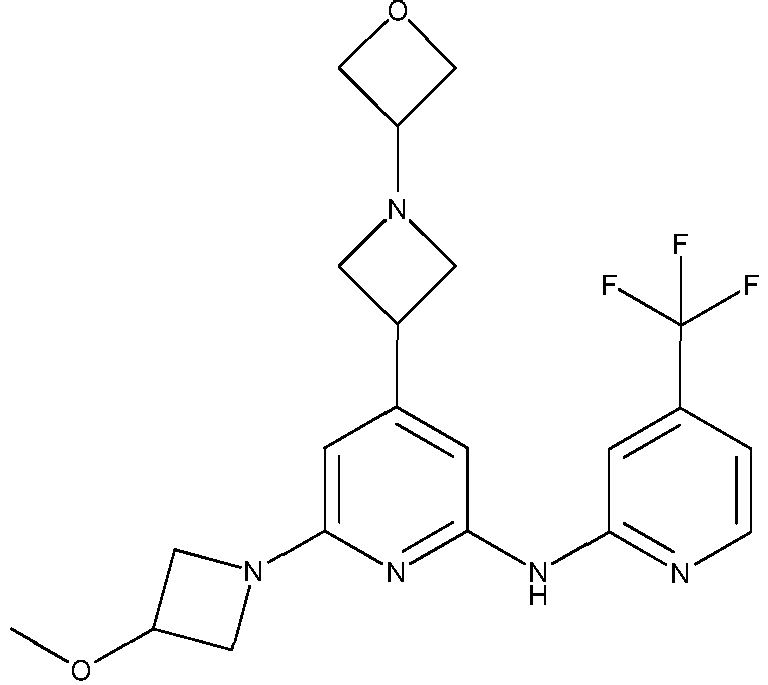
[6-(3-Methoxy-azetidin-1-yl )-4-(1-oxetan-3-yl-azetidin-3 -yl)-pyridin-2-yl]-(4-trifluor omethyl-pyridin-2-yl)-amine 2 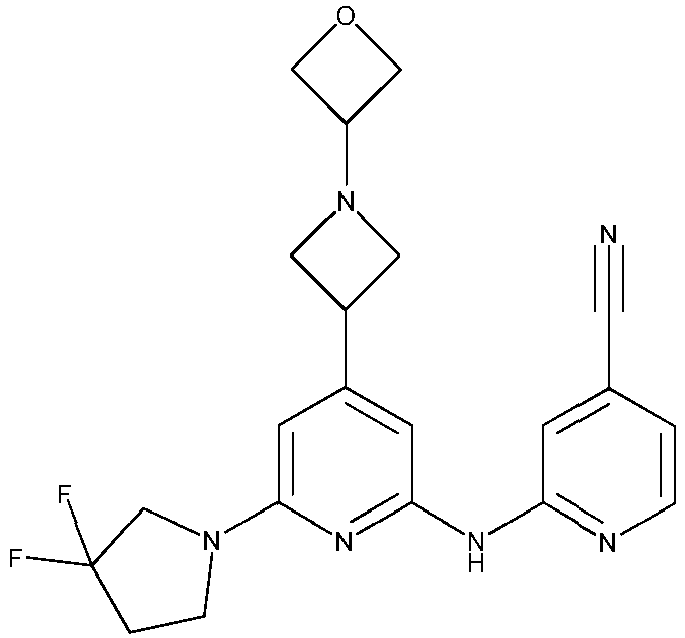
2-[6-(3,3-Difluoro-pyrrolidi n-1-yl)-4-(1-oxetan-3-yl-azet idin-3-yl)-pyridin-2-ylamino ]-isonicotinonitrile 3 
2-[6-Azetidin-1-yl-4-(1-oxet an-3-yl-azetidin-3-yl)-pyridi n-2-ylamino]-isonicotinonitr ile 4 
2-[6-(3,3-Difluoro-azetidin-1-yl)-4-(1-oxetan-3-yl-azetid in-3-yl)-pyridin-2-ylamino]-i sonicotinonitrile 5 
2-[6-(3-Fluoro-azetidin-1-yl) -4-(1-oxetan-3-yl-azetidin-3 - yl)-pyridin-2-ylamino]-isoni cotinonitrile 6 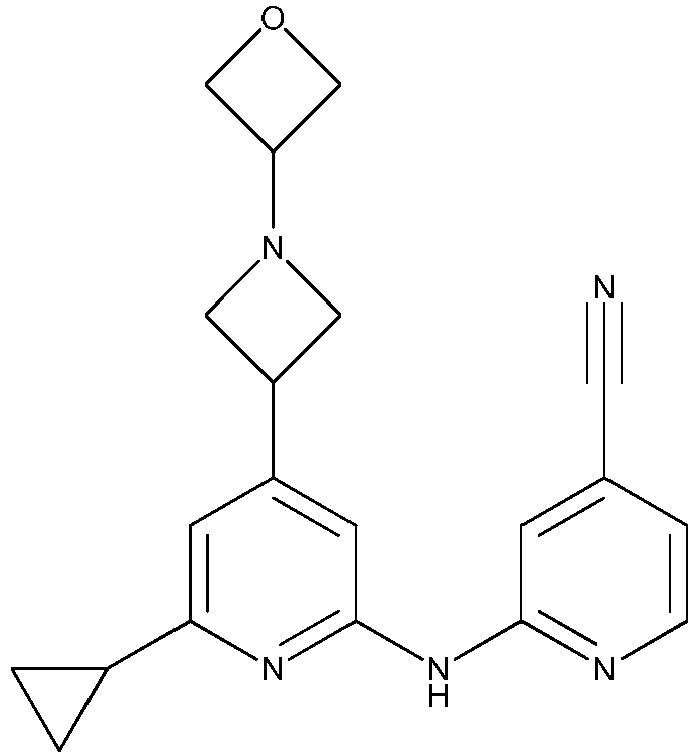
2-[6-Cyclopropyl-4-(1-oxeta n-3-yl-azetidin-3-yl)-pyridin -2-ylamino]-isonicotinonitril e 7 
2-[6-(3-Ethoxy-azetidin-1-yl )-1'-oxetan-3-yl-1',2',3',4',5', 6'-hexahydro-[4,4']bipyridin yl-2-ylamino]-isonicotinonit rile 8 
2-{6-(3-Methoxy-azetidin-1-yl)-4-[1-(2,2,2-trifluoro-ethy l)-azetidin-3-yl]-pyridin-2-yl amino } -isonicotinonitrile 9 
[6-Chloro-4-(1-oxetan-3-yl-azetidin-3-yl)-pyridin-2-yl]-( 4-trifluoromethyl-pyridin-2-yl)-amine 18 
6'-(2-Oxa-6-aza-spiro[3.3]he pt-6-yl)-2'-(4-trifluoromethyl -pyridin-2-ylamino)-2,3,5,6-tetrahydro-1H-[4,4']bipyridi nyl-4-carbonitrile 19 
6'-(3-Methoxy-azetidin-1-yl) -2'-(4-trifluoromethyl-pyridi n-2-ylamino)-2,3,5,6-tetrahy dro-1H-[4,4']bipyridinyl-4-c arbonitrile 20 
{6-Chloro-4-[1-(2,2,2-trifluo ro-ethyl)-azetidin-3-yl]-pyri din-2-yl}-(4-difluoromethyl-pyridin-2-yl)-amine 21 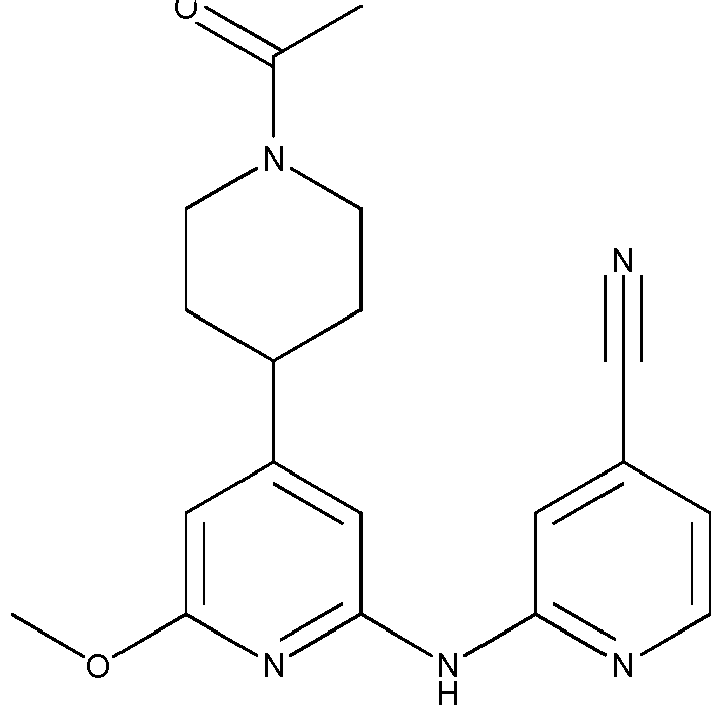
2-(1'-Acetyl-6-methoxy-1',2', 3',4',5',6'-hexahydro-[4,4']bi pyridinyl- 2-ylamino)-isonico tinonitrile 22 
2-(1'-Acetyl-6-isopropoxy-1' ,2',3',4',5',6'-hexahydro-[4,4'] bipyridinyl- 2-ylamino)-isoni cotinonitrile 23 
6'-(3-Fluoro-azetidin-1-yl)-2' -(4-trifluoromethyl-pyridin-2 -ylamino)-2,3,5,6-tetrahydro -1H-[4,4']bipyridinyl-4-carb onitrile 24 
2-[6-Chloro-4-(1-oxetan-3-y 1-azetidin-3-yl)-pyridin-2-yla mino]-isonicotinonitrile 25 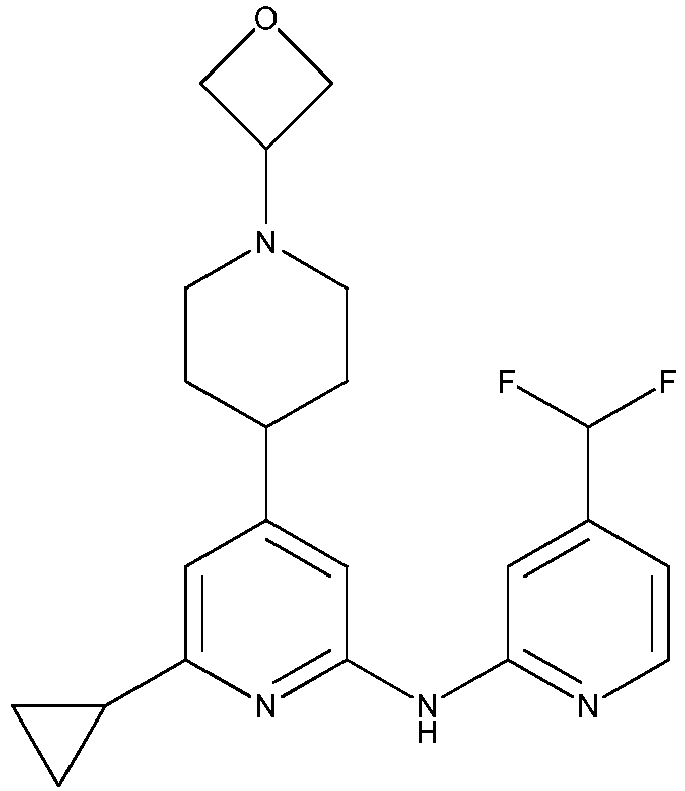
(6-Cyclopropyl-1'-oxetan-3-yl-1',2',3',4',5',6'-hexahydro-[ 4,4']bipyridinyl-2-yl)-(4-difl uoromethyl- pyridin-2-yl)-am ine 26 
(4-Difluoromethyl- pyridin- 2 -yl)-(6-ethyl-1'-oxetan-3-yl-1 ',2',3',4',5',6'-hexahydro-[4,4' ]bipyridinyl-2-yl)-amine 27 
(4-Difluoromethyl-pyridin-2 -yl)-(6-methyl-1'-oxetan-3-yl -1',2',3',4',5',6'-hexahydro-[4, 4']bipyridinyl-2-yl)-amine 28 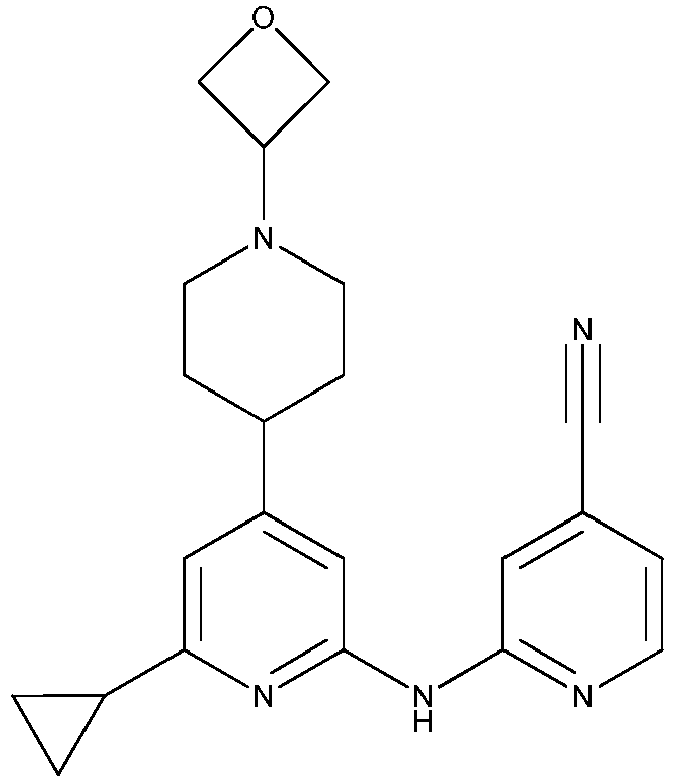
2-(6-Cyclopropyl-1'-oxetan-3-yl- 1',2',3',4',5',6'-hexahydr o-[4,4']bipyridinyl-2-ylamin o)-isonicotinonitrile 29 
2-(6-Ethyl-1'-oxetan-3-yl-1' , 2',3',4',5',6'-hexahydro-[4,4'] bipyridinyl-2-ylamino)-isoni cotinonitrile 30 
2'-(4-Cyano-pyridin-2-ylami no)-6'-((R)-2-methyl-pyrroli din-1-yl)-1-oxetan-3-yl-2,3,5 ,6-tetrahydro-1H-[4,4']bipyri dinyl-4-carbonitrile 31 
2'-(4-Cyano-pyridin-2-ylami no)-6'-(3,3-difluoro-pyrrolidi n-1-yl)-2,3,5,6-tetrahydro-1H-[4,4']bipyridinyl-4-carbon itrile 32 
2-{6-Chloro-4-[1-(2,2,2-trifl uoro-ethyl)-azetidin-3-yl]-py ridin-2-ylamino}-isonicotino nitrile 33 
2'-(4-Cyano-pyridin-2-ylami no)-1-methyl-6'-((R)-2-meth yl-pyrrolidin-1-yl)-2,3,5,6-te trahydro-1H-[4,4']bipyridiny 1-4-carbonitrile 34 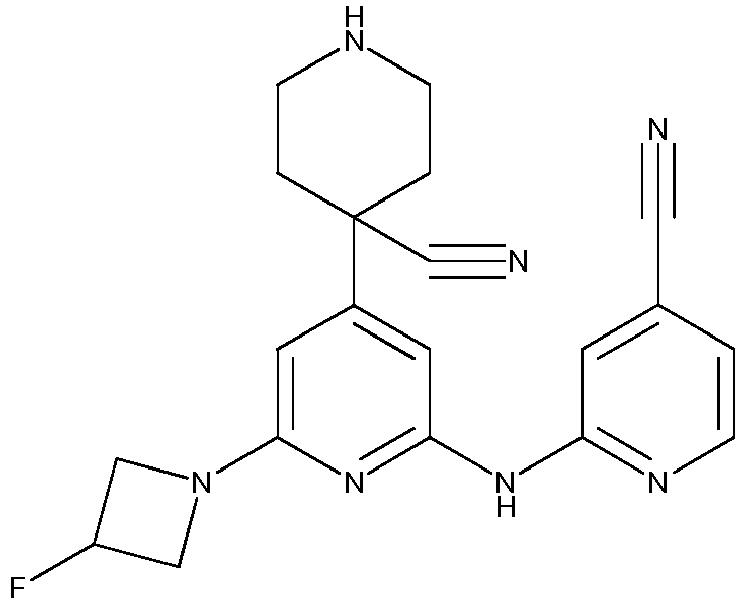
2'-(4-Cyano-pyridin-2-ylami no)-6'-(3-fluoro-azetidin-1-y 1)-2,3,5,6-tetrahydro-1H-[4,4 ']bipyridinyl-4-carbonitrile 35 
6'-(3-Aza-bicyclo[3.1.0]hex-3-yl)-2'-(4-cyano-pyridin-2-y lamino)-1-oxetan-3-yl-2,3,5, 6-tetrahydro-1H-[4,4']bipyri dinyl-4-carbonitrile 36 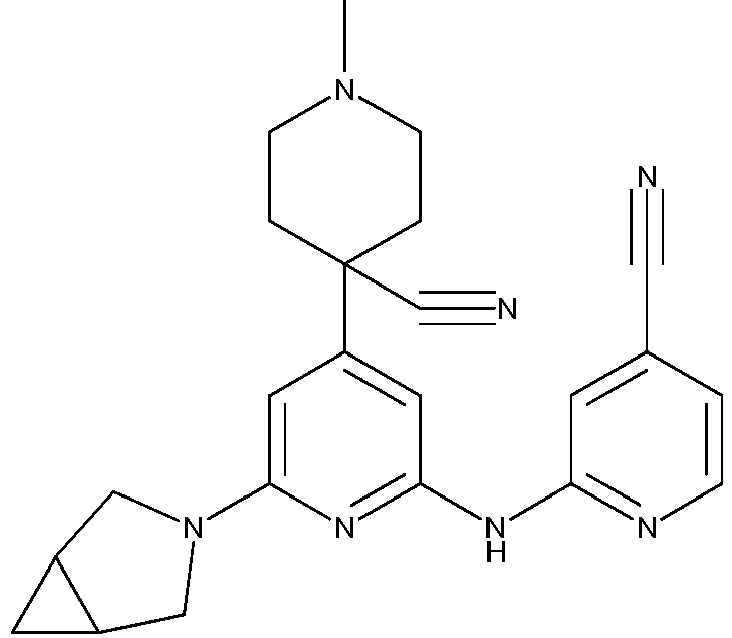
6'-(3-Aza-bicyclo[3.1.0]hex-3-yl)-2'-(4-cyano-pyridin-2-y lamino)-1-methyl-2,3,5,6-tet rahydro-1H-[4,4']bipyridinyl -4-carbonitrile 37 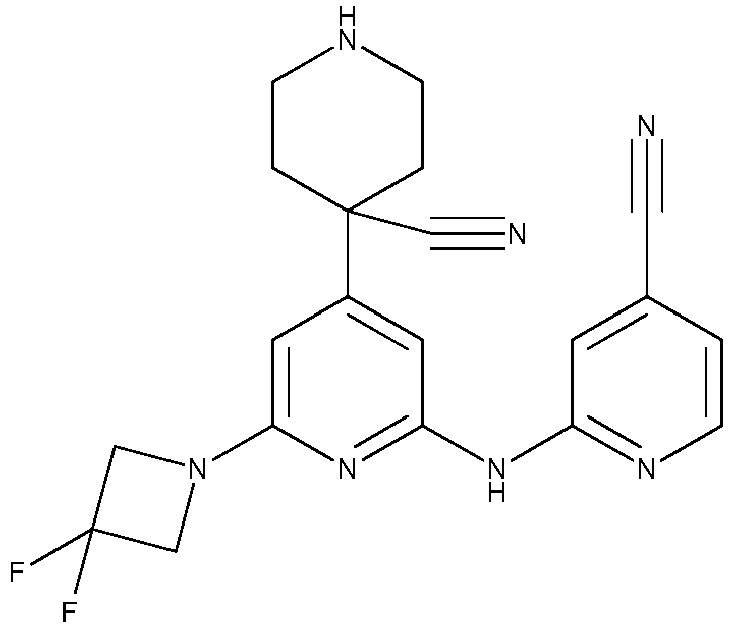
2'-(4-Cyano-pyridin-2-ylami no)-6'-(3,3-difluoro-azetidin -1-yl)-2,3,5,6-tetrahydro-1H-[4,4']bipyridinyl-4-carbonitri le 38 
6'-Azetidin-1-yl-2'-(4-cyano-pyridin-2-ylamino)-2,3,5,6-t etrahydro-1H-[4,4']bipyridin yl-4-carbonitrile 39 
2'-(4-Cyano-pyridin-2-ylami no)-6'-((R)-2-methyl-pyrroli din- I -yl)-2,3,5,6-tetrahydro-1H-[4,4']bipyridinyl-4-carbo nitrile 40 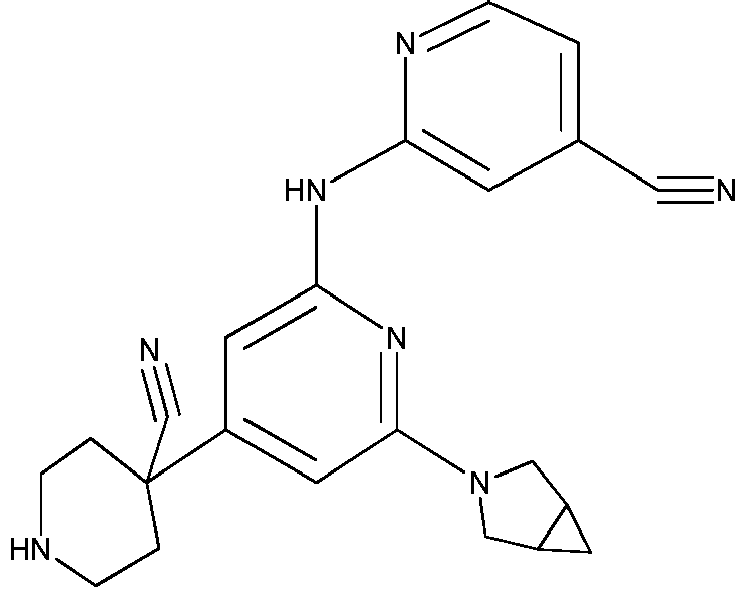
6'-(3-Aza-bicyclo[3.1.0]hex-3-yl)-2'-(4-cyano-pyridin-2-y lamino)-2,3,5,6-tetrahydro-1H-[4,4']bipyridinyl-4-carbon itrile 41 
3-[2-Chloro-6-(4-cyano-pyri din-2-ylamino)-pyridin-4-yl] -azetidine-1-carboxylic acid tert-butyl ester 42 
1-[6-(4-Difluoromethyl-pyri din-2-ylamino)-1'-oxetan-3-yl-1',2',3',4',5',6'-hexahydro-4,4']bipyridinyl-2-yl]-pyrroli din-2-one 43 
(6-Butoxy-1'-oxetan-3-yl-1', 2',3',4',5',6'-hexahydro-[4,4'] bipyridinyl-2-yl)-(4-difluoro methyl-pyridin-2-yl)-amine 44 
(4-Difluoromethyl-pyridin-2 -yl)-[6-(3-fluoro-azetidin-1-yl)-1'-oxetan-3-yl-1',2',3',4',5 ',6'-hexahydro-[4,4']bipyridi nyl-2-yl]-amine 45 
3-[2-Chloro-6-(4-difluorome thyl-pyridin-2-ylamino)-pyri din-4-yl]-azetidine-1-carbox ylic acid tert-butyl ester 46 
2-[4-(4-Cyano-tetrahydro-py ran-4-yl)-6-(3-fluoro-azetidi n-1-yl)-pyridin-2-ylamino]-i sonicotinonitrile 47 
2-[4-(4-Cyano-tetrahydro-py ran-4-yl)-6-(2-oxo-pyrrolidi n-1-yl)-pyridin-2-ylamino]-i sonicotinonitrile 48 
(4-Difluoromethyl-pyridin-2 -yl)-[6-(3-methoxy-azetidin-1-yl)-1'-oxetan-3-yl-1',2',3',4' ,5',6'-hexahydro-[4,4']bipyri dinyl-2-yl]-amine 49 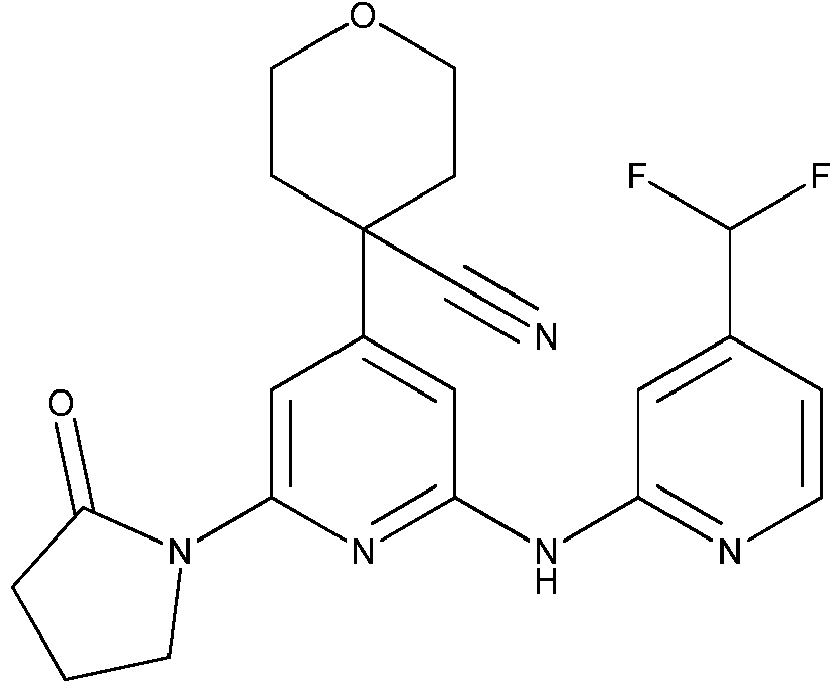
4-[2-(4-Difluoromethyl-pyri din-2-ylamino)-6-(2-oxo-pyr rolidin-1-yl)-pyridin-4-yl]-te trahydro-pyran-4-carbonitril e 50 
[6-(3-Aza-bicyclo[3.1.0]hex -3-yl)-1'-oxetan-3-yl-1',2',3', 4',5',6'-hexahydro-[4,4']bipyr idinyl-2-yl] -(4-difluorometh yl-pyridin-2-yl)-amine 51 
(6-Azetidin-1-yl-1'-oxetan-3 -yl-1',2',3',4',5',6'-hexahydro-[4,4']bipyridinyl-2-yl)-(4-difl uoromethyl-pyridin-2-yl)-am ine 52 
4-[2-(3-Aza-bicyclo[3.1.0]h ex-3-yl)-6-(4-difluoromethyl -pyridin-2-ylamino)-pyridin-4-yl] -tetrahydro-pyran-4-car bonitrile 53 
4-[2-Azetidin-1-yl-6-(4-diflu oromethyl-pyridin-2-ylamin o)-pyridin-4-yl]-tetrahydro-p yran-4-carbonitrile 54 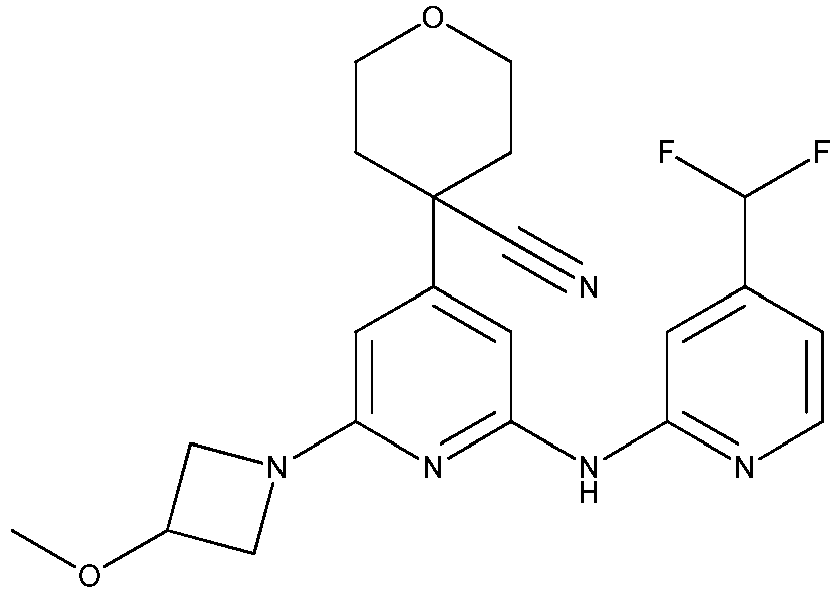
4- [2- (4-Difluoromethyl-pyri din-2-ylamino)-6-(3-methox y-azetidin-1-yl)-pyridin-4-yl ] -tetrahydro-pyran-4-carboni trile 55 
4- [2- (4-Difluoromethyl-pyri din-2-ylamino)-6-(3-fluoro-a zetidin-1-yl)-pyridin-4-yl]-te trahydro- pyran -4-carbonitril e 56 
4- [2- (4-Difluoromethyl-pyri din-2-ylamino)-6-(3,3-difluo ro-pyrrolidin-1-yl)-pyridin-4 -yl] -tetrahydro-pyran-4-carb onitrile 57 
1-[6'-Cyclopropyl-2'-(4-diflu oromethyl-pyridin-2-ylamin o)-3,4,5,6-tetrahydro-2H-[4, 4']bipyridinyl-1-yl]-ethanone 58 
1-[2'-(4-Difluoromethyl-pyri din-2-ylamino)-6'-ethyl-3,4, 5,6-tetrahydro-2H-[4,4']bipy ridinyl-1-yl]-ethanone 59 
2-(1'-Acetyl-6-cyclopropyl-1 ',2',3',4',5',6'-hexahydro-[4,4' ]bipyridinyl-2-ylamino)-ison icotinonitrile 60 
2-(1'-Acetyl-6-ethyl-1',2',3',4 ',5',6'-hexahydro-[4,4']bipyri dinyl-2-ylamino)-isonicotino nitrile 61 
2-[4-(4-Cyano-tetrahydro-py ran-4-yl)-6-(3,3-difluoro-pyr rolidin-1-yl)-pyridin-2-ylami no]-isonicotinonitrile 62 
1-[2'-(4-Difluoromethyl-pyri din-2-ylamino)-6'-methyl-3, 4,5,6-tetrahydro-2H-[4,4']bi pyridinyl-1-yl]-ethanone 63 
2-[4-(4-Cyano-tetrahydro-py ran-4-yl)-6-cyclopropyl-pyri din-2-ylamino]-isonicotinoni trile 64 
2-[4-(4-Cyano-tetrahydro-py ran-4-yl)-6-methyl-pyridin-2 -ylamino]-isonicotinonitrile 65 
2-(1'-Acetyl-6-chloro-1',2',3', 4',5',6'-hexahydro-[4,4']bipyr idinyl-2-ylamino)-isonicotin onitrile 66 
4-[2-Chloro-6-(4-difluorome thyl-pyridin-2-ylamino)-pyri din-4-yl] -tetrahydro-pyran-4 -carbonitrile 67 
2-[6-(3-Aza-bicyclo[3.1.0]h ex-3-yl)-4-(4-cyano-tetrahyd ro-pyran-4-yl)-pyridin-2-yla mino]-isonicotinonitrile 68 
(4-Difluoromethyl-pyridin-2 -yl)-[6-((R)-2-methyl-pyrroli din-1-yl)-1'-oxetan-3-yl-1',2', 3',4',5',6'-hexahydro-[4,4']bi pyridinyl-2-yl] -amine 69 
2-[4-(4-Cyano-tetrahydro-py ran-4-yl)-6-(6,6-difluoro-3-a za-bicyclo[3.2.0]hept-3-yl)-p yridin-2-ylamino]-isonicotin onitrile 70 
2-[1'-Oxetan-3-yl-6-((R)-2-tr ifluoromethyl-pyrrolidin- 1-y 1)-1',2',3',4',5',6'-hexahydro-[ 4,4']bipyridinyl-2-ylamino]-i sonicotinonitrile 71 
(4-Difluoromethyl-pyridin-2 -yl)-[6-(3,3-difluoro-pyrrolid in-1-yl)-1'-oxetan-3-yl-1',2',3 ',4',5',6'-hexahydro-[4,4']bip yridinyl-2-yl]-amine 72 
2-[6-Methyl-1'-(2,2,2-trifluo ro-ethyl)-1',2',3',4',5',6'-hexa hydro-[4,4']bipyridinyl-2-yla mino] -isonicotinonitrile 73 
1-[6'-Chloro-2'-(4-difluorom ethyl-pyridin-2-ylamino)-3,4 ,5,6-tetrahydro-2H-[4,4']bip yridinyl-1-yl]-ethanone 74 
2-[4-(4-Cyano-tetrahydro-py ran-4-yl)-6-((R)-2-methyl-py rrolidin-1-yl)-pyridin-2-ylam ino] -isonicotinonitrile 75 
2-[6-Azetidin-1-yl-4-(4-cyan o-tetrahydro-pyran-4-yl)-pyr idin-2-ylamino]-isonicotinon itrile 76 
(6-Chloro-1'-oxetan-3-yl-1',2 ',3',4',5',6'-hexahydro-[4,4']bi pyridinyl-2-yl)-(4-difluorom ethyl-pyridin-2-yl)-amine 77 
2-[6-Chloro-4-(4-cyano-tetra hydro-pyran-4-yl)-pyridin-2-ylamino] -isonicotinonitrile 78 
2-[6-Chloro-4-(tetrahydro-p yran-4-yl)-pyridin-2-ylamino ]-isonicotinonitrile 79 
2-[1'-Oxetan-3-yl-6-(2-oxopyrrolidin-1-yl)-1',2',3',4',5', 6'-hexahydro-[4,4']bipyridin yl-2-ylamino]-isonicotinonit rile 80 
2-[6-Methyl-4-(tetrahydro-p yran-4-yl)-pyridin-2-ylamino ]-isonicotinonitrile 81 
2-[6-(2-Aza-bicyclo[2.1.1]h ex-2-yl)-4-(tetrahydro-pyran -4-yl)-pyridin-2-ylamino]-is onicotinonitrile 82 
2-[6-(2-Oxa-6-aza-spiro[3.3] hept-6-yl)-4-(tetrahydro- pyra n-4-yl)-pyridin-2-ylamino]-i sonicotinonitrile 83 
2-[6-(2-Aza-bicyclo[3.1.0]h ex-2-yl)-4-(tetrahydro-pyran -4-yl)-pyridin-2-ylamino]-is onicotinonitrile 84 
2-[6-(3-Aza-bicyclo[3.1.0]h ex-3-yl)-4-(tetrahydro-pyran -4-yl)-pyridin-2-ylamino]-is onicotinonitrile 85 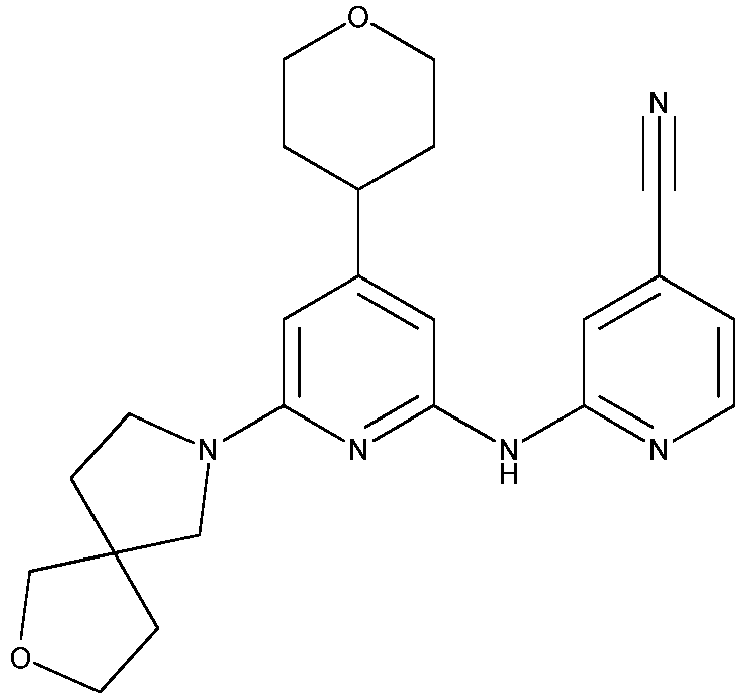
2-[6-(2-Oxa-7-aza-spiro[4.4] non-7-yl)-4-(tetrahydro-pyra n-4-yl)-pyridin-2-ylamino]-i sonicotinonitrile 86 
2-[6-(3-Fluoro-azetidin-1-yl) -4-(tetrahydro-pyran-4-yl)-p yridin-2-ylamino]-isonicotin onitrile 87 
2-[6-(3-Methoxy-azetidin-1-yl)-4-(tetrahydro-pyran-4-yl) -pyridin-2-ylamino]-isonicot inonitrile 88 
2-[6-(3-Methoxy-pyrrolidin-1-yl)-1'-oxetan-3-yl-1',2',3',4' ,5',6'-hexahydro-[4,4']bipyri dinyl-2-ylamino]-isonicotino nitrile 89 
2-[6-(3,3-Difluoro-azetidin-1-yl)-1'-oxetan-3-yl-1',2',3',4' ,5',6'-hexahydro-[4,4']bipyri dinyl-2-ylamino]-isonicotino nitrile 90 
2-[6-(2-Aza-bicyclo[2.1.1]h ex-2-yl)-1'-oxetan-3-yl-1',2', 3',4',5',6'-hexahydro-[4,4']bi pyridinyl-2-ylamino]-isonico tinonitrile 91 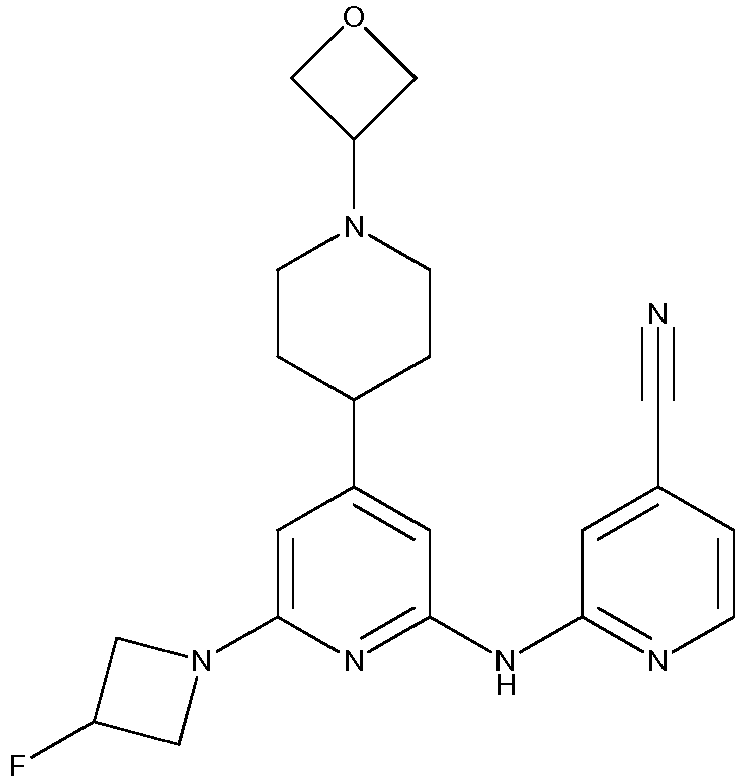
2-[6-(3-Fluoro-azetidin-1-yl) -1'-oxetan-3-yl-1',2',3',4',5',6' -hexahydro-[4,4']bipyridinyl -2-ylamino] -isonicotinonitril e 92 
2-[6-(3-Aza-bicyclo[3.1.0]h ex-3-yl)-1'-oxetan-3-yl-1',2', 3',4',5',6'-hexahydro-[4,4']bi pyridinyl-2-ylamino]-isonico tinonitrile 93 
2-[6-(6-Oxa-2-aza-spiro[3.4] oct-2-yl)-1'-oxetan-3-yl-1',2', 3',4',5',6'-hexahydro-[4,4']bi pyridinyl-2-ylamino]-isonico tinonitrile 94 
2-[6-(5,5-Difluoro-2-aza-spi ro[3.3]hept-2-yl)-1'-oxetan-3 -yl-1',2',3',4',5',6'-hexahydro-[4,4']bipyridinyl-2-ylamino]-isonicotinonitrile 95 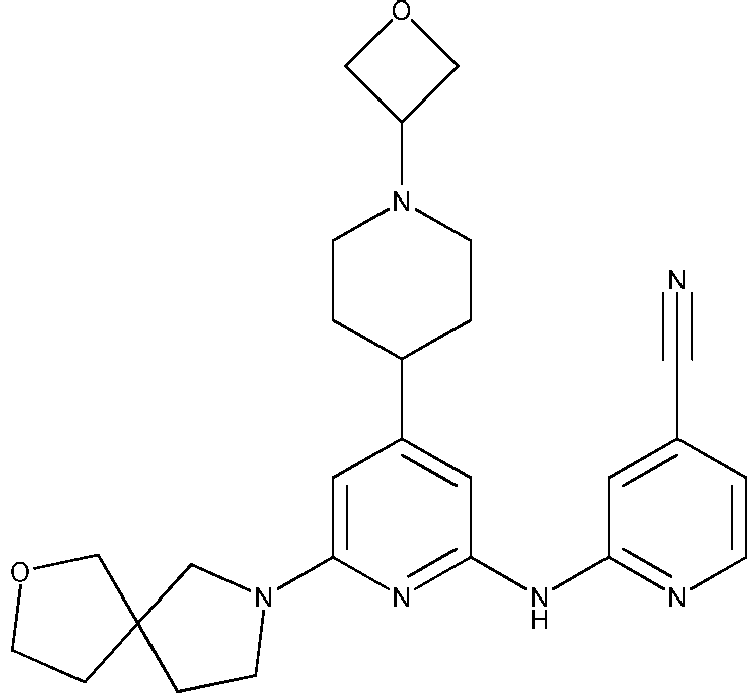
2-[6-(2-Oxa-7-aza-spiro[4.4] non-7-yl)-1'-oxetan-3-yl-1',2' ,3',4',5',6'-hexahydro-[4,4']bi pyridinyl-2-ylamino]-isonico tinonitrile 96 
2-[6-(3-Methoxy-azetidin-1-yl)-1'-oxetan-3-yl-1',2',3',4',5 ',6'-hexahydro-[4,4']bipyridi nyl-2-ylamino]-isonicotinoni trile 97 
2-[6-(6,6-Difluoro-3-aza-bic yclo[3.2.0]hept-3-yl)-1'-oxet an-3-yl-1',2',3',4',5',6'-hexah ydro-[4,4']bipyridinyl-2-yla mino]-isonicotinonitrile 98 
2-[6-(2-Oxa-6-aza-spiro[3.3] hept-6-yl)-1'-oxetan-3-yl-1', 2',3',4',5',6'-hexahydro-[4,4'] bipyridinyl-2-ylamino]-isoni cotinonitrile 99 
2-[6-(2-Aza-bicyclo[3.1.0]h ex-2-yl)-1'-oxetan-3-yl-1',2', 3',4',5',6'-hexahydro-[4,4']bi pyridinyl-2-ylamino]-isonico tinonitrile 100 
2-[6-(6,6-Difluoro-3-aza-bic yclo[3.2.0]hept-3-yl)-4-(tetra hydro-pyran-4-yl)-pyridin-2-ylamino]-isonicotinonitrile 101 
2-[6-(3-Methoxy-pyrrolidin-1-yl)-4-(tetrahydro-pyran-4-yl)-pyridin-2-ylamino]-isoni cotinonitrile 102 
2-[6-(6-Oxa-2-aza-spiro[3.4] oct-2-yl)-4-(tetrahydro-pyran -4-yl)-pyridin-2-ylamino]-is onicotinonitrile 103 
2-[6-(5,5-Difluoro-2-aza-spi ro[3.3]hept-2-yl)-4-(tetrahyd ro-pyran-4-yl)-pyridin-2-yla mino] -isonicotinonitrile 104 
2-[6-(3,3-Difluoro-azetidin-1-yl)-4-(tetrahydro-pyran-4-yl)-pyridin-2-ylamino]-isoni cotinonitrile 105 
2-(6-Azetidin-1-yl-1'-oxetan -3-yl-1',2',3',4',5',6'-hexahydr o-[4,4']bipyridinyl-2-ylamin o)-isonicotinonitrile 106 
2-(6-Chloro-1'-oxetan-3-yl-1 ',2',3',4',5',6'-hexahydro-[4,4' ]bipyridinyl-2-ylamino)-ison icotinonitrile 107 
2-[6-Methyl-1'-(2,2,2-trifluo ro-acetyl)-1',2',3',4',5',6'-hex ahydro-[4,4']bipyridinyl-2-yl amino]-isonicotinonitrile 108 
2-(1'-Acetyl-6-methyl-1',2',3' ,4',5',6'-hexahydro-[4,4']bipy ridinyl-2-ylamino)-isonicoti nonitrile 109 
2-(1'-Methanesulfonyl-6-met hyl-1',2',3',4',5',6'-hexahydro -[4,4']bipyridinyl-2-ylamino) -isonicotinonitrile 110 
2-(6-Methyl-1'-oxetan-3-yl-1 ',2',3',4',5',6'-hexahydro-[4,4' ]bipyridinyl-2-ylamino)-ison icotinonitrile 111 
2-(6-Methyl-1',2',3',4',5',6'-h exahydro-[4,4']bipyridinyl-2 -ylamino)-isonicotinonitrile 112 
2-[4-(3,6-Dihydro-2H-pyran -4-yl)-6-methyl-pyridin-2-yl amino]-isonicotinonitrile 113 
(4-Aminomethyl-pyridin-2-y l)-[6-methyl-4-(tetrahydro-p yran-4-yl)-pyridin-2-yl] -ami ne 114 
4-Azetidin-3-yl-N,N'-bis-(4-trifluoromethyl-pyridin-2-yl) -pyridine-2,6-diamine 115 
2-{6-(2-Methyl-pyrrolidin-1 -yl)-4-[1-(tetrahydro-pyran-4 -ylmethyl)-pyrrolidin-3-yl]-p yridin-2-ylamino }-isonicotin onitrile 116 
2'-(4-Cyano-pyridin-2-ylami no)-6'-methyl-3,4,5,6-tetrahy dro-2H-[4,4']bipyridinyl-1-c arboxylic acid tert-butyl ester 117 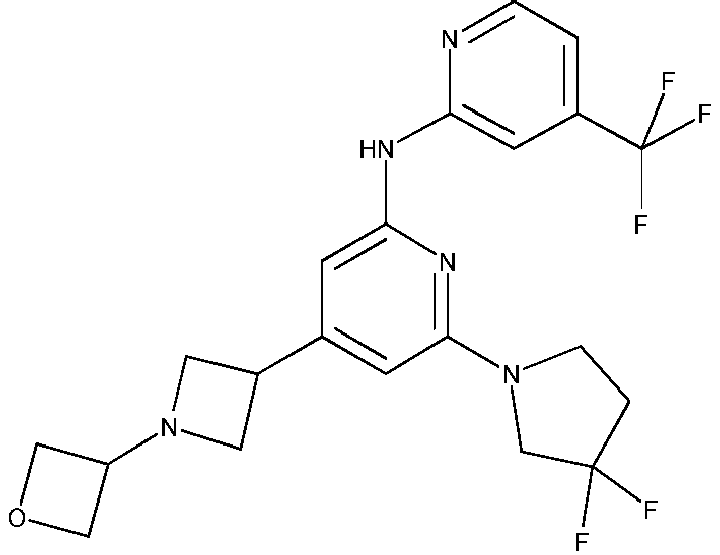
[6-(3,3-Difluoro-pyrrolidin-1-yl)-4-(1-oxetan-3-yl-azetid in-3-yl)-pyridin-2-yl]-(4-trifl uoromethyl-pyridin-2-yl)-am ine 118 
(4-Difluoromethoxy-pyridin-2-yl)-[6-(1-methyl-1H-pyraz ol-4-yl)-4-(tetrahydro-pyran-4-yl)-pyridin-2-yl]-amine 119 
2-[1'-Acetyl-6-((R)-2-methyl -pyrrolidin-1-yl)-1',2',3',4',5', 6'-hexahydro-[4,4']bipyridin yl-2-ylamino]-isonicotinonit rile 120 
(1'-Oxetan-3-yl-1',2',3',4',5',6 '-hexahydro-[4,4']bipyridinyl -2-yl)-(4-trifluoromethyl-pyr idin-2-yl)-amine 121 
2-[6-((R)-2-Methyl-pyrrolidi n-1-yl)-1'-oxetan-3-yl-1',2',3' ,4',5',6'-hexahydro-[4,4']bipy ridinyl-2-ylamino] -isonicoti nonitrile 122 
[6-(1-Methyl-1H-pyrazol-4-yl)-4-(tetrahydro-pyran-4-yl) -pyridin-2-yl]-(4-trifluorome thyl-pyridin-2-yl)-amine 123 
2-[6-((R)-2-Methyl-pyrrolidi n-1-yl)-4-(tetrahydro-pyran-4-yl)-pyridin-2-ylamino]-iso nicotinonitrile 124 
2-(1'-Oxetan-3-yl-1',2',3',4',5 ',6'-hexahydro-[4,4']bipyridi nyl-2-ylamino)-isonicotinoni trile 125 
[6-((R)-2-Methyl-pyrrolidin-1 -yl)-4-(tetrahydro-pyran-4-yl)-pyridin-2-yl] -(4-trifluoro methyl-pyridin-2-yl)-amine 126 
[6-(3,3-Difluoro-pyrrolidin-1-yl)-4-(1-methanesulfonyl-azetidin-3-yl)-pyridin-2-yl]-( 4-trifluoromethyl-pyridin-2-yl)-amine 127 
1-{3-[2-(3,3-Difluoro-pyrrol idin-1-yl)-6-(4-trifluorometh yl-pyridin-2-ylamino)-pyridi n-4-yl]-azetidin-1-yl}-ethan one 128 
2-(1'-Methanesulfonyl-1',2',3 ',4',5',6'-hexahydro-[4,4']bip yridinyl-2-ylamino)-isonicot inonitrile 129 
2-(1'-Acetyl-1',2',3',4',5',6'-h exahydro-[4,4']bipyridinyl-2 -ylamino)-isonicotinonitrile 130 
2-[6-(3,3-Difluoro-pyrrolidi n-1-yl)-4-(tetrahydro-pyran-4-yl)-pyridin-2-ylamino]-iso nicotinonitrile 131 
2-[6-(3,3-Difluoro-pyrrolidi n-1-yl)-1'-oxetan-3-yl-1',2',3' ,4',5',6'-hexahydro-[4,4']bipy ridinyl-2-ylamino]-isonicoti nonitrile 132 
[4-(1-Methanesulfonyl-pyrro lidin-3-yl)-6-(2-methyl-pyrro lidin-1-yl)-pyridin-2-yl]-(4-t rifluoromethyl-pyridin-2-yl)-amine 133 
(1-Methyl-1H-imidazol-4-yl )-{3-[2-(2-methyl-pyrrolidin -1-yl)-6-(4-trifluoromethyl-p yridin-2-ylamino)-pyridin-4-yl]-pyrrolidin-1-yl}-methano ne 134 
1-[2'-(1-Methyl-1H-pyrazol-4-yl)-6'-(4-methyl-pyridin-2-ylamino)-3,4,5,6-tetrahydro-2H-[4,4']bipyridinyl-1-yl]-et hanone 135 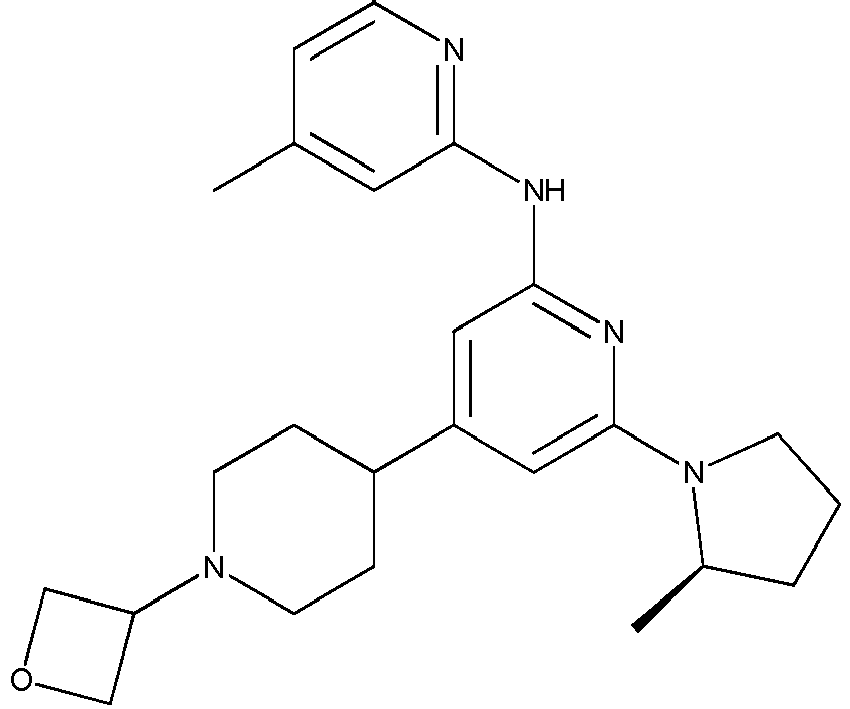
(4-Methyl-pyridin-2-yl)-[6-(( R)-2-methyl-pyrrolidin-1-yl) -1'-oxetan-3-yl-1',2',3',4',5',6' -hexahydro-[4,4']bipyridinyl -2-yl]-amine 136 
[1'-Methanesulfonyl-6-((R)-2-methyl-pyrrolidin-1-yl)-1', 2',3',4',5',6'-hexahydro-[4,4'] bipyridinyl-2-yl] -(4-methyl-pyridin-2-yl)-amine 137 
[1'-(2-Fluoro-ethyl)-6-((R)-2 -methyl-pyrrolidin-1-yl)-1',2' ,3',4',5',6'-hexahydro-[4,4']bi pyridinyl-2-yl] -(4-trifluorom ethyl-pyridin-2-yl)-amine 138 
[6'-(3,3-Difluoro-pyrrolidin-1-yl)-1-methyl-1,2,3,4,5,6-h exahydro-[3,4']bipyridinyl-2' -yl]-(4-trifluoromethyl-pyrid in-2-yl)-amine 139 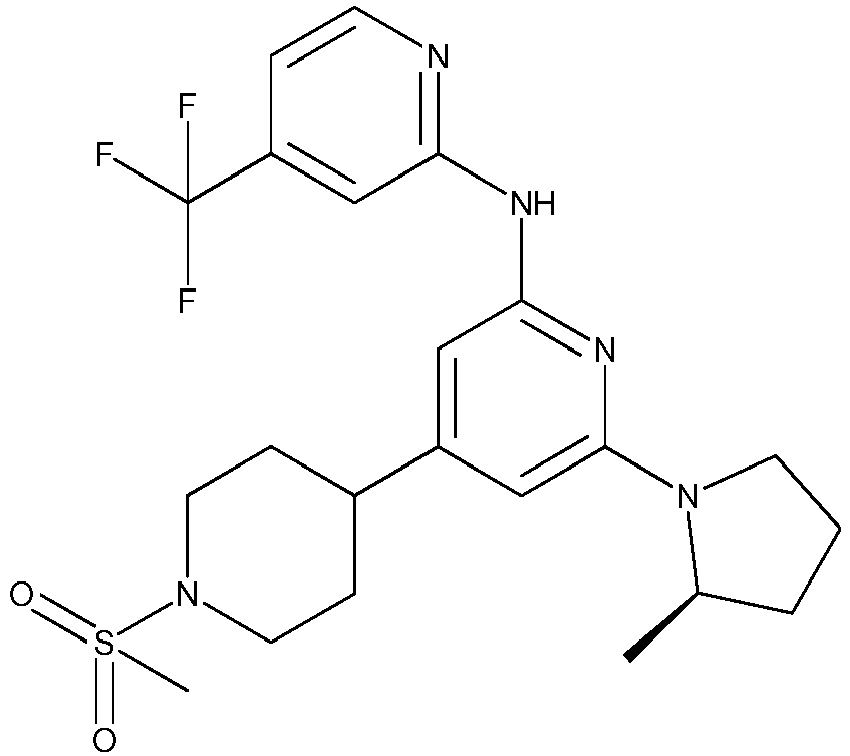
[1'-Methanesulfonyl-6-((R)-2-methyl-pyrrolidin-1-yl)-1', 2',3',4',5',6'-hexahydro-[4,4'] bipyridinyl-2-yl]-(4-trifluoro methyl-pyridin-2-yl)-amine 140 
2-[6'-((R)-2-Methyl-pyrrolid in-1-yl)-2'-(4-trifluoromethyl -pyridin-2-ylamino)-3,4,5,6-tetrahydro-2H-[4,4']bipyridi nyl-1-yl]-ethanol 141 
1-[2'-((R)-2-Methyl-pyrrolid in-1-yl)-6'-(4-trifluoromethyl -pyridin-2-ylamino)-3,4,5,6-tetrahydro-2H-[4,4']bipyridi nyl-1-yl]-ethanone 142 
1-[6'-(4-Cyclopropyl-pyridin -2-ylamino)-2'-((R)-2-methy 1-pyrrolidin-1-yl)-3,4,5,6-tetr ahydro-2H-[4,4']bipyridinyl-1-yl]-ethanone 143 
1-[2'-(3,3-Difluoro-pyrrolidi n-1-yl)-6'-(4-trifluoromethyl -pyridin-2-ylamino)-3,4,5,6-tetrahydro-2H-[4,4']bipyridi nyl-1-yl]-ethanone 144 
2-{Methyl-[6-(4-methyl-pyri din-2-ylamino)-1',2',3',4',5',6 '-hexahydro-[4,4']bipyridinyl -2-yl]-amino}-ethanol 145 
cyclohexyl(4-(2-((5-methylp yridin-2-yl)amino)pyridin-4-yl)piperidin-1-yl)methanone 146 
(S)-piperidin-2-yl(4-(2-(pyri din-2-ylamino)pyridin-4-yl) piperidin-1-yl)methanone 147 
(S)-(4-(2-((4-methylpyridin-2-yl)amino)pyridin-4-yl)pipe ridin-1-yl)(piperidin-2-yl)me thanone - In another aspect, the present invention provides for a pharmaceutical composition comprising a compound of formula I or an embodiment thereof and a pharmaceutically acceptable carrier, diluent or excipient.
- In another aspect, the present invention provides for pharmaceutical composition comprising a compound formula I as described herein and a pharmaceutically acceptable carrier, diluent or excipient.
- In another aspect, the present invention provides for a compound formula I as described herein for use as therapeutically active substance.
- In another aspect, the present invention provides for a compound formula I as described herein for the use as therapeutically active substance for inhibiting or preventing degeneration of a central nervous system (CNS) neuron or a portion thereof, the method comprising administering to the CNS neuron.
- In another aspect, the present invention provides for a compound formula I as described herein for the use as therapeutically active substance for inhibiting or preventing degeneration of a central nervous system (CNS) neuron or a portion thereof, the method comprising administering to the CNS neuron, wherein the administering of a compound of formula I results in a decrease of cJun phosphorylation, cJun activity, and / or cJun expression.
- In another aspect, the present invention provides for a compound formula I as described herein for the use as therapeutically active substance for inhibiting or preventing degeneration of a central nervous system (CNS) neuron or a portion thereof, the method comprising administering to the CNS neuron, wherein the administering of a compound of formula I results in a decrease in p38 phosphorylation, p38 activity, and/or p38 expression.
- In another aspect, the present invention provides for a compound formula I as described herein for the use as therapeutically active substance for decreasing the progression of a neurodegenerative disease or condition in a patient suffering therefrom comprising administering to said patient a therapeutically effective amount of a compound of formula I or a pharmaceutically acceptable salt thereof.
- In another aspect, the present invention provides for a compound formula I as described herein for the use as therapeutically active substance for decreasing the progression of a neurodegenerative disease or condition in a patient suffering therefrom comprising administering to said patient a therapeutically effective amount of a compound of formula I or a pharmaceutically acceptable salt thereof, wherein said neurodegenerative disease of condition is selected from the group consisting of: Alzheimer's disease, Huntington's disease, Parkinson's disease, Parkinson's-plus diseases, amyotrophic lateral sclerosis (ALS), ischemia, stroke, intracranial hemorrhage, cerebral hemorrhage, trigeminal neuralgia, glossopharyngeal neuralgia, Bell's Palsy, myasthenia gravis, muscular dystrophy, progressive muscular atrophy, primary lateral sclerosis (PLS), pseudobulbar palsy, progressive bulbar palsy, spinal muscular atrophy, inherited muscular atrophy, invertebrate disk syndromes, cervical spondylosis, plexus disorders, thoracic outlet destruction syndromes, peripheral neuropathies, prophyria, multiple system atrophy, progressive supranuclear palsy, corticobasal degeneration, dementia with Lewy bodies, frontotemporal dementia, demyelinating diseases, Guillain-Barré syndrome, multiple sclerosis, Charcot-Marie_Tooth disease, prion disease, Creutzfeldt-Jakob disease, Gerstmann-Sträussler-Scheinker syndrome (GSS), fatal familial insomnia (FFI), bovine spongiform encephalopathy, Pick's disease, epilepsy, AIDS demential complex, nerve damage caused by exposure to toxic compounds selected from the group consisting of heavy metals, industrial solvents, drugs and chemotherapeutic agents; injury to the nervous system caused by physical, mechanical or chemical trauma, glaucoma, lattice dystrophy, retinitis pigmentosa, age-related macular degeneration (AMD), photoreceptor degeneration associated with wet or dry AMD, other retinal degeneration, optic nerve drusen, optic neuropthy and optic neuritis.
- In another aspect, the present invention provides for a compound formula I as described herein for the use as therapeutically active substance for decreasing the progression of a neurodegenerative disease or condition in a patient suffering therefrom comprising administering to said patient a therapeutically effective amount of a compound of formula I or a pharmaceutically acceptable salt thereof, wherein said neurodegenerative disease of condition in a patient is selected from the group consisting of: Alzheimer's disease, Parkinson's disease, and amyotrophic lateral sclerosis (ALS).
- In another aspect, the present invention provides for a use of a compound formula I as described herein for the preparation of a medicament for inhibiting or preventing degeneration of a central nervous system (CNS) neuron or a portion thereof, the method comprising administering to the CNS neuron.
- In another aspect, the present invention provides for a use of a compound formula I as described herein for the preparation of a medicament for inhibiting or preventing degeneration of a central nervous system (CNS) neuron or a portion thereof, the method comprising administering to the CNS neuron, wherein the administering of a compound of formula I results in a decrease of cJun phosphorylation, cJun activity, and / or cJun expression.
- In another aspect, the present invention provides for a use of a compound formula I as described herein for the preparation of a medicament for inhibiting or preventing degeneration of a central nervous system (CNS) neuron or a portion thereof, the method comprising administering to the CNS neuron, wherein the administering of a compound of formula I results in a decrease in p38 phosphorylation, p38 activity, and/or p38 expression.
- In another aspect, the present invention provides for a use of a compound formula I as described herein for the preparation of a medicament for decreasing the progression of a neurodegenerative disease or condition in a patient suffering therefrom comprising administering to said patient a therapeutically effective amount of a compound of formula I or a pharmaceutically acceptable salt thereof.
- In another aspect, the present invention provides for a use of a compound formula I as described herein for the preparation of a medicament for decreasing the progression of a neurodegenerative disease or condition in a patient suffering therefrom comprising administering to said patient a therapeutically effective amount of a compound of formula I or a pharmaceutically acceptable salt thereof, wherein said neurodegenerative disease of condition is selected from the group consisting of: Alzheimer's disease, Huntington's disease, Parkinson's disease, Parkinson's-plus diseases, amyotrophic lateral sclerosis (ALS), ischemia, stroke, intracranial hemorrhage, cerebral hemorrhage, trigeminal neuralgia, glossopharyngeal neuralgia, Bell's Palsy, myasthenia gravis, muscular dystrophy, progressive muscular atrophy, primary lateral sclerosis (PLS), pseudobulbar palsy, progressive bulbar palsy, spinal muscular atrophy, inherited muscular atrophy, invertebrate disk syndromes, cervical spondylosis, plexus disorders, thoracic outlet destruction syndromes, peripheral neuropathies, prophyria, multiple system atrophy, progressive supranuclear palsy, corticobasal degeneration, dementia with Lewy bodies, frontotemporal dementia, demyelinating diseases, Guillain-Barré syndrome, multiple sclerosis, Charcot-Marie_Tooth disease, prion disease, Creutzfeldt-Jakob disease, Gerstmann-Sträussler-Scheinker syndrome (GSS), fatal familial insomnia (FFI), bovine spongiform encephalopathy, Pick's disease, epilepsy, AIDS demential complex, nerve damage caused by exposure to toxic compounds selected from the group consisting of heavy metals, industrial solvents, drugs and chemotherapeutic agents; injury to the nervous system caused by physical, mechanical or chemical trauma, glaucoma, lattice dystrophy, retinitis pigmentosa, age-related macular degeneration (AMD), photoreceptor degeneration associated with wet or dry AMD, other retinal degeneration, optic nerve drusen, optic neuropthy and optic neuritis.
- In another aspect, the present invention provides for a use of a compound formula I as described herein for the preparation of a medicament for decreasing the progression of a neurodegenerative disease or condition in a patient suffering therefrom comprising administering to said patient a therapeutically effective amount of a compound of formula I or a pharmaceutically acceptable salt thereof, wherein said neurodegenerative disease of condition in a patient is selected from the group consisting of: Alzheimer's disease, Parkinson's disease, and amyotrophic lateral sclerosis (ALS).
- As used herein, the term "alkyl", by itself or as part of another substituent, means, unless otherwise stated, a straight or branched chain hydrocarbon radical, having the number of carbon atoms designated (i.e., C1-8 means one to eight carbons). Examples of alkyl groups include methyl, ethyl, n-propyl, iso-propyl, n-butyl, t-butyl, iso-butyl, sec-butyl, n-pentyl, n-hexyl, n-heptyl, n-octyl, and the like. The term "alkenyl" refers to an unsaturated alkyl radical having one or more double bonds. Similarly, the term "alkynyl" refers to an unsaturated alkyl radical having one or more triple bonds. Examples of such unsaturated alkyl groups include vinyl, 2-propenyl, crotyl, 2-isopentenyl, 2-(butadienyl), 2,4-pentadienyl, 3-(1,4-pentadienyl), ethynyl, 1- and 3-propynyl, 3-butynyl, and the higher homologs and isomers. The term "cycloalkyl," "carbocyclic," or "carbocycle" refers to hydrocarbon ring system having 3 to 10 overall number of ring atoms (i.e., 3-10 membered cycloalkyl) and being fully saturated or having no more than one double bond between ring vertices for a 3-5 membered cycloalkyl and being saturated or having no more than two double bonds between ring vertices for 6 or larger membered cycloalkyl. As used herein, "cycloalkyl," "carbocyclic," or "carbocycle" is also meant to refer to bicyclic, polycyclic and spirocyclic hydrocarbon ring system such as, for example, bicyclo[2.2.1]heptane, pinane, bicyclo[2.2.2]octane, adamantane, norborene, spirocyclic C5-12 alkane, etc. As used herein, the terms, "alkenyl," "alkynyl," "cycloalkyl,", "carbocycle," and "carbocyclic," are meant to include mono and polyhalogenated variants thereof.
- The term "heteroalkyl," by itself or in combination with another term, means, unless otherwise stated, a stable straight or branched chain hydrocarbon radical, consisting of the stated number of carbon atoms and from one to three heteroatoms selected from the group consisting of O, N, Si and S, and wherein the nitrogen and sulfur atoms can optionally be oxidized and the nitrogen heteroatom can optionally be quaternized. The heteroatom(s) O, N and S can be placed at any interior position of the heteroalkyl group. The heteroatom Si can be placed at any position of the heteroalkyl group, including the position at which the alkyl group is attached to the remainder of the molecule. A "heteroalkyl" can contain up to three units of unsaturation, and also include mono- and poly-halogenated variants, or combinations thereof. Examples include -CH2-CH2-O-CH3, -CH2-CH2-O-CF3, -CH2-CH2-NH-CH3, -CH2-CH2-N(CH3)-CH3 , -CH2-S-CH2-CH3, -S(O)-CH3, -CH2-CH2-S(O)2-CH3, -CH=CH-O-CH3, -Si(CH3)3, -CH2-CH=N-OCH3, and -CH=CH=N(CH3)-CH3. Up to two heteroatoms can be consecutive, such as, for example, -CH2-NH-OCH3 and -CH2-O-Si(CH3)3.
- The term "heterocycloalkyl", "heterocyclic," or "heterocycle" refers to a saturated or partially unsaturated ring system radical having from 3 to 10 overall number of ring atoms and containing from one to five heteroatoms selected from N, O, and S, wherein the nitrogen and sulfur atoms are optionally oxidized, nitrogen atom(s) are optionally quaternized, as ring atoms. Unless otherwise stated, a "heterocycloalkyl," "heterocyclic," or "heterocycle" ring system can be a monocyclic, a bicyclic, spirocyclic or a polycylic ring system. A "heterocycloalkyl," "heterocyclic," or "heterocycle" group can be attached to the remainder of the molecule through one or more ring carbons or heteroatoms. Non limiting examples of "heterocycloalkyl," "heterocyclic," or "heterocycle" rings include pyrrolidine, piperidine, N-methylpiperidine, imidazolidine, pyrazolidine, butyrolactam, valerolactam, imidazolidinone, hydantoin, dioxolane, phthalimide, piperidine, pyrimidine-2,4(1H,3H)-dione, 1,4-dioxane, morpholine, thiomorpholine, thiomorpholine-S-oxide, thiomorpholine-S,S-oxide, piperazine, pyran, pyridone, 3-pyrroline, thiopyran, pyrone, tetrahydrofuran, tetrahydrothiophene, quinuclidine, tropane, 2-azaspiro[3.3]heptane, (1R,5S)-3-azabicyclo[3.2.1]octane, (1s,4s)-2-azabicyclo[2.2.2]octane, (1R,4R)-2-oxa-5-azabicyclo[2.2.2]octane and the like. A "heterocycloalkyl," "heterocyclic," or "heterocycle" can include mono- and poly-halogenated variants thereof.
- The term "alkylene" by itself or as part of another substituent means a divalent radical derived from an alkane, as exemplified by -CH2CH2CH2CH2-. Typically, an alkyl (or alkylene) group will have from 1 to 24 carbon atoms, with those groups having 10 or fewer carbon atoms being preferred in the present invention. "Alkenylene" and "alkynylene" refer to the unsaturated forms of "alkylene" having double or triple bonds, respectively. "Alkylene", "alkenylene" and "alkynylene" are also meant to include mono and poly-halogenated variants.
- The term "heteroalkylene" by itself or as part of another substituent means a divalent radical, saturated or unsaturated or polyunsaturated, derived from heteroalkyl, as exemplified
by -CH2-CH2-S-CH2CH2- and -CH2-S-CH2-CH2-NH-CH2-, -O-CH2-CH=CH-, -CH2-CH=C (H)CH2-O-CH2- and -S-CH2-C≡C-. For heteroalkylene groups, heteroatoms can also occupy either or both of the chain termini (e.g., alkyleneoxy, alkylenedioxy, alkyleneamino, alkylenediamino, and the like). The term "heteroalkylene" is also meant to include mono and poly-halogenated variants. - The terms "alkoxy," "alkylamino" and "alkylthio" (or thioalkoxy) are used in their conventional sense, and refer to those alkyl groups attached to the remainder of the molecule via an oxygen atom, an amino group, or a sulfur atom, respectively, and further include mono- and poly-halogenated variants thereof. Additionally, for dialkylamino groups, the alkyl portions can be the same or different.
- The terms "halo" or "halogen," by themselves or as part of another substituent, mean, unless otherwise stated, a fluorine, chlorine, bromine, or iodine atom. Additionally, terms such as "haloalkyl," are meant to include monohaloalkyl and polyhaloalkyl. For example, the term "C1-4 haloalkyl" is mean to include trifluoromethyl, 2,2,2-trifluoroethyl, 4-chlorobutyl, 3-bromopropyl, difluoromethyl, and the like.
- The term "aryl" means, unless otherwise stated, a polyunsaturated, typically aromatic, hydrocarbon ring, which can be a single ring or multiple rings (up to three rings) which are fused together. The term "heteroaryl" refers to aryl ring(s) that contain from one to five heteroatoms selected from N, O, and S, wherein the nitrogen and sulfur atoms are optionally oxidized, and the nitrogen atom(s) are optionally quaternized. A heteroaryl group can be attached to the remainder of the molecule through a heteroatom. Non-limiting examples of aryl groups include phenyl, naphthyl and biphenyl, while non-limiting examples of heteroaryl groups include pyridyl, pyridazinyl, pyrazinyl, pyrimindinyl, triazinyl, quinolinyl, quinoxalinyl, quinazolinyl, cinnolinyl, phthalaziniyl, benzotriazinyl, purinyl, benzimidazolyl, benzopyrazolyl, benzotriazolyl, benzisoxazolyl, isobenzofuryl, isoindolyl, indolizinyl, benzotriazinyl, thienopyridinyl, thienopyrimidinyl, pyrazolopyrimidinyl, imidazopyridines, benzothiaxolyl, benzofuranyl, benzothienyl, indolyl, quinolyl, isoquinolyl, isothiazolyl, pyrazolyl, indazolyl, pteridinyl, imidazolyl, triazolyl, tetrazolyl, oxazolyl, isoxazolyl, thiadiazolyl, pyrrolyl, thiazolyl, furyl, thienyl and the like. Optional substituents for each of the above noted aryl and heteroaryl ring systems can be selected from the group of acceptable substituents described further below.
- The above terms (e.g., "alkyl," "aryl" and "heteroaryl"), in some embodiments, will include both substituted and unsubstituted forms of the indicated radical. Preferred substituents for each type of radical are provided below.
- Substituents for the alkyl radicals (including those groups often referred to as alkylene, alkenyl, alkynyl, heteroalkyl and cycloalkyl) can be a variety of groups including, but not limited to, -halogen, -OR', -NR'R", -SR', -SiR'R"R"', -OC(O)R', -C(O)R', -CO2R', -CONR'R", -OC(O) NR'R", -NR"C(O)R', -NR"'C(O)NR'R", -NR"C(O)2R', -NHC(NH2)=NH, -NR'C(NH2)=NH, -NHC(NH2)=NR', -NR"'C(NR'R")=N-CN, -NR"'C(NR'R")=NOR', -NHC(NH2)=NR',-S(O) R', -S(O)2R', -S(O)2NR'R", -NR'S(O)2R", -NR"'S(O)2NR'R", -CN, -NO2, -(CH2)1-4-OR', -(C H2)1-4-NR'R", -(CH2)1-4-SR', -(CH2)1-4-SiR'R"R"', -(CH2)1-4-OC(O)R', -(CH2)1-4-C(O)R', -(C H2)1-4-CO2R', -(CH2)1-4CONR'R", in a number ranging from zero to (2m'+1), where m' is the total number of carbon atoms in such radical. R', R" and R'" each independently refer groups including, for example, hydrogen, unsubstituted C1-6 alkyl, unsubstituted heteroalkyl, unsubstituted aryl, aryl substituted with 1-3 halogens, unsubstituted C1-6 alkyl, C1-6 alkoxy or C1-6 thioalkoxy groups, or unsubstituted aryl-C1-4 alkyl groups, unsubstituted heteroaryl, substituted heteroaryl, among others. When R' and R" are attached to the same nitrogen atom, they can be combined with the nitrogen atom to form a 3-, 4-, 5-, 6-, or 7-membered ring. For example, -NR'R" is meant to include 1-pyrrolidinyl and 4-morpholinyl. Other substituents for alkyl radicals, including heteroalkyl, alkylene, include for example, =O, =NR', =N-OR', =N-CN, =NH, wherein R' include substituents as described above. When a substituent for the alkyl radicals (including those groups often referred to as alkylene, alkenyl, alkynyl, heteroalkyl and cycloalkyl) contains an alkylene, alkenylene, alkynylene linker (e.g., -(CH2)1-4-NR'R" for alkylene), the alkylene linker includes halo variants as well. For example, the linker "-(CH2)1-4-" when used as part of a substituent is meant to include difluoromethylene, 1,2-difluoroethylene, etc.
- Similarly, substituents for the aryl and heteroaryl groups are varied and are generally selected from the group including, but not limited to, -halogen, -OR', -OC(O)R', -NR'R", -SR', -R', -CN, -NO2, -CO2R', -CONR'R", -C(O)R', -OC (O)NR'R", -NR"C(O)R', -NR"C(O)2R', -NR'C(O)NR"R"', -NHC(NH2)=NH, -NR'C(NH2)= NH, -NHC(NH2)=NR', -S(O)R', -S(O)2R', -S(O)2NR'R", -NR'S(O)2R", -N3, perfluoro-C1-4 alkoxy, and perfluoro-C1-4 alkyl, -(CH2)1-4-OR', -(CH2)1-4-NR'R", -(CH2)1-4-SR', -(CH2)1-4-SiR'R"R"', -(CH2)1-4-OC(O) R', -(CH2)1-4-C(O)R', -(CH2)1-4-CO2R', -(CH2)1-4CONR'R", in a number ranging from zero to the total number of open valences on the aromatic ring system; and where R', R" and R'" are independently selected from hydrogen, C1-6 alkyl, C3-6 cycloalkyl, C2-6 alkenyl, C2-6 alkynyl, unsubstituted aryl and heteroaryl, (unsubstituted aryl)-C1-4 alkyl, and unsubstituted aryloxy-C1-4 alkyl. Other suitable substituents include each of the above aryl substituents attached to a ring atom by an alkylene tether of from 1-4 carbon atoms. When a substituent for the aryl or heteroaryl group contains an alkylene, alkenylene, alkynylene linker (e.g., -(CH2)1-4-NR'R" for alkylene), the alkylene linker includes halo variants as well. For example, the linker "-(CH2)1-4-" when used as part of a substituent is meant to include difluoromethylene, 1,2-difluoroethylene, etc.
- As used herein, the term "heteroatom" is meant to include oxygen (O), nitrogen (N), sulfur (S) and silicon (Si).
- As used herein, the term "chiral" refers to molecules which have the property of non-superimposability of the mirror image partner, while the term "achiral" refers to molecules which are superimposable on their mirror image partner.
- As used herein, the term "stereoisomers" refers to compounds which have identical chemical constitution, but differ with regard to the arrangement of the atoms or groups in space.
- As used herein a wavy line "" that intersects a bond in a chemical structure fragment indicates the point of attachment of the bond to which the wavy bond intersects in the chemical structure fragment to the remainder of a molecule or structural formula.

- As used herein, the representation of a group (e.g., Xd) in parenthesis followed by a subscript integer range (e.g., (Xd)0-2) means that the group can have the number of occurrences as designated by the integer range. For example, (Xd)0-1 means the group Xd can be absent or can occur one time.
- "Diastereomer" refers to a stereoisomer with two or more centers of chirality and whose molecules are not mirror images of one another. Diastereomers have different physical properties, e.g. melting points, boiling points, spectral properties, and reactivities. Mixtures of diastereomers can separate under high resolution analytical procedures such as electrophoresis and chromatography.
- "Enantiomers" refer to two stereoisomers of a compound which are non-superimposable mirror images of one another.
- Stereochemical definitions and conventions used herein generally follow S. P. Parker, Ed., McGraw-Hill Dictionary of Chemical Terms (1984) McGraw-Hill Book Company, New York; and Eliel, E. and Wilen, S., "Stereochemistry of Organic Compounds", John Wiley & Sons, Inc., New York, 1994. The compounds of the invention can contain asymmetric or chiral centers, and therefore exist in different stereoisomeric forms. It is intended that all stereoisomeric forms of the compounds of the invention, including but not limited to, diastereomers, enantiomers and atropisomers, as well as mixtures thereof such as racemic mixtures, form part of the present invention. Many organic compounds exist in optically active forms, i.e., they have the ability to rotate the plane of plane-polarized light. In describing an optically active compound, the prefixes D and L, or R and S, are used to denote the absolute configuration of the molecule about its chiral center(s). The prefixes d and 1 or (+) and (-) are employed to designate the sign of rotation of plane-polarized light by the compound, with (-) or 1 meaning that the compound is levorotatory. A compound prefixed with (+) or d is dextrorotatory. For a given chemical structure, these stereoisomers are identical except that they are mirror images of one another. A specific stereoisomer can also be referred to as an enantiomer, and a mixture of such isomers is often called an enantiomeric mixture. A 50:50 mixture of enantiomers is referred to as a racemic mixture or a racemate, which can occur where there has been no stereoselection or stereospecificity in a chemical reaction or process. The terms "racemic mixture" and "racemate" refer to an equimolar mixture of two enantiomeric species, devoid of optical activity.
- As used herein, the term "tautomer" or "tautomeric form" refers to structural isomers of different energies which are interconvertible via a low energy barrier. For example, proton tautomers (also known as prototropic tautomers) include interconversions via migration of a proton, such as keto-enol and imine-enamine isomerizations. Valence tautomers include interconversions by reorganization of some of the bonding electrons.
- As used herein, the term "solvate" refers to an association or complex of one or more solvent molecules and a compound of the invention. Examples of solvents that form solvates include, but are not limited to, water, isopropanol, ethanol, methanol, DMSO, ethyl acetate, acetic acid, and ethanolamine. The term "hydrate" refers to the complex where the solvent molecule is water.
- As used herein, the term "protecting group" refers to a substituent that is commonly employed to block or protect a particular functional group on a compound. For example, an "amino-protecting group" is a substituent attached to an amino group that blocks or protects the amino functionality in the compound. Suitable amino-protecting groups include acetyl, trifluoroacetyl, t-butoxycarbonyl (BOC), benzyloxycarbonyl (CBZ) and 9-fluorenylmethylenoxycarbonyl (Fmoc). Similarly, a "hydroxy-protecting group" refers to a substituent of a hydroxy group that blocks or protects the hydroxy functionality. Suitable protecting groups include acetyl and silyl. A "carboxy-protecting group" refers to a substituent of the carboxy group that blocks or protects the carboxy functionality. Common carboxy-protecting groups include phenylsulfonylethyl, cyanoethyl, 2-(trimethylsilyl)ethyl, 2-(trimethylsilyl)ethoxymethyl, 2-(p-toluenesulfonyl)ethyl, 2-(p-nitrophenylsulfenyl)ethyl, 2-(diphenylphosphino)-ethyl, nitroethyl and the like. For a general description of protecting groups and their use, see P.G.M. Wuts and T.W. Greene, Greene's Protective Groups in Organic Synthesis 4th edition, Wiley-Interscience, New York, 2006.
- As used herein, the term "mammal" includes, but is not limited to, humans, mice, rats, guinea pigs, monkeys, dogs, cats, horses, cows, pigs, and sheep
- As used herein, the term "pharmaceutically acceptable salts" is meant to include salts of the active compounds which are prepared with relatively nontoxic acids or bases, depending on the particular substituents found on the compounds described herein. When compounds of the present invention contain relatively acidic functionalities, base addition salts can be obtained by contacting the neutral form of such compounds with a sufficient amount of the desired base, either neat or in a suitable inert solvent. Examples of salts derived from pharmaceutically-acceptable inorganic bases include aluminum, ammonium, calcium, copper, ferric, ferrous, lithium, magnesium, manganic, manganous, potassium, sodium, zinc and the like. Salts derived from pharmaceutically-acceptable organic bases include salts of primary, secondary and tertiary amines, including substituted amines, cyclic amines, naturally-occurring amines and the like, such as arginine, betaine, caffeine, choline, N,N'-dibenzylethylenediamine, diethylamine, 2-diethylaminoethanol, 2-dimethylaminoethanol, ethanolamine, ethylenediamine, N-ethylmorpholine, N-ethylpiperidine, glucamine, glucosamine, histidine, hydrabamine, isopropylamine, lysine, methylglucamine, morpholine, piperazine, piperidine, polyamine resins, procaine, purines, theobromine, triethylamine, trimethylamine, tripropylamine, tromethamine and the like. When compounds of the present invention contain relatively basic functionalities, acid addition salts can be obtained by contacting the neutral form of such compounds with a sufficient amount of the desired acid, either neat or in a suitable inert solvent. Examples of pharmaceutically acceptable acid addition salts include those derived from inorganic acids like hydrochloric, hydrobromic, nitric, carbonic, monohydrogencarbonic, phosphoric, monohydrogenphosphoric, dihydrogenphosphoric, sulfuric, monohydrogensulfuric, hydriodic, or phosphorous acids and the like, as well as the salts derived from relatively nontoxic organic acids like acetic, propionic, isobutyric, malonic, benzoic, succinic, suberic, fumaric, mandelic, phthalic, benzenesulfonic, p-tolylsulfonic, citric, tartaric, methanesulfonic, and the like. Also included are salts of amino acids such as arginate and the like, and salts of organic acids like glucuronic or galactunoric acids and the like (see, for example, Berge, S. M., et al., "Pharmaceutical Salts", Journal of Pharmaceutical Science, 1977, 66, 1-19). Certain specific compounds of the present invention contain both basic and acidic functionalities that allow the compounds to be converted into either base or acid addition salts.
- The neutral forms of the compounds can be regenerated by contacting the salt with a base or acid and isolating the parent compound in the conventional manner. The parent form of the compound differs from the various salt forms in certain physical properties, such as solubility in polar solvents, but otherwise the salts are equivalent to the parent form of the compound for the purposes of the present invention.
- In addition to salt forms, the present invention discloses compounds which are in a prodrug form. As used herein the term "prodrug" refers to those compounds that readily undergo chemical changes under physiological conditions to provide the compounds of the present invention. Additionally, prodrugs can be converted to the compounds of the present invention by chemical or biochemical methods in an ex vivo environment. For example, prodrugs can be slowly converted to the compounds of the present invention when placed in a transdermal patch reservoir with a suitable enzyme or chemical reagent.
- Prodrugs of the disclosure include compounds wherein an amino acid residue, or a polypeptide chain of two or more (e.g., two, three or four) amino acid residues, is covalently joined through an amide or ester bond to a free amino, hydroxy or carboxylic acid group of a compound of the present invention. The amino acid residues include but are not limited to the 20 naturally occurring amino acids commonly designated by three letter symbols and also includes phosphoserine, phosphothreonine, phosphotyrosine, 4-hydroxyproline, hydroxylysine, demosine, isodemosine, gamma-carboxyglutamate, hippuric acid, octahydroindole-2-carboxylic acid, statine, 1,2,3,4-tetrahydroisoquinoline-3-carboxylic acid, penicillamine, ornithine, 3-methylhistidine, norvaline, beta-alanine, gamma-aminobutyric acid, citrulline, homocysteine, homoserine, methyl-alanine, para-benzoylphenylalanine, phenylglycine, propargylglycine, sarcosine, methionine sulfone and tert-butylglycine.
- Additional types of prodrugs are also encompassed. For instance, a free carboxyl group of a compound of the invention can be derivatized as an amide or alkyl ester. As another example, compounds of this invention comprising free hydroxy groups can be derivatized as prodrugs by converting the hydroxy group into a group such as, but not limited to, a phosphate ester, hemisuccinate, dimethylaminoacetate, or phosphoryloxymethyloxycarbonyl group, as outlined in Fleisher, D. et al., (1996) Improved oral drug delivery: solubility limitations overcome by the use of prodrugs Advanced Drug Delivery Reviews, 19:115. Carbamate prodrugs of hydroxy and amino groups are also included, as are carbonate prodrugs, sulfonate esters and sulfate esters of hydroxy groups. Derivatization of hydroxy groups as (acyloxy)methyl and (acyloxy)ethyl ethers, wherein the acyl group can be an alkyl ester optionally substituted with groups including, but not limited to, ether, amine and carboxylic acid functionalities, or where the acyl group is an amino acid ester as described above, are also encompassed. Prodrugs of this type are described in J. Med. Chem., (1996), 39:10. More specific examples include replacement of the hydrogen atom of the alcohol group with a group such as (C1-6)alkanoyloxymethyl, 1-((C1-6)alkanoyloxy)ethyl, 1-methyl-1-((C1-6)alkanoyloxy)ethyl, (C1-6)alkoxycarbonyloxymethyl, N-(C1-6)alkoxycarbonylaminomethyl, succinoyl, (C1-6)alkanoyl, alpha-amino(C1-4)alkanoyl, arylacyl and alpha-aminoacyl, or alpha-aminoacyl-alpha-aminoacyl, where each alpha-aminoacyl group is independently selected from the naturally occurring L-amino acids, P(O)(OH)2, -P(O)(O(C1-6)alkyl)2 or glycosyl (the radical resulting from the removal of a hydroxyl group of the hemiacetal form of a carbohydrate).
- For additional examples of prodrug derivatives, see, for example, a) Design of Prodrugs, edited by H. Bundgaard, (Elsevier, 1985) and Methods in Enzymology, Vol. 42, p. 309-396, edited by K. Widder, et al. (Academic Press, 1985); b) A Textbook of Drug Design and Development, edited by Krogsgaard-Larsen and H. Bundgaard, Chapter 5 "Design and Application of Prodrugs," by H. Bundgaard p. 113-191 (1991); c) H. Bundgaard, Advanced Drug Delivery Reviews, 8:1-38 (1992); d) H. Bundgaard, et al., Journal of Pharmaceutical Sciences, 77:285 (1988); and e) N. Kakeya, et al., Chem. Pharm. Bull., 32:692 (1984), each of which is specifically incorporated herein by reference.
- Additionally, the present invention discloses metabolites of compounds of the invention. As used herein, a "metabolite" refers to a product produced through metabolism in the body of a specified compound or salt thereof. Such products can result for example from the oxidation, reduction, hydrolysis, amidation, deamidation, esterification, deesterification, enzymatic cleavage, and the like, of the administered compound.
- Metabolite products typically are identified by preparing a radiolabelled (e.g., 14C or 3H) isotope of a compound of the invention, administering it parenterally in a detectable dose (e.g., greater than about 0.5 mg/kg) to an animal such as rat, mouse, guinea pig, monkey, or to man, allowing sufficient time for metabolism to occur (typically about 30 seconds to 30 hours) and isolating its conversion products from the urine, blood or other biological samples. These products are easily isolated since they are labeled (others are isolated by the use of antibodies capable of binding epitopes surviving in the metabolite). The metabolite structures are determined in conventional fashion, e.g., by MS, LC/MS or NMR analysis. In general, analysis of metabolites is done in the same way as conventional drug metabolism studies well known to those skilled in the art. The metabolite products, so long as they are not otherwise found in vivo, are useful in diagnostic assays for therapeutic dosing of the compounds of the invention.
- Certain compounds of the present invention can exist in unsolvated forms as well as solvated forms, including hydrated forms. In general, the solvated forms are equivalent to unsolvated forms and are intended to be encompassed within the scope of the present invention. Certain compounds of the present invention can exist in multiple crystalline or amorphous forms. In general, all physical forms are equivalent for the uses contemplated by the present invention and are intended to be within the scope of the present invention.
- Certain compounds of the present invention possess asymmetric carbon atoms (optical centers) or double bonds; the racemates, diastereomers, geometric isomers, regioisomers and individual isomers (e.g., separate enantiomers) are all intended to be encompassed within the scope of the present invention.
- The compounds of the present invention can also contain unnatural proportions of atomic isotopes at one or more of the atoms that constitute such compounds. For example, the present invention also embraces isotopically-labeled variants of the present invention which are identical to those recited herein, bur the for the fact that one or more atoms are replace by an atom having the atomic mass or mass number different from the predominant atomic mass or mass number usually found in nature for the atom. All isotopes of any particular atom or element as specified are contemplated within the scope of the compounds of the invention, and their uses. Exemplary isotopes that can be incorporated in to compounds of the invention include istopes of hydrogen, carbon, nitrogen, oxygen, phosphorous, sulfur, fluorine, chlorine and iodine, such as 2H ("D"), 3H, 11C, 13C, 14C, 13N, 15N, 15O, 17O, 18O, 32P, 33P, 35S, 18F, 36Cl, 123I and 125I. Certain isotopically labeled compounds of the present invention (e.g., those labeled with 3H or 14C) are useful in compound and /or substrate tissue distribution assays. Tritiated (3H) and carbon-14 (14C) isotopes are useful for their ease of preparation and detectability. Further substitution with heavier isotopes such as deuterium (i.e., 2H) may afford certain therapeutic advantages resulting from greater metabolic stability (e.g., increased in vivo half-life or reduced dosage requirements) and hence may be preferred in some circumstances. Positron emitting isotopes such as 15O, 13N, 11C, and 18F are useful for positron emission tomography (PET) studies to examine substrate receptor occupancy. Isotopically labeled compounds of the present inventions can generally be prepared by following procedures analogous to those disclosed in the Schemes and/or in the Examples herein below, by substituting an isotopically labeled reagent for a non-isotopically labeled reagent.
- The terms "treat" and "treatment" refer to both therapeutic treatment and/or prophylactic treatment or preventative measures, wherein the object is to prevent or slow down (lessen) an undesired physiological change or disorder, such as, for example, the development or spread of cancer. For purposes of this invention, beneficial or desired clinical results include, but are not limited to, alleviation of symptoms, diminishment of extent of disease or disorder, stabilized (i.e., not worsening) state of disease or disorder, delay or slowing of disease progression, amelioration or palliation of the disease state or disorder, and remission (whether partial or total), whether detectable or undetectable. "Treatment" can also mean prolonging survival as compared to expected survival if not receiving treatment. Those in need of treatment include those already with the disease or disorder as well as those prone to have the disease or disorder or those in which the disease or disorder is to be prevented.
- The phrase "therapeutically effective amount" means an amount of a compound of the present invention that (i) treats or prevents the particular disease, condition, or disorder, (ii) attenuates, ameliorates, or eliminates one or more symptoms of the particular disease, condition, or disorder, or (iii) prevents or delays the onset of one or more symptoms of the particular disease, condition, or disorder described herein. In some embodiments, a therapeutically effective amount is an amount of a chemical entity described herein sufficient to significantly decrease or delay neuronal cell death.
- The term "administering" as used herein refers to contacting a neuron or portion thereof with a compound described herein. This includes administration of the compound to a subject in which the neuron or portion thereof is present, as well as introducing the inhibitor into a medium in which a neuron or portion thereof is cultured.
- The term "patient" as used herein refers to any mammal, including humans, higher non-human primates, rodents domestic and farm animals such as cow, horses, dogs and cats. In one embodiment, the patient is a human patient.
- The term "bioavailability" refers to the systemic availability (i.e., blood/plasma levels) of a given amount of drug administered to a patient. Bioavailability is an absolute term that indicates measurement of both the time (rate) and total amount (extent) of drug that reaches the general circulation from an administered dosage form.
- The phrases "preventing axon degeneration," "preventing neuron degeneration," "preventing CNS neuron degeneration," "inhibiting axon degeneration," "inhibiting neuron degeneration" "inhibiting CNS neuron degeneration" as used herein include (i) the ability to inhibit or preserve axon or neuron degeneration in patients diagnosed as having a neurogenerative disease or risk of developing a neurodegenerative disease and (ii) the ability to inhibit or prevent further axon or neuron degeneration in patients who are already suffering from, or have symptoms of a neurodegenerative disease. Preventing axon or neuron degeneration includes decreasing or inhbiting axon or neuron degeneration, which may be characterized by complete or partial inhibition or neuron or axon degeneration. This can be assessed, for example, by analysis of neurological function. The above-listed terms also include in vitro and ex vivo methods. Further, the phrases "preventing neuron degeneration" and "inhibiting neuron degeneration" in clued such inhibiton with respect to the entire neuron or a portion thereof, such as the neuron ell body, axons and dendrites. The administration of one or more agent as described herein may result in at least a 10% decrease (e.g., at least 15%, 20%, 25%, 30%, 35%, 40%, 45%, 50%, 55%, 60%, 65%, 70%, 75%, 80%, 85%, 90% or even 100% decrease in one or more symptoms of a disorder of the nervous system, a condition of the nervous system that is secondary to a disease, condition, or therapy having a primary effect outside of the nervous system; an injury to the nervous system caused by physical, mechanical or chemical trauma, pain; and ocular related neurodegeneration; memory loss; or a psychiatric disorder (e.g., tremors, slowness of movement, ataxia, loss of balance, depression, decreased cognitive function, short term memory loss, long term memory loss, confusion, changes in personality, language difficulties, loss of sensory perception, sensitivity to touch, numbness in extremities, muscle weakness, muscle paralysis, muscle cramps , muscle spasms, significant changes in eating habits, excessive fear or worry, insomnia, delusions, hallucinations, fatigue, back pain, chest pain, digestive problems, headache, rapid heart rate, dizziness, blurred vision, shadows or missing areas of vision, metamorphopsia, impairment in color vision, decreased recovery of visual function after exposure to bright light, and loss in visual contrast sensitivity) in a subject or population compared to a control subject or population that does not receive the one or more agent described herein. The administration of one or more agent as described herein may result in at least a 10% decrease (e.g., at least 15%, 20%, 25%, 30%, 35%, 40%, 45%, 50%, 55%, 60%, 65%, 70%, 75%, 80%, 85%, 90%, 95%, or even 100% decrease) in the number of neurons (or neuron bodies, axons, or dendrites thereof) that degenerate in a neuron population or in a subject compared to the number of neurons (or neuron bodies, axons, or dendrites thereof) that degenerate in neuron population or in a subject that is not administered the one or more of the agents described herein. The administration of one or more agent as described herein may result in at least a 10% decrease (e.g., at least 15%, 20%, 25%, 30%, 35%, 40%, 45%, 50%, 55%, 60%, 65%, 70%, 75%, 80%, 85%, 90%, 95%, or even 100% decrease) in the likelihood of developing a disorder of the nervous system; a condition of the nervous system that is secondary to a disease, condition, or therapy having a primary effect outside of the nervous system; an injury to the nervous system caused by physical, mechanical, or chemical trauma, pain; an ocular-related neurodegeneration; memory loss; or a psychiatric disorder in a subject or a subject population compared to a control subject or population not treated with the one or more compounds described herein.
- The term "neuron" as used herein denotes nervous system cells that include a central cell body or soma, and two types of extensions or projections: dendrites, by which, in general, the majority of neuronal signals are conveyed to the cell body, and axons, by which, in general, the majority of neuronal signals are conveyed from the cell body to effector cells, such as target neurons or muscle. Neurons can convey information from tissues and organs into the central nervous system (afferent or sensory neurons) and transmit signals from the central nervous systems to effector cells (efferent or motor neurons). Other neurons, designated interneurons, connect neurons within the central nervous system (the brain and spinal column). Certain specific examples of neuron types that may be subject to treatment according to the invention include cerebellar granule neurons, dorsal root ganglion neurons, and cortical neurons.
- Table 3 list registry numbers and corresponding structures.
Table 3 Registry No. Structure 1286775-49-2 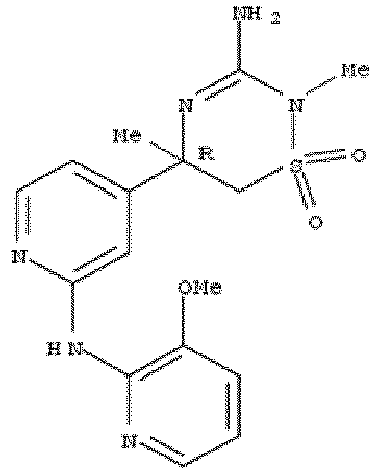
1268247-50-2 
909291-41-4 
- In one aspect the invention are provided compounds of Formula (I)

- wherein R1 is selected from the group consisting of hydrogen, fluoro, chloro, bromo, C1-6 alkyl, C1-6 haloalkyl, C1-6 heteroalkyl, C1-6 alkoxy, 3-10 membered cycloalkyl, 3-10 membered heterocycloalkyl, 6-10 membered aryl, 5-10 membered heteroaryl, -OR1a, -SR1a, -N(H)(R1a), and -N(R1a)(R1b) wherein R1a and R1b are each independently selected from the group consisting of C1-6 alkyl, C1-6 haloalkyl, C1-6 heteroalkyl, 3-10 membered cycloalkyl and 3-10 membered heterocycloalkyl, and wherein the aliphatic and aromatic portions of R1 are independently further substituted with 0 to 5 RA1 substituents selected from the group consisting of -F, -Cl, -Br, -I, -CN, -NO2, -SF5, -OH, -NH2, -CF3, =O, C1-4 alkyl, C1-4 haloalkyl, C1-4 heteroalkyl, C1-4 alkoxy, C1-4 alkylthio, C1-4 alkylamino, C1-4 dialkylamino, R1c-C(=O)-, R1c-C(=O)N(H)-, R1c-C(=O)N(R1d)-, R1c-C(=O)O-, R1c-S(O)1-2-, R1c-S(O)1-2N(R1d)-, R1c-S(O)1-2N(H)-, 3-6 membered cycloalkyl, phenyl, 5-6 membered heteroaryl and 3-7 membered heterocycloalkyl, wherein R1c is selected from the group consisting of C1-6 alkyl, C1-6 haloalkyl, C5-6 heteroaryl, 3-7 membered heterocycloalkyl, phenyl and 3-6 membered cycloalkyl, R1d is selected from the group consisting of hydrogen, C1-3 alkyl and C1-3 haloalkyl, and wherein said 5-6 membered heteroaryl, phenyl, 3-6 membered cycloalkyl and 3-7 membered heterocycloalkyl of a RA1 substituent are substituted with from 0-4 substituents selected from -F, -Cl, -Br, I, -CN, -NO2, -SF5, -OH, -NH2, -CF3, C1-4 alkyl, C1-4 haloalkyl, C1-4 alkoxy, C1-4 alkylthio, C1-4 alkylamino and C1-4 dialkylamino;
- R2 is selected from the group consisting of hydrogen, C1-6 alkyl and C1-6 haloalkyl;
- R3 is selected from the group consisting of -F, -Cl, -Br, -I, -(X3)0-1-CN, -(X3)0-1-NO2, -(X3)0-1-SF5, -(X3)0-1-OH, -(X3)0-1-NH2, -(X3)0-1-N(H)(R3a), -(X3)0-1-N(R3b)(R3a), -(X3)0-1-CF3, -S-(Phenyl), C1-6 alkyl, C1-6 haloalkyl, C1-6 heteroalkyl, C1-6 alkoxy, C1-6 alkylthio, -(X3)0-1-3-7 membered cycloalkyl, -(X3)0-1-3-7 membered heterocycloalkyl, -(X3)0-1-5-6 membered heteroaryl, -(X3)0-1-C6 aryl, -(X3)0-1-C(=Y3)N(H)(R3a), -(X3)0-1-C(=Y3)NH2, -(X3)0-1-C(=Y3)N(R3a)(R3b), -(X 3)0-1-C(=Y3)OR3a, -(X3)0-1-C(=Y3)OH, -(X3)0-1-N(H)C(=Y3)(R3a), -(X3)0-1-N(R3b)C(=Y3)(R3a), -(X3)0-1-N(H)C(=Y3)OR3a, -(X3)0-1-N(R3b)C(=Y3)OR3a, -(X3)0-1-S(=Y3)1-2R3a, -(X3)0-1-N(H)S(=Y3)1-2R3a, -(X3)0-1-N(R3b)S(=Y3)1-2R3a, -(X3)0-1-S(=Y3)1-2N(H)(R3a), -(X3)0-1-S(=Y3)1-2N(R3b)(R3a), -(X3)0-1-S(=Y3)1-2NH2, -(X3)0-1-C(=Y3)R3a, -(X3)0-1-C(=Y3)H, -(X3)0-1-C(=NOH)R3a, -(X3)0-1-C(=NOR3b)R3a, -(X3)0-1-NHC(=Y3)N(H)(R3a), -(X3)0-1-NHC(=Y3)NH2, -(X3)0-1-NHC(=Y3)N(R3b)(R3a), -(X3)0-1-N(R3a)C(=Y3)N(H)(R3a), -(X3)0-1-N(R3a)C(=Y3)NH2, -(X3)0-1-OC(=Y3)R3a, -(X3)0-1-OC(=Y3)H, -(X3)0-1-OC(=Y3)OR3a, -(X3)0-1-OP(=Y3)(OR3a)(OR3b), -(X3)-SC(=Y3)OR3a and -(X3)-SC(=Y3)N(R3a)(R3b) wherein X3 is selected from the group consisting of C1-4 alkylene, C1-4 haloalkylene, C1-4 heteroalkylene, C2-4 alkenylene, and C2-4 alkynylene, R3a and R3b are each independently selected from the group consisting of C1-6 alkyl, C1-6 haloalkyl, C1-6 heteroalkyl, 3-7 membered cycloalkyl, 3-7 membered cycloalkyl-C1-4 alkyl, 3-7 membered heterocycloalkyl, 3-7 membered heterocycloalkyl-C1-4 alkyl, 5-6 membered heteroaryl, 5-6 membered heteroaryl-C1-4 alkyl, C6 aryl, C6 aryl-C1-4 alkyl and benzyl; Y3 is O, NR3d or S wherein R3d is hydrogen or C1-6 alkyl; wherein aliphatic or aromatic portion of R3 is independently further substituted with from 0 to 4 RA3 substituents selected from the group consisting of -F, -Cl, -Br, -I, -CN, -NO2, -SF5, -OH, -NH2, -CF3, =O, C1-6 alkyl, C1-6 haloalkyl, C1-6 heteroalkyl, C1-6 alkoxy, C1-6 alkylthio, 3-6 membered cycloalkyl, 3-6 membered heterocycloalkyl, -C(=O)N(H)(C1-6 alkyl), -C(=O)N(C1-6 alkyl)2, -C(=O)NH2,-C(=O)OC1-6 alkyl, -C(=O)OH, -N(H)C(=O)(C1-6 alkyl), -N(C1-6 alkyl)C(=O)(C1-6 alkyl), -N(H)C(=O)OC1-6 alkyl, -N(C1-6 alkyl)C(=O)OC1-6 alkyl, -S(O)1-2C1-6 alkyl, -N(H)S(O)1-2C1-6 alkyl, -N(C1-6 alkyl)S(O)1-2C1-6 alkyl, -S(O)0-1N(H)(C1-6 alkyl), -S(O)0-1N(C1-6 alkyl)2, -S(O)0-1NH2, -C(=O)C1-6 alkyl, -C(=NOH)C1-6 alkyl, -C(=NOC1-6 alkyl)C1-6 alkyl, -NHC(=O)N(H)(C1-6 alkyl), -NHC(=O)N(C1-6 alkyl)2, -NHC(=O)NH2, -N(C1-6 alkyl)C(=O)N(H)(C1-6 alkyl), -N(C1-6 alkyl)C(=O)NH2, -OC(=O)C1-6 alkyl, -OC(=O)OC1-6 alkyl, -OP(=O)(OC1-6 alkyl)2, -SC(=O)OC1-6 alkyl and -SC(=O)N(C1-6 alkyl)2; alternatively any two R3 substituents located on adjacent atoms are optionally combined to form a 5-6 membered heteroaryl ring comprising 1-2 heteroatoms selected from N, O and S and further comprising 0 to 4 R3a substituents;
- m is an integer from 0 to 4;
- the ring represented by the structure

- R4 is selected from the group consisting of -F, -Cl, -Br, -I, -(X4)0-1-CN, -(X4)0-1-NO2, -(X4)0-1-SF5, -(X4)0-1-OH, -(X4)0-1-NH2, -(X4)0-1-N(H)(R4a), -(X4)0-1-N(R4b)(R4a), -(X4)0-1-CF3, C1-6 alkyl, C1-6 haloalkyl, C1-6 heteroalkyl, C1-6 alkoxy, C1-6 alkylthio, -(X4)0-1-(3-10 membered heterocycloalkyl), -(X4)0-1-(5-10 membered heteroaryl), -(X4)0-1-(3-7 membered cycloalkyl), -(X4)0-1-(6-10 membered aryl), -(X4)0-1-C(=Y4)N(H)(R4a), -(X4)0-1-C(=Y4)NH2, -(X4)0-1-C(=Y4)N(R4a)(R4b), -(X4)0-1-C(=Y4)OR4a, -(X4)0-1-C(=Y4)OH, -(X4)0-1-N(H)C(=Y4)(R4a), -(X4)0-1-N(R4b)C(=Y4)(R4a), -(X4)0-1-N(H)C(=Y4)OR4a, -(X4)0-1-N(R4b)C(=Y4)OR4, -(X4)0-1-S(=Y4)1-2R4a, -(X4)0-1-N(H)S(=Y4)1-2R4a, -(X4)0-1-N(R4b)S(=Y4)1-2R4a, -(X4)0-1-S(=Y4)1-2N(H)(R4a), -(X4)0-1-S(=Y4)1-2N(R4b)(R4a), -(X4)0-1-S(=Y4)1-2NH2, -(X4)0-1-C(=Y4)R4a, -(X4)0-1-C(=Y4)H, -(X4)0-1-C(=NOH)R4a, -(X4)0-1-C(=NOR4b)R4a, -(X4)0-1-NHC(=Y4)N(H)(R4a), -(X4)0-1-NHC(=Y4)NH2, -(X4)0-1-NHC(=Y4)N(R4b)(R4a), -(X4)0-1-NR4aC(=Y4)N(H)(R4a), -(X4)0-1-N(R4a)C(=Y4)NH2, -(X4)0-1-OC(=Y4)R4a, -(X4)0-1-OC(=Y4)H, -(X4)0-1-OC(=Y4)OR4a, -(X4)0-1-OP(=Y4)(OR4a)(OR4b), -SC(=Y4)OR4a and -SC(=Y4)N(R4a)(R4b) wherein R4a and R4b at each occurrence are each independently selected from the group consisting of C1-6 alkyl, C1-6 haloalkyl, C1-6 heteroalkyl, 6-10 membered aryl, 3-7 membered cycloalkyl, 5-10 membered heteroaryl, 3-7 membered heterocycloalkyl, 6-10 membered aryl-C1-4 alkyl, 3-7 membered cycloalkyl-C1-4 alkyl, 5-10 membered heteroaryl-C1-4 alkyl and 3-7 membered heterocycloalkyl-C1-4 alkyl, and X4 is selected from the group consisting of C1-4 alkylene, C1-4 haloalkylene, C1-4 heteroalkylene, C2-4 alkenylene and C2-4 alkynylene; Y4 is O, NR4c or S wherein R4c is hydrogen or C1-6 alkyl; wherein the aromatic and aliphatic portions of R4 is independently further substituted with 0 to 4 RA4 substituents selected from the group consisting of -F, -Cl, -Br, I, -CN, -NO2, -SF5, -OH, -NH2, -CF3, =O, C1-6 alkyl, C1-6 haloalkyl, C1-6 heteroalkyl, C1-6 alkoxy, C1-6 alkylthio, 3-6 membered cycloalkyl, 3-6 membered heterocycloalkyl, -C(=O)N(H)(C1-6 alkyl), -C(=O)N(C1-6 alkyl)2, -C(=O)NH2,-C(=O)OC1-6 alkyl, -C(=O)OH, -N(H)C(=O)(C1-6 alkyl), -N(C1-6 alkyl)C(=O)(C1-6 alkyl), -N(H)C(=O)OC1-6 alkyl, -N(C1-6 alkyl)C(=O)OC1-6 alkyl, -S(O)1-2C1-6 alkyl, -N(H)S(O)1-2C1-6 alkyl, -N(C1-6 alkyl)S(O)1-2C1-6 alkyl, -S(O)0-1N(H)(C1-6 alkyl), -S(O)0-1N(C1-6 alkyl)2, -S(O)0-1NH2, -C(=O)C1-6 alkyl, -C(=NOH)C1-6 alkyl, -C(=NOC1-6 alkyl)C1-6 alkyl, -NHC(=O)N(H)(C1-6 alkyl), -NHC(=O)N(C1-6 alkyl)2, -NHC(=O)NH2, -N(C1-6 alkyl)C(=O)N(H)(C1-6 alkyl), -N(C1-6 alkyl)C(=O)NH2, -OC(=O)C1-6 alkyl, -OC(=O)OC1-6 alkyl, -OP(=O)(OC1-6 alkyl)2, -SC(=O)OC1-6 alkyl and -SC(=O)N(C1-6 alkyl)2;
- n is an integer from 0 to 5;
- R5 is absent or is selected from the group consisting of hydrogen, C1-6 alkyl, C1-6 haloalkyl, -OH, OR5a, -CN and halogen, wherein R5a is selected from the group consisting of C1-6 alkyl, C1-6 haloalkyl and C1-6 heteroalkyl; or optionally R4 and R5 are optionally combined to form a 5-7 membered cycloalkyl or heterocycloalkyl and is independently further substituted with 0-4 RA4 substituents;
- R6 is independently selected from the group consisting of hydrogen, -F, Cl, Br, I, C1-3 alkyl, C1-3haloalkyl.
- In one embodiment, a compound of formula I has the subformula selected from the group consisting of:


- In another embodiment, a compound of formula I has the subformula (Ia).
- In another embodiment, in compounds of formula I, the ring represented by

- In another embodiment, in compounds of formula I, the ring represented by the structure


- In another embodiment, in compounds of formula I, the ring


- wherein R4 attached to the nitrogen atom of said ring is selected from the group consisting of -(X4)0-1-CN, -(X4)0-1-NO2, -(X4)0-1-SF5, -(X4)0-1-OH, -(X4)0-1-NH2, -(X4)0-1-N(H)(R4a), -(X4)0-1-N(R4b)(R4a), -(X4)0-1-CF3, C1-6 alkyl, C1-6 haloalkyl, C1-6 heteroalkyl, C1-6 alkoxy, C1-6 alkylthio, -(X4)0-1-(3-10 membered heterocycloalkyl), -(X4)0-1-(5-10 membered heteroaryl), -(X4)0-1-(3-7 membered cycloalkyl), -(X4)0-1-C(=Y4)N(H)(R4a), -(X4)0-1-C(=Y4)NH2, -(X4)0-1-C(=Y4)N(R4a)(R4b), -(X4)0-1-C(=Y4)OR4a, -(X4)0-1-C(=Y4)OH, -(X4)0-1-N(H)C(=Y4)(R4a), -(X4)0-1-N(R4b)C(=Y4)(R4a), -(X4)0-1-N(H)C(=Y4)OR4a, -(X4)0-1-N(R4b)C(=Y4)OR4, -(X4)0-1-S(O)1-2R4a, -(X4)0-1-N(H)S(O)1-2R4a, -(X4)0-1-N(R4b)S(O)1-2R4a, -(X4)0-1-S(O)0-1N(H)(R4a), -(X4)0-1-S(O)0-1N(R4b)(R4a), -(X4)0-1-S(O)0-1NH2, -(X4)0-1-S(=O)(=NR4b)R4a, -(X4)0-1-C(=Y4)R4a, -(X4)0-1-C(=Y4)H, -(X4)0-1-C(=NOH)R4a, -(X4)0-1-C(=NOR4b)R4a, -(X4)0-1-NHC(=Y4)N(H)(R4a), -(X4)0-1-NHC(=Y4)NH2, -(X4)0-1-NHC(=Y4)N(R4b)(R4a), -(X4)0-1-NR4aC(=Y4)N(H)(R4a), -(X4)0-1-N(R4a)C(=Y4)NH2, -(X4)0-1-OC(=Y4)R4a, -(X4)0-1-OC(=Y4)H, -(X4)0-1-OC(=Y4)OR4a, -(X4)0-1-OP(=Y4)(OR4a)(OR4b), -SC(=Y4)OR4a and -SC(=Y4)N(R4a)(R4b) wherein R4a and R4b at each occurrence are each independently selected from the group consisting of C1-6 alkyl, C1-6 haloalkyl, C1-6 heteroalkyl, 6-10 membered aryl, 3-7 membered cycloalkyl, 5-10 membered heteroaryl, 3-7 membered heterocycloalkyl, 6-10 membered aryl-C1-4 alkyl, 3-7 membered cycloalkyl-C1-4 alkyl, 5-10 membered heteroaryl-C1-4 alkyl and 3-7 membered heterocycloalkyl-C1-4 alkyl, and X4 is selected from the group consisting of C1-4 alkylene, C1-4 haloalkylene, C1-4 heteroalkylene, C2-4 alkenylene and C2-4 alkynylene; Y4 is O, NR4c or S wherein R4c is hydrogen or C1-6 alkyl; wherein the aromatic and aliphatic portions of R4 is independently further substituted with 0 to 4 RA4 substituents selected from the group consisting of -F, -Cl, -Br, I, -CN, -NO2, -SF5, -OH, -NH2, -CF3, =O, C1-6 alkyl, C1-6 haloalkyl, C1-6 heteroalkyl, C1-6 alkoxy, C1-6 alkylthio, 3-6 membered cycloalkyl, 3-6 membered heterocycloalkyl, -C(=O)N(H)(C1-6 alkyl), -C(=O)N(C1-6 alkyl)2, -C(=O)NH2,-C(=O)OC1-6 alkyl, -C(=O)OH, -N(H)C(=O)(C1-6 alkyl), -N(C1-6 alkyl)C(=O)(C1-6 alkyl), -N(H)C(=O)OC1-6 alkyl, -N(C1-6 alkyl)C(=O)OC1-6 alkyl, -S(O)1-2C1-6 alkyl, -N(H)S(O)1-2C1-6 alkyl, -N(C1-6 alkyl)S(O)1-2C1-6 alkyl, -S(O)0-1N(H)(C1-6 alkyl), -S(O)0-1N(C1-6 alkyl)2, -S(O)0-1NH2, -C(=O)C1-6 alkyl, -C(=NOH)C1-6 alkyl, -C(=NOC1-6 alkyl)C1-6 alkyl, -NHC(=O)N(H)(C1-6 alkyl), -NHC(=O)N(C1-6 alkyl)2, -NHC(=O)NH2, -N(C1-6 alkyl)C(=O)N(H)(C1-6 alkyl), -N(C1-6 alkyl)C(=O)NH2, -OC(=O)C1-6 alkyl, -OC(=O)OC1-6 alkyl, -OP(=O)(OC1-6 alkyl)2, -SC(=O)OC1-6 alkyl and -SC(=O)N(C1-6 alkyl)2; and
- the remainder R4, if present on said ring, is each independently selected from the group consisting of -F, -Cl, -Br, I, -(X4)0-1-CN, -(X4)0-1-NO2, -(X4)0-1-SF5, -(X4)0-1-OH, -(X4)0-1-NH2, -(X4)0-1-N(H)(R4a), -(X4)0-1-N(R4b)(R4a), -(X4)0-1-CF3, -(X4)0-1-C(=Y4)R4a, -(X4)0-1-C(=Y4)H, C1-6 alkyl, C1-6 haloalkyl, C1-6 heteroalkyl, C1-6 alkoxy and C1-6 alkylthio wherein X4 is selected from the group consisting of C1-4 alkylene, C1-4 haloalkylene, C1-4 heteroalkylene, C2-4 alkenylene and C2-4 alkynylene and R4a and R4b is each independently selected from the group consisting of: C1-6 alkyl, C1-6 haloalkyl and C1-6 heteroalkyl .
- In another embodiment, in compounds of formula I, the ring


- In another embodiment, in compounds of formula I, R4 attached to the nitrogen atom of said ring is selected from the group consisting of C1-6 alkyl, C1-6 haloalkyl, C1-6 heteroalkyl, C1-6 alkoxy, C1-6 alkylthio, -(X4)0-1-(3-10 membered heterocycloalkyl), -(X4)0-1-(5-10 membered heteroaryl), -(X4)0-1-(3-7 membered cycloalkyl), -(X4)0-1-S(O)1-2R4a and -(X4)0-1-C(=Y4)R4a, wherein Y4 is O.
- In another embodiment, in compounds of formula I, R4 is selected from the group consisting of methyl, trifluoromethyl, difluoromethyl, monofluromethyl, ethyl, triflurorethyl, difluoroethyl, monofluoroethyl and acetyl.
- In another embodiment, in compounds of formula I, said


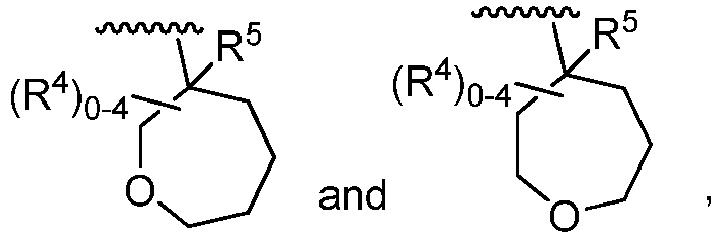
- In another embodiment, in compounds of formula I, the group
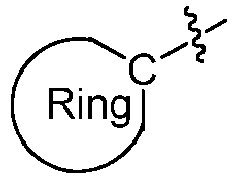

- In another embodiment, in compounds of formula I, R5 is selected from the group consisting of hydrogen, C1-4 alkyl, C1-4 haloalkyl, hydroxy, OR5a, -CN, -F, -Cl, -Br and -I.
- In another embodiment, in compounds of formula I, R5 is selected from the group consisting of hydrogen, methyl, ethyl, trifluoromethyl, methoxy, ethoxy, F, Cl and Br.
- In another embodiment, in compounds of formula I, R1 is selected from the group consisting of C1-6 alkyl, C1-6 haloalkyl, C1-6 heteroalkyl, -OR1a, -SR1a, -N(H)(R1a), and -N(R1a)(R1b), methyl, ethyl, propyl, isopropyl, butyl, sec-butyl, tert-butyl, cyclopropane, cyclobutane, cyclopentane, cyclohexane, cycloheptane, morpholine, homomorpholine, piperidine, homopiperidine, piperazine, homopiperazine, azetidine, pyrrolidine, benzene, pyrrole, pyrazole, imidazole, triazole, tetrazole, pyridine, pyrimidine, pyrazine, pyridazine, oxetane, tetrahydrofuran, tetrahydropyran, -oxa-5-azabicyclo[2.2.1]heptane, 2-oxa-6-azaspiro[3.3]heptane, 8-oxa-3-azabicyclo[3.2.1] octane, 3-oxa-8-azabicyclo[3.2.1]octane, 7-oxabicyclo[2.2.1]heptane, 7-azabicyclo[2.2.1]heptane, norbornane, bicyclo[2.2.2]octane, 2-azabicyclo[2.2.2]octane, 2-oxabicyclo[2.2.2]octane, 2-oxa-5-azabicyclo[2.2.2]octane and 2,5-diazabicyclo[2.2.2]octane, 5,6,7,8-tetrahydroimidazo[1,2-a]pyrazine, 4,5,6,7-tetrahydro-3H-imidazo[4,5-c]pyridine, wherein R1a and R1b are each independently selected from the group consisting of C1-6 alkyl, C1-6 haloalkyl, C1-6 heteroalkyl, 3-10 membered cycloalkyl and 3-10 membered heterocycloalkyl, and wherein the aliphatic and aromatic portions of R1 are independently further substituted with 0 to 5 RA1 substituents selected from the group consisting of -F, -Cl, -Br, I, -CN, -NO2, -SF5, -OH, -NH2, -CF3, =O, C1-4 alkyl, C1-4 haloalkyl, C1-4 heteroalkyl, C1-4 alkoxy, C1-4 alkylthio, C1-4 alkylamino, C1-4 dialkylamino, R1c-C(=O)-, - R1c-C(=O)N(H)-, R1c-C(=O)N(R1d)-, R1c-C(=O)O-, R1c-S(O)1-2-, R1c-S(O)1-2N(R1d)-, R1c-S(O)1-2N(H)-, 3-6 membered cycloalkyl, phenyl, 5-6 membered heteroaryl and 3-7 membered heterocycloalkyl, wherein R1c is selected from the group consisting of C1-6 alkyl, C1-6 haloalkyl, C5-6 heteroaryl, 3-7 membered heterocycloalkyl, phenyl and 3-6 membered cycloalkyl, R1d is selected from the group consisting of hydrogen, C1-3 alkyl and C1-3 haloalkyl, and wherein said 5-6 membered heteroaryl, phenyl, 3-6 membered heteroaryl, 3-6 membered cycloalkyl and 3-7 membered heterocycloalkyl of the RA1 substituent are substituted with from 0-4 substituents selected from -F, -Cl, -Br, I, -CN, -NO2, -SF5, -OH, -NH2, -CF3, C1-4 alkyl, C1-4 haloalkyl, C1-4 alkoxy, C1-4 alkylthio, C1-4 alkylamino and C1-4 dialkylamino.
- In another embodiment, in compounds of formula I, R1 is selected from the group consisting of pyrrolidin-1-yl, phenyl, piperidin-1-yl, pyrrol-1-yl, azetidin-1-yl, morpholin-4-yl, homomorpholin-4-yl, 2-oxa-5-azabicyclo[2.2.1]hept-5-yl, 3-oxa-8-azabicyclo[3.2.1]oct-8-yl, 2-oxa-6-azaspiro[3.3]hept-6-yl, -8-oxa-3-azabicyclo[3.2.1]octane, methyl, isopropyl, isobutyl, cyclopropyl, pyrazol-1-yl, 4,5,6,7-tetrahydro-1H-imidazo[4,5-c]pyridin-5-yl, 3,5,6,7,8,8a-hexahydroimidazo[1,2-a]pyrazin-7-yl, 3-azabicyclo[3.2.0]heptan-3-yl, 3-azabicyclo[3.1.0]hexan-3-yl, 2-azabicyclo[2.1.1]hexan-2-yl, 2-azabicyclo[3.1.0]hexan-2-yl, 2-oxa-7-azaspiro[4.4]nonan-7-yl, 2-oxa-6-azaspiro[3.4]octan-6-yl, -N(H)R1a), and -N(R1a)(R1b).
- In another embodiment, in compounds of formula I, R1 is selected from the group consisting of pyrrolidin-1-yl, phenyl, piperidin-1-yl, pyrrol-1-yl, azetidin-1-yl, morpholin-4-yl, homomorpholin-4-yl, 2-oxa-5-azabicyclo[2.2.1]hept-5-yl, 3-oxa-8-azabicyclo[3.2.1]oct-8-yl, 2-oxa-6-azaspiro[3.3]hept-6-yl, -8-oxa-3-azabicyclo[3.2.1]octane, methyl, isopropyl, isobutyl, cyclopropyl, pyrazol-1-yl, 4,5,6,7-tetrahydro-1H-imidazo[4,5-c]pyridin-5-yl, 3,5,6,7,8,8a-hexahydroimidazo[1,2-a]pyrazin-7-yl, 3-azabicyclo[3.2.0]heptan-3-yl, 3-azabicyclo[3.1.0]hexan-3-yl, 2-azabicyclo[2.1.1]hexan-2-yl, 2-azabicyclo[3.1.0]hexan-2-yl, 2-oxa-7-azaspiro[4.4]nonan-7-yl, 2-oxa-6-azaspiro[3.4]octan-6-yl, -N(H)R1a), and -N(R1a)(R1b), wherein R1a and R1b are each independently selected from the group consisting of methyl, ethyl, propyl, butyl, methoxyethyl, ethoxyethyl, hydroxyethyl, methoxypropyl, ethyoxypropyl and hydroxypropyl, wherein the aliphatic and/or aromatic portions or R1 is substituted with 0 to 4 substituents selected from the group consisting of methyl, ethyl, propyl, isopropyl, butyl, isobutyl, fluoro, chloro, bromo, iodo, cyano, methoxy, ethoxy, isopropoxy, methoxymethyl, methoxyethyl, methoxypropyl, trifluoromethyl, monofluoromethyl, difluromethyl, 2-methylpyrimidin-4-yl, 4-methyltriazol-3-yl, 1,2,4-triazol-3-yl, morphlinocarbonyl, morpholino, 2-methyl-pyrimidin-6-yl, 6-methyl-pyrimidin-2-yl, 4-methyl-1,2,4-triazol-3-yl, methylaminomethylcarbonyl and hydroxy.
- In another embodiment, in compounds of formula I, R3 is selected from the group consisting of -F, -Cl, -Br, I, C1-6 alkyl, C1-6 haloalkyl, C1-6 heteroalkyl, C1-6 alkoxy, -(X3)0-1-CN, -(X3)0-1-N(H)C(=O)(R3a), -(X3)0-1-N(R3b)C(=O)( R3a), -(X3)0-1-C(=O)N(H)(R3a), -(X3)0-1-C(=O)NH2, -(X3)0-1-C(=O)N(R3a)(R3b), thiophene, wherein if R3 is thiophene or R3a and R3b is independently 3-7 membered cycloalkyl, 3-7 membered cycloalkyl-C1-4 alkyl, 3-7 membered heterocycloalkyl, 3-7 membered heterocycloalkyl-C1-4 alkyl, 5-6 membered heteroaryl, 5-6 membered heteroaryl-C1-4 alkyl, C6 aryl, C6 aryl-C1-4 alkyl or benzyl then said thiophene, 3-7 membered cycloalkyl, 3-7 membered cycloalkyl-C1-4 alkyl, 3-7 membered heterocycloalkyl, 3-7 membered heterocycloalkyl-C1-4 alkyl, 5-6 membered heteroaryl, 5-6 membered heteroaryl-C1-4 alkyl, C6 aryl, C6 aryl-C1-4 alkyl or benzyl is substituted from 0 to 4 RA3 substituents, or alternatively, any two R3 substituents located on adjacent atoms are optionally combined to form a thiazole ring further comprising 0 to 4 R3a substituents, and m is an integer from 1 to 4.
- In another embodiment, in compounds of formula I, R3 is selected from the group consisting of trifluoromethyl, difluoromethyl, monofluoromethyl, methyl, ethyl, propyl, butyl, isopropyl, sec-butyl, tert-butyl, methoxy, ethoxy, cyclopropyl, cyclobutyl, -CN, thienyl and -C(=O)NH2.
- In another embodiment, in compounds of formula I, formula I has the subformula selected from the group consisting of:


- In another embodiment, the compounds of Formula I has the subformula:

- In another embodiment, the compounds of Formula I are selected from the group of compounds in Table A.
Table A: NO Structure Name NO Structure Name 1 
[6-(3-Methoxy-azetidin-1-yl)-4-(1-oxetan-3-yl-a zetidin-3-yl)-pyridin-2-y l]-(4-trifluoromethyl-pyr idin-2-yl)-amine 2 
2-[6-(3,3-Difluoro- pyrro lidin-1-yl)-4-(1-oxetan-3 -yl-azetidin-3-yl)-pyridi n-2-ylamino]-isonicotin onitrile 3 
2-[6-Azetidin-1-yl-4-(1-oxetan-3-yl-azetidin-3-y l)-pyridin-2-ylamino]-is onicotinonitrile 4 
2-[6-(3,3-Difluoro-azeti din-1-yl)-4-(1-oxetan-3-yl-azetidin-3-yl)-pyridin -2-ylamino] -isonicotino nitrile 5 
2-[6-(3-Fluoro-azetidin-1-yl)-4-(1-oxetan-3-yl-a zetidin-3-yl)-pyridin-2-y lamino]-isonicotinonitril e 6 
2-[6-Cyclopropyl-4-(1-o xetan-3-yl-azetidin-3-yl) -pyridin-2-ylamino]-ison icotinonitrile 7 
2-[6-(3-Ethoxy-azetidin-1-yl)-1'-oxetan-3-yl-1',2' ,3',4',5',6'-hexahydro-[4, 4']bipyridinyl-2-ylamino ]-isonicotinonitrile 8 
2-{6-(3-Methoxy-azetidi n-1-yl)-4-[1-(2,2,2-triflu oro-ethyl)-azetidin-3-yl] -pyridin-2-ylamino}-iso nicotinonitrile 9 
[6-Chloro-4-(1-oxetan-3 -yl-azetidin-3-yl)-pyridi n-2-yl]-(4-trifluorometh yl-pyridin-2-yl)-amine 18 
6'-(2-Oxa-6-aza-spiro[3. 3]hept-6-yl)-2'-(4-trifluo romethyl-pyridin-2-ylam ino)-2,3,5,6-tetrahydro-1H-[4,4']bipyridinyl-4-car bonitrile 19 
6'-(3-Methoxy-azetidin-1-yl)-2'-(4-trifluorometh yl-pyridin-2-ylamino)-2, 3,5,6-tetrahydro-1H-[4,4 ']bipyridinyl-4-carbonitri le 20 
{6-Chloro-4-[1-(2,2,2-tri fluoro-ethyl)-azetidin-3-yl]-pyridin-2-yl}-(4-difl uoromethyl-pyridin-2-yl )-amine 21 
2-(1'-Acetyl-6-methoxy-1',2',3',4',5',6'-hexahydro -[4,4']bipyridinyl-2-ylam ino)-isonicotinonitrile 22 
2-(1'-Acetyl-6-isopropox y-1',2',3',4',5',6'-hexahyd ro-[4,4']bipyridinyl-2-yl amino)- isonicotinonitril e 23 
6'-(3-Fluoro-azetidin-1-y 1)-2'-(4-trifluoromethyl-pyridin-2-ylamino)-2,3,5 ,6-tetrahydro-1H-[4,4']bi pyridinyl-4-carbonitrile 24 
2-[6-Chloro-4-(1-oxetan -3-yl-azetidin-3-yl)-pyri din-2-ylamino]-isonicoti nonitrile 25 
(6-Cyclopropyl-1'-oxeta n-3-yl-1',2',3',4',5',6'-hex ahydro-[4,4']bipyridinyl-2-yl)-(4-difluoromethyl-pyridin-2-yl)-amine 26 
(4-Difluoromethyl-pyrid in-2-yl)-(6-ethyl-1'-oxet an-3-yl-1',2',3',4',5',6'-he xahydro-[4,4']bipyridiny 1-2-yl)-amine 27 
(4-Difluoromethyl-pyrid in-2-yl)-(6-methyl-1'-ox etan-3-yl-1',2',3',4',5',6'-hexahydro-[4,4']bipyridi nyl-2-yl)-amine 28 
2-(6-Cyclopropyl-1'-oxe tan-3-yl-1',2',3',4',5',6'-h exahydro-[4,4']bipyridin yl-2-ylamino)-isonicotin onitrile 29 
2-(6-Ethyl-1'-oxetan-3-y 1-1',2',3',4',5',6'-hexahydr o-[4,4']bipyridinyl-2-yla mino)-isonicotinonitrile 30 
2'-(4-Cyano-pyridin-2-yl amino)-6'-((R)-2-methyl -pyrrolidin-1-yl)-1-oxeta n-3-yl-2,3,5,6-tetrahydro -1H-[4,4']bipyridinyl-4-c arbonitrile 31 
2'-(4-Cyano-pyridin-2-yl amino)-6'-(3,3-difluoro-pyrrolidin-1-yl)-2,3,5,6-t etrahydro-1H-[4,4']bipyr idinyl-4-carbonitrile 32 
2-{6-Chloro-4-[1-(2,2,2-trifluoro-ethyl)-azetidin-3-yl]-pyridin-2-ylamino }-isonicotinonitrile 33 
2'-(4-Cyano-pyridin-2-yl amino)-1-methyl-6'-((R) -2-methyl-pyrrolidin-1-y 1)-2,3,5,6-tetrahydro-1H-[4,4']bipyridinyl-4-carbo nitrile 34 
2'-(4-Cyano-pyridin-2-yl amino)-6'-(3-fluoro-azet idin-1-yl)-2,3,5,6-tetrahy dro-1H-[4,4']bipyridinyl -4-carbonitrile 35 
6'-(3-Aza-bicyclo[3.1.0] hex-3-yl)-2'-(4-cyano-py ridin-2-ylamino)-1-oxeta n-3-yl-2,3,5,6-tetrahydro -1H-[4,4']bipyridinyl-4-c arbonitrile 36 
6'-(3-Aza-bicyclo[3.1.0] hex-3-yl)-2'-(4-cyano-py ridin-2-ylamino)-1-meth yl-2,3,5,6-tetrahydro-1H -[4,4']bipyridinyl-4-carb onitrile 37 
2'-(4-Cyano-pyridin-2-yl amino)-6'-(3,3-difluoro-azetidin-1-yl)-2,3,5,6-tet rahydro-1H-[4,4']bipyrid inyl-4-carbonitrile 38 
6'-Azetidin-1-yl-2'-(4-cy ano-pyridin-2-ylamino)-2,3,5,6-tetrahydro-1H-[4 ,4']bipyridinyl-4-carboni trile 39 
2'-(4-Cyano-pyridin-2-yl amino)-6'-((R)-2-methyl -pyrrolidin-1-yl)-2,3,5,6-tetrahydro-1H-[4,4']bipy ridinyl-4-carbonitrile 40 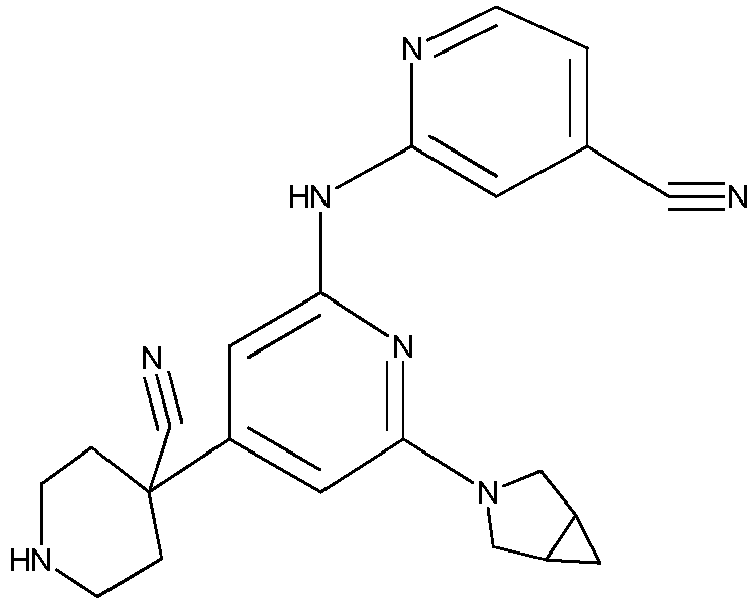
6'-(3-Aza-bicyclo[3.1.0] hex-3-yl)-2'-(4-cyano-py ridin-2-ylamino)-2,3,5,6 -tetrahydro-1H-[4,4']bip yridinyl-4-carbonitrile 41 
3-[2-Chloro-6-(4-cyano-pyridin-2-ylamino)-pyri din-4-yl]-azetidine-1-car boxylic acid tert-butyl ester 42 
1-[6-(4-Difluoromethyl-pyridin-2-ylamino)-1'-ox etan-3-yl-1',2',3',4',5',6'-hexahydro-[4,4']bipyridi nyl-2-yl]-pyrrolidin-2-on e 43 
(6-Butoxy-1'-oxetan-3-y 1-1',2',3',4',5',6'-hexahydr o-[4,4']bipyridinyl-2-yl)-(4-difluoromethyl-pyridi n-2-yl)-amine 44 
(4-Difluoromethyl-pyrid in-2-yl)-[6-(3-fluoro-aze tidin-1-yl)-1'-oxetan-3-y l-1',2',3',4',5',6'-hexahydr o-[4,4']bipyridinyl-2-yl]-amine 45 
3-[2-Chloro-6-(4-difluor omethyl-pyridin-2-ylami no)-pyridin-4-yl]-azetidi ne-1-carboxylic acid tert-butyl ester 46 
2-[4-(4-Cyano-tetrahydr o-pyran-4-yl)-6-(3-fluor o-azetidin-1-yl)-pyridin-2-ylamino]-isonicotinon itrile 47 
2-[4-(4-Cyano-tetrahydr o-pyran-4-yl)-6-(2-oxo-p yrrolidin-1-yl)-pyridin-2 -ylamino]-isonicotinonit rile 48 
(4-Difluoromethyl-pyrid in-2-yl)-[6-(3-methoxy-a zetidin-1-yl)-1'-oxetan-3 -yl-1',2',3',4',5',6'-hexahy dro-[4,4']bipyridinyl-2-y 1]-amine 49 
4-[2-(4-Difluoromethyl-pyridin-2-ylamino)-6-(2-oxo-pyrrolidin-1-yl)-pyri din-4-yl]-tetrahydro-pyr an-4-carbonitrile 50 
[6-(3-Aza-bicyclo[3.1.0] hex-3-yl)-1'-oxetan-3-yl-1',2',3',4',5',6'-hexahydro -[4,4']bipyridinyl-2-yl]-( 4-difluoromethyl-pyridi n-2-yl)-amine 51 
(6-Azetidin-1-yl-1'-oxet an-3-yl-1',2',3',4',5',6'-he xahydro-[4,4']bipyridiny 1-2-yl)-(4-difluoromethy 1-pyridin-2-yl)-amine 52 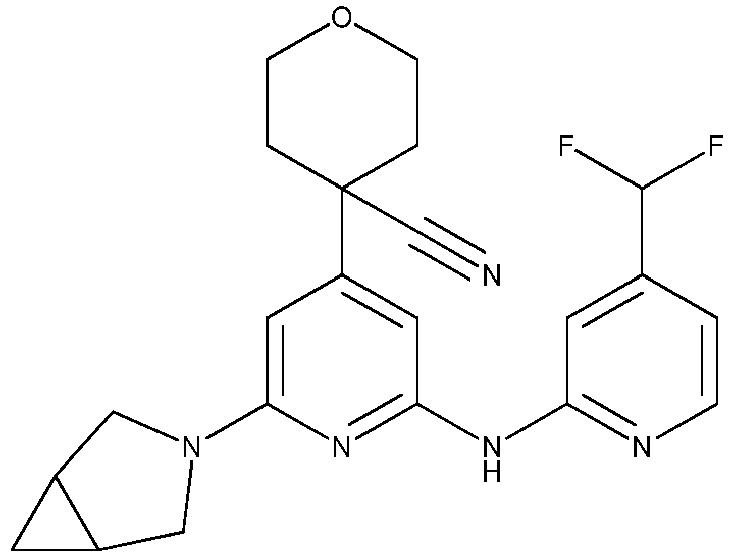
4-[2-(3-Aza-bicyclo[3.1. 0]hex-3-yl)-6-(4-difluor omethyl-pyridin-2-ylami no)-pyridin-4-yl]-tetrahy dro-pyran-4-carbonitrile 53 
4-[2-Azetidin-1-yl-6-(4-difluoromethyl- pyridin-2-ylamino)-pyridin-4-yl] -tetrahydro- pyran -4-carb onitrile 54 
4-[2-(4-Difluoromethyl-pyridin-2-ylamino)-6-(3-methoxy-azetidin-1-yl)-pyridin-4-yl] -tetrahydropyran-4-carbonitrile 55 
4-[2-(4-Difluoromethyl-pyridin-2-ylamino)-6-(3-fluoro-azetidin-1-yl)-pyr idin-4-yl] -tetrahydro-pyr an-4-carbonitrile 56 
4-[2-(4-Difluoromethyl-pyridin-2-ylamino)-6-(3, 3-difluoro-pyrrolidin-1-yl)-pyridin-4-yl] -tetrahy dro-pyran-4-carbonitrile 57 
1-[6'-Cyclopropyl-2'-(4-difluoromethyl- pyridin-2-ylamino)-3,4,5,6-tetra hydro-2H-[4,4']bipyridin yl-1-yl]-ethanone 58 
1-[2'-(4-Difluoromethyl-pyridin-2-ylamino)-6'-et hyl-3,4,5,6-tetrahydro-2 H-[4,4']bipyridinyl-l-yl] -ethanone 59 
2-(1'-Acetyl-6-cycloprop yl-1',2',3',4',5',6'-hexahy dro-[4,4']bipyridinyl-2-y lamino)-isonicotinonitril e 60 
2-(1'-Acetyl-6-ethyl-1',2' ,3',4',5',6'-hexahydro-[4, 4']bipyridinyl-2-ylamino )-isonicotinonitrile 61 
2-[4-(4-Cyano-tetrahydr o-pyran-4-yl)-6-(3,3-difl uoro-pyrrolidin-1-yl)-py ridin-2-ylamino]-isonico tinonitrile 62 
1-[2'-(4-Difluoromethyl-pyridin-2-ylamino)-6'-m ethyl-3,4,5,6-tetrahydro-2H-[4,4']bipyridinyl-1-yl ]-ethanone 63 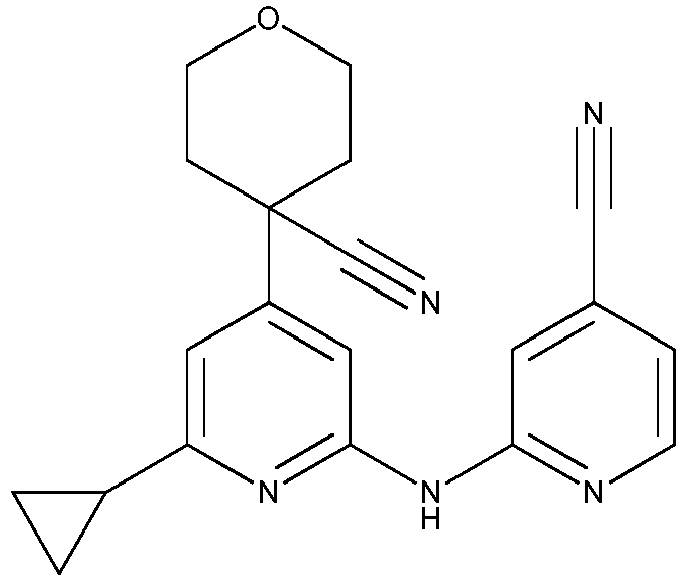
2-[4-(4-Cyano-tetrahydr o-pyran-4-yl)-6-cyclopro pyl-pyridin-2-ylamino]-i sonicotinonitrile 64 
2-[4-(4-Cyano-tetrahydr o-pyran-4-yl)-6-methyl-pyridin-2-ylamino]-isoni cotinonitrile 65 
2-(1'-Acetyl-6-chloro-1', 2',3',4',5',6'-hexahydro- [ 4,4']bipyridinyl-2-ylami no)- isonicotinonitrile 66 
4-[2-Chloro-6-(4-difluor omethyl-pyridin-2-ylami no)-pyridin-4-yl]-tetrahy dro-pyran-4-carbonitrile 67 
2-[6-(3-Aza-bicyclo[3.1. 0]hex-3-yl)-4-(4-cyano-t etrahydro-pyran-4-yl)-py ridin-2-ylamino]-isonico tinonitrile 68 
(4-Difluoromethyl- pyrid in-2-yl)-[6-((R)-2-methy 1-pyrrolidin-1-yl)-1'-oxet an-3-yl-1',2',3',4',5',6'-he xahydro-[4,4']bipyridiny 1-2-yl]-amine 69 
2-[4-(4-Cyano-tetrahydr o-pyran-4-yl)-6-(6,6-difl uoro-3-aza-bicyclo[3.2.0 ]hept-3-yl)-pyridin-2-yla mino] -isonicotinonitrile 70 
2-[1'-Oxetan-3-yl-6-((R) -2-trifluoromethyl-pyrro lidin-1-yl)-1',2',3',4',5',6' -hexahydro-[4,4']bipyrid inyl-2-ylamino]-isonicot inonitrile 71 
(4-Difluoromethyl- pyrid in-2-yl)-[6-(3,3-difluoro -pyrrolidin-1-yl)-1'-oxet an-3-yl-1',2',3',4',5',6'-he xahydro-[4,4']bipyridiny 1-2-yl]-amine 72 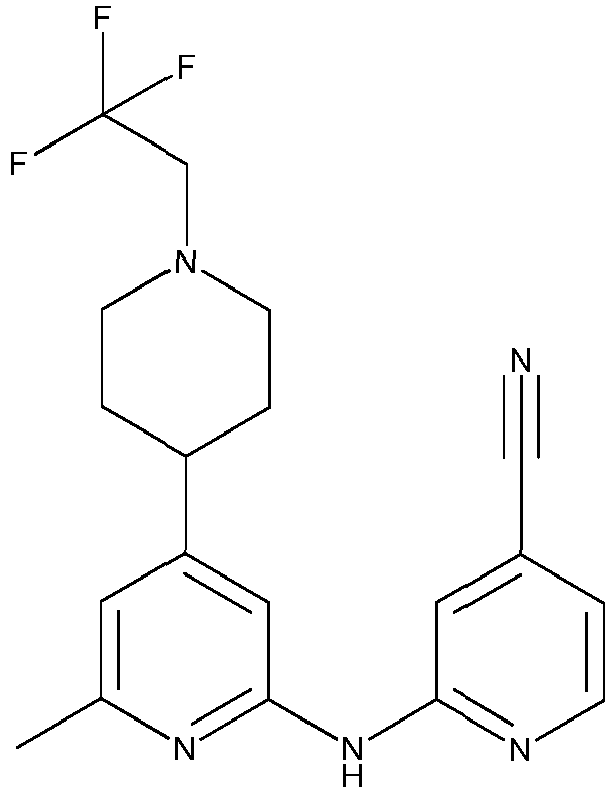
2-[6-Methyl-1'-(2,2,2-tri fluoro-ethyl)-1',2',3',4',5' ,6'-hexahydro-[4,4']bipyr idinyl-2-ylamino]-isonic otinonitrile 73 
1-[6'-Chloro-2'-(4-difluo romethyl-pyridin- 2-ylam ino)-3,4,5,6-tetrahydro-2 H-[4,4']bipyridinyl-1-yl] -ethanone 74 
2-[4-(4-Cyano-tetrahydr o-pyran-4-yl)-6-((R)-2-methyl-pyrrolidin-1-yl)-pyridin-2-ylamino]-isoni cotinonitrile 75 
2-[6-Azetidin-1-yl-4-(4-cyano- tetrahydro- pyran-4-yl)-pyridin-2-ylamino] -isonicotinonitrile 76 
(6-Chloro-1'-oxetan-3-yl -1',2',3',4',5',6'-hexahydr o-[4,4']bipyridinyl-2-yl)-(4-difluoromethyl-pyridi n-2-yl)-amine 77 
2-[6-Chloro-4-(4-cyano-tetrahydro-pyran-4-yl)-p yridin-2-ylamino]-isonic otinonitrile 78 
2-[6-Chloro-4-(tetrahydr o-pyran-4-yl)-pyridin-2-ylamino] -isonicotinonitr ile 79 
2-[1'-Oxetan-3-yl-6-(2-o xo-pyrrolidin-1-yl)-1',2', 3',4',5',6'-hexahydro-[4,4 ']bipyridinyl-2-ylamino] -isonicotinonitrile 80 
2-[6-Methyl-4-(tetrahydr o-pyran-4-yl)-pyridin-2-ylamino] -isonicotinonitr ile 81 
2-[6-(2-Aza-bicyclo[2.1. 1]hex-2-yl)-4-(tetrahydr o-pyran-4-yl)-pyridin-2-ylamino] -isonicotinonitr ile 82 
2-[6-(2-Oxa-6-aza-spiro [3.3]hept-6-yl)-4-(tetrah ydro-pyran-4-yl)-pyridin -2-ylamino]-isonicotino nitrile 83 
2-[6-(2-Aza-bicyclo[3.1. 0]hex-2-yl)-4-(tetrahydr o-pyran-4-yl)-pyridin-2-ylamino] -isonicotinonitr ile 84 
2-[6-(3-Aza-bicyclo[3.1. 0]hex-3-yl)-4-(tetrahydr o-pyran-4-yl)-pyridin-2-ylamino] -isonicotinonitr ile 85 
2-[6-(2-Oxa-7-aza-spiro [4.4]non-7-yl)-4-(tetrahy dro-pyran-4-yl)-pyridin-2-ylamino]-isonicotinon itrile 86 
2-[6-(3-Fluoro-azetidin-1-yl)-4-(tetrahydro-pyra n-4-yl)-pyridin-2-ylamin o]-isonicotinonitrile 87 
2-[6-(3-Methoxy-azetidi n-1-yl)-4-(tetrahydro-pyr an-4-yl)-pyridin-2-ylami no]-isonicotinonitrile 88 
2-[6-(3-Methoxy-pyrroli din-1-yl)-1'-oxetan-3-yl-1',2',3',4',5',6'-hexahydro -[4,4']bipyridinyl-2-ylam ino]-isonicotinonitrile 89 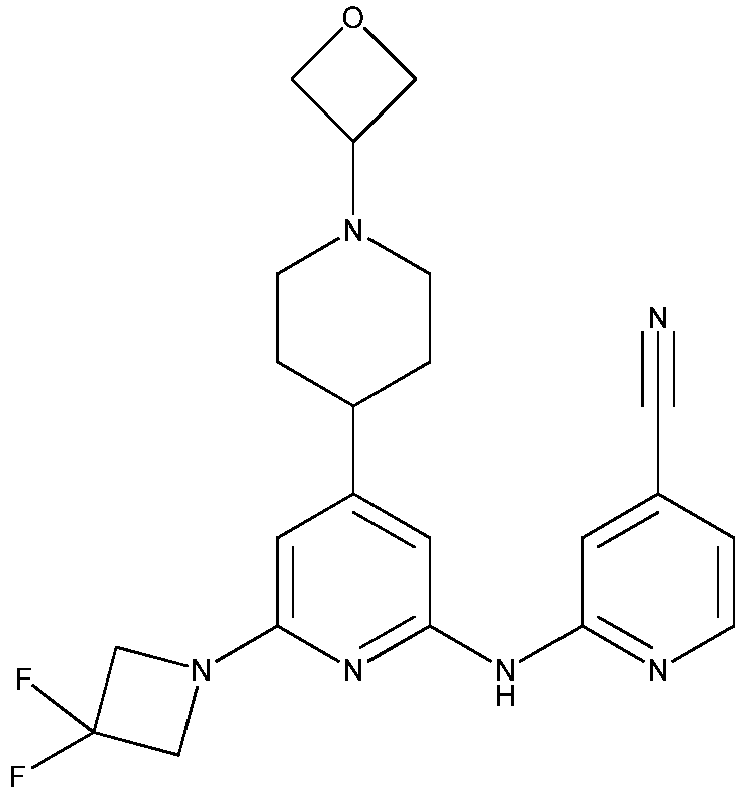
2-[6-(3,3-Difluoro-azeti din-1-yl)-1'-oxetan-3-yl-1',2',3',4',5',6'-hexahydro -[4,4']bipyridinyl-2-ylam ino]-isonicotinonitrile 90 
2-[6-(2-Aza-bicyclo[2.1. 1]hex-2-yl)-1''-oxetan-3-yl-1',2',3',4',5',6'-hexahy dro-[4,4']bipyridinyl-2-y lamino]-isonicotinonitril e 91 
2-[6-(3-Fluoro-azetidin-1-yl)-1'-oxetan-3-yl-1',2' ,3',4',5',6'-hexahydro-[4, 4']bipyridinyl-2-ylamino ]-isonicotinonitrile 92 
2-[6-(3-Aza-bicyclo[3.1. 0]hex-3-yl)-1'-oxetan-3-yl-1',2',3',4',5',6'-hexahy dro-[4,4']bipyridinyl-2-y lamino]-isonicotinonitril e 93 
2-[6-(6-Oxa-2-aza-spiro [3.4]oct-2-yl)-1'-oxetan-3-yl-1',2',3',4',5',6'-hexah ydro-[4,4']bipyridinyl-2-ylamino] -isonicotinonitr ile 94 
2-[6-(5,5-Difluoro- 2-aza -spiro[3.3]hept-2-yl)-1'-oxetan-3-yl-1',2',3',4',5', 6'-hexahydro-[4,4']bipyr idinyl-2-ylamino]-isonic otinonitrile 95 
2-[6-(2-Oxa-7-aza-spiro [4.4]non-7-yl)-1'-oxetan -3-yl-1',2',3',4',5',6'-hexa hydro-[4,4']bipyridinyl-2 -ylamino] -isonicotinonit rile 96 
2-[6-(3-Methoxy-azetidi n-1-yl)-1'-oxetan-3-yl-1', 2',3',4',5',6'-hexahydro-[ 4,4']bipyridinyl- 2-ylami no] -isonicotinonitrile 97 
2-[6-(6,6-Difluoro- 3-aza -bicyclo[3.2.0]hept-3-yl) -1'-oxetan-3-yl-1',2',3',4', 5',6'-hexahydro-[4,4']bip yridinyl-2-ylamino]-ison icotinonitrile 98 
2-[6-(2-Oxa-6-aza-spiro [3.3]hept-6-yl)-1'-oxetan -3-yl-1',2',3',4',5',6'-hexa hydro-[4,4']bipyridinyl-2 -ylamino] -isonicotinonit rile 99 
2-[6-(2-Aza-bicyclo[3.1. 0]hex-2-yl)-1'-oxetan-3-yl-1',2',3',4',5',6'-hexahy dro-[4,4']bipyridinyl-2-y lamino]-isonicotinonitril e 100 
2-[6-(6,6-Difluoro- 3-aza -bicyclo[3.2.0]hept-3-yl) -4-(tetrahydro-pyran-4-y 1)-pyridin-2-ylamino] -is onicotinonitrile 101 
2-[6-(3-Methoxy- pyrroli din-1-yl)-4-(tetrahydro-p yran-4-yl)-pyridin-2-yla mino]-isonicotinonitrile 102 
2-[6-(6-Oxa-2-aza-spiro [3.4]oct-2-yl)-4-(tetrahy dro-pyran-4-yl)-pyridin-2-ylamino]-isonicotinon itrile 103 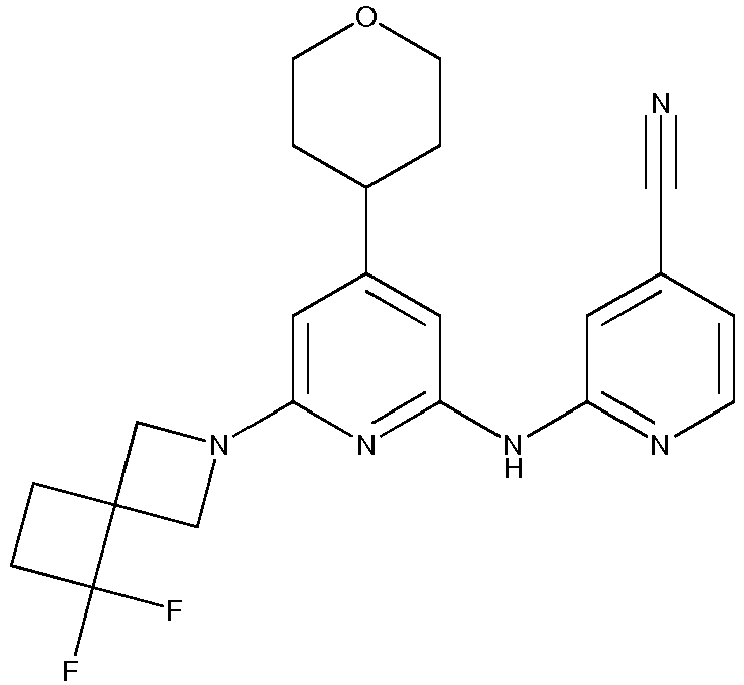
2-[6-(5,5-Difluoro- 2-aza -spiro[3.3]hept-2-yl)-4-( tetrahydro-pyran-4-yl)-p yridin-2-ylamino]-isonic otinonitrile 104 
2-[6-(3,3-Difluoro-azeti din-1-yl)-4-(tetrahydro-p yran-4-yl)-pyridin-2-yla mino]-isonicotinonitrile 105 
2-(6-Azetidin-1-yl-1'-ox etan-3-yM',2',3',4',5',6'-hexahydro-[4,4']bipyridi nyl-2-ylamino)-isonicoti nonitrile 106 
2-(6-Chloro-1'-oxetan-3-yl-1',2',3',4',5',6'-hexahy dro-[4,4']bipyridinyl-2-y lamino)-isonicotinonitril e 107 
2-[6-Methyl-1'-(2,2,2-tri fluoro-acetyl)-1',2',3',4',5 ',6'-hexahydro-[4,4']bipy ridinyl-2-ylamino]-isoni cotinonitrile 108 
2-(1'-Acetyl-6-methyl-1', 2',3',4',5',6'-hexahydro-[ 4,4']bipyridinyl- 2-ylami no)- isonicotinonitrile 109 
2-(1'-Methanesulfonyl-6 -methyl-1',2',3',4',5',6'-he xahydro-[4,4']bipyridiny 1-2-ylamino)- isonicotino nitrile 110 
2-(6-Methyl-1'-oxetan-3 -yl-1',2',3',4',5',6'-hexahy dro-[4,4']bipyridinyl-2-y lamino)-isonicotinonitril e 111 
2-(6-Methyl-1',2',3',4',5', 6'-hexahydro-[4,4']bipyr idinyl-2-ylamino)-isonic otinonitrile 112 
2-[4-(3,6-Dihydro-2H-p yran-4-yl)-6-methyl-pyri din-2-ylamino]-isonicoti nonitrile 113 
(4-Aminomethyl- pyridin -2-yl)-[6-methyl-4-(tetra hydro-pyran-4-yl)-pyridi n-2-yl]-amine 114 
4-Azetidin-3-yl-N,N'-bis -(4-trifluoromethyl-pyri din-2-yl)-pyridine-2,6-di amine 115 
2-{6-(2-Methyl-pyrrolidi n-1-yl)-4-[1-(tetrahydropyran-4-ylmethyl)-pyrrol idin-3-yl]-pyridin-2-yla mino }-isonicotinonitrile 116 
2'-(4-Cyano-pyridin-2-yl amino)-6'-methyl-3,4,5, 6-tetrahydro-2H-[4,4']bi pyridinyl-1-carboxylic acid tert-butyl ester 117 
[6-(3,3-Difluoro-pyrroli din-1-yl)-4-(1-oxetan-3-yl-azetidin-3-yl)-pyridin -2-yl]-(4-trifluoromethyl -pyridin-2-yl)-amine 118 
(4-Difluoromethoxy-pyr idin-2-yl)-[6-(1-methyl-1H-pyrazol-4-yl)-4-(tetr ahydro-pyran-4-yl)-pyrid in-2-yl]-amine 119 
2-[1'-Acetyl-6-((R)-2-m ethyl-pyrrolidin-1-yl)-1 2',3',4',5',6'-hexahydro-[ 4,4']bipyridinyl-2-ylami no]-isonicotinonitrile 120 
(1'-Oxetan-3-yl-1',2',3',4' ,5',6'-hexahydro-[4,4']bi pyridinyl-2-yl)-(4-trifluo romethyl-pyridin-2-yl)-a mine 121 
2-[6-((R)-2-Methyl-pyrr olidin-1-yl)-1'-oxetan-3-yl-1',2',3',4',5',6'-hexahy dro-[4,4']bipyridinyl-2-y lamino]-isonicotinonitril e 122 
[6-(1-Methyl-1H-pyrazo 1-4-yl)-4-(tetrahydro-pyr an-4-yl)-pyridin-2-yl]-(4 -trifluoromethyl-pyridin-2-yl)-amine 123 
2-[6-((R)-2-Methyl-pyrr olidin-1-yl)-4-(tetrahydr o-pyran-4-yl)-pyridin-2-ylamino]-isonicotinonitr ile 124 
2-(1'-Oxetan-3-yl-1',2',3' ,4',5',6'-hexahydro-[4,4'] bipyridinyl-2-ylamino)-i sonicotinonitrile 125 
[6-((R)-2-Methyl-pyrroli din-1-yl)-4-(tetrahydro-p yran-4-yl)-pyridin-2-yl]-(4-trifluoromethyl-pyridi n-2-yl)-amine 126 
[6-(3,3-Difluoro-pyrroli din-1-yl)-4-(1-methanes ulfonyl-azetidin-3-yl)-py ridin-2-yl]-(4-trifluorom ethyl-pyridin-2-yl)-amin e 127 
1-{3-[2-(3,3-Difluoro-py rrolidin-1-yl)-6-(4-triflu oromethyl-pyridin-2-yla mino)-pyridin-4-yl]-azet idin-1-yl}-ethanone 128 
2-(1'-Methanesulfonyl-1' ,2',3',4',5',6'-hexahydro-[ 4,4']bipyridinyl-2-ylami no)-isonicotinonitrile 129 
2-(1'-Acetyl-1',2',3',4',5', 6'-hexahydro-[4,4']bipyr idinyl-2-ylamino)-isonic otinonitrile 130 
2-[6-(3,3-Difluoro- pyrro lidin-1-yl)-4-(tetrahydropyran-4-yl)-pyridin-2-yl amino]-isonicotinonitril e 131 
2-[6-(3,3-Difluoro- pyrro lidin-1-yl)-1'-oxetan-3-y 1-1',2',3',4',5',6'-hexahydr o-[4,4']bipyridinyl-2-yla mino]-isonicotinonitrile 132 
[4-(1-Methanesulfonyl-p yrrolidin-3-yl)-6-(2-met hyl-pyrrolidin-1-yl)-pyri din-2-yl]-(4-trifluoromet hyl-pyridin-2-yl)-amine 133 
(1-Methyl-1H-imidazol-4-yl)-{3-[2-(2-methyl-py rrolidin-1-yl)-6-(4-triflu oromethyl-pyridin-2-yla mino)-pyridin-4-yl]-pyrr olidin-1-yl}-methanone 134 
1-[2'-(1-Methyl-1H-pyra zol-4-yl)-6'-(4-methyl- p yridin-2-ylamino)-3,4,5, 6-tetrahydro-2H-[4,4']bi pyridinyl-1-yl]-ethanone 135 
(4-Methyl-pyridin-2-yl)-[6-((R)-2-methyl-pyrroli din-1-yl)-1'-oxetan-3-yl-1',2',3',4',5',6'-hexahydro -[4,4']bipyridinyl-2-yl]-a mine 136 
[1'-Methanesulfonyl-6-(( R)-2-methyl- pyrrolidin-1-yl)-1',2',3',4',5',6'-hexa hydro-[4,4']bipyridinyl-2 -yl] -(4-methyl-pyridin-2 -yl)-amine 137 
[1'-(2-Fluoro-ethyl)-6-(( R)-2-methyl-pyrrolidin-1-yl)-1',2',3',4',5',6'-hexa hydro-[4,4']bipyridinyl-2 -yl]-(4-trifluoromethyl-p yridin-2-yl)-amine 138 
[6'-(3,3-Difluoro- pyrroli din-1-yl)-1-methyl-1,2,3 ,4,5,6-hexahydro-[3,4']b ipyridinyl-2'-yl]-(4-triflu oromethyl-pyridin-2-yl)-amine 139 
[1'-Methanesulfonyl-6-(( R)-2-methyl- pyrrolidin-1-yl)-1',2',3',4',5',6'-hexa hydro-[4,4']bipyridinyl-2 -yl] -(4-trifluoromethyl-p yridin-2-yl)-amine 140 
2-[6'-((R)-2-Methyl-pyrr olidin-1-yl)-2'-(4-trifluor omethyl-pyridin-2-ylami no)-3,4,5,6-tetrahydro-2 H-[4,4']bipyridinyl-1-yl] -ethanol 141 
1-[2'-((R)-2-Methyl-pyrr olidin-1-yl)-6'-(4-trifluor omethyl-pyridin-2-ylami no)-3,4,5,6-tetrahydro-2 H-[4,4']bipyridinyl-1-yl] -ethanone 142 
1-[6'-(4-Cyclopropyl-pyr idin-2-ylamino)-2'-((R)-2-methyl-pyrrolidin-1-yl )-3,4,5,6-tetrahydro- 2H-[4,4']bipyridinyl-1-yl]-et hanone 143 
1-[2'-(3,3-Difluoro-pyrr olidin-1-yl)-6'-(4-trifluor omethyl-pyridin-2-ylami no)-3,4,5,6-tetrahydro-2 H-[4,4']bipyridinyl-1-yl] -ethanone 145 
cyclohexyl(4-(2-((5-met hylpyridin-2-yl)amino)p yridin-4-yl)piperidin-1-y l)methanone 146 
(S)-piperidin-2-yl(4-(2-( pyridin-2-ylamino)pyridi n-4-yl)piperidin-1-yl)me thanone 147 
(S)-(4-(2-((4-methylpyri din-2-yl)amino)pyridin-4-yl)piperidin-1-yl)(pipe ridin-2-yl)methanone 144 
2-{Methyl-[6-(4-methyl-pyridin-2-ylamino)-1',2', 3',4',5',6'-hexahydro-[4,4 ']bipyridinyl-2-yl] -amin o}-ethanol - For illustrative purposes, Schemes 1-4 show general methods for preparing the compounds of the present invention as well as key intermediates. More detailed description of the individual reaction steps, is found in the Examples section below. Those skilled in the art will appreciate that other synthetic routes may be used to synthesize the inventive compounds. Although specific starting materials and reagents are depicted in the Schemes and discussed below, other starting materials and reagents can be easily substituted to provide a variety of derivatives and/or reaction conditions. In addition, many of the compounds prepared by the methods described below can be further modified in light of this disclosure using conventional chemistry well known to those skilled in the art.
- In preparing compounds of Formula I, protection of remote functionality (e.g., primary or secondary amine) of intermediates may be necessary. The need for such protection will vary depending on the nature of the remote functionality and the conditions of the preparation methods. Suitable amino-protecting groups include acetyl, trifluoroacetyl, t-butoxycarbonyl (BOC), benzyloxycarbonyl (CBz) and 9-fluorenylmethylenoxycarbonyl (Fmoc). The need for such protection is readily determined by one skilled in the art. For a general description of protecting groups and their use, see T. W. Greene, Protective Groups in Organic Synthesis, John Wiley & Sons, New York, 1991.
- In Schemes 1-4 the symbol X represents suitable leaving group such as halogen atom or triflate group. R1-R6 and the subscripts m have the meaning as described for compounds of Formula I. Other R substituents represent substituents on the compounds that are non-interferring with the synthetic procedures outlined in the schemes.
- In Scheme 1 below illustrates the synthesis of certain compounds of Formula I. In Scheme 1, pyridine compound S-1A is reacted with an amino pyridine S-1B under typical palladium cross-coupling aminations conditions using, for example, a Pd catalyst, phosphine ligand and base (e.g., a carbonate base and heat to provide the dipyridyl compound S-1C. A second palladium cross-coupling amination reaction under typical conditions, for example, of Pd catalyst, phosphine ligand, base and an suitable amine provide compounds of formula I (S-1D) where R1 group in Formula I is an amine (NRR) group.


- Scheme 2 below illustrates the synthesis of certain compounds of Formula I. In Scheme 2, bis-pyridine compound S2-A (e.g., wherein X in S2-A is halogen or triflate) is coupled with the C-linked ring using typical Suzuki-Miyaura cross-coupling conditions of, for example, a palladium catalyst, phosphine ligand and a boronate ester S2-B, under elevated temperatures. Subsequent reduction of the of the resultant coupling product S2-C under hydrogenation conditions provides compounds for formula I (S2-D).

- Certain compounds of Formula I comprising an C-linked heterocyclic ring containing nitrogen can be modified according the methods described in Scheme 3, below. In Scheme 3, a protecting group P (e.g., a t-BOC, benzyl), present on a the nitrogen atom of the C-linked heterocyclic ring containing nitrogen (S3-A) is removed under typical conditions used to removed such groups (e.g., hydrogenation, HCl in dioxane, etc.) to provide the deprotected compound S3-B.

- Certain compounds of formula I having a C-linked heterocyclic ring comprising a nitrogen atom can be modified according to the methods described in Scheme 4 below. In Scheme 4, secondary amine compounds S4-A can be N-substituted with an optionally substituted alkyl group, for example, using an alkyl halide in the presence of a base (see, Sch4-A), or under reductive amination conditions with an aldehyde and a hydride reagent (see, Sch4-B). In Scheme 4, secondary amine compounds S4-A can be N-substituted with an optionally substituted sulfonyl group, by reaction S4-A with a optionally substituted sulfonyl halide in the presence of a base (Sch4-C). In Scheme 4, secondary amine compounds S4-A can be N-substituted with an optionally substituted acyl group, by reaction S4-A with a optionally substituted acyl halide in the presence of a base (Sch4-D).


- In addition to one or more of the compounds provided above (or stereoisomers, geometric isomers, tautomers, solvates, metabolites, isotopes, pharmaceutically acceptable salts, or prodrugs thereof), the invention also provides for compositions and medicaments comprising a compound of Formula I or any subformula thereof and at least one pharmaceutically acceptable carrier, diluent or excipient. The compositions of the invention can be used for inhibiting DLK activity in patients (e.g., humans)
- The term "composition," as used herein, is intended to encompass a product comprising the specified ingredients in the specified amounts, as well as any product which results, directly or indirectly, from combination of the specified ingredients in the specified amounts. By "pharmaceutically acceptable" it is meant the carrier, diluent or excipient must be compatible with the other ingredients of the formulation and not deleterious to the recipient thereof.
- In one embodiment, the invention provides for pharmaceutical compositions (or medicaments) comprising a compound of Formula I or I-I (or stereoisomers, geometric isomers, tautomers, solvates, metabolites, isotopes, pharmaceutically acceptable salts, or prodrugs thereof) and a pharmaceutically acceptable carrier, diluent or excipient. In another embodiment, the invention provides for preparing compositions (or medicaments) comprising compounds of the invention. In another embodiment, the invention provides for administering compounds of Formula I or I-I and compositions comprising compounds of Formula I or any embodiment thereof to a patient (e.g., a human patient) in need thereof.
- Compositions are formulated, dosed, and administered in a fashion consistent with good medical practice. Factors for consideration in this context include the particular disorder being treated, the particular mammal being treated, the clinical condition of the individual patient, the cause of the disorder, the site of delivery of the agent, the method of administration, the scheduling of administration, and other factors known to medical practitioners. The effective amount of the compound to be administered will be governed by such considerations, and is the minimum amount necessary to inhibit DLK activity as required to prevent or treat the undesired disease or disorder, such as for example, neurodegeneration, amyloidosis, formation of neurofibrillary tangles, or undesired cell growth. For example, such amount may be below the amount that is toxic to normal cells, or the mammal as a whole.
- In one example, the therapeutically effective amount of the compound of the invention administered parenterally per dose will be in the range of about 0.01-100 mg/kg, alternatively about e.g., 0.1 to 20 mg/kg of patient body weight per day, with the typical initial range of compound used being 0.3 to 15 mg/kg/day. The daily does is, in certain embodiments, given as a single daily dose or in divided doses two to six times a day, or in sustained release form. In the case of a 70kg adult human, the total daily dose will generally be from about 7mg to about 1,400mg. This dosage regimen may be adjusted to provide the optimal therapeutic response. The compounds may be administered on a regimen of 1 to 4 times per day, preferably once or twice per day.
- The compounds of the present invention may be administered in any convenient administrative form, e.g., tablets, powders, capsules, solutions, dispersions, suspensions, syrups, sprays, suppositories, gels, emulsions, patches, etc. Such compositions may contain components conventional in pharmaceutical preparations, e.g., diluents, carriers, pH modifiers, sweeteners, bulking agents, and further active agents.
- The compounds of the invention may be administered by any suitable means, including oral, topical (including buccal and sublingual), rectal, vaginal, transdermal, parenteral, subcutaneous, intraperitoneal, intrapulmonary, intradermal, intrathecal and epidural and intranasal, and, if desired for local treatment, intralesional administration. Parenteral infusions include intramuscular, intravenous, intraarterial, intraperitoneal, intracerebral, intraocular, intralesional or subcutaneous administration.
- The compositions comprising compounds of Formula I any embodiment thereof are normally formulated in accordance with standard pharmaceutical practice as a pharmaceutical composition. A typical formulation is prepared by mixing a compound of the present invention and a diluent, carrier or excipient. Suitable diluents, carriers and excipients are well known to those skilled in the art and are described in detail in, e.g., Ansel, Howard C., et al., Ansel's Pharmaceutical Dosage Forms and Drug Delivery Systems. Philadelphia: Lippincott, Williams & Wilkins, 2004; Gennaro, Alfonso R., et al. Remington: The Science and Practice of Pharmacy. Philadelphia: Lippincott, Williams & Wilkins, 2000; and Rowe, Raymond C. Handbook of Pharmaceutical Excipients. Chicago, Pharmaceutical Press, 2005. The formulations may also include one or more buffers, stabilizing agents, surfactants, wetting agents, lubricating agents, emulsifiers, suspending agents, preservatives, antioxidants, opaquing agents, glidants, processing aids, colorants, sweeteners, perfuming agents, flavoring agents, diluents and other known additives to provide an elegant presentation of the drug (i.e., a compound of the present invention or pharmaceutical composition thereof) or aid in the manufacturing of the pharmaceutical product (i.e., medicament).
- Suitable carriers, diluents and excipients are well known to those skilled in the art and include materials such as carbohydrates, waxes, water soluble and/or swellable polymers, hydrophilic or hydrophobic materials, gelatin, oils, solvents, water and the like. The particular carrier, diluent or excipient used will depend upon the means and purpose for which a compound of the present invention is being applied. Solvents are generally selected based on solvents recognized by persons skilled in the art as safe (GRAS) to be administered to a mammal. In general, safe solvents are non-toxic aqueous solvents such as water and other non-toxic solvents that are soluble or miscible in water. Suitable aqueous solvents include water, ethanol, propylene glycol, polyethylene glycols (e.g., PEG 400, PEG 300), etc. and mixtures thereof. The formulations can also include one or more buffers, stabilizing agents, surfactants, wetting agents, lubricating agents, emulsifiers, suspending agents, preservatives, antioxidants, opaquing agents, glidants, processing aids, colorants, sweeteners, perfuming agents, flavoring agents and other known additives to provide an elegant presentation of the drug (i.e., a compound of the present invention or pharmaceutical composition thereof) or aid in the manufacturing of the pharmaceutical product (i.e., medicament).
- Acceptable diluents, carriers, excipients and stabilizers are nontoxic to recipients at the dosages and concentrations employed, and include buffers such as phosphate, citrate and other organic acids; antioxidants including ascorbic acid and methionine; preservatives (such as octadecyldimethylbenzyl ammonium chloride; hexamethonium chloride; benzalkonium chloride, benzethonium chloride; phenol, butyl or benzyl alcohol; alkyl parabens such as methyl or propyl paraben; catechol; resorcinol; cyclohexanol; 3-pentanol; and m-cresol); low molecular weight (less than about 10 residues) polypeptides; proteins, such as serum albumin, gelatin, or immunoglobulins; hydrophilic polymers such as polyvinylpyrrolidone; amino acids such as glycine, glutamine, asparagine, histidine, arginine, or lysine; monosaccharides, disaccharides and other carbohydrates including glucose, mannose, or dextrins; chelating agents such as EDTA; sugars such as sucrose, mannitol, trehalose or sorbitol; salt-forming counter-ions such as sodium; metal complexes (e.g., Zn-protein complexes); and/or non-ionic surfactants such as TWEEN™, PLURONICS™ or polyethylene glycol (PEG). A active pharmaceutical ingredient of the invention (e.g., compound of Formula I or any embodiment thereof) can also be entrapped in microcapsules prepared, for example, by coacervation techniques or by interfacial polymerization, for example, hydroxymethylcellulose or gelatin-microcapsules and poly-(methylmethacylate) microcapsules, respectively, in colloidal drug delivery systems (for example, liposomes, albumin microspheres, microemulsions, nano-particles and nanocapsules) or in macroemulsions. Such techniques are disclosed in Remington: The Science and Practice of Pharmacy: Remington the Science and Practice of Pharmacy (2005) 21st Edition, Lippincott Williams & Wilkins, Philidelphia, PA.
- Sustained-release preparations of a compound of the invention (e.g., compound of Formula I or any embodiment thereof) can be prepared. Suitable examples of sustained-release preparations include semipermeable matrices of solid hydrophobic polymers containing a compound of Formula I or an embodiment thereof, which matrices are in the form of shaped articles, e.g., films, or microcapsules. Examples of sustained-release matrices include polyesters, hydrogels (for example, poly(2-hydroxyethyl-methacrylate), or poly(vinyl alcohol)), polylactides (
U.S. Patent No. 3,773,919 ), copolymers of L-glutamic acid and gamma-ethyl-L-glutamate (Sidman et al., Biopolymers 22:547, 1983), non-degradable ethylene-vinyl acetate (Langer et al., J. Biomed. Mater. Res. 15:167, 1981), degradable lactic acid-glycolic acid copolymers such as the LUPRON DEPOT™ (injectable microspheres composed of lactic acid-glycolic acid copolymer and leuprolide acetate) and poly-D-(-)-3-hydroxybutyric acid (EP 133,988A U.S. Patent Nos. 4,485,045 and4,544,545 ; andEP 102,324A - The formulations include those suitable for the administration routes detailed herein. The formulations can conveniently be presented in unit dosage form and can be prepared by any of the methods well known in the art of pharmacy. Techniques and formulations generally are found in Remington: The Science and Practice of Pharmacy: Remington the Science and Practice of Pharmacy (2005) 21st Edition, Lippincott Williams & Wilkins, Philidelphia, PA. Such methods include the step of bringing into association the active ingredient with the carrier which constitutes one or more accessory ingredients.
- In general the formulations are prepared by uniformly and intimately bringing into association the active ingredient with liquid carriers, diluents or excipients or finely divided solid carriers, diluents or excipients, or both, and then, if necessary, shaping the product. A typical formulation is prepared by mixing a compound of the present invention and a carrier, diluent or excipient. The formulations can be prepared using conventional dissolution and mixing procedures. For example, the bulk drug substance (i.e., compound of the present invention or stabilized form of the compound (e.g., complex with a cyclodextrin derivative or other known complexation agent) is dissolved in a suitable solvent in the presence of one or more of the excipients described above. A compound of the present invention is typically formulated into pharmaceutical dosage forms to provide an easily controllable dosage of the drug and to enable patient compliance with the prescribed regimen.
- In one example, compounds of Formula I or any embodiment thereof may be formulated by mixing at ambient temperature at the appropriate pH, and at the desired degree of purity, with physiologically acceptable carriers, i.e., carriers that are non-toxic to recipients at the dosages and concentrations employed into a galenical administration form. The pH of the formulation depends mainly on the particular use and the concentration of compound, but preferably ranges anywhere from about 3 to about 8. In one example, a compound of Formula I or an embodiment thereof is formulated in an acetate buffer, at pH 5. In another embodiment, the compounds of Formula I or an embodiment thereof are sterile. The compound may be stored, for example, as a solid or amorphous composition, as a lyophilized formulation or as an aqueous solution.
- Formulations of a compound of the invention (e.g., compound of Formula I or an embodiment thereof) suitable for oral administration can be prepared as discrete units such as pills, capsules, cachets or tablets each containing a predetermined amount of a compound of the invention.
- Compressed tablets can be prepared by compressing in a suitable machine the active ingredient in a free-flowing form such as a powder or granules, optionally mixed with a binder, lubricant, inert diluent, preservative, surface active or dispersing agent. Molded tablets can be made by molding in a suitable machine a mixture of the powdered active ingredient moistened with an inert liquid diluent. The tablets can optionally be coated or scored and optionally are formulated so as to provide slow or controlled release of the active ingredient therefrom.
- Tablets, troches, lozenges, aqueous or oil suspensions, dispersible powders or granules, emulsions, hard or soft capsules, e.g., gelatin capsules, syrups or elixirs can be prepared for oral use. Formulations of a compound of the invention (e.g., compound of Formula I or an embodiment thereof) intended for oral use can be prepared according to any method known to the art for the manufacture of pharmaceutical compositions and such compositions can contain one or more agents including sweetening agents, flavoring agents, coloring agents and preserving agents, in order to provide a palatable preparation. Tablets containing the active ingredient in admixture with non-toxic pharmaceutically acceptable excipient which are suitable for manufacture of tablets are acceptable. These excipients can be, for example, inert diluents, such as calcium or sodium carbonate, lactose, calcium or sodium phosphate; granulating and disintegrating agents, such as maize starch, or alginic acid; binding agents, such as starch, gelatin or acacia; and lubricating agents, such as magnesium stearate, stearic acid or talc. Tablets can be uncoated or can be coated by known techniques including microencapsulation to delay disintegration and adsorption in the gastrointestinal tract and thereby provide a sustained action over a longer period. For example, a time delay material such as glyceryl monostearate or glyceryl distearate alone or with a wax can be employed.
- An example of a suitable oral administration form is a tablet containing about 1 mg, 5 mg, 10 mg, 25mg, 30mg, 50mg, 80mg, 100mg, 150mg, 250mg, 300mg and 500mg of the compound of the invention compounded with about 90-30mg anhydrous lactose, about 5-40mg sodium croscarmellose, about 5-30mg polyvinylpyrrolidone (PVP) K30, and about 1-10mg magnesium stearate. The powdered ingredients are first mixed together and then mixed with a solution of the PVP. The resulting composition can be dried, granulated, mixed with the magnesium stearate and compressed to tablet form using conventional equipment. An example of an aerosol formulation can be prepared by dissolving the compound, for example 5-400mg, of the invention in a suitable buffer solution, e.g. a phosphate buffer, adding a tonicifier, e.g. a salt such sodium chloride, if desired. The solution may be filtered, e.g., using a 0.2 micron filter, to remove impurities and contaminants.
- For treatment of the eye or other external tissues, e.g., mouth and skin, the formulations are preferably applied as a topical ointment or cream containing the active ingredient(s) in an amount of, for example, 0.075 to 20% w/w. When formulated in an ointment, the active ingredient can be employed with either a paraffinic or a water-miscible ointment base. Alternatively, the active ingredients can be formulated in a cream with an oil-in-water cream base.
- If desired, the aqueous phase of the cream base can include a polyhydric alcohol, i.e., an alcohol having two or more hydroxyl groups such as propylene glycol, butane 1,3-diol, mannitol, sorbitol, glycerol and polyethylene glycol (including PEG 400) and mixtures thereof. The topical formulations can desirably include a compound which enhances absorption or penetration of the active ingredient through the skin or other affected areas. Examples of such dermal penetration enhancers include dimethyl sulfoxide and related analogs.
- The oily phase of the emulsions of this invention can be constituted from known ingredients in a known manner. While the phase can comprise merely an emulsifier, it desirably comprises a mixture of at least one emulsifier with a fat or an oil or with both a fat and an oil. Preferably, a hydrophilic emulsifier is included together with a lipophilic emulsifier which acts as a stabilizer. It is also preferred to include both an oil and a fat. Together, the emulsifier(s) with or without stabilizer(s) make up the so-called emulsifying wax, and the wax together with the oil and fat make up the so-called emulsifying ointment base which forms the oily dispersed phase of the cream formulations. Emulsifiers and emulsion stabilizers suitable for use in the formulation of the invention include Tween® 60, Span® 80, cetostearyl alcohol, benzyl alcohol, myristyl alcohol, glyceryl mono-stearate and sodium lauryl sulfate.
- Aqueous suspensions of a compound of the invention (e.g., compound of Formula I or an embodiment thereof) contain the active materials in admixture with excipients suitable for the manufacture of aqueous suspensions. Such excipients include a suspending agent, such as sodium carboxymethylcellulose, croscarmellose, povidone, methylcellulose, hydroxypropyl methylcellulose, sodium alginate, polyvinylpyrrolidone, gum tragacanth and gum acacia, and dispersing or wetting agents such as a naturally occurring phosphatide (e.g., lecithin), a condensation product of an alkylene oxide with a fatty acid (e.g., polyoxyethylene stearate), a condensation product of ethylene oxide with a long chain aliphatic alcohol (e.g., heptadecaethyleneoxycetanol), a condensation product of ethylene oxide with a partial ester derived from a fatty acid and a hexitol anhydride (e.g., polyoxyethylene sorbitan monooleate). The aqueous suspension can also contain one or more preservatives such as ethyl or n-propyl p-hydroxybenzoate, one or more coloring agents, one or more flavoring agents and one or more sweetening agents, such as sucrose or saccharin.
- Formulations of a compound of the invention (e.g., compound of Formula I or I-I) can be in the form of a sterile injectable preparation, such as a sterile injectable aqueous or oleaginous suspension. This suspension can be formulated according to the known art using those suitable dispersing or wetting agents and suspending agents which have been mentioned above. The sterile injectable preparation can also be a sterile injectable solution or suspension in a non-toxic parenterally acceptable diluent or solvent, such as a solution in 1,3-butanediol or prepared as a lyophilized powder. Among the acceptable vehicles and solvents that can be employed are water, Ringer's solution and isotonic sodium chloride solution. In addition, sterile fixed oils can conventionally be employed as a solvent or suspending medium. For this purpose any bland fixed oil can be employed including synthetic mono- or diglycerides. In addition, fatty acids such as oleic acid can likewise be used in the preparation of injectables.
- The amount of active ingredient that can be combined with the carrier material to produce a single dosage form will vary depending upon the host treated and the particular mode of administration. For example, a time-release formulation intended for oral administration to humans can contain approximately 1 to 1000 mg of active material compounded with an appropriate and convenient amount of carrier material which can vary from about 5 to about 95% of the total compositions (weight:weight). The pharmaceutical composition can be prepared to provide easily measurable amounts for administration. For example, an aqueous solution intended for intravenous infusion can contain from about 3 to 500 µg of the active ingredient per milliliter of solution in order that infusion of a suitable volume at a rate of about 30 mL/hr can occur.
- Formulations suitable for parenteral administration include aqueous and non-aqueous sterile injection solutions which can contain anti-oxidants, buffers, bacteriostats and solutes which render the formulation isotonic with the blood of the intended recipient; and aqueous and non-aqueous sterile suspensions which can include suspending agents and thickening agents.
- Formulations suitable for topical administration to the eye also include eye drops wherein the active ingredient is dissolved or suspended in a suitable carrier, especially an aqueous solvent for the active ingredient. The active ingredient is preferably present in such formulations in a concentration of about 0.5 to 20% w/w, for example about 0.5 to 10% w/w, for example about 1.5% w/w.
- Formulations suitable for topical administration in the mouth include lozenges comprising the active ingredient in a flavored basis, usually sucrose and acacia or tragacanth; pastilles comprising the active ingredient in an inert basis such as gelatin and glycerin, or sucrose and acacia; and mouthwashes comprising the active ingredient in a suitable liquid carrier.
- Formulations for rectal administration can be presented as a suppository with a suitable base comprising for example cocoa butter or a salicylate.
- Formulations suitable for intrapulmonary or nasal administration have a particle size for example in the range of 0.1 to 500 microns (including particle sizes in a range between 0.1 and 500 microns in increments microns such as 0.5, 1, 30 microns, 35 microns, etc.), which is administered by rapid inhalation through the nasal passage or by inhalation through the mouth so as to reach the alveolar sacs. Suitable formulations include aqueous or oily solutions of the active ingredient. Formulations suitable for aerosol or dry powder administration can be prepared according to conventional methods and can be delivered with other therapeutic agents such as compounds heretofore used in the treatment of disorders as described below.
- The formulations can be packaged in unit-dose or multi-dose containers, for example sealed ampoules and vials, and can be stored in a freeze-dried (lyophilized) condition requiring only the addition of the sterile liquid carrier, for example water, for injection immediately prior to use. Extemporaneous injection solutions and suspensions are prepared from sterile powders, granules and tablets of the kind previously described. Preferred unit dosage formulations are those containing a daily dose or unit daily sub-dose, as herein above recited, or an appropriate fraction thereof, of the active ingredient.
- When the binding target is located in the brain, certain embodiments of the invention provide for a compound of formula I (or an embodiment thereof) to traverse the blood-brain barrier. Certain neurodegenerative diseases are associated with an increase in permeability of the blood-brain barrier, such that a compound of formula I (or an embodiment thereof) can be readily introduced to the brain. When the blood-brain barrier remains intact, several art-known approaches exist for transporting molecules across it, including, but not limited to, physical methods, lipid-based methods, and receptor and channel-based methods.
- Physical methods of transporting a compound of formula I (or an embodiment thereof) across the blood-brain barrier include, but are not limited to, circumventing the blood- brain barrier entirely, or by creating openings in the blood-brain barrier.
- Circumvention methods include, but are not limited to, direct injection into the brain (see, e.g., Papanastassiou et al., Gene Therapy 9:398-406, 2002), interstitial infusion/convection-enhanced delivery (see, e.g., Bobo et al., Proc. Natl. Acad. Sci. U.S.A. 91 :2076-2080, 1994), and implanting a delivery device in the brain (see, e.g., Gill et al., Nature Med. 9:589-595, 2003; and Gliadel Wafers™, Guildford. Pharmaceutical). Methods of creating openings in the barrier include, but are not limited to, ultrasound (see, e.g.,
U.S. Patent Publication No. 2002/0038086 ), osmotic pressure (e.g., by administration of hypertonic mannitol (Neuwelt, E. A., Implication of the Blood-Brain Barrier and its Manipulation, Volumes 1 and 2, Plenum Press, N.Y., 1989)), and permeabilization by, e.g., bradykinin or permeabilizer A-7 (see, e.g.,U.S. Patent Nos. 5,112,596 ,5,268,164 ,5,506,206 , and5,686,416 ). - Lipid-based methods of transporting a compound of formula I (or an embodiment thereof) across the blood-brain barrier include, but are not limited to, encapsulating the a compound of formula I or I-I (or an embodiment thereof) in liposomes that are coupled to antibody binding fragments that bind to receptors on the vascular endothelium of the blood-brain barrier (see, e.g.,
U.S. Patent Application Publication No. 2002/0025313 ), and coating a compound of formula I (or an embodiment thereof) in low-density lipoprotein particles (see, e.g.,U.S. Patent Application Publication No. 2004/0204354 ) or apolipoprotein E (see, e.g.,U.S. Patent Application Publication No. 2004/0131692 ). - Receptor and channel-based methods of transporting a compound of formula I (or an embodiment thereof) across the blood-brain barrier include, but are not limited to, using glucocorticoid blockers to increase permeability of the blood-brain barrier (see, e.g.,
U.S. Patent Application Publication Nos. 2002/0065259 ,2003/0162695 , and2005/0124533 ); activating potassium channels (see, e.g.,U.S. Patent Application Publication No. 2005/0089473 ), inhibiting ABC drug transporters (see, e.g.,U.S. Patent Application Publication No. 2003/0073713 ); coating a compound of formula I or I-I (or an embodiment thereof) with a transferrin and modulating activity of the one or more transferrin receptors (see, e.g.,U.S. Patent Application Publication No. 2003/0129186 ), and cationizing the antibodies (see, e.g.,U.S. Patent No. 5,004,697 ). - For intracerebral use, in certain embodiments, the compounds can be administered continuously by infusion into the fluid reservoirs of the CNS, although bolus injection may be acceptable. The inhibitors can be administered into the ventricles of the brain or otherwise introduced into the CNS or spinal fluid. Administration can be performed by use of an indwelling catheter and a continuous administration means such as a pump, or it can be administered by implantation, e.g., intracerebral implantation of a sustained-release vehicle. More specifically, the inhibitors can be injected through chronically implanted cannulas or chronically infused with the help of osmotic minipumps. Subcutaneous pumps are available that deliver proteins through a small tubing to the cerebral ventricles. Highly sophisticated pumps can be refilled through the skin and their delivery rate can be set without surgical intervention. Examples of suitable administration protocols and delivery systems involving a subcutaneous pump device or continuous intracerebroventricular infusion through a totally implanted drug delivery system are those used for the administration of dopamine, dopamine agonists, and cholinergic agonists to Alzheimer's disease patients and animal models for Parkinson's disease, as described by Harbaugh, J. Neural Transm. Suppl. 24:271, 1987; and DeYebenes et al., Mov. Disord. 2: 143, 1987.
- A compound of formula I (or an embodiment thereof) used in the invention are formulated, dosed, and administered in a fashion consistent with good medical practice. Factors for consideration in this context include the particular disorder being treated, the particular mammal being treated, the clinical condition of the individual patient, the cause of the disorder, the site of delivery of the agent, the method of administration, the scheduling of administration, and other factors known to medical practitioners. A compound of formula I (or an embodiment thereof) need not be, but is optionally formulated with one or more agent currently used to prevent or treat the disorder in question. The effective amount of such other agents depends on the amount of a compound of the invention present in the formulation, the type of disorder or treatment, and other factors discussed above.
- These are generally used in the same dosages and with administration routes as described herein, or about from 1 to 99% of the dosages described herein, or in any dosage and by any route that is empirically/clinically determined to be appropriate.
- For the prevention or treatment of disease, the appropriate dosage of a compound of formula I or I-I (or an embodiment thereof) (when used alone or in combination with other agents) will depend on the type of disease to be treated, the properties of the compound, the severity and course of the disease, whether the compound is administered for preventive or therapeutic purposes, previous therapy, the patient's clinical history and response to the compound, and the discretion of the attending physician. The compound is suitably administered to the patient at one time or over a series of treatments. Depending on the type and severity of the disease, about 1 µg/kg to 15 mg/kg (e.g., 0.1 mg/kg-10 mg/kg) of compound can be an initial candidate dosage for administration to the patient, whether, for example, by one or more separate administrations, or by continuous infusion. One typical daily dosage might range from about 1 µg kg to 100 mg/kg or more, depending on the factors mentioned above. For repeated administrations over several days or longer, depending on the condition, the treatment would generally be sustained until a desired suppression of disease symptoms occurs. One exemplary dosage of a compound of formula I (or an embodiment thereof) would be in the range from about 0.05 mg/kg to about 10 mg/kg. Thus, one or more doses of about 0.5 mg/kg, 2.0 mg/kg, 4.0 mg/kg, or 10 mg/kg (or any combination thereof) may be administered to the patient. Such doses may be administered intermittently, e.g., every week or every three weeks (e.g., such that the patient receives from about two to about twenty, or, e.g., about six doses of the antibody). An initial higher loading dose, followed by one or more lower doses may be administered. An exemplary dosing regimen comprises administering an initial loading dose of about 4 mg/kg, followed by a weekly maintenance dose of about 2 mg kg of the compound. However, other dosage regimens may be useful. The progress of this therapy is easily monitored by conventional techniques and assays.
- Other typical daily dosages might range from, for example, about 1 g/kg to up to 100 mg/kg or more (e.g., about 1 µg kg to 1 mg/kg, about 1 µg/kg to about 5 mg/kg, about 1 mg kg to 10 mg/kg, about 5 mg/kg to about 200 mg/kg, about 50 mg/kg to about 150 mg/mg, about 100 mg/kg to about 500 mg/kg, about 100 mg/kg to about 400 mg/kg, and about 200 mg/kg to about 400 mg/kg), depending on the factors mentioned above. Typically, the clinician will administer a compound until a dosage is reached that results in improvement in or, optimally, elimination of, one or more symptoms of the treated disease or condition. The progress of this therapy is easily monitored by conventional assays. One or more agent provided herein may be administered together or at different times (e.g., one agent is administered prior to the administration of a second agent). One or more agent may be administered to a subject using different techniques (e.g., one agent may be administered orally, while a second agent is administered via intramuscular injection or intranasally). One or more agent may be administered such that the one or more agent has a pharmacologic effect in a subject at the same time. Alternatively, one or more agent may be administered, such that the pharmacological activity of the first administered agent is expired prior the administration of one or more secondarily administered agents (e.g., 1, 2, 3, or 4 secondarily administered agents).
- In another aspect, the invention provides for uses of inhibiting the Dual Leucine Zipper Kinase (DLK) in an in vitro (e.g., a nerve graft of nerve transplant) or in vivo setting (e.g., in a patient) by contacting DLK present in an in vitro or in vivo setting with compounds of Formula I or an embodiment thereof. In these uses of the invention, the inhibition of DLK signaling or expression with a compound of formula I or an embodiment thereof results in a downstream decrease in JNK phosphorylation (e.g., a decrease in JNK2 and/or JNK3 phosphorylation), JNK activity (e.g., a decrease in JNK2 and/or JNK3 activity), and/or JNK expression (e.g., a decrease in JNK2 and/or JNK3 expression). Accordingly, administering one or more compounds of Formula I or an embodiment thereof according to the uses of the invention can result in decrease in activity of kinase targets downstream of the DLK signalling cascade, e.g., (i) a decrease in JNK phosphorylation, JNK activity, and/or JNK expression, (ii) a decrease in cJun phosphorylation, cJun activity, and/or cJun expression, and/or (iii) a decrease in p38 phosphorylation, p38 activity, and/or p38 expression.
- Compounds of the invention can be used in methods for inhibiting neuron or axon degeneration. The inhibitors are, therefore, useful in the therapy of, for example, (i) disorders of the nervous system (e.g., neurodegenerative diseases), (ii) conditions of the nervous system that are secondary to a disease, condition, or therapy having a primary effect outside of the nervous system, (iii) injuries to the nervous system caused by physical, mechanical, or chemical trauma, (iv) pain, (v) ocular-related neurodegeneration, (vi) memory loss, and (vii) psychiatric disorders. Non-limiting examples of some of these diseases, conditions, and injuries are provided below.
- Examples of neurodegenerative diseases and conditions that can be prevented or treated according to the invention include amyotrophic lateral sclerosis (ALS), trigeminal neuralgia, glossopharyngeal neuralgia, Bell's Palsy, myasthenia gravis, muscular dystrophy, progressive muscular atrophy, primary lateral sclerosis (PLS), pseudobulbar palsy, progressive bulbar palsy, spinal muscular atrophy, progressive bulbar palsy, inherited muscular atrophy, invertebrate disk syndromes (e.g., herniated, ruptured, and prolapsed disk syndromes), cervical spondylosis, plexus disorders, thoracic outlet destruction syndromes, peripheral neuropathies, prophyria, mild cognitive impairment, Alzheimer's disease, Huntington's disease, Parkinson's disease, Parkinson' s-plus diseases (e.g., multiple system atrophy, progressive supranuclear palsy, and corticobasal degeneration), dementia with Lewy bodies, frontotemporal dementia, demyelinating diseases (e.g., Guillain-Barre syndrome and multiple sclerosis), Charcot-Marie-Tooth disease (CMT; also known as Hereditary Motor and Sensory Neuropathy (HMSN), Hereditary Sensorimotor Neuropathy (HSMN), and Peroneal Muscular Atrophy), prion disease (e.g., Creutzfeldt- Jakob disease, Gerstmann-Straussler-Scheinker syndrome (GSS), fatal familial insomnia (FFI), and bovine spongiform encephalopathy (BSE, commonly known as mad cow disease)), Pick's disease, epilepsy, and AIDS demential complex (also known as HIV dementia, HIV encephalopathy, and HIV-associated dementia).
- The compounds of the invention can also be used in the prevention and treatment of ocular-related neurodegeneration and related diseases and conditions, such as glaucoma, lattice dystrophy, retinitis pigmentosa, age-related macular degeneration (AMD), photoreceptor degeneration associated with wet or dry AMD, other retinal degeneration, optic nerve drusen, optic neuropathy, and optic neuritis. Non-limiting examples of different types of glaucoma that can be prevented or treated according to the invention include primary glaucoma (also known as primary open-angle glaucoma, chronic open-angle glaucoma, chronic simple glaucoma, and glaucoma simplex), low- tension glaucoma, primary angle-closure glaucoma (also known as primary closed- angle glaucoma, narrow-angle glaucoma, pupil-block glaucoma, and acute congestive glaucoma), acute angle-closure glaucoma, chronic angle-closure glaucoma, intermittent angle-closure glaucoma, chronic open-angle closure glaucoma, pigmentary glaucoma, exfoliation glaucoma (also known as pseudoexfoliative glaucoma or glaucoma capsulare), developmental glaucoma (e.g., primary congenital glaucoma and infantile glaucoma), secondary glaucoma (e.g., inflammatory glaucoma (e.g., uveitis and Fuchs heterochromic iridocyclitis)), phacogenic glaucoma (e.g., angle-closure glaucoma with mature cataract, phacoanaphylactic glaucoma secondary to rupture of lens capsule, phacolytic glaucoma due to phacotoxic meshwork blockage, and subluxation of lens), glaucoma secondary to intraocular hemorrhage (e.g., hyphema and hemolytic glaucoma, also known as erythroclastic glaucoma), traumatic glaucoma (e.g., angle recession glaucoma, traumatic recession on anterior chamber angle, postsurgical glaucoma, aphakic pupillary block, and ciliary block glaucoma), neovascular glaucoma, drug-induced glaucoma (e.g., corticosteroid induced glaucoma and alpha-chymotrypsin glaucoma), toxic glaucoma, and glaucoma associated with intraocular tumors, retinal deatchments, severe chemical burns of the eye, and iris atrophy.
- Examples of types of pain that can be treated according to the methods of the invention include those associated with the following conditions: chronic pain, fibromyalgia, spinal pain, carpel tunnel syndrome, pain from cancer, arthritis, sciatica, headaches, pain from surgery, muscle spasms, back pain, visceral pain, pain from injury, dental pain, neuralgia, such as neuogenic or neuropathic pain, nerve inflammation or damage, shingles, herniated disc, torn ligament, and diabetes.
- Certain diseases and conditions having primary effects outside of the nervous system can lead to damage to the nervous system, which can be treated according to the methods of the present invention. Examples of such conditions include peripheral neuropathy and neuralgia caused by, for example, diabetes, cancer, AIDS, hepatitis, kidney dysfunction, Colorado tick fever, diphtheria, HIV infection, leprosy, lyme disease, polyarteritis nodosa, rheumatoid arthritis, sarcoidosis, Sjogren syndrome, syphilis, systemic lupus erythematosus, and amyloidosis.
- In addition, the compounds of the invention can be used in the treatment of nerve damage, such as peripheral neuropathy, which is caused by exposure to toxic compounds, including heavy metals (e.g., lead, arsenic, and mercury) and industrial solvents, as well as drugs including chemotherapeutic agents (e.g., vincristine and cisplatin), dapsone, HIV medications (e.g., Zidovudine, Didanosine. Stavudine, Zalcitabine, Ritonavir, and Amprenavir), cholesterol lowering drugs (e.g., Lovastatin, Indapamid, and Gemfibrozil), heart or blood pressure medications (e.g., Amiodarone, Hydralazine, Perhexiline), and Metronidazole.
- The compounds of the invention can also be used to treat injury to the nervous system caused by physical, mechanical, or chemical trauma. Thus, the methods can be used in the treatment of peripheral nerve damage caused by physical injury (associated with, e.g., burns, wounds, surgery, and accidents), ischemia, prolonged exposure to cold temperature (e.g., frost-bite), as well as damage to the central nervous system due to, e.g., stroke or intracranial hemorrhage (such as cerebral hemorrhage).
- Further, the compounds of the invention can be used in the prevention or treatment of memory loss such as, for example, age-related memory loss. Types of memory that can be affected by loss, and thus treated according to the invention, include episodic memory, semantic memory, short-term memory, and long-term memory. Examples of diseases and conditions associated with memory loss, which can be treated according to the present invention, include mild cognitive impairment, Alzheimer's disease, Parkinson's disease, Huntington's disease, chemotherapy, stress, stroke, and traumatic brain injury (e.g., concussion).
- The compounds of the invention can also be used in the treatment of psychiatric disorders including, for example, schizophrenia, delusional disorder, schizoaffective disorder, schizopheniform, shared psychotic disorder, psychosis, paranoid personality disorder, schizoid personality disorder, borderline personality disorder, anti-social personality disorder, narcissistic personality disorder, obsessive-compulsive disorder, delirium, dementia, mood disorders, bipolar disorder, depression, stress disorder, panic disorder, agoraphobia, social phobia, post-traumatic stress disorder, anxiety disorder, and impulse control disorders (e.g., kleptomania, pathological gambling, pyromania, and trichotillomania).
- In addition to the in vivo methods described above, the compounds of the invention can be used to treat nerves ex vivo, which may be helpful in the context of nerve grafts or nerve transplants. Thus, the inhibitors described herein can be useful as components of culture media for use in culturing nerve cells in vitro.
- Accordingly, in another aspect, the invention provides for a use for inhibiting or preventing degeneration of a central nervous system (CNS) neuron or a portion thereof, the method comprising administering to the CNS neuron a compound of formula I or an embodiment thereof.
- In one embodiment, of the use for inhibiting or preventing degeneration of a central nervous system neuron or a portion thereof, the administering to the CNS neuron is performed in vitro.
- In another embodiment, of the use for inhibiting or preventing degeneration of a central nervous system neuron or a portion thereof, the method further comprises grafting or implanting the CNS neuron into a human patient after administration of the agent.
- In another embodiment, of the use for inhibiting or preventing degeneration of a central nervous system neuron or a portion thereof, the CNS neuron is present in a human patient.
- In another embodiment, of the use for inhibiting or preventing degeneration of a central nervous system neuron or a portion thereof, the administering to the CNS neuron comprises administration of said compound of formula I or an embodiment thereof in a pharmaceutically acceptable carrier, diluent or excipient.
- In another embodiment, of the use for inhibiting or preventing degeneration of a central nervous system neuron or a portion thereof, the administering to the CNS neuron is carried out by an administration route selected from the group consisting of parenteral, subcutaneous, intravenous, intraperitoneal, intracerebral, intralesional, intramuscular, intraocular, intraarterial interstitial infusion and implanted delivery device.
- In another embodiment, of the use for inhibiting or preventing degeneration of a central nervous system neuron or a portion thereof, the method further comprises administering one or more additional pharmaceutical agents.
- The inhibitors can be optionally combined with or administered in concert with each other or other agents known to be useful in the treatment of the relevant disease or condition. Thus, in the treatment of ALS, for example, inhibitors can be administered in combination with Riluzole (Rilutek), minocycline, insulin-like growth factor 1 (IGF-1), and/or methylcobalamin. In another example, in the treatment of Parkinson's disease, inhibitors can be administered with L-dopa, dopamine agonists (e.g., bromocriptine, pergolide, pramipexole, ropinirole, cabergoline, apomorphine, and lisuride), dopa decarboxylase inhibitors (e.g., levodopa, benserazide, and carbidopa), and/or MAO-B inhibitors (e.g., selegiline and rasagiline). In a further example, in the treatment of Alzheimer's disease, inhibitors can be administered with acetylcholinesterase inhibitors (e.g., donepezil, galantamine, and rivastigmine) and/or NMDA receptor antagonists (e.g., memantine). The combination therapies can involve concurrent or sequential administration, by the same or different routes, as determined to be appropriate by those of skill in the art. The invention also includes pharmaceutical compositions and kits comprising combinations as described herein.
- In addition to the combinations noted above, other combinations included in the invention are combinations of inhibitors of degeneration of different neuronal regions. Thus, the invention includes combinations of agents that (i) inhibit degeneration of the neuron cell body, and (ii) inhibit axon degeneration. For example, inhibitors of GSK and transcription are found to prevent degeneration of neuron cell bodies, while inhibitors of EGFR and p38 MAPK are found to prevent degeneration of axons. Thus, the invention includes combinations of inhibitors of GSK and EGFR (and/or p38 MAPK), combinations of transcription inhibitors and EGF (and/or p38 MAPK), and further combinations of inhibitors of dual leucine zipper-bearing kinase (DLK), glycogen synthase kinase 3β (GSK3), p38 MAPK, EGFF, phosphoinositide 3-kinase (PI3K), cyclin-dependent kinase 5 (cdk5), adenylyl cyclase, c-Jun N-terminal kinase (JNK), BCL2 -associated X protein (Bax), In channel, calcium/calmodulin- dependent protein kinase kinase (CaMKK), a G-protein, a G-protein coupled receptor, transcription factor 4 (TCF4), and β-catenin. The inhibitors used in these combinations can be any of those described herein, or other inhibitors of these targets as described in
WO 2011/050192 , incorporated herein by reference. - The combination therapy can provide "synergy" and prove "synergistic", i.e., the effect achieved when the active ingredients used together is greater than the sum of the effects that results from using the compounds separately. A synergistic effect can be attained when the active ingredients are: (1) co-formulated and administered or delivered simultaneously in a combined, unit dosage formulation; (2) delivered by alternation or in parallel as separate formulations; or (3) by some other regimen. When delivered in alternation therapy, a synergistic effect can be attained when the compounds are administered or delivered sequentially, e.g., by different injections in separate syringes, separate pills or capsules, or in separate infusions. In general, during alternation therapy, an effective dosage of each active ingredient is administered sequentially, i.e., serially, whereas in combination therapy, effective dosages of two or more active ingredients are administered together.
- The invention will be more fully understood by reference to the following examples. They should not, however, be construed as limiting the scope of the invention. These examples are not intended to limit the scope of the present invention, but rather to provide guidance to a skilled artisan to prepare and use the compounds, compositions, and methods of the present invention. While particular embodiments of the present invention are described, the skilled artisan will appreciate that various changes and modifications can be made without departing from the spirit and scope of the invention.
- The chemical reactions in the Examples described can be readily adapted to prepare a number of other compounds of the invention, and alternative methods for preparing the compounds of this invention are deemed to be within the scope of this invention. For example, the synthesis of non-exemplified compounds according to the invention can be successfully performed by modifications apparent to those skilled in the art, e.g., by appropriately protecting interferring groups, by utilizing other suitable reagents known in the art other than those described, and/or by making routine modifications of reaction conditions. Alternatively, other reactions disclosed herein or known in the art will be recognized as having applicability for preparing other compounds of the invention. Accordingly, the following examples are provided to illustrate but not limit the invention.
- In the Examples described below, unless otherwise indicated all temperatures are set forth in degrees Celsius. Commercially available reagents were purchased from suppliers such as Aldrich Chemical Company, Lancaster, TCI or Maybridge, and were used without further purification unless otherwise indicated. The reactions set forth below were done generally under a positive pressure of nitrogen or argon or with a drying tube (unless otherwise stated) in anhydrous solvents, and the reaction flasks were typically fitted with rubber septa for the introduction of substrates and reagents via syringe. Glassware was oven dried and/or heat dried. Column chromatography was conducted on a Biotage system (Manufacturer: Dyax Corporation) having a silica gel column or on a silica SEP PAK® cartridge (Waters); or alternatively column chromatography was carried out using on an ISCO chromatography system (Manufacturer: Teledyne ISCO) having a silica gel column. 1H NMR spectra were recorded on a Varian instrument operating at 400 MHz. 1H NMR spectra were obtained in deuterated CDCl3, d6-DMSO, CH3OD or d6-acetone solutions (reported in ppm), using tetramethylsilane (TMS) as the reference standard (0 ppm). When peak multiplicities are reported, the following abbreviations are used: s (singlet), d (doublet), t (triplet), q (quartet), m (multiplet), br (broadened), dd (doublet of doublets), dt (doublet of triplets). Coupling constants, when given, are reported in Hertz (Hz).
- When possible, product formed in the reaction mixtures were monitored by LC/MS. High Pressure Liquid Chromatography - Mass Spectrometry (LCMS) experiments to performed either on an Agilent 1200 Series LC coupled to a 6140 quadrupole mass spectrometer using a Supelco Ascentis Express C18 column with a linear gradient of 5%-95% acetonitrile/water (with 0.1% trifluoroacetic acid in each mobile phase) within 1.4 minutes and held at 95% for 0.3 minute, or on a PE Sciex API 150 EX using a Phenomenex DNYC monolithic C18 column with a linear gradient of 5%-95% acetonitrile/water (with 0.1% trifluoroacetic acid in each mobile phase) within 5 minutes and held at 95% for 1 minute to determine retention times (RT) and associated mass ions.
- All abbreviations used to described reagents, reaction conditions, or equipment used are consistent with the definitions set forth in the "List of standard abbreviations and acronyms" published yearly by the Journal of Organic Chemistry (an American Chemical Society journal). The chemical names of discrete compounds of the invention were obtained using the structure naming feature ChemBioDraw Version 11.0 or from Accelrys' Pipeline Pilot IUPAC compound naming program.
-

-

- To a 100 mL round-bottomed flask containing zinc dust (2.03 g, 31.0 mmol, 1.70 equiv) in N,N-dimethylacetamide (20 mL) was added chlorotrimethylsilane (0.473 mL, 3.65 mmol, 0.200 equiv) and 1,2-dibromoethane (0.318 mL, 3.65 mmol, 0.200 equiv) over 10 min. A solution of 4-bromotetrahydro-2H-pyran (2.88 mL, 25.6 mmol, 1.40 equiv) in N,N-dimethylacetamide (15 mL) was then added to the mixture. After 30 min, the reaction mixture was filtered over Celite and added to a round-bottomed flask containing [1,1'-bis(diphenylphosphino)ferrocene]dichloropalladium(II) (745 mg, 0.913 mmol, 0.0500 equiv), cuprous iodide (348 mg, 1.83 mmol, 0.100 equiv), and 2,6-dichloro-4-iodo-pyridine (5.00 g, 18.3 mmol, 1.00 equiv). The reaction was then heated to 80 °C for 16 h. After cooling to room temperature, the reaction mixture was filtered over Celite washing with ethyl acetate (3 x 10 mL) and concentrated to dryness. Purification by flash column chromatography (30:70 ethyl acetate/heptane) furnished the product as a white solid (3.00 g, 71% yield). 1H NMR (CDCl3, 400 MHz), δ: 7.11 (s, 1H), 4.09 (dt, J = 11.6, 3.3 Hz, 2H), 3.57 - 3.42 (m, 2H), 2.85 - 2.70 (m, 1H), 1.77 (tt, J = 7.5, 3.7 Hz, 4H).
- To a 25 mL round-bottomed flask charged with 2,6-dichloro-4-(tetrahydro-2H-pyran-4-yl)pyridine (1.20 g, 5.20 mmol, 1.00 equiv), 2-aminopyridine-4-carbonitrile (620 mg, 5.20 mmol, 1.00 equiv), cesium carbonate (2.40 g, 7.20 mmol, 1.40 equiv), 2,2'-bis(diphenylphosphino)-1,1'-binaphthalene (170 mg, 0.260 mmol, 0.0500 equiv), and tris(dibenzylidineacetone)dipalladium(0) (120 mg 0.130 mmol, 0.0250 equiv) was added 1,4-dioxane (10 mL) under nitrogen atmosphere. The reaction was then heated to 80 °C for 16 h after which the mixture was cooled to room temperature, diluted with ethyl acetate (15 mL) and washed with water (2 x 15 mL). The organic layer was dried over anhydrous magnesium sulfate, filtered and concentrated. Purification by flash column chromatography (40:60 ethyl acetate/heptane) afforded the desired product as a yellow solid (892 mg, 51% yield). 1H NMR (400 MHz, DMSO-d6 ), δ: 10.38 (s, 1H), 8.49 (d, J = 5.3 Hz, 1H), 7.94 (s, 1H), 7.63 (s, 1H), 7.34 - 7.23 (dd, J = 4.0, 2.0 Hz, 1H), 6.98 (d, J = 1.1 Hz, 1H), 3.95 (dd, J = 11.9, 4.0 Hz, 2H), 3.44 (td, J = 11.9, 2.4 Hz, 2H), 2.82 (tt, J = 12.0, 3.6 Hz, 1H), 1.77 - 1.70 (m, 2H), 1.69 - 1.61 (m, 2H).
-

- 2-((6-Chloro-4-(tetrahydro-2H-pyran-4-yl)pyridin-2-yl)amino)isonicotinonitrile (50.0 mg, 0.159 mmol, 1.00 equiv), 3,3-difluoroazetidine hydrochloride (44.3 mg, 0.318 mmol, 2.00 equiv), sodium tert-butoxide (94.4 mg, 0.953 mmol, 6.00 equiv), 2-dicyclohexylphosphino-2',6'-diisopropoxybiphenyl (7.56 mg, 0.0159 mmol, 0.100 equiv), and
chloro-(2-dicyclohexylphosphino-2',6'-diisopropoxy-1,1'-biphenyl)[2-(2-aminoethyl)phenyl ]palladium(II) - methyl-t-butyl ether adduct (13.0 mg, 0.0159 mmol, 0.100 equiv) were added to a 2-dram vial. After purging the vial with nitrogen, dry tetrahydrofuran (1.50 mL) was added and the reaction mixture was left stirring at 80 °C for 14 h. The reaction mixture was then filtered over Celite washing with ethyl acetate (3 x 3 mL) and concentrated to dryness. Purification by reverse phase column chromatography (30:70 water/acetonitrile with 0.1% ammonium hydroxide) gave the desired product as a white solid (3.8 mg, 6.4 % yield). 1H NMR (400 MHz, DMSO-d6 ), δ: 9.87 (s, 1H), 8.42 (d, J = 5.1 Hz, 1H), 8.26 (s, 1H), 7.21 (dd, J = 5.2, 2.0 Hz, 1H), 6.88 (s, 1H), 6.04 (s, 1H), 4.49 - 4.26 (m, 4H), 4.02 - 3.86 (m, 2H), 3.52 - 3.35 (m, 2H), 2.76 - 2.58 (m, 1H), 1.73 - 1.59 (m, 4H). - The following examples were prepared similar as described for Method A above:
Structure 1H NMR MS (m/z) 
(400 MHz, DMSO-d6 ), δ: 10.38 (s, 1H), 8.49 (d, J = 5.3 Hz, 1H), 7.94 (s, 1H), 7.63 (s, 1H), 7.34 - 7.23 (dd, J = 4.0, 2.0 Hz, 1H), 6.98 (d, J = 1.1 Hz, 1H), 3.95 (dd, J = 11.9, 4.0 Hz, 2H), 3.44 (td, J = 11.9, 2.4 Hz, 2H), 2.82 (tt, J = 12.0, 3.6 Hz, 1H), 1.77 - 1.70 (m, 2H), 1.69 - 1.61 (m, 2H). 415 2-((6-chloro-4-(tetrahydro-2H-p yran-4-yl)pyridin-2-yl)amino)is onicotinonitrile 
(400 MHz, DMSO-d6 ), δ: 9.71 (s, 1H), 8.45 (s, 1H), 8.40 (d, J = 5.1 Hz, 1H), 7.17 (dd, J = 5.2, 2.0 Hz, 1H), 6.55 (s, 1H), 6.08 (s, 1H), 4.69 - 4.61 (m, 1H), 3.98 - 3.89 (m, 2H), 3.47 - 3.36 (m, 4H), 2.99 - 2.91 (m, 1H), 2.68 - 2.57 (m, 1H), 2.00 - 1.93 (m, 2H), 1.71 - 1.56 (m, 4H), 1.40 - 1.29 (m, 2H). 362 2-((6-(2-azabicyclo[2.1.1]hexan -2-yl)-4-(tetrahydro-2H-pyran-4 -yl)pyridin-2-yl)amino)isonicoti nonitrile 
(400 MHz, DMSO-d6 ), δ: 9.78 (s, 1H), 8.44 (s, 1H), 8.40 (d, J = 5.0 Hz, 1H), 7.19 (dd, J = 5.2, 1.6 Hz, 1H), 6.66 (s, 1H), 5.84 (s, 1H), 4.74 (s, 4H), 4.11 (s, 4H), 3.98 - 3.88 (m, 2H), 3.47 - 3.35 (m, 2H), 2.70 - 2.57 (m, 1H), 378 2-((6-(2-oxa-6-azaspiro[3.3]hep tan-6-yl)-4-(tetrahydro-2H-pyra n-4-yl)pyridin-2-yl)amino)isoni cotinonitrile 1.71 - 1.54 (m, 4H). 
(400 MHz, DMSO-d6 ), δ: 9.78 (s, 1H), 8.44 (s, 1H), 8.40 (d, J = 5.0 Hz, 1H), 7.19 (dd, J = 5.2, 1.6 Hz, 1H), 6.66 (s, 1H), 5.84 (s, 1H), 4.74 (s, 4H), 4.11 (s, 4H), 3.98 - 3.86 (m, 2H), 3.50 - 3.35 (m, 2H), 2.72 - 2.56 (m, 1H), 1.71 - 1.47 (m, 4H). 362 2-((6-(2-azabicyclo[3.1.0]hexan -2-yl)-4-(tetrahydro-2H-pyran-4 -yl)pyridin-2-yl)amino)isonicoti nonitrile 
(400 MHz, DMSO-d6 ), δ: 9.71 (s, 1H), 8.45 (s, 1H), 8.40 (d, J = 5.0 Hz, 1H), 7.18 (dd, J = 5.2, 1.9 Hz, 1H), 6.64 (s, 1H), 5.84 (s, 1H), 4.74 (s, 4H), 4.11 (s, 4H), 3.95 - 3.91 (m, 2H), 3.50 - 3.37 (m, 2H), 2.98 - 2.89 (m, 1H), 1.51 - 1.45 (m, 2H), 1.38 - 1.27 (m, 2H). 362 2-((6-(3-azabicyclo[3.1.0]hexan -3-yl)-4-(tetrahydro-2H-pyran-4 -yl)pyridin-2-yl)amino)isonicoti nonitrile 
(400 MHz, DMSO-d6 ), δ: 9.79 (s, 1H), 8.54 (s, 1H), 8.44 (d, J = 5.0 Hz, 1H), 7.23 (dd, J = 5.2, 2.0 Hz, 1H), 6.71 (s, 1H), 6.19 (s, 1H), 4.03 - 3.90 (m, 2H), 3.87 - 3.82 (m, 2H), 3.42 - 3.36 (m, 4H), 2.74 - 2.69 (m, 1H), 2.03 - 1.98 (m, 2H), 1.95 - 1.88 (m, 406 2-((6-(2-oxa-7-azaspiro[4.4]non an-7-yl)-4-(tetrahydro-2H-pyran -4-yl)pyridin-2-yl)amino)isonic otinonitrile 2H), 1.87 - 1.79 (m, 2H), 1.77 - 1.61 (m, 4H), 1.60 - 1.53 (m, 2H). 
(400 MHz, DMSO-d6 ), δ: 9.86 (s, 1H), 8.40 (d, J = 5.0 Hz, 1H), 8.24 (s, 1H), 7.19 (dd, J = 5.0, 1.9 Hz, 1H), 6.76 (s, 1H), 5.99 (s, 1H), 4.41 - 4.35 (m, 4H), 4.15 - 4.05 (m, 2H), 3.79 - 3.73 (m, 1H), 3.58 - 3.49 (m, 2H), 2.74 - 2.56 (m, 1H), 1.76 - 1.57 (m, 4H). 354 2-((6-(3-fluoroazetidin-1-yl)-4-( tetrahydro-2H-pyran-4-yl)pyridi n-2-yl)amino)isonicotinonitrile 
(400 MHz, DMSO-d6 ), δ: 9.74 (s, 1H), 8.67 (s, 1H), 8.40 (d, J = 5.2 Hz, 1H), 7.19 (d, J = 5.0 Hz, 1H), 6.44 (s, 1H), 5.98 (s, 1H), 4.15 - 4.02 (m, 1H), 3.99 - 3.85 (m, 2H), 3.61 - 3.55 (m, 2H), 3.56 - 3.47 (m, 2H), 3.32 (s, 3H), 2.70 - 2.54 (m, 1H), 2.12 - 1.99 (m, 2H), 1.77 - 1.59 (m, 4H). 366 2-((6-(3-methoxyazetidin-1-yl)-4-(tetrahydro-2H-pyran-4-yl)pyr idin-2-yl)amino)isonicotinonitril e 
(400 MHz, DMSO-d6 ), δ: 9.77 (s, 1H), 8.47 (s, 1H), 8.41 (d, J = 5.0 Hz, 1H), 7.19 (dd, J = 5.2, 2.0 Hz, 1H), 6.61 (s, 1H), 6.11 (s, 1H), 4.03 (d, J = 11.6 Hz, 1H), 3.98 - 3.90 (m, 2H), 3.73 (d, J = 10.5 Hz, 1H), 3.52 - 3.35 (m, 3H), 3.27 - 3.17 (m, 2H), 3.00 - 2.89 (s, 1H), 2.89 - 2.77 (s, 1H), 2.73 412 2-((6-(6,6-difluoro-3-azabicyclo [3.2.0]heptan-3-yl)-4-(tetrahydr o-2H-pyran-4-yl)pyridin-2-yl)a mino)isonicotinonitrile - 2.60 (m, 1H), 2.42 - 2.23 (m, 1H), 1.76 - 1.61 (m, 4H). 
(400 MHz, DMSO-d6 ), δ: 9.72 (s, 1H), 8.64 (s, 1H), 8.39 (d, J = 5.2 Hz, 1H), 7.18 (d, J = 5.0 Hz, 1H), 6.45 (s, 1H), 5.90 (s, 1H), 4.16 - 4.04 (m, 1H), 4.00 - 3.88 (m, 2H), 3.59 - 3.53 (m, 1H), 3.53 - 3.45 (m, 2H), 3.45 - 3.37 (m, 3H), 3.29 (s, 3H), 2.72 - 2.56 (m, 1H), 2.16 - 2.02 (m, 2H), 1.75 - 1.56 (m, 4H). 380 2-((6-(3-methoxypyrrolidin-1-yl )-4-(tetrahydro-2H-pyran-4-yl)p yridin-2-yl)amino)isonicotinonit rile 
(400 MHz, DMSO-d6 ), δ: 9.80 (s, 1H), 8.54 (s, 1H), 8.39 (d, J = 5.0 Hz, 1H), 7.20 (d, J = 5.2 Hz, 1H), 6.55 (s, 1H), 6.04 (s, 1H), 4.01 - 3.85 (m, 4H), 3.84 - 3.80 (m, 2H), 3.77 - 3.69 (m, 2H), 2.80 - 2.72 (m, 2H), 2.67 - 2.58 (m, 1H), 1.89 - 1.78 (m, 2H), 1.73 - 1.54 (m, 6H). 392 2-((6-(6-oxa-2-azaspiro[3.4]octa n-2-yl)-4-(tetrahydro-2H-pyran-4-yl)pyridin-2-yl)amino)isonicot inonitrile 
(400 MHz, DMSO-d6 ), δ: 9.81 (s, 1H), 8.47 - 8.30 (m, 2H), 7.19 (d, J = 6.0 Hz, 1H), 6.70 (s, 1H), 5.91 (s, 1H), 4.16 (d, J = 8.6 Hz, 2H), 3.98 - 3.82 (m, 4H), 3.49 - 3.35 (m, 2H), 2.71 - 2.60 (m, 1H), 2.60 - 2.51 (m, 2H), 2.13 - 2.04 (m, 2H), 1.72 - 1.56 (m, 4H). 412 2-((6-(5,5-difluoro-2-azaspiro[3. 3]heptan-2-yl)-4-(tetrahydro-2H -pyran-4-yl)pyridin-2-yl)amino)i sonicotinonitrile 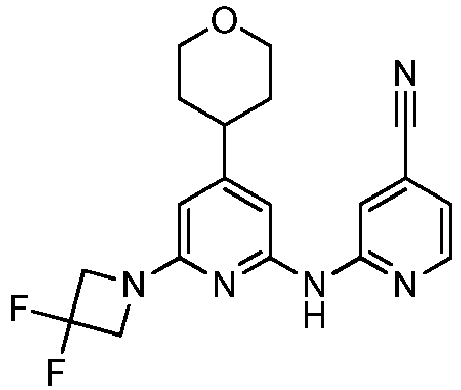
(400 MHz, DMSO-d6 ), δ: 9.87 (s, 1H), 8.42 (d, J = 5.1 Hz, 1H), 8.26 (s, 1H), 7.21 (dd, J = 5.2, 2.0 Hz, 1H), 6.88 (s, 1H), 6.04 (s, 1H), 4.49 - 4.26 (m, 4H), 4.02 - 3.86 (m, 2H), 3.52 - 3.35 (m, 2H), 2.76 - 2.58 (m, 1H), 1.73- 1.59 (m, 4H). 372 2-((6-(3,3-difluoroazetidin-1-yl) -4-(tetrahydro-2H-pyran-4-yl)py ridin-2-yl)amino)isonicotinonitr ile 
1H NMR (500 MHz, DMSO) δ 9.78 (s, 1H), 8.79 (s, 1H), 8.41 (d, J = 5.0 Hz, 1H), 7.21 (dd, J = 5.0, 1.3 Hz, 1H), 6.36 (s, 1H), 5.88 (s, 1H), 4.25 - 4.18 (m, 1H), 3.95 (dd, J = 10.4, 3.0 Hz, 2H), 3.49 (t, J = 7.8 Hz, 1H), 3.43 (td, J = 11.3, 3.0 Hz, 2H), 3.29 - 3.22 (m, 1H), 2.68 - 2.59 (m, 1H), 2.14 - 1.95 (m, 3H), 1.74 - 1.63 (m, 5H), 1.25 (d, J = 6.3 Hz, 3H). 364 (R)-2-((6-(2-methylpyrrolidin-1-yl)-4-(tetrahydro-2H-pyran-4-yl) pyridin-2-yl)amino)isonicotinon itrile 
1H NMR (400 MHz, DMSO) δ 9.74 (s, 1H), 8.82 (s, 1H), 8.41 (d, J = 5.1 Hz, 1H), 7.10 (d, J = 5.1 Hz, 1H), 6.32 (s, 1H), 5.85 (s, 1H), 4.21 - 4.11 (m, 1H), 3.93 (d, J = 10.3 Hz, 2H), 3.53 - 3.35 (m, 4H), 3.31 - 3.22 (m, 1H), 2.68 - 2.55 (m, 2H), 2.12 - 1.90 (m, 3H), 1.72 - 1.58 (m, 5H), 1.17 (d, J = 6.1 Hz, 3H). 407 (R)-6-(2-methylpyrrolidin-1-yl)-4-(tetrahydro-2H-pyran-4-yl)-N-(4-(trifluoromethyl)pyridin-2-yl) pyridin-2-amine -

-

- A round-bottomed flask was charged with tris(dibenzylideneacetone)dipalladium(0) (534 mg, 5 mol %), 4,5-bis(diphenylphosphino)-9,9-dimethylxanthene (675 mg, 10 mol %) and cesium carbonate (5.16 g, 15.9 mmol). The flask was sealed with a septum and purged with nitrogen gas before injecting 2,4-dichloro-6-methyl-pyridine (1.83 g, 11.3 mmol) followed by anhydrous 1,4-dioxane (22.6 mL, 0.5 M). The reaction mixture was stirred at 70 °C for 18 hr before cooling to rt and filtering through Celite, rinsing with CH2Cl2. After concentration, flash column chromatography (100:0 - 95:5 CH2Cl2/MeOH) afforded 2-[(4-chloro-6-methyl-2-pyridyl)amino]pyridine-4-carbonitrile as a yellow solid (1.61 g, 58%); 1H NMR (400 MHz, CDCl3) δ 8.39 (d, J = 5.1 Hz, 1H), 8.04 (s, 1H), 7.41 (br s, 1H), 7.26 (s, 1H), 7.07 (d, J = 5.1 Hz, 1H), 6.82 (s, 1H), 2.49 (s, 3H).
- Into a vial was weighed 2-[(4-chloro-6-methyl-2-pyridyl)amino]pyridine-4-carbonitrile (282 mg, 1.15 mmol), [1,1-bis(diphenylphosphino)ferrocene]dichloropalladium(II) (85.1 mg, 10 mol %), 3,6-dihydro-2H-pyran-4-boronic acid pinacol ester (374 mg, 1.73 mmol) and potassium carbonate (478 mg, 3.46 mmol). After purging with nitrogen, the vial was charged with degassed 1,4-dioxane (2.3 mL) and degassed water (1 mL) and the reaction mixture was stirred at 80 °C overnight. The reaction was bearly progressing at all as determined by RPLC and so bis(di-tert-butyl(4-dimethylaminophenyl)phosphine)dichloropalladium(II) (∼50mg) and more 3,6-dihydro-2H-pyran-4-boronic acid pinacol ester (374 mg, 1.73 mmol) was added and the reaction temperature was increased to 100 °C and stirred overnight again. After cooling to rt and filtration through Celite, rinsing with CH2Cl2, the mother liquor was washed with brine and dried over MgSO4. Purification by flash column chromatography (100:0 - 95:5 CH2Cl2/MeOH) afforded 2-((4-(3,6-dihydro-2H-pyran-4-yl)-6-methylpyridin-2-yl)amino)isonicotinonitrile as a red solid (206 mg, 61%); 1H NMR (400 MHz, DMSO) δ 10.07 (br s, 1H), 8.44 (d, J = 5.0 Hz, 1H), 8.21 (s, 1H), 7.51 (s, 1H), 7.23 (d, J = 5.0 Hz, 1H), 6.93 (s, 1H), 6.45 (s, 1H), 4.25 (s, 2H), 3.83 (m, 2H), 2.43 (s, 3H), 2.41 (m, 2H); ESI-LRMS m/z [M+1]+ = 293.
-

-

- To a stirring solution of 2,4,6-trichloropyridine (4.65 g, 24.7 mmol) and tetrahydropyran-4-carbonitrile (2.29 g, 20.6 mmol) in THF (100 mL, 0.2 M) and under nitrogen at -78 °C was added lithium bis(trimethylsilyl) amide (29 mL, 29 mmol, 1.0 M in THF) and after 5 min, the cooling bath was removed. After stirring a further 40 min, the reaction was quenched by the addition of sat. aq. NH4Cl and then concentrated. The mixture was extracted with CH2Cl2 and organics dried over MgSO4. Following concentration, the residue was purified by flash column chromatography (100:0 - 70:30 heptanes/EtOAc) but care needed to be taken to prevent compound precipitation on the column. After purification, 4-(2,6-dichloro-4-pyridyl)tetrahydropyran-4-carbonitrile was obtained a white solid (3.75 g, 71%); 1H NMR (400 MHz, CDCl3) δ 7.39 (d, J = 0.6 Hz, 2H), 4.17 - 4.05 (m, 2H), 3.93 - 3.84 (m, 2H), 2.15 - 1.99 (m, 4H).
- A round-bottomed flask was charged with 4-(2,6-dichloro-4-pyridyl)tetrahydropyran-4-carbonitrile (1.50 g, 5.83 mmol), 2-amino-5-cyanopyridine (716 mg, 5.83 mmol), tris(dibenzylideneacetone)dipalladium(0) (138 mg, 2.5 mol %), 2,2'-bis(diphenylphosphino)-1,1'-binaphthyl (187 mg, 5 mol %) and cesium carbonate (2.66 g, 8.17 mmol). The flask was sealed with a septum and purged with nitrogen gas before injecting anhydrous 1,4-dioxane (23 mL, 0.25 M). The reaction mixture was stirred at 80 °C for 18 hr before cooling to rt and filtering through Celite, rinsing with CH2Cl2. After concentration, flash column chromatography (100:0 - 50:50 heptanes/EtOAc) afforded
2-((6-chloro-4-(4-cyanotetrahydro-2H-pyran-4-yl)pyridin-2-yl)amino)isonicotinonitrile as a colorless solid (880 mg, 44%); 1H NMR (400 MHz, CDCl3) δ 8.44 (d, J = 5.1 Hz, 1H), 7.82 (s, 1H), 7.67 (s, 1H), 7.52 (br s, 1H), 7.13 (d, J = 5.1 Hz, 1H), 7.05 (s, 1H), 4.21 - 4.07 (m, 2H), 3.97 - 3.79 (m, 2H), 2.26 - 2.08 (m, 2H), 2.08 - 1.99 (m, 2H); ESI-LRMS m/z [M+1]+ = 340.
- Reaction of azetidine with 2-((6-chloro-4-(4-cyanotetrahydro-2H-pyran-4-yl)pyridin-2-yl)amino)isonicotinonitrile (50.0 mg, 0.147 mmol) following procedure of Method A afforded the target compound as a colorless solid (8.9 mg, 17%); 1H NMR (400 MHz, DMSO) δ 9.95 (br s, 1H), 8.48 (s, 1H), 8.42 (d, J = 5.0 Hz, 1H), 7.23 (dd, J = 5.0, 1.4 Hz, 1H), 6.89 (d, J = 1.2 Hz, 1H), 5.99 (d, J = 1.2 Hz, 1H), 4.06 - 3.98 (m, 6H), 3.70 - 3.59 (m, 2H), 2.41 - 2.28 (m, 2H), 2.08 - 1.96 (m, 4H); ESI-LRMS m/z [M+1]+ = 361.

- General procedure for Suzuki-Miyaura reaction with ethyl or cyclopropyl trifluoroborate potassium salts:
- A vial was charged with a 2-chloropyridine (1.0 equiv), palladium(II) acetate (10 mol %), butyldi-1-adamantylphosphine (15 mol %), the potassium trifluoroborate salt (1.2 equiv), and cesium carbonate (3 equiv) and purged under nitrogen before the addition of degassed toluene (0.2 M) and degassed water (2 M). The mixture was stirred at 110 °C overnight and then diluted with CH2¬Cl2, filtered through Celite, rinsing with CH2¬Cl2. The organics were dried over MgSO4 and concentrated to dryness. The reaction residue thus obtained was purified by RPLC to afford the target compound.
- Reaction of cyclopropyl trifluoroborate potassium salt with 2-((6-chloro-4-(4-cyanotetrahydro-2H-pyran-4-yl)pyridin-2-yl)amino)isonicotinonitrile (50.0 mg, 0.147 mmol) following general Suzuki-Miyaura procedure described above afforded the target compound as a colorless solid (8.1 mg, 16%); 1H NMR (400 MHz, DMSO) δ 10.12 (br s, 1H), 8.45 (d, J = 5.0 Hz, 1H), 8.31 (s, 1H), 7.43 (d, J = 1.4 Hz, 1H), 7.27 (dd, J = 5.1, 1.2 Hz, 1H), 7.09 (d, J = 1.4 Hz, 1H), 4.09 - 3.97 (m, 2H), 3.74 - 3.56 (m, 2H), 2.17 - 2.01 (m, 5H), 1.05 - 0.92 (m, 4H); ESI-LRMS m/z [M+1]+ = 346.

- A general procedure for Suzuki-Miyaura reaction with methylboronic acid:
- A vial was charged with the 2-chloropyridine (1.0 equiv), [1,1-bis(diphenylphosphino)ferrocene]dichloropalladium(II) (20 mol %), methylboronic acid (2 equiv), and cesium carbonate (3 equiv) and purged under nitrogen before the addition of degassed toluene (0.2 M) and degassed water (2 M). The mixture was stirred at 110 °C overnight and then diluted with CH2Cl2, filtered through Celite, rinsing with CH2Cl2. The organics were dried over MgSO4 and concentrated to dryness. The reaction residue thus obtained was purified by RPLC to afford the target compound.
- Reaction of 2-((6-chloro-4-(4-cyanotetrahydro-2H-pyran-4-yl)pyridin-2-yl)amino)isonicotinonitrile (50.0 mg, 0.147 mmol) following general Suzuki-Miyaura procedure described above afforded the target compound as a colorless solid (17.7 mg, 38%); 1H NMR (400 MHz, DMSO) δ 10.21 (br s, 1H), 8.45 (d, J = 5.1 Hz, 1H), 8.17 (s, 1H), 7.72 (s, 1H), 7.26 (dd, J = 5.1, 1.1 Hz, 1H), 7.03 (s, 1H), 4.07 - 3.98 (m, 2H), 3.72 - 3.57 (m, 2H), 2.47 (s, 3H), 2.09 - 2.01 (m, 5H); ESI-LRMS m/z [M+1]+ = 320.

- A vial was charged with 2-[(6-chloro-4-tetrahydropyran-4-yl-2-pyridyl)amino]pyridine-4-carbonitrile (51.1 mg, 0.162 mmol), [1,1-bis(diphenylphosphino)ferrocene]dichloropalladium(II) (13.5 mg, 10 mol %), methylboronic acid (20.0 mg, 0.325 mmol), and potassium carbonate (68 mg, 0.49 mmol) and purged under nitrogen before the addition of degassed 1,4-dioxane (1.6 mL) and degassed water (0.5 mL). The mixture was stirred at 100 °C for 19 hr and then diluted with CH2Cl2, filtered through Celite and washed with brine. The organics were dried over MgSO4 and concentrated to dryness. The reaction residue thus obtained was purified by RPLC to afford 2-((6-methyl-4-(tetrahydro-2H-pyran-4-yl)pyridin-2-yl)amino)isonicotinonitrile as a white solid (4.1 mg, 9%); ESI-LRMS m/z [M+1]+ = 295.
- The following examples were prepared according to the methods of this Example:
Structure 1H NMR MS (m/z) 
1H NMR (400 MHz, CDCl3) δ 8.44 (d, J = 5.1 Hz, 1H), 7.82 (s, 1H), 7.67 (s, 1H), 7.52 (br s, 1H), 7.13 (d, J = 5.1 Hz, 1H), 7.05 (s, 1H), 4.21 - 4.07 (m, 2H), 3.97 - 3.79 (m, 2H), 2.26 - 2.08 (m, 2H), 2.08 - 1.99 (m, 2H); 340 2-((6-chloro-4-(4-cyanotetrahydro-2 H-pyran-4-yl)pyridin-2-yl)amino)is onicotinonitrile 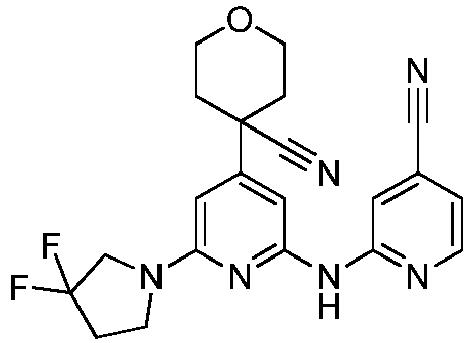
2-((4-(4-cyanotetrahydro-2H-pyran-4-yl)-6-(3,3-difluoropyrrolidin-1-yl) pyridin-2-yl)amino)isonicotinonitril e 
1H NMR (400 MHz, DMSO) δ 10.12 (br s, 1H), 8.45 (d, J = 5.0 Hz, 1H), 8.31 (s, 1H), 7.43 (d, J = 1.4 Hz, 1H), 7.27 (dd, J = 5.1, 1.2 Hz, 1H), 7.09 (d, J = 1.4 Hz, 1H), 4.09 - 3.97 (m, 2H), 3.74 - 3.56 (m, 2H), 2.17 - 2.01 (m, 5H), 1.05 - 0.92 (m, 4H); 346 2-((4-(4-cyanotetrahydro-2H-pyran-4-yl)-6-cyclopropylpyridin - 2-yl)ami no)isonicotinonitrile 
1H NMR (400 MHz, DMSO) δ 10.21 (br s, 1H), 8.45 (d, J = 5.1 Hz, 1H), 8.17 (s, 1H), 7.72 (s, 1H), 7.26 (dd, J = 5.1, 1.1 Hz, 1H), 7.03 (s, 1H), 4.07 - 3.98 (m, 2H), 3.72 - 3.57 (m, 2H), 2.47 (s, 3H), 2.09 - 2.01 (m, 5H); 320 2-((4-(4-cyanotetrahydro-2H-pyran-4-yl)-6-methylpyridin-2-yl)amino)is onicotinonitrile 
1H NMR (400 MHz, CDCl3) δ 8.42 (d, J = 5.2 Hz, 1H), 7.97 (s, 1H), 7.49 (br s, 1H), 7.42 (s, 1H), 7.04 (m, 2H), 6.62 (t, J = 55.7 Hz, 1H), 4.17 - 4.08 (m, 2H), 3.96 - 3.85 (m, 2H), 2.22 - 2.09 (m, 2H), 2.09 - 2.00 (m, 2H); 365 4-(2-chloro-6-((4-(difluoromethyl)p yridin-2-yl)amino)pyridin-4-yl)tetra hydro-2H-pyran-4-carbonitrile 
2-((6-(3-azabicyclo[3.1.0]hexan-3-y 1)-4-(4-cyanotetrahydro-2H-pyran-4 -yl)pyridin-2-yl)amino)isonicotinon itrile 
1H NMR (400 MHz, DMSO) δ 9.97 (br s, 1H), 8.43 (d, J = 4.9 Hz, 2H), 7.24 (dd, J = 4.9, 1.4 Hz, 1H), 6.92 (s, 1H), 6.29 (s, 1H), 4.11 - 3.99 (m, 3H), 3.81 - 3.76 (m, 1H), 3.69 - 3.62 (m, 2H), 3.54 - 3.42 (m, 1H), 3.36 - 3.31 (m, 1H), 3.02 - 2.79 (m, 2H), 2.40 - 2.28 (m, 1H), 2.15 - 2.00 (m, 5H); 437 2-((4-(4-cyanotetrahydro-2H-pyran-4-yl)-6-(6,6-difluoro-3-azabicyclo[3 .2.0]heptan-3-yl)pyridin-2-yl)amino )isonicotinonitrile 
1H NMR (400 MHz, DMSO) δ 9.90 (br s, 1H), 8.71 (s, 1H), 8.42 (d, J = 5.0 Hz, 1H), 7.23 (dd, J = 5.0, 1.4 Hz, 1H), 6.64 (s, 1H), 6.05 (s, 1H), 4.29 - 4.20 (m, 1H), 4.07 - 3.96 (m, 2H), 3.69 - 3.58 (m, 2H), 3.57 - 3.47 (m, 1H), 2.13 - 1.95 (m, 8H), 1.76 - 1.68 (m, 1H), 1.25 (d, J = 6.2 Hz, 3H); 389 (R)-2-((4-(4-cyanotetrahydro-2H-py ran-4-yl)-6-(2-methylpyrrolidin-1-yl )pyridin-2-yl)amino)isonicotinonitri le 
1H NMR (400 MHz, DMSO) δ 9.95 (br s, 1H), 8.48 (s, 1H), 8.42 (d, J = 5.0 Hz, 1H), 7.23 (dd, J = 5.0, 1.4 Hz, 1H), 6.89 (d, J = 1.2 Hz, 1H), 5.99 (d, J = 1.2 Hz, 1H), 4.06 - 3.98 (m, 6H), 3.70 - 3.59 (m, 2H), 2.41 - 2.28 (m, 2H), 2.08 - 1.96 (m, 4H); 361 2-((6-(azetidin-1-yl)-4-(4-cyanotetrahydro-2H-pyran-4-yl)pyridin-2-yl)a mino)isonicotinonitrile 
1H NMR (400 MHz, DMSO) δ 9.84 (s, 1H), 8.47 (s, 1H), 8.41 (d, J = 5.0 Hz, 1H), 7.21 (d, J = 5.0 Hz, 1H), 6.61 (s, 1H), 6.00 (s, 1H), 3.94 (d, J = 10.9 Hz, 2H), 3.86 (t, J = 13.2 Hz, 2H), 3.65 (t, J = 7.2 Hz, 2H), 3.47 - 3.38 (m, 2H), 2.70 - 2.52 (m, 3H), 1.71- 1.62 (m, 4H). 386 2-((6-(3,3-difluoropyrrolidin-1-yl)-4 -(tetrahydro-2H-pyran-4-yl)pyridin-2-yl)amino)isonicotinonitrile 
295 2-((6-methyl-4-(tetrahydro-2H-pyra n-4-yl)pyridin-2-yl)amino)isonicoti nonitrile 
1H NMR (400 MHz, DMSO) δ 9.79 (s, 1H), 8.22 (d, J = 6.1 Hz, 2H), 8.05 (s, 1H), 7.98 (s, 1H), 7.47 (t, J = 73.1 Hz, 1H), 7.12 (d, J = 12.1 Hz, 2H), 6.70 (d, J = 5.6 Hz, 1H), 3.97 (d, J = 10.3 Hz, 2H), 3.88 (s, 3H), 3.59 - 3.37 (m, 2H), 2.72 (dt, J = 10.3, 5.6 Hz, 1H), 1.83 - 1.58 (m, 4H). 402 N-(4-(difluoromethoxy)pyridin-2-yl )-6-(1-methyl-1H-pyrazol-4-yl)-4-(t etrahydro-2H-pyran-4-yl)pyridin-2-amine 
1H NMR (400 MHz, DMSO) δ 10.09 (s, 1H), 8.70 (s, 1H), 8.49 (d, J = 5.1 Hz, 1H), 8.21 (s, 1H), 7.94 (s, 1H), 7.18 (s, 2H), 7.11 (s, 1H), 3.97 (d, J = 10.6 Hz, 2H), 3.89 (s, 3H), 3.54 - 3.39 (m, 2H), 2.87 - 2.63 (m, 2H), 1.82- 1.57 (m, 4H). 404 6-(1-methyl-1H-pyrazol-4-yl)-4-(tet rahydro-2H-pyran-4-yl)-N-(4-(triflu oromethyl)pyridin-2-yl)pyridin-2-a mine -

-

- Under a nitrogen atmosphere, zinc dust (4.06 g, 62.1 mmol) was suspended in N,N-dimethylacetamide (5 mL) and a mixture of trimethylsilylchloride (0.946 mL, 7.30 mmol) and 1,2-dibromoethane (0.636 mL, 7.30 mmol) was added cautiously over 10 min. After stirring for a further 15 min, a solution of N-(tert-butoxycarbonyl)-4-iodopiperidine (16.74 g, 51.11 mmol) in N,N-dimethylacetamide (20 mL) was added over 30 min and stirring was continued for an additional 30 min. In the open atmosphere, this mixture was filtered through Celite as quickly as possible, rinsing with a small amount of N,N-dimethylacetamide. The resulting yellow solution was injected into a separately prepared, nitrogen flushed suspension of [1,1-bis(diphenylphosphino)ferrocene]dichloropalladium(II) (1.35 g, 1.83 mmol), copper(I) iodide (695 mg, 3.65 mmol) and 2,6-dichloro-4-iodopyridine (10.0 g, 36.5 mmol) in N,N-dimethylacetamide (30 mL) and this mixture was stirred at 80 °C for 16.5 hr. After cooling to rt, the mixture was diluted with EtOAc and water and partitioned. Filtration through Celite was necessary to break the emulsion, following which, the organics were washed with water and then dried over MgSO4. After being freed of volatiles, the resultant residue was purified by flash column chromatography (100:0 - 70:30 heptanes/EtOAc) to afford tert-butyl 4-(2,6-dichloro-4-pyridyl)piperidine-1-carboxylate as a white solid (7.49 g, 62%); 1H NMR (400 MHz, CDCl3) δ 7.11 (s, 2H), 4.19 (m, 2H), 2.78 (m, 2H), 2.71 (m, 1H), 1.81 (m, 2H), 1.65 (m, 2H), 1.48 (s, 9H).

- A round-bottomed flask was charged with tert-butyl 4-(2,6-dichloro-4-pyridyl)piperidine-1-carboxylate (1.01 g, 3.04 mmol), [1,1-bis(diphenylphosphino)ferrocene]dichloropalladium(II) (63 mg, 2.5 mol %), methylboronic acid (188 mg, 3.04 mmol), and potassium carbonate (1.27 g, 9.12 mmol) and purged under nitrogen before the addition of degassed 1,4-dioxane (6.1 mL) and degassed water (2.1 mL). The mixture was stirred at 80 °C for 2 hr, 90 °C for 19 hr and then, after addition of an another aliquot of [1,1-bis(diphenylphosphino)ferrocene]dichloropalladium(II) (63 mg, 2.5 mol %), 90 °C for 28 hr. The mixture was then diluted with CH2Cl2 and washed with brine. The organics were dried over MgSO4 and concentrated to dryness. The reaction residue thus obtained was purified by flash column chromatography (100:0 - 80:20 heptanes/EtOAc) to afford, along with recovered tert-butyl 4-(2,6-dichloro-4-pyridyl)piperidine-1-carboxylate which eluted first, tert-butyl 4-(2-chloro-6-methyl-4-pyridyl)piperidine-1-carboxylate as a white solid (345 mg, 37%); 1H NMR (400 MHz, CDCl3) δ 6.98 (s, 1H), 6.90 (s, 1H), 4.17 (m, 2H), 2.78 (m, 2H), 2.60 (m, 1H), 2.51 (s, 3H), 1.81 (m, 2H), 1.65 - 1.57 (m, 2H), 1.48 (s, 9H).
- A vial was charged with tris(dibenzylideneacetone)dipalladium(0) (104 mg, 10 mol %), 4,5-bis(diphenylphosphino)-9,9-dimethylxanthene (65.8 mg, 10 mol %), cesium carbonate (503 mg, 1.54 mmol), 2-amino-5-cyanopyridine (163 mg, 1.32 mmol) and tert-butyl 4-(2-chloro-6-methyl-4-pyridyl)piperidine-1-carboxylate (343 mg, 1.10 mmol). After being purged with nitrogen, anhydrous 1,4-dioxane (2.2 mL, 0.5 M) was injected and the mixture stirred at 105 °C for 19 hr. After being concentrated to dryness, the reaction mixture was purified by flash column chromatography (100:0 - 65:35 heptanes/EtOAc) to afford tert-butyl 4-(2-((4-cyanopyridin-2-yl)amino)-6-methylpyridin-4-yl)piperidine-1-carboxylate as a white solid (280 mg, 64%); 1H NMR (400 MHz, CDCl3) δ 8.36 (d, J = 5.1 Hz, 1H), 8.24 (s, 1H), 7.39 (br s, 1H), 7.02 (d, J = 5.1 Hz, 1H), 6.86 (s, 1H), 6.65 (s, 1H), 4.26 (m, 2H), 2.80 (m, 2H), 2.60 (m, 1H), 2.49 (s, 3H), 1.82 (m, 2H), 1.58 (m, 2H), 1.49 (s, 9H); ESI-LRMS m/z [M+1]+= 394.

- To a solution of tert-butyl 4-(2-((4-cyanopyridin-2-yl)amino)-6-methylpyridin-4-yl)piperidine-1-carboxylate (216 mg, 0.550 mmol) in CH2Cl2 (2.2 mL) was added trifluoroacetic acid (1.1 mL) and stirring was maintained for 2 hr. Concentrated to dryness afforded 2-((6-methyl-4-(piperidin-4-yl)pyridin-2-yl)amino)isonicotinonitrile (1x TFA salt by 1H NMR) as a yellow solid (224 mg, >99%); 1H NMR (400 MHz, DMSO) δ 10.47 (br s, 1H), 8.65 (br s, 1H), 8.47 (d, J = 5.1 Hz, 1H), 8.38 (br s, 1H), 8.07 (s, 1H), 7.36 (s, 1H), 7.32 (d, J = 5.1 Hz, 1H), 6.80 (s, 1H), 3.40 (m, 2H), 3.02 (m, 2H), 2.93 (m, 1H), 2.47 (s, 3H), 1.96 (m, 2H), 1.76 (m, 2H); ESI-LRMS m/z [M+1]+ = 294.
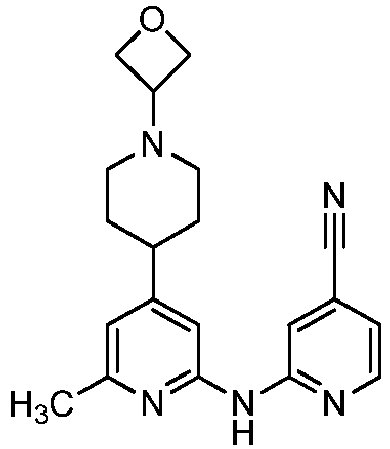
- To a suspension of 2-((6-methyl-4-(piperidin-4-yl)pyridin-2-yl)amino)isonicotinonitrile mono-TFA salt (33.8 mg, 0.0830 mmol) in anhydrous THF (0.8 mL) was added N,N-diisopropylethylamine (24 µL, 0.17 mmol) followed by 3-oxetanone (8.0 µL, 0.12 mmol) and the mixture was stirred for 15 min before the introduction of sodium triacetoxyborohydride (55 mg, 0.25 mmol). After stirring for a further 17 hr, the mixture was diluted with CH2Cl2 and washed with sat. aq. NaHCO3 and the organics were dried over MgSO4 and concentrated to dryness. The residue thus obtained was purified by RPLC to afford 2-((6-methyl-4-(1-(oxetan-3-yl)piperidin-4-yl)pyridin-2-yl)amino)isonicotinonitrile as a colorless solid (9.5 mg, 34%); 1H NMR (400 MHz, DMSO) δ 9.99 (br s, 1H), 8.44 (d, J = 5.1 Hz, 1H), 8.18 (s, 1H), 7.36 (s, 1H), 7.21 (d, J = 5.1 Hz, 1H), 6.75 (s, 1H), 4.54 (dd, J = 6.5, 6.5 Hz, 2H), 4.45 (dd, J = 6.5, 6.5 Hz, 2H), 3.42 (m, 1H), 2.80 (m, 2H), 2.44 (m, 1H), 2.40 (s, 3H), 1.86 (m, 2H), 1.76 (m, 2H), 1.63 (m, 2H); ESI-LRMS m/z [M+1]+ = 350.

- To a solution of 2-((6-methyl-4-(piperidin-4-yl)pyridin-2-yl)amino)isonicotinonitrile mono-TFA salt (34.9 mg, 0.0857 mmol) and 4-dimethylaminopyridine (1.0 mg, 10 mol %) in anhydrous CH2Cl2 (0.9 mL) was added triethylamine (36 µL, 0.26 mmol) followed by the acylation/sulfonylation anhydride (0.128 mmol). After stirring 2 hr, the reaction mixture was diluted with CH2Cl2 and washed with sat. aq. NaHCO3 and the organics were dried over MgSO4 and concentrated to dryness. The resultant residue was purified by RPLC to afford the title compound.
- Submission to general acylation / sulfonylation procedure utilizing methanesulfonic anhydride (23 mg, 0.128 mmol) gave rise to 2-((6-methyl-4-(1-(methylsulfonyl)piperidin-4-yl)pyridin-2-yl)amino)isonicotinonitrile as a colorless solid (9.7 mg, 30%); 1H NMR (400 MHz, DMSO) δ 10.01 (br s, 1H), 8.43 (d, J = 5.1 Hz, 1H), 8.18 (s, 1H), 7.38 (s, 1H), 7.21 (d, J = 5.1 Hz, 1H), 6.78 (s, 1H), 3.68 (m, 2H), 2.90 (s, 3H), 2.83 (m, 2H), 2.60 (m, 1H), 2.41 (s, 3H), 1.89 (m, 2H), 1.65 (m, 2H); ESI-LRMS m/z [M+1]+= 372.

- Submission to general acylation / sulfonylation procedure described above utilizing acetic anhydride (13 µL, 0.128 mmol) provides 2-((4-(1-acetylpiperidin-4-yl)-6-methylpyridin-2-yl)amino)isonicotinonitrile as a colorless solid (10.9 mg, 38%); 1H NMR (400 MHz, DMSO) δ 9.99 (br s, 1H), 8.43 (d, J = 5.1 Hz, 1H), 8.18 (s, 1H), 7.34 (s, 1H), 7.21 (d, J = 5.1 Hz, 1H), 6.75 (s, 1H), 4.59 - 4.47 (m, 1H), 4.00 - 3.82 (m, 1H), 3.16 - 3.07 (m, 1H), 2.77 - 2.65 (m, 1H), 2.64 - 2.55 (m, 1H), 2.40 (s, 3H), 2.03 (s, 3H), 1.85 - 1.69 (m, 2H), 1.62 - 1.47 (m, 1H), 1.47 - 1.30 (m, 1H); ESI-LRMS m/z [M+1]+ = 336.

- Submission to general acylation / sulfonylation procedure described above utilizing trifluoroacetic anhydride (18 µL, 0.128 mmol) gave rise to 2-((6-methyl-4-(1-(2,2,2-trifluoroacetyl)piperidin-4-yl)pyridin-2-yl)amino)isonicotinonitril e as a colorless solid (11.5 mg, 35%); 1H NMR (400 MHz, DMSO) δ 10.00 (br s, 1H), 8.43 (d, J = 5.1 Hz, 1H), 8.18 (s, 1H), 7.35 (s, 1H), 7.21 (d, J = 5.1 Hz, 1H), 6.79 (s, 1H), 4.47 - 4.38 (m, 1H), 4.00 - 3.90 (m, 1H), 3.43 - 3.36 (m, 1H), 3.05 - 2.93 (m, 1H), 2.92 - 2.79 (m, 1H), 2.40 (s, 3H), 1.98 - 1.85 (m, 2H), 1.68 - 1.44 (m, 2H); ESI-LRMS m/z [M+1]+ = 390.
- The following examples were prepared according to the methods described in Example 4.
Structure 1H NMR MS (m/z) 
1H NMR (400 MHz, DMSO) δ 9.99 (br s, 1H), 8.43 (d, J = 5.1 Hz, 1H), 8.18 (s, 1H), 7.34 (s, 1H), 7.21 (d, J = 5.1 Hz, 1H), 6.75 (s, 1H), 4.59 - 4.47 (m, 1H), 4.00 - 3.82 (m, 1H), 3.16 - 3.07 (m, 1H), 2.77 - 2.65 (m, 1H), 2.64 - 2.55 (m, 1H), 2.40 (s, 3H), 2.03 (s, 3H), 1.85 - 1.69 (m, 2H), 1.62 - 1.47 (m, 1H), 1.47 - 1.30 (m, 1H). 336 2-((4-(1-acetylpiperidin-4-yl)-6 -methylpyridin-2-yl)amino)iso nicotinonitrile 
1H NMR (400 MHz, DMSO) δ 10.01 (br s, 1H), 8.43 (d, J = 5.1 Hz, 1H), 8.18 (s, 1H), 7.38 (s, 1H), 7.21 (d, J = 5.1 Hz, 1H), 6.78 (s, 1H), 3.68 (m, 2H), 2.90 (s, 3H), 2.83 (m, 2H), 2.60 (m, 1H), 2.41 (s, 3H), 1.89 (m, 2H), 1.65 (m, 2H). 372 2-((6-methyl-4-(1-(methylsulfo nyl)piperidin-4-yl)pyridin-2-yl) amino)isonicotinonitrile 
1H NMR (400 MHz, DMSO) δ 9.99 (br s, 1H), 8.44 (d, J = 5.1 Hz, 1H), 8.18 (s, 1H), 7.36 (s, 1H), 7.21 (d, J = 5.1 Hz, 1H), 6.75 (s, 1H), 4.54 (dd, J = 6.5, 6.5 Hz, 2H), 4.45 (dd, J = 6.5, 6.5 Hz, 2H), 3.42 (m, 1H), 2.80 (m, 2H), 2.44 (m, 1H), 2.40 (s, 350 2-((6-methyl-4-(1-(oxetan-3-yl )piperidin-4-yl)pyridin-2-yl)am ino)isonicotinonitrile 3H), 1.86 (m, 2H), 1.76 (m, 2H), 1.63 (m, 2H). 
1H NMR (400 MHz, DMSO) δ 10.47 (br s, 1H), 8.65 (br s, 1H), 8.47 (d, J = 5.1 Hz, 1H), 8.38 (br s, 1H), 8.07 (s, 1H), 7.36 (s, 1H), 7.32 (d, J = 5.1 Hz, 1H), 6.80 (s, 1H), 3.40 (m, 2H), 3.02 (m, 2H), 2.93 (m, 1H), 2.47 (s, 3H), 1.96 (m, 2H), 1.76 (m, 2H). 294 2-((6-methyl-4-(piperidin-4-yl) pyridin-2-yl)amino)isonicotino nitrile 
1H NMR (400 MHz, DMSO) δ 9.70 (br s, 1H), 8.33 (d, J = 5.1 Hz, 1H), 8.24 (s, 1H), 7.18 - 6.86 (m, 3H), 6.77 (s, 1H), 4.59 - 4.45 (m, 1H), 3.96 - 3.87 (m, 1H), 3.19 - 3.09 (m, 1H), 2.73 - 2.54 (m, 2H), 2.03 (s, 3H), 2.02 - 1.95 (m, 1H), 1.85 - 1.72 (m, 2H), 1.63 - 1.36 (m, 2H), 0.98 - 0.86 (m, 4H); 387 1-(4-(2-cyclopropyl-6-((4-(difl uoromethyl)pyridin-2-yl)amino )pyridin-4-yl)piperidin-1-yl)eth anone 
1H NMR (400 MHz, DMSO) δ 9.78 (br s, 1H), 8.34 (d, J = 5.1 Hz, 1H), 8.19 (s, 1H), 7.29 (s, 1H), 7.18 - 6.86 (m, 2H), 6.71 (s, 1H), 4.57 - 4.46 (m, 1H), 3.97 - 3.84 (m, 1H), 3.19 - 3.07 (m, 1H), 2.77 - 2.54 (m, 4H), 2.03 (s, 3H), 1.86 - 1.73 (m, 2H), 1.61 - 1.35 (m, 2H), 1.25 (t, J = 7.6 Hz, 3H); 375 1-(4-(2-((4-(difluoromethyl)pyr idin-2-yl)amino)-6-ethylpyridi n-4-yl)piperidin-1-yl)ethanone 
1H NMR (400 MHz, DMSO) δ 9.91 (s, 1H), 8.42 (d, J = 5.1 Hz, 1H), 8.34 (s, 1H), 7.22 (dd, J = 5.0, 1.3 Hz, 1H), 7.06 (s, 1H), 6.82 (s, 1H), 4.58 - 4.46 (m, 1H), 3.97 - 3.86 (m, 1H), 3.17 - 3.05 (m, 1H), 2.75 - 2.53 (m, 2H), 2.09 - 1.98 (m, 1H), 1.95 (s, 3H), 1.86 - 1.73 (m, 2H), 1.61 - 1.35 (m, 2H), 0.98 - 0.91 (m, 4H); 362 2-((4-(1-acetylpiperidin-4-yl)-6 -cyclopropylpyridin-2-yl)amin o)isonicotinonitrile 
1H NMR (400 MHz, DMSO) δ 9.99 (br s, 1H), 8.43 (d, J = 5.1 Hz, 1H), 8.34 (s, 1H), 7.26 (s, 1H), 7.22 (dd, J = 5.1, 1.3 Hz, 1H), 6.76 (s, 1H), 4.57 - 4.46 (m, 1H), 3.97 - 3.82 (m, 1H), 3.17 - 3.06 (m, 1H), 2.77 - 2.53 (m, 4H), 2.03 (s, 3H), 1.86 - 1.71 (m, 2H), 1.64 - 1.49 (m, 1H), 1.49 - 1.37 (m, 1H), 1.26 (t, J = 7.6 Hz, 3H); 350 2-((4-(1-acetylpiperidin-4-yl)-6 -ethylpyridin-2-yl)amino)isoni cotinonitrile 
1H NMR (400 MHz, DMSO) δ 9.80 (br s, 1H), 8.35 (d, J = 5.1 Hz, 1H), 7.97 (s, 1H), 7.43 (s, 1H), 7.18 - 6.87 (m, 2H), 6.71 (s, 1H), 4.58 - 4.45 (m, 1H), 3.96 - 3.85 (m, 1H), 3.19 - 3.08 (m, 1H), 2.77 - 2.64 (m, 1H), 2.63 - 2.55 (m, 1H), 2.38 (s, 3H), 2.03 (s, 3H), 1.84 - 1.73 (m, 2H), 1.48 (dtd, J = 56.2, 12.4, 8.3 Hz, 2H); 361 1-(4-(2-((4-(difluoromethyl)pyr idin-2-yl)amino)-6-methylpyri din-4-yl)piperidin-1-yl)ethanon e 
1H NMR (400 MHz, CDCl3) δ 8.40 (d, J = 5.0 Hz, 1H), 7.90 (s, 1H), 7.39 (br s, 1H), 7.20 (s, 1H), 7.08 (d, J = 5.0 Hz, 1H), 6.81 (s, 1H), 4.87 - 4.78 (m, 1H), 4.00 - 3.92 (m, 1H), 3.22 - 3.13 (m, 1H), 2.79 - 2.70 (m, 1H), 2.68 - 2.57 (m, 1H), 2.14 (s, 3H), 1.99 - 1.86 (m, 2H), 1.69 - 1.58 (m, 2H); 356 2-((4-(1-acetylpiperidin-4-yl)-6 -chloropyridin-2-yl)amino)ison icotinonitrile 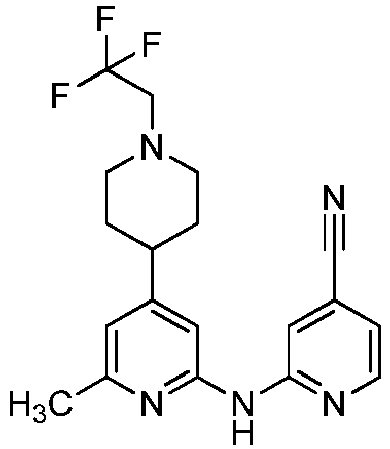
1H NMR (400 MHz, DMSO) δ 9.97 (br s, 1H), 8.44 (d, J = 5.2 Hz, 1H), 8.19 (s, 1H), 7.34 (s, 1H), 7.21 (dd, J = 5.1, 1.4 Hz, 1H), 6.76 (s, 1H), 3.24 - 3.13 (m, 2H), 3.05 - 2.97 (m, 2H), 2.48 - 2.37 (m, 3H), 2.40 (s, 3H), 1.78 - 1.55 (m, 4H); 376 2-((6-methyl-4-(1-(2,2,2-trifluo roethyl)piperidin-4-yl)pyridin-2-yl)amino)isonicotinonitrile 
1H NMR (400 MHz, CDCl3) δ 8.39 (d, J = 5.0 Hz, 1H), 7.49 (s, 2H), 7.38 (br s, 1H), 7.01 (d, J = 5.1 Hz, 1H), 6.79 - 6.43 (m, 2H), 4.88 - 4.67 (m, 1H), 4.03 - 3.86 (m, 1H), 3.24 - 3.12 (m, 1H), 2.80 - 2.69 (m, 1H), 2.68 - 2.58 (m, 1H), 2.14 (s, 3H), 2.01 - 1.86 (m, 2H), 1.71 - 1.57 (m, 2H); 381 1-(4-(2-chloro-6-((4-(difluoro methyl)pyridin-2-yl)amino)pyri din-4-yl)piperidin-1-yl)ethanon e -

-

- A round-bottomed flask was charged with tert-butyl 4-(2,6-dichloro-4-pyridyl)piperidine-1-carboxylate (3.64 g, 11.0 mmol), 2-amino-4-cyanopyridine (1.35 g, 11.0 mmol), tris(dibenzylideneacetone)dipalladium(0) (259 mg, 2.5 mol %), 4,5-bis(diphenylphosphino)-9,9-dimethylxanthene (328 mg, 5 mol %) and potassium carbonate (2.13 g, 15.4 mmol). The flask was sealed with a septum and purged with nitrogen gas before injecting anhydrous 1,4-dioxane (22 mL, 0.5 M). The reaction mixture was stirred at 80 °C for 17 hr before cooling to rt and filtering through Celite, rinsing with CH2Cl2. After concentration, flash column chromatography (100:0 - 60:40 heptanes/EtOAc) afforded tert-butyl 4-[2-chloro-6-[(4-cyano-2-pyridyl)amino]-4-pyridyl]piperidine-1-carboxylate as a colorless film (1.745 g, 38%); 1H NMR (400 MHz, CDCl3) δ 8.40 (d, J = 5.1 Hz, 1H), 7.94 (s, 1H), 7.42 (br s, 1H), 7.17 (s, 1H), 7.08 (d, J = 5.1 Hz, 1H), 6.81 (s, 1H), 4.41- 4.09 (m, 2H), 2.87 - 2.72 (m, 2H), 2.71 - 2.60 (m, 1H), 1.88 - 1.80 (m, 2H), 1.67 - 1.58 (m, 2H), 1.49 (s, 9H).
- To a solution of tert-butyl 4-[2-chloro-6-[(4-cyano-2-pyridyl)amino]-4-pyridyl]piperidine-1-carboxylate (1.745 g, 4.216 mmol) in CH2Cl2 (17 mL) and at 0 °C was added trifluoroacetic acid (8.4 mL) and allowed to warm to room temperature. After stirring for 1 hr, the solution was concentrated to dryness to afford the TFA salt as a white solid which was re-suspended in anhydrous THF (17 mL) and submitted to the action of triethylamine (3.0 mL, 21 mmol) and 3-oxetanone (0.40 mL, 6.3 mmol). After stirring for 1 hr, sodium triacetoxyborohydride (2.82 g, 12.7 mmol) was added and stirring continued for 16.5 hr. The reaction mixture was a solid white mass at this point which was dissolved in CH2Cl2 and washed with half-saturated aq. NaHCO3 and organics dried over MgSO4. Following concentration, subjection to flash chromatographic purification (100:0 - 90:10 CH2Cl2/MeOH) gave rise to 2-((6-chloro-4-(1-(oxetan-3-yl)piperidin-4-yl)pyridin-2-yl)amino)isonicotinonitrile as a white solid (1.247 g, 80% over 2 steps); 1H NMR (400 MHz, DMSO) δ 10.38 (br s, 1H), 8.49 (d, J = 5.1 Hz, 1H), 7.94 (s, 1H), 7.63 (s, 1H), 7.30 (d, J = 5.1 Hz, 1H), 6.98 (s, 1H), 4.57 - 4.51 (m, 2H), 4.47 - 4.41 (m, 2H), 3.46 - 3.38 (m, 1H), 2.85 - 2.77 (m, 2H), 1.90 - 1.75 (m, 4H), 1.70 - 1.58 (m, 2H); ESI-LRMS m/z [M+1]+ = 370.
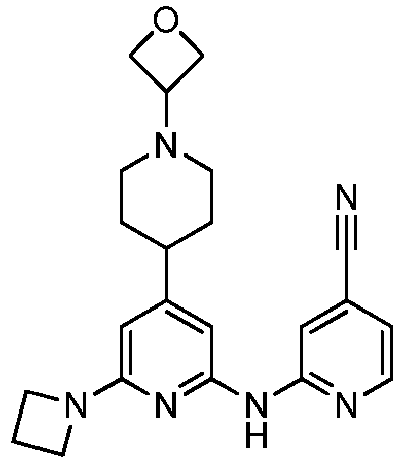
- Into a vial was weighed the 2-chloropyridine (1.0 equiv), the amine (usually as the HCl salt, 3 equiv), chloro(2-dicyclohexylphosphino-2',6'-di-i-propoxy-1,1-biphenyl)[2-(2-aminoethylphenyl)] palladium(II) methyl-t-butylether adduct (10 mol %), 2-Dicyclohexylphosphino-2',6'-di-i-propoxy-1,1'-biphenyl (10 mol %) and sodium tert-butoxide (6 equiv), and purged under nitrogen before the addition of anhydrous THF (0.1 M). The mixture was stirred at 90 °C overnight before being filtered through Celite, rinsing with CH2Cl2. After being concentrated to dryness, the reaction residue was purified by RPLC to afford the final compound.
- Reaction of azetidine with 2-((6-chloro-4-(1-(oxetan-3-yl)piperidin-4-yl)pyridin-2-yl)amino)isonicotinonitrile (40 mg, 0.11 mmol) following general Buchwald-Hartwig procedure described above afforded the target compound as a colorless solid (19.8 mg, 47%); 1H NMR (400 MHz, DMSO) δ 9.76 (br s, 1H), 8.51 (s, 1H), 8.40 (d, J = 5.1 Hz, 1H), 7.18 (d, J = 5.1 Hz, 1H), 6.59 (s, 1H), 5.80 (s, 1H), 4.57 - 4.49 (m, 2H), 4.49 - 4.40 (m, 2H), 4.00 - 3.92 (m, 4H), 3.43 - 3.35 (m, 1H), 2.82 - 2.73 (m, 2H), 2.40 - 2.27 (m, 3H), 1.88 -1.78 (m, 2H), 1.77 - 1.68 (m, 2H), 1.68 -1.51 (m, 2H); ESI-LRMS m/z [M+1]+ = 391.

-
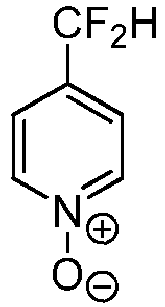
- To a stirring solution of 4-difluoromethylpyridine (5.00 g, 38.7 mmol) in CH2Cl2 (77 mL, 0.5 M) at 0 °C was added 77% meta-chloroperbenzoic acid (10.7 g, 46.5 mmol) and the ice bath was removed and stirring continued for 20.5 hr. The reaction mixture was concentrated to dryness and reaction residue purified by flash column chromatography (100:0 - 95:5 CH2Cl2/MeOH) to afford 4-difluoromethyl-pyridine-N-oxide as a colorless solid (5.62 g, >99%); 1H NMR (400 MHz, CDCl3) δ 8.26 (d, J = 6.4 Hz, 2H), 7.40 (d, J = 6.4 Hz, 2H), 6.63 (t, J = 55.7 Hz, 1H).

- A suspension of 4-difluoromethyl-pyridine-N-oxide (4.95 g, 34.1 mmol), bromo-tris-pyrrolidino-phosphonium hexafluorophosphate (20.7 g, 44.3 mmol), triethylamine (15.6 mL, 111 mmol), and anhydrous tert-butylamine (4.6 mL, 43 mmol) in DCE (100 mL, 0.33 M) was sealed in pressure tube and stirred at 100 °C for 3.5 hr. After cooling to rt, the mixture was diluted with CH2Cl2 and washed with sat. aq. NaHCO3. The organics were dried over MgSO4 and following concentration, the reaction residue was purified by flash column chromatography (100:0 - 80:20 heptanes/EtOAc) to afford N-tert-butyl-4-(difluoromethyl)pyridin-2-amine as a yellow liquid (4.43 g, 65%); 1H NMR (400 MHz, CDCl3) δ 8.15 (d, J = 5.2 Hz, 1H), 6.65 - 6.28 (m, 3H), 4.62 (br s, 1H), 1.44 (s, 9H).

- A flask containing N-tert-butyl-4-(difluoromethyl)pyridin-2-amine (4.43 g, 22.1 mmol), triethylsilane (7.28 mL, 44.2 mmol) and trifluoroacetic acid (22.1 mL, 1 M) was fitted with a reflux condenser. The reaction mixture was stirred at 90 °C for 21 hr and then, after cooling to rt, concentrated to dryness and partitioned between CH2Cl2 and sat. aq. NaHCO3. After separation of the phases, the aqueous layer was re-extracted with CH2Cl2 and the combined organics were dried over MgSO4. Concentration afforded 4-(difluoromethyl)pyridin-2-amine as a light brown solid (3.16 g, >99%); 1H NMR (400 MHz, CDCl3) δ 8.16 (d, J = 5.3 Hz, 1H), 6.74 (d, J = 5.3 Hz, 1H), 6.66 - 6.33 (m, 2H), 4.62 (br s, 2H).

- To a solution of tert-butyl 4-(2,6-dichloro-4-pyridyl)piperidine-1-carboxylate (2.84 g, 8.57 mmol) in CH2Cl2 (17 mL) and at 0 °C was added trifluoroacetic acid (8.4 mL) and allowed to warm to room temperature. After stirring for 1 hr, the solution was concentrated to dryness to afford the TFA salt as a white solid which was re-suspended in anhydrous THF (34 mL) and submitted to the action of triethylamine (6.0 mL, 43 mmol) and 3-oxetanone (0.82 mL, 13 mmol). After stirring for 30 min, sodium triacetoxyborohydride (5.73 g, 25.7 mmol) was added and stirring continued for 2 hr. The reaction mixture was diluted with CH2Cl2 and washed with sat. aq. NaHCO3 and organics dried over MgSO4. Concentration gave sufficiently pure 2,6-dichloro-4-[1-(oxetan-3-yl)-4-piperidyl]pyridine as a beige solid (2.67 g, >99% over 2 steps); 1H NMR (400 MHz, CDCl3) δ 7.13 (s, 2H), 4.73 - 4.63 (m, 4H), 3.60 - 3.52 (m, 1H), 3.00 - 2.88 (m, 2H), 2.60 - 2.48 (m, 1H), 2.05 - 1.94 (m, 2H), 1.93 - 1.78 (m, 4H).
- A round-bottomed flask was charged with 2,6-dichloro-4-[1-(oxetan-3-yl)-4-piperidyl]pyridine (1.00 g, 3.48 mmol), 4-(difluoromethyl)pyridin-2-amine (502 mg, 3.48 mmol), tris(dibenzylideneacetone)dipalladium(0) (82.2 mg, 2.5 mol %), 4,5-bis(diphenylphosphino)-9,9-dimethylxanthene (125 mg, 6 mol %) and cesium carbonate (1.59 g, 4.87 mmol). The flask was sealed with a septum and purged with nitrogen gas before injecting anhydrous 1,4-dioxane (14 mL, 0.25 M). The reaction mixture was stirred at 80 °C for 22 hr before cooling to rt and filtering through Celite, rinsing with CH2Cl2. After concentration, flash column chromatography (100:0 - 95:5 CH2Cl2/MeOH) afforded 6-chloro-N-(4-(difluoromethyl)pyridin-2-yl)-4-(1-(oxetan-3-yl)piperidin-4-yl)pyridin-2-ami ne as a colorless solid (1.06 g, 77%); 1H NMR (400 MHz, CDCl3) δ 8.38 (d, J = 5.1 Hz, 1H), 7.53 (s, 1H), 7.46 (s, 1H), 7.34 (br s, 1H), 7.00 (d, J = 5.1 Hz, 1H), 6.80 (s, 1H), 6.61 (t, J = 55.8 Hz, 1H), 4.72 - 4.60 (m, 4H), 3.57 - 3.46 (m, 1H), 2.94 - 2.81 (m, 2H), 2.58 - 2.41 (m, 1H), 2.00 - 1.75 (m, 6H); ESI-LRMS m/z [M+1]+ = 395.

-

- To a mixture of 2,6-dichloro-4-iodo-pyridine (1.0 g, 3.7 mmol), tert-butyl 4-(4,4,5,5-tetramethyl-1,3,2-dioxaborolan-2-yl)-5,6-dihydro-2H-pyridine-1-carboxylate (1.4 g; 4.4 mmol), potassium carbonate (1.0 g, 7.3 mmol), and Pd(dppf)Cl2 DCM (300 mg, 0.37 mmol) in 1,4-dioxane (12.0 mL) and water (3.0 mL) was capped in a large CEM microwave vial, de-gassed with N2, and heated in an oil-bath at 90 °C for overnight. It was diluted with water (100 mL), extracted with EtOAc (2 x 100 mL). The combined EtOAc was washed with brine, dried over MgSO4, filtered, and concentrated onto Celite. It was purified by column chromatography (ISCO0, 40 g column, eluded with 0-15 % EtOAc/Heptane to give 670 mg (56%) of the title compound as a light yellow solid. 1H NMR (400 MHz, CDCl3) δ 7.21 (s, 2H), 6.32 (s, 1H), 4.12 (d, J = 2.7 Hz, 2H), 3.63 (t, J = 5.6 Hz, 2H), 2.45 (s, 2H), 1.49 (s, 9H). LC-MS: m/z = 330 (M+H+).
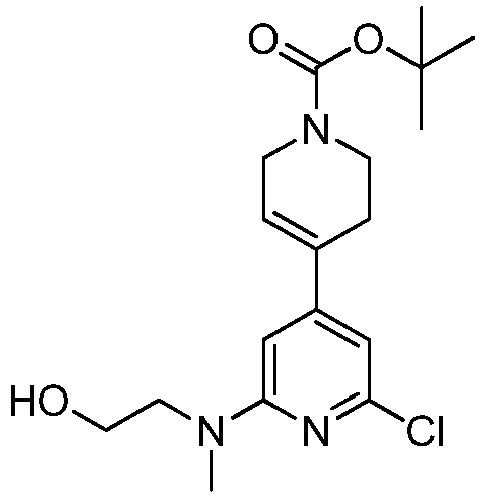
- A solution of tert-butyl 4-(2,6-dichloro-4-pyridyl)-5,6-dihydro-2H-pyridine-1-carboxylate (395 mg, 1.20 mmol) and 2-(methylamino)ethanol (3.5 mL, 44 mmol) in a glass vial was heated in oil bath at 100 °C for 4 h. After cooled, it was diluted with water (50 mL), extracted with EtOAc (2 x 50 mL). The combined EtOAc were dried over Na2SO4, filtered, concentrated in vacuo, and dried under high vacuum to give orange syrup. It was carried on without further purification. LC-MS: m/z = 367 (M+H+).

- To a mixture of tert-butyl 4-(2-chloro-6-(2-hydroxyethyl(methyl)amino)-4-pyridyl)-5,6-dihydro-2H-pyridine-1-carbo xylate (220 mg, 0.60 mmol), 4-methylpyridin-2-amine (71.13 mg, 0.66 mmol), sodium tert-butoxide (86.2 mg, 0.90 mmol), 2-dicyclohexylphosphino-2',6'-diisopropoxybiphenyl (34.9 mg, 0.075 mmol), and RuPhos palladium(II) phenethylamine chloride (43.6 mg, 0.06 mmol) in 1,4-dioxane (3.0 mL) was capped in a small CEM microwave vial, de-gassed with N2, and heated in microwave at 120 °C for 15 min. It was concentrated onto Celite, purified by column chromatography (ISCO), 12 g column, eluded with 0-5% MeOH/DCM to give 135 mg (51%) of the title compound as a yellow gum. LC-MS: m/z = 440 (M+H+).

- tert-butyl 4-(2-((2-hydroxyethyl)(methyl)amino)-6-(4-methylpyridin-2-ylamino)pyridin-4-yl)-5,6-dih ydropyridine-1(2H)-carboxylate (130 mg, 0.29 mmol) was dissolved in MeOH (50 mL). The resulting solution was hydrogenated in H-Cube hydrogenation reactor, with 10% Pd/C cartridge under 40 bar, eluded 1 mL/min at 30 0C for two times. The resulting mixture was again hydrogenated under 50 bar, 1 mL/min at 30 0C for three times. The solution was concentrated in vacuo to give 100 mg (76%) of the title compound as a clear yellow gum. It was carried on as is. 1H NMR (400 MHz, CDCl3) δ 8.09 (d, J = 5.2 Hz, 1H), 7.35 (s, 1H), 6.96 (s, 1H), 6.65 (d, J = 5.2 Hz, 1H), 6.61 (s, 1H), 5.92 (s, 1H), 4.30 (d, J = 53.7 Hz, 2H), 3.87 (t, J = 5.0 Hz, 2H), 3.75 (t, J = 5.0 Hz, 2H), 3.07 (s, 3H), 2.78 (t, J = 12.6 Hz, 2H), 2.59 - 2.51 (m, 1H), 2.31 (s, 3H), 1.82 (d, J = 12.7 Hz, 2H), 1.70 - 1.56 (m, 2H), 1.49 (s, 9H). LC-MS: m/z = 442 (M+H+).
- To a solution of tert-butyl 4-(2-((2-hydroxyethyl)(methyl)amino)-6-(4-methylpyridin-2-ylamino)pyridin-4-yl)piperidi ne-1-carboxylate (100 mg, 0.22 mmol) in DCM (1.0 mL) was added hydrogen chloride (4 mol/L) in 1,4-dioxane (3.0 mL, 12 mmol). The resultant was stirred at room temperature for 3 h. It was purified by HPLC to give 37 mg (48%) of the title compound as a light yellow solid. 1H NMR (400 MHz, DMSO) δ 9.00 (s, 1H), 8.02 (d, J = 5.1 Hz, 1H), 7.95 (s, 1H), 6.64 (d, J = 5.1 Hz, 1H), 6.42 (s, 1H), 5.90 (s, 1H), 4.64 (s, 1H), 3.64 - 3.53 (m, 4H), 3.05 - 2.95 (m, 5H), 2.58 - 2.52 (m, 1H), 2.50 - 2.31 (m, 3H), 2.25 (s, 3H), 1.69 - 1.58 (m, 2H), 1.55 - 1.40 (m, 2H). LC-MS: m/z = 342 (M+H+).

-

- A solution of 3,3-difluoropyridine hydrochloride (533 mg, 3.72 mmol, 3.18 equiv), tert-butyl 4-(2,6-dichloropyridin-4-yl)piperidine-1-carboxylate (1.00 g, 1.17 mmol, 1 equiv), and N,N-diisopropylethylamine (1.23 mL, 7.03 mmol, 6.00 equiv) in N-methylpyrrolidinone (2.3 mL) was heated at 130 °C in the microwave (CEM) for 1.5 h. The reaction mixture was diluted with ethyl acetate (50 mL), and the resulting solution was washed with saturated aqueous ammonium chloride solution (2 x 20 mL). The aqueous washes were extracted with ethyl acetate (25 mL). The combined organic was washed with water (25 mL), dried over anhydrous sodium sulfate, filtered, and concentrated. Purification by flash column chromatography (4:1 heptane / ethyl acetate) provided product as a clear oil (220 mg, 47% yield). 1H NMR (400 MHz, CDCl3), □: 6.51 (s, 1 H), 6.03 (s, 1 H), 4.25 (m, 2 H), 3.83 (t, J = 13.1 Hz, 2 H), 3.67 (t, J = 7.3 Hz, 2 H), 2.77 (m, 2 H), 2.42-2.58 (m, 3 H), 1.78 (m, 2 H), 1.53-1.62 (m, 2 H), 1.48 (s, 9 H).

- To an ice-cooled solution of tert-butyl 4-(2-chloro-6-(3,3-difluoropyrrolidin-1-yl)pyridin-4-yl)piperidine-1-carboxylate (0.220 g, 0.547 mmol, 1 equiv) in dichloromethane (2 mL) was added trifluoroacetic acid (2 mL). After 2 h, the reaction mixture was concentrated in vacuo (25 mm Hg). The resulting residue was dissolved in dichloromethane (10 mL), and the solution was washed with saturated aqueous sodium bicarbonate solution (5 mL). The organic layer was dried over anhydrous sodium sulfate, filtered, and concentrated. The resulting residue was dissolved in tetrahydrofuran (2 mL). Oxetan-3-one (0.112 mL, 1.10 mmol, 2.00 equiv) and sodium triaetoxyborohydride (366 mg, 1.64 mmol, 3.00 equiv) were sequentially added to the solution at 24 °C. After 35 min, the reaction mixture was partitioned between ethyl acetate (10 mL) and saturated aqueous ammonium chloride solution (10 mL). The organic was separated and the aqueous layer was further extracted with ethyl acetate (2 x 5 mL). The combined organic was dried over anhydrous sodium sulfate, filtered, and concentrated. Purification by flash column chromatography (98:2 dichloromethane / methanol + 0.1% ammonium hydroxide) furnished product as a clear oil (166 mg, 85% yield). 1H NMR (CDCl3, 400 MHz), δ: 6.54 (s, 1 H), 6.07 (s, 1 H), 4.67 (t, J = 6.3 Hz, 2 H), 4.63 (t, J = 6.3 Hz, 2 H), 3.82 (t, J = 13.2 Hz, 2 H), 3.66 (t, J = 7.2 Hz, 2 H), 3.50 (m, 1 H), 2.86 (m, 2 H), 2.38-2.52 (m, 3 H), 1.72-1.94 (m, 6 H).
- To a 50-mL recovery flask charged with 2-chloro-6-(3,3-difluoropyrrolidin-1-yl)-4-(1-(oxetan-3-yl)piperidin-4-yl)pyridine (216 mg, 0.603 mmol, 1 equiv), 2-amino-4-cyanopyridine (122 mg, 1.03 mmol, 1.70 equiv), cesium carbonate (399 mg, 1.22 mmol, 2.03 equiv) in 1,4-dioxane was added tris(dibenzylideneacetone)dipalladium(0) (28 mg, 0.031 mmol, 0.051 equiv). The reaction flask was fitted with a microreflux condenser, and the reaction mixture was heated at reflux under nitrogen for 13 h. After cooling to room temperature, the reaction mixture was diluted with ethyl acetate (20 mL) and washed with water (10 mL). The organic was separated and the aqueous wash was further extracted with ethyl acetate (2 x 10 mL). The combined organic was dried over anhydrous sodium sulfate, filtered, and concentrated. Purification by flash column chromatography (3% methanol in dichloromethane + 0.1% ammonium hydroxide) provided product as a yellow solid (205 mg (77% yield). 1H NMR (400 MHz, DMSO-d6 ), δ: 9.72 (s, 1 H), 8.46 (s, 1 H), 8.41 (d, J = 5.0 Hz, 1 H), 7.20 (dd, J = 5.1, 1.2 Hz, 1 H), 6.60 (s, 1 H), 6.00 (s, 1 H), 4.54 (t, J = 6.4 Hz, 2 H), 4.44 (t, J = 6.0 Hz, 2 H), 3.85 (t, J = 13.2 Hz, 2 H), 3.65 (t, J = 7.2 Hz, 2 H), 3.40 (m, 1 H), 2.80 (m, 2 H), 2.56 (m, 2 H), 2.39 (m, 1 H), 1.84 (m, 2 H), 1.61-1.76 (m, 4 H). m/z (ESI-pos) M+1 = 441
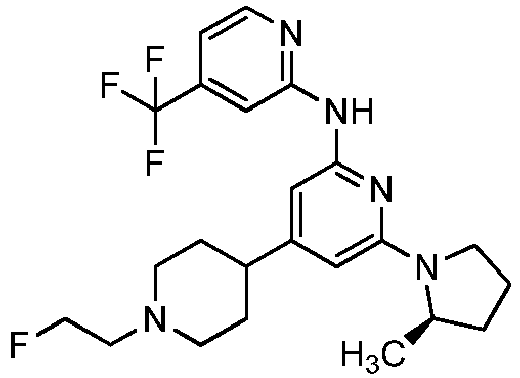
- To a mixture of 6-[(2R)-2-methylpyrrolidin-1-yl]-4-(4-piperidyl)-N-[4-(trifluoromethyl)-2-pyridyl] yridine -2-amine hydrochloride (90 mg, 0.203 mmol) and DIPEA (0.143 mL, 0.814 mmol, 4.0 equiv) in DMF (1.0 mL) was added 1-bromo-2-fluoroethane (0.022 mL, 0.305 mmol, 1.5 equiv), stirred @ rt o/n. More 1-bromo-2-fluoroethane (0.044 mL, 0.610 mmol, 3 equiv) and DIPEA (0.286 mL, 1.628 mmol, 8 equiv) were added, stirred at rt for another 48 h. It was purified by HPLC to afford 41.2 mg (44.8%) of product as off-white powder. 1H NMR (400 MHz, DMSO) δ 9.69 (s, 1H), 8.81 (s, 1H), 8.41 (d, J = 5.1 Hz, 1H), 7.10 (d, J = 5.1 Hz, 1H), 6.32 (s, 1H), 5.84 (s, 1H), 4.60 (t, J = 4.9 Hz, 1H), 4.48 (t, J = 4.9 Hz, 1H), 4.21 - 4.12 (m, 1H), 3.47 (t, J = 8.7 Hz, 1H), 3.28 - 3.23 (m, 1H), 2.98 (d, J = 11.5 Hz, 2H), 2.66 (t, J = 4.9 Hz, 1H), 2.59 (t, J = 5.0 Hz, 1H), 2.37 - 2.26 (m, 1H), 2.14 - 1.90 (m, 5H), 1.76 - 1.57 (m, 5H), 1.17 (d, J = 6.2 Hz, 3H). LC-MS: m/z = 452 (M+H+).

-

- To a mixture of 2,6-dichloro-4-iodo-pyridine (500 mg, 1.826 mmol), tert-butyl 3-(4,4,5,5-tetramethyl-1,3,2-dioxaborolan-2-yl)-2,5-dihydropyrrole-1-carboxylate (646.7 mg, 2.191 mmol, 1.2 equiv.), potassium carbonate (510 mg, 3.651 mmol, 2 equiv.), and PD(dppf)Cl2 DCM (223.6 mg, 0.274 mmol, 0.15 equiv.) in 1,4-dioxane (6 mL) and water (2 mL) was capped in a large CEM vial, de-gassed with N2, heated in oil bath @ 65 0C o/n. It was diluted with water, extracted with EtOAc (2 x 50 mL), dried over Na2SO4, filtered, concentrated in vacuo. Purification by column chromatography (ISCO), 40 g column, eluded with 0-10% EtOAc/Heptane to afford 304 mg (52.8%) of product as white foam. 1H NMR (400 MHz, CDCl3) δ 7.42 (s, 0.5H), 7.22 (s, 0.5H), 7.04 (s, 2H), 3.93 (s, 2H), 2.90 (s, 2H), 1.53 (s, 9H). LC-MS: m/z = 316 (M+H+).

- A mixture of tert-butyl 3-(2,6-dichloro-4-pyridyl)-2,5-dihydropyrrole-1-carboxylate (126 mg, 0.399 mmol) and 5% Rh/C (20 mg) in absolute alcohol (12 mL) was purged with N2, then primed with H2 (balloon)/vacuum (3x), stirred under H2 balloon for o/n. It was purged with N2, filtered through Celite, washed the Celite with MeOH, concentrated in vacuo gave 121 mg (95.4%) of product as clear gum. It was carried on without further purification. LC-MS: m/z = 318 (M+H+).
- The title compound was prepared by the general procedures as described in Example 4.1H NMR (400 MHz, DMSO) δ 9.74 (s, 1H), 8.79 (s, 1H), 8.42 (d, J = 5.1 Hz, 1H), 7.11 (d, J = 5.2 Hz, 1H), 6.38 (s, 1H), 5.91 (s, 1H), 4.22-4.13 (m, 1H), 3.68 (t, J = 8.5 Hz, 1H), 3.53 - 3.42 (m, 2H), 3.38 - 3.31 (m, 1H), 3.28 - 3.24 (m, 1H), 3.20 - 3.12 (m, 1H), 2.96 (s, 3H), 2.31 - 2.21 (m, 1H), 2.12 - 1.88 (m, 4H), 1.72 - 1.65 (m, 1H), 1.18 (d, J = 6.2 Hz, 3H). LC-MS: m/z = 470 (M+H+).

- To a mixture of 1-methylimidazole-4-carboxylic acid (39.79 mg, 0.315 mmol, 1.5 equiv.), HOBT (57.42 mg, 0.420 mmol, 2.0 equiv.), and 1-(3-dimethylaminopropyl)-3-ethylcarbodiimide hydrochloride (81.46 mg; 0.420 mmol, 2.0 equiv.) in chloroform (3.0 mL) was added 6-[(2R)-2-methylpyrrolidin-1-yl]-4-pyrrolidin-3-yl-N-[4-(trifluoromethyl)-2-pyridyl]pyridin -2-amine hydrochloride (90 mg, 0.210 mmol) followed by DIPEA (0.148 mL, 0.841 mmol, 4.0 equiv.). The resulting mixture was stirred at rt for 2 h. It was diluted with DCM (10 mL), washed with 10% citric acid and 1 N NaHCO3, dried over Na2SO4, filtered, concentrated in vacuo, and purified by HPLC to afford 16.1 mg (15.3%) of product as yellow solid. 1H NMR (400 MHz, DMSO) δ 9.74 (s, 1H), 8.80 (s, 1H), 8.41 (d, J = 5.1 Hz, 1H), 7.68 - 7.60 (m, 2H), 7.10 (d, J = 5.1 Hz, 1H), 6.39 (s, 1H), 5.90 (s, 1H), 4.48 - 4.09 (m, 3H), 3.94 - 3.73 (m, 2H), 3.69 (d, J = 5.2 Hz, 3H), 3.56 - 3.43 (m, 2H), 3.25 - 3.18 (m, 1H), 2.31 - 2.13 (m, 1H), 2.12 - 1.86 (m, 4H), 1.73 - 1.63 (m, 1H), 1.17 (d, J = 6.0 Hz, 3H). LC-MS: m/z = 500 (M+H+).

-

- The title compound was prepared by the general procedures as described in the synthesis of [4-(1-Methanesulfonyl-pyrrolidin-3-yl)-6-(2-methyl-pyrrolidin-1-yl)-pyridin-2-yl]-(4-trifluo romethyl-pyridin-2-yl)-amine. LC-MS: m/z = 349 (M+H+).
- To a solution of 2-[[6-[(2R)-2-methylpyrrolidin-1-yl]-4-pyrrolidin-3-yl-2-pyridyl]amino]pyridine-4-carbonit rile hydrochloride (160 mg, 0.415 mmol) in methanol (3.0 mL) was added tetrahydropyran-4-carbaldehyde (0.086 mL, 0.831 mmol, 2.0 equiv.). It was heated @ 50 °C overnight. After cooling to room temperature, sodium triacetoxyborohydride (278.2 mg, 1.247 mmol, 3.0 equiv.) was added in portions. After 3 h, more sodium triacetoxyborohydride (278.2 mg, 1.247 mmol, 3.0 equiv.) was added, stirred @ rt for another o/n. It was quenched with IN NaHCO3, extracted with EtOAc (2 x 20 mL), dried over Na2SO4, filtered, concentrated in vacuo, and purified by HPLC to afford 15.5 mg (8.3%) of product as yellow gum. LC-MS: m/z = 447 (M+H+).
- The following examples were prepared according to the methods described in Example 5:
Structure 1H NMR MS (m/z) 
1H NMR (400 MHz, CDCl3) δ 8.38 (d, J = 5.1 Hz, 1H), 7.53 (s, 1H), 7.46 (s, 1H), 7.34 (br s, 1H), 7.00 (d, J = 5.1 Hz, 1H), 6.80 (s, 1H), 6.61 (t, J = 55.8 Hz, 1H), 4.72 - 4.60 (m, 4H), 3.57 - 3.46 (m, 1H), 2.94 - 2.81 (m, 2H), 2.58 - 2.41 (m, 1H), 2.00 - 1.75 (m, 6H); 395 6-chloro-N-(4-(difluoromethyl)pyridin-2-yl)-4-(1-(oxetan-3-yl)piperidin-4-yl)p yridin-2-amine 
1H NMR (400 MHz, DMSO) δ 9.71 (br s, 1H), 8.64 (s, 1H), 8.39 (d, J = 5.1 Hz, 1H), 7.17 (d, J = 5.1 Hz, 1H), 6.44 (s, 1H), 5.90 (s, 1H), 4.58 - 4.49 (m, 2H), 4.49 - 4.41 (m, 2H), 4.13 - 4.05 (m, 1H), 3.59 - 3.40 (m, 5H), 3.29 (s, 3H), 2.84 - 2.75 (m, 2H), 2.42 - 2.29 (m, 1H), 2.13 - 2.05 (m, 2H), 1.88 - 435 2-((6-(3-methoxypyrrolidin-1-yl)-4-(1-( oxetan-3-yl)piperidin-4-yl)pyridin-2-yl) amino)isonicotinonitrile 1.79 (m, 2H), 1.78 - 1.56 (m, 4H); 
1H NMR (400 MHz, DMSO) δ 9.86 (br s, 1H), 8.42 (d, J = 5.1 Hz, 1H), 8.25 (s, 1H), 7.20 (d, J = 5.1 Hz, 1H), 6.87 (s, 1H), 6.05 (s, 1H), 4.58 - 4.50 (m, 2H), 4.47 - 4.33 (m, 6H), 3.45 - 3.35 (m, 1H), 2.84 - 2.75 (m, 2H), 2.46 - 2.36 (m, 1H), 1.89 - 1.79 (m, 2H), 1.79 - 1.59 (m, 4H); 427 2-((6-(3,3-difluoroazetidin-1-yl)-4-(1-(o xetan-3-yl)piperidin-4-yl)pyridin-2-yl)a mino)isonicotinonitrile 
1H NMR (400 MHz, DMSO) δ 9.70 (br s, 1H), 8.44 (s, 1H), 8.40 (d, J = 5.1 Hz, 1H), 7.17 (dd, J = 5.1, 1.3 Hz, 1H), 6.54 (s, 1H), 6.08 (s, 1H), 4.69 - 4.61 (m, 1H), 4.59 - 4.49 (m, 2H), 4.48 - 4.39 (m, 2H), 3.43 - 3.36 (m, 3H), 3.00 - 2.91 (m, 1H), 2.82 - 2.75 (m, 2H), 2.41 - 2.29 (m, 1H), 1.98 - 1.92 (m, 2H), 1.86 - 1.78 (m, 2H), 1.78 - 1.59 (m, 4H), 1.37 - 1.32 (m, 2H); 417 2-((6-(2-azabicyclo[2.1.1]hexan-2-yl)-4 -(1-(oxetan-3-yl)piperidin-4-yl)pyridin-2-yl)amino)isonicotinonitrile 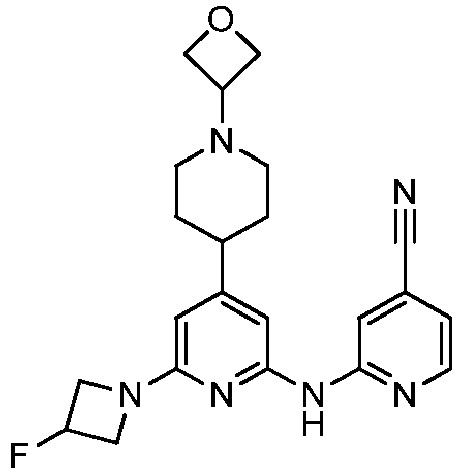
1H NMR (400 MHz, DMSO) δ 9.81 (br s, 1H), 8.44 - 8.36 (m, 2H), 7.19 (d, J = 5.1 Hz, 1H), 6.72 (s, 1H), 5.92 (s, 1H), 5.65 - 5.40 (m, 1H), 4.58 - 4.48 (m, 2H), 4.48 - 4.41 (m, 2H), 4.36 - 4.20 (m, 2H), 4.07 - 3.93 (m, 2H), 3.45 - 3.36 (m, 1H), 2.81 - 2.76 (m, 2H), 409 2-((6-(3-fluoroazetidin-1-yl)-4-(1-(oxet an-3-yl)piperidin-4-yl)pyridin-2-yl)ami no)isonicotinonitrile 2.42 - 2.32 (m, 1H), 1.88 - 1.77 (m, 2H), 1.77 - 1.58 (m, 4H); 
1H NMR (400 MHz, DMSO) δ 9.70 (br s, 1H), 8.58 (s, 1H), 8.39 (d, J = 5.1 Hz, 1H), 7.18 (dd, J = 5.1, 1.2 Hz, 1H), 6.45 (s, 1H), 5.88 (s, 1H), 4.58 - 4.49 (m, 2H), 4.47 - 4.40 (m, 2H), 3.69 - 3.60 (m, 2H), 3.45 - 3.35 (m, 3H), 2.82 - 2.73 (m, 2H), 2.41 - 2.27 (m, 1H), 1.89 - 1.77 (m, 2H), 1.77 - 1.57 (m, 6H), 0.78 - 0.69 (m, 1H), 0.27 - 0.19 (m, 1H); 417 2-((6-(3-azabicyclo[3.1.0]hexan-3-yl)-4 -(1-(oxetan-3-yl)piperidin-4-yl)pyridin-2-yl)amino)isonicotinonitrile 
1H NMR (400 MHz, DMSO) δ 9.77 (br s, 1H), 8.46 (s, 1H), 8.40 (d, J = 5.0 Hz, 1H), 7.18 (dd, J = 5.0, 1.3 Hz, 1H), 6.63 (s, 1H), 5.84 (s, 1H), 4.58 - 4.49 (m, 2H), 4.49 - 4.39 (m, 2H), 3.92 (s, 4H), 3.83 (s, 2H), 3.79 - 3.70 (m, 2H), 3.46 - 3.36 (m, 1H), 2.83 - 2.73 (m, 2H), 2.43 - 2.29 (m, 1H), 2.25 - 2.11 (m, 2H), 1.90 - 1.79 (m, 2H), 1.77 - 1.69 (m, 2H), 1.68 - 1.52 (m, 2H); 447 2-((4-(1-(oxetan-3-yl)piperidin-4-yl)-6-(6-oxa-2-azaspiro[3.4]octan-2-yl)pyridi n-2-yl)amino)isonicotinonitrile 
1H NMR (400 MHz, DMSO) δ 9.80 (br s, 1H), 8.44 - 8.38 (m, 2H), 7.19 (dd, J = 5.0, 1.5 Hz, 1H), 6.69 (s, 1H), 5.91 (s, 1H), 4.59 - 4.49 (m, 2H), 4.49 - 4.38 (m, 2H), 4.21 - 4.11 (m, 2H), 3.93 - 3.83 (m, 2H), 3.44 - 3.34 (m, 1H), 2.83 - 2.74 (m, 2H), 2.59 - 2.51 (m, 2H), 2.43 - 2.28 (m, 1H), 2.14 - 2.02 (m, 2H), 1.88 - 1.78 (m, 2H), 1.78 - 1.69 (m, 2H), 1.69 - 1.52 (m, 2H); 467 2-((6-(5,5-difluoro-2-azaspiro[3.3]hepta n-2-yl)-4-(1-(oxetan-3-yl)piperidin-4-yl )pyridin-2-yl)amino)isonicotinonitrile 
1H NMR (400 MHz, DMSO) δ 9.71 (br s, 1H), 8.64 (s, 1H), 8.39 (d, J = 5.0 Hz, 1H), 7.17 (dd, J = 5.0, 1.4 Hz, 1H), 6.45 (s, 1H), 5.89 (s, 1H), 4.58 - 4.51 (m, 2H), 4.47 - 4.40 (m, 2H), 3.86 - 3.79 (m, 2H), 3.60 (s, 2H), 3.55 - 3.36 (m, 5H), 2.84 - 2.72 (m, 2H), 2.40 - 2.30 (m, 1H), 2.03 - 1.96 (m, 2H), 1.95 - 1.88 (m, 2H), 1.88 - 1.78 (m, 2H), 1.76 - 1.57 (m, 4H); 461 2-((4-(1-(oxetan-3-yl)piperidin-4-yl)-6-(2-oxa-7-azaspiro[4.4]nonan-7-yl)pyrid in-2-yl)amino)isonicotinonitrile 
1H NMR (400 MHz, DMSO) δ 9.77 (br s, 1H), 8.45 (s, 1H), 8.40 (d, J = 5.1 Hz, 1H), 7.18 (d, J = 5.1 , 1H), 6.64 (s, 1H), 5.86 (s, 1H), 4.58 - 4.50 (m, 2H), 4.47 - 4.39 (m, 2H), 4.35 (m, 1H), 4.20 - 4.09 (m, 2H), 3.80 - 3.66 (m, 2H), 3.44 - 3.35 (m, 1H), 3.26 (s, 3H), 2.82 - 2.72 (m, 2H), 2.41 - 2.32 (m, 1H), 1.88 - 1.76 (m, 2H), 1.76 - 421 2-((6-(3-methoxyazetidin-1-yl)-4-(1-(ox etan-3-yl)piperidin-4-yl)pyridin-2-yl)a mino)isonicotinonitrile 1.57 (m, 4H); 
1H NMR (400 MHz, DMSO) δ 9.77 (br s, 1H), 8.47 (s, 1H), 8.41 (d, J = 5.0 Hz, 1H), 7.19 (dd, J = 5.0, 1.4 Hz, 1H), 6.61 (s, 1H), 6.11 (s, 1H), 4.58 - 4.51 (m, 2H), 4.47 - 4.41 (m, 2H), 4.06 - 3.99 (m, 1H), 3.76 - 3.71 (m, 1H), 3.50 - 3.37 (m, 2H), 3.27 - 3.17 (m, 2H), 2.98 - 2.89 (m, 2H), 2.82 - 2.75 (m, 3H), 2.43 - 2.26 (m, 2H), 1.89 - 1.79 (m, 2H), 1.79 - 1.60 (m, 5H); 467 2-((6-(6,6-difluoro-3-azabicyclo[3.2.0]h eptan-3-yl)-4-(1-(oxetan-3-yl)piperidin-4-yl)pyridin-2-yl)amino)isonicotinonitri le 
1H NMR (400 MHz, DMSO) δ 9.77 (br s, 1H), 8.43 (s, 1H), 8.41 (d, J = 5.0 Hz, 1H), 7.19 (dd, J = 5.0,1.4 Hz, 1H), 6.65 (s, 1H), 5.84 (s, 1H), 4.74 (s, 4H), 4.59 - 4.48 (m, 2H), 4.48 - 4.39 (m, 2H), 4.11 (s, 4H), 3.42 - 3.35 (m, 1H), 2.83 - 2.73 (m, 2H), 2.41 - 2.32 (m, 1H), 1.90 - 1.75 (m, 2H), 1.75 - 1.56 (m, 4H); 433 2-((4-(1-(oxetan-3-yl)piperidin-4-yl)-6-(2-oxa-6-azaspiro[3.3]heptan-6-yl)pyrid in-2-yl)amino)isonicotinonitrile 
1H NMR (400 MHz, DMSO) δ 9.75 (br s, 1H), 8.66 (s, 1H), 8.39 (d, J = 5.0 Hz, 1H), 7.17 (dd, J = 5.0, 1.4 Hz, 1H), 6.49 (s, 1H), 6.14 (s, 1H), 4.59 - 4.50 (m, 2H), 4.48 - 4.37 (m, 2H), 3.81 - 3.68 (m, 1H), 3.54 - 3.44 (m, 1H), 3.44 - 3.35 (m, 1H), 3.03 - 2.93 (m, 1H), 417 2-((6-(2-azabicyclo[3.1.0]hexan-2-yl)-4 -(1-(oxetan-3-yl)piperidin-4-yl)pyridin-2-yl)amino)isonicotinonitrile 2.85 - 2.73 (m, 2H), 2.43 - 2.31 (m, 1H), 2.30 - 2.17 (m, 1H), 2.10 - 2.00 (m, 1H), 1.90 - 1.79 (m, 2H), 1.79 - 1.60 (m, 5H), 0.80 - 0.67 (m, 1H), 0.52 - 0.44 (m, 1H); 
1H NMR (400 MHz, DMSO) δ 9.76 (br s, 1H), 8.51 (s, 1H), 8.40 (d, J = 5.1 Hz, 1H), 7.18 (d, J = 5.1 Hz, 1H), 6.59 (s, 1H), 5.80 (s, 1H), 4.57 - 4.49 (m, 2H), 4.49 - 4.40 (m, 2H), 4.00 - 3.92 (m, 4H), 3.43 - 3.35 (m, 1H), 2.82 - 2.73 (m, 2H), 2.40 - 2.27 (m, 3H), 1.88 - 1.78 (m, 2H), 1.77 - 1.68 (m, 2H), 1.68 - 1.51 (m, 2H). 391 2-((6-(azetidin-1-yl)-4-(1-(oxetan-3-yl) piperidin-4-yl)pyridin-2-yl)amino)isoni cotinonitrile 
1H NMR (400 MHz, DMSO) δ 10.38 (br s, 1H), 8.49 (d, J = 5.1 Hz, 1H), 7.94 (s, 1H), 7.63 (s, 1H), 7.30 (d, J = 5.1 Hz, 1H), 6.98 (s, 1H), 4.57 - 4.51 (m, 2H), 4.47 - 4.41 (m, 2H), 3.46 - 3.38 (m, 1H), 2.85 - 2.77 (m, 2H), 1.90 - 1.75 (m, 4H), 1.70 - 1.58 (m, 2H). 370 2-((6-chloro-4-(1-(oxetan-3-yl)piperidin -4-yl)pyridin-2-yl)amino)isonicotinonitr ile 
1H NMR (400 MHz, DMSO) δ 10.04 (br s, 1H), 8.45 (d, J = 5.0 Hz, 1H), 8.37 (s, 1H), 7.80 (s, 1H), 7.26 (dd, J = 5.0, 1.3 Hz, 1H), 7.04 (s, 1H), 4.58 - 4.50 (m, 2H), 4.48 - 4.42 (m, 2H), 4.09 - 4.01 (m, 419 2-((4-(1-(oxetan-3-yl)piperidin-4-yl)-6-(2-oxopyrrolidin-1-yl)pyridin-2-yl)amin o)isonicotinonitrile 2H), 3.45 - 3.37 (m, 1H), 3.20 - 3.12 (m, 1H), 2.84 - 2.74 (m, 2H), 2.62 - 2.55 (m, 2H), 2.13 - 2.00 (m, 2H), 1.92 - 1.83 (m, 2H), 1.82 - 1.70 (m, 2H), 1.69 - 1.59 (m, 2H); 
1H NMR (400 MHz, DMSO) δ 9.45 (br s, 1H), 8.57 (s, 1H), 8.30 (d, J = 5.1 Hz, 1H), 7.15 - 6.82 (m, 2H), 6.34 (s, 1H), 5.81 (s, 1H), 4.58 - 4.50 (m, 2H), 4.49 - 4.40 (m, 2H), 4.24 - 4.12 (m, 1H), 3.52 - 3.44 (m, 1H), 3.44 - 3.35 (m, 1H), 2.82 - 2.74 (m, 2H), 2.38 - 2.27 (m, 1H), 2.11 - 1.56 (m, 11H), 1.18 (d, J = 6.2 Hz, 3H); 444 (R)-N-(4-(difluoromethyl)pyridin-2-yl)-6-(2-methylpyrrolidin-1-yl)-4-(1-(oxeta n-3-yl)piperidin-4-yl)pyridin-2-amine 
1H NMR (400 MHz, DMSO) δ 9.80 (br s, 1H), 8.48 (s, 1H), 8.41 (d, J = 5.1 Hz, 1H), 7.20 (dd, J = 5.1,1.3 Hz, 1H), 6.57 (s, 1H), 6.14 (s, 1H), 5.06 - 4.93 (m, 1H), 4.58 - 4.48 (m, 2H), 4.47 - 4.40 (m, 2H), 3.70 - 3.59 (m, 1H), 3.43 - 3.32 (m, 2H), 2.84 - 2.74 (m, 2H), 2.45 - 2.34 (m, 1H), 2.16 - 2.00 (m, 4H), 1.89 - 1.81 (m, 2H), 1.79 - 1.61 (m, 4H); 473 (R)-2-((4-(1-(oxetan-3-yl)piperidin-4-yl )-6-(2-(trifluoromethyl)pyrrolidin-1-yl) pyridin-2-yl)amino)isonicotinonitrile 
1H NMR (400 MHz, DMSO) δ 9.59 (br s, 1H), 8.44 (s, 1H), 8.32 (d, J = 5.1 Hz, 1H), 7.20-6.87 (m, 2H), 6.53 (s, 1H), 5.95 (s, 1H), 4.58 - 4.50 (m, 2H), 4.48 - 4.40 (m, 2H), 3.90 - 3.78 (m, 2H), 3.66 - 3.60 (m, 2H), 3.44 - 3.36 (m, 1H), 2.83 - 2.75 (m, 2H), 2.61 - 2.51 (m, 2H), 2.43 - 2.30 (m, 1H), 1.88 - 1.78 (m, 2H), 1.77 - 1.60 (m, 4H); 466 N-(4-(difluoromethyl)pyridin-2-yl)-6-(3 ,3-difluoropyrrolidin-1-yl)-4-(1-(oxetan -3-yl)piperidin-4-yl)pyridin-2-amine 
447 2-((6-(2-methylpyrrolidin-1-yl)-4-(1-((t etrahydro-2H-pyran-4-yl)methyl)pyrroli din-3-yl)pyridin-2-yl)amino)isonicotino nitrile 
1H NMR (400 MHz, DMSO) δ 9.74 (s, 1H), 8.77 (s, 1H), 8.39 (d, J = 5.0 Hz, 1H), 7.19 (d, J = 5.0 Hz, 1H), 6.31 (s, 1H), 5.86 (s, 1H), 4.51 (d, J = 13.5 Hz, 1H), 4.24 - 4.15 (m, 1H), 3.91 (d, J = 13.9 Hz, 1H), 3.47 (t, J = 8.1 Hz, 1H), 3.28 - 3.21 (m, 1H), 3.11 (t, J = 12.7 Hz, 1H), 2.65 - 2.52 (m, 2H), 2.12 - 1.92 (m, 6H), 1.81 - 1.66 (m, 3H), 1.61 - 1.49 (m, 1H), 1.47 - 405 (R)-2-((4-(1-acetylpiperidin-4-yl)-6-(2-methylpyrrolidin-1-yl)pyridin-2-yl)ami no)isonicotinonitrile 1.34 (m, 1H), 1.23 (d, J = 6.2 Hz, 3H). 
1H NMR (400 MHz, DMSO) δ 9.75 (s, 1H), 8.77 (s, 1H), 8.40 (d, J = 5.0 Hz, 1H), 7.19 (d, J = 5.0 Hz, 1H), 6.33 (s, 1H), 5.86 (s, 1H), 4.54 (t, J = 6.4 Hz, 2H), 4.44 (t, J = 6.1 Hz, 2H), 4.24 - 4.14 (m, 1H), 3.48 (t, J = 8.2 Hz, 1H), 3.43 - 3.35 (m, 1H), 3.28 - 3.20 (m, 1H), 2.78 (d, J = 10.8 Hz, 2H), 2.39 - 2.30 (m, 1H), 2.13 - 1.92 (m, 3H), 1.82 (t, J = 11.0 Hz, 2H), 1.77 - 1.58 (m, 5H), 1.24 (d, J = 6.2 Hz, 3H). 419 (R)-2-((6-(2-methylpyrrolidin-1-yl)-4-( 1-(oxetan-3-yl)piperidin-4-yl)pyridin-2-yl)amino)isonicotinonitrile 
1H NMR (400 MHz, DMSO) δ 9.83 (s, 1H), 8.47 (s, 1H), 8.42 (d, J = 5.0 Hz, 1H), 7.21 (d, J = 5.1 Hz, 1H), 6.60 (s, 1H), 6.00 (s, 1H), 4.54 (t, J = 6.4 Hz, 2H), 4.44 (t, J = 6.1 Hz, 2H), 3.86 (t, J = 13.2 Hz, 2H), 3.65 (t, J = 7.2 Hz, 2H), 3.46 - 3.38 (m, 1H), 2.79 (d, J = 10.9 Hz, 2H), 2.63 - 2.51 (m, 2H), 2.43 - 2.31 (m, 1H), 1.83 (t, J = 10.9 Hz, 2H), 1.78 - 1.59 (m, 4H). 441 2-((6-(3,3-difluoropyrrolidin-1-yl)-4-(1-(oxetan-3-yl)piperidin-4-yl)pyridin-2-yl )amino)isonicotinonitrile 
1H NMR (400 MHz, DMSO) δ 9.74 (s, 1H), 8.79 (s, 1H), 8.42 (d, J = 5.1 Hz, 1H), 7.11 (d, J = 5.2 Hz, 1H), 6.38 (s, 1H), 5.91 (s, 1H), 4.22 - 4.13 (m, 1H), 3.68 (t, J = 8.5 Hz, 1H), 3.53 - 3.42 (m, 2H), 3.38 - 3.31 (m, 1H), 3.28 - 3.24 (m, 1H), 3.20 - 3.12 (m, 1H), 2.96 (s, 3H), 2.31 - 2.21 (m, 1H), 2.12 - 1.88 (m, 4H), 1.72 - 1.65 (m, 1H), 1.18 (d, J = 6.2 Hz, 3H). 470 6-(2-methylpyrrolidin-1-yl)-4-(1-(meth ylsulfonyl)pyrrolidin-3-yl)-N-(4-(trifluo romethyl)pyridin-2-yl)pyridin-2-amine 
1H NMR (400 MHz, DMSO) δ 9.74 (s, 1H), 8.80 (s, 1H), 8.41 (d, J = 5.1 Hz, 1H), 7.68 - 7.60 (m, 2H), 7.10 (d, J = 5.1 Hz, 1H), 6.39 (s, 1H), 5.90 (s, 1H), 4.48 - 4.09 (m, 3H), 3.94 - 3.73 (m, 2H), 3.69 (d, J = 5.2 Hz, 3H), 3.56 - 3.43 (m, 2H), 3.25 - 3.18 (m, 1H), 2.31-2.13 (m, 1H), 2.12 - 1.86 (m, 4H), 1.73 - 1.63 (m, 1H), 1.17 (d, J = 6.0 Hz, 3H). 500 (1-methyl-1H-imidazol-4-yl)(3-(2-(2-m ethylpyrrolidin-1-yl)-6-((4-(trifluoromet hyl)pyridin-2-yl)amino)pyridin-4-yl)pyr rolidin-1-yl)methanone 
1H NMR (400 MHz, DMSO) δ 9.00 (s, 1H), 8.14 (s, 1H), 8.02 (d, J = 5.1 Hz, 1H), 6.65 (d, J = 5.1 Hz, 1H), 6.37 (s, 1H), 5.76 (s, 1H), 4.54 (t, J = 6.5 Hz, 2H), 4.44 (t, J = 6.1 Hz, 2H), 4.23 - 4.15 (m, 1H), 3.47 (t, J = 8.5 Hz, 1H), 3.42 - 3.34 (m, 1H), 3.27 - 3.21 (m, 1H), 2.78 (d, J = 11.1 Hz, 2H), 2.37 - 2.27 (m, 1H), 2.25 (s, 3H), 2.10 - 408 (R)-N-(4-methylpyridin-2-yl)-6-(2-meth ylpyrrolidin-1-yl)-4-(1-(oxetan-3-yl)pip eridin-4-yl)pyridin-2-amine 1.91 (m, 3H), 1.83 (t, J = 10.7 Hz, 2H), 1.76 - 1.59 (m, 5H), 1.22 (d, J = 6.2 Hz, 3H). 
1H NMR (400 MHz, DMSO) δ 9.02 (s, 1H), 8.14 (s, 1H), 8.02 (d, J = 5.1 Hz, 1H), 6.65 (d, J = 5.1 Hz, 1H), 6.39 (s, 1H), 5.77 (s, 1H), 4.24 - 4.15 (m, 1H), 3.66 (d, J = 11.8 Hz, 2H), 3.47 (t, J = 8.5 Hz, 1H), 3.28 - 3.22 (m, 1H), 2.88 (s, 3H), 2.79 (t, J = 11.2 Hz, 2H), 2.48 - 2.41 (m, 1H), 2.25 (s, 3H), 2.09 - 1.91 (m, 3H), 1.85 (d, J = 12.1 Hz, 2H), 1.71- 1.58 (m, 3H), 1.22 (d, J = 6.2 Hz, 3H). 430 (R)-N-(4-methylpyridin-2-yl)-6-(2-meth ylpyrrolidin-1-yl)-4-(1-(methylsulfonyl) piperidin-4-yl)pyridin-2-amine 
1H NMR (400 MHz, DMSO) δ 9.69 (s, 1H), 8.81 (s, 1H), 8.41 (d, J = 5.1 Hz, 1H), 7.10 (d, J = 5.1 Hz, 1H), 6.32 (s, 1H), 5.84 (s, 1H), 4.60 (t, J = 4.9 Hz, 1H), 4.48 (t, J = 4.9 Hz, 1H), 4.21 - 4.12 (m, 1H), 3.47 (t, J = 8.7 Hz, 1H), 3.28 - 3.23 (m, 1H), 2.98 (d, J = 11.5 Hz, 2H), 2.66 (t, J = 4.9 Hz, 1H), 2.59 (t, J = 5.0 Hz, 1H), 2.37 - 2.26 (m, 1H), 2.14 - 1.90 (m, 5H), 1.76 - 1.57 (m, 5H), 1.17 (d, J = 6.2 Hz, 3H). 452 (R)-4-(1-(2-fluoroethyl)piperidin-4-yl)-6-(2-methylpyrrolidin-1-yl)-N-(4-(triflu oromethyl)pyridin-2-yl)pyridin-2-amine 
1H NMR (400 MHz, DMSO) δ 9.72 (s, 1H), 8.80 (s, 1H), 8.42 (d, J = 5.1 Hz, 1H), 7.10 (d, J = 5.1 Hz, 1H), 6.33 (s, 1H), 5.86 (s, 1H), 4.22 - 4.13 (m, 1H), 3.67 (d, J = 11.8 Hz, 2H), 3.48 (t, J = 8.8 Hz, 1H), 3.29 - 3.23 (m, 1H), 2.89 (s, 3H), 2.80 (t, J = 11.2 Hz, 2H), 2.10 - 1.91 (m, 3H), 1.86 (d, J = 12.2 Hz, 2H), 1.73 - 1.59 (m, 3H), 1.17 (d, J = 6.2 Hz, 3H). 484 (R)-6-(2-methylpyrrolidin-1-yl)-4-(1-(m ethylsulfonyl)piperidin-4-yl)-N-(4-(trifl uoromethyl)pyridin-2-yl)pyridin-2-amin e 
1H NMR (400 MHz, DMSO) δ 9.70 (s, 1H), 8.81 (s, 1H), 8.42 (t, J = 4.8 Hz, 1H), 7.10 (dd, J = 5.1, 1.6 Hz, 1H), 6.31 (s, 1H), 5.83 (s, 1H), 4.39 (s, 1H), 4.20 - 4.12 (m, 1H), 3.52 (t, J = 6.3 Hz, 2H), 3.50 - 3.44 (m, 1H), 3.30 - 3.21 (m, 1H), 3.03 - 2.95 (m, 2H), 2.45 (t, J = 6.3 Hz, 2H), 2.39 - 2.28 (m, 1H), 2.14 - 1.90 (m, 5H), 1.75 - 1.59 (m, 5H), 1.17 (d, J = 6.3 Hz, 3H). 450 (R)-2-(4-(2-(2-methylpyrrolidin-1-yl)-6 -((4-(trifluoromethyl)pyridin-2-yl)amin o)pyridin-4-yl)piperidin-1-yl)ethanol 
1H NMR (400 MHz, DMSO) δ 9.69 (s, 1H), 8.80 (s, 1H), 8.41 (d, J = 5.1 Hz, 1H), 7.10 (d, J = 5.1 Hz, 1H), 6.30 (s, 1H), 5.85 (s, 1H), 4.51 (d, J = 13.5 Hz, 1H), 4.21 - 4.11 (m, 1H), 3.91 (d, J = 13.6 Hz, 1H), 3.51 - 3.43 (m, 1H), 3.25 (d, J = 8.8 Hz, 1H), 3.11 (t, J = 12.6 Hz, 1H), 2.65 - 2.52 (m, 2H), 2.12 - 1.91 (m, 6H), 1.82 - 1.62 (m, 448 (R)-1-(4-(2-(2-methylpyrrolidin-1-yl)-6 -((4-(trifluoromethyl)pyridin-2-yl)amin o)pyridin-4-yl)piperidin-1-yl)ethanone 3H), 1.62 - 1.48 (m, 1H), 1.49 - 1.34 (m, 1H), 1.17 (d, J = 6.2 Hz, 3H). 
1H NMR (400 MHz, DMSO) δ 8.93 (s, 1H), 7.97 (d, J = 5.3 Hz, 1H), 7.96 (s, 1H), 6.52 (d, J = 5.2 Hz, 1H), 6.37 (s, 1H), 5.76 (s, 1H), 4.51 (d, J = 12.9 Hz, 1H), 4.22 - 4.11 (m, 1H), 3.90 (d, J = 13.4 Hz, 1H), 3.48 (t, J = 8.1 Hz, 1H), 3.10 (t, J = 12.4 Hz, 1H), 2.63 - 2.52 (m, 2H), 2.07 - 2.00 (m, 5H), 1.98 - 1.90 (m, 1H), 1.87 - 1.62 (m, 4H), 1.61 - 1.47 (m, 1H), 1.47 - 1.33 (m, 1H), 1.20 (d, J = 6.2 Hz, 3H), 1.02 (dd, J = 8.2, 2.3 Hz, 2H), 0.74 (dd, J = 4.8, 1.7 Hz, 2H). 420 (R)-1-(4-(2-((4-cyclopropylpyridin-2-yl )amino)-6-(2-methylpyrrolidin-1-yl)pyri din-4-yl)piperidin-1-yl)ethanone 
1H NMR (400 MHz, DMSO) δ 9.82 (s, 1H), 8.67 (s, 1H), 8.43 (d, J = 5.1 Hz, 1H), 7.13 (d, J = 5.2 Hz, 1H), 6.50 (s, 1H), 5.98 (s, 1H), 4.52 (d, J = 13.2 Hz, 1H), 3.91 (d, J = 13.5 Hz, 1H), 3.83 (t, J = 13.3 Hz, 2H), 3.63 (t, J = 7.2 Hz, 2H), 3.12 (t, J = 12.2 Hz, 1H), 2.69 - 2.53 (m, 3H), 2.03 (s, 3H), 1.77 (t, J = 13.8 Hz, 2H), 1.64 - 1.51 (m, 1H), 1.50 - 1.33 (m, 2H). 470 1-(4-(2-(3,3-difluoropyrrolidin-1-yl)-6-( (4-(trifluoromethyl)pyridin-2-yl)amino) pyridin-4-yl)piperidin-1-yl)ethanone 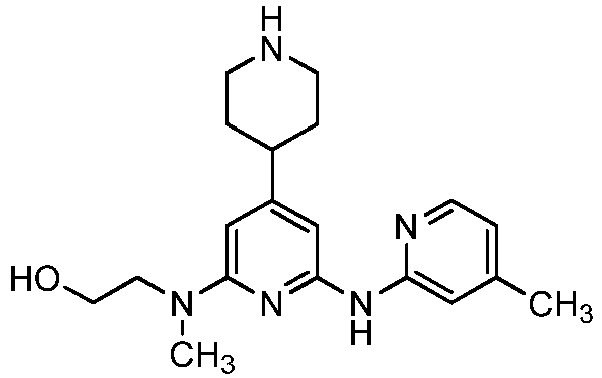
1H NMR (400 MHz, DMSO) δ 9.00 (s, 1H), 8.02 (d, J = 5.1 Hz, 1H), 7.95 (s, 1H), 6.64 (d, J = 5.1 Hz, 1H), 6.42 (s, 1H), 5.90 (s, 1H), 4.64 (s, 1H), 3.64 - 3.53 (m, 4H), 3.05 - 2.95 (m, 5H), 2.58 - 2.52 (m, 1H), 2.50 - 2.31 (m, 3H), 2.25 (s, 3H), 1.69 - 1.58 (m, 2H), 1.55 - 1.40 (m, 2H). 342 2-(methyl(6-((4-methylpyridin-2-yl)ami no)-4-(piperidin-4-yl)pyridin-2-yl)amin o)ethanol -
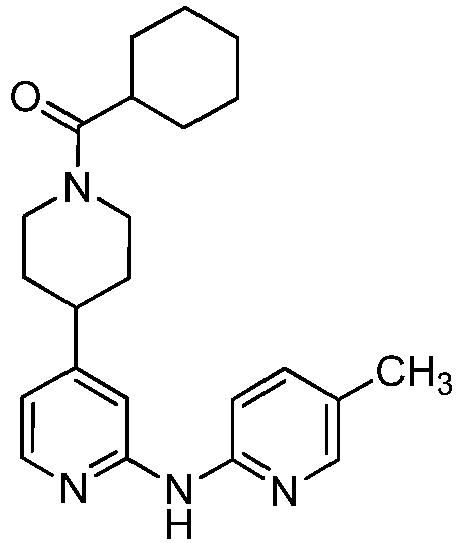
-

- A solution of piperidine-1,4-dicarboxylic acid 1-tert-butylester 4-ethyl ester (200 g, 0.78 mol, 1 equiv.) in dry tetrahydrofuran (350 mL) was added a 1M solution of sodium bis(trimethylsilyl)amide (1010 mL, 1.01 mol, 1.3equiv.) drop-wise at 0°C under nitrogen atmosphere. The reaction mixture was stirred for 1.5 h at 0°C and added to a solution of 2-chloro-4-iodopyridine (199.2 g, 0.83 mol) in dry tetrahydrofuran (350 mL) at 0°C under nitrogen atmosphere. The reaction mixture was kept at 0°C for 3 hours, and was monitored by TLC (ethyl acetate/petroleum ether; 1/5). A solution of ammounium chloride (34.8 g) in water (260 mL) was added cautiously. The formed two layers were separated in a separation funnel. The organic layer was extracted, dried over anhydrous sodium sulfate and concentrated. The resulting dark oil was purified by flash chromatography on silica gel to obtain the oil 1-tert-butyl 4-ethyl 4-(2-chloropyridin-4-yl)piperidine-1,4-dicarboxylate (90g, 32% yield).

- To a mixture of the compound 1-tert-butyl 4-ethyl 4-(2-chloropyridin-4-yl)piperidine-1,4-dicarboxylate (50g, 0.14mols, 1 equiv.) in ethanol (75mL) was added 500mL of a 10% solution of NaOH. The mixture was refluxed for 2 h. The reaction was monitored by TLC (ethyl acetate/petroleum ether; 1/5), cooled, concentrated to a half of the primary volume and extracted with methyltertiarybutyl ether (3 x 150mL). The aqueous layer was acidified with 3M hydrochloric acid to pH = 4 and extracted with dichloromethane (2 x 350mL). The combined organic layers were dried over anhydrous sodium sulfate. The organic was concentrated to give crude product 1-(tert-butoxycarbonyl)-4-(2-chloropyridin-4-yl)piperidine-4-carboxylic acid (42g, 91% crude). The crude was used as is in Step C.

- The pure compound 1-(tert-butoxycarbonyl)-4-(2-chloropyridin-4-yl)piperidine-4-carboxylic acid (42g, 0.12mols, 1 equiv.) from Step B was dissolved in toluene (250mL) and heated at 110° for 4 hours. The reaction was monitored by TLC (ethyl acetate/petroleum ether; 1/5). Once complete, the mixture was concentrated and purified by flash chromatography using silica gel (ethyl acetate/petroleum ether; 1/20) to give tert-butyl 4-(2-chloropyridin-4-yl)piperidine-1-carboxylate (31g, 87%)

- To a stirred solution of tert-butyl 4-(2-chloropyridin-4-yl)piperidine-1-carboxylate (24g, 0.08mol, 1 equiv) in ammonia (250mL) was added copper(I) oxide (5g, 0.03mols, 0.4 equiv.) and stirred 10h at 200 °C under 2.2MPa of ammonia. The reaction was monitored by LC-MS to completion. The mixture was cooled, extracted with dichloromethane (5x250mL), dried over Na2SO4, then concentrated to obtain compound 4-(piperidin-4-yl)pyridin-2-amine (8.5g, 36%).

- To a solution of compound 4-(piperidin-4-yl)pyridin-2-amine (8.5g, 0.05mols, 1 equiv.) in terahydrofuran (100mL) was added triethylamine (5g, 0.05mols, 1 equiv.)) and di-tert-butyl dicarbonate (5.3g, 0.025mols, 0.5equiv.)). The mixture was stirred at r.t. for 1h The reaction was monitored to completion by TLC (dichloromethane/methanol; 10/1), concentrated and purified by flash chromatography using silica gel (ethyl acetate/dichloromethane; 10/1) to obtained tert-butyl 4-(2-aminopyridin-4-yl)piperidine-1-carboxylate (5.2g, 38% yield).
- To a 20ml screw cap vial was charged 2-bromo-5-methyl-pyridine (50mg, 0.3mmols, 1 equiv.), (tert-butyl 4-(2-aminopyridin-4-yl)piperidine-1-carboxylate (113mg, 0.4mmols, 1.4 equiv.), sodium tert-butoxide (40.3mg, 0.40mMols, 1.4 equiv.), 4,5-bis(diphenylphosphino)-9,9-dimethylxanthene (25.7 mg, 0.045mmols, 0.15equiv.) and tris(dibenzylideneacetone)dipalladium(0) (26.8mg, 0.03mmols, 0.1 equiv.). The contents were dissolved in 5ml of anhydrous dioxane, capped, vortexed for 10 seconds and shaken at 80°C for 18h. The crude was filtered, concentrated and dissolved in ethyl acetate (10ml), washed with water (once), brine (once) and dried over sodium sulfate. The organic was concentrated, dissolved in dichloromethane (10ml) and hydrogen chloride gas was bubbled through for 30 seconds and capped. The reaction was shaken until complete (45mins) and concentrated. To a solution of the crude in anhydrous dimethylformamide (3ml) was added cyclohexanecarboxylic acid (44.7mg, 0.36mmols, 1.2 equiv.), triethylamine (91mg, 0.9mmols, 3 equiv.) and finally O-Benzotriazole-N,N,N',N'-tetramethyl-uronium-hexafluoro-phosphate (167mg, 0.42mmols, 1.4 equiv.). The vial was capped and shaken at 45 °C for 18h. The mixture was concentrated, dissolved in ethyl acetate (10ml) and washed with 1N sodium hydroxide (once), water (once), brine (once), dried over sodium sulfate and concentrated. The crude was evaporated to dryness, dissolved into dimethylformamide (1ml) and purified by reverse phase HPLC (basic conditions) to give cyclohexyl(4-(2-((5-methylpyridin-2-yl)amino)pyridin-4-yl)piperidin-1-yl)methanone (47.4mg, 42% yield). 1H NMR (400 MHz, DMSO-d6) δ 9.43 (d, J = 3.2 Hz, 1H), 8.10-8.03 (m, 2H), 7.57 (d, J = 5.8 Hz, 2H), 6.75-6.72 (m, 3H), 4.65 - 3.69 (m, 3H), 3.07 - 2.58 (m, 5H), 1.93 - 1.24 (m, 11H).
- The following examples were prepared according to the method described in this Example:
Structure 1H NMR MS (m/z) 
1H NMR (400 MHz, DMSO-d6) δ 9.43 (d, J = 3.2 Hz, 1H), 8.10-8.03 (m, 2H), 7.57 (d, J = 5.8 Hz, 2H), 6.75-6.72 (m, 3H), 4.65 - 3.69 (m, 3H), 3.07 - 2.58 (m, 5H), 1.93 - 1.24 (m, 11H). 379 cyclohexyl(4-(2-((5-methylpyridin-2-yl )amino)pyridin-4-yl)piperidin-1-yl)met hanone 
1H NMR (400 MHz, DMSO-d6) δ 9.53 (d, J = 10.4 Hz, 1H), 8.27 - 8.05 (m, 2H), 7.76 (d, J = 8.6 Hz, 1H), 7.68 - 7.53 (m, 2H), 6.90 - 6.71 (m, 2H), 4.60 - 3.74 (m, 3H), 3.11 - 2.64 (m, 4H), 1.93 - 1.24 (m, 11H). 366 (S)-piperidin-2-yl(4-(2-(pyridin-2-yla mino)pyridin-4-yl)piperidin-1-yl)meth anone 
1H NMR (400 MHz, DMSO-d6) δ 9.43 (d, J = 3.2 Hz, 1H), 8.14-8.04 (m, 2H), 7.57 (d, J = 5.8 Hz, 2H), 6.8-6.75 (m, 3H), 4.65 - 3.69 (m, 3H), 3.07 - 2.58 (m, 5H), 1.93 - 1.24 (m, 11H). 380 (S)-(4-(2-((4-methylpyridin-2-yl)amin o)pyridin-4-yl)piperidin-1-yl)(piperidi n-2-yl)methanone 
1H NMR (400 MHz, DMSO) δ 10.08 (s, 1H), 8.48 (d, J = 5.1 Hz, 1H), 8.27 (s, 1H), 8.18 (d, J = 5.2 Hz, 1H), 7.49 (s, 1H), 7.16 (d, J = 5.2 Hz, 1H), 6.87 (d, J = 5.2 Hz, 1H), 4.55 (t, J = 6.4 Hz, 2H), 4.45 (t, J = 6.1 Hz, 2H), 3.45 - 3.37 (m, 1H), 2.81 (d, J = 11.0 Hz, 2H), 2.48 - 2.44 (m, 1H), 1.87 (t, J = 11.3 Hz, 2H), 1.78 (d, J = 11.9 Hz, 2H), 1.70 - 1.58 (m, 2H). 379 4-(1-(oxetan-3-yl)piperidin-4-yl)-N-(4-(trifluoromethyl)pyridin-2-yl)pyridin-2 -amine 
1H NMR (400 MHz, DMSO) δ 10.09 (s, 1H), 8.45 (d, J = 5.1 Hz, 1H), 8.31 (s, 1H), 8.19 (d, J = 5.2 Hz, 1H), 7.41 (s, 1H), 7.25 (d, J = 5.1 Hz, 1H), 6.89 (d, J = 5.2 Hz, 1H), 4.55 (t, J = 6.5 Hz, 2H), 4.45 (t, J = 6.1 Hz, 2H), 3.45 - 3.36 (m, 1H), 2.80 (d, J = 11.1 Hz, 2H), 2.49 - 2.43 (m, 1H), 1.86 (t, J = 11.2 Hz, 2H), 1.78 (d, J = 12.1 Hz, 2H), 1.63 (dt, J = 12.2, 9.3 Hz, 2H). 336 2-((4-(1-(oxetan-3-yl)piperidin-4-yl)py ridin-2-yl)amino)isonicotinonitrile 
1H NMR (400 MHz, DMSO) δ 10.11 (s, 1H), 8.46 (d, J = 5.1 Hz, 1H), 8.31 (s, 1H), 8.22 (d, J = 5.2 Hz, 1H), 7.43 (s, 1H), 7.25 (d, J = 5.1 Hz, 1H), 6.92 (d, J = 5.3 Hz, 1H), 3.68 (d, J = 11.8 Hz, 2H), 2.90 (s, 3H), 2.83 (t, J = 11.4 Hz, 2H), 2.64 (t, J = 12.1 Hz, 1H), 1.90 (d, J = 12.5 Hz, 2H), 1.65 (qd, J = 12.5, 3.8 Hz, 2H). 358 2-((4-(1-(methylsulfonyl)piperidin-4-yl )pyridin-2-yl)amino)isonicotinonitrile 
1H NMR (400 MHz, DMSO) δ 10.10 (s, 1H), 8.45 (d, J = 5.1 Hz, 1H), 8.31 (s, 1H), 8.20 (d, J = 5.2 Hz, 1H), 7.40 (s, 1H), 7.25 (d, J = 5.1 Hz, 1H), 6.89 (d, J = 5.3 Hz, 1H), 4.53 (d, J = 12.7 Hz, 1H), 3.92 (d, J = 13.3 Hz, 1H), 3.14 (t, J = 12.5 Hz, 1H), 2.76 (t, J = 12.0 Hz, 1H), 2.60 (t, J = 12.2 Hz, 1H), 2.03 (s, 3H), 1.81 (t, J = 13.2 Hz, 2H), 1.55 (dt, J = 12.7, 8.6 Hz, 1H), 1.41 (dt, J = 12.3, 8.3 Hz, 1H). 322 2-((4-(1-acetylpiperidin-4-yl)pyridin-2 -yl)amino)isonicotinonitrile -

- A vial was charged with the 2-chloropyridine (1.0 equiv), palladium(II) acetate (5 mol %), 5-di(1-adamantylphosphino)-1-(1,3,5-triphenyl-1H-pyrazol-4-yl)-1H-pyrazole (10 mol %), and cesium carbonate (1.5 equiv) and purged under nitrogen before the addition of anhydrous degassed aliphatic alcohol (3 equiv or excess) and degassed toluene (0.25 M). The mixture was stirred at 110 °C overnight and then diluted with CH2Cl2, filtered through Celite, rinsing with CH2Cl2. The organics were dried over MgSO4 and concentrated to dryness. The reaction residue thus obtained was purified by RPLC to afford the target compound.
- Reaction of n-butanol (3 equiv) with 6-chloro-N-(4-(difluoromethyl)pyridin-2-yl)-4-(1-(oxetan-3-yl)piperidin-4-yl)pyridin-2-ami ne (50.0 mg, 0.127 mmol) following general Beller etherification procedure afforded the target compound as a colorless solid (17.0 mg, 31%); 1H NMR (400 MHz, DMSO) δ 9.77 (s, 1H), 8.35 (d, J = 5.1 Hz, 1H), 8.22 (s, 1H), 7.19 - 6.86 (m, 3H), 6.18 (s, 1H), 4.57 - 4.51 (m, 2H), 4.48 - 4.42 (m, 2H), 4.25 (t, J = 6.8 Hz, 2H), 3.45 - 3.36 (m, 1H), 2.83 - 2.75 (m, 2H), 2.46 - 2.37 (m, 1H), 1.90 - 1.79 (m, 2H), 1.78 - 1.55 (m, 6H), 1.49 - 1.38 (m, 2H), 0.93 (t, J = 7.4 Hz, 3H); ESI-LRMS m/z [M+1]+ = 433.
- The following examples were prepared according to the method described in this Example:
Structure 1H NMR MS (m/z) 
1H NMR (400 MHz, DMSO) δ 9.77 (s, 1H), 8.35 (d, J = 5.1 Hz, 1H), 8.22 (s, 1H), 7.19 - 6.86 (m, 3H), 6.18 (s, 1H), 4.57 - 4.51 (m, 2H), 4.48 - 4.42 (m, 2H), 4.25 (t, J = 6.8 Hz, 2H), 3.45 - 3.36 (m, 1H), 2.83 - 2.75 (m, 2H), 2.46 - 2.37 (m, 1H), 1.90 - 1.79 (m, 2H), 1.78 - 1.55 (m, 6H), 1.49 - 1.38 (m, 2H), 0.93 (t, J = 7.4 Hz, 3H) 433 6-butoxy-N-[4-(difluoromethyl )-2-pyridyl]-4-[1-(oxetan-3-yl)-4-piperidyl]pyridin-2-amine 
1H NMR (400 MHz, DMSO) δ 9.95 (s, 1H), 8.44 (d, J = 5.1 Hz, 1H), 8.30 (s, 1H), 7.24 (d, J = 5.0 Hz, 1H), 6.88 (s, 1H), 6.19 (s, 1H), 5.24 - 5.11 (m, 1H), 4.57 - 4.44 (m, 1H), 3.95 - 3.83 (m, 1H), 3.16 - 3.05 (m, 1H), 2.73 - 2.64 (m, 1H), 2.63 - 2.56 (m, 1H), 2.02 (s, 3H), 1.85 - 1.70 (m, 2H), 1.60 - 1.47 (m, 1H), 1.36 (m, 1H), 1.35 (d, J = 6.0 Hz, 6H) 380 2-[[4-(1-acetyl-4-piperidyl)-6-i sopropoxy-2-pyridyl]amino]py ridine-4-carbonitrile 
1H NMR (400 MHz, DMSO) δ 9.98 (s, 1H), 8.44 (d, J = 4.9 Hz, 1H), 8.28 (s, 1H), 7.24 (dd, J = 5.1, 1.4 Hz, 1H), 6.98 (s, 1H), 6.28 (s, 1H), 4.58 - 4.45 (m, 1H), 3.89 (m, 1H), 3.88 (s, 3H), 3.17 - 3.06 (m, 1H), 2.77 - 2.63 (m, 1H), 2.63 - 2.52 (m, 1H), 2.02 (s, 3H), 1.84 - 1.73 (m, 2H), 1.61 - 1.32 (m, 2H) 352 2-[[4-(1-acetyl-4-piperidyl)-6-methoxy-2-pyridyl] amino]pyri dine-4-carbonitrile -

-

- To a suspension of zinc (3.56 g, 3.0 equiv., 53.1 mmol) in DMA (8.3 mL, 88.5 mmol) was added 1,2-dibromoethane (0.37 mL, 0.24 equiv., 4.25 mmol), followed by TMS chloride (0.55 mL, 0.24 equiv., 4.25 mmol). After the reaction ceased down, a solution of 1-boc-3-(iodo)azetidine (11.3 g, 2.2 equiv., 39.0 mmol) in DMA (6.6 mL, 70.8 mmol) was added dropwise. After 30 min at 25 °C and then 2 h at 50 °C, LCMS showed no m/z 228 peak. The mixture was transferred dropwise into a suspension of 2,6-dichloro-4-iodopyridine (5.00 g, 17.7 mmol), [1,1'-bis(diphenylphosphino)ferrocene]palladium(ii) dichloride dichloromethane adduct (738 mg, 0.050 equiv., 0.885 mmol) and cuprous iodide (337 mg, 0.10 equiv., 1.77 mmol) in DMA (16.5 mL, 177 mmol). DMA (16.5 mL, 177 mmol)) was used to rinse the flask. The whole reaction mixture was kept at 80 °C in oil-bath for 4 h. DMA was removed at 60 °C under vacuum, and the crude was purified via silica gel chromatography (0-50% EtOAc/Heptanes) to yield 1.73 g (54% based on the conversion) of the title compound. 1H NMR (400 MHz, CDCl3) δ (delta) 7.23 (s, 2H), 4.35 (t, J = 8.7 Hz, 2H), 3.92 (dd, J = 8.7, 5.6 Hz, 2H), 3.73 - 3.61 (m, 1H), 1.47 (s, 9H). 13C NMR (101 MHz, CDCl3) δ (delta) 157.03, 156.08, 151.09, 121.24, 80.24, 55.31, 32.48, 28.32. LCMS: m/z 303 (M+H).

- To a suspension of tert-butyl 3-(2,6-dichloro-4-pyridyl)azetidine-1-carboxylate (1-a, 472 mg, 1.557 mmol), 3,3-difluoropyrrolidine hydrochloride (1.12 g, 5.0 equiv., 7.784 mmol) in NMP (3.0 mL, 31 mmol) in a microwave vial was added DIPEA (1.90 mL, 7.0 equiv., 10.90 mmol)), and the reaction was maintained at 140 °C for 30 min and then at 150 °C for 30 min in the microwave machine. LCMS showed more than 95% conversion. The crude was used without further treatment. LCMS: m/z 374 (M+H).

- To a solution of tert-butyl 3-[2-chloro-6-(3,3-difluoropyrrolidin-1-yl)-4-pyridyl]azetidine-1-carboxylate (1-b, 582 mg, 1.557 mmol), Pd2(dba)3 (147 mg, 0.10 equiv., 0.1557 mmol), XantPhos (186 mg, 0.20 equiv., 0.3114 mmol), 2-amino-4-(trifluoromethyl)pyridine (765 mg, 3.0 equiv., 4.671 mmol) in 1,4-dioxane (5.3 mL, 62.28 mmol) was added cesium carbonate (2.03 g, 4.0 equiv., 6.228 mmol), and the reaction was kept at 150 °C for 60 min. The crude was purified by silica gel chromatography (0-60% EtOAc/Heptane) to yield 917 mg yellow powder (contaminated by 2-amino-4-(trifluoromethyl)pyridine). 1H NMR (400 MHz, CDCl3) δ (delta) 8.57 (s, 1H), 8.36 (d, J = 5.1 Hz, 1H), 7.04 (d, J = 5.2 Hz, 1H), 6.29 (s, 1H), 5.87 (s, 1H), 4.30 (t, J = 8.6 Hz, 2H), 4.02 - 3.93 (m, 2H), 3.87 (t, J = 13.1 Hz, 2H), 3.74 (t, J = 7.2 Hz, 2H), 3.67 - 3.54 (m, 1H), 2.60 - 2.43 (m, 2H), 1.47 (s, 9H). LCMS: m/z 500 (M+H).

- To a solution of tert-butyl 3-[2-(3,3-difluoropyrrolidin-1-yl)-6-[[4-(trifluoromethyl)-2-pyridyl]amino]-4-pyridyl]azetid ine-1-carboxylate (1-c, 918 mg, 1.562 mmol) in dioxane (6.0 ml, 70.30 mmol) was added hydrogen chloride (4.0 mol/l) in dioxane (16.0 mL, 40 equiv., 62.49 mmol), and the reaction was kept at 25 °C for 4 h. The reaction was neutralized by NaHCO3 to pH 9, and the aqueous layer was extracted by EtOAc. After evaporation of the organic layer, the crude was used without further purification. LCMS: m/z 400 (M+H).
- To a solution of 4-(azetidin-3-yl)-6-(3,3-difluoropyrrolidin-1-yl)-N-[4-(trifluoromethyl)-2-pyridyl]pyridin-2 -amine (1-d, 180 mg, 0.4507 mmol) and DMAP (5.6 mg, 0.1 equiv., 0.04507 mmol) in dichloromethane (2 mL, 31.0 mmol) and N-ethyldiisopropylamine (0.47 mL, 6.0 equiv., 2.704 mmol) was added acetic anhydride (0.22 mL, 5.0 equiv., 2.253 mmol), and the brown solution was stirred at 25 °C for 2 h. DCM was removed, and the crude was submitted for HPLC purification to yield 9.5 mg (4.8%) off-white powder. 1H NMR (400 MHz, DMSO) δ (delta) 9.99 - 9.83 (s, 1H), 8.74 - 8.62 (s, 1H), 8.48 - 8.40 (d, J = 5.1 Hz, 1H), 7.21 - 7.11 (d, J = 5.2 Hz, 1H), 6.66 - 6.55 (s, 1H), 6.15 - 5.96 (s, 1H), 4.53 - 4.39 (t, J = 8.6 Hz, 1H), 4.27 - 4.15 (t, J = 9.2 Hz, 1H), 4.14 - 4.07 (dd, J = 8.3, 6.1 Hz, 1H), 3.94 - 3.78 (m, 3H), 3.77 - 3.61 (m, 3H), 2.64 - 2.52 (dt, J = 14.1, 7.0 Hz, 2H), 1.85 - 1.75 (s, 3H). LCMS: m/z 442 (M+H).

- To a solution of 4-(azetidin-3-yl)-6-(3,3-difluoropyrrolidin-1-yl)-N-[4-(trifluoromethyl)-2-pyridyl] yridine-2-amine (1-d, 210 mg, 0.5258 mmol) and DMAP (6.5 mg, 0.1 equiv., 0.05258 mmol)) in dichloromethane (2 mL, 31.0 mmol) and N-ethyldiisopropylamine (0.55 mL, 6.0 equiv., 3.155 mmol) was added MESYL CHLORIDE (0.125 mL, 3.0 equiv., 1.577 mmol) dropwise, and the dark brown solution was stirred at 25 °C for 2 h. DCM was removed, and the crude was submitted for HPLC purification to yield 17.5 mg (7.0%) yellow powder. 1H NMR (400 MHz, DMSO) δ (delta) 10.02 - 9.89 (s, 1H), 8.75 - 8.60 (s, 1H), 8.55 - 8.33 (d, J = 5.2 Hz, 1H), 7.31 - 7.04 (d, J = 5.2 Hz, 1H), 6.69 - 6.52 (s, 1H), 6.30 - 5.92 (s, 1H), 4.38 - 4.07 (t, J = 8.4 Hz, 2H), 4.05 - 3.81 (m, 4H), 3.81 - 3.70 (p, J = 7.9 Hz, 1H), 3.69 - 3.61 (t, J = 7.3 Hz, 2H), 3.18 - 2.94 (s, 3H), 2.68 - 2.48 (m, 1H). LCMS: m/z 478 (M+H).

- To a solution of 4-(azetidin-3-yl)-6-(3,3-difluoropyrrolidin-1-yl)-N-[4-(trifluoromethyl)-2-pyridyl]pyridin-2 -amine (1-d, 200 mg, 0.5008 mmol) in 1,4-dioxane (3.0 mL, 35 mmol) and N-ethyldiisopropylamine (0.26 mL, 3.0 equiv., 1.502 mmol) was added 3-oxetanone (219 mg, 6.0 equiv., 3.005 mmol), and the reaction was stirred at 50 °C for 1.5 h. After the reaction was cooled down, sodium triacetoxyborohydride (447 mg, 4.0 equiv., 2.003 mmol) was added in portions. The reaction was stirred at 25 °C overnight. The crude was submitted for HPLC purification to yield 7.5 mg (3.3%) white powder. 1H NMR (400 MHz, DMSO-d6) δ (delta) 9.91 (s, 1H), 8.70 (s, 1H), 8.44 (d, J = 5.4 Hz, 1H), 7.14 (d, J = 5.3 Hz, 1H), 6.62 (s, 1H), 6.00 (s, 1H), 4.58 (t, J = 6.7 Hz, 2H), 4.41 (t, J = 5.9 Hz, 2H), 3.85 (t, J = 13.2 Hz, 2H), 3.75 (p, J = 6.2 Hz, 1H), 3.63 (q, J = 6.4, 6.0 Hz, 4H), 3.54 (p, J = 7.7, 7.1 Hz, 1H), 3.20 (t, J = 6.6 Hz, 2H), 2.58 (td, J = 14.5, 7.3 Hz, 2H). LCMS: m/z 456 (M+H).
- The following examples were prepared similarly to the methods described in this Example:
Structure 1H NMR MS (m/z) 
NMR (400 MHz, DMSO-d6) δ (delta) 9.91 (s, 2H), 8.46 (d, J = 5.2 Hz, 2H), 8.08 (s, 2H), 7.13 (d, J = 5.4 Hz, 2H), 6.98 (s, 2H), 3.78 (m, 3H), 3.59 (s, 2H). 4-(azetidin-3-yl)-N2,N6-bis(4-(triflu oromethyl)pyridin-2-yl)pyridine-2,6-diamine 
(400 MHz, DMSO-d6) δ (delta) 9.91 (s, 1H), 8.70 (s, 1H), 8.44 (d, J = 5.4 Hz, 1H), 7.14 (d, J = 5.3 Hz, 1H), 6.62 (s, 1H), 6.00 (s, 1H), 4.58 (t, J = 6.7 Hz, 2H), 4.41 (t, J = 5.9 Hz, 2H), 3.85 (t, J = 13.2 Hz, 2H), 3.75 (p, J = 6.2 Hz, 1H), 3.63 (q, J = 6.4, 6.0 Hz, 4H), 3.54 (p, J = 7.7, 7.1 Hz, 1H), 3.20 (t, J = 6.6 Hz, 2H), 2.58 (td, J = 14.5, 7.3 Hz, 2H). 456 6-(3,3-difluoropyrrolidin-1-yl)-4-(1-( oxetan-3-yl)azetidin-3-yl)-N-(4-(trifl uoromethyl)pyridin-2-yl)pyridin-2-a mine 
(400 MHz, DMSO) δ (delta) 10.02 - 9.89 (s, 1H), 8.75 - 8.60 (s, 1H), 8.55 - 8.33 (d, J = 5.2 Hz, 1H), 7.31 - 7.04 (d, J = 5.2 Hz, 1H), 6.69 - 6.52 (s, 1H), 6.30 - 5.92 (s, 1H), 4.38 - 4.07 (t, J = 8.4 Hz, 2H), 4.05 - 3.81 (m, 4H), 3.81 - 3.70 (p, J = 7.9 Hz, 1H), 3.69 - 3.61 (t, J = 7.3 Hz, 2H), 3.18 - 2.94 (s, 3H), 2.68 - 2.48 (m, 1H). 478 6-(3,3-difluoropyrrolidin-1-yl)-4-(1-( methylsulfonyl)azetidin-3-yl)-N-(4-(t rifluoromethyl)pyridin-2-yl)pyridin-2 -amine 
(400 MHz, DMSO) δ (delta) 9.99 - 9.83 (s, 1H), 8.74 - 8.62 (s, 1H), 8.48 -8.40 (d, J = 5.1 Hz, 1H), 7.21 - 7.11 (d, J = 5.2 Hz, 1H), 6.66 - 6.55 (s, 1H), 6.15 - 5.96 (s, 1H), 4.53 - 4.39 (t, J = 8.6 Hz, 1H), 4.27 - 4.15 (t, J = 9.2 Hz, 1H), 4.14 - 4.07 (dd, J = 8.3, 6.1 Hz, 1H), 3.94 - 3.78 (m, 3H), 3.77 - 3.61 (m, 3H), 2.64 - 2.52 (dt, J = 14.1, 7.0 Hz, 2H), 1.85 - 1.75 (s, 3H). 442 1-(3-(2-(3,3-difluoropyrrolidin-1-yl)-6-((4-(trifluoromethyl)pyridin-2-yl)a mino)pyridin-4-yl)azetidin-1-yl)etha none -
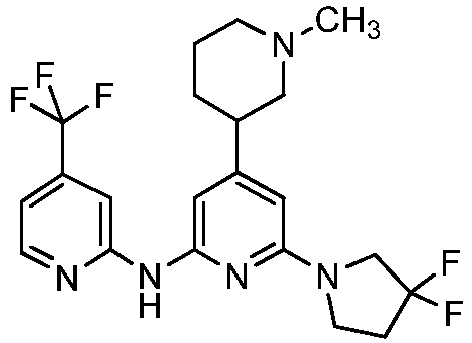
-

- 2,6-dichloro-4-iodopyridine (500 mg, 1.77082 mmol), 3-pyridylboronic acid pinacol ester (487 mg, 1.3 equiv., 2.30207 mmol), PCy3 (112 mg, 0.22 equiv., 0.389581 mmol), and Pd2(dba)3 (84 mg, 0.050 equiv., 0.0885411 mmol) were mixed in acetonitrile (13 mL, 140 equiv., 247.915 mmol) and K3PO4 (1.27 M, 1.95 mL, 1.4 equiv., 2.47915 mmol), and the reaction was kept at 110 °C for 2 h. Brine and 10% citric acid was used to adjust the pH around 8. The mixture was extracted with EtOAc three times. After evaporation of the organic layers, the residue was purified via chromatography (0-70% EtOAc/Heptane) to yield 367 mg yellow powder 1H NMR (400 MHz, CDCl3) δ (delta) 8.86 (d, J = 2.4 Hz, 1H), 8.74 (dd, J = 4.8, 1.6 Hz, 1H), 7.92 - 7.86 (m, 1H), 7.47 (s, 2H), 7.45 (dd, J = 7.9, 4.8 Hz, 1H). 13C NMR (101 MHz, CDCl3) δ (delta) 151.45, 151.24, 150.72, 148.02, 134.40, 131.63, 123.96, 120.75. LCMS: m/z 225 (M+H).

- To a solution of 2,6-dichloro-4-(3-pyridyl)pyridine (48 mg, 0.21327 mmol) and 3,3-difluoropyrrolidine hydrochloride (153 mg, 5.0 equiv., 1.0663 mmol) in NMP (1.0 mL, 10 mmol) in a microwave vial was added DIPEA (0.26 mL, 7.0 equiv., 1.4929 mmol), and the reaction was maintained at 140 °C for 60 min then at 150 °C for 20 min in the microwave machine, while LCMS indicated the conversion was more than 95%. The crude was used without further treatment. LCMS: m/z 296 (M+H).

- To a mixture of 2-chloro-6-(3,3-difluoropyrrolidin-1-yl)-4-(3-pyridyl)pyridine (2-b, 63 mg, 0.2131 mmol), 2-amino-4-(trifluoromethyl)PYRIDINE (70 mg, 2.0 equiv., 0.4261 mmol), XantPhos (25 mg, 0.20 equiv., 0.04261 mmol), Pd2(dba)3 (20 mg, 0.10 equiv., 0.02131 mmol) in 1,4-dioxane (2.4 mL, 130 equiv., 27.70 mmol) was added cesium carbonate (208 mg, 3.0 equiv., 0.6392 mmol), and the reaction was maintained at 180 °C for 90 min. The crude was diluted with water, and extraction was done with EtOAc. After evaporation of the organic layers, the crude was purified via silica gel chromatography (0-100% EtOAc/Heptane) to 60 mg (67% after two steps) brown solid. 1H NMR (400 MHz, CDCl3) δ (delta) 8.86 (s, 1H), 8.66 (d, J = 4.8 Hz, 1H), 8.58 (s, 1H), 8.38 (d, J = 5.2 Hz, 1H), 7.89 (d, J = 7.9 Hz, 1H), 7.46 (s, 1H), 7.43 - 7.35 (m, 1H), 7.05 (d, J = 5.2 Hz, 1H), 6.55 (s, 1H), 6.10 (s, 1H), 3.93 (t, J = 13.1 Hz, 2H), 3.79 (t, J = 7.3 Hz, 2H), 2.62 - 2.47 (m, 2H). LCMS: m/z 422 (M+H).

- To a suspension of 6-(3,3-difluoropyrrolidin-1-yl)-4-(3-pyridyl)-N-[4-(trifluoromethyl)-2-pyridyl]pyridin-2-am ine (2-c, 320 mg, 0.7594 mmol) in methanol (5 ml, 100 mmol) was added benzyl bromide (0.46 ml, 5.0 equiv., 3.797 mmol), and the reaction was kept at 60 °C onvernight. MeOH was removed as much as possible. Ethyl ether (3 x 10 mL) was used to wash away the excess BnBr. The leftover solid was used without further treatment. LCMS: m/z 512 (M+).

- To a solution of 4-(1-benzylpyridin-1-ium-3-yl)-6-(3,3-difluoropyrrolidin-1-yl)-N-[4-(trifluoromethyl)-2-py ridyl]pyridin-2-amine (2-d, 500 mg, 0.9756 mmol) in methyl alcohol (12 ml, 300 equiv., 292.7 mmol) was added sodium borohydride (225 mg, 6.0 equiv., 5.853 mmol) in three portions with the interval of 30 min each, and the reaction was stirred at 25 °C for 4 h. The reaction was quenched by citric acid (10% aq.), and extracted EtOAc three times. After evaporation of the organic layers, the crude brown solid was used without further purification. LCMS: m/z 516 (M+H).
- A suspension of 4-(1-benzyl-3,4-dihydro-2H-pyridin-5-yl)-6-(3,3-difluoropyrrolidin-1-yl)-N-[4-(trifluorome thyl)-2-pyridyl]pyridin-2-amine (250 mg, 0.4850 mmol) and palladium hydroxide on activated charcoal (85 mg, 0.25 equiv., 0.1212 mmol) in methanol (20 ml, 500 mmol) and ethyl acetate (20 ml, 204 mmol) was charged with H2 balloon. The reaction was kept stirring for 48 h, while LCMS indicated olefin was reduced. The catalyst was filtered off, and new portion of catalyst was refilled, followed by addition of acetic acid (0.556 mL, 20 equiv., 9.699 mmol). The reaction was stirred with H2 balloon overnight. LCMS showed both m/z 442 and 456. The catalyst was filtered off, and the solvent was evaporated to dryness. The residue was submitted for HPLC purification to yield 4.7 mg (4.4%) off-white powder. LCMS: m/z 442 (M+H).
- The following examples were prepared similarly to the methods described in this Example:
Structure 1H NMR MS (m/z) 
442 6-(3,3-difluoropyrrolidin-1-yl)-4-(1-methy lpiperidin-3-yl)-N-(4-(trifluoromethyl)pyri din-2-yl)pyridin-2-amine - DLK TR-FRET assay: DLK kinase reactions (20 µL) containing 5 nM N-terminally GST-tagged DLK (catalytic domain amino acid 1-520) (Carna Bioscience), 40 nM N-terminally HIS-tagged MKK4 K131M substrate, and 30 µM ATP in kinase reaction buffer (50 mM HEPES, pH 7.5, 0.01% Triton X-100, 0.01% Bovine γ-Globulins, 2 mM DTT, 10 mM MgCl2 and 1 mM EGTA), and testing compound 1:3 serial diluted starting at 20 uM were incubated at ambient temperature for 60 minutes in 384 well OptiPlate (Perkin Elmer). To quench kinase reactions and detect phosphorylated MKK4, 15 µL of TR-FRET antibody mixture containing 2 nM anti-phosphorylated MKK4 labeled with Europium cryptate (Cisbio) and 23 nM anti-HIS labeled with D2 (Cisbio) in detection buffer (25 mM Tris pH 7.5, 100 mM NaCl, 100 mM EDTA, 0.01% Tween-20, and 200 mM KF) was added to the reaction mixture. The detection mixture was incubated for 3 hours at ambient temperature and the TR-FRET was detected with an EnVision multilabel plate reader (Perkin-Elmer) using the LANCE/DELFIA Dual Enh label from Perkin-Elmer (excitation filter: UV2 (TRF) 320 and emission filters: APC 665 and Europium 615). Compounds of formula I as set forth in Table 1 inhibited the DLK kinase with the Kis as provided in Table B below.
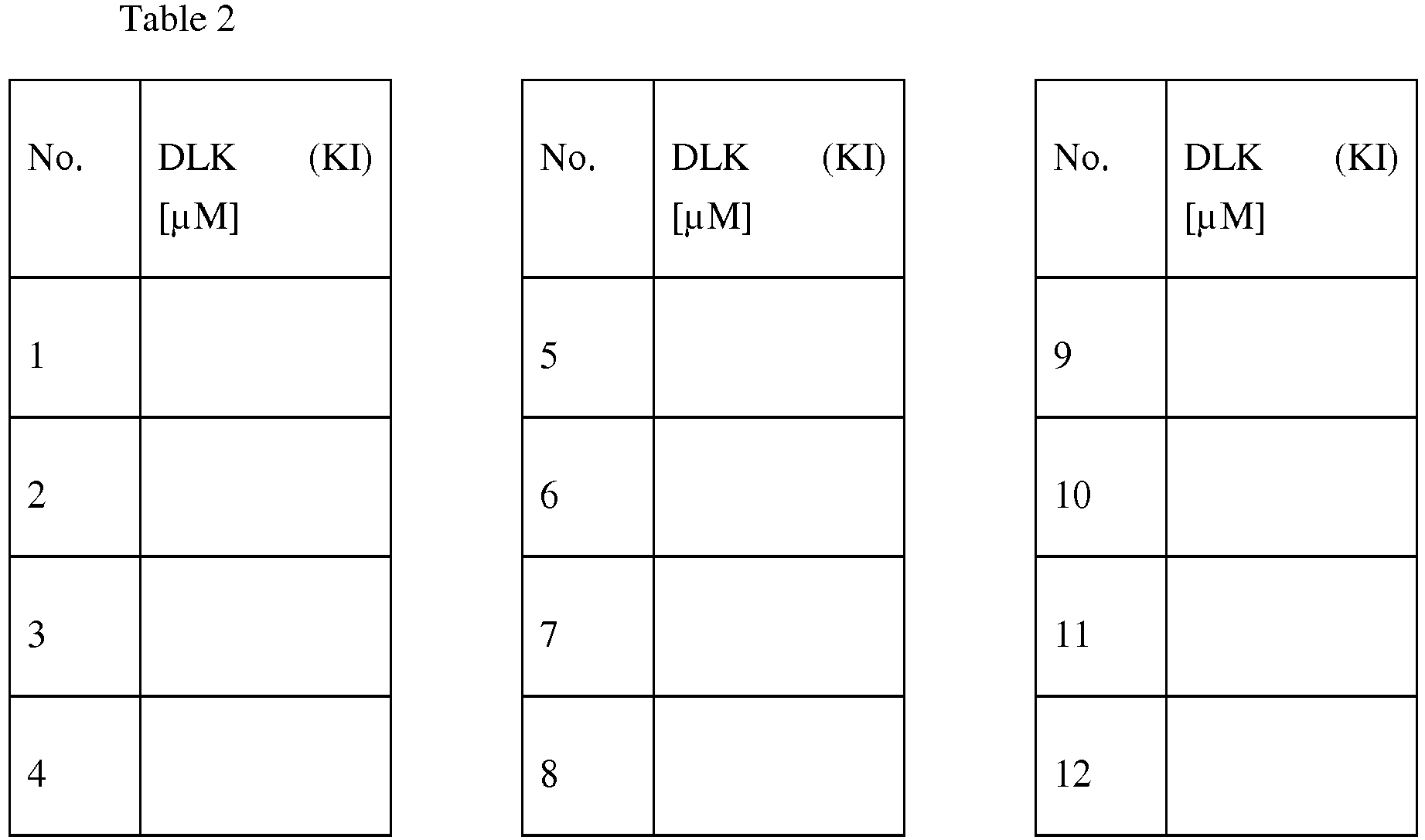


Claims (25)
- Compounds of formula (I)
 R1 is selected from the group consisting of hydrogen, fluoro, chloro, bromo, C1-6 alkyl, C1-6 haloalkyl, C1-6 heteroalkyl, C1-6 alkoxy, 3-10 membered cycloalkyl, 3-10 membered heterocycloalkyl, 6-10 membered aryl, 5-10 membered heteroaryl, -OR1a, -SR1a,-N(H)(R1a), and -N(R1a)(R1b) wherein R1a and R1b are each independently selected from the group consisting of C1-6 alkyl, C1-6 haloalkyl, C1-6 heteroalkyl, 3-10 membered cycloalkyl and 3-10 membered heterocycloalkyl, and wherein the aliphatic and aromatic portions of R1 are independently further substituted with 0 to 5 RA1 substituents selected from the group consisting of -F, -Cl, -Br, -I, -CN, -NO2, -SF5, -OH, -NH2, -CF3, =O, C1-4 alkyl, C1-4 haloalkyl, C1-4 heteroalkyl, C1-4 alkoxy, C1-4 alkylthio, C1-4 alkylamino, C1-4 dialkylamino, R1c-C(=O)-, R1c-C(=O)N(H)-, R1c-C(=O)N(R1d)-, R1c-C(=O)O-, R1c-S(O)1-2-, R1c-S(O)1-2N(R1d)-, R1c-S(O)1-2N(H)-, 3-6 membered cycloalkyl, phenyl, 5-6 membered heteroaryl and 3-7 membered heterocycloalkyl, wherein R1c is selected from the group consisting of C1-6 alkyl, C1-6 haloalkyl, C5-6 heteroaryl, 3-7 membered heterocycloalkyl, phenyl and 3-6 membered cycloalkyl, R1d is selected from the group consisting of hydrogen, C1-3 alkyl and C1-3 haloalkyl, and wherein said 5-6 membered heteroaryl, phenyl, 3-6 membered cycloalkyl and 3-7 membered heterocycloalkyl of a RA1 substituent are substituted with from 0-4 substituents selected from -F, -Cl, -Br, I, -CN, -NO2, -SF5, -OH, -NH2, -CF3, C1-4 alkyl, C1-4 haloalkyl, C1-4 alkoxy, C1-4 alkylthio, C1-4 alkylamino and C1-4 dialkylamino;R2 is selected from the group consisting of hydrogen, C1-6 alkyl and C1-6 haloalkyl;R3 is selected from the group consisting of -F, -Cl, -Br, -I, -(X3)0-1-CN, -(X3)0-1-NO2, -(X3)0-1-SF5, -(X3)0-1-OH, -(X3)0-1-NH2, -(X3)0-1-N(H)(R3a), -(X3)0-1-N(R3b)(R3a), -(X3)0-1-CF3, -S-(Phenyl), C1-6 alkyl, C1-6 haloalkyl, C1-6 heteroalkyl, C1-6 alkoxy, C1-6 alkylthio, -(X3)0-1-3-7 membered cycloalkyl, -(X3)0-1-3-7 membered heterocycloalkyl, -(X3)0-1-5-6 membered heteroaryl, -(X3)0-1-C6 aryl, -(X3)0-1-C(=Y3)N(H)(R3a), -(X3)0-1-C(=Y3)NH2, -(X3)0-1-C(=Y3)N(R3a)(R3b), -(X3)0-1-C(=Y3)OR3a, -(X3)0-1-C(=Y3)OH, -(X3)0-1-N(H)C(=Y3)(R3a),-(X3)0-1-N(R3b)C(=Y3)(R3a), -(X3)0-1-N(H)C(=Y3)OR3a, -(X3)0-1-N(R3b)C(=Y3)OR3a, -(X3)0-1-S(=Y3)1-2R3a, -(X3)0-1-N(H)S(=Y3)1-2R3a, -(X3)0-1-N(R3b)S(=Y3)1-2R3a, -(X3)0-1-S(=Y3)1-2N(H)(R3a), -(X3)0-1-S(=Y3)1-2N(R3b)(R3a), -(X3)0-1-S(=Y3)1-2NH2, -(X3)0-1-C(=Y3)R3a, -(X3)0-1-C(=Y3)H, -(X3)0-1-C(=NOH)R3a, -(X3)0-1C(=NOR3b)R3a, -(X3)0-1NHC(=Y3)N(H)(R3a),-(X3)0-1-NHC(=Y3)NH2, -(X3)0-1-NHC(=Y3)N(R3b)(R3a), -(X3)0-1-N(R3a)C(=Y3)N(H)(R3a),-(X3)0-1-N(R3a)C(=Y3)NH2, -(X3)0-1-OC(=Y3)R3a, -(X3)0-1-OC(=Y3)H, -(X3)0-1-OC(=Y3)OR3a,-(X3)0-1-OP(=Y3)(OR3a)(OR3b), -(X3)-SC(=Y3)OR3a and -(X3)-SC(=Y3)N(R3a)(R3b) wherein X3 is selected from the group consisting of C1-4 alkylene, C1-4 haloalkylene, C1-4 heteroalkylene, C2-4 alkenylene, and C2-4 alkynylene, R3a and R3b are each independently selected from the group consisting of C1-6 alkyl, C1-6 haloalkyl, C1-6 heteroalkyl, 3-7 membered cycloalkyl, 3-7 membered cycloalkyl-C1-4 alkyl, 3-7 membered heterocycloalkyl, 3-7 membered heterocycloalkyl-C1-4 alkyl, 5-6 membered heteroaryl, 5-6 membered heteroaryl-C1-4 alkyl, C6 aryl, C6 aryl-C1-4 alkyl and benzyl; Y3 is O, NR3d or S wherein R3d is hydrogen or C1-6 alkyl; wherein aliphatic or aromatic portion of R3 is independently further substituted with from 0 to 4 RA3 substituents selected from the group consisting of -F, -Cl,-Br, -I, -CN, -NO2, -SF5, -OH, -NH2, -CF3, =O, C1-6 alkyl, C1-6 haloalkyl, C1-6 heteroalkyl, C1-6 alkoxy, C1-6 alkylthio, 3-6 membered cycloalkyl, 3-6 membered heterocycloalkyl, -C(=O)N(H)(C1-6 alkyl), -C(=O)N(C1-6 alkyl)2, -C(=O)NH2,-C(=O)OC1-6 alkyl, -C(=O)OH, -N(H)C(=O)(C1-6 alkyl), -N(C1-6 alkyl)C(=O)(C1-6 alkyl), -N(H)C(=O)OC1-6 alkyl, -N(C1-6 alkyl)C(=O)OC1-6 alkyl, -S(O)1-2C1-6 alkyl, -N(H)S(O)1-2C1-6 alkyl, -N(C1-6 alkyl)S(O)1-2C1-6 alkyl, -S(O)0-1N(H)(C1-6 alkyl), -S(O)0-1N(C1-6 alkyl)2, -S(O)0-1NH2,-C(=O)C1-6 alkyl, -C(=NOH)C1-6 alkyl, -C(=NOC1-6 alkyl)C1-6 alkyl, -NHC(=O)N(H)(C1-6 alkyl), -NHC(=O)N(C1-6 alkyl)2, -NHC(=O)NH2, -N(C1-6 alkyl)C(=O)N(H)(C1-6 alkyl),-N(C1-6 alkyl)C(=O)NH2, -OC(=O)C1-6 alkyl, -OC(=O)OC1-6 alkyl, -OP(=O)(OC1-6 alkyl)2,-SC(=O)OC1-6 alkyl and -SC(=O)N(C1-6 alkyl)2; alternatively any two R3 substituents located on adjacent atoms are optionally combined to form a 5-6 membered heteroaryl ring comprising 1-2 heteroatoms selected from N, O and S and further comprising 0 to 4 R3a substituents;m is an integer from 0 to 4;wherein the ring represented by
 R4 is selected from the group consisting of -F, -Cl, -Br, -I, -(X4)0-1-CN, -(X4)0-1-NO2, -(X4)0-1-SF5, -(X4)0-1-OH, -(X4)0-1-NH2, -(X4)0-1-N(H)(R4a), -(X4)0-1-N(R4b)(R4a), -(X4)0-1-CF3, C1-6 alkyl, C1-6 haloalkyl, C1-6 heteroalkyl, C1-6 alkoxy, C1-6 alkylthio, -(X4)0-1-(3-10 membered heterocycloalkyl), -(X4)0-1-(5-10 membered heteroaryl), -(X4)0-1-(3-7 membered cycloalkyl), -(X4)0-1-(6-10 membered aryl), -(X4)0-1-C(=Y4)N(H)(R4a), -(X4)0-1-C(=Y4)NH2,-(X4)0-1-C(=Y4)N(R4a)(R4b), -(X4)0-1-C(=Y4)OR4a, -(X4)0-1-C(=Y4)OH, -(X4)0-1-N(H)C(=Y4)(R4a), -(X4)0-1-N(R4b)C(=Y4)(R4a), -(X4)0-1-N(H)C(=Y4)OR4a, -(X4)0-1-N(R4b)C(=Y4)OR4, -(X4)0-1-S(=Y4)1-2R4a, -(X4)0-1-N(H)S(=Y4)1-2R4a, -(X4)0-1-N(R4b)S(=Y4)1-2R4a, -(X4)0-1-S(=Y4)1-2N(H)(R4a), -(X4)0-1-S(=Y4)1-2N(R4b)(R4a), -(X4)0-1-S(=Y4)1-2NH2,-(X4)0-1-C(=Y4)R4a, -(X4)0-1-C(=Y4)H, -(X4)0-1-C(=NOH)R4a, -(X4)0-1-C(=NOR4b)R4a, -(X4)0-1-NHC(=Y4)N(H)(R4a), -(X4)0-1-NHC(=Y4)NH2, -(X4)0-1-NHC(=Y4)N(R4b)(R4a), -(X4)0-1-NR4aC(=Y4)N(H)(R4a), -(X4)0-1-N(R4a)C(=Y4)NH2, -(X4)0-1-OC(=Y4)R4a, -(X4)0-1-OC(=Y4)H, -(X4)0-1-OC(=Y4)OR4a, -(X4)0-1-OP(=Y4)(OR4a)(OR4b), -SC(=Y4)OR4a and-SC(=Y4)N(R4a)(R4b) wherein R4a and R4b at each occurrence are each independently selected from the group consisting of C1-6 alkyl, C1-6 haloalkyl, C1-6 heteroalkyl, 6-10 membered aryl, 3-7 membered cycloalkyl, 5-10 membered heteroaryl, 3-7 membered heterocycloalkyl, 6-10 membered aryl-C1-4 alkyl, 3-7 membered cycloalkyl-C1-4 alkyl, 5-10 membered heteroaryl-C1-4 alkyl and 3-7 membered heterocycloalkyl-C1-4 alkyl, and X4 is is selected from the group consisting of C1-4 alkylene, C1-4 haloalkylene, C1-4 heteroalkylene, C2-4 alkenylene and C2-4 alkynylene; Y4 is O, NR4c or S wherein R4c is hydrogen or C1-6 alkyl; wherein the aromatic and aliphatic portions of R4 is independently further substituted with 0 to 4 RA4 substituents selected from the group consisting of -F, -Cl, -Br, I, -CN, -NO2, -SF5, -OH, -NH2, -CF3, =O, C1-6 alkyl, C1-6 haloalkyl, C1-6 heteroalkyl, C1-6 alkoxy, C1-6 alkylthio, 3-6 membered cycloalkyl, 3-6 membered heterocycloalkyl, -C(=O)N(H)(C1-6 alkyl), -C(=O)N(C1-6 alkyl)2, -C(=O)NH2,-C(=O)OC1-6 alkyl, -C(=O)OH, -N(H)C(=O)(C1-6 alkyl), -N(C1-6 alkyl)C(=O)(C1-6 alkyl), -N(H)C(=O)OC1-6 alkyl, -N(C1-6 alkyl)C(=O)OC1-6 alkyl, -S(O)1-2C1-6 alkyl, -N(H)S(O)1-2C1-6 alkyl, -N(C1-6 alkyl)S(O)1-2C1-6 alkyl, -S(O)0-1N(H)(C1-6 alkyl),-S(O)0-1N(C1-6 alkyl)2, -S(O)0-1NH2, -C(=O)C1-6 alkyl, -C(=NOH)C1-6 alkyl, -C(=NOC1-6 alkyl)C1-6 alkyl, -NHC(=O)N(H)(C1-6 alkyl), -NHC(=O)N(C1-6 alkyl)2, -NHC(=O)NH2,-N(C1-6 alkyl)C(=O)N(H)(C1-6 alkyl), -N(C1-6 alkyl)C(=O)NH2, -OC(=O)C1-6 alkyl,-OC(=O)OC1-6 alkyl, -OP(=O)(OC1-6 alkyl)2, -SC(=O)OC1-6 alkyl and -SC(=O)N(C1-6 alkyl)2;n is an integer from 0 to 5;R5 is absent or is selected from the group consisting of hydrogen, C1-6 alkyl, C1-6 haloalkyl, -OH, OR5a, -CN and halogen, wherein R5a is selected from the group consisting of C1-6 alkyl, C1-6 haloalkyl and C1-6 heteroalkyl; or optionally R4 and R5 are optionally combined to form a 5-7 membered cycloalkyl or heterocycloalkyl and is independently further substituted with 0-4 RA4 substituents;R6 is independently selected from the group consisting of hydrogen, -F, Cl, Br, I, C1-3 alkyl, C1-3 haloalkyl.
 - The compound of claim 1, wherein said compound of formula I has the subformula selected from the group consisting of:

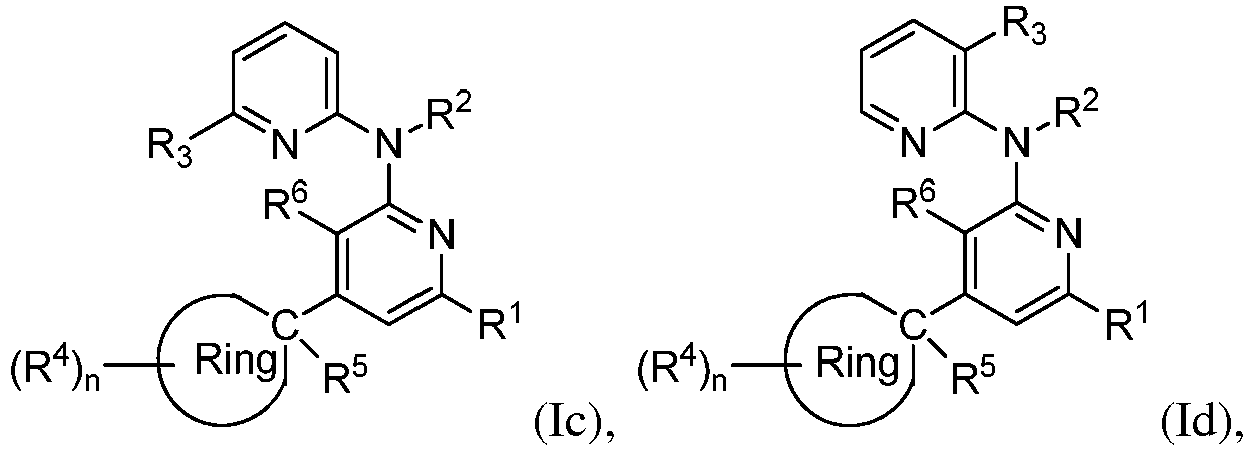

in particular, wherein said compound of formula I has the subformula (Ia). - The compound of claim 1 or 2, wherein the ring represented by the structure
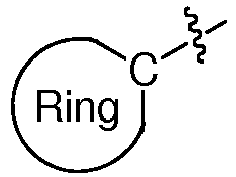


 wherein R4 and R5 are defined according to claim 1, andwherein a R4 substituent, if present, replaces a hydrogen atom that is attached to a carbon or nitrogen atom in said ring,in particular, wherein the ring


 wherein R4 and R5 are defined according to claim 1, and whereinR4 attached to the nitrogen atom of said ring is selected from the group consisting of - (X4)0-1-CN, -(X4)0-1-NO2, -(X4)0-1-SF5, -(X4)0-1-OH, -(X4)0-1-NH2, -(X4)0-1-N(H)(R4a), -(X4)0-1-N(R4b)(R4a), -(X4)0-1-CF3, C1-6 alkyl, C1-6 haloalkyl, C1-6 heteroalkyl, C1-6 alkoxy, C1-6 alkylthio, -(X4)0-1-(3-10 membered heterocycloalkyl), -(X4)0-1-(5-10 membered heteroaryl), - (X4)0-1-(3-7 membered cycloalkyl), -(X4)0-1-C(=Y4)N(H)(R4a), -(X4)0-1C(=Y4)NH2, -(X4)0-1-C(=Y4)N(R4a)(R4b), -(X4)0-1-C(=Y4)OR4a, -(X4)0-1-W=Y4)OH, -(X4)0-1-N(H)C(=Y4)(R4a),-(X4)0-1-N(R4b)C(=Y4)(R4a), -(X4)0-1-N(H)C(=Y4)OR4a, -(X4)0-1-N(R4b)C(=Y4)OR4, -(X4)0-1-S(O)1-2R4a, -(X4)0-1-N(H)S(O)1-2R4a, -(X4)0-1-N(R4b)S(O)1-2R4a, -(X4)0-1-S(P)0-1N(H)(R4a), - (X4)0-1-S(O)0-1,N(R4b)(R4a), -(X4)0-1-S(O)0-1NH2, -(X4)0-1-S(=O)(=NR4b)R4a, -(X4)0-1-C(=Y4)R4a, -(X4)0-1-C(=Y4)H, -(X4)0-1-C(=NOH)R4a, -(X4)0-1-C(=NOR4b)R4a, -(X4)0-1-NHC(=Y4)N(H)(R4a), -(X4)0-1-NHC(=Y4)NH2, -(X4)0-1-NHC(=Y4)N(R4b)(R4a), -(X4)0-1-NR4aC(=Y4)N(H)(R4a), -(X4)0-1-N(R4a)C(=Y4)NH2, -(X4)0-1-OC(=Y4)R4a, -(X4)0-1-OC(=Y4)H, -(X4)0-1-OC(=Y4)OR4a, -(X4)0-1-OP(=Y4)(OR4a)(OR4b), -SC(=Y4)OR4a and - SC(=Y4)N(R4a)(R4b) wherein R4a and R4b at each occurrence are each independently selected from the group consisting of C1-6 alkyl, C1-6 haloalkyl, C1-6 heteroalkyl, 6-10 membered aryl, 3-7 membered cycloalkyl, 5-10 membered heteroaryl, 3-7 membered heterocycloalkyl, 6-10 membered aryl-C1-4 alkyl, 3-7 membered cycloalkyl-C1-4 alkyl, 5-10 membered heteroaryl-C1-4 alkyl and 3-7 membered heterocycloalkyl-C1-4 alkyl,and X4 is is selected from the group consisting of C1-4 alkylene, C1-4 haloalkylene, C1-4 heteroalkylene, C2-4 alkenylene and C2-4 alkynylene; Y4 is O, NR4c or S wherein R4c is hydrogen or C1-6 alkyl; wherein the aromatic and aliphatic portions of R4 is independently further substituted with 0 to 4 RA4 substituents selected from the group consisting of -F, -Cl, -Br, I, -CN, -NO2, -SF5, -OH, -NH2, -CF3, =O, C1-6 alkyl, C1-6 haloalkyl, C1-6 heteroalkyl, C1-6 alkoxy, C1-6 alkylthio, 3-6 membered cycloalkyl, 3-6 membered heterocycloalkyl, -C(=O)N(H)(C1-6 alkyl), -C(=O)N(C1-6 alkyl)2, -C(=O)NH2,-C(=O)OC1-6 alkyl, -C(=O)OH, -N(H)C(=O)(C1-6 alkyl), -N(C1-6 alkyl)C(=O)(C1-6 alkyl), -N(H)C(=O)OC1-6 alkyl, -N(C1-6 alkyl)C(=O)OC1-6 alkyl, -S(O)1-2C1-6 alkyl, -N(H)S(O)1-2C1-6 alkyl, -N(C1-6 alkyl)S(O)1-2C1-6 alkyl, -S(O)0-1N(H)(C1-6 alkyl), - S(O)0-1N(C1-6 alkyl)2, -S(O)0-1NH2, -C(=O)C1-6 alkyl, -C(=NOH)C1-6 alkyl, -C(=NOC1-6 alkyl)C1-6 alkyl, -NHC(=O)N(H)(C1-6 alkyl), -NHC(=O)N(C1-6 alkyl)2, -NHC(=O)NH2, - N(C1-6 alkyl)C(=O)N(H)(C1-6 alkyl), -N(C1-6 alkyl)C(=O)NH2, -OC(=O)C1-6 alkyl, - OC(=O)OC1-6 alkyl, -OP(=O)(OC1-6 alkyl)2, -SC(=O)OC1-6 alkyl and -SC(=O)N(C1-6 alkyl)2; andthe remainder R4, if present on said ring, is each independently selected from the group consisting of -F, -Cl, -Br, I, -(X4)0-1-CN, -(X4)0-1-NO2, -(X4)0-1-SF5, -(X4)0-1-OH, - (X4)0-1-NH2, -(X4)0-1-N(H)(R4a), -(X4)0-1-N(R4b)(R4a), -(X4)0-1-CF3, -(X4)0-1-C(=Y4)R4a, -(X4)0-1-C(=Y4)H, C1-6 alkyl, C1-6 haloalkyl, C1-6 heteroalkyl, C1-6 alkoxy and C1-6 alkylthio wherein X4 is selected from the group consisting of C1-4 alkylene, C1-4 haloalkylene, C1-4 heteroalkylene, C2-4 alkenylene and C2-4 alkynylene and R4a and R4b is each independently selected from the group consisting of: C1-6 alkyl, C1-6 haloalkyl and C1-6 heteroalkyl,more particular,wherein the ring

 wherein R5 is defined according to claim 1.
 - The compound of claim 3 wherein R4 attached to the nitrogen atom of said ring is selected from the group consisting of C1-6 alkyl, C1-6 haloalkyl, C1-6 heteroalkyl, C1-6 alkoxy, C1-6 alkylthio, -(X4)0-1-(3-10 membered heterocycloalkyl), -(X4)0-1-(5-10 membered heteroaryl), -(X4)0-1-(3-7 membered cycloalkyl), -(X4)0-1-S(O)1-2R4a and -(X4)0-1-C(=Y4)R4a, wherein Y4 is O, in particular, wherein R4 is selected from the group consisting of methyl, trifluoromethyl, difluoromethyl, monofluromethyl, ethyl, triflurorethyl, difluoroethyl, monofluoroethyl and acetyl.
- The compound of claim 1, 2 or 3, wherein said
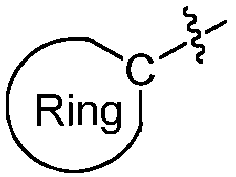


 wherein R5 is defined according to claim 1, andwherein R4 is selected from the group consisting of: -F, -Cl, -Br, -I, -(X4)0-1-CN, - (X4)0-1-NO2, -(X4)0-1-SF5, -(X4)0-1-OH, -(X4)0-1-NH2, -(X4)0-1-N(H)(R4a), -(X4)0-1-N(R4b)(R4a), -(X4)0-1-CF3, C1-6 alkyl, C1-6 haloalkyl, C1-6 heteroalkyl, C1-6 alkoxy and C1-6 alkylthio wherein X4 is selected from the group consisting of C1-4 alkylene, C1-4 haloalkylene, C1-4 heteroalkylene, C2-4 alkenylene and C2-4 alkynylene and R4a and R4b is each independently selected from the group consisting of: C1-6 alkyl, C1-6 haloalkyl and C1-6 heteroalkyl,in particular, wherein the group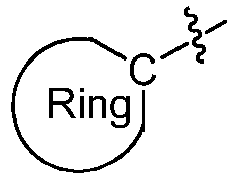

- The compound of claim 1, 2, 3, 4 or 5 wherein R5 is selected from the group consisting of hydrogen, C1-4 alkyl, C1-4 haloalkyl, hydroxy, OR5a, -CN, -F, -Cl, -Br and -I, in particular, wherein R5 is selected from the group consisting of hydrogen, methyl, ethyl, trifluoromethyl, methoxy, ethoxy, F, Cl and Br.
- The compound of claim 1, 2, 3, 4, 5 or 6 wherein R1 is selected from the group consisting of C1-6 alkyl, C1-6 haloalkyl, C1-6 heteroalkyl, -OR1a, -SR1a, -N(H)(R1a), and -N(R1a)(R1b), methyl, ethyl, propyl, isopropyl, butyl, sec-butyl, tert-butyl, cyclopropane, cyclobutane, cyclopentane, cyclohexane, cycloheptane, morpholine, homomorpholine, piperidine, homopiperidine, piperazine, homopiperazine, azetidine, pyrrolidine, benzene, pyrrole, pyrazole, imidazole, triazole, tetrazole, pyridine, pyrimidine, pyrazine, pyridazine, oxetane, tetrahydrofuran, tetrahydropyran, -oxa-5-azabicyclo[2.2.1]heptane, 2-oxa-6-azaspiro[3.3]heptane, 8-oxa-3-azabicyclo[3.2.1]octane, 3-oxa-8-azabicyclo[3.2.1]octane, 7-oxabicyclo[2.2.1]heptane, 7-azabicyclo[2.2.1]heptane, nonbornane, bicyclo[2.2.2]octane, 2-azabicyclo[2.2.2]octane, 2-oxabicyclo[2.2.2]octane, 2-oxa-5-azabicyclo[2.2.2]octane and 2,5-diazabicyclo[2.2.2]octane, 5,6,7,8-tetrahydroimidazo[1,2-a]pyrazine, 4,5,6,7-tetrahydro-3H-imidazo[4,5-c]pyridine, wherein R1a and R1b are each independently selected from the group consisting of C1-6 alkyl, C1-6 haloalkyl, C1-6 heteroalkyl, 3-10 membered cycloalkyl and 3-10 membered heterocycloalkyl, and wherein the aliphatic and aromatic portions of R1 are independently further substituted with 0 to 5 RA1 substituents selected from the group consisting of -F, -Cl, -Br, I, -CN, -NO2, -SF5, -OH, -NH2, -CF3, =O, C1-4 alkyl, C1-4 haloalkyl, C1-4 heteroalkyl, C1-4 alkoxy, C1-4 alkylthio, C1-4 alkylamino, C1-4 dialkylamino, R1c-C(=O)-, - R1c-C(=O)N(H)-, R1c-C(=O)N(R1d)-, R1c-C(=O)O-, R1c-S(O)1-2-, R1c-S(O)1-2N(R1d)-, R1c-S(O)1-2N(H)-, 3-6 membered cycloalkyl, phenyl, 5-6 membered heteroaryl and 3-7 membered heterocycloalkyl, wherein R1c is selected from the group consisting of C1-6 alkyl, C1-6 haloalkyl, C5-6 heteraryl, 3-7 membered heterocycloalkyl, phenyl and 3-6 membered cycloalkyl, R1d is selected from the group consisting of hydrogen, C1-3 alkyl and C1-3 haloalkyl, and wherein said 5-6 membered heteraryl, phenyl, 3-6 membered heteroaryl, 3-6 membered cycloalkyl and 3-7 membered heterocycloalkyl of the RA1 substituent are substituted with from 0-4 substituents selected from -F, -Cl, -Br, I, -CN, -NO2, -SF5, -OH, - NH2, -CF3, C1-4 alkyl, C1-4 haloalkyl, C1-4 alkoxy, C1-4 alkylthio, C1-4 alkylamino and C1-4 dialkylamino, in particular, wherein R1 is selected from the group consisting of pyrrolidin-1-yl, phenyl, piperidin-1-yl, pyrrol-1-yl, azetidin-1-yl, morpholin-4-yl, homomorpholin-4-yl, 2-oxa-5-azabicyclo[2.2.1]hept-5-yl, 3-oxa-8-azabicyclo[3.2.1]oct-8-yl, 2-oxa-6-azaspiro[3.3]hept-6-yl, -8-oxa-3-azabicyclo[3.2.1]octane, methyl, isopropyl, isobutyl, cyclopropyl, pyrazol-1-yl, 4,5,6,7-tetrahydro-1H-imidazo[4,5-c]pyridin-5-yl, 3,5,6,7,8,8a-hexahydroimidazo[1,2-a]pyrazin-7-yl, 3-azabicyclo[3.2.0]heptan-3-yl, 3-azabicyclo[3.1.0]hexan-3-yl, 2-azabicyclo[2.1.1]hexan-2-yl, 2-azabicyclo[3.1.0]hexan-2-yl, 2-oxa-7-azaspiro[4.4]nonan-7-yl, 2-oxa-6-azaspiro[3.4]octan-6-yl, -N(H)R1a), and - N(R1a)(R1b), more particular, wherein R1 is selected from the group consisting of pyrrolidin-1-yl, phenyl, piperidin-1-yl, pyrrol-1-yl, azetidin-1-yl, morpholin-4-yl, homomorpholin-4-yl, 2-oxa-5-azabicyclo[2.2.1]hept-5-yl, 3-oxa-8-azabicyclo[3.2.1]oct-8-yl, 2-oxa-6-azaspiro[3.3]hept-6-yl, -8-oxa-3-azabicyclo[3.2.1]octane, methyl, isopropyl, isobutyl, cyclopropyl, pyrazol-1-yl, 4,5,6,7-tetrahydro-1H-imidazo[4,5-c]pyridin-5-yl, 3,5,6,7,8,8a-hexahydroimidazo[1,2-a]pyrazin-7-yl, 3-azabicyclo[3.2.0]heptan-3-yl, 3-azabicyclo[3.1.0]hexan-3-yl, 2-azabicyclo[2.1.1]hexan-2-yl, 2-azabicyclo[3.1.0]hexan-2-yl, 2-oxa-7-azaspiro[4.4]nonan-7-yl, 2-oxa-6-azaspiro[3.4]octan-6-yl, -N(H)R1a), and - N(R1a)(R1b), wherein R1a and R1b are each independently selected from the group consisting of methyl, ethyl, propyl, butyl, methoxyethyl, ethoxyethyl, hydroxyethyl, methoxypropyl, ethyoxypropyl and hydroxypropyl, wherein the aliphatic and/or aromatic portions or R1 is substituted with 0 to 4 substituents selected from the group consisting of methyl, ethyl, propyl, isopropyl, butyl, isobutyl, fluoro, chloro, bromo, iodo, cyano, methoxy, ethoxy, isopropoxy, methoxymethyl, methoxyethyl, methoxypropyl, trifluoromethyl, monofluoromethyl, difluromethyl, 2-methylpyrimidin-4-yl, 4-methyltriazol-3-yl, 1,2,4-triazol-3-yl, morphlinocarbonyl, morpholino, 2-methyl-pyrimidin-6-yl, 6-methyl-pyrimidin-2-yl, 4-methyl-1,2,4-triazol-3-yl, methylaminomethylcarbonyl and hydroxy.
- The compound of claim 1, 2, 3, 4, 5, 6 or 7 , wherein R3 is selected from the group consisting of -F, -Cl, -Br, I, C1-6 alkyl, C1-6 haloalkyl, C1-6 heteroalkyl, C1-6 alkoxy, - (X3)0-1-CN, -(X3)0-1-N(H)C(=O)(R3a), -(X3)0-1-N(R3b)(C=O)(R3a), -(X 3)0-1-C(=O)N(H)(R3a), -(X3)0-1-C(=O)NH2, -(X3)0-1-C(=O)N(R3a)(R3b), thiophene, wherein if R3 is thiophene or R3a and R3b is independently 3-7 membered cycloalkyl, 3-7 membered cycloalkyl-C1-4 alkyl, 3-7 membered heterocycloalkyl, 3-7 membered heterocycloalkyl-C1-4 alkyl, 5-6 membered heteroaryl, 5-6 membered heteroaryl-C1-4 alkyl, C6 aryl, C6 aryl-C1-4 alkyl or benzyl then said thiophene, 3-7 membered cycloalkyl, 3-7 membered cycloalkyl-C1-4 alkyl, 3-7 membered heterocycloalkyl, 3-7 membered heterocycloalkyl-C1-4 alkyl, 5-6 membered heteroaryl, 5-6 membered heteroaryl-C1-4 alkyl, C6 aryl, C6 aryl-C1-4 alkyl or benzyl is substitututed from 0 to 4 RA3 substituents, or alternatively, any two R3 substituents located on adjacent atoms are optionally combined to form a thiazole ring further comprising 0 to 4 R3a substituents, and m is an integer from 1 to 4, in particular, wherein R3 is selected from the group consisting of trifluoromethyl, difluoromethyl, momofluoromethyl, methyl, ethyl, propyl, butyl, isopropyl, sec-butyl, tert-butyl, methoxy, ethoxy, cyclopropyl, cyclobutyl, -CN, thienyl and -C(=O)NH2.
- The compound of claim 1, 2, 3, 4, 5, 6, 7 or 8 wherein a compound of formula I has the subformula selected from the group consisting of:


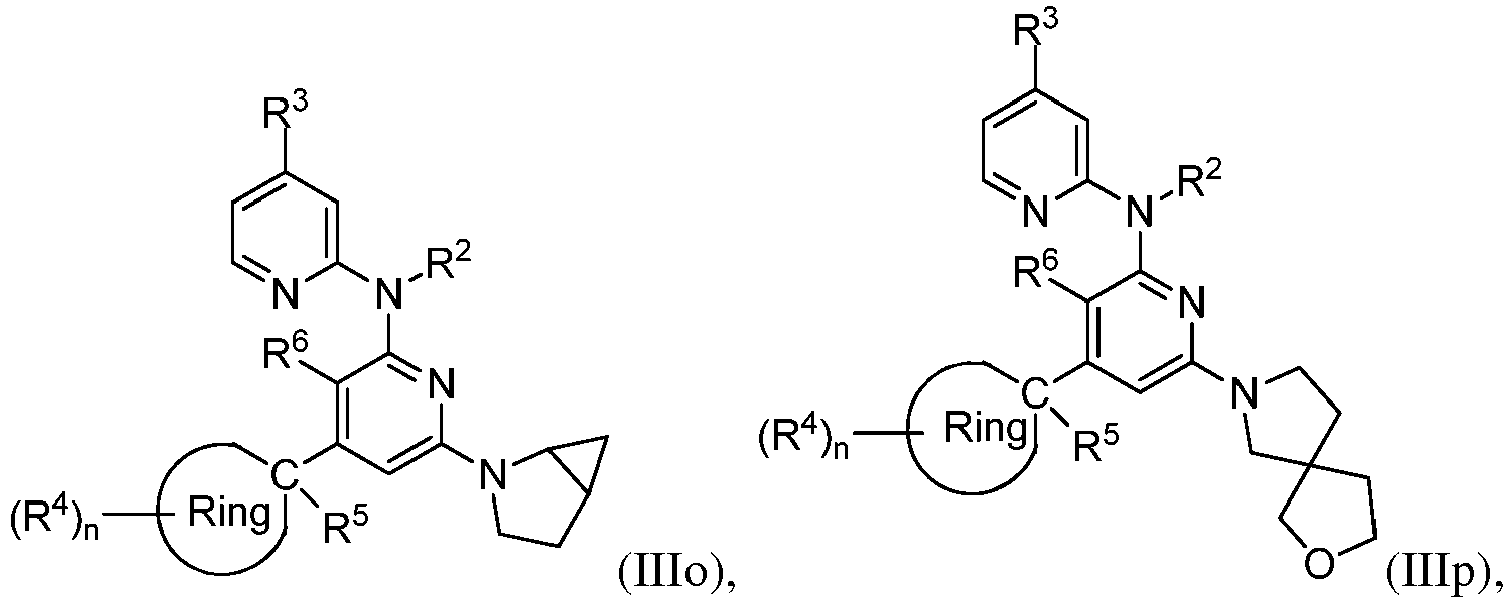


- The compound of formula I of claims 1, 2, 3, 4, 5, 6, 7, 8 or 9, wherein R1 is selected from the group consisting of hydrogen, chloro, C1-6 alkyl, C1-6 alkoxy, 3-10 membered cycloalkyl, 3-10 membered heterocycloalkyl, 5-10 membered heteroaryl, and -N(R1a)(R1b) wherein R1a and R1b are each independently selected from the group consisting of C1-6 alkyl, and wherein the aliphatic and aromatic portions of R1 are independently further substituted with 0 to 5 RA1 substituents selected from the group consisting of -F, -OH, =O, C1-4 alkyl, C1-4 haloalkyl and C1-4 alkoxy, in particular, wherein R1 is selected from the group consisting of (R)-2-methyl-pyrrolidin-1-yl, (R)-2-trifluoromethyl-pyrrolidin-1-yl, 1-methyl-1H-pyrazol-4-yl, 2-aza-bicyclo[2.1.1]hex-2-yl, 2-aza-bicyclo[3.1.0]hex-2-yl, 2-methyl-pyrrolidin-1-yl, 2-oxa-6-aza-spiro[3.3]hept-6-yl, 2-oxa-7-aza-spiro[4.4]non-7-yl, 3,3-difluoro-azetidin-1-yl, 3,3-difluoro-pyrrolidin-1-yl, 3-aza-bicyclo[3.1.0]hex-3-yl, 3-ethoxy-azetidin-1-yl, 3-fluoro-azetidin-1-yl, 3-methoxy-azetidin-1-yl, 3-methoxy-pyrrolidin-1-yl, 4-trifluoromethyl-pyridin-2-yl, 5,5-difluoro-2-aza-spiro[3.3]hept-2-yl, 6,6-difluoro-3-aza-bicyclo[3.2.0]hept-3-yl, azetidin-1-yl, butoxy, C(H2,OH)-CH2-N(CH3)-, Cl, cyclopropyl, ethyl, hydrogen, isopropoxy, methyl, methoxy, oxa-2-aza-spiro[3.4]oct-2-yl, oxa-6-aza-spiro[3.3]hept-6-yl and pyrrolidin-2-one.
- The compound of formula I of claims 1, 2, 3, 4, 5, 6, 7, 8, 9 or 10, wherein R2 is hydrogen.
- The compound of formula I of claims 1, 2, 3, 4, 5, 6, 7, 8, 9, 10 or 11, wherein m is 0.
- The compound of formula I of claims 1, 2, 3, 4, 5, 6, 7, 8, 9, 10 or 11 , wherein m is 1.
- The compound of formula I of claims 1, 2, 3, 4, 5, 6, 7, 8, 9, 10, 11, 12 or 13, wherein R3 is selected from the group consisting of -(X3)0-1-CN, -(X3)0-1-NH2, C1-6 alkyl, C1-6 haloalkyl, and -(X3)0-1-3-7 membered cycloalkyl, and (X3) is CH2, in particular, wherein R3 is selected from the group consisting of CF3, CH2NH2, CHF2, CN, cyclopropyl, hydrogen, methyl and OCHF2.
- The compound of formula I of claims 1, 2, 3, 4, 5, 6, 7, 8, 9, 10, 11, 12, 13 or 14, wherein n is 0.
- The compound of formula I of claims 1, 2, 3, 4, 5, 6, 7, 8, 9, 10, 11, 12, 13 or 14, wherein n is 1.
- The compound of formula I of claims 1, 2, 3, 4, 5, 6, 7, 8, 9, 10, 11, 12, 13, 14, 15 or 16, wherein R4 is selected from the group consisting of C1-6 alkyl, C1-6 haloalkyl, -(X4)0-1-(3-10 membered heterocycloalkyl), -(X4)0-1-C(=Y4)OR4a, -(X4)0-1-S(=Y4)1-2R4a, and -(X4)0-1-C(=Y4)R4a, wherein R4a is selected from the group consisting of C1-6 alkyl, C1-6 haloalkyl, 3-7 membered cycloalkyl, 5-10 membered heteroaryl, and 3-7 membered heterocycloalkyl, and X4 is CH2, and Y4 is O; wherein the aromatic and aliphatic portions of R4 is independently further substituted with 0 to 4 RA4 substituents selected from the group consisting of -OH, and C1-6 alkyl, in particular, wherein R4 is selected from the group consisting of (S)-piperidin-2-yl-(C=O)-, 1-methyl-1H-imidazol-4-yl-(C=O)-, C(CH3)3-O-(C=O)-, C(H2,OH)-CH2-, CH2FCH2-, cyclohexyl-(C=O)-, CHF2CH2- , F3C-(C=O)-, F3C-CH2-, H3C-(C=O)-, methyl, H3CO2S-, oxetanyl, and tetrahydro-pyran-4-ylmethyl.
- The compound of formula I of claims 1, 2, 3, 4, 5, 6, 7, 8, 9, 10, 11, 12, 13, 14, 15, 16 or 17 , wherein R5 is absent or is selected from the group consisting of hydrogen and - CN.
- The compound of formula I of claims 1, 2, 3, 4, 5, 6, 7, 8, 9, 10, 11, 12, 13, 14, 15, 16, 17 or 18, wherein R6 is hydrogen.
- A compound of formula I according to any of the preceeding claims selected from the group of compounds in Table 1
Table 1 NO Structure Name 1 
[6-(3-Methoxy-azetidin-1-yl)-4-(1-oxetan-3-yl-azetidin-3-yl)-pyridin-2-yl]-(4-trifluoromethyl- pyridin-2-yl)-amine 2 
2-[6-(3,3-Difluoro-pyrrolidin-1-yl)-4-(1-oxetan-3-yl-azetidin-3-yl)-pyridin-2-ylamino]-isonicotinonitrile 3 
2-[6-Azetidin-1-yl-4-(1-oxetan-3-yl-azetidin-3-yl)-pyridin-2-ylamino]-isonicotinonitrile 4 
2-[6-(3,3-Difluoro-azetidin-1-yl)-4-(1-oxetan-3-yl-azetidin-3-yl)-pyridin-2-ylamino]-isonicotinonitrile 5 
2-[6-(3-Fluoro-azetidin-1-yl)-4-(1-oxetan-3-yl-azetidin-3-yl)-pyridin-2-ylamino]-isonicotinonitrile 6 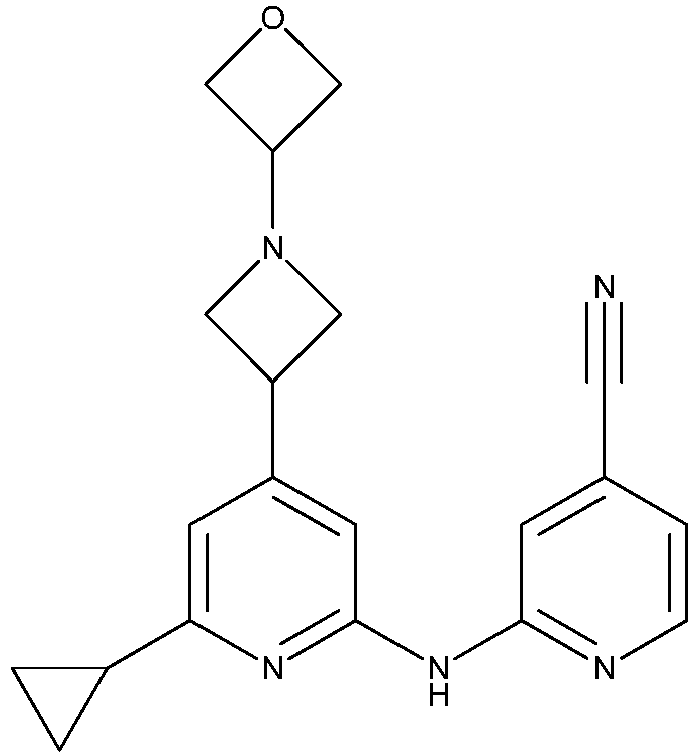
2-[6-Cyclopropyl-4-(1-oxetan-3-yl-azetidin-3-yl)-pyridin-2-ylamino]-isonicotinonitrile 7 
2-[6-(3-Ethoxy-azetidin-1-yl)-1'-oxetan-3-yl-1',2',3',4',5',6'-hexahydro-[4,4']bipyridinyl-2-ylamino]-isonicotinonitrile 8 
2-{6-(3-Methoxy-azetidin-1-yl)-4-[ 1-(2,2,2-trifluoroethyl)-azetidin-3-yl]-pyridin-2-ylamino} - isonicotinonitrile 9 
[6-Chloro-4-(1-oxetan-3-yl-azetidin-3-yl)-pyridin-2-yl] - (4-trifluoromethyl-pyridin-2-yl)-amine 18 
6'-(2-Oxa-6-aza-spiro[3.3]hept-6-yl)-2'-(4-trifluoromethyl-pyridin-2-ylamino)-2,3,5,6-tetrahydro-1H-[4,4']bipyridinyl-4-carbonitrile 19 
6'-(3-Methoxy-azetidin-1-yl)-2'-(4-trifluoromethyl-pyridin-2-ylamino)-2,3,5,6-tetrahydro-1H-[4,4']bipyridinyl-4-carbonitrile 20 
{6-Chloro-4-[1-(2,2,2-trifluoro-ethyl)-azetidin-3-yl]-pyridin-2-yl}-(4-difluoromethyl- pyridin- 2-yl)-amine 21 
2-(1'-Acetyl-6-methoxy-1',2',3',4',5',6'-hexahydro-[4,4']bipyridinyl-2-ylamino)- isonicotinonitrile 22 
2-(1'-Acetyl-6-isopropoxy-1',2',3',4',5',6'-hexahydro-[4,4']bipyridinyl-2-ylamino)- isonicotinonitrile 23 
6'-(3-Fluoro-azetidin- 1-yl)-2'-(4-trifluoromethyl-pyridin-2-ylamino)-2,3,5,6-tetrahydro-1H-[4,4']bipyridinyl-4-carbonitrile 24 
2-[6-Chloro-4-(1-oxetan-3-yl-azetidin-3-yl)-pyridin-2-ylamino]-isonicotinonitrile 25 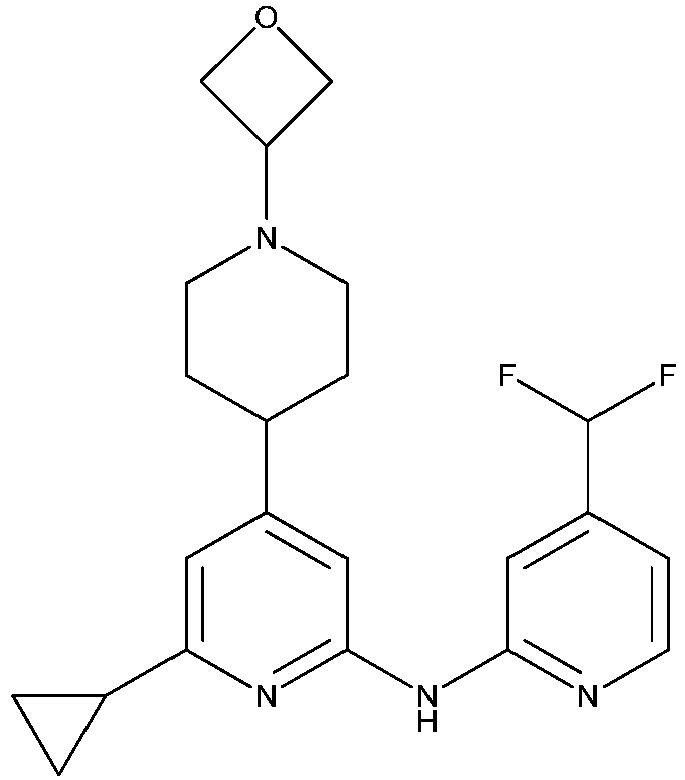
(6-Cyclopropyl- 1'-oxetan-3-yl-1',2',3',4',5',6'-hexahydro-[4,4']bipyridinyl-2-yl)-(4-difluoromethyl- pyridin- 2-yl)-amine 26 
(4-Difluoromethyl-pyridin-2-yl)-(6-ethyl-1'-oxetan-3-yl-1',2',3',4',5',6'-hexahydro-[4,4']bipyridinyl-2-yl)-amine 27 
(4-Difluoromethyl-pyridin-2-yl)-(6-methyl-1'-oxetan-3-yl-1',2',3',4',5',6'-hexahydro-[4,4']bipyridinyl-2-yl)-amine 28 
2-(6-Cyclopropyl-1'-oxetan-3-yl-1',2',3',4',5',6'-hexahydro-[4,4']bipyridinyl-2-ylamino)-isonicotinonitrile 29 
2-(6-Ethyl-1'-oxetan-3-yl-1',2',3',4',5',6'-hexahydro-[4,4']bipyridinyl-2-ylamino)-isonicotinonitrile 30 
2'-(4-Cyano-pyridin-2-ylamino)-6'-((R)-2-methylpyrrolidin-1-yl)-1-oxetan-3-yl-2,3,5,6-tetrahydro-1H-[4,4']bipyridinyl-4-carbonitrile 31 
2'-(4-Cyano-pyridin-2-ylamino)-6'-(3,3-difluoro-pyrrolidin-1-yl)-2,3,5,6-tetrahydro-1H-[4,4']bipyridinyl-4-carbonitrile 32 
2-{6-Chloro-4-[1-(2,2,2-trifluoro-ethyl)-azetidin-3-yl]-pyridin-2-ylamino}-isonicotinonitrile 33 
2'-(4-Cyano-pyridin-2-ylamino)-1-methyl-6'-((R)-2-methyl-pyrrolidin-1-yl)-2,3,5,6-tetrahydro-1H-[4,4']bipyridinyl-4-carbonitrile 34 
2'-(4-Cyano-pyridin-2-ylamino)-6'-(3-fluoro-azetidin-1-yl)-2,3,5,6-tetrahydro-1H-[4,4']bipyridinyl-4-carbonitrile 35 
6'-(3-Aza-bicyclo[3.1.0]hex-3-yl)-2'-(4-cyano-pyridin-2-ylamino)-1-oxetan-3-yl-2,3,5,6-tetrahydro-1H-[4,4']bipyridinyl-4-carbonitrile 36 
6'-(3-Aza-bicyclo[3.1.0]hex-3-yl)-2'-(4-cyano-pyridin-2-ylamino)-1-methyl-2,3,5,6-tetrahydro-1H-[4,4']bipyridinyl-4-carbonitrile 37 
2'-(4-Cyano-pyridin-2-ylamino)-6'-(3,3-difluoro-azetidin-1-yl)-2,3,5,6-tetrahydro-1H-[4,4']bipyridinyl-4-carbonitrile 38 
6'-Azetidin-1-yl-2'-(4-cyano-pyridin-2-ylamino)-2,3,5,6-tetrahydro- 1H-[4,4']bipyridinyl-4-carbonitrile 39 
2'-(4-Cyano-pyridin-2-ylamino)-6'-((R)-2-methylpyrrolidin-1-yl)-2,3,5,6-tetrahydro-1H-[4,4']bipyridinyl-4-carbonitrile 40 
6'-(3-Aza-bicyclo[3.1.0]hex-3-yl)-2'-(4-cyano-pyridin-2-ylamino)-2,3,5,6-tetrahydro-1H-[4,4']bipyridinyl-4-carbonitrile 41 
3-[2-Chloro-6-(4-cyano-pyridin-2-ylamino)-pyridin-4-yl]-azetidine-1-carboxylic acid tert-butyl ester 42 
1-[6-(4-Difluoromethyl-pyridin-2-ylamino)-1'-oxetan-3-yl-1',2',3',4',5',6'-hexahydro-[4,4']bipyridinyl-2-yl]-pyrrolidin-2-one 43 
(6-Butoxy-1'-oxetan-3-yl-1',2',3',4',5',6'-hexahydro-[4,4']bipyridinyl-2-yl)-(4-difluoromethyl- pyridin- 2-yl)-amine 44 
(4-Difluoromethyl-pyridin-2-yl)-[6-(3-fluoro-azetidin-1-yl)-1'-oxetan-3-yl-1',',2',3',4',5',6'-hexahydro-[4,4']bipyridinyl-2-yl]-amine 45 
3-[2-Chloro-6-(4-difluoromethyl- pyridin- 2-ylamino)-pyridin-4-yl]-azetidine-1-carboxylic acid tert-butyl ester 46 
2-[4-(4-Cyano-tetrahydropyran-4-yl)-6-(3-fluoro-azetidin-1-yl)-pyridin-2-ylamino]-isonicotinonitrile 47 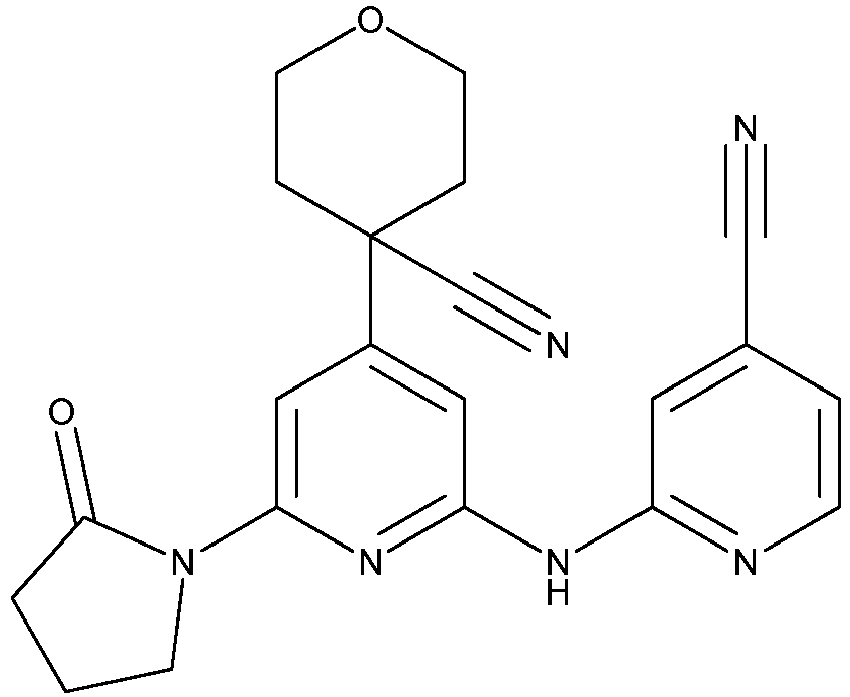
2-[4-(4-Cyano-tetrahydropyran-4-yl)-6-(2-oxopyrrolidin-1-yl)-pyridin-2-ylamino]-isonicotinonitrile 48 
(4-Difluoromethyl-pyridin-2-yl)-[6-(3-methoxy-azetidin-1-yl)-1'-oxetan-3-yl-1',2',3',4',5',6'-hexahydro-[4,4']bipyridinyl-2-yl]-amine 49 
4-[2-(4-Difluoromethyl-pyridin-2-ylamino)-6-(2-oxo-pyrrolidin-1-yl)-pyridin-4-yl] -tetrahydropyran-4-carbonitrile 50 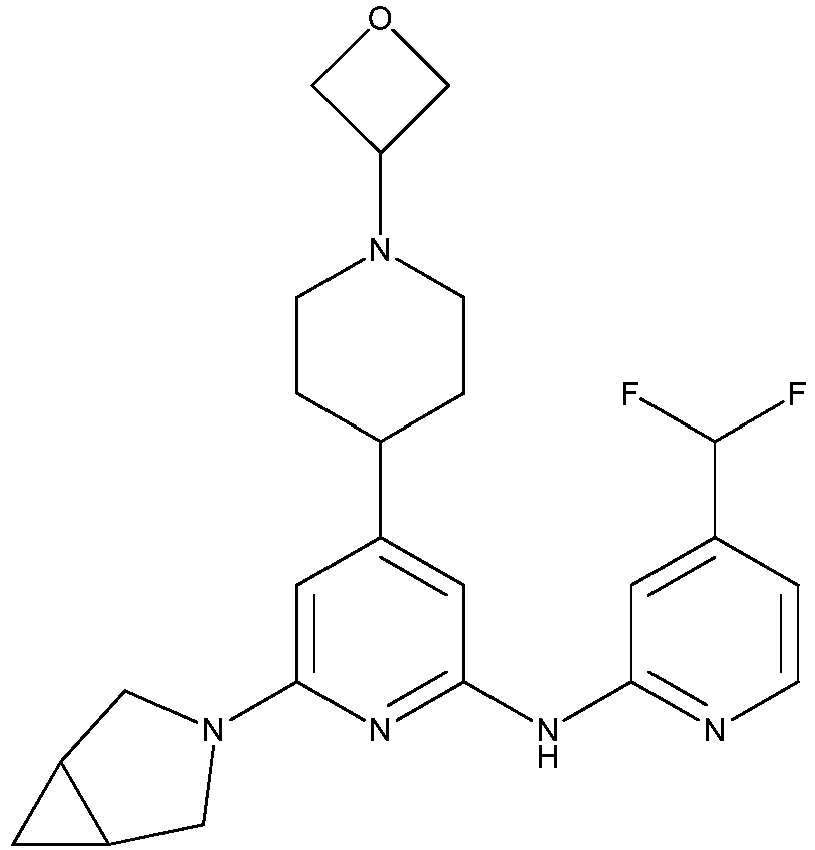
[6-(3-Aza-bicyclo[3.1.0]hex-3-yl)-1'-oxetan-3-yl-1',2',3',4',5',6'-hexahydro-[4,4']bipyridinyl-2-yl]-(4-difluoromethyl-pyridin-2-yl)-amine 51 
(6-Azetidin-1-yl-1'-oxetan-3-yl-1',2',3',4',5',6'-hexahydro-[4,4']bipyridinyl-2-yl)-(4-difluoromethyl-pyridin-2-yl)-amine 52 
4-[2-(3-Aza-bicyclo[3.1.0]hex-3-yl)-6-(4-difluoromethyl-pyridin-2-ylamino)-pyridin-4-yl]-tetrahydro- pyran -4-carbonitrile 53 
4-[2-Azetidin-1-yl-6-(4-difluoromethyl- pyridin- 2-ylamino)-pyridin-4-yl]-tetrahydro- pyran -4-carbonitrile 54 
4-[2-(4-Difluoromethyl-pyridin-2-ylamino)-6-(3-methoxy-azetidin-1-yl)-pyridin-4-yl] -tetrahydropyran-4-carbonitrile 55 
4- [2- (4-Difluoromethyl-pyridin-2-ylamino)-6-(3-fluoro-azetidin-1-yl)-pyridin-4-yl] -tetrahydropyran-4-carbonitrile 56 
4-[2-(4-Difluoromethyl-pyridin-2-ylamino)-6-(3,3-difluoro-pyrrolidin-1-yl)-pyridin-4-yl] -tetrahydropyran-4-carbonitrile 57 
1-[6'-Cyclopropyl-2'-(4-difluoromethyl- pyridin- 2-ylamino)-3,4,5,6-tetrahydro-2H-[4,4']bipyridinyl-1-yl] - ethanone 58 
1-[2'-(4-Difluoromethyl-pyridin-2-ylamino)-6'-ethyl-3,4,5,6-tetrahydro-2H-[4,4']bipyridinyl-1-yl]-ethanone 59 
2-(1'-Acetyl-6-cyclopropyl-1',2',3',4',5',6'-hexahydro-[4,4']bipyridinyl-2-ylamino)- isonicotinonitrile 60 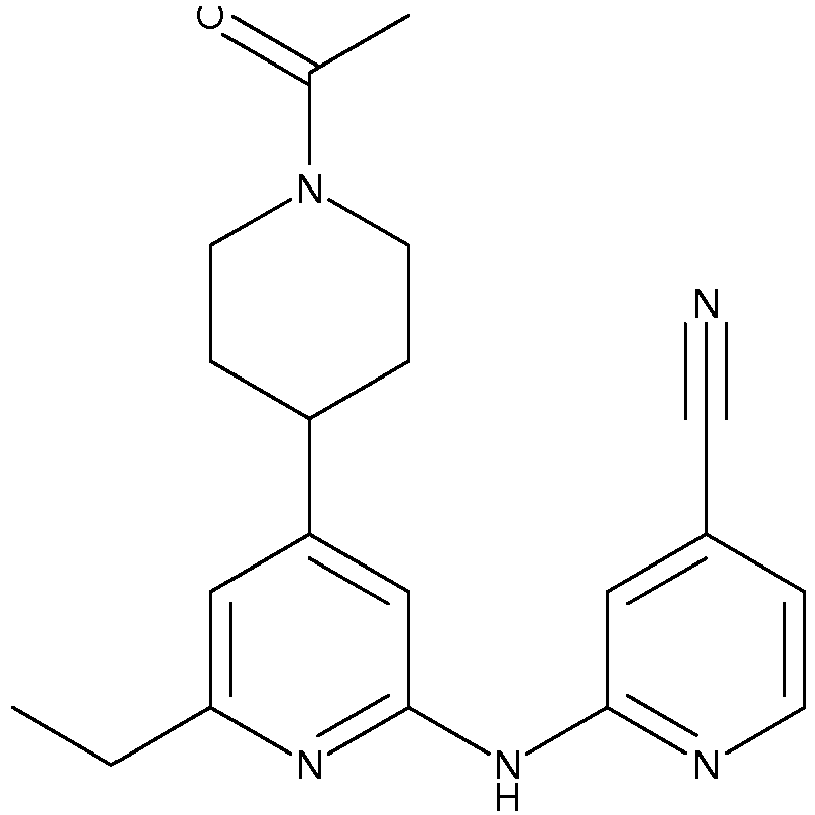
2-(1'-Acetyl-6-ethyl-1',2',3',4',5',6'-hexahydro-[4,4']bipyridinyl-2-ylamino)- isonicotinonitrile 61 
2-[4-(4-Cyano-tetrahydropyran-4-yl)-6-(3,3-difluoro-pyrrolidin-1-yl)-pyridin-2-ylamino]-isonicotinonitrile 62 
1-[2'-(4-Difluoromethyl-pyridin-2-ylamino)-6'-methyl-3,4,5,6-tetrahydro-2H-[4,4']bipyridinyl-1-yl]-ethanone 63 
2-[4-(4-Cyano-tetrahydropyran-4-yl)-6-cyclopropyl-pyridin-2-ylamino]-isonicotinonitrile 64 
2-[4-(4-Cyano-tetrahydropyran-4-yl)-6-methyl-pyridin-2-ylamino]-isonicotinonitrile 65 
2-(1'-Acetyl-6-chloro-1',2',3',4',5',6'-hexahydro-[4,4']bipyridinyl-2-ylamino)- isonicotinonitrile 66 
4-[2-Chloro-6-(4-difluoromethyl- pyridin- 2-ylamino)-pyridin-4-yl]-tetrahydro- pyran -4-carbonitrile 67 
2-[6-(3-Aza-bicyclo[3.1.0]hex-3-yl)-4-(4-cyano-tetrahydro-pyran-4-yl)-pyridin-2-ylamino]-isonicotinonitrile 68 
(4-Difluoromethyl-pyridin-2-yl)-[6-((R)-2-methylpyrrolidin-1-yl)-1'-oxetan-3-yl-1',2',3',4',5',6'-hexahydro-[4,4']bipyridinyl-2-yl]-amine 69 
2-[4-(4-Cyano-tetrahydropyran-4-yl)-6-(6,6-difluoro-3-aza-bicyclo[3.2.0]hept-3-yl)-pyridin-2-ylamino]-isonicotinonitrile 70 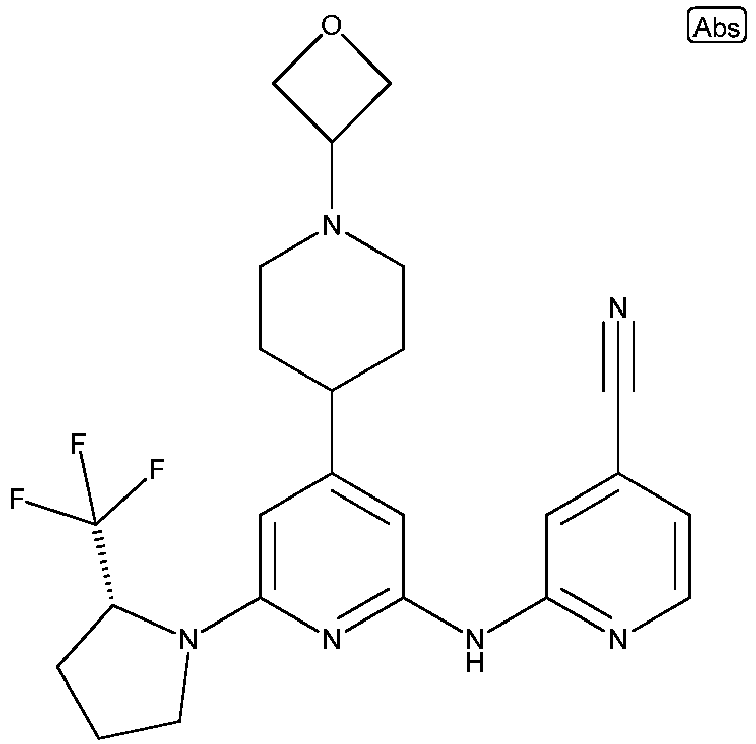
2-[1'-Oxetan-3-yl-6-((R)-2-trifluoromethyl-pyrrolidin-1-yl)-1',2',3',4',5',6'-hexahydro-[4,4']bipyridinyl-2-ylamino]-isonicotinonitrile 71 
(4-Difluoromethyl-pyridin-2-yl)-[6-(3,3-difluoro-pyrrolidin-1-yl)-1'-oxetan-3-yl-1',2',3',4',5',6'-hexahydro-[4,4']bipyridinyl-2-yl]-amine 72 
2-[6-Methyl-1'-(2,2,2-trifluoro-ethyl)-1',2',3',4',5',6'-hexahydro-[4,4']bipyridinyl-2-ylamino]-isonicotinonitrile 73 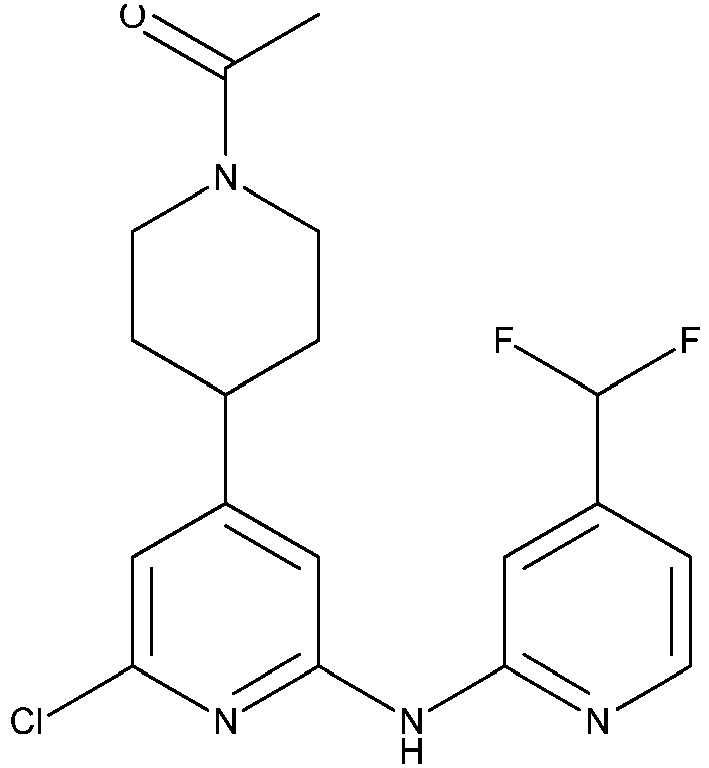
1-[6'-Chloro-2'-(4-difluoromethyl- pyridin- 2-ylamino)-3,4,5,6-tetrahydro-2H-[4,4']bipyridinyl-1-yl] - ethanone 74 
2-[4-(4-Cyano-tetrahydropyran-4-yl)-6-((R)-2-methyl-pyrrolidin-1-yl)-pyridin-2-ylamino]-isonicotinonitrile 75 
2-[6-Azetidin-1-yl-4-(4-cyano-tetrahydro-pyran-4-yl)-pyridin-2-ylamino]-isonicotinonitrile 76 
(6-Chloro-1'-oxetan-3-yl-1',2',3',4',5',6'-hexahydro-[4,4']bipyridinyl-2-yl)-(4-difluoromethyl- pyridin- 2-yl)-amine 77 
2-[6-Chloro-4-(4-cyano-tetrahydro-pyran-4-yl)-pyridin-2-ylamino]-isonicotinonitrile 78 
2-[6-Chloro-4-(tetrahydropyran-4-yl)-pyridin-2-ylamino]-isonicotinonitrile 79 
2-[1'-Oxetan-3-yl-6-(2-oxopyrrolidin-1-yl)-1',2',3',4',5',6'-hexahydro-[4,4']bipyridinyl-2-ylamino]-isonicotinonitrile 80 
2-[6-Methyl-4-(tetrahydropyran-4-yl)-pyridin-2-ylamino]-isonicotinonitrile 81 
2-[6-(2-Aza-bicyclo[2.1.1]hex-2-yl)-4-(tetrahydro-pyran-4-yl)-pyridin-2-ylamino]-isonicotinonitrile 82 
2-[6-(2-Oxa-6-aza-spiro[3.3]hept-6-yl)-4-(tetrahydro-pyran-4-yl)-pyridin-2-ylamino]-isonicotinonitrile 83 
2-[6-(2-Aza-bicyclo[3.1.0]hex-2-yl)-4-(tetrahydro-pyran-4-yl)-pyridin-2-ylamino]-isonicotinonitrile 84 
2-[6-(3-Aza-bicyclo[3.1.0]hex-3-yl)-4-(tetrahydro-pyran-4-yl)-pyridin-2-ylamino]-isonicotinonitrile 85 
2-[6-(2-Oxa-7-aza-spiro[4.4]non-7-yl)-4-(tetrahydro-pyran-4-yl)-pyridin-2-ylamino]-isonicotinonitrile 86 
2-[6-(3-Fluoro-azetidin-1-yl)-4-(tetrahydro-pyran-4-yl)-pyridin-2-ylamino] - isonicotinonitrile 87 
2-[6-(3-Methoxy-azetidin-1-yl)-4-(tetrahydro-pyran-4-yl)-pyridin-2-ylamino]-isonicotinonitrile 88 
2-[6-(3-Methoxy- pyrrolidin-1-yl)-1'-oxetan-3-yl-1',2',3',4',5',6'-hexahydro-[4,4']bipyridinyl-2-ylamino]-isonicotinonitrile 89 
2-[6-(3,3-Difluoro-azetidin-1-yl)-1'-oxetan-3-yl-1',2',3',4',5',6'-hexahydro-[4,4']bipyridinyl-2-ylamino]-isonicotinonitrile 90 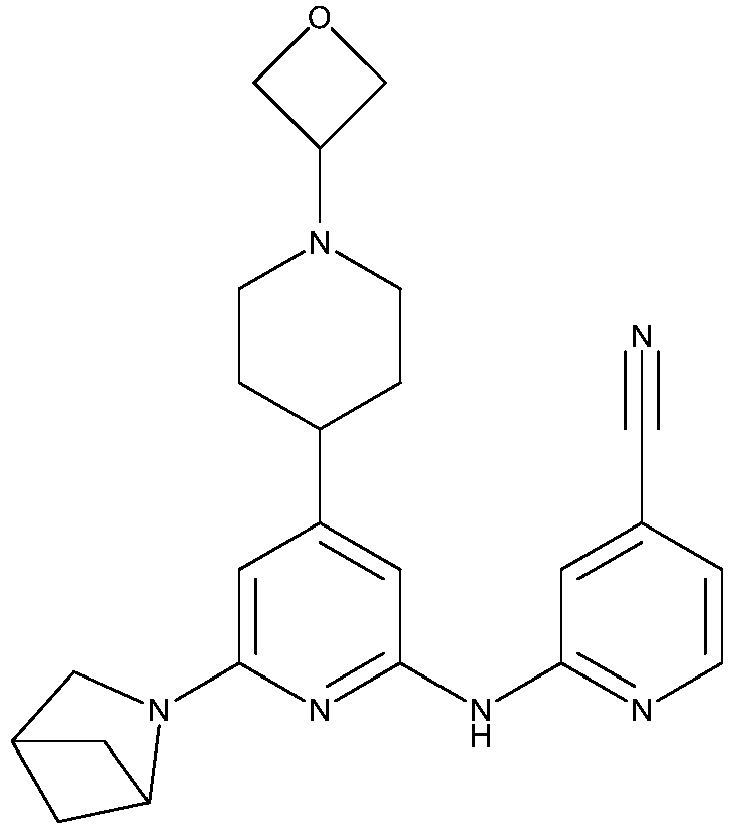
2-[6-(2-Aza-bicyclo[2.1.1]hex-2-yl)-1'-oxetan-3-yl-1',2',3',4',5',6'-hexahydro-[4,4']bipyridinyl-2-ylamino]-isonicotinonitrile 91 
2-[6-(3-Fluoro-azetidin-1-yl)-1'-oxetan-3-yl-1',2',3',4',5',6'-hexahydro-[4,4']bipyridinyl-2-ylamino]-isonicotinonitrile 92 
2-[6-(3-Aza-bicyclo[3.1.0]hex-3-yl)-1'-oxetan-3-yl-1',2',3',4',5',6'-hexahydro-[4,4']bipyridinyl-2-ylamino]-isonicotinonitrile 93 
2-[6-(6-Oxa-2-aza-spiro[3.4]oct-2-yl)-1'-oxetan-3-yl-1',2',3',4',5',6'-hexahydro-[4,4']bipyridinyl-2-ylamino]-isonicotinonitrile 94 
2-[6-(5,5-Difluoro-2-aza-spiro[3.3]hept-2-yl)-1'-oxetan-3-yl-1',2',3',4',5',6'-hexahydro-[4,4']bipyridinyl-2-ylamino]-isonicotinonitrile 95 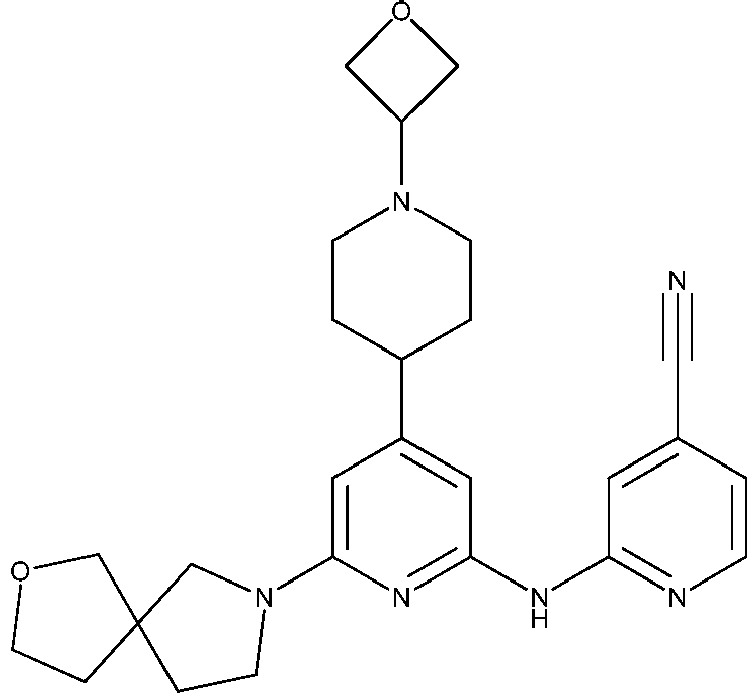
2-[6-(2-Oxa-7-aza-spiro[4.4]non-7-yl)-1'-oxetan-3-yl-1',2',3',4',5',6'-hexahydro-[4,4']bipyridinyl-2-ylamino]-isonicotinonitrile 96 
2-[6-(3-Methoxy-azetidin-1-yl)-1'-oxetan-3-yl-1',2',3',4',5',6'-hexahydro-[4,4']bipyridinyl-2-ylamino]-isonicotinonitrile 97 
2-[6-(6,6-Difluoro-3-aza-bicyclo[3.2.0]hept-3-yl)-1'-oxetan-3-yl-1',2',3',4',5',6'-hexahydro-[4,4']bipyridinyl-2-ylamino]-isonicotinonitrile 98 
2-[6-(2-Oxa-6-aza-spiro[3.3]hept-6-yl)-1'-oxetan-3-yl-1',2',3',4',5',6'-hexahydro-[4,4']bipyridinyl-2-ylamino]-isonicotinonitrile 99 
2-[6-(2-Aza-bicyclo[3.1.0]hex-2-yl)-1'-oxetan-3-yl-1',2',3',4',5',6'-hexahydro-[4,4']bipyridinyl-2-ylamino]-isonicotinonitrile 100 
2-[6-(6,6-Difluoro-3-aza-bicyclo[3.2.0]hept-3-yl)-4-(tetrahydro-pyran-4-yl)-pyridin-2-ylamino]-isonicotinonitrile 101 
2-[6-(3-Methoxy-pyrrolidin-1-yl)-4-(tetrahydro-pyran-4-yl)-pyridin-2-ylamino]-isonicotinonitrile 102 
2-[6-(6-Oxa-2-aza-spiro [3.4] oct-2-yl)-4-(tetrahydro-pyran-4-yl)-pyridin-2-ylamino]-isonicotinonitrile 103 
2-[6-(5,5-Difluoro-2-aza-spiro[3.3]hept-2-yl)-4-(tetrahydro-pyran-4-yl)-pyridin-2-ylamino]-isonicotinonitrile 104 
2-[6-(3,3-Difluoro-azetidin-1-yl)-4-(tetrahydro-pyran-4-yl)-pyridin-2-ylamino]-isonicotinonitrile 105 
2-(6-Azetidm-1-yl-1'-oxetan-3-yM',2',3',4',5',6'-hexahydro-[4,4']bipyridinyl-2-ylamino)-isonicotinonitrile 106 
2-(6-Chloro-1'-oxetan-3-yl-1',2',3',4',5',6'-hexahydro-[4,4']bipyridinyl-2-ylamino)- isonicotinonitrile 107 
2-[6-Methyl-1'-(2,2,2-trifluoro-acetyl)-1',2',3',4',5',6'-hexahydro-[4,4']bipyridinyl-2-ylamino]-isonicotinonitrile 108 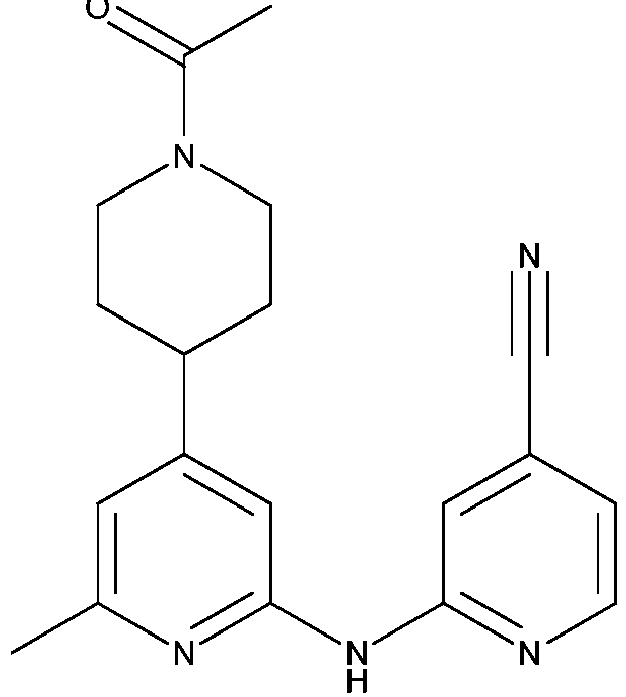
2-(1'-Acetyl-6-methyl-1',2',3',4',5',6'-hexahydro-[4,4']bipyridinyl-2-ylamino)- isonicotinonitrile 109 
2-(1'-Methanesulfonyl-6-methyl-1',2',3',4',5',6'-hexahydro-[4,4']bipyridinyl-2-ylamino)-isonicotinonitrile 110 
2-(6-Methyl-1'-oxetan-3-yl-1',2',3',4',5',6'-hexahydro-[4,4']bipyridinyl-2-ylamino)- isonicotinonitrile 111 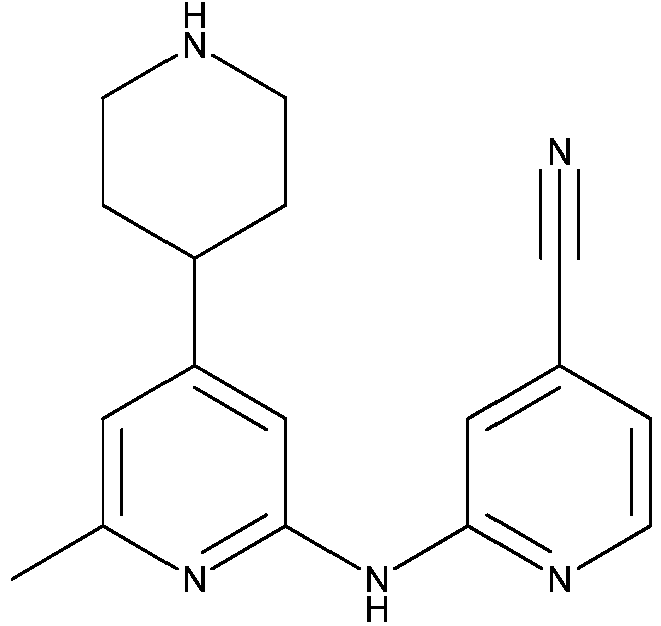
2-(6-Methyl-1',2',3',4',5',6'-hexahydro-[4,4']bipyridinyl-2-ylamino)-isonicotinonitrile 112 
2-[4-(3,6-Dihydro-2H-pyran-4-yl)-6-methyl-pyridin-2-ylamino]-isonicotinonitrile 113 
(4-Aminomethyl- pyridin- 2-yl)-[6-methyl-4-(tetrahydropyran-4-yl)-pyridin-2-yl]-amine 114 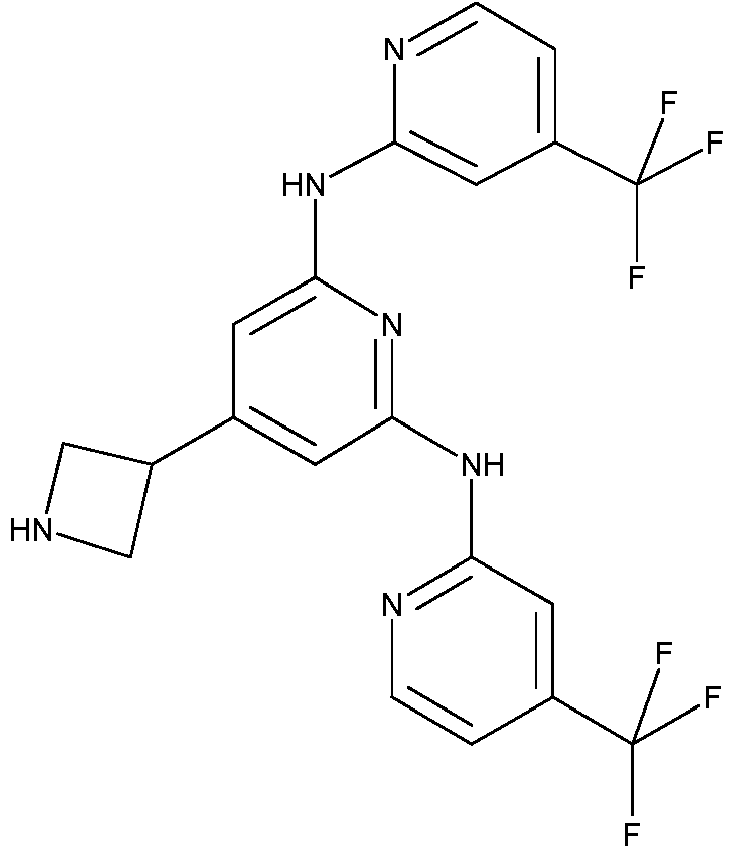
4-Azetidin-3-yl-N,N'-bis-(4-trifluoromethyl-pyridin-2-yl)-pyridine-2,6-diamine 115 
2-{6-(2-Methyl-pyrrolidin-1-yl)-4-[1-(tetrahydropyran-4-ylmethyl)-pyrrolidin-3-yl]-pyridin-2-ylamino }-isonicotinonitrile 116 
2'-(4-Cyano-pyridin-2-ylamino)-6'-methyl-3,4,5,6-tetrahydro-2H-[4,4']bipyridinyl-1-carboxylic acid tert-butyl ester 117 
[6-(3,3-Difluoro-pyrrolidin-1-yl)-4-(1-oxetan-3-yl-azetidin-3-yl)-pyridin-2-yl]-(4-trifluoromethyl- pyridin-2-yl)-amine 118 
(4-Difluoromethoxy-pyridin-2-yl)-[6-(1-methyl-1H-pyrazol-4-yl)-4-(tetrahydro-pyran-4-yl)-pyridin-2-yl]-amine 119 
2-[1'-Acetyl-6-((R)-2-methyl-pyrrolidin-1-yl)-1',2',3',4',5',6'-hexahydro-[4,4']bipyridinyl-2-ylamino]-isonicotinonitrile 120 
(1'-Oxetan-3-yl-1',2',3',4',5',6'-hexahydro-[4,4']bipyridinyl-2-yl)-(4-trifluoromethyl-pyridin-2-yl)-amine 121 
2-[6-((R)-2-Methylpyrrolidin-1-yl)-1'-oxetan-3-yl-1',2',3',4',5',6'-hexahydro-[4,4']bipyridinyl-2-ylamino] -isonicotinonitrile 122 
[6-(1-Methyl-1H-pyrazol-4-y1)-4-(tetrahydro-pyran-4-yl)-pyridin-2-y1]-(4-trifluoromethyl-pyridin-2-yl)-amine 123 
2-[6-((R)-2-Methylpyrrolidin-1-yl)-4-(tetrahydro-pyran-4-yl)-pyridin-2-ylamino]-isonicotinonitrile 124 
2-(1'-Oxetan-3-yl-1',2',3',4',5',6'-hexahydro-[4,4']bipyridinyl-2-ylamino)- isonicotinonitrile 125 
[6-((R)-2-Methyl-pyrrolidin-1-yl)-4-(tetrahydro-pyran-4-yl)-pyridin-2-y1]-(4-trifluoromethyl-pyridin-2-yl)-amine 126 
[6-(3,3-Difluoro-pyrrolidin-1-yl)-4-(1-methanesulfonyl-azetidin-3-yl)-pyridin-2-yl]-(4-trifluoromethyl-pyridin-2-yl)-amine 127 
1-{3-[2-(3,3-Difluoro-pyrrolidin-1-yl)-6-(4-trifluoromethyl-pyridin-2-ylamino)-pyridin-4-yl]-azetidin-1-yl}-ethanone 128 
2-(1'-Methanesulfonyl-1',2',3',4',5',6'-hexahydro-[4,4']bipyridinyl-2-ylamino)- isonicotinonitrile 129 
2-(1'-Acetyl-1',2',3',4',5',6'-hexahydro-[4,4']bipyridinyl-2-ylamino)-isonicotinonitrile 130 
2-[6-(3,3-Difluoro-pyrrolidin-1-yl)-4-(tetrahydro-pyran-4-yl)-pyridin-2-ylamino]-isonicotinonitrile 131 
2-[6-(3,3-Difluoro-pyrrolidin-1-yl)-1'-oxetan-3-yl-1',2',3',4',5',6'-hexahydro-[4,4']bipyridinyl-2-ylamino]-isonicotinonitrile 132 
[4-(1-Methanesulfonyl-pyrrolidin-3-yl)-6-(2-methyl-pyrrolidin-1-yl)-pyridin-2-yl]-(4-trifluoromethyl-pyridin-2-yl)-amine 133 
(1-Methyl-1H-imidazol-4-yl)-{3-[2-(2-methylpyrrolidin-1-yl)-6-(4-trifluoromethyl-pyridin-2-ylamino)-pyridin-4-yl]-pyrrolidin-1-yl}-methanone 134 
1-[2'-(1-Methyl-1H-pyrazol-4-yl)-6'-(4-methyl-pyridin-2-ylamino)-3,4,5,6-tetrahydro-2H-[4,4']bipyridinyl-1-yl]-ethanone 135 
(4-Methyl-pyridin-2-yl)-[6-((R)-2-methyl-pyrrolidin-1-yl)-1'-oxetan-3-yl-1',2',3',4',5',6'-hexahydro-[4,4']bipyridinyl-2-yl]-amine 136 
[1'-Methanesulfonyl-6-((R)-2-methyl-pyrrolidin-1-yl)-1',2',3',4',5',6'-hexahydro-[4,4']bipyridinyl-2-yl]-(4-methyl-pyridin-2-yl)-amine 137 
[1'-(2-Fluoro-ethyl)-6-(((R)-2-methyl-pyrrolidin-1-yl)-1',2',3',4',5',6'-hexahydro-[4,4']bipyridinyl-2-yl]-(4-trifluoromethyl-pyridin- 2-yl)-amine 138 
[6'-(3,3-Difluoro-pyrrolidin-1-yl)-1-methyl-1,2,3,4,5,6-hexahydro-[3,4']bipyridinyl-2'-yl]-(4-trifluoromethyl-pyridin-2-yl)-amine 139 
[1'-Methanesulfonyl-6-((R)-2-methyl-pyrrolidin-1-yl)-1',2',3',4',5',6'-hexahydro-[4,4']bipyridinyl-2-yl]-(4-trifluoromethyl-pyridin- 2-yl)-amine 140 
2-[6'-((R)-2-Methylpyrrolidin-1-yl)-2'-(4-trifluoromethyl-pyridin-2-ylamino)-3,4,5,6-tetrahydro-2H-[4,4']bipyridinyl-1-yl]-ethanol 141 
1-[2'-((R)-2-Methylpyrrolidin-1-yl)-6'-(4-trifluoromethyl-pyridin-2-ylamino)-3,4,5,6-tetrahydro-2H-[4,4']bipyridinyl-1-yl]-ethanone 142 
1-[6'-(4-Cyclopropyl-pyridin-2-ylamino)-2'-((R)-2-methyl-pyrrolidin-1-yl)-3,4,5,6-tetrahydro- 2H-[4,4']bipyridinyl-1-yl]-ethanone 143 
1-[2'-(3,3-Difluoro-pyrrolidin-1-yl)-6'-(4-trifluoromethyl-pyridin-2-ylamino)-3,4,5,6-tetrahydro-2H-[4,4']bipyridinyl-1-yl]-ethanone 144 
2-{Methyl-[6-(4-methyl-pyridin-2-ylamino)-1',2',3',4',5',6'-hexahydro-[4,4']bipyridinyl-2-yl]-amino}-ethanol 145 
cyclohexyl(4-(2-((5-methylpyridin-2-yl)amino)pyridin-4-yl)piperidin-1-yl)methanone 146 
(S)-piperidin-2-yl(4-(2-(pyridin-2-ylamino)pyridin-4-yl)piperidin-1-yl)methanone 147 
(S)-(4-(2-((4-methylpyridin-2-yl)amino)pyridin-4-yl)piperidin-1-yl)(piperidin-2-yl)methanone - A pharmaceutical composition comprising a compound of any of the preceeding claims and a pharmaceutically acceptable carrier, diluent or excipient.
- A compound of formula I according to any of claims 1-20 for use as therapeutically active substance.
- A compound of formula I according to claims 1-20 for the use as therapeutically active substance for inhibiting or preventing degeneration of a central nervous system (CNS) neuron or a portion thereof, the method comprising administering to the CNS neuron, wherein the administering of a compound of formula I results in a decrease of cJun phosphorylation, cJun activity, and / or cJun expression.
- A compound of formula I according to claims 1-20 for the use as therapeutically active substance for inhibiting or preventing degeneration of a central nervous system (CNS) neuron or a portion thereof, the method comprising administering to the CNS neuron, wherein the administering of a compound of formula I results in a decrease in p38 phosphorylation, p38 activity, and/or p38 expression.
- A compound of formula I according to claims 1-20 for the use as therapeutically active substance for decreasing the progression of a neurodegenerative disease or condition in a patient suffering therefrom comprising administering to said patient a therapeutically effective amount of a compound of formula I or a pharmaceutically acceptable salt thereof, in particular for the use as therapeutically active substance for decreasing the progression of a neurodegenerative disease or condition in a patient suffering therefrom comprising administering to said patient a therapeutically effective amount of a compound of formula I or a pharmaceutically acceptable salt thereof, wherein said neurodegenerative disease of condition is selected from the group consisting of: Alzheimer's disease, Huntington's disease, Parkinson's disease, Parkinson's-plus diseases, amyotrophic lateral sclerosis (ALS), ischemia, stroke, intracranial hemorrhage, cerebral hemorrhage, trigeminal neuralgia, glossopharyngeal neuralgia, Bell's Palsy, myasthenia gravis, muscular dystrophy, progressive muscular atrophy, primary lateral sclerosis (PLS), pseudobulbar palsy, progressive bulbar palsy, spinal muscular atrophy, inherited muscular atrophy, invertebrate disk syndromes, cervical spondylosis, plexus disorders, thoracic outlet destruction syndromes, peripheral neuropathies, prophyria, multiple system atrophy, progressive supranuclear palsy, corticobasal degeneration, dementia with Lewy bodies, frontotemporal dementia, demyelinating diseases, Guillain-Barré syndrome, multiple sclerosis, Charcot-Marie_Tooth disease, prion disease, Creutzfeldt-Jakob disease, Gerstmann-Sträussler-Scheinker syndrome (GSS), fatal familial insomnia (FFI), bovine spongiform encephalopathy, Pick's disease, epilepsy, AIDS demential complex, nerve damage caused by exposure to toxic compounds selected from the group consisting of heavy metals, industrial solvents, drugs and chemotherapeutic agents; injury to the nervous system caused by physical, mechanical or chemical trauma, glaucoma, lattice dystrophy, retinitis pigmentosa, age-related macular degeneration (AMD), photoreceptor degeneration associated with wet or dry AMD, other retinal degeneration, optic nerve drusen, optic neuropthy and optic neuritis, more particular for the use as therapeutically active substance for decreasing the progression of a neurodegenerative disease or condition in a patient suffering therefrom comprising administering to said patient a therapeutically effective amount of a compound of formula I or a pharmaceutically acceptable salt thereof, wherein said neurodegenerative disease of condition in a patient is selected from the group consisting of: Alzheimer's disease, Parkinson's disease, and amyotrophic lateral sclerosis (ALS).
Applications Claiming Priority (2)
| Application Number | Priority Date | Filing Date | Title |
|---|---|---|---|
| US201261650281P | 2012-05-22 | 2012-05-22 | |
| PCT/EP2013/060351 WO2013174780A1 (en) | 2012-05-22 | 2013-05-21 | Substituted dipyridylamines and uses thereof |
Publications (2)
| Publication Number | Publication Date |
|---|---|
| EP2852584A1 EP2852584A1 (en) | 2015-04-01 |
| EP2852584B1 true EP2852584B1 (en) | 2018-02-28 |
Family
ID=48464010
Family Applications (1)
| Application Number | Title | Priority Date | Filing Date |
|---|---|---|---|
| EP13723514.9A Not-in-force EP2852584B1 (en) | 2012-05-22 | 2013-05-21 | Substituted dipyridylamines and uses thereof |
Country Status (10)
| Country | Link |
|---|---|
| US (1) | US9399636B2 (en) |
| EP (1) | EP2852584B1 (en) |
| JP (1) | JP6267193B2 (en) |
| KR (1) | KR20150023445A (en) |
| CN (1) | CN104271566B (en) |
| BR (1) | BR112014026176A2 (en) |
| CA (1) | CA2871695A1 (en) |
| MX (1) | MX2014013407A (en) |
| RU (1) | RU2014148732A (en) |
| WO (1) | WO2013174780A1 (en) |
Families Citing this family (26)
| Publication number | Priority date | Publication date | Assignee | Title |
|---|---|---|---|---|
| MX2015009270A (en) | 2013-01-18 | 2015-10-30 | Hoffmann La Roche | 3-substituted pyrazoles and use as dlk inhibitors. |
| RU2015147601A (en) | 2013-05-01 | 2017-06-05 | Ф. Хоффманн-Ля Рош Аг | C-Bound Heterocycloalkyl-Substituted Pyrimidines and Their Applications |
| MX2016008110A (en) * | 2013-12-20 | 2016-08-19 | Hoffmann La Roche | Pyrazole derivatives and uses thereof as inhibitors of dlk. |
| EP3204379B1 (en) * | 2014-10-10 | 2019-03-06 | Genentech, Inc. | Pyrrolidine amide compounds as histone demethylase inhibitors |
| KR20180058758A (en) | 2015-09-22 | 2018-06-01 | 그레이버그 비젼, 인크. | Compounds and compositions for the treatment of ocular disorders |
| US10851082B2 (en) | 2015-10-28 | 2020-12-01 | Northwestern University | Substituted aromatic n-heterocyclic compounds as inhibitors of mitogen-activated protein kinase interacting kinase 1 (MNK1) and 2 (MNK2) |
| US10093668B2 (en) | 2015-10-28 | 2018-10-09 | Northwestern University | Substituted aromatic N-heterocyclic compounds as inhibitors of mitogen-activated protein kinase interacting kinase 1 (Mnk1) and 2 (Mnk2) |
| MX2019002444A (en) * | 2016-08-29 | 2019-09-02 | Univ Texas | Inhibitors of dual leucine ziper (dlk) kinase for the treatment of disease. |
| CA3045947A1 (en) | 2016-12-08 | 2018-06-14 | Michael J. Soth | Bicyclo[1.1.1]pentane inhibitors of dual leucine zipper (dlk) kinase for the treatment of disease |
| MX2019011242A (en) | 2017-03-23 | 2020-01-21 | Graybug Vision Inc | Drugs and compositions for the treatment of ocular disorders. |
| MX2019013363A (en) | 2017-05-10 | 2020-01-13 | Graybug Vision Inc | Extended release microparticles and suspensions thereof for medical therapy. |
| CN119613408A (en) | 2017-07-14 | 2025-03-14 | 豪夫迈·罗氏有限公司 | Bicyclic ketone compounds and methods of use thereof |
| ES2927715T3 (en) | 2017-10-05 | 2022-11-10 | Fulcrum Therapeutics Inc | p38 kinase inhibitors reduce the expression of dux4 and the genes that follow it for the treatment of FSHD |
| WO2019072942A1 (en) | 2017-10-11 | 2019-04-18 | F. Hoffmann-La Roche Ag | Bicyclic compounds for use as rip1 kinase inhibitors |
| MX2020003451A (en) | 2017-10-31 | 2020-08-03 | Hoffmann La Roche | Bicyclic sulfones and sulfoxides and methods of use thereof. |
| EP3781571B1 (en) | 2018-04-20 | 2024-01-17 | F. Hoffmann-La Roche AG | N-[4-oxo-2,3-dihydro-pyrido[3,2-b][1,4]oxazepin-3-yl]-5,6-dihydro-4h-pyrrolo[1,2-b]pyrazole-2-carboxamide derivatives and related compounds as rip1 kinase inhibitors for treating e.g. irritable bowel syndrome (ibs) |
| CN112074514B (en) | 2018-05-09 | 2024-10-29 | 礼蓝动物保健有限公司 | New quinoline derivatives |
| CA3123215C (en) * | 2018-12-19 | 2024-04-02 | Disarm Therapeutics, Inc. | Inhibitors of sarm1 in combination with neuroprotective agents |
| CN113302193B (en) | 2019-01-11 | 2026-05-29 | 豪夫迈·罗氏有限公司 | Bicyclic pyrrolotriazolone compounds and their usage |
| US11560366B2 (en) * | 2019-10-21 | 2023-01-24 | Board Of Regents, The University Of Texas System | Bicyclo[1.1.1]pentane inhibitors of dual leucine zipper (DLK) kinase for the treatment of disease |
| US11866421B2 (en) * | 2021-05-31 | 2024-01-09 | Epigen Biosciences, Inc. | Pyrimidine and pyridine amine compounds and usage thereof in disease treatment |
| WO2023034808A1 (en) * | 2021-09-01 | 2023-03-09 | The United States Of America, As Represented By The Secretary, Department Of Health And Human Services | Mixed lineage kinase inhibitors and methods of use |
| CN114230556B (en) * | 2022-01-05 | 2022-10-14 | 广州安岩仁医药科技有限公司 | Preparation method of CDK4/6 inhibitor intermediate |
| EP4673441A1 (en) * | 2023-03-01 | 2026-01-07 | Ureka Bioscienes, Inc. | Lzk inhibitors |
| WO2025188848A1 (en) * | 2024-03-06 | 2025-09-12 | Uereka Biosciences, Inc. | Lzk inhibitors |
| CN119684305B (en) * | 2024-11-29 | 2025-11-28 | 上海药坦药物研究开发有限公司 | Preparation method of 8, 8-difluoro-2, 6-diazaspiro [3.4] octane compound |
Family Cites Families (36)
| Publication number | Priority date | Publication date | Assignee | Title |
|---|---|---|---|---|
| US3773919A (en) | 1969-10-23 | 1973-11-20 | Du Pont | Polylactide-drug mixtures |
| US4485045A (en) | 1981-07-06 | 1984-11-27 | Research Corporation | Synthetic phosphatidyl cholines useful in forming liposomes |
| EP0102324A3 (en) | 1982-07-29 | 1984-11-07 | Ciba-Geigy Ag | Lipids and surfactants in an aqueous medium |
| US4544545A (en) | 1983-06-20 | 1985-10-01 | Trustees University Of Massachusetts | Liposomes containing modified cholesterol for organ targeting |
| HUT35524A (en) | 1983-08-02 | 1985-07-29 | Hoechst Ag | Process for preparing pharmaceutical compositions containing regulatory /regulative/ peptides providing for the retarded release of the active substance |
| US5004697A (en) | 1987-08-17 | 1991-04-02 | Univ. Of Ca | Cationized antibodies for delivery through the blood-brain barrier |
| US5268164A (en) | 1990-04-23 | 1993-12-07 | Alkermes, Inc. | Increasing blood-brain barrier permeability with permeabilizer peptides |
| US5112596A (en) | 1990-04-23 | 1992-05-12 | Alkermes, Inc. | Method for increasing blood-brain barrier permeability by administering a bradykinin agonist of blood-brain barrier permeability |
| AU677216B2 (en) | 1992-07-27 | 1997-04-17 | Government Of The United States Of America, As Represented By The Secretary Of The Department Of Health And Human Services, The | Targeting of liposomes to the blood-brain barrier |
| US6514221B2 (en) | 2000-07-27 | 2003-02-04 | Brigham And Women's Hospital, Inc. | Blood-brain barrier opening |
| AU2001286930A1 (en) | 2000-08-30 | 2002-03-13 | The Board Of Trustees Of The Leland Stanford Junior University | Glucocorticoid blocking agents for increasing blood-brain barrier permeability |
| US7034036B2 (en) | 2000-10-30 | 2006-04-25 | Pain Therapeutics, Inc. | Inhibitors of ABC drug transporters at the blood-brain barrier |
| GB2373245A (en) * | 2001-03-12 | 2002-09-18 | Bayer Ag | Pyridinyl pyrazoles and their use for the treatment of COPD |
| DE10121982B4 (en) | 2001-05-05 | 2008-01-24 | Lts Lohmann Therapie-Systeme Ag | Nanoparticles of protein with coupled apolipoprotein E to overcome the blood-brain barrier and process for their preparation |
| CA2450073C (en) | 2001-07-25 | 2017-08-29 | Biomarin Pharmaceutical Inc. | Compositions and methods for modulating blood-brain barrier transport |
| US20030162695A1 (en) | 2002-02-27 | 2003-08-28 | Schatzberg Alan F. | Glucocorticoid blocking agents for increasing blood-brain barrier permeability |
| JP4995423B2 (en) | 2002-12-03 | 2012-08-08 | ブランシェット・ロックフェラー・ニューロサイエンスィズ・インスティテュート | Artificial low density lipoprotein carrier for transporting substances across the blood-brain barrier |
| CN1845915A (en) * | 2003-09-02 | 2006-10-11 | 默克公司 | Bipyridyl amines and ethers as modulators of metabotropic glutamate receptor-5 |
| WO2005025511A2 (en) | 2003-09-10 | 2005-03-24 | Cedars-Sinai Medical Center | Potassium channel mediated delivery of agents through the blood-brain barrier |
| BRPI0607062A2 (en) * | 2005-02-28 | 2009-08-04 | Japan Tobacco Inc | aminopyridine compound with syk inhibitory activity, pharmaceutical composition and therapeutic agent comprising the same |
| PE20110217A1 (en) * | 2006-08-02 | 2011-04-01 | Novartis Ag | DERIVATIVES OF 2-OXO-ETHYL-AMINO-PROPIONAMIDE-PYRROLIDIN-2-IL-SUBSTITUTED AS INHIBITORS OF THE BINDING OF THE PROTEIN Smac TO THE INHIBITOR OF THE PROTEIN OF APOPTOSIS |
| WO2010068806A1 (en) * | 2008-12-10 | 2010-06-17 | Cgi Pharmaceuticals, Inc. | Amide derivatives as btk inhibitors in the treatment of allergic, autoimmune and inflammatory disorders as well as cancer |
| TW201103904A (en) * | 2009-06-11 | 2011-02-01 | Hoffmann La Roche | Janus kinase inhibitor compounds and methods |
| TW201105669A (en) * | 2009-07-30 | 2011-02-16 | Irm Llc | Compounds and compositions as Syk kinase inhibitors |
| UA108363C2 (en) * | 2009-10-08 | 2015-04-27 | IMINOTIADIASIADIOXIDE OXIDES AS BACE INHIBITORS, COMPOSITIONS THEREOF AND THEIR APPLICATIONS | |
| SG10201406763WA (en) * | 2009-10-22 | 2014-11-27 | Genentech Inc | Modulation of axon degeneration |
| WO2012020786A1 (en) * | 2010-08-11 | 2012-02-16 | 日本新薬株式会社 | Pharmaceutical composition |
| EP2441755A1 (en) * | 2010-09-30 | 2012-04-18 | Almirall, S.A. | Pyridine- and isoquinoline-derivatives as Syk and JAK kinase inhibitors |
| WO2012057262A1 (en) * | 2010-10-28 | 2012-05-03 | 日本新薬株式会社 | Pyridine derivative and medicinal agent |
| WO2012151137A1 (en) * | 2011-05-04 | 2012-11-08 | Merck Sharp & Dohme Corp. | Amino-pyridine-containing spleen tyrosine kinase (syk) inhibitors |
| CA2834062A1 (en) * | 2011-05-10 | 2012-11-15 | Merck Sharp & Dohme Corp. | Pyridyl aminopyridines as syk inhibitors |
| WO2012154518A1 (en) * | 2011-05-10 | 2012-11-15 | Merck Sharp & Dohme Corp. | Bipyridylaminopyridines as syk inhibitors |
| DE102011112978A1 (en) * | 2011-09-09 | 2013-03-14 | Merck Patent Gmbh | benzonitrile derivatives |
| MX2015009270A (en) * | 2013-01-18 | 2015-10-30 | Hoffmann La Roche | 3-substituted pyrazoles and use as dlk inhibitors. |
| RU2015147601A (en) * | 2013-05-01 | 2017-06-05 | Ф. Хоффманн-Ля Рош Аг | C-Bound Heterocycloalkyl-Substituted Pyrimidines and Their Applications |
| MX2016008110A (en) * | 2013-12-20 | 2016-08-19 | Hoffmann La Roche | Pyrazole derivatives and uses thereof as inhibitors of dlk. |
-
2013
- 2013-05-21 JP JP2015513131A patent/JP6267193B2/en not_active Expired - Fee Related
- 2013-05-21 MX MX2014013407A patent/MX2014013407A/en unknown
- 2013-05-21 BR BR112014026176A patent/BR112014026176A2/en not_active IP Right Cessation
- 2013-05-21 WO PCT/EP2013/060351 patent/WO2013174780A1/en not_active Ceased
- 2013-05-21 RU RU2014148732A patent/RU2014148732A/en not_active Application Discontinuation
- 2013-05-21 KR KR20147035996A patent/KR20150023445A/en not_active Withdrawn
- 2013-05-21 CA CA2871695A patent/CA2871695A1/en not_active Abandoned
- 2013-05-21 EP EP13723514.9A patent/EP2852584B1/en not_active Not-in-force
- 2013-05-21 CN CN201380023939.3A patent/CN104271566B/en not_active Expired - Fee Related
-
2014
- 2014-11-21 US US14/550,528 patent/US9399636B2/en not_active Expired - Fee Related
Also Published As
| Publication number | Publication date |
|---|---|
| EP2852584A1 (en) | 2015-04-01 |
| CN104271566B (en) | 2017-05-31 |
| CA2871695A1 (en) | 2013-11-28 |
| MX2014013407A (en) | 2014-11-26 |
| JP2015517547A (en) | 2015-06-22 |
| WO2013174780A1 (en) | 2013-11-28 |
| JP6267193B2 (en) | 2018-01-24 |
| CN104271566A (en) | 2015-01-07 |
| KR20150023445A (en) | 2015-03-05 |
| US9399636B2 (en) | 2016-07-26 |
| RU2014148732A (en) | 2016-07-20 |
| BR112014026176A2 (en) | 2017-06-27 |
| US20150080367A1 (en) | 2015-03-19 |
| HK1200822A1 (en) | 2015-08-14 |
Similar Documents
| Publication | Publication Date | Title |
|---|---|---|
| US11129832B2 (en) | Biheteroaryl compounds and uses thereof | |
| US9399636B2 (en) | Substituted dipyridylamines and uses thereof | |
| EP2991977B1 (en) | C-linked heterocycloalkyl substituted pyrimidines and their uses | |
| HK1200822B (en) | Substituted dipyridylamines and uses thereof | |
| NZ750661B2 (en) | Biheteroaryl compounds and uses thereof | |
| NZ712934B2 (en) | Biheteroaryl compounds and uses thereof | |
| HK1213560B (en) | C-linked heterocycloalkyl substituted pyrimidines and their uses |
Legal Events
| Date | Code | Title | Description |
|---|---|---|---|
| PUAI | Public reference made under article 153(3) epc to a published international application that has entered the european phase |
Free format text: ORIGINAL CODE: 0009012 |
|
| 17P | Request for examination filed |
Effective date: 20141222 |
|
| AK | Designated contracting states |
Kind code of ref document: A1 Designated state(s): AL AT BE BG CH CY CZ DE DK EE ES FI FR GB GR HR HU IE IS IT LI LT LU LV MC MK MT NL NO PL PT RO RS SE SI SK SM TR |
|
| AX | Request for extension of the european patent |
Extension state: BA ME |
|
| DAX | Request for extension of the european patent (deleted) | ||
| 17Q | First examination report despatched |
Effective date: 20160113 |
|
| STAA | Information on the status of an ep patent application or granted ep patent |
Free format text: STATUS: EXAMINATION IS IN PROGRESS |
|
| GRAP | Despatch of communication of intention to grant a patent |
Free format text: ORIGINAL CODE: EPIDOSNIGR1 |
|
| STAA | Information on the status of an ep patent application or granted ep patent |
Free format text: STATUS: GRANT OF PATENT IS INTENDED |
|
| INTG | Intention to grant announced |
Effective date: 20170927 |
|
| GRAS | Grant fee paid |
Free format text: ORIGINAL CODE: EPIDOSNIGR3 |
|
| GRAA | (expected) grant |
Free format text: ORIGINAL CODE: 0009210 |
|
| STAA | Information on the status of an ep patent application or granted ep patent |
Free format text: STATUS: THE PATENT HAS BEEN GRANTED |
|
| AK | Designated contracting states |
Kind code of ref document: B1 Designated state(s): AL AT BE BG CH CY CZ DE DK EE ES FI FR GB GR HR HU IE IS IT LI LT LU LV MC MK MT NL NO PL PT RO RS SE SI SK SM TR |
|
| REG | Reference to a national code |
Ref country code: GB Ref legal event code: FG4D Ref country code: CH Ref legal event code: EP |
|
| REG | Reference to a national code |
Ref country code: AT Ref legal event code: REF Ref document number: 973968 Country of ref document: AT Kind code of ref document: T Effective date: 20180315 |
|
| REG | Reference to a national code |
Ref country code: IE Ref legal event code: FG4D |
|
| REG | Reference to a national code |
Ref country code: DE Ref legal event code: R096 Ref document number: 602013033690 Country of ref document: DE |
|
| REG | Reference to a national code |
Ref country code: FR Ref legal event code: PLFP Year of fee payment: 6 |
|
| REG | Reference to a national code |
Ref country code: NL Ref legal event code: MP Effective date: 20180228 |
|
| REG | Reference to a national code |
Ref country code: LT Ref legal event code: MG4D |
|
| REG | Reference to a national code |
Ref country code: AT Ref legal event code: MK05 Ref document number: 973968 Country of ref document: AT Kind code of ref document: T Effective date: 20180228 |
|
| PG25 | Lapsed in a contracting state [announced via postgrant information from national office to epo] |
Ref country code: ES Free format text: LAPSE BECAUSE OF FAILURE TO SUBMIT A TRANSLATION OF THE DESCRIPTION OR TO PAY THE FEE WITHIN THE PRESCRIBED TIME-LIMIT Effective date: 20180228 Ref country code: NO Free format text: LAPSE BECAUSE OF FAILURE TO SUBMIT A TRANSLATION OF THE DESCRIPTION OR TO PAY THE FEE WITHIN THE PRESCRIBED TIME-LIMIT Effective date: 20180528 Ref country code: HR Free format text: LAPSE BECAUSE OF FAILURE TO SUBMIT A TRANSLATION OF THE DESCRIPTION OR TO PAY THE FEE WITHIN THE PRESCRIBED TIME-LIMIT Effective date: 20180228 Ref country code: LT Free format text: LAPSE BECAUSE OF FAILURE TO SUBMIT A TRANSLATION OF THE DESCRIPTION OR TO PAY THE FEE WITHIN THE PRESCRIBED TIME-LIMIT Effective date: 20180228 Ref country code: CY Free format text: LAPSE BECAUSE OF FAILURE TO SUBMIT A TRANSLATION OF THE DESCRIPTION OR TO PAY THE FEE WITHIN THE PRESCRIBED TIME-LIMIT Effective date: 20180228 Ref country code: NL Free format text: LAPSE BECAUSE OF FAILURE TO SUBMIT A TRANSLATION OF THE DESCRIPTION OR TO PAY THE FEE WITHIN THE PRESCRIBED TIME-LIMIT Effective date: 20180228 Ref country code: FI Free format text: LAPSE BECAUSE OF FAILURE TO SUBMIT A TRANSLATION OF THE DESCRIPTION OR TO PAY THE FEE WITHIN THE PRESCRIBED TIME-LIMIT Effective date: 20180228 |
|
| PG25 | Lapsed in a contracting state [announced via postgrant information from national office to epo] |
Ref country code: GR Free format text: LAPSE BECAUSE OF FAILURE TO SUBMIT A TRANSLATION OF THE DESCRIPTION OR TO PAY THE FEE WITHIN THE PRESCRIBED TIME-LIMIT Effective date: 20180529 Ref country code: RS Free format text: LAPSE BECAUSE OF FAILURE TO SUBMIT A TRANSLATION OF THE DESCRIPTION OR TO PAY THE FEE WITHIN THE PRESCRIBED TIME-LIMIT Effective date: 20180228 Ref country code: SE Free format text: LAPSE BECAUSE OF FAILURE TO SUBMIT A TRANSLATION OF THE DESCRIPTION OR TO PAY THE FEE WITHIN THE PRESCRIBED TIME-LIMIT Effective date: 20180228 Ref country code: LV Free format text: LAPSE BECAUSE OF FAILURE TO SUBMIT A TRANSLATION OF THE DESCRIPTION OR TO PAY THE FEE WITHIN THE PRESCRIBED TIME-LIMIT Effective date: 20180228 Ref country code: BG Free format text: LAPSE BECAUSE OF FAILURE TO SUBMIT A TRANSLATION OF THE DESCRIPTION OR TO PAY THE FEE WITHIN THE PRESCRIBED TIME-LIMIT Effective date: 20180528 Ref country code: AT Free format text: LAPSE BECAUSE OF FAILURE TO SUBMIT A TRANSLATION OF THE DESCRIPTION OR TO PAY THE FEE WITHIN THE PRESCRIBED TIME-LIMIT Effective date: 20180228 |
|
| PG25 | Lapsed in a contracting state [announced via postgrant information from national office to epo] |
Ref country code: IT Free format text: LAPSE BECAUSE OF FAILURE TO SUBMIT A TRANSLATION OF THE DESCRIPTION OR TO PAY THE FEE WITHIN THE PRESCRIBED TIME-LIMIT Effective date: 20180228 Ref country code: EE Free format text: LAPSE BECAUSE OF FAILURE TO SUBMIT A TRANSLATION OF THE DESCRIPTION OR TO PAY THE FEE WITHIN THE PRESCRIBED TIME-LIMIT Effective date: 20180228 Ref country code: AL Free format text: LAPSE BECAUSE OF FAILURE TO SUBMIT A TRANSLATION OF THE DESCRIPTION OR TO PAY THE FEE WITHIN THE PRESCRIBED TIME-LIMIT Effective date: 20180228 Ref country code: PL Free format text: LAPSE BECAUSE OF FAILURE TO SUBMIT A TRANSLATION OF THE DESCRIPTION OR TO PAY THE FEE WITHIN THE PRESCRIBED TIME-LIMIT Effective date: 20180228 Ref country code: RO Free format text: LAPSE BECAUSE OF FAILURE TO SUBMIT A TRANSLATION OF THE DESCRIPTION OR TO PAY THE FEE WITHIN THE PRESCRIBED TIME-LIMIT Effective date: 20180228 |
|
| REG | Reference to a national code |
Ref country code: DE Ref legal event code: R097 Ref document number: 602013033690 Country of ref document: DE |
|
| PG25 | Lapsed in a contracting state [announced via postgrant information from national office to epo] |
Ref country code: CZ Free format text: LAPSE BECAUSE OF FAILURE TO SUBMIT A TRANSLATION OF THE DESCRIPTION OR TO PAY THE FEE WITHIN THE PRESCRIBED TIME-LIMIT Effective date: 20180228 Ref country code: SK Free format text: LAPSE BECAUSE OF FAILURE TO SUBMIT A TRANSLATION OF THE DESCRIPTION OR TO PAY THE FEE WITHIN THE PRESCRIBED TIME-LIMIT Effective date: 20180228 Ref country code: SM Free format text: LAPSE BECAUSE OF FAILURE TO SUBMIT A TRANSLATION OF THE DESCRIPTION OR TO PAY THE FEE WITHIN THE PRESCRIBED TIME-LIMIT Effective date: 20180228 Ref country code: DK Free format text: LAPSE BECAUSE OF FAILURE TO SUBMIT A TRANSLATION OF THE DESCRIPTION OR TO PAY THE FEE WITHIN THE PRESCRIBED TIME-LIMIT Effective date: 20180228 |
|
| PLBE | No opposition filed within time limit |
Free format text: ORIGINAL CODE: 0009261 |
|
| STAA | Information on the status of an ep patent application or granted ep patent |
Free format text: STATUS: NO OPPOSITION FILED WITHIN TIME LIMIT |
|
| REG | Reference to a national code |
Ref country code: BE Ref legal event code: MM Effective date: 20180531 |
|
| PG25 | Lapsed in a contracting state [announced via postgrant information from national office to epo] |
Ref country code: MC Free format text: LAPSE BECAUSE OF FAILURE TO SUBMIT A TRANSLATION OF THE DESCRIPTION OR TO PAY THE FEE WITHIN THE PRESCRIBED TIME-LIMIT Effective date: 20180228 |
|
| 26N | No opposition filed |
Effective date: 20181129 |
|
| REG | Reference to a national code |
Ref country code: IE Ref legal event code: MM4A |
|
| PG25 | Lapsed in a contracting state [announced via postgrant information from national office to epo] |
Ref country code: SI Free format text: LAPSE BECAUSE OF FAILURE TO SUBMIT A TRANSLATION OF THE DESCRIPTION OR TO PAY THE FEE WITHIN THE PRESCRIBED TIME-LIMIT Effective date: 20180228 |
|
| PG25 | Lapsed in a contracting state [announced via postgrant information from national office to epo] |
Ref country code: LU Free format text: LAPSE BECAUSE OF NON-PAYMENT OF DUE FEES Effective date: 20180521 |
|
| PG25 | Lapsed in a contracting state [announced via postgrant information from national office to epo] |
Ref country code: IE Free format text: LAPSE BECAUSE OF NON-PAYMENT OF DUE FEES Effective date: 20180521 |
|
| PG25 | Lapsed in a contracting state [announced via postgrant information from national office to epo] |
Ref country code: BE Free format text: LAPSE BECAUSE OF NON-PAYMENT OF DUE FEES Effective date: 20180531 |
|
| PG25 | Lapsed in a contracting state [announced via postgrant information from national office to epo] |
Ref country code: MT Free format text: LAPSE BECAUSE OF NON-PAYMENT OF DUE FEES Effective date: 20180521 |
|
| PG25 | Lapsed in a contracting state [announced via postgrant information from national office to epo] |
Ref country code: TR Free format text: LAPSE BECAUSE OF FAILURE TO SUBMIT A TRANSLATION OF THE DESCRIPTION OR TO PAY THE FEE WITHIN THE PRESCRIBED TIME-LIMIT Effective date: 20180228 |
|
| PG25 | Lapsed in a contracting state [announced via postgrant information from national office to epo] |
Ref country code: HU Free format text: LAPSE BECAUSE OF FAILURE TO SUBMIT A TRANSLATION OF THE DESCRIPTION OR TO PAY THE FEE WITHIN THE PRESCRIBED TIME-LIMIT; INVALID AB INITIO Effective date: 20130521 Ref country code: PT Free format text: LAPSE BECAUSE OF FAILURE TO SUBMIT A TRANSLATION OF THE DESCRIPTION OR TO PAY THE FEE WITHIN THE PRESCRIBED TIME-LIMIT Effective date: 20180228 |
|
| PG25 | Lapsed in a contracting state [announced via postgrant information from national office to epo] |
Ref country code: MK Free format text: LAPSE BECAUSE OF NON-PAYMENT OF DUE FEES Effective date: 20180228 |
|
| PG25 | Lapsed in a contracting state [announced via postgrant information from national office to epo] |
Ref country code: IS Free format text: LAPSE BECAUSE OF FAILURE TO SUBMIT A TRANSLATION OF THE DESCRIPTION OR TO PAY THE FEE WITHIN THE PRESCRIBED TIME-LIMIT Effective date: 20180628 |
|
| PGFP | Annual fee paid to national office [announced via postgrant information from national office to epo] |
Ref country code: GB Payment date: 20220421 Year of fee payment: 10 Ref country code: FR Payment date: 20220422 Year of fee payment: 10 Ref country code: DE Payment date: 20220411 Year of fee payment: 10 |
|
| PGFP | Annual fee paid to national office [announced via postgrant information from national office to epo] |
Ref country code: CH Payment date: 20220413 Year of fee payment: 10 |
|
| REG | Reference to a national code |
Ref country code: DE Ref legal event code: R119 Ref document number: 602013033690 Country of ref document: DE |
|
| REG | Reference to a national code |
Ref country code: CH Ref legal event code: PL |
|
| GBPC | Gb: european patent ceased through non-payment of renewal fee |
Effective date: 20230521 |
|
| PG25 | Lapsed in a contracting state [announced via postgrant information from national office to epo] |
Ref country code: LI Free format text: LAPSE BECAUSE OF NON-PAYMENT OF DUE FEES Effective date: 20230531 Ref country code: CH Free format text: LAPSE BECAUSE OF NON-PAYMENT OF DUE FEES Effective date: 20230531 |
|
| PG25 | Lapsed in a contracting state [announced via postgrant information from national office to epo] |
Ref country code: DE Free format text: LAPSE BECAUSE OF NON-PAYMENT OF DUE FEES Effective date: 20231201 Ref country code: GB Free format text: LAPSE BECAUSE OF NON-PAYMENT OF DUE FEES Effective date: 20230521 |
|
| PG25 | Lapsed in a contracting state [announced via postgrant information from national office to epo] |
Ref country code: FR Free format text: LAPSE BECAUSE OF NON-PAYMENT OF DUE FEES Effective date: 20230531 |