EP2848496A1 - Electric power steering device - Google Patents
Electric power steering device Download PDFInfo
- Publication number
- EP2848496A1 EP2848496A1 EP13787751.0A EP13787751A EP2848496A1 EP 2848496 A1 EP2848496 A1 EP 2848496A1 EP 13787751 A EP13787751 A EP 13787751A EP 2848496 A1 EP2848496 A1 EP 2848496A1
- Authority
- EP
- European Patent Office
- Prior art keywords
- electric power
- power steering
- vibration
- state parameter
- amplitude
- Prior art date
- Legal status (The legal status is an assumption and is not a legal conclusion. Google has not performed a legal analysis and makes no representation as to the accuracy of the status listed.)
- Granted
Links
Images






Classifications
-
- B—PERFORMING OPERATIONS; TRANSPORTING
- B62—LAND VEHICLES FOR TRAVELLING OTHERWISE THAN ON RAILS
- B62D—MOTOR VEHICLES; TRAILERS
- B62D5/00—Power-assisted or power-driven steering
- B62D5/04—Power-assisted or power-driven steering electrical, e.g. using an electric servo-motor connected to, or forming part of, the steering gear
- B62D5/0457—Power-assisted or power-driven steering electrical, e.g. using an electric servo-motor connected to, or forming part of, the steering gear characterised by control features of the drive means as such
- B62D5/046—Controlling the motor
- B62D5/0472—Controlling the motor for damping vibrations
-
- B—PERFORMING OPERATIONS; TRANSPORTING
- B62—LAND VEHICLES FOR TRAVELLING OTHERWISE THAN ON RAILS
- B62D—MOTOR VEHICLES; TRAILERS
- B62D5/00—Power-assisted or power-driven steering
- B62D5/04—Power-assisted or power-driven steering electrical, e.g. using an electric servo-motor connected to, or forming part of, the steering gear
- B62D5/0457—Power-assisted or power-driven steering electrical, e.g. using an electric servo-motor connected to, or forming part of, the steering gear characterised by control features of the drive means as such
- B62D5/046—Controlling the motor
- B62D5/0463—Controlling the motor calculating assisting torque from the motor based on driver input
-
- B—PERFORMING OPERATIONS; TRANSPORTING
- B62—LAND VEHICLES FOR TRAVELLING OTHERWISE THAN ON RAILS
- B62D—MOTOR VEHICLES; TRAILERS
- B62D6/00—Arrangements for automatically controlling steering depending on driving conditions sensed and responded to, e.g. control circuits
- B62D6/008—Control of feed-back to the steering input member, e.g. simulating road feel in steer-by-wire applications
-
- B—PERFORMING OPERATIONS; TRANSPORTING
- B62—LAND VEHICLES FOR TRAVELLING OTHERWISE THAN ON RAILS
- B62D—MOTOR VEHICLES; TRAILERS
- B62D7/00—Steering linkage; Stub axles or their mountings
- B62D7/06—Steering linkage; Stub axles or their mountings for individually-pivoted wheels, e.g. on king-pins
- B62D7/14—Steering linkage; Stub axles or their mountings for individually-pivoted wheels, e.g. on king-pins the pivotal axes being situated in more than one plane transverse to the longitudinal centre line of the vehicle, e.g. all-wheel steering
- B62D7/15—Steering linkage; Stub axles or their mountings for individually-pivoted wheels, e.g. on king-pins the pivotal axes being situated in more than one plane transverse to the longitudinal centre line of the vehicle, e.g. all-wheel steering characterised by means varying the ratio between the steering angles of the steered wheels
- B62D7/159—Steering linkage; Stub axles or their mountings for individually-pivoted wheels, e.g. on king-pins the pivotal axes being situated in more than one plane transverse to the longitudinal centre line of the vehicle, e.g. all-wheel steering characterised by means varying the ratio between the steering angles of the steered wheels characterised by computing methods or stabilisation processes or systems, e.g. responding to yaw rate, lateral wind, load, road condition
Definitions
- the present invention relates to an electric power steering apparatus that provides a steering system of a vehicle with an assist force generated by a motor, and in particular to an electric power steering apparatus that is capable of efficiently suppressing a torque ripple and simultaneously minimizing steering performance degradation such as an increase in a steering wheel's viscous feeling by extracting a torque ripple vibration component having a predetermined amplitude range and a predetermined frequency range depending on an electric power steering state parameter and feeding back a vibration suppression compensation value determined based on the extracted vibration component or a vibration suppression compensation value determined based on the extracted vibration component and electric power steering state parameter sensitive gains for changing a proportion of vibration suppression compensation to a control system.
- An electric power steering apparatus which provides a steering mechanism of a vehicle with a steering assist torque (an assist torque) by means of a rotational torque of a motor, applies a driving force of the motor as the assist torque to a steering shaft or a rack shaft by means of a transmission mechanism such as gears or a belt through a reduction mechanism.
- a conventional electric power steering apparatus performs a feedback control of a motor current.
- the feedback control adjusts a voltage supplied to the motor so that a difference between a steering assist command value (a current command value) and a detected motor current value becomes small, and the adjustment of the voltage applied to the motor is generally performed by an adjustment of a duty ratio of a PWM (Pulse Width Modulation) control.
- PWM Pulse Width Modulation
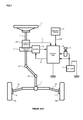
- a column shaft (a steering shaft) 2 connected to a steering wheel (a handle) 1, is connected to steered wheels 8L and 8R through reduction gears 3, universal joints 4a and 4b, a rack and pinion mechanism 5, and tie rods 6a and 6b, further via hub units 7a and 7b.
- the column shaft 2 is provided with a torque sensor 10 for detecting a steering torque of the steering wheel 1, and a motor 20 for assisting the steering force of the steering wheel 1 is connected to the column shaft 2 through the reduction gears 3.
- Electric power is supplied to a control unit 30 for controlling the electric power steering apparatus from a battery 13, and an ignition key signal is inputted into the control unit 30 through an ignition key 11.
- the control unit 30 calculates a steering assist command value of an assist (steering assist) command based on a steering torque Tr detected by the torque sensor 10 and a vehicle velocity Vel detected by a velocity sensor 12, and controls a current supplied to the motor 20 based on a current control value E obtained by performing compensation and so on with respect to the steering assist command value.
- the control unit 30 mainly comprises a CPU (or an MPU or an MCU), and general functions performed by programs within the CPU are shown in FIG.2 .
- the steering torque Tr detected by the torque sensor 10 and the velocity Vel from the velocity sensor 12 are inputted into a steering assist command value calculating section 101, and a steering assist command value Iref0 is calculated by means of an assist map.
- the calculated steering assist command value Iref0 is inputted into a maximum output limiting section 102 and an output is limited based on an overheat protection condition or the like in the maximum output limiting section 102.
- a current command value Iref that maximum output is limited is inputted into a subtracting section 103.
- a section comprised of the steering assist command value calculating section 101 and the maximum output limiting section 102 is referred to as a current command value determining section 108.
- the motor current Im applied to the motor 20 is detected by a motor current detecting circuit 107, and the detected motor current Im is inputted into the subtracting section 103 to feed back.
- the motor drive circuit 106 that is configured so as to control the motor current by ON/OFF-controlling the semiconductor switching elements in accordance with the duty ratio of the PWM signal determined based on the current control value E, is used.
- the electric power steering apparatus is a so-called human-machine interface mechanism that directly and easily transmits the feel to a driver among automobile parts, the torque ripple caused by the motor and mechanical mechanism is took up as a problem of steering feeling performance.
- Patent Document 1 Japanese Published Unexamined Patent Application No. S60-161257A
- Patent Document 2 Japanese Published Unexamined Patent Application No. 2006-188183 A
- Patent Document 3 Japanese Published Unexamined Patent Application No. 2009-090953 A
- Patent Document 4 PCT Publication No.WO2009/078074
- a vibration extraction method of "vehicle motion control apparatus” disclosed in Patent Document 1 is a configuration that extracts a vibration component having a specific (an arbitrary) frequency range based on a sensor value for detecting vehicle behaviors (a steering angle) by means of Fourier transform and suppresses vibrations by changing control parameters depending on the extracted vibration component having the arbitrary frequency range.
- a vibration extraction method of "electric power steering apparatus" disclosed in Patent Document 2 is a configuration that extracts a vibration component having an arbitrary intended frequency range based on a difference between a vibration center value calculated by performing a moving average with respect to a steering torque and a value obtained by extracting a specific vibration frequency by a band-pass filter with respect to the steering torque and suppresses vibrations by changing control parameters depending on the extracted vibration component having the arbitrary frequency range.
- a vibration extraction method of "electric power steering apparatus" disclosed in Patent Document 3 is a configuration that extracts a specific frequency component (14 ⁇ 16Hz) corresponding to a steering system's vibration caused by the application of an inverse input stress by performing a band-pass filter process and a RMS (Root Mean Square) calculation with respect to a steering angle (a pinion angle), obtains an effective value of the extracted frequency component, and changes control parameters depending on a value (a power spectrum) after performing a low-pass filter process with respect to the obtained effective value.
- a specific frequency component 14 ⁇ 16Hz
- RMS Root Mean Square
- the electric power steering apparatus can not specify a steering pattern of a person who steers a steering wheel (a driver), in the case that a steer-inputted steering frequency is synchronized with the above specific frequency range (14 ⁇ 16Hz), there is a possibility that a steering component (the steering frequency) inputted by the driver with the intention exists in the above specific frequency range. Therefore, according to the vibration extraction method of Patent Document 3, at the time of such a steering pattern, a problem that the compensation works in a direction that blocks that steering pattern occurs.
- Patent Document 1 also in the vibration extraction method of Patent Document 3, in changing the control parameters, there is a problem that which parameter should be changed and the confirmation of trade-off matter with other performances tends to become very complicated.
- a vibration extraction method of "electric power steering apparatus" disclosed in Patent Document 4 is a method of utilizing a matter that amplitudes of the vibration components such as the torque ripple and a road surface disturbance are smaller than the amplitude of the steering component of the person who steers the steering wheel, and concretely is a configuration that extracts a vibration component (small vibration component) having an arbitrary amplitude based on a difference between an output obtained by performing a hysteresis function process having a hysteresis width corresponding to the vibration component having the arbitrary amplitude with respect to a dynamic state parameter of an electric power steering apparatus or an automobile (a motor's rotational speed or a steering torque) and the above dynamic state parameter, and calculates a vibration compensation value (a vibration suppression current) depending on the extracted vibration component to configure a feedback control loop.
- a vibration component small vibration component having an arbitrary amplitude based on a difference between an output obtained by performing a hysteresis function process having a hysteres
- a driver slightly steers the steering wheel. Since the amplitude at the time of such a steering pattern (hereinafter referred to as "a micro line-taking steering pattern") is very tiny, according to the vibration extraction method of Patent Document 4, since the amplitude at the time of the micro line-taking steering pattern becomes within the hysteresis width, leading to perform a vibration compensation that blocks the intention of the driver, therefore a problem that the steering wheel's viscous feeling increases occurs.
- road surface information (such as an asphalt road surface or a gravel road surface) is included in a vehicle reaction force component from tires.
- road surface information is relatively small, it becomes necessary information for the driver.
- the electric power steering apparatus does not suppress such information and transmits such information to the driver, since the amplitude of the road surface information is also small, according to the vibration extraction method of Patent Document 4, there is a possibility that the amplitude of the road surface information becomes being within the hysteresis width and the road surface information is compensated.
- the present invention has been developed in view of the above-described circumstances, and an object of the present invention is to provide an electric power steering apparatus that is capable of efficiently suppressing the torque ripple and simultaneously minimizing the steering performance degradation such as an increase in the steering wheel's viscous feeling by extracting the torque ripple vibration component having an arbitrary amplitude and an arbitrary frequency range depending on the electric power steering state parameter and feeding back the vibration suppression compensation value determined depending on the extracted vibration component or depending on the extracted vibration component and the electric power steering state parameter sensitive gains for changing the proportion of the vibration suppression compensation to the current command value.
- the present invention relates to an electric power steering apparatus that provides a steering system of a vehicle with an assist force generated by a motor, the above-described object of the present invention is achieved by that comprising: a current command value determining section that determines a current command value based on a steering torque and a velocity; a vibration extraction filter that extracts a vibration component having a predetermined amplitude and a predetermined frequency range depending on an electric power steering state parameter; and a compensation value determining section that determines a vibration suppression compensation value based on said vibration component extracted by said vibration extraction filter, wherein vibrations of said motor are suppressed by feeding back said vibration suppression compensation value determined by said compensation value determining section to said current command value determined by said current command value determining section.
- said vibration extraction filter comprises an extraction inverse characteristic filter with window that calculates a vibration center value based on said electric power steering state parameter and depending on an inverse characteristic of saidpredetermined frequency range, and extracts said vibration component having said predetermined amplitude and said predetermined frequency range based on a difference between said vibration center value and said electric power steering state parameter; or wherein said extraction inverse characteristic filter with window comprises an inverse characteristic filter that has said inverse characteristic of said predetermined frequency range and an amplitude window judging section that said predetermined amplitude is preset, wherein said extraction inverse characteristic filter with window inputs said electric power steering state parameter to said inverse characteristic filter and then outputs an output of said inverse characteristic filter to said amplitude window judging section, wherein said amplitude window judging section performs an amplitude window judging process that judges whether said electric power steering state parameter is within an amplitude window being said previous value of said vibration center value ⁇ said predetermined amplitude or not based on said electric
- said extraction inverse characteristic filter with window comprises an inverse characteristic filter that has said inverse characteristic of said predetermined frequency range and an amplitude window judging section that comprises a means of increasing or decreasing said predetermined amplitude that is preset depending on an electric power steering state parameter relating to motor current amount
- said extraction inverse characteristic filter with window inputs said electric power steering state parameter to said inverse characteristic filter and then outputs an output of said inverse characteristic filter to said amplitude window judging section
- said amplitude window judging section performs an amplitude window judgingprocess that judges whether said electric power steering state parameter is within an amplitude window being said previous value of said vibration center value ⁇ said predetermined amplitude or not based on said electric power steering state parameter, said output of said inverse characteristic filter and a previous value of said vibration center value after setting said predetermined amplitude by increasing or decreasing said predetermined amplitude depending on said electric power steering state parameter relating to motor current amount, in a case
- said extraction inverse characteristic filter with window comprises an inverse characteristic filter that has said inverse characteristic of said predetermined frequency range and an amplitude window judging section that comprises a means of increasing or decreasing said predetermined amplitude that is preset depending on said velocity
- said extraction inverse characteristic filter with window inputs said electric power steering state parameter to said inverse characteristic filter and then outputs an output of said inverse characteristic filter to said amplitude window judging section
- said amplitude window judging section performs an amplitude window judging process that judges whether said electric power steering state parameter is within an amplitude window being said previous value of said vibration center value ⁇ said predetermined amplitude or not based on said electric power steering state parameter, said output of said inverse characteristic filter and a previous value of said vibration center value after setting said predetermined amplitude by increasing or decreasing said predetermined amplitude depending on said velocity, in a case of judging that said electric power steering state parameter is within said amplitude window, outputs
- said predetermined frequency range is a frequency range except vibration components of a frequency range that said electric power steering apparatus aims to transmit to a person who steers a steering wheel; or wherein said predetermined frequency range is a frequency range except a frequency range that said electric power steering apparatus aims to transmit to a person who steers a steering wheel and a frequency range being more than or equal to a frequency limited by sampling and so on that vibration extraction accuracy becomes worse; or wherein said frequency range that said electric power steering apparatus aims to transmit to said person who steers said steering wheel is a frequency range being less than or equal to about 10[Hz] that road surface information, tire conditions and so on are included in; or wherein said electric power steering state parameter is an electric power steering state parameter relating to motor current amount or an electric power steering state parameter relating to speed; or wherein said electric power steering state parameter relating to motor current amount is said steering torque, said current command value or a detected motor current; or wherein said electric power steering state
- the electric power steering apparatus of the present invention since it is possible to extract the torque ripple vibration component having the arbitrary amplitude and the arbitrary frequency range depending on the electric power steering state parameter by means of the vibration extraction filter, it is possible to efficiently extract the vibration component like the torque ripple that the amplitude is smaller than the steering component, and also since vibration extraction becomes possible while performing separation of vibration components such as the road surface information and so on that should be fed back to the driver and vibration components such as the torque ripple, a judder vibration and so on that should be suppressed, it is possible to efficiently suppress the torque ripple vibration while minimizing the steering performance degradation.
- the vibration suppression compensation value in determining the vibration suppression compensation value based on the extracted vibration component, since varying the proportion of the vibration suppression compensation value depending on the electric power steering state parameter relating to motor current amount (for example, the current command value) and the electric power steering state parameter relating to speed (for example, the motor angular speed), i.e. since calculating electric power steering state parameter sensitive gains for changing the proportion of the vibration suppression compensation, it is possible to suppress the viscous feeling at the time of start of the steering operation in the vicinity of on-center that occurs in the state that the signal relating to motor current amount is low, and simultaneously it is also possible to resolve the effect caused by degradation of extraction accuracy of the vibration waveform that occurs in the case that the signal relating to speed indicates a high rotational speed.
- the electric power steering state parameter relating to motor current amount for example, the current command value
- speed for example, the motor angular speed
- the vibration suppression compensation value in determining the vibration suppression compensation value based on the extracted vibration component, since varying the proportion of the vibration suppression compensation value depending on not only the electric power steering state parameter relating to motor current amount and the electric power steering state parameter relating to speed but also the velocity, it is possible to certainly increase the vibration suppression effect with respect to the vibration change of the vibration component that changes depending on the velocity, and simultaneously it is also possible to resolve the viscous feeling caused by the micro steering in the vicinity of on-center that is frequently performed.
- the present invention relates to an electric power steering apparatus that is capable of efficiently controlling torque ripples caused by various factors by utilizing a matter that the torque ripples (torque vibrations) being a main factor of the floor vibrations appear remarkably in a motor angular speed signal being an electric power steering state parameter, extracting a vibration component that is included in the motor angular speed signal (a motor angular speed) by means of a vibration extraction filter (a vibration extraction filter function), determining a vibration suppression compensation value for suppressing the torque ripples based on extracted vibration component (a vibration component signal), and feeding back determined vibration suppression compensation value to a current command value.
- a vibration extraction filter a vibration extraction filter function
- the vibration suppression compensation value in determining the vibration suppression compensation value, it is also possible to determine the vibration suppression compensation value based on not only the extracted vibration component but also the current command value and the motor angular speed signal.
- the vibration suppression compensation value in determining the vibration suppression compensation value, it is also possible to determine the vibration suppression compensation value based on not only the extracted vibration component but also the current command value, the motor angular speed signal and a velocity.
- the vibration extraction filter is configured so as to work only within a predetermined amplitude, and comprise an extraction inverse characteristic filter with window that has an inverse characteristic filter (for example, weighted average, low-pass, high-pass, band-pass and so on) that outputs a torque ripple vibration component of an inverse characteristic of an arbitrary frequency range with respect to the electric power steering state parameter (the motor angular speed signal) being inputted into the vibration extraction filter, and extract the torque ripple vibration component having an arbitrary amplitude and the arbitrary frequency range by using a difference between an output of the extraction inverse characteristic filter with window (i.e. a vibration center value) and the electric power steering state parameter (the motor angular speed signal) being inputted into the vibration extraction filter.
- an output of the extraction inverse characteristic filter with window i.e. a vibration center value
- the electric power steering state parameter the motor angular speed signal
- the vibration extraction filter of the present invention comprises the extraction inverse characteristic filter with window that if the electric power steering state parameter is within the predetermined amplitude, calculating the vibration center value depending on an inverse characteristic of a predetermined frequency range that is obtained by inputting the electric power steering state parameter to the inverse characteristic filter, and extracts a vibration component having the predetermined amplitude and the predetermined frequency range based on the difference between the vibration center value calculated by the extraction inverse characteristic filter with window and the electric power steering state parameter.
- the electric power steering apparatus of the present invention that has the vibration extraction filter, since it is possible to extract the torque ripple vibration component having the arbitrary amplitude and the arbitrary frequency range depending on the electric power steering state parameter, it is possible to efficiently extract the vibration component like the torque ripple that the amplitude is smaller than the steering component, and also since vibration extraction becomes possible while performing separation of vibration components such as the road surface information and so on that should be fed back to the driver and vibration components such as the torque ripple, the judder vibration and so on that should be suppressed, when applying the electric power steering apparatus according to the present invention, it is possible to efficiently suppress the torque ripple vibration while minimizing the steering performance degradation (for example, the increase in the steering wheel's viscous feeling that occurs at the time of the micro line-taking steering pattern) .
- the steering performance degradation for example, the increase in the steering wheel's viscous feeling that occurs at the time of the micro line-taking steering pattern
- the present invention judges whether the electric power steering state parameter being capable of detecting the vibration component is within the predetermined amplitude or not, in the case that the electric power steering state parameter is within the predetermined amplitude, updates the vibration center value by means of a filter that outputs the inverse characteristic of the arbitrary frequency range (i.e. the extraction inverse characteristic filter with window), in the case that the electric power steering state parameter is outside the predetermined amplitude, updates the vibration center value without using the extraction inverse characteristic filter with window, and extracts the vibration component having the arbitrary vibration frequency range and the arbitrary amplitude range by calculating the difference between the updated vibration center value and the initial electric power steering state parameter.
- a filter that outputs the inverse characteristic of the arbitrary frequency range i.e. the extraction inverse characteristic filter with window
- the electric power steering state parameter used in the present invention except the above-described motor angular speed signal, if a signal is capable of detecting the vibration component, of course it is possible to use the signal such as a steering torque detected by a torque sensor, a steering speed, a power-supply voltage or a voltage being applied to the motor.
- the vibration extraction filter in extracting the torque ripple vibration component having the arbitrary amplitude and the arbitrary frequency range by means of the vibration extraction filter depending on the electric power steering state parameter being capable of detecting the vibration component, not extracting a vibration component of a frequency range that the electric power steering apparatus aims to transmit to the person who steers the steering wheel (i. e. a vibration component being less than or equal to about 10 [Hz] that the road surface information, tire conditions and so on are included in), and extracting a vibration component of a frequency range that the electric power steering apparatus does not aim to transmit to the person who steers the steering wheel (i. e. a vibration component such as the floor vibration caused by system eigenvalue excitation and the motor torque ripple), and further, the arbitrary frequency range is a frequency range of information that the electric power steering apparatus does not aim to transmit to the person who steers the steering wheel.
- the present invention can extract the torque ripple vibration component having the arbitrary amplitude and the arbitrary frequency range by a simple configuration, it becomes possible to efficiently suppress the vibration component caused by the torque ripple, mechanical resonance and so on without causing a steering uncomfortable feeling while efficiently using microcomputer resource.
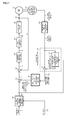
- FIG.3 is a block diagram showing a configuration example of the first embodiment of the electric power steering apparatus according to the present invention, the portion of the electric power steering apparatus is shown as corresponding to FIGs. 1 and 2 , with respect to identical configurations, identical reference numerals are given without adding explanations.
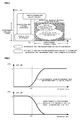
- FIG.4 shows frequency distribution examples of vibration components.
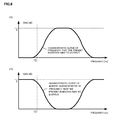
- FIGs.5(A) and 5(B) are diagrams showing characteristic setting examples of the extraction inverse characteristic filter with window (examples in a case that the predetermined frequency range that the present invention aims to exact is a high-pass characteristic) in the first embodiment of the electric power steering apparatus according to the present invention.
- the motor angular speed (the motor angular speed signal) is used as the electric power steering state parameter.
- a current command value determining section 108 determines a current command value Iref based on a steering torque Tr detected by a torque sensor 10 and a velocity Vel detected by a velocity sensor 12. The determined current command value Iref is inputted into a subtracting section 220.
- a motor current Im being applied to a motor 20 is detected by a motor current detecting circuit 107, and the detected motor current Im is inputted into a subtracting section 103.
- a rotor's rotational angle ⁇ being a rotor position signal is detected by a rotor position detection sensor 200 for detecting a rotor position of the motor 20 (a rotor position detector such as a resolver or a Hall sensor).
- An angular speed calculating section 210 calculates a motor angular speed ⁇ based on the rotor's rotational angle ⁇ detected by the rotor position detection sensor 200. Then, the calculated motor angular speed ⁇ is inputted into a vibration extraction filter 400 being one substantial part of the present invention.
- the vibration extraction filter 400 extracts a vibration component having a predetermined amplitude and a predetermined frequency range based on the inputted motor angular speed ⁇ , and the extracted vibration component VS is inputted into a compensation value determining section 300 being another substantial part of the present invention.
- the compensation value determining section 300 determines a vibration suppression compensation value CV based on the extracted vibration component VS, and the determined vibration suppression compensation value CV is inputted into the subtracting section 220.
- a vibration-compensated current command value I is calculated by subtracting the vibration suppression compensation value CV from the current command value Iref in the subtracting section 220, that is, by being configured so as to feed back the vibration suppression compensation value CV to the current command value Iref.
- the calculated vibration-compensated current command value I is inputted into a subtracting section 103.
- the vibration component having "the predetermined amplitude" and “the predetermined frequency range” being extracted by the vibration extraction filter 400 of the present invention i.e. a vibration component that the present invention intends to compensate
- the vibration component that the present invention intends to compensate is the torque ripple that mainly occurs in the motor, a resonance vibration produced by a vibration excitation peculiar to a vehicle frame and so on, the vehicle reaction force component from tires and so on. Amplitudes of these vibration components are smaller than the amplitude of the steering component of the person who steers the steeringwheel. That is to say, the amplitudes of the vibration components such as the torque ripple and the road surface disturbance are smaller than the amplitude of the steering component of the person who steers the steering wheel.
- the extraction of these vibration components is performed by extracting a vibration waveform within the predetermined amplitude by use of this matter.
- the road surface information (such as an asphalt road surface or a gravel road surface) is included in the vehicle reaction force component from tires.
- the amplitude of the road surface information is relatively small, it becomes necessary information for the driver.
- the electric power steering apparatus does not suppress such information and transmits such information to the driver, since the amplitude of the road surface information is also small, according to the vibration extraction method of Patent Document 4, there is a problem that the amplitude of the road surface information becomes being within the hysteresis width and the road surface information is compensated.
- FIG.4 shows one distribution example of the frequency and the amplitude of vibration components.
- the vibration components that the present invention aims to compensate are vibration components peculiar to the mechanism and the vehicle, and the motor torque ripple that are felt by the driver as an uncomfortable feeling, on the other hand, the vibration components that the present invention does not aim to compensate (i.e. information that the present invention aims to feed back to the driver) are the driver's steering component, the road surface information and so on, these vibration components that the present invention does not aim to compensate are distributed in about 10 [Hz] or less.
- the present invention efficiently suppresses the vibration components becoming the uncomfortable feeling to improve the steering performance without effects on the steering feeling caused by the electric power steering apparatus by limiting the vibration component being suppressed to the vibration component having "the predetermined amplitude" and “the predetermined frequency range” by means of the vibration extraction filter.
- the predetermined frequency range said by the present invention means a frequency range of the vibration component that the present invention aims to compensate.
- the vibration extraction filter 400 comprises a subtracting section 410 and an extraction inverse characteristic filter with window 420. Processes (operations) performed by the vibration extraction filter 400 are as follows.
- the vibration extraction filter 400 extracts a vibration component having an inverse characteristic of "the predetermined amplitude" and "the predetermined frequency range” based on the motor angular speed ⁇ from the angular speed calculating section 210 by means of the extraction inverse characteristic filter with window 420.
- the vibration component having the inverse characteristic of "the predetermined amplitude” and “the predetermined frequency range” is outputted from the extraction inverse characteristic filter with window 420 as a vibration center value VCV.
- the vibration extraction filter 400 extracts the vibration component VS having "the predetermined amplitude” and “the predetermined frequency range” by calculating a difference between the extracted vibration component having the inverse characteristic of "the predetermined amplitude” and “the predetermined frequency range” (i.e. the vibration center value VCV) and the motor angular speed ⁇ by means of a subtracting section 410.
- the vibration component VS having "the predetermined amplitude" and “the predetermined frequency range” extracted by the vibration extraction filter 400 is inputted into the compensation value determining section 300.
- the inverse characteristic" called by the present invention is such a characteristic that allows passage of frequencies of information that the present invention does not aim to compensate shown in such as FIG. 4 and cuts frequencies that the present invention aims to compensate.
- the inverse characteristic of the present invention since not extracting the vibration component being less than or equal to about 10 [Hz], "the inverse characteristic" of the present invention becomes a low-pass characteristic that its cutoff frequency is about 10[Hz].
- FIGs.5(A) and 5(B) show characteristic setting examples of the extraction inverse characteristic filter with window 420 in the case that "the predetermined frequency range" extracted by the vibration extraction filter 400 is a high-pass characteristic .
- FIG. 5 (A) shows a characteristic curve of a frequency range having the high-pass characteristic that is extracted by the vibration extraction filter 400.
- FIG.5(B) shows a characteristic curve of an inverse characteristic of the frequency range having the high-pass characteristic shown in FIG. 5 (A) (i.e. a characteristic curve of an inverse characteristic that the extraction inverse characteristic filter with window 420 has).
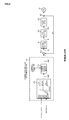
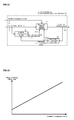
- FIG.6 is a block diagram showing a configuration example of the extraction inverse characteristic filter with window 420 in the first embodiment of the electric power steering apparatus according to the present invention. Based on FIG.6 , functions and operations of the extraction inverse characteristic filter with window 420 will be described.
- the extraction inverse characteristic filter with window 420 comprises an inverse characteristic filter 421 that has the inverse characteristic of "the predetermined frequency range", an amplitude window judging section 422 that "the predetermined amplitude” is preset, and a previous value holding section 423 that holds a vibration center previous value.
- the extraction inverse characteristic filter with window 420 inputs the motor angular speed ⁇ to the inverse characteristic filter 421 and then outputs an output ICO of the inverse characteristic filter 421 to the amplitude window judging section 422.
- the inverse characteristic of "the predetermined frequency” that the inverse characteristic filter 421 has is the inverse characteristic of frequency characteristic that the present invention aims to extract shown in such as FIG. 5 (B) .
- the extraction inverse characteristic filter with window 420 performs an amplitude window judging process that judges whether the motor angular speed ⁇ is within an amplitude window or not based on the motor angular speed ⁇ , the output ICO of the inverse characteristic filter 421 and a vibration center previous value VCPV from the previous value holding section 423 (i.e. a previous value of the vibration center value VCV) by means of the amplitude window judging section 422.
- the amplitude window judging section 422 In the case of judging that the motor angular speed ⁇ is within the amplitude window by the amplitude window judging process, the amplitude window judging section 422 outputs the output ICO of the inverse characteristic filter 421 as the vibration center value VCV.
- the amplitude window judging section 422 outputs a value obtained by adding "the predetermined amplitude” to the motor angular speed ⁇ or subtracting "the predetermined amplitude” from the motor angular speed ⁇ as the vibration center value VCV.
- the amplitude window means a range being the vibration center previous value VCPV ⁇ "the predetermined amplitude”.
- the amplitude window judging section 422 outputs the vibration center value VCV from the amplitude window judging section 422 to both the subtracting section 410 and the previous value holding section 423.
- the previous value holding section 423 holds the inputted vibration center value VCV as the vibration center previous value VCPV.
- the vibration extraction filter 400 by means of the vibration extraction filter 400, it is possible to extract the vibration component having the predetermined amplitude and the predetermined frequency range, and simultaneously it is possible to perform the vibration compensation without degradation of the steering component.
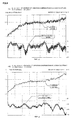
- FIG.7(A) shows a vibration extraction result based on a conventional vibration extraction method
- FIG. 7 (B) shows a vibration extraction result based on the vibration extraction filter 400 according to the present invention.
- the vibration extraction method of Patent Document 4 is used as the conventional vibration extraction method of FIG.7(A) .
- the amplitude window of FIG.7(B) showing the vibration extraction result based on the vibration extraction filter 400 according to the present invention means the vibration center value ⁇ "the predetermined amplitude”.
- the hysteresis width of the vibration extraction method of Patent Document 4 and the predetermined amplitude of the vibration extraction filter 400 according to the present invention are set so as to become the same value. Further, in extracting the vibration component, also with respect to the necessary motor angular speed signal, the same signal is used.
- the previous value of the vibration center value is a previous value used in the process performed by the extraction inverse characteristic filter with window. Therefore, there is an advantage that with respect to switching of the output of the amplitude window judging section 422, the output of the inverse characteristic filter 421 is connected smoothly, even frequently switching between within the amplitude window and outside the amplitude window, the uncomfortable feeling does not occur.
- the predetermined frequency range” extracted by the vibration extraction filter 400 is set to a high-pass characteristic having a cutoff frequency of 10 [Hz]
- the present invention is not limited to this, it is also possible to set "the predetermined frequency range” extracted by the vibration extraction filter to a band-pass characteristic.
- FIGs.8(A) and 8(B) show characteristic setting examples of the extraction inverse characteristic filter with window in the case that "the predetermined frequency range" extracted by the vibration extraction filter of the present invention is a band-pass characteristic.
- FIG.8(A) shows a characteristic curve of a frequency range having the band-pass characteristic that is extracted by the vibration extraction filter.
- FIG.8(B) shows a characteristic curve of an inverse characteristic of the frequency range having the band-pass characteristic shown in FIG.8(A) (i.e. a characteristic curve of an inverse characteristic that the extraction inverse characteristic filter with window has).
- the compensation value determining section 300 determines the vibration suppression compensation value CV based on the vibration component VS having "the predetermined amplitude" and “the predetermined frequency range” extracted by the vibration extraction filter 400.
- the vibration component VS having "the predetermined amplitude" and “the predetermined frequency range” extracted by the vibration extraction filter 400 is a dimension of the motor angular speed.
- the vibration suppression compensation value CV is a dimension of a current
- the conversion method even simply configuring by using a gain, sufficient effect can be obtained.
- J is a motor (system) inertia term
- D is a motor (system) viscous term
- Kt is a torque constant
- T 1 is an approximate differentiation time constant.
- FIGs.9(A) and 9(B) show steering wheel vibration suppression effects depending on the presence or absence of the vibration compensation function according to the present invention.
- FIG.9(A) shows the steering wheel vibration suppression effect in the case of absence of the vibration compensation function according to the present invention.
- FIG.9(B) shows the steering wheel vibration suppression effect in the case of presence of the vibration compensation function according to the present invention.
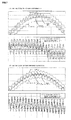
- FIG.10 is a diagram showing Lissajous patterns of the steering torque with respect to a steering angle depending on the presence or absence of the vibration compensation function according to the present invention. From FIG.10 , it is possible to confirm that there is no effect on steering caused by the vibration compensation function according to the present invention since the Lissajous pattern in the case of applying the vibration compensation function according to the present invention to the electric power steering apparatus is the almost same as the Lissajous pattern in the case of not applying the vibration compensation function according to the present invention to the electric power steering apparatus.
- a main component of the vibration components that the present invention intends to compensate is the motor torque ripple component, and generally, with respect to the motor torque ripple component, the ripple width tends to become large depending on the current amount to be applied to the motor.
- the value of "the predetermined amplitude" is not set to a value of the amplitude being capable of extracting the vibration component being the torque ripple, since it is impossible to perform an efficient vibration compensation, although setting "the predetermined amplitude" by using torque ripple amount at the time of a high current as a rough indication, conversely, in the vicinity of on-center, i.e. in the vicinity of a low current, the value of "the predetermined amplitude” that is preset by using the torque ripple amount at the time of the high current as the rough indication becomes too large.
- the vibration component having only arbitrary frequency range (the predetermined frequency range) by means of the extraction inverse characteristic filter with window 420 of the first embodiment described as above, since it is impossible sometimes to completely remove the driver's steering component of a low frequency range, in the case that the value of "the predetermined amplitude" being preset is large, when performing on-center steering, if the steering speed is large to some extent, the steering component is sometimes overlapped to a certain degree with the vibration extraction result based on the vibration extraction filter 400 of the first embodiment.
- the second embodiment makes it possible to set an optimum value of "the predetermined amplitude" coordinated with varying vibration components depending on an electric power steering state parameter relating to motor current amount such as the steering torque or the current command value (hereinafter also referred to as "a signal relating to motor current amount”) by varying the value of "the predetermined amplitude” that is preset by the amplitude window judging section depending on "the signal relating to motor current amount”.
- the predetermined amplitude that is preset by the amplitude window judging section depending on the electric power steering state parameter relating to motor current amount (the steering torque or the current command value)
- FIG.11 is a block diagram showing a configuration example of the second embodiment of the electric power steering apparatus according to the present invention, the portion of the electric power steering apparatus is shown as corresponding to FIGs.1 and 2 , with respect to identical configurations, identical reference numerals are given without adding explanations.
- the motor angular speed (the motor angular speed signal) is used as the electric power steering state parameter.
- the electric power steering apparatus according to the first embodiment of the present invention shown in FIG.3 comprises the vibration extraction filter 400, whereas the electric power steering apparatus according to the second embodiment of the present invention shown in FIG.11 comprises a vibration extraction filter 500.
- the vibration extraction filter 500 comprises a subtracting section 510 and an extraction inverse characteristic filter with window 520. Processes (operations) performed by the vibration extraction filter 500 are as follows.
- the vibration extraction filter 500 extracts a vibration component having an inverse characteristic of "the predetermined amplitude" and "the predetermined frequency range” based on the motor angular speed ⁇ from the angular speed calculating section 210 by means of the extraction inverse characteristic filter with window 520.
- the vibration component having the inverse characteristic of "the predetermined amplitude” and “the predetermined frequency range” is outputted from the extraction inverse characteristic filter with window 520 as a vibration center value VCV.
- the vibration extraction filter 500 extracts the vibration component VS having "the predetermined amplitude” and “the predetermined frequency range” by calculating a difference between the extracted vibration component having the inverse characteristic of "the predetermined amplitude” and “the predetermined frequency range” (i.e. the vibration center value VCV) and the motor angular speed ⁇ by means of a subtracting section 510.
- the vibration component VS having "the predetermined amplitude" and “the predetermined frequency range” extracted by the vibration extraction filter 500 is inputted into the compensation value determining section 300.
- FIG.12 is a block diagram showing a configuration example of the extraction inverse characteristic filter with window 520 in the second embodiment of the electric power steering apparatus according to the present invention. Based on FIG.12 , functions and operations of the extraction inverse characteristic filter with window 520 will be described.
- the extraction inverse characteristic filter with window 520 comprises an inverse characteristic filter 421 that has the inverse characteristic of "the predetermined frequency range", an amplitude window judging section 522 that comprises a means of increasing or decreasing "the predetermined amplitude” that is preset depending on the current command value, and a previous value holding section 423 that holds a vibration center previous value.
- the extraction inverse characteristic filter with window 520 inputs the motor angular speed ⁇ to the inverse characteristic filter 421 and then outputs an output ICO of the inverse characteristic filter 421 to the amplitude window judging section 522.
- the inverse characteristic of "the predetermined frequency” that the inverse characteristic filter 421 has is the inverse characteristic of frequency characteristic that the present invention aims to extract shown in such as FIG. 5 (B) .
- the extraction inverse characteristic filter with window 520 performs an amplitude window judging process that judges whether the motor angular speed ⁇ is within an amplitude window or not based on the motor angular speed ⁇ , the output ICO of the inverse characteristic filter 421 and a vibration center previous value VCPV from the previous value holding section 423 after setting "the predetermined amplitude” by increasing or decreasing "the predetermined amplitude” that is preset depending on the current command value Iref from the current command value determining section 108 by means of the amplitude window judging section 522.
- the amplitude window judging section 522 In the case of judging that the motor angular speed ⁇ is within the amplitude window by the amplitude window judging process, the amplitude window judging section 522 outputs the output ICO of the inverse characteristic filter 421 as the vibration center value VCV.
- the amplitude window judging section 522 outputs a value obtained by adding "the predetermined amplitude” to the motor angular speed ⁇ or subtracting "the predetermined amplitude” from the motor angular speed ⁇ as the vibration center value VCV.
- the amplitude window judging section 522 outputs the vibration center value VCV from the amplitude window judging section 522 to both the subtracting section 410 and the previous value holding section 423.
- the previous value holding section 423 holds the inputted vibration center value VCV as the vibration center previous value VCPV.
- the amplitude window called by the amplitude window judging section 522 means a range being the vibration center previous value VCPV ⁇ "the predetermined amplitude”, and the above “the predetermined amplitude” is “the amplitude window” that is obtained (set) by increasing or decreasing "the predetermined amplitude” that is preset depending on the current command value Iref.
- FIG.13 shows one variable amplitude setting example that in the extraction inverse characteristic filter with window 520 of the second embodiment, the amplitude window judging section 522 varies the predetermined amplitude depending on the current command value Iref.
- the amplitude window judging section 522 sets the predetermined amplitude so as to for example, as shown in FIG. 13 , increase the predetermined amplitude depending on an increase in the current command value Iref.
- the second embodiment adopts a configuration that varies the predetermined amplitude depending on the current command value or the steering torque.
- vibrations caused by motor idling i.e. vibrations caused by such as motor's cogging torque, loss torque variation and the mechanical mechanism, even in the vicinity of a low current, there is a possibility to set "the predetermined amplitude" that is set depending on the current command value to a certain level of value.
- the third embodiment calculates sensitive gains for changing a proportion of vibration suppression compensation depending on the electric power steering state parameter relating to motor current amount and the electric power steering state parameter relating to speed, and obtains the vibration suppression compensation value CV by multiplying the vibration suppression compensation value CV0 determined based on the vibration component VS having "the predetermined amplitude" and “the predetermined frequency rang" extracted by the vibration extraction filter by the calculated sensitive gains by means of the compensation value determining section for determining the vibration suppression compensation value CV.
- the electric power steering state parameter relating to motor current amount means the signal relating to motor current amount, i.e. the steering torque or the current command value.
- the electric power steering state parameter relating to speed means the signal relating to speed, i.e. the steering speed or the motor angular speed.
- the third embodiment in a state that the signal relating to motor current amount is low, i.e. in the case that the electric power steering state parameter relating to motor current amount is less than or equal to a predetermined threshold, suppresses the viscous feeling at the time of start of the steering operation in the vicinity of on-center by decreasing the sensitive gain concerning the signal relating to motor current amount to decrease the proportion of the vibration suppression compensation value.
- the third embodiment in the case that the signal relating to speed indicates a high rotational speed, i.e. in the case that the electric power steering state parameter relating to speed is more than or equal to a predetermined threshold, softens the effect caused by degradation of extraction accuracy of the vibration waveform by decreasing the sensitive gain concerning the signal relating to speed to decrease the proportion of the vibration suppression compensation value.
- the third embodiment increases or decreases the proportion of compensation depending on the signal relating to speed (the steering speed or the motor angular speed), by decreasing the vibration suppression compensation value before the accuracy degradation of the vibration compensation, it is possible to avoid the above problem.
- FIG.14 is a block diagram showing a configuration example of the third embodiment of the electric power steering apparatus according to the present invention, the portion of the electric power steering apparatus is shown as corresponding to FIGs.1 and 2 , with respect to identical configurations, identical reference numerals are given without adding explanations.
- the motor angular speed (the motor angular speed signal) is used as the electric power steering state parameter.
- the electric power steering apparatus according to the second embodiment of the present invention shown in FIG.11 comprises the compensation value determining section 300
- the electric power steering apparatus according to the third embodiment of the present invention shown in FIG.14 comprises a compensation value determining section 310.
- FIG.15 is a block diagram showing a configuration example of the compensation value determining section 310. Further, FIG.16(A) is a diagram showing one current sensitive gain setting example and FIG.16(B) is a diagram showing one angular speed sensitive gain setting example in the compensation value determining section 310 shown in FIG.15 .
- FIGS.15, 16(A) and 16(B) functions and operations of the compensation value determining section 310 will be described.
- the compensation value determining section 310 comprises a current command value sensitive gain calculating section 311, an angular speed sensitive gain calculating section 312, a compensation value calculating section 313, a multiplying section 314 and a multiplying section 315. Processes (operations) performed by the compensation value determining section 310 are as follows.
- the compensation value determining section 310 calculates a current command value sensitive gain G I based on the current command value Iref from the current command value determining section 108 by means of the current command value sensitive gain calculating section 311, calculates an angular speed sensitive gain G ⁇ based on the motor angular speed ⁇ from the angular speed calculating section 210 by means of the angular speed sensitive gain calculating section 312, and calculates the vibration suppression compensation value CV0 based on the vibration component VS extracted by the vibration extraction filter 500 by means of the compensation value calculating section 313.
- the current command value sensitive gain calculating section 311 calculates the current command value sensitive gain G I corresponding to the current command value Iref based on such as the current sensitive gain setting example shown in FIG.16(A) .
- the angular speed sensitive gain calculating section 312 calculates the angular speed sensitive gain G ⁇ corresponding to the motor angular speed ⁇ based on such as the angular speed sensitive gain setting example shown in FIG.16(B) .
- the configuration of the compensation value calculating section 313 is the same as the configuration of the compensation value determining section 300 of the first embodiment, explanations about the compensation value calculating section 313 are omitted. Further, the compensation value determined by the compensation value determining section 300 of the first embodiment is regarded as the vibration suppression compensation value CV, whereas the compensation value calculated by the compensation value calculating section 313 of the third embodiment is regarded as the vibration suppression compensation value CV0.
- the compensation value determining section 310 obtains the vibration suppression compensation value CV by multiplying the vibration suppression compensation value CV0 by the current command value sensitive gain G I and the angular speed sensitive gain G ⁇ by means of the multiplying section 314 and the multiplying section 315.
- the vibration suppression compensation value CV determined by the compensation value determining section 310 is inputted into the subtracting section 220.
- the third embodiment it is possible to suppress the viscous feeling at the time of start of the steering operation in the vicinity of on-center that occurs in the state that the signal relating to motor current amount is low, and simultaneously it is also possible to resolve the effect caused by degradation of extraction accuracy of the vibration waveform that occurs in the case that the signal relating to speed indicates a high rotational speed.
- the vibration extraction filter of the present invention if the value of "the predetermined amplitude" that is preset by the amplitude window judging section of the extraction inverse characteristic filter with window is insufficient, there is a possibility that it is impossible to expect the vibration suppression effect.
- the fourth embodiment makes it possible to set an optimum value of "the predetermined amplitude" coordinated with varying vibration components depending on the velocity by varying the value of "the predetermined amplitude” that is preset by the amplitude window judging section in extracting the vibration component depending on the velocity.
- the fourth embodiment it is also possible to vary the proportion of the vibration suppression compensation depending on the velocity. In this way, it is possible to increase the vibration suppression effect with respect to the vibration change of the vibration component that changes depending on the velocity.
- the fourth embodiment increases or decreases the value of "the predetermined amplitude" that is preset by the amplitude window judging section depending on the velocity in extracting the vibration component, and also increases or decreases the velocity sensitive gain for changing the proportion of the vibration suppression compensation depending on the velocity in determining the vibration suppression compensation value CV depending on the extracted vibration component.
- the velocity when the velocity is high (i.e. in the case of being more than or equal to a predetermined velocity), it is also possible to set not only the proportion of the vibration suppression compensation but also the predetermined amplitude small.
- FIG.17 is a block diagram showing a configuration example of the fourth embodiment of the electric power steering apparatus according to the present invention, the portion of the electric power steering apparatus is shown as corresponding to FIGs.1 and 2 , with respect to identical configurations, identical reference numerals are given without adding explanations.
- FIG.18 is a block diagram showing a configuration example of an extraction inverse characteristic filter with window 620 in the fourth embodiment.
- FIG.19 is a block diagram showing a configuration example of a compensation value determining section 320 of the fourth embodiment.
- the motor angular speed (the motor angular speed signal) is used as the electric power steering state parameter.
- a current command value determining section 108 determines a current command value Iref based on a steering torque Tr detected by the torque sensor 10 and a velocity Vel detected by the velocity sensor 12. The determined current command value Iref is inputted into a subtracting section 220.
- a motor current Im being applied to a motor 20 is detected by a motor current detecting circuit 107, and the detected motor current Im is inputted into a subtracting section 103.
- a rotor's rotational angle ⁇ being a rotor position signal is detected by a rotor position detection sensor 200 for detecting a rotor position of the motor 20.
- An angular speed calculating section 210 calculates a motor angular speed ⁇ based on the rotor's rotational angle ⁇ detected by the rotor position detection sensor 200. Then, the calculated motor angular speed ⁇ is inputted into a vibration extraction filter 600 being one substantial part of the present invention.
- the vibration extraction filter 600 extracts a vibration component having a predetermined amplitude and a predetermined frequency range based on the inputted motor angular speed ⁇ , the current command value Iref and the velocity Vel, and the extracted vibration component VS is inputted into a compensation value determining section 320 being another substantial part of the present invention.
- the compensation value determining section 320 determines a vibration suppression compensation value CV based on the extracted vibration component VS, the motor angular speed ⁇ , the current command value Iref and the velocity Vel, and the determined vibration suppression compensation value CV is inputted into the subtracting section 220.
- a vibration-compensated current command value I is calculated by subtracting the vibration suppression compensation value CV from the current command value Iref in the subtracting section 220, that is, by being configured so as to feed back the vibration suppression compensation value CV to the current command value Iref.
- the calculated vibration-compensated current command value I is inputted into a subtracting section 103.
- the vibration extraction filter 600 comprises a subtracting section 610 and an extraction inverse characteristic filter with window 620.
- Processes (operations) performed by the vibration extraction filter 600 are as follows. At first, the vibration extraction filter 600 extracts a vibration component having an inverse characteristic of "the predetermined amplitude" and “the predetermined frequency range” based on the motor angular speed ⁇ from the angular speed calculating section 210, the current command value Iref and the velocity Vel by means of the extraction inverse characteristic filter with window 620.
- the vibration component having the inverse characteristic of "the predetermined amplitude” and “the predetermined frequency range” is outputted from the extraction inverse characteristic filter with window 620 as a vibration center value VCV.
- the vibration extraction filter 600 extracts the vibration component VS having "the predetermined amplitude” and “the predetermined frequency range” by calculating a difference between the extracted vibration component having the inverse characteristic of "the predetermined amplitude” and “the predetermined frequency range” (i.e. the vibration center value VCV) and the motor angular speed ⁇ by means of a subtracting section 610.
- the vibration component VS having "the predetermined amplitude" and “the predetermined frequency range” extracted by the vibration extraction filter 600 is inputted into the compensation value determining section 320.
- the extraction inverse characteristic filter with window 620 comprises an inverse characteristic filter 421 that has the inverse characteristic of "the predetermined frequency range", an amplitude window judging section 622 that comprises a means of increasing or decreasing "the predetermined amplitude” that is preset depending on the current command value and the velocity, and a previous value holding section 423 that holds a vibration center previous value.
- the extraction inverse characteristic filter with window 620 inputs the motor angular speed ⁇ to the inverse characteristic filter 421 and then outputs an output ICO of the inverse characteristic filter 421 to the amplitude window judging section 622.
- the inverse characteristic of "the predetermined frequency” that the inverse characteristic filter 421 has, is the inverse characteristic of frequency characteristic that the present invention aims to extract shown in such as FIG. 5 (B) .
- the extraction inverse characteristic filter with window 620 performs an amplitude window judging process that judges whether the motor angular speed ⁇ is within an amplitude window or not based on the motor angular speed ⁇ , the output ICO of the inverse characteristic filter 421 and a vibration center previous value VCPV from the previous value holding section 423 after setting "the predetermined amplitude” by increasing or decreasing "the predetermined amplitude” that is preset depending on the current command value Iref from the current command value determining section 108 and the velocity Vel by means of the amplitude window judging section 622.
- the amplitude window judging section 622 In the case of judging that the motor angular speed ⁇ is within the amplitude window by the amplitude window judging process, the amplitude window judging section 622 outputs the output ICO of the inverse characteristic filter 421 as the vibration center value VCV.
- the amplitude window judging section 622 outputs a value obtained by adding "the predetermined amplitude” to the motor angular speed ⁇ or subtracting "the predetermined amplitude” from the motor angular speed ⁇ as the vibration center value VCV.
- the amplitude window judging section 622 outputs the vibration center value VCV from the amplitude window judging section 622 to both the subtracting section 610 and the previous value holding section 423.
- the previous value holding section 423 holds the inputted vibration center value VCV as the vibration center previous value VCPV.
- the amplitude window called by the amplitude window judging section 622 means a range being the vibration center previous value VCPV ⁇ "the predetermined amplitude”, and the above “the predetermined amplitude” is “the amplitude window” that is obtained (set) by increasing or decreasing “the predetermined amplitude” that is preset depending on the current command value Iref and the velocity Vel.
- the vibration extraction filter 600 by means of the vibration extraction filter 600, it is possible to extract the vibration component having the predetermined amplitude and the predetermined frequency range.
- the compensation value determining section 320 comprises a velocity sensitive gain calculating section 321, a current command value sensitive gain calculating section 311, an angular speed sensitive gain calculating section 312, a compensation value calculating section 313, a multiplying section 314, a multiplying section 315 and a multiplying section 322. Processes (operations) performed by the compensation value determining section 320 are as follows.
- the compensation value determining section 320 calculates a velocity sensitive gain G V based on the velocity Vel by means of the velocity sensitive gain calculating section 321, calculates a current command value sensitive gain G I based on the current command value Iref from the current command value determining section 108 by means of the current command value sensitive gain calculating section 311, calculates an angular speed sensitive gain G ⁇ based on the motor angular speed ⁇ from the angular speed calculating section 210 by means of the angular speed sensitive gain calculating section 312, and calculates the vibration suppression compensation value CV0 based on the vibration component VS extracted by the vibration extraction filter 500 by means of the compensation value calculating section 313.
- the configuration of the compensation value calculating section 313 is the same as the configuration of the compensation value determining section 300 of the first embodiment, explanations about the compensation value calculating section 313 are omitted. Further, the compensation value determined by the compensation value determining section 300 of the first embodiment is regarded as the vibration suppression compensation value CV, whereas the compensation value calculated by the compensation value calculating section 313 of the fourth embodiment is regarded as the vibration suppression compensation value CV0.
- the compensation value determining section 320 obtains the vibration suppression compensation value CV by multiplying the vibration suppression compensation value CV0 by the angular speed sensitive gain G ⁇ , the current command value sensitive gain G I and the velocity sensitive gain G V by means of the multiplying section 314, the multiplying section 315 and the multiplying section 322.
- the vibration suppression compensation value CV determined by the compensation value determining section 320 is inputted into the subtracting section 220.
- the motor angular speed signal is used as the electric power steering state parameter
- the electric power steering state parameter used in the present invention is not limited to the motor angular speed signal, if a signal is capable of detecting the vibration component, it is possible to use the signal as the electric power steering state parameter.
- an energy calculation value such as a result of multiplying the steering torque by the steering speed as steering energy, a result of multiplying the current command value by the torque constant and the motor angular speed as motor kinetic energy, a result of multiplying the detected motor current by the torque constant and the motor angular speed, a result of multiplying the current command value by the power-supply voltage or a result of multiplying the detected motor current by the power-supply voltage as the electric power steering state parameter.
Landscapes
- Engineering & Computer Science (AREA)
- Chemical & Material Sciences (AREA)
- Combustion & Propulsion (AREA)
- Transportation (AREA)
- Mechanical Engineering (AREA)
- Physics & Mathematics (AREA)
- Mathematical Physics (AREA)
- Theoretical Computer Science (AREA)
- Steering Control In Accordance With Driving Conditions (AREA)
- Power Steering Mechanism (AREA)
Abstract
Description
- The present invention relates to an electric power steering apparatus that provides a steering system of a vehicle with an assist force generated by a motor, and in particular to an electric power steering apparatus that is capable of efficiently suppressing a torque ripple and simultaneously minimizing steering performance degradation such as an increase in a steering wheel's viscous feeling by extracting a torque ripple vibration component having a predetermined amplitude range and a predetermined frequency range depending on an electric power steering state parameter and feeding back a vibration suppression compensation value determined based on the extracted vibration component or a vibration suppression compensation value determined based on the extracted vibration component and electric power steering state parameter sensitive gains for changing a proportion of vibration suppression compensation to a control system.
- An electric power steering apparatus which provides a steering mechanism of a vehicle with a steering assist torque (an assist torque) by means of a rotational torque of a motor, applies a driving force of the motor as the assist torque to a steering shaft or a rack shaft by means of a transmission mechanism such as gears or a belt through a reduction mechanism. In order to accurately generate the assist torque, such a conventional electric power steering apparatus performs a feedback control of a motor current. The feedback control adjusts a voltage supplied to the motor so that a difference between a steering assist command value (a current command value) and a detected motor current value becomes small, and the adjustment of the voltage applied to the motor is generally performed by an adjustment of a duty ratio of a PWM (Pulse Width Modulation) control.
- A general configuration of a conventional electric power steering apparatus will be described with reference to
FIG.1 . As shown inFIG.1 , a column shaft (a steering shaft) 2 connected to a steering wheel (a handle) 1, is connected to steeredwheels reduction gears 3,universal joints pinion mechanism 5, andtie rods hub units column shaft 2 is provided with atorque sensor 10 for detecting a steering torque of thesteering wheel 1, and amotor 20 for assisting the steering force of thesteering wheel 1 is connected to thecolumn shaft 2 through thereduction gears 3. Electric power is supplied to acontrol unit 30 for controlling the electric power steering apparatus from abattery 13, and an ignition key signal is inputted into thecontrol unit 30 through an ignition key 11. Thecontrol unit 30 calculates a steering assist command value of an assist (steering assist) command based on a steering torque Tr detected by thetorque sensor 10 and a vehicle velocity Vel detected by avelocity sensor 12, and controls a current supplied to themotor 20 based on a current control value E obtained by performing compensation and so on with respect to the steering assist command value. Moreover, it is also possible to receive the velocity Vel from a CAN (Controller Area Network) and so on. - The
control unit 30 mainly comprises a CPU (or an MPU or an MCU), and general functions performed by programs within the CPU are shown inFIG.2 . - Functions and operations of the
control unit 30 will be described with reference toFIG.2 . As shown inFIG.2, the steering torque Tr detected by thetorque sensor 10 and the velocity Vel from thevelocity sensor 12 are inputted into a steering assist commandvalue calculating section 101, and a steering assist command value Iref0 is calculated by means of an assist map. The calculated steering assist command value Iref0 is inputted into a maximumoutput limiting section 102 and an output is limited based on an overheat protection condition or the like in the maximumoutput limiting section 102. A current command value Iref that maximum output is limited, is inputted into a subtractingsection 103. Hereinafter, a section comprised of the steering assist commandvalue calculating section 101 and the maximumoutput limiting section 102 is referred to as a current commandvalue determining section 108. - Moreover, with respect to the calculation of the steering assist command value Iref0 performed in the steering assist command
value calculating section 101, it is also possible to calculate the steering assist command value Iref0 by using not only the steering torque Tr and the velocity Vel but also a steering angle. - The
subtraction section 103 calculates a deviation ΔI(=Iref-Im) between the current command value Iref and a motor current Im of themotor 20 that is fed back, the deviation ΔI is controlled by acurrent control section 104 such as a PI control (proportional and integral control) or the like, the controlled current control value E is inputted into a PWM (Pulse Width Modulation)control section 105 and the duty ratio is calculated, and in accordance with a PWM signal PS that the duty ratio is calculated, themotor 20 is driven through amotor drive circuit 106. The motor current Im applied to themotor 20 is detected by a motorcurrent detecting circuit 107, and the detected motor current Im is inputted into the subtractingsection 103 to feed back. - A bridge circuit that bridge-connects semiconductor switching elements (EFTs) and the motor, is used in the
motor drive circuit 106 that controls the motor current by means of the current control value E and drives themotor 20. Themotor drive circuit 106 that is configured so as to control the motor current by ON/OFF-controlling the semiconductor switching elements in accordance with the duty ratio of the PWM signal determined based on the current control value E, is used. - Generally, since the electric power steering apparatus is a so-called human-machine interface mechanism that directly and easily transmits the feel to a driver among automobile parts, the torque ripple caused by the motor and mechanical mechanism is took up as a problem of steering feeling performance.
- In particular, since floor vibration that is caused by the torque ripple caused by the motor and mechanical mechanism and occurs due to vehicle eigenvalue excitation also relates to the problem of a vehicle system's operating noise, it becomes a major problem.
- However, since factors of the torque ripple range widely, if taking measures against torque ripple according to factor, there is a problem that it is not efficient.
- As solutions for solving such a problem, for example, there are Japanese Published Unexamined Patent Application No.
S60-161257A 2006-188183 A 2009-090953 A PCT Publication No.WO2009/078074 (Patent Document 4). - A vibration extraction method of "vehicle motion control apparatus" disclosed in
Patent Document 1 is a configuration that extracts a vibration component having a specific (an arbitrary) frequency range based on a sensor value for detecting vehicle behaviors (a steering angle) by means of Fourier transform and suppresses vibrations by changing control parameters depending on the extracted vibration component having the arbitrary frequency range. - However, since a configuration for realizing Fourier transform is especially complicated, as a result, making heavy use of microcomputer resource, hence it is difficult to say that the vibration extraction method of
Patent Document 1 is an efficient method. Further, in changing the control parameters, there is a problem that which parameter should be changed and the confirmation of trade-off matter with other performances tends to become very complicated. - A vibration extraction method of "electric power steering apparatus" disclosed in
Patent Document 2 is a configuration that extracts a vibration component having an arbitrary intended frequency range based on a difference between a vibration center value calculated by performing a moving average with respect to a steering torque and a value obtained by extracting a specific vibration frequency by a band-pass filter with respect to the steering torque and suppresses vibrations by changing control parameters depending on the extracted vibration component having the arbitrary frequency range. - However, also in the vibration extraction method of
Patent Document 2, in changing the control parameters, there is a problem that which parameter should be changed and the confirmation of trade-off matter with other performances tends to become very complicated. - A vibration extraction method of "electric power steering apparatus" disclosed in
Patent Document 3 is a configuration that extracts a specific frequency component (14∼16Hz) corresponding to a steering system's vibration caused by the application of an inverse input stress by performing a band-pass filter process and a RMS (Root Mean Square) calculation with respect to a steering angle (a pinion angle), obtains an effective value of the extracted frequency component, and changes control parameters depending on a value (a power spectrum) after performing a low-pass filter process with respect to the obtained effective value. - However, since the electric power steering apparatus can not specify a steering pattern of a person who steers a steering wheel (a driver), in the case that a steer-inputted steering frequency is synchronized with the above specific frequency range (14∼16Hz), there is a possibility that a steering component (the steering frequency) inputted by the driver with the intention exists in the above specific frequency range. Therefore, according to the vibration extraction method of
Patent Document 3, at the time of such a steering pattern, a problem that the compensation works in a direction that blocks that steering pattern occurs. - Further, as with
Patent Document 1, also in the vibration extraction method ofPatent Document 3, in changing the control parameters, there is a problem that which parameter should be changed and the confirmation of trade-off matter with other performances tends to become very complicated. - A vibration extraction method of "electric power steering apparatus" disclosed in
Patent Document 4 is a method of utilizing a matter that amplitudes of the vibration components such as the torque ripple and a road surface disturbance are smaller than the amplitude of the steering component of the person who steers the steering wheel, and concretely is a configuration that extracts a vibration component (small vibration component) having an arbitrary amplitude based on a difference between an output obtained by performing a hysteresis function process having a hysteresis width corresponding to the vibration component having the arbitrary amplitude with respect to a dynamic state parameter of an electric power steering apparatus or an automobile (a motor's rotational speed or a steering torque) and the above dynamic state parameter, and calculates a vibration compensation value (a vibration suppression current) depending on the extracted vibration component to configure a feedback control loop. -
- Patent Document 1: Japanese Published Unexamined Patent Application No.
S60-161257 A - Patent Document 2: Japanese Published Unexamined Patent Application No.
2006-188183 A - Patent Document 3: Japanese Published Unexamined Patent Application No.
2009-090953 A - Patent Document 4:
PCT Publication No.WO2009/078074 - However, for example, when running at a high speed, since it is necessary to take a micro line, sometimes a driver slightly steers the steering wheel. Since the amplitude at the time of such a steering pattern (hereinafter referred to as "a micro line-taking steering pattern") is very tiny, according to the vibration extraction method of
Patent Document 4, since the amplitude at the time of the micro line-taking steering pattern becomes within the hysteresis width, leading to perform a vibration compensation that blocks the intention of the driver, therefore a problem that the steering wheel's viscous feeling increases occurs. - Further, road surface information (such as an asphalt road surface or a gravel road surface) is included in a vehicle reaction force component from tires. Although the amplitude of the road surface information is relatively small, it becomes necessary information for the driver. Although it is often desired that the electric power steering apparatus does not suppress such information and transmits such information to the driver, since the amplitude of the road surface information is also small, according to the vibration extraction method of
Patent Document 4, there is a possibility that the amplitude of the road surface information becomes being within the hysteresis width and the road surface information is compensated. - The present invention has been developed in view of the above-described circumstances, and an object of the present invention is to provide an electric power steering apparatus that is capable of efficiently suppressing the torque ripple and simultaneously minimizing the steering performance degradation such as an increase in the steering wheel's viscous feeling by extracting the torque ripple vibration component having an arbitrary amplitude and an arbitrary frequency range depending on the electric power steering state parameter and feeding back the vibration suppression compensation value determined depending on the extracted vibration component or depending on the extracted vibration component and the electric power steering state parameter sensitive gains for changing the proportion of the vibration suppression compensation to the current command value.
- The present invention relates to an electric power steering apparatus that provides a steering system of a vehicle with an assist force generated by a motor, the above-described object of the present invention is achieved by that comprising: a current command value determining section that determines a current command value based on a steering torque and a velocity; a vibration extraction filter that extracts a vibration component having a predetermined amplitude and a predetermined frequency range depending on an electric power steering state parameter; and a compensation value determining section that determines a vibration suppression compensation value based on said vibration component extracted by said vibration extraction filter, wherein vibrations of said motor are suppressed by feeding back said vibration suppression compensation value determined by said compensation value determining section to said current command value determined by said current command value determining section.
- The above-described object of the present invention is more effectively achieved by that wherein said vibration extraction filter comprises an extraction inverse characteristic filter with window that calculates a vibration center value based on said electric power steering state parameter and depending on an inverse characteristic of saidpredetermined frequency range, and extracts said vibration component having said predetermined amplitude and said predetermined frequency range based on a difference between said vibration center value and said electric power steering state parameter; or wherein said extraction inverse characteristic filter with window comprises an inverse characteristic filter that has said inverse characteristic of said predetermined frequency range and an amplitude window judging section that said predetermined amplitude is preset, wherein said extraction inverse characteristic filter with window inputs said electric power steering state parameter to said inverse characteristic filter and then outputs an output of said inverse characteristic filter to said amplitude window judging section, wherein said amplitude window judging section performs an amplitude window judging process that judges whether said electric power steering state parameter is within an amplitude window being said previous value of said vibration center value ± said predetermined amplitude or not based on said electric power steering state parameter, said output of said inverse characteristic filter and a previous value of said vibration center value, in a case of judging that said electric power steering state parameter is within said amplitude window, outputs said output of said inverse characteristic filter as said vibration center value, in a case of judging that said electric power steering state parameter is outside said amplitude window, outputs a value obtained by adding said predetermined amplitude to said electric power steering state parameter or subtracting said predetermined amplitude from said electric power steering state parameter as said vibration center value.
- Further, the above-described object of the present invention is more effectively achieved by that wherein said extraction inverse characteristic filter with window comprises an inverse characteristic filter that has said inverse characteristic of said predetermined frequency range and an amplitude window judging section that comprises a means of increasing or decreasing said predetermined amplitude that is preset depending on an electric power steering state parameter relating to motor current amount, wherein said extraction inverse characteristic filter with window inputs said electric power steering state parameter to said inverse characteristic filter and then outputs an output of said inverse characteristic filter to said amplitude window judging section, wherein said amplitude window judging section performs an amplitude window judgingprocess that judges whether said electric power steering state parameter is within an amplitude window being said previous value of said vibration center value ± said predetermined amplitude or not based on said electric power steering state parameter, said output of said inverse characteristic filter and a previous value of said vibration center value after setting said predetermined amplitude by increasing or decreasing said predetermined amplitude depending on said electric power steering state parameter relating to motor current amount, in a case of judging that said electric power steering state parameter is within said amplitude window, outputs said output of said inverse characteristic filter as said vibration center value, in a case of judging that said electric power steering state parameter is outside said amplitude window, outputs a value obtained by adding said predetermined amplitude to said electric power steering state parameter or subtracting said predetermined amplitude from said electric power steering state parameter as said vibration center value; or wherein said electric power steering state parameter relating to motor current amount is said current command value or said steering torque; or wherein said electric power steering state parameter relating to motor current amount is said current command value, wherein said amplitude window judging section sets said predetermined amplitude so as to increase depending on an increase in said current command value; or wherein said compensation value determining section calculates sensitive gains for changing a proportion of said vibration suppression compensation value depending on an electric power steering state parameter relating to motor current amount and an electric power steering state parameter relating to speed, and sets a value obtained by multiplying said vibration suppression compensation value determined based on said vibration component extracted by said vibration extraction filter by calculated said sensitive gains as said vibration suppression compensation value; or wherein said compensation value determining section decreases said proportion of said vibration suppression compensation value by decreasing said sensitive gain concerning said electric power steering state parameter relating to motor current amount in a case that said electric power steering state parameter relating to motor current amount is less than or equal to a predetermined threshold, and decreases said proportion of said vibration suppression compensation value by decreasing said sensitive gain concerning said electric power steering state parameter relating to speed in a case that said electric power steering state parameter relating to speed is more than or equal to a predetermined threshold; or wherein said electric power steering state parameter relating to motor current amount is said current command value or said steering torque, wherein said electric power steering state parameter relating to speed is a steering speed or a motor angular speed.
- Furthermore, the above-described object of the present invention is more effectively achieved by that wherein said extraction inverse characteristic filter with window comprises an inverse characteristic filter that has said inverse characteristic of said predetermined frequency range and an amplitude window judging section that comprises a means of increasing or decreasing said predetermined amplitude that is preset depending on said velocity, wherein said extraction inverse characteristic filter with window inputs said electric power steering state parameter to said inverse characteristic filter and then outputs an output of said inverse characteristic filter to said amplitude window judging section, wherein said amplitude window judging section performs an amplitude window judging process that judges whether said electric power steering state parameter is within an amplitude window being said previous value of said vibration center value ± said predetermined amplitude or not based on said electric power steering state parameter, said output of said inverse characteristic filter and a previous value of said vibration center value after setting said predetermined amplitude by increasing or decreasing said predetermined amplitude depending on said velocity, in a case of judging that said electric power steering state parameter is within said amplitude window, outputs said output of said inverse characteristic filter as said vibration center value, in a case of judging that said electric power steering state parameter is outside said amplitude window, outputs a value obtained by adding said predetermined amplitude to said electric power steering state parameter or subtracting said predetermined amplitude from said electric power steering state parameter as said vibration center value; or wherein said compensation value determining section calculates a velocity sensitive gain for changing a proportion of said vibration suppression compensation value depending on said velocity, and sets a value obtained by multiplying said vibration suppression compensation value determined based on said vibration component extracted by said vibration extraction filter by calculated said velocity sensitive gain as said vibration suppression compensation value; or wherein in a case that said velocity is more than or equal to a predetermined velocity, said amplitude window judging section sets said predetermined amplitude by decreasing said predetermined amplitude depending on said velocity, and said compensation value determining section decreases said proportion of said vibration suppression compensation value by decreasing said velocity sensitive gain.
- Moreover, the above-described object of the present invention is more effectively achieved by that wherein said predetermined frequency range is a frequency range except vibration components of a frequency range that said electric power steering apparatus aims to transmit to a person who steers a steering wheel; or wherein said predetermined frequency range is a frequency range except a frequency range that said electric power steering apparatus aims to transmit to a person who steers a steering wheel and a frequency range being more than or equal to a frequency limited by sampling and so on that vibration extraction accuracy becomes worse; or wherein said frequency range that said electric power steering apparatus aims to transmit to said person who steers said steering wheel is a frequency range being less than or equal to about 10[Hz] that road surface information, tire conditions and so on are included in; or wherein said electric power steering state parameter is an electric power steering state parameter relating to motor current amount or an electric power steering state parameter relating to speed; or wherein said electric power steering state parameter relating to motor current amount is said steering torque, said current command value or a detected motor current; or wherein said electric power steering state parameter relating to speed is a steering speed or a motor angular speed; or wherein said electric power steering state parameter is a result of multiplying said steering torque by a steering speed as steering energy, a result of multiplying said current command value by a torque constant and a motor angular speed as motor kinetic energy or a result of multiplying a detected motor current by a power-supply voltage as motor electric energy.
- According to the electric power steering apparatus of the present invention, since it is possible to extract the torque ripple vibration component having the arbitrary amplitude and the arbitrary frequency range depending on the electric power steering state parameter by means of the vibration extraction filter, it is possible to efficiently extract the vibration component like the torque ripple that the amplitude is smaller than the steering component, and also since vibration extraction becomes possible while performing separation of vibration components such as the road surface information and so on that should be fed back to the driver and vibration components such as the torque ripple, a judder vibration and so on that should be suppressed, it is possible to efficiently suppress the torque ripple vibration while minimizing the steering performance degradation.
- Further, in the present invention, in determining the vibration suppression compensation value based on the extracted vibration component, since varying the proportion of the vibration suppression compensation value depending on the electric power steering state parameter relating to motor current amount (for example, the current command value) and the electric power steering state parameter relating to speed (for example, the motor angular speed), i.e. since calculating electric power steering state parameter sensitive gains for changing the proportion of the vibration suppression compensation, it is possible to suppress the viscous feeling at the time of start of the steering operation in the vicinity of on-center that occurs in the state that the signal relating to motor current amount is low, and simultaneously it is also possible to resolve the effect caused by degradation of extraction accuracy of the vibration waveform that occurs in the case that the signal relating to speed indicates a high rotational speed.
- Moreover, in the present invention, in determining the vibration suppression compensation value based on the extracted vibration component, since varying the proportion of the vibration suppression compensation value depending on not only the electric power steering state parameter relating to motor current amount and the electric power steering state parameter relating to speed but also the velocity, it is possible to certainly increase the vibration suppression effect with respect to the vibration change of the vibration component that changes depending on the velocity, and simultaneously it is also possible to resolve the viscous feeling caused by the micro steering in the vicinity of on-center that is frequently performed.
- In the accompanying drawings:
-
FIG.1 is a diagram showing a configuration example of a general electric power steering apparatus; -
FIG.2 is a block diagram showing one example of a control unit; -
FIG.3 is a block diagram showing a configuration example of the first embodiment of an electric power steering apparatus according to the present invention; -
FIG. 4 is a diagram showing frequency distribution examples of vibration components; -
FIGs.5(A) and 5(B) are diagrams showing characteristic setting examples of an extraction inverse characteristic filter with window (examples in a case that a predetermined frequency range that the present invention aims to exact is a high-pass characteristic) in the first embodiment of the electric power steering apparatus according to the present invention; -
FIG.6 is a block diagram showing a configuration example of the extraction inverse characteristic filter with window in the first embodiment of the electric power steering apparatus according to the present invention; -
FIG. 7(A) is a diagram showing a vibration extraction result based on a conventional vibration extraction method andFIG. 7 (B) is a diagram showing a vibration extraction result based on the present invention; -
FIGs.8(A) and 8(B) are diagrams showing characteristic setting examples of the extraction inverse characteristic filter with window (examples in a case that the predetermined frequency range that the present invention aims to exact is a band-pass characteristic) in the first embodiment of the electric power steering apparatus according to the present invention; -
FIGs.9(A) and 9(B) are diagrams showing steering wheel vibration suppression effects depending on the presence or absence of a vibration compensation function according to the present invention; -
FIG. 10 is a diagram showing Lissajous patterns of a steering torque with respect to a steering angle depending on the presence or absence of the vibration compensation function according to the present invention; -
FIG.11 is a block diagram showing a configuration example of the second embodiment of the electric power steering apparatus according to the present invention; -
FIG.12 is a block diagram showing a configuration example of the extraction inverse characteristic filter with window in the second embodiment of the electric power steering apparatus according to the present invention; -
FIG. 13 is a diagram showing one variable amplitude setting example that varies a predetermined amplitude depending on a current command value in a vibration extraction filter of the second embodiment of the electric power steering apparatus according to the present invention; -
FIG.14 is a block diagram showing a configuration example of the third embodiment of the electric power steering apparatus according to the present invention; -
FIG.15 is a block diagram showing a configuration example of a compensation value determining section of the third embodiment of the electric power steering apparatus according to the present invention; -
FIG. 16(A) is a diagram showing one current sensitive gain setting example andFIG.16(B) is a diagram showing one angular speed sensitive gain setting example in the compensation value determining section of the third embodiment of the electric power steering apparatus according to the present invention; -
FIG.17 is a block diagram showing a configuration example of the fourth embodiment of the electric power steering apparatus according to the present invention; -
FIG.18 is a block diagram showing a configuration example of the extraction inverse characteristic filter with window in the fourth embodiment of the electric power steering apparatus according to the present invention; and -
FIG.19 is a block diagram showing a configuration example of the compensation value determining section of the fourth embodiment of the electric power steering apparatus according to the present invention. - The present invention relates to an electric power steering apparatus that is capable of efficiently controlling torque ripples caused by various factors by utilizing a matter that the torque ripples (torque vibrations) being a main factor of the floor vibrations appear remarkably in a motor angular speed signal being an electric power steering state parameter, extracting a vibration component that is included in the motor angular speed signal (a motor angular speed) by means of a vibration extraction filter (a vibration extraction filter function), determining a vibration suppression compensation value for suppressing the torque ripples based on extracted vibration component (a vibration component signal), and feeding back determined vibration suppression compensation value to a current command value.
- Further, in the electric power steering apparatus according to the present invention, in determining the vibration suppression compensation value, it is also possible to determine the vibration suppression compensation value based on not only the extracted vibration component but also the current command value and the motor angular speed signal.
- Moreover, in the electric power steering apparatus according to the present invention, in determining the vibration suppression compensation value, it is also possible to determine the vibration suppression compensation value based on not only the extracted vibration component but also the current command value, the motor angular speed signal and a velocity.
- Then, in the electric power steering apparatus according to the present invention, the vibration extraction filter is configured so as to work only within a predetermined amplitude, and comprise an extraction inverse characteristic filter with window that has an inverse characteristic filter (for example, weighted average, low-pass, high-pass, band-pass and so on) that outputs a torque ripple vibration component of an inverse characteristic of an arbitrary frequency range with respect to the electric power steering state parameter (the motor angular speed signal) being inputted into the vibration extraction filter, and extract the torque ripple vibration component having an arbitrary amplitude and the arbitrary frequency range by using a difference between an output of the extraction inverse characteristic filter with window (i.e. a vibration center value) and the electric power steering state parameter (the motor angular speed signal) being inputted into the vibration extraction filter.
- That is to say, the vibration extraction filter of the present invention comprises the extraction inverse characteristic filter with window that if the electric power steering state parameter is within the predetermined amplitude, calculating the vibration center value depending on an inverse characteristic of a predetermined frequency range that is obtained by inputting the electric power steering state parameter to the inverse characteristic filter, and extracts a vibration component having the predetermined amplitude and the predetermined frequency range based on the difference between the vibration center value calculated by the extraction inverse characteristic filter with window and the electric power steering state parameter.
- According to the electric power steering apparatus of the present invention that has the vibration extraction filter, since it is possible to extract the torque ripple vibration component having the arbitrary amplitude and the arbitrary frequency range depending on the electric power steering state parameter, it is possible to efficiently extract the vibration component like the torque ripple that the amplitude is smaller than the steering component, and also since vibration extraction becomes possible while performing separation of vibration components such as the road surface information and so on that should be fed back to the driver and vibration components such as the torque ripple, the judder vibration and so on that should be suppressed, when applying the electric power steering apparatus according to the present invention, it is possible to efficiently suppress the torque ripple vibration while minimizing the steering performance degradation (for example, the increase in the steering wheel's viscous feeling that occurs at the time of the micro line-taking steering pattern) .
- In other words, the present invention judges whether the electric power steering state parameter being capable of detecting the vibration component is within the predetermined amplitude or not, in the case that the electric power steering state parameter is within the predetermined amplitude, updates the vibration center value by means of a filter that outputs the inverse characteristic of the arbitrary frequency range (i.e. the extraction inverse characteristic filter with window), in the case that the electric power steering state parameter is outside the predetermined amplitude, updates the vibration center value without using the extraction inverse characteristic filter with window, and extracts the vibration component having the arbitrary vibration frequency range and the arbitrary amplitude range by calculating the difference between the updated vibration center value and the initial electric power steering state parameter.
- Here, as the electric power steering state parameter used in the present invention, except the above-described motor angular speed signal, if a signal is capable of detecting the vibration component, of course it is possible to use the signal such as a steering torque detected by a torque sensor, a steering speed, a power-supply voltage or a voltage being applied to the motor.
- In the present invention, in extracting the torque ripple vibration component having the arbitrary amplitude and the arbitrary frequency range by means of the vibration extraction filter depending on the electric power steering state parameter being capable of detecting the vibration component, not extracting a vibration component of a frequency range that the electric power steering apparatus aims to transmit to the person who steers the steering wheel (i. e. a vibration component being less than or equal to about 10 [Hz] that the road surface information, tire conditions and so on are included in), and extracting a vibration component of a frequency range that the electric power steering apparatus does not aim to transmit to the person who steers the steering wheel (i. e. a vibration component such as the floor vibration caused by system eigenvalue excitation and the motor torque ripple), and further, the arbitrary frequency range is a frequency range of information that the electric power steering apparatus does not aim to transmit to the person who steers the steering wheel.
- In this way, since the present invention can extract the torque ripple vibration component having the arbitrary amplitude and the arbitrary frequency range by a simple configuration, it becomes possible to efficiently suppress the vibration component caused by the torque ripple, mechanical resonance and so on without causing a steering uncomfortable feeling while efficiently using microcomputer resource.
- Hereinafter, concrete embodiments of the present invention will be described in detail with reference to the accompanying drawings.
-
FIG.3 is a block diagram showing a configuration example of the first embodiment of the electric power steering apparatus according to the present invention, the portion of the electric power steering apparatus is shown as corresponding toFIGs. 1 and2 , with respect to identical configurations, identical reference numerals are given without adding explanations. Further,FIG.4 shows frequency distribution examples of vibration components. Then,FIGs.5(A) and 5(B) are diagrams showing characteristic setting examples of the extraction inverse characteristic filter with window (examples in a case that the predetermined frequency range that the present invention aims to exact is a high-pass characteristic) in the first embodiment of the electric power steering apparatus according to the present invention. Moreover, in the first embodiment, the motor angular speed (the motor angular speed signal) is used as the electric power steering state parameter. - With reference to
FIGs.3 ,4, 5(A) and 5(B) , functions and the whole operation of the electric power steering apparatus according to the first embodiment of the present invention will be described in detail. - As shown in
FIG.3 , a current commandvalue determining section 108 determines a current command value Iref based on a steering torque Tr detected by atorque sensor 10 and a velocity Vel detected by avelocity sensor 12. The determined current command value Iref is inputted into asubtracting section 220. - Meanwhile, a motor current Im being applied to a
motor 20 is detected by a motor current detectingcircuit 107, and the detected motor current Im is inputted into asubtracting section 103. - Further, a rotor's rotational angle θ being a rotor position signal is detected by a rotor
position detection sensor 200 for detecting a rotor position of the motor 20 (a rotor position detector such as a resolver or a Hall sensor). An angularspeed calculating section 210 calculates a motor angular speed ω based on the rotor's rotational angle θ detected by the rotorposition detection sensor 200. Then, the calculated motor angular speed ω is inputted into avibration extraction filter 400 being one substantial part of the present invention. - The
vibration extraction filter 400 extracts a vibration component having a predetermined amplitude and a predetermined frequency range based on the inputted motor angular speed ω, and the extracted vibration component VS is inputted into a compensationvalue determining section 300 being another substantial part of the present invention. - Next, the compensation
value determining section 300 determines a vibration suppression compensation value CV based on the extracted vibration component VS, and the determined vibration suppression compensation value CV is inputted into thesubtracting section 220. - Then, a vibration-compensated current command value I is calculated by subtracting the vibration suppression compensation value CV from the current command value Iref in the
subtracting section 220, that is, by being configured so as to feed back the vibration suppression compensation value CV to the current command value Iref. The calculated vibration-compensated current command value I is inputted into asubtracting section 103. - Then, the subtracting
section 103 obtains a deviation ΔI(=I-Im) between the vibration-compensated current command value I and the motor current Im of themotor 20 being fed back, the obtained deviation ΔI is controlled by acurrent control section 104, a controlled current control value E is inputted into aPWM control section 105 so as to calculate a duty, and themotor 20 is driven by a PWM signal PS that the duty is calculated through amotor drive circuit 106. - Here, the vibration component having "the predetermined amplitude" and "the predetermined frequency range" being extracted by the
vibration extraction filter 400 of the present invention (i.e. a vibration component that the present invention intends to compensate) will be described. - The vibration component that the present invention intends to compensate is the torque ripple that mainly occurs in the motor, a resonance vibration produced by a vibration excitation peculiar to a vehicle frame and so on, the vehicle reaction force component from tires and so on. Amplitudes of these vibration components are smaller than the amplitude of the steering component of the person who steers the steeringwheel. That is to say, the amplitudes of the vibration components such as the torque ripple and the road surface disturbance are smaller than the amplitude of the steering component of the person who steers the steering wheel.
- As described above, also in the vibration extraction method of
Patent Document 4, the extraction of these vibration components is performed by extracting a vibration waveform within the predetermined amplitude by use of this matter. - However, for example, when running at a high speed, since it is necessary to take the micro line, sometimes the driver slightly steers the steering wheel in the vicinity of on-center. Since the amplitude at the time of the micro line-taking steering pattern is very tiny, according to the vibration extraction method of
Patent Document 4, since extracting the vibration component only based on the amplitude, the micro line-taking steering pattern is also regarded as the vibration component and compensated, as a result, a problem that the steering viscous feeling increases and simultaneously becoming a steering fluffy feeling occurs. - Further, the road surface information (such as an asphalt road surface or a gravel road surface) is included in the vehicle reaction force component from tires. Although the amplitude of the road surface information is relatively small, it becomes necessary information for the driver. Although it is often desired that the electric power steering apparatus does not suppress such information and transmits such information to the driver, since the amplitude of the road surface information is also small, according to the vibration extraction method of
Patent Document 4, there is a problem that the amplitude of the road surface information becomes being within the hysteresis width and the road surface information is compensated. -
FIG.4 shows one distribution example of the frequency and the amplitude of vibration components. As shown inFIG.4 , the vibration components that the present invention aims to compensate are vibration components peculiar to the mechanism and the vehicle, and the motor torque ripple that are felt by the driver as an uncomfortable feeling, on the other hand, the vibration components that the present invention does not aim to compensate (i.e. information that the present invention aims to feed back to the driver) are the driver's steering component, the road surface information and so on, these vibration components that the present invention does not aim to compensate are distributed in about 10 [Hz] or less. - The present invention efficiently suppresses the vibration components becoming the uncomfortable feeling to improve the steering performance without effects on the steering feeling caused by the electric power steering apparatus by limiting the vibration component being suppressed to the vibration component having "the predetermined amplitude" and "the predetermined frequency range" by means of the vibration extraction filter. "The predetermined frequency range" said by the present invention means a frequency range of the vibration component that the present invention aims to compensate.
- Here, functions and operations of the
vibration extraction filter 400 will be described. - As shown in
FIG.3 , thevibration extraction filter 400 comprises asubtracting section 410 and an extraction inverse characteristic filter withwindow 420. Processes (operations) performed by thevibration extraction filter 400 are as follows. - At first, the
vibration extraction filter 400 extracts a vibration component having an inverse characteristic of "the predetermined amplitude" and "the predetermined frequency range" based on the motor angular speed ω from the angularspeed calculating section 210 by means of the extraction inverse characteristic filter withwindow 420. - Here, the vibration component having the inverse characteristic of "the predetermined amplitude" and "the predetermined frequency range" is outputted from the extraction inverse characteristic filter with
window 420 as a vibration center value VCV. - Next, the
vibration extraction filter 400 extracts the vibration component VS having "the predetermined amplitude" and "the predetermined frequency range" by calculating a difference between the extracted vibration component having the inverse characteristic of "the predetermined amplitude" and "the predetermined frequency range" (i.e. the vibration center value VCV) and the motor angular speed ω by means of asubtracting section 410. - Here, the vibration component VS having "the predetermined amplitude" and "the predetermined frequency range" extracted by the
vibration extraction filter 400 is inputted into the compensationvalue determining section 300. - "The inverse characteristic" called by the present invention is such a characteristic that allows passage of frequencies of information that the present invention does not aim to compensate shown in such as
FIG. 4 and cuts frequencies that the present invention aims to compensate. In the example ofFIG. 4 , since not extracting the vibration component being less than or equal to about 10 [Hz], "the inverse characteristic" of the present invention becomes a low-pass characteristic that its cutoff frequency is about 10[Hz]. -
FIGs.5(A) and 5(B) show characteristic setting examples of the extraction inverse characteristic filter withwindow 420 in the case that "the predetermined frequency range" extracted by thevibration extraction filter 400 is a high-pass characteristic . Concretely,FIG. 5 (A) shows a characteristic curve of a frequency range having the high-pass characteristic that is extracted by thevibration extraction filter 400. Further,FIG.5(B) shows a characteristic curve of an inverse characteristic of the frequency range having the high-pass characteristic shown inFIG. 5 (A) (i.e. a characteristic curve of an inverse characteristic that the extraction inverse characteristic filter withwindow 420 has). -
FIG.6 is a block diagram showing a configuration example of the extraction inverse characteristic filter withwindow 420 in the first embodiment of the electric power steering apparatus according to the present invention. Based onFIG.6 , functions and operations of the extraction inverse characteristic filter withwindow 420 will be described. - As shown in
FIG.6 , the extraction inverse characteristic filter withwindow 420 comprises an inversecharacteristic filter 421 that has the inverse characteristic of "the predetermined frequency range", an amplitudewindow judging section 422 that "the predetermined amplitude" is preset, and a previousvalue holding section 423 that holds a vibration center previous value. - With respect to the inputted motor angular speed ω, processes (operations) performed by the extraction inverse characteristic filter with
window 420 are as follows. - At first, the extraction inverse characteristic filter with
window 420 inputs the motor angular speed ω to the inversecharacteristic filter 421 and then outputs an output ICO of the inversecharacteristic filter 421 to the amplitudewindow judging section 422. Here, the inverse characteristic of "the predetermined frequency" that the inversecharacteristic filter 421 has, is the inverse characteristic of frequency characteristic that the present invention aims to extract shown in such asFIG. 5 (B) . - Next, the extraction inverse characteristic filter with
window 420 performs an amplitude window judging process that judges whether the motor angular speed ω is within an amplitude window or not based on the motor angular speed ω, the output ICO of the inversecharacteristic filter 421 and a vibration center previous value VCPV from the previous value holding section 423 (i.e. a previous value of the vibration center value VCV) by means of the amplitudewindow judging section 422. - In the case of judging that the motor angular speed ω is within the amplitude window by the amplitude window judging process, the amplitude
window judging section 422 outputs the output ICO of the inversecharacteristic filter 421 as the vibration center value VCV. - On the other hand, in the case of judging that the motor angular speed ω is outside the amplitude window by the amplitude window judging process, the amplitude
window judging section 422 outputs a value obtained by adding "the predetermined amplitude" to the motor angular speed ω or subtracting "the predetermined amplitude" from the motor angular speed ω as the vibration center value VCV. - "The amplitude window" called by the present invention means a range being the vibration center previous value VCPV ± "the predetermined amplitude".
- Further, the amplitude
window judging section 422 outputs the vibration center value VCV from the amplitudewindow judging section 422 to both thesubtracting section 410 and the previousvalue holding section 423. The previousvalue holding section 423 holds the inputted vibration center value VCV as the vibration center previous value VCPV. - In this way, in the present invention, by means of the
vibration extraction filter 400, it is possible to extract the vibration component having the predetermined amplitude and the predetermined frequency range, and simultaneously it is possible to perform the vibration compensation without degradation of the steering component. - In order to demonstrate excellent vibration extraction effect of the
vibration extraction filter 400 according to the present invention,FIG.7(A) shows a vibration extraction result based on a conventional vibration extraction method andFIG. 7 (B) shows a vibration extraction result based on thevibration extraction filter 400 according to the present invention. - Here, the vibration extraction method of
Patent Document 4 is used as the conventional vibration extraction method ofFIG.7(A) . Further, "the amplitude window" ofFIG.7(B) showing the vibration extraction result based on thevibration extraction filter 400 according to the present invention means the vibration center value ± "the predetermined amplitude". - In order to compare the vibration extraction result based on the
vibration extraction filter 400 according to the present invention with the vibration extraction result based on the vibration extraction method ofPatent Document 4, the hysteresis width of the vibration extraction method ofPatent Document 4 and the predetermined amplitude of thevibration extraction filter 400 according to the present invention are set so as to become the same value. Further, in extracting the vibration component, also with respect to the necessary motor angular speed signal, the same signal is used. - As can be seen from
FIG.7 , in the vibration extraction result based on thevibration extraction filter 400 according to the present invention, an overlap between the steering component of the low frequency and the extracted vibration component is suppressed. Therefore, the vibration suppression becomes possible while suppressing the effect on the steering feeling caused by the vibration suppression function. - Moreover, in the present invention, it is preferred to utilize the previous value of the vibration center value as a previous value used in the process performed by the extraction inverse characteristic filter with window. Therefore, there is an advantage that with respect to switching of the output of the amplitude
window judging section 422, the output of the inversecharacteristic filter 421 is connected smoothly, even frequently switching between within the amplitude window and outside the amplitude window, the uncomfortable feeling does not occur. - Further, in the present invention, when using the weighted average in the inverse
characteristic filter 421, there is an advantage that with respect to reflection of the vibration center previous value, it is possible to realize by means of an easy configuration. - Furthermore, in the first embodiment, although "the predetermined frequency range" extracted by the
vibration extraction filter 400 is set to a high-pass characteristic having a cutoff frequency of 10 [Hz], the present invention is not limited to this, it is also possible to set "the predetermined frequency range" extracted by the vibration extraction filter to a band-pass characteristic.FIGs.8(A) and 8(B) show characteristic setting examples of the extraction inverse characteristic filter with window in the case that "the predetermined frequency range" extracted by the vibration extraction filter of the present invention is a band-pass characteristic. - Concretely,
FIG.8(A) shows a characteristic curve of a frequency range having the band-pass characteristic that is extracted by the vibration extraction filter. Further,FIG.8(B) shows a characteristic curve of an inverse characteristic of the frequency range having the band-pass characteristic shown inFIG.8(A) (i.e. a characteristic curve of an inverse characteristic that the extraction inverse characteristic filter with window has). - Here, the compensation
value determining section 300 will be described. - As shown in
FIG.3 , the compensationvalue determining section 300 determines the vibration suppression compensation value CV based on the vibration component VS having "the predetermined amplitude" and "the predetermined frequency range" extracted by thevibration extraction filter 400. - Here, in the case of applying the electric power steering apparatus according to the first embodiment, since the electric power steering state parameter is set to the motor angular speed (the motor angular speed signal), the vibration component VS having "the predetermined amplitude" and "the predetermined frequency range" extracted by the
vibration extraction filter 400 is a dimension of the motor angular speed. - However, since the vibration suppression compensation value CV is a dimension of a current, it is necessary to convert the dimension of the motor angular speed into the dimension of the current in the compensation
value determining section 300. With respect to the conversion method, even simply configuring by using a gain, sufficient effect can be obtained. - Further, since the motor and the electric power steering apparatus are rotary inertial systems, it is also possible to convert the dimension of the motor angular speed into the dimension of the current by using a motion equation expressed by the following
Expression 1. Further, denominator of the motion equation of the followingExpression 1 is set to an approximate differentiation characteristic that adds effects such as noises.
- Where "J" is a motor (system) inertia term, "D" is a motor (system) viscous term, "Kt" is a torque constant, and "T1" is an approximate differentiation time constant. Further, it is also possible to configure a phase lead/delay characteristic filter and a PID controller.
- Here, in order to demonstrate the vibration compensation function according to the present invention,
FIGs.9(A) and 9(B) show steering wheel vibration suppression effects depending on the presence or absence of the vibration compensation function according to the present invention. Concretely,FIG.9(A) shows the steering wheel vibration suppression effect in the case of absence of the vibration compensation function according to the present invention. Further,FIG.9(B) shows the steering wheel vibration suppression effect in the case of presence of the vibration compensation function according to the present invention. - By comparing
FIG. 9(A) withFIG.9(B) , it is clear that the steering torque vibration is reduced and simultaneously the vibration component appearing in the motor angular speed is also suppressed by applying the vibration compensation function according to the present invention to the electric power steering apparatus. -
FIG.10 is a diagram showing Lissajous patterns of the steering torque with respect to a steering angle depending on the presence or absence of the vibration compensation function according to the present invention. FromFIG.10 , it is possible to confirm that there is no effect on steering caused by the vibration compensation function according to the present invention since the Lissajous pattern in the case of applying the vibration compensation function according to the present invention to the electric power steering apparatus is the almost same as the Lissajous pattern in the case of not applying the vibration compensation function according to the present invention to the electric power steering apparatus. - From results of
FIGs.9 and10 , it is possible to confirm that according to the present invention, it is possible to suppress the vibration component that is recognized as the uncomfortable feeling by the driver with suppressing effect on the steering feeling. - In the electric power steering apparatus, a main component of the vibration components that the present invention intends to compensate is the motor torque ripple component, and generally, with respect to the motor torque ripple component, the ripple width tends to become large depending on the current amount to be applied to the motor.
- Here, if the value of "the predetermined amplitude" is not set to a value of the amplitude being capable of extracting the vibration component being the torque ripple, since it is impossible to perform an efficient vibration compensation, although setting "the predetermined amplitude" by using torque ripple amount at the time of a high current as a rough indication, conversely, in the vicinity of on-center, i.e. in the vicinity of a low current, the value of "the predetermined amplitude" that is preset by using the torque ripple amount at the time of the high current as the rough indication becomes too large.
- Although it is possible to extract the vibration component having only arbitrary frequency range (the predetermined frequency range) by means of the extraction inverse characteristic filter with
window 420 of the first embodiment described as above, since it is impossible sometimes to completely remove the driver's steering component of a low frequency range, in the case that the value of "the predetermined amplitude" being preset is large, when performing on-center steering, if the steering speed is large to some extent, the steering component is sometimes overlapped to a certain degree with the vibration extraction result based on thevibration extraction filter 400 of the first embodiment. - In order to solve this problem, the second embodiment makes it possible to set an optimum value of "the predetermined amplitude" coordinated with varying vibration components depending on an electric power steering state parameter relating to motor current amount such as the steering torque or the current command value (hereinafter also referred to as "a signal relating to motor current amount") by varying the value of "the predetermined amplitude" that is preset by the amplitude window judging section depending on "the signal relating to motor current amount".
- That is, in the second embodiment, by increasing or decreasing (widening or narrowing) "the predetermined amplitude" that is preset by the amplitude window judging section depending on the electric power steering state parameter relating to motor current amount (the steering torque or the current command value), it becomes possible to improve the extraction accuracy of the torque ripple component and perform a high-accuracy vibration compensation.
- In this way, in the case of applying the second embodiment of the present invention, it also becomes possible to efficiently suppress the vibration component without generating an increase in the viscous feeling in the vicinity of on-center.
- Hereinafter, in the case of using the current command value as the electric power steering state parameter relating to motor current amount (the signal relating to motor current amount), the electric power steering apparatus according to the second embodiment of the present invention will be described.
-
FIG.11 is a block diagram showing a configuration example of the second embodiment of the electric power steering apparatus according to the present invention, the portion of the electric power steering apparatus is shown as corresponding toFIGs.1 and2 , with respect to identical configurations, identical reference numerals are given without adding explanations. Moreover, also in the second embodiment, the motor angular speed (the motor angular speed signal) is used as the electric power steering state parameter. - Excepting the vibration extraction filter, since the configuration of the electric power steering apparatus according to the second embodiment of the present invention shown in
FIG.11 is the same as the configuration of the electric power steering apparatus according to the first embodiment of the present invention shown inFIG.3 , explanations about identical configurations are omitted. - With respect to the vibration extraction filter, the electric power steering apparatus according to the first embodiment of the present invention shown in
FIG.3 comprises thevibration extraction filter 400, whereas the electric power steering apparatus according to the second embodiment of the present invention shown inFIG.11 comprises avibration extraction filter 500. - Here, functions and operations of the
vibration extraction filter 500 will be described. - As shown in
FIG.11 , thevibration extraction filter 500 comprises asubtracting section 510 and an extraction inverse characteristic filter withwindow 520. Processes (operations) performed by thevibration extraction filter 500 are as follows. - At first, the
vibration extraction filter 500 extracts a vibration component having an inverse characteristic of "the predetermined amplitude" and "the predetermined frequency range" based on the motor angular speed ω from the angularspeed calculating section 210 by means of the extraction inverse characteristic filter withwindow 520. - Here, the vibration component having the inverse characteristic of "the predetermined amplitude" and "the predetermined frequency range" is outputted from the extraction inverse characteristic filter with
window 520 as a vibration center value VCV. - Next, the
vibration extraction filter 500 extracts the vibration component VS having "the predetermined amplitude" and "the predetermined frequency range" by calculating a difference between the extracted vibration component having the inverse characteristic of "the predetermined amplitude" and "the predetermined frequency range" (i.e. the vibration center value VCV) and the motor angular speed ω by means of asubtracting section 510. - Here, the vibration component VS having "the predetermined amplitude" and "the predetermined frequency range" extracted by the
vibration extraction filter 500 is inputted into the compensationvalue determining section 300. -
FIG.12 is a block diagram showing a configuration example of the extraction inverse characteristic filter withwindow 520 in the second embodiment of the electric power steering apparatus according to the present invention. Based onFIG.12 , functions and operations of the extraction inverse characteristic filter withwindow 520 will be described. - As shown in
FIG.12 , the extraction inverse characteristic filter withwindow 520 comprises an inversecharacteristic filter 421 that has the inverse characteristic of "the predetermined frequency range", an amplitudewindow judging section 522 that comprises a means of increasing or decreasing "the predetermined amplitude" that is preset depending on the current command value, and a previousvalue holding section 423 that holds a vibration center previous value. - With respect to the inputted motor angular speed ω, processes (operations) performed by the extraction inverse characteristic filter with
window 520 are as follows. - At first, the extraction inverse characteristic filter with
window 520 inputs the motor angular speed ω to the inversecharacteristic filter 421 and then outputs an output ICO of the inversecharacteristic filter 421 to the amplitudewindow judging section 522. Here, the inverse characteristic of "the predetermined frequency" that the inversecharacteristic filter 421 has, is the inverse characteristic of frequency characteristic that the present invention aims to extract shown in such asFIG. 5 (B) . - Next, the extraction inverse characteristic filter with
window 520 performs an amplitude window judging process that judges whether the motor angular speed ω is within an amplitude window or not based on the motor angular speed ω, the output ICO of the inversecharacteristic filter 421 and a vibration center previous value VCPV from the previousvalue holding section 423 after setting "the predetermined amplitude" by increasing or decreasing "the predetermined amplitude" that is preset depending on the current command value Iref from the current commandvalue determining section 108 by means of the amplitudewindow judging section 522. - In the case of judging that the motor angular speed ω is within the amplitude window by the amplitude window judging process, the amplitude
window judging section 522 outputs the output ICO of the inversecharacteristic filter 421 as the vibration center value VCV. - On the other hand, in the case of judging that the motor angular speed ω is outside the amplitude window by the amplitude window judging process, the amplitude
window judging section 522 outputs a value obtained by adding "the predetermined amplitude" to the motor angular speed ω or subtracting "the predetermined amplitude" from the motor angular speed ω as the vibration center value VCV. - Further, the amplitude
window judging section 522 outputs the vibration center value VCV from the amplitudewindow judging section 522 to both thesubtracting section 410 and the previousvalue holding section 423. The previousvalue holding section 423 holds the inputted vibration center value VCV as the vibration center previous value VCPV. - Here, "the amplitude window" called by the amplitude
window judging section 522 means a range being the vibration center previous value VCPV ± "the predetermined amplitude", and the above "the predetermined amplitude" is "the amplitude window" that is obtained (set) by increasing or decreasing "the predetermined amplitude" that is preset depending on the current command value Iref. -
FIG.13 shows one variable amplitude setting example that in the extraction inverse characteristic filter withwindow 520 of the second embodiment, the amplitudewindow judging section 522 varies the predetermined amplitude depending on the current command value Iref. The amplitudewindow judging section 522 sets the predetermined amplitude so as to for example, as shown inFIG. 13 , increase the predetermined amplitude depending on an increase in the current command value Iref. - In this way, if applying the second embodiment, it becomes possible to improve the extraction accuracy of the torque ripple component and to perform the high-accuracy vibration compensation without generating an increase in the viscous feeling in the vicinity of on-center.
- As described above, the second embodiment adopts a configuration that varies the predetermined amplitude depending on the current command value or the steering torque. However, even in the case of adopting the configuration described in the second embodiment, in order to compensate vibrations caused by motor idling, i.e. vibrations caused by such as motor's cogging torque, loss torque variation and the mechanical mechanism, even in the vicinity of a low current, there is a possibility to set "the predetermined amplitude" that is set depending on the current command value to a certain level of value.
- In this case, particularly, when a steering operation starts from the center, sometimes the viscous feeling occurs. Further, in the case of a high-speed steering, due to sampling on realization, sometimes it is impossible to extract waveforms of the vibration component with a high accuracy. Moreover, when steering at a high speed, since the vibration frequency of the torque ripple becomes very high, it is difficult to be recognized as the vibration by the driver, therefore, it is also considered that the need for performing compensation itself disappears with respect to such the vibration.
- In order to solve these problems, the third embodiment calculates sensitive gains for changing a proportion of vibration suppression compensation depending on the electric power steering state parameter relating to motor current amount and the electric power steering state parameter relating to speed, and obtains the vibration suppression compensation value CV by multiplying the vibration suppression compensation value CV0 determined based on the vibration component VS having "the predetermined amplitude" and "the predetermined frequency rang" extracted by the vibration extraction filter by the calculated sensitive gains by means of the compensation value determining section for determining the vibration suppression compensation value CV.
- Here, the electric power steering state parameter relating to motor current amount means the signal relating to motor current amount, i.e. the steering torque or the current command value. Further, the electric power steering state parameter relating to speed means the signal relating to speed, i.e. the steering speed or the motor angular speed.
- Concretely, the third embodiment, in a state that the signal relating to motor current amount is low, i.e. in the case that the electric power steering state parameter relating to motor current amount is less than or equal to a predetermined threshold, suppresses the viscous feeling at the time of start of the steering operation in the vicinity of on-center by decreasing the sensitive gain concerning the signal relating to motor current amount to decrease the proportion of the vibration suppression compensation value.
- Further, the third embodiment, in the case that the signal relating to speed indicates a high rotational speed, i.e. in the case that the electric power steering state parameter relating to speed is more than or equal to a predetermined threshold, softens the effect caused by degradation of extraction accuracy of the vibration waveform by decreasing the sensitive gain concerning the signal relating to speed to decrease the proportion of the vibration suppression compensation value.
- That is, when the signal relating to speed (the steering speed or the motor angular speed) becomes high, the vibration frequency of the torque ripple becomes high. With a relation to a sampling time, since the extraction accuracy of the vibration waveform degrades when the vibration frequency becomes high. therefore, the accuracy of the vibration compensation degrades, and conversely, there is a possibility to generate an unintended ripple and the steering uncomfortable feeling.
- However, since the third embodiment increases or decreases the proportion of compensation depending on the signal relating to speed (the steering speed or the motor angular speed), by decreasing the vibration suppression compensation value before the accuracy degradation of the vibration compensation, it is possible to avoid the above problem.
- Hereinafter, in the case of using the current command value as the electric power steering state parameter relating to motor current amount and using the motor angular speed as the electric power steering state parameter relating to speed, the electric power steering apparatus according to the third embodiment of the present invention will be described.
-
FIG.14 is a block diagram showing a configuration example of the third embodiment of the electric power steering apparatus according to the present invention, the portion of the electric power steering apparatus is shown as corresponding toFIGs.1 and2 , with respect to identical configurations, identical reference numerals are given without adding explanations. Moreover, also in the third embodiment, the motor angular speed (the motor angular speed signal) is used as the electric power steering state parameter. - Excepting the compensation value determining section, since the configuration of the electric power steering apparatus according to the third embodiment of the present invention shown in
FIG.14 is the same as the configuration of the electric power steering apparatus according to the second embodiment of the present invention shown inFIG.11 , explanations about identical configurations are omitted. - With respect to the compensation value determining section, the electric power steering apparatus according to the second embodiment of the present invention shown in
FIG.11 comprises the compensationvalue determining section 300, whereas the electric power steering apparatus according to the third embodiment of the present invention shown inFIG.14 comprises a compensationvalue determining section 310. -
FIG.15 is a block diagram showing a configuration example of the compensationvalue determining section 310. Further,FIG.16(A) is a diagram showing one current sensitive gain setting example andFIG.16(B) is a diagram showing one angular speed sensitive gain setting example in the compensationvalue determining section 310 shown inFIG.15 . Hereinafter, with reference toFIGS.15, 16(A) and 16(B) , functions and operations of the compensationvalue determining section 310 will be described. - As shown in
FIG.15 , the compensationvalue determining section 310 comprises a current command value sensitivegain calculating section 311, an angular speed sensitivegain calculating section 312, a compensationvalue calculating section 313, a multiplyingsection 314 and a multiplyingsection 315. Processes (operations) performed by the compensationvalue determining section 310 are as follows. - At first, the compensation
value determining section 310 calculates a current command value sensitive gain GI based on the current command value Iref from the current commandvalue determining section 108 by means of the current command value sensitivegain calculating section 311, calculates an angular speed sensitive gain G ω based on the motor angular speed ω from the angularspeed calculating section 210 by means of the angular speed sensitivegain calculating section 312, and calculates the vibration suppression compensation value CV0 based on the vibration component VS extracted by thevibration extraction filter 500 by means of the compensationvalue calculating section 313. - Here, it is possible that the current command value sensitive
gain calculating section 311 calculates the current command value sensitive gain GI corresponding to the current command value Iref based on such as the current sensitive gain setting example shown inFIG.16(A) . - Further, it is possible that the angular speed sensitive
gain calculating section 312 calculates the angular speed sensitive gain Gω corresponding to the motor angular speed ω based on such as the angular speed sensitive gain setting example shown inFIG.16(B) . - Moreover, since the configuration of the compensation
value calculating section 313 is the same as the configuration of the compensationvalue determining section 300 of the first embodiment, explanations about the compensationvalue calculating section 313 are omitted. Further, the compensation value determined by the compensationvalue determining section 300 of the first embodiment is regarded as the vibration suppression compensation value CV, whereas the compensation value calculated by the compensationvalue calculating section 313 of the third embodiment is regarded as the vibration suppression compensation value CV0. - Next, the compensation
value determining section 310 obtains the vibration suppression compensation value CV by multiplying the vibration suppression compensation value CV0 by the current command value sensitive gain GI and the angular speed sensitive gain Gω by means of the multiplyingsection 314 and the multiplyingsection 315. - Here, the vibration suppression compensation value CV determined by the compensation
value determining section 310 is inputted into thesubtracting section 220. - In this way, if applying the third embodiment, it is possible to suppress the viscous feeling at the time of start of the steering operation in the vicinity of on-center that occurs in the state that the signal relating to motor current amount is low, and simultaneously it is also possible to resolve the effect caused by degradation of extraction accuracy of the vibration waveform that occurs in the case that the signal relating to speed indicates a high rotational speed.
- Generally, in the electric power steering apparatus, when the velocity becomes high, the amplitude of the vibration component to desire to suppress tends to increase. On the contrary, in the vibration extraction filter of the present invention, if the value of "the predetermined amplitude" that is preset by the amplitude window judging section of the extraction inverse characteristic filter with window is insufficient, there is a possibility that it is impossible to expect the vibration suppression effect.
- In order to solve such a problem, the fourth embodiment makes it possible to set an optimum value of "the predetermined amplitude" coordinated with varying vibration components depending on the velocity by varying the value of "the predetermined amplitude" that is preset by the amplitude window judging section in extracting the vibration component depending on the velocity.
- As a setting example of varying the value of "the predetermined amplitude" depending on the velocity, setting "the predetermined amplitude" so as to increase "the predetermined amplitude" as the velocity becomes high.
- Further, in the fourth embodiment, it is also possible to vary the proportion of the vibration suppression compensation depending on the velocity. In this way, it is possible to increase the vibration suppression effect with respect to the vibration change of the vibration component that changes depending on the velocity.
- That is, in the electric power steering apparatus, when the velocity is high, since the amplitude of the vibration component to aim to compensate such as the eigenvalue vibration also tends to increase, the fourth embodiment increases or decreases the value of "the predetermined amplitude" that is preset by the amplitude window judging section depending on the velocity in extracting the vibration component, and also increases or decreases the velocity sensitive gain for changing the proportion of the vibration suppression compensation depending on the velocity in determining the vibration suppression compensation value CV depending on the extracted vibration component.
- Further, when the velocity becomes high, since the driver frequently performs the micro steering in the vicinity of on-center, in applying the first embodiment, the second embodiment or the third embodiment described above, sometimes it becomes easy to feel the viscous feeling.
- In order to solve such a problem, in the fourth embodiment, when the velocity is high (i.e. in the case of being more than or equal to a predetermined velocity), it is also possible to set not only the proportion of the vibration suppression compensation but also the predetermined amplitude small.
- Hereinafter, in the case of using the current command value as the electric power steering state parameter relating to motor current amount and using the motor angular speed as the electric power steering state parameter relating to speed, the electric power steering apparatus according to the fourth embodiment of the present invention will be described.
-
FIG.17 is a block diagram showing a configuration example of the fourth embodiment of the electric power steering apparatus according to the present invention, the portion of the electric power steering apparatus is shown as corresponding toFIGs.1 and2 , with respect to identical configurations, identical reference numerals are given without adding explanations. Further,FIG.18 is a block diagram showing a configuration example of an extraction inverse characteristic filter withwindow 620 in the fourth embodiment.FIG.19 is a block diagram showing a configuration example of a compensationvalue determining section 320 of the fourth embodiment. Moreover, also in the fourth embodiment, the motor angular speed (the motor angular speed signal) is used as the electric power steering state parameter. - With reference to
FIGs.17 ,18 and 19 , functions and the whole operation of the electric power steering apparatus according to the fourth embodiment of the present invention will be described in detail. - As shown in
FIG.17 , a current commandvalue determining section 108 determines a current command value Iref based on a steering torque Tr detected by thetorque sensor 10 and a velocity Vel detected by thevelocity sensor 12. The determined current command value Iref is inputted into asubtracting section 220. - Meanwhile, a motor current Im being applied to a
motor 20 is detected by a motor current detectingcircuit 107, and the detected motor current Im is inputted into asubtracting section 103. - Further, a rotor's rotational angle θ being a rotor position signal is detected by a rotor
position detection sensor 200 for detecting a rotor position of themotor 20. An angularspeed calculating section 210 calculates a motor angular speed ω based on the rotor's rotational angle θ detected by the rotorposition detection sensor 200. Then, the calculated motor angular speed ω is inputted into avibration extraction filter 600 being one substantial part of the present invention. - The
vibration extraction filter 600 extracts a vibration component having a predetermined amplitude and a predetermined frequency range based on the inputted motor angular speed ω, the current command value Iref and the velocity Vel, and the extracted vibration component VS is inputted into a compensationvalue determining section 320 being another substantial part of the present invention. - Next, the compensation
value determining section 320 determines a vibration suppression compensation value CV based on the extracted vibration component VS, the motor angular speed ω, the current command value Iref and the velocity Vel, and the determined vibration suppression compensation value CV is inputted into thesubtracting section 220. - Then, a vibration-compensated current command value I is calculated by subtracting the vibration suppression compensation value CV from the current command value Iref in the
subtracting section 220, that is, by being configured so as to feed back the vibration suppression compensation value CV to the current command value Iref. The calculated vibration-compensated current command value I is inputted into asubtracting section 103. - Then, the subtracting
section 103 obtains a deviation ΔI(=I-Im) between the vibration-compensated current command value I and the motor current Im of themotor 20 being fed back, the obtained deviation ΔI is controlled by acurrent control section 104, a controlled current control value E is inputted into aPWM control section 105 so as to calculate a duty, and themotor 20 is driven by a PWM signal PS that the duty is calculated through amotor drive circuit 106. - Here, functions and operations of the
vibration extraction filter 600 will be described. - As shown in
FIG.17 , thevibration extraction filter 600 comprises asubtracting section 610 and an extraction inverse characteristic filter withwindow 620. Processes (operations) performed by thevibration extraction filter 600 are as follows. At first, thevibration extraction filter 600 extracts a vibration component having an inverse characteristic of "the predetermined amplitude" and "the predetermined frequency range" based on the motor angular speed ω from the angularspeed calculating section 210, the current command value Iref and the velocity Vel by means of the extraction inverse characteristic filter withwindow 620. - Here, the vibration component having the inverse characteristic of "the predetermined amplitude" and "the predetermined frequency range" is outputted from the extraction inverse characteristic filter with
window 620 as a vibration center value VCV. - Next, the
vibration extraction filter 600 extracts the vibration component VS having "the predetermined amplitude" and "the predetermined frequency range" by calculating a difference between the extracted vibration component having the inverse characteristic of "the predetermined amplitude" and "the predetermined frequency range" (i.e. the vibration center value VCV) and the motor angular speed ω by means of asubtracting section 610. - Here, the vibration component VS having "the predetermined amplitude" and "the predetermined frequency range" extracted by the
vibration extraction filter 600 is inputted into the compensationvalue determining section 320. - Since "The inverse characteristic" called by the fourth embodiment is the same as "The inverse characteristic" called by the first embodiment, explanations about "The inverse characteristic" called by the fourth embodiment are omitted.
- Based on
FIG.18 , functions and operations of the extraction inverse characteristic filter withwindow 620 of the fourth embodiment will be described. - As shown in
FIG.18 , the extraction inverse characteristic filter withwindow 620 comprises an inversecharacteristic filter 421 that has the inverse characteristic of "the predetermined frequency range", an amplitudewindow judging section 622 that comprises a means of increasing or decreasing "the predetermined amplitude" that is preset depending on the current command value and the velocity, and a previousvalue holding section 423 that holds a vibration center previous value. - With respect to the inputted motor angular speed ω, processes (operations) performed by the extraction inverse characteristic filter with
window 620 are as follows. - At first, the extraction inverse characteristic filter with
window 620 inputs the motor angular speed ω to the inversecharacteristic filter 421 and then outputs an output ICO of the inversecharacteristic filter 421 to the amplitudewindow judging section 622. Here, the inverse characteristic of "the predetermined frequency" that the inversecharacteristic filter 421 has, is the inverse characteristic of frequency characteristic that the present invention aims to extract shown in such asFIG. 5 (B) . - Next, the extraction inverse characteristic filter with
window 620 performs an amplitude window judging process that judges whether the motor angular speed ω is within an amplitude window or not based on the motor angular speed ω, the output ICO of the inversecharacteristic filter 421 and a vibration center previous value VCPV from the previousvalue holding section 423 after setting "the predetermined amplitude" by increasing or decreasing "the predetermined amplitude" that is preset depending on the current command value Iref from the current commandvalue determining section 108 and the velocity Vel by means of the amplitudewindow judging section 622. - In the case of judging that the motor angular speed ω is within the amplitude window by the amplitude window judging process, the amplitude
window judging section 622 outputs the output ICO of the inversecharacteristic filter 421 as the vibration center value VCV. - On the other hand, in the case of judging that the motor angular speed ω is outside the amplitude window by the amplitude window judging process, the amplitude
window judging section 622 outputs a value obtained by adding "the predetermined amplitude" to the motor angular speed ω or subtracting "the predetermined amplitude" from the motor angular speed ω as the vibration center value VCV. - Further, the amplitude
window judging section 622 outputs the vibration center value VCV from the amplitudewindow judging section 622 to both thesubtracting section 610 and the previousvalue holding section 423. The previousvalue holding section 423 holds the inputted vibration center value VCV as the vibration center previous value VCPV. - Here, "the amplitude window" called by the amplitude
window judging section 622 means a range being the vibration center previous value VCPV ± "the predetermined amplitude", and the above "the predetermined amplitude" is "the amplitude window" that is obtained (set) by increasing or decreasing "the predetermined amplitude" that is preset depending on the current command value Iref and the velocity Vel. - In this way, in the fourth embodiment, by means of the
vibration extraction filter 600, it is possible to extract the vibration component having the predetermined amplitude and the predetermined frequency range. - Hereinafter, with reference to
FIG.19 , functions and operations of the compensationvalue determining section 320 will be described. - As shown in
FIG.19 , the compensationvalue determining section 320 comprises a velocity sensitivegain calculating section 321, a current command value sensitivegain calculating section 311, an angular speed sensitivegain calculating section 312, a compensationvalue calculating section 313, a multiplyingsection 314, a multiplyingsection 315 and a multiplying section 322. Processes (operations) performed by the compensationvalue determining section 320 are as follows. - At first, the compensation
value determining section 320 calculates a velocity sensitive gain GV based on the velocity Vel by means of the velocity sensitivegain calculating section 321, calculates a current command value sensitive gain GI based on the current command value Iref from the current commandvalue determining section 108 by means of the current command value sensitivegain calculating section 311, calculates an angular speed sensitive gain Gω based on the motor angular speed ω from the angularspeed calculating section 210 by means of the angular speed sensitivegain calculating section 312, and calculates the vibration suppression compensation value CV0 based on the vibration component VS extracted by thevibration extraction filter 500 by means of the compensationvalue calculating section 313. - Moreover, since the configuration of the compensation
value calculating section 313 is the same as the configuration of the compensationvalue determining section 300 of the first embodiment, explanations about the compensationvalue calculating section 313 are omitted. Further, the compensation value determined by the compensationvalue determining section 300 of the first embodiment is regarded as the vibration suppression compensation value CV, whereas the compensation value calculated by the compensationvalue calculating section 313 of the fourth embodiment is regarded as the vibration suppression compensation value CV0. - Next, the compensation
value determining section 320 obtains the vibration suppression compensation value CV by multiplying the vibration suppression compensation value CV0 by the angular speed sensitive gain Gω, the current command value sensitive gain GI and the velocity sensitive gain GV by means of the multiplyingsection 314, the multiplyingsection 315 and the multiplying section 322. Here, the vibration suppression compensation value CV determined by the compensationvalue determining section 320 is inputted into thesubtracting section 220. - In this way, if applying the fourth embodiment, since varying not only the predetermined amplitude but also the proportion of the vibration suppression compensation depending on the velocity, it is possible to increase the vibration suppression effect with respect to the vibration change of the vibration component that changes depending on the velocity, and it is also possible to resolve the viscous feeling caused by the micro steering in the vicinity of on-center that is frequently performed.
- Furthermore, in the above-described embodiments (the first embodiment, the second embodiment, the third embodiment and the fourth embodiment), although the motor angular speed signal is used as the electric power steering state parameter, the electric power steering state parameter used in the present invention is not limited to the motor angular speed signal, if a signal is capable of detecting the vibration component, it is possible to use the signal as the electric power steering state parameter.
- It is possible to use a signal such as the steering torque detected by the torque sensor, the steering speed, the power-supply voltage or the voltage being applied to the motor as the electric power steering state parameter.
- Further, in the present invention, of course it is possible to use an energy calculation value such as a result of multiplying the steering torque by the steering speed as steering energy, a result of multiplying the current command value by the torque constant and the motor angular speed as motor kinetic energy, a result of multiplying the detected motor current by the torque constant and the motor angular speed, a result of multiplying the current command value by the power-supply voltage or a result of multiplying the detected motor current by the power-supply voltage as the electric power steering state parameter.
-
- 1
- handle (steering wheel)
- 10
- torque sensor
- 12
- velocity sensor
- 13
- battery
- 20
- motor
- 30
- control unit
- 101
- steering assist command value calculating section
- 102
- maximum output limiting section
- 103
- subtracting section
- 104
- current control section
- 105
- PWM control section
- 106
- motor drive circuit
- 107
- motor current detecting circuit
- 108
- current command value determining section
- 200
- rotor position detection sensor
- 210
- angular speed calculating section
- 220
- subtracting section
- 300, 310, 320
- compensation value determining section
- 311
- current command value sensitive gain calculating section
- 312
- angular speed sensitive gain calculating section
- 313
- compensation value calculating section
- 314, 315, 322
- multiplying section
- 321
- velocity sensitive gain calculating section
- 400, 500, 600
- vibration extraction filter
- 410, 510, 610
- subtracting section
- 420, 520, 620
- extraction inverse characteristic filter with window
- 421
- inverse characteristic filter
- 422, 522, 622
- amplitude window judging section
- 423
- previous value holding section
Claims (19)
- An electric power steering apparatus that provides a steering system of a vehicle with an assist force generated by a motor, comprising:a current command value determining section that determines a current command value based on a steering torque and a velocity;a vibration extraction filter that extracts a vibration component having a predetermined amplitude and a predetermined frequency range depending on an electric power steering state parameter; anda compensation value determining section that determines a vibration suppression compensation value based on said vibration component extracted by said vibration extraction filter,wherein vibrations of said motor are suppressed by feeding back said vibration suppression compensation value determined by said compensation value determining section to said current command value determined by said current command value determining section.
- The electric power steering apparatus according to Claim 1, wherein said vibration extraction filter
comprises an extraction inverse characteristic filter with window that calculates a vibration center value based on said electric power steering state parameter and depending on an inverse characteristic of said predetermined frequency range, and
extracts said vibration component having said predetermined amplitude and said predetermined frequency range based on a difference between said vibration center value and said electric power steering state parameter. - The electric power steering apparatus according to Claim 2,
wherein said extraction inverse characteristic filter with window comprises an inverse characteristic filter that has said inverse characteristic of said predetermined frequency range and an amplitude window judging section that said predetermined amplitude is preset,
wherein said extraction inverse characteristicfilter with window inputs said electric power steering state parameter to said inverse characteristic filter and then outputs an output of said inverse characteristic filter to said amplitude window judging section,
wherein said amplitude window judging section performs an amplitude window judging process that judges whether said electric power steering state parameter is within an amplitude window being said previous value of said vibration center value ± said predetermined amplitude or not based on said electric power steering state parameter, said output of said inverse characteristic filter and a previous value of said vibration center value,
in a case of judging that said electric power steering state parameter is within said amplitude window, outputs said output of said inverse characteristic filter as said vibration center value, and
in a case of judging that said electric power steering state parameter is outside said amplitude window, outputs a value obtained by adding said predetermined amplitude to said electric power steering state parameter or subtracting said predetermined amplitude from said electric power steering state parameter as said vibration center value. - The electric power steering apparatus according to Claim 2,
wherein said extraction inverse characteristicfilter with window comprises an inverse characteristic filter that has said inverse characteristic of said predetermined frequency range and an amplitude window judging section that comprises a means of increasing or decreasing said predetermined amplitude that is preset depending on an electric power steering state parameter relating to motor current amount,
wherein said extraction inverse characteristic filter with window inputs said electric power steering state parameter to said inverse characteristic filter and then outputs an output of said inverse characteristic filter to said amplitude window judging section,
wherein said amplitude window judging section
performs an amplitude window judging process that judges whether said electric power steering state parameter is within an amplitude window being said previous value of said vibration center value ± said predetermined amplitude or not based on said electric power steering state parameter, said output of said inverse characteristic filter and a previous value of said vibration center value after setting said predetermined amplitude by increasing or decreasing said predetermined amplitude depending on said electric power steering state parameter relating to motor current amount,
in a case of judging that said electric power steering state parameter is within said amplitude window, outputs said output of said inverse characteristic filter as said vibration center value, and
in a case of judging that said electric power steering state parameter is outside said amplitude window, outputs a value obtained by adding said predetermined amplitude to said electric power steering state parameter or subtracting said predetermined amplitude from said electric power steering state parameter as said vibration center value. - The electric power steering apparatus according to Claim 4, wherein said electric power steering state parameter relating to motor current amount is said current command value or said steering torque.
- The electric power steering apparatus according to Claim 4,
wherein said electric power steering state parameter relating to motor current amount is said current command value, and
wherein said amplitude window judging section sets said predetermined amplitude so as to increase depending on an increase in said current command value. - The electric power steering apparatus according to any one of Claims 4 to 6,
wherein said compensation value determining section
calculates sensitive gains for changing a proportion of said vibration suppression compensation value depending on an electric power steering state parameter relating to motor current amount and an electric power steering state parameter relating to speed, and
sets a value obtained by multiplying said vibration suppression compensation value determined based on said vibration component extracted by said vibration extraction filter by calculated said sensitive gains as said vibration suppression compensation value. - The electric power steering apparatus according to Claim 7,
wherein said compensation value determining section
decreases said proportion of said vibration suppression compensation value by decreasing said sensitive gain concerning said electric power steering state parameter relating to motor current amount in a case that said electric power steering state parameter relating to motor current amount is less than or equal to a predetermined threshold, and
decreases said proportion of said vibration suppression compensation value by decreasing said sensitive gain concerning said electric power steering state parameter relating to speed in a case that said electric power steering state parameter relating to speed is more than or equal to a predetermined threshold. - The electric power steering apparatus according to Claim 7 or 8,
wherein said electric power steering state parameter relating to motor current amount is said current command value or said steering torque,
wherein said electric power steering state parameter relating to speed is a steering speed or a motor angular speed. - The electric power steering apparatus according to Claim 2,
wherein said extraction inverse characteristic filter with window comprises an inverse characteristic filter that has said inverse characteristic of said predetermined frequency range and an amplitude window judging section that comprises a means of increasing or decreasing said predetermined amplitude that is preset depending on said velocity,
wherein said extraction inverse characteristic filter with window inputs said electric power steering state parameter to said inverse characteristic filter and then outputs an output of said inverse characteristic filter to said amplitude window judging section,
wherein said amplitude window judging section performs an amplitude window judging process that judges whether said electric power steering state parameter is within an amplitude window being said previous value of said vibration center value ± said predetermined amplitude or not based on said electric power steering state parameter, said output of said inverse characteristic filter and a previous value of said vibration center value after setting said predetermined amplitude by increasing or decreasing said predetermined amplitude depending on said velocity,
in a case of judging that said electric power steering state parameter is within said amplitude window, outputs said output of said inverse characteristic filter as said vibration center value, and
in a case of judging that said electric power steering state parameter is outside said amplitude window, outputs a value obtained by adding said predetermined amplitude to said electric power steering state parameter or subtracting said predetermined amplitude from said electric power steering state parameter as said vibration center value. - The electric power steering apparatus according to Claim 10,
wherein said compensation value determining section
calculates a velocity sensitive gain for changing a proportion of said vibration suppression compensation value depending on said velocity, and
sets a value obtained by multiplying said vibration suppression compensation value determined based on said vibration component extracted by said vibration extraction filter by calculated said velocity sensitive gain as said vibration suppression compensation value. - The electric power steering apparatus according to Claim 11, wherein in a case that said velocity is more than or equal to a predetermined velocity,
said amplitude window judging section sets said predetermined amplitude by decreasing said predetermined amplitude depending on said velocity, and
said compensation value determining section decreases said proportion of said vibration suppression compensation value by decreasing said velocity sensitive gain. - The electric power steering apparatus according to any one of Claims 1 to 12, wherein said predetermined frequency range is a frequency range except vibration components of a frequency range that said electric power steering apparatus aims to transmit to a person who steers a steering wheel.
- The electric power steering apparatus according to any one of Claims 1 to 12, wherein said predetermined frequency range is a frequency range except a frequency range that said electric power steering apparatus aims to transmit to a person who steers a steering wheel and a frequency range being more than or equal to a frequency limited by sampling and so on that vibration extraction accuracy becomes worse.
- The electric power steering apparatus according to Claim 13 or 14, wherein said frequency range that said electric power steering apparatus aims to transmit to said person who steers said steering wheel is a frequency range being less than or equal to about 10[Hz] that road surface information, tire conditions and so on are included in.
- The electric power steering apparatus according to any one of Claims 1 to 15, wherein said electric power steering state parameter is an electric power steering state parameter relating to motor current amount or an electric power steering state parameter relating to speed.
- The electric power steering apparatus according to Claim 16, wherein said electric power steering state parameter relating to motor current amount is said steering torque, said current command value or a detected motor current.
- The electric powersteering apparatus according to Claim 16, wherein said electric power steering state parameter relating to speed is a steering speed or a motor angular speed.
- The electric power steering apparatus according to any one of Claims 1 to 15, wherein said electric power steering state parameter is a result of multiplying said steering torque by a steering speed as steering energy, a result of multiplying said current command value by a torque constant and a motor angular speed as motor kinetic energy or a result of multiplying a detected motor current by a power-supply voltage as motor electric energy.
Applications Claiming Priority (2)
| Application Number | Priority Date | Filing Date | Title |
|---|---|---|---|
| JP2012109110A JP5835091B2 (en) | 2012-05-11 | 2012-05-11 | Electric power steering device |
| PCT/JP2013/061989 WO2013168564A1 (en) | 2012-05-11 | 2013-04-24 | Electric power steering device |
Publications (3)
| Publication Number | Publication Date |
|---|---|
| EP2848496A1 true EP2848496A1 (en) | 2015-03-18 |
| EP2848496A4 EP2848496A4 (en) | 2016-01-13 |
| EP2848496B1 EP2848496B1 (en) | 2017-08-23 |
Family
ID=49550615
Family Applications (1)
| Application Number | Title | Priority Date | Filing Date |
|---|---|---|---|
| EP13787751.0A Active EP2848496B1 (en) | 2012-05-11 | 2013-04-24 | Electric power steering device |
Country Status (5)
| Country | Link |
|---|---|
| US (1) | US9056626B2 (en) |
| EP (1) | EP2848496B1 (en) |
| JP (1) | JP5835091B2 (en) |
| CN (1) | CN104169160B (en) |
| WO (1) | WO2013168564A1 (en) |
Families Citing this family (33)
| Publication number | Priority date | Publication date | Assignee | Title |
|---|---|---|---|---|
| JP2014031100A (en) * | 2012-08-03 | 2014-02-20 | Toyota Motor Corp | Steering gear and steering control device |
| CN104340262B (en) * | 2013-08-08 | 2017-10-27 | 现代摩比斯株式会社 | The drive device and method of column assist device |
| DE202014010397U1 (en) * | 2014-05-23 | 2015-08-03 | Hochschule München | Engine control unit for noise reduction and noise modulation of an electric motor |
| KR101619598B1 (en) | 2014-08-01 | 2016-05-10 | 현대자동차주식회사 | Method and system for improving speed of convergence of vibration generated in electric motor in eco-friendly vehicle using active variable gain |
| CN107406099B (en) | 2014-12-26 | 2019-09-10 | 日本精工株式会社 | Electric power steering apparatus |
| JP6519650B2 (en) * | 2015-04-10 | 2019-06-05 | 日本精工株式会社 | Motor control device and electric power steering apparatus equipped with the same |
| JP6394519B2 (en) * | 2015-07-03 | 2018-09-26 | マツダ株式会社 | Control device for electric power steering |
| EP3321148B1 (en) * | 2015-07-07 | 2020-02-26 | NSK Ltd. | Electric power steering device |
| EP3284648B1 (en) * | 2015-07-22 | 2019-08-21 | NSK Ltd. | Control device for electric power steering device |
| JP6055525B1 (en) * | 2015-09-02 | 2016-12-27 | 富士重工業株式会社 | Vehicle travel control device |
| JP6614032B2 (en) * | 2016-05-23 | 2019-12-04 | 日本精工株式会社 | Inspection device for electric power steering control device and electric power steering device equipped with the same |
| JP6614031B2 (en) * | 2016-05-23 | 2019-12-04 | 日本精工株式会社 | Inspection device for electric power steering control device and electric power steering device equipped with the same |
| KR102515962B1 (en) * | 2016-07-07 | 2023-03-31 | 에이치엘만도 주식회사 | Controller for Clearance Compensating of Reduction, Clearance Compensator System of Reduction Device and Method Thereof |
| CN106741137A (en) * | 2016-12-15 | 2017-05-31 | 吉林大学 | A kind of personalized electric boosting steering system and control method |
| KR102228161B1 (en) * | 2017-01-02 | 2021-03-17 | 현대모비스 주식회사 | Apparatus for controlling damping of electric power steering system |
| KR102390257B1 (en) * | 2017-07-21 | 2022-04-26 | 현대모비스 주식회사 | Apparatus for compensating disturbance of motor driven power steering system and method thereof |
| US10800423B2 (en) | 2018-02-20 | 2020-10-13 | Deere & Company | Monitoring steering conditions of an off-road vehicle |
| CN111094113B (en) * | 2018-06-07 | 2021-01-05 | 日本精工株式会社 | Electric power steering apparatus |
| US20200001914A1 (en) * | 2018-06-27 | 2020-01-02 | GM Global Technology Operations LLC | Test method and metrics to evaluate quality of road feedback to driver in a steer-by-wire system |
| CN112339855B (en) * | 2019-08-08 | 2022-05-27 | 北京车和家信息技术有限公司 | Vibration control method and device and vehicle |
| US11718304B2 (en) | 2020-03-06 | 2023-08-08 | Deere & Comoanv | Method and system for estimating surface roughness of ground for an off-road vehicle to control an implement |
| US11684005B2 (en) | 2020-03-06 | 2023-06-27 | Deere & Company | Method and system for estimating surface roughness of ground for an off-road vehicle to control an implement |
| US11667171B2 (en) | 2020-03-12 | 2023-06-06 | Deere & Company | Method and system for estimating surface roughness of ground for an off-road vehicle to control steering |
| US11678599B2 (en) | 2020-03-12 | 2023-06-20 | Deere & Company | Method and system for estimating surface roughness of ground for an off-road vehicle to control steering |
| US11753016B2 (en) | 2020-03-13 | 2023-09-12 | Deere & Company | Method and system for estimating surface roughness of ground for an off-road vehicle to control ground speed |
| US11685381B2 (en) | 2020-03-13 | 2023-06-27 | Deere & Company | Method and system for estimating surface roughness of ground for an off-road vehicle to control ground speed |
| US12012165B2 (en) * | 2020-12-23 | 2024-06-18 | Nsk Ltd. | Control device for electric power steering device and control method for the same |
| CN113093826B (en) * | 2021-03-31 | 2022-03-25 | 歌尔股份有限公司 | Control method and device of vibration motor, terminal equipment and storage medium |
| KR102874160B1 (en) * | 2022-03-22 | 2025-10-21 | 에이치엘만도 주식회사 | Steering controlling method and steering controlling apparatus |
| BE1031887B1 (en) * | 2023-08-11 | 2025-03-10 | Thyssenkrupp Presta Ag | Steering device for a motor vehicle |
| JP2026058806A (en) * | 2024-09-25 | 2026-04-06 | カヤバ株式会社 | Steering system |
| CN120470342B (en) * | 2025-07-14 | 2025-09-09 | 华能澜沧江水电股份有限公司 | Intelligent decision-making system for identifying and compensating efficiency of dynamic stress sensitive area of hydroelectric generating set |
| CN121356212A (en) * | 2025-11-24 | 2026-01-16 | 江西天健龙维汽车部件有限公司 | Auxiliary winding electric power steering motor that actively suppresses vibration and torque ripple |
Family Cites Families (24)
| Publication number | Priority date | Publication date | Assignee | Title |
|---|---|---|---|---|
| JPS60161257A (en) * | 1984-01-31 | 1985-08-22 | Nissan Motor Co Ltd | Controller for movement of car |
| JPH0688537B2 (en) * | 1984-09-27 | 1994-11-09 | 本田技研工業株式会社 | Electric power steering device |
| US4940107A (en) * | 1988-09-23 | 1990-07-10 | Trw Inc. | Method and apparatus for controlling a power assist steering system |
| JP3521245B2 (en) * | 1994-11-21 | 2004-04-19 | 光洋精工株式会社 | Electric power steering device |
| JP3493806B2 (en) * | 1995-04-21 | 2004-02-03 | 日本精工株式会社 | Control device for electric power steering device |
| JPH11304635A (en) * | 1998-04-16 | 1999-11-05 | Mitsubishi Heavy Ind Ltd | Waveform compensating apparatus |
| GB2369332A (en) * | 2000-11-22 | 2002-05-29 | Trw Lucasvarity Electric Steer | Compensation for motor inertia in electric power-assisted steering systems |
| JP3649119B2 (en) * | 2000-12-12 | 2005-05-18 | 日産自動車株式会社 | Lane Keep Assist Control Device |
| DE60213436T2 (en) * | 2002-12-20 | 2007-03-01 | Ford Global Technologies, LLC, Dearborn | Control strategy for computer-controlled steering |
| JP4639759B2 (en) * | 2004-11-09 | 2011-02-23 | 株式会社ジェイテクト | Electric power steering device |
| JP2006188183A (en) * | 2005-01-07 | 2006-07-20 | Favess Co Ltd | Electric power steering device |
| US7983815B2 (en) | 2006-04-13 | 2011-07-19 | Mitsubishi Electric Corporation | Electric power steering control system |
| US8099211B2 (en) | 2007-04-20 | 2012-01-17 | Jtekt Corporation | Electric power steering apparatus |
| JP5512924B2 (en) * | 2007-04-20 | 2014-06-04 | 株式会社ジェイテクト | Electric power steering device |
| EP2028080B1 (en) * | 2007-08-23 | 2012-01-18 | Ford Global Technologies, LLC | Method for operating an electric power steering system, electronic control unit for an electric power steering system and electric power steering system |
| WO2009078084A1 (en) * | 2007-12-14 | 2009-06-25 | Fujitsu Limited | Portable electronic device |
| CN101821150B (en) | 2007-12-14 | 2013-03-06 | 三菱电机株式会社 | Electric power-steering controller |
| US8744682B2 (en) * | 2008-05-30 | 2014-06-03 | GM Global Technology Operations LLC | Reducing the effects of vibrations in an electric power steering (EPS) system |
| GB2467761B (en) * | 2009-02-13 | 2013-04-10 | Gm Global Tech Operations Inc | Learning controller for the compensation of torque pulsations in a steering assembly |
| US8554417B2 (en) * | 2009-06-17 | 2013-10-08 | Honda Motor Co., Ltd. | Narrow-frequency-band feedback control of steering pinion torque in an electric power steering system |
| JP5493690B2 (en) * | 2009-10-20 | 2014-05-14 | 株式会社ジェイテクト | Electric power steering device |
| JP2011121383A (en) * | 2009-12-08 | 2011-06-23 | Mitsubishi Electric Corp | Electric power steering control device |
| PL2402234T3 (en) * | 2010-07-01 | 2014-04-30 | Steering Solutions Ip Holding | Dynamic system compensator for actively controlled power steering systems |
| US9440674B2 (en) * | 2010-09-15 | 2016-09-13 | GM Global Technology Operations LLC | Methods, systems and apparatus for steering wheel vibration reduction in electric power steering systems |
-
2012
- 2012-05-11 JP JP2012109110A patent/JP5835091B2/en active Active
-
2013
- 2013-04-24 CN CN201380002223.5A patent/CN104169160B/en active Active
- 2013-04-24 US US14/387,634 patent/US9056626B2/en active Active
- 2013-04-24 WO PCT/JP2013/061989 patent/WO2013168564A1/en not_active Ceased
- 2013-04-24 EP EP13787751.0A patent/EP2848496B1/en active Active
Also Published As
| Publication number | Publication date |
|---|---|
| US20150088381A1 (en) | 2015-03-26 |
| WO2013168564A1 (en) | 2013-11-14 |
| CN104169160A (en) | 2014-11-26 |
| CN104169160B (en) | 2016-08-17 |
| US9056626B2 (en) | 2015-06-16 |
| JP2013233907A (en) | 2013-11-21 |
| JP5835091B2 (en) | 2015-12-24 |
| EP2848496A4 (en) | 2016-01-13 |
| EP2848496B1 (en) | 2017-08-23 |
Similar Documents
| Publication | Publication Date | Title |
|---|---|---|
| EP2848496B1 (en) | Electric power steering device | |
| US10864941B2 (en) | Electric power steering apparatus | |
| EP2749477B1 (en) | Electric power steering system | |
| US10526009B2 (en) | Electric power steering apparatus | |
| US8326493B2 (en) | Motor driven power steering control apparatus for suppressing vibration | |
| EP2213546B1 (en) | Steering control device | |
| JP6378887B2 (en) | Electric power steering device | |
| EP3222496A1 (en) | Electric power steering device | |
| US20030057913A1 (en) | Electric power steering control system and control method thereof | |
| EP2842838A1 (en) | Electric power steering system | |
| EP2783944B1 (en) | Vehicle steering system | |
| KR20060120641A (en) | Electric power steering system | |
| EP3020617B1 (en) | Electric power steering control device | |
| JP2006131179A (en) | Electric power steering device | |
| JP5345433B2 (en) | Steering control device | |
| KR101903967B1 (en) | Control method of motor driven power steering apparatus and control method thereof |
Legal Events
| Date | Code | Title | Description |
|---|---|---|---|
| PUAI | Public reference made under article 153(3) epc to a published international application that has entered the european phase |
Free format text: ORIGINAL CODE: 0009012 |
|
| 17P | Request for examination filed |
Effective date: 20140911 |
|
| AK | Designated contracting states |
Kind code of ref document: A1 Designated state(s): AL AT BE BG CH CY CZ DE DK EE ES FI FR GB GR HR HU IE IS IT LI LT LU LV MC MK MT NL NO PL PT RO RS SE SI SK SM TR |
|
| AX | Request for extension of the european patent |
Extension state: BA ME |
|
| DAX | Request for extension of the european patent (deleted) | ||
| RA4 | Supplementary search report drawn up and despatched (corrected) |
Effective date: 20151216 |
|
| RIC1 | Information provided on ipc code assigned before grant |
Ipc: B62D 137/00 20060101ALI20151210BHEP Ipc: B62D 101/00 20060101ALI20151210BHEP Ipc: B62D 5/04 20060101ALI20151210BHEP Ipc: B62D 119/00 20060101ALI20151210BHEP Ipc: B62D 6/00 20060101AFI20151210BHEP |
|
| GRAP | Despatch of communication of intention to grant a patent |
Free format text: ORIGINAL CODE: EPIDOSNIGR1 |
|
| INTG | Intention to grant announced |
Effective date: 20170309 |
|
| GRAS | Grant fee paid |
Free format text: ORIGINAL CODE: EPIDOSNIGR3 |
|
| GRAA | (expected) grant |
Free format text: ORIGINAL CODE: 0009210 |
|
| AK | Designated contracting states |
Kind code of ref document: B1 Designated state(s): AL AT BE BG CH CY CZ DE DK EE ES FI FR GB GR HR HU IE IS IT LI LT LU LV MC MK MT NL NO PL PT RO RS SE SI SK SM TR |
|
| REG | Reference to a national code |
Ref country code: GB Ref legal event code: FG4D |
|
| REG | Reference to a national code |
Ref country code: CH Ref legal event code: EP |
|
| REG | Reference to a national code |
Ref country code: AT Ref legal event code: REF Ref document number: 920998 Country of ref document: AT Kind code of ref document: T Effective date: 20170915 |
|
| REG | Reference to a national code |
Ref country code: IE Ref legal event code: FG4D |
|
| REG | Reference to a national code |
Ref country code: DE Ref legal event code: R096 Ref document number: 602013025540 Country of ref document: DE |
|
| REG | Reference to a national code |
Ref country code: NL Ref legal event code: MP Effective date: 20170823 |
|
| REG | Reference to a national code |
Ref country code: LT Ref legal event code: MG4D |
|
| REG | Reference to a national code |
Ref country code: AT Ref legal event code: MK05 Ref document number: 920998 Country of ref document: AT Kind code of ref document: T Effective date: 20170823 |
|
| PG25 | Lapsed in a contracting state [announced via postgrant information from national office to epo] |
Ref country code: HR Free format text: LAPSE BECAUSE OF FAILURE TO SUBMIT A TRANSLATION OF THE DESCRIPTION OR TO PAY THE FEE WITHIN THE PRESCRIBED TIME-LIMIT Effective date: 20170823 Ref country code: NL Free format text: LAPSE BECAUSE OF FAILURE TO SUBMIT A TRANSLATION OF THE DESCRIPTION OR TO PAY THE FEE WITHIN THE PRESCRIBED TIME-LIMIT Effective date: 20170823 Ref country code: LT Free format text: LAPSE BECAUSE OF FAILURE TO SUBMIT A TRANSLATION OF THE DESCRIPTION OR TO PAY THE FEE WITHIN THE PRESCRIBED TIME-LIMIT Effective date: 20170823 Ref country code: FI Free format text: LAPSE BECAUSE OF FAILURE TO SUBMIT A TRANSLATION OF THE DESCRIPTION OR TO PAY THE FEE WITHIN THE PRESCRIBED TIME-LIMIT Effective date: 20170823 Ref country code: SE Free format text: LAPSE BECAUSE OF FAILURE TO SUBMIT A TRANSLATION OF THE DESCRIPTION OR TO PAY THE FEE WITHIN THE PRESCRIBED TIME-LIMIT Effective date: 20170823 Ref country code: NO Free format text: LAPSE BECAUSE OF FAILURE TO SUBMIT A TRANSLATION OF THE DESCRIPTION OR TO PAY THE FEE WITHIN THE PRESCRIBED TIME-LIMIT Effective date: 20171123 Ref country code: AT Free format text: LAPSE BECAUSE OF FAILURE TO SUBMIT A TRANSLATION OF THE DESCRIPTION OR TO PAY THE FEE WITHIN THE PRESCRIBED TIME-LIMIT Effective date: 20170823 |
|
| PG25 | Lapsed in a contracting state [announced via postgrant information from national office to epo] |
Ref country code: ES Free format text: LAPSE BECAUSE OF FAILURE TO SUBMIT A TRANSLATION OF THE DESCRIPTION OR TO PAY THE FEE WITHIN THE PRESCRIBED TIME-LIMIT Effective date: 20170823 Ref country code: GR Free format text: LAPSE BECAUSE OF FAILURE TO SUBMIT A TRANSLATION OF THE DESCRIPTION OR TO PAY THE FEE WITHIN THE PRESCRIBED TIME-LIMIT Effective date: 20171124 Ref country code: RS Free format text: LAPSE BECAUSE OF FAILURE TO SUBMIT A TRANSLATION OF THE DESCRIPTION OR TO PAY THE FEE WITHIN THE PRESCRIBED TIME-LIMIT Effective date: 20170823 Ref country code: BG Free format text: LAPSE BECAUSE OF FAILURE TO SUBMIT A TRANSLATION OF THE DESCRIPTION OR TO PAY THE FEE WITHIN THE PRESCRIBED TIME-LIMIT Effective date: 20171123 Ref country code: IS Free format text: LAPSE BECAUSE OF FAILURE TO SUBMIT A TRANSLATION OF THE DESCRIPTION OR TO PAY THE FEE WITHIN THE PRESCRIBED TIME-LIMIT Effective date: 20171223 Ref country code: PL Free format text: LAPSE BECAUSE OF FAILURE TO SUBMIT A TRANSLATION OF THE DESCRIPTION OR TO PAY THE FEE WITHIN THE PRESCRIBED TIME-LIMIT Effective date: 20170823 Ref country code: LV Free format text: LAPSE BECAUSE OF FAILURE TO SUBMIT A TRANSLATION OF THE DESCRIPTION OR TO PAY THE FEE WITHIN THE PRESCRIBED TIME-LIMIT Effective date: 20170823 |
|
| PG25 | Lapsed in a contracting state [announced via postgrant information from national office to epo] |
Ref country code: RO Free format text: LAPSE BECAUSE OF FAILURE TO SUBMIT A TRANSLATION OF THE DESCRIPTION OR TO PAY THE FEE WITHIN THE PRESCRIBED TIME-LIMIT Effective date: 20170823 Ref country code: CZ Free format text: LAPSE BECAUSE OF FAILURE TO SUBMIT A TRANSLATION OF THE DESCRIPTION OR TO PAY THE FEE WITHIN THE PRESCRIBED TIME-LIMIT Effective date: 20170823 Ref country code: DK Free format text: LAPSE BECAUSE OF FAILURE TO SUBMIT A TRANSLATION OF THE DESCRIPTION OR TO PAY THE FEE WITHIN THE PRESCRIBED TIME-LIMIT Effective date: 20170823 |
|
| REG | Reference to a national code |
Ref country code: FR Ref legal event code: PLFP Year of fee payment: 6 |
|
| REG | Reference to a national code |
Ref country code: DE Ref legal event code: R097 Ref document number: 602013025540 Country of ref document: DE |
|
| PG25 | Lapsed in a contracting state [announced via postgrant information from national office to epo] |
Ref country code: SM Free format text: LAPSE BECAUSE OF FAILURE TO SUBMIT A TRANSLATION OF THE DESCRIPTION OR TO PAY THE FEE WITHIN THE PRESCRIBED TIME-LIMIT Effective date: 20170823 Ref country code: EE Free format text: LAPSE BECAUSE OF FAILURE TO SUBMIT A TRANSLATION OF THE DESCRIPTION OR TO PAY THE FEE WITHIN THE PRESCRIBED TIME-LIMIT Effective date: 20170823 Ref country code: IT Free format text: LAPSE BECAUSE OF FAILURE TO SUBMIT A TRANSLATION OF THE DESCRIPTION OR TO PAY THE FEE WITHIN THE PRESCRIBED TIME-LIMIT Effective date: 20170823 Ref country code: SK Free format text: LAPSE BECAUSE OF FAILURE TO SUBMIT A TRANSLATION OF THE DESCRIPTION OR TO PAY THE FEE WITHIN THE PRESCRIBED TIME-LIMIT Effective date: 20170823 |
|
| PLBE | No opposition filed within time limit |
Free format text: ORIGINAL CODE: 0009261 |
|
| STAA | Information on the status of an ep patent application or granted ep patent |
Free format text: STATUS: NO OPPOSITION FILED WITHIN TIME LIMIT |
|
| 26N | No opposition filed |
Effective date: 20180524 |
|
| PG25 | Lapsed in a contracting state [announced via postgrant information from national office to epo] |
Ref country code: SI Free format text: LAPSE BECAUSE OF FAILURE TO SUBMIT A TRANSLATION OF THE DESCRIPTION OR TO PAY THE FEE WITHIN THE PRESCRIBED TIME-LIMIT Effective date: 20170823 |
|
| PG25 | Lapsed in a contracting state [announced via postgrant information from national office to epo] |
Ref country code: MC Free format text: LAPSE BECAUSE OF FAILURE TO SUBMIT A TRANSLATION OF THE DESCRIPTION OR TO PAY THE FEE WITHIN THE PRESCRIBED TIME-LIMIT Effective date: 20170823 |
|
| REG | Reference to a national code |
Ref country code: CH Ref legal event code: PL |
|
| REG | Reference to a national code |
Ref country code: BE Ref legal event code: MM Effective date: 20180430 |
|
| GBPC | Gb: european patent ceased through non-payment of renewal fee |
Effective date: 20180424 |
|
| REG | Reference to a national code |
Ref country code: IE Ref legal event code: MM4A |
|
| PG25 | Lapsed in a contracting state [announced via postgrant information from national office to epo] |
Ref country code: LU Free format text: LAPSE BECAUSE OF NON-PAYMENT OF DUE FEES Effective date: 20180424 |
|
| PG25 | Lapsed in a contracting state [announced via postgrant information from national office to epo] |
Ref country code: GB Free format text: LAPSE BECAUSE OF NON-PAYMENT OF DUE FEES Effective date: 20180424 Ref country code: BE Free format text: LAPSE BECAUSE OF NON-PAYMENT OF DUE FEES Effective date: 20180430 Ref country code: CH Free format text: LAPSE BECAUSE OF NON-PAYMENT OF DUE FEES Effective date: 20180430 Ref country code: LI Free format text: LAPSE BECAUSE OF NON-PAYMENT OF DUE FEES Effective date: 20180430 |
|
| PG25 | Lapsed in a contracting state [announced via postgrant information from national office to epo] |
Ref country code: IE Free format text: LAPSE BECAUSE OF NON-PAYMENT OF DUE FEES Effective date: 20180424 |
|
| PG25 | Lapsed in a contracting state [announced via postgrant information from national office to epo] |
Ref country code: MT Free format text: LAPSE BECAUSE OF NON-PAYMENT OF DUE FEES Effective date: 20180424 |
|
| PG25 | Lapsed in a contracting state [announced via postgrant information from national office to epo] |
Ref country code: TR Free format text: LAPSE BECAUSE OF FAILURE TO SUBMIT A TRANSLATION OF THE DESCRIPTION OR TO PAY THE FEE WITHIN THE PRESCRIBED TIME-LIMIT Effective date: 20170823 |
|
| PG25 | Lapsed in a contracting state [announced via postgrant information from national office to epo] |
Ref country code: HU Free format text: LAPSE BECAUSE OF FAILURE TO SUBMIT A TRANSLATION OF THE DESCRIPTION OR TO PAY THE FEE WITHIN THE PRESCRIBED TIME-LIMIT; INVALID AB INITIO Effective date: 20130424 Ref country code: PT Free format text: LAPSE BECAUSE OF FAILURE TO SUBMIT A TRANSLATION OF THE DESCRIPTION OR TO PAY THE FEE WITHIN THE PRESCRIBED TIME-LIMIT Effective date: 20170823 |
|
| PG25 | Lapsed in a contracting state [announced via postgrant information from national office to epo] |
Ref country code: CY Free format text: LAPSE BECAUSE OF FAILURE TO SUBMIT A TRANSLATION OF THE DESCRIPTION OR TO PAY THE FEE WITHIN THE PRESCRIBED TIME-LIMIT Effective date: 20170823 Ref country code: MK Free format text: LAPSE BECAUSE OF NON-PAYMENT OF DUE FEES Effective date: 20170823 |
|
| PGFP | Annual fee paid to national office [announced via postgrant information from national office to epo] |
Ref country code: FR Payment date: 20200312 Year of fee payment: 8 |
|
| PG25 | Lapsed in a contracting state [announced via postgrant information from national office to epo] |
Ref country code: AL Free format text: LAPSE BECAUSE OF FAILURE TO SUBMIT A TRANSLATION OF THE DESCRIPTION OR TO PAY THE FEE WITHIN THE PRESCRIBED TIME-LIMIT Effective date: 20170823 |
|
| PG25 | Lapsed in a contracting state [announced via postgrant information from national office to epo] |
Ref country code: FR Free format text: LAPSE BECAUSE OF NON-PAYMENT OF DUE FEES Effective date: 20210430 |
|
| PGFP | Annual fee paid to national office [announced via postgrant information from national office to epo] |
Ref country code: DE Payment date: 20250305 Year of fee payment: 13 |