EP2848401A2 - Multilayer aircraft shade material - Google Patents
Multilayer aircraft shade material Download PDFInfo
- Publication number
- EP2848401A2 EP2848401A2 EP20140184459 EP14184459A EP2848401A2 EP 2848401 A2 EP2848401 A2 EP 2848401A2 EP 20140184459 EP20140184459 EP 20140184459 EP 14184459 A EP14184459 A EP 14184459A EP 2848401 A2 EP2848401 A2 EP 2848401A2
- Authority
- EP
- European Patent Office
- Prior art keywords
- layer
- multilayer
- fabric
- multilayer material
- measures
- Prior art date
- Legal status (The legal status is an assumption and is not a legal conclusion. Google has not performed a legal analysis and makes no representation as to the accuracy of the status listed.)
- Withdrawn
Links
- 239000000463 material Substances 0.000 title claims abstract description 135
- 239000004744 fabric Substances 0.000 claims abstract description 36
- 239000013536 elastomeric material Substances 0.000 claims abstract description 15
- 229920001169 thermoplastic Polymers 0.000 claims abstract description 15
- 239000004416 thermosoftening plastic Substances 0.000 claims abstract description 15
- 238000000034 method Methods 0.000 claims description 11
- 239000006229 carbon black Substances 0.000 claims description 10
- 239000000835 fiber Substances 0.000 claims description 10
- 239000003063 flame retardant Substances 0.000 claims description 10
- 229910044991 metal oxide Inorganic materials 0.000 claims description 10
- 150000004706 metal oxides Chemical class 0.000 claims description 10
- RNFJDJUURJAICM-UHFFFAOYSA-N 2,2,4,4,6,6-hexaphenoxy-1,3,5-triaza-2$l^{5},4$l^{5},6$l^{5}-triphosphacyclohexa-1,3,5-triene Chemical compound N=1P(OC=2C=CC=CC=2)(OC=2C=CC=CC=2)=NP(OC=2C=CC=CC=2)(OC=2C=CC=CC=2)=NP=1(OC=1C=CC=CC=1)OC1=CC=CC=C1 RNFJDJUURJAICM-UHFFFAOYSA-N 0.000 claims description 9
- 229920000728 polyester Polymers 0.000 claims description 8
- 239000004693 Polybenzimidazole Substances 0.000 claims description 7
- 229920001971 elastomer Polymers 0.000 claims description 7
- 239000005060 rubber Substances 0.000 claims description 7
- 239000004642 Polyimide Substances 0.000 claims description 6
- 238000001723 curing Methods 0.000 claims description 6
- 229920001721 polyimide Polymers 0.000 claims description 6
- 229920001195 polyisoprene Polymers 0.000 claims description 6
- 229920002972 Acrylic fiber Polymers 0.000 claims description 5
- JOYRKODLDBILNP-UHFFFAOYSA-N Ethyl urethane Chemical compound CCOC(N)=O JOYRKODLDBILNP-UHFFFAOYSA-N 0.000 claims description 5
- 239000004952 Polyamide Substances 0.000 claims description 5
- NIXOWILDQLNWCW-UHFFFAOYSA-N acrylic acid group Chemical group C(C=C)(=O)O NIXOWILDQLNWCW-UHFFFAOYSA-N 0.000 claims description 5
- 239000011152 fibreglass Substances 0.000 claims description 5
- 239000002657 fibrous material Substances 0.000 claims description 5
- 229920001973 fluoroelastomer Polymers 0.000 claims description 5
- 229920002647 polyamide Polymers 0.000 claims description 5
- 229920001230 polyarylate Polymers 0.000 claims description 5
- 229920006376 polybenzimidazole fiber Polymers 0.000 claims description 5
- 229920000642 polymer Polymers 0.000 claims description 5
- 229920000098 polyolefin Polymers 0.000 claims description 5
- 229920001296 polysiloxane Polymers 0.000 claims description 5
- 229920006012 semi-aromatic polyamide Polymers 0.000 claims description 5
- 229920002725 thermoplastic elastomer Polymers 0.000 claims description 5
- 238000003490 calendering Methods 0.000 claims description 4
- 238000013007 heat curing Methods 0.000 claims description 3
- 238000010438 heat treatment Methods 0.000 claims description 3
- 238000000429 assembly Methods 0.000 description 3
- 230000000712 assembly Effects 0.000 description 3
- -1 moisture Substances 0.000 description 3
- 239000000126 substance Substances 0.000 description 3
- 239000004114 Ammonium polyphosphate Substances 0.000 description 2
- OAICVXFJPJFONN-UHFFFAOYSA-N Phosphorus Chemical compound [P] OAICVXFJPJFONN-UHFFFAOYSA-N 0.000 description 2
- GWEVSGVZZGPLCZ-UHFFFAOYSA-N Titan oxide Chemical compound O=[Ti]=O GWEVSGVZZGPLCZ-UHFFFAOYSA-N 0.000 description 2
- 235000019826 ammonium polyphosphate Nutrition 0.000 description 2
- 229920001276 ammonium polyphosphate Polymers 0.000 description 2
- 230000007613 environmental effect Effects 0.000 description 2
- 229910052698 phosphorus Inorganic materials 0.000 description 2
- 239000011574 phosphorus Substances 0.000 description 2
- 229920002480 polybenzimidazole Polymers 0.000 description 2
- 229920005862 polyol Polymers 0.000 description 2
- 239000002904 solvent Substances 0.000 description 2
- 229920001634 Copolyester Polymers 0.000 description 1
- 229920006347 Elastollan Polymers 0.000 description 1
- 229920002449 FKM Polymers 0.000 description 1
- 229920002633 Kraton (polymer) Polymers 0.000 description 1
- 229920000784 Nomex Polymers 0.000 description 1
- 230000004888 barrier function Effects 0.000 description 1
- CZBZUDVBLSSABA-UHFFFAOYSA-N butylated hydroxyanisole Chemical compound COC1=CC=C(O)C(C(C)(C)C)=C1.COC1=CC=C(O)C=C1C(C)(C)C CZBZUDVBLSSABA-UHFFFAOYSA-N 0.000 description 1
- 239000003054 catalyst Substances 0.000 description 1
- 239000003795 chemical substances by application Substances 0.000 description 1
- 150000001875 compounds Chemical class 0.000 description 1
- 230000008878 coupling Effects 0.000 description 1
- 238000010168 coupling process Methods 0.000 description 1
- 238000005859 coupling reaction Methods 0.000 description 1
- 230000006870 function Effects 0.000 description 1
- 230000001939 inductive effect Effects 0.000 description 1
- 229910010272 inorganic material Inorganic materials 0.000 description 1
- 239000011147 inorganic material Substances 0.000 description 1
- 230000013011 mating Effects 0.000 description 1
- 229910052751 metal Inorganic materials 0.000 description 1
- 239000002184 metal Substances 0.000 description 1
- 239000004763 nomex Substances 0.000 description 1
- 150000002978 peroxides Chemical class 0.000 description 1
- 239000004033 plastic Substances 0.000 description 1
- 229920003023 plastic Polymers 0.000 description 1
- 229920003223 poly(pyromellitimide-1,4-diphenyl ether) Polymers 0.000 description 1
- 229920006264 polyurethane film Polymers 0.000 description 1
- 229920005989 resin Polymers 0.000 description 1
- 239000011347 resin Substances 0.000 description 1
- 229920002379 silicone rubber Polymers 0.000 description 1
- 239000004945 silicone rubber Substances 0.000 description 1
- 229920003048 styrene butadiene rubber Polymers 0.000 description 1
- 239000000758 substrate Substances 0.000 description 1
- 239000004408 titanium dioxide Substances 0.000 description 1
- XLYOFNOQVPJJNP-UHFFFAOYSA-N water Chemical compound O XLYOFNOQVPJJNP-UHFFFAOYSA-N 0.000 description 1
Images


Classifications
-
- B—PERFORMING OPERATIONS; TRANSPORTING
- B32—LAYERED PRODUCTS
- B32B—LAYERED PRODUCTS, i.e. PRODUCTS BUILT-UP OF STRATA OF FLAT OR NON-FLAT, e.g. CELLULAR OR HONEYCOMB, FORM
- B32B27/00—Layered products comprising a layer of synthetic resin
- B32B27/12—Layered products comprising a layer of synthetic resin next to a fibrous or filamentary layer
-
- B—PERFORMING OPERATIONS; TRANSPORTING
- B32—LAYERED PRODUCTS
- B32B—LAYERED PRODUCTS, i.e. PRODUCTS BUILT-UP OF STRATA OF FLAT OR NON-FLAT, e.g. CELLULAR OR HONEYCOMB, FORM
- B32B25/00—Layered products comprising a layer of natural or synthetic rubber
- B32B25/04—Layered products comprising a layer of natural or synthetic rubber comprising rubber as the main or only constituent of a layer, which is next to another layer of the same or of a different material
- B32B25/08—Layered products comprising a layer of natural or synthetic rubber comprising rubber as the main or only constituent of a layer, which is next to another layer of the same or of a different material of synthetic resin
-
- B—PERFORMING OPERATIONS; TRANSPORTING
- B32—LAYERED PRODUCTS
- B32B—LAYERED PRODUCTS, i.e. PRODUCTS BUILT-UP OF STRATA OF FLAT OR NON-FLAT, e.g. CELLULAR OR HONEYCOMB, FORM
- B32B25/00—Layered products comprising a layer of natural or synthetic rubber
- B32B25/10—Layered products comprising a layer of natural or synthetic rubber next to a fibrous or filamentary layer
-
- B—PERFORMING OPERATIONS; TRANSPORTING
- B32—LAYERED PRODUCTS
- B32B—LAYERED PRODUCTS, i.e. PRODUCTS BUILT-UP OF STRATA OF FLAT OR NON-FLAT, e.g. CELLULAR OR HONEYCOMB, FORM
- B32B25/00—Layered products comprising a layer of natural or synthetic rubber
- B32B25/20—Layered products comprising a layer of natural or synthetic rubber comprising silicone rubber
-
- B—PERFORMING OPERATIONS; TRANSPORTING
- B32—LAYERED PRODUCTS
- B32B—LAYERED PRODUCTS, i.e. PRODUCTS BUILT-UP OF STRATA OF FLAT OR NON-FLAT, e.g. CELLULAR OR HONEYCOMB, FORM
- B32B27/00—Layered products comprising a layer of synthetic resin
- B32B27/06—Layered products comprising a layer of synthetic resin as the main or only constituent of a layer, which is next to another layer of the same or of a different material
- B32B27/08—Layered products comprising a layer of synthetic resin as the main or only constituent of a layer, which is next to another layer of the same or of a different material of synthetic resin
-
- B—PERFORMING OPERATIONS; TRANSPORTING
- B32—LAYERED PRODUCTS
- B32B—LAYERED PRODUCTS, i.e. PRODUCTS BUILT-UP OF STRATA OF FLAT OR NON-FLAT, e.g. CELLULAR OR HONEYCOMB, FORM
- B32B27/00—Layered products comprising a layer of synthetic resin
- B32B27/18—Layered products comprising a layer of synthetic resin characterised by the use of special additives
- B32B27/20—Layered products comprising a layer of synthetic resin characterised by the use of special additives using fillers, pigments, thixotroping agents
-
- B—PERFORMING OPERATIONS; TRANSPORTING
- B32—LAYERED PRODUCTS
- B32B—LAYERED PRODUCTS, i.e. PRODUCTS BUILT-UP OF STRATA OF FLAT OR NON-FLAT, e.g. CELLULAR OR HONEYCOMB, FORM
- B32B27/00—Layered products comprising a layer of synthetic resin
- B32B27/28—Layered products comprising a layer of synthetic resin comprising synthetic resins not wholly covered by any one of the sub-groups B32B27/30 - B32B27/42
- B32B27/281—Layered products comprising a layer of synthetic resin comprising synthetic resins not wholly covered by any one of the sub-groups B32B27/30 - B32B27/42 comprising polyimides
-
- B—PERFORMING OPERATIONS; TRANSPORTING
- B32—LAYERED PRODUCTS
- B32B—LAYERED PRODUCTS, i.e. PRODUCTS BUILT-UP OF STRATA OF FLAT OR NON-FLAT, e.g. CELLULAR OR HONEYCOMB, FORM
- B32B27/00—Layered products comprising a layer of synthetic resin
- B32B27/32—Layered products comprising a layer of synthetic resin comprising polyolefins
-
- B—PERFORMING OPERATIONS; TRANSPORTING
- B32—LAYERED PRODUCTS
- B32B—LAYERED PRODUCTS, i.e. PRODUCTS BUILT-UP OF STRATA OF FLAT OR NON-FLAT, e.g. CELLULAR OR HONEYCOMB, FORM
- B32B27/00—Layered products comprising a layer of synthetic resin
- B32B27/34—Layered products comprising a layer of synthetic resin comprising polyamides
-
- B—PERFORMING OPERATIONS; TRANSPORTING
- B32—LAYERED PRODUCTS
- B32B—LAYERED PRODUCTS, i.e. PRODUCTS BUILT-UP OF STRATA OF FLAT OR NON-FLAT, e.g. CELLULAR OR HONEYCOMB, FORM
- B32B27/00—Layered products comprising a layer of synthetic resin
- B32B27/36—Layered products comprising a layer of synthetic resin comprising polyesters
-
- B—PERFORMING OPERATIONS; TRANSPORTING
- B32—LAYERED PRODUCTS
- B32B—LAYERED PRODUCTS, i.e. PRODUCTS BUILT-UP OF STRATA OF FLAT OR NON-FLAT, e.g. CELLULAR OR HONEYCOMB, FORM
- B32B27/00—Layered products comprising a layer of synthetic resin
- B32B27/40—Layered products comprising a layer of synthetic resin comprising polyurethanes
-
- B—PERFORMING OPERATIONS; TRANSPORTING
- B64—AIRCRAFT; AVIATION; COSMONAUTICS
- B64D—EQUIPMENT FOR FITTING IN OR TO AIRCRAFT; FLIGHT SUITS; PARACHUTES; ARRANGEMENT OR MOUNTING OF POWER PLANTS OR PROPULSION TRANSMISSIONS IN AIRCRAFT
- B64D10/00—Flight suits
-
- B—PERFORMING OPERATIONS; TRANSPORTING
- B32—LAYERED PRODUCTS
- B32B—LAYERED PRODUCTS, i.e. PRODUCTS BUILT-UP OF STRATA OF FLAT OR NON-FLAT, e.g. CELLULAR OR HONEYCOMB, FORM
- B32B2262/00—Composition or structural features of fibres which form a fibrous or filamentary layer or are present as additives
- B32B2262/02—Synthetic macromolecular fibres
- B32B2262/0246—Acrylic resin fibres
-
- B—PERFORMING OPERATIONS; TRANSPORTING
- B32—LAYERED PRODUCTS
- B32B—LAYERED PRODUCTS, i.e. PRODUCTS BUILT-UP OF STRATA OF FLAT OR NON-FLAT, e.g. CELLULAR OR HONEYCOMB, FORM
- B32B2262/00—Composition or structural features of fibres which form a fibrous or filamentary layer or are present as additives
- B32B2262/02—Synthetic macromolecular fibres
- B32B2262/0261—Polyamide fibres
- B32B2262/0269—Aromatic polyamide fibres
-
- B—PERFORMING OPERATIONS; TRANSPORTING
- B32—LAYERED PRODUCTS
- B32B—LAYERED PRODUCTS, i.e. PRODUCTS BUILT-UP OF STRATA OF FLAT OR NON-FLAT, e.g. CELLULAR OR HONEYCOMB, FORM
- B32B2262/00—Composition or structural features of fibres which form a fibrous or filamentary layer or are present as additives
- B32B2262/10—Inorganic fibres
- B32B2262/101—Glass fibres
-
- B—PERFORMING OPERATIONS; TRANSPORTING
- B32—LAYERED PRODUCTS
- B32B—LAYERED PRODUCTS, i.e. PRODUCTS BUILT-UP OF STRATA OF FLAT OR NON-FLAT, e.g. CELLULAR OR HONEYCOMB, FORM
- B32B2264/00—Composition or properties of particles which form a particulate layer or are present as additives
- B32B2264/10—Inorganic particles
- B32B2264/107—Ceramic
- B32B2264/108—Carbon, e.g. graphite particles
-
- B—PERFORMING OPERATIONS; TRANSPORTING
- B32—LAYERED PRODUCTS
- B32B—LAYERED PRODUCTS, i.e. PRODUCTS BUILT-UP OF STRATA OF FLAT OR NON-FLAT, e.g. CELLULAR OR HONEYCOMB, FORM
- B32B2274/00—Thermoplastic elastomer material
-
- B—PERFORMING OPERATIONS; TRANSPORTING
- B32—LAYERED PRODUCTS
- B32B—LAYERED PRODUCTS, i.e. PRODUCTS BUILT-UP OF STRATA OF FLAT OR NON-FLAT, e.g. CELLULAR OR HONEYCOMB, FORM
- B32B2307/00—Properties of the layers or laminate
- B32B2307/40—Properties of the layers or laminate having particular optical properties
- B32B2307/41—Opaque
-
- B—PERFORMING OPERATIONS; TRANSPORTING
- B32—LAYERED PRODUCTS
- B32B—LAYERED PRODUCTS, i.e. PRODUCTS BUILT-UP OF STRATA OF FLAT OR NON-FLAT, e.g. CELLULAR OR HONEYCOMB, FORM
- B32B2307/00—Properties of the layers or laminate
- B32B2307/40—Properties of the layers or laminate having particular optical properties
- B32B2307/412—Transparent
-
- B—PERFORMING OPERATIONS; TRANSPORTING
- B32—LAYERED PRODUCTS
- B32B—LAYERED PRODUCTS, i.e. PRODUCTS BUILT-UP OF STRATA OF FLAT OR NON-FLAT, e.g. CELLULAR OR HONEYCOMB, FORM
- B32B2605/00—Vehicles
-
- B—PERFORMING OPERATIONS; TRANSPORTING
- B32—LAYERED PRODUCTS
- B32B—LAYERED PRODUCTS, i.e. PRODUCTS BUILT-UP OF STRATA OF FLAT OR NON-FLAT, e.g. CELLULAR OR HONEYCOMB, FORM
- B32B2605/00—Vehicles
- B32B2605/006—Transparent parts other than made from inorganic glass, e.g. polycarbonate glazings
-
- B—PERFORMING OPERATIONS; TRANSPORTING
- B32—LAYERED PRODUCTS
- B32B—LAYERED PRODUCTS, i.e. PRODUCTS BUILT-UP OF STRATA OF FLAT OR NON-FLAT, e.g. CELLULAR OR HONEYCOMB, FORM
- B32B2605/00—Vehicles
- B32B2605/18—Aircraft
-
- Y—GENERAL TAGGING OF NEW TECHNOLOGICAL DEVELOPMENTS; GENERAL TAGGING OF CROSS-SECTIONAL TECHNOLOGIES SPANNING OVER SEVERAL SECTIONS OF THE IPC; TECHNICAL SUBJECTS COVERED BY FORMER USPC CROSS-REFERENCE ART COLLECTIONS [XRACs] AND DIGESTS
- Y10—TECHNICAL SUBJECTS COVERED BY FORMER USPC
- Y10T—TECHNICAL SUBJECTS COVERED BY FORMER US CLASSIFICATION
- Y10T156/00—Adhesive bonding and miscellaneous chemical manufacture
- Y10T156/10—Methods of surface bonding and/or assembly therefor
- Y10T156/1002—Methods of surface bonding and/or assembly therefor with permanent bending or reshaping or surface deformation of self sustaining lamina
- Y10T156/1039—Surface deformation only of sandwich or lamina [e.g., embossed panels]
-
- Y—GENERAL TAGGING OF NEW TECHNOLOGICAL DEVELOPMENTS; GENERAL TAGGING OF CROSS-SECTIONAL TECHNOLOGIES SPANNING OVER SEVERAL SECTIONS OF THE IPC; TECHNICAL SUBJECTS COVERED BY FORMER USPC CROSS-REFERENCE ART COLLECTIONS [XRACs] AND DIGESTS
- Y10—TECHNICAL SUBJECTS COVERED BY FORMER USPC
- Y10T—TECHNICAL SUBJECTS COVERED BY FORMER US CLASSIFICATION
- Y10T428/00—Stock material or miscellaneous articles
- Y10T428/249921—Web or sheet containing structurally defined element or component
Definitions
- This invention relates to aircraft shade materials and assemblies useful in aircraft or other vehicles.
- a multilayer material comprises a first layer formed from a thermoplastic elastomeric material, a second layer formed from a fabric and secured to a first side of the first layer, and a third layer formed from a fabric secured to a second side of the first layer.
- a window shade comprising a handle, a roller, and a multilayer material, comprising a first layer formed from a thermoplastic elastomeric material, a second layer formed from a fabric and secured to a first side of the first layer, and a third layer formed from a fabric secured to a second side of the first layer.
- a window assembly comprising a fitting, a window, and a window shade assembly comprising a frame and a window shade, comprising a handle a roller and a multilayer material comprising a first layer formed from a thermoplastic elastomeric material, a second layer formed from a fabric and secured to a first side of the first layer, and a third layer formed from a fabric secured to a second side of the first layer.
- a method to make a multilayer material comprising applying a primer to at least a first side of a first sheet of polyester fabric, applying a primer to at least a first side of a second sheet of polyester fabric, calendaring a thermoplastic elastomer onto a first side of the polyester fabric, and curing the multilayer material.
- Described herein are examples of multilayer materials, window shade and window assemblies comprising multilayer materials, vehicles comprising such assemblies, and methods to make multilayer materials.
- numerous specific details are set forth to provide a thorough understanding of various aspects. However, it will be understood by those skilled in the art that the various aspects may be practiced without the specific details. In other instances, well-known methods, procedures, components, and circuits have not been illustrated or described in detail so as not to obscure the particular aspects.
- Figs. 1-3 are schematic illustrations of multilayer materials 100 in accordance with some aspects.
- a multilayer material 100 may comprise a first layer 110 formed from a thermoplastic elastomeric material, a second layer 120A formed from a fabric and secured to a first side of the first layer 110, and a third layer 120B formed from a fabric secured to a second side of the first layer 110.
- the first layer 110 comprises at least one of a silicone material such as CS5093-01, which is a silicone rubber commercially available from Seal Science, Inc. of California, USA), a rubber material such as styrene butadiene rubber sheet commercially available from Rubber Cal of California, USA), a polyisoprene material (such as CariflexTM polyisoprene rubber commercially available from Kraton of Texas, USA), a polyolefin material such as Clysar ® high abuse film commercially available from Clysar® of Iowa, USA, a polyamide material such as cast PA 6 films commercially available from Impex Global, LLC of Texas, USA, a polyimide material such as Kapton ® commercially available from DuPont, a copolyestermaterial such as EastarTM copolyester 6763 commercially available from Eastman Chemical, a fluoroelastomer material such as Viton ® films commercially available from DuPont or DaiEl T-530 film commercially available from Daiken Industries
- First layer 110 may be doped with a material such as a carbon black material or other dye in a quantity sufficient to render the first layer 110 opaque to visible light. Further, in some aspects the first layer 110 comprises a flame retardant material.
- suitable flame retardant materials include at least one of a brominated polymer such as Saytex® flame retardant materials commercially available from Albemarle of Louisiana, USA, a hydrated metal oxide such as Magnifin flame retardants commercially available from Albemarle or HymodTM products from Huber Engineered Materials of Georgia, USA, ammonium polyphosphate such as Exolit AP products commercially available from Clariant of Switzerland, phosphorus polyols such as Exolit OP products commercially available from Clariant of Switzerland), red phosphorus, or a polyphosphinate (such as Exolit OP products from Clariant of Switzerland).
- a brominated polymer such as Saytex® flame retardant materials commercially available from Albemarle of Louisiana, USA
- a hydrated metal oxide such as Magnif
- the second layer 120A and the third layer 120B comprise at least one of a fiberglass material, a polyester material, a polyimide material, a polyarylate material, a semi-aromatic polyamide fiber, a polybenzimidazole fiber, a modified acrylic fiber, and a metal oxide fiber material.
- Second layer 120A and third layer 120B may also be coated with a flame retardant material or may be formed from a material that is inherently flame retardant. Examples of materials suitable for use in second layer 120A and 120B include VectranTM fibers commercially available from Kuraray Co., Ltd, of Osaka, Japan, Nomex® fibers commercially available from DuPont of Wilmington, Delaware, USA, PBI® fibers commercially available from PBI Performance Products, Inc.
- the multilayer material 100 may comprise two or more layers of a thermoplastic elastomeric material.
- the multilayer material 100 comprises a fourth layer 110B secured adjacent the first layer 110A.
- the fourth layer 110B is formed from a thermoplastic elastomeric material and comprises a carbon black material in a quantity sufficient to render the fourth layer 110B opaque to visible light.
- the first layer may comprise a material such as Titanium dioxide.
- the first layer 110A may be formed to a thickness of about 0.1 thousandths of an inch (mils) to about 12 mils and the fourth layer 110B may be formed to a thickness of about 0.1 thousandths of an inch (mils) to about 12 mils.
- a fifth layer formed from a fabric material may be interposed between the first layer 110A and the fourth layer 110B.
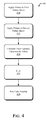
- Fig. 4 is a flowchart illustrating operations in a method to make a multilayer material in accordance with some aspects.
- a primer is applied to at least a first side of a first sheet of fabric and at operation 415 a primer is applied to at least a first side of a second sheet of fabric.
- suitable primers include Chemlok® 607 and Chemlok® 608 commercially available from the Lord Corporation of Cary, NC, USA and PR-2260 primer commercially available from Dow Chemical of Midland, MI, USA.
- the primer may be blended with a solvent such as naptha.
- thermoplastic elastomer is calendered to a first fabric sheet and second fabric sheet.
- the thermoplastic elastomer base compound may be cold mixed on roll mill with a peroxide curing agent and the first fabric sheet and second fabric sheet may be passed through the calendar rollers at 1.8pph and to a specified thickness (e.g., 5mil).
- the multilayer material is cured.
- the material may be cured in a heat-cure press at a pressure that measures between about 20 pounds per square inch and about 60 pounds per square inch at a temperature that measures between about 200 degrees Fahrenheit and about 280 degrees Fahrenheit and narrower ranges (e.g., 210 - 270 degrees Fahrenheit, including for example, 200, 225, 250, 275, and 280 degrees Fahrenheit), for a time period that measures between about 5 minutes and about 30 minutes and narrower ranges (e.g., between about 10 minutes and 20 minutes, including for example, 5, 10, 15, 20, 25, and 30 minutes).
- the multilayer material is subjected to a post-cure heating to burn off an residual catalyst materials.
- the material may be heated to a temperature that measures between about 250 degrees Fahrenheit and 350 degrees Fahrenheit and narrower ranges (e.g., 275 - 325 degrees Fahrenheit, including for example, 250, 275, 300, 325, and 350 degrees Fahrenheit), for a time period that measures between about 1 hours and 10 hours and narrower ranges (e.g., between about 2 hours and 8 hours, including for example, 1, 2, 3, 4, 5, 6, 7, 8, 9, and 10 hours).
- a multilayer material as described with reference to Figs. 1-3 may be incorporated into a window shade.
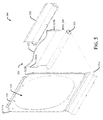
- FIG. 5 is a schematic, exploded view of a window shade assembly 500 in accordance with some aspects.
- window shade assembly 500 comprises a frame 510 which defines a window 514.
- Frame 510 may be formed from a suitably rigid material, e.g., a metal or a plastic, and comprises tracks 512A, 512B, which may be referred to collectively here by reference numeral 512, and a receptacle 516.
- a window shade 520 comprises a handle 522, tabs 524A and 524B, which may be referred to collectively herein by reference numeral 524, a roller 526, and a multilayer material 100 connected to handle 522 and to roller 526.
- Multilayer material 100 may be dimensioned to cover the window 514.
- Window assembly 500 may further comprise a cover 530 which receives roller 526 and covers receptacle 516.
- Window shade 500 may be assembled by sliding tabs 524 into tracks 512 and fitting roller 526 into cover 530, then coupling the cover over the receptacle 516 such that the roller 520 is housed in the receptacle 516 and cover 530.
- a window shade assembly 500 may be incorporated into a window assembly.
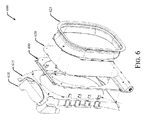
- Fig. 6 is a schematic, exploded view of a window assembly 600 in accordance with some aspects.
- a window assembly 600 comprises a shroud 610, a mounting base 615, a window shade assembly 500, a transparent pane 620 and an isolator assembly 625.
- Window assembly 600 may be secured together using fasteners such as screws or bolts or via interference fit features on mating surfaces.
- isolator assembly 625 may interface with the frame of a vehicle, e.g., an aircraft, bus, ship, or the like.
- Fig. 7 is a schematic illustration of an aircraft 700 in which a window shade assembly 500 may be installed, according to aspects
- the airplane 700 may be a commercial airline, cargo plane, or small passenger plane.
- the airplane 700 may comprise a body 710 which defines an interior cabin, one or more wings 720 and one or more engines 630.
- the particular design of the aircraft 700 is not critical.
- Coupled may mean that two or more elements are in direct physical or electrical contact.
- Coupled may mean that two or more elements are in direct physical or electrical contact.
- coupled may also mean that two or more elements may not be in direct contact with each other, but may still cooperate or interact with each other.
Landscapes
- Engineering & Computer Science (AREA)
- Health & Medical Sciences (AREA)
- General Health & Medical Sciences (AREA)
- Pulmonology (AREA)
- Aviation & Aerospace Engineering (AREA)
- Laminated Bodies (AREA)
- Structural Engineering (AREA)
- Architecture (AREA)
- Civil Engineering (AREA)
- Compositions Of Macromolecular Compounds (AREA)
Abstract
Description
- This invention relates to aircraft shade materials and assemblies useful in aircraft or other vehicles.
- Flexible window shades in vehicles such as aircraft, buses, ships, and the like need to remain durable while subjected to repeated use and extreme environmental conditions including thermal, chemical, moisture, solvent, passenger contact, and ultraviolet (UV) exposure. Accordingly, there is a need for aircraft shade materials comprised of more robust materials capable of withstanding diverse environmental conditions.
- In various aspects, multilayer materials are provided. In some aspects, a multilayer material comprises a first layer formed from a thermoplastic elastomeric material, a second layer formed from a fabric and secured to a first side of the first layer, and a third layer formed from a fabric secured to a second side of the first layer.
- In another aspect there is provided a window shade, comprising a handle, a roller, and a multilayer material, comprising a first layer formed from a thermoplastic elastomeric material, a second layer formed from a fabric and secured to a first side of the first layer, and a third layer formed from a fabric secured to a second side of the first layer.
- In another aspect there is provided a window assembly, comprising a fitting, a window, and a window shade assembly comprising a frame and a window shade, comprising a handle a roller and a multilayer material comprising a first layer formed from a thermoplastic elastomeric material, a second layer formed from a fabric and secured to a first side of the first layer, and a third layer formed from a fabric secured to a second side of the first layer.
- In another aspect there is provided a method to make a multilayer material comprising applying a primer to at least a first side of a first sheet of polyester fabric, applying a primer to at least a first side of a second sheet of polyester fabric, calendaring a thermoplastic elastomer onto a first side of the polyester fabric, and curing the multilayer material.
- The features, functions and advantages discussed herein can be achieved independently in various aspects described herein or may be combined in yet other aspects, further details of which can be seen with reference to the following description and drawings.
- The detailed description is described with reference to the accompanying figures.
-
Figs. 1-3 are schematic illustrations of multilayer materials in accordance with some aspects. -
Fig. 4 is a flowchart illustrating operations in a method to make a multilayer material in accordance with some aspects. -
Fig. 5 is a schematic, exploded view of a window shade assembly in accordance with some aspects. -
Fig. 6 is a schematic, exploded view of a window assembly in accordance with some aspects. -
Fig. 7 is a schematic view of an aircraft in accordance with some aspects. - Described herein are examples of multilayer materials, window shade and window assemblies comprising multilayer materials, vehicles comprising such assemblies, and methods to make multilayer materials. In the following description, numerous specific details are set forth to provide a thorough understanding of various aspects. However, it will be understood by those skilled in the art that the various aspects may be practiced without the specific details. In other instances, well-known methods, procedures, components, and circuits have not been illustrated or described in detail so as not to obscure the particular aspects.
-
Figs. 1-3 are schematic illustrations ofmultilayer materials 100 in accordance with some aspects. Referring first toFig. 1 , in some aspects amultilayer material 100 may comprise afirst layer 110 formed from a thermoplastic elastomeric material, asecond layer 120A formed from a fabric and secured to a first side of thefirst layer 110, and athird layer 120B formed from a fabric secured to a second side of thefirst layer 110. - In some aspects the
first layer 110 comprises at least one of a silicone material such as CS5093-01, which is a silicone rubber commercially available from Seal Science, Inc. of California, USA), a rubber material such as styrene butadiene rubber sheet commercially available from Rubber Cal of California, USA), a polyisoprene material (such as Cariflex™ polyisoprene rubber commercially available from Kraton of Texas, USA), a polyolefin material such as Clysar® high abuse film commercially available from Clysar® of Iowa, USA, a polyamide material such as cast PA 6 films commercially available from Impex Global, LLC of Texas, USA, a polyimide material such as Kapton® commercially available from DuPont, a copolyestermaterial such as Eastar™ copolyester 6763 commercially available from Eastman Chemical, a fluoroelastomer material such as Viton® films commercially available from DuPont or DaiEl T-530 film commercially available from Daiken Industries, Ltd., of Japan or a urethane material such as 3M™ Polyurethane film tapes or Elastollan® resin from BASF Corporation of Germany, and may be formed to a thickness that measures about 0.1 thousandths of an inch (mils) to about 12 mils.First layer 110 may be doped with a material such as a carbon black material or other dye in a quantity sufficient to render thefirst layer 110 opaque to visible light. Further, in some aspects thefirst layer 110 comprises a flame retardant material. Examples of suitable flame retardant materials include at least one of a brominated polymer such as Saytex® flame retardant materials commercially available from Albemarle of Louisiana, USA, a hydrated metal oxide such as Magnifin flame retardants commercially available from Albemarle or Hymod™ products from Huber Engineered Materials of Georgia, USA, ammonium polyphosphate such as Exolit AP products commercially available from Clariant of Switzerland, phosphorus polyols such as Exolit OP products commercially available from Clariant of Switzerland), red phosphorus, or a polyphosphinate (such as Exolit OP products from Clariant of Switzerland). - In some aspects the
second layer 120A and thethird layer 120B comprise at least one of a fiberglass material, a polyester material, a polyimide material, a polyarylate material, a semi-aromatic polyamide fiber, a polybenzimidazole fiber, a modified acrylic fiber, and a metal oxide fiber material.Second layer 120A andthird layer 120B may also be coated with a flame retardant material or may be formed from a material that is inherently flame retardant. Examples of materials suitable for use insecond layer - In some aspects the
multilayer material 100 may comprise two or more layers of a thermoplastic elastomeric material. Referring toFig. 2 , themultilayer material 100 comprises afourth layer 110B secured adjacent thefirst layer 110A. In some aspects thefourth layer 110B is formed from a thermoplastic elastomeric material and comprises a carbon black material in a quantity sufficient to render thefourth layer 110B opaque to visible light. The first layer may comprise a material such as Titanium dioxide. In the aspect depicted inFig. 2 thefirst layer 110A may be formed to a thickness of about 0.1 thousandths of an inch (mils) to about 12 mils and thefourth layer 110B may be formed to a thickness of about 0.1 thousandths of an inch (mils) to about 12 mils. - Referring to
Fig. 3 , in some aspects a fifth layer formed from a fabric material may be interposed between thefirst layer 110A and thefourth layer 110B. -
Fig. 4 is a flowchart illustrating operations in a method to make a multilayer material in accordance with some aspects. Referring toFig. 4 , at operation 410 a primer is applied to at least a first side of a first sheet of fabric and at operation 415 a primer is applied to at least a first side of a second sheet of fabric. Examples of suitable primers include Chemlok® 607 and Chemlok® 608 commercially available from the Lord Corporation of Cary, NC, USA and PR-2260 primer commercially available from Dow Chemical of Midland, MI, USA. The primer may be blended with a solvent such as naptha. - At operation 420 a thermoplastic elastomer is calendered to a first fabric sheet and second fabric sheet. In some aspects the thermoplastic elastomer base compound may be cold mixed on roll mill with a peroxide curing agent and the first fabric sheet and second fabric sheet may be passed through the calendar rollers at 1.8pph and to a specified thickness (e.g., 5mil).
- At
operation 425 the multilayer material is cured. In some aspects the material may be cured in a heat-cure press at a pressure that measures between about 20 pounds per square inch and about 60 pounds per square inch at a temperature that measures between about 200 degrees Fahrenheit and about 280 degrees Fahrenheit and narrower ranges (e.g., 210 - 270 degrees Fahrenheit, including for example, 200, 225, 250, 275, and 280 degrees Fahrenheit), for a time period that measures between about 5 minutes and about 30 minutes and narrower ranges (e.g., between about 10 minutes and 20 minutes, including for example, 5, 10, 15, 20, 25, and 30 minutes). - At
operation 430 the multilayer material is subjected to a post-cure heating to burn off an residual catalyst materials. In some aspects the material may be heated to a temperature that measures between about 250 degrees Fahrenheit and 350 degrees Fahrenheit and narrower ranges (e.g., 275 - 325 degrees Fahrenheit, including for example, 250, 275, 300, 325, and 350 degrees Fahrenheit), for a time period that measures between about 1 hours and 10 hours and narrower ranges (e.g., between about 2 hours and 8 hours, including for example, 1, 2, 3, 4, 5, 6, 7, 8, 9, and 10 hours). - In some aspects a multilayer material as described with reference to
Figs. 1-3 may be incorporated into a window shade.Fig. 5 is a schematic, exploded view of awindow shade assembly 500 in accordance with some aspects. Referring toFig. 5 , in some aspectswindow shade assembly 500 comprises aframe 510 which defines awindow 514.Frame 510 may be formed from a suitably rigid material, e.g., a metal or a plastic, and comprisestracks receptacle 516. - A
window shade 520 comprises ahandle 522,tabs roller 526, and amultilayer material 100 connected to handle 522 and toroller 526.Multilayer material 100 may be dimensioned to cover thewindow 514. -
Window assembly 500 may further comprise acover 530 which receivesroller 526 and coversreceptacle 516. -
Window shade 500 may be assembled by sliding tabs 524 into tracks 512 andfitting roller 526 intocover 530, then coupling the cover over thereceptacle 516 such that theroller 520 is housed in thereceptacle 516 andcover 530. - In some aspects a
window shade assembly 500 may be incorporated into a window assembly.Fig. 6 is a schematic, exploded view of awindow assembly 600 in accordance with some aspects. Referring toFig. 6 , in some aspects awindow assembly 600 comprises ashroud 610, amounting base 615, awindow shade assembly 500, atransparent pane 620 and anisolator assembly 625.Window assembly 600 may be secured together using fasteners such as screws or bolts or via interference fit features on mating surfaces. In use,isolator assembly 625 may interface with the frame of a vehicle, e.g., an aircraft, bus, ship, or the like. -
Fig. 7 is a schematic illustration of an aircraft 700 in which awindow shade assembly 500 may be installed, according to aspects Referring toFig. 7 , the airplane 700 may be a commercial airline, cargo plane, or small passenger plane. The airplane 700 may comprise a body 710 which defines an interior cabin, one or more wings 720 and one or more engines 630. The particular design of the aircraft 700 is not critical. - Reference in the specification to "one aspect" or "some aspects" means that a particular feature, structure, or characteristic described in connection with the aspect is included in at least an implementation. The appearances of the phrase "in one aspect" in various places in the specification may or may not be all referring to the same aspect.
- Also, in the description and claims, the terms "coupled" and "connected," along with their derivatives, may be used. In some aspects of the invention, "connected" may be used to indicate that two or more elements are in direct physical or electrical contact with each other. "Coupled" may mean that two or more elements are in direct physical or electrical contact. However, "coupled" may also mean that two or more elements may not be in direct contact with each other, but may still cooperate or interact with each other.
- Further, the disclosure comprises the following embodiments:
- In one embodiment, there is provided a
multilayer material 100, comprising:- a
first layer 110 formed from a thermoplastic elastomeric material; - a
second layer 120A formed from a fabric and secured to a first side of the first layer; and - a
third layer 120B formed from a fabric secured to a second side of the first layer.
- a
- Optionally, the
first layer 110 comprises at least one of a silicone material, a rubber material, a polyisoprene material, a polyolefin material, a polyamide material, a copolyestermaterial, a fluoroelastomer material, or a urethane material. - Optionally, the
first layer 110 comprises a carbon black material in a quantity sufficient to render the first layer opaque to visible light. - Optionally, the
first layer 110 comprises a flame retardant material comprising at least one of a brominated polymer, a metal oxide, or a polyphosphonate. - Optionally, the
second layer 120A and thethird layer 120B comprise at least one of a fiberglass material, a polyester material, a polyimide material, a polyarylate material, a semi-aromatic polyamide fiber, a polybenzimidazole fiber, a modified acrylic fiber, and a metal oxide fiber material. - Optionally, the
multilayer material 100 further comprises afourth layer 110B secured adjacent thefirst layer 110, wherein the fourth layer is formed from a thermoplastic elastomeric material and comprises a carbon black material in a quantity sufficient to render the fourth layer opaque to visible light. - In another embodiment, there is provided a window shade, comprising:
- a handle;
- a roller; and
- a
multilayer material 100, comprising:- a
first layer 110 formed from a thermoplastic elastomeric material; - a
second layer 120A formed from a fabric and secured to a first side of the first layer; and - a third layer formed 120B from a fabric secured to a second side of the first layer.
- a
- Optionally, the
first layer 110 comprises at least one of a silicone material, a rubber material, a polyisoprene material, a polyolefin material, a polyamide material, a copolyestermaterial, a fluoroelastomer material, or a urethane material. - Optionally, the
first layer 110 comprises a carbon black material in a quantity sufficient to render the first layer opaque to visible light. - Optionally, the
first layer 110 comprises a flame retardant material comprising at least one of a brominated polymer, a metal oxide, or a polyphosphonate. - Optionally, the
second layer 120A and thethird layer 120B comprise at least one of a fiberglass material, a polyester material, a polyimide material, a polyarylate material, a semi-aromatic polyamide fiber, a polybenzimidazole fiber, a modified acrylic fiber, and a metal oxide fiber material - Optionally, the
multilayer material 100 further comprises afourth layer 110B secured adjacent thefirst layer 110, wherein the fourth layer is formed from a thermoplastic elastomeric material and comprises a carbon black material in a quantity sufficient to render the fourth layer opaque to visible light. - In another embodiment, there is provided a window assembly, comprising:
- a mounting base;
- a transparent pane; and
- a window shade assembly, comprising:
- a frame; and
- a window shade, comprising:
- a handle;
- a roller; and
- a
multilayer material 100, comprising:- a
first layer 110 formed from a thermoplastic elastomeric material;
- a
- a
second layer 120A formed from a fabric and secured to a first side of the first layer; and - a
third layer 120B formed from a fabric secured to a second side of the first layer.
- Optionally, the
first layer 110 comprises at least one of a silicone material, a rubber material, a polyisoprene material, a polyolefin material, a polyamide material, a copolyestermaterial, a fluoroelastomer material, or a urethane material. - Optionally, the
first layer 110 comprises a carbon black material in a quantity sufficient to render the first layer opaque to visible light. - Optionally, the
first layer 110 comprises a flame retardant material comprising at least one of a brominated polymer, a metal oxide, ammonium polyphosphate, phosphorus polyols, red phosphorus, or a polyphosphonate. - Optionally, the
second layer 120A and thethird layer 120B comprise at least one of a fiberglass material, a polyester material, a polyimide material, a polyarylate material, a semi-aromatic polyamide fiber, a polybenzimidazole fiber, a modified acrylic fiber, and a metal oxide fiber material. - Optionally, the
multilayer material 100, further comprises afourth layer 110B secured adjacent thefirst layer 110, wherein the fourth layer is formed from a thermoplastic elastomeric material and comprises a carbon black material in a quantity sufficient to render the fourth layer opaque to visible light. - In another embodiment, there is provided a method to make a
multilayer material 100, comprising- applying a primer to at least a first side of a first sheet of fabric;
- applying a primer to at least a first side of a second sheet of fabric;
- calendaring a thermoplastic elastomer onto a first fabric sheet and second fabric sheet; and
- curing the multilayer material.
- Optionally, curing the
multilayer material 100 comprises applying a heat-cure press to the multilayer material at a pressure that measures between 20 pounds per square inch and 60 pounds per square inch at a temperature that measures between 200 degrees Fahrenheit and 280 degrees Fahrenheit for a time period that measures between 5 minutes and 30 minutes. - Optionally, the method further comprises heating the
multilayer material 100 to a temperature that measures between 250 degrees Fahrenheit and 350 degrees Fahrenheit for a time period that measures between 1 hour and 110 hours. - Although aspects have been described in language specific to structural features and/or methodological acts, it is to be understood that claimed subject matter may not be limited to the specific features or acts described. Rather, the specific features and acts are disclosed as sample forms of implementing the claimed subject matter.
Claims (9)
- A multilayer material (100), comprising:a first layer (110) formed from a thermoplastic elastomeric material;a second layer (120A) formed from a fabric and secured to a first side of the first layer; anda third layer (120B) formed from a fabric secured to a second side of the first layer.
- The multilayer material (100) of claim 1, wherein the first layer (110) comprises at least one of a silicone material, a rubber material, a polyisoprene material, a polyolefin material, a polyamide material, a copolyestermaterial, a fluoroelastomer material, or a urethane material.
- The multilayer material (100) of claims 1 or 2, wherein the first layer (110) comprises a carbon black material in a quantity sufficient to render the first layer opaque to visible light.
- The multilayer material (100) of claims 1-3, wherein the first layer (110) comprises a flame retardant material comprising at least one of a brominated polymer, a metal oxide, or a polyphosphonate.
- The multilayer material (100) of claims 1-4, wherein the second layer (120A) and the third layer (120B) comprise at least one of a fiberglass material, a polyester material, a polyimide material, a polyarylate material, a semi-aromatic polyamide fiber, a polybenzimidazole fiber, a modified acrylic fiber, and a metal oxide fiber material.
- The multilayer material (100) of claims 1-5, further comprising a fourth layer (110B) secured adjacent the first layer (110), wherein the fourth layer is formed from a thermoplastic elastomeric material and comprises a carbon black material in a quantity sufficient to render the fourth layer opaque to visible light.
- A method to make a multilayer material (100), comprising
applying a primer to at least a first side of a first sheet of fabric;
applying a primer to at least a first side of a second sheet of fabric;
calendaring a thermoplastic elastomer onto a first fabric sheet and second fabric sheet; and
curing the multilayer material. - The method of claim 7, wherein curing the multilayer material (100) comprises applying a heat-cure press to the multilayer material at a pressure that measures between 20 pounds per square inch and 60 pounds per square inch at a temperature that measures between 200 degrees Fahrenheit and 280 degrees Fahrenheit for a time period that measures between 5 minutes and 30 minutes.
- The method of claims 7 or 8, further comprising heating the multilayer material (100) to a temperature that measures between 250 degrees Fahrenheit and 350 degrees Fahrenheit for a time period that measures between 1 hour and 110 hours.
Applications Claiming Priority (1)
| Application Number | Priority Date | Filing Date | Title |
|---|---|---|---|
| US14/025,089 US20150068691A1 (en) | 2013-09-12 | 2013-09-12 | Multilayer aircraft shade material |
Publications (2)
| Publication Number | Publication Date |
|---|---|
| EP2848401A2 true EP2848401A2 (en) | 2015-03-18 |
| EP2848401A3 EP2848401A3 (en) | 2015-08-05 |
Family
ID=51535349
Family Applications (1)
| Application Number | Title | Priority Date | Filing Date |
|---|---|---|---|
| EP14184459.7A Withdrawn EP2848401A3 (en) | 2013-09-12 | 2014-09-11 | Multilayer aircraft shade material |
Country Status (7)
| Country | Link |
|---|---|
| US (1) | US20150068691A1 (en) |
| EP (1) | EP2848401A3 (en) |
| JP (1) | JP2015054523A (en) |
| CN (1) | CN104441864A (en) |
| BR (1) | BR102014019856A2 (en) |
| CA (1) | CA2856432A1 (en) |
| RU (1) | RU2014124859A (en) |
Cited By (2)
| Publication number | Priority date | Publication date | Assignee | Title |
|---|---|---|---|---|
| WO2018060577A1 (en) * | 2016-09-27 | 2018-04-05 | Compagnie Generale Des Etablissements Michelin | Silicone rubber and fibre-resin composite-based laminated product |
| US11267287B2 (en) | 2016-09-27 | 2022-03-08 | Compagnie Generale Des Etablissements Michelin | Non-pneumatic resilient wheel |
Families Citing this family (9)
| Publication number | Priority date | Publication date | Assignee | Title |
|---|---|---|---|---|
| EP3173331B1 (en) * | 2015-11-30 | 2019-04-24 | Airbus Operations GmbH | Cover panel for a structural component |
| US11643864B2 (en) | 2018-01-23 | 2023-05-09 | Pella Corporation | Screen edge retention and screen rethreading features for a hidden screen assembly and a fenestration assembly |
| US10988970B2 (en) * | 2018-09-19 | 2021-04-27 | The Boeing Company | Window assembly for use in a vehicle |
| CA3107553C (en) | 2020-01-31 | 2023-08-22 | Pella Corporation | Integrated pleated screen assembly |
| CN115551711A (en) * | 2020-04-14 | 2022-12-30 | 美国圣戈班性能塑料公司 | Composite membrane |
| US11837113B2 (en) | 2020-05-06 | 2023-12-05 | The Boeing Company | Aircraft passenger window shade with illuminated image |
| CN117320876A (en) * | 2021-06-02 | 2023-12-29 | 美国圣戈班性能塑料公司 | Multilayer composite material with thermal barrier properties |
| CN117377569A (en) * | 2021-06-28 | 2024-01-09 | 美国圣戈班性能塑料公司 | Multilayer composite material with thermal barrier properties |
| KR102558324B1 (en) | 2021-08-06 | 2023-07-20 | 도레이첨단소재 주식회사 | Polyester deco sheet for flame retardant |
Family Cites Families (68)
| Publication number | Priority date | Publication date | Assignee | Title |
|---|---|---|---|---|
| US3691686A (en) * | 1971-03-30 | 1972-09-19 | Mc Donnell Douglas Corp | Window shade assembly |
| GB1416431A (en) * | 1972-02-08 | 1975-12-03 | Hawker Siddeley Aviation Ltd | Window blinds especially for aircraft passenger cabins |
| US3906669A (en) * | 1973-03-02 | 1975-09-23 | Lockheed Aircraft Corp | Window assembly |
| US4409275A (en) * | 1974-12-30 | 1983-10-11 | Samowich Joseph J | Decorative laminate |
| IT1102857B (en) * | 1977-10-05 | 1985-10-07 | Fochesato Antonio | PROCESS FOR THE PRODUCTION OF TEXTILE FIBERS AND NON-FLAMMABLE SYNTHETIC PARATEX PRODUCTS |
| US4229329A (en) * | 1979-02-15 | 1980-10-21 | Herbert Bennett | Fire retardant coating composition comprising fly ash and polymer emulsion binder |
| US4364533A (en) * | 1980-11-13 | 1982-12-21 | The Boeing Company | Sidewall panel window assembly and method of installing |
| CA1240571A (en) * | 1983-05-17 | 1988-08-16 | Jerry Lippman | Foam coated fabrics |
| US4610918A (en) * | 1984-04-13 | 1986-09-09 | Chemical Fabrics Corporation | Novel wear resistant fluoropolymer-containing flexible composites |
| DE3688000T2 (en) * | 1985-05-16 | 1993-10-21 | Chemfab Corp | Flexible composite laminates containing a fluoropolymer. |
| US4608298A (en) * | 1985-09-05 | 1986-08-26 | Rockland Industries | Weather proof insulating textile fabric composite |
| US4679610A (en) * | 1986-01-31 | 1987-07-14 | Mike Spraggins | Modular window insert with collapsible shade |
| GB8618727D0 (en) * | 1986-07-31 | 1986-09-10 | Wiggins Teape Group Ltd | Thermoplastic sheets |
| US4830897A (en) * | 1987-08-07 | 1989-05-16 | Cary Lichtenstein | Multilayer fabric containing arcylic fire-retardant foam |
| CN2077788U (en) * | 1990-02-27 | 1991-05-29 | 陈锦荣 | Opaque non-woven fabric |
| US5283111A (en) * | 1990-10-26 | 1994-02-01 | Schlecker Richard A | Multi-layered insulating composite fabric |
| WO1992008609A2 (en) * | 1990-11-20 | 1992-05-29 | Chemfab Corporation | Flexible multilayer fluoropolymer laminate |
| US5484645A (en) * | 1991-10-30 | 1996-01-16 | Fiberweb North America, Inc. | Composite nonwoven fabric and articles produced therefrom |
| US5393598A (en) * | 1992-06-17 | 1995-02-28 | Schlecker; Richard A. | Multi-layered insulating composite fabric |
| ZA9510604B (en) * | 1994-12-20 | 1996-07-03 | Kimberly Clark Co | Low gauge films and film/nonwoven laminates |
| US5741582A (en) * | 1995-09-08 | 1998-04-21 | Rockland Industries, Inc. | Blackout drapery lining with dual fabric surfaces |
| US5786285A (en) * | 1996-05-14 | 1998-07-28 | United Technologies Corporation | Elastomer coated layer for erosion and/or fire protection |
| AT404925B (en) * | 1997-07-25 | 1999-03-25 | Fischer Adv Components Gmbh | WINDOW UNIT FOR AIRCRAFT CABINS |
| US5834381A (en) * | 1997-10-09 | 1998-11-10 | Highland Industries, Inc. | Non-halogenated tri-laminate fabric for automotive security shades or covers |
| US6186211B1 (en) * | 1999-02-22 | 2001-02-13 | Aerospace Technologies Group, Inc. | Window assembly with a motorized window shade mechanism |
| US6186215B1 (en) * | 1999-03-26 | 2001-02-13 | Window Bright Corporation | Multi-positional rolling window screen |
| US7790292B2 (en) * | 1999-05-18 | 2010-09-07 | Sabic Innovative Plastics Ip B.V. | Polysiloxane copolymers, thermoplastic composition, and articles formed therefrom |
| US6481486B1 (en) * | 2000-02-08 | 2002-11-19 | Msa Aircraft Products, Ltd. | Modular aircraft window with a dual shade |
| US6832641B1 (en) * | 1999-11-17 | 2004-12-21 | Eduardo Sanz | Electric dual shade aircraft window |
| GB0027592D0 (en) * | 2000-11-10 | 2000-12-27 | Powergraphic Displays Ltd | Display unit |
| US6680095B2 (en) * | 2001-01-30 | 2004-01-20 | Xerox Corporation | Crosslinking of fluoropolymers with polyfunctional siloxanes for release enhancement |
| US8057903B2 (en) * | 2001-11-30 | 2011-11-15 | Sabic Innovative Plastics Ip B.V. | Multilayer articles comprising resorcinol arylate polyester and method for making thereof |
| US20040170800A1 (en) * | 2002-02-20 | 2004-09-02 | Richards Jack J. | Blackout and thermal drapery fabrics and linings using films and method therefor |
| US20040116025A1 (en) * | 2002-12-17 | 2004-06-17 | Gogins Mark A. | Air permeable garment and fabric with integral aerosol filtration |
| US6915988B2 (en) * | 2003-01-27 | 2005-07-12 | Msa Aircraft Products, Ltd. | Matrix window |
| EP1611176B1 (en) * | 2003-02-21 | 2015-09-09 | SABIC Global Technologies B.V. | Process for preparing transparent and high-heat polycarbonate-polysiloxane copolymers |
| US7157034B2 (en) * | 2003-04-03 | 2007-01-02 | Azdel, Inc. | Twin-sheet thermoforming process |
| US20040256310A1 (en) * | 2003-06-19 | 2004-12-23 | Cheng Dah Yu | Method of producing a porous membrane and waterproof, highly breathable fabric including the membrane |
| US8393080B2 (en) * | 2003-08-20 | 2013-03-12 | Hunter Douglas Inc. | Method for making a window covering having operable vanes |
| US20050112331A1 (en) * | 2003-11-25 | 2005-05-26 | Constantin Donea | Multiwall sheets and methods for manufacturing thereof |
| US7682697B2 (en) * | 2004-03-26 | 2010-03-23 | Azdel, Inc. | Fiber reinforced thermoplastic sheets with surface coverings |
| US7244501B2 (en) * | 2004-03-26 | 2007-07-17 | Azdel, Inc. | Fiber reinforced thermoplastic sheets with surface coverings |
| USRE44893E1 (en) * | 2004-03-26 | 2014-05-13 | Hanwha Azdel, Inc. | Fiber reinforced thermoplastic sheets with surface coverings |
| US20050263254A1 (en) * | 2004-05-27 | 2005-12-01 | Sievers Thomas J | Window shade positioning apparatus and method |
| US20060003658A1 (en) * | 2004-06-30 | 2006-01-05 | Hall Gregory K | Elastic clothlike meltblown materials, articles containing same, and methods of making same |
| WO2006008900A1 (en) * | 2004-07-15 | 2006-01-26 | Kaneka Corporation | Flame retardant knit fabric |
| US7510146B2 (en) * | 2004-09-23 | 2009-03-31 | Robert Golden | Window shade system and method of use |
| DE202005000363U1 (en) * | 2005-01-11 | 2005-05-04 | Webasto Ag | Roller blind for covering window has winding roller containing spring exerting tension against crossbar with its ends attached to cords passing over rollers and attached to pistons in cylinders |
| WO2006093279A1 (en) * | 2005-03-04 | 2006-09-08 | Kaneka Corporation | Flame retardant bedding product |
| US20070049706A1 (en) * | 2005-08-26 | 2007-03-01 | Srinivas Siripurapu | Low smoke polycarbonate composition, method of manufacture and product made therefrom |
| WO2007056471A2 (en) * | 2005-11-09 | 2007-05-18 | Madico, Inc. | Flame retardant clear flims |
| AT503577B1 (en) * | 2006-10-25 | 2007-11-15 | Fischer Adv Components Gmbh | Modular airplane cabin window, has actuating unit with lifting and lowering mechanism, and threaded spindle displaced in translational manner and coupled to transmission mechanism, which actuates lifting and lowering mechanism |
| TW200827159A (en) * | 2006-12-29 | 2008-07-01 | Pepwing Internat Corp | Combustion-blocked, heat-insulated and wet-permeated coating cloth and method thereof |
| DE102007006540B4 (en) * | 2007-02-09 | 2012-11-22 | Airbus Operations Gmbh | Aircraft window darkening system |
| US20080283204A1 (en) * | 2007-05-16 | 2008-11-20 | Precision Entry, Inc. | Door having interconnected upper and lower sashes |
| CA2664369A1 (en) * | 2007-09-14 | 2009-03-19 | Cardinal Cg Company | Low-maintenance coatings, and methods for producing low-maintenance coatings |
| US20100021718A1 (en) * | 2008-07-23 | 2010-01-28 | Sandra Fritz Vos | Thermoplastic composite material with improved smoke generation, heat release, and mechanical properties |
| US8664129B2 (en) * | 2008-11-14 | 2014-03-04 | Exxonmobil Chemical Patents Inc. | Extensible nonwoven facing layer for elastic multilayer fabrics |
| US9174239B2 (en) * | 2009-10-27 | 2015-11-03 | Axalta Coating Systems Ip Co., Llc | Process for the production of a dark-color multi-layer coating |
| US9005714B2 (en) * | 2009-10-27 | 2015-04-14 | Axalta Coating Systems Ip Co., Llc | Process for the production of a dark-color multi-layer coating |
| US20110293930A1 (en) * | 2010-05-26 | 2011-12-01 | Sabic Innovative Plastics Ip B.V. | Multilayer sheet and methods of making and articles comprising the multilayer sheet |
| US9056445B2 (en) * | 2010-05-26 | 2015-06-16 | Sabic Global Technologies B.V. | Multilayer sheet and methods of making and articles comprising the multilayer sheet |
| US9365719B2 (en) * | 2011-03-31 | 2016-06-14 | Sabic Global Technologies B.V. | Marine vehicle component comprising flame retardant compositions, and methods of manufacture |
| US20130240162A1 (en) * | 2012-03-13 | 2013-09-19 | Hunter Douglas, Inc. | Light Diffusing Roller Blind Assembly |
| US20130288553A1 (en) * | 2012-04-25 | 2013-10-31 | David PENSAK | Fabrics comprising inorganic fibers and uses in garments and coverings |
| US9018286B2 (en) * | 2012-05-24 | 2015-04-28 | Sabic Global Technologies B.V. | Flame retardant polycarbonate compositions, methods of manufacture thereof and articles comprising the same |
| US20140014281A1 (en) * | 2012-07-13 | 2014-01-16 | Homerun Holdings Corporation | Shade with a Shear Pin and Method for Pretensioning a Shade |
| US9650496B2 (en) * | 2013-06-12 | 2017-05-16 | Sabic Global Technologies B.V. | Interior aircraft components and methods of manufacture |
-
2013
- 2013-09-12 US US14/025,089 patent/US20150068691A1/en not_active Abandoned
-
2014
- 2014-06-18 RU RU2014124859/05A patent/RU2014124859A/en not_active Application Discontinuation
- 2014-07-10 CA CA2856432A patent/CA2856432A1/en not_active Abandoned
- 2014-07-31 CN CN201410373759.4A patent/CN104441864A/en active Pending
- 2014-08-11 BR BR102014019856A patent/BR102014019856A2/en not_active IP Right Cessation
- 2014-09-11 EP EP14184459.7A patent/EP2848401A3/en not_active Withdrawn
- 2014-09-11 JP JP2014185478A patent/JP2015054523A/en active Pending
Non-Patent Citations (1)
| Title |
|---|
| None |
Cited By (3)
| Publication number | Priority date | Publication date | Assignee | Title |
|---|---|---|---|---|
| WO2018060577A1 (en) * | 2016-09-27 | 2018-04-05 | Compagnie Generale Des Etablissements Michelin | Silicone rubber and fibre-resin composite-based laminated product |
| US11267287B2 (en) | 2016-09-27 | 2022-03-08 | Compagnie Generale Des Etablissements Michelin | Non-pneumatic resilient wheel |
| US11298920B2 (en) | 2016-09-27 | 2022-04-12 | Compagnie Generale Des Etablissements Michelin | Silicone rubber and fiber-resin composite-based laminated product |
Also Published As
| Publication number | Publication date |
|---|---|
| JP2015054523A (en) | 2015-03-23 |
| RU2014124859A (en) | 2015-12-27 |
| CN104441864A (en) | 2015-03-25 |
| US20150068691A1 (en) | 2015-03-12 |
| CA2856432A1 (en) | 2015-03-12 |
| BR102014019856A2 (en) | 2015-09-22 |
| EP2848401A3 (en) | 2015-08-05 |
Similar Documents
| Publication | Publication Date | Title |
|---|---|---|
| US20150068691A1 (en) | Multilayer aircraft shade material | |
| US20190389176A1 (en) | Surfacing film for composites with barrier layer | |
| US11964456B2 (en) | Fire-resistant, gas permeable decorative laminate | |
| EP3000593B1 (en) | Nonwoven decorative laminates and methods of making the same | |
| JP5519699B2 (en) | Composite article comprising a viscoelastic layer with a barrier layer | |
| US9845142B2 (en) | Conductive thermoplastic ground plane for use in an aircraft | |
| KR101587079B1 (en) | Hoop load bearing aircraft transparency | |
| EP2969536B1 (en) | Soft touch laminates constructed with improved fire retardant properties for transportation | |
| US20210172710A1 (en) | Ballistic panel and method of making a ballistic panel | |
| US20220212418A1 (en) | Direct application of thermosetting composite surfacing films to uv-treated thermoplastic surfaces and related composite structures | |
| US20210172711A1 (en) | Ballistic panel and method of making a ballistic panel | |
| JP3928020B2 (en) | Durable film material with excellent heat insulation and flexibility | |
| JP2021061244A (en) | Exterior material for power storage device, manufacturing method thereof, power storage device, and polyamide film | |
| US20150247282A1 (en) | Synthetic leather-like Composite with smoke and flame resistant properties | |
| US12053943B2 (en) | Method for repairing composite structures using foamable media | |
| US9415853B2 (en) | Surface sealing system | |
| KR20190025563A (en) | An air glazing comprising an acrylic polymer sheet having improved mechanical properties | |
| US10093156B1 (en) | Protective film for vehicle window | |
| RU2536002C1 (en) | Service jacket | |
| CA2852566A1 (en) | Method for the manufacturing of a cladding element for a passenger cabin of a vehicle | |
| EP2108030A1 (en) | Translucent flame retardant tape | |
| WO2024158663A1 (en) | Heat resistant materials and methods for making the same | |
| US11279115B2 (en) | Floor covering | |
| CA3138054C (en) | Direct application of thermosetting composite surfacing films to uv-treated thermoplastic surfaces and related composite structures | |
| JP2018053705A (en) | Rubber-coated cloth |
Legal Events
| Date | Code | Title | Description |
|---|---|---|---|
| PUAI | Public reference made under article 153(3) epc to a published international application that has entered the european phase |
Free format text: ORIGINAL CODE: 0009012 |
|
| 17P | Request for examination filed |
Effective date: 20140911 |
|
| AK | Designated contracting states |
Kind code of ref document: A2 Designated state(s): AL AT BE BG CH CY CZ DE DK EE ES FI FR GB GR HR HU IE IS IT LI LT LU LV MC MK MT NL NO PL PT RO RS SE SI SK SM TR |
|
| AX | Request for extension of the european patent |
Extension state: BA ME |
|
| PUAL | Search report despatched |
Free format text: ORIGINAL CODE: 0009013 |
|
| AK | Designated contracting states |
Kind code of ref document: A3 Designated state(s): AL AT BE BG CH CY CZ DE DK EE ES FI FR GB GR HR HU IE IS IT LI LT LU LV MC MK MT NL NO PL PT RO RS SE SI SK SM TR |
|
| AX | Request for extension of the european patent |
Extension state: BA ME |
|
| RIC1 | Information provided on ipc code assigned before grant |
Ipc: B32B 5/02 20060101AFI20150629BHEP |
|
| STAA | Information on the status of an ep patent application or granted ep patent |
Free format text: STATUS: THE APPLICATION IS DEEMED TO BE WITHDRAWN |
|
| 18D | Application deemed to be withdrawn |
Effective date: 20180404 |