EP2845874B1 - Method for dissolving cellulose - Google Patents
Method for dissolving cellulose Download PDFInfo
- Publication number
- EP2845874B1 EP2845874B1 EP13845708.0A EP13845708A EP2845874B1 EP 2845874 B1 EP2845874 B1 EP 2845874B1 EP 13845708 A EP13845708 A EP 13845708A EP 2845874 B1 EP2845874 B1 EP 2845874B1
- Authority
- EP
- European Patent Office
- Prior art keywords
- cellulose
- dissolving
- solvent
- solution
- temperature
- Prior art date
- Legal status (The legal status is an assumption and is not a legal conclusion. Google has not performed a legal analysis and makes no representation as to the accuracy of the status listed.)
- Not-in-force
Links
- 238000000034 method Methods 0.000 title claims description 34
- 229920000875 Dissolving pulp Polymers 0.000 title claims description 18
- 229920002678 cellulose Polymers 0.000 claims description 158
- 239000001913 cellulose Substances 0.000 claims description 158
- 239000000243 solution Substances 0.000 claims description 64
- 239000002904 solvent Substances 0.000 claims description 52
- HEMHJVSKTPXQMS-UHFFFAOYSA-M Sodium hydroxide Chemical compound [OH-].[Na+] HEMHJVSKTPXQMS-UHFFFAOYSA-M 0.000 claims description 51
- XLOMVQKBTHCTTD-UHFFFAOYSA-N Zinc monoxide Chemical compound [Zn]=O XLOMVQKBTHCTTD-UHFFFAOYSA-N 0.000 claims description 22
- 238000010438 heat treatment Methods 0.000 claims description 13
- 238000006116 polymerization reaction Methods 0.000 claims description 11
- 239000011787 zinc oxide Substances 0.000 claims description 11
- 230000008014 freezing Effects 0.000 claims description 10
- 238000007710 freezing Methods 0.000 claims description 10
- 239000007864 aqueous solution Substances 0.000 claims description 9
- 230000003213 activating effect Effects 0.000 claims description 8
- 235000010980 cellulose Nutrition 0.000 description 148
- 230000008569 process Effects 0.000 description 16
- 239000000835 fiber Substances 0.000 description 14
- 238000003756 stirring Methods 0.000 description 14
- 239000007788 liquid Substances 0.000 description 13
- 239000000203 mixture Substances 0.000 description 13
- 229920000742 Cotton Polymers 0.000 description 12
- 239000007787 solid Substances 0.000 description 12
- 229910001868 water Inorganic materials 0.000 description 8
- 238000004519 manufacturing process Methods 0.000 description 7
- 239000002245 particle Substances 0.000 description 7
- 239000000126 substance Substances 0.000 description 7
- XLYOFNOQVPJJNP-UHFFFAOYSA-N water Substances O XLYOFNOQVPJJNP-UHFFFAOYSA-N 0.000 description 7
- 239000011521 glass Substances 0.000 description 6
- 238000003860 storage Methods 0.000 description 6
- LFTLOKWAGJYHHR-UHFFFAOYSA-N N-methylmorpholine N-oxide Chemical compound CN1(=O)CCOCC1 LFTLOKWAGJYHHR-UHFFFAOYSA-N 0.000 description 5
- XSQUKJJJFZCRTK-UHFFFAOYSA-N Urea Chemical compound NC(N)=O XSQUKJJJFZCRTK-UHFFFAOYSA-N 0.000 description 5
- 239000012528 membrane Substances 0.000 description 5
- FXHOOIRPVKKKFG-UHFFFAOYSA-N N,N-Dimethylacetamide Chemical compound CN(C)C(C)=O FXHOOIRPVKKKFG-UHFFFAOYSA-N 0.000 description 4
- NBIIXXVUZAFLBC-UHFFFAOYSA-N Phosphoric acid Chemical compound OP(O)(O)=O NBIIXXVUZAFLBC-UHFFFAOYSA-N 0.000 description 4
- 229920001131 Pulp (paper) Polymers 0.000 description 4
- 239000002608 ionic liquid Substances 0.000 description 4
- ZMXDDKWLCZADIW-UHFFFAOYSA-N N,N-Dimethylformamide Chemical compound CN(C)C=O ZMXDDKWLCZADIW-UHFFFAOYSA-N 0.000 description 3
- SJRJJKPEHAURKC-UHFFFAOYSA-N N-Methylmorpholine Chemical compound CN1CCOCC1 SJRJJKPEHAURKC-UHFFFAOYSA-N 0.000 description 3
- 229920000297 Rayon Polymers 0.000 description 3
- 238000009776 industrial production Methods 0.000 description 3
- 239000000463 material Substances 0.000 description 3
- 239000002994 raw material Substances 0.000 description 3
- 229920003043 Cellulose fiber Polymers 0.000 description 2
- WMFOQBRAJBCJND-UHFFFAOYSA-M Lithium hydroxide Chemical compound [Li+].[OH-] WMFOQBRAJBCJND-UHFFFAOYSA-M 0.000 description 2
- 229920000433 Lyocell Polymers 0.000 description 2
- 229910000147 aluminium phosphate Inorganic materials 0.000 description 2
- 239000004202 carbamide Substances 0.000 description 2
- 230000018109 developmental process Effects 0.000 description 2
- 230000007613 environmental effect Effects 0.000 description 2
- 238000004064 recycling Methods 0.000 description 2
- 239000011829 room temperature ionic liquid solvent Substances 0.000 description 2
- 239000004753 textile Substances 0.000 description 2
- UMGDCJDMYOKAJW-UHFFFAOYSA-N thiourea Chemical compound NC(N)=S UMGDCJDMYOKAJW-UHFFFAOYSA-N 0.000 description 2
- FHDQNOXQSTVAIC-UHFFFAOYSA-M 1-butyl-3-methylimidazol-3-ium;chloride Chemical compound [Cl-].CCCCN1C=C[N+](C)=C1 FHDQNOXQSTVAIC-UHFFFAOYSA-M 0.000 description 1
- UCRIXEWTILHNCG-UHFFFAOYSA-N 1-ethyl-2h-pyridine Chemical compound CCN1CC=CC=C1 UCRIXEWTILHNCG-UHFFFAOYSA-N 0.000 description 1
- ZOYFXQMBKAXORT-UHFFFAOYSA-N 1-ethyl-2h-pyridine;hydrochloride Chemical compound Cl.CCN1CC=CC=C1 ZOYFXQMBKAXORT-UHFFFAOYSA-N 0.000 description 1
- QVRCRKLLQYOIKY-UHFFFAOYSA-M 1-methyl-3-prop-2-enylimidazol-1-ium;chloride Chemical compound [Cl-].C[N+]=1C=CN(CC=C)C=1 QVRCRKLLQYOIKY-UHFFFAOYSA-M 0.000 description 1
- QVRFXIWAQRNWEX-UHFFFAOYSA-M 2-(3-methylimidazol-3-ium-1-yl)ethanol;chloride Chemical compound [Cl-].CN1C=C[N+](CCO)=C1 QVRFXIWAQRNWEX-UHFFFAOYSA-M 0.000 description 1
- 229920013683 Celanese Polymers 0.000 description 1
- DGAQECJNVWCQMB-PUAWFVPOSA-M Ilexoside XXIX Chemical compound C[C@@H]1CC[C@@]2(CC[C@@]3(C(=CC[C@H]4[C@]3(CC[C@@H]5[C@@]4(CC[C@@H](C5(C)C)OS(=O)(=O)[O-])C)C)[C@@H]2[C@]1(C)O)C)C(=O)O[C@H]6[C@@H]([C@H]([C@@H]([C@H](O6)CO)O)O)O.[Na+] DGAQECJNVWCQMB-PUAWFVPOSA-M 0.000 description 1
- 229920000168 Microcrystalline cellulose Polymers 0.000 description 1
- SVYKKECYCPFKGB-UHFFFAOYSA-N N,N-dimethylcyclohexylamine Chemical compound CN(C)C1CCCCC1 SVYKKECYCPFKGB-UHFFFAOYSA-N 0.000 description 1
- LSNNMFCWUKXFEE-UHFFFAOYSA-N Sulfurous acid Chemical compound OS(O)=O LSNNMFCWUKXFEE-UHFFFAOYSA-N 0.000 description 1
- 238000001994 activation Methods 0.000 description 1
- 239000003513 alkali Substances 0.000 description 1
- 150000001412 amines Chemical class 0.000 description 1
- 230000008859 change Effects 0.000 description 1
- 238000006243 chemical reaction Methods 0.000 description 1
- 238000000576 coating method Methods 0.000 description 1
- 230000007123 defense Effects 0.000 description 1
- 239000003814 drug Substances 0.000 description 1
- 238000005265 energy consumption Methods 0.000 description 1
- 238000004880 explosion Methods 0.000 description 1
- 239000001257 hydrogen Substances 0.000 description 1
- 229910052739 hydrogen Inorganic materials 0.000 description 1
- -1 light industry Substances 0.000 description 1
- 230000007774 longterm Effects 0.000 description 1
- 230000008018 melting Effects 0.000 description 1
- 238000002844 melting Methods 0.000 description 1
- 235000019813 microcrystalline cellulose Nutrition 0.000 description 1
- 239000008108 microcrystalline cellulose Substances 0.000 description 1
- 229940016286 microcrystalline cellulose Drugs 0.000 description 1
- LFMTUFVYMCDPGY-UHFFFAOYSA-N n,n-diethylethanamine oxide Chemical compound CC[N+]([O-])(CC)CC LFMTUFVYMCDPGY-UHFFFAOYSA-N 0.000 description 1
- 231100000252 nontoxic Toxicity 0.000 description 1
- 230000003000 nontoxic effect Effects 0.000 description 1
- 229920000642 polymer Polymers 0.000 description 1
- 229920000137 polyphosphoric acid Polymers 0.000 description 1
- 239000004627 regenerated cellulose Substances 0.000 description 1
- 230000008929 regeneration Effects 0.000 description 1
- 238000011069 regeneration method Methods 0.000 description 1
- 238000011160 research Methods 0.000 description 1
- 229910052708 sodium Inorganic materials 0.000 description 1
- 239000011734 sodium Substances 0.000 description 1
- 239000012453 solvate Substances 0.000 description 1
- 150000003512 tertiary amines Chemical class 0.000 description 1
- 239000002341 toxic gas Substances 0.000 description 1
- 231100000419 toxicity Toxicity 0.000 description 1
- 230000001988 toxicity Effects 0.000 description 1
- UYPYRKYUKCHHIB-UHFFFAOYSA-N trimethylamine N-oxide Chemical compound C[N+](C)(C)[O-] UYPYRKYUKCHHIB-UHFFFAOYSA-N 0.000 description 1
- 239000002351 wastewater Substances 0.000 description 1
- IPCXNCATNBAPKW-UHFFFAOYSA-N zinc;hydrate Chemical compound O.[Zn] IPCXNCATNBAPKW-UHFFFAOYSA-N 0.000 description 1
Images


Classifications
-
- C—CHEMISTRY; METALLURGY
- C08—ORGANIC MACROMOLECULAR COMPOUNDS; THEIR PREPARATION OR CHEMICAL WORKING-UP; COMPOSITIONS BASED THEREON
- C08L—COMPOSITIONS OF MACROMOLECULAR COMPOUNDS
- C08L1/00—Compositions of cellulose, modified cellulose or cellulose derivatives
- C08L1/02—Cellulose; Modified cellulose
-
- C—CHEMISTRY; METALLURGY
- C08—ORGANIC MACROMOLECULAR COMPOUNDS; THEIR PREPARATION OR CHEMICAL WORKING-UP; COMPOSITIONS BASED THEREON
- C08L—COMPOSITIONS OF MACROMOLECULAR COMPOUNDS
- C08L1/00—Compositions of cellulose, modified cellulose or cellulose derivatives
-
- C—CHEMISTRY; METALLURGY
- C08—ORGANIC MACROMOLECULAR COMPOUNDS; THEIR PREPARATION OR CHEMICAL WORKING-UP; COMPOSITIONS BASED THEREON
- C08B—POLYSACCHARIDES; DERIVATIVES THEREOF
- C08B1/00—Preparatory treatment of cellulose for making derivatives thereof, e.g. pre-treatment, pre-soaking, activation
- C08B1/003—Preparation of cellulose solutions, i.e. dopes, with different possible solvents, e.g. ionic liquids
-
- C—CHEMISTRY; METALLURGY
- C08—ORGANIC MACROMOLECULAR COMPOUNDS; THEIR PREPARATION OR CHEMICAL WORKING-UP; COMPOSITIONS BASED THEREON
- C08J—WORKING-UP; GENERAL PROCESSES OF COMPOUNDING; AFTER-TREATMENT NOT COVERED BY SUBCLASSES C08B, C08C, C08F, C08G or C08H
- C08J3/00—Processes of treating or compounding macromolecular substances
- C08J3/02—Making solutions, dispersions, lattices or gels by other methods than by solution, emulsion or suspension polymerisation techniques
- C08J3/03—Making solutions, dispersions, lattices or gels by other methods than by solution, emulsion or suspension polymerisation techniques in aqueous media
- C08J3/05—Making solutions, dispersions, lattices or gels by other methods than by solution, emulsion or suspension polymerisation techniques in aqueous media from solid polymers
-
- C—CHEMISTRY; METALLURGY
- C08—ORGANIC MACROMOLECULAR COMPOUNDS; THEIR PREPARATION OR CHEMICAL WORKING-UP; COMPOSITIONS BASED THEREON
- C08J—WORKING-UP; GENERAL PROCESSES OF COMPOUNDING; AFTER-TREATMENT NOT COVERED BY SUBCLASSES C08B, C08C, C08F, C08G or C08H
- C08J2301/00—Characterised by the use of cellulose, modified cellulose or cellulose derivatives
- C08J2301/02—Cellulose; Modified cellulose
Definitions
- liquid from an upper level of the solution is taken and dried to weigh a solid content of the cellulose.
- a comparison to the solid content of the cellulose solution at the initial time point of 0 hour is shown in Fig. 7 .
- the settled content is 4.8wt% and a weight ratio of the non-settled content is 95.2wt%.
- liquid from an upper level of the solution is taken and dried to weigh a solid content of the cellulose.
- a comparison to the solid content of the cellulose solution at the initial time point of 0 hour is shown in Fig. 7 .
- the settled content is 5.7wt% and a weight ratio of the non-settled content is 94.3wt%.
Landscapes
- Chemical & Material Sciences (AREA)
- Health & Medical Sciences (AREA)
- Chemical Kinetics & Catalysis (AREA)
- Medicinal Chemistry (AREA)
- Polymers & Plastics (AREA)
- Organic Chemistry (AREA)
- Life Sciences & Earth Sciences (AREA)
- Engineering & Computer Science (AREA)
- Biochemistry (AREA)
- Materials Engineering (AREA)
- Dispersion Chemistry (AREA)
- Processes Of Treating Macromolecular Substances (AREA)
- Polysaccharides And Polysaccharide Derivatives (AREA)
- Compositions Of Macromolecular Compounds (AREA)
- Artificial Filaments (AREA)
Description
- The disclosure herein relates to a method of dissolving cellulose.
- Cellulose is a renewable resource that widely exists in the nature. Due to its unique reactional properties and molecular characteristics, the cellulose can be expected to become one of the main chemical resources in the future. Currently, cellulose is closely related to textiles, light industry, chemical industry, defense, oil, medicine, biotechnology, environmental protection and energy, etc., and is widely used for producing cellulosic materials such as paper, fiber membranes, polymers and coatings, etc. However, the molecule of the natural cellulose has a relatively high crystallinity and a large number of hydrogen bonds between and within the molecules, making it difficult to dissolve, melt and process. For a long time, in the cellulose fiber regeneration field of the textile industry, viscose fibers have been playing a major role. A viscose process can produce ideal regenerated cellulose fibers, but the production process is complicated and difficult to control, and the required working space and utility consumption can be huge. A large number of toxic gases and waste water may be produced, causing serious pollution. This process is therefore being faced out. Currently, new no-toxic and harmless solvents and methods of dissolving cellulose have become an important development direction in the cellulose industry.
- Cellulose solvents can be divided into non-derivatized solvents and derivatized solvents. A cellulose solvent is a derivatized solvent (CS2/NaOH/H2O, N2O4/dimethylformamide, etc.), if a derivative reaction occurs during the dissolving process of the cellulose. A cellulose solvent is a non-derivatized solvent (amine oxide system, LiOH/dimethylacetamide, ionic liquid, NaOH/urea, etc.),if no derivative is formed during the dissolving process. Since dissolving cellulose by a non-derivatized solvent is a physical process, the dissolving process does not impact the chemical structure of the cellulose easily, and the process for producing cellulose products is relatively simple.
- In the development history of the cellulose products, a lot of researches have been focused on non-derivatized solvents. In
1939, US Patent No. 2179181 reported that tertiary amine oxides such as trimethyl amine oxide, triethyl amine oxide and dimethyl cyclohexyl amine oxide, etc. can dissolve cellulose. Later, British Patent No.1144048 US4302252 provided that LiCL/DMAc (dimethylacetamide) system can form a solvate with cellulose, facilitating cellulose dissolving and has a good solubility and solubility. However, the system has a narrow dissolving time and is expensive. Also, DMAc is strongly irritating and has some toxicity. Celanese Company provided inGB patent 263810 JP1777283 CN00114486.3 ,CN00114485.5 ,CN03128386.1 ,CN200310111566.3 CN200410013389.X WO 2006/128346A1 owned by Wuhan University disclosed using aqueous solutions of sodium hydroxide and urea, and aqueous solutions of sodium hydroxide and thiourea to directly dissolve natural cellulose under a low temperature condition. The solution can remain stable in a temperature range of 0-5°C for a long term. Using such a solvent system can help obtain fibers and membranes in a laboratory. However, the properties of the cellulose solution in the system can be greatly affected by the temperature, therefore, the system has not been used industrialized. - Cellulose non-derivatized solvent would not produce chemical changes to cellulose during the production process. The process is simple and has been developed extensively. However, before using a general non-derivatized solvent to dissolve cellulose, the cellulose needs to be activated. The simplicity of the activation process, the environmental friendliness of the solvent, the stability of the obtained cellulose solution and the economy of the raw material can all limit the industrialization process.
- The purpose of the disclosure herein is to provide a method of dissolving cellulose. The method includes: activating cellulose by heating the cellulose in a heating apparatus, and then dissolving the cellulose in a solvent. The solvent dissolves the cellulose by a freezing-unfreezing process to obtain a cellulose solution with a relatively high concentration and stability. The obtained cellulose solution can be used in making other cellulose products, such as fibers, membranes and sponges, etc..
- To achieve the above purpose, in one embodiment, the technical solution discloses a method of dissolving cellulose, wherein the cellulose is activated by heating the cellulose in a heating apparatus, and then the cellulose is dissolved in a solvent.
- When activating the cellulose by heat, the heating temperature is 130-270°C, and the heating time is 0.1-100 hours.
- In one embodiment, the solvent is an aqueous solution including 6wt%-12wt%of sodium hydroxide and 0.1wt%-6wt%of zinc oxide.
- Preferably, the solvent used for dissolving the cellulose is an aqueous solution including 7.0wt%~9.0wt%of sodium hydroxide and 0.5wt%~2.0wt% of zinc oxide.
- In one embodiment, the dissolving of cellulose by the solvent includes the following steps:
- 1) Activating the cellulose by heating, where the cellulose has a polymerization degree of DP=300~700, dispersing the activated cellulose by heat in the solvent, and freezing at a freezing temperatureof-10~-30°C for a freeing time of 0.1~50 hours:
- 2) Unfreezing the frozen material obtained in step 1) under a temperature of no more than 32°C, where the unfreezing is performed in standing still or with stirring, so as to dissolve and obtain a cellulose solution with a concentration of 3wt%-12wt%.
- The method of dissolving cellulose, preferably,
- In step 1), the freezing temperature is -12~-18°C, the freezing time period is 0.1~50 hours and the range of the degree of polymerization (DP)of the cellulose is 350~550.
- In step 2), the unfreezing temperature is 10~22°C, and the concentration of the cellulose solution obtained by dissolving is 5.0wt%~8.5wt%.
- The cellulose solution obtained according to the present disclosure has a relatively good solubility and a relatively high stability, and can remain stable for several days at a temperature of -8~32°C The cellulose solution can be used for production of fibers, membranes or sponges, and is especially suitable for industrial production.
- As compared to the traditional methods, the embodiments in the current disclosure have at least the following advantages:
- 1) Good solubility of the cellulose solution, the cellulose solution generally does not have colloidal particles with a diameter larger than 5 µm. Good stability, the cellulose solution does not change significantly after standing at the room temperature for 24~120 hours. The concentration of the solution is relatively high, and the concentration of the solution according to the embodiments in the present disclosure can reach 3wt%-12wt%, which is close to the cellulose concentration in the current viscose production method, and is suitable for industrial production.
- 2) The activating and dissolving processes are simple and easy to operate. During the dissolving process, only the freezing process requires low temperature environment, other processes can be carried out at room temperature. These help overcome the disadvantages of complexity and stringent conditions of the traditional methods.
- 3) The activating apparatus is simple and easy to implement. The solvent is easy to prepare. The components of the solvent can only include NaOH, zinc oxide and water. The components are cheap and very economic. Because the components of the solvent are simple, the solvent is easy to recycle in the cellulose production process, the recycling cost is also low and the recycled materials can be repeatedly used, which are advantageous for industrial scale production.
- The details of one or more embodiments of the disclosure are set forth in the accompanying drawings and the description below. Other features, objects, and advantages of the disclosure will be apparent from the description and drawings, and from the claims.
-
-
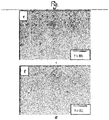
Fig. 1 illustrates a microscopic morphology of the cellulose solution made according toembodiment 1. -
Fig. 2 illustrates a microscopic morphology of the cellulose solution made according toembodiment 2. -
Fig. 3 illustrates a microscopic morphology of the cellulose solution made according toembodiment 3. -
Fig. 4 illustrates a microscopic morphology of the cellulose solution made according toembodiment 4. -
Fig. 5 illustrates a microscopic morphology of the cellulose solution made according toembodiment 5. -
Fig. 6 illustrates a microscopic morphology of the cellulose solution made according toembodiment 6. -
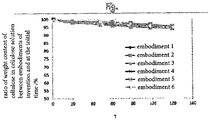
Fig. 7 illustrates a graph of the stability of the cellulose solutions according toembodiments 1 to 6 over time. - Note:
Figs. 1 to 6 are 100X magnified photos by a fiber projectorCYG-055DI. - To better understand the present disclosure, the following embodiments further explain the present disclosure in detail. It should be appreciated that the present disclosure is not limited by the following embodiments.
- Weigh a certain mass of cotton pulp cellulose, where a degree of polymerization of the cotton pulp cellulose is 350, place into an oven and heat for 3 hours at a temperature of 138°C, take out and set aside. Using water as a solvent, prepare an aqueous cellulose solvent including sodium hydroxide at a mass concentration of 12% and zinc oxide at a mass concentration of 5%. Weigh the heated and activated cellulose and add the cellulose into the prepared cellulose solvent, so that a mass concentration of the cellulose is 8.5%, stir well to submerge all the cellulose below the liquid surface. Then put the mixture in a cold storage with a temperature of -15°C, freeze for 5 hours, take out and stand at room temperature for unfreezing, where the room temperature is 22°C. When the temperature of the mixture is raised to 22°C, stir by a glass rod to obtain a transparent cellulose solution. Take out a small amount of the cellulose solution, place onto a fiber projectorCYG-055DI, observe and photograph by magnifying 100 times. A microscopic photo of the cellulose solution is shown in
Fig.1 . The cellulose is dissolved completely and a diameter of the colloidal particle is less than 5 µm. Store the solution under the room temperature of 22°C for 100 hours. At different time points, liquid from an upper level of the solution is taken and dried to weigh a solid content of the cellulose. A comparison to the solid content of the cellulose solution at the initial time point of 0 hour is shown inFig. 7 . After 100 hours, the settled content is 5.5wt% and a weight ratio of the non-settled content is 94.5wt%. The solubility and stability of the cellulose solution is good. - Weigh a certain mass of cotton pulp cellulose, where a degree of polymerization of the cotton pulp is 550, place into an oven and heat for 0.3 hour at a temperature of 230°C, take out and set aside. Using water as a solvent, prepare an aqueous cellulose solvent including sodium hydroxideat a mass concentration of 7% and zinc oxide with a mass concentration of 1.0%. Weigh the heated and activated cellulose and add the cellulose into the prepared cellulose solvent, so that a mass concentration of the cellulose is 4.5%, stir well to submerge all the cellulose below the liquid surface. Then put the mixture in a cold storage with a temperature of -13°C, freeze for 12 hours, take out and stand at room temperature for unfreezing, wherein the room temperature is 23°C. When the temperature of the mixture is raised to 23°C, stir by a glass rod to obtain a transparent cellulose solution. Take out a small amount of the cellulose solution, place to a fiber projectorCYG-055DI, observe and photograph by magnifying 100 times. A microscopic photo of the cellulose solution is shown in
Fig.2 . The cellulose is dissolved completely and a diameter of the colloidal particle is less than 5 µm. Store the solution under the room temperature of 23°C for 120 hours. At different time points, liquid from an upper level of the solution is taken and dried to weigh a solid content of the cellulose. A comparison to the solid content of the cellulose solution at the initial time point of 0 hour is shown inFig. 7 . After 120 hours, the settled content is 4.8wt% and a weight ratio of the non-settled content is 95.2wt%. - Weigh a certain mass of cotton pulp cellulose, where a degree of polymerization of the cotton pulp cellulose is 380, place into an oven and heat for 0.8 hour at a temperature of 190°C, take out and set aside. Using water as a solvent, prepare an aqueous cellulose solvent including sodium hydroxide at a mass concentration of 6% and zinc oxide at a mass concentration of 0.5%. Weigh the heated and activated cellulose and add the cellulose into the prepared cellulose solvent, so that a mass concentration of the cellulose is 5%, stir well to submerge all the cellulose below the liquid surface. Then put the mixture in a cold storage with a temperature of -16°C, freeze for 1 hour, take out and stir at a speed of 150r/min under room temperature for unfreezing, where the room temperature is 22°C. When the temperature of the mixture is raised to 22°C, stir by a glass rod to obtain a transparent cellulose solution. Take out a small amount of the cellulose solution, place onto a fiber projectorCYG-055DI, observe and photograph by magnifying 100 times. A microscopic photo of the cellulose solution is shown in
Fig.3 . The cellulose is dissolved completely and a diameter of the colloidal particle is less than 5 µm. Store the solution under the room temperature of 22°C for 120 hours. At different time points, liquid from an upper level of the solution is taken and dried to weigh a solid content of the cellulose. A comparison to the solid content of the cellulose solution at the initial time point of 0 hour is shown inFig. 7 . After 120 hours, the settled content is 5.9wt% and a weight ratio of the non-settled content is 94.1wt%. - Weigh a certain mass of cotton pulp cellulose, where a degree of polymerization of the cotton pulp is 450, place into an oven and heat for 1 hour under a temperature of 175°C, take out and set aside. Using water as a solvent, prepare an aqueous cellulose solvent including sodium hydroxide with a mass concentration of 10% and zinc oxide with a mass concentration of 1.5%. Weigh the heated and activated cellulose and add the cellulose into the prepared cellulose solvent, so that a mass concentration of the cellulose is 7.0%, stir well to submerge all the cellulose below the liquid surface. Then put the mixture in a cold storage with a temperature of -25°C, freeze for 10 hours, take out and stand at room temperature for unfreezing, wherein the room temperature is 24°C. When the temperature of the mixture is raised to 24°C, stir by a glass rod to obtain a transparent cellulose solution. Take out a small amount of the cellulose solution, place to a fiber projectorCYG-055DI, observe and photograph by magnifying 100 times. A microscopic photo of the cellulose solution is shown in
Fig.4 . The cellulose is dissolved completely and a diameter of the colloidal particle is less than 5 µm. Store the solution under the room temperature of 24°C for 120 hours. At different time points, liquid from an upper level of the solution is taken and dried to weigh a solid content of the cellulose. A comparison to the solid content of the cellulose solution at the initial time point of 0 hour is shown inFig. 7 . After 120 hours, the settled content is 4.7wt% and a weight ratio of the non-settled content is 95.3wt%. - Weigh a certain mass of cotton pulp cellulose, where a degree of polymerization of the cotton pulp cellulose is 420, place into an oven and heat for 1.5 hours at a temperature of 210°C, take out and set aside. Using water as a solvent, prepare an aqueous cellulose solvent including sodium hydroxide at a mass concentration of 11% and zinc oxide with a mass concentration of 2.5%. Weigh the heated and activated cellulose and add the cellulose into the prepared cellulose solvent, so that a mass concentration of the cellulose is 6.5%, stir well to submerge all the cellulose below the liquid surface. Then put the mixture in a cold storage with a temperature of -20°C, freeze for 3 hours, take out and stand under room temperature for unfreezing, where the room temperature is 22°C. When the temperature of the mixture is raised to 22°C, stir by a glass rod to obtain a transparent cellulose solution. Take out a small amount of the cellulose solution, place onto a fiber projectorCYG-055DI, observe and photograph by magnifying 100 times. A microscopic photo of the cellulose solution is shown in
Fig.5 . The cellulose is dissolved completely and a diameter of the colloidal particle is less than 5 µm. Store the solution under the room temperature of 22°C for 120 hours. At different time points, liquid from an upper level of the solution is taken and dried to weigh a solid content of the cellulose. A comparison to the solid content of the cellulose solution at the initial time point of 0 hour is shown inFig. 7 . After 120 hours, the settled content is 5.7wt% and a weight ratio of the non-settled content is 94.3wt%. - Weigh a certain mass of cotton pulp cellulose, where a degree of polymerization of the cotton pulp is 500, place into an oven and heat for 1 hour under a temperature of 200°C, take out and set aside. Using water as a solvent, prepare an aqueous cellulose solvent including sodium hydroxide with a mass concentration of 8% and zinc oxide with a mass concentration of 0.7%. Weigh the heated and activated cellulose and add the cellulose into the prepared cellulose solvent, so that a mass concentration of the cellulose is 7.5%, stir well to submerge all the cellulose below the liquid surface. Then put the mixture in a cold storage with a temperature of -28°C, freeze for 10 hours, take out and stand at room temperature for unfreezing, wherein the room temperature maybe 21°C. When the temperature of the mixture is raised to 21°C, stir by a glass rod to obtain a transparent cellulose solution. Take out a small amount of the cellulose solution, place to a fiber projectorCYG-055DI, observe and photograph by magnifying 100 times. A microscopic photo of the cellulose solution is shown in
Fig.6 . The cellulose is dissolved completely and a diameter of the colloidal particle is less than 5 µm. Store the solution under the room temperature of 21°C for 120 hours. At different time points, liquid from an upper level of the solution is taken and dried to weigh a solid content of the cellulose. A comparison to the solid content of the cellulose solution at the initial time point of 0 hour is shown inFig. 7 . After 100 hours, the settled content is 5.6wt% and a weight ratio of the non-settled content is 94.4wt%.
Claims (8)
- A method of dissolving cellulose, comprising:heating and activating the cellulose in a heating apparatus; andthen dissolving with a solvent,
wherein a heating temperature of the heating and activating the cellulose is130-270°C, and a heating time is 0.1-100 hours. - The method of dissolving cellulose of claim 1, wherein the solvent is an aqueous solution including 6wt%-12wt% of sodium hydroxide and 0.1wt%-6wt% of zinc oxide.
- The method of dissolving cellulose of claim 1, wherein the solvent is an aqueous solution including 7.0wt%~9.0wt% of sodium hydroxide and 0.5wt%~2.0wt% of zinc oxide.
- The method of dissolving cellulose of any of claims 1 - 3, wherein the dissolving the cellulose comprising:1) heating and activating the cellulose, wherein a degree of polymerization of the cellulose is DP=300~700, dispersing the heated and activated cellulose in the solvent, and freezing under a freezing temperature of -10~ -30°C for a freezing time of 0.1~50 hours; and2) unfreezeing the cellulose frozen by step 1) at a temperature of no more than 32°C, and standing or stirringby a machine so as to obtain a cellulose solution with a concentration of 3wt%-12wt%.
- The method of dissolving cellulose of claim 4, wherein in step 1), the freezing temperature is -12~-18°C and the freezing time is 0.1~50 hours.
- The method of dissolving cellulose of claim 4, wherein in step 1), the degree of polymerization (DP) of the cellulose is 350~550.
- The method of dissolving cellulose of claim 4, wherein in step 2), the unfreezing temperature is 10~22°C.
- The method of dissolving cellulose of claim 4, wherein in step 2),the concentration of the cellulose solution obtained by dissolving is 5.0wt%~8.5wt%.
Applications Claiming Priority (2)
| Application Number | Priority Date | Filing Date | Title |
|---|---|---|---|
| CN201210380753.0A CN102875821B (en) | 2012-10-10 | 2012-10-10 | Method for dissolving cellulose |
| PCT/CN2013/083373 WO2014056383A1 (en) | 2012-10-10 | 2013-09-12 | Method for dissolving cellulose |
Publications (3)
| Publication Number | Publication Date |
|---|---|
| EP2845874A1 EP2845874A1 (en) | 2015-03-11 |
| EP2845874A4 EP2845874A4 (en) | 2015-09-16 |
| EP2845874B1 true EP2845874B1 (en) | 2017-03-22 |
Family
ID=47477362
Family Applications (1)
| Application Number | Title | Priority Date | Filing Date |
|---|---|---|---|
| EP13845708.0A Not-in-force EP2845874B1 (en) | 2012-10-10 | 2013-09-12 | Method for dissolving cellulose |
Country Status (5)
| Country | Link |
|---|---|
| US (1) | US20150135991A1 (en) |
| EP (1) | EP2845874B1 (en) |
| JP (1) | JP5913638B2 (en) |
| CN (1) | CN102875821B (en) |
| WO (1) | WO2014056383A1 (en) |
Families Citing this family (14)
| Publication number | Priority date | Publication date | Assignee | Title |
|---|---|---|---|---|
| CN102875821B (en) * | 2012-10-10 | 2014-05-07 | 湖北天思科技股份有限公司 | Method for dissolving cellulose |
| CN105037749A (en) * | 2015-07-16 | 2015-11-11 | 江苏金太阳纺织科技有限公司 | Cellulose solution and preparation method thereof |
| JP6818985B2 (en) * | 2015-10-01 | 2021-01-27 | バイオイーコン インターナショナル ホールディング エヌ. ヴィー.Bioecon International Holding N.V. | How to prepare a new modified bio-based material |
| CN111484570A (en) * | 2020-04-28 | 2020-08-04 | 南京润京乳胶制品有限公司 | Preparation method of large-particle-size cellulose modified latex material |
| CN111499883A (en) * | 2020-05-19 | 2020-08-07 | 武汉水木弘新材料有限公司 | Low-temperature dissolving method adopting cellulose combined raw materials and application thereof |
| CN111704878B (en) * | 2020-06-18 | 2022-04-22 | 广州市黄埔乐天实业有限公司 | Modified cellulose-based thread sealant and preparation method thereof |
| CN111704728B (en) * | 2020-06-23 | 2021-10-22 | 武汉大学 | Transparent ion-conducting cellulose hydrogel, preparation method and application thereof |
| CN113155829A (en) * | 2021-03-25 | 2021-07-23 | 杭州融凯盛科技有限公司 | Method for detecting dissolution rates of cellulose fibers and methylmorpholine oxide |
| CN115028858A (en) * | 2022-05-11 | 2022-09-09 | 天津智鼎生物科技有限公司 | Method for promoting partial dissolution of bacterial cellulose and application thereof |
| CN115386012B (en) * | 2022-08-26 | 2023-09-29 | 广东工业大学 | A kind of extraction method of nanocellulose |
| CN115387145B (en) * | 2022-09-30 | 2023-09-29 | 英德市匠心新材料股份有限公司 | A high-yield extraction method of cellulose from rice straw and its application |
| CN115656071B (en) * | 2022-11-14 | 2024-09-03 | 青岛科技大学 | Preparation method of hydroxypropyl cellulose solution and determination method of cellulase activity |
| CN116218013B (en) * | 2023-03-29 | 2024-09-06 | 北华大学 | A bioplastic film using corn stalks as raw materials and preparation method thereof |
| CN118027248A (en) * | 2024-03-01 | 2024-05-14 | 南京工业大学 | A microwave-stimulated quaternized hemicellulose-based paper strengthening agent and its preparation method and application |
Family Cites Families (24)
| Publication number | Priority date | Publication date | Assignee | Title |
|---|---|---|---|---|
| GB263810A (en) | 1925-12-30 | 1927-10-13 | British Celanese | Improvements in phosphoric acid solutions of cellulose |
| US2179181A (en) | 1936-04-21 | 1939-11-07 | Soc Of Chemical Ind | Cellulose solutions and process of making same |
| US2322427A (en) * | 1941-08-19 | 1943-06-22 | Edelstein Sidney Milton | Cellulose product |
| US2631144A (en) * | 1950-10-23 | 1953-03-10 | Du Pont | Activation of cellulose |
| US3447939A (en) | 1966-09-02 | 1969-06-03 | Eastman Kodak Co | Compounds dissolved in cyclic amine oxides |
| US4302252A (en) | 1979-07-25 | 1981-11-24 | International Telephone And Telegraph Corp. | Solvent system for cellulose |
| JPS58176201A (en) * | 1982-04-12 | 1983-10-15 | Daicel Chem Ind Ltd | Novel production of cellulose carboxylic ester |
| JPS5938203A (en) * | 1982-08-25 | 1984-03-02 | Daicel Chem Ind Ltd | Production of amorphous cellulose |
| JPS6042401A (en) | 1983-08-17 | 1985-03-06 | Asahi Chem Ind Co Ltd | Alkali-soluble cellulose |
| JPS61228037A (en) * | 1985-04-02 | 1986-10-11 | Asahi Chem Ind Co Ltd | Solvent composition for cellulose |
| JPS61252244A (en) * | 1985-05-02 | 1986-11-10 | Asahi Chem Ind Co Ltd | Aqueous solvent composition for cellulose |
| US5410034A (en) * | 1994-02-24 | 1995-04-25 | The United States Of America As Represented By The Secretary Of Agriculture | Alkaline method for dissolving cellulose |
| JP3953545B2 (en) * | 1996-03-26 | 2007-08-08 | 旭化成株式会社 | Solvent composition for dissolving cellulose |
| JPH09291101A (en) * | 1996-04-26 | 1997-11-11 | Nisshinbo Ind Inc | Production of aqueous cellulose solution |
| DE19715617A1 (en) * | 1997-04-15 | 1998-10-22 | Zimmer Ag | Process for the modified production of cellulose carbamate |
| JP2001139697A (en) * | 1999-11-11 | 2001-05-22 | Asahi Kasei Corp | Method for producing cellulose molded article |
| CN1563093A (en) * | 2004-04-14 | 2005-01-12 | 北京理工大学 | Method for preparing viscose through enzyme activation |
| CN1282773C (en) | 2005-05-30 | 2006-11-01 | 武汉大学 | Method for preparing regenerated cellulose fiber by two-step coagulation bath method |
| US7981337B2 (en) * | 2006-04-21 | 2011-07-19 | Wuhan University | Use of aqueous NaOH/thiourea solution in pilot-scale production of cellulose products |
| CN1948369A (en) * | 2006-05-30 | 2007-04-18 | 北京印刷学院 | Preparation method of cellulose film |
| EP2116557B1 (en) * | 2008-05-06 | 2016-12-14 | TTY Säätiö | A method for dissolving cellulose and a cellulosic product obtained from a solution comprising dissolved cellulose |
| CN101649571B (en) * | 2009-08-31 | 2011-06-08 | 中国科学院广州化学研究所 | Method for dissolving and extracting cellulose in bagasse |
| JP5691233B2 (en) * | 2010-04-23 | 2015-04-01 | Jnc株式会社 | Method for dissolving crystalline cellulose and method for producing porous cellulose |
| CN102875821B (en) * | 2012-10-10 | 2014-05-07 | 湖北天思科技股份有限公司 | Method for dissolving cellulose |
-
2012
- 2012-10-10 CN CN201210380753.0A patent/CN102875821B/en active Active
-
2013
- 2013-09-12 JP JP2014555936A patent/JP5913638B2/en not_active Expired - Fee Related
- 2013-09-12 WO PCT/CN2013/083373 patent/WO2014056383A1/en not_active Ceased
- 2013-09-12 EP EP13845708.0A patent/EP2845874B1/en not_active Not-in-force
-
2014
- 2014-11-13 US US14/540,696 patent/US20150135991A1/en not_active Abandoned
Also Published As
| Publication number | Publication date |
|---|---|
| EP2845874A4 (en) | 2015-09-16 |
| CN102875821A (en) | 2013-01-16 |
| CN102875821B (en) | 2014-05-07 |
| WO2014056383A1 (en) | 2014-04-17 |
| US20150135991A1 (en) | 2015-05-21 |
| JP5913638B2 (en) | 2016-04-27 |
| JP2015508109A (en) | 2015-03-16 |
| EP2845874A1 (en) | 2015-03-11 |
Similar Documents
| Publication | Publication Date | Title |
|---|---|---|
| EP2845874A1 (en) | Method for dissolving cellulose | |
| CN1261496C (en) | Cellulose solution and its preparing method | |
| Olsson et al. | Background, Means and Applications | |
| CN101037479B (en) | A method for dissolving cellulose | |
| Hermanutz et al. | New developments in dissolving and processing of cellulose in ionic liquids | |
| Liebert | Cellulose solvents–remarkable history, bright future | |
| Li et al. | Structure and properties of regenerated cellulose fibers based on dissolution of cellulose in a CO2 switchable solvent | |
| Chen et al. | Combined effects of raw materials and solvent systems on the preparation and properties of regenerated cellulose fibers | |
| CN109487546B (en) | An efficient and environmentally friendly method for preparing cationic nanofibrillated cellulose | |
| CN101880410A (en) | A kind of high-strength transparent cellulose material and its preparation method | |
| WO2011048608A2 (en) | A process of manufacturing low-fibrillating cellulosic fibers | |
| CA2775918A1 (en) | A process of manufacturing lowfibrillating cellulose fibers | |
| CN101274988A (en) | Industrial method for preparing regenerated cellulose film | |
| CN108641102A (en) | A kind of highly effective cellulose dicyandiamide solution and application thereof | |
| CN1546556A (en) | A lithium hydroxide and urea composition solvent for dissolving cellulose and its application | |
| CN101130605A (en) | A kind of solvent composition that dissolves cellulose | |
| Guo et al. | The influencing mechanism of thermo-oxidative aging of waste cotton textiles on mechanical properties of their regenerated fibers | |
| CN104262642A (en) | Method for dissolving cellulose in aqueous solution of NaOH/thiourea at normal temperature | |
| Jiang et al. | Effective preparation of bamboo cellulose fibers in quaternary ammonium/DMSO solvent | |
| CN102558365A (en) | Method for preparing ionic liquid containing cellulose triacetate through adopting bagasse cellulose as raw material | |
| CN1229214C (en) | Process for preparing regenerated cellulose films and wires | |
| CN1235962C (en) | Solvent for solving cellulose and its application | |
| CN1482159A (en) | A kind of solvent composition and its preparation method and application | |
| CN110078946B (en) | Method for quickly dissolving chitosan by acidic ionic liquid at low temperature | |
| CN101074285A (en) | Method for dissolving cellulose |
Legal Events
| Date | Code | Title | Description |
|---|---|---|---|
| PUAI | Public reference made under article 153(3) epc to a published international application that has entered the european phase |
Free format text: ORIGINAL CODE: 0009012 |
|
| 17P | Request for examination filed |
Effective date: 20141205 |
|
| AK | Designated contracting states |
Kind code of ref document: A1 Designated state(s): AL AT BE BG CH CY CZ DE DK EE ES FI FR GB GR HR HU IE IS IT LI LT LU LV MC MK MT NL NO PL PT RO RS SE SI SK SM TR |
|
| AX | Request for extension of the european patent |
Extension state: BA ME |
|
| RA4 | Supplementary search report drawn up and despatched (corrected) |
Effective date: 20150813 |
|
| RIC1 | Information provided on ipc code assigned before grant |
Ipc: C08J 3/00 20060101ALI20150807BHEP Ipc: C08J 3/03 20060101AFI20150807BHEP Ipc: C08L 1/02 20060101ALI20150807BHEP Ipc: D21C 5/00 20060101ALI20150807BHEP Ipc: D21C 9/00 20060101ALI20150807BHEP |
|
| DAX | Request for extension of the european patent (deleted) | ||
| 17Q | First examination report despatched |
Effective date: 20160525 |
|
| GRAP | Despatch of communication of intention to grant a patent |
Free format text: ORIGINAL CODE: EPIDOSNIGR1 |
|
| INTG | Intention to grant announced |
Effective date: 20160928 |
|
| GRAS | Grant fee paid |
Free format text: ORIGINAL CODE: EPIDOSNIGR3 |
|
| GRAA | (expected) grant |
Free format text: ORIGINAL CODE: 0009210 |
|
| AK | Designated contracting states |
Kind code of ref document: B1 Designated state(s): AL AT BE BG CH CY CZ DE DK EE ES FI FR GB GR HR HU IE IS IT LI LT LU LV MC MK MT NL NO PL PT RO RS SE SI SK SM TR |
|
| REG | Reference to a national code |
Ref country code: GB Ref legal event code: FG4D |
|
| REG | Reference to a national code |
Ref country code: CH Ref legal event code: EP |
|
| REG | Reference to a national code |
Ref country code: AT Ref legal event code: REF Ref document number: 877700 Country of ref document: AT Kind code of ref document: T Effective date: 20170415 |
|
| REG | Reference to a national code |
Ref country code: IE Ref legal event code: FG4D |
|
| REG | Reference to a national code |
Ref country code: DE Ref legal event code: R096 Ref document number: 602013019025 Country of ref document: DE |
|
| REG | Reference to a national code |
Ref country code: NL Ref legal event code: MP Effective date: 20170322 |
|
| PG25 | Lapsed in a contracting state [announced via postgrant information from national office to epo] |
Ref country code: GR Free format text: LAPSE BECAUSE OF FAILURE TO SUBMIT A TRANSLATION OF THE DESCRIPTION OR TO PAY THE FEE WITHIN THE PRESCRIBED TIME-LIMIT Effective date: 20170623 Ref country code: LT Free format text: LAPSE BECAUSE OF FAILURE TO SUBMIT A TRANSLATION OF THE DESCRIPTION OR TO PAY THE FEE WITHIN THE PRESCRIBED TIME-LIMIT Effective date: 20170322 Ref country code: NO Free format text: LAPSE BECAUSE OF FAILURE TO SUBMIT A TRANSLATION OF THE DESCRIPTION OR TO PAY THE FEE WITHIN THE PRESCRIBED TIME-LIMIT Effective date: 20170622 Ref country code: HR Free format text: LAPSE BECAUSE OF FAILURE TO SUBMIT A TRANSLATION OF THE DESCRIPTION OR TO PAY THE FEE WITHIN THE PRESCRIBED TIME-LIMIT Effective date: 20170322 |
|
| REG | Reference to a national code |
Ref country code: LT Ref legal event code: MG4D |
|
| PG25 | Lapsed in a contracting state [announced via postgrant information from national office to epo] |
Ref country code: BG Free format text: LAPSE BECAUSE OF FAILURE TO SUBMIT A TRANSLATION OF THE DESCRIPTION OR TO PAY THE FEE WITHIN THE PRESCRIBED TIME-LIMIT Effective date: 20170622 Ref country code: LV Free format text: LAPSE BECAUSE OF FAILURE TO SUBMIT A TRANSLATION OF THE DESCRIPTION OR TO PAY THE FEE WITHIN THE PRESCRIBED TIME-LIMIT Effective date: 20170322 Ref country code: RS Free format text: LAPSE BECAUSE OF FAILURE TO SUBMIT A TRANSLATION OF THE DESCRIPTION OR TO PAY THE FEE WITHIN THE PRESCRIBED TIME-LIMIT Effective date: 20170322 Ref country code: SE Free format text: LAPSE BECAUSE OF FAILURE TO SUBMIT A TRANSLATION OF THE DESCRIPTION OR TO PAY THE FEE WITHIN THE PRESCRIBED TIME-LIMIT Effective date: 20170322 |
|
| PG25 | Lapsed in a contracting state [announced via postgrant information from national office to epo] |
Ref country code: NL Free format text: LAPSE BECAUSE OF FAILURE TO SUBMIT A TRANSLATION OF THE DESCRIPTION OR TO PAY THE FEE WITHIN THE PRESCRIBED TIME-LIMIT Effective date: 20170322 |
|
| PG25 | Lapsed in a contracting state [announced via postgrant information from national office to epo] |
Ref country code: ES Free format text: LAPSE BECAUSE OF FAILURE TO SUBMIT A TRANSLATION OF THE DESCRIPTION OR TO PAY THE FEE WITHIN THE PRESCRIBED TIME-LIMIT Effective date: 20170322 Ref country code: RO Free format text: LAPSE BECAUSE OF FAILURE TO SUBMIT A TRANSLATION OF THE DESCRIPTION OR TO PAY THE FEE WITHIN THE PRESCRIBED TIME-LIMIT Effective date: 20170322 Ref country code: EE Free format text: LAPSE BECAUSE OF FAILURE TO SUBMIT A TRANSLATION OF THE DESCRIPTION OR TO PAY THE FEE WITHIN THE PRESCRIBED TIME-LIMIT Effective date: 20170322 Ref country code: IT Free format text: LAPSE BECAUSE OF FAILURE TO SUBMIT A TRANSLATION OF THE DESCRIPTION OR TO PAY THE FEE WITHIN THE PRESCRIBED TIME-LIMIT Effective date: 20170322 Ref country code: CZ Free format text: LAPSE BECAUSE OF FAILURE TO SUBMIT A TRANSLATION OF THE DESCRIPTION OR TO PAY THE FEE WITHIN THE PRESCRIBED TIME-LIMIT Effective date: 20170322 Ref country code: SK Free format text: LAPSE BECAUSE OF FAILURE TO SUBMIT A TRANSLATION OF THE DESCRIPTION OR TO PAY THE FEE WITHIN THE PRESCRIBED TIME-LIMIT Effective date: 20170322 |
|
| PG25 | Lapsed in a contracting state [announced via postgrant information from national office to epo] |
Ref country code: PL Free format text: LAPSE BECAUSE OF FAILURE TO SUBMIT A TRANSLATION OF THE DESCRIPTION OR TO PAY THE FEE WITHIN THE PRESCRIBED TIME-LIMIT Effective date: 20170322 Ref country code: SM Free format text: LAPSE BECAUSE OF FAILURE TO SUBMIT A TRANSLATION OF THE DESCRIPTION OR TO PAY THE FEE WITHIN THE PRESCRIBED TIME-LIMIT Effective date: 20170322 Ref country code: PT Free format text: LAPSE BECAUSE OF FAILURE TO SUBMIT A TRANSLATION OF THE DESCRIPTION OR TO PAY THE FEE WITHIN THE PRESCRIBED TIME-LIMIT Effective date: 20170724 Ref country code: IS Free format text: LAPSE BECAUSE OF FAILURE TO SUBMIT A TRANSLATION OF THE DESCRIPTION OR TO PAY THE FEE WITHIN THE PRESCRIBED TIME-LIMIT Effective date: 20170722 |
|
| REG | Reference to a national code |
Ref country code: DE Ref legal event code: R097 Ref document number: 602013019025 Country of ref document: DE |
|
| PLBE | No opposition filed within time limit |
Free format text: ORIGINAL CODE: 0009261 |
|
| STAA | Information on the status of an ep patent application or granted ep patent |
Free format text: STATUS: NO OPPOSITION FILED WITHIN TIME LIMIT |
|
| PG25 | Lapsed in a contracting state [announced via postgrant information from national office to epo] |
Ref country code: DK Free format text: LAPSE BECAUSE OF FAILURE TO SUBMIT A TRANSLATION OF THE DESCRIPTION OR TO PAY THE FEE WITHIN THE PRESCRIBED TIME-LIMIT Effective date: 20170322 |
|
| 26N | No opposition filed |
Effective date: 20180102 |
|
| PG25 | Lapsed in a contracting state [announced via postgrant information from national office to epo] |
Ref country code: SI Free format text: LAPSE BECAUSE OF FAILURE TO SUBMIT A TRANSLATION OF THE DESCRIPTION OR TO PAY THE FEE WITHIN THE PRESCRIBED TIME-LIMIT Effective date: 20170322 |
|
| REG | Reference to a national code |
Ref country code: CH Ref legal event code: PL |
|
| PG25 | Lapsed in a contracting state [announced via postgrant information from national office to epo] |
Ref country code: MC Free format text: LAPSE BECAUSE OF FAILURE TO SUBMIT A TRANSLATION OF THE DESCRIPTION OR TO PAY THE FEE WITHIN THE PRESCRIBED TIME-LIMIT Effective date: 20170322 |
|
| REG | Reference to a national code |
Ref country code: IE Ref legal event code: MM4A |
|
| REG | Reference to a national code |
Ref country code: BE Ref legal event code: MM Effective date: 20170930 |
|
| PG25 | Lapsed in a contracting state [announced via postgrant information from national office to epo] |
Ref country code: LU Free format text: LAPSE BECAUSE OF NON-PAYMENT OF DUE FEES Effective date: 20170912 |
|
| REG | Reference to a national code |
Ref country code: FR Ref legal event code: ST Effective date: 20180531 |
|
| PG25 | Lapsed in a contracting state [announced via postgrant information from national office to epo] |
Ref country code: LI Free format text: LAPSE BECAUSE OF NON-PAYMENT OF DUE FEES Effective date: 20170930 Ref country code: CH Free format text: LAPSE BECAUSE OF NON-PAYMENT OF DUE FEES Effective date: 20170930 Ref country code: IE Free format text: LAPSE BECAUSE OF NON-PAYMENT OF DUE FEES Effective date: 20170912 |
|
| PG25 | Lapsed in a contracting state [announced via postgrant information from national office to epo] |
Ref country code: BE Free format text: LAPSE BECAUSE OF NON-PAYMENT OF DUE FEES Effective date: 20170930 Ref country code: FR Free format text: LAPSE BECAUSE OF NON-PAYMENT OF DUE FEES Effective date: 20171002 |
|
| PG25 | Lapsed in a contracting state [announced via postgrant information from national office to epo] |
Ref country code: MT Free format text: LAPSE BECAUSE OF NON-PAYMENT OF DUE FEES Effective date: 20170912 |
|
| PGFP | Annual fee paid to national office [announced via postgrant information from national office to epo] |
Ref country code: FI Payment date: 20180925 Year of fee payment: 6 Ref country code: GB Payment date: 20180925 Year of fee payment: 6 |
|
| PG25 | Lapsed in a contracting state [announced via postgrant information from national office to epo] |
Ref country code: HU Free format text: LAPSE BECAUSE OF FAILURE TO SUBMIT A TRANSLATION OF THE DESCRIPTION OR TO PAY THE FEE WITHIN THE PRESCRIBED TIME-LIMIT; INVALID AB INITIO Effective date: 20130912 |
|
| PG25 | Lapsed in a contracting state [announced via postgrant information from national office to epo] |
Ref country code: CY Free format text: LAPSE BECAUSE OF FAILURE TO SUBMIT A TRANSLATION OF THE DESCRIPTION OR TO PAY THE FEE WITHIN THE PRESCRIBED TIME-LIMIT Effective date: 20170322 |
|
| PG25 | Lapsed in a contracting state [announced via postgrant information from national office to epo] |
Ref country code: MK Free format text: LAPSE BECAUSE OF FAILURE TO SUBMIT A TRANSLATION OF THE DESCRIPTION OR TO PAY THE FEE WITHIN THE PRESCRIBED TIME-LIMIT Effective date: 20170322 |
|
| PG25 | Lapsed in a contracting state [announced via postgrant information from national office to epo] |
Ref country code: TR Free format text: LAPSE BECAUSE OF FAILURE TO SUBMIT A TRANSLATION OF THE DESCRIPTION OR TO PAY THE FEE WITHIN THE PRESCRIBED TIME-LIMIT Effective date: 20170322 |
|
| REG | Reference to a national code |
Ref country code: FI Ref legal event code: MAE |
|
| PG25 | Lapsed in a contracting state [announced via postgrant information from national office to epo] |
Ref country code: FI Free format text: LAPSE BECAUSE OF NON-PAYMENT OF DUE FEES Effective date: 20190912 |
|
| PG25 | Lapsed in a contracting state [announced via postgrant information from national office to epo] |
Ref country code: AL Free format text: LAPSE BECAUSE OF FAILURE TO SUBMIT A TRANSLATION OF THE DESCRIPTION OR TO PAY THE FEE WITHIN THE PRESCRIBED TIME-LIMIT Effective date: 20170322 |
|
| GBPC | Gb: european patent ceased through non-payment of renewal fee |
Effective date: 20190912 |
|
| PG25 | Lapsed in a contracting state [announced via postgrant information from national office to epo] |
Ref country code: GB Free format text: LAPSE BECAUSE OF NON-PAYMENT OF DUE FEES Effective date: 20190912 |
|
| PGFP | Annual fee paid to national office [announced via postgrant information from national office to epo] |
Ref country code: DE Payment date: 20200929 Year of fee payment: 8 |
|
| PGFP | Annual fee paid to national office [announced via postgrant information from national office to epo] |
Ref country code: AT Payment date: 20200930 Year of fee payment: 8 |
|
| REG | Reference to a national code |
Ref country code: DE Ref legal event code: R119 Ref document number: 602013019025 Country of ref document: DE |
|
| REG | Reference to a national code |
Ref country code: AT Ref legal event code: MM01 Ref document number: 877700 Country of ref document: AT Kind code of ref document: T Effective date: 20210912 |
|
| PG25 | Lapsed in a contracting state [announced via postgrant information from national office to epo] |
Ref country code: DE Free format text: LAPSE BECAUSE OF NON-PAYMENT OF DUE FEES Effective date: 20220401 |
|
| PG25 | Lapsed in a contracting state [announced via postgrant information from national office to epo] |
Ref country code: AT Free format text: LAPSE BECAUSE OF NON-PAYMENT OF DUE FEES Effective date: 20210912 |