EP2843918A2 - Begrenzung des Betriebs einer elektronischen Vorrichtung - Google Patents
Begrenzung des Betriebs einer elektronischen Vorrichtung Download PDFInfo
- Publication number
- EP2843918A2 EP2843918A2 EP14173897.1A EP14173897A EP2843918A2 EP 2843918 A2 EP2843918 A2 EP 2843918A2 EP 14173897 A EP14173897 A EP 14173897A EP 2843918 A2 EP2843918 A2 EP 2843918A2
- Authority
- EP
- European Patent Office
- Prior art keywords
- electronic device
- activation
- country
- current location
- detecting
- Prior art date
- Legal status (The legal status is an assumption and is not a legal conclusion. Google has not performed a legal analysis and makes no representation as to the accuracy of the status listed.)
- Granted
Links
Images


Classifications
-
- G—PHYSICS
- G06—COMPUTING OR CALCULATING; COUNTING
- G06F—ELECTRIC DIGITAL DATA PROCESSING
- G06F9/00—Arrangements for program control, e.g. control units
- G06F9/06—Arrangements for program control, e.g. control units using stored programs, i.e. using an internal store of processing equipment to receive or retain programs
- G06F9/44—Arrangements for executing specific programs
- G06F9/448—Execution paradigms, e.g. implementations of programming paradigms
-
- H—ELECTRICITY
- H04—ELECTRIC COMMUNICATION TECHNIQUE
- H04W—WIRELESS COMMUNICATION NETWORKS
- H04W4/00—Services specially adapted for wireless communication networks; Facilities therefor
- H04W4/02—Services making use of location information
-
- G—PHYSICS
- G06—COMPUTING OR CALCULATING; COUNTING
- G06F—ELECTRIC DIGITAL DATA PROCESSING
- G06F21/00—Security arrangements for protecting computers, components thereof, programs or data against unauthorised activity
- G06F21/70—Protecting specific internal or peripheral components, in which the protection of a component leads to protection of the entire computer
- G06F21/81—Protecting specific internal or peripheral components, in which the protection of a component leads to protection of the entire computer by operating on the power supply, e.g. enabling or disabling power-on, sleep or resume operations
-
- H—ELECTRICITY
- H04—ELECTRIC COMMUNICATION TECHNIQUE
- H04L—TRANSMISSION OF DIGITAL INFORMATION, e.g. TELEGRAPHIC COMMUNICATION
- H04L61/00—Network arrangements, protocols or services for addressing or naming
- H04L61/50—Address allocation
- H04L61/5038—Address allocation for local use, e.g. in LAN or USB networks, or in a controller area network [CAN]
-
- H—ELECTRICITY
- H04—ELECTRIC COMMUNICATION TECHNIQUE
- H04L—TRANSMISSION OF DIGITAL INFORMATION, e.g. TELEGRAPHIC COMMUNICATION
- H04L63/00—Network architectures or network communication protocols for network security
- H04L63/10—Network architectures or network communication protocols for network security for controlling access to devices or network resources
- H04L63/107—Network architectures or network communication protocols for network security for controlling access to devices or network resources wherein the security policies are location-dependent, e.g. entities privileges depend on current location or allowing specific operations only from locally connected terminals
-
- H—ELECTRICITY
- H04—ELECTRIC COMMUNICATION TECHNIQUE
- H04M—TELEPHONIC COMMUNICATION
- H04M1/00—Substation equipment, e.g. for use by subscribers
- H04M1/72—Mobile telephones; Cordless telephones, i.e. devices for establishing wireless links to base stations without route selection
- H04M1/724—User interfaces specially adapted for cordless or mobile telephones
- H04M1/72448—User interfaces specially adapted for cordless or mobile telephones with means for adapting the functionality of the device according to specific conditions
- H04M1/72457—User interfaces specially adapted for cordless or mobile telephones with means for adapting the functionality of the device according to specific conditions according to geographic location
-
- H—ELECTRICITY
- H04—ELECTRIC COMMUNICATION TECHNIQUE
- H04M—TELEPHONIC COMMUNICATION
- H04M1/00—Substation equipment, e.g. for use by subscribers
- H04M1/72—Mobile telephones; Cordless telephones, i.e. devices for establishing wireless links to base stations without route selection
- H04M1/724—User interfaces specially adapted for cordless or mobile telephones
- H04M1/72448—User interfaces specially adapted for cordless or mobile telephones with means for adapting the functionality of the device according to specific conditions
- H04M1/72463—User interfaces specially adapted for cordless or mobile telephones with means for adapting the functionality of the device according to specific conditions to restrict the functionality of the device
-
- H—ELECTRICITY
- H04—ELECTRIC COMMUNICATION TECHNIQUE
- H04W—WIRELESS COMMUNICATION NETWORKS
- H04W24/00—Supervisory, monitoring or testing arrangements
- H04W24/08—Testing, supervising or monitoring using real traffic
-
- H—ELECTRICITY
- H04—ELECTRIC COMMUNICATION TECHNIQUE
- H04W—WIRELESS COMMUNICATION NETWORKS
- H04W4/00—Services specially adapted for wireless communication networks; Facilities therefor
- H04W4/02—Services making use of location information
- H04W4/029—Location-based management or tracking services
-
- H—ELECTRICITY
- H04—ELECTRIC COMMUNICATION TECHNIQUE
- H04W—WIRELESS COMMUNICATION NETWORKS
- H04W4/00—Services specially adapted for wireless communication networks; Facilities therefor
- H04W4/90—Services for handling of emergency or hazardous situations, e.g. earthquake and tsunami warning systems [ETWS]
-
- H—ELECTRICITY
- H04—ELECTRIC COMMUNICATION TECHNIQUE
- H04W—WIRELESS COMMUNICATION NETWORKS
- H04W8/00—Network data management
- H04W8/02—Processing of mobility data, e.g. registration information at HLR [Home Location Register] or VLR [Visitor Location Register]; Transfer of mobility data, e.g. between HLR, VLR or external networks
-
- H—ELECTRICITY
- H04—ELECTRIC COMMUNICATION TECHNIQUE
- H04L—TRANSMISSION OF DIGITAL INFORMATION, e.g. TELEGRAPHIC COMMUNICATION
- H04L2101/00—Indexing scheme associated with group H04L61/00
- H04L2101/60—Types of network addresses
- H04L2101/69—Types of network addresses using geographic information, e.g. room number
-
- H—ELECTRICITY
- H04—ELECTRIC COMMUNICATION TECHNIQUE
- H04W—WIRELESS COMMUNICATION NETWORKS
- H04W84/00—Network topologies
- H04W84/02—Hierarchically pre-organised networks, e.g. paging networks, cellular networks, WLAN [Wireless Local Area Network] or WLL [Wireless Local Loop]
- H04W84/10—Small scale networks; Flat hierarchical networks
- H04W84/12—WLAN [Wireless Local Area Networks]
-
- H—ELECTRICITY
- H04—ELECTRIC COMMUNICATION TECHNIQUE
- H04W—WIRELESS COMMUNICATION NETWORKS
- H04W88/00—Devices specially adapted for wireless communication networks, e.g. terminals, base stations or access point devices
- H04W88/02—Terminal devices
- H04W88/06—Terminal devices adapted for operation in multiple networks or having at least two operational modes, e.g. multi-mode terminals
Definitions
- the present disclosure relates to electronic devices, and more particularly to a method and apparatus for restricting the operation of an electronic device
- a method comprising: detecting an activation of an electronic device; detecting a current location of the electronic device; detecting whether the activation is prohibited at the current location of the electronic device; and shutting down the electronic device when the activation is prohibited.
- the method is wherein detecting the current location of the electronic device comprises detecting coordinates corresponding to the current location of the electronic device
- the method is wherein detecting whether the activation is prohibited includes detecting whether the coordinates are included in a list of coordinates associated with countries in which the activation of the electronic device is prohibited.
- the method is wherein the detecting of whether the activation is prohibited at the current location of the electronic device is performed only when the electronic device has not been used for any non-emergency telephone calls before the activation being detected.
- an electronic device comprising a memory and a processor configured to detect an activation of the electronic device; detect a current location of the electronic device; detect whether the activation is prohibited at the current location of the electronic device; and shut down the electronic device when the activation is prohibited.
- the electronic device is wherein detecting of whether the activation is prohibited at the current location of the electronic device is performed only when the electronic device has not been used for any non-emergency telephone calls before the activation being detected.
- the electronic device includes at least one of a mobile communication terminal, a Personal Digital Assistant (PDA), a laptop computer, a smart phone, a netbook, a television, a Mobile Internet Device (MID), a Ultra Mobile Personal Computer (UMPC), a tablet PC, a navigation device, a digital refrigerator, a digital watch, a Moving Picture Experts Group (MPEG) layer 3 (MP3) player, and/or any other suitable type of electronic device.
- PDA Personal Digital Assistant
- a laptop computer a smart phone
- a netbook a television
- MID Mobile Internet Device
- UMPC Ultra Mobile Personal Computer
- tablet PC a navigation device
- a digital refrigerator a digital refrigerator
- digital watch a Moving Picture Experts Group (MPEG) layer 3 (MP3) player, and/or any other suitable type of electronic device.
- MPEG Moving Picture Experts Group
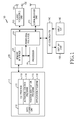
- FIG. 1 is a block diagram illustrating an example of a configuration of an electronic device, according to aspects of the present disclosure.
- An electronic device 100 is shown including a memory 110, a processor unit 120, an audio processing unit 130, an Input/Output (I/O) controller 140, a display unit 150, an input unit 160, and a communication unit 170.
- the memory 110 may be a plurality of memories.
- the memory may include any suitable type of volatile and/or nonvolatile memory (e.g., RAM, flash memory, SSD drive, hard drive, cloud storage, etc.)
- the memory 110 may include a program storing unit 111 for storing programs for controlling operations of the electronic device 100 and a data storing unit 112 for storing data generated while the programs are executed.
- the program storing unit 111 includes a Graphic User Interface (GUI) program 113, an activation control program 114, a position verification program 115, and at least one application program 116.
- GUI Graphic User Interface
- the programs included in the program storing unit 111 may be expressed in an instruction set as a set of instructions.
- the data storing unit 112 may store processor-executable instructions which when executed by the device 100 cause the device 100 to identify the country where the device 100 is currently located.
- the data storing unit 112 may store country information corresponding to code values corresponding to different countries.
- the data storing unit 112 may store country information corresponding to different coordinate values (e.g., values including latitude and longitude).
- the data storing unit 112 may store an Internet Protocol (IP) address allocated according to a corresponding country.
- IP Internet Protocol
- the data storing unit 112 may store an activation completion history.
- the data storing unit 112 may store a call history.
- the GUI program 113 may include at least one software component for providing a UI as graphics on the display unit 150.
- the GUI program 113 controls the display unit 150 to display information of an application program executed by the processor 122.
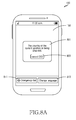
- the GUI program 113 may control, as shown in FIG. 8A , the display unit 150 to display a menu 801 for informing that a communication network is being searched according to a request of the position verification program 115.
- the GUI program 113 may include a cancel button 803 which may stop a search for a communication network on the menu 801.
- the GUI program 113 may control the display unit 150 to display a remaining time for a search for a communication network on the cancel button 803.
- the GUI program 113 may control, as shown in FIG.
- the display unit 150 to display an emergency call button 811 and a language change button 813.
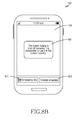
- the GUI program 113 may control, as shown in FIG. 8B , the display unit 150 to display a menu 821 for informing the shutting-off of the power supply according to a request of the activation control program 114.
- the activation control program 114 may include at least one software component for controlling an operation of the electronic device 100 in consideration of a current position of the electronic device 100. For example, when an activation event is generated, the activation control program 114 may verify a country corresponding to the current position of the device 100 through the position verification program 115. After identifying the country where the device 100 is currently located, the activation control program 114 may verify whether the country of the current position is an activation limit country. If the country of the current position is the activation limit country, the activation control program 114 may perform a control operation to shut off the power supply.
- the position verification program 115 may include at least one software component for verifying a country of a current position of the electronic device 100. For example, when a current position confirmation request is received from the activation control program 114, the position verification program 115 may search a communication network and verify a country of a current position of the electronic device 100. Herein, the position verification program 115 may verify the country of the current position using a provider identification code of the searched communication network. As another example, when the communication network is not searched, the position verification program 115 may verify a current position of the electronic device 100 using a GPS. Herein, the position verification program 115 may verify a coordinate value including latitude and longitude.
- the position verification program 115 may verify the country of the current position using country information corresponding to each coordinate value including latitude and longitude.
- the position verification program 115 may verify a current position of the electronic device 100 using local-area wireless communication. For instance, when a Wireless-Fidelity (Wi-Fi) communication is activated, the position verification program 115 may search at least one Access Point (AP) through the communication unit 170 and attempt to access the searched AP. Thereafter, the position verification program 115 may receive one IP address through the accessed AP.
- the position verification program 115 may verify a country of a current position using the IP address allocated according to a corresponding country, which is stored in the data storing unit 112.
- Wi-Fi Wireless-Fidelity
- the application program 116 includes a software component for at least one application program installed in the electronic device 100.
- the application program may include a media player application, a game, and/or any suitable type of application.
- the processor unit 120 may include a memory interface 121, at least one processor 122, and a peripheral interface 123.
- the memory interface 121, at least the one processor 122 and the peripheral interface 123 which are included in the processor unit 120 may be integrated in at least one Integrated Circuit (IC) or be separately implemented.
- the memory interface 121 may control access to the memory 110.
- the peripheral interface 123 may control connectivity with various peripheral devices..
- the processor 122 provides a variety of multimedia services using at least one software program.
- the processor 122 may execute at least one program stored in the memory 110 and provide a service according to the corresponding program.
- the processor 122 may be configured to execute the activation control program 114, control an operation of the electronic device 100 in consideration of a current position of the electronic device 100, execute the position verification program 115, and verify a country of the current position.
- the audio processing unit 130 may provide an audio interface between a user and the electronic device 100 through a speaker 131 and a microphone 132.
- the I/O controller 140 may provide an interface between I/O devices, such as the display unit 150 and the input unit 160, and the peripheral interface 123.
- the display unit 150 may display state information of the electronic device 100, characters input by the user, video, and still pictures.
- the display unit 150 may display information of an application program executed by the processor 122.
- the display unit 150 may display, as shown in FIG. 8A , a menu 801 indicating that a communication network is being searched according to control of the GUI program 113.
- the display unit 150 may include, as shown in FIG. 8A , a cancel button 803 which may stop a search for a communication network on the menu 801.
- the display unit 150 may display on the cancel button 803 an indication of projected time until completion of a search for a communication network.
- the display unit 150 may display, as shown in FIG.
- the display unit 150 may display, as shown in FIG. 8B , a menu 821 for informing the shutting-off of the power supply according to control of the GUI program 113.
- the input unit 160 may provide input data generated by selection of the user to the processor unit 120 through the I/O controller 140.
- the input unit 160 may include a touch input unit.
- the touch input unit may provide touch information to the processor unit 120 through the I/O controller 140.
- the communication unit 170 may perform a communication function for voice and data communication.
- the communication unit 170 may be classified into a plurality of communication sub-modules which support different communication networks.
- the communication network may include, but is not limited to, any one of a Global System for Mobile communication (GSM) network, an Enhanced Data GSM Environment (EDGE) network, a Code Division Multiple Access (CDMA) network, a W-CDMA network, a Long Term Evolution (LTE) network, an Orthogonal Frequency Division Multiple Access (OFDMA) network, a wireless Local Area Network (LAN), a Bluetooth network, a Near Field Communication (NFC) network, and/or any other suitable type of network.
- GSM Global System for Mobile communication
- EDGE Enhanced Data GSM Environment
- CDMA Code Division Multiple Access
- W-CDMA Wideband Code Division Multiple Access
- LTE Long Term Evolution
- OFDMA Orthogonal Frequency Division Multiple Access
- LAN wireless Local Area Network
- Bluetooth a Bluetooth network
- NFC Near
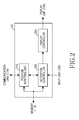
- FIG. 2 is a block diagram illustrating an example of a configuration of the processor 122 according to aspects of the present disclosure.
- the processor 122 may include an activation controller 200, a position verifying unit 210, and a display controller 220.
- Each of the activation controller 200, the position verifying unit 210, and a display controller 230 may include electronic circuitry configured to perform respective tasks.
- the activation controller 200, the position verifying unit 210, and a display controller 230 are represented as discrete elements, in other examples two or more of them may be integrated together.
- the activation controller 200 may include processing circuitry configured to execute the activation control program 114 and control an operation of the electronic device 100 in consideration of a current position of the electronic device 100. For example, when an activation event is generated, the activation controller 200 may verify a country of a current position of the electronic device 100 through the position verifying unit 210. Verifying the country of the current position from the position verifying unit 210, the activation controller 200 may verify whether the country of the current position is an activation limit country.
- an activation country may be any country in which the operation of the electronic device is restricted for some reason (e.g., for reasons related to licensing, etc.) If the country of the current position is an activation limit country, the activation controller 200 may perform a control operation to shut off the power supply.
- the position verifying unit 210 may execute the position verification program 115 and verify a country of a current position of the electronic device 100.
- the position verifying unit 210 may search a communication network and verify a country of a current position of the electronic device 100. For instance, the position verifying unit 210 may verify the country of the current position using a provider identification code of the searched communication network.
- the position verifying unit 210 may verify a current position of the electronic device 100 using a GPS.
- the position verifying unit 210 may verify a coordinate value including latitude and longitude.
- the position verifying unit 210 may verify the country of the current position using country information corresponding to each coordinate value including latitude and longitude.
- the position verifying unit 210 may verify a current position using local-area wireless communication. For example, when a Wi-Fi communication is activated, the position verifying unit 210 may search at least one AP through the communication unit 170 and attempt to access the searched AP. Thereafter, the position verifying unit 210 may receive one IP address through the accessed AP.
- the position verifying unit 210 may verify a country of a current position of the electronic device 100 using the IP address.
- the display controller 220 may execute the GUI program 113 stored in the program storing unit 111 and control the display unit 150 to display a UI.
- the display controller 220 may control the display unit 150 to display information of an application program executed by the processor 122.
- the display controller 220 may control, as shown in FIG. 8A , the display unit 150 to display a menu 801 for informing that a communication network is being searched according to a request of the position verifying unit 210.
- the display controller 220 may include, as shown in FIG. 8A , a cancel button 803 which may stop a search for a communication network on the menu 801.
- the display controller 220 may control the display unit 150 to display a remaining time for a search for a communication network on the cancel button 803.
- the display controller 220 may control, as shown in FIG. 8A , the display unit to display an emergency call button 811 and a language change button 813.
- the display controller 220 may control, as shown in FIG. 8B , the display unit to display a menu 821 for informing the shutting-off of the power supply according to a request of the activation controller 200.
- the activation controller 200 of the electronic device 100 may execute the activation control program 114 and control the operation of the electronic device 100 in consideration of the current position of the electronic device 100.
- the electronic device 100 may include a separate activation control module including the activation control program 114.
- the position verifying unit 210 of the electronic device 100 may execute the position verification program 115 and perform the control operation to verify the country of the current position.
- the electronic device 100 may include a separate position verification module including the position verification program 115.
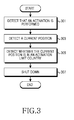
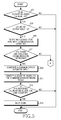
- FIG. 3 is a flowchart illustrating an example of a process for restricting the operation of an electronic device, according to aspects of the disclosure.
- the electronic device detects that it is activated.
- the electronic device detects its current position.
- the electronic device detects whether the country of the current position is an activation limit country.
- the electronic device may detect whether the country of the current position is included in a list of activation limit countries.
- the electronic device shuts down in response to detecting that the country is in the list of activation limit countries. For example, when "South Korea" is included in a list of activation limit countries, the electronic device may shut down.
- the power supply of the electronic device can be turned off in response to the electronic device being present in an activation limit country.
- the list of activation limit countries may include a database, a table, a data structure, and/or any other suitable type of indication of whether a given country is an activation limit country.
- the electronic device may perform a search for available communication networks and detect its current position.
- the electronic device may detect the country where the current position is situated by using a provider identification code of the searched communication network.
- the electronic device may detect its current position using GPS. For instance, in some implementations, the electronic device may detect a coordinate value including latitude and longitude. In these implementations, when a coordinate value is 37° 33 ' 58.87 “ N 126° 58 ' 40.63 " E, the electronic device may detect that a country of a current position is "South Korea". Herein, it may be assumed that the electronic device previously store country information about coordinate values.
- the electronic device may detect its current position by using local-area wireless communication. For instance, when a Wi-Fi communication is activated, the electronic device may search at least one AP through a communication unit and attempt to access the searched AP. Thereafter, the electronic device may receive one IP address through the accessed AP. For example, when the IP address is 152.149.83.2, the electronic device may detect that a country of a current position is "South Korea". Thus, in this example, the electronic device may detect that the country of the current position is "South Korea". In some implementations, the electronic device may store a mapping between different IP addresses and respective country identifiers so that it can determine what countries correspond to different IP addresses.
- the electronic device may shut down.
- the electronic device may display, as shown in FIG. 8B , a menu 821 indicating that the electronic device is being shut down.
- the electronic device may display, as shown in FIG. 8B , an emergency call button 811 and a language change button 813.
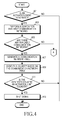
- FIG. 4 is a flowchart illustrating another example of a process for restricting the operation of an electronic device, in accordance with aspects of the disclosure.
- the electronic device detects whether an activation event is generated.
- the activation event may be an event that is generated when the electronic device is powered on. If the activation event is not generated, execution of the process may end. Alternatively, when the activation event is detected, the execution of the process may proceed to step 403.
- the electronic device performs a search to identify one or more networks that are available at the location of the electronic device.
- the electronic device may search the communication network during a reference time through a communication unit.
- the electronic device may display, as shown in FIG. 8A , a menu 801 for informing that a search for communication networks is being performed.
- the electronic device may include, as shown in FIG. 8A , a cancel button 803.
- the cancel button 803 When the cancel button 803 is activated, the electronic device may stop the search.
- the electronic device may display an indication of remaining time until the search is complete in the cancel button 803.
- the electronic device may display, as shown in FIG. 8A , an emergency call button 811 and a language change button 813.
- step 405 the electronic device determines whether one or more networks are identified as a result of the search. For example, the electronic device may detect whether at least one communication network provider identification code is identified as a result of the search.
- the communication network provider identification code may include a country code and a provider information code. If one or more networks are identified as a result of the search, the process proceeds to step 407. Otherwise, when one or more networks are not identified as a result of the search, sub-process A is executed. Examples of sub-process A are provided with respect to FIGS. 7A and 7B .
- the electronic device creates a communication network table that includes information identified by the electronic device over the course of the search.
- the electronic device may creates, as shown in Table 1 below, a communication network table including country codes, provider information codes and provider names.
- Table 1 Country code Provider information code Provider name 450 02 KT 450 03 Shinsegi Telecom, Inc. 450 04 KT 450 05 SK Telecom 450 06 LG Telecom 450 08 KT
- step 409 the electronic device detects the country where it is currently located by using the communication network table generated at step 407. For example, the electronic device may detect that its current position is "South Korea” based on country code "450" being identified in Table 1.
- Table 2 is an example a communication network table that can be generated by the electronic device in such circumstances.
- Table 2 Country code Provider information code Provider name 450 (South Korea) 02 KT 450 (South Korea) 03 Shinsegi Telecom, Inc. 450 (South Korea) 04 KT 450 (South Korea) 05 SK Telecom 450 (South Korea) 06 LG Telecom 450 (South Korea) 08 KT 450 (South Korea) 11 Korea Cable Telecom (t-plus), Eco-mobile 467 (North Korea) 05 Cheo Technology Jv Company 467 (North Korea) 193 Korea Posts and Telecommunications Corporation
- the electronic device may select one of the country codes as corresponding to the country where the electronic device is currently located based on various criteria.
- the criteria may be based on relative counts of the different country codes in the communication network table, the signal strength of signals received from different identified communication networks, and/or any other suitable metric.
- the electronic device may detect that the country where it is currently located is "South Korea" based on the communication network table identify a greater number of networks having country code values "450" than networks having country code values of "467".
- the electronic device may compare the strength of signals from at least one detected communication network from a first country with the signal strength of at least one other communication network from a second country and detect that the electronic device is located in the first country based on the strength of the signals from the first network being higher than the strength of the signals from the second network.
- step 411 the electronic device determines whether the country where the electronic device is currently located is an activation limit country. For example, the electronic device may detect whether the country of the current position verified in step 409 is included in a list of activation limit countries. If the country is not an activation limit country, the execution of the process ends. Otherwise, when the country is an activation limit country, the execution of the process continues to step 413.
- the electronic device shuts down. For example, when "South Korea" is included in the list of activation limit countries, the electronic device may shut off its power supply. While doing so, the electronic device may display, as shown in FIG. 8B , a menu indicating that the electronic device is being shut down. In addition, the electronic device may display, as shown in FIG. 8B , an emergency call button 811 and a language change button 813.
- FIG. 5 is a flowchart illustrating yet another example of a process for restricting the operation of an electronic device, in accordance with aspects of the disclosure.
- the electronic device detects whether an activation event is generated. If the activation event is not generated, the electronic device ends the process. Otherwise, the electronic device proceeds to step 503
- step 503 the electronic device detects whether the number of times the electronic device has been activated (e.g., powered on) over a predetermined period (e.g., the life of the electronic device, or a period starting after the electronic device is tested by its manufacturer) is greater than zero (0). That is, the electronic device may detect whether activation has been completed. If the number of times the electronic device has been activated is greater than zero (0) (or another threshold), the process ends. Otherwise the process proceeds to step 505.
- a predetermined period e.g., the life of the electronic device, or a period starting after the electronic device is tested by its manufacturer
- the electronic device performs a search for one or more communication networks that are available at the electronic device's location.
- the electronic device may display, as shown in FIG. 8A , a menu 801, for informing that a search for communication networks is being performed.
- the electronic device may include, as shown in FIG. 8A , a cancel button 803.
- the cancel button 803 When the cancel button 803 is activated, the electronic device may stop the search.
- the electronic device may display an indication of remaining time until the search is complete in the cancel button 803.
- the electronic device may display, as shown in FIG. 8A , an emergency call button 811 and a language change button 813.
- the electronic device determines whether one or more networks have been identified as a result of the search. For example, the electronic device may detect whether at least one communication network provider identification code is identified.
- the communication network provider identification code may include a country code and a provider information code. If one or more networks are identified as a result of the search, the process proceeds to step 509. Otherwise, when one or more networks are not identified as a result of the search, sub-process A is executed. Examples of sub-process A are provided with respect to FIGS. 7A and 7B .
- step 509 the electronic device creates a communication network table based on information collected over the course of the search.
- step 509 may be performed in the same manner as discussed with respect to step 407.
- step 511 the electronic device detects the country where the electronic device is currently located based on the table generated in step 509. In some instances, step 511 may be performed in the same manner as discussed with respect to step 409.
- the electronic device may detect whether the identified country is an activation limit country. For example, the electronic device may determine whether the country is included in a list of activation limit countries. If the country is not an activation limit country, the process ends. Otherwise, if the country is an activation limit country, the process proceeds to step 515.
- the electronic device shuts down.
- the electronic device may shut off its power supply.
- the electronic device may display, as shown in FIG. 8B , a menu 821 indicating that the electronic device is being shut down.
- the electronic device may display, as shown in FIG. 8B , an emergency call button 811 and a language change button 813.
- FIG. 6 is a flowchart illustrating yet another example of a process for restricting the operation of an electronic device, in accordance with aspects of the disclosure.
- the electronic device may detect whether an activation event is generated. If the activation event is not generated, the process ends. Otherwise, if an activation event is generated, the process proceeds to step 603.
- the electronic device may detect whether the electronic device has an associated call history.
- the electronic device may be considered to possess associated call history when the electronic device is used to perform at least one of: receive one or more telephone calls, initiate one or more telephone calls, and/or conduct one or more phone calls. Additionally or alternatively, in some implementations, the electronic device may be considered to possess associated call history when the electronic device is used to perform at least one of: receive one or more non-emergency telephone calls, initiate one or more non-emergency telephone calls, and/or conduct one or more non-emergency phone calls. Thus, in the latter implementations, if the electronic device has been used to conduct emergency phone calls only, the electronic device may be considered to lack an associated call history. If the electronic device has an associated call history, the process ends. Otherwise, if the electronic device has no associated call history, the process proceeds to step 605.
- the electronic device may conduct a search to identify one or more communication networks that are available at the location where the electronic device is present.
- the electronic device may display, as shown in FIG. 8A , a menu 801 for informing that a search for communication networks is being performed.
- the electronic device may include, as shown in FIG. 8A , a cancel button 803.
- the cancel button 803 When the cancel button 803 is activated, the electronic device may stop a search for a communication network on the menu 801.
- the electronic device may display an indication of remaining time until the search is complete on the cancel button 803.
- the electronic device may display, as shown in FIG. 8A , an emergency call button 811 and a language change button 813 on the display unit.
- the electronic device may detect whether one or more communication networks have been identified as a result of the search. For example, the electronic device may detect whether at least one communication network provider identification code is identified.
- the communication network provider identification code may include a country code and a provider information code. If one or more networks are identified as a result of the search, the process proceeds to step 609. Otherwise, when one or more networks are not identified as a result of the search, sub-process A is executed. Examples of sub-process A are provided with respect to FIGS. 7A and 7B .
- step 609 the electronic device creates a communication network table based on information collected over the course of the search.
- step 609 may be performed in the same manner as discussed with respect to step 407.
- step 611 the electronic device detects the country where the electronic device is currently located based on the table generated in step 609. In some instances, step 611 may be performed in the same manner as discussed with respect to step 409.
- the electronic device may detect whether the country where the electronic device is currently present is an activation limit country. For example, the electronic device may determine whether the country is included in a list of activation limit countries. If the verified country is not an activation limit country, the process ends. Otherwise, if the country is an activation limit country, the process proceeds to step 615.
- the electronic device shuts down. For example, when "South Korea" is included in the activation limit countries, the electronic device may shut off its power supply. For instance, the electronic device may display, as shown in FIG. 8B , a menu 821 indicating that the electronic device is being shut down. In addition, the electronic device may display, as shown in FIG. 8B , an emergency call button 811 and a language change button 813.
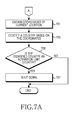
- FIG. 7A is a flowchart illustrating an example of a sub-process, in accordance with aspects of the disclosure.
- the electronic device may detect the coordinates of the location where the electronic device is currently present.
- the detection could be performed by using GPS, for example.
- the electronic device may identify a coordinate value including latitude and longitude.
- the electronic device may detect a country of its current position using the coordinate value. For example, when a coordinate value is 37° 33 ' 58.87 “ N 126° 58 ' 40.63 " E, the electronic device may detect that a country corresponding to its current position is "South Korea". In some implementations, the determination may be performed based on a record stored in the memory of the electronic device that maps country identifiers to respective coordinate values that correspond to locations within the countries' territories.
- the electronic device may detect whether the country is an activation limit country. For example, the electronic device may detect whether the country is included in a list of activation limit countries. If the country is not an activation limit country, the process ends. Otherwise, if the country is an activation limit country, the process proceeds to step 707.
- the electronic device shuts down.
- the electronic device may shut off its power supply.
- the electronic device may display on a display unit, as shown in FIG. 8B , a menu 821 indicating that the electronic device is being shut down.
- the electronic device may display, as shown in FIG. 8B , an emergency call button 811 and a language change button 813.
- FIG. 7B is a flowchart illustrating an example of a sub-process, in accordance with aspects of the disclosure.
- the electronic device may detect an IP address using local-area wireless communication network.
- the local area wireless communication network may include a wireless LAN, a Bluetooth communication network or channel, an NFC network, a Zigbee communication network, and/or any other suitable type of network.
- the electronic device may identify at least one access point (AP) and attempt to access the searched AP. Thereafter, the electronic device may receive an IP address through the accessed AP.
- AP access point
- the electronic device may identify the country where the electronic device is located based on the IP address. For example, when the IP address obtained in step 711 is 152.149.83.2, the electronic device may determine that the country where the electronic device is located is "South Korea". In some implementations, the determination may be based on data that is stored in the memory of the electronic device that maps IP addresses to identifiers of corresponding countries.
- the electronic device may detect whether the country where the electronic device is located is an activation limit country. For example, the electronic device may detect whether the country is included in a list of activation limit countries. If the verified country is not the activation limit country, the process ends. Otherwise, if the verified country is an activation limit country, the process proceeds to step 717.
- the electronic device shuts down.
- the electronic device may shut off the power supply.
- the electronic device may display, as shown in FIG. 8B , a menu 821 indicating that the electronic device is being shut down.
- the electronic device may display, as shown in FIG. 8B , an emergency call button 811 and a language change button 813.
- the electronic device may limit activation for sale/distribution/import prohibition countries by detecting the country of the current position when the activation event is generated and controlling the shutting-off of the power supply.
- FIGS. 3-7B are provided as examples only. One or more of the steps in these flowcharts may be executed in a different order, executed concurrently, or altogether omitted.
- the above-described aspects of the present disclosure can be implemented in hardware, firmware or via the execution of software or computer code that can be stored in a recording medium such as a CD ROM, a Digital Versatile Disc (DVD), a magnetic tape, a RAM, a floppy disk, a hard disk, or a magneto-optical disk or computer code downloaded over a network originally stored on a remote recording medium or a non-transitory machine readable medium and to be stored on a local recording medium, so that the methods described herein can be rendered via such software that is stored on the recording medium using a general purpose computer, or a special processor or in programmable or dedicated hardware, such as an ASIC or FPGA.
- a recording medium such as a CD ROM, a Digital Versatile Disc (DVD), a magnetic tape, a RAM, a floppy disk, a hard disk, or a magneto-optical disk or computer code downloaded over a network originally stored on a remote recording medium or a non-transitory
- the computer, the processor, microprocessor controller or the programmable hardware include memory components, e.g., RAM, ROM, Flash, etc. that may store or receive software or computer code that when accessed and executed by the computer, processor or hardware implement the processing methods described herein.
- memory components e.g., RAM, ROM, Flash, etc.
- the execution of the code transforms the general purpose computer into a special purpose computer for executing the processing shown herein.
- Any of the functions and steps provided in the Figures may be implemented in hardware, software or a combination of both and may be performed in whole or in part within the programmed instructions of a computer. No claim element herein is to be construed under the provisions of 35 U.S.C. 112, sixth paragraph, unless the element is expressly recited using the phrase "means for".
Landscapes
- Engineering & Computer Science (AREA)
- Computer Networks & Wireless Communication (AREA)
- Signal Processing (AREA)
- Human Computer Interaction (AREA)
- Environmental & Geological Engineering (AREA)
- Theoretical Computer Science (AREA)
- Software Systems (AREA)
- General Engineering & Computer Science (AREA)
- Computer Security & Cryptography (AREA)
- Computer Hardware Design (AREA)
- Health & Medical Sciences (AREA)
- Public Health (AREA)
- Emergency Management (AREA)
- Business, Economics & Management (AREA)
- Physics & Mathematics (AREA)
- General Physics & Mathematics (AREA)
- Computing Systems (AREA)
- Databases & Information Systems (AREA)
- Telephone Function (AREA)
- Telephonic Communication Services (AREA)
- Accessory Devices And Overall Control Thereof (AREA)
Applications Claiming Priority (1)
| Application Number | Priority Date | Filing Date | Title |
|---|---|---|---|
| KR1020130104345A KR102170508B1 (ko) | 2013-08-30 | 2013-08-30 | 특정 위치에서 동작을 제한하기 위한 방법 및 그 전자 장치 |
Publications (3)
| Publication Number | Publication Date |
|---|---|
| EP2843918A2 true EP2843918A2 (de) | 2015-03-04 |
| EP2843918A3 EP2843918A3 (de) | 2015-04-01 |
| EP2843918B1 EP2843918B1 (de) | 2018-08-01 |
Family
ID=51032966
Family Applications (1)
| Application Number | Title | Priority Date | Filing Date |
|---|---|---|---|
| EP14173897.1A Not-in-force EP2843918B1 (de) | 2013-08-30 | 2014-06-25 | Begrenzung des Betriebs einer elektronischen Vorrichtung |
Country Status (3)
| Country | Link |
|---|---|
| US (1) | US10033853B2 (de) |
| EP (1) | EP2843918B1 (de) |
| KR (1) | KR102170508B1 (de) |
Families Citing this family (4)
| Publication number | Priority date | Publication date | Assignee | Title |
|---|---|---|---|---|
| KR101676572B1 (ko) * | 2015-06-29 | 2016-11-15 | 네이버비즈니스플랫폼 주식회사 | 위치 기반 서비스 제공 방법 및 시스템 |
| GB201517087D0 (en) | 2015-09-28 | 2015-11-11 | Nicoventures Holdings Ltd | Vaping policy alert system and method |
| CN111092987A (zh) * | 2018-10-24 | 2020-05-01 | 珠海格力电器股份有限公司 | 一种移动终端的定位方法及装置 |
| US11375365B1 (en) * | 2020-12-08 | 2022-06-28 | Motorola Solutions, Inc. | Activation of a radio device for customer use |
Family Cites Families (14)
| Publication number | Priority date | Publication date | Assignee | Title |
|---|---|---|---|---|
| KR100590347B1 (ko) | 1999-12-30 | 2006-06-15 | 엘지전자 주식회사 | 휴대폰의 무단 사용 방지 방법 |
| US7266371B1 (en) * | 2000-02-22 | 2007-09-04 | Cingular Wireless Ii, Llc | Activation and remote modification of wireless services in a packet network context |
| KR20010086805A (ko) | 2000-03-03 | 2001-09-15 | 서평원 | 휴대폰의 무단사용 방지방법 |
| US20050277428A1 (en) * | 2004-05-13 | 2005-12-15 | International Business Machines Corporation | Location-based control of wireless communications device features |
| KR100842572B1 (ko) * | 2006-11-17 | 2008-07-01 | 삼성전자주식회사 | 카메라 로밍 서비스를 제공하는 휴대 단말기 및 그 방법 |
| US20100042734A1 (en) * | 2007-08-31 | 2010-02-18 | Atli Olafsson | Proxy server access restriction apparatus, systems, and methods |
| US8538376B2 (en) * | 2007-12-28 | 2013-09-17 | Apple Inc. | Event-based modes for electronic devices |
| EP2321757B1 (de) * | 2008-08-22 | 2014-08-13 | Yougetitback Limited | API FüR HILFSSCHNITTSTELLE |
| JP4517253B2 (ja) * | 2008-09-30 | 2010-08-04 | 株式会社カシオ日立モバイルコミュニケーションズ | 通信端末装置及びプログラム |
| US8949720B1 (en) * | 2011-05-09 | 2015-02-03 | Symantec Corporation | Systems and methods for managing access-control settings |
| US20130331058A1 (en) * | 2012-06-12 | 2013-12-12 | Help Now Technologies, Llc | Emergency alert system |
| GB201211568D0 (en) * | 2012-06-29 | 2012-08-15 | Microsoft Corp | Determining network availability based on geographical location |
| US9191884B2 (en) * | 2012-07-02 | 2015-11-17 | Sony Corporation | System and method for detecting access points transmitting outside of the regulated frequency range |
| US9967735B2 (en) * | 2014-01-24 | 2018-05-08 | Deere & Company | Method and system for controlling wireless access or authorized features of a mobile transceiver |
-
2013
- 2013-08-30 KR KR1020130104345A patent/KR102170508B1/ko active Active
-
2014
- 2014-06-25 EP EP14173897.1A patent/EP2843918B1/de not_active Not-in-force
- 2014-09-02 US US14/474,852 patent/US10033853B2/en not_active Expired - Fee Related
Non-Patent Citations (1)
| Title |
|---|
| None |
Also Published As
| Publication number | Publication date |
|---|---|
| US10033853B2 (en) | 2018-07-24 |
| US20150063338A1 (en) | 2015-03-05 |
| KR20150026041A (ko) | 2015-03-11 |
| EP2843918A3 (de) | 2015-04-01 |
| KR102170508B1 (ko) | 2020-10-28 |
| EP2843918B1 (de) | 2018-08-01 |
Similar Documents
| Publication | Publication Date | Title |
|---|---|---|
| CN111757426B (zh) | 漫游入网方法及装置 | |
| US10873900B2 (en) | Method for wireless fidelity connection and related products | |
| EP2677337B1 (de) | Verfahren und Vorrichtung zur Bereitstellung einer semantischen Position in einer elektronischen Vorrichtung | |
| US10299197B2 (en) | Wireless fidelity connection method, mobile terminal and storage medium | |
| EP3277027B1 (de) | Verfahren zur wi-fi-verbindung, mobiles endgerät und speichermedium | |
| WO2018188316A1 (en) | Method and apparatus for identifying pseudo base-station, and terminal | |
| CN108632796B (zh) | 蓝牙连接方法、装置、终端及计算机可读存储介质 | |
| EP3119133B1 (de) | Verfahren und vorrichtung für zugang zu roaming-netzwerk | |
| EP3376797B1 (de) | Verfahren zur suche nach einem netzwerk und ein endgerät | |
| EP3136689A1 (de) | Verfahren und vorrichtung für den zugriff auf einen server | |
| CN106465248B (zh) | 漫游入网方法及装置 | |
| EP3041229A1 (de) | Verfahren und vorrichtung für videoaufzeichnung und computerprogramm | |
| KR20150025208A (ko) | 네트워크 연결 방법 및 그 방법을 처리하는 전자 장치 | |
| US10728223B2 (en) | WI-FI connection method, mobile terminal and storage medium | |
| EP3179790A1 (de) | Verfahren und vorrichtung zur bestimmung des standortes einer mobilen zielvorrichtung | |
| US10033853B2 (en) | Restricting the operation of an electronic device | |
| US8977256B2 (en) | Apparatus and method for subscribing to international roaming plan for communication device | |
| CN106792698A (zh) | 一种无线保真Wi‑Fi连接方法及移动终端 | |
| US20140187166A1 (en) | Method and apparatus for controlling short range wireless communication | |
| KR20140099589A (ko) | 사용자 디바이스에서 단축번호 제공 방법 및 장치 | |
| US9900731B2 (en) | Method of providing location based service and electronic device thereof | |
| US20150094947A1 (en) | Place description information acquisition method, and terminal | |
| US9894525B2 (en) | Electronic device and method for searching the same | |
| EP3799478A1 (de) | Verfahren, vorrichtung und system zum zugreifen auf ein 5g-netzwerk | |
| WO2018184414A1 (zh) | 注册方法、设备及存储介质 |
Legal Events
| Date | Code | Title | Description |
|---|---|---|---|
| PUAL | Search report despatched |
Free format text: ORIGINAL CODE: 0009013 |
|
| 17P | Request for examination filed |
Effective date: 20140625 |
|
| AK | Designated contracting states |
Kind code of ref document: A2 Designated state(s): AL AT BE BG CH CY CZ DE DK EE ES FI FR GB GR HR HU IE IS IT LI LT LU LV MC MK MT NL NO PL PT RO RS SE SI SK SM TR |
|
| AX | Request for extension of the european patent |
Extension state: BA ME |
|
| PUAI | Public reference made under article 153(3) epc to a published international application that has entered the european phase |
Free format text: ORIGINAL CODE: 0009012 |
|
| AK | Designated contracting states |
Kind code of ref document: A3 Designated state(s): AL AT BE BG CH CY CZ DE DK EE ES FI FR GB GR HR HU IE IS IT LI LT LU LV MC MK MT NL NO PL PT RO RS SE SI SK SM TR |
|
| AX | Request for extension of the european patent |
Extension state: BA ME |
|
| RIC1 | Information provided on ipc code assigned before grant |
Ipc: H04M 1/725 20060101AFI20150225BHEP |
|
| 17Q | First examination report despatched |
Effective date: 20151222 |
|
| GRAP | Despatch of communication of intention to grant a patent |
Free format text: ORIGINAL CODE: EPIDOSNIGR1 |
|
| STAA | Information on the status of an ep patent application or granted ep patent |
Free format text: STATUS: GRANT OF PATENT IS INTENDED |
|
| INTG | Intention to grant announced |
Effective date: 20180215 |
|
| GRAA | (expected) grant |
Free format text: ORIGINAL CODE: 0009210 |
|
| STAA | Information on the status of an ep patent application or granted ep patent |
Free format text: STATUS: THE PATENT HAS BEEN GRANTED |
|
| GRAS | Grant fee paid |
Free format text: ORIGINAL CODE: EPIDOSNIGR3 |
|
| AK | Designated contracting states |
Kind code of ref document: B1 Designated state(s): AL AT BE BG CH CY CZ DE DK EE ES FI FR GB GR HR HU IE IS IT LI LT LU LV MC MK MT NL NO PL PT RO RS SE SI SK SM TR |
|
| REG | Reference to a national code |
Ref country code: GB Ref legal event code: FG4D |
|
| REG | Reference to a national code |
Ref country code: CH Ref legal event code: EP Ref country code: AT Ref legal event code: REF Ref document number: 1025707 Country of ref document: AT Kind code of ref document: T Effective date: 20180815 |
|
| REG | Reference to a national code |
Ref country code: IE Ref legal event code: FG4D |
|
| REG | Reference to a national code |
Ref country code: DE Ref legal event code: R096 Ref document number: 602014029427 Country of ref document: DE |
|
| REG | Reference to a national code |
Ref country code: NL Ref legal event code: FP |
|
| REG | Reference to a national code |
Ref country code: LT Ref legal event code: MG4D |
|
| REG | Reference to a national code |
Ref country code: AT Ref legal event code: MK05 Ref document number: 1025707 Country of ref document: AT Kind code of ref document: T Effective date: 20180801 |
|
| PG25 | Lapsed in a contracting state [announced via postgrant information from national office to epo] |
Ref country code: GR Free format text: LAPSE BECAUSE OF FAILURE TO SUBMIT A TRANSLATION OF THE DESCRIPTION OR TO PAY THE FEE WITHIN THE PRESCRIBED TIME-LIMIT Effective date: 20181102 Ref country code: FI Free format text: LAPSE BECAUSE OF FAILURE TO SUBMIT A TRANSLATION OF THE DESCRIPTION OR TO PAY THE FEE WITHIN THE PRESCRIBED TIME-LIMIT Effective date: 20180801 Ref country code: NO Free format text: LAPSE BECAUSE OF FAILURE TO SUBMIT A TRANSLATION OF THE DESCRIPTION OR TO PAY THE FEE WITHIN THE PRESCRIBED TIME-LIMIT Effective date: 20181101 Ref country code: LT Free format text: LAPSE BECAUSE OF FAILURE TO SUBMIT A TRANSLATION OF THE DESCRIPTION OR TO PAY THE FEE WITHIN THE PRESCRIBED TIME-LIMIT Effective date: 20180801 Ref country code: IS Free format text: LAPSE BECAUSE OF FAILURE TO SUBMIT A TRANSLATION OF THE DESCRIPTION OR TO PAY THE FEE WITHIN THE PRESCRIBED TIME-LIMIT Effective date: 20181201 Ref country code: RS Free format text: LAPSE BECAUSE OF FAILURE TO SUBMIT A TRANSLATION OF THE DESCRIPTION OR TO PAY THE FEE WITHIN THE PRESCRIBED TIME-LIMIT Effective date: 20180801 Ref country code: PL Free format text: LAPSE BECAUSE OF FAILURE TO SUBMIT A TRANSLATION OF THE DESCRIPTION OR TO PAY THE FEE WITHIN THE PRESCRIBED TIME-LIMIT Effective date: 20180801 Ref country code: AT Free format text: LAPSE BECAUSE OF FAILURE TO SUBMIT A TRANSLATION OF THE DESCRIPTION OR TO PAY THE FEE WITHIN THE PRESCRIBED TIME-LIMIT Effective date: 20180801 Ref country code: BG Free format text: LAPSE BECAUSE OF FAILURE TO SUBMIT A TRANSLATION OF THE DESCRIPTION OR TO PAY THE FEE WITHIN THE PRESCRIBED TIME-LIMIT Effective date: 20181101 Ref country code: SE Free format text: LAPSE BECAUSE OF FAILURE TO SUBMIT A TRANSLATION OF THE DESCRIPTION OR TO PAY THE FEE WITHIN THE PRESCRIBED TIME-LIMIT Effective date: 20180801 |
|
| PG25 | Lapsed in a contracting state [announced via postgrant information from national office to epo] |
Ref country code: LV Free format text: LAPSE BECAUSE OF FAILURE TO SUBMIT A TRANSLATION OF THE DESCRIPTION OR TO PAY THE FEE WITHIN THE PRESCRIBED TIME-LIMIT Effective date: 20180801 Ref country code: AL Free format text: LAPSE BECAUSE OF FAILURE TO SUBMIT A TRANSLATION OF THE DESCRIPTION OR TO PAY THE FEE WITHIN THE PRESCRIBED TIME-LIMIT Effective date: 20180801 Ref country code: HR Free format text: LAPSE BECAUSE OF FAILURE TO SUBMIT A TRANSLATION OF THE DESCRIPTION OR TO PAY THE FEE WITHIN THE PRESCRIBED TIME-LIMIT Effective date: 20180801 |
|
| PG25 | Lapsed in a contracting state [announced via postgrant information from national office to epo] |
Ref country code: ES Free format text: LAPSE BECAUSE OF FAILURE TO SUBMIT A TRANSLATION OF THE DESCRIPTION OR TO PAY THE FEE WITHIN THE PRESCRIBED TIME-LIMIT Effective date: 20180801 Ref country code: RO Free format text: LAPSE BECAUSE OF FAILURE TO SUBMIT A TRANSLATION OF THE DESCRIPTION OR TO PAY THE FEE WITHIN THE PRESCRIBED TIME-LIMIT Effective date: 20180801 Ref country code: CZ Free format text: LAPSE BECAUSE OF FAILURE TO SUBMIT A TRANSLATION OF THE DESCRIPTION OR TO PAY THE FEE WITHIN THE PRESCRIBED TIME-LIMIT Effective date: 20180801 Ref country code: EE Free format text: LAPSE BECAUSE OF FAILURE TO SUBMIT A TRANSLATION OF THE DESCRIPTION OR TO PAY THE FEE WITHIN THE PRESCRIBED TIME-LIMIT Effective date: 20180801 Ref country code: IT Free format text: LAPSE BECAUSE OF FAILURE TO SUBMIT A TRANSLATION OF THE DESCRIPTION OR TO PAY THE FEE WITHIN THE PRESCRIBED TIME-LIMIT Effective date: 20180801 |
|
| REG | Reference to a national code |
Ref country code: DE Ref legal event code: R097 Ref document number: 602014029427 Country of ref document: DE |
|
| PG25 | Lapsed in a contracting state [announced via postgrant information from national office to epo] |
Ref country code: SM Free format text: LAPSE BECAUSE OF FAILURE TO SUBMIT A TRANSLATION OF THE DESCRIPTION OR TO PAY THE FEE WITHIN THE PRESCRIBED TIME-LIMIT Effective date: 20180801 Ref country code: SK Free format text: LAPSE BECAUSE OF FAILURE TO SUBMIT A TRANSLATION OF THE DESCRIPTION OR TO PAY THE FEE WITHIN THE PRESCRIBED TIME-LIMIT Effective date: 20180801 Ref country code: DK Free format text: LAPSE BECAUSE OF FAILURE TO SUBMIT A TRANSLATION OF THE DESCRIPTION OR TO PAY THE FEE WITHIN THE PRESCRIBED TIME-LIMIT Effective date: 20180801 |
|
| PLBE | No opposition filed within time limit |
Free format text: ORIGINAL CODE: 0009261 |
|
| STAA | Information on the status of an ep patent application or granted ep patent |
Free format text: STATUS: NO OPPOSITION FILED WITHIN TIME LIMIT |
|
| PGFP | Annual fee paid to national office [announced via postgrant information from national office to epo] |
Ref country code: NL Payment date: 20190521 Year of fee payment: 6 |
|
| 26N | No opposition filed |
Effective date: 20190503 |
|
| PGFP | Annual fee paid to national office [announced via postgrant information from national office to epo] |
Ref country code: DE Payment date: 20190520 Year of fee payment: 6 |
|
| PG25 | Lapsed in a contracting state [announced via postgrant information from national office to epo] |
Ref country code: SI Free format text: LAPSE BECAUSE OF FAILURE TO SUBMIT A TRANSLATION OF THE DESCRIPTION OR TO PAY THE FEE WITHIN THE PRESCRIBED TIME-LIMIT Effective date: 20180801 |
|
| PGFP | Annual fee paid to national office [announced via postgrant information from national office to epo] |
Ref country code: GB Payment date: 20190521 Year of fee payment: 6 |
|
| PG25 | Lapsed in a contracting state [announced via postgrant information from national office to epo] |
Ref country code: MC Free format text: LAPSE BECAUSE OF FAILURE TO SUBMIT A TRANSLATION OF THE DESCRIPTION OR TO PAY THE FEE WITHIN THE PRESCRIBED TIME-LIMIT Effective date: 20180801 |
|
| REG | Reference to a national code |
Ref country code: CH Ref legal event code: PL |
|
| REG | Reference to a national code |
Ref country code: BE Ref legal event code: MM Effective date: 20190630 |
|
| PG25 | Lapsed in a contracting state [announced via postgrant information from national office to epo] |
Ref country code: TR Free format text: LAPSE BECAUSE OF FAILURE TO SUBMIT A TRANSLATION OF THE DESCRIPTION OR TO PAY THE FEE WITHIN THE PRESCRIBED TIME-LIMIT Effective date: 20180801 |
|
| PG25 | Lapsed in a contracting state [announced via postgrant information from national office to epo] |
Ref country code: IE Free format text: LAPSE BECAUSE OF NON-PAYMENT OF DUE FEES Effective date: 20190625 |
|
| PG25 | Lapsed in a contracting state [announced via postgrant information from national office to epo] |
Ref country code: LI Free format text: LAPSE BECAUSE OF NON-PAYMENT OF DUE FEES Effective date: 20190630 Ref country code: CH Free format text: LAPSE BECAUSE OF NON-PAYMENT OF DUE FEES Effective date: 20190630 Ref country code: BE Free format text: LAPSE BECAUSE OF NON-PAYMENT OF DUE FEES Effective date: 20190630 Ref country code: LU Free format text: LAPSE BECAUSE OF NON-PAYMENT OF DUE FEES Effective date: 20190625 |
|
| PG25 | Lapsed in a contracting state [announced via postgrant information from national office to epo] |
Ref country code: FR Free format text: LAPSE BECAUSE OF NON-PAYMENT OF DUE FEES Effective date: 20190630 Ref country code: PT Free format text: LAPSE BECAUSE OF FAILURE TO SUBMIT A TRANSLATION OF THE DESCRIPTION OR TO PAY THE FEE WITHIN THE PRESCRIBED TIME-LIMIT Effective date: 20181201 |
|
| REG | Reference to a national code |
Ref country code: DE Ref legal event code: R119 Ref document number: 602014029427 Country of ref document: DE |
|
| REG | Reference to a national code |
Ref country code: NL Ref legal event code: MM Effective date: 20200701 |
|
| GBPC | Gb: european patent ceased through non-payment of renewal fee |
Effective date: 20200625 |
|
| PG25 | Lapsed in a contracting state [announced via postgrant information from national office to epo] |
Ref country code: GB Free format text: LAPSE BECAUSE OF NON-PAYMENT OF DUE FEES Effective date: 20200625 Ref country code: NL Free format text: LAPSE BECAUSE OF NON-PAYMENT OF DUE FEES Effective date: 20200701 |
|
| PG25 | Lapsed in a contracting state [announced via postgrant information from national office to epo] |
Ref country code: CY Free format text: LAPSE BECAUSE OF FAILURE TO SUBMIT A TRANSLATION OF THE DESCRIPTION OR TO PAY THE FEE WITHIN THE PRESCRIBED TIME-LIMIT Effective date: 20180801 Ref country code: DE Free format text: LAPSE BECAUSE OF NON-PAYMENT OF DUE FEES Effective date: 20210101 |
|
| PG25 | Lapsed in a contracting state [announced via postgrant information from national office to epo] |
Ref country code: HU Free format text: LAPSE BECAUSE OF FAILURE TO SUBMIT A TRANSLATION OF THE DESCRIPTION OR TO PAY THE FEE WITHIN THE PRESCRIBED TIME-LIMIT; INVALID AB INITIO Effective date: 20140625 Ref country code: MT Free format text: LAPSE BECAUSE OF FAILURE TO SUBMIT A TRANSLATION OF THE DESCRIPTION OR TO PAY THE FEE WITHIN THE PRESCRIBED TIME-LIMIT Effective date: 20180801 |
|
| PG25 | Lapsed in a contracting state [announced via postgrant information from national office to epo] |
Ref country code: MK Free format text: LAPSE BECAUSE OF FAILURE TO SUBMIT A TRANSLATION OF THE DESCRIPTION OR TO PAY THE FEE WITHIN THE PRESCRIBED TIME-LIMIT Effective date: 20180801 |