EP2842943A1 - New molecules presenting white light emission properties - Google Patents
New molecules presenting white light emission properties Download PDFInfo
- Publication number
- EP2842943A1 EP2842943A1 EP13306191.1A EP13306191A EP2842943A1 EP 2842943 A1 EP2842943 A1 EP 2842943A1 EP 13306191 A EP13306191 A EP 13306191A EP 2842943 A1 EP2842943 A1 EP 2842943A1
- Authority
- EP
- European Patent Office
- Prior art keywords
- alkyl
- group
- compound according
- independently
- represent
- Prior art date
- Legal status (The legal status is an assumption and is not a legal conclusion. Google has not performed a legal analysis and makes no representation as to the accuracy of the status listed.)
- Withdrawn
Links
- 0 BC(N(*N(C(*)=C1*)C(*)=C(*)C1=I)C(*)=C1*)=C(*)C1=* Chemical compound BC(N(*N(C(*)=C1*)C(*)=C(*)C1=I)C(*)=C1*)=C(*)C1=* 0.000 description 5
Images




Classifications
-
- C—CHEMISTRY; METALLURGY
- C07—ORGANIC CHEMISTRY
- C07D—HETEROCYCLIC COMPOUNDS
- C07D213/00—Heterocyclic compounds containing six-membered rings, not condensed with other rings, with one nitrogen atom as the only ring hetero atom and three or more double bonds between ring members or between ring members and non-ring members
- C07D213/02—Heterocyclic compounds containing six-membered rings, not condensed with other rings, with one nitrogen atom as the only ring hetero atom and three or more double bonds between ring members or between ring members and non-ring members having three double bonds between ring members or between ring members and non-ring members
- C07D213/04—Heterocyclic compounds containing six-membered rings, not condensed with other rings, with one nitrogen atom as the only ring hetero atom and three or more double bonds between ring members or between ring members and non-ring members having three double bonds between ring members or between ring members and non-ring members having no bond between the ring nitrogen atom and a non-ring member or having only hydrogen or carbon atoms directly attached to the ring nitrogen atom
- C07D213/60—Heterocyclic compounds containing six-membered rings, not condensed with other rings, with one nitrogen atom as the only ring hetero atom and three or more double bonds between ring members or between ring members and non-ring members having three double bonds between ring members or between ring members and non-ring members having no bond between the ring nitrogen atom and a non-ring member or having only hydrogen or carbon atoms directly attached to the ring nitrogen atom with hetero atoms or with carbon atoms having three bonds to hetero atoms with at the most one bond to halogen, e.g. ester or nitrile radicals, directly attached to ring carbon atoms
- C07D213/62—Oxygen or sulfur atoms
- C07D213/63—One oxygen atom
- C07D213/68—One oxygen atom attached in position 4
Definitions
- the present invention relates to new molecules presenting white light emission properties, their method of preparation and their applications, notably as white light emitting sources.
- Emission of white light from a single molecule is an important chemical target because of the possibility of innovative applications to new classes of displays and light sources, such as low-cost, large-area flat-panel displays.
- Most of the white organic light-emitting devices (WOLEDs) reported so far relied on the use of a combination of several organic components that emit different colors of light (e.g. red/blue/green luminophores) to cover the visible range from 400 to 700 nm. These WOLEDs may degrade at different rates or have different requirements for device fabrication.
- use of a single molecule could show many advantages, such as better stability, better reproducibility, and a simpler fabrication process.
- only a few molecules are known to show white-light emission. Therefore, the search for new molecules that can emit white light is of obvious interest and importance.
- the present invention aims to solve the above recited technical problems.
- the invention aims to provide new white light emitting molecules.
- the invention aims in particular to provide such compounds while avoiding the complex composition or complex structure of known white light emitting molecular systems.
- the invention also aims to provide such compounds with good electroluminescent properties.
- the invention aims to provide such compounds with good lifetime and quantum yield.
- the invention also aims to provide a simple way to prepare white light emitting molecules.
- the inventors have discovered new compounds (or molecules) and materials presenting white light emitting properties.
- the compounds according to the invention have simple molecule structure and some of them can emit white light in the solid state.
- the invention relates to compound of formula (I) wherein Y represents a straight or branched alkyl chain having from 1 to 30 carbon atoms, preferably from 2 to 8 or from 9 to 20 carbon atoms, said alkyl chain optionally containing one or more unsaturations, and/or optionally containing one or more heteroatoms, and/or being optionally substituted, said alkyl chain being optionally interrupted by an aromatic group,
- said alkyl chain or group is selected from the group consisting of methane, ethane, propane, butane, pentane, hexane, octane, nonane, decane, dodecane, tridecane, tetradecane, pentadecane, hexadecane, heptadecane, octadecane, nonadecane, eicosane, isopropane, tert-butyl, 2-ethylhexane, 2-methyl butane, 2-methylpentane, 1-methylpentane, 3-methylheptane, benzene, naphthalene, anthracene, perylene, diphenyl, bipyridine and terpyridine.
- said alkyl chain or group contains one or two heteroatoms, said heteroatom being independently selected from O, N, and S.
- At least one carbon atom of said alkyl chain or group may be substituted by one of the following atoms or groups:
- said alkyl chain Y is interrupted by an aromatic group and is represented by: wherein n and m are integers and wherein 2 ⁇ n + m ⁇ 30.
- said aromatic group is a phenyl group, optionally substituted.
- compounds of formula (I) are those wherein of formula (I) represents one of the following chemical groups: wherein A 1 , A 2 , A 3 , A 4 , B 1 , B 2 , B 3 , B 4 , D 1 , D 2 , D 3 , and D 4 are defined according to the present invention, and E 1 , E 2 , E 3 , E 4 are identical or different, and represent each independently a hydrogen atom, a halogen atom (F, Cl, Br, or I), an alkyl, O-alkyl or aromatic group, E 1 -E 2 , and E 3 -E 4 may each represent independently an aromatic ring.
- a 1 , A 2 , A 3 , A 4 , B 1 , B 2 , B 3 , B 4 , D 1 , D 2 , D 3 , and D 4 are defined according to the present invention
- E 1 , E 2 , E 3 , E 4 are identical or different, and represent each independently a hydrogen atom, a
- compounds of the invention are represented by the following formula: wherein p is an integer and wherein 1 ⁇ p ⁇ 30.
- White light is composed of the three primary colors (red, green and blue) and radiations wavelengths cover the whole visible range from 400 to 700 nm.
- a molecule emitting white light emits radiations presenting a normalized intensity in arbitrary units (a.u.) higher than 0.1 essentially or totally over 400 to 700 nm, and preferably higher than 0.5 over radiations wavelengths ranging from 425 to 575 nm, preferably an intensity higher than 0.7 over a range of 100nm breadth.
- Preferred molecules are those emitting radiations wavelengths in the visible range, i.e. from 400 to 700 nm, said radiations having an intensity higher than 0.7, even 0.8, over a range of at least 150 nm breadth, more preferably of at least 200nm breadth.
- the CIE chromaticity coordinates for pure white light are (0.33, 0.33).
- White light according to the present invention is more particularly defined by CIE coordinates in the (0.33 ⁇ 0.10, 0.33 ⁇ 0.10) range, and more preferably in the (0.33 ⁇ 0.07, 0.33 ⁇ 0.07) range.
- Compounds of the invention present preferably CIE chromaticity coordinates on the surface of a simple pentagon defined by points A (0.25, 0.22); B (0.33, 0.22); C (0.40, 0.38); D (0.35, 0.38); E (0.25, 0.30).
- a simple pentagon is notably a pentagon in which the boundary of the pentagon does not cross itself. Such a pentagon is illustrated in figure 12 . Even more preferably, compounds of the invention present CIE coordinates close to or equal to those of pure white light (0.33 ⁇ 0.05, 0.33 ⁇ 0.05).
- the invention also relates to the use of at least one compound of the invention, or of a solid phase of the invention, for emiting white light.
- the invention also relates to a method for emiting white light.
- white light is emitted by the compounds of the invention when they are exposed to UV, laser, or electric sources.
- the compounds according to the invention provide a good quantum yield, which is defined as the quotient of the number of photons emitted divided by the number of photons absorbed.
- the quantum yield represents the emission efficiency of a given compound.
- a good quantum yield is considered to be over 18%, preferably over 20%.
- Electroluminescent is defined as an optical phenomenon and electrical phenomenon in which a material emits light in response to the passage of an electric current or to a strong electric field.
- a current of electrons flows through the emitting materials from cathode to anode.
- Electrostatic forces bring the electrons and the holes towards each other and they recombine forming an exciton, a bound state of the electron and hole.
- the decay of this excited state results in the release of energy.
- the emitting materials absorb the energy accompanied by emission of radiation as visible light. The colour of this light depends on the band gap between the HOMO and LUMO.
- the lifetime of a molecule of the invention is in general of between 1 and 10 nanoseconds, more specifically from 2 to 3 nanoseconds.
- the invention also relates to a solid state material comprising, or consisting of, at least one compound of the invention.
- said solid state or phase material is a pulverulent material.
- One or more compounds of the invention may be introduced as a solid powder in a polymeric material or in a porous solid, such as a zeolite or a metal organic framework (MOF). Accordingly the invention relates to a polymeric material or a solid state material comprising at least one compound of the invention.
- a polymeric material or a solid state material comprising at least one compound of the invention.
- the polymeric material is a plastic material, especially a transparent plastic material.
- said plastic material is a plastic film, especially a transparent plastic film.
- Compounds of the invention may also be combined with and introduced into solid state host materials, such as organic or inorganic porous frameworks or material, clays, zeolites, etc.
- solid state host materials such as organic or inorganic porous frameworks or material, clays, zeolites, etc.
- the invention also relates to a light emiting device comprising at least one compound of the invention, or a solid phase of the invention. More specificly, said device may be a white light meiting device.
- the invention relates to one or more light sources comprising one or more compounds of the invention.
- the light source is a WOLED or a plurality of WOLEDs comprising one or more compounds of the invention.
- the invention also relates to a method for producing white light wherein said method comprises exciting one or more compounds or materials of the invention with a source of energy to produce white light.
- the source of energy is a UV light source, a laser source, an electric source, or any combination thereof.
- a method for preparing a compound according to formula (I) comprises the condensation of a chain with two molecules of 4-hydroxypyridine.
- the invention relates to a method for preparing a compound of the invention, wherein said method comprises the following steps : wherein Z 1 and Z 2 represent each independently leaving groups, preferably Z 1 and Z 2 represent each independently a halogen atom (preferably Br), a sulfonyl group, preferably a tosyl, a methanesulfonyl, a triflyl, a besyl, or a sulfonate group, or a sulphate ester group (-O-SO 3 -R);
- Z 1 and Z 2 represent each independently leaving groups, preferably Z 1 and Z 2 represent each independently a halogen atom (preferably Br), a sulfonyl group, preferably a tosyl, a methanesulfonyl, a triflyl, a besyl, or a sulfonate group, or a sulphate ester group (-O-SO 3 -R);
- R 1 , R 2 , Y, A 1 , A 2 , A 3 , A 4 , B 1 , B 2 , B 3 , and B 4 being defined according to the present invention.
- a method for preparing a compound according to formula ( Ib ) may comprise the following steps :
- a method for preparing a compound according to formula ( IIb ) may comprise the following steps : wherein A 1 , A 2 , A 3 , A 4 , B 1 , B 2 , B 3 , B 4 , D 1 , D 2 , D 3 , D 4 , E 1 , E 2 , E 3 , E 4 , Z 1 and Z 2 are defined in the present invention.
- Z 1 and Z 2 are bromine atoms (Br).
- Z 1 -Y-Z 2 is a dihalogenoalkyl, and more preferably a dibromoalkyl.
- step 1) and/or 2) are performed in the presence of a base, for example K 2 CO 3 , and an organic solvent.
- the reaction can be performed under reflux.
- the reaction is a one pot reaction wherein steps 1 and 2 are performed in the same reaction vessel.
- the organic solvent may be removed in order to collect the crude product of the reaction. More precisely the crude product generally contains: 1) the desired symmetrical compound Ib or IIb , where the central chain is connected to the nitrogen site of the two terminal heterocyclic groups; 2) the unsymmetrical compound Ic and IIc , where the central chain is connected to the nitrogen site of one terminal heterocyclic group and to the oxygen of the other one; 3) unreacted remaining 4-hydroxypyridine.
- This product is advantageously purified for instance by washing with cold water to remove the 4-hydroxypyridine followed by washing with acetone at room temperature to remove the unsymmetrical c isomer.
- the desired symmetrical compound was recrystallized from acetonitrile. This procedure provides an essentially pure product. "Essentially pure” means a pure product with unavoidable impurities present because of the raw materials used and the reaction performed. It is typically > 99.2% pure.
- Such lifetimes are characteristic of ligand-centered (LC) emissions, may originating from ⁇ - ⁇ * transition as well as intra-ligand charge-transfer (ILCT) due to the keto form of the molecule.
- the quantum yield of 3 was measured for 22% at room temperature.
- 1,1'-(tetradecane-1,14-diyl)bis(pyridin-4(1H)-one) (4) was obtained as a light yellow powdery solid by a similar procedure as for 3 except for using 1,14-dibromotetradecane instead of 1,12-dibromododecane.
- the crude product contained three different compounds, unreacted 4-hydroxypyridine (6.5%), the desired symmetrical main product 4 of general type Ib (85.6%), and the unsymmetrical by-product of type Ic (7.9%).
- compound 4 was obtained in 99.2 % purity (as judged by 1 H-NMR integration). Yield: 65%. Melting point: 91.1°C.
- Such lifetimes are characteristic of ligand-centered (LC) emissions, may originating from ⁇ - ⁇ * transition as well as intra-ligand charge-transfer (ILCT) due to the keto form of the molecule.
- the quantum yield of 4 was measured for 23% at room temperature.
Landscapes
- Chemical & Material Sciences (AREA)
- Organic Chemistry (AREA)
- Electroluminescent Light Sources (AREA)
Abstract
The present invention relates to new molecules having white light emission properties, their method of preparation, and their applications, notably as white light emitting sources.
Description
- The present invention relates to new molecules presenting white light emission properties, their method of preparation and their applications, notably as white light emitting sources.
- Emission of white light from a single molecule is an important chemical target because of the possibility of innovative applications to new classes of displays and light sources, such as low-cost, large-area flat-panel displays. Most of the white organic light-emitting devices (WOLEDs) reported so far relied on the use of a combination of several organic components that emit different colors of light (e.g. red/blue/green luminophores) to cover the visible range from 400 to 700 nm. These WOLEDs may degrade at different rates or have different requirements for device fabrication. Compared to the multi-emitting component WOLEDs, use of a single molecule could show many advantages, such as better stability, better reproducibility, and a simpler fabrication process. However, only a few molecules are known to show white-light emission. Therefore, the search for new molecules that can emit white light is of obvious interest and importance.
- Until now, all of known white light emitting molecules have complicated structures and their preparation requires complex synthetic strategies. These materials are usually composed of covalently linked emitter components and utilize energy transfer from a wide bandgap donor component to a smaller band-gap acceptor to generate white light. The complexity of these molecules may hinder their market entry. So achieving white light emission by single molecules with simple structure is currently an exciting challenge in synthetic chemistry as well as in photochemistry and photophysics.
- The present invention aims to solve the above recited technical problems.
- In particular, the invention aims to provide new white light emitting molecules.
- The invention aims in particular to provide such compounds while avoiding the complex composition or complex structure of known white light emitting molecular systems.
- The invention also aims to provide such compounds with good electroluminescent properties.
- The invention aims to provide such compounds with good lifetime and quantum yield.
- The invention also aims to provide a simple way to prepare white light emitting molecules.
- The inventors have discovered new compounds (or molecules) and materials presenting white light emitting properties.
- The compounds according to the invention have simple molecule structure and some of them can emit white light in the solid state.
- The invention relates to compound of formula (I)

- R1 and R2 represent each independently an oxygen atom or

- ↗ indicating the point of attachment of the covalent double bond,
- A1, A2, A3, A4, B1, B2, B3, B4, D1, D2, D3, and D4 are identical or different, and represent each independently a hydrogen atom, a halogen atom (F, Cl, Br, or I), an alkyl, O-alkyl or aromatic group, A1-A2, A3-A4, B1-B2, B3-B4, D1-D2, and D3-D4 may each represent independently an aromatic ring.
- Preferably, said alkyl chain or group is selected from the group consisting of methane, ethane, propane, butane, pentane, hexane, octane, nonane, decane, dodecane, tridecane, tetradecane, pentadecane, hexadecane, heptadecane, octadecane, nonadecane, eicosane, isopropane, tert-butyl, 2-ethylhexane, 2-methyl butane, 2-methylpentane, 1-methylpentane, 3-methylheptane, benzene, naphthalene, anthracene, perylene, diphenyl, bipyridine and terpyridine.
- According to a preferred embodiment, said alkyl chain or group contains one or two heteroatoms, said heteroatom being independently selected from O, N, and S.
- At least one carbon atom of said alkyl chain or group may be substituted by one of the following atoms or groups:
- F, Cl, Br, or I,
- C1-C30 alkyl, C3-C7 cycloalkyl, C6-C10 aryl, heteroaryl, aralkyl, heteroarylalkyl, wherein said alkyl or aryl is optionally substituted by 1 to 3 groups R20, wherein R20 is one of the following:
- OR22, NR23R24, NHOH, NO2, CN, CF3, C1-C6 alkyl, C2-C6 alcenyl, C2-C6 alcynyl, C6-C10 aryl, aralkyl, =O, C(=O)R22, CO2R22, OC(=O)R22, C(=O)NR23R24, OC(=O)NR23R24, NR21C(=S)R22 or S(O)yR22;
- R22 is, at each occurrence, independently selected among H, C1-C30 alkyl, preferably C5-C20 alkyl, C6-C10 aryl and aralkyl ;
- R23 and R24 are, at each occurrence, independently selected among H, C1-C30 alkyl, preferably C5-C20 alkyl, C6-C10 aryl, aralkyl, or R23 and R24 form together a heterocyclic group having from 3 to 7 atoms.
- According to one embodiment, said alkyl chain Y is interrupted by an aromatic group and is represented by:

- According to a specific embodiment, said aromatic group is a phenyl group, optionally substituted.
- According to a preferred embodiment, compounds of formula (I) are those wherein


- According to a more specific embodiment, compounds of the invention are represented by one of the following formulae:


- According to one embodiment, compounds of the invention are represented by the following formula:

- White light is composed of the three primary colors (red, green and blue) and radiations wavelengths cover the whole visible range from 400 to 700 nm.
- According to the present invention, a molecule emitting white light emits radiations presenting a normalized intensity in arbitrary units (a.u.) higher than 0.1 essentially or totally over 400 to 700 nm, and preferably higher than 0.5 over radiations wavelengths ranging from 425 to 575 nm, preferably an intensity higher than 0.7 over a range of 100nm breadth. Preferred molecules are those emitting radiations wavelengths in the visible range, i.e. from 400 to 700 nm, said radiations having an intensity higher than 0.7, even 0.8, over a range of at least 150 nm breadth, more preferably of at least 200nm breadth.
- According to the CIE 1931 XYZ color space, created by the Commission Internationale de l'éclairage (CIE) in 1931, the CIE chromaticity coordinates for pure white light are (0.33, 0.33).
- White light according to the present invention is more particularly defined by CIE coordinates in the (0.33±0.10, 0.33±0.10) range, and more preferably in the (0.33±0.07, 0.33±0.07) range. Compounds of the invention present preferably CIE chromaticity coordinates on the surface of a simple pentagon defined by points A (0.25, 0.22); B (0.33, 0.22); C (0.40, 0.38); D (0.35, 0.38); E (0.25, 0.30). A simple pentagon is notably a pentagon in which the boundary of the pentagon does not cross itself. Such a pentagon is illustrated in
figure 12 . Even more preferably, compounds of the invention present CIE coordinates close to or equal to those of pure white light (0.33±0.05, 0.33±0.05). - The invention also relates to the use of at least one compound of the invention, or of a solid phase of the invention, for emiting white light. The invention also relates to a method for emiting white light.
- Typically, white light is emitted by the compounds of the invention when they are exposed to UV, laser, or electric sources.
- The compounds according to the invention provide a good quantum yield, which is defined as the quotient of the number of photons emitted divided by the number of photons absorbed. The quantum yield represents the emission efficiency of a given compound.
- A good quantum yield is considered to be over 18%, preferably over 20%.
- Lifetime (τ) is defined as the average length of time for the molecules to decay from one state to another. When a molecule absorbs a photon of appropriate energy, a chain of photophysical events ensues, such as internal conversion, fluorescence, intersystem crossing, and phosphorescence, as shown in the Jablonski diagram. Each of the processes occurs with a certain probability, characterized by decay rate constants (k). Lifetime (τ) is reciprocally proportional to the rate of decay: τ = 1/k. The lifetime can be considered as a state function because it does not depend on excitation wavelength.
- Electroluminescent is defined as an optical phenomenon and electrical phenomenon in which a material emits light in response to the passage of an electric current or to a strong electric field. During operation, a current of electrons flows through the emitting materials from cathode to anode. Electrostatic forces bring the electrons and the holes towards each other and they recombine forming an exciton, a bound state of the electron and hole. The decay of this excited state results in the release of energy. The emitting materials absorb the energy accompanied by emission of radiation as visible light. The colour of this light depends on the band gap between the HOMO and LUMO.
- The lifetime of a molecule of the invention is in general of between 1 and 10 nanoseconds, more specifically from 2 to 3 nanoseconds.
- The invention also relates to a solid state material comprising, or consisting of, at least one compound of the invention.
- According to one embodiment, said solid state or phase material is a pulverulent material.
- One or more compounds of the invention may be introduced as a solid powder in a polymeric material or in a porous solid, such as a zeolite or a metal organic framework (MOF). Accordingly the invention relates to a polymeric material or a solid state material comprising at least one compound of the invention.
- According to a specific embodiment the polymeric material is a plastic material, especially a transparent plastic material. For example said plastic material is a plastic film, especially a transparent plastic film.
- Compounds of the invention may also be combined with and introduced into solid state host materials, such as organic or inorganic porous frameworks or material, clays, zeolites, etc.
- The invention also relates to a light emiting device comprising at least one compound of the invention, or a solid phase of the invention. More specificly, said device may be a white light meiting device.
- According to a specific embodiment, the invention relates to one or more light sources comprising one or more compounds of the invention. According to one embodiment, the light source is a WOLED or a plurality of WOLEDs comprising one or more compounds of the invention.
- The invention also relates to a method for producing white light wherein said method comprises exciting one or more compounds or materials of the invention with a source of energy to produce white light. In one embodiment the source of energy is a UV light source, a laser source, an electric source, or any combination thereof.
- Compounds of the invention are very simple to prepare as they require only two main steps. For example, a method for preparing a compound according to formula (I) comprises the condensation of a chain with two molecules of 4-hydroxypyridine.
- Thus the invention relates to a method for preparing a compound of the invention, wherein said method comprises the following steps :


- R1, R2, Y, A1, A2, A3, A4, B1, B2, B3, and B4 being defined according to the present invention.
- For example, a method for preparing a compound according to formula (Ib) may comprise the following steps :


- For example, a method for preparing a compound according to formula (IIb) may comprise the following steps :


- According to a preferred embodiment Z1 and Z2 are bromine atoms (Br). Preferably Z1-Y-Z2 is a dihalogenoalkyl, and more preferably a dibromoalkyl.
- According to a particular embodiment, A1=B1, A2=B2, A3=B3, A4=B4 in formula (Ib).
- According to a particular embodiment, A1=B1, A2=B2, A3=B3, A4=B4, D1=E1, D2=E2, D3=E3, D4=E4 in formula (IIb).
- According to one embodiment step 1) and/or 2) are performed in the presence of a base, for example K2CO3, and an organic solvent.
- The reaction can be performed under reflux.
- According to a preferred embodiment the reaction is a one pot reaction wherein
steps 1 and 2 are performed in the same reaction vessel. - After the reaction is complete, the organic solvent may be removed in order to collect the crude product of the reaction. More precisely the crude product generally contains: 1) the desired symmetrical compound Ib or IIb, where the central chain is connected to the nitrogen site of the two terminal heterocyclic groups; 2) the unsymmetrical compound Ic and IIc, where the central chain is connected to the nitrogen site of one terminal heterocyclic group and to the oxygen of the other one; 3) unreacted remaining 4-hydroxypyridine. This product is advantageously purified for instance by washing with cold water to remove the 4-hydroxypyridine followed by washing with acetone at room temperature to remove the unsymmetrical c isomer. After that, the desired symmetrical compound was recrystallized from acetonitrile. This procedure provides an essentially pure product. "Essentially pure" means a pure product with unavoidable impurities present because of the raw materials used and the reaction performed. It is typically > 99.2% pure.
-
-
FIGURE 1 . (Left) Photos of a powder of molecule 1 in absence of UV irradiation and under excitation at 365 nm. (Right) Solid state emission spectrum of 1 obtained as described, under excitation at 365 nm. -
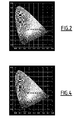
FIGURE 2 . Molecule 1 emits white blue light in the solid state upon excitation at 365 nm with CIE coordinates are (0.28, 0.33). -
FIGURE 3 . (Left) Photos of a powder ofmolecule 2 in absence of UV irradiation and under excitation at 365 nm. (Right) Solid state emission spectrum of 2 obtained as described, under excitation at 365 nm. -
FIGURE 4 .Molecule 2 emits white blue light in the solid state upon excitation at 365 nm, with CIE coordinates are (0.28, 0.35). -
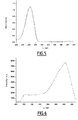
FIGURE 5 . Absorption spectrum of a solution (1×10⁻⁵ M in methanol) of molecule 3. -
FIGURE 6 . Solid state excitation spectrum of molecule 3 powder obtained as described. -
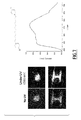
FIGURE 7 . (Left) Photos of a powder of molecule 3 in absence of UV irradiation and under excitation at 365 nm. (Right) Solid state emission spectrum of 3 powder obtained as described, under excitation at λex = 365 nm. Single molecule 3 can emit almost pure white light. The same emission spectrum was obtained for powders of 3 by evaporation of solutions in water or in organic solvents (chloroform, ethanol, acetonitrile). -
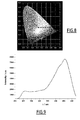
FIGURE 8 . The CIE coordinates of molecule 3 are (0.33, 0.37). -
FIGURE 9 . Solid state excitation spectrum of molecule 4 powder obtained as described, under excitation at λex = 365 nm. -
FIGURE 10 . Solid state emission spectrum of molecule 4 powder obtained as described, λex = 365 nm. -
FIGURE 11 . CIE coordinates of molecule 4. The single molecule emits pure white light upon 365 nm excitation. -
FIGURE 12 CIE coordinates of points A (0.25, 0.22); B (0.33, 0.22); C (0.40, 0.38); D (0.35, 0.38); E (0.25, 0.30) defining a simple pentagon. - The following examples illustrate the invention without any limitation. Starting materials are known or commercially available, or may be prepared by known methods. Percentages are expressed by weight, unless specified to the contrary.
-

-

Compound 2 was obtained by a similar procedure as for 3 except for using 1,8-dibromooctane instead of 1,12-dibromododecane. After the reaction was complete, the solution was filtered and the filtrate was evaporated under vacuum to give a yellow solid that was washed with acetone and recrystallized from a solution in hot acetonitrile on cooling. The target molecule was obtained in 99.9 % purity (as judged by 1H-NMR integration) as a yellowish solid. Yield: 83%. Melting point: 90.5°C. 1H-NMR (400 MHz, D2O, 25 °C):δ 1.16 (s, 8H, He), δ 1.69 (m, 4H, Hd), 3.93 (t, 4H, Hc), 6.49 (d, 4H, Hb), 7.75 (d, 4H, Ha). 13C-NMR (100 MHz, D2O, 25 °C):δ = 220.8, 211.8, 205.3, 190.3, 183.3, 182.8, 182.1. MS (ESI+, H2O, m/z): calcd for [M + H]+, 300.39; found, 300.81. -

- The crystal structure of the unsymmetrical isomer 3c of compound 3 was determined. It confirmed the structure.
- The lifetime measurement reveals a monoexponential decay feature with τ = 2.3 ns. Such lifetimes are characteristic of ligand-centered (LC) emissions, may originating from π-π* transition as well as intra-ligand charge-transfer (ILCT) due to the keto form of the molecule. The quantum yield of 3 was measured for 22% at room temperature.
-

- The lifetime measurement reveals a monoexponential decay feature with τ = 2.5 ns. Such lifetimes are characteristic of ligand-centered (LC) emissions, may originating from π-π* transition as well as intra-ligand charge-transfer (ILCT) due to the keto form of the molecule. The quantum yield of 4 was measured for 23% at room temperature.
Claims (13)
- Compound of formula (I)
 - R1 and R2 represent each independently an oxygen atom or
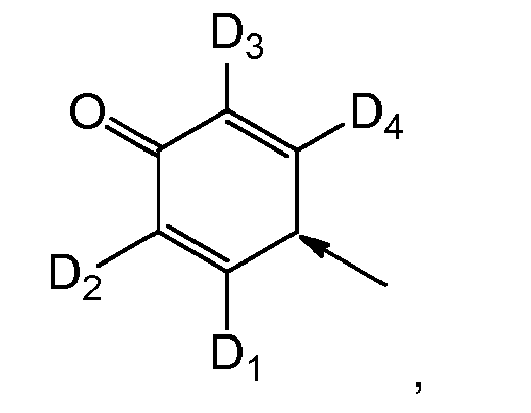 - ↗ indicating the point of attachment of the covalent double bond,- A1, A2, A3, A4, B1, B2, B3, B4, D1, D2, D3, and D4 are identical or different, and represent each independently a hydrogen atom, a halogen atom (F, Cl, Br, or I), an alkyl, O-alkyl or aromatic group, A1-A2, A3-A4, B1-B2, B3-B4, D1-D2, and D3-D4 may each represent independently an aromatic ring.
 - Compound according to claim 1, wherein said alkyl chain or group is selected from the group consisting of methane, ethane, propane, butane, pentane, hexane, octane, nonane, decane, dodecane, tridecane, tetradecane, pentadecane, hexadecane, heptadecane, octadecane, nonadecane, eicosane, isopropane, tert-butyl, 2-ethylhexane, 2-methyl butane, 2-methylpentane, 1-methylpentane, 3-methylheptane, benzene, naphthalene, anthracene, perylene, diphenyl, bipyridine and terpyridine.
- Compound according to claim 1 or 2, wherein said alkyl chain or group contains one or two heteroatoms, said heteroatom being independently selected from O, N, and S.
- Compound according to any one of claims 1 to 3, wherein at least one carbon atom of said alkyl chain or group is substituted by one of the following atoms or groups:- F, Cl, Br, or I,- C1-C30 alkyl, C3-C7 cycloalkyl, C6-C10 aryl, heteroaryl, aralkyl, heteroarylalkyl, wherein said alkyl or aryl is optionally substituted by 1 to 3 groups R20, wherein R20 is one of the following:- OR22, NR23R24, NHOH, NO2, CN, CF3, C1-C6 alkyl, C2-C6 alcenyl, C2-C6 alcynyl, C6-C10 aryl, aralkyl, =O, C(=O)R22, CO2R22, OC(=O)R22, C(=O)NR23R24, OC(=O)NR23R24, NR21C(=S)R22 or S(O)yR22 ;- R22 is, at each occurrence, independently selected among H, C1-C30 alkyl, preferably C5-C20 alkyl, C6-C10 aryl and aralkyl ;- R23 and R24 are, at each occurrence, independently selected among H, C1-C30 alkyl, preferably C5-C20 alkyl, C6-C10 aryl, aralkyl, or R23 and R24 form together a heterocyclic group having from 3 to 7 atoms.
- Compound according to any one of claims 1 to 4, wherein said alkyl chain Y is interrupted by an aromatic group and is represented by:

- Compound according to any one of claims 1 to 5, wherein said aromatic group is a phenyl group, optionally substituted.
- Compound according to any one of claims 1 to 6, wherein

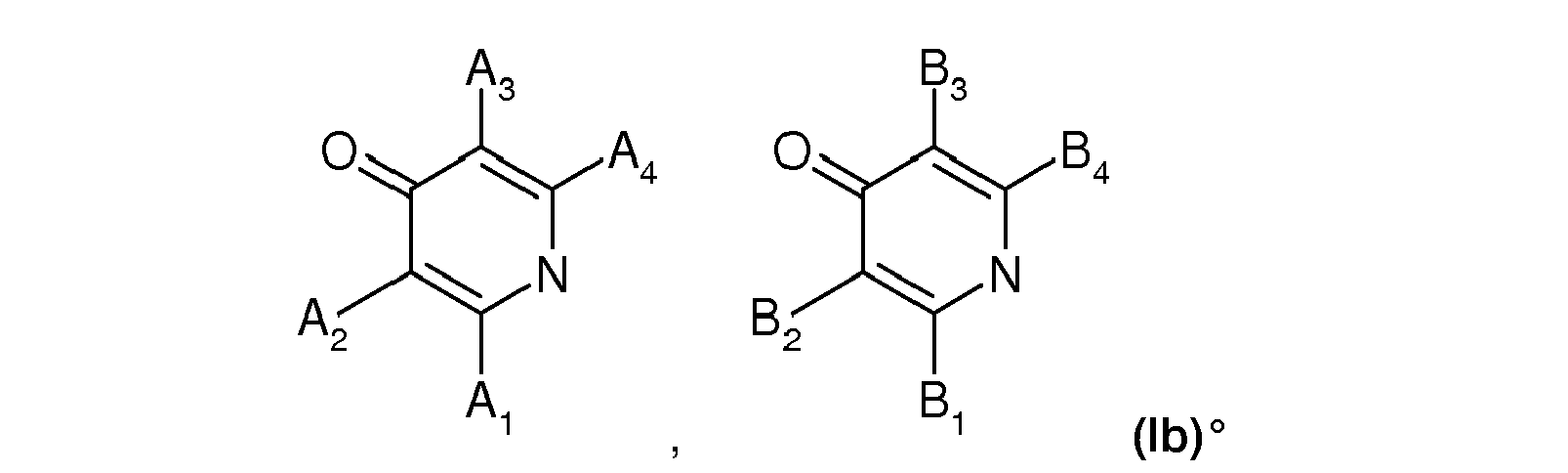
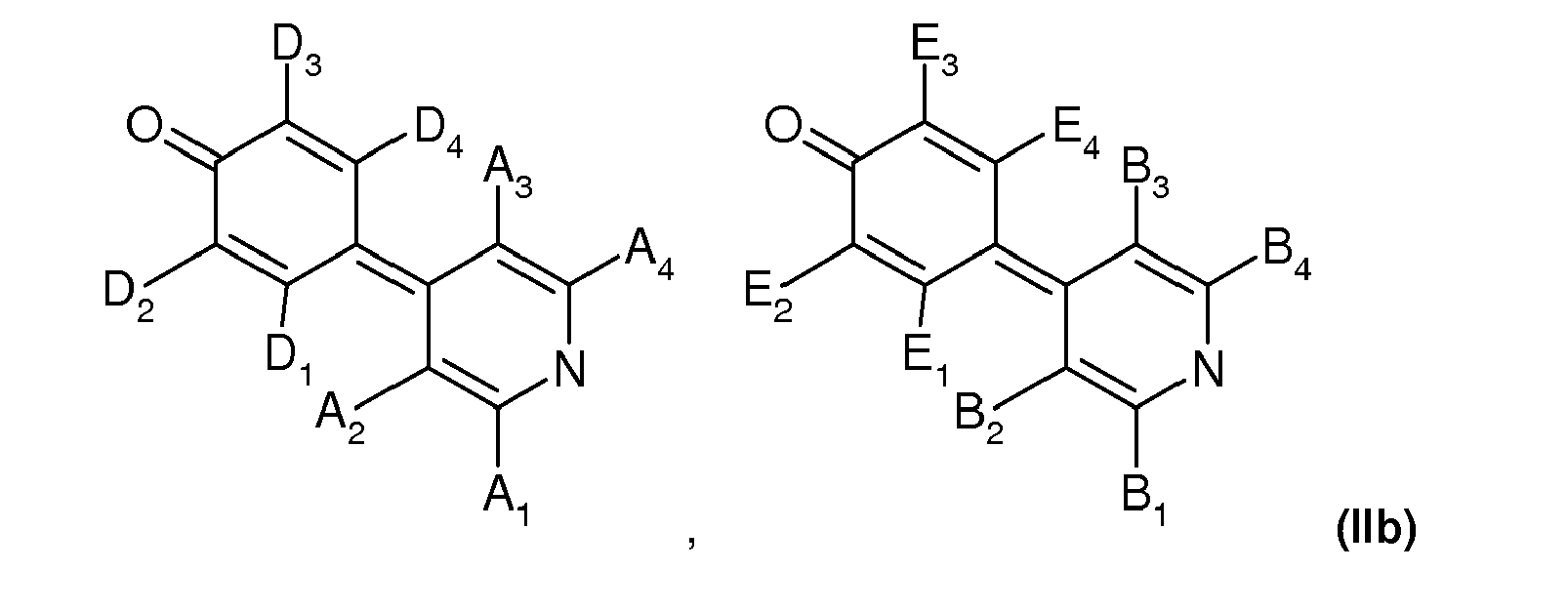

- Compound according to any one of claims 1 to 7, wherein said compound is represented by one of the following formulae:


- Compound according to any one of claims 1 to 8, wherein said compound is represented by the following formula:

- A solid material comprising or consisting of at least one compound according to any one of claims 1 to 9.
- A light emiting device comprising at least one compound according to any one of claims 1 to 9, or of a solid phase according to claim 10.
- Use of at least one compound according to any one of claims 1 to 9, or of a solid phase according to claim 10, for emiting white light.
- A method for preparing a compound according to any one of claims 1 to 9, wherein said method comprises the following steps :


R1, R2, Y, A1, A2, A3, A4, B1, B2, B3, and B4 having the meaning according to any one of claims 1 to 9.
Priority Applications (1)
| Application Number | Priority Date | Filing Date | Title |
|---|---|---|---|
| EP13306191.1A EP2842943A1 (en) | 2013-08-30 | 2013-08-30 | New molecules presenting white light emission properties |
Applications Claiming Priority (1)
| Application Number | Priority Date | Filing Date | Title |
|---|---|---|---|
| EP13306191.1A EP2842943A1 (en) | 2013-08-30 | 2013-08-30 | New molecules presenting white light emission properties |
Publications (1)
| Publication Number | Publication Date |
|---|---|
| EP2842943A1 true EP2842943A1 (en) | 2015-03-04 |
Family
ID=49162098
Family Applications (1)
| Application Number | Title | Priority Date | Filing Date |
|---|---|---|---|
| EP13306191.1A Withdrawn EP2842943A1 (en) | 2013-08-30 | 2013-08-30 | New molecules presenting white light emission properties |
Country Status (1)
| Country | Link |
|---|---|
| EP (1) | EP2842943A1 (en) |
Citations (3)
| Publication number | Priority date | Publication date | Assignee | Title |
|---|---|---|---|---|
| DE1028997B (en) * | 1952-07-31 | 1958-04-30 | Bayer Ag | Process for the preparation of halogenated pyridone derivatives of aliphatic carboxylic acids |
| WO2005080527A1 (en) * | 2004-02-17 | 2005-09-01 | Eastman Kodak Company | Anthracene derivative host having ranges of dopants |
| US20100270915A1 (en) * | 2009-04-23 | 2010-10-28 | National Tsing Hua University | Beta-Diketone Ancillary Ligands and Their Metal Complexes Used in Organic Optoelectronic Devices |
-
2013
- 2013-08-30 EP EP13306191.1A patent/EP2842943A1/en not_active Withdrawn
Patent Citations (3)
| Publication number | Priority date | Publication date | Assignee | Title |
|---|---|---|---|---|
| DE1028997B (en) * | 1952-07-31 | 1958-04-30 | Bayer Ag | Process for the preparation of halogenated pyridone derivatives of aliphatic carboxylic acids |
| WO2005080527A1 (en) * | 2004-02-17 | 2005-09-01 | Eastman Kodak Company | Anthracene derivative host having ranges of dopants |
| US20100270915A1 (en) * | 2009-04-23 | 2010-10-28 | National Tsing Hua University | Beta-Diketone Ancillary Ligands and Their Metal Complexes Used in Organic Optoelectronic Devices |
Non-Patent Citations (12)
| Title |
|---|
| ACHESON R M ET AL: "THE SYNTHESIS OF LINKED ACRIDINES AS INTERCALATING AND ANTITUMOUR AGENTS", JOURNAL OF CHEMICAL RESEARCH, SCIENCE REVIEWS LTD, GB, vol. 1, no. 1, 1 January 1983 (1983-01-01), pages 2/03, XP009015165, ISSN: 0308-2342 * |
| BRAT ALI CHAFFIA ET AL: "Alkylation et acétylation d'acridanones.Cas de la méthoxy-2 acridanone-9", BULLETIN DE LA SOCIETE CHIMIQUE DE FRANCE, XX, XX, vol. 7-8, no. 7/08, 1 January 1980 (1980-01-01), pages II - 345, XP002103905 * |
| CRISP G T ET AL: "Palladium-Catalysed Attachment of Labels with Acetylenic Linker Arms to Biological Molecules", TETRAHEDRON, ELSEVIER SCIENCE PUBLISHERS, AMSTERDAM, NL, vol. 53, no. 4, 27 January 1997 (1997-01-27), pages 1523 - 1544, XP004105238, ISSN: 0040-4020, DOI: 10.1016/S0040-4020(96)01085-X * |
| DAVID M.L GOODGAME ET AL: "Sheet and chain polymeric transition metal complexes formed by N,N'-o-phenylenedimethylenebis(pyridin-4-one)", INORGANICA CHIMICA ACTA, vol. 357, no. 4, 1 March 2004 (2004-03-01), pages 946 - 952, XP055086244, ISSN: 0020-1693, DOI: 10.1016/j.ica.2003.09.025 * |
| GALANAKIS D ET AL: "Synthesis and Quantitative Structure-Activity. Relationship of Dequalinium Analogs as K+ Channel Blockers: Investigations on the Role of the Substituent at Position 4 of the Quinoline Ring", JOURNAL OF MEDICINAL CHEMISTRY, AMERICAN CHEMICAL SOCIETY, US, vol. 38, no. 18, 1 January 1995 (1995-01-01), pages 3536 - 3546, XP002999750, ISSN: 0022-2623, DOI: 10.1021/JM00018A013 * |
| JEONG C H ET AL: "High efficiency white organic light-emitting diodes from one emissive layer", JAPANESE JOURNAL OF APPLIED PHYSICS, THE JAPAN SOCIETY OF APPLIED PHYSICS, JAPAN SOCIETY OF APPLIED PHYSICS, TOKYO; JP, vol. 46, no. 2, 1 February 2007 (2007-02-01), pages 806 - 809, XP001517902, ISSN: 0021-4922, DOI: 10.1143/JJAP.46.806 * |
| JULIE K. HORTON ET AL: "Characterization of a Novel Bisacridone and Comparison with PSC 833 as a Potent and Poorly Reversible Modulator of P-Glycoprotein", MOLECULAR PHARMACOLOGY, 1 December 1997 (1997-12-01), UNITED STATES, pages 948, XP055086245, Retrieved from the Internet <URL:http://molpharm.aspetjournals.org/content/52/6/948.abstract> * |
| LINGHAO XIONG ET AL: "High color rendering index and chromatic-stable white organic light emitting diodes incorporating excimer and fluorescence emission", ORGANIC ELECTRONICS, vol. 14, no. 1, 1 January 2013 (2013-01-01), pages 32 - 37, XP055086379, ISSN: 1566-1199, DOI: 10.1016/j.orgel.2012.10.018 * |
| MARIA G. MENDOZA-FERRI ET AL: "Modifying the structure of dinuclear ruthenium complexes with antitumor activity", APPLIED ORGANOMETALLIC CHEMISTRY, vol. 22, no. 6, 1 June 2008 (2008-06-01), pages 326 - 332, XP055086378, ISSN: 0268-2605, DOI: 10.1002/aoc.1394 * |
| R. I. ELLIN ET AL: "Kinetics of deterioration of trimethylene bis-(4-formylpyridinium bromide) dioxime in dilute aqueous solutions", JOURNAL OF PHARMACEUTICAL SCIENCES, vol. 55, no. 11, 1 November 1966 (1966-11-01), pages 1263 - 1267, XP055086247, ISSN: 0022-3549, DOI: 10.1002/jps.2600551119 * |
| UEDA M ET AL: "Leaf-opening substance of Mimosa pudica L.; chemical studies on the other leaf movement of mimosa", TETRAHEDRON LETTERS, PERGAMON, GB, vol. 40, no. 2, 8 January 1999 (1999-01-08), pages 353 - 356, XP004152550, ISSN: 0040-4039, DOI: 10.1016/S0040-4039(98)02349-1 * |
| VIKTOR IAROSHENKO ET AL: "Efficient [5+1] Synthesis of 4-Quinolones by Domino Amination and Conjugate Addition Reactions of 1-(2-Fluorophenyl)prop-2-yn-1-ones with Amines", SYNTHESIS, vol. 45, no. 02, 7 December 2012 (2012-12-07), pages 205 - 218, XP055086377, ISSN: 0039-7881, DOI: 10.1055/s-0032-1316826 * |
Similar Documents
| Publication | Publication Date | Title |
|---|---|---|
| Zhang et al. | Integrating TADF luminogens with AIE characteristics using a novel acridine–carbazole hybrid as donor for high-performance and low efficiency roll-off OLEDs | |
| Wang et al. | A periphery cladding strategy to improve the performance of narrowband emitters, achieving deep-blue OLEDs with CIEy< 0.08 and external quantum efficiency approaching 20% | |
| Song et al. | Asymmetric thermally activated delayed fluorescence (TADF) emitters with 5, 9-dioxa-13 b-boranaphtho [3, 2, 1-de] anthracene (OBA) as the acceptor and highly efficient blue-emitting OLEDs | |
| JP6916769B2 (en) | Platinum (II) emitter for OLED applications | |
| JP6493220B2 (en) | Luminescent material, organic light emitting device and compound | |
| Huang et al. | Thermally activated delayed fluorescence materials based on 3, 6-di-tert-butyl-9-((phenylsulfonyl) phenyl)-9H-carbazoles | |
| Wang et al. | The selective regulation of borylation site based on one-shot electrophilic C–H borylation reaction, achieving highly efficient narrowband organic light-emitting diodes | |
| Khan et al. | White hyperelectrofluorescence from solution-processable OLEDs based on phenothiazine substituted tetraphenylethylene derivatives | |
| Zhao et al. | Thermally activated delayed fluorescence material with aggregation-induced emission properties for highly efficient organic light-emitting diodes | |
| JP2011213643A (en) | Copper complex compound and organic luminescent element using the same | |
| TW201509882A (en) | Luminescent materials, organic light-emitting elements and compounds | |
| JPWO2014136972A1 (en) | Sensor elements for detecting supramolecular complexes, light emitters, and organic compounds | |
| Shen et al. | Quinoline-based TADF emitters exhibiting aggregation-induced emission for efficient non-doped organic light-emitting diodes | |
| Feng et al. | A 9-fluorenyl substitution strategy for aromatic-imide-based TADF emitters towards efficient and stable sky blue OLEDs with nearly 30% external quantum efficiency | |
| Sk et al. | A deep blue thermally activated delayed fluorescence emitter: balance between charge transfer and color purity | |
| Di et al. | Achieving high-performance narrowband blue MR-TADF emitters by suppressing isomer formation and extending π-conjugate skeletons | |
| JP7709235B2 (en) | Organic Light Emitting Devices | |
| Guo et al. | Phenothiazine dioxide-containing derivatives as efficient hosts for blue, green and yellow thermally activated delayed fluorescence OLEDs | |
| JP2018035129A (en) | Pyrimidine derivative, light-emitting material comprising the same, and organic EL device using the same | |
| CN115286649A (en) | Aryl boron nitrogen compound with narrow band emission and preparation and application thereof | |
| Feng et al. | Investigation of molecular arrangements and solid-state fluorescence properties of solvates and cocrystals of 1-acetyl-3-phenyl-5-(9-anthryl)-2-pyrazoline | |
| WO2001040401A1 (en) | Novel fluorescent carbazole derivative | |
| JP2019509621A (en) | Platinum complexes for blue OLED applications | |
| Mattiello et al. | Enhancement of fluorescence and photostability of luminescent radicals by quadruple addition of phenyl groups | |
| Mei et al. | Thermally activated delayed fluorescence materials based on acridin-9 (10H)-one acceptor for organic light-emitting diodes |
Legal Events
| Date | Code | Title | Description |
|---|---|---|---|
| 17P | Request for examination filed |
Effective date: 20130830 |
|
| AK | Designated contracting states |
Kind code of ref document: A1 Designated state(s): AL AT BE BG CH CY CZ DE DK EE ES FI FR GB GR HR HU IE IS IT LI LT LU LV MC MK MT NL NO PL PT RO RS SE SI SK SM TR |
|
| AX | Request for extension of the european patent |
Extension state: BA ME |
|
| PUAI | Public reference made under article 153(3) epc to a published international application that has entered the european phase |
Free format text: ORIGINAL CODE: 0009012 |
|
| STAA | Information on the status of an ep patent application or granted ep patent |
Free format text: STATUS: THE APPLICATION IS DEEMED TO BE WITHDRAWN |
|
| 18D | Application deemed to be withdrawn |
Effective date: 20150905 |