EP2842115B1 - Verfahren zur kommunikation in einer domotikanlage - Google Patents
Verfahren zur kommunikation in einer domotikanlage Download PDFInfo
- Publication number
- EP2842115B1 EP2842115B1 EP13719827.1A EP13719827A EP2842115B1 EP 2842115 B1 EP2842115 B1 EP 2842115B1 EP 13719827 A EP13719827 A EP 13719827A EP 2842115 B1 EP2842115 B1 EP 2842115B1
- Authority
- EP
- European Patent Office
- Prior art keywords
- message
- msg
- electrical appliance
- control element
- analysis device
- Prior art date
- Legal status (The legal status is an assumption and is not a legal conclusion. Google has not performed a legal analysis and makes no representation as to the accuracy of the status listed.)
- Not-in-force
Links
Images


Classifications
-
- G—PHYSICS
- G08—SIGNALLING
- G08C—TRANSMISSION SYSTEMS FOR MEASURED VALUES, CONTROL OR SIMILAR SIGNALS
- G08C17/00—Arrangements for transmitting signals characterised by the use of a wireless electrical link
- G08C17/02—Arrangements for transmitting signals characterised by the use of a wireless electrical link using a radio link
-
- H—ELECTRICITY
- H04—ELECTRIC COMMUNICATION TECHNIQUE
- H04L—TRANSMISSION OF DIGITAL INFORMATION, e.g. TELEGRAPHIC COMMUNICATION
- H04L12/00—Data switching networks
- H04L12/28—Data switching networks characterised by path configuration, e.g. LAN [Local Area Networks] or WAN [Wide Area Networks]
- H04L12/2803—Home automation networks
- H04L12/2816—Controlling appliance services of a home automation network by calling their functionalities
- H04L12/282—Controlling appliance services of a home automation network by calling their functionalities based on user interaction within the home
-
- H—ELECTRICITY
- H04—ELECTRIC COMMUNICATION TECHNIQUE
- H04L—TRANSMISSION OF DIGITAL INFORMATION, e.g. TELEGRAPHIC COMMUNICATION
- H04L12/00—Data switching networks
- H04L12/28—Data switching networks characterised by path configuration, e.g. LAN [Local Area Networks] or WAN [Wide Area Networks]
- H04L12/2803—Home automation networks
- H04L2012/2847—Home automation networks characterised by the type of home appliance used
- H04L2012/285—Generic home appliances, e.g. refrigerators
Definitions
- the invention relates to the field of building automation systems comprising building automation equipment, such as electrical actuators for driving mobile elements in a building, such as movable closing or sun protection elements, or driving lighting equipment, heating. and ventilation.
- building automation equipment such as electrical actuators for driving mobile elements in a building, such as movable closing or sun protection elements, or driving lighting equipment, heating. and ventilation.
- the movable elements can be indoor blinds, for example venetian blinds with adjustable blades, or roll-up blinds, or external screens, steerable rigid panels, etc.
- actuators control the movement of these moving elements; at the level of lighting, heating and ventilation equipment, actuators control the state of this equipment.
- the actuators are managed individually or centrally, by group, at the level of the room, the floor, the facade to which they belong or simply at the level of the building. This management is performed automatically by one or more control or control elements, which also collect a certain amount of information from various sensors positioned inside and outside the building (presence sensors, temperature sensors). , brightness, clocks, etc.).
- Each equipment or actuator can also be controlled normally by a user, individually or in a group, via a local control unit.
- control is performed by unidirectional transmission of orders from the local control unit or from the control element to the actuator or the actuators to be controlled.
- this one-way transmission may be sufficient; but in the case of automatic sending, there is no way back to the transmitter to assess whether the messages sent were correctly received or executed by their recipients.
- An alternative would be to automatically repeat the messages sent automatically, but this solution would lead to network congestion and operation in an even more disturbed environment; this solution would not provide information on a faulty receipt and therefore a non-execution.
- Another alternative would be the use of a bidirectional communication including a return path to the transmitter, as described in the publication WO2005 / 041467 but this solution would result in higher costs and a more complex installation.
- the object of the invention is to provide an installation overcoming the disadvantages mentioned and improving the known installations of the prior art.
- the invention proposes a simple and economical solution to evaluate whether a given message has been correctly received by an element for which it is intended.
- the term actuator used in this application includes in particular the electronic or electromechanical part allowing the control of the movement of a movable element or the state control of a load, for example of a lamp, of a heating installation or ventilation, but also the electronic means of dialogue with the various other equipment of the installation, in particular the emission devices and / or receiving communication frames exchanged between the various components of the installation according to known means.
- electrical equipment of the building used in this application comprises the actuators as defined above, as well as means for interfacing and controlling the group of actuators, and any device having means for dialogue with other devices or with other ordering equipment in the network.
- a communication method according to the invention is defined by claim 1.
- a communication method according to the invention is defined by claim 7.
- a communication method according to the invention is defined by claim 15.
- An analysis device is defined by claim 17.
- a control element according to the invention is defined by claim 18.
- control element 19 An embodiment of a control element is defined by claim 19.
- An installation according to the invention is defined by claim 20.
- An embodiment of a control installation is defined by claim 21.
- the invention also relates to a recording medium readable by a processor on which a computer program is recorded comprising instructions for the execution of the steps of one of the methods defined above, in particular of a method implemented by the analysis device or a method implemented by the control element.
- the invention also relates to a computer program comprising instructions for executing the steps of one of the methods defined above, in particular of a method implemented by the analysis device or of a method implemented. by the control element.
- the various devices installed in the network communicate with each other by means of a first means or wireless communication medium (radio in particular) or wired (wired buses, power lines).
- This first RTS communication medium is represented in continuous line on the figure 1 .
- the automation of the building installation, in particular movable elements and comfort via their actuators 12 is based on the presence of a control element 14, local interface and control means 11 and various sensors 13 (FIG. presence, brightness, temperature, etc.).
- the installation may further comprise local control units 19 for transmitting messages to the electrical equipment 11, 12, 13 individually or in groups. These local control units can use the same RTS communication media.
- control element 14 Based on this first communication medium RTS, the control element 14 sends messages, including commands, to one or more local interface and control means 11, for the purpose of driving the actuators 12.
- control element 14 may be of the multichannel type, that is to say that it controls, controls or manages several electrical equipment 11, 12, 13.
- Sending commands from the control element 14 to the electrical equipment 11, 12, 13 requires at least one unidirectional transmission. This restriction may be due to cost constraints, simplicity of installation or hardware and software versions of the equipment involved.
- Such an operation may be sufficient if the environment of the installation allows transmission without disturbances.
- a sent message can be considered as correctly received by its recipient.
- a security order may be repeated.
- the first communication medium RTS and the control element 14 could allow two-way communication, but restrictions due to the electrical equipment 11, 12, 13 impose a limitation on unidirectional communication in the direction from the control element. 14 to the electrical equipment 11, 12.
- the invention proposes a simple and economical solution for evaluating the conditions of reception of a message by the electrical equipment recipients.
- the configuration of the INST installation is usually carried out at commissioning, by wiring and / or programming. If during installation the electrical equipment is configured for a Unidirectional transmission, a modification for the implementation of a bidirectional transmission can be expensive, because of the difficult access to the electrical equipment.
- the first RTS communication medium is a one-way wireless communication medium. This is the case of the many existing networks, to which the invention brings a possibility of simple and economical evolution.
- the installation further comprises an analysis device 18 comprising reception means able to receive the messages transiting on the first communication medium RTS intended for at least a part of the electrical equipment 11, 12, 13, as well as transmission means capable of transmitting to the control element 14 information relating to the reception by the analysis device 18 of messages destined for at least part of the electrical equipment 11, 12, 13.
- an analysis device 18 comprising reception means able to receive the messages transiting on the first communication medium RTS intended for at least a part of the electrical equipment 11, 12, 13, as well as transmission means capable of transmitting to the control element 14 information relating to the reception by the analysis device 18 of messages destined for at least part of the electrical equipment 11, 12, 13.
- the analysis unit 18 can estimate the probability of good reception of the messages by their recipients based on its own conditions of reception of these same messages. Then the analysis device 18 sends to the control element 14 a message reception report to the electrical equipment 11, 12, 13, allowing the latter to estimate whether retransmission is necessary.
- the estimated probability is for example binary and takes a high value when the analysis device could recognize or understand the message and takes a low value in the opposite case.
- the reissue is carried out in case of low value of the probability. Reissue is not performed in case of high value of the probability.
- the analysis device 18 may comprise human-machine interface means enabling it to inform a user of the good or bad conditions of reception of the messages.
- Such means may be simple light-emitting diodes, for example signaling in green light good reception and in red a bad reception, or screens allowing the display of more detailed information concerning the messages received by the analysis device 18.
- the analysis device 18 being able to receive the messages sent via the first communication medium RTS, it can receive the messages from the local control units 19, and if these messages are transmitted over the first RTS communication medium, retransmit them to the control element 14.
- control element 14 has information on the sequence of commands sent manually by a user in addition to the commands generated automatically by the control element 14, which allows him to complete his knowledge of the network situation. It can thus adapt the scenarios for the automatic control of the electrical equipment 11, 12, 13 at the local controls and to optimize the conditions of comfort and / or energy saving.
- the control element 14, in particular of the multichannel type is intended to transmit messages to the electrical equipment 11, 12, 13 individually or in groups. Indeed, since the control element has addressing capabilities, the management of the actuators is more flexible and more precise, depending on the local conditions specific to an actuator or a group of actuators, for example actuators driving a group. blinds with the same solar exposure, or actuators located in offices with the same schedules and can use the same scenarios.
- the sensors 13 can supply information either directly to the actuators 12, to the interface and control means 11, or to the element 14. In the case where the information from the sensors 13 on the first communication medium RTS to be supplied to the electrical equipment 11, 12, this information can be received by the analysis device 18 and then retransmitted to the control element 14. In this way, the control element 14 can optimize scenarios according to local conditions without any intervention on the site.
- the means for transmitting the reception reports by the analysis device 18 to the control element 14 may use a second means or communication medium 20 that is distinct or identical to the first communication medium RTS.
- the control element 14 comprises all the hardware and / or software elements making it possible to implement the communication method that is the subject of the invention.
- it comprises a reception element from the analysis device 18 of at least one INF information relating to the reception by the analysis device 18 of at least one part of the MSG message transiting on the first communication medium RTS, intended for at least one electrical equipment 11, 12.
- the analysis device 18 provided with receiving means adapted to the first communication medium RTS, and placed under receiving conditions similar to the receiving conditions of the electrical equipment 11, 12, 13 recipients of messages issued by the control element 14 , will undergo the same possible disturbances.
- Verification of the integrity of the received messages allows the analysis device 18 to determine whether the message it receives is understandable and therefore to estimate with a high probability whether the respective messages have been well received by the electrical equipment (s) 11, 12, 13, recipients of these messages.
- the analysis device 18 sends the result of this estimate to the control element 14 using the second communication medium 20.
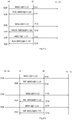
- a first message MSG1 @ 11,12 sent to one or more electrical equipment 11, 12 is received correctly by the device Analysis 18; then the analysis device 18 sends an ACK reception report message (MSG1 @ 11,12) indicating correct reception.
- the control element 14 then proceeds to issue the next message, MSG2 @ 11,12. Since this message is not received correctly by the analysis device 18, the NACK reception report (MSG2 @ 11,12) indicates a faulty reception. In this case or in the case of absence of a reception report within a predetermined time after transmission, the control element 14 performs a repetition of the message MSG2 @ 11,12.
- the analysis of the conditions of reception by the analysis device 18 also makes it possible to provide explanations relating to the poor reception either at the level of the analysis device 18 or at the level of the control element 14.
- the return of User information also helps to define the problems encountered.
- the installation has a new feature, allowing feedback on the emission made by the control element 14 to electrical equipment 11, 12, one-way.
- control element 14 can determine whether a repetition of messages is necessary or not, and thus ensure reliable automatic operation.
- the analysis device 18 receives at least a portion of a message MSG transiting on the first communication medium RTS, to at least a portion of the electrical equipment 11, 12; then, during a second step E12, the analysis device 18 transmits to the control element 14 INF information relating to the reception of the at least one MSG message part for at least a part of the message electrical equipment 11, 12.
- the analysis device can analyze, in a step E15, the conditions for receiving the message MSG. Then, it can display, during a step E15, the result of this analysis.
- This visual display or emission can use a human-machine interface, for example a screen allowing the display of detailed information concerning the result of the analysis, or a light-emitting diode. indicating by a green color a correct reception and by a red color a faulty reception.
- control element 14 transmits at least one MSG message, via the first communication medium RTS, to at least a portion of the electrical equipment 11, 12.
- control element 14 receives from the analysis device 18 INF information relating to the reception by the analysis device 18 of the MSG message.
- this INF information may be the result of an evaluation performed by the analysis device 18 during the previously described step E11.
- the analysis device 18 can send a reception report or acknowledgment message.
- the acknowledgment message ACK is positive, if in step E11 the analysis device 18 estimates that there is a high probability of correct reception of the message MSG by the electrical equipment 11, 12.
- the acknowledgment message NACK is negative, if in step E11 the analysis device 18 estimates that there is a low probability of correct reception of the message MSG by the electrical equipment 11, 12.
- the control element 14 determines during a step E24 by reading the INF information if the reception of the MSG message is defective.
- the INF information may consist of all or part of the MSG message, as received by the analysis device 18.
- the control device 14 has both the MSG message as issued during of the transmission step E20 and at least a part of the MSG message as received by the analysis device 18. By comparing this information, the control device 14 can estimate during the determination step E24 whether receipt of the MSG message by the electrical equipment 11, 12 may be considered defective.
- the control element re-transmits the MSG message to at least a portion of the electrical equipment 12, 11.
- control element 14 can display, during a step E25, the result of the analysis carried out in the step E24.
- This visual display or emission can use a human-machine interface, for example a screen enabling the detailed information concerning the result of the analysis to be displayed, or a light-emitting diode indicating by a green color a correct reception and with a red color a reception defective.
Landscapes
- Engineering & Computer Science (AREA)
- Computer Networks & Wireless Communication (AREA)
- Human Computer Interaction (AREA)
- Automation & Control Theory (AREA)
- Signal Processing (AREA)
- Physics & Mathematics (AREA)
- General Physics & Mathematics (AREA)
- Selective Calling Equipment (AREA)
Claims (17)
- Verfahren zur Kommunikation in einer Anlage (INST), die auf automatisierte Weise Komfort-und/oder Sicherheitsbedingungen in einem Gebäude kontrolliert, umfassend- mindestens eine elektrische Ausrüstung (11, 12) des Gebäudes, die geeignet ist, Nachrichten über ein erstes Kommunikationsmedium (RTS) zu empfangen,- ein Element (14) zur Kontrolle der mindestens einen elektrischen Ausrüstung (11, 12), und- eine Analysevorrichtung (18),wobei das Verfahren von der Analysevorrichtung (18) eingesetzt wird und dadurch gekennzeichnet ist, dass die Kommunikation zwischen dem Kontrollelement (14) und der mindestens einen elektrischen Ausrüstung (11, 12) unidirektional und in die Richtung von dem Kontrollelement (14) zu der mindestens einen elektrischen Ausrüstung (11, 12) erfolgt,
und dass es umfasst- einen Schritt (E10) des Empfangs mindestens eines Teils einer Nachricht (MSG), der auf dem ersten Kommunikationsmedium (RTS) in Richtung der mindestens einen elektrischen Ausrüstung (11, 12) läuft; und- einen Schritt (E12) der Übertragung an das Kontrollelement (14) mindestens einer Information (INF) zum Empfang des mindestens einen Nachrichtenteils (MSG) durch die Analysevorrichtung (18). - Kommunikationsverfahren nach Anspruch 1, dadurch gekennzeichnet, dass der Übertragungsschritt (E12) darin besteht, zu dem Kontrollelement (14) den mindestens einen Nachrichtenteil (MSG), wie von der Analysevorrichtung (18) empfangen, zu senden.
- Kommunikationsverfahren nach Anspruch 1, dadurch gekennzeichnet, dass- es ferner einen Schritt (E11)- der Analyse der Empfangsbedingungen des mindestens einen Nachrichtenteils (MSG) durch die Analysevorrichtung (18), und- der Schätzung einer Wahrscheinlichkeit eines korrekten Empfangs der Nachricht, deren Teil der mindestens eine Nachrichtenteil (MSG) ist, durch die mindestens eine elektrische Ausrüstung (11, 12) umfasst;und dass- der Übertragungsschritt (E12) darin besteht, zu dem Kontrollelement (14) eine Quittierungsnachricht (ACK, NACK) zu senden, die das Resultat des Schrittes (E11) der Schätzung einer Wahrscheinlichkeit eines korrekten Empfangs der mindestens einen Nachricht (MSG) durch die mindestens eine elektrische Ausrüstung (11, 12) enthält.
- Kommunikationsverfahren nach Anspruch 3, dadurch gekennzeichnet, dass- es ferner einen Schritt (E15) der Anzeige eines Wahrscheinlichkeitsniveaus eines korrekten Empfangs der mindestens einen Nachricht (MSG) durch die mindestens eine elektrische Ausrüstung (11, 12) über eine Mensch-Maschine-Schnittstelle umfasst.
- Kommunikationsverfahren nach einem der vorhergehenden Ansprüche, dadurch gekennzeichnet, dass der Übertragungsschritt (E12) mit Hilfe eines zweiten Kommunikationsmediums (20), das sich von dem ersten Kommunikationsmedium (RTS) unterscheidet, durchgeführt wird, und/oder dass der Übertragungsschritt (E12) vor Ablauf einer vorbestimmten Verzögerung, die durch das Senden der Nachricht (MSG) ausgelöst wird, durchgeführt wird.
- Kommunikationsverfahren in einer Anlage (INST), die auf automatisierte Weise Komfort- und/oder Sicherheitsbedingungen in einem Gebäude kontrolliert, umfassend- mindestens eine elektrische Ausrüstung (11, 12) des Gebäudes, die geeignet ist, Nachrichten über ein erstes Kommunikationsmedium (RTS) zu empfangen,- ein Element (14) zur Kontrolle der mindestens einen elektrischen Ausrüstung (11, 12), und- eine Analysevorrichtung (18),wobei das Verfahren von der Kontrollvorrichtung (14) eingesetzt wird, wobei die Kommunikation zwischen dem Kontrollelement (14) und der mindestens einen elektrischen Ausrüstung (11, 12) unidirektional und in die Richtung von dem Kontrollelement (14) zu der mindestens einen elektrischen Ausrüstung (11, 12) erfolgt, wobei das Verfahren umfasst- einen Schritt (E22) des Empfangs von der Analysevorrichtung (18) mindestens einer Information (INF) zum Empfang des mindestens einen Nachrichtenteils (MSG), der auf dem ersten Kommunikationsmedium (RTS) in Richtung der mindestens einen elektrischen Ausrüstung (11, 12) läuft.
- Kommunikationsverfahren nach dem vorhergehenden Anspruch, dadurch gekennzeichnet, dass es ferner umfasst- einen Schritt (E20) des Sendens mindestens einer Nachricht (MSG) über das erste Kommunikationsmedium (RTS) in Richtung der mindestens einen elektrischen Ausrüstung (11, 12).
- Kommunikationsverfahren nach dem vorhergehenden Anspruch, dadurch gekennzeichnet, dass es ferner umfasst- einen Schritt (E24) des Erhalts einer Angabe (IND) zum Zustand des Empfangs der Nachricht (MSG) durch die mindestens eine elektrische Ausrüstung (11, 12) in Abhängigkeit von der mindestens einen Information (INF); und- einen Schritt (E26) des Wiedersendens der mindestens einen Nachricht (MSG) in Richtung der mindestens einen elektrischen Ausrüstung (11, 12), wenn die Angabe (IND) einen fehlerhaften Empfang der Nachricht (MSG) anzeigt, oder wenn keine Information (INF) nach Ablauf einer vorbestimmten Verzögerung empfangen wird.
- Kommunikationsverfahren nach dem vorhergehenden Anspruch, dadurch gekennzeichnet, dass der Schritt (E24) des Erhalts der Angabe (IND) einen Vergleich der mindestens einen Information (INF) mit mindestens einem Teil der Nachricht (MSG), wie in dem Sendeschritt (E20) gesandt, umfasst.
- Kommunikationsverfahren nach einem der Ansprüche 6 bis 9, dadurch gekennzeichnet, dass die mindestens eine Information (INF) mindestens einen Teil der Nachricht (MSG), wie von der Analysevorrichtung (18) empfangen, umfasst, und/oder dass der Empfangsschritt (E22) mit Hilfe eines zweiten Kommunikationsmediums (20), das sich vom ersten Kommunikationsmedium (RTS) unterscheidet, durchgeführt wird.
- Kommunikationsverfahren nach einem der Ansprüche 7 bis 10, dadurch gekennzeichnet, dass die mindestens eine Information (INF) eine Quittierungsnachricht (ACK, NACK) umfasst, die eine Schätzung, insbesondere eine von der Analysevorrichtung (18) durchgeführte Schätzung einer Wahrscheinlichkeit eines korrekten Empfangs der mindestens einen Nachricht (MSG) durch die mindestens eine elektrische Ausrüstung (11, 12) enthält, und/oder dass das Verfahren ferner einen Schritt (E25) der Anzeige der Wahrscheinlichkeit eines korrekten Empfangs der mindestens einen Nachricht (MSG) durch die elektrischen Ausrüstungen (11, 12) durch eine Mensch-Maschine-Schnittstelle umfasst.
- Verfahren zur Kommunikation in einer Anlage (INST), die auf automatisierte Weise Komfort-und/oder Sicherheitsbedingungen in einem Gebäude kontrolliert, umfassend- mindestens eine elektrische Ausrüstung (11, 12) des Gebäudes, die geeignet ist, Nachrichten über ein erstes Kommunikationsmedium (RTS) zu empfangen,- ein Element (14) zur Kontrolle der mindestens einen elektrischen Ausrüstung (11, 12), und- eine Analysevorrichtung (18),wobei die Kommunikation zwischen dem Kontrollelement (14) und der mindestens einen elektrischen Ausrüstung (11, 12) unidirektional und in die Richtung von dem Kontrollelement (14) zu der mindestens einen elektrischen Ausrüstung (11, 12) erfolgt,
und wobei das Verfahren umfasst- einen Schritt (E20, E30) des Sendens durch das Kontrollelement (14) oder durch eine lokale Steuereinheit (19) oder durch einen Sensor (13) der Anlage mindestens einer Nachricht (MSG) in Richtung der mindestens einen elektrischen Ausrüstung (11, 12) über das erste Kommunikationsmedium (RTS);- einen Schritt (E10) des Empfang mindestens eines Teils der Nachricht (MSG), die auf dem ersten Kommunikationsmedium (RTS) in Richtung der mindestens einen elektrischen Ausrüstung (11, 12) läuft, durch die Analysevorrichtung (18) ; und- einen Schritt (E12) der Übertragung an das Kontrollelement (14) mindestens einer Information (INF) zum Empfang des mindestens einen Nachrichtenteils (MSG) durch die Analysevorrichtung (18). - Verfahren nach dem vorhergehenden Anspruch, dadurch gekennzeichnet, dass es ferner einen Schritt (E11, E24)- der Analyse des mindestens einen Teils der Nachricht (MSG) und- der Ableitung einer Wahrscheinlichkeit eines korrekten Empfangs durch die elektrischen Ausrüstungen (11, 12) und/oder einer korrekten Interpretation der Nachricht (MSG) umfasst,wobei der Schritt (E11, E24) von der Analysevorrichtung (18) und/oder dem Kontrollelement (14) eingesetzt wird.
- Analysevorrichtung (18), die eingerichtet ist, ein Verfahren nach einem der Ansprüche 1 bis 5 einzusetzen, umfassend ein Empfangselement, das geeignet ist, mindestens einen Teil einer Nachricht (MSG), die auf einem ersten Kommunikationsmedium (RTS) in Richtung mindestens einer elektrischen Ausrüstung (11, 12) läuft, zu empfangen, und ein Übertragungselement, das geeignet ist, an ein Kontrollelement (14) Informationen zum Empfang des mindestens einen Teils einer Nachricht (MSG) durch die Analysevorrichtung (18) zu übertragen.
- Kontrollelement (4), das eingerichtet ist, ein Verfahren nach einem der Ansprüche 6 bis 11 einzusetzen, umfassend ein Empfangselement, das geeignet ist, eine Information zum Empfang mindestens eines Teils einer Nachricht in Richtung der mindestens einen elektrischen Ausrüstung (11, 12) durch eine Analysevorrichtung (18) zu empfangen.
- Kontrollelement (14) nach dem vorhergehenden Anspruch, dadurch gekennzeichnet, dass es ein Sendeelement umfasst, das geeignet ist, Nachrichten (MSG) über ein erstes Kommunikationsmedium (RTS) in Richtung der mindestens einen elektrischen Ausrüstung (11, 12) zu senden.
- Anlage (INST) zur automatisierten Kontrolle der Komfort- und/oder Sicherheitsbedingungen in einem Gebäude, dadurch gekennzeichnet, dass sie umfasst- mindestens eine elektrische Ausrüstung (11, 12) des Gebäudes, die geeignet ist, Nachrichten über ein erstes Kommunikationsmedium (RTS), insbesondere ein unidirektionales Funk-Kommunikationsmedium, zu empfangen;- eine Analysevorrichtung (18) nach Anspruch 14; und- ein Kontrollelement (14) nach Anspruch 15 oder 16.
Applications Claiming Priority (2)
| Application Number | Priority Date | Filing Date | Title |
|---|---|---|---|
| FR1253963A FR2990042B1 (fr) | 2012-04-27 | 2012-04-27 | Procede de communication dans une installation domotique |
| PCT/EP2013/058807 WO2013160473A2 (fr) | 2012-04-27 | 2013-04-26 | Procédé de communication dans une installation domotique |
Publications (2)
| Publication Number | Publication Date |
|---|---|
| EP2842115A2 EP2842115A2 (de) | 2015-03-04 |
| EP2842115B1 true EP2842115B1 (de) | 2018-03-21 |
Family
ID=48236929
Family Applications (1)
| Application Number | Title | Priority Date | Filing Date |
|---|---|---|---|
| EP13719827.1A Not-in-force EP2842115B1 (de) | 2012-04-27 | 2013-04-26 | Verfahren zur kommunikation in einer domotikanlage |
Country Status (3)
| Country | Link |
|---|---|
| EP (1) | EP2842115B1 (de) |
| FR (1) | FR2990042B1 (de) |
| WO (1) | WO2013160473A2 (de) |
Family Cites Families (2)
| Publication number | Priority date | Publication date | Assignee | Title |
|---|---|---|---|---|
| US20040078598A1 (en) * | 2002-05-04 | 2004-04-22 | Instant802 Networks Inc. | Key management and control of wireless network access points at a central server |
| JP2006050519A (ja) * | 2003-10-24 | 2006-02-16 | Sony Corp | 無線通信システム、無線通信装置及び無線通信方法、並びにコンピュータ・プログラム |
-
2012
- 2012-04-27 FR FR1253963A patent/FR2990042B1/fr not_active Expired - Fee Related
-
2013
- 2013-04-26 EP EP13719827.1A patent/EP2842115B1/de not_active Not-in-force
- 2013-04-26 WO PCT/EP2013/058807 patent/WO2013160473A2/fr not_active Ceased
Also Published As
| Publication number | Publication date |
|---|---|
| WO2013160473A3 (fr) | 2013-12-19 |
| WO2013160473A2 (fr) | 2013-10-31 |
| FR2990042B1 (fr) | 2015-04-17 |
| EP2842115A2 (de) | 2015-03-04 |
| FR2990042A1 (fr) | 2013-11-01 |
Similar Documents
| Publication | Publication Date | Title |
|---|---|---|
| US11423429B1 (en) | Determining status of building modifications using informatics sensor data | |
| US10921675B2 (en) | Cloud-based system for controlling electrochromic devices | |
| US11423766B2 (en) | Connected gateway | |
| AU2018304721B2 (en) | System and method for water leak detection | |
| US10510121B2 (en) | System and method for performing dwelling maintenance analytics on insured property | |
| CA2520784C (en) | Packet communication between a collecting unit and a plurality of control devices over the power supply line | |
| KR101754856B1 (ko) | IoT 기술을 이용한 유무선 통합형 가스 센서 시스템 | |
| EP3203435A1 (de) | Verfahren und vorrichtung zur strassenlichtverwaltung | |
| O'donovan et al. | The GINSENG system for wireless monitoring and control: Design and deployment experiences | |
| US12013674B2 (en) | System and method for providing notifications | |
| US11169498B2 (en) | System and methods for a real-time power performance tracker | |
| EP2842115B1 (de) | Verfahren zur kommunikation in einer domotikanlage | |
| US11847666B1 (en) | Determining status of building modifications using informatics sensor data | |
| JP6409875B2 (ja) | 発電制御システム、制御装置、発電制御方法およびプログラム | |
| EP3050188B1 (de) | Koordination der steuerung eines elektrischen gerätes durch infrarotkontrollsignale | |
| EP2051044A1 (de) | Konzentratorvorrichtung mit einstellbarer Unterbrechung | |
| EP2842114B1 (de) | Anlage zur automatischen steuerung der komfort- und/oder sicherheitsbedingungen in einem gebäude | |
| EP3123255B1 (de) | Vorrichtung zur steuerung eines teils einer elektrischen ausrüstung | |
| EP3543804A1 (de) | Verfahren zur steuerung einer haustechnikvorrichtung | |
| EP2589184B1 (de) | Verwaltung von anwendungsfehlern in einem system von haushaltsgeräten | |
| JP2010062803A5 (de) | ||
| JP2015102321A (ja) | 建物内部の環境管理システム | |
| FR2982380A1 (fr) | Dispositif de gestion active du batiment applique au milieu residentiel modelisant et interpretant le comportement des occupants combinant automatisation et confort avec une notion energetique | |
| WO2015018846A2 (fr) | Dispositif de controle d'une installation de chauffage ou de climatisation d'un local | |
| FR3009639A1 (fr) | Telecommande domotique, element de reception de commandes domotiques et procede de fonctionnement d'une telle telecommande et d'un tel recepteur de commandes |
Legal Events
| Date | Code | Title | Description |
|---|---|---|---|
| PUAI | Public reference made under article 153(3) epc to a published international application that has entered the european phase |
Free format text: ORIGINAL CODE: 0009012 |
|
| 17P | Request for examination filed |
Effective date: 20141021 |
|
| AK | Designated contracting states |
Kind code of ref document: A2 Designated state(s): AL AT BE BG CH CY CZ DE DK EE ES FI FR GB GR HR HU IE IS IT LI LT LU LV MC MK MT NL NO PL PT RO RS SE SI SK SM TR |
|
| AX | Request for extension of the european patent |
Extension state: BA ME |
|
| DAX | Request for extension of the european patent (deleted) | ||
| GRAP | Despatch of communication of intention to grant a patent |
Free format text: ORIGINAL CODE: EPIDOSNIGR1 |
|
| INTG | Intention to grant announced |
Effective date: 20171002 |
|
| RAP1 | Party data changed (applicant data changed or rights of an application transferred) |
Owner name: SOMFY ACTIVITES SA |
|
| GRAS | Grant fee paid |
Free format text: ORIGINAL CODE: EPIDOSNIGR3 |
|
| GRAA | (expected) grant |
Free format text: ORIGINAL CODE: 0009210 |
|
| AK | Designated contracting states |
Kind code of ref document: B1 Designated state(s): AL AT BE BG CH CY CZ DE DK EE ES FI FR GB GR HR HU IE IS IT LI LT LU LV MC MK MT NL NO PL PT RO RS SE SI SK SM TR |
|
| REG | Reference to a national code |
Ref country code: GB Ref legal event code: FG4D Free format text: NOT ENGLISH |
|
| REG | Reference to a national code |
Ref country code: CH Ref legal event code: EP |
|
| REG | Reference to a national code |
Ref country code: AT Ref legal event code: REF Ref document number: 981882 Country of ref document: AT Kind code of ref document: T Effective date: 20180415 |
|
| REG | Reference to a national code |
Ref country code: IE Ref legal event code: FG4D Free format text: LANGUAGE OF EP DOCUMENT: FRENCH |
|
| REG | Reference to a national code |
Ref country code: DE Ref legal event code: R096 Ref document number: 602013034669 Country of ref document: DE |
|
| REG | Reference to a national code |
Ref country code: FR Ref legal event code: PLFP Year of fee payment: 6 |
|
| REG | Reference to a national code |
Ref country code: NL Ref legal event code: MP Effective date: 20180321 |
|
| PG25 | Lapsed in a contracting state [announced via postgrant information from national office to epo] |
Ref country code: HR Free format text: LAPSE BECAUSE OF FAILURE TO SUBMIT A TRANSLATION OF THE DESCRIPTION OR TO PAY THE FEE WITHIN THE PRESCRIBED TIME-LIMIT Effective date: 20180321 Ref country code: LT Free format text: LAPSE BECAUSE OF FAILURE TO SUBMIT A TRANSLATION OF THE DESCRIPTION OR TO PAY THE FEE WITHIN THE PRESCRIBED TIME-LIMIT Effective date: 20180321 Ref country code: FI Free format text: LAPSE BECAUSE OF FAILURE TO SUBMIT A TRANSLATION OF THE DESCRIPTION OR TO PAY THE FEE WITHIN THE PRESCRIBED TIME-LIMIT Effective date: 20180321 Ref country code: CY Free format text: LAPSE BECAUSE OF FAILURE TO SUBMIT A TRANSLATION OF THE DESCRIPTION OR TO PAY THE FEE WITHIN THE PRESCRIBED TIME-LIMIT Effective date: 20180321 Ref country code: NO Free format text: LAPSE BECAUSE OF FAILURE TO SUBMIT A TRANSLATION OF THE DESCRIPTION OR TO PAY THE FEE WITHIN THE PRESCRIBED TIME-LIMIT Effective date: 20180621 |
|
| REG | Reference to a national code |
Ref country code: LT Ref legal event code: MG4D |
|
| REG | Reference to a national code |
Ref country code: AT Ref legal event code: MK05 Ref document number: 981882 Country of ref document: AT Kind code of ref document: T Effective date: 20180321 |
|
| PG25 | Lapsed in a contracting state [announced via postgrant information from national office to epo] |
Ref country code: GR Free format text: LAPSE BECAUSE OF FAILURE TO SUBMIT A TRANSLATION OF THE DESCRIPTION OR TO PAY THE FEE WITHIN THE PRESCRIBED TIME-LIMIT Effective date: 20180622 Ref country code: RS Free format text: LAPSE BECAUSE OF FAILURE TO SUBMIT A TRANSLATION OF THE DESCRIPTION OR TO PAY THE FEE WITHIN THE PRESCRIBED TIME-LIMIT Effective date: 20180321 Ref country code: LV Free format text: LAPSE BECAUSE OF FAILURE TO SUBMIT A TRANSLATION OF THE DESCRIPTION OR TO PAY THE FEE WITHIN THE PRESCRIBED TIME-LIMIT Effective date: 20180321 Ref country code: SE Free format text: LAPSE BECAUSE OF FAILURE TO SUBMIT A TRANSLATION OF THE DESCRIPTION OR TO PAY THE FEE WITHIN THE PRESCRIBED TIME-LIMIT Effective date: 20180321 Ref country code: BG Free format text: LAPSE BECAUSE OF FAILURE TO SUBMIT A TRANSLATION OF THE DESCRIPTION OR TO PAY THE FEE WITHIN THE PRESCRIBED TIME-LIMIT Effective date: 20180621 |
|
| PG25 | Lapsed in a contracting state [announced via postgrant information from national office to epo] |
Ref country code: MT Free format text: LAPSE BECAUSE OF FAILURE TO SUBMIT A TRANSLATION OF THE DESCRIPTION OR TO PAY THE FEE WITHIN THE PRESCRIBED TIME-LIMIT Effective date: 20180321 |
|
| PG25 | Lapsed in a contracting state [announced via postgrant information from national office to epo] |
Ref country code: IT Free format text: LAPSE BECAUSE OF FAILURE TO SUBMIT A TRANSLATION OF THE DESCRIPTION OR TO PAY THE FEE WITHIN THE PRESCRIBED TIME-LIMIT Effective date: 20180321 Ref country code: PL Free format text: LAPSE BECAUSE OF FAILURE TO SUBMIT A TRANSLATION OF THE DESCRIPTION OR TO PAY THE FEE WITHIN THE PRESCRIBED TIME-LIMIT Effective date: 20180321 Ref country code: AL Free format text: LAPSE BECAUSE OF FAILURE TO SUBMIT A TRANSLATION OF THE DESCRIPTION OR TO PAY THE FEE WITHIN THE PRESCRIBED TIME-LIMIT Effective date: 20180321 Ref country code: ES Free format text: LAPSE BECAUSE OF FAILURE TO SUBMIT A TRANSLATION OF THE DESCRIPTION OR TO PAY THE FEE WITHIN THE PRESCRIBED TIME-LIMIT Effective date: 20180321 Ref country code: EE Free format text: LAPSE BECAUSE OF FAILURE TO SUBMIT A TRANSLATION OF THE DESCRIPTION OR TO PAY THE FEE WITHIN THE PRESCRIBED TIME-LIMIT Effective date: 20180321 Ref country code: NL Free format text: LAPSE BECAUSE OF FAILURE TO SUBMIT A TRANSLATION OF THE DESCRIPTION OR TO PAY THE FEE WITHIN THE PRESCRIBED TIME-LIMIT Effective date: 20180321 Ref country code: RO Free format text: LAPSE BECAUSE OF FAILURE TO SUBMIT A TRANSLATION OF THE DESCRIPTION OR TO PAY THE FEE WITHIN THE PRESCRIBED TIME-LIMIT Effective date: 20180321 |
|
| PG25 | Lapsed in a contracting state [announced via postgrant information from national office to epo] |
Ref country code: AT Free format text: LAPSE BECAUSE OF FAILURE TO SUBMIT A TRANSLATION OF THE DESCRIPTION OR TO PAY THE FEE WITHIN THE PRESCRIBED TIME-LIMIT Effective date: 20180321 Ref country code: SM Free format text: LAPSE BECAUSE OF FAILURE TO SUBMIT A TRANSLATION OF THE DESCRIPTION OR TO PAY THE FEE WITHIN THE PRESCRIBED TIME-LIMIT Effective date: 20180321 Ref country code: CZ Free format text: LAPSE BECAUSE OF FAILURE TO SUBMIT A TRANSLATION OF THE DESCRIPTION OR TO PAY THE FEE WITHIN THE PRESCRIBED TIME-LIMIT Effective date: 20180321 Ref country code: SK Free format text: LAPSE BECAUSE OF FAILURE TO SUBMIT A TRANSLATION OF THE DESCRIPTION OR TO PAY THE FEE WITHIN THE PRESCRIBED TIME-LIMIT Effective date: 20180321 |
|
| REG | Reference to a national code |
Ref country code: CH Ref legal event code: PL |
|
| REG | Reference to a national code |
Ref country code: BE Ref legal event code: MM Effective date: 20180430 |
|
| PG25 | Lapsed in a contracting state [announced via postgrant information from national office to epo] |
Ref country code: PT Free format text: LAPSE BECAUSE OF FAILURE TO SUBMIT A TRANSLATION OF THE DESCRIPTION OR TO PAY THE FEE WITHIN THE PRESCRIBED TIME-LIMIT Effective date: 20180723 |
|
| REG | Reference to a national code |
Ref country code: DE Ref legal event code: R097 Ref document number: 602013034669 Country of ref document: DE |
|
| REG | Reference to a national code |
Ref country code: IE Ref legal event code: MM4A |
|
| PLBE | No opposition filed within time limit |
Free format text: ORIGINAL CODE: 0009261 |
|
| STAA | Information on the status of an ep patent application or granted ep patent |
Free format text: STATUS: NO OPPOSITION FILED WITHIN TIME LIMIT |
|
| PG25 | Lapsed in a contracting state [announced via postgrant information from national office to epo] |
Ref country code: DK Free format text: LAPSE BECAUSE OF FAILURE TO SUBMIT A TRANSLATION OF THE DESCRIPTION OR TO PAY THE FEE WITHIN THE PRESCRIBED TIME-LIMIT Effective date: 20180321 Ref country code: LU Free format text: LAPSE BECAUSE OF NON-PAYMENT OF DUE FEES Effective date: 20180426 Ref country code: MC Free format text: LAPSE BECAUSE OF FAILURE TO SUBMIT A TRANSLATION OF THE DESCRIPTION OR TO PAY THE FEE WITHIN THE PRESCRIBED TIME-LIMIT Effective date: 20180321 |
|
| 26N | No opposition filed |
Effective date: 20190102 |
|
| GBPC | Gb: european patent ceased through non-payment of renewal fee |
Effective date: 20180621 |
|
| PG25 | Lapsed in a contracting state [announced via postgrant information from national office to epo] |
Ref country code: LI Free format text: LAPSE BECAUSE OF NON-PAYMENT OF DUE FEES Effective date: 20180430 Ref country code: CH Free format text: LAPSE BECAUSE OF NON-PAYMENT OF DUE FEES Effective date: 20180430 Ref country code: BE Free format text: LAPSE BECAUSE OF NON-PAYMENT OF DUE FEES Effective date: 20180430 |
|
| PG25 | Lapsed in a contracting state [announced via postgrant information from national office to epo] |
Ref country code: GB Free format text: LAPSE BECAUSE OF NON-PAYMENT OF DUE FEES Effective date: 20180621 Ref country code: IE Free format text: LAPSE BECAUSE OF NON-PAYMENT OF DUE FEES Effective date: 20180426 |
|
| PG25 | Lapsed in a contracting state [announced via postgrant information from national office to epo] |
Ref country code: SI Free format text: LAPSE BECAUSE OF FAILURE TO SUBMIT A TRANSLATION OF THE DESCRIPTION OR TO PAY THE FEE WITHIN THE PRESCRIBED TIME-LIMIT Effective date: 20180321 |
|
| PG25 | Lapsed in a contracting state [announced via postgrant information from national office to epo] |
Ref country code: TR Free format text: LAPSE BECAUSE OF FAILURE TO SUBMIT A TRANSLATION OF THE DESCRIPTION OR TO PAY THE FEE WITHIN THE PRESCRIBED TIME-LIMIT Effective date: 20180321 |
|
| PG25 | Lapsed in a contracting state [announced via postgrant information from national office to epo] |
Ref country code: HU Free format text: LAPSE BECAUSE OF FAILURE TO SUBMIT A TRANSLATION OF THE DESCRIPTION OR TO PAY THE FEE WITHIN THE PRESCRIBED TIME-LIMIT; INVALID AB INITIO Effective date: 20130426 |
|
| PG25 | Lapsed in a contracting state [announced via postgrant information from national office to epo] |
Ref country code: MK Free format text: LAPSE BECAUSE OF NON-PAYMENT OF DUE FEES Effective date: 20180321 |
|
| PG25 | Lapsed in a contracting state [announced via postgrant information from national office to epo] |
Ref country code: IS Free format text: LAPSE BECAUSE OF FAILURE TO SUBMIT A TRANSLATION OF THE DESCRIPTION OR TO PAY THE FEE WITHIN THE PRESCRIBED TIME-LIMIT Effective date: 20180721 |
|
| PGFP | Annual fee paid to national office [announced via postgrant information from national office to epo] |
Ref country code: FR Payment date: 20240308 Year of fee payment: 12 |
|
| PGFP | Annual fee paid to national office [announced via postgrant information from national office to epo] |
Ref country code: DE Payment date: 20240409 Year of fee payment: 12 |
|
| REG | Reference to a national code |
Ref country code: DE Ref legal event code: R119 Ref document number: 602013034669 Country of ref document: DE |
|
| PG25 | Lapsed in a contracting state [announced via postgrant information from national office to epo] |
Ref country code: DE Free format text: LAPSE BECAUSE OF NON-PAYMENT OF DUE FEES Effective date: 20251104 |
|
| PG25 | Lapsed in a contracting state [announced via postgrant information from national office to epo] |
Ref country code: FR Free format text: LAPSE BECAUSE OF NON-PAYMENT OF DUE FEES Effective date: 20250430 |