EP2835291A1 - Method for the determination of the precipitation intensity from a moving vehicle/boat, and system for the space-time characterization of a precipitation field on wide territory areas - Google Patents
Method for the determination of the precipitation intensity from a moving vehicle/boat, and system for the space-time characterization of a precipitation field on wide territory areas Download PDFInfo
- Publication number
- EP2835291A1 EP2835291A1 EP14425103.0A EP14425103A EP2835291A1 EP 2835291 A1 EP2835291 A1 EP 2835291A1 EP 14425103 A EP14425103 A EP 14425103A EP 2835291 A1 EP2835291 A1 EP 2835291A1
- Authority
- EP
- European Patent Office
- Prior art keywords
- precipitation
- intensity
- vehicle
- regression
- speed
- Prior art date
- Legal status (The legal status is an assumption and is not a legal conclusion. Google has not performed a legal analysis and makes no representation as to the accuracy of the status listed.)
- Granted
Links
- 238000001556 precipitation Methods 0.000 title claims abstract description 51
- 238000000034 method Methods 0.000 title claims abstract description 26
- 238000012512 characterization method Methods 0.000 title claims abstract description 7
- XLYOFNOQVPJJNP-UHFFFAOYSA-N water Substances O XLYOFNOQVPJJNP-UHFFFAOYSA-N 0.000 claims abstract description 18
- 238000001514 detection method Methods 0.000 claims abstract description 3
- 238000012545 processing Methods 0.000 claims description 12
- 239000007788 liquid Substances 0.000 claims description 8
- 238000012417 linear regression Methods 0.000 claims description 5
- 238000005259 measurement Methods 0.000 claims description 5
- 230000005540 biological transmission Effects 0.000 claims description 4
- 238000013480 data collection Methods 0.000 claims description 4
- 230000005484 gravity Effects 0.000 claims description 4
- 239000005442 atmospheric precipitation Substances 0.000 claims description 3
- 230000000737 periodic effect Effects 0.000 claims description 2
- 238000009736 wetting Methods 0.000 abstract description 5
- 230000033001 locomotion Effects 0.000 abstract description 4
- 238000009826 distribution Methods 0.000 description 8
- 230000004913 activation Effects 0.000 description 3
- 238000012544 monitoring process Methods 0.000 description 3
- 239000011521 glass Substances 0.000 description 2
- 238000006424 Flood reaction Methods 0.000 description 1
- 238000004891 communication Methods 0.000 description 1
- 230000001186 cumulative effect Effects 0.000 description 1
- 238000013461 design Methods 0.000 description 1
- 238000010586 diagram Methods 0.000 description 1
- 238000009434 installation Methods 0.000 description 1
- 239000000203 mixture Substances 0.000 description 1
- 238000012986 modification Methods 0.000 description 1
- 230000004048 modification Effects 0.000 description 1
- 230000003287 optical effect Effects 0.000 description 1
- 230000002123 temporal effect Effects 0.000 description 1
Images


Classifications
-
- B—PERFORMING OPERATIONS; TRANSPORTING
- B60—VEHICLES IN GENERAL
- B60S—SERVICING, CLEANING, REPAIRING, SUPPORTING, LIFTING, OR MANOEUVRING OF VEHICLES, NOT OTHERWISE PROVIDED FOR
- B60S1/00—Cleaning of vehicles
- B60S1/02—Cleaning windscreens, windows or optical devices
- B60S1/04—Wipers or the like, e.g. scrapers
- B60S1/06—Wipers or the like, e.g. scrapers characterised by the drive
- B60S1/08—Wipers or the like, e.g. scrapers characterised by the drive electrically driven
- B60S1/0818—Wipers or the like, e.g. scrapers characterised by the drive electrically driven including control systems responsive to external conditions, e.g. by detection of moisture, dirt or the like
-
- B—PERFORMING OPERATIONS; TRANSPORTING
- B60—VEHICLES IN GENERAL
- B60S—SERVICING, CLEANING, REPAIRING, SUPPORTING, LIFTING, OR MANOEUVRING OF VEHICLES, NOT OTHERWISE PROVIDED FOR
- B60S1/00—Cleaning of vehicles
- B60S1/02—Cleaning windscreens, windows or optical devices
- B60S1/04—Wipers or the like, e.g. scrapers
- B60S1/06—Wipers or the like, e.g. scrapers characterised by the drive
- B60S1/08—Wipers or the like, e.g. scrapers characterised by the drive electrically driven
- B60S1/0896—Wipers or the like, e.g. scrapers characterised by the drive electrically driven including control systems responsive to a vehicle driving condition, e.g. speed
Definitions
- the present invention relates to a method for the determination of the precipitation intensity from a moving vehicle/boat, and system for the space-time characterization of a precipitation field on wide territory areas.
- the invention concerns a method, which allows obtaining precipitation intensity real values from data collected from one or more incremental wetting sensors (increase of the thickness of the water blade deposited during the time) placed on a moving vehicle (e.g. an automobile or a boat) and the vehicle speed data provided by at least one speed sensor.
- a moving vehicle e.g. an automobile or a boat
- vehicle speed data provided by at least one speed sensor.
- These precipitation data are obtained in real time and, knowing the vehicle position, can be mapped in the area, resulting in a space-time characterization of the precipitation field over large areas of the territory.
- the invention also concerns the related systems that allow to obtain these results.
- the measure of the intensity of liquid precipitation on the ground is usually carried out by pluviometers, or by remote sensors.
- Pluviometers are measuring instruments that collect the rain in a container (collectors) or observe as it crosses a control volume (not collectors), to determine the precipitated volume per unit time.
- the remote sensors estimate the rain that falls on a portion of the territory through the observation of the variables related to it, such as noise induced on the transmission and/or reception of an optical or electromagnetic signal. In both cases, the sensors are used in a fixed position in the space and, at most, orient its range in different directions into the surrounding space (weather radar).
- the measure of the degree of wetting is object of preceding patents, which have the purpose of controlling the actuation of the wiper.
- documents EP1398230 , US2012006110 and FR2970215 describe devices for sensing the wetting degree of the front glass of a car, useful for the activation of the wiper or of the headlights of a motor vehicle, or as driving assistance. These devices are available on many vehicles on the market, but they do not provide an assessment of the precipitation intensity in quantitative terms.
- Object of the present invention is providing a method for the quantitative determination of the precipitation intensity.
- the regression of step B is a polynomial regression.
- g PO (I, a, v a ) is an analytical function of the water content in atmosphere, and in that it performs the following step subsequent to step C:
- said angle ⁇ is comprised between 30° and 60°.
- said surface is a transparent surface.
- a windscreen wiper acts on said surface for the periodic removal of the accumulated precipitation, the windscreen wiper being operated on the basis of the precipitation detection by said one or more sensors of perceived intensity, or being simply temporized.
- said data processing electronic unit is on board of the vehicle.
- said data collection and processing central unit is the data processing electronic unit of claim 8 and is an only unit for all the vehicles.
- the measurement of the precipitation intensity of the liquid to the ground is normally carried out by pluviometers or by remote sensors.
- the first innovative aspect of the present invention is constituted by the fact that the used sensor is in movement on a vehicle that moves in the space at a variable speed.
- the rain intensity is therefore measured in several positions while time passing , mutually linked by the trajectory that the vehicle on the territory.
- vehicle here it is intended any transport means (e.g. automobile, bus, truck, train, etc.), including boats.
- a second novel aspect is the use of two simple information easily and commonly available of modern design vehicles/boats (wiper activation and speed), to obtain an intensity measure of the rain that does not require additional relevant hardware installations (it can be then easily implemented, for example, in the control unit of the car).
- a third innovative aspect is constituted by the possibility to have several sensors in motion mutually connected by a management system of the measurements detected, at very low cost, which can allow the continuous and detailed monitoring even in very extensive area portions, including marine surfaces, thus overcoming the current difficulty in monitoring the rain intensity in reduced space-time scales, especially in urban areas or for traffic control.
- the procedure according to the invention uses data measured by an existing sensor (not object of the present invention) capable of detecting the increase in time of the amount of water present on an inclined surface of a moving vehicle exposed to atmospheric precipitation (rain).
- the sensor measures the attenuation of infrared light through a moving transparent surface.
- this sensor is used for the automatic activation of windscreen wipers on cars.
- the procedure is applicable also on an opaque surface equipped with an appropriate measuring device.
- An embodiment of the procedure is based on certain assumptions regarding the composition of the atmosphere, in terms of water content in liquid form during a precipitation event. It is assumed in particular, also on the basis of literature data and the state of the knowledge in the field, the number, size, and the falling speed of the raindrops, expressing them in statistical terms by a suitable probability distribution of the diameter d of the droplets (whose mathematical form is assumed known a priori).
- ⁇ v 3 ! 1 6 ⁇ ⁇ ⁇ ⁇ d 3
- a vehicle in motion with speed v a [m/s] has an inclined opaque or transparent surface, typically the windshield, equipped with appropriate equipment capable of detecting, for example, through the increase of the attenuation in the infrared light (if the surface is transparent), a signal increasing in time (with appropriate temporal scanning) and representative of the quantitative measure of the water blade that forms on the surface in rainy conditions.
- the water blade is removed (typically by the wiper blades) so as to allow the start of a new incremental measure.
- a moving vehicle is therefore able to assess the perceived value of the rain intensity in different time instants, at which its speed is known, using existing sensors.
- the pairs of values ( I P , v a ) are therefore interpreted as experimental data of the model shown above.
- the model illustrated above leads to a particular simple linear relationship. However, other models can be used that lead to non-linear relations between perceived rain intensity and real intensity. In this case, it can always be used the data from the sensors mentioned above and realize a non-linear regression to obtain the real intensity from the one perceived and the vehicle speed.
- the procedure described for the single vehicle can be implemented in a very simple way on independent processor installed on board of the vehicle itself or by modifying the software of the electronic control unit.
- An extension of the procedure also involves the use of a fleet of vehicles that remotely transmit their position to a control center, speed and I P value detected by the incrementally measuring instrument.
- Some company fleets categories are already equipped for the remotely transmission to a control center (bus, taxi, business transportation service, etc.).
- the procedure can have a large number of experimental curves each obtained for a single vehicle, and, known for each vehicle the parameter ⁇ , applying a "clustering" and estimation algorithm of the areal distribution of the intensity to obtain a space-time definition of the rain field.
- a practical application would be the communication to the users of a road/highway of the weather conditions they will encounter at some distance along the route. In urban areas, one of the applications is the capability to identify, in terms of critical rainfalls (at the limit of the disposal capacity of drainage systems), areas of the city, in which inefficiencies (floods) may be encountered and thus allowing the routing of traffic flows.
Landscapes
- Engineering & Computer Science (AREA)
- Automation & Control Theory (AREA)
- Mechanical Engineering (AREA)
- Investigating Or Analysing Materials By Optical Means (AREA)
Abstract
Description
- The present invention relates to a method for the determination of the precipitation intensity from a moving vehicle/boat, and system for the space-time characterization of a precipitation field on wide territory areas.
- More specifically, the invention concerns a method, which allows obtaining precipitation intensity real values from data collected from one or more incremental wetting sensors (increase of the thickness of the water blade deposited during the time) placed on a moving vehicle (e.g. an automobile or a boat) and the vehicle speed data provided by at least one speed sensor. These precipitation data are obtained in real time and, knowing the vehicle position, can be mapped in the area, resulting in a space-time characterization of the precipitation field over large areas of the territory. The invention also concerns the related systems that allow to obtain these results.
- The measure of the intensity of liquid precipitation on the ground (commonly known as rain) is usually carried out by pluviometers, or by remote sensors. Pluviometers are measuring instruments that collect the rain in a container (collectors) or observe as it crosses a control volume (not collectors), to determine the precipitated volume per unit time. The remote sensors estimate the rain that falls on a portion of the territory through the observation of the variables related to it, such as noise induced on the transmission and/or reception of an optical or electromagnetic signal. In both cases, the sensors are used in a fixed position in the space and, at most, orient its range in different directions into the surrounding space (weather radar).
- It is also known the use of the motor vehicle wetting glass as a measure of the amount of water that is deposited in time, periodically removed by the use of the wiper.
- The measure of the degree of wetting is object of preceding patents, which have the purpose of controlling the actuation of the wiper. For example, documents
EP1398230 ,US2012006110 andFR2970215 - Object of the present invention is providing a method for the quantitative determination of the precipitation intensity.
- It is further specific object a system that realizes the method object of the invention.
- It is further specific object of the present invention a system for the space-time characterization of a precipitation field on wide territory areas.
- It is object of the present invention that of providing method for the determination of the real intensity of liquid precipitation on ground starting from a moving vehicle, the vehicle comprising at least a speed sensor providing its speed va along time, as well as a surface, integral to the same vehicle and inclined of an angle α with respect to the plane perpendicular to the gravity force, with the condition 0 < α < 90°, on said surface being placed one or more sensors of perceived intensity of liquid precipitation measuring an increment of a water layer deposed by the atmospheric precipitation on the same surface, the method being characterized in that it executes the following steps:
- A. obtaining from said one or more sensors of perceived intensity a plurality of values of perceived precipitation intensity IP in correspondence to a plurality of subsequent time instants;
- B. obtaining from said at least a speed sensor a plurality of values for speed va in correspondence to said plurality of subsequent time instants;
- C. performing, with respect to a plurality of values pairs (IP, va ) obtained from the measurements of steps A and B, a regression according to the formula:

wherein gPV(I, a) is an analytical function, invertible with respect to the real precipitation I, that represents the intensity of precipitation crossing the horizontal projection of said surface, and gPO(I, a, va) is an analytical function representing the intensity of precipitation that crosses the vertical projection of said surface; - D. inverting the function gPV(I, a) calculated in step C by regression, and obtaining the real precipitation value I.
- According to an embodiment of the invention, the regression of step B is a polynomial regression.
- According to an embodiment of the invention, gPO(I, a, va) is an analytical function of the water content in atmosphere, and in that it performs the following step subsequent to step C:
- E. inverting the function gPO(I, a, va) calculated in step C by regression, and obtaining the value of said water content in the atmosphere. According to an embodiment of the invention, the regression of step B is a linear regression, with:

being gPV (I, α) = I · cosα, g P0(I, α, va ) = I O1 · senα · va, and
- According to an embodiment of the invention, said angle α is comprised between 30° and 60°.
- According to an embodiment of the invention, said surface is a transparent surface.
- According to an embodiment of the invention, a windscreen wiper acts on said surface for the periodic removal of the accumulated precipitation, the windscreen wiper being operated on the basis of the precipitation detection by said one or more sensors of perceived intensity, or being simply temporized.
- It is further specific object of the present invention a system for the determination of the real precipitation intensity from a moving vehicle, comprising:
- at least a speed sensor providing its speed va along time, the sensor being on board of the vehicle;
- a surface, integral to the vehicle, inclined by an angle α with respect to the plane perpendicular to the gravity force, with the condition 0 < α < 90°, on said surface being placed one or more sensors of perceived precipitation intensity that measure an increment of thickness of a precipitation layer on the same surface;
- a data processing electronic unit, for example a car central unit;
- According to an embodiment of the invention, said data processing electronic unit is on board of the vehicle.
- It is further object of the present invention a system for the space-time characterization of a precipitation field on wide territory areas, characterized in that it comprises:
- a plurality of systems for the determination of the precipitation real intensity from a moving vehicle according to the invention, provided with means for the data transmission towards remote;
- a data collection and processing central unit, configured to collect real precipitation data sent from said plurality of systems, and map them on the territory areas along time.
- According to an embodiment of the invention, said data collection and processing central unit is the data processing electronic unit of claim 8 and is an only unit for all the vehicles.
- The present invention will be now described, for illustrative but not limitative purposes, with particular reference to the figures of the enclosed drawings, wherein:
-
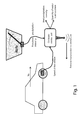
figure 1 a scheme of an embodiment of the system according to the invention; -
figure 2 shows a diagram of the components calculated in an embodiment of the method according to the invention; -
figure 3 shows a graph with an example of linear regression according to the method of the invention. - As illustrated above, the measurement of the precipitation intensity of the liquid to the ground (commonly known as rain) is normally carried out by pluviometers or by remote sensors.
- The first innovative aspect of the present invention is constituted by the fact that the used sensor is in movement on a vehicle that moves in the space at a variable speed. The rain intensity is therefore measured in several positions while time passing , mutually linked by the trajectory that the vehicle on the territory.
- As "vehicle" here it is intended any transport means (e.g. automobile, bus, truck, train, etc.), including boats.
- A second novel aspect is the use of two simple information easily and commonly available of modern design vehicles/boats (wiper activation and speed), to obtain an intensity measure of the rain that does not require additional relevant hardware installations (it can be then easily implemented, for example, in the control unit of the car).
- A third innovative aspect is constituted by the possibility to have several sensors in motion mutually connected by a management system of the measurements detected, at very low cost, which can allow the continuous and detailed monitoring even in very extensive area portions, including marine surfaces, thus overcoming the current difficulty in monitoring the rain intensity in reduced space-time scales, especially in urban areas or for traffic control.
- Referring to
figure 1 , the procedure according to the invention uses data measured by an existing sensor (not object of the present invention) capable of detecting the increase in time of the amount of water present on an inclined surface of a moving vehicle exposed to atmospheric precipitation (rain). In a preferred application, the sensor measures the attenuation of infrared light through a moving transparent surface. Typically, this sensor is used for the automatic activation of windscreen wipers on cars. The procedure is applicable also on an opaque surface equipped with an appropriate measuring device. - An embodiment of the procedure is based on certain assumptions regarding the composition of the atmosphere, in terms of water content in liquid form during a precipitation event. It is assumed in particular, also on the basis of literature data and the state of the knowledge in the field, the number, size, and the falling speed of the raindrops, expressing them in statistical terms by a suitable probability distribution of the diameter d of the droplets (whose mathematical form is assumed known a priori).
- Given the value of the average diameter of the water droplets present in the atmosphere µd [mm], the value of which is typically around 1 mm in the experimental observations, and a value of the maximum diameter Dmax [mm], which defines the limit beyond which the size of the drop is no longer physically sustainable (the drop breaks into smaller droplets), and has values around 5 mm, there are defined:
- the theoretical probability density of the droplets diameters in the atmosphere, assumed of exponential form:

where λd = 1/µd
the cumulative probability distribution of which takes the form:
- the corresponding real distributions of the diameters of the droplets bound to the maximum diameter:


for d < Dmax
- the corresponding real distributions of the diameters of the droplets bound to the maximum diameter:
- The probability density can be obtained, under restrictive assumptions, scaling uniformly the entire distribution in the form:

for d < Dmax - Depending on these probability distributions, it is possible to evaluate the water content of the atmosphere in liquid form during the event of rain through the volumetric density ρ [mm3/m3] . In fact, this density can be expressed as the product between the number of drops per unit volume Ng [-] times the corresponding average volume of the drops µv [mm3] (assumed spherical), according to the expression:

where: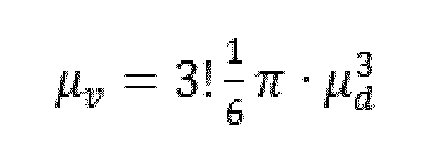
- Using probability distributions bounded to the maximum value of the diameter, it is obtained instead:
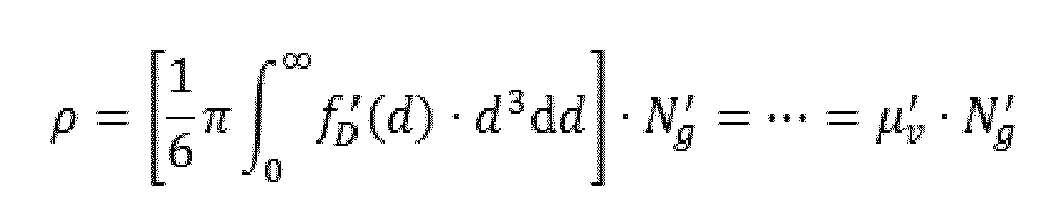
where µ'v and N'g are respectively the mean diameter and the number of drops relative to the real distribution bounded, and it must be in line with the previous expression, for given value of p:
- It is now assumed that a vehicle in motion with speed va [m/s] has an inclined opaque or transparent surface, typically the windshield, equipped with appropriate equipment capable of detecting, for example, through the increase of the attenuation in the infrared light (if the surface is transparent), a signal increasing in time (with appropriate temporal scanning) and representative of the quantitative measure of the water blade that forms on the surface in rainy conditions. Periodically, the water blade is removed (typically by the wiper blades) so as to allow the start of a new incremental measure. Let s [mm3/m2] the value of this thickness, and α the inclination angle of the surface relative to the horizontal (with the condition 0 < α < 90°, and an optimum interval between 30° and 60°).
- Referring to
figure 2 , the thickness increase Δs of the water blade, in the time interval Δt corresponds to the "perceived" rain intensity by the vehicle IP [mm/h] = Δs/Δt, which is constituted by two components: - the intensity of the rain that crosses the horizontal projection of the reference surface, assumed unitary, IPV = I · cos α, (where I is the actual intensity of the rain to be determined) due to the fall of raindrops in the atmosphere;
- the rain intensity that crosses the vertical projection of the reference surface, IPO, due to the speed at which the vehicle passes through the atmosphere that contains a certain drops density ρ.
- As regards the first component, the intensity value depends essentially on the fall speed of the rain drops in the atmosphere, which is function of the diameter in the form:

- Wishing to express the intensity in mm/h (as usual for the measurement of the rain) it is obtained:

- The integral in this expression can be solved in numerical form once known constants N'g, Dmax and K. The vertical component of the intensity perceived will therefore be IPV=I · cos α.
- As regards the second component, its value depends on the volumetric density of the water in the atmosphere and on the speed of the vehicle that crosses it. Considering a unitary speed (1 m/s) the intensity equivalent IO1 is:
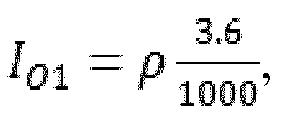
- At this point it is straightforward to write:

the equation that relates the intensity of the perceived rain, corresponding to the value of the increase of the thickness s of the water blade in the time unit, to the actual intensity of rainfall I, known the vehicle speed, the volumetric density in the atmosphere and the angle α. - A moving vehicle is therefore able to assess the perceived value of the rain intensity in different time instants, at which its speed is known, using existing sensors. The pairs of values (IP, va ) are therefore interpreted as experimental data of the model shown above. A simple linear regression (cfr.
fig. 3 ) of a sufficient number of "readings" gives the value of the two components of the above equation IPV = I · cosα and IO1 · senα, which correspond respectively to the intercept and the slope of the regression line. - The real rain intensity will then be obtained as I = IPV / cos α. From the angular coefficient value. estimating the corresponding volumetric density ρ, by the relation stated above is also possible.
- The model illustrated above leads to a particular simple linear relationship. However, other models can be used that lead to non-linear relations between perceived rain intensity and real intensity. In this case, it can always be used the data from the sensors mentioned above and realize a non-linear regression to obtain the real intensity from the one perceived and the vehicle speed.
- The procedure described for the single vehicle can be implemented in a very simple way on independent processor installed on board of the vehicle itself or by modifying the software of the electronic control unit.
- An extension of the procedure also involves the use of a fleet of vehicles that remotely transmit their position to a control center, speed and IP value detected by the incrementally measuring instrument. Some company fleets categories are already equipped for the remotely transmission to a control center (bus, taxi, business transportation service, etc.).
- In this case, the procedure can have a large number of experimental curves each obtained for a single vehicle, and, known for each vehicle the parameter α, applying a "clustering" and estimation algorithm of the areal distribution of the intensity to obtain a space-time definition of the rain field. For example, a practical application would be the communication to the users of a road/highway of the weather conditions they will encounter at some distance along the route. In urban areas, one of the applications is the capability to identify, in terms of critical rainfalls (at the limit of the disposal capacity of drainage systems), areas of the city, in which inefficiencies (floods) may be encountered and thus allowing the routing of traffic flows.
- The technical advantages of the present invention include:
- ease of application (it does not require additional equipment in operating conditions);
- availability of a large number of simultaneous data;
- operation robustness (less sensitive to application errors);
- it does not require significant hardware interventions on the vehicle/boat subject to implementation;
- reconstruction of space-time precipitation fields;
- immediate availability to the driver of the intensity precipitation datum (real-time);
- determination of the rain "perceived" due to the variation of the speed.
- The commercial advantages of the present invention include:
- use on any private vehicle/boat or corporate fleets, as a source of information for the individual user/driver;
- use as part of a distributed monitoring network on the territory by the agencies and/or interested;
- the cost of the application is extremely limited (hardware required already commercially available).
- In the above, preferred embodiments have been described and variations have been suggested of the present invention, but it is to be understood that modifications and/or changes can be introduced by those skilled in the art without departing from the relevant scope as defined in the enclosed claims.
Claims (11)
- Method for the determination of the real intensity of liquid precipitation on ground starting from a moving vehicle, the vehicle comprising at least a speed sensor providing its speed va along time, as well as a surface, integral to the same vehicle and inclined of an angle α with respect to the plane perpendicular to the gravity force, with the condition 0 < α < 90°, on said surface being placed one or more sensors of perceived intensity of liquid precipitation measuring an increment of a water layer deposed by the atmospheric precipitation on the same surface, the method being characterized in that it executes the following steps:A. obtaining from said one or more sensors of perceived intensity a plurality of values of perceived precipitation intensity IP in correspondence to a plurality of subsequent time instants;B. obtaining from said at least a speed sensor a plurality of values for speed va in correspondence to said plurality of subsequent time instants;C. performing, with respect to a plurality of values pairs (IP, va ) obtained from the measurements of steps A and B, a regression according to the formula:

wherein gPV(I, a) is an analytical function, invertible with respect to the real precipitation I, that represents the intensity of precipitation crossing the horizontal projection of said surface, and gPO(I, a, va) is an analytical function representing the intensity of precipitation that crosses the vertical projection of said surface;D. inverting the function gPV(I, a) calculated in step C by regression, and obtaining the real precipitation value I. - Method according to claim 1, characterized in that the regression of step B is a polynomial regression.
- Method according to claim 1 or 2, characterized in that gPO(I, a, va) is an analytical function of the water content in atmosphere, and in that it performs the following step subsequent to step C:E. inverting the function gPO(I, a, va ) calculated in step C by regression, and obtaining the value of said water content in the atmosphere.
- Method according to any claim 1 to 3, characterized in that the regression of step B is a linear regression, with:

being gPV (I,a) = I · cosα, g P0(I, a, va ) = I O1 · senα · va, and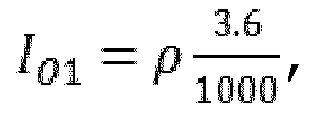
- Method according to any claim 1 to 4, characterized in that said angle α is comprised between 30° and 60°.
- Method according to any claim 1 to 5, characterized in that said surface is a transparent surface.
- Method according to claim 6, characterized in that a windscreen wiper acts on said surface for the periodic removal of the accumulated precipitation, the windscreen wiper being operated on the basis of the precipitation detection by said one or more sensors of perceived intensity, or being simply temporized.
- System for the determination of the real precipitation intensity from a moving vehicle, comprising:- at least a speed sensor providing its speed va along time, the sensor being on board of the vehicle;- a surface, integral to the vehicle, inclined by an angle α with respect to the plane perpendicular to the gravity force, with the condition 0 < α < 90°, on said surface being placed one or more sensors of perceived precipitation intensity that measure an increment of thickness of a precipitation layer on the same surface;- a data processing electronic unit, for example a car central unit;the system being characterized in that said data processing electronic unit comprises means to perform steps A-D of the method according to any claim 1 to 7.
- System according to claim 8, characterized in that said data processing electronic unit is on board of the vehicle.
- System for the space-time characterization of a precipitation field on wide territory areas, characterized in that it comprises:- a plurality of systems according to claim 8 or 9, provided with means for the data transmission towards remote;- a data collection and processing central unit, configured to collect real precipitation data sent from said plurality of systems, and map them on the territory areas along time.
- System according to claim 10, characterized in that said data collection and processing central unit is the data processing electronic unit of claim 8 and is an only unit for all the vehicles.
Applications Claiming Priority (1)
| Application Number | Priority Date | Filing Date | Title |
|---|---|---|---|
| IT000469A ITRM20130469A1 (en) | 2013-08-09 | 2013-08-09 | METHOD FOR DETERMINING PRECIPITATION INTENSITY FROM A MOVING VEHICLE / VESSEL, AND SYSTEM FOR SPACE-TEMPORAL CHARACTERIZATION OF A PRECIPITATION FIELD ON EXTENDED AREAS OF THE TERRITORY. |
Publications (2)
| Publication Number | Publication Date |
|---|---|
| EP2835291A1 true EP2835291A1 (en) | 2015-02-11 |
| EP2835291B1 EP2835291B1 (en) | 2016-10-05 |
Family
ID=49304208
Family Applications (1)
| Application Number | Title | Priority Date | Filing Date |
|---|---|---|---|
| EP14425103.0A Not-in-force EP2835291B1 (en) | 2013-08-09 | 2014-08-05 | Method for the determination of the precipitation intensity from a moving vehicle/boat, and system for the space-time characterization of a precipitation field on wide territory areas |
Country Status (2)
| Country | Link |
|---|---|
| EP (1) | EP2835291B1 (en) |
| IT (1) | ITRM20130469A1 (en) |
Cited By (2)
| Publication number | Priority date | Publication date | Assignee | Title |
|---|---|---|---|---|
| US11156745B2 (en) * | 2018-09-28 | 2021-10-26 | Toyota Jidosha Kabushiki Kaisha | Precipitation index estimation apparatus |
| CN114043853A (en) * | 2021-11-01 | 2022-02-15 | 电子科技大学 | A gas layer introduction device for anti-wetting of solid surface and its application |
Citations (4)
| Publication number | Priority date | Publication date | Assignee | Title |
|---|---|---|---|---|
| EP1398230A2 (en) | 2002-09-13 | 2004-03-17 | Robert Bosch Gmbh | Rain sensor, in particular for a vehicle with a windscreen wiper device and method of controlling a windscreen wiper device |
| US20060055354A1 (en) * | 2004-09-14 | 2006-03-16 | Honda Motor Co., Ltd. | Automatic vehicle wiper system |
| US20120006110A1 (en) | 2010-07-08 | 2012-01-12 | Hella Kgaa Hueck & Co. | Sensor arrangement for detecting ambient conditions |
| FR2970215A1 (en) | 2011-01-07 | 2012-07-13 | Peugeot Citroen Automobiles Sa | Weather conditions e.g. rain, detecting device for car, has electrical sensor for detecting conditions, and electricity generation unit for generating electricity with portion of heat flow by thermoelectric effect for supplying sensor |
-
2013
- 2013-08-09 IT IT000469A patent/ITRM20130469A1/en unknown
-
2014
- 2014-08-05 EP EP14425103.0A patent/EP2835291B1/en not_active Not-in-force
Patent Citations (4)
| Publication number | Priority date | Publication date | Assignee | Title |
|---|---|---|---|---|
| EP1398230A2 (en) | 2002-09-13 | 2004-03-17 | Robert Bosch Gmbh | Rain sensor, in particular for a vehicle with a windscreen wiper device and method of controlling a windscreen wiper device |
| US20060055354A1 (en) * | 2004-09-14 | 2006-03-16 | Honda Motor Co., Ltd. | Automatic vehicle wiper system |
| US20120006110A1 (en) | 2010-07-08 | 2012-01-12 | Hella Kgaa Hueck & Co. | Sensor arrangement for detecting ambient conditions |
| FR2970215A1 (en) | 2011-01-07 | 2012-07-13 | Peugeot Citroen Automobiles Sa | Weather conditions e.g. rain, detecting device for car, has electrical sensor for detecting conditions, and electricity generation unit for generating electricity with portion of heat flow by thermoelectric effect for supplying sensor |
Cited By (3)
| Publication number | Priority date | Publication date | Assignee | Title |
|---|---|---|---|---|
| US11156745B2 (en) * | 2018-09-28 | 2021-10-26 | Toyota Jidosha Kabushiki Kaisha | Precipitation index estimation apparatus |
| CN114043853A (en) * | 2021-11-01 | 2022-02-15 | 电子科技大学 | A gas layer introduction device for anti-wetting of solid surface and its application |
| CN114043853B (en) * | 2021-11-01 | 2023-05-30 | 电子科技大学 | Air layer introducing device for preventing solid surface from being wetted and application thereof |
Also Published As
| Publication number | Publication date |
|---|---|
| EP2835291B1 (en) | 2016-10-05 |
| ITRM20130469A1 (en) | 2015-02-10 |
Similar Documents
| Publication | Publication Date | Title |
|---|---|---|
| Peng et al. | Assessing the impact of reduced visibility on traffic crash risk using microscopic data and surrogate safety measures | |
| CN205679239U (en) | Intelligent vehicle navigation system and intelligent vehicle | |
| CN105628047A (en) | Intelligent vehicle navigation system, navigation method and intelligent vehicle | |
| DE102015210312A1 (en) | Method for determining and signaling a wiper fluid range of a vehicle | |
| CN103150907A (en) | Highway operation safety-based mobile monitoring and early warning system and method | |
| EP4036890A1 (en) | Management method and apparatus for vehicle safety, and computer storage medium | |
| CN117238139B (en) | Real-time road condition early warning system based on meteorological data | |
| Haavasoja et al. | Experiences of mobile road condition monitoring | |
| CN112925045A (en) | Environment prediction system and environment prediction method | |
| CN111332289A (en) | Vehicle operation environment data acquisition method and device and storage medium | |
| JP2012026927A (en) | Weather measuring apparatus | |
| CN113776855A (en) | A functional test system and its test method suitable for smart cars in alpine regions | |
| US20230245509A1 (en) | Safety system and method for motor vehicles | |
| EP2835291B1 (en) | Method for the determination of the precipitation intensity from a moving vehicle/boat, and system for the space-time characterization of a precipitation field on wide territory areas | |
| KR101750939B1 (en) | System for predicting road surface condition using moving vehicle, and predicting method for the same | |
| Linton et al. | Winter road surface condition monitoring: field evaluation of a smartphone-based system | |
| JP2011013895A (en) | Road information providing system and information distribution device loading vehicle, and information collection device | |
| JP3541357B2 (en) | Travel visibility measurement method, travel visibility measurement device, and travel visibility measurement system | |
| KR102643863B1 (en) | Black ice alarm system using multiple array sensor and deep learning | |
| Petty et al. | Enhancing road weather information through vehicle infrastructure integration | |
| KR102312382B1 (en) | System for providing slip information of road surface using wheel speen sensor of vehicle and gravitational acceleration sensor, and method for the same | |
| US12534108B2 (en) | Systems and methods of fleet road de-icing with autonomous vehicles | |
| Li et al. | Leveraging connected vehicles to provide enhanced roadway condition information | |
| KR20210086419A (en) | Vehicle type rainfall observation device | |
| JP2002162478A (en) | Road weather detection method and detection system |
Legal Events
| Date | Code | Title | Description |
|---|---|---|---|
| PUAI | Public reference made under article 153(3) epc to a published international application that has entered the european phase |
Free format text: ORIGINAL CODE: 0009012 |
|
| 17P | Request for examination filed |
Effective date: 20140805 |
|
| AK | Designated contracting states |
Kind code of ref document: A1 Designated state(s): AL AT BE BG CH CY CZ DE DK EE ES FI FR GB GR HR HU IE IS IT LI LT LU LV MC MK MT NL NO PL PT RO RS SE SI SK SM TR |
|
| AX | Request for extension of the european patent |
Extension state: BA ME |
|
| R17P | Request for examination filed (corrected) |
Effective date: 20150804 |
|
| RBV | Designated contracting states (corrected) |
Designated state(s): AL AT BE BG CH CY CZ DE DK EE ES FI FR GB GR HR HU IE IS IT LI LT LU LV MC MK MT NL NO PL PT RO RS SE SI SK SM TR |
|
| GRAP | Despatch of communication of intention to grant a patent |
Free format text: ORIGINAL CODE: EPIDOSNIGR1 |
|
| INTG | Intention to grant announced |
Effective date: 20160428 |
|
| GRAS | Grant fee paid |
Free format text: ORIGINAL CODE: EPIDOSNIGR3 |
|
| GRAA | (expected) grant |
Free format text: ORIGINAL CODE: 0009210 |
|
| AK | Designated contracting states |
Kind code of ref document: B1 Designated state(s): AL AT BE BG CH CY CZ DE DK EE ES FI FR GB GR HR HU IE IS IT LI LT LU LV MC MK MT NL NO PL PT RO RS SE SI SK SM TR |
|
| REG | Reference to a national code |
Ref country code: GB Ref legal event code: FG4D |
|
| REG | Reference to a national code |
Ref country code: CH Ref legal event code: EP |
|
| REG | Reference to a national code |
Ref country code: AT Ref legal event code: REF Ref document number: 834325 Country of ref document: AT Kind code of ref document: T Effective date: 20161015 |
|
| REG | Reference to a national code |
Ref country code: IE Ref legal event code: FG4D |
|
| REG | Reference to a national code |
Ref country code: DE Ref legal event code: R096 Ref document number: 602014004109 Country of ref document: DE |
|
| REG | Reference to a national code |
Ref country code: NL Ref legal event code: MP Effective date: 20161005 |
|
| REG | Reference to a national code |
Ref country code: LT Ref legal event code: MG4D |
|
| PG25 | Lapsed in a contracting state [announced via postgrant information from national office to epo] |
Ref country code: LV Free format text: LAPSE BECAUSE OF FAILURE TO SUBMIT A TRANSLATION OF THE DESCRIPTION OR TO PAY THE FEE WITHIN THE PRESCRIBED TIME-LIMIT Effective date: 20161005 |
|
| REG | Reference to a national code |
Ref country code: AT Ref legal event code: MK05 Ref document number: 834325 Country of ref document: AT Kind code of ref document: T Effective date: 20161005 |
|
| PG25 | Lapsed in a contracting state [announced via postgrant information from national office to epo] |
Ref country code: GR Free format text: LAPSE BECAUSE OF FAILURE TO SUBMIT A TRANSLATION OF THE DESCRIPTION OR TO PAY THE FEE WITHIN THE PRESCRIBED TIME-LIMIT Effective date: 20170106 Ref country code: SE Free format text: LAPSE BECAUSE OF FAILURE TO SUBMIT A TRANSLATION OF THE DESCRIPTION OR TO PAY THE FEE WITHIN THE PRESCRIBED TIME-LIMIT Effective date: 20161005 Ref country code: LT Free format text: LAPSE BECAUSE OF FAILURE TO SUBMIT A TRANSLATION OF THE DESCRIPTION OR TO PAY THE FEE WITHIN THE PRESCRIBED TIME-LIMIT Effective date: 20161005 Ref country code: NO Free format text: LAPSE BECAUSE OF FAILURE TO SUBMIT A TRANSLATION OF THE DESCRIPTION OR TO PAY THE FEE WITHIN THE PRESCRIBED TIME-LIMIT Effective date: 20170105 |
|
| PG25 | Lapsed in a contracting state [announced via postgrant information from national office to epo] |
Ref country code: NL Free format text: LAPSE BECAUSE OF FAILURE TO SUBMIT A TRANSLATION OF THE DESCRIPTION OR TO PAY THE FEE WITHIN THE PRESCRIBED TIME-LIMIT Effective date: 20161005 Ref country code: ES Free format text: LAPSE BECAUSE OF FAILURE TO SUBMIT A TRANSLATION OF THE DESCRIPTION OR TO PAY THE FEE WITHIN THE PRESCRIBED TIME-LIMIT Effective date: 20161005 Ref country code: AT Free format text: LAPSE BECAUSE OF FAILURE TO SUBMIT A TRANSLATION OF THE DESCRIPTION OR TO PAY THE FEE WITHIN THE PRESCRIBED TIME-LIMIT Effective date: 20161005 Ref country code: HR Free format text: LAPSE BECAUSE OF FAILURE TO SUBMIT A TRANSLATION OF THE DESCRIPTION OR TO PAY THE FEE WITHIN THE PRESCRIBED TIME-LIMIT Effective date: 20161005 Ref country code: RS Free format text: LAPSE BECAUSE OF FAILURE TO SUBMIT A TRANSLATION OF THE DESCRIPTION OR TO PAY THE FEE WITHIN THE PRESCRIBED TIME-LIMIT Effective date: 20161005 Ref country code: PT Free format text: LAPSE BECAUSE OF FAILURE TO SUBMIT A TRANSLATION OF THE DESCRIPTION OR TO PAY THE FEE WITHIN THE PRESCRIBED TIME-LIMIT Effective date: 20170206 Ref country code: BE Free format text: LAPSE BECAUSE OF FAILURE TO SUBMIT A TRANSLATION OF THE DESCRIPTION OR TO PAY THE FEE WITHIN THE PRESCRIBED TIME-LIMIT Effective date: 20161005 Ref country code: PL Free format text: LAPSE BECAUSE OF FAILURE TO SUBMIT A TRANSLATION OF THE DESCRIPTION OR TO PAY THE FEE WITHIN THE PRESCRIBED TIME-LIMIT Effective date: 20161005 Ref country code: IS Free format text: LAPSE BECAUSE OF FAILURE TO SUBMIT A TRANSLATION OF THE DESCRIPTION OR TO PAY THE FEE WITHIN THE PRESCRIBED TIME-LIMIT Effective date: 20170205 Ref country code: FI Free format text: LAPSE BECAUSE OF FAILURE TO SUBMIT A TRANSLATION OF THE DESCRIPTION OR TO PAY THE FEE WITHIN THE PRESCRIBED TIME-LIMIT Effective date: 20161005 |
|
| REG | Reference to a national code |
Ref country code: DE Ref legal event code: R097 Ref document number: 602014004109 Country of ref document: DE |
|
| REG | Reference to a national code |
Ref country code: FR Ref legal event code: PLFP Year of fee payment: 4 |
|
| PG25 | Lapsed in a contracting state [announced via postgrant information from national office to epo] |
Ref country code: CZ Free format text: LAPSE BECAUSE OF FAILURE TO SUBMIT A TRANSLATION OF THE DESCRIPTION OR TO PAY THE FEE WITHIN THE PRESCRIBED TIME-LIMIT Effective date: 20161005 Ref country code: EE Free format text: LAPSE BECAUSE OF FAILURE TO SUBMIT A TRANSLATION OF THE DESCRIPTION OR TO PAY THE FEE WITHIN THE PRESCRIBED TIME-LIMIT Effective date: 20161005 Ref country code: SK Free format text: LAPSE BECAUSE OF FAILURE TO SUBMIT A TRANSLATION OF THE DESCRIPTION OR TO PAY THE FEE WITHIN THE PRESCRIBED TIME-LIMIT Effective date: 20161005 Ref country code: RO Free format text: LAPSE BECAUSE OF FAILURE TO SUBMIT A TRANSLATION OF THE DESCRIPTION OR TO PAY THE FEE WITHIN THE PRESCRIBED TIME-LIMIT Effective date: 20161005 Ref country code: DK Free format text: LAPSE BECAUSE OF FAILURE TO SUBMIT A TRANSLATION OF THE DESCRIPTION OR TO PAY THE FEE WITHIN THE PRESCRIBED TIME-LIMIT Effective date: 20161005 |
|
| PLBE | No opposition filed within time limit |
Free format text: ORIGINAL CODE: 0009261 |
|
| STAA | Information on the status of an ep patent application or granted ep patent |
Free format text: STATUS: NO OPPOSITION FILED WITHIN TIME LIMIT |
|
| PG25 | Lapsed in a contracting state [announced via postgrant information from national office to epo] |
Ref country code: BG Free format text: LAPSE BECAUSE OF FAILURE TO SUBMIT A TRANSLATION OF THE DESCRIPTION OR TO PAY THE FEE WITHIN THE PRESCRIBED TIME-LIMIT Effective date: 20170105 Ref country code: IT Free format text: LAPSE BECAUSE OF FAILURE TO SUBMIT A TRANSLATION OF THE DESCRIPTION OR TO PAY THE FEE WITHIN THE PRESCRIBED TIME-LIMIT Effective date: 20161005 Ref country code: SM Free format text: LAPSE BECAUSE OF FAILURE TO SUBMIT A TRANSLATION OF THE DESCRIPTION OR TO PAY THE FEE WITHIN THE PRESCRIBED TIME-LIMIT Effective date: 20161005 |
|
| 26N | No opposition filed |
Effective date: 20170706 |
|
| PG25 | Lapsed in a contracting state [announced via postgrant information from national office to epo] |
Ref country code: SI Free format text: LAPSE BECAUSE OF FAILURE TO SUBMIT A TRANSLATION OF THE DESCRIPTION OR TO PAY THE FEE WITHIN THE PRESCRIBED TIME-LIMIT Effective date: 20161005 |
|
| REG | Reference to a national code |
Ref country code: CH Ref legal event code: PL |
|
| PG25 | Lapsed in a contracting state [announced via postgrant information from national office to epo] |
Ref country code: MC Free format text: LAPSE BECAUSE OF FAILURE TO SUBMIT A TRANSLATION OF THE DESCRIPTION OR TO PAY THE FEE WITHIN THE PRESCRIBED TIME-LIMIT Effective date: 20161005 |
|
| PG25 | Lapsed in a contracting state [announced via postgrant information from national office to epo] |
Ref country code: CH Free format text: LAPSE BECAUSE OF NON-PAYMENT OF DUE FEES Effective date: 20170831 Ref country code: LI Free format text: LAPSE BECAUSE OF NON-PAYMENT OF DUE FEES Effective date: 20170831 |
|
| REG | Reference to a national code |
Ref country code: IE Ref legal event code: MM4A |
|
| PG25 | Lapsed in a contracting state [announced via postgrant information from national office to epo] |
Ref country code: LU Free format text: LAPSE BECAUSE OF NON-PAYMENT OF DUE FEES Effective date: 20170805 |
|
| REG | Reference to a national code |
Ref country code: FR Ref legal event code: PLFP Year of fee payment: 5 |
|
| PG25 | Lapsed in a contracting state [announced via postgrant information from national office to epo] |
Ref country code: IE Free format text: LAPSE BECAUSE OF NON-PAYMENT OF DUE FEES Effective date: 20170805 |
|
| PG25 | Lapsed in a contracting state [announced via postgrant information from national office to epo] |
Ref country code: MT Free format text: LAPSE BECAUSE OF NON-PAYMENT OF DUE FEES Effective date: 20170805 |
|
| PGFP | Annual fee paid to national office [announced via postgrant information from national office to epo] |
Ref country code: DE Payment date: 20180827 Year of fee payment: 5 Ref country code: FR Payment date: 20180712 Year of fee payment: 5 |
|
| PGFP | Annual fee paid to national office [announced via postgrant information from national office to epo] |
Ref country code: GB Payment date: 20180801 Year of fee payment: 5 |
|
| PG25 | Lapsed in a contracting state [announced via postgrant information from national office to epo] |
Ref country code: HU Free format text: LAPSE BECAUSE OF FAILURE TO SUBMIT A TRANSLATION OF THE DESCRIPTION OR TO PAY THE FEE WITHIN THE PRESCRIBED TIME-LIMIT; INVALID AB INITIO Effective date: 20140805 |
|
| PG25 | Lapsed in a contracting state [announced via postgrant information from national office to epo] |
Ref country code: CY Free format text: LAPSE BECAUSE OF FAILURE TO SUBMIT A TRANSLATION OF THE DESCRIPTION OR TO PAY THE FEE WITHIN THE PRESCRIBED TIME-LIMIT Effective date: 20161005 |
|
| PG25 | Lapsed in a contracting state [announced via postgrant information from national office to epo] |
Ref country code: MK Free format text: LAPSE BECAUSE OF FAILURE TO SUBMIT A TRANSLATION OF THE DESCRIPTION OR TO PAY THE FEE WITHIN THE PRESCRIBED TIME-LIMIT Effective date: 20161005 |
|
| REG | Reference to a national code |
Ref country code: DE Ref legal event code: R119 Ref document number: 602014004109 Country of ref document: DE |
|
| PG25 | Lapsed in a contracting state [announced via postgrant information from national office to epo] |
Ref country code: TR Free format text: LAPSE BECAUSE OF FAILURE TO SUBMIT A TRANSLATION OF THE DESCRIPTION OR TO PAY THE FEE WITHIN THE PRESCRIBED TIME-LIMIT Effective date: 20161005 |
|
| GBPC | Gb: european patent ceased through non-payment of renewal fee |
Effective date: 20190805 |
|
| PG25 | Lapsed in a contracting state [announced via postgrant information from national office to epo] |
Ref country code: FR Free format text: LAPSE BECAUSE OF NON-PAYMENT OF DUE FEES Effective date: 20190831 Ref country code: DE Free format text: LAPSE BECAUSE OF NON-PAYMENT OF DUE FEES Effective date: 20200303 Ref country code: AL Free format text: LAPSE BECAUSE OF FAILURE TO SUBMIT A TRANSLATION OF THE DESCRIPTION OR TO PAY THE FEE WITHIN THE PRESCRIBED TIME-LIMIT Effective date: 20161005 |
|
| PG25 | Lapsed in a contracting state [announced via postgrant information from national office to epo] |
Ref country code: GB Free format text: LAPSE BECAUSE OF NON-PAYMENT OF DUE FEES Effective date: 20190805 |