EP2835177A1 - Method for preparing Co-Mn on carbon catalysts and their use in carbon nanotube synthesis - Google Patents
Method for preparing Co-Mn on carbon catalysts and their use in carbon nanotube synthesis Download PDFInfo
- Publication number
- EP2835177A1 EP2835177A1 EP13179382.0A EP13179382A EP2835177A1 EP 2835177 A1 EP2835177 A1 EP 2835177A1 EP 13179382 A EP13179382 A EP 13179382A EP 2835177 A1 EP2835177 A1 EP 2835177A1
- Authority
- EP
- European Patent Office
- Prior art keywords
- salts
- carbon
- carbon black
- based catalyst
- carbon nanotubes
- Prior art date
- Legal status (The legal status is an assumption and is not a legal conclusion. Google has not performed a legal analysis and makes no representation as to the accuracy of the status listed.)
- Withdrawn
Links
- OKTJSMMVPCPJKN-UHFFFAOYSA-N Carbon Chemical compound [C] OKTJSMMVPCPJKN-UHFFFAOYSA-N 0.000 title claims abstract description 73
- 239000003054 catalyst Substances 0.000 title claims abstract description 58
- 239000002041 carbon nanotube Substances 0.000 title claims abstract description 51
- 229910021393 carbon nanotube Inorganic materials 0.000 title claims abstract description 44
- 238000000034 method Methods 0.000 title claims abstract description 30
- 229910052799 carbon Inorganic materials 0.000 title claims abstract description 29
- 230000015572 biosynthetic process Effects 0.000 title claims abstract description 20
- 238000003786 synthesis reaction Methods 0.000 title claims abstract description 19
- 229910020632 Co Mn Inorganic materials 0.000 title 1
- 229910020678 Co—Mn Inorganic materials 0.000 title 1
- 239000006229 carbon black Substances 0.000 claims abstract description 46
- 229910052751 metal Inorganic materials 0.000 claims abstract description 23
- 239000002184 metal Substances 0.000 claims abstract description 23
- 238000005229 chemical vapour deposition Methods 0.000 claims abstract description 10
- 238000001354 calcination Methods 0.000 claims abstract description 9
- 239000000463 material Substances 0.000 claims abstract description 8
- 230000002194 synthesizing effect Effects 0.000 claims abstract description 8
- 238000001035 drying Methods 0.000 claims abstract description 6
- 238000005406 washing Methods 0.000 claims abstract description 5
- 238000007873 sieving Methods 0.000 claims abstract description 4
- 150000003839 salts Chemical class 0.000 claims description 14
- 239000011572 manganese Substances 0.000 claims description 13
- XSQUKJJJFZCRTK-UHFFFAOYSA-N Urea Chemical compound NC(N)=O XSQUKJJJFZCRTK-UHFFFAOYSA-N 0.000 claims description 12
- 239000004202 carbamide Substances 0.000 claims description 12
- 125000002777 acetyl group Chemical group [H]C([H])([H])C(*)=O 0.000 claims description 9
- 238000001556 precipitation Methods 0.000 claims description 9
- 239000003795 chemical substances by application Substances 0.000 claims description 6
- 238000001914 filtration Methods 0.000 claims description 6
- 230000001737 promoting effect Effects 0.000 claims description 6
- 239000003513 alkali Substances 0.000 claims description 4
- 150000001879 copper Chemical class 0.000 claims description 4
- 239000011261 inert gas Substances 0.000 claims description 4
- 150000002696 manganese Chemical class 0.000 claims description 4
- 150000002751 molybdenum Chemical class 0.000 claims description 4
- 238000004519 manufacturing process Methods 0.000 claims description 3
- ATRRKUHOCOJYRX-UHFFFAOYSA-N Ammonium bicarbonate Chemical compound [NH4+].OC([O-])=O ATRRKUHOCOJYRX-UHFFFAOYSA-N 0.000 claims description 2
- VHUUQVKOLVNVRT-UHFFFAOYSA-N Ammonium hydroxide Chemical compound [NH4+].[OH-] VHUUQVKOLVNVRT-UHFFFAOYSA-N 0.000 claims description 2
- 229910020518 Co(BF4)2 Inorganic materials 0.000 claims description 2
- 229910019131 CoBr2 Inorganic materials 0.000 claims description 2
- 229910021580 Cobalt(II) chloride Inorganic materials 0.000 claims description 2
- 229910021582 Cobalt(II) fluoride Inorganic materials 0.000 claims description 2
- 229910021380 Manganese Chloride Inorganic materials 0.000 claims description 2
- GLFNIEUTAYBVOC-UHFFFAOYSA-L Manganese chloride Chemical compound Cl[Mn]Cl GLFNIEUTAYBVOC-UHFFFAOYSA-L 0.000 claims description 2
- 229910021568 Manganese(II) bromide Inorganic materials 0.000 claims description 2
- 229910021570 Manganese(II) fluoride Inorganic materials 0.000 claims description 2
- 229910021571 Manganese(III) fluoride Inorganic materials 0.000 claims description 2
- VYPSYNLAJGMNEJ-UHFFFAOYSA-N Silicium dioxide Chemical class O=[Si]=O VYPSYNLAJGMNEJ-UHFFFAOYSA-N 0.000 claims description 2
- 159000000013 aluminium salts Chemical class 0.000 claims description 2
- 239000001099 ammonium carbonate Substances 0.000 claims description 2
- 235000012501 ammonium carbonate Nutrition 0.000 claims description 2
- 239000000908 ammonium hydroxide Substances 0.000 claims description 2
- 150000004649 carbonic acid derivatives Chemical class 0.000 claims description 2
- 229910001914 chlorine tetroxide Inorganic materials 0.000 claims description 2
- 150000001844 chromium Chemical class 0.000 claims description 2
- 150000001868 cobalt Chemical class 0.000 claims description 2
- 229910000152 cobalt phosphate Inorganic materials 0.000 claims description 2
- FCEOGYWNOSBEPV-FDGPNNRMSA-N cobalt;(z)-4-hydroxypent-3-en-2-one Chemical compound [Co].C\C(O)=C\C(C)=O.C\C(O)=C\C(C)=O FCEOGYWNOSBEPV-FDGPNNRMSA-N 0.000 claims description 2
- JUPWRUDTZGBNEX-UHFFFAOYSA-N cobalt;pentane-2,4-dione Chemical compound [Co].CC(=O)CC(C)=O.CC(=O)CC(C)=O.CC(=O)CC(C)=O JUPWRUDTZGBNEX-UHFFFAOYSA-N 0.000 claims description 2
- RJYMRRJVDRJMJW-UHFFFAOYSA-L dibromomanganese Chemical compound Br[Mn]Br RJYMRRJVDRJMJW-UHFFFAOYSA-L 0.000 claims description 2
- CTNMMTCXUUFYAP-UHFFFAOYSA-L difluoromanganese Chemical compound F[Mn]F CTNMMTCXUUFYAP-UHFFFAOYSA-L 0.000 claims description 2
- 150000004679 hydroxides Chemical class 0.000 claims description 2
- 159000000014 iron salts Chemical class 0.000 claims description 2
- 229910003002 lithium salt Inorganic materials 0.000 claims description 2
- 159000000002 lithium salts Chemical class 0.000 claims description 2
- 159000000003 magnesium salts Chemical class 0.000 claims description 2
- 229910052748 manganese Inorganic materials 0.000 claims description 2
- 239000011565 manganese chloride Substances 0.000 claims description 2
- MIVBAHRSNUNMPP-UHFFFAOYSA-N manganese(II) nitrate Inorganic materials [Mn+2].[O-][N+]([O-])=O.[O-][N+]([O-])=O MIVBAHRSNUNMPP-UHFFFAOYSA-N 0.000 claims description 2
- SQQMAOCOWKFBNP-UHFFFAOYSA-L manganese(II) sulfate Chemical compound [Mn+2].[O-]S([O-])(=O)=O SQQMAOCOWKFBNP-UHFFFAOYSA-L 0.000 claims description 2
- 229910000357 manganese(II) sulfate Inorganic materials 0.000 claims description 2
- SRVINXWCFNHIQZ-UHFFFAOYSA-K manganese(iii) fluoride Chemical compound [F-].[F-].[F-].[Mn+3] SRVINXWCFNHIQZ-UHFFFAOYSA-K 0.000 claims description 2
- 229910052750 molybdenum Inorganic materials 0.000 claims description 2
- 150000002815 nickel Chemical class 0.000 claims description 2
- VLTRZXGMWDSKGL-UHFFFAOYSA-M perchlorate Chemical compound [O-]Cl(=O)(=O)=O VLTRZXGMWDSKGL-UHFFFAOYSA-M 0.000 claims description 2
- 159000000001 potassium salts Chemical class 0.000 claims description 2
- 159000000000 sodium salts Chemical class 0.000 claims description 2
- DTMHTVJOHYTUHE-UHFFFAOYSA-N thiocyanogen Chemical compound N#CSSC#N DTMHTVJOHYTUHE-UHFFFAOYSA-N 0.000 claims description 2
- 150000003608 titanium Chemical class 0.000 claims description 2
- 150000003657 tungsten Chemical class 0.000 claims description 2
- 150000003681 vanadium Chemical class 0.000 claims description 2
- 150000003754 zirconium Chemical class 0.000 claims description 2
- 238000000975 co-precipitation Methods 0.000 abstract description 5
- 239000002244 precipitate Substances 0.000 abstract description 5
- 150000002739 metals Chemical class 0.000 abstract description 3
- 239000002243 precursor Substances 0.000 abstract description 3
- 239000000725 suspension Substances 0.000 abstract description 3
- 239000008247 solid mixture Substances 0.000 abstract description 2
- 238000002203 pretreatment Methods 0.000 abstract 1
- 239000011949 solid catalyst Substances 0.000 abstract 1
- 235000019241 carbon black Nutrition 0.000 description 37
- PNEYBMLMFCGWSK-UHFFFAOYSA-N Alumina Chemical compound [O-2].[O-2].[O-2].[Al+3].[Al+3] PNEYBMLMFCGWSK-UHFFFAOYSA-N 0.000 description 15
- 239000000203 mixture Substances 0.000 description 6
- XLYOFNOQVPJJNP-UHFFFAOYSA-N water Chemical compound O XLYOFNOQVPJJNP-UHFFFAOYSA-N 0.000 description 6
- 239000000395 magnesium oxide Substances 0.000 description 5
- CPLXHLVBOLITMK-UHFFFAOYSA-N magnesium oxide Inorganic materials [Mg]=O CPLXHLVBOLITMK-UHFFFAOYSA-N 0.000 description 5
- AXZKOIWUVFPNLO-UHFFFAOYSA-N magnesium;oxygen(2-) Chemical compound [O-2].[Mg+2] AXZKOIWUVFPNLO-UHFFFAOYSA-N 0.000 description 5
- -1 metal oxides Chemical class 0.000 description 4
- 238000006555 catalytic reaction Methods 0.000 description 3
- 238000006243 chemical reaction Methods 0.000 description 3
- QGUAJWGNOXCYJF-UHFFFAOYSA-N cobalt dinitrate hexahydrate Chemical compound O.O.O.O.O.O.[Co+2].[O-][N+]([O-])=O.[O-][N+]([O-])=O QGUAJWGNOXCYJF-UHFFFAOYSA-N 0.000 description 3
- 239000008367 deionised water Substances 0.000 description 3
- 229910021641 deionized water Inorganic materials 0.000 description 3
- 229910044991 metal oxide Inorganic materials 0.000 description 3
- 150000004706 metal oxides Chemical class 0.000 description 3
- 238000002360 preparation method Methods 0.000 description 3
- 238000003756 stirring Methods 0.000 description 3
- FYYHWMGAXLPEAU-UHFFFAOYSA-N Magnesium Chemical compound [Mg] FYYHWMGAXLPEAU-UHFFFAOYSA-N 0.000 description 2
- 238000003917 TEM image Methods 0.000 description 2
- 239000002253 acid Substances 0.000 description 2
- 150000007513 acids Chemical class 0.000 description 2
- 229910052782 aluminium Inorganic materials 0.000 description 2
- 239000004411 aluminium Substances 0.000 description 2
- XAGFODPZIPBFFR-UHFFFAOYSA-N aluminium Chemical compound [Al] XAGFODPZIPBFFR-UHFFFAOYSA-N 0.000 description 2
- UFMZWBIQTDUYBN-UHFFFAOYSA-N cobalt dinitrate Chemical compound [Co+2].[O-][N+]([O-])=O.[O-][N+]([O-])=O UFMZWBIQTDUYBN-UHFFFAOYSA-N 0.000 description 2
- 239000000470 constituent Substances 0.000 description 2
- 238000007865 diluting Methods 0.000 description 2
- 230000000694 effects Effects 0.000 description 2
- 238000002474 experimental method Methods 0.000 description 2
- 239000011777 magnesium Substances 0.000 description 2
- 229910052749 magnesium Inorganic materials 0.000 description 2
- 238000012986 modification Methods 0.000 description 2
- 230000004048 modification Effects 0.000 description 2
- 239000011164 primary particle Substances 0.000 description 2
- 239000000047 product Substances 0.000 description 2
- 238000000527 sonication Methods 0.000 description 2
- 229910021503 Cobalt(II) hydroxide Inorganic materials 0.000 description 1
- 241000872198 Serjania polyphylla Species 0.000 description 1
- 230000009286 beneficial effect Effects 0.000 description 1
- 230000015556 catabolic process Effects 0.000 description 1
- 229910017052 cobalt Inorganic materials 0.000 description 1
- 239000010941 cobalt Substances 0.000 description 1
- GUTLYIVDDKVIGB-UHFFFAOYSA-N cobalt atom Chemical compound [Co] GUTLYIVDDKVIGB-UHFFFAOYSA-N 0.000 description 1
- KTVIXTQDYHMGHF-UHFFFAOYSA-L cobalt(2+) sulfate Chemical compound [Co+2].[O-]S([O-])(=O)=O KTVIXTQDYHMGHF-UHFFFAOYSA-L 0.000 description 1
- 150000004696 coordination complex Chemical class 0.000 description 1
- 238000006731 degradation reaction Methods 0.000 description 1
- 238000009792 diffusion process Methods 0.000 description 1
- 239000007789 gas Substances 0.000 description 1
- 238000005470 impregnation Methods 0.000 description 1
- 230000003993 interaction Effects 0.000 description 1
- WPBNNNQJVZRUHP-UHFFFAOYSA-L manganese(2+);methyl n-[[2-(methoxycarbonylcarbamothioylamino)phenyl]carbamothioyl]carbamate;n-[2-(sulfidocarbothioylamino)ethyl]carbamodithioate Chemical compound [Mn+2].[S-]C(=S)NCCNC([S-])=S.COC(=O)NC(=S)NC1=CC=CC=C1NC(=S)NC(=O)OC WPBNNNQJVZRUHP-UHFFFAOYSA-L 0.000 description 1
- 150000002736 metal compounds Chemical class 0.000 description 1
- 238000001878 scanning electron micrograph Methods 0.000 description 1
- 125000001424 substituent group Chemical group 0.000 description 1
Images

Classifications
-
- B—PERFORMING OPERATIONS; TRANSPORTING
- B01—PHYSICAL OR CHEMICAL PROCESSES OR APPARATUS IN GENERAL
- B01J—CHEMICAL OR PHYSICAL PROCESSES, e.g. CATALYSIS OR COLLOID CHEMISTRY; THEIR RELEVANT APPARATUS
- B01J21/00—Catalysts comprising the elements, oxides, or hydroxides of magnesium, boron, aluminium, carbon, silicon, titanium, zirconium, or hafnium
- B01J21/18—Carbon
-
- B—PERFORMING OPERATIONS; TRANSPORTING
- B01—PHYSICAL OR CHEMICAL PROCESSES OR APPARATUS IN GENERAL
- B01J—CHEMICAL OR PHYSICAL PROCESSES, e.g. CATALYSIS OR COLLOID CHEMISTRY; THEIR RELEVANT APPARATUS
- B01J21/00—Catalysts comprising the elements, oxides, or hydroxides of magnesium, boron, aluminium, carbon, silicon, titanium, zirconium, or hafnium
- B01J21/18—Carbon
- B01J21/185—Carbon nanotubes
-
- B—PERFORMING OPERATIONS; TRANSPORTING
- B01—PHYSICAL OR CHEMICAL PROCESSES OR APPARATUS IN GENERAL
- B01J—CHEMICAL OR PHYSICAL PROCESSES, e.g. CATALYSIS OR COLLOID CHEMISTRY; THEIR RELEVANT APPARATUS
- B01J23/00—Catalysts comprising metals or metal oxides or hydroxides, not provided for in group B01J21/00
- B01J23/70—Catalysts comprising metals or metal oxides or hydroxides, not provided for in group B01J21/00 of the iron group metals or copper
- B01J23/76—Catalysts comprising metals or metal oxides or hydroxides, not provided for in group B01J21/00 of the iron group metals or copper combined with metals, oxides or hydroxides provided for in groups B01J23/02 - B01J23/36
- B01J23/84—Catalysts comprising metals or metal oxides or hydroxides, not provided for in group B01J21/00 of the iron group metals or copper combined with metals, oxides or hydroxides provided for in groups B01J23/02 - B01J23/36 with arsenic, antimony, bismuth, vanadium, niobium, tantalum, polonium, chromium, molybdenum, tungsten, manganese, technetium or rhenium
- B01J23/889—Manganese, technetium or rhenium
- B01J23/8892—Manganese
-
- B—PERFORMING OPERATIONS; TRANSPORTING
- B01—PHYSICAL OR CHEMICAL PROCESSES OR APPARATUS IN GENERAL
- B01J—CHEMICAL OR PHYSICAL PROCESSES, e.g. CATALYSIS OR COLLOID CHEMISTRY; THEIR RELEVANT APPARATUS
- B01J37/00—Processes, in general, for preparing catalysts; Processes, in general, for activation of catalysts
- B01J37/02—Impregnation, coating or precipitation
- B01J37/03—Precipitation; Co-precipitation
-
- B—PERFORMING OPERATIONS; TRANSPORTING
- B01—PHYSICAL OR CHEMICAL PROCESSES OR APPARATUS IN GENERAL
- B01J—CHEMICAL OR PHYSICAL PROCESSES, e.g. CATALYSIS OR COLLOID CHEMISTRY; THEIR RELEVANT APPARATUS
- B01J37/00—Processes, in general, for preparing catalysts; Processes, in general, for activation of catalysts
- B01J37/04—Mixing
-
- B—PERFORMING OPERATIONS; TRANSPORTING
- B01—PHYSICAL OR CHEMICAL PROCESSES OR APPARATUS IN GENERAL
- B01J—CHEMICAL OR PHYSICAL PROCESSES, e.g. CATALYSIS OR COLLOID CHEMISTRY; THEIR RELEVANT APPARATUS
- B01J37/00—Processes, in general, for preparing catalysts; Processes, in general, for activation of catalysts
- B01J37/16—Reducing
Definitions
- the invention relates to a method for producing carbon-based catalysts with high catalysis activity for the synthesis of carbon nanotubes (CNTs).
- Catalysts made of metal oxides are the most common ones used for carbon nanotube (CNT) synthesis ( De Jong et. al. Catal. Rev. -Sci. Eng., 42(4), 481-510, 2000 ), e.g. aluminium oxide and magnesium oxide are usually employed as supports or diluting materials.
- CNT carbon nanotube
- aluminium oxide and magnesium oxide are usually employed as supports or diluting materials.
- cobalt, manganese, aluminium and magnesium were used to prepare a catalyst by co-precipitation.
- the aluminium oxide and magnesium oxide often worsen the performance of CNTs for further applications as unwanted residuals.
- Carbon black is highly available in the market at a relatively low price. But it is not suitable for preparing catalysts for carbon nanotube (CNT) synthesis because of its micro porous nature. Meanwhile, it is difficult to get a controllable, high metal content, which is necessary for a high yield CNT synthesis, in a carbon based catalyst due to the properties of most commonly used impregnation methods.
- treated carbon black was used to prepare the carbon based catalyst. By pre-disaggregation, the structure of carbon black was disrupted to be suitable as a component of a catalyst. At the same time, the carbon black is very well dispersed in solution with metal precursors to form a suspension.
- the metals precipitate with carbon black dispersed in it to form a solid mixture.
- the mixture is then dried, calcined and sieved to form the final carbon-based catalysts.
- Said carbon-based catalyst thus prepared is active in catalyzing the CNT synthesis via the chemical vapour deposition (CVD) method.
- the invention has solved said problem by providing a method for producing a carbon-based catalyst for the synthesis of carbon nanotubes comprising the steps of:
- the method can further comprise the step of
- Nodules also known as primary particles, are the basic units of carbon black. However, nodules usually aggregate and cannot be broken down easily into the primary particles. These aggregates then agglomerate and form the final structure of carbon black.
- the structure of carbon black is not suitable to be used as part of catalysts for CNT synthesis due to its microporous property. Therefore, the CNTs produced by catalysts containing carbon black as catalyst component usually do not show high yield.
- the carbon black with big nodules which is bigger than 300 nm for instance, is used instead, the tight structure of carbon black is no longer present.
- the surface area of such carbon black is so limited that it can no longer work as a good spacing material for the catalyst. In this case, high yield will not be achieved either.
- carbon blacks with nodule size ranging from 20 nm to 300 nm were selected as candidates, as they can be disaggregated to smaller pieces and shows proper surface area.
- the carbon black provided and pre-treated in step (a) can have an average nodule size of from 20 nm to 300 nm.
- pre-disaggregation of carbon black was found to be beneficial, where the structure of carbon black was broken down into pieces by more powerful tools like sonication tips or shear mixer, etc., which later used as good spacing materials for preparing catalyst.
- the pre-treating in step (a) comprises pre-treating of carbon black by either an ultrasonic tip or a high shear mixer to break the carbon black into smaller pieces.
- step (b) comprises co-precipitating one or more active metal salts and one or more promoting metal salts with treated carbon black as spacing materials in the presence of a precipitation agent.
- said one or more active metal salts can be selected from the group consisting of iron salts, cobalt salts, nickel salts, copper salts, molybdenum salts and manganese salts (i.e. Fe-, Co-, Ni-, Cu-, Mo- and Mn-salts).
- the one or more promoting metal salts can be selected from the group consisting of copper salts, molybdenum salts, manganese salts, lithium salts, sodium salts, potassium salts, aluminium salts, magnesium salts, silica salts, zirconium salts, titanium salts, chromium salts, tungsten salts and vanadium salts (i.e. Cu-, Mo, Mn-, Li-, Na-, K-, Al-, Mg-, Si-, Zr-, Ti-, Cr-, W- and V-salts).
- copper salts molybdenum salts, manganese salts, lithium salts, sodium salts, potassium salts, aluminium salts, magnesium salts, silica salts, zirconium salts, titanium salts, chromium salts, tungsten salts and vanadium salts (i.e. Cu-, Mo, Mn-, Li-, Na-, K-, Al-, Mg-, Si-, Zr
- the one or more active metal salts weigh from 20 % to 400 wt% of the mass of carbon black.
- Precipitation agents such as urea can be used to take the advantage of homogeneous precipitation.
- the amount of urea plays a key role in this step. To determine how much urea should be used is not easy due to the complex kinetic and thermodynamic issues. When the theoretical minimum amount of urea is employed, the precipitation reaction cannot be finished even after a long duration due to the fact that there are always some urea cannot fully be disassociated; When too much urea is employed, the precipitation process runs much faster but the crystalline of the precipitates will be affected; Moreover, some precipitates, e.g. Co(OH) 2 , dissolve again due to the formation of metal complex.
- the precipitation agent is selected from group consisting of ammonium carbonate, ammonium hydroxide, urea, alkali or alkaline earth carbonates and alkali or alkaline earth hydroxides.
- 3 to 15 times of the theoretical amount of precipitation agent, such as urea can be determined as the optimized parameter, which can result in a reasonable reaction duration from 20 to 30 hours.
- the drying in step (c) is performed at a temperature ranging from 25 °C to 200 °C.
- calcination is the crucial step to form the catalysis active carbon-based catalyst, wherein the precipitates are converted into oxides which are more active in CNT synthesis. Due to the presence of carbon black, the calcination temperature can be limited in air, usually below 300 °C. In that case, catalysts are not as active as the ones calcined in inert gas at higher temperature. However, even then, the yield can still reach 56 g CNT/g catalyst in 30 min, which gives a carbon content higher than 98% without washing. With optimized calcination in inert gas, the yield goes up to 76 g CNT/ g catalyst in 30 min. Therefore, an optimized calcination temperature in terms of yield be under inert atmosphere can range from 300 °C to 700 °C.
- step (c) the calcination is performed at a temperature ranging from 200 °C to 300 °C in air, or at a temperature from 300 °C to 700 °C in inert gas atmosphere.
- the sieving of the calcined catalyst in step (c) of the method of the invention helps to improve the yield and quality of the carbon-based catalyst and therefore of the CNTs that can be made by using such carbon-based catalyst.
- the sieved carbon-based catalyst is smaller than 32 ⁇ m, then some quite substantial chunk forms after CNT synthesis; therefore the catalysts may best be in a form bigger than 32 ⁇ m, as long as the mass diffusion is not badly affected.
- step (d) can comprises the use of the carbon-based catalyst for synthesising carbon nanotubes (CNTs) by chemical vapour deposition (CVD).
- CVD chemical vapour deposition
- the invention also provides the carbon-based catalyst obtainable by the above-described method of the invention.
- the invention further provides the use of the carbon-based catalyst obtainable by the method of the invention for synthesizing carbon nanotubes (CNTs).
- the use of the carbon-based catalyst for synthesizing carbon nanotubes (CNTs) can comprise synthesizing CNTs by chemical vapour deposition (CVD).
- CVD chemical vapour deposition
- Example 1 ultrasonic tip as disaggregation tool
- Example 2 High shear mixer as disaggregation tool
- the catalyst described in example 1 was then used for the CNT synthesis.
- CNTs were grown in a fluidized bed reactor. A sample amount of 0.5 g catalyst was placed in the fluidized reactor. The CNT synthesis was under a gas mixture of 9 L/min C 2 H 4 and 1 L/min N 2 for 30 min. After the reaction the sample was cooled and then taken from the reactor.
Landscapes
- Chemical & Material Sciences (AREA)
- Engineering & Computer Science (AREA)
- Materials Engineering (AREA)
- Organic Chemistry (AREA)
- Chemical Kinetics & Catalysis (AREA)
- Nanotechnology (AREA)
- Catalysts (AREA)
Abstract
The invention relates to a method of preparing carbon based catalysts and their use in synthesizing carbon nanotubes. In this invention, carbon black was used to prepare the catalyst for the synthesis of carbon nanotubes (CNTs). By pre-treatment, the structure of carbon black was broken into pieces, which then were used as spacing materials to mix with metal precursors to form a suspension. Through coprecipitation, metals precipitate and form the solid catalyst with carbon black distributed in it. The final catalysts were obtained after washing, drying, calcination and sieving of the solid mixture. Using this catalyst, a high carbon content, easily dispersible carbon nanotubes can be synthesized via chemical vapour deposition (CVD).
Description
- The invention relates to a method for producing carbon-based catalysts with high catalysis activity for the synthesis of carbon nanotubes (CNTs).
- The work on this invention has received funding from the European Communities Seventh Framework Programme (FP7/2007-2013) under grant agreement no. 238363.
- Catalysts made of metal oxides are the most common ones used for carbon nanotube (CNT) synthesis (De Jong et. al. Catal. Rev. -Sci. Eng., 42(4), 481-510, 2000), e.g. aluminium oxide and magnesium oxide are usually employed as supports or diluting materials. In
WO 2007/093337 A2 , cobalt, manganese, aluminium and magnesium were used to prepare a catalyst by co-precipitation. However, the aluminium oxide and magnesium oxide often worsen the performance of CNTs for further applications as unwanted residuals. - To remove the metal residuals, usually a large amount of acids are employed to wash the raw CNT materials, which hugely increases the costs for CNTs producers. On the other hand, the acids sometimes alter the properties of the CNTs, which are no longer as good as they are supposed to be.
- Another way to avoid residual metals is to prepare a catalyst either without aluminium oxide and magnesium oxide or with other substituents instead. However, the high yield of CNTs cannot be reached in that case, which is not acceptable for CNT users and producers. From the catalysis point of view, the effect of aluminium oxide and magnesium oxide is still not fully understood, since the interactions among those constituents are extremely complex.
- In
US 2008/0233402 A1 , carbon black was employed to prepare a mixture with CNTs. However, for CNTs users, carbon black should not be one of the main constituents. Moreover, there are no optimized parameters disclosed for the synthesis of high yield and therefore high carbon content CNTs, which are necessary as well as aluminium oxide and magnesium oxide free. - Carbon black is highly available in the market at a relatively low price. But it is not suitable for preparing catalysts for carbon nanotube (CNT) synthesis because of its micro porous nature. Meanwhile, it is difficult to get a controllable, high metal content, which is necessary for a high yield CNT synthesis, in a carbon based catalyst due to the properties of most commonly used impregnation methods. In this invention, treated carbon black was used to prepare the carbon based catalyst. By pre-disaggregation, the structure of carbon black was disrupted to be suitable as a component of a catalyst. At the same time, the carbon black is very well dispersed in solution with metal precursors to form a suspension. Subsequently, the metals precipitate with carbon black dispersed in it to form a solid mixture. The mixture is then dried, calcined and sieved to form the final carbon-based catalysts. Said carbon-based catalyst thus prepared is active in catalyzing the CNT synthesis via the chemical vapour deposition (CVD) method.
-
-
Fig. 1 is the TEM image of a catalyst prepared with CSX 691, which was disaggregated by an ultrasonic tip at the beginning of the experiment. The "black" balls are metal oxides, the "grey" parts are carbon black. -
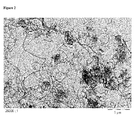
Fig.2 is the TEM image of carbon nanotubes obtained by the catalysts based on CSX 691. The yield of this sample is 76 g CNT/ g Catalyst in 30 min. -
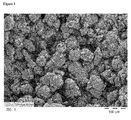
Fig.3 is the SEM image of the carbon nanotubes obtained by the catalysts based on CSX 691, showing a sub-agglomerate morphology. -
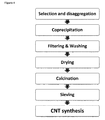
Fig. 4 is the flow chart of the preparation of the catalysts. - Given the major disadvantages of the above methods known in the art, which usually lead to residual metal compounds, such as metal oxides, and are therefore characterized by a low yield and therefore low carbon content CNTs, it has been the problem of the invention to provide a solution to synthesize a carbon-based catalyst, and subsequently, carbon nanotubes (CNTs), with as few types of metal residuals as possible, while simultaneously keeping a high yield, which eliminates the risk of degradation for further applications.
- The invention has solved said problem by providing a method for producing a carbon-based catalyst for the synthesis of carbon nanotubes comprising the steps of:
- (a) providing and pre-treating carbon black,
- (b) co-precipitating, and
- (c) filtering, washing, drying, calcination and sieving, thereby generating the carbon-based catalyst.
- In a further embodiment of the invention, the method can further comprise the step of
- (d) synthesizing carbon nanotubes (CNTs) by using the carbon-based catalyst generated in step (c).
- Nodules, also known as primary particles, are the basic units of carbon black. However, nodules usually aggregate and cannot be broken down easily into the primary particles. These aggregates then agglomerate and form the final structure of carbon black. The structure of carbon black is not suitable to be used as part of catalysts for CNT synthesis due to its microporous property. Therefore, the CNTs produced by catalysts containing carbon black as catalyst component usually do not show high yield.
- If the carbon black with big nodules, which is bigger than 300 nm for instance, is used instead, the tight structure of carbon black is no longer present. However, the surface area of such carbon black is so limited that it can no longer work as a good spacing material for the catalyst. In this case, high yield will not be achieved either.
- In the context of the present invention, carbon blacks with nodule size ranging from 20 nm to 300 nm were selected as candidates, as they can be disaggregated to smaller pieces and shows proper surface area. Thus, in one embodiment of the method, the carbon black provided and pre-treated in step (a) can have an average nodule size of from 20 nm to 300 nm.
- The use of proper carbon black plays a key role in further preparation. However, the treatment of carbon black is the key step to make the best use of the treated carbon black. Usually, a sonication bath can be employed, when carbon black was used to prepare a catalyst. But carbon black keeps its structure in that case, and only a very small amount of carbon black can be dispersed, which limits the preparation of the catalysts.
- In the context of the present invention, pre-disaggregation of carbon black was found to be beneficial, where the structure of carbon black was broken down into pieces by more powerful tools like sonication tips or shear mixer, etc., which later used as good spacing materials for preparing catalyst. Thus, in a further embodiment of the method of the invention, the pre-treating in step (a) comprises pre-treating of carbon black by either an ultrasonic tip or a high shear mixer to break the carbon black into smaller pieces.
- A co-precipitation method was adopted here to prepare catalysts. Instead of using aluminium and magnesium as diluting materials, carbon black pre-treated in step (a) was used, preferably with active metal precursors. Thus, in a further embodiment of the method of the invention, step (b) comprises co-precipitating one or more active metal salts and one or more promoting metal salts with treated carbon black as spacing materials in the presence of a precipitation agent.
- In a further embodiment of the invention, said one or more active metal salts can be selected from the group consisting of iron salts, cobalt salts, nickel salts, copper salts, molybdenum salts and manganese salts (i.e. Fe-, Co-, Ni-, Cu-, Mo- and Mn-salts).
- In a particularly preferred embodiment of the invention the one or more active metal salts can be selected from the group consisting of Co(NO3)2,CoSO4, Co(CH3COO)2, CoCl2, Co[CH3COCH=C(O)CH3]3 (Cobalt(III) acetylacetonate), or Co[CH3COCH=C(O)CH3]2 (Cobalt(II) acetylacetonate), (NH4)2Co(SO4)2 ·6H2O, [C6H5COCH=C(O-)CH3]2Co, CoBr2, CoF2, Co3(PO4)2, Co(BF4)2·6H2O, Co(SCN)2, C4H16Cl3CoN4, [Co(NH3)6]Cl3, and [Co(NH3)5]Cl2.
- In a further embodiment of the invention the one or more promoting metal salts can be selected from the group consisting of copper salts, molybdenum salts, manganese salts, lithium salts, sodium salts, potassium salts, aluminium salts, magnesium salts, silica salts, zirconium salts, titanium salts, chromium salts, tungsten salts and vanadium salts (i.e. Cu-, Mo, Mn-, Li-, Na-, K-, Al-, Mg-, Si-, Zr-, Ti-, Cr-, W- and V-salts).
- In a particularly preferred embodiment of the invention the one or more promoting metal salts can be selected from the group consisting of Mn(NO3)2, MnSO4, Mn(CH3COO)2, MnCl2 Mn[CH3COCH=C(O)CH3]3, Mn[CH3COCH=C(O)CH3]2, MnBr2, MnF2, MnF3, (HCO2)2Mn, and Mn(ClO4)2.
- In a preferred embodiment of the invention, the one or more active metal salts weigh from 20 % to 400 wt% of the mass of carbon black.
- Precipitation agents, such as urea can be used to take the advantage of homogeneous precipitation. The amount of urea plays a key role in this step. To determine how much urea should be used is not easy due to the complex kinetic and thermodynamic issues. When the theoretical minimum amount of urea is employed, the precipitation reaction cannot be finished even after a long duration due to the fact that there are always some urea cannot fully be disassociated; When too much urea is employed, the precipitation process runs much faster but the crystalline of the precipitates will be affected; Moreover, some precipitates, e.g. Co(OH)2, dissolve again due to the formation of metal complex. Thus, in a preferred embodiment of the invention, the precipitation agent is selected from group consisting of ammonium carbonate, ammonium hydroxide, urea, alkali or alkaline earth carbonates and alkali or alkaline earth hydroxides.
- In the context of the invention, 3 to 15 times of the theoretical amount of precipitation agent, such as urea, can be determined as the optimized parameter, which can result in a reasonable reaction duration from 20 to 30 hours.
- To determine the proper duration for co-precipitation, a series of experiments was carried out, showing that typically 24 to 30 hours can be taken as a proper duration for co-precipitation. Shorter or longer duration times would lead to less active catalysts.
- In a preferred embodiment of the invention, the drying in step (c) is performed at a temperature ranging from 25 °C to 200 °C.
- After washing, filtering and drying in step (c) of the method of the invention, calcination is the crucial step to form the catalysis active carbon-based catalyst, wherein the precipitates are converted into oxides which are more active in CNT synthesis. Due to the presence of carbon black, the calcination temperature can be limited in air, usually below 300 °C. In that case, catalysts are not as active as the ones calcined in inert gas at higher temperature. However, even then, the yield can still reach 56 g CNT/g catalyst in 30 min, which gives a carbon content higher than 98% without washing. With optimized calcination in inert gas, the yield goes up to 76 g CNT/ g catalyst in 30 min. Therefore, an optimized calcination temperature in terms of yield be under inert atmosphere can range from 300 °C to 700 °C.
- Thus, in a further embodiment of the method of the invention, in step (c) the calcination is performed at a temperature ranging from 200 °C to 300 °C in air, or at a temperature from 300 °C to 700 °C in inert gas atmosphere.
- The yield of CNTs is calculated by the following equation:

- The sieving of the calcined catalyst in step (c) of the method of the invention helps to improve the yield and quality of the carbon-based catalyst and therefore of the CNTs that can be made by using such carbon-based catalyst. When the sieved carbon-based catalyst is smaller than 32 µm, then some quite substantial chunk forms after CNT synthesis; therefore the catalysts may best be in a form bigger than 32 µm, as long as the mass diffusion is not badly affected.
- In a further embodiment of the method of the invention, step (d) can comprises the use of the carbon-based catalyst for synthesising carbon nanotubes (CNTs) by chemical vapour deposition (CVD).
- The invention also provides the carbon-based catalyst obtainable by the above-described method of the invention.
- The invention further provides the use of the carbon-based catalyst obtainable by the method of the invention for synthesizing carbon nanotubes (CNTs).
- In a further embodiment of the invention, the use of the carbon-based catalyst for synthesizing carbon nanotubes (CNTs) can comprise synthesizing CNTs by chemical vapour deposition (CVD).
- It will be apparent to those skilled in the art that various modifications can be made to the methods and recombinant host strains of the invention. Thus, it is intended that the present invention covers such modifications and variations, provided they come within the scope of the appended claims and their equivalents.
- The invention is further illustrated below more clearly in several examples. However, it is apparent to those skilled in the art that the subject matter of the invention is not restricted thereto.
- 31.4 g Co(NO3)2.6H2O, 27.1 g Mn(NO3)2.4H2O were solved in 1 liter deionized water and then stirred by overhead stirrer. 9 g carbon black (CSX 691) was added into the solution. The mixture was then sonicated by ultrasonic tip at 360 watt for 20 min. After this pretreatment, the solution was transferred to a flask to mix with 155.8 g urea. Then the solution was heated up to 90 °C with vigorous stirring and kept for 30 hours. The solution then was cooled, filtered and washed by copious water. Then the filtering cake was dried, calcined and sieved to form the catalyst for synthesis of carbon nanotubes.
- 8.9 g carbon black (CSX 691) was added into 1 liter deionized water and then stirred by high shear mixer with 7000 rpm for 5 min. Then 31.4 g Co(NO3)2.6H2O, 27.1 g Mn(NO3)2.4H2O were solved in the carbon black containing suspension. The mixture was then transferred to a flask to mix with 155.8 g urea. Then the solution was heated up to 90 °C with vigorous stirring and kept for 30 hours. The solution then was cooled, filtered and washed by copious water. Then the filtering cake was dried, calcined and sieved to form the catalyst for synthesis of carbon nanotubes.
- 31.4 g Co(NO3)2.6H2O, 27.1 g Mn(NO3)2.4H2O were solved in 1 liter deionized water and then stirred by overhead stirrer. 9 g carbon black (CSX 691) was added into the solution. The mixture was then sonicated by ultrasonic tip at 360 watt for 20 min. After this pretreatment, the solution was transferred to a flask to mix with 155.8 g urea. Then the solution was heated up to 90 °C with vigorous stirring and kept for 30 hours. The solution then was cooled, filtered and washed by copious water. Then the filtering cake was dried, calcined and sieved to form the catalyst for synthesis of carbon nanotubes.
- The catalyst described in example 1 was then used for the CNT synthesis. CNTs were grown in a fluidized bed reactor. A sample amount of 0.5 g catalyst was placed in the fluidized reactor. The CNT synthesis was under a gas mixture of 9 L/min C2H4 and 1 L/min N2 for 30 min. After the reaction the sample was cooled and then taken from the reactor.
Claims (15)
- A method for producing a carbon-based catalyst for the synthesis of carbon nanotubes comprising the steps of:(a) providing and pre-treating carbon black,(b) co-precipitating, and(c) filtering, washing, drying, calcination and sieving, thereby generating the carbon-based catalyst.
- The method of claim 1, further comprising the step of:(d) synthesizing carbon nanotubes by using the carbon-based catalyst generated in step (c).
- The method according to claim 1 or claim 2, wherein the carbon black provided and pre-treated in step (a) has an average nodule size of from 20 nm to 300 nm.
- The method according to claims 1 to 3, wherein step (a) comprises pre-treating of carbon black by either an ultrasonic tip or a high shear mixer to break the carbon black into smaller pieces.
- The method according to claims 1 to 4, wherein step (b) comprises co-precipitating one or more active metal salts and one or more promoting metal salts with treated carbon black as spacing materials in the presence of a precipitation agent.
- The method according to claim 5, wherein said one or more active metal salts are selected from the group consisting of iron salts, cobalt salts, nickel salts, copper salts, molybdenum salts and manganese salts (Fe-, Co-, Ni-, Cu-, Mo- and Mn-salts), wherein said one or more active metal salts are preferably selected from the group consisting of Co(NP3)2,CoSP4, Co(CH3COO)2, CoCl2, Co[CH3COCH=C(O)CH3]3 (Cobalt(III) acetylacetonate), Co[CH3COCH=C(O)CH3]2 (Cobalt(II) acetylacetonate), (NH4)2Co(SO4)2 ·6H2O, [C6H5COCH=C(O)CH3]2Co, CoBr2, CoF2, Co3(PO4)2, Co(BF4)2·6H2O, Co(SCN)2, C4H16Cl3CoN4, [Co(NH3)6]Cl3, and [Co(NH3)5]Cl2.
- The method according to claim 5, wherein said one or more promoting metal salts are selected from the group consisting of copper salts, molybdenum salts, manganese salts, lithium salts, sodium salts, potassium salts, aluminium salts, magnesium salts, silica salts, zirconium salts, titanium salts, chromium salts, tungsten salts and vanadium salts (Cu-, Mo, Mn-, Li-, Na-, K-, Al-, Mg-, Si-, Zr-, Ti-, Cr-, W- and V-salts), wherein said one or more promoting metal salts preferably are selected from the group consisting of Mn(NO3)2, MnSO4, Mn(CH3COO)2, MnCl2 Mn[CH3COCH=C(O)CH3]3 or Mn[CH3COCH=C(O)CH3]2, MnBr2, MnF2, MnF3, (HCO2)2Mn and Mn(ClO4)2.
- The method according to claims 5 or 6, wherein the active metal salts weigh from 20 % to 400 wt% of the mass of carbon black.
- The method according to claims 5 to 8, wherein the precipitation agent is selected from group consisting of ammonium carbonate, ammonium hydroxide, urea, alkali or alkaline earth carbonates and alkali or alkaline earth hydroxides.
- The method according to claims 5 to 9, wherein in step (c) the drying is performed at a temperature ranging from 25 °C to 200 °C.
- The method according of claim 10, wherein in step (c) the calcination is performed at a temperature ranging from 200 °C to 300 °C in air, or at a temperature from 300 °C to 700 °C in inert gas atmosphere.
- The method according to claims 2 to 11, wherein step (d) comprises the use of the carbon-based catalyst for synthesising carbon nanotubes by chemical vapour deposition.
- Carbon-based catalyst obtainable by the method of Claims 1 and 3 to 12.
- Use of the carbon-based catalyst of Claim 13 for synthesizing carbon nanotubes.
- The use of Claim 14, wherein the synthesizing of carbon nanotubes is done by chemical vapour deposition.
Priority Applications (1)
| Application Number | Priority Date | Filing Date | Title |
|---|---|---|---|
| EP13179382.0A EP2835177A1 (en) | 2013-08-06 | 2013-08-06 | Method for preparing Co-Mn on carbon catalysts and their use in carbon nanotube synthesis |
Applications Claiming Priority (1)
| Application Number | Priority Date | Filing Date | Title |
|---|---|---|---|
| EP13179382.0A EP2835177A1 (en) | 2013-08-06 | 2013-08-06 | Method for preparing Co-Mn on carbon catalysts and their use in carbon nanotube synthesis |
Publications (1)
| Publication Number | Publication Date |
|---|---|
| EP2835177A1 true EP2835177A1 (en) | 2015-02-11 |
Family
ID=48917433
Family Applications (1)
| Application Number | Title | Priority Date | Filing Date |
|---|---|---|---|
| EP13179382.0A Withdrawn EP2835177A1 (en) | 2013-08-06 | 2013-08-06 | Method for preparing Co-Mn on carbon catalysts and their use in carbon nanotube synthesis |
Country Status (1)
| Country | Link |
|---|---|
| EP (1) | EP2835177A1 (en) |
Cited By (22)
| Publication number | Priority date | Publication date | Assignee | Title |
|---|---|---|---|---|
| CN108383104A (en) * | 2018-03-27 | 2018-08-10 | 清华大学 | A kind of generated in-situ carbon nanotube and the preparation method and application thereof |
| EP3406335A1 (en) | 2017-05-23 | 2018-11-28 | INDIAN OIL CORPORATION Ltd. | Multi-metal catalyst composition for production of morphology controlled cnt's and process thereof |
| WO2019150306A1 (en) * | 2018-02-05 | 2019-08-08 | Sabic Global Technologies B.V. | Catalyst and method related for producing thereof |
| CN110120526A (en) * | 2019-03-20 | 2019-08-13 | 江苏大学 | A kind of preparation method and application of transition metal alloy/multidimensional carbon-based composite electrode material |
| US10658651B2 (en) | 2017-07-31 | 2020-05-19 | Honda Motor Co., Ltd. | Self standing electrodes and methods for making thereof |
| CN112077329A (en) * | 2019-06-13 | 2020-12-15 | 天津师范大学 | Preparation method of carbon-based-metal composite material |
| US11081684B2 (en) | 2017-05-24 | 2021-08-03 | Honda Motor Co., Ltd. | Production of carbon nanotube modified battery electrode powders via single step dispersion |
| US11121358B2 (en) | 2017-09-15 | 2021-09-14 | Honda Motor Co., Ltd. | Method for embedding a battery tab attachment in a self-standing electrode without current collector or binder |
| US11117120B2 (en) | 2017-10-31 | 2021-09-14 | Sk Innovation Co., Ltd. | Catalyst for synthesizing carbon nanotube and method of synthesizing carbon nanotube |
| US11171324B2 (en) | 2016-03-15 | 2021-11-09 | Honda Motor Co., Ltd. | System and method of producing a composite product |
| US11201318B2 (en) | 2017-09-15 | 2021-12-14 | Honda Motor Co., Ltd. | Method for battery tab attachment to a self-standing electrode |
| US11325833B2 (en) | 2019-03-04 | 2022-05-10 | Honda Motor Co., Ltd. | Composite yarn and method of making a carbon nanotube composite yarn |
| US11352258B2 (en) | 2019-03-04 | 2022-06-07 | Honda Motor Co., Ltd. | Multifunctional conductive wire and method of making |
| US11383213B2 (en) | 2016-03-15 | 2022-07-12 | Honda Motor Co., Ltd. | System and method of producing a composite product |
| CN115058616A (en) * | 2022-06-16 | 2022-09-16 | 中国人民解放军火箭军工程大学 | Co/C/CNTs composite wave-absorbing material with one-dimensional micro-nano hierarchical structure and preparation method thereof |
| CN115295807A (en) * | 2022-08-09 | 2022-11-04 | 上海交通大学 | Five-element high-entropy spinel/multi-walled carbon nanotube composite material and preparation method thereof |
| US11535517B2 (en) | 2019-01-24 | 2022-12-27 | Honda Motor Co., Ltd. | Method of making self-standing electrodes supported by carbon nanostructured filaments |
| US11539042B2 (en) | 2019-07-19 | 2022-12-27 | Honda Motor Co., Ltd. | Flexible packaging with embedded electrode and method of making |
| US11569490B2 (en) | 2017-07-31 | 2023-01-31 | Honda Motor Co., Ltd. | Continuous production of binder and collector-less self-standing electrodes for Li-ion batteries by using carbon nanotubes as an additive |
| CN118126559A (en) * | 2022-12-04 | 2024-06-04 | 北京振兴计量测试研究所 | Sprayable ultra-black coating and forming method thereof |
| US12142771B2 (en) | 2019-01-30 | 2024-11-12 | Honda Motor Co., Ltd. | Flexible battery as an integration platform for wearable sensors and processing/transmitting devices |
| US12381275B2 (en) | 2019-01-30 | 2025-08-05 | Honda Motor Co., Ltd. | Stretchable and flexible lithium ion battery |
Citations (5)
| Publication number | Priority date | Publication date | Assignee | Title |
|---|---|---|---|---|
| DE102005032071A1 (en) * | 2005-07-08 | 2007-01-11 | Zentrum für Sonnenenergie- und Wasserstoff-Forschung Baden-Württemberg Gemeinnützige Stiftung e.V. | Nanoporous catalyst particles, their preparation and their use |
| WO2007093337A2 (en) | 2006-02-16 | 2007-08-23 | Bayer Materialscience Ag | Process for continuously preparing catalysts |
| US20080233402A1 (en) | 2006-06-08 | 2008-09-25 | Sid Richardson Carbon & Gasoline Co. | Carbon black with attached carbon nanotubes and method of manufacture |
| WO2009087040A2 (en) * | 2008-01-11 | 2009-07-16 | H.C. Starck Gmbh | Catalyst powder |
| WO2011097956A1 (en) * | 2010-02-12 | 2011-08-18 | 新奥科技发展有限公司 | Catalyst for treatment of industrial wastewater at normal temperature and pressure, and method for preparing same |
-
2013
- 2013-08-06 EP EP13179382.0A patent/EP2835177A1/en not_active Withdrawn
Patent Citations (6)
| Publication number | Priority date | Publication date | Assignee | Title |
|---|---|---|---|---|
| DE102005032071A1 (en) * | 2005-07-08 | 2007-01-11 | Zentrum für Sonnenenergie- und Wasserstoff-Forschung Baden-Württemberg Gemeinnützige Stiftung e.V. | Nanoporous catalyst particles, their preparation and their use |
| WO2007093337A2 (en) | 2006-02-16 | 2007-08-23 | Bayer Materialscience Ag | Process for continuously preparing catalysts |
| DE102006007147A1 (en) * | 2006-02-16 | 2007-08-23 | Bayer Technology Services Gmbh | Process for the continuous production of catalysts |
| US20080233402A1 (en) | 2006-06-08 | 2008-09-25 | Sid Richardson Carbon & Gasoline Co. | Carbon black with attached carbon nanotubes and method of manufacture |
| WO2009087040A2 (en) * | 2008-01-11 | 2009-07-16 | H.C. Starck Gmbh | Catalyst powder |
| WO2011097956A1 (en) * | 2010-02-12 | 2011-08-18 | 新奥科技发展有限公司 | Catalyst for treatment of industrial wastewater at normal temperature and pressure, and method for preparing same |
Non-Patent Citations (3)
| Title |
|---|
| BEZEMER G L ET AL: "Investigation of promoter effects of manganese oxide on carbon nanofiber-supported cobalt catalysts for Fischer-Tropsch synthesis", JOURNAL OF CATALYSIS, ACADEMIC PRESS, DULUTH, MN, US, vol. 237, no. 1, 1 January 2006 (2006-01-01), pages 152 - 161, XP024913130, ISSN: 0021-9517, [retrieved on 20060101], DOI: 10.1016/J.JCAT.2005.10.031 * |
| DE JONG, CATAL. REV. -SCI. ENG., vol. 42, no. 4, 2000, pages 481 - 510 |
| DISSERTATION ET AL: "Synthesisandcharacterizationofcarbon-based catalystsforthegrowthoftailor-mademulti-walled carbonnanotubes", 9 August 2013 (2013-08-09), XP055096066, Retrieved from the Internet <URL:http://www-brs.ub.ruhr-uni-bochum.de/netahtml/HSS/Diss/NiuQiang/diss.pdf> [retrieved on 20140113] * |
Cited By (33)
| Publication number | Priority date | Publication date | Assignee | Title |
|---|---|---|---|---|
| US11888152B2 (en) | 2016-03-15 | 2024-01-30 | Honda Motor Co., Ltd. | System and method of producing a composite product |
| US11383213B2 (en) | 2016-03-15 | 2022-07-12 | Honda Motor Co., Ltd. | System and method of producing a composite product |
| US11171324B2 (en) | 2016-03-15 | 2021-11-09 | Honda Motor Co., Ltd. | System and method of producing a composite product |
| EP3406335A1 (en) | 2017-05-23 | 2018-11-28 | INDIAN OIL CORPORATION Ltd. | Multi-metal catalyst composition for production of morphology controlled cnt's and process thereof |
| US10759663B2 (en) | 2017-05-23 | 2020-09-01 | Indian Oil Corporation Limited | Multi-metal catalyst composition for production of morphology controlled CNT's and process thereof |
| US11081684B2 (en) | 2017-05-24 | 2021-08-03 | Honda Motor Co., Ltd. | Production of carbon nanotube modified battery electrode powders via single step dispersion |
| US11735705B2 (en) | 2017-05-24 | 2023-08-22 | Honda Motor Co., Ltd. | Production of carbon nanotube modified battery electrode powders via single step dispersion |
| US11374214B2 (en) | 2017-07-31 | 2022-06-28 | Honda Motor Co., Ltd. | Self standing electrodes and methods for making thereof |
| US10658651B2 (en) | 2017-07-31 | 2020-05-19 | Honda Motor Co., Ltd. | Self standing electrodes and methods for making thereof |
| US11569490B2 (en) | 2017-07-31 | 2023-01-31 | Honda Motor Co., Ltd. | Continuous production of binder and collector-less self-standing electrodes for Li-ion batteries by using carbon nanotubes as an additive |
| US11616221B2 (en) | 2017-09-15 | 2023-03-28 | Honda Motor Co., Ltd. | Method for battery tab attachment to a self-standing electrode |
| US11121358B2 (en) | 2017-09-15 | 2021-09-14 | Honda Motor Co., Ltd. | Method for embedding a battery tab attachment in a self-standing electrode without current collector or binder |
| US11201318B2 (en) | 2017-09-15 | 2021-12-14 | Honda Motor Co., Ltd. | Method for battery tab attachment to a self-standing electrode |
| US11489147B2 (en) | 2017-09-15 | 2022-11-01 | Honda Motor Co., Ltd. | Method for embedding a battery tab attachment in a self-standing electrode without current collector or binder |
| US11117120B2 (en) | 2017-10-31 | 2021-09-14 | Sk Innovation Co., Ltd. | Catalyst for synthesizing carbon nanotube and method of synthesizing carbon nanotube |
| WO2019150306A1 (en) * | 2018-02-05 | 2019-08-08 | Sabic Global Technologies B.V. | Catalyst and method related for producing thereof |
| CN108383104B (en) * | 2018-03-27 | 2019-11-22 | 清华大学 | A kind of carbon nanotube produced in situ and its preparation method and application |
| CN108383104A (en) * | 2018-03-27 | 2018-08-10 | 清华大学 | A kind of generated in-situ carbon nanotube and the preparation method and application thereof |
| US11535517B2 (en) | 2019-01-24 | 2022-12-27 | Honda Motor Co., Ltd. | Method of making self-standing electrodes supported by carbon nanostructured filaments |
| US12142771B2 (en) | 2019-01-30 | 2024-11-12 | Honda Motor Co., Ltd. | Flexible battery as an integration platform for wearable sensors and processing/transmitting devices |
| US12381275B2 (en) | 2019-01-30 | 2025-08-05 | Honda Motor Co., Ltd. | Stretchable and flexible lithium ion battery |
| US11325833B2 (en) | 2019-03-04 | 2022-05-10 | Honda Motor Co., Ltd. | Composite yarn and method of making a carbon nanotube composite yarn |
| US11834335B2 (en) | 2019-03-04 | 2023-12-05 | Honda Motor Co., Ltd. | Article having multifunctional conductive wire |
| US11352258B2 (en) | 2019-03-04 | 2022-06-07 | Honda Motor Co., Ltd. | Multifunctional conductive wire and method of making |
| CN110120526A (en) * | 2019-03-20 | 2019-08-13 | 江苏大学 | A kind of preparation method and application of transition metal alloy/multidimensional carbon-based composite electrode material |
| CN110120526B (en) * | 2019-03-20 | 2022-01-11 | 江苏大学 | Preparation method and application of transition metal alloy/multi-dimensional carbon-based composite electrode material |
| CN112077329B (en) * | 2019-06-13 | 2022-10-11 | 天津师范大学 | Preparation method of carbon-based-metal composite material |
| CN112077329A (en) * | 2019-06-13 | 2020-12-15 | 天津师范大学 | Preparation method of carbon-based-metal composite material |
| US11539042B2 (en) | 2019-07-19 | 2022-12-27 | Honda Motor Co., Ltd. | Flexible packaging with embedded electrode and method of making |
| CN115058616A (en) * | 2022-06-16 | 2022-09-16 | 中国人民解放军火箭军工程大学 | Co/C/CNTs composite wave-absorbing material with one-dimensional micro-nano hierarchical structure and preparation method thereof |
| CN115058616B (en) * | 2022-06-16 | 2023-08-08 | 中国人民解放军火箭军工程大学 | One-dimensional micro-nano hierarchical structure Co/C/CNTs composite wave-absorbing material and its preparation method |
| CN115295807A (en) * | 2022-08-09 | 2022-11-04 | 上海交通大学 | Five-element high-entropy spinel/multi-walled carbon nanotube composite material and preparation method thereof |
| CN118126559A (en) * | 2022-12-04 | 2024-06-04 | 北京振兴计量测试研究所 | Sprayable ultra-black coating and forming method thereof |
Similar Documents
| Publication | Publication Date | Title |
|---|---|---|
| CN108160104B (en) | Catalyst for preparing aromatic hydrocarbon by one-step hydrogenation of carbon dioxide and preparation method and application thereof | |
| KR102496214B1 (en) | A loading catalyst in which an active metal is dispersed on an atomic scale in a carrier, and a method for preparing and using the same | |
| CN111346672A (en) | Method for preparing low-carbon olefin by catalyzing synthesis gas through heteroatom-doped molecular sieve | |
| WO2007033438A9 (en) | Catalyst system for a multi -walled carbon nanotube production process | |
| CN109967081A (en) | A kind of high activity, anti-carbon deposition methane dry gas reforming catalyst and preparation method thereof | |
| WO2014058767A1 (en) | METHODS TO SYNTHESIZE NiPt BIMETALLIC NANOPARTICLES BY A REVERSED-PHASE MICROEMULSION, DEPOSITION OF NiPt BIMETALLIC NANOPARTICLES ON A SUPPORT, AND APPLICATION OF THE SUPPORTED CATALYST FOR CO2 REFORMING OF METHANE | |
| Puskas et al. | Novel aspects of the physical chemistry of Co/SiO2 Fischer–Tropsch catalyst preparations: The chemistry of cobalt silicate formation during catalyst preparation or hydrogenation | |
| CN109126844B (en) | A kind of molybdenum carbide nanosheet and its preparation method and application | |
| CN111185179A (en) | Methane cracking catalyst and preparation method thereof | |
| US9327273B2 (en) | Catalysts | |
| CN113275019A (en) | Magnetic nickel-cobalt oxide supported gold catalyst, preparation method and application thereof, and preparation method of 2, 5-furandicarboxylic acid | |
| CA2918039A1 (en) | Nitrous oxide decomposition catalyst | |
| CN111097429A (en) | Catalyst for preparing formaldehyde by methanol oxidation and preparation method thereof | |
| JP5660006B2 (en) | Method for producing Co3O4 / CeO2 composite catalyst for exhaust gas purification and catalyst obtained thereby | |
| CN110193368B (en) | Preparation method of spinel type catalytic material | |
| CN114749196B (en) | Core-shell type microwave catalyst, preparation method and application thereof | |
| JP7009294B2 (en) | A catalyst for producing a hydrocarbon from carbon dioxide and hydrogen, a method for producing the catalyst, and a method for producing a hydrocarbon from carbon dioxide and hydrogen. | |
| Frantina et al. | Synthesis of MgO/CoFe2O4 nanoparticles with coprecipitation method and its characterization | |
| Dummer et al. | Surfactant controlled magnesium oxide synthesis for base catalysis | |
| JP4262798B2 (en) | Cobalt catalyst for reforming and synthesis gas production method using the same | |
| CN107952469B (en) | Bifunctional catalyst and preparation method and application thereof | |
| AU2002309821B8 (en) | Fischer-Tropsch catalyst prepared with a high purity iron precursor | |
| CN101565208A (en) | Method for preparing manganic manganous oxide nano-material | |
| CN1395993A (en) | Fe-base catalyst for Fischer-Tropsch syuthesis and its preparing process | |
| CN1287895C (en) | Iron-base catalyst for Fischer-Tropsch synthesis and its preparation method |
Legal Events
| Date | Code | Title | Description |
|---|---|---|---|
| PUAI | Public reference made under article 153(3) epc to a published international application that has entered the european phase |
Free format text: ORIGINAL CODE: 0009012 |
|
| 17P | Request for examination filed |
Effective date: 20130806 |
|
| AK | Designated contracting states |
Kind code of ref document: A1 Designated state(s): AL AT BE BG CH CY CZ DE DK EE ES FI FR GB GR HR HU IE IS IT LI LT LU LV MC MK MT NL NO PL PT RO RS SE SI SK SM TR |
|
| AX | Request for extension of the european patent |
Extension state: BA ME |
|
| STAA | Information on the status of an ep patent application or granted ep patent |
Free format text: STATUS: THE APPLICATION IS DEEMED TO BE WITHDRAWN |
|
| 18D | Application deemed to be withdrawn |
Effective date: 20150812 |