EP2833284A1 - Method of controlling NFC-related service provision and apparatus performing the same - Google Patents
Method of controlling NFC-related service provision and apparatus performing the same Download PDFInfo
- Publication number
- EP2833284A1 EP2833284A1 EP14175990.2A EP14175990A EP2833284A1 EP 2833284 A1 EP2833284 A1 EP 2833284A1 EP 14175990 A EP14175990 A EP 14175990A EP 2833284 A1 EP2833284 A1 EP 2833284A1
- Authority
- EP
- European Patent Office
- Prior art keywords
- nfc
- service
- information
- user
- written
- Prior art date
- Legal status (The legal status is an assumption and is not a legal conclusion. Google has not performed a legal analysis and makes no representation as to the accuracy of the status listed.)
- Granted
Links
Images







Classifications
-
- H—ELECTRICITY
- H04—ELECTRIC COMMUNICATION TECHNIQUE
- H04W—WIRELESS COMMUNICATION NETWORKS
- H04W4/00—Services specially adapted for wireless communication networks; Facilities therefor
- H04W4/80—Services using short range communication, e.g. near-field communication [NFC], radio-frequency identification [RFID] or low energy communication
-
- G—PHYSICS
- G06—COMPUTING OR CALCULATING; COUNTING
- G06F—ELECTRIC DIGITAL DATA PROCESSING
- G06F21/00—Security arrangements for protecting computers, components thereof, programs or data against unauthorised activity
- G06F21/30—Authentication, i.e. establishing the identity or authorisation of security principals
- G06F21/31—User authentication
- G06F21/34—User authentication involving the use of external additional devices, e.g. dongles or smart cards
- G06F21/35—User authentication involving the use of external additional devices, e.g. dongles or smart cards communicating wirelessly
-
- G—PHYSICS
- G06—COMPUTING OR CALCULATING; COUNTING
- G06F—ELECTRIC DIGITAL DATA PROCESSING
- G06F3/00—Input arrangements for transferring data to be processed into a form capable of being handled by the computer; Output arrangements for transferring data from processing unit to output unit, e.g. interface arrangements
- G06F3/12—Digital output to print unit, e.g. line printer, chain printer
-
- H—ELECTRICITY
- H04—ELECTRIC COMMUNICATION TECHNIQUE
- H04L—TRANSMISSION OF DIGITAL INFORMATION, e.g. TELEGRAPHIC COMMUNICATION
- H04L63/00—Network architectures or network communication protocols for network security
- H04L63/08—Network architectures or network communication protocols for network security for authentication of entities
-
- H—ELECTRICITY
- H04—ELECTRIC COMMUNICATION TECHNIQUE
- H04W—WIRELESS COMMUNICATION NETWORKS
- H04W12/00—Security arrangements; Authentication; Protecting privacy or anonymity
- H04W12/06—Authentication
-
- H—ELECTRICITY
- H04—ELECTRIC COMMUNICATION TECHNIQUE
- H04W—WIRELESS COMMUNICATION NETWORKS
- H04W12/00—Security arrangements; Authentication; Protecting privacy or anonymity
- H04W12/06—Authentication
- H04W12/062—Pre-authentication
-
- H—ELECTRICITY
- H04—ELECTRIC COMMUNICATION TECHNIQUE
- H04W—WIRELESS COMMUNICATION NETWORKS
- H04W12/00—Security arrangements; Authentication; Protecting privacy or anonymity
- H04W12/06—Authentication
- H04W12/068—Authentication using credential vaults, e.g. password manager applications or one time password [OTP] applications
-
- H—ELECTRICITY
- H04—ELECTRIC COMMUNICATION TECHNIQUE
- H04W—WIRELESS COMMUNICATION NETWORKS
- H04W12/00—Security arrangements; Authentication; Protecting privacy or anonymity
- H04W12/08—Access security
Definitions
- One or more embodiments of the present invention relate to a method of controlling provision of near-field communication (NFC)-related services and an apparatus, such as image-forming apparatus, for performing the same.
- NFC near-field communication
- NFC Near-field communication
- RFID radiofrequency identification
- One or more embodiments of the present invention include a method of providing, by dynamically configuring a service that is provided via near-field communication (NFC), a service appropriate for a use environment and enhancing security of the service that is provided via the NFC.
- NFC near-field communication
- Embodiments of the present invention are not limited thereto, and other embodiments of the present invention may be inferred from the following disclosure of embodiments of the present invention.
- a method, performed by an image-forming apparatus, of controlling service provision includes: writing information about at least one NFC service, from among NFC services that are provided based on NFC, to an NFC tag; determining an NFC service that is allowed for the user in response to a user login; and updating information that is written to the NFC tag according to a result of the determining.
- an apparatus such as an image-forming apparatus, which includes at least one of a printing module, a scanner module, and a fax module, includes an NFC tag to which information about at least one NFC service, from among NFC services that are provided based on NFC, is written; a user interface to receive an input of log-in information from a user; a control unit for determining an NFC service that is allowed for the user in response to log-in of the user; and an NFC module to update information that is written to the NFC tag according to a result of the determining.
- FIG. 1A is a diagram for comparing a data rate and a communication range between near-field communication (NFC) and other wireless communication methods.
- NFC near-field communication
- FIG. 1A compared to other wireless communication methods, NFC may operate only within a distance of about 10 cm. Unlike Bluetooth or wireless fidelity (Wi-Fi) that allows communication within a distance from several to tens of meters, NFC allows communication only within a short distance of about 10 cm.
- Wi-Fi wireless fidelity
- NFC may be compared to other wireless communication methods such as Bluetooth, Zigbee, and so on, as shown in Table 1.
- Table 1 Technology Frequency in use Security Scope of Standards Main service area NFC 13.56 MHz Encryption applied International Standards Contactless payment, RFID, File transmission Bluetooth 2.4 GHz Not applicable International Standards File transmission Zigbee 2.4 GHz Not applicable International Standards Device control Radio frequency identification (RFID) 900MHz RFID 900 MHz Not applicable Domestic (KR) standards RFID
- RFID Radio frequency identification
- NFC operates only within a distance of about 10 cm, and an encryption technology is applied to NFC.
- NFC provides high security.
- NFC is combined and used with other high-rate wireless communication methods such as third generation (3G), fourth generation (4G), or Wi-Fi
- communication may be executed more efficiently between devices.
- 3G third generation
- 4G fourth generation
- Wi-Fi wireless communication
- FIG. 1B is a diagram for showing standards for NFC technologies.
- an NFC standard technology complies with the international organization for standardization (ISO) standards, and is an extension of the ISO 14443 proximity-card standard.
- FIG. 1B shows an inclusion relationship between NFC Interface Protocol (IP)-1, which is standardized in ISO/international electrotechnical commission (IEC) 18092, and NFC IP-2, which is standardized in ISO/IEC 21481.
- IP NFC Interface Protocol
- ISO/IEC 14443 Type A and Type B, FeliCa, and ISO/IEC 15693 are international standards for a proximity card, which operates at a frequency of 13.56 MHz,.
- the ISO/IEC 18092 standard defines a communication mode for an NFC interface and protocol.
- FIGS. 2A and 2B are diagrams for explaining three communication modes for NFC.
- an NFC forum classifies and standardizes main communication modes for NFC into three modes, including a reader/writer mode 301, a peer-to-peer (P2P) mode 302, and a card emulation mode 303.
- the three communication modes for the NFC may be summarized as shown in Table 2.
- the reader/writer mode 301 supports a function in which a device, in which an NFC chipset is built, operates as a reader for reading an NFC tag or a writer for writing information to the NFC tag.
- the device, in which the NFC chipset is built, and the NFC tag may be separate from each other. Additionally, the NFC tag may be located outside a device that operates in a reader/writer mode.
- the NFC tag may be a passive tag that is included in or attached to another device. If the other device does not include an NFC chipset, the other device may not read from or write to the attached passive tag.
- the NFC tag is an active tag that is included in another device, the other device may read from and write to the NFC tag by using the NFC function. It may be difficult to later install the active tag in a device that does not support the NFC function. However, the active tag may be later detachably attached to a device that does support the NFC function, like a sticker.
- the P2P mode 302 supports a bi-directional communication between two NFC devices.
- an NFC P2P initiator searches for a host that is an NFC P2P target, and transmits data in an NFC data exchange format (NDEF) message format.
- NDEF NFC data exchange format
- devices may exchange data.
- a data transmission rate is up to 424 kbps, the P2P mode 302 is appropriate for exchanging a small size of data.
- the card emulation mode 303 is a mode whereby a device, in which an NFC chipset is built, operates like a smart card that is standardized in ISO/IEC 14443. Accordingly, the card emulation mode 303 is compatible with Felica by Sony and MiFare by Philips, as well as an ISO 14443 that is an international standard for a proximity card.
- FIG. 2B In order to systematically provide the three communication modes of the NFC, a protocol is standardized as shown in FIG. 2B .
- FIG. 2B a software configuration in an NFC system is shown.
- a logical link control protocol is a protocol that functions to connect and control layers via a communication network.
- An NDEF message is a basic message structure that is defined in an NFC communication protocol.
- the NDEF defines a record format for a message exchange between a device and a tag that are compatible with an NFC forum.
- the NDEF is a standard exchange format for a uniform resource identifier (URI), a smart poster, and others.
- the NDEF message includes one or more NDEF records.
- the NDEF record includes a payload that is described with regard to a type, a length, and an optional identifier.
- the NDEF payload means application data that is included in the NDEF record.
- a record type definition defines a record type and a type name that may correspond to the NDEF record.
- FIG. 3A is a diagram illustrating an NFC environment 1 according to an embodiment of the present invention.
- the NFC environment 1 includes an image-forming apparatus 10 and a mobile terminal 20 that respectively support NFC. Since the image-forming apparatus 10, shown in FIG. 3A , already includes an NFC chipset, the image-forming apparatus 10 may operate in the P2P mode 302 that uses an NFC function, with the mobile terminal 20. However, it will be understood by those of ordinary skill in the art that the image-forming apparatus 10, shown in FIG. 3A , may operate in the reader/writer mode 301 or the card emulation mode 303, as well as in the P2P mode 302.
- FIG. 3B is a diagram illustrating the NFC environment 1 that is similar to that shown in FIG. 1A , according to an embodiment of the present invention.
- the NFC environment 1 includes the image-forming apparatus 10 that supports NFC and the mobile terminal 20 that supports NFC.
- the image-forming apparatus 10 shown in FIG. 3A
- the image-forming apparatus 10, shown in FIG. 3B employs an NFC tag 30.
- the NFC chipset includes all functions of the NFC tag 30.
- the NFC chipset may perform the same function as the NFC tag 30.
- the function of the NFC tag 30 includes transmission of information, which is recorded in the NFC tag 30, to the mobile terminal 20 via an NFC connection.
- the NFC tag 30 may be a read/write tag, instead of a read-only tag or a write once tag, so that the NFC tag 30 may be recorded or modified by the mobile terminal 20 or the image-forming apparatus 10 that is shown in FIG. 3 .
- the read-only tag is a tag that has physical characteristics in which once-written data may not be modified.
- the read/write tag is a tag that has physical characteristics in which once-written data may be deleted or modified. Thus, classification of a tag into the read-only tag and the read/write tag is different from classification of a tag into the passive tag and the active tag.
- the NFC tag 30 needs to be an active tag, so that the NFC tag 30 is written and modified by the image-forming apparatus 10 that is shown in FIG. 3B .
- An integrated circuit (IC) of the NFC tag 30 and the image-forming apparatus 10 that is shown in FIG. 3B need to include a transmission line for transmitting or receiving data or an NFC chipset, so that the NFC tag 30 operates as an active tag.
- the NFC tag 30 operates as a passive tag, instead of as an active tag. If the NFC tag 30 operates as an active tag, the mobile terminal 20 may not read or edit information that is written in the NFC tag 30. However, the image-forming apparatus 10, shown in FIG. 3B , may not read or edit information that is written in the NFC tag 30. If the NFC tag 30 operates as an active tag, the mobile terminal 20 and the image-forming apparatus 10 that is shown in FIG. 3B , may read or edit information that is written in the NFC tag 30. Since the active tag includes all functions of a passive tag, the active tag may have more advantageous functions than the passive tag. However, the passive tag may be easily installed in the conventional image-forming apparatus, compared to the active tag.
- the NFC tag 30 may not be built in the image-forming apparatus, shown in FIG. 3B , when the image-forming apparatus is manufactured. Only when the NFC tag 30 is later installed in the image-forming apparatus 10, shown in FIG. 3B , may the image-forming apparatus 10 communicate with the mobile terminal 20 by using the NFC function.
- the image-forming apparatus 10 may include at least one slot for installing the active or passive NFC tag 30.
- the NFC environment 1 may include various electronic apparatuses that supports the NFC function, and the various electronic apparatuses may operate in the same way as in the current embodiment.
- FIG. 3C is a diagram illustrating a wireless communication environment 2 in which the image-forming apparatus 10 and the mobile terminal 20 are present, according to an embodiment of the present invention.
- the NFC environment 1 and peripheral wired or wireless networks are shown.
- the NFC environment 1 may interwork with peripheral wired or wireless networks such as Wi-Fi Direct, Bluetooth, Ethernet, 802.11a/b/g/n or so on.
- the image-forming apparatus 10 and the mobile terminal 20 may be wired or wirelessly connected to each other via a Wi-Fi Direct connection or via a Wi-Fi access point (AP) 802.11a/b/g/n.
- AP Wi-Fi access point
- FIG. 4 is a diagram illustrating the image-forming apparatus 10 according to an embodiment of the present invention. Hereinafter, a description will be provided with regard to the image-forming apparatus 10 that includes an active tag.
- the image-forming apparatus 10 includes a control unit 100, a storage unit 120, a wireless communication interface 130, an Ethernet interface 140, a user interface 150, an NFC module 160, a scanner module 170, a print module 180, a facsimile (FAX) module 190, and the NFC tag 30.
- the image-forming apparatus 10 may be implemented by using more or less elements than those shown in FIG. 4 .
- the image-forming apparatus 10 is shown as a multifunction peripheral (MFP).
- MFP multifunction peripheral
- a printer, a scanner, a FAX machine, and/or a copy machine may be the image-forming apparatus 10.
- Each of the print module 180, the scanner module 170, and the FAX module 190 performs a function of printing, scanning, and faxing.
- the printing module 180 and the scanner module 170 may be combined to perform a copying function.
- the user interface 150 is hardware which a user uses to check information about the image-forming apparatus 10 and to input a command to the image-forming apparatus 10.
- the user interface 150 may be a touchscreen in which a user operates the image-forming apparatus 10, or information that is processed by the image-forming apparatus 10 is displayed.
- the user interface 150 may be configured in various ways according to a product.
- the user interface 150 may be configured simply in a type of two or four lines on a display such as a liquid-crystal display (LCD) or light-emitting display (LED). Otherwise, the user interface 150 may be configured with a graphical user interface (GUI), to allow various graphical expressions.
- the user interface 150 may include a touch sensor for detecting a user gesture.
- the user interface 150 may be implemented as a capacitive touchscreen or an electrostatic touchscreen.
- the user interface 150 may include a tactile sensor or a proximity sensor.
- the user interface 150 may be configured with a key pad, a dome switch, a jog wheel, a jog switch or a hardware (HW) button.
- the Ethernet interface 150 refers to hardware that performs wired Ethernet communication in accordance with the institute of electrical and electronics engineers (IEEE) 802.3.
- IEEE institute of electrical and electronics engineers
- the wireless communication interface 130 may establish a wireless connection to the mobile terminal 20 via a Wi-Fi connection using an AP or via a Wi-Fi Direct connection.
- the wireless communication interface 130 may establish a wireless connection with the mobile terminal 20, and exchange data, which is necessary for an image-forming work, with the mobile terminal 20 via the wireless connection.
- the wireless connection may be a Wi-Fi connection or a Wi-Fi Direct connection, but is not limited thereto. Unless it is specified that Wi-Fi Direct is excluded from Wi-Fi, it may be interpreted that Wi-Fi includes Wi-Fi Direct.
- the image-forming apparatus may further include a web browser that accesses a web page via the wireless communication interface 130 or the Ethernet interface 140.
- the storage unit 120 stores printing data, FAX documents, scanned documents, and e-mail documents.
- the storage unit 120 may include a folder (hereinafter referred to as a document box) which is generated according to a file server function of the image-forming apparatus 10.
- the document box may include a personal box that is generated for each user and a common box that allows use by all users.
- a file that may be stored in the document box may include a print job, print data in a page description language (PDL), rendered print data, an image file, or a word document, but is not limited thereto.
- the storage unit 120 also stores firmware of the image-forming apparatus 10.
- the control unit 100 controls all operations of the image-forming apparatus 10. Information, which is necessary for control, is stored in the storage unit 120 and read as necessary.
- the NFC module 160 includes a slot for mounting the NFC tag 30.
- the NFC module 160 supplies power to the NFC tag 30 so that the NFC tag 30 operates as an active tag, and enables reading from or writing to the NFC tag 30.
- NFC tag 30 Information regarding at least one NFC service, from among NFC services that are provided based on NFC, is written to the NFC tag 30. That is, according to control by the control unit 100, the NFC module 160 writes information regarding an NFC service to the NFC tag 30.
- the NFC service is an operation that is partially or entirely intervened by the NFC module 160 or the NFC tag 30, from among various operations that may be performed by the image-forming apparatus 10. For example, if a particular operation is started as the NFC tag 30 is read, even if the NFC tag 30 or the NFC module 160 is not intervened any more after the operation is started, the particular operation is defined to be included in the NFC service.
- the NFC service may include at least one from among a first service for automating a wireless connection between the mobile terminal 20 and the image-forming apparatus 10, a second service for copying a setting of the image-forming apparatus 10 to the mobile terminal 20, and thus, applying the setting to another image-forming apparatus, a third service for rendering content of the mobile terminal 20 to a cloud resource (not illustrated), a fourth service for displaying information about an operation state and a consumable of the image-forming apparatus 10 on the mobile terminal 20, a fifth service for, if the mobile terminal 20 performs NFC tagging, scanning a document and transmitting the document to the mobile terminal 20, and a sixth service for, if the mobile terminal 20 performs NFC tagging, printing content of the mobile terminal 20.
- a wireless connection between the mobile terminal 20 and the image-forming apparatus 10, according to the first service, is shown.
- a procedure of a Wi-Fi Direct connection between the mobile terminal 20 and the wireless communication interface 130 is described.
- the mobile terminal 20 reads information regarding the first service, which is written to the NFC tag 30, through NFC tagging.
- the information regarding the first service may include, for example, information regarding Wi-Fl or Wi-Fi Direct, a media access control (MAC) address or an internet protocol (IP) address of the image-forming apparatus 10, or a certification code, such as a personal identification number (PIN), which is necessary for a wireless connection between the image-forming apparatus 10 and the mobile terminal 20.
- the information regarding the first service is not limited thereto.
- the mobile terminal 20 searches for a candidate apparatus that may be Wi-Fi Direct connected to the mobile terminal 20, according to information regarding the first service.
- the mobile terminal 20 collects information such as a MAC address, an apparatus type, or a service set identifier (SSID) of candidate apparatuses (not illustrated), through a probe request and a probe response that are wireless local area network (LAN) packets.
- SSID service set identifier
- the mobile terminal 20 identifies the image-forming apparatus 10 from among the candidate apparatuses, via the MAC or IP address that is read through the NFC tagging.
- the mobile terminal 20 tries a Wi-Fi Direct connection to the image-forming apparatus 10.
- a group formation procedure and a certification procedure for a security connection are executed between the mobile terminal 20 and the wireless communication interface 130.
- Group formation refers to determining which apparatus is a group owner (GO) or which apparatus is a client. Apparatuses, which belong to a formed group, need to be securely connected.
- a technology of a Wi-Fi protected setup hereinafter referred to as WPS
- the WPS includes a PIN method or a push-button configuration (PBC) method.
- the PIN method is used to execute certification through a preset PIN code.
- the PBC method is used to execute certification by pushing a hardware or soft button that is included in the GO apparatus.
- the mobile terminal 20 executes certification by using the read certification code through the NFC tagging.
- the wireless interface 130 that is a GO allocates an IP address to the mobile terminal 20.
- the wireless communication interface 130 may include a dynamic host configuration protocol (DHCP) server module for IP address allocation. Through such a procedure, a Wi-Fi Direct connection between the wireless interface 130 and the mobile terminal 20 is established.
- DHCP dynamic host configuration protocol
- the wireless communication interface 130 may be the same infrastructure network as the mobile terminal 20, via AP 802.11 b/g/n.
- the image-forming apparatus 10 may allow access of apparatuses that are present in the same infrastructure network as the mobile terminal 20, an apparatus that has a particular IP, an apparatus that has a particular MAC, or an apparatus that has an account in the image-forming apparatus 10. If the mobile terminal 20 request the AP to transmit data to an IP address of the image-forming apparatus 10, the AP relays an address resolution protocol (ARP) table to the image-forming apparatus 10 through data transmission.
- ARP address resolution protocol
- An NDEF message 800 which is written to the NFC tag 30, may be illustrated as shown in FIG. 8 .
- the NDEF message 800 is generated by the control unit 100, and the NFC module 160 may write the NDEF message 800, shown in FIG. 8 , to the NFC tag 30.
- the NDEF message 800 includes a plurality of NDEF records. Information regarding one NFC service may be written to each of the NDEF records. In other words, an independent NDEF record may be formed for each NFC service unit.
- the user interface 150 may receive login information and a login request from a user.
- the login information may be an identification (ID) or a password of a user, but is not limited thereto.
- ID an identification
- password a password of a user
- a user login may be performed by using various methods such as face recognition or fingerprint recognition.
- the user interface 150 may display whether a login is successful according to control by the control unit 100.
- the control unit 100 determines an NFC service that is allowed for the logged-in user.
- the control unit 100 may control the NFC module 160 to update information that is written to the NFC tag 30, by comparing the NFC service that is allowed for the user to information that is written to the NFC tag 30. If information regarding the NFC service that is not allowed for a user is written to the NFC tag 30 or if information regarding the NFC service that is allowed for a user is not written to the NFC tag 30, the control unit 100 may control the NFC module 160 so as to update the information that is written to the NFC tag 30.
- the control unit 100 may refer to an NFC service policy that is stored in the storage unit 120, so as to determine an NFC service that is allowed for a user. A description about the NFC service policy will be provided later below.
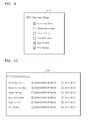
- the user interface 150 may display a GUI for receiving a selection of an NFC service to be activated from among the NFC services, according to control by the control unit 100. For example, the user interface 150 displays a GUI G10, shown in FIG. 9 , and receives a selection of an NFC service to be activated from the user.
- the image-forming apparatus 10 deactivates all NFC services, other than the selected NFC service.
- the control unit 100 stores information regarding the changing in the storage unit 120.
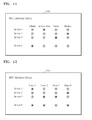
- the storage unit 120 may store an NFC service policy that is shown in FIG. 13 or 14 , according to a user input through a GUI that is shown in FIGS. 9 through 12 . In other words, it may be understood that the user interface 150 receives an input of the NFC service policy via the GUI that is shown in FIGS. 9 through 12 .
- the storage unit 120 may store information such as an apparatus setting, a network setting, or consumables of the image-forming apparatus 10.
- the storage unit 120 may store information to be written to the NFC tag 30.
- the control unit 100 updates the NFC tag 30 by controlling the NFC module 160, so that information regarding the activated NFC service is written to the NFC tag 30.
- the user interface 150 may display a GUI for receiving a selection of an NFC service, which will be provided to a user who obtained administration authority from among the NFC services, from the user.
- the user interface 150 displays a GUI G20, shown in FIG. 10 , and receives a selection of an NFC service, which will be provided to a user who obtained administration authority from among the NFC services, from the user.
- An administrator mode shown in FIG. 10 , is an operation mode of the image-forming apparatus 10 when a user who obtained administration authority logs in.
- a user mode, shown in FIG. 10 is an operation mode of the image-forming apparatus 10 when a general user who did not obtain administration authority logs in.
- An NFC service, which is selected for the general user mode, is allowed to be used in the administrator mode.
- an NFC service, which is selected for the administrator mode is not allowed to be used in the general user mode. That is, an NFC service, provided to an administrator, includes a service that is provided to a general user.
- an NFC service, provided to a general user does not include a service that is provided to an administrator.
- the image-forming apparatus 10 may update the NFC tag 30 so that the information regarding the NFC service, which is provided only to a user who obtained administration authority, is not provided to the NFC tag 30.
- the information regarding the NFC service which is provided only to a user who obtained administration authority, is written to the NFC tag 30.
- the NFC tag 30 may be updated again so that the information regarding the NFC service, which is provided only to a user who obtained administration authority, is not written to the NFC tag 30.
- the image-forming apparatus 10 may update the NFC tag 30 according to a log-in/out state.
- control unit 100 If the NFC service, which will be provided to a user who obtained administration authority, is changed according to a user selection, the control unit 100 stores a changed NFC service policy in the storage unit 120.
- the user interface 150 may display a GUI G30 which is shown in FIG. 11 .
- the GUI G30 includes functions of the GUI G10, shown in FIG. 10 , and of the GUI G11, shown in FIG. 11 .
- the GUI G30 may receive a selection of an NFC service, which will be provided to a user who did not log in, that is, a guest.
- the NFC service, provided to a general user includes an NFC service that is provided to the guest.
- the NFC service, provided to the guest does not include an NFC service that is provided to the general user.
- a deactivated NFC service is not provided to the administrator, the general user, and the guest.
- the control unit 100 stores the changed NFC service policy in the storage unit 120. Additionally, the control unit 100 controls the NFC module 160 so as to update the NFC tag 30 according to the changed NFC service policy.
- the NFC module 160 may write the information regarding the NFC service, which is provided to a guest or a general user, to the NFC tag 30. However, as described above, if the information regarding the NFC service that is provided to an administrator is written to the NFC tag 30, and the administrator logs out, the NFC tag 30 may be updated. For example, information, which will be written to the NFC tag 30 in a log-out state, may be set as information about the NFC service that is provided to a general user or a guest by default.
- the user interface 150 may display a GUI G40 that is shown in FIG. 12 .
- the NFC services are classified into four classes.
- a layer may or may not be present between the respective classes. If a layer is present, a user of an upper class may use all NFC services that are allowed for a user of a lower class. However, a user of a lower class may not use all NFC services that are allowed for a user of an upper class.
- An ID and a password of a user may be mapped to a class, and stored as an NFC service policy as shown in FIG. 14 .
- a mobile identifier is further included.
- the mobile identifier is information regarding the mobile terminal 20.
- the mobile identifier may denote a MAC address 1405 or a phone number 1410 of the mobile terminal, but is not limited thereto.
- the mobile identifier may be used for certification of the mobile terminal 20.
- GUI and NFC service policy changes may be provided only to a user that has administration authority.
- the GUI and NFC service policy changes are examples for understanding the spirit of embodiments of the present invention. Accordingly, the scope of embodiments of the present invention is not limited to any particular embodiment.
- the NFC module 160 may include an NFC chipset. If the NFC module 160 includes an NFC chipset (not shown), the NFC tag 30 may be omitted.
- the NFC chipset may include a transceiver antenna.
- the image-forming apparatus 10 and the mobile terminal 20 operate in a P2P mode, and thus, transmit data to the mobile terminal 10. That is, instead of updating the NFC tag 30, the NFC module 160 may transmit information, which may be written to the NFC tag 30 if the NFC tag 30 is updated, to the mobile terminal 20 in the P2P mode.
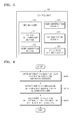
- FIG. 5 is a diagram illustrating the control unit 100, included in the image-forming apparatus 10, according to an embodiment of the present invention.
- control unit 100 may include an NFC manager 110, a user certification module 101, a GUI generation module 102, and an NFC service setting module 103.
- the user certification module 101 certifies user log-in information that is input via the user interface 150 shown in FIG. 4 .
- the user certification module 101 may display a result of the certification via the user interface 150. If the user certification is successful, the user certification module 101 requests the NFC manager 110 to update the NFC tag 30. That is, the user certification module 101 requests the NFC manager 110 to update the NFC tag 30, so that only information regarding an NFC service, which is allowed for a currently logged-in user, is written to the NFC tag 30.
- the NFC service setting module 103 generates and manages an NFC service policy. For example, the NFC service setting module 103 may generate the GUIs, shown in FIGS. 9 through 12 , via the GUI generation module 102. The NFC service setting module 103 receives an input for setting of the NFC service policy via the GUI that is generated by the GUI generation module 102. If the NFC service policy is changed, the NFC service setting module 103 updates the NFC service policy that is stored in the storage unit 120. If the NFC service policy is changed, the NFC service setting module 103 requests the NFC manager 110 to update the NFC tag 30 according to the changed NFC service policy.
- the NFC manager 110 may include an update determination module 111 and a NDEF generation module 112.
- the NFC manager 110 determines whether it is necessary to update the NFC tag 30 via the update determination module 111. If it is determined that it is necessary to update the NFC tag 30, the NFC manager generates an NDEF message via the NDEF generation module 112. The NFC manager 110 writes the generated NDEF message to the NFC tag 30.
- the update determination module 111 determines whether it is necessary to update information that is written to the NFC tag 30.
- the update determination module 111 receives a request for updating the NFC tag 30 from the user certification module 101 or the NFC service setting module 103, so as to determine whether it is necessary to update information that is written to the NFC tag 30.
- the update determination module 111 periodically updates the NFC tag 30 according to information that is written to the NFC tag 30 or occurrence of a particular event. For example, information regarding consumables or a state of the image-forming apparatus 10 is written to the NFC tag 30, the information regarding consumables may be periodically written to the NFC tag 30. If an event, in which the image-forming apparatus 10 malfunctions when operating in a normal state, occurs, information about a cause of the malfunction and help information for solving the malfunction may be written to the NFC tag 30, but embodiments of the present invention are not limited thereto.
- the update determination module 111 identifies an NFC service that is allowed for the logged-in user via the NFC service setting module 103. If information, written to the NFC tag 30, does not correspond to the logged-in user, the update determination module 111 may determine to replace the information about the NFC service, which is written to the NFC tag, with information about the NFC service, which is allowed for the logged-in user.
- the update determination module 111 may determine to update the NFC tag 30. If the user logs out, the update determination module 111 may determine to write only the information that is allowed for the general user to the NFC tag 30 again.
- the update determination module 111 may compare a NFC service that is allowed for a logged-in user to information that is written to the NFC tag 30, and thus, update the information that is written to the NFC tag 30. If the information about the NFC service that is not allowed for a user is written to the NFC tag 30, the update determination module 111 may determine to update the NFC tag 30. If the information about the NFC service that is allowed for a logged-in user is not written to the NFC tag 30, the update determination module 111 may determine to update the NFC tag 30. For example, if a logged-in user obtained administration authority, but only information about the NFC service that is allowed for a general user is written to the NFC tag 30, the update determination module 111 may determine to update the NFC tag 30.
- whether to update the NFC tag 30 may be determined similarly to the user log-in. For example, when a user logs out, the update determination module 111 may determine to update the NFC tag 30 so as to write only information about the NFC service that is allowed for a general user to the NFC tag 30.
- the update determination module 111 determines whether to update the NFC tag 30 according to the changed NFC service policy. This may be determined in consideration of the NFC service that is allowed for a logged-in user. For example, it is assumed that a logged-in user obtained administration authority, and all NFC services that are allowed for the user who obtained administration authority are written to the NFC tag 30. Then, it is assumed that an NFC service policy is changed so that one of the NFC services that was allowed only in the administrator mode is allowed in a general user mode. In this case, while the user who obtained administration authority logs in, it may be determined that it is not necessary to update the NFC tag 30. On the contrary, if an activated NFC service is deactivated, and thus, the NFC service policy is changed, it may be determined that it is necessary to update the NFC tag 30.
- the NDEF generation module 112 When the update determination module 111 determines to update the NFC tag 30, the NDEF generation module 112 generates an NDEF message in consideration of an NDEF type. The NDEF generation module 112 generates an NDEF message so as to form an independent NDEF record for each NFC service unit. The NDEF generation module 112 collects information about the NFC service that is allowed for a user, so as to generate an NDEF message.
- Information about the first service for automating a wireless connection between the mobile terminal 20 and the image-forming apparatus 10 may include a wireless connection method, a MAC address, an IP address, and/or PIN information for WPS certification with regard to the image-forming apparatus 10.
- Information about the second service for copying a setting of the image-forming apparatus 10 to the mobile terminal 20, and thus, applying the setting to another image-forming apparatus may include information regarding a network setting such as a connection port, a security policy, a protocol, etc., a print setting such as a resolution, single/double-sided printing, a paper-feeding method, etc., and/or a scanning setting such as a resolution, an image compression method, an image type, color/black-and-white, etc.
- a network setting such as a connection port, a security policy, a protocol, etc.
- a print setting such as a resolution, single/double-sided printing, a paper-feeding method, etc.
- a scanning setting such as a resolution, an image compression method, an image type, color/black-and-white, etc.
- Information about the third service for rendering content of the mobile terminal 20 to a cloud resource may include a uniform resource locator (URL) of the cloud resource or certification information for accessing the cloud resource.
- URL uniform resource locator
- Information about the fourth service for displaying information about an operation state and a consumable of the image-forming apparatus 10 on the mobile terminal 20 may include information regarding a remaining amount of ink/toner, whether the image-forming apparatus 10 is operating normally, firmware (FM) version information, and/or, if there is an error, a cause of and a solution to the error.
- FM firmware
- the NDEF generation module 112 reconfigures the collected information about the NFC service, and thus, generates an NDEF message.
- the NDEF generation module 112 may add an NFC service identifier to each NDEF record, so as to identify an NFC service of information that is written to the NDEF record.
- the NFC manager 110 writes the NDEF message, which is generated by the NDEF generation module 112, to the NFC tag 30 via the NFC module 160.
- FIG. 6 is a flowchart for explaining a method, performed by the image-forming apparatus 10, of controlling service provision according to an embodiment of the present invention. Descriptions, which have been provided above, will not be repeated here, and may be referred to above. It is assumed that an NFC service policy is set for the image-forming apparatus 10, prior to operation A605.
- the image-forming apparatus 10 writes information regarding at least one NFC service, from among NFC services, to the NFC tag 30.
- the image-forming apparatus 10 writes the information to the NFC tag 30 according to the NFC service policy.
- the image-forming apparatus 10 determines an NFC service that is allowed for the user.
- the image-forming apparatus 10 may determine an NFC service that is allowed for the user, according to the NFC service policy.
- the image-forming apparatus 10 updates the information that is written to the NFC tag 30.
- the image-forming apparatus 10 compares the NFC service that is allowed for the user to the information that is written to the NFC tag 30. If the information regarding the NFC service that is not allowed for the user is written to the NFC tag 30 or if information regarding the NFC service that is allowed for a user is not written to the NFC tag 30, the image-forming apparatus 10 replaces or updates the information about the NFC service, which is written to the NFC tag, with the information about the NFC service, which is allowed for the logged-in user.
- FIG. 7 is a flowchart for explaining a method, performed by the image-forming apparatus 10, of controlling service provision, according to another embodiment of the present invention.
- a first user is logged in to the image-forming apparatus 10.
- the first user may be an administrator.
- the image-forming apparatus 10 displays a GUI for selecting an NFC service.
- the GUI for selecting the NFC service refers to a GUI that may change an NFC service policy.
- the image-forming apparatus 10 sets the NFC service policy.
- the image-forming apparatus 10 writes information about the NFC service to the NFC tag 30, according to the changed NFC service policy. For example, the image-forming apparatus 10 collects the information about the NFC service by referring to the NFC service policy, and generates an NDEF message in operation A716. In operation A717, the image-forming apparatus 10 writes the generated NDEF message to the NFC tag 30.
- the image-forming apparatus 10 logs out the first user.
- the image-forming apparatus 10 updates the NFC tag 30. For example, as an administrator is logged out, the image-forming apparatus 10 writes only information about an NFC service, which is allowed for a guest, to the NFC tag 30.
- the image-forming apparatus 10 receives log-in information about a second user, and then, the second user logs in.
- the second user is assumed to be a general user.
- the image-forming apparatus 10 determines an NFC service that is allowed for the second user.
- the image-forming apparatus 10 compares the information that is written to the NFC tag 30 to an NFC service that is allowed for the second user.
- the image-forming apparatus 10 determines whether an update of the NFC tag 30 is necessary. If the update is necessary, the image-forming apparatus 10 updates the NFC tag 30.
- the mobile terminal 20 tags the NFC tag 30, and thus, reads the information that is written to the NFC tag 30.
- the mobile terminal 20 requests the image-forming apparatus 10 for a NFC service, and the image-forming apparatus 10 provides the corresponding NFC service to the mobile terminal 20.
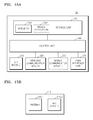
- FIG. 15A is a diagram illustrating the mobile terminal 20 according to an embodiment of the present invention.
- the mobile terminal may be implemented in various forms.
- the mobile terminal 20, described herein may include a cellular phone, a smart phone, a laptop computer, a digital broadcasting terminal, a personal digital assistant (PDA), a portable multimedia player (PMP), a navigation device, a tablet personal computer (PC), or the like.
- PDA personal digital assistant
- PMP portable multimedia player
- PC tablet personal computer
- the mobile terminal 20 may include an NFC module 210, a wireless communication module 220, a mobile communication module 260, a user interface 230, a control unit 240, and a storage unit 250.
- general-use elements other than the above-described elements, may be further included in the mobile terminal 20.
- the mobile terminal 20 may include general-use elements, such as a camera module, a digital multimedia broadcasting (DMB) module, a global positioning system (GPS) module, an image or voice processing processor, a power-supply unit, a vibration motor, a speaker, a microphone, a main board, or the like.
- DMB digital multimedia broadcasting
- GPS global positioning system
- the mobile terminal 20 may be implemented by using more or less elements than those shown in FIG. 15A .
- the mobile terminal 20 is a tablet PC which is used only on a wireless internet connection, the mobile communication module 260 may not be included.
- the NFC module 210 performs an NFC.
- the NFC module 210 may include an antenna 210_1 and an NFC chipset 210_2.
- the NFC chipset 210_2 includes circuit devices so that the NFC module 210 may operate in the reader/writer mode 301, the P2P mode 302, or the card emulation mode 303 in Fig. 2A .
- the NFC module 210 reads information that is written to the NFC tag 30 (in the reader mode), and writes or edits certain information to the NFC tag 30 (in the writer mode).
- RF radio frequency
- the NFC module 210 operates in the P2P mode 302, and thus, may execute bi-directional data transmission and reception. If the NFC module 210 operates in the card emulsion mode 303, the NFC module may operate similarly to the active or passive NFC tag 30.
- the NFC module 210 obtains information that is written to the NFC tag 30 through the NFC tagging.
- the NFC module 210 may switch from the reader mode to the writer mode, according to a request made by the control unit 240.
- the wireless communication module 220 may establish a wireless connection with the image-forming apparatus 10, and exchange data, which is necessary for image-forming work that will be described later, with the image-forming apparatus 10 via the wireless connection.
- the mobile communication module 260 is connected to a circuit switching network (not shown) and a packet switching network (not shown). Thus, the mobile communication module 260 may transmit or receive data that is necessary for mobile communication, and download a certain application via the packet switching network.
- the user interface 230 may be a touchscreen in which a user operates the mobile terminal 20, or information that is processed by the mobile terminal 20 is displayed.
- the storage unit 250 may store a program for processing and controlling the control unit 240, and execute a function of storing data that is input/output.
- the storage unit 250 may store a mobile operating system (OS) 2501.
- the control unit 240 executes the mobile OS 2501, so as to control the mobile terminal 20.
- the storage unit 250 may store a mobile printing application (hereinafter referred to as a mobile application 2502), for using a function of printing, scanning, or faxing performed by the image-forming apparatus 10.
- the mobile application 2502 interworks with the image-forming apparatus 10, so as to perform an image-forming work such as printing, scanning, or faxing.
- the mobile terminal 20 may perform web storage, which involves a storage function of the storage unit 250, based on the internet connection.
- the control unit 240 generally controls all functions of the mobile terminal 20. For example, the control unit 240 performs control and processing functions relating to content capture, a voice phone call, data communication, and/or a video phone call.
- the control unit 240 executes the mobile OS 2501 that is stored in the storage unit 250 and the mobile application 2502, so as to control the NFC module 210, the wireless communication module 220, the mobile communication module 260, the user interface 230, and/or the storage unit 250.
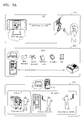
- the mobile terminal 20 reads information that is written to the NFC tag 30 through NFC tagging. If information about a service that automates a wireless connection between the image-forming apparatus 10 and the mobile terminal 20 is written to the NFC tag 30, the mobile terminal 20 may output a screen like the GUI G50 shown in FIG. 16 and, at the same time, establish a wireless connection to the image-forming apparatus 10. A wireless connection between the image-forming apparatus 10 and the mobile terminal 20 may be executed upon request by a user, or automatically executed without request.
- the mobile terminal 20 may output a screen like the GUI G60 shown in FIG. 16 .
- the mobile terminal 20 If information regarding a service for copying a setting of the image-forming apparatus 10 to the mobile terminal 20, and thus, applying the setting to another image-forming apparatus is written to the NFC tag 30, the mobile terminal 20 outputs a screen like the GUI G70 shown in FIG. 16 , so as to guide tagging for the other image-forming apparatus.
- the mobile terminal 20 switches to the NFC writer mode, and when an NFC tag of the other image-forming apparatus is tagged, an apparatus setting of the image-forming apparatus 10 is written to the NFC tag of the other image-forming apparatus.
- the other image-forming apparatus may be set to be the same as the image-forming apparatus 10, through the information written to the NFC tag.
- the mobile terminal 20 If information regarding a service for rendering content of the mobile terminal 20 to a cloud resource is written to the NFC tag 30, the mobile terminal 20 is connected to a cloud server, and transmits the content to be rendered to the cloud server.
- the mobile terminal 20 receives printing work data, which includes the rendered content, from the cloud server.
- the mobile terminal 20 transmits the printing work data to the image-forming apparatus 10, so as to execute printing.
- the mobile terminal 20 checks if an NFC scanning function may be executed, and activates the corresponding function of an application that is currently being executed.
- the mobile terminal 20 tags the NFC tag 30, and requests the image-forming apparatus 10 for document scanning.
- the mobile terminal 20 receives the scanned document from the image-forming apparatus 10.
- the NFC scanning function may include a function of automating a wireless connection between the image-forming apparatus 10 and the mobile terminal 20.
- the mobile terminal 20 checks if an NFC printing function may be executed, and activates the corresponding function of an application that is currently being executed.
- the mobile terminal 20 tags the NFC tag 30, transmits the content to the image-forming apparatus 10, and then, requests the image-forming apparatus 10 for printing.
- the image-forming apparatus 10 prints the content.
- the NFC printing function may include a function of automating a wireless connection between the image-forming apparatus 10 and the mobile terminal 20.
- a service by dynamically configuring a service that is provided by an image-forming apparatus via NFC, a service may be prevented from being exposed to an unexpected user, and a service that is appropriate for a use environment may be provided.
- embodiments of the present invention may also be implemented through computer readable code/instructions in/on a medium, e.g., a computer readable medium, to control at least one processing element to implement any of the above described embodiments.
- a medium e.g., a computer readable medium
- the medium may correspond to any medium/media permitting the storage and/or transmission of the computer readable code.
- the computer readable code may be recorded/transferred on a medium in a variety of ways, with examples of the medium including recording media, such as magnetic storage media (e.g., ROM, floppy disks, hard disks, etc.) and optical recording media (e.g., CD-ROMs, or DVDs), and transmission media such as Internet transmission media.
- the medium may be such a defined and measurable structure including or carrying a signal or information, such as a device carrying a bitstream according to one or more embodiments of the present invention.
- the media may also be a distributed network, so that the computer readable code is stored/transferred and executed in a distributed fashion.
- the at least one processing element may include a processor or a computer processor, and processing elements may be distributed and/or included in a single device.
Landscapes
- Engineering & Computer Science (AREA)
- Computer Security & Cryptography (AREA)
- Computer Networks & Wireless Communication (AREA)
- Signal Processing (AREA)
- Theoretical Computer Science (AREA)
- General Engineering & Computer Science (AREA)
- Computer Hardware Design (AREA)
- Physics & Mathematics (AREA)
- General Physics & Mathematics (AREA)
- Software Systems (AREA)
- Computing Systems (AREA)
- Human Computer Interaction (AREA)
- Facsimiles In General (AREA)
Abstract
Description
- This application claims the benefit of Korean Patent Application No.
10-2013-0091589, filed on August 1, 2013 - One or more embodiments of the present invention relate to a method of controlling provision of near-field communication (NFC)-related services and an apparatus, such as image-forming apparatus, for performing the same.
- Near-field communication (NFC) is a standard for proximity near-field wireless communication. NFC enables wireless communication between electronic devices with low power consumption at a frequency of 13.56 MHz and at a distance of 10 cm or less. The NFC was jointly developed by NXP Semiconductors in the Netherlands and Sony in Japan. NFC supports a transmission rate of 424 kbps. NFC is based on proximity and provides an encryption technology, and thus, ensures high security. NFC also enables terminals to recognize each other in 1/10 second or less without having to go through a complicated pairing procedure. NFC includes smart card-type proximity wireless communication using a radiofrequency identification (RFID) technology. Compared to a smart card, NFC is bidirectional, and has a relatively large storage memory capacity. NFC may be also applied to various types of services. Accordingly, NFC technology may be applied to smart phones that have been recently commercialized.
- One or more embodiments of the present invention include a method of providing, by dynamically configuring a service that is provided via near-field communication (NFC), a service appropriate for a use environment and enhancing security of the service that is provided via the NFC. Embodiments of the present invention are not limited thereto, and other embodiments of the present invention may be inferred from the following disclosure of embodiments of the present invention.
- Additional aspects will be set forth in part in the description which follows and, in part, will be apparent from the description, or may be learned by practice of the presented embodiments.
- According to one or more embodiments of the present invention, a method, performed by an image-forming apparatus, of controlling service provision includes: writing information about at least one NFC service, from among NFC services that are provided based on NFC, to an NFC tag; determining an NFC service that is allowed for the user in response to a user login; and updating information that is written to the NFC tag according to a result of the determining.
- According to one or more embodiments of the present invention, an apparatus, such as an image-forming apparatus, which includes at least one of a printing module, a scanner module, and a fax module, includes an NFC tag to which information about at least one NFC service, from among NFC services that are provided based on NFC, is written; a user interface to receive an input of log-in information from a user; a control unit for determining an NFC service that is allowed for the user in response to log-in of the user; and an NFC module to update information that is written to the NFC tag according to a result of the determining.
- These and/or other aspects will become apparent and more readily appreciated from the following description of the embodiments, taken in conjunction with the accompanying drawings of which:
-
FIG. 1A is a diagram for comparing a data rate and a communication range between near-field communication (NFC) and other wireless communication methods; -
FIG. 1B is a diagram for showing standards for NFC technology; -
FIGS. 2A and2B are diagrams for explaining three communication modes for NFC; -
FIG. 3A is a diagram illustrating an NFC environment according to an embodiment of the present invention; -
FIG. 3B is a diagram illustrating the NFC environment that is similar to that shown inFIG. 1A , according to an embodiment of the present invention; -
FIG. 3C is a diagram illustrating a wireless communication environment in which an image-forming apparatus and a mobile terminal are present, according to an embodiment of the present invention; -
FIG. 4 is a diagram illustrating the image-formingapparatus 10 according to an embodiment of the present invention; -
FIG. 5 is a diagram illustrating a control unit, included in the image-forming apparatus, according to an embodiment of the present invention; -
FIG. 6 is a flowchart for explaining a method, performed by the image-forming apparatus, of controlling service provision, according to an embodiment of the present invention; -
FIG. 7 is a flowchart for explaining a method, performed by the image-forming apparatus, of controlling service provision, according to another embodiment of the present invention; -
FIG. 8 is a diagram illustrating an NFC data exchange format (NDEF) message according to an embodiment of the present invention; -
FIGS. 9 through 12 are diagrams illustrating a graphical user interface (GUI) of the image-forming apparatus according to embodiments of the present invention; -
FIGS. 13 and 14 are diagrams illustrating an NFC service policy according to an embodiment of the present invention; -
FIGS. 15A and 15B illustrate the mobile terminal according to an embodiment of the present invention; and -
FIG. 16 is a diagram illustrating GUIs of the image-forming apparatus according to an embodiment of the present invention. - Reference will now be made in detail to embodiments, examples of which are illustrated in the accompanying drawings, wherein like reference numerals refer to like elements throughout. In this regard, the present embodiments may have different forms and should not be construed as being limited to the descriptions set forth herein. Accordingly, the embodiments are merely described below, by referring to the figures, to explain aspects of the present description. As used herein, the term "and/or" includes any and all combinations of one or more of the associated listed items. Expressions such as "at least one of," when preceding a list of elements, modify the entire list of elements and do not modify the individual elements of the list.
- Hereinafter, embodiments of the present invention will be described in more detail with reference to the accompanying drawings.
-
FIG. 1A is a diagram for comparing a data rate and a communication range between near-field communication (NFC) and other wireless communication methods. Referring toFIG. 1A , compared to other wireless communication methods, NFC may operate only within a distance of about 10 cm. Unlike Bluetooth or wireless fidelity (Wi-Fi) that allows communication within a distance from several to tens of meters, NFC allows communication only within a short distance of about 10 cm. - NFC may be compared to other wireless communication methods such as Bluetooth, Zigbee, and so on, as shown in Table 1.
[Table 1] Technology Frequency in use Security Scope of Standards Main service area NFC 13.56 MHz Encryption applied International Standards Contactless payment, RFID, File transmission Bluetooth 2.4 GHz Not applicable International Standards File transmission Zigbee 2.4 GHz Not applicable International Standards Device control Radio frequency identification (RFID) 900MHz RFID 900 MHz Not applicable Domestic (KR) standards RFID - That is, compared to the other wireless communication methods, NFC operates only within a distance of about 10 cm, and an encryption technology is applied to NFC. Thus, NFC provides high security. Accordingly, if NFC is combined and used with other high-rate wireless communication methods such as third generation (3G), fourth generation (4G), or Wi-Fi, communication may be executed more efficiently between devices. For example, if NFC technology and Bluetooth technology are combined with each other, the NFC technology may be used to connect devices to each other (through certification), and the Bluetooth technology may be used to transmit data between devices. Thus, communication between devices may be efficiently performed.
-
FIG. 1B is a diagram for showing standards for NFC technologies. - Referring to
FIG. 1B , an NFC standard technology complies with the international organization for standardization (ISO) standards, and is an extension of theISO 14443 proximity-card standard.FIG. 1B shows an inclusion relationship between NFC Interface Protocol (IP)-1, which is standardized in ISO/international electrotechnical commission (IEC) 18092, and NFC IP-2, which is standardized in ISO/IEC 21481. ISO/IEC 14443 Type A and Type B, FeliCa, and ISO/IEC 15693 are international standards for a proximity card, which operates at a frequency of 13.56 MHz,. The ISO/IEC 18092 standard defines a communication mode for an NFC interface and protocol. -
FIGS. 2A and2B are diagrams for explaining three communication modes for NFC. - Referring to
FIG. 2A , an NFC forum classifies and standardizes main communication modes for NFC into three modes, including a reader/writer mode 301, a peer-to-peer (P2P)mode 302, and acard emulation mode 303. The three communication modes for the NFC may be summarized as shown in Table 2.[Table 2] ISO/ IEC 15693ISO/ IEC 18092ISO/ IEC 14443Operation mode Reader-to-tag communication (VCD2 mode) Device-to-device communication (P2P mode) Reader-to-tag communication (PCD1 mode) Power supply Passive Active and passive Passive Communication range 1m 10∼20cm 10cm Data rate Equal to or less than 26kbps 106, 212, 424Kbps 106Kbps (PCD: Proximity Coupling Device, VCD: Vicinity Coupling Device) - The reader/
writer mode 301 supports a function in which a device, in which an NFC chipset is built, operates as a reader for reading an NFC tag or a writer for writing information to the NFC tag. The device, in which the NFC chipset is built, and the NFC tag may be separate from each other. Additionally, the NFC tag may be located outside a device that operates in a reader/writer mode. For example, the NFC tag may be a passive tag that is included in or attached to another device. If the other device does not include an NFC chipset, the other device may not read from or write to the attached passive tag. If the NFC tag is an active tag that is included in another device, the other device may read from and write to the NFC tag by using the NFC function. It may be difficult to later install the active tag in a device that does not support the NFC function. However, the active tag may be later detachably attached to a device that does support the NFC function, like a sticker. - Additionally, the
P2P mode 302 supports a bi-directional communication between two NFC devices. In order to establish a connection between the two NFC devices, an NFC P2P initiator searches for a host that is an NFC P2P target, and transmits data in an NFC data exchange format (NDEF) message format. In theP2P mode 302, devices may exchange data. However, since a data transmission rate is up to 424 kbps, theP2P mode 302 is appropriate for exchanging a small size of data. - The
card emulation mode 303 is a mode whereby a device, in which an NFC chipset is built, operates like a smart card that is standardized in ISO/IEC 14443. Accordingly, thecard emulation mode 303 is compatible with Felica by Sony and MiFare by Philips, as well as anISO 14443 that is an international standard for a proximity card. - In order to systematically provide the three communication modes of the NFC, a protocol is standardized as shown in
FIG. 2B . Referring toFIG. 2B , a software configuration in an NFC system is shown. - A logical link control protocol (LLCP) is a protocol that functions to connect and control layers via a communication network. An NDEF message is a basic message structure that is defined in an NFC communication protocol. The NDEF defines a record format for a message exchange between a device and a tag that are compatible with an NFC forum. The NDEF is a standard exchange format for a uniform resource identifier (URI), a smart poster, and others. The NDEF message includes one or more NDEF records. The NDEF record includes a payload that is described with regard to a type, a length, and an optional identifier. The NDEF payload means application data that is included in the NDEF record. A record type definition (RTD) defines a record type and a type name that may correspond to the NDEF record.
-
FIG. 3A is a diagram illustrating anNFC environment 1 according to an embodiment of the present invention. Referring toFIG. 3A , theNFC environment 1 includes an image-formingapparatus 10 and amobile terminal 20 that respectively support NFC. Since the image-formingapparatus 10, shown inFIG. 3A , already includes an NFC chipset, the image-formingapparatus 10 may operate in theP2P mode 302 that uses an NFC function, with themobile terminal 20. However, it will be understood by those of ordinary skill in the art that the image-formingapparatus 10, shown inFIG. 3A , may operate in the reader/writer mode 301 or thecard emulation mode 303, as well as in theP2P mode 302. -
FIG. 3B is a diagram illustrating theNFC environment 1 that is similar to that shown inFIG. 1A , according to an embodiment of the present invention. Referring to 3B, like inFIG. 3A , theNFC environment 1 includes the image-formingapparatus 10 that supports NFC and themobile terminal 20 that supports NFC. With regard to a difference betweenFIGS. 3A and 3B , the image-formingapparatus 10, shown inFIG. 3A , employs an NFC chipset. On the other hand, the image-formingapparatus 10, shown inFIG. 3B . employs anNFC tag 30. When the NFC chipset is employed, the NFC chipset includes all functions of theNFC tag 30. For example, if the NFC chipset operates in thecard emulation mode 303, the NFC chipset may perform the same function as theNFC tag 30. The function of theNFC tag 30 includes transmission of information, which is recorded in theNFC tag 30, to themobile terminal 20 via an NFC connection. - The
NFC tag 30 may be a read/write tag, instead of a read-only tag or a write once tag, so that theNFC tag 30 may be recorded or modified by themobile terminal 20 or the image-formingapparatus 10 that is shown inFIG. 3 . The read-only tag is a tag that has physical characteristics in which once-written data may not be modified. The read/write tag is a tag that has physical characteristics in which once-written data may be deleted or modified. Thus, classification of a tag into the read-only tag and the read/write tag is different from classification of a tag into the passive tag and the active tag. - The
NFC tag 30 needs to be an active tag, so that theNFC tag 30 is written and modified by the image-formingapparatus 10 that is shown inFIG. 3B . An integrated circuit (IC) of theNFC tag 30 and the image-formingapparatus 10 that is shown inFIG. 3B need to include a transmission line for transmitting or receiving data or an NFC chipset, so that theNFC tag 30 operates as an active tag. - Accordingly, if the
NFC tag 30 is attached to an image-forming apparatus that does not include a transmission line or an NFC chipset, theNFC tag 30 operates as a passive tag, instead of as an active tag. If theNFC tag 30 operates as an active tag, themobile terminal 20 may not read or edit information that is written in theNFC tag 30. However, the image-formingapparatus 10, shown inFIG. 3B , may not read or edit information that is written in theNFC tag 30. If theNFC tag 30 operates as an active tag, themobile terminal 20 and the image-formingapparatus 10 that is shown inFIG. 3B , may read or edit information that is written in theNFC tag 30. Since the active tag includes all functions of a passive tag, the active tag may have more advantageous functions than the passive tag. However, the passive tag may be easily installed in the conventional image-forming apparatus, compared to the active tag. - The
NFC tag 30 may not be built in the image-forming apparatus, shown inFIG. 3B , when the image-forming apparatus is manufactured. Only when theNFC tag 30 is later installed in the image-formingapparatus 10, shown inFIG. 3B , may the image-formingapparatus 10 communicate with themobile terminal 20 by using the NFC function. The image-formingapparatus 10 may include at least one slot for installing the active orpassive NFC tag 30. - It will be understood by those of ordinary skill in the art that if the
active NFC tag 30 is later installed in the image-formingapparatus 10 that is shown inFIG. 3B , the operation of theNFC environment 1, which will be described with regard to the current embodiment, may become the same as the operation of the image-formingapparatus 10 that is shown inFIG. 3A . - For convenience of description with regard to the current embodiment, it is described that only the image-forming
apparatus 10 and themobile terminal 20 are present in a pair. However, it will be understood by those of ordinary skill in the art that theNFC environment 1 may include various electronic apparatuses that supports the NFC function, and the various electronic apparatuses may operate in the same way as in the current embodiment. -
FIG. 3C is a diagram illustrating awireless communication environment 2 in which the image-formingapparatus 10 and themobile terminal 20 are present, according to an embodiment of the present invention. Referring toFIG. 3C , theNFC environment 1 and peripheral wired or wireless networks are shown. TheNFC environment 1 may interwork with peripheral wired or wireless networks such as Wi-Fi Direct, Bluetooth, Ethernet, 802.11a/b/g/n or so on. In thewireless communication environment 2, the image-formingapparatus 10 and themobile terminal 20 may be wired or wirelessly connected to each other via a Wi-Fi Direct connection or via a Wi-Fi access point (AP) 802.11a/b/g/n. -
FIG. 4 is a diagram illustrating the image-formingapparatus 10 according to an embodiment of the present invention. Hereinafter, a description will be provided with regard to the image-formingapparatus 10 that includes an active tag. - Referring to
FIG. 4 , the image-formingapparatus 10 includes acontrol unit 100, astorage unit 120, awireless communication interface 130, anEthernet interface 140, auser interface 150, anNFC module 160, ascanner module 170, aprint module 180, a facsimile (FAX)module 190, and theNFC tag 30. - It will be understood by those of ordinary skill in the art that general-use elements, other than the above-described elements, may be further included. Additionally, the elements, shown in
FIG. 4 , may not be essential elements. The image-formingapparatus 10 may be implemented by using more or less elements than those shown inFIG. 4 . For example, the image-formingapparatus 10 is shown as a multifunction peripheral (MFP). However, a printer, a scanner, a FAX machine, and/or a copy machine may be the image-formingapparatus 10. - Each of the
print module 180, thescanner module 170, and theFAX module 190 performs a function of printing, scanning, and faxing. Theprinting module 180 and thescanner module 170 may be combined to perform a copying function. - The
user interface 150 is hardware which a user uses to check information about the image-formingapparatus 10 and to input a command to the image-formingapparatus 10. Theuser interface 150 may be a touchscreen in which a user operates the image-formingapparatus 10, or information that is processed by the image-formingapparatus 10 is displayed. Theuser interface 150 may be configured in various ways according to a product. Theuser interface 150 may be configured simply in a type of two or four lines on a display such as a liquid-crystal display (LCD) or light-emitting display (LED). Otherwise, theuser interface 150 may be configured with a graphical user interface (GUI), to allow various graphical expressions. Theuser interface 150 may include a touch sensor for detecting a user gesture. Theuser interface 150 may be implemented as a capacitive touchscreen or an electrostatic touchscreen. Theuser interface 150 may include a tactile sensor or a proximity sensor. Theuser interface 150 may be configured with a key pad, a dome switch, a jog wheel, a jog switch or a hardware (HW) button. - The
Ethernet interface 150 refers to hardware that performs wired Ethernet communication in accordance with the institute of electrical and electronics engineers (IEEE) 802.3. - The
wireless communication interface 130 may establish a wireless connection to themobile terminal 20 via a Wi-Fi connection using an AP or via a Wi-Fi Direct connection. Thewireless communication interface 130 may establish a wireless connection with themobile terminal 20, and exchange data, which is necessary for an image-forming work, with themobile terminal 20 via the wireless connection. The wireless connection may be a Wi-Fi connection or a Wi-Fi Direct connection, but is not limited thereto. Unless it is specified that Wi-Fi Direct is excluded from Wi-Fi, it may be interpreted that Wi-Fi includes Wi-Fi Direct. - Although not illustrated, the image-forming apparatus may further include a web browser that accesses a web page via the
wireless communication interface 130 or theEthernet interface 140. - The
storage unit 120 stores printing data, FAX documents, scanned documents, and e-mail documents. Thestorage unit 120 may include a folder (hereinafter referred to as a document box) which is generated according to a file server function of the image-formingapparatus 10. The document box may include a personal box that is generated for each user and a common box that allows use by all users. A file that may be stored in the document box may include a print job, print data in a page description language (PDL), rendered print data, an image file, or a word document, but is not limited thereto. Thestorage unit 120 also stores firmware of the image-formingapparatus 10. - The
control unit 100 controls all operations of the image-formingapparatus 10. Information, which is necessary for control, is stored in thestorage unit 120 and read as necessary. - The
NFC module 160 includes a slot for mounting theNFC tag 30. TheNFC module 160 supplies power to theNFC tag 30 so that theNFC tag 30 operates as an active tag, and enables reading from or writing to theNFC tag 30. - Information regarding at least one NFC service, from among NFC services that are provided based on NFC, is written to the
NFC tag 30. That is, according to control by thecontrol unit 100, theNFC module 160 writes information regarding an NFC service to theNFC tag 30. - The NFC service is an operation that is partially or entirely intervened by the
NFC module 160 or theNFC tag 30, from among various operations that may be performed by the image-formingapparatus 10. For example, if a particular operation is started as theNFC tag 30 is read, even if theNFC tag 30 or theNFC module 160 is not intervened any more after the operation is started, the particular operation is defined to be included in the NFC service. - For example, the NFC service may include at least one from among a first service for automating a wireless connection between the
mobile terminal 20 and the image-formingapparatus 10, a second service for copying a setting of the image-formingapparatus 10 to themobile terminal 20, and thus, applying the setting to another image-forming apparatus, a third service for rendering content of themobile terminal 20 to a cloud resource (not illustrated), a fourth service for displaying information about an operation state and a consumable of the image-formingapparatus 10 on themobile terminal 20, a fifth service for, if themobile terminal 20 performs NFC tagging, scanning a document and transmitting the document to themobile terminal 20, and a sixth service for, if themobile terminal 20 performs NFC tagging, printing content of themobile terminal 20. - A wireless connection between the
mobile terminal 20 and the image-formingapparatus 10, according to the first service, is shown. A procedure of a Wi-Fi Direct connection between themobile terminal 20 and thewireless communication interface 130 is described. Themobile terminal 20 reads information regarding the first service, which is written to theNFC tag 30, through NFC tagging. The information regarding the first service may include, for example, information regarding Wi-Fl or Wi-Fi Direct, a media access control (MAC) address or an internet protocol (IP) address of the image-formingapparatus 10, or a certification code, such as a personal identification number (PIN), which is necessary for a wireless connection between the image-formingapparatus 10 and themobile terminal 20. However, the information regarding the first service is not limited thereto. - The mobile terminal 20 searches for a candidate apparatus that may be Wi-Fi Direct connected to the
mobile terminal 20, according to information regarding the first service. Themobile terminal 20 collects information such as a MAC address, an apparatus type, or a service set identifier (SSID) of candidate apparatuses (not illustrated), through a probe request and a probe response that are wireless local area network (LAN) packets. - The
mobile terminal 20 identifies the image-formingapparatus 10 from among the candidate apparatuses, via the MAC or IP address that is read through the NFC tagging. Themobile terminal 20 tries a Wi-Fi Direct connection to the image-formingapparatus 10. A group formation procedure and a certification procedure for a security connection are executed between themobile terminal 20 and thewireless communication interface 130. Group formation refers to determining which apparatus is a group owner (GO) or which apparatus is a client. Apparatuses, which belong to a formed group, need to be securely connected. In this case, a technology of a Wi-Fi protected setup (hereinafter referred to as WPS) is used. The WPS includes a PIN method or a push-button configuration (PBC) method. The PIN method is used to execute certification through a preset PIN code. The PBC method is used to execute certification by pushing a hardware or soft button that is included in the GO apparatus. Themobile terminal 20 executes certification by using the read certification code through the NFC tagging. Thewireless interface 130 that is a GO allocates an IP address to themobile terminal 20. Thewireless communication interface 130 may include a dynamic host configuration protocol (DHCP) server module for IP address allocation. Through such a procedure, a Wi-Fi Direct connection between thewireless interface 130 and themobile terminal 20 is established. - In the case of a Wi-Fi connection other than a Wi-Fi Direct connection, the
wireless communication interface 130 may be the same infrastructure network as themobile terminal 20, via AP 802.11 b/g/n. The image-formingapparatus 10 may allow access of apparatuses that are present in the same infrastructure network as themobile terminal 20, an apparatus that has a particular IP, an apparatus that has a particular MAC, or an apparatus that has an account in the image-formingapparatus 10. If themobile terminal 20 request the AP to transmit data to an IP address of the image-formingapparatus 10, the AP relays an address resolution protocol (ARP) table to the image-formingapparatus 10 through data transmission. The second through sixth NFC services, other than the first NFC service that is described above, will be described in detail later below. - An
NDEF message 800, which is written to theNFC tag 30, may be illustrated as shown inFIG. 8 . TheNDEF message 800 is generated by thecontrol unit 100, and theNFC module 160 may write theNDEF message 800, shown inFIG. 8 , to theNFC tag 30. Referring toFIG. 8 , theNDEF message 800 includes a plurality of NDEF records. Information regarding one NFC service may be written to each of the NDEF records. In other words, an independent NDEF record may be formed for each NFC service unit. - The
user interface 150 may receive login information and a login request from a user. The login information may be an identification (ID) or a password of a user, but is not limited thereto. For example, a user login may be performed by using various methods such as face recognition or fingerprint recognition. Theuser interface 150 may display whether a login is successful according to control by thecontrol unit 100. - In response to the user login, the
control unit 100 determines an NFC service that is allowed for the logged-in user. Thecontrol unit 100 may control theNFC module 160 to update information that is written to theNFC tag 30, by comparing the NFC service that is allowed for the user to information that is written to theNFC tag 30. If information regarding the NFC service that is not allowed for a user is written to theNFC tag 30 or if information regarding the NFC service that is allowed for a user is not written to theNFC tag 30, thecontrol unit 100 may control theNFC module 160 so as to update the information that is written to theNFC tag 30. Thecontrol unit 100 may refer to an NFC service policy that is stored in thestorage unit 120, so as to determine an NFC service that is allowed for a user. A description about the NFC service policy will be provided later below. - The
user interface 150 may display a GUI for receiving a selection of an NFC service to be activated from among the NFC services, according to control by thecontrol unit 100. For example, theuser interface 150 displays a GUI G10, shown inFIG. 9 , and receives a selection of an NFC service to be activated from the user. The image-formingapparatus 10 deactivates all NFC services, other than the selected NFC service. - As such, if the activated NFC service is changed, the
control unit 100 stores information regarding the changing in thestorage unit 120. Thestorage unit 120 may store an NFC service policy that is shown inFIG. 13 or 14 , according to a user input through a GUI that is shown inFIGS. 9 through 12 . In other words, it may be understood that theuser interface 150 receives an input of the NFC service policy via the GUI that is shown inFIGS. 9 through 12 . Thestorage unit 120 may store information such as an apparatus setting, a network setting, or consumables of the image-formingapparatus 10. Thestorage unit 120 may store information to be written to theNFC tag 30. - The
control unit 100 updates theNFC tag 30 by controlling theNFC module 160, so that information regarding the activated NFC service is written to theNFC tag 30. - According to another embodiment of the present invention, the
user interface 150 may display a GUI for receiving a selection of an NFC service, which will be provided to a user who obtained administration authority from among the NFC services, from the user. For example, theuser interface 150 displays a GUI G20, shown inFIG. 10 , and receives a selection of an NFC service, which will be provided to a user who obtained administration authority from among the NFC services, from the user. An administrator mode, shown inFIG. 10 , is an operation mode of the image-formingapparatus 10 when a user who obtained administration authority logs in. A user mode, shown inFIG. 10 , is an operation mode of the image-formingapparatus 10 when a general user who did not obtain administration authority logs in. An NFC service, which is selected for the general user mode, is allowed to be used in the administrator mode. However, an NFC service, which is selected for the administrator mode, is not allowed to be used in the general user mode. That is, an NFC service, provided to an administrator, includes a service that is provided to a general user. However, an NFC service, provided to a general user, does not include a service that is provided to an administrator. - The image-forming
apparatus 10 may update theNFC tag 30 so that the information regarding the NFC service, which is provided only to a user who obtained administration authority, is not provided to theNFC tag 30. According to another embodiment of the present invention, if the current image-formingapparatus 10 is operating in the administrator mode, the information regarding the NFC service, which is provided only to a user who obtained administration authority, is written to theNFC tag 30. Then, when the administrator logs out, theNFC tag 30 may be updated again so that the information regarding the NFC service, which is provided only to a user who obtained administration authority, is not written to theNFC tag 30. For example, the image-formingapparatus 10 may update theNFC tag 30 according to a log-in/out state. - If the NFC service, which will be provided to a user who obtained administration authority, is changed according to a user selection, the
control unit 100 stores a changed NFC service policy in thestorage unit 120. - According to another embodiment of the present invention, the
user interface 150 may display a GUI G30 which is shown inFIG. 11 . The GUI G30 includes functions of the GUI G10, shown inFIG. 10 , and of the GUI G11, shown inFIG. 11 . Furthermore, the GUI G30 may receive a selection of an NFC service, which will be provided to a user who did not log in, that is, a guest. The NFC service, provided to a general user, includes an NFC service that is provided to the guest. However, the NFC service, provided to the guest, does not include an NFC service that is provided to the general user. A deactivated NFC service is not provided to the administrator, the general user, and the guest. - If the NFC service policy is changed via the GUI G30, the
control unit 100 stores the changed NFC service policy in thestorage unit 120. Additionally, thecontrol unit 100 controls theNFC module 160 so as to update theNFC tag 30 according to the changed NFC service policy. TheNFC module 160 may write the information regarding the NFC service, which is provided to a guest or a general user, to theNFC tag 30. However, as described above, if the information regarding the NFC service that is provided to an administrator is written to theNFC tag 30, and the administrator logs out, theNFC tag 30 may be updated. For example, information, which will be written to theNFC tag 30 in a log-out state, may be set as information about the NFC service that is provided to a general user or a guest by default. - According to another embodiment of the present invention, the
user interface 150 may display a GUI G40 that is shown inFIG. 12 . According to the embodiment shown inFIG. 12 , the NFC services are classified into four classes. A layer may or may not be present between the respective classes. If a layer is present, a user of an upper class may use all NFC services that are allowed for a user of a lower class. However, a user of a lower class may not use all NFC services that are allowed for a user of an upper class. An ID and a password of a user may be mapped to a class, and stored as an NFC service policy as shown inFIG. 14 . According to the NFC service policy shown inFIG. 14 , a mobile identifier is further included. The mobile identifier is information regarding themobile terminal 20. The mobile identifier may denote aMAC address 1405 or a phone number 1410 of the mobile terminal, but is not limited thereto. The mobile identifier may be used for certification of themobile terminal 20. - The GUI and NFC service policy changes, described above, may be provided only to a user that has administration authority. The GUI and NFC service policy changes are examples for understanding the spirit of embodiments of the present invention. Accordingly, the scope of embodiments of the present invention is not limited to any particular embodiment.
- According to another embodiment of the present invention, the
NFC module 160 may include an NFC chipset. If theNFC module 160 includes an NFC chipset (not shown), theNFC tag 30 may be omitted. The NFC chipset may include a transceiver antenna. In this case, the image-formingapparatus 10 and themobile terminal 20 operate in a P2P mode, and thus, transmit data to themobile terminal 10. That is, instead of updating theNFC tag 30, theNFC module 160 may transmit information, which may be written to theNFC tag 30 if theNFC tag 30 is updated, to themobile terminal 20 in the P2P mode. -
FIG. 5 is a diagram illustrating thecontrol unit 100, included in the image-formingapparatus 10, according to an embodiment of the present invention. - Referring to
FIG. 5 , thecontrol unit 100 may include anNFC manager 110, auser certification module 101, aGUI generation module 102, and an NFCservice setting module 103. - The
user certification module 101 certifies user log-in information that is input via theuser interface 150 shown inFIG. 4 . Theuser certification module 101 may display a result of the certification via theuser interface 150. If the user certification is successful, theuser certification module 101 requests theNFC manager 110 to update theNFC tag 30. That is, theuser certification module 101 requests theNFC manager 110 to update theNFC tag 30, so that only information regarding an NFC service, which is allowed for a currently logged-in user, is written to theNFC tag 30. - The NFC
service setting module 103 generates and manages an NFC service policy. For example, the NFCservice setting module 103 may generate the GUIs, shown inFIGS. 9 through 12 , via theGUI generation module 102. The NFCservice setting module 103 receives an input for setting of the NFC service policy via the GUI that is generated by theGUI generation module 102. If the NFC service policy is changed, the NFCservice setting module 103 updates the NFC service policy that is stored in thestorage unit 120. If the NFC service policy is changed, the NFCservice setting module 103 requests theNFC manager 110 to update theNFC tag 30 according to the changed NFC service policy. TheNFC manager 110 may include anupdate determination module 111 and aNDEF generation module 112. - The
NFC manager 110 determines whether it is necessary to update theNFC tag 30 via theupdate determination module 111. If it is determined that it is necessary to update theNFC tag 30, the NFC manager generates an NDEF message via theNDEF generation module 112. TheNFC manager 110 writes the generated NDEF message to theNFC tag 30. - The
update determination module 111 determines whether it is necessary to update information that is written to theNFC tag 30. Theupdate determination module 111 receives a request for updating theNFC tag 30 from theuser certification module 101 or the NFCservice setting module 103, so as to determine whether it is necessary to update information that is written to theNFC tag 30. - In another embodiment, the
update determination module 111 periodically updates theNFC tag 30 according to information that is written to theNFC tag 30 or occurrence of a particular event. For example, information regarding consumables or a state of the image-formingapparatus 10 is written to theNFC tag 30, the information regarding consumables may be periodically written to theNFC tag 30. If an event, in which the image-formingapparatus 10 malfunctions when operating in a normal state, occurs, information about a cause of the malfunction and help information for solving the malfunction may be written to theNFC tag 30, but embodiments of the present invention are not limited thereto. - If a request for updating the
NFC tag 30 is received from theuser certification module 101 according to a user login, theupdate determination module 111 identifies an NFC service that is allowed for the logged-in user via the NFCservice setting module 103. If information, written to theNFC tag 30, does not correspond to the logged-in user, theupdate determination module 111 may determine to replace the information about the NFC service, which is written to the NFC tag, with information about the NFC service, which is allowed for the logged-in user. - For example, if the logged-in user has administration authority, and only the NFS service that is allowed for a general user is written to the
NFC tag 30, theupdate determination module 111 may determine to update theNFC tag 30. If the user logs out, theupdate determination module 111 may determine to write only the information that is allowed for the general user to theNFC tag 30 again. - In other words, the
update determination module 111 may compare a NFC service that is allowed for a logged-in user to information that is written to theNFC tag 30, and thus, update the information that is written to theNFC tag 30. If the information about the NFC service that is not allowed for a user is written to theNFC tag 30, theupdate determination module 111 may determine to update theNFC tag 30. If the information about the NFC service that is allowed for a logged-in user is not written to theNFC tag 30, theupdate determination module 111 may determine to update theNFC tag 30. For example, if a logged-in user obtained administration authority, but only information about the NFC service that is allowed for a general user is written to theNFC tag 30, theupdate determination module 111 may determine to update theNFC tag 30. - In the case of a user log-out, whether to update the
NFC tag 30 may be determined similarly to the user log-in. For example, when a user logs out, theupdate determination module 111 may determine to update theNFC tag 30 so as to write only information about the NFC service that is allowed for a general user to theNFC tag 30. - When an NFC service policy is changed and a request for updating the
NFC tag 30 is received from the NFCservice setting module 103, theupdate determination module 111 determines whether to update theNFC tag 30 according to the changed NFC service policy. This may be determined in consideration of the NFC service that is allowed for a logged-in user. For example, it is assumed that a logged-in user obtained administration authority, and all NFC services that are allowed for the user who obtained administration authority are written to theNFC tag 30. Then, it is assumed that an NFC service policy is changed so that one of the NFC services that was allowed only in the administrator mode is allowed in a general user mode. In this case, while the user who obtained administration authority logs in, it may be determined that it is not necessary to update theNFC tag 30. On the contrary, if an activated NFC service is deactivated, and thus, the NFC service policy is changed, it may be determined that it is necessary to update theNFC tag 30. - The above-described embodiments provide only some of various embodiments of the update determination method. Thus, other embodiments may be inferred from a disclosure of embodiments of the present invention.
- When the
update determination module 111 determines to update theNFC tag 30, theNDEF generation module 112 generates an NDEF message in consideration of an NDEF type. TheNDEF generation module 112 generates an NDEF message so as to form an independent NDEF record for each NFC service unit. TheNDEF generation module 112 collects information about the NFC service that is allowed for a user, so as to generate an NDEF message. - Information about the first service for automating a wireless connection between the
mobile terminal 20 and the image-formingapparatus 10 may include a wireless connection method, a MAC address, an IP address, and/or PIN information for WPS certification with regard to the image-formingapparatus 10. - Information about the second service for copying a setting of the image-forming
apparatus 10 to themobile terminal 20, and thus, applying the setting to another image-forming apparatus may include information regarding a network setting such as a connection port, a security policy, a protocol, etc., a print setting such as a resolution, single/double-sided printing, a paper-feeding method, etc., and/or a scanning setting such as a resolution, an image compression method, an image type, color/black-and-white, etc. - Information about the third service for rendering content of the
mobile terminal 20 to a cloud resource may include a uniform resource locator (URL) of the cloud resource or certification information for accessing the cloud resource. - Information about the fourth service for displaying information about an operation state and a consumable of the image-forming
apparatus 10 on themobile terminal 20 may include information regarding a remaining amount of ink/toner, whether the image-formingapparatus 10 is operating normally, firmware (FM) version information, and/or, if there is an error, a cause of and a solution to the error. - The
NDEF generation module 112 reconfigures the collected information about the NFC service, and thus, generates an NDEF message. TheNDEF generation module 112 may add an NFC service identifier to each NDEF record, so as to identify an NFC service of information that is written to the NDEF record. - The
NFC manager 110 writes the NDEF message, which is generated by theNDEF generation module 112, to theNFC tag 30 via theNFC module 160. -
FIG. 6 is a flowchart for explaining a method, performed by the image-formingapparatus 10, of controlling service provision according to an embodiment of the present invention. Descriptions, which have been provided above, will not be repeated here, and may be referred to above. It is assumed that an NFC service policy is set for the image-formingapparatus 10, prior to operation A605. - In operation A605, the image-forming
apparatus 10 writes information regarding at least one NFC service, from among NFC services, to theNFC tag 30. For example, the image-formingapparatus 10 writes the information to theNFC tag 30 according to the NFC service policy. - In operation A610, in response to a user log-in, the image-forming
apparatus 10 determines an NFC service that is allowed for the user. The image-formingapparatus 10 may determine an NFC service that is allowed for the user, according to the NFC service policy. - In operation A620, according to a result of the determining in operation A610, the image-forming
apparatus 10 updates the information that is written to theNFC tag 30. The image-formingapparatus 10 compares the NFC service that is allowed for the user to the information that is written to theNFC tag 30. If the information regarding the NFC service that is not allowed for the user is written to theNFC tag 30 or if information regarding the NFC service that is allowed for a user is not written to theNFC tag 30, the image-formingapparatus 10 replaces or updates the information about the NFC service, which is written to the NFC tag, with the information about the NFC service, which is allowed for the logged-in user. -
FIG. 7 is a flowchart for explaining a method, performed by the image-formingapparatus 10, of controlling service provision, according to another embodiment of the present invention. At present, it is assumed that a first user is logged in to the image-formingapparatus 10. The first user may be an administrator. - In operation A705, according to a request made by the first user, the image-forming
apparatus 10 displays a GUI for selecting an NFC service. The GUI for selecting the NFC service refers to a GUI that may change an NFC service policy. - In operation A710, as the NFC service is selected in operation A705, the image-forming
apparatus 10 sets the NFC service policy. - As the NFC service policy is changed, in operation A715, the image-forming
apparatus 10 writes information about the NFC service to theNFC tag 30, according to the changed NFC service policy. For example, the image-formingapparatus 10 collects the information about the NFC service by referring to the NFC service policy, and generates an NDEF message in operation A716. In operation A717, the image-formingapparatus 10 writes the generated NDEF message to theNFC tag 30. - In operation A720, upon a request made by the first user, the image-forming
apparatus 10 logs out the first user. - As the first user logs out, in operation A725, the image-forming
apparatus 10 updates theNFC tag 30. For example, as an administrator is logged out, the image-formingapparatus 10 writes only information about an NFC service, which is allowed for a guest, to theNFC tag 30. - In operation A730, the image-forming
apparatus 10 receives log-in information about a second user, and then, the second user logs in. The second user is assumed to be a general user. - In operation A735, the image-forming
apparatus 10 determines an NFC service that is allowed for the second user. - In operation A740, the image-forming
apparatus 10 compares the information that is written to theNFC tag 30 to an NFC service that is allowed for the second user. - In operation A740, the image-forming
apparatus 10 determines whether an update of theNFC tag 30 is necessary. If the update is necessary, the image-formingapparatus 10 updates theNFC tag 30. - Then, in operation A755, the
mobile terminal 20 tags theNFC tag 30, and thus, reads the information that is written to theNFC tag 30. In operation A760, according to the information that is written to theNFC tag 30, the mobile terminal 20 requests the image-formingapparatus 10 for a NFC service, and the image-formingapparatus 10 provides the corresponding NFC service to themobile terminal 20. -
FIG. 15A is a diagram illustrating themobile terminal 20 according to an embodiment of the present invention. The mobile terminal may be implemented in various forms. For example, themobile terminal 20, described herein, may include a cellular phone, a smart phone, a laptop computer, a digital broadcasting terminal, a personal digital assistant (PDA), a portable multimedia player (PMP), a navigation device, a tablet personal computer (PC), or the like. - Referring to
FIG. 15A , themobile terminal 20 may include anNFC module 210, awireless communication module 220, amobile communication module 260, auser interface 230, acontrol unit 240, and astorage unit 250. It may be understood by those of ordinary skill in the art that general-use elements, other than the above-described elements, may be further included in themobile terminal 20. For example, themobile terminal 20 may include general-use elements, such as a camera module, a digital multimedia broadcasting (DMB) module, a global positioning system (GPS) module, an image or voice processing processor, a power-supply unit, a vibration motor, a speaker, a microphone, a main board, or the like. Additionally, the elements, shown inFIG. 4 , are not essential elements. Themobile terminal 20 may be implemented by using more or less elements than those shown inFIG. 15A . For example, if themobile terminal 20 is a tablet PC which is used only on a wireless internet connection, themobile communication module 260 may not be included. - The
NFC module 210 performs an NFC. Referring toFIG 15B , theNFC module 210 may include an antenna 210_1 and an NFC chipset 210_2. The NFC chipset 210_2 includes circuit devices so that theNFC module 210 may operate in the reader/writer mode 301, theP2P mode 302, or thecard emulation mode 303 inFig. 2A . In the reader/writer mode, if theNFC tag 30 is located in a coverage of an radio frequency (RF) field (hereinafter referred to as NFC tagging), theNFC module 210 reads information that is written to the NFC tag 30 (in the reader mode), and writes or edits certain information to the NFC tag 30 (in the writer mode). Additionally, if theNFC module 210 is located nearby the image-formingapparatus 10 that includes the NFC chipset 210_2, shown inFIG. 15B , theNFC module 210 operates in theP2P mode 302, and thus, may execute bi-directional data transmission and reception. If theNFC module 210 operates in thecard emulsion mode 303, the NFC module may operate similarly to the active orpassive NFC tag 30. - The
NFC module 210 obtains information that is written to theNFC tag 30 through the NFC tagging. TheNFC module 210 may switch from the reader mode to the writer mode, according to a request made by thecontrol unit 240. - The
wireless communication module 220 may establish a wireless connection with the image-formingapparatus 10, and exchange data, which is necessary for image-forming work that will be described later, with the image-formingapparatus 10 via the wireless connection. - The
mobile communication module 260 is connected to a circuit switching network (not shown) and a packet switching network (not shown). Thus, themobile communication module 260 may transmit or receive data that is necessary for mobile communication, and download a certain application via the packet switching network. - The
user interface 230 may be a touchscreen in which a user operates themobile terminal 20, or information that is processed by themobile terminal 20 is displayed. - The
storage unit 250 may store a program for processing and controlling thecontrol unit 240, and execute a function of storing data that is input/output. Thestorage unit 250 may store a mobile operating system (OS) 2501. Thecontrol unit 240 executes themobile OS 2501, so as to control themobile terminal 20. Additionally, thestorage unit 250 may store a mobile printing application (hereinafter referred to as a mobile application 2502), for using a function of printing, scanning, or faxing performed by the image-formingapparatus 10. Themobile application 2502 interworks with the image-formingapparatus 10, so as to perform an image-forming work such as printing, scanning, or faxing. Additionally, themobile terminal 20 may perform web storage, which involves a storage function of thestorage unit 250, based on the internet connection. - The
control unit 240 generally controls all functions of themobile terminal 20. For example, thecontrol unit 240 performs control and processing functions relating to content capture, a voice phone call, data communication, and/or a video phone call. Thecontrol unit 240 executes themobile OS 2501 that is stored in thestorage unit 250 and themobile application 2502, so as to control theNFC module 210, thewireless communication module 220, themobile communication module 260, theuser interface 230, and/or thestorage unit 250. - The
mobile terminal 20 reads information that is written to theNFC tag 30 through NFC tagging. If information about a service that automates a wireless connection between the image-formingapparatus 10 and themobile terminal 20 is written to theNFC tag 30, themobile terminal 20 may output a screen like the GUI G50 shown inFIG. 16 and, at the same time, establish a wireless connection to the image-formingapparatus 10. A wireless connection between the image-formingapparatus 10 and themobile terminal 20 may be executed upon request by a user, or automatically executed without request. - If information regarding a service for displaying information about an operation state and a consumable of the image-forming
apparatus 10 on themobile terminal 20, themobile terminal 20 may output a screen like the GUI G60 shown inFIG. 16 . - If information regarding a service for copying a setting of the image-forming
apparatus 10 to themobile terminal 20, and thus, applying the setting to another image-forming apparatus is written to theNFC tag 30, themobile terminal 20 outputs a screen like the GUI G70 shown inFIG. 16 , so as to guide tagging for the other image-forming apparatus. Themobile terminal 20 switches to the NFC writer mode, and when an NFC tag of the other image-forming apparatus is tagged, an apparatus setting of the image-formingapparatus 10 is written to the NFC tag of the other image-forming apparatus. The other image-forming apparatus may be set to be the same as the image-formingapparatus 10, through the information written to the NFC tag. - If information regarding a service for rendering content of the
mobile terminal 20 to a cloud resource is written to theNFC tag 30, themobile terminal 20 is connected to a cloud server, and transmits the content to be rendered to the cloud server. Themobile terminal 20 receives printing work data, which includes the rendered content, from the cloud server. Themobile terminal 20 transmits the printing work data to the image-formingapparatus 10, so as to execute printing. - If information regarding a service for scanning a document and transmitting the document to the
mobile terminal 20 through the NFC tagging is written to theNFC tag 30, themobile terminal 20 checks if an NFC scanning function may be executed, and activates the corresponding function of an application that is currently being executed. Themobile terminal 20 tags theNFC tag 30, and requests the image-formingapparatus 10 for document scanning. Themobile terminal 20 receives the scanned document from the image-formingapparatus 10. The NFC scanning function may include a function of automating a wireless connection between the image-formingapparatus 10 and themobile terminal 20. - If information regarding a service for printing content of the
mobile terminal 20 through the NFC tagging is written to theNFC tag 30, themobile terminal 20 checks if an NFC printing function may be executed, and activates the corresponding function of an application that is currently being executed. Themobile terminal 20 tags theNFC tag 30, transmits the content to the image-formingapparatus 10, and then, requests the image-formingapparatus 10 for printing. The image-formingapparatus 10 prints the content. The NFC printing function may include a function of automating a wireless connection between the image-formingapparatus 10 and themobile terminal 20. - As described above, according to the one or more of the above embodiments of the present invention, by dynamically configuring a service that is provided by an image-forming apparatus via NFC, a service may be prevented from being exposed to an unexpected user, and a service that is appropriate for a use environment may be provided.
- In addition, other embodiments of the present invention may also be implemented through computer readable code/instructions in/on a medium, e.g., a computer readable medium, to control at least one processing element to implement any of the above described embodiments. The medium may correspond to any medium/media permitting the storage and/or transmission of the computer readable code.
- The computer readable code may be recorded/transferred on a medium in a variety of ways, with examples of the medium including recording media, such as magnetic storage media (e.g., ROM, floppy disks, hard disks, etc.) and optical recording media (e.g., CD-ROMs, or DVDs), and transmission media such as Internet transmission media. Thus, the medium may be such a defined and measurable structure including or carrying a signal or information, such as a device carrying a bitstream according to one or more embodiments of the present invention. The media may also be a distributed network, so that the computer readable code is stored/transferred and executed in a distributed fashion. Furthermore, the at least one processing element may include a processor or a computer processor, and processing elements may be distributed and/or included in a single device.
- It should be understood that the exemplary embodiments described herein should be considered in a descriptive sense only and not for purposes of limitation. Descriptions of features or aspects within each embodiment should typically be considered as available for other similar features or aspects in other embodiments.
- While one or more embodiments of the present invention have been described with reference to the figures, it will be understood by those of ordinary skill in the art that various changes in form and details may be made therein without departing from the spirit and scope of the present invention as defined by the following claims.
- Although a few embodiments have been shown and described, it would be appreciated by those skilled in the art that changes may be made in these embodiments without departing from the principles and spirit of the invention, the scope of which is defined in the claims and their equivalents.
Claims (15)
- A method, performed by an image-forming apparatus, of controlling service provision, the method comprising:writing information about at least one near-field communication (NFC) service, from among NFC services that are provided based on NFC, to an NFC tag;determining an NFC service that is allowed for a user in response to the user log in; andupdating information that is written to the NFC tag according to a result of the determining.
- The method of claim 1, wherein the updating of the information that is written to the NFC tag is performed by replacing the information about the NFC service, which is written to the NFC tag, with the information about the NFC service, which is allowed for the user.
- The method of claim 1, wherein the updating of the information that is written to the NFC tag is performed by updating the information that is written to the NFC tag, by comparing the NFC service that is allowed for the user to the information that is written to the NFC tag.
- The method of claim 1, wherein the updating of the information that is written to the NFC tag is performed if information about an NFC service that is not allowed for the user is written to the NFC tag or if information regarding an NFC service that is allowed for the user is not written to the NFC tag.
- The method of claim 1, further comprising, via a user interface, receiving a selection of an NFC service to be activated, from among the NFC services, and
wherein the writing is performed by writing information about the selected NFC service to the NFC tag. - The method of claim 1, further comprising,
receiving a selection of an NFC service to be provided to a user who obtained administration authority, from among the NFC services, via a user interface. - The method of claim 6, wherein the writing of the information about the NFC service is performed by writing information about remaining NFC services, other than the selected NFC service.
- The method of claim 1, wherein the updating of the information that is written to the NFC tag is performed by updating information that is written to the NFC, according to whether the user obtained administration authority.
- The method of claim 1, wherein the updating of the information that is written to the NFC tag comprises:generating an NFC data exchange format (NDEF) message that forms an independent NDEF record for each NFC service unit, by referring to the NFC service that is allowed for the user; andwriting the NDEF message to the NFC tag.
- The method of claim 1, further comprising, providing a NFC service to a mobile terminal by using the information that is written to the NFC tag, if the NFC tag is tagged by the mobile terminal.
- The method of claim 10, wherein the NFC service comprises at least one from among a first service for automating a wireless connection between the mobile terminal and an image-forming apparatus, a second service for copying an apparatus setting of the image-forming apparatus to the mobile terminal and applying the setting to another image-forming apparatus, a third service for rendering content of the mobile terminal to a cloud resource, a fourth service for displaying information about an operation state and a consumable of the image-forming apparatus on the mobile terminal, a fifth service for scanning a document and transmitting the document to the mobile terminal through the NFC tagging, and a sixth service for printing content of the mobile terminal through the NFC tagging.
- An image-forming apparatus that comprises at least one of a printing module, a scanner module, and a fax module, the image-forming apparatus comprising:an NFC tag to which information about at least one near-field communication (NFC) service, from among NFC services that are provided based on NFC, is written;a user interface to receive an input of log-in information from a user;a controller to determine an NFC service that is allowed for the user in response to log in of the user; andan NFC module to update information that is written to a NFC tag according to a result of the determining.
- The image-forming apparatus of claim 12, wherein the NFC module updates the information about the NFC service, which is written to the NFC tag, with the information about the NFC service, which is allowed for the user.
- The image-forming apparatus of claim 12, wherein, by comparing the NFC service that is allowed for the user to the information that is written to the NFC tag, the controller controls the NFC module so as to update the information that is written to the NFC tag.
- The image-forming apparatus of claim 12, wherein the control unit controls the NFC module so as to update the information that is written to the NFC tag, if information about an NFC service that is not allowed for the user is written to the NFC tag or if information regarding an NFC service that is allowed for the user is not written to the NFC tag.
Applications Claiming Priority (1)
| Application Number | Priority Date | Filing Date | Title |
|---|---|---|---|
| KR1020130091589A KR102064500B1 (en) | 2013-08-01 | 2013-08-01 | Method and Apparatus for managing NFC related services of an image forming apparatus |
Publications (3)
| Publication Number | Publication Date |
|---|---|
| EP2833284A1 true EP2833284A1 (en) | 2015-02-04 |
| EP2833284B1 EP2833284B1 (en) | 2017-03-01 |
| EP2833284B8 EP2833284B8 (en) | 2017-04-26 |
Family
ID=51211528
Family Applications (1)
| Application Number | Title | Priority Date | Filing Date |
|---|---|---|---|
| EP14175990.2A Not-in-force EP2833284B8 (en) | 2013-08-01 | 2014-07-07 | Method of controlling NFC-related service provision and apparatus performing the same |
Country Status (3)
| Country | Link |
|---|---|
| US (1) | US9467799B2 (en) |
| EP (1) | EP2833284B8 (en) |
| KR (1) | KR102064500B1 (en) |
Cited By (1)
| Publication number | Priority date | Publication date | Assignee | Title |
|---|---|---|---|---|
| US10182140B2 (en) | 2013-09-03 | 2019-01-15 | Samsung Electronics Co., Ltd. | Executing applications in conjunction with other devices |
Families Citing this family (33)
| Publication number | Priority date | Publication date | Assignee | Title |
|---|---|---|---|---|
| KR20150020949A (en) * | 2013-08-19 | 2015-02-27 | 삼성전자주식회사 | System and method for cloud printing using public image forming apparatus |
| JP6314455B2 (en) * | 2013-12-05 | 2018-04-25 | 株式会社リコー | Information processing system, information processing apparatus, information processing method, and program |
| JP2016012910A (en) * | 2014-06-06 | 2016-01-21 | キヤノン株式会社 | Communication apparatus, control method, and program |
| JP6668610B2 (en) * | 2014-06-19 | 2020-03-18 | 株式会社リコー | Program, information processing apparatus, information processing system, and information processing method |
| JP6071949B2 (en) * | 2014-06-25 | 2017-02-01 | キヤノン株式会社 | Information processing apparatus, control method thereof, and program |
| JP6370144B2 (en) * | 2014-07-25 | 2018-08-08 | キヤノン株式会社 | Printing apparatus, method and program for executing NFC touch printing |
| KR102262826B1 (en) * | 2014-08-07 | 2021-06-09 | 삼성전자주식회사 | Communication control method, electronic apparatus and storage medium |
| JP6489870B2 (en) * | 2015-02-26 | 2019-03-27 | キヤノン株式会社 | Information processing apparatus, information processing apparatus control method, and program |
| JP6524717B2 (en) * | 2015-03-04 | 2019-06-05 | 株式会社リコー | Electronic device, communication mode control method and communication mode control program |
| JP2016178385A (en) * | 2015-03-18 | 2016-10-06 | キヤノン株式会社 | Communication system, information processing apparatus, communication control method, and program |
| CN106252749B (en) * | 2015-06-04 | 2020-12-29 | 松下知识产权经营株式会社 | Control method of battery pack and battery pack |
| JP6509051B2 (en) * | 2015-06-17 | 2019-05-08 | キヤノン株式会社 | Portable terminal device, program, information processing method |
| WO2017030584A1 (en) * | 2015-08-20 | 2017-02-23 | Hewlett-Packard Development Company, L.P. | Peripheral device pairing |
| CN105407450A (en) * | 2015-10-21 | 2016-03-16 | 珠海奔图电子有限公司 | Intelligent equipment, electronic device, and network connection method based on near-field communication |
| KR20170067337A (en) | 2015-12-08 | 2017-06-16 | 에스프린팅솔루션 주식회사 | Cloud server, image forming apparatus and method for transmitting fax |
| JP6672923B2 (en) * | 2016-03-18 | 2020-03-25 | 株式会社リコー | Authentication system and authentication method |
| JP6620620B2 (en) * | 2016-03-18 | 2019-12-18 | 株式会社リコー | Authentication system, operation device, authentication method, and program |
| JP6908970B2 (en) * | 2016-03-24 | 2021-07-28 | キヤノン株式会社 | Communication equipment and its control method and program |
| US10764734B2 (en) * | 2016-09-28 | 2020-09-01 | Intel Corporation | Service operation management using near-field communications |
| JP2018099824A (en) * | 2016-12-21 | 2018-06-28 | 富士ゼロックス株式会社 | Image formation device and program |
| JP6635978B2 (en) * | 2017-05-11 | 2020-01-29 | キヤノン株式会社 | Program, communication method, and communication system |
| JP6526102B2 (en) * | 2017-05-12 | 2019-06-05 | キヤノン株式会社 | INFORMATION PROCESSING APPARATUS, CONTROL METHOD FOR INFORMATION PROCESSING APPARATUS, AND PROGRAM |
| US10860825B2 (en) * | 2018-10-12 | 2020-12-08 | Marking Services Incorporated | Smart sign for use in an industrial location |
| CN112272367B (en) * | 2019-05-28 | 2023-03-07 | 创新先进技术有限公司 | A service calling method and application client |
| CN112235169A (en) * | 2019-07-15 | 2021-01-15 | 广东美的制冷设备有限公司 | Rights management method and system, terminal, home appliance and computer device |
| FR3105697B1 (en) | 2019-12-19 | 2022-04-29 | Proton World Int Nv | Configuring an NFC mobile terminal |
| FR3105506B1 (en) * | 2019-12-19 | 2023-05-19 | St Microelectronics Rousset | Configuring an NFC mobile device |
| WO2021170582A1 (en) * | 2020-02-27 | 2021-09-02 | Interdigital Ce Patent Holdings | Method for enabling interaction of communication devices, corresponding device, computer readable program product and computer readable storage medium |
| JP7589445B2 (en) * | 2020-03-30 | 2024-11-26 | セイコーエプソン株式会社 | Electronic device and wireless communication method |
| US11178296B2 (en) * | 2020-03-31 | 2021-11-16 | Toshiba Global Commerce Solutions Holdings Corporation | Multifunctional system via assistive computing devices |
| CN115796223B (en) * | 2021-09-10 | 2025-12-30 | 华为技术有限公司 | Service control methods and related devices |
| CN116976368A (en) * | 2022-04-22 | 2023-10-31 | 青岛海尔科技有限公司 | Data tag generation method, device, storage medium and electronic device |
| CN115327998B (en) * | 2022-09-08 | 2025-03-14 | 蔚来汽车科技(安徽)有限公司 | Mobile terminal for industrial human-machine interface and method of using the same |
Citations (3)
| Publication number | Priority date | Publication date | Assignee | Title |
|---|---|---|---|---|
| US20090033972A1 (en) * | 2007-07-31 | 2009-02-05 | Ricoh Company, Ltd. | Image forming apparatus |
| US20090036056A1 (en) * | 2007-08-03 | 2009-02-05 | Ricoh Company, Ltd, | Information processing system, information processing device, and information processing method |
| EP2432277A1 (en) * | 2010-09-20 | 2012-03-21 | Research In Motion Limited | Communications system providing mobile wireless communications device application module associations for respective wireless communications formats and related methods |
Family Cites Families (14)
| Publication number | Priority date | Publication date | Assignee | Title |
|---|---|---|---|---|
| US8688834B2 (en) * | 2004-07-09 | 2014-04-01 | Toshiba America Research, Inc. | Dynamic host configuration and network access authentication |
| US7330118B2 (en) * | 2004-10-28 | 2008-02-12 | Intel Corporation | Apparatus and method capable of secure wireless configuration and provisioning |
| US7956747B2 (en) * | 2008-12-05 | 2011-06-07 | International Business Machines Corporation | Managing electrical device power state |
| JP5531506B2 (en) * | 2009-08-25 | 2014-06-25 | 株式会社リコー | Peripheral device, network system, communication processing method, and communication processing control program |
| KR101590034B1 (en) | 2009-11-18 | 2016-02-01 | 삼성전자주식회사 | Print controling apparatus image forming apparatus image forming system and method for image forming |
| CN102256034A (en) | 2010-05-19 | 2011-11-23 | 株式会社东芝 | Image forming apparatus and method of controlling image forming apparatus |
| US20130065520A1 (en) | 2011-09-13 | 2013-03-14 | Research In Motion Limited | Communication system with nfc-enabled personalized services and related methods |
| KR101892280B1 (en) | 2011-09-21 | 2018-08-28 | 엘지전자 주식회사 | Mobile terminal and control method therof |
| JP5944004B2 (en) | 2011-10-03 | 2016-07-05 | インテル・コーポレーション | Device-to-device communication (D2D communication) mechanism |
| US11172363B2 (en) * | 2011-10-31 | 2021-11-09 | Ncr Corporation | Techniques for automated transactions |
| TWI449397B (en) * | 2012-01-13 | 2014-08-11 | Asustek Comp Inc | Near field communication electronic device, login system using the same and method thereof |
| EP2817708B1 (en) * | 2012-02-21 | 2020-08-26 | Zebra Technologies Corporation | Method and apparatus for implementing near field communications with a printer |
| EP2667641B1 (en) * | 2012-05-24 | 2021-02-17 | BlackBerry Limited | Creation And Management Of Near Field Communications Tags |
| EP2816825B1 (en) * | 2013-02-13 | 2019-04-24 | Nxp B.V. | NFC-enabled Mobile Device, NFC reader and NFC system for Supporting a Plurality of Proximity Services |
-
2013
- 2013-08-01 KR KR1020130091589A patent/KR102064500B1/en not_active Expired - Fee Related
-
2014
- 2014-06-06 US US14/298,247 patent/US9467799B2/en active Active
- 2014-07-07 EP EP14175990.2A patent/EP2833284B8/en not_active Not-in-force
Patent Citations (3)
| Publication number | Priority date | Publication date | Assignee | Title |
|---|---|---|---|---|
| US20090033972A1 (en) * | 2007-07-31 | 2009-02-05 | Ricoh Company, Ltd. | Image forming apparatus |
| US20090036056A1 (en) * | 2007-08-03 | 2009-02-05 | Ricoh Company, Ltd, | Information processing system, information processing device, and information processing method |
| EP2432277A1 (en) * | 2010-09-20 | 2012-03-21 | Research In Motion Limited | Communications system providing mobile wireless communications device application module associations for respective wireless communications formats and related methods |
Cited By (6)
| Publication number | Priority date | Publication date | Assignee | Title |
|---|---|---|---|---|
| US10182140B2 (en) | 2013-09-03 | 2019-01-15 | Samsung Electronics Co., Ltd. | Executing applications in conjunction with other devices |
| US10601976B2 (en) | 2013-09-03 | 2020-03-24 | Samsung Electronics Co., Ltd. | Executing applications in conjunction with other devices |
| EP2846568B1 (en) * | 2013-09-03 | 2021-03-31 | Samsung Electronics Co., Ltd | Executing applications in conjunction with other devices |
| US11134145B2 (en) | 2013-09-03 | 2021-09-28 | Samsung Electronics Co., Ltd. | Executing applications in conjunction with other devices |
| US11800004B2 (en) | 2013-09-03 | 2023-10-24 | Samsung Electronics Co., Ltd. | Executing applications in conjunction with other devices |
| US12335427B2 (en) | 2013-09-03 | 2025-06-17 | Samsung Electronics Co., Ltd | Executing applications in conjunction with other devices |
Also Published As
| Publication number | Publication date |
|---|---|
| US20150038086A1 (en) | 2015-02-05 |
| KR102064500B1 (en) | 2020-01-09 |
| EP2833284B1 (en) | 2017-03-01 |
| US9467799B2 (en) | 2016-10-11 |
| EP2833284B8 (en) | 2017-04-26 |
| KR20150015774A (en) | 2015-02-11 |
Similar Documents
| Publication | Publication Date | Title |
|---|---|---|
| EP2833284B1 (en) | Method of controlling NFC-related service provision and apparatus performing the same | |
| US10289351B2 (en) | Method and image forming apparatus using near field communication | |
| US10229297B2 (en) | Method and apparatus to write tag using near field communication | |
| US9628970B2 (en) | Method and device for customizing configuration of printing application | |
| US10261740B2 (en) | Communication apparatus comprising integrated circuit tag interface | |
| KR102041452B1 (en) | Image forming apparatus supporting function of near field communication (NFC) and method for performing setting of image job using NFC device thereof | |
| EP3161647B1 (en) | Information processing apparatus, and information processing system | |
| US10088788B2 (en) | Image forming apparatus supporting near field communication (NFC) function and method of providing user interface (UI) screen customized to NFC device | |
| US20150002872A1 (en) | Communication system, communication terminal, control method, and storage medium storing program | |
| KR20150014319A (en) | Mobile device and image forming apparatus for providing user interface screen, and method for providing user interface screen thereof |
Legal Events
| Date | Code | Title | Description |
|---|---|---|---|
| 17P | Request for examination filed |
Effective date: 20140707 |
|
| AK | Designated contracting states |
Kind code of ref document: A1 Designated state(s): AL AT BE BG CH CY CZ DE DK EE ES FI FR GB GR HR HU IE IS IT LI LT LU LV MC MK MT NL NO PL PT RO RS SE SI SK SM TR |
|
| AX | Request for extension of the european patent |
Extension state: BA ME |
|
| PUAI | Public reference made under article 153(3) epc to a published international application that has entered the european phase |
Free format text: ORIGINAL CODE: 0009012 |
|
| GRAP | Despatch of communication of intention to grant a patent |
Free format text: ORIGINAL CODE: EPIDOSNIGR1 |
|
| INTG | Intention to grant announced |
Effective date: 20161019 |
|
| STAA | Information on the status of an ep patent application or granted ep patent |
Free format text: STATUS: GRANT OF PATENT IS INTENDED |
|
| GRAS | Grant fee paid |
Free format text: ORIGINAL CODE: EPIDOSNIGR3 |
|
| GRAA | (expected) grant |
Free format text: ORIGINAL CODE: 0009210 |
|
| STAA | Information on the status of an ep patent application or granted ep patent |
Free format text: STATUS: THE PATENT HAS BEEN GRANTED |
|
| AK | Designated contracting states |
Kind code of ref document: B1 Designated state(s): AL AT BE BG CH CY CZ DE DK EE ES FI FR GB GR HR HU IE IS IT LI LT LU LV MC MK MT NL NO PL PT RO RS SE SI SK SM TR |
|
| REG | Reference to a national code |
Ref country code: GB Ref legal event code: FG4D |
|
| REG | Reference to a national code |
Ref country code: CH Ref legal event code: EP Ref country code: AT Ref legal event code: REF Ref document number: 872121 Country of ref document: AT Kind code of ref document: T Effective date: 20170315 |
|
| RAP2 | Party data changed (patent owner data changed or rights of a patent transferred) |
Owner name: S-PRINTING SOLUTION CO., LTD. |
|
| REG | Reference to a national code |
Ref country code: IE Ref legal event code: FG4D |
|
| REG | Reference to a national code |
Ref country code: DE Ref legal event code: R096 Ref document number: 602014007035 Country of ref document: DE |
|
| REG | Reference to a national code |
Ref country code: DE Ref legal event code: R081 Ref document number: 602014007035 Country of ref document: DE Owner name: HP PRINTING KOREA CO., LTD., SUWON-SI, KR Free format text: FORMER OWNER: SAMSUNG ELECTRONICS CO., LTD., SUWON-SI, GYEONGGI-DO, KR Ref country code: DE Ref legal event code: R081 Ref document number: 602014007035 Country of ref document: DE Owner name: HEWLETT-PACKARD DEVELOPMENT COMPANY, L.P., SPR, US Free format text: FORMER OWNER: SAMSUNG ELECTRONICS CO., LTD., SUWON-SI, GYEONGGI-DO, KR Ref country code: DE Ref legal event code: R081 Ref document number: 602014007035 Country of ref document: DE Owner name: S-PRINTING SOLUTION CO., LTD., SUWON-SI, KR Free format text: FORMER OWNER: SAMSUNG ELECTRONICS CO., LTD., SUWON-SI, GYEONGGI-DO, KR Ref country code: DE Ref legal event code: R082 Ref document number: 602014007035 Country of ref document: DE Representative=s name: GULDE & PARTNER PATENT- UND RECHTSANWALTSKANZL, DE |
|
| REG | Reference to a national code |
Ref country code: NL Ref legal event code: MP Effective date: 20170301 |
|
| REG | Reference to a national code |
Ref country code: LT Ref legal event code: MG4D |
|
| REG | Reference to a national code |
Ref country code: AT Ref legal event code: MK05 Ref document number: 872121 Country of ref document: AT Kind code of ref document: T Effective date: 20170301 |
|
| PG25 | Lapsed in a contracting state [announced via postgrant information from national office to epo] |
Ref country code: GR Free format text: LAPSE BECAUSE OF FAILURE TO SUBMIT A TRANSLATION OF THE DESCRIPTION OR TO PAY THE FEE WITHIN THE PRESCRIBED TIME-LIMIT Effective date: 20170602 Ref country code: NO Free format text: LAPSE BECAUSE OF FAILURE TO SUBMIT A TRANSLATION OF THE DESCRIPTION OR TO PAY THE FEE WITHIN THE PRESCRIBED TIME-LIMIT Effective date: 20170601 Ref country code: LT Free format text: LAPSE BECAUSE OF FAILURE TO SUBMIT A TRANSLATION OF THE DESCRIPTION OR TO PAY THE FEE WITHIN THE PRESCRIBED TIME-LIMIT Effective date: 20170301 Ref country code: FI Free format text: LAPSE BECAUSE OF FAILURE TO SUBMIT A TRANSLATION OF THE DESCRIPTION OR TO PAY THE FEE WITHIN THE PRESCRIBED TIME-LIMIT Effective date: 20170301 Ref country code: HR Free format text: LAPSE BECAUSE OF FAILURE TO SUBMIT A TRANSLATION OF THE DESCRIPTION OR TO PAY THE FEE WITHIN THE PRESCRIBED TIME-LIMIT Effective date: 20170301 |
|
| PG25 | Lapsed in a contracting state [announced via postgrant information from national office to epo] |
Ref country code: ES Free format text: LAPSE BECAUSE OF FAILURE TO SUBMIT A TRANSLATION OF THE DESCRIPTION OR TO PAY THE FEE WITHIN THE PRESCRIBED TIME-LIMIT Effective date: 20170301 Ref country code: RS Free format text: LAPSE BECAUSE OF FAILURE TO SUBMIT A TRANSLATION OF THE DESCRIPTION OR TO PAY THE FEE WITHIN THE PRESCRIBED TIME-LIMIT Effective date: 20170301 Ref country code: AT Free format text: LAPSE BECAUSE OF FAILURE TO SUBMIT A TRANSLATION OF THE DESCRIPTION OR TO PAY THE FEE WITHIN THE PRESCRIBED TIME-LIMIT Effective date: 20170301 Ref country code: BG Free format text: LAPSE BECAUSE OF FAILURE TO SUBMIT A TRANSLATION OF THE DESCRIPTION OR TO PAY THE FEE WITHIN THE PRESCRIBED TIME-LIMIT Effective date: 20170601 Ref country code: LV Free format text: LAPSE BECAUSE OF FAILURE TO SUBMIT A TRANSLATION OF THE DESCRIPTION OR TO PAY THE FEE WITHIN THE PRESCRIBED TIME-LIMIT Effective date: 20170301 Ref country code: SE Free format text: LAPSE BECAUSE OF FAILURE TO SUBMIT A TRANSLATION OF THE DESCRIPTION OR TO PAY THE FEE WITHIN THE PRESCRIBED TIME-LIMIT Effective date: 20170301 |
|
| PG25 | Lapsed in a contracting state [announced via postgrant information from national office to epo] |
Ref country code: NL Free format text: LAPSE BECAUSE OF FAILURE TO SUBMIT A TRANSLATION OF THE DESCRIPTION OR TO PAY THE FEE WITHIN THE PRESCRIBED TIME-LIMIT Effective date: 20170301 |
|
| PG25 | Lapsed in a contracting state [announced via postgrant information from national office to epo] |
Ref country code: CZ Free format text: LAPSE BECAUSE OF FAILURE TO SUBMIT A TRANSLATION OF THE DESCRIPTION OR TO PAY THE FEE WITHIN THE PRESCRIBED TIME-LIMIT Effective date: 20170301 Ref country code: SK Free format text: LAPSE BECAUSE OF FAILURE TO SUBMIT A TRANSLATION OF THE DESCRIPTION OR TO PAY THE FEE WITHIN THE PRESCRIBED TIME-LIMIT Effective date: 20170301 Ref country code: RO Free format text: LAPSE BECAUSE OF FAILURE TO SUBMIT A TRANSLATION OF THE DESCRIPTION OR TO PAY THE FEE WITHIN THE PRESCRIBED TIME-LIMIT Effective date: 20170301 Ref country code: IT Free format text: LAPSE BECAUSE OF FAILURE TO SUBMIT A TRANSLATION OF THE DESCRIPTION OR TO PAY THE FEE WITHIN THE PRESCRIBED TIME-LIMIT Effective date: 20170301 Ref country code: EE Free format text: LAPSE BECAUSE OF FAILURE TO SUBMIT A TRANSLATION OF THE DESCRIPTION OR TO PAY THE FEE WITHIN THE PRESCRIBED TIME-LIMIT Effective date: 20170301 |
|
| PG25 | Lapsed in a contracting state [announced via postgrant information from national office to epo] |
Ref country code: PT Free format text: LAPSE BECAUSE OF FAILURE TO SUBMIT A TRANSLATION OF THE DESCRIPTION OR TO PAY THE FEE WITHIN THE PRESCRIBED TIME-LIMIT Effective date: 20170703 Ref country code: IS Free format text: LAPSE BECAUSE OF FAILURE TO SUBMIT A TRANSLATION OF THE DESCRIPTION OR TO PAY THE FEE WITHIN THE PRESCRIBED TIME-LIMIT Effective date: 20170701 Ref country code: PL Free format text: LAPSE BECAUSE OF FAILURE TO SUBMIT A TRANSLATION OF THE DESCRIPTION OR TO PAY THE FEE WITHIN THE PRESCRIBED TIME-LIMIT Effective date: 20170301 Ref country code: SM Free format text: LAPSE BECAUSE OF FAILURE TO SUBMIT A TRANSLATION OF THE DESCRIPTION OR TO PAY THE FEE WITHIN THE PRESCRIBED TIME-LIMIT Effective date: 20170301 |
|
| REG | Reference to a national code |
Ref country code: DE Ref legal event code: R097 Ref document number: 602014007035 Country of ref document: DE |
|
| PLBE | No opposition filed within time limit |
Free format text: ORIGINAL CODE: 0009261 |
|
| STAA | Information on the status of an ep patent application or granted ep patent |
Free format text: STATUS: NO OPPOSITION FILED WITHIN TIME LIMIT |
|
| PG25 | Lapsed in a contracting state [announced via postgrant information from national office to epo] |
Ref country code: DK Free format text: LAPSE BECAUSE OF FAILURE TO SUBMIT A TRANSLATION OF THE DESCRIPTION OR TO PAY THE FEE WITHIN THE PRESCRIBED TIME-LIMIT Effective date: 20170301 |
|
| 26N | No opposition filed |
Effective date: 20171204 |
|
| PG25 | Lapsed in a contracting state [announced via postgrant information from national office to epo] |
Ref country code: SI Free format text: LAPSE BECAUSE OF FAILURE TO SUBMIT A TRANSLATION OF THE DESCRIPTION OR TO PAY THE FEE WITHIN THE PRESCRIBED TIME-LIMIT Effective date: 20170301 |
|
| REG | Reference to a national code |
Ref country code: CH Ref legal event code: PL |
|
| REG | Reference to a national code |
Ref country code: IE Ref legal event code: MM4A |
|
| REG | Reference to a national code |
Ref country code: FR Ref legal event code: ST Effective date: 20180330 |
|
| PG25 | Lapsed in a contracting state [announced via postgrant information from national office to epo] |
Ref country code: CH Free format text: LAPSE BECAUSE OF NON-PAYMENT OF DUE FEES Effective date: 20170731 Ref country code: LI Free format text: LAPSE BECAUSE OF NON-PAYMENT OF DUE FEES Effective date: 20170731 Ref country code: IE Free format text: LAPSE BECAUSE OF NON-PAYMENT OF DUE FEES Effective date: 20170707 |
|
| PG25 | Lapsed in a contracting state [announced via postgrant information from national office to epo] |
Ref country code: FR Free format text: LAPSE BECAUSE OF NON-PAYMENT OF DUE FEES Effective date: 20170731 |
|
| REG | Reference to a national code |
Ref country code: BE Ref legal event code: MM Effective date: 20170731 |
|
| PG25 | Lapsed in a contracting state [announced via postgrant information from national office to epo] |
Ref country code: LU Free format text: LAPSE BECAUSE OF NON-PAYMENT OF DUE FEES Effective date: 20170707 |
|
| PG25 | Lapsed in a contracting state [announced via postgrant information from national office to epo] |
Ref country code: BE Free format text: LAPSE BECAUSE OF NON-PAYMENT OF DUE FEES Effective date: 20170731 |
|
| PG25 | Lapsed in a contracting state [announced via postgrant information from national office to epo] |
Ref country code: MT Free format text: LAPSE BECAUSE OF NON-PAYMENT OF DUE FEES Effective date: 20170707 |
|
| REG | Reference to a national code |
Ref country code: DE Ref legal event code: R081 Ref document number: 602014007035 Country of ref document: DE Owner name: HP PRINTING KOREA CO., LTD., SUWON-SI, KR Free format text: FORMER OWNER: S-PRINTING SOLUTION CO., LTD., SUWON-SI, GYEONGGI-DO, KR Ref country code: DE Ref legal event code: R081 Ref document number: 602014007035 Country of ref document: DE Owner name: HEWLETT-PACKARD DEVELOPMENT COMPANY, L.P., SPR, US Free format text: FORMER OWNER: S-PRINTING SOLUTION CO., LTD., SUWON-SI, GYEONGGI-DO, KR Ref legal event code: R082 Ref document number: 602014007035 Country of ref document: DE Ref country code: DE Ref legal event code: R082 Ref document number: 602014007035 Country of ref document: DE Representative=s name: SCHOPPE, ZIMMERMANN, STOECKELER, ZINKLER, SCHE, DE |
|
| PG25 | Lapsed in a contracting state [announced via postgrant information from national office to epo] |
Ref country code: MC Free format text: LAPSE BECAUSE OF FAILURE TO SUBMIT A TRANSLATION OF THE DESCRIPTION OR TO PAY THE FEE WITHIN THE PRESCRIBED TIME-LIMIT Effective date: 20170301 Ref country code: HU Free format text: LAPSE BECAUSE OF FAILURE TO SUBMIT A TRANSLATION OF THE DESCRIPTION OR TO PAY THE FEE WITHIN THE PRESCRIBED TIME-LIMIT; INVALID AB INITIO Effective date: 20140707 |
|
| PG25 | Lapsed in a contracting state [announced via postgrant information from national office to epo] |
Ref country code: CY Free format text: LAPSE BECAUSE OF FAILURE TO SUBMIT A TRANSLATION OF THE DESCRIPTION OR TO PAY THE FEE WITHIN THE PRESCRIBED TIME-LIMIT Effective date: 20170301 |
|
| PG25 | Lapsed in a contracting state [announced via postgrant information from national office to epo] |
Ref country code: MK Free format text: LAPSE BECAUSE OF FAILURE TO SUBMIT A TRANSLATION OF THE DESCRIPTION OR TO PAY THE FEE WITHIN THE PRESCRIBED TIME-LIMIT Effective date: 20170301 |
|
| REG | Reference to a national code |
Ref country code: DE Ref legal event code: R081 Ref document number: 602014007035 Country of ref document: DE Owner name: HEWLETT-PACKARD DEVELOPMENT COMPANY, L.P., SPR, US Free format text: FORMER OWNER: HP PRINTING KOREA CO., LTD., SUWON-SI, GYEONGGI-DO, KR |
|
| REG | Reference to a national code |
Ref country code: GB Ref legal event code: 732E Free format text: REGISTERED BETWEEN 20191212 AND 20191218 |
|
| PG25 | Lapsed in a contracting state [announced via postgrant information from national office to epo] |
Ref country code: TR Free format text: LAPSE BECAUSE OF FAILURE TO SUBMIT A TRANSLATION OF THE DESCRIPTION OR TO PAY THE FEE WITHIN THE PRESCRIBED TIME-LIMIT Effective date: 20170301 |
|
| PG25 | Lapsed in a contracting state [announced via postgrant information from national office to epo] |
Ref country code: AL Free format text: LAPSE BECAUSE OF FAILURE TO SUBMIT A TRANSLATION OF THE DESCRIPTION OR TO PAY THE FEE WITHIN THE PRESCRIBED TIME-LIMIT Effective date: 20170301 |
|
| REG | Reference to a national code |
Ref country code: DE Ref legal event code: R082 Ref document number: 602014007035 Country of ref document: DE Representative=s name: SCHOPPE, ZIMMERMANN, STOECKELER, ZINKLER, SCHE, DE |
|
| PGFP | Annual fee paid to national office [announced via postgrant information from national office to epo] |
Ref country code: GB Payment date: 20230620 Year of fee payment: 10 |
|
| PGFP | Annual fee paid to national office [announced via postgrant information from national office to epo] |
Ref country code: DE Payment date: 20230620 Year of fee payment: 10 |
|
| REG | Reference to a national code |
Ref country code: DE Ref legal event code: R119 Ref document number: 602014007035 Country of ref document: DE |
|
| GBPC | Gb: european patent ceased through non-payment of renewal fee |
Effective date: 20240707 |
|
| PG25 | Lapsed in a contracting state [announced via postgrant information from national office to epo] |
Ref country code: DE Free format text: LAPSE BECAUSE OF NON-PAYMENT OF DUE FEES Effective date: 20250201 |
|
| PG25 | Lapsed in a contracting state [announced via postgrant information from national office to epo] |
Ref country code: GB Free format text: LAPSE BECAUSE OF NON-PAYMENT OF DUE FEES Effective date: 20240707 |