EP2832888A1 - Unoriented silicon steel and method for manufacturing same - Google Patents
Unoriented silicon steel and method for manufacturing same Download PDFInfo
- Publication number
- EP2832888A1 EP2832888A1 EP12873168.4A EP12873168A EP2832888A1 EP 2832888 A1 EP2832888 A1 EP 2832888A1 EP 12873168 A EP12873168 A EP 12873168A EP 2832888 A1 EP2832888 A1 EP 2832888A1
- Authority
- EP
- European Patent Office
- Prior art keywords
- silicon steel
- oriented silicon
- producing
- steel according
- refining
- Prior art date
- Legal status (The legal status is an assumption and is not a legal conclusion. Google has not performed a legal analysis and makes no representation as to the accuracy of the status listed.)
- Granted
Links
Images

Classifications
-
- C—CHEMISTRY; METALLURGY
- C21—METALLURGY OF IRON
- C21D—MODIFYING THE PHYSICAL STRUCTURE OF FERROUS METALS; GENERAL DEVICES FOR HEAT TREATMENT OF FERROUS OR NON-FERROUS METALS OR ALLOYS; MAKING METAL MALLEABLE, e.g. BY DECARBURISATION OR TEMPERING
- C21D8/00—Modifying the physical properties of ferrous metals or ferrous alloys by deformation combined with, or followed by, heat treatment
- C21D8/12—Modifying the physical properties of ferrous metals or ferrous alloys by deformation combined with, or followed by, heat treatment during manufacturing of articles with special electromagnetic properties
- C21D8/1244—Modifying the physical properties of ferrous metals or ferrous alloys by deformation combined with, or followed by, heat treatment during manufacturing of articles with special electromagnetic properties characterised by the heat treatment
- C21D8/1261—Modifying the physical properties of ferrous metals or ferrous alloys by deformation combined with, or followed by, heat treatment during manufacturing of articles with special electromagnetic properties characterised by the heat treatment following hot rolling
-
- C—CHEMISTRY; METALLURGY
- C21—METALLURGY OF IRON
- C21C—PROCESSING OF PIG-IRON, e.g. REFINING, MANUFACTURE OF WROUGHT-IRON OR STEEL; TREATMENT IN MOLTEN STATE OF FERROUS ALLOYS
- C21C7/00—Treating molten ferrous alloys, e.g. steel, not covered by groups C21C1/00 - C21C5/00
- C21C7/0006—Adding metallic additives
-
- C—CHEMISTRY; METALLURGY
- C21—METALLURGY OF IRON
- C21C—PROCESSING OF PIG-IRON, e.g. REFINING, MANUFACTURE OF WROUGHT-IRON OR STEEL; TREATMENT IN MOLTEN STATE OF FERROUS ALLOYS
- C21C7/00—Treating molten ferrous alloys, e.g. steel, not covered by groups C21C1/00 - C21C5/00
- C21C7/04—Removing impurities by adding a treating agent
- C21C7/064—Dephosphorising; Desulfurising
- C21C7/0645—Agents used for dephosphorising or desulfurising
-
- C—CHEMISTRY; METALLURGY
- C21—METALLURGY OF IRON
- C21D—MODIFYING THE PHYSICAL STRUCTURE OF FERROUS METALS; GENERAL DEVICES FOR HEAT TREATMENT OF FERROUS OR NON-FERROUS METALS OR ALLOYS; MAKING METAL MALLEABLE, e.g. BY DECARBURISATION OR TEMPERING
- C21D8/00—Modifying the physical properties of ferrous metals or ferrous alloys by deformation combined with, or followed by, heat treatment
- C21D8/12—Modifying the physical properties of ferrous metals or ferrous alloys by deformation combined with, or followed by, heat treatment during manufacturing of articles with special electromagnetic properties
-
- C—CHEMISTRY; METALLURGY
- C21—METALLURGY OF IRON
- C21D—MODIFYING THE PHYSICAL STRUCTURE OF FERROUS METALS; GENERAL DEVICES FOR HEAT TREATMENT OF FERROUS OR NON-FERROUS METALS OR ALLOYS; MAKING METAL MALLEABLE, e.g. BY DECARBURISATION OR TEMPERING
- C21D8/00—Modifying the physical properties of ferrous metals or ferrous alloys by deformation combined with, or followed by, heat treatment
- C21D8/12—Modifying the physical properties of ferrous metals or ferrous alloys by deformation combined with, or followed by, heat treatment during manufacturing of articles with special electromagnetic properties
- C21D8/1205—Modifying the physical properties of ferrous metals or ferrous alloys by deformation combined with, or followed by, heat treatment during manufacturing of articles with special electromagnetic properties involving particular fabrication steps or treatments of ingots or slabs
-
- C—CHEMISTRY; METALLURGY
- C21—METALLURGY OF IRON
- C21D—MODIFYING THE PHYSICAL STRUCTURE OF FERROUS METALS; GENERAL DEVICES FOR HEAT TREATMENT OF FERROUS OR NON-FERROUS METALS OR ALLOYS; MAKING METAL MALLEABLE, e.g. BY DECARBURISATION OR TEMPERING
- C21D8/00—Modifying the physical properties of ferrous metals or ferrous alloys by deformation combined with, or followed by, heat treatment
- C21D8/12—Modifying the physical properties of ferrous metals or ferrous alloys by deformation combined with, or followed by, heat treatment during manufacturing of articles with special electromagnetic properties
- C21D8/1216—Modifying the physical properties of ferrous metals or ferrous alloys by deformation combined with, or followed by, heat treatment during manufacturing of articles with special electromagnetic properties characterised by the working steps
- C21D8/1233—Cold rolling
-
- C—CHEMISTRY; METALLURGY
- C22—METALLURGY; FERROUS OR NON-FERROUS ALLOYS; TREATMENT OF ALLOYS OR NON-FERROUS METALS
- C22C—ALLOYS
- C22C38/00—Ferrous alloys, e.g. steel alloys
- C22C38/001—Ferrous alloys, e.g. steel alloys containing N
-
- C—CHEMISTRY; METALLURGY
- C22—METALLURGY; FERROUS OR NON-FERROUS ALLOYS; TREATMENT OF ALLOYS OR NON-FERROUS METALS
- C22C—ALLOYS
- C22C38/00—Ferrous alloys, e.g. steel alloys
- C22C38/002—Ferrous alloys, e.g. steel alloys containing In, Mg, or other elements not provided for in one single group C22C38/001 - C22C38/60
-
- C—CHEMISTRY; METALLURGY
- C22—METALLURGY; FERROUS OR NON-FERROUS ALLOYS; TREATMENT OF ALLOYS OR NON-FERROUS METALS
- C22C—ALLOYS
- C22C38/00—Ferrous alloys, e.g. steel alloys
- C22C38/004—Very low carbon steels, i.e. having a carbon content of less than 0,01%
-
- C—CHEMISTRY; METALLURGY
- C22—METALLURGY; FERROUS OR NON-FERROUS ALLOYS; TREATMENT OF ALLOYS OR NON-FERROUS METALS
- C22C—ALLOYS
- C22C38/00—Ferrous alloys, e.g. steel alloys
- C22C38/02—Ferrous alloys, e.g. steel alloys containing silicon
-
- C—CHEMISTRY; METALLURGY
- C22—METALLURGY; FERROUS OR NON-FERROUS ALLOYS; TREATMENT OF ALLOYS OR NON-FERROUS METALS
- C22C—ALLOYS
- C22C38/00—Ferrous alloys, e.g. steel alloys
- C22C38/04—Ferrous alloys, e.g. steel alloys containing manganese
-
- C—CHEMISTRY; METALLURGY
- C22—METALLURGY; FERROUS OR NON-FERROUS ALLOYS; TREATMENT OF ALLOYS OR NON-FERROUS METALS
- C22C—ALLOYS
- C22C38/00—Ferrous alloys, e.g. steel alloys
- C22C38/06—Ferrous alloys, e.g. steel alloys containing aluminium
-
- C—CHEMISTRY; METALLURGY
- C22—METALLURGY; FERROUS OR NON-FERROUS ALLOYS; TREATMENT OF ALLOYS OR NON-FERROUS METALS
- C22C—ALLOYS
- C22C38/00—Ferrous alloys, e.g. steel alloys
- C22C38/12—Ferrous alloys, e.g. steel alloys containing tungsten, tantalum, molybdenum, vanadium, or niobium
-
- C—CHEMISTRY; METALLURGY
- C22—METALLURGY; FERROUS OR NON-FERROUS ALLOYS; TREATMENT OF ALLOYS OR NON-FERROUS METALS
- C22C—ALLOYS
- C22C38/00—Ferrous alloys, e.g. steel alloys
- C22C38/14—Ferrous alloys, e.g. steel alloys containing titanium or zirconium
-
- H—ELECTRICITY
- H01—ELECTRIC ELEMENTS
- H01F—MAGNETS; INDUCTANCES; TRANSFORMERS; SELECTION OF MATERIALS FOR THEIR MAGNETIC PROPERTIES
- H01F1/00—Magnets or magnetic bodies characterised by the magnetic materials therefor; Selection of materials for their magnetic properties
- H01F1/01—Magnets or magnetic bodies characterised by the magnetic materials therefor; Selection of materials for their magnetic properties of inorganic materials
- H01F1/03—Magnets or magnetic bodies characterised by the magnetic materials therefor; Selection of materials for their magnetic properties of inorganic materials characterised by their coercivity
- H01F1/12—Magnets or magnetic bodies characterised by the magnetic materials therefor; Selection of materials for their magnetic properties of inorganic materials characterised by their coercivity of soft-magnetic materials
- H01F1/14—Magnets or magnetic bodies characterised by the magnetic materials therefor; Selection of materials for their magnetic properties of inorganic materials characterised by their coercivity of soft-magnetic materials metals or alloys
- H01F1/16—Magnets or magnetic bodies characterised by the magnetic materials therefor; Selection of materials for their magnetic properties of inorganic materials characterised by their coercivity of soft-magnetic materials metals or alloys in the form of sheets
-
- C—CHEMISTRY; METALLURGY
- C21—METALLURGY OF IRON
- C21D—MODIFYING THE PHYSICAL STRUCTURE OF FERROUS METALS; GENERAL DEVICES FOR HEAT TREATMENT OF FERROUS OR NON-FERROUS METALS OR ALLOYS; MAKING METAL MALLEABLE, e.g. BY DECARBURISATION OR TEMPERING
- C21D2201/00—Treatment for obtaining particular effects
- C21D2201/05—Grain orientation
-
- H—ELECTRICITY
- H01—ELECTRIC ELEMENTS
- H01F—MAGNETS; INDUCTANCES; TRANSFORMERS; SELECTION OF MATERIALS FOR THEIR MAGNETIC PROPERTIES
- H01F1/00—Magnets or magnetic bodies characterised by the magnetic materials therefor; Selection of materials for their magnetic properties
- H01F1/01—Magnets or magnetic bodies characterised by the magnetic materials therefor; Selection of materials for their magnetic properties of inorganic materials
- H01F1/03—Magnets or magnetic bodies characterised by the magnetic materials therefor; Selection of materials for their magnetic properties of inorganic materials characterised by their coercivity
- H01F1/12—Magnets or magnetic bodies characterised by the magnetic materials therefor; Selection of materials for their magnetic properties of inorganic materials characterised by their coercivity of soft-magnetic materials
- H01F1/14—Magnets or magnetic bodies characterised by the magnetic materials therefor; Selection of materials for their magnetic properties of inorganic materials characterised by their coercivity of soft-magnetic materials metals or alloys
- H01F1/147—Alloys characterised by their composition
- H01F1/14766—Fe-Si based alloys
- H01F1/14791—Fe-Si-Al based alloys, e.g. Sendust
Definitions
- the present invention relates to a non-oriented silicon steel and its manufacturing method, and specifically a non-oriented silicon steel having a high magnetic permeability and low iron loss at a working magnetic flux density of 1.0 ⁇ 1.5T and its manufacturing method.
- a non-oriented silicon steel having high magnetic permeability and low iron loss can be widely used not only in such rotation machines as compressor motors, motors for electric vehicles and small-sized precision motors, but also in such static machines as small-sized power transformers and voltage stabilizer.
- miniaturization and energy saving of electronic devices are required.
- the non-oriented silicon steel is required to have a high magnetic permeability; and in view of energy saving of electronic devices, the non-oriented silicon steel is required to have a low iron loss.
- the non-oriented silicon steel when used as an iron core in electronic devices such as rotation machines, the non-oriented silicon steel generally has a working magnetic flux density of 1.0 ⁇ 1.5T. Therefore, in order to realize the miniaturization and energy saving of electronic devices, it is expected to develop a non-oriented silicon steel having high magnetic permeability and low iron loss at a working magnetic flux density of 1.0 ⁇ 1.5T.
- a non-oriented silicon steel having high magnetic permeability and low iron loss under a magnetic induction of 1.5T is obtained by adding rare earth elements or trace element Sb, using a calcium treatment during steel making process and adopting a low-temperature treatment for long-time in a batch furnace.
- the object of the present invention is to provide a non-oriented silicon steel with high magnetic permeability and low iron loss at a working magnetic flux density of 1.0 ⁇ 1.5T and its manufacturing method.
- the amount of inclusions in the silicon steel is reduced, their morphology is controlled and the morphology of grains is improved , thus a non-oriented silicon steel with high magnetic permeability and low iron loss at a working magnetic flux density of 1.0 ⁇ 1.5T is obtained.
- Non-oriented silicon steel according to the present invention can meet the miniaturization and energy conservation requirements of electronic devices such as rotation machines and static machines.
- the present invention relates to a method for producing a non-oriented silicon steel, comprising the following steps in sequence: a) steel making, b) hot rolling, c) normalizing, d) cold rolling, and e) annealing, wherein,
- a casting slab containing the following ingredients as calculated by weight percentage is obtained: C ⁇ 0.005%, 0.1% ⁇ Si ⁇ 2.5%, Al ⁇ 1.5%, 0.10% ⁇ Mn ⁇ 2.0%, P ⁇ 0.2%, S ⁇ 0.005%, N ⁇ 0.005%, Nb+V+Ti ⁇ 0.006%, and the balance being Fe and other inevitable impurities.
- the hot-rolled steel strip after hot rolling is heated to a temperature of phase transformation point temperature Ac 1 or above and 1,100°C or below and is held for a time period t of 10 ⁇ 90s.
- the method of the present invention firstly obtaining a casting slab by steel making, and forming a hot-rolled steel strip by hot rolling the casting slab, then making a normalizing treatment for the hot-rolled steel strip, and forming cold-rolled steel strip by cold rolling the hot-rolled steel strip after normalizing treatment, and finally making a final annealing treatment for the cold-rolled steel strip.
- the deoxidizer used in RH refining can be any of those deoxidizers generally used in the silicon steel manufacturing industry, and preferably is aluminum, silicon iron, or calcium, etc.
- K is preferably 0.88 ⁇ 10 -3
- K is preferably 1.23 ⁇ 10 -3
- K is preferably 0.70 ⁇ 10 -3 .
- deoxidation treatment is required in RH refining.
- deoxidation treatment is a relatively complex process, and has an important function for the quality and production control of silicon steel products. For example, if the content of free oxygen upon completion of decarbonization is high, the amount of oxide inclusions produced in the subsequent alloying process will be extremely high, which will deteriorate the magnetic permeability and iron loss of non-oriented silicon steel and thus affect the quality of silicon steel products; in addition, when the content of free oxygen is high, chemical heating reaction will occur during the alloying process, the temperature of molten steel increases, the overheat degree of casting is too high, the speed of continuous casting production decreases, and thus the productivity of continuous casting is affected.
- the normalizing high-temperature treatment for short-time is required, that's to say, in the normalizing step, it is heated to a temperature of not less than the phase transformation point temperature Ac 1 and not more than 1,100°C and hold for a time t of 10 ⁇ 90s at the temperature.
- Pure iron goes through a phase transformation from ⁇ to ⁇ at 910°C, and goes through a phase transformation from ⁇ to ⁇ at about 1,400°C; adding silicon into iron will reduce the ⁇ zone of Fe-C phase diagram.
- Retaining the single ⁇ phase without incurring the above phase transformations when heated under any temperature is very important for the production of non-oriented silicon steel, because no phase transformation under high temperature contributes to orient in easily magnetizable (110) [001] direction by secondary recrystallization, and the growth of non-oriented silicon steel grains and thus significantly increases its magnetic property.
- the steel has high purity, the transformation range of ⁇ phase zone to ⁇ phase zones is small, and the transformation amount of the two phases is low in the case of short-time normalizing treatment, so phase transformation has little effect on grains.
- the present invention breaks through the traditional limit that the normalizing temperature is not more than the phase transformation point temperature Ac 1 , and significantly decreases the normalizing time by increasing the normalizing temperature, and thus the grains are further coarsened(100 ⁇ m or more).
- the present invention can provide non-oriented silicon steel products which have good (0kl) texture, high magnetic induction, grains easily to grow up and low iron loss upon the final annealing of the cold-rolled sheet.
- the casting slab in said steel making step a) preferably also contains Sn and/or Sb, wherein the amount of Sn is 0.1wt% or less, and the amount of Sb is 0.1wt% or less.
- the final rolling temperature in said hot rolling step b) preferably is 800 ⁇ 900 °C.
- the steel strip after holding perferably is cooled to 650°C at a cooling speed of 15°C/s or less and then is naturally cooled.
- a low cooling speed contributes to reduce the effect of ⁇ - ⁇ phase transformation on grains and the second-phase precipitate, and thus obtain grains having suitable particle size;
- the above control for both cooling temperature and speed in the normalizing step also helps to further promote the aggregation, growth and coarsening of precipitates such as AIN and thus reduce the nitride concentration in the surface layer of non-oriented silicon steel, improve the magnetic permeability and iron loss of non-oriented silicon steel.
- the rolling reduction is 45% or more.
- the cold-rolled steel strip in view of obtaining good grain form, preferably in the aforementioned annealing step e), is heated to 700 ⁇ 1,050°C and hold for 1 ⁇ 120s (preferably 5 ⁇ 60s), and then is naturally cooled.
- the present invention also provides a non-oriented silicon steel having high magnetic permeability and low iron loss at a working magnetic density of 1.0 ⁇ 1.5T, which can be produced from the casting slab containing 0.1 ⁇ 2.5wt% Si by the production method of the present invention.
- the magnetic permeability of non-oriented silicon steel satisfies the following formula: ⁇ 10 + ⁇ 15 ⁇ 8 , 000 ⁇ 15 ⁇ 865.7 + 379.4 ⁇ P 15 / 50 ⁇ 10 + ⁇ 15 ⁇ 10 , 081 - 352.1 ⁇ P 15 / 50
- ⁇ 10 and ⁇ 15 respectively represent the magnetic permeability at a magnetic induction of 1.0T and a magnetic induction of 1.5T, in the unit of G/Oe
- P 15/50 represents the iron loss in the unit of w/kg under a magnetic induction of 1.5T at 50Hz.
- the casting slab for producing non-oriented silicon steel in the present invention preferably also contains the following ingredients as calculated by weight percentage: C ⁇ 0.005%, Al ⁇ 1.5%, 0.10% ⁇ Mn ⁇ 2.0%, P ⁇ 0.2%, S ⁇ 0.005%, N ⁇ 0.005%, Nb + V + Ti ⁇ 0.006%, Fe and other unavoidable impurities as the remains.
- the grain diameter of non-oriented silicon steel in the present invention is 15 ⁇ 300 ⁇ m.
- the total nitride concentration in the surface layer of 0 ⁇ 20 ⁇ m of non-oriented silicon steel in the present invention is 250ppm or less, and the total nitride concentration is no more than 5.85C N , wherein C N represents the elemental nitrogen concentration, in the unit of ppm.
- the S content of non-oriented silicon steel in the present invention is 15ppm or less.
- the present invention can reduce the amount of inclusions in the silicon steel, control their shapes and improve grain shapes, thus provide the non-oriented silicon steel with high magnetic permeability and low iron loss at a working magnetic flux density of 1.0 ⁇ 1.5T.
- the iron loss P 10/50 and P 15/50 of non-oriented silicon steel in the present invention at a thickness of 0.5mm are respectively 3.0w/kg or less and 5.5w/kg or less, and the yield strength ⁇ s of non-oriented silicon steel in the present invention is no less than 220MPa.
- the non-oriented silicon steel in the present invention can obtain a motor efficiency of 90% or more when used as iron core in electronic devices such as rotary machines and static machines.
- Si being soluble in ferrite to form substitutional solid solution, improving resistivity of the substrate and significantly reducing the iron loss and increasing the yield strength, it is one of the most important alloying elements in non-oriented silicon steel.
- silicon content is limited to 0.1-2.5wt%.
- Al being soluble in ferrite to improve resistivity of the substrate, coarsing grains and reducing eddy current loss, and hardly deteriorating the magnetic permeability of silicon steel products.
- Al also has the effect of deoxidation and nitrogen fixation.
- Al content is limited to 1.5wt% or less.
- Mn being similar to Si and Al, it also can improve resistivity of steel and reduce iron loss; in addition, Mn can enlarge ⁇ phase zone, slow down the phase transformation speed from ⁇ to ⁇ , and thus effectively improve hot rolling plasticity and hot-rolled sheet structure. Meanwhile, Mn can bond with the impurity element S to form stable MnS and eliminate the harm of S for magnetic property. If Mn content is too low, the above beneficial effects are not obvious; if Mn content is too high, it will deteriorate the beneficial texture. In the present invention, Mn content is limited to 0.1-2.0wt%.
- P adding a certain amount of phosphorus into steel can improve the processability of steel strip, however, if P content is too high, it will deteriorate the cold rolling processability of steel strip. In the present invention, P content is limited to 0.2% or less.
- C being harmful for magnetic property, it is an element which intensively hinders the growth of grains while expanding the ⁇ phase zone; an excessive amount of C will increase the transformation amounts of both phase zones ⁇ and ⁇ in normalizing treatment, significantly reduce the phase transformation point temperature Ac 1 , cause the abnormal refinement of crystal structure and thus increase iron loss.
- C content is limited to 0.005wt% or less.
- S being harmful for both processability and magnetic property, it is easy to form fine MnS particles together with Mn, hinder the growth of annealed grains of the finished products and severely deteriorate magnetic property. In addition, it is easy for S to form low-melting-point FeS and FeS 2 or eutectic together with Fe and cause the problem of hot processing brittleness. In the present invention, S content is limited to 0.005wt% or less.
- N it is easy for N as an interstitial element to form fine dispersed nitrides with Ti, Al, Nb orV, and it also intensively hinders the growth of grains and deteriorates iron loss. If N content is too high, the amount of nitride precipitate increases, which intensively hinders the growth of grains and deteriorates iron loss. In the present invention, N content is limited to 0.005wt% or less.
- Nb, V, Ti all of they are elements unfavorable for magnetic property.
- the total content of Nb, V and Ti is limited to 0.006wt% or less.
- Sn, Sb as segregation elements, they have the effect of surface oxidation resistance and surface nitridation resistance. Adding an appropriate amount of Sn and/or Sb contributes to increase aluminum content in silicon steel and prevent the formation of a nitride layer in the surface layer of silicon steel.
- Sn content is set to 0.1 wt% or less
- Sb content is set to 0.1wt% or less.
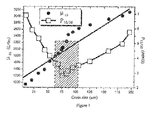
- Figure 1 shows the relation between the grain size of non-oriented silicon steel and its magnetic permeability ⁇ 15 and iron loss P 15/50 . It can be seen from figure 1 that, when the grain size of non-oriented silicon steel is between 60 ⁇ m and 105 ⁇ m, non-oriented silicon steel with both high magnetic permeability and low iron loss can be obtained.
- Figure 2 shows the relation between the grain size of non-oriented silicon steel and its magnetic permeability ⁇ 15 and yield strength ⁇ s . It can be seen from figure 2 that, when the grain size of non-oriented silicon steel is between 60 ⁇ m and 105 ⁇ m, non-oriented silicon steel with both high magnetic permeability and yield strength can be obtained.
- Figure 3 shows the relation between the magnetic permeability ( ⁇ 10 + ⁇ 15 ) and iron loss P 15/50 of non-oriented silicon steel and its motor efficiency, and the motor used is a 11kw ⁇ 6 grade motor.
- the inventor finds from figure 3 that, when the magnetic permeability ( ⁇ 10 + ⁇ 15 ) and iron loss P 15/50 of non-oriented silicon steel satisfy the following formula, a high motor efficiency can be obtained.
- ⁇ 10 + ⁇ 15 ⁇ 8 000 ⁇ 15 ⁇ 865.7 + 379.4 ⁇ P 15 / 50 ⁇ 10 + ⁇ 15 ⁇ 10 , 081 - 352.1 ⁇ P 15 / 50
- a casting slab containing the following ingredients as calculated by weight percentage is obtained by steel making: C 0.0035%, Si 0.85%, Al 0.34%, Mn 0.31%, P 0.023%, S 0.0027% and N 0.0025%, Fe and other unavoidable impurities as the remains; RH refining is used in the steel making, wherein Al as the deoxidizer is used for deoxidation treatment in RH refining.
- the weight of molten steel in the steel ladle is 285ton, the content of free oxygen upon completion of decarbonization is 550ppm, and the input amount of Al is 125kg.
- the casting slab is subject to hot roll to form hot-rolled steel strip, wherein the final rolling temperature is 800°C or more, and the thickness of hot-rolled steel strip after hot rolling is 2.6mm.
- the hot-rolled steel strip is subject to the normalizing high-temperature treatment for short-time, i.e., the hot-rolled steel strip is heated to 980°C and hold for 20s, and then is cooled to 650°C at a cooling speed of about 15°C/s , and is naturally cooled.
- the hot-rolled steel strip after normalizing treatment is subject to cold roll to form the cold-rolled steel strip, which has a thickness of 0.5mm after cold rolling.
- Example 1 At an atmosphere of nitrogen and hydrogen, it is subject to anneal at 800°Cfor 18s, and thus non-oriented silicon steel in Example 1 is obtained.
- Non-oriented silicon steel in example 2 is produced in the same method as that used in Example 1, except the content of free oxygen upon completion of decarbonization and the input amount of Al are respectively changed to 400ppm and 87.5kg.
- Non-oriented silicon steel in example 3 is produced in the same method as that used in Example 1, except the content of free oxygen upon completion of decarbonization and the input amount of Al are respectively changed to 300ppm and 62.5kg.
- Non-oriented silicon steel in example 3 is produced in the same method as that used in Example 1, except the content of free oxygen upon completion of decarbonization and the input amount of Al are respectively changed to 280ppm and 57.5kg.
- Non-oriented silicon steel is produced in the same method as that used in Example 1 except the input amount of Al is changed to 115kg.
- Non-oriented silicon steel is produced in the same method as that used in Example 1 except the input amount of Al is changed to 135kg.
- Non-oriented silicon steel is produced in the same method as that used in Example 1, except there is no deoxidation treatment in RH refining.
- non-oriented silicon steel 0.5mm thickness
- comparative examples are evaluate in grade by GB10561-2005 method, and their magnetic permeability ( ⁇ 10 + ⁇ 15 ), iron loss P 10/50 and P 15/50 and motor efficiency (11kw ⁇ 6 grade motor) are measured. The results are shown in Table 1.
- non-oriented silicon steel in the examples which use deoxidation process in RH refining significantly decreases the amount of inclusions.
- the magnetic permeability at 1.0T and 1.5T of non-oriented silicon steel in examples increases at least 100G/Oe, and both iron loss and motor efficiency thereof are significantly improved.
- a casting slab containing the following ingredients as calculated by weight percentage is obtained by steel making: C 0.001%, Si 2.15%, Al 0.35%, Mn 0.24%, P 0.018%, S 0.003% and N 0.0012%, Fe and other unavoidable impurities as the remains; RH refining is used in the steel making, wherein silicon iron or calcium as the deoxidizer is used for deoxidation treatment in RH refining.
- the casting slab is subject to hot roll to form hot-rolled steel strip, wherein the final rolling temperature is 800°C or more, and the thickness of hot-rolled steel strip after hot rolling is 2.3mm.
- the hot-rolled steel strip is subject to the normalizing high-temperature treatment for short-time, i.e., the hot-rolled steel strip is heated to 980°C and hold for 10 ⁇ 90s, and is cooled to 650°C at a cooling speed of about 5°C/s, and then is naturally cooled.
- the hot-rolled steel strip after normalizing treatment is subject to cold roll to form the cold-rolled steel strip, which has a thickness of 0.5mm after cold rolling.
- Example 5 At an atmosphere of nitrogen and hydrogen, it is subject to anneal at 800°Cfor 20s, and thus non-oriented silicon steel in Example 5 is obtained.
- Non-oriented silicon steel is produced in the same method as that used in Example 5, except the holding temperature in the normalizing step is changed to 1,030°C.
- Non-oriented silicon steel is produced in the same method as that used in Example 5, except the holding temperature in the normalizing step is changed to 1,050°C.
- Non-oriented silicon steel is produced in the same method as that used in Example 5, except the holding temperature in the normalizing step is changed to 1,100°C.
- Non-oriented silicon steel is produced in the same method as that used in Example 5, except the holding temperature in the normalizing step is changed to 920°C.
- the iron loss P 10/50 and P 15/50 of non-oriented silicon steel in examples of the present invention are respectively 3.0w/kg or less and 5.5w/kg or less, and using non-oriented silicon steel in examples can obtain a motor efficiency of 90% or more.
- non-oriented silicon steel in examples has a grain diameter of between 60 ⁇ m and 105 ⁇ m, S content of 15ppm or less, the total nitride concentration in the surface layer of 0 ⁇ 20 ⁇ m of 250ppm or less, and the total nitride concentration of not more than 5.85C N .
- the yield strength ⁇ s of non-oriented silicon steel in examples is no less than 220MPa.
- the present inventor investigates the relation between the magnetic permeability and iron loss of non-oriented silicon steel at 1.0T and 1.5T in examples 1 ⁇ 8, and the results indicate that, the magnetic permeability of non-oriented silicon steel in examples satisfies the following formula: ⁇ 10 + ⁇ 15 ⁇ 8 , 000 ⁇ 15 ⁇ 865.7 + 379.4 ⁇ P 15 / 50 ⁇ 10 + ⁇ 15 ⁇ 10 , 081 - 352.1 ⁇ P 15 / 50
- the experimental results of the present invention indicate that, by proper deoxidation control in RH refining and high-temperature treatment for short-time in the normalizing step, the present invention can reduce the amount of inclusions in the non-oriented silicon steel, improve grain shapes, and thus improve the magnetic permeability and iron loss of non-oriented silicon steel at 1.0 ⁇ 1.5T and obtain a high motor efficiency.
- the present invention can provide the non-oriented silicon steel with high magnetic permeability and low iron loss.
- the non-oriented silicon steel in the present invention can obtain a motor efficiency of 90% or more when used as iron core in electronic devices, and satisfy miniaturization and energy conservation requirements of electronic devices such as rotary machines and static machines, thus has a broad application prospect.
Landscapes
- Chemical & Material Sciences (AREA)
- Engineering & Computer Science (AREA)
- Materials Engineering (AREA)
- Metallurgy (AREA)
- Organic Chemistry (AREA)
- Mechanical Engineering (AREA)
- Physics & Mathematics (AREA)
- Electromagnetism (AREA)
- Manufacturing & Machinery (AREA)
- Thermal Sciences (AREA)
- Crystallography & Structural Chemistry (AREA)
- Dispersion Chemistry (AREA)
- Power Engineering (AREA)
- Manufacturing Of Steel Electrode Plates (AREA)
- Soft Magnetic Materials (AREA)
- Treatment Of Steel In Its Molten State (AREA)
- Metal Rolling (AREA)
- Heat Treatment Of Sheet Steel (AREA)
Abstract
Description
- The present invention relates to a non-oriented silicon steel and its manufacturing method, and specifically a non-oriented silicon steel having a high magnetic permeability and low iron loss at a working magnetic flux density of 1.0~1.5T and its manufacturing method.
- As an iron core, a non-oriented silicon steel having high magnetic permeability and low iron loss can be widely used not only in such rotation machines as compressor motors, motors for electric vehicles and small-sized precision motors, but also in such static machines as small-sized power transformers and voltage stabilizer. In recent years, with the increase of people's demands for portability and the decrease of non-renewable energy resources like coal, petroleum, etc., miniaturization and energy saving of electronic devices are required. In view of miniaturization of electronic devices, the non-oriented silicon steel is required to have a high magnetic permeability; and in view of energy saving of electronic devices, the non-oriented silicon steel is required to have a low iron loss. In addition, when used as an iron core in electronic devices such as rotation machines, the non-oriented silicon steel generally has a working magnetic flux density of 1.0~1.5T. Therefore, in order to realize the miniaturization and energy saving of electronic devices, it is expected to develop a non-oriented silicon steel having high magnetic permeability and low iron loss at a working magnetic flux density of 1.0~1.5T.
- In order to improve the magnetic permeability and the iron loss of non-oriented silicon steel, many studies have been conducted, for example, increasing the purity of ingredients; using Al in combination with minor rare earth elements or Sb to improve a texture of the silicon steel; modifying impurities and oxide inclusions during a steel making; and making an improvement for cold rolling, hot rolling or final annealing process; and the like.
- In U.S. Patent
US4204890 , a non-oriented silicon steel having high magnetic permeability and low iron loss under a magnetic induction of 1.5T is obtained by adding rare earth elements or trace element Sb, using a calcium treatment during steel making process and adopting a low-temperature treatment for long-time in a batch furnace. - In U.S. patent
US4545827 , a non-oriented silicon steel having excellent peak magnetic permeability and low iron loss is obtained by adjusting carbon content to control carbide precipitation and using temper rolling to obtain favorable ferrite grain size and easily magnetizable texture ingredients. - In
U.S. Patent USRE35967 - Although the above-mentioned prior techniques have made some progress in improving the magnetic permeability and the iron loss of non-oriented silicon steel, there are still some room for non-oriented silicon steel in improving its magnetic permeability and iron loss at a working magnetic flux density of 1.0~1.5T. It is expected to develop a non-oriented silicon steel having high magnetic permeability and low iron loss at a working magnetic flux density of 1.0~1.5T, which will meet the miniaturization and energy saving requirements of electronic devices such as rotation machines and static machines.
- The object of the present invention is to provide a non-oriented silicon steel with high magnetic permeability and low iron loss at a working magnetic flux density of 1.0~1.5T and its manufacturing method. In the present invention, by proper deoxidation control in RH refining and high-temperature treatment for short-time in a normalizing step, the amount of inclusions in the silicon steel is reduced, their morphology is controlled and the morphology of grains is improved , thus a non-oriented silicon steel with high magnetic permeability and low iron loss at a working magnetic flux density of 1.0~1.5T is obtained. Non-oriented silicon steel according to the present invention can meet the miniaturization and energy conservation requirements of electronic devices such as rotation machines and static machines.
- The present invention relates to a method for producing a non-oriented silicon steel, comprising the following steps in sequence: a) steel making, b) hot rolling, c) normalizing, d) cold rolling, and e) annealing, wherein,
- By the above-mentioned steel making step a), a casting slab containing the following ingredients as calculated by weight percentage is obtained: C≤0.005%, 0.1%≤Si≤2.5%, Al≤1.5%, 0.10%≤Mn≤2.0%, P≤0.2%, S≤0.005%, N≤0.005%, Nb+V+Ti≤0.006%, and the balance being Fe and other inevitable impurities. Said step a) includes RH refining, and a decarbonization and deoxidation treatment is proceed in said RH refining, wherein the input amount of the deoxidizer Y satisfies the following formula: Y = K×m×([O] -50),
wherein [O] represents the content of free oxygen in unit of ppm upon the completion of decarbonization; K represents a coefficient indicating deoxidation capacity of the deoxidizer, and is in the range from 0.35×10⁻³ to 1.75×10⁻³; m represents the weight of molten steel contained in the steel ladle, in the unit of ton; and - In said normalizing step c), the hot-rolled steel strip after hot rolling is heated to a temperature of phase transformation point temperature Ac1 or above and 1,100°C or below and is held for a time period t of 10~90s.
- In the method of the present invention, firstly obtaining a casting slab by steel making, and forming a hot-rolled steel strip by hot rolling the casting slab, then making a normalizing treatment for the hot-rolled steel strip, and forming cold-rolled steel strip by cold rolling the hot-rolled steel strip after normalizing treatment, and finally making a final annealing treatment for the cold-rolled steel strip.
- In the method of the present invention, the deoxidizer used in RH refining can be any of those deoxidizers generally used in the silicon steel manufacturing industry, and preferably is aluminum, silicon iron, or calcium, etc. When the deoxidizer is aluminum, K is preferably 0.88×10⁻³; when the deoxidizer is silicon iron, K is preferably 1.23×10⁻³; and when the deoxidizer is calcium, K is preferably 0.70×10⁻³.
- In the method of the present invention, proper deoxidation treatment is required in RH refining. In the RH refining of non-oriented silicon steel, deoxidation treatment is a relatively complex process, and has an important function for the quality and production control of silicon steel products. For example, if the content of free oxygen upon completion of decarbonization is high, the amount of oxide inclusions produced in the subsequent alloying process will be extremely high, which will deteriorate the magnetic permeability and iron loss of non-oriented silicon steel and thus affect the quality of silicon steel products; in addition, when the content of free oxygen is high, chemical heating reaction will occur during the alloying process, the temperature of molten steel increases, the overheat degree of casting is too high, the speed of continuous casting production decreases, and thus the productivity of continuous casting is affected. Therefore, in order to obtain a non-oriented silicon steel with high magnetic permeability and low iron loss, it's of vital importance to conduct proper deoxidation treatment in RH refining. Based on a large number of experimental studies by the present inventor on deoxidation in RH refining, the relation curve between the content of free oxygen upon completion of decarbonization and the input amount of deoxidizer capable of realizing deep deoxidation (i.e., the grade of C type inclusions of molten steel is more than grade 1.5) is obtained, and thus the empirical formula between the input amount of deoxidizer Y and the content of free oxygen upon completion of decarbonization [O] is obtained through summarization, i.e., the input amount of deoxidizer Y should satisfy the following formula: Y = K×m×([O] -50), wherein [O] represents the content of free oxygen upon completion of decarbonization, in the unit of ppm; K represents the deoxidation capacity coefficient of the deoxidizer, and is preferably 0.35×10⁻³~1.75×10⁻³; m represents the weight of molten steel in the steel ladle, in the unit of ton. By proper deoxidation control in RH refining, the present invention can reduce the amount of oxide inclusions in the silicon steel, and thus improve the magnetic permeability and the iron loss of non-oriented silicon steel.
- Furthermore, in the method of the present invention, in view of the good grain size and low manufacturing cost, the normalizing high-temperature treatment for short-time is required, that's to say, in the normalizing step, it is heated to a temperature of not less than the phase transformation point temperature Ac1 and not more than 1,100°C and hold for a time t of 10~90s at the temperature. Pure iron goes through a phase transformation from α to γ at 910°C, and goes through a phase transformation from γ to δ at about 1,400°C; adding silicon into iron will reduce the γ zone of Fe-C phase diagram. Retaining the single α phase without incurring the above phase transformations when heated under any temperature is very important for the production of non-oriented silicon steel, because no phase transformation under high temperature contributes to orient in easily magnetizable (110) [001] direction by secondary recrystallization, and the growth of non-oriented silicon steel grains and thus significantly increases its magnetic property. In the case that the steel has high purity, the transformation range of α phase zone to γ phase zones is small, and the transformation amount of the two phases is low in the case of short-time normalizing treatment, so phase transformation has little effect on grains. The present invention breaks through the traditional limit that the normalizing temperature is not more than the phase transformation point temperature Ac1, and significantly decreases the normalizing time by increasing the normalizing temperature, and thus the grains are further coarsened(100µm or more). By the normalizing high-temperature treatment for short-time, the present invention can provide non-oriented silicon steel products which have good (0kl) texture, high magnetic induction, grains easily to grow up and low iron loss upon the final annealing of the cold-rolled sheet.
- In the method of the present invention, in view of further reducing the content of N and O in the surface layer of the final silicon steel products and improving the texture of the silicon steel products, the casting slab in said steel making step a) preferably also contains Sn and/or Sb, wherein the amount of Sn is 0.1wt% or less, and the amount of Sb is 0.1wt% or less.
- In the method of the present invention, in view of the formability of silicon steel, the final rolling temperature in said hot rolling step b) (i.e., temperature upon completion of hot rolling) preferably is 800~900 °C.
- In the method of the present invention, in said normalizing step c), the steel strip after holding perferably is cooled to 650°C at a cooling speed of 15°C/s or less and then is naturally cooled. In the normalizing step, a low cooling speed contributes to reduce the effect of α-γ phase transformation on grains and the second-phase precipitate, and thus obtain grains having suitable particle size; in addition, the above control for both cooling temperature and speed in the normalizing step also helps to further promote the aggregation, growth and coarsening of precipitates such as AIN and thus reduce the nitride concentration in the surface layer of non-oriented silicon steel, improve the magnetic permeability and iron loss of non-oriented silicon steel.
- In the method of the present invention, in view of obtaining good recrystallized grain structures in the final annealing step, preferably in the aforementioned cold rolling step d), the rolling reduction is 45% or more.
- In the method of the present invention, in view of obtaining good grain form, preferably in the aforementioned annealing step e), the cold-rolled steel strip is heated to 700~1,050°C and hold for 1~120s (preferably 5~60s), and then is naturally cooled.
- In addition to the production method of non-oriented silicon steel, the present invention also provides a non-oriented silicon steel having high magnetic permeability and low iron loss at a working magnetic density of 1.0~1.5T, which can be produced from the casting slab containing 0.1~2.5wt% Si by the production method of the present invention. The magnetic permeability of non-oriented silicon steel satisfies the following formula:


Wherein, µ10 and µ15 respectively represent the magnetic permeability at a magnetic induction of 1.0T and a magnetic induction of 1.5T, in the unit of G/Oe; P15/50 represents the iron loss in the unit of w/kg under a magnetic induction of 1.5T at 50Hz. - The casting slab for producing non-oriented silicon steel in the present invention preferably also contains the following ingredients as calculated by weight percentage: C≤0.005%, Al≤1.5%, 0.10%≤Mn≤2.0%, P≤0.2%, S≤0.005%, N≤0.005%, Nb + V + Ti≤0.006%, Fe and other unavoidable impurities as the remains.
- Furthermore, preferably the grain diameter of non-oriented silicon steel in the present invention is 15~300µm.
- Furthermore, preferably the total nitride concentration in the surface layer of 0~20µm of non-oriented silicon steel in the present invention is 250ppm or less, and the total nitride concentration is no more than 5.85CN, wherein CN represents the elemental nitrogen concentration, in the unit of ppm.
- Furthermore, preferably the S content of non-oriented silicon steel in the present invention is 15ppm or less.
- By proper deoxidation control in RH refining and high-temperature treatment for short-time in the normalizing step, the present invention can reduce the amount of inclusions in the silicon steel, control their shapes and improve grain shapes, thus provide the non-oriented silicon steel with high magnetic permeability and low iron loss at a working magnetic flux density of 1.0~1.5T. The iron loss P10/50 and P15/50 of non-oriented silicon steel in the present invention at a thickness of 0.5mm are respectively 3.0w/kg or less and 5.5w/kg or less, and the yield strength σs of non-oriented silicon steel in the present invention is no less than 220MPa. The non-oriented silicon steel in the present invention can obtain a motor efficiency of 90% or more when used as iron core in electronic devices such as rotary machines and static machines.
-
-
Figure 1 shows the relation between the grain size of non-oriented silicon steel and its magnetic permeability µ15 and iron loss P15/50. -
Figure 2 shows the relation between the grain size of non-oriented silicon steel and its magnetic permeability µ15 and yield strength. -
Figure 3 shows the relation between the magnetic permeability (µ10 + µ15) and iron loss P15/50 of non-oriented silicon steel and its motor efficiency. - Firstly, the reasons of limiting various ingredients contained in the casting slab for producing non-oriented silicon steel of the present invention are explained below.
- Si: being soluble in ferrite to form substitutional solid solution, improving resistivity of the substrate and significantly reducing the iron loss and increasing the yield strength, it is one of the most important alloying elements in non-oriented silicon steel. However, if silicon content is too high, it will deteriorate the magnetic permeability of silicon steel products and the processabilty is difficult. Therefore, in the present invention, Si content is limited to 0.1-2.5wt%.
- Al: being soluble in ferrite to improve resistivity of the substrate, coarsing grains and reducing eddy current loss, and hardly deteriorating the magnetic permeability of silicon steel products. In addition, Al also has the effect of deoxidation and nitrogen fixation. However, if Al content is too high, smelting and casting will be difficult, and thus subsequent processability is difficulty. In the present invention, Al content is limited to 1.5wt% or less.
- Mn: being similar to Si and Al, it also can improve resistivity of steel and reduce iron loss; in addition, Mn can enlarge γ phase zone, slow down the phase transformation speed from γ to α, and thus effectively improve hot rolling plasticity and hot-rolled sheet structure. Meanwhile, Mn can bond with the impurity element S to form stable MnS and eliminate the harm of S for magnetic property. If Mn content is too low, the above beneficial effects are not obvious; if Mn content is too high, it will deteriorate the beneficial texture. In the present invention, Mn content is limited to 0.1-2.0wt%.
- P: adding a certain amount of phosphorus into steel can improve the processability of steel strip, however, if P content is too high, it will deteriorate the cold rolling processability of steel strip. In the present invention, P content is limited to 0.2% or less.
- C: being harmful for magnetic property, it is an element which intensively hinders the growth of grains while expanding the γ phase zone; an excessive amount of C will increase the transformation amounts of both phase zones α and γ in normalizing treatment, significantly reduce the phase transformation point temperature Ac1, cause the abnormal refinement of crystal structure and thus increase iron loss. In addition, if the content of C as an interstitial element is too high, it will be disadvantage for the improvement of the fatigue property of silicon steel. In the present invention, C content is limited to 0.005wt% or less.
- S: being harmful for both processability and magnetic property, it is easy to form fine MnS particles together with Mn, hinder the growth of annealed grains of the finished products and severely deteriorate magnetic property. In addition, it is easy for S to form low-melting-point FeS and FeS2 or eutectic together with Fe and cause the problem of hot processing brittleness. In the present invention, S content is limited to 0.005wt% or less.
- N: it is easy for N as an interstitial element to form fine dispersed nitrides with Ti, Al, Nb orV, and it also intensively hinders the growth of grains and deteriorates iron loss. If N content is too high, the amount of nitride precipitate increases, which intensively hinders the growth of grains and deteriorates iron loss. In the present invention, N content is limited to 0.005wt% or less.
- Nb, V, Ti: all of they are elements unfavorable for magnetic property. In the present invention, the total content of Nb, V and Ti is limited to 0.006wt% or less.
- Sn, Sb: as segregation elements, they have the effect of surface oxidation resistance and surface nitridation resistance. Adding an appropriate amount of Sn and/or Sb contributes to increase aluminum content in silicon steel and prevent the formation of a nitride layer in the surface layer of silicon steel. In the present invention, Sn content is set to 0.1 wt% or less, and Sb content is set to 0.1wt% or less.
- Next, the present inventor investigates the effect of the grain size of non-oriented silicon steel (silicon content: 0.85~2.5wt%; thickness of silicon steel: 0.5mm) on the magnetic permeability µ15, iron loss P15/50 and yield strength σs. The results are shown in
Figure 1 andFigure 2 . -
Figure 1 shows the relation between the grain size of non-oriented silicon steel and its magnetic permeability µ15 and iron loss P15/50. It can be seen fromfigure 1 that, when the grain size of non-oriented silicon steel is between 60µm and 105µm, non-oriented silicon steel with both high magnetic permeability and low iron loss can be obtained. -
Figure 2 shows the relation between the grain size of non-oriented silicon steel and its magnetic permeability µ15 and yield strength σs. It can be seen fromfigure 2 that, when the grain size of non-oriented silicon steel is between 60µm and 105µm, non-oriented silicon steel with both high magnetic permeability and yield strength can be obtained. - Furthermore, the present inventor investigates the effect of the magnetic permeability (µ10+µ15) and iron loss P15/50 of non-oriented silicon steel (0.5mm thickness) on its motor efficiency.
Figure 3 shows the relation between the magnetic permeability (µ10 + µ15) and iron loss P15/50 of non-oriented silicon steel and its motor efficiency, and the motor used is a 11kw~6 grade motor. The inventor finds fromfigure 3 that, when the magnetic permeability (µ10 + µ15) and iron loss P15/50 of non-oriented silicon steel satisfy the following formula, a high motor efficiency can be obtained.


- Next, the present invention will be further described in conjunction with examples, but the protection scope of the present invention is not limited to these examples.
- Firstly, a casting slab containing the following ingredients as calculated by weight percentage is obtained by steel making: C 0.0035%, Si 0.85%, Al 0.34%, Mn 0.31%, P 0.023%, S 0.0027% and N 0.0025%, Fe and other unavoidable impurities as the remains; RH refining is used in the steel making, wherein Al as the deoxidizer is used for deoxidation treatment in RH refining. In Example 1, the weight of molten steel in the steel ladle is 285ton, the content of free oxygen upon completion of decarbonization is 550ppm, and the input amount of Al is 125kg.
- Next, the casting slab is subject to hot roll to form hot-rolled steel strip, wherein the final rolling temperature is 800°C or more, and the thickness of hot-rolled steel strip after hot rolling is 2.6mm.
- Then, the hot-rolled steel strip is subject to the normalizing high-temperature treatment for short-time, i.e., the hot-rolled steel strip is heated to 980°C and hold for 20s, and then is cooled to 650°C at a cooling speed of about 15°C/s , and is naturally cooled.
- Next, the hot-rolled steel strip after normalizing treatment is subject to cold roll to form the cold-rolled steel strip, which has a thickness of 0.5mm after cold rolling.
- Finally, at an atmosphere of nitrogen and hydrogen, it is subject to anneal at 800°Cfor 18s, and thus non-oriented silicon steel in Example 1 is obtained.
- Non-oriented silicon steel in example 2 is produced in the same method as that used in Example 1, except the content of free oxygen upon completion of decarbonization and the input amount of Al are respectively changed to 400ppm and 87.5kg.
- Non-oriented silicon steel in example 3 is produced in the same method as that used in Example 1, except the content of free oxygen upon completion of decarbonization and the input amount of Al are respectively changed to 300ppm and 62.5kg.
- Non-oriented silicon steel in example 3 is produced in the same method as that used in Example 1, except the content of free oxygen upon completion of decarbonization and the input amount of Al are respectively changed to 280ppm and 57.5kg.
- Non-oriented silicon steel is produced in the same method as that used in Example 1 except the input amount of Al is changed to 115kg.
- Non-oriented silicon steel is produced in the same method as that used in Example 1 except the input amount of Al is changed to 135kg.
- Non-oriented silicon steel is produced in the same method as that used in Example 1, except there is no deoxidation treatment in RH refining.
- The inclusions of non-oriented silicon steel (0.5mm thickness) in the above examples and comparative examples are evaluate in grade by
GB10561-2005 Table 1 Deoxidation in RH refining Grade of type C inclusions (kg) Magnetic property Motor efficiency (%) Difference between the temperature of original molten steel and melting point of steel (°C) C content in original molten steel (%) Content of free oxygen in molten steel upon completion of decarbonization (ppm) input amount of Al (kg) µ10 + µ15 (G/Oe) P10/50(w/kg) P15/50(w/kg) Example 1 61 0.021 550 125 Grade 1.0 8,605 2.24 4.73 91.1 Example 2 81 0.034 400 87.5 Grade 1.0 8,629 2.17 4.62 91.5 Example 3 124 0.043 300 62.5 Grade 1.0 8,687 2.11 4.58 91.8 Example 4 147 0.06 280 57.5 Grade 1.5 8,578 2.32 4.89 90.6 Comparative example 1 61 0.021 550 115 Grade 2.0 8,416 2.49 5.3 89.4 Comparative example 2 61 0.021 550 135 Grade 2.0 8,449 2.45 5.1 89.9 Comparative example 3 No deoxidation in RH refining Grade 2.0 8,347 2.59 5.5 88.9 - It can be seen from Table 1 that, compared with comparative example 3 which does not adopt deoxidation process in RH refining, non-oriented silicon steel in the examples which use deoxidation process in RH refining significantly decreases the amount of inclusions. The magnetic permeability at 1.0T and 1.5T of non-oriented silicon steel in examples increases at least 100G/Oe, and both iron loss and motor efficiency thereof are significantly improved.
- Furthermore, compared with comparative example 1 having an excessively low input amount of Al and comparative example 2 having an excessively high input amount of Al, non-oriented silicon steel in examples has better magnetic permeability, iron loss and motor efficiency. Therefore, when the input amount of Al as the deoxidizer Y and the content of free oxygen upon the completion of decarbonization [O] satisfy the following formula: Y = K×m×([O] -50) (wherein, K is 0.88×10~3), a more optimal improving effect can be obtained with respect to the magnetic permeability, iron loss and motor efficiency of non-oriented silicon steel.
- Firstly, a casting slab containing the following ingredients as calculated by weight percentage is obtained by steel making: C 0.001%, Si 2.15%, Al 0.35%, Mn 0.24%, P 0.018%, S 0.003% and N 0.0012%, Fe and other unavoidable impurities as the remains; RH refining is used in the steel making, wherein silicon iron or calcium as the deoxidizer is used for deoxidation treatment in RH refining. The input amount of deoxidizer Y and the content of free oxygen upon the completion of decarbonization [O] satisfy the following formula: Y = K×m×([O] -50).
- Next, the casting slab is subject to hot roll to form hot-rolled steel strip, wherein the final rolling temperature is 800°C or more, and the thickness of hot-rolled steel strip after hot rolling is 2.3mm.
- Then, the hot-rolled steel strip is subject to the normalizing high-temperature treatment for short-time, i.e., the hot-rolled steel strip is heated to 980°C and hold for 10~90s, and is cooled to 650°C at a cooling speed of about 5°C/s, and then is naturally cooled.
- Next, the hot-rolled steel strip after normalizing treatment is subject to cold roll to form the cold-rolled steel strip, which has a thickness of 0.5mm after cold rolling.
- Finally, at an atmosphere of nitrogen and hydrogen, it is subject to anneal at 800°Cfor 20s, and thus non-oriented silicon steel in Example 5 is obtained.
- Non-oriented silicon steel is produced in the same method as that used in Example 5, except the holding temperature in the normalizing step is changed to 1,030°C.
- Non-oriented silicon steel is produced in the same method as that used in Example 5, except the holding temperature in the normalizing step is changed to 1,050°C.
- Non-oriented silicon steel is produced in the same method as that used in Example 5, except the holding temperature in the normalizing step is changed to 1,100°C.
- Non-oriented silicon steel is produced in the same method as that used in Example 5, except the holding temperature in the normalizing step is changed to 920°C.
- The grain size of the steel strip after normalizing treatment in the above examples and comparative examples are measured, and the magnetic permeability (µ10 + µ15), iron loss P10/50 and P15/50 and motor efficiency (11kw~6 grade motor) of the final silicon steel products (0.5mm thickness) are measured. The results are shown in Table 2.
Table 2 Normalizing process parameter Grain size of steel strip after normalizing (µm) Magnetic property Motor efficiency (%) Holding temperature in Normalizing (°C) Cooling speed before 650 °C (°C/s) µ10 + µ15 (G/Oe) P10/50 (w/kg) P15/50 (w/kg) Example 5 980 5 133 9,068 1.49 3.25 90.6 Example 6 1,030 5 141 9,105 1.41 3.13 91.1 Example 7 1,050 5 148 9,189 1.37 3.01 91.3 Example 8 1,100 5 157 9,226 1.29 2.87 92.1 Comparative example 4 920 5 114 8,965 1.58 3.41 87.4 - It can be seen from Table 2 that, compared with comparative example 4 which adopts low-temperature normalizing, the examples which adopt the normalizing high-temperature treatment for short-time significantly increase the grain size of steel strip after normalizing. The magnetic permeability at 1.0T and 1.5T of non-oriented silicon steel in examples increases at least 100G/Oe, and both iron loss and the motor efficiency thereof are significantly improved.
- In addition, it can be seen from Tables 1 and 2 that, the iron loss P10/50 and P15/50 of non-oriented silicon steel in examples of the present invention are respectively 3.0w/kg or less and 5.5w/kg or less, and using non-oriented silicon steel in examples can obtain a motor efficiency of 90% or more.
- Furthermore, the present inventor measured the grain diameter, surface layer property, sulphur content and yield strength σs of non-oriented silicon steel in examples 1~8. The results show that, non-oriented silicon steel in examples has a grain diameter of between 60µm and 105µm, S content of 15ppm or less, the total nitride concentration in the surface layer of 0~20µm of 250ppm or less, and the total nitride concentration of not more than 5.85CN. In addition, the yield strength σs of non-oriented silicon steel in examples is no less than 220MPa.
- Furthermore, the present inventor investigates the relation between the magnetic permeability and iron loss of non-oriented silicon steel at 1.0T and 1.5T in examples 1~8, and the results indicate that, the magnetic permeability of non-oriented silicon steel in examples satisfies the following formula:


- The experimental results of the present invention indicate that, by proper deoxidation control in RH refining and high-temperature treatment for short-time in the normalizing step, the present invention can reduce the amount of inclusions in the non-oriented silicon steel, improve grain shapes, and thus improve the magnetic permeability and iron loss of non-oriented silicon steel at 1.0~1.5T and obtain a high motor efficiency.
- By proper deoxidation control in RH refining and high-temperature treatment for short-time in the normalizing step, the present invention can provide the non-oriented silicon steel with high magnetic permeability and low iron loss. The non-oriented silicon steel in the present invention can obtain a motor efficiency of 90% or more when used as iron core in electronic devices, and satisfy miniaturization and energy conservation requirements of electronic devices such as rotary machines and static machines, thus has a broad application prospect.
Claims (17)
- A method for producing a non-oriented silicon steel, comprising the following steps in sequence: a) steel making, b) hot rolling, c) normalizing, d) cold rolling, and e) annealing, wherein,
said steel making step a) is used for obtaining a casting slab having the following components by weight: C≤0.005%, 0.1%≤Si≤2.5%, Al≤1.5%, 0.10%≤Mn≤2.0%, P≤0.2%, S≤0.005%, N≤0.005%, Nb+V+Ti≤0.006%, and the balance being Fe and inevitable impurities;
said steel making step a) includes RH refining, wherein decarbonization treatment and deoxidation treatment are proceeded in RH refining; the input amount of the deoxidizer Y satisfies the following formula: Y = K×m×([O] -50),
wherein [O] represents the content of free oxygen in unit of ppm upon the completion of decarbonization; K represents a coefficient indicating deoxidation capacity of the deoxidizer, and is in the range from 0.35×10⁻³ to 1.75×10⁻³; m represents the weight of molten steel contained in the steel ladle, in the unit of ton; and
in said normalizing step c), the hot-rolled steel strip after hot rolling is heated to a temperature of phase transformation point temperature Ac1 or above and 1,100°C or below and is held for a time period t of 10~90s. - The method for producing a non-oriented silicon steel according to claim 1, wherein said casting slab further contains Sn and/or Sb, wherein the content of Sn is 0.1 wt% or less, and the content of Sb is 0.1 wt% or less.
- The method for producing a non-oriented silicon steel according to claim 1 or 2, wherein said deoxidizer in said RH refining is aluminum, silicon iron, or calcium.
- The method for producing a non-oriented silicon steel according to claim 3, wherein K is 0.88×10⁻³ when said deoxidizer in said RH refining is aluminum.
- The method for producing a non-oriented silicon steel according to claim 3, wherein K is 1.23×10⁻³ when said deoxidizer in said RH refining is silicon iron.
- The method for producing a non-oriented silicon steel according to claim 3, wherein K is 0.70×10⁻³ when said deoxidizer in said RH refining is calcium.
- The method for producing a non-oriented silicon steel according to any one of claims 1-6, wherein a final rolling temperature in said hot rolling step b) is 800~900°C.
- The method for producing a non-oriented silicon steel according to any one of claims 1-7, wherein in said normalizing step c), the steel strip after holding is cooled at a cooling speed of 15°C/s or less to a temperature of 650°C and then is cooled naturally.
- The method for producing a non-oriented silicon steel according to any one of claims 1-8, wherein in said cold rolling step d), the rolling reduction is 45% or more.
- The method for producing a non-oriented silicon steel according to any one of claims 1-8, wherein in said annealing step e), the cold-rolled steel strip after cold rolling is heated to a temperature of 700∼1,050°C and is held for 1-120 sec, and then is cooled naturally.
- A non-oriented silicon steel, wherein a casting slab for producing said non-oriented silicon steel contains 0.1~2.5 wt% of Si, and said non-oriented silicon steel has a magnetic permeability satisfying the following formula:



wherein, µ10 and µ15 represent magnetic permeability in the unit of G/Oe under magnetic inductions of 1.0T and a magnetic induction of 1.5T, respectively; P15/50 represents the iron loss in the unit of w/kg under a magnetic induction of 1.5T at 50Hz. - The non-oriented silicon steel according to claim 1, wherein said casting slab further contains the following components by weight percentage: Al≤1.5%, 0.10%≤Mn≤2.0%, C≤0.005wt%, P≤0.2wt%, S≤0.005wt%, N≤0.005wt%, Nb+V+Ti≤0.006wt%, and the balance being Fe and inevitable impurities.
- The non-oriented silicon steel according to claim 11 or 12, wherein said non-oriented silicon steel has a grain size of 15~300µm.
- The non-oriented silicon steel according to any one of claims 11-13, wherein the total nitride concentration in the surface layer within a thickness of 0~20µm of said non-oriented silicon steel is 250 ppm or less, and the total nitride concentration is no more than 5.85CN, wherein CN represents the concentration of elemental nitrogen, in the unit of ppm.
- The non-oriented silicon steel according to any one of claims 11-14, wherein said non-oriented silicon steel has S content of 15 ppm or less.
- The non-oriented silicon steel according to any one of claims 11-15, wherein the iron loss P10/50 and P15/50 of said non-oriented silicon steel at a thickness of 0.5mm are respectively 3.0w/kg or less and 5.5w/kg or less, wherein P10/50 represents the iron loss at 50Hz and under a magnetic induction of 1.0T.
- The non-oriented silicon steel according to any one of claims 11-16, wherein said non-oriented silicon steel has a yield strength σs of no less than 220 MPa.
Applications Claiming Priority (2)
| Application Number | Priority Date | Filing Date | Title |
|---|---|---|---|
| CN201210082439.4A CN103361544B (en) | 2012-03-26 | 2012-03-26 | Non orientating silicon steel and manufacture method thereof |
| PCT/CN2012/000400 WO2013143022A1 (en) | 2012-03-26 | 2012-03-29 | Unoriented silicon steel and method for manufacturing same |
Publications (3)
| Publication Number | Publication Date |
|---|---|
| EP2832888A1 true EP2832888A1 (en) | 2015-02-04 |
| EP2832888A4 EP2832888A4 (en) | 2015-09-30 |
| EP2832888B1 EP2832888B1 (en) | 2019-07-17 |
Family
ID=49258028
Family Applications (1)
| Application Number | Title | Priority Date | Filing Date |
|---|---|---|---|
| EP12873168.4A Active EP2832888B1 (en) | 2012-03-26 | 2012-03-29 | Non-oriented silicon steel and its manufacturing method |
Country Status (9)
| Country | Link |
|---|---|
| US (1) | US10385414B2 (en) |
| EP (1) | EP2832888B1 (en) |
| JP (1) | JP2015518086A (en) |
| KR (1) | KR20140123582A (en) |
| CN (1) | CN103361544B (en) |
| IN (1) | IN2014MN01798A (en) |
| MX (1) | MX2014010807A (en) |
| RU (1) | RU2590741C9 (en) |
| WO (1) | WO2013143022A1 (en) |
Cited By (4)
| Publication number | Priority date | Publication date | Assignee | Title |
|---|---|---|---|---|
| EP3272898A4 (en) * | 2015-03-20 | 2018-11-14 | Baoshan Iron & Steel Co., Ltd. | High magnetic induction and low iron loss non-oriented electrical steel sheet with good surface state and manufacturing method therefor |
| CN109082596A (en) * | 2018-09-04 | 2018-12-25 | 马鞍山钢铁股份有限公司 | A kind of non-orientation silicon steel and preparation method thereof of the high magnetic polarization intensity of low iron loss |
| RU2709544C1 (en) * | 2016-05-30 | 2019-12-18 | Баошан Айрон Энд Стил Ко., Лтд. | Undirected silicon steel sheet with high magnetic induction and low losses in iron and method for its production |
| US12104215B2 (en) | 2018-11-26 | 2024-10-01 | Baoshan Iron & Steel Co., Ltd. | High-magnetic-induction low-iron-loss non-oriented silicon steel sheet and manufacturing method therefor |
Families Citing this family (18)
| Publication number | Priority date | Publication date | Assignee | Title |
|---|---|---|---|---|
| CN104017949B (en) * | 2014-06-12 | 2017-10-03 | 鞍钢股份有限公司 | RH refining method of aluminum-free non-oriented silicon steel |
| CN107109583B (en) | 2014-12-24 | 2019-11-08 | Posco公司 | non-oriented electrical steel sheet and method for manufacturing the same |
| CN105987562B (en) * | 2015-02-13 | 2020-05-05 | 博西华家用电器有限公司 | Refrigeration appliance |
| US20180022054A1 (en) * | 2015-02-27 | 2018-01-25 | Frederic La Brie | Apparatus and Method for the Making of a Pressure-Sensitive Construction from a Faceless Material |
| CN108004463A (en) * | 2016-10-28 | 2018-05-08 | 宝山钢铁股份有限公司 | A kind of non-oriented electrical steel having excellent magnetic characteristics and its manufacture method |
| WO2018097006A1 (en) * | 2016-11-25 | 2018-05-31 | Jfeスチール株式会社 | Non-oriented electrical steel sheet and manufacturing method therefor |
| KR102043289B1 (en) * | 2017-12-26 | 2019-11-12 | 주식회사 포스코 | Non-oriented electrical steel sheet and method for manufacturing the same |
| CN108396233A (en) * | 2018-06-08 | 2018-08-14 | 张家港扬子江冷轧板有限公司 | High-strength non-oriented silicon steel, its manufacturing method and application |
| CN109022703A (en) * | 2018-10-29 | 2018-12-18 | 武汉钢铁有限公司 | A kind of non-orientation silicon steel that magnetic anisotropy is low and its manufacturing method |
| CN110578036A (en) * | 2019-09-26 | 2019-12-17 | 湖南华菱涟钢薄板有限公司 | A kind of RH refining method and smelting process of aluminum-containing electrical steel |
| RU2758511C1 (en) * | 2020-08-31 | 2021-10-29 | Публичное Акционерное Общество "Новолипецкий металлургический комбинат" | Method for producing ultra low carbon cold-rolled electrotechnical isotropic steel with high complex of magnetic and mechanical properties |
| CN114606435A (en) * | 2022-02-09 | 2022-06-10 | 山西太钢不锈钢股份有限公司 | High-efficiency high-strength non-oriented silicon steel thin strip for automobile driving motor |
| CN114959175B (en) * | 2022-06-13 | 2024-03-08 | 包头钢铁(集团)有限责任公司 | Method for smelting narrow components of acid-soluble aluminum and nitrogen in Hi-B steel |
| CN115055918B (en) * | 2022-06-17 | 2023-09-19 | 首钢智新迁安电磁材料有限公司 | A continuous rolling method of non-oriented silicon steel |
| CN115491569B (en) * | 2022-09-15 | 2023-06-23 | 湖南华菱涟钢特种新材料有限公司 | Production method of non-oriented silicon steel and non-oriented silicon steel |
| KR102902011B1 (en) * | 2023-06-30 | 2025-12-17 | 현대제철 주식회사 | Non-oriented elecrical steel sheet and method of manufacturing the same |
| KR102898298B1 (en) * | 2023-06-30 | 2025-12-09 | 현대제철 주식회사 | Non-oriented elecrical steel sheet and method of manufacturing the same |
| CN117483423B (en) * | 2023-10-18 | 2026-03-06 | 新疆八一钢铁股份有限公司 | A production process for cold-rolled SPCC-MC steel sheets used in TDI chemical drums |
Family Cites Families (25)
| Publication number | Priority date | Publication date | Assignee | Title |
|---|---|---|---|---|
| JPS5468717A (en) | 1977-11-11 | 1979-06-02 | Kawasaki Steel Co | Production of unidirectional silicon steel plate with excellent electromagnetic property |
| US4545827A (en) | 1981-07-02 | 1985-10-08 | Inland Steel Company | Low silicon steel electrical lamination strip |
| JP3446275B2 (en) * | 1993-12-28 | 2003-09-16 | Jfeスチール株式会社 | Semi-process non-oriented electrical steel sheet with low iron loss and high magnetic permeability |
| EP0684320B1 (en) | 1994-04-26 | 2000-06-21 | LTV STEEL COMPANY, Inc. | Process of making electrical steels |
| JP3362077B2 (en) * | 1994-05-11 | 2003-01-07 | 川崎製鉄株式会社 | Smelting method of molten steel for non-oriented electrical steel sheets with low iron loss |
| JP3252692B2 (en) * | 1996-02-23 | 2002-02-04 | 住友金属工業株式会社 | Non-oriented electrical steel sheet with excellent magnetic properties and method for producing the same |
| JPH105109A (en) | 1996-06-26 | 1998-01-13 | Toshiyoshi Ookubo | Picture frame |
| TW422885B (en) * | 1996-12-09 | 2001-02-21 | Po Hang Iron & Steel | Non-oriented magnetic steel plate with excellent electro-magnetic properties and process for making the same |
| JP3421536B2 (en) * | 1997-05-12 | 2003-06-30 | Jfeスチール株式会社 | Non-oriented electrical steel sheet excellent in magnetic properties and method for producing the same |
| JP2001181806A (en) * | 1999-10-13 | 2001-07-03 | Nippon Steel Corp | Non-oriented electrical steel sheet excellent in magnetic permeability, hot-rolled sheet thereof and method for producing the same |
| US7011139B2 (en) * | 2002-05-08 | 2006-03-14 | Schoen Jerry W | Method of continuous casting non-oriented electrical steel strip |
| JP3687644B2 (en) * | 2002-10-29 | 2005-08-24 | 住友金属工業株式会社 | Method for producing non-oriented electrical steel sheet |
| CN1796015A (en) * | 2004-12-28 | 2006-07-05 | 宝山钢铁股份有限公司 | Method for manufacturing cold rolling non oriented electrical steel through continuous casting and tandem rolling sheet bar |
| JP2007006260A (en) | 2005-06-24 | 2007-01-11 | Sanyo Electric Co Ltd | Agc circuit |
| CN100446919C (en) * | 2005-06-30 | 2008-12-31 | 宝山钢铁股份有限公司 | Production method of cold-rolled non-oriented electrical steel sheet with low iron loss and high magnetic induction |
| CN100567545C (en) * | 2007-06-25 | 2009-12-09 | 宝山钢铁股份有限公司 | A kind of high grade non-oriented silicon steel and its manufacturing method |
| CN101654757B (en) | 2008-08-20 | 2012-09-19 | 宝山钢铁股份有限公司 | Coated semi-processed non-oriented electrical steel sheet and manufacturing method thereof |
| CN101768653A (en) | 2008-12-30 | 2010-07-07 | 宝山钢铁股份有限公司 | Non-oriented silicon steel RH refinement and deoxidation control method |
| US20120267015A1 (en) * | 2009-12-28 | 2012-10-25 | Posco | Non-Oriented Electrical Steel Sheet Having Superior Magnetic Properties and a Production Method Therefor |
| CN102373366A (en) | 2010-08-26 | 2012-03-14 | 宝山钢铁股份有限公司 | Method for improving coarse grains on surface of non-oriented silicon steel |
| CN102373367A (en) * | 2010-08-26 | 2012-03-14 | 宝山钢铁股份有限公司 | Cold-rolled electromagnetic steel plate for rapid cycling synchrotron and manufacturing method thereof |
| CN102453837B (en) * | 2010-10-25 | 2013-07-17 | 宝山钢铁股份有限公司 | Method for preparing non-oriented silicon steel with high magnetic induction |
| CN101985719A (en) * | 2010-11-01 | 2011-03-16 | 武汉科技大学 | Composite additive for smelting high heat input welding low-alloy steel and using method thereof |
| CN102127703B (en) * | 2011-01-16 | 2012-05-30 | 首钢总公司 | A method for manufacturing cold-rolled non-oriented electrical steel for inverter air conditioners |
| CN102260822B (en) * | 2011-07-27 | 2013-06-05 | 攀钢集团有限公司 | Smelting method of high-phosphorus low-sulfur non-oriented electrical steel |
-
2012
- 2012-03-26 CN CN201210082439.4A patent/CN103361544B/en active Active
- 2012-03-29 WO PCT/CN2012/000400 patent/WO2013143022A1/en not_active Ceased
- 2012-03-29 KR KR1020147025243A patent/KR20140123582A/en not_active Ceased
- 2012-03-29 EP EP12873168.4A patent/EP2832888B1/en active Active
- 2012-03-29 RU RU2014133411/02A patent/RU2590741C9/en active
- 2012-03-29 MX MX2014010807A patent/MX2014010807A/en active IP Right Grant
- 2012-03-29 IN IN1798MUN2014 patent/IN2014MN01798A/en unknown
- 2012-03-29 JP JP2015502031A patent/JP2015518086A/en active Pending
- 2012-03-29 US US14/371,013 patent/US10385414B2/en active Active
Cited By (5)
| Publication number | Priority date | Publication date | Assignee | Title |
|---|---|---|---|---|
| EP3272898A4 (en) * | 2015-03-20 | 2018-11-14 | Baoshan Iron & Steel Co., Ltd. | High magnetic induction and low iron loss non-oriented electrical steel sheet with good surface state and manufacturing method therefor |
| US10844451B2 (en) | 2015-03-20 | 2020-11-24 | Baoshan Iron & Steel Co., Ltd. | High magnetic induction and low iron loss non-oriented electrical steel sheet with good surface state and manufacturing method therefor |
| RU2709544C1 (en) * | 2016-05-30 | 2019-12-18 | Баошан Айрон Энд Стил Ко., Лтд. | Undirected silicon steel sheet with high magnetic induction and low losses in iron and method for its production |
| CN109082596A (en) * | 2018-09-04 | 2018-12-25 | 马鞍山钢铁股份有限公司 | A kind of non-orientation silicon steel and preparation method thereof of the high magnetic polarization intensity of low iron loss |
| US12104215B2 (en) | 2018-11-26 | 2024-10-01 | Baoshan Iron & Steel Co., Ltd. | High-magnetic-induction low-iron-loss non-oriented silicon steel sheet and manufacturing method therefor |
Also Published As
| Publication number | Publication date |
|---|---|
| US10385414B2 (en) | 2019-08-20 |
| EP2832888A4 (en) | 2015-09-30 |
| IN2014MN01798A (en) | 2015-07-03 |
| RU2014133411A (en) | 2016-05-20 |
| US20150000794A1 (en) | 2015-01-01 |
| RU2590741C2 (en) | 2016-07-10 |
| RU2590741C9 (en) | 2016-10-27 |
| MX2014010807A (en) | 2014-12-08 |
| CN103361544A (en) | 2013-10-23 |
| EP2832888B1 (en) | 2019-07-17 |
| CN103361544B (en) | 2015-09-23 |
| KR20140123582A (en) | 2014-10-22 |
| JP2015518086A (en) | 2015-06-25 |
| WO2013143022A1 (en) | 2013-10-03 |
Similar Documents
| Publication | Publication Date | Title |
|---|---|---|
| EP2832888B1 (en) | Non-oriented silicon steel and its manufacturing method | |
| KR101582581B1 (en) | Non-oriented Silicon Steel and Its Manufacturing Method | |
| KR101407009B1 (en) | Manufacture method of high efficiency non-oriented silicon steel having good magnetic performance | |
| EP2657355B1 (en) | Method of producing non-oriented electrical steel sheet | |
| EP3272898B1 (en) | High magnetic induction and low iron loss non-oriented electrical steel sheet with good surface state and manufacturing method therefor | |
| EP2832866A1 (en) | (100 [ovw]non-oriented electrical steel sheet with excellent magnetic property and manufacturing method thereof | |
| EP3719160B1 (en) | Non-oriented electrical steel sheet with excellent magnetism and manufacturing method therefor | |
| CN102747291B (en) | High-frequency low-iron-loss excellent-magnetic-property non-orientated silicon steel strip and production method thereof | |
| EP2891728A1 (en) | High magnetic induction oriented silicon steel and manufacturing method thereof | |
| CN103834858A (en) | Method for manufacturing low-iron-loss non-oriented silicon steel | |
| KR20170072210A (en) | Method of production of tin containing non grain-oriented silicon steel sheet, steel sheet obtained and use thereof | |
| CN104451421B (en) | High-strength high-toughness bimetallic strip saw blade back steel and preparation method thereof | |
| EP4001450A1 (en) | 600mpa grade non-oriented electrical steel sheet and manufacturing method thereof | |
| CN117230289A (en) | Non-oriented silicon steel and production method thereof | |
| CN109022703A (en) | A kind of non-orientation silicon steel that magnetic anisotropy is low and its manufacturing method | |
| CN109112403A (en) | A kind of high-voltage motor high magnetic permeability non-orientation silicon steel and manufacturing method | |
| CN108823509A (en) | Ferritic stainless steel with superior oxidation resistance, good elevated temperature strength and good formability | |
| CN115404410A (en) | Non-oriented silicon steel with excellent magnetic performance after stress relief annealing and manufacturing method thereof | |
| JP2639227B2 (en) | Manufacturing method of non-oriented electrical steel sheet | |
| CN111593262A (en) | Low-cost non-coating non-oriented silicon steel and production method thereof | |
| CN103290315B (en) | A kind of High-strength magnetoconductive steel plate and production method thereof | |
| EP4549605A1 (en) | Non-oriented electrical steel sheet and manufacturing method therefor | |
| KR101539750B1 (en) | Oriented electrical steel steet and method for manufacturing the same | |
| JP4626046B2 (en) | Method for producing semi-processed non-oriented electrical steel sheet | |
| CN118703887A (en) | 800MPa grade hot-rolled magnetic pole steel plate and its preparation method and application |
Legal Events
| Date | Code | Title | Description |
|---|---|---|---|
| PUAI | Public reference made under article 153(3) epc to a published international application that has entered the european phase |
Free format text: ORIGINAL CODE: 0009012 |
|
| 17P | Request for examination filed |
Effective date: 20140919 |
|
| AK | Designated contracting states |
Kind code of ref document: A1 Designated state(s): AL AT BE BG CH CY CZ DE DK EE ES FI FR GB GR HR HU IE IS IT LI LT LU LV MC MK MT NL NO PL PT RO RS SE SI SK SM TR |
|
| AX | Request for extension of the european patent |
Extension state: BA ME |
|
| DAX | Request for extension of the european patent (deleted) | ||
| RA4 | Supplementary search report drawn up and despatched (corrected) |
Effective date: 20150902 |
|
| RIC1 | Information provided on ipc code assigned before grant |
Ipc: C22C 38/02 20060101ALI20150827BHEP Ipc: C22C 38/14 20060101ALI20150827BHEP Ipc: C21C 7/06 20060101ALI20150827BHEP Ipc: C22C 38/06 20060101ALI20150827BHEP Ipc: C22C 38/04 20060101AFI20150827BHEP Ipc: H01F 1/147 20060101ALI20150827BHEP Ipc: C21C 7/00 20060101ALI20150827BHEP Ipc: C22C 38/00 20060101ALI20150827BHEP Ipc: C21C 7/064 20060101ALI20150827BHEP Ipc: C21D 8/12 20060101ALI20150827BHEP Ipc: C22C 38/12 20060101ALI20150827BHEP Ipc: C22C 33/04 20060101ALI20150827BHEP Ipc: H01F 1/16 20060101ALI20150827BHEP |
|
| STAA | Information on the status of an ep patent application or granted ep patent |
Free format text: STATUS: EXAMINATION IS IN PROGRESS |
|
| 17Q | First examination report despatched |
Effective date: 20180622 |
|
| GRAP | Despatch of communication of intention to grant a patent |
Free format text: ORIGINAL CODE: EPIDOSNIGR1 |
|
| STAA | Information on the status of an ep patent application or granted ep patent |
Free format text: STATUS: GRANT OF PATENT IS INTENDED |
|
| INTG | Intention to grant announced |
Effective date: 20190404 |
|
| GRAS | Grant fee paid |
Free format text: ORIGINAL CODE: EPIDOSNIGR3 |
|
| GRAA | (expected) grant |
Free format text: ORIGINAL CODE: 0009210 |
|
| STAA | Information on the status of an ep patent application or granted ep patent |
Free format text: STATUS: THE PATENT HAS BEEN GRANTED |
|
| AK | Designated contracting states |
Kind code of ref document: B1 Designated state(s): AL AT BE BG CH CY CZ DE DK EE ES FI FR GB GR HR HU IE IS IT LI LT LU LV MC MK MT NL NO PL PT RO RS SE SI SK SM TR |
|
| REG | Reference to a national code |
Ref country code: GB Ref legal event code: FG4D |
|
| REG | Reference to a national code |
Ref country code: CH Ref legal event code: EP |
|
| REG | Reference to a national code |
Ref country code: IE Ref legal event code: FG4D |
|
| REG | Reference to a national code |
Ref country code: DE Ref legal event code: R096 Ref document number: 602012062171 Country of ref document: DE |
|
| REG | Reference to a national code |
Ref country code: AT Ref legal event code: REF Ref document number: 1155902 Country of ref document: AT Kind code of ref document: T Effective date: 20190815 |
|
| REG | Reference to a national code |
Ref country code: NL Ref legal event code: MP Effective date: 20190717 |
|
| REG | Reference to a national code |
Ref country code: LT Ref legal event code: MG4D |
|
| PG25 | Lapsed in a contracting state [announced via postgrant information from national office to epo] |
Ref country code: LT Free format text: LAPSE BECAUSE OF FAILURE TO SUBMIT A TRANSLATION OF THE DESCRIPTION OR TO PAY THE FEE WITHIN THE PRESCRIBED TIME-LIMIT Effective date: 20190717 Ref country code: NL Free format text: LAPSE BECAUSE OF FAILURE TO SUBMIT A TRANSLATION OF THE DESCRIPTION OR TO PAY THE FEE WITHIN THE PRESCRIBED TIME-LIMIT Effective date: 20190717 Ref country code: PT Free format text: LAPSE BECAUSE OF FAILURE TO SUBMIT A TRANSLATION OF THE DESCRIPTION OR TO PAY THE FEE WITHIN THE PRESCRIBED TIME-LIMIT Effective date: 20191118 Ref country code: FI Free format text: LAPSE BECAUSE OF FAILURE TO SUBMIT A TRANSLATION OF THE DESCRIPTION OR TO PAY THE FEE WITHIN THE PRESCRIBED TIME-LIMIT Effective date: 20190717 Ref country code: SE Free format text: LAPSE BECAUSE OF FAILURE TO SUBMIT A TRANSLATION OF THE DESCRIPTION OR TO PAY THE FEE WITHIN THE PRESCRIBED TIME-LIMIT Effective date: 20190717 Ref country code: HR Free format text: LAPSE BECAUSE OF FAILURE TO SUBMIT A TRANSLATION OF THE DESCRIPTION OR TO PAY THE FEE WITHIN THE PRESCRIBED TIME-LIMIT Effective date: 20190717 Ref country code: NO Free format text: LAPSE BECAUSE OF FAILURE TO SUBMIT A TRANSLATION OF THE DESCRIPTION OR TO PAY THE FEE WITHIN THE PRESCRIBED TIME-LIMIT Effective date: 20191017 Ref country code: BG Free format text: LAPSE BECAUSE OF FAILURE TO SUBMIT A TRANSLATION OF THE DESCRIPTION OR TO PAY THE FEE WITHIN THE PRESCRIBED TIME-LIMIT Effective date: 20191017 |
|
| PG25 | Lapsed in a contracting state [announced via postgrant information from national office to epo] |
Ref country code: IS Free format text: LAPSE BECAUSE OF FAILURE TO SUBMIT A TRANSLATION OF THE DESCRIPTION OR TO PAY THE FEE WITHIN THE PRESCRIBED TIME-LIMIT Effective date: 20191117 Ref country code: LV Free format text: LAPSE BECAUSE OF FAILURE TO SUBMIT A TRANSLATION OF THE DESCRIPTION OR TO PAY THE FEE WITHIN THE PRESCRIBED TIME-LIMIT Effective date: 20190717 Ref country code: ES Free format text: LAPSE BECAUSE OF FAILURE TO SUBMIT A TRANSLATION OF THE DESCRIPTION OR TO PAY THE FEE WITHIN THE PRESCRIBED TIME-LIMIT Effective date: 20190717 Ref country code: AL Free format text: LAPSE BECAUSE OF FAILURE TO SUBMIT A TRANSLATION OF THE DESCRIPTION OR TO PAY THE FEE WITHIN THE PRESCRIBED TIME-LIMIT Effective date: 20190717 Ref country code: GR Free format text: LAPSE BECAUSE OF FAILURE TO SUBMIT A TRANSLATION OF THE DESCRIPTION OR TO PAY THE FEE WITHIN THE PRESCRIBED TIME-LIMIT Effective date: 20191018 Ref country code: RS Free format text: LAPSE BECAUSE OF FAILURE TO SUBMIT A TRANSLATION OF THE DESCRIPTION OR TO PAY THE FEE WITHIN THE PRESCRIBED TIME-LIMIT Effective date: 20190717 |
|
| PG25 | Lapsed in a contracting state [announced via postgrant information from national office to epo] |
Ref country code: TR Free format text: LAPSE BECAUSE OF FAILURE TO SUBMIT A TRANSLATION OF THE DESCRIPTION OR TO PAY THE FEE WITHIN THE PRESCRIBED TIME-LIMIT Effective date: 20190717 |
|
| PG25 | Lapsed in a contracting state [announced via postgrant information from national office to epo] |
Ref country code: DK Free format text: LAPSE BECAUSE OF FAILURE TO SUBMIT A TRANSLATION OF THE DESCRIPTION OR TO PAY THE FEE WITHIN THE PRESCRIBED TIME-LIMIT Effective date: 20190717 Ref country code: EE Free format text: LAPSE BECAUSE OF FAILURE TO SUBMIT A TRANSLATION OF THE DESCRIPTION OR TO PAY THE FEE WITHIN THE PRESCRIBED TIME-LIMIT Effective date: 20190717 Ref country code: PL Free format text: LAPSE BECAUSE OF FAILURE TO SUBMIT A TRANSLATION OF THE DESCRIPTION OR TO PAY THE FEE WITHIN THE PRESCRIBED TIME-LIMIT Effective date: 20190717 Ref country code: RO Free format text: LAPSE BECAUSE OF FAILURE TO SUBMIT A TRANSLATION OF THE DESCRIPTION OR TO PAY THE FEE WITHIN THE PRESCRIBED TIME-LIMIT Effective date: 20190717 |
|
| PG25 | Lapsed in a contracting state [announced via postgrant information from national office to epo] |
Ref country code: SM Free format text: LAPSE BECAUSE OF FAILURE TO SUBMIT A TRANSLATION OF THE DESCRIPTION OR TO PAY THE FEE WITHIN THE PRESCRIBED TIME-LIMIT Effective date: 20190717 Ref country code: IS Free format text: LAPSE BECAUSE OF FAILURE TO SUBMIT A TRANSLATION OF THE DESCRIPTION OR TO PAY THE FEE WITHIN THE PRESCRIBED TIME-LIMIT Effective date: 20200224 Ref country code: SK Free format text: LAPSE BECAUSE OF FAILURE TO SUBMIT A TRANSLATION OF THE DESCRIPTION OR TO PAY THE FEE WITHIN THE PRESCRIBED TIME-LIMIT Effective date: 20190717 Ref country code: CZ Free format text: LAPSE BECAUSE OF FAILURE TO SUBMIT A TRANSLATION OF THE DESCRIPTION OR TO PAY THE FEE WITHIN THE PRESCRIBED TIME-LIMIT Effective date: 20190717 |
|
| REG | Reference to a national code |
Ref country code: DE Ref legal event code: R097 Ref document number: 602012062171 Country of ref document: DE |
|
| PLBE | No opposition filed within time limit |
Free format text: ORIGINAL CODE: 0009261 |
|
| STAA | Information on the status of an ep patent application or granted ep patent |
Free format text: STATUS: NO OPPOSITION FILED WITHIN TIME LIMIT |
|
| PG2D | Information on lapse in contracting state deleted |
Ref country code: IS |
|
| 26N | No opposition filed |
Effective date: 20200603 |
|
| PG25 | Lapsed in a contracting state [announced via postgrant information from national office to epo] |
Ref country code: SI Free format text: LAPSE BECAUSE OF FAILURE TO SUBMIT A TRANSLATION OF THE DESCRIPTION OR TO PAY THE FEE WITHIN THE PRESCRIBED TIME-LIMIT Effective date: 20190717 |
|
| PG25 | Lapsed in a contracting state [announced via postgrant information from national office to epo] |
Ref country code: MC Free format text: LAPSE BECAUSE OF FAILURE TO SUBMIT A TRANSLATION OF THE DESCRIPTION OR TO PAY THE FEE WITHIN THE PRESCRIBED TIME-LIMIT Effective date: 20190717 |
|
| REG | Reference to a national code |
Ref country code: CH Ref legal event code: PL |
|
| REG | Reference to a national code |
Ref country code: BE Ref legal event code: MM Effective date: 20200331 |
|
| PG25 | Lapsed in a contracting state [announced via postgrant information from national office to epo] |
Ref country code: LU Free format text: LAPSE BECAUSE OF NON-PAYMENT OF DUE FEES Effective date: 20200329 |
|
| PG25 | Lapsed in a contracting state [announced via postgrant information from national office to epo] |
Ref country code: CH Free format text: LAPSE BECAUSE OF NON-PAYMENT OF DUE FEES Effective date: 20200331 Ref country code: IE Free format text: LAPSE BECAUSE OF NON-PAYMENT OF DUE FEES Effective date: 20200329 Ref country code: LI Free format text: LAPSE BECAUSE OF NON-PAYMENT OF DUE FEES Effective date: 20200331 |
|
| PG25 | Lapsed in a contracting state [announced via postgrant information from national office to epo] |
Ref country code: BE Free format text: LAPSE BECAUSE OF NON-PAYMENT OF DUE FEES Effective date: 20200331 |
|
| REG | Reference to a national code |
Ref country code: AT Ref legal event code: UEP Ref document number: 1155902 Country of ref document: AT Kind code of ref document: T Effective date: 20190717 |
|
| PG25 | Lapsed in a contracting state [announced via postgrant information from national office to epo] |
Ref country code: MT Free format text: LAPSE BECAUSE OF FAILURE TO SUBMIT A TRANSLATION OF THE DESCRIPTION OR TO PAY THE FEE WITHIN THE PRESCRIBED TIME-LIMIT Effective date: 20190717 Ref country code: CY Free format text: LAPSE BECAUSE OF FAILURE TO SUBMIT A TRANSLATION OF THE DESCRIPTION OR TO PAY THE FEE WITHIN THE PRESCRIBED TIME-LIMIT Effective date: 20190717 |
|
| PG25 | Lapsed in a contracting state [announced via postgrant information from national office to epo] |
Ref country code: MK Free format text: LAPSE BECAUSE OF FAILURE TO SUBMIT A TRANSLATION OF THE DESCRIPTION OR TO PAY THE FEE WITHIN THE PRESCRIBED TIME-LIMIT Effective date: 20190717 |
|
| P01 | Opt-out of the competence of the unified patent court (upc) registered |
Effective date: 20230508 |
|
| PGFP | Annual fee paid to national office [announced via postgrant information from national office to epo] |
Ref country code: GB Payment date: 20260323 Year of fee payment: 15 |
|
| PGFP | Annual fee paid to national office [announced via postgrant information from national office to epo] |
Ref country code: DE Payment date: 20260313 Year of fee payment: 15 |
|
| PGFP | Annual fee paid to national office [announced via postgrant information from national office to epo] |
Ref country code: AT Payment date: 20260224 Year of fee payment: 15 |
|
| PGFP | Annual fee paid to national office [announced via postgrant information from national office to epo] |
Ref country code: IT Payment date: 20260309 Year of fee payment: 15 |
|
| PGFP | Annual fee paid to national office [announced via postgrant information from national office to epo] |
Ref country code: FR Payment date: 20260330 Year of fee payment: 15 |