EP2832854A1 - Method for improving the recombinant expression of a polypeptide by C-terminal fusion to human neprilysin - Google Patents

Method for improving the recombinant expression of a polypeptide by C-terminal fusion to human neprilysin Download PDF

Info

Publication number
EP2832854A1
EP2832854A1 EP13179034.7A EP13179034A EP2832854A1 EP 2832854 A1 EP2832854 A1 EP 2832854A1 EP 13179034 A EP13179034 A EP 13179034A EP 2832854 A1 EP2832854 A1 EP 2832854A1
Authority
EP
European Patent Office
Prior art keywords
polypeptide
cell
neprilysin
antibody
human
Prior art date
Legal status (The legal status is an assumption and is not a legal conclusion. Google has not performed a legal analysis and makes no representation as to the accuracy of the status listed.)
Withdrawn
Application number
EP13179034.7A
Other languages
German (de)
French (fr)
Inventor
Hendrik Knoetgen
Jens Niewoehner
Current Assignee (The listed assignees may be inaccurate. Google has not performed a legal analysis and makes no representation or warranty as to the accuracy of the list.)
F Hoffmann La Roche AG
Original Assignee
F Hoffmann La Roche AG
Priority date (The priority date is an assumption and is not a legal conclusion. Google has not performed a legal analysis and makes no representation as to the accuracy of the date listed.)
Filing date
Publication date
Application filed by F Hoffmann La Roche AG filed Critical F Hoffmann La Roche AG
Priority to EP13179034.7A priority Critical patent/EP2832854A1/en
Publication of EP2832854A1 publication Critical patent/EP2832854A1/en
Withdrawn legal-status Critical Current

Links

Images

Classifications

    • CCHEMISTRY; METALLURGY
    • C12BIOCHEMISTRY; BEER; SPIRITS; WINE; VINEGAR; MICROBIOLOGY; ENZYMOLOGY; MUTATION OR GENETIC ENGINEERING
    • C12NMICROORGANISMS OR ENZYMES; COMPOSITIONS THEREOF; PROPAGATING, PRESERVING, OR MAINTAINING MICROORGANISMS; MUTATION OR GENETIC ENGINEERING; CULTURE MEDIA
    • C12N9/00Enzymes; Proenzymes; Compositions thereof; Processes for preparing, activating, inhibiting, separating or purifying enzymes
    • C12N9/14Hydrolases (3)
    • C12N9/48Hydrolases (3) acting on peptide bonds (3.4)
    • C12N9/50Proteinases, e.g. Endopeptidases (3.4.21-3.4.25)
    • C12N9/64Proteinases, e.g. Endopeptidases (3.4.21-3.4.25) derived from animal tissue
    • C12N9/6421Proteinases, e.g. Endopeptidases (3.4.21-3.4.25) derived from animal tissue from mammals
    • C12N9/6489Metalloendopeptidases (3.4.24)
    • C12N9/6494Neprilysin (3.4.24.11), i.e. enkephalinase or neutral-endopeptidase 24.11
    • CCHEMISTRY; METALLURGY
    • C07ORGANIC CHEMISTRY
    • C07KPEPTIDES
    • C07K16/00Immunoglobulins [IG], e.g. monoclonal or polyclonal antibodies
    • C07K16/18Immunoglobulins [IG], e.g. monoclonal or polyclonal antibodies against material from animals or humans
    • CCHEMISTRY; METALLURGY
    • C07ORGANIC CHEMISTRY
    • C07KPEPTIDES
    • C07K16/00Immunoglobulins [IG], e.g. monoclonal or polyclonal antibodies
    • C07K16/18Immunoglobulins [IG], e.g. monoclonal or polyclonal antibodies against material from animals or humans
    • C07K16/28Immunoglobulins [IG], e.g. monoclonal or polyclonal antibodies against material from animals or humans against receptors, cell surface antigens or cell surface determinants
    • C07K16/2881Immunoglobulins [IG], e.g. monoclonal or polyclonal antibodies against material from animals or humans against receptors, cell surface antigens or cell surface determinants against CD71
    • CCHEMISTRY; METALLURGY
    • C12BIOCHEMISTRY; BEER; SPIRITS; WINE; VINEGAR; MICROBIOLOGY; ENZYMOLOGY; MUTATION OR GENETIC ENGINEERING
    • C12NMICROORGANISMS OR ENZYMES; COMPOSITIONS THEREOF; PROPAGATING, PRESERVING, OR MAINTAINING MICROORGANISMS; MUTATION OR GENETIC ENGINEERING; CULTURE MEDIA
    • C12N15/00Mutation or genetic engineering; DNA or RNA concerning genetic engineering, vectors, e.g. plasmids, or their isolation, preparation or purification; Use of hosts therefor
    • C12N15/09Recombinant DNA-technology
    • C12N15/63Introduction of foreign genetic material using vectors; Vectors; Use of hosts therefor; Regulation of expression
    • C12N15/67General methods for enhancing the expression
    • CCHEMISTRY; METALLURGY
    • C07ORGANIC CHEMISTRY
    • C07KPEPTIDES
    • C07K2317/00Immunoglobulins specific features
    • C07K2317/50Immunoglobulins specific features characterized by immunoglobulin fragments
    • C07K2317/55Fab or Fab'
    • CCHEMISTRY; METALLURGY
    • C07ORGANIC CHEMISTRY
    • C07KPEPTIDES
    • C07K2319/00Fusion polypeptide

Definitions

  • the current invention is in the field of recombinant polypeptide production.
  • a method for the recombinant production of a polypeptide with increased yield by expressing the polypeptide as C-terminal fusion polypeptide with human neprilysin or a neprilysin fragment is reported.
  • therapeutic polypeptides In recent years the production of therapeutic polypeptides has steadily increased and it is likely that therapeutic polypeptides will become the biggest group of therapeutics available for the treatment of various diseases in the near future. The impact of therapeutic polypeptides emerges from their specificity, such as specific target recognition and/or binding function.
  • Cell cultures are used in fermentative processes to produce substances and in particular polypeptides. A distinction is made between processes in which the cell cultures are genetically unmodified and form their own metabolic products and processes in which the organisms are genetically modified in such a manner that they either produce a larger amount of their own substances such as polypeptides or produce foreign substances.
  • the organisms producing the substances are supplied with a nutrient medium which guarantees the survival of the organisms and enables the production of the desired target compound.
  • One aspect as reported herein is a method for the recombinant production of a polypeptide in a mammalian cell comprising the following steps:
  • One aspect as reported herein is the use of human neprilysin fused to the C-terminus of a polypeptide for increasing the expression yield of the polypeptide in a mammalian cell.
  • neprilysin is a neprilysin fragment consisting of amino acid residues 52 to 750 of SEQ ID NO: 04.
  • neprilysin is fused via a linker polypeptide to the C-terminus of the polypeptide.
  • the linker is a glycine-serine-linker.
  • the fusion polypeptide comprises an enzymatic cleavage site between the polypeptide and the neprilysin or the linker.
  • the enzymatic cleavage site comprises a fragment of the cleavage site of Immunoglobulin A protease (IgA protease).
  • the mammalian cell is a HEK cell or a CHO cell.
  • polypeptide is a biologically active polypeptide.
  • polypeptide is an antibody.
  • neprilysin is fused to the C-terminus of one heavy chain of the antibody.
  • cells belonging to different species may have among other things a different so-called codon usage.
  • identical polypeptides with respect to amino acid sequence
  • different nucleic acids may encode the same polypeptide.
  • transfected cells may be obtained with substantially any kind of transfection method known in the art.
  • the nucleic acid may be introduced into the cells by means of electroporation or microinjection.
  • lipofection reagents such as FuGENE 6 (Roche Diagnostics GmbH, Germany), X-tremeGENE (Roche Diagnostics GmbH, Germany), and LipofectAmine (Invitrogen Corp., USA) may be used.
  • the nucleic acid may be introduced into the cell by appropriate viral vector systems based on retroviruses, lentiviruses, adenoviruses, or adeno-associated viruses ( Singer, O., Proc. Natl. Acad. Sci. USA 101 (2004) 5313-5314 ).
  • antibody encompasses the various forms of antibody structures including whole antibodies and antibody fragments.
  • the antibody according to the invention is preferably a human antibody, a humanized antibody, a chimeric antibody, a T cell antigen depleted antibody ( WO 98/33523 , WO 98/52976 , and WO 00/34317 ).
  • Genetic engineering of antibodies is e.g. described in Morrison, S.L., et al., Proc. Natl. Acad. Sci. USA 81 (1984) 6851-6855 ; US Patent Nos.
  • antibody refers to a protein consisting of one or more polypeptide(s) substantially encoded by antibody genes.
  • the recognized antibody genes include the different constant region genes as well as the myriad antibody variable region genes.
  • Antibodies may exist in a variety of formats, including, for example, Fv, Fab, and F(ab) 2 as well as single chains (scFv) or diabodies (e.g. Huston, J.S., et al., Proc. Natl. Acad. Sci.
  • An antibody in general comprises two so called light chain polypeptides (light chain) and two so called heavy chain polypeptides (heavy chain).
  • Each of the heavy and light chain polypeptides contains a variable domain (variable region) (generally the amino terminal portion of the polypeptide chain) comprising binding regions that are able to interact with an antigen.
  • Each of the heavy and light chain polypeptides comprises a constant region (generally the carboxyl terminal portion).
  • the constant region of the heavy chain mediates the binding of the antibody i) to cells bearing a Fc gamma receptor (Fc ⁇ R), such as phagocytic cells, or ii) to cells bearing the neonatal Fc receptor (FcRn) also known as Brambell receptor. It also mediates the binding to some factors including factors of the classical complement system such as component (C1q).
  • variable domain of an antibody's light or heavy chain in turn comprises different segments, i.e. four framework regions (FR) and three hypervariable regions (CDR).
  • FR framework regions
  • CDR hypervariable regions
  • antibody fragment refers to a molecule other than an intact antibody that comprises a portion of an intact antibody that binds the antigen to which the intact antibody binds.
  • antibody fragments include but are not limited to Fv, Fab, Fab', Fab'-SH, F(ab') 2 ; diabodies; linear antibodies; single-chain antibody molecules (e.g. scFv); and multispecific antibodies formed from antibody fragments.
  • biologically active polypeptide refers to an organic molecule, e.g. a biological macromolecule such as a peptide, protein, glycoprotein, nucleoprotein, mucoprotein, lipoprotein, synthetic polypeptide or protein, that causes a biological effect when administered in or to artificial biological systems, such as bioassays using cell lines and viruses, or in vivo to an animal, including but not limited to birds or mammals, including humans.
  • This biological effect can be but is not limited to enzyme inhibition or activation, binding to a receptor or a ligand, either at the binding site or circumferential, signal triggering or signal modulation.
  • Biologically active molecules are without limitation for example immunoglobulins, or hormones, or cytokines, or growth factors, or receptor ligands, or agonists or antagonists, or cytotoxic agents, or antiviral agents, or imaging agents, or enzyme inhibitors, enzyme activators or enzyme activity modulators such as allosteric substances.
  • the heterologous polypeptide is an immunoglobulin, immunoglobulin conjugate, or an antifusogenic peptide.
  • the "class" of an antibody refers to the type of constant domain or constant region possessed by its heavy chain.
  • the heavy chain constant domains that correspond to the different classes of immunoglobulins are called ⁇ , ⁇ , ⁇ , ⁇ and ⁇ , respectively.
  • protease denotes a sequence of amino acid residues connected to each other via peptides bonds that can specifically be cleaved by a protease.
  • the protease is IgA-protease, Granzyme B, Tev protease, PreScission protease, Thrombin, Faktor10a, Ides protease, or Enterokinase.
  • IgA-protease denotes a protease derived from Neisseria gonorrhoeae with a recognition site comprising one of the following sequences wherein " ⁇ " denotes the position of the cleaved bond: Pro-Ala-Pro ⁇ Ser-Pro (SEQ ID NO: 08), Pro-Pro ⁇ Ser-Pro (SEQ ID NO: 09), Pro-Pro ⁇ Ala-Pro (SEQ ID NO: 10), Pro-Pro ⁇ Thr-Pro (SEQ ID NO: 11), Pro-Pro ⁇ Gly-Pro (SEQ ID NO: 12), Pro-Arg-Pro-Pro ⁇ Thr-Pro (SEQ ID NO: 13), Val-Val-Ala-Pro-Pro ⁇ Ala-Pro (SEQ ID NO: 14), Val-Val-Ala-Pro-Pro ⁇ Ser-Pro (SEQ ID NO: 15), Val-Val-Ala-Pro-Pro ⁇ Thr-Pro (SEQ ID NO: 16), Val-Val-Ala-Pro-
  • expression refers to transcription and/or translation processes occurring within a cell.
  • the level of transcription of a nucleic acid sequence of interest in a cell can be determined on the basis of the amount of corresponding mRNA that is present in the cell.
  • mRNA transcribed from a sequence of interest can be quantitated by RT-PCR or by Northern hybridization (see Sambrook et al., 1989, supra).
  • Polypeptides encoded by a nucleic acid of interest can be quantitated by various methods, e.g.
  • An "expression cassette” refers to a construct that contains the necessary regulatory elements, such as promoter and polyadenylation site, for expression of at least the contained nucleic acid in a cell.
  • expression machinery denotes the sum of the enzymes, cofactors, etc. of a cell that is involved in the steps beginning with the transcription step of a nucleic acid or gene (i.e. also called “gene expression machinery") to the post-translational modification of the polypeptide encoded by the nucleic acid.
  • the expression machinery e.g. comprises the steps of transcription of DNA into pre-mRNA, pre-mRNA splicing to mature mRNA, translation into a polypeptide of the mRNA, and post translational modification of the polypeptide.
  • an “expression vector” is a nucleic acid providing all required elements for the expression of the comprised structural gene(s) in a host cell.
  • an expression vector comprises a prokaryotic plasmid propagation unit, e.g. for E. coli, comprising an origin of replication, and a selectable marker, an eukaryotic selection marker, and one or more expression cassettes for the expression of the structural gene(s) of interest each comprising a promoter, a structural gene, and a transcription terminator including a polyadenylation signal.
  • Gene expression is usually placed under the control of a promoter, and such a structural gene is said to be “operably linked to" the promoter.
  • a regulatory element and a core promoter are operably linked if the regulatory element modulates the activity of the core promoter.
  • full length antibody “intact antibody,” and “whole antibody” are used herein interchangeably to refer to an antibody having a structure substantially similar to a native antibody structure or having heavy chains that contain an Fc region as defined herein.
  • host cell refers to cells into which exogenous nucleic acid has been introduced, including the progeny of such cells.
  • Host cells include “transformants” and “transformed cells,” which include the primary transformed cell and progeny derived therefrom without regard to the number of passages. Progeny may not be completely identical in nucleic acid content to a parent cell, but may contain mutations. Mutant progeny that have the same function or biological activity as screened or selected for in the originally transformed cell are included herein.
  • a "human antibody” is one which possesses an amino acid sequence which corresponds to that of an antibody produced by a human or a human cell or derived from a non-human source that utilizes human antibody repertoires or other human antibody-encoding sequences. This definition of a human antibody specifically excludes a humanized antibody comprising non-human antigen-binding residues.
  • an “isolated” antibody is one which has been separated from a component of its natural environment.
  • an antibody is purified to greater than 95% or 99% purity as determined by, for example, electrophoretic (e.g., SDS-PAGE, isoelectric focusing (IEF), capillary electrophoresis) or chromatographic (e.g., ion exchange or reverse phase HPLC).
  • electrophoretic e.g., SDS-PAGE, isoelectric focusing (IEF), capillary electrophoresis
  • chromatographic e.g., ion exchange or reverse phase HPLC
  • nucleic acid refers to a nucleic acid molecule that has been separated from a component of its natural environment.
  • An isolated nucleic acid includes a nucleic acid molecule contained in cells that ordinarily contain the nucleic acid molecule, but the nucleic acid molecule is present extrachromosomally or at a chromosomal location that is different from its natural chromosomal location.
  • linker polypeptide denotes peptide linkers of natural and/or synthetic origin. They consist of a linear amino acid chain wherein the 20 naturally occurring amino acids are the monomeric building blocks. The chain has a length of from 1 to 50 amino acids, in one embodiment between 1 and 28 amino acids, in one embodiment between 3 and 25 amino acids.
  • the linker may contain repetitive amino acid sequences or sequences of naturally occurring polypeptides, such as polypeptides with a hinge-function. The linker has the function to ensure that the individual entities of a fusion polypeptide can perform their biological activity by allowing the entities to fold correctly and to be presented properly.
  • the linker polypeptide is a "synthetic linker polypeptide" that is designated to be rich in glycine, glutamine, and/or serine residues. These residues are arranged e.g. in small repetitive units of up to five amino acids, such as GGGGS, QQQQG, or SSSSG. This small repetitive unit may be repeated for two to five times to form a multimeric unit. At the amino- and/or carboxy-terminal ends of the multimeric unit up to six additional arbitrary, naturally occurring amino acids may be added.
  • linker polypeptides are composed of a single amino acid, which is repeated between 10 to 20 times and may comprise at the amino- and/or carboxy-terminal end up to six additional arbitrary, naturally occurring amino acids, such as e.g. serine in the linker GS 15 G. All linker polypeptides can be encoded by a nucleic acid molecule and therefore can be recombinantly expressed. As the linker polypeptides are themselves polypeptides, the entities of the fusion polypeptide are connected to the linker via a peptide bond that is formed between two amino acids.
  • the polypeptide linker has an acid sequence selected from the group comprising (G 3 S) 3 , (G 3 S) 4 , (G 3 S) 5 , (G 3 S) 6 , (G 4 S) 3 , (G 4 S) 4 , (G 4 S) 5 , (G 5 S) 2 , (G 5 S) 3 , and (G 5 S) 4 .
  • mammalian cell denotes cells which are used for the expression of nucleic acids for the recombinant production of a polypeptide.
  • the mammalian cell is a CHO cell (e.g. CHO K1, CHO DG44), or a BHK cell, or a NS0 cell, or a SP2/0 cell, or a HEK 293 cell, or a HEK 293 EBNA cell, or a PER.C6 ® cell, or a COS cells.
  • the cell is a CHO cell, or a HEK 293 cell.
  • the expression "cell” includes the subject cell and its progeny.
  • mammalian cell includes the primary transfected cell and cultures including the progeny cells derived there from without regard to the number of transfers. It is also understood that all progeny may not be precisely identical in DNA content, due to deliberate or inadvertent mutations. Variant progeny that have the same function or biological activity as the originally transformed cell are included.
  • monoclonal antibody refers to an antibody obtained from a population of substantially homogeneous antibodies, i.e., the individual antibodies comprising the population are identical and/or bind the same epitope, except for possible variant antibodies, e.g., containing naturally occurring mutations or arising during production of a monoclonal antibody preparation, such variants generally being present in minor amounts.
  • polyclonal antibody preparations typically include different antibodies directed against different determinants (epitopes)
  • each monoclonal antibody of a monoclonal antibody preparation is directed against a single determinant on an antigen.
  • the modifier "monoclonal” indicates the character of the antibody as being obtained from a substantially homogeneous population of antibodies, and is not to be construed as requiring production of the antibody by any particular method.
  • the monoclonal antibodies to be used in accordance with the present invention may be made by a variety of techniques, including but not limited to the hybridoma method, recombinant DNA methods, phage-display methods, and methods utilizing transgenic animals containing all or part of the human immunoglobulin loci, such methods and other exemplary methods for making monoclonal antibodies being described herein.
  • nucleic acid refers to a polymeric molecule consisting of individual nucleotides (also called bases) a, c, g, and t (or u in RNA), for example to DNA, RNA, or modifications thereof.
  • This polynucleotide molecule can be a naturally occurring polynucleotide molecule or a synthetic polynucleotide molecule or a combination of one or more naturally occurring polynucleotide molecules with one or more synthetic polynucleotide molecules. Also encompassed by this definition are naturally occurring polynucleotide molecules in which one or more nucleotides are changed (e.g. by mutagenesis), deleted, or added.
  • a nucleic acid can either be isolated, or integrated in another nucleic acid, e.g. in an expression cassette, a plasmid, or the chromosome of a host cell.
  • a nucleic acid is likewise characterized by its nucleic acid sequence consisting of individual nucleotides.
  • nucleic acid is characterized by its nucleic acid sequence consisting of individual nucleotides and likewise by the amino acid sequence of a polypeptide encoded thereby.
  • nucleic acid denotes a naturally occurring or partially or fully non-naturally occurring nucleic acid encoding a polypeptide which can be produced recombinantly.
  • the nucleic acid can be build up of DNA-fragments which are either isolated or synthesized by chemical means.
  • the nucleic acid can be integrated into another nucleic acid, e.g. in an expression vector or the genome/chromosome of a mammalian cell.
  • Vectors include shuttle and expression vectors.
  • the vectors will also comprise a prokaryotic propagation unit comprising an origin of replication (e.g. the ColE1 origin of replication) and a selectable marker (e.g. ampicillin or tetracycline resistance gene), for replication and selection, respectively, of the vector in prokaryotes.
  • an origin of replication e.g. the ColE1 origin of replication
  • selectable marker e.g. ampicillin or tetracycline resistance gene
  • polypeptide is a polymer consisting of amino acids joined by peptide bonds, whether produced naturally or synthetically. Polypeptides of less than about 20 amino acid residues may be referred to as "peptides", whereas molecules consisting of two or more polypeptides or comprising one polypeptide of more than 100 amino acid residues may be referred to as "proteins".
  • a polypeptide may also comprise non-amino acid components, such as carbohydrate groups, metal ions, or carboxylic acid esters. The non-amino acid components may be added by the cell, in which the polypeptide is expressed, and may vary with the type of cell. Polypeptides are defined herein in terms of their amino acid backbone structure or the nucleic acid encoding the same. Additions such as carbohydrate groups are generally not specified, but may be present nonetheless.
  • vector refers to a nucleic acid molecule capable of propagating another nucleic acid to which it is linked.
  • the term includes the vector as a self-replicating nucleic acid structure as well as the vector incorporated into the genome of a host cell into which it has been introduced.
  • Certain vectors are capable of directing the expression of nucleic acids to which they are operatively linked. Such vectors are referred to herein as "expression vectors”.
  • Suitable host cells for cloning and/or expression/secretion of polypeptide-encoding vectors include prokaryotic and eukaryotic cells described herein.
  • polypeptides may be produced in bacteria, in particular when glycosylation and Fc effector function are not needed (see, e.g., US 5,648,237 , US 5,789,199 , and US 5,840,523 , Charlton, Methods in Molecular Biology 248 (2003) 245-254 (B.K.C. Lo, (ed.), Humana Press, Totowa, NJ ), describing expression of antibody fragments in E. coli.).
  • the polypeptide may be isolated from the bacterial cell paste in a soluble fraction or may be isolated from the insoluble fraction, so-called inclusion bodies which can be solubilized and the polypeptide be refolded to bioactive forms. Thereafter the polypeptide can be further purified.
  • eukaryotic microbes such as filamentous fungi or yeasts are suitable cloning or expression hosts for polypeptide-encoding vectors, including fungi and yeast strains whose glycosylation pathways have been "humanized", resulting in the production of a polypeptide with a partially or fully human glycosylation pattern (see e.g. Gerngross, Nat. Biotech. 22 (2004) 1409-1414 , and Li, et al., Nat. Biotech. 24 (2006) 210-215 ).
  • Suitable host cells for the expression of glycosylated polypeptides are also derived from multicellular organisms (invertebrates and vertebrates). Examples of invertebrate cells include plant and insect cells. Numerous baculoviral strains have been identified which may be used in conjunction with insect cells, particularly for transfection of Spodoptera frugiperda cells.
  • Plant cell cultures can also be utilized as hosts (see, e.g., US 5,959,177 , US 6,040,498 , US 6,420,548 , US 7,125,978 , and US 6,417,429 (describing PLANTIBODIES TM technology for producing antibodies in transgenic plants)).
  • Vertebrate cells may also be used as hosts.
  • mammalian cell lines that are adapted to grow in suspension culture may be useful.
  • Other examples of useful mammalian host cell lines are the COS-7 cell line (monkey kidney CV1 cell transformed by SV40; the HEK293 cell line (human embryonic kidney) BHK cell line (baby hamster kidney); the TM4 mouse sertoli cell line (TM4 cells as described, e.g., in Mather, Biol. Reprod.
  • the CV1 cell line (monkey kidney cell); the VERO-76 cell line (African green monkey kidney cell); the HELA cell line (human cervical carcinoma cell); the MDCK cell line (canine kidney cell); the BRL-3A cell line (buffalo rat liver cell); the W138 cell line (human lung cell); the HepG2 cell line (human liver cell); the MMT 060562 cell line (mouse mammary tumor cell); the TRI cell line, as described, e.g., in Mather, et al., Annals N.Y. Acad. Sci. 383 (1982) 44-68 ; the MRC5 cell line; and FS4 cell-s line.
  • CHO cell line Choinese hamster ovary cell
  • DHFR negative CHO cell lines Urlaub, et al., Proc. Natl. Acad. Sci. USA 77 (1980) 4216
  • myeloma cell lines such as Y0, NS0 and Sp2/0 cell line.
  • Yazaki, and Wu Methods in Molecular Biology, Antibody Engineering 248 (2004) 255-268 (B.K.C. Lo, (ed.), Humana Press, Totowa, NJ ).
  • One aspect as reported herein is a method for the recombinant production of a polypeptide in a mammalian cell comprising the following steps:
  • One aspect as reported herein is the use of human neprilysin fused to the C-terminus of a polypeptide for increasing the expression yield of the polypeptide in a mammalian cell.
  • Trifunctional antibody comprises a full length antibody directed to Abeta (MAB31), a single Fab directed to the transferrin receptor and neprilysin.
  • the sequence of the heavy chains and the variable chains are as follows:
  • plasmid DNA 500 ml or 5 L of overnight bacterial LB culture were harvested and plasmid DNA was extracted according to the manufacturer's protocol (High speed Maxi kit, Qiagen, Cat. No. 12663). The resulting plasmid DNA was eluted in 1 ml TE buffer and DNA concentration was determined by spectrophotometric measurement (Epoch, BioTek).
  • Expression plasmids comprise expression cassettes for the expression of the heavy and light chains were separately assembled in mammalian cell expression vectors.
  • the transcription unit of the ⁇ 1-heavy chain is composed of the following elements:
  • the expression plasmid for the heavy chain comprises
  • HEK293 cells were diluted to 8 x 10 5 cells/ml the day before transfection. About 1 to 1.6 x 10 6 cells/ml were transfected according to the manufacturer's protocol. For a final transfection volume of 1000 ml, 1000 ⁇ g DNA were diluted to a final volume of 50 ml with Opti-MEM ® I Reduced Serum Medium (Gibco, Cat. No. 31985070). Two microliter of 293fectinTMReagent (Invitrogen, Cat. No. 12347019) per 1 ⁇ g DNA were equally diluted to a final volume of 1 ml with Opti-MEM ® medium and incubated for 5 minutes.
  • the diluted DNA was added to the diluted 293fectin TM Reagent, gently mixed, incubated for another 20-30 minutes and afterwards drop wise pipetted to 950 ml of the HEK293 cell suspension to obtain a final volume of 1000 ml.
  • the cells were incubated under cell culture condition (37 °C, 8 % CO 2 , 80 % humidity) on an orbital shaker rotating at 125 rpm and harvested after 72 hours. The harvest was centrifuged for 10 minutes at 1000 rpm followed by 10 minutes at 3000 rpm and filtered through a 22 ⁇ m sterile filter (Millipore, Cat. No. SCGPU05RE).
  • ESI-MS Electrospray ionization mass spectrometry
  • TCEP reduced
  • N-glycosidase F deglycosylated samples
  • Binding of fusion polypeptide to fibrillar A ⁇ was measured by an ELISA assay. Briefly, A ⁇ (1-40) was coated at 7 ⁇ g/mL in PBS onto Maxisorb plates for 3 days at 37°C to produce fibrillar Abeta, then dried for 3 h at RT. The plate was blocked with 1% CroteinC and 0.1% RSA in PBS (blocking buffer) for 1 h at RT, then washed once with wash buffer. Fusion polypeptides or controls were added at concentrations up to 100 nM in blocking buffer and incubated at 4°C overnight.
  • constructs were detected by addition of anti-human-IgG-HRP (Jackson Immunoresearch) at 1:10,000 dilution in blocking buffer (1 RT), followed by 6 washes and incubation in TMB (Sigma). Absorbance was read out at 450 nm after stopping color development with 1 N HCl (see Figure 1 ).
  • Binding of fusion polypeptide to murine transferrin receptor was tested by FACS analysis on mouse X63.AG8-563 myeloma cells.
  • a ⁇ antibody mAb31(HEK) showed a certain tendency to non-specifically bind to Ag8 cells, specific binding was quantified by co-incubation with a 20fold excess of anti-mouse-TfR antibody.
  • Cells were harvested by centrifugation, washed once with PBS and 5 x 10 4 cells incubated with a 1.5 pM to 10 nM dilution series of the polypeptide fusions with or without addition of 200 nM anti-mouse TfR antibody in 100 ⁇ L RPMI/10% FCS for 1.5 h on ice.
  • the 20 ⁇ l assay was performed on low-volume black Costar 384-well plates at 25°C.
  • a working solution of 160 ⁇ M peptide substrate MCA-RPPGFSAFK(Dnp)-OH was prepared in 50 mM Tris-HCl pH7.8, 25 mM NaCl and 5 mM ZnCl 2 .
  • Fusion polypeptide was tested for the ability to stain native human ⁇ -amyloid plaques by immunohistochemistry analysis using indirect immunofluorescence. Specific and sensitive staining of genuine human ⁇ -amyloid plaques was demonstrated. Cryostat sections of unfixed tissue from the temporal cortex obtained postmortem from patients positively diagnosed for Alzheimer's disease were labeled by indirect immunofluorescence. A two-step incubation was used to detect bound fusion polypeptide, which was revealed by affinity-purified goat anti-human (GAH555) IgG (H+L) conjugated to Alexa 555 dye (Molecular Probes). Controls included unrelated human IgG1 antibodies (Sigma) and the secondary antibody alone, which all gave negative results.
  • Fusion polypeptide was tested in APP/PS2 double transgenic mice, a mouse model for AD-related amyloidosis ( Richards, J. Neuroscience 23 (2003) 8989-9003 ) for their ability to immuno-decorate ⁇ -amyloid plaques in vivo. This enabled assessment of the extent of brain penetration and binding to amyloid- ⁇ plaques.
  • the fusion polypeptide was administered at different doses compared to naked anti-A ⁇ monoclonal antibody and after 6 days animals were perfused with phosphate-buffered saline and the brains frozen on dry ice and prepared for cryosectioning. The fusion polypeptide showed substantially improved and highly effective brain penetration in vivo (as compared to the naked anti-A ⁇ monoclonal antibody).
  • the presence of the antibodies bound to ⁇ -amyloid plaques was assessed using unfixed cryostat sections either by single-labeled indirect immunofluorescence with goat anti-human IgG (H+L) conjugated to Alexa555 dye (GAH555) (Molecular Probes) at a concentration of 15 ⁇ g /ml for 1 hour at room temperature.
  • a counterstaining for amyloid plaques was done by incubation with BAP-2, a mouse monoclonal antibody against A ⁇ conjugated to Alexa 488 at a concentration of 0.5 ⁇ g /ml for 1 hour at room temperature.
  • Slides were embedded with fluorescence mounting medium (S3023 Dako) and imaging was done by confocal laser microscopy ( Figure 5 ).
  • fusion polypeptide At equimolar doses (2 and 3.8 mg/kg) fusion polypeptide were found to cross substantially better the blood brain barrier and strongly immuno-decorate all ⁇ -amyloid plaques in vivo. Representative images shown in Figure 5 demonstrate the improved binding capacity of the fusion polypeptide compared to the naked monoclonal antibody which crosses the blood-brain border at much lower extent.

Landscapes

  • Health & Medical Sciences (AREA)
  • Chemical & Material Sciences (AREA)
  • Life Sciences & Earth Sciences (AREA)
  • Organic Chemistry (AREA)
  • Genetics & Genomics (AREA)
  • Engineering & Computer Science (AREA)
  • General Health & Medical Sciences (AREA)
  • Biomedical Technology (AREA)
  • Zoology (AREA)
  • Molecular Biology (AREA)
  • Wood Science & Technology (AREA)
  • Biochemistry (AREA)
  • Bioinformatics & Cheminformatics (AREA)
  • Biotechnology (AREA)
  • Immunology (AREA)
  • Biophysics (AREA)
  • Medicinal Chemistry (AREA)
  • General Engineering & Computer Science (AREA)
  • Microbiology (AREA)
  • Proteomics, Peptides & Aminoacids (AREA)
  • Physics & Mathematics (AREA)
  • Plant Pathology (AREA)
  • Peptides Or Proteins (AREA)
  • Preparation Of Compounds By Using Micro-Organisms (AREA)
  • Micro-Organisms Or Cultivation Processes Thereof (AREA)

Abstract

Herein is reported a method for the recombinant production of a polypeptide in a mammalian cell comprising the following steps i) cultivating a mammalian cell expressing the polypeptide as fusion polypeptide with human neprilysin whereby the neprilysin is fused to the C-terminus of the polypeptide, and ii) recovering the polypeptide from the cell or the cultivation medium and thereby producing the polypeptide.

Description

  • The current invention is in the field of recombinant polypeptide production. Herein is reported a method for the recombinant production of a polypeptide with increased yield by expressing the polypeptide as C-terminal fusion polypeptide with human neprilysin or a neprilysin fragment.
  • Background of the Invention
  • In recent years the production of therapeutic polypeptides has steadily increased and it is likely that therapeutic polypeptides will become the biggest group of therapeutics available for the treatment of various diseases in the near future. The impact of therapeutic polypeptides emerges from their specificity, such as specific target recognition and/or binding function.
  • Cell cultures are used in fermentative processes to produce substances and in particular polypeptides. A distinction is made between processes in which the cell cultures are genetically unmodified and form their own metabolic products and processes in which the organisms are genetically modified in such a manner that they either produce a larger amount of their own substances such as polypeptides or produce foreign substances. The organisms producing the substances are supplied with a nutrient medium which guarantees the survival of the organisms and enables the production of the desired target compound.
  • Summary of the Invention
  • It has been found that by fusing human neprilysin or a fragment thereof to the C-terminus of a polypeptide the recombinant yield of the polypeptide can be increased when expressed using a mammalian cell.
  • One aspect as reported herein is a method for the recombinant production of a polypeptide in a mammalian cell comprising the following steps:
    • cultivating a mammalian cell expressing the polypeptide as fusion polypeptide with human neprilysin whereby the neprilysin is fused to the C-terminus of the polypeptide, and
    • recovering the polypeptide from the cell or the cultivation medium and thereby producing the polypeptide.
  • One aspect as reported herein is the use of human neprilysin fused to the C-terminus of a polypeptide for increasing the expression yield of the polypeptide in a mammalian cell.
  • In the following embodiments of all aspect as reported herein are given. It is pointed out that all embodiments can be combined with each other. This expressly includes all possible permutations of combinations of the given embodiments.
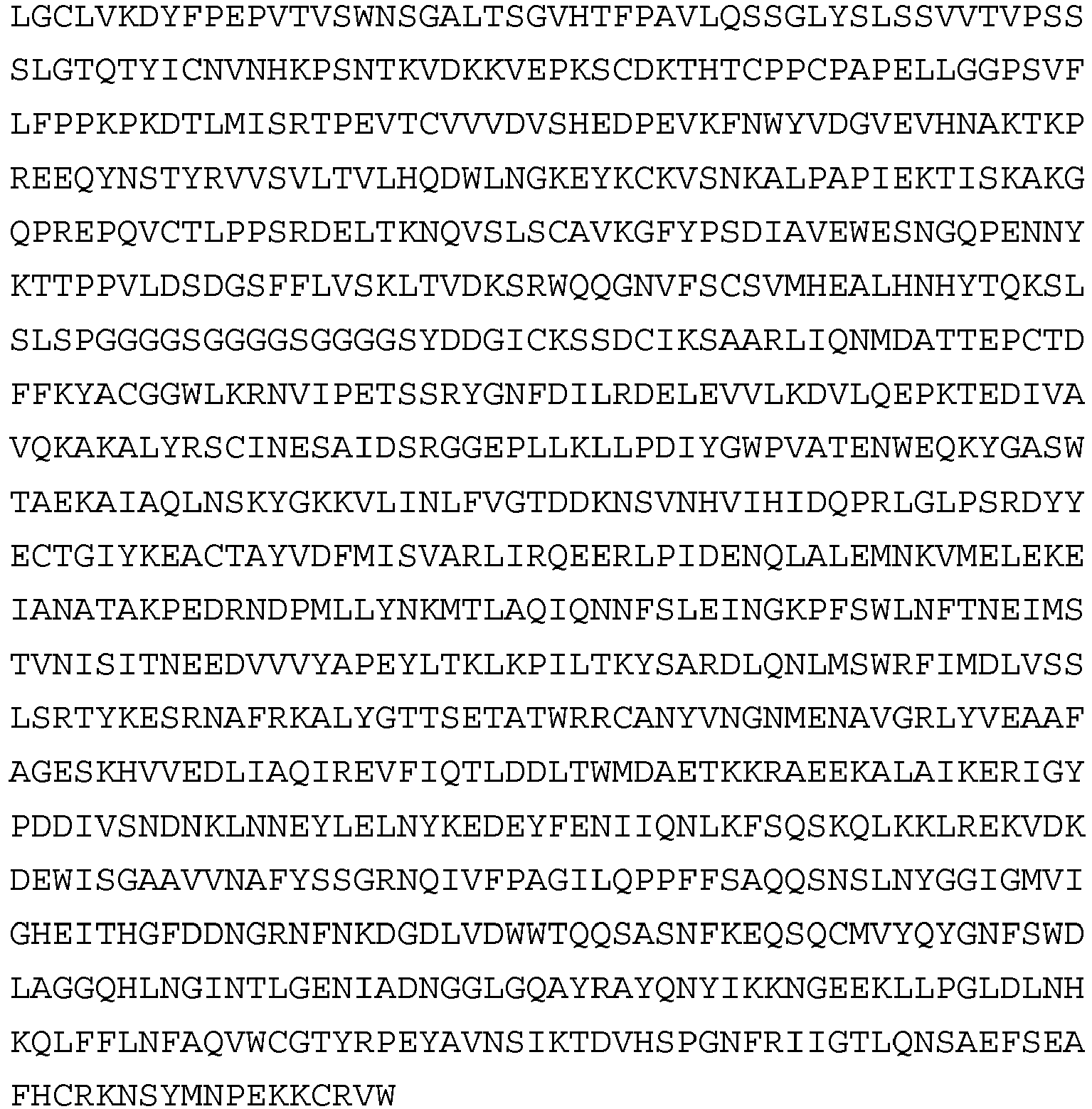
  • In one embodiment the neprilysin is a neprilysin fragment consisting of amino acid residues 52 to 750 of SEQ ID NO: 04.
  • In one embodiment the neprilysin is fused via a linker polypeptide to the C-terminus of the polypeptide. In one embodiment the linker is a glycine-serine-linker.
  • In one embodiment the fusion polypeptide comprises an enzymatic cleavage site between the polypeptide and the neprilysin or the linker.
  • In one embodiment the enzymatic cleavage site comprises a fragment of the cleavage site of Immunoglobulin A protease (IgA protease).
  • In one embodiment the mammalian cell is a HEK cell or a CHO cell.
  • In one embodiment the method comprises the following steps:
    • cultivating a mammalian cell expressing the polypeptide as fusion polypeptide with human neprilysin whereby the neprilysin is fused to the C-terminus of the polypeptide,
    • recovering the polypeptide from the cell or the cultivation medium, and
    • enzymatically cleaving the fusion polypeptide and thereby producing the polypeptide.
  • In one embodiment the polypeptide is a biologically active polypeptide.
  • In one embodiment the polypeptide is an antibody. In one embodiment the neprilysin is fused to the C-terminus of one heavy chain of the antibody.
  • FIGURES
  • Figure 1
    Binding of mAb31 and trifunctional antibody TriGant to Aβ1-40 fibers in vitro by ELISA; control antibody is a mouse transferrin receptor antibody (mouse TfR).
    Figure 2
    Binding of mAb31 and trifunctional antibody TriGant to murine transferrin receptor in vitro by FACS analysis.
    Figure 3
    Enzymatic activity of Neprilysin (R&D Systems, Cat. No 1182-ZNC) and Neprilysin TriGant antibody in vitro.
    Figure 4
    Immunohistochemical staining of mAb31 and trifunctional antibody TriGant bound to native human β-amyloid plaques from brain sections of an Alzheimer's disease patient.
    Figure 5
    In vivo β-amyloid plaque decoration by mAb31 and trifunctional antibody TriGant in a mouse model of Alzheimer's disease.
    Detailed Description of the Invention
  • Methods and techniques known to a person skilled in the art, which are useful for carrying out the current invention, are described e.g. in Ausubel, F.M., ed., Current Protocols in Molecular Biology, Volumes I to III (1997), Wiley and Sons; Sambrook et al., Molecular Cloning: A Laboratory Manual, Second Edition, Cold Spring Harbor Laboratory Press, Cold Spring Harbor, N.Y. (1989).
  • As known to a person skilled in the art enables the use of recombinant DNA technology the production of numerous derivatives of a nucleic acid and/or polypeptide. Such derivatives can, for example, be modified in one individual or several positions by substitution, alteration, exchange, deletion, or insertion. The modification or derivatization can, for example, be carried out by means of site directed mutagenesis. Such modifications can easily be carried out by a person skilled in the art (see e.g. Sambrook, J., et al., Molecular Cloning: A laboratory manual (1999) Cold Spring Harbor Laboratory Press, New York, USA). The use of recombinant technology enables a person skilled in the art to transform various host cells with heterologous nucleic acid(s). Although the transcription and translation, i.e. expression, machinery of different cells use the same elements, cells belonging to different species may have among other things a different so-called codon usage. Thereby identical polypeptides (with respect to amino acid sequence) may be encoded by different nucleic acid(s). Also, due to the degeneracy of the genetic code, different nucleic acids may encode the same polypeptide.
  • The use of recombinant DNA technology enables the production of numerous derivatives of a nucleic acid and/or polypeptide. Such derivatives can, for example, be modified in one individual or several positions by substitution, alteration, exchange, deletion, or insertion. The modification or derivatization can, for example, be carried out by means of site directed mutagenesis. Such modifications can easily be carried out by a person skilled in the art (see e.g. Sambrook, J., et al., Molecular Cloning: A laboratory manual (1999) Cold Spring Harbor Laboratory Press, New York, USA; Hames, B.D., and Higgins, S.G., Nucleic acid hybridization - a practical approach (1985) IRL Press, Oxford, England).
  • The use of recombinant technology enables the transformation of various host cells with heterologous nucleic acid(s). Although the transcription and translation, i.e. expression, machinery of different cells use the same elements, cells belonging to different species may have among other things a different so-called codon usage. Thereby identical polypeptides (with respect to amino acid sequence) may be encoded by different nucleic acid(s). Also, due to the degeneracy of the genetic code, different nucleic acids may encode the same polypeptide.
  • Within the scope of the present invention, transfected cells may be obtained with substantially any kind of transfection method known in the art. For example, the nucleic acid may be introduced into the cells by means of electroporation or microinjection. Alternatively, lipofection reagents such as FuGENE 6 (Roche Diagnostics GmbH, Germany), X-tremeGENE (Roche Diagnostics GmbH, Germany), and LipofectAmine (Invitrogen Corp., USA) may be used. Still alternatively, the nucleic acid may be introduced into the cell by appropriate viral vector systems based on retroviruses, lentiviruses, adenoviruses, or adeno-associated viruses (Singer, O., Proc. Natl. Acad. Sci. USA 101 (2004) 5313-5314).
  • DEFINITIONS
  • The term "antibody" encompasses the various forms of antibody structures including whole antibodies and antibody fragments. The antibody according to the invention is preferably a human antibody, a humanized antibody, a chimeric antibody, a T cell antigen depleted antibody ( WO 98/33523 , WO 98/52976 , and WO 00/34317 ). Genetic engineering of antibodies is e.g. described in Morrison, S.L., et al., Proc. Natl. Acad. Sci. USA 81 (1984) 6851-6855; US Patent Nos. 5,202,238 and 5,204,244 ; Riechmann, L., et al., Nature 332 (1988) 323-327; Neuberger, M.S., et al., Nature 314 (1985) 268-270; Lonberg, N., Nat. Biotechnol. 23 (2005) 1117-1125.
  • The term "antibody" refers to a protein consisting of one or more polypeptide(s) substantially encoded by antibody genes. The recognized antibody genes include the different constant region genes as well as the myriad antibody variable region genes. Antibodies may exist in a variety of formats, including, for example, Fv, Fab, and F(ab)2 as well as single chains (scFv) or diabodies (e.g. Huston, J.S., et al., Proc. Natl. Acad. Sci. USA 85 (1988) 5879-5883; Bird, R.E., et al., Science 242 (1988) 423-426; in general, Hood et al., Immunology, Benjamin N.Y., 2nd edition (1984); and Hunkapiller, T. and Hood, L., Nature 323 (1986) 15-16).
  • An antibody in general comprises two so called light chain polypeptides (light chain) and two so called heavy chain polypeptides (heavy chain). Each of the heavy and light chain polypeptides contains a variable domain (variable region) (generally the amino terminal portion of the polypeptide chain) comprising binding regions that are able to interact with an antigen. Each of the heavy and light chain polypeptides comprises a constant region (generally the carboxyl terminal portion). The constant region of the heavy chain mediates the binding of the antibody i) to cells bearing a Fc gamma receptor (FcγR), such as phagocytic cells, or ii) to cells bearing the neonatal Fc receptor (FcRn) also known as Brambell receptor. It also mediates the binding to some factors including factors of the classical complement system such as component (C1q).
  • The variable domain of an antibody's light or heavy chain in turn comprises different segments, i.e. four framework regions (FR) and three hypervariable regions (CDR).
  • An "antibody fragment" refers to a molecule other than an intact antibody that comprises a portion of an intact antibody that binds the antigen to which the intact antibody binds. Examples of antibody fragments include but are not limited to Fv, Fab, Fab', Fab'-SH, F(ab')2; diabodies; linear antibodies; single-chain antibody molecules (e.g. scFv); and multispecific antibodies formed from antibody fragments.
  • The term "biologically active polypeptide" as used herein refers to an organic molecule, e.g. a biological macromolecule such as a peptide, protein, glycoprotein, nucleoprotein, mucoprotein, lipoprotein, synthetic polypeptide or protein, that causes a biological effect when administered in or to artificial biological systems, such as bioassays using cell lines and viruses, or in vivo to an animal, including but not limited to birds or mammals, including humans. This biological effect can be but is not limited to enzyme inhibition or activation, binding to a receptor or a ligand, either at the binding site or circumferential, signal triggering or signal modulation. Biologically active molecules are without limitation for example immunoglobulins, or hormones, or cytokines, or growth factors, or receptor ligands, or agonists or antagonists, or cytotoxic agents, or antiviral agents, or imaging agents, or enzyme inhibitors, enzyme activators or enzyme activity modulators such as allosteric substances. In a preferred embodiment the heterologous polypeptide is an immunoglobulin, immunoglobulin conjugate, or an antifusogenic peptide.
  • The "class" of an antibody refers to the type of constant domain or constant region possessed by its heavy chain. There are five major classes of antibodies: IgA, IgD, IgE, IgG, and IgM, and several of these may be further divided into subclasses (isotypes), e.g., IgG1, IgG2, IgG3, IgG4, IgA1, and IgA2. The heavy chain constant domains that correspond to the different classes of immunoglobulins are called α, β, ε, γ and µ, respectively.
  • The term "enzymatic cleavage site" denotes a sequence of amino acid residues connected to each other via peptides bonds that can specifically be cleaved by a protease. In one embodiment the protease is IgA-protease, Granzyme B, Tev protease, PreScission protease, Thrombin, Faktor10a, Ides protease, or Enterokinase.
  • The term "IgA-protease" denotes a protease derived from Neisseria gonorrhoeae with a recognition site comprising one of the following sequences wherein "↓" denotes the position of the cleaved bond:
    Pro-Ala-Pro ↓ Ser-Pro (SEQ ID NO: 08),
    Pro-Pro ↓ Ser-Pro (SEQ ID NO: 09),
    Pro-Pro ↓ Ala-Pro (SEQ ID NO: 10),
    Pro-Pro ↓ Thr-Pro (SEQ ID NO: 11),
    Pro-Pro ↓ Gly-Pro (SEQ ID NO: 12),
    Pro-Arg-Pro-Pro ↓ Thr-Pro (SEQ ID NO: 13),
    Val-Val-Ala-Pro-Pro ↓ Ala-Pro (SEQ ID NO: 14),
    Val-Val-Ala-Pro-Pro ↓ Ser-Pro (SEQ ID NO: 15),
    Val-Val-Ala-Pro-Pro ↓ Thr-Pro (SEQ ID NO: 16),
    Val-Val-Ala-Pro-Pro ↓ Gly-Pro (SEQ ID NO: 17),
    Pro-Arg-Pro-Pro ↓ Thr-Pro (SEQ ID NO: 18),
    Ala-Pro-Pro-Ala ↓ Ala-Pro (SEQ ID NO: 19),
    Pro-Arg-Pro-Pro ↓ Ala-Pro (SEQ ID NO: 20),
    Pro-Arg-Pro-Pro ↓ Ser-Pro (SEQ ID NO: 21),
    Pro-Arg-Pro-Pro ↓ Gly-Pro (SEQ ID NO: 22).
  • As a result of the specific cleavage two amino acids - as first alanine or glycine or serine or proline and as second proline - are maintained at the N-terminus of the N-terminal polypeptide of the fusion polypeptide.
  • The term "expression" as used herein refers to transcription and/or translation processes occurring within a cell. The level of transcription of a nucleic acid sequence of interest in a cell can be determined on the basis of the amount of corresponding mRNA that is present in the cell. For example, mRNA transcribed from a sequence of interest can be quantitated by RT-PCR or by Northern hybridization (see Sambrook et al., 1989, supra). Polypeptides encoded by a nucleic acid of interest can be quantitated by various methods, e.g. by ELISA, by assaying for the biological activity of the polypeptide, or by employing assays that are independent of such activity, such as Western blotting or radioimmunoassay, using immunoglobulins that recognize and bind to the polypeptide (see Sambrook et al., 1989, supra).
  • An "expression cassette" refers to a construct that contains the necessary regulatory elements, such as promoter and polyadenylation site, for expression of at least the contained nucleic acid in a cell.
  • The term "expression machinery" as used within the current invention denotes the sum of the enzymes, cofactors, etc. of a cell that is involved in the steps beginning with the transcription step of a nucleic acid or gene (i.e. also called "gene expression machinery") to the post-translational modification of the polypeptide encoded by the nucleic acid. The expression machinery e.g. comprises the steps of transcription of DNA into pre-mRNA, pre-mRNA splicing to mature mRNA, translation into a polypeptide of the mRNA, and post translational modification of the polypeptide.
  • An "expression vector" is a nucleic acid providing all required elements for the expression of the comprised structural gene(s) in a host cell. Typically, an expression vector comprises a prokaryotic plasmid propagation unit, e.g. for E. coli, comprising an origin of replication, and a selectable marker, an eukaryotic selection marker, and one or more expression cassettes for the expression of the structural gene(s) of interest each comprising a promoter, a structural gene, and a transcription terminator including a polyadenylation signal. Gene expression is usually placed under the control of a promoter, and such a structural gene is said to be "operably linked to" the promoter. Similarly, a regulatory element and a core promoter are operably linked if the regulatory element modulates the activity of the core promoter.
  • The terms "full length antibody", "intact antibody," and "whole antibody" are used herein interchangeably to refer to an antibody having a structure substantially similar to a native antibody structure or having heavy chains that contain an Fc region as defined herein.
  • The terms "host cell", "host cell line", and "host cell culture" are used interchangeably and refer to cells into which exogenous nucleic acid has been introduced, including the progeny of such cells. Host cells include "transformants" and "transformed cells," which include the primary transformed cell and progeny derived therefrom without regard to the number of passages. Progeny may not be completely identical in nucleic acid content to a parent cell, but may contain mutations. Mutant progeny that have the same function or biological activity as screened or selected for in the originally transformed cell are included herein.
  • A "human antibody" is one which possesses an amino acid sequence which corresponds to that of an antibody produced by a human or a human cell or derived from a non-human source that utilizes human antibody repertoires or other human antibody-encoding sequences. This definition of a human antibody specifically excludes a humanized antibody comprising non-human antigen-binding residues.
  • An "isolated" antibody is one which has been separated from a component of its natural environment. In some embodiments, an antibody is purified to greater than 95% or 99% purity as determined by, for example, electrophoretic (e.g., SDS-PAGE, isoelectric focusing (IEF), capillary electrophoresis) or chromatographic (e.g., ion exchange or reverse phase HPLC). For review of methods for assessment of antibody purity, see, e.g., Flatman, S. et al., J. Chrom. B 848 (2007) 79-87.
  • An "isolated" nucleic acid refers to a nucleic acid molecule that has been separated from a component of its natural environment. An isolated nucleic acid includes a nucleic acid molecule contained in cells that ordinarily contain the nucleic acid molecule, but the nucleic acid molecule is present extrachromosomally or at a chromosomal location that is different from its natural chromosomal location.
  • The term "linker polypeptide" denotes peptide linkers of natural and/or synthetic origin. They consist of a linear amino acid chain wherein the 20 naturally occurring amino acids are the monomeric building blocks. The chain has a length of from 1 to 50 amino acids, in one embodiment between 1 and 28 amino acids, in one embodiment between 3 and 25 amino acids. The linker may contain repetitive amino acid sequences or sequences of naturally occurring polypeptides, such as polypeptides with a hinge-function. The linker has the function to ensure that the individual entities of a fusion polypeptide can perform their biological activity by allowing the entities to fold correctly and to be presented properly. In one embodiment the linker polypeptide is a "synthetic linker polypeptide" that is designated to be rich in glycine, glutamine, and/or serine residues. These residues are arranged e.g. in small repetitive units of up to five amino acids, such as GGGGS, QQQQG, or SSSSG. This small repetitive unit may be repeated for two to five times to form a multimeric unit. At the amino- and/or carboxy-terminal ends of the multimeric unit up to six additional arbitrary, naturally occurring amino acids may be added. Other synthetic peptidic linkers are composed of a single amino acid, which is repeated between 10 to 20 times and may comprise at the amino- and/or carboxy-terminal end up to six additional arbitrary, naturally occurring amino acids, such as e.g. serine in the linker GS15G. All linker polypeptides can be encoded by a nucleic acid molecule and therefore can be recombinantly expressed. As the linker polypeptides are themselves polypeptides, the entities of the fusion polypeptide are connected to the linker via a peptide bond that is formed between two amino acids. In one embodiment the polypeptide linker has an acid sequence selected from the group comprising (G3S)3, (G3S)4, (G3S)5, (G3S)6, (G4S)3, (G4S)4, (G4S)5, (G5S)2, (G5S)3, and (G5S)4.
  • The term "mammalian cell" denotes cells which are used for the expression of nucleic acids for the recombinant production of a polypeptide. In one embodiment the mammalian cell is a CHO cell (e.g. CHO K1, CHO DG44), or a BHK cell, or a NS0 cell, or a SP2/0 cell, or a HEK 293 cell, or a HEK 293 EBNA cell, or a PER.C6® cell, or a COS cells. In one embodiment the cell is a CHO cell, or a HEK 293 cell. As used herein, the expression "cell" includes the subject cell and its progeny. Thus, the term "mammalian cell" includes the primary transfected cell and cultures including the progeny cells derived there from without regard to the number of transfers. It is also understood that all progeny may not be precisely identical in DNA content, due to deliberate or inadvertent mutations. Variant progeny that have the same function or biological activity as the originally transformed cell are included.
  • The term "monoclonal antibody" as used herein refers to an antibody obtained from a population of substantially homogeneous antibodies, i.e., the individual antibodies comprising the population are identical and/or bind the same epitope, except for possible variant antibodies, e.g., containing naturally occurring mutations or arising during production of a monoclonal antibody preparation, such variants generally being present in minor amounts. In contrast to polyclonal antibody preparations, which typically include different antibodies directed against different determinants (epitopes), each monoclonal antibody of a monoclonal antibody preparation is directed against a single determinant on an antigen. Thus, the modifier "monoclonal" indicates the character of the antibody as being obtained from a substantially homogeneous population of antibodies, and is not to be construed as requiring production of the antibody by any particular method. For example, the monoclonal antibodies to be used in accordance with the present invention may be made by a variety of techniques, including but not limited to the hybridoma method, recombinant DNA methods, phage-display methods, and methods utilizing transgenic animals containing all or part of the human immunoglobulin loci, such methods and other exemplary methods for making monoclonal antibodies being described herein.
  • A "nucleic acid" as used herein, refers to a polymeric molecule consisting of individual nucleotides (also called bases) a, c, g, and t (or u in RNA), for example to DNA, RNA, or modifications thereof. This polynucleotide molecule can be a naturally occurring polynucleotide molecule or a synthetic polynucleotide molecule or a combination of one or more naturally occurring polynucleotide molecules with one or more synthetic polynucleotide molecules. Also encompassed by this definition are naturally occurring polynucleotide molecules in which one or more nucleotides are changed (e.g. by mutagenesis), deleted, or added. A nucleic acid can either be isolated, or integrated in another nucleic acid, e.g. in an expression cassette, a plasmid, or the chromosome of a host cell. A nucleic acid is likewise characterized by its nucleic acid sequence consisting of individual nucleotides.
  • To a person skilled in the art procedures and methods are well known to convert an amino acid sequence, e.g. of a polypeptide, into a corresponding nucleic acid sequence encoding this amino acid sequence. Therefore, a nucleic acid is characterized by its nucleic acid sequence consisting of individual nucleotides and likewise by the amino acid sequence of a polypeptide encoded thereby.
  • A "nucleic acid" denotes a naturally occurring or partially or fully non-naturally occurring nucleic acid encoding a polypeptide which can be produced recombinantly. The nucleic acid can be build up of DNA-fragments which are either isolated or synthesized by chemical means. The nucleic acid can be integrated into another nucleic acid, e.g. in an expression vector or the genome/chromosome of a mammalian cell. Vectors include shuttle and expression vectors. Typically, the vectors will also comprise a prokaryotic propagation unit comprising an origin of replication (e.g. the ColE1 origin of replication) and a selectable marker (e.g. ampicillin or tetracycline resistance gene), for replication and selection, respectively, of the vector in prokaryotes.
  • A "polypeptide" is a polymer consisting of amino acids joined by peptide bonds, whether produced naturally or synthetically. Polypeptides of less than about 20 amino acid residues may be referred to as "peptides", whereas molecules consisting of two or more polypeptides or comprising one polypeptide of more than 100 amino acid residues may be referred to as "proteins". A polypeptide may also comprise non-amino acid components, such as carbohydrate groups, metal ions, or carboxylic acid esters. The non-amino acid components may be added by the cell, in which the polypeptide is expressed, and may vary with the type of cell. Polypeptides are defined herein in terms of their amino acid backbone structure or the nucleic acid encoding the same. Additions such as carbohydrate groups are generally not specified, but may be present nonetheless.
  • The term "vector" as used herein, refers to a nucleic acid molecule capable of propagating another nucleic acid to which it is linked. The term includes the vector as a self-replicating nucleic acid structure as well as the vector incorporated into the genome of a host cell into which it has been introduced. Certain vectors are capable of directing the expression of nucleic acids to which they are operatively linked. Such vectors are referred to herein as "expression vectors".
  • RECOMBINANT PRODUCTION OF POLYPEPTIDES
  • Suitable host cells for cloning and/or expression/secretion of polypeptide-encoding vectors include prokaryotic and eukaryotic cells described herein. For example, polypeptides may be produced in bacteria, in particular when glycosylation and Fc effector function are not needed (see, e.g., US 5,648,237 , US 5,789,199 , and US 5,840,523 , Charlton, Methods in Molecular Biology 248 (2003) 245-254 (B.K.C. Lo, (ed.), Humana Press, Totowa, NJ), describing expression of antibody fragments in E. coli.). After expression, the polypeptide may be isolated from the bacterial cell paste in a soluble fraction or may be isolated from the insoluble fraction, so-called inclusion bodies which can be solubilized and the polypeptide be refolded to bioactive forms. Thereafter the polypeptide can be further purified.
  • In addition to prokaryotes, eukaryotic microbes such as filamentous fungi or yeasts are suitable cloning or expression hosts for polypeptide-encoding vectors, including fungi and yeast strains whose glycosylation pathways have been "humanized", resulting in the production of a polypeptide with a partially or fully human glycosylation pattern (see e.g. Gerngross, Nat. Biotech. 22 (2004) 1409-1414, and Li, et al., Nat. Biotech. 24 (2006) 210-215).
  • Suitable host cells for the expression of glycosylated polypeptides are also derived from multicellular organisms (invertebrates and vertebrates). Examples of invertebrate cells include plant and insect cells. Numerous baculoviral strains have been identified which may be used in conjunction with insect cells, particularly for transfection of Spodoptera frugiperda cells.
  • Plant cell cultures can also be utilized as hosts (see, e.g., US 5,959,177 , US 6,040,498 , US 6,420,548 , US 7,125,978 , and US 6,417,429 (describing PLANTIBODIES technology for producing antibodies in transgenic plants)).
  • Vertebrate cells may also be used as hosts. For example, mammalian cell lines that are adapted to grow in suspension culture may be useful. Other examples of useful mammalian host cell lines are the COS-7 cell line (monkey kidney CV1 cell transformed by SV40; the HEK293 cell line (human embryonic kidney) BHK cell line (baby hamster kidney); the TM4 mouse sertoli cell line (TM4 cells as described, e.g., in Mather, Biol. Reprod. 23 (1980) 243-251); the CV1 cell line (monkey kidney cell); the VERO-76 cell line (African green monkey kidney cell); the HELA cell line (human cervical carcinoma cell); the MDCK cell line (canine kidney cell); the BRL-3A cell line (buffalo rat liver cell); the W138 cell line (human lung cell); the HepG2 cell line (human liver cell); the MMT 060562 cell line (mouse mammary tumor cell); the TRI cell line, as described, e.g., in Mather, et al., Annals N.Y. Acad. Sci. 383 (1982) 44-68; the MRC5 cell line; and FS4 cell-s line. Other useful mammalian host cell lines include the CHO cell line (Chinese hamster ovary cell), including DHFR negative CHO cell lines (Urlaub, et al., Proc. Natl. Acad. Sci. USA 77 (1980) 4216), and myeloma cell lines such as Y0, NS0 and Sp2/0 cell line. For a review of certain mammalian host cell lines suitable for polypeptide production, see, e.g., Yazaki, and Wu, Methods in Molecular Biology, Antibody Engineering 248 (2004) 255-268 (B.K.C. Lo, (ed.), Humana Press, Totowa, NJ).
  • THE METHOD AS REPORTED HEREIN
  • One aspect as reported herein is a method for the recombinant production of a polypeptide in a mammalian cell comprising the following steps:
    • cultivating a mammalian cell expressing the polypeptide as fusion polypeptide with human neprilysin whereby the neprilysin is fused to the C-terminus of the polypeptide, and
    • recovering the polypeptide from the cell or the cultivation medium and thereby producing the polypeptide.
  • One aspect as reported herein is the use of human neprilysin fused to the C-terminus of a polypeptide for increasing the expression yield of the polypeptide in a mammalian cell.
  • It has been found that by fusing human neprilysin or a fragment thereof to the C-terminus of a polypeptide the recombinant yield of the polypeptide can be increased when expressed using a mammalian cell.
  • In the following the method and use as reported herein is exemplified with an antibody comprising a full length antibody directed to Abeta (MAB31). To this antibody different short and long polypeptides are fused at the C-terminus of the heavy chains.
    Figure imgb0001
  • It can be seen that fusion of the neprilysin residue to the antibody heavy chain increased the obtained expression yield.
  • The following examples, figures and sequences are provided to aid the understanding of the present invention, the true scope of which is set forth in the appended claims. It is understood that modifications can be made in the procedures set forth without departing from the spirit of the invention.
  • Although the foregoing invention has been described in some detail by way of illustration and example for purposes of clarity of understanding, the descriptions and examples should not be construed as limiting the scope of the invention.
  • EXAMPLES Polypeptides used in the examples
  • Trifunctional antibody (TriGant) comprises a full length antibody directed to Abeta (MAB31), a single Fab directed to the transferrin receptor and neprilysin. The sequence of the heavy chains and the variable chains are as follows:
    • mAb31-IgG1 without C-terminal GK
      Figure imgb0002
      Figure imgb0003
      (SEQ ID NO: 0 1)
  • Composition of SEQ ID NO: 01:
    • anti-Abeta antibody mAb 31 (= Gantenerumab (INN)) human IgG1 heavy
      chain without C-terminal Gly and Lys.
      mAb31-IgG1-knob without C-terminal GK
      Figure imgb0004
      (SEQ ID NO: 02)
  • Composition of SEQ ID NO: 02:
    • mAb31 human IgG1 heavy chain without C-terminal Gly and Lys with knob mutations (T366W and S354C, numbering of the amino acid residues according to Kabat (Kabat et al. 1991, Sequences of Proteins of immunological Interest, U.S. Department of Public Health, Bethesda, Md.)).
      mAb31-IgG 1-neprilysin
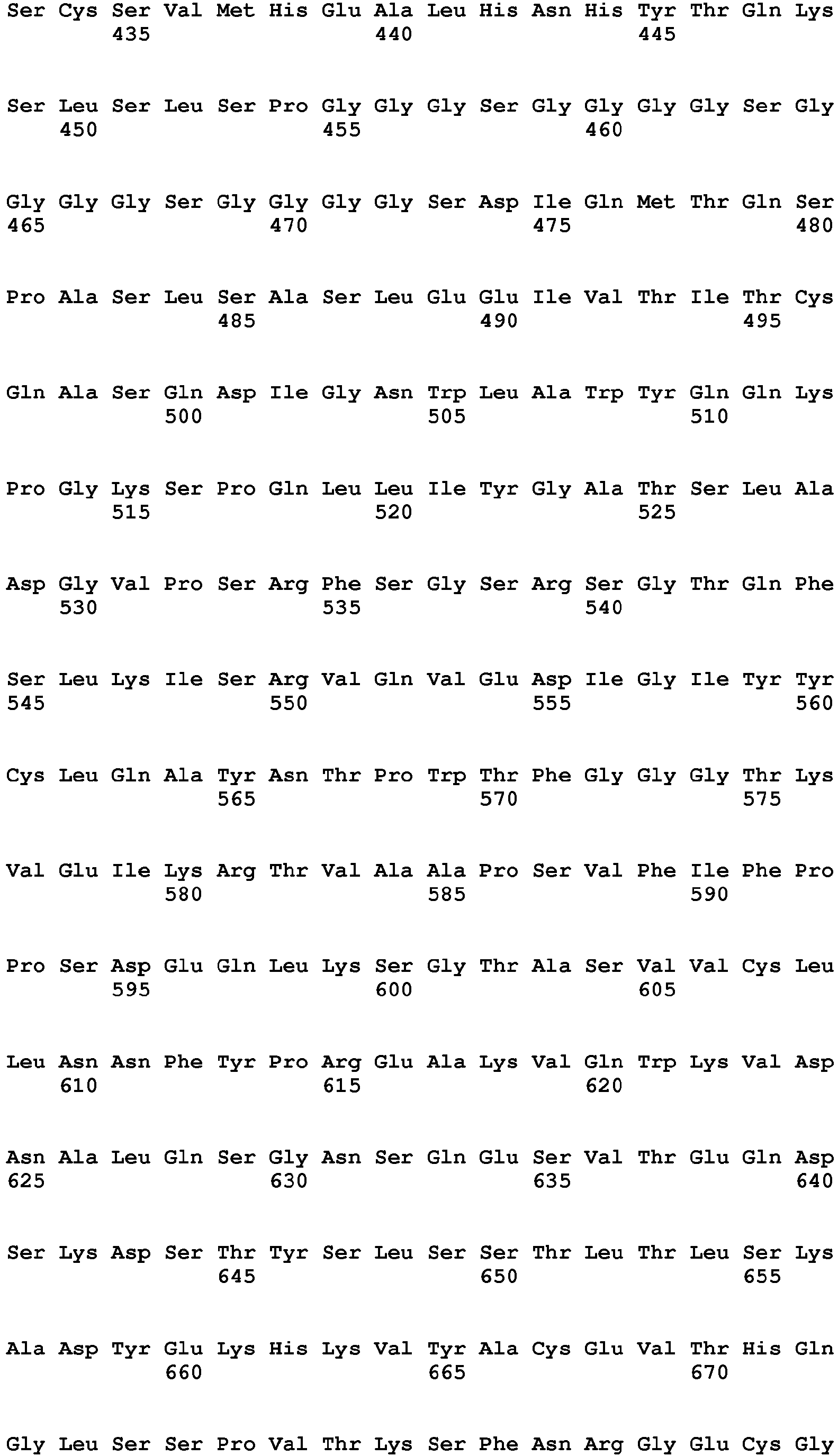
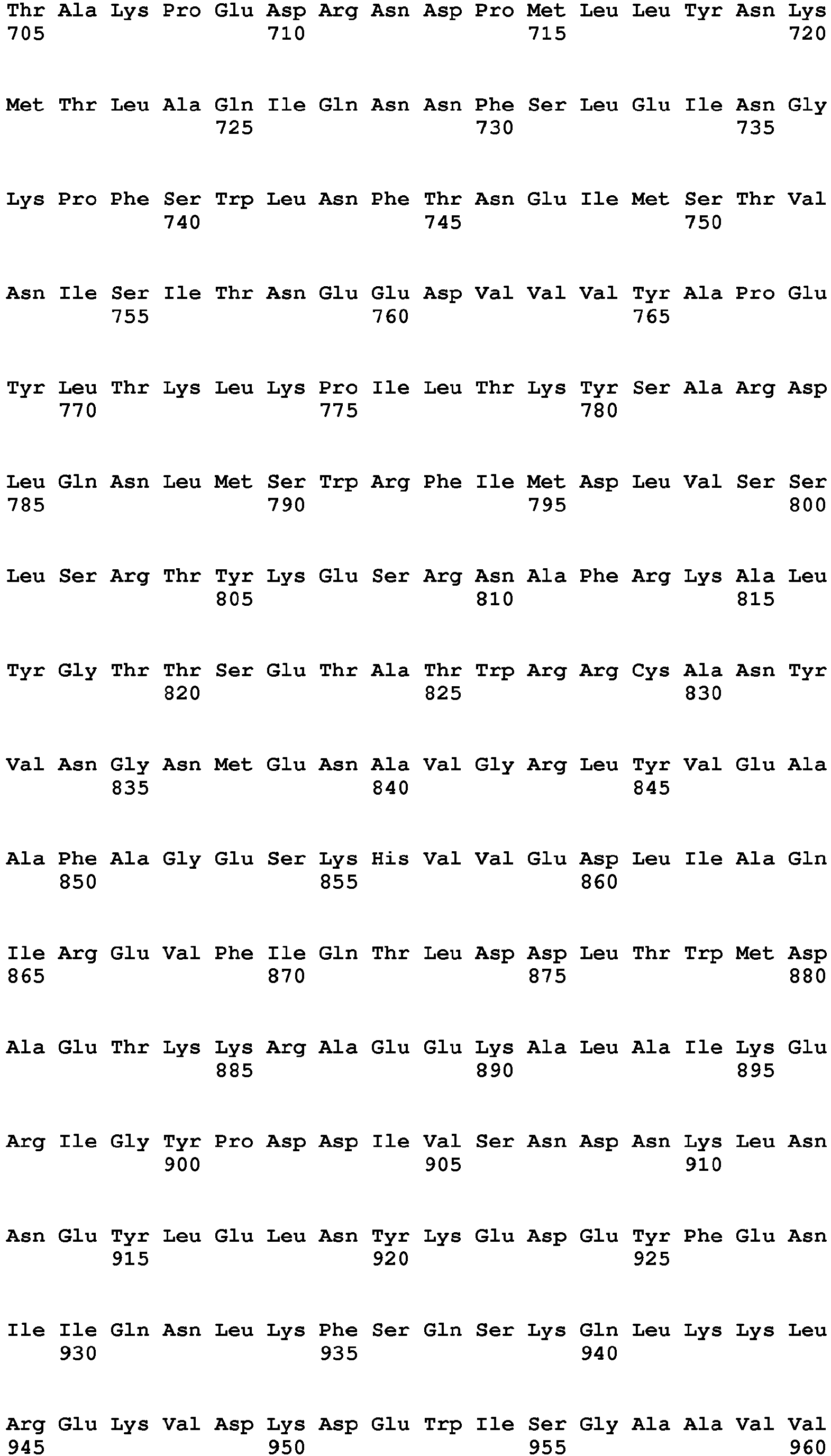
      Figure imgb0005
      Figure imgb0006
      (SEQ ID NO: 03)
  • Composition of SEQ ID NO: 03:
    • mAb31 human IgG1 heavy chain without C-terminal Gly and Lys
    • glycine-serine-linker
    • amino acid residues 52 - 750 ofNeprilysin (SEQ ID NO: 04).
      mAb31-IgG1-KNOB-SS_G4S-4_VL-8D3-CK_G4S-6-GG_VH-8D3-CH1
      Figure imgb0007
      Figure imgb0008
      (SEQ ID NO: 05)
  • Composition of SEQ ID NO: 05:
    • Mab31 human IgG1 heavy chain without C-terminal Lys
    • glycine-serine-linker
    • Variable light chain domain (VL) variant (L596V and L598I) of the mouse 8D3 anti-transferrin antibody (Boado, R.J., et al., Biotechnol. Bioeng. 102 (2009) 1251-1258)
    • human C-kappa light chain
    • glycine-serine-linker
    • variable heavy chain domain (VH) of the mouse 8D3 anti-transferrin antibody (Boado, R.J., et al., Biotechnol. Bioeng. 102 (2009) 1251-1258)
    • human IgG1 CH3 heavy chain domain.
      mAb31_8D3_HC-HOLE_NEPRI
      Figure imgb0009
      Figure imgb0010
      (SEQ ID NO: 06)
  • Composition of SEQ ID NO: 06:
    • mAb31 human IgG1 heavy chain without C-terminal Lys and Gly with hole mutations (mutations T366S, L368A, Y407V, and Y349C, numbering according to Kabat)
    • glycine-serine-linker
    • amino acid residues 52 - 750 ofNeprilysin (SEQ ID NO: 04).
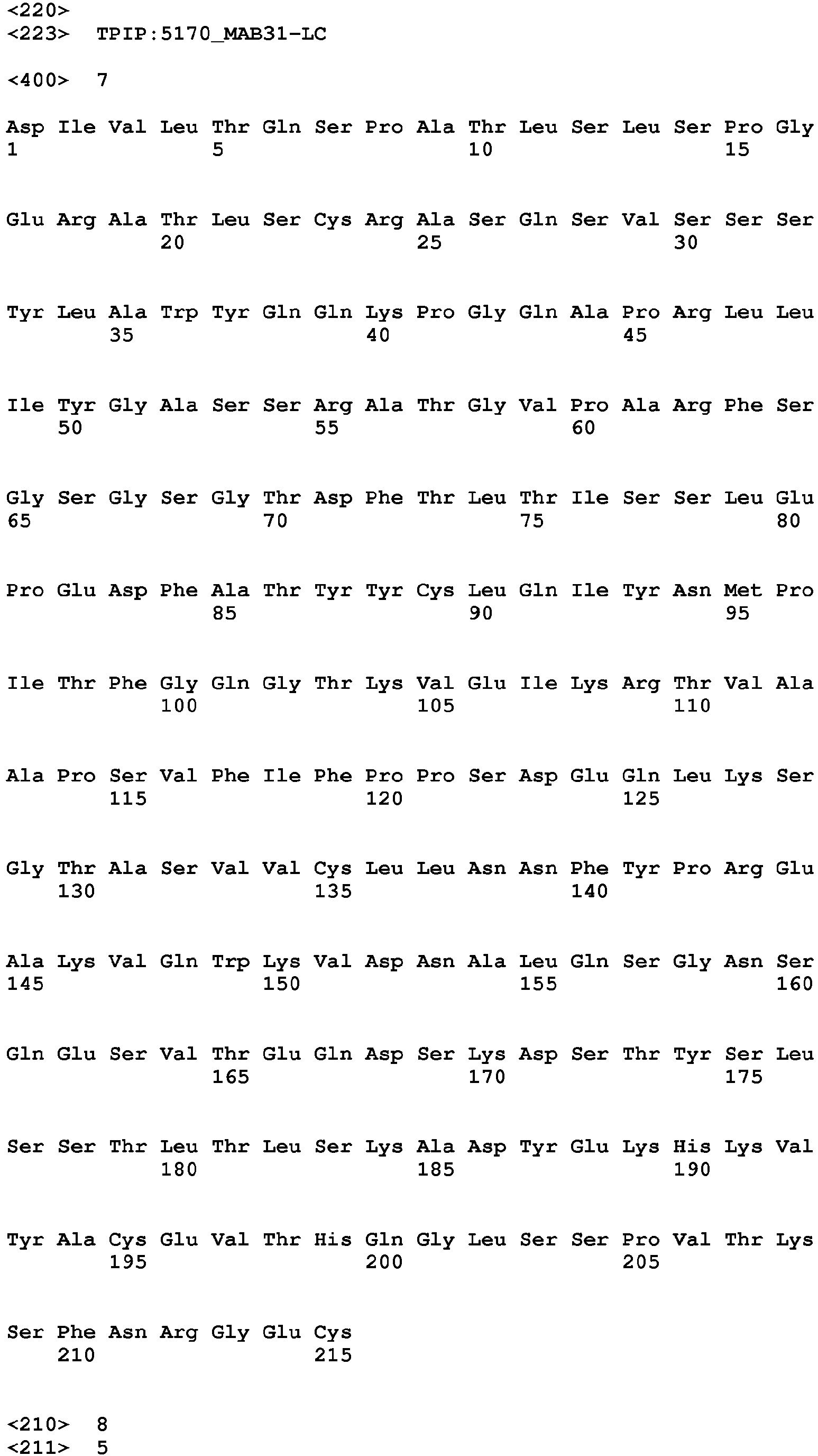
      mAb31-LC
      Figure imgb0011
      GLSSPVTKSFNRGEC
      (SEQ ID NO: 07)
  • Composition of SEQ ID NO: 07:
    • mAb 31 kappa light chain.
    Example 1 Recombinant production DNA preparation
  • 500 ml or 5 L of overnight bacterial LB culture were harvested and plasmid DNA was extracted according to the manufacturer's protocol (High speed Maxi kit, Qiagen, Cat. No. 12663). The resulting plasmid DNA was eluted in 1 ml TE buffer and DNA concentration was determined by spectrophotometric measurement (Epoch, BioTek).
  • Expression plasmids:
  • Expression plasmids comprise expression cassettes for the expression of the heavy and light chains were separately assembled in mammalian cell expression vectors.
  • General information regarding the nucleotide sequences of human light and heavy chains from which the codon usage can be deduced is given in: Kabat, E.A., et al., Sequences of Proteins of Immunological Interest, 5th ed., Public Health Service, National Institutes of Health, Bethesda, MD (1991), NIH Publication No 91-3242.
    1. a) antibody without neprilysin:
      • The transcription unit of the κ-light chain is composed of the following elements:
        • the immediate early enhancer and promoter from the human cytomegalovirus (hCMV) including a 5'UTR of a human light chain germline gene,
        • the light chain variable region including the signal peptide sequence encoding genomic DNA segment (L1, signal-sequence-intron, L2) of a human germline gene,
        • the human κ-light gene constant region including the mouse κ-light gene intron 2, and
        • the SV40 polyadenylation ("poly A") signal sequence.
  • The transcription unit of the γ1-heavy chain is composed of the following elements:
    • the immediate early enhancer and promoter from the human cytomegalovirus (HCMV) including the 5'-UTR of a human heavy chain germline gene,
    • the γ1-chain variable region including the signal peptide sequence encoding genomic DNA segment (L1, signal-sequence-intron, L2) of a human germline gene,
    • the genomic human γl-heavy chain gene constant region including the mouse heavy chain intron 2;
    • the SV40 polyadenylation ("poly A") signal sequence.
  • Further the plasmid contains
    • a neomycin resistance gene,
    • an origin of replication from the vector pUC18 which allows replication of this plasmid in E. coli, and
    • a β-lactamase gene which confers ampicillin resistance in E. coli.
      • b) antibody with neprilysin fused to the C-terminus of the heavy chain:
        • The expression plasmid for the light chain comprises
          • the transcription unit of the κ-light chain composed of the following elements:
            • the immediate early enhancer and promoter from the human cytomegalovirus (hCMV) including a 5'UTR of a human light chain germline gene,
            • the light chain variable region including the signal peptide sequence encoding genomic DNA segment (L1, signal-sequence-intron, L2) of a murine germline gene,
            • the human κ-light gene constant region including the mouse κ-light gene intron 2, and
            • the BGH polyadenylation ("poly A") signal sequence;
          • a neomycin resistance gene,
          • an origin of replication from the vector pUC18 which allows replication of this plasmid in E. coli, and
          • a β-lactamase gene which confers ampicillin resistance in E. coli.
  • The expression plasmid for the heavy chain comprises
    • the transcription unit of the γl-heavy chain composed of the following elements:
      • the immediate early enhancer and promoter from the human cytomegalovirus (HCMV) including the 5'-UTR of a human heavy chain germline gene,
      • the γ1-chain variable region including the signal peptide sequence encoding genomic DNA segment (L1, signal-sequence-intron, L2) of a human germline gene,
      • the genomic human γl-heavy chain gene constant region including the mouse heavy chain intron 2;
      • a neprilysin encoding nucleic acid,
      • the BGH polyadenylation ("poly A") signal sequence;
    • an origin of replication from the vector pUC18 which allows replication of this plasmid in E. coli, and
    • a β-lactamase gene which confers ampicillin resistance in E. coli.
    Transfection:
  • HEK293 cells were diluted to 8 x 10⁵ cells/ml the day before transfection. About 1 to 1.6 x 10⁶ cells/ml were transfected according to the manufacturer's protocol. For a final transfection volume of 1000 ml, 1000 µg DNA were diluted to a final volume of 50 ml with Opti-MEM® I Reduced Serum Medium (Gibco, Cat. No. 31985070). Two microliter of 293fectin™Reagent (Invitrogen, Cat. No. 12347019) per 1 µg DNA were equally diluted to a final volume of 1 ml with Opti-MEM® medium and incubated for 5 minutes. After incubation the diluted DNA was added to the diluted 293fectinReagent, gently mixed, incubated for another 20-30 minutes and afterwards drop wise pipetted to 950 ml of the HEK293 cell suspension to obtain a final volume of 1000 ml. The cells were incubated under cell culture condition (37 °C, 8 % CO2, 80 % humidity) on an orbital shaker rotating at 125 rpm and harvested after 72 hours. The harvest was centrifuged for 10 minutes at 1000 rpm followed by 10 minutes at 3000 rpm and filtered through a 22 µm sterile filter (Millipore, Cat. No. SCGPU05RE).
  • Purification:
  • Cells were removed from culture medium by centrifugation. Complexes were purified from supernatants by Protein A affinity chromatography (MabSelect-Sepharose on an ÄKTA-Avant). Eluted complexes were concentrated with Amicon centrifugation tubes to a protein concentration of 3 mg/ml. An aliquot was analyzed on a size exclusion chromatography (HPLC TSKgel GFC300 Sys89). Preparative SEC on a Superdex 200 was performed to remove aggregates and to buffer the fusion proteins in 20 mM histidine, 140 mM NaCl, pH 6.0. Eluted complexes were concentrated with Amicon centrifugation tube to a protein concentration of 1 mg/ml and sterile filtered (0.2 µm pore size).
  • Analytics:
  • Complex samples were analyzed by OD280 using a UV spectrophotometer to determine the protein concentration in solution. The extinction coefficient required for this was calculated from the amino acid sequence according to Pace (Pace et al., Protein Science 4 (1995) 2411-2423). Size-exclusion chromatography (SE-HPLC) was performed on TSK-Ge1300SWXL or Superdex 200 columns with a 0.2 M potassium phosphate buffer, comprising 0.25 M KCI, pH 7.0 as mobile phase in order to determine the content of monomeric, aggregated and degraded species in the samples. Sodium dodecyl sulfate (SDS) polyacrylamide gel electrophoresis (reducing and non-reducing) was performed to analyze the purity of the complex preparations with regard to product-related degradation products and unrelated impurities. Electrospray ionization mass spectrometry (ESI-MS) was performed with reduced (TCEP) and deglycosylated (N-glycosidase F) samples to confirm the correct mass/identity of each chain and detect chemical modifications. ESI-MS of the deglycosylated samples was carried out to analyze the nature and quality of the fully assembled protein and detect potential product-related side products.
  • Results:
  • Figure imgb0012
  • It can be seen that fusion of the neprilysin residue to the antibody heavy chain increased the expression yield in mg/L.
  • Example 2 Determination of binding to Aβ1-40 fibers in vitro by ELISA
  • Binding of fusion polypeptide to fibrillar Aβ was measured by an ELISA assay. Briefly, Aβ(1-40) was coated at 7 µg/mL in PBS onto Maxisorb plates for 3 days at 37°C to produce fibrillar Abeta, then dried for 3 h at RT. The plate was blocked with 1% CroteinC and 0.1% RSA in PBS (blocking buffer) for 1 h at RT, then washed once with wash buffer. Fusion polypeptides or controls were added at concentrations up to 100 nM in blocking buffer and incubated at 4°C overnight. After 4 wash steps, constructs were detected by addition of anti-human-IgG-HRP (Jackson Immunoresearch) at 1:10,000 dilution in blocking buffer (1 RT), followed by 6 washes and incubation in TMB (Sigma). Absorbance was read out at 450 nm after stopping color development with 1 N HCl (see Figure 1).
  • Example 3 Determination of binding to murine transferrin receptor in vitro
  • Binding of fusion polypeptide to murine transferrin receptor was tested by FACS analysis on mouse X63.AG8-563 myeloma cells. As Aβ antibody mAb31(HEK) showed a certain tendency to non-specifically bind to Ag8 cells, specific binding was quantified by co-incubation with a 20fold excess of anti-mouse-TfR antibody. Cells were harvested by centrifugation, washed once with PBS and 5 x 10⁴ cells incubated with a 1.5 pM to 10 nM dilution series of the polypeptide fusions with or without addition of 200 nM anti-mouse TfR antibody in 100 µL RPMI/10% FCS for 1.5 h on ice. After 2 washes with RPMI/10% FCS, cells were incubated with goat-anti-human IgG coupled to Phycoerythrin (Jackson Immunoresearch) at a dilution of 1:600 in RPMI/19% FCS for 1.5 h on ice. Cells were again washed, resuspended in RPMI/10% FCS and Phycoerythrin fluorescence measured on a FACS-Array instrument (Becton-Dickinson) (see Figure 2).
  • Example 4 Determination of enzymatic activity of neprilysin in vitro (apparent Km)
  • The 20 µl assay was performed on low-volume black Costar 384-well plates at 25°C. A working solution of 160 µM peptide substrate MCA-RPPGFSAFK(Dnp)-OH (R&D Systems Cat. No. ES005) was prepared in 50 mM Tris-HCl pH7.8, 25 mM NaCl and 5 mM ZnCl2. 10 µl of Neprilysin (R&D Systems, Cat. No 1182-ZNC) or Neprilysin fusion polypeptide, diluted to 1 nM in assay buffer, were transferred to plate. For determination of apparent Km values various concentrations of substrate (0.078-80 nM in 2-fold dilutions dilutions) were added and the enzyme reaction started. The fluorescence increase was monitored with excitation at 320 nm and emission at 405 nm on an Envision Reader. Hydrolysis rates and apparent Km values were calculated using XLfit® software (IDBS) (see Figure 3).
    Vmax [1/s] Km [µM]
    TriGant 0001-0012 5169 3.8
    neprilysin (RnD Systems) 2926 3.2
  • Example 5 Staining of fusion polypeptide to native human β-amyloid plaques from brain sections of an Alzheimer's disease patient by indirect immunofluorescence
  • Fusion polypeptide was tested for the ability to stain native human β-amyloid plaques by immunohistochemistry analysis using indirect immunofluorescence. Specific and sensitive staining of genuine human β-amyloid plaques was demonstrated. Cryostat sections of unfixed tissue from the temporal cortex obtained postmortem from patients positively diagnosed for Alzheimer's disease were labeled by indirect immunofluorescence. A two-step incubation was used to detect bound fusion polypeptide, which was revealed by affinity-purified goat anti-human (GAH555) IgG (H+L) conjugated to Alexa 555 dye (Molecular Probes). Controls included unrelated human IgG1 antibodies (Sigma) and the secondary antibody alone, which all gave negative results. All types of β-amyloid plaques were clearly and consistently revealed at fusion polypeptide concentrations tested from 10 ng/ml to 5 µg/ml Specific and sensitive staining of genuine human amyloid-β plaques is shown for fusion polypeptide at a concentration of 1 µg/ml (see Figure 4).
  • Example 6 In vivo β-amyloid plaque decoration by fusion polypeptide in a mouse model of Alzheimer's disease
  • Fusion polypeptide was tested in APP/PS2 double transgenic mice, a mouse model for AD-related amyloidosis (Richards, J. Neuroscience 23 (2003) 8989-9003) for their ability to immuno-decorate β-amyloid plaques in vivo. This enabled assessment of the extent of brain penetration and binding to amyloid-β plaques. The fusion polypeptide was administered at different doses compared to naked anti-Aβ monoclonal antibody and after 6 days animals were perfused with phosphate-buffered saline and the brains frozen on dry ice and prepared for cryosectioning. The fusion polypeptide showed substantially improved and highly effective brain penetration in vivo (as compared to the naked anti-Aβ monoclonal antibody).
  • The presence of the antibodies bound to β-amyloid plaques was assessed using unfixed cryostat sections either by single-labeled indirect immunofluorescence with goat anti-human IgG (H+L) conjugated to Alexa555 dye (GAH555) (Molecular Probes) at a concentration of 15 µg /ml for 1 hour at room temperature. A counterstaining for amyloid plaques was done by incubation with BAP-2, a mouse monoclonal antibody against Aβ conjugated to Alexa 488 at a concentration of 0.5 µg /ml for 1 hour at room temperature. Slides were embedded with fluorescence mounting medium (S3023 Dako) and imaging was done by confocal laser microscopy (Figure 5).
  • At equimolar doses (2 and 3.8 mg/kg) fusion polypeptide were found to cross substantially better the blood brain barrier and strongly immuno-decorate all β-amyloid plaques in vivo. Representative images shown in Figure 5 demonstrate the improved binding capacity of the fusion polypeptide compared to the naked monoclonal antibody which crosses the blood-brain border at much lower extent.
  • Efficacy to lower plaque load in huAPP/PS2 double transgenic mice will be established in a chronic multiple dose study with weekly IV injections. Comparative analysis of fusion polypeptide and naked anti-Aβ mAb without modifications are expected to reveal a significantly higher capacity to lower plaque load.
    Figure imgb0013
    Figure imgb0014
    Figure imgb0015
    Figure imgb0016
    Figure imgb0017
    Figure imgb0018
    Figure imgb0019
    Figure imgb0020
    Figure imgb0021
    Figure imgb0022
    Figure imgb0023
    Figure imgb0024
    Figure imgb0025
    Figure imgb0026
    Figure imgb0027
    Figure imgb0028
    Figure imgb0029
    Figure imgb0030
    Figure imgb0031
    Figure imgb0032
    Figure imgb0033
    Figure imgb0034
    Figure imgb0035
    Figure imgb0036
    Figure imgb0037
    Figure imgb0038

Claims (10)

  1. A method for the recombinant production of a polypeptide in a mammalian cell comprising the following steps:
    - cultivating a mammalian cell expressing the polypeptide as fusion polypeptide with human neprilysin whereby the neprilysin is fused to the C-terminus of the polypeptide, and
    - recovering the polypeptide from the cell or the cultivation medium and thereby producing the polypeptide.
  2. Use of human neprilysin fused to the C-terminus of a polypeptide for increasing the expression yield of the polypeptide in a mammalian cell.
  3. The method or use according to any one of claims 1 to 2, characterized in that the neprilysin is a neprilysin fragment consisting of amino acid residues 52 to 750 of SEQ ID NO: 04.
  4. The method or use according to any one of claims 1 to 3, characterized in that the neprilysin is fused via a linker polypeptide to the C-terminus of the polypeptide.
  5. The method or use according to claim 4, characterized in that the linker is a glycine-serine-linker.
  6. The method or use according to any one of claims 1 to 5, characterized in that the fusion polypeptide comprises an enzymatic cleavage site between the polypeptide and the neprilysin or the linker.
  7. The method or use according to any one of claims 1 to 6, characterized in that the mammalian cell is a HEK cell or a CHO cell.
  8. The method according to any one of claims 1 to 7, characterized in that the method comprises the following steps:
    - cultivating a mammalian cell expressing the polypeptide as fusion polypeptide with human neprilysin whereby the neprilysin is fused to the C-terminus of the polypeptide,
    - recovering the polypeptide from the cell or the cultivation medium, and
    - enzymatically cleaving the fusion polypeptide and thereby producing the polypeptide.
  9. The method or use according to any one of claims 1 to 8, characterized in that the polypeptide is an antibody.
  10. The method or use according to claim 9, characterized in that the neprilysin is fused to the C-terminus of one heavy chain of the antibody.
EP13179034.7A 2013-08-02 2013-08-02 Method for improving the recombinant expression of a polypeptide by C-terminal fusion to human neprilysin Withdrawn EP2832854A1 (en)

Priority Applications (1)

Application Number Priority Date Filing Date Title
EP13179034.7A EP2832854A1 (en) 2013-08-02 2013-08-02 Method for improving the recombinant expression of a polypeptide by C-terminal fusion to human neprilysin

Applications Claiming Priority (1)

Application Number Priority Date Filing Date Title
EP13179034.7A EP2832854A1 (en) 2013-08-02 2013-08-02 Method for improving the recombinant expression of a polypeptide by C-terminal fusion to human neprilysin

Publications (1)

Publication Number Publication Date
EP2832854A1 true EP2832854A1 (en) 2015-02-04

Family

ID=48906162

Family Applications (1)

Application Number Title Priority Date Filing Date
EP13179034.7A Withdrawn EP2832854A1 (en) 2013-08-02 2013-08-02 Method for improving the recombinant expression of a polypeptide by C-terminal fusion to human neprilysin

Country Status (1)

Country Link
EP (1) EP2832854A1 (en)

Cited By (1)

* Cited by examiner, † Cited by third party
Publication number Priority date Publication date Assignee Title
WO2020077297A1 (en) * 2018-10-11 2020-04-16 Valerion Therapeutics, Llc Methods and compositions for treatment of protein aggregation-based disorders

Citations (15)

* Cited by examiner, † Cited by third party
Publication number Priority date Publication date Assignee Title
US5202238A (en) 1987-10-27 1993-04-13 Oncogen Production of chimeric antibodies by homologous recombination
US5204244A (en) 1987-10-27 1993-04-20 Oncogen Production of chimeric antibodies by homologous recombination
US5648237A (en) 1991-09-19 1997-07-15 Genentech, Inc. Expression of functional antibody fragments
US5789199A (en) 1994-11-03 1998-08-04 Genentech, Inc. Process for bacterial production of polypeptides
WO1998033523A1 (en) 1997-01-31 1998-08-06 Biovation Limited Vaccination methods and molecules
US5840523A (en) 1995-03-01 1998-11-24 Genetech, Inc. Methods and compositions for secretion of heterologous polypeptides
WO1998052976A1 (en) 1997-05-21 1998-11-26 Biovation Limited Method for the production of non-immunogenic proteins
US5959177A (en) 1989-10-27 1999-09-28 The Scripps Research Institute Transgenic plants expressing assembled secretory antibodies
US6040498A (en) 1998-08-11 2000-03-21 North Caroline State University Genetically engineered duckweed
WO2000034317A2 (en) 1998-12-08 2000-06-15 Biovation Limited Method for reducing immunogenicity of proteins
US6420548B1 (en) 1999-10-04 2002-07-16 Medicago Inc. Method for regulating transcription of foreign genes
US7125978B1 (en) 1999-10-04 2006-10-24 Medicago Inc. Promoter for regulating expression of foreign genes
US20080242590A1 (en) * 2007-03-28 2008-10-02 Astrazeneca Ab New Method 706
US20080274096A1 (en) * 2005-10-03 2008-11-06 Astrazeneca Ab Fusion Proteins Having a Modulated Half-Life in Plasma
WO2011160732A1 (en) * 2010-06-21 2011-12-29 Medimmune, Llc. Protease variants of human neprilysin

Patent Citations (16)

* Cited by examiner, † Cited by third party
Publication number Priority date Publication date Assignee Title
US5204244A (en) 1987-10-27 1993-04-20 Oncogen Production of chimeric antibodies by homologous recombination
US5202238A (en) 1987-10-27 1993-04-13 Oncogen Production of chimeric antibodies by homologous recombination
US6417429B1 (en) 1989-10-27 2002-07-09 The Scripps Research Institute Transgenic plants expressing assembled secretory antibodies
US5959177A (en) 1989-10-27 1999-09-28 The Scripps Research Institute Transgenic plants expressing assembled secretory antibodies
US5648237A (en) 1991-09-19 1997-07-15 Genentech, Inc. Expression of functional antibody fragments
US5789199A (en) 1994-11-03 1998-08-04 Genentech, Inc. Process for bacterial production of polypeptides
US5840523A (en) 1995-03-01 1998-11-24 Genetech, Inc. Methods and compositions for secretion of heterologous polypeptides
WO1998033523A1 (en) 1997-01-31 1998-08-06 Biovation Limited Vaccination methods and molecules
WO1998052976A1 (en) 1997-05-21 1998-11-26 Biovation Limited Method for the production of non-immunogenic proteins
US6040498A (en) 1998-08-11 2000-03-21 North Caroline State University Genetically engineered duckweed
WO2000034317A2 (en) 1998-12-08 2000-06-15 Biovation Limited Method for reducing immunogenicity of proteins
US6420548B1 (en) 1999-10-04 2002-07-16 Medicago Inc. Method for regulating transcription of foreign genes
US7125978B1 (en) 1999-10-04 2006-10-24 Medicago Inc. Promoter for regulating expression of foreign genes
US20080274096A1 (en) * 2005-10-03 2008-11-06 Astrazeneca Ab Fusion Proteins Having a Modulated Half-Life in Plasma
US20080242590A1 (en) * 2007-03-28 2008-10-02 Astrazeneca Ab New Method 706
WO2011160732A1 (en) * 2010-06-21 2011-12-29 Medimmune, Llc. Protease variants of human neprilysin

Non-Patent Citations (28)

* Cited by examiner, † Cited by third party
Title
"Current Protocols in Molecular Biology", vol. I-III, 1997, WILEY AND SONS
BIRD, R.E. ET AL., SCIENCE, vol. 242, 1988, pages 423 - 426
BOADO, R.J. ET AL., BIOTECHNOL. BIOENG., vol. 102, 2009, pages 1251 - 1258
CHARLTON: "Methods in Molecular Biology", vol. 248, 2003, HUMANA PRESS, pages: 245 - 254
ESPOSITO D ET AL: "Enhancement of soluble protein expression through the use of fusion tags", CURRENT OPINION IN BIOTECHNOLOGY, LONDON, GB, vol. 17, no. 4, 1 August 2006 (2006-08-01), pages 353 - 358, XP024962788, ISSN: 0958-1669, [retrieved on 20060801], DOI: 10.1016/J.COPBIO.2006.06.003 *
FLATMAN, S. ET AL., J. CHROM. B, vol. 848, 2007, pages 79 - 87
GERNGROSS, NAT. BIOTECH., vol. 22, 2004, pages 1409 - 1414
GUAN HANJUN ET AL: "Peripherally Expressed Neprilysin Reduces Brain Amyloid Burden: A Novel Approach for Treating Alzheimer's Disease", JOURNAL OF NEUROSCIENCE RESEARCH, WILEY-LISS, US, vol. 87, no. 6, 1 May 2009 (2009-05-01), pages 1462 - 1473, XP002589911, ISSN: 0360-4012 *
HAMES, B.D.; HIGGINS, S.G.: "Nucleic acid hybridization - a practical approach", 1985, IRL PRESS
HOOD ET AL.: "Immunology", 1984, BENJAMIN
HUNKAPILLER, T.; HOOD, L., NATURE, vol. 323, 1986, pages 15 - 16
HUSTON, J.S. ET AL., PROC. NATL. ACAD. SCI. USA, vol. 85, 1988, pages 5879 - 5883
KABAT ET AL.: "Sequences of Proteins of immunological Interest", 1991, U.S. DEPARTMENT OF PUBLIC HEALTH
KABAT, E.A. ET AL.: "Sequences of Proteins of Immunological Interest", 1991, NIH PUBLICATION NO 91-3242
LI ET AL., NAT. BIOTECH., vol. 24, 2006, pages 210 - 215
LONBERG, N., NAT. BIOTECHNOL., vol. 23, 2005, pages 1117 - 1125
MATHER ET AL., ANNALS N.Y. ACAD. SCI., vol. 383, 1982, pages 44 - 68
MATHER, BIOL. REPROD., vol. 23, 1980, pages 243 - 251
MORRISON, S.L. ET AL., PROC. NATL. ACAD. SCI. USA, vol. 81, 1984, pages 6851 - 6855
NEUBERGER, M.S. ET AL., NATURE, vol. 314, 1985, pages 268 - 270
PACE ET AL., PROTEIN SCIENCE, vol. 4, 1995, pages 2411 - 2423
RICHARDS, J. NEUROSCIENCE, vol. 23, 2003, pages 8989 - 9003
RIECHMANN, L. ET AL., NATURE, vol. 332, 1988, pages 323 - 327
SAMBROOK ET AL.: "Molecular Cloning: A Laboratory Manual", 1989, COLD SPRING HARBOR LABORATORY PRESS
SAMBROOK, J. ET AL.: "Molecular Cloning: A laboratory manual", 1999, COLD SPRING HARBOR LABORATORY PRESS
SINGER, 0., PROC. NATL. ACAD. SCI. USA, vol. 101, 2004, pages 5313 - 5314
URLAUB ET AL., PROC. NATL. ACAD. SCI. USA, vol. 77, 1980, pages 4216
YAZAKI; WU: "Methods in Molecular Biology, Antibody Engineering", vol. 248, 2004, HUMANA PRESS, pages: 255 - 268

Cited By (1)

* Cited by examiner, † Cited by third party
Publication number Priority date Publication date Assignee Title
WO2020077297A1 (en) * 2018-10-11 2020-04-16 Valerion Therapeutics, Llc Methods and compositions for treatment of protein aggregation-based disorders

Similar Documents

Publication Publication Date Title
US20230129340A1 (en) Method for producing multispecific antibodies
US20240209118A1 (en) Polypeptide linker for preparing multispecific antibodies
TW200932271A (en) Bivalent, bispecific antibodies
MX2015002407A (en) Method for the production and selection of molecules comprising at least two different entities and uses thereof.
CN113286824A (en) Antigen binding molecules comprising two antigen binding domains linked to each other
KR102820315B1 (en) recombinant single chain immunoglobulin
CN112243444A (en) Peptide linker with reduced post-translational modifications
KR102376287B1 (en) Method for detecting multispecific antibody light chain mispairing
US12287335B2 (en) Direct affinity measurement of human IgG1 binding multimeric antigens
US20190346456A1 (en) High throughput antibody variant screening method
EP2832854A1 (en) Method for improving the recombinant expression of a polypeptide by C-terminal fusion to human neprilysin
NL2022013B1 (en) Polypeptide Conjugates
JP7727711B2 (en) Methods for the expression of antibody-multimer fusions
WO2015091130A1 (en) Method for improving the recombinant production of soluble fusion polypeptides
US20250282894A1 (en) Expression technology for antibody constructs
RU2780629C1 (en) Method for producing multispecific antibodies
US20210139599A1 (en) Recombinant immunoglobulins of a new igg5 class, encoded by the human heavy chain pseudo-gamma gene
WO2026093188A1 (en) Multimerization domains for the generation of homogenous multimers with immunoglobulin backbone
HK40044319A (en) Peptidic linker with reduced post-translational modification
HK40052583A (en) Antigen-binding molecule containing two antigen-binding domains that are linked to each other
HK40015396A (en) Method for producing multispecific antibodies

Legal Events

Date Code Title Description
17P Request for examination filed

Effective date: 20130802

AK Designated contracting states

Kind code of ref document: A1

Designated state(s): AL AT BE BG CH CY CZ DE DK EE ES FI FR GB GR HR HU IE IS IT LI LT LU LV MC MK MT NL NO PL PT RO RS SE SI SK SM TR

AX Request for extension of the european patent

Extension state: BA ME

PUAI Public reference made under article 153(3) epc to a published international application that has entered the european phase

Free format text: ORIGINAL CODE: 0009012

STAA Information on the status of an ep patent application or granted ep patent

Free format text: STATUS: THE APPLICATION IS DEEMED TO BE WITHDRAWN

18D Application deemed to be withdrawn

Effective date: 20150805