EP2828247B1 - 4h-chromen-4-one derivatives for treating spinal muscular atrophy - Google Patents
4h-chromen-4-one derivatives for treating spinal muscular atrophy Download PDFInfo
- Publication number
- EP2828247B1 EP2828247B1 EP13763520.7A EP13763520A EP2828247B1 EP 2828247 B1 EP2828247 B1 EP 2828247B1 EP 13763520 A EP13763520 A EP 13763520A EP 2828247 B1 EP2828247 B1 EP 2828247B1
- Authority
- EP
- European Patent Office
- Prior art keywords
- alkyl
- formula
- compound
- amino
- chromen
- Prior art date
- Legal status (The legal status is an assumption and is not a legal conclusion. Google has not performed a legal analysis and makes no representation as to the accuracy of the status listed.)
- Active
Links
- 0 C=CC=*=*N=C(C(N=*=C)=O)C(OC=C)=I=C Chemical compound C=CC=*=*N=C(C(N=*=C)=O)C(OC=C)=I=C 0.000 description 19
- INNBUWMERBNXAM-UHFFFAOYSA-N CC(C(Oc(c1c2)ccc2Br)=CC1=O)=O Chemical compound CC(C(Oc(c1c2)ccc2Br)=CC1=O)=O INNBUWMERBNXAM-UHFFFAOYSA-N 0.000 description 1
- NDOOGFQAYGEMHK-UHFFFAOYSA-N CCOc(cc1)ccc1C(Oc(cc1)c2cc1N1CC3(CC3)NCC1)=CC2=O Chemical compound CCOc(cc1)ccc1C(Oc(cc1)c2cc1N1CC3(CC3)NCC1)=CC2=O NDOOGFQAYGEMHK-UHFFFAOYSA-N 0.000 description 1
- DBRMBNNUFGPLLO-MRXNPFEDSA-N CCOc(cc1)ccc1C(Oc(cc1)c2cc1N1CC3(CC3)N[C@H](C)C1)=CC2=O Chemical compound CCOc(cc1)ccc1C(Oc(cc1)c2cc1N1CC3(CC3)N[C@H](C)C1)=CC2=O DBRMBNNUFGPLLO-MRXNPFEDSA-N 0.000 description 1
- HWQFMFFBKFTOCU-UHFFFAOYSA-N CN(C(C(Oc(c1c2)ccc2Br)=CC1=O)=O)OC Chemical compound CN(C(C(Oc(c1c2)ccc2Br)=CC1=O)=O)OC HWQFMFFBKFTOCU-UHFFFAOYSA-N 0.000 description 1
- JFAIJGFJIXUABF-UHFFFAOYSA-N CN(CC1)CCN1c(cc1)cc2c1OC(c(cc1)cc(OC)c1OC)=CC2=O Chemical compound CN(CC1)CCN1c(cc1)cc2c1OC(c(cc1)cc(OC)c1OC)=CC2=O JFAIJGFJIXUABF-UHFFFAOYSA-N 0.000 description 1
- FGLCYMICDPKQMN-UHFFFAOYSA-N CN(CCC1)CCN1c(cc1)cc2c1OC(c1c[n](cccc3)c3n1)=CC2=O Chemical compound CN(CCC1)CCN1c(cc1)cc2c1OC(c1c[n](cccc3)c3n1)=CC2=O FGLCYMICDPKQMN-UHFFFAOYSA-N 0.000 description 1
- RNHHCWHXEGFZPM-UHFFFAOYSA-N COc(cc(c(F)c1)C(Oc(cc2)c3cc2N2CCNCC2)=CC3=O)c1OC Chemical compound COc(cc(c(F)c1)C(Oc(cc2)c3cc2N2CCNCC2)=CC3=O)c1OC RNHHCWHXEGFZPM-UHFFFAOYSA-N 0.000 description 1
- LMDIQZZTEBFQBB-UHFFFAOYSA-N COc(ccc(C(Oc(cc1)c2cc1N1CCNCC1)=CC2=O)c1)c1OC Chemical compound COc(ccc(C(Oc(cc1)c2cc1N1CCNCC1)=CC2=O)c1)c1OC LMDIQZZTEBFQBB-UHFFFAOYSA-N 0.000 description 1
- XEUHNCHCVSBIBU-HNNXBMFYSA-N C[C@@H](C1)NCCN1c(cc1)cc2c1OC(c(cc1)cc(C)c1OC)=CC2=O Chemical compound C[C@@H](C1)NCCN1c(cc1)cc2c1OC(c(cc1)cc(C)c1OC)=CC2=O XEUHNCHCVSBIBU-HNNXBMFYSA-N 0.000 description 1
- ZRCCBUUMOPAORM-ZDUSSCGKSA-N C[C@@H](C1)NCCN1c(cc1)cc2c1OC(c1cc(C(F)(F)F)ccc1)=CC2=O Chemical compound C[C@@H](C1)NCCN1c(cc1)cc2c1OC(c1cc(C(F)(F)F)ccc1)=CC2=O ZRCCBUUMOPAORM-ZDUSSCGKSA-N 0.000 description 1
- PACHMKUTDSXLIN-ZDUSSCGKSA-N C[C@@H](C1)NCCN1c(cc1)cc2c1OC(c1cc(F)ccc1)=CC2=O Chemical compound C[C@@H](C1)NCCN1c(cc1)cc2c1OC(c1cc(F)ccc1)=CC2=O PACHMKUTDSXLIN-ZDUSSCGKSA-N 0.000 description 1
- XEUHNCHCVSBIBU-OAHLLOKOSA-N C[C@H](C1)NCCN1c(cc1)cc2c1OC(c(cc1)cc(C)c1OC)=CC2=O Chemical compound C[C@H](C1)NCCN1c(cc1)cc2c1OC(c(cc1)cc(C)c1OC)=CC2=O XEUHNCHCVSBIBU-OAHLLOKOSA-N 0.000 description 1
- SKJONIVHIHNHAS-IYBDPMFKSA-N C[C@H](C1)N[C@@H](C)CN1c(cc1)cc2c1OC(c(cc1)cc(C)c1OC)=CC2=O Chemical compound C[C@H](C1)N[C@@H](C)CN1c(cc1)cc2c1OC(c(cc1)cc(C)c1OC)=CC2=O SKJONIVHIHNHAS-IYBDPMFKSA-N 0.000 description 1
- ZIFYBYOLTSKDHB-UHFFFAOYSA-N Cc1c[s]c(C(Oc(cc2)c3cc2N2CCNCC2)=CC3=O)n1 Chemical compound Cc1c[s]c(C(Oc(cc2)c3cc2N2CCNCC2)=CC3=O)n1 ZIFYBYOLTSKDHB-UHFFFAOYSA-N 0.000 description 1
- ZNQOALAKPLGUPH-UHFFFAOYSA-N Cc1ncc(N)nc1 Chemical compound Cc1ncc(N)nc1 ZNQOALAKPLGUPH-UHFFFAOYSA-N 0.000 description 1
- KHKGJVKSLLKGNM-UHFFFAOYSA-N O=C(CBr)C(Oc(c1c2)ccc2Br)=CC1=O Chemical compound O=C(CBr)C(Oc(c1c2)ccc2Br)=CC1=O KHKGJVKSLLKGNM-UHFFFAOYSA-N 0.000 description 1
- QSBZDBNPXSVVHH-UHFFFAOYSA-N OC(C(Oc(c1c2)ccc2Br)=CC1=O)=O Chemical compound OC(C(Oc(c1c2)ccc2Br)=CC1=O)=O QSBZDBNPXSVVHH-UHFFFAOYSA-N 0.000 description 1
Images


Classifications
-
- C—CHEMISTRY; METALLURGY
- C07—ORGANIC CHEMISTRY
- C07D—HETEROCYCLIC COMPOUNDS
- C07D405/00—Heterocyclic compounds containing both one or more hetero rings having oxygen atoms as the only ring hetero atoms, and one or more rings having nitrogen as the only ring hetero atom
- C07D405/02—Heterocyclic compounds containing both one or more hetero rings having oxygen atoms as the only ring hetero atoms, and one or more rings having nitrogen as the only ring hetero atom containing two hetero rings
- C07D405/04—Heterocyclic compounds containing both one or more hetero rings having oxygen atoms as the only ring hetero atoms, and one or more rings having nitrogen as the only ring hetero atom containing two hetero rings directly linked by a ring-member-to-ring-member bond
-
- A—HUMAN NECESSITIES
- A61—MEDICAL OR VETERINARY SCIENCE; HYGIENE
- A61P—SPECIFIC THERAPEUTIC ACTIVITY OF CHEMICAL COMPOUNDS OR MEDICINAL PREPARATIONS
- A61P21/00—Drugs for disorders of the muscular or neuromuscular system
-
- A—HUMAN NECESSITIES
- A61—MEDICAL OR VETERINARY SCIENCE; HYGIENE
- A61P—SPECIFIC THERAPEUTIC ACTIVITY OF CHEMICAL COMPOUNDS OR MEDICINAL PREPARATIONS
- A61P21/00—Drugs for disorders of the muscular or neuromuscular system
- A61P21/04—Drugs for disorders of the muscular or neuromuscular system for myasthenia gravis
-
- A—HUMAN NECESSITIES
- A61—MEDICAL OR VETERINARY SCIENCE; HYGIENE
- A61P—SPECIFIC THERAPEUTIC ACTIVITY OF CHEMICAL COMPOUNDS OR MEDICINAL PREPARATIONS
- A61P25/00—Drugs for disorders of the nervous system
-
- A—HUMAN NECESSITIES
- A61—MEDICAL OR VETERINARY SCIENCE; HYGIENE
- A61P—SPECIFIC THERAPEUTIC ACTIVITY OF CHEMICAL COMPOUNDS OR MEDICINAL PREPARATIONS
- A61P43/00—Drugs for specific purposes, not provided for in groups A61P1/00-A61P41/00
-
- C—CHEMISTRY; METALLURGY
- C07—ORGANIC CHEMISTRY
- C07D—HETEROCYCLIC COMPOUNDS
- C07D311/00—Heterocyclic compounds containing six-membered rings having one oxygen atom as the only hetero atom, condensed with other rings
- C07D311/02—Heterocyclic compounds containing six-membered rings having one oxygen atom as the only hetero atom, condensed with other rings ortho- or peri-condensed with carbocyclic rings or ring systems
- C07D311/04—Benzo[b]pyrans, not hydrogenated in the carbocyclic ring
- C07D311/22—Benzo[b]pyrans, not hydrogenated in the carbocyclic ring with oxygen or sulfur atoms directly attached in position 4
-
- C—CHEMISTRY; METALLURGY
- C07—ORGANIC CHEMISTRY
- C07D—HETEROCYCLIC COMPOUNDS
- C07D311/00—Heterocyclic compounds containing six-membered rings having one oxygen atom as the only hetero atom, condensed with other rings
- C07D311/02—Heterocyclic compounds containing six-membered rings having one oxygen atom as the only hetero atom, condensed with other rings ortho- or peri-condensed with carbocyclic rings or ring systems
- C07D311/04—Benzo[b]pyrans, not hydrogenated in the carbocyclic ring
- C07D311/22—Benzo[b]pyrans, not hydrogenated in the carbocyclic ring with oxygen or sulfur atoms directly attached in position 4
- C07D311/26—Benzo[b]pyrans, not hydrogenated in the carbocyclic ring with oxygen or sulfur atoms directly attached in position 4 with aromatic rings attached in position 2 or 3
- C07D311/28—Benzo[b]pyrans, not hydrogenated in the carbocyclic ring with oxygen or sulfur atoms directly attached in position 4 with aromatic rings attached in position 2 or 3 with aromatic rings attached in position 2 only
- C07D311/30—Benzo[b]pyrans, not hydrogenated in the carbocyclic ring with oxygen or sulfur atoms directly attached in position 4 with aromatic rings attached in position 2 or 3 with aromatic rings attached in position 2 only not hydrogenated in the hetero ring, e.g. flavones
-
- C—CHEMISTRY; METALLURGY
- C07—ORGANIC CHEMISTRY
- C07D—HETEROCYCLIC COMPOUNDS
- C07D405/00—Heterocyclic compounds containing both one or more hetero rings having oxygen atoms as the only ring hetero atoms, and one or more rings having nitrogen as the only ring hetero atom
- C07D405/14—Heterocyclic compounds containing both one or more hetero rings having oxygen atoms as the only ring hetero atoms, and one or more rings having nitrogen as the only ring hetero atom containing three or more hetero rings
-
- C—CHEMISTRY; METALLURGY
- C07—ORGANIC CHEMISTRY
- C07D—HETEROCYCLIC COMPOUNDS
- C07D417/00—Heterocyclic compounds containing two or more hetero rings, at least one ring having nitrogen and sulfur atoms as the only ring hetero atoms, not provided for by group C07D415/00
- C07D417/02—Heterocyclic compounds containing two or more hetero rings, at least one ring having nitrogen and sulfur atoms as the only ring hetero atoms, not provided for by group C07D415/00 containing two hetero rings
- C07D417/04—Heterocyclic compounds containing two or more hetero rings, at least one ring having nitrogen and sulfur atoms as the only ring hetero atoms, not provided for by group C07D415/00 containing two hetero rings directly linked by a ring-member-to-ring-member bond
-
- C—CHEMISTRY; METALLURGY
- C07—ORGANIC CHEMISTRY
- C07D—HETEROCYCLIC COMPOUNDS
- C07D417/00—Heterocyclic compounds containing two or more hetero rings, at least one ring having nitrogen and sulfur atoms as the only ring hetero atoms, not provided for by group C07D415/00
- C07D417/14—Heterocyclic compounds containing two or more hetero rings, at least one ring having nitrogen and sulfur atoms as the only ring hetero atoms, not provided for by group C07D415/00 containing three or more hetero rings
-
- C—CHEMISTRY; METALLURGY
- C07—ORGANIC CHEMISTRY
- C07D—HETEROCYCLIC COMPOUNDS
- C07D471/00—Heterocyclic compounds containing nitrogen atoms as the only ring hetero atoms in the condensed system, at least one ring being a six-membered ring with one nitrogen atom, not provided for by groups C07D451/00 - C07D463/00
- C07D471/02—Heterocyclic compounds containing nitrogen atoms as the only ring hetero atoms in the condensed system, at least one ring being a six-membered ring with one nitrogen atom, not provided for by groups C07D451/00 - C07D463/00 in which the condensed system contains two hetero rings
- C07D471/04—Ortho-condensed systems
-
- C—CHEMISTRY; METALLURGY
- C07—ORGANIC CHEMISTRY
- C07D—HETEROCYCLIC COMPOUNDS
- C07D487/00—Heterocyclic compounds containing nitrogen atoms as the only ring hetero atoms in the condensed system, not provided for by groups C07D451/00 - C07D477/00
- C07D487/02—Heterocyclic compounds containing nitrogen atoms as the only ring hetero atoms in the condensed system, not provided for by groups C07D451/00 - C07D477/00 in which the condensed system contains two hetero rings
- C07D487/04—Ortho-condensed systems
-
- C—CHEMISTRY; METALLURGY
- C07—ORGANIC CHEMISTRY
- C07D—HETEROCYCLIC COMPOUNDS
- C07D311/00—Heterocyclic compounds containing six-membered rings having one oxygen atom as the only hetero atom, condensed with other rings
- C07D311/02—Heterocyclic compounds containing six-membered rings having one oxygen atom as the only hetero atom, condensed with other rings ortho- or peri-condensed with carbocyclic rings or ring systems
- C07D311/04—Benzo[b]pyrans, not hydrogenated in the carbocyclic ring
- C07D311/22—Benzo[b]pyrans, not hydrogenated in the carbocyclic ring with oxygen or sulfur atoms directly attached in position 4
- C07D311/26—Benzo[b]pyrans, not hydrogenated in the carbocyclic ring with oxygen or sulfur atoms directly attached in position 4 with aromatic rings attached in position 2 or 3
Definitions
- SMA Spinal muscular atrophy
- CNS central nervous system
- Infantile SMA is the most severe form of this neurodegenerative disorder. Symptoms include muscle weakness, poor muscle tone, weak cry, limpness or a tendency to flop, difficulty sucking or swallowing, accumulation of secretions in the lungs or throat, feeding difficulties, and increased susceptibility to respiratory tract infections.
- the legs tend to be weaker than the arms and developmental milestones, such as lifting the head or sitting up, cannot be reached. In general, the earlier the symptoms appear, the shorter the lifespan. As the motor neuron cells deteriorate, symptoms appear shortly afterward. The severe forms of the disease are fatal and all forms have no known cure.
- the course of SMA is directly related to the rate of motor neuron cell deterioration and the resulting severity of weakness.
- the SMN gene has been mapped by linkage analysis to a complex region in chromosome 5q. In humans, this region contains an approximately 500 thousand base pairs (kb) inverted duplication resulting in two nearly identical copies of the SMN gene. SMA is caused by an inactivating mutation or deletion of the telomeric copy of the gene (SMN1) in both chromosomes, resulting in the loss of SMN1 gene function. However, all patients retain the centromeric copy of the gene (SMN2), and the copy number of the SMN2 gene in SMA patients generally correlates inversely with the disease severity; i.e ., patients with less severe SMA have more copies of SMN2.
- SMN2 is unable to compensate completely for the loss of SMN1 function due to alternative splicing of exon 7 caused by a translationally silent C to T mutation in exon 7.
- the majority of transcripts produced from SMN2 lack exon 7 (SMN2 ⁇ 7), and encode a truncated Smn protein that has an impaired function and is rapidly degraded.
- Smn protein is thought to play a role in RNA processing and metabolism, having a well characterized function of mediating the assembly of a specific class of RNA-protein complexes termed snRNPs. Smn may have other functions in motor neurons, however its role in preventing the selective degeneration of motor neurons is not well established.
- SMA is diagnosed based on clinical symptoms and by the absence of all copies of exon 7 in the SMN1 gene, as determined by genetic testing. However, in approximately 5% of cases, SMA is caused by mutations other than a deletion of the entire SMN1 gene or other than a deletion of the entire exon 7 in the SMN1 gene, some known and others not yet defined. In such cases, when the SMN1 gene test is not feasible or the SMN1 gene sequence does not show any abnormality, other tests such as an electromyography (EMG) or muscle biopsy may be indicated.
- EMG electromyography
- SMN ⁇ 7 SMN ⁇ 7 model
- the SMN ⁇ 7 model can be used for both SMN2 expression studies as well as the evaluation of motor function and survival.
- the C/C-allele mouse model (Jackson Laboratory strain No.: 008714) provides a less severe SMA disease model, with mice having reduced levels of both SMN2 full length (SMN2 FL) mRNA and Smn protein.
- the C/C-allele mouse phenotype has the SMN2 gene and a hybrid mSmn1-SMN2 gene that undergoes alternative splicing, but does not have overt muscle weakness.
- the C/C-allele mouse model is used for SMN2 expression studies.
- trans-splicing RNA molecules that provide a fully functional RNA sequence that replace the mutant fragment during splicing and generate a full length SMN1 mRNA ( Coady and Lorson, J Neurosci., 2010, 30:126 ).
- HDAC histone deacetylase
- mRNA stabilizers mRNA decapping inhibitor RG3039 from Repligen
- neuroprotective agents such as olesoxime have been chosen for investigation.
- Such strategies are not aimed at increasing the production of functional Smn for the treatment of SMA, but instead are being explored to protect the Smn-deficient motor neurons from neurodegeneration.
- a system designed to identify compounds that increase the inclusion of exon 7 of SMN into RNA transcribed from the SMN2 gene and certain benzooxazole and benzoisoxazole compounds identified thereby have been described in International Application PCT/US2009/003238 filed May 27, 2009 (published as International Publication Number WO2009/151546 and United States Publication Number US2011/0086833 ).
- a system designed to identify compounds that produce a stabilized Smn protein from SMN2 ⁇ 7 mRNA and certain isoindolinone compounds identified thereby have been described in International Application PCT/US2009/004625 filed August 13, 2009 (published as International Publication Number WO2010/019236 and United States Publication Number US2011/0172284 ).
- Described herein are compounds of Formula (I): or a form thereof, wherein w 1 , w 2 , w 3 , w 4 , w 5 and w 6 are as defined herein. Also described herein is a pharmaceutical composition comprising a compound of Formula (I) or a form thereof, and a pharmaceutically acceptable carrier, excipient or diluent. Also described herein is a compound of Formula (I) or a form thereof, or a pharmaceutical composition thereof for treating spinal muscular atrophy (SMA).
- SMA spinal muscular atrophy
- SMA is caused by deletion or mutation of the SMN1 gene, resulting in selective degeneration of Smn-deficient motor neurons.
- human subjects retain several copies of the SMN2 gene, the small amount of functional Smn protein expressed from SMN2 does not fully compensate for the loss of Smn that would have been expressed from the SMN1 gene.
- the compounds, compositions thereof and uses therewith described herein are based, in part, on the Applicants discovery that the compounds provided herein increase the inclusion of exon 7 of SMN2 into mRNA that is transcribed from an SMN2 minigene.
- the minigene reproduces the alternative splicing reaction of exon 7 of SMN2 which results in exon 7 skipping in the majority of SMN2 transcripts.
- compounds provided herein or a form thereof may be used to modulate inclusion of exon 7 of SMN2 into mRNA that is transcribed from the SMN2 gene.
- the compounds provided herein increase the inclusion of exon 7 of SMN1 into mRNA that is transcribed from an SMN1 minigene.
- compounds provided herein or a form thereof may be used to modulate inclusion of exon 7 of SMN1 into mRNA that is transcribed from the SMN1 gene.
- provided herein is the use of the compounds provided herein or a form thereof for treating SMA.
- a method for treating SMA in a human subject in need thereof comprising administering to the subject an effective amount of the compounds provided herein or a form thereof.
- the compounds provided herein or a form thereof is preferably administered to a human subject in a pharmaceutical composition.
- provided herein is the use of the compounds provided herein for treating SMA, wherein the compounds enhance the inclusion of exon 7 of SMN2 into mRNA that is transcribed from the SMN2 gene.
- compounds provided herein enhance inclusion of exon 7 of SMN2 into mRNA that is transcribed from the SMN2 gene and increase levels of Smn protein produced from the SMN2 gene, and thus can be used to treat SMA in a human subject in need thereof.
- SMN primers such as SEQ ID NO. 1, 7, 8, 11 or 13, and/or SEQ ID NO. 2, 9 or 12, and/or SMN probes such as a SEQ ID NO. 3 or 10
- SEQ ID NO. 1 an isolated nucleotide sequence comprising SEQ ID NO. 1, 2, 3, 7, 8, 9, 10, 11, 12 or 13.
- the amount of mRNA that is transcribed from the SMN1 gene and/or SMN2 gene and does not include exon 7 of SMN1 and/or SMN2 may be used as a biomarker for SMA, such as disclosed herein.
- the amount of mRNA that is transcribed from the SMN1 and/or SMN2 gene and includes exon 7 of SMN1 and/or SMN2 may be used as a biomarker for treating a patient with a compound, such as disclosed herein.
- the patient may be an SMA patient.
- the patient may not be an SMA patient.
- the amount of mRNA that is transcribed from the SMN1 and/or SMN2 gene and includes exon 7 of SMN1 and/or SMN2 as well as the amount of mRNA that is transcribed from the SMN1 and/or SMN2 gene and does not include exon 7 of SMN1 and/or SMN2 may be used as biomarkers for treating a patient with a compound, such as disclosed herein.
- the patient may be an SMA patient.
- the patient may not be an SMA patient.
- An SMN primer(s) and/or an SMN probe described below may be used in assays, such as PCR (e.g ., qPCR), rolling circle amplification, and RT-PCR (e.g ., endpoint RT-PCR and/or RT-qPCR) to assess and/or quantify the amount of mRNA that is transcribed from the SMN1 gene and/or SMN2 gene and does or does not include exon 7 of SMN1 and/or SMN2.
- PCR e.g ., qPCR
- rolling circle amplification e.g RT-PCR
- RT-PCR e.g ., endpoint RT-PCR and/or RT-qPCR
- SMN primers such as SEQ ID NO. 1, 7, 8, 11 or 13 and/or SEQ ID NO. 2, 9 or 12, and/or SMN probes such as a SEQ ID NO.
- RNA may be used in an assay, such as RT-PCR, RT-qPCR, endpoint RT-PCR, PCR, qPCR, rolling circle amplification, Northern blot or Southern blot (e.g ., an assay such as described below in the Biological Examples), to determine whether a compound (e.g ., a compound of Formula (I) or a form thereof) enhances the inclusion of exon 7 of SMN2 into mRNA that is transcribed from an SMN2 gene.
- an assay such as described below in the Biological Examples
- SMN primers such as SEQ ID NO. 1, 7, 8, 11 or 13 and/or SEQ ID NO. 2, 9 or 12, and/or SMN probes such as a SEQ ID NO.
- RNA may be used in an assay, such as RT-PCR, RT-qPCR, endpoint RT-PCR, PCR, qPCR, rolling circle amplification, Northern blot or Southern blot (e.g ., an assay such as described below in the Biological Examples), to determine whether a compound (e.g ., a compound of Formula (I) or a form thereof) enhances the inclusion of exon 7 of SMN1 into mRNA that is transcribed from an SMN1 gene.
- an assay e.g ., an assay such as described below in the Biological Examples
- SMN primers such as SEQ ID NO. 1, 7, 8, 11 or 13 and/or SEQ ID NO. 2, 9 or 12, and/or SMN probes such as a SEQ ID NO.
- RNA may be used in an assay, such as RT-PCR, RT-qPCR, endpoint RT-PCR, PCR, qPCR, rolling circle amplification, Northern blot or Southern blot (e.g ., an assay such as described below in the Biological Examples), to determine whether a compound (e.g ., a compound of Formula (I) or a form thereof) enhances the inclusion of exon 7 of SMN1 and/or SMN2 into mRNA that is transcribed from an SMN1 and/or SMN2 gene.
- an assay such as RT-PCR, RT-qPCR, endpoint RT-PCR, PCR, qPCR, rolling circle amplification, Northern blot or Southern blot (e.g ., an assay such as described below in the Biological Examples), to determine whether a compound (e.g ., a compound of Formula (I) or a form thereof) enhances the inclusion of exon 7 of SMN1 and/or
- a primer and/or probe described below in the Biological Examples may be used in an assay, such as RT-PCR, RT-qPCR, endpoint RT-PCR, PCR, qPCR, rolling circle amplification, Northern blot or Southern blot (e.g ., an assay such as described below in the Biological Examples), to monitor the amount of mRNA that is transcribed from the SMN2 gene and includes exon 7 of SMN2 in a patient sample.
- the patient may be an SMA patient.
- the patient may not be an SMA patient.
- a primer and/or probe described below in the Biological Examples may be used in an assay, such as RT-PCR, RT-qPCR, endpoint RT-PCR, PCR, qPCR, rolling circle amplification, Northern blot or Southern blot (e.g ., an assay such as described below in the Biological Examples), to monitor the amount of mRNA that is transcribed from the SMN1 gene and includes exon 7 of SMN1 in a patient sample.
- the patient may be an SMA patient.
- the patient may not be an SMA patient.
- a primer and/or probe described below in the Biological Examples may be used in an assay, such as RT-PCR, RT-qPCR, endpoint RT-PCR, PCR, qPCR, rolling circle amplification, Northern blot or Southern blot (e.g ., an assay such as described below in the Biological Examples), to monitor the amount of mRNA that is transcribed from the SMN1 and/or SMN2 gene and includes exon 7 of SMN1 and/or SMN2 in a patient sample.
- the patient may be an SMA patient.
- the patient may not be an SMA patient.
- a primer and/or probe described below in the Biological Examples may be used in an assay, such as RT-PCR, RT-qPCR, endpoint RT-PCR, PCR, qPCR, rolling circle amplification, Northern blot or Southern blot (e.g ., an assay such as described below in the Biological Examples), to monitor a patient's response to a compound ( e.g ., a compound of Formula (I) or a form thereof).
- the patient may be an SMA patient.
- the patient may not be an SMA patient.
- Also described herein is a method for determining whether a compound (e.g ., a compound of Formula (I) disclosed herein) may enhance the inclusion of exon 7 of SMN2 into mRNA that is transcribed from the SMN2 gene, comprising (a) contacting mRNA that is transcribed from an SMN2 minigene described herein or in International Application PCT/US2009/004625, filed August 13, 2009 (published as International Publication Number WO2010/019236 ) or United States Publication Number US2011/0172284 in the presence of a compound (e.g ., a compound of Formula (I) disclosed herein) with a primer(s) described herein (e.g ., SEQ ID NO.
- a compound e.g ., a compound of Formula (I) disclosed herein
- a primer(s) described herein e.g ., SEQ ID NO.
- Also described herein is a method for determining whether a compound (e.g ., a compound of Formula (I) disclosed herein) may enhance the inclusion of exon 7 of SMN1 into mRNA that is transcribed from the SMN1 gene, comprising (a) contacting mRNA that is transcribed from an SMN1 minigene described in International Application PCT/US2009/004625, filed August 13, 2009 (published as International Publication Number WO2010/019236 ) or United States Publication Number US2011/0172284 in the presence of a compound (e.g ., a compound of Formula (I) disclosed herein) with a primer(s) described herein (e.g ., SEQ ID NO.
- a compound e.g ., a compound of Formula (I) disclosed herein
- a primer(s) described herein e.g ., SEQ ID NO.
- RNA that is transcribed from the minigene and includes exon 7 of the SMN1 wherein (1) an increase in the amount of mRNA that is transcribed from the minigene and includes exon 7 of SMN1 in the presence of the compound relative to the amount of mRNA that is transcribed from the minigene and includes exon 7 of SMN1 in the absence of the compound indicates that the compound enhances inclusion of exon 7 of SMN1 into mRNA that is transcribed from the SMN1 gene; and (2) no change or no substantial change in the amount of mRNA that is transcribed from the minigene and includes exon 7 of SMN1 in the presence of the compound relative to the amount of mRNA that is transcribed from the minigene and includes exon 7 of SMN1,
- Also described herein is a method for determining whether a compound (e.g ., a compound of Formula (I) disclosed herein) may enhance the inclusion of exon 7 of SMN2 into mRNA that is transcribed from the SMN2 gene, comprising (a) contacting mRNA that is transcribed from an SMN2 minigene described herein or in International Application PCT/US2009/004625, filed August 13, 2009 (published as International Publication Number WO2010/019236 ) or United States Publication Number US2011/0172284 in the presence of a compound (e.g ., a compound of Formula (I) disclosed herein) with a probe described herein (e.g ., SEQ ID NO.
- a compound e.g ., a compound of Formula (I) disclosed herein
- a probe described herein e.g ., SEQ ID NO.
- RNA that is transcribed from the minigene and includes exon 7 of the SMN2 along with applicable components for, e.g ., RT-PCR, RT-qPCR, endpoint RT-PCR, PCR, qPCR, rolling circle amplification and, as applicable, Northern blot or Southern blot; and (b) detecting the amount of mRNA that is transcribed from the minigene and includes exon 7 of the SMN2, wherein (1) an increase in the amount of mRNA that is transcribed from the minigene and includes exon 7 of SMN2 in the presence of the compound relative to the amount of mRNA that is transcribed from the minigene and includes exon 7 of SMN2 in the absence of the compound indicates that the compound enhances inclusion of exon 7 of SMN2 into mRNA that is transcribed from the SMN2 gene; and (2) no change or no substantial change in the amount of mRNA that is transcribed from the minigene and includes exon 7 of SMN2
- Also described herein is a method for determining whether a compound (e.g ., a compound of Formula (I) disclosed herein) may enhance the inclusion of exon 7 of SMN1 into mRNA that is transcribed from the SMN1 gene, comprising (a) contacting mRNA that is transcribed from an SMN1 minigene described in International Application PCT/US2009/004625, filed August 13, 2009 (published as International Publication Number WO2010/019236 ) or United States Publication Number US2011/0172284 in the presence of a compound (e.g ., a compound of Formula (I) disclosed herein) with a probe described herein (e.g ., SEQ ID NO.
- a compound e.g ., a compound of Formula (I) disclosed herein
- a probe described herein e.g ., SEQ ID NO.
- Also described herein is a method for determining whether a compound (e.g ., a compound of Formula (I) disclosed herein) may enhance the inclusion of exon 7 of SMN2 into mRNA that is transcribed from the SMN2 gene, comprising (a) contacting mRNA that is transcribed from an SMN2 minigene described herein or in International Application PCT/US2009/004625, filed August 13, 2009 (published as International Publication Number WO2010/019236 ) or United States Publication Number US2011/0172284 in the presence of a compound (e.g ., a compound of Formula (I) disclosed herein) with a primer(s) (e.g ., SEQ ID NO.
- a primer(s) e.g ., SEQ ID NO.
- a probe described herein e.g ., SEQ ID NO. 3 or 10
- applicable components e.g , RT-PCR, RT-qPCR, endpoint RT-PCR, PCR, qPCR, rolling circle amplification and, as applicable, Northern blot or Southern blot
- detecting the amount of mRNA that is transcribed from the minigene and includes exon 7 of the SMN2 wherein (1) an increase in the amount of mRNA that is transcribed from the minigene and includes exon 7 of SMN2 in the presence of the compound relative to the amount of mRNA that is transcribed from the minigene and includes exon 7 of SMN2 in the absence of the compound indicates that the compound enhances inclusion of exon 7 of SMN2 into mRNA that is transcribed from the SMN2 gene; and (2) no change or no substantial change in the amount of mRNA that is transcribed from the minigene and includes exon 7 of
- Also described herein is a method for determining whether a compound (e.g ., a compound of Formula (I) disclosed herein) may enhance the inclusion of exon 7 of SMN1 into mRNA that is transcribed from the SMN1 gene, comprising (a) contacting mRNA that is transcribed from an SMN1 minigene described in International Application PCT/US2009/004625, filed August 13, 2009 (published as International Publication Number WO2010/019236 ) or United States Publication Number US2011/0172284 in the presence of a compound (e.g ., a compound of Formula (I) disclosed herein) with a primer(s) (e.g ., SEQ ID NO.
- a primer(s) e.g ., SEQ ID NO.
- a probe described herein e.g ., SEQ ID NO. 3 or 10
- applicable components e.g , RT-PCR, RT-qPCR, endpoint RT-PCR, PCR, qPCR, rolling circle amplification and, as applicable, Northern blot or Southern blot
- detecting the amount of mRNA that is transcribed from the minigene and includes exon 7 of the SMN1 wherein (1) an increase in the amount of mRNA that is transcribed from the minigene and includes exon 7 of SMN1 in the presence of the compound relative to the amount of mRNA that is transcribed from the minigene and includes exon 7 of SMN1 in the absence of the compound indicates that the compound enhances inclusion of exon 7 of SMN1 into mRNA that is transcribed from the SMN1 gene; and (2) no change or no substantial change in the amount of mRNA that is transcribed from the minigene and includes exon 7 of
- kits comprising a primer and/or probe described below in the Biological Examples (e.g ., SMN primers such as SEQ ID NO. 1, 7, 8, 11 or 13 and/or SEQ ID NO. 2, 9 or 12, and/or SMN probes such as a SEQ ID NO. 3 or 10) and the use thereof.
- SMN primers such as SEQ ID NO. 1, 7, 8, 11 or 13 and/or SEQ ID NO. 2, 9 or 12, and/or SMN probes such as a SEQ ID NO. 3 or 10.
- w 1 is C-R b .
- w 1 is N.
- w 2 is C-R 1 .
- w 2 is C-R 2 .
- w 2 is C-R a .
- w 2 is N.
- w 3 is C-R 1 .
- w 3 is C-R 2 .
- w 3 is C-R a .
- w 3 is N.
- w 4 is C-R a .
- w 4 is N.
- w 5 is C-R 1 .
- w 5 is C-R 2 .
- w 5 is C-R c .
- w 5 is N.
- w 6 is C-R 1 .
- w 6 is C-R 2 .
- w 6 is C-R a .
- w 2 is C-R 1 and w 5 is C-R 2 .
- w 2 is C-R 2 and w 5 is C-R 1 .
- w 2 is C-R 1
- w 5 is C-R 2
- w 6 is C-R a
- w 3 and w 4 are independently C-R a or N
- w 1 is C-R b or N.
- w 2 is C-R 2
- w 5 is C-R 1
- w 6 is C-R a
- w 3 and w 4 are independently C-R a or N
- w 1 is C-R b or N.
- w 3 is C-R 1 and w 6 is C-R 2 .
- w 3 is C-R 2 and w 6 is C-R 1 .
- w 3 is C-R 1
- w 6 is C-R 2
- w 2 and w 4 are independently C-R a or N
- w 1 is C-R b or N
- w 5 is C-R c or N.
- w 3 is C-R 2
- w 6 is C-R 1
- w 2 and w 4 are independently C-R a or N
- w 1 is C-R b or N
- w 5 is C-R c or N.
- w 1 and w 2 are N.
- w 1 and w 3 are N.
- w 1 and w 4 are N.
- w 1 and w 5 are N.
- w 2 and w 4 are N.
- w 2 and w 5 are N.
- w 3 and w 4 are N.
- w 4 and w 5 are N.
- w 1 , w 2 and w 4 are N.
- w 1 , w 2 and w 5 are N.
- w 1 , w 3 and w 4 are N.
- w 1 , w 4 and w 5 are N.
- w 2 , w 4 and w 5 are N.
- R 1 is C 1-8 alkyl, amino, C 1-8 alkyl-amino, (C 1-8 alkyl) 2 -amino, C 1-8 alkoxy-C 1-8 alkyl-amino, (C 1-8 alkoxy-C 1-8 alkyl) 2 -amino, (C 1-8 alkoxy-C 1-8 alkyl)(C 1-8 alkyl)amino, amino-C 1-8 alkyl, C 1-8 alkyl-amino-C 1-8 alkyl, (C 1-8 alkyl) 2 -amino-C 1-8 alkyl, C 1-8 alkoxy-C 1-8 alkyl-amino-C 1-8 alkyl, (C 1-8 alkoxy-C 1-8 alkyl) 2 -amino-C 1-8 alkyl, (C 1-8 alkoxy-C 1-8 alkyl)(C 1-8 alkyl)amino-C 1-8 alkyl, amino-C 1-8 alkyl, C 1-8
- R 1 is amino, (C 1-8 alkyl) 2 -amino,C 1-8 alkoxy-C 1-8 alkyl-amino, (C 1-8 alkoxy-C 1-8 alkyl) 2 -amino, amino-C 1-8 alkyl, C 1-8 alkyl-amino-C 1-8 alkyl, (C 1-8 alkyl) 2 -amino-C 1-8 alkyl, C 1-8 alkoxy-C 1-8 alkyl-amino-C 1-8 alkyl, (C 1-8 alkoxy-C 1-8 alkyl) 2 -amino-C 1-8 alkyl, (C 1-8 alkoxy-C 1-8 alkyl)(C 1-8 alkyl)amino-C 1-8 alkyl, amino-C 1-8 alkyl-amino, (amino-C 1-8 alkyl) 2 -amino, (amino-C 1-8 alkyl)(C 1-8 alkyl)amino-C
- R 1 is C 1-8 alkyl, amino, C 1-8 alkyl-amino, (C 1-8 alkyl) 2 -amino, C 1-8 alkoxy-C 1-8 alkyl-amino, (C 1-8 alkoxy-C 1-8 alkyl) 2 -amino, (C 1-8 alkoxy-C 1-8 alkyl)(C 1-8 alkyl)amino, amino-C 1-8 alkyl, C 1-8 alkyl-amino-C 1-8 alkyl, (C 1-8 alkyl) 2 -amino-C 1-8 alkyl, C 1-8 alkoxy-C 1-8 alkyl-amino-C 1-8 alkyl, (C 1-8 alkoxy-C 1-8 alkyl) 2 -amino-C 1-8 alkyl, (C 1-8 alkoxy-C 1-8 alkyl)(C 1-8 alkyl)amino-C 1-8 alkyl, amino-C 1-8 alkyl, C 1-8
- R 1 is heterocyclyl, heterocyclyl-C 1-8 alkyl, heterocyclyl-C 1-8 alkoxy, heterocyclyl-amino, (heterocyclyl)(C 1-8 alkyl)amino, heterocyclyl-amino-C 1-8 alkyl, heterocyclyl-C 1-8 alkyl-amino, (heterocyclyl-C 1-8 alkyl) 2 -amino, (heterocyclyl-C 1-8 alkyl)(C 1-8 alkyl)amino, heterocyclyl-C 1-8 alkyl-amino-C 1-8 alkyl, (heterocyclyl-C 1-8 alkyl) 2 -amino-C 1-8 alkyl, (heterocyclyl-C 1-8 alkyl)(C 1-8 alkyl)amino-C 1-8 alkyl, heterocyclyl-oxy, heterocyclyl-carbonyl, heterocyclyl-amino, hetero
- R 1 is heterocyclyl, heterocyclyl-C 1-8 alkyl, heterocyclyl-C 1-8 alkoxy, heterocyclyl-amino, (heterocyclyl)(C 1-8 alkyl)amino, heterocyclyl-amino-C 1-8 alkyl, heterocyclyl-C 1-8 alkyl-amino, (heterocyclyl-C 1-8 alkyl) 2 -amino, (heterocyclyl-C 1-8 alkyl)(C 1-8 alkyl)amino, heterocyclyl-C 1-8 alkyl-amino-C 1-8 alkyl, (heterocyclyl-C 1-8 alkyl) 2 -amino-C 1-8 alkyl, (heterocyclyl-C 1-8 alkyl)(C 1- alkyl)amino-C 1-8 alkyl, heterocyclyl-oxy, heterocyclyl-carbonyl or heterocycly
- R 1 is heterocyclyl optionally substituted with R 3 and R 4 substituents.
- R 1 is C 3-14 cycloalkyl optionally substituted with R 3 and R 4 substituents.
- R 1 is aryl-C 1-8 alkyl-amino, (aryl-C 1-8 alkyl) 2 -amino, (aryl-C 1-8 alkyl)(C 1-8 alkyl)amino, aryl-C 1-8 alkyl-amino-C 1-8 alkyl, (aryl-C 1-8 alkyl) 2 -amino-C 1-8 alkyl or (aryl-C 1-8 alkyl)(C 1-8 alkyl)amino-C 1-8 alkyl; wherein, each instance of aryl is optionally substituted with R 3 and R 4 substituents.
- R 1 is aryl-C 1-8 alkyl-amino optionally substituted with R 3 and R 4 substituents.
- R 1 is heteroaryl, heteroaryl-C 1-8 alkyl, heteroaryl-C 1-8 alkoxy, heteroaryl-amino, heteroaryl-C 1-8 alkyl-amino, (heteroaryl-C 1-8 alkyl) 2 -amino,(heteroaryl-C 1-8 alkyl)(C 1-8 alkyl)amino, heteroaryl-C 1-8 alkyl-amino-C 1-8 alkyl, (heteroaryl-C 1-8 alkyl) 2 -amino-C 1-8 alkyl or (heteroaryl-C 1-8 alkyl)(C 1-8 alkyl)amino-C 1-8 alkyl; wherein, each instance of heterocyclyl, C 3-14 cycloalkyl, aryl and heteroaryl is optionally substituted with R 3 and R 4 substituents.
- R 1 is heteroaryl optionally substituted with R 3 and R 4 substituents.
- R 1 is heterocyclyl selected from azetidinyl, tetrahydrofuranyl, pyrrolidinyl, piperidinyl, piperazinyl, 1,4-diazepanyl, 1,2,5,6-tetrahydropyridinyl, 1,2,3,6-tetrahydropyridinyl, hexahydropyrrolo[3,4- b ]pyrrol-(1 H )-yl, (3a S ,6a S )-hexahydropyrrolo[3,4- b ]pyrrol-(1 H )-yl, (3a R ,6a R )-hexahydropyrrolo[3,4- b ]pyrrol-(1 H )-yl, hexahydropyrrolo[3,4- b ]pyrrol-(2 H )-yl, (3a S ,6a S )-hexahydropyrroloooo[3,4-
- R 1 is heterocyclyl selected from azetidin-1-yl, tetrahydrofuran-3-yl, pyrrolidin-1-yl, piperidin-1-yl, piperidin-4-yl, piperazin-1-yl, 1,4-diazepan-1-yl, 1,2,5,6-tetrahydropyridin-5-yl, 1,2,3,6-tetrahydropyridin-4-yl, hexahydropyrrolo[3,4- b ]pyrrol-1(2 H )-yl, (3a S ,6a S )-hexahydropyrrolo[3,4- b ]pyrrol-1(2 H )-yl, (3a S ,6a S )-hexahydropyrrolo[3,4- b ]pyrrol-5(1 H )-yl, (3a R ,6a R )-hexahydropyrrolo[3,4- -
- R 1 is substituted heterocyclyl selected from 4-methyl-1,4-diazepan-1-yl, (3a S ,6a S )-1-methylhexahydropyrrolo[3,4- b ]pyrrol-5(1 H )-yl, (3a S ,6a S )-5-methylhexahydropyrrolo[3,4- b ]pyrrol-1(2 H )-yl, (3a R ,6a R )-1-methylhexahydropyrrolo[3,4- b ]pyrrol-5(1 H )-yl, (3a R ,6a S )-5-methylhexahydropyrrolo[3,4- c ]pyrrol-2(1 H )-yl, (3a R ,6a S )-5-(2-hydroxyethyl)hexahydropyrrolo[3,4- c ]pyrrol-2(1 H )-yl, (3a R ,6a S )-5-(2-hydroxy
- R 1 is heterocyclyl-C 1-8 alkyl, wherein heterocyclyl is selected from morpholinyl, piperidinyl, piperazinyl, imidazolyl or pyrrolidinyl; and, wherein, each instance of heterocyclyl is optionally substituted with R 3 and R 4 substituents.
- R 1 is heterocyclyl-C 1-8 alkyl selected from morpholin-4-yl-methyl, morpholin-4-yl-ethyl, morpholin-4-yl-propyl, piperidin-1-yl-methyl, piperazin-1-yl-methyl, piperazin-1-yl-ethyl, piperazin-1-yl-propyl, piperazin-1-yl-butyl, imidazol-1-yl-methyl, imidazol-1-yl-ethyl, imidazol-1-yl-propyl, imidazol-1-yl-butyl, pyrrolidin-1-yl-methyl, pyrrolidin-1-yl-ethyl, pyrrolidin-1-yl-propyl or pyrrolidin-1-yl-butyl; wherein, each instance of heterocyclyl is optionally substituted with R 3 and R 4 substituents.
- R 1 is heterocyclyl-C 1-8 alkoxy, wherein heterocyclyl is selected from pyrrolidinyl, piperidinyl or morpholinyl; and, wherein, each instance of heterocyclyl is optionally substituted with R 3 and R 4 substituents.
- R 1 is heterocyclyl-C 1-8 alkoxy selected from pyrrolidin-2-yl-methoxy, pyrrolidin-2-yl-ethoxy, pyrrolidin-1-yl-methoxy, pyrrolidin-1-yl-ethoxy, piperidin-1-yl-methoxy, piperidin-1-yl-ethoxy, morpholin-4-yl-methoxy or morpholin-4-yl-ethoxy; wherein, each instance of heterocyclyl is optionally substituted with R 3 and R 4 substituents.
- R 1 is heterocyclyl-amino, wherein heterocyclyl is selected from azetidinyl, pyrrolidinyl, piperidinyl, 9-azabicyclo[3.3.1]nonyl or (1 R ,5 S )-9-azabicyclo[3.3.1]nonyl; and, wherein, each instance of heterocyclyl is optionally substituted with R 3 and R 4 substituents.
- R 1 is heterocyclyl-amino selected from azetidin-3-yl-amino, pyrrolidin-3-yl-amino, piperidin-4-yl-amino, 9-azabicyclo[3.3.1]non-3-yl-amino, (1 R ,5 S )-9-azabicyclo[3.3.1]non-3-yl-amino, 9-methyl-9-azabicyclo[3.3.1]non-3-yl-amino, (3-exo)-9-methyl-9-azabicyclo[3.3.1]non-3-yl-amino or (1 R ,5 S )-9-methyl-9-azabicyclo[3.3.1]non-3-yl-amino; wherein, each instance of heterocyclyl is optionally substituted with R 3 and R 4 substituents.
- R 1 is (heterocyclyl)(C 1-8 alkyl)amino, wherein heterocyclyl is selected from pyrrolidinyl or piperidinyl; and, wherein, each instance of heterocyclyl is optionally substituted with R 3 and R 4 substituents.
- R 1 is (heterocyclyl)(C 1-8 alkyl)amino selected from (pyrrolidin-3-yl)(methyl)amino or (piperidin-4-yl)(methyl)amino; wherein, each instance of heterocyclyl is optionally substituted with R 3 and R 4 substituents.
- R 1 is heterocyclyl-amino-C 1-8 alkyl, wherein heterocyclyl is selected from tetrahydrofuranyl; and, wherein, each instance of heterocyclyl is optionally substituted with R 3 and R 4 substituents.
- R 1 is heterocyclyl-amino-C 1-8 alkyl, selected from 3-(tetrahydrofuran-3-yl-amino)propyl; wherein, each instance of heterocyclyl is optionally substituted with R 3 and R 4 substituents.
- R 1 is heterocyclyl-C 1-8 alkyl-amino-C 1-8 alkyl, wherein heterocyclyl is selected from tetrahydrofuranyl, thienyl or pyridinyl; and, wherein, each instance of heterocyclyl is optionally substituted with R 3 and R 4 substituents.
- R 1 is heterocyclyl-C 1-8 alkyl-amino-C 1-8 alkyl, selected from 3-[(tetrahydrofuran-2-ylmethyl)amino]propyl, 3 - [(thienyl-3 -ylmethyl)amino]propyl, 3 - [(pyridin-2-ylmethyl)amino]propyl or 3-[(pyridin-4-ylmethyl)amino]propyl; wherein, each instance of heterocyclyl is optionally substituted with R 3 and R 4 substituents.
- R 1 is heterocyclyl-oxy, wherein heterocyclyl is selected from pyrrolidinyl or piperidinyl; and, wherein, each instance of heterocyclyl is optionally substituted with R 3 and R 4 substituents.
- R 1 is heterocyclyl-oxy selected from pyrrolidin-3-yl-oxy or piperidin-4-yl-oxy; wherein, each instance of heterocyclyl is optionally substituted with R 3 and R 4 substituents.
- R 1 is heterocyclyl-carbonyl, wherein heterocyclyl is selected from piperazinyl; and, wherein, each instance of heterocyclyl is optionally substituted with R 3 and R 4 substituents.
- R 1 is heterocyclyl-carbonyl selected from piperazin-1-yl-carbonyl; wherein, each instance of heterocyclyl is optionally substituted with R 3 and R 4 substituents.
- R 1 is heterocyclyl-carbonyl-oxy, wherein heterocyclyl is selected from piperazinyl; and, wherein, each instance of heterocyclyl is optionally substituted with R 3 and R 4 substituents.
- R 1 is heterocyclyl-carbonyl-oxy selected from piperazin-1-yl-carbonyl-oxy; wherein, each instance of heterocyclyl is optionally substituted with R 3 and R 4 substituents.
- R 1 is C 3-14 cycloalkyl selected from cyclopropyl, cyclobutyl, cyclopentyl, cyclohexyl, cyclohexenyl or cycloheptyl; wherein, each instance of C 3-14 cycloalkyl is optionally substituted with R 3 and R 4 substituents.
- R 1 is C 3-8 cycloalkyl selected from cyclopropyl, cyclobutyl, cyclopentyl, cyclohexyl, cyclohexenyl or cycloheptyl; wherein, each instance of C 3-8 cycloalkyl is optionally substituted with R 3 and R 4 substituents.
- R 1 is aryl-C 1-8 alkyl-amino-C 1-8 alkyl, wherein aryl is selected from phenyl; and, wherein, each instance of aryl is optionally substituted with R 3 and R 4 substituents.
- R 1 is aryl-C 1-8 alkyl-amino-C 1-8 alkyl selected from 3-(benzylamino)propyl; wherein, each instance of aryl is optionally substituted with R 3 and R 4 substituents.
- R 1 is heteroaryl, wherein heteroaryl is selected from pyridinyl; and, wherein, each instance of heteroaryl is optionally substituted with R 3 and R 4 substituents.
- R 1 is heteroaryl selected from pyridin-4-yl; wherein, each instance of heteroaryl is optionally substituted with R 3 and R 4 substituents.
- R 1 is heteroaryl-C 1-8 alkyl, wherein heteroaryl is selected from 1 H -imidazolyl; and, wherein, each instance of heteroaryl is optionally substituted with R 3 and R 4 substituents.
- R 1 is heteroaryl-C 1-8 alkyl selected from 1 H -imidazol-1-yl-methyl; wherein, each instance of heteroaryl is optionally substituted with R 3 and R 4 substituents.
- R 1 is (heteroaryl-C 1-8 alkyl)(C 1-8 alkyl)amino, wherein heteroaryl is selected from pyridinyl; and, wherein, each instance of heteroaryl is optionally substituted with R 3 and R 4 substituents.
- R 1 is (heteroaryl-C 1-8 alkyl)(C 1-8 alkyl)amino selected from (pyridin-3-ylmethyl)(methyl)amino; wherein, each instance of heteroaryl is optionally substituted with R 3 and R 4 substituents.
- R 1 is heteroaryl-C 1-8 alkyl-amino-C 1-8 alkyl, wherein heteroaryl is selected from thienyl or pyridinyl; and, wherein, each instance of heteroaryl is optionally substituted with R 3 and R 4 substituents.
- R 1 is heteroaryl-C 1-8 alkyl-amino-C 1-8 alkyl selected from thien-3-yl-methyl-amino-propyl, pyridin-2-yl-methyl-amino-propyl, pyridin-3-yl-methyl-amino-propyl or pyridin-4-yl-methyl-amino-propyl; wherein, each instance of heteroaryl is optionally substituted with R 3 and R 4 substituents.
- R 3 is selected from cyano, halogen, hydroxy, oxo, C 1-8 alkyl, halo-C 1-8 alkyl, C 1-8 alkyl-carbonyl, C 1-8 alkoxy, halo-C 1-8 alkoxy, C 1-8 alkoxy-C 1-8 alkyl, C 1-8 alkoxy-carbonyl, amino, C 1-8 alkyl-amino, (C 1-8 alkyl) 2 -amino, amino-C 1-8 alkyl, C 1-8 alkyl-amino-C 1-8 alkyl, (C 1-8 alkyl) 2 -amino-C 1-8 alkyl, amino-C 1-8 alkyl-amino, C 1-8 alkyl-amino-C 1-8 alkyl-amino, (C 1-8 alkyl) 2 -amino-C 1-8 alkyl, amino-C 1-8 alkyl-amino, C 1-8 alkyl-amino-C 1-8
- R 3 is selected from cyano, halogen, hydroxy, oxo, C 1-8 alkyl, halo-C 1-8 alkyl, C 1-8 alkoxy, C 1-8 alkoxy-C 1-8 alkyl, C 1-8 alkoxy-carbonyl, amino, C 1-8 alkyl-amino, (C 1-8 alkyl) 2 -amino,amino-C 1-8 alkyl, C 1-8 alkyl-amino-C 1-8 alkyl, (C 1-8 alkyl) 2 -amino-C 1-8 alkyl, C 1-8 alkyl-amino-C 1-8 alkyl-amino, C 1-8 alkoxy-C 1-8 alkyl-amino, C 1-8 alkoxy-carbonyl-amino, hydroxy-C 1-8 alkyl, hydroxy-C 1-8 alkoxy-C 1-8 alkyl, hydroxy-C 1-8 alkyl-amino,
- R 3 is C 1-8 alkyl selected from methyl, ethyl, propyl, isopropyl or tert-butyl.
- R 3 is C 1-8 alkyl selected from ethyl, propyl, isopropyl or tert-butyl.
- R 3 is halo-C 1-8 alkyl selected from trihalo-methyl, dihalo-methyl, halo-methyl, trihalo-ethyl, dihalo-ethyl, halo-ethyl, trihalo-propyl, dihalo-propyl or halo-propyl; wherein, halo is selected from fluoro, chloro, bromo or iodo.
- R 3 is halo-C 1-8 alkyl selected from trihalo-methyl, dihalo-methyl, halo-methyl, trihalo-ethyl, dihalo-ethyl, trihalo-propyl or dihalo-propyl; wherein, halo is selected from fluoro, chloro, bromo or iodo.
- R 3 is hydroxy-C 1-8 alkyl selected from hydroxy-methyl, hydroxy-ethyl, hydroxy-propyl, dihydroxy-propyl, hydroxy-butyl or dihydroxy-butyl.
- R 3 is hydroxy-C 1-8 alkyl selected from hydroxy-methyl, dihydroxy-propyl, hydroxy-butyl or dihydroxy-butyl.
- R 3 is C 1-8 alkoxy selected from methoxy, ethoxy, propoxy or isopropoxy.
- R 3 is halo-C 1-8 alkoxy selected from trihalo-methoxy, dihalo-methoxy, halo-methoxy, trihalo-ethoxy, dihalo-ethoxy, halo-ethoxy, trihalo-propoxy, dihalo-propoxy or halo-propoxy; wherein, halo is selected from fluoro, chloro, bromo or iodo.
- R 3 is C 1-8 alkoxy-carbonyl-amino selected from methoxy-carbonyl-amino, ethoxy-carbonyl-amino, propoxy-carbonyl-amino, isopropoxy-carbonyl-amino, tert-butoxy-carbonyl-amino.
- R 4 is C 3-14 cycloalkyl selected from cyclopropyl, cyclobutyl, cyclopentyl, cyclohexyl or cycloheptyl; wherein, each instance of C 3-14 cycloalkyl is optionally substituted with R 5 substituents.
- R 4 is C 3-8 cycloalkyl selected from cyclopropyl, cyclobutyl, cyclopentyl, cyclohexyl or cycloheptyl; wherein, each instance of C 3-8 cycloalkyl is optionally substituted with R 5 substituents.
- R 4 is C 3-14 cycloalkyl-C 1-8 alkyl, wherein C 3-14 cycloalkyl is selected from cyclopropyl, cyclobutyl, cyclopentyl, cyclohexyl or cycloheptyl; and, wherein, each instance of C 3-14 cycloalkyl is optionally substituted with R 5 substituents.
- R 4 is C 3-8 cycloalkyl-C 1-8 alkyl, wherein C 3-8 cycloalkyl is selected from cyclopropyl, cyclobutyl, cyclopentyl, cyclohexyl or cycloheptyl; and, wherein, each instance of C 3-8 cycloalkyl is optionally substituted with R 5 substituents.
- R 4 is C 3-14 cycloalkyl-amino, wherein C 3-14 cycloalkyl is selected from cyclopropyl, cyclobutyl, cyclopentyl, cyclohexyl or cycloheptyl; and, wherein, each instance of C 3-14 cycloalkyl is optionally substituted with R 5 substituents.
- R 4 is C 3-8 cycloalkyl-amino, wherein C 3-8 cycloalkyl is selected from cyclopropyl, cyclobutyl, cyclopentyl, cyclohexyl or cycloheptyl; and, wherein, each instance of C 3-8 cycloalkyl is optionally substituted with R 5 substituents.
- R 4 is aryl-C 1-8 alkyl, aryl-C 1-8 alkoxy-carbonyl or aryl-sulfonyloxy-C 1-8 alkyl, wherein aryl is selected from phenyl; and, wherein, each instance of aryl is optionally substituted with R 5 substituents.
- R 4 is aryl-C 1-8 alkyl or aryl-C 1-8 alkoxy-carbonyl, wherein each instance of aryl is optionally substituted with R 5 substituents.
- R 4 is heterocyclyl selected from oxetanyl, pyrrolidinyl, piperidinyl, piperazinyl, 1,3-dioxanyl or morpholinyl, wherein each instance of heterocyclyl is optionally substituted with R 5 substituents.
- R 4 is heterocyclyl selected from oxetan-3-yl, pyrrolidin-1-yl, piperidin-1-yl, piperazin-1-yl, 1,3-dioxan-5-yl or morpholin-4-yl, wherein each instance of heterocyclyl is optionally substituted with R 5 substituents.
- R 4 is heterocyclyl-C 1-8 alkyl, wherein each instance of heterocyclyl is selected from pyrrolidinyl or piperidinyl; and, wherein, each instance of heterocyclyl is optionally substituted with R 5 substituents.
- R 4 is heterocyclyl-C 1-8 alkyl selected from pyrrolidin-1-yl-C 1-8 alkyl or piperidin-1-yl-C 1-8 alkyl, wherein each instance of heterocyclyl is optionally substituted with R 5 substituents.
- R 5 is selected from halogen, hydroxy, cyano, nitro, halo-C 1-8 alkyl, C 1-8 alkoxy, halo-C 1-8 alkoxy, amino, C 1-8 alkyl-amino, (C 1-8 alkyl) 2 -amino or C 1-8 alkyl-thio; wherein, halogen and halo is selected from fluoro, chloro, bromo or iodo.
- R 5 is hydroxy
- R 5 is C 1-8 alkyl selected from methyl, ethyl, propyl, isopropyl, n-butyl or tert-butyl.
- R 5 is C 1-8 alkyl selected from ethyl, propyl, isopropyl or tert-butyl.
- R 5 is halo-C 1-8 alkyl selected from trihalo-methyl, dihalo-methyl, halo-methyl, trihalo-ethyl, dihalo-ethyl, halo-ethyl, trihalo-propyl, dihalo-propyl or halo-propyl; wherein, halo is selected from fluoro, chloro, bromo or iodo.
- R 5 is C 1-8 alkoxy selected from methoxy, ethoxy, propoxy or isopropoxy.
- R 5 is halo-C 1-8 alkoxy selected from trihalo-methoxy, dihalo-methoxy, halo-methoxy, trihalo-ethoxy, dihalo-ethoxy, halo-ethoxy, trihalo-propoxy, dihalo-propoxy or halo-propoxy; wherein, halo is selected from fluoro, chloro, bromo or iodo.
- R 2 is aryl selected from phenyl optionally substituted with R 6 and R 7 substituents.
- R 2 is aryl-amino, wherein aryl is selected from phenyl; and, wherein, each instance of aryl is optionally substituted with R 6 and R 7 substituents.
- R 2 is aryl-amino selected from phenyl-amino; wherein, each instance of aryl is optionally substituted with R 6 and R 7 substituents.
- R 2 is aryl-amino-carbonyl, wherein aryl is selected from phenyl; and, wherein, each instance of aryl is optionally substituted with R 6 and R 7 substituents.
- R 2 is aryl-amino-carbonyl selected from phenyl-amino-carbonyl; wherein, each instance of aryl is optionally substituted with R 6 and R 7 substituents.
- R 2 is heterocyclyl selected from 1,2,3,6-tetrahydropyridinyl, 1,3-benzodioxolyl or 2,3-dihydro-1,4-benzodioxinyl; wherein, each instance of heterocyclyl is optionally substituted with R 6 and R 7 substituents.
- R 2 is heterocyclyl selected from 1,2,3,6-tetrahydropyridin-4-yl, 1,3-benzodioxol-5-yl or 2,3-dihydro-1,4-benzodioxin-6-yl; wherein, each instance of heterocyclyl is optionally substituted with R 6 and R 7 substituents.
- R 2 is heteroaryl selected from thienyl, 1 H -pyrazolyl, 1 H -imidazolyl, 1,3-thiazolyl, 1,2,4-oxadiazolyl, 1,3,4-oxadiazolyl, pyridinyl, pyrimidinyl, 1 H -indolyl, 2 H -indolyl, 1 H -indazolyl, 2 H -indazolyl, indolizinyl, benzofuranyl, benzothienyl, 1 H -benzimidazolyl, 1,3-benzothiazolyl, 1,3-benzoxazolyl, 9 H -purinyl, furo[3,2- b ]pyridinyl, furo[3,2- c ]pyridinyl, furo[2,3- c ]pyridinyl, thieno[3,2- c ]pyridinyl, thieno[2,
- R 2 is heteroaryl selected from thien-2-yl, thien-3-yl, 1 H -pyrazol-3-yl, 1 H -pyrazol-4-yl, 1 H -pyrazol-5-yl, 1 H -imidazo1-1-yl, 1 H -imidazol-4-yl, 1,3-thiazol-2-yl, 1,2,4-oxadiazol-3-yl, 1,3,4-oxadiazol-2-yl, pyridin-2-yl, pyridin-3-yl, pyridin-4-yl, pyrimidin-4-yl, 1 H -indol-3-yl, 1 H -indol-4-yl, 1 H -indol-5-yl, 1 H -indol-6-yl, 1 H -indazol-5-yl, 2 H -indazol-5-yl, indolizin-2-yl,
- R 2 is substituted heteroaryl selected from 4-methylthien-2-yl, 1-methyl-1 H -pyrazol-3-yl, 4-methyl-1 H -pyrazol-3-yl, 1-phenyl-1 H -pyrazol-3-yl, 1-phenyl-1 H -imidazol-4-yl, 2-methyl-1-(pyridin-2-yl)-1 H -imidazol-4-yl, 4-methyl-1,3-thiazol-2-yl, 4-(trifluoromethyl)-1,3-thiazol-2-yl, 4-phenyl-1,3-thiazol-2-yl, 5-phenyl-1,2,4-oxadiazol-3-yl, 3-fluoropyridin-4-yl, 6-fluoropyridin-2-yl, 2-chloropyridin-4-yl, 4-chloropyridin-3-yl, 5 -chloropyridin-2-yl, 6-methylpyridin-3 -yl
- R 2 is heteroaryl selected from thienyl, 1 H -pyrazolyl, 1 H -imidazolyl, 1,3-thiazolyl, 1,2,4-oxadiazolyl, 1,3,4-oxadiazolyl, pyridinyl, pyrimidinyl, 1 H -indolyl, 2 H -indolyl, 1 H -indazolyl, 2 H -indazolyl, indolizinyl, benzofuranyl, benzothienyl, 1 H -benzimidazolyl, 1,3-benzothiazolyl, 1,3-benzoxazolyl, 9 H -purinyl; wherein, each instance of heteroaryl is optionally substituted with R 6 and R 7 substituents.
- R 2 is heteroaryl selected from furo[3,2- b ]pyridinyl, furo[3,2- c ]pyridinyl, furo[2,3- c ]pyridinyl, thieno[3,2- c ]pyridinyl, thieno[2,3- d ]pyrimidinyl, 1 H pyrrolo[2,3- b ]pyridinyl, 1 H -pyrrolo[2,3- c ]pyridinyl, pyrrolo[1 ,2- a ]pyrimidinyl, pyrrolo[1,2- a ]pyrazinyl, pyrrolo[1 ,2- b ]pyridazinyl, pyrazolo[1,5- a ]pyridinyl, pyrazolo[1,5- a ]pyrazinyl, imidazo[1,2- a ]pyridinyl, imidazo[1,2- a ]pyridin
- R 2 is heteroaryl-amino, wherein heteroaryl is selected from pyridinyl or pyrimidinyl; and, wherein, each instance of heteroaryl is optionally substituted with R 6 and R 7 substituents.
- R 2 is heteroaryl-amino selected from pyridin-2-yl-amino, pyridin-3-yl-amino or pyrimidin-2-yl-amino; wherein, each instance of heteroaryl is optionally substituted with R 6 and R 7 substituents.
- R 6 is selected from halogen, hydroxy, cyano, nitro, C 1-8 alkyl, halo-C 1-8 alkyl, hydroxy-C 1-8 alkyl, C 1-8 alkoxy, halo-C 1-8 alkoxy, C 1-8 alkoxy-C 1-8 alkyl, (C 1-8 alkyl) 2 -amino or C 1-8 alkyl-thio; wherein, halogen and halo is selected from fluoro, chloro, bromo or iodo.
- R 6 is C 1-8 alkyl selected from methyl, ethyl, propyl, isopropyl or tert-butyl.
- R 6 is C 1-8 alkyl selected from ethyl, propyl, isopropyl or tert-butyl.
- R 6 is C 2-8 alkenyl selected from ethenyl, allyl or buta-1,3-dienyl.
- R 6 is C 2-8 alkenyl selected from ethenyl or allyl.
- R 6 is halo-C 1-8 alkyl selected from trihalo-methyl, dihalo-methyl, halo-methyl, trihalo-ethyl, dihalo-ethyl, halo-ethyl, trihalo-propyl, dihalo-propyl or halo-propyl; wherein, halo is selected from fluoro, chloro, bromo or iodo.
- R 6 is hydroxy-C 1-8 alkyl selected from hydroxy-methyl, hydroxy-ethyl, hydroxy-propyl, dihydroxy-propyl, hydroxy-butyl or dihydroxy-butyl.
- R 6 is hydroxy-C 1-8 alkyl selected from hydroxy-methyl, dihydroxy-propyl, hydroxy-butyl or dihydroxy-butyl.
- R 6 is C 1-8 alkoxy selected from methoxy, ethoxy, propoxy or isopropoxy.
- R 6 is halo-C 1-8 alkoxy selected from trihalo-methoxy, dihalo-methoxy, halo-methoxy, trihalo-ethoxy, dihalo-ethoxy, halo-ethoxy, trihalo-propoxy, dihalo-propoxy or halo-propoxy; wherein, halo is selected from fluoro, chloro, bromo or iodo.
- R 7 is C 3-14 cycloalkyl, C 3-14 cycloalkyl-oxy, aryl, heterocyclyl or heteroaryl; wherein C 3-14 cycloalkyl is selected from cyclopropyl or cyclobutoxy; wherein aryl is selected from phenyl; wherein heterocyclyl is selected from oxetanyl, pyrrolidinyl or 1,2,3,6-tetrahydropyridinyl; and, wherein heteroaryl is selected from thienyl or pyridinyl.
- R 7 is C 3-14 cycloalkyl or C 3-14 cycloalkyl-oxy, wherein each instance of C 3-14 cycloalkyl is selected from cyclopropyl, cyclobutyl, cyclopentyl, cyclohexyl or cycloheptyl.
- R 7 is C 3-8 cycloalkyl or C 3-8 cycloalkyl-oxy, wherein each instance of C 3-8 cycloalkyl is selected from cyclopropyl, cyclobutyl, cyclopentyl, cyclohexyl or cycloheptyl.
- R 7 is aryl selected from phenyl.
- R 7 is heterocyclyl selected from oxetanyl, pyrrolidinyl or 1,2,3,6-tetrahydropyridinyl.
- R 7 is heterocyclyl selected from oxetan-3-yl, pyrrolidin-1-yl or 1,2,3,6-tetrahydropyridin-4-yl.
- R 7 is heteroaryl selected from thienyl or pyridinyl.
- R 7 is heteroaryl selected from pyridinyl.
- R 7 is heteroaryl selected from thien-2-yl or pyridin-2-yl.
- R 7 is heteroaryl selected from pyridin-2-yl.
- R 1 is heterocyclyl, heterocyclyl-C 1-8 alkyl, heterocyclyl-C 1-8 alkoxy, heterocyclyl-amino, (heterocyclyl)(C 1-8 alkyl)amino, heterocyclyl-amino-C 1-8 alkyl, heterocyclyl-C 1-8 alkyl-amino, (heterocyclyl-C 1-8 alkyl) 2 -amino, (heterocyclyl-C 1-8 alkyl)(C 1-8 alkyl)amino, heterocyclyl-C 1-8 alkyl-amino-C 1-8 alkyl, (heterocyclyl-C 1-8 alkyl) 2 -amino-C 1-8 alkyl, (heterocyclyl-C 1-8 alkyl)(C 1-8 alkyl)amino-C 1-8 alkyl, heterocyclyl-oxy, heterocyclyl-carbonyl, heterocyclyl-amino, hetero
- R 2 is aryl, aryl-amino, aryl-amino-carbonyl, heterocyclyl, heteroaryl or heteroaryl-amino; wherein, aryl is phenyl; wherein, heterocyclyl is selected from 1,2,3,6-tetrahydropyridinyl, 1,3-benzodioxolyl or 2,3-dihydro-1,4-benzodioxinyl; wherein, heteroaryl is selected from thienyl, 1 H -pyrazolyl, 1 H -imidazolyl, 1,3-thiazolyl, 1,2,4-oxadiazolyl, 1,3,4-oxadiazolyl, pyridinyl, pyrimidinyl, 1 H -indolyl, 2 H -indolyl, 1 H -indazolyl, 2 H -indazolyl, indolizinyl, benzofuranyl,
- R 1 is heterocyclyl, heterocyclyl-C 1-8 alkyl, heterocyclyl-C 1-8 alkoxy, heterocyclyl-amino, (heterocyclyl)(C 1-8 alkyl)amino, heterocyclyl-amino-C 1-8 alkyl, heterocyclyl-C 1-8 alkyl-amino, (heterocyclyl-C 1-8 alkyl) 2 -amino, (heterocyclyl-C 1-8 alkyl)(C 1-8 alkyl)amino, heterocyclyl-C 1-8 alkyl-amino-C 1-8 alkyl, (heterocyclyl-C 1-8 alkyl) 2 -amino-C 1-8 alkyl, (heterocyclyl-C 1-8 alkyl)(C 1-8 alkyl)amino-C 1-8 alkyl, heterocyclyl-oxy, heterocyclyl-carbonyl, heterocyclyl-amino, hetero
- R 1 is C 1-8 alkyl, amino, C 1-8 alkyl-amino, (C 1-8 alkyl) 2 -amino, C 1-8 alkoxy-C 1-8 alkyl-amino, (C 1-8 alkoxy-C 1-8 alkyl) 2 -amino, (C 1-8 alkoxy-C 1-8 alkyl)(C 1-8 alkyl)amino, amino-C 1-8 alkyl, C 1-8 alkyl-amino-C 1-8 alkyl, (C 1-8 alkyl) 2 -amino-C 1-8 alkyl, C 1-8 alkoxy-C 1-8 alkyl-amino-C 1-8 alkyl, (C 1-8 alkoxy-C 1-8 alkyl) 2 -amino-C 1-8 alkyl, (C 1-8 alkoxy-C 1-8 alkyl)(C 1-8 alkyl)amino-C 1-8 alkyl, amino-C 1-8 alkyl, C 1-8
- R 1 is heterocyclyl, heterocyclyl-C 1-8 alkyl, heterocyclyl-C 1-8 alkoxy, heterocyclyl-amino, (heterocyclyl)(C 1-8 alkyl)amino, heterocyclyl-amino-C 1-8 alkyl, heterocyclyl-C 1-8 alkyl-amino, (heterocyclyl-C 1-8 alkyl) 2 -amino, (heterocyclyl-C 1-8 alkyl)(C 1-8 alkyl)amino, heterocyclyl-C 1-8 alkyl-amino-C 1-8 alkyl, (heterocyclyl-C 1-8 alkyl) 2 -amino-C 1-8 alkyl, (heterocyclyl-C 1-8 alkyl)(C 1-8 alkyl)amino-C 1-8 alkyl, heterocyclyl-oxy, heterocyclyl-carbonyl, heterocyclyl-amino, hetero
- R 1 is heterocyclyl, heterocyclyl-C 1-8 alkyl, heterocyclyl-C 1-8 alkoxy, heterocyclyl-amino, (heterocyclyl)(C 1-8 alkyl)amino, heterocyclyl-amino-C 1-8 alkyl, heterocyclyl-C 1-8 alkyl-amino, (heterocyclyl-C 1-8 alkyl) 2 -amino, (heterocyclyl-C 1-8 alkyl)(C 1-8 alkyl)amino, heterocyclyl-C 1-8 alkyl-amino-C 1-8 alkyl, (heterocyclyl-C 1-8 alkyl) 2 -amino-C 1-8 alkyl, (heterocyclyl-C 1-8 alkyl)(C 1-8 alkyl)amino-C 1-8 alkyl, heterocyclyl-oxy, heterocyclyl-carbonyl or heterocycl
- R 1 is heterocyclyl optionally substituted with R 3 and R 4 substituents; and R 2 is aryl, aryl-amino, aryl-amino-carbonyl, heterocyclyl, heteroaryl or heteroaryl-amino, wherein, each instance of aryl, heterocyclyl and heteroaryl is optionally substituted with R 6 and R 7 substituents.
- R 1 is C 3-14 cycloalkyl optionally substituted with R 3 and R 4 substituents; and R 2 is aryl, aryl-amino, aryl-amino-carbonyl, heterocyclyl, heteroaryl or heteroaryl-amino, wherein, each instance of aryl, heterocyclyl and heteroaryl is optionally substituted with R 6 and R 7 substituents.
- R 1 is aryl-C 1-8 alkyl-amino, (aryl-C 1-8 alkyl) 2 -amino, (aryl-C 1-8 alkyl)(C 1-8 alkyl)amino, aryl-C 1-8 alkyl-amino-C 1-8 alkyl, (aryl-C 1-8 alkyl) 2 -amino-C 1-8 alkyl or (aryl-C 1-8 alkyl)(C 1-8 alkyl)amino-C 1-8 alkyl; wherein, each instance of aryl is optionally substituted with R 3 and R 4 substituents; and R 2 is aryl, aryl-amino, aryl-amino-carbonyl, heterocyclyl, heteroaryl or heteroaryl-amino, wherein, each instance of aryl, heterocyclyl and heteroaryl is optionally substituted with R 6 and R 7 substituents.
- R 1 is aryl-C 1-8 alkyl-amino optionally substituted with R 3 and R 4 substituents; and R 2 is aryl, aryl-amino, aryl-amino-carbonyl, heterocyclyl, heteroaryl or heteroaryl-amino, wherein, each instance of aryl, heterocyclyl and heteroaryl is optionally substituted with R 6 and R 7 substituents.
- R 1 is heteroaryl, heteroaryl-C 1-8 alkyl, heteroaryl-C 1-8 alkoxy, heteroaryl-amino, heteroaryl-C 1-8 alkyl-amino, (heteroaryl-C 1-8 alkyl) 2 -amino,(heteroaryl-C 1-8 alkyl)(C 1-8 alkyl)amino, heteroaryl-C 1-8 alkyl-amino-C 1-8 alkyl, (heteroaryl-C 1-8 alkyl) 2 -amino-C 1-8 alkyl or (heteroaryl-C 1-8 alkyl)(C 1-8 alkyl)amino-C 1-8 alkyl; wherein, each instance of heterocyclyl, C 3-14 cycloalkyl,aryl and heteroaryl is optionally substituted with R 3 and R 4 substituents; and R 2 is aryl, aryl-amino, aryl-amino, aryl-amin
- R 1 is heteroaryl optionally substituted with R 3 and R 4 substituents; and R 2 is aryl, aryl-amino, aryl-amino-carbonyl, heterocyclyl, heteroaryl or heteroaryl-amino, wherein, each instance of aryl, heterocyclyl and heteroaryl is optionally substituted with R 6 and R 7 substituents.
- a compound of Formula (I) may be a compound from Formula (II), Formula (III), Formula (IV), Formula (V), Formula (VI), Formula (VII), Formula (VIII), Formula (IX), Formula (X), Formula (XI), Formula (XII), Formula (XIII), Formula (XIV), Formula (XV), Formula (XVI), Formula (XVII), Formula (XVIII) or Formula (XIX): or a form thereof.
- w 2 is C-R 1
- w 5 is C-R 2
- w 6 is C-R a
- w 3 and w 4 are independently C-R a or N.
- w 2 is C-R 2
- w 5 is C-R 1
- w 6 is C-R a
- w 3 and w 4 are independently C-R a or N.
- w 3 is C-R 1
- w 6 is C-R 2
- w 2 and w 4 are independently C-R a or N
- w 5 is C-R c or N.
- w 3 is C-R 2
- w 6 is C-R 1
- w 2 and w 4 are independently C-R a or N
- w 5 is C-R c or N.
- w 3 is C-R 1
- w 6 is C-R 2
- w 4 is C-R a or N
- w 1 is C-R b or N
- w 5 is C-R c or N.
- w 3 is C-R 2
- w 6 is C-R 1
- w 4 is C-R a or N
- w 1 is C-R b or N
- w 5 is C-R c or N.
- w 2 is C-R 1
- w 5 is C-R 2
- w 6 is C-R a
- w 4 is C-R a or N
- w 1 is C-R b or N.
- w 2 is C-R 2
- w 5 is C-R 1
- w 6 is C-R a
- w 4 is C-R a or N
- w 1 is C-R b or N.
- w 2 is C-R 1
- w 5 is C-R 2
- w 6 is C-R a
- w 3 is C-R a or N
- w 1 is C-R b or N.
- w 2 is C-R 2
- w 5 is C-R 1
- w 6 is C-R a
- w 3 is C-R a or N
- w 1 is C-R b or N.
- w 3 is C-R 1
- w 6 is C-R 2
- w 2 is C-R a or N
- w 1 is C-R b or N
- w 5 is C-R c or N.
- w 3 is C-R 2
- w 6 is C-R 1
- w 2 is C-R a or N
- w 1 is C-R b or N
- w 5 is C-R c or N.
- w 3 is C-R 1
- w 6 is C-R 2
- w 2 and w 4 are independently C-R a or N
- w 1 is C-R b or N.
- w 3 is C-R 2
- w 6 is C-R 1
- w 2 and w 4 are independently C-R a or N
- w 1 is C-R b or N.
- w 3 is C-R 1
- w 6 is C-R 2
- w 4 is C-R a or N
- w 5 is C-R c or N.
- w 3 is C-R 2
- w 6 is C-R 1
- w 4 is C-R a or N
- w 5 is C-R c or N.
- w 2 is C-R 1
- w 5 is C-R 2
- w 6 is C-R a
- w 4 isC-R a or N.
- w 2 is C-R 2
- w 5 is C-R 1
- w 6 is C-R a
- w 4 is C-R a or N.
- w 2 is C-R 1
- w 5 is C-R 2
- w 6 is C-R a
- w 3 is C-R a or N.
- w 2 is C-R 2
- w 5 is C-R 1
- w 6 is C-R a
- w 3 is C-R a or N.
- w 3 is C-R 1
- w 6 is C-R 2
- w 2 is C-R a or N
- w 5 is C-R c or N.
- w 3 is C-R 2
- w 6 is C-R 1
- w 2 is C-R a or N
- w 5 is C-R c or N.
- w 3 is C-R 1
- w 6 is C-R 2
- w 2 and w 4 are independently C-R a or N.
- w 3 is C-R 2
- w 6 is C-R 1 and w 2 and w 4 are independently C-R a or N.
- w 3 is C-R 1
- w 6 is C-R 2
- w 1 is C-R b or N
- w 5 is C-R c or N.
- w 3 is C-R 2
- w 6 is C-R 1
- w 1 is C-R b or N
- w 5 is C-R c or N.
- w 3 is C-R 1
- w 6 is C-R 2
- w 4 is C-R a or N
- w 1 is C-R b or N.
- w 3 is C-R 2
- w 6 is C-R 1
- w 4 is C-R a or N
- w 1 is C-R b or N.
- w 2 is C-R 1
- w 5 is C-R 2
- w 6 is C-R a
- w 1 is C-R b or N.
- w 2 is C-R 2
- w 5 is C-R 1
- w 6 is C-R a
- w 1 is C-R b or N.
- w 3 is C-R 1
- w 6 is C-R 2
- w 2 is C-R a or N
- w 1 is C-R b or N.
- w 3 is C-R 2
- w 6 is C-R 1
- w 2 is C-R a or N
- w 1 is C-R b or N.
- w 3 is C-R 1
- w 6 is C-R 2
- w 5 is C-R c .
- w 3 is C-R 2
- w 6 is C-R 1
- w 5 is C-R c .
- w 3 is C-R 1
- w 6 is C-R 2
- w 4 is C-R a .
- w 3 is C-R 2
- w 6 is C-R 1
- w 4 is C-R a .
- w 2 is C-R 1
- w 5 is C-R 2
- w 6 is C-R a .
- w 2 is C-R 2
- w 5 is C-R 1
- w 6 is C-R a .
- w 3 is C-R 1
- w 6 is C-R 2
- w 2 is C-R a .
- w 3 is C-R 2
- w 6 is C-R 1
- w 2 is C-R a .
- w 3 is C-R 1
- w 6 is C-R 2
- w 1 is C-R b .
- w 3 is C-R 2
- w 6 is C-R 1
- w 1 is C-R b .
- compound of Formula (I) may be a compound of Formula (II): or a form thereof.
- a compound of Formula (I) may be a compound of Formula (III): or a form thereof.
- a compound of Formula (I) may be a compound of Formula (IV): or a form thereof.
- a compound of Formula (I) may be a compound of Formula (V): or a form thereof.
- a compound of Formula (I) may be a compound of Formula (VI): or a form thereof.
- a compound of Formula (I) may be a compound of Formula (VII): or a form thereof.
- a compound of Formula (I) may be a compound of Formula (VIII): or a form thereof.
- a compound of Formula (I) may be a compound of Formula (IX): or a form thereof.
- a compound of Formula (I) may be a compound of Formula (X): or a form thereof.
- a compound of Formula (I) may be a compound of Formula (XI): or a form thereof.
- a compound of Formula (I) may be a compound of Formula (XII): or a form thereof.
- a compound of Formula (I) may be a compound of Formula (XIII): or a form thereof.
- a compound of Formula (I) may be a compound of Formula (XIV): or a form thereof.
- a compound of Formula (I) may be a compound of Formula (XV): or a form thereof.
- a compound of Formula (I) may be a compound of Formula (XVI): or a form thereof.
- a the compound of Formula (I) may be a compound of Formula (XVII): or a form thereof.
- a compound of Formula (I) may be a compound of Formula (XVIII): or a form thereof.
- a compound of Formula (I) may be a compound of Formula (XIX): or a form thereof.
- a compound of Formula (I), Formula (II), Formula (III), Formula (IV), Formula (V), Formula (VI), Formula (VII), Formula (VIII), Formula (X), Formula (XI), Formula (XII), Formula (XIII), Formula (XIV), Formula (XV), Formula (XVI), Formula (XVIII) or Formula (XIX) may be a compound from Formula (Ia), Formula (IIa), Formula (IIIa), Formula (IVa), Formula (Va), Formula (VIa), Formula (VIIa), Formula (VIIIa), Formula (Xa), Formula (XIa), Formula (XIIa), Formula (XIIIa), Formula (XIVa), Formula (XVa), Formula (XVIa), Formula (XVIIa), Formula (XVIIIa) or Formula (XIXa), respectively: or a form thereof.
- one of w 2 , w 3 , w 5 and w 6 is C-R 1 and one other of w 2 , w 3 , w 5 and w 6 is C-R 2 , provided that, when w 3 is C-R 1 , then w 6 is C-R 2 , w 2 is C-R a or N and w 5 is C-R c or N; or, when w 3 is C-R 2 , then w 6 is C-R 1 , w 2 is C-R a or N and w 5 is C-R c or N; or, when w 2 is C-R 1 , then w 5 is C-R 2 , w 6 is C-R a and w 3 is C-R a or N; or, when w 2 is C-R 2 , then w 5 is C-R 1 , w 6 is C-R a and w 3 is C-R a or N; or, when w 2 is C-R 2 ,
- one of w 2 , w 3 , w 5 and w 6 is C-R 1 and one other of w 2 , w 3 , w 5 and w 6 is C-R 2 , provided that, when w 3 is C-R 1 , then w 6 is C-R 2 , w 2 is C-R a or N and w 5 is C-R c or N; or, when w 3 is C-R 2 , then w 6 is C-R 1 , w 2 is C-R a or N and w 5 is C-R c or N; or, when w 2 is C-R 1 , then w 5 is C-R 2 , w 6 is C-R a and w 3 is C-R a or N; or, when w 2 is C-R 2 , then w 5 is C-R 1 , w 6 is C-R a and w 3 is C-R a or N; or, when w 2 is C-R 2 ,
- one of w 3 and w 6 is C-R 1 and the other is C-R 2 , provided that, when w 3 is C-R 1 , then w 6 is C-R 2 ; or, when w 3 is C-R 2 , then w 6 is C-R 1 .
- one of w 2 and w 5 is C-R 1 and the other is C-R 2 , provided that, when w 2 is C-R 1 , then w 5 is C-R 2 ; or, when w 2 is C-R 2 , then w 5 is C-R 1 .
- one of w 2 , w 3 , w 5 and w 6 is C-R 1 and one other of w 2 , w 3 , w 5 and w 6 is C-R 2 , provided that, when w 3 is C-R 1 , then w 6 is C-R 2 , w 2 is C-R a or N and w 5 is C-R c or N; or, when w 3 is C-R 2 , then w 6 is C-R 1 , w 2 is C-R a or N and w 5 is C-R c or N; or, when w 2 is C-R 1 , then w 5 is C-R 2 , w 6 is C-R a and w 3 is C-R a or N; or, when w 2 is C-R 2 , then w 5 is C-R 1 , w 6 is C-R a and w 3 is C-R a or N; or, when w 2 is C-R 2 ,
- one of w 3 and w 6 is C-R 1 and the other is C-R 2 , provided that, when w 3 is C-R 1 , then w 6 is C-R 2 ; or, when w 3 is C-R 2 , then w 6 is C-R 1 .
- one of w 3 and w 6 is C-R 1 and the other is C-R 2 , provided that, when w 3 is C-R 1 , then w 6 is C-R 2 ; or, when w 3 is C-R 2 , then w 6 is C-R 1 .
- one of w 2 and w 5 is C-R 1 and the other is C-R 2 , provided that, when w 2 is C-R 1 , then w 5 is C-R 2 ; or, when w 2 is C-R 2 , then w 5 is C-R 1 .
- one of w 3 and w 6 is C-R 1 and the other is C-R 2 , provided that, when w 3 is C-R 1 , then w 6 is C-R 2 ; or, when w 3 is C-R 2 , then w 6 is C-R 1 .
- one of w 3 and w 6 is C-R 1 and the other is C-R 2 , provided that, when w 3 is C-R 1 , then w 6 is C-R 2 ; or, when w 3 is C-R 2 , then w 6 is C-R 1 .
- one of w 3 and w 6 is C-R 1 and the other is C-R 2 , provided that, when w 3 is C-R 1 , then w 6 is C-R 2 ; or, when w 3 is C-R 2 , then w 6 is C-R 1 .
- one of w 2 and w 5 is C-R 1 and the other is C-R 2 , provided that, when w 2 is C-R 1 , then w 5 is C-R 2 ; or, when w 2 is C-R 2 , then w 5 is C-R 1 .
- one of w 3 and w 6 is C-R 1 and the other is C-R 2 , provided that, when w 3 is C-R 1 , then w 6 is C-R 2 ; or, when w 3 is C-R 2 , then w 6 is C-R 1 .
- one of w 3 and w 6 is C-R 1 and the other is C-R 2 , provided that, when w 3 is C-R 1 , then w 6 is C-R 2 ; or, when w 3 is C-R 2 , then w 6 is C-R 1 .
- one of w 3 and w 6 is C-R 1 and the other is C-R 2 , provided that, when w 3 is C-R 1 , then w 6 is C-R 2 ; or, when w 3 is C-R 2 , then w 6 is C-R 1 .
- one of w 2 and w 5 is C-R 1 and the other is C-R 2 , provided that, when w 2 is C-R 1 , then w 5 is C-R 2 ; or, when w 2 is C-R 2 , then w 5 is C-R 1 .
- one of w 3 and w 6 is C-R 1 and the other is C-R 2 , provided that, when w 3 is C-R 1 , then w 6 is C-R 2 ; or, when w 3 is C-R 2 , then w 6 is C-R 1 .
- one of w 3 and w 6 is C-R 1 and the other is C-R 2 , provided that, when w 3 is C-R 1 , then w 6 is C-R 2 ; or, when w 3 is C-R 2 , then w 6 is C-R 1 .
- a compound of Formula (I) may be a compound of Formula (Ia): or a form thereof.
- a compound of Formula (II) may be a compound of Formula (IIa): or a form thereof.
- a compound of Formula (III) may be a compound of Formula (IIIa): or a form thereof.
- a compound of Formula (IV) may be a compound of Formula (IVa): or a form thereof.
- a compound of Formula (V) may be a compound of Formula (Va): or a form thereof.
- a compound of Formula (VI) may be a compound of Formula (VIa): or a form thereof.
- a compound of Formula (VII) may be a compound of Formula (VIIa): or a form thereof.
- a compound of Formula (VIII) may be a compound of Formula (VIIIa): or a form thereof.
- a compound of Formula (X) may be a compound of Formula (Xa): or a form thereof.
- a compound of Formula (XI) may be a compound of Formula (XIa): or a form thereof.
- a compound of Formula (XII) may be a compound of Formula (XIIa): or a form thereof.
- a compound of Formula (XIII) may be a compound of Formula (XIIIa): or a form thereof.
- a compound of Formula (XIV) may be a compound of Formula (XIVa): or a form thereof.
- a compound of Formula (XV) may be a compound of Formula (XVa): or a form thereof.
- a compound of Formula (XVI) may be compound of Formula (XVIa): or a form thereof.
- a compound of Formula (XVII) may be a compound of Formula (XVIIa): or a form thereof.
- a compound of Formula (XVIII) may be a compound of Formula (XVIIIa): or a form thereof.
- a compound of Formula (XIX) may be a compound of Formula (XIXa): or a form thereof.
- a compound of Formula (Ia) may be a compound of Formula (Ia1), Formula (Ia2), Formula (Ia3) or Formula (Ia4): or a form thereof.
- a compound of Formula (IIa) may be a compound of Formula (IIa1), Formula (IIa2), Formula (IIa3) or Formula (IIa4): or a form thereof.
- a compound of Formula (IIIa) may be a compound of Formula (IIIa1) or Formula (IIIa2): or a form thereof.
- a compound of Formula (IVa) may be a compound of Formula (IVa1) or Formula (IVa2): or a form thereof.
- a compound of Formula (Va) may be a compound of Formula (Va1), Formula (Va2), Formula (Va3) or Formula (Va4): or a form thereof.
- a compound of Formula (VIa) may be a compound of Formula (VIa1) or Formula (VIa2): or a form thereof.
- a compound of Formula (VIIa) may be a compound of Formula (VIIa1) or Formula (VIIa2): or a form thereof.
- a compound of Formula (VIIIa) may be a compound of Formula VIIIa1 or Formula (VIIIa2): or a form thereof.
- a compound of Formula (IX) may be a compound of Formula (IXa1), Formula (IXa2), Formula (IXa3) or Formula (IXa4): or a form thereof.
- a compound of Formula (Xa) may be a compound of Formula (Xa1) or Formula (Xa2): or a form thereof.
- a compound of Formula (XIa) may be a compound of Formula (XIa1) or Formula (XIa2): or a form thereof.
- a compound of Formula (XIIa) may be a compound of Formula (XIIa1) or Formula (XIIa2): or a form thereof.
- a compound of Formula (XIIIa) may be a compound of Formula (XIIIa1) or Formula (XIIIa2): or a form thereof.
- a compound of Formula (XIVa) may be a compound of Formula (XIVa1) or Formula (XIVa2): or a form thereof.
- a compound of Formula (XVa) may be a compound of Formula XVa1 or Formula (XVa2): or a form thereof.
- a compound of Formula (XVIa) may be a compound of Formula (XVIa1) or Formula (XVIa2): or a form thereof.
- a compound of Formula (XVIIa) may be a compound of Formula (XVIIa1) or Formula (XVIIa2): or a form thereof.
- a compound of Formula (XVIIIa) may be a compound of Formula (XVIIIa1) or Formula (XVIIIa2): or a form thereof.
- a compound of Formula (XIXa) may be a compound of Formula (XIXa1) or Formula (XIXa2): or a form thereof.
- a compound of Formula (Ia) may be a compound of Formula (Ia1): or a form thereof.
- a compound of Formula (Ia) may be a compound of Formula (Ia2): or a form thereof.
- a compound of Formula (Ia) may be a compound of Formula (Ia3): or a form thereof.
- a compound of Formula (Ia) may be a compound of Formula (Ia4): or a form thereof.
- a compound of Formula (IIa) may be a compound of Formula (IIa1): or a form thereof.
- a compound of Formula (IIa) may be a compound of Formula (IIa2): or a form thereof.
- a compound of Formula (IIa) may be a compound of Formula (IIa3): or a form thereof.
- a compound of Formula (IIa) may be a compound of Formula (IIa4): or a form thereof.
- a compound of Formula (IIIa) may be a compound of Formula (IIIa1): or a form thereof.
- a compound of Formula (IIIa) may be a compound of Formula (IIIa2): or a form thereof.
- a compound of Formula (IVa) may be a compound of Formula (IVa1): or a form thereof.
- a compound of Formula (IVa) may be a compound of Formula (IVa2): or a form thereof.
- a compound of Formula (Va) may be a compound of Formula (Va1): or a form thereof.
- a compound of Formula (Va) may be a compound of Formula (Va2): or a form thereof.
- a compound of Formula (Va) may be a compound of Formula (Va3): or a form thereof.
- a compound of Formula (Va) may be a compound of Formula (Va4): or a form thereof.
- a compound of Formula (VIa) may be a compound of Formula (VIa1): or a form thereof.
- a compound of Formula (VIa) may be a compound of Formula (VIa2): or a form thereof.
- a compound of Formula (VIIa) may be a compound of Formula (VIIa1): or a form thereof.
- a compound of Formula (VIIa) may be a compound of Formula (VIIa2): or a form thereof.
- a compound of Formula (VIIIa) may be a compound of Formula (VIIIa1): or a form thereof.
- a compound of Formula (VIIIa) may be a compound of Formula (VIIIa2): or a form thereof.
- a compound of Formula (IX) may be a compound of Formula (IXa1): or a form thereof.
- a compound of Formula (IX) may be a compound of Formula (IXa2): or a form thereof.
- a compound of Formula (IX) may be a compound of Formula (IXa3): or a form thereof.
- a compound of Formula (IX) may be a compound of Formula (IXa4): or a form thereof.
- a compound of Formula (Xa) may be a compound of Formula (Xa1): or a form thereof.
- a compound of Formula (Xa) may be a compound of Formula (Xa2): or a form thereof.
- a compound of Formula (XIa) may be a compound of Formula (XIa1): or a form thereof.
- a compound of Formula (XIa) may be a compound of Formula (XIa2): or a form thereof.
- a compound of Formula (XIIa) may be a compound of Formula (XIIa1): or a form thereof.
- a compound of Formula (XIIa) may be a compound of Formula (XIIa2): or a form thereof.
- a compound of Formula (XIIIa) may be a compound of Formula (XIIIa1): or a form thereof.
- a compound of Formula (XIIIa) may be a compound of Formula (XIIIa2): or a form thereof.
- a compound of Formula (XIVa) may be a compound of Formula (XIVa1): or a form thereof.
- a compound of Formula (XIVa) may be a compound of Formula (XIVa2): or a form thereof.
- a compound of Formula (XVa) may be a compound of Formula (XVa1): or a form thereof.
- a compound of Formula (XVa) may be a compound of Formula (XVa2): or a form thereof.
- a compound of Formula (XVIa) may be a compound of Formula (XVIa1): or a form thereof.
- a compound of Formula (XVIa) may be a compound of Formula (XVIa2): or a form thereof.
- a compound of Formula (XVIIa) may be a compound of Formula (XVIIa1): or a form thereof.
- a compound of Formula (XVIIa) may be a compound of Formula (XVIIa2): or a form thereof.
- a compound of Formula (XVIIIa) may be a compound of Formula (XVIIIa1): or a form thereof.
- a compound of Formula (XVIIIa) may be a compound of Formula (XVIIIa2): or a form thereof.
- a compound of Formula (XIXa) may be a compound of Formula (XIXa1): or a form thereof.
- a compound of Formula (XIXa) may be a compound of Formula (XIXa2): or a form thereof.
- the compound is a compound selected from the group consisting of: or a form thereof.
- C 1-8 alkyl generally refers to saturated hydrocarbon radicals having from one to eight carbon atoms in a straight or branched chain configuration, including, but not limited to, methyl, ethyl, n-propyl (also referred to as propyl or propanyl), isopropyl, n-butyl (also referred to as butyl or butanyl), isobutyl, sec-butyl, tert-butyl, n-pentyl (also referred to as pentyl or pentanyl), n-hexyl (also referred to as hexyl or hexanyl), n-heptyl (also referred to as heptyl or heptanyl), n-octyl and the like.
- C 1-8 alkyl includes, but is not limited to, C 1-6 alkyl, C 1-4 alkyl and the like.
- a C 1-8 alkyl radical is optionally substituted with substituent species as described herein where allowed by available valences.
- C 2-8 alkenyl generally refers to partially unsaturated hydrocarbon radicals having from two to eight carbon atoms in a straight or branched chain configuration and one or more carbon-carbon double bonds therein, including, but not limited to, ethenyl (also referred to as vinyl), allyl, propenyl and the like.
- C 2-8 alkenyl includes, but is not limited to, C 2-6 alkenyl, C 2-4 alkenyl and the like.
- a C 2-8 alkenyl radical is optionally substituted with substituent species as described herein where allowed by available valences.
- C 2-8 alkynyl generally refers to partially unsaturated hydrocarbon radicals having from two to eight carbon atoms in a straight or branched chain configuration and one or more carbon-carbon triple bonds therein, including, but not limited to, ethynyl, propynyl, butynyl and the like.
- C 2-8 alkynyl includes, but is not limited to, C 2-6 alkynyl, C 2-4 alkynyl and the like.
- a C 2-8 alkynyl radical is optionally substituted with substituent species as described herein where allowed by available valences.
- C 1-8 alkoxy generally refers to saturated hydrocarbon radicals having from one to eight carbon atoms in a straight or branched chain configuration of the formula: -O-C 1-8 alkyl, including, but not limited to, methoxy, ethoxy, n-propoxy, isopropoxy, n-butoxy, isobutoxy, sec-butoxy, tert-butoxy, n-pentoxy, n-hexoxy and the like.
- C 1-8 alkoxy includes, but is not limited to, C 1-6 alkoxy, C 1-4 alkoxy and the like.
- a C 1-8 alkoxy radical is optionally substituted with substituent species as described herein where allowed by available valences.
- C 3-14 cycloalkyl generally refers to a saturated or partially unsaturated monocyclic, bicyclic or polycyclic hydrocarbon radical, including, but not limited to, cyclopropyl, cyclobutyl, cyclopentyl, cyclohexyl, cyclohexenyl, cycloheptyl, cyclooctyl, 1 H -indanyl, indenyl, tetrahydro-naphthalenyl and the like.
- C 3-14 cycloalkyl includes, but is not limited to, C 3-8 cycloalkyl, C 5-8 cycloalkyl, C 3-10 cycloalkyl and the like.
- a C 3-14 cycloalkyl radical is optionally substituted with substituent species as described herein where allowed by available valences.
- aryl generally refers to a monocyclic, bicyclic or polycyclic aromatic carbon atom ring structure radical, including, but not limited to, phenyl, naphthyl, anthracenyl, fluorenyl, azulenyl, phenanthrenyl and the like.
- An aryl radical is optionally substituted with substituent species as described herein where allowed by available valences.
- heteroaryl generally refers to a monocyclic, bicyclic or polycyclic aromatic carbon atom ring structure radical in which one or more carbon atom ring members have been replaced, where allowed by structural stability, with one or more heteroatoms, such as an O, S or N atom, including, but not limited to, furanyl (also referred to as furyl), thienyl (also referred to as thiophenyl), pyrrolyl, 2 H -pyrrolyl, 3 H -pyrrolyl, pyrazolyl, 1 H -pyrazolyl, imidazolyl, 1 H -imidazolyl, isoxazolyl, isothiazolyl, oxazolyl, 1,3-thiazolyl, triazolyl (such as 1 H -1,2,3-triazolyl and the like), oxadiazolyl (such as 1,2,4-oxadiazolyl, 1,3,4-oxadiazolyl and
- heterocyclyl generally refers to a saturated or partially unsaturated monocyclic, bicyclic or polycyclic carbon atom ring structure radical in which one or more carbon atom ring members have been replaced, where allowed by structural stability, with a heteroatom, such as an O, S or N atom, including, but not limited to, oxiranyl, oxetanyl, azetidinyl, tetrahydrofuranyl, pyrrolinyl, pyrrolidinyl, pyrazolinyl, pyrazolidinyl, imidazolinyl, imidazolidinyl, isoxazolinyl, isoxazolidinyl, isothiazolinyl, isothiazolidinyl, oxazolinyl, oxazolidinyl, thiazolinyl, thiazolidinyl, triazolinyl, triazolidinyl, triazolidinyl,
- C 1-8 alkoxy-C 1-8 alkyl refers to a radical of the formula: -C 1-8 alkyl-O-C 1-8 alkyl.
- C 1-8 alkoxy-C 1-8 alkyl-amino refers to a radical of the formula: -NH-C 1-8 alkyl-O-C 1-8 alkyl.
- (C 1-8 alkoxy-C 1-8 alkyl) 2 -amino refers to a radical of the formula: -N(C 1-8 alkyl-O-C 1-8 alkyl) 2 .
- C 1-8 alkoxy-C 1-8 alkyl-amino-C 1-8 alkoxy refers to a radical of the formula: -O-C 1-8 alkyl-NH-C 1-8 alkyl-O-C 1-8 alkyl.
- (C 1-8 alkoxy-C 1-8 alkyl) 2 -amino-C 1-8 alkoxy refers to a radical of the formula: -O-C 1-8 alkyl-N(C 1-8 alkyl-O-C 1-8 alkyl) 2 .
- (C 1-8 alkoxy-C 1-8 alkyl)(C 1-8 alkyl)amino-C 1-8 alkoxy refers to a radical of the formula: -O-C 1-8 alkyl-N(C 1-8 alkyl)(C 1-8 alkyl-O-C 1-8 alkyl).
- C 1-8 alkoxy-C 1-8 alkyl-amino-C 1-8 alkyl refers to a radical of the formula: -C 1-8 alkyl-NH-C 1-8 alkyl-O-C 1-8 alkyl.
- (C 1-8 alkoxy-C 1-8 alkyl) 2 -amino-C 1-8 alkyl refers to a radical of the formula: -C 1-8 alkyl-N(C 1-8 alkyl-O-C 1-8 alkyl) 2 .
- (C 1-8 alkoxy-C 1-8 alkyl)(C 1-8 alkyl)amino-C 1-8 alkyl refers to a radical of the formula: -C 1-8 alkyl-N(C 1-8 alkyl)(C 1-8 alkyl-O-C 1-8 alkyl).
- C 1-8 alkoxy-carbonyl refers to a radical of the formula: -C(O)-O-C 1-8 alkyl.
- C 1-8 alkoxy-carbonyl-C 2-8 alkenyl refers to a radical of the formula: -C 2-8 alkenyl-C(O)-O-C 1-8 alkyl.
- C 1-8 alkoxy-carbonyl-amino refers to a radical of the formula: -NH-C(O)-O-C 1-8 alkyl.
- C 1-8 alkyl-amino refers to a radical of the formula: -NH-C 1-8 alkyl.
- (C 1-8 alkyl) 2 -amino refers to a radical of the formula: -N(C 1-8 alkyl) 2 .
- C 1-8 alkyl-amino-C 2-8 alkenyl refers to a radical of the formula: -C 2-8 alkenyl-NH-C 1-8 alkyl.
- (C 1-8 alkyl) 2 -amino-C 2-8 alkenyl refers to a radical of the formula: -C 2-8 alkenyl-N(C 1-8 alkyl) 2 .
- C 1-8 alkyl-amino-C 1-8 alkoxy refers to a radical of the formula: -O-C 1-8 alkyl-NH-C 1-8 alkyl.
- (C 1-8 alkyl) 2 -amino-C 1-8 alkoxy refers to a radical of the formula: -O-C 1-8 alkyl-N(C 1-8 alkyl) 2 .
- C 1-8 alkyl-amino-C 1-8 alkyl refers to a radical of the formula: -C 1-8 alkyl-NH-C 1-8 alkyl.
- (C 1-8 alkyl) 2 -amino-C 1-8 alkyl refers to a radical of the formula: -C 1-8 alkyl-N(C 1-8 alkyl) 2 .
- C 1-8 alkyl-amino-C 1-8 alkyl-amino refers to a radical of the formula: -NH-C 1-8 alkyl-NH-C 1-8 alkyl.
- (C 1-8 alkyl) 2 -amino-C 1-8 alkyl-amino refers to a radical of the formula: -NH-C 1-8 alkyl-N(C 1-8 alkyl) 2 .
- (C 1-8 alkyl-amino-C 1-8 alkyl) 2 -amino refers to a radical of the formula: -N(C 1-8 alkyl-NH-C 1-8 alkyl) 2 .
- [(C 1-8 alkyl) 2 -amino-C 1-8 alkyl] 2 -amino refers to a radical of the formula: -N[C 1-8 alkyl-N(C 1-8 alkyl) 2 ] 2 .
- (C 1-8 alkyl-amino-C 1-8 alkyl)(C 1-8 alkyl)amino refers to a radical of the formula: -N(C 1-8 alkyl)(C 1-8 alkyl-NH-C 1-8 alkyl).
- C 1-8 alkyl-amino-C 2-8 alkynyl refers to a radical of the formula: -C 1-8 alkynyl-NH-C 1-8 alkyl.
- (C 1-8 alkyl) 2 -amino-C 2-8 alkynyl refers to a radical of the formula: -C 2-8 alkynyl-N(C 1-8 alkyl) 2 .
- C 1-8 alkyl-carbonyl refers to a radical of the formula: -C(O)-C 1-8 alkyl.
- C 1-8 alkyl-carbonyl-amino refers to a radical of the formula: -NH-C(O)-C 1-8 alkyl.
- C 1-8 alkyl-thio refers to a radical of the formula: -S-C 1-8 alkyl.
- amino-C 2-8 alkenyl refers to a radical of the formula: -C 2-8 alkenyl-NH 2 .
- amino-C 1-8 alkoxy refers to a radical of the formula: -O-C 1-8 alkyl-NH 2 .
- amino-C 1-8 alkyl refers to a radical of the formula: -C 1-8 alkyl-NH 2 .
- amino-C 1-8 alkyl-amino refers to a radical of the formula: -NH-C 1-8 alkyl-NH 2 .
- (amino-C 1-8 alkyl) 2 -amino) refers to a radical of the formula: -N(C 1-8 alkyl-NH 2 ) 2 .
- amino-C 1-8 alkyl (C 1-8 alkyl)amino” refers to a radical of the formula: -N(C 1-8 alkyl)(C 1-8 alkyl-NH 2 ).
- amino-C 2-8 alkynyl refers to a radical of the formula: -C 2-8 alkynyl-NH 2 .
- aryl-C 1-8 alkoxy-carbonyl refers to a radical of the formula: -C(O)-O-C 1-8 alkyl-aryl.
- aryl-C 1-8 alkyl refers to a radical of the formula: -C 1-8 alkyl-aryl.
- aryl-C 1-8 alkyl-amino refers to a radical of the formula: -NH-C 1-8 alkyl-aryl.
- (aryl-C 1-8 alkyl) 2 -amino refers to a radical of the formula: -N(C 1-8 alkyl-aryl) 2 .
- (aryl-C 1-8 alkyl)(C 1-8 alkyl)amino refers to a radical of the formula: -N(C 1-8 alkyl)(C 1-8 alkyl-aryl).
- aryl-C 1-8 alkyl-amino-C 1-8 alkyl refers to a radical of the formula: -C 1-8 alkyl-NH-C 1-8 alkyl-aryl.
- (aryl-C 1-8 alkyl) 2 -amino-C 1-8 alkyl refers to a radical of the formula: -C 1-8 alkyl-N(C 1-8 alkyl-aryl) 2 .
- (aryl-C 1-8 alkyl)(C 1-8 alkyl)amino-C 1-8 alkyl refers to a radical of the formula: -C 1-8 alkyl-N(C 1-8 alkyl)(C 1-8 alkyl-aryl).
- aryl-amino refers to a radical of the formula: -NH-aryl.
- aryl-amino-carbonyl refers to a radical of the formula: -C(O)-NH-aryl.
- aryl-sulfonyloxy-C 1-8 alkyl refers to a radical of the formula: -C 1-8 alkyl-O-SO 2 -aryl.
- benzoxy-carbonyl refers to a radical of the formula: -C(O)-O-CH 2 -phenyl.
- C 3-14 cycloalkyl-C 1-8 alkyl refers to a radical of the formula: -C 1-8 alkyl-C 3-14 cycloalkyl.
- C 3-14 cycloalkyl-amino refers to a radical of the formula: -NH-C 3-14 cycloalkyl.
- C 3-14 cycloalkyl-oxy refers to a radical of the formula: -O-C 3-14 cycloalkyl.
- halo or halogen generally refers to a halogen atom radical, including fluoro, chloro, bromo and iodo.
- halo-C 1-8 alkoxy refers to a radical of the formula: -O-C 1-8 alkyl-halo, wherein C 1-8 alkyl is partially or completely substituted with one or more halogen atoms where allowed by available valences.
- halo-C 1-8 alkyl refers to a radical of the formula: -C 1-8 alkyl-halo, wherein C 1-8 alkyl is partially or completely substituted with one or more halogen atoms where allowed by available valences.
- halo-C 1-8 alkyl-amino refers to a radical of the formula: -NH-C 1-8 alkyl-halo.
- halo-C 1-8 alkyl)(C 1-8 alkyl)amino refers to a radical of the formula: -N(C 1-8 alkyl)(C 1-8 alkyl-halo).
- (halo-C 1-8 alkyl) 2 -amino refers to a radical of the formula: -N(C 1-8 alkyl-halo) 2 .
- heteroaryl-C 1-8 alkoxy refers to a radical of the formula: -O-C 1-8 alkyl-heteroaryl.
- heteroaryl-C 1-8 alkyl refers to a radical of the formula: -C 1-8 alkyl-heteroaryl.
- heteroaryl-C 1-8 alkyl-amino refers to a radical of the formula: -NH-C 1-8 alkyl-heteroaryl.
- heteroaryl-C 1-8 alkyl) 2 -amino refers to a radical of the formula: -N(C 1-8 alkyl-heteroaryl) 2 .
- heteroaryl-C 1-8 alkyl)(C 1-8 alkyl)amino refers to a radical of the formula: -N(C 1-8 alkyl)(C 1-8 alkyl-heteroaryl).
- heteroaryl-C 1-8 alkyl-amino-C 1-8 alkyl refers to a radical of the formula: -C 1-8 alkyl-NH-C 1-8 alkyl-heteroaryl.
- heteroaryl-C 1-8 alkyl) 2 -amino-C 1-8 alkyl refers to a radical of the formula: -C 1-8 alkyl-N(C 1-8 alkyl-heteroaryl) 2 .
- heteroaryl-C 1-8 alkyl)(C 1-8 alkyl)amino-C 1-8 alkyl refers to a radical of the formula: -C 1-8 alkyl-N(C 1-8 alkyl)(C 1-8 alkyl-heteroaryl).
- heteroaryl-amino refers to a radical of the formula: -NH-heteroaryl.
- heterocyclyl-C 1-8 alkoxy refers to a radical of the formula: -O-C 1-8 alkyl-heterocyclyl.
- heterocyclyl-C 1-8 alkyl refers to a radical of the formula: -C 1-8 alkyl-heterocyclyl.
- heterocyclyl-C 1-8 alkyl-amino refers to a radical of the formula: -NH-C 1-8 alkyl-heterocyclyl.
- heterocyclyl-C 1-8 alkyl) 2 -amino refers to a radical of the formula: -N(C 1-8 alkyl-heterocyclyl) 2 .
- heterocyclyl-C 1-8 alkyl)(C 1-8 alkyl)amino refers to a radical of the formula: -N(C 1-8 alkyl)(C 1-8 alkyl-heterocyclyl).
- heterocyclyl-C 1-8 alkyl-amino-C 1-8 alkyl refers to a radical of the formula: -C 1-8 alkyl-NH-C 1-8 alkyl-heterocyclyl.
- heterocyclyl-C 1-8 alkyl) 2 -amino-C 1-8 alkyl refers to a radical of the formula: -C 1-8 alkyl-N(C 1-8 alkyl-heterocyclyl) 2 .
- heterocyclyl-C 1-8 alkyl)(C 1-8 alkyl)amino-C 1-8 alkyl refers to a radical of the formula: -C 1-8 alkyl-N(C 1-8 alkyl)(C 1-8 alkyl-heterocyclyl).
- heterocyclyl-amino refers to a radical of the formula: -NH-heterocyclyl.
- heterocyclyl (heterocyclyl)(C 1-8 alkyl)amino” refers to a radical of the formula: -N(C 1-8 alkyl)(heterocyclyl).
- heterocyclyl-amino-C 1-8 alkyl refers to a radical of the formula: -C 1-8 alkyl-NH-heterocyclyl.
- heterocyclyl-carbonyl refers to a radical of the formula: -C(O)-heterocyclyl.
- heterocyclyl-carbonyl-oxy refers to a radical of the formula: -O-C(O)-heterocyclyl.
- heterocyclyl-oxy refers to a radical of the formula: -O-heterocyclyl.
- hydroxy refers to a radical of the formula: -OH.
- hydroxy-C 1-8 alkoxy-C 1-8 alkyl refers to a radical of the formula: -C 1-8 alkyl-O-C 1-8 alkyl-OH.
- hydroxy-C 1-8 alkyl refers to a radical of the formula: -C 1-8 alkyl-OH, wherein C 1-8 alkyl is partially or completely substituted with one or more hydroxy radicals where allowed by available valences.
- hydroxy-C 1-8 alkyl-amino refers to a radical of the formula: -NH-C 1-8 alkyl-OH.
- (hydroxy-C 1-8 alkyl) 2 -amino refers to a radical of the formula: -N(C 1-8 alkyl-OH) 2 .
- hydroxy-C 1-8 alkyl)(C 1-8 alkyl)amino refers to a radical of the formula: -N(C 1-8 alkyl)(C 1-8 alkyl-OH).
- hydroxy-C 1-8 alkyl-amino-C 1-8 alkyl refers to a radical of the formula: -C 1-8 alkyl-NH-C 1-8 alkyl-OH.
- (hydroxy-C 1-8 alkyl) 2 -amino-C 1-8 alkyl refers to a radical of the formula: -C 1-8 alkyl-N(C 1-8 alkyl-OH) 2 .
- hydroxy-C 1-8 alkyl)(C 1-8 alkyl)amino-C 1-8 alkyl refers to a radical of the formula: -C 1-8 alkyl-N(C 1-8 alkyl)(C 1-8 alkyl-OH).
- hydroxy-C 1-8 alkyl-amino-C 1-8 alkoxy refers to a radical of the formula: -O-C 1-8 alkyl-NH-C 1-8 alkyl-OH.
- (hydroxy-C 1-8 alkyl) 2 -amino-C 1-8 alkoxy refers to a radical of the formula: -O-C 1-8 alkyl-N(C 1-8 alkyl-OH) 2 .
- hydroxy-C 1-8 alkyl)(C 1-8 alkyl)amino-C 1-8 alkoxy refers to a radical of the formula: -O-C 1-8 alkyl-N(C 1-8 alkyl)(C 1-8 alkyl-OH).
- hydroxy-C 1-8 alkyl-amino-C 1-8 alkyl-amino refers to a radical of the formula: -NH-C 1-8 alkyl-NH-C 1-8 alkyl-OH.
- hydroxy-C 1-8 alkyl-amino-C 1-8 alkyl) 2 -amino refers to a radical of the formula: -N(C 1-8 alkyl-NH-C 1-8 alkyl-OH) 2 .
- (hydroxy-C 1-8 alkyl) 2 -amino-C 1-8 alkyl-amino refers to a radical of the formula: -NH-C 1-8 alkyl-N(C 1-8 alkyl-OH) 2 .
- hydroxy-C 1-8 alkyl-amino-C 1-8 alkyl)(C 1-8 alkyl)amino refers to a radical of the formula: -N(C 1-8 alkyl)(C 1-8 alkyl-NH-C 1-8 alkyl-OH).
- hydroxy-C 1-8 alkyl)(C 1-8 alkyl)amino-C 1-8 alkyl-amino refers to a radical of the formula: -NH-C 1-8 alkyl-N(C 1-8 alkyl,C 1-8 alkyl-OH).
- the term "[(hydroxy-C 1-8 alkyl)(C 1-8 alkyl)amino-C 1-8 alkyl](C 1-8 alkyl)amino" refers to a radical of the formula: -N(C 1-8 alkyl)[C 1-8 alkyl-N(C 1-8 alkyl)(C 1-8 alkyl-OH)].
- substituted means positional variables on the atoms of a core molecule that are attached at a designated atom position, replacing one or more hydrogen atoms on the designated atom, provided that the atom of attachment does not exceed the available valence or shared valences, such that the substitution results in a stable compound. Accordingly, combinations of substituents and/or variables are permissible only if such combinations result in stable compounds. It should also be noted that any carbon as well as heteroatom with a valence level that appears to be unsatisfied as described or shown herein is assumed to have a sufficient number of hydrogen atom(s) to satisfy the valences described or shown.
- the terms "independently selected,” or “each selected” refer to functional variables in a substituent list that may be attached more than once on the structure of a core molecule, where the pattern of substitution at each occurrence is independent of the pattern at any other occurrence.
- a generic substituent on a core structure for a compound provided herein is understood to include the replacement of the generic substituent with specie substituents that are included within the particular genus, e.g., aryl may be independently replaced with phenyl or naphthalenyl (also referred to as naphthyl) and the like, such that the resulting compound is intended to be included within the scope of the compounds described herein.
- each instance of when used in a phrase such as "... aryl, aryl-C 1-8 alkyl, heterocyclyl and heterocyclyl-C 1-8 alkyl, wherein each instance of aryl and heterocyclyl is optionally substituted with one or two substituents" is intended to include optional, independent substitution on each of the aryl and heterocyclyl rings and on the aryl and heterocyclyl portions of aryl-C 1-8 alkyl and heterocyclyl-C 1-8 alkyl.
- the term "optionally substituted” means that the specified substituent variables, groups, radicals or moieties represent the scope of the genus and may be independently chosen as needed to replace one or more hydrogen atoms on the designated atom of attachment of a core molecule.
- stable compound' or stable structure mean a compound that is sufficiently robust to be isolated to a useful degree of purity from a reaction mixture and formulations thereof into an efficacious therapeutic agent.
- SMSN refers to the human SMN1 gene, DNA or RNA, and/or human SMN2 gene, DNA or RNA.
- SSN1 refers to the human SMN1 gene, DNA or RNA.
- SSN2 refers to the human SMN2 gene, DNA or RNA.
- Nucleic acid sequences for the human SMN1 and SMN2 genes are known in the art.
- nucleic acid sequences of human SMN1 see, e.g ., GenBank Accession Nos. DQ894095, NM_000344, NM_022874, and BC062723.
- nucleic acid sequences of human SMN2 see, e.g., NM_022875, NM_022876, NM_022877, NM_017411, DQ894734 (Life Technologies, Inc. (formerly Invitrogen), Carlsbad, Calif.), BC000908, BC070242, CR595484, CR598529, CR609539, U21914, and BC015308.
- the SMN1 gene can be found on the forward strand of human chromosome 5 from approximately nucleotide 70,220,768 to approximately nucleotide 70,249,769.
- the approximate locations of exons 6, 7 and 8 and introns 6 and 7 of SMN1 on human chromosome 5 are as follows:
- the SMN2 gene can be found on the forward strand of human chromosome 5 from approximately nucleotide 69,345,350 to approximately nucleotide 69,374,349.
- nucleotide sequences delineated above for exons 6, 7 and 8 and introns 6 and 7 of SMN1 are used in the SMN1 minigene nucleic acid constructs described herein.
- nucleotide sequences of exons 6, 7 and 8 and introns 6 and 7 of SMN2 in the examples provided herein are used in the SMN2 minigene nucleic acid constructs described herein.
- Smn refers to a human Smn protein that contains the amino acid residues encoded by exons 1 through 7 of the SMN1 gene and/or SMN2 gene.
- the Smn protein is stable and functional in vitro and/or in vivo as assessed by methods known to one of skill in the art.
- the Smn protein is the full-length protein encoded by the human SMN1 gene and/or SMN2 gene.
- the Smn protein has the amino acid sequence found at GenBank Accession No. NP_000335, AAC50473.1, AAA66242.1, or NP_059107.
- the term "substantial change" in the context of the amount of mRNA means that the amount of mRNA does not change by a statistically significant amount, e.g ., a p value less than a value selected from 0.1, 0.05, 0.01, 0.005, 0.001, 0.0005, 0.0001, 0.00005 or 0.00001.
- the terms “subject” and “patient” are used interchangeably to refer to an animal or any living organism having sensation and the power of voluntary movement, and which requires for its existence oxygen and organic food.
- Nonlimiting examples include members of the human, equine, porcine, bovine, rattus, murine, canine and feline species.
- the subject is a mammal or a warm-blooded vertebrate animal.
- the subject is a non-human animal.
- the subject is a human.
- the subject is a human SMA patient.
- yielderly human refers to a human 65 years old or older.
- human adult refers to a human that is 18 years or older.
- human child refers to a human that is 1 year to 18 years old.
- human infant refers to a newborn to 1 year old year human.
- human toddler refers to a human that is 1 year to 3 years old.
- a compound of Formula (I) or a form thereof is used inclusively to refer to a compound of Formula (Ia) or a form thereof, a compound of Formula (Ia1) or a form thereof, a compound of Formula (Ia2) or a form thereof, a compound of Formula (Ia3) or a form thereof, a compound of Formula (Ia4) or a form thereof, a compound of Formula (II) or a form thereof, a compound of Formula (IIa) or a form thereof, a compound of Formula (IIa1) or a form thereof, a compound of Formula (IIa2) or a form thereof, a compound of Formula (IIa3) or a form thereof, a compound of Formula (IIa4) or a form thereof, a compound of Formula (III) or a form thereof, a compound of Formula (IIIa) or a form thereof, a compound of Formula (IIIa1) or a form thereof, a compound of Formula (IIIa1) or a form thereof, a form thereof,
- references to “a compound of Formula (I)” are intended to be inclusive of compounds of Formula (Ia), Formula (Ia1), Formula (Ia2), Formula (Ia3), Formula (Ia4), Formula (II), Formula (IIa), Formula (IIa1), Formula (IIa2), Formula (IIa3), Formula (IIa4), Formula (III), Formula (IIIa), Formula (IIIa1), Formula (IIIa2), Formula (IV), Formula (IVa), Formula (IVa1), Formula (IVa2), Formula (V), Formula (Va), Formula (Va1), Formula (Va2), Formula (Va3), Formula (Va4), Formula (VI), Formula (VIa), Formula (VIa1), Formula (VIa2), Formula (VII), Formula (VIIa), Formula (VIIa), Formula (VIIa1), Formula (VIIa2), Formula (VIII), Formula (VIIIa), Formula (VIIIa), Formula (VIIIa), Formula (VIIIa1), Formula (VIIIa2), Formula (I
- the term "form” means a compound provided herein selected from a free acid, free base, salt, isotopologue, stereoisomer, racemate, enantiomer, diastereomer, or tautomer thereof.
- the form of the compound provided herein is a selected from a salt, isotopologue, stereoisomer, racemate, enantiomer, diastereomer or tautomer thereof.
- the form of the compound provided herein is a selected from a free acid, isotopologue, stereoisomer, racemate, enantiomer, diastereomer or tautomer thereof.
- the form of the compound provided herein is a selected from a free base, isotopologue, stereoisomer, racemate, enantiomer, diastereomer or tautomer thereof.
- the form of the compound provided herein is a free acid, free base or salt thereof.
- the form of the compound provided herein is an isotopologue thereof.
- the form of the compound provided herein is a stereoisomer, racemate, enantiomer or diastereomer thereof.
- the form of the compound provided herein is a tautomer thereof.
- the form of the compound provided herein is a pharmaceutically acceptable form.
- the compounds provided herein or a form thereof are isolated for use.
- isolated means the physical state of a compound provided herein or a form thereof after being isolated and/or purified from a synthetic process (e.g ., from a reaction mixture) or natural source or combination thereof according to an isolation or purification process or processes described herein or which are well known to the skilled artisan (e.g., chromatography, recrystallization and the like) in sufficient purity to be characterizable by standard analytical techniques described herein or well known to the skilled artisan.
- protected means that a functional group on a compound provided herein is in a form modified to preclude undesired side reactions at the protected site when the compound is subjected to a reaction. Suitable protecting groups will be recognized by those with ordinary skill in the art as well as by reference to standard textbooks such as, for example, T. W. Greene et al, Protective Groups in Organic Synthesis (1991), Wiley, New York .
- Prodrugs of a compound provided herein or a form thereof are also contemplated herein.
- prodrug means that a functional group on a compound provided herein is in a form (e.g ., acting as an active or inactive drug precursor) that is transformed in vivo to yield an active or more active compound provided herein or a form thereof.
- the transformation may occur by various mechanisms (e.g ., by metabolic and/or non-metabolic chemical processes), such as, for example, by hydrolysis and/or metabolism in blood, liver and/or other organs and tissues.
- a discussion of the use of prodrugs is provided by V.J.. Stella, et. al., "Biotechnology: Pharmaceutical Aspects, Prodrugs: Challenges and Rewards,"American Association of Pharmaceutical Principles and Springer Press, 2007 .
- a prodrug when a compound provided herein or a form thereof contains a carboxylic acid functional group, a prodrug can comprise an ester formed by the replacement of the hydrogen atom of the acid group with a functional group such as alkyl and the like.
- a prodrug when a compound provided herein or a form thereof contains an alcohol functional group, a prodrug can be formed by the replacement of the hydrogen atom of the alcohol group with a functional group such as alkyl or substituted carbonyl and the like.
- a prodrug when a compound provided herein or a form thereof contains an amine functional group, a prodrug can be formed by the replacement of one or more amine hydrogen atoms with a functional group such as alkyl or substituted carbonyl.
- a prodrug when a compound provided herein or a form thereof contains a hydrogen substituent, a prodrug can be formed by the replacement of one or more hydrogen atoms with an alkyl substituent.
- prodrugs of compounds provided herein or a form thereof include those compounds substituted with one or more of the following groups: carboxylic acid esters, sulfonate esters, amino acid esters phosphonate esters, mono-, di- or triphosphate esters or alkyl substituents where appropriate. As described herein, it is understood by a person of ordinary skill in the art that one or more of such substituents may be used to provide a compound of Formula (I) or a form thereof for use as a prodrug.
- salts can form salts which are intended to be included within the scope of this description.
- Reference to a compound provided herein herein is understood to include reference to salts thereof, unless otherwise indicated.
- the term "salt(s)" denotes acidic salts formed with inorganic and/or organic acids, as well as basic salts formed with inorganic and/or organic bases.
- zwitterions inner salts may be formed and are included within the term "salt(s)" as used herein.
- salts of the compounds provided herein may be formed, for example, by reacting a compound provided herein with an amount of acid or base, such as an equivalent or stoichiometric amount, in a medium such as one in which the salt precipitates or in an aqueous medium followed by lyophilization.
- compositions described herein include one or more salts of acidic or basic groups present in compounds described herein.
- Embodiments of acid addition salts include, but are not limited to, an acetate, diacetate, acid phosphate, ascorbate, benzoate, benzenesulfonate, bisulfate, bitartrate, borate, butyrate, chloride, citrate, camphorate, camphorsulfonate, ethanesulfonate, formate, fumarate, gentisinate, gluconate, glucaronate, glutamate, hydrobromide, hydrochloride, dihydrochloride, trihydrochloride, hydroiodide, isonicotinate, lactate, maleate, methanesulfonate, naphthalenesulfonate, nitrate, oxalate, pamoate, pantothenate, phosphate, propionate, saccharate, salicylate, succinate, sulfate
- acid addition salts include chloride, hydrobromide, hydrochloride, dihydrochloride, trihydrochloride, acetate, diacetate, trifluoroacetate, trifluoroacetic acid salt and the like. More particular embodiments include a chloride, hydrobromide, hydrochloride, dihydrochloride, trifluoroacetate, trifluoroacetic acid salt and the like.
- Suitable basic salts include, but are not limited to, aluminum, ammonium, calcium, lithium, magnesium, potassium, sodium, zinc, and diethanolamine salts.
- Certain compounds described herein can also form pharmaceutically acceptable salts with organic bases (for example, organic amines) such as, but not limited to, dicyclohexylamines, tert -butyl amines and the like, and with various amino acids such as, but not limited to, arginine, lysine and the like.
- Basic nitrogen-containing groups may be quarternized with agents such as lower alkyl halides (e.g ., methyl, ethyl, and butyl chlorides, bromides and iodides), dialkyl sulfates ( e.g ., dimethyl, diethyl, and dibutyl sulfates), long chain halides ( e.g ., decyl, lauryl, and stearyl chlorides, bromides and iodides), aralkyl halides (e.g ., benzyl and phenethyl bromides), and others.
- agents such as lower alkyl halides (e.g ., methyl, ethyl, and butyl chlorides, bromides and iodides), dialkyl sulfates (e.g ., dimethyl, diethyl, and dibutyl sulfates), long chain halides ( e.g .,
- the compounds provided herein may contain asymmetric or chiral centers, and, therefore, may exist in different stereoisomeric forms.
- the present description is intended to include all stereoisomeric forms of the compounds provided herein as well as mixtures thereof, including racemic mixtures.
- the compounds provided herein may include one or more chiral centers, and as such may exist as racemic mixtures ( R / S ) or as substantially pure enantiomers and diastereomers.
- the compounds may also exist as substantially pure ( R ) or ( S ) enantiomers (when one chiral center is present).
- the compounds provided herein are ( S ) isomers and may exist as enantiomerically pure compositions substantially comprising only the ( S ) isomer.
- the compounds provided herein are ( R ) isomers and may exist as enantiomerically pure compositions substantially comprising only the ( R ) isomer.
- the compounds provided herein may also include portions described as an ( R,R ), ( R,S ), ( S,R ) or ( S,S ) isomer, as defined by IUPAC Nomenclature Recommendations.
- substantially pure refers to compounds consisting substantially of a single isomer in an amount greater than or equal to 90%, in an amount greater than or equal to 92%, in an amount greater than or equal to 95%, in an amount greater than or equal to 98%, in an amount greater than or equal to 99%, or in an amount equal to 100% of the single isomer.
- a compound provided herein is a substantially pure ( S ) enantiomer present in an amount greater than or equal to 90%, in an amount greater than or equal to 92%, in an amount greater than or equal to 95%, in an amount greater than or equal to 98%, in an amount greater than or equal to 99%, or in an amount equal to 100%.
- a compound provided herein is a substantially pure ( R ) enantiomer present in an amount greater than or equal to 90%, in an amount greater than or equal to 92%, in an amount greater than or equal to 95%, in an amount greater than or equal to 98%, in an amount greater than or equal to 99%, or in an amount equal to 100%.
- a “racemate” is any mixture of isometric forms that are not “enantiomerically pure", including mixtures such as, without limitation, in a ratio of about 50/50, about 60/40, about 70/30, about 80/20, about 85/15 or about 90/10.
- Diastereomeric mixtures can be separated into their individual diastereomers on the basis of their physical chemical differences by methods well known to those skilled in the art, such as, for example, by chromatography and/or fractional crystallization. Enantiomers can be separated by use of chiral HPLC column or other chromatographic methods known to those skilled in the art.
- Enantiomers can also be separated by converting the enantiomeric mixture into a diastereomeric mixture by reaction with an appropriate optically active compound (e.g., chiral auxiliary such as a chiral alcohol or Mosher's acid chloride), separating the diastereomers and converting (e.g., hydrolyzing) the individual diastereomers to the corresponding pure enantiomers.
- an appropriate optically active compound e.g., chiral auxiliary such as a chiral alcohol or Mosher's acid chloride
- converting e.g., hydrolyzing
- some of the compounds provided herein may be atropisomers (e.g., substituted biaryls) and are considered part of this description.
- keto-enol and imine-enamine tautomeric forms of the compounds are included in the description herein.
- Individual stereoisomers of the compounds provided herein described herein may, for example, be substantially free of other isomers, or may be present in a racemic mixture, as described supra.
- salt salt
- prodrug transformed prodrug
- isotopologue refers to isotopically-enriched compounds which are identical to those recited herein, but for the fact that one or more atoms are replaced by an atom having an atomic mass or mass number different from the atomic mass or mass number usually found in nature.
- isotopes that can be incorporated into compounds described herein include isotopes of hydrogen, carbon, nitrogen, oxygen, phosphorus, fluorine and chlorine, such as H 2 , H 3 , C 13 , C 14 , N 15 , O 18 , O 17 , P 31 , P 32 , S 35 , F 18 , Cl 35 and Cl 36 , respectively, each of which is also within the scope of this description.
- isotopically-enriched compounds described herein are useful in compound and/or substrate tissue distribution assays. Tritiated (i.e., H 3 ) and carbon-14 (i.e., C 14 ) isotopes are particularly preferred for their ease of preparation and detectability. Further, substitution with heavier isotopes such as deuterium ( i.e., "deuterium enriched”) may afford certain therapeutic advantages resulting from greater metabolic stability ( e.g., increased in vivo half-life or reduced dosage requirements) and hence may be preferred in some circumstances.
- Isotopically-enriched compounds provided herein can generally be prepared using procedures known to persons of ordinary skill in the art by substituting an appropriate isotopically-enriched reagent for a non-isotopically-enriched reagent.
- the deuterium-to-hydrogen ratio on the deuterated atoms of the molecule substantially exceeds the naturally occurring deuterium-to-hydrogen ratio.
- An embodiment described herein may include an isotopologue form of the compound provided herein, wherein the isotopologue is substituted on one or more atom members of the compound provided herein with one or more deuterium atoms in place of one or more hydrogen atoms.
- An embodiment described herein may include a compound provided herein and forms thereof, wherein a carbon atom may have from 1 to 3 hydrogen atoms optionally replaced with deuterium.
- One or more compounds described herein may exist in unsolvated as well as solvated forms with pharmaceutically acceptable solvents such as water, ethanol, and the like, and the description herein is intended to embrace both solvated and unsolvated forms.
- solvate means a physical association of a compound described herein with one or more solvent molecules. This physical association involves varying degrees of ionic and covalent bonding, including hydrogen bonding. In certain instances the solvate will be capable of isolation, for example when one or more solvent molecules are incorporated in the crystal lattice of the crystalline solid. As used herein, “solvate” encompasses both solution-phase and isolatable solvates. Non-limiting examples of suitable solvates include ethanolates, methanolates, and the like.
- One or more compounds described herein may optionally be converted to a solvate.
- Preparation of solvates is generally known.
- a typical, non-limiting process involves dissolving a compound in a desired amount of the desired solvent (organic or water or mixtures thereof) at a higher than ambient temperature, and cooling the solution at a rate sufficient to form crystals which are then isolated by standard methods.
- Analytical techniques such as, for example infrared spectroscopy, show the presence of the solvent (or water) in the crystals as a solvate (or hydrate).
- hydrate means a solvate wherein the solvent molecule is water.
- the minigene may be a minigene described in the Examples of International Publication No.
- the minigene may be the minigene described in Biological Example 1, infra.
- the human cell can be contacted with a compound of Formula (I) or a form thereof in vitro and/or in vivo, e.g., in a non-human animal or in a human.
- the human cell may be from or in a human.
- the human cell may be from or in a human SMA patient.
- the human cell may be from or in a human SMA patient, wherein SMA is caused by an inactivating mutation or deletion in the SMN1 gene on both chromosomes, resulting in a loss of SMN1 gene function.
- the human cell may be a human cell from a human SMA patient.
- the human cell is from a cell line, such as GM03813, GM00232, GM09677, and/or GM23240 (available from Coriell Institute).
- the compound may be a compound of Formula (I) or a form thereof.
- Also described herein is a method for enhancing the inclusion of exon 7 of SMN2 into mRNA that is transcribed from the SMN2 gene, comprising contacting a human cell with a compound of Formula (I) or a form thereof. Also described herein is a method for enhancing the inclusion of exon 7 of SMN2 into mRNA that is transcribed from the SMN2 gene, comprising contacting a human cell with a compound of Formula (I) or a form thereof that enhances the expression of an SMN2 minigene described herein or in International Publication No. WO2009/151546 or U.S. Patent Application Publication No. 2011/0086833 .
- the minigene may be a minigene described in the Examples of International Publication No. WO2009/151546 or U.S. Patent Application Publication No. 2011/0086833 .
- the minigene may be the minigene described in Biological Example 1, infra.
- the human cell can be contacted with a compound of Formula (I) or a form thereof in vitro and/or in vivo, e.g., in a non-human animal or in a human.
- the human cell may be from or in a human.
- the human cell may be from or in a human SMA patient.
- the human cell may be from or in a human SMA patient, wherein SMA is caused by an inactivating mutation or deletion in the SMN1 gene on both chromosomes, resulting in a loss of SMN1 gene function.
- the human cell may be a human cell from a human SMA patient.
- the human cell may be from a cell line, such as GM03813, GM00232, GM09677, and/or GM23240 (available from Coriell Institute).
- the compound may be a compound of Formula (I) or a form thereof.
- the minigene may be a minigene described in the Examples of International Publication No. WO2009/151546 or U.S. Patent Application Publication No. 2011/0086833 .
- the human cell can be contacted with a compound of Formula (I) or a form thereof in vitro and/or in vivo, e.g., in a non-human animal or in a human.
- the human cell may be from or in a human.
- the human cell may be from or in a human SMA patient.
- the compound may be a compound of Formula (I) or a form thereof.
- the human cell can be contacted with a compound of Formula (I) or a form thereof in vitro and/or in vivo, e.g., in a non-human animal or in a human.
- the human cell may be from or in a human.
- the human cell may be from or in a human SMA patient.
- the compound may be a compound of Formula (I) or a form thereof.
- Also described herein is a method for modulating the inclusion of exon 7 of SMN2 into RNA transcribed from the SMN2 gene, comprising administering to a non-human animal model for SMA a compound of Formula (I) or a form thereof. Also described herein is a method for modulating the inclusion of exon 7 of SMN2 into RNA transcribed from the SMN2 gene, comprising administering to a non-human animal model for SMA a compound of Formula (I) or a form thereof that modulates the expression of an SMN2 minigene described herein or in International Publication No. WO2009/151546 or U.S. Patent Application Publication No. 2011/0086833 .
- the minigene may be a minigene described in the Examples of International Publication No. WO2009/151546 or U.S. Patent Application Publication No. 2011/0086833 .
- the minigene may be the minigene described in Biological Example 1, infra.
- the compound may be a compound of Formula (I) or a form thereof.
- provided herein is a compound provided herein for use in a method for enhancing the inclusion of exon 7 of SMN2 into mRNA that is transcribed from the SMN2 gene, comprising administering to a non-human animal model for SMA a compound provided herein or a form thereof.
- a compound provided herein for use in a method for enhancing the inclusion of exon 7 of SMN2 into mRNA that is transcribed from the SMN2 gene comprising administering to a non-human animal model for SMA a compound provided herein or a form thereof that enhances the expression of an SMN2 minigene described herein or in International Publication No.
- the minigene is a minigene described in the Examples of International Publication No. WO2009/151546 or U.S. Patent Application Publication No. 2011/0086833 .
- the minigene is the minigene described in Biological Example 1, infra.
- the compound is a compound provided herein or a form thereof.
- Also described herein is a method for enhancing the inclusion of exon 7 of SMN1 into RNA transcribed from the SMN1 gene, comprising administering to a non-human animal model for SMA a compound of Formula (I) or a form thereof. Also described herein is a method for enhancing the inclusion of exon 7 of SMN1 into RNA transcribed from the SMN1 gene, comprising administering to a non-human animal model for SMA a compound of Formula (I) or a form thereof that modulates the expression of an SMN1 minigene described herein or in International Publication No. WO2009/151546 or U.S. Patent Application Publication No. 2011/0086833 .
- the minigene may be a minigene described in the Examples of International Publication No. WO2009/151546 or U.S. Patent Application Publication No. 2011/0086833 .
- the compound may be a compound of Formula (I) or a form thereof.
- provided herein is a compound provided herein for use in a method for enhancing the inclusion of exon 7 of SMN1 and SMN2 into RNA transcribed from the SMN1 and SMN2 genes, comprising administering to a non-human animal model for SMA a compound provided herein or a form thereof.
- the compound is a compound provided herein or a form thereof.
- Also described herein is a method for increasing the amount of Smn protein, comprising contacting a human cell with a compound of Formula (I) or a form thereof. Also described herein is a method for increasing the amount of Smn protein, comprising contacting a human cell with a compound of Formula (I) that enhances the inclusion of exon 7 of SMN2 into mRNA that is transcribed from the SMN2 gene. Also described herein is a method for increasing the amount of Smn protein, comprising contacting a human cell with a compound of Formula (I) that enhances the inclusion of exon 7 of SMN1 and/or SMN2 into mRNA that is transcribed from the SMN1 and/or SMN2 gene.
- the human cell can be contacted with a compound of Formula (I) or a form thereof in vitro and/or in vivo, e.g., in a non-human animal or in a human.
- the human cell may be from or in a human.
- the human cell may be from or in a human SMA patient.
- the human cell may be from or in a human SMA patient, wherein SMA is caused by an inactivating mutation or deletion in the SMN1 gene on both chromosomes, resulting in a loss of SMN1 gene function.
- the human cell may be a human cell from a human SMA patient.
- the human cell may be from a cell line, such as GM03813, GM00232, GM09677, and/or GM23240 (available from Coriell Institute).
- the compound may be a compound of Formula (I) or a form thereof.
- Also described herein is a method for increasing the amount of Smn protein, comprising administering to a non-human animal model for SMA a compound of Formula (I) or a form thereof. Also described herein is a method for increasing the amount of Smn protein, comprising administering to a non-human animal model for SMA a compound of Formula (I) that enhances the inclusion of exon 7 of SMN2 into mRNA that is transcribed from the SMN2 gene in, e.g., a cell-based or cell-free assay, such as described in the Biological Examples, infra.
- Also described herein is a method for increasing the amount of Smn protein, comprising administering to a non-human animal model for SMA a compound of Formula (I) that enhances the inclusion of exon 7 of SMN1 and/or SMN2 into mRNA that is transcribed from the SMN1 and/or SMN2 gene in, e.g., a cell-based or cell-free assay.
- a compound of Formula (I) that enhances the inclusion of exon 7 of SMN1 and/or SMN2 into mRNA that is transcribed from the SMN1 and/or SMN2 gene in, e.g., a cell-based or cell-free assay.
- the compound of Formula (I) may enhance the expression of a minigene described herein or in International Publication No. WO2009/151546 or U.S. Patent Application Publication No. 2011/0086833 .
- the compound of Formula (I) may enhance the expression of a minigene described in the Examples of International Publication No. WO2009/151546 or U.S. Patent Application Publication No. 2011/0086833 .
- the compound of Formula (I) may enhance the expression of a minigene described in Biological Example 1, infra.
- the compound may be a compound of Formula (I) or a form thereof.
- provided herein is the use of a compound provided herein or a form thereof for the preparation of a medicament that enhances the inclusion of exon 7 of SMN2 into mRNA that is transcribed from the SMN2 gene.
- the compound provided herein or a form thereof enhances the inclusion of exon 7 of SMN2 into mRNA that is transcribed from the SMN2 gene in an assay described herein ( see, e.g., the Biological Examples, infra ).
- the compound is a compound provided herein or a form thereof.
- provided herein is the use of a compound provided herein or a form thereof for the preparation of a medicament that enhances the inclusion of exon 7 of SMN1 and SMN2 into mRNA that is transcribed from the SMN1 and SMN2 gene.
- a compound provided herein or a form thereof for the preparation of a medicament that enhances the inclusion of exon 7 of SMN1 and SMN2 into mRNA that is transcribed from the SMN1 and SMN2 gene, thereby increasing expression of Smn protein in a human subject in need thereof.
- the compound is a compound provided herein or a form thereof.
- provided herein are compounds provided herein for us in methods for enhancing the inclusion of exon 7 of SMN2 into mRNA that is transcribed from the SMN2 gene in a human subject in need thereof, comprising administering to the human subject an effective amount of a compound ef provided herein or a form thereof.
- a compound provided herein for use in a method for enhancing the inclusion of exon 7 of SMN2 into mRNA that is transcribed from the SMN2 gene in a human subject in need thereof comprising administering to the human subject an effective amount a compound provided herein or a form thereof that enhances the inclusion of exon 7 of SMN2 into mRNA that is transcribed from the SMN2 gene as determined in an assay described herein ( see, e.g., the Biological Examples, infra ).
- the effective amount of the compound provided herein or a form thereof is administered to the human subject in a pharmaceutical composition comprising a pharmaceutically acceptable carrier, excipient or diluent.
- the compound provided herein or a form thereof enhances the inclusion of exon 7 of SMN2 into mRNA that is transcribed from the SMN2 gene in an assay described herein (see, e.g., the Biological Examples, infra ).
- the human subject is a human SMA patient.
- the human subject is a human SMA patient, wherein SMA is caused by an inactivating mutation or deletion in the SMN1 gene on both chromosomes, resulting in a loss of SMN1 gene function.
- the compound is a compound provided herein or a form thereof.
- the compound of Formula (I) or a form thereof may enhance the inclusion of exon 7 of SMN1 into mRNA that is transcribed from the SMN1 gene in an assay described in International Publication No. WO2009/151546 or U.S. Patent Application Publication No. 2011/0086833 .
- the effective amount of the compound of Formula (I) or a form thereof may be administered to the human subject in a pharmaceutical composition comprising a pharmaceutically acceptable carrier, excipient or diluent.
- the human subject may be a human SMA patient.
- the compound may be a compound of Formula (I) or a form thereof.
- a compound provide herein for use in a method for enhancing the inclusion of exon 7 of SMN1 and SMN2 into mRNA that is transcribed from the SMN1 and SMN2 genes in a human subject in need thereof, comprising administering to the human subject an effective amount a compound provided hereon or a form thereof.
- the compound provided herein or a form thereof enhances the inclusion of exon 7 of SMN1 into mRNA that is transcribed from the SMN1 gene in an assay(s) described in International Publication No. WO2009/151546 or U.S. Patent Application Publication No. 2011/0086833 (see, e.g., the Examples in those publications).
- the effective amount of the compound provided herein or a form thereof is administered to the human subject in a pharmaceutical composition comprising a pharmaceutically acceptable carrier, excipient or diluent.
- the human subject is a human SMA patient.
- the human subject is a human SMA patient, wherein SMA is caused by an inactivating mutation or deletion in the SMN1 gene on both chromosomes, resulting in a loss of SMN1 gene function.
- the compound is a compound provided herein or a form thereof.
- Also described herein is a method for enhancing the expression of Smn protein in a human subject in need thereof, comprising administering to the human subject an effective amount a compound of Formula (I) or a form thereof that enhances the inclusion of exon 7 of SMN1 and/or SMN2 into mRNA that is transcribed from the SMN1 and/or SMN2 gene.
- the effective amount of the compound of Formula (I) or a form thereof may be administered to the human subject in a pharmaceutical composition comprising a pharmaceutically acceptable carrier, excipient or diluent.
- the compound of Formula (I) or a form thereof may enhance the inclusion of exon 7 of SMN1 and/or SMN2 into mRNA that is transcribed from the SMN1 and/or SMN2 gene in an assay described herein (see, e.g., the Biological Examples, infra ) or in International Publication No. WO2009/151546 or U.S. Patent Application Publication No. 2011/0086833 (see, e.g., the Examples in those publications).
- the human subject is a human SMA patient.
- the human subject is a human SMA patient, wherein SMA is caused by an inactivating mutation or deletion in the teleomeric copy of the SMN1 gene in both chromosomes, resulting in a loss of SMN1 gene function.
- the compound is a compound provided herein or a form thereof.
- a compound provided herein or a form thereof for the preparation of a medicament that enhances expression of Smn protein in a human subject in need thereof.
- the compound provided herein or a form thereof enhances the inclusion of exon 7 of SMN2 into mRNA that is transcribed from the SMN2 gene as determined in an assay described herein (see, e.g., the Biological Examples, infra ).
- the compound provided herein or a form thereof enhances the inclusion of exon 7 of SMN1 and SMN2 into mRNA that is transcribed from the SMN1 and/or SMN2 gene as determined in an assay described herein (see, e.g., the Biological Examples, infra ) or in International Publication No. WO2009/151546 or U.S. Patent Application Publication No. 2011/0086833 (see, e.g., the Examples in those publications).
- the compound is a compound provided herein or a form thereof.
- provided herein are the compounds provided herein for use in methods for treating spinal muscular atrophy (SMA), comprising administering to a subject an effective amount of a compound provided herein or a form thereof.
- SMA spinal muscular atrophy
- a compound provided herein for use in a method for treating SMA in a human subject in need thereof comprising administering to the subject an effective amount of a compound provided herein or a form thereof.
- a compound provided herein for use in a method for treating SMA in a human subject in need thereof comprising administering to the subject a pharmaceutical composition comprising an effective amount of a compound provided herein or a form thereof, and a pharmaceutically acceptable carrier, excipient or diluent.
- the compound is a compound provided herein or a form thereof.
- provided herein is a compound provided herein for use in a method for treating SMA in a human subject in need thereof, comprising administering to the subject an effective amount of a compound provided herein or a form thereof that enhances the inclusion of exon 7 of SMN2 into compound provided herein for use in a mRNA that is transcribed from the SMN2 gene.
- a compound provided herein for use in a method for treating SMA in a human subject in need thereof comprising administering to the subject a pharmaceutical composition comprising an effective amount of a compound provided herein or a form thereof that enhances the inclusion of exon 7 of SMN2 into mRNA that is transcribed from the SMN2 gene, and a pharmaceutically acceptable carrier, excipient or diluent.
- provided herein is a method for treating SMA in a human subject in need thereof, comprising administering to the subject a pharmaceutical composition comprising an effective amount of a compound provided herein or a form thereof that enhances the inclusion of exon 7 of SMN1 and/or SMN2 into mRNA that is transcribed from the SMN1 and/or SMN2 gene, and a pharmaceutically acceptable carrier, excipient or diluent.
- the compound provided herein or a form thereof enhances the inclusion of exon 7 of SMN2 into mRNA that is transcribed from the SMN2 gene in an assay described herein ( see, e.g., the Biological Examples, infra ).
- the compound provided herein or a form thereof enhances the inclusion of exon 7 of SMN1 and/or SMN2 into mRNA that is transcribed from the SMN1 and/or SMN2 gene as determined in an assay described herein (see, e.g., the Biological Examples, infra ) or in International Publication No. WO2009/151546 or U.S. Patent Application Publication No. 2011/0086833 (see, e.g., the Examples in those publications).
- the compound is a compound provided herein or a form thereof.
- provided herein is the use of a compound provided herein or a form thereof in the manufacture of a medicament for treating SMA in a human subject in need thereof.
- the compound provided herein or a form thereof enhances the inclusion of exon 7 of SMN2 into mRNA that is transcribed from the SMN2 gene as determined in an assay described herein (see, e.g., the Biological Examples, infra ).
- the compound provided herein or a form thereof enhances the inclusion of exon 7 of SMN1 and/or SMN2 into mRNA that is transcribed from the SMN1 and/or SMN2 gene as determined in an assay described herein (see, e.g., the Biological Examples, infra ) or in International Publication No. WO2009/151546 or U.S. Patent Application Publication No. 2011/0086833 (see, e.g., the Examples in those publications).
- the compound is a compound of provided herein or a form thereof.
- compounds provided herein or a form thereof are used in combination with one or more additional agents.
- a compound(s) provided herein or a form thereof can be administered to a subject or contacted with a cell prior to, concurrently with, or subsequent to administering to the subject or contacting the cell with an additional agent(s).
- a compound(s) provided herein or a form thereof and an additional agent(s) can be administered to a subject or contacted with a cell in single composition or different compositions.
- a compound(s) provided herein or a form thereof is used in combination with gene replacement of SMN1 (using, e . g ., viral delivery vectors).
- a compound(s) provided herein or a form thereof are used in combination with cell replacement using differentiated SMN1 +/+ and/or SMN2 +/+ stem cells. In another specific embodiments, a compound(s) provided herein or a form thereof are used in combination with cell replacement using differentiated SMN1 +/+ stem cells. In another specific embodiments, a compound(s) provided herein or a form thereof are used in combination with cell replacement using differentiated SMN2 +/+ stem cells. In another specific embodiment, a compound(s) provided herein or a form thereof are used in combination with aclarubicin.
- a compound(s) provided herein or a form thereof are used in combination with a transcription activator such as a histone deacetylase (“HDAC”) inhibitor (e.g., butyrates, valproic acid, and hydroxyurea), and mRNA stabilizers (e.g., mRNA decapping inhibitor RG3039 from Repligen).
- HDAC histone deacetylase
- mRNA stabilizers e.g., mRNA decapping inhibitor RG3039 from Repligen.
- provided herein is the use of compounds provided herein or a form thereof in combination with supportive therapy, including respiratory, nutritional or rehabilitation care.
- treating SMA with a compound provided herein or a form thereof has a therapeutic effect and/or beneficial effect.
- treating SMA with a compound provided herein or a form thereof (alone or in combination with an additional agent) results in one, two or more of the following effects: (i) reduces or ameliorates the severity of SMA; (ii) delays onset of SMA; (iii) inhibits the progression of SMA; (iv) reduces hospitalization of a subject; (v) reduces hospitalization length for a subject; (vi) increases the survival of a subject; (vii) improves the quality of life of a subject; (viii) reduces the number of symptoms associated with SMA; (ix) reduces or ameliorates the severity of a symptom(s) associated with SMA; (x) reduces the duration of a symptom associated with SMA; (xi) prevents the recurrence of a symptom associated with SMA; (xi)
- Symptoms of SMA include muscle weakness, poor muscle tone, weak cry, weak cough, limpness or a tendency to flop, difficulty sucking or swallowing, difficulty breathing, accumulation of secretions in the lungs or throat, clenched fists with sweaty hand, flickering/vibrating of the tongue, head often tilted to one side, even when lying down, legs that tend to be weaker than the arms, legs frequently assuming a "frog legs" position, feeding difficulties, increased susceptibility to respiratory tract infections, bowel/bladder weakness, lower-than-normal weight, inability to sit without support, failure to walk, failure to crawl, and hypotonia, areflexia, and multiple congenital contractures (arthrogryposis) associated with loss of anterior horn cells.
- treating SMA with a compound provided herein or a form thereof results in one,two or more of the following effects: (i) a reduction in the loss of muscle strength; (ii) an increase in muscle strength; (iii) a reduction in muscle atrophy; (iv) a reduction in the loss of motor function; (v) an increase in motor neurons; (vii) a reduction in the loss of motor neurons; (viii) protection of SMN deficient motor neurons from degeneration; (ix) an increase in motor function; (x) an increase in pulmonary function; and/or (xi) a reduction in the loss of pulmonary function.
- treating SMA with a compound provided herein or a form thereof results in the functional ability or helps retain the functional ability for a human infant or a human toddler to sit up.
- treating SMA with a compound provided herein or a form thereof results in the functional ability or helps retain the functional ability for a human infant, a human toddler, a human child or a human adult to stand up unaided.
- treating SMA with a compound provided herein or a form thereof results in the functional ability or helps retain the functional ability for a human infant, a human toddler, a human child or a human adult to walk unaided.
- treating SMA with a compound of Formula (I) or a form thereof results in the functional ability or helps retain the functional ability for a human infant, a human toddler, a human child or a human adult to run unaided.
- treating SMA with a compound of Formula (I) or a form thereof results in the functional ability or helps retain the functional ability for a human infant, a human toddler, a human child or a human adult to breathe unaided.
- treating SMA with a compound provided herein or a form thereof results in the functional ability or helps retain the functional ability for a human infant, a human toddler, a human child or a human adult to turn during sleep unaided.
- treating SMA with a compound provided herein or a form thereof results in the functional ability or helps retain the functional ability for a human infant, a human toddler, a human child or a human adult to swallow unaided.
- a primer and/or probe described below in the Biological Examples may be used in an assay, such as RT-PCR, RT-qPCR, endpoint RT-PCR, PCR, qPCR, rolling circle amplification, Northern blot or Southern blot, to determine whether a compound of Formula (I) or a form thereof enhances the inclusion of exon 7 of SMN1 and/or SMN2 into mRNA that is transcribed from an SMN1 and/or SMN2 gene.
- a primer and/or probe described below in the Biological Examples may be used in an assay, such as RT-PCR, RT-qPCR, endpoint RT-PCR, PCR, qPCR, rolling circle amplification, Northern blot or Southern blot, or a pharmaceutical or assay kit as described infra, to monitor patient responses to a compound of Formula (I) or a form thereof.
- an assay such as RT-PCR, RT-qPCR, endpoint RT-PCR, PCR, qPCR, rolling circle amplification, Northern blot or Southern blot, or a pharmaceutical or assay kit as described infra, to monitor patient responses to a compound of Formula (I) or a form thereof.
- Described herein is the use of the compound of Formula (I), wherein the compound may be selected from Formula (II), Formula (III), Formula (IV), Formula (V), Formula (VI), Formula (VII), Formula (VIII), Formula (IX), Formula (X), Formula (XI), Formula (XII), Formula (XIII), Formula (XIV), Formula (XV), Formula (XVI), Formula (XVII), Formula (XVIII) or Formula (XIX): or a form thereof.
- w 2 is C-R 1
- w 5 is C-R 2
- w 6 is C-R a
- w 3 and w 4 are independently C-R a or N.
- w 2 is C-R 2
- w 5 is C-R 1
- w 6 is C-R a
- w 3 and w 4 are independently C-R a or N.
- w 3 is C-R 1
- w 6 is C-R 2
- w 2 and w 4 are independently C-R a or N
- w 5 is C-R c or N.
- w 3 is C-R 2
- w 6 is C-R 1
- w 2 and w 4 are independently C-R a or N
- w 5 is C-R c or N.
- w 3 is C-R 1
- w 6 is C-R 2
- w 4 is C-R a or N
- w 1 is C-R b or N
- w 5 is C-R c or N.
- w 3 is C-R 2
- w 6 is C-R 1
- w 4 is C-R a or N
- w 1 is C-R b or N
- w 5 is C-R c or N.
- w 2 is C-R 1
- w 5 is C-R 2
- w 6 is C-R a
- w 4 is C-R a or N
- w 1 is C-R b or N.
- w 2 is C-R 2
- w 5 is C-R 1
- w 6 is C-R a
- w 4 is C-R a or N
- w 1 is C-R b or N.
- w 2 is C-R 1
- w 5 is C-R 2
- w 6 is C-R a
- w 3 is C-R a or N
- w 1 is C-R b or N.
- w 2 is C-R 2
- w 5 is C-R 1
- w 6 is C-R a
- w 3 is C-R a or N
- w 1 is C-R b or N.
- w 3 is C-R 1
- w 6 is C-R 2
- w 2 is C-R a or N
- w 1 is C-R b or N
- w 5 is C-R c or N.
- w 3 is C-R 2
- w 6 is C-R 1
- w 2 is C-R a or N
- w 1 is C-R b or N
- w 5 is C-R c or N.
- w 3 is C-R 1
- w 6 is C-R 2
- w 2 and w 4 are independently C-R a or N
- w 1 is C-R b or N.
- w 3 is C-R 2
- w 6 is C-R 1
- w 2 and w 4 are independently C-R a or N
- w 1 is C-R b or N.
- w 3 is C-R 1
- w 6 is C-R 2
- w 4 is C-R a or N
- w 5 is C-R c or N.
- w 3 is C-R 2
- w 6 is C-R 1
- w 4 is C-R a or N
- w 5 is C-R c or N.
- w 2 is C-R 1
- w 5 is C-R 2
- w 6 is C-R a
- w 4 is C-R a or N.
- w 2 is C-R 2
- w 5 is C-R 1
- w 6 is C-R a
- w 4 is C-R a or N.
- w 2 is C-R 1
- w 5 is C-R 2
- w 6 is C-R a
- w 3 is C-R a or N.
- w 2 is C-R 2
- w 5 is C-R 1
- w 6 is C-R a
- w 3 is C-R a or N.
- w 3 is C-R 1
- w 6 is C-R 2
- w 2 is C-R a or N
- w 5 is C-R c or N.
- w 3 is C-R 2
- w 6 is C-R 1
- w 2 is C-R a or N
- w 5 is C-R c or N.
- w 3 is C-R 1
- w 6 is C-R 2
- w 2 and w 4 are independently C-R a or N.
- w 3 is C-R 2
- w 6 is C-R 1 and w 2 and w 4 are independently C-R a or N.
- w 3 is C-R 1
- w 6 is C-R 2
- w 1 is C-R b or N
- w 5 is C-R c or N.
- w 3 is C-R 2
- w 6 is C-R 1
- w 1 is C-R b or N
- w 5 is C-R c or N.
- w 3 is C-R 1
- w 6 is C-R 2
- w 4 is C-R a or N
- w 1 is C-R b or N.
- w 3 is C-R 2
- w 6 is C-R 1
- w 4 is C-R a or N
- w 1 is C-R b or N.
- w 2 is C-R 1
- w 5 is C-R 2
- w 6 is C-R a
- w 1 is C-R b or N.
- w 2 is C-R 2
- w 5 is C-R 1
- w 6 is C-R a
- w 1 is C-R b or N.
- w 3 is C-R 1
- w 6 is C-R 2
- w 2 is C-R a or N
- w 1 is C-R b or N.
- w 3 is C-R 2
- w 6 is C-R 1
- w 2 is C-R a or N
- w 1 is C-R b or N.
- w 3 is C-R 1
- w 6 is C-R 2
- w 5 is C-R c .
- w 3 is C-R 2
- w 6 is C-R 1
- w 5 is C-R c .
- w 3 is C-R 1
- w 6 is C-R 2
- w 4 is C-R a .
- w 3 is C-R 2
- w 6 is C-R 1
- w 4 is C-R a .
- w 2 is C-R 1
- w 5 is C-R 2
- w 6 is C-R a .
- w 2 is C-R 2
- w 5 is C-R 1
- w 6 is C-R a .
- w 3 is C-R 1
- w 6 is C-R 2
- w 2 is C-R a .
- w 3 is C-R 2
- w 6 is C-R 1
- w 2 is C-R a .
- w 3 is C-R 1
- w 6 is C-R 2
- w 1 is C-R b .
- w 3 is C-R 2
- w 6 is C-R 1
- w 1 is C-R b .
- a use of the compound of Formula (I) may be the use of a compound of Formula (II): or a form thereof.
- a use of the compound of Formula (I) may be the use of a compound of Formula (III): or a form thereof.
- a use of the compound of Formula (I) may be the use of a compound of Formula (IV): or a form thereof.
- a use of the compound of Formula (I) may be the use of a compound of Formula (V): or a form thereof.
- a use of the compound of Formula (I) may be the use of a compound of Formula (VI): or a form thereof.
- a use of the compound of Formula (I) may be the use of a compound of Formula (VII): or a form thereof.
- a use of the compound of Formula (I) may be the use of a compound of Formula (VIII): or a form thereof.
- a use of the compound of Formula (I) may be the use of a compound of Formula (IX): or a form thereof.
- a use of the compound of Formula (I) may be the use of a compound of Formula (X): or a form thereof.
- a use of the compound of Formula (I) may be the use of a compound of Formula (XI): or a form thereof.
- a use of the compound of Formula (I) may be the use of a compound of Formula (XII): or a form thereof.
- a use of the compound of Formula (I) the use of a compound of Formula (XIII): or a form thereof.
- a use of the compound of Formula (I) may be the use of a compound of Formula (XIV): or a form thereof.
- a use of the compound of Formula (I) may be the use of a compound of Formula (XV): or a form thereof.
- a use of the compound of Formula (I) may be the use of a compound of Formula (XVI): or a form thereof.
- a use of the compound of Formula (I) may be the use of a compound of Formula (XVII): or a form thereof.
- a use of the compound of Formula (I) may be the use of a compound of Formula (XVIII): or a form thereof.
- a use of the compound of Formula (I) may be the use of a compound of Formula (XIX): or a form thereof.
- a use of the compound of Formula (I), Formula (II), Formula (III), Formula (IV), Formula (V), Formula (VI), Formula (VII), Formula (VIII), Formula (X), Formula (XI), Formula (XII), Formula (XIII), Formula (XIV), Formula (XV), Formula (XVI), may be Formula (XVII), Formula (XVIII) or Formula (XIX) may be the use of a compound selected from Formula (Ia), Formula (IIa), Formula (IIIa), Formula (IVa), Formula (Va), Formula (VIa), Formula (VIIa), Formula (VIIIa), Formula (Xa), Formula (XIa), Formula (XIIa), Formula (XIIIa), Formula (XIVa), Formula (XVa), Formula (XVIa), Formula (XVIIa), Formula (XVIIIa) or Formula (XIXa), respectively: or a form thereof.
- one of w 2 , w 3 , w 5 and w 6 is C-R 1 and one other of w 2 , w 3 , w 5 and w 6 is C-R 2 , provided that, when w 3 is C-R 1 , then w 6 is C-R 2 , w 2 is C-R a or N and w 5 is C-R c or N; or, when w 3 is C-R 2 , then w 6 is C-R 1 , w 2 is C-R a or N and w 5 is C-R c or N; or, when w 2 is C-R 1 , then w 5 is C-R 2 , w 6 is C-R a and w 3 is C-R a or N; or, when w 2 is C-R 2 , then w 5 is C-R 1 , w 6 is C-R a and w 3 is C-R a or N; or, when w 2 is C-R 2 ,
- one of w 2 , w 3 , w 5 and w 6 is C-R 1 and one other of w 2 , w 3 , w 5 and w 6 is C-R 2 , provided that, when w 3 is C-R 1 , then w 6 is C-R 2 , w 2 is C-R a or N and w 5 is C-R c or N; or, when w 3 is C-R 2 , then w 6 is C-R 1 , w 2 is C-R a or N and w 5 is C-R c or N; or, when w 2 is C-R 1 , then w 5 is C-R 2 , w 6 is C-R a and w 3 is C-R a or N; or, when w 2 is C-R 2 , then w 5 is C-R 1 , w 6 is C-R a and w 3 is C-R a or N; or, when w 2 is C-R 2 ,
- one of w 3 and w 6 is C-R 1 and the other is C-R 2 , provided that, when w 3 is C-R 1 , then w 6 is C-R 2 ; or, when w 3 is C-R 2 , then w 6 is C-R 1 .
- one of w 2 and w 5 is C-R 1 and the other is C-R 2 , provided that, when w 2 is C-R 1 , then w 5 is C-R 2 ; or, when w 2 is C-R 2 , then w 5 is C-R 1 .
- one of w 2 , w 3 , w 5 and w 6 is C-R 1 and one other of w 2 , w 3 , w 5 and w 6 is C-R 2 , provided that,
- one of w 3 and w 6 is C-R 1 and the other is C-R 2 , provided that, when w 3 is C-R 1 , then w 6 is C-R 2 ; or, when w 3 is C-R 2 , then w 6 is C-R 1 .
- one of w 3 and w 6 is C-R 1 and the other is C-R 2 , provided that, when w 3 is C-R 1 , then w 6 is C-R 2 ; or, when w 3 is C-R 2 , then w 6 is C-R 1 .
- one of w 2 and w 5 is C-R 1 and the other is C-R 2 , provided that, when w 2 is C-R 1 , then w 5 is C-R 2 ; or, when w 2 is C-R 2 , then w 5 is C-R 1 .
- one of w 3 and w 6 is C-R 1 and the other is C-R 2 , provided that, when w 3 is C-R 1 , then w 6 is C-R 2 ; or, when w 3 is C-R 2 , then w 6 is C-R 1 .
- one of w 3 and w 6 is C-R 1 and the other is C-R 2 , provided that, when w 3 is C-R 1 , then w 6 is C-R 2 ; or, when w 3 is C-R 2 , then w 6 is C-R 1 .
- one of w 3 and w 6 is C-R 1 and the other is C-R 2 , provided that, when w 3 is C-R 1 , then w 6 is C-R 2 ; or, when w 3 is C-R 2 , then w 6 is C-R 1 .
- one of w 2 and w 5 is C-R 1 and the other is C-R 2 , provided that, when w 2 is C-R 1 , then w 5 is C-R 2 ; or, when w 2 is C-R 2 , then w 5 is C-R 1 .
- one of w 3 and w 6 is C-R 1 and the other is C-R 2 , provided that, when w 3 is C-R 1 , then w 6 is C-R 2 ; or, when w 3 is C-R 2 , then w 6 is C-R 1 .
- one of w 3 and w 6 is C-R 1 and the other is C-R 2 , provided that, when w 3 is C-R 1 , then w 6 is C-R 2 ; or, when w 3 is C-R 2 , then w 6 is C-R 1 .
- one of w 3 and w 6 is C-R 1 and the other is C-R 2 , provided that, when w 3 is C-R 1 , then w 6 is C-R 2 ; or, when w 3 is C-R 2 , then w 6 is C-R 1 .
- one of w 2 and w 5 is C-R 1 and the other is C-R 2 , provided that, when w 2 is C-R 1 , then w 5 is C-R 2 ; or, when w 2 is C-R 2 , then w 5 is C-R 1 .
- one of w 3 and w 6 is C-R 1 and the other is C-R 2 , provided that, when w 3 is C-R 1 , then w 6 is C-R 2 ; or, when w 3 is C-R 2 , then w 6 is C-R 1 .
- one of w 3 and w 6 is C-R 1 and the other is C-R 2 , provided that, when w 3 is C-R 1 , then w 6 is C-R 2 ; or, when w 3 is C-R 2 , then w 6 is C-R 1 .
- a use of the compound of Formula (I) may be the use of a compound of Formula (Ia): or a form thereof.
- a use of the compound of Formula (II) may be the use of a compound of Formula (IIa): or a form thereof.
- a use of the compound of Formula (III) may be the use of a compound of Formula (IIIa): or a form thereof.
- a use of the compound of Formula (IV) may be the use of a compound of Formula (IVa): or a form thereof.
- a use of the compound of Formula (V) may be the use of a compound of Formula (Va): or a form thereof.
- a the use of the compound of Formula (VI) may be the use of a compound of Formula (VIa): or a form thereof.
- a use of the compound of Formula (VII) may be the use of a compound of Formula (VIIa): or a form thereof.
- a use of the compound of Formula (VIII) may be the use of a compound of Formula (VIIIa): or a form thereof.
- a use of the compound of Formula (X) may be the use of a compound of Formula (Xa): or a form thereof.
- a use of the compound of Formula (XI) may be the use of a compound of Formula (XIa): or a form thereof.
- a use of the compound of Formula (XII) may be the use of a compound of Formula (XIIa): or a form thereof.
- a use of the compound of Formula (XIII) may be the use of a compound of Formula (XIIIa): or a form thereof.
- a use of the compound of Formula (XIV) may be the use of a compound of Formula (XIVa): or a form thereof.
- a use of the compound of Formula (XV) may be the use of a compound of Formula (XVa): or a form thereof.
- a use of the compound of Formula (XVI) may be the use of a compound of Formula (XVIa): or a form thereof.
- a use of the compound of Formula (XVII) may be the use of a compound of Formula (XVIIa): or a form thereof.
- a use of the compound of Formula (XVIII) may be the use of a compound of Formula (XVIIIa): or a form thereof.
- a use of the compound of Formula (XIX) may be the use of a compound of Formula (XIXa): or a form thereof.
- a use of the compound of Formula (Ia) may be the use of a compound of Formula (Ia1), Formula (Ia2), Formula (Ia3) or Formula (Ia4): or a form thereof.
- a use of the compound of Formula (IIa) may be the use of a compound of Formula (IIa1), Formula (IIa2), Formula (IIa3) or Formula (IIa4): or a form thereof.
- a use of the compound of Formula (IIIa) may be the use of a compound of Formula (IIIa1) or Formula (IIIa2): or a form thereof.
- a use of the compound of Formula (IVa) may be the use of a compound of Formula (IVa1) or Formula (IVa2): or a form thereof.
- a use of the compound of Formula (Va) may be the use of a compound of Formula (Va1), Formula (Va2), Formula (Va3) or Formula (Va4): or a form thereof.
- a use of the compound of Formula (VIa) may be the use of a compound of Formula (VIa1) or Formula (VIa2): or a form thereof.
- a use of the compound of Formula (VIIa) may be the use of a compound of Formula (VIIa1) or Formula (VIIa2): or a form thereof.
- a use of the compound of Formula (VIIIa) may be the use of a compound of Formula (VIIIa1) or Formula (VIIIa2): or a form thereof.
- a use of the compound of Formula (IXa) may be the use of a compound of Formula (IXa1), Formula (IXa2), Formula (IXa3) or Formula (IXa4): or a form thereof.
- a use of the compound of Formula (Xa) may be the use of a compound of Formula (Xa1) or Formula (Xa2): or a form thereof.
- a use of the compound of Formula (XIa) may be the use of a compound of Formula (XIa1) or Formula (XIa2): or a form thereof.
- a use of the compound of Formula (XIIa) may be the use of a compound of Formula (XIIa1) or Formula (XIIa2): or a form thereof.
- a use of the compound of Formula (XIIIa) may be the use of a compound of Formula (XIIIa1) or Formula (XIIIa2): or a form thereof.
- a use of the compound of Formula (XIVa) may be the use of a compound of Formula (XIVa1) or Formula (XIVa2): or a form thereof.
- a use of the compound of Formula (XVa) may be the use of a compound of Formula (XVa1) or Formula (XVa2): or a form thereof.
- a use of the compound of Formula (XVIa) may be the use of a compound of Formula (XVIa1) or Formula (XVIa2): or a form thereof.
- a use of the compound of Formula (XVIIa) may be the use of a compound of Formula (XVIIa1) or Formula (XVIIa2): or a form thereof.
- a use of the compound of Formula (XVIIIa) may be the use of a compound of Formula (XVIIIa1) or Formula (XVIIIa2): or a form thereof.
- a use of the compound of Formula (XIXa) may be the use of a compound of Formula (XIXa1) or Formula (XIXa2): or a form thereof.
- a use of the compound of Formula (Ia) may be the use of a compound of Formula (Ia1): or a form thereof.
- a use of the compound of Formula (Ia) may be the use of a compound of Formula (Ia2): or a form thereof.
- a use of the compound of Formula (Ia) may be the use of a compound of Formula (Ia3): or a form thereof.
- a use of the compound of Formula (Ia) may be the use of a compound of Formula (Ia4): or a form thereof.
- a use of the compound of Formula (IIa) may be the use of a compound of Formula (IIa1): or a form thereof.
- a use of the compound of Formula (IIa) may be the use of a compound of Formula (IIa2): or a form thereof.
- a use of the compound of Formula (IIa) may be the use of a compound of Formula (IIa3): or a form thereof.
- a use of the compound of Formula (IIa) may be the use of a compound of Formula (IIa4): or a form thereof.
- a use of the compound of Formula (IIIa) may be the use of a compound of Formula (IIIa1): or a form thereof.
- a use of the compound of Formula (IIIa) may be the use of a compound of Formula (IIIa2): or a form thereof.
- a use of the compound of Formula (IVa) may be the use of a compound of Formula (IVa1): or a form thereof.
- a use of the compound of Formula (IVa) may be the use of a compound of Formula (IVa2): or a form thereof.
- a use of the compound of Formula (Va) may be the use of a compound of Formula (Va1): or a form thereof.
- a use of the compound of Formula (Va) may be the use of a compound of Formula (Va2): or a form thereof.
- a use of the compound of Formula (Va) may be the use of a compound of Formula (Va3): or a form thereof.
- a use of the compound of Formula (Va) may be the use of a compound of Formula (Va4): or a form thereof.
- a use of the compound of Formula (VIa) may be the use of a compound of Formula (VIa1): or a form thereof.
- a use of the compound of Formula (VIa) may be the use of a compound of Formula (VIa2): or a form thereof.
- a use of the compound of Formula (VIIa) may be the use of a compound of Formula (VIIa1): or a form thereof.
- a use of the compound of Formula (VIIa) may be the use of a compound of Formula (VIIa2): or a form thereof.
- a use of the compound of Formula (VIIIa) may be the use of a compound of Formula (VIIIa1): or a form thereof.
- a use of the compound of Formula (VIIIa) may be the use of a compound of Formula (VIIIa2): or a form thereof.
- a use of the compound of Formula (IXa) may be the use of a compound of Formula (IXa1): or a form thereof.
- a use of the compound of Formula (IXa) may be the use of a compound of Formula (IXa2): or a form thereof.
- a use of the compound of Formula (IX) may be the use of a compound of Formula (IXa3): or a form thereof.
- a use of the compound of Formula (IX) may be the use of a compound of Formula (IXa4): or a form thereof.
- a use of the compound of Formula (Xa) may be the use of a compound of Formula (Xa1): or a form thereof.
- a use of the compound of Formula (Xa) may be the use of a compound of Formula (Xa2): or a form thereof.
- a use of the compound of Formula (XIa) may be the use of a compound of Formula (XIa1): or a form thereof.
- a use of the compound of Formula (XIa) may be the use of a compound of Formula (XIa2): or a form thereof.
- a use of the compound of Formula (XIIa) may be the use of a compound of Formula (XIIa1): or a form thereof.
- a use of the compound of Formula (XIIa) may be the use of a compound of Formula (XIIa2): or a form thereof.
- a use of the compound of Formula (XIIIa) may be the use of a compound of Formula (XIIIa1): or a form thereof.
- a use of the compound of Formula (XIIIa) may be the use of a compound of Formula (XIIIa2): or a form thereof.
- a use of the compound of Formula (XIVa) may be the use of a compound of Formula (XIVa1): or a form thereof.
- a use of the compound of Formula (XIVa) may be the use of a compound of Formula (XIVa2): or a form thereof.
- a use of the compound of Formula (XVa) may be the use of a compound of Formula (XVa1): or a form thereof.
- a use of the compound of Formula (XVa) may be the use of a compound of Formula (XVa2): or a form thereof.
- a use of the compound of Formula (XVIa) may be the use of a compound of Formula (XVIa1): or a form thereof.
- a use of the compound of Formula (XVIa) may be the use of a compound of Formula (XVIa2): or a form thereof.
- a use of the compound of Formula (XVIIa) may be the use of a compound of Formula (XVIIa1): or a form thereof.
- a use of the compound of Formula (XVIIa) may be the use of a compound of Formula (XVIIa2): or a form thereof.
- a use of the compound of Formula (XVIIIa) may be the use of a compound of Formula (XVIIIa1): or a form thereof.
- a use of the compound of Formula (XVIIIa) may be the use of a compound of Formula (XVIIIa2): or a form thereof.
- a use of the compound of Formula (XIXa) may be the use of a compound of Formula (XIXa1): or a form thereof.
- a use of the compound of Formula (XIXa) may be the use of a compound of Formula (XIXa2): or a form thereof.
- a compound provided herein or a form thereof, or a pharmaceutical composition thereof is administered to a subject suffering from SMA. In other embodiments, a compound provided herein or a form thereof, is administered to a subject predisposed or susceptible to SMA. In a specific embodiment, a compound provided herein or a form thereof, or a pharmaceutical composition thereof is administered to a human subject having SMA, wherein SMA is caused by an inactivating mutation or deletion in the SMN1 gene on both chromosomes, resulting in a loss of SMN1 gene function.
- the human subject is genotyped prior to administration of a compound provided herein or a form thereof, or a pharmaceutical composition thereof to determine whether the subject has an inactivating mutation or deletion in the teleomeric copy of the SMN1 gene in both chromosomes, which results in a loss of SMN1 gene function.
- a compound provided herein or a form thereof, or pharmaceutical composition thereof is administered to a subject with Type 0 SMA.
- a compound provided herein or a form thereof, or a pharmaceutical composition thereof is administered to a subject with Type 1 SMA.
- a compound provided herein or a form thereof, or a pharmaceutical composition thereof is administered to a subject with Type 2 SMA.
- a compound provided herein or a form thereof, or a pharmaceutical composition thereof is administered to a subject with Type 3 SMA. In some embodiments, a compound provided herein or a form thereof, or a pharmaceutical composition thereof is administered to a subject with Type 4 SMA. In certain embodiments, the human subject is an SMA patient.
- a compound provided herein or a form thereof, or a pharmaceutical composition thereof is administered to a subject that will or might benefit from enhanced inclusion of exon 7 of SMN1 and/or SMN2 into mRNA that is transcribed from the SMN1 and/or SMN2 gene.
- a compound provided herein or a form thereof, or a pharmaceutical composition thereof is administered to a subject that will or may benefit from enhanced Smn protein expression.
- a compound provided herein or a form thereof, or a pharmaceutical composition thereof is administered to a human that has an age in a range of from about 0 months to about 6 months old, from about 6 to about 12 months old, from about 6 to about 18 months old, from about 18 to about 36 months old, from about 1 to about 5 years old, from about 5 to about 10 years old, from about 10 to about 15 years old, from about 15 to about 20 years old, from about 20 to about 25 years old, from about 25 to about 30 years old, from about 30 to about 35 years old, from about 35 to about 40 years old, from about 40 to about 45 years old, from about 45 to about 50 years old, from about 50 to about 55 years old, from about 55 to about 60 years old, from about 60 to about 65 years old, from about 65 to about 70 years old, from about 70 to about 75 years old, from about 75 to about 80 years old, from about 80 to about 85 years old, from about 85 to about 90 years old, from about 90 to about 95 years old or from about 95 to about 100 years old
- a compound provided herein or a form thereof, or a pharmaceutical composition thereof is administered to a human infant.
- a compound of Formula (I) or a form thereof, or a pharmaceutical composition thereof is administered to a human toddler.
- a compound provided herein or a form thereof, or a pharmaceutical composition thereof is administered to a human child.
- a compound provided herein or a form thereof, or a pharmaceutical composition thereof is administered to a human adult.
- a compound provided herein or a form thereof, or a pharmaceutical composition thereof is administered to an elderly human.
- a compound provided herein or a form thereof, or a pharmaceutical composition thereof is administered to a patient to prevent the onset of SMA in a patient at risk of developing SMA.
- an effective amount of a compound provided herein or a form thereof, or a pharmaceutical composition thereof is administered to a patient to prevent the onset of SMA in a patient at risk of developing SMA.
- a prophylactically effective amount of a compound provided herein or a form thereof, or a pharmaceutical composition thereof is administered to a patient to prevent the onset of SMA in a patient at risk of developing SMA.
- a therapeutically effective amount of a compound provided herein or a form thereof, or a pharmaceutical composition thereof is administered to a patient to prevent the onset of SMA in a patient at risk of developing SMA.
- a compound provided herein or a form thereof, or a pharmaceutical composition thereof is administered to an SMA patient to treat or ameliorate SMA.
- an effective amount of a compound provided herein or a form thereof, or a pharmaceutical composition thereof is administered to an SMA patient to treat or ameliorate SMA.
- a prophylactically effective amount of a compound provided herein or a form thereof, or a pharmaceutical composition thereof is administered to an SMA patient to prevent advancement of SMA.
- a therapeutically effective amount of a compound provided herein or a form thereof, or a pharmaceutical composition thereof is administered to an SMA patient to treat or ameliorate SMA.
- a compound provided herein or a form thereof, or a medicament thereof is administered to a subject suffering from SMA. In other embodiments, a compound provided herein or a form thereof, is administered to a subject predisposed or susceptible to SMA. In a specific embodiment, a compound provided herein or a form thereof, or a medicament thereof is administered to a human subject having SMA, wherein SMA is caused by an inactivating mutation or deletion in the SMN1 gene on both chromosomes, resulting in a loss of SMN1 gene function.
- the human subject is genotyped prior to administration of a compound provided herein or a form thereof, or a medicament thereof to determine whether the subject has an inactivating mutation or deletion in the teleomeric copy of the SMN1 gene in both chromosomes, which results in a loss of SMN1 gene function.
- a compound provided herein or a form thereof, or medicament thereof is administered to a subject with Type 0 SMA.
- a compound provided herein or a form thereof, or a medicament thereof is administered to a subject with Type 1 SMA.
- a compound provided herein or a form thereof, or a medicament thereof is administered to a subject with Type 2 SMA.
- a compound provided herein or a form thereof, or a medicament thereof is administered to a subject with Type 3 SMA. In some embodiments, a compound provided herein or a form thereof, or a medicament thereof is administered to a subject with Type 4 SMA. In certain embodiments, the human subject is an SMA patient.
- a compound provided herein or a form thereof, or a medicament thereof is administered to a subject that will or might benefit from enhanced inclusion of exon 7 of SMN1 and/or SMN2 into mRNA that is transcribed from the SMN1 and/or SMN2 gene.
- a compound provided herein or a form thereof, or a medicament thereof is administered to a subject that will or may benefit from enhanced Smn protein expression.
- a compound provided herein or a form thereof, or a medicament thereof is administered to a human that has an age in a range of from about 0 months to about 6 months old, from about 6 to about 12 months old, from about 6 to about 18 months old, from about 18 to about 36 months old, from about 1 to about 5 years old, from about 5 to about 10 years old, from about 10 to about 15 years old, from about 15 to about 20 years old, from about 20 to about 25 years old, from about 25 to about 30 years old, from about 30 to about 35 years old, from about 35 to about 40 years old, from about 40 to about 45 years old, from about 45 to about 50 years old, from about 50 to about 55 years old, from about 55 to about 60 years old, from about 60 to about 65 years old, from about 65 to about 70 years old, from about 70 to about 75 years old, from about 75 to about 80 years old, from about 80 to about 85 years old, from about 85 to about 90 years old, from about 90 to about 95 years old or from about 95 to about 100 years old.
- a compound provided herein or a form thereof, or a medicament thereof is administered to a human infant. In other embodiments, a compound provided herein or a form thereof, or a medicament thereof is administered to a human toddler. In other embodiments, a compound provided herein or a form thereof, or a medicament thereof is administered to a human child. In other embodiments, a compound provided herein or a form thereof, or a medicament thereof is administered to a human adult. In yet other embodiments, a compound provided herein or a form thereof, or a medicament thereof is administered to an elderly human.
- a compound provided herein or a form thereof, or a medicament thereof is administered to a patient to prevent the onset of SMA in a patient at risk of developing SMA.
- an effective amount of a compound provided herein or a form thereof, or a medicament thereof is administered to a patient to prevent the onset of SMA in a patient at risk of developing SMA.
- a prophylactically effective amount of a compound provided herein or a form thereof, or a medicament thereof is administered to a patient to prevent the onset of SMA in a patient at risk of developing SMA.
- a therapeutically effective amount of a compound provided herein or a form thereof, or a medicament thereof is administered to a patient to prevent the onset of SMA in a patient at risk of developing SMA.
- a compound provided herein or a form thereof, or a medicament thereof is administered to an SMA patient to treat or ameliorate SMA.
- an effective amount of a compound provided herein or a form thereof, or a medicament thereof is administered to an SMA patient to treat or ameliorate SMA.
- a prophylactically effective amount of a compound provided herein or a form thereof, or a medicament thereof is administered to an SMA patient to prevent advancement of SMA.
- a therapeutically effective amount of a compound provided herein or a form thereof, or a medicament thereof is administered to an SMA patient to treat or ameliorate SMA.
- a compound provided herein or a form thereof is preferably administered as a component of a composition that optionally comprises a pharmaceutically acceptable carrier, excipient or diluent.
- the composition can be administered orally, or by any other convenient route, for example, by infusion or bolus injection, by absorption through epithelial or mucocutaneous linings (e.g., oral mucosa, rectal, and intestinal mucosa) and may be administered together with another biologically active agent. Administration can be systemic or local.
- Various delivery systems are known, e.g., encapsulation in liposomes, microparticles, microcapsules, capsules, and can be used to administer the compound.
- Methods of administration include but are not limited to parenteral, intradermal, intramuscular, intraperitoneal, intravenous, subcutaneous, intranasal, epidural, oral, sublingual, intranasal, intracerebral, intravaginal, transdermal, rectally, by inhalation, or topically, particularly to the ears, nose, eyes, or skin.
- the mode of administration is left to the discretion of the practitioner. In most instances, administration will result in the release of a compound into the bloodstream. In a specific embodiment, a compound is administered orally.
- the amount of a compound provided herein or a form thereof that will be effective in the treatment of SMA depend, e . g ., on the route of administration, the type of SMA, the general health of the subject, ethnicity, age, weight, and gender of the subject, diet, time, and the severity of SMA, and should be decided according to the judgment of the practitioner and each patient's or subject's circumstances.
- an "effective amount,” “prophylactically effective amount” or “therapeutically effective amount” in the context of the administration of a compound provided herein or a form thereof, or composition or medicament thereof refers to an amount of a compound provided herein which has a therapeutic effect and/or beneficial effect.
- an "effective amount,” “prophylactically effective amount” or “therapeutically effective amount” in the context of the administration of a compound provided herein or a form thereof, or composition or medicament thereof results in one, two or more of the following effects: (i) reduces or ameliorates the severity of SMA; (ii) delays onset of SMA; (iii) inhibits the progression of SMA; (iv) reduces hospitalization of a subject; (v) reduces hospitalization length for a subject; (vi) increases the survival of a subject; (vii) improves the quality of life of a subject; (viii) reduces the number of symptoms associated with SMA; (ix) reduces or ameliorates the severity of a symptom(s) associated with SMA; (x) reduces the duration of a symptom associated with SMA; (xi) prevents the recurrence of a symptom associated with SMA; (xii) inhibits the development or onset of a symptom of SMA; and/or (xi) reduces or amelior
- an effective amount of a compound provided herein or a form thereof is an amount effective to enhance inclusion of exon 7 of SMN2 into SMN2 mRNA that is transcribed from the SMN2 gene and increases the levels of Smn protein produced from the SMN2 gene and thus producing a desired beneficial effect in a subject in need thereof.
- the desired effect can be determined by analyzing or quantifying: (1) the inclusion of exon 7 of SMN2 into mRNA that is transcribed from the SMN2 gene; or (2) the levels of Smn protein produced from the SMN2 gene.
- Non-limiting examples of effective amounts of a compound of Formula (I) or a form thereof are described herein.
- the effective amount may be the amount required to treat SMA in a human subject in need thereof, or the amount required to enhance inclusion of exon 7 of SMN2 into mRNA that is transcribed from the SMN2 gene in a human subject in need thereof, or the amount required to increase levels of Smn protein produced from the SMN2 gene in a human subject in need thereof.
- the human subject is an SMA patient.
- the effective amount will be in a range of from about 0.001 mg/kg/day to about 500 mg/kg/day for a patient or subject having a weight in a range of between about 1 kg to about 200 kg.
- the typical adult subject is expected to have a median weight in a range of between about 70 and about 100 kg.
- the "effective amount" of a compound provided herein or a form thereof for use in the manufacture of a medicament, the preparation of a pharmaceutical kit or in a method for treating SMA in a human subject in need thereof is intended to include an amount in a range of from about 0.001 mg to about 35,000 mg.
- the human subject is an SMA patient.
- compositions described herein are formulated for administration to the subject via any drug delivery route known in the art.
- Nonlimiting examples include oral, ocular, rectal, buccal, topical, nasal, ophthalmic, subcutaneous, intramuscular, intraveneous (bolus and infusion), intracerebral, transdermal, and pulmonary routes of administration.
- Embodiments described herein include the use of a compound provided herein or a form thereof in a pharmaceutical composition.
- described herein is the use of a compound provided herein or a form thereof in a pharmaceutical composition for treating SMA in a human subject in need thereof comprising administering an effective amount of a compound provided herein or a form thereof in admixture with a pharmaceutically acceptable excipient.
- the human subject is an SMA patient.
- a compound provided herein or a form thereof may optionally be in the form of a composition comprising the compound or a form thereof and an optional carrier, excipient or diluent.
- Other embodiments provided herein include pharmaceutical compositions comprising an effective amount of a compound provided herein or a form thereof and a pharmaceutically acceptable carrier, excipient, or diluent.
- the pharmaceutical compositions are suitable for veterinary and/or human administration.
- the pharmaceutical compositions provided herein can be in any form that allows for the composition to be administered to a subject.
- the term "pharmaceutically acceptable carrier, excipient or diluent” means a carrier, excipient or diluent approved by a regulatory agency of the Federal or a state government or listed in the U.S. Pharmacopeia or other generally recognized pharmacopeia for use in animals, and more particularly in humans.
- carrier refers to a diluent, adjuvant (e . g ., Freund's adjuvant (complete and incomplete)), excipient, or vehicle with which a therapeutic agent is administered.
- Such pharmaceutical carriers can be sterile liquids, such as water and oils, including those of petroleum, animal, vegetable or synthetic origin, such as peanut oil, soybean oil, mineral oil, sesame oil and the like. Water is a specific carrier for intravenously administered pharmaceutical compositions. Saline solutions and aqueous dextrose and glycerol solutions can also be employed as liquid carriers, particularly for injectable solutions.
- compositions and dosage forms comprise one or more excipients.
- Suitable excipients are well-known to those skilled in the art of pharmacy, and non limiting examples of suitable excipients include starch, glucose, lactose, sucrose, gelatin, malt, rice, flour, chalk, silica gel, sodium stearate, glycerol monostearate, talc, sodium chloride, dried skim milk, glycerol, propylene, glycol, water, ethanol and the like.
- a particular excipient is suitable for incorporation into a pharmaceutical composition or dosage form depends on a variety of factors well known in the art including, but not limited to, the way in which the dosage form will be administered to a patient and the specific active ingredients in the dosage form.
- compositions and dosage forms comprising one or more compounds provided herein or a form thereof as described herein.
- the compositions and single unit dosage forms can take the form of solutions or syrups (optionally with a flavoring agent), suspensions (optionally with a flavoring agent), emulsions, tablets ( e . g ., chewable tablets), pills, capsules, granules, powder (optionally for reconstitution), taste-masked or sustained-release formulations and the like.
- compositions provided herein that are suitable for oral administration can be presented as discrete dosage forms, such as, but are not limited to, tablets, caplets, capsules, granules, powder, and liquids.
- dosage forms contain predetermined amounts of active ingredients, and may be prepared by methods of pharmacy well known to those skilled in the art.
- excipients that can be used in oral dosage forms provided herein include, but are not limited to, binders, fillers, disintegrants, and lubricants.
- the amount of mRNA that is transcribed from the SMN1 gene and/or SMN2 gene and includes exon 7 of SMN1 and/or SMN2 may be used as a biomarker for SMA.
- the amount of mRNA that is transcribed from the SMN1 gene and/or SMN2 gene and does not include exon 7 of SMN1 and/or SMN2 may be used as a biomarker for SMA.
- the amount of mRNA that is transcribed from the SMN1 and/or SMN2 gene and includes exon 7 of SMN1 and/or SMN2 may be used as a biomarker for an SMA patient being treated with a compound, such as disclosed herein.
- the amount of mRNA that is transcribed from the SMN1 and/or SMN2 gene and does not include exon 7 of SMN1 and/or SMN2 may be used as a biomarker for an SMA patient being treated with a compound, such as disclosed herein.
- a change in the amount of mRNA that is transcribed from the SMN1 and/or SMN2 gene and includes exon 7 of SMN1 and/or SMN2 and a corresponding change in the amount of mRNA that is transcribed from the SMN1 and/or SMN2 gene and does not include exon 7 of SMN1 and/or SMN2 may be a biomarker for a patient being treated with a compound, such as disclosed herein.
- the patient may be an SMA patient.
- a compound e . g ., a compound of Formula (I) disclosed herein
- a decrease in the amount of mRNA that is transcribed from the SMN2 gene and includes exon 7 of SMN2 and a corresponding increase in the amount of mRNA that is transcribed from the SMN2 gene and does not include exon 7 of SMN2 after the administration of a compound ( e . g ., a compound of Formula (I) disclosed herein) may indicate that the compound will not be effective to treat SMA.
- An SMN primer(s) and/or an SMN probe described below can be used in assays, such as PCR (e.g., qPCR) and RT-PCR (e.g., RT-qPCR or endpoint RT-PCR) to assess and/or quantify the amount of mRNA that is transcribed from the SMN1 gene and/or SMN2 gene and does or does not include exon 7 of SMN1 and/or SMN2.
- PCR e.g., qPCR
- RT-PCR e.g., RT-qPCR or endpoint RT-PCR
- SMN primers and/or SMN probes e . g ., a forward primer having the nucleotide sequence of SEQ ID NO. 1, 7, 8, 11 or 13; and/or a reverse primer having the nucleotide sequence of SEQ ID NO. 9 or 12; and/or an SMN probe such as a SEQ ID NO. 3 or 10.
- SMN primers can be used as primers in, e .
- RT-PCR such as RT-PCR, endpoint RT-PCR and/or RT-qPCR as described herein or as known to one skilled in the art
- PCR such as qPCR
- rolling circle amplification PCR
- probes in hybridization assays such as a Northern blot and/or a Southern blot assay.
- endpoint RT-PCR is a reverse transcription-polymerase chain reaction that is carried out for a certain number of amplification cycles (or until starting materials are exhausted) following by a quantification of each of the DNA products using, e . g ., gel electrophoretic separation, staining with a fluorescent dye, quantification of fluorescence and the like.
- SEQ ID NO. 1 hybridizes to DNA or RNA comprising nucleotides corresponding to nucleotides 22 to 40 of exon 7 of SMN1 and/or SMN2,
- SEQ ID NO. 2 hybridizes to DNA or RNA comprising nucleotides corresponding to nucleotides 4 to 26 of the firefly luciferase coding sequence;
- SEQ ID NO. 7 hydridizes to nucleic acid sequences ( e .
- SEQ ID NO. 8 hybridizes to nucleic acid sequences ( e . g ., the sense strand of DNA) comprising nucleotides corresponding, in order, to nucleotides 87 to 111 of exon 7 of SMN1 and/or SMN2 and nucleotides 1 to 3 of exon 8 of SMN1 and/or SMN2, SEQ ID NO. 9 hybridizes to nucleic acid sequences ( e .
- SEQ ID NO. 11 hybridizes to nucleic acid sequences ( e . g ., the sense strand of DNA) comprising nucleotides corresponding to nucleotides 43 to 63 of exon 6 of SMN1 and/or SMN2, SEQ ID NO. 12 hybridizes to nucleic acid sequences ( e .
- nucleic acid sequence e . g ., the sense strand of DNA
- nucleic acid sequence comprising nucleotides corresponding to nucleotides 22 to 46 of exon 6 of SMN1 and/or SMN2.
- an oligonucleotide corresponding to SEQ ID NO. 9, 11, 12 and/or 13 can be used in an amplification reaction to amplify nucleic acids encoding or encoded by human SMN1 and/or SMN2 lacking exon 7 of human SMN1 and/or SMN2 and nucleic acid encoding or encoded by human SMN1 and/or SMN2 and includes exon 7 of human SMN1 and/or SMN2.
- an oligonucleotide corresponding to SEQ ID NO. 8 in conjunction with a downstream reverse primer e . g ., SEQ ID NO.
- SEQ ID NO. 9 or 12 can be used to amplify nucleic acids encoding or encoded by human SMN1 and/or SMN2 lacking exon 7 of human SMN1 and/or SMN2 and an oligonucleotide corresponding to SEQ ID NO. 1 and 7 in conjunction with a downstream reverse primer ( e . g ., SEQ ID NO. 9 or 12) can be used to amplify nucleic acids encoding or encoded by human SMN1 and/or human SMN2 and includes exon 7 of SMN1 and/or SMN2.
- a downstream reverse primer e . g ., SEQ ID NO. 9 or 12
- SEQ ID NO. 3 hybridizes to nucleic acid sequences ( e . g ., the sense strand of DNA) comprising nucleotides corresponding, in order, to nucleotides 50 to 54 of exon 7 of human SMN1 and/or SMN2 and nucleotides 1 to 21 of exon 8 of human SMN1 and/or SMN2, and SEQ ID NO. 10 hybridizes to nucleic acid sequences ( e . g ., the sense strand of DNA) comprising nucleotides corresponding to nucleotides 7 to 36 of exon 8 of human SMN1 and/or SMN2.
- SEQ ID NO. 1 is useful as a probe to detect mRNA that is transcribed from the minigene and includes exon 7 of SMN1 and/or SMN2, described herein or described in International Publication No. WO 2009/151546 or U.S. Patent Application Publication No. 2011/0086833 and to detect mRNA that is transcribed from human SMN1 and/or SMN2 and includes exon 7 of SMN1 and/or SMN2.
- SMN1 and/or SMN2 are useful as a probe to detect mRNA that is transcribed from the minigene and does or does not include exon 7 of SMN1 and/or SMN2 and to detect mRNA that is transcribed from human SMN1 and/or SMN2, described herein or as described in International Publication No. WO 2009/151546 or U.S. Patent Application Publication No. 2011/0086833 .
- a primer and/or probe described below in the Biological Examples may be used in an assay, such as RT-PCR, RT-qPCR, endpoint RT-PCR, PCR, qPCR, rolling circle amplification and, as applicable, Northern blot or Southern blot ( e.g., an assay such as described below in the Biological Examples), to determine whether a compound ( e . g ., a compound of Formula (I) or a form thereof) enhances the inclusion of exon 7 of SMN1 and/or SMN2 into mRNA that is transcribed from an SMN1 and/or SMN2 gene.
- an assay such as RT-PCR, RT-qPCR, endpoint RT-PCR, PCR, qPCR, rolling circle amplification and, as applicable, Northern blot or Southern blot ( e.g., an assay such as described below in the Biological Examples), to determine whether a compound ( e . g ., a compound of Formula (
- a primer and/or probe described below in the Biological Examples may be used in an assay, such as RT-PCR, RT-qPCR, endpoint RT-PCR, PCR, qPCR, rolling circle amplification and, as applicable, Northern blot or Southern blot ( e .
- the patient may be an SMA patient.
- a primer and/or probe described below in the Biological Examples may be used in an assay, such as RT-PCR, RT-qPCR, endpoint RT-PCR, PCR, qPCR, rolling circle amplification and, as applicable, Northern blot or Southern blot ( e . g ., an assay such as described below in the Biological Examples), to monitor a patient's response to a compound ( e . g ., a compound of Formula (I) or a form thereof).
- the patient may be an SMA patient.
- a sample e . g ., a blood sample, PBMC sample, or tissue sample, such as a skin or muscle tissue sample
- a sample from a patient can be obtained using techniques known to one skilled in the art and the primers and/or probes described in the Biological Examples below can be used in assays (e . g ., PCR, RT-PCR, RT-qPCR, qPCR, endpoint RT-PCR, rolling circle amplification, Northern blot and Southern blot) to determine the amount of mRNA that is transcribed from the SMN1 and/or SMN2 genes ( e . g ., the amount of mRNA that includes exon 7 of SMN2 transcribed from the SMN2 gene).
- a sample derived from a patient refers to a sample that is processed and/or manipulated after being obtained from the patient using techniques known to one skilled in the art.
- a sample from a patient can be processed to, e . g ., extract RNA, using techniques known to one of skill in the art.
- a sample from a patient can be processed to, e . g ., extract RNA and the RNA is reversed transcribed to produce cDNA.
- the patient may be an SMA patient.
- Also described herein is a method for detecting the amount of mRNA that is transcribed from the SMN1 and/or SMN2 gene and includes exon 7 of SMN1 and/or SMN2, comprising: (a) contacting a patient sample (e . g ., blood sample or tissue sample) or a sample derived from a patient ( e.g., a blood sample or tissue sample that has been processed to extract RNA) with a forward SMN primer described below ( e . g ., SEQ ID NO. 1, 7, 11 or 13) and/or a reverse SMN primer described herein ( e . g ., SEQ ID NO. 9 or 12) along with applicable components for, e .
- a patient sample e . g ., blood sample or tissue sample
- a sample derived from a patient e.g., a blood sample or tissue sample that has been processed to extract RNA
- a forward SMN primer described below e .
- the sample may be from or derived from a patient administered a compound, such as a compound of Formula (I) or a form thereof as described herein.
- the patient may be an SMA patient.
- Also described herein is a method for detecting the amount of mRNA that is transcribed from the SMN1 and SMN2 genes, comprising: (a) contacting a patient sample (e . g ., blood sample or tissue sample) or a sample derived from a patient ( e . g ., a blood sample or tissue sample that has been processed to extract RNA) with a forward SMN primer described below ( e . g ., SEQ ID NO. 1, 7, 11 or 13) and/or a reverse SMN primer described herein ( e . g ., SEQ ID NO. 9 or 12) along with applicable components for, e.g ., an RT-PCR ( e .
- the sample may be from or derived from a patient administered a compound, such as a compound of Formula (I) or a form thereof as described herein.
- the patient may be an SMA patient.
- the amount of mRNA that is transcribed from the human SMN1 and SMN2 genes that includes exon 7 of SMN1 and SMN2 and the amount of mRNA that is transcribed from the human SMN1 and SMN2 genes and does not include exon 7 of SMN1 and SMN2 can be differentiated from each other by, e.g ., size of the RNA or DNA fragment generated from SMN1 and SMN2 mRNA that includes exon 7 of SMN1 and SMN2 and from SMN1 and SMN2 mRNA that do not include exon 7 of SMN1 and SMN2.
- Also described herein is a method for detecting the amount of mRNA that is transcribed from the SMN1 and/or SMN2 gene and does not include exon 7 of SMN1 and/or SMN2, comprising: (a) contacting a patient sample (e . g ., blood sample or tissue sample) or a sample derived from a patient ( e.g ., a blood sample or tissue sample that has been processed to extract RNA) with a forward SMN primer described below ( e . g ., SEQ ID NO. 8, 11 or 13) and/or a reverse SMN primer described herein ( e . g ., SEQ ID NO.
- the sample may be from or derived from a patient administered a compound, such as a compound of Formula (I) or a form thereof as described herein.
- the patient may be an SMA patient.
- Also described herein is a method for detecting the amount of mRNA that is transcribed from the SMN1 and/or SMN2 gene and includes exon 7 of SMN1 and/or SMN2, comprising: (a) contacting a patient sample (e . g ., blood sample or tissue sample) or a sample derived from a patient ( e . g ., a blood sample or tissue sample that has been processed to extract RNA) with an SMN probe described below ( e . g ., SEQ ID NO. 3 or 10) along with applicable components, e.g ., of an RT-PCR ( e .
- the sample may be from or derived from a patient administered a compound, such as a compound of Formula (I) or a form thereof as described herein.
- the patient may be an SMA patient.
- Also described herein is a method for detecting the amount of mRNA that is transcribed from the SMN1 and SMN2 genes, comprising: (a) contacting a patient sample (e . g ., blood sample or tissue sample) or a sample derived from a patient ( e . g ., a blood sample or tissue sample that has been processed to extract RNA) with an SMN probe described below ( e . g ., SEQ ID NO. 3 or 10) along with applicable components for, e.g ., an RT-PCR ( e . g ., endpoint RT-PCR and/or RT-qPCR), PCR ( e . g ., qPCR), rolling circle amplification and, as applicable, Northern blot or Southern blot; and (b) detecting the amount of mRNA that is transcribed from the SMN1 and SMN2 genes.
- a patient sample e . g ., blood sample or tissue sample
- the amount of mRNA that is transcribed from the human SMN1 and SMN2 genes that includes exon 7 of SMN1 and SMN2 and the amount of mRNA that is transcribed from the human SMN1 and SMN2 genes and does not include exon 7 of SMN1 and SMN2 can be differentiated from each other by, e.g ., size of the RNA or DNA fragment generated from SMN1 and SMN2 mRNA that includes exon 7 of SMN1 and SMN2 and from SMN1 and SMN2 mRNA that do not include exon 7 of SMN1 and SMN2.
- the sample may be from or derived from a patient administered a compound, such as a compound of Formula (I) or a form thereof as described herein.
- the patient may be an SMA patient.
- Also described herein is a method for detecting the amount of mRNA that is transcribed from the SMN1 and/or SMN2 gene and does not include exon 7 of SMN1 and/or SMN2, comprising: (a) contacting a patient sample (e . g ., blood sample or tissue sample) or a sample derived from a patient ( e . g ., a blood sample or tissue sample that has been processed to extract RNA) with an SMN probe described below ( e . g ., SEQ ID NO. 10) along with applicable components for, e.g ., an RT-PCR ( e .
- the sample is from or derived from a patient administered a compound, such as a compound of Formula (I) or a form thereof as described herein.
- the patient may be an SMA patient.
- Also described herein is a method for detecting the amount of mRNA that is transcribed from the SMN1 and/or SMN2 gene and includes exon 7 of SMN1 and/or SMN2, comprising: (a) contacting a patient sample (e . g ., blood sample or tissue sample) or a sample derived from a patient ( e . g ., a blood sample or tissue sample that has been processed to extract RNA) with a forward SMN primer described below ( e . g ., SEQ ID NO. 1, 7, 11 or 13) and/or a reverse SMN primer described herein ( e . g ., SEQ ID NO.
- a forward SMN primer described below e . g ., SEQ ID NO. 1, 7, 11 or 13
- a reverse SMN primer described herein e . g ., SEQ ID NO.
- an SMN probe described herein e . g ., SEQ ID NO. 3 or 10
- an RT-PCR e . g ., endpoint RT-PCR and/or RT-qPCR
- PCR e . g ., qPCR
- rolling circle amplification e.g ., an RT-PCR (e . g ., endpoint RT-PCR and/or RT-qPCR), PCR (e . g ., qPCR) or rolling circle amplification; and (b) detecting the amount of mRNA that is transcribed from the SMN1 and/or SMN2 gene and includes exon 7 of SMN1 and/or SMN2.
- the sample may be from or derived from a patient administered a compound, such as a compound of Formula (I) or a form thereof as described herein.
- the patient may be an SMA patient.
- Also described herein is a method for detecting the amount of mRNA that is transcribed from the SMN1 and SMN2 genes, comprising: (a) contacting a patient sample (e . g ., blood sample or tissue sample) or a sample derived from a patient ( e . g ., a blood sample or tissue sample that has been processed to extract RNA) with a forward SMN primer described below ( e . g ., SEQ ID NO. 1, 7, 8, 11 or 13) and/or a reverse SMN primer described herein ( e . g ., SEQ ID NO. 9 or 12) and/or an SMN probe described herein ( e . g ., SEQ ID NO.
- a forward SMN primer described below e . g ., SEQ ID NO. 1, 7, 8, 11 or 13
- a reverse SMN primer described herein e . g ., SEQ ID NO. 9 or 12
- RNA e.g ., endpoint RT-PCR and/or RT-qPCR
- PCR e . g ., qPCR
- rolling circle amplification e.g ., rolling circle amplification
- the patient may be an SMA patient.
- the amount of mRNA that is transcribed from the human SMN1 and SMN2 genes that includes exon 7 of SMN1 and SMN2 and the amount of mRNA that is transcribed from the human SMN1 and SMN2 genes that do not include exon 7 of SMN1 and SMN2 can be differentiated from each other by, e.g ., size of the RNA or DNA fragment generated from SMN1 and SMN2 mRNA that includes exon 7 of SMN1 and SMN2 and from SMN1 and SMN2 mRNA that does not include exon 7 of SMN1 and SMN2.
- the sample may be from or derived from a patient administered a compound, such as a compound of Formula (I) or a form thereof as described herein.
- the patient may be an SMA patient.
- Also described herein is a method for detecting the amount of mRNA that is transcribed from the SMN1 and/or SMN2 gene and does not include exon 7 of SMN1 and/or SMN2, comprising: (a) contacting a patient sample (e . g ., blood sample or tissue sample) or a sample derived from a patient ( e . g ., a blood sample or tissue sample that has been processed to extract RNA) with a forward SMN primer described below ( e . g ., SEQ ID NO. 8) and/or a reverse SMN primer described herein ( e . g ., SEQ ID NO.
- an SMN probe described herein e . g ., SEQ ID NO. 10
- an RT-PCR e . g ., endpoint RT-PCR and/or RT-qPCR
- PCR e . g ., qPCR
- rolling circle amplification e.g ., an RT-PCR (e . g ., endpoint RT-PCR and/or RT-qPCR), PCR (e . g ., qPCR) or rolling circle amplification; and (b) detecting the amount of mRNA that is transcribed from the SMN1 and/or SMN2 gene and does not include exon 7 of SMN1 and/or SMN2.
- the sample may be from or derived from a patient administered a compound, such as a compound of Formula (I) or a form thereof as described herein.
- the patient may be an SMA patient.
- Also described herein is a method for assessing an SMA patient's response to a compound, comprising: (a) contacting an SMA patient sample (e . g ., blood sample or tissue sample) or a sample derived from an SMA patient ( e . g ., a blood sample or tissue sample that has been processed to extract RNA) with a forward SMN primer described below ( e . g ., SEQ ID NO. 1, 7, 11 or 13) and/or a reverse SMN primer described herein ( e . g ., SEQ ID NO. 9 or 12) along with applicable components for e.g ., RT-PCR ( e .
- a forward SMN primer described below e . g ., SEQ ID NO. 1, 7, 11 or 13
- a reverse SMN primer described herein e . g ., SEQ ID NO. 9 or 12
- rolling circle amplification e . g ., qPCR or rolling circle amplification, wherein the sample is from or derived from an SMA patient administered a compound ( e .
- a compound described herein detecting the amount of mRNA that is transcribed from the SMN1 and/or SMN2 gene and includes exon 7 of SMN1 and/or SMN2, wherein (1) an increase in the amount of mRNA that is transcribed from the SMN1 and/or SMN2 gene and includes exon 7 of SMN1 and/or SMN2 in the patient sample relative to the amount of mRNA that is transcribed from the SMN1 and/or SMN2 gene and includes exon 7 of SMN1 and/or SMN2 in an analogous sample ( e .
- g ., from the same type of tissue sample) from the patient prior to administration of the compound indicates that the patient is responsive to the compound and that the compound may be or is beneficial and/or of therapeutic value to the patient; and (2) no change or no substantial change in the amount of mRNA that is transcribed from the SMN1 and/or SMN2 gene and includes exon 7 of SMN1 and/or SMN2 in the patient sample relative to the amount of mRNA that is transcribed from the SMN1 and/or SMN2 gene and includes exon 7 of SMN1 and/or SMN2 in an analogous sample ( e .
- the same type of tissue sample from the patient prior to administration of the compound indicates that the patient is not responsive to the compound and that the compound is not beneficial and/or of therapeutic value to the patient.
- the patient's response may be assessed 1 hour, 2 hours, 4 hours, 8 hours, 12 hours, 16 hours, 20 hours, 1 day, 2 days, 3 days, 5 days, 7 days, 14 days, 28 days, 1 month, 2 months, 3 months, 6 months, 9 months, 12 months or more after administration of a compound, such as a compound of Formula (I) or a form thereof as described herein.
- Also described herein is a method for assessing an SMA patient's response to a compound, comprising: (a) administering a compound to an SMA patient; (b) contacting a sample (e . g ., blood sample or tissue sample) obtained or derived from the patient with a forward SMN primer described below ( e . g ., SEQ ID NO. 1, 7, 11 or 13) and/or a reverse SMN primer described herein ( e . g ., SEQ ID NO. 9 or 12) along with applicable components for e.g., RT-PCR ( e . g ., endpoint RT-PCR and/or RT-qPCR), PCR ( e .
- a forward SMN primer described below e . g ., SEQ ID NO. 1, 7, 11 or 13
- a reverse SMN primer described herein e. g ., SEQ ID NO. 9 or 12
- RT-PCR e . g ., end
- g ., from the same type of tissue sample) from the patient prior to administration of the compound indicates that the patient is responsive to the compound and that the compound may be or is beneficial and/or of therapeutic value to the patient; and (2) no change or no substantial change in the amount of mRNA that is transcribed from the SMN1 and/or SMN2 gene and includes exon 7 of SMN1 and/or SMN2 in the patient sample relative to the amount of mRNA that is transcribed from the SMN1 and/or SMN2 gene and includes exon 7 of SMN1 and/or SMN2 in an analogous sample (e.g., from the same type of tissue sample) from the patient prior to administration of the compound indicates that the patient is not responsive to the compound and that the compound is not beneficial and/or of therapeutic value to the patient.
- an analogous sample e.g., from the same type of tissue sample
- the patient's response may be assessed 1 hour, 2 hours, 4 hours, 8 hours, 12 hours, 16 hours, 20 hours, 1 day, 2 days, 3 days, 5 days, 7 days, 14 days, 28 days, 1 month, 2 months, 3 months, 6 months, 9 months, 12 months or more after administration of a compound, such as a compound of Formula (I) or a form thereof as described herein.
- a compound such as a compound of Formula (I) or a form thereof as described herein.
- Also described herein is a method for assessing an SMA patient's response to a compound, comprising: (a) contacting an SMA patient sample (e . g ., blood sample or tissue sample) or a sample derived from an SMA patient ( e . g ., a blood sample or tissue sample that has been processed to extract RNA) with a forward SMN primer described below ( e . g ., SEQ ID NO. 1, 7, 11 or 13) and/or a reverse SMN primer described herein ( e . g ., SEQ ID NO. 9 or 12) and/or an SMN probe (e.g., SEQ ID NO.
- a forward SMN primer described below e . g ., SEQ ID NO. 1, 7, 11 or 13
- a reverse SMN primer described herein e . g ., SEQ ID NO. 9 or 12
- an SMN probe e.g., SEQ ID NO.
- RT-PCR e . g ., endpoint RT-PCR and/or RT-qPCR
- PCR e . g ., qPCR
- rolling circle amplification wherein the sample is from or derived from an SMA patient administered a compound ( e .
- a compound of Formula (I) or a form thereof as described herein detecting the amount of mRNA that is transcribed from the SMN1 and/or SMN2 gene and includes exon 7 of SMN1 and/or SMN2, wherein (1) an increase in the amount of mRNA that is transcribed from the SMN1 and/or SMN2 gene and includes exon 7 of SMN1 and/or SMN2 in the patient sample relative to the amount of mRNA that is transcribed from the SMN1 and/or SMN2 gene and includes exon 7 of SMN1 and/or SMN2 in an analogous sample ( e .
- g ., from the same type of tissue sample) from the patient prior to administration of the compound indicates that the patient is responsive to the compound and that the compound may be or is beneficial and/or of therapeutic value to the patient; and (2) no change or no substantial change in the amount of mRNA that is transcribed from the SMN1 and/or SMN2 gene and includes exon 7 of SMN1 and/or SMN2 in the patient sample relative to the amount of mRNA that is transcribed from the SMN1 and/or SMN2 gene and includes exon 7 of SMN1 and/or SMN2 in an analogous sample ( e .
- g ., from the same type of tissue sample) from the patient prior to administration of the compound indicates that the patient is not responsive to the compound and that the compound is not beneficial and/or of therapeutic value to the patient.
- the patient's response may be assessed 1 hour, 2 hours, 4 hours, 8 hours, 12 hours, 16 hours, 20 hours, 1 day, 2 days, 3 days, 5 days, 7 days, 14 days, 28 days, 1 month, 2 months, 3 months, 6 months, 9 months, 12 months or more after administration of a compound, such as a compound of Formula (I) or a form thereof as described herein.
- Also described herein is a method for assessing an SMA patient's response to a compound, comprising: (a) administering a compound to an SMA patient; (b) contacting a sample (e . g ., blood sample or tissue sample) obtained or derived from the patient with a forward SMN primer described below ( e . g ., SEQ ID NO. 1, 7, 11 or 13) and/or a reverse SMN primer described herein ( e . g ., SEQ ID NO. 9 or 12) and/or an SMN probe ( e . g ., SEQ ID NO. 3 or 10) along with applicable components for e.g ., RT-PCR ( e .
- a forward SMN primer described below e . g ., SEQ ID NO. 1, 7, 11 or 13
- a reverse SMN primer described herein e . g ., SEQ ID NO. 9 or 12
- an SMN probe e . g
- g ., from the same type of tissue sample) from the patient prior to administration of the compound indicates that the patient is responsive to the compound and that the compound may be or is beneficial and/or of therapeutic value to the patient; and (2) no change or no substantial change in the amount of mRNA that is transcribed from the SMN1 and/or SMN2 gene and includes exon 7 of SMN1 and/or SMN2 in the patient sample relative to the amount of mRNA that is transcribed from the SMN1 and/or SMN2 gene and includes exon 7 of SMN1 and/or SMN2 in an analogous sample ( e .
- g ., from the same type of tissue sample) from the patient prior to administration of the compound indicates that the patient is not responsive to the compound and that the compound is not beneficial and/or of therapeutic value to the patient.
- the patient's response may be assessed 1 hour, 2 hours, 4 hours, 8 hours, 12 hours, 16 hours, 20 hours, 1 day, 2 days, 3 days, 5 days, 7 days, 14 days, 28 days, 1 month, 2 months, 3 months, 6 months, 9 months, 12 months or more after administration of a compound, such as a compound of Formula (I) or a form thereof as described herein.
- Also described herein is a method for assessing an SMA patient's response to a compound, comprising: (a) contacting an SMA patient sample (e . g ., blood sample or tissue sample) or a sample derived from an SMA patient ( e . g ., a blood sample or tissue sample that has been processed to extract RNA) with a forward SMN primer described below ( e . g ., SEQ ID NO. 8, 11 or 13) and/or a reverse SMN primer described herein ( e . g ., SEQ ID NO. 9 or 12) along with applicable components for e.g ., RT-PCR ( e .
- a forward SMN primer described below e . g ., SEQ ID NO. 8, 11 or 13
- a reverse SMN primer described herein e . g ., SEQ ID NO. 9 or 12
- rolling circle amplification e . g ., qPCR or rolling circle amplification, wherein the sample is from or derived from an SMA patient administered a compound ( e .
- a compound of Formula (I) or a form thereof as described herein detecting the amount of mRNA that is transcribed from the SMN1 and/or SMN2 gene and does not include exon 7 of SMN1 and/or SMN2, wherein (1) a decrease in the amount of mRNA that is transcribed from the SMN1 and/or SMN2 gene and does not include exon 7 of SMN1 and/or SMN2 in the patient sample relative to the amount of mRNA that is transcribed from the SMN1 and/or SMN2 gene and does not include exon 7 of SMN1 and/or SMN2 in an analogous sample ( e .
- g ., from the same type of tissue sample) from the patient prior to administration of the compound indicates that the patient is responsive to the compound and that the compound may be or is beneficial and/or of therapeutic value to the patient; and (2) no change or no substantial change in the amount of mRNA that is transcribed from the SMN 1 and/or SMN2 gene and does not include exon 7 of SMN1 and/or SMN2 in the patient sample relative to the amount of mRNA that is transcribed from the SMN1 and/or SMN2 gene and does not include exon 7 of SMN1 and/or SMN2 in an analogous sample ( e .
- g ., from the same type of tissue sample) from the patient prior to administration of the compound indicates that the patient is not responsive to the compound and that the compound is not beneficial and/or of therapeutic value to the patient.
- the patient's response may be assessed 1 hour, 2 hours, 4 hours, 8 hours, 12 hours, 16 hours, 20 hours, 1 day, 2 days, 3 days, 5 days, 7 days, 14 days, 28 days, 1 month, 2 months, 3 months, 6 months, 9 months, 12 months or more after administration of a compound, such as a compound of Formula (I) or a form thereof as described herein.
- Also described herein is a method for assessing an SMA patient's response to a compound, comprising: (a) administering a compound to an SMA patient; (b) contacting a sample (e . g ., blood sample or tissue sample) obtained or derived from the patient with a forward SMN primer described below ( e . g ., SEQ ID NO. 8, 11 or 13) and/or a reverse SMN primer described herein ( e . g ., SEQ ID NO. 9 or 12) along with applicable components for e . g ., RT-PCR ( e . g ., endpoint RT-PCR and/or RT-qPCR), PCR ( e .
- a forward SMN primer described below e . g ., SEQ ID NO. 8, 11 or 13
- a reverse SMN primer described herein e . g ., SEQ ID NO. 9 or 12
- RT-PCR e . g .
- g ., from the same type of tissue sample) from the patient prior to administration of the compound indicates that the patient is responsive to the compound and that the compound may be or is beneficial and/or of therapeutic value to the patient; and (2) no change or no substantial change in the amount of mRNA that is transcribed from the SMN1 and/or SMN2 gene and does not include exon 7 of SMN1 and/or SMN2 in the patient sample relative to the amount of mRNA that is transcribed from the SMN1 and/or SMN2 gene and does not include exon 7 of SMN1 and/or SMN2 in an analogous sample ( e .
- g ., from the same type of tissue sample) from the patient prior to administration of the compound indicates that the patient is not responsive to the compound and that the compound is not beneficial and/or of therapeutic value to the patient.
- the patient's response may be assessed 1 hour, 2 hours, 4 hours, 8 hours, 12 hours, 16 hours, 20 hours, 1 day, 2 days, 3 days, 5 days, 7 days, 14 days, 28 days, 1 month, 2 months, 3 months, 6 months, 9 months, 12 months or more after administration of a compound, such as a compound of Formula (I) or a form thereof as described herein.
- Also described herein is a method for assessing an SMA patient's response to a compound, comprising: (a) contacting an SMA patient sample (e . g ., blood sample or tissue sample) or a sample derived from an SMA patient ( e . g ., a blood sample or tissue sample that has been processed to extract RNA) with a forward SMN primer described below ( e . g ., SEQ ID NO. 8, 11 or 13) and/or a reverse SMN primer described herein ( e . g ., SEQ ID NO. 9 or 12) and/or an SMN probe ( e . g ., SEQ ID NO.
- a forward SMN primer described below e . g ., SEQ ID NO. 8, 11 or 13
- a reverse SMN primer described herein e . g ., SEQ ID NO. 9 or 12
- an SMN probe e . g ., SEQ ID NO.
- RT-PCR e.g ., endpoint RT-PCR and/or RT-qPCR
- PCR e. g ., qPCR
- rolling circle amplification wherein the sample is from or derived from an SMA patient administered a compound ( e .
- a compound of Formula (I) or a form thereof as described herein detecting the amount of mRNA that is transcribed from the SMN1 and/or SMN2 gene and does not include exon 7 of SMN1 and/or SMN2, wherein (1) a decrease in the amount of mRNA that is transcribed from the SMN1 and/or SMN2 gene and does not include exon 7 of SMN1 and/or SMN2 in the patient sample relative to the amount of mRNA that is transcribed from the SMN1 and/or SMN2 gene and does not include exon 7 of SMN1 and/or SMN2 in an analogous sample ( e .
- g ., from the same type of tissue sample) from the patient prior to administration of the compound indicates that the patient is responsive to the compound and that the compound may be or is beneficial and/or of therapeutic value to the patient; and (2) no change or no substantial change in the amount of mRNA that is transcribed from the SMN1 and/or SMN2 gene and does not include exon 7 of SMN1 and/or SMN2 in the patient sample relative to the amount of mRNA that is transcribed from the SMN1 and/or SMN2 gene and does not include exon 7 of SMN1 and/or SMN2 in an analogous sample ( e .
- g ., from the same type of tissue sample) from the patient prior to administration of the compound indicates that the patient is not responsive to the compound and that the compound is not beneficial and/or of therapeutic value to the patient.
- the patient's response may be assessed 1 hour, 2 hours, 4 hours, 8 hours, 12 hours, 16 hours, 20 hours, 1 day, 2 days, 3 days, 5 days, 7 days, 14 days, 28 days, 1 month, 2 months, 3 months, 6 months, 9 months, 12 months or more after administration of a compound, such as a compound of Formula (I) or a form thereof as described herein.
- Also described herein is a method for assessing an SMA patient's response to a compound, comprising: (a) administering a compound to an SMA patient; (b) contacting a sample (e . g ., blood sample or tissue sample) obtained or derived from the patient with a forward SMN primer described below ( e . g ., SEQ ID NO. 8, 11 or 13) and/or a reverse SMN primer described herein ( e . g ., SEQ ID NO. 9 or 12) and/or an SMN probe ( e . g ., SEQ ID NO. 10) along with applicable components for e.g ., RT-PCR ( e .
- a forward SMN primer described below e . g ., SEQ ID NO. 8, 11 or 13
- a reverse SMN primer described herein e . g ., SEQ ID NO. 9 or 12
- an SMN probe e . g ., SEQ
- g ., from the same type of tissue sample) from the patient prior to administration of the compound indicates that the patient is responsive to the compound and that the compound may be or is beneficial and/or of therapeutic value to the patient; and (2) no change or no substantial change in the amount of mRNA that is transcribed from the SMN1 and/or SMN2 gene and does not include exon 7 of SMN1 and/or SMN2 in the patient sample relative to the amount of mRNA that is transcribed from the SMN1 and/or SMN2 gene and does not include exon 7 of SMN1 and/or SMN2 in an analogous sample (e.g., from the same type of tissue sample) from the patient prior to administration of the compound indicates that the patient is not responsive to the compound and that the compound is not beneficial and/or of therapeutic value to the patient.
- an analogous sample e.g., from the same type of tissue sample
- the patient's response may be assessed 1 hour, 2 hours, 4 hours, 8 hours, 12 hours, 16 hours, 20 hours, 1 day, 2 days, 3 days, 5 days, 7 days, 14 days, 28 days, 1 month, 2 months, 3 months, 6 months, 9 months, 12 months or more after administration of a compound, such as a compound of Formula (I) or a form thereof as described herein.
- a compound such as a compound of Formula (I) or a form thereof as described herein.
- Also described herein is a method for assessing an SMA patient's response to a compound, comprising: (a) contacting an SMA patient sample (e . g ., blood sample or tissue sample) or a sample derived from an SMA patient ( e . g ., a blood sample or tissue sample that has been processed to extract RNA) with a forward SMN primer described below ( e . g ., SEQ ID NO. 11 or 13) and/or a reverse SMN primer described herein ( e . g ., SEQ ID NO. 9 or 12) along with applicable components for e . g ., RT-PCR ( e .
- a forward SMN primer described below e . g ., SEQ ID NO. 11 or 13
- a reverse SMN primer described herein e . g ., SEQ ID NO. 9 or 12
- rolling circle amplification e . g ., qPCR or rolling circle amplification, wherein the sample is from or derived from an SMA patient administered a compound ( e .
- a compound of Formula (I) or a form thereof as described herein detecting the amount of mRNA that is transcribed from the SMN 1 and/or SMN2 gene and includes exon 7 of SMN1 and/or SMN2 and the amount of mRNA that is transcribed from the SMN1 and/or SMN2 gene and does not include exon 7 of SMN1 and/or SMN2, wherein (1)(i) an increase in the amount of mRNA that is transcribed from the SMN1 and/or SMN2 gene and includes exon 7 of SMN1 and/or SMN2 in the patient sample relative to the amount of mRNA that is transcribed from the SMN1 and/or SMN2 gene and includes exon 7 of SMN1 and/or SMN2 in an analogous sample ( e .
- g . from the same type of tissue sample) from the patient prior to administration of the compound, indicate that the patient is responsive to the compound and that the compound may be or is beneficial and/or of therapeutic value to the patient; and (2)(i) no change or no substantial change in the amount of mRNA that is transcribed from the SMN1 and/or SMN2 gene and includes exon 7 of SMN1 and/or SMN2 in the patient sample relative to the amount of mRNA that is transcribed from the SMN1 and/or SMN2 gene and includes exon 7 of SMN1 and/or SMN2 in an analogous sample ( e .
- the patient's response may be assessed 1 hour, 2 hours, 4 hours, 8 hours, 12 hours, 16 hours, 20 hours, 1 day, 2 days, 3 days, 5 days, 7 days, 14 days, 28 days, 1 month, 2 months, 3 months, 6 months, 9 months, 12 months or more after administration of a compound, such as a compound of Formula (I) or a form thereof as described herein.
- a compound such as a compound of Formula (I) or a form thereof as described herein.
- Also described herein is a method for assessing an SMA patient's response to a compound, comprising: (a) administering a compound to an SMA patient; (b) contacting a sample (e . g ., blood sample or tissue sample) obtained or derived from the patient with a forward SMN primer described below ( e . g ., SEQ ID NO. 11 or 13) and/or a reverse SMN primer described herein ( e . g ., SEQ ID NO. 9 or 12) along with applicable components for e.g., RT-PCR ( e . g ., endpoint RT-PCR and/or RT-qPCR), PCR ( e .
- a forward SMN primer described below e . g ., SEQ ID NO. 11 or 13
- a reverse SMN primer described herein e . g ., SEQ ID NO. 9 or 12
- RT-PCR e . g ., endpoint RT
- g . from the same type of tissue sample) from the patient prior to administration of the compound, indicate that the patient is responsive to the compound and that the compound may be or is beneficial and/or of therapeutic value to the patient; and (2)(i) no change or no substantial change in the amount of mRNA that is transcribed from the SMN1 and/or SMN2 gene and includes exon 7 of SMN1 and/or SMN2 in the patient sample relative to the amount of mRNA that is transcribed from the SMN1 and/or SMN2 gene and includes exon 7 of SMN1 and/or SMN2 in an analogous sample ( e .
- the patient's response may be assessed 1 hour, 2 hours, 4 hours, 8 hours, 12 hours, 16 hours, 20 hours, 1 day, 2 days, 3 days, 5 days, 7 days, 14 days, 28 days, 1 month, 2 months, 3 months, 6 months, 9 months, 12 months or more after administration of a compound, such as a compound of Formula (I) or a form thereof as described herein.
- a compound such as a compound of Formula (I) or a form thereof as described herein.
- Also described herein is a method for assessing an SMA patient's response to a compound, comprising: (a) contacting an SMA patient sample (e . g ., blood sample or tissue sample) or a sample derived from an SMA patient ( e . g ., a blood sample or tissue sample that has been processed to extract RNA) with an SMN probe ( e . g ., SEQ ID NO. 10) along with applicable components for e.g ., RT-PCR ( e . g ., endpoint RT-PCR and/or RT-qPCR), PCR ( e .
- qPCR rolling circle amplification
- the sample is from or derived from an SMA patient administered a compound ( e . g ., a compound of Formula (I) or a form thereof as described herein); and (b) detecting the amount of mRNA that is transcribed from the SMN1 and/or SMN2 gene and includes exon 7 of SMN1 and/or SMN2 and the amount of mRNA that is transcribed from the SMN1 and/or SMN2 gene and does not include exon 7 of SMN1 and/or SMN2, wherein (1)(i) an increase in the amount of mRNA that is transcribed from the SMN1 and/or SMN2 gene and includes exon 7 of SMN1 and/or SMN2 in the patient sample relative to the amount of mRNA that is transcribed from the SMN1 and/or SMN2 gene and includes exon 7 of SMN1 and/or SMN2 in
- g . from the same type of tissue sample) from the patient prior to administration of the compound, indicate that the patient is responsive to the compound and that the compound may be or is beneficial and/or of therapeutic value to the patient; and (2)(i) no change or no substantial change in the amount of mRNA that is transcribed from the SMN1 and/or SMN2 gene and includes exon 7 of SMN1 and/or SMN2 in the patient sample relative to the amount of mRNA that is transcribed from the SMN1 and/or SMN2 gene and includes exon 7 of SMN1 and/or SMN2 in an analogous sample ( e .
- the patient's response may be assessed 1 hour, 2 hours, 4 hours, 8 hours, 12 hours, 16 hours, 20 hours, 1 day, 2 days, 3 days, 5 days, 7 days, 14 days, 28 days, 1 month, 2 months, 3 months, 6 months, 9 months, 12 months or more after administration of a compound, such as a compound of Formula (I) or a form thereof as described herein.
- a compound such as a compound of Formula (I) or a form thereof as described herein.
- Also described herein is a method for assessing an SMA patient's response to a compound, comprising: (a) administering a compound to an SMA patient; (b) contacting a sample (e . g ., blood sample or tissue sample) obtained or derived from the patient with an SMN probe ( e . g ., SEQ ID NO. 10) along with applicable components for e.g ., RT-PCR ( e . g ., endpoint RT-PCR and/or RT-qPCR), PCR ( e .
- g . from the same type of tissue sample) from the patient prior to administration of the compound, indicate that the patient is responsive to the compound and that the compound may be or is beneficial and/or of therapeutic value to the patient; and (2)(i) no change or no substantial change in the amount of mRNA that is transcribed from the SMN1 and/or SMN2 gene and includes exon 7 of SMN1 and/or SMN2 in the patient sample relative to the amount of mRNA that is transcribed from the SMN1 and/or SMN2 gene and includes exon 7 of SMN1 and/or SMN2 in an analogous sample ( e .
- the patient's response may be assessed 1 hour, 2 hours, 4 hours, 8 hours, 12 hours, 16 hours, 20 hours, 1 day, 2 days, 3 days, 5 days, 7 days, 14 days, 28 days, 1 month, 2 months, 3 months, 6 months, 9 months, 12 months or more after administration of a compound, such as a compound of Formula (I) or a form thereof as described herein.
- a compound such as a compound of Formula (I) or a form thereof as described herein.
- Also described herein is a method for assessing an SMA patient's response to a compound, comprising: (a) contacting an SMA patient sample (e . g ., blood sample or tissue sample) or a sample derived from an SMA patient ( e . g ., a blood sample or tissue sample that has been processed to extract RNA) with a forward SMN primer described below ( e . g ., SEQ ID NO. 11 or 13) and/or a reverse SMN primer described herein ( e . g ., SEQ ID NO. 9 or 12) and/or an SMN probe ( e . g ., SEQ ID NO. 10) along with applicable components for e .
- a forward SMN primer described below e . g ., SEQ ID NO. 11 or 13
- a reverse SMN primer described herein e . g ., SEQ ID NO. 9 or 12
- an SMN probe e . g
- RT-PCR e . g ., endpoint RT-PCR and/or RT-qPCR
- PCR e . g ., qPCR
- a compound of Formula (I) or a form thereof as described herein detecting the amount of mRNA that is transcribed from the SMN1 and/or SMN2 gene and includes exon 7 of SMN1 and/or SMN2 and the amount of mRNA that is transcribed from the SMN1 and/or SMN2 gene and does not include exon 7 of SMN1 and/or SMN2, wherein (1)(i) an increase in the amount of mRNA that is transcribed from the SMN1 and/or SMN2 gene and includes exon 7 of SMN1 and/or SMN2 in the patient sample relative to the amount of mRNA that is transcribed from the SMN1 and/or SMN2 gene and includes exon 7 of SMN1 and/or SMN2 in an analogous sample ( e .
- g . from the same type of tissue sample) from the patient prior to administration of the compound, indicate that the patient is responsive to the compound and that the compound may be or is beneficial and/or of therapeutic value to the patient; and (2)(i) no change or no substantial change in the amount of mRNA that is transcribed from the SMN1 and/or SMN2 gene and includes exon 7 of SMN1 and/or SMN2 in the patient sample relative to the amount of mRNA that is transcribed from the SMN1 and/or SMN2 gene and includes exon 7 of SMN1 and/or SMN2 in an analogous sample ( e .
- the patient's response may be assessed 1 hour, 2 hours, 4 hours, 8 hours, 12 hours, 16 hours, 20 hours, 1 day, 2 days, 3 days, 5 days, 7 days, 14 days, 28 days, 1 month, 2 months, 3 months, 6 months, 9 months, 12 months or more after administration of a compound, such as a compound of Formula (I) or a form thereof as described herein.
- a compound such as a compound of Formula (I) or a form thereof as described herein.
- Also described herein is a method for assessing an SMA patient's response to a compound, comprising: (a) administering a compound to an SMA patient; (b) contacting a sample (e . g ., blood sample or tissue sample) obtained or derived from the patient with a forward SMN primer described below ( e . g ., SEQ ID NO. 11 or 13) and/or a reverse SMN primer described herein ( e . g ., SEQ ID NO. 9 or 12) and/or an SMN probe ( e . g ., SEQ ID NO. 10) along with applicable components for, e . g ., RT-PCR ( e .
- a forward SMN primer described below e . g ., SEQ ID NO. 11 or 13
- a reverse SMN primer described herein e . g ., SEQ ID NO. 9 or 12
- an SMN probe e . g ., S
- g ., from the same type of tissue sample) from the patient prior to administration of the compound indicate that the SMN1 and/or patient is responsive to the compound and that the compound may be or is beneficial and/or of therapeutic value to the patient; and (2)(i) no change or no substantial change in the amount of mRNA that is transcribed from the SMN1 and/or SMN2 gene and includes exon 7 of SMN1 and/or SMN2 in the patient sample relative to the amount of mRNA that is transcribed from the SMN1 and/or SMN2 gene and includes exon 7 of SMN1 and/or SMN2 in an analogous sample ( e .
- the patient's response may be assessed 1 hour, 2 hours, 4 hours, 8 hours, 12 hours, 16 hours, 20 hours, 1 day, 2 days, 3 days, 5 days, 7 days, 14 days, 28 days, 1 month, 2 months, 3 months, 6 months, 9 months, 12 months or more after administration of a compound, such as a compound of Formula (I) or a form thereof as described herein.
- a compound such as a compound of Formula (I) or a form thereof as described herein.
- Also discosed herein is a method for monitoring an SMA patient's responsiveness to a compound, comprising: (a) contacting an SMA patient sample (e . g ., blood sample or tissue sample) or a sample derived from an SMA patient ( e . g ., a blood sample or tissue sample that has been processed to extract RNA) with a forward SMN primer described below ( e . g ., SEQ ID NO. 1, 7, 11 or 13) and/or a reverse SMN primer described herein (e.g., SEQ ID NO. 9 or 12) along with applicable components for e.g ., RT-PCR ( e .
- rolling circle amplification e . g ., qPCR or rolling circle amplification, wherein the sample is from or derived from an SMA patient administered a compound ( e .
- a compound of Formula (I) or a form thereof as described herein detecting the amount of mRNA that is transcribed from the SMN1 and/or SMN2 gene and includes exon 7 of SMN1 and/or SMN2, wherein (1) an increase in the amount of mRNA that is transcribed from the SMN1 and/or SMN2 gene and includes exon 7 of SMN1 and/or SMN2 in the patient sample relative to the amount of mRNA that is transcribed from the SMN1 and/or SMN2 gene and includes exon 7 of SMN1 and/or SMN2 in an analogous sample ( e .
- g ., from the same type of tissue sample) from the patient prior to the administration of the compound or a certain number of doses of the compound, or a certain earlier date indicates that the patient is responsive to the compound and that the compound may be or is beneficial and/or of therapeutic value to the patient; and (2) no change or no substantial change in the amount of mRNA that is transcribed from the SMN1 and/or SMN2 gene and includes exon 7 of SMN1 and/or SMN2 in the patient sample relative to the amount of mRNA that is transcribed from the SMN1 and/or SMN2 gene and includes exon 7 of SMN1 and/or SMN2 in an analogous sample ( e .
- g ., from the same type of tissue sample) from the patient prior to the administration of the compound or a certain number of doses of the compound, or a certain earlier date indicates that the patient is not responsive to the compound and that the compound is not beneficial and/or of therapeutic value to the patient.
- the patient's response may be monitored 1 hour, 2 hours, 4 hours, 8 hours, 12 hours, 16 hours, 20 hours, 1 day, 2 days, 3 days, 4 days, 5 days, 7 days, 14 days, 28 days, 1 month, 2 months, 3 months, 6 months, 9 months, 12 months or more after administration of a compound, such as of Formula (I) or a form thereof as described herein.
- the patient's response may be monitored after the patient has received 1, 2, 3, 4, 5, 6, 7, 8, 9, 10, 11, 12, 13, 14, 15, 16, 17, 18, 19, 20, 21, 22, 23, 24, 25 or more doses of a compound, such as a compound of Formula (I) or a form thereof as described herein.
- the patient's response may be monitored after the administration of 1-5, 5-10, 10-15, 15-20, 20-30, 30-40, 40-50, or 50-100 doses of a compound, such as a compound of Formula (I) or a form thereof as described herein.
- the patient's response may be monitored over a period of days, weeks, months or years during or after the continuous administration of a compound, such as a compound of Formula (I) or a form thereof as described herein.
- Also described herein is a method for monitoring an SMA patient's responsiveness to a compound, comprising: (a) administering a compound to an SMA patient; (b) contacting a sample (e . g ., blood sample or tissue sample) obtained or derived from the patient with a forward SMN primer described below ( e . g ., SEQ ID NO. 1, 7, 11 or 13) and/or a reverse SMN primer described herein ( e . g ., SEQ ID NO. 9 or 12) along with applicable components for, e . g ., RT-PCR ( e . g ., endpoint RT-PCR and/or RT-qPCR), PCR ( e .
- a forward SMN primer described below e . g ., SEQ ID NO. 1, 7, 11 or 13
- a reverse SMN primer described herein e . g ., SEQ ID NO. 9 or 12
- RT-PCR e .
- g ., from the same type of tissue sample) from the patient prior to the administration of the compound or a certain number of doses of the compound, or a certain earlier date indicates that the patient is responsive to the compound and that the compound may be or is beneficial and/or of therapeutic value to the patient; and (2) no change or no substantial change in the amount of mRNA that is transcribed from the SMN1 and/or SMN2 gene and includes exon 7 of SMN1 and/or SMN2 in the patient sample relative to the amount of mRNA that is transcribed from the SMN1 and/or SMN2 gene and includes exon 7 of SMN1 and/or SMN2 in an analogous sample (e.g., from the same type of tissue sample) from the patient prior to the administration of the compound or a certain number of doses of the compound, or a certain earlier date indicates that the patient is not responsive to the compound and that the compound is not beneficial and/or of therapeutic value to the patient.
- an analogous sample e.g.,
- the patient's response may be monitored 1 hour, 2 hours, 4 hours, 8 hours, 12 hours, 16 hours, 20 hours, 1 day, 2 days, 3 days, 4 days, 5 days, 7 days, 14 days, 28 days, 1 month, 2 months, 3 months, 6 months, 9 months, 12 months or more after administration of a compound, such as a compound of Formula (I) or a form thereof as described herein.
- the patient's response may be monitored after the patient has received 1, 2, 3, 4, 5, 6, 7, 8, 9, 10, 11, 12, 13, 14, 15, 16, 17, 18, 19, 20, 21, 22, 23, 24, 25 or more doses of a compound, such as a compound of Formula (I) or a form thereof as described herein.
- the patient's response may be monitored after the administration of 1-5, 5-10, 10-15, 15-20, 20-30, 30-40, 40-50, or 50-100 doses of a compound, such as a compound of Formula (I) or a form thereof as described herein.
- the patient's response may be monitored over a period of days, weeks, months or years during or after the continuous administration of a compound, such as a compound of Formula (I) or a form thereof as described herein.
- Also described herein is a method for monitoring an SMA patient's responsiveness to a compound, comprising: (a) contacting an SMA patient sample (e . g ., blood sample or tissue sample) or a sample derived from an SMA patient ( e . g ., a blood sample or tissue sample that has been processed to extract RNA) with a forward SMN primer described below ( e . g ., SEQ ID NO. 1, 7, 11 or 13) and/or a reverse SMN primer described herein ( e . g ., SEQ ID NO. 9 or 12) and/or an SMN probe ( e . g ., SEQ ID NO.
- RT-PCR e . g ., endpoint RT-PCR and/or RT-qPCR
- PCR e . g ., qPCR
- rolling circle amplification wherein the sample is from or derived from an SMA patient administered a compound ( e .
- a compound of Formula (I) or a form thereof as described herein detecting the amount of mRNA that is transcribed from the SMN1 and/or SMN2 gene and includes exon 7 of SMN1 and/or SMN2, wherein (1) an increase in the amount of mRNA that is transcribed from the SMN1 and/or SMN2 gene and includes exon 7 of SMN1 and/or SMN2 in the patient sample relative to the amount of mRNA that is transcribed from the SMN1 and/or SMN2 gene and includes exon 7 of SMN1 and/or SMN2 in an analogous sample ( e .
- g ., from the same type of tissue sample) from the patient prior to the administration of the compound or a certain number of doses of the compound, or a certain earlier date indicates that the patient is responsive to the compound and that the compound may be or is beneficial and/or of therapeutic value to the patient; and (2) no change or no substantial change in the amount of mRNA that is transcribed from the SMN1 and/or SMN2 gene and includes exon 7 of SMN1 and/or SMN2 in the patient sample relative to the amount of mRNA that is transcribed from the SMN1 and/or SMN2 gene and includes exon 7 of SMN1 and/or SMN2 in an analogous sample ( e .
- g ., from the same type of tissue sample) from the patient prior to the administration of the compound or a certain number of doses of the compound, or a certain earlier date indicates that the patient is not responsive to the compound and that the compound is not beneficial and/or of therapeutic value to the patient.
- the patient's response may be monitored 1 hour, 2 hours, 4 hours, 8 hours, 12 hours, 16 hours, 20 hours, 1 day, 2 days, 3 days, 4 days, 5 days, 7 days, 14 days, 28 days, 1 month, 2 months, 3 months, 6 months, 9 months, 12 months or more after administration of a compound, such as of Formula (I) or a form thereof as described herein.
- the patient's response may be monitored after the patient has received 1, 2, 3, 4, 5, 6, 7, 8, 9, 10, 11, 12, 13, 14, 15, 16, 17, 18, 19, 20, 21, 22, 23, 24, 25 or more doses of a compound, such as a compound of Formula (I) or a form thereof as described herein.
- the patient's response may be monitored after the administration of 1-5, 5-10, 10-15, 15-20, 20-30, 30-40, 40-50, or 50-100 doses of a compound, such as a compound of Formula (I) or a form thereof as described herein.
- the patient's response may be monitored over a period of days, weeks, months or years during or after the continuous administration of a compound, such as a compound of Formula (I) or a form thereof as described herein.
- Also described herein is a method for monitoring an SMA patient's responsiveness to a compound, comprising: (a) administering a compound to an SMA patient; (b) contacting a sample (e . g ., blood sample or tissue sample) obtained or derived from the patient with a forward SMN primer described below ( e . g ., SEQ ID NO. 1, 7, 11 or 13) and/or a reverse SMN primer described herein ( e . g ., SEQ ID NO. 9 or 12) and/or an SMN probe ( e . g ., SEQ ID NO. 3 or 10) along with applicable components for, e . g ., RT-PCR ( e .
- a forward SMN primer described below e . g ., SEQ ID NO. 1, 7, 11 or 13
- a reverse SMN primer described herein e . g ., SEQ ID NO. 9 or 12
- an SMN probe e .
- g ., from the same type of tissue sample) from the patient prior to the administration of the compound or a certain number of doses of the compound, or a certain earlier date indicates that the patient is responsive to the compound and that the compound may be or is beneficial and/or of therapeutic value to the patient; and (2) no change or no substantial change in the amount of mRNA that is transcribed from the SMN1 and/or SMN2 gene and includes exon 7 of SMN1 and/or SMN2 in the patient sample relative to the amount of mRNA that is transcribed from the SMN1 and/or SMN2 gene and includes exon 7 of SMN1 and/or SMN2 in an analogous sample ( e .
- a compound such as a compound of Formula (I) or a form thereof as described herein.
- the patient's response may be monitored after the patient has received 1, 2, 3, 4, 5, 6, 7, 8, 9, 10, 11, 12, 13, 14, 15, 16, 17, 18, 19, 20, 21, 22, 23, 24, 25 or more doses of a compound, such as a compound of Formula (I) or a form thereof as described herein.
- the patient's response may be monitored after the administration of 1-5, 5-10, 10-15, 15-20, 20-30, 30-40, 40-50, or 50-100 doses of a compound, such as a compound of Formula (I) or a form thereof as described herein.
- the patient's response may be monitored over a period of days, weeks, months or years during or after the continuous administration of a compound, such as a compound of Formula (I) or a form thereof as described herein.
- Also described herein is a method for monitoring an SMA patient's responsiveness to a compound, comprising: (a) contacting an SMA patient sample (e . g ., blood sample or tissue sample) or a sample derived from an SMA patient ( e . g ., a blood sample or tissue sample that has been processed to extract RNA) with a forward SMN primer described below ( e . g ., SEQ ID NO. 8, 11 or 13) and/or a reverse SMN primer described herein ( e . g ., SEQ ID NO. 9 or 12) along with applicable components for, e . g ., RT-PCR ( e .
- a forward SMN primer described below e . g ., SEQ ID NO. 8, 11 or 13
- a reverse SMN primer described herein e . g ., SEQ ID NO. 9 or 12
- rolling circle amplification e . g ., qPCR or rolling circle amplification, wherein the sample is from or derived from an SMA patient administered a compound ( e .
- a compound of Formula (I) or a form thereof as described herein detecting the amount of mRNA that is transcribed from the SMN1 and/or SMN2 gene and does not include exon 7 of SMN1 and/or SMN2, wherein (1) a decrease in the amount of mRNA that is transcribed from the SMN1 and/or SMN2 gene and does not include exon 7 of SMN1 and/or SMN2 in the patient sample relative to the amount of mRNA that is transcribed from the SMN1 and/or SMN2 gene and does not include exon 7 of SMN1 and/or SMN2 in an analogous sample ( e .
- g ., from the same type of tissue sample) from the patient prior to the administration of the compound or a certain number of doses of the compound, or a certain earlier date indicates that the patient is responsive to the compound and that the compound may be or is beneficial and/or of therapeutic value to the patient; and (2) no change or no substantial change in the amount of mRNA that is transcribed from the SMN1 and/or SMN2 gene and does not include exon 7 of SMN1 and/or SMN2 in the patient sample relative to the amount of mRNA that is transcribed from the SMN1 and/or SMN2 gene and does not include exon 7 of SMN1 and/or SMN2 in an analogous sample ( e .
- a compound such as a compound of Formula (I) or a form thereof as described herein.
- the patient's response may be monitored after the patient has received 1, 2, 3, 4, 5, 6, 7, 8, 9, 10, 11, 12, 13, 14, 15, 16, 17, 18, 19, 20, 21, 22, 23, 24, 25 or more doses of a compound, such as a compound of Formula (I) or a form thereof as described herein.
- the patient's response may be monitored after the administration of 1-5, 5-10, 10-15, 15-20, 20-30, 30-40, 40-50, or 50-100 doses of a compound, such as a compound of Formula (I) or a form thereof as described herein.
- the patient's response may be monitored over a period of days, weeks, months or years during or after the continuous administration of a compound, such as a compound of Formula (I) or a form thereof as described herein.
- Also described herein is a method for monitoring an SMA patient's responsiveness to a compound, comprising: (a) administering a compound to an SMA patient; (b) contacting a sample (e . g ., blood sample or tissue sample) obtained or derived from the patient with a forward SMN primer described below ( e . g ., SEQ ID NO. 8, 11 or 13) and/or a reverse SMN primer described herein ( e . g ., SEQ ID NO. 9 or 12) along with applicable components for, e . g ., RT-PCR ( e . g ., endpoint RT-PCR and/or RT-qPCR), PCR ( e .
- a forward SMN primer described below e . g ., SEQ ID NO. 8, 11 or 13
- a reverse SMN primer described herein e . g ., SEQ ID NO. 9 or 12
- RT-PCR e . g
- g ., from the same type of tissue sample) from the patient prior to the administration of the compound or a certain number of doses of the compound, or a certain earlier date indicates that the patient is responsive to the compound and that the compound may be or is beneficial and/or of therapeutic value to the patient; and (2) no change or no substantial change in the amount of mRNA that is transcribed from the SMN1 and/or SMN2 gene and does not include exon 7 of SMN1 and/or SMN2 in the patient sample relative to the amount of mRNA that is transcribed from the SMN1 and/or SMN2 gene and does not include exon 7 of SMN1 and/or SMN2 in an analogous sample ( e .
- a compound such as a compound of Formula (I) or a form thereof as described herein.
- the patient's response may be monitored after the patient has received 1, 2, 3, 4, 5, 6, 7, 8, 9, 10, 11, 12, 13, 14, 15, 16, 17, 18, 19, 20, 21, 22, 23, 24, 25 or more doses of a compound, such as a compound of Formula (I) or a form thereof as described herein.
- the patient's response may be monitored after the administration of 1-5, 5-10, 10-15, 15-20, 20-30, 30-40, 40-50, or 50-100 doses of a compound, such as a compound of Formula (I) or a form thereof as described herein.
- the patient's response may be monitored continuous administration of a compound over a period of days, weeks, months or years, such as a compound of Formula (I) or a form thereof as described herein.
- Also described herein is a method for monitoring an SMA patient's responsiveness to a compound, comprising: (a) contacting an SMA patient sample (e . g ., blood sample o r tissue sample ) or a sample derived from an SMA patient ( e . g ., a blood sample or tissue sample that has been processed to extract RNA) with a forward SMN primer described below ( e . g ., SEQ ID NO. 8, 11 or 13) and/or a reverse SMN primer described herein ( e . g ., SEQ ID NO. 9 or 12) and/or an SMN probe ( e . g ., SEQ ID NO.
- a forward SMN primer described below e . g ., SEQ ID NO. 8, 11 or 13
- a reverse SMN primer described herein e . g ., SEQ ID NO. 9 or 12
- an SMN probe e . g ., SEQ ID
- RT-PCR e . g ., endpoint RT-PCR and/or RT-qPCR
- PCR e . g ., qPCR
- rolling circle amplification wherein the sample is from or derived from a patient administered a compound ( e .
- a compound of Formula (I) or a form thereof as described herein detecting the amount of mRNA that is transcribed from the SMN1 and/or SMN2 gene and does not include exon 7 of SMN1 and/or SMN2, wherein (1) a decrease in the amount of mRNA that is transcribed from the SMN1 and/or SMN2 gene and does not include exon 7 of SMN1 and/or SMN2 in the patient sample relative to the amount of mRNA that is transcribed from the SMN1 and/or SMN2 gene and does not include exon 7 of SMN1 and/or SMN2 in an analogous sample ( e .
- g ., from the same type of tissue sample) from the patient prior to the administration of the compound or a certain number of do ses of the compound, or a certain earlier date indicates that the patient is responsive to the compound and that the compound may be or is beneficial and/or of therapeutic value to the patient; and (2) no change or no substantial change in the amount of mRNA that is transcribed from the SMN1 and/or SMN2 gene and does not include exon 7 of SMN1 and/or SMN2 in the patient sample relative to the amount of mRNA that is transcribed from the SMN1 and/or SMN2 gene and does not include exon 7 of SMN1 and/or SMN2 in an analogous sample (e.g., from the same type of tissue sample) from the patient prior to the administration of the compound or a certain number of doses of the compound, or a certain earlier date indicates that the patient is not responsive to the compound and that the compound is not beneficial and/or of therapeutic value to the patient.
- an analogous sample e
- the patient's response may be monitored 1 hour, 2 hours, 4 hours, 8 hours, 12 hours, 16 hours, 20 hours, 1 day, 2 days, 3 days, 4 days, 5 days, 7 days, 14 days, 28 days, 1 month, 2 months, 3 months, 6 months, 9 months, 12 months or more after administration of a compound, such as a compound of Formula (I) or a form thereof as described herein.
- the patient's response may be monitored after the patient has received 1, 2, 3, 4, 5, 6, 7, 8, 9, 10, 11, 12, 13, 14, 15, 16, 17, 18, 19, 20, 21, 22, 23, 24, 25 or more doses of a compound, such as a compound of Formula (I) or a form thereof as described herein.
- the patient's response may be monitored after the administration of 1-5, 5-10, 10-15, 15-20, 20-30, 30-40, 40-50, or 50-100 doses of a compound, such as a compound of Formula (I) or a form thereof as described herein.
- the patient's response may be monitored over a period of days, weeks, months or years during or after the continuous administration of a compound, such as a compound of Formula (I) or a form thereof as described herein.
- Also described herein is a method for monitoring an SMA patient's responsiveness to a compound, comprising: (a) administering a compound to an SMA patient; (b) contacting a sample (e . g ., blood sample or tissue sample) obtained or derived from the patient with a forward SMN primer described below ( e . g ., SEQ ID NO. 8, 11 or 13) and/or a reverse SMN primer described herein ( e . g ., SEQ ID NO. 9 or 12) and/or an SMN probe ( e . g ., SEQ ID NO. 10) along with applicable components for, e.g ., RT-PCR ( e .
- a forward SMN primer described below e . g ., SEQ ID NO. 8, 11 or 13
- a reverse SMN primer described herein e . g ., SEQ ID NO. 9 or 12
- an SMN probe e . g ., S
- g ., from the same type of tissue sample) from the patient prior to the administration of the compound or a certain number of doses of the compound, or a certain earlier date indicates that the patient is responsive to the compound and that the compound may be or is beneficial and/or of therapeutic value to the patient; and (2) no change or no substantial change in the amount of mRNA that is transcribed from the SMN1 and/or SMN2 gene and does not include exon 7 of SMN1 and/or SMN2 in the patient sample relative to the amount of mRNA that is transcribed from the SMN1 and/or SMN2 gene and does not include exon 7 of SMN1 and/or SMN2 in an analogous sample ( e .
- a compound such as a compound of Formula (I) or a form thereof as described herein.
- the patient's response may be monitored after the patient has received 1, 2, 3, 4, 5, 6, 7, 8, 9, 10, 11, 12, 13, 14, 15, 16, 17, 18, 19, 20, 21, 22, 23, 24, 25 or more doses of a compound, such as a compound of Formula (I) or a form thereof as described herein.
- the patient's response may be monitored after the administration of 1-5, 5-10, 10-15, 15-20, 20-30, 30-40, 40-50, or 50-100 doses of a compound, such as a compound of Formula (I) or a form thereof as described herein.
- the patient's response may be monitored over a period of days, weeks, months or years during or after the continuous administration of a compound, such as a compound of Formula (I) or a form thereof as described herein.
- Also described herein is a method for monitoring an SMA patient's response to a compound, comprising: (a) contacting an SMA patient sample (e.g., blood sample or tissue sample) or a sample derived from an SMA patient (e.g., a blood sample or tissue sample that has been processed to extract RNA) with a forward SMN primer described below (e.g., SEQ ID NO. 11 or 13) and/or a reverse SMN primer described herein ( e.g ., SEQ ID NO. 9 or 12) along with applicable components for, e . g ., RT-PCR (e.g., endpoint RT-PCR and/or RT-qPCR), PCR ( e .
- a forward SMN primer described below e.g., SEQ ID NO. 11 or 13
- a reverse SMN primer described herein e.g ., SEQ ID NO. 9 or 12
- RT-PCR e.g., endpoint RT-PCR and/
- qPCR rolling circle amplification
- the sample is from or derived from an SMA patient administered a compound ( e . g ., a compound of Formula (I) or a form thereof as described herein); and (b) detecting the amount of mRNA that is transcribed from the SMN1 and/or SMN2 gene and includes exon 7 of SMN1 and/or SMN2 and the amount of mRNA that is transcribed from the SMN1 and/or SMN2 gene and does not include exon 7 of SMN1 and/or SMN2, wherein (1)(i) an increase in the amount of mRNA that is transcribed from the SMN1 and/or SMN2 gene and includes exon 7 of SMN1 and/or SMN2 in the patient sample relative to the amount of mRNA that is transcribed from the SMN1 and/or SMN2 gene and includes exon 7 of SMN1 and/or SMN2 in
- the patient's response may be monitored 1 hour, 2 hours, 4 hours, 8 hours, 12 hours, 16 hours, 20 hours, 1 day, 2 days, 3 days, 4 days, 5 days, 7 days, 14 days, 28 days, 1 month, 2 months, 3 months, 6 months, 9 months, 12 months or more after administration of a compound, such as a compound of Formula (I) or a form thereof as described herein.
- the patient's response may be monitored after the patient has received 1, 2, 3, 4, 5, 6, 7, 8, 9, 10, 11, 12, 13, 14, 15, 16, 17, 18, 19, 20, 21, 22, 23, 24, 25 or more doses of a compound, such as a compound of Formula (I) or a form thereof as described herein.
- the patient's response may be monitored after the administration of 1-5, 5-10, 10-15, 15-20, 20-30, 30-40, 40-50, or 50-100 doses of a compound, such as a compound of Formula (I) or a form thereof as described herein.
- the patient's response may be monitored over a period of days, weeks, months or years during or after the continuous administration of a compound, such as a compound of Formula (I) or a form thereof as described herein.
- Also described herein is a method for monitoring an SMA patient's response to a compound, comprising: (a) administering a compound to an SMA patient; (b) contacting a sample (e.g ., blood sample or tissue sample) obtained or derived from the patient with a forward SMN primer described below (e.g ., SEQ ID NO. 11 or 13) and/or a reverse SMN primer described herein ( e.g ., SEQ ID NO.
- RT-PCR e.g ., endpoint RT-PCR and/or RT-qPCR
- PCR e.g ., qPCR
- rolling circle amplification e.g., rolling circle amplification
- the patient's response may be monitored 1 hour, 2 hours, 4 hours, 8 hours, 12 hours, 16 hours, 20 hours, 1 day, 2 days, 3 days, 4 days, 5 days, 7 days, 14 days, 28 days, 1 month, 2 months, 3 months, 6 months, 9 months, 12 months or more after administration of a compound, such as a compound of Formula (I) or a form thereof as described herein.
- the patient's response may be monitored after the administration of 1-5, 5-10, 10-15, 15-20, 20-30, 30-40, 40-50, or 50-100 doses of a compound, such as a compound of Formula (I) or a form thereof as described herein.
- the patient's response may be monitored over a period of days, weeks, months or years during or after the continuous administration of a compound, such as a compound of Formula (I) or a form thereof as described herein.
- Also described herein is a method for monitoring an SMA patient's response to a compound, comprising: (a) contacting an SMA patient sample (e.g ., blood sample or tissue sample) or a sample derived from an SMA patient (e.g ., a blood sample or tissue sample that has been processed to extract RNA) with an SMN probe (e.g ., SEQ ID NO.
- an SMA patient sample e.g ., blood sample or tissue sample
- a sample derived from an SMA patient e.g ., a blood sample or tissue sample that has been processed to extract RNA
- an SMN probe e.g ., SEQ ID NO.
- RT-PCR e.g ., endpoint RT-PCR and/or RT-qPCR
- PCR e.g ., qPCR
- rolling circle amplification wherein the sample is from or derived from an SMA patient administered a compound ( e.g ., a compound of Formula (I) or a form thereof as described herein); and (b) detecting the amount of mRNA that is transcribed from the SMN 1 and/or SMN2 gene and includes exon 7 of SMN1 and/or SMN2 and the amount of mRNA that is transcribed from the SMN1 and/or SMN2 gene and does not include exon 7 of SMN1 and/or SMN2, wherein (1)(i) an increase in the amount of mRNA that is transcribed from the SMN1 and/or SMN2 gene and includes exon 7 of SMN1 and/or SMN2 in the patient sample relative
- RT-PCR e.g ., endpoint
- the patient's response may be monitored 1 hour, 2 hours, 4 hours, 8 hours, 12 hours, 16 hours, 20 hours, 1 day, 2 days, 3 days, 4 days, 5 days, 7 days, 14 days, 28 days, 1 month, 2 months, 3 months, 6 months, 9 months, 12 months or more after administration of a compound, such as a compound of Formula (I) or a form thereof as described herein.
- the patient's response may be monitored after the patient has received 1, 2, 3, 4, 5, 6, 7, 8, 9, 10, 11, 12, 13, 14, 15, 16, 17, 18, 19, 20, 21, 22, 23, 24, 25 or more doses of a compound, such as a compound of Formula (I) or a form thereof as described herein.
- the patient's response may be monitored after the administration of 1-5, 5-10, 10-15, 15-20, 20-30, 30-40, 40-50, or 50-100 doses of a compound, such as a compound of Formula (I) or a form thereof as described herein.
- the patient's response may be monitored over a period of days, weeks, months or years during or after the continuous administration of a compound, such as a compound of Formula (I) or a form thereof as described herein.
- Also described herein is a method for monitoring an SMA patient's response to a compound, comprising: (a) administering a compound to an SMA patient; (b) contacting a sample (e.g ., blood sample or tissue sample) obtained or derived from the patient with an SMN probe (e.g ., SEQ ID NO.
- a sample e.g ., blood sample or tissue sample
- an SMN probe e.g ., SEQ ID NO.
- RT-PCR e.g ., endpoint RT-PCR and/or RT-qPCR
- PCR e.g ., qPCR
- rolling circle amplification e.g ., rolling circle amplification
- the patient's response may be monitored 1 hour, 2 hours, 4 hours, 8 hours, 12 hours, 16 hours, 20 hours, 1 day, 2 days, 3 days, 4 days, 5 days, 7 days, 14 days, 28 days, 1 month, 2 months, 3 months, 6 months, 9 months, 12 months or more after administration of a compound, such as a compound of Formula (I) or a form thereof as described herein.
- the patient's response may be monitored after the patient has received 1, 2, 3, 4, 5, 6, 7, 8, 9, 10, 11, 12, 13, 14, 15, 16, 17, 18, 19, 20, 21, 22, 23, 24, 25 or more doses of a compound, such as a compound of Formula (I) or a form thereof as described herein.
- the patient's response may be monitored after the administration of 1-5, 5-10, 10-15, 15-20, 20-30, 30-40, 40-50, or 50-100 doses of a compound, such as a compound of Formula (I) or a form thereof as described herein.
- the patient's response may be monitored over a period of days, weeks, months or years during or after the continuous administration of a compound, such as a compound of Formula (I) or a form thereof as described herein.
- Also described herein is a method for monitoring an SMA patient's response to a compound, comprising: (a) contacting an SMA patient sample (e.g ., blood sample or tissue sample) or a sample derived from an SMA patient (e.g ., a blood sample or tissue sample that has been processed to extract RNA) with a forward SMN primer described below (e.g ., SEQ ID NO. 11 or 13) and/or a reverse SMN primer described herein (e.g ., SEQ ID NO. 9 or 12) and/or an SMN probe (SEQ ID NO.
- a forward SMN primer described below e.g ., SEQ ID NO. 11 or 13
- a reverse SMN primer described herein e.g ., SEQ ID NO. 9 or 12
- an SMN probe SEQ ID NO.
- RT-PCR e.g ., endpoint RT-PCR and/or RT-qPCR
- PCR e.g ., qPCR
- rolling circle amplification wherein the sample is from or derived from an SMA patient administered a compound ( e.g ., a compound of Formula (I) or a form thereof as described herein); and (b) detecting the amount of mRNA that is transcribed from the SMN1 and/or SMN2 gene and includes exon 7 of SMN1 and/or SMN2 and the amount of mRNA that is transcribed from the SMN1 and/or SMN2 gene and does not include exon 7 of SMN1 and/or SMN2, wherein (1)(i) an increase in the amount of mRNA that is transcribed from the SMN1 and/or SMN2 gene and includes exon 7 of SMN1 and/or SMN2 in the patient sample relative
- RT-PCR e.g ., endpoint
- the patient's response may be monitored 1 hour, 2 hours, 4 hours, 8 hours, 12 hours, 16 hours, 20 hours, 1 day, 2 days, 3 days, 4 days, 5 days, 7 days, 14 days, 28 days, 1 month, 2 months, 3 months, 6 months, 9 months, 12 months or more after administration of a compound, such as a compound of Formula (I) or a form thereof as described herein.
- the patient's response may be monitored after the patient has received 1, 2, 3, 4, 5, 6, 7, 8, 9, 10, 11, 12, 13, 14, 15, 16, 17, 18, 19, 20, 21, 22, 23, 24, 25 or more doses of a compound, such as a compound of Formula (I) or a form thereof as described herein.
- the patient's response may be monitored after the administration of 1-5, 5-10, 10-15, 15-20, 20-30, 30-40, 40-50, or 50-100 doses of a compound, such as a compound of Formula (I) or a form thereof as described herein.
- the patient's response may be monitored over a period of days, weeks, months or years during or after the continuous administration of a compound, such as a compound of Formula (I) or a form thereof as described herein.
- Also described herein is a method for monitoring an SMA patient's response to a compound, comprising: (a) administering a compound to an SMA patient; (b) contacting a sample (e.g ., blood sample or tissue sample) obtained or derived from the patient with a forward SMN primer described below (e.g ., SEQ ID NO. 11 or 13) and/or a reverse SMN primer described herein (e.g ., SEQ ID NO. 9 or 12) and/or an SMN probe (SEQ ID NO.
- a sample e.g ., blood sample or tissue sample
- a reverse SMN primer described herein e.g ., SEQ ID NO. 9 or 12
- an SMN probe SEQ ID NO.
- RT-PCR e.g ., endpoint RT-PCR and/or RT-qPCR
- PCR e.g ., qPCR
- rolling circle amplification e.g., rolling circle amplification
- the patient's response may be monitored 1 hour, 2 hours, 4 hours, 8 hours, 12 hours, 16 hours, 20 hours, 1 day, 2 days, 3 days, 4 days, 5 days, 7 days, 14 days, 28 days, 1 month, 2 months, 3 months, 6 months, 9 months, 12 months or more after administration of a compound, such as a compound of Formula (I) or a form thereof as described herein.
- the patient's response may be monitored after the patient has received 1, 2, 3, 4, 5, 6, 7, 8, 9, 10, 11, 12, 13, 14, 15, 16, 17, 18, 19, 20, 21, 22, 23, 24, 25 or more doses of a compound, such as a compound of Formula (I) or a form thereof as described herein.
- the patient's response may be monitored after the administration of 1-5, 5-10, 10-15, 15-20, 20-30, 30-40, 40-50, or 50-100 doses of a compound, such as a compound of Formula (I) or a form thereof as described herein.
- the patient's response may be may be monitored over a period of days, weeks, months or years during or after the continuous administration of a compound, such as a compound of Formula (I) or a form thereof as described herein.
- SMA in a patient is caused by an inactivating mutation or deletion in the SMN1 gene on both chromosomes, resulting in a loss of SMN1 gene function.
- a pharmaceutical or assay kit comprising an SMN primer or probe described herein, in one or more containers, and instructions for use.
- a pharmaceutical or assay kit may comprises in a container, one or more SMN reverse primers (e.g ., SEQ ID NO. 2, 9 and/or 12) and/or one or more SMN forward primers (SEQ ID NO. 1, 7, 8, 11 and/or 13)) and instructions for use.
- a pharmaceutical or assay kit may comprise in one container, an SMN reverse primer (e.g ., SEQ ID NO. 2, 9 or 12), an SMN forward primer (SEQ ID NO. 1, 7, 8, 11 or 13)) and instructions for use.
- a pharmaceutical or assay kit may comprises in separate containers, one SMN reverse primer (e.g ., SEQ ID NO. 2, 9 or 12) in one container, another SMN forward primer (e.g ., SEQ ID NO. 1, 7, 8, 11 or 13)) in another container, and instructions for use.
- one SMN reverse primer e.g ., SEQ ID NO. 2, 9 or 12
- another SMN forward primer e.g ., SEQ ID NO. 1, 7, 8, 11 or 13
- PCR e.g ., qPCR
- RT-PCR e.g ., endpoint RT-PCR and/or RT-qPCR
- rolling circle amplification such as polymerase, deoxynucleoside triphosphates, etc.
Landscapes
- Chemical & Material Sciences (AREA)
- Organic Chemistry (AREA)
- Health & Medical Sciences (AREA)
- General Health & Medical Sciences (AREA)
- Veterinary Medicine (AREA)
- General Chemical & Material Sciences (AREA)
- Medicinal Chemistry (AREA)
- Nuclear Medicine, Radiotherapy & Molecular Imaging (AREA)
- Bioinformatics & Cheminformatics (AREA)
- Pharmacology & Pharmacy (AREA)
- Life Sciences & Earth Sciences (AREA)
- Animal Behavior & Ethology (AREA)
- Engineering & Computer Science (AREA)
- Public Health (AREA)
- Chemical Kinetics & Catalysis (AREA)
- Neurology (AREA)
- Orthopedic Medicine & Surgery (AREA)
- Physical Education & Sports Medicine (AREA)
- Biomedical Technology (AREA)
- Neurosurgery (AREA)
- Pharmaceuticals Containing Other Organic And Inorganic Compounds (AREA)
- Nitrogen Condensed Heterocyclic Rings (AREA)
- Plural Heterocyclic Compounds (AREA)
- Peptides Or Proteins (AREA)
- Preparation Of Compounds By Using Micro-Organisms (AREA)
- Pyrane Compounds (AREA)
Description
- Provided herein are compounds, compositions thereof and uses therewith for treating Spinal Muscular Atrophy.
- Spinal muscular atrophy (SMA), in its broadest sense, describes a collection of inherited and acquired central nervous system (CNS) diseases characterized by progressive motor neuron loss in the spinal cord and brainstem causing muscle weakness and muscle atrophy. The most common form of SMA is caused by mutations in the Survival Motor Neuron (SMN) gene and manifests over a wide range of severity affecting infants through adults (Crawford and Pardo, Neurobiol. Dis., 1996, 3:97).
- Infantile SMA is the most severe form of this neurodegenerative disorder. Symptoms include muscle weakness, poor muscle tone, weak cry, limpness or a tendency to flop, difficulty sucking or swallowing, accumulation of secretions in the lungs or throat, feeding difficulties, and increased susceptibility to respiratory tract infections. The legs tend to be weaker than the arms and developmental milestones, such as lifting the head or sitting up, cannot be reached. In general, the earlier the symptoms appear, the shorter the lifespan. As the motor neuron cells deteriorate, symptoms appear shortly afterward. The severe forms of the disease are fatal and all forms have no known cure. The course of SMA is directly related to the rate of motor neuron cell deterioration and the resulting severity of weakness. Infants with a severe form of SMA frequently succumb to respiratory disease due to weakness in the muscles that support breathing. Children with milder forms of SMA live much longer, although they may need extensive medical support, especially those at the more severe end of the spectrum. The clinical spectrum of SMA disorders has been divided into the following five groups.
- (a)
Type 0 SMA (In Utero SMA) is the most severe form of the disease and begins before birth. Usually, the first symptom ofType 0 SMA is reduced movement of the fetus that can first be observed between 30 and 36 weeks of pregnancy. After birth, these newborns have little movement and have difficulties with swallowing and breathing. - (b)
Type 1 SMA (Infantile SMA or Werdnig-Hoffmann disease) typically presents symptoms between 0 and 6 months. This form of SMA is also very severe. Patients never achieve the ability to sit, and death usually occurs within the first 2 years without ventilatory support. - (c) Type 2 SMA (Intermediate SMA) has an age of onset at 7-18 months. Patients achieve the ability to sit unsupported, but never stand or walk unaided. Prognosis in this group is largely dependent on the degree of respiratory involvement.
- (d)
Type 3 SMA (Juvenile SMA or Kugelberg-Welander disease) is generally diagnosed after 18 months.Type 3 SMA individuals are able to walk independently at some point during their disease course but often become wheelchair-bound during youth or adulthood. - (e) Type 4 SMA (Adult onset SMA). Weakness usually begins in late adolescence in the tongue, hands, or feet, then progresses to other areas of the body. The course of adult SMA is much slower and has little or no impact on life expectancy.
- The SMN gene has been mapped by linkage analysis to a complex region in chromosome 5q. In humans, this region contains an approximately 500 thousand base pairs (kb) inverted duplication resulting in two nearly identical copies of the SMN gene. SMA is caused by an inactivating mutation or deletion of the telomeric copy of the gene (SMN1) in both chromosomes, resulting in the loss of SMN1 gene function. However, all patients retain the centromeric copy of the gene (SMN2), and the copy number of the SMN2 gene in SMA patients generally correlates inversely with the disease severity; i.e., patients with less severe SMA have more copies of SMN2. Nevertheless, SMN2 is unable to compensate completely for the loss of SMN1 function due to alternative splicing of
exon 7 caused by a translationally silent C to T mutation inexon 7. As a result, the majority of transcripts produced from SMN2 lack exon 7 (SMN2Δ7), and encode a truncated Smn protein that has an impaired function and is rapidly degraded. - The Smn protein is thought to play a role in RNA processing and metabolism, having a well characterized function of mediating the assembly of a specific class of RNA-protein complexes termed snRNPs. Smn may have other functions in motor neurons, however its role in preventing the selective degeneration of motor neurons is not well established.
- In most cases, SMA is diagnosed based on clinical symptoms and by the absence of all copies of
exon 7 in the SMN1 gene, as determined by genetic testing. However, in approximately 5% of cases, SMA is caused by mutations other than a deletion of the entire SMN1 gene or other than a deletion of theentire exon 7 in the SMN1 gene, some known and others not yet defined. In such cases, when the SMN1 gene test is not feasible or the SMN1 gene sequence does not show any abnormality, other tests such as an electromyography (EMG) or muscle biopsy may be indicated. - Medical care for SMA patients at present is limited to supportive therapy including respiratory, nutritional and rehabilitation care; there is no drug known to address the underlying cause of the disease. Current treatment for SMA consists of prevention and management of the secondary effects of chronic motor unit loss. The major management issue in
Type 1 SMA is the prevention and early treatment of pulmonary problems, which are the primary cause of death in the majority of the cases. While some infants afflicted with SMA grow to be adults, those withType 1 SMA have a life expectancy of less than two years. - Several mouse models of SMA have been developed. In particular, the SMNΔ7 model (Le et al., Hum. Mol. Genet., 2005, 14:845) carries both the SMN2 gene and several copies of the SMN2Δ7 cDNA and recapitulates many of the phenotypic features of
Type 1 SMA. The SMNΔ7 model can be used for both SMN2 expression studies as well as the evaluation of motor function and survival. The C/C-allele mouse model (Jackson Laboratory strain No.: 008714) provides a less severe SMA disease model, with mice having reduced levels of both SMN2 full length (SMN2 FL) mRNA and Smn protein. The C/C-allele mouse phenotype has the SMN2 gene and a hybrid mSmn1-SMN2 gene that undergoes alternative splicing, but does not have overt muscle weakness. The C/C-allele mouse model is used for SMN2 expression studies. - As a result of improved understanding of the genetic basis and pathophysiology of SMA, several strategies for treatment have been explored, but none have yet demonstrated success in the clinic.
- Gene replacement of SMN1, using viral delivery vectors, and cell replacement, using differentiated SMN1+/+ stem cells, have demonstrated efficacy in animal models of SMA. More research is needed to determine the safety and immune response and to address the requirement for the initiation of treatment at the neonatal stage before these approaches can be applied to humans.
- Correction of alternative splicing of SMN2 in cultured cells has also been achieved using synthetic nucleic acids as therapeutic agents: (i) antisense oligonucleotides that target sequence elements in SMN2 pre-mRNA and shift the outcome of the splicing reaction toward the generation of full length SMN2 mRNA (Passini et al., Sci. Transl. Med., 2011, 3:72ra18; and, Hua et al., Nature, 2011, 478:123) and (ii) trans-splicing RNA molecules that provide a fully functional RNA sequence that replace the mutant fragment during splicing and generate a full length SMN1 mRNA (Coady and Lorson, J Neurosci., 2010, 30:126).
- Other approaches under exploration include searching for drugs that increase Smn levels, enhance residual Smn function, or compensate for loss of Smn. Aminoglycosides have been shown to enhance expression of stabilized Smn protein produced from SMN2Δ7 mRNA by promoting the translational read-through of the aberrant stop codon, but have poor central nervous system penetration and are toxic after repeated dosing. Chemotherapeutic agents, such as aclarubicin, have been shown to increase Smn protein in cell culture; however, the toxicity profile of these drugs prohibits long-term use in SMA patients. Some drugs under clinical investigation for the treatment of SMA include transcription activators such as histone deacetylase ("HDAC") inhibitors (e.g., butyrates, valproic acid, and hydroxyurea), and mRNA stabilizers (mRNA decapping inhibitor RG3039 from Repligen), intended to increase the amount of total RNA transcribed from the SMN2 gene. However, the use of HDAC inhibitors or mRNA stabilizers does not address the underlying cause of SMA and may result in a global increase in transcription and gene expression with potential safety problems in humans.
- In an alternative approach, neuroprotective agents such as olesoxime have been chosen for investigation. Such strategies are not aimed at increasing the production of functional Smn for the treatment of SMA, but instead are being explored to protect the Smn-deficient motor neurons from neurodegeneration.
- A system designed to identify compounds that increase the inclusion of
exon 7 of SMN into RNA transcribed from the SMN2 gene and certain benzooxazole and benzoisoxazole compounds identified thereby have been described in International ApplicationPCT/US2009/003238 filed May 27, 2009 (published as International Publication NumberWO2009/151546 and United States Publication NumberUS2011/0086833 ). A system designed to identify compounds that produce a stabilized Smn protein from SMN2Δ7 mRNA and certain isoindolinone compounds identified thereby have been described in International ApplicationPCT/US2009/004625 filed August 13, 2009 (published as International Publication NumberWO2010/019236 and United States Publication NumberUS2011/0172284 ). - Despite the progress made in understanding the genetic basis and pathophysiology of SMA, there remains a need to identify compounds that alter the course of spinal muscular atrophy, one of the most devastating childhood neurological diseases.
- Described herein are compounds of Formula (I):

- In one aspect, provided herein is a compound selected from the group consisting of:
- 6-(piperazin-1-yl)-2-(pyridin-3-yl)-4H-chromen-4-one
- 6-(4-methylpiperazin-1-yl)-2-(pyridin-3-yl)-4H-chromen-4-one
- 6-(4-ethylpiperazin-1-yl)-2-(pyridin-3-yl)-4H-chromen-4-one
- 6-[4-(propan-2-yl)piperazin-1-yl]-2-(pyridin-3-yl)-4H-chromen-4-one
- 6-(4-methyl-1,4-diazepan-1-yl)-2-(pyridin-3-yl)-4H-chromen-4-one
- 6-(1,4-diazepan-1-yl)-2-(pyridin-3-yl)-4H-chromen-4-one
- 6-(piperazin-1-yl)-2-(pyridin-2-yl)-4H-chromen-4-one
- 2-(imidazo[1,2-a]pyridin-2-yl)-6-(piperazin-1-yl)-4H-chromen-4-one
- 6-[(3R,5S)-3,5-dimethylpiperazin-1-yl]-2-(pyridin-3-yl)-4H-chromen-4-one
- 6-(3,3-dimethylpiperazin-1-yl)-2-(pyridin-3-yl)-4H-chromen-4-one
- 6-[(3R)-3-methylpiperazin-1-yl]-2-(pyridin-3-yl)-4H-chromen-4-one
- 6-(4-methylpiperazin-1-yl)-2-(pyridin-2-yl)-4H-chromen-4-one
- 6-[(3R,5S)-3,5-dimethylpiperazin-1-yl]-2-(pyridin-2-yl)-4H-chromen-4-one
- 6-(1,4-diazepan-1-yl)-2-(pyridin-2-yl)-4H-chromen-4-one
- 6-[(3R)-3-methylpiperazin-1-yl]-2-(pyridin-2-yl)-4H-chromen-4-one
- 2-(imidazo[1,2-a]pyridin-2-yl)-6-[(3R)-3-methylpiperazin-1-yl]-4H-chromen-4-one
- 6-[(3R,5S)-3,5-dimethylpiperazin-1-yl]-2-(imidazo[1,2-a]pyridin-2-yl)-4H-chromen-4-one
- 6-(1,4-diazepan-1-yl)-2-(imidazo[1,2-a]pyridin-2-yl)-4H-chromen-4-one
- 2-(imidazo[1,2-a]pyridin-2-yl)-6-(4-methyl-1,4-diazepan-1-yl)-4H-chromen-4-one
- 2-(3,4-dimethoxyphenyl)-6-(piperazin-1-yl)-4H-chromen-4-one
- 2-(3,4-dimethoxyphenyl)-6-(4-methylpiperazin-1-yl)-4H-chromen-4-one
- 2-(3,4-dimethoxyphenyl)-6-(4-ethylpiperazin-1-yl)-4H-chromen-4-one
- 2-(3,4-dimethoxyphenyl)-6-[(3R)-3-methylpiperazin-1-yl]-4H-chromen-4-one
- 2-(3,4-dimethoxyphenyl)-6-[(3R,5S)-3,5-dimethylpiperazin-1-yl]-4H-chromen-4-one
- 6-(1,4-diazepan-1-yl)-2-(3,4-dimethoxyphenyl)-4H-chromen-4-one
- 2-(3,4-dimethoxyphenyl)-6-(4-methyl-1,4-diazepan-1-yl)-4H-chromen-4-one
- 2-(3,4-dimethoxyphenyl)-6-(3,3-dimethylpiperazin-1-yl)-4H-chromen-4-one
- 2-(7-methylimidazo[1,2-a]pyridin-2-yl)-6-(piperazin-1-yl)-4H-chromen-4-one
- 2-(7-methylimidazo[1,2-a]pyridin-2-yl)-6-[(3R)-3-methylpiperazin-1-yl]-4H-chromen-4-one
- 6-[(3R,5S)-3,5-dimethylpiperazin-1-yl]-2-(7-methylimidazo[1,2-a]pyridin-2-yl)-4H-chromen-4-one
- 2-(3,4-dimethoxyphenyl)-6-[(3S)-3-methylpiperazin-1-yl]-4H-chromen-4-one
- 2-(1,3-benzothiazol-2-yl)-6-(piperazin-1-yl)-4H-chromen-4-one
- 2-(1,3-benzothiazol-2-yl)-6-[(3R)-3-methylpiperazin-1-yl]-4H-chromen-4-one
- 2-(1,3-benzothiazol-2-yl)-6-[(3R,5S)-3,5-dimethylpiperazin-1-yl]-4H-chromen-4-one
- 2-(1,3-benzothiazol-2-yl)-6-(4-methylpiperazin-1-yl)-4H-chromen-4-one
- 2-(1,3-benzothiazol-2-yl)-6-[(3S)-3-methylpiperazin-1-yl]-4H-chromen-4-one
- 2-(3-fluoro-4-methoxyphenyl)-6-(piperazin-1-yl)-4H-chromen-4-one
- 2-(3-fluoro-4-methoxyphenyl)-6-[(3S)-3-methylpiperazin-1-yl]-4H-chromen-4-one
- 6-[(3R,5S)-3,5-dimethylpiperazin-1-yl]-2-(3-fluoro-4-methoxyphenyl)-4H-chromen-4-one
- 2-(3-fluoro-4-methoxyphenyl)-6-[(3R)-3-methylpiperazin-1-yl]-4H-chromen-4-one
- 2-(4-ethoxyphenyl)-6-(piperazin-1-yl)-4H-chromen-4-one
- 2-(4-ethoxyphenyl)-6-[(3S)-3-methylpiperazin-1-yl]-4H-chromen-4-one
- 6-[(3R,5S)-3,5-dimethylpiperazin-1-yl]-2-(4-ethoxyphenyl)-4H-chromen-4-one
- 2-(4-ethoxyphenyl)-6-[(3R)-3-methylpiperazin-1-yl]-4H-chromen-4-one
- 2-(2-fluoro-4,5-dimethoxyphenyl)-6-(piperazin-1-yl)-4H-chromen-4-one
- 2-(2-fluoro-4,5-dimethoxyphenyl)-6-[(3S)-3-methylpiperazin-1-yl]-4H-chromen-4-one
- 6-[(3R,5S)-3,5-dimethylpiperazin-1-yl]-2-(2-fluoro-4,5-dimethoxyphenyl)-4H-chromen-4-one
- 2-(2-fluoro-4,5-dimethoxyphenyl)-6-[(3R)-3-methylpiperazin-1-yl]-4H-chromen-4-one
- 6-(piperazin-1-yl)-2-[4-(propan-2-yloxy)phenyl]-4H-chromen-4-one
- 6-[(3S)-3-methylpiperazin-1-yl]-2-[4-(propan-2-yloxy)phenyl]-4H-chromen-4-one
- 2-(4-methoxy-3-methylphenyl)-6-(piperazin-1-yl)-4H-chromen-4-one
- 2-(4-methoxy-3-methylphenyl)-6-[(3S)-3-methylpiperazin-1-yl]-4H-chromen-4-one
- 6-[(3R,5S)-3,5-dimethylpiperazin-1-yl]-2-(4-methoxy-3-methylphenyl)-4H-chromen-4-one
- 2-(4-methoxy-3-methylphenyl)-6-[(3R)-3-methylpiperazin-1-yl]-4H-chromen-4-one
- 2-(6-methoxypyridin-3-yl)-6-(piperazin-1-yl)-4H-chromen-4-one
- 2-(6-methoxypyridin-3-yl)-6-[(3S)-3-methylpiperazin-1-yl]-4H-chromen-4-one
- 2-(6-methoxypyridin-3-yl)-6-[(3R)-3-methylpiperazin-1-yl]-4H-chromen-4-one
- 2-(3-chloro-4-methoxyphenyl)-6-(piperazin-1-yl)-4H-chromen-4-one
- 2-(3-chloro-4-methoxyphenyl)-6-[(3S)-3-methylpiperazin-1-yl]-4H-chromen-4-one
- 2-(3-chloro-4-methoxyphenyl)-6-[(3R,5S)-3,5-dimethylpiperazin-1-yl]-4H-chromen-4-one
- 2-(3-chloro-4-methoxyphenyl)-6-[(3R)-3-methylpiperazin-1-yl]-4H-chromen-4-one
- 2-(4-methoxyphenyl)-6-(piperazin-1-yl)-4H-chromen-4-one
- 2-(4-methoxyphenyl)-6-[(3S)-3-methylpiperazin-1-yl]-4H-chromen-4-one
- 6-(piperazin-1-yl)-2-[4-(trifluoromethoxy)phenyl]-4H-chromen-4-one
- 6-[(3S)-3-methylpiperazin-1-yl]-2-[4-(trifluoromethoxy)phenyl]-4H-chromen-4-one
- 2-(3-fluorophenyl)-6-(piperazin-1-yl)-4H-chromen-4-one
- 6-(piperazin-1-yl)-2-[3-(trifluoromethyl)phenyl]-4H-chromen-4-one
- 2-[4-methoxy-3-(trifluoromethoxy)phenyl]-6-(piperazin-1-yl)-4H-chromen-4-one
- 2-[4-methoxy-3-(trifluoromethyl)phenyl]-6-(piperazin-1-yl)-4H-chromen-4-one
- 2-[4-methoxy-3-(trifluoromethoxy)phenyl]-6-[(3S)-3-methylpiperazin-1-yl]-4H-chromen-4-one
- 2-[4-methoxy-3-(trifluoromethyl)phenyl]-6-[(3S)-3-methylpiperazin-1-yl]-4H-chromen-4-one
- 2-(6-methylimidazo[1,2-a]pyrazin-2-yl)-6-(piperazin-1-yl)-4H-chromen-4-one
- 2-(6-methylimidazo[1,2-a]pyrazin-2-yl)-6-[(3S)-3-methylpiperazin-1-yl]-4H-chromen-4-one
- 2-(5-fluoropyridin-3-yl)-6-(piperazin-1-yl)-4H-chromen-4-one
- 2-(5-fluoropyridin-3-yl)-6-[(3S)-3-methylpiperazin-1-yl]-4H-chromen-4-one
- 2-(4-methyl-1,3-thiazol-2-yl)-6-(piperazin-1-yl)-4H-chromen-4-one
- 2-(3-fluorophenyl)-6-[(3S)-3-methylpiperazin-1-yl]-4H-chromen-4-one
- 6-[(3S)-3-methylpiperazin-1-yl]-2-[3-(trifluoromethyl)phenyl]-4H-chromen-4-one
- 2-(3,5-difluorophenyl)-6-(piperazin-1-yl)-4H-chromen-4-one, and
- 2-(3,5-difluorophenyl)-6-[(3S)-3-methylpiperazin-1-yl]-4H-chromen-4-one
- SMA is caused by deletion or mutation of the SMN1 gene, resulting in selective degeneration of Smn-deficient motor neurons. Although human subjects retain several copies of the SMN2 gene, the small amount of functional Smn protein expressed from SMN2 does not fully compensate for the loss of Smn that would have been expressed from the SMN1 gene. The compounds, compositions thereof and uses therewith described herein are based, in part, on the Applicants discovery that the compounds provided herein increase the inclusion of
exon 7 of SMN2 into mRNA that is transcribed from an SMN2 minigene. The minigene reproduces the alternative splicing reaction ofexon 7 of SMN2 which results inexon 7 skipping in the majority of SMN2 transcripts. Thus, compounds provided herein or a form thereof may be used to modulate inclusion ofexon 7 of SMN2 into mRNA that is transcribed from the SMN2 gene. Applicants have also discovered that the compounds provided herein increase the inclusion ofexon 7 of SMN1 into mRNA that is transcribed from an SMN1 minigene. Thus, compounds provided herein or a form thereof may be used to modulate inclusion ofexon 7 of SMN1 into mRNA that is transcribed from the SMN1 gene. - Also described herein are compounds of Formula (I) or a form thereof that may be used to modulate the inclusion of
exon 7 of SMN2 into mRNA that is transcribed from the SMN2 gene. Also described herein are compounds of Formula (I) or a form thereof that may be used to modulate the inclusion ofexon 7 of SMN1 into mRNA that is transcribed from the SMN1 gene. Also described herein are compounds of Formula (I) or a form thereof that may be used to modulate the inclusion ofexon 7 of SMN1 and SMN2 into mRNA that is transcribed from the SMN1 and SMN2 genes, respectively. - In another aspect, provided herein is the use of the compounds provided herein or a form thereof for treating SMA. In a specific embodiment, provided herein is a method for treating SMA in a human subject in need thereof, comprising administering to the subject an effective amount of the compounds provided herein or a form thereof. The compounds provided herein or a form thereof is preferably administered to a human subject in a pharmaceutical composition. In another specific embodiment, provided herein is the use of the compounds provided herein for treating SMA, wherein the compounds enhance the inclusion of
exon 7 of SMN2 into mRNA that is transcribed from the SMN2 gene. Without being limited by theory, compounds provided herein enhance inclusion ofexon 7 of SMN2 into mRNA that is transcribed from the SMN2 gene and increase levels of Smn protein produced from the SMN2 gene, and thus can be used to treat SMA in a human subject in need thereof. - Also described herein are primers and/or probes described below in the Biological Examples (e.g., SMN primers such as SEQ ID NO. 1, 7, 8, 11 or 13, and/or SEQ ID NO. 2, 9 or 12, and/or SMN probes such as a SEQ ID NO. 3 or 10) and the use of those primers and/or probes. Also described herein is an isolated nucleotide sequence comprising SEQ ID NO. 1, 2, 3, 7, 8, 9, 10, 11, 12 or 13. Also described herein is an isolated nucleotide sequence consisting essentially of SEQ ID NO. 1, 2, 3, 7, 8, 9, 10, 11, 12 or 13. Also described herein is an isolated nucleotide sequence consisting of SEQ ID NO. 1, 2, 3, 7, 8, 9, 10, 11, 12 or 13.
- The amount of mRNA that is transcribed from the SMN1 gene and/or SMN2 gene and does not include
exon 7 of SMN1 and/or SMN2 may be used as a biomarker for SMA, such as disclosed herein. The amount of mRNA that is transcribed from the SMN1 and/or SMN2 gene and includesexon 7 of SMN1 and/or SMN2 may be used as a biomarker for treating a patient with a compound, such as disclosed herein. The patient may be an SMA patient. The patient may not be an SMA patient. - The amount of mRNA that is transcribed from the SMN1 and/or SMN2 gene and includes
exon 7 of SMN1 and/or SMN2 as well as the amount of mRNA that is transcribed from the SMN1 and/or SMN2 gene and does not includeexon 7 of SMN1 and/or SMN2 may be used as biomarkers for treating a patient with a compound, such as disclosed herein. The patient may be an SMA patient. The patient may not be an SMA patient. - An SMN primer(s) and/or an SMN probe described below may be used in assays, such as PCR (e.g., qPCR), rolling circle amplification, and RT-PCR (e.g., endpoint RT-PCR and/or RT-qPCR) to assess and/or quantify the amount of mRNA that is transcribed from the SMN1 gene and/or SMN2 gene and does or does not include
exon 7 of SMN1 and/or SMN2. - A primer and/or probe described below in the Biological Examples (e.g., SMN primers such as SEQ ID NO. 1, 7, 8, 11 or 13 and/or SEQ ID NO. 2, 9 or 12, and/or SMN probes such as a SEQ ID NO. 3 or 10) may be used in an assay, such as RT-PCR, RT-qPCR, endpoint RT-PCR, PCR, qPCR, rolling circle amplification, Northern blot or Southern blot (e.g., an assay such as described below in the Biological Examples), to determine whether a compound (e.g., a compound of Formula (I) or a form thereof) enhances the inclusion of
exon 7 of SMN2 into mRNA that is transcribed from an SMN2 gene. - A primer and/or probe described below in the Biological Examples (e.g., SMN primers such as SEQ ID NO. 1, 7, 8, 11 or 13 and/or SEQ ID NO. 2, 9 or 12, and/or SMN probes such as a SEQ ID NO. 3 or 10) may be used in an assay, such as RT-PCR, RT-qPCR, endpoint RT-PCR, PCR, qPCR, rolling circle amplification, Northern blot or Southern blot (e.g., an assay such as described below in the Biological Examples), to determine whether a compound (e.g., a compound of Formula (I) or a form thereof) enhances the inclusion of
exon 7 of SMN1 into mRNA that is transcribed from an SMN1 gene. - A primer and/or probe described below in the Biological Examples (e.g., SMN primers such as SEQ ID NO. 1, 7, 8, 11 or 13 and/or SEQ ID NO. 2, 9 or 12, and/or SMN probes such as a SEQ ID NO. 3 or 10) may be used in an assay, such as RT-PCR, RT-qPCR, endpoint RT-PCR, PCR, qPCR, rolling circle amplification, Northern blot or Southern blot (e.g., an assay such as described below in the Biological Examples), to determine whether a compound (e.g., a compound of Formula (I) or a form thereof) enhances the inclusion of
exon 7 of SMN1 and/or SMN2 into mRNA that is transcribed from an SMN1 and/or SMN2 gene. - A primer and/or probe described below in the Biological Examples (e.g., SMN primers such as SEQ ID NO. 7, 11 or 13 and/or SEQ ID NO. 9 or 12, and/or SMN probes such as a SEQ ID NO. 3 or 10) may be used in an assay, such as RT-PCR, RT-qPCR, endpoint RT-PCR, PCR, qPCR, rolling circle amplification, Northern blot or Southern blot (e.g., an assay such as described below in the Biological Examples), to monitor the amount of mRNA that is transcribed from the SMN2 gene and includes
exon 7 of SMN2 in a patient sample. The patient may be an SMA patient. The patient may not be an SMA patient. - A primer and/or probe described below in the Biological Examples (e.g., SMN primers such as SEQ ID NO. 7, 11 or 13 and/or SEQ ID NO. 9 or 12, and/or SMN probes such as a SEQ ID NO. 3 or 10) may be used in an assay, such as RT-PCR, RT-qPCR, endpoint RT-PCR, PCR, qPCR, rolling circle amplification, Northern blot or Southern blot (e.g., an assay such as described below in the Biological Examples), to monitor the amount of mRNA that is transcribed from the SMN1 gene and includes
exon 7 of SMN1 in a patient sample. The patient may be an SMA patient. The patient may not be an SMA patient. - A primer and/or probe described below in the Biological Examples (e.g., SMN primers such as SEQ ID NO. 7, 11 or 13 and/or SEQ ID NO. 9 or 12, and/or SMN probes such as a SEQ ID NO. 3 or 10) may be used in an assay, such as RT-PCR, RT-qPCR, endpoint RT-PCR, PCR, qPCR, rolling circle amplification, Northern blot or Southern blot (e.g., an assay such as described below in the Biological Examples), to monitor the amount of mRNA that is transcribed from the SMN1 and/or SMN2 gene and includes
exon 7 of SMN1 and/or SMN2 in a patient sample. The patient may be an SMA patient. The patient may not be an SMA patient. - A primer and/or probe described below in the Biological Examples (e.g., SMN primers such as SEQ ID NO. 7, 8, 11 or 13 and/or SEQ ID NO. 9 or 12, and/or SMN probes such as a SEQ ID NO. 3 or 10) may be used in an assay, such as RT-PCR, RT-qPCR, endpoint RT-PCR, PCR, qPCR, rolling circle amplification, Northern blot or Southern blot (e.g., an assay such as described below in the Biological Examples), to monitor a patient's response to a compound (e.g., a compound of Formula (I) or a form thereof). The patient may be an SMA patient. The patient may not be an SMA patient.
- Also described herein is a method for determining whether a compound (e.g., a compound of Formula (I) disclosed herein) may enhance the inclusion of
exon 7 of SMN2 into mRNA that is transcribed from the SMN2 gene, comprising (a) contacting mRNA that is transcribed from an SMN2 minigene described herein or in International ApplicationPCT/US2009/004625, filed August 13, 2009 (published as International Publication NumberWO2010/019236 ) or United States Publication NumberUS2011/0172284 in the presence of a compound (e.g., a compound of Formula (I) disclosed herein) with a primer(s) described herein (e.g., SEQ ID NO. 1 and/or 2) along with applicable components for, e.g., RT-PCR, RT-qPCR, PCR, endpoint RT-PCR, qPCR or rolling circle amplification; and (b) detecting the amount of mRNA that is transcribed from the minigene and includesexon 7 of the SMN2, wherein (1) an increase in the amount of mRNA that is transcribed from the minigene and includesexon 7 of SMN2 in the presence of the compound relative to the amount of mRNA that is transcribed from the minigene and includesexon 7 of SMN2 in the absence of the compound indicates that the compound enhances inclusion ofexon 7 of SMN2 into mRNA that is transcribed from the SMN2 gene; and (2) no change or no substantial change in the amount of mRNA that is transcribed from the minigene and includesexon 7 of SMN2 in the presence of the compound relative to the amount of mRNA that is transcribed from the minigene and includesexon 7 of SMN2 in the absence of the compound indicates that the compound does not enhance the inclusion ofexon 7 of SMN2 into mRNA that is transcribed from the SMN2 gene. - Also described herein is a method for determining whether a compound (e.g., a compound of Formula (I) disclosed herein) may enhance the inclusion of
exon 7 of SMN1 into mRNA that is transcribed from the SMN1 gene, comprising (a) contacting mRNA that is transcribed from an SMN1 minigene described in International ApplicationPCT/US2009/004625, filed August 13, 2009 (published as International Publication NumberWO2010/019236 ) or United States Publication NumberUS2011/0172284 in the presence of a compound (e.g., a compound of Formula (I) disclosed herein) with a primer(s) described herein (e.g., SEQ ID NO. 1 and/or 2) along with applicable components for, e.g., RT-PCR, RT-qPCR, PCR, endpoint RT-PCR, qPCR or rolling circle amplification; and (b) detecting the amount of mRNA that is transcribed from the minigene and includesexon 7 of the SMN1, wherein (1) an increase in the amount of mRNA that is transcribed from the minigene and includesexon 7 of SMN1 in the presence of the compound relative to the amount of mRNA that is transcribed from the minigene and includesexon 7 of SMN1 in the absence of the compound indicates that the compound enhances inclusion ofexon 7 of SMN1 into mRNA that is transcribed from the SMN1 gene; and (2) no change or no substantial change in the amount of mRNA that is transcribed from the minigene and includesexon 7 of SMN1 in the presence of the compound relative to the amount of mRNA that is transcribed from the minigene and includesexon 7 of SMN1 in the absence of the compound indicates that the compound does not enhance the inclusion ofexon 7 of SMN1 into mRNA that is transcribed from the SMN1 gene. - Also described herein is a method for determining whether a compound (e.g., a compound of Formula (I) disclosed herein) may enhance the inclusion of
exon 7 of SMN2 into mRNA that is transcribed from the SMN2 gene, comprising (a) contacting mRNA that is transcribed from an SMN2 minigene described herein or in International ApplicationPCT/US2009/004625, filed August 13, 2009 (published as International Publication NumberWO2010/019236 ) or United States Publication NumberUS2011/0172284 in the presence of a compound (e.g., a compound of Formula (I) disclosed herein) with a probe described herein (e.g., SEQ ID NO. 3 or 10) along with applicable components for, e.g., RT-PCR, RT-qPCR, endpoint RT-PCR, PCR, qPCR, rolling circle amplification and, as applicable, Northern blot or Southern blot; and (b) detecting the amount of mRNA that is transcribed from the minigene and includesexon 7 of the SMN2, wherein (1) an increase in the amount of mRNA that is transcribed from the minigene and includesexon 7 of SMN2 in the presence of the compound relative to the amount of mRNA that is transcribed from the minigene and includesexon 7 of SMN2 in the absence of the compound indicates that the compound enhances inclusion ofexon 7 of SMN2 into mRNA that is transcribed from the SMN2 gene; and (2) no change or no substantial change in the amount of mRNA that is transcribed from the minigene and includesexon 7 of SMN2 in the presence of the compound relative to the amount of mRNA that is transcribed from the minigene and includesexon 7 of SMN2 in the absence of the compound indicates that the compound does not enhance the inclusion ofexon 7 of SMN2 into mRNA that is transcribed from the SMN2 gene. - Also described herein is a method for determining whether a compound (e.g., a compound of Formula (I) disclosed herein) may enhance the inclusion of
exon 7 of SMN1 into mRNA that is transcribed from the SMN1 gene, comprising (a) contacting mRNA that is transcribed from an SMN1 minigene described in International ApplicationPCT/US2009/004625, filed August 13, 2009 (published as International Publication NumberWO2010/019236 ) or United States Publication NumberUS2011/0172284 in the presence of a compound (e.g., a compound of Formula (I) disclosed herein) with a probe described herein (e.g., SEQ ID NO. 3 or 10) along with applicable components for, e.g., RT-PCR, RT-qPCR, endpoint RT-PCR, PCR, qPCR, rolling circle amplification and, as applicable, Northern blot or Southern blot; and (b) detecting the amount of mRNA that is transcribed from the minigene and includesexon 7 of the SMN1, wherein (1) an increase in the amount of mRNA that is transcribed from the minigene and includesexon 7 of SMN1 in the presence of the compound relative to the amount of mRNA that is transcribed from the minigene and includesexon 7 of SMN1 in the absence of the compound indicates that the compound enhances inclusion ofexon 7 of SMN1 into mRNA that is transcribed from the SMN1 gene; and (2) no change or no substantial change in the amount of mRNA that is transcribed from the minigene and includesexon 7 of SMN1 in the presence of the compound relative to the amount of mRNA that is transcribed from the minigene and includesexon 7 of SMN1 in the absence of the compound indicates that the compound does not enhance the inclusion ofexon 7 of SMN2 into mRNA that is transcribed from the SMN2 gene. - Also described herein is a method for determining whether a compound (e.g., a compound of Formula (I) disclosed herein) may enhance the inclusion of
exon 7 of SMN2 into mRNA that is transcribed from the SMN2 gene, comprising (a) contacting mRNA that is transcribed from an SMN2 minigene described herein or in International ApplicationPCT/US2009/004625, filed August 13, 2009 (published as International Publication NumberWO2010/019236 ) or United States Publication NumberUS2011/0172284 in the presence of a compound (e.g., a compound of Formula (I) disclosed herein) with a primer(s) (e.g., SEQ ID NO. 1 or 2) and/or a probe described herein (e.g., SEQ ID NO. 3 or 10) along with applicable components for, e.g, RT-PCR, RT-qPCR, endpoint RT-PCR, PCR, qPCR, rolling circle amplification and, as applicable, Northern blot or Southern blot; and (b) detecting the amount of mRNA that is transcribed from the minigene and includesexon 7 of the SMN2, wherein (1) an increase in the amount of mRNA that is transcribed from the minigene and includesexon 7 of SMN2 in the presence of the compound relative to the amount of mRNA that is transcribed from the minigene and includesexon 7 of SMN2 in the absence of the compound indicates that the compound enhances inclusion ofexon 7 of SMN2 into mRNA that is transcribed from the SMN2 gene; and (2) no change or no substantial change in the amount of mRNA that is transcribed from the minigene and includesexon 7 of SMN2 in the presence of the compound relative to the amount of mRNA that is transcribed from the minigene and includesexon 7 of SMN2 in the absence of the compound indicates that the compound does not enhance the inclusion ofexon 7 of SMN2 into mRNA that is transcribed from the SMN2 gene. - Also described herein is a method for determining whether a compound (e.g., a compound of Formula (I) disclosed herein) may enhance the inclusion of
exon 7 of SMN1 into mRNA that is transcribed from the SMN1 gene, comprising (a) contacting mRNA that is transcribed from an SMN1 minigene described in International ApplicationPCT/US2009/004625, filed August 13, 2009 (published as International Publication NumberWO2010/019236 ) or United States Publication NumberUS2011/0172284 in the presence of a compound (e.g., a compound of Formula (I) disclosed herein) with a primer(s) (e.g., SEQ ID NO. 1 or 2) and/or a probe described herein (e.g., SEQ ID NO. 3 or 10) along with applicable components for, e.g, RT-PCR, RT-qPCR, endpoint RT-PCR, PCR, qPCR, rolling circle amplification and, as applicable, Northern blot or Southern blot; and (b) detecting the amount of mRNA that is transcribed from the minigene and includesexon 7 of the SMN1, wherein (1) an increase in the amount of mRNA that is transcribed from the minigene and includesexon 7 of SMN1 in the presence of the compound relative to the amount of mRNA that is transcribed from the minigene and includesexon 7 of SMN1 in the absence of the compound indicates that the compound enhances inclusion ofexon 7 of SMN1 into mRNA that is transcribed from the SMN1 gene; and (2) no change or no substantial change in the amount of mRNA that is transcribed from the minigene and includesexon 7 of SMN1 in the presence of the compound relative to the amount of mRNA that is transcribed from the minigene and includesexon 7 of SMN1 in the absence of the compound indicates that the compound does not enhance the inclusion ofexon 7 of SMN1 into mRNA that is transcribed from the SMN1 gene. - Also described herein are kits comprising a primer and/or probe described below in the Biological Examples (e.g., SMN primers such as SEQ ID NO. 1, 7, 8, 11 or 13 and/or SEQ ID NO. 2, 9 or 12, and/or SMN probes such as a SEQ ID NO. 3 or 10) and the use thereof.
-
-
Figure 1 , referenced in Biological Example 1, is a schematic drawing of the SMN2-A minigene construct, which produces two alternatively spliced mRNA transcripts: a full length mRNA that containsexon 7 and a Δ7 mRNA that lacksexon 7. The adenine nucleotide inserted inexon 7 of SMN2-A after nucleic residue 48 is represented by the letter "A." Alternatively, the nucleotide may also be selected from cytosine or thymine. Due to the insertion of one nucleotide (A, C, or T) after nucleic residue 48, the full length mRNA does not contain a stop codon in the SMN open reading frame, whereas the Δ7 mRNA has a stop codon inExon 8 that is indicated by the word "Stop." -
Figure 2 , referenced in Biological Example 1, provides the DNA sequence of the minigene from the SMN2-A minigene construct SEQ ID NO. 21 (Figure 2a ). As shown inFigure 2b , the following sub-sequences can be found:- 1-70: 5'UTR (deg);
- 71-79: exon 6: start codon and BamHI site (atgggatcc);
- 80-190:
exon 6; - 191-5959:
intron 6; - 5960-6014:
exon 7 with the adenine nucleotide "A" insert (position 6008); - 6015-6458:
intron 7; - 6459-6481: part of
exon 8; - 6482-8146: BamHI site (sequence at the 5' end), luciferase coding sequence starting with codon 2 (without initiation codon), NotI site (sequence at the 3' end), TAA stop codon; and
- 8147-8266: 3'UTR (deg).
To generate the SMN1 version of the minigene, the sixth nucleotide of exon 7 (a thymine residue) of the SMN2-A minigene construct is changed to cytosine using site directed mutagenesis. Thus, similar to the SMN2-A minigene construct, the SMN1 minigene construct has a single adenine residue inserted after nucleic residue 48 ofexon 7. The SMN1 minigene construct is referred to as SMN1-A. Similarly, the nucleotide inserted in the SMN1 minigene construct after nucleic residue 48 ofexon 7 may also be selected alternatively from cytosine or thymine. -
Figure 3 , referenced in Biological Example 2, shows the correction of SMN2 minigene alternative splicing in cells treated with rising concentrations of Compound 17 (Figure 3a ) and Compound 38 (Figure 3b ) over a 24 hr period. The levels of SMN2 minigene full length mRNA were quantified using reverse transcription-quantitative PCR (RT-qPCR). The level of SMN2 minigene full length mRNA in compound-treated samples was normalized to that in vehicle-treated samples and plotted as a function of the compound concentration. -
Figure 4 , referenced in Biological Example 3, shows the correction of SMN2 alternative splicing inType 1 SMA patient fibroblasts treated with rising concentrations of Compound 38 over a 24 hr period. The levels of SMN2 full length and Δ7 mRNA were quantified using RT-qPCR. The levels of full length and SMN2 Δ7 mRNA in compound-treated samples were normalized to those in vehicle-treated samples and plotted as a function of the compound concentration. -
Figure 5 , referenced in Biological Example 4, shows the correction of SMN2 alternative splicing inType 1 SMA patient fibroblasts treated with rising concentrations of Compound 17 (Figure 5a ) and Compound 38 (Figure 5b ) over a 24 hr period. The SMN2 full length and SMN2 Δ7 mRNA were amplified using reverse transcription-end point PCR (RT-PCR) and PCR products were separated using agarose gel electrophoresis. The top and bottom bands correspond to the SMN2 full length and Δ7 mRNA respectively. The intensity of each band is proportional to the amount of RNA present in the sample. -
Figure 6 , referenced in Biological Example 7, shows a dose dependent increase in Smn protein expression inType 1 SMA human fibroblast cells treated over a 48 hour period with Compound 17 (Figure 6a ) and Compound 38 (Figure 6b ). -
Figure 7 , referenced in Biological Example 8, shows an increase in nuclear speckle counts (gems) inType 1 SMA patient fibroblasts treated with Compound 38 over a 48 hour period. Speckles were counted using fluorescence microscopy. The number of speckles in compound-treated samples was normalized to that in vehicle-treated samples and plotted as a function of the compound concentration. -
Figure 8 , referenced in Biological Example 16, shows a dose dependent increase in SMN1 minigene full-length mRNA and a dose dependent decrease in SMN1 minigene Δ7 mRNA in HEK293H human cells treated over a 7 hour period with Compound 17 (Figure 8a ) and Compound 38 (Figure 8b ). The SMN1 minigene full length and Δ7 mRNA were each amplified using RT-PCR and the resulting PCR products were separated using agarose gel electrophoresis. The top and bottom bands correspond to the SMN1 minigene full length and Δ7 mRNA, respectively. The intensity of each band is proportional to the amount of RNA present in the sample. - Described herein are compounds of Formula (I):

- w1 is C-Rb or N;
- w2 and w3 are C-R1, C-R2, C-Ra or N;
- w4 is C-Ra or N;
- w5 is C-R1, C-R2, C-Rc or N;
- w6 is C-R1, C-R2 or C-Ra;
- wherein one of w2, w3, w5 and w6 is C-R1 and one other of the w2, w3, w5 and w6 is C-R2, provided that,
- when w3 is C-R1, then w6 is C-R2, w2 is C-Ra or N and w5 is C-Rc or N; or,
- when w3 is C-R2, then w6 is C-R1, w2 is C-Ra or N and w5 is C-Rc or N; or,
- when w2 is C-R1, then w5 is C-R2, w6 is C-Ra and w3 is C-Ra or N; or,
- when w2 is C-R2, then w5 is C-R1, w6 is C-Ra and w3 is C-Ra or N; and,
- wherein one, two or three of w1, w2, w3, w4 and w5 may optionally be N;
- R1 is C1-8alkyl, amino, C1-8alkyl-amino, (C1-8alkyl)2-amino, C1-8alkoxy-C1-8alkyl-amino, (C1-8alkoxy-C1-8alkyl)2-amino, (C1-8alkoxy-C1-8alkyl)(C1-8alkyl)amino, amino-C1-8alkyl, C1-8alkyl-amino-C1-8alkyl, (C1-8alkyl)2-amino-C1-8alkyl, C1-8alkoxy-C1-8alkyl-amino-C1-8alkyl, (C1-8alkoxy-C1-8alkyl)2-amino-C1-8alkyl, (C1-8alkoxy-C1-8alkyl)(C1-8alkyl)amino-C1-8alkyl, amino-C1-8alkyl-amino, (amino-C1-8alkyl)2-amino, (amino-C1-8alkyl)(C1-8alkyl)amino, C1-8alkyl-amino-C1-8alkyl-amino, (C1-8alkyl-amino-C1-8alkyl)2-amino, (C1-8alkyl-amino-C1-8alkyl)(C1-8alkyl)amino, (C1-8alkyl)2-amino-C1-8alkyl-amino, [(C1-8alkyl)2-amino-C1-8alkyl](C1-8alkyl)amino, amino-C1-8alkoxy, C1-8alkyl-amino-C1-8alkoxy, (C1-8alkyl)2-amino-C1-8alkoxy, C1-8alkoxy-C1-8alkyl-amino-C1-8alkoxy, C1-8alkoxy-C1-8alkyl-amino-C1-8alkoxy, (C1-8alkoxy-C1-8alkyl)(C1-8alkyl)amino-C1-8alkoxy, amino-C2-8alkenyl, C1-8alkyl-amino-C2-8alkenyl, (C1-8alkyl)2-amino-C2-8alkenyl, amino-C2-8alkynyl, C1-8alkyl-amino-C2-8alkynyl, (C1-8alkyl)2-amino-C2-8alkynyl, halo-C1-8alkyl-amino, (halo-C1-8alkyl)2-amino, (halo-C1-8alkyl)(C1-8alkyl)amino, hydroxy-C1-8alkyl, hydroxy-C1-8alkoxy-C1-8alkyl, hydroxy-C1-8alkyl-amino, (hydroxy-C1-8alkyl)2-amino, (hydroxy-C1-8alkyl)(C1-8alkyl)amino, hydroxy-C1-8alkyl-amino-C1-8alkyl, (hydroxy-C1-8alkyl)2-amino-C1-8alkyl, (hydroxy-C1-8alkyl)(C1-8alkyl)amino-C1-8alkyl, hydroxy-C1-8alkyl-amino-C1-8alkoxy, (hydroxy-C1-8alkyl)2-amino-C1-8alkoxy, (hydroxy-C1-8alkyl)(C1-8alkyl)amino-C1-8alkoxy, hydroxy-C1-8alkyl-amino-C1-8alkyl-amino, (hydroxy-C1-8alkyl-amino-C1-8alkyl)2-amino, (hydroxy-C1-8alkyl)2-amino-C1-8alkyl-amino, (hydroxy-C1-8alkyl-amino-C1-8alkyl)(C1-8alkyl)amino, (hydroxy-C1-8alkyl)(C1-8alkyl)amino-C1-8alkyl-amino, [(hydroxy-C1-8alkyl)2-amino-C1-8alkyl](C1-8alkyl)amino, [(hydroxy-C1-8alkyl)(C1-8alkyl)amino-C1-8alkyl](C1-8alkyl)amino, heterocyclyl, heterocyclyl-C1-8alkyl, heterocyclyl-C1-8alkoxy, heterocyclyl-amino, (heterocyclyl)(C1-8alkyl)amino, heterocyclyl-amino-C1-8alkyl, heterocyclyl-C1-8alkyl-amino, (heterocyclyl-C1-8alkyl)2-amino, (heterocyclyl-C1-8alkyl)(C1-8alkyl)amino, heterocyclyl-C1-8alkyl-amino-C1-8alkyl, (heterocyclyl-C1-8alkyl)2-amino-C1-8alkyl, (heterocyclyl-C1-8alkyl)(C1-8alkyl)amino-C1-8alkyl, heterocyclyl-oxy, heterocyclyl-carbonyl, heterocyclyl-carbonyl-oxy, C3-14cycloalkyl, aryl-C1-8alkyl-amino, (aryl-C1-8alkyl)2-amino, (aryl-C1-8alkyl)(C1-8alkyl)amino, aryl-C1-8alkyl-amino-C1-8alkyl, (aryl-C1-8alkyl)2-amino-C1-8alkyl, (aryl-C1-8alkyl)(C1-8alkyl)amino-C1-8alkyl, heteroaryl, heteroaryl-C1-8alkyl, heteroaryl-C1-8alkoxy, heteroaryl-amino, heteroaryl-C1-8alkyl-amino, (heteroaryl-C1-8alkyl)2-amino, (heteroaryl-C1-8alkyl)(C1-8alkyl)amino, heteroaryl-C1-8alkyl-amino-C1-8alkyl, (heteroaryl-C1-8alkyl)2-amino-C1-8alkyl or (heteroaryl-C1-8alkyl)(C1-8alkyl)amino-C1-8alkyl;
- wherein, each instance of heterocyclyl, C3-14cycloalkyl, aryl and heteroaryl is optionally substituted with one, two or three R3 substituents and optionally, with one additional R4 substituent; or,
- wherein, each instance of heterocyclyl, C3-14cycloalkyl, aryl and heteroaryl is optionally substituted with one, two, three or four R3 substituents;
- R2 is aryl, aryl-amino, aryl-amino-carbonyl, heterocyclyl, heteroaryl or heteroaryl-amino;
- wherein, each instance of aryl, heterocyclyl and heteroaryl is optionally substituted with one, two or three R6 substituents and optionally, with one additional R7 substituent;
- Ra is, in each instance, independently selected from hydrogen, halogen or C1-8alkyl;
- Rb is hydrogen, halogen, C1-8alkyl or C1-8alkoxy;
- Rc is hydrogen, halogen or C1-8alkyl;
- R3 is, in each instance, independently selected from cyano, halogen, hydroxy, oxo, C1-8alkyl, halo-C1-8alkyl, C1-8alkyl-carbonyl, C1-8alkoxy, halo-C1-8alkoxy, C1-8alkoxy-C1-8alkyl, C1-8alkoxy-carbonyl, amino, C1-8alkyl-amino, (C1-8alkyl)2-amino, amino-C1-8alkyl, C1-8alkyl-amino-C1-8alkyl, (C1-8alkyl)2-amino-C1-8alkyl, amino-C1-8alkyl-amino, C1-8alkyl-amino-C1-8alkyl-amino, (C1-8alkyl-amino-C1-8alkyl)2-amino, (C1-8alkyl)2-amino-C1-8alkyl-amino, [(C1-8alkyl)2-amino-C1-8alkyl]2-amino, (C1-8alkyl-amino-C1-8alkyl)(C1-8alkyl)amino, [(C1-8alkyl)2-amino-C1-8alkyl](C1-8alkyl)amino, C1-8alkoxy-C1-8alkyl-amino, (C1-8alkoxy-C1-8alkyl)2-amino, (C1-8alkoxy-C1-8alkyl)(C1-8alkyl)amino, C1-8alkyl-carbonyl-amino, C1-8alkoxy-carbonyl-amino, hydroxy-C1-8alkyl, hydroxy-C1-8alkoxy-C1-8alkyl, hydroxy-C1-8alkyl-amino, (hydroxy-C1-8alkyl)2-amino or (hydroxy-C1-8alkyl)(C1-8alkyl)amino;
- R4 is C3-14cycloalkyl, C3-14cycloalkyl-C1-8alkyl, C3-14cycloalkyl-amino, aryl-C1-8alkyl, aryl-C1-8alkoxy-carbonyl, aryl-sulfonyloxy-C1-8alkyl, heterocyclyl or heterocyclyl-C1-8alkyl; wherein, each instance of C3-14cycloalkyl, aryl and heterocyclyl is optionally substituted with one, two or three R5 substituents;
- R5 is, in each instance, independently selected from halogen, hydroxy, cyano, nitro, C1-8alkyl, halo-C1-8alkyl, C1-8alkoxy, halo-C1-8alkoxy, amino, C1-8alkyl-amino, (C1-8alkyl)2-amino or C1-8alkyl-thio;
- R6 is, in each instance, independently selected from halogen, hydroxy, cyano, nitro, C1-8alkyl, C2-8alkenyl, halo-C1-8alkyl, hydroxy-C1-8alkyl, C1-8alkoxy, halo-C1-8alkoxy, C1-8alkoxy-C1-8alkyl, amino, C1-8alkyl-amino, (C1-8alkyl)2-amino or C1-8alkyl-thio; and,
- R7 is C3-14cycloalkyl, C3-14cycloalkyl-oxy, aryl, heterocyclyl or heteroaryl.
- In a compound of Formula (I), w1 is C-Rb.
- In a compound of Formula (I), w1 is N.
- In a compound of Formula (I), w2 is C-R1.
- In a compound of Formula (I), w2 is C-R2.
- In a compound of Formula (I), w2 is C-Ra.
- In a compound of Formula (I), w2 is N.
- In a compound of Formula (I), w3 is C-R1.
- In a compound of Formula (I), w3 is C-R2.
- In a compound of Formula (I), w3 is C-Ra.
- In a compound of Formula (I), w3 is N.
- In a compound of Formula (I), w4 is C-Ra.
- In a compound of Formula (I), w4 is N.
- In a compound of Formula (I), w5 is C-R1.
- In a compound of Formula (I), w5 is C-R2.
- In a compound of Formula (I), w5 is C-Rc.
- In a compound of Formula (I), w5 is N.
- In a compound of Formula (I), w6 is C-R1.
- In a compound of Formula (I), w6 is C-R2.
- In a compound of Formula (I), w6 is C-Ra.
- In a compound of Formula (I), w2 is C-R1 and w5 is C-R2.
- In a compound of Formula (I), w2 is C-R2 and w5 is C-R1.
- In a compound of Formula (I), w2 is C-R1, w5 is C-R2, w6 is C-Ra, w3 and w4 are independently C-Ra or N and w1 is C-Rb or N.
- In a compound of Formula (I), w2 is C-R2, w5 is C-R1, w6 is C-Ra, w3 and w4 are independently C-Ra or N and w1 is C-Rb or N.
- In a compound of Formula (I), w3 is C-R1 and w6 is C-R2.
- In a compound of Formula (I), w3 is C-R2 and w6 is C-R1.
- In a compound of Formula (I), w3 is C-R1, w6 is C-R2; w2 and w4 are independently C-Ra or N, w1 is C-Rb or N and w5 is C-Rc or N.
- In a compound of Formula (I), w3 is C-R2, w6 is C-R1; w2 and w4 are independently C-Ra or N, w1 is C-Rb or N and w5 is C-Rc or N.
- In a compound of Formula (I), w1 and w2 are N.
- In a compound of Formula (I), w1 and w3 are N.
- In a compound of Formula (I), w1 and w4 are N.
- In a compound of Formula (I), w1 and w5 are N.
- In a compound of Formula (I), w2 and w4 are N.
- In a compound of Formula (I), w2 and w5 are N.
- In a compound of Formula (I), w3 and w4 are N.
- In a compound of Formula (I), w4 and w5 are N.
- In a compound of Formula (I), w1, w2 and w4 are N.
- In a compound of Formula (I), w1, w2 and w5 are N.
- In a compound of Formula (I), w1, w3 and w4 are N.
- In a compound of Formula (I), w1, w4 and w5 are N.
- In a compound of Formula (I), w2, w4 and w5 are N.
- In a compound of Formula (I),
R1 is C1-8alkyl, amino, C1-8alkyl-amino, (C1-8alkyl)2-amino, C1-8alkoxy-C1-8alkyl-amino, (C1-8alkoxy-C1-8alkyl)2-amino, (C1-8alkoxy-C1-8alkyl)(C1-8alkyl)amino, amino-C1-8alkyl, C1-8alkyl-amino-C1-8alkyl, (C1-8alkyl)2-amino-C1-8alkyl, C1-8alkoxy-C1-8alkyl-amino-C1-8alkyl, (C1-8alkoxy-C1-8alkyl)2-amino-C1-8alkyl, (C1-8alkoxy-C1-8alkyl)(C1-8alkyl)amino-C1-8alkyl, amino-C1-8alkyl-amino, (amino-C1-8alkyl)2-amino, (amino-C1-8alkyl)(C1-8alkyl)amino, C1-8alkyl-amino-C1-8alkyl-amino, (C1-8alkyl-amino-C1-8alkyl)2-amino, (C1-8alkyl-amino-C1-8alkyl)(C1-8alkyl)amino, (C1-8alkyl)2-amino-C1-8alkyl-amino, [(C1-8alkyl)2-amino-C1-8alkyl](C1-8alkyl)amino, amino-C1-8alkoxy, C1-8alkyl-amino-C1-8alkoxy, (C1-8alkyl)2-amino-C1-8alkoxy, C1-8alkoxy-C1-8alkyl-amino-C1-8alkoxy, (C1-8alkoxy-C1-alkyl)2-amino-C1-8alkoxy, (C1-8alkoxy-C1-8alkyl)(C1-8alkyl)amino-C1-8alkoxy, amino-C2-8alkenyl, C1-8alkyl-amino-C2-8alkenyl, (C1-8alkyl)2-amino-C2-8alkenyl, amino-C2-8alkynyl, C1-8alkyl-amino-C2-8alkynyl, (C1-8alkyl)2-amino-C2-8alkynyl, halo-C1-8alkyl-amino, (halo-C1-8alkyl)2-amino, (halo-C1-8alkyl)(C1-8alkyl)amino, hydroxy-C1-8alkyl, hydroxy-C1-8alkoxy-C1-8alkyl, hydroxy-C1-8alkyl-amino, (hydroxy-C1-8alkyl)2-amino, (hydroxy-C1-8alkyl)(C1-8alkyl)amino, hydroxy-C1-8alkyl-amino-C1-8alkyl, (hydroxy-C1-8alkyl)2-amino-C1-8alkyl, (hydroxy-C1-8alkyl)(C1-8alkyl)amino-C1-8alkyl, hydroxy-C1-8alkyl-amino-C1-8alkoxy, (hydroxy-C1-8alkyl)2-amino-C1-8alkoxy, (hydroxy-C1-8alkyl)(C1-8alkyl)amino-C1-8alkoxy, hydroxy-C1-8alkyl-amino-C1-8alkyl-amino, (hydroxy-C1-8alkyl-amino-C1-8alkyl)2-amino, (hydroxy-C1-8alkyl)2-amino-C1-8alkyl-amino, (hydroxy-C1-8alkyl-amino-C1-8alkyl)(C1-8alkyl)amino, (hydroxy-C1-8alkyl)(C1-8alkyl)amino-C1-8alkyl-amino, [(hydroxy-C1-8alkyl)2-amino-C1-8alkyl](C1-8alkyl)amino, [(hydroxy-C1-8alkyl)(C1-8alkyl)amino-C1-8alkyl](C1-8alkyl)amino, heterocyclyl, heterocyclyl-C1-8alkyl, heterocyclyl-C1-8alkoxy, heterocyclyl-amino, (heterocyclyl)(C1-8alkyl)amino, heterocyclyl-amino-C1-8alkyl, heterocyclyl-C1-8alkyl-amino, (heterocyclyl-C1-8alkyl)2-amino, (heterocyclyl-C1-8alkyl)(C1-8alkyl)amino, heterocyclyl-C1-8alkyl-amino-C1-8alkyl, (heterocyclyl-C1-8alkyl)2-amino-C1-8alkyl, (heterocyclyl-C1-8alkyl)(C1-alkyl)amino-C1-8alkyl, heterocyclyl-oxy, heterocyclyl-carbonyl, heterocyclyl-carbonyl-oxy, C3-14cycloalkyl, aryl-C1-8alkyl-amino, (aryl-C1-8alkyl)2-amino, (aryl-C1-8alkyl)(C1-8alkyl)amino, aryl-C1-8alkyl-amino-C1-8alkyl, (aryl-C1-8alkyl)2-amino-C1-8alkyl, (aryl-C1-alkyl)(C1-8alkyl)amino-C1-8alkyl, heteroaryl, heteroaryl-C1-8alkyl, heteroaryl-C1-8alkoxy, heteroaryl-amino, heteroaryl-C1-8alkyl-amino, (heteroaryl-C1-8alkyl)2-amino,(heteroaryl-C1-8alkyl)(C1-8alkyl)amino, heteroaryl-C1-8alkyl-amino-C1-8alkyl, (heteroaryl-C1-8alkyl)2-amino-C1-8alkyl or (heteroaryl-C1-8alkyl)(C1-8alkyl)amino-C1-8alkyl; wherein, each instance of heterocyclyl, C3-14cycloalkyl, aryl and heteroaryl is optionally substituted with R3 and R4 substituents. - In a compound of Formula (I),
R1 is amino, (C1-8alkyl)2-amino,C1-8alkoxy-C1-8alkyl-amino, (C1-8alkoxy-C1-8alkyl)2-amino, amino-C1-8alkyl, C1-8alkyl-amino-C1-8alkyl, (C1-8alkyl)2-amino-C1-8alkyl, C1-8alkoxy-C1-8alkyl-amino-C1-8alkyl, (C1-8alkoxy-C1-8alkyl)2-amino-C1-8alkyl, (C1-8alkoxy-C1-8alkyl)(C1-8alkyl)amino-C1-8alkyl, amino-C1-8alkyl-amino, (amino-C1-8alkyl)2-amino, (amino-C1-8alkyl)(C1-8alkyl)amino, C1-8alkyl-amino-C1-8alkyl-amino, (C1-8alkyl-amino-C1-8alkyl)2-amino, (C1-8alkyl-amino-C1-8alkyl)(C1-8alkyl)amino, (C1-8alkyl)2-amino-C1-8alkyl-amino, [(C1-8alkyl)2-amino-C1-8alkyl](C1-8alkyl)amino, amino-C1-8alkoxy, C1-8alkyl-amino-C1-8alkoxy, (C1-8alkyl)2-amino-C1-8alkoxy, C1-8alkoxy-C1-8alkyl-amino-C1-8alkoxy, (C1-8alkoxy-C1-8alkyl)2-amino-C1-8alkoxy, (C1-8alkoxy-C1-8alkyl)(C1-8alkyl)amino-C1-8alkoxy, amino-C2-8alkenyl, C1-8alkyl-amino-C2-8alkenyl, (C1-8alkyl)2-amino-C2-8alkenyl, amino-C2-8alkynyl, C1-8alkyl-amino-C2-8alkynyl, (C1-8alkyl)2-amino-C2-8alkynyl, halo-C1-8alkyl-amino, (halo-C1-8alkyl)2-amino, (halo-C1-8alkyl)(C1-8alkyl)amino, hydroxy-C1-8alkyl, hydroxy-C1-8alkoxy-C1-8alkyl, hydroxy-C1-8alkyl-amino, (hydroxy-C1-8alkyl)2-amino, (hydroxy-C1-8alkyl)(C1-8alkyl)amino, hydroxy-C1-8alkyl-amino-C1-8alkyl, (hydroxy-C1-8alkyl)2-amino-C1-8alkyl, (hydroxy-C1-8alkyl)(C1-8alkyl)amino-C1-8alkyl, hydroxy-C1-8alkyl-amino-C1-8alkoxy, (hydroxy-C1-8alkyl)2-amino-C1-8alkoxy, (hydroxy-C1-8alkyl)(C1-8alkyl)amino-C1-8alkoxy, hydroxy-C1-8alkyl-amino-C1-8alkyl-amino, (hydroxy-C1-8alkyl-amino-C1-8alkyl)2-amino, (hydroxy-C1-8alkyl)2-amino-C1-8alkyl-amino, (hydroxy-C1-8alkyl-amino-C1-8alkyl)(C1-8alkyl)amino, (hydroxy-C1-8alkyl)(C1-8alkyl)amino-C1-8alkyl-amino, [(hydroxy-C1-8alkyl)2-amino-C1-8alkyl](C1-8alkyl)amino, [(hydroxy-C1-8alkyl)(C1-8alkyl)amino-C1-8alkyl](C1-8alkyl)amino, heterocyclyl, heterocyclyl-C1-8alkyl, heterocyclyl-C1-8alkoxy, heterocyclyl-amino, (heterocyclyl)(C1-8alkyl)ammo, heterocyclyl-amino-C1-8alkyl, heterocyclyl-C1-8alkyl-amino, (heterocyclyl-C1-8alkyl)2-amino, (heterocyclyl-C1-8alkyl)(C1-8alkyl)amino, heterocyclyl-C1-8alkyl-amino-C1-8alkyl, (heterocyclyl-C1-8alkyl)2-amino-C1-8alkyl, (heterocyclyl-C1-8alkyl)(C1-alkyl)amino-C1-8alkyl, heterocyclyl-oxy, heterocyclyl-carbonyl, heterocyclyl-carbonyl-oxy, C3-14cycloalkyl, aryl-C1-8alkyl-amino, (aryl-C1-8alkyl)2-amino, (aryl-C1-8alkyl)(C1-8alkyl)amino, aryl-C1-8alkyl-amino-C1-8alkyl, (aryl-C1-8alkyl)2-amino-C1-8alkyl, (aryl-C1-8alkyl)(C1-8alkyl)amino-C1-8alkyl, heteroaryl, heteroaryl-C1-8alkyl, heteroaryl-C1-8alkoxy, heteroaryl-C1-8alkyl-amino, (heteroaryl-C1-8alkyl)2-amino, (heteroaryl-C1-8alkyl)(C1-8alkyl)amino, heteroaryl-C1-8alkyl-amino-C1-8alkyl, (heteroaryl-C1-8alkyl)2-amino-C1-8alkyl or (heteroaryl-C1-8alkyl)(C1-8alkyl)amino-C1-8alkyl; wherein, each instance of heterocyclyl, C3-14cycloalkyl, aryl and heteroaryl is optionally substituted with R3 and R4 substituents. - In a compound of Formula (I),
R1 is C1-8alkyl, amino, C1-8alkyl-amino, (C1-8alkyl)2-amino, C1-8alkoxy-C1-8alkyl-amino, (C1-8alkoxy-C1-8alkyl)2-amino, (C1-8alkoxy-C1-8alkyl)(C1-8alkyl)amino, amino-C1-8alkyl, C1-8alkyl-amino-C1-8alkyl, (C1-8alkyl)2-amino-C1-8alkyl, C1-8alkoxy-C1-8alkyl-amino-C1-8alkyl, (C1-8alkoxy-C1-8alkyl)2-amino-C1-8alkyl, (C1-8alkoxy-C1-8alkyl)(C1-8alkyl)amino-C1-8alkyl, amino-C1-8alkyl-amino, (amino-C1-8alkyl)2-amino, (amino-C1-8alkyl)(C1-8alkyl)amino, C1-8alkyl-amino-C1-8alkyl-amino, (C1-8alkyl-amino-C1-8alkyl)2-amino, (C1-8alkyl-amino-C1-8alkyl)(C1-8alkyl)amino, (C1-8alkyl)2-amino-C1-8alkyl-amino, [(C1-8alkyl)2-amino-C1-8alkyl](C1-8alkyl)amino, amino-C1-8alkoxy, C1-8alkyl-amino-C1-8alkoxy, (C1-8alkyl)2-amino-C1-8alkoxy, C1-8alkoxy-C1-8alkyl-amino-C1-8alkoxy, (C1-8alkoxy-C1-8alkyl)2-amino-C1-8alkoxy, (C1-8alkoxy-C1-8alkyl)(C1-8alkyl)amino-C1-8alkoxy, amino-C2-8alkenyl, C1-8alkyl-amino-C2-8alkenyl, (C1-8alkyl)2-amino-C2-8alkenyl, amino-C2-8alkynyl, C1-8alkyl-amino-C2-8alkynyl, (C1-8alkyl)2-amino-C2-8alkynyl, halo-C1-8alkyl-amino, (halo-C1-8alkyl)2-amino, (halo-C1-8alkyl)(C1-8alkyl)amino, hydroxy-C1-8alkyl, hydroxy-C1-8alkoxy-C1-8alkyl, hydroxy-C1-8alkyl-amino, (hydroxy-C1-8alkyl)2-amino, (hydroxy-C1-8alkyl)(C1-8alkyl)amino, hydroxy-C1-8alkyl-amino-C1-8alkyl, (hydroxy-C1-8alkyl)2-amino-C1-8alkyl, (hydroxy-C1-8alkyl)(C1-8alkyl)amino-C1-8alkyl, hydroxy-C1-8alkyl-amino-C1-8alkoxy, (hydroxy-C1-8alkyl)2-amino-C1-8alkoxy, (hydroxy-C1-8alkyl)(C1-8alkyl)amino-C1-8alkoxy, hydroxy-C1-8alkyl-amino-C1-8alkyl-amino, (hydroxy-C1-8alkyl-amino-C1-8alkyl)2-amino, (hydroxy-C1-8alkyl)2-amino-C1-8alkyl-amino, (hydroxy-C1-8alkyl-amino-C1-8alkyl)(C1-8alkyl)amino, (hydroxy-C1-8alkyl)(C1-8alkyl)amino-C1-8alkyl-amino, [(hydroxy-C1-8alkyl)2-amino-C1-8alkyl](C1-8alkyl)amino or [(hydroxy-C1-8alkyl)(C1-8alkyl)amino-C1-8alkyl](C1-8alkyl)amino. - In a compound of Formula (I),
R1 is heterocyclyl, heterocyclyl-C1-8alkyl, heterocyclyl-C1-8alkoxy, heterocyclyl-amino, (heterocyclyl)(C1-8alkyl)amino, heterocyclyl-amino-C1-8alkyl, heterocyclyl-C1-8alkyl-amino, (heterocyclyl-C1-8alkyl)2-amino, (heterocyclyl-C1-8alkyl)(C1-8alkyl)amino, heterocyclyl-C1-8alkyl-amino-C1-8alkyl, (heterocyclyl-C1-8alkyl)2-amino-C1-8alkyl, (heterocyclyl-C1-8alkyl)(C1-8alkyl)amino-C1-8alkyl, heterocyclyl-oxy, heterocyclyl-carbonyl, heterocyclyl-carbonyl-oxy, C3-14cycloalkyl, aryl-C1-8alkyl-amino, (aryl-C1-8alkyl)2-amino, (aryl-C1-8alkyl)(C1-8alkyl)amino, aryl-C1-8alkyl-amino-C1-8alkyl, (aryl-C1-8alkyl)2-amino-C1-8alkyl, (aryl-C1-8alkyl)(C1-8alkyl)amino-C1-8alkyl, heteroaryl, heteroaryl-C1-8alkyl, heteroaryl-C1-8alkoxy, heteroaryl-amino, heteroaryl-C1-8alkyl-amino, (heteroaryl-C1-8alkyl)2-amino,(heteroaryl-C1-8alkyl)(C1-8alkyl)amino, heteroaryl-C1-8alkyl-amino-C1-8alkyl, (heteroaryl-C1-8alkyl)2-amino-C1-8alkyl or (heteroaryl-C1-8alkyl)(C1-8alkyl)amino-C1-8alkyl; wherein, each instance of heterocyclyl, C3-14cycloalkyl, aryl and heteroaryl is optionally substituted with R3 and R4 substituents. - In a compound of Formula (I),
R1 is heterocyclyl, heterocyclyl-C1-8alkyl, heterocyclyl-C1-8alkoxy, heterocyclyl-amino, (heterocyclyl)(C1-8alkyl)amino, heterocyclyl-amino-C1-8alkyl, heterocyclyl-C1-8alkyl-amino, (heterocyclyl-C1-8alkyl)2-amino, (heterocyclyl-C1-8alkyl)(C1-8alkyl)amino, heterocyclyl-C1-8alkyl-amino-C1-8alkyl, (heterocyclyl-C1-8alkyl)2-amino-C1-8alkyl, (heterocyclyl-C1-8alkyl)(C1-alkyl)amino-C1-8alkyl, heterocyclyl-oxy, heterocyclyl-carbonyl or heterocyclyl-carbonyl-oxy; wherein, each instance of heterocyclyl is optionally substituted with R3 and R4 substituents. - In a compound of Formula (I), R1 is heterocyclyl optionally substituted with R3 and R4 substituents.
- In a compound of Formula (I), R1 is C3-14cycloalkyl optionally substituted with R3 and R4 substituents.
- In a compound of Formula (I),
R1 is aryl-C1-8alkyl-amino, (aryl-C1-8alkyl)2-amino, (aryl-C1-8alkyl)(C1-8alkyl)amino, aryl-C1-8alkyl-amino-C1-8alkyl, (aryl-C1-8alkyl)2-amino-C1-8alkyl or (aryl-C1-8alkyl)(C1-8alkyl)amino-C1-8alkyl; wherein, each instance of aryl is optionally substituted with R3 and R4 substituents. - In a compound of Formula (I), R1 is aryl-C1-8alkyl-amino optionally substituted with R3 and R4 substituents.
- In a compound of Formula (I),
R1 is heteroaryl, heteroaryl-C1-8alkyl, heteroaryl-C1-8alkoxy, heteroaryl-amino, heteroaryl-C1-8alkyl-amino, (heteroaryl-C1-8alkyl)2-amino,(heteroaryl-C1-8alkyl)(C1-8alkyl)amino, heteroaryl-C1-8alkyl-amino-C1-8alkyl, (heteroaryl-C1-8alkyl)2-amino-C1-8alkyl or (heteroaryl-C1-8alkyl)(C1-8alkyl)amino-C1-8alkyl; wherein, each instance of heterocyclyl, C3-14cycloalkyl, aryl and heteroaryl is optionally substituted with R3 and R4 substituents. - In a compound of Formula (I), R1 is heteroaryl optionally substituted with R3 and R4 substituents.
- In a compound of Formula (I),
R1 is heterocyclyl selected from azetidinyl, tetrahydrofuranyl, pyrrolidinyl, piperidinyl, piperazinyl, 1,4-diazepanyl, 1,2,5,6-tetrahydropyridinyl, 1,2,3,6-tetrahydropyridinyl, hexahydropyrrolo[3,4-b]pyrrol-(1H)-yl, (3aS,6aS)-hexahydropyrrolo[3,4-b]pyrrol-(1H)-yl, (3aR,6aR)-hexahydropyrrolo[3,4-b]pyrrol-(1H)-yl, hexahydropyrrolo[3,4-b]pyrrol-(2H)-yl, (3aS,6aS)-hexahydropyrrolo[3,4-b]pyrrol-(2H)-yl, hexahydropyrrolo[3,4-c]pyrrol-(1H)-yl, (3aR,6aS)-hexahydropyrrolo[3,4-c]pyrrol-(1H)-yl, octahydro-5H-pyrrolo[3,2-c]pyridinyl, octahydro-6H-pyrrolo[3,4-b]pyridinyl, (4aR,7aR)-octahydro-6H-pyrrolo[3,4-b]pyridinyl, (4aS,7aS)-octahydro-6H-pyrrolo[3,4-b]pyridinyl, hexahydropyrrolo[1,2-a]pyrazin-(2H)-one, hexahydropyrrolo[1,2-a]pyrazin-(1H)-yl, (7R,8aS)-hexahydropyrrolo[1,2-a]pyrazin-(1H)-yl, (8aS)-hexahydropyrrolo[1,2-a]pyrazin-(1H)-yl, (8aR)-hexahydropyrrolo[1,2-a]pyrazin-(1H)-yl, (8aS)-octahydropyrrolo[1,2-a]pyrazin-(1H)-yl, (8aR)-octahydropyrrolo[1,2-a]pyrazin-(1H)-yl, octahydro-2H-pyrido[1,2-a]pyrazinyl, 3-azabicyclo[3.1.0]hexyl, (1R,5S)-3-azabicyclo[3.1.0]hexyl, 8-azabicyclo[3.2.1]octyl, (1R,5S)-8-azabicyclo[3.2.1]octyl, 8-azabicyclo[3.2.1]oct-2-enyl, (1R,5S)-8-azabicyclo[3.2.1]oct-2-enyl, 9-azabicyclo[3.3.1]nonyl, (1R,5S)-9-azabicyclo[3.3.1]nonyl, 2,5-diazabicyclo[2.2.1]heptyl, (1S,4S)-2,5-diazabicyclo[2.2.1]heptyl,2,5-diazabicyclo[2.2.2]octyl, 3,8-diazabicyclo[3.2.1]octyl, (1R,5S)-3,8-diazabicyclo[3.2.1]octyl, 1,4-diazabicyclo[3.2.2]nonyl, azaspiro[3.3]heptyl, 2,6-diazaspiro[3.3]heptyl, 2,7-diazaspiro[3.5]nonyl, 5,8-diazaspiro[3.5]nonyl, 2,7-diazaspiro[4.4]nonyl or 6,9-diazaspiro[4.5]decyl; wherein, each instance of heterocyclyl is optionally substituted with R3 and R4 substituents. - In a compound of Formula (I),
R1 is heterocyclyl selected from azetidin-1-yl, tetrahydrofuran-3-yl, pyrrolidin-1-yl, piperidin-1-yl, piperidin-4-yl, piperazin-1-yl, 1,4-diazepan-1-yl, 1,2,5,6-tetrahydropyridin-5-yl, 1,2,3,6-tetrahydropyridin-4-yl, hexahydropyrrolo[3,4-b]pyrrol-1(2H)-yl, (3aS,6aS)-hexahydropyrrolo[3,4-b]pyrrol-1(2H)-yl, (3aS,6aS)-hexahydropyrrolo[3,4-b]pyrrol-5(1H)-yl, (3aR,6aR)-hexahydropyrrolo[3,4-b]pyrrol-5(1H)-yl, hexahydropyrrolo[3,4-c]pyrrol-2(1H)-yl, (3aR,6aS)-hexahydropyrrolo[3,4-c]pyrrol-2(1H)-yl, octahydro-5H-pyrrolo[3,2-c]pyridin-5-yl, octahydro-6H-pyrrolo[3,4-b]pyridin-6-yl, (4aR,7aR)-octahydro-6H-pyrrolo[3,4-b]pyridin-6-yl, (4aS,7aS)-octahydro-6H-pyrrolo[3,4-b]pyridin-6-yl, hexahydropyrrolo[1,2-a]pyrazin-6(2H)-one, hexahydropyrrolo[1,2-a]pyrazin-2(1H)-yl, (7R,8aS)-hexahydropyrrolo[1,2-a]pyrazin-2(1H)-yl, (8aS)-hexahydropyrrolo[1,2-a]pyrazin-2(1H)-yl, (8aR)-hexahydropyrrolo[1,2-a]pyrazin-2(1H)-yl, (8aS)-octahydropyrrolo[1,2-a]pyrazin-2(1H)-yl, (8aR)-octahydropyrrolo[1,2-a]pyrazin-2(1H)-yl, octahydro-2H-pyrido[1,2-a]pyrazin-2-yl, 3-azabicyclo[3.1.0]hex-3-yl, 8-azabicyclo[3.2.1]oct-3-yl, (1R,5S)-8-azabicyclo[3.2.1]oct-3-yl, 8-azabicyclo[3.2.1]oct-2-en-3-yl, (1R,5S)-8-azabicyclo[3.2.1]oct-2-en-3-yl, 9-azabicyclo[3.3.1]non-3-yl, (1R,5S)-9-azabicyclo[3.3.1]non-3-yl, 2,5-diazabicyclo[2.2.1]hept-2-yl, (1S,4S)-2,5-diazabicyclo[2.2.1]hept-2-yl, 2,5-diazabicyclo[2.2.2]oct-2-yl, 3,8-diazabicyclo[3.2.1]oct-3-yl, (1R,5S)-3,8-diazabicyclo[3.2.1]oct-3-yl, 1,4-diazabicyclo[3.2.2]non-4-yl, azaspiro[3.3]hept-2-yl, 2,6-diazaspiro[3.3]hept-2-yl, 2,7-diazaspiro[3.5]non-7-yl, 5,8-diazaspiro[3.5]non-8-yl, 2,7-diazaspiro[4.4]non-2-yl or 6,9-diazaspiro[4.5]dec-9-yl; wherein, each instance of heterocyclyl is optionally substituted with R3 and R4 substituents. - In a compound of Formula (I),
R1 is substituted heterocyclyl selected from 4-methyl-1,4-diazepan-1-yl, (3aS,6aS)-1-methylhexahydropyrrolo[3,4-b]pyrrol-5(1H)-yl, (3aS,6aS)-5-methylhexahydropyrrolo[3,4-b]pyrrol-1(2H)-yl, (3aR,6aR)-1-methylhexahydropyrrolo[3,4-b]pyrrol-5(1H)-yl, (3aR,6aS)-5-methylhexahydropyrrolo[3,4-c]pyrrol-2(1H)-yl, (3aR,6aS)-5-(2-hydroxyethyl)hexahydropyrrolo[3,4-c]pyrrol-2(1H)-yl, (3aR,6aS)-5-(propan-2-yl)hexahydropyrrolo[3,4-c]pyrrol-2(1H)-yl, (3aR,6aS)-5-ethylhexahydropyrrolo[3,4-c]pyrrol-2(1H)-yl, (4aR,7aR)-1-methyloctahydro-6H-pyrrolo[3,4-b]pyridin-6-yl, (4aR,7aR)-1-ethyloctahydro-6H-pyrrolo[3,4-b]pyridin-6-yl, (4aR,7aR)-1-(2-hydroxyethyl)octahydro-6H-pyrrolo[3,4-b]pyridin-6-yl, (4aS,7aS)-1-methyloctahydro-6H-pyrrolo[3,4-b]pyridin-6-yl, (4aS,7aS)-1-(2-hydroxyethyl)octahydro-6H-pyrrolo[3,4-b]pyridin-6-yl, (7R,8aS)-7-hydroxyhexahydropyrrolo[1,2-a]pyrazin-2(1H)-yl, (8aS)-8a-methyloctahydropyrrolo[1,2-a]pyrazin-2(1H)-yl, (8aR)-8a-methyloctahydropyrrolo[1,2-a]pyrazin-2(1H)-yl, (1R,5S,6s)-6-(dimethylamino)-3-azabicyclo[3.1.0]hex-3-yl, (1R,5S)-8-methyl-8-azabicyclo[3.2.1]oct-3-yl, 9-methyl-9-azabicyclo[3.3.1]non-3-yl, (3-exo)-9-methyl-9-azabicyclo[3.3.1]non-3-yl, (1R,5S)-9-methyl-9-azabicyclo[3.3.1]non-3-yl, (1S,4S)-5-methyl-2,5-diazabicyclo[2.2.1]hept-2-yl or (1S,4S)-5-ethyl-2,5-diazabicyclo[2.2.1]hept-2-yl. - In a compound of Formula (I), R1 is heterocyclyl-C1-8alkyl, wherein heterocyclyl is selected from morpholinyl, piperidinyl, piperazinyl, imidazolyl or pyrrolidinyl; and, wherein, each instance of heterocyclyl is optionally substituted with R3 and R4 substituents.
- In a compound of Formula (I), R1 is heterocyclyl-C1-8alkyl selected from morpholin-4-yl-methyl, morpholin-4-yl-ethyl, morpholin-4-yl-propyl, piperidin-1-yl-methyl, piperazin-1-yl-methyl, piperazin-1-yl-ethyl, piperazin-1-yl-propyl, piperazin-1-yl-butyl, imidazol-1-yl-methyl, imidazol-1-yl-ethyl, imidazol-1-yl-propyl, imidazol-1-yl-butyl, pyrrolidin-1-yl-methyl, pyrrolidin-1-yl-ethyl, pyrrolidin-1-yl-propyl or pyrrolidin-1-yl-butyl; wherein, each instance of heterocyclyl is optionally substituted with R3 and R4 substituents.
- In a compound of Formula (I), R1 is heterocyclyl-C1-8alkoxy, wherein heterocyclyl is selected from pyrrolidinyl, piperidinyl or morpholinyl; and, wherein, each instance of heterocyclyl is optionally substituted with R3 and R4 substituents.
- In a compound of Formula (I), R1 is heterocyclyl-C1-8alkoxy selected from pyrrolidin-2-yl-methoxy, pyrrolidin-2-yl-ethoxy, pyrrolidin-1-yl-methoxy, pyrrolidin-1-yl-ethoxy, piperidin-1-yl-methoxy, piperidin-1-yl-ethoxy, morpholin-4-yl-methoxy or morpholin-4-yl-ethoxy; wherein, each instance of heterocyclyl is optionally substituted with R3 and R4 substituents.
- In a compound of Formula (I), R1 is heterocyclyl-amino, wherein heterocyclyl is selected from azetidinyl, pyrrolidinyl, piperidinyl, 9-azabicyclo[3.3.1]nonyl or (1R,5S)-9-azabicyclo[3.3.1]nonyl; and, wherein, each instance of heterocyclyl is optionally substituted with R3 and R4 substituents.
- In a compound of Formula (I), R1 is heterocyclyl-amino selected from azetidin-3-yl-amino, pyrrolidin-3-yl-amino, piperidin-4-yl-amino, 9-azabicyclo[3.3.1]non-3-yl-amino, (1R,5S)-9-azabicyclo[3.3.1]non-3-yl-amino, 9-methyl-9-azabicyclo[3.3.1]non-3-yl-amino, (3-exo)-9-methyl-9-azabicyclo[3.3.1]non-3-yl-amino or (1R,5S)-9-methyl-9-azabicyclo[3.3.1]non-3-yl-amino; wherein, each instance of heterocyclyl is optionally substituted with R3 and R4 substituents.
- In a compound of Formula (I), R1 is (heterocyclyl)(C1-8alkyl)amino, wherein heterocyclyl is selected from pyrrolidinyl or piperidinyl; and, wherein, each instance of heterocyclyl is optionally substituted with R3 and R4 substituents.
- In a compound of Formula (I), R1 is (heterocyclyl)(C1-8alkyl)amino selected from (pyrrolidin-3-yl)(methyl)amino or (piperidin-4-yl)(methyl)amino; wherein, each instance of heterocyclyl is optionally substituted with R3 and R4 substituents.
- In a compound of Formula (I), R1 is heterocyclyl-amino-C1-8alkyl, wherein heterocyclyl is selected from tetrahydrofuranyl; and, wherein, each instance of heterocyclyl is optionally substituted with R3 and R4 substituents.
- In a compound of Formula (I), R1 is heterocyclyl-amino-C1-8alkyl, selected from 3-(tetrahydrofuran-3-yl-amino)propyl; wherein, each instance of heterocyclyl is optionally substituted with R3 and R4 substituents.
- In a compound of Formula (I), R1 is heterocyclyl-C1-8alkyl-amino-C1-8alkyl, wherein heterocyclyl is selected from tetrahydrofuranyl, thienyl or pyridinyl; and, wherein, each instance of heterocyclyl is optionally substituted with R3 and R4 substituents.
- In a compound of Formula (I), R1 is heterocyclyl-C1-8alkyl-amino-C1-8alkyl, selected from 3-[(tetrahydrofuran-2-ylmethyl)amino]propyl, 3 - [(thienyl-3 -ylmethyl)amino]propyl, 3 - [(pyridin-2-ylmethyl)amino]propyl or 3-[(pyridin-4-ylmethyl)amino]propyl; wherein, each instance of heterocyclyl is optionally substituted with R3 and R4 substituents.
- In a compound of Formula (I), R1 is heterocyclyl-oxy, wherein heterocyclyl is selected from pyrrolidinyl or piperidinyl; and, wherein, each instance of heterocyclyl is optionally substituted with R3 and R4 substituents.
- In a compound of Formula (I), R1 is heterocyclyl-oxy selected from pyrrolidin-3-yl-oxy or piperidin-4-yl-oxy; wherein, each instance of heterocyclyl is optionally substituted with R3 and R4 substituents.
- In a compound of Formula (I), R1 is heterocyclyl-carbonyl, wherein heterocyclyl is selected from piperazinyl; and, wherein, each instance of heterocyclyl is optionally substituted with R3 and R4 substituents.
- In a compound of Formula (I), R1 is heterocyclyl-carbonyl selected from piperazin-1-yl-carbonyl; wherein, each instance of heterocyclyl is optionally substituted with R3 and R4 substituents.
- In a compound of Formula (I), R1 is heterocyclyl-carbonyl-oxy, wherein heterocyclyl is selected from piperazinyl; and, wherein, each instance of heterocyclyl is optionally substituted with R3 and R4 substituents.
- In a compound of Formula (I), R1 is heterocyclyl-carbonyl-oxy selected from piperazin-1-yl-carbonyl-oxy; wherein, each instance of heterocyclyl is optionally substituted with R3 and R4 substituents.
- In a compound of Formula (I), R1 is C3-14cycloalkyl selected from cyclopropyl, cyclobutyl, cyclopentyl, cyclohexyl, cyclohexenyl or cycloheptyl; wherein, each instance of C3-14cycloalkyl is optionally substituted with R3 and R4 substituents.
- In a compound of Formula (I), R1 is C3-8cycloalkyl selected from cyclopropyl, cyclobutyl, cyclopentyl, cyclohexyl, cyclohexenyl or cycloheptyl; wherein, each instance of C3-8cycloalkyl is optionally substituted with R3 and R4 substituents.
- In a compound of Formula (I), R1 is aryl-C1-8alkyl-amino-C1-8alkyl, wherein aryl is selected from phenyl; and, wherein, each instance of aryl is optionally substituted with R3 and R4 substituents.
- In a compound of Formula (I), R1 is aryl-C1-8alkyl-amino-C1-8alkyl selected from 3-(benzylamino)propyl; wherein, each instance of aryl is optionally substituted with R3 and R4 substituents.
- In a compound of Formula (I), R1 is heteroaryl, wherein heteroaryl is selected from pyridinyl; and, wherein, each instance of heteroaryl is optionally substituted with R3 and R4 substituents.
- In a compound of Formula (I), R1 is heteroaryl selected from pyridin-4-yl; wherein, each instance of heteroaryl is optionally substituted with R3 and R4 substituents.
- In a compound of Formula (I), R1 is heteroaryl-C1-8alkyl, wherein heteroaryl is selected from 1H-imidazolyl; and, wherein, each instance of heteroaryl is optionally substituted with R3 and R4 substituents.
- In a compound of Formula (I), R1 is heteroaryl-C1-8alkyl selected from 1H-imidazol-1-yl-methyl; wherein, each instance of heteroaryl is optionally substituted with R3 and R4 substituents.
- In a compound of Formula (I), R1 is (heteroaryl-C1-8alkyl)(C1-8alkyl)amino, wherein heteroaryl is selected from pyridinyl; and, wherein, each instance of heteroaryl is optionally substituted with R3 and R4 substituents.
- In a compound of Formula (I), R1 is (heteroaryl-C1-8alkyl)(C1-8alkyl)amino selected from (pyridin-3-ylmethyl)(methyl)amino; wherein, each instance of heteroaryl is optionally substituted with R3 and R4 substituents.
- In a compound of Formula (I), R1 is heteroaryl-C1-8alkyl-amino-C1-8alkyl, wherein heteroaryl is selected from thienyl or pyridinyl; and, wherein, each instance of heteroaryl is optionally substituted with R3 and R4 substituents.
- In a compound of Formula (I), R1 is heteroaryl-C1-8alkyl-amino-C1-8alkyl selected from thien-3-yl-methyl-amino-propyl, pyridin-2-yl-methyl-amino-propyl, pyridin-3-yl-methyl-amino-propyl or pyridin-4-yl-methyl-amino-propyl; wherein, each instance of heteroaryl is optionally substituted with R3 and R4 substituents.
- In a compound of Formula (I), R3 is selected from cyano, halogen, hydroxy, oxo, C1-8alkyl, halo-C1-8alkyl, C1-8alkyl-carbonyl, C1-8alkoxy, halo-C1-8alkoxy, C1-8alkoxy-C1-8alkyl, C1-8alkoxy-carbonyl, amino, C1-8alkyl-amino, (C1-8alkyl)2-amino, amino-C1-8alkyl, C1-8alkyl-amino-C1-8alkyl, (C1-8alkyl)2-amino-C1-8alkyl, amino-C1-8alkyl-amino, C1-8alkyl-amino-C1-8alkyl-amino, (C1-8alkyl)2-amino-C1-8alkyl-amino, C1-8alkoxy-C1-8alkyl-amino, C1-8alkyl-carbonyl-amino, C1-8alkoxy-carbonyl-amino, hydroxy-C1-8alkyl, hydroxy-C1-8alkoxy-C1-8alkyl, hydroxy-C1-8alkyl-amino, (hydroxy-C1-8alkyl)2-amino or (hydroxy-C1-8alkyl)(C1-8alkyl)amino.
- In a compound of Formula (I), R3 is selected from cyano, halogen, hydroxy, oxo, C1-8alkyl, halo-C1-8alkyl, C1-8alkoxy, C1-8alkoxy-C1-8alkyl, C1-8alkoxy-carbonyl, amino, C1-8alkyl-amino, (C1-8alkyl)2-amino,amino-C1-8alkyl, C1-8alkyl-amino-C1-8alkyl, (C1-8alkyl)2-amino-C1-8alkyl, C1-8alkyl-amino-C1-8alkyl-amino, C1-8alkoxy-C1-8alkyl-amino, C1-8alkoxy-carbonyl-amino, hydroxy-C1-8alkyl, hydroxy-C1-8alkoxy-C1-8alkyl, hydroxy-C1-8alkyl-amino, (hydroxy-C1-8alkyl)2-amino or (hydroxy-C1-8alkyl)(C1-8alkyl)amino.
- In a compound of Formula (I), R3 is C1-8alkyl selected from methyl, ethyl, propyl, isopropyl or tert-butyl.
- In a compound of Formula (I), R3 is C1-8alkyl selected from ethyl, propyl, isopropyl or tert-butyl.
- In a compound of Formula (I), R3 is halo-C1-8alkyl selected from trihalo-methyl, dihalo-methyl, halo-methyl, trihalo-ethyl, dihalo-ethyl, halo-ethyl, trihalo-propyl, dihalo-propyl or halo-propyl; wherein, halo is selected from fluoro, chloro, bromo or iodo.
- In a compound of Formula (I), R3 is halo-C1-8alkyl selected from trihalo-methyl, dihalo-methyl, halo-methyl, trihalo-ethyl, dihalo-ethyl, trihalo-propyl or dihalo-propyl; wherein, halo is selected from fluoro, chloro, bromo or iodo.
- In a compound of Formula (I), R3 is hydroxy-C1-8alkyl selected from hydroxy-methyl, hydroxy-ethyl, hydroxy-propyl, dihydroxy-propyl, hydroxy-butyl or dihydroxy-butyl.
- In a compound of Formula (I), R3 is hydroxy-C1-8alkyl selected from hydroxy-methyl, dihydroxy-propyl, hydroxy-butyl or dihydroxy-butyl.
- In a compound of Formula (I), R3 is C1-8alkoxy selected from methoxy, ethoxy, propoxy or isopropoxy.
- In a compound of Formula (I), R3 is halo-C1-8alkoxy selected from trihalo-methoxy, dihalo-methoxy, halo-methoxy, trihalo-ethoxy, dihalo-ethoxy, halo-ethoxy, trihalo-propoxy, dihalo-propoxy or halo-propoxy; wherein, halo is selected from fluoro, chloro, bromo or iodo.
- In a compound of Formula (I), R3 is C1-8alkoxy-carbonyl-amino selected from methoxy-carbonyl-amino, ethoxy-carbonyl-amino, propoxy-carbonyl-amino, isopropoxy-carbonyl-amino, tert-butoxy-carbonyl-amino.
- In a compound of Formula (I), R4 is C3-14cycloalkyl selected from cyclopropyl, cyclobutyl, cyclopentyl, cyclohexyl or cycloheptyl; wherein, each instance of C3-14cycloalkyl is optionally substituted with R5 substituents.
- In a compound of Formula (I), R4 is C3-8cycloalkyl selected from cyclopropyl, cyclobutyl, cyclopentyl, cyclohexyl or cycloheptyl; wherein, each instance of C3-8cycloalkyl is optionally substituted with R5 substituents.
- In a compound of Formula (I), R4 is C3-14cycloalkyl-C1-8alkyl, wherein C3-14cycloalkyl is selected from cyclopropyl, cyclobutyl, cyclopentyl, cyclohexyl or cycloheptyl; and, wherein, each instance of C3-14cycloalkyl is optionally substituted with R5 substituents.
- In a compound of Formula (I), R4 is C3-8cycloalkyl-C1-8alkyl, wherein C3-8cycloalkyl is selected from cyclopropyl, cyclobutyl, cyclopentyl, cyclohexyl or cycloheptyl; and, wherein, each instance of C3-8cycloalkyl is optionally substituted with R5 substituents.
- In a compound of Formula (I), R4 is C3-14cycloalkyl-amino, wherein C3-14cycloalkyl is selected from cyclopropyl, cyclobutyl, cyclopentyl, cyclohexyl or cycloheptyl; and, wherein, each instance of C3-14cycloalkyl is optionally substituted with R5 substituents.
- In a compound of Formula (I), R4 is C3-8cycloalkyl-amino, wherein C3-8cycloalkyl is selected from cyclopropyl, cyclobutyl, cyclopentyl, cyclohexyl or cycloheptyl; and, wherein, each instance of C3-8cycloalkyl is optionally substituted with R5 substituents.
- In a compound of Formula (I), R4 is aryl-C1-8alkyl, aryl-C1-8alkoxy-carbonyl or aryl-sulfonyloxy-C1-8alkyl, wherein aryl is selected from phenyl; and, wherein, each instance of aryl is optionally substituted with R5 substituents.
- In a compound of Formula (I), R4 is aryl-C1-8alkyl or aryl-C1-8alkoxy-carbonyl, wherein each instance of aryl is optionally substituted with R5 substituents.
- In a compound of Formula (I), R4 is heterocyclyl selected from oxetanyl, pyrrolidinyl, piperidinyl, piperazinyl, 1,3-dioxanyl or morpholinyl, wherein each instance of heterocyclyl is optionally substituted with R5 substituents.
- In a compound of Formula (I), R4 is heterocyclyl selected from oxetan-3-yl, pyrrolidin-1-yl, piperidin-1-yl, piperazin-1-yl, 1,3-dioxan-5-yl or morpholin-4-yl, wherein each instance of heterocyclyl is optionally substituted with R5 substituents.
- In a compound of Formula (I), R4 is heterocyclyl-C1-8alkyl, wherein each instance of heterocyclyl is selected from pyrrolidinyl or piperidinyl; and, wherein, each instance of heterocyclyl is optionally substituted with R5 substituents.
- In a compound of Formula (I), R4 is heterocyclyl-C1-8alkyl selected from pyrrolidin-1-yl-C1-8alkyl or piperidin-1-yl-C1-8alkyl, wherein each instance of heterocyclyl is optionally substituted with R5 substituents.
- In a compound of Formula (I), R5 is selected from halogen, hydroxy, cyano, nitro, halo-C1-8alkyl, C1-8alkoxy, halo-C1-8alkoxy, amino, C1-8alkyl-amino, (C1-8alkyl)2-amino or C1-8alkyl-thio; wherein, halogen and halo is selected from fluoro, chloro, bromo or iodo.
- In a compound of Formula (I), R5 is hydroxy.
- In a compound of Formula (I), R5 is C1-8alkyl selected from methyl, ethyl, propyl, isopropyl, n-butyl or tert-butyl.
- In a compound of Formula (I), R5 is C1-8alkyl selected from ethyl, propyl, isopropyl or tert-butyl.
- In a compound of Formula (I), R5 is halo-C1-8alkyl selected from trihalo-methyl, dihalo-methyl, halo-methyl, trihalo-ethyl, dihalo-ethyl, halo-ethyl, trihalo-propyl, dihalo-propyl or halo-propyl; wherein, halo is selected from fluoro, chloro, bromo or iodo.
- In a compound of Formula (I), R5 is C1-8alkoxy selected from methoxy, ethoxy, propoxy or isopropoxy.
- In a compound of Formula (I), R5 is halo-C1-8alkoxy selected from trihalo-methoxy, dihalo-methoxy, halo-methoxy, trihalo-ethoxy, dihalo-ethoxy, halo-ethoxy, trihalo-propoxy, dihalo-propoxy or halo-propoxy; wherein, halo is selected from fluoro, chloro, bromo or iodo.
- In a compound of Formula (I), R2 is aryl selected from phenyl optionally substituted with R6 and R7 substituents.
- In a compound of Formula (I), R2 is aryl-amino, wherein aryl is selected from phenyl; and, wherein, each instance of aryl is optionally substituted with R6 and R7 substituents.
- In a compound of Formula (I), R2 is aryl-amino selected from phenyl-amino; wherein, each instance of aryl is optionally substituted with R6 and R7 substituents.
- In a compound of Formula (I), R2 is aryl-amino-carbonyl,
wherein aryl is selected from phenyl; and, wherein, each instance of aryl is optionally substituted with R6 and R7 substituents. - In a compound of Formula (I), R2 is aryl-amino-carbonyl selected from phenyl-amino-carbonyl; wherein, each instance of aryl is optionally substituted with R6 and R7 substituents.
- In a compound of Formula (I),
R2 is heterocyclyl selected from 1,2,3,6-tetrahydropyridinyl, 1,3-benzodioxolyl or 2,3-dihydro-1,4-benzodioxinyl; wherein, each instance of heterocyclyl is optionally substituted with R6 and R7 substituents. - In a compound of Formula (I),
R2 is heterocyclyl selected from 1,2,3,6-tetrahydropyridin-4-yl, 1,3-benzodioxol-5-yl or 2,3-dihydro-1,4-benzodioxin-6-yl; wherein, each instance of heterocyclyl is optionally substituted with R6 and R7 substituents. - In a compound of Formula (I),
R2 is heteroaryl selected from thienyl, 1H-pyrazolyl, 1H-imidazolyl, 1,3-thiazolyl, 1,2,4-oxadiazolyl, 1,3,4-oxadiazolyl, pyridinyl, pyrimidinyl, 1H-indolyl, 2H-indolyl, 1H-indazolyl, 2H-indazolyl, indolizinyl, benzofuranyl, benzothienyl, 1H-benzimidazolyl, 1,3-benzothiazolyl, 1,3-benzoxazolyl, 9H-purinyl, furo[3,2-b]pyridinyl, furo[3,2-c]pyridinyl, furo[2,3-c]pyridinyl, thieno[3,2-c]pyridinyl, thieno[2,3-d]pyrimidinyl, 1H-pyrrolo[2,3-b]pyridinyl, 1H-pyrrolo[2,3-c]pyridinyl, pyrrolo[1,2-a]pyrimidinyl, pyrrolo[1,2-a]pyrazinyl, pyrrolo[1,2-b]pyridazinyl, pyrazolo[1,5-a]pyridinyl, pyrazolo[1,5-a]pyrazinyl, imidazo[1,2-a]pyridinyl, imidazo[1,2-a]pyrimidinyl, imidazo[1,2-c]pyrimidinyl, imidazo[1,2-b]pyridazinyl, imidazo[1,2-a]pyrazinyl, imidazo[2,1-b][1,3]thiazolyl, imidazo[2,1-b][1,3,4]thiadiazolyl, [1,3]oxazolo[4,5-b]pyridinyl or quinoxalinyl; wherein, each instance of heteroaryl is optionally substituted with R6 and R7 substituents. - In a compound of Formula (I),
R2 is heteroaryl selected from thien-2-yl, thien-3-yl, 1H-pyrazol-3-yl, 1H-pyrazol-4-yl, 1H-pyrazol-5-yl, 1H-imidazo1-1-yl, 1H-imidazol-4-yl, 1,3-thiazol-2-yl, 1,2,4-oxadiazol-3-yl, 1,3,4-oxadiazol-2-yl, pyridin-2-yl, pyridin-3-yl, pyridin-4-yl, pyrimidin-4-yl, 1H-indol-3-yl, 1H-indol-4-yl, 1H-indol-5-yl, 1H-indol-6-yl, 1H-indazol-5-yl, 2H-indazol-5-yl, indolizin-2-yl, benzofuran-2-yl, benzofuran-5-yl, benzothien-2-yl, benzothien-3-yl, 1H-benzimidazol-2-yl, 1H1-benzimidazol-6-yl, 1,3-benzoxazol-2-yl, 1,3-benzoxazol-5-yl, 1,3-benzoxazol-6-yl, 1,3-benzothiazol-2-yl, 1,3-benzothiazol-5-yl, 1,3-benzothiazol-6-yl, 9H-purin-8-yl, furo[3,2-b]pyridin-2-yl, furo[3,2-c]pyridin-2-yl, furo[2,3-c]pyridin-2-yl, thieno[3,2-c]pyridin-2-yl, thieno[2,3-d]pyrimidin-6-yl, 1H-pyrrolo[2,3-b]pyridin-5-yl, 1H-pyrrolo[2,3-c]pyridin-4-yl, pyrrolo[1 ,2-a]pyrimidin-7-yl, pyrrolo[1 ,2-a]pyrazin-7-yl, pyrrolo[1,2-b]pyridazin-2-yl, pyrazolo[1,5-a]pyridin-2-yl, pyrazolo[1 ,5-a]pyrazin-2-yl, imidazo[1,2-a]pyridin-2-yl, imidazo[1 ,2-a]pyridin-6-yl, imidazo[1,2-a]pyrimidin-2-yl, imidazo[1,2-a]pyrimidin-6-yl, imidazo[1,2-c]pyrimidin-2-yl, imidazo[1 ,2-b]pyridazin-2-yl, imidazo[1,2-a]pyrazin-2-yl, imidazo[2,1-b][1,3]thiazol-6-yl, imidazo[2,1-b][1,3,4]thiadiazol-6-yl, [1,3]oxazolo[4,5-b]pyridin-2-yl or quinoxalin-2-yl; wherein, each instance of heteroaryl is optionally substituted with R6 and R7 substituents. - In a compound of Formula (I),
R2 is substituted heteroaryl selected from 4-methylthien-2-yl, 1-methyl-1H-pyrazol-3-yl, 4-methyl-1H-pyrazol-3-yl, 1-phenyl-1H-pyrazol-3-yl, 1-phenyl-1H-imidazol-4-yl, 2-methyl-1-(pyridin-2-yl)-1H-imidazol-4-yl, 4-methyl-1,3-thiazol-2-yl, 4-(trifluoromethyl)-1,3-thiazol-2-yl, 4-phenyl-1,3-thiazol-2-yl, 5-phenyl-1,2,4-oxadiazol-3-yl, 3-fluoropyridin-4-yl, 6-fluoropyridin-2-yl, 2-chloropyridin-4-yl, 4-chloropyridin-3-yl, 5 -chloropyridin-2-yl, 6-methylpyridin-3 -yl, 2-(trifluoromethyl)pyridin-3 -yl, 4-(trifluoromethyl)pyridin-2-yl, 6-(trifluoromethyl)pyridin-2-yl, 2-methoxypyridin-4-yl, 4-methoxypyridin-3 -yl, 6-methoxypyridin-2-yl, 2-ethoxypyridin-3-yl, 6-ethoxypyridin-2-yl, 6-(propan-2-yloxy)pyridin-2-yl, 6-(dimethylamino)pyridin-3-yl, 6-(methylsulfanyl)pyridin-2-yl, 6-(cyclobutyloxy)pyridin-2-yl, 6-(pyrrolidin-1-yl)pyridin-2-yl, 2-methylpyrimidin-4-yl, 2-(propan-2-yl)pyrimidin-4-yl, 2-cyclopropylpyrimidin-4-yl, 1-methy1-1H-indol-3-yl, 2-methyl-2H-indazol-5-yl, 2-methyl-1-benzofuran-5-yl, 1-methyl-1H-benzimidazol-2-yl, 4-methyl-1H-benzimidazol-2-yl 5-fluoro-1H-benzimidazol-2-yl, 4-fluoro-1,3-benzoxazol-2-yl, 5-fluoro-1,3-benzoxazol-2-yl, 4-chloro-1,3-benzoxazol-2-yl, 4-iodo-1,3-benzoxazol-2-yl, 2-methyl-1,3-benzoxazol-6-yl, 4-methyl-1,3-benzoxazol-2-yl, 4-(trifluoromethyl)-1,3-benzoxazol-2-yl, 7-(trifluoromethyl)-1,3-benzoxazol-2-yl, 2-methyl-1,3-benzothiazol-2-yl, 2-methyl-1,3-benzothiazol-5-yl, 2-methyl-1,3-benzothiazol-6-yl, 4-chloro-1,3-benzothiazol-2-yl, 7-chloro-1,3-benzothiazol-2-yl, 4-(trifluoromethyl)-1,3-benzothiazol-2-yl, 5-methylfuro[3,2-b]pyridin-2-yl, 4,6-dimethylfuro[3,2-c]pyridin-2-yl, 5,7-dimethylfuro[2,3-c]pyridin-2-yl, 4,6-dimethylthieno[3,2-c]pyridin-2-yl, 2,4-dimethylthieno[2,3-d]pyrimidin-6-yl, 1-methylpyrrolo[1,2-a]pyrazin-7-yl, 3-methylpyrrolo[1,2-a]pyrazin-7-yl, 1,3-dimethylpyrrolo[1 ,2-a]pyrazin-7-yl, 2-methylpyrrolo[1 ,2-b]pyridazin-2-yl, 4,6-dimethylpyrazolo[1,5-a]pyrazin-2-yl, 5-methylpyrazolo[1,5-a]pyridin-2-yl, 4,6-dimethylpyrazolo[1,5-a]pyrazin-2-yl, 2-chloroimidazo[2,1-b][1,3]thiazol-6-yl, 2-methylimidazo[2,1-b][1,3]thiazol-6-yl, 3-methylimidazo[2,1-b][1,3]thiazol-6-yl, 2-ethylimidazo[2,1-b][1,3]thiazol-6-yl, 2-methylimidazo[2,1-b][1,3,4]thiadiazo1-6-yl, 6-cyanoimidazo[1,2-a]pyridin-2-yl (also referred to as 2-imidazo[1,2-a]pyridine-6-carbonitrile), 6-fluoroimidazo[1,2-a]pyridin-2-yl, 8-fluoroimidazo[1,2-a]pyridin-2-yl, 6,8-difluoroimidazo[1,2-a]pyridin-2-yl, 7-(trifluoromethyl)imidazo[1,2-a]pyridin-2-yl, 8-(trifluoromethyl)imidazo[1,2-a]pyridin-2-yl, 6-chloroimidazo[1,2-a]pyridin-2-yl, 7-chloroimidazo[1,2-a]pyridin-2-yl, 8-chloroimidazo[1,2-a]pyridin-2-yl, 8-bromoimidazo[1,2-a]pyridin-2-yl, 2-methylimidazo[1,2-a]pyridin-2-yl, 5-methylimidazo[1,2-a]pyridin-2-yl, 6-methylimidazo[1,2-a]pyridin-2-yl, 7-methylimidazo[1,2-a]pyridin-2-yl, 8-methylimidazo[1,2-a]pyridin-2-yl, 7-ethylimidazo[1,2-a]pyridin-2-yl, 8-ethylimidazo[1,2-a]pyridin-2-yl, 6,8-dimethylimidazo[1,2-a]pyridin-2-yl, 8-ethyl-6-methylimidazo[1,2-a]pyridin-2-yl, 7-methoxyimidazo[1,2-a]pyridin-2-yl, 8-methoxyimidazo[1,2-a]pyridin-2-yl, 6-fluoro-8-methylimidazo[1,2-a]pyridin-2-yl, 8-fluoro-6-methylimidazo[1,2-a]pyridin-2-yl, 8-chloro-6-methylimidazo[1,2-a]pyridin-2-yl, 6-methyl-8-nitroimidazo[1,2-a]pyridin-2-yl, 8-cyclopropylimidazo[1,2-a]pyridin-2-yl, 2-methylimidazo[1,2-a]pyridin-6-yl, 2-ethylimidazo[1,2-a]pyridin-6-yl, 2,3-dimethylimidazo[1,2-a]pyridin-6-yl, 2,8-dimethylimidazo[1,2-a]pyridin-6-yl, 2-(trifluoromethyl)imidazo[1,2-a]pyridin-6-yl, 8-chloro-2-methylimidazo[1,2-a]pyridin-6-yl, 8-fluoro-2-methylimidazo[1,2-a]pyridin-6-yl, 6-fluoroimidazo[1,2-a]pyrimidin-2-yl, 6-chloroimidazo[1,2-a]pyrimidin-2-yl, 6-methylimidazo[1,2-a]pyrimidin-2-yl, 7-methylimidazo[1,2-a]pyrimidin-2-yl, 2-methylimidazo[1,2-a]pyrimidin-6-yl, 6-methylimidazo[1,2-b]pyridazin-2-yl, 2-methyl-3-(1,2,3,6-tetrahydropyridin-4-yl)imidazo[1,2-b]pyridazin-6-yl, 6-methylimidazo[1,2-a]pyrazin-2-yl, 8-methylimidazo[1,2-a]pyrazin-2-yl, 6,8-dimethylimidazo[1,2-a]pyrazin-2-yl, 6-chloro-8-methylimidazo[1 ,2-a]pyrazin-2-yl, 6-methyl-8-(trifluoromethyl)imidazo[1,2-a]pyrazin-2-yl, 8-(methylsulfanyl)imidazo[1,2-a]pyrazin-2-yl, 2-methylimidazo[2,1-b][1,3]thiazol-6-yl, 3-methylimidazo[2,1-b][1,3]thiazol-6-yl or 2-methylimidazo[2,1-b][1,3,4]thiadiazol-6-yl. - In a compound of Formula (I),
R2 is heteroaryl selected from thienyl, 1H-pyrazolyl, 1H-imidazolyl, 1,3-thiazolyl, 1,2,4-oxadiazolyl, 1,3,4-oxadiazolyl, pyridinyl, pyrimidinyl, 1H-indolyl, 2H-indolyl, 1H-indazolyl, 2H-indazolyl, indolizinyl, benzofuranyl, benzothienyl, 1H-benzimidazolyl, 1,3-benzothiazolyl, 1,3-benzoxazolyl, 9H-purinyl; wherein, each instance of heteroaryl is optionally substituted with R6 and R7 substituents. - In a compound of Formula (I),
R2 is heteroaryl selected from furo[3,2-b]pyridinyl, furo[3,2-c]pyridinyl, furo[2,3-c]pyridinyl, thieno[3,2-c]pyridinyl, thieno[2,3-d]pyrimidinyl, 1H pyrrolo[2,3-b]pyridinyl, 1H-pyrrolo[2,3-c]pyridinyl, pyrrolo[1 ,2-a]pyrimidinyl, pyrrolo[1,2-a]pyrazinyl, pyrrolo[1 ,2-b]pyridazinyl, pyrazolo[1,5-a]pyridinyl, pyrazolo[1,5-a]pyrazinyl, imidazo[1,2-a]pyridinyl, imidazo[1,2-a]pyrimidinyl, imidazo[1,2-c]pyrimidinyl, imidazo[1 ,2-b]pyridazinyl, imidazo[1,2-a]pyrazinyl, imidazo[2,1-b][1,3]thiazolyl, imidazo[2,1-b][1,3,4]thiadiazolyl, [1,3]oxazolo[4,5-b]pyridinyl or quinoxalinyl; wherein, each instance of heteroaryl is optionally substituted with R6 and R7 substituents. - In a compound of Formula (I), R2 is heteroaryl-amino, wherein heteroaryl is selected from pyridinyl or pyrimidinyl; and, wherein, each instance of heteroaryl is optionally substituted with R6 and R7 substituents.
- In a compound of Formula (I), R2 is heteroaryl-amino selected from pyridin-2-yl-amino, pyridin-3-yl-amino or pyrimidin-2-yl-amino; wherein, each instance of heteroaryl is optionally substituted with R6 and R7 substituents.
- In a compound of Formula (I), R6 is selected from halogen, hydroxy, cyano, nitro, C1-8alkyl, halo-C1-8alkyl, hydroxy-C1-8alkyl, C1-8alkoxy, halo-C1-8alkoxy, C1-8alkoxy-C1-8alkyl, (C1-8alkyl)2-amino or C1-8alkyl-thio; wherein, halogen and halo is selected from fluoro, chloro, bromo or iodo.
- In a compound of Formula (I), R6 is C1-8alkyl selected from methyl, ethyl, propyl, isopropyl or tert-butyl.
- In a compound of Formula (I), R6 is C1-8alkyl selected from ethyl, propyl, isopropyl or tert-butyl.
- In a compound of Formula (I), R6 is C2-8alkenyl selected from ethenyl, allyl or buta-1,3-dienyl.
- In a compound of Formula (I), R6 is C2-8alkenyl selected from ethenyl or allyl.
- In a compound of Formula (I), R6 is halo-C1-8alkyl selected from trihalo-methyl, dihalo-methyl, halo-methyl, trihalo-ethyl, dihalo-ethyl, halo-ethyl, trihalo-propyl, dihalo-propyl or halo-propyl; wherein, halo is selected from fluoro, chloro, bromo or iodo.
- In a compound of Formula (I), R6 is hydroxy-C1-8alkyl selected from hydroxy-methyl, hydroxy-ethyl, hydroxy-propyl, dihydroxy-propyl, hydroxy-butyl or dihydroxy-butyl.
- In a compound of Formula (I), R6 is hydroxy-C1-8alkyl selected from hydroxy-methyl, dihydroxy-propyl, hydroxy-butyl or dihydroxy-butyl.
- In a compound of Formula (I), R6 is C1-8alkoxy selected from methoxy, ethoxy, propoxy or isopropoxy.
- In a compound of Formula (I), R6 is halo-C1-8alkoxy selected from trihalo-methoxy, dihalo-methoxy, halo-methoxy, trihalo-ethoxy, dihalo-ethoxy, halo-ethoxy, trihalo-propoxy, dihalo-propoxy or halo-propoxy; wherein, halo is selected from fluoro, chloro, bromo or iodo.
- In a compound of Formula (I), R7 is C3-14cycloalkyl, C3-14cycloalkyl-oxy, aryl, heterocyclyl or heteroaryl; wherein C3-14cycloalkyl is selected from cyclopropyl or cyclobutoxy; wherein aryl is selected from phenyl; wherein heterocyclyl is selected from oxetanyl, pyrrolidinyl or 1,2,3,6-tetrahydropyridinyl; and, wherein heteroaryl is selected from thienyl or pyridinyl.
- In a compound of Formula (I), R7 is C3-14cycloalkyl or C3-14cycloalkyl-oxy, wherein each instance of C3-14cycloalkyl is selected from cyclopropyl, cyclobutyl, cyclopentyl, cyclohexyl or cycloheptyl.
- In a compound of Formula (I), R7 is C3-8cycloalkyl or C3-8cycloalkyl-oxy, wherein each instance of C3-8cycloalkyl is selected from cyclopropyl, cyclobutyl, cyclopentyl, cyclohexyl or cycloheptyl.
- In a compound of Formula (I), R7 is aryl selected from phenyl.
- In a compound of Formula (I), R7 is heterocyclyl selected from oxetanyl, pyrrolidinyl or 1,2,3,6-tetrahydropyridinyl.
- In a compound of Formula (I), R7 is heterocyclyl selected from oxetan-3-yl, pyrrolidin-1-yl or 1,2,3,6-tetrahydropyridin-4-yl.
- In a compound of Formula (I), R7 is heteroaryl selected from thienyl or pyridinyl.
- In a compound of Formula (I), R7 is heteroaryl selected from pyridinyl.
- In a compound of Formula (I), R7 is heteroaryl selected from thien-2-yl or pyridin-2-yl.
- In a compound of Formula (I), R7 is heteroaryl selected from pyridin-2-yl.
- In a compound of Formula (I),
R1 is heterocyclyl, heterocyclyl-C1-8alkyl, heterocyclyl-C1-8alkoxy, heterocyclyl-amino, (heterocyclyl)(C1-8alkyl)amino, heterocyclyl-amino-C1-8alkyl, heterocyclyl-C1-8alkyl-amino, (heterocyclyl-C1-8alkyl)2-amino, (heterocyclyl-C1-8alkyl)(C1-8alkyl)amino, heterocyclyl-C1-8alkyl-amino-C1-8alkyl, (heterocyclyl-C1-8alkyl)2-amino-C1-8alkyl, (heterocyclyl-C1-8alkyl)(C1-8alkyl)amino-C1-8alkyl, heterocyclyl-oxy, heterocyclyl-carbonyl, heterocyclyl-carbonyl-oxy, C3-14cycloalkyl, aryl-C1-8alkyl-amino, (aryl-C1-8alkyl)2-amino, (aryl-C1-8alkyl)(C1-8alkyl)amino, aryl-C1-8alkyl-amino-C1-8alkyl, (aryl-C1-8alkyl)2-amino-C1-8alkyl, (aryl-C1-8alkyl)(C1-8alkyl)amino-C1-8alkyl, heteroaryl, heteroaryl-C1-8alkyl, heteroaryl-C1-8alkoxy, heteroaryl-amino, heteroaryl-C1-8alkyl-amino, (heteroaryl-C1-8alkyl)2-amino,(heteroaryl-C1-8alkyl)(C1-8alkyl)amino, heteroaryl-C1-8alkyl-amino-C1-8alkyl, (heteroaryl-C1-8alkyl)2-amino-C1-8alkyl or (heteroaryl-C1-8alkyl)(C1-8alkyl)amino-C1-8alkyl; wherein, each instance of heterocyclyl, C3-14cycloalkyl,aryl and heteroaryl is optionally substituted with R3 and R4 substituents; and,
wherein, heterocyclyl is selected from azetidinyl, tetrahydrofuranyl, pyrrolidinyl, piperidinyl, piperazinyl, 1,4-diazepanyl, 1,2,5,6-tetrahydropyridinyl, 1,2,3,6-tetrahydropyridinyl, hexahydropyrrolo[3,4-b]pyrrol-(1H)-yl, (3aS,6aS)-hexahydropyrrolo[3,4-b]pyrrol-(1H)-yl, (3aR,6aR)-hexahydropyrrolo[3,4-b]pyrrol-(1H)-yl, hexahydropyrrolo[3,4-b]pyrrol-(2H)-yl, (3aS,6aS)-hexahydropyrrolo[3,4-b]pyrrol-(2H)-yl, hexahydropyrrolo[3,4-c]pyrrol-(1H)-yl, (3aR,6aS)-hexahydropyrrolo[3,4-c]pyrrol-(1H)-yl, octahydro-5H-pyrrolo[3,2-c]pyridinyl, octahydro-6H-pyrrolo[3,4-b]pyridinyl, (4aR,7aR)-octahydro-6H-pyrrolo[3,4-b]pyridinyl, (4aS,7aS)-octahydro-6H-pyrrolo[3,4-b]pyridinyl, hexahydropyrrolo[1,2-a]pyrazin-(2H)-one, hexahydropyrrolo[1,2-a]pyrazin-(1H)-yl, (7R,8aS)-hexahydropyrrolo[1,2-a]pyrazin-(1H)-yl, (8aS)-hexahydropyrrolo[1,2-a]pyrazin-(1H)-yl, (8aR)-hexahydropyrrolo[1,2-a]pyrazin-(1H)-yl, (8aS)-octahydropyrrolo[1,2-a]pyrazin-(1H)-yl, (8aR)-octahydropyrrolo[1,2-a]pyrazin-(1H)-yl, octahydro-2H-pyrido[1,2-a]pyrazinyl, 3-azabicyclo[3.1.0]hexyl, (1R,5S)-3-azabicyclo[3.1.0]hexyl, 8-azabicyclo[3.2.1]octyl, (1R,5S)-8-azabicyclo[3.2.1]octyl, 8-azabicyclo[3.2.1]oct-2-enyl, (1R,5S)-8-azabicyclo[3.2.1]oct-2-enyl, 9-azabicyclo[3.3.1]nonyl, (1R,5S)-9-azabicyclo[3.3.1]nonyl, 2,5-diazabicyclo[2.2.1]heptyl, (1S,4S)-2,5-diazabicyclo[2.2.1]heptyl, 2,5-diazabicyclo[2.2.2]octyl, 3,8-diazabicyclo[3.2.1]octyl, (1R,5S)-3,8-diazabicyclo[3.2.1]octyl, 1,4-diazabicyclo[3.2.2]nonyl, azaspiro[3.3]heptyl, 2,6-diazaspiro[3.3]heptyl, 2,7-diazaspiro[3.5]nonyl, 5,8-diazaspiro[3.5]nonyl, 2,7-diazaspiro[4.4]nonyl or 6,9-diazaspiro[4.5]decyl. - In a compound of Formula (I),
R2 is aryl, aryl-amino, aryl-amino-carbonyl, heterocyclyl, heteroaryl or heteroaryl-amino;
wherein, aryl is phenyl;
wherein, heterocyclyl is selected from 1,2,3,6-tetrahydropyridinyl, 1,3-benzodioxolyl or 2,3-dihydro-1,4-benzodioxinyl;
wherein, heteroaryl is selected from thienyl, 1H-pyrazolyl, 1H-imidazolyl, 1,3-thiazolyl, 1,2,4-oxadiazolyl, 1,3,4-oxadiazolyl, pyridinyl, pyrimidinyl, 1H-indolyl, 2H-indolyl, 1H-indazolyl, 2H-indazolyl, indolizinyl, benzofuranyl, benzothienyl, 1H-benzimidazolyl, 1,3-benzothiazolyl, 1,3-benzoxazolyl, 9H-purinyl, furo[3,2-b]pyridinyl, furo[3,2-c]pyridinyl, furo[2,3-c]pyridinyl, thieno[3,2-c]pyridinyl, thieno[2,3-d]pyrimidinyl, 1H-pyrrolo[2,3-b]pyridinyl, 1H-pyrrolo[2,3-c]pyridinyl, pyrrolo[1,2-a]pyrimidinyl, pyrrolo[1,2-a]pyrazinyl, pyrrolo[1 ,2-b]pyridazinyl, pyrazolo[1,5-a]pyridinyl, pyrazolo[1 ,5-a]pyrazinyl, imidazo[1,2-a]pyridinyl, imidazo[1,2-a]pyrimidinyl, imidazo[1,2-c]pyrimidinyl, imidazo[1 ,2-b]pyridazinyl, imidazo[1 ,2-a]pyrazinyl, imidazo[2,1-b][1,3]thiazolyl, imidazo[2,1-b][1,3,4]thiadiazolyl, [1,3]oxazolo[4,5-b]pyridinyl or quinoxalinyl; and, wherein, each instance of aryl, heterocyclyl and heteroaryl is optionally substituted with R6 and R7 substituents. - In a compound of Formula (I),
R1 is heterocyclyl, heterocyclyl-C1-8alkyl, heterocyclyl-C1-8alkoxy, heterocyclyl-amino, (heterocyclyl)(C1-8alkyl)amino, heterocyclyl-amino-C1-8alkyl, heterocyclyl-C1-8alkyl-amino, (heterocyclyl-C1-8alkyl)2-amino, (heterocyclyl-C1-8alkyl)(C1-8alkyl)amino, heterocyclyl-C1-8alkyl-amino-C1-8alkyl, (heterocyclyl-C1-8alkyl)2-amino-C1-8alkyl, (heterocyclyl-C1-8alkyl)(C1-8alkyl)amino-C1-8alkyl, heterocyclyl-oxy, heterocyclyl-carbonyl, heterocyclyl-carbonyl-oxy, C3-14cycloalkyl, aryl-C1-8alkyl-amino, (aryl-C1-8alkyl)2-amino, (aryl-C1-8alkyl)(C1-8galkyl)amino, aryl-C1-8alkyl-amino-C1-8alkyl, (aryl-C1-8alkyl)2-amino-C1-8alkyl, (aryl-C1-8alkyl)(C1-8alkyl)amino-C1-8alkyl, heteroaryl, heteroaryl-C1-8alkyl, heteroaryl-C1-8alkoxy, heteroaryl-amino, heteroaryl-C1-8alkyl-amino, (heteroaryl-C1-8alkyl)2-amino,(heteroaryl-C1-8alkyl)(C1-8alkyl)amino, heteroaryl-C1-8alkyl-amino-C1-8alkyl, (heteroaryl-C1-8alkyl)2-amino-C1-8alkyl or (heteroaryl-C1-8alkyl)(C1-8alkyl)amino-C1-8alkyl;
wherein, heterocyclyl is selected from azetidinyl, tetrahydrofuranyl, pyrrolidinyl, piperidinyl, piperazinyl, 1,4-diazepanyl, 1,2,5,6-tetrahydropyridinyl, 1,2,3,6-tetrahydropyridinyl, hexahydropyrrolo[3,4-b]pyrrol-(1H)-yl, (3aS,6aS)-hexahydropyrrolo[3,4-b]pyrrol-(1H)-yl, (3aR,6aR)-hexahydropyrrolo[3,4-b]pyrrol-(1H)-yl, hexahydropyrrolo[3,4-b]pyrrol-(2H)-yl, (3aS,6aS)-hexahydropyrrolo[3,4-b]pyrrol-(2H)-yl, hexahydropyrrolo[3,4-c]pyrrol-(1H)-yl, (3aR,6aS)-hexahydropyrrolo[3,4-c]pyrrol-(1H)-yl, octahydro-5H-pyrrolo[3,2-c]pyridinyl, octahydro-6H-pyrrolo[3,4-b]pyridinyl, (4aR,7aR)-octahydro-6H-pyrrolo[3,4-b]pyridinyl, (4aS,7aS)-octahydro-6H-pyrrolo[3,4-b]pyridinyl, hexahydropyrrolo[1,2-a]pyrazin-(2H)-one, hexahydropyrrolo[1,2-a]pyrazin-(1H)-yl, (7R,8aS)-hexahydropyrrolo[1,2-a]pyrazin-(1H)-yl, (8aS)-hexahydropyrrolo[1,2-a]pyrazin-(1H)-yl, (8aR)-hexahydropyrrolo[1,2-a]pyrazin-(1H)-yl, (8aS)-octahydropyrrolo[1,2-a]pyrazin-(1H)-yl, (8aR)-octahydropyrrolo[1,2-a]pyrazin-(1H)-yl, octahydro-2H-pyrido[1,2-a]pyrazinyl, 3-azabicyclo[3.1.0]hexyl, (1R,5S)-3-azabicyclo[3.1.0]hexyl, 8-azabicyclo[3.2.1]octyl, (1R,5S)-8-azabicyclo[3.2.1]octyl, 8-azabicyclo[3.2.1]oct-2-enyl, (1R,5S)-8-azabicyclo[3.2.1]oct-2-enyl, 9-azabicyclo[3.3.1]nonyl, (1R,5S)-9-azabicyclo[3.3.1]nonyl, 2,5-diazabicyclo[2.2.1]heptyl, (1S,4S)-2,5-diazabicyclo[2.2.1]heptyl, 2,5-diazabicyclo[2.2.2]octyl, 3,8-diazabicyclo[3.2.1]octyl, (1R,5S)-3,8-diazabicyclo[3.2.1]octyl, 1,4-diazabicyclo[3.2.2]nonyl, azaspiro[3.3]heptyl, 2,6-diazaspiro[3.3]heptyl, 2,7-diazaspiro[3.5]nonyl, 5,8-diazaspiro[3.5]nonyl, 2,7-diazaspiro[4.4]nonyl or 6,9-diazaspiro[4.5]decyl; and, wherein, each instance of heterocyclyl, C3-14cycloalkyl, aryl and heteroaryl is optionally substituted with R3 and R4 substituents; and
R2 is aryl, aryl-amino, aryl-amino-carbonyl, heterocyclyl, heteroaryl or heteroaryl-amino;
wherein, heterocyclyl is selected from 1,2,3,6-tetrahydropyridin-4-yl, 1,3-benzodioxol-5-yl or 2,3-dihydro-1,4-benzodioxin-6-yl;
wherein, heteroaryl is selected from thienyl, 1H-pyrazolyl, 1H-imidazolyl, 1,3-thiazolyl, 1,2,4-oxadiazolyl, 1,3,4-oxadiazolyl, pyridinyl, pyrimidinyl, 1H-indolyl, 2H-indolyl, 1H-indazolyl, 2H-indazolyl, indolizinyl, benzofuranyl, benzothienyl, 1H-benzimidazolyl, 1,3-benzothiazolyl, 1,3-benzoxazolyl, 9H-purinyl, furo[3,2-b]pyridinyl, furo[3,2-c]pyridinyl, furo[2,3-c]pyridinyl, thieno[3,2-c]pyridinyl, thieno[2,3-d]pyrimidinyl, 1H-pyrrolo[2,3-b]pyridinyl, 1H-pyrrolo[2,3-c]pyridinyl, pyrrolo[1,2-a]pyrimidinyl, pyrrolo[1,2-a]pyrazinyl, pyrrolo[1 ,2-b]pyridazinyl, pyrazolo[1 ,5-a]pyridinyl, pyrazolo[1 ,5-a]pyrazinyl, imidazo[1,2-a]pyridinyl, imidazo[1,2-a]pyrimidinyl, imidazo[1,2-c]pyrimidinyl, imidazo[1 ,2-b]pyridazinyl, imidazo[1 ,2-a]pyrazinyl, imidazo[2,1-b][1,3]thiazolyl, imidazo[2,1-b][1,3,4]thiadiazolyl, [1,3]oxazolo[4,5-b]pyridinyl or quinoxalinyl; and, wherein, each instance of heterocyclyl and heteroaryl is optionally substituted with R6 and R7 substituents. - In a compound of Formula (I),
R1 is C1-8alkyl, amino, C1-8alkyl-amino, (C1-8alkyl)2-amino, C1-8alkoxy-C1-8alkyl-amino, (C1-8alkoxy-C1-8alkyl)2-amino, (C1-8alkoxy-C1-8alkyl)(C1-8alkyl)amino, amino-C1-8alkyl, C1-8alkyl-amino-C1-8alkyl, (C1-8alkyl)2-amino-C1-8alkyl, C1-8alkoxy-C1-8alkyl-amino-C1-8alkyl, (C1-8alkoxy-C1-8alkyl)2-amino-C1-8alkyl, (C1-8alkoxy-C1-8alkyl)(C1-8alkyl)amino-C1-8alkyl, amino-C1-8alkyl-amino, (amino-C1-8alkyl)2-amino, (amino-C1-8alkyl)(C1-8alkyl)amino, C1-8alkyl-amino-C1-8alkyl-amino, (C1-8alkyl-amino-C1-8alkyl)2-amino, (C1-8alkyl-amino-C1-8alkyl)(C1-8alkyl)amino, (C1-8alkyl)2-amino-C1-8alkyl-amino, [(C1-8alkyl)2-amino-C1-8alkyl](C1-8alkyl)amino, amino-C1-8alkoxy, C1-8alkyl-amino-C1-8alkoxy, (C1-8alkyl)2-amino-C1-8alkoxy, C1-8alkoxy-C1-8alkyl-amino-C1-8alkoxy, (C1-8alkoxy-C1-8alkyl)2-amino-C1-8alkoxy, (C1-8alkoxy-C1-8alkyl)(C1-8alkyl)amino-C1-8alkoxy, amino-C2-8alkenyl, C1-8alkyl-amino-C2-8alkenyl, (C1-8alkyl)2-amino-C2-8alkenyl, amino-C2-8alkynyl, C1-8alkyl-amino-C2-8alkynyl, (C1-8alkyl)2-amino-C2-8alkynyl, halo-C1-8alkyl-amino, (halo-C1-8alkyl)2-amino, (halo-C1-8alkyl)(C1-8alkyl)amino, hydroxy-C1-8alkyl, hydroxy-C1-8alkoxy-C1-8alkyl, hydroxy-C1-8alkyl-amino, (hydroxy-C1-8alkyl)2-amino, (hydroxy-C1-8alkyl)(C1-8alkyl)amino, hydroxy-C1-8alkyl-amino-C1-8alkyl, (hydroxy-C1-8alkyl)2-amino-C1-8alkyl, (hydroxy-C1-8alkyl)(C1-8alkyl)amino-C1-8alkyl, hydroxy-C1-8alkyl-amino-C1-8alkoxy, (hydroxy-C1-8alkyl)2-amino-C1-8alkoxy, (hydroxy-C1-8alkyl)(C1-8alkyl)amino-C1-8alkoxy, hydroxy-C1-8alkyl-amino-C1-8alkyl-amino, (hydroxy-C1-8alkyl-amino-C1-8alkyl)2-amino, (hydroxy-C1-8alkyl)2-amino-C1-8alkyl-amino, (hydroxy-C1-8alkyl-amino-C1-8alkyl)(C1-8alkyl)amino, (hydroxy-C1-8alkyl)(C1-8alkyl)amino-C1-8alkyl-amino, [(hydroxy-C1-8alkyl)2-amino-C1-8alkyl](C1-8alkyl)amino or [(hydroxy-C1-8alkyl)(C1-8alkyl)amino-C1-8alkyl](C1-8alkyl)amino; and
R2 is aryl, aryl-amino, aryl-amino-carbonyl, heterocyclyl, heteroaryl or heteroaryl-amino, wherein, each instance of aryl, heterocyclyl and heteroaryl is optionally substituted with R6 and R7 substituents. - In a compound of Formula (I),
R1 is heterocyclyl, heterocyclyl-C1-8alkyl, heterocyclyl-C1-8alkoxy, heterocyclyl-amino, (heterocyclyl)(C1-8alkyl)amino, heterocyclyl-amino-C1-8alkyl, heterocyclyl-C1-8alkyl-amino, (heterocyclyl-C1-8alkyl)2-amino, (heterocyclyl-C1-8alkyl)(C1-8alkyl)amino, heterocyclyl-C1-8alkyl-amino-C1-8alkyl, (heterocyclyl-C1-8alkyl)2-amino-C1-8alkyl, (heterocyclyl-C1-8alkyl)(C1-8alkyl)amino-C1-8alkyl, heterocyclyl-oxy, heterocyclyl-carbonyl, heterocyclyl-carbonyl-oxy, C3-14cycloalkyl, aryl-C1-8alkyl-amino, (aryl-C1-8alkyl)2-amino, (aryl-C1-8alkyl)(C1-8alkyl)amino, aryl-C1-8alkyl-amino-C1-8alkyl, (aryl-C1-8alkyl)2-amino-C1-8alkyl, (aryl-C1-8alkyl)(C1-8alkyl)amino-C1-8alkyl, heteroaryl, heteroaryl-C1-8alkyl, heteroaryl-C1-8alkoxy, heteroaryl-amino, heteroaryl-C1-8alkyl-amino, (heteroaryl-C1-8alkyl)2-amino,(heteroaryl-C1-8alkyl)(C1-8alkyl)amino, heteroaryl-C1-8alkyl-amino-C1-8alkyl, (heteroaryl-C1-8alkyl)2-amino-C1-8alkyl or (heteroaryl-C1-8alkyl)(C1-8alkyl)amino-C1-8alkyl; wherein, each instance of heterocyclyl, C3-14cycloalkyl,aryl and heteroaryl is optionally substituted with R3 and R4 substituents; and
R2 is aryl, aryl-amino, aryl-amino-carbonyl, heterocyclyl, heteroaryl or heteroaryl-amino, wherein, each instance of aryl, heterocyclyl and heteroaryl is optionally substituted with R6 and R7 substituents. - In a compound of Formula (I),
R1 is heterocyclyl, heterocyclyl-C1-8alkyl, heterocyclyl-C1-8alkoxy, heterocyclyl-amino, (heterocyclyl)(C1-8alkyl)amino, heterocyclyl-amino-C1-8alkyl, heterocyclyl-C1-8alkyl-amino, (heterocyclyl-C1-8alkyl)2-amino, (heterocyclyl-C1-8alkyl)(C1-8alkyl)amino, heterocyclyl-C1-8alkyl-amino-C1-8alkyl, (heterocyclyl-C1-8alkyl)2-amino-C1-8alkyl, (heterocyclyl-C1-8alkyl)(C1-8alkyl)amino-C1-8alkyl, heterocyclyl-oxy, heterocyclyl-carbonyl or heterocyclyl-carbonyl-oxy; wherein, each instance of heterocyclyl is optionally substituted with R3 and R4 substituents; and
R2 is aryl, aryl-amino, aryl-amino-carbonyl, heterocyclyl, heteroaryl or heteroaryl-amino, wherein, each instance of aryl, heterocyclyl and heteroaryl is optionally substituted with R6 and R7 substituents. - In a compound of Formula (I),
R1 is heterocyclyl optionally substituted with R3 and R4 substituents; and
R2 is aryl, aryl-amino, aryl-amino-carbonyl, heterocyclyl, heteroaryl or heteroaryl-amino, wherein, each instance of aryl, heterocyclyl and heteroaryl is optionally substituted with R6 and R7 substituents. - In a compound of Formula (I),
R1 is C3-14cycloalkyl optionally substituted with R3 and R4 substituents; and
R2 is aryl, aryl-amino, aryl-amino-carbonyl, heterocyclyl, heteroaryl or heteroaryl-amino, wherein, each instance of aryl, heterocyclyl and heteroaryl is optionally substituted with R6 and R7 substituents. - In a compound of Formula (I),
R1 is aryl-C1-8alkyl-amino, (aryl-C1-8alkyl)2-amino, (aryl-C1-8alkyl)(C1-8alkyl)amino, aryl-C1-8alkyl-amino-C1-8alkyl, (aryl-C1-8alkyl)2-amino-C1-8alkyl or (aryl-C1-8alkyl)(C1-8alkyl)amino-C1-8alkyl; wherein, each instance of aryl is optionally substituted with R3 and R4 substituents; and
R2 is aryl, aryl-amino, aryl-amino-carbonyl, heterocyclyl, heteroaryl or heteroaryl-amino, wherein, each instance of aryl, heterocyclyl and heteroaryl is optionally substituted with R6 and R7 substituents. - In a compound of Formula (I),
R1 is aryl-C1-8alkyl-amino optionally substituted with R3 and R4 substituents; and
R2 is aryl, aryl-amino, aryl-amino-carbonyl, heterocyclyl, heteroaryl or heteroaryl-amino, wherein, each instance of aryl, heterocyclyl and heteroaryl is optionally substituted with R6 and R7 substituents. - In a compound of Formula (I),
R1 is heteroaryl, heteroaryl-C1-8alkyl, heteroaryl-C1-8alkoxy, heteroaryl-amino, heteroaryl-C1-8alkyl-amino, (heteroaryl-C1-8alkyl)2-amino,(heteroaryl-C1-8alkyl)(C1-8alkyl)amino, heteroaryl-C1-8alkyl-amino-C1-8alkyl, (heteroaryl-C1-8alkyl)2-amino-C1-8alkyl or (heteroaryl-C1-8alkyl)(C1-8alkyl)amino-C1-8alkyl; wherein, each instance of heterocyclyl, C3-14cycloalkyl,aryl and heteroaryl is optionally substituted with R3 and R4 substituents; and
R2 is aryl, aryl-amino, aryl-amino-carbonyl, heterocyclyl, heteroaryl or heteroaryl-amino, wherein, each instance of aryl, heterocyclyl and heteroaryl is optionally substituted with R6 and R7 substituents. - In a compound of Formula (I),
R1 is heteroaryl optionally substituted with R3 and R4 substituents; and
R2 is aryl, aryl-amino, aryl-amino-carbonyl, heterocyclyl, heteroaryl or heteroaryl-amino, wherein, each instance of aryl, heterocyclyl and heteroaryl is optionally substituted with R6 and R7 substituents. - A compound of Formula (I) may be a compound from Formula (II), Formula (III), Formula (IV), Formula (V), Formula (VI), Formula (VII), Formula (VIII), Formula (IX), Formula (X), Formula (XI), Formula (XII), Formula (XIII), Formula (XIV), Formula (XV), Formula (XVI), Formula (XVII), Formula (XVIII) or Formula (XIX):


- In the compound of Formula (II), w2 is C-R1, w5 is C-R2, w6 is C-Ra and w3 and w4 are independently C-Ra or N.
- In the compound of Formula (II), w2 is C-R2, w5 is C-R1,w6 is C-Ra and w3 and w4 are independently C-Ra or N.
- In the compound of Formula (II), w3 is C-R1, w6 is C-R2, w2 and w4 are independently C-Ra or N and w5 is C-Rc or N.
- In the compound of Formula (II), w3 is C-R2, w6 is C-R1, w2 and w4 are independently C-Ra or N and w5 is C-Rc or N.
- In the compound of Formula (III), w3 is C-R1, w6 is C-R2, w4 is C-Ra or N, w1 is C-Rb or N and w5 is C-Rc or N.
- In the compound of Formula (III), w3 is C-R2, w6 is C-R1,w4 is C-Ra or N, w1 is C-Rb or N and w5 is C-Rc or N.
- In the compound of Formula (IV), w2 is C-R1, w5 is C-R2, w6 is C-Ra, w4 is C-Ra or N and w1 is C-Rb or N.
- In the compound of Formula (IV), w2 is C-R2, w5 is C-R1, w6 is C-Ra, w4 is C-Ra or N and w1 is C-Rb or N.
- In the compound of Formula (V), w2 is C-R1,w5 is C-R2, w6 is C-Ra, w3 is C-Ra or N and w1 is C-Rb or N.
- In the compound of Formula (V), w2 is C-R2, w5 is C-R1, w6 is C-Ra w3 is C-Ra or N and w1 is C-Rb or N.
- In the compound of Formula (V), w3 is C-R1,w6 is C-R2, w2 is C-Ra or N, w1 is C-Rb or N and w5 is C-Rc or N.
- In the compound of Formula (V), w3 is C-R2, w6 is C-R1, w2 is C-Ra or N, w1 is C-Rb or N and w5 is C-Rc or N.
- In the compound of Formula (VI), w3 is C-R1,w6 is C-R2, w2 and w4 are independently C-Ra or N and w1 is C-Rb or N.
- In the compound of Formula (VI), w3 is C-R2, w6 is C-R1, w2 and w4 are independently C-Ra or N and w1 is C-Rb or N.
- In the compound of Formula (VII), w3 is C-R1, w6 is C-R2, w4 is C-Ra or N and w5 is C-Rc or N.
- In the compound of Formula (VII), w3 is C-R2, w6 is C-R1, w4 is C-Ra or N and w5 is C-Rc or N.
- In the compound of Formula (VIII), w2 is C-R1, w5 is C-R2, w6 is C-Ra and w4 isC-Ra or N.
- In the compound of Formula (VIII), w2 is C-R2, w5 is C-R1, w6 is C-Ra and w4 is C-Ra or N.
- In the compound of Formula (IX), w2 is C-R1, w5 is C-R2, w6 is C-Ra and w3 is C-Ra or N.
- In the compound of Formula (IX), w2 is C-R2, w5 is C-R1, w6 is C-Ra and w3 is C-Ra or N.
- In the compound of Formula (IX), w3 is C-R1, w6 is C-R2, w2 is C-Ra or N and w5 is C-Rc or N.
- In the compound of Formula (IX), w3 is C-R2, w6 is C-R1, w2 is C-Ra or N and w5 is C-Rc or N.
- In the compound of Formula (X), w3 is C-R1, w6 is C-R2 and w2 and w4 are independently C-Ra or N.
- In the compound of Formula (X), w3 is C-R2, w6 is C-R1 and w2 and w4 are independently C-Ra or N.
- In the compound of Formula (XI), w3 is C-R1, w6 is C-R2, w1 is C-Rb or N and w5 is C-Rc or N.
- In the compound of Formula (XI), w3 is C-R2, w6 is C-R1, w1 is C-Rb or N and w5 is C-Rc or N.
- In the compound of Formula (XII), w3 is C-R1, w6 is C-R2, w4 is C-Ra or N and w1 is C-Rb or N.
- In the compound of Formula (XII), w3 is C-R2, w6 is C-R1, w4 is C-Ra or N and w1 is C-Rb or N.
- In the compound of Formula (XIII), w2 is C-R1, w5 is C-R2, w6 is C-Ra and w1 is C-Rb or N.
- In the compound of Formula (XIII), w2 is C-R2, w5 is C-R1, w6 is C-Ra and w1 is C-Rb or N.
- In the compound of Formula (XIV), w3 is C-R1, w6 is C-R2, w2 is C-Ra or N and w1 is C-Rb or N.
- In the compound of Formula (XIV), w3 is C-R2, w6 is C-R1, w2 is C-Ra or N and w1 is C-Rb or N.
- In the compound of Formula (XV), w3 is C-R1, w6 is C-R2 and w5 is C-Rc.
- In the compound of Formula (XV), w3 is C-R2, w6 is C-R1 and w5 is C-Rc.
- In the compound of Formula (XVI), w3 is C-R1, w6 is C-R2 and w4 is C-Ra.
- In the compound of Formula (XVI), w3 is C-R2, w6 is C-R1 and w4 is C-Ra.
- In the compound of Formula (XVII), w2 is C-R1, w5 is C-R2 and w6 is C-Ra.
- In the compound of Formula (XVII), w2 is C-R2, w5 is C-R1 and w6 is C-Ra.
- In the compound of Formula (XVIII), w3 is C-R1, w6 is C-R2 and w2 is C-Ra.
- In the compound of Formula (XVIII), w3 is C-R2, w6 is C-R1 and w2 is C-Ra.
- In the compound of Formula (XIX), w3 is C-R1, w6 is C-R2 and w1 is C-Rb.
- In the compound of Formula (XIX), w3 is C-R2, w6 is C-R1 and w1 is C-Rb.
- compound of Formula (I) may be a compound of Formula (II):

- A compound of Formula (I) may be a compound of Formula (III):

- A compound of Formula (I) may be a compound of Formula (IV):

- A compound of Formula (I) may be a compound of Formula (V):

- A compound of Formula (I) may be a compound of Formula (VI):

- A compound of Formula (I) may be a compound of Formula (VII):

- A compound of Formula (I) may be a compound of Formula (VIII):

- A compound of Formula (I) may be a compound of Formula (IX):

- A compound of Formula (I) may be a compound of Formula (X):

- A compound of Formula (I) may be a compound of Formula (XI):

- A compound of Formula (I) may be a compound of Formula (XII):
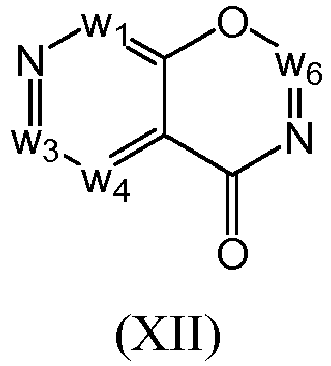
- A compound of Formula (I) may be a compound of Formula (XIII):

- A compound of Formula (I) may be a compound of Formula (XIV):

- A compound of Formula (I) may be a compound of Formula (XV):

- A compound of Formula (I) may be a compound of Formula (XVI):

- A the compound of Formula (I) may be a compound of Formula (XVII):
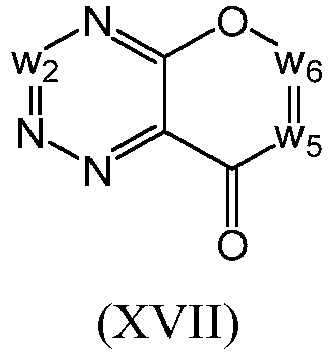
- A compound of Formula (I) may be a compound of Formula (XVIII):

- A compound of Formula (I) may be a compound of Formula (XIX):

- A compound of Formula (I), Formula (II), Formula (III), Formula (IV), Formula (V), Formula (VI), Formula (VII), Formula (VIII), Formula (X), Formula (XI), Formula (XII), Formula (XIII), Formula (XIV), Formula (XV), Formula (XVI), Formula (XVII), Formula (XVIII) or Formula (XIX) may be a compound from Formula (Ia), Formula (IIa), Formula (IIIa), Formula (IVa), Formula (Va), Formula (VIa), Formula (VIIa), Formula (VIIIa), Formula (Xa), Formula (XIa), Formula (XIIa), Formula (XIIIa), Formula (XIVa), Formula (XVa), Formula (XVIa), Formula (XVIIa), Formula (XVIIIa) or Formula (XIXa), respectively:


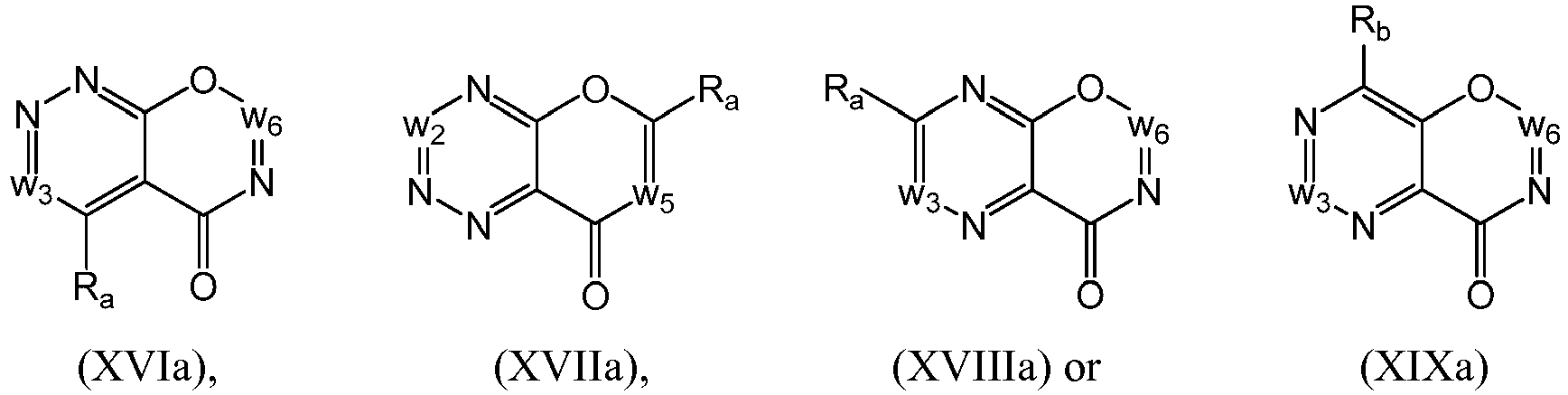
- In the compound of Formula (Ia), one of w2, w3, w5 and w6 is C-R1 and one other of w2, w3, w5 and w6 is C-R2, provided that,
when w3 is C-R1, then w6 is C-R2, w2 is C-Ra or N and w5 is C-Rc or N; or,
when w3 is C-R2, then w6 is C-R1, w2 is C-Ra or N and w5 is C-Rc or N; or,
when w2 is C-R1, then w5 is C-R2, w6 is C-Ra and w3 is C-Ra or N; or,
when w2 is C-R2, then w5 is C-R1, w6 is C-Ra and w3 is C-Ra or N. - In the compound of Formula (IIa), one of w2, w3, w5 and w6 is C-R1 and one other of w2, w3, w5 and w6 is C-R2, provided that,
when w3 is C-R1, then w6 is C-R2, w2 is C-Ra or N and w5 is C-Rc or N; or,
when w3 is C-R2, then w6 is C-R1, w2 is C-Ra or N and w5 is C-Rc or N; or,
when w2 is C-R1, then w5 is C-R2, w6 is C-Ra and w3 is C-Ra or N; or,
when w2 is C-R2, then w5 is C-R1, w6 is C-Ra and w3 is C-Ra or N. - In the compound of Formula (IIIa), one of w3 and w6 is C-R1 and the other is C-R2, provided that, when w3 is C-R1, then w6 is C-R2; or, when w3 is C-R2, then w6 is C-R1.
- In the compound of Formula (IVa), one of w2 and w5 is C-R1 and the other is C-R2, provided that, when w2 is C-R1, then w5 is C-R2; or, when w2 is C-R2, then w5 is C-R1.
- In the compound of Formula (Va), one of w2, w3, w5 and w6 is C-R1 and one other of w2, w3, w5 and w6 is C-R2, provided that,
when w3 is C-R1, then w6 is C-R2, w2 is C-Ra or N and w5 is C-Rc or N; or,
when w3 is C-R2, then w6 is C-R1, w2 is C-Ra or N and w5 is C-Rc or N; or,
when w2 is C-R1, then w5 is C-R2, w6 is C-Ra and w3 is C-Ra or N; or,
when w2 is C-R2, then w5 is C-R1, w6 is C-Ra and w3 is C-Ra or N. - In the compound of Formula (VIa), one of w3 and w6 is C-R1 and the other is C-R2, provided that, when w3 is C-R1, then w6 is C-R2; or, when w3 is C-R2, then w6 is C-R1.
- In the compound of Formula (VIIa), one of w3 and w6 is C-R1 and the other is C-R2, provided that, when w3 is C-R1, then w6 is C-R2; or, when w3 is C-R2, then w6 is C-R1.
- In the compound of Formula (VIIIa), one of w2 and w5 is C-R1 and the other is C-R2, provided that, when w2 is C-R1, then w5 is C-R2; or, when w2 is C-R2, then w5 is C-R1.
- In the compound of Formula (Xa), one of w3 and w6 is C-R1 and the other is C-R2, provided that, when w3 is C-R1, then w6 is C-R2; or, when w3 is C-R2, then w6 is C-R1.
- In the compound of Formula (XIa), one of w3 and w6 is C-R1 and the other is C-R2, provided that, when w3 is C-R1, then w6 is C-R2; or, when w3 is C-R2, then w6 is C-R1.
- In the compound of Formula (XIIa), one of w3 and w6 is C-R1 and the other is C-R2, provided that, when w3 is C-R1, then w6 is C-R2; or, when w3 is C-R2, then w6 is C-R1.
- In the compound of Formula (XIIIa), one of w2 and w5 is C-R1 and the other is C-R2, provided that, when w2 is C-R1, then w5 is C-R2; or, when w2 is C-R2, then w5 is C-R1.
- In the compound of Formula (XIVa), one of w3 and w6 is C-R1 and the other is C-R2, provided that, when w3 is C-R1, then w6 is C-R2; or, when w3 is C-R2, then w6 is C-R1.
- In the compound of Formula (XVa), one of w3 and w6 is C-R1 and the other is C-R2, provided that, when w3 is C-R1, then w6 is C-R2; or, when w3 is C-R2, then w6 is C-R1.
- In the compound of Formula (XVIa), one of w3 and w6 is C-R1 and the other is C-R2, provided that, when w3 is C-R1, then w6 is C-R2; or, when w3 is C-R2, then w6 is C-R1.
- In the compound of Formula (XVIIa), one of w2 and w5 is C-R1 and the other is C-R2, provided that, when w2 is C-R1, then w5 is C-R2; or, when w2 is C-R2, then w5 is C-R1.
- In the compound of Formula (XVIIIa), one of w3 and w6 is C-R1 and the other is C-R2, provided that, when w3 is C-R1, then w6 is C-R2; or, when w3 is C-R2, then w6 is C-R1.
- In the compound of Formula (XIXa), one of w3 and w6 is C-R1 and the other is C-R2, provided that, when w3 is C-R1, then w6 is C-R2; or, when w3 is C-R2, then w6 is C-R1.
- A compound of Formula (I) may be a compound of Formula (Ia):

- A compound of Formula (II) may be a compound of Formula (IIa):

- A compound of Formula (III) may be a compound of Formula (IIIa):
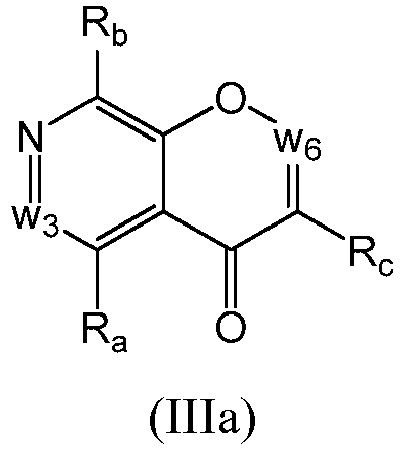
- A compound of Formula (IV) may be a compound of Formula (IVa):
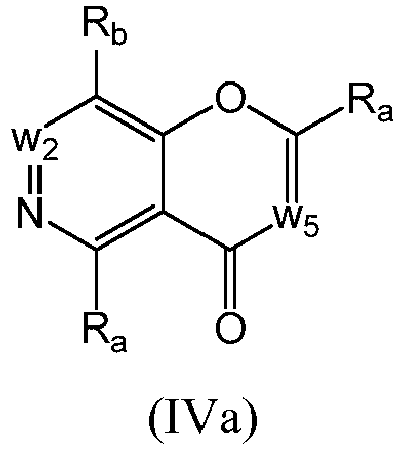
- A compound of Formula (V) may be a compound of Formula (Va):

- A compound of Formula (VI) may be a compound of Formula (VIa):

- A compound of Formula (VII) may be a compound of Formula (VIIa):

- A compound of Formula (VIII) may be a compound of Formula (VIIIa):

- A compound of Formula (X) may be a compound of Formula (Xa):

- A compound of Formula (XI) may be a compound of Formula (XIa):

- A compound of Formula (XII) may be a compound of Formula (XIIa):

- A compound of Formula (XIII) may be a compound of Formula (XIIIa):

- A compound of Formula (XIV) may be a compound of Formula (XIVa):

- A compound of Formula (XV) may be a compound of Formula (XVa):

- A compound of Formula (XVI) may be compound of Formula (XVIa):

- A compound of Formula (XVII) may be a compound of Formula (XVIIa):

- A compound of Formula (XVIII) may be a compound of Formula (XVIIIa):

- A compound of Formula (XIX) may be a compound of Formula (XIXa):
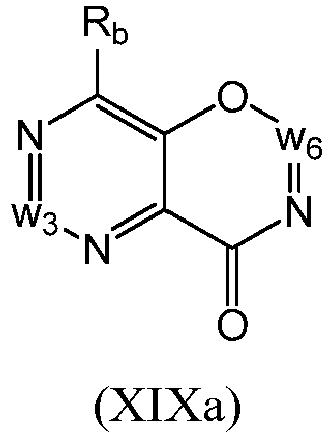
- A compound of Formula (Ia) may be a compound of Formula (Ia1), Formula (Ia2), Formula (Ia3) or Formula (Ia4):


- A compound of Formula (IIa) may be a compound of Formula (IIa1), Formula (IIa2), Formula (IIa3) or Formula (IIa4):


- A compound of Formula (IIIa) may be a compound of Formula (IIIa1) or Formula (IIIa2):

- A compound of Formula (IVa) may be a compound of Formula (IVa1) or Formula (IVa2):
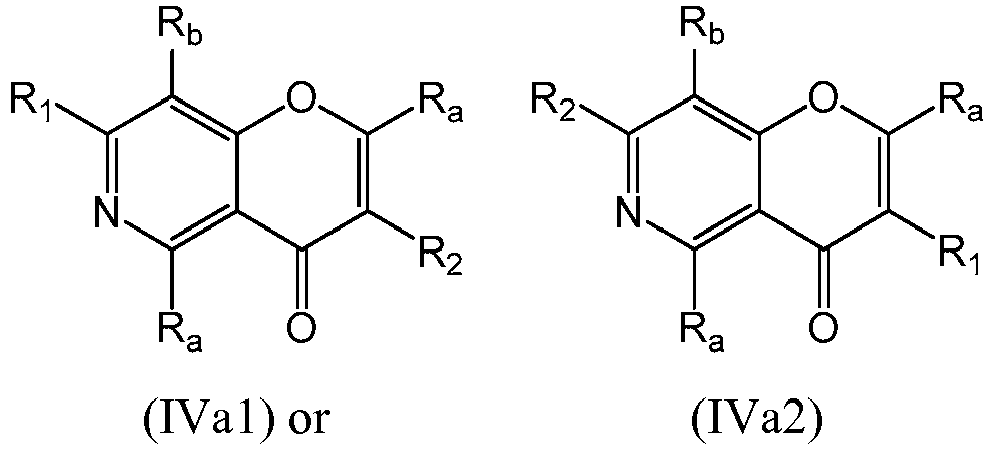
- A compound of Formula (Va) may be a compound of Formula (Va1), Formula (Va2), Formula (Va3) or Formula (Va4):


- A compound of Formula (VIa) may be a compound of Formula (VIa1) or Formula (VIa2):

- A compound of Formula (VIIa) may be a compound of Formula (VIIa1) or Formula (VIIa2):
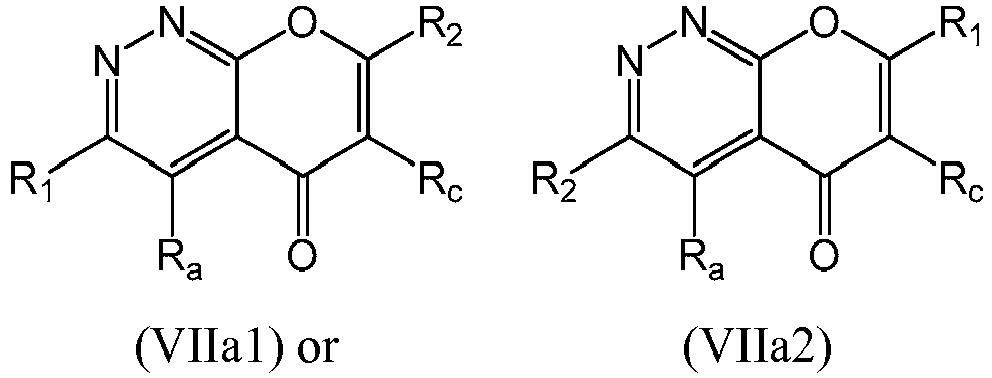
- A compound of Formula (VIIIa) may be a compound of Formula VIIIa1 or Formula (VIIIa2):

- A compound of Formula (IX) may be a compound of Formula (IXa1), Formula (IXa2), Formula (IXa3) or Formula (IXa4):


- A compound of Formula (Xa) may be a compound of Formula (Xa1) or Formula (Xa2):

- A compound of Formula (XIa) may be a compound of Formula (XIa1) or Formula (XIa2):

- A compound of Formula (XIIa) may be a compound of Formula (XIIa1) or Formula (XIIa2):

- A compound of Formula (XIIIa) may be a compound of Formula (XIIIa1) or Formula (XIIIa2):

- A compound of Formula (XIVa) may be a compound of Formula (XIVa1) or Formula (XIVa2):
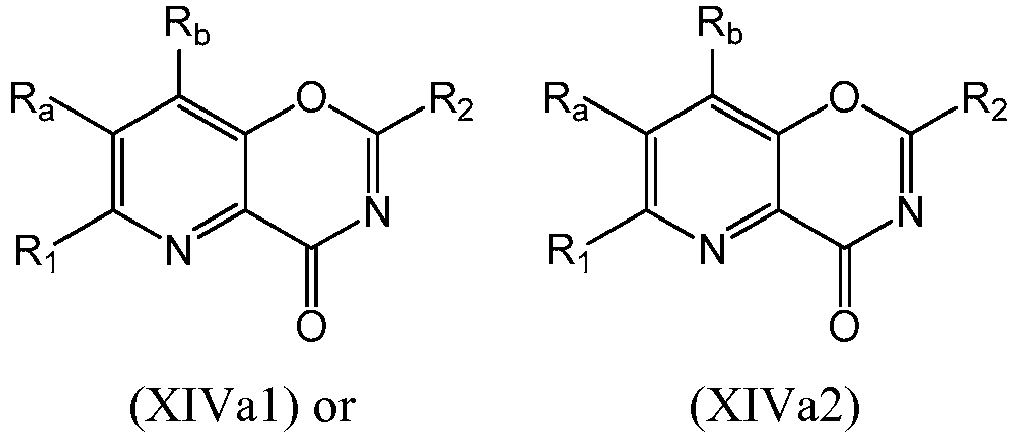
- A compound of Formula (XVa) may be a compound of Formula XVa1 or Formula (XVa2):

- A compound of Formula (XVIa) may be a compound of Formula (XVIa1) or Formula (XVIa2):

- A compound of Formula (XVIIa) may be a compound of Formula (XVIIa1) or Formula (XVIIa2):

- A compound of Formula (XVIIIa) may be a compound of Formula (XVIIIa1) or Formula (XVIIIa2):

- A compound of Formula (XIXa) may be a compound of Formula (XIXa1) or Formula (XIXa2):
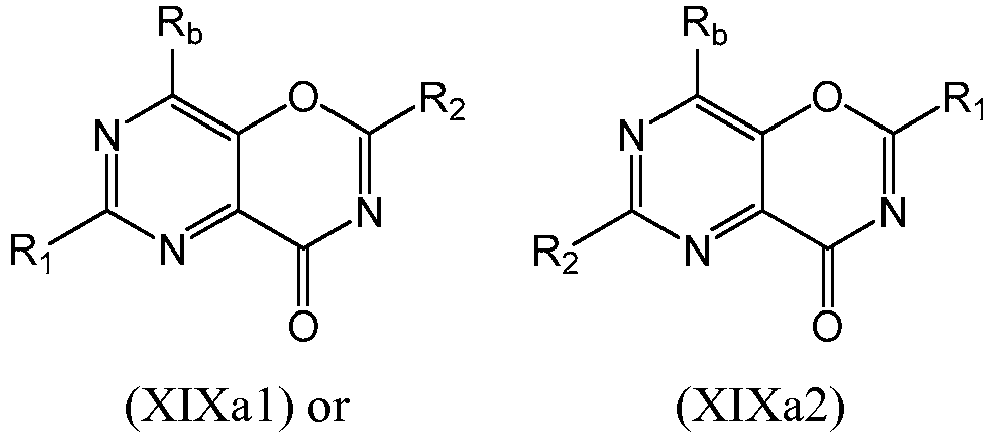
- A compound of Formula (Ia) may be a compound of Formula (Ia1):

- A compound of Formula (Ia) may be a compound of Formula (Ia2):

- A compound of Formula (Ia) may be a compound of Formula (Ia3):
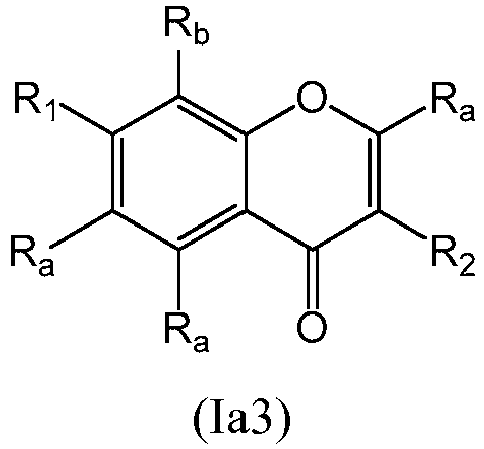
- A compound of Formula (Ia) may be a compound of Formula (Ia4):

- A compound of Formula (IIa) may be a compound of Formula (IIa1):

- A compound of Formula (IIa) may be a compound of Formula (IIa2):

- A compound of Formula (IIa) may be a compound of Formula (IIa3):

- A compound of Formula (IIa) may be a compound of Formula (IIa4):

- A compound of Formula (IIIa) may be a compound of Formula (IIIa1):

- A compound of Formula (IIIa) may be a compound of Formula (IIIa2):
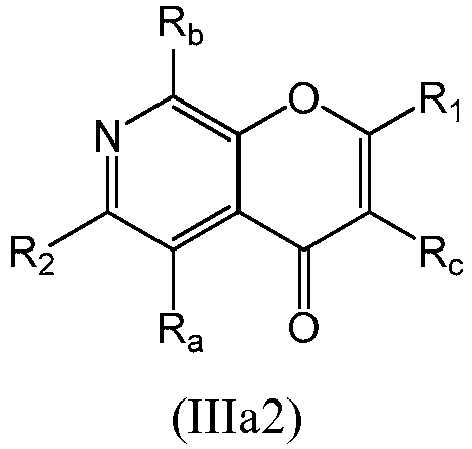
- A compound of Formula (IVa) may be a compound of Formula (IVa1):

- A compound of Formula (IVa) may be a compound of Formula (IVa2):

- A compound of Formula (Va) may be a compound of Formula (Va1):

- A compound of Formula (Va) may be a compound of Formula (Va2):

- A compound of Formula (Va) may be a compound of Formula (Va3):

- A compound of Formula (Va) may be a compound of Formula (Va4):

- A compound of Formula (VIa) may be a compound of Formula (VIa1):

- A compound of Formula (VIa) may be a compound of Formula (VIa2):

- A compound of Formula (VIIa) may be a compound of Formula (VIIa1):
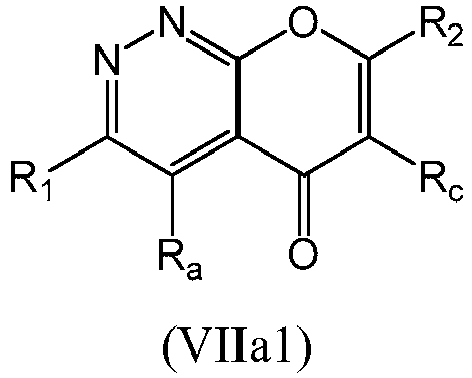
- A compound of Formula (VIIa) may be a compound of Formula (VIIa2):

- A compound of Formula (VIIIa) may be a compound of Formula (VIIIa1):

- A compound of Formula (VIIIa) may be a compound of Formula (VIIIa2):

- A compound of Formula (IX) may be a compound of Formula (IXa1):

- A compound of Formula (IX) may be a compound of Formula (IXa2):
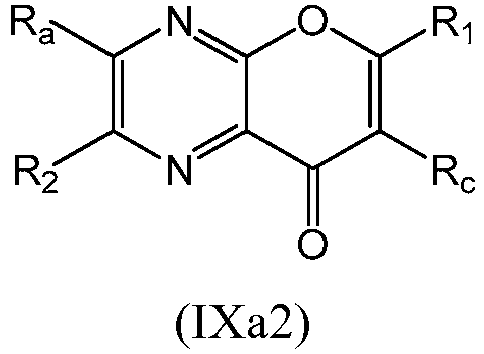
- A compound of Formula (IX) may be a compound of Formula (IXa3):

- A compound of Formula (IX) may be a compound of Formula (IXa4):
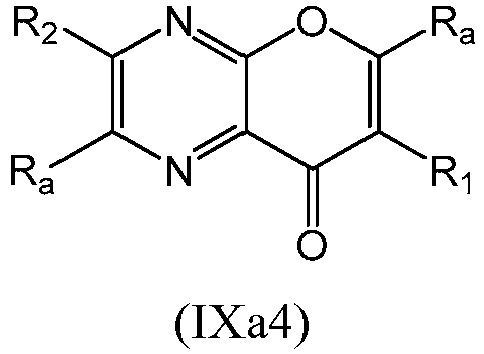
- A compound of Formula (Xa) may be a compound of Formula (Xa1):

- A compound of Formula (Xa) may be a compound of Formula (Xa2):

- A compound of Formula (XIa) may be a compound of Formula (XIa1):

- A compound of Formula (XIa) may be a compound of Formula (XIa2):
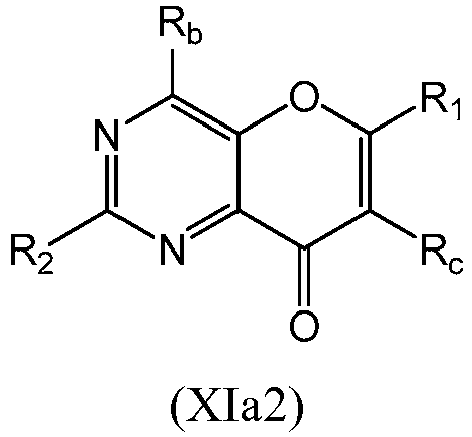
- A compound of Formula (XIIa) may be a compound of Formula (XIIa1):

- A compound of Formula (XIIa) may be a compound of Formula (XIIa2):

- A compound of Formula (XIIIa) may be a compound of Formula (XIIIa1):

- A compound of Formula (XIIIa) may be a compound of Formula (XIIIa2):

- A compound of Formula (XIVa) may be a compound of Formula (XIVa1):

- A compound of Formula (XIVa) may be a compound of Formula (XIVa2):
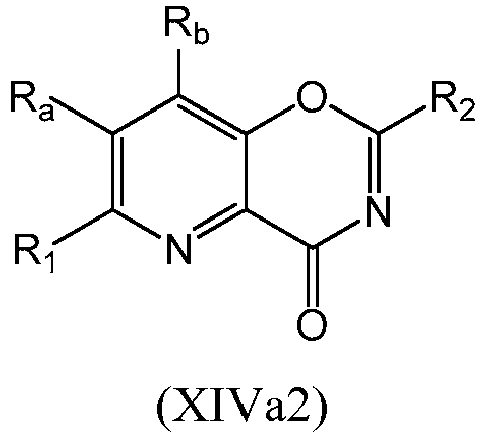
- A compound of Formula (XVa) may be a compound of Formula (XVa1):

- A compound of Formula (XVa) may be a compound of Formula (XVa2):

- A compound of Formula (XVIa) may be a compound of Formula (XVIa1):

- A compound of Formula (XVIa) may be a compound of Formula (XVIa2):

- A compound of Formula (XVIIa) may be a compound of Formula (XVIIa1):

- A compound of Formula (XVIIa) may be a compound of Formula (XVIIa2):
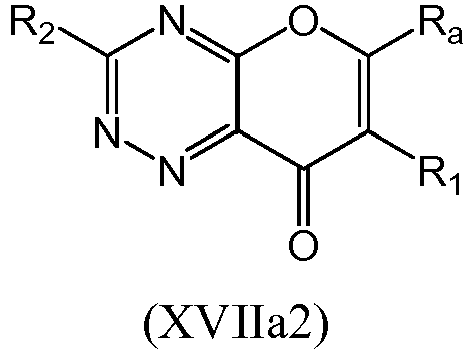
- A compound of Formula (XVIIIa) may be a compound of Formula (XVIIIa1):

- A compound of Formula (XVIIIa) may be a compound of Formula (XVIIIa2):

- A compound of Formula (XIXa) may be a compound of Formula (XIXa1):

- A compound of Formula (XIXa) may be a compound of Formula (XIXa2):

- According to an embodiment of the invention, the compound is a compound selected from the group consisting of:

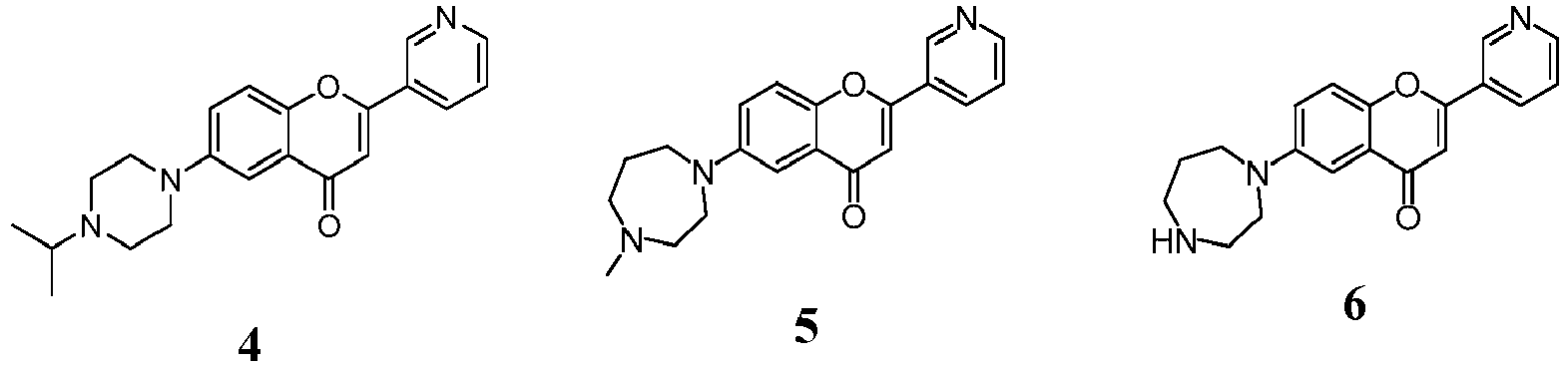


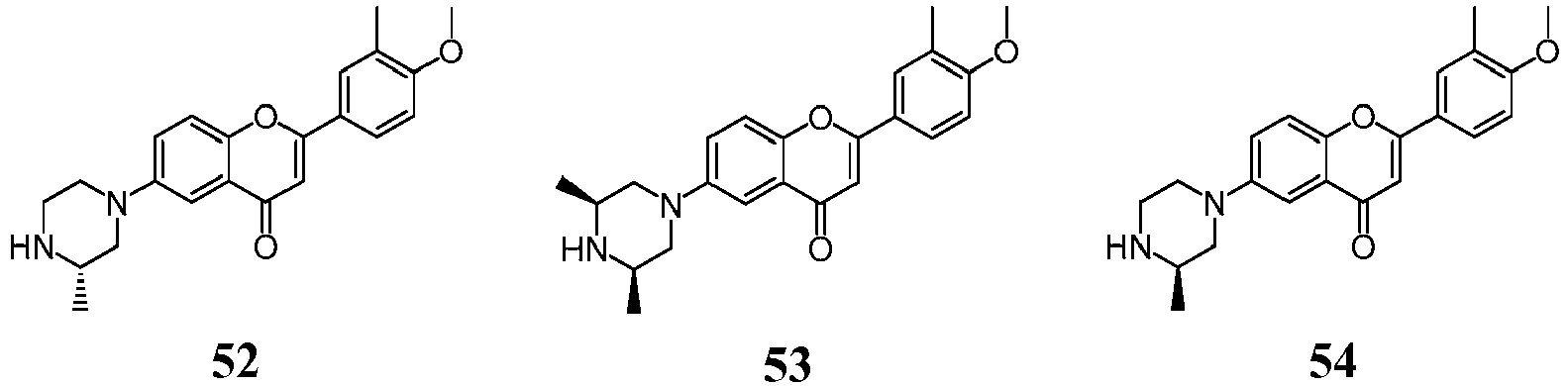
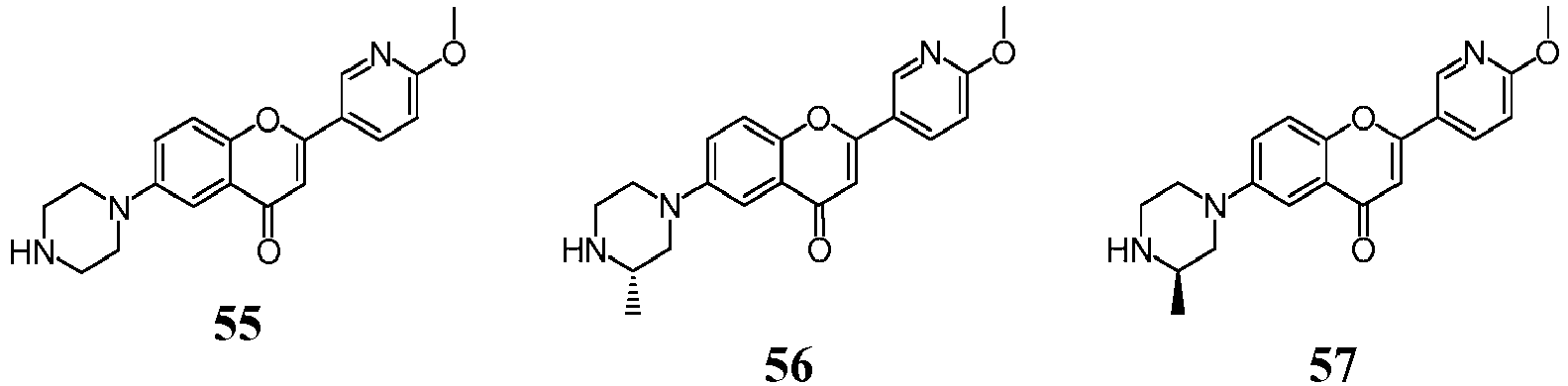
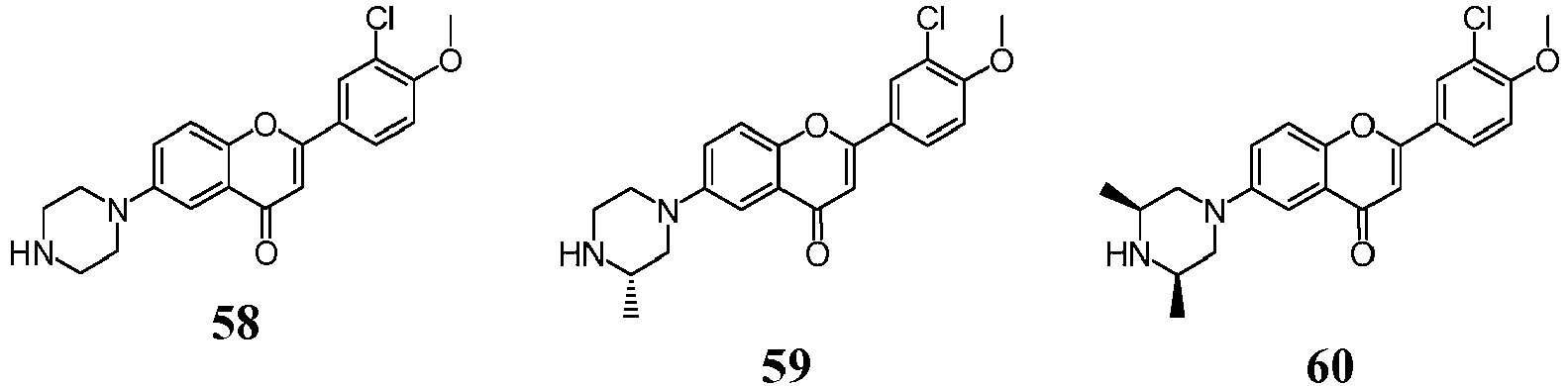


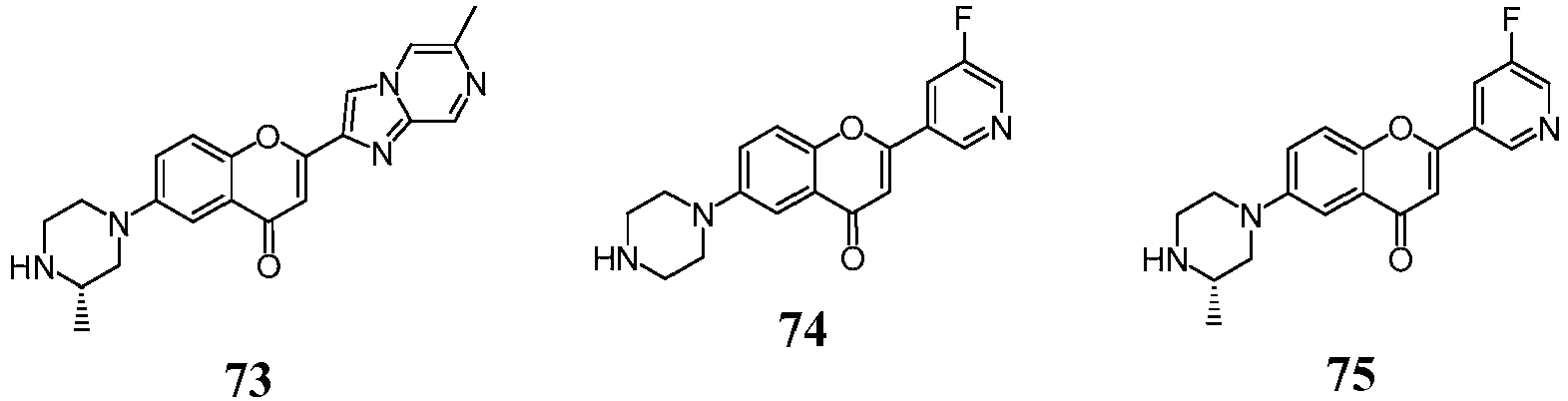

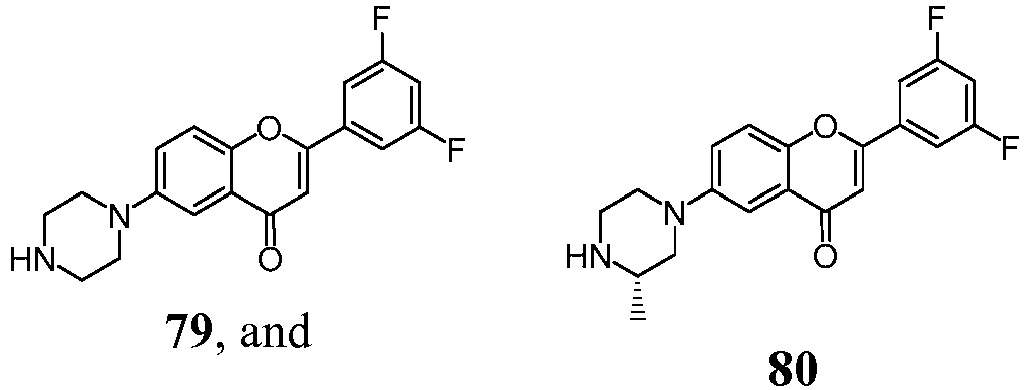
- The chemical terms used above and throughout the description herein, unless specifically defined otherwise, shall be understood by one of ordinary skill in the art to have the following indicated meanings.
- As used herein, the term "C1-8alkyl" generally refers to saturated hydrocarbon radicals having from one to eight carbon atoms in a straight or branched chain configuration, including, but not limited to, methyl, ethyl, n-propyl (also referred to as propyl or propanyl), isopropyl, n-butyl (also referred to as butyl or butanyl), isobutyl, sec-butyl, tert-butyl, n-pentyl (also referred to as pentyl or pentanyl), n-hexyl (also referred to as hexyl or hexanyl), n-heptyl (also referred to as heptyl or heptanyl), n-octyl and the like. In some embodiments, C1-8alkyl includes, but is not limited to, C1-6alkyl, C1-4alkyl and the like. A C1-8alkyl radical is optionally substituted with substituent species as described herein where allowed by available valences.
- As used herein, the term "C2-8alkenyl" generally refers to partially unsaturated hydrocarbon radicals having from two to eight carbon atoms in a straight or branched chain configuration and one or more carbon-carbon double bonds therein, including, but not limited to, ethenyl (also referred to as vinyl), allyl, propenyl and the like. In some embodiments, C2-8alkenyl includes, but is not limited to, C2-6alkenyl, C2-4alkenyl and the like. A C2-8alkenyl radical is optionally substituted with substituent species as described herein where allowed by available valences.
- As used herein, the term "C2-8alkynyl" generally refers to partially unsaturated hydrocarbon radicals having from two to eight carbon atoms in a straight or branched chain configuration and one or more carbon-carbon triple bonds therein, including, but not limited to, ethynyl, propynyl, butynyl and the like. In some embodiments, C2-8alkynyl includes, but is not limited to, C2-6alkynyl, C2-4alkynyl and the like. A C2-8alkynyl radical is optionally substituted with substituent species as described herein where allowed by available valences.
- As used herein, the term "C1-8alkoxy" generally refers to saturated hydrocarbon radicals having from one to eight carbon atoms in a straight or branched chain configuration of the formula: -O-C1-8alkyl, including, but not limited to, methoxy, ethoxy, n-propoxy, isopropoxy, n-butoxy, isobutoxy, sec-butoxy, tert-butoxy, n-pentoxy, n-hexoxy and the like. In some embodiments, C1-8alkoxy includes, but is not limited to, C1-6alkoxy, C1-4alkoxy and the like. A C1-8alkoxy radical is optionally substituted with substituent species as described herein where allowed by available valences.
- As used herein, the term "C3-14cycloalkyl" generally refers to a saturated or partially unsaturated monocyclic, bicyclic or polycyclic hydrocarbon radical, including, but not limited to, cyclopropyl, cyclobutyl, cyclopentyl, cyclohexyl, cyclohexenyl, cycloheptyl, cyclooctyl, 1H-indanyl, indenyl, tetrahydro-naphthalenyl and the like. In some embodiments, C3-14cycloalkyl includes, but is not limited to, C3-8cycloalkyl, C5-8cycloalkyl, C3-10cycloalkyl and the like. A C3-14cycloalkyl radical is optionally substituted with substituent species as described herein where allowed by available valences.
- As used herein, the term "aryl" generally refers to a monocyclic, bicyclic or polycyclic aromatic carbon atom ring structure radical, including, but not limited to, phenyl, naphthyl, anthracenyl, fluorenyl, azulenyl, phenanthrenyl and the like. An aryl radical is optionally substituted with substituent species as described herein where allowed by available valences.
- As used herein, the term "heteroaryl" generally refers to a monocyclic, bicyclic or polycyclic aromatic carbon atom ring structure radical in which one or more carbon atom ring members have been replaced, where allowed by structural stability, with one or more heteroatoms, such as an O, S or N atom, including, but not limited to, furanyl (also referred to as furyl), thienyl (also referred to as thiophenyl), pyrrolyl, 2H-pyrrolyl, 3H-pyrrolyl, pyrazolyl, 1H-pyrazolyl, imidazolyl, 1H-imidazolyl, isoxazolyl, isothiazolyl, oxazolyl, 1,3-thiazolyl, triazolyl (such as 1H-1,2,3-triazolyl and the like), oxadiazolyl (such as 1,2,4-oxadiazolyl, 1,3,4-oxadiazolyl and the like), thiadiazolyl, tetrazolyl (such as 1H-tetrazolyl, 2H-tetrazolyl and the like), pyridinyl (also referred to as pyridyl), pyrimidinyl, pyrazinyl, pyridazinyl, triazinyl, indolyl, 1H-indolyl, indazolyl, 1H-indazolyl, 2H-indazolyl, indolizinyl, isoindolyl, benzofuranyl, benzothienyl (also referred to as benzothiophenyl), benzoimidazolyl, 1H-benzoimidazolyl, 1,3-benzothiazolyl, 1,3-benzoxazolyl (also referred to as 1,3-benzooxazolyl), purinyl, 9H-purinyl, quinolinyl, isoquinolinyl, quinazolinyl, quinoxalinyl, 1,3-diazinyl, 1,2-diazinyl, 1,2-diazolyl, 1,4-diazanaphthalenyl, acridinyl, furo[3,2-b]pyridinyl, furo[3,2-c]pyridinyl, furo[2,3-c]pyridinyl, 6H-thieno[2,3-b]pyrrolyl, thieno[3,2-c]pyridinyl, thieno[2,3-d]pyrimidinyl, 1H-pyrrolo[2,3-b]pyridinyl, 1H-pyrrolo[2,3-c]pyridinyl, 1H-pyrrolo[3,2-b]pyridinyl, pyrrolo[1,2-a]pyrazinyl,pyrrolo[1,2-b]pyridazinyl, pyrazolo[1,5-a]pyridinyl, pyrazolo[1,5-a]pyrazinyl, imidazo[1,2-a]pyridinyl, 3H-imidazo[4,5-b]pyridinyl, imidazo[1,2-a]pyrimidinyl, imidazo[1,2-c]pyrimidinyl, imidazo[1,2-b]pyridazinyl, imidazo[1,2-a]pyrazinyl, imidazo[2,1-b][1,3]thiazolyl, imidazo[2,1-b][1,3,4]thiadiazolyl, [1,2,4]triazolo[1,5-a]pyridinyl, [1,2,4]triazolo[4,3-a]pyridinyl and the like. A heteroaryl radical is optionally substituted on a carbon or nitrogen atom ring member with substituent species as described herein where allowed by available valences.
- As used herein, the term "heterocyclyl" generally refers to a saturated or partially unsaturated monocyclic, bicyclic or polycyclic carbon atom ring structure radical in which one or more carbon atom ring members have been replaced, where allowed by structural stability, with a heteroatom, such as an O, S or N atom, including, but not limited to, oxiranyl, oxetanyl, azetidinyl, tetrahydrofuranyl, pyrrolinyl, pyrrolidinyl, pyrazolinyl, pyrazolidinyl, imidazolinyl, imidazolidinyl, isoxazolinyl, isoxazolidinyl, isothiazolinyl, isothiazolidinyl, oxazolinyl, oxazolidinyl, thiazolinyl, thiazolidinyl, triazolinyl, triazolidinyl, oxadiazolinyl, oxadiazolidinyl, thiadiazolinyl, thiadiazolidinyl, tetrazolinyl, tetrazolidinyl, pyranyl, dihydro-2H-pyranyl, thiopyranyl, 1,3-dioxanyl, 1,2,5,6-tetrahydropyridinyl, 1,2,3,6-tetrahydropyridinyl, piperidinyl, piperazinyl, morpholinyl, thiomorpholinyl, 1,4-diazepanyl, 1,3-benzodioxolyl (also referred to as benzo[d][1,3]dioxolyl), 1,4-benzodioxanyl, 2,3-dihydro-1,4-benzodioxinyl (also referred to as 2,3-dihydrobenzo[b][1,4]dioxinyl), hexahydropyrrolo[3,4-b]pyrrol-(1H)-yl, (3aS,6aS)-hexahydropyrrolo[3,4-b]pyrrol-(1H)-yl, (3aR,6aR)-hexahydropyrrolo[3,4-b]pyrrol-(1H)-yl, hexahydropyrrolo[3,4-b]pyrrol-(2H)-yl, (3aS,6aS)-hexahydropyrrolo[3,4-b]pyrrol-(2H)-yl, (3aR,6aR)-hexahydropyrrolo[3,4-b]pyrrol-(2H)-yl, hexahydropyrrolo[3,4-c]pyrrol-(1H)-yl, (3aR,6aS)-hexahydropyrrolo[3,4-c]pyrrol-(1H)-yl, (3aR,6aR)-hexahydropyrrolo[3,4-c]pyrrol-(1H)-yl, octahydro-5H-pyrrolo[3,2-c]pyridinyl, octahydro-6H-pyrrolo[3,4-b]pyridinyl, (4aR,7aR)-octahydro-6H-pyrrolo[3,4-b]pyridinyl, (4aS,7aS)-octahydro-6H-pyrrolo[3,4-b]pyridinyl, hexahydropyrrolo[1,2-a]pyrazin-(1H)-yl, (7R,8aS)-hexahydropyrrolo[1,2-a]pyrazin-(1H)-yl, (8aS)-hexahydropyrrolo[1,2-a]pyrazin-(1H)-yl, (8aR)-hexahydropyrrolo[1,2-a]pyrazin-(1H)-yl, (8aS)-octahydropyrrolo[1,2-a]pyrazin-(1H)-yl, (8aR)-octahydropyrrolo[1,2-a]pyrazin-(1H)-yl, hexahydropyrrolo[1,2-a]pyrazin-(2H)-one, octahydro-2H-pyrido[1,2-a]pyrazinyl, 3-azabicyclo[3.1.0]hexyl, (1R,5S)-3-azabicyclo[3.1.0]hexyl, 8-azabicyclo[3.2.1]octyl, (1R,5S)-8-azabicyclo[3.2.1]octyl, 8-azabicyclo[3.2.1]oct-2-enyl, (1R,5S)-8-azabicyclo[3.2.1]oct-2-enyl, 9-azabicyclo[3.3.1]nonyl, (1R,5S)-9-azabicyclo[3.3.1]nonyl, 2,5-diazabicyclo[2.2.1]heptyl, (1S,4S)-2,5-diazabicyclo[2.2.1]heptyl, 2,5-diazabicyclo[2.2.2]octyl, 3,8-diazabicyclo[3.2.1]octyl, (1R,5S)-3,8-diazabicyclo[3.2.1]octyl, 1,4-diazabicyclo[3.2.2]nonyl, azaspiro[3.3]heptyl, 2,6-diazaspiro[3.3]heptyl, 2,7-diazaspiro[3.5]nonyl, 5,8-diazaspiro[3.5]nonyl, 2,7-diazaspiro[4.4]nonyl, 6,9-diazaspiro[4.5]decyl and the like. A heterocyclyl radical is optionally substituted on a carbon or nitrogen atom ring member with substituent species as described herein where allowed by available valences.
- As used herein, the term "C1-8alkoxy-C1-8alkyl" refers to a radical of the formula: -C1-8alkyl-O-C1-8alkyl.
- As used herein, the term "C1-8alkoxy-C1-8alkyl-amino" refers to a radical of the formula: -NH-C1-8alkyl-O-C1-8alkyl.
- As used herein, the term "(C1-8alkoxy-C1-8alkyl)2-amino" refers to a radical of the formula: -N(C1-8alkyl-O-C1-8alkyl)2.
- As used herein, the term "C1-8alkoxy-C1-8alkyl-amino-C1-8alkoxy" refers to a radical of the formula: -O-C1-8alkyl-NH-C1-8alkyl-O-C1-8alkyl.
- As used herein, the term "(C1-8alkoxy-C1-8alkyl)2-amino-C1-8alkoxy" refers to a radical of the formula: -O-C1-8alkyl-N(C1-8alkyl-O-C1-8alkyl)2.
- As used herein, the term "(C1-8alkoxy-C1-8alkyl)(C1-8alkyl)amino-C1-8alkoxy" refers to a radical of the formula: -O-C1-8alkyl-N(C1-8alkyl)(C1-8alkyl-O-C1-8alkyl).
- As used herein, the term "C1-8alkoxy-C1-8alkyl-amino-C1-8alkyl" refers to a radical of the formula: -C1-8alkyl-NH-C1-8alkyl-O-C1-8alkyl.
- As used herein, the term "(C1-8alkoxy-C1-8alkyl)2-amino-C1-8alkyl" refers to a radical of the formula: -C1-8alkyl-N(C1-8alkyl-O-C1-8alkyl)2.
- As used herein, the term "(C1-8alkoxy-C1-8alkyl)(C1-8alkyl)amino-C1-8alkyl" refers to a radical of the formula: -C1-8alkyl-N(C1-8alkyl)(C1-8alkyl-O-C1-8alkyl).
- As used herein, the term "C1-8alkoxy-carbonyl" refers to a radical of the formula: -C(O)-O-C1-8alkyl.
- As used herein, the term "C1-8alkoxy-carbonyl-C2-8alkenyl" refers to a radical of the formula: -C2-8alkenyl-C(O)-O-C1-8alkyl.
- As used herein, the term "C1-8alkoxy-carbonyl-amino" refers to a radical of the formula: -NH-C(O)-O-C1-8alkyl.
- As used herein, the term "C1-8alkyl-amino" refers to a radical of the formula: -NH-C1-8alkyl.
- As used herein, the term "(C1-8alkyl)2-amino" refers to a radical of the formula: -N(C1-8alkyl)2.
- As used herein, the term "C1-8alkyl-amino-C2-8alkenyl" refers to a radical of the formula: -C2-8alkenyl-NH-C1-8alkyl.
- As used herein, the term "(C1-8alkyl)2-amino-C2-8alkenyl" refers to a radical of the formula: -C2-8alkenyl-N(C1-8alkyl)2.
- As used herein, the term "C1-8alkyl-amino-C1-8alkoxy" refers to a radical of the formula: -O-C1-8alkyl-NH-C1-8alkyl.
- As used herein, the term "(C1-8alkyl)2-amino-C1-8alkoxy" refers to a radical of the formula: -O-C1-8alkyl-N(C1-8alkyl)2.
- As used herein, the term "C1-8alkyl-amino-C1-8alkyl" refers to a radical of the formula: -C1-8alkyl-NH-C1-8alkyl.
- As used herein, the term "(C1-8alkyl)2-amino-C1-8alkyl" refers to a radical of the formula: -C1-8alkyl-N(C1-8alkyl)2.
- As used herein, the term "C1-8alkyl-amino-C1-8alkyl-amino" refers to a radical of the formula: -NH-C1-8alkyl-NH-C1-8alkyl.
- As used herein, the term "(C1-8alkyl)2-amino-C1-8alkyl-amino" refers to a radical of the formula: -NH-C1-8alkyl-N(C1-8alkyl)2.
- As used herein, the term "(C1-8alkyl-amino-C1-8alkyl)2-amino" refers to a radical of the formula: -N(C1-8alkyl-NH-C1-8alkyl)2.
- As used herein, the term "[(C1-8alkyl)2-amino-C1-8alkyl]2-amino" refers to a radical of the formula: -N[C1-8alkyl-N(C1-8alkyl)2]2.
- As used herein, the term "(C1-8alkyl-amino-C1-8alkyl)(C1-8alkyl)amino" refers to a radical of the formula: -N(C1-8alkyl)(C1-8alkyl-NH-C1-8alkyl).
- As used herein, the term "[(C1-8alkyl)2-amino-C1-8alkyl](C1-8alkyl)amino" refers to a radical of the formula: -N(C1-8alkyl)[C1-8alkyl-N(C1-8alkyl)2].
- As used herein, the term "C1-8alkyl-amino-C2-8alkynyl" refers to a radical of the formula: -C1-8alkynyl-NH-C1-8alkyl.
- As used herein, the term "(C1-8alkyl)2-amino-C2-8alkynyl" refers to a radical of the formula: -C2-8alkynyl-N(C1-8alkyl)2.
- As used herein, the term "C1-8alkyl-carbonyl" refers to a radical of the formula: -C(O)-C1-8alkyl.
- As used herein, the term "C1-8alkyl-carbonyl-amino" refers to a radical of the formula: -NH-C(O)-C1-8alkyl.
- As used herein, the term "C1-8alkyl-thio" refers to a radical of the formula: -S-C1-8alkyl.
- As used herein, the term "amino-C2-8alkenyl" refers to a radical of the formula: -C2-8alkenyl-NH2.
- As used herein, the term "amino-C1-8alkoxy" refers to a radical of the formula: -O-C1-8alkyl-NH2.
- As used herein, the term "amino-C1-8alkyl" refers to a radical of the formula: -C1-8alkyl-NH2.
- As used herein, the term "amino-C1-8alkyl-amino" refers to a radical of the formula: -NH-C1-8alkyl-NH2.
- As used herein, the term "(amino-C1-8alkyl)2-amino" refers to a radical of the formula: -N(C1-8alkyl-NH2)2.
- As used herein, the term "(amino-C1-8alkyl)(C1-8alkyl)amino" refers to a radical of the formula: -N(C1-8alkyl)(C1-8alkyl-NH2).
- As used herein, the term "amino-C2-8alkynyl" refers to a radical of the formula: -C2-8alkynyl-NH2.
- As used herein, the term "aryl-C1-8alkoxy-carbonyl" refers to a radical of the formula: -C(O)-O-C1-8alkyl-aryl.
- As used herein, the term "aryl-C1-8alkyl" refers to a radical of the formula: -C1-8alkyl-aryl.
- As used herein, the term "aryl-C1-8alkyl-amino" refers to a radical of the formula: -NH-C1-8alkyl-aryl.
- As used herein, the term "(aryl-C1-8alkyl)2-amino" refers to a radical of the formula: -N(C1-8alkyl-aryl)2.
- As used herein, the term "(aryl-C1-8alkyl)(C1-8alkyl)amino" refers to a radical of the formula: -N(C1-8alkyl)(C1-8alkyl-aryl).
- As used herein, the term "aryl-C1-8alkyl-amino-C1-8alkyl" refers to a radical of the formula: -C1-8alkyl-NH-C1-8alkyl-aryl.
- As used herein, the term "(aryl-C1-8alkyl)2-amino-C1-8alkyl" refers to a radical of the formula: -C1-8alkyl-N(C1-8alkyl-aryl)2.
- As used herein, the term "(aryl-C1-8alkyl)(C1-8alkyl)amino-C1-8alkyl" refers to a radical of the formula: -C1-8alkyl-N(C1-8alkyl)(C1-8alkyl-aryl).
- As used herein, the term "aryl-amino" refers to a radical of the formula: -NH-aryl.
- As used herein, the term "aryl-amino-carbonyl" refers to a radical of the formula: -C(O)-NH-aryl.
- As used herein, the term "aryl-sulfonyloxy-C1-8alkyl" refers to a radical of the formula: -C1-8alkyl-O-SO2-aryl.
- As used herein, the term "benzoxy-carbonyl" refers to a radical of the formula: -C(O)-O-CH2-phenyl.
- As used herein, the term "C3-14cycloalkyl-C1-8alkyl" refers to a radical of the formula: -C1-8alkyl-C3-14cycloalkyl.
- As used herein, the term "C3-14cycloalkyl-amino" refers to a radical of the formula: -NH-C3-14cycloalkyl.
- As used herein, the term "C3-14cycloalkyl-oxy" refers to a radical of the formula: -O-C3-14cycloalkyl.
- As used herein, the term "halo" or "halogen" generally refers to a halogen atom radical, including fluoro, chloro, bromo and iodo.
- As used herein, the term "halo-C1-8alkoxy" refers to a radical of the formula: -O-C1-8alkyl-halo, wherein C1-8alkyl is partially or completely substituted with one or more halogen atoms where allowed by available valences.
- As used herein, the term "halo-C1-8alkyl" refers to a radical of the formula: -C1-8alkyl-halo, wherein C1-8alkyl is partially or completely substituted with one or more halogen atoms where allowed by available valences.
- As used herein, the term "halo-C1-8alkyl-amino" refers to a radical of the formula: -NH-C1-8alkyl-halo.
- As used herein, the term "(halo-C1-8alkyl)(C1-8alkyl)amino" refers to a radical of the formula: -N(C1-8alkyl)(C1-8alkyl-halo).
- As used herein, the term "(halo-C1-8alkyl)2-amino" refers to a radical of the formula: -N(C1-8alkyl-halo)2.
- As used herein, the term "heteroaryl-C1-8alkoxy" refers to a radical of the formula: -O-C1-8alkyl-heteroaryl.
- As used herein, the term "heteroaryl-C1-8alkyl" refers to a radical of the formula: -C1-8alkyl-heteroaryl.
- As used herein, the term "heteroaryl-C1-8alkyl-amino" refers to a radical of the formula: -NH-C1-8alkyl-heteroaryl.
- As used herein, the term "(heteroaryl-C1-8alkyl)2-amino" refers to a radical of the formula: -N(C1-8alkyl-heteroaryl)2.
- As used herein, the term "(heteroaryl-C1-8alkyl)(C1-8alkyl)amino" refers to a radical of the formula: -N(C1-8alkyl)(C1-8alkyl-heteroaryl).
- As used herein, the term "heteroaryl-C1-8alkyl-amino-C1-8alkyl" refers to a radical of the formula: -C1-8alkyl-NH-C1-8alkyl-heteroaryl.
- As used herein, the term "(heteroaryl-C1-8alkyl)2-amino-C1-8alkyl" refers to a radical of the formula: -C1-8alkyl-N(C1-8alkyl-heteroaryl)2.
- As used herein, the term "(heteroaryl-C1-8alkyl)(C1-8alkyl)amino-C1-8alkyl" refers to a radical of the formula: -C1-8alkyl-N(C1-8alkyl)(C1-8alkyl-heteroaryl).
- As used herein, the term "heteroaryl-amino" refers to a radical of the formula: -NH-heteroaryl.
- As used herein, the term "heterocyclyl-C1-8alkoxy" refers to a radical of the formula: -O-C1-8alkyl-heterocyclyl.
- As used herein, the term "heterocyclyl-C1-8alkyl" refers to a radical of the formula: -C1-8alkyl-heterocyclyl.
- As used herein, the term "heterocyclyl-C1-8alkyl-amino" refers to a radical of the formula: -NH-C1-8alkyl-heterocyclyl.
- As used herein, the term "(heterocyclyl-C1-8alkyl)2-amino" refers to a radical of the formula: -N(C1-8alkyl-heterocyclyl)2.
- As used herein, the term "(heterocyclyl-C1-8alkyl)(C1-8alkyl)amino" refers to a radical of the formula: -N(C1-8alkyl)(C1-8alkyl-heterocyclyl).
- As used herein, the term "heterocyclyl-C1-8alkyl-amino-C1-8alkyl" refers to a radical of the formula: -C1-8alkyl-NH-C1-8alkyl-heterocyclyl.
- As used herein, the term "(heterocyclyl-C1-8alkyl)2-amino-C1-8alkyl" refers to a radical of the formula: -C1-8alkyl-N(C1-8alkyl-heterocyclyl)2.
- As used herein, the term "(heterocyclyl-C1-8alkyl)(C1-8alkyl)amino-C1-8alkyl" refers to a radical of the formula: -C1-8alkyl-N(C1-8alkyl)(C1-8alkyl-heterocyclyl).
- As used herein, the term "heterocyclyl-amino" refers to a radical of the formula: -NH-heterocyclyl.
- As used herein, the term "(heterocyclyl)(C1-8alkyl)amino" refers to a radical of the formula: -N(C1-8alkyl)(heterocyclyl).
- As used herein, the term "heterocyclyl-amino-C1-8alkyl" refers to a radical of the formula: -C1-8alkyl-NH-heterocyclyl.
- As used herein, the term "heterocyclyl-carbonyl" refers to a radical of the formula: -C(O)-heterocyclyl.
- As used herein, the term "heterocyclyl-carbonyl-oxy" refers to a radical of the formula: -O-C(O)-heterocyclyl.
- As used herein, the term "heterocyclyl-oxy" refers to a radical of the formula: -O-heterocyclyl.
- As used herein, the term "hydroxy" refers to a radical of the formula: -OH.
- As used herein, the term "hydroxy-C1-8alkoxy-C1-8alkyl" refers to a radical of the formula: -C1-8alkyl-O-C1-8alkyl-OH.
- As used herein, the term "hydroxy-C1-8alkyl" refers to a radical of the formula: -C1-8alkyl-OH, wherein C1-8alkyl is partially or completely substituted with one or more hydroxy radicals where allowed by available valences.
- As used herein, the term "hydroxy-C1-8alkyl-amino" refers to a radical of the formula: -NH-C1-8alkyl-OH.
- As used herein, the term "(hydroxy-C1-8alkyl)2-amino" refers to a radical of the formula: -N(C1-8alkyl-OH)2.
- As used herein, the term "(hydroxy-C1-8alkyl)(C1-8alkyl)amino" refers to a radical of the formula: -N(C1-8alkyl)(C1-8alkyl-OH).
- As used herein, the term "hydroxy-C1-8alkyl-amino-C1-8alkyl" refers to a radical of the formula: -C1-8alkyl-NH-C1-8alkyl-OH.
- As used herein, the term "(hydroxy-C1-8alkyl)2-amino-C1-8alkyl" refers to a radical of the formula: -C1-8alkyl-N(C1-8alkyl-OH)2.
- As used herein, the term "(hydroxy-C1-8alkyl)(C1-8alkyl)amino-C1-8alkyl" refers to a radical of the formula: -C1-8alkyl-N(C1-8alkyl)(C1-8alkyl-OH).
- As used herein, the term "hydroxy-C1-8alkyl-amino-C1-8alkoxy" refers to a radical of the formula: -O-C1-8alkyl-NH-C1-8alkyl-OH.
- As used herein, the term "(hydroxy-C1-8alkyl)2-amino-C1-8alkoxy" refers to a radical of the formula: -O-C1-8alkyl-N(C1-8alkyl-OH)2.
- As used herein, the term "(hydroxy-C1-8alkyl)(C1-8alkyl)amino-C1-8alkoxy" refers to a radical of the formula: -O-C1-8alkyl-N(C1-8alkyl)(C1-8alkyl-OH).
- As used herein, the term "hydroxy-C1-8alkyl-amino-C1-8alkyl-amino" refers to a radical of the formula: -NH-C1-8alkyl-NH-C1-8alkyl-OH.
- As used herein, the term "(hydroxy-C1-8alkyl-amino-C1-8alkyl)2-amino" refers to a radical of the formula: -N(C1-8alkyl-NH-C1-8alkyl-OH)2.
- As used herein, the term "(hydroxy-C1-8alkyl)2-amino-C1-8alkyl-amino" refers to a radical of the formula: -NH-C1-8alkyl-N(C1-8alkyl-OH)2.
- As used herein, the term "(hydroxy-C1-8alkyl-amino-C1-8alkyl)(C1-8alkyl)amino" refers to a radical of the formula: -N(C1-8alkyl)(C1-8alkyl-NH-C1-8alkyl-OH).
- As used herein, the term "[(hydroxy-C1-8alkyl)2-amino-C1-8alkyl](C1-8alkyl)amino" refers to a radical of the formula: -N(C1-8alkyl)[C1-8alkyl-N(C1-8alkyl-OH)2].
- As used herein, the term "(hydroxy-C1-8alkyl)(C1-8alkyl)amino-C1-8alkyl-amino" refers to a radical of the formula: -NH-C1-8alkyl-N(C1-8alkyl,C1-8alkyl-OH).
- As used herein, the term "[(hydroxy-C1-8alkyl)(C1-8alkyl)amino-C1-8alkyl](C1-8alkyl)amino" refers to a radical of the formula: -N(C1-8alkyl)[C1-8alkyl-N(C1-8alkyl)(C1-8alkyl-OH)].
- As used herein, the term "substituent" means positional variables on the atoms of a core molecule that are attached at a designated atom position, replacing one or more hydrogen atoms on the designated atom, provided that the atom of attachment does not exceed the available valence or shared valences, such that the substitution results in a stable compound. Accordingly, combinations of substituents and/or variables are permissible only if such combinations result in stable compounds. It should also be noted that any carbon as well as heteroatom with a valence level that appears to be unsatisfied as described or shown herein is assumed to have a sufficient number of hydrogen atom(s) to satisfy the valences described or shown.
- For the purposes of this description, where one or more substituent variables for a compound provided herein encompass functionalities incorporated into a compound provided herein, each functionality appearing at any location within the disclosed compound may be independently selected, and as appropriate, independently and/or optionally substituted.
- As used herein, the terms "independently selected," or "each selected" refer to functional variables in a substituent list that may be attached more than once on the structure of a core molecule, where the pattern of substitution at each occurrence is independent of the pattern at any other occurrence. Further, the use of a generic substituent on a core structure for a compound provided herein is understood to include the replacement of the generic substituent with specie substituents that are included within the particular genus, e.g., aryl may be independently replaced with phenyl or naphthalenyl (also referred to as naphthyl) and the like, such that the resulting compound is intended to be included within the scope of the compounds described herein.
- As used herein, the term "each instance of" when used in a phrase such as "... aryl, aryl-C1-8alkyl, heterocyclyl and heterocyclyl-C1-8alkyl, wherein each instance of aryl and heterocyclyl is optionally substituted with one or two substituents..." is intended to include optional, independent substitution on each of the aryl and heterocyclyl rings and on the aryl and heterocyclyl portions of aryl-C1-8alkyl and heterocyclyl-C1-8alkyl.
- As used herein, the term "optionally substituted" means that the specified substituent variables, groups, radicals or moieties represent the scope of the genus and may be independently chosen as needed to replace one or more hydrogen atoms on the designated atom of attachment of a core molecule.
- As used herein, the terms "stable compound' or "stable structure" mean a compound that is sufficiently robust to be isolated to a useful degree of purity from a reaction mixture and formulations thereof into an efficacious therapeutic agent.
- Compound names provided herein were obtained using ACD Labs Index Name software provided by ACD Labs and/or ChemDraw Ultra software provided by CambridgeSoft®. When the compound name disclosed herein conflicts with the structure depicted, the structure shown will supercede the use of the name to define the compound intended. Nomenclature for substituent radicals defined herein may differ slightly from the chemical name from which they are derived; one skilled in the art will recognize that the definition of the substituent radical is intended to include the radical as found in the chemical name.
- The term "SMN," unless otherwise specified herein, refers to the human SMN1 gene, DNA or RNA, and/or human SMN2 gene, DNA or RNA. In a specific embodiment, the term "SMN1" refers to the human SMN1 gene, DNA or RNA. In another specific embodiment, the term "SMN2" refers to the human SMN2 gene, DNA or RNA.
- Nucleic acid sequences for the human SMN1 and SMN2 genes are known in the art. For nucleic acid sequences of human SMN1, see, e.g., GenBank Accession Nos. DQ894095, NM_000344, NM_022874, and BC062723. For nucleic acid sequences of human SMN2, see, e.g., NM_022875, NM_022876, NM_022877, NM_017411, DQ894734 (Life Technologies, Inc. (formerly Invitrogen), Carlsbad, Calif.), BC000908, BC070242, CR595484, CR598529, CR609539, U21914, and BC015308.
- The SMN1 gene can be found on the forward strand of human chromosome 5 from approximately nucleotide 70,220,768 to approximately nucleotide 70,249,769. The approximate locations of
exons introns - 70,241,893 to 70,242,003
exon 6; - 70,242,004 to 70,247,767
intron 6; - 70,247,768 to 70,247,821
exon 7; - 70,247,822 to 70,248,265
intron 7; and, - 70,248,266 to 70,248,839
exon 8. - The SMN2 gene can be found on the forward strand of human chromosome 5 from approximately nucleotide 69,345,350 to approximately nucleotide 69,374,349.
- The approximate locations of
exons introns - 69,366,468 to 69,366,578
exon 6; - 69,366,579 to 69,372,347
intron 6; - 69,372,348 to 69,372,401
exon 7; - 69,372,402 to 69,372,845
intron 7; and, - 69,372,846 to 69,373,419
exon 8. - The nucleotide sequences delineated above for
exons introns exons introns - The term "Smn" or "Smn protein," unless otherwise specified herein, refers to a human Smn protein that contains the amino acid residues encoded by
exons 1 through 7 of the SMN1 gene and/or SMN2 gene. In a specific embodiment, the Smn protein is stable and functional in vitro and/or in vivo as assessed by methods known to one of skill in the art. In another specific embodiment, the Smn protein is the full-length protein encoded by the human SMN1 gene and/or SMN2 gene. In another specific embodiment, the Smn protein has the amino acid sequence found at GenBank Accession No. NP_000335, AAC50473.1, AAA66242.1, or NP_059107. - As used herein, the term "enhances the inclusion of
exon 7 of SMN2 into mRNA that is transcribed from the SMN2 gene," and analogous terms, unless otherwise specified herein, refers to the inclusion of the complete, intact, non-truncated sequence ofexon 7 of SMN2 into the mature mRNA that is transcribed from the SMN2 gene (i.e., resulting in the production of full-length SMN2 mRNA) in vitro and/or in vivo, as assessed by methods known to one of skill in the art, such that increased levels of Smn protein are produced from the SMN2 gene in vitro and/or in vivo, as assessed by methods known to one of skill in the art; or, that increased expression of stable and functional Smn protein is produced from the SMN2 gene in vitro and/or in vivo, as assessed by methods known to one of skill in the art; or, that expression of the fusion protein encoded by the minigene is increased in vitro and/or in vivo, as assessed by methods known to one of skill in the art; or, that expression of Smn protein produced from the SMN2 gene in a subject (e.g., an animal model for SMA or a human subject or an SMA patient) in need thereof is increased. - As used herein, the term "enhances the inclusion of
exon 7 of SMN1 into mRNA that is transcribed from the SMN1 gene," and analogous terms, unless otherwise specified herein, refers to the inclusion of the complete, intact, non-truncated sequence ofexon 7 of SMN1 into the mature mRNA that is transcribed from the SMN1 gene (i.e., resulting in the production of full-length SMN1 mRNA) in vitro and/or in vivo, as assessed by methods known to one of skill in the art, such that increased levels of Smn protein are produced from the SMN1 gene in vitro and/or in vivo, as assessed by methods known to one of skill in the art; or, that increased expression of stable and functional Smn protein is produced from the SMN1 gene in vitro and/or in vivo, as assessed by methods known to one of skill in the art; or, that expression of the fusion protein encoded by the minigene is increased in vitro and/or in vivo, as assessed by methods known to one of skill in the art; or, that expression of Smn protein produced from the SMN1 gene in a subject (e.g., an animal model for SMA or a human subject) in need thereof is increased. - As used herein, the term "substantial change" in the context of the amount of mRNA means that the amount of mRNA does not change by a statistically significant amount, e.g., a p value less than a value selected from 0.1, 0.05, 0.01, 0.005, 0.001, 0.0005, 0.0001, 0.00005 or 0.00001.
- As used herein, the terms "subject" and "patient" are used interchangeably to refer to an animal or any living organism having sensation and the power of voluntary movement, and which requires for its existence oxygen and organic food. Nonlimiting examples include members of the human, equine, porcine, bovine, rattus, murine, canine and feline species. In some embodiments, the subject is a mammal or a warm-blooded vertebrate animal. In certain embodiments, the subject is a non-human animal. In specific embodiments, the subject is a human. In one specific embodiment, the subject is a human SMA patient.
- As used herein, the term "elderly human" refers to a human 65 years old or older.
- As used herein, the term "human adult" refers to a human that is 18 years or older.
- As used herein, the term "human child" refers to a human that is 1 year to 18 years old.
- As used herein, the term "human infant" refers to a newborn to 1 year old year human.
- As used herein, the term "human toddler" refers to a human that is 1 year to 3 years old.
- As used herein, the terms "a compound of Formula (Ia)," "a compound of Formula (Ia1)," "a compound of Formula (Ia2)," "a compound of Formula (Ia3)," "a compound of Formula (Ia4)," "a compound of Formula (II)," "a compound of Formula (IIa)," "a compound of Formula (IIa1)," "a compound of Formula (IIa2)," "a compound of Formula (IIa3)," "a compound of Formula (IIa4)," "a compound of Formula (III)," "a compound of Formula (IIIa)," "a compound of Formula (IIIa1)," "a compound of Formula (IIIa2)," "a compound of Formula (IV)," "a compound of Formula (IVa)," "a compound of Formula (IVa1)," "a compound of Formula (IVa2)," "a compound of Formula (V)," "a compound of Formula (Va)," "a compound of Formula (Va1)," "a compound of Formula (Va2)," "a compound of Formula (Va3)," "a compound of Formula (Va4)," "a compound of Formula (VI)," "a compound of Formula (VIa)," "a compound of Formula (VIa1)," "a compound of Formula (VIa2)," "a compound of Formula (VII)," "a compound of Formula (VIIa)," "a compound of Formula (VIIa1)," "a compound of Formula (VIIa2)," "a compound of Formula (VIII)," "a compound of Formula (VIIIa)," "a compound of Formula (VIIIa1)," "a compound of Formula (VIIIa2)," "a compound of Formula (IX)," "a compound of Formula (IXa)," "a compound of Formula (IXa1)," "a compound of Formula (IXa2)," "a compound of Formula (IXa3)," "a compound of Formula (IXa4)," "a compound of Formula (X)," "a compound of Formula (Xa)," "a compound of Formula (Xa1)," "a compound of Formula (Xa2)," "a compound of Formula (XI)," "a compound of Formula (XIa)," "a compound of Formula (XIa1)," "a compound of Formula (XIa2)," "a compound of Formula (XII)," "a compound of Formula (XIIa)," "a compound of Formula (XIIa1)," "a compound of Formula (XIIa2)," "a compound of Formula (XIII)," "a compound of Formula (XIIIa)," "a compound of Formula (XIIIa1)," "a compound of Formula (XIIIa2)," "a compound of Formula (XIV)," "a compound of Formula (XIVa)," "a compound of Formula (XIVa1)," "a compound of Formula (XIVa2)," "a compound of Formula (XV)," "a compound of Formula (XVa)," "a compound of Formula (XVa1)," "a compound of Formula (XVa2)," "a compound of Formula (XVI)," "a compound of Formula (XVIa)," "a compound of Formula (XVIa1)," "a compound of Formula (XVIa2)," "a compound of Formula (XVII)," "a compound of Formula (XVIIa)," "a compound of Formula (XVIIa1)," "a compound of Formula (XVIIa2)," "a compound of Formula (XVIII)," "a compound of Formula (XVIIIa)," "a compound of Formula (XVIIIa1)," "a compound of Formula (XVIIIa2)," "a compound of Formula (XIX)," "a compound of Formula (XIXa)," "a compound of Formula (XIXa1)" and "a compound of Formula (XIXa2)" each refer to subgenera of the compound of Formula (I) or a form thereof.
- Rather than repeat the various subgenera of the compound of Formula (I), the term "a compound of Formula (I) or a form thereof" is used inclusively to refer to a compound of Formula (Ia) or a form thereof, a compound of Formula (Ia1) or a form thereof, a compound of Formula (Ia2) or a form thereof, a compound of Formula (Ia3) or a form thereof, a compound of Formula (Ia4) or a form thereof, a compound of Formula (II) or a form thereof, a compound of Formula (IIa) or a form thereof, a compound of Formula (IIa1) or a form thereof, a compound of Formula (IIa2) or a form thereof, a compound of Formula (IIa3) or a form thereof, a compound of Formula (IIa4) or a form thereof, a compound of Formula (III) or a form thereof, a compound of Formula (IIIa) or a form thereof, a compound of Formula (IIIa1) or a form thereof, a compound of Formula (IIIa2) or a form thereof, a compound of Formula (IV) or a form thereof, a compound of Formula (IVa) or a form thereof, a compound of Formula (IVa1) or a form thereof, a compound of Formula (IVa2) or a form thereof, a compound of Formula (V) or a form thereof, a compound of Formula (Va) or a form thereof, a compound of Formula (Va1) or a form thereof, a compound of Formula (Va2) or a form thereof, a compound of Formula (Va3) or a form thereof, a compound of Formula (Va4) or a form thereof, a compound of Formula (VI) or a form thereof, a compound of Formula (VIa) or a form thereof, a compound of Formula (VIa1) or a form thereof, a compound of Formula (VIa2) or a form thereof, a compound of Formula (VII) or a form thereof, a compound of Formula (VIIa) or a form thereof, a compound of Formula (VIIa1) or a form thereof, a compound of Formula (VIIa2) or a form thereof, a compound of Formula (VIII) or a form thereof, a compound of Formula (VIIIa) or a form thereof, a compound of Formula (VIIIa1) or a form thereof, a compound of Formula (VIIIa2) or a form thereof, a compound of Formula (IX) or a form thereof, a compound of Formula (IXa) or a form thereof, a compound of Formula (IXa1) or a form thereof, a compound of Formula (IXa2) or a form thereof, a compound of Formula (IXa3) or a form thereof, a compound of Formula (IXa4) or a form thereof, a compound of Formula (X) or a form thereof, a compound of Formula (Xa) or a form thereof, a compound of Formula (Xa1) or a form thereof, a compound of Formula (Xa2) or a form thereof, a compound of Formula (XI) or a form thereof, a compound of Formula (XIa) or a form thereof, a compound of Formula (XIa1) or a form thereof, a compound of Formula (XIa2) or a form thereof, a compound of Formula (XII) or a form thereof, a compound of Formula (XIIa) or a form thereof, a compound of Formula (XIIa1) or a form thereof, a compound of Formula (XIIa2) or a form thereof, a compound of Formula (XIII) or a form thereof, a compound of Formula (XIIIa) or a form thereof, a compound of Formula (XIIIa1) or a form thereof, a compound of Formula (XIIIa2) or a form thereof, a compound of Formula (XIV) or a form thereof, a compound of Formula (XIVa) or a form thereof, a compound of Formula (XIVa1) or a form thereof, a compound of Formula (XIVa2) or a form thereof, a compound of Formula (XV) or a form thereof, a compound of Formula (XVa) or a form thereof, a compound of Formula (XVa1) or a form thereof, a compound of Formula (XVa2) or a form thereof, a compound of Formula (XVI) or a form thereof, a compound of Formula (XVIa) or a form thereof, a compound of Formula (XVIa1) or a form thereof, a compound of Formula (XVIa2) or a form thereof, a compound of Formula (XVII) or a form thereof, a compound of Formula (XVIIa) or a form thereof, a compound of Formula (XVIIa1) or a form thereof, a compound of Formula (XVIIa2) or a form thereof, a compound of Formula (XVIII) or a form thereof, a compound of Formula (XVIIIa) or a form thereof, a compound of Formula (XVIIIa1) or a form thereof, a compound of Formula (XVIIIa2) or a form thereof, a compound of Formula (XIX) or a form thereof, a compound of Formula (XIXa) or a form thereof, a compound of Formula (XIXa1) or a form thereof or a compound of Formula (XIXa2) or a form thereof, either separately or together.
- Thus, references to "a compound of Formula (I)" are intended to be inclusive of compounds of Formula (Ia), Formula (Ia1), Formula (Ia2), Formula (Ia3), Formula (Ia4), Formula (II), Formula (IIa), Formula (IIa1), Formula (IIa2), Formula (IIa3), Formula (IIa4), Formula (III), Formula (IIIa), Formula (IIIa1), Formula (IIIa2), Formula (IV), Formula (IVa), Formula (IVa1), Formula (IVa2), Formula (V), Formula (Va), Formula (Va1), Formula (Va2), Formula (Va3), Formula (Va4), Formula (VI), Formula (VIa), Formula (VIa1), Formula (VIa2), Formula (VII), Formula (VIIa), Formula (VIIa1), Formula (VIIa2), Formula (VIII), Formula (VIIIa), Formula (VIIIa1), Formula (VIIIa2), Formula (IX), Formula (IXa), Formula (IXa1), Formula (IXa2), Formula (IXa3), Formula (IXa4), Formula (X), Formula (Xa), Formula (Xa1), Formula (Xa2), Formula (XI), Formula (XIa), Formula (XIa1), Formula (XIa2), Formula (XII), Formula (XIIa), Formula (XIIa1), Formula (XIIa2), Formula (XIII), Formula (XIIIa), Formula (XIIIa1), Formula (XIIIa2), Formula (XIV), Formula (XIVa), Formula (XIVa1), Formula (XIVa2), Formula (XV), Formula (XVa), Formula (XVa1), Formula (XVa2), Formula (XVI), Formula (XVIa), Formula (XVIa1), Formula (XVIa2), Formula (XVII), Formula (XVIIa), Formula (XVIIa1), Formula (XVIIa2), Formula (XVIII), Formula (XVIIIa), Formula (XVIIIa1), Formula (XVIIIa2), Formula (XIX), Formula (XIXa), Formula (XIXa1) and Formula (XIXa2).
- As used herein, the term "form" means a compound provided herein selected from a free acid, free base, salt, isotopologue, stereoisomer, racemate, enantiomer, diastereomer, or tautomer thereof.
- In certain embodiments described herein, the form of the compound provided herein is a selected from a salt, isotopologue, stereoisomer, racemate, enantiomer, diastereomer or tautomer thereof.
- In certain embodiments described herein, the form of the compound provided herein is a selected from a free acid, isotopologue, stereoisomer, racemate, enantiomer, diastereomer or tautomer thereof.
- In certain embodiments described herein, the form of the compound provided herein is a selected from a free base, isotopologue, stereoisomer, racemate, enantiomer, diastereomer or tautomer thereof.
- In certain embodiments described herein, the form of the compound provided herein is a free acid, free base or salt thereof.
- In certain embodiments described herein, the form of the compound provided herein is an isotopologue thereof.
- In certain embodiments described herein, the form of the compound provided herein is a stereoisomer, racemate, enantiomer or diastereomer thereof.
- In certain embodiments described herein, the form of the compound provided herein is a tautomer thereof.
- In certain embodiments described herein, the form of the compound provided herein is a pharmaceutically acceptable form.
- In certain embodiments described herein, the compounds provided herein or a form thereof are isolated for use.
- As used herein, the term "isolated" means the physical state of a compound provided herein or a form thereof after being isolated and/or purified from a synthetic process (e.g., from a reaction mixture) or natural source or combination thereof according to an isolation or purification process or processes described herein or which are well known to the skilled artisan (e.g., chromatography, recrystallization and the like) in sufficient purity to be characterizable by standard analytical techniques described herein or well known to the skilled artisan.
- As used herein, the term "protected" means that a functional group on a compound provided herein is in a form modified to preclude undesired side reactions at the protected site when the compound is subjected to a reaction. Suitable protecting groups will be recognized by those with ordinary skill in the art as well as by reference to standard textbooks such as, for example, T. W. Greene et al, Protective Groups in Organic Synthesis (1991), Wiley, New York.
- Prodrugs of a compound provided herein or a form thereof are also contemplated herein.
- As used herein, the term "prodrug" means that a functional group on a compound provided herein is in a form (e.g., acting as an active or inactive drug precursor) that is transformed in vivo to yield an active or more active compound provided herein or a form thereof. The transformation may occur by various mechanisms (e.g., by metabolic and/or non-metabolic chemical processes), such as, for example, by hydrolysis and/or metabolism in blood, liver and/or other organs and tissues. A discussion of the use of prodrugs is provided by V.J.. Stella, et. al., "Biotechnology: Pharmaceutical Aspects, Prodrugs: Challenges and Rewards,"American Association of Pharmaceutical Scientists and Springer Press, 2007.
- In one example, when a compound provided herein or a form thereof contains a carboxylic acid functional group, a prodrug can comprise an ester formed by the replacement of the hydrogen atom of the acid group with a functional group such as alkyl and the like. In another example, when a compound provided herein or a form thereof contains an alcohol functional group, a prodrug can be formed by the replacement of the hydrogen atom of the alcohol group with a functional group such as alkyl or substituted carbonyl and the like. In another example, when a compound provided herein or a form thereof contains an amine functional group, a prodrug can be formed by the replacement of one or more amine hydrogen atoms with a functional group such as alkyl or substituted carbonyl. In another example, when a compound provided herein or a form thereof contains a hydrogen substituent, a prodrug can be formed by the replacement of one or more hydrogen atoms with an alkyl substituent.
- Pharmaceutically acceptable prodrugs of compounds provided herein or a form thereof include those compounds substituted with one or more of the following groups: carboxylic acid esters, sulfonate esters, amino acid esters phosphonate esters, mono-, di- or triphosphate esters or alkyl substituents where appropriate. As described herein, it is understood by a person of ordinary skill in the art that one or more of such substituents may be used to provide a compound of Formula (I) or a form thereof for use as a prodrug.
- The compounds provided herein can form salts which are intended to be included within the scope of this description. Reference to a compound provided herein herein is understood to include reference to salts thereof, unless otherwise indicated. The term "salt(s)", as employed herein, denotes acidic salts formed with inorganic and/or organic acids, as well as basic salts formed with inorganic and/or organic bases. In addition, when a compound provided herein contains both a basic moiety, such as, but not limited to a pyridine or imidazole, and an acidic moiety, such as, but not limited to a carboxylic acid, zwitterions ("inner salts") may be formed and are included within the term "salt(s)" as used herein.
- The term "pharmaceutically acceptable salt(s)", as used herein, means those salts of compounds described herein that are safe and effective (i.e., non-toxic, physiologically acceptable) for use in mammals and that possess biological activity, although other salts are also useful. Salts of the compounds provided herein may be formed, for example, by reacting a compound provided herein with an amount of acid or base, such as an equivalent or stoichiometric amount, in a medium such as one in which the salt precipitates or in an aqueous medium followed by lyophilization.
- Pharmaceutically acceptable salts include one or more salts of acidic or basic groups present in compounds described herein. Embodiments of acid addition salts include, but are not limited to, an acetate, diacetate, acid phosphate, ascorbate, benzoate, benzenesulfonate, bisulfate, bitartrate, borate, butyrate, chloride, citrate, camphorate, camphorsulfonate, ethanesulfonate, formate, fumarate, gentisinate, gluconate, glucaronate, glutamate, hydrobromide, hydrochloride, dihydrochloride, trihydrochloride, hydroiodide, isonicotinate, lactate, maleate, methanesulfonate, naphthalenesulfonate, nitrate, oxalate, pamoate, pantothenate, phosphate, propionate, saccharate, salicylate, succinate, sulfate, tartrate, thiocyanate, toluenesulfonate (also known as tosylate), trifluoroacetate, trifluoroacetic acid salt and the like. One or more embodiments of acid addition salts include chloride, hydrobromide, hydrochloride, dihydrochloride, trihydrochloride, acetate, diacetate, trifluoroacetate, trifluoroacetic acid salt and the like. More particular embodiments include a chloride, hydrobromide, hydrochloride, dihydrochloride, trifluoroacetate, trifluoroacetic acid salt and the like.
- Additionally, acids which are generally considered suitable for the formation of pharmaceutically useful salts from basic pharmaceutical compounds are discussed, for example, by P. Stahl et al, Camille G. (eds.) Handbook of Pharmaceutical Salts. Properties, Selection and Use. (2002) Zurich: Wiley-VCH; S. Berge et al, Journal of Pharmaceutical Sciences (1977) 66(1) 1-19; P. Gould, International J. of Pharmaceutics (1986) 33, 201-217; Anderson et al, The Practice of Medicinal Chemistry (1996), Academic Press, New York; and in The Orange Book (see, website for Food & Drug Administration, Washington, D.C.).
- Suitable basic salts include, but are not limited to, aluminum, ammonium, calcium, lithium, magnesium, potassium, sodium, zinc, and diethanolamine salts. Certain compounds described herein can also form pharmaceutically acceptable salts with organic bases (for example, organic amines) such as, but not limited to, dicyclohexylamines, tert-butyl amines and the like, and with various amino acids such as, but not limited to, arginine, lysine and the like. Basic nitrogen-containing groups may be quarternized with agents such as lower alkyl halides (e.g., methyl, ethyl, and butyl chlorides, bromides and iodides), dialkyl sulfates (e.g., dimethyl, diethyl, and dibutyl sulfates), long chain halides (e.g., decyl, lauryl, and stearyl chlorides, bromides and iodides), aralkyl halides (e.g., benzyl and phenethyl bromides), and others.
- All such acid salts and base salts are intended to be pharmaceutically acceptable salts within the scope of the description herein and all such acid and base salts are considered equivalent to the free forms of the corresponding compounds for the purposes described herein.
- Compounds provided herein and forms thereof may further exist in a tautomeric form. All such tautomeric forms are contemplated herein as part of the present description.
- The compounds provided herein may contain asymmetric or chiral centers, and, therefore, may exist in different stereoisomeric forms. The present description is intended to include all stereoisomeric forms of the compounds provided herein as well as mixtures thereof, including racemic mixtures.
- The compounds provided herein may include one or more chiral centers, and as such may exist as racemic mixtures (R/S) or as substantially pure enantiomers and diastereomers. The compounds may also exist as substantially pure (R) or (S) enantiomers (when one chiral center is present). In one embodiment, the compounds provided herein are (S) isomers and may exist as enantiomerically pure compositions substantially comprising only the (S) isomer. In another embodiment, the compounds provided herein are (R) isomers and may exist as enantiomerically pure compositions substantially comprising only the (R) isomer. As one of skill in the art will recognize, when more than one chiral center is present, the compounds provided herein may also include portions described as an (R,R), (R,S), (S,R) or (S,S) isomer, as defined by IUPAC Nomenclature Recommendations.
- As used herein, the term "substantially pure" refers to compounds consisting substantially of a single isomer in an amount greater than or equal to 90%, in an amount greater than or equal to 92%, in an amount greater than or equal to 95%, in an amount greater than or equal to 98%, in an amount greater than or equal to 99%, or in an amount equal to 100% of the single isomer.
- In one aspect, a compound provided herein is a substantially pure (S) enantiomer present in an amount greater than or equal to 90%, in an amount greater than or equal to 92%, in an amount greater than or equal to 95%, in an amount greater than or equal to 98%, in an amount greater than or equal to 99%, or in an amount equal to 100%.
- In one aspect, a compound provided herein is a substantially pure (R) enantiomer present in an amount greater than or equal to 90%, in an amount greater than or equal to 92%, in an amount greater than or equal to 95%, in an amount greater than or equal to 98%, in an amount greater than or equal to 99%, or in an amount equal to 100%.
- As used herein, a "racemate" is any mixture of isometric forms that are not "enantiomerically pure", including mixtures such as, without limitation, in a ratio of about 50/50, about 60/40, about 70/30, about 80/20, about 85/15 or about 90/10.
- In addition, the present description embraces all geometric and positional isomers. For example, if a compound provided herein incorporates a double bond or a fused ring, both the cis- and trans-forms, as well as mixtures, are embraced within the scope of the description herein.
- Diastereomeric mixtures can be separated into their individual diastereomers on the basis of their physical chemical differences by methods well known to those skilled in the art, such as, for example, by chromatography and/or fractional crystallization. Enantiomers can be separated by use of chiral HPLC column or other chromatographic methods known to those skilled in the art.
- Enantiomers can also be separated by converting the enantiomeric mixture into a diastereomeric mixture by reaction with an appropriate optically active compound (e.g., chiral auxiliary such as a chiral alcohol or Mosher's acid chloride), separating the diastereomers and converting (e.g., hydrolyzing) the individual diastereomers to the corresponding pure enantiomers. Also, some of the compounds provided herein may be atropisomers (e.g., substituted biaryls) and are considered part of this description.
- All stereoisomer forms (for example, geometric isomers, optical isomers, positional isomers and the like) of the present compounds (including salts, solvates, esters and prodrugs and transformed prodrugs thereof) which may exist due to asymmetric carbons on various substituents, including enantiomeric forms (which may exist even in the absence of asymmetric carbons), rotameric forms, atropisomers, diastereomeric forms and regioisomeric forms are contemplated within the scope of the description herein. For example, if a compound provided herein incorporates a double bond or a fused ring, both the cis- and trans-forms, as well as mixtures thereof, are embraced within the scope of the description herein. Also, for example, all keto-enol and imine-enamine tautomeric forms of the compounds are included in the description herein. Individual stereoisomers of the compounds provided herein described herein may, for example, be substantially free of other isomers, or may be present in a racemic mixture, as described supra.
- The use of the terms "salt," "prodrug" and "transformed prodrug" are intended to equally apply to the salts, prodrugs and transformed prodrugs of all contemplated isotopologues, stereoisomers, racemates or tautomers of the instant compounds.
- The term "isotopologue" refers to isotopically-enriched compounds which are identical to those recited herein, but for the fact that one or more atoms are replaced by an atom having an atomic mass or mass number different from the atomic mass or mass number usually found in nature. Examples of isotopes that can be incorporated into compounds described herein include isotopes of hydrogen, carbon, nitrogen, oxygen, phosphorus, fluorine and chlorine, such as H2, H3, C13, C14, N15, O18, O17, P31, P32, S35, F18, Cl35 and Cl36, respectively, each of which is also within the scope of this description.
- Certain isotopically-enriched compounds described herein (e.g., those labeled with H3 and C14) are useful in compound and/or substrate tissue distribution assays. Tritiated (i.e., H3) and carbon-14 (i.e., C14) isotopes are particularly preferred for their ease of preparation and detectability. Further, substitution with heavier isotopes such as deuterium (i.e., "deuterium enriched") may afford certain therapeutic advantages resulting from greater metabolic stability (e.g., increased in vivo half-life or reduced dosage requirements) and hence may be preferred in some circumstances. Isotopically-enriched compounds provided herein can generally be prepared using procedures known to persons of ordinary skill in the art by substituting an appropriate isotopically-enriched reagent for a non-isotopically-enriched reagent.
- When the compounds are enriched with deuterium, the deuterium-to-hydrogen ratio on the deuterated atoms of the molecule substantially exceeds the naturally occurring deuterium-to-hydrogen ratio.
- An embodiment described herein may include an isotopologue form of the compound provided herein, wherein the isotopologue is substituted on one or more atom members of the compound provided herein with one or more deuterium atoms in place of one or more hydrogen atoms.
- An embodiment described herein may include a compound provided herein and forms thereof, wherein a carbon atom may have from 1 to 3 hydrogen atoms optionally replaced with deuterium.
- One or more compounds described herein may exist in unsolvated as well as solvated forms with pharmaceutically acceptable solvents such as water, ethanol, and the like, and the description herein is intended to embrace both solvated and unsolvated forms.
- As used herein, the term "solvate" means a physical association of a compound described herein with one or more solvent molecules. This physical association involves varying degrees of ionic and covalent bonding, including hydrogen bonding. In certain instances the solvate will be capable of isolation, for example when one or more solvent molecules are incorporated in the crystal lattice of the crystalline solid. As used herein, "solvate" encompasses both solution-phase and isolatable solvates. Non-limiting examples of suitable solvates include ethanolates, methanolates, and the like.
- One or more compounds described herein may optionally be converted to a solvate. Preparation of solvates is generally known. A typical, non-limiting process involves dissolving a compound in a desired amount of the desired solvent (organic or water or mixtures thereof) at a higher than ambient temperature, and cooling the solution at a rate sufficient to form crystals which are then isolated by standard methods. Analytical techniques such as, for example infrared spectroscopy, show the presence of the solvent (or water) in the crystals as a solvate (or hydrate).
- As used herein, the term "hydrate" means a solvate wherein the solvent molecule is water.
- Polymorphic crystalline and amorphous forms of the compounds provided provided herein, and of the salts, solvates, esters and prodrugs of the compounds provided herein, are further intended to be included in the scope of the compounds described herein.
- Compounds provided herein or a form thereof that enhance inclusion of
exon 7 of SMN2 into mRNA that is transcribed from the SMN2 gene are described herein. Such compounds provided herein or a form thereof have been shown to enhance the inclusion ofexon 7 of SMN2 into mRNA that is transcribed from the SMN2 gene using the assays described herein (see Biological example section, infra). Accordingly, compounds provided herein or a form thereof have utility as enhancers for the inclusion ofexon 7 of SMN2 into mRNA that is transcribed from the SMN2 gene. - Compounds provided herein or a form thereof for enhancing inclusion of
exon 7 of SMN1 into mRNA that is transcribed from the SMN1 gene are described herein. Such compounds provided herein or a form thereof may enhance inclusion ofexon 7 of SMN1 into mRNA that is transcribed from the SMN1 gene using, e.g., an SMN1 minigene assay. Accordingly, compounds provided herein or a form thereof may have utility as enhancers for the inclusion ofexon 7 of SMN1 into mRNA that is transcribed from the SMN1 gene. - Also described herein are methods for modulating the inclusion of
exon 7 of SMN2 into RNA transcribed from the SMN2 gene, comprising contacting a human cell with a compound of Formula (I) or a form thereof. Also described herein are methods for modulating the inclusion ofexon 7 of SMN2 into RNA transcribed from the SMN2 gene, comprising contacting a human cell with a compound of Formula (I) or a form thereof that modulates the expression of an SMN2 minigene described herein or in International Publication No.WO2009/151546 orU.S. Patent Application Publication No. 2011/0086833 . The minigene may be a minigene described in the Examples of International Publication No.WO2009/151546 orU.S. Patent Application Publication No. 2011/0086833 . The minigene may be the minigene described in Biological Example 1, infra. The human cell can be contacted with a compound of Formula (I) or a form thereof in vitro and/or in vivo, e.g., in a non-human animal or in a human. The human cell may be from or in a human. The human cell may be from or in a human SMA patient. The human cell may be from or in a human SMA patient, wherein SMA is caused by an inactivating mutation or deletion in the SMN1 gene on both chromosomes, resulting in a loss of SMN1 gene function. The human cell may be a human cell from a human SMA patient. In certain embodiments, the human cell is from a cell line, such as GM03813, GM00232, GM09677, and/or GM23240 (available from Coriell Institute). The compound may be a compound of Formula (I) or a form thereof. - Also described herein is a method for enhancing the inclusion of
exon 7 of SMN2 into mRNA that is transcribed from the SMN2 gene, comprising contacting a human cell with a compound of Formula (I) or a form thereof. Also described herein is a method for enhancing the inclusion ofexon 7 of SMN2 into mRNA that is transcribed from the SMN2 gene, comprising contacting a human cell with a compound of Formula (I) or a form thereof that enhances the expression of an SMN2 minigene described herein or in International Publication No.WO2009/151546 orU.S. Patent Application Publication No. 2011/0086833 . The minigene may be a minigene described in the Examples of International Publication No.WO2009/151546 orU.S. Patent Application Publication No. 2011/0086833 . The minigene may be the minigene described in Biological Example 1, infra. The human cell can be contacted with a compound of Formula (I) or a form thereof in vitro and/or in vivo, e.g., in a non-human animal or in a human. The human cell may be from or in a human. The human cell may be from or in a human SMA patient. The human cell may be from or in a human SMA patient, wherein SMA is caused by an inactivating mutation or deletion in the SMN1 gene on both chromosomes, resulting in a loss of SMN1 gene function. The human cell may be a human cell from a human SMA patient. The human cell may be from a cell line, such as GM03813, GM00232, GM09677, and/or GM23240 (available from Coriell Institute). The compound may be a compound of Formula (I) or a form thereof. - Also described herein are methods for enhancing the inclusion of
exon 7 of SMN1 into RNA transcribed from the SMN1 gene, comprising contacting a human cell with a compound of Formula (I) or a form thereof. Also described herein are methods for enhancing the inclusion ofexon 7 of SMN1 into RNA transcribed from the SMN1 gene, comprising contacting a human cell with a compound of Formula (I) or a form thereof. Also described herein are methods for enhancing the inclusion ofexon 7 of SMN1 into RNA transcribed from the SMN1 gene, comprising contacting a human cell with a compound of Formula (I) or a form thereof that modulates the expression of an SMN1 minigene described in International Publication No.WO2009/151546 orU.S. Patent Application Publication No. 2011/0086833 . The minigene may be a minigene described in the Examples of International Publication No.WO2009/151546 orU.S. Patent Application Publication No. 2011/0086833 . The human cell can be contacted with a compound of Formula (I) or a form thereof in vitro and/or in vivo, e.g., in a non-human animal or in a human. The human cell may be from or in a human. The human cell may be from or in a human SMA patient. The compound may be a compound of Formula (I) or a form thereof. - Also described herein are methods for enhancing the inclusion of
exon 7 of SMN1 and SMN2 into RNA transcribed from the SMN1 and SMN2 genes, comprising contacting a human cell with a compound of Formula (I) or a form thereof. The human cell can be contacted with a compound of Formula (I) or a form thereof in vitro and/or in vivo, e.g., in a non-human animal or in a human. The human cell may be from or in a human. The human cell may be from or in a human SMA patient. The compound may be a compound of Formula (I) or a form thereof. - Also described herein is a method for modulating the inclusion of
exon 7 of SMN2 into RNA transcribed from the SMN2 gene, comprising administering to a non-human animal model for SMA a compound of Formula (I) or a form thereof. Also described herein is a method for modulating the inclusion ofexon 7 of SMN2 into RNA transcribed from the SMN2 gene, comprising administering to a non-human animal model for SMA a compound of Formula (I) or a form thereof that modulates the expression of an SMN2 minigene described herein or in International Publication No.WO2009/151546 orU.S. Patent Application Publication No. 2011/0086833 . The minigene may be a minigene described in the Examples of International Publication No.WO2009/151546 orU.S. Patent Application Publication No. 2011/0086833 . The minigene may be the minigene described in Biological Example 1, infra. The compound may be a compound of Formula (I) or a form thereof. - In a specific embodiment, provided herein is a compound provided herein for use in a method for enhancing the inclusion of
exon 7 of SMN2 into mRNA that is transcribed from the SMN2 gene, comprising administering to a non-human animal model for SMA a compound provided herein or a form thereof. In another specific embodiment, provided herein is a compound provided herein for use in a method for enhancing the inclusion ofexon 7 of SMN2 into mRNA that is transcribed from the SMN2 gene, comprising administering to a non-human animal model for SMA a compound provided herein or a form thereof that enhances the expression of an SMN2 minigene described herein or in International Publication No.WO2009/151546 orU.S. Patent Application Publication No. 2011/0086833 . In one embodiment, the minigene is a minigene described in the Examples of International Publication No.WO2009/151546 orU.S. Patent Application Publication No. 2011/0086833 . In another embodiment, the minigene is the minigene described in Biological Example 1, infra. In a specific embodiment, the compound is a compound provided herein or a form thereof. - Also described herein is a method for enhancing the inclusion of
exon 7 of SMN1 into RNA transcribed from the SMN1 gene, comprising administering to a non-human animal model for SMA a compound of Formula (I) or a form thereof. Also described herein is a method for enhancing the inclusion ofexon 7 of SMN1 into RNA transcribed from the SMN1 gene, comprising administering to a non-human animal model for SMA a compound of Formula (I) or a form thereof that modulates the expression of an SMN1 minigene described herein or in International Publication No.WO2009/151546 orU.S. Patent Application Publication No. 2011/0086833 . The minigene may be a minigene described in the Examples of International Publication No.WO2009/151546 orU.S. Patent Application Publication No. 2011/0086833 . The compound may be a compound of Formula (I) or a form thereof. - In specific embodiments, provided herein is a compound provided herein for use in a method for enhancing the inclusion of
exon 7 of SMN1 and SMN2 into RNA transcribed from the SMN1 and SMN2 genes, comprising administering to a non-human animal model for SMA a compound provided herein or a form thereof. In a specific embodiment, the compound is a compound provided herein or a form thereof. - Also described herein is a method for increasing the amount of Smn protein, comprising contacting a human cell with a compound of Formula (I) or a form thereof. Also described herein is a method for increasing the amount of Smn protein, comprising contacting a human cell with a compound of Formula (I) that enhances the inclusion of
exon 7 of SMN2 into mRNA that is transcribed from the SMN2 gene. Also described herein is a method for increasing the amount of Smn protein, comprising contacting a human cell with a compound of Formula (I) that enhances the inclusion ofexon 7 of SMN1 and/or SMN2 into mRNA that is transcribed from the SMN1 and/or SMN2 gene. The human cell can be contacted with a compound of Formula (I) or a form thereof in vitro and/or in vivo, e.g., in a non-human animal or in a human. The human cell may be from or in a human. The human cell may be from or in a human SMA patient. The human cell may be from or in a human SMA patient, wherein SMA is caused by an inactivating mutation or deletion in the SMN1 gene on both chromosomes, resulting in a loss of SMN1 gene function. The human cell may be a human cell from a human SMA patient. The human cell may be from a cell line, such as GM03813, GM00232, GM09677, and/or GM23240 (available from Coriell Institute). The compound may be a compound of Formula (I) or a form thereof. - Also described herein is a method for increasing the amount of Smn protein, comprising administering to a non-human animal model for SMA a compound of Formula (I) or a form thereof. Also described herein is a method for increasing the amount of Smn protein, comprising administering to a non-human animal model for SMA a compound of Formula (I) that enhances the inclusion of
exon 7 of SMN2 into mRNA that is transcribed from the SMN2 gene in, e.g., a cell-based or cell-free assay, such as described in the Biological Examples, infra. Also described herein is a method for increasing the amount of Smn protein, comprising administering to a non-human animal model for SMA a compound of Formula (I) that enhances the inclusion ofexon 7 of SMN1 and/or SMN2 into mRNA that is transcribed from the SMN1 and/or SMN2 gene in, e.g., a cell-based or cell-free assay. - The compound of Formula (I) may enhance the expression of a minigene described herein or in International Publication No.
WO2009/151546 orU.S. Patent Application Publication No. 2011/0086833 . The compound of Formula (I) may enhance the expression of a minigene described in the Examples of International Publication No.WO2009/151546 orU.S. Patent Application Publication No. 2011/0086833 . The compound of Formula (I) may enhance the expression of a minigene described in Biological Example 1, infra. The compound may be a compound of Formula (I) or a form thereof. - In one embodiment, provided herein is the use of a compound provided herein or a form thereof for the preparation of a medicament that enhances the inclusion of
exon 7 of SMN2 into mRNA that is transcribed from the SMN2 gene. In another embodiment, provided herein is the use of a compound provided herein or a form thereof for the preparation of a medicament that enhances the inclusion ofexon 7 of SMN2 into mRNA that is transcribed from the SMN2 gene, thereby increasing expression of Smn protein in a human subject in need thereof. In a particular embodiment, the compound provided herein or a form thereof enhances the inclusion ofexon 7 of SMN2 into mRNA that is transcribed from the SMN2 gene in an assay described herein (see, e.g., the Biological Examples, infra). In a specific embodiment, the compound is a compound provided herein or a form thereof. - In one embodiment, provided herein is the use of a compound provided herein or a form thereof for the preparation of a medicament that enhances the inclusion of
exon 7 of SMN1 and SMN2 into mRNA that is transcribed from the SMN1 and SMN2 gene. In another embodiment, provided herein is the use of a compound provided herein or a form thereof for the preparation of a medicament that enhances the inclusion ofexon 7 of SMN1 and SMN2 into mRNA that is transcribed from the SMN1 and SMN2 gene, thereby increasing expression of Smn protein in a human subject in need thereof. In a specific embodiment, the compound is a compound provided herein or a form thereof. - In another aspect, provided herein are compounds provided herein for us in methods for enhancing the inclusion of
exon 7 of SMN2 into mRNA that is transcribed from the SMN2 gene in a human subject in need thereof, comprising administering to the human subject an effective amount of a compound ef provided herein or a form thereof. In a specific embodiment, provided herein is a compound provided herein for use in a method for enhancing the inclusion ofexon 7 of SMN2 into mRNA that is transcribed from the SMN2 gene in a human subject in need thereof, comprising administering to the human subject an effective amount a compound provided herein or a form thereof that enhances the inclusion ofexon 7 of SMN2 into mRNA that is transcribed from the SMN2 gene as determined in an assay described herein (see, e.g., the Biological Examples, infra). In specific embodiments, the effective amount of the compound provided herein or a form thereof is administered to the human subject in a pharmaceutical composition comprising a pharmaceutically acceptable carrier, excipient or diluent. In a particular embodiment, the compound provided herein or a form thereof enhances the inclusion ofexon 7 of SMN2 into mRNA that is transcribed from the SMN2 gene in an assay described herein (see, e.g., the Biological Examples, infra). In a specific embodiment, the human subject is a human SMA patient. In another specific embodiment, the human subject is a human SMA patient, wherein SMA is caused by an inactivating mutation or deletion in the SMN1 gene on both chromosomes, resulting in a loss of SMN1 gene function. In one embodiment, the compound is a compound provided herein or a form thereof. - Also described herein are methods for enhancing the inclusion of
exon 7 of SMN1 into mRNA that is transcribed from the SMN1 gene in a human subject in need thereof, comprising administering to the human subject an effective amount of a compound of Formula (I) or a form thereof. The compound of Formula (I) or a form thereof may enhance the inclusion ofexon 7 of SMN1 into mRNA that is transcribed from the SMN1 gene in an assay described in International Publication No.WO2009/151546 orU.S. Patent Application Publication No. 2011/0086833 . The effective amount of the compound of Formula (I) or a form thereof may be administered to the human subject in a pharmaceutical composition comprising a pharmaceutically acceptable carrier, excipient or diluent. The human subject may be a human SMA patient. The compound may be a compound of Formula (I) or a form thereof. - In another aspect, provided herein is a compound provide herein for use in a method for enhancing the inclusion of
exon 7 of SMN1 and SMN2 into mRNA that is transcribed from the SMN1 and SMN2 genes in a human subject in need thereof, comprising administering to the human subject an effective amount a compound provided hereon or a form thereof. In a particular embodiment, the compound provided herein or a form thereof enhances the inclusion ofexon 7 of SMN1 into mRNA that is transcribed from the SMN1 gene in an assay(s) described in International Publication No.WO2009/151546 orU.S. Patent Application Publication No. 2011/0086833 (see, e.g., the Examples in those publications). In specific embodiments, the effective amount of the compound provided herein or a form thereof is administered to the human subject in a pharmaceutical composition comprising a pharmaceutically acceptable carrier, excipient or diluent. In a specific embodiment, the human subject is a human SMA patient. In another specific embodiment, the human subject is a human SMA patient, wherein SMA is caused by an inactivating mutation or deletion in the SMN1 gene on both chromosomes, resulting in a loss of SMN1 gene function. In one embodiment, the compound is a compound provided herein or a form thereof. - Also described herein are methods for enhancing the expression of Smn protein in a human subject in need thereof, comprising administering to the human subject an effective amount of a compound of Formula (I) or a form thereof. Also described herein is a method for enhancing the expression of Smn protein in a human subject in need thereof, comprising administering to the human subject an effective amount a compound of Formula (I) or a form thereof that enhances the inclusion of
exon 7 of SMN2 into mRNA that is transcribed from the SMN2 gene. Also described herein is a method for enhancing the expression of Smn protein in a human subject in need thereof, comprising administering to the human subject an effective amount a compound of Formula (I) or a form thereof that enhances the inclusion ofexon 7 of SMN1 and/or SMN2 into mRNA that is transcribed from the SMN1 and/or SMN2 gene. The effective amount of the compound of Formula (I) or a form thereof may be administered to the human subject in a pharmaceutical composition comprising a pharmaceutically acceptable carrier, excipient or diluent. The compound of Formula (I) or a form thereof may enhance the inclusion ofexon 7 of SMN1 and/or SMN2 into mRNA that is transcribed from the SMN1 and/or SMN2 gene in an assay described herein (see, e.g., the Biological Examples, infra) or in International Publication No.WO2009/151546 orU.S. Patent Application Publication No. 2011/0086833 (see, e.g., the Examples in those publications). - In a specific embodiment, the human subject is a human SMA patient. In another specific embodiment, the human subject is a human SMA patient, wherein SMA is caused by an inactivating mutation or deletion in the teleomeric copy of the SMN1 gene in both chromosomes, resulting in a loss of SMN1 gene function. In one embodiment, the compound is a compound provided herein or a form thereof.
- In another embodiment, provided herein is the use of a compound provided herein or a form thereof for the preparation of a medicament that enhances expression of Smn protein in a human subject in need thereof. In a particular embodiment, the compound provided herein or a form thereof enhances the inclusion of
exon 7 of SMN2 into mRNA that is transcribed from the SMN2 gene as determined in an assay described herein (see, e.g., the Biological Examples, infra). In another embodiment, the compound provided herein or a form thereof enhances the inclusion ofexon 7 of SMN1 and SMN2 into mRNA that is transcribed from the SMN1 and/or SMN2 gene as determined in an assay described herein (see, e.g., the Biological Examples, infra) or in International Publication No.WO2009/151546 orU.S. Patent Application Publication No. 2011/0086833 (see, e.g., the Examples in those publications). In a specific embodiment, the compound is a compound provided herein or a form thereof. - In another aspect, provided herein are the compounds provided herein for use in methods for treating spinal muscular atrophy (SMA), comprising administering to a subject an effective amount of a compound provided herein or a form thereof. In a specific embodiment, provided herein is a compound provided herein for use in a method for treating SMA in a human subject in need thereof, comprising administering to the subject an effective amount of a compound provided herein or a form thereof. In another specific embodiment, provided herein is a compound provided herein for use in a method for treating SMA in a human subject in need thereof, comprising administering to the subject a pharmaceutical composition comprising an effective amount of a compound provided herein or a form thereof, and a pharmaceutically acceptable carrier, excipient or diluent. In one embodiment, the compound is a compound provided herein or a form thereof.
- In another embodiment, provided herein is a compound provided herein for use in a method for treating SMA in a human subject in need thereof, comprising administering to the subject an effective amount of a compound provided herein or a form thereof that enhances the inclusion of
exon 7 of SMN2 into compound provided herein for use in a mRNA that is transcribed from the SMN2 gene. In a specific embodiment, provided herein is a compound provided herein for use in a method for treating SMA in a human subject in need thereof, comprising administering to the subject a pharmaceutical composition comprising an effective amount of a compound provided herein or a form thereof that enhances the inclusion ofexon 7 of SMN2 into mRNA that is transcribed from the SMN2 gene, and a pharmaceutically acceptable carrier, excipient or diluent. In another specific embodiment, provided herein is a method for treating SMA in a human subject in need thereof, comprising administering to the subject a pharmaceutical composition comprising an effective amount of a compound provided herein or a form thereof that enhances the inclusion ofexon 7 of SMN1 and/or SMN2 into mRNA that is transcribed from the SMN1 and/or SMN2 gene, and a pharmaceutically acceptable carrier, excipient or diluent. In a particular embodiment, the compound provided herein or a form thereof enhances the inclusion ofexon 7 of SMN2 into mRNA that is transcribed from the SMN2 gene in an assay described herein (see, e.g., the Biological Examples, infra). In another embodiment, the compound provided herein or a form thereof enhances the inclusion ofexon 7 of SMN1 and/or SMN2 into mRNA that is transcribed from the SMN1 and/or SMN2 gene as determined in an assay described herein (see, e.g., the Biological Examples, infra) or in International Publication No.WO2009/151546 orU.S. Patent Application Publication No. 2011/0086833 (see, e.g., the Examples in those publications). In a specific embodiment, the compound is a compound provided herein or a form thereof. - In another embodiment, provided herein is the use of a compound provided herein or a form thereof in the manufacture of a medicament for treating SMA in a human subject in need thereof. In a particular embodiment, the compound provided herein or a form thereof enhances the inclusion of
exon 7 of SMN2 into mRNA that is transcribed from the SMN2 gene as determined in an assay described herein (see, e.g., the Biological Examples, infra). In another embodiment, the compound provided herein or a form thereof enhances the inclusion ofexon 7 of SMN1 and/or SMN2 into mRNA that is transcribed from the SMN1 and/or SMN2 gene as determined in an assay described herein (see, e.g., the Biological Examples, infra) or in International Publication No.WO2009/151546 orU.S. Patent Application Publication No. 2011/0086833 (see, e.g., the Examples in those publications). In a specific embodiment, the compound is a compound of provided herein or a form thereof. - In an embodiment of a use or method provided herein, compounds provided herein or a form thereof are used in combination with one or more additional agents. A compound(s) provided herein or a form thereof can be administered to a subject or contacted with a cell prior to, concurrently with, or subsequent to administering to the subject or contacting the cell with an additional agent(s). A compound(s) provided herein or a form thereof and an additional agent(s) can be administered to a subject or contacted with a cell in single composition or different compositions. In a specific embodiments, a compound(s) provided herein or a form thereof is used in combination with gene replacement of SMN1 (using, e.g., viral delivery vectors). In another specific embodiments, a compound(s) provided herein or a form thereof are used in combination with cell replacement using differentiated SMN1+/+ and/or SMN2+/+ stem cells. In another specific embodiments, a compound(s) provided herein or a form thereof are used in combination with cell replacement using differentiated SMN1+/+ stem cells. In another specific embodiments, a compound(s) provided herein or a form thereof are used in combination with cell replacement using differentiated SMN2+/+ stem cells. In another specific embodiment, a compound(s) provided herein or a form thereof are used in combination with aclarubicin. In another specific embodiment, a compound(s) provided herein or a form thereof are used in combination with a transcription activator such as a histone deacetylase ("HDAC") inhibitor (e.g., butyrates, valproic acid, and hydroxyurea), and mRNA stabilizers (e.g., mRNA decapping inhibitor RG3039 from Repligen).
- In one embodiment, provided herein is the use of compounds provided herein or a form thereof in combination with supportive therapy, including respiratory, nutritional or rehabilitation care.
- In certain embodiments, treating SMA with a compound provided herein or a form thereof (alone or in combination with an additional agent) has a therapeutic effect and/or beneficial effect. In a specific embodiment, treating SMA with a compound provided herein or a form thereof (alone or in combination with an additional agent) results in one, two or more of the following effects: (i) reduces or ameliorates the severity of SMA; (ii) delays onset of SMA; (iii) inhibits the progression of SMA; (iv) reduces hospitalization of a subject; (v) reduces hospitalization length for a subject; (vi) increases the survival of a subject; (vii) improves the quality of life of a subject; (viii) reduces the number of symptoms associated with SMA; (ix) reduces or ameliorates the severity of a symptom(s) associated with SMA; (x) reduces the duration of a symptom associated with SMA; (xi) prevents the recurrence of a symptom associated with SMA; (xii) inhibits the development or onset of a symptom of SMA; and/or (xiii) inhibits of the progression of a symptom associated with SMA.
- Symptoms of SMA include muscle weakness, poor muscle tone, weak cry, weak cough, limpness or a tendency to flop, difficulty sucking or swallowing, difficulty breathing, accumulation of secretions in the lungs or throat, clenched fists with sweaty hand, flickering/vibrating of the tongue, head often tilted to one side, even when lying down, legs that tend to be weaker than the arms, legs frequently assuming a "frog legs" position, feeding difficulties, increased susceptibility to respiratory tract infections, bowel/bladder weakness, lower-than-normal weight, inability to sit without support, failure to walk, failure to crawl, and hypotonia, areflexia, and multiple congenital contractures (arthrogryposis) associated with loss of anterior horn cells.
- In a specific embodiment, treating SMA with a compound provided herein or a form thereof (alone or in combination with an additional agent) results in one,two or more of the following effects: (i) a reduction in the loss of muscle strength; (ii) an increase in muscle strength; (iii) a reduction in muscle atrophy; (iv) a reduction in the loss of motor function; (v) an increase in motor neurons; (vii) a reduction in the loss of motor neurons; (viii) protection of SMN deficient motor neurons from degeneration; (ix) an increase in motor function; (x) an increase in pulmonary function; and/or (xi) a reduction in the loss of pulmonary function.
- In another embodiment, treating SMA with a compound provided herein or a form thereof (alone or in combination with an additional agent) results in the functional ability or helps retain the functional ability for a human infant or a human toddler to sit up. In another embodiment, treating SMA with a compound provided herein or a form thereof (alone or in combination with an additional agent) results in the functional ability or helps retain the functional ability for a human infant, a human toddler, a human child or a human adult to stand up unaided. In another embodiment, treating SMA with a compound provided herein or a form thereof (alone or in combination with an additional agent) results in the functional ability or helps retain the functional ability for a human infant, a human toddler, a human child or a human adult to walk unaided. In another embodiment, treating SMA with a compound of Formula (I) or a form thereof (alone or in combination with an additional agent) results in the functional ability or helps retain the functional ability for a human infant, a human toddler, a human child or a human adult to run unaided. In another embodiment, treating SMA with a compound of Formula (I) or a form thereof (alone or in combination with an additional agent) results in the functional ability or helps retain the functional ability for a human infant, a human toddler, a human child or a human adult to breathe unaided. In another embodiment, treating SMA with a compound provided herein or a form thereof (alone or in combination with an additional agent) results in the functional ability or helps retain the functional ability for a human infant, a human toddler, a human child or a human adult to turn during sleep unaided. In another embodiment, treating SMA with a compound provided herein or a form thereof (alone or in combination with an additional agent) results in the functional ability or helps retain the functional ability for a human infant, a human toddler, a human child or a human adult to swallow unaided.
- A primer and/or probe described below in the Biological Examples (e.g., SMN primers such as SEQ ID NO. 1, 7, 8, 11 or 13 and/or SEQ ID NO. 2, 9 or 12, and SMN probes such as a SEQ ID NO. 3 or 10) may be used in an assay, such as RT-PCR, RT-qPCR, endpoint RT-PCR, PCR, qPCR, rolling circle amplification, Northern blot or Southern blot, to determine whether a compound of Formula (I) or a form thereof enhances the inclusion of
exon 7 of SMN1 and/or SMN2 into mRNA that is transcribed from an SMN1 and/or SMN2 gene. A primer and/or probe described below in the Biological Examples (e.g., SMN primers such as SEQ ID NO. 1, 7, 8, 11 or 13 and/or SEQ ID NO. 2, 9 or 12, and SMN probes such as a SEQ ID NO. 3 or 10) may be used in an assay, such as RT-PCR, RT-qPCR, endpoint RT-PCR, PCR, qPCR, rolling circle amplification, Northern blot or Southern blot, or a pharmaceutical or assay kit as described infra, to monitor patient responses to a compound of Formula (I) or a form thereof. - Described herein is a compound of Formula (I):

- w1 is C-Rb or N;
- w2 and w3 are C-R1, C-R2, C-Ra or N;
- w4 is C-Ra or N;
- w5 is C-R1, C-R2, C-Rc or N;
- w6 is C-R1, C-R2 or C-Ra;
- wherein one of w2, w3, w5 and w6 is C-R1 and one other of the w2, w3, w5 and w6 is C-R2, provided that,
- when w3 is C-R1, then w6 is C-R2, w2 is C-Ra or N and w5 is C-Rc or N; or,
- when w3 is C-R2, then w6 is C-R1, w2 is C-Ra or N and w5 is C-Rc or N; or,
- when w2 is C-R1, then w5 is C-R2, w6 is C-Ra and w3 is C-Ra or N; or,
- when w2 is C-R2, then w5 is C-R1, w6 is C-Ra and w3 is C-Ra or N; and,
- wherein one, two or three of w1, w2, w3, w4 and w5 may optionally be N;
- R1 is C1-8alkyl, amino, C1-8alkyl-amino, (C1-8alkyl)2-amino, C1-8alkoxy-C1-8alkyl-amino, (C1-8alkoxy-C1-8alkyl)2-amino, (C1-8alkoxy-C1-8alkyl)(C1-8alkyl)amino, amino-C1-8alkyl, C1-8alkyl-amino-C1-8alkyl, (C1-8alkyl)2-amino-C1-8alkyl, C1-8alkoxy-C1-8alkyl-amino-C1-8alkyl, (C1-8alkoxy-C1-8alkyl)2-amino-C1-8alkyl, (C1-8alkoxy-C1-8alkyl)(C1-8alkyl)amino-C1-8alkyl, amino-C1-8alkyl-amino, (amino-C1-8alkyl)2-amino, (amino-C1-8alkyl)(C1-8alkyl)amino, C1-8alkyl-amino-C1-8alkyl-amino, (C1-8alkyl-amino-C1-8alkyl)2-amino, (C1-8alkyl-amino-C1-8alkyl)(C1-8alkyl)amino, (C1-8alkyl)2-amino-C1-8alkyl-amino, [(C1-8alkyl)2-amino-C1-8alkyl](C1-8alkyl)amino, amino-C1-8alkoxy, C1-8alkyl-amino-C1-8alkoxy, (C1-8alkyl)2-amino-C1-8alkoxy, C1-8alkoxy-C1-8alkyl-amino-C1-8alkoxy, C1-8alkoxy-C1-8alkyl-amino-C1-8alkoxy, (C1-8alkoxy-C1-8alkyl)(C1-8alkyl)amino-C1-8alkoxy, amino-C2-8alkenyl, C1-8alkyl-amino-C2-8alkenyl, (C1-8alkyl)2-amino-C2-8alkenyl, amino-C2-8alkynyl, C1-8alkyl-amino-C2-8alkynyl, (C1-8alkyl)2-amino-C2-8alkynyl, halo-C1-8alkyl-amino, (halo-C1-8alkyl)2-amino, (halo-C1-8alkyl)(C1-8alkyl)amino, hydroxy-C1-8alkyl, hydroxy-C1-8alkoxy-C1-8alkyl, hydroxy-C1-8alkyl-amino, (hydroxy-C18alkyl)2-amino, (hydroxy-C1-8alkyl)(C1-8alkyl)amino, hydroxy-C1-8alkyl-amino-C1-8alkyl, (hydroxy-C1-8alkyl)2-amino-C1-8alkyl, (hydroxy-C1-8alkyl)(C1-8alkyl)amino-C1-8alkyl, hydroxy-C1-8alkyl-amino-C1-8alkoxy, (hydroxy-C1-8alkyl)2-amino-C1-8alkoxy, (hydroxy-C1-8alkyl)(C1-8alkyl)amino-C1-8alkoxy, hydroxy-C1-8alkyl-amino-C1-8alkyl-amino, (hydroxy-C1-8alkyl-amino-C1-8alkyl)2-amino, (hydroxy-C1-8alkyl)2-amino-C1-8alkyl-amino, (hydroxy-C1-8alkyl-amino-C1-8alkyl)(C1-8alkyl)amino, (hydroxy-C1-8alkyl)(C1-8alkyl)amino-C1-8alkyl-amino, [(hydroxy-C1-8alkyl)2-amino-C1-8alkyl](C1-8alkyl)amino, [(hydroxy-C1-8alkyl)(C1-8alkyl)amino-C1-8alkyl](C1-8alkyl)amino, heterocyclyl, heterocyclyl-C1-8alkyl, heterocyclyl-C1-8alkoxy, heterocyclyl-amino, (heterocyclyl)(C1-8alkyl)amino, heterocyclyl-amino-C1-8alkyl, heterocyclyl-C1-8alkyl-amino, (heterocyclyl-C1-8alkyl)2-amino, (heterocyclyl-C1-8alkyl)(C1-8alkyl)amino, heterocyclyl-C1-8alkyl-amino-C1-8alkyl, (heterocyclyl-C1-8alkyl)2-amino-C1-8alkyl, (heterocyclyl-C1-8alkyl)(C1-8alkyl)amino-C1-8alkyl, heterocyclyl-oxy, heterocyclyl-carbonyl, heterocyclyl-carbonyl-oxy, C3-14cycloalkyl, aryl-C1-8alkyl-amino, (aryl-C1-8alkyl)2-amino, (aryl-C1-8alkyl)(C1-8alkyl)amino, aryl-C1-8alkyl-amino-C1-8alkyl, (aryl-C1-8alkyl)2-amino-C1-8alkyl, (aryl-C1-8alkyl)(C1-8alkyl)amino-C1-8alkyl, heteroaryl, heteroaryl-C1-8alkyl, heteroaryl-C1-8alkoxy, heteroaryl-amino, heteroaryl-C1-8alkyl-amino, (heteroaryl-C1-8alkyl)2-amino, (heteroaryl-C1-8alkyl)(C1-8alkyl)amino, heteroaryl-C1-8alkyl-amino-C1-8alkyl, (heteroaryl-C1-8alkyl)2-amino-C1-8alkyl or (heteroaryl-C1-8alkyl)(C1-8alkyl)amino-C1-8alkyl;
- wherein, each instance of heterocyclyl, C3-14cycloalkyl, aryl and heteroaryl is optionally substituted with one, two or three R3 substituents and optionally, with one additional R4 substituent; or,
- wherein, each instance of heterocyclyl, C3-14cycloalkyl, aryl and heteroaryl is optionally substituted with one, two, three or four R3 substituents;
- R2 is aryl, aryl-amino, aryl-amino-carbonyl, heterocyclyl, heteroaryl or heteroaryl-amino;
- wherein, each instance of aryl, heterocyclyl and heteroaryl is optionally substituted with one, two or three R6 substituents and optionally, with one additional R7 substituent;
- Ra is, in each instance, independently selected from hydrogen, halogen or C1-8alkyl;
- Rb is hydrogen, halogen, C1-8alkyl or C1-8alkoxy;
- Rc is hydrogen, halogen or C1-8alkyl;
- R3 is, in each instance, independently selected from cyano, halogen, hydroxy, oxo, C1-8alkyl, halo-C1-8alkyl, C1-8alkyl-carbonyl, C1-8alkoxy, halo-C1-8alkoxy, C1-8alkoxy-C1-8alkyl, C1-8alkoxy-carbonyl, amino, C1-8alkyl-amino, (C1-8alkyl)2-amino, amino-C1-8alkyl, C1-8alkyl-amino-C1-8alkyl, (C1-8alkyl)2-amino-C1-8alkyl, amino-C1-8alkyl-amino, C1-8alkyl-amino-C1-8alkyl-amino, (C1-8alkyl-amino-C1-8alkyl)2-amino, (C1-8alkyl)2-amino-C1-8alkyl-amino, [(C1-8alkyl)2-amino-C1-8alkyl]2-amino, (C1-8alkyl-amino-C1-8alkyl)(C1-8alkyl)amino, [(C1-8alkyl)2-amino-C1-8alkyl](C1-8alkyl)amino, C1-8alkoxy-C1-8alkyl-amino, (C1-8alkoxy-C1-8alkyl)2-amino, (C1-8alkoxy-C1-8alkyl)(C1-8alkyl)amino, C1-8alkyl-carbonyl-amino, C1-8alkoxy-carbonyl-amino, hydroxy-C1-8alkyl, hydroxy-C1-8alkoxy-C1-8alkyl, hydroxy-C1-8alkyl-amino, (hydroxy-C1-8alkyl)2-amino or (hydroxy-C1-8alkyl)(C1-8alkyl)amino;
- R4 is C3-14cycloalkyl, C3-14cycloalkyl-C1-8alkyl, C3-14cycloalkyl-amino, aryl-C1-8alkyl, aryl-C1-8alkoxy-carbonyl, aryl-sulfonyloxy-C1-8alkyl, heterocyclyl or heterocyclyl-C1-8alkyl; wherein, each instance of C3-14cycloalkyl, aryl and heterocyclyl is optionally substituted with one, two or three R5 substituents;
- R5 is, in each instance, independently selected from halogen, hydroxy, cyano, nitro, C1-8alkyl, halo-C1-8alkyl, C1-8alkoxy, halo-C1-8alkoxy, amino, C1-8alkyl-amino, (C1-8alkyl)2-amino or C1-8alkyl-thio;
- R6 is, in each instance, independently selected from halogen, hydroxy, cyano, nitro, C1-8alkyl, C2-8alkenyl, halo-C1-8alkyl, hydroxy-C1-8alkyl, C1-8alkoxy, halo-C1-8alkoxy, C1-8alkoxy-C1-8alkyl, amino, C1-8alkyl-amino, (C1-8alkyl)2-amino or C1-8alkyl-thio; and,
- R7 is C3-14cycloalkyl, C3-14cycloalkyl-oxy, aryl, heterocyclyl or heteroaryl.
- Described herein is the use of the compound of Formula (I), wherein the compound may be selected from Formula (II), Formula (III), Formula (IV), Formula (V), Formula (VI), Formula (VII), Formula (VIII), Formula (IX), Formula (X), Formula (XI), Formula (XII), Formula (XIII), Formula (XIV), Formula (XV), Formula (XVI), Formula (XVII), Formula (XVIII) or Formula (XIX):
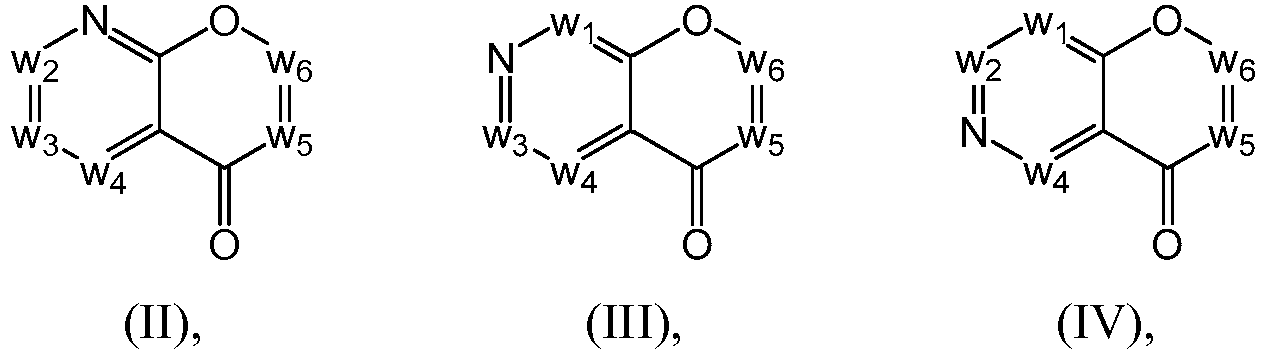


- In the use of the compound of Formula (II), w2 is C-R1, w5 is C-R2, w6 is C-Ra and w3 and w4 are independently C-Ra or N.
- In the use of the compound of Formula (II), w2 is C-R2, w5 is C-R1, w6 is C-Ra and w3 and w4 are independently C-Ra or N.
- In the use of the compound of Formula (II), w3 is C-R1, w6 is C-R2, w2 and w4 are independently C-Ra or N and w5 is C-Rc or N.
- In the use of the compound of Formula (II), w3 is C-R2, w6 is C-R1, w2 and w4 are independently C-Ra or N and w5 is C-Rc or N.
- In the use of the compound of Formula (III), w3 is C-R1, w6 is C-R2, w4 is C-Ra or N, w1 is C-Rb or N and w5 is C-Rc or N.
- In the use of the compound of Formula (III), w3 is C-R2, w6 is C-R1, w4 is C-Ra or N, w1 is C-Rb or N and w5 is C-Rc or N.
- In the use of the compound of Formula (IV), w2 is C-R1, w5 is C-R2, w6 is C-Ra, w4 is C-Ra or N and w1 is C-Rb or N.
- In the use of the compound of Formula (IV), w2 is C-R2, w5 is C-R1, w6 is C-Ra, w4 is C-Ra or N and w1 is C-Rb or N.
- In the use of the compound of Formula (V), w2 is C-R1, w5 is C-R2, w6 is C-Ra, w3 is C-Ra or N and w1 is C-Rb or N.
- In the use of the compound of Formula (V), w2 is C-R2, w5 is C-R1, w6 is C-Ra, w3 is C-Ra or N and w1 is C-Rb or N.
- In the use of the compound of Formula (V), w3 is C-R1, w6 is C-R2, w2 is C-Ra or N, w1 is C-Rb or N and w5 is C-Rc or N.
- In the use of the compound of Formula (V), w3 is C-R2, w6 is C-R1, w2 is C-Ra or N, w1 is C-Rb or N and w5 is C-Rc or N.
- In the use of the compound of Formula (VI), w3 is C-R1, w6 is C-R2, w2 and w4 are independently C-Ra or N and w1 is C-Rb or N.
- In the use of the compound of Formula (VI), w3 is C-R2, w6 is C-R1, w2 and w4 are independently C-Ra or N and w1 is C-Rb or N.
- In the use of the compound of Formula (VII), w3 is C-R1, w6 is C-R2, w4 is C-Ra or N and w5 is C-Rc or N.
- In the use of the compound of Formula (VII), w3 is C-R2, w6 is C-R1, w4 is C-Ra or N and w5 is C-Rc or N.
- In the use of the compound of Formula (VIII), w2 is C-R1, w5 is C-R2, w6 is C-Ra and w4 is C-Ra or N.
- In the use of the compound of Formula (VIII), w2 is C-R2, w5 is C-R1, w6 is C-Ra and w4 is C-Ra or N.
- In the use of the compound of Formula (IX), w2 is C-R1, w5 is C-R2, w6 is C-Ra and w3 is C-Ra or N.
- In the use of the compound of Formula (IX), w2 is C-R2, w5 is C-R1, w6 is C-Ra and w3 is C-Ra or N.
- In the use of the compound of Formula (IX), w3 is C-R1, w6 is C-R2, w2 is C-Ra or N and w5 is C-Rc or N.
- In the use of the compound of Formula (IX), w3 is C-R2, w6 is C-R1, w2 is C-Ra or N and w5 is C-Rc or N.
- In the use of the compound of Formula (X), w3 is C-R1, w6 is C-R2 and w2 and w4 are independently C-Ra or N.
- In the use of the compound of Formula (X), w3 is C-R2, w6 is C-R1 and w2 and w4 are independently C-Ra or N.
- In the use of the compound of Formula (XI), w3 is C-R1, w6 is C-R2, w1 is C-Rb or N and w5 is C-Rc or N.
- In the use of the compound of Formula (XI), w3 is C-R2, w6 is C-R1, w1 is C-Rb or N and w5 is C-Rc or N.
- In the use of the compound of Formula (XII), w3 is C-R1, w6 is C-R2, w4 is C-Ra or N and w1 is C-Rb or N.
- In the use of the compound of Formula (XII), w3 is C-R2, w6 is C-R1, w4 is C-Ra or N and w1 is C-Rb or N.
- In the use of the compound of Formula (XIII), w2 is C-R1, w5 is C-R2, w6 is C-Ra and w1 is C-Rb or N.
- In the use of the compound of Formula (XIII), w2 is C-R2, w5 is C-R1, w6 is C-Ra and w1 is C-Rb or N.
- In the use of the compound of Formula (XIV), w3 is C-R1, w6 is C-R2, w2 is C-Ra or N and w1 is C-Rb or N.
- In the use of the compound of Formula (XIV), w3 is C-R2, w6 is C-R1, w2 is C-Ra or N and w1 is C-Rb or N.
- In the use of the compound of Formula (XV), w3 is C-R1, w6 is C-R2 and w5 is C-Rc.
- In the use of the compound of Formula (XV), w3 is C-R2, w6 is C-R1 and w5 is C-Rc.
- In the use of the compound of Formula (XVI), w3 is C-R1, w6 is C-R2 and w4 is C-Ra.
- In the use of the compound of Formula (XVI), w3 is C-R2, w6 is C-R1 and w4 is C-Ra.
- In the use of the compound of Formula (XVII), w2 is C-R1, w5 is C-R2 and w6 is C-Ra.
- In the use of the compound of Formula (XVII), w2 is C-R2, w5 is C-R1 and w6 is C-Ra.
- In the use of the compound of Formula (XVIII), w3 is C-R1, w6 is C-R2 and w2 is C-Ra.
- In the use of the compound of Formula (XVIII), w3 is C-R2, w6 is C-R1 and w2 is C-Ra.
- In the use of the compound of Formula (XIX), w3 is C-R1, w6 is C-R2 and w1 is C-Rb.
- In the use of the compound of Formula (XIX), w3 is C-R2, w6 is C-R1 and w1 is C-Rb.
- A use of the compound of Formula (I) may be the use of a compound of Formula (II):

- A use of the compound of Formula (I) may be the use of a compound of Formula (III):

- A use of the compound of Formula (I) may be the use of a compound of Formula (IV):

- A use of the compound of Formula (I) may be the use of a compound of Formula (V):

- A use of the compound of Formula (I) may be the use of a compound of Formula (VI):

- A use of the compound of Formula (I) may be the use of a compound of Formula (VII):

- A use of the compound of Formula (I) may be the use of a compound of Formula (VIII):

- A use of the compound of Formula (I) may be the use of a compound of Formula (IX):
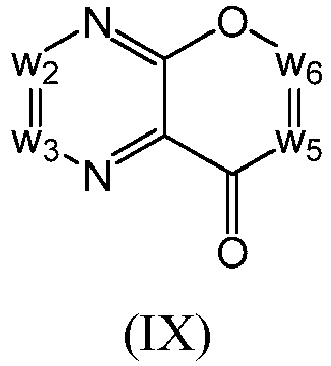
- A use of the compound of Formula (I) may be the use of a compound of Formula (X):

- A use of the compound of Formula (I) may be the use of a compound of Formula (XI):
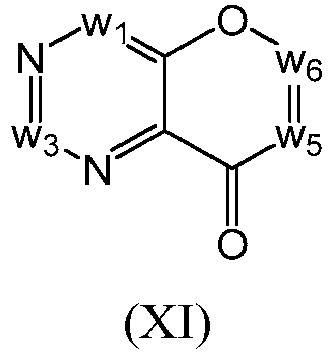
- A use of the compound of Formula (I) may be the use of a compound of Formula (XII):

- A use of the compound of Formula (I) the use of a compound of Formula (XIII):

- A use of the compound of Formula (I) may be the use of a compound of Formula (XIV):

- A use of the compound of Formula (I) may be the use of a compound of Formula (XV):

- A use of the compound of Formula (I) may be the use of a compound of Formula (XVI):
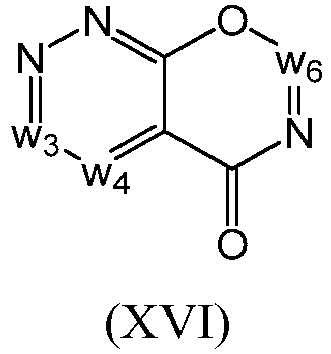
- A use of the compound of Formula (I) may be the use of a compound of Formula (XVII):

- A use of the compound of Formula (I) may be the use of a compound of Formula (XVIII):

- A use of the compound of Formula (I) may be the use of a compound of Formula (XIX):

- A use of the compound of Formula (I), Formula (II), Formula (III), Formula (IV), Formula (V), Formula (VI), Formula (VII), Formula (VIII), Formula (X), Formula (XI), Formula (XII), Formula (XIII), Formula (XIV), Formula (XV), Formula (XVI), may be Formula (XVII), Formula (XVIII) or Formula (XIX) may be the use of a compound selected from Formula (Ia), Formula (IIa), Formula (IIIa), Formula (IVa), Formula (Va), Formula (VIa), Formula (VIIa), Formula (VIIIa), Formula (Xa), Formula (XIa), Formula (XIIa), Formula (XIIIa), Formula (XIVa), Formula (XVa), Formula (XVIa), Formula (XVIIa), Formula (XVIIIa) or Formula (XIXa), respectively:


- In the use of the compound of Formula (Ia), one of w2, w3, w5 and w6 is C-R1 and one other of w2, w3, w5 and w6 is C-R2, provided that,
when w3 is C-R1, then w6 is C-R2, w2 is C-Ra or N and w5 is C-Rc or N; or,
when w3 is C-R2, then w6 is C-R1, w2 is C-Ra or N and w5 is C-Rc or N; or,
when w2 is C-R1, then w5 is C-R2, w6 is C-Ra and w3 is C-Ra or N; or,
when w2 is C-R2, then w5 is C-R1, w6 is C-Ra and w3 is C-Ra or N. - In the use of the compound of Formula (IIa), one of w2, w3, w5 and w6 is C-R1 and one other of w2, w3, w5 and w6 is C-R2, provided that,
when w3 is C-R1, then w6 is C-R2, w2 is C-Ra or N and w5 is C-Rc or N; or,
when w3 is C-R2, then w6 is C-R1, w2 is C-Ra or N and w5 is C-Rc or N; or,
when w2 is C-R1, then w5 is C-R2, w6 is C-Ra and w3 is C-Ra or N; or,
when w2 is C-R2, then w5 is C-R1, w6 is C-Ra and w3 is C-Ra or N. - In the use of the compound of Formula (IIIa), one of w3 and w6 is C-R1 and the other is C-R2, provided that, when w3 is C-R1, then w6 is C-R2; or, when w3 is C-R2, then w6 is C-R1.
- In the use of the compound of Formula (IVa), one of w2 and w5 is C-R1 and the other is C-R2, provided that, when w2 is C-R1, then w5 is C-R2; or, when w2 is C-R2, then w5 is C-R1.
- In the use of the compound of Formula (Va), one of w2, w3, w5 and w6 is C-R1 and one other of w2, w3, w5 and w6 is C-R2, provided that,
- when w3 is C-R1, then w6 is C-R2, w2 is C-Ra or N and w5 is C-Rc or N; or,
- when w3 is C-R2, then w6 is C-R1, w2 is C-Ra or N and w5 is C-Rc or N; or,
- when w2 is C-R1, then w5 is C-R2, w6 is C-Ra and w3 is C-Ra or N; or,
- when w2 is C-R2, then w5 is C-R1, w6 is C-Ra and w3 is C-Ra or N.
- In the use of the compound of Formula (VIa), one of w3 and w6 is C-R1 and the other is C-R2, provided that, when w3 is C-R1, then w6 is C-R2; or, when w3 is C-R2, then w6 is C-R1.
- In the use of the compound of Formula (VIIa), one of w3 and w6 is C-R1 and the other is C-R2, provided that, when w3 is C-R1, then w6 is C-R2; or, when w3 is C-R2, then w6 is C-R1.
- In the use of the compound of Formula (VIIIa), one of w2 and w5 is C-R1 and the other is C-R2, provided that, when w2 is C-R1, then w5 is C-R2; or, when w2 is C-R2, then w5 is C-R1.
- In the use of the compound of Formula (Xa), one of w3 and w6 is C-R1 and the other is C-R2, provided that, when w3 is C-R1, then w6 is C-R2; or, when w3 is C-R2, then w6 is C-R1.
- In the use of the compound of Formula (XIa), one of w3 and w6 is C-R1 and the other is C-R2, provided that, when w3 is C-R1, then w6 is C-R2; or, when w3 is C-R2, then w6 is C-R1.
- In the use of the compound of Formula (XIIa), one of w3 and w6 is C-R1 and the other is C-R2, provided that, when w3 is C-R1, then w6 is C-R2; or, when w3 is C-R2, then w6 is C-R1.
- In the use of the compound of Formula (XIIIa), one of w2 and w5 is C-R1 and the other is C-R2, provided that, when w2 is C-R1, then w5 is C-R2; or, when w2 is C-R2, then w5 is C-R1.
- In the use of the compound of Formula (XIVa), one of w3 and w6 is C-R1 and the other is C-R2, provided that, when w3 is C-R1, then w6 is C-R2; or, when w3 is C-R2, then w6 is C-R1.
- In the use of the compound of Formula (XVa), one of w3 and w6 is C-R1 and the other is C-R2, provided that, when w3 is C-R1, then w6 is C-R2; or, when w3 is C-R2, then w6 is C-R1.
- In the use of the compound of Formula (XVIa), one of w3 and w6 is C-R1 and the other is C-R2, provided that, when w3 is C-R1, then w6 is C-R2; or, when w3 is C-R2, then w6 is C-R1.
- In the use of the compound of Formula (XVIIa), one of w2 and w5 is C-R1 and the other is C-R2, provided that, when w2 is C-R1, then w5 is C-R2; or, when w2 is C-R2, then w5 is C-R1.
- In the use of the compound of Formula (XVIIIa), one of w3 and w6 is C-R1 and the other is C-R2, provided that, when w3 is C-R1, then w6 is C-R2; or, when w3 is C-R2, then w6 is C-R1.
- In the use of the compound of Formula (XIXa), one of w3 and w6 is C-R1 and the other is C-R2, provided that, when w3 is C-R1, then w6 is C-R2; or, when w3 is C-R2, then w6 is C-R1.
- A use of the compound of Formula (I) may be the use of a compound of Formula (Ia):

- A use of the compound of Formula (II) may be the use of a compound of Formula (IIa):

- A use of the compound of Formula (III) may be the use of a compound of Formula (IIIa):

- A use of the compound of Formula (IV) may be the use of a compound of Formula (IVa):

- A use of the compound of Formula (V) may be the use of a compound of Formula (Va):
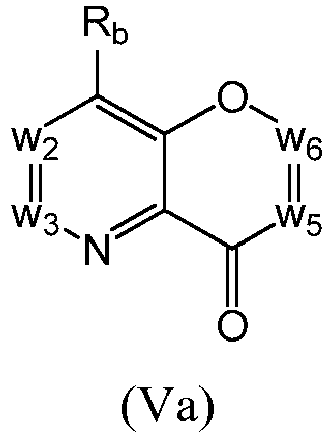
- A the use of the compound of Formula (VI) may be the use of a compound of Formula (VIa):

- A use of the compound of Formula (VII) may be the use of a compound of Formula (VIIa):

- A use of the compound of Formula (VIII) may be the use of a compound of Formula (VIIIa):

- A use of the compound of Formula (X) may be the use of a compound of Formula (Xa):

- A use of the compound of Formula (XI) may be the use of a compound of Formula (XIa):
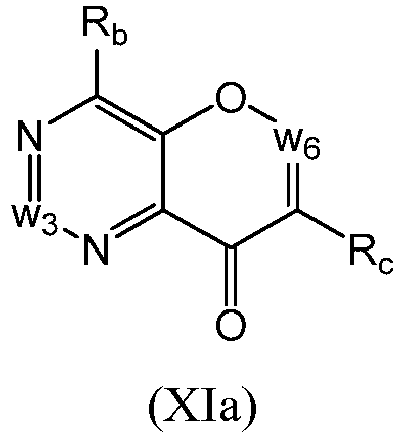
- A use of the compound of Formula (XII) may be the use of a compound of Formula (XIIa):
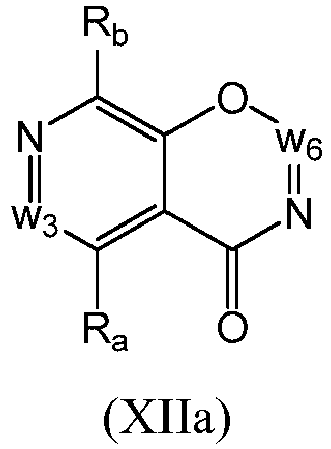
- A use of the compound of Formula (XIII) may be the use of a compound of Formula (XIIIa):

- A use of the compound of Formula (XIV) may be the use of a compound of Formula (XIVa):

- A use of the compound of Formula (XV) may be the use of a compound of Formula (XVa):

- A use of the compound of Formula (XVI) may be the use of a compound of Formula (XVIa):

- A use of the compound of Formula (XVII) may be the use of a compound of Formula (XVIIa):
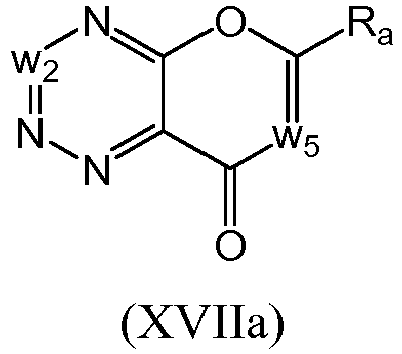
- A use of the compound of Formula (XVIII) may be the use of a compound of Formula (XVIIIa):

- A use of the compound of Formula (XIX) may be the use of a compound of Formula (XIXa):

- A use of the compound of Formula (Ia) may be the use of a compound of Formula (Ia1), Formula (Ia2), Formula (Ia3) or Formula (Ia4):


- A use of the compound of Formula (IIa) may be the use of a compound of Formula (IIa1), Formula (IIa2), Formula (IIa3) or Formula (IIa4):


- A use of the compound of Formula (IIIa) may be the use of a compound of Formula (IIIa1) or Formula (IIIa2):

- A use of the compound of Formula (IVa) may be the use of a compound of Formula (IVa1) or Formula (IVa2):
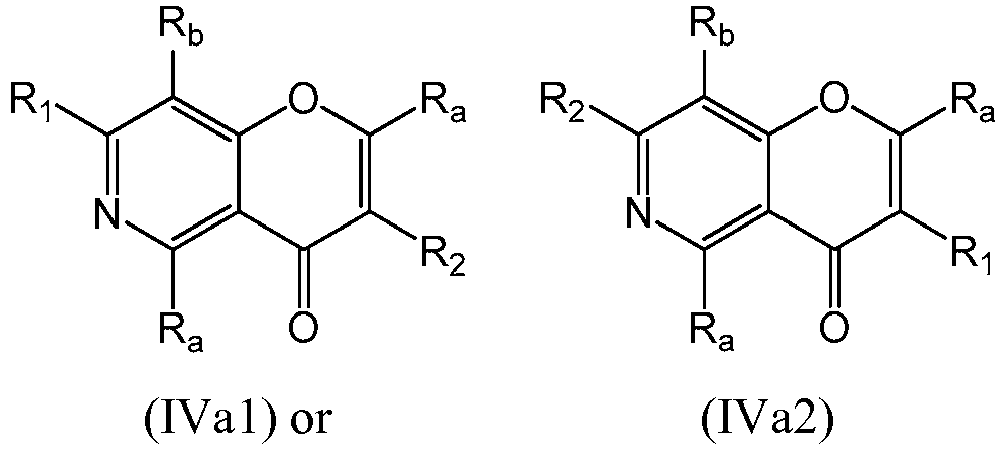
- A use of the compound of Formula (Va) may be the use of a compound of Formula (Va1), Formula (Va2), Formula (Va3) or Formula (Va4):


- A use of the compound of Formula (VIa) may be the use of a compound of Formula (VIa1) or Formula (VIa2):

- A use of the compound of Formula (VIIa) may be the use of a compound of Formula (VIIa1) or Formula (VIIa2):

- A use of the compound of Formula (VIIIa) may be the use of a compound of Formula (VIIIa1) or Formula (VIIIa2):

- A use of the compound of Formula (IXa) may be the use of a compound of Formula (IXa1), Formula (IXa2), Formula (IXa3) or Formula (IXa4):


- A use of the compound of Formula (Xa) may be the use of a compound of Formula (Xa1) or Formula (Xa2):

- A use of the compound of Formula (XIa) may be the use of a compound of Formula (XIa1) or Formula (XIa2):

- A use of the compound of Formula (XIIa) may be the use of a compound of Formula (XIIa1) or Formula (XIIa2):

- A use of the compound of Formula (XIIIa) may be the use of a compound of Formula (XIIIa1) or Formula (XIIIa2):

- A use of the compound of Formula (XIVa) may be the use of a compound of Formula (XIVa1) or Formula (XIVa2):

- A use of the compound of Formula (XVa) may be the use of a compound of Formula (XVa1) or Formula (XVa2):

- A use of the compound of Formula (XVIa) may be the use of a compound of Formula (XVIa1) or Formula (XVIa2):
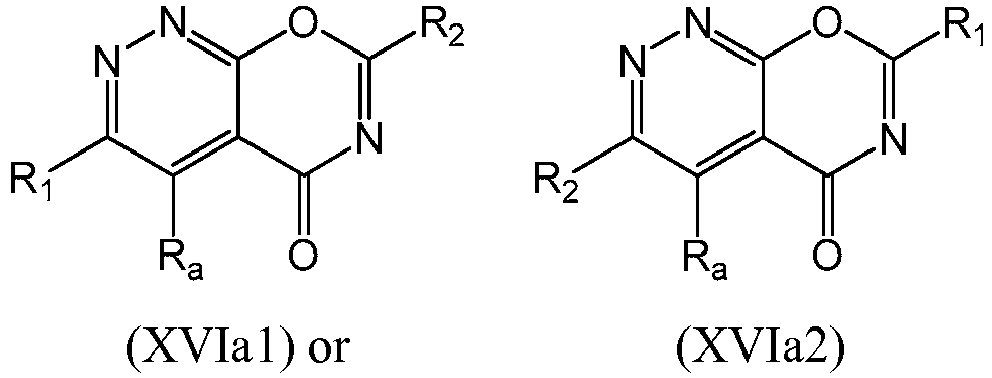
- A use of the compound of Formula (XVIIa) may be the use of a compound of Formula (XVIIa1) or Formula (XVIIa2):

- A use of the compound of Formula (XVIIIa) may be the use of a compound of Formula (XVIIIa1) or Formula (XVIIIa2):

- A use of the compound of Formula (XIXa) may be the use of a compound of Formula (XIXa1) or Formula (XIXa2):

- A use of the compound of Formula (Ia) may be the use of a compound of Formula (Ia1):

- A use of the compound of Formula (Ia) may be the use of a compound of Formula (Ia2):
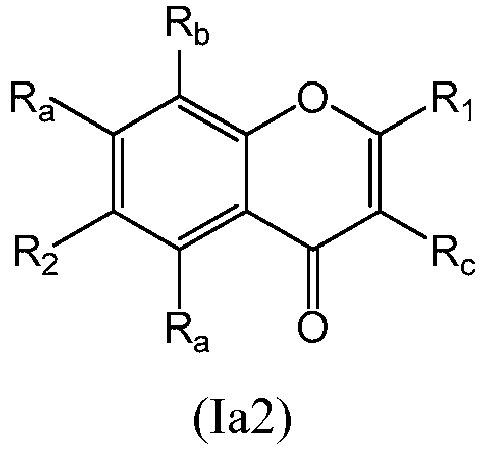
- A use of the compound of Formula (Ia) may be the use of a compound of Formula (Ia3):

- A use of the compound of Formula (Ia) may be the use of a compound of Formula (Ia4):

- A use of the compound of Formula (IIa) may be the use of a compound of Formula (IIa1):
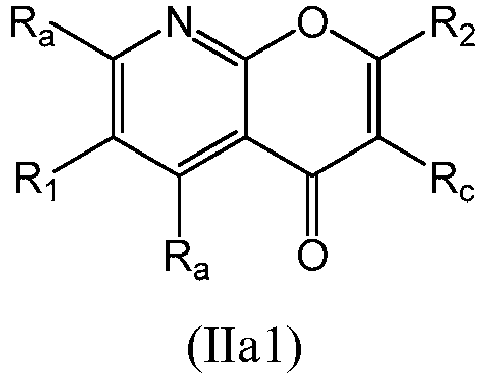
- A use of the compound of Formula (IIa) may be the use of a compound of Formula (IIa2):

- A use of the compound of Formula (IIa) may be the use of a compound of Formula (IIa3):

- A use of the compound of Formula (IIa) may be the use of a compound of Formula (IIa4):

- A use of the compound of Formula (IIIa) may be the use of a compound of Formula (IIIa1):
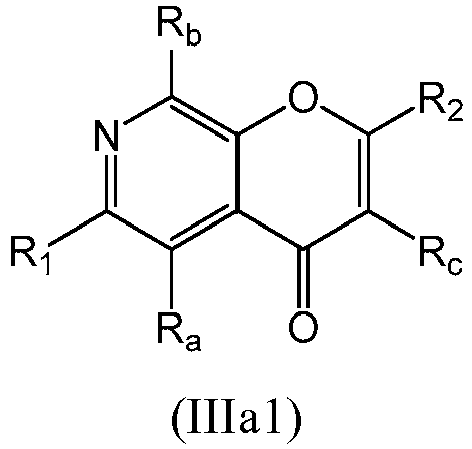
- A use of the compound of Formula (IIIa) may be the use of a compound of Formula (IIIa2):

- A use of the compound of Formula (IVa) may be the use of a compound of Formula (IVa1):
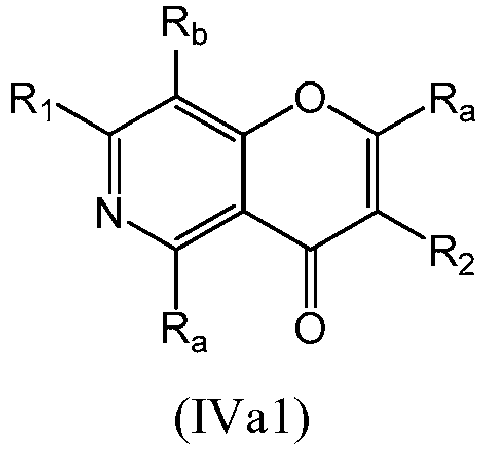
- A use of the compound of Formula (IVa) may be the use of a compound of Formula (IVa2):

- A use of the compound of Formula (Va) may be the use of a compound of Formula (Va1):

- A use of the compound of Formula (Va) may be the use of a compound of Formula (Va2):

- A use of the compound of Formula (Va) may be the use of a compound of Formula (Va3):
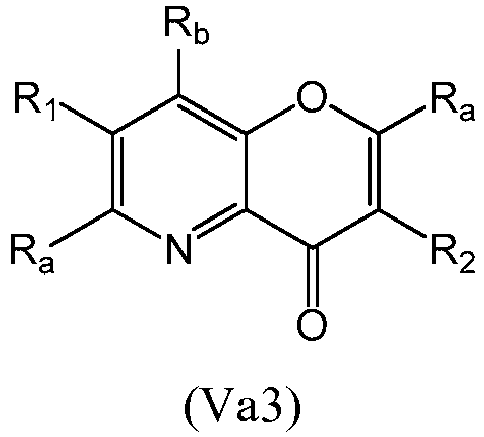
- A use of the compound of Formula (Va) may be the use of a compound of Formula (Va4):

- A use of the compound of Formula (VIa) may be the use of a compound of Formula (VIa1):

- A use of the compound of Formula (VIa) may be the use of a compound of Formula (VIa2):

- A use of the compound of Formula (VIIa) may be the use of a compound of Formula (VIIa1):
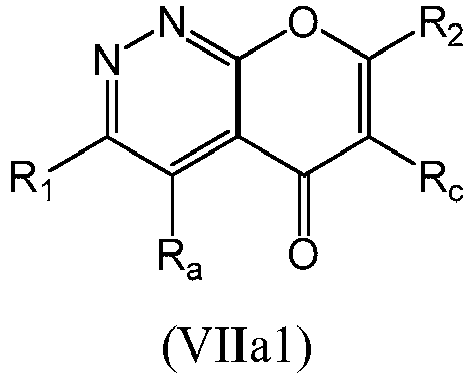
- A use of the compound of Formula (VIIa) may be the use of a compound of Formula (VIIa2):

- A use of the compound of Formula (VIIIa) may be the use of a compound of Formula (VIIIa1):

- A use of the compound of Formula (VIIIa) may be the use of a compound of Formula (VIIIa2):

- A use of the compound of Formula (IXa) may be the use of a compound of Formula (IXa1):

- A use of the compound of Formula (IXa) may be the use of a compound of Formula (IXa2):

- A use of the compound of Formula (IX) may be the use of a compound of Formula (IXa3):

- A use of the compound of Formula (IX) may be the use of a compound of Formula (IXa4):
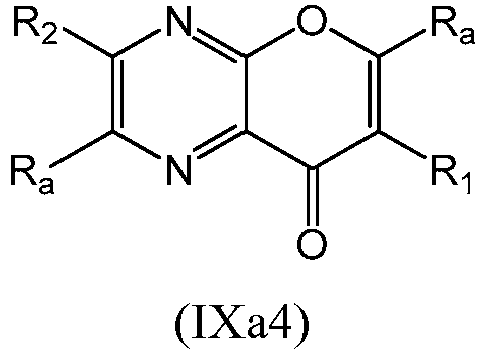
- A use of the compound of Formula (Xa) may be the use of a compound of Formula (Xa1):
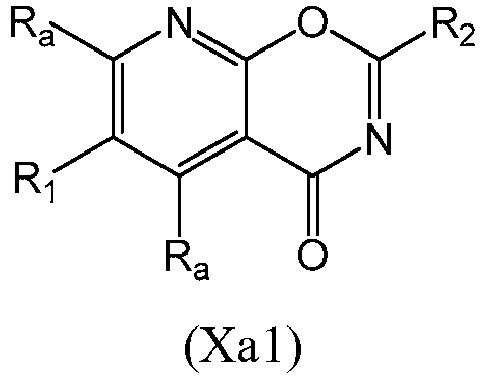
- A use of the compound of Formula (Xa) may be the use of a compound of Formula (Xa2):

- A use of the compound of Formula (XIa) may be the use of a compound of Formula (XIa1):
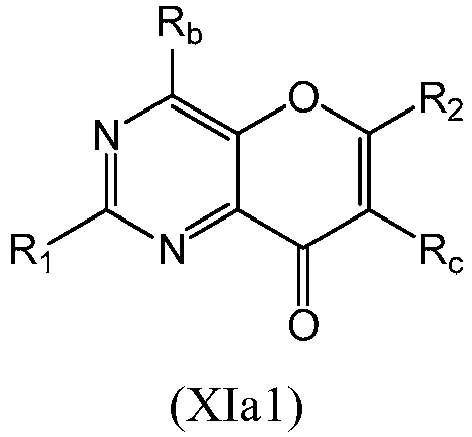
- A use of the compound of Formula (XIa) may be the use of a compound of Formula (XIa2):

- A use of the compound of Formula (XIIa) may be the use of a compound of Formula (XIIa1):

- A use of the compound of Formula (XIIa) may be the use of a compound of Formula (XIIa2):

- A use of the compound of Formula (XIIIa) may be the use of a compound of Formula (XIIIa1):
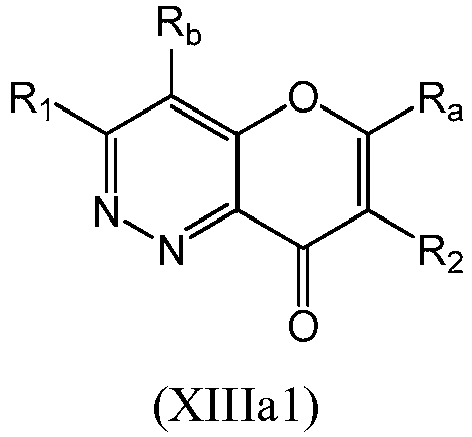
- A use of the compound of Formula (XIIIa) may be the use of a compound of Formula (XIIIa2):
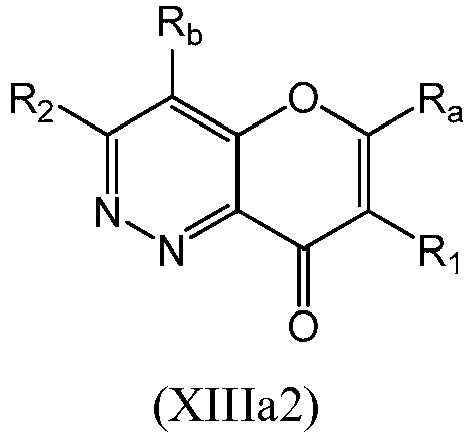
- A use of the compound of Formula (XIVa) may be the use of a compound of Formula (XIVa1):

- A use of the compound of Formula (XIVa) may be the use of a compound of Formula (XIVa2):

- A use of the compound of Formula (XVa) may be the use of a compound of Formula (XVa1):

- A use of the compound of Formula (XVa) may be the use of a compound of Formula (XVa2):

- A use of the compound of Formula (XVIa) may be the use of a compound of Formula (XVIa1):
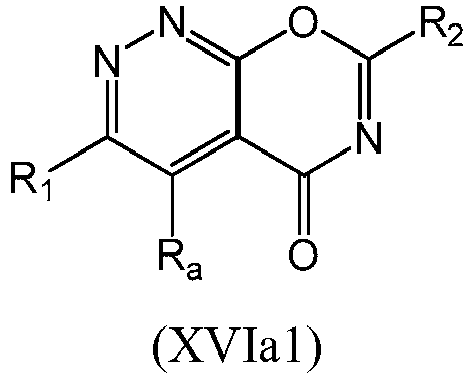
- A use of the compound of Formula (XVIa) may be the use of a compound of Formula (XVIa2):
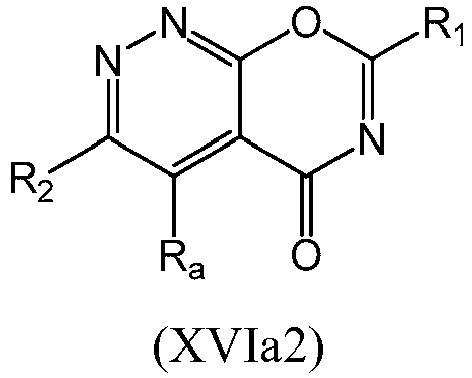
- A use of the compound of Formula (XVIIa) may be the use of a compound of Formula (XVIIa1):
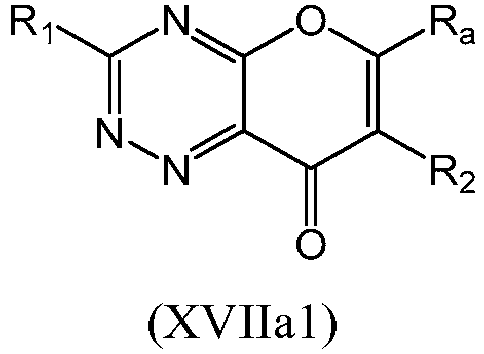
- A use of the compound of Formula (XVIIa) may be the use of a compound of Formula (XVIIa2):
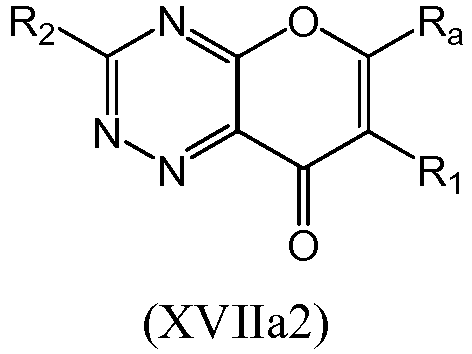
- A use of the compound of Formula (XVIIIa) may be the use of a compound of Formula (XVIIIa1):

- A use of the compound of Formula (XVIIIa) may be the use of a compound of Formula (XVIIIa2):

- A use of the compound of Formula (XIXa) may be the use of a compound of Formula (XIXa1):

- A use of the compound of Formula (XIXa) may be the use of a compound of Formula (XIXa2):
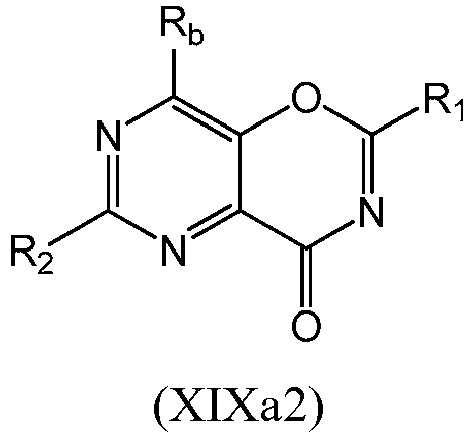
- In some embodiments, a compound provided herein or a form thereof, or a pharmaceutical composition thereof is administered to a subject suffering from SMA. In other embodiments, a compound provided herein or a form thereof, is administered to a subject predisposed or susceptible to SMA. In a specific embodiment, a compound provided herein or a form thereof, or a pharmaceutical composition thereof is administered to a human subject having SMA, wherein SMA is caused by an inactivating mutation or deletion in the SMN1 gene on both chromosomes, resulting in a loss of SMN1 gene function. In certain embodiments, the human subject is genotyped prior to administration of a compound provided herein or a form thereof, or a pharmaceutical composition thereof to determine whether the subject has an inactivating mutation or deletion in the teleomeric copy of the SMN1 gene in both chromosomes, which results in a loss of SMN1 gene function. In some embodiments, a compound provided herein or a form thereof, or pharmaceutical composition thereof is administered to a subject with
Type 0 SMA. In some embodiments, a compound provided herein or a form thereof, or a pharmaceutical composition thereof is administered to a subject withType 1 SMA. In other embodiments, a compound provided herein or a form thereof, or a pharmaceutical composition thereof is administered to a subject with Type 2 SMA. In other embodiments, a compound provided herein or a form thereof, or a pharmaceutical composition thereof is administered to a subject withType 3 SMA. In some embodiments, a compound provided herein or a form thereof, or a pharmaceutical composition thereof is administered to a subject with Type 4 SMA. In certain embodiments, the human subject is an SMA patient. - In certain embodiments, a compound provided herein or a form thereof, or a pharmaceutical composition thereof is administered to a subject that will or might benefit from enhanced inclusion of
exon 7 of SMN1 and/or SMN2 into mRNA that is transcribed from the SMN1 and/or SMN2 gene. In specific embodiments, a compound provided herein or a form thereof, or a pharmaceutical composition thereof is administered to a subject that will or may benefit from enhanced Smn protein expression. - In certain embodiments, a compound provided herein or a form thereof, or a pharmaceutical composition thereof is administered to a human that has an age in a range of from about 0 months to about 6 months old, from about 6 to about 12 months old, from about 6 to about 18 months old, from about 18 to about 36 months old, from about 1 to about 5 years old, from about 5 to about 10 years old, from about 10 to about 15 years old, from about 15 to about 20 years old, from about 20 to about 25 years old, from about 25 to about 30 years old, from about 30 to about 35 years old, from about 35 to about 40 years old, from about 40 to about 45 years old, from about 45 to about 50 years old, from about 50 to about 55 years old, from about 55 to about 60 years old, from about 60 to about 65 years old, from about 65 to about 70 years old, from about 70 to about 75 years old, from about 75 to about 80 years old, from about 80 to about 85 years old, from about 85 to about 90 years old, from about 90 to about 95 years old or from about 95 to about 100 years old.
- In some embodiments, a compound provided herein or a form thereof, or a pharmaceutical composition thereof is administered to a human infant. In other embodiments, a compound of Formula (I) or a form thereof, or a pharmaceutical composition thereof is administered to a human toddler. In other embodiments, a compound provided herein or a form thereof, or a pharmaceutical composition thereof is administered to a human child. In other embodiments, a compound provided herein or a form thereof, or a pharmaceutical composition thereof is administered to a human adult. In yet other embodiments, a compound provided herein or a form thereof, or a pharmaceutical composition thereof is administered to an elderly human.
- In some embodiments, a compound provided herein or a form thereof, or a pharmaceutical composition thereof, is administered to a patient to prevent the onset of SMA in a patient at risk of developing SMA. In other embodiments, an effective amount of a compound provided herein or a form thereof, or a pharmaceutical composition thereof, is administered to a patient to prevent the onset of SMA in a patient at risk of developing SMA. In other embodiments, a prophylactically effective amount of a compound provided herein or a form thereof, or a pharmaceutical composition thereof, is administered to a patient to prevent the onset of SMA in a patient at risk of developing SMA. In other embodiments, a therapeutically effective amount of a compound provided herein or a form thereof, or a pharmaceutical composition thereof, is administered to a patient to prevent the onset of SMA in a patient at risk of developing SMA.
- In some embodiments, a compound provided herein or a form thereof, or a pharmaceutical composition thereof, is administered to an SMA patient to treat or ameliorate SMA. In other embodiments, an effective amount of a compound provided herein or a form thereof, or a pharmaceutical composition thereof, is administered to an SMA patient to treat or ameliorate SMA. In other embodiments, a prophylactically effective amount of a compound provided herein or a form thereof, or a pharmaceutical composition thereof, is administered to an SMA patient to prevent advancement of SMA. In other embodiments, a therapeutically effective amount of a compound provided herein or a form thereof, or a pharmaceutical composition thereof, is administered to an SMA patient to treat or ameliorate SMA.
- In some embodiments, a compound provided herein or a form thereof, or a medicament thereof is administered to a subject suffering from SMA. In other embodiments, a compound provided herein or a form thereof, is administered to a subject predisposed or susceptible to SMA. In a specific embodiment, a compound provided herein or a form thereof, or a medicament thereof is administered to a human subject having SMA, wherein SMA is caused by an inactivating mutation or deletion in the SMN1 gene on both chromosomes, resulting in a loss of SMN1 gene function. In certain embodiments, the human subject is genotyped prior to administration of a compound provided herein or a form thereof, or a medicament thereof to determine whether the subject has an inactivating mutation or deletion in the teleomeric copy of the SMN1 gene in both chromosomes, which results in a loss of SMN1 gene function. In some embodiments, a compound provided herein or a form thereof, or medicament thereof is administered to a subject with
Type 0 SMA. In some embodiments, a compound provided herein or a form thereof, or a medicament thereof is administered to a subject withType 1 SMA. In other embodiments, a compound provided herein or a form thereof, or a medicament thereof is administered to a subject with Type 2 SMA. In other embodiments, a compound provided herein or a form thereof, or a medicament thereof is administered to a subject withType 3 SMA. In some embodiments, a compound provided herein or a form thereof, or a medicament thereof is administered to a subject with Type 4 SMA. In certain embodiments, the human subject is an SMA patient. - In certain embodiments, a compound provided herein or a form thereof, or a medicament thereof is administered to a subject that will or might benefit from enhanced inclusion of
exon 7 of SMN1 and/or SMN2 into mRNA that is transcribed from the SMN1 and/or SMN2 gene. In specific embodiments, a compound provided herein or a form thereof, or a medicament thereof is administered to a subject that will or may benefit from enhanced Smn protein expression. - In certain embodiments, a compound provided herein or a form thereof, or a medicament thereof is administered to a human that has an age in a range of from about 0 months to about 6 months old, from about 6 to about 12 months old, from about 6 to about 18 months old, from about 18 to about 36 months old, from about 1 to about 5 years old, from about 5 to about 10 years old, from about 10 to about 15 years old, from about 15 to about 20 years old, from about 20 to about 25 years old, from about 25 to about 30 years old, from about 30 to about 35 years old, from about 35 to about 40 years old, from about 40 to about 45 years old, from about 45 to about 50 years old, from about 50 to about 55 years old, from about 55 to about 60 years old, from about 60 to about 65 years old, from about 65 to about 70 years old, from about 70 to about 75 years old, from about 75 to about 80 years old, from about 80 to about 85 years old, from about 85 to about 90 years old, from about 90 to about 95 years old or from about 95 to about 100 years old.
- In some embodiments, a compound provided herein or a form thereof, or a medicament thereof is administered to a human infant. In other embodiments, a compound provided herein or a form thereof, or a medicament thereof is administered to a human toddler. In other embodiments, a compound provided herein or a form thereof, or a medicament thereof is administered to a human child. In other embodiments, a compound provided herein or a form thereof, or a medicament thereof is administered to a human adult. In yet other embodiments, a compound provided herein or a form thereof, or a medicament thereof is administered to an elderly human.
- In some embodiments, a compound provided herein or a form thereof, or a medicament thereof is administered to a patient to prevent the onset of SMA in a patient at risk of developing SMA. In other embodiments, an effective amount of a compound provided herein or a form thereof, or a medicament thereof, is administered to a patient to prevent the onset of SMA in a patient at risk of developing SMA. In other embodiments, a prophylactically effective amount of a compound provided herein or a form thereof, or a medicament thereof, is administered to a patient to prevent the onset of SMA in a patient at risk of developing SMA. In other embodiments, a therapeutically effective amount of a compound provided herein or a form thereof, or a medicament thereof, is administered to a patient to prevent the onset of SMA in a patient at risk of developing SMA.
- In some embodiments, a compound provided herein or a form thereof, or a medicament thereof, is administered to an SMA patient to treat or ameliorate SMA. In other embodiments, an effective amount of a compound provided herein or a form thereof, or a medicament thereof, is administered to an SMA patient to treat or ameliorate SMA. In other embodiments, a prophylactically effective amount of a compound provided herein or a form thereof, or a medicament thereof, is administered to an SMA patient to prevent advancement of SMA. In other embodiments, a therapeutically effective amount of a compound provided herein or a form thereof, or a medicament thereof, is administered to an SMA patient to treat or ameliorate SMA.
- When administered to a patient, a compound provided herein or a form thereof is preferably administered as a component of a composition that optionally comprises a pharmaceutically acceptable carrier, excipient or diluent. The composition can be administered orally, or by any other convenient route, for example, by infusion or bolus injection, by absorption through epithelial or mucocutaneous linings (e.g., oral mucosa, rectal, and intestinal mucosa) and may be administered together with another biologically active agent. Administration can be systemic or local. Various delivery systems are known, e.g., encapsulation in liposomes, microparticles, microcapsules, capsules, and can be used to administer the compound.
- Methods of administration include but are not limited to parenteral, intradermal, intramuscular, intraperitoneal, intravenous, subcutaneous, intranasal, epidural, oral, sublingual, intranasal, intracerebral, intravaginal, transdermal, rectally, by inhalation, or topically, particularly to the ears, nose, eyes, or skin. The mode of administration is left to the discretion of the practitioner. In most instances, administration will result in the release of a compound into the bloodstream. In a specific embodiment, a compound is administered orally.
- The amount of a compound provided herein or a form thereof that will be effective in the treatment of SMA depend, e.g., on the route of administration, the type of SMA, the general health of the subject, ethnicity, age, weight, and gender of the subject, diet, time, and the severity of SMA, and should be decided according to the judgment of the practitioner and each patient's or subject's circumstances.
- In specific embodiments, an "effective amount," "prophylactically effective amount" or "therapeutically effective amount" in the context of the administration of a compound provided herein or a form thereof, or composition or medicament thereof refers to an amount of a compound provided herein which has a therapeutic effect and/or beneficial effect. In certain specific embodiments, an "effective amount," "prophylactically effective amount" or "therapeutically effective amount" in the context of the administration of a compound provided herein or a form thereof, or composition or medicament thereof results in one, two or more of the following effects: (i) reduces or ameliorates the severity of SMA; (ii) delays onset of SMA; (iii) inhibits the progression of SMA; (iv) reduces hospitalization of a subject; (v) reduces hospitalization length for a subject; (vi) increases the survival of a subject; (vii) improves the quality of life of a subject; (viii) reduces the number of symptoms associated with SMA; (ix) reduces or ameliorates the severity of a symptom(s) associated with SMA; (x) reduces the duration of a symptom associated with SMA; (xi) prevents the recurrence of a symptom associated with SMA; (xii) inhibits the development or onset of a symptom of SMA; and/or (xiii) inhibits of the progression of a symptom associated with SMA. In certain embodiments, an effective amount of a compound provided herein or a form thereof is an amount effective to enhance inclusion of
exon 7 of SMN2 into SMN2 mRNA that is transcribed from the SMN2 gene and increases the levels of Smn protein produced from the SMN2 gene and thus producing a desired beneficial effect in a subject in need thereof. In some instances, the desired effect can be determined by analyzing or quantifying: (1) the inclusion ofexon 7 of SMN2 into mRNA that is transcribed from the SMN2 gene; or (2) the levels of Smn protein produced from the SMN2 gene. Non-limiting examples of effective amounts of a compound of Formula (I) or a form thereof are described herein. - For example, the effective amount may be the amount required to treat SMA in a human subject in need thereof, or the amount required to enhance inclusion of
exon 7 of SMN2 into mRNA that is transcribed from the SMN2 gene in a human subject in need thereof, or the amount required to increase levels of Smn protein produced from the SMN2 gene in a human subject in need thereof. In a specific embodiment, the human subject is an SMA patient. - In general, the effective amount will be in a range of from about 0.001 mg/kg/day to about 500 mg/kg/day for a patient or subject having a weight in a range of between about 1 kg to about 200 kg. The typical adult subject is expected to have a median weight in a range of between about 70 and about 100 kg.
- Within the scope of the present description, the "effective amount" of a compound provided herein or a form thereof for use in the manufacture of a medicament, the preparation of a pharmaceutical kit or in a method for treating SMA in a human subject in need thereof, is intended to include an amount in a range of from about 0.001 mg to about 35,000 mg. In a specific embodiment, the human subject is an SMA patient.
- The compositions described herein are formulated for administration to the subject via any drug delivery route known in the art. Nonlimiting examples include oral, ocular, rectal, buccal, topical, nasal, ophthalmic, subcutaneous, intramuscular, intraveneous (bolus and infusion), intracerebral, transdermal, and pulmonary routes of administration.
- Embodiments described herein include the use of a compound provided herein or a form thereof in a pharmaceutical composition. In a specific embodiment, described herein is the use of a compound provided herein or a form thereof in a pharmaceutical composition for treating SMA in a human subject in need thereof comprising administering an effective amount of a compound provided herein or a form thereof in admixture with a pharmaceutically acceptable excipient. In a specific embodiment, the human subject is an SMA patient.
- A compound provided herein or a form thereof may optionally be in the form of a composition comprising the compound or a form thereof and an optional carrier, excipient or diluent. Other embodiments provided herein include pharmaceutical compositions comprising an effective amount of a compound provided herein or a form thereof and a pharmaceutically acceptable carrier, excipient, or diluent. In a specific embodiment, the pharmaceutical compositions are suitable for veterinary and/or human administration. The pharmaceutical compositions provided herein can be in any form that allows for the composition to be administered to a subject.
- In a specific embodiment and in this context, the term "pharmaceutically acceptable carrier, excipient or diluent" means a carrier, excipient or diluent approved by a regulatory agency of the Federal or a state government or listed in the U.S. Pharmacopeia or other generally recognized pharmacopeia for use in animals, and more particularly in humans. The term "carrier" refers to a diluent, adjuvant (e.g., Freund's adjuvant (complete and incomplete)), excipient, or vehicle with which a therapeutic agent is administered. Such pharmaceutical carriers can be sterile liquids, such as water and oils, including those of petroleum, animal, vegetable or synthetic origin, such as peanut oil, soybean oil, mineral oil, sesame oil and the like. Water is a specific carrier for intravenously administered pharmaceutical compositions. Saline solutions and aqueous dextrose and glycerol solutions can also be employed as liquid carriers, particularly for injectable solutions.
- Typical compositions and dosage forms comprise one or more excipients. Suitable excipients are well-known to those skilled in the art of pharmacy, and non limiting examples of suitable excipients include starch, glucose, lactose, sucrose, gelatin, malt, rice, flour, chalk, silica gel, sodium stearate, glycerol monostearate, talc, sodium chloride, dried skim milk, glycerol, propylene, glycol, water, ethanol and the like. Whether a particular excipient is suitable for incorporation into a pharmaceutical composition or dosage form depends on a variety of factors well known in the art including, but not limited to, the way in which the dosage form will be administered to a patient and the specific active ingredients in the dosage form. Further provided herein are anhydrous pharmaceutical compositions and dosage forms comprising one or more compounds provided herein or a form thereof as described herein. The compositions and single unit dosage forms can take the form of solutions or syrups (optionally with a flavoring agent), suspensions (optionally with a flavoring agent), emulsions, tablets (e.g., chewable tablets), pills, capsules, granules, powder (optionally for reconstitution), taste-masked or sustained-release formulations and the like.
- Pharmaceutical compositions provided herein that are suitable for oral administration can be presented as discrete dosage forms, such as, but are not limited to, tablets, caplets, capsules, granules, powder, and liquids. Such dosage forms contain predetermined amounts of active ingredients, and may be prepared by methods of pharmacy well known to those skilled in the art.
- Examples of excipients that can be used in oral dosage forms provided herein include, but are not limited to, binders, fillers, disintegrants, and lubricants.
- The amount of mRNA that is transcribed from the SMN1 gene and/or SMN2 gene and includes
exon 7 of SMN1 and/or SMN2 may be used as a biomarker for SMA. The amount of mRNA that is transcribed from the SMN1 gene and/or SMN2 gene and does not includeexon 7 of SMN1 and/or SMN2 may be used as a biomarker for SMA. The amount of mRNA that is transcribed from the SMN1 and/or SMN2 gene and includesexon 7 of SMN1 and/or SMN2 may be used as a biomarker for an SMA patient being treated with a compound, such as disclosed herein. The amount of mRNA that is transcribed from the SMN1 and/or SMN2 gene and does not includeexon 7 of SMN1 and/or SMN2 may be used as a biomarker for an SMA patient being treated with a compound, such as disclosed herein. A change in the amount of mRNA that is transcribed from the SMN1 and/or SMN2 gene and includesexon 7 of SMN1 and/or SMN2 and a corresponding change in the amount of mRNA that is transcribed from the SMN1 and/or SMN2 gene and does not includeexon 7 of SMN1 and/or SMN2 may be a biomarker for a patient being treated with a compound, such as disclosed herein. The patient may be an SMA patient. - An increase in the amount of mRNA that is transcribed from the SMN1 and/or SMN2 gene and includes
exon 7 of SMN1 and/or SMN2 and a corresponding decrease in the amount of mRNA that is transcribed from the SMN1 and/or SMN2 gene and does not includeexon 7 of SMN1 and/or SMN2 after the administration of a compound (e.g., a compound of Formula (I) disclosed herein) may indicate that the compound may be effective to treat SMA. A decrease in the amount of mRNA that is transcribed from the SMN2 gene and includesexon 7 of SMN2 and a corresponding increase in the amount of mRNA that is transcribed from the SMN2 gene and does not includeexon 7 of SMN2 after the administration of a compound (e.g., a compound of Formula (I) disclosed herein) may indicate that the compound will not be effective to treat SMA. An SMN primer(s) and/or an SMN probe described below can be used in assays, such as PCR (e.g., qPCR) and RT-PCR (e.g., RT-qPCR or endpoint RT-PCR) to assess and/or quantify the amount of mRNA that is transcribed from the SMN1 gene and/or SMN2 gene and does or does not includeexon 7 of SMN1 and/or SMN2. - Also described herein are SMN primers and/or SMN probes (e.g., a forward primer having the nucleotide sequence of SEQ ID NO. 1, 7, 8, 11 or 13; and/or a reverse primer having the nucleotide sequence of SEQ ID NO. 9 or 12; and/or an SMN probe such as a SEQ ID NO. 3 or 10) for amplifying nucleic acids encoding or encoded by human SMN1 and/or SMN2. These primers can be used as primers in, e.g., RT-PCR (such as RT-PCR, endpoint RT-PCR and/or RT-qPCR as described herein or as known to one skilled in the art), PCR (such as qPCR) or rolling circle amplification, and as probes in hybridization assays, such as a Northern blot and/or a Southern blot assay. As utilized in the Biological Examples herein, endpoint RT-PCR is a reverse transcription-polymerase chain reaction that is carried out for a certain number of amplification cycles (or until starting materials are exhausted) following by a quantification of each of the DNA products using, e.g., gel electrophoretic separation, staining with a fluorescent dye, quantification of fluorescence and the like.
- SEQ ID NO. 1 hybridizes to DNA or RNA comprising nucleotides corresponding to nucleotides 22 to 40 of
exon 7 of SMN1 and/or SMN2, SEQ ID NO. 2 hybridizes to DNA or RNA comprising nucleotides corresponding to nucleotides 4 to 26 of the firefly luciferase coding sequence; SEQ ID NO. 7 hydridizes to nucleic acid sequences (e.g., the sense strand of DNA) comprising nucleotides corresponding to nucleotides 32 to 54 ofexon 7 of SMN1 and/or SMN2 andnucleotides 1 to 4 ofexon 8 of SMN1 and/or SMN2, SEQ ID NO. 8 hybridizes to nucleic acid sequences (e.g., the sense strand of DNA) comprising nucleotides corresponding, in order, to nucleotides 87 to 111 ofexon 7 of SMN1 and/or SMN2 andnucleotides 1 to 3 ofexon 8 of SMN1 and/or SMN2, SEQ ID NO. 9 hybridizes to nucleic acid sequences (e.g., the antisense strand of DNA or RNA) comprising nucleotides corresponding to nucleotides 39 to 62 ofexon 8 of SMN1 and/or SMN2, SEQ ID NO. 11 hybridizes to nucleic acid sequences (e.g., the sense strand of DNA) comprising nucleotides corresponding to nucleotides 43 to 63 ofexon 6 of SMN1 and/or SMN2, SEQ ID NO. 12 hybridizes to nucleic acid sequences (e.g., the antisense strand of DNA or RNA) comprising nucleotides corresponding to nucleotides 51 to 73 ofexon 8 of SMN1 and/or SMN2, and SEQ ID NO. 13 hybridizes to nucleic acid sequence (e.g., the sense strand of DNA) comprising nucleotides corresponding to nucleotides 22 to 46 ofexon 6 of SMN1 and/or SMN2. - Accordingly, an oligonucleotide corresponding to SEQ ID NO. 9, 11, 12 and/or 13 can be used in an amplification reaction to amplify nucleic acids encoding or encoded by human SMN1 and/or
SMN2 lacking exon 7 of human SMN1 and/or SMN2 and nucleic acid encoding or encoded by human SMN1 and/or SMN2 and includesexon 7 of human SMN1 and/or SMN2. In contrast, an oligonucleotide corresponding to SEQ ID NO. 8 in conjunction with a downstream reverse primer (e.g., SEQ ID NO. 9 or 12) can be used to amplify nucleic acids encoding or encoded by human SMN1 and/orSMN2 lacking exon 7 of human SMN1 and/or SMN2 and an oligonucleotide corresponding to SEQ ID NO. 1 and 7 in conjunction with a downstream reverse primer (e.g., SEQ ID NO. 9 or 12) can be used to amplify nucleic acids encoding or encoded by human SMN1 and/or human SMN2 and includesexon 7 of SMN1 and/or SMN2. - SEQ ID NO. 3 hybridizes to nucleic acid sequences (e.g., the sense strand of DNA) comprising nucleotides corresponding, in order, to nucleotides 50 to 54 of
exon 7 of human SMN1 and/or SMN2 andnucleotides 1 to 21 ofexon 8 of human SMN1 and/or SMN2, and SEQ ID NO. 10 hybridizes to nucleic acid sequences (e.g., the sense strand of DNA) comprising nucleotides corresponding tonucleotides 7 to 36 ofexon 8 of human SMN1 and/or SMN2. SEQ ID NO. 3 is useful as a probe to detect mRNA that is transcribed from the minigene and includesexon 7 of SMN1 and/or SMN2, described herein or described in International Publication No.WO 2009/151546 orU.S. Patent Application Publication No. 2011/0086833 and to detect mRNA that is transcribed from human SMN1 and/or SMN2 and includesexon 7 of SMN1 and/or SMN2. In addition, SEQ ID NO. 10 is useful as a probe to detect mRNA that is transcribed from the minigene and does or does not includeexon 7 of SMN1 and/or SMN2 and to detect mRNA that is transcribed from human SMN1 and/or SMN2, described herein or as described in International Publication No.WO 2009/151546 orU.S. Patent Application Publication No. 2011/0086833 . - A primer and/or probe described below in the Biological Examples (e.g., SMN primers such as SEQ ID NO. 1, 7, 11 or 13 and/or SEQ ID NO. 2, 9 or 12, and/or SMN probes such as a SEQ ID NO. 3 or 10) may be used in an assay, such as RT-PCR, RT-qPCR, endpoint RT-PCR, PCR, qPCR, rolling circle amplification and, as applicable, Northern blot or Southern blot (e.g., an assay such as described below in the Biological Examples), to determine whether a compound (e.g., a compound of Formula (I) or a form thereof) enhances the inclusion of
exon 7 of SMN1 and/or SMN2 into mRNA that is transcribed from an SMN1 and/or SMN2 gene. - A primer and/or probe described below in the Biological Examples (e.g., SMN primers such as SEQ ID NO. 1, 7, 11 or 13 and/or SEQ ID NO. 9 or 12, and/or SMN probes such as a SEQ ID NO. 3 or 10) may be used in an assay, such as RT-PCR, RT-qPCR, endpoint RT-PCR, PCR, qPCR, rolling circle amplification and, as applicable, Northern blot or Southern blot (e.g., an assay such as described below in the Biological Examples), to monitor the amount of mRNA that is transcribed from the SMN1 and/or SMN2 gene and includes
exon 7 of SMN1 and/or SMN2 in a patient sample. The patient may be an SMA patient. - A primer and/or probe described below in the Biological Examples (e.g., SMN primers such as SEQ ID NO. 1, 7, 11 or 13 and/or SEQ ID NO. 9 or 12, and/or SMN probes such as a SEQ ID NO. 3 or 10) may be used in an assay, such as RT-PCR, RT-qPCR, endpoint RT-PCR, PCR, qPCR, rolling circle amplification and, as applicable, Northern blot or Southern blot (e.g., an assay such as described below in the Biological Examples), to monitor a patient's response to a compound (e.g., a compound of Formula (I) or a form thereof). The patient may be an SMA patient.
- A sample (e.g., a blood sample, PBMC sample, or tissue sample, such as a skin or muscle tissue sample) from a patient can be obtained using techniques known to one skilled in the art and the primers and/or probes described in the Biological Examples below can be used in assays (e.g., PCR, RT-PCR, RT-qPCR, qPCR, endpoint RT-PCR, rolling circle amplification, Northern blot and Southern blot) to determine the amount of mRNA that is transcribed from the SMN1 and/or SMN2 genes (e.g., the amount of mRNA that includes
exon 7 of SMN2 transcribed from the SMN2 gene). A sample derived from a patient refers to a sample that is processed and/or manipulated after being obtained from the patient using techniques known to one skilled in the art. For example, a sample from a patient can be processed to, e.g., extract RNA, using techniques known to one of skill in the art. A sample from a patient can be processed to, e.g., extract RNA and the RNA is reversed transcribed to produce cDNA. The patient may be an SMA patient. - Also described herein is a method for detecting the amount of mRNA that is transcribed from the SMN1 and/or SMN2 gene and includes
exon 7 of SMN1 and/or SMN2, comprising: (a) contacting a patient sample (e.g., blood sample or tissue sample) or a sample derived from a patient (e.g., a blood sample or tissue sample that has been processed to extract RNA) with a forward SMN primer described below (e.g., SEQ ID NO. 1, 7, 11 or 13) and/or a reverse SMN primer described herein (e.g., SEQ ID NO. 9 or 12) along with applicable components for, e.g., an RT-PCR (e.g., endpoint RT-PCR and/or RT-qPCR), PCR (e.g., qPCR) or rolling circle amplification; and (b) detecting the amount of mRNA that is transcribed from the SMN1 and/or SMN2 gene and includesexon 7 of SMN1 and/or SMN2. The sample may be from or derived from a patient administered a compound, such as a compound of Formula (I) or a form thereof as described herein. The patient may be an SMA patient. - Also described herein is a method for detecting the amount of mRNA that is transcribed from the SMN1 and SMN2 genes, comprising: (a) contacting a patient sample (e.g., blood sample or tissue sample) or a sample derived from a patient (e.g., a blood sample or tissue sample that has been processed to extract RNA) with a forward SMN primer described below (e.g., SEQ ID NO. 1, 7, 11 or 13) and/or a reverse SMN primer described herein (e.g., SEQ ID NO. 9 or 12) along with applicable components for, e.g., an RT-PCR (e.g., endpoint RT-PCR and/or RT-qPCR), PCR (e.g., qPCR) or rolling circle amplification; and (b) detecting the amount of mRNA that is transcribed from the SMN1 and The may be SMN2 genes. The sample may be from or derived from a patient administered a compound, such as a compound of Formula (I) or a form thereof as described herein. The patient may be an SMA patient.
- The amount of mRNA that is transcribed from the human SMN1 and SMN2 genes that includes
exon 7 of SMN1 and SMN2 and the amount of mRNA that is transcribed from the human SMN1 and SMN2 genes and does not includeexon 7 of SMN1 and SMN2 can be differentiated from each other by, e.g., size of the RNA or DNA fragment generated from SMN1 and SMN2 mRNA that includesexon 7 of SMN1 and SMN2 and from SMN1 and SMN2 mRNA that do not includeexon 7 of SMN1 and SMN2. - Also described herein is a method for detecting the amount of mRNA that is transcribed from the SMN1 and/or SMN2 gene and does not include
exon 7 of SMN1 and/or SMN2, comprising: (a) contacting a patient sample (e.g., blood sample or tissue sample) or a sample derived from a patient (e.g., a blood sample or tissue sample that has been processed to extract RNA) with a forward SMN primer described below (e.g., SEQ ID NO. 8, 11 or 13) and/or a reverse SMN primer described herein (e.g., SEQ ID NO. 9 or 12) along with applicable components for, e.g., an RT-PCR (e.g., endpoint RT-PCR and/or RT-qPCR), PCR (e.g., qPCR) or rolling circle amplification; and (b) detecting the amount of mRNA that is transcribed from the SMN1 and/or SMN2 gene and does not includeexon 7 of SMN1 and/or SMN2. The sample may be from or derived from a patient administered a compound, such as a compound of Formula (I) or a form thereof as described herein. The patient may be an SMA patient. - Also described herein is a method for detecting the amount of mRNA that is transcribed from the SMN1 and/or SMN2 gene and includes
exon 7 of SMN1 and/or SMN2, comprising: (a) contacting a patient sample (e.g., blood sample or tissue sample) or a sample derived from a patient (e.g., a blood sample or tissue sample that has been processed to extract RNA) with an SMN probe described below (e.g., SEQ ID NO. 3 or 10) along with applicable components, e.g., of an RT-PCR (e.g., endpoint RT-PCR and/or RT-qPCR), PCR (e.g., qPCR), rolling circle amplification and, as applicable, Northern blot or Southern blot; and (b) detecting the amount of mRNA that is transcribed from the SMN1 and/or SMN2 gene and includesexon 7 of SMN1 and/or SMN2. The sample may be from or derived from a patient administered a compound, such as a compound of Formula (I) or a form thereof as described herein. The patient may be an SMA patient. - Also described herein is a method for detecting the amount of mRNA that is transcribed from the SMN1 and SMN2 genes, comprising: (a) contacting a patient sample (e.g., blood sample or tissue sample) or a sample derived from a patient (e.g., a blood sample or tissue sample that has been processed to extract RNA) with an SMN probe described below (e.g., SEQ ID NO. 3 or 10) along with applicable components for, e.g., an RT-PCR (e.g., endpoint RT-PCR and/or RT-qPCR), PCR (e.g., qPCR), rolling circle amplification and, as applicable, Northern blot or Southern blot; and (b) detecting the amount of mRNA that is transcribed from the SMN1 and SMN2 genes.
- The amount of mRNA that is transcribed from the human SMN1 and SMN2 genes that includes
exon 7 of SMN1 and SMN2 and the amount of mRNA that is transcribed from the human SMN1 and SMN2 genes and does not includeexon 7 of SMN1 and SMN2 can be differentiated from each other by, e.g., size of the RNA or DNA fragment generated from SMN1 and SMN2 mRNA that includesexon 7 of SMN1 and SMN2 and from SMN1 and SMN2 mRNA that do not includeexon 7 of SMN1 and SMN2. The sample may be from or derived from a patient administered a compound, such as a compound of Formula (I) or a form thereof as described herein. The patient may be an SMA patient. - Also described herein is a method for detecting the amount of mRNA that is transcribed from the SMN1 and/or SMN2 gene and does not include
exon 7 of SMN1 and/or SMN2, comprising: (a) contacting a patient sample (e.g., blood sample or tissue sample) or a sample derived from a patient (e.g., a blood sample or tissue sample that has been processed to extract RNA) with an SMN probe described below (e.g., SEQ ID NO. 10) along with applicable components for, e.g., an RT-PCR (e.g., endpoint RT-PCR and/or RT-qPCR), PCR (e.g., qPCR), rolling circle amplification, or Northern blot or Southern blot; and (b) detecting the amount of mRNA that is transcribed from the SMN1 and/or SMN2 gene and does not includeexon 7 of SMN1 and/or SMN2. In certain embodiments, the sample is from or derived from a patient administered a compound, such as a compound of Formula (I) or a form thereof as described herein. The patient may be an SMA patient. - Also described herein is a method for detecting the amount of mRNA that is transcribed from the SMN1 and/or SMN2 gene and includes
exon 7 of SMN1 and/or SMN2, comprising: (a) contacting a patient sample (e.g., blood sample or tissue sample) or a sample derived from a patient (e.g., a blood sample or tissue sample that has been processed to extract RNA) with a forward SMN primer described below (e.g., SEQ ID NO. 1, 7, 11 or 13) and/or a reverse SMN primer described herein (e.g., SEQ ID NO. 9 or 12) and/or an SMN probe described herein (e.g., SEQ ID NO. 3 or 10) along with applicable components for e.g., an RT-PCR (e.g., endpoint RT-PCR and/or RT-qPCR), PCR (e.g., qPCR) or rolling circle amplification; and (b) detecting the amount of mRNA that is transcribed from the SMN1 and/or SMN2 gene and includesexon 7 of SMN1 and/or SMN2. The sample may be from or derived from a patient administered a compound, such as a compound of Formula (I) or a form thereof as described herein. The patient may be an SMA patient. - Also described herein is a method for detecting the amount of mRNA that is transcribed from the SMN1 and SMN2 genes, comprising: (a) contacting a patient sample (e.g., blood sample or tissue sample) or a sample derived from a patient (e.g., a blood sample or tissue sample that has been processed to extract RNA) with a forward SMN primer described below (e.g., SEQ ID NO. 1, 7, 8, 11 or 13) and/or a reverse SMN primer described herein (e.g., SEQ ID NO. 9 or 12) and/or an SMN probe described herein (e.g., SEQ ID NO. 3 or 10) along with applicable components for e.g., an RT-PCR (e.g., endpoint RT-PCR and/or RT-qPCR), PCR (e.g., qPCR) or rolling circle amplification, as applicable; and (b) detecting the amount of mRNA that is transcribed from the SMN1 and SMN2 genes. The patient may be an SMA patient.
- The amount of mRNA that is transcribed from the human SMN1 and SMN2 genes that includes
exon 7 of SMN1 and SMN2 and the amount of mRNA that is transcribed from the human SMN1 and SMN2 genes that do not includeexon 7 of SMN1 and SMN2 can be differentiated from each other by, e.g., size of the RNA or DNA fragment generated from SMN1 and SMN2 mRNA that includesexon 7 of SMN1 and SMN2 and from SMN1 and SMN2 mRNA that does not includeexon 7 of SMN1 and SMN2. The sample may be from or derived from a patient administered a compound, such as a compound of Formula (I) or a form thereof as described herein. The patient may be an SMA patient. - Also described herein is a method for detecting the amount of mRNA that is transcribed from the SMN1 and/or SMN2 gene and does not include
exon 7 of SMN1 and/or SMN2, comprising: (a) contacting a patient sample (e.g., blood sample or tissue sample) or a sample derived from a patient (e.g., a blood sample or tissue sample that has been processed to extract RNA) with a forward SMN primer described below (e.g., SEQ ID NO. 8) and/or a reverse SMN primer described herein (e.g., SEQ ID NO. 9 or 12) and/or an SMN probe described herein (e.g., SEQ ID NO. 10) along with applicable components for e.g., an RT-PCR (e.g., endpoint RT-PCR and/or RT-qPCR), PCR (e.g., qPCR) or rolling circle amplification; and (b) detecting the amount of mRNA that is transcribed from the SMN1 and/or SMN2 gene and does not includeexon 7 of SMN1 and/or SMN2. The sample may be from or derived from a patient administered a compound, such as a compound of Formula (I) or a form thereof as described herein. The patient may be an SMA patient. - Also described herein is a method for assessing an SMA patient's response to a compound, comprising: (a) contacting an SMA patient sample (e.g., blood sample or tissue sample) or a sample derived from an SMA patient (e.g., a blood sample or tissue sample that has been processed to extract RNA) with a forward SMN primer described below (e.g., SEQ ID NO. 1, 7, 11 or 13) and/or a reverse SMN primer described herein (e.g., SEQ ID NO. 9 or 12) along with applicable components for e.g., RT-PCR (e.g., endpoint RT-PCR and/or RT-qPCR), PCR (e.g., qPCR) or rolling circle amplification, wherein the sample is from or derived from an SMA patient administered a compound (e.g., a compound described herein); and (b) detecting the amount of mRNA that is transcribed from the SMN1 and/or SMN2 gene and includes exon 7 of SMN1 and/or SMN2, wherein (1) an increase in the amount of mRNA that is transcribed from the SMN1 and/or SMN2 gene and includes exon 7 of SMN1 and/or SMN2 in the patient sample relative to the amount of mRNA that is transcribed from the SMN1 and/or SMN2 gene and includes exon 7 of SMN1 and/or SMN2 in an analogous sample (e.g., from the same type of tissue sample) from the patient prior to administration of the compound indicates that the patient is responsive to the compound and that the compound may be or is beneficial and/or of therapeutic value to the patient; and (2) no change or no substantial change in the amount of mRNA that is transcribed from the SMN1 and/or SMN2 gene and includes exon 7 of SMN1 and/or SMN2 in the patient sample relative to the amount of mRNA that is transcribed from the SMN1 and/or SMN2 gene and includes exon 7 of SMN1 and/or SMN2 in an analogous sample (e.g., the same type of tissue sample) from the patient prior to administration of the compound indicates that the patient is not responsive to the compound and that the compound is not beneficial and/or of therapeutic value to the patient. The patient's response may be assessed 1 hour, 2 hours, 4 hours, 8 hours, 12 hours, 16 hours, 20 hours, 1 day, 2 days, 3 days, 5 days, 7 days, 14 days, 28 days, 1 month, 2 months, 3 months, 6 months, 9 months, 12 months or more after administration of a compound, such as a compound of Formula (I) or a form thereof as described herein.
- Also described herein is a method for assessing an SMA patient's response to a compound, comprising: (a) administering a compound to an SMA patient; (b) contacting a sample (e.g., blood sample or tissue sample) obtained or derived from the patient with a forward SMN primer described below (e.g., SEQ ID NO. 1, 7, 11 or 13) and/or a reverse SMN primer described herein (e.g., SEQ ID NO. 9 or 12) along with applicable components for e.g., RT-PCR (e.g., endpoint RT-PCR and/or RT-qPCR), PCR (e.g., qPCR) or rolling circle amplification; and (c) detecting the amount of mRNA that is transcribed from the SMN1 and/or SMN2 gene and includes exon 7 of SMN2, wherein (1) an increase in the amount of mRNA that is transcribed from the SMN1 and/or SMN2 gene and includes exon 7 of SMN1 and/or SMN2 in the patient sample relative to the amount of mRNA that is transcribed from the SMN1 and/or SMN2 gene and includes exon 7 of SMN1 and/or SMN2 in an analogous sample (e.g., from the same type of tissue sample) from the patient prior to administration of the compound indicates that the patient is responsive to the compound and that the compound may be or is beneficial and/or of therapeutic value to the patient; and (2) no change or no substantial change in the amount of mRNA that is transcribed from the SMN1 and/or SMN2 gene and includes exon 7 of SMN1 and/or SMN2 in the patient sample relative to the amount of mRNA that is transcribed from the SMN1 and/or SMN2 gene and includes exon 7 of SMN1 and/or SMN2 in an analogous sample (e.g., from the same type of tissue sample) from the patient prior to administration of the compound indicates that the patient is not responsive to the compound and that the compound is not beneficial and/or of therapeutic value to the patient. The patient's response may be assessed 1 hour, 2 hours, 4 hours, 8 hours, 12 hours, 16 hours, 20 hours, 1 day, 2 days, 3 days, 5 days, 7 days, 14 days, 28 days, 1 month, 2 months, 3 months, 6 months, 9 months, 12 months or more after administration of a compound, such as a compound of Formula (I) or a form thereof as described herein.
- Also described herein is a method for assessing an SMA patient's response to a compound, comprising: (a) contacting an SMA patient sample (e.g., blood sample or tissue sample) or a sample derived from an SMA patient (e.g., a blood sample or tissue sample that has been processed to extract RNA) with a forward SMN primer described below (e.g., SEQ ID NO. 1, 7, 11 or 13) and/or a reverse SMN primer described herein (e.g., SEQ ID NO. 9 or 12) and/or an SMN probe (e.g., SEQ ID NO. 3 or 10) along with applicable components for e.g., RT-PCR (e.g., endpoint RT-PCR and/or RT-qPCR), PCR (e.g., qPCR) or rolling circle amplification, wherein the sample is from or derived from an SMA patient administered a compound (e.g., a compound of Formula (I) or a form thereof as described herein); and (b) detecting the amount of mRNA that is transcribed from the SMN1 and/or SMN2 gene and includes exon 7 of SMN1 and/or SMN2, wherein (1) an increase in the amount of mRNA that is transcribed from the SMN1 and/or SMN2 gene and includes exon 7 of SMN1 and/or SMN2 in the patient sample relative to the amount of mRNA that is transcribed from the SMN1 and/or SMN2 gene and includes exon 7 of SMN1 and/or SMN2 in an analogous sample (e.g., from the same type of tissue sample) from the patient prior to administration of the compound indicates that the patient is responsive to the compound and that the compound may be or is beneficial and/or of therapeutic value to the patient; and (2) no change or no substantial change in the amount of mRNA that is transcribed from the SMN1 and/or SMN2 gene and includes exon 7 of SMN1 and/or SMN2 in the patient sample relative to the amount of mRNA that is transcribed from the SMN1 and/or SMN2 gene and includes exon 7 of SMN1 and/or SMN2 in an analogous sample (e.g., from the same type of tissue sample) from the patient prior to administration of the compound indicates that the patient is not responsive to the compound and that the compound is not beneficial and/or of therapeutic value to the patient. The patient's response may be assessed 1 hour, 2 hours, 4 hours, 8 hours, 12 hours, 16 hours, 20 hours, 1 day, 2 days, 3 days, 5 days, 7 days, 14 days, 28 days, 1 month, 2 months, 3 months, 6 months, 9 months, 12 months or more after administration of a compound, such as a compound of Formula (I) or a form thereof as described herein.
- Also described herein is a method for assessing an SMA patient's response to a compound, comprising: (a) administering a compound to an SMA patient; (b) contacting a sample (e.g., blood sample or tissue sample) obtained or derived from the patient with a forward SMN primer described below (e.g., SEQ ID NO. 1, 7, 11 or 13) and/or a reverse SMN primer described herein (e.g., SEQ ID NO. 9 or 12) and/or an SMN probe (e.g., SEQ ID NO. 3 or 10) along with applicable components for e.g., RT-PCR (e.g., endpoint RT-PCR and/or RT-qPCR), PCR (e.g., qPCR) or rolling circle amplification; and (c) detecting the amount of mRNA that is transcribed from the SMN1 and/or SMN2 gene and includes exon 7 of SMN1 and/or SMN2, wherein (1) an increase in the amount of mRNA that is transcribed from the SMN1 and/or SMN2 gene and includes exon 7 of SMN1 and/or SMN2 in the patient sample relative to the amount of mRNA that is transcribed from the SMN1 and/or SMN2 gene and includes exon 7 of SMN1 and/or SMN2 in an analogous sample (e.g., from the same type of tissue sample) from the patient prior to administration of the compound indicates that the patient is responsive to the compound and that the compound may be or is beneficial and/or of therapeutic value to the patient; and (2) no change or no substantial change in the amount of mRNA that is transcribed from the SMN1 and/or SMN2 gene and includes exon 7 of SMN1 and/or SMN2 in the patient sample relative to the amount of mRNA that is transcribed from the SMN1 and/or SMN2 gene and includes exon 7 of SMN1 and/or SMN2 in an analogous sample (e.g., from the same type of tissue sample) from the patient prior to administration of the compound indicates that the patient is not responsive to the compound and that the compound is not beneficial and/or of therapeutic value to the patient. The patient's response may be assessed 1 hour, 2 hours, 4 hours, 8 hours, 12 hours, 16 hours, 20 hours, 1 day, 2 days, 3 days, 5 days, 7 days, 14 days, 28 days, 1 month, 2 months, 3 months, 6 months, 9 months, 12 months or more after administration of a compound, such as a compound of Formula (I) or a form thereof as described herein.
- Also described herein is a method for assessing an SMA patient's response to a compound, comprising: (a) contacting an SMA patient sample (e.g., blood sample or tissue sample) or a sample derived from an SMA patient (e.g., a blood sample or tissue sample that has been processed to extract RNA) with a forward SMN primer described below (e.g., SEQ ID NO. 8, 11 or 13) and/or a reverse SMN primer described herein (e.g., SEQ ID NO. 9 or 12) along with applicable components for e.g., RT-PCR (e.g., endpoint RT-PCR and/or RT-qPCR), PCR (e.g., qPCR) or rolling circle amplification, wherein the sample is from or derived from an SMA patient administered a compound (e.g., a compound of Formula (I) or a form thereof as described herein); and (b) detecting the amount of mRNA that is transcribed from the SMN1 and/or SMN2 gene and does not include exon 7 of SMN1 and/or SMN2, wherein (1) a decrease in the amount of mRNA that is transcribed from the SMN1 and/or SMN2 gene and does not include exon 7 of SMN1 and/or SMN2 in the patient sample relative to the amount of mRNA that is transcribed from the SMN1 and/or SMN2 gene and does not include exon 7 of SMN1 and/or SMN2 in an analogous sample (e.g., from the same type of tissue sample) from the patient prior to administration of the compound indicates that the patient is responsive to the compound and that the compound may be or is beneficial and/or of therapeutic value to the patient; and (2) no change or no substantial change in the amount of mRNA that is transcribed from the SMN 1 and/or SMN2 gene and does not include exon 7 of SMN1 and/or SMN2 in the patient sample relative to the amount of mRNA that is transcribed from the SMN1 and/or SMN2 gene and does not include exon 7 of SMN1 and/or SMN2 in an analogous sample (e.g., from the same type of tissue sample) from the patient prior to administration of the compound indicates that the patient is not responsive to the compound and that the compound is not beneficial and/or of therapeutic value to the patient. The patient's response may be assessed 1 hour, 2 hours, 4 hours, 8 hours, 12 hours, 16 hours, 20 hours, 1 day, 2 days, 3 days, 5 days, 7 days, 14 days, 28 days, 1 month, 2 months, 3 months, 6 months, 9 months, 12 months or more after administration of a compound, such as a compound of Formula (I) or a form thereof as described herein.
- Also described herein is a method for assessing an SMA patient's response to a compound, comprising: (a) administering a compound to an SMA patient; (b) contacting a sample (e.g., blood sample or tissue sample) obtained or derived from the patient with a forward SMN primer described below (e.g., SEQ ID NO. 8, 11 or 13) and/or a reverse SMN primer described herein (e.g., SEQ ID NO. 9 or 12) along with applicable components for e.g., RT-PCR (e.g., endpoint RT-PCR and/or RT-qPCR), PCR (e.g., qPCR) or rolling circle amplification; and (c) detecting the amount of mRNA that is transcribed from the SMN1 and/or SMN2 gene and does not include exon 7 of SMN1 and/or SMN2, wherein (1) a decrease in the amount of mRNA that is transcribed from the SMN1 and/or SMN2 gene and does not include exon 7 of SMN1 and/or SMN2 in the patient sample relative to the amount of mRNA that is transcribed from the SMN1 and/or SMN2 gene and does not include exon 7 of SMN1 and/or SMN2 in an analogous sample (e.g., from the same type of tissue sample) from the patient prior to administration of the compound indicates that the patient is responsive to the compound and that the compound may be or is beneficial and/or of therapeutic value to the patient; and (2) no change or no substantial change in the amount of mRNA that is transcribed from the SMN1 and/or SMN2 gene and does not include exon 7 of SMN1 and/or SMN2 in the patient sample relative to the amount of mRNA that is transcribed from the SMN1 and/or SMN2 gene and does not include exon 7 of SMN1 and/or SMN2 in an analogous sample (e.g., from the same type of tissue sample) from the patient prior to administration of the compound indicates that the patient is not responsive to the compound and that the compound is not beneficial and/or of therapeutic value to the patient. The patient's response may be assessed 1 hour, 2 hours, 4 hours, 8 hours, 12 hours, 16 hours, 20 hours, 1 day, 2 days, 3 days, 5 days, 7 days, 14 days, 28 days, 1 month, 2 months, 3 months, 6 months, 9 months, 12 months or more after administration of a compound, such as a compound of Formula (I) or a form thereof as described herein.
- Also described herein is a method for assessing an SMA patient's response to a compound, comprising: (a) contacting an SMA patient sample (e.g., blood sample or tissue sample) or a sample derived from an SMA patient (e.g., a blood sample or tissue sample that has been processed to extract RNA) with a forward SMN primer described below (e.g., SEQ ID NO. 8, 11 or 13) and/or a reverse SMN primer described herein (e.g., SEQ ID NO. 9 or 12) and/or an SMN probe (e.g., SEQ ID NO. 10) along with applicable components for e.g., RT-PCR (e.g., endpoint RT-PCR and/or RT-qPCR), PCR (e.g., qPCR) or rolling circle amplification, wherein the sample is from or derived from an SMA patient administered a compound (e.g., a compound of Formula (I) or a form thereof as described herein); and (b) detecting the amount of mRNA that is transcribed from the SMN1 and/or SMN2 gene and does not include exon 7 of SMN1 and/or SMN2, wherein (1) a decrease in the amount of mRNA that is transcribed from the SMN1 and/or SMN2 gene and does not include exon 7 of SMN1 and/or SMN2 in the patient sample relative to the amount of mRNA that is transcribed from the SMN1 and/or SMN2 gene and does not include exon 7 of SMN1 and/or SMN2 in an analogous sample (e.g., from the same type of tissue sample) from the patient prior to administration of the compound indicates that the patient is responsive to the compound and that the compound may be or is beneficial and/or of therapeutic value to the patient; and (2) no change or no substantial change in the amount of mRNA that is transcribed from the SMN1 and/or SMN2 gene and does not include exon 7 of SMN1 and/or SMN2 in the patient sample relative to the amount of mRNA that is transcribed from the SMN1 and/or SMN2 gene and does not include exon 7 of SMN1 and/or SMN2 in an analogous sample (e.g., from the same type of tissue sample) from the patient prior to administration of the compound indicates that the patient is not responsive to the compound and that the compound is not beneficial and/or of therapeutic value to the patient. The patient's response may be assessed 1 hour, 2 hours, 4 hours, 8 hours, 12 hours, 16 hours, 20 hours, 1 day, 2 days, 3 days, 5 days, 7 days, 14 days, 28 days, 1 month, 2 months, 3 months, 6 months, 9 months, 12 months or more after administration of a compound, such as a compound of Formula (I) or a form thereof as described herein.
- Also described herein is a method for assessing an SMA patient's response to a compound, comprising: (a) administering a compound to an SMA patient; (b) contacting a sample (e.g., blood sample or tissue sample) obtained or derived from the patient with a forward SMN primer described below (e.g., SEQ ID NO. 8, 11 or 13) and/or a reverse SMN primer described herein (e.g., SEQ ID NO. 9 or 12) and/or an SMN probe (e.g., SEQ ID NO. 10) along with applicable components for e.g., RT-PCR (e.g., endpoint RT-PCR and/or RT-qPCR), PCR (e.g., qPCR) or rolling circle amplification; and (c) detecting the amount of mRNA that is transcribed from the SMN1 and/or SMN2 gene and does not include exon 7 of SMN1 and/or SMN2, wherein (1) a decrease in the amount of mRNA that is transcribed from the SMN1 and/or SMN2 gene and does not include exon 7 of SMN1 and/or SMN2 in the patient sample relative to the amount of mRNA that is transcribed from the SMN1 and/or SMN2 gene and does not include exon 7 of SMN1 and/or SMN2 in an analogous sample (e.g., from the same type of tissue sample) from the patient prior to administration of the compound indicates that the patient is responsive to the compound and that the compound may be or is beneficial and/or of therapeutic value to the patient; and (2) no change or no substantial change in the amount of mRNA that is transcribed from the SMN1 and/or SMN2 gene and does not include exon 7 of SMN1 and/or SMN2 in the patient sample relative to the amount of mRNA that is transcribed from the SMN1 and/or SMN2 gene and does not include exon 7 of SMN1 and/or SMN2 in an analogous sample (e.g., from the same type of tissue sample) from the patient prior to administration of the compound indicates that the patient is not responsive to the compound and that the compound is not beneficial and/or of therapeutic value to the patient. The patient's response may be assessed 1 hour, 2 hours, 4 hours, 8 hours, 12 hours, 16 hours, 20 hours, 1 day, 2 days, 3 days, 5 days, 7 days, 14 days, 28 days, 1 month, 2 months, 3 months, 6 months, 9 months, 12 months or more after administration of a compound, such as a compound of Formula (I) or a form thereof as described herein.
- Also described herein is a method for assessing an SMA patient's response to a compound, comprising: (a) contacting an SMA patient sample (e.g., blood sample or tissue sample) or a sample derived from an SMA patient (e.g., a blood sample or tissue sample that has been processed to extract RNA) with a forward SMN primer described below (e.g., SEQ ID NO. 11 or 13) and/or a reverse SMN primer described herein (e.g., SEQ ID NO. 9 or 12) along with applicable components for e.g., RT-PCR (e.g., endpoint RT-PCR and/or RT-qPCR), PCR (e.g., qPCR) or rolling circle amplification, wherein the sample is from or derived from an SMA patient administered a compound (e.g., a compound of Formula (I) or a form thereof as described herein); and (b) detecting the amount of mRNA that is transcribed from the SMN 1 and/or SMN2 gene and includes exon 7 of SMN1 and/or SMN2 and the amount of mRNA that is transcribed from the SMN1 and/or SMN2 gene and does not include exon 7 of SMN1 and/or SMN2, wherein (1)(i) an increase in the amount of mRNA that is transcribed from the SMN1 and/or SMN2 gene and includes exon 7 of SMN1 and/or SMN2 in the patient sample relative to the amount of mRNA that is transcribed from the SMN1 and/or SMN2 gene and includes exon 7 of SMN1 and/or SMN2 in an analogous sample (e.g., from the same type of tissue sample) from the patient prior to administration of the compound, and (ii) a decrease in the amount of mRNA that is transcribed from the SMN1 and/or SMN2 gene and does not include exon 7 of SMN1 and/or SMN2 in the patient sample relative to the amount of mRNA that is transcribed from the SMN1 and/or SMN2 gene and does not include exon 7 of SMN1 and/or SMN2 in an analogous sample (e.g., from the same type of tissue sample) from the patient prior to administration of the compound, indicate that the patient is responsive to the compound and that the compound may be or is beneficial and/or of therapeutic value to the patient; and (2)(i) no change or no substantial change in the amount of mRNA that is transcribed from the SMN1 and/or SMN2 gene and includes exon 7 of SMN1 and/or SMN2 in the patient sample relative to the amount of mRNA that is transcribed from the SMN1 and/or SMN2 gene and includes exon 7 of SMN1 and/or SMN2 in an analogous sample (e.g., the same type of tissue sample) from the patient prior to administration of the compound, and (ii) no change or no substantial change in the amount of mRNA that is transcribed from the SMN1 and/or SMN2 gene and does not include exon 7 of SMN1 and/or SMN2 in the patient sample relative to the amount of mRNA that is transcribed from the SMN1 and/or SMN2 gene and does not include exon 7 of SMN1 and/or SMN2 in an analogous sample (e.g., the same type of tissue sample) from the patient prior to administration of the compound, indicates that the patient is not responsive to the compound and that the compound is not beneficial and/or of therapeutic value to the patient. The patient's response may be assessed 1 hour, 2 hours, 4 hours, 8 hours, 12 hours, 16 hours, 20 hours, 1 day, 2 days, 3 days, 5 days, 7 days, 14 days, 28 days, 1 month, 2 months, 3 months, 6 months, 9 months, 12 months or more after administration of a compound, such as a compound of Formula (I) or a form thereof as described herein.
- Also described herein is a method for assessing an SMA patient's response to a compound, comprising: (a) administering a compound to an SMA patient; (b) contacting a sample (e.g., blood sample or tissue sample) obtained or derived from the patient with a forward SMN primer described below (e.g., SEQ ID NO. 11 or 13) and/or a reverse SMN primer described herein (e.g., SEQ ID NO. 9 or 12) along with applicable components for e.g., RT-PCR (e.g., endpoint RT-PCR and/or RT-qPCR), PCR (e.g., qPCR) or rolling circle amplification; and (c) detecting the amount of mRNA that is transcribed from the SMN1 and/or SMN2 gene and includes exon 7 of SMN1 and/or SMN2 and the amount of mRNA that is transcribed from the SMN1 and/or SMN2 gene and does not include exon 7 of SMN1 and/or SMN2, wherein (1)(i) an increase in the amount of mRNA that is transcribed from the SMN1 and/or SMN2 gene and includes exon 7 of SMN1 and/or SMN2 in the patient sample relative to the amount of mRNA that is transcribed from the SMN1 and/or SMN2 gene and includes exon 7 of SMN1 and/or SMN2 in an analogous sample (e.g., from the same type of tissue sample) from the patient prior to administration of the compound, and (ii) a decrease in the amount of mRNA that is transcribed from the SMN1 and/or SMN2 gene and does not include exon 7 of SMN1 and/or SMN2 in the patient sample relative to the amount of mRNA that is transcribed from the SMN1 and/or SMN2 gene and does not include exon 7 of SMN1 and/or SMN2 in an analogous sample (e.g., from the same type of tissue sample) from the patient prior to administration of the compound, indicate that the patient is responsive to the compound and that the compound may be or is beneficial and/or of therapeutic value to the patient; and (2)(i) no change or no substantial change in the amount of mRNA that is transcribed from the SMN1 and/or SMN2 gene and includes exon 7 of SMN1 and/or SMN2 in the patient sample relative to the amount of mRNA that is transcribed from the SMN1 and/or SMN2 gene and includes exon 7 of SMN1 and/or SMN2 in an analogous sample (e.g., the same type of tissue sample) from the patient prior to administration of the compound, and (ii) no change or no substantial change in the amount of mRNA that is transcribed from the SMN1 and/or SMN2 gene and does not include exon 7 of SMN1 and/or SMN2 in the patient sample relative to the amount of mRNA that is transcribed from the SMN1 and/or SMN2 gene and does not include exon 7 of SMN1 and/or SMN2 in an analogous sample (e.g., the same type of tissue sample) from the patient prior to administration of the compound, indicate that the patient is not responsive to the compound and that the compound is not beneficial and/or of therapeutic value to the patient. The patient's response may be assessed 1 hour, 2 hours, 4 hours, 8 hours, 12 hours, 16 hours, 20 hours, 1 day, 2 days, 3 days, 5 days, 7 days, 14 days, 28 days, 1 month, 2 months, 3 months, 6 months, 9 months, 12 months or more after administration of a compound, such as a compound of Formula (I) or a form thereof as described herein.
- Also described herein is a method for assessing an SMA patient's response to a compound, comprising: (a) contacting an SMA patient sample (e.g., blood sample or tissue sample) or a sample derived from an SMA patient (e.g., a blood sample or tissue sample that has been processed to extract RNA) with an SMN probe (e.g., SEQ ID NO. 10) along with applicable components for e.g., RT-PCR (e.g., endpoint RT-PCR and/or RT-qPCR), PCR (e.g., qPCR) or rolling circle amplification, wherein the sample is from or derived from an SMA patient administered a compound (e.g., a compound of Formula (I) or a form thereof as described herein); and (b) detecting the amount of mRNA that is transcribed from the SMN1 and/or SMN2 gene and includes exon 7 of SMN1 and/or SMN2 and the amount of mRNA that is transcribed from the SMN1 and/or SMN2 gene and does not include exon 7 of SMN1 and/or SMN2, wherein (1)(i) an increase in the amount of mRNA that is transcribed from the SMN1 and/or SMN2 gene and includes exon 7 of SMN1 and/or SMN2 in the patient sample relative to the amount of mRNA that is transcribed from the SMN1 and/or SMN2 gene and includes exon 7 of SMN1 and/or SMN2 in an analogous sample (e.g., from the same type of tissue sample) from the patient prior to administration of the compound, and (ii) a decrease in the amount of mRNA that is transcribed from the SMN1 and/or SMN2 gene and does not include exon 7 of SMN1 and/or SMN2 in the patient sample relative to the amount of mRNA that is transcribed from the SMN1 and/or SMN2 gene and does not include exon 7 of SMN1 and/or SMN2 in an analogous sample (e.g., from the same type of tissue sample) from the patient prior to administration of the compound, indicate that the patient is responsive to the compound and that the compound may be or is beneficial and/or of therapeutic value to the patient; and (2)(i) no change or no substantial change in the amount of mRNA that is transcribed from the SMN1 and/or SMN2 gene and includes exon 7 of SMN1 and/or SMN2 in the patient sample relative to the amount of mRNA that is transcribed from the SMN1 and/or SMN2 gene and includes exon 7 of SMN1 and/or SMN2 in an analogous sample (e.g., the same type of tissue sample) from the patient prior to administration of the compound, and (ii) no change or no substantial change in the amount of mRNA that is transcribed from the SMN1 and/or SMN2 gene and does not include exon 7 of SMN1 and/or SMN2 in the patient sample relative to the amount of mRNA that is transcribed from the SMN1 and/or SMN2 gene and does not include exon 7 of SMN1 and/or SMN2 in an analogous sample (e.g., the same type of tissue sample) from the patient prior to administration of the compound, indicate that the patient is not responsive to the compound and that the compound is not beneficial and/or of therapeutic value to the patient. The patient's response may be assessed 1 hour, 2 hours, 4 hours, 8 hours, 12 hours, 16 hours, 20 hours, 1 day, 2 days, 3 days, 5 days, 7 days, 14 days, 28 days, 1 month, 2 months, 3 months, 6 months, 9 months, 12 months or more after administration of a compound, such as a compound of Formula (I) or a form thereof as described herein.
- Also described herein is a method for assessing an SMA patient's response to a compound, comprising: (a) administering a compound to an SMA patient; (b) contacting a sample (e.g., blood sample or tissue sample) obtained or derived from the patient with an SMN probe (e.g., SEQ ID NO. 10) along with applicable components for e.g., RT-PCR (e.g., endpoint RT-PCR and/or RT-qPCR), PCR (e.g., qPCR) or rolling circle amplification; and (c) detecting the amount of mRNA that is transcribed from the SMN1 and/or SMN2 gene and includes exon 7 of SMN1 and/or SMN2 and the amount of mRNA that is transcribed from the SMN1 and/or SMN2 gene and does not include exon 7 of SMN1 and/or SMN2, wherein (1)(i) an increase in the amount of mRNA that is transcribed from the SMN1 and/or SMN2 gene and includes exon 7 of SMN1 and/or SMN2 in the patient sample relative to the amount of mRNA that is transcribed from the SMN1 and/or SMN2 gene and includes exon 7 of SMN1 and/or SMN2 in an analogous sample (e.g., from the same type of tissue sample) from the patient prior to administration of the compound, and (ii) a decrease in the amount of mRNA that is transcribed from the SMN1 and/or SMN2 gene and does not include exon 7 of SMN1 and/or SMN2 in the patient sample relative to the amount of mRNA that is transcribed from the SMN1 and/or SMN2 gene and does not include exon 7 of SMN1 and/or SMN2 in an analogous sample (e.g., from the same type of tissue sample) from the patient prior to administration of the compound, indicate that the patient is responsive to the compound and that the compound may be or is beneficial and/or of therapeutic value to the patient; and (2)(i) no change or no substantial change in the amount of mRNA that is transcribed from the SMN1 and/or SMN2 gene and includes exon 7 of SMN1 and/or SMN2 in the patient sample relative to the amount of mRNA that is transcribed from the SMN1 and/or SMN2 gene and includes exon 7 of SMN1 and/or SMN2 in an analogous sample (e.g., the same type of tissue sample) from the patient prior to administration of the compound, and (ii) no change or no substantial change in the amount of mRNA that is transcribed from the SMN1 and/or SMN2 gene and does not include exon 7 of SMN1 and/or SMN2 in the patient sample relative to the amount of mRNA that is transcribed from the SMN1 and/or SMN2 gene and does not include exon 7 of SMN1 and/or SMN2 in an analogous sample (e.g., the same type of tissue sample) from the patient prior to administration of the compound, indicate that the patient is not responsive to the compound and that the compound is not beneficial and/or of therapeutic value to the patient. The patient's response may be assessed 1 hour, 2 hours, 4 hours, 8 hours, 12 hours, 16 hours, 20 hours, 1 day, 2 days, 3 days, 5 days, 7 days, 14 days, 28 days, 1 month, 2 months, 3 months, 6 months, 9 months, 12 months or more after administration of a compound, such as a compound of Formula (I) or a form thereof as described herein.
- Also described herein is a method for assessing an SMA patient's response to a compound, comprising: (a) contacting an SMA patient sample (e.g., blood sample or tissue sample) or a sample derived from an SMA patient (e.g., a blood sample or tissue sample that has been processed to extract RNA) with a forward SMN primer described below (e.g., SEQ ID NO. 11 or 13) and/or a reverse SMN primer described herein (e.g., SEQ ID NO. 9 or 12) and/or an SMN probe (e.g., SEQ ID NO. 10) along with applicable components for e.g., RT-PCR (e.g., endpoint RT-PCR and/or RT-qPCR) or PCR (e.g., qPCR), wherein the sample is from or derived from an SMA patient administered a compound (e.g., a compound of Formula (I) or a form thereof as described herein); and (b) detecting the amount of mRNA that is transcribed from the SMN1 and/or SMN2 gene and includes exon 7 of SMN1 and/or SMN2 and the amount of mRNA that is transcribed from the SMN1 and/or SMN2 gene and does not include exon 7 of SMN1 and/or SMN2, wherein (1)(i) an increase in the amount of mRNA that is transcribed from the SMN1 and/or SMN2 gene and includes exon 7 of SMN1 and/or SMN2 in the patient sample relative to the amount of mRNA that is transcribed from the SMN1 and/or SMN2 gene and includes exon 7 of SMN1 and/or SMN2 in an analogous sample (e.g., from the same type of tissue sample) from the patient prior to administration of the compound, and (ii) a decrease in the amount of mRNA that is transcribed from the SMN1 and/or SMN2 gene and does not include exon 7 of SMN1 and/or SMN2 in the patient sample relative to the amount of mRNA that is transcribed from the SMN1 and/or SMN2 gene and does not include exon 7 of SMN1 and/or SMN2 in an analogous sample (e.g., from the same type of tissue sample) from the patient prior to administration of the compound, indicate that the patient is responsive to the compound and that the compound may be or is beneficial and/or of therapeutic value to the patient; and (2)(i) no change or no substantial change in the amount of mRNA that is transcribed from the SMN1 and/or SMN2 gene and includes exon 7 of SMN1 and/or SMN2 in the patient sample relative to the amount of mRNA that is transcribed from the SMN1 and/or SMN2 gene and includes exon 7 of SMN1 and/or SMN2 in an analogous sample (e.g., the same type of tissue sample) from the patient prior to administration of the compound, and (ii) no change or no substantial change in the amount of mRNA that is transcribed from the SMN1 and/or SMN2 gene and does not include exon 7 of SMN1 and/or SMN2 in the patient sample relative to the amount of mRNA that is transcribed from the SMN1 and/or SMN2 gene and does not include exon 7 of SMN1 and/or SMN2 in an analogous sample (e.g., the same type of tissue sample) from the patient prior to administration of the compound, indicate that the patient is not responsive to the compound and that the compound is not beneficial and/or of therapeutic value to the patient. The patient's response may be assessed 1 hour, 2 hours, 4 hours, 8 hours, 12 hours, 16 hours, 20 hours, 1 day, 2 days, 3 days, 5 days, 7 days, 14 days, 28 days, 1 month, 2 months, 3 months, 6 months, 9 months, 12 months or more after administration of a compound, such as a compound of Formula (I) or a form thereof as described herein.
- Also described herein is a method for assessing an SMA patient's response to a compound, comprising: (a) administering a compound to an SMA patient; (b) contacting a sample (e.g., blood sample or tissue sample) obtained or derived from the patient with a forward SMN primer described below (e.g., SEQ ID NO. 11 or 13) and/or a reverse SMN primer described herein (e.g., SEQ ID NO. 9 or 12) and/or an SMN probe (e.g., SEQ ID NO. 10) along with applicable components for, e.g., RT-PCR (e.g., endpoint RT-PCR and/or RT-qPCR), PCR (e.g., qPCR) or rolling circle amplification; and (c) detecting the amount of mRNA that is transcribed from the SMN1 and/or SMN2 gene and includes exon 7 of SMN1 and/or SMN2 and the amount of mRNA that is transcribed from the SMN1 and/or SMN2 gene and does not include exon 7 of SMN1 and/or SMN2, wherein (1)(i) an increase in the amount of mRNA that is transcribed from the SMN1 and/or SMN2 gene and includes exon 7 of SMN1 and/or SMN2 in the patient sample relative to the amount of mRNA that is transcribed from the SMN1 and/or SMN2 gene and includes exon 7 of SMN1 and/or SMN2 in an analogous sample (e.g., from the same type of tissue sample) from the patient prior to administration of the compound, and (ii) a decrease in the amount of mRNA that is transcribed from the SMN1 and/or SMN2 gene and does not include exon 7 of SMN1 and/or SMN2 in the patient sample relative to the amount of mRNA that is transcribed from the SMN1 and/or SMN2 gene and does not include exon 7 of SMN1 and/or SMN2 in an analogous sample (e.g., from the same type of tissue sample) from the patient prior to administration of the compound, indicate that the SMN1 and/or patient is responsive to the compound and that the compound may be or is beneficial and/or of therapeutic value to the patient; and (2)(i) no change or no substantial change in the amount of mRNA that is transcribed from the SMN1 and/or SMN2 gene and includes exon 7 of SMN1 and/or SMN2 in the patient sample relative to the amount of mRNA that is transcribed from the SMN1 and/or SMN2 gene and includes exon 7 of SMN1 and/or SMN2 in an analogous sample (e.g., the same type of tissue sample) from the patient prior to administration of the compound, and (ii) no change or no substantial change in the amount of mRNA that is transcribed from the SMN1 and/or SMN2 gene and does not include exon 7 of SMN1 and/or SMN2 in the patient sample relative to the amount of mRNA that is transcribed from the SMN1 and/or SMN2 gene and does not include exon 7 of SMN1 and/or SMN2 in an analogous sample (e.g., the same type of tissue sample) from the patient prior to administration of the compound, indicate that the patient is not responsive to the compound and that the compound is not beneficial and/or of therapeutic value to the patient. The patient's response may be assessed 1 hour, 2 hours, 4 hours, 8 hours, 12 hours, 16 hours, 20 hours, 1 day, 2 days, 3 days, 5 days, 7 days, 14 days, 28 days, 1 month, 2 months, 3 months, 6 months, 9 months, 12 months or more after administration of a compound, such as a compound of Formula (I) or a form thereof as described herein.
- Also discosed herein is a method for monitoring an SMA patient's responsiveness to a compound, comprising: (a) contacting an SMA patient sample (e.g., blood sample or tissue sample) or a sample derived from an SMA patient (e.g., a blood sample or tissue sample that has been processed to extract RNA) with a forward SMN primer described below (e.g., SEQ ID NO. 1, 7, 11 or 13) and/or a reverse SMN primer described herein (e.g., SEQ ID NO. 9 or 12) along with applicable components for e.g., RT-PCR (e.g., endpoint RT-PCR and/or RT-qPCR), PCR (e.g., qPCR) or rolling circle amplification, wherein the sample is from or derived from an SMA patient administered a compound (e.g., a compound of Formula (I) or a form thereof as described herein); and (b) detecting the amount of mRNA that is transcribed from the SMN1 and/or SMN2 gene and includes exon 7 of SMN1 and/or SMN2, wherein (1) an increase in the amount of mRNA that is transcribed from the SMN1 and/or SMN2 gene and includes exon 7 of SMN1 and/or SMN2 in the patient sample relative to the amount of mRNA that is transcribed from the SMN1 and/or SMN2 gene and includes exon 7 of SMN1 and/or SMN2 in an analogous sample (e.g., from the same type of tissue sample) from the patient prior to the administration of the compound or a certain number of doses of the compound, or a certain earlier date indicates that the patient is responsive to the compound and that the compound may be or is beneficial and/or of therapeutic value to the patient; and (2) no change or no substantial change in the amount of mRNA that is transcribed from the SMN1 and/or SMN2 gene and includes exon 7 of SMN1 and/or SMN2 in the patient sample relative to the amount of mRNA that is transcribed from the SMN1 and/or SMN2 gene and includes exon 7 of SMN1 and/or SMN2 in an analogous sample (e.g., from the same type of tissue sample) from the patient prior to the administration of the compound or a certain number of doses of the compound, or a certain earlier date indicates that the patient is not responsive to the compound and that the compound is not beneficial and/or of therapeutic value to the patient. The patient's response may be monitored 1 hour, 2 hours, 4 hours, 8 hours, 12 hours, 16 hours, 20 hours, 1 day, 2 days, 3 days, 4 days, 5 days, 7 days, 14 days, 28 days, 1 month, 2 months, 3 months, 6 months, 9 months, 12 months or more after administration of a compound, such as of Formula (I) or a form thereof as described herein. The patient's response may be monitored after the patient has received 1, 2, 3, 4, 5, 6, 7, 8, 9, 10, 11, 12, 13, 14, 15, 16, 17, 18, 19, 20, 21, 22, 23, 24, 25 or more doses of a compound, such as a compound of Formula (I) or a form thereof as described herein. The patient's response may be monitored after the administration of 1-5, 5-10, 10-15, 15-20, 20-30, 30-40, 40-50, or 50-100 doses of a compound, such as a compound of Formula (I) or a form thereof as described herein. The patient's response may be monitored over a period of days, weeks, months or years during or after the continuous administration of a compound, such as a compound of Formula (I) or a form thereof as described herein.
- Also described herein is a method for monitoring an SMA patient's responsiveness to a compound, comprising: (a) administering a compound to an SMA patient; (b) contacting a sample (e.g., blood sample or tissue sample) obtained or derived from the patient with a forward SMN primer described below (e.g., SEQ ID NO. 1, 7, 11 or 13) and/or a reverse SMN primer described herein (e.g., SEQ ID NO. 9 or 12) along with applicable components for, e.g., RT-PCR (e.g., endpoint RT-PCR and/or RT-qPCR), PCR (e.g., qPCR) or rolling circle amplification; and (c) detecting the amount of mRNA that is transcribed from the SMN1 and/or SMN2 gene and includes exon 7 of SMN1 and/or SMN2, wherein (1) an increase in the amount of mRNA that is transcribed from the SMN1 and/or SMN2 gene and includes exon 7 of SMN1 and/or SMN2 in the patient sample relative to the amount of mRNA that is transcribed from the SMN1 and/or SMN2 gene and includes exon 7 of SMN1 and/or SMN2 in an analogous sample (e.g., from the same type of tissue sample) from the patient prior to the administration of the compound or a certain number of doses of the compound, or a certain earlier date indicates that the patient is responsive to the compound and that the compound may be or is beneficial and/or of therapeutic value to the patient; and (2) no change or no substantial change in the amount of mRNA that is transcribed from the SMN1 and/or SMN2 gene and includes exon 7 of SMN1 and/or SMN2 in the patient sample relative to the amount of mRNA that is transcribed from the SMN1 and/or SMN2 gene and includes exon 7 of SMN1 and/or SMN2 in an analogous sample (e.g., from the same type of tissue sample) from the patient prior to the administration of the compound or a certain number of doses of the compound, or a certain earlier date indicates that the patient is not responsive to the compound and that the compound is not beneficial and/or of therapeutic value to the patient. The patient's response may be monitored 1 hour, 2 hours, 4 hours, 8 hours, 12 hours, 16 hours, 20 hours, 1 day, 2 days, 3 days, 4 days, 5 days, 7 days, 14 days, 28 days, 1 month, 2 months, 3 months, 6 months, 9 months, 12 months or more after administration of a compound, such as a compound of Formula (I) or a form thereof as described herein. The patient's response may be monitored after the patient has received 1, 2, 3, 4, 5, 6, 7, 8, 9, 10, 11, 12, 13, 14, 15, 16, 17, 18, 19, 20, 21, 22, 23, 24, 25 or more doses of a compound, such as a compound of Formula (I) or a form thereof as described herein. The patient's response may be monitored after the administration of 1-5, 5-10, 10-15, 15-20, 20-30, 30-40, 40-50, or 50-100 doses of a compound, such as a compound of Formula (I) or a form thereof as described herein. The patient's response may be monitored over a period of days, weeks, months or years during or after the continuous administration of a compound, such as a compound of Formula (I) or a form thereof as described herein.
- Also described herein is a method for monitoring an SMA patient's responsiveness to a compound, comprising: (a) contacting an SMA patient sample (e.g., blood sample or tissue sample) or a sample derived from an SMA patient (e.g., a blood sample or tissue sample that has been processed to extract RNA) with a forward SMN primer described below (e.g., SEQ ID NO. 1, 7, 11 or 13) and/or a reverse SMN primer described herein (e.g., SEQ ID NO. 9 or 12) and/or an SMN probe (e.g., SEQ ID NO. 3 or 10) along with applicable components for e.g., RT-PCR (e.g., endpoint RT-PCR and/or RT-qPCR), PCR (e.g., qPCR) or rolling circle amplification, wherein the sample is from or derived from an SMA patient administered a compound (e.g., a compound of Formula (I) or a form thereof as described herein); and (b) detecting the amount of mRNA that is transcribed from the SMN1 and/or SMN2 gene and includes exon 7 of SMN1 and/or SMN2, wherein (1) an increase in the amount of mRNA that is transcribed from the SMN1 and/or SMN2 gene and includes exon 7 of SMN1 and/or SMN2 in the patient sample relative to the amount of mRNA that is transcribed from the SMN1 and/or SMN2 gene and includes exon 7 of SMN1 and/or SMN2 in an analogous sample (e.g., from the same type of tissue sample) from the patient prior to the administration of the compound or a certain number of doses of the compound, or a certain earlier date indicates that the patient is responsive to the compound and that the compound may be or is beneficial and/or of therapeutic value to the patient; and (2) no change or no substantial change in the amount of mRNA that is transcribed from the SMN1 and/or SMN2 gene and includes exon 7 of SMN1 and/or SMN2 in the patient sample relative to the amount of mRNA that is transcribed from the SMN1 and/or SMN2 gene and includes exon 7 of SMN1 and/or SMN2 in an analogous sample (e.g., from the same type of tissue sample) from the patient prior to the administration of the compound or a certain number of doses of the compound, or a certain earlier date indicates that the patient is not responsive to the compound and that the compound is not beneficial and/or of therapeutic value to the patient. The patient's response may be monitored 1 hour, 2 hours, 4 hours, 8 hours, 12 hours, 16 hours, 20 hours, 1 day, 2 days, 3 days, 4 days, 5 days, 7 days, 14 days, 28 days, 1 month, 2 months, 3 months, 6 months, 9 months, 12 months or more after administration of a compound, such as of Formula (I) or a form thereof as described herein. The patient's response may be monitored after the patient has received 1, 2, 3, 4, 5, 6, 7, 8, 9, 10, 11, 12, 13, 14, 15, 16, 17, 18, 19, 20, 21, 22, 23, 24, 25 or more doses of a compound, such as a compound of Formula (I) or a form thereof as described herein. The patient's response may be monitored after the administration of 1-5, 5-10, 10-15, 15-20, 20-30, 30-40, 40-50, or 50-100 doses of a compound, such as a compound of Formula (I) or a form thereof as described herein. The patient's response may be monitored over a period of days, weeks, months or years during or after the continuous administration of a compound, such as a compound of Formula (I) or a form thereof as described herein.
- Also described herein is a method for monitoring an SMA patient's responsiveness to a compound, comprising: (a) administering a compound to an SMA patient; (b) contacting a sample (e.g., blood sample or tissue sample) obtained or derived from the patient with a forward SMN primer described below (e.g., SEQ ID NO. 1, 7, 11 or 13) and/or a reverse SMN primer described herein (e.g., SEQ ID NO. 9 or 12) and/or an SMN probe (e.g., SEQ ID NO. 3 or 10) along with applicable components for, e.g., RT-PCR (e.g., endpoint RT-PCR and/or RT-qPCR), PCR (e.g., qPCR) or rolling circle amplification; and (c) detecting the amount of mRNA that is transcribed from the SMN1 and/or SMN2 gene and includes exon 7 of SMN1 and/or SMN2, wherein (1) an increase in the amount of mRNA that is transcribed from the SMN1 and/or SMN2 gene and includes exon 7 of SMN1 and/or SMN2 in the patient sample relative to the amount of mRNA that is transcribed from the SMN1 and/or SMN2 gene and includes exon 7 of SMN1 and/or SMN2 in an analogous sample (e.g., from the same type of tissue sample) from the patient prior to the administration of the compound or a certain number of doses of the compound, or a certain earlier date indicates that the patient is responsive to the compound and that the compound may be or is beneficial and/or of therapeutic value to the patient; and (2) no change or no substantial change in the amount of mRNA that is transcribed from the SMN1 and/or SMN2 gene and includes exon 7 of SMN1 and/or SMN2 in the patient sample relative to the amount of mRNA that is transcribed from the SMN1 and/or SMN2 gene and includes exon 7 of SMN1 and/or SMN2 in an analogous sample (e.g., from the same type of tissue sample) from the patient prior to the administration of the compound or a certain number of doses of the compound, or a certain earlier date indicates that the patient is not responsive to the compound and that the compound is not beneficial and/or of therapeutic value to the patient. The patient's response may be monitored 1 hour, 2 hours, 4 hours, 8 hours, 12 hours, 16 hours, 20 hours, 1 day, 2 days, 3 days, 4 days, 5 days, 7 days, 14 days, 28 days, 1 month, 2 months, 3 months, 6 months, 9 months, 12 months or more after administration of a compound, such as a compound of Formula (I) or a form thereof as described herein. The patient's response may be monitored after the patient has received 1, 2, 3, 4, 5, 6, 7, 8, 9, 10, 11, 12, 13, 14, 15, 16, 17, 18, 19, 20, 21, 22, 23, 24, 25 or more doses of a compound, such as a compound of Formula (I) or a form thereof as described herein. The patient's response may be monitored after the administration of 1-5, 5-10, 10-15, 15-20, 20-30, 30-40, 40-50, or 50-100 doses of a compound, such as a compound of Formula (I) or a form thereof as described herein. The patient's response may be monitored over a period of days, weeks, months or years during or after the continuous administration of a compound, such as a compound of Formula (I) or a form thereof as described herein.
- Also described herein is a method for monitoring an SMA patient's responsiveness to a compound, comprising: (a) contacting an SMA patient sample (e.g., blood sample or tissue sample) or a sample derived from an SMA patient (e.g., a blood sample or tissue sample that has been processed to extract RNA) with a forward SMN primer described below (e.g., SEQ ID NO. 8, 11 or 13) and/or a reverse SMN primer described herein (e.g., SEQ ID NO. 9 or 12) along with applicable components for, e.g., RT-PCR (e.g., endpoint RT-PCR and/or RT-qPCR), PCR (e.g., qPCR) or rolling circle amplification, wherein the sample is from or derived from an SMA patient administered a compound (e.g., a compound of Formula (I) or a form thereof as described herein); and (b) detecting the amount of mRNA that is transcribed from the SMN1 and/or SMN2 gene and does not include exon 7 of SMN1 and/or SMN2, wherein (1) a decrease in the amount of mRNA that is transcribed from the SMN1 and/or SMN2 gene and does not include exon 7 of SMN1 and/or SMN2 in the patient sample relative to the amount of mRNA that is transcribed from the SMN1 and/or SMN2 gene and does not include exon 7 of SMN1 and/or SMN2 in an analogous sample (e.g., from the same type of tissue sample) from the patient prior to the administration of the compound or a certain number of doses of the compound, or a certain earlier date indicates that the patient is responsive to the compound and that the compound may be or is beneficial and/or of therapeutic value to the patient; and (2) no change or no substantial change in the amount of mRNA that is transcribed from the SMN1 and/or SMN2 gene and does not include exon 7 of SMN1 and/or SMN2 in the patient sample relative to the amount of mRNA that is transcribed from the SMN1 and/or SMN2 gene and does not include exon 7 of SMN1 and/or SMN2 in an analogous sample (e.g., from the same type of tissue sample) from the patient prior to the administration of the compound or a certain number of doses of the compound, or a certain earlier date indicates that the patient is not responsive to the compound and that the compound is not beneficial and/or of therapeutic value to the patient. The patient's response may be monitored 1 hour, 2 hours, 4 hours, 8 hours, 12 hours, 16 hours, 20 hours, 1 day, 2 days, 3 days, 4 days, 5 days, 7 days, 14 days, 28 days, 1 month, 2 months, 3 months, 6 months, 9 months, 12 months or more after administration of a compound, such as a compound of Formula (I) or a form thereof as described herein. The patient's response may be monitored after the patient has received 1, 2, 3, 4, 5, 6, 7, 8, 9, 10, 11, 12, 13, 14, 15, 16, 17, 18, 19, 20, 21, 22, 23, 24, 25 or more doses of a compound, such as a compound of Formula (I) or a form thereof as described herein. The patient's response may be monitored after the administration of 1-5, 5-10, 10-15, 15-20, 20-30, 30-40, 40-50, or 50-100 doses of a compound, such as a compound of Formula (I) or a form thereof as described herein. The patient's response may be monitored over a period of days, weeks, months or years during or after the continuous administration of a compound, such as a compound of Formula (I) or a form thereof as described herein.
- Also described herein is a method for monitoring an SMA patient's responsiveness to a compound, comprising: (a) administering a compound to an SMA patient; (b) contacting a sample (e.g., blood sample or tissue sample) obtained or derived from the patient with a forward SMN primer described below (e.g., SEQ ID NO. 8, 11 or 13) and/or a reverse SMN primer described herein (e.g., SEQ ID NO. 9 or 12) along with applicable components for, e.g., RT-PCR (e.g., endpoint RT-PCR and/or RT-qPCR), PCR (e.g., qPCR) or rolling circle amplification; and (c) detecting the amount of mRNA that is transcribed from the SMN1 and/or SMN2 gene and does not include exon 7 of SMN1 and/or SMN2, wherein (1) a decrease in the amount of mRNA that is transcribed from the SMN1 and/or SMN2 gene and does not include exon 7 of SMN1 and/or SMN2 in the patient sample relative to the amount of mRNA that is transcribed from the SMN1 and/or SMN2 gene and does not include exon 7 of SMN1 and/or SMN2 in an analogous sample (e.g., from the same type of tissue sample) from the patient prior to the administration of the compound or a certain number of doses of the compound, or a certain earlier date indicates that the patient is responsive to the compound and that the compound may be or is beneficial and/or of therapeutic value to the patient; and (2) no change or no substantial change in the amount of mRNA that is transcribed from the SMN1 and/or SMN2 gene and does not include exon 7 of SMN1 and/or SMN2 in the patient sample relative to the amount of mRNA that is transcribed from the SMN1 and/or SMN2 gene and does not include exon 7 of SMN1 and/or SMN2 in an analogous sample (e.g., from the same type of tissue sample) from the patient prior to the administration of the compound or a certain number of doses of the compound, or a certain earlier date indicates that the patient is not responsive to the compound and that the compound is not beneficial and/or of therapeutic value to the patient. The patient's response may be monitored 1 hour, 2 hours, 4 hours, 8 hours, 12 hours, 16 hours, 20 hours, 1 day, 2 days, 3 days, 4 days, 5 days, 7 days, 14 days, 28 days, 1 month, 2 months, 3 months, 6 months, 9 months, 12 months or more after administration of a compound, such as a compound of Formula (I) or a form thereof as described herein. The patient's response may be monitored after the patient has received 1, 2, 3, 4, 5, 6, 7, 8, 9, 10, 11, 12, 13, 14, 15, 16, 17, 18, 19, 20, 21, 22, 23, 24, 25 or more doses of a compound, such as a compound of Formula (I) or a form thereof as described herein. The patient's response may be monitored after the administration of 1-5, 5-10, 10-15, 15-20, 20-30, 30-40, 40-50, or 50-100 doses of a compound, such as a compound of Formula (I) or a form thereof as described herein. The patient's response may be monitored continuous administration of a compound over a period of days, weeks, months or years, such as a compound of Formula (I) or a form thereof as described herein.
- Also described herein is a method for monitoring an SMA patient's responsiveness to a compound, comprising: (a) contacting an SMA patient sample (e.g., blood sample or tissue sample) or a sample derived from an SMA patient (e.g., a blood sample or tissue sample that has been processed to extract RNA) with a forward SMN primer described below (e.g., SEQ ID NO. 8, 11 or 13) and/or a reverse SMN primer described herein (e.g., SEQ ID NO. 9 or 12) and/or an SMN probe (e.g., SEQ ID NO. 10) along with applicable components for, e.g., RT-PCR (e.g., endpoint RT-PCR and/or RT-qPCR), PCR (e.g., qPCR) or rolling circle amplification, wherein the sample is from or derived from a patient administered a compound (e.g., a compound of Formula (I) or a form thereof as described herein); and (b) detecting the amount of mRNA that is transcribed from the SMN1 and/or SMN2 gene and does not include exon 7 of SMN1 and/or SMN2, wherein (1) a decrease in the amount of mRNA that is transcribed from the SMN1 and/or SMN2 gene and does not include exon 7 of SMN1 and/or SMN2 in the patient sample relative to the amount of mRNA that is transcribed from the SMN1 and/or SMN2 gene and does not include exon 7 of SMN1 and/or SMN2 in an analogous sample (e.g., from the same type of tissue sample) from the patient prior to the administration of the compound or a certain number of doses of the compound, or a certain earlier date indicates that the patient is responsive to the compound and that the compound may be or is beneficial and/or of therapeutic value to the patient; and (2) no change or no substantial change in the amount of mRNA that is transcribed from the SMN1 and/or SMN2 gene and does not include exon 7 of SMN1 and/or SMN2 in the patient sample relative to the amount of mRNA that is transcribed from the SMN1 and/or SMN2 gene and does not include exon 7 of SMN1 and/or SMN2 in an analogous sample (e.g., from the same type of tissue sample) from the patient prior to the administration of the compound or a certain number of doses of the compound, or a certain earlier date indicates that the patient is not responsive to the compound and that the compound is not beneficial and/or of therapeutic value to the patient. The patient's response may be monitored 1 hour, 2 hours, 4 hours, 8 hours, 12 hours, 16 hours, 20 hours, 1 day, 2 days, 3 days, 4 days, 5 days, 7 days, 14 days, 28 days, 1 month, 2 months, 3 months, 6 months, 9 months, 12 months or more after administration of a compound, such as a compound of Formula (I) or a form thereof as described herein. The patient's response may be monitored after the patient has received 1, 2, 3, 4, 5, 6, 7, 8, 9, 10, 11, 12, 13, 14, 15, 16, 17, 18, 19, 20, 21, 22, 23, 24, 25 or more doses of a compound, such as a compound of Formula (I) or a form thereof as described herein. The patient's response may be monitored after the administration of 1-5, 5-10, 10-15, 15-20, 20-30, 30-40, 40-50, or 50-100 doses of a compound, such as a compound of Formula (I) or a form thereof as described herein. The patient's response may be monitored over a period of days, weeks, months or years during or after the continuous administration of a compound, such as a compound of Formula (I) or a form thereof as described herein.
- Also described herein is a method for monitoring an SMA patient's responsiveness to a compound, comprising: (a) administering a compound to an SMA patient; (b) contacting a sample (e.g., blood sample or tissue sample) obtained or derived from the patient with a forward SMN primer described below (e.g., SEQ ID NO. 8, 11 or 13) and/or a reverse SMN primer described herein (e.g., SEQ ID NO. 9 or 12) and/or an SMN probe (e.g., SEQ ID NO. 10) along with applicable components for, e.g., RT-PCR (e.g., endpoint RT-PCR and/or RT-qPCR), PCR (e.g., qPCR) or rolling circle amplification; and (c) detecting the amount of mRNA that is transcribed from the SMN1 and/or SMN2 gene and does not include exon 7 of SMN1 and/or SMN2, wherein (1) a decrease in the amount of mRNA that is transcribed from the SMN1 and/or SMN2 gene and does not include exon 7 of SMN1 and/or SMN2 in the patient sample relative to the amount of mRNA that is transcribed from the SMN1 and/or SMN2 gene and does not include exon 7 of SMN1 and/or SMN2 in an analogous sample (e.g., from the same type of tissue sample) from the patient prior to the administration of the compound or a certain number of doses of the compound, or a certain earlier date indicates that the patient is responsive to the compound and that the compound may be or is beneficial and/or of therapeutic value to the patient; and (2) no change or no substantial change in the amount of mRNA that is transcribed from the SMN1 and/or SMN2 gene and does not include exon 7 of SMN1 and/or SMN2 in the patient sample relative to the amount of mRNA that is transcribed from the SMN1 and/or SMN2 gene and does not include exon 7 of SMN1 and/or SMN2 in an analogous sample (e.g., from the same type of tissue sample) from the patient prior to the administration of the compound or a certain number of doses of the compound, or a certain earlier date indicates that the patient is not responsive to the compound and that the compound is not beneficial and/or of therapeutic value to the patient. The patient's response may be monitored 1 hour, 2 hours, 4 hours, 8 hours, 12 hours, 16 hours, 20 hours, 1 day, 2 days, 3 days, 4 days, 5 days, 7 days, 14 days, 28 days, 1 month, 2 months, 3 months, 6 months, 9 months, 12 months or more after administration of a compound, such as a compound of Formula (I) or a form thereof as described herein. The patient's response may be monitored after the patient has received 1, 2, 3, 4, 5, 6, 7, 8, 9, 10, 11, 12, 13, 14, 15, 16, 17, 18, 19, 20, 21, 22, 23, 24, 25 or more doses of a compound, such as a compound of Formula (I) or a form thereof as described herein. The patient's response may be monitored after the administration of 1-5, 5-10, 10-15, 15-20, 20-30, 30-40, 40-50, or 50-100 doses of a compound, such as a compound of Formula (I) or a form thereof as described herein. The patient's response may be monitored over a period of days, weeks, months or years during or after the continuous administration of a compound, such as a compound of Formula (I) or a form thereof as described herein.
- Also described herein is a method for monitoring an SMA patient's response to a compound, comprising: (a) contacting an SMA patient sample (e.g., blood sample or tissue sample) or a sample derived from an SMA patient (e.g., a blood sample or tissue sample that has been processed to extract RNA) with a forward SMN primer described below (e.g., SEQ ID NO. 11 or 13) and/or a reverse SMN primer described herein (e.g., SEQ ID NO. 9 or 12) along with applicable components for, e.g., RT-PCR (e.g., endpoint RT-PCR and/or RT-qPCR), PCR (e.g., qPCR) or rolling circle amplification, wherein the sample is from or derived from an SMA patient administered a compound (e.g., a compound of Formula (I) or a form thereof as described herein); and (b) detecting the amount of mRNA that is transcribed from the SMN1 and/or SMN2 gene and includes exon 7 of SMN1 and/or SMN2 and the amount of mRNA that is transcribed from the SMN1 and/or SMN2 gene and does not include exon 7 of SMN1 and/or SMN2, wherein (1)(i) an increase in the amount of mRNA that is transcribed from the SMN1 and/or SMN2 gene and includes exon 7 of SMN1 and/or SMN2 in the patient sample relative to the amount of mRNA that is transcribed from the SMN1 and/or SMN2 gene and includes exon 7 of SMN1 and/or SMN2 in an analogous sample (e.g., from the same type of tissue sample) from the patient prior to administration of the compound or a certain number of doses of the compound, or a certain earlier date, and (ii) a decrease in the amount of mRNA that is transcribed from the SMN1 and/or SMN2 gene and does not include exon 7 of SMN1 and/or SMN2 in the patient sample relative to the amount of mRNA that is transcribed from the SMN1 and/or SMN2 gene and does not include exon 7 of SMN1 and/or SMN2 in an analogous sample (e.g., from the same type of tissue sample) from the patient prior to administration of the compound or a certain number of doses of the compound, or a certain earlier date, indicate that the patient is responsive to the compound and that the compound may be or is beneficial and/or of therapeutic value to the patient; and (2)(i) no change or no substantial change in the amount of mRNA that is transcribed from the SMN1 and/or SMN2 gene and includes exon 7 of SMN1 and/or SMN2 in the patient sample relative to the amount of mRNA that is transcribed from the SMN1 and/or SMN2 gene and includes exon 7 of SMN1 and/or SMN2 in an analogous sample (e.g., the same type of tissue sample) from the patient prior to administration of the compound or a certain number of doses of the compound, or a certain earlier date, and (ii) no change or no substantial change in the amount of mRNA that is transcribed from the SMN1 and/or SMN2 gene and does not include exon 7 of SMN1 and/or SMN2 in the patient sample relative to the amount of mRNA that is transcribed from the SMN1 and/or SMN2 gene and does not include exon 7 of SMN1 and/or SMN2 in an analogous sample (e.g., the same type of tissue sample) from the patient prior to administration of the compound or a certain number of doses of the compound, or a certain earlier date, indicate that the patient is not responsive to the compound and that the compound is not beneficial and/or of therapeutic value to the patient. The patient's response may be monitored 1 hour, 2 hours, 4 hours, 8 hours, 12 hours, 16 hours, 20 hours, 1 day, 2 days, 3 days, 4 days, 5 days, 7 days, 14 days, 28 days, 1 month, 2 months, 3 months, 6 months, 9 months, 12 months or more after administration of a compound, such as a compound of Formula (I) or a form thereof as described herein. The patient's response may be monitored after the patient has received 1, 2, 3, 4, 5, 6, 7, 8, 9, 10, 11, 12, 13, 14, 15, 16, 17, 18, 19, 20, 21, 22, 23, 24, 25 or more doses of a compound, such as a compound of Formula (I) or a form thereof as described herein. The patient's response may be monitored after the administration of 1-5, 5-10, 10-15, 15-20, 20-30, 30-40, 40-50, or 50-100 doses of a compound, such as a compound of Formula (I) or a form thereof as described herein. The patient's response may be monitored over a period of days, weeks, months or years during or after the continuous administration of a compound, such as a compound of Formula (I) or a form thereof as described herein.
- Also described herein is a method for monitoring an SMA patient's response to a compound, comprising: (a) administering a compound to an SMA patient; (b) contacting a sample (e.g., blood sample or tissue sample) obtained or derived from the patient with a forward SMN primer described below (e.g., SEQ ID NO. 11 or 13) and/or a reverse SMN primer described herein (e.g., SEQ ID NO. 9 or 12) along with applicable components for, e.g., RT-PCR (e.g., endpoint RT-PCR and/or RT-qPCR), PCR (e.g., qPCR), or rolling circle amplification; and (c) detecting the amount of mRNA that is transcribed from the SMN1 and/or SMN2 gene and includes exon 7 of SMN1 and/or SMN2 and the amount of mRNA that is transcribed from the SMN1 and/or SMN2 gene and does not include exon 7 of SMN1 and/or SMN2, wherein (1)(i) an increase in the amount of mRNA that is transcribed from the SMN1 and/or SMN2 gene and includes exon 7 of SMN1 and/or SMN2 in the patient sample relative to the amount of mRNA that is transcribed from the SMN1 and/or SMN2 gene and includes exon 7 of SMN1 and/or SMN2 in an analogous sample (e.g., from the same type of tissue sample) from the patient prior to administration of the compound or a certain number of doses of the compound, or a certain earlier date, and (ii) a decrease in the amount of mRNA that is transcribed from the SMN1 and/or SMN2 gene and does not include exon 7 of SMN1 and/or SMN2 in the patient sample relative to the amount of mRNA that is transcribed from the SMN1 and/or SMN2 gene and does not include exon 7 of SMN1 and/or SMN2 in an analogous sample (e.g., from the same type of tissue sample) from the patient prior to administration of the compound or a certain number of doses of the compound, or a certain earlier date, indicate that the patient is responsive to the compound and that the compound may be or is beneficial and/or of therapeutic value to the patient; and (2)(i) no change or no substantial change in the amount of mRNA that is transcribed from the SMN1 and/or SMN2 gene and includes exon 7 of SMN1 and/or SMN2 in the patient sample relative to the amount of mRNA that is transcribed from the SMN1 and/or SMN2 gene and includes exon 7 of SMN1 and/or SMN2 in an analogous sample (e.g., the same type of tissue sample) from the patient prior to administration of the compound or a certain number of doses of the compound, or a certain earlier date, and (ii) no change or no substantial change in the amount of mRNA that is transcribed from the SMN1 and/or SMN2 gene and does not include exon 7 of SMN1 and/or SMN2 in the patient sample relative to the amount of mRNA that is transcribed from the SMN1 and/or SMN2 gene and does not include exon 7 of SMN1 and/or SMN2 in an analogous sample (e.g., the same type of tissue sample) from the patient prior to administration of the compound or a certain number of doses of the compound, or a certain earlier date, indicate that the patient is not responsive to the compound and that the compound is not beneficial and/or of therapeutic value to the patient. The patient's response may be monitored 1 hour, 2 hours, 4 hours, 8 hours, 12 hours, 16 hours, 20 hours, 1 day, 2 days, 3 days, 4 days, 5 days, 7 days, 14 days, 28 days, 1 month, 2 months, 3 months, 6 months, 9 months, 12 months or more after administration of a compound, such as a compound of Formula (I) or a form thereof as described herein. patient's response monitored after the patient has received 1, 2, 3, 4, 5, 6, 7, 8, 9, 10, 11, 12, 13, 14, 15, 16, 17, 18, 19, 20, 21, 22, 23, 24, 25 or more doses of a compound, such as a compound of Formula (I) or a form thereof as described herein. The patient's response may be monitored after the administration of 1-5, 5-10, 10-15, 15-20, 20-30, 30-40, 40-50, or 50-100 doses of a compound, such as a compound of Formula (I) or a form thereof as described herein. The patient's response may be monitored over a period of days, weeks, months or years during or after the continuous administration of a compound, such as a compound of Formula (I) or a form thereof as described herein.
- Also described herein is a method for monitoring an SMA patient's response to a compound, comprising: (a) contacting an SMA patient sample (e.g., blood sample or tissue sample) or a sample derived from an SMA patient (e.g., a blood sample or tissue sample that has been processed to extract RNA) with an SMN probe (e.g., SEQ ID NO. 10) along with applicable components for, e.g., RT-PCR (e.g., endpoint RT-PCR and/or RT-qPCR), PCR (e.g., qPCR) or rolling circle amplification, wherein the sample is from or derived from an SMA patient administered a compound (e.g., a compound of Formula (I) or a form thereof as described herein); and (b) detecting the amount of mRNA that is transcribed from the SMN 1 and/or SMN2 gene and includes exon 7 of SMN1 and/or SMN2 and the amount of mRNA that is transcribed from the SMN1 and/or SMN2 gene and does not include exon 7 of SMN1 and/or SMN2, wherein (1)(i) an increase in the amount of mRNA that is transcribed from the SMN1 and/or SMN2 gene and includes exon 7 of SMN1 and/or SMN2 in the patient sample relative to the amount of mRNA that is transcribed from the SMN1 and/or SMN2 gene and includes exon 7 of S SMN1 and/or MN2 in an analogous sample (e.g., from the same type of tissue sample) from the patient prior to administration of the compound or a certain number of doses of the compound, or a certain earlier date, and (ii) a decrease in the amount of mRNA that is transcribed from the SMN1 and/or SMN2 gene and does not include exon 7 of SMN1 and/or SMN2 in the patient sample relative to the amount of mRNA that is transcribed from the SMN1 and/or SMN2 gene and does not include exon 7 of SMN1 and/or SMN2 in an analogous sample (e.g., from the same type of tissue sample) from the patient prior to administration of the compound or a certain number of doses of the compound, or a certain earlier date, indicate that the patient is responsive to the compound and that the compound may be or is beneficial and/or of therapeutic value to the patient; and (2)(i) no change or no substantial change in the amount of mRNA that is transcribed from the SMN1 and/or SMN2 gene and includes exon 7 of SMN1 and/or SMN2 in the patient sample relative to the amount of mRNA that is transcribed from the SMN1 and/or SMN2 gene and includes exon 7 of SMN1 and/or SMN2 in an analogous sample (e.g., the same type of tissue sample) from the patient prior to administration of the compound or a certain number of doses of the compound, or a certain earlier date, and (ii) no change or no substantial change in the amount of mRNA that is transcribed from the SMN1 and/or SMN2 gene and does not include exon 7 of SMN1 and/or SMN2 in the patient sample relative to the amount of mRNA that is transcribed from the SMN1 and/or SMN2 gene and does not include exon 7 of SMN1 and/or SMN2 in an analogous sample (e.g., the same type of tissue sample) from the patient prior to administration of the compound or a certain number of doses of the compound, or a certain earlier date, indicate that the patient is not responsive to the compound and that the compound is not beneficial and/or of therapeutic value to the patient. The patient's response may be monitored 1 hour, 2 hours, 4 hours, 8 hours, 12 hours, 16 hours, 20 hours, 1 day, 2 days, 3 days, 4 days, 5 days, 7 days, 14 days, 28 days, 1 month, 2 months, 3 months, 6 months, 9 months, 12 months or more after administration of a compound, such as a compound of Formula (I) or a form thereof as described herein. The patient's response may be monitored after the patient has received 1, 2, 3, 4, 5, 6, 7, 8, 9, 10, 11, 12, 13, 14, 15, 16, 17, 18, 19, 20, 21, 22, 23, 24, 25 or more doses of a compound, such as a compound of Formula (I) or a form thereof as described herein. The patient's response may be monitored after the administration of 1-5, 5-10, 10-15, 15-20, 20-30, 30-40, 40-50, or 50-100 doses of a compound, such as a compound of Formula (I) or a form thereof as described herein. The patient's response may be monitored over a period of days, weeks, months or years during or after the continuous administration of a compound, such as a compound of Formula (I) or a form thereof as described herein.
- Also described herein is a method for monitoring an SMA patient's response to a compound, comprising: (a) administering a compound to an SMA patient; (b) contacting a sample (e.g., blood sample or tissue sample) obtained or derived from the patient with an SMN probe (e.g., SEQ ID NO. 10) along with applicable components for, e.g., RT-PCR (e.g., endpoint RT-PCR and/or RT-qPCR), PCR (e.g., qPCR) or rolling circle amplification; and (c) detecting the amount of mRNA that is transcribed from the SMN1 and/or SMN2 gene and includes exon 7 of SMN1 and/or SMN2 and the amount of mRNA that is transcribed from the SMN1 and/or SMN2 gene and does not include exon 7 of SMN1 and/or SMN2, wherein (1)(i) an increase in the amount of mRNA that is transcribed from the SMN1 and/or SMN2 gene and includes exon 7 of SMN1 and/or SMN2 in the patient sample relative to the amount of mRNA that is transcribed from the SMN1 and/or SMN2 gene and includes exon 7 of SMN1 and/or SMN2 in an analogous sample (e.g., from the same type of tissue sample) from the patient prior to administration of the compound or a certain number of doses of the compound, or a certain earlier date, and (ii) a decrease in the amount of mRNA that is transcribed from the SMN1 and/or SMN2 gene and does not include exon 7 of SMN1 and/or SMN2 in the patient sample relative to the amount of mRNA that is transcribed from the SMN1 and/or SMN2 gene and does not include exon 7 of SMN1 and/or SMN2 in an analogous sample (e.g., from the same type of tissue sample) from the patient prior to administration of the compound or a certain number of doses of the compound, or a certain earlier date, indicate that the patient is responsive to the compound and that the compound may be or is beneficial and/or of therapeutic value to the patient; and (2)(i) no change or no substantial change in the amount of mRNA that is transcribed from the SMN1 and/or SMN2 gene and includes exon 7 of SMN1 and/or SMN2 in the patient sample relative to the amount of mRNA that is transcribed from the SMN1 and/or SMN2 gene and includes exon 7 of SMN1 and/or SMN2 in an analogous sample (e.g., the same type of tissue sample) from the patient prior to administration of the compound or a certain number of doses of the compound, or a certain earlier date, and (ii) no change or no substantial change in the amount of mRNA that is transcribed from the SMN1 and/or SMN2 gene and does not include exon 7 of SMN1 and/or SMN2 in the patient sample relative to the amount of mRNA that is transcribed from the SMN1 and/or SMN2 gene and does not include exon 7 of SMN1 and/or SMN2 in an analogous sample (e.g., the same type of tissue sample) from the patient prior to administration of the compound or a certain number of doses of the compound, or a certain earlier date, indicate that the patient is not responsive to the compound and that the compound is not beneficial and/or of therapeutic value to the patient. The patient's response may be monitored 1 hour, 2 hours, 4 hours, 8 hours, 12 hours, 16 hours, 20 hours, 1 day, 2 days, 3 days, 4 days, 5 days, 7 days, 14 days, 28 days, 1 month, 2 months, 3 months, 6 months, 9 months, 12 months or more after administration of a compound, such as a compound of Formula (I) or a form thereof as described herein. The patient's response may be monitored after the patient has received 1, 2, 3, 4, 5, 6, 7, 8, 9, 10, 11, 12, 13, 14, 15, 16, 17, 18, 19, 20, 21, 22, 23, 24, 25 or more doses of a compound, such as a compound of Formula (I) or a form thereof as described herein. The patient's response may be monitored after the administration of 1-5, 5-10, 10-15, 15-20, 20-30, 30-40, 40-50, or 50-100 doses of a compound, such as a compound of Formula (I) or a form thereof as described herein. The patient's response may be monitored over a period of days, weeks, months or years during or after the continuous administration of a compound, such as a compound of Formula (I) or a form thereof as described herein.
- Also described herein is a method for monitoring an SMA patient's response to a compound, comprising: (a) contacting an SMA patient sample (e.g., blood sample or tissue sample) or a sample derived from an SMA patient (e.g., a blood sample or tissue sample that has been processed to extract RNA) with a forward SMN primer described below (e.g., SEQ ID NO. 11 or 13) and/or a reverse SMN primer described herein (e.g., SEQ ID NO. 9 or 12) and/or an SMN probe (SEQ ID NO. 10) along with applicable components for, e.g., RT-PCR (e.g., endpoint RT-PCR and/or RT-qPCR), PCR (e.g., qPCR) or rolling circle amplification, wherein the sample is from or derived from an SMA patient administered a compound (e.g., a compound of Formula (I) or a form thereof as described herein); and (b) detecting the amount of mRNA that is transcribed from the SMN1 and/or SMN2 gene and includes exon 7 of SMN1 and/or SMN2 and the amount of mRNA that is transcribed from the SMN1 and/or SMN2 gene and does not include exon 7 of SMN1 and/or SMN2, wherein (1)(i) an increase in the amount of mRNA that is transcribed from the SMN1 and/or SMN2 gene and includes exon 7 of SMN1 and/or SMN2 in the patient sample relative to the amount of mRNA that is transcribed from the SMN1 and/or SMN2 gene and includes exon 7 of SMN2 in an analogous sample (e.g., from the same type of tissue sample) from the patient prior to administration of the compound or a certain number of doses of the compound, or a certain earlier date, and (ii) a decrease in the amount of mRNA that is transcribed from the SMN1 and/or SMN2 gene and does not include exon 7 of SMN1 and/or SMN2 in the patient sample relative to the amount of mRNA that is transcribed from the SMN1 and/or SMN2 gene and does not include exon 7 of SMN1 and/or SMN2 in an analogous sample (e.g., from the same type of tissue sample) from the patient prior to administration of the compound or a certain number of doses of the compound, or a certain earlier date, indicate that the patient is responsive to the compound and that the compound may be or is beneficial and/or of therapeutic value to the patient; and (2)(i) no change or no substantial change in the amount of mRNA that is transcribed from the SMN1 and/or SMN2 gene and includes exon 7 of SMN1 and/or SMN2 in the patient sample relative to the amount of mRNA that is transcribed from the SMN1 and/or SMN2 gene and includes exon 7 of SMN1 and/or SMN2 in an analogous sample (e.g., the same type of tissue sample) from the patient prior to administration of the compound or a certain number of doses of the compound, or a certain earlier date, and (ii) no change or no substantial change in the amount of mRNA that is transcribed from the SMN1 and/or SMN2 gene and does not include exon 7 of SMN1 and/or SMN2 in the patient sample relative to the amount of mRNA that is transcribed from the SMN1 and/or SMN2 gene and does not include exon 7 of SMN1 and/or SMN2 in an analogous sample (e.g., the same type of tissue sample) from the patient prior to administration of the compound or a certain number of doses of the compound, or a certain earlier date, indicate that the patient is not responsive to the compound and that the compound is not beneficial and/or of therapeutic value to the patient. The patient's response may be monitored 1 hour, 2 hours, 4 hours, 8 hours, 12 hours, 16 hours, 20 hours, 1 day, 2 days, 3 days, 4 days, 5 days, 7 days, 14 days, 28 days, 1 month, 2 months, 3 months, 6 months, 9 months, 12 months or more after administration of a compound, such as a compound of Formula (I) or a form thereof as described herein. The patient's response may be monitored after the patient has received 1, 2, 3, 4, 5, 6, 7, 8, 9, 10, 11, 12, 13, 14, 15, 16, 17, 18, 19, 20, 21, 22, 23, 24, 25 or more doses of a compound, such as a compound of Formula (I) or a form thereof as described herein. The patient's response may be monitored after the administration of 1-5, 5-10, 10-15, 15-20, 20-30, 30-40, 40-50, or 50-100 doses of a compound, such as a compound of Formula (I) or a form thereof as described herein. The patient's response may be monitored over a period of days, weeks, months or years during or after the continuous administration of a compound, such as a compound of Formula (I) or a form thereof as described herein.
- Also described herein is a method for monitoring an SMA patient's response to a compound, comprising: (a) administering a compound to an SMA patient; (b) contacting a sample (e.g., blood sample or tissue sample) obtained or derived from the patient with a forward SMN primer described below (e.g., SEQ ID NO. 11 or 13) and/or a reverse SMN primer described herein (e.g., SEQ ID NO. 9 or 12) and/or an SMN probe (SEQ ID NO. 10) along with applicable components for, e.g., RT-PCR (e.g., endpoint RT-PCR and/or RT-qPCR), PCR (e.g., qPCR) or rolling circle amplification; and (c) detecting the amount of mRNA that is transcribed from the SMN1 and/or SMN2 gene and includes exon 7 of SMN1 and/or SMN2 and the amount of mRNA that is transcribed from the SMN1 and/or SMN2 gene and does not include exon 7 of SMN1 and/or SMN2, wherein (1)(i) an increase in the amount of mRNA that is transcribed from the SMN1 and/or SMN2 gene and includes exon 7 of SMN1 and/or SMN2 in the patient sample relative to the amount of mRNA that is transcribed from the SMN1 and/or SMN2 gene and includes exon 7 of SMN1 and/or SMN2 in an analogous sample (e.g., from the same type of tissue sample) from the patient prior to administration of the compound or a certain number of doses of the compound, or a certain earlier date, and (ii) a decrease in the amount of mRNA that is transcribed from the SMN1 and/or SMN2 gene and does not include exon 7 of SMN1 and/or SMN2 in the patient sample relative to the amount of mRNA that is transcribed from the SMN1 and/or SMN2 gene and does not include exon 7 of SMN1 and/or SMN2 in an analogous sample (e.g., from the same type of tissue sample) from the patient prior to administration of the compound or a certain number of doses of the compound, or a certain earlier date, indicate that the patient is responsive to the compound and that the compound may be or is beneficial and/or of therapeutic value to the patient; and (2)(i) no change or no substantial change in the amount of mRNA that is transcribed from the SMN1 and/or SMN2 gene and includes exon 7 of SMN1 and/or SMN2 in the patient sample relative to the amount of mRNA that is transcribed from the SMN1 and/or SMN2 gene and includes exon 7 of SMN1 and/or SMN2 in an analogous sample (e.g., the same type of tissue sample) from the patient prior to administration of the compound or a certain number of doses of the compound, or a certain earlier date, and (ii) no change or no substantial change in the amount of mRNA that is transcribed from the SMN1 and/or SMN2 gene and does not include exon 7 of SMN1 and/or SMN2 in the patient sample relative to the amount of mRNA that is transcribed from the SMN2 gene and does not include exon 7 of SMN1 and/or SMN2 in an analogous sample (e.g., the same type of tissue sample) from the patient prior to administration of the compound or a certain number of doses of the compound, or a certain earlier date, indicate that the patient is not responsive to the compound and that the compound is not beneficial and/or of therapeutic value to the patient. The patient's response may be monitored 1 hour, 2 hours, 4 hours, 8 hours, 12 hours, 16 hours, 20 hours, 1 day, 2 days, 3 days, 4 days, 5 days, 7 days, 14 days, 28 days, 1 month, 2 months, 3 months, 6 months, 9 months, 12 months or more after administration of a compound, such as a compound of Formula (I) or a form thereof as described herein. The patient's response may be monitored after the patient has received 1, 2, 3, 4, 5, 6, 7, 8, 9, 10, 11, 12, 13, 14, 15, 16, 17, 18, 19, 20, 21, 22, 23, 24, 25 or more doses of a compound, such as a compound of Formula (I) or a form thereof as described herein. The patient's response may be monitored after the administration of 1-5, 5-10, 10-15, 15-20, 20-30, 30-40, 40-50, or 50-100 doses of a compound, such as a compound of Formula (I) or a form thereof as described herein. The patient's response may be may be monitored over a period of days, weeks, months or years during or after the continuous administration of a compound, such as a compound of Formula (I) or a form thereof as described herein.
- In specific embodiments, SMA in a patient is caused by an inactivating mutation or deletion in the SMN1 gene on both chromosomes, resulting in a loss of SMN1 gene function.
- Also described herein are pharmaceutical or assay kits comprising an SMN primer or probe described herein, in one or more containers, and instructions for use. A pharmaceutical or assay kit may comprises in a container, one or more SMN reverse primers (e.g., SEQ ID NO. 2, 9 and/or 12) and/or one or more SMN forward primers (SEQ ID NO. 1, 7, 8, 11 and/or 13)) and instructions for use. A pharmaceutical or assay kit may comprise in one container, an SMN reverse primer (e.g., SEQ ID NO. 2, 9 or 12), an SMN forward primer (SEQ ID NO. 1, 7, 8, 11 or 13)) and instructions for use.
- A pharmaceutical or assay kit may comprises in separate containers, one SMN reverse primer (e.g., SEQ ID NO. 2, 9 or 12) in one container, another SMN forward primer (e.g., SEQ ID NO. 1, 7, 8, 11 or 13)) in another container, and instructions for use.
- Applicable components needed for a PCR (e.g., qPCR), RT-PCR (e.g., endpoint RT-PCR and/or RT-qPCR) or rolling circle amplification, such as polymerase, deoxynucleoside triphosphates, etc., may be included in such kits. Components needed for hybridization may be included in such kits. A pharmaceutical or assay kit containing such primers can be used in PCR and RT-PCR to, e.g.,: (i) assess whether a therapeutic agent (e.g., a compound of Formula (I) or a form thereof) enhances inclusion of
exon 7 of SMN1 and/or SMN2 into mRNA that is transcribed from the SMN1 and/or SMN2 gene, (ii) monitor the amount of mRNA that is transcribed from the SMN1 and/or SMN2 gene and includesexon 7 of SMN1 and/or SMN2 and the amount of mRNA that is transcribed from the SMN1 and/or SMN2 gene and does not includeexon 7 of SMN1 and/or SMN2, and/or (iii) monitor a subject's response to a therapeutic agent (e.g., a compound of Formula (I) or a form thereof). The subject may be a human subject. The human subject may be a human patient. The human patient may be a human SMA patient. - A pharmaceutical or assay kit may comprise the forward primer with the sequence found in SEQ ID NO. 1, in a container, and the reverse primer with the sequence found in SEQ ID NO. 2, in another container. These primers may be used in RT-PCR (e.g., endpoint RT-PCR and/or RT-qPCR), PCR (e.g., qPCR) or rolling circle amplification for amplifying nucleotide sequences encoded by a human SMN1 minigene or human SMN2 minigene, such as described those described herein or in International Publication No.
WO 2009/151546 orU.S. Patent Application Publication No. 2011/0086833 . These primers may be used as probes in, e.g., hybridization assays, such as Southern blot or Northern blot. - A pharmaceutical or assay kit may comprise the forward primer with the nucleotide sequence found in SEQ ID NO. 7, in a container, and the reverse primer with the nucleotide sequence found in SEQ ID NO. 9, in another container. These primers may be used in RT-PCR (e.g., endpoint RT-PCR and/or RT-qPCR), PCR (e.g., qPCR) or rolling circle amplification for amplifying nucleotide sequences encoded by endogenous human SMN1 and SMN2 genes. These primers may be used as probes in, e.g., hybridization assays, such as Southern blot or Northern blot.
- A pharmaceutical or assay kit may comprise the forward primer with the nucleotide sequence found in SEQ ID NO. 8, in a container, and the reverse primer with the nucleotide sequence found in SEQ ID NO. 9, in another container. These primers may be used in RT-PCR (e.g., endpoint RT-PCR and/or RT-qPCR), PCR (e.g., qPCR) or rolling circle amplification for amplifying nucleotide sequences encoded by the endogenous human SMN2 gene. These primers may be used as probes in, e.g., hybridization assays, such as Southern blot or Northern blot.
- A pharmaceutical or assay kit may comprise the forward primer with the nucleotide sequence found in SEQ ID NO. 7, in a container, the forward primer with the nucleotide sequence found in SEQ ID NO. 8, in another container, and the reverse primer with the nucleotide sequence found in SEQ ID NO. 9, in another container. These primers may be used in RT-PCR (e.g., endpoint RT-PCR and/or RT-qPCR), PCR (e.g., qPCR) or rolling circle amplification for amplifying nucleotide sequences encoded by endogenous human SMN1 and SMN2 genes. These primers may be used as probes in, e.g., hybridization assays, such as Southern blot or Northern blot.
- A pharmaceutical or assay kit may comprise the forward primer with the nucleotide sequence found in SEQ ID NO. 11, in a container, and the reverse primer with the nucleotide sequence found in SEQ ID NO. 12, in another container. These primers may be used in RT-PCR (e.g., endpoint RT-PCR and/or RT-qPCR), PCR (e.g., qPCR) or rolling circle amplification for amplifying nucleotide sequences encoded by endogenous human SMN1 and SMN2 genes. These primers may be used as probes in, e.g., hybridization assays, such as Southern blot or Northern blot.
- A pharmaceutical or assay kit may comprise the forward primer with the nucleotide sequence found in SEQ ID NO. 11, in a container, and the reverse primer with the nucleotide sequence found in SEQ ID NO. 9, in another container. These primers may be used in RT-PCR (e.g., endpoint RT-PCR and/or RT-qPCR), PCR (e.g., qPCR) or rolling circle amplification for amplifying nucleotide sequences encoded by endogenous human SMN1 and SMN2 genes. These primers may be used as probes in, e.g., hybridization assays, such as Southern blot or Northern blot.
- A pharmaceutical or assay kit may comprise the forward primer with the nucleotide sequence found in SEQ ID NO. 13, in a container, and the reverse primer with the nucleotide sequence found in SEQ ID NO. 12, in another container. These primers may be used in RT-PCR (e.g., endpoint RT-PCR and/or RT-qPCR), PCR (e.g., qPCR) or rolling circle amplification for amplifying nucleotide sequences encoded by endogenous human SMN1 and SMN2 genes. These primers may be used as probes in, e.g., hybridization assays, such as Southern blot or Northern blot.
- A pharmaceutical or assay kit may comprise the forward primer with the nucleotide sequence found in SEQ ID NO. 13, in a container, and the reverse primer with the nucleotide sequence found in SEQ ID NO. 9, in another container. These primers may be used in RT-PCR (e.g., endpoint RT-PCR and/or RT-qPCR), PCR (e.g., qPCR) or rolling circle amplification for amplifying nucleotide sequences encoded by endogenous human SMN1 and SMN2 genes. These primers may be used as probes in, e.g., hybridization assays, such as Southern blot or Northern blot.
- A pharmaceutical or assay kit may comprise the forward primer with the nucleotide sequence found in SEQ ID NO. 1, in a container, and the reverse primer with the nucleotide sequence found in SEQ ID NO. 9, in another container. These primers may be used in RT-PCR (e.g., endpoint RT-PCR and/or RT-qPCR), PCR (e.g., qPCR) or rolling circle amplification for amplifying nucleotide sequences encoded by endogenous human SMN1 and SMN2 genes. These primers may be used as probes in, e.g., hybridization assays, such as Southern blot or Northern blot.
- A pharmaceutical or assay kit may comprise the forward primer with the nucleotide sequence found in SEQ ID NO. 1, in a container, and the reverse primer with the nucleotide sequence found in SEQ ID NO. 12, in another container. These primers may be used in RT-PCR (e.g., endpoint RT-PCR and/or RT-qPCR), PCR (e.g., qPCR) or rolling circle amplification for amplifying nucleotide sequences encoded by endogenous human SMN1 and SMN2 genes. These primersmay be used as probes in, e.g., hybridization assays, such as Southern blot or Northern blot.
- A pharmaceutical or assay kit may comprise an SMN probe described herein (e.g., SEQ ID NO. 3 or 10), in one container. The probe may be used in, e.g., a hybridization assay, such as a Southern blot or Northern blot. The probe may be used in RT-qPCR or qPCR. components needed for a PCR (e.g., qPCR), RT-PCR (e.g., endpoint RT-PCR and/or RT-qPCR) or rolling circle amplification, such as polymerase, deoxynucleoside triphosphates, primers, etc., may be included in such kits. Components needed for hybridization may be included in such kits.
- A pharmaceutical or assay kit may comprise an SMN reverse primer (e.g., SEQ ID NO. 2, 9 or 12) in one container, an SMN forward primer (e.g., SEQ ID NO. 1, 7, 8, 11 or 13) in another container, and an SMN probe (e.g., SEQ ID NO. 3 or 10) in another container, and instructions for use. A pharmaceutical or assay kit may comprise one or more SMN reverse primers (e.g., SEQ ID NO. 2, 9 and/or 12) in one container, one or more SMN forward primers (e.g., SEQ ID NO. 1, 7, 8, 11 and/or 13) in another container, and one or more SMN probe (e.g., SEQ ID NO. 3 and/or 10) in another container, and instructions for use.
- Components needed to run a PCR, RT-PCR or rolling circle amplification, such as polymerase, deoxynucleoside triphosphates, etc., may be included in such kits. A pharmaceutical or assay kit containing such probes and/or primers can be used in PCR and RT-PCR to, e.g.,: (i) assess whether a therapeutic agent (e.g., a compound of Formula (I) or a form thereof) enhances inclusion of
exon 7 of SMN1 and/or SMN2 into mRNA that is transcribed from the SMN1 and/or SMN2 gene, (ii) monitor the amount of mRNA that is transcribed from the SMN1 and/or SMN2 gene and includesexon 7 and the amount of mRNA that is transcribed from the SMN1 and/or SMN2 gene and does not includeexon 7 of SMN1 and/or SMN2, and/or (iii) monitor a subject's response to a therapeutic agent (e.g., a compound of Formula (I) or a form thereof). The subject may be a human subject. The human subject may be a human patient. The human patient may be a human SMA patient. - Also described herein is a pharmaceutical kit comprising a compound of Formula (I) or a form thereof, in a container, and instructions for use of the compound or form thereof. Also described herein is a pharmaceutical kit comprising a pharmaceutical composition comprising a compound of Formula (I) or a form thereof and a pharmaceutically acceptable carrier, excipient or diluent, and instructions for use. Also described herein is a pharmaceutical kit comprising a pharmaceutical composition comprising an effective amount of a compound of Formula (I) or a form thereof and a pharmaceutically acceptable carrier, excipient or diluent, and instructions for use. The instructions for use may explain one, two or more of the following: the dose, route of administration, frequency of administration and side effects of administration of a compound of Formula (I) or a form thereof to a subject. The subject. The human subject may be a human patient. The human patient may be a human SMA patient.
- As disclosed herein, general methods for preparing the compounds of Formula (I) or a form thereof described herein are available via standard, well-known synthetic methodology. Many of the starting materials are commercially available or, when not available, may be prepared using techniques known to those skilled in the art. The synthetic schemes provided herein comprise multiple reaction steps, each of which is intended to stand on its own and may be carried out with or without any preceding or succeeding step(s). In other words, performance of each of the individual reaction steps of the synthetic schemes provided herein in isolation is contemplated.
- Compounds of Formula (I) described herein, wherein R2 is an optionally substituted monocyclic or bicyclic heterocyclic, aryl or heteroaryl ring system, are prepared as described in Scheme A below.

- Compound A1 (where X represents various reactive groups, which are used to provide a plurality of R1 functional group substituents by reacting suitable starting materials with Compound A1 or subsequently with Compound A3 or Compound A4 using techniques known to a person of ordinary skill in the art) is reacted with an aldehyde Compound A2 in the presence of a base (such as KOH and the like) and a suitable solvent (such as ethanol and the like), undergoing Aldol condensation to provide Compound A3. Compound A3, in the presence of a catalyst (such as iodine and the like) and a suitable solvent (such as DMSO and the like), undergoing cyclization to provide Compound A4.
- Compounds of Formula (I) described herein, wherein R2 is an optionally substituted bicyclic heteroaryl ring system, are prepared as described in Scheme B below.

- Compound B1 (wherein X is as previously described) is reacted with an optionally substituted aniline Compound B2 (wherein Y is a suitable reactive group such as OH, NH2, SH and the like) in a suitable solvent (such as PPA and the like) to provide Compound B3.
- Compounds of Formula (I) described herein, wherein R2 is an optionally substituted monocyclic or bicyclic heterocyclyl or heteroaryl ring system, are prepared as described in Scheme C below.
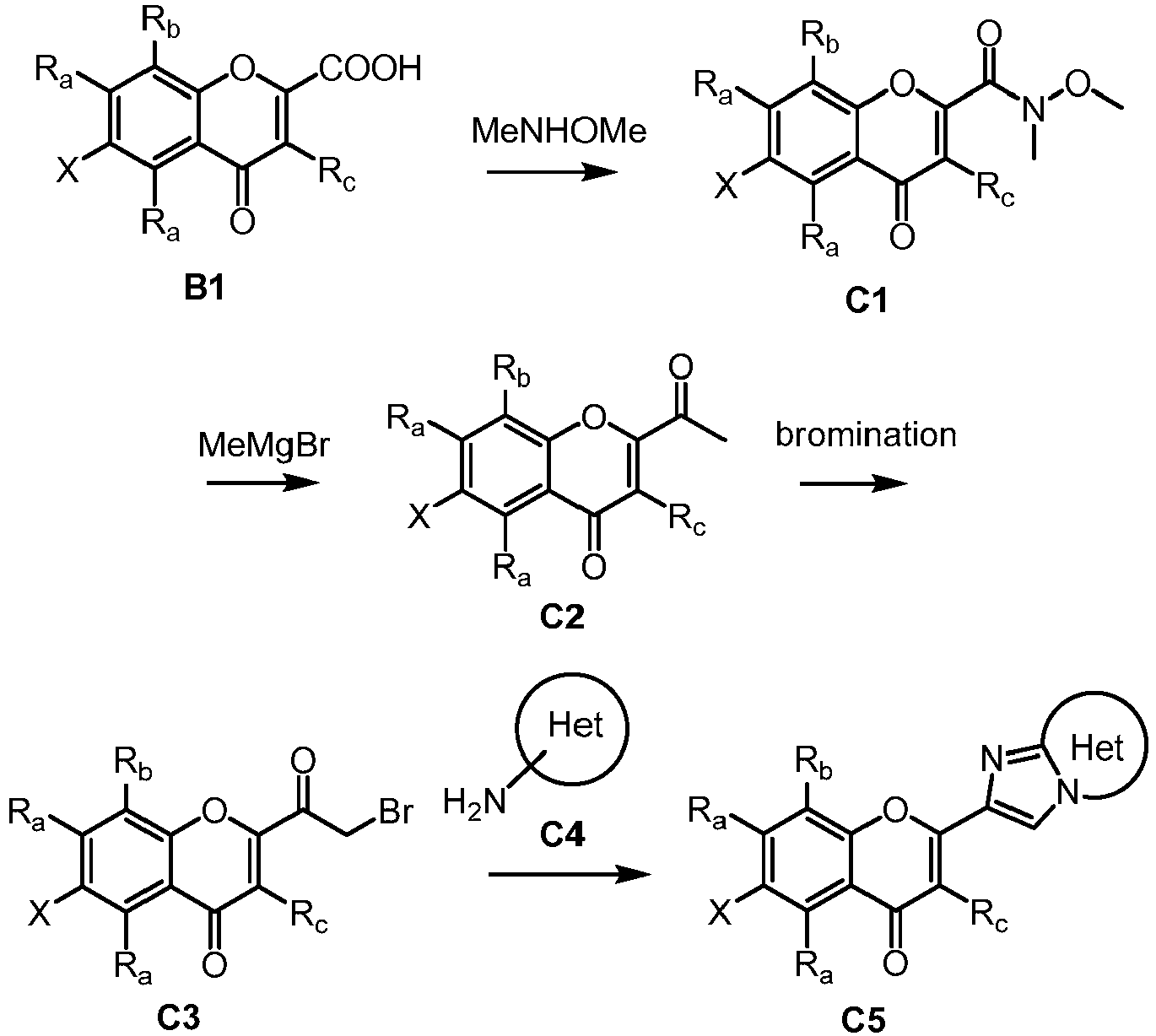
- Carboxylic acid Compound B1, is reacted with a suitable amine (such as N,O-dimethylhydroxylamine and the like) in the presence of a coupling reagent (such as CDI and the like) in a suitable solvent (such as DCM and the like) to provide a Weinreb amide Compound C1. Amide Compound C1 is treated with a suitable Grignard reagent (such as methyl methylmagnesium bromide and the like) in a suitable solvent (such as THF and the like) to provide Compound C2. The α-methyl group of Compound C2 can be selectively brominated with an appropriate brominating reagent (such as Br2 or NBS and the like) to provide Compound C3. Compound C3 is reacted with an optionally substituted monocyclic heterocyclyl or heteroaryl ring system Compound C4 (wherein the term "Het" refers to an amidine-like moiety such as, but not limited to, 2-aminopyridine, 2-aminopyrimidine, 4-aminopyrimidine, 2-aminopyrazine, 3-aminopyridazine, 2-aminothiazole, 4-aminothiazole and the like) to provide Compound C5.
- To describe in more detail and assist in understanding, the following non-limiting examples are offered to more fully illustrate the scope of compounds described herein and are not to be construed as specifically limiting the scope thereof. Such variations of the compounds described herein that may be now known or later developed, which would be within the purview of one skilled in the art to ascertain, are considered to fall within the scope of the compounds as described herein and hereinafter claimed. These examples illustrate the preparation of certain compounds. Those of skill in the art will understand that the techniques described in these examples represent techniques, as described by those of ordinary skill in the art, that function well in synthetic practice, and as such constitute preferred modes for the practice thereof. However, those of skill in the art should, in light of the present disclosure, appreciate that many changes can be made in the specific methods that are disclosed and still obtain a like or similar result without departing from the spirit and scope of the present description.
- Other than in the following examples of the embodied compounds, unless indicated to the contrary, all numbers expressing quantities of ingredients, reaction conditions, experimental data, and so forth used in the specification and claims are to be understood as being modified by the term "about". Accordingly, all such numbers represent approximations that may vary depending upon the desired properties sought to be obtained by a reaction or as a result of variable experimental conditions. Therefore, within an expected range of experimental reproducibility, the term "about" in the context of the resulting data, refers to a range for data provided that may vary according to a standard deviation from the mean. As well, for experimental results provided, the resulting data may be rounded up or down to present data consistently, without loss of significant figures. At the very least, and not as an attempt to limit the application of the doctrine of equivalents to the scope of the claims, each numerical parameter should be construed in light of the number of significant digits and rounding techniques used by those of skill in the art.
- While the numerical ranges and parameters setting forth the broad scope of the present description are approximations, the numerical values set forth in the examples set forth below are reported as precisely as possible. Any numerical value, however, inherently contains certain errors necessarily resulting from the standard deviation found in their respective testing measurements.
- As used above, and throughout the present description, the following abbreviations, unless otherwise indicated, shall be understood to have the following meanings:
Abbreviation Meaning Δ heating (chemistry) or deletion (biology) AcOH or HOAc acetic acid Ac2O acetic anhydride Ar argon ACN acetonitrile BINAP 2,2'-bis(diphenylphosphino)-1,1'-binaphthalene B(OiPr)3 triisopropyl borate Boc tert-butoxy-carbonyl Boc2O di-tert-butyl dicarbonate BuOH n-butanol °C degrees Centigrade CDI 1,1-carbonyldiimidazole or N,N'-carbonyldiimidazole (CHO)n or (HCHO)n paraformaldehyde d/h/hr/hrs/min/s day(d)/hour(h, hr or hrs)/minute(min)/second(s) DavePhos 2-dicyclohexylphosphino-2'-(N,N-dimethylamino)biphenyl DCE 1,2-dichloroethane DCM dichloromethane (CH2Cl2) DIAD diisopropyl azodicarboxylate DIEA or DIPEA N,N-diisopropylethylamine DMA dimethylacetamide DMAP 4-(dimethylamino)pyridine DME 1,2-dimethoxyethane DMF dimethylformamide DMSO dimethylsulfoxide EDC or EDCI N-(3-dimethylaminopropyl)-N'-ethylcarbodiimide hydrochloride EtOAc ethyl acetate EtOH ethanol Et2O diethyl ether HCHO formaldehyde iPrI iodopropane JohnPhos (2-biphenyl)-di-t-butylphosphine KOAc potassium acetate KOH potassium hydroxide LAH lithium aluminum hydride LC/MS, LCMS or LC-MS liquid chromatographic mass spectroscopy LDA lithium diisopropylamide LiHMDS or LHMDS lithium bis(trimethylsilyl)amide MeOH methanol MeI iodomethane Me-THF 2-methyltetrahydrofuran Me2Zn dimethylzinc MnO2 manganese dioxide MS mass spectroscopy NaH sodium hydride NaHS sodium hydrosulfide NaHMDS sodium bis(trimethylsilyl)amide or sodium hexamethyldisilazide NaI sodium iodide NaOAc sodium acetate NaOMe sodium methoxide NBS N-bromosuccinimide NMP N-methylpyrrolidone NMR nuclear magnetic resonance o/n overnight Pd palladium Pd/C palladium on carbon Pd(dba)2 bis(dibenzylideneacetone)palladium Pd2(dba)3 or Pd2dba3 tris(dibenzylideneacetone)dipalladium(0) PdCl2(PhCN)2 trans-bis(benzonitrile)dichloropalladium(II) PdCl2(dppf), PdCl2dppf or Pd(dppf)Cl2 [1,1'-bis(diphenylphosphino)ferrocene]dichloropalladium(II) Pd(OAc)2 palladium(II) acetate Pd(PPh3)4 or Pd(Ph3P)4 tetrakis(triphenylphosphine)palladium(0) Pd(PPh3)2Cl2, PdCl2(PPh3)2 or PdCl2(Ph3P)2 bis(triphenylphosphine)palladium(II) dichloride PHBu3BF4 or tBu3PHBF4 tri-tert-butylphosphonium tetrafluoroborate PhI iodobenzene PhI(OTFA)2 [bis(trifluoroacetoxy)iodo]benzene PhMe toluene POCl3 phosphoryl chloride PPh3 triphenylphosphine PPA polyphosphoric acid PPTs pyridinium p-toluenesulfonate psi pounds per square inch pressure PyBOP (benzotriazol-1-yloxy)tripyrrolidinophosphonium hexafluorophosphate rt/RT room temperature S-Phos, SPhos or Sphos 2-dicyclohexylphosphino-2',6'-dimethoxybiphenyl T3P propylphosphonic anhydride TEA, Et3N or NEt3 triethylamine Tf2O triflic anhydride TFA trifluoroacetic acid THF tetrahydrofuran TLC thin layer chromatography TMS trimethylsilane TMSC1 trimethylchlorosilane or trimethylsilyl chloride TMSOK potassium trimethylsilanolate t-Bu tert-butyl TsOH, p-TsOH or pTSA tosylic acid or p-toluenesulfonic acid Xantphos 4,5-bis(diphenylphosphino)-9,9-dimethylxanthene -

- Step A: To a mixture of 1-(5-bromo-2-hydroxyphenyl)ethanone (2.15 g, 10 mmol) and 3,4-dimethoxybenzaldehyde (1.83 g, 11 mol) in ethanol (13 mL) was added KOH (2.24 g, 40 mmol). After stirring at room temperature overnight, the reaction mixture was acidified to pH∼5 with IN HCl at 0 °C. The resulting precipitate was filtered and dried to provide (E)-1-(5-bromo-2-hydroxyphenyl)-3-(3,4-dimethoxyphenyl)prop-2-en-1-one. MS m/z 363.1, 365.1 [M+H]+. The crude product was used directly in the next step without further purification.
- Step B: A catalytic amount of iodine (103 mg, 0.41 mmol) was added to a well-stirred solution of (E)-1-(5-bromo-2-hydroxyphenyl)-3-(3,4-dimethoxyphenyl)prop-2-en-1-one (3.74 g, 10.3 mmol) in DMSO (10 mL) at room temperature. The reaction mixture was then heated at 130 °C for 2 hours. During heating, the reaction mixture turned dark. After the mixture was cooled to room temperature, a saturated Na2S2O3 solution was added and the mixture was stirred at room temperature until the dark color disappeared. The yellow precipitate was filtered, washed with water and dried to give 6-bromo-2-(3,4-dimethoxyphenyl)-4H-chromen-4-one (2.8g, 75.3%). MS m/z 361.1, 363.1 [M+H]+.
- Step C: A mixture of 6-bromo-2-(3,4-dimethoxyphenyl)-4H-chromen-4-one (72.2 mg, 0.2 mmol), 1-Boc-piperazine (44.7 mg, 0.24 mmol), Pd(dba)2 (5.75 mg, 0.01 mmol), Sphos (10.3 mg, 0.025 mmol) and Cs2CO3 (91.2 mg, 0.28 mmol) in toluene (1 mL) was heated at 100 °C overnight. After most of the toluene was removed by rotoevaporation, ether was added to the mixture and a precipitate formed. The resulting precipitate was filtered, washed with water and dried. The crude product was then purified by chromatography with 0-25% of MeOH in CH2Cl2 to provide tert-butyl 4-(2-(3,4-dimethoxyphenyl)-4-oxo-4H-chromen-6-yl)piperazine-1-carboxylate. MS m/z 467.3 [M+H]+.
- Step D: A solution of tert-butyl 4-(2-(3,4-dimethoxyphenyl)-4-oxo-4H-chromen-6-yl)piperazine-1-carboxylate in CH2Cl2/TFA (0.5 mL / 0.5 mL) was stirred at 0 °C for 2 hours. After most of the TFA and CH2Cl2 were removed by rotoevaporation, an ice-cold saturated NaHCO3 solution was added to the reaction mixture. The mixture was extracted with CH2Cl2. The organic layer was dried over MgSO4 and concentrated to provide the title compound (48.4 mg, 52% for 2 steps). Melting point: 177-179 °C; MS m/z 367.1 [M+H]+. 1H NMR (500 MHz, DMSO-d6): δ 7.67-7.70 (2H, m), 7.59 (1H, d, J = 2.1 Hz), 7.54 (1H, dd, J = 3.2 Hz, 9.5 Hz), 7.30 (1H, d, J = 3.0 Hz), 7.13 (1H, d, J = 8.8 Hz), 6.99 (1H, s), 3.89 (3H, s), 3.85 (3H, s), 3.11-3.13 (4H, m), 2.85-2.87 (4H, m).
- As shown in Table 1 below, additional compounds disclosed herein may be prepared according to Example 1 by substituting the appropriate starting materials, reagents and reaction conditions.
-

- Step A: As described in Example 1, Step A, reacting 1-(5-bromo-2-hydroxyphenyl)ethanone (1.23 g, 5.7 mmol), imidazo[1,2-a]pyridine-2-carbaldehyde (836.4 mg, 5.7 mol) and KOH (1.28 g, 22.9 mmol) in ethanol (7.4 mL) gave (E)-1-(5-bromo-2-hydroxyphenyl)-3-(imidazo[1,2-a]pyridin-2-yl)prop-2-en-1-one (2.0 g, 100%). MS m/z 343.1, 345.1 [M+H]+.
- Step B: As described in Example 1, Step B, reacting (E)-1-(5-bromo-2-hydroxyphenyl)-3-(imidazo[1,2-a]pyridin-2-yl)prop-2-en-1-one (2.0 g, 5.72 mmol) and iodine (58.1 mg, 0.23 mmol) in DMSO (10 mL), after heating at 100°C overnight, gave 6-bromo-2-(imidazo[1,2-a]pyridin-2-yl)-4H-chromen-4-one (1.7 g, 87%). MS m/z 341.1, 343.1 [M+H]+.
- Step C: As described in Example 1, Step C, 6-bromo-2-(imidazo[1,2-a]pyridin-2-yl)-4H-chromen-4-one (68.2 mg, 0.2 mmol), 1-Boc-piperazine (44.7 mg, 0.24 mmol), Pd(dba)2 (5.75 mg, 0.01 mmol), Sphos (10.3 mg, 0.025 mmol) and Cs2CO3 (91.2 mg, 0.28 mmol) in toluene (1 mL) gave tert-butyl 4-(2-(imidazo[1,2-a]pyridin-2-yl)-4-oxo-4H-chromen-6-yl)piperazine-1-carboxylate. MS m/z 446.4 [M+H]+.
- Step D: As described in Example 1, Step D, tert-butyl 4-(2-(imidazo[1,2-a]pyridin-2-yl)-4-oxo-4H-chromen-6-yl)piperazine-1-carboxylate and CH2Cl2/TFA (0.5 mL / 0.5 mL) gave the title compound (17.2 mg, 25% for 2 steps). Melting point: 207-211 °C; MS m/z 347.2 [M+H]+. 1H NMR (500 MHz, CD3OD): δ 8.56 (1H, S), 8.51 (1H, d, J = 6.9 Hz), 7.61-7.64 (2H, m), 7.57 (1H, dd, J = 3.2 Hz, 9.2 Hz), 7.51 (1H, d, J = 3.2 Hz), 7.41-7.44 (1H, m), 7.05 (1H, s), 7.01 (1H, t, J = 6.9 Hz), 3.26∼3.28 (4H, m), 3.04-3.06 (4H, m).
- As shown in Table 1 below, additional compounds disclosed herein may be prepared according to Example 2 by substituting the appropriate starting materials, reagents and reaction conditions.
-

- Step A: As described in Example 1, Step A, reacting 1-(5-bromo-2-hydroxyphenyl)ethanone (215.1 mg, 1 mmol), 4-methylthiazole-2-carbaldehyde (139.9 mg, 1.1 mmol) and KOH (228 mg, 4 mmol) in ethanol (1.3 mL) gave (E)-1-(5-bromo-2-hydroxyphenyl)-3-(4-methylthiazol-2-yl)prop-2-en-1-one (86.7 mg, 27%). MS m/z 324.0, 326.0 [M+H]+.
- Step B: As described in Example 1, Step B, (E)-1-(5-bromo-2-hydroxyphenyl)-3-(4-methylthiazol-2-yl)prop-2-en-1-one (86.7 mg, 0.27 mmol) and iodine (2.74 mg, 0.011 mmol) was heated in DMSO (1 mL) at 100°C for 3 hours to give 6-bromo-2-(4-methylthiazol-2-yl)-4H-chromen-4-one (30 mg, 34.6%). MS m/z 322.0, 324.0 [M+H]+.
- Step C: As described in Example 1, Step C, 6-bromo-2-(4-methylthiazol-2-yl)-4H-chromen-4-one (24.5 mg, 0.08 mmol), 1-Boc-piperazine (17 mg, 0.09 mmol), Pd(dba)2 (2,2 mg, 0.004 mmol), Sphos (3.9 mg, 0.01 mmol) and Cs2CO3 (34.6 mg, 0.11 mmol) in toluene (1 mL) gave tert-butyl 4-(2-(4-methylthiazol-2-yl)-4-oxo-4H-chromen-6-yl)piperazine-1-carboxylate.
- Step D: As described in Example 1, Step D, tert-butyl 4-(2-(4-methylthiazol-2-yl)-4-oxo-4H-chromen-6-yl)piperazine-1-carboxylate and CH2Cl2/TFA (0.5 mL/0.5 mL) gave the title compound (12 mg, 49.6% for 2 steps). Melting point: 179-182 °C; MS m/z 328.1 [M+H]+. 1H NMR (500 MHz, DMSO-d6 ): δ 7.76 (1H, s), 7.65 (1H, d, J = 9.3 Hz), 7.56 (1H, dd, J = 3.1 Hz, 9.3 Hz), 7.31 (1H, d, J = 3.1 Hz), 6.90 (1H, s), 3.13∼3.15 (4H, m), 2.85-2.87 (4H, m), 2.50 (3H, s).
-

- Step A: PPA (∼1 mL) was added to a mixture of 6-bromochromone-2-carboxylic acid (269 mg, 1 mmol) and 2-aminothiophenol (150.2 mg, 1.2 mmol). The mixture was heated at 77 °C overnight. Water was added to the reaction mixture, and the resulting precipitate was filtered and dried. The crude product was then purified by chromatography with 0-6% EtOAc in CH2Cl2 to provide 2-(benzo[d]thiazol-2-yl)-6-bromo-4H-chromen-4-one (79 mg, 22 %). MS m/z 358.0, 360.0 [M+H]+.
- Step B: As described in Example 1, Step C, 2-(benzo[d]thiazol-2-yl)-6-bromo-4H-chromen-4-one (71.6 mg, 0.2 mmol), 1-Boc-piperazine (44.7 mg, 0.24 mmol), Pd(dba)2 (5.75 mg, 0.01 mmol), Sphos (10.3 mg, 0.025 mmol) and Cs2CO3 (91.2 mg, 0.28 mmol) in toluene (1 mL) gave tert-butyl 4-(2-(benzo[d]thiazol-2-yl)-4-oxo-4H-chromen-6-yl)piperazine-1-carboxylate. MS m/z 464.3 [M+H]+.
- Step C: As described in Example 1, Step D, tert-butyl 4-(2-(benzo[d]thiazol-2-yl)-4-oxo-4H-chromen-6-yl)piperazine-1-carboxylate and CH2Cl2/TFA (0.5 mL/0.5 mL) gave the title compound (59.1 mg, 81% for 2 steps). Melting point: 250-254 °C; MS m/z 364.2 [M+H]+. 1H NMR (500 MHz, DMSO-d6 ): δ 8.31 (1H, d, J = 7.9 Hz), 8.22 (1H, d, J = 8.3 Hz), 7.72 (1H, d, J = 9.2 Hz), 7.67 (1H, t, J = 7.7 Hz), 7.60-7.63 (2H, m), 7.33 (1H, d, J = 2.9 Hz), 7.14 (1H, s), 3.15-3.17 (4H, m), 2.85-2.87 (4H, m).
- As shown in Table 1 below, additional compounds disclosed herein may be prepared according to Example 4 by substituting the appropriate starting materials, reagents and reaction conditions.
-
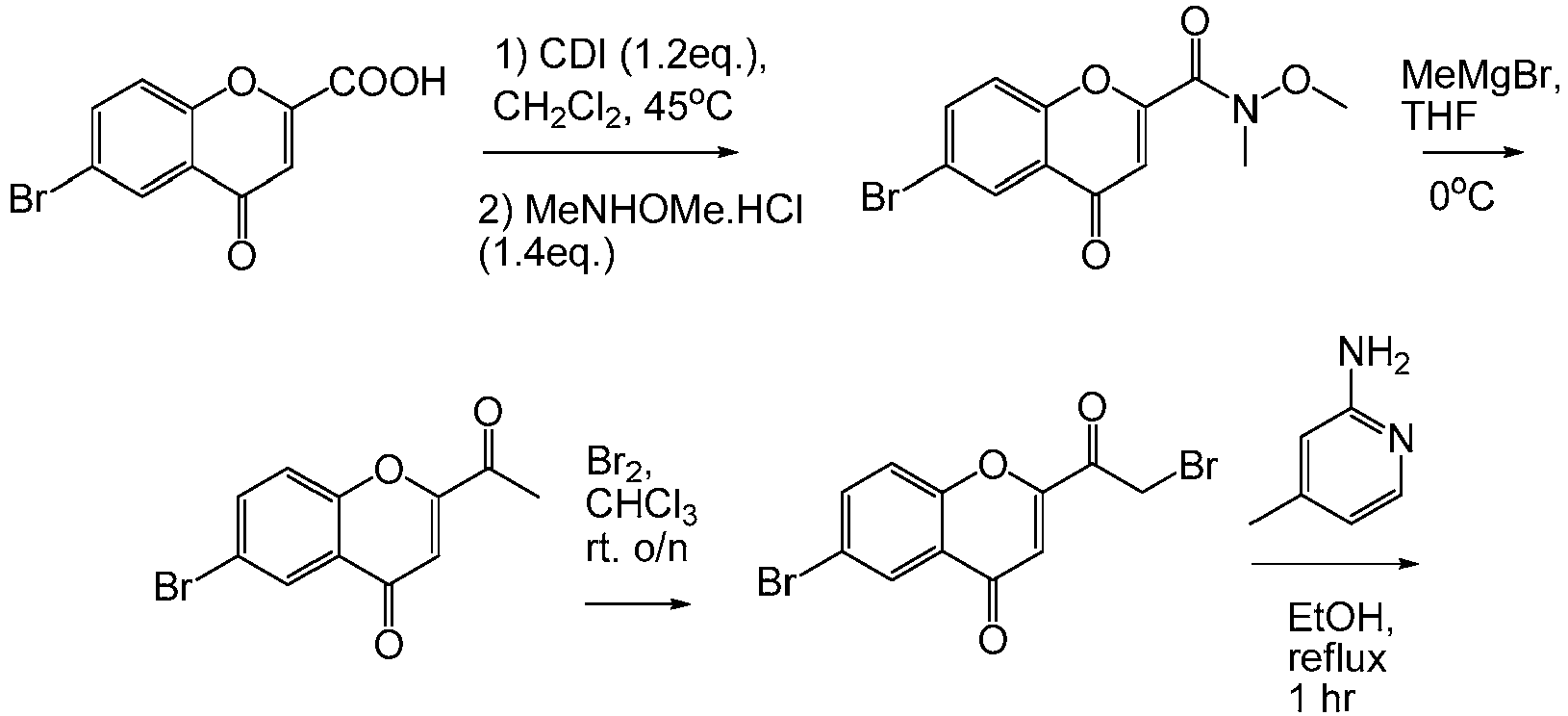

- Step A: To a solution of 6-bromochromone-2-carboxylic acid (2.69 g, 10 mmol) in CH2Cl2 (10 mL) was added 1,1-carbonyldiimidazole (1.95 g, 12 mmol). The reaction mixture was stirred at 45 °C for 5 hours. After cooling to room temperature, N,O-dimethylhydroxylamine HCl salt (1.46 g, 15 mmol) was added and the reaction mixture was stirred at room temperature overnight. After the CH2Cl2 was removed, ether was added to the mixture. The resulting precipitate was filtered and washed with water thoroughly to provide 6-bromo-N-methoxy-N-methyl-4-oxo-4H-chromene-2-carboxamide (2.3 g, 73.7 %). MS m/z 312.1, 314.1 [M+H]+.
- Step B: To a solution of 6-bromo-N-methoxy-N-methyl-4-oxo-4H-chromene-2-carboxamide (3.58 g, 11.5 mmol) in THF (10 mL) at 0°C was added dropwise methylmagnesium bromide (3 M in diethyl ether, 4.6 mL, 13.8 mmol). After stirring at 0 °C for 1.5h, saturated NH4Cl was added, and the mixture was extracted with CH2Cl2. The organic layer was concentrated under reduced pressure. The residue was purified by chromatography with 14-63% CH2Cl2 in hexanes to yield 2-acetyl-6-bromo-4H-chromen-4-one (1.1 g, 36%). MS m/z 267.1, 269.1 [M+H]+.
- Step C: To a solution of 2-acetyl-6-bromo-4H-chromen-4-one (542 mg, 2.03 mmol) in CHCl3 (2 mL) was added Br2 (324.4 mg, 2.03 mmol). The reaction mixture was stirred for 5 hours at room temperature. After the CH2Cl2 and excess Br2 were removed, ether was added to the mixture. The resulting precipitate was filtered, washed with a saturated NaHCO3 solution and dried to provide 6-bromo-2-(2-bromoacetyl)-4H-chromen-4-one, which was used directly for the next step.
- Step D: To a solution of 6-bromo-2-(2-bromoacetyl)-4H-chromen-4-one (crude product from step C, 415.2 mg, 1.2 mmol) in EtOH (2 mL) was added 2-amino-4-methylpyridine (259 mg, 2.4 mmol), and the reaction mixture was refluxed for 1 hour. After the EtOH was removed under reduced pressure, ether was added to the mixture. The resulting precipitate was filtered, washed with a saturated NaHCO3 solution and water, and dried. The residue was purified by chromatography with 0-33% EtOAc in CH2Cl2 to yield 6-bromo-2-(7-methylimidazo[1,2-a]pyridin-2-yl)-4H-chromen-4-one (216.6 mg, 50.8%). MS m/z 355.0, 357.0 [M+H]+.
- Step E: As described in Example 1, Step C, 6-bromo-2-(7-methylimidazo[1,2-a]pyridin-2-yl)-4H-chromen-4-one (56.6 mg, 0.16 mmol), 1-Boc-piperazine (44.7 mg, 0.24 mmol), Pd(dba)2 (5.75 mg, 0.01 mmol), Sphos (10.3 mg, 0.025 mmol) and Cs2CO3 (91.2 mg, 0.28 mmol) in toluene (1 mL) gave tert-butyl 4-(2-(7-methylimidazo[1,2-a]pyridin-2-yl)-4-oxo-4H-chromen-6-yl)piperazine-1-carboxylate (56.4 mg, 77%). MS m/z 461.3 [M+H]+.
- Step F: As described in Example 1, Step D, tert-butyl 4-(2-(7-methylimidazo[1,2-a]pyridin-2-yl)-4-oxo-4H-chromen-6-yl)piperazine-1-carboxylate (56.4 mg, 0.12 mmol) and CH2Cl2/TFA (0.5 mL/0.5 mL) gave the title compound (43 mg, 97%). Melting point: 228-232 °C; MS m/z 361.2 [M+H]+. 1H NMR (500 MHz, DMSO-d6 ): δ 8.59 (1H, s), 8.51 (1H, d, J = 7.1 Hz), 7.59 (1H, d, J = 9.2 Hz), 7.54 (1H, dd, J = 3.0 Hz, 9.2 Hz), 7.44 (1H, s), 7.32 (1H, d, J = 2.9 Hz), 6.87 (1H, d, J = 1.5 Hz, 7.0 Hz), 6.85 (1H, s), 3.12-3.14 (4H, m), 2.86-2.88 (4H, m), 2.38 (3H, s).
- As shown in Table 1 below, additional compounds disclosed herein may be prepared according to Example 5 by substituting the appropriate starting materials, reagents and reaction conditions.
-


- Step A: As described in Example 5, Step A, 6-Bromochromone-2-carboxylic acid (2.69 g, 10 mmol), 1,1-carbonyldiimidazole (1.95 g, 12 mmol) and N, O-dimethylhydroxylamine hydrochloride (1.46 g, 15 mmol) in CH2Cl2 (10 mL) gave 6-bromo-N-methoxy-N-methyl-4-oxo-4H-chromene-2-carboxamide (2.3 g, 73.7%). MS m/z 312.1, 314.1 [M+H]+.
- Step B: As described in Example 5, Step B, 6-bromo-N-methoxy-N-methyl-4-oxo-4H-chromene-2-carboxamide (3.58 g, 11.5 mmol) and methylmagnesium bromide (3 M in diethyl ether, 4.6 mL, 13.8 mmol) in THF (10 mL) gave 2-acetyl-6-bromo-4H-chromen-4-one (1.1g, 36%). MS m/z 267.1, 269.1 [M+H]+.
- Step C: As described in Example 5, Step C, 2-acetyl-6-bromo-4H-chromen-4-one (542 mg, 2.03 mmol) and Br2 (324.4 mg, 2.03 mmol) in CHCl3 (2 mL) gave 6-bromo-2-(2-bromoacetyl)-4H-chromen-4-one, which was used directly for the next step.
- Step D: As described in Example 5, Step D, 6-bromo-2-(2-bromoacetyl)-4H-chromen-4-one (crude product, 468.2 mg, 1.35 mmol) and 2-amino-5-methylpyrazine (147.6 mg, 1.35 mmol) in EtOH (2 mL) gave 6-bromo-2-(6-methylimidazo[1,2-a]pyrazin-2-yl)-4H-chromen-4-one (76 mg, 16%). MS m/z 356.0, 358.0 [M+H]+.
- Step E: As described in Example 1, Step C, 6-bromo-2-(6-methylimidazo[1,2-a]pyrazin-2-yl)-4H-chromen-4-one (35.6 mg, 0.1 mmol), 1-Boc-piperazine (22.3 mg, 0.12 mmol), Pd(dba)2 (3 mg, 0.005 mmol), Sphos (5.2 mg, 0.013 mmol) and Cs2CO3 (45.6 mg, 0.14 mmol) in toluene (1 mL) gave tert-butyl 4-(2-(6-methylimidazo[1,2-a]pyrazin-2-yl)-4-oxo-4H-chromen-6-yl)piperazine-1-carboxylate.
- Step F: As described in Example 1, Step D, tert-butyl 4-(2-(6-methylimidazo[1,2-a]pyrazin-2-yl)-4-oxo-4H-chromen-6-yl)piperazine-1-carboxylate and CH2Cl2/TFA (0.5 mL/0.5 mL) gave the title compound (6.5 mg, 18% for 2 steps). MS m/z 362.2 [M+H]+. 1H NMR (500 MHz, DMSO-d6 ): δ 9.12 (1H, s), 8.73 (1H, s), 8.49 (1H, s), 7.64 (1H, d, J = 9.1 Hz), 7.57 (1H, dd, J = 3.1 Hz, 9.3 Hz), 7.34 (1H, d, J = 3.2 Hz), 6.95 (1H, s), 3.17-3.19 (4H, m), 2.91-2.93 (4H, m), 2.46 (3H, s).
- As shown in Table 1 below, additional compounds disclosed herein may be prepared according to Example 6 by substituting the appropriate starting materials, reagents and reaction conditions.
- Table 1 provides compounds provided herein, having a free base form, that may be prepared and isolated according to the procedures of the indicated Example by substituting the appropriate starting materials, reagents and reaction conditions. The preparation of any salt, isotopologue, stereoisomer, racemate, enantiomer, diastereomer or tautomer from a free base form of a compound provided herein is also contemplated and further included within the scope of the description herein. Where a free base form of the compound was not isolated from the salt form, a person of ordinary skill in the art could be expected to perform the required reactions to prepare and isolate the free base form of the compound.
- The term "Cpd" represents Compound number, the term "Ex" represents "Example Number" (wherein * indicates that the corresponding Example for the Compound is provided above), the term "M.P." represents "Melting Point (°C)," the term "MS" represents "Mass Spectroscopy Peak(s) m/z [M+H]+, [M+2+H]+, [M-H]- or [M+2-H]-," the term "D" represents "Decomposition/Decomposed," the term "DR" represents "Decomposition Range," the term "S" represents "Softens," the term "ND" indicates that the value was "Not Determined" and the term "NI" indicates that the compound was "Not Isolated."
Table 1 Ex Cpd Name M.P. MS 1 1 6-(piperazin-1-yl)-2-(pyridin-3-yl)-4H-chromen-4-one 177-180 308.2 1 2 6-(4-methylpiperazin-1-yl)-2-(pyridin-3-yl)-4H-chromen-4-one ND 322.3 1 3 6-(4-ethylpiperazin-1-yl)-2-(pyridin-3-yl)-4H-chromen-4-one 140-142 336.3 1 4 6-[4-(propan-2-yl)piperazin-1-yl]-2-(pyridin-3-yl)-4H-chromen-4-one 148-150 350.3 1 5 6-(4-methyl-1,4-diazepan-1-yl)-2-(pyridin-3-yl)-4H-chromen-4-one 136-138 336.3 1 6 6-(1,4-diazepan-1-yl)-2-(pyridin-3-yl)-4H-chromen-4-one 162-164 322.3 1 7 6-(piperazin-1-yl)-2-(pyridin-2-yl)-4H-chromen-4-one 170-172 308.1 2* 8 2-(imidazo[1,2-a]pyridin-2-yl)-6-(piperazin-1-yl)-4H-chromen-4-one 207-211 347.2 1 9 6-[(3R,5S)-3,5-dimethylpiperazin-1-yl]-2-(pyridin-3-yl)-4H-chromen-4-one 148-150 336.3 1 10 6-(3,3-dimethylpiperazin-1-yl)-2-(pyridin-3-yl)-4H-chromen-4-one 140-142 336.3 1 11 6-[(3R)-3-methylpiperazin-1-yl]-2-(pyridin-3-yl)-4H-chromen-4-one 148-150 322.1 1 12 6-(4-methylpiperazin-1-yl)-2-(pyridin-2-yl)-4H-chromen-4-one 150-152 322.3 1 13 6-[(3R,5S)-3,5-dimethylpiperazin-1-yl]-2-(pyridin-2-yl)-4H-chromen-4-one 166-168 336.3 1 14 6-(1,4-diazepan-1-yl)-2-(pyridin-2-yl)-4H-chromen-4-one 170-172 322.3 1 15 6-[(3R)-3-methylpiperazin-1-yl]-2-(pyridin-2-yl)-4H-chromen-4-one 140-142 322.3 2 16 2-(imidazo[1,2-a]pyridin-2-yl)-6-[(3R)-3-methylpiperazin-1-yl]-4H-chromen-4-one 210-215 361.3 2 17 6-[(3R,5S)-3,5-dimethylpiperazin-1-yl]-2-(imidazo[1,2-a]pyridin-2-yl)-4H-chromen-4-one 208-210 375.3 2 18 6-(1,4-diazepan-1-yl)-2-(imidazo[1,2-a]pyridin-2-yl)-4H-chromen-4-one 198-200 361.3 2 19 2-(imidazo[1,2-a]pyridin-2-yl)-6-(4-methyl-1,4-diazepan-1-yl)-4H-chromen-4-one 188-190 375.3 1* 20 2-(3,4-dimethoxyphenyl)-6-(piperazin-1-yl)-4H-chromen-4-one 177-179 367.1 1 21 2-(3,4-dimethoxyphenyl)-6-(4-methylpiperazin-1-yl)-4H-chromen-4-one 184-186 381.3 1 22 2-(3,4-dimethoxyphenyl)-6-(4-ethylpiperazin-1-yl)-4H-chromen-4-one 188-190 395.3 1 23 2-(3,4-dimethoxyphenyl)-6-[(3R)-3-methylpiperazin-1-yl]-4H-chromen-4-one 181-183 381.2 1 24 2-(3,4-dimethoxyphenyl)-6-[(3R,5S)-3,5-dimethylpiperazin-1-yl]-4H-chromen-4-one 206-208 395.3 1 25 6-(1,4-diazepan-1-yl)-2-(3,4-dimethoxyphenyl)-4H-chromen-4-one 152-154 381.3 1 26 2-(3,4-dimethoxyphenyl)-6-(4-methyl-1,4-diazepan-1-yl)-4H-chromen-4-one 106-108 395.3 1 27 2-(3,4-dimethoxyphenyl)-6-(3,3-dimethylpiperazin-1-yl)-4H-chromen-4-one 108-110 395.3 5* 28 2-(7-methylimidazo[1,2-a]pyridin-2-yl)-6-(piperazin-1-yl)-4H-chromen-4-one 228-232 361.2 5 29 2-(7-methylimidazo[1,2-a]pyridin-2-yl)-6-[(3R)-3-methylpiperazin-1-yl]-4H-chromen-4-one 150-155 375.3 5 30 6-[(3R,5S)-3,5-dimethylpiperazin-1-yl]-2-(7-methylimidazo[1,2-a]pyridin-2-yl)-4H-chromen-4-one 102-104 389.4 1 31 2-(3,4-dimethoxyphenyl)-6-[(3S)-3-methylpiperazin-1-yl]-4H-chromen-4-one 172-174 381.3 4* 32 2-(1,3-benzothiazol-2-yl)-6-(piperazin-1-yl)-4H-chromen-4-one 250-254 364.2 4 33 2-(1,3-benzothiazol-2-yl)-6-[(3R)-3-methylpiperazin-1-yl]-4H-chromen-4-one 142-144 378.3 4 34 2-(1,3-benzothiazol-2-yl)-6-[(3R,5S)-3,5-dimethylpiperazin-1-yl]-4H-chromen-4-one 200-202 392.2 4 35 2-(1,3-benzothiazol-2-yl)-6-(4-methylpiperazin-1-yl)-4H-chromen-4-one 215-220 378.3 4 36 2-(1,3-benzothiazol-2-yl)-6-[(3S)-3-methylpiperazin-1-yl]-4H-chromen-4-one 140-142 378.3 1 37 2-(3-fluoro-4-methoxyphenyl)-6-(piperazin-1-yl)-4H-chromen-4-one 178-180 355.2 1 38 2-(3-fluoro-4-methoxyphenyl)-6-[(3S)-3-methylpiperazin-1-yl]-4H-chromen-4-one 100-102 369.2 1 39 6-[(3R,5S)-3,5-dimethylpiperazin-1-yl]-2-(3-fluoro-4-methoxyphenyl)-4H-chromen-4-one 180-182 383.3 1 40 2-(3-fluoro-4-methoxyphenyl)-6-[(3R)-3-methylpiperazin-1-yl]-4H-chromen-4-one 110-112 369.2 1 41 2-(4-ethoxyphenyl)-6-(piperazin-1-yl)-4H-chromen-4-one 180-182 351.2 1 42 2-(4-ethoxyphenyl)-6-[(3S)-3-methylpiperazin-1-yl]-4H-chromen-4-one 93-94 365.3 1 43 6-[(3R,5S)-3,5-dimethylpiperazin-1-yl]-2-(4-ethoxyphenyl)-4H-chromen-4-one 138-140 379.2 1 44 2-(4-ethoxyphenyl)-6-[(3R)-3-methylpiperazin-1-yl]-4H-chromen-4-one 92-94 365.3 1 45 2-(2-fluoro-4,5-dimethoxyphenyl)-6-(piperazin-1-yl)-4H-chromen-4-one 130-132 385.2 1 46 2-(2-fluoro-4,5-dimethoxyphenyl)-6-[(3S)-3-methylpiperazin-1-yl]-4H-chromen-4-one 179-181 399.2 1 47 6-[(3R,5S)-3,5-dimethylpiperazin-1-yl]-2-(2-fluoro-4,5-dimethoxyphenyl)-4H-chromen-4-one 164-166 413.2 1 48 2-(2-fluoro-4,5-dimethoxyphenyl)-6-[(3R)-3-methylpiperazin-1-yl]-4H-chromen-4-one 180-182 399.2 1 49 6-(piperazin-1-yl)-2-[4-(propan-2-yloxy)phenyl]-4H-chromen-4-one 126-128 365.2 1 50 6-[(3S)-3-methylpiperazin-1-yl]-2-[4-(propan-2-yloxy)phenyl]-4H-chromen-4-one 128-130 379.2 1 51 2-(4-methoxy-3-methylphenyl)-6-(piperazin-1-yl)-4H-chromen-4-one 98-100 351.2 1 52 2-(4-methoxy-3-methylphenyl)-6-[(3S)-3-methylpiperazin-1-yl]-4H-chromen-4-one 174-176 365.2 1 53 6-[(3R,5S)-3,5-dimethylpiperazin-1-yl]-2-(4-methoxy-3-methylphenyl)-4H-chromen-4-one 186-188 379.2 1 54 2-(4-methoxy-3-methylphenyl)-6-[(3R)-3-methylpiperazin-1-yl]-4H-chromen-4-one 164-166 365.8 1 55 2-(6-methoxypyridin-3-yl)-6-(piperazin-1-yl)-4H-chromen-4-one 165-170 338.7 1 56 2-(6-methoxypyridin-3-yl)-6-[(3S)-3-methylpiperazin-1-yl]-4H-chromen-4-one 196-200 352.3 1 57 2-(6-methoxypyridin-3-yl)-6-[(3R)-3-methylpiperazin-1-yl]-4H-chromen-4-one 198-200 352.2 1 58 2-(3-chloro-4-methoxyphenyl)-6-(piperazin-1-yl)-4H-chromen-4-one 145-150 371.2 1 59 2-(3-chloro-4-methoxyphenyl)-6-[(3S)-3-methylpiperazin-1-yl]-4H-chromen-4-one 172-174 385.2 1 60 2-(3-chloro-4-methoxyphenyl)-6-[(3R,5S)-3,5-dimethylpiperazin-1-yl]-4H-chromen-4-one 176-178 399.2 1 61 2-(3-chloro-4-methoxyphenyl)-6-[(3R)-3-methylpiperazin-1-yl]-4H-chromen-4-one 170-172 385.2 1 62 2-(4-methoxyphenyl)-6-(piperazin-1-yl)-4H-chromen-4-one 166-170 337.1 1 63 2-(4-methoxyphenyl)-6-[(3S)-3-methylpiperazin-1-yl]-4H-chromen-4-one 155-160 351.2 1 64 6-(piperazin-1-yl)-2-[4-(trifluoromethoxy)phenyl]-4H-chromen-4-one 146-148 391.0 1 65 6-[(3S)-3-methylpiperazin-1-yl]-2-[4-(trifluoromethoxy)phenyl]-4H-chromen-4-one 138-140 405.1 1 66 2-(3-fluorophenyl)-6-(piperazin-1-yl)-4H-chromen-4-one 150-152 325.0 1 67 6-(piperazin-1-yl)-2-[3-(trifluoromethyl)phenyl]-4H-chromen-4-one 174-176 375.0 1 68 2-[4-methoxy-3-(trifluoromethoxy)phenyl]-6-(piperazin-1-yl)-4H-chromen-4-one 104-106 421.0 1 69 2-[4-methoxy-3-(trifluoromethyl)phenyl]-6-(piperazin-1-yl)-4H-chromen-4-one 128-132 405.1 1 70 2-[4-methoxy-3-(trifluoromethoxy)phenyl]-6-[(3S)-3-methylpiperazin-1-yl]-4H-chromen-4-one 142-146 435.1 1 71 2-[4-methoxy-3-(trifluoromethyl)phenyl]-6-[(3S)-3-methylpiperazin-1-yl]-4H-chromen-4-one 182-184 419.1 6* 72 2-(6-methylimidazo[1,2-a]pyrazin-2-yl)-6-(piperazin-1-yl)-4H-chromen-4-one ND 362.2 6 73 2-(6-methylimidazo[1,2-a]pyrazin-2-yl)-6-[(3S)-3-methylpiperazin-1-yl]-4H-chromen-4-one 212-216 376.1 1 74 2-(5-fluoropyridin-3-yl)-6-(piperazin-1-yl)-4H-chromen-4-one 182-184 326.0 1 75 2-(5-fluoropyridin-3-yl)-6-[(3S)-3-methylpiperazin-1-yl]-4H-chromen-4-one 168-172 340.4 3* 76 2-(4-methyl-1,3-thiazol-2-yl)-6-(piperazin-1-yl)-4H-chromen-4-one 179-182 328.1 1 77 2-(3-fluorophenyl)-6-[(3S)-3-methylpiperazin-1-yl]-4H-chromen-4-one 170-172 339.2 1 78 6-[(3S)-3-methylpiperazin-1-yl]-2-[3-(trifluoromethyl)phenyl]-4H-chromen-4-one 150-152 389.2 1 79 2-(3,5-difluorophenyl)-6-(piperazin-1-yl)-4H-chromen-4-one, and 180-190 343.1 1 80 2-(3,5-difluorophenyl)-6-[(3S)-3-methylpiperazin-1-yl]-4H-chromen-4-one 175-178 357.1 - To describe in more detail and assist in understanding the present description, the following non-limiting biological examples are offered to more fully illustrate the scope of the description and are not to be construed as specifically limiting the scope thereof. Such variations of the present description that may be now known or later developed, which would be within the purview of one skilled in the art to ascertain, are considered to fall within the scope of the present description and as hereinafter claimed. These examples illustrate the testing of certain compounds described herein in vitro and/or in vivo and demonstrate the usefulness of the compounds for treating of SMA by enhancing the inclusion of
exon 7 of SMN2 into mRNA transcribed from the SMN2 gene. Compounds of provided herein enhance inclusion ofexon 7 of SMN2 into mRNA transcribed from the SMN2 gene and increase levels of Smn protein produced from the SMN2 gene, and thus can be used to treat SMA in a human subject in need thereof. - DNA corresponding to a region of the SMN2 gene starting from the 5' end of exon 6 (ATAATTCCCCC) (SEQ ID NO.14) and ending at nucleic acid residue 23 of exon 8 (CAGCAC) (SEQ ID NO.15) was amplified by PCR using the following primers:
- Forward primer: 5'-CGCGGATCCATAATTCCCCCACCACCTC-3' (SEQ ID NO. 16), and
- Reverse primer: 5'-CGCGGATCCGTGCTGCTCTATGCCAGCA-3' (SEQ ID NO. 17).
- The 5' end of each primer was designed to add a BamHI restriction endonuclease recognition site at both the 5' end of exon 6 (GGATCC) (SEQ ID NO. 18) and the 3' end after the 23rd nucleotide of
exon 8. Using the BamHI restriction endonuclease recognition sites, the PCR fragment was cloned into a derivative of the original pcDNA 3.1/Hygro vector which was modified as disclosed in United States Patent PublicationUS2005/0048549 . - New UTRs were added to the modified vector using the HindIII site and the BamHI restriction sites comprising a 5'DEG UTR: 5'-TAGCTTCTTACCCGTACTCCACCGTTGGCAGCACGATCGCACGTCCCACGTGAAC CATTGGTAAACCCTG-3' (SEQ ID NO.19) cloned into the modified pcDNA3.1/Hygro vector together with a start codon upstream of the BamHI restriction site, and;
a 3'DEG UTR: 5'-ATCGAAAGTACAGGACTAGCCTTCCTAGCAACCGCGGGCTGGGAGTCTGAGACAT CACTCAAGATATATGCTCGGTAACGTATGCTCTAGCCATCTAACTATTCCCTATGTCT TATAGGG-3' (SEQ ID NO. 20) cloned into the modified pcDNA3.1/Hygro vector using the NotI restriction endonuclease recognition site and the XhoI restriction endonuclease recognition site with a stop codon immediately downstream of the NotI restriction site. In addition, a firefly luciferase gene lacking the start codon was cloned into the vector using the BamHI and NotI restriction sites. - The resulting minigene comprises, in 5' to 3' order: the 5'-DEG UTR, the start codon, six additional nucleotides forming a BamHI restriction site, the nucleic acid residues of
exon 6, the nucleic acid residues ofintron 6 of SMN2, the nucleic acid residues ofexon 7 of SMN2, the nucleic acid residues ofintron 7 of SMN2, and the first 23 nucleic acid residues ofexon 8 of SMN2, an additional six nucleotides forming a BamHI restriction site and the firefly luciferase gene lacking the start codon. - A single adenine residue was inserted after nucleotide 48 of
exon 7 of SMN2 by site-directed mutagenesis. This minigene construct is referred to as SMN2-A. - SMN2 transcripts derived from
minigenes containing exon 6 through 8 and the intervening introns recapitulate the splicing of their endogenous pre-mRNA (Lorson et al, Proc. Natl. Acad. Sci. U.S.A., 1999, 96 (11), 6307). An SMN2-alternative splicing reporter construct which containsexons 6 through 8 and the intervening introns followed by a luciferase reporter gene was generated. Salient features of this construct are the lack of the start codon in the luciferase gene, inactivation of the termination codon (in the open reading frame that encodes the SMN protein) ofexon 7 by insertion of a nucleotide after nucleic acid 48 ofexon 7 and addition of a start codon (ATG) immediately upstream ofexon 6. A single adenine (SMN2-A) was inserted after nucleic residue 48 ofexon 7. - The SMN2 minigene was designed such that the luciferase reporter is in frame with the ATG start codon immediately upstream of
exon 6 whenexon 7 is present in the mRNA and the luciferase reporter is out of frame with the ATG start codon immediately upstream ofexon 6 ifexon 7 of SMN2 is removed during splicing of the pre-mRNA. In addition, in the absence ofexon 7, the open reading frame that starts from the ATG start codon immediately upstream ofexon 6 contains a stop codon in the fragment ofexon 8 of SMN. Thus, in the presence of compounds that increase the inclusion ofexon 7 of SMN2 into mRNA transcribed from the SMN2 gene, moretranscripts containing exon 7 and more functional reporter are produced. A schematic illustration of this description can be found inFigure 1 . - The DNA sequence of the minigene from the SMN2-A construct SEQ ID NO. 21 is provided in
Figure 2a . A picture of the minigene SMN2-A subsequences is shown inFigure 2b . - The reverse transcription-quantitative PCR-based (RT-qPCR) assay is used to quantify the level of the full length SMN2 minigene mRNA containing
SMN2 exon 7 in a HEK293H cell line stably transfected with said minigene and treated with a test compound.Materials Material Source HEK293H cells Life Technologies, Inc. (formerly Invitrogen) Catalog No.: 11631-017 Cells-To-Ct lysis buffer Life Technologies, Inc. (formerly Applied Biosystems) Catalog No.: 4399002 DMEM Life Technologies, Inc. (formerly Invitrogen) Catalog No.: 11960-044 96-well flat-bottom plates Becton Dickinson Catalog No.: 353072 RT-PCR Enzyme Mix Life Technologies, Inc. (formerly Applied Biosystems) Part No.: 4388520 (also included in AgPath-ID Kit Catalog No.: 4387391) RT-PCR buffer Life Technologies, Inc. (formerly Applied Biosystems) Part No.: 4388519 (also included in AgPath-ID Kit Catalog No.: 4387391) AgPath-ID One-Step RT-PCR Kit Life Technologies, Inc. (formerly Applied Biosystems) Catalog No.: 4387391 Thermocycler Life Technologies, Inc. (formerly Applied Biosystems) 7900HT - Protocol. HEK293H cells stably transfected with the SMN2-A minigene construct described above (10,000 cells/well) are seeded in 200 µL of cell culture medium (DMEM plus 10% FBS, with 200 µg/mL hygromycin) in 96-well flat-bottom plates and the plate is immediately swirled to ensure proper dispersal of cells, forming an even monolayer of cells. Cells are allowed to attach for at least 4-6 hours. Test compounds are serially diluted 3.16-fold in 100% DMSO to generate a 7-point concentration curve. A solution of test compound (1 µL, 200x in DMSO) is added to each cell-containing well and the plate is incubated for 24 hours in a cell culture incubator (37°C, 5% CO2, 100% relative humidity). Two replicates are prepared for each test compound concentration. The cells are then lysed in Cells-To-Ct lysis buffer and the lysate is stored at -80°C.
- Full length SMN2-A minigene and GAPDH mRNA are quantified using the following primers and probes provided in Table 3. Primer SMN Forward A (SEQ ID NO. 1) hybridizes to a nucleotide sequence in exon 7 (nucleotide 22 to nucleotide 40), primer SMN Reverse A (SEQ ID NO. 2) hybridizes to a nucleotide sequence in the coding sequence of Firefly luciferase, SMN Probe A (SEQ ID NO. 3) hybridizes to a nucleotide sequence in exon 7 (nucleotide 50 to nucleotide 54) and exon 8 (
nucleotide 1 to nucleotide 21). The combination of these three oligonucleotides detects only SMN1 or SMN2 minigenes (RT-qPCR) and will not detect endogenous SMN1 or SMN2 genes.Table 3 Primers/Probes Sequence Source SMN Forward Primer A SEQ ID NO.1: GAAGGAAGGTGCTCACATT PTC1 SMN Reverse Primer A SEQ ID NO.2: TCTTTATGTTTTTGGCGTCTTC PTC1 SMN Forward Probe A 
PTC1 hGAPDH Forward Probe 
LTI2 hGAPDH Forward Primer SEQ ID NO.5: CAACGGATTTGGTCGTATTGG LTI2 hGAPDH Reverse Primer SEQ ID NO.6: TGATGGCAACAATATCCACTTTACC LTI2 1Primers and probe designed by PTC Therapeutics, Inc.; 2Commercially available from Life Technologies, Inc. (formerly Invitrogen). - The SMN forward and reverse primers are used at final concentrations of 0.4 µM. The SMN probe is used at a final concentration of 0.15 µM. The GAPDH primers are used at final concentrations of 0.2 µM and the probe at 0.15 µM.
- The SMN2-minigene GAPDH mix (15 µL total volume) is prepared by combining 7.5 µL of 2x RT-PCR buffer, 0.4 µL of 25x RT-PCR enzyme mix, 0.75 µL of 20x GAPDH primer-probe mix, 4.0075 µL of water, 2 µL of 10-fold diluted cell lysate, 0.06 µL of 100 µM SMN forward primer, 0.06 µL of 100 µM SMN reverse primer, and 0.225 µL of 100 µM SMN probe.
- PCR is carried out at the following temperatures for the indicated time: Step 1: 48°C (15 min); Step 2: 95°C (10 min); Step 3: 95°C (15 sec); Step 4: 60°C (1 min); then repeat
Steps 3 and 4 for a total of 40 cycles. - Each reaction mixture contains both SMN2-A minigene and GAPDH primers/probe sets (multiplex design), allowing simultaneous measurement of the levels of two transcripts.
- Two SMN spliced products are generated from the SMN2 minigene. The first spliced
product containing exon 7, corresponding to SMN2 full length mRNA, is referred to herein using the term "SMN2 minigene FL." The second splicedproduct lacking exon 7 is referred to herein using the term "SMN2 minigene Δ7." - The increase of SMN2 minigene FL mRNA relative to that in cells treated with vehicle control is determined from real-time PCR data using a modified ΔΔCt method (as described in Livak and Schmittgen, Methods, 2001, 25:402-8). The amplification efficiency (E) is calculated from the slope of the amplification curve for SMN2 minigene FL and GAPDH mRNA individually. The abundance of SMN2 minigene FL and GAPDH mRNA are then calculated as (1 + E)-Ct, where Ct is the threshold value for each amplicon. The abundance of SMN2 minigene FL is normalized to GAPDH abundance. The normalized SMN2 minigene FL abundance from test compound-treated samples is then divided by normalized SMN2 minigene FL abundance from vehicle-treated cells to determine the level of SMN2 FL mRNA relative to vehicle control.
- Results. As seen in
Figure 3 , cells treated with Compound 17 (Figure 3a ) and Compound 38 (Figure 3b ) increased SMN2 minigene FL mRNA at low concentrations. The two test compounds fully restoredexon 7 inclusion relative to untreated cells. - For compounds of Formula (I) or a form thereof disclosed herein, Table 4 provides the EC1.5x for production of SMN2 full length mRNA that was obtained from the 7-point concentration data generated for each test compound according to the procedure of Biological Example 2. The term "EC1.5x for production of full length SMN2 mRNA" is defined as that concentration of test compound that is effective in increasing the amount of SMN2 full length mRNA to a level 1.5-fold greater relative to that in vehicle-treated cells. An EC1.5x for production of full length SMN2 mRNA between > 3 µM and ≤ 30 µM is indicated by one star (*), an EC1.5x between > 1 µM and ≤ 3 µM is indicated by two stars (**), an EC1.5x between > 0.3 µM and ≤ 1 µM is indicated by three stars (***), an EC1.5x between > 0.1 µM and ≤ 0.3 µM is indicated by four stars (****) and an EC1.5x ≤ 0.1 µM is indicated by five stars (*****).


- The reverse transcription-quantitative PCR-based (RT-qPCR) assay is used to quantify the levels of the SMN2 full length and Δ7 mRNA in primary cells and cell lines containing the SMN2 gene treated with a test compound.
Materials Material Source SMA Type 1 human cells GM03813 (Coriell Institute) Cells-To-Ct lysis buffer Life Technologies, Inc. (formerly Applied Biosystems) Catalog No.: 4399002 DMEM Life Technologies, Inc. (formerly Invitrogen) Catalog No.: 11960-044 96-well flat-bottom plates Becton Dickinson Catalog No.: 353072 RT-PCR Enzyme Mix Life Technologies, Inc. (formerly Applied Biosystems) Part No.: 4388520 (also included in AgPath-ID Kit Catalog No.: 4387391) RT-PCR buffer Life Technologies, Inc. (formerly Applied Biosystems) Part No.: 4388519 (also included in AgPath-ID Kit Catalog No.: 4387391) AgPath-ID One-Step RT-PCR Kit Life Technologies, Inc. (formerly Applied Biosystems) Catalog No.: 4387391 Thermocycler Life Technologies, Inc. (formerly Applied Biosystems) 7900HT - Protocol. GM03813 SMA patient cells (5,000 cells/well) are seeded in 200 µL of cell culture medium (DMEM plus 10% FBS) in 96-well flat-bottom plates and the plate is immediately swirled to ensure proper dispersal of cells, forming an even monolayer of cells. Cells are allowed to attach for at least 4-6 hrs. Test compounds are serially diluted 3.16-fold in 100% DMSO to generate a 7-point concentration curve. A solution of test compound (1 µL, 200x in DMSO) is added to each test well and 1 µL DMSO is added to each control well. The plate is incubated for 24 hrs in a cell culture incubator (37°C, 5% CO2, 100% relative humidity). The cells are then lysed in Cells-To-Ct lysis buffer and the lysate is stored at -80°C.
- SMN2-specific spliced products and GAPDH mRNA are identified using the following primers and probes in Table 5. Primer SMN FL Forward B (SEQ ID NO. 7) hybridizes to a nucleotide sequence in exon 7 (nucleotide 32 to nucleotide 54) and exon 8 (
nucleotide 1 to nucleotide 4), primer SMN Δ7 Forward B (SEQ ID NO. 8) hybridizes to a nucleotide sequence in exon 6 (nucleotide 87 to nucleotide 111) and exon 8 (nucleotide 1 to nucleotide 3), primer SMN Reverse B (SEQ ID NO. 9) hybridizes to a nucleotide sequence in exon 8 (nucleotide 39 to nucleotide 62), probe SMN Probe B (SEQ ID NO. 10) hybridizes to a nucleotide sequence in exon 8 (nucleotide 7 to nucleotide 36). These primers and probes hybridize to nucleotide sequences common to human SMN1 and SMN2 mRNA. Since the SMA patient cells used in Example 3 contain only the SMN2 gene, RT-qPCR can quantify only SMN2 full-length and A7 mRNA.Table 5 Primer/Probe Sequence Source SMN FL Forward Primer B SEQ ID NO.7: GCTCACATTCCTTAAATTAAGGAGAAA PTC1 SMN Δ7 Forward Primer B SEQ ID NO.8: TGGCTATCATACTGGCTATTATATGGAA PTC1 SMN Reverse Primer B SEQ ID NO.9: TCCAGATCTGTCTGATCGTTTCTT PTC1 SMN Forward Probe B 
PTC1 hGAPDH Forward Probe 
LTI2 hGAPDH Forward Primer SEQ ID NO.5: CAACGGATTTGGTCGTATTGG LTI2 hGAPDH Reverse Primer SEQ ID NO.6: TGATGGCAACAATATCCACTTTACC LTI2 1Primers and probe designed by PTC Therapeutics, Inc.; 2Commercially available from Life Technologies, Inc. (formerly Invitrogen). - The SMN forward and reverse primers are used at final concentrations of 0.4 µM. The SMN probe is used at a final concentration of 0.15 µM. GAPDH primers are used at final concentrations of 0.1 µM and the probe at 0.075 µM.
- The SMN-GAPDH mix (10 µL total volume) is prepared by combining 5 µL of 2x RT-PCR buffer, 0.4 µL of 25x RT-PCR enzyme mix, 0.25 µL of 20x GAPDH primer-probe mix, 1.755 µL water, 2.5 µL of cell lysate, 0.04 µL of 100 µM SMN FL or SMN Δ7 forward primer, 0.04 µL of 100 µM SMN reverse primer, and 0.015 µL of 100 µM probe.
- PCR is carried out at the following temperatures for the indicated time: Step 1: 48°C (15 min); Step 2: 95°C (10 min); Step 3: 95°C (15 sec); Step 4: 60°C (1 min); then,
repeat Steps 3 and 4 for a total of 40 cycles. - Each reaction mixture contains either SMN2 FL and GAPDH or SMN2 Δ7 and GAPDH primers/probe sets (multiplex design), allowing simultaneous measurement of the levels of two transcripts.
- The endogenous SMN2 gene gives rise to two alternatively spliced mRNA. The full length SMN2 mRNA that contains
exon 7 is referred to herein using the term "SMN2 FL." The truncated mRNA that lacksexon 7 is referred to herein using the term "SMN2 Δ7." - The increase of SMN2 FL and decrease in SMN2 Δ7 mRNA relative to those in cells treated with vehicle control are determined from real-time PCR data using a modified ΔΔCt method (as described in Livak and Schmittgen, Methods, 2001, 25:402-8). The amplification efficiency (E) is calculated from the slope of the amplification curve for SMN2 FL, SMN2 Δ7, and GAPDH individually. The abundance of SMN2 FL, SMN2 Δ7 and GAPDH mRNA are then calculated as (1 + E)-Ct, where Ct is the threshold value for each amplicon. The abundance of SMN2 FL mRNA and SMN2 Δ7 mRNA are normalized to GAPDH mRNA abundance. The normalized SMN2 FL and SMN2 Δ7 mRNA abundance from test compound-treated samples are then divided by normalized SMN2 FL and SMN2 Δ7 mRNA abundance, respectively, from vehicle-treated cells to determine the levels of SMN2 FL and SMN2 Δ7 mRNA relative to vehicle control.
- Results. As seen in
Figure 4 , cells treated with increasing concentrations of Compound 38 contain progressively more SMN2 FL mRNA and less SMN2 Δ7 mRNA than those treated with vehicle, indicating a correction of SMN2 alternative splicing. - The endpoint reverse transcription-PCR splicing assay is used to visualize and quantify the levels of the SMN2 full length and Δ7 mRNA in primary cells and cell lines containing the SMN2 gene treated with a test compound.
Materials Material Source SMA Type 1 human cells GM03813 (Coriell Institute) Cells-To-Ct lysis buffer Life Technologies, Inc. (formerly Applied Biosystems) Catalog No.: 4399002 DMEM Life Technologies, Inc. (formerly Invitrogen) Catalog No.: 11960-044 96-well flat-bottom plates Becton Dickinson Catalog No.: 353072 Platinum Taq HiFi DNA Polymerase Super Mix Life Technologies, Inc. (formerly Invitrogen) Catalog No.: 11304-016 iScript RT enzyme Kit BioRad: Catalog No.: 170-8890 Ethidium bromide 2% agarose E gels 48-Well Double Comb Life Technologies, Inc. (formerly Invitrogen) Catalog No.: G8008-02 Gel Documentation System UVP Gel Doc It 310 Imaging system - Protocol. GM03813 SMA patient cells (5,000 cells/well) are seeded in 200 µL of cell culture medium (DMEM plus 10% FBS) in 96-well flat-bottom plates and the plate is immediately swirled to ensure proper dispersal of cells, forming an even monolayer of cells. Cells are allowed to attach for at least 4-6 hrs. Test compounds are serially diluted 3.16-fold in 100% DMSO to generate a 7-point concentration curve. A solution of test compound (1 µL, 200x in DMSO) is added to each test well and 1 µL DMSO is added to each control well. The plate is incubated for 24 hrs in a cell culture incubator (37°C, 5% CO2, 100% relative humidity). The cells are then lysed in Cells-To-Ct lysis buffer and the lysate is stored at -80°C.
- SMN FL and Δ7 mRNA are identified using the following primers in Table 6. These primers hybridize to a nucleotide sequence in exon 6 (SMN Forward C, SEQ ID NO. 11) (nucleotide 43 to nucleotide 63) and exon 8 (SMN Reverse C, SEQ ID NO. 12) (nucleotide 51 to nucleotide 73) common to human SMN1 and SMN2 mRNA. Since the SMA patient cells used in Example 4 contain only the SMN2 gene, RT-PCR can visualize and quantify only SMN2 full-length and SMN2 Δ7 mRNA.
Table 6 Primer Sequence Source SMN Forward C SEQ ID NO.11: GATGCTGATGCTTTGGGAAGT PTC1 SMN Reverse C SEQ ID NO.12: CGCTTCACATTCCAGATCTGTC PTC1 1Primers designed by PTC Therapeutics, Inc. - To synthesize cDNA, 5 µL of lysate, 4 µL of 5x iScript reaction mix, 1 µL of reverse transcriptase, and 10 µL of water are combined and incubated 5 min at 25°C followed by 30 min at 42°C, followed by 5 min at 85°C. The cDNA solution is stored at -20°C.
- To perform endpoint PCR, 5 µL of cDNA, 0.2 µL of 100 µM forward primer, 0.2 µL of 100 µM reverse primer, and 22.5 µL of polymerase super mix are combined in a 96 well semiskirted PCR plate. PCR is carried out at the following temperatures for the indicated time: Step 1: 94°C (2 min), Step 2: 94°C (30 sec), Step 3: 55°C (30 sec), Step 4: 68°C (1 min), then repeat Steps 2 to 4 for a total of 33 cycles, then hold at 4°C.
- 10 µL of each PCR sample is electrophoretically separated on a 2% agarose E-gel for 14 minutes stained with double-stranded DNA (dsDNA) staining reagents (e.g., ethidium bromide) and visualized using a gel imager.
- Results. As seen in
Figure 5 , cells treated with increasing concentrations of Compound 17 (Figure 5a ) and Compound 38 (Figure 5b ) contain progressively more SMN2 FL mRNA and less SMN2 Δ7 mRNA, indicating a correction of SMN2 alternative splicing. - The reverse transcription-quantitative PCR-based (RT-qPCR) assay is used to quantify the levels of the full length and SMN2 Δ7 mRNA in tissues from mice treated with test compound.
Materials Material Source Tissues from C/C-allele SMA mice The Jackson Laboratory, strain No.: 008714 (B6.129-Smn1 tm5(Smn1/SMN2)Mrph /J) Tissues from Δ7 SMA mice The Jackson Laboratory, strain No.: 005025 (FVB.Cg-Tg(SMN2*delta7)4299Ahmb Tg(SMN2)89Ahmb Smn1tm1Msd /J) RT-PCR Enzyme Mix Life Technologies, Inc. (formerly Applied Biosystems) Part No.: 4388520 (also included in AgPath-ID Kit Catalog No.: 4387391) RT-PCR buffer Life Technologies, Inc. (formerly Applied Biosystems) Part No.: 4388519 (also included in AgPath-ID Kit Catalog No.: 4387391) AgPath-ID One-Step RT-PCR Kit Life Technologies, Inc. (formerly Applied Biosystems) Catalog No.: 4387391 Mouse GAPDH primers and probes Life Technologies, Inc. (formerly Applied Biosystems) Catalog No.: 4352339E QIAzol Lysis Reagent Qiagen Catalog No.: 79306 RNeasy Lipid Tissue Mini Kit Qiagen Catalog No.: 74804 5 mm Stainless Steel Bead Qiagen Catalog No.: 69989 TissueLyzer II Qiagen Catalog No.: 85300 Thermocycler Life Technologies, Inc. (formerly Applied Biosystems) 7900HT - Protocol. C/C-allele SMA mice are treated by oral gavage two times per day (BID) for 10 days with test compounds re-suspended in 0.5% hydroxypropylmethyl cellulose (HPMC) and 0.1% Tween-80. Tissue samples were collected and snap frozen for RNA purification.
- Tissue samples (20-40 mg) are homogenized in QIAzol Lysis Reagent for 2 minutes at 20 Hz in the TissueLyser II using one stainless steel bead. After addition of chloroform, the homogenate is separated into aqueous and organic phases by centrifugation. RNA partitioned to the upper, aqueous phase is extracted and ethanol is added to provide appropriate binding conditions. The sample is then applied to the RNeasy spin column from the RNeasy Mini Kit, where total RNA binds to the membrane. The RNA is eluted in RNase-free water then stored at -20°C and subsequently analyzed using the TaqMan RT-qPCR on the 7900HT Thermocycler. Total RNA is diluted ten fold and 2.5 µL of the diluted sample is added to the TaqMan RT-qPCR mixture.
- SMN2 spliced products are identified using the following primers and probe in Table 7. Primer SMN FL Forward B (SEQ ID NO. 7) hybridizes to a nucleotide sequence in
exons exons exon 8, probe SMN Probe B (SEQ ID NO. 10) hybridizes to a nucleotide sequence inexon 8. These primers and probe hybridize to nucleotide sequences common to human SMN1 and SMN2 mRNA. Since the SMA patient cells used in Example 5 contain only the SMN2 gene, RT-qPCR can quantify only SMN2 full-length and Δ7 mRNA.Table 7 Primer/Probe Sequence Source SMN FL Forward Primer B SEQ ID NO.7: GCTCACATTCCTTAAATTAAGGAGAAA PTC1 SMN Δ7 Forward Primer B SEQ ID NO.8: TGGCTATCATACTGGCTATTATATGGAA PTC1 SMN Reverse Primer B SEQ ID NO.9: TCCAGATCTGTCTGATCGTTTCTT PTC1 SMN Forward Probe B 
PTC1 1Primers and probe designed by PTC Therapeutics, Inc. - The SMN forward and reverse primers are used at final concentrations of 0.4 µM. The SMN probe is used at a final concentration of 0.15 µM. The SMN-GAPDH Mix (10 µL total volume) is prepared by combining 5 µL of 2x RT-PCR buffer, 0.4 µL of 25x RT-PCR enzyme mix, 0.5 µL of 20x GAPDH primer-probe mix, 1.505 µL of water, 2.5 µL of RNA solution, 0.04 µL of 100 µM forward primer, 0.04 µL of 100 µM reverse primer, and 0.015 µL of 100 µM SMN probe.
- Each PCR cycle was carried out at the following temperatures for the indicated time: Step 1: 48°C (15 min); Step 2: 95°C (10 min); Step 3: 95°C (15 sec); Step 4: 60°C (1 min); then,
repeat Steps 3 and 4 for a total of 40 cycles. - Each reaction mixture contains either SMN2 FL and mGAPDH or SMN2 Δ7 and mGAPDH primers/probe sets (multiplex design), allowing simultaneous measurement of the levels of two transcripts.
- The increase of SMN2 FL and decrease in SMN2 Δ7 mRNA relative to those in tissues from animals treated with vehicle control are determined from real-time PCR data using a modified ΔΔCt method (as described in Livak and Schmittgen, Methods, 2001, 25:402-8). The amplification efficiency (E) is calculated from the slope of the amplification curve for SMN2 FL, SMN2 Δ7, and GAPDH individually. The abundance of SMN2 FL, SMN2 Δ7, and GAPDH are then calculated as (1 + E)-Ct, where Ct is the threshold value for each amplicon. The abundance of SMN2 FL and SMN2 Δ7 mRNA are normalized to GAPDH mRNA abundance. The normalized SMN2 FL and SMN2 Δ7 mRNA abundance from test compound-treated samples are then divided by normalized SMN2 FL and SMN2 Δ7 mRNA abundance, respectively, from vehicle-treated cells to determine the levels of SMN2 FL and SMN2 Δ7 mRNA relative to vehicle control.
- The endpoint reverse transcription-PCR (RT-PCR) splicing assay is used to quantify the levels of the full length and Δ7 SMN2 mRNA in tissues from mice treated with test compound.
Materials Material Source Tissues from C/C-allele SMA mice The Jackson Laboratory, strain No.: 008714 (B6.129-Smn1 tm5(Smn1/SMN2)Mrph /J) Tissues from ΔExon7 SMA mice The Jackson Laboratory, strain No.: 005025 (FVB.Cg-Tg(SMN2*delta7)4299Ahmb Tg(SMN2)89Ahmb Smn1tm1Msd /J) Qiagen RNeasy lipid Kit Qiagen Catalog No.: 74804 Platinum Taq HiFi DNA Polymerase Super Mix Life Technologies, Inc. (formerly Invitrogen) Catalog No.: 11304-016 iScript RT enzyme Kit BioRad Catalog No.: 170-8890 Twin.tec 96-Well Semiskirted PCR Plate Eppendorf Catalog No.: 951020389 Ethidium bromide 2% agarose E gels 48-Well Double Comb Life Technologies, Inc. (formerly Invitrogen) Catalog No.: G8008-02 Gel Documentation System UVP Gel Doc It 310 Imaging system - Protocol. C/C-allele SMA mice are treated by oral gavage BID for 10 days with test compounds in 0.5% HPMC and 0.1% Tween-80. Tissue samples are collected and snap frozen for RNA purification.
- Tissue samples (20-40 mg) are homogenized in QIAzol Lysis Reagent for 2 minutes at 20Hz in the TissueLyser II using one stainless steel bead. After addition of chloroform, the homogenate is separated into aqueous and organic phases by centrifugation. RNA partitioned to the upper, aqueous phase is extracted and ethanol is added to provide appropriate binding conditions. The sample is then applied to the RNeasy spin column from the RNeasy Mini Kit, where total RNA binds to the membrane. The RNA is eluted in RNase-free water then stored at -20°C.
- SMN2 spliced products are identified using the following amplification primers in Table 8. These primers hybridize to a nucleotide sequence in exon 6 (SMN Forward D, SEQ ID NO. 13) (nucleotide 22 to nucleotide 46) and exon 8 (SMN Reverse C, SEQ ID NO. 12), common to both human SMN1 and SMN2 mRNA.
Table 8 Primer Sequence Source SMN Forward D SEQ ID NO.13: ATATGTCCAGATTCTCTTGATGATG PTC1 SMN Reverse C SEQ ID NO.12: CGCTTCACATTCCAGATCTGTC PTC1 1Primers designed by PTC Therapeutics, Inc. - To synthesize cDNA, combine 1 µL of RNA solution (25-50 ng), 4 µL of 5x iScript reaction mix, 1 µL of reverse transcriptase and 10 µL of water and incubate the mixture at 25°C for 5 min, followed by 42°C for 30 min, then 85°C for 5 min. The cDNA solution is stored at - 20°C.
- To perform endpoint PCR, combine 5 µL of cDNA, 0.2 µL of 100 µM forward primer, 0.2 µL of 100 µM reverse primer and 22.5 µL of polymerase super mix in a 96 well semiskirted PCR plate. PCR is carried out at the following temperatures for the indicated time: Step 1: 94°C (2 min), Step 2: 94°C (30 sec), Step 3: 55°C (30 sec), Step 4: 68°C (1 min), then repeat Steps 2 to 4 for a total of 33 cycles, then hold at 4°C.
- 10 µL of each PCR sample is electrophoretically separated on a 2% agarose E-gel for 14 minutes stained with dsDNA staining reagents (e.g., ethidium bromide) and visualized using a gel imager.
- The Smn HTRF (homogeneous time resolved fluorescence) assay is used to quantify the level of Smn protein in SMA patient fibroblast cells treated with test compounds. The results of the assay are shown in Table 9.
Materials Material Source SMA Type 1 human cells GM03813 (Coriell Institute) Protease inhibitor cocktail Roche Applied Science Catalog No.: 11836145001 Anti-SMN d2 Blue cap Cisbio Catalog No.: 63IDC002-SMN Anti-SMN kryptate Red cap Cisbio Catalog No.: 63IDC002-SMN SMN reconstitution buffer Cisbio Catalog No.: 63IDC002-SMN-Buffer DMEM Life Technologies, Inc. (formerly Invitrogen) Catalog No.: 11960-044 RIPA Lysis Buffer 20 mM Tris-HCl pH 7.5, 150 mM NaCl, 1 mM EDTA, 1% NP-40, 1% Sodium deoxycholate Diluent Buffer 20 mM Tris-HCl pH 7.5, 150 mM NaCl Envision Plate Reader Perkin Elmer Model No.: 2103 - Protocol. Cells are thawed and cultured in DMEM-10% FBS for 72 hours. Cells are trypsinized, counted and re-suspended to a concentration of 25,000 cells/mL in DMEM-10% FBS. The cell suspension is plated at 5,000 cells per well in a 96 well microtiter plate and incubated for 3 to 5 hours. To provide a control signal, three (3) wells in the 96 well plate do not receive cells and, thus, serve as Blank control wells. Test compounds are serially diluted 3.16-fold in 100% DMSO to generate a 7-point concentration curve. 1 µL of test compound solution is transferred to cell-containing wells and cells are incubated for 48 hours in a cell culture incubator (37°C, 5% CO2, 100% relateive humidity). Triplicate samples are set up for each test compound concentration. After 48 hours, the supernatant is removed from the wells and 25 µL of the RIPA lysis buffer, containing protease inhibitors, is added to the wells and incubated with shaking at room temperature for 1 hour. 25 µL of the diluent is added and then 35 µL of the resulting lysate is transferred to a 384-well plate, where each well contains 5 µL of the antibody solution (1:100 dilution of anti-SMN d2 and anti-SMN kryptate in SMN reconstitution buffer). The plate is centrifuged for 1 minute to bring the solution to the bottom of the wells, then incubated overnight at room temperature. Fluorescence for each well of the plate at 665 nm and 620 nm is measured on an EnVision multilabel plate reader (Perkin-Elmer).
- The normalized fluorescence signal is calculated for each sample, Blank and vehicle control well by dividing the signal at 665 nm by the signal at 620 nm. Normalizing the signal accounts for possible fluorescence quenching due to the matrix effect of the lysate. The ΔF value (a measurement of Smn protein abundance as a percent value) for each sample well is calculated by subtracting the normalized average fluorescence for the Blank control wells from the normalized fluorescence for each sample well, then dividing this difference by the normalized average fluorescence for the Blank control wells and multiplying the resulting value by 100. The ΔF value for each sample well represents the Smn protein abundance from test compound-treated samples. The ΔF value for each sample well is divided by the ΔF value for the vehicle control wells to calculate the fold increase in Smn protein abundance relative to the vehicle control.
- Results. As seen in
Figure 6 ,SMA Type 1 patient fibroblast cells treated with Compound 17 (Figure 6a ) and Compound 38 (Figure 6b ) show a dose dependent increase in Smn protein expression as measured by the SMN HTRF assay. - For compounds of Formula (I) or a form thereof disclosed herein, Table 9 provides the EC1.5x for Smn protein expression that was obtained from the 7-point concentration data generated for each test compound according to the procedure of Biological Example 7. The term "EC1.5x for Smn protein expression" is defined as that concentration of test compound that is effective in producing 1.5 times the amount of Smn protein in an SMA patient fibroblast cell compared to the amount produced from the DMSO vehicle control. An EC1.5x for Smn protein expression between > 3 µM and ≤ 10 µM is indicated by one star (*), an EC1.5x between > 1 µM and ≤ 3 µM is indicated by two stars (**), an EC1.5x between > 0.3 µM and ≤ 1 µM is indicated by three stars (***) and an EC1.5x ≤ 0.3 µM is indicated by four stars (****).
Table 9 Cpd EC 1.5x 7 * 8 * 9 * 11 * 15 * 16 ** 17 ** 18 * 19 ** 20 *** 21 ** 22 ** 23 *** 24 ** 27 ** 28 * 29 * 31 **** 36 ** 37 ** 38 *** 39 * 40 ** 46 ** 47 ** 48 ** 58 ** 59 **** 60 ** 63 *** 67 *** 71 * 72 **** 73 **** 74 ** 75 ** 76 ** 77 *** 78 **** 79 * 80 *** - For compounds of Formula (I) or a form thereof disclosed herein, Table 10 provides the maximum fold (Fold) increase of Smn protein that was obtained from the 7-point concentration data generated for each test compound according to the procedure of Biological Example 7. A maximum fold increase ≤ 1.2 is indicated by one star (*), a fold increase between > 1.2 and ≤ 1.35 is indicated by two stars (**), a fold increase between > 1.35 and ≤ 1.5 is indicated by three stars (***), a fold increase between > 1.5 and ≤ 1.65 is indicated by four stars (****) and a fold increase > 1.65 is indicated by five stars (*****).
Table 10 Cpd Fold 1 *** 2 ** 3 * 4 * 5 ** 6 * 7 **** 8 **** 9 **** 10 *** 11 *** 12 * 13 *** 14 * 15 **** 16 ***** 17 ***** 18 ***** 19 ***** 20 ***** 21 ***** 22 ***** 23 **** 24 ***** 25 *** 26 *** 27 ***** 28 ***** 29 *** 30 ** 31 ***** 32 ** 33 ** 34 *** 35 ** 36 **** 37 *** 38 **** 39 **** 40 *** 41 * 42 ** 43 * 44 * 45 ** 46 **** 47 **** 48 **** 49 * 50 * 51 *** 52 *** 53 ** 54 ** 55 ** 56 *** 57 ** 58 *** 59 **** 60 ***** 61 ** 62 ** 63 **** 64 * 65 * 66 *** 67 **** 68 * 69 *** 70 ** 71 *** 72 ***** 73 ***** 74 **** 75 **** 76 **** 77 **** 78 ***** 79 *** 80 **** - The level of Smn protein directly correlates with the amount of nuclear foci, also known as gems, produced upon staining the cell with a fluorescently labeled anti-Smn antibody (Liu and Dreyfuss, EMBO J., 1996, 15:3555). Gems are multi-protein complexes whose formation is nucleated by the Smn protein and the gems count assay is used to evaluate the level of Smn protein in the cell. As described herein, the gems count assay is used to quantify the level of Smn protein in SMA patient fibroblast cells treated with a test compound.
Materials Material Source SMA Type 1 human cells GM03813 (Coriell Institute) Primary Antibody- mouse anti-SMN clone 2B1 Sigma Catalog No.: S2944 Secondary Antibody-anti-mouse Alexa Fluor 555 Life Technologies, Inc. (formerly Invitrogen) Catalog No.: A21422 Bovine Serum Albumin (BSA) Sigma Catalog No.: A3294 4% Paraformaldehyde Electron Microscopy Sciences Catalog No.: 15710 Bortezomib LC Labs, Catalog No.: B-1408 0.05% Triton X-100 Sigma Catalog No.: 93443 (100mL) Mounting medium- ProLong Gold Antifade Reagent with DAPI Life Technologies, Inc. (formerly Invitrogen) Catalog Nos.: P7481 and P36935 22x22 # 1 sterile Cover slips Fisher Catalog No.: 12-548-B DMEM Life Technologies, Inc. (formerly Invitrogen) Catalog No.: 11960-044 PBS Life Technologies, Inc. (formerly Invitrogen) Catalog No.: 10010-031 Clear-coat nail polish Revlon brand Catalog No.: 1271-76 Zeiss Axovert 135 Fluorescence microscope Zeiss - Protocol: Cells are thawed and incubated in DMEM-10% FBS for 72 hours, then trypsinized, counted and resuspended to 100,000 cells/mL in DMEM-10% FBS. The cell suspension (2 mL) is plated in a 6-well cell culture plate with a sterile cover slip and incubated for 3 to 5 hours. Test compounds are serially diluted 3.16-fold in 100% DMSO to generate a 7-point dilution curve. 10 µL of test compound solution is added to each cell-containing well and incubated for 48 hours in a cell culture incubator (37°C, 5% CO2, 100% relative humidity). Duplicates are set up for each test compound concentration. Cells containing DMSO at a final concentration of 0.5% are used as controls.
- Cell culture medium is aspirated from the wells containing cover slips and gently washed three times with cold PBS. The cells are fixed by incubation for 20 minutes at room temperature while in paraformaldehyde. The cells are then washed two times with cold PBS followed by incubation for 5 minutes at room temperature with 0.05% Triton X-100 in PBS to permeabilize the cells. After the fixed cells are washed three times with cold PBS, they are blocked with 10% FBS for 1 hour. 60 µL of primary antibody diluted 1:1000 in blocking buffer is added and the mixture is incubated for one hour at room temperature. The cells are washed three times with PBS and 60 µL of secondary antibody diluted 1:5000 in blocking buffer is added, then the mixture is incubated for one hour at room temperature. The cover slips are mounted onto the slides with the aid of mounting medium and allowed to dry overnight. Nail polish is applied to the sides of the cover slip and the slides are stored, protected from light. A Zeiss Axovert 135 with a 63x Plan-Apochromat, NA=1.4 objective is used for immunofluorescence detection and counting. The number of gems is counted per ≥150 nuclei and % activation is calculated using DMSO and 10 nM bortezomib as controls. For each test compound, the cells are examined at all wavelengths to identify test compounds with inherent fluorescence.
- Results. As seen in
Figure 7 ,SMA Type 1 patient cells treated with Compound 38 contain progressively more gems relative to cells treated with DMSO. - Smn immunofluorescent confocal microscopy is used to quantify the level of Smn protein in human motor neurons treated with test compounds.
- Protocol. Human motor neurons derived from SMA iPS cells (Ebert et al., Nature, 2009, 457:2770; and, Rubin et al., BMC Biology, 2011, 9:42) are treated with test compound at various concentrations for 72 hours. The level of Smn protein in the cell nucleus is quantified using Smn immunostaining and confocal fluorescence microscopy essentially as described in Makhortova et al., Nature Chemical Biology, 2011, 7:544. The level of Smn protein in compound-treated samples is normalized to that in vehicle-treated samples and plotted as a function of the compound concentration.
- The Smn HTRF protein assay is used to quantify the level of Smn protein in mouse tissues.
Materials Material Source Tissues from C/C-allele SMA mice The Jackson Laboratory, strain No.: 008714 (B6.129-Smn1 tm5(Smn1/SMN2)Mrph /J) Tissues from Δ7 SMA mice The Jackson Laboratory, strain No.: 005025 (FVB.Cg-Tg(SMN2*delta7)4299Ahmb Tg(SMN2)89Ahmb Smn1tm1Msd /J) Protease inhibitor cocktail Roche Applied Science Catalog No.: 11836145001 Anti-SMN d2 Blue cap Cisbio Catalog No.: 63IDC002-SMN Anti-SMN kryptate Red cap Cisbio Catalog No.: 63IDC002-SMN SMN reconstitution buffer Cisbio Catalog No.: 63IDC002-SMN-Buffer RIPA Lysis Buffer 20 mM Tris-HCl pH 7.5, 150 mM NaCl, 1 mM EDTA, 1% NP-40, 1% Sodium deoxycholate Diluent Buffer 20 mM Tris-HCl pH 7.5, 150 mM NaCl BCA protein assay Kit Pierce Catalog No.: 23225 White 384 well plate Nunc Catalog No.: 351190 Polypropylene V-bottom plate Falcon Catalog No.: 165195 Clear 96 well polystyrene plate Nunc Catalog No.: 442404 5 mm Stainless Steel Beads Qiagen Catalog No.: 69989 Safe-Lock Tubes 2.0 mL Eppendorf Catalog No.: 022363352 Twin.tec 96-Well Semiskirted PCR Plate Eppendorf Catalog No.: 951020389 TissueLyzer II Qiagen Catalog No.: 85300 Envision Plate Reader Perkin Elmer Model No.: 2103 - Protocol. The tissue samples in Safe-Lock tubes are weighed and the volume of RIPA buffer containing the protease inhibitor cocktail is added based on the weight to volume ratios for each type of tissue: Brain (50 mg/mL), Muscle (50 mg/mL) and Spinal Cord (25 mg/mL).
- Tissues are homogenized using the TissueLyzer by bead milling. 5 mm stainless steel beads are added to the sample and shaken vigorously for 5 minutes at 30 Hz in the TissueLyzer. The samples are then centrifuged for 20 minutes at 14,000 x g in a microcentrifuge and the homogenates transferred to the PCR plate. The homogenates are diluted in RIPA buffer to approximately 1 mg/mL for HTRF and approximately 0.5 mg/mL for total protein measurement using the BCA protein assay. For the SMN HTRF assay, 35 µL of the tissue homogenate is transferred to a 384-well plate containing 5 µL of the antibody solution (1:100 dilution of each of the anti-SMNd2 and anti-SMN Kryptate in reconstitution buffer). To provide a control signal, three (3) wells in the plate contain only RIPA Lysis Buffer and, thus, serve as Blank control wells. The plate is centrifuged for 1 minute to bring the solution to the bottom of the wells and then incubated overnight at room temperature. Fluorescence for each well of the plate at 665 nm and 620 nm is measured on an EnVision multilabel plate reader (Perkin-Elmer). The total protein in the tissue homogenate is measured using the BCA assay according to the manufacturer's protocol.
- The normalized fluorescence signal is calculated for each sample, Blank and vehicle control well by dividing the signal at 665 nm by the signal at 620 nm. Normalizing the signal accounts for possible fluorescence quenching due to the matrix effect of the tissue homogenate. The ΔF value (a measurement of Smn protein abundance as a percent value) for each tissue sample well is calculated by subtracting the normalized average fluorescence for the Blank control wells from the normalized fluorescence for each tissue sample well, then dividing this difference by the normalized average fluorescence for the Blank control wells and multiplying the resulting value by 100. The ΔF value for each tissue sample well is divided by the total protein quantity (determined using the BCA assay) for that tissue sample. The change in Smn protein abundance for each tissue sample relative to the vehicle control is calculated as the percent difference in the ΔF value of the tissue sample in the presence of the test compound and the averaged ΔF value of the vehicle control signal divided by the averaged ΔF value of the vehicle control signal.
- The tissue samples used to quantify Smn protein in adult C/C-allele SMA mice are prepared as described in Example 10. The assay assesses whether treatment of C/C-allele SMA mice with a test compound for 10 days increases levels of Smn protein produced from the SMN2 gene and the hybrid mouse Smn1-SMN2 gene.
Materials Material Source Tissues from C/C-allele SMA mice The Jackson Laboratory, strain No.: 008714 (B6.129-Smn1 tm5(Smn1/SMN2)Mrph /J) - Protocol. C/C-allele SMA mice are dosed BID orally (in 0.5% HPMC with 0.1% Tween-80) with a test compound or vehicle at 10 mg/kg for 10 days. Age-matched heterozygous mice are dosed with vehicle for use as a control. Tissues are collected for analysis of protein levels according to Example 10.
- The tissue samples used to quantify Smn protein in neonatal Δ7 SMA mice are prepared as described in Example 10. The assay assesses whether treatment of neonatal Δ7 SMA mice with a test compound for 7 days increases Smn protein levels produced from the SMN2 gene.
Materials Material Source Tissues from Δ7 SMA mice The Jackson Laboratory, strain No.: 005025 (FVB.Cg-Tg(SMN2*delta7)4299Ahmb Tg(SMN2)89Ahmb Smn1tm1Msd /J) - Protocol. SMA Δ7 homozygous knockout mice are dosed once a day (QD) intraperitoneally (IP) with a test compound or vehicle (100% DMSO) from postnatal day (PND) 3 to PND 9. Tissues are collected for analysis of protein levels according to Example 10.
- The change in body weight of neonatal Δ7 SMA mice is used to determine whether treatment with a test compound improves body weight.
Materials Material Source Tissues from The Jackson Laboratory, strain No.: 005025 (FVB.Cg- ΔExon7 SMA mice Tg(SMN2*delta7)4299Ahmb Tg(SMN2)89Ahmb Smn1tm1Msd /J) - Protocol. SMA Δ7 homozygous knockout mice are dosed IP with test compound or vehicle (100% DMSO) QD from
PND 3 until the dose regimen is switched to an oral dose BID in 0.5% HPMC with 0.1% Tween-80 at a dose 3.16-fold higher than the dose used for IP. Body weights of SMA Δ7 mice treated with test compound or vehicle and age matched heterozygous mice are recorded every day. - The functional change in righting reflex of neonatal Δ7 SMA mice is used to determine whether treatment with a test compound improves righting reflex.
Materials Material Source Tissues from The Jackson Laboratory, strain No.: 005025 (FVB.Cg- ΔExon7 SMA mice Tg(SMN2*delta7)4299Ahmb Tg(SMN2)89Ahmb Smn1tm1Msd /J) - Protocol. SMA Δ7 homozygous knockout mice are dosed IP with test compound or vehicle (100% DMSO) QD from
PND 3 until the dose regimen is switched to an oral dose BID in 0.5% HPMC with 0.1% Tween-80 at a dose 3.16-fold higher than the dose used for IP. The righting reflex time is measured as the time taken by a mouse to flip over onto its feet after being laid on its back. Righting reflex time is measured five times for each mouse (allowing a maximal time of 30 sec for each try) with 5 minutes between each measurement. The righting reflex time for SMA Δ7 homozygous knockout mice treated with test compound or vehicle and age-matched heterozygous mice is measured onPND 10, 14 and 18 and plotted. - The change in the number of surviving mice over time is used to determine whether treatment with a test compound improves survival.
Materials Material Source Tissues from Δ7 SMA mice The Jackson Laboratory, strain No.: 005025 (FVB.Cg- Tg(SMN2*delta7)4299Ahmb Tg(SMN2)89Ahmb Smn1tm1Msd /J) - Protocol. SMA Δ7 homozygous knockout mice are dosed IP with test compound or vehicle (100% DMSO) QD from
PND 3 until the dose regimen is switched to an oral dose BID in 0.5% HPMC with 0.1% Tween-80 at a dose 3.16-fold higher than the dose used for IP and later switched to an oral dose QD in 0.5% HPMC with 0.1% Tween-80 at a dose 6.32-fold higher than the dose used for IP. The number of surviving mice in each group is recorded every day and plotted as a percent of total number of mice. - The RT-PCR assay is used to visualize and quantify the levels of the human SMN1 minigene full length and Δ7 mRNA in primary cells and cell lines expressing the human SMN1 minigene construct treated with a test compound.
Materials Material Source HEK293H cells Life Technologies, Inc. (formerly Invitrogen) Catalog No.: 11631-017 Cells-To-Ct lysis buffer Life Technologies, Inc. (formerly Applied Biosystems) Catalog No.: 4399002 FuGENE-6 lipid transfection reagent Roche Applied Science, Catalog No.: 11 814 443 001 DMEM Life Technologies, Inc. (formerly Invitrogen) Catalog No.: 11960-044 96-well flat-bottom plates Becton Dickinson Catalog No.: 353072 Platinum Taq HiFi DNA Polymerase Super Mix Life Technologies, Inc. (formerly Invitrogen) Catalog No.: 11304-016 iScript RT enzyme Kit BioRad Catalog No.: 170-8890 Ethidium bromide 2% agarose E gels 48-Well Double Comb Life Technologies, Inc. (formerly Invitrogen) Catalog No.: G8008-02 Gel Documentation System UVP Gel Doc It 310 Imaging system - Using the procedure for the preparation of the SMN2 minigene construct described in Biological Example 1, the SMN1 version of the minigene is generated by replacing the sixth nucleotide of exon 7 (a thymine residue) of the SMN2-A minigene construct to cytosine using site-directed mutagenesis. Thus, similar to the SMN2-A minigene construct, the SMN1 minigene construct has a single adenine residue inserted after nucleic residue 48 of
exon 7. The SMN1 minigene construct is referred to as SMN1-A. - Protocol. HEK293H cells (10,000 cells/well/199 µL) were transfected, using FuGENE-6 reagent, in a 96-well plate with 15 ng of the SMN1-A minigene reporter plasmid per well. Cells were incubated for 24 hours following transfection. Test compounds were serially diluted 3.16-fold in 100% DMSO to generate a 7-point concentration curve. A solution of test compound (1 µL, 200x in DMSO) was added to each test well. 1 µL DMSO was added to each control well. The plate was incubated for 7 hours in a cell culture incubator (37°C, 5% CO2, 100% relative humidity). The cells were then lysed in Cells-To-Ct lysis buffer and the lysates were stored at -80°C.
- Two SMN spliced mRNA are generated from the SMN1 minigene. The term "SMN1 minigene FL" refers to the first spliced
product containing exon 7, corresponding to full length SMN1 mRNA. The term "SMN1 minigene Δ7" refers to the secondproduct lacking exon 7. - SMN1 minigene FL and SMN1 minigene Δ7 mRNA are amplified using the primers in Table 11. Primer SMN Forward C (SEQ ID NO. 11) hybridizes to a nucleotide sequence in exon 6 (nucleotide 43 to nucleotide 63), primer SMN Reverse A (SEQ ID NO. 2) hybridizes to a nucleotide sequence in the coding sequence of Firefly luciferase. The combination of these two oligonucleotides detects only SMN1 or SMN2 minigenes (RT-PCR) and will not detect endogenous SMN1 or SMN2 genes. Since the HEK293H cells used in Example 16 were transfected with only the human SMN1 minigene, RT-PCR can visualize and quantify only SMN1 minigene FL and SMN1 minigene Δ7 mRNA.
Table 11 Primer Sequence Source SMN Forward C SEQ ID NO.11: GATGCTGATGCTTTGGGAAGT PTC1 SMN Reverse A SEQ ID NO.2: CGCTTCACATTCCAGATCTGTC PTC1 1 Primers designed by PTC Therapeutics, Inc. - To synthesize cDNA, 5 µL of lysate, 4 µL of 5x iScript reaction mix, 1 µL of reverse transcriptase, and 10 µL of water are combined and incubated 5 min at 25°C followed by 30 min at 42°C, followed by 5 min at 85°C. The cDNA solution is stored at -20°C.
- To perform endpoint PCR, 5 µL of cDNA, 0.2 µL of 100 µM forward primer, 0.2 µL of 100 µM reverse primer, and 22.5 µL of polymerase super mix are combined in a 96 well semiskirted PCR plate. PCR is carried out at the following temperatures for the indicated time: Step 1: 94°C (2 min), Step 2: 94°C (30 sec), Step 3: 55°C (30 sec), Step 4: 68°C (1 min), then repeat Steps 2 to 4 for a total of 33 cycles, then hold at 4°C.
- 10 µL of each PCR sample is electrophoretically separated on a 2% agarose E-gel for 14 minutes stained with dsDNA staining reagents (e.g., ethidium bromide) and visualized using a gel imager.
- Results. As seen in
Figure 8 , cells treated with increasing concentrations of Compound 17 (Figure 8a ) and Compound 38 (Figure 8b ) contain progressively more SMN1 minigene FL mRNA and less SMN1 minigene Δ7 mRNA, indicating a correction of SMN1 alternative splicing.
Claims (7)
- A compound, wherein the compound is selected from the group consisting of:6-(piperazin-1-yl)-2-(pyridin-3-yl)-4H-chromen-4-one6-(4-methylpiperazin-1-yl)-2-(pyridin-3-yl)-4H-chromen-4-one6-(4-ethylpiperazin-1-yl)-2-(pyridin-3-yl)-4H-chromen-4-one6-[4-(propan-2-yl)piperazin-1-yl]-2-(pyridin-3-yl)-4H-chromen-4-one6-(4-methyl-1,4-diazepan-1-yl)-2-(pyridin-3-yl)-4H-chromen-4-one6-(1,4-diazepan-1-yl)-2-(pyridin-3-yl)-4H-chromen-4-one6-(piperazin-1-yl)-2-(pyridin-2-yl)-4H-chromen-4-one2-(imidazo[1,2-a]pyridin-2-yl)-6-(piperazin-1-yl)-4H-chromen-4-one6-[(3R,5S)-3,5-dimethylpiperazin-1-yl]-2-(pyridin-3-yl)-4H-chromen-4-one6-(3,3-dimethylpiperazin-1-yl)-2-(pyridin-3-yl)-4H-chromen-4-one6-[(3R)-3-methylpiperazin-1-yl]-2-(pyridin-3-yl)-4H-chromen-4-one6-(4-methylpiperazin-1-yl)-2-(pyridin-2-yl)-4H-chromen-4-one6-[(3R,5S)-3,5-dimethylpiperazin-1-yl]-2-(pyridin-2-yl)-4H-chromen-4-one6-(1,4-diazepan-1-yl)-2-(pyridin-2-yl)-4H-chromen-4-one6-[(3R)-3-methylpiperazin-1-yl]-2-(pyridin-2-yl)-4H-chromen-4-one2-(imidazo[1,2-a]pyridin-2-yl)-6-[(3R)-3-methylpiperazin-1-yl]-4H-chromen-4-one6-[(3R,5S)-3,5-dimethylpiperazin-1-yl]-2-(imidazo[1,2-a]pyridin-2-yl)-4H-chromen-4-one6-(1,4-diazepan-1-yl)-2-(imidazo[1,2-a]pyridin-2-yl)-4H-chromen-4-one2-(imidazo[1,2-alpyridin-2-yl)-6-(4-methyl-1,4-diazepan-yl)-4H-chromen-4-one2-(3,4-dimethoxyphenyl)-6-(piperazin-1-yl)-4H-chromen-4-one2-(3,4-dimethoxyphenyl)-6-(4-methylpiperazin-1-yl)-4H-chromen-4-one2-(3,4-dimethoxyphenyl)-6-(4-ethylpiperazin-1-yl)-4H-chromen-4-one2-(3,4-dimethoxyphenyl)-6-[(3R)-3-methylpiperazin-l-yl]-4H-chromen-4-one2-(3,4-dimethoxyphenyl)-6-[(3R,5S)-3,5-dimethylpiperazin-1-yl]-4H-chromen-4-one6-(1,4-diazepan-1-yl)-2-(3,4-dimethoxyphenyl)-4H-chromen-4-one2-(3,4-dimethoxyphenyl)-6-(4-methyl-1,4-diazepan-1-yl)-4H-chromen-4-one2-(3,4-dimethoxyphenyl)-6-(3,3-dimethylpiperazin-1-yl)-4H-chromen-4-one2-(7-methylimidazo[1,2-a]pyridin-2-yl)-6-(piperazin-1-yl)-4H-chromen-4-one2-(7-methylimidazo[1,2-a]pyridin-2-yl)-6-[(3R)-3-methylpiperazin-1-yl]-4H-chromen-4-one6-[(3R,5S)-3,5-dimethylpiperazin-1-yl]-2-(7-methylimidazo[1,2-a]pyridin-2-yl)-4H-chromen-4-one2-(3,4-dimethoxyphenyl)-6-[(3S)-3-methylpiperazin-1-yl]-4H-chromen-4-one2-(1,3-benzothiazol-2-yl)-6-(piperazin-1-yl)-4H-chromen-4-one2-(1,3-benzothiazol-2-yl)-6-[(3R)-3-methylpiperazin-1-yl]-4H-chromen-4-one2-(1,3-benzothiazol-2-yl)-6-[(3R,5S)-3,5-dimethylpiperazin-1-yl]-4H-chromen-4-one2-(1,3-benzothiazol-2-yl)-6-(4-methylpiperazin-1-yl)-4H-chromen-4-one2-(1,3-benzothiazol-2-yl)-6-[(3S)-3-methylpiperazin-1-yl]-4H-chromen-4-one2-(3-fluoro-4-methoxyphenyl)-6-(piperazin-1-yl)-4H-chromen-4-one2-(3-fluoro-4-methoxyphenyl)-6-[(3S)-3-methylpiperazin-1-yl]-4H-chromen-4-one6-[(3R,5S)-3,5-dimethylpiperazin-1-yl]-2-(3-fluoro-4-methoxyphenyl)-4H-chromen-4-one2-(3-fluoro-4-methoxyphenyl)-6-[(3R)-3-methylpiperazin-1-yl]-4H-chromen-4-one2-(4-ethoxyphenyl)-6-(piperazin-1-yl)-4H-chromen-4-one2-(4-ethoxyphenyl)-6-[(3S)-3-methylpiperazin-1-yl]-4H-chromen-4-one6-[(3R,5S)-3,5-dimethylpiperazin-1-yl]-2-(4-ethoxyphenyl)-4H-chromen-4-one2-(4-ethoxyphenyl)-6-[(3R)-3-methylpiperazin-1-yl]-4H-chromen-4-one2-(2-fluoro-4,5-dimethoxyphenyl)-6-(piperazin-1-yl)-4H-chromen-4-one2-(2-fluoro-4,5-dimethoxyphenyl)-6-[(3S)-3-methylpiperazin-1-yl]-4H-chromen-4-one6-[(3R,5S)-3,5-dimethylpiperazin-1-yl]-2-(2-fluoro-4,5-dimethoxyphenyl)-4H-chromen-4-one2-(2-fluoro-4,5-dimethoxyphenyl)-6-[(3R)-3-methylpiperazin-1-yl]-4H-chromen-4-one6-(piperazin-1-yl)-2-[4-(propan-2-yloxy)phenyl]-4H-chromen-4-one6-[(3S)-3-methylpiperazin-1-yl]-2-[4-(propan-2-yloxy)phenyl]-4H-chromen-4-one2-(4-methoxy-3-methylphenyl)-6-(piperazin-1-yl)-4H-chromen-4-one2-(4-methoxy-3-methylphenyl)-6-[(3S)-3-methylpiperazin-1-yl]-4H-chromen-4-one6-[(3R,5S)-3,5-dimethylpiperazin-1-yl]-2-(4-methoxy-3-methylphenyl)-4H-chromen-4-one2-(4-methoxy-3-methylphenyl)-6-[(3R)-3-methylpiperazin-1-yl]-4H-chromen-4-one2-(6-methoxypyridin-3-yl)-6-(piperazin-1-yl)-4H-chromen-4-one2-(6-methoxypyridin-3-yl)-6-[(3S)-3-methylpiperazin-1-yl]-4H-chromen-4-one2-(6-methoxypyridin-3-yl)-6-[(3R)-3-methylpiperazin-1-yl]-4H-chromen-4-one2-(3-chloro-4-methoxyphenyl)-6-(piperazin-1-yl)-4H-chromen-4-one2-(3-chloro-4-methoxyphenyl)-6-[(3S)-3-methylpiperazin-1-yl]-4H-chromen-4-one2-(3-chloro-4-methoxyphenyl)-6-[(3R,5S)-3,5-dimethylpiperazin-1-yl]-4H-chromen-4-one2-(3-chloro-4-methoxyphenyl)-6-[(3R)-3-methylpiperazin-1-yl]-4H-chromen-4-one2-(4-methoxyphenyl)-6-(piperazin-1-yl)-4H-chromen-4-one2-(4-methoxyphenyl)-6-[(3S)-3-methylpiperazin-1-yl]-4H-chromen-4-one6-(piperazin-1-yl)-2-[4-(trifluoromethoxy)phenyl]-4H-chromen-4-one6-[(3S)-3-methylpiperazin-1-yl]-2-[4-(trifluoromethoxy)phenyl]-4H-chromen-4-one2-(3-fluorophenyl)-6-(piperazin-1-yl)-4H-chromen-4-one6-(piperazin-1-yl)-2-[3-(trifluoromethyl)phenyl]-4H-chromen-4-one2-[4-methoxy-3-(trifluoromethoxy)phenyl]-6-(piperazin-1-yl)-4H-chromen-4-one2-[4-methoxy-3-(trifluoromethyl)phenyl]-6-(piperazin-1-yl)-4H-chromen-4-one2-[4-methoxy-3-(trifluoromethoxy)phenyl]-6-[(3S)-3-methylpiperazin-1-yl]-4H-chromen-4-one2-[4-methoxy-3-(trifluoromethyl)phenyl]-6-[(3S)-3-methylpiperazin-1-yl]-4H-chromen-4-one2-(6-methylimidazo[1,2-a]pyrazin-2-yl)-6-(piperazin-1-yl)-4H-chromen-4-one2-(6-methylimidazo[1,2-a]pyrazin-2-yl)-6-[(3S)-3-methylpiperazin-1-yl]-4H-chromen-4-one2-(5-fluoropyridin-3-yl)-6-(piperazin-1-yl)-4H-chromen-4-one2-(5-fluoropyridin-3-yl)-6-[(3S)-3-methylpiperazin-1-yl]-4H-chromen-4-one2-(4-methyl-1,3-thiazol-2-yl)-6-(piperazin-1-yl)-4H-chromen-4-one2-(3-fluorophenyl)-6-[(3S)-3-methylpiperazin-1-yl]-4H-chromen-4-one6-[(3S)-3-methylpiperazin-1-yl]-2-[3-(trifluoromethyl)phenyl]-4H-chromen-4-one2-(3,5-difluorophenyl)-6-(piperazin-1-yl)-4H-chromen-4-one, and2-(3,5-difluorophenyl)-6-[(3S)-3-methylpiperazin-1-yl]-4H-chromen-4-oneor a salt, isotopologue, stereoisomer, racemate, enantiomer, diastereomer or tautomer thereof.
- A pharmaceutical composition comprising an effective amount of the compound of claim 1 and a pharmaceutically acceptable carrier, excipient or diluent.
- The pharmaceutical composition of claim 2 for use in a method for treating spinal muscular atrophy.
- The compound of claim 1 for use in a method for treating spinal muscular atrophy in a human subject in need thereof, wherein the method comprises administering to the subject an effective amount of said compound.
- The compound for use of claim 4, wherein the method enhances the inclusion of exon 7 of SMN2 into mRNA that is transcribed from the SMN2 gene.
- The pharmaceutical composition of claim 2 for use in a method for treating spinal muscular atrophy in a human subject in need thereof, wherein the method comprises administering to the subject an effective amount of said pharmaceutical composition.
- The compound of claim 1, wherein the salt form is a hydrochloride salt.
Applications Claiming Priority (2)
| Application Number | Priority Date | Filing Date | Title |
|---|---|---|---|
| US201261614932P | 2012-03-23 | 2012-03-23 | |
| PCT/US2013/031232 WO2013142236A1 (en) | 2012-03-23 | 2013-03-14 | Compounds for treating spinal muscular atrophy |
Publications (3)
| Publication Number | Publication Date |
|---|---|
| EP2828247A1 EP2828247A1 (en) | 2015-01-28 |
| EP2828247A4 EP2828247A4 (en) | 2015-12-16 |
| EP2828247B1 true EP2828247B1 (en) | 2019-01-16 |
Family
ID=49223223
Family Applications (1)
| Application Number | Title | Priority Date | Filing Date |
|---|---|---|---|
| EP13763520.7A Active EP2828247B1 (en) | 2012-03-23 | 2013-03-14 | 4h-chromen-4-one derivatives for treating spinal muscular atrophy |
Country Status (10)
| Country | Link |
|---|---|
| US (1) | US9914722B2 (en) |
| EP (1) | EP2828247B1 (en) |
| JP (1) | JP6219921B2 (en) |
| KR (1) | KR102109992B1 (en) |
| CN (1) | CN104470909B (en) |
| BR (1) | BR112014023483B1 (en) |
| CA (1) | CA2868026C (en) |
| EA (1) | EA028382B1 (en) |
| MX (1) | MX358514B (en) |
| WO (1) | WO2013142236A1 (en) |
Families Citing this family (33)
| Publication number | Priority date | Publication date | Assignee | Title |
|---|---|---|---|---|
| MX352861B (en) | 2011-12-30 | 2017-12-13 | Ptc Therapeutics Inc | Compounds for treating spinal muscular atrophy. |
| MX357834B (en) | 2012-01-26 | 2018-07-26 | Ptc Therapeutics Inc | Compounds for treating spinal muscular atrophy. |
| EP2812004B1 (en) | 2012-02-10 | 2018-06-27 | PTC Therapeutics, Inc. | Compounds for treating spinal muscular atrophy |
| CA2865957C (en) | 2012-03-01 | 2020-02-11 | F. Hoffmann-La Roche Ag | Compounds for treating spinal muscular atrophy |
| CA2894992A1 (en) * | 2012-12-24 | 2014-07-03 | Ramot At Tel-Aviv University Ltd. | Agents for treating genetic diseases resulting from nonsense mutations, and methods for identifying the same |
| EP3035935B1 (en) | 2013-08-19 | 2020-03-11 | F. Hoffmann-La Roche AG | Compounds for use in the prophylaxis and treatment of cancer |
| US10195202B2 (en) | 2013-12-19 | 2019-02-05 | Ptc Therapeutics, Inc. | Methods for modulating the amount of RNA transcripts |
| US10882868B2 (en) | 2014-05-15 | 2021-01-05 | Hoffmann-La Roche Inc. | Compounds for treating spinal muscular atrophy |
| US10668171B2 (en) | 2015-05-30 | 2020-06-02 | Ptc Therapeutics, Inc. | Methods for modulating RNA splicing |
| TN2017000508A1 (en) | 2015-06-26 | 2019-04-12 | Takeda Pharmaceuticals Co | 2,3-dihydro-4h-1,3-benzoxazin-4-one derivatives as modulators of cholinergic muscarinic m1 receptor |
| EP3366679B1 (en) | 2015-10-20 | 2021-03-24 | Takeda Pharmaceutical Company Limited | Heterocyclic compound |
| EA201800367A1 (en) | 2015-12-10 | 2019-02-28 | ПиТиСи ТЕРАПЬЮТИКС, ИНК. | METHODS OF TREATMENT OF HUNTINGTON'S DISEASE |
| JP2019535789A (en) | 2016-11-28 | 2019-12-12 | ピーティーシー セラピューティクス,インコーポレーテッド | Methods for modulating RNA splicing |
| EP3634953B1 (en) | 2017-06-05 | 2024-01-03 | PTC Therapeutics, Inc. | Compounds for treating huntington's disease |
| JP2020523365A (en) | 2017-06-14 | 2020-08-06 | ピーティーシー セラピューティクス,インコーポレーテッド | Method of modifying RNA splicing |
| CN111182898B (en) | 2017-06-28 | 2024-04-16 | Ptc医疗公司 | Methods for treating Huntington's disease |
| MX2019015580A (en) | 2017-06-28 | 2020-07-28 | Ptc Therapeutics Inc | Methods for treating huntington's disease. |
| JP7312749B2 (en) | 2017-08-04 | 2023-07-21 | スカイホーク・セラピューティクス・インコーポレーテッド | Methods and compositions for modulating splicing |
| JPWO2019168170A1 (en) * | 2018-03-02 | 2021-03-04 | 国立大学法人 長崎大学 | Composition for diagnosing chromone derivatives and amyloid-related diseases |
| EA202092001A1 (en) | 2018-03-27 | 2021-01-29 | ПиТиСи ТЕРАПЬЮТИКС, ИНК. | COMPOUNDS FOR TREATMENT OF GENTINGTON'S DISEASE |
| CN112469707B (en) | 2018-06-27 | 2024-06-21 | 利伯纳生物科学株式会社 | Preventive or therapeutic agent for spinal muscular atrophy |
| WO2020005877A1 (en) | 2018-06-27 | 2020-01-02 | Ptc Therapeutics, Inc. | Heteroaryl compounds for treating huntington's disease |
| EP3814360B8 (en) | 2018-06-27 | 2024-11-06 | PTC Therapeutics, Inc. | Heteroaryl compounds for treating huntington's disease |
| HRP20240935T1 (en) | 2018-06-27 | 2024-11-22 | Ptc Therapeutics, Inc. | HETEROCYCLIC AND HETEROARYL COMPOUNDS FOR THE TREATMENT OF HUNTINGTON'S DISEASE |
| WO2020163405A1 (en) | 2019-02-05 | 2020-08-13 | Skyhawk Therapeutics, Inc. | Methods and compositions for modulating splicing |
| JP7551629B2 (en) | 2019-02-05 | 2024-09-17 | スカイホーク・セラピューティクス・インコーポレーテッド | Methods and compositions for modulating splicing |
| JP7603595B2 (en) | 2019-02-06 | 2024-12-20 | スカイホーク・セラピューティクス・インコーポレーテッド | Methods and compositions for modulating splicing |
| JP7603594B2 (en) | 2019-02-06 | 2024-12-20 | スカイホーク・セラピューティクス・インコーポレーテッド | Methods and compositions for modulating splicing |
| JP7649257B2 (en) | 2019-05-13 | 2025-03-19 | ピーティーシー セラピューティクス, インコーポレイテッド | Compounds for Treating Huntington's Disease |
| US11129829B2 (en) | 2019-06-17 | 2021-09-28 | Skyhawk Therapeutics, Inc. | Methods for modulating splicing |
| KR102823820B1 (en) * | 2022-09-01 | 2025-06-23 | 단국대학교 천안캠퍼스 산학협력단 | Pharmaceutical composition for preventing or treating sarcopenia comprising furochromenone compound as an active ingredient |
| WO2024249554A1 (en) * | 2023-05-30 | 2024-12-05 | The Charlotte Mecklenburg Hospital Authority D/B/A Atrium Health | Multitarget small molecule inhibitors and uses thereof |
| AU2024286618A1 (en) * | 2023-06-09 | 2025-10-30 | F. Hoffmann-La Roche Ag | Inducible gene expression system |
Family Cites Families (45)
| Publication number | Priority date | Publication date | Assignee | Title |
|---|---|---|---|---|
| CH479607A (en) | 1967-02-27 | 1969-10-15 | Geigy Ag J R | Process for the preparation of areno-oxazinone compounds |
| US3558618A (en) | 1968-04-01 | 1971-01-26 | Dow Chemical Co | Novel 4h-pyrazino(1,2-a)pyrimidine-4-ones |
| GB1296469A (en) * | 1970-02-05 | 1972-11-15 | ||
| US4122274A (en) | 1977-05-25 | 1978-10-24 | Bristol-Myers Company | 3-Tetrazolo-5,6,7,8-substituted-pyrido[1,2-a]pyrimidin-4-ones |
| US4342870A (en) | 1980-03-28 | 1982-08-03 | Janssen Pharmaceutica N.V. | Novel 3-(1-piperidinylalkyl)-4H-pyrido[1,2-a]pyrimidin-4-one derivatives |
| US5089633A (en) | 1987-04-28 | 1992-02-18 | Georgia Tech Research Corporation | Substituted isocoumarins |
| US5726182A (en) | 1990-05-02 | 1998-03-10 | Abbott Laboratories | Quinolizinone type compounds |
| US5278174A (en) | 1990-06-04 | 1994-01-11 | Scios Nova, Inc. | Sigma binding site agents |
| AU4231293A (en) | 1992-05-13 | 1993-12-13 | E.I. Du Pont De Nemours And Company | Substituted pyrido(1,2-A)pyrimidinone derivatives as fungicides |
| EP0625522B1 (en) * | 1993-05-18 | 1998-08-19 | Takeda Chemical Industries, Ltd. | Benzopyran derivatives and their use |
| US5597922A (en) | 1994-07-29 | 1997-01-28 | State Of Oregon, Acting By And Through The Oregon State Board Of Higher Education, Acting For And On Behalf Of The Oregon Health Sciences University And The University Of Oregon | Glycine receptor antagonist pharmacophore |
| US6630488B1 (en) | 1998-09-21 | 2003-10-07 | Biochem Pharma, Inc. | Quinolizinones as integrin inhibitors |
| EP1857443B1 (en) | 2000-01-24 | 2012-03-28 | AstraZeneca AB | Therapeutic morpholino-substituted compounds |
| GB0205281D0 (en) | 2002-03-06 | 2002-04-17 | Novartis Ag | Organic compounds |
| WO2003104216A1 (en) | 2002-06-10 | 2003-12-18 | Acadia Pharmaceuticals Inc. | Urotensin ii receptor modulators |
| JP4646626B2 (en) | 2002-08-16 | 2011-03-09 | アストラゼネカ アクチボラグ | Inhibition of phosphoinositide 3-kinase β |
| CN101260104A (en) * | 2002-08-16 | 2008-09-10 | 阿斯利康(瑞典)有限公司 | Inhibits phosphoinositide 3-kinase beta |
| WO2004047766A2 (en) | 2002-11-25 | 2004-06-10 | Kaloidis Antonia C | Treatment for sma disease |
| US9068234B2 (en) | 2003-01-21 | 2015-06-30 | Ptc Therapeutics, Inc. | Methods and agents for screening for compounds capable of modulating gene expression |
| WO2004113335A2 (en) | 2003-06-20 | 2004-12-29 | Chiron Corporation | Pyridino[1,2-a]pyrimidin-4-one compounds as anticancer agents |
| AU2004289303A1 (en) | 2003-11-10 | 2005-05-26 | Synta Pharmaceuticals, Corp. | Fused heterocyclic compounds |
| ATE373659T1 (en) | 2004-05-04 | 2007-10-15 | Warner Lambert Co | PYRROLYL SUBSTITUTED PYRIDO(2,3-D)PYRIMIDINE-7-ONE AND DERIVATIVES THEREOF AS THERAPEUTIC AGENTS |
| WO2006045010A2 (en) * | 2004-10-20 | 2006-04-27 | Resverlogix Corp. | Stilbenes and chalcones for the prevention and treatment of cardiovascular diseases |
| CA2595477A1 (en) | 2005-01-21 | 2006-07-27 | Janssen Pharmaceutica N.V. | Novel heterocyclic benzo[c]chromene derivatives useful as modulators of the estrogen receptors |
| US20090123563A1 (en) | 2005-02-07 | 2009-05-14 | Novo Nordisk A/S | Pharmaceutical Preparations Comprising Insulin, Zinc Ions and Zinc-Binding Ligand |
| CA2617213C (en) * | 2005-07-29 | 2014-01-28 | Resverlogix Corp. | Pharmaceutical compositions for the prevention and treatment of complex diseases and their delivery by insertable medical devices |
| AR059339A1 (en) | 2006-02-09 | 2008-03-26 | Chugai Pharmaceutical Co Ltd | CUMARINE DERIVATIVES FOR PROLIFERATIVE DISORDERS OF CELLS, PHARMACEUTICAL COMPOSITION AND THERAPEUTIC AGENT CONTAINING THEM |
| WO2008013997A2 (en) | 2006-07-27 | 2008-01-31 | The Trustees Of Columbia University In The City Of New York | Fluorescent substrates for monoamine transporters as optical false neurotransmitters |
| ES2539828T3 (en) | 2007-09-14 | 2015-07-06 | Naturewise Biotech & Medicals Corporation | Compounds for histone acetylase inhibition |
| US8008344B2 (en) | 2007-09-14 | 2011-08-30 | NatureWise Biotech and Medicals Corporation | Compounds for the inhibition of histone deacetylase |
| CA2715796C (en) | 2008-03-06 | 2015-04-28 | Rottapharm S.P.A. | 2-aryl and 2 -heteroaryl 4h-1-benzopyran-4-one-6-amidino derivatives for the treatment of arthritis, cancer and related pain |
| WO2009151546A2 (en) | 2008-05-27 | 2009-12-17 | Ptc Therapeutics, Inc. | Methods for treating spinal muscular atrophy |
| US8932818B2 (en) | 2008-08-13 | 2015-01-13 | Ptc Therapeutics, Inc. | Screening assays for compounds that modulate programmed ribosomal frameshifting |
| WO2010048273A2 (en) | 2008-10-21 | 2010-04-29 | President And Fellows Of Harvard College | Methods and compounds for treatment of neurodegenerative disorders |
| CN101851220A (en) * | 2009-04-03 | 2010-10-06 | 彦臣生技药品股份有限公司 | Isoprene flavonoid compound and use thereof |
| CN102812014B (en) * | 2009-10-30 | 2016-01-20 | 多美恩医疗公司 | The purposes of novel 9 oxime derivate and the allosteric modulators as metabotropic glutamate receptor thereof |
| PH12012500901A1 (en) | 2009-11-05 | 2016-08-05 | Rhizen Pharmaceuticals Sa | Novel benzopyran kinase modulators |
| EP2501231B1 (en) | 2009-11-20 | 2016-12-21 | Merck Sharp & Dohme Corp. | Quinolizidinone carboxamide m1 receptor positive allosteric modulators |
| CN102812023A (en) | 2010-01-13 | 2012-12-05 | 韩国巴斯德研究所 | Anti-infective pyrido(1,2-A)pyrimidines |
| WO2011130515A1 (en) | 2010-04-14 | 2011-10-20 | The United States Of America, As Represented By The Secretary, Department Of Health And Human Services | Arylthiazolyl piperidines and related compounds as modulators of survival motor neuron (smn) protein production |
| HRP20190128T1 (en) | 2011-05-04 | 2019-03-08 | Rhizen Pharmaceuticals S.A. | NEW COMPOUNDS AS PROTEIN KINase MODULATORS |
| MX352861B (en) | 2011-12-30 | 2017-12-13 | Ptc Therapeutics Inc | Compounds for treating spinal muscular atrophy. |
| MX357834B (en) | 2012-01-26 | 2018-07-26 | Ptc Therapeutics Inc | Compounds for treating spinal muscular atrophy. |
| EP2812004B1 (en) | 2012-02-10 | 2018-06-27 | PTC Therapeutics, Inc. | Compounds for treating spinal muscular atrophy |
| CA2865957C (en) | 2012-03-01 | 2020-02-11 | F. Hoffmann-La Roche Ag | Compounds for treating spinal muscular atrophy |
-
2013
- 2013-03-14 CA CA2868026A patent/CA2868026C/en active Active
- 2013-03-14 CN CN201380027139.9A patent/CN104470909B/en active Active
- 2013-03-14 US US14/386,524 patent/US9914722B2/en active Active
- 2013-03-14 JP JP2015503291A patent/JP6219921B2/en active Active
- 2013-03-14 BR BR112014023483-3A patent/BR112014023483B1/en active IP Right Grant
- 2013-03-14 EA EA201491766A patent/EA028382B1/en not_active IP Right Cessation
- 2013-03-14 MX MX2014011233A patent/MX358514B/en active IP Right Grant
- 2013-03-14 EP EP13763520.7A patent/EP2828247B1/en active Active
- 2013-03-14 KR KR1020147029409A patent/KR102109992B1/en active Active
- 2013-03-14 WO PCT/US2013/031232 patent/WO2013142236A1/en not_active Ceased
Non-Patent Citations (5)
| Title |
|---|
| ERICKSON R H ET AL: "(Aminoalkoxy)chromones. Selective (sigma-)receptor ligands", JOURNAL OF MEDICINAL CHEMISTRY, AMERICAN CHEMICAL SOCIETY, US, vol. 35, 1 January 1992 (1992-01-01), pages 1526 - 1535, XP002492458, ISSN: 0022-2623, DOI: 10.1021/JM00087A005 * |
| HASAN S M ET AL: "Synthesis of 6-aminomethyl derivatives of benzopyran-4-one with dual biological properties: Anti-inflammatory-analgesic and antimicrobial", EUROPEAN JOURNAL OF MEDICINAL CHEMISTRY, EDITIONS SCIENTIFIQUE ELSEVIER, PARIS, FR, vol. 44, no. 12, 1 December 2009 (2009-12-01), pages 4896 - 4903, XP026776600, ISSN: 0223-5234, [retrieved on 20090806], DOI: 10.1016/J.EJMECH.2009.08.001 * |
| LAURA BETTI ET AL: "Design, synthesis, and [alpha]1-adrenoceptor binding properties of new arylpiperazine derivatives bearing a flavone nucleus as the terminal heterocyclic molecular portion", BIOORGANIC & MEDICINAL CHEMISTRY, vol. 12, no. 6, 1 March 2004 (2004-03-01), GB, pages 1527 - 1535, XP055284970, ISSN: 0968-0896, DOI: 10.1016/j.bmc.2003.12.033 * |
| M. VIJAYA LAKSHMI ET AL: "Bacteriostatic activity of 6- and 7-amino and N-substituted aminoflavones", CURRENT SCIENCE, vol. 41, no. 18, 20 September 1972 (1972-09-20), pages 680 - 681, XP055284966 * |
| VINAY PRABHA SHARMA ET AL: "Mass Spectral Studies of Some 6-(2-N-Substituted aminothiazol-4-yl)chromones and Flavones", ASIAN JOURNAL OF CHEMISTRY, vol. 22, no. 7, 10 August 2010 (2010-08-10), IN, pages 5743 - 5750, XP055285144, ISSN: 0970-7077 * |
Also Published As
| Publication number | Publication date |
|---|---|
| JP2015517988A (en) | 2015-06-25 |
| MX358514B (en) | 2018-08-24 |
| CA2868026A1 (en) | 2013-09-26 |
| CN104470909A (en) | 2015-03-25 |
| EP2828247A4 (en) | 2015-12-16 |
| BR112014023483B1 (en) | 2022-05-10 |
| EA028382B1 (en) | 2017-11-30 |
| MX2014011233A (en) | 2014-11-25 |
| BR112014023483A2 (en) | 2017-06-20 |
| KR102109992B1 (en) | 2020-05-13 |
| EA201491766A1 (en) | 2015-03-31 |
| CN104470909B (en) | 2018-04-24 |
| HK1202527A1 (en) | 2015-10-02 |
| US9914722B2 (en) | 2018-03-13 |
| WO2013142236A1 (en) | 2013-09-26 |
| KR20140135840A (en) | 2014-11-26 |
| CA2868026C (en) | 2021-02-16 |
| US20150080383A1 (en) | 2015-03-19 |
| JP6219921B2 (en) | 2017-10-25 |
| EP2828247A1 (en) | 2015-01-28 |
Similar Documents
| Publication | Publication Date | Title |
|---|---|---|
| EP2828247B1 (en) | 4h-chromen-4-one derivatives for treating spinal muscular atrophy | |
| EP2819519B1 (en) | Compounds for treating spinal muscular atrophy | |
| EP2809322B9 (en) | Compounds for treating spinal muscular atrophy | |
| JP6193881B2 (en) | Compounds for treating spinal muscular atrophy | |
| EP3406252B1 (en) | Compounds for treating spinal muscular atrophy | |
| HK1202527B (en) | 4h-chromen-4-one derivatives for treating spinal muscular atrophy | |
| HK1200056B (en) | Compounds for treating spinal muscular atrophy | |
| HK1202069B (en) | Compounds for treating spinal muscular atrophy | |
| HK1202059B (en) | Compounds for treating spinal muscular atrophy |
Legal Events
| Date | Code | Title | Description |
|---|---|---|---|
| PUAI | Public reference made under article 153(3) epc to a published international application that has entered the european phase |
Free format text: ORIGINAL CODE: 0009012 |
|
| 17P | Request for examination filed |
Effective date: 20141001 |
|
| AK | Designated contracting states |
Kind code of ref document: A1 Designated state(s): AL AT BE BG CH CY CZ DE DK EE ES FI FR GB GR HR HU IE IS IT LI LT LU LV MC MK MT NL NO PL PT RO RS SE SI SK SM TR |
|
| AX | Request for extension of the european patent |
Extension state: BA ME |
|
| REG | Reference to a national code |
Ref country code: HK Ref legal event code: DE Ref document number: 1202527 Country of ref document: HK |
|
| RA4 | Supplementary search report drawn up and despatched (corrected) |
Effective date: 20151117 |
|
| RIC1 | Information provided on ipc code assigned before grant |
Ipc: C07D 487/04 20060101ALI20151111BHEP Ipc: C07D 471/04 20060101ALI20151111BHEP Ipc: A61K 31/551 20060101ALI20151111BHEP Ipc: C07D 417/04 20060101ALI20151111BHEP Ipc: C07D 311/30 20060101ALI20151111BHEP Ipc: C07D 311/00 20060101ALI20151111BHEP Ipc: A61K 31/497 20060101ALI20151111BHEP Ipc: C07D 311/22 20060101ALI20151111BHEP Ipc: C07D 405/04 20060101AFI20151111BHEP Ipc: C07D 405/14 20060101ALI20151111BHEP Ipc: A61P 25/00 20060101ALI20151111BHEP |
|
| 17Q | First examination report despatched |
Effective date: 20160707 |
|
| STAA | Information on the status of an ep patent application or granted ep patent |
Free format text: STATUS: EXAMINATION IS IN PROGRESS |
|
| GRAP | Despatch of communication of intention to grant a patent |
Free format text: ORIGINAL CODE: EPIDOSNIGR1 |
|
| STAA | Information on the status of an ep patent application or granted ep patent |
Free format text: STATUS: GRANT OF PATENT IS INTENDED |
|
| INTG | Intention to grant announced |
Effective date: 20180809 |
|
| GRAS | Grant fee paid |
Free format text: ORIGINAL CODE: EPIDOSNIGR3 |
|
| GRAA | (expected) grant |
Free format text: ORIGINAL CODE: 0009210 |
|
| STAA | Information on the status of an ep patent application or granted ep patent |
Free format text: STATUS: THE PATENT HAS BEEN GRANTED |
|
| AK | Designated contracting states |
Kind code of ref document: B1 Designated state(s): AL AT BE BG CH CY CZ DE DK EE ES FI FR GB GR HR HU IE IS IT LI LT LU LV MC MK MT NL NO PL PT RO RS SE SI SK SM TR |
|
| AX | Request for extension of the european patent |
Extension state: BA ME |
|
| REG | Reference to a national code |
Ref country code: GB Ref legal event code: FG4D |
|
| REG | Reference to a national code |
Ref country code: CH Ref legal event code: EP Ref country code: CH Ref legal event code: NV Representative=s name: KIRKER AND CIE S.A., CH |
|
| REG | Reference to a national code |
Ref country code: IE Ref legal event code: FG4D |
|
| REG | Reference to a national code |
Ref country code: DE Ref legal event code: R096 Ref document number: 602013049914 Country of ref document: DE |
|
| REG | Reference to a national code |
Ref country code: AT Ref legal event code: REF Ref document number: 1089609 Country of ref document: AT Kind code of ref document: T Effective date: 20190215 |
|
| REG | Reference to a national code |
Ref country code: NL Ref legal event code: MP Effective date: 20190116 |
|
| REG | Reference to a national code |
Ref country code: LT Ref legal event code: MG4D |
|
| PG25 | Lapsed in a contracting state [announced via postgrant information from national office to epo] |
Ref country code: NL Free format text: LAPSE BECAUSE OF FAILURE TO SUBMIT A TRANSLATION OF THE DESCRIPTION OR TO PAY THE FEE WITHIN THE PRESCRIBED TIME-LIMIT Effective date: 20190116 |
|
| REG | Reference to a national code |
Ref country code: AT Ref legal event code: MK05 Ref document number: 1089609 Country of ref document: AT Kind code of ref document: T Effective date: 20190116 |
|
| PG25 | Lapsed in a contracting state [announced via postgrant information from national office to epo] |
Ref country code: SE Free format text: LAPSE BECAUSE OF FAILURE TO SUBMIT A TRANSLATION OF THE DESCRIPTION OR TO PAY THE FEE WITHIN THE PRESCRIBED TIME-LIMIT Effective date: 20190116 Ref country code: LT Free format text: LAPSE BECAUSE OF FAILURE TO SUBMIT A TRANSLATION OF THE DESCRIPTION OR TO PAY THE FEE WITHIN THE PRESCRIBED TIME-LIMIT Effective date: 20190116 Ref country code: ES Free format text: LAPSE BECAUSE OF FAILURE TO SUBMIT A TRANSLATION OF THE DESCRIPTION OR TO PAY THE FEE WITHIN THE PRESCRIBED TIME-LIMIT Effective date: 20190116 Ref country code: FI Free format text: LAPSE BECAUSE OF FAILURE TO SUBMIT A TRANSLATION OF THE DESCRIPTION OR TO PAY THE FEE WITHIN THE PRESCRIBED TIME-LIMIT Effective date: 20190116 Ref country code: PL Free format text: LAPSE BECAUSE OF FAILURE TO SUBMIT A TRANSLATION OF THE DESCRIPTION OR TO PAY THE FEE WITHIN THE PRESCRIBED TIME-LIMIT Effective date: 20190116 Ref country code: PT Free format text: LAPSE BECAUSE OF FAILURE TO SUBMIT A TRANSLATION OF THE DESCRIPTION OR TO PAY THE FEE WITHIN THE PRESCRIBED TIME-LIMIT Effective date: 20190516 Ref country code: NO Free format text: LAPSE BECAUSE OF FAILURE TO SUBMIT A TRANSLATION OF THE DESCRIPTION OR TO PAY THE FEE WITHIN THE PRESCRIBED TIME-LIMIT Effective date: 20190416 |
|
| PG25 | Lapsed in a contracting state [announced via postgrant information from national office to epo] |
Ref country code: BG Free format text: LAPSE BECAUSE OF FAILURE TO SUBMIT A TRANSLATION OF THE DESCRIPTION OR TO PAY THE FEE WITHIN THE PRESCRIBED TIME-LIMIT Effective date: 20190416 Ref country code: GR Free format text: LAPSE BECAUSE OF FAILURE TO SUBMIT A TRANSLATION OF THE DESCRIPTION OR TO PAY THE FEE WITHIN THE PRESCRIBED TIME-LIMIT Effective date: 20190417 Ref country code: LV Free format text: LAPSE BECAUSE OF FAILURE TO SUBMIT A TRANSLATION OF THE DESCRIPTION OR TO PAY THE FEE WITHIN THE PRESCRIBED TIME-LIMIT Effective date: 20190116 Ref country code: IS Free format text: LAPSE BECAUSE OF FAILURE TO SUBMIT A TRANSLATION OF THE DESCRIPTION OR TO PAY THE FEE WITHIN THE PRESCRIBED TIME-LIMIT Effective date: 20190516 Ref country code: RS Free format text: LAPSE BECAUSE OF FAILURE TO SUBMIT A TRANSLATION OF THE DESCRIPTION OR TO PAY THE FEE WITHIN THE PRESCRIBED TIME-LIMIT Effective date: 20190116 Ref country code: HR Free format text: LAPSE BECAUSE OF FAILURE TO SUBMIT A TRANSLATION OF THE DESCRIPTION OR TO PAY THE FEE WITHIN THE PRESCRIBED TIME-LIMIT Effective date: 20190116 |
|
| REG | Reference to a national code |
Ref country code: DE Ref legal event code: R097 Ref document number: 602013049914 Country of ref document: DE |
|
| PG25 | Lapsed in a contracting state [announced via postgrant information from national office to epo] |
Ref country code: MC Free format text: LAPSE BECAUSE OF FAILURE TO SUBMIT A TRANSLATION OF THE DESCRIPTION OR TO PAY THE FEE WITHIN THE PRESCRIBED TIME-LIMIT Effective date: 20190116 Ref country code: AL Free format text: LAPSE BECAUSE OF FAILURE TO SUBMIT A TRANSLATION OF THE DESCRIPTION OR TO PAY THE FEE WITHIN THE PRESCRIBED TIME-LIMIT Effective date: 20190116 Ref country code: RO Free format text: LAPSE BECAUSE OF FAILURE TO SUBMIT A TRANSLATION OF THE DESCRIPTION OR TO PAY THE FEE WITHIN THE PRESCRIBED TIME-LIMIT Effective date: 20190116 Ref country code: CZ Free format text: LAPSE BECAUSE OF FAILURE TO SUBMIT A TRANSLATION OF THE DESCRIPTION OR TO PAY THE FEE WITHIN THE PRESCRIBED TIME-LIMIT Effective date: 20190116 Ref country code: EE Free format text: LAPSE BECAUSE OF FAILURE TO SUBMIT A TRANSLATION OF THE DESCRIPTION OR TO PAY THE FEE WITHIN THE PRESCRIBED TIME-LIMIT Effective date: 20190116 Ref country code: SK Free format text: LAPSE BECAUSE OF FAILURE TO SUBMIT A TRANSLATION OF THE DESCRIPTION OR TO PAY THE FEE WITHIN THE PRESCRIBED TIME-LIMIT Effective date: 20190116 Ref country code: IT Free format text: LAPSE BECAUSE OF FAILURE TO SUBMIT A TRANSLATION OF THE DESCRIPTION OR TO PAY THE FEE WITHIN THE PRESCRIBED TIME-LIMIT Effective date: 20190116 Ref country code: AT Free format text: LAPSE BECAUSE OF FAILURE TO SUBMIT A TRANSLATION OF THE DESCRIPTION OR TO PAY THE FEE WITHIN THE PRESCRIBED TIME-LIMIT Effective date: 20190116 Ref country code: DK Free format text: LAPSE BECAUSE OF FAILURE TO SUBMIT A TRANSLATION OF THE DESCRIPTION OR TO PAY THE FEE WITHIN THE PRESCRIBED TIME-LIMIT Effective date: 20190116 |
|
| PLBE | No opposition filed within time limit |
Free format text: ORIGINAL CODE: 0009261 |
|
| STAA | Information on the status of an ep patent application or granted ep patent |
Free format text: STATUS: NO OPPOSITION FILED WITHIN TIME LIMIT |
|
| PG25 | Lapsed in a contracting state [announced via postgrant information from national office to epo] |
Ref country code: LU Free format text: LAPSE BECAUSE OF NON-PAYMENT OF DUE FEES Effective date: 20190314 Ref country code: SM Free format text: LAPSE BECAUSE OF FAILURE TO SUBMIT A TRANSLATION OF THE DESCRIPTION OR TO PAY THE FEE WITHIN THE PRESCRIBED TIME-LIMIT Effective date: 20190116 |
|
| REG | Reference to a national code |
Ref country code: BE Ref legal event code: MM Effective date: 20190331 |
|
| 26N | No opposition filed |
Effective date: 20191017 |
|
| PG25 | Lapsed in a contracting state [announced via postgrant information from national office to epo] |
Ref country code: IE Free format text: LAPSE BECAUSE OF NON-PAYMENT OF DUE FEES Effective date: 20190314 |
|
| PG25 | Lapsed in a contracting state [announced via postgrant information from national office to epo] |
Ref country code: BE Free format text: LAPSE BECAUSE OF NON-PAYMENT OF DUE FEES Effective date: 20190331 Ref country code: SI Free format text: LAPSE BECAUSE OF FAILURE TO SUBMIT A TRANSLATION OF THE DESCRIPTION OR TO PAY THE FEE WITHIN THE PRESCRIBED TIME-LIMIT Effective date: 20190116 |
|
| PG25 | Lapsed in a contracting state [announced via postgrant information from national office to epo] |
Ref country code: TR Free format text: LAPSE BECAUSE OF FAILURE TO SUBMIT A TRANSLATION OF THE DESCRIPTION OR TO PAY THE FEE WITHIN THE PRESCRIBED TIME-LIMIT Effective date: 20190116 |
|
| PG25 | Lapsed in a contracting state [announced via postgrant information from national office to epo] |
Ref country code: MT Free format text: LAPSE BECAUSE OF NON-PAYMENT OF DUE FEES Effective date: 20190314 |
|
| PG25 | Lapsed in a contracting state [announced via postgrant information from national office to epo] |
Ref country code: CY Free format text: LAPSE BECAUSE OF FAILURE TO SUBMIT A TRANSLATION OF THE DESCRIPTION OR TO PAY THE FEE WITHIN THE PRESCRIBED TIME-LIMIT Effective date: 20190116 |
|
| PG25 | Lapsed in a contracting state [announced via postgrant information from national office to epo] |
Ref country code: HU Free format text: LAPSE BECAUSE OF FAILURE TO SUBMIT A TRANSLATION OF THE DESCRIPTION OR TO PAY THE FEE WITHIN THE PRESCRIBED TIME-LIMIT; INVALID AB INITIO Effective date: 20130314 |
|
| PG25 | Lapsed in a contracting state [announced via postgrant information from national office to epo] |
Ref country code: MK Free format text: LAPSE BECAUSE OF FAILURE TO SUBMIT A TRANSLATION OF THE DESCRIPTION OR TO PAY THE FEE WITHIN THE PRESCRIBED TIME-LIMIT Effective date: 20190116 |
|
| P01 | Opt-out of the competence of the unified patent court (upc) registered |
Effective date: 20230527 |
|
| PGFP | Annual fee paid to national office [announced via postgrant information from national office to epo] |
Ref country code: CH Payment date: 20250401 Year of fee payment: 13 |
|
| REG | Reference to a national code |
Ref country code: CH Ref legal event code: U11 Free format text: ST27 STATUS EVENT CODE: U-0-0-U10-U11 (AS PROVIDED BY THE NATIONAL OFFICE) Effective date: 20260401 |
|
| PGFP | Annual fee paid to national office [announced via postgrant information from national office to epo] |
Ref country code: GB Payment date: 20260219 Year of fee payment: 14 |
|
| PGFP | Annual fee paid to national office [announced via postgrant information from national office to epo] |
Ref country code: DE Payment date: 20260219 Year of fee payment: 14 |
|
| PGFP | Annual fee paid to national office [announced via postgrant information from national office to epo] |
Ref country code: FR Payment date: 20260219 Year of fee payment: 14 |