EP2826474A1 - Use of substituted diphenylamine compounds in preparing anti-tumour drugs - Google Patents
Use of substituted diphenylamine compounds in preparing anti-tumour drugs Download PDFInfo
- Publication number
- EP2826474A1 EP2826474A1 EP13761044.0A EP13761044A EP2826474A1 EP 2826474 A1 EP2826474 A1 EP 2826474A1 EP 13761044 A EP13761044 A EP 13761044A EP 2826474 A1 EP2826474 A1 EP 2826474A1
- Authority
- EP
- European Patent Office
- Prior art keywords
- acid
- alkyl
- alkoxy
- alkoxyc
- different
- Prior art date
- Legal status (The legal status is an assumption and is not a legal conclusion. Google has not performed a legal analysis and makes no representation as to the accuracy of the status listed.)
- Granted
Links
- 0 CC(CCC*)[C@](C)N(C)* Chemical compound CC(CCC*)[C@](C)N(C)* 0.000 description 3
- JPOQYGXPWJDBLY-UHFFFAOYSA-N Cc(c(Cl)c(cc1[N+]([O-])=O)[N+]([O-])=O)c1Cl Chemical compound Cc(c(Cl)c(cc1[N+]([O-])=O)[N+]([O-])=O)c1Cl JPOQYGXPWJDBLY-UHFFFAOYSA-N 0.000 description 1
- BZAYXFDFZPVYTB-UHFFFAOYSA-N Cc(c(Cl)c(cc1[N+]([O-])=O)[N+]([O-])=O)c1Nc(c(Cl)cc(C(F)(F)F)c1)c1Cl Chemical compound Cc(c(Cl)c(cc1[N+]([O-])=O)[N+]([O-])=O)c1Nc(c(Cl)cc(C(F)(F)F)c1)c1Cl BZAYXFDFZPVYTB-UHFFFAOYSA-N 0.000 description 1
- ITNMAZSPBLRJLU-UHFFFAOYSA-N Nc(c(Cl)cc(C(F)(F)F)c1)c1Cl Chemical compound Nc(c(Cl)cc(C(F)(F)F)c1)c1Cl ITNMAZSPBLRJLU-UHFFFAOYSA-N 0.000 description 1
Classifications
-
- C—CHEMISTRY; METALLURGY
- C07—ORGANIC CHEMISTRY
- C07C—ACYCLIC OR CARBOCYCLIC COMPOUNDS
- C07C255/00—Carboxylic acid nitriles
- C07C255/49—Carboxylic acid nitriles having cyano groups bound to carbon atoms of six-membered aromatic rings of a carbon skeleton
- C07C255/58—Carboxylic acid nitriles having cyano groups bound to carbon atoms of six-membered aromatic rings of a carbon skeleton containing cyano groups and singly-bound nitrogen atoms, not being further bound to other hetero atoms, bound to the carbon skeleton
-
- A—HUMAN NECESSITIES
- A61—MEDICAL OR VETERINARY SCIENCE; HYGIENE
- A61K—PREPARATIONS FOR MEDICAL, DENTAL OR TOILETRY PURPOSES
- A61K31/00—Medicinal preparations containing organic active ingredients
- A61K31/13—Amines
- A61K31/135—Amines having aromatic rings, e.g. ketamine, nortriptyline
- A61K31/136—Amines having aromatic rings, e.g. ketamine, nortriptyline having the amino group directly attached to the aromatic ring, e.g. benzeneamine
-
- A—HUMAN NECESSITIES
- A61—MEDICAL OR VETERINARY SCIENCE; HYGIENE
- A61K—PREPARATIONS FOR MEDICAL, DENTAL OR TOILETRY PURPOSES
- A61K31/00—Medicinal preparations containing organic active ingredients
- A61K31/275—Nitriles; Isonitriles
- A61K31/277—Nitriles; Isonitriles having a ring, e.g. verapamil
-
- A—HUMAN NECESSITIES
- A61—MEDICAL OR VETERINARY SCIENCE; HYGIENE
- A61P—SPECIFIC THERAPEUTIC ACTIVITY OF CHEMICAL COMPOUNDS OR MEDICINAL PREPARATIONS
- A61P1/00—Drugs for disorders of the alimentary tract or the digestive system
- A61P1/04—Drugs for disorders of the alimentary tract or the digestive system for ulcers, gastritis or reflux esophagitis, e.g. antacids, inhibitors of acid secretion, mucosal protectants
-
- A—HUMAN NECESSITIES
- A61—MEDICAL OR VETERINARY SCIENCE; HYGIENE
- A61P—SPECIFIC THERAPEUTIC ACTIVITY OF CHEMICAL COMPOUNDS OR MEDICINAL PREPARATIONS
- A61P1/00—Drugs for disorders of the alimentary tract or the digestive system
- A61P1/16—Drugs for disorders of the alimentary tract or the digestive system for liver or gallbladder disorders, e.g. hepatoprotective agents, cholagogues, litholytics
-
- A—HUMAN NECESSITIES
- A61—MEDICAL OR VETERINARY SCIENCE; HYGIENE
- A61P—SPECIFIC THERAPEUTIC ACTIVITY OF CHEMICAL COMPOUNDS OR MEDICINAL PREPARATIONS
- A61P1/00—Drugs for disorders of the alimentary tract or the digestive system
- A61P1/18—Drugs for disorders of the alimentary tract or the digestive system for pancreatic disorders, e.g. pancreatic enzymes
-
- A—HUMAN NECESSITIES
- A61—MEDICAL OR VETERINARY SCIENCE; HYGIENE
- A61P—SPECIFIC THERAPEUTIC ACTIVITY OF CHEMICAL COMPOUNDS OR MEDICINAL PREPARATIONS
- A61P11/00—Drugs for disorders of the respiratory system
- A61P11/02—Nasal agents, e.g. decongestants
-
- A—HUMAN NECESSITIES
- A61—MEDICAL OR VETERINARY SCIENCE; HYGIENE
- A61P—SPECIFIC THERAPEUTIC ACTIVITY OF CHEMICAL COMPOUNDS OR MEDICINAL PREPARATIONS
- A61P11/00—Drugs for disorders of the respiratory system
- A61P11/04—Drugs for disorders of the respiratory system for throat disorders
-
- A—HUMAN NECESSITIES
- A61—MEDICAL OR VETERINARY SCIENCE; HYGIENE
- A61P—SPECIFIC THERAPEUTIC ACTIVITY OF CHEMICAL COMPOUNDS OR MEDICINAL PREPARATIONS
- A61P13/00—Drugs for disorders of the urinary system
- A61P13/08—Drugs for disorders of the urinary system of the prostate
-
- A—HUMAN NECESSITIES
- A61—MEDICAL OR VETERINARY SCIENCE; HYGIENE
- A61P—SPECIFIC THERAPEUTIC ACTIVITY OF CHEMICAL COMPOUNDS OR MEDICINAL PREPARATIONS
- A61P13/00—Drugs for disorders of the urinary system
- A61P13/10—Drugs for disorders of the urinary system of the bladder
-
- A—HUMAN NECESSITIES
- A61—MEDICAL OR VETERINARY SCIENCE; HYGIENE
- A61P—SPECIFIC THERAPEUTIC ACTIVITY OF CHEMICAL COMPOUNDS OR MEDICINAL PREPARATIONS
- A61P13/00—Drugs for disorders of the urinary system
- A61P13/12—Drugs for disorders of the urinary system of the kidneys
-
- A—HUMAN NECESSITIES
- A61—MEDICAL OR VETERINARY SCIENCE; HYGIENE
- A61P—SPECIFIC THERAPEUTIC ACTIVITY OF CHEMICAL COMPOUNDS OR MEDICINAL PREPARATIONS
- A61P15/00—Drugs for genital or sexual disorders; Contraceptives
-
- A—HUMAN NECESSITIES
- A61—MEDICAL OR VETERINARY SCIENCE; HYGIENE
- A61P—SPECIFIC THERAPEUTIC ACTIVITY OF CHEMICAL COMPOUNDS OR MEDICINAL PREPARATIONS
- A61P17/00—Drugs for dermatological disorders
-
- A—HUMAN NECESSITIES
- A61—MEDICAL OR VETERINARY SCIENCE; HYGIENE
- A61P—SPECIFIC THERAPEUTIC ACTIVITY OF CHEMICAL COMPOUNDS OR MEDICINAL PREPARATIONS
- A61P19/00—Drugs for skeletal disorders
- A61P19/08—Drugs for skeletal disorders for bone diseases, e.g. rachitism, Paget's disease
-
- A—HUMAN NECESSITIES
- A61—MEDICAL OR VETERINARY SCIENCE; HYGIENE
- A61P—SPECIFIC THERAPEUTIC ACTIVITY OF CHEMICAL COMPOUNDS OR MEDICINAL PREPARATIONS
- A61P25/00—Drugs for disorders of the nervous system
-
- A—HUMAN NECESSITIES
- A61—MEDICAL OR VETERINARY SCIENCE; HYGIENE
- A61P—SPECIFIC THERAPEUTIC ACTIVITY OF CHEMICAL COMPOUNDS OR MEDICINAL PREPARATIONS
- A61P35/00—Antineoplastic agents
-
- A—HUMAN NECESSITIES
- A61—MEDICAL OR VETERINARY SCIENCE; HYGIENE
- A61P—SPECIFIC THERAPEUTIC ACTIVITY OF CHEMICAL COMPOUNDS OR MEDICINAL PREPARATIONS
- A61P35/00—Antineoplastic agents
- A61P35/02—Antineoplastic agents specific for leukemia
-
- C—CHEMISTRY; METALLURGY
- C07—ORGANIC CHEMISTRY
- C07C—ACYCLIC OR CARBOCYCLIC COMPOUNDS
- C07C205/00—Compounds containing nitro groups bound to a carbon skeleton
- C07C205/06—Compounds containing nitro groups bound to a carbon skeleton having nitro groups bound to carbon atoms of six-membered aromatic rings
-
- C—CHEMISTRY; METALLURGY
- C07—ORGANIC CHEMISTRY
- C07C—ACYCLIC OR CARBOCYCLIC COMPOUNDS
- C07C205/00—Compounds containing nitro groups bound to a carbon skeleton
- C07C205/27—Compounds containing nitro groups bound to a carbon skeleton the carbon skeleton being further substituted by etherified hydroxy groups
- C07C205/35—Compounds containing nitro groups bound to a carbon skeleton the carbon skeleton being further substituted by etherified hydroxy groups having nitro groups and etherified hydroxy groups bound to carbon atoms of six-membered aromatic rings of the carbon skeleton
- C07C205/36—Compounds containing nitro groups bound to a carbon skeleton the carbon skeleton being further substituted by etherified hydroxy groups having nitro groups and etherified hydroxy groups bound to carbon atoms of six-membered aromatic rings of the carbon skeleton to carbon atoms of the same non-condensed six-membered aromatic ring or to carbon atoms of six-membered aromatic rings being part of the same condensed ring system
- C07C205/37—Compounds containing nitro groups bound to a carbon skeleton the carbon skeleton being further substituted by etherified hydroxy groups having nitro groups and etherified hydroxy groups bound to carbon atoms of six-membered aromatic rings of the carbon skeleton to carbon atoms of the same non-condensed six-membered aromatic ring or to carbon atoms of six-membered aromatic rings being part of the same condensed ring system the oxygen atom of at least one of the etherified hydroxy groups being further bound to an acyclic carbon atom
-
- C—CHEMISTRY; METALLURGY
- C07—ORGANIC CHEMISTRY
- C07C—ACYCLIC OR CARBOCYCLIC COMPOUNDS
- C07C211/00—Compounds containing amino groups bound to a carbon skeleton
- C07C211/43—Compounds containing amino groups bound to a carbon skeleton having amino groups bound to carbon atoms of six-membered aromatic rings of the carbon skeleton
- C07C211/54—Compounds containing amino groups bound to a carbon skeleton having amino groups bound to carbon atoms of six-membered aromatic rings of the carbon skeleton having amino groups bound to two or three six-membered aromatic rings
- C07C211/56—Compounds containing amino groups bound to a carbon skeleton having amino groups bound to carbon atoms of six-membered aromatic rings of the carbon skeleton having amino groups bound to two or three six-membered aromatic rings the carbon skeleton being further substituted by halogen atoms or by nitro or nitroso groups
-
- C—CHEMISTRY; METALLURGY
- C07—ORGANIC CHEMISTRY
- C07C—ACYCLIC OR CARBOCYCLIC COMPOUNDS
- C07C217/00—Compounds containing amino and etherified hydroxy groups bound to the same carbon skeleton
- C07C217/78—Compounds containing amino and etherified hydroxy groups bound to the same carbon skeleton having amino groups and etherified hydroxy groups bound to carbon atoms of six-membered aromatic rings of the same carbon skeleton
- C07C217/80—Compounds containing amino and etherified hydroxy groups bound to the same carbon skeleton having amino groups and etherified hydroxy groups bound to carbon atoms of six-membered aromatic rings of the same carbon skeleton having amino groups and etherified hydroxy groups bound to carbon atoms of non-condensed six-membered aromatic rings
- C07C217/82—Compounds containing amino and etherified hydroxy groups bound to the same carbon skeleton having amino groups and etherified hydroxy groups bound to carbon atoms of six-membered aromatic rings of the same carbon skeleton having amino groups and etherified hydroxy groups bound to carbon atoms of non-condensed six-membered aromatic rings of the same non-condensed six-membered aromatic ring
- C07C217/92—Compounds containing amino and etherified hydroxy groups bound to the same carbon skeleton having amino groups and etherified hydroxy groups bound to carbon atoms of six-membered aromatic rings of the same carbon skeleton having amino groups and etherified hydroxy groups bound to carbon atoms of non-condensed six-membered aromatic rings of the same non-condensed six-membered aromatic ring the nitrogen atom of at least one of the amino groups being further bound to a carbon atom of a six-membered aromatic ring
-
- C—CHEMISTRY; METALLURGY
- C07—ORGANIC CHEMISTRY
- C07C—ACYCLIC OR CARBOCYCLIC COMPOUNDS
- C07C229/00—Compounds containing amino and carboxyl groups bound to the same carbon skeleton
- C07C229/52—Compounds containing amino and carboxyl groups bound to the same carbon skeleton having amino and carboxyl groups bound to carbon atoms of six-membered aromatic rings of the same carbon skeleton
- C07C229/54—Compounds containing amino and carboxyl groups bound to the same carbon skeleton having amino and carboxyl groups bound to carbon atoms of six-membered aromatic rings of the same carbon skeleton with amino and carboxyl groups bound to carbon atoms of the same non-condensed six-membered aromatic ring
- C07C229/56—Compounds containing amino and carboxyl groups bound to the same carbon skeleton having amino and carboxyl groups bound to carbon atoms of six-membered aromatic rings of the same carbon skeleton with amino and carboxyl groups bound to carbon atoms of the same non-condensed six-membered aromatic ring with amino and carboxyl groups bound in ortho-position
- C07C229/58—Compounds containing amino and carboxyl groups bound to the same carbon skeleton having amino and carboxyl groups bound to carbon atoms of six-membered aromatic rings of the same carbon skeleton with amino and carboxyl groups bound to carbon atoms of the same non-condensed six-membered aromatic ring with amino and carboxyl groups bound in ortho-position having the nitrogen atom of at least one of the amino groups further bound to a carbon atom of a six-membered aromatic ring, e.g. N-phenyl-anthranilic acids
-
- C—CHEMISTRY; METALLURGY
- C07—ORGANIC CHEMISTRY
- C07C—ACYCLIC OR CARBOCYCLIC COMPOUNDS
- C07C233/00—Carboxylic acid amides
- C07C233/64—Carboxylic acid amides having carbon atoms of carboxamide groups bound to carbon atoms of six-membered aromatic rings
- C07C233/65—Carboxylic acid amides having carbon atoms of carboxamide groups bound to carbon atoms of six-membered aromatic rings having the nitrogen atoms of the carboxamide groups bound to hydrogen atoms or to carbon atoms of unsubstituted hydrocarbon radicals
-
- C—CHEMISTRY; METALLURGY
- C07—ORGANIC CHEMISTRY
- C07C—ACYCLIC OR CARBOCYCLIC COMPOUNDS
- C07C255/00—Carboxylic acid nitriles
- C07C255/49—Carboxylic acid nitriles having cyano groups bound to carbon atoms of six-membered aromatic rings of a carbon skeleton
- C07C255/57—Carboxylic acid nitriles having cyano groups bound to carbon atoms of six-membered aromatic rings of a carbon skeleton containing cyano groups and carboxyl groups, other than cyano groups, bound to the carbon skeleton
-
- C—CHEMISTRY; METALLURGY
- C07—ORGANIC CHEMISTRY
- C07C—ACYCLIC OR CARBOCYCLIC COMPOUNDS
- C07C255/00—Carboxylic acid nitriles
- C07C255/49—Carboxylic acid nitriles having cyano groups bound to carbon atoms of six-membered aromatic rings of a carbon skeleton
- C07C255/58—Carboxylic acid nitriles having cyano groups bound to carbon atoms of six-membered aromatic rings of a carbon skeleton containing cyano groups and singly-bound nitrogen atoms, not being further bound to other hetero atoms, bound to the carbon skeleton
- C07C255/59—Carboxylic acid nitriles having cyano groups bound to carbon atoms of six-membered aromatic rings of a carbon skeleton containing cyano groups and singly-bound nitrogen atoms, not being further bound to other hetero atoms, bound to the carbon skeleton the carbon skeleton being further substituted by singly-bound oxygen atoms
-
- C—CHEMISTRY; METALLURGY
- C07—ORGANIC CHEMISTRY
- C07C—ACYCLIC OR CARBOCYCLIC COMPOUNDS
- C07C323/00—Thiols, sulfides, hydropolysulfides or polysulfides substituted by halogen, oxygen or nitrogen atoms, or by sulfur atoms not being part of thio groups
- C07C323/23—Thiols, sulfides, hydropolysulfides or polysulfides substituted by halogen, oxygen or nitrogen atoms, or by sulfur atoms not being part of thio groups containing thio groups and nitrogen atoms, not being part of nitro or nitroso groups, bound to the same carbon skeleton
- C07C323/31—Thiols, sulfides, hydropolysulfides or polysulfides substituted by halogen, oxygen or nitrogen atoms, or by sulfur atoms not being part of thio groups containing thio groups and nitrogen atoms, not being part of nitro or nitroso groups, bound to the same carbon skeleton having the sulfur atom of at least one of the thio groups bound to a carbon atom of a six-membered aromatic ring of the carbon skeleton
- C07C323/33—Thiols, sulfides, hydropolysulfides or polysulfides substituted by halogen, oxygen or nitrogen atoms, or by sulfur atoms not being part of thio groups containing thio groups and nitrogen atoms, not being part of nitro or nitroso groups, bound to the same carbon skeleton having the sulfur atom of at least one of the thio groups bound to a carbon atom of a six-membered aromatic ring of the carbon skeleton having at least one of the nitrogen atoms bound to a carbon atom of the same non-condensed six-membered aromatic ring
- C07C323/35—Thiols, sulfides, hydropolysulfides or polysulfides substituted by halogen, oxygen or nitrogen atoms, or by sulfur atoms not being part of thio groups containing thio groups and nitrogen atoms, not being part of nitro or nitroso groups, bound to the same carbon skeleton having the sulfur atom of at least one of the thio groups bound to a carbon atom of a six-membered aromatic ring of the carbon skeleton having at least one of the nitrogen atoms bound to a carbon atom of the same non-condensed six-membered aromatic ring the thio group being a sulfide group
- C07C323/36—Thiols, sulfides, hydropolysulfides or polysulfides substituted by halogen, oxygen or nitrogen atoms, or by sulfur atoms not being part of thio groups containing thio groups and nitrogen atoms, not being part of nitro or nitroso groups, bound to the same carbon skeleton having the sulfur atom of at least one of the thio groups bound to a carbon atom of a six-membered aromatic ring of the carbon skeleton having at least one of the nitrogen atoms bound to a carbon atom of the same non-condensed six-membered aromatic ring the thio group being a sulfide group the sulfur atom of the sulfide group being further bound to an acyclic carbon atom
-
- C—CHEMISTRY; METALLURGY
- C07—ORGANIC CHEMISTRY
- C07D—HETEROCYCLIC COMPOUNDS
- C07D213/00—Heterocyclic compounds containing six-membered rings, not condensed with other rings, with one nitrogen atom as the only ring hetero atom and three or more double bonds between ring members or between ring members and non-ring members
- C07D213/02—Heterocyclic compounds containing six-membered rings, not condensed with other rings, with one nitrogen atom as the only ring hetero atom and three or more double bonds between ring members or between ring members and non-ring members having three double bonds between ring members or between ring members and non-ring members
- C07D213/04—Heterocyclic compounds containing six-membered rings, not condensed with other rings, with one nitrogen atom as the only ring hetero atom and three or more double bonds between ring members or between ring members and non-ring members having three double bonds between ring members or between ring members and non-ring members having no bond between the ring nitrogen atom and a non-ring member or having only hydrogen or carbon atoms directly attached to the ring nitrogen atom
- C07D213/60—Heterocyclic compounds containing six-membered rings, not condensed with other rings, with one nitrogen atom as the only ring hetero atom and three or more double bonds between ring members or between ring members and non-ring members having three double bonds between ring members or between ring members and non-ring members having no bond between the ring nitrogen atom and a non-ring member or having only hydrogen or carbon atoms directly attached to the ring nitrogen atom with hetero atoms or with carbon atoms having three bonds to hetero atoms with at the most one bond to halogen, e.g. ester or nitrile radicals, directly attached to ring carbon atoms
- C07D213/62—Oxygen or sulfur atoms
- C07D213/63—One oxygen atom
- C07D213/64—One oxygen atom attached in position 2 or 6
- C07D213/643—2-Phenoxypyridines; Derivatives thereof
Definitions
- the present invention relates to the field of medicine. Specifically to a substituted diphenylamine compounds and uses thereof as antitumor agents.
- the object of the present invention is to provide substituted diphenylamine compounds having general fomula I, which can be applied to antitumor agents.
- Substituted diphenylamine compounds use thereof as antitumor agents, the compounds having the structure of general fomula I:
- the preferred uses as antitumor compounds of general formula I of this invention include two kinds of compounds:
- R 7 is Cl
- R 9 and R 11 are CN in compounds of general formula I
- the structures are as general formula II:
- the second kind of compound of the preferred uses as antitumor compounds of general formula I of this invention is: R 7 is CH 3 , R 10 is H, R 11 is NO 2 , the structures are as general formula III:
- halogen or "halo” is fluorine, chlorine, bromine or iodine.
- alkyl stands for straight or branched chain alkyl, such as methyl, ethyl, propyl, isopropyl or tert-butyl.
- cycloalkyl is substituted or unsubstituted cyclic alkyl, such as cyclopropyl, cyclopentyl or cyclohexyl.
- the substitute(s) is(are) methyl, halogen, etc.
- haloalkyl stands for straight or branched chain alkyl, in which hydrogen atoms can be all or partly substituted with halogen, such as chloromethyl, dichloromethyl, trichloromethyl, fluoromethyl, difluoromethyl, trifluoromethyl, etc.
- alkoxy refers to straight or branched chain alkyl, which is linked to the structure by oxygen atom.
- haloalkoxy refers to straight or branched chain alkoxy, in which hydrogen atoms may be all or partly substituted with halogen, such as chloromethoxy, dichloromethoxy, trichloromethoxy, fluoromethoxy, difluoromethoxy, trifluoromethoxy, chlorofluoromethoxy, trifluoroethoxy, etc.
- alkylthio refers to straight or branched chain alkyl, which is linked to the structure by sulfur atom.
- haloalkylthio refers to straight or branched chain alkylthio, in which hydrogen atoms may be all or partly substituted with halogen, such as chloromethylthio, dichloromethylthio, trichloromethylthio, fluoromethylthio, difluoromethylthio, trifluoromethylthio, chlorofluoromethylthio, etc.
- alkylamino refers to straight or branched chain alkyl, which is linked to the structure by nitrogen atom.
- haloalkylamino refers to straight or branched chain alkylamino, in which hydrogen atoms may be all or partly substituted with halogen.
- alkenyl refers to straight or branched chain alkenyl, such as ethenyl, 1-propenyl, 2-propenyl and different isomer of butenyl, pentenyl and hexenyl.
- Alkenyl also includes polyene, such as propa-1,2-dienyl and hexa-2,4-dienyl.
- haloalkenyl stands for straight or branched chain alkenyl, in which hydrogen atoms can be all or partly substituted with halogen.
- alkynyl refers to straight or branched chain alkynyl, such as ethynyl, 1-propynyl, 2-propynyl and different isomer of butynyl, pentynyl and hexynyl.
- Alkynyl also includes groups including more than one triple bonds, such as hexa-2,5-diynyl.
- haloalkynyl stands for straight or branched chain alkynyl, in which hydrogen atoms can be all or partly substituted with halogen.
- alkenyloxy refers to straight or branched chain alkenyl, which is linked to the structure by oxygen atom.
- alkynyloxy refers to straight or branched chain alkynyl, which is linked to the structure by oxygen atom.
- alkylsulfonyl refers to straight or branched chain alkyl, which is linked to the structure by sulfuryl(-SO 2 -), such as SO 2 CH 3 .
- alkylcarbonyl refers to straight or branched chain alkyl, which is linked to the structure by carbonyl(-CO-), such as CH 3 CO-, CH 3 CH 2 CO-.
- alkylcarbonyloxy such as CH 3 COO-, CH 3 CH 2 NHCOO-.
- alkylcarbonylamino such as CH 3 CONH-, CH 3 CH 2 NHCONH-.
- alkylsulfonyloxy such as alkyl-S(O) 2 -O-.
- alkoxycarbonyl alkyl-O-CO-.
- the phenylaminocarbonyl phenyl-NH-CO-.
- aryl in aryl, arylmethyl, aryloxy, arylamino, arylcarbonyl, arylmethylcarbonyl, aryloxycarbonyl and arylaminocarbonyl refers to phenyl or naphthyl, etc.
- heteroaryl stands for five member ring or six member ring containing one or more N, O, S hetero atoms.
- heteroaryl stands for five member ring or six member ring containing one or more N, O, S hetero atoms.
- furanyl pyrazolyl, thiazolyl, pyridinyl, pyrimidinyl, pyrazinyl, pyridazinyl, triazinyl, quinolinyl, etc.
- the present invention is also explained by the following compounds having general formula II with antitumor activity in Table 6- Table 21, but without being restricted thereby.
- R 1 is H
- R 8 and R 10 are Cl
- R 2 , R 3 , R 4 , R 5 and R 6 (hereinafter abbreviated to R 2 -R 6 ) are listed in following Table, the numbers of representative compounds are Table 6-1 to Table 6-208.
- Table 7 In formula II, R 1 is CH 3 , R 8 and R 10 are Cl, R 2 -R 6 are listed in Table 6, the number of representative compounds are Table 7-1 to Table 7-208.
- Table 8 In formula II, R 1 is H, R 8 and R 10 are F, R 2 -R 6 are listed in Table 6, the number of representative compounds are Table 8-1 to Table 8-208.
- Table 9 In formula II, R 1 is H, R 8 is N(C 2 H 5 ) 2 , R 10 is Cl, R 2 -R 6 are listed in Table 6, the number of representative compounds are Table 9-1 to Table 9-208.
- Table 10 In formula II , R 1 is H, R 8 is N(CH 3 ) 2 , R 10 is Cl, R 2 -R 6 are listed in Table 6, the number of representative compounds are Table 10-1 to Table 10-208.
- Table 11 In formula II , R 1 is H, R 8 is NHCH 3 , R 10 is Cl, R 2 -R 6 are listed in Table 6, the number of representative compounds are Table 11-1 to Table 11-208.
- Table 12 In formula II, R 1 is H, R 8 is OCH 3 , R 10 is Cl, R 2 -R 6 are listed in Table 6, the number of representative compounds are Table 12-1 to Table 12-208.
- Table 13 In formula II, R 1 is H, R 8 is SCH 3 , R 10 is Cl, R 2 -R 6 are listed in Table 6, the number of representative compounds are Table 13-1 to Table 13-208.
- Table 14 In formula II, R 1 is H, R 8 and R 10 are OCH 3 , R 2 -R 6 are listed in Table 6, the number of representative compounds are Table 14-1 to Table 14-208.
- Table 15 In formula II, R 1 is H, R 8 and R 10 are N(CH 3 ) 2 , R 2 -R 6 are listed in Table 6, the number of representative compounds are Table 15-1 to Table 15-208.
- Table 16 In formula II, R 1 is H, R 8 and R 10 are NHCH 3 , R 2 -R 6 are listed in Table 6, the number of representative compounds are Table 16-1 to Table 16-208.
- Table 17 In formula II, R 1 is H, R 8 and R 10 are SCH 3 , R 2 -R 6 are listed in Table 6, the number of representative compounds are Table 17-1 to Table 17-208.
- Table 18 In formula II, R 1 is H, R 8 is SO 2 CH 3 , R 10 is Cl, R 2 -R 6 are listed in Table 6, the number of representative compounds are Table 18-1 to Table 18-208.
- Table 20 In formula II, R 1 is H, R 8 is OCH 3 , R 10 is F, R 2 -R 6 are listed in Table 6, the number of representative compounds are Table 20-1 to Table 20-208.
- Table 21 In formula II, R 1 is H, R 8 is N(CH 3 ) 2 , R 10 is F, R 2 -R 6 are listed in Table 6, the number of representative compounds are Table 21-1 to Table 21-208.
- the present invention is also explained by the following compounds having general formula III with antitumor activity in Table 22- Table 30, but without being restricted thereby.
- R 1 is H
- R 8 is Cl
- R 9 is NO 2
- R 2 , R 3 , R 4 , R 5 and R 6 (hereinafter abbreviated to R 2 -R 6 ) are listed in following Table, the numbers of representative compounds are Table 22-1 to Table 22-208.
- Table 23 In formula III, R 1 and R 9 are H, R 8 is Cl, R 2 -R 6 are listed in Table 22, the number of representative compounds are Table 23-1 to Table 23-208.
- Table 24 In formula III, R 1 is CH 3 , R 8 is Cl, R 9 is NO 2 , R 2 -R 6 are listed in Table 22, the number of representative compounds are Table 24-1 to Table 24-208.
- Table 25 In formula III, R 1 is H, R 8 is OCH 3 , R 9 is NO 2 , R 2 -R 6 are listed in Table 22, the number of representative compounds are Table 25-1 to Table 25-208.
- Table 26 In formula III, R 1 is H, R 8 is SCH 3 , R 9 is NO 2 , R 2 -R 6 are listed in Table 22, the number of representative compounds are Table 26-1 to Table 26-208.
- Table 27 In formula III, R 1 is H, R 8 is NHCH 3 , R 9 is NO 2 , R 2 -R 6 are listed in Table 22, the number of representative compounds are Table 27-1 to Table 27-208.
- Table 28 In formula III, R 1 is H, R 8 is N(CH 3 ) 2 , R 9 is NO 2 , R 2 -R 6 are listed in Table 22, the number of representative compounds are Table 28-1 to Table 28-208.
- Table 29 In formula III, R 1 is H, R 8 is OCH 2 CF 3 , R 9 is NO 2 , R 2 -R 6 are listed in Table 22, the number of representative compounds are Table 29-1 to Table 29-208.
- Table 30 In formula III, R 1 and R 8 is H, R 9 is NO 2 , R 2 -R 6 are listed in Table 22, the number of representative compounds are Table 30-1 to Table 30-208.
- X and Y are different, respectively selected from halogen atom or amino; Z is halogen atom; R 2 , R 3 , R 4 , R 5 , R 6 , R 7 , R 8 , R 9 , R 10 and R 11 are defined respectively as mentioned above; R 1 are defined as mentioned above, but R 1 ⁇ H.
- the proper base mentioned above may be selected from potassium hydroxide, sodium hydroxide, sodium carbonate, potassium carbonate, sodium bicarbonate, triethylamine, pyridine, sodium methoxide, sodium ethoxide, sodium hydride, potassium tert -butoxide or sodium tert -butoxide and so on.
- the reaction can be carried out in proper solvent, and the proper solvent mentioned may be selected from tetrahydrofuran, acetonitrile, toluene, xylene, benzene, DMF, N -methylpyrrolidone, DMSO, acetone or butanone and so on.
- the proper reaction temperature is from room temperature to boiling point of solvent, generally is 20-100°C.
- reaction time is in the range of 30 minutes to 20 hours, generally is 1-10 hours.
- Intermediates IV are commercially available, or prepared according to the known methods, such as referring to Indian Journal of Chemistry, Section B: Organic Chemistry Including Medicinal Chemistry, 45B(4), 972-975, 2006 ; Tetrahedron Letters, 44(21), 4085-4088, 2003 ; PL174903 , etc.
- Intermediate V can be prepared according to the known methods, such as referring to JP2003292476 , US2010160695 , etc.
- the nitration of compounds of general formula I, in which at least one of R 2 , R 4 , R 6 , R 9 or R 11 is H, can add one or several NO 2 groups to these compounds of general formula I.
- halogenation of substituted diphenylamine compounds of general formula I in which R 2 , R 4 , R 6 , R 7 , R 9 or R 11 is not halogen atom, can add one or several halogen atoms to these compounds of general formula I.
- the compounds of general formula I in which R 8 and R 10 are alkylamino, alkoxy or alkylthio, can be prepared from the the reaction of compounds of general formula I whose R 8 and R 10 are halogen atom with amine, alcohol or mercaptan (or their salts), or referring to the preparation method in Journal of Medicinal Chemistry,1978,21(9),906-913 .
- R 8 and R 10 are alkylsulfonyl and alkylcarbonyloxy, can be prepared according to the preparation method in Journal of Medicinal Chemistry, 1978,21(9),906-913 .
- the salts of compounds having general formula I can be prepared from the reaction of the compounds of general fomula I with corresponding acid according to routine method.
- the proper acid may be selected from hydrochloric acid, sulfuric acid, nitric acid, carbonic acid, phosphoric acid, formic acid, acetic acid, trifluoroacetic acid, phenylsulfonic acid, p-toluenesulfonic acid, methylsulfonic acid, benzoic acid, citric acid, malic acid, tartaric acid, maleic acid, succinic acid, ascorbic acid or oxalic acid;
- the preferred acid are selected from hydrochloric acid, sulfuric acid, phosphoric acid, trifluoroacetic acid, methylsulfonic acid or p-toluenesulfonic acid.
- the present invention includes the formulations, which were made from the compounds having the general formula I as active ingredient, and preparation thereof.
- the preparation of formulations Dissolve the compounds of present invention in water soluble organic solvents, the ionicity of surfactant, water soluble lipid, all kinds of cyclodextrin, fatty acid, fatty acid ester, phospholipids or their combination solvents, and add physiological saline or 1-20% of carbohydrates.
- Mentioned organic solvents include polyethylene glycol (PEG), ethanol, propylene glycol or their combination solvents.
- the compounds having the general formula I in present invention and their salt and prodrug can be used to prepare the drugs or formulations to cure, prevent or alleviate cancer.
- the active ingredients are composed of one or more than two diphenylamine compounds having the general formula I.
- the preferred cancers are: colon cancer, liver cancer, lymph cancer, lung cancer, esophageal cancer, breast cancer, central nervous system cancer, melanoma, ovarian cancer, cervical cancer, renal cancer, leukemia, prostatic cancer, pancreatic cancer, bladder cancer, rectal cancer, osteosarcoma, nasopharynx cancer or stomach cancer.
- the compounds in present invention can be used as active ingredients of antitumor drug, which can be used alone or combined with other antitumor/antiviral drugs.
- the drug combination process in present invention using at least one of the compounds and its active derivatives with other one or more antitumor/antiviral drugs, are used together to increase the overall effect.
- the dose and drug administration time of combination therapy are based on the most reasonable treatment effect in the different situations.
- the formulations include the effective dose of the compounds having general formula I.
- the "effective dose” refers to the compound dosage, which are effective to cure cancer.
- the effective dose or dose can be different based on the suggestions of experienced person at different conditions. For instance, the different usage of drug based on different cancers; the dose of drug also can be changed based on whether it shares with other therapeutic method, such as antitumor or antiviral drugs.
- the drug can be prepared for any useable formulations.
- the salts of compounds also can be used if the alkaline or acidic compounds can formed the non-toxic acids or salts.
- the organic acids/salts in pharmacy include anion salts, which are formed with acids, such as p-toluenesulfonic acid, methylsulfonic acid, acetic acid, benzoic acid, citric acid, malic acid, tartaric acid, maleic acid, succinic acid, ascorbic acid or glycerophosphoric acid;
- the inorganic salts include chloride, bromide, fluoride, iodide, sulfate, nitrate, bicarbonate, carbonate or phosphate.
- the alkaline compounds, such as amines can form salts with suitable acids; acids can form salts with alkalis or alkaline earth.
- the compounds in present invention having general formula I general easily dissolves in organic solvent, water soluble solvent and their mixture with water.
- the water soluble solvents prefer alcohol, polyethylene glycol, N -methyl-2-pyrrolidone, N, N -dimethyl acetamide, N, N -dimethyl formamide, dimethylsulfoxide, acetonitrile and their mixture. Mentioned alcohols prefer methanol, ethanol, isopropanol, glycerol or ethylene glycol.
- the compounds in present invention mix with common drug carrier to form formulations.
- physiological saline or 1-20% of carbohydrates such as glucose aqueous solution.
- the drugs were made from the active ingredients of general formula I compounds, which can dose by oral medication or parenteral route, also by implantable medication pump and other methods.
- parenteral route refer to injection or drip technology through subcutaneous intradermal, intramuscular, intravenous, arteries, atrium, synovium, sternum, intrathecal, wound area, encephalic, etc.
- the formulations were mixed using conventional method by technicist, which are used for animal and clinical, including tablets, pills, capsule, granule, syrup, injection, freeze-dried powder injection, emulsion, powder, freeze-dried powder, drop pill, milk suspension, aqueous suspension, colloid, colloidal solution, sustained-release suspensions, nanoparticle or other formulations.
- the compounds having the general formula I in present invention can be used to cure or alleviate the cancer causing by cancer cells of human tissue or organ.
- the cancers include but not limited to colon cancer, liver cancer, lymph cancer, lung cancer, esophageal cancer, breast cancer, central nervous system cancer, melanoma, ovarian cancer, cervical cancer, renal cancer, leukemia, prostatic cancer, pancreatic cancer, bladder cancer, rectal cancer, osteosarcoma, nasopharynx cancer or stomach cancer.
- Example 13 The intermediate M prepared by the procedure of Example 13 was nitrated according to Example 2 to give compound Table 22-206 as reddish-brown solid, m.p. 136-138°C.
- Example 22 in vitro Cell inhibition assay (MTT method).
- the human cancer cell lines used for this assay were lung cancer A549 and leukemia HL-60.
- concentrations of compounds used for this assay were 0.01, 0.1, 1, 10, 100 ⁇ M. Based on in vitro cell culture, we use the MTT assay to detect the inhibitory rate of each compound.
- the A549 or HL-60 cells were picked up from cell incubator, after washed for twice using PBS, cells were digested by 0.25% trypsin, and then add medium to terminate the digestion. After cells were collected using centrifuge and re-suspended, count cells under inverted microscope and add medium to make a density was 5 ⁇ 10 4 cells/mL. After 100 ⁇ L aliquots were added to each well of 96-well microtiter plates, cells were cultured in 5% incubator for overnight at 37°C, then the different concentration compounds were added to each well. After incubation for 48h, MTT solution was added to each well and plates were then incubated for 4h. The MTT tetrazolium was reduced to formazan by living cells. Then the formazan crystals were dissolved through adding DMSO to each well. The absorbance was read at 570 nm with a microplate reader.
- Example 23 In vitro Cell inhibition assay using the Cell Counting Kit-8(CCK-8) method:
- the human cancer cell lines used for this assay were: non-small cell lung cancer A549 ,NCI-H1650 and NCI-H358, leukemia HL-60, CCRF-CEM and MOLT-4, colon cancer HT-29 and COLO-205, pancreatic cancer BXPC-3, hepatocarcinoma SK-HEP-1, cervical cancer Hela, bladder cancer T24, prostate cancer DU-145 and PC-3, osteosarcoma MG-63, breast cancer MDA-MB-231, intracranial malignant melanoma A375, glioma U251, nasopharyngeal carcinoma CNE.
- concentrations of compounds used for this assay were 0.01, 0.1, 1, 10, 100 ⁇ M. Based on in vitro cell culture, we use the CCK-8 assay to detect the inhibitory rate of each compound.
- IC50 half maximal inhibitory concentration of the compounds Tumor cells Cell culture Compound6-93 Gefitinib Taxol Non-small-cell carcinoma A549 0.715 33.688 83.528 NCI-H1650 1.366 16.260 0.420 NCI-H358 0.443 1.166 0.278 leukemia HL-60 0.085 34.445 ⁇ 0.01 CCRF-CEM ⁇ 0.01 12.691 ⁇ 0.01 MOLT-4 0.167 25.839 ⁇ 0.01 Colorectal Cancer HT-29 0.224 18.310 >100 COLO-205 0.125 6.973 ⁇ 0.01 Prostate cancer DU-145 0.646 3.371 17.428 PC-3 1.356 77.363 69.019 cervical cancer Hela 1.509 35.442 ⁇ 0.01 bladder cancer T24 0.603 31.346 3.535 nasopharyngeal CNE 6.078 43.682 >100 glioma U251 1.616 26.801 >100 pancreatic cancer BXPC-3 0.331 24.011
Landscapes
- Chemical & Material Sciences (AREA)
- Organic Chemistry (AREA)
- Health & Medical Sciences (AREA)
- Medicinal Chemistry (AREA)
- Public Health (AREA)
- Veterinary Medicine (AREA)
- Pharmacology & Pharmacy (AREA)
- Life Sciences & Earth Sciences (AREA)
- Animal Behavior & Ethology (AREA)
- General Health & Medical Sciences (AREA)
- Chemical Kinetics & Catalysis (AREA)
- General Chemical & Material Sciences (AREA)
- Nuclear Medicine, Radiotherapy & Molecular Imaging (AREA)
- Bioinformatics & Cheminformatics (AREA)
- Engineering & Computer Science (AREA)
- Epidemiology (AREA)
- Pulmonology (AREA)
- Urology & Nephrology (AREA)
- Physical Education & Sports Medicine (AREA)
- Otolaryngology (AREA)
- Dermatology (AREA)
- Reproductive Health (AREA)
- Gastroenterology & Hepatology (AREA)
- Biomedical Technology (AREA)
- Neurology (AREA)
- Neurosurgery (AREA)
- Endocrinology (AREA)
- Oncology (AREA)
- Orthopedic Medicine & Surgery (AREA)
- Hematology (AREA)
- Rheumatology (AREA)
- Pharmaceuticals Containing Other Organic And Inorganic Compounds (AREA)
- Organic Low-Molecular-Weight Compounds And Preparation Thereof (AREA)
- Acyclic And Carbocyclic Compounds In Medicinal Compositions (AREA)
Abstract

Description
- The present invention relates to the field of medicine. Specifically to a substituted diphenylamine compounds and uses thereof as antitumor agents.
- The following compounds, which can be used as intermediates to synthetise a kind of multi-halogenated acridone compounds having fluorescence and pharmaceutical activity, were reported in patent
CN101391981A . The invention discloses compounds KC1(IV A), KC2(IV-B), KC3(IV-D), KC4(IV-E), KC5(IV-H) and KC6(IV-C), but there are no bioactivity reported. The compound KC1(XXIX) was also reported in Pesticide Science(1988), 24(2), 111-21 , showing fungicidal activity against grape downy mildew( Plasmopora viticola ).
- KC1: X=H KC2: X=Cl
- KC3: X=CH3 KC4: X=OCH3
- X1,X2, Y=F, Cl R∼R4=Alk, Ary
- The compounds having the following general formulas were reported as insecticides, acaricides, fungicides, herbicides, rodenticide or others in the prior art:

- Such as patents
BR7900462 CH626323 CN1188757 ,DE2509416 ,DE2642147 ,DE2642148 ,EP26743 EP60951 GB1544078 GB1525884 JP58113151 JP64001774 JP01186849 WO2002060878 ,WO2005035498 ,WO2009037707 ,US3948957 ,US3948990 ,US4041172 ,US4152460 ,US4187318 ,US4215145 ,US4304791 ,US4316988 ,US4407820 ,US4459304 ,US4670596 and so on, and ACS Symposium Series(1992), 504(Synth. Chem. Agrochem. III), 336-48; Journal of the Chemical Society(1951), 110-15, etc. all reported the compounds having above general formulas. - In addition, the compounds of the following general formulas were mentioned in Chemische Berichte(1962), 95 1711-21; Chemische Berichte(1963), 96(7), 1936-44; Journal of Organic Chemistry(1954), 19, 1641-5; Journal of the Chemical Society; Transactions(1913), 103 982-8 and Journal of the Chemical Society, Transactions(1921), 119, 187-92 and so on, but without any bioactivity reported:

- The compounds having the following general formulas as fungicide were reported in patent
WO2012171484 :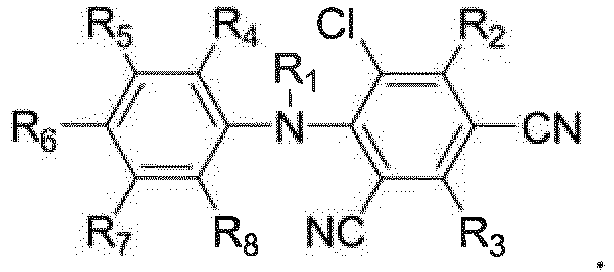
- The compounds having the following general formulas as fungicide were reported in patent
WO2011116671 :
- The compounds having the structure of general fomula I were not reported in the prior art as antitumor agents.
- The object of the present invention is to provide substituted diphenylamine compounds having general fomula I, which can be applied to antitumor agents.
- Detailed description of the invention is as follows:
- Substituted diphenylamine compounds use thereof as antitumor agents, the compounds having the structure of general fomula I:

- Wherein:
- R1 is selected from H, C1-C8alkyl, C3-C8cycloalkyl, C1-C8haloalkyl, C1-C8alkylcarbonyl, C1-C8haloalkylcarbonyl, C1-C8alkoxycarbonyl, C1-C8alkylaminocarbonyl, C1-C8alkylthio, C1-C8haloalkylthio, C1-C8alkylsulfonyl, C1-C8alkoxyC1-C8alkyl, C1-C8alkoxyC1-C8alkylcarbonyl, C1-C8alkoxycarbonylC1-C8alkyl, C1-C8alkylaminothio, C2-C8dialkylaminothio, C2-C8alkenyl, C2-C8alkynyl, C2-C8haloalkenyl, C2-C8haloalkynyl, aryl C1-C8alkyl or CO-X-CO2R12, in which X is selected from (CHR12)n, CR12=CR13 or C6H4, n=1-6;
- R2 and R6 may be the same or different, respectively selected from H, halogen, CN, NO2, COOH, C(=O)NR12R13, C1-C8alkyl, C1-C8haloalkyl, C1-C8alkoxy, C1-C8haloalkoxy, C1-C8alkylthio, C1-C8haloalkylthio, C2-C8alkenyl, C2-C8alkynyl, C1-C8alkylsulfonyl, C1-C8alkylcarbonyl, C1-C8alkoxycarbonyl, C1-C8alkoxyC1-C8alkyl, C1-C8alkoxycarbonylC1-C8alkyl, or the following groups unsubstituted or substituted with 1-5 R14: aryl, arylmethyl, aryloxy, arylamino, arylcarbonyl, arylmethylcarbonyl, aryloxycarbonyl, arylaminocarbonyl or heteroaryloxy, and when the number of the substitutes is more than 1, R14 may be the same or different;
- R3 and R5 may be the same or different, respectively selected from H, halogen, CN, NO2, COOH, C(=O)NR12R13, C1-C8alkyl, C1-C8haloalkyl, C1-C8alkoxy, C1-C8haloalkoxy, C1-C8alkylamino, C1-C8haloalkylamino, C1-C8alkylthio, C1-C8haloalkylthio, C2-C8alkenyl, C2-C8alkynyl, C1-C8alkylsulfonyl, C1-C8alkylcarbonyl, C1-C8alkoxycarbonyl, C1-C8alkoxyC1-C8alkyl, C1-C8alkoxycarbonylC1-C8alkyl, C1-C8alkylcarbonyloxy, C1-C8alkoxycarbonyloxy, C1-C8alkylaminocarbonyloxy, C1-C8alkylsulfonyloxy, C1-C8alkoxyC1-C8alkoxy, C1-C8haloalkoxyC1-C8haloalkoxy, C1-C8alkoxycarbonylC1-C8alkoxy, or the following groups unsubstituted or substituted with 1-5 R14: aryl, arylmethyl, aryloxy, arylamino, arylcarbonyl, arylmethylcarbonyl, aryloxycarbonyl, arylaminocarbonyl or heteroaryloxy, and when the number of the substitutes is more than 1, R14 may be the same or different;
- R4 is selected from H, halogen, CN, NO2, COOH, CO2Na, CO2NH4, C(=O)NR12R13, C1-C8alkyl, C1-C8haloalkyl, C1-C8alkoxy, C1-C8haloalkoxy, C2-C8alkenyl, C2-C8alkynyl, C1-C8alkylsulfonyl, C1-C8alkylcarbonyl, C1-C8alkoxycarbonyl, C1-C8alkoxyC1-C8alkyl, C1-C8alkoxycarbonylC1-C8alkyl, C1-C8alkoxyC1-C8alkoxy, C1-C8haloalkoxyC1-C8haloalkoxy, SO2NR12R13, or the following groups unsubstituted or substituted with 1-5 R14: aryl, arylmethyl, aryloxy, arylamino, arylcarbonyl, arylmethylcarbonyl, aryloxycarbonyl, arylaminocarbonyl or heteroaryloxy, and when the number of the substitutes is more than 1, R14 may be the same or different;
- R7 is selected from Cl or CH3;
- R8 is selected from H, halogen, OH, CN, NO2, COOH, C1-C8alkyl, C1-C8haloalkyl, C1-C8alkoxy, C1-C8haloalkoxy, C1-C8alkylamino, C1-C8haloalkylamino, C1-C8alkylthio, C1-C8haloalkylthio, C1-C8alkylsulfonyl, C3-C8cycloalkyl, C2-C8dialkylamino, C3-C8alkenyloxy, C3-C8haloalkenyloxy, C3-C8alkynyloxy, C3-C8haloalkynyloxy, C1-C8alkylcarbonyloxy, C1-C8alkylcarbonylamino, C1-C8alkylsulfonyloxy, C1-C8alkoxyC1-C8alkoxy, C1-C8alkoxycarbonylC1-C8alkoxy, or the following groups unsubstituted or substituted with 1-5 R14: aryloxy, arylamino, arylmethoxy, arylmethylamino, heteroaryloxy or heteroarylamino, and when the number of the substitutes is more than 1, R14 may be the same or different;
- R9 is selected from H, halogen, NO2, CN, C(=O)NR12R13, C(=S)NR12R13, C1-C8alkylaminocarbonyl, C1-C8alkoxycarbonyl, C1-C8haloalkyl or C1-C8alkylsulfonyl;
- R10 is selected from H, halogen, OH, CN, NO2, COOH, C1-C8alkyl, C1-C8haloalkyl, C1-C8alkoxy, C1-C8haloalkoxy, C1-C8alkylamino, C1-C8haloalkylamino, C1-C8alkylthio, C1-C8haloalkylthio, C1-C8alkylsulfonyl, C2-C8dialkylamino, C3-C8alkenyloxy, C3-C8haloalkenyloxy, C3-C8alkynyloxy, C3-C8haloalkynyloxy, C1-C8alkylcarbonyloxy, C1-C8alkylcarbonylamino, C1-C8alkylsulfonyloxy, C1-C8alkoxyC1-C8alkoxy or C1-C8alkoxycarbonylC1-C8alkoxy;
- R11 is selected from CN or NO2,
- R12 and R13 may be the same or different, respectively selected from H, C1-C6alkyl or C3-C6cycloalkyl;
- R14 is selected from halogen, NO2, CN, C1-C6alkyl, C1-C6haloalkyl, C1-C6alkoxy, C1-C6haloalkoxy, C1-C6alkylthio, C1-C6alkylcarbonyl, C1-C6alkoxycarbonyl, C2-C6alkenyl, C2-C6haloalkenyl, C3-C6alkenyloxy, C3-C6haloalkenyloxy, C2-C6alkynyl, C2-C6haloalkynyl, C3-C6alkynyloxy, C3-C6haloalkynyloxy, C1-C6haloalkylthio, C1-C6haloalkylcarbonyl, C1-C6alkylamino, C1-C6haloalkylamino, C2-C8dialkylamino, C1-C6alkylcarbonylamino, C1-C6haloalkylcarbonylamino, C1-C6alkylaminocarbonyl or C1-C6haloalkylaminocarbonyl;
- Or the salts of the compounds having general fomula I.
- Furthermore, the preferred uses as antitumor compounds of general formula I of this invention include two kinds of compounds:
- The first kind of compound is: R7 is Cl, R9 and R11 are CN in compounds of general formula I, the structures are as general formula II:

- Wherein:
- R1 is selected from H, C1-C8alkyl, C3-C8cycloalkyl, C1-C8haloalkyl, C1-C8alkylcarbonyl, C1-C8haloalkylcarbonyl, C1-C8alkoxycarbonyl, C1-C8alkylaminocarbonyl, C1-C8alkylsulfonyl, C1-C8alkoxyC1-C8alkyl, C1-C8alkoxyC1-C8alkylcarbonyl, C1-C8alkoxycarbonylC1-C8alkyl, C2-C8alkenyl, C2-C8alkynyl, C2-C8haloalkenyl, C2-C8haloalkynyl, aryl C1-C8alkyl or CO-X-CO2R12, in which X is selected from (CHR12)n, CR12=CR13 or C6H4, n=1-6;
- R2 and R6 may be the same or different, respectively selected from H, halogen, CN, NO2, COOH, C(=O)NR12R13, C1-C8alkyl, C1-C8haloalkyl, C1-C8alkoxy, C1-C8haloalkoxy, C1-C8alkylthio, C1-C8haloalkylthio, C2-C8alkenyl, C2-C8alkynyl, C1-C8alkylsulfonyl, C1-C8alkylcarbonyl, C1-C8alkoxycarbonyl, C1-C8alkoxyC1-C8alkyl, C1-C8alkoxycarbonylC1-C8alkyl, or the following groups unsubstituted or substituted with 1-5 R14: aryl, arylmethyl, aryloxy, arylamino, arylcarbonyl, arylmethylcarbonyl, aryloxycarbonyl, arylaminocarbonyl or heteroaryloxy, and when the number of the substitutes is more than 1, R14 may be the same or different;
- R3 and R5 may be the same or different, respectively selected from H, halogen, CN, NO2, COOH, C(=O)NR12R13, C1-C8alkyl, C1-C8haloalkyl, C1-C8alkoxy, C1-C8haloalkoxy, C1-C8alkylamino, C1-C8haloalkylamino, C1-C8alkylthio, C1-C8haloalkylthio, C2-C8alkenyl, C2-C8alkynyl, C1-C8alkylsulfonyl, C1-C8alkylcarbonyl, C1-C8alkoxycarbonyl, C1-C8alkoxyC1-C8alkyl, C1-C8alkoxycarbonylC1-C8alkyl, C1-C8alkylcarbonyloxy, C1-C8alkoxycarbonyloxy, C1-C8alkylaminocarbonyloxy, C1-C8alkylsulfonyloxy, C1-C8alkoxyC1-C8alkoxy, C1-C8haloalkoxyC1-C8haloalkoxy, C1-C8alkoxycarbonylC1-C8alkoxy, or the following groups unsubstituted or substituted with 1-5 R14: aryl, arylmethyl, aryloxy, arylamino, arylcarbonyl, arylmethylcarbonyl, aryloxycarbonyl, arylaminocarbonyl or heteroaryloxy, and when the number of the substitutes is more than 1, R14 may be the same or different;
- R4 is selected from H, halogen, CN, NO2, COOH, CO2Na, CO2NH4, C(=O)NR12R13, C1-C8alkyl, C1-C8haloalkyl, C1-C8alkoxy, C1-C8haloalkoxy, C2-C8alkenyl, C2-C8alkynyl, C1-C8alkylsulfonyl, C1-C8alkylcarbonyl, C1-C8alkoxycarbonyl, C1-C8alkoxyC1-C8alkyl, C1-C8alkoxycarbonylC1-C8alkyl, C1-C8alkoxyC1-C8alkoxy, C1-C8haloalkoxyC1-C8haloalkoxy, SO2NR12R13, or the following groups unsubstituted or substituted with 1-5 R14: aryl, arylmethyl, arylcarbonyl, arylmethylcarbonyl, aryloxycarbonyl or arylaminocarbonyl, and when the number of the substitutes is more than 1, R14 may be the same or different;
- R8 and R10 may be the same or different, respectively selected from H, halogen, OH, CN, NO2, COOH, C1-C8alkyl, C1-C8haloalkyl, C1-C8alkoxy, C1-C8haloalkoxy, C1-C8alkylamino, C1-C8haloalkylamino, C1-C8alkylthio, C1-C8haloalkylthio, C1-C8alkylsulfonyl, C2-C8dialkylamino, C3-C8alkenyloxy, C3-C8haloalkenyloxy, C3-C8alkynyloxy, C3-C8haloalkynyloxy, C1-C8alkylcarbonyloxy, C1-C8alkylcarbonylamino, C1-C8alkylsulfonyloxy, C1-C8alkoxyC1-C8alkoxy or C1-C8alkoxycarbonylC1-C8alkoxy;
- R12 and R13 may be the same or different, respectively selected from H, C1-C6alkyl or C3-C6cycloalkyl;
- R14 is selected from halogen, NO2, CN, C1-C6alkyl, C1-C6haloalkyl, C1-C6alkoxy, C1-C6haloalkoxy, C1-C6alkylthio, C1-C6alkylcarbonyl, C1-C6alkoxycarbonyl, C2-C6alkenyl, C2-C6haloalkenyl, C3-C6alkenyloxy, C3-C6haloalkenyloxy, C2-C6alkynyl, C2-C6haloalkynyl, C3-C6alkynyloxy, C3-C6haloalkynyloxy, C1-C6haloalkylthio, C1-C6haloalkylcarbonyl, C1-C6alkylamino, C1-C6haloalkylamino, C2-C8dialkylamino, C1-C6alkylcarbonylamino, C1-C6haloalkylcarbonylamino, C1-C6alkylaminocarbonyl or C1-C6haloalkylaminocarbonyl;
- Or the salts of the compounds having general fomula II.
- The preferred uses as antitumor compounds of general formula II of this invention are:
- R1 is selected from H, C1-C4alkyl, C3-C6cycloalkyl, C1-C4haloalkyl, C1-C4alkylcarbonyl, C1-C4haloalkylcarbonyl, C1-C4alkoxycarbonyl, C1-C4alkylsulfonyl, C1-C4alkoxyC1-C4alkyl, C1-C4alkoxyC1-C4alkylcarbonyl, C1-C4alkoxycarbonylC1-C4alkyl, C2-C4alkenyl, C2-C4alkynyl, C2-C4haloalkenyl, C2-C4haloalkynyl, benzyl, phenethyl or CO-X-CO2R12, in which X is selected from (CHR12)n, CR12=CR13 or C6H4, n=1-3;
- R2 and R6 may be the same or different, respectively selected from H, Cl, Br, F, CN, NO2, COOH, C(=O)NR12R13, C1-C4alkyl, C1-C4haloalkyl, C1-C4alkoxy, C1-C4haloalkoxy, C1-C4alkylthio, C1-C4haloalkylthio, C2-C4alkenyl, C2-C4alkynyl, C1-C4alkylsulfonyl, C1-C4alkylcarbonyl, C1-C4alkoxycarbonyl, C1-C4alkoxyC1-C4alkyl, C1-C4alkoxycarbonylC1-C4alkyl, or the following groups unsubstituted or substituted with 1-3 R14: phenoxy, phenylamino, phenylcarbonyl, benzylcarbonyl, phenoxycarbonyl, phenylaminocarbonyl or pyridyloxy, and when the number of the substitutes is more than 1, R14 may be the same or different;
- R3 and R5 may be the same or different, respectively selected from H, Cl, Br, F, CN, NO2, COOH, C(=O)NR12R13, C1-C4alkyl, C1-C4haloalkyl, C1-C4alkoxy, C1-C4haloalkoxy, C1-C4alkylamino, C1-C4haloalkylamino, C1-C4alkylthio, C1-C4haloalkylthio, C2-C4alkenyl, C2-C4alkynyl, C1-C4alkylsulfonyl, C1-C4alkylcarbonyl, C1-C4alkoxycarbonyl, C1-C4alkoxyC1-C4alkyl, C1-C4alkoxycarbonylC1-C4alkyl, or the following groups unsubstituted or substituted with 1-3 R14: phenoxy, phenylamino, phenylcarbonyl, benzylcarbonyl, phenoxycarbonyl, phenylaminocarbonyl or pyridyloxy, and when the number of the substitutes is more than 1, R14 may be the same or different;
- R4 is selected from H, Cl, Br, F, CN, NO2, COOH, CO2Na, CO2NH4, C(=O)NR12R13, C1-C4alkyl, C1-C4haloalkyl, C1-C4alkoxy, C1-C4haloalkoxy, C2-C4alkenyl, C2-C4alkynyl, C1-C4alkylsulfonyl, C1-C4alkylcarbonyl, C1-C4alkoxycarbonyl, C1-C4alkoxyC1-C4alkyl, C1-C4alkoxycarbonylC1-C4alkyl, C1-C4alkoxyC1-C4alkoxy, SO2NHCH3, SO2N(CH3)2, or the following groups unsubstituted or substituted with 1-3 R14: phenylcarbonyl, benzylcarbonyl, phenoxycarbonyl or phenylaminocarbonyl, and when the number of the substitutes is more than 1, R14 may be the same or different;
- R8 and R10 may be the same or different, respectively selected from Cl, Br, F, OH, CN, NO2, C1-C4alkyl, C1-C4haloalkyl, C1-C4alkoxy, C1-C4haloalkoxy, C1-C4alkylamino, C1-C4haloalkylamino, C1-C4alkylthio, C1-C4haloalkylthio, C1-C4alkylsulfonyl, C2-C6dialkylamino, C3-C4alkenyloxy, C3-C4haloalkenyloxy, C3-C4alkynyloxy, C3-C4haloalkynyloxy, C1-C4alkylcarbonyloxy, C1-C4alkylcarbonylamino, C1-C4alkylsulfonyloxy, C1-C4alkoxyC1-C4alkoxy or C1-C4alkoxycarbonylC1-C4alkoxy;
- R12 and R13 may be the same or different, respectively selected from H or C1-C4alkyl;
- R14 is selected from F, Cl, Br, NO2, CN, C1-C4alkyl, C1-C4haloalkyl, C1-C4alkoxy, C1-C4haloalkoxy, C1-C4alkylthio, C1-C4alkylcarbonyl, C1-C4alkoxycarbonyl or C1-C4alkylaminocarbonyl;
- Or the salts of the compounds having general fomula II.
- Furthermore, the preferred uses as antitumor compounds of general formula II of this invention are:
- R1 is selected from H, CH3, acetyl, methylsulfonyl, benzyl or phenethyl;
- R2 and R6 may be the same or different, respectively selected from H, F, Cl, Br, CN, NO2, COOH, CONH2, CONHCH3, CON(CH3)2, CONHCH(CH3)2, CONHC(CH3)3, CH3, C2H5, CH(CH3)2, C(CH3)3, ClCH2, CF3, CH3O, C2H5O, CF3O, CF3CH2O, CH3S, CH3OCO or CH3OCH2;
- R3 and R5 may be the same or different, respectively selected from H, F, Cl, Br, CN, NO2, COOH, CONH2, CONHCH3, CON(CH3)2, CONHCH(CH3)2, CONHC(CH3)3, CH3, C2H5, CH(CH3)2, C(CH3)3, ClCH2, CF3, CH3O, C2H5O, CF3O, CF3CH2O, CH3S, CH3OCO or CH3OCH2;
- R4 is selected from H, F, Cl, Br, CN, NO2, COOH, CO2Na, CO2NH4, CONH2, CONHCH3, CON(CH3)2, CONHCH(CH3)2, CONHC(CH3)3, CF3, CF3O, CH3OCO, C2H5OCO, CH3SO2, SO2NHCH3, SO2N(CH3)2, phenoxycarbonyl, phenylaminocarbonyl, 4-CH3-phenylaminocarbonyl or 4-Cl-phenylaminocarbonyl;
- R8 and R10 may be the same or different, respectively selected from Cl, F, CH3O, CF3O, CF3CH2O, CH3NH, (CH3)2N, (C2H5)2N, CF3CH2NH, ClCH2CH2NH, CH3S, C2H5S, CH3SO2, C2H5SO2, (CH3)2N, CH2=CHCH2O, CH=CCH2O, ClC=CCH2O, IC=CCH2O, CH3CO2, CH3CONH, CH3OCH2CH2O, C2H5OCH2CH2O, CH3OC(=O)CH2O or CH3OC(=O)CH2CH2O;
- Or the salts formed from the compounds of general fomula II with hydrochloric acid, sulfuric acid, nitric acid, hydrogen carbonic acid, carbonic acid, phosphoric acid, formic acid, acetic acid, trifluoroacetic acid, phenylsulfonic acid, p-toluenesulfonic acid, methylsulfonic acid, benzoic acid, citric acid, malic acid, tartaric acid, maleic acid, succinic acid, ascorbic acid or oxalic acid.
- Even more preferred uses as antitumor compounds of general formula II of this invention are:
- R1 is selected from H;
- R2 is selected from H, F, Cl, Br, CH3, C2H5, NO2 or CN;
- R3 is selected from H, F, Cl, Br, CH3 or CF3;
- R4 is selected from H, F, Cl, Br, CF3, CF3O, CH3OCO, CN, NO2, COOH, CO2Na, phenylaminocarbonyl or 4-Cl-phenylaminocarbonyl;
- R5 is selected from H, Cl, Br, CH3 or CF3;
- R6 is selected from H, F, Cl, Br, CH3, C2H5, NO2 or CN;
- R8 is selected from Cl, CH3O, CH3NH, (CH3)2N or (C2H5)2N;
- R10 is selected from Cl, CH3O or CH3NH;
- Or the salts formed from the compounds of general fomula II with hydrochloric acid, sulfuric acid, nitric acid, hydrogen carbonic acid, carbonic acid, phosphoric acid, formic acid, acetic acid, trifluoroacetic acid, phenylsulfonic acid, p-toluenesulfonic acid, methylsulfonic acid, benzoic acid, citric acid, malic acid, tartaric acid, maleic acid, succinic acid, ascorbic acid or oxalic acid.
- The more preferred uses as antitumor compounds of general formula II of this invention are:
- R1, R3 and R5 are selected from H;
- R2 and R6 are selected from H, Cl or Br;
- R4 is selected from H, Cl, Br, NO2, CF3, CF3O or CH3OCO;
- R8 and R10 are selected from Cl;
- Or the salts formed from the compounds of general fomula II with hydrochloric acid, sulfuric acid, nitric acid, hydrogen carbonic acid, carbonic acid, phosphoric acid, formic acid, acetic acid, trifluoroacetic acid, phenylsulfonic acid, p-toluenesulfonic acid, methylsulfonic acid, benzoic acid, citric acid, malic acid, tartaric acid, maleic acid, succinic acid, ascorbic acid or oxalic acid.
- The most preferred uses as antitumor compounds of general formula II of this invention are:


- The following structure in the most preferred uses as antitumor compounds of general formula II of this invention has never been reported before( refer to compound Table 6-112):

- The second kind of compound of the preferred uses as antitumor compounds of general formula I of this invention is: R7 is CH3, R10 is H, R11 is NO2, the structures are as general formula III:

- Wherein:
- R1 is selected from H, C1-C8alkyl, C3-C8cycloalkyl, C1-C8haloalkyl, C1-C8alkylcarbonyl, C1-C8haloalkylcarbonyl, C1-C8alkoxycarbonyl, C1-C8alkylaminocarbonyl, C1-C8alkylthio, C1-C8haloalkylthio, C1-C8alkylsulfonyl, C1-C8alkoxyC1-C8alkyl, C1-C8alkoxyC1-C8alkylcarbonyl, C1-C8alkoxycarbonylC1-C8alkyl, C1-C8alkylaminothio, C2-C8dialkylaminothio or CO-X-CO2R12, in which X is selected from (CHR12)n, CR12=CR13 or C6H4, n=1-6;
- R2 and R6 may be the same or different, respectively selected from H, halogen, CN, NO2, C(=O)NR12R13, C1-C8alkyl, C1-C8haloalkyl, C1-C8alkoxy, C1-C8haloalkoxy, C2-C8alkenyl, C2-C8alkynyl, C1-C8alkylsulfonyl, C1-C8alkylcarbonyl, C1-C8alkoxycarbonyl, C1-C8alkoxyC1-C8alkyl, C1-C8alkoxycarbonylC1-C8alkyl, or the following groups unsubstituted or substituted with 1-5 R14: aryl, arylmethyl, aryloxy, arylamino, arylcarbonyl, arylmethylcarbonyl, aryloxycarbonyl, arylaminocarbonyl or heteroaryloxy, and when the number of the substitutes is more than 1, R14 may be the same or different;
- R3 and R5 may be the same or different, respectively selected from H, halogen, CN, NO2, C(=O)NR12R13, C1-C8alkyl, C1-C8haloalkyl, C1-C8alkoxy, C1-C8haloalkoxy, C1-C5alkylamino, C1-C8haloalkylamino, C1-C8alkylthio, C1-C8haloalkylthio, C2-C8alkenyl, C2-C8alkynyl, C1-C8alkylsulfonyl, C1-C8alkylcarbonyl, C1-C8alkoxycarbonyl, C1-C8alkoxyC1-C8alkyl, C1-C8alkoxycarbonylC1-C8alkyl, C1-C8alkylcarbonyloxy, C1-C8alkoxycarbonyloxy, C1-C8alkylaminocarbonyloxy, C1-C8alkylsulfonyloxy, C1-C8alkoxyC1-C8alkoxy, C1-C8haloalkoxyC1-C8haloalkoxy, C1-C8alkoxycarbonylC1-C8alkoxy, or the following groups unsubstituted or substituted with 1-5 R14: aryl, arylmethyl, aryloxy, arylamino, arylcarbonyl, arylmethylcarbonyl, aryloxycarbonyl, arylaminocarbonyl or heteroaryloxy, and when the number of the substitutes is more than 1, R14 may be the same or different;
- R4 is selected from H, halogen, CN, NO2, COOH, C(=O)NR12R13, C1-C8alkyl, C1-C8haloalkyl, C1-C8alkoxy, C1-C8haloalkoxy, C2-C8alkenyl, C2-C8alkynyl, C1-C8alkylsulfonyl, C1-C8alkylcarbonyl, C1-C8alkoxycarbonyl, C1-C8alkoxyC1-C8alkyl, C1-C8alkoxycarbonylC1-C8alkyl, C1-C8alkoxyC1-C8alkoxy, C1-C8haloalkoxyC1-C8haloalkoxy, or the following groups unsubstituted or substituted with 1-5 R14: aryl, arylmethyl, aryloxy, arylamino, arylcarbonyl, arylmethylcarbonyl, aryloxycarbonyl, arylaminocarbonyl or heteroaryloxy, and when the number of the substitutes is more than 1, R14 may be the same or different;
- R8 is selected from H, halogen, C1-C8haloalkyl, C1-C8alkoxy, C1-C8haloalkoxy, C1-C8alkylamino, C1-C8haloalkylamino, C1-C8alkylthio, C1-C8haloalkylthio, C1-C8alkylsulfonyl, C3-C8cycloalkyl, C2-C8dialkylamino, C3-C8alkenyloxy, C3-C8haloalkenyloxy, C3-C8alkynyloxy, C3-C8haloalkynyloxy, C1-C8alkylcarbonyloxy, C1C8alkylcarbonylamino, C1-C8alkylsulfonyloxy, C1-C8alkoxyC1-C8alkoxy, C1-C8alkoxycarbonylC1-C8alkoxy, or the following groups unsubstituted or substituted with 1-5 R14: aryloxy, arylamino, arylmethoxy, arylmethylamino, heteroaryloxy or heteroarylamino, and when the number of the substitutes is more than 1, R14 may be the same or different;
- R9 is selected from H, halogen, NO2, CN, C(=O)NR12R13, C(=S)NR12R13, C1-C8alkylaminocarbonyl, C1-C8alkoxycarbonyl, C1-C8haloalkyl or C1-C8alkylsulfonyl;
- R12 and R13 may be the same or different, respectively selected from H or C1-C6alkyl;
- R14 is selected from halogen, NO2, CN, C1-C6alkyl, C1-C6haloalkyl, C1-C6alkoxy, C1-C6haloalkoxy, C1-C6alkylthio, C1-C6alkylcarbonyl, C1-C6alkoxycarbonyl, C2-C6alkenyl, C2-C6haloalkenyl, C3-C6alkenyloxy, C3-C6haloalkenyloxy, C2-C6alkynyl, C2-C6haloalkynyl, C3-C6alkynyloxy, C3-C6haloalkynyloxy, C1-C6haloalkylthio, C1-C6haloalkylcarbonyl, C1-C6alkylamino, C1-C6haloalkylamino, C2-C8dialkylamino, C1-C6alkylcarbonylamino, C1-C6haloalkylcarbonylamino, C1-C6alkylaminocarbonyl or C1-C6haloalkylaminocarbonyl;
- Or the salts of the compounds having general fomula III.
- The preferred uses as antitumor compounds of general formula III of this invention are:
- R1 is selected from H, C1-C4alkyl, C3-C6cycloalkyl, C1-C4alkylcarbonyl, C1-C4haloalkylcarbonyl, C1-C4alkoxycarbonyl, C1-C4alkylthio, C1-C4haloalkylthio, C1-C4alkylsulfonyl, C1-C4alkoxyC1-C4alkyl, C1-C4alkoxyC1-C4alkylcarbonyl, C1-C4alkoxycarbonylC1-C4alkyl, C1-C4alkylaminothio, C2-C4dialkylaminothio or CO-X-CO2R12, in which X is selected from (CHR12)n, CR12=CR13 or C6H4, n=1-3;
- R2 and R6 may be the same or different, respectively selected from H, halogen, CN, NO2, C(=O)NR12R13, C1-C4alkyl, C1-C4haloalkyl, C1-C4alkoxy, C1-C4haloalkoxy, C2-C6alkenyl, C2-C6alkynyl, C1-C4alkylsulfonyl, C1-C4alkylcarbonyl, C1-C4alkoxycarbonyl, C1-C4alkoxyC1-C4alkyl, C1-C4alkoxycarbonylC1-C4alkyl, or the following groups unsubstituted or substituted with 1-4 R14: phenoxy, phenylamino, phenylcarbonyl, benzylcarbonyl, phenoxycarbonyl, phenylaminocarbonyl or pyridyloxy, and when the number of the substitutes is more than 1, R14 may be the same or different;
- R3 and R5 may be the same or different, respectively selected from H, halogen, CN, NO2, C(=O)NR12R13, C1-C4alkyl, C1-C4haloalkyl, C1-C4alkoxy, C1-C4haloalkoxy, C1-C4alkylamino, C1-C4haloalkylamino, C1-C4alkylthio, C1-C4haloalkylthio, C2-C6alkenyl, C2-C6alkynyl, C1-C4alkylsulfonyl, C1-C4alkylcarbonyl, C1-C4alkoxycarbonyl or C1-C4alkoxyC1-C4alkyl;
- R4 is selected from H, halogen, CN, NO2, COOH, C(=O)NR12R13, C1-C4alkyl, C1-C4haloalkyl, C1-C4haloalkoxy, C2-C6alkenyl, C2-C6alkynyl, C1-C4alkylsulfonyl, C1-C4alkylcarbonyl, C1-C4alkoxycarbonyl, C1-C4alkoxyC1-C4alkyl, C1-C4alkoxycarbonylC1-C4alkyl, C1-C4alkoxyC1-C4alkoxy, or the following groups unsubstituted or substituted with 1-4 R14: phenoxy, phenylamino, phenylcarbonyl, benzylcarbonyl, phenoxycarbonyl, phenylaminocarbonyl or pyridyloxy, and when the number of the substitutes is more than 1, R14 may be the same or different;
- R8 is selected from H, halogen, C1-C4alkoxy, C1-C4haloalkoxy, C1-C4alkylamino, C1-C4haloalkylamino, C1-C4alkylthio, C1-C4haloalkylthio, C1-C4alkylsulfonyl, C2-C4dialkylamino, C3-C4alkenyloxy, C3-C4haloalkenyloxy, C3-C6alkynyloxy, C1-C4alkylcarbonyloxy, C1-C4alkylcarbonylamino, C1-C4alkylsulfonyloxy, C1-C4alkoxyC1-C4alkoxy, C1-C4alkoxycarbonylC1-C4alkoxy, or the following groups unsubstituted or substituted with 1-3 R14: phenoxy, phenylamino, benzyloxy, benzylamino, pyridyloxy or pyridylamino, and when the number of the substitutes is more than 1, R14 may be the same or different;
- R9 is selected from Cl, Br, F, NO2, CN, C(=O)NR12R13, C(=S)NR12R13, CO2CH3, CF3 or CH3SO2;
- R12 and R13 may be the same or different, respectively selected from H or C1-C3alkyl;
- R14 is selected from halogen, NO2, CN, C1-C3alkyl, C1-C3haloalkyl, C1-C3alkoxy, C1-C3haloalkoxy, C1-C3alkylthio, C1-C3alkylcarbonyl, C1-C3alkoxycarbonyl, C1-C3alkylamino, C2-C4dialkylamino, C1-C3alkylcarbonylamino or C1-C3alkylaminocarbonyl;
- Or the salts of the compounds having general fomula III.
- Furthermore, the preferred uses as antitumor compounds of general formula III of this invention are:
- R1 is selected from H, CH3, C2H5, cyclopropyl, formyl, acetyl, COCF3, CO2CH3, CO2C2H5, SCCl3, SO2CH3, SO2C2H5, CH2OCH3, CH2OC2H5, CH2CH2OCH3, COCH2OCH3, CH2COOCH3, SNHCH3, SN(CH3)2, COCH2CO2H, COCH2CO2CH3, COCH2CH2CO2H, COCH2CH2CO2CH3, COCHCH3CO2H, COCHCH3CO2CH3, COC6H4CO2H, COC6H4CO2CH3, COCH=CHCO2 or COCH=CHCO2CH3;
- R2 and R6 may be the same or different, respectively selected from H, Cl, Br, F, CN, NO2, C(=O)NH2, C(=O)NHCH3, C(=O)N(CH3)2, CH3, C2H5, CF3, OCH3, OC2H5, OCF3, SO2CH3, SO2C2H5, COCH3, CO2CH3, CO2C2H5, phenoxy, phenylamino, phenoxycarbonyl or phenylaminocarbonyl;
- R3 and R5 may be the same or different, respectively selected from H, Cl, Br, F, CN, NO2, C(=O)NH2, CH3, CF3, OCH3, OCF3, NHCH3, SCH3, SO2CH3, SO2C2H5, COCH3, CO2CH3, CO2C2H5 or CH2OCH3;
- R4 is selected from H, Cl, Br, F, CN, NO2, CO2H, C(=O)NH2, C(=O)NHCH3, C(=O)N(CH3)2, CH3, CF3, CF(CF3)2, OCF3, OCH2CF3, OCF2CHFCF3, SO2CH3, SO2C2H5, COCH3, CO2CH3, CO2C2H5, phenoxy, phenylamino, phenylcarbonyl, benzylcarbonyl, phenoxycarbonyl, phenylaminocarbonyl, pyridyloxy or 3-chloro-5-(trifluoromethyl)pyridin-2-yloxy;
- R8 is selected from H, Cl, Br, F, C1-C3alkoxy, C1-C3haloalkoxy, C1-C3alkylamino, C1-C3haloalkylamino, SCH3, SC2H5, N(CH3)2, N(C2H5)2, OCH2OCH3, phenoxy, phenylamino, benzyloxy, benzylamino, 4-chlorophenoxy, 4-chlorophenylamino, 2-chloro-4-(trifluoromethyl)phenoxy, 2-chloro-4-(trifluoromethyl)phenylamino, 3 -chloro-5-(trifluoromethyl)pyridin-2-yloxy or 3-chloro-5-(trifluoromethyl)pyridin-2-ylamino;
- R9 is NO2;
- Or the salts formed from the compounds of general fomula III with hydrochloric acid, sulfuric acid, nitric acid, hydrogen carbonic acid, carbonic acid, phosphoric acid, formic acid, acetic acid, trifluoroacetic acid, phenylsulfonic acid, p-toluenesulfonic acid, methylsulfonic acid, benzoic acid, citric acid, malic acid, tartaric acid, maleic acid, succinic acid, ascorbic acid or oxalic acid.
- Even more preferred uses as antitumor compounds of general formula III of this invention are:
- R1 is selected from H or CH3;
- R2 and R6 may be the same or different, respectively selected from H, Cl, Br, F, CN, NO2, C(=O)NH2, C(=O)NHCH3, C(=O)N(CH3)2, CH3, CF3, CO2CH3 or phenoxycarbonyl;
- R3 and R5 may be the same or different, respectively selected from H, Cl, Br, F, CN, NO2, CH3, CF3 or OCH3;
- R4 is selected from H, Cl, Br, F, CN, NO2, CO2H, C(=O)NH2, C(=O)NHCH3, CH3, CF3, OCF2CHFCF3, CO2CH3 or 3-chloro-5-(trifluoromethyl)pyridin-2-yloxy;
- R8 is selected from H, Cl, OCH3, OCH2CF3, NHCH3, SCH3 or N(CH3)2;
- R9 is NO2;
- Or the salts formed from the compounds of general fomula III with hydrochloric acid, sulfuric acid, nitric acid, hydrogen carbonic acid, carbonic acid, phosphoric acid, formic acid, acetic acid, trifluoroacetic acid, phenylsulfonic acid, p-toluenesulfonic acid, methylsulfonic acid, benzoic acid, citric acid, malic acid, tartaric acid, maleic acid, succinic acid, ascorbic acid or oxalic acid.
- The more preferred uses as antitumor compounds of general formula III of this invention are:
- R1, R3 and R5 are selected from H;
- R2 is selected from Cl or F;
- R4 is selected from H, Cl, CN, NO2 or CF3;
- R6 is selected from F, Cl, CN or NO2;
- R8 is selected from H, Cl or OCH2CF3;
- R9 is NO2;
- Or the salts formed from the compounds of general fomula III with hydrochloric acid, sulfuric acid, nitric acid, hydrogen carbonic acid, carbonic acid, phosphoric acid, formic acid, acetic acid, trifluoroacetic acid, phenylsulfonic acid, p-toluenesulfonic acid, methylsulfonic acid, benzoic acid, citric acid, malic acid, tartaric acid, maleic acid, succinic acid, ascorbic acid or oxalic acid.
- The most preferred uses as antitumor compounds of general formula III of this invention are:


- The terms used above to definite the compounds of general fomula I represent substitutes as follow:
- The "halogen" or "halo" is fluorine, chlorine, bromine or iodine.
- The "alkyl" stands for straight or branched chain alkyl, such as methyl, ethyl, propyl, isopropyl or tert-butyl.
- The "cycloalkyl" is substituted or unsubstituted cyclic alkyl, such as cyclopropyl, cyclopentyl or cyclohexyl. The substitute(s) is(are) methyl, halogen, etc.
- The "haloalkyl" stands for straight or branched chain alkyl, in which hydrogen atoms can be all or partly substituted with halogen, such as chloromethyl, dichloromethyl, trichloromethyl, fluoromethyl, difluoromethyl, trifluoromethyl, etc.
- The "alkoxy" refers to straight or branched chain alkyl, which is linked to the structure by oxygen atom.
- The "haloalkoxy" refers to straight or branched chain alkoxy, in which hydrogen atoms may be all or partly substituted with halogen, such as chloromethoxy, dichloromethoxy, trichloromethoxy, fluoromethoxy, difluoromethoxy, trifluoromethoxy, chlorofluoromethoxy, trifluoroethoxy, etc.
- The "alkylthio" refers to straight or branched chain alkyl, which is linked to the structure by sulfur atom.
- The "haloalkylthio" refers to straight or branched chain alkylthio, in which hydrogen atoms may be all or partly substituted with halogen, such as chloromethylthio, dichloromethylthio, trichloromethylthio, fluoromethylthio, difluoromethylthio, trifluoromethylthio, chlorofluoromethylthio, etc.
- The "alkylamino" refers to straight or branched chain alkyl, which is linked to the structure by nitrogen atom.
- The "haloalkylamino" refers to straight or branched chain alkylamino, in which hydrogen atoms may be all or partly substituted with halogen.
- The "alkenyl" refers to straight or branched chain alkenyl, such as ethenyl, 1-propenyl, 2-propenyl and different isomer of butenyl, pentenyl and hexenyl. Alkenyl also includes polyene, such as propa-1,2-dienyl and hexa-2,4-dienyl.
- The "haloalkenyl" stands for straight or branched chain alkenyl, in which hydrogen atoms can be all or partly substituted with halogen.
- The "alkynyl" refers to straight or branched chain alkynyl, such as ethynyl, 1-propynyl, 2-propynyl and different isomer of butynyl, pentynyl and hexynyl. Alkynyl also includes groups including more than one triple bonds, such as hexa-2,5-diynyl.
- The "haloalkynyl" stands for straight or branched chain alkynyl, in which hydrogen atoms can be all or partly substituted with halogen.
- The alkenyloxy refers to straight or branched chain alkenyl, which is linked to the structure by oxygen atom.
- The alkynyloxy refers to straight or branched chain alkynyl, which is linked to the structure by oxygen atom.
- The alkylsulfonyl refers to straight or branched chain alkyl, which is linked to the structure by sulfuryl(-SO2-), such as SO2CH3.
- The alkylcarbonyl refers to straight or branched chain alkyl, which is linked to the structure by carbonyl(-CO-), such as CH3CO-, CH3CH2CO-.
- The alkylcarbonyloxy: such as CH3COO-, CH3CH2NHCOO-.
- The alkylcarbonylamino: such as CH3CONH-, CH3CH2NHCONH-.
- The alkylsulfonyloxy: such as alkyl-S(O)2-O-.
- The alkoxycarbonyl: alkyl-O-CO-.
- The phenylaminocarbonyl: phenyl-NH-CO-.
- The aryl in aryl, arylmethyl, aryloxy, arylamino, arylcarbonyl, arylmethylcarbonyl, aryloxycarbonyl and arylaminocarbonyl refers to phenyl or naphthyl, etc.
- The "heteroaryl" stands for five member ring or six member ring containing one or more N, O, S hetero atoms. Such as furanyl, pyrazolyl, thiazolyl, pyridinyl, pyrimidinyl, pyrazinyl, pyridazinyl, triazinyl, quinolinyl, etc.
- Part of the substitutes of R1, R2, R3, R4, R5, R6, R8 and R10 in formula I are seperately listed in table 1, table 2, table 3, table 4 and table 5, but without being restricted thereby.
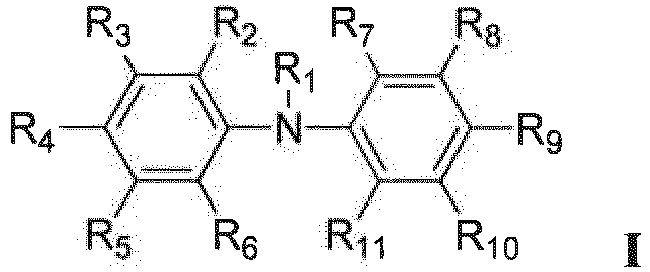
Table 1 substitute R1 R1 R1 R1 H CO2CH3 CH2C≡C-Cl CH3 CO2CH2CH3 CH2C≡CCH3 C2H5 SO2CH2CH3 PhCH2 n-C3H7 CH2OCH3 PhCH2CH2 i-C3H7 CH2CH2OCH3 4-Cl-PhCH2 n-C4H9 CH2CH2OCH2CH3 COCH2CO2CH3 t-C4H9 COCH2OCH3 COCH2CH2CO2CH3 
COCH2OCH2CH3 COCHCH3CO2CH3 CH2Cl CH2CO2CH3 COCH2COOH CF3 CH2CO2CH2CH3 COCH2CH2COOH CH2CF3 CH2CH=CH2 COCHCH3COOH COCH3 CH2CH=CF2 COCH=CHCOOH COCH2CH3 CH2CH2CH=CF2 COCH=CHCO2CH3 COCH2CH2CH3 CH2CH2CF=CF2 
CONHCH3 CH2CH=CCl2 CONHCH2CH3 CH2C≡CH 
SO2CH3 CH2C≡C-I Table 2 substitute R2(R6) R2(R6) R2(R6) R2(R6) R2(R6) H CH3 OCH(CH3)2 CH2CO2CH2CH3 F CH2CH3 OCF3 Ph Cl n-C3H7 OCH2CF3 CH2Ph Br i-C3H7 OCF2CF3 OPh I n-C4H9 CH=CH2 NHPh CN t-C4H9 CH2CH=CH2 COPh NO2 CF3 C≡CH CO2Ph COOH CHF2 CH2C≡CH CO2Ph-4-Cl CONH2 CH2F SO2CH3 CO2Ph-2-Cl-4-CF3 CONHCH3 CH2Cl SO2CH2CH3 CO2Ph-2-Cl-4-NO2 CON(CH3)2 CH2Br COCH3 CONHPh CONHCH2CH3 CH2CF3 COCH2CH3 CONHPh-4-Cl CON(CH2CH3)2 CF2CHF2 CO2CH3 CONHPh-2-Cl CONH(CH2)2CH3 CF2CF3 CO2CH2CH3 CONHPh-4-NO2 CONHCH(CH3)2 OCH3 CH2OCH3 CONHPh-2-Cl-4-CF3 CONH(CH2)3CH3 OCH2CH3 CH2OCH2CH3 CONHPh-2-Cl-4-NO2 CONHC(CH3)3 O(CH2)2CH3 CH2CO2CH3 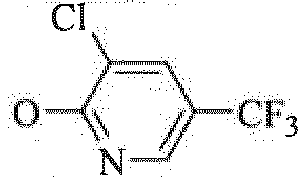
Table 3 substitute R3(R5) R3(R5) R3(R5) R3(R5) R3(R5) H n-C3H7 OCH2CF3 CH2Ph F i-C3H7 OCF2CF3 OPh Cl n-C4H9 CH=CH2 NHPh Br t-C4H9 CH2CH=CH2 COPh I CF3 C≡CH CO2Ph CN CHF2 CH2C≡CH CO2Ph-4-Cl NO2 CH2F SO2CH3 CO2Ph-2-Cl-4-CF3 COOH CH2Cl SO2CH2CH3 CO2Ph-2-Cl-4-NO2 CONH2 CH2Br COCH3 CONHPh CONHCH3 CH2CF3 COCH2CH3 CONHPh-4-Cl CON(CH3)2 CF2CHF2 CO2CH3 CONHPh-2-Cl CONHCH2CH3 CF2CF3 CO2CH2CH3 CONHPh-4-NO2 CON(CH2CH3)2 OCH3 CH2OCH3 CONHPh-2-Cl-4-CF3 CONH(CH2)2CH3 OCH2CH3 CH2OCH2CH3 CONHPh-2-Cl-4-NO2 CONHCH(CH3)2 O(CH2)2CH3 CH2CO2CH3 
CH3 OCH(CH3)2 CH2CO2CH2CH3 CH2CH3 OCF3 Ph Table 4 substitute R4 R4 R4 R4 R4 H CHF2 CH2C≡CH CONHCH(CH3)2 F CH2F SO2CH3 CON(CH2CH3)2 Cl CH2Cl SO2CH2CH3 CONHC(CH3)3 Br CH2Br COCH3 SO2NH2 I CH2CF3 COCH2CH3 SO2NHCH3 CN CF2CHF2 CO2CH3 SO2N(CH3)2 NO2 CF2CF3 CO2CH2CH3 Ph COOH OCH3 CH2OCH3 CH2Ph CO2Na OCH2CH3 CH2OCH2CH3 COPh CO2NH4 O(CH2)2CH3 CH2CO2CH3 COCH2Ph CH3 OCH(CH3)2 CH2CO2CH2CH3 CO2Ph CH2CH3 OCF3 OCH2OCH3 CO2Ph-2-Cl-4-CF3 n-C3H7 OCH2CF3 OCH2OCH2CH3 CONHPh i-C3H7 OCF2CF3 CONH2 CONHPh-4-Cl n-C4H9 CH=CH2 CONHCH3 CONHPh-4-CH3 t-C4H9 CH2CH=CH2 CON(CH3)2 CONHPh-2-Cl-4-NO2 CF3 C≡CH CONH(CH2)2CH3 CONHPh-2-Cl-4-CF3 Table 5 substitute R8(R10) R8(R10) R8(R10) R8(R10) R8(R10) R8(R10) H CH3 OCH3 SCH3 OCOCH3 F C2H5 OCH2CH3 SCH2CH3 OCOCH2CH3 Cl n-C3H7 OCF3 SO2CH3 NHCOCH3 Br i-C3H7 OCH2CF3 SO2CH2CH3 NHCOCH2CH3 I n-C4H9 NHCH3 N(CH3)2 OSO2CH3 OH t-C4H9 NHCH2CH3 N(C2H5)2 OSO2CH2CH3 CN CH2Cl NH(CH2)2CH3 OCH2CH=CH2 OCH2OCH3 NO2 CF3 NHCH(CH3)2 OCH2CH=CCl2 OCH2OCH2CH3 COOH CH2CF3 NHCH2CF3 OCH2C≡CH OCH2CO2CH3 - The present invention is also explained by the following compounds having general formula II with antitumor activity in Table 6- Table 21, but without being restricted thereby.

- Table 6: In formula II, R1 is H, R8 and R10 are Cl, R2, R3, R4, R5 and R6 (hereinafter abbreviated to R2-R6) are listed in following Table, the numbers of representative compounds are Table 6-1 to Table 6-208.
Table 6 Number R2 R3 R4 R5 R6 1 H H H H H 2 F H H H H 3 Cl H H H H 4 Br H H H H 5 I H H H H 6 CH3 H H H H 7 OCH3 H H H H 8 NO2 H H H H 9 CF3 H H H H 10 CN H H H H 11 H F H H H 12 H Cl H H H 13 H Br H H H 14 H CF3 H H H 15 H H F H H 16 H H Cl H H 17 H H Br H H 18 H H CH3 H H 19 H H t-C4H9 H H 20 H H OCH3 H H 21 H H OCF3 H H 22 H H NO2 H H 23 H H CN H H 24 H H CF3 H H 25 H H CO2CH3 H H 26 H H SO2CH3 H H 27 H H CONHPh H H 28 H H CONHPh-4-CH3 H H 29 H H CONHPh-4-Cl H H 30 F F H H H 31 F H F H H 32 F H H F H 33 F H H H F 34 F H Cl H H 35 F H H CF3 H 36 H F F H H 37 H F H F H 38 Cl Cl H H H 39 Cl H Cl H H 40 Cl H H Cl H 41 Cl H H H Cl 42 Cl H H H CH3 43 H Cl Cl H H 44 H Cl H Cl H 45 Cl H Br H H 46 Br H Cl H H 47 Cl H CF3 H H 48 Cl H H CF3 H 49 Cl H NO2 H H 50 Cl H H NO2 H 51 Cl H H CN H 52 Cl H H CH3 H 53 NO2 H H Cl H 54 CN H H Cl H 55 CH3 H H Cl H 56 CF3 H CN H H 57 F H CN H H 58 Cl H CN H H 59 Br H CN H H 60 NO2 H CN H H 61 t-C4H9 H CN H H 62 OCH3 H CN H H 63 CO2CH3 H CN H H 64 SO2CH3 H CN H H 65 H F CN H H 66 H Cl CN H H 67 H Br CN H H 68 H NO2 CN H H 69 H CH3 CN H H 70 H OCH3 CN H H 71 CN H Cl H H 72 CF3 H Cl H H 73 CO2CH3 H Cl H H 74 H CN Cl H H 75 H CH3 Cl H H 76 H CF3 Cl H H 77 CH3 H Cl H H 78 CH3 Cl H H H 79 CH3 H CH3 H H 80 CH3 H H CH3 H 81 CH3 H CN H H 82 CH3 H CF3 H H 83 CH3 H CO2CH3 H H 84 CH3 H H H CO2CH3 85 H CF3 CN H H 86 H CH3 CN H H 87 NO2 H Cl H H 88 CN H NO2 H H 89 F F F H H 90 F H F H F 91 F H NO2 H F 92 Cl Cl Cl H H 93 Cl H Cl H Cl 94 Cl Cl H Cl H 95 Cl H CF3 H Cl 96 Cl H OCF3 H Cl 97 Cl H CH3 H Cl 98 Cl H CN H Cl 99 Cl H NO2 H Cl 100 Cl H CO2CH3 H Cl 101 Cl H SO2CH3 H Cl 102 Cl H t-C4H9 H Cl 103 Cl H CONHPh H Cl 104 Cl H CONHPh-4-Cl H Cl 105 Cl H CO2Na H Cl 106 Cl H COOH H Cl 107 Cl H NO2 H CH3 108 Cl CH3 Cl H H 109 Cl H Cl H CN 110 Cl H NO2 H F 111 Br H OCF3 H Br 112 Br H Br H Br 113 Br H NO2 H Cl 114 Br H NO2 H Br 115 CH3 H CH3 H CH3 116 CH3 H t-C4H9 H CH3 117 C2H5 H Cl H C2H5 118 CH3 H CO2CH3 H Br 119 CH3 H CO2CH3 H NO2 120 CH3 H CO2CH3 H CN 121 CH3 H CO2CH3 H OCH3 122 CH3 H CO2CH3 H CF3 123 CH3 H CO2CH3 H Cl 124 CH3 H Cl H NO2 125 C2H5 H NO2 H F 126 C2H5 H NO2 H Cl 127 C2H5 H NO2 H Br 128 C2H5 H NO2 H NO2 129 C2H5 H NO2 H CN 130 C2H5 H NO2 H OCH3 131 C2H5 H NO2 H CF3 132 C2H5 H NO2 H CO2CH3 133 C2H5 H NO2 H SO2CH3 134 C2H5 Cl H H C2H5 135 Cl H CN H F 136 Cl H CN H Br 137 Cl H CN H NO2 138 Cl H CN H OCH3 139 Cl H CN H CO2CH3 140 F H CN H Br 141 F H CN H NO2 142 F H CN H OCH3 143 F H CN H CO2CH3 144 Cl H SO2NHCH3 H Cl 145 Cl H SO2N(CH3)2 H Cl 146 Cl H CO2NH4 H Cl 147 Cl H CONH2 H Cl 148 Cl H CONHCH3 H Cl 149 Cl H CON(CH3)2 H Cl 150 Cl H CONHCH(CH3)2 H Cl 151 Cl H CONHC(CH3)3 H Cl 152 CH3 H Cl CH3 H 153 NO2 H Cl H NO2 154 CN H Cl H NO2 155 CN H Cl H CH3 156 CN H Cl H CN 157 CN H Cl H CF3 158 CO2CH3 H Cl H Cl 159 CH3 H Cl H Cl 160 NO2 H Cl H Cl 161 CF3 H Cl H Cl 162 OCH3 H Cl H Cl 163 NO2 H Cl H F 164 NO2 H Cl H Br 165 NO2 H Cl H CF3 166 NO2 H Cl H CO2CH3 167 NO2 H Cl H CH3 168 CN H NO2 H NO2 169 COOH H CN H CH3 170 COOH H Cl H Cl 171 COOH H Cl H CH3 172 COOH H Br H CH3 173 COOH H CN H Cl 174 CO2CH3 H Cl H CH3 175 CO2CH3 H Br H CH3 176 CONHCH3 H CN H CH3 177 CONHCH3 H Cl H Cl 178 CONHCH3 H Cl H CH3 179 CONHCH3 H Br H CH3 180 CONHCH3 H H H H 181 CONH2 H CN H CH3 182 CONH2 H Cl H Cl 183 CONH2 H Cl H CH3 184 CONH2 H Br H CH3 185 CONH2 H CN H Cl 186 CON(CH3)2 H CN H CH3 187 CON(CH3)2 H Cl H Cl 188 CON(CH3)2 H Cl H CH3 189 CON(CH3)2 H Br H CH3 190 CON(CH3)2 H CN H Cl 191 CONHCH(CH3)2 H CN H CH3 192 CONHCH(CH3)2 H Cl H Cl 193 CONHCH(CH3)2 H Cl H CH3 194 CONHCH(CH3)2 H Br H CH3 195 CONHCH(CH3)2 H CN H Cl 196 CONHC(CH3)3 H CN H CH3 197 CONHC(CH3)3 H Cl H Cl 198 CONHC(CH3)3 H Cl H CH3 199 CONHC(CH3)3 H Br H CH3 200 CONHC(CH3)3 H CN H Cl 201 Cl H Br H Cl 202 Cl H SO2NH2 H Cl 203 Cl H SO2NH2 H Br 204 Br H SO2NH2 H Br 205 Cl CH3 CN Cl H 206 CH3 Cl NO2 H NO2 207 NO2 CH3 Cl H NO2 208 CN Cl CN Cl Cl - Table 7: In formula II, R1 is CH3, R8 and R10 are Cl, R2-R6 are listed in Table 6, the number of representative compounds are Table 7-1 to Table 7-208.
- Table 8: In formula II, R1 is H, R8 and R10 are F, R2-R6 are listed in Table 6, the number of representative compounds are Table 8-1 to Table 8-208.
- Table 9: In formula II, R1 is H, R8 is N(C2H5)2, R10 is Cl, R2-R6 are listed in Table 6, the number of representative compounds are Table 9-1 to Table 9-208.
- Table 10: In formula II, R1 is H, R8 is N(CH3)2, R10 is Cl, R2-R6 are listed in Table 6, the number of representative compounds are Table 10-1 to Table 10-208.
- Table 11: In formula II, R1 is H, R8 is NHCH3, R10 is Cl, R2-R6 are listed in Table 6, the number of representative compounds are Table 11-1 to Table 11-208.
- Table 12: In formula II, R1 is H, R8 is OCH3, R10 is Cl, R2-R6 are listed in Table 6, the number of representative compounds are Table 12-1 to Table 12-208.
- Table 13: In formula II, R1 is H, R8 is SCH3, R10 is Cl, R2-R6 are listed in Table 6, the number of representative compounds are Table 13-1 to Table 13-208.
- Table 14: In formula II, R1 is H, R8 and R10 are OCH3, R2-R6 are listed in Table 6, the number of representative compounds are Table 14-1 to Table 14-208.
- Table 15: In formula II, R1 is H, R8 and R10 are N(CH3)2, R2-R6 are listed in Table 6, the number of representative compounds are Table 15-1 to Table 15-208.
- Table 16: In formula II, R1 is H, R8 and R10 are NHCH3, R2-R6 are listed in Table 6, the number of representative compounds are Table 16-1 to Table 16-208.
- Table 17: In formula II, R1 is H, R8 and R10 are SCH3, R2-R6 are listed in Table 6, the number of representative compounds are Table 17-1 to Table 17-208.
- Table 18: In formula II, R1 is H, R8 is SO2CH3, R10 is Cl, R2-R6 are listed in Table 6, the number of representative compounds are Table 18-1 to Table 18-208.
- Table 19: In formula II, R1 is H, R8 is OCH2CH=CH2, R10 is Cl, R2-R6 are listed in Table 6, the number of representative compounds are Table 19-1 to Table 19-208.
- Table 20: In formula II, R1 is H, R8 is OCH3, R10 is F, R2-R6 are listed in Table 6, the number of representative compounds are Table 20-1 to Table 20-208.
- Table 21: In formula II, R1 is H, R8 is N(CH3)2, R10 is F, R2-R6 are listed in Table 6, the number of representative compounds are Table 21-1 to Table 21-208.
- The present invention is also explained by the following compounds having general formula III with antitumor activity in Table 22- Table 30, but without being restricted thereby.

- Table 22: In general formula III, R1 is H, R8 is Cl, R9 is NO2, R2, R3, R4, R5 and R6 (hereinafter abbreviated to R2-R6) are listed in following Table, the numbers of representative compounds are Table 22-1 to Table 22-208.
Table 22 Number R2 R3 R4 R5 R6 1 H H H H H 2 F H H H H 3 Cl H H H H 4 Br H H H H 5 I H H H H 6 CH3 H H H H 7 OCH3 H H H H 8 NO2 H H H H 9 CF3 H H H H 10 CN H H H H 11 CO2Ph H H H H 12 H F H H H 13 H Cl H H H 14 H Br H H H 15 H CF3 H H H 16 H H F H H 17 H H Cl H H 18 H H Br H H 19 H H CH3 H H 20 H H OCH3 H H 21 H H OCF3 H H 22 H H NO2 H H 23 H H CN H H 24 H H CF3 H H 25 H H CO2CH3 H H 26 H H SO2CH3 H H 27 H H CONHPh H H 28 H H CONHPh-4-CH3 H H 29 H H CONHPh-4-Cl H H 30 F F H H H 31 F H F H H 32 F H H F H 33 F H H H F 34 F H Cl H H 35 F H H CF3 H 36 H F F H H 37 H F H F H 38 Cl Cl H H H 39 Cl H Cl H H 40 Cl H H Cl H 41 Cl H H H Cl 42 Cl H H H CH3 43 H Cl Cl H H 44 H Cl H Cl H 45 Cl H Br H H 46 Br H Cl H H 47 Cl H CF3 H H 48 Cl CH3 H H H 49 Cl H H CF3 H 50 Cl H NO2 H H 51 Cl H H NO2 H 52 Cl H H CN H 53 Cl H H CH3 H 54 NO2 H H Cl H 55 CN H H Cl H 56 CH3 H H Cl H 57 CH3 H H H Cl 58 CH3 Cl H H H 59 CF3 H CN H H 60 F H CN H H 61 Cl H CN H H 62 Br H CN H H 63 NO2 H CN H H 64 t-C4H9 H CN H H 65 OCH3 H CN H H 66 CO2CH3 H CN H H 67 SO2CH3 H CN H H 68 H F CN H H 69 H Cl CN H H 70 H Br CN H H 71 H NO2 CN H H 72 H CH3 CN H H 73 H OCH3 CN H H 74 CN H Cl H H 75 CF3 H Cl H H 76 CO2CH3 H Cl H H 77 H CN Cl H H 78 H CH3 Cl H H 79 H CF3 Cl H H 80 CH3 H Cl H H 81 CH3 H CH3 H H 82 CH3 H H CH3 H 83 CH3 H CN H H 84 CH3 H CF3 H H 85 CH3 H CO2CH3 H H 86 H CF3 CN H H 87 H CH3 CN H H 88 NO2 H Cl H H 89 NO2 H NO2 H H 90 CN H NO2 H H 91 F F F H H 92 F H F H F 93 F H Cl H F 94 F H F H NO2 95 F H NO2 H F 96 Cl Cl Cl H H 97 Cl H Cl Cl H 98 Cl H Cl H Cl 99 Cl Cl H Cl H 100 Cl H Br H Cl 101 Cl H CF3 H Cl 102 Cl H OCF3 H Cl 103 Cl H CH3 H Cl 104 Cl H CN H Cl 105 Cl H NO2 H Cl 106 Cl H NO2 Cl H 107 Cl H CO2CH3 H Cl 108 Cl H SO2CH3 H Cl 109 Cl H SO2NH2 H Cl 110 Cl H SO2NH2 H Br 111 Br H SO2NH2 H Br 112 Cl H t-C4H9 H Cl 113 Cl H CONHPh H Cl 114 Cl H CONHPh-4-Cl H Cl 115 Cl H CO2Na H Cl 116 Cl H COOH H Cl 117 Cl H NO2 H CH3 118 Cl H NO2 H NO2 119 Cl CH3 Cl H H 120 Cl H Cl H CN 121 Cl H Cl H NO2 122 Cl H NO2 H F 123 Cl H NO2 H Br 124 Cl H OCF2CHFCF3 Cl H 125 H Cl 
Cl H 126 Br H OCF3 H Br 127 Br H Br H Br 128 Br H NO2 H Cl 129 Br H NO2 H Br 130 Br H NO2 H CN 131 CH3 H CH3 H CH3 132 CH3 H t-C4H9 H CH3 133 C2H5 H Cl H C2H5 134 CH3 H CO2CH3 H Br 135 CH3 H CO2CH3 H NO2 136 CH3 H CO2CH3 H CN 137 CH3 H CO2CH3 H OCH3 138 CH3 H CO2CH3 H CF3 139 CH3 Cl NO2 H H 140 CH3 H NO2 H Cl 141 C2H5 H NO2 H F 142 C2H5 H NO2 H Cl 143 C2H5 H NO2 H Br 144 C2H5 H NO2 H NO2 145 C2H5 H NO2 H CN 146 C2H5 H NO2 H OCH3 147 C2H5 H NO2 H CF3 148 C2H5 H NO2 H CO2CH3 149 C2H5 H NO2 H SO2CH3 150 Cl H CF3 H F 151 Cl H CF3 H Br 152 Cl H CF3 H NO2 153 Cl H CN H NO2 154 Cl H CF3 H OCH3 155 Cl H CF3 H CO2CH3 156 F H CF3 H Br 157 F H CF3 H NO2 158 F H CF3 H OCH3 159 F H CF3 H CO2CH3 160 Cl H SO2NHCH3 H Cl 161 Cl H SO2N(CH3)2 H Cl 162 Cl H CO2NH4 H Cl 163 Cl H CONH2 H Cl 164 Cl H CONHCH3 H Cl 165 Cl H CON(CH3)2 H Cl 166 Cl H CONHCH(CH3)2 H Cl 167 Cl H CONHC(CH3)3 H Cl 168 CH3 H Cl H CH3 169 NO2 H Cl H NO2 170 NO2 H NO2 H NO2 171 NO2 H CF3 H NO2 172 NO2 H CN CF3 H 173 CN H Cl H NO2 174 CN H Cl H CH3 175 CN H Cl H CN 176 CN H Cl H CF3 177 CO2CH3 H Cl H Cl 178 CH3 H Cl H Cl 179 NO2 H Cl H Cl 180 NO2 H Cl Cl H 181 CF3 H Cl H Cl 182 OCH3 H Cl H Cl 183 NO2 H Cl H F 184 NO2 H Cl H Br 185 NO2 H Cl H CF3 186 NO2 H Cl H CO2CH3 187 NO2 H Cl H CH3 188 CN H NO2 H NO2 189 COOH H CN H CH3 190 COOH H Cl H Cl 191 COOH H Cl H CH3 192 COOH H Br H CH3 193 COOH H CN H Cl 194 CO2CH3 H Cl H CH3 195 CO2CH3 H Br H CH3 196 CONHCH3 H CN H CH3 197 CONHCH3 H Cl H Cl 198 CONHCH3 H Cl H CH3 199 CONHCH3 H Br H CH3 200 CONHCH3 H CN H Cl 201 CONH2 H CN H CH3 202 CONH2 H Cl H Cl 203 CONH2 H Cl H CH3 204 CONH2 H Br H CH3 205 CONH2 H CN H Cl 206 NO2 Cl CF3 H NO2 207 Cl H NO2 Cl NO2 208 Cl H Cl Cl NO2 - Table 23: In formula III, R1 and R9 are H, R8 is Cl, R2-R6 are listed in Table 22, the number of representative compounds are Table 23-1 to Table 23-208.
- Table 24: In formula III, R1 is CH3, R8 is Cl, R9 is NO2, R2-R6 are listed in Table 22, the number of representative compounds are Table 24-1 to Table 24-208.
- Table 25: In formula III, R1 is H, R8 is OCH3, R9 is NO2, R2-R6 are listed in Table 22, the number of representative compounds are Table 25-1 to Table 25-208.
- Table 26: In formula III, R1 is H, R8 is SCH3, R9 is NO2, R2-R6 are listed in Table 22, the number of representative compounds are Table 26-1 to Table 26-208.
- Table 27: In formula III, R1 is H, R8 is NHCH3, R9 is NO2, R2-R6 are listed in Table 22, the number of representative compounds are Table 27-1 to Table 27-208.
- Table 28: In formula III, R1 is H, R8 is N(CH3)2, R9 is NO2, R2-R6 are listed in Table 22, the number of representative compounds are Table 28-1 to Table 28-208.
- Table 29: In formula III, R1 is H, R8 is OCH2CF3, R9 is NO2, R2-R6 are listed in Table 22, the number of representative compounds are Table 29-1 to Table 29-208.
- Table 30: In formula III, R1 and R8 is H, R9 is NO2, R2-R6 are listed in Table 22, the number of representative compounds are Table 30-1 to Table 30-208.
- The compounds having formula I in present invention have been reported in prior art, which are commercial available or can be prepared according to the following method. The reaction is as follow, wherein the definitions of substituents are as defined above:

- Wherein: X and Y are different, respectively selected from halogen atom or amino; Z is halogen atom; R2, R3, R4, R5, R6, R7, R8, R9, R10 and R11 are defined respectively as mentioned above; R1 are defined as mentioned above, but R1≠H.
- According to the above preparation method, treatment of intermediate IV with intermediate V at the presence of base gives compounds I -a of general formula I (R1=H), which react with Z-R1 to give compounds I -b of general formula I (R1≠H).
- The proper base mentioned above may be selected from potassium hydroxide, sodium hydroxide, sodium carbonate, potassium carbonate, sodium bicarbonate, triethylamine, pyridine, sodium methoxide, sodium ethoxide, sodium hydride, potassium tert-butoxide or sodium tert-butoxide and so on.
- The reaction can be carried out in proper solvent, and the proper solvent mentioned may be selected from tetrahydrofuran, acetonitrile, toluene, xylene, benzene, DMF, N-methylpyrrolidone, DMSO, acetone or butanone and so on.
- The proper reaction temperature is from room temperature to boiling point of solvent, generally is 20-100°C.
- The reaction time is in the range of 30 minutes to 20 hours, generally is 1-10 hours. Intermediates IV are commercially available, or prepared according to the known methods, such as referring to Indian Journal of Chemistry, Section B: Organic Chemistry Including Medicinal Chemistry, 45B(4), 972-975, 2006; Tetrahedron Letters, 44(21), 4085-4088, 2003;
PL174903 - Intermediate V can be prepared according to the known methods, such as referring to
JP2003292476 US2010160695 , etc. - The nitration of compounds of general formula I, in which at least one of R2, R4, R6, R9 or R11 is H, can add one or several NO2 groups to these compounds of general formula I.
- The halogenation of substituted diphenylamine compounds of general formula I, in which R2, R4, R6, R7, R9 or R11 is not halogen atom, can add one or several halogen atoms to these compounds of general formula I.
- The compounds of general formula I, in which R8 and R10 are alkylamino, alkoxy or alkylthio, can be prepared from the the reaction of compounds of general formula I whose R8 and R10 are halogen atom with amine, alcohol or mercaptan (or their salts), or referring to the preparation method in Journal of Medicinal Chemistry,1978,21(9),906-913 .
- The compounds of general formula I, in which R8 and R10 are alkylsulfonyl and alkylcarbonyloxy, can be prepared according to the preparation method in Journal of Medicinal Chemistry, 1978,21(9),906-913 .
- The salts of compounds having general formula I can be prepared from the reaction of the compounds of general fomula I with corresponding acid according to routine method. The proper acid may be selected from hydrochloric acid, sulfuric acid, nitric acid, carbonic acid, phosphoric acid, formic acid, acetic acid, trifluoroacetic acid, phenylsulfonic acid, p-toluenesulfonic acid, methylsulfonic acid, benzoic acid, citric acid, malic acid, tartaric acid, maleic acid, succinic acid, ascorbic acid or oxalic acid; The preferred acid are selected from hydrochloric acid, sulfuric acid, phosphoric acid, trifluoroacetic acid, methylsulfonic acid or p-toluenesulfonic acid.
- The present invention includes the formulations, which were made from the compounds having the general formula I as active ingredient, and preparation thereof. The preparation of formulations: Dissolve the compounds of present invention in water soluble organic solvents, the ionicity of surfactant, water soluble lipid, all kinds of cyclodextrin, fatty acid, fatty acid ester, phospholipids or their combination solvents, and add physiological saline or 1-20% of carbohydrates. Mentioned organic solvents include polyethylene glycol (PEG), ethanol, propylene glycol or their combination solvents.
- The compounds having the general formula I in present invention and their salt and prodrug can be used to prepare the drugs or formulations to cure, prevent or alleviate cancer. The active ingredients are composed of one or more than two diphenylamine compounds having the general formula I. Especially to cure or alleviate the cancer causing by cancer cells of human tissue or organ. The preferred cancers are: colon cancer, liver cancer, lymph cancer, lung cancer, esophageal cancer, breast cancer, central nervous system cancer, melanoma, ovarian cancer, cervical cancer, renal cancer, leukemia, prostatic cancer, pancreatic cancer, bladder cancer, rectal cancer, osteosarcoma, nasopharynx cancer or stomach cancer.
- The compounds in present invention can be used as active ingredients of antitumor drug, which can be used alone or combined with other antitumor/antiviral drugs. The drug combination process in present invention, using at least one of the compounds and its active derivatives with other one or more antitumor/antiviral drugs, are used together to increase the overall effect. The dose and drug administration time of combination therapy are based on the most reasonable treatment effect in the different situations.
- The formulations include the effective dose of the compounds having general formula I. The "effective dose" refers to the compound dosage, which are effective to cure cancer. The effective dose or dose can be different based on the suggestions of experienced person at different conditions. For instance, the different usage of drug based on different cancers; the dose of drug also can be changed based on whether it shares with other therapeutic method, such as antitumor or antiviral drugs. The drug can be prepared for any useable formulations. The salts of compounds also can be used if the alkaline or acidic compounds can formed the non-toxic acids or salts. The organic acids/salts in pharmacy include anion salts, which are formed with acids, such as p-toluenesulfonic acid, methylsulfonic acid, acetic acid, benzoic acid, citric acid, malic acid, tartaric acid, maleic acid, succinic acid, ascorbic acid or glycerophosphoric acid; the inorganic salts include chloride, bromide, fluoride, iodide, sulfate, nitrate, bicarbonate, carbonate or phosphate. For example, the alkaline compounds, such as amines can form salts with suitable acids; acids can form salts with alkalis or alkaline earth.
- The compounds in present invention having general formula I general easily dissolves in organic solvent, water soluble solvent and their mixture with water. The water soluble solvents prefer alcohol, polyethylene glycol, N-methyl-2-pyrrolidone, N, N-dimethyl acetamide, N, N-dimethyl formamide, dimethylsulfoxide, acetonitrile and their mixture. Mentioned alcohols prefer methanol, ethanol, isopropanol, glycerol or ethylene glycol. The compounds in present invention mix with common drug carrier to form formulations. Dissolve the compounds of present invention in water soluble organic solvents, aprotic solvent, water soluble lipid, cyclodextrin, fatty acid, phospholipids or their combination solvents, and add physiological saline or 1-20% of carbohydrates, such as glucose aqueous solution. The stability formulations made by this way are used for animal and clinical.
- The drugs were made from the active ingredients of general formula I compounds, which can dose by oral medication or parenteral route, also by implantable medication pump and other methods. Where the parenteral route refer to injection or drip technology through subcutaneous intradermal, intramuscular, intravenous, arteries, atrium, synovium, sternum, intrathecal, wound area, encephalic, etc. The formulations were mixed using conventional method by technicist, which are used for animal and clinical, including tablets, pills, capsule, granule, syrup, injection, freeze-dried powder injection, emulsion, powder, freeze-dried powder, drop pill, milk suspension, aqueous suspension, colloid, colloidal solution, sustained-release suspensions, nanoparticle or other formulations.
- The compounds having the general formula I in present invention can be used to cure or alleviate the cancer causing by cancer cells of human tissue or organ. The cancers include but not limited to colon cancer, liver cancer, lymph cancer, lung cancer, esophageal cancer, breast cancer, central nervous system cancer, melanoma, ovarian cancer, cervical cancer, renal cancer, leukemia, prostatic cancer, pancreatic cancer, bladder cancer, rectal cancer, osteosarcoma, nasopharynx cancer or stomach cancer.
- The present invention is illustrated by the following examples, but without being restricted thereby. (All raw materials are commercially available unless otherwise specified.)
-

- 0.35 g (3.76mmol) of aniline and 0.30g (7.52mmol) of sodium hydroxide were added into 40 mL of DMF, and 1.00g (3.76mmol) of 2,4,5,6-tetrachloroisophthalonitrile was added slowly under stirring, then stirred for another 5 h. After the reaction was over by Thin-Layer Chromatography monitoring, the reaction mixture was poured into water, and filtered to give white solid. The solid was washed twice by 30ml water and twice by 20ml petroleum ether, 0.65g of compound Table 6-1 as white solid was obtained, m.p. 226-228°C.
- 1H-NMR spectrum(300MHz, internal standard: TMS, solvent CDCl3) δ(ppm): 7.22 (d, 2H, Ph-2,6-2H, J=7.5Hz), 7.40-7.46 (m, 3H, Ph-3,4,5-3H).
-

- 1.03 g (8 mmol) of 2,6-difluoroaniline and 0.64g (16 mmol) of sodium hydroxide were added into 40 mL of DMF, and 2.13g (8 mmol) of 2,4,5,6-tetrachloroisophthalonitrile was added slowly under stirring, then stirred for another 5 h. After the reaction was over by Thin-Layer Chromatography monitoring, the reaction mixture was poured into water, and extracted with ethyl acetate, the extract was washed by water and saturated brine, dried over anhydrous magnesium sulfate and concentrated under reduced pressure. The residue was purified through silica column (ethyl acetate/petroleum ether (boiling point range 60-90-C) = 1/4, as an eluent) to give 1.65 g of compound table 6-33 as yellow solid, m.p. 264-266°C.
- 1H-NMR spectrum(300MHz, internal standard: TMS, solvent CDCl3) δ(ppm): 6.70 (s, 1H, NH), 7.07 (t, 2H, Ph-3,5-2H, J=8.1Hz), 7.37 (m, 1H, Ph-4-1H).
-

- The preparation is same to compound Table 6-1, brown black solid, m.p. 209-212°C.
- 1H-NMR spectrum(300MHz, internal standard: TMS, solvent CDCl3) δ(ppm): 6.95 (s, 1H, NH), 7.20 (d, 1H, Ph-6-H, J=8.1Hz), 7.36 (dd, 1H, Ph-5-H, 3J=8.7Hz, 4J=2.7Hz), 7.54 (d, 1H, Ph-3-H, J=2.4Hz).
-

- 0.68g (2 mmol) of compound table 6-33 was dissolved in 20 mL of concentrated sulfuric acid and cooled by ice-bath, the mixed acid (4 mmol of nitric acid and 6 mmol of sulfuric acid) was added dropwise to the reaction solution under stirring to keep the tempreture below 20°C. Then the reaction mixture was stirred for another 5 min. After the reaction was over by Thin-Layer Chromatography monitoring, the reaction mixture was poured into ice water, extracted with ethyl acetate, the extract was washed by saturated brine, dried over anhydrous magnesium sulfate and concentrated under reduced pressure. The residue was purified through silica column (ethyl acetate/petroleum ether (boiling point range 60-90°C) = 1/4, as an eluent) to give 0.40 g of compound table 6-91 as white solid, m.p. 204-206°C.
- 1H-NMR spectrum(300MHz, internal standard: TMS, solvent CDCl3) δ(ppm): 6.70 (s, 1H, NH), 7.97-8.01 (dd, 2H, Ph-3,5-2H, 3J=10.8Hz, 4J=3.0Hz).
-

- 1.57 g (8 mmol) of 2,4,6-trichloroanilineand 0.64g (16 mmol) of sodium hydroxide were added into 40 mL of DMF, and 2.13g (8 mmol) of 2,4,5,6-tetrachloroisophthalonitrile was added slowly under stirring, then stirred for another 5 h. After the reaction was over by Thin-Layer Chromatography monitoring, the reaction mixture was poured into water, and extracted with ethyl acetate, the extract was washed by water and saturated brine, dried over anhydrous magnesium sulfate and concentrated under reduced pressure. The residue was purified through silica column (ethyl acetate/petroleum ether (boiling point range 60-90°C) = 1/4, as an eluent) to give 1.91 g of compound table 6-39 as light yellow solid, m.p. 182-184°C.
- 1H-NMR spectrum(300MHz, internal standard: TMS, solvent CDCl3) δ(ppm): 6.86 (s, 1H, NH), 7.48 (s, 2H, Ph-3,5-2H).
-

- 0.35 g (1.3 mmol) of 2,6-dichloro-4-nitroaniline and 0.10g (2.6 mmol) of sodium hydroxide were added into 40 mL of DMF, and 0.27g (1.3 mmol) of 2,4,5,6-tetrachloroisophthalonitrile was added slowly under stirring, then stirred for another 5 h. After the reaction was over by Thin-Layer Chromatography monitoring, the reaction mixture was poured into water, and extracted with ethyl acetate, the extract was washed by water and saturated brine, dried over anhydrous magnesium sulfate and concentrated under reduced pressure. The residue was purified through silica column (ethyl acetate/petroleum ether (boiling point range 60-90°C) = 1/4, as an eluent) to give 0.48 g of compound table 6-99 as yellow solid, m.p. 250-252°C.
- 1H-NMR spectrum(300MHz, internal standard: TMS, solvent CDCl3) δ(ppm): 6.93 (s, 1H, NH), 8.34 (s, 2H, Ph-3,5-2H).
-

- 10.33 g (39 mmol) of methyl 4-amino-3,5-dichlorobenzoate(preparation refer to
WO2010060379 ,CN101337940 ) and 3.12g (78 mmol) of sodium hydroxide were added into 60 mL of DMF, and 10.37g (39 mmol) of 2,4,5,6-tetrachloroisophthalonitrile was added slowly under stirring, then stirred for another 5 h. After the reaction was over by Thin-Layer Chromatography monitoring, the reaction mixture was poured into water, and extracted with ethyl acetate, the extract was washed by water and saturated brine, dried over anhydrous magnesium sulfate and concentrated under reduced pressure. The residue was purified through silica column (ethyl acetate/petroleum ether (boiling point range 60-90°C) = 1/5, as an eluent) to give 13.65 g of compound table 6-100 as yellow solid, m.p. 229-231 °C. - 1H-NMR spectrum(300MHz, internal standard: TMS, solvent CDCl3) δ(ppm): 3.96 (s, 3H, CH3), 6.92 (s, 1H, NH), 8.11 (s, 2H, Ph-2,6-2H).
-

- 13.31g(31 mmol) of compound Table 6-100 was dissolved in mixed solution of THF and water(volume ratio = 1/1), and 2.45g(61 mmol) of sodium hydroxide was added to the reaction solution followed by heating for 5 h at 50 °C in oil-bath. After the reaction was over by Thin-Layer Chromatography monitoring, the reaction mixture was poured into water, and extracted with ethyl acetate, the aqueous phase was acidized by diluted hydrochloric acid, and filtered to give compound Table 6-106 as yellow solid, dried for the next step.
- 5.54g (12.72 mmol) of compound Table 6-106 was added to 100ml of petroleum ether, and two drops of DMF and 2.27g (19.08 mmol) of thionyl chloride were added to the reaction solution followed by refluxing for 2 h at 85 °C in oil-bath. After the reaction was over by Thin-Layer Chromatography monitoring, the reaction mixture was concentrated under reduced pressure to obtain compound Table 6-106a.
- 0.12g (0.91 mmol) of p-chloroaniline and 0.23g (2.27mmol) of triethylamine were dissolved in anhydrous THF, then 0.40g (0.91 mmol) of compound Table 6-106a was added dropwise to the reaction solution followed by heating for 5 h at 45 °C in oil-bath. After the reaction was over by Thin-Layer Chromatography monitoring, the reaction mixture was poured into water, and extracted with ethyl acetate, the extract was washed by saturated brine, dried over anhydrous magnesium sulfate and concentrated under reduced pressure. The residue was purified through silica column (ethyl acetate/petroleum ether (boiling point range 60-90°C) = 1/3, as an eluent) to give 0.23 g of compound table 6-104 as white solid, m.p. 275-276°C.
- 1H-NMR spectrum(300MHz, internal standard: TMS, solvent CDCl3) δ(ppm): 7.31-7.35 (m, 2H, 4-Cl-Ph-2,6-2H), 7.81 (d, 2H, 4-Cl-Ph -3,5-2H, J=9.0Hz), 8.13 (dd, 2H, Ph-2,6-2H, 3J=15.7Hz, 4J=1.2Hz), 10.50 (d, 1H, CONH, J=12.9Hz).
-

- 2.63 g (8 mmol) of 2,4,6-trichloroanilineand 0.64g (16 mmol) of sodium hydroxide were added into 40 mL of DMF, and 2.13g (8 mmol) of 2,4,5,6-tetrachloroisophthalonitrile was added slowly under stirring, then stirred for another 5 h. After the reaction was over by Thin-Layer Chromatography monitoring, the reaction mixture was poured into water, and extracted with ethyl acetate, the extract was washed by water and saturated brine, dried over anhydrous magnesium sulfate and concentrated under reduced pressure. The residue was purified through silica column (ethyl acetate/petroleum ether (boiling point range 60-90-C) = 1/4, as an eluent) to give 3.22 g of compound table 6-112 as brown solid, m.p. 238-239°C.
- 1H-NMR spectrum(300MHz, internal standard: TMS, solvent CDCl3) δ(ppm): 6.86 (s, 1H, NH), 7.48 (s, 2H, Ph-3,5-2H).
-

- 0.55g (1.3 mmol) of compound Table 6-99 and 0.14g (2.5 mmol) of sodium methoxide were dissolved in 20 ml of DMSO, followed by heating for 8 h at 95 °C in oil-bath. After the reaction was over by Thin-Layer Chromatography monitoring, the reaction mixture was poured into water, and extracted with ethyl acetate, the extract was washed by water and saturated brine, dried over anhydrous magnesium sulfate and concentrated under reduced pressure. The residue was purified through silica column (ethyl acetate/petroleum ether (boiling point range 60-90°C) = 1/4, as an eluent) to give 0.16 g of compound table 14-99 as yellow solid, m.p. 151-153°C.
- 1H-NMR spectrum(300MHz, internal standard: TMS, solvent CDCl3) δ(ppm): 4.23 (t, 6H, OCH3, J=6.6Hz), 6.78 (br, 1H, NH), 8.31 (d, 2H, Ph-3,5-2H, J=3.9Hz).
-

- 0.81 g (0.005mol) of 2,4-dichloroaniline was added in portions to a suspention of 0.4g (0.01mol) of NaH (60%) and 20 mL of THF, the mixture was stirred for 30 min after addition, 1.56 g (0.006mol) of 2,6-dichloro-3,5-dinitrotulune in 30 mL of THF was added within 30 min, then stirred for another 5 h. After the reaction was over by Thin-Layer Chromatography monitoring, the reaction mixture was filtered. The filtrate was concentrated under reduced pressure, then the residue was purified through silica column (ethyl acetate/petroleum ether (boiling point range 60-90°C) = 1/20, as an eluent) to give 1.37 g of compound table 22-39 as yellow solid, m.p. 136-137°C.
- 1H-NMR spectrum(300MHz, internal standard: TMS, solvent CDCl3) δ(ppm): 2.14(s, 3H), 6.53(d, 1H), 7.17(d, 1H), 7.49(s, 1H), 8.68(s, 1H), 8.93(s, 1H).
-

- The preparation is same to compound Table 22-39, m.p.143-144°C.
- 1H-NMR spectrum(300MHz, internal standard: TMS, solvent CDCl3) δ(ppm): 1.98(s, 3H), 7.66(s, 2H), 8.70(s, 1H), 9.10(s, 1H).
-

- 0.83 g (0.004mol) of 2,6-dichloro-4-nitroaniline was added in portions to a suspention of 0.32g (0.008mol) of NaH (60%) and 10 mL of DMF, the mixture was stirred for 30 min after addition, 1.20 g (0.0048mol) of 2,6-dichloro-3,5-dinitrotulune was added in portions within 30 min, then stirred for another 3 h. After the reaction was over by Thin-Layer Chromatography monitoring, the reaction mixture was poured into 50 mL of saturated brine and extracted with ethyl acetate, the extract was dried over anhydrous magnesium sulfate and concentrated under reduced pressure. The residue was purified through silica column (ethyl acetate/petroleum ether (boiling point range 60-90°C) = 1/10, as an eluent) to give 1.20 g of compound table 22-105 as yellow solid, m.p. 157-158°C.
- 1H-NMR spectrum(300MHz, internal standard: TMS, solvent CDCl3) δ(ppm): 2.02(s, 3H), 8.29(s, 2H), 8.65(s, 1H), 8.95(s, 1H).
-

- The preparation is same to compound Table 22-39, m.p. 148-150°C.
- 1H-NMR spectrum(300MHz, internal standard: TMS, solvent CDCl3) δ(ppm): 2.07(s, 3H), 7.53(s, 1H), 7.72(s, 1H), 8.71(s, 1H), 8.97(s, 1H).
-

- 0.56 g (0.0015mol) of compound table 22-39 was dissolved in 5 mL of concentrated sulfuric acid (96%, the same below) and cooled to 0°C, 0.15 g of fuming nitric acid (95%) and 3mL of concentrated sulfuric acid was mixed evenly and added to the flask, then the reaction mixture was stirred for another 5 min. After the reaction was over by Thin-Layer Chromatography monitoring, the reaction mixture was poured into ice water, the solid precipitated was filtered, and the filter mass was washed with water and dried to give 0.59 g of compound table 22-121 as brown solid, m.p. 156-158°C.
- 1H-NMR spectrum(300MHz, internal standard: TMS, solvent CDCl3) δ(ppm): 2.09(s, 3H), 7.66(s, 1H), 8.01(s, 1H), 8.60(s, 1H), 9.75(s, 1H).
-

- The preparation is same to compound Table 22-39, m.p. 204-206°C.
- 1H-NMR spectrum(300MHz, internal standard: TMS, solvent CDCl3) δ(ppm): 2.23(s, 3H), 7.87(s, 1H), 8.38(s, 1H), 8.51(s, 1H), 10.00(s, 1H).
-

- The intermediate M prepared by the procedure of Example 13 was nitrated according to Example 2 to give compound Table 22-206 as reddish-brown solid, m.p. 136-138°C.
- 1H-NMR spectrum(300MHz, internal standard: TMS, solvent CDCl3) δ(ppm): 2.41(s, 3H), 8.50(s, 1H), 8.72(s, 1H), 10.10(s, 1H).
-

- 0.38 g (0.001mol) of compound table 22-39 was added to a suspention of 0.10g (0.0025mol) of NaH (60%) and 10 mL of DMF, the mixture was stirred for 1 h and then added thereto 0.43 g (0.003mol) of CH3I, the resulting mixture was allowed to react for 5 h. After the reaction was over by Thin-Layer Chromatography monitoring, the reaction mixture was poured into 50 mL of saturated brine and extracted with ethyl acetate, the extract was dried over anhydrous magnesium sulfate and concentrated under reduced pressure. The residue was purified through silica column (ethyl acetate/petroleum ether (boiling point range 60-90°C) = 1/10, as an eluent) to give 0.15 g of compound table 22-39 as yellow solid, m.p. 142-144°C.
- 1H-NMR spectrum(300MHz, internal standard: TMS, solvent CDCl3) δ(ppm): 2.54(s, 3H), 3.31(s, 3H), 7.09(d, 1H), 7.25(d, 2H), 8.04(s, 1H).
-

- 0.42 g of compound table 22-105 (0.001mol) was added to a microwave vial and dissolved with 2.5 mL of DMSO, 1 mL of methylamine aqueous solution (25%) was added, the vial was lidded and put into the microwave reactor, then the reaction was carried out at 150°C for 40 min. The reaction mixture was poured into 50 mL of saturated brine and extracted with ethyl acetate, the extract was dried over anhydrous magnesium sulfate and concentrated under reduced pressure. The residue was purified through silica column (ethyl acetate/petroleum ether (boiling point range 60-90°C) = 1/20, as an eluent) to give 0.25 g of compound table 27-105 as yellow solid, m.p. 218-219°C.
- 1H-NMR spectrum(300MHz, internal standard: TMS, solvent CDCl3) δ(ppm): 1.70(s, 3H), 3.09(d, 3H), 8.25(d, 1H), 8.31(s, 2H), 9.12(s, 1H), 9.58(s, 1H).
-

- 0.42g (1 mmol) of compound Table 22-105 and 2 mmol of sodium 2,2,2-trifluoroethanolate (made from trifluoroethanol and sodium) were dissolved in 3 ml of DMSO, heating to 150°C for 10 min in microwave synthesizer(Biotage). Then the reaction mixture was poured into saturated brine, and extracted with ethyl acetate, the extract was washed by water and saturated brine, dried over anhydrous magnesium sulfate and concentrated under reduced pressure. The residue was purified through silica column (ethyl acetate/petroleum ether (boiling point range 60-90°C) = 1/20, as an eluent) to give 0.21 g of compound table 29-105 as yellow solid, m.p. 126-128°C.
- 1H-NMR spectrum(300MHz, internal standard: TMS, solvent CDCl3) δ(ppm): 1.83(s, 3H), 4.42(q, 2H), 8.30(s, 2H), 8.85(s, 1H), 9.20(s, 1H).
-
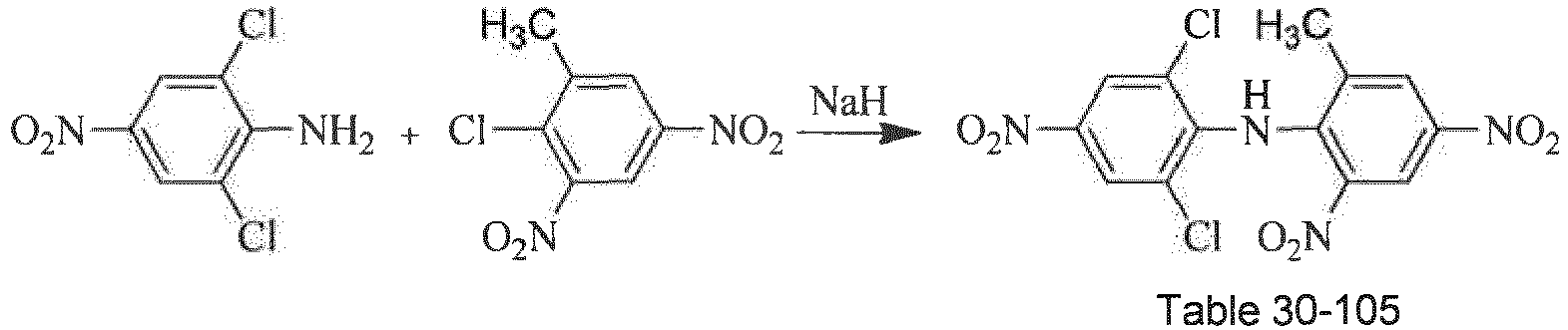
- 0.83 g (0.004mol) of 2,6-dichloro-4-nitroaniline was added in portions to a suspention of 0.32g (0.008mol) of NaH (60%) and 10 mL of DMF, the mixture was stirred for 30 min after addition, 1.04 g (0.0048mol) of 2-chloro-1-methyl-3,5-dinitrobenzene was added in portions within 30 min, then stirred for another 3 h. After the reaction was over by Thin-Layer Chromatography monitoring, the reaction mixture was poured into 50 mL of saturated brine and extracted with ethyl acetate, the extract was dried over anhydrous magnesium sulfate and concentrated under reduced pressure. The residue was purified through silica column (ethyl acetate/petroleum ether (boiling point range 60-90°C) = 1/10, as an eluent) to give 0.96 g of compound Table 30-105 as yellow solid, m.p. 146-148°C.
- 1H-NMR spectrum(300MHz, internal standard: TMS, solvent CDCl3) δ(ppm): 1.96(s, 3H), 8.26(d, 1H), 8.29(s, 2H), 8.95(d, 1H), 9.00(s, 1H).
- Other compounds of the present invention were prepared according to the above examples.
- Physical properties and 1HNMR spectrum (1HNMR, 300MHz, internal standard: TMS, ppm) of some compounds of this invention are as follows:
Table No. Compound No. Mp.( °C )and 1HNMR (300MHz, internal standard:TMS, solvent CDCl3) 6 3 m.p. 208-210°C.δ(CDCl3): 7.03 (s, 1H, NH), 7.27-7.38 (m, 3H, Ph-3,5,6-3H), 7.49-7.55 (m, 1H, Ph-4-H). 6 6 m.p. 212-214°C.δ(CDCl3): 2.29 (s, 3H, CH3), 7.00 (s, 1H, NH), 7.15 (d, H, Ph-6-H, J=7.5Hz), 7.28-7.34 (m, 3H, Ph-3,4,5-3H). 6 10 m.p. 258-260°C∘ δ(CDCl3): 7.12 (s, 1H, NH), 7.24 (d, 1H, Ph-6-H, J=7.5Hz), 7.47 (t, 1H, Ph-4-H, J=7.2Hz), 7.68 (t, 1H, Ph-5-H, J=7.5Hz), 7.78 (d, 1H, Ph-3-H, J=7.8Hz)∘ 6 14 m.p. 236-238°C. δ(CDCl3): 7.12 (s, 1H, NH), 7.28-7.40 (m, 1H, Ph-6-H), 7.41-7.52 (m, 2H, Ph-2,4-2H), 7.54-7.62 (m, 1H, Ph-5-H)∘ 6 19 m.p. 144-146°C∘ δ(CDCl3): 1.30 (s, 9H, t-C4H9), 6.65 (m, 2H, Ph-2,6-2H), 7.16 (s, 1H, NH), 7.18 (m, 2H, Ph-3,5-2H)∘ 6 21 m.p. 204-206°C∘ δ(CDCl3): 7.09 (s, 1H, NH), 7.22-7.32 (m, 4H, Ph-2,3,5,6-4H)∘ 6 23 m.p. 259-261°C∘ δ(CDCl3): 7.00 (s, 1H, NH), 7.17 (d, 2H, Ph-2,6-2H, J=8.7Hz), 7.42 (d, 2H, Ph-3,5-2H, J=9.0Hz)∘ 6 25 m.p. 246-248°C∘ δ(CDCl3): 2.29 (s, 3H, COOCH3), 7.08 (s, 1H, NH), 7.17 (d, 2H, Ph-3,5-2H, J=8.7Hz), 8.10 (d, 2H, Ph-2,6-2H, J=8.7Hz)∘ 6 31 m.p. 206-208°C∘ δ(CDCl3): 6.88 (s, 1H, NH), 6.99 (t, 2H, Ph-5,6-2H, J=8.1Hz), 7.32 (d, 1H, Ph-3-H, J=2.4Hz)∘ 6 35 m.p. 209-212 °C∘ 6.93 (s, 1H, NH), 7.34 (t, 1H, Ph-3-H, J=9.0Hz), 7.52 (d, 1H, Ph-4-H, J=7.2Hz), 7.58-7.65 (m, 1H, Ph-3-H)∘ 6 38 m.p. 218-220°C∘ δ(CDCl3): 7.03 (s, 1H, NH), 7.13 (dd, 1H, Ph-6-H, 3J=8.1Hz, 4J=0.9Hz), 7.28 (t, 1H, Ph-5-H, J=8.1Hz), 7.47 (dd, 1H, Ph-4-H, 3J=8.1Hz, 4J=0.9Hz)∘ 6 41 m.p. 235-237°C∘ δ(CDCl3): 6.61 (s, 1H, NH), 7.36 (t, 1H, Ph-4-H, J=7.2Hz), 7.45 (d, 2H, Ph-3,5-2H, J=7.2Hz)∘ 6 42 m.p. 240-242°C∘ δ(CDCl3): 2.32 (s, 3H, Ph-CH3), 6.93 (s, 1H, NH), 7.22-7.35 (m, 3H, Ph-3,4,5-H)∘ 6 44 m.p. 238-242°C∘ δ(CDCl3): 6.95 (s, 1H, NH), 7.05 (d, 2H, Ph-2,6-2H, J=1.8Hz), 7.32 (d, 1H, Ph-4-H, J=1.5Hz)∘ 6 47 m.p. 166-168°C∘ δ(CDCl3): 7.00 (s, 1H, NH), 7.20 (d, 1H, Ph-6-H, J=8.4Hz), 7.57 (dd, 1H, Ph-5-H, 3J=8.4Hz, 4J=1.5Hz), 7.78 (s, 1H, Ph-3-H)∘ 6 48 m.p. 197-199°C∘ δ(CDCl3): 7.02 (s, 1H, NH), 7.45 (s, 1H, Ph-6-H), 7.55 (d, 1H, Ph-4-H, J=8.4Hz), 7.65 (d, 1H, Ph-3-H, J=8.4Hz)∘ 6 49 m.p. 220-222°C∘ 7.04 (d, 1H, Ph-6-H, J=8.7Hz), 7.07 (s, 1H, NH), 8.20 (dd, 1H, Ph-5-H, 3J=9.0Hz, 4J=2.7Hz), 8.42 (d, 1H, Ph-3-H, J=2.7Hz)∘ 6 77 m.p. 200-202°C∘ δ(CDCl3): 2.27 (s, 3H, Ph-2-CH3), 6.86 (s, 1H, NH), 7.07 (d, 1H, Ph-6-H, J=8.4Hz), 7.23 (dd, 1H, Ph-5-H, 3J=8.4Hz, 4J=2.1Hz), 7.33 (s, 1H, Ph-3-H)∘ 6 78 m.p. 140-142°C∘ δ(CDCl3): 2.35(s, 3H, CH3), 6.99(s, 1H, NH), 7.08(d, 1H, Ph-6-H, J=8.1Hz), 7.19-7.25(m, 1H, Ph-5-H), 7.46(d, 1H, Ph-4-H, J=8.7Hz)∘ 6 80 m.p. 198-200°C∘ δ(CDCl3): 2.23 (s, 3H, CH3), 2.34 (s, 3H, CH3), 6.95 (s, 1H, NH), 6.95 (s, 1H, Ph-6-H), 7.13-7.22 (m, 2H, Ph-3,4-2H)∘ 6 83 m.p. 204-205°C∘ δ(CDCl3): 2.36 (s, 3H, COOCH3), 3.92 (s, 3H, Ph-3-CH3), 6.85 (s, 1H, NH), 7.12 (d, 1H, Ph-5-1H, J=8.4Hz), 7.92 (d, 1H, Ph-6-1H, J=8.4Hz), 8.02 (s, 1H, Ph-2-1H)∘ 6 84 m.p. 216-218°C∘ δ(CDCl3): 2.16 (s, 3H, CH3), 3.89 (s, 3H, COOCH3), 7.39 (t, 1H, Ph-4-H, J=7.8Hz), 7.51 (d, 1H, Ph-5-H, J=7.8Hz), 7.93 (d, 1H, Ph-3-H, J=7.8Hz)∘ 6 85 m.p. 242-243°C∘ δ(CDCl3): 7.07 (s, 1H, NH), 7.25 (d, 1H, Ph-6-H, J=2.1Hz), 7.42 (d, 1H, Ph-2-H, J=2.4Hz), 7.83 (d, 1H, Ph-5-H, J=8.4Hz)∘ 6 87 m.p. 232-234°C∘ δ(CDCl3): 6.94 (d, 1H, Ph-6-H, J=9.3Hz), 7.58 (dd, 1H, Ph-5-H, 3J=9.0Hz, 4J=2.7Hz), 8.26 (d, 1H, Ph-3-H, J=2.7Hz), 9.36 (s, 1H, NH)∘ 6 88 m.p. 236-238°C∘ δ(DMSO): 7.02 (dd, 1H, Ph-6-H, 3J=9.6Hz, 4J=2.7Hz), 8.32 (dd, 1H, Ph-5-H, 3J=9.3Hz, 4J=2.7Hz), 8.63 (d, 1H, Ph-3-H, J=2.7Hz)∘ 6 95 m.p. 201-203°C∘ δ(CDCl3): 6.91 (s, 1H, NH), 7.72 (s, 2H, Ph-3,5-2H)∘ 6 98 m.p. 259-261°C∘ δ(CDCl3): 6.91 (s, 1H, NH), 7.74 (s, 2H, Ph-3,5-2H)∘ 6 103 m.p. 267-269°C∘ δ(CDCl3): 7.28-7.30 (m, 1H, NHPh-4-H), 7.40 (t, 2H, NHPh-3,5-2H, J=6.9 Hz), δ=7.62 (d, 2H, NHPh-2,6-2H, J=7.8 Hz), δ=7.89-7.95 (m, 2H, NHCOPh-2,6-2H)∘ 6 107 m.p. 232-234°C∘ δ(CDCl3): 2.43 (s, 3H, Ph-CH3), 6.86 (s, 1H, NH), 8.14 (s, 1H, Ph-5-1H), 8.26 (s, 1H, Ph-3-1H)∘ 6 108 m.p. 196-198°C∘ δ(CDCl3): 2.55 (s, 3H, CH3), 6.99 (s, 1H, NH), 7.04 (d, 1H, Ph-6-H, J=8.4Hz), 7.36 (d, 1H, Ph-5-H, J=8.4Hz)∘ 6 109 m.p. 194-196°C∘ δ(CDCl3): 6.96 (s, 1H, NH), 7.67 (d, 1H, Ph-5-H, J=2.1Hz), 7.77 (d, 1H, Ph-3-H, J=2.4Hz)∘ 6 110 m.p. 197-199°C∘ 6.86 (s, 1H, NH), 8.05 (dd, 1H, Ph-5-H, 3J=9.9Hz, 4J=2.7Hz), 8.28 (d, 1H, Ph-3-H, J=2.4Hz)∘ 6 113 m.p. 248-250°C∘ δ(CDCl3): 6.95 (s, 1H, NH), 8.37 (d, 1H, Ph-3-H, J=2.7Hz), 8.49 (d, 1H, Ph-5-H, J=2.4Hz)∘ 6 114 m.p. 247-249°C∘ δ(CDCl3): 6.96 (s, 1H, NH), 8.51 (s, 2H, Ph-3,5-2H). 6 134 m.p. 176-178°C∘ δ(CDCl3): 1.15-1.27 (m, 6H, CH3), 2.49 (q, 4H, CH2, J=7.5Hz), 6.98 (s, 1H, NH), 7.14 (d, 1H, Ph-5-H, J=8.4Hz), 7.47 (d, 1H, Ph-3-H, J=8.4Hz)∘ 6 152 m.p. 222-223°C∘ δ(CDCl3): 2.22(s, 3H, CH3), 2.34(s, 3H, CH3), 6.88(s, 1H, NH), 7.00(s, 1H, Ph-6-H), 7.30(s, 1H, Ph-3-H)∘ 6 176 m.p. 260-262°C∘ δ(CDCl3): 2.06(s, 3H, CH3), 2.98(d, 3H, NHCH3, J=4.8Hz), 6.38(s, 1H, CONH), 7.67(s, 2H, Ph-3,5-2H), 9.38(s, 1H, NH)∘ 6 178 m.p. 240-242 °C∘ δ(CDCl3): 2.08(s, 3H, CH3), 2.93(d, 3H, NCH3, J=5.1Hz), 6.22(s, 1H, CONH), 7.35-7.38(m, 2H, Ph-3,5-2H), 8.59(s, 1H, NH)∘ 6 180 m.p. 180-182°C∘ δ(CDCl3): 2.69 (s, 3H, CH3), 7.12 (s, 1H, NH), 7.24-7.68 (m, 4H, Ph)∘ 6 206 m.p. 156-158°C∘ δ(CDCl3): 2.51 (s, 3H, CH3), 8.67 (s, 1H, Ph), 8.89 (s, 1H, NH)∘ 9 8 Yellow oil∘ δ(CDCl3): 1.13-1.21 (m, 6H, CH3), 3.46 (q, 4H, CH2, J=7.2Hz), 6.90 (s, 1H, NH), 7.13 (t, 2H, Ph-2,6-2H, J=7.5Hz), 7.31 (d, 1H, Ph-4-H, J=7.5Hz), 7.42 (t, 2H, Ph-3,5-2H, J=7.2Hz)∘ 10 99 m.p. 127-129°C∘ δ(CDCl3): 3.22 (s, 6H, CH3), 6.85 (s, 1H, NH), 8.32 (s, 2H, Ph-3,5-2H). 12 99 m.p. 198-200°C∘ δ(CDCl3): 4.25 (s, 3H, CH3), 6.87 (s, 1H, NH), 8.32 (s, 2H, Ph-3,5-2H). 14 4 m.p. 142-144°C∘ δ(CDCl3): 4.14 (s, 3H, OCH3), 4.17 (t, 3H, OCH3, J=4.2Hz), 6.91 (s, 1H, Ph-NH-Ph), 7.18 (d, 2H, Ph-2,6-2H, J=7.8Hz), 7.32 (t, 1H, Ph-4-H, J=7.2Hz), 7.42 (t, 2H, Ph-3,5-2H, J=7.5Hz)∘ 16 2 m.p. 176-178°C∘ δ(CDCl3): 3.26 (d, 3H, NCH3, J=8.7Hz), 3.37 (d, 3H, NCH3 J=8.1Hz), 5.04 (br, 1H, Ph-NH-C), 5.26 (br, 1H, Ph-NH-C), 6.35 (s, 1H, Ph-NH-Ph), 7.04 (d, 2H, Ph-2,6-2H, J=8.1Hz), 7.14 (t, 1H, Ph-4-H, J=7.2Hz), 7.35 (t, 2H, Ph-3,5-2H, J=7.5Hz)∘ 22 11 m.p. 158-160°C∘ δ(CDCl3): 2.10(s, 3H), 6.83(d, 4H),7.12(m, 2H), 7.34(m, 4H), 8.56(s, 1H)∘ 22 22 m.p. 172-174°C∘ δ(DMSO): 2.34(s, 3H), 6.83(d, 2H),8.06(d, 2H), 8.64(s, 1H), 9.49(s, 1H)∘ 22 23 m.p. 184-186°C∘ δ(CDCl3): 2.22(s, 3H), 6.87(d, 2H),7.62(d, 2H), 8.66(s, 1H), 8.93 (s, 1H)∘ 22 24 m.p. 91-94C∘ δ(CDCl3): 2.14(s, 3H), 6.91(d, 2H),7.21(d, 2H), 8.71 (s, 1H), 9.20(s, 1H)∘ 22 31 m.p. 136-138°C∘ δ(CDCl3): 2.12(s, 3H), 7.21(m, 2H), 7.26(m, 1H), 8.72(s, 1H), 9.00(s, 1H)∘ 22 47 m.p. 106-108°C∘ δ(CDCl3): 2.22(s, 3H), 6.55(d, 1H), 7.43(d, 1H), 7.75(s, 1H), 8.65(s, 1H), 8.87(s, 1H)∘ 22 48 m.p. 110-112°C∘ δ(CDCl3): 2.03(s, 3H), 2.50(s, 3H), 6.50(d, 1H), 7.05(t, 1H), 7.24(d, 1H), 8.73(s, 1H), 9.06(s, 1H)∘ 22 50 m.p. 191-193°C∘ δ(CDCl3): 2.29(s, 3H), 6.48(d, 1H), 8.06(d, 1H), 8.41(s, 1H), 8.62(s, 1H), 8.79(s, 1H)∘ 22 56 m.p. 146-148°C∘ δ(CDCl3): 1.86(s, 3H), 2.40(s, 3H), 7.18(m, 2H), 7.28(m, 1H), 8.80(s, 1H), 9.52(s, 1H)∘ 22 58 m.p. 133-135°C∘ δ(CDCl3): 2.03(s, 3H), 2.50(s, 3H), 6.53(d, 1H), 7.06(t, 1H), 7.21(d, 1H), 8.74(s, 1H), 9.08(s, 1H)∘ 22 61 m.p. 206-208°C∘ δ(CDCl3): 2.25(s, 3H), 6.48(d, 1H), 7.47(d, 1H), 7.77(s, 1H), 8.62(s, 1H), 8.80(s, 1H)∘ 22 63 m.p. 259-261°C∘ δ(CDCl3): 2.38(s, 3H), 6.54(d, 1H), 7.70(d, 1H), 8.50(s, 1H), 8.62(s, 1H), 10.51(s, 1H)∘ 22 80 m.p. 121-123°C∘ δ(CDCl3): 2.02(s, 3H), 2.40(s, 3H), 6.53(d, 1H),7.10(d, 1H), 7.27(s, 1H), 8.74(s, 1H), 9.03(s, 1H)∘ 22 86 oil∘ δ(DMSO): 2.33(s, 3H), 6.92(d, 1H), 7.26(s, 1H), 7.78(d, 1H), 8.63(s, 1H), 9.54(s, 1H)∘ 22 88 m.p. 204-205°C∘ δ(CDCl3): 2.31(s, 3H), 6.48(d, 1H), 7.43(d, 1H), 8.26(s, 1H), 8.54(s, 1H), 10.36(s, 1H)∘ 22 89 m.p. 185-186°C∘ δ(CDCl3): 2.41(s, 3H), 6.56(d, 1H), 8.31(d, 1H), 8.52(s, 1H), 9.23(s, 1H), 10.59(s, 1H)∘ 22 93 m.p. 148-150°C∘ δ(CDCl3): 2.12(s, 3H), 7.04(d, 2H), 8.70(s, 1H), 8.87(s, 1H)∘ 22 94 m.p. 154-156°C∘ δ(CDCl3): 2.21(s, 3H), 7.20(m, 1H), 7.80(m, 1H), 8.59(s, 1H), 9.94(s, 1H)∘ 22 95 m.p. 140-142°C∘ δ(CDCl3): 2.17(s, 3H), 7.19(d, 2H), 8.71(s, 1H), 8.94(s, 1H)∘ 22 97 m.p. 142-143°C∘ δ(CDCl3): 2.20(s, 3H), 6.59(s, 1H), 7.58(s, 1H), 8.67(s, 1H), 8.80(s, 1H)∘ 22 98 m.p. 160-162°C∘ δ(CDCl3): 1.95(s, 3H), 7.41(s, 2H), 8.72(s, 1H), 9.19(s, 1H)∘ 22 104 m.p. 180-182°C∘ δ(CDCl3): 1.99(s, 3H), 7.69(s, 2H), 8.67(s, 1H), 9.00(s, 1H)∘ 22 106 m.p. 169-171°C∘ δ(CDCl3): 2.32(s, 3H), 6.42(s, 1H), 8.20(s, 1H), 8.60(s, 1H), 8.62(s, 1H)∘ 22 107 m.p. 132-134°C∘ δ(CDCl3): 1.95(s, 3H), 3.96(s, 3H), 8.05(s, 2H), 8.70(s, 1H), 9.13(s, 1H)∘ 22 116 m.p. 216-219°C∘ δ(CDCl3): 2.30(s, 3H), 7.88(s, 2H), 8.48(s, 1H), 8.85(s, 1H)∘ 22 118 m.p. 169-171°C∘ δ(CDCl3): 2.26(s, 3H), 8.50(d, 2H), 8.99(s, 1H), 10.14(s, 1H)∘ 22 119 m.p. 160-161°C∘ δ(CDCl3): 2.13(s, 3H), 2.54(s, 3H), 6.40(d, 1H), 7.19(d, 1H), 8.68(s, 1H), 8.96(s, 1H)∘ 22 122 m.p. 135-137°C∘ δ(CDCl3): 2.16(s, 3H), 7.95(dd, 1H), 8.26(t, 1H), 8.63(s, 1H), 8.82(s, 1H)∘ 22 123 m.p. 151-153°C∘ δ(CDCl3): 1.99(s, 3H), 8.31(d, 1H), 8.47(d, 1H), 8.66(s, 1H), 9.00(s, 1H)∘ 22 124 m.p. 96-97°C∘ δ(CDCl3): 2.21(s, 3H), 5.08(m, 1H), 6.59(s, 1H), 7.49(s, 1H), 8.66(s, 1H), 8.78(s, 1H)∘ 22 125 m.p. 192-194°C∘ δ(CDCl3): 2.20(s, 3H), 7.05(s, 2H), 8.04(s, 1H), 8.22(s, 1H), 9.07(s, 1H), 9.43(s, 1H)∘ 22 126 m.p. 125-127°C∘ δ(CDCl3): 1.94(s, 3H), 7.53(s, 2H), 8.75(s, 1H), 9.29(s, 1H)∘ 22 129 m.p. 151-154°C∘ δ(CDCl3): 1.97(s, 3H), 8.49(s, 2H), 8.68(s, 1H), 9.03(s, 1H)∘ 22 130 m.p. 172-175°C∘ δ(DMSO): 2.32(s, 3H), 8.49(s, 1H), 8.68(s, 2H), 9.50(s, 1H)∘ 22 133 m.p. 131-132°C∘ δ(CDCl3): 2.10(s, 3H), 6.99(t, 2H), 7.17(m, 1H), 8.72(s, 1H), 8.98(s, 1H)∘ 22 139 m.p. 158-161°C∘ δ(CDCl3): 2.16(s, 3H), 2.61(s, 3H), 6.47(d, 1H), 7.67(d, 1H), 8.69(s, 1H), 8.85(s, 1H)∘ 22 140 m.p. 137-139°C∘ δ(CDCl3): 1.91(s, 3H), 2.31(s, 3H), 8.10(s, 1H), 8.21(s, 1H), 8.73(s, 1H), 9.20(s, 1H)∘ 22 152 m.p. 160-162°C∘ δ(CDCl3): 2.18(s, 3H), 7.88(d, 1H), 8.32(d, 1H), 8.55(s, 1H), 9.97(s, 1H)∘ 22 163 m.p. 241-243°C∘ δ(CDCl3): 1.97(s, 3H), 7.83(s, 2H), 8.69(s, 1H), 9.11 (s, 1H)∘ 22 164 δ(CDCl3): 1.94(s, 3H), 3.03(d, 3H), 7.78(s, 2H), 8.70(s, 1H), 9.14(s, 1H)∘ 22 169 m.p. 187-190°C∘ δ(CDCl3): 2.18(s, 3H), 8.23(s, 2H), 8.57(s, 1H), 10.39(s, 1H)∘ 22 170 oil∘ δ(CDCl3): 2.27(s, 3H), 8.52(s, 1H), 9.09(s, 2H), 10.93(s, 1H)∘ 22 171 m.p. 93-95°C∘ δ(CDCl3): 2.19(s, 3H), 8.14(s, 2H), 8.56(s, 1H), 10.42(s, 1H)∘ 22 172 m.p. 204-206°C∘ δ(DMSO): 2.32(s, 3H), 7.03(s, 1H), 8.73(s, 1H), 8.86(s, 1H), 10.40(s, 1H)∘ 22 180 m.p. 127-129°C∘ δ(CDCl3): 2.36(s, 3H), 6.55(s, 1H), 8.40(s, 1H), 8.54(s, 1H), 10.31(s, 1H)∘ 22 207 m.p. 159-162°C∘ δ(CDCl3): 2.16(s, 3H), 8.23(s, 1H), 8.63(s, 1H), 8.91(s, 1H)∘ 22 208 m.p. 133-135°C∘ δ(CDCl3): 2.07(s, 3H), 7.70(s, 1H), 8.69(s, 1H), 9.22(s, 1H)∘ 23 22 m.p. 136-138°C∘ δ(CDCl3): 2.22(s, 3H), 6.70(d, 2H), 7.41(d, 1H), 8.00(d, 1H), 8.16(d, 2H), 8.22(s, 1H)∘ 23 23 m.p. 146-148°C∘ δ(CDCl3): 2.19(s, 3H), 6.70(d, 2H), 7.36(d, 1H), 7.53(d, 2H), 7.96(d, 1H), 8.20(s, 1H)∘ 23 24 m.p. 72-74°C∘ δ(CDCl3): 2.12(s, 3H), 6.75(d, 2H), 7.12(d, 2H), 7.25(d, 1H), 7.98(d, 1H), 8.46(s, 1H)∘ 23 63 m.p. 158-160°C∘ δ(CDCl3): 2.30(s, 3H), 6.47(d, 1H), 7.59(m, 2H), 7.94(d, 1H), 8.60(s, 1H), 10.21(s, 1H)∘ 23 77 m.p. 136-138°C∘ δ(CDCl3): 2.22(s, 3H), 6.75(d, 1H), 7.03(s, 1H), 7.45(d, 1H), 7.67(d, 1H), 7.99(d, 1H), 8.16(s, 1H)∘ 23 80 oil∘ δ(CDCl3): 2.02(s, 3H), 2.38(s, 3H), 6.34(d, 1H), 7.00(d, 1H), 7.18(m, 2H), 7.98(d, 1H), 8.30(s, 1H)∘ 23 97 m.p. 112-114°C∘ δ(CDCl3): 2.18(s, 3H), 6.38(s, 1H), 7.38(d, 1H), 7.50(s, 1H), 7.97(d, 1H), 8.11(s, 1H)∘ 23 101 oil∘ δ(CDCl3): 1.92(s, 3H), 7.22(d, 1H), 7.58(s, 2H), 7.93(d, 1H), 8.39(s, 1H)∘ 24 47 m.p. 138-140°C∘ δ(CDCl3): 2.58(s, 3H), 3.37(s, 3H), 7.23(d, 1H), 7.48(s, 1H), 7.57(d, 1H), 8.08(s, 1H)∘ 24 170 m.p. 140-142°C∘ δ(CDCl3): 2.58(s, 3H), 3.30(s, 3H), 8.38(s, 1H), 8.57(s, 2H)∘ 25 105 m.p. 134-136°C∘ δ(CDCl3): 1.79(s, 3H), 3.96(s, 3H), 8.29(s, 2H), 8.74(s, 1H), 9.18(s, 1H)∘ 26 105 m.p. 132-134°C∘ δ(CDCl3): 2.11(s, 3H), 2.39(s, 3H), 8.29(s, 2H), 8.47(s, 1H), 8.95(s, 1H)∘ 27 164 m.p. 216-218°C∘ δ(CDCl3): 1.56(s, 3H), 3.04(m, 6H), 7.80(s, 2H), 8.18(s, 1H), 9.13(s, 1H), 9.58(s, 1H)∘ 28 105 m.p. 178-180°C∘ δ(CDCl3): 1.71(s, 3H), 2.86(s, 6H), 8.29(s, 2H), 8.66(s, 1H), 9.45(s, 1H)∘ 30 101 m.p. 155-157°C∘ δ(CDCl3): 1.90(s, 3H), 7.66(s, 2H), 8.21(s, 1H), 8.98(s, 1H), 9.19(s, 1H)∘ 30 104 m.p. 183-185°C∘ δ(CDCl3): 1.93(s, 3H), 7.68(s, 2H), 8.23(d, 1H), 8.94(d, 1H), 9.03(s, 1H)∘ 30 120 m.p. 175-177°C∘ δ(CDCl3): 2.00(s, 3H), 7.54(d, 1H), 7.71(d, 1H), 8.28(d, 1H), 8.96(d, 1H), 9.02(s, 1H)∘ 30 122 m.p. 108-110°C∘ δ(CDCl3): 2.11(s, 3H), 7.95(dd, 1H), 8.26(d, 1H), 8.31(d, 1H), 8.79(s, 1H), 8.92(d, 1H)∘ - The human cancer cell lines used for this assay were lung cancer A549 and leukemia HL-60.
- The concentrations of compounds used for this assay were 0.01, 0.1, 1, 10, 100µM. Based on in vitro cell culture, we use the MTT assay to detect the inhibitory rate of each compound.
- The A549 or HL-60 cells were picked up from cell incubator, after washed for twice using PBS, cells were digested by 0.25% trypsin, and then add medium to terminate the digestion. After cells were collected using centrifuge and re-suspended, count cells under inverted microscope and add medium to make a density was 5 × 10⁴ cells/mL. After 100 µL aliquots were added to each well of 96-well microtiter plates, cells were cultured in 5% incubator for overnight at 37°C, then the different concentration compounds were added to each well. After incubation for 48h, MTT solution was added to each well and plates were then incubated for 4h. The MTT tetrazolium was reduced to formazan by living cells. Then the formazan crystals were dissolved through adding DMSO to each well. The absorbance was read at 570 nm with a microplate reader.
- Part of the test results are as follows:
Table 31. Proliferation inhibitory effect of the compounds on A549 cell (% of Control) Compounds No. Concentration (µM) 100 10 1 0.1 0.01 6-1 19.8 20.4 16.9 12.1 13.1 6-23 93.8 93.7 2.5 -1.8 -0.8 6-35 92.7 58.6 1.0 -0.8 0.5 6-39 92.6 24.9 19.6 18.8 18.3 6-41 92.0 84.0 13.1 0.7 3.8 6-93 98.2 80.3 74.8 39.4 12.1 6-98 93.2 90.1 11.7 -0.7 -2.5 6-99 86.3 83.6 55.0 0 0 6-113 93.7 75.6 2.6 2.9 9.2 6-114 94.9 82.1 11.5 2.8 10.1 22-33 90.3 78.7 61.3 -1.1 -1.6 22-93 91.4 73.7 -0.2 -1.8 -2.2 22-101 97.5 66.4 19.1 21.4 13.7 22-105 89.8 80.6 49.9 8.8 16 22-120 92.1 86.8 9.8 0 0.8 22-121 89.5 51.2 9.9 12.4 6.2 22-153 85.2 60.6 14.7 0 3.7 22-208 91.3 83.2 2.4 -1.2 -1.0 25-105 93.7 78.0 0.9 2.2 3.1 28-105 89.6 54.9 2.7 5.3 4.1 29-105 91.9 94.2 72.7 -0.5 -0.2 30-104 91.8 78.4 -0.1 1.1 2.4 30-120 92.0 84.0 -0.7 -0.9 -1.5 Table 32. Proliferation inhibitory effect of the compounds on HL-60 cells (% of Control) Compounds No. Concentration (µM) 100 10 1 0.1 0.01 6-1 61.9 63.9 18.8 10.4 11.5 6-3 94.5 72.2 -2.1 -6.3 -7.1 6-10 77.1 78.5 9.8 16.1 21.8 6-23 90.6 93.2 23.1 10.8 2.3 6-35 89.9 72.3 -1.8 -5.0 -8.3 6-39 80.8 78.5 31.0 14.7 11.9 6-41 87.9 86.5 7.8 3.9 6.5 6-93 74.8 72.3 70.7 51.8 0 6-98 95.1 91.7 30.0 10.1 -2.5 6-99 54.8 56.5 60.2 34.2 8.6 6-109 94.4 52.4 2.9 2.2 0.1 6-113 93.1 85.4 9.3 8.8 -3.8 6-114 93.2 87.5 20.7 10.0 -0.4 6-205 91.9 59.5 5.8 12.6 -3.4 22-24 94.3 82.4 -9.3 -16.7 -22.4 22-33 81.2 66.2 54.3 -1.8 -4.9 22-61 89.8 85.7 11.0 7.8 5.2 22-88 94.1 79.1 -24.6 -32.9 -35.2 22-93 95.4 70.4 6.8 -7.1 -3.6 22-95 95.4 76.0 32.6 -4.0 0.3 22-98 91.0 77.7 9.5 1.3 -7.3 22-101 64.7 73.4 48.6 5.5 8.3 22-104 94.0 60.5 -2.1 -7.3 4.1 22-105 53.8 70.4 71.1 31.7 27.2 22-107 94.4 65.4 -7.0 -9.3 2.8 22-120 61.0 63.1 19.7 20.5 9.6 22-121 61.2 73.6 47.6 12.5 13 22-122 94.6 57.2 11.7 -1.9 6.3 22-153 65.8 73.4 59.6 7.3 12.9 22-207 90.5 61.9 0.4 -3.6 7.3 22-208 91.2 91.2 28.9 -14.0 -8.0 25-105 88.0 80.2 20.0 4.4 3.1 26-105 88.0 80.2 20.0 4.4 3.1 28-105 77.2 88.4 13.3 -3.7 4.9 29-105 91.5 95.1 94.7 70.2 11.2 30-101 80.7 57.3 -0.3 -14.2 -6.4 30-104 93.3 88.0 65.3 31.6 21.8 30-105 89.0 85.6 80.6 43.6 -6.8 30-120 95.7 95.9 70.6 39.2 23.6 30-122 82.4 61.3 18.0 7.4 10.7 - The human cancer cell lines used for this assay were: non-small cell lung cancer A549 ,NCI-H1650 and NCI-H358, leukemia HL-60, CCRF-CEM and MOLT-4, colon cancer HT-29 and COLO-205, pancreatic cancer BXPC-3, hepatocarcinoma SK-HEP-1, cervical cancer Hela, bladder cancer T24, prostate cancer DU-145 and PC-3, osteosarcoma MG-63, breast cancer MDA-MB-231, intracranial malignant melanoma A375, glioma U251, nasopharyngeal carcinoma CNE.
- The concentrations of compounds used for this assay were 0.01, 0.1, 1, 10, 100µM. Based on in vitro cell culture, we use the CCK-8 assay to detect the inhibitory rate of each compound.
- The non-small cell lung cancer A549 ,NCI-H1650 and NCI-H358, colon cancer HT-29 and COLO-205, pancreatic cancer BXPC-3, hepatocarcinoma SK-HEP-1, cervical cancer Hela, bladder cancer T24, prostate cancer DU-145 and PC-3, osteosarcoma MG-63, breast cancer MDA-MB-231, intracranial malignant melanoma A375, glioma U251, nasopharyngeal carcinoma CNE were picked up from cell incubator. After the cell culture flasks gently shaking, culture fluid was discarded in clean bench. Then washed cells for twice using PBS, and add 0.25% trypsin to digest, when the cells were turning round, add medium to terminate digestion. Cells were collected and transferred to centrifuge tube. For the non-adherent cells HL-60, CCRF-CEM and MOLT-4, cell flasks were picked up from incubator and then transferred to the centrifuge tubes directly. After cells were collected using centrifuge at 1000rpm/min for 5min, the fluid was discarded. Then cells were washed for one time by PBS, discard fluid. Then add some medium, count cells under inverted microscope using blood cell counting plate, according the counting number to making the density of adherent cell was 1 × 10⁵ cells/mL, the non-adherent cell was 2 × 10⁵ cells/mL (the volumes of HL-60, CCRF-CEM, MOLT-4 are smaller than non-adherent cells, these cells added to each well was much more higher). Add 50 µL aliquots to each well of 96-well plates (the density of adherent cells was 5000 cells/well, non-adherent cells was 10000 cells/well). Blank control, Negative control, blank control with compounds and positive control wells were grouped, and three replicate wells were used for each data point in the experiments. Then the cells were cultured in 5% incubator for overnight at 37°C, Then the different concentration compounds were added to each well. After incubation for 48h, according to the manufacturer's instructions, CCK-8 reagent (10µl) was added and incubation was continued for a further 2-4 h. The absorbance (A) of each well was read at 450 nm using a plate reader.
Table 33. Proliferation inhibitory effect of the compounds on A549 cells (% of Control) Compounds No. Concentration (µM) 100 10 1 0.1 0.01 6-24 87.36 60.31 31.44 24.27 22.06 6-25 81.32 55.87 17.11 18.59 15.66 6-47 99.91 55.57 53.58 49.86 42.56 6-93 98.18 87.64 70.04 19.35 14.77 6-95 98.69 97.88 78.63 56.27 39.65 6-100 89.94 57.45 52.15 50.53 43.98 6-111 99.83 80.03 53.14 29.42 23.15 6-112 99.26 89.34 76.90 47.20 46.52 6-201 83.86 60.23 26.90 19.63 14.31 Table 34. Proliferation inhibitory effect of the compounds on HL-60 cells (% of Control) Compounds No. Concentration (µM) 100 10 1 0.1 0.01 6-24 95.11 56.72 48.39 17.55 0.00 6-25 84.30 92.02 84.06 42.54 11.52 6-43 78.53 73.80 38.45 31.60 23.65 6-45 80.30 52.09 39.89 27.78 0.00 6-47 98.51 83.33 41.47 34.70 7.02 6-93 93.71 87.80 82.05 44.96 30.19 6-95 96.40 94.99 94.76 43.28 0.00 6-100 97.42 49.85 39.47 26.90 14.24 6-111 99.28 95.16 79.31 41.52 13.70 6-112 96.45 97.63 91.55 59.46 48.31 6-201 98.14 86.76 75.70 48.61 40.59 Table 35. The half maximal inhibitory concentration (IC50) of the compounds Tumor cells Cell culture Compound6-93 Gefitinib Taxol Non-small-cell carcinoma A549 0.715 33.688 83.528 NCI-H1650 1.366 16.260 0.420 NCI-H358 0.443 1.166 0.278 leukemia HL-60 0.085 34.445 <0.01 CCRF-CEM <0.01 12.691 <0.01 MOLT-4 0.167 25.839 <0.01 Colorectal Cancer HT-29 0.224 18.310 >100 COLO-205 0.125 6.973 <0.01 Prostate cancer DU-145 0.646 3.371 17.428 PC-3 1.356 77.363 69.019 cervical cancer Hela 1.509 35.442 <0.01 bladder cancer T24 0.603 31.346 3.535 nasopharyngeal CNE 6.078 43.682 >100 glioma U251 1.616 26.801 >100 pancreatic cancer BXPC-3 0.331 24.011 <0.01 hepatocarcinoma SK-HEP-1 0.489 9.074 0.047 breast cancer MDA-MB-231 0.175 >100 2.018 melanoma A375 0.160 35.463 55.345 osteosarcoma MG-63 0.196 33.706 <0.01

Claims (18)
- Substituted diphenylamine compounds use thereof as antitumor agents, characterized in that wherein general formula I:
 R1 is selected from H, C1-C8alkyl, C3-C8cycloalkyl, C1-C8haloalkyl, C1-C8alkylcarbonyl, C1-C8haloalkylcarbonyl, C1-C8alkoxycarbonyl, C1-C8alkylaminocarbonyl, C1-C8alkylthio, C1-C8haloalkylthio, C1-C8alkylsulfonyl, C1-C8alkoxyC1-C8alkyl, C1-C8alkoxyC1-C8alkylcarbonyl, C1-C8alkoxycarbonylC1-C8alkyl, C1-C8alkylaminothio, C2-C8dialkylaminothio, C2-C8alkenyl, C2-C8alkynyl, C2-C8haloalkenyl, C2-C8haloalkynyl, aryl C1-C8alkyl or CO-X-CO2R12, in which X is selected from (CHR12)n, CR12=CR13 or C6H4, n=1-6;R2 and R6 may be the same or different, respectively selected from H, halogen, CN, NO2, COOH, C(=O)NR12R13, C1-C8alkyl, C1-C8haloalkyl, C1-C8alkoxy, C1-C8haloalkoxy, C1-C8alkylthio, C1-C8haloalkylthio, C2-C8alkenyl, C2-C8alkynyl, C1-C8alkylsulfonyl, C1-C8alkylcarbonyl, C1-C8alkoxycarbonyl, C1-C8alkoxyC1-C8alkyl, C1-C8alkoxycarbonylC1-C8alkyl, or the following groups unsubstituted or substituted with 1-5 R14: aryl, arylmethyl, aryloxy, arylamino, arylcarbonyl, arylmethylcarbonyl, aryloxycarbonyl, arylaminocarbonyl or heteroaryloxy, and when the number of the substitutes is more than 1, R14 may be the same or different;R3 and R5 may be the same or different, respectively selected from H, halogen, CN, NO2, COOH, C(=O)NR12R13, C1-C8alkyl, C1-C8haloalkyl, C1-C8alkoxy, C1-C8haloalkoxy, C1-C8alkylamino, C1-C8haloalkylamino, C1-C8alkylthio, C1-C8haloalkylthio, C2-C8alkenyl, C2-C8alkynyl, C1-C8alkylsulfonyl, C1-C8alkylcarbonyl, C1-C8alkoxycarbonyl, C1-C8alkoxyC1-C8alkyl, C1-C8alkoxycarbonylC1-C8alkyl, C1-C8alkylcarbonyloxy, C1-C8alkoxycarbonyloxy, C1-C8alkylaminocarbonyloxy, C1-C8alkylsulfonyloxy, C1-C8alkoxyC1-C8alkoxy, C1-C8haloalkoxyC1-C8haloalkoxy, C1-C8alkoxycarbonylC1-C8alkoxy, or the following groups unsubstituted or substituted with 1-5 R14: aryl, arylmethyl, aryloxy, arylamino, arylcarbonyl, arylmethylcarbonyl, aryloxycarbonyl, arylaminocarbonyl or heteroaryloxy, and when the number of the substitutes is more than 1, R14 may be the same or different;R4 is selected from H, halogen, CN, NO2, COOH, CO2Na, CO2NH4, C(=O)NR12R13, C1-C8alkyl, C1-C8haloalkyl, C1-C8alkoxy, C1-C8haloalkoxy, C2-C8alkenyl, C2-C8alkynyl, C1-C8alkylsulfonyl, C1-C8alkylcarbonyl, C1-C8alkoxycarbonyl, C1-C8alkoxyC1-C8alkyl, C1-C8alkoxycarbonylC1-C8alkyl, C1-C8alkoxyC1-C8alkoxy, C1-C8haloalkoxyC1-C8haloalkoxy, SO2NR12R13, or the following groups unsubstituted or substituted with 1-5 R14: aryl, arylmethyl, aryloxy, arylamino, arylcarbonyl, arylmethylcarbonyl, aryloxycarbonyl, arylaminocarbonyl or heteroaryloxy, and when the number of the substitutes is more than 1, R14 may be the same or different;R7 is selected from Cl or CH3;R8 is selected from H, halogen, OH, CN, NO2, COOH, C1-C8alkyl, C1-C8haloalkyl, C1-C8alkoxy, C1-C8haloalkoxy, C1-C8alkylamino, C1-C8haloalkylamino, C1-C8alkylthio, C1-C8haloalkylthio, C1-C8alkylsulfonyl, C3-C8cycloalkyl, C2-C8dialkylamino, C3-C8alkenyloxy, C3-C8haloalkenyloxy, C3-C8alkynyloxy, C3-C8haloalkynyloxy, C1-C8alkylcarbonyloxy, C1-C8alkylcarbonylamino, C1-C8alkylsulfonyloxy, C1-C8alkoxyC1-C8alkoxy, C1-C8alkoxycarbonylC1-C8alkoxy, or the following groups unsubstituted or substituted with 1-5 R14: aryloxy, arylamino, arylmethoxy, arylmethylamino, heteroaryloxy or heteroarylamino, and when the number of the substitutes is more than 1, R14 may be the same or different;R9 is selected from H, halogen, NO2, CN, C(=O)NR12R13, C(=S)NR12R13, C1-C8alkylaminocarbonyl, C1-C8alkoxycarbonyl, C1-C8haloalkyl or C1-C8alkylsulfonyl;R10 is selected from H, halogen, OH, CN, NO2, COOH, C1-C8alkyl, C1-C8haloalkyl, C1-C8alkoxy, C1-C8haloalkoxy, C1-C8alkylamino, C1-C8haloalkylamino, C1-C8alkylthio, C1-C8haloalkylthio, C1-C8alkylsulfonyl, C2-C8dialkylamino, C3-C8alkenyloxy, C3-C8haloalkenyloxy, C3-C8alkynyloxy, C3-C8haloalkynyloxy, C1-C8alkylcarbonyloxy, C1-C8alkylcarbonylamino, C1-C8alkylsulfonyloxy, C1-C8alkoxyC1-C8alkoxy or C1-C8alkoxycarbonylC1-C8alkoxy;R11 is selected from CN or NO2,R12 and R13 may be the same or different, respectively selected from H, C1-C6alkyl or C3-C6cycloalkyl;R14 is selected from halogen, NO2, CN, C1-C6alkyl, C1-C6haloalkyl, C1-C6alkoxy, C1-C6haloalkoxy, C1-C6alkylthio, C1-C6alkylcarbonyl, C1-C6alkoxycarbonyl, C2-C6alkenyl, C2-C6haloalkenyl, C3-C6alkenyloxy, C3-C6haloalkenyloxy, C2-C6alkynyl, C2-C6haloalkynyl, C3-C6alkynyloxy, C3-C6haloalkynyloxy, C1-C6haloalkylthio, C1-C6haloalkylcarbonyl, C1-C6alkylamino, C1-C6haloalkylamino, C2-C8dialkylamino, C1-C6alkylcarbonylamino, C1-C6haloalkylcarbonylamino, C1-C6alkylaminocarbonyl or C1-C6haloalkylaminocarbonyl;Or the salts of the compounds having general fomula I.
 - The uses according to the claim 1, characterized in that wherein general formula I:R7 is selected from Cl;R9 and R11 are selected from CN;The structures are as general formula II:
 R1 is selected from H, C1-C8alkyl, C3-C8cycloalkyl, C1-C8haloalkyl, C1-C8alkylcarbonyl, C1-C8haloalkylcarbonyl, C1-C8alkoxycarbonyl, C1-C8alkylaminocarbonyl, C1-C8alkylsulfonyl, C1-C8alkoxyC1-C8alkyl, C1-C8alkoxyC1-C8alkylcarbonyl, C1-C8alkoxycarbonylC1-C8alkyl, C2-C8alkenyl, C2-C8alkynyl, C2-C8haloalkenyl, C2-C8haloalkynyl, aryl C1-C8alkyl or CO-X-CO2R12, in which X is selected from (CHR12)n, CR12=CR13 or C6H4, n=1-6;R2 and R6 may be the same or different, respectively selected from H, halogen, CN, NO2, COOH, C(=O)NR12R13, C1-C8alkyl, C1-C8haloalkyl, C1-C8alkoxy, C1-C8haloalkoxy, C1-C8alkylthio, C1-C8haloalkylthio, C2-C8alkenyl, C2-C8alkynyl, C1-C8alkylsulfonyl, C1-C8alkylcarbonyl, C1-C8alkoxycarbonyl, C1-C8alkoxyC1-C8alkyl, C1-C8alkoxycarbonylC1-C8alkyl, or the following groups unsubstituted or substituted with 1-5 R14: aryl, arylmethyl, aryloxy, arylamino, arylcarbonyl, arylmethylcarbonyl, aryloxycarbonyl, arylaminocarbonyl or heteroaryloxy, and when the number of the substitutes is more than 1, R14 may be the same or different;R3 and R5 may be the same or different, respectively selected from H, halogen, CN, NO2, COOH, C(=O)NR12R13, C1-C8alkyl, C1-C8haloalkyl, C1-C8alkoxy, C1-C8haloalkoxy, C1-C8alkylamino, C1-C8haloalkylamino, C1-C8alkylthio, C1-C8haloalkylthio, C2-C8alkenyl, C2-C8alkynyl, C1-C8alkylsulfonyl, C1-C8alkylcarbonyl, C1-C8alkoxycarbonyl, C1-C8alkoxyC1-C8alkyl, C1-C8alkoxycarbonylC1-C8alkyl, C1-C8alkylcarbonyloxy, C1-C8alkoxycarbonyloxy, C1-C8alkylaminocarbonyloxy, C1-C8alkylsulfonyloxy, C1-C8alkoxyC1-C8alkoxy, C1-C8haloalkoxyC1-C8haloalkoxy, C1-C8alkoxycarbonylC1-C8alkoxy, or the following groups unsubstituted or substituted with 1-5 R14: aryl, arylmethyl, aryloxy, arylamino, arylcarbonyl, arylmethylcarbonyl, aryloxycarbonyl, arylaminocarbonyl or heteroaryloxy, and when the number of the substitutes is more than 1, R14 may be the same or different;R4 is selected from H, halogen, CN, NO2, COOH, CO2Na, CO2NH4, C(=O)NR12R13, C1-C8alkyl, C1-C8haloalkyl, C1-C8alkoxy, C1-C8haloalkoxy, C2-C8alkenyl, C2-C8alkynyl, C1-C8alkylsulfonyl, C1-C8alkylcarbonyl, C1-C8alkoxycarbonyl, C1-C8alkoxyC1-C8alkyl, C1-C8alkoxycarbonylC1-C8alkyl, C1-C8alkoxyC1-C8alkoxy, C1-C8haloalkoxyC1-C8haloalkoxy, SO2NR12R13, or the following groups unsubstituted or substituted with 1-5 R14: aryl, arylmethyl, arylcarbonyl, arylmethylcarbonyl, aryloxycarbonyl or arylaminocarbonyl, and when the number of the substitutes is more than 1, R14 may be the same or different;R8 and R10 may be the same or different, respectively selected from H, halogen, OH, CN, NO2, COOH, C1-C8alkyl, C1-C8haloalkyl, C1-C8alkoxy, C1-C8haloalkoxy, C1-C8alkylamino, C1-C8haloalkylamino, C1-C8alkylthio, C1-C8haloalkylthio, C1-C8alkylsulfonyl, C2-C8dialkylamino, C3-C8alkenyloxy, C3-C8haloalkenyloxy, C3-C8alkynyloxy, C3-C8haloalkynyloxy, C1-C8alkylcarbonyloxy, C1-C8alkylcarbonylamino, C1-C8alkylsulfonyloxy, C1-C8alkoxyC1-C8alkoxy or C1-C8alkoxycarbonylC1-C8alkoxy;R12 and R13 may be the same or different, respectively selected from H, C1-C6alkyl or C3-C6cycloalkyl;R14 is selected from halogen, NO2, CN, C1-C6alkyl, C1-C6haloalkyl, C1-C6alkoxy, C1-C6haloalkoxy, C1-C6alkylthio, C1-C6alkylcarbonyl, C1-C6alkoxycarbonyl, C2-C6alkenyl, C2-C6haloalkenyl, C3-C6alkenyloxy, C3-C6haloalkenyloxy, C2-C6alkynyl, C2-C6haloalkynyl, C3-C6alkynyloxy, C3-C6haloalkynyloxy, C1-C6haloalkylthio, C1-C6haloalkylcarbonyl, C1-C6alkylamino, C1-C6haloalkylamino, C2-C8dialkylamino, C1-C6alkylcarbonylamino, C1-C6haloalkylcarbonylamino, C1-C6alkylaminocarbonyl or C1-C6haloalkylaminocarbonyl;Or the salts of the compounds having general fomula II.
 - The uses according to the claim 2, characterized in that wherein general formula II:R1 is selected from H, C1-C4alkyl, C3-C6cycloalkyl, C1-C4haloalkyl, C1-C4alkylcarbonyl, C1-C4haloalkylcarbonyl, C1-C4alkoxycarbonyl, C1-C4alkylsulfonyl, C1-C4alkoxyC1-C4alkyl, C1-C4alkoxyC1-C4alkylcarbonyl, C1-C4alkoxycarbonylC1-C4alkyl, C2-C4alkenyl, C2-C4alkynyl, C2-C4haloalkenyl, C2-C4haloalkynyl, benzyl, phenethyl or CO-X-CO2R12, in which X is selected from (CHR12)n, CR12=CR13 or C6H4, n=1-3;R2 and R6 may be the same or different, respectively selected from H, Cl, Br, F, CN, NO2, COOH, C(=O)NR12R13, C1-C4alkyl, C1-C4haloalkyl, C1-C4alkoxy, C1-C4haloalkoxy, C1-C4alkylthio, C1-C4haloalkylthio, C2-C4alkenyl, C2-C4alkynyl, C1-C4alkylsulfonyl, C1-C4alkylcarbonyl, C1-C4alkoxycarbonyl, C1-C4alkoxyC1-C4alkyl, C1-C4alkoxycarbonylC1-C4alkyl, or the following groups unsubstituted or substituted with 1-3 R14: phenoxy, phenylamino, phenylcarbonyl, benzylcarbonyl, phenoxycarbonyl, phenylaminocarbonyl or pyridyloxy, and when the number of the substitutes is more than 1, R14 may be the same or different;R3 and R5 may be the same or different, respectively selected from H, Cl, Br, F, CN, NO2, COOH, C(=O)NR12R13, C1-C4alkyl, C1-C4haloalkyl, C1-C4alkoxy, C1-C4haloalkoxy, C1-C4alkylamino, C1-C4haloalkylamino, C1-C4alkylthio, C1-C4haloalkylthio, C2-C4alkenyl, C2-C4alkynyl, C1-C4alkylsulfonyl, C1-C4alkylcarbonyl, C1-C4alkoxycarbonyl, C1-C4alkoxyC1-C4alkyl, C1-C4alkoxycarbonylC1-C4alkyl, or the following groups unsubstituted or substituted with 1-3 R14: phenoxy, phenylamino, phenylcarbonyl, benzylcarbonyl, phenoxycarbonyl, phenylaminocarbonyl or pyridyloxy, and when the number of the substitutes is more than 1, R14 may be the same or different;R4 is selected from H, Cl, Br, F, CN, NO2, COOH, CO2Na, CO2NH4, C(=O)NR12R13, C1-C4alkyl, C1-C4haloalkyl, C1-C4alkoxy, C1-C4haloalkoxy, C2-C4alkenyl, C2-C4alkynyl, C1-C4alkylsulfonyl, C1-C4alkylcarbonyl, C1-C4alkoxycarbonyl, C1-C4alkoxyC1-C4alkyl, C1-C4alkoxycarbonylC1-C4alkyl, C1-C4alkoxyC1-C4alkoxy, SO2NHCH3, SO2N(CH3)2, or the following groups unsubstituted or substituted with 1-3 R14: phenylcarbonyl, benzylcarbonyl, phenoxycarbonyl or phenylaminocarbonyl, and when the number of the substitutes is more than 1, R14 may be the same or different;R8 and R10 may be the same or different, respectively selected from Cl, Br, F, OH, CN, NO2, C1-C4alkyl, C1-C4haloalkyl, C1-C4alkoxy, C1-C4haloalkoxy, C1-C4alkylamino, C1-C4haloalkylamino, C1-C4alkylthio, C1-C4haloalkylthio, C1-C4alkylsulfonyl, C2-C6dialkylamino, C3-C4alkenyloxy, C3-C4haloalkenyloxy, C3-C4alkynyloxy, C3-C4haloalkynyloxy, C1-C4alkylcarbonyloxy, C1-C4alkylcarbonylamino, C1-C4alkylsulfonyloxy, C1-C4alkoxyC1-C4alkoxy or C1-C4alkoxycarbonylC1-C4alkoxy;R12 and R13 may be the same or different, respectively selected from H or C1-C4alkyl;R14 is selected from F, Cl, Br, NO2, CN, C1-C4alkyl, C1-C4haloalkyl, C1-C4alkoxy, C1-C4haloalkoxy, C1-C4alkylthio, C1-C4alkylcarbonyl, C1-C4alkoxycarbonyl or C1-C4alkylaminocarbonyl;Or the salts of the compounds having general fomula II.
- The uses according to the claim 3, characterized in that wherein general formula II:R1 is selected from H, CH3, acetyl, methylsulfonyl, benzyl or phenethyl;R2 and R6 may be the same or different, respectively selected from H, F, Cl, Br, CN, NO2, COOH, CONH2, CONHCH3, CON(CH3)2, CONHCH(CH3)2, CONHC(CH3)3, CH3, C2H5, CH(CH3)2, C(CH3)3, ClCH2, CF3, CH3O, C2H5O, CF3O, CF3CH2O, CH3S, CH3OCO or CH3OCH2;R3 and R5 may be the same or different, respectively selected from H, F, Cl, Br, CN, NO2, COOH, CONH2, CONHCH3, CON(CH3)2, CONHCH(CH3)2, CONHC(CH3)3, CH3, C2H5, CH(CH3)2, C(CH3)3, ClCH2, CF3, CH3O, C2H5O, CF3O, CF3CH2O, CH3S, CH3OCO or CH3OCH2;R4 is selected from H, F, Cl, Br, CN, NO2, COOH, CO2Na, CO2NH4, CONH2, CONHCH3, CON(CH3)2, CONHCH(CH3)2, CONHC(CH3)3, CF3, CF3O, CH3OCO, C2H5OCO, CH3SO2, SO2NHCH3, SO2N(CH3)2, phenoxycarbonyl, phenylaminocarbonyl, 4-CH3-phenylaminocarbonyl or 4-Cl-phenylaminocarbonyl;R5 and R10 may be the same or different, respectively selected from Cl, F, CH3O, CF3O, CF3CH2O, CH3NH, (CH3)2N, (C2H5)2N, CF3CH2NH, ClCH2CH2NH, CH3S, C2H5S, CH3SO2, C2H5SO2, (CH3)2N, CH2=CHCH2O, CH≡CCH2O, ClC≡CCH2O, IC≡CCH2O, CH3CO2, CH3CONH, CH3OCH2CH2O, C2H5OCH2CH2O, CH3OC(=O)CH2O or CH3OC(=O)CH2CH2O;Or the salts formed from the compounds of general fomula II with hydrochloric acid, sulfuric acid, nitric acid, hydrogen carbonic acid, carbonic acid, phosphoric acid, formic acid, acetic acid, trifluoroacetic acid, phenylsulfonic acid, p-toluenesulfonic acid, methylsulfonic acid, benzoic acid, citric acid, malic acid, tartaric acid, maleic acid, succinic acid, ascorbic acid or oxalic acid.
- The uses according to the claim 4, characterized in that wherein general formula II:R1 is selected from H;R2 is selected from H, F, Cl, Br, CH3, C2H5, NO2 or CN;R3 is selected from H, F, Cl, Br, CH3 or CF3;R4 is selected from H, F, Cl, Br, CF3, CF3O, CH3OCO, CN, NO2, COOH, CO2Na, phenylaminocarbonyl or 4-Cl-phenylaminocarbonyl;R5 is selected from H, Cl, Br, CH3 or CF3;R6 is selected from H, F, Cl, Br, CH3, C2H5, NO2 or CN;R8 is selected from Cl, CH3O, CH3NH, (CH3)2N or (C2H5)2N;R10 is selected from Cl, CH3O or CH3NH;Or the salts formed from the compounds of general fomula II with hydrochloric acid, sulfuric acid, nitric acid, hydrogen carbonic acid, carbonic acid, phosphoric acid, formic acid, acetic acid, trifluoroacetic acid, phenylsulfonic acid, p-toluenesulfonic acid, methylsulfonic acid, benzoic acid, citric acid, malic acid, tartaric acid, maleic acid, succinic acid, ascorbic acid or oxalic acid.
- The uses according to the claim 5, characterized in that wherein general formula II:R1, R3 and R5 are selected from H;R2 and R6 are selected from H, Cl or Br;R4 is selected from H, Cl, Br, NO2, CF3, CF3O or CH3OCO;R5 and R10 are selected from Cl;Or the salts formed from the compounds of general fomula II with hydrochloric acid, sulfuric acid, nitric acid, hydrogen carbonic acid, carbonic acid, phosphoric acid, formic acid, acetic acid, trifluoroacetic acid, phenylsulfonic acid, p-toluenesulfonic acid, methylsulfonic acid, benzoic acid, citric acid, malic acid, tartaric acid, maleic acid, succinic acid, ascorbic acid or oxalic acid.
- The uses according to the claim 6, characterized in that the following compounds:


- The uses according to the claim 1, characterized in that wherein general formula I:R7 is selected from CH3;R10 is selected from H;R11 is selected from NO2;The structures are as general formula III:
 R1 is selected from H, C1-C8alkyl, C3-C8cycloalkyl, C1-C8haloalkyl, C1-C8alkylcarbonyl, C1-C8haloalkylcarbonyl, C1-C8alkoxycarbonyl, C1-C8alkylaminocarbonyl, C1-C8alkylthio, C1-C8haloalkylthio, C1-C8alkylsulfonyl, C1-C8alkoxyC1-C8alkyl, C1-C8alkoxyC1-C8alkylcarbonyl, C1-C8alkoxycarbonylC1-C8alkyl, C1-C8alkylaminothio, C2-C8dialkylaminothio or CO-X-CO2R12, in which X is selected from (CHR12)n, CR12=CR13 or C6H4, n=1-6;R2 and R6 may be the same or different, respectively selected from H, halogen, CN, NO2, C(=O)NR12R13, C1-C8alkyl, C1-C8haloalkyl, C1-C8alkoxy, C1-C8haloalkoxy, C2-C8alkenyl, C2-C8alkynyl, C1-C8alkylsulfonyl, C1-C8alkylcarbonyl, C1-C8alkoxycarbonyl, C1-C8alkoxyC1-C8alkyl, C1-C8alkoxycarbonylC1-C8alkyl, or the following groups unsubstituted or substituted with 1-5 R14: aryl, arylmethyl, aryloxy, arylamino, arylcarbonyl, arylmethylcarbonyl, aryloxycarbonyl, arylaminocarbonyl or heteroaryloxy, and when the number of the substitutes is more than 1, R14 may be the same or different;R3 and R5 may be the same or different, respectively selected from H, halogen, CN, NO2, C(=O)NR12R13, C1-C8alkyl, C1-C8haloalkyl, C1-C8alkoxy, C1-C8haloalkoxy, C1-C8alkylamino, C1-C8haloalkylamino, C1-C8alkylthio, C1-C8haloalkylthio, C2-C8alkenyl, C2-C8alkynyl, C1-C8alkylsulfonyl, C1-C8alkylcarbonyl, C1-C8alkoxycarbonyl, C1-C8alkoxyC1-C8alkyl, C1-C8alkoxycarbonylC1-C8alkyl, C1-C8alkylcarbonyloxy, C1-C8alkoxycarbonyloxy, C1-C8alkylaminocarbonyloxy, C1-C8alkylsulfonyloxy, C1-C8alkoxyC1-C8alkoxy, C1-C8haloalkoxyC1-C8haloalkoxy, C1-C8alkoxycarbonylC1-C8alkoxy, or the following groups unsubstituted or substituted with 1-5 R14: aryl, arylmethyl, aryloxy, arylamino, arylcarbonyl, arylmethylcarbonyl, aryloxycarbonyl, arylaminocarbonyl or heteroaryloxy, and when the number of the substitutes is more than 1, R14 may be the same or different;R4 is selected from H, halogen, CN, NO2, COOH, C(=O)NR12R13, C1-C8alkyl, C1-C8haloalkyl, C1-C8alkoxy, C1-C8haloalkoxy, C2-C8alkenyl, C2-C8alkynyl, C1-C8alkylsulfonyl, C1-C8alkylcarbonyl, C1-C8alkoxycarbonyl, C1-C8alkoxyC1-C8alkyl, C1-C8alkoxycarbonylC1-C8alkyl, C1-C8alkoxyC1-C8alkoxy, C1-C8haloalkoxyC1-C8haloalkoxy, or the following groups unsubstituted or substituted with 1-5 R14: aryl, arylmethyl, aryloxy, arylamino, arylcarbonyl, arylmethylcarbonyl, aryloxycarbonyl, arylaminocarbonyl or heteroaryloxy, and when the number of the substitutes is more than 1, R14 may be the same or different;R8 is selected from H, halogen, C1-C8haloalkyl, C1-C8alkoxy, C1-C8haloalkoxy, C1-C8alkylamino, C1-C8haloalkylamino, C1-C8alkylthio, C1-C8haloalkylthio, C1-C8alkylsulfonyl, C3-C8cycloalkyl, C2-C8dialkylamino, C3-C8alkenyloxy, C3-C8haloalkenyloxy, C3-C8alkynyloxy, C3-C8haloalkynyloxy, C1-C8alkylcarbonyloxy, C1-C8alkylcarbonylamino, C1-C8alkylsulfonyloxy, C1-C8alkoxyC1-C8alkoxy, C1-C8alkoxycarbonylC1-C8alkoxy, or the following groups unsubstituted or substituted with 1-5 R14: aryloxy, arylamino, arylmethoxy, arylmethylamino, heteroaryloxy or heteroarylamino, and when the number of the substitutes is more than 1, R14 may be the same or different;R9 is selected from H, halogen, NO2, CN, C(=O)NR12R13, C(=S)NR12R13, C1-C8alkylaminocarbonyl, C1-C8alkoxycarbonyl, C1-C8haloalkyl or C1-C8alkylsulfonyl;R12 and R13 may be the same or different, respectively selected from H or C1-C6alkyl;R14 is selected from halogen, NO2, CN, C1-C6alkyl, C1-C6haloalkyl, C1-C6alkoxy, C1-C6haloalkoxy, C1-C6alkylthio, C1-C6alkylcarbonyl, C1-C6alkoxycarbonyl, C2-C6alkenyl, C2-C6haloalkenyl, C3-C6alkenyloxy, C3-C6haloalkenyloxy, C2-C6alkynyl, C2-C6haloalkynyl, C3-C6alkynyloxy, C3-C6haloalkynyloxy, C1-C6haloalkylthio, C1-C6haloalkylcarbonyl, C1-C6alkylamino, C1-C6haloalkylamino, C2-C8dialkylamino, C1-C6alkylcarbonylamino, C1-C6haloalkylcarbonylamino, C1-C6alkylaminocarbonyl or C1-C6haloalkylaminocarbonyl;Or the salts of the compounds having general fomula III.
 - The uses according to the claim 8, characterized in that wherein general formula III:R1 is selected from H, C1-C4alkyl, C3-C6cycloalkyl, C1-C4alkylcarbonyl, C1-C4haloalkylcarbonyl, C1-C4alkoxycarbonyl, C1-C4alkylthio, C1-C4haloalkylthio, C1-C4alkylsulfonyl, C1-C4alkoxyC1-C4alkyl, C1-C4alkoxyC1-C4alkylcarbonyl, C1-C4alkoxycarbonylC1-C4alkyl, C1-C4alkylaminothio, C2-C4dialkylaminothio or CO-X-CO2R12, in which X is selected from (CHR12)n, CR12=CR13 or C6H4, n=1-3;R2 and R6 may be the same or different, respectively selected from H, halogen, CN, NO2, C(=O)NR12R13, C1-C4alkyl, C1-C4haloalkyl, C1-C4alkoxy, C1-C4haloalkoxy, C2-C6alkenyl, C2-C6alkynyl, C1-C4alkylsulfonyl, C1-C4alkylcarbonyl, C1-C4alkoxycarbonyl, C1-C4alkoxyC1-C4alkyl, C1-C4alkoxycarbonylC1-C4alkyl, or the following groups unsubstituted or substituted with 1-4 R14: phenoxy, phenylamino, phenylcarbonyl, benzylcarbonyl, phenoxycarbonyl, phenylaminocarbonyl or pyridyloxy, and when the number of the substitutes is more than 1, R14 may be the same or different;R3 and R5 may be the same or different, respectively selected from H, halogen, CN, NO2, C(=O)NR12R13, C1-C4alkyl, C1-C4haloalkyl, C1-C4alkoxy, C1-C4haloalkoxy, C1-C4alkylamino, C1-C4haloalkylamino, C1-C4alkylthio, C1-C4haloalkylthio, C2-C6alkenyl, C2-C6alkynyl, C1-C4alkylsulfonyl, C1-C4alkylcarbonyl, C1-C4alkoxycarbonyl or C1-C4alkoxyC1-C4alkyl;R4 is selected from H, halogen, CN, NO2, COOH, C(=O)NR12R13, C1-C4alkyl, C1-C4haloalkyl, C1-C4haloalkoxy, C2-C6alkenyl, C2-C6alkynyl, C1-C4alkylsulfonyl, C1-C4alkylcarbonyl, C1-C4alkoxycarbonyl, C1-C4alkoxyC1-C4alkyl, C1-C4alkoxycarbonylC1-C4alkyl, C1-C4alkoxyC1-C4alkoxy, or the following groups unsubstituted or substituted with 1-4 R14: phenoxy, phenylamino, phenylcarbonyl, benzylcarbonyl, phenoxycarbonyl, phenylaminocarbonyl or pyridyloxy, and when the number of the substitutes is more than 1, R14 may be the same or different;R8 is selected from H, halogen, C1-C4alkoxy, C1-C4haloalkoxy, C1-C4alkylamino, C1-C4haloalkylamino, C1-C4alkylthio, C1-C4haloalkylthio, C1-C4alkylsulfonyl, C2-C4dialkylamino, C3-C4alkenyloxy, C3-C4haloalkenyloxy, C3-C6alkynyloxy, C1-C4alkylcarbonyloxy, C1-C4alkylcarbonylamino, C1-C4alkylsulfonyloxy, C1-C4alkoxyC1-C4alkoxy, C1-C4alkoxycarbonylC1-C4alkoxy, or the following groups unsubstituted or substituted with 1-3 R14: phenoxy, phenylamino, benzyloxy, benzylamino, pyridyloxy or pyridylamino, and when the number of the substitutes is more than 1, R14 may be the same or different;R9 is selected from Cl, Br, F, NO2, CN, C(=O)NR12R13, C(=S)NR12R13, CO2CH3, CF3 or CH3SO2;R12 and R13 may be the same or different, respectively selected from H or C1-C3alkyl;R14 is selected from halogen, NO2, CN, C1-C3alkyl, C1-C3haloalkyl, C1-C3alkoxy, C1-C3haloalkoxy, C1-C3alkylthio, C1-C3alkylcarbonyl, C1-C3alkoxycarbonyl, C1-C3alkylamino, C2-C4dialkylamino, C1-C3alkylcarbonylamino or C1-C3alkylaminocarbonyl;Or the salts of the compounds having general fomula III.
- The uses according to the claim 9, characterized in that wherein general formula III:R1 is selected from H, CH3, C2H5, cyclopropyl, formyl, acetyl, COCF3, CO2CH3, CO2C2H5, SCCl3, SO2CH3, SO2C2H5, CH2OCH3, CH2OC2H5, CH2CH2OCH3, COCH2OCH3, CH2COOCH3, SNHCH3, SN(CH3)2, COCH2CO2H, COCH2CO2CH3, COCH2CH2CO2H, COCH2CH2CO2CH3, COCHCH3CO2H, COCHCH3CO2CH3, COC6H4CO2H, COC6H4CO2CH3, COCH=CHCO2H or COCH=CHCO2CH3;R2 and R6 may be the same or different, respectively selected from H, Cl, Br, F, CN, NO2, C(=O)NH2, C(=O)NHCH3, C(=O)N(CH3)2, CH3, C2H5, CF3, OCH3, OC2H5, OCF3, SO2CH3, SO2C2H5, COCH3, CO2CH3, CO2C2H5, phenoxy, phenylamino, phenoxycarbonyl or phenylaminocarbonyl;R3 and R5 may be the same or different, respectively selected from H, Cl, Br, F, CN, NO2, C(=O)NH2, CH3, CF3, OCH3, OCF3, NHCH3, SCH3, SO2CH3, SO2C2H5, COCH3, CO2CH3, CO2C2H5 or CH2OCH3;R4 is selected from H, Cl, Br, F, CN, NO2, CO2H, C(=O)NH2, C(=O)NHCH3, C(=O)N(CH3)2, CH3, CF3, CF(CF3)2, OCF3, OCH2CF3, OCF2CHFCF3, SO2CH3, SO2C2H5, COCH3, CO2CH3, CO2C2H5, phenoxy, phenylamino, phenylcarbonyl, benzylcarbonyl, phenoxycarbonyl, phenylaminocarbonyl, pyridyloxy or 3-chloro-5-(trifluoromethyl)pyridin-2-yloxy;R8 is selected from H, Cl, Br, F, C1-C3alkoxy, C1-C3haloalkoxy, C1-C3alkylamino, C1-C3haloalkylamino, SCH3, SC2H5, N(CH3)2, N(C2H5)2, OCH2OCH3, phenoxy, phenylamino, benzyloxy, benzylamino, 4-chlorophenoxy, 4-chlorophenylamino, 2-chloro-4-(trifluoromethyl)phenoxy, 2-chloro-4-(trifluoromethyl)phenylamino, 3-chloro-5-(trifluoromethyl)pyridin-2-yloxy or 3-chloro-5-(trifluoromethyl)pyridin-2-ylamino;R9 is NO2;Or the salts formed from the compounds of general fomula III with hydrochloric acid, sulfuric acid, nitric acid, hydrogen carbonic acid, carbonic acid, phosphoric acid, formic acid, acetic acid, trifluoroacetic acid, phenylsulfonic acid, p-toluenesulfonic acid, methylsulfonic acid, benzoic acid, citric acid, malic acid, tartaric acid, maleic acid, succinic acid, ascorbic acid or oxalic acid.
- The uses according to the claim 10, characterized in that wherein general formula III:R1 is selected from H or CH3;R2 and R6 may be the same or different, respectively selected from H, Cl, Br, F, CN, NO2, C(=O)NH2, C(=O)NHCH3, C(=O)N(CH3)2, CH3, CF3, CO2CH3 or phenoxycarbonyl;R3 and R5 may be the same or different, respectively selected from H, Cl, Br, F, CN, NO2, CH3, CF3 or OCH3;R4 is selected from H, Cl, Br, F, CN, NO2, CO2H, C(=O)NH2, C(=O)NHCH3, CH3, CF3, OCF2CHFCF3, CO2CH3 or 3-chloro-5-(trifluoromethyl)pyridin-2-yloxy;R8 is selected from H, Cl, OCH3, OCH2CF3, NHCH3, SCH3 or N(CH3)2;R9 is NO2;Or the salts formed from the compounds of general fomula III with hydrochloric acid, sulfuric acid, nitric acid, hydrogen carbonic acid, carbonic acid, phosphoric acid, formic acid, acetic acid, trifluoroacetic acid, phenylsulfonic acid, p-toluenesulfonic acid, methylsulfonic acid, benzoic acid, citric acid, malic acid, tartaric acid, maleic acid, succinic acid, ascorbic acid or oxalic acid.
- The uses according to the claim 11, characterized in that wherein general formula III:R1, R3 and R5 are selected from H;R2 is selected from Cl or F;R4 is selected from H, Cl, CN, NO2 or CF3;R6 is selected from F, Cl, CN or NO2;R8 is selected from H, Cl or OCH2CF3;R9 is NO2;Or the salts formed from the compounds of general fomula III with hydrochloric acid, sulfuric acid, nitric acid, hydrogen carbonic acid, carbonic acid, phosphoric acid, formic acid, acetic acid, trifluoroacetic acid, phenylsulfonic acid, p-toluenesulfonic acid, methylsulfonic acid, benzoic acid, citric acid, malic acid, tartaric acid, maleic acid, succinic acid, ascorbic acid or oxalic acid.
- The uses according to the claim 12, characterized in that the following compounds:


- The uses according to the claims 1-13, characterized in that: wherein the substituted diphenylamine compounds use as active ingredients by oral medication, parenteral route or implantable medication pump administration.
- The uses according to the claim 14, characterized in that: the active ingredients are one or more than two of substituted diphenylamine compounds.
- The uses according to the claim 15, characterized in that: the substituted diphenylamine compounds use as active ingredients to prepare curing, preventing or alleviating cancer drugs, the formulation of which are tablets, pills, capsule, granule, syrup, injection or freeze-dried powder injection.
- The uses according to the claims 14-16, characterized in that: which were used as curing, preventing or alleviating colon cancer, liver cancer, lymph cancer, lung cancer, esophageal cancer, breast cancer, central nervous system cancer, melanoma, ovarian cancer, cervical cancer, renal cancer, leukemia, prostatic cancer, pancreatic cancer, bladder cancer, rectal cancer, osteosarcoma, nasopharynx cancer or stomach cancer.
- The uses as antitumor of substituted diphenylamine compounds, the structure is as follow:

Applications Claiming Priority (3)
| Application Number | Priority Date | Filing Date | Title |
|---|---|---|---|
| CN201210067267.3A CN103301096B (en) | 2012-03-14 | 2012-03-14 | Application of substituted diphenylamine compound to preparation of antitumor drugs |
| CN201210067595.3A CN103301103B (en) | 2012-03-14 | 2012-03-14 | Application of cyano-containing diphenylamine compound to preparation of antitumor drugs |
| PCT/CN2013/072232 WO2013135147A1 (en) | 2012-03-14 | 2013-03-06 | Use of substituted diphenylamine compounds in preparing anti-tumour drugs |
Publications (3)
| Publication Number | Publication Date |
|---|---|
| EP2826474A1 true EP2826474A1 (en) | 2015-01-21 |
| EP2826474A4 EP2826474A4 (en) | 2015-04-08 |
| EP2826474B1 EP2826474B1 (en) | 2021-05-26 |
Family
ID=49160255
Family Applications (1)
| Application Number | Title | Priority Date | Filing Date |
|---|---|---|---|
| EP13761044.0A Active EP2826474B1 (en) | 2012-03-14 | 2013-03-06 | Use of substituted diphenylamine compounds in preparing anti-tumour drugs |
Country Status (9)
| Country | Link |
|---|---|
| US (1) | US9376376B2 (en) |
| EP (1) | EP2826474B1 (en) |
| JP (1) | JP5959670B2 (en) |
| KR (1) | KR101599300B1 (en) |
| CN (1) | CN104136021B (en) |
| AR (1) | AR090334A1 (en) |
| CA (1) | CA2859842C (en) |
| TW (1) | TW201336808A (en) |
| WO (1) | WO2013135147A1 (en) |
Cited By (1)
| Publication number | Priority date | Publication date | Assignee | Title |
|---|---|---|---|---|
| EP2757092A4 (en) * | 2011-06-17 | 2015-09-23 | Sinochem Corp | SUBSTITUTED CYANOANILINE COMPOUNDS, PREPARATION THEREOF AND USE THEREOF |
Families Citing this family (5)
| Publication number | Priority date | Publication date | Assignee | Title |
|---|---|---|---|---|
| CN105981723B (en) * | 2015-03-06 | 2019-01-22 | 中化农化有限公司 | A kind of bactericidal composition containing substituted diphenylamine compounds |
| CN105981728B (en) * | 2015-03-06 | 2019-01-22 | 中化农化有限公司 | Pesticide composition containing triazole fungicides |
| CN105981721B (en) * | 2015-03-06 | 2019-01-22 | 中化农化有限公司 | A bactericidal composition for preventing and treating soil-borne or seed-borne diseases |
| CN108117494A (en) * | 2016-11-29 | 2018-06-05 | 沈阳化工研究院有限公司 | M-dicyanobenzene compound and preparation method thereof and pharmaceutical composition |
| CN120737025B (en) * | 2025-08-28 | 2025-12-23 | 山东第一医科大学附属省立医院(山东省立医院) | An aniline skeleton compound with antitumor activity, its preparation method and application |
Family Cites Families (49)
| Publication number | Priority date | Publication date | Assignee | Title |
|---|---|---|---|---|
| US3948990A (en) | 1971-03-19 | 1976-04-06 | Imperial Chemical Industries Limited | Chemical compounds and compositions |
| US4041172A (en) | 1972-12-20 | 1977-08-09 | Imperial Chemical Industries Limited | Compositions and methods for combating insect pests or fungal pests of plants |
| GB1430046A (en) | 1974-03-07 | 1976-03-31 | Ici Ltd | Nitrobenzene derivatives |
| US3948957A (en) | 1975-06-23 | 1976-04-06 | Eli Lilly And Company | 3-Azido-2,6-dinitroanilines |
| IE43715B1 (en) | 1975-09-26 | 1981-05-06 | Lilly Co Eli | Nitrotrifluoromethyl substituted diphenylamines,their preparation and rodenticidal compositions |
| IT1072567B (en) | 1975-09-26 | 1985-04-10 | Lilly Co Eli | DIPHENYLAMINE COMPOUNDS FOR RODENTICIDAL USE |
| US4187318A (en) | 1975-09-26 | 1980-02-05 | Eli Lilly And Company | Rodenticidal N-alkyldiphenylamines |
| GB1544078A (en) | 1976-02-23 | 1979-04-11 | Ici Ltd | Herbicidal process |
| GB1525884A (en) | 1976-05-07 | 1978-09-20 | Ici Ltd | Coating compositions |
| US4316988A (en) | 1976-07-21 | 1982-02-23 | Eli Lilly And Company | N-Alkyldiphenylamines |
| JPS53144764A (en) | 1977-05-23 | 1978-12-16 | Research Frontiers Inc | Photoovalve |
| DE2728536A1 (en) | 1977-06-24 | 1979-01-11 | Bayer Ag | NEW 2-ARYLAMINO-3,5-DINITRO-BENZOTRIFLUORIDE |
| US4152460A (en) | 1978-01-30 | 1979-05-01 | Eli Lilly And Company | 3-Chloro-2,6-dinitro-N-(substituted phenyl)-4-(trifluoromethyl)benzenamines |
| US4215145A (en) | 1978-12-05 | 1980-07-29 | E. I. Du Pont De Nemours And Company | Miticidal, fungicidal, and ovicidal sulfenamides |
| DE3063519D1 (en) | 1979-09-28 | 1983-07-07 | Ciba Geigy Ag | Polysubstituted diphenyl amines, their preparation and their use |
| US4304791A (en) | 1980-01-08 | 1981-12-08 | Eli Lilly And Company | Benzenamines, formulations, and fungicidal method |
| IL64149A0 (en) | 1981-03-19 | 1982-01-31 | Lilly Co Eli | N-alkylated diphenylamine derivatives,method of preparing them and an insecticidal,arachnicidal and ectoparasiticidal composition containing them |
| US4407820A (en) | 1981-03-19 | 1983-10-04 | Eli Lilly And Company | Diphenylamine compounds |
| JPS58113151A (en) | 1981-12-26 | 1983-07-05 | Ishihara Sangyo Kaisha Ltd | Diphenylamines and pest-combatting agent containing the same |
| US4670596A (en) | 1983-08-01 | 1987-06-02 | Eli Lilly And Company | Diphenylamine compounds |
| JPH01186849A (en) | 1988-01-19 | 1989-07-26 | Sumitomo Chem Co Ltd | Diphenylamine derivative, production thereof and harmful organism controller comprising said derivative as active ingredient |
| PL174903B1 (en) | 1994-10-05 | 1998-10-30 | Akad Rolniczo Tech | Method of obtaining chloroderivatives of aromatic amines |
| CN1073550C (en) | 1997-12-15 | 2001-10-24 | 中国科学院上海有机化学研究所 | N-(dinitro trifluoro methyl)-substituted-2-methylaniline derivant, preparation method and use |
| BR9916857A (en) * | 1999-01-13 | 2001-12-04 | Warner Lambert Co | 4 heteroaryl diarylamines |
| CN1184191C (en) * | 2000-07-10 | 2005-01-12 | 浙江省化工研究院 | Fluoro substituted diphenylamine devirant |
| US6699890B2 (en) | 2000-12-22 | 2004-03-02 | Memory Pharmaceuticals Corp. | Phosphodiesterase 4 inhibitors |
| WO2002074726A2 (en) * | 2001-01-22 | 2002-09-26 | Memory Pharmaceuticals Corporation | Aniline derivatives useful as phosphodiesterase 4 inhibitors |
| US7205320B2 (en) | 2001-01-22 | 2007-04-17 | Memory Pharmaceuticals Corp. | Phosphodiesterase 4 inhibitors |
| WO2002060878A1 (en) | 2001-01-30 | 2002-08-08 | Sumitomo Pharmaceuticals Co., Ltd. | Benzimidazolidinone derivatives |
| US7067539B2 (en) | 2001-02-08 | 2006-06-27 | Schering Corporation | Cannabinoid receptor ligands |
| US7507767B2 (en) | 2001-02-08 | 2009-03-24 | Schering Corporation | Cannabinoid receptor ligands |
| US20030149052A1 (en) | 2002-01-22 | 2003-08-07 | Memory Pharmaceuticals Corp. | Phosphodiesterase 4 inhibitors |
| JP4412449B2 (en) | 2002-04-02 | 2010-02-10 | 日産化学工業株式会社 | Method for producing diaminoresorcinol compound |
| JPWO2005035498A1 (en) | 2003-10-08 | 2006-12-21 | 住友製薬株式会社 | Use of nitrogen-containing bicyclic compounds as food intake regulators |
| EP1957073B1 (en) * | 2005-12-05 | 2014-04-23 | Otsuka Pharmaceutical Co., Ltd. | Medicinal drug |
| WO2008024963A1 (en) * | 2006-08-24 | 2008-02-28 | Serenex, Inc. | Benzene, pyridine, and pyridazine derivatives |
| WO2009037705A2 (en) * | 2007-09-20 | 2009-03-26 | Ramot At Tel Aviv University Ltd. | Esters of n-phenylanthranilic acid for use in the treatment of cancer and inflammation |
| WO2009037707A2 (en) * | 2007-09-20 | 2009-03-26 | Ramot At Tel Aviv University Ltd. | N-phenyl anthranilic acid derivatives and uses thereof |
| CN101407467A (en) * | 2007-10-12 | 2009-04-15 | 中国人民解放军军事医学科学院毒物药物研究所 | N-substituted arene aniline / polysubstituted diaryl ether compound, preparation and anti-tumor use thereof |
| CN101391981A (en) * | 2008-03-27 | 2009-03-25 | 云南大学 | Polyhalogenated acridone compounds, intermediates and synthesis methods thereof |
| EP2279166A1 (en) | 2008-04-22 | 2011-02-02 | Bayer Schering Pharma Aktiengesellschaft | Substituted phenoxybenzamides |
| GB0813403D0 (en) * | 2008-07-22 | 2008-08-27 | Lectus Therapeutics Ltd | Potassium ion channel modulators & uses thereof |
| CN101337940B (en) | 2008-08-12 | 2012-05-02 | 国家农药创制工程技术研究中心 | Nitrogen heterocyclic ring dichloro allyl ether compound with insecticidal activity |
| CN101747276B (en) | 2008-11-28 | 2011-09-07 | 中国中化股份有限公司 | Ether compound with nitrogenous quinary alloy and application thereof |
| US8183418B2 (en) | 2008-12-18 | 2012-05-22 | E. I. Du Pont De Nemours And Company | Process for the synthesis of dihalodinitrotoluene |
| WO2010144586A1 (en) * | 2009-06-09 | 2010-12-16 | Abraxis Bioscience, Llc | Isoquinoline, quinoline, and quinazoline derivatives as inhibitors of hedgehog signaling |
| WO2011101787A1 (en) | 2010-02-16 | 2011-08-25 | Università Degli Studi Di Siena | Non peptidic 14-3-3 inhibitors and the use thereof |
| CN102199095B (en) * | 2010-03-22 | 2014-04-09 | 中国中化股份有限公司 | Substituted diphenylamine compounds and preparation and application thereof |
| EP2757092A4 (en) | 2011-06-17 | 2015-09-23 | Sinochem Corp | SUBSTITUTED CYANOANILINE COMPOUNDS, PREPARATION THEREOF AND USE THEREOF |
-
2013
- 2013-03-06 KR KR1020147017304A patent/KR101599300B1/en active Active
- 2013-03-06 WO PCT/CN2013/072232 patent/WO2013135147A1/en not_active Ceased
- 2013-03-06 US US14/376,074 patent/US9376376B2/en active Active
- 2013-03-06 JP JP2014561274A patent/JP5959670B2/en active Active
- 2013-03-06 CA CA2859842A patent/CA2859842C/en active Active
- 2013-03-06 CN CN201380007479.5A patent/CN104136021B/en active Active
- 2013-03-06 EP EP13761044.0A patent/EP2826474B1/en active Active
- 2013-03-13 TW TW102108792A patent/TW201336808A/en unknown
- 2013-03-13 AR ARP130100821A patent/AR090334A1/en unknown
Cited By (1)
| Publication number | Priority date | Publication date | Assignee | Title |
|---|---|---|---|---|
| EP2757092A4 (en) * | 2011-06-17 | 2015-09-23 | Sinochem Corp | SUBSTITUTED CYANOANILINE COMPOUNDS, PREPARATION THEREOF AND USE THEREOF |
Also Published As
| Publication number | Publication date |
|---|---|
| CN104136021A (en) | 2014-11-05 |
| JP2015511591A (en) | 2015-04-20 |
| KR101599300B1 (en) | 2016-03-03 |
| US20150011628A1 (en) | 2015-01-08 |
| TW201336808A (en) | 2013-09-16 |
| CN104136021B (en) | 2016-04-20 |
| EP2826474A4 (en) | 2015-04-08 |
| WO2013135147A1 (en) | 2013-09-19 |
| AR090334A1 (en) | 2014-11-05 |
| US9376376B2 (en) | 2016-06-28 |
| EP2826474B1 (en) | 2021-05-26 |
| TWI516259B (en) | 2016-01-11 |
| CA2859842A1 (en) | 2013-09-19 |
| CA2859842C (en) | 2016-11-08 |
| KR20140097444A (en) | 2014-08-06 |
| JP5959670B2 (en) | 2016-08-02 |
Similar Documents
| Publication | Publication Date | Title |
|---|---|---|
| US9376376B2 (en) | Substitute diphenylamine compounds use thereof as antitumor agents | |
| CA2790924C (en) | Processes for the synthesis of diarylthiohydantoin and diarylhydantoin compounds | |
| KR101285719B1 (en) | Biguanide derivatives, methods of preparing the same and pharmaceutical composition comprising the same | |
| ES2252066T3 (en) | NEW DERIVATIVES OF DICARBOXILIC ACIDS WITH PHARMACEUTICAL PROPERTIES. | |
| CN102199095B (en) | Substituted diphenylamine compounds and preparation and application thereof | |
| PL171933B1 (en) | Method for producing new amides PL PL PL | |
| CA2720096A1 (en) | Pai-1 inhibitor | |
| DE10110750A1 (en) | Novel aminodicarboxylic acid derivatives with pharmaceutical properties | |
| TW202210456A (en) | Aryl sulfide comprising benzylamine, synthesis method and application thereof | |
| CN103301096B (en) | Application of substituted diphenylamine compound to preparation of antitumor drugs | |
| CN111943944B (en) | Ethylthio-containing pyridine-bis-1, 2, 4-oxadiazole substituted benzamide compound and preparation method and application thereof | |
| IL42640A (en) | Substituted 2'-phenoxyalkane-sulfonanilides | |
| US3920742A (en) | N-sec-alkyl-2,6-dinitro-3,4-xylidine herbicides | |
| CN106316931A (en) | 2-phenyl nicotinic acid derivative with insecticidal/acaricidal activity | |
| KR20010013026A (en) | Cyanoguanidines as cell proliferation inhibitors | |
| AU9463898A (en) | 2-phenoxyaniline derivatives | |
| ES2683306T3 (en) | Substituted Diphenyl Derivatives | |
| CN103087041B (en) | Use of diarylether-containing pyrazole-amide compounds as agricultural bactericide | |
| CN103301103B (en) | Application of cyano-containing diphenylamine compound to preparation of antitumor drugs | |
| KR20010102401A (en) | Polycyclic 2-amino-dihydrothiazole systems, method for the production thereof and their utilization as medicament | |
| CN100360508C (en) | Imidazol-2-one compound and its preparation method and use | |
| DK2802558T3 (en) | Relations with antibacterial activity, process for their preparation and pharmaceutical preparations comprising them | |
| AU2009309229B2 (en) | Thyroid receptor ligands | |
| CN120187723A (en) | Aromatic heterocyclic compound and/or its salt, preparation method and application thereof, and insecticide and acaricide | |
| KR910001435B1 (en) | Diphenyleter derivation and process there of |
Legal Events
| Date | Code | Title | Description |
|---|---|---|---|
| PUAI | Public reference made under article 153(3) epc to a published international application that has entered the european phase |
Free format text: ORIGINAL CODE: 0009012 |
|
| 17P | Request for examination filed |
Effective date: 20140701 |
|
| AK | Designated contracting states |
Kind code of ref document: A1 Designated state(s): AL AT BE BG CH CY CZ DE DK EE ES FI FR GB GR HR HU IE IS IT LI LT LU LV MC MK MT NL NO PL PT RO RS SE SI SK SM TR |
|
| AX | Request for extension of the european patent |
Extension state: BA ME |
|
| RA4 | Supplementary search report drawn up and despatched (corrected) |
Effective date: 20150305 |
|
| RIC1 | Information provided on ipc code assigned before grant |
Ipc: C07C 211/56 20060101ALI20150227BHEP Ipc: C07C 255/57 20060101ALI20150227BHEP Ipc: A61K 31/136 20060101AFI20150227BHEP Ipc: C07C 205/37 20060101ALI20150227BHEP Ipc: C07C 255/58 20060101ALI20150227BHEP Ipc: C07C 229/58 20060101ALI20150227BHEP Ipc: C07C 323/36 20060101ALI20150227BHEP Ipc: A61P 35/00 20060101ALI20150227BHEP Ipc: A61K 31/277 20060101ALI20150227BHEP Ipc: C07C 205/06 20060101ALI20150227BHEP Ipc: C07C 211/55 20060101ALI20150227BHEP Ipc: C07C 233/65 20060101ALI20150227BHEP Ipc: C07C 255/59 20060101ALI20150227BHEP Ipc: C07D 213/643 20060101ALI20150227BHEP Ipc: C07C 217/92 20060101ALI20150227BHEP |
|
| DAX | Request for extension of the european patent (deleted) | ||
| 17Q | First examination report despatched |
Effective date: 20151006 |
|
| 17Q | First examination report despatched |
Effective date: 20160620 |
|
| STAA | Information on the status of an ep patent application or granted ep patent |
Free format text: STATUS: EXAMINATION IS IN PROGRESS |
|
| GRAP | Despatch of communication of intention to grant a patent |
Free format text: ORIGINAL CODE: EPIDOSNIGR1 |
|
| STAA | Information on the status of an ep patent application or granted ep patent |
Free format text: STATUS: GRANT OF PATENT IS INTENDED |
|
| RIC1 | Information provided on ipc code assigned before grant |
Ipc: C07C 205/37 20060101ALI20210119BHEP Ipc: A61K 31/136 20060101AFI20210119BHEP Ipc: C07C 233/65 20060101ALI20210119BHEP Ipc: C07C 255/58 20060101ALI20210119BHEP Ipc: C07C 217/92 20060101ALI20210119BHEP Ipc: C07C 211/56 20060101ALI20210119BHEP Ipc: A61P 35/00 20060101ALI20210119BHEP Ipc: C07D 213/643 20060101ALI20210119BHEP Ipc: A61K 31/277 20060101ALI20210119BHEP Ipc: C07C 255/57 20060101ALI20210119BHEP Ipc: C07C 229/58 20060101ALI20210119BHEP Ipc: C07C 255/59 20060101ALI20210119BHEP Ipc: C07C 205/06 20060101ALI20210119BHEP Ipc: C07C 211/55 20060101ALI20210119BHEP Ipc: C07C 323/36 20060101ALI20210119BHEP Ipc: A61P 35/02 20060101ALI20210119BHEP |
|
| INTG | Intention to grant announced |
Effective date: 20210205 |
|
| GRAS | Grant fee paid |
Free format text: ORIGINAL CODE: EPIDOSNIGR3 |
|
| GRAA | (expected) grant |
Free format text: ORIGINAL CODE: 0009210 |
|
| STAA | Information on the status of an ep patent application or granted ep patent |
Free format text: STATUS: THE PATENT HAS BEEN GRANTED |
|
| AK | Designated contracting states |
Kind code of ref document: B1 Designated state(s): AL AT BE BG CH CY CZ DE DK EE ES FI FR GB GR HR HU IE IS IT LI LT LU LV MC MK MT NL NO PL PT RO RS SE SI SK SM TR |
|
| REG | Reference to a national code |
Ref country code: GB Ref legal event code: FG4D |
|
| REG | Reference to a national code |
Ref country code: CH Ref legal event code: EP |
|
| REG | Reference to a national code |
Ref country code: AT Ref legal event code: REF Ref document number: 1395508 Country of ref document: AT Kind code of ref document: T Effective date: 20210615 |
|
| REG | Reference to a national code |
Ref country code: DE Ref legal event code: R096 Ref document number: 602013077663 Country of ref document: DE |
|
| REG | Reference to a national code |
Ref country code: IE Ref legal event code: FG4D |
|
| REG | Reference to a national code |
Ref country code: LT Ref legal event code: MG9D |
|
| REG | Reference to a national code |
Ref country code: AT Ref legal event code: MK05 Ref document number: 1395508 Country of ref document: AT Kind code of ref document: T Effective date: 20210526 |
|
| PG25 | Lapsed in a contracting state [announced via postgrant information from national office to epo] |
Ref country code: HR Free format text: LAPSE BECAUSE OF FAILURE TO SUBMIT A TRANSLATION OF THE DESCRIPTION OR TO PAY THE FEE WITHIN THE PRESCRIBED TIME-LIMIT Effective date: 20210526 Ref country code: BG Free format text: LAPSE BECAUSE OF FAILURE TO SUBMIT A TRANSLATION OF THE DESCRIPTION OR TO PAY THE FEE WITHIN THE PRESCRIBED TIME-LIMIT Effective date: 20210826 Ref country code: AT Free format text: LAPSE BECAUSE OF FAILURE TO SUBMIT A TRANSLATION OF THE DESCRIPTION OR TO PAY THE FEE WITHIN THE PRESCRIBED TIME-LIMIT Effective date: 20210526 Ref country code: FI Free format text: LAPSE BECAUSE OF FAILURE TO SUBMIT A TRANSLATION OF THE DESCRIPTION OR TO PAY THE FEE WITHIN THE PRESCRIBED TIME-LIMIT Effective date: 20210526 Ref country code: LT Free format text: LAPSE BECAUSE OF FAILURE TO SUBMIT A TRANSLATION OF THE DESCRIPTION OR TO PAY THE FEE WITHIN THE PRESCRIBED TIME-LIMIT Effective date: 20210526 |
|
| REG | Reference to a national code |
Ref country code: NL Ref legal event code: MP Effective date: 20210526 |
|
| PG25 | Lapsed in a contracting state [announced via postgrant information from national office to epo] |
Ref country code: LV Free format text: LAPSE BECAUSE OF FAILURE TO SUBMIT A TRANSLATION OF THE DESCRIPTION OR TO PAY THE FEE WITHIN THE PRESCRIBED TIME-LIMIT Effective date: 20210526 Ref country code: IS Free format text: LAPSE BECAUSE OF FAILURE TO SUBMIT A TRANSLATION OF THE DESCRIPTION OR TO PAY THE FEE WITHIN THE PRESCRIBED TIME-LIMIT Effective date: 20210926 Ref country code: GR Free format text: LAPSE BECAUSE OF FAILURE TO SUBMIT A TRANSLATION OF THE DESCRIPTION OR TO PAY THE FEE WITHIN THE PRESCRIBED TIME-LIMIT Effective date: 20210827 Ref country code: PL Free format text: LAPSE BECAUSE OF FAILURE TO SUBMIT A TRANSLATION OF THE DESCRIPTION OR TO PAY THE FEE WITHIN THE PRESCRIBED TIME-LIMIT Effective date: 20210526 Ref country code: PT Free format text: LAPSE BECAUSE OF FAILURE TO SUBMIT A TRANSLATION OF THE DESCRIPTION OR TO PAY THE FEE WITHIN THE PRESCRIBED TIME-LIMIT Effective date: 20210927 Ref country code: NO Free format text: LAPSE BECAUSE OF FAILURE TO SUBMIT A TRANSLATION OF THE DESCRIPTION OR TO PAY THE FEE WITHIN THE PRESCRIBED TIME-LIMIT Effective date: 20210826 Ref country code: RS Free format text: LAPSE BECAUSE OF FAILURE TO SUBMIT A TRANSLATION OF THE DESCRIPTION OR TO PAY THE FEE WITHIN THE PRESCRIBED TIME-LIMIT Effective date: 20210526 Ref country code: SE Free format text: LAPSE BECAUSE OF FAILURE TO SUBMIT A TRANSLATION OF THE DESCRIPTION OR TO PAY THE FEE WITHIN THE PRESCRIBED TIME-LIMIT Effective date: 20210526 |
|
| PG25 | Lapsed in a contracting state [announced via postgrant information from national office to epo] |
Ref country code: NL Free format text: LAPSE BECAUSE OF FAILURE TO SUBMIT A TRANSLATION OF THE DESCRIPTION OR TO PAY THE FEE WITHIN THE PRESCRIBED TIME-LIMIT Effective date: 20210526 |
|
| PG25 | Lapsed in a contracting state [announced via postgrant information from national office to epo] |
Ref country code: EE Free format text: LAPSE BECAUSE OF FAILURE TO SUBMIT A TRANSLATION OF THE DESCRIPTION OR TO PAY THE FEE WITHIN THE PRESCRIBED TIME-LIMIT Effective date: 20210526 Ref country code: CZ Free format text: LAPSE BECAUSE OF FAILURE TO SUBMIT A TRANSLATION OF THE DESCRIPTION OR TO PAY THE FEE WITHIN THE PRESCRIBED TIME-LIMIT Effective date: 20210526 Ref country code: DK Free format text: LAPSE BECAUSE OF FAILURE TO SUBMIT A TRANSLATION OF THE DESCRIPTION OR TO PAY THE FEE WITHIN THE PRESCRIBED TIME-LIMIT Effective date: 20210526 Ref country code: SK Free format text: LAPSE BECAUSE OF FAILURE TO SUBMIT A TRANSLATION OF THE DESCRIPTION OR TO PAY THE FEE WITHIN THE PRESCRIBED TIME-LIMIT Effective date: 20210526 Ref country code: SM Free format text: LAPSE BECAUSE OF FAILURE TO SUBMIT A TRANSLATION OF THE DESCRIPTION OR TO PAY THE FEE WITHIN THE PRESCRIBED TIME-LIMIT Effective date: 20210526 Ref country code: ES Free format text: LAPSE BECAUSE OF FAILURE TO SUBMIT A TRANSLATION OF THE DESCRIPTION OR TO PAY THE FEE WITHIN THE PRESCRIBED TIME-LIMIT Effective date: 20210526 Ref country code: RO Free format text: LAPSE BECAUSE OF FAILURE TO SUBMIT A TRANSLATION OF THE DESCRIPTION OR TO PAY THE FEE WITHIN THE PRESCRIBED TIME-LIMIT Effective date: 20210526 |
|
| REG | Reference to a national code |
Ref country code: DE Ref legal event code: R097 Ref document number: 602013077663 Country of ref document: DE |
|
| PLBE | No opposition filed within time limit |
Free format text: ORIGINAL CODE: 0009261 |
|
| STAA | Information on the status of an ep patent application or granted ep patent |
Free format text: STATUS: NO OPPOSITION FILED WITHIN TIME LIMIT |
|
| 26N | No opposition filed |
Effective date: 20220301 |
|
| PG25 | Lapsed in a contracting state [announced via postgrant information from national office to epo] |
Ref country code: IS Free format text: LAPSE BECAUSE OF FAILURE TO SUBMIT A TRANSLATION OF THE DESCRIPTION OR TO PAY THE FEE WITHIN THE PRESCRIBED TIME-LIMIT Effective date: 20210926 Ref country code: AL Free format text: LAPSE BECAUSE OF FAILURE TO SUBMIT A TRANSLATION OF THE DESCRIPTION OR TO PAY THE FEE WITHIN THE PRESCRIBED TIME-LIMIT Effective date: 20210526 |
|
| PG25 | Lapsed in a contracting state [announced via postgrant information from national office to epo] |
Ref country code: IT Free format text: LAPSE BECAUSE OF FAILURE TO SUBMIT A TRANSLATION OF THE DESCRIPTION OR TO PAY THE FEE WITHIN THE PRESCRIBED TIME-LIMIT Effective date: 20210526 |
|
| PG25 | Lapsed in a contracting state [announced via postgrant information from national office to epo] |
Ref country code: MC Free format text: LAPSE BECAUSE OF FAILURE TO SUBMIT A TRANSLATION OF THE DESCRIPTION OR TO PAY THE FEE WITHIN THE PRESCRIBED TIME-LIMIT Effective date: 20210526 |
|
| REG | Reference to a national code |
Ref country code: CH Ref legal event code: PL |
|
| REG | Reference to a national code |
Ref country code: BE Ref legal event code: MM Effective date: 20220331 |
|
| PG25 | Lapsed in a contracting state [announced via postgrant information from national office to epo] |
Ref country code: LU Free format text: LAPSE BECAUSE OF NON-PAYMENT OF DUE FEES Effective date: 20220306 Ref country code: LI Free format text: LAPSE BECAUSE OF NON-PAYMENT OF DUE FEES Effective date: 20220331 Ref country code: IE Free format text: LAPSE BECAUSE OF NON-PAYMENT OF DUE FEES Effective date: 20220306 Ref country code: CH Free format text: LAPSE BECAUSE OF NON-PAYMENT OF DUE FEES Effective date: 20220331 |
|
| PG25 | Lapsed in a contracting state [announced via postgrant information from national office to epo] |
Ref country code: BE Free format text: LAPSE BECAUSE OF NON-PAYMENT OF DUE FEES Effective date: 20220331 |
|
| PG25 | Lapsed in a contracting state [announced via postgrant information from national office to epo] |
Ref country code: HU Free format text: LAPSE BECAUSE OF FAILURE TO SUBMIT A TRANSLATION OF THE DESCRIPTION OR TO PAY THE FEE WITHIN THE PRESCRIBED TIME-LIMIT; INVALID AB INITIO Effective date: 20130306 |
|
| PG25 | Lapsed in a contracting state [announced via postgrant information from national office to epo] |
Ref country code: MK Free format text: LAPSE BECAUSE OF FAILURE TO SUBMIT A TRANSLATION OF THE DESCRIPTION OR TO PAY THE FEE WITHIN THE PRESCRIBED TIME-LIMIT Effective date: 20210526 Ref country code: CY Free format text: LAPSE BECAUSE OF FAILURE TO SUBMIT A TRANSLATION OF THE DESCRIPTION OR TO PAY THE FEE WITHIN THE PRESCRIBED TIME-LIMIT Effective date: 20210526 |
|
| PG25 | Lapsed in a contracting state [announced via postgrant information from national office to epo] |
Ref country code: MT Free format text: LAPSE BECAUSE OF FAILURE TO SUBMIT A TRANSLATION OF THE DESCRIPTION OR TO PAY THE FEE WITHIN THE PRESCRIBED TIME-LIMIT Effective date: 20210526 |
|
| PG25 | Lapsed in a contracting state [announced via postgrant information from national office to epo] |
Ref country code: TR Free format text: LAPSE BECAUSE OF FAILURE TO SUBMIT A TRANSLATION OF THE DESCRIPTION OR TO PAY THE FEE WITHIN THE PRESCRIBED TIME-LIMIT Effective date: 20210526 |
|
| PGFP | Annual fee paid to national office [announced via postgrant information from national office to epo] |
Ref country code: GB Payment date: 20260224 Year of fee payment: 14 |
|
| PGFP | Annual fee paid to national office [announced via postgrant information from national office to epo] |
Ref country code: DE Payment date: 20260223 Year of fee payment: 14 |
|
| PGFP | Annual fee paid to national office [announced via postgrant information from national office to epo] |
Ref country code: FR Payment date: 20260223 Year of fee payment: 14 |