EP2824377A1 - Vacuum heat insulating panel and method for manufacturing same - Google Patents
Vacuum heat insulating panel and method for manufacturing same Download PDFInfo
- Publication number
- EP2824377A1 EP2824377A1 EP12878730.6A EP12878730A EP2824377A1 EP 2824377 A1 EP2824377 A1 EP 2824377A1 EP 12878730 A EP12878730 A EP 12878730A EP 2824377 A1 EP2824377 A1 EP 2824377A1
- Authority
- EP
- European Patent Office
- Prior art keywords
- wrapping material
- insulating panel
- vacuum heat
- core material
- outer wrapping
- Prior art date
- Legal status (The legal status is an assumption and is not a legal conclusion. Google has not performed a legal analysis and makes no representation as to the accuracy of the status listed.)
- Granted
Links
Images


Classifications
-
- F—MECHANICAL ENGINEERING; LIGHTING; HEATING; WEAPONS; BLASTING
- F16—ENGINEERING ELEMENTS AND UNITS; GENERAL MEASURES FOR PRODUCING AND MAINTAINING EFFECTIVE FUNCTIONING OF MACHINES OR INSTALLATIONS; THERMAL INSULATION IN GENERAL
- F16L—PIPES; JOINTS OR FITTINGS FOR PIPES; SUPPORTS FOR PIPES, CABLES OR PROTECTIVE TUBING; MEANS FOR THERMAL INSULATION IN GENERAL
- F16L59/00—Thermal insulation in general
- F16L59/06—Arrangements using an air layer or vacuum
- F16L59/065—Arrangements using an air layer or vacuum using vacuum
-
- B—PERFORMING OPERATIONS; TRANSPORTING
- B32—LAYERED PRODUCTS
- B32B—LAYERED PRODUCTS, i.e. PRODUCTS BUILT-UP OF STRATA OF FLAT OR NON-FLAT, e.g. CELLULAR OR HONEYCOMB, FORM
- B32B15/00—Layered products comprising a layer of metal
- B32B15/14—Layered products comprising a layer of metal next to a fibrous or filamentary layer
-
- B—PERFORMING OPERATIONS; TRANSPORTING
- B32—LAYERED PRODUCTS
- B32B—LAYERED PRODUCTS, i.e. PRODUCTS BUILT-UP OF STRATA OF FLAT OR NON-FLAT, e.g. CELLULAR OR HONEYCOMB, FORM
- B32B15/00—Layered products comprising a layer of metal
- B32B15/20—Layered products comprising a layer of metal comprising aluminium or copper
-
- B—PERFORMING OPERATIONS; TRANSPORTING
- B32—LAYERED PRODUCTS
- B32B—LAYERED PRODUCTS, i.e. PRODUCTS BUILT-UP OF STRATA OF FLAT OR NON-FLAT, e.g. CELLULAR OR HONEYCOMB, FORM
- B32B17/00—Layered products essentially comprising sheet glass, or glass, slag, or like fibres
- B32B17/02—Layered products essentially comprising sheet glass, or glass, slag, or like fibres in the form of fibres or filaments
-
- B—PERFORMING OPERATIONS; TRANSPORTING
- B32—LAYERED PRODUCTS
- B32B—LAYERED PRODUCTS, i.e. PRODUCTS BUILT-UP OF STRATA OF FLAT OR NON-FLAT, e.g. CELLULAR OR HONEYCOMB, FORM
- B32B37/00—Methods or apparatus for laminating, e.g. by curing or by ultrasonic bonding
- B32B37/10—Methods or apparatus for laminating, e.g. by curing or by ultrasonic bonding characterised by the pressing technique, e.g. using action of vacuum or fluid pressure
- B32B37/1018—Methods or apparatus for laminating, e.g. by curing or by ultrasonic bonding characterised by the pressing technique, e.g. using action of vacuum or fluid pressure using only vacuum
-
- B—PERFORMING OPERATIONS; TRANSPORTING
- B32—LAYERED PRODUCTS
- B32B—LAYERED PRODUCTS, i.e. PRODUCTS BUILT-UP OF STRATA OF FLAT OR NON-FLAT, e.g. CELLULAR OR HONEYCOMB, FORM
- B32B37/00—Methods or apparatus for laminating, e.g. by curing or by ultrasonic bonding
- B32B37/14—Methods or apparatus for laminating, e.g. by curing or by ultrasonic bonding characterised by the properties of the layers
- B32B37/142—Laminating of sheets, panels or inserts, e.g. stiffeners, by wrapping in at least one outer layer, or inserting into a preformed pocket
-
- B—PERFORMING OPERATIONS; TRANSPORTING
- B65—CONVEYING; PACKING; STORING; HANDLING THIN OR FILAMENTARY MATERIAL
- B65D—CONTAINERS FOR STORAGE OR TRANSPORT OF ARTICLES OR MATERIALS, e.g. BAGS, BARRELS, BOTTLES, BOXES, CANS, CARTONS, CRATES, DRUMS, JARS, TANKS, HOPPERS, FORWARDING CONTAINERS; ACCESSORIES, CLOSURES, OR FITTINGS THEREFOR; PACKAGING ELEMENTS; PACKAGES
- B65D81/00—Containers, packaging elements, or packages, for contents presenting particular transport or storage problems, or adapted to be used for non-packaging purposes after removal of contents
- B65D81/38—Containers, packaging elements, or packages, for contents presenting particular transport or storage problems, or adapted to be used for non-packaging purposes after removal of contents with thermal insulation
-
- C—CHEMISTRY; METALLURGY
- C03—GLASS; MINERAL OR SLAG WOOL
- C03C—CHEMICAL COMPOSITION OF GLASSES, GLAZES OR VITREOUS ENAMELS; SURFACE TREATMENT OF GLASS; SURFACE TREATMENT OF FIBRES OR FILAMENTS MADE FROM GLASS, MINERALS OR SLAGS; JOINING GLASS TO GLASS OR OTHER MATERIALS
- C03C13/00—Fibre or filament compositions
-
- F—MECHANICAL ENGINEERING; LIGHTING; HEATING; WEAPONS; BLASTING
- F16—ENGINEERING ELEMENTS AND UNITS; GENERAL MEASURES FOR PRODUCING AND MAINTAINING EFFECTIVE FUNCTIONING OF MACHINES OR INSTALLATIONS; THERMAL INSULATION IN GENERAL
- F16L—PIPES; JOINTS OR FITTINGS FOR PIPES; SUPPORTS FOR PIPES, CABLES OR PROTECTIVE TUBING; MEANS FOR THERMAL INSULATION IN GENERAL
- F16L59/00—Thermal insulation in general
- F16L59/04—Arrangements using dry fillers, e.g. using slag wool
-
- F—MECHANICAL ENGINEERING; LIGHTING; HEATING; WEAPONS; BLASTING
- F25—REFRIGERATION OR COOLING; COMBINED HEATING AND REFRIGERATION SYSTEMS; HEAT PUMP SYSTEMS; MANUFACTURE OR STORAGE OF ICE; LIQUEFACTION SOLIDIFICATION OF GASES
- F25D—REFRIGERATORS; COLD ROOMS; ICE-BOXES; COOLING OR FREEZING APPARATUS NOT OTHERWISE PROVIDED FOR
- F25D2201/00—Insulation
- F25D2201/10—Insulation with respect to heat
- F25D2201/12—Insulation with respect to heat using an insulating packing material
- F25D2201/124—Insulation with respect to heat using an insulating packing material of fibrous type
-
- F—MECHANICAL ENGINEERING; LIGHTING; HEATING; WEAPONS; BLASTING
- F25—REFRIGERATION OR COOLING; COMBINED HEATING AND REFRIGERATION SYSTEMS; HEAT PUMP SYSTEMS; MANUFACTURE OR STORAGE OF ICE; LIQUEFACTION SOLIDIFICATION OF GASES
- F25D—REFRIGERATORS; COLD ROOMS; ICE-BOXES; COOLING OR FREEZING APPARATUS NOT OTHERWISE PROVIDED FOR
- F25D2201/00—Insulation
- F25D2201/10—Insulation with respect to heat
- F25D2201/14—Insulation with respect to heat using subatmospheric pressure
-
- Y—GENERAL TAGGING OF NEW TECHNOLOGICAL DEVELOPMENTS; GENERAL TAGGING OF CROSS-SECTIONAL TECHNOLOGIES SPANNING OVER SEVERAL SECTIONS OF THE IPC; TECHNICAL SUBJECTS COVERED BY FORMER USPC CROSS-REFERENCE ART COLLECTIONS [XRACs] AND DIGESTS
- Y10—TECHNICAL SUBJECTS COVERED BY FORMER USPC
- Y10T—TECHNICAL SUBJECTS COVERED BY FORMER US CLASSIFICATION
- Y10T428/00—Stock material or miscellaneous articles
- Y10T428/23—Sheet including cover or casing
- Y10T428/231—Filled with gas other than air; or under vacuum
Definitions
- the present invention relates generally to the field of heat-insulating materials, and more particularly, to a vacuum heat-insulating panel that can be used in a heat-preserving and heat-insulating product and a method for manufacturing the same.
- a heat preserving material has a high heat conductivity coefficient, which results in severe heat loss in a refrigerator.
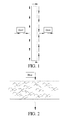
- vacuum heat-insulating panels used in batches by refrigerator companies to ensure heat preservation of products mainly have two problems: (1) a composite material including an aluminum foil layer is usually used as an outer packing material, which unavoidably causes a thermal bridge effect that heat is transferred through the outer wrapping material to another surface, and results in a poor heat insulation effect of a vacuum heat-insulating panel, as shown in FIG. 1; and (2 ) a core material is mainly manufactured by using a traditional wet process. Glass fibers of the core material are arranged in a random order, and many erect fibers act as a medium of heat transfer; therefore, heat transfer cannot be prevented effectively, as shown in FIG. 2 .
- a vacuum heat-insulating panel includes three parts: an inner core material (usually an assembly of glass fibers), an outer wrapping material (usually a composite material with low gas permeability and water vapor permeability), and a getter (usually calcium oxide that absorbs water) placed inside.
- a vacuum degree of the vacuum panel directly affects the heat preservation effect, and the inner glass fiber assembled core material has the greatest impact on the vacuum degree of the vacuum panel.
- wet-processed core materials are usually used. According to an analysis on heat resistance during heat transfer, fibers of a wet-processed core material manufactured according to the prior art are arranged in a random order, which there exist voids and erect fibers.
- the outer wrapping material is made of a composite material including aluminum foils; therefore, a thermal bridge effect occurs easily, and heat is directly transferred through the surface of the vacuum heat-insulating panel, instead of the vacuum heat-insulating panel, which results in a poor effect of the overall heat preservation.
- the invention provides a vacuum heat-insulating panel, which can solve a problem of the poorly heat preservation effect in the prior art, and a method for manufacturing the vacuum heat-insulating panel.
- the present invention adopts the following technical solutions:
- one surface is made of NY15/MPET12/MEVOH15/PE50, and the other surface is made of NY15/MPET12/A17/PE50; or one surface is made of PET12/NY25/A16/HDPE50, and the other surface is made of NY25/MPET12/MEVOH12/HDPE50, where the numerals indicate thicknesses of the materials in the unit of ⁇ m.
- both of the two surfaces are made of NY15/MPET12/MEVOH15/PE50, or both of the two surfaces are made of NY25/MPET12/MEVOH12/HDPE50, where the numerals indicate thicknesses of the materials, in the unit of ⁇ m.
- a method for manufacturing a vacuum heat-insulating panel which includes the following steps:
- the molten glass includes the following ingredients by weight percentage: silicon dioxide 60% to 80%, aluminum oxide 3% to 5%, magnesium oxide 3% to 5%, calcium oxide 5% to 10%, boron oxide 5% to 10%, and other oxides 4% to 20%.
- the other oxide includes sodium oxide.
- the suction apparatus includes, from top to bottom, an air extracting pump, an aluminum panel, a shell iron panel, and an air-permeable adhesive tape.
- a hole is provided on a corresponding central position of both the shell iron panel and the aluminum panel, the air extracting pump is disposed above the hole of the aluminum panel, the bottom of the aluminum panel is clad by the shell iron panel, the air-permeable adhesive tape is pasted under the hole of the shell iron panel, and the air-permeable adhesive tape and the shell iron panel are secured to each other by using a double-faced adhesive tape.
- one surface is made of NY15/MPET12/MEVOH15/PE50, and the other surface is made of NY15/MPET12/A17/PE50; or one surface is made of PET12/NY25/A16/HDPE50, and the other surface is made of NY25/MPET12/MEVOH12/HDPE50, where the numerals indicate thicknesses of the materials, in the unit of ⁇ m.
- both of the two surfaces are made of NY15/MPET12/MEVOH15/PE50, or both of the two surfaces are made of NY25/MPET12/MEVOH12/HDPE50, where the numerals indicate thicknesses of the materials, in the unit of ⁇ m.
- NY represents nylon
- MPET represents modified polyethylene terephthalate
- MEVOH represents modified ethylene-vinyl alcohol copolymer
- PE represents polyethylene
- HDPE high density polyethylene
- PET represents polyethylene terephthalate.
- NY15 refers to a nylon material with the thickness of 15 ⁇ m, and the others can be deducted by analogy.
- the present invention improves an outer wrapping material and a core material in the following two aspects:
- high-temperature molten glass is poured into a centrifugal head spinning at a high speed, and fiber filaments are flung out.
- a uniform laminated structure is formed by using a bottom suction apparatus, and then encapsulating and molding are performed.
- main ingredients of the molten glass are silicon dioxide, aluminum oxide, magnesium oxide, and calcium oxide.
- heat is effectively blocked by horizontal fibers, and therefore cannot be quickly transferred from one side of the panel to the other side.
- the vacuum heat-insulating panel can effectively prevent heat transfer.
- the present invention has the following advantages and effects:
- a heat conductivity coefficient of a vacuum heat-insulating panel manufactured according to the present invention is usually less than 0.002 W/m.K, which can great improve heat preservation performance and reduce energy consumption of a refrigerator by more than 5%.
- a composite material including aluminum foils is used as an outer wrapping material of an existing vacuum heat-insulating panel. During transfer, heat is directly transferred through the material to another surface, which is referred to as a thermal bridge effect and results in a poor heat insulation effect.
- glass fibers of an inner core material of an existing vacuum heat-insulating panel are arranged in a random order; many erect fibers act as a medium of heat transfer, and heat is directly conducted through the fibers, which cannot effectively prevent heat transfer and results in a poor heat insulation effect.
- the invention provides a new vacuum heat-insulating panel, which can simultaneously solve the foregoing problems.
- a vacuum heat-insulating panel which includes an outer wrapping material and a core material, where a getter is provided inside the core material, a composite wrapping material of which one surface or two surfaces do not include aluminum foils is used as the outer wrapping material, and the core material is an assembly of glass fibers that has a uniform laminated structure, where the diameter of the glass fiber is 1 ⁇ m to 3 ⁇ m.
- calcium oxide is used as the getter.
- a vacuum heat-insulating panel which includes an outer wrapping material and a core material, where a calcium oxide getter is provided inside the core material, and a wrapping material of which one surface does not include an aluminum foil is used as the outer wrapping material, where one surface is made of NY15/MPET12/MEVOH15/PE50, which are respectively nylon with the thickness of 15 ⁇ m, modified polyethylene terephthalate with the thickness of 12 ⁇ m, modified ethylene-vinyl alcohol copolymer with the thickness of 15 ⁇ m, and polyethylene with the thickness of 50 ⁇ m, and the other surface is made of NY15/MPET12/A17/PE50, which are respectively nylon with the thickness of 15 ⁇ m, modified polyethylene terephthalate with the thickness of 12 ⁇ m, aluminum with the thickness of 17 ⁇ m, and polyethylene with the thickness of 50 ⁇ m.
- NY15/MPET12/MEVOH15/PE50 which are respectively nylon with the thickness of 15 ⁇ m, modified polyethylene terephthalate with the thickness of 12
- a vacuum heat-insulating panel which includes an outer wrapping material and a core material, where a calcium oxide getter is provided inside the core material, and a wrapping material of which one surface does not include an aluminum foil is used as the outer wrapping material, where one surface is made of PET12/NY25/A16/HDPE50, and the other surface is made of NY25/MPET12/MEVOH12/HDPE50.
- a vacuum heat-insulating panel which includes an outer wrapping material and a core material, where a calcium oxide getter is provided inside the core material, a wrapping material of which two surfaces do not include aluminum foils is used as the outer wrapping material, and both of the two surfaces are made of NY15/MPET12/MEVOH15/PE50, where the numerals indicates thicknesses, in the unit of ⁇ m.
- a vacuum heat-insulating panel which includes an outer wrapping material and a core material, where a calcium oxide getter is provided inside the core material, and when a wrapping material of which two surfaces do not include aluminum foils is used as the outer wrapping material, both of the two surfaces are made of NY25/MPET12/MEVOH12/HDPE50.
- a vacuum heat-insulating panel according to the present invention does not cause a thermal bridge effect and has a good heat insulation effect because a composite material of which one surface does not include an aluminum foil is used as an outer wrapping material; certainly, when a wrapping material of which two surfaces do not include aluminum foils is used, the thermal bridge effect is not caused either.
- glass fibers of a core material according to the present invention forms a uniform laminated structure; during transfer, heat is effectively blocked by horizontal fibers and cannot be quickly transferred from one side of a panel to the other side, which can effectively prevent heat transfer and provides a good heat insulation effect.
- heat preservation performance of a vacuum heat-insulating panel according to the present invention is greatly improved with heat conductivity coefficient being less than 0.002 W/m.K.
- a method for manufacturing the vacuum heat-insulating panels in the foregoing EMBODIMENTS 1-4 includes the following steps:
- FIG. 5 is a flowchart of a process for manufacturing a core material according to one embodiment of the present invention.
- High-temperature molten glass is poured into a centrifugal head 1, where the centrifugal head 1 spins at a high speed of 2000 rpm to 2500 rpm, fiber filaments are flung out, and the fiber filaments that are flung out form a uniform laminated structure after passing through a suction apparatus 2, and then encapsulating and molding are performed. Because the fiber filaments are suctioned by the suction apparatus and form a uniform laminated structure, during heat transfer, heat is blocked layer by layer by the laminated fiber filaments, thereby greatly reducing a heat transfer speed and providing a good heat preservation effect.
- a suction apparatus 2 includes, from top to bottom, an air extracting pump 21, an aluminum panel 22, a shell iron panel 23, and an air-permeable adhesive tape 24.
- a hole is provided on a corresponding central position of both the aluminum panel 22 and the shell iron panel 23, the air extracting pump 21 is secured above the hole of the aluminum panel 22 by using a screw, the bottom of the aluminum panel 22 is clad by the shell iron panel 23, the air-permeable adhesive tape 24 is pasted under the hole of the shell iron panel 23, and the air-permeable adhesive tape 24 and the shell iron panel 23 are secured to each other by using a double-faced adhesive tape 25.
- the molten glass includes the following ingredients by weight percentage: silicon dioxide 70%, aluminum oxide 4%, magnesium oxide 4%, calcium oxide 5%, boron oxide 5%, and sodium oxide 12%.
- one surface is made of NY15/MPET12/MEVOH15/PE50, and the other surface is made of NY15/MPET12/A17/PE50; or one surface is made of PET12/NY25/A16/HDPE50, and the other surface is made of NY25/MPET12/MEVOH12/HDPE50, where the numerals indicate thicknesses of the materials, in the unit of ⁇ m.
- both of the two surfaces are made of NY15/MPET12/MEVOH15/PE50, or both of the two surfaces are made of NY25/MPET12/MEVOH12/HDPE50, where the numerals indicate thicknesses of the materials, in the unit of ⁇ m.
Landscapes
- Engineering & Computer Science (AREA)
- General Engineering & Computer Science (AREA)
- Mechanical Engineering (AREA)
- Chemical & Material Sciences (AREA)
- Chemical Kinetics & Catalysis (AREA)
- Geochemistry & Mineralogy (AREA)
- Materials Engineering (AREA)
- Organic Chemistry (AREA)
- General Chemical & Material Sciences (AREA)
- Life Sciences & Earth Sciences (AREA)
- Physics & Mathematics (AREA)
- Fluid Mechanics (AREA)
- Thermal Insulation (AREA)
- Laminated Bodies (AREA)
Abstract
Description
- This application claims the priority to Chinese Patent Application No.
201210193303.0, filed on June 13, 2012 - The present invention relates generally to the field of heat-insulating materials, and more particularly, to a vacuum heat-insulating panel that can be used in a heat-preserving and heat-insulating product and a method for manufacturing the same.
- During heat transfer, a heat preserving material has a high heat conductivity coefficient, which results in severe heat loss in a refrigerator. Conventionally, vacuum heat-insulating panels used in batches by refrigerator companies to ensure heat preservation of products mainly have two problems: (1) a composite material including an aluminum foil layer is usually used as an outer packing material, which unavoidably causes a thermal bridge effect that heat is transferred through the outer wrapping material to another surface, and results in a poor heat insulation effect of a vacuum heat-insulating panel, as shown in
FIG. 1; and (2 ) a core material is mainly manufactured by using a traditional wet process. Glass fibers of the core material are arranged in a random order, and many erect fibers act as a medium of heat transfer; therefore, heat transfer cannot be prevented effectively, as shown inFIG. 2 . - A vacuum heat-insulating panel includes three parts: an inner core material (usually an assembly of glass fibers), an outer wrapping material (usually a composite material with low gas permeability and water vapor permeability), and a getter (usually calcium oxide that absorbs water) placed inside. A vacuum degree of the vacuum panel directly affects the heat preservation effect, and the inner glass fiber assembled core material has the greatest impact on the vacuum degree of the vacuum panel. Currently, wet-processed core materials are usually used. According to an analysis on heat resistance during heat transfer, fibers of a wet-processed core material manufactured according to the prior art are arranged in a random order, which there exist voids and erect fibers. In an existing vacuum heat-insulating panel, heat is transferred from one end of the vacuum heat-insulating panel to the other end during heat transfer. Because many fibers are arranged erectly, heat is easily transferred through voids between the fibers and the erect fibers, the vacuum heat-insulating panel cannot effectively prevent from heat transferring, and a great amount of heat is leaked, which results in a high heat conduction coefficient and reduction of the heat preservation effect of the vacuum panel. As a result, a heat preservation function cannot be achieved effectively.
- In addition, the outer wrapping material is made of a composite material including aluminum foils; therefore, a thermal bridge effect occurs easily, and heat is directly transferred through the surface of the vacuum heat-insulating panel, instead of the vacuum heat-insulating panel, which results in a poor effect of the overall heat preservation.
- Therefore, a heretofore unaddressed need exists in the art to address the aforementioned deficiencies and inadequacies.
- The invention provides a vacuum heat-insulating panel, which can solve a problem of the poorly heat preservation effect in the prior art, and a method for manufacturing the vacuum heat-insulating panel.
- To solve the foregoing problem, the present invention adopts the following technical solutions:
- In one aspect of the invention, a vacuum heat-insulating panel is provided, which includes an outer wrapping material and a core material, where a getter is provided inside the core material, a composite wrapping material of which one surface or two surfaces do not include aluminum foils is used as the outer wrapping material, and the core material is an assembly of glass fibers that has a uniform laminated structure, where the diameter of the glass fibers is 1 µm to 3 µm. The getter is formed of calcium oxide.
- In one embodiment, when the wrapping material of which one surface does not include an aluminum foil is used as the outer wrapping material, one surface is made of NY15/MPET12/MEVOH15/PE50, and the other surface is made of NY15/MPET12/A17/PE50; or one surface is made of PET12/NY25/A16/HDPE50, and the other surface is made of NY25/MPET12/MEVOH12/HDPE50, where the numerals indicate thicknesses of the materials in the unit of µm.
- In another embodiment, when the wrapping material of which two surfaces do not include aluminum foils is used as the outer wrapping material, both of the two surfaces are made of NY15/MPET12/MEVOH15/PE50, or both of the two surfaces are made of NY25/MPET12/MEVOH12/HDPE50, where the numerals indicate thicknesses of the materials, in the unit of µm.
- In another aspect of the invention, a method for manufacturing a vacuum heat-insulating panel is provided, which includes the following steps:
- (a) manufacturing a core material, comprising pouring molten glass at a high temperature of 1100 °C to 1300 °C into a centrifugal head spinning at a high speed, where the spinning speed of the centrifugal head is 2000 rpm to 2500 rpm, flinging out fiber filaments, and then forming a uniform laminated structure by using a bottom suction apparatus, where the diameter of the fiber filament is 1 µm to 3 µm;
- (b) wrapping with an outer wrapping material, comprising placing a calcium oxide getter inside the core material, wrapping the core material with a composite wrapping material of which one surface or two surfaces do not include aluminum foils, and then performing heat sealing on the outer wrapping material; and
- (c) vacuumizing the core material sealed by the outer wrapping material in step (b), and then forming a vacuum heat-insulating panel.
- In one embodiment, the molten glass includes the following ingredients by weight percentage: silicon dioxide 60% to 80%,
aluminum oxide 3% to 5%,magnesium oxide 3% to 5%, calcium oxide 5% to 10%, boron oxide 5% to 10%, and other oxides 4% to 20%. - In one embodiment, the other oxide includes sodium oxide.
- In one embodiment, the suction apparatus includes, from top to bottom, an air extracting pump, an aluminum panel, a shell iron panel, and an air-permeable adhesive tape. A hole is provided on a corresponding central position of both the shell iron panel and the aluminum panel, the air extracting pump is disposed above the hole of the aluminum panel, the bottom of the aluminum panel is clad by the shell iron panel, the air-permeable adhesive tape is pasted under the hole of the shell iron panel, and the air-permeable adhesive tape and the shell iron panel are secured to each other by using a double-faced adhesive tape.
- When the wrapping material of which one surface does not include an aluminum foil is used as the outer wrapping material, one surface is made of NY15/MPET12/MEVOH15/PE50, and the other surface is made of NY15/MPET12/A17/PE50; or one surface is made of PET12/NY25/A16/HDPE50, and the other surface is made of NY25/MPET12/MEVOH12/HDPE50, where the numerals indicate thicknesses of the materials, in the unit of µm.
- When a wrapping material of which two surfaces do not include aluminum foils is used as the outer wrapping material, both of the two surfaces are made of NY15/MPET12/MEVOH15/PE50, or both of the two surfaces are made of NY25/MPET12/MEVOH12/HDPE50, where the numerals indicate thicknesses of the materials, in the unit of µm.
- In the disclosure, NY represents nylon, MPET represents modified polyethylene terephthalate, MEVOH represents modified ethylene-vinyl alcohol copolymer, PE represents polyethylene, HDPE represents high density polyethylene, and PET represents polyethylene terephthalate. NY15 refers to a nylon material with the thickness of 15 µm, and the others can be deducted by analogy.
- Among other things, the present invention improves an outer wrapping material and a core material in the following two aspects:
- 1. Outer wrapping material: A wrapping material of which one surface or two surfaces do not include aluminum foils is used, which prevents occurrence of a thermal bridge effect.
- 2. Core material: An assembly of laminated glass fibers which are uniformly distributed and are fine is produced by using a new process, which can effectively prevent heat transfer.
- In the process for manufacturing the core material according to one embodiment, high-temperature molten glass is poured into a centrifugal head spinning at a high speed, and fiber filaments are flung out. A uniform laminated structure is formed by using a bottom suction apparatus, and then encapsulating and molding are performed.
- In certain embodiments, main ingredients of the molten glass are silicon dioxide, aluminum oxide, magnesium oxide, and calcium oxide. During conduction, heat is effectively blocked by horizontal fibers, and therefore cannot be quickly transferred from one side of the panel to the other side. The vacuum heat-insulating panel can effectively prevent heat transfer.
- The vacuum heat-insulating panel according to the present invention has the following advantages:
- 1. The glass fibers of the core material are laminated and uniformly distributed.
- 2. The diameters of the glass fibers of the core material is less than 3 µm.
- 3. A new composite material, which has no metal layer or has no metal layer on one surface, is used as the outer wrapping material, thereby preventing a thermal bridge effect.
- In addition, compared with the prior art, the present invention has the following advantages and effects:
- When heat is to be transferred from the outside into a refrigerator and passes through a heat preserving layer of a body of the refrigerator, because of high vacuum degree inside the vacuum heat-insulating panel, the heat is blocked layer by layer by the glass fibers in the core material during transfer, thereby greatly reducing a heat transfer speed and providing a good heat preservation effect; besides, the wrapping material has no aluminum foil layer, which eliminates an edge effect. Therefore, the vacuum heat-insulating panel provides a good heat preservation effect.
- A heat conductivity coefficient of a vacuum heat-insulating panel manufactured according to the present invention is usually less than 0.002 W/m.K, which can great improve heat preservation performance and reduce energy consumption of a refrigerator by more than 5%.
-
-
FIG. 1 is a schematic diagram of heat transfer in an existing vacuum heat-insulating panel with an outer wrapping material including aluminum foils; -
FIG. 2 is a schematic diagram of heat conduction in an existing core material being a glass fiber assembly; -
FIG. 3 is a schematic diagram of heat transfer in a vacuum heat-insulating panel with an outer wrapping material of which one surface does not include an aluminum foil according to one embodiment of the present invention; -
FIG. 4 is a schematic diagram of heat conduction in a core material being a glass fiber assembly having a uniform laminated structure according to one embodiment of the present invention; -
FIG. 5 is a schematic flowchart of a method for manufacturing a core material of a vacuum heat-insulating panel according to one embodiment of the present invention; and -
FIG. 6 is a schematic structural diagram of a suction apparatus. - List of Reference Numerals: 1. Centrifugal head; 2. Suction apparatus; 21. Air extracting pump; 22. Aluminum panel; 23. Shell iron panel; 24. Air-permeable adhesive tape; 25. Double-faced adhesive tape; 3. Fiber filament.
- The present invention is further described in detail with reference to the accompanying drawings and embodiments in the following.
- As shown in
FIG. 1 , a composite material including aluminum foils is used as an outer wrapping material of an existing vacuum heat-insulating panel. During transfer, heat is directly transferred through the material to another surface, which is referred to as a thermal bridge effect and results in a poor heat insulation effect. - As shown in
FIG. 2 , glass fibers of an inner core material of an existing vacuum heat-insulating panel are arranged in a random order; many erect fibers act as a medium of heat transfer, and heat is directly conducted through the fibers, which cannot effectively prevent heat transfer and results in a poor heat insulation effect. - The invention provides a new vacuum heat-insulating panel, which can simultaneously solve the foregoing problems.
- In one aspect of the invention, a vacuum heat-insulating panel is provided, which includes an outer wrapping material and a core material, where a getter is provided inside the core material, a composite wrapping material of which one surface or two surfaces do not include aluminum foils is used as the outer wrapping material, and the core material is an assembly of glass fibers that has a uniform laminated structure, where the diameter of the glass fiber is 1 µm to 3 µm. In one embodiment, calcium oxide is used as the getter.
- A vacuum heat-insulating panel is provided, which includes an outer wrapping material and a core material, where a calcium oxide getter is provided inside the core material, and a wrapping material of which one surface does not include an aluminum foil is used as the outer wrapping material, where one surface is made of NY15/MPET12/MEVOH15/PE50, which are respectively nylon with the thickness of 15 µm, modified polyethylene terephthalate with the thickness of 12 µm, modified ethylene-vinyl alcohol copolymer with the thickness of 15 µm, and polyethylene with the thickness of 50 µm, and the other surface is made of NY15/MPET12/A17/PE50, which are respectively nylon with the thickness of 15 µm, modified polyethylene terephthalate with the thickness of 12 µm, aluminum with the thickness of 17 µm, and polyethylene with the thickness of 50 µm.
- A vacuum heat-insulating panel is provided, which includes an outer wrapping material and a core material, where a calcium oxide getter is provided inside the core material, and a wrapping material of which one surface does not include an aluminum foil is used as the outer wrapping material, where one surface is made of PET12/NY25/A16/HDPE50, and the other surface is made of NY25/MPET12/MEVOH12/HDPE50.
- A vacuum heat-insulating panel is provided, which includes an outer wrapping material and a core material, where a calcium oxide getter is provided inside the core material, a wrapping material of which two surfaces do not include aluminum foils is used as the outer wrapping material, and both of the two surfaces are made of NY15/MPET12/MEVOH15/PE50, where the numerals indicates thicknesses, in the unit of µm.
- A vacuum heat-insulating panel is provided, which includes an outer wrapping material and a core material, where a calcium oxide getter is provided inside the core material, and when a wrapping material of which two surfaces do not include aluminum foils is used as the outer wrapping material, both of the two surfaces are made of NY25/MPET12/MEVOH12/HDPE50.
- As shown in
FIG. 3 , during heat transfer, a vacuum heat-insulating panel according to the present invention does not cause a thermal bridge effect and has a good heat insulation effect because a composite material of which one surface does not include an aluminum foil is used as an outer wrapping material; certainly, when a wrapping material of which two surfaces do not include aluminum foils is used, the thermal bridge effect is not caused either. - As shown in
FIG. 4 , glass fibers of a core material according to the present invention forms a uniform laminated structure; during transfer, heat is effectively blocked by horizontal fibers and cannot be quickly transferred from one side of a panel to the other side, which can effectively prevent heat transfer and provides a good heat insulation effect. - By using the foregoing outer wrapping material and core material, heat preservation performance of a vacuum heat-insulating panel according to the present invention is greatly improved with heat conductivity coefficient being less than 0.002 W/m.K.
- In another aspect of the invention, a method for manufacturing the vacuum heat-insulating panels in the foregoing EMBODIMENTS 1-4 is provided, which includes the following steps:
- (1) manufacturing a core material, comprising pouring molten glass at a high temperature of 1100 °C to 1300 °C into a centrifugal head spinning at a high speed, where the spinning speed of the centrifugal head is 2000 rpm to 2500 rpm, flinging out fiber filaments, and then forming a uniform laminated structure by using a bottom suction apparatus, where the diameter of the fiber filament is 1 µm to 3 µm;
- (2) wrapping with an outer wrapping material, comprising placing a calcium oxide getter inside the core material, wrapping the core material with a composite wrapping material of which one surface or two surfaces do not include aluminum foils, and then performing heat sealing on the outer wrapping material; and
- (3) vacuumizing the core material sealed by the outer wrapping material in step (2), and then forming a vacuum heat-insulating panel.
-
FIG. 5 is a flowchart of a process for manufacturing a core material according to one embodiment of the present invention. High-temperature molten glass is poured into acentrifugal head 1, where thecentrifugal head 1 spins at a high speed of 2000 rpm to 2500 rpm, fiber filaments are flung out, and the fiber filaments that are flung out form a uniform laminated structure after passing through asuction apparatus 2, and then encapsulating and molding are performed. Because the fiber filaments are suctioned by the suction apparatus and form a uniform laminated structure, during heat transfer, heat is blocked layer by layer by the laminated fiber filaments, thereby greatly reducing a heat transfer speed and providing a good heat preservation effect. - As shown in
FIG. 6 , asuction apparatus 2 includes, from top to bottom, anair extracting pump 21, analuminum panel 22, ashell iron panel 23, and an air-permeableadhesive tape 24. A hole is provided on a corresponding central position of both thealuminum panel 22 and theshell iron panel 23, theair extracting pump 21 is secured above the hole of thealuminum panel 22 by using a screw, the bottom of thealuminum panel 22 is clad by theshell iron panel 23, the air-permeableadhesive tape 24 is pasted under the hole of theshell iron panel 23, and the air-permeableadhesive tape 24 and theshell iron panel 23 are secured to each other by using a double-facedadhesive tape 25. - In the manufacturing method, the molten glass includes the following ingredients by weight percentage: silicon dioxide 70%, aluminum oxide 4%, magnesium oxide 4%, calcium oxide 5%, boron oxide 5%, and sodium oxide 12%.
- In one embodiment, when the wrapping material of which one surface does not include an aluminum foil is used as the outer wrapping material, one surface is made of NY15/MPET12/MEVOH15/PE50, and the other surface is made of NY15/MPET12/A17/PE50; or one surface is made of PET12/NY25/A16/HDPE50, and the other surface is made of NY25/MPET12/MEVOH12/HDPE50, where the numerals indicate thicknesses of the materials, in the unit of µm.
- In another embodiment, when the wrapping material of which two surfaces do not include aluminum foils is used as the outer wrapping material, both of the two surfaces are made of NY15/MPET12/MEVOH15/PE50, or both of the two surfaces are made of NY25/MPET12/MEVOH12/HDPE50, where the numerals indicate thicknesses of the materials, in the unit of µm.
- The foregoing embodiments are merely preferred embodiments of the present invention rather than limitations in other forms to the present invention. Any person skilled in the art may make an equivalent variation or modification according to the foregoing disclosed technical content, to obtain an equivalent embodiment. However, all simple changes and equivalent variations and modifications made to the foregoing embodiments according to the technical essence of the present invention and without departing from the content of the technical solutions of the present invention still fall within the protection scope of the technical solutions of the present invention.
Claims (5)
- A vacuum heat-insulating panel, comprising:an outer wrapping material; anda core material,wherein a getter is provided inside the core material, a composite wrapping material of which one surface or two surfaces do not comprise aluminum foils is used as the outer wrapping material, and the core material is an assembly of glass fibers that has a uniform laminated structure, wherein the diameters of the glass fibers are 1 µm to 3 µm.
- The vacuum heat-insulating panel according to claim 1, wherein when the wrapping material of which one surface does not comprise an aluminum foil is used as the outer wrapping material, the one surface is made of NY15/MPET12/MEVOH15/PE50, and the other surface is made of NY15/MPET12/A17/PE50; or the one surface is made of PET12/NY25/A16/HDPE50, and the other surface is made of NY25/MPET12/MEVOH12/HDPE50, wherein the numerals indicate thicknesses of the materials in the unit of µm.
- The vacuum heat-insulating panel according to claim 1, wherein when the wrapping material of which two surfaces do not comprise aluminum foils is used as the outer wrapping material, both of the two surfaces are made of NY15/MPET12/MEVOH15/PE50, or both of the two surfaces are made of NY25/MPET12/MEVOH12/HDPE50, wherein the numerals indicate thicknesses of the materials in the unit of µm.
- A method for manufacturing a vacuum heat-insulating panel, comprising the steps of:(a) manufacturing a core material, comprising pouring molten glass at a high temperature of 1100 °C to 1300 °C into a centrifugal head spinning at a high speed, wherein the spinning speed of the centrifugal head is 2000 rpm to 2500 rpm, flinging out fiber filaments, and forming a uniform laminated structure by using a bottom suction apparatus, wherein the diameter of the fiber filament is 1 µm to 3 µm;(b) wrapping with an outer wrapping material, comprising placing a calcium oxide getter inside the core material, wrapping the core material with a composite wrapping material of which one surface or two surfaces do not comprise aluminum foils, and performing heat sealing on the outer wrapping material; and(c) vacuumizing the core material sealed by the outer wrapping material in step (b), and forming a vacuum heat-insulating panel.
- The method for manufacturing a vacuum heat-insulating panel according to claim 4, wherein the molten glass comprises the ingredients by weight percentage: silicon dioxide 60% to 80%, aluminum oxide 3% to 5%, magnesium oxide 3% to 5%, calcium oxide 5% to 10%, boron oxide 5% to 10%, and another oxide 4% to 20%.
Applications Claiming Priority (2)
| Application Number | Priority Date | Filing Date | Title |
|---|---|---|---|
| CN201210193303.0A CN102720923B (en) | 2012-06-13 | 2012-06-13 | The preparation method of a kind of vacuum heat-insulating plate |
| PCT/CN2012/087511 WO2013185461A1 (en) | 2012-06-13 | 2012-12-26 | Vacuum heat insulating panel and method for manufacturing same |
Publications (3)
| Publication Number | Publication Date |
|---|---|
| EP2824377A1 true EP2824377A1 (en) | 2015-01-14 |
| EP2824377A4 EP2824377A4 (en) | 2015-10-28 |
| EP2824377B1 EP2824377B1 (en) | 2017-08-02 |
Family
ID=46946756
Family Applications (1)
| Application Number | Title | Priority Date | Filing Date |
|---|---|---|---|
| EP12878730.6A Active EP2824377B1 (en) | 2012-06-13 | 2012-12-26 | Vacuum heat insulating panel and method for manufacturing same |
Country Status (5)
| Country | Link |
|---|---|
| US (1) | US20150030801A1 (en) |
| EP (1) | EP2824377B1 (en) |
| CN (1) | CN102720923B (en) |
| ES (1) | ES2645750T3 (en) |
| WO (1) | WO2013185461A1 (en) |
Cited By (2)
| Publication number | Priority date | Publication date | Assignee | Title |
|---|---|---|---|---|
| DE102022003196A1 (en) | 2022-09-01 | 2024-03-07 | Kay Itzigehl | Vacuum insulation panel VIP |
| WO2025058592A1 (en) * | 2023-09-11 | 2025-03-20 | Turkiye Sise Ve Cam Fabrikalari Anonim Sirketi | Bulletproof laminated glass |
Families Citing this family (15)
| Publication number | Priority date | Publication date | Assignee | Title |
|---|---|---|---|---|
| CN102720923B (en) * | 2012-06-13 | 2016-06-08 | 海尔集团公司 | The preparation method of a kind of vacuum heat-insulating plate |
| CN104176940A (en) * | 2013-05-23 | 2014-12-03 | 苏州维艾普新材料股份有限公司 | Vacuum insulation panel glass fiber core material |
| CN103244793B (en) * | 2013-05-31 | 2015-12-09 | 重庆再升科技股份有限公司 | A kind of novel glass fiber core material of vacuum heat insulation plate and preparation method |
| CN103274603B (en) * | 2013-05-31 | 2015-06-03 | 重庆再升科技股份有限公司 | Novel glass fiber, glass fiber-based vacuum heat-insulating plate core material, and preparation method of core material |
| CN103759097B (en) * | 2014-01-08 | 2017-01-25 | 嘉兴环亚包装有限公司 | Vacuum insulation panel with low edge thermal bridge effect |
| CN105274728B (en) * | 2014-05-28 | 2018-10-16 | 福建赛特新材股份有限公司 | A kind of biosoluble fibres felt and preparation method thereof and vacuum heat-insulating plate using the felt |
| CN104329540B (en) * | 2014-09-01 | 2016-08-24 | 李载润 | A kind of vacuum heat-insulating plate of high-isolation bag not bound edge |
| CN104494235B (en) * | 2015-01-06 | 2016-09-07 | 青岛科瑞新型环保材料有限公司 | A vacuum insulation panel and its manufacturing method |
| CN105987256A (en) * | 2015-02-11 | 2016-10-05 | 福建赛特新材股份有限公司 | Vacuum heat insulation plate low in edge heat bridge effect and long in life and manufacturing method thereof |
| CN105402554A (en) * | 2015-09-22 | 2016-03-16 | 苏州维艾普新材料股份有限公司 | Novel-structure vacuum insulated panel low in heat bridge effect, long in service life and low in heat conductivity coefficient |
| CN106926529A (en) * | 2015-12-30 | 2017-07-07 | 福建赛特新材股份有限公司 | Core and its production method and vacuum heat-insulating plate that a kind of vacuum heat-insulating plate is used |
| CN106764253A (en) * | 2016-11-28 | 2017-05-31 | 王郁倩 | One kind is without flanging vacuum heat insulation materials and preparation method |
| EP3916885B1 (en) | 2020-05-25 | 2025-10-08 | Chongqing Jinkang Power New Energy Co., Ltd. | Battery pack |
| CN111613746B (en) * | 2020-05-25 | 2023-09-26 | 重庆金康动力新能源有限公司 | Battery pack separator with spray system |
| CN114347614A (en) * | 2022-01-14 | 2022-04-15 | 南京工业大学 | A kind of thermal insulation, antibacterial multifunctional integrated vacuum insulation board and its application |
Family Cites Families (8)
| Publication number | Priority date | Publication date | Assignee | Title |
|---|---|---|---|---|
| AU2229601A (en) * | 2000-04-21 | 2001-11-07 | Matsushita Refrigeration | Heat insulation box, and vacuum heat insulation material used therefor |
| TW593919B (en) * | 2002-05-31 | 2004-06-21 | Matsushita Refrigeration | Vacuum heat insulating material and method for producing the same, and refrigerator using the vacuum heat insulating material |
| FR2883865B1 (en) * | 2005-04-01 | 2007-05-18 | Saint Gobain Isover Sa | MINERAL WOOL, INSULATING PRODUCT AND PROCESS FOR PRODUCING THE SAME |
| CN101526165B (en) * | 2009-03-27 | 2011-11-16 | 上海海事大学 | PU vacuum insulation panel and preparation method thereof |
| CN102686929B (en) * | 2009-10-19 | 2015-11-25 | 三菱电机株式会社 | Vacuum insulation material and equipment with vacuum insulation material |
| KR101280776B1 (en) * | 2010-09-14 | 2013-07-05 | 히타치 어플라이언스 가부시키가이샤 | Vacuum insulation panel and refrigerator using this |
| CN202074190U (en) * | 2011-05-06 | 2011-12-14 | 滁州金科机械模具制造有限公司 | Vacuum heat-insulating plate |
| CN102720923B (en) * | 2012-06-13 | 2016-06-08 | 海尔集团公司 | The preparation method of a kind of vacuum heat-insulating plate |
-
2012
- 2012-06-13 CN CN201210193303.0A patent/CN102720923B/en active Active
- 2012-12-26 WO PCT/CN2012/087511 patent/WO2013185461A1/en not_active Ceased
- 2012-12-26 ES ES12878730.6T patent/ES2645750T3/en active Active
- 2012-12-26 US US14/382,218 patent/US20150030801A1/en not_active Abandoned
- 2012-12-26 EP EP12878730.6A patent/EP2824377B1/en active Active
Cited By (2)
| Publication number | Priority date | Publication date | Assignee | Title |
|---|---|---|---|---|
| DE102022003196A1 (en) | 2022-09-01 | 2024-03-07 | Kay Itzigehl | Vacuum insulation panel VIP |
| WO2025058592A1 (en) * | 2023-09-11 | 2025-03-20 | Turkiye Sise Ve Cam Fabrikalari Anonim Sirketi | Bulletproof laminated glass |
Also Published As
| Publication number | Publication date |
|---|---|
| CN102720923A (en) | 2012-10-10 |
| CN102720923B (en) | 2016-06-08 |
| ES2645750T3 (en) | 2017-12-07 |
| WO2013185461A1 (en) | 2013-12-19 |
| US20150030801A1 (en) | 2015-01-29 |
| EP2824377B1 (en) | 2017-08-02 |
| EP2824377A4 (en) | 2015-10-28 |
Similar Documents
| Publication | Publication Date | Title |
|---|---|---|
| EP2824377B1 (en) | Vacuum heat insulating panel and method for manufacturing same | |
| CN101698592B (en) | Silicon-aluminium aerogel composite material and manufacturing method thereof | |
| CN103946619B (en) | Radiation heat intercepts Vacuum thermal insulating material | |
| CN102330475B (en) | Vacuum insulation panel core material with high performance and low cost and manufacturing method thereof | |
| CN101955350A (en) | Modified aluminum oxide aerogel composite material and preparation method thereof | |
| EP3150897B1 (en) | Vacuum heat-insulating material | |
| CN115677270B (en) | Ultralight aerogel-based vacuum insulation panel and preparation method thereof | |
| CN106631065B (en) | A kind of vacuum heat insulation refractory product and preparation method thereof | |
| CN102390133A (en) | Vacuum insulation plate with high strength and long service life | |
| WO2016119566A1 (en) | Vacuum insulation panel | |
| CN103241391B (en) | For the insulating assembly and preparation method thereof of Mars landing device heat control | |
| CN206163663U (en) | Automobile battery structure and automobile | |
| KR20130078005A (en) | Core for vacuum insulation panel with excellent heat insulation property and pinhole resistance | |
| CN103574227A (en) | Vacuum insulated panel added with infrared reflecting layer and preparation method thereof | |
| CN104595634A (en) | VIP (vacuum insulated panel) | |
| CN104373767A (en) | Superfine centrifugal glass fiber dry-method core material of super-layer structure | |
| CN208764657U (en) | A kind of vertical winding machine | |
| CN102994815B (en) | Preparation method of high-thermal conductivity diamond/aluminum composite material | |
| CN202466870U (en) | Ultra-thin vacuum heat-isolation heat-insulation plate | |
| CN205604499U (en) | Vacuum insulation board for building field | |
| CN206889971U (en) | It is a kind of to be applied to high-temperature service and the multiple reflection compound insulation structure of pipe insulation | |
| CN103162061A (en) | Gas phase silica vacuum heat insulation plate and manufacturing method thereof | |
| CN203770948U (en) | Low-edge vacuum thermal insulation board with heat bridge effect | |
| CN112177181A (en) | Vacuum insulation panel for building | |
| CN102173117A (en) | Vacuum heat insulation plate of high-performance composite core material and production method thereof |
Legal Events
| Date | Code | Title | Description |
|---|---|---|---|
| PUAI | Public reference made under article 153(3) epc to a published international application that has entered the european phase |
Free format text: ORIGINAL CODE: 0009012 |
|
| 17P | Request for examination filed |
Effective date: 20140829 |
|
| AK | Designated contracting states |
Kind code of ref document: A1 Designated state(s): AL AT BE BG CH CY CZ DE DK EE ES FI FR GB GR HR HU IE IS IT LI LT LU LV MC MK MT NL NO PL PT RO RS SE SI SK SM TR |
|
| AX | Request for extension of the european patent |
Extension state: BA ME |
|
| DAX | Request for extension of the european patent (deleted) | ||
| RA4 | Supplementary search report drawn up and despatched (corrected) |
Effective date: 20150930 |
|
| RIC1 | Information provided on ipc code assigned before grant |
Ipc: C03C 13/00 20060101ALI20150924BHEP Ipc: F16L 59/04 20060101ALI20150924BHEP Ipc: F16L 59/065 20060101AFI20150924BHEP Ipc: C03B 37/04 20060101ALI20150924BHEP |
|
| 17Q | First examination report despatched |
Effective date: 20161007 |
|
| GRAP | Despatch of communication of intention to grant a patent |
Free format text: ORIGINAL CODE: EPIDOSNIGR1 |
|
| INTG | Intention to grant announced |
Effective date: 20170303 |
|
| GRAS | Grant fee paid |
Free format text: ORIGINAL CODE: EPIDOSNIGR3 |
|
| GRAA | (expected) grant |
Free format text: ORIGINAL CODE: 0009210 |
|
| RAP1 | Party data changed (applicant data changed or rights of an application transferred) |
Owner name: QINGDAO HAIER JOINT STOCK CO., LTD Owner name: HAIER GROUP CORPORATION |
|
| AK | Designated contracting states |
Kind code of ref document: B1 Designated state(s): AL AT BE BG CH CY CZ DE DK EE ES FI FR GB GR HR HU IE IS IT LI LT LU LV MC MK MT NL NO PL PT RO RS SE SI SK SM TR |
|
| REG | Reference to a national code |
Ref country code: CH Ref legal event code: EP Ref country code: AT Ref legal event code: REF Ref document number: 914867 Country of ref document: AT Kind code of ref document: T Effective date: 20170815 |
|
| REG | Reference to a national code |
Ref country code: IE Ref legal event code: FG4D |
|
| REG | Reference to a national code |
Ref country code: DE Ref legal event code: R096 Ref document number: 602012035505 Country of ref document: DE |
|
| REG | Reference to a national code |
Ref country code: NL Ref legal event code: MP Effective date: 20170802 |
|
| REG | Reference to a national code |
Ref country code: ES Ref legal event code: FG2A Ref document number: 2645750 Country of ref document: ES Kind code of ref document: T3 Effective date: 20171207 |
|
| REG | Reference to a national code |
Ref country code: AT Ref legal event code: MK05 Ref document number: 914867 Country of ref document: AT Kind code of ref document: T Effective date: 20170802 |
|
| REG | Reference to a national code |
Ref country code: FR Ref legal event code: PLFP Year of fee payment: 6 |
|
| REG | Reference to a national code |
Ref country code: LT Ref legal event code: MG4D |
|
| REG | Reference to a national code |
Ref country code: DE Ref legal event code: R082 Ref document number: 602012035505 Country of ref document: DE Representative=s name: ZIEBIG HENGELHAUPT INTELLECTUAL PROPERTY ATTOR, DE Ref country code: DE Ref legal event code: R082 Ref document number: 602012035505 Country of ref document: DE Representative=s name: ZIEBIG & HENGELHAUPT PATENTANWAELTE PARTG MBB, DE |
|
| PG25 | Lapsed in a contracting state [announced via postgrant information from national office to epo] |
Ref country code: HR Free format text: LAPSE BECAUSE OF FAILURE TO SUBMIT A TRANSLATION OF THE DESCRIPTION OR TO PAY THE FEE WITHIN THE PRESCRIBED TIME-LIMIT Effective date: 20170802 Ref country code: LT Free format text: LAPSE BECAUSE OF FAILURE TO SUBMIT A TRANSLATION OF THE DESCRIPTION OR TO PAY THE FEE WITHIN THE PRESCRIBED TIME-LIMIT Effective date: 20170802 Ref country code: SE Free format text: LAPSE BECAUSE OF FAILURE TO SUBMIT A TRANSLATION OF THE DESCRIPTION OR TO PAY THE FEE WITHIN THE PRESCRIBED TIME-LIMIT Effective date: 20170802 Ref country code: NO Free format text: LAPSE BECAUSE OF FAILURE TO SUBMIT A TRANSLATION OF THE DESCRIPTION OR TO PAY THE FEE WITHIN THE PRESCRIBED TIME-LIMIT Effective date: 20171102 Ref country code: FI Free format text: LAPSE BECAUSE OF FAILURE TO SUBMIT A TRANSLATION OF THE DESCRIPTION OR TO PAY THE FEE WITHIN THE PRESCRIBED TIME-LIMIT Effective date: 20170802 Ref country code: NL Free format text: LAPSE BECAUSE OF FAILURE TO SUBMIT A TRANSLATION OF THE DESCRIPTION OR TO PAY THE FEE WITHIN THE PRESCRIBED TIME-LIMIT Effective date: 20170802 Ref country code: AT Free format text: LAPSE BECAUSE OF FAILURE TO SUBMIT A TRANSLATION OF THE DESCRIPTION OR TO PAY THE FEE WITHIN THE PRESCRIBED TIME-LIMIT Effective date: 20170802 |
|
| PG25 | Lapsed in a contracting state [announced via postgrant information from national office to epo] |
Ref country code: BG Free format text: LAPSE BECAUSE OF FAILURE TO SUBMIT A TRANSLATION OF THE DESCRIPTION OR TO PAY THE FEE WITHIN THE PRESCRIBED TIME-LIMIT Effective date: 20171102 Ref country code: RS Free format text: LAPSE BECAUSE OF FAILURE TO SUBMIT A TRANSLATION OF THE DESCRIPTION OR TO PAY THE FEE WITHIN THE PRESCRIBED TIME-LIMIT Effective date: 20170802 Ref country code: PL Free format text: LAPSE BECAUSE OF FAILURE TO SUBMIT A TRANSLATION OF THE DESCRIPTION OR TO PAY THE FEE WITHIN THE PRESCRIBED TIME-LIMIT Effective date: 20170802 Ref country code: IS Free format text: LAPSE BECAUSE OF FAILURE TO SUBMIT A TRANSLATION OF THE DESCRIPTION OR TO PAY THE FEE WITHIN THE PRESCRIBED TIME-LIMIT Effective date: 20171202 Ref country code: GR Free format text: LAPSE BECAUSE OF FAILURE TO SUBMIT A TRANSLATION OF THE DESCRIPTION OR TO PAY THE FEE WITHIN THE PRESCRIBED TIME-LIMIT Effective date: 20171103 Ref country code: LV Free format text: LAPSE BECAUSE OF FAILURE TO SUBMIT A TRANSLATION OF THE DESCRIPTION OR TO PAY THE FEE WITHIN THE PRESCRIBED TIME-LIMIT Effective date: 20170802 |
|
| PG25 | Lapsed in a contracting state [announced via postgrant information from national office to epo] |
Ref country code: RO Free format text: LAPSE BECAUSE OF FAILURE TO SUBMIT A TRANSLATION OF THE DESCRIPTION OR TO PAY THE FEE WITHIN THE PRESCRIBED TIME-LIMIT Effective date: 20170802 Ref country code: DK Free format text: LAPSE BECAUSE OF FAILURE TO SUBMIT A TRANSLATION OF THE DESCRIPTION OR TO PAY THE FEE WITHIN THE PRESCRIBED TIME-LIMIT Effective date: 20170802 Ref country code: CZ Free format text: LAPSE BECAUSE OF FAILURE TO SUBMIT A TRANSLATION OF THE DESCRIPTION OR TO PAY THE FEE WITHIN THE PRESCRIBED TIME-LIMIT Effective date: 20170802 |
|
| REG | Reference to a national code |
Ref country code: DE Ref legal event code: R097 Ref document number: 602012035505 Country of ref document: DE |
|
| PG25 | Lapsed in a contracting state [announced via postgrant information from national office to epo] |
Ref country code: SM Free format text: LAPSE BECAUSE OF FAILURE TO SUBMIT A TRANSLATION OF THE DESCRIPTION OR TO PAY THE FEE WITHIN THE PRESCRIBED TIME-LIMIT Effective date: 20170802 Ref country code: SK Free format text: LAPSE BECAUSE OF FAILURE TO SUBMIT A TRANSLATION OF THE DESCRIPTION OR TO PAY THE FEE WITHIN THE PRESCRIBED TIME-LIMIT Effective date: 20170802 Ref country code: EE Free format text: LAPSE BECAUSE OF FAILURE TO SUBMIT A TRANSLATION OF THE DESCRIPTION OR TO PAY THE FEE WITHIN THE PRESCRIBED TIME-LIMIT Effective date: 20170802 |
|
| PLBE | No opposition filed within time limit |
Free format text: ORIGINAL CODE: 0009261 |
|
| STAA | Information on the status of an ep patent application or granted ep patent |
Free format text: STATUS: NO OPPOSITION FILED WITHIN TIME LIMIT |
|
| 26N | No opposition filed |
Effective date: 20180503 |
|
| REG | Reference to a national code |
Ref country code: CH Ref legal event code: PL |
|
| PG25 | Lapsed in a contracting state [announced via postgrant information from national office to epo] |
Ref country code: SI Free format text: LAPSE BECAUSE OF FAILURE TO SUBMIT A TRANSLATION OF THE DESCRIPTION OR TO PAY THE FEE WITHIN THE PRESCRIBED TIME-LIMIT Effective date: 20170802 |
|
| REG | Reference to a national code |
Ref country code: IE Ref legal event code: MM4A |
|
| PG25 | Lapsed in a contracting state [announced via postgrant information from national office to epo] |
Ref country code: MT Free format text: LAPSE BECAUSE OF NON-PAYMENT OF DUE FEES Effective date: 20171226 Ref country code: LU Free format text: LAPSE BECAUSE OF NON-PAYMENT OF DUE FEES Effective date: 20171226 |
|
| PG25 | Lapsed in a contracting state [announced via postgrant information from national office to epo] |
Ref country code: IE Free format text: LAPSE BECAUSE OF NON-PAYMENT OF DUE FEES Effective date: 20171226 |
|
| PG25 | Lapsed in a contracting state [announced via postgrant information from national office to epo] |
Ref country code: CH Free format text: LAPSE BECAUSE OF NON-PAYMENT OF DUE FEES Effective date: 20171231 Ref country code: LI Free format text: LAPSE BECAUSE OF NON-PAYMENT OF DUE FEES Effective date: 20171231 |
|
| PG25 | Lapsed in a contracting state [announced via postgrant information from national office to epo] |
Ref country code: MC Free format text: LAPSE BECAUSE OF FAILURE TO SUBMIT A TRANSLATION OF THE DESCRIPTION OR TO PAY THE FEE WITHIN THE PRESCRIBED TIME-LIMIT Effective date: 20170802 Ref country code: HU Free format text: LAPSE BECAUSE OF FAILURE TO SUBMIT A TRANSLATION OF THE DESCRIPTION OR TO PAY THE FEE WITHIN THE PRESCRIBED TIME-LIMIT; INVALID AB INITIO Effective date: 20121226 |
|
| PG25 | Lapsed in a contracting state [announced via postgrant information from national office to epo] |
Ref country code: CY Free format text: LAPSE BECAUSE OF FAILURE TO SUBMIT A TRANSLATION OF THE DESCRIPTION OR TO PAY THE FEE WITHIN THE PRESCRIBED TIME-LIMIT Effective date: 20170802 |
|
| PG25 | Lapsed in a contracting state [announced via postgrant information from national office to epo] |
Ref country code: MK Free format text: LAPSE BECAUSE OF FAILURE TO SUBMIT A TRANSLATION OF THE DESCRIPTION OR TO PAY THE FEE WITHIN THE PRESCRIBED TIME-LIMIT Effective date: 20170802 |
|
| PG25 | Lapsed in a contracting state [announced via postgrant information from national office to epo] |
Ref country code: TR Free format text: LAPSE BECAUSE OF FAILURE TO SUBMIT A TRANSLATION OF THE DESCRIPTION OR TO PAY THE FEE WITHIN THE PRESCRIBED TIME-LIMIT Effective date: 20170802 |
|
| PG25 | Lapsed in a contracting state [announced via postgrant information from national office to epo] |
Ref country code: PT Free format text: LAPSE BECAUSE OF FAILURE TO SUBMIT A TRANSLATION OF THE DESCRIPTION OR TO PAY THE FEE WITHIN THE PRESCRIBED TIME-LIMIT Effective date: 20170802 |
|
| PG25 | Lapsed in a contracting state [announced via postgrant information from national office to epo] |
Ref country code: AL Free format text: LAPSE BECAUSE OF FAILURE TO SUBMIT A TRANSLATION OF THE DESCRIPTION OR TO PAY THE FEE WITHIN THE PRESCRIBED TIME-LIMIT Effective date: 20170802 |
|
| PGFP | Annual fee paid to national office [announced via postgrant information from national office to epo] |
Ref country code: IT Payment date: 20201230 Year of fee payment: 9 |
|
| PG25 | Lapsed in a contracting state [announced via postgrant information from national office to epo] |
Ref country code: IT Free format text: LAPSE BECAUSE OF NON-PAYMENT OF DUE FEES Effective date: 20211226 |
|
| PGFP | Annual fee paid to national office [announced via postgrant information from national office to epo] |
Ref country code: GB Payment date: 20251229 Year of fee payment: 14 |
|
| PGFP | Annual fee paid to national office [announced via postgrant information from national office to epo] |
Ref country code: FR Payment date: 20251230 Year of fee payment: 14 |
|
| PGFP | Annual fee paid to national office [announced via postgrant information from national office to epo] |
Ref country code: BE Payment date: 20251226 Year of fee payment: 14 |
|
| PGFP | Annual fee paid to national office [announced via postgrant information from national office to epo] |
Ref country code: ES Payment date: 20260112 Year of fee payment: 14 |
|
| PGFP | Annual fee paid to national office [announced via postgrant information from national office to epo] |
Ref country code: DE Payment date: 20251231 Year of fee payment: 14 |