EP2822887B1 - Spliced rope apparatus and method - Google Patents
Spliced rope apparatus and method Download PDFInfo
- Publication number
- EP2822887B1 EP2822887B1 EP13757678.1A EP13757678A EP2822887B1 EP 2822887 B1 EP2822887 B1 EP 2822887B1 EP 13757678 A EP13757678 A EP 13757678A EP 2822887 B1 EP2822887 B1 EP 2822887B1
- Authority
- EP
- European Patent Office
- Prior art keywords
- strands
- strand
- under
- over
- section
- Prior art date
- Legal status (The legal status is an assumption and is not a legal conclusion. Google has not performed a legal analysis and makes no representation as to the accuracy of the status listed.)
- Active
Links
Images






Classifications
-
- D—TEXTILES; PAPER
- D07—ROPES; CABLES OTHER THAN ELECTRIC
- D07B—ROPES OR CABLES IN GENERAL
- D07B7/00—Details of, or auxiliary devices incorporated in, rope- or cable-making machines; Auxiliary apparatus associated with such machines
- D07B7/16—Auxiliary apparatus
- D07B7/167—Auxiliary apparatus for joining rope components
-
- B—PERFORMING OPERATIONS; TRANSPORTING
- B65—CONVEYING; PACKING; STORING; HANDLING THIN OR FILAMENTARY MATERIAL
- B65H—HANDLING THIN OR FILAMENTARY MATERIAL, e.g. SHEETS, WEBS, CABLES
- B65H69/00—Methods of, or devices for, interconnecting successive lengths of material; Knot-tying devices ;Control of the correct working of the interconnecting device
- B65H69/06—Methods of, or devices for, interconnecting successive lengths of material; Knot-tying devices ;Control of the correct working of the interconnecting device by splicing
-
- D—TEXTILES; PAPER
- D07—ROPES; CABLES OTHER THAN ELECTRIC
- D07B—ROPES OR CABLES IN GENERAL
- D07B7/00—Details of, or auxiliary devices incorporated in, rope- or cable-making machines; Auxiliary apparatus associated with such machines
- D07B7/16—Auxiliary apparatus
- D07B7/169—Auxiliary apparatus for interconnecting two cable or rope ends, e.g. by splicing or sewing
-
- D—TEXTILES; PAPER
- D07—ROPES; CABLES OTHER THAN ELECTRIC
- D07B—ROPES OR CABLES IN GENERAL
- D07B2201/00—Ropes or cables
- D07B2201/10—Rope or cable structures
- D07B2201/1012—Rope or cable structures characterised by their internal structure
- D07B2201/1014—Rope or cable structures characterised by their internal structure characterised by being laid or braided from several sub-ropes or sub-cables, e.g. hawsers
-
- D—TEXTILES; PAPER
- D07—ROPES; CABLES OTHER THAN ELECTRIC
- D07B—ROPES OR CABLES IN GENERAL
- D07B2201/00—Ropes or cables
- D07B2201/10—Rope or cable structures
- D07B2201/1096—Rope or cable structures braided
-
- D—TEXTILES; PAPER
- D07—ROPES; CABLES OTHER THAN ELECTRIC
- D07B—ROPES OR CABLES IN GENERAL
- D07B7/00—Details of, or auxiliary devices incorporated in, rope- or cable-making machines; Auxiliary apparatus associated with such machines
- D07B7/16—Auxiliary apparatus
- D07B7/18—Auxiliary apparatus for spreading or untwisting ropes or cables into constituent parts for treatment or splicing purposes
Definitions
- This invention relates to a spliced rope apparatus and a method for splicing ropes, and more particularly, a relatively long spliced rope apparatus and a method for splicing relatively-long ropes that pass over sheaves.
- braided synthetic ropes have replaced steel cables in many applications due to their relatively low weight, high strength, flexibility, resistance to corrosion, and electrically insulating properties.
- applications include, among others, terrestrial applications such as tower staying, vehicle winching, and rigging, and marine and offshore applications such as deepwater mooring, deepwater lifting, oceanographic lifting and coring, seismic towing, salvaging, vessel towing, and commercial fishing.
- End-for-End Tuck Splice Instructions discloses a technique for splicing two ropes together by tucking strand pairs of one rope down the body of the other rope, wherein a first pair of strands of the one rope passes under and over a plurality of picks defined by second pairs of strands of the other rope in an inclined manner relative to the longitudinal axis of the rope.
- the present invention provides a spliced rope apparatus having a first rope including a first plurality of strands and a second rope including a second plurality of strands.
- the apparatus also has a splice connecting the first and second ropes and defined by the first and second pluralities of strands.
- the splice has a spiral section including a first pair having strands of the first plurality of strands that are positioned proximate each other. The first pair extends helically and the strands of the first pair together pass under a plurality of picks defined by the second plurality of strands and together pass over a remainder of the second plurality of strands.
- the splice also has a tuck section in which at least some of the first plurality of strands extend longitudinally to pass under and over sequential picks defined by the second plurality of strands.
- the present invention provides a method of splicing a first rope including a first plurality of strands to a second rope including a second plurality of strands.
- the method includes the step of forming a spiral splice section by helically extending a first pair of strands of the first plurality of strands around the second rope, passing the strands of the first pair together under a plurality of picks defined by the second plurality of strands, and passing the strands of the first pair together over a remainder of the second plurality of strands.
- the method further includes the step of forming a tuck splice section by alternatingly and longitudinally passing at least some of the first plurality of strands under and over sequential picks defined by the second plurality of strands.
- the present invention provides a spliced rope apparatus 10 in which a splice 12 connects and is defined by a first rope 14 (or a black rope as shown in the figures) and a second rope 16 (or a white rope as shown in the figures).
- the splice 12 includes various sections in which strands of the ropes 12 and 14 interweave with each other in different patterns. These sections include a moran section 18, first and second tuck sections 20 and 22, and first and second spiral sections 24 and 26.
- the different weave patterns in these sections advantageously inhibit the splice 12 from working loose, for example, if the spliced rope apparatus 10 repeatedly passes over a sheave.
- the black and white ropes 14 and 16 each initially include a plurality of braided strands that form a repeating pattern (the ropes 14 and 16 also form the repeating pattern longitudinally to the sides of the splice 10 after the splice 10 is formed).
- the strands themselves may each include a plurality of strands that form a repeating pattern, and those strands may in turn each include a plurality of synthetic fibers that may be combined by twisting or other means.
- the black and white ropes 14 and 16 may each be a "12x12" rope available from Cortland Cable of Cortland, NY.
- each rope may include high modulus and high strength fibers such as Spectra®, Plasma® enhanced Spectra®, BOB®, Technora®, and Vectran®.
- each rope may be a twelve-strand single braided rope in which each of the twelve strands in turn includes a twelve-strand rope, or braided primary strand.
- Each rope may have a polyurethane finish, although other coatings may alternatively be used.
- six strands extend helically or spiral in a right-handed direction (that is, six strands extend in a clockwise direction around the other strands when viewing the strands from one end and moving longitudinally away from the end) and the other six strands extend helically or spiral in a left-handed direction (that is, six strands extend in a counter-clockwise direction around the other strands when viewing the strands from one end and moving longitudinally away from the end).
- each strand forms a repeating pattern of passing over (that is, radially outwardly if the rope is considered to have a general cylindrical shape) two strands extending in the opposite direction (referred to herein as "opposite strands" for simplicity), then passing under (that is, radially inwardly of) two opposite strands, then passing over two opposite strands, then passing under two opposite strands, then passing over two opposite strands, and then passing under two opposite strands.
- Strand nR passes over strands nL and (n+1)L, then under strands (n+2)L and (n+3)L, then over strands (n+4)L and (n+5)L, then under strands nL and (n+1)L, then over strands (n+2)L and (n+3)L, and then under strands (n+4)L and (n+5)L.
- the strand can be described as defining a pick.
- the term "pick” refers to a section of a strand that passes over another strand or multiple sequential strands to define, in part, the outermost radial surface of the rope at that longitudinal location of the rope.
- FIGS. 2 and 3 essentially show a plurality of strand picks that obscure other portions of the strands. From the above, it should also be apparent that the term “sequential” refers to directly neighboring picks or strands that extend in the same direction. For example, strands 1R, 2R, 3R, 4R, 5R, and 6R of the first rope 14 form set of sequential strands.
- pairs of right-handed strands and left-handed strands are taped together at the taping locations 32 and 34.
- the odd and even pairs alternate proceeding around the circumference of the ropes 14 and 16 at the taping locations 32 and 34.
- Exit locations 36 and 38 disposed six picks apart from the taping locations 32 and 34 and opposite the free ends 28 and 30 (that is, past strands 6R) are then identified and may be indicated, for example, by another colored ink.
- the exit locations 36 and 38 are not used immediately, but instead after the following two steps.
- the ropes 14 and 16 are then unwoven from the free ends 28 and 30 to the taping locations 32 and 34, and the unwoven strands are positioned extending away from those of the opposite rope 14 or 16.
- the strands within each pair are considered to be disposed "proximate" each other. That is, within each pair one strand is disposed directly to the side of the other strand such that no other strands are disposed therebetween, unless the pair's strands "alternatingly” weave with other strands as described in further detail below.
- the strand pairs of the black rope 14 are next inserted into the center of the white rope 16 longitudinally at the taping location 34 to begin forming the moran section 18. That is, the strand pairs extend longitudinally through the center of the white rope 16 until they reach the exit location 38, at which point they exit the center of the white rope 16. Each strand pair of the black rope 14 passes through the exit location 38 adjacent a different intersection of the strands of the white rope 16. For example, black strand pair 5R and 2L exits the center of the white rope 16 past the intersection of white strands 1 R and 5L.
- the tape at the taping location 32 on the black rope 14 is then removed, and the black strands are pulled through the exit location 38 on the white rope 16 until the exit location 36 on the black rope 14 longitudinally aligns with the taping location 34 on the white rope 16.
- the strand pairs of each rope 14 and 16 are then woven with the strands of the other rope to begin forming outer portions 40 and 42 of the first and second tuck sections 20 and 22, respectively, on longitudinally opposite sides of the moran section 18.
- the strands of each pair together pass over one strand of the other rope 14 or 16 and then under two sequential strands of the other rope 14 or 16.
- white rope 16 for example, white strand pair 1 R and 6L passes over black strand 5L and then sequentially under black strands 6L and 1 L.
- White strand pair 2R and 5L passes over black strand 3R and then sequentially under black strands 4R and 5R.
- black strand pair 5R and 2L passes over white strand 6L and then sequentially under white strands 1 L and 2L.
- Black strand pair 4R and 3L passes over white strand 3R and then sequentially under black strands 4R and 5R.
- each rope 14 and 16 are further woven with the strands of the other rope to form inner portions 44 and 46 of the first and second tuck sections 20 and 22, respectively.
- untaped white strand 6R passes under black strand 2R, then over black strand 3R, then under black strand 4R, and then over black strand 5R.
- untaped white strand 1 L passes over black strand 2R, then under black strand 3R, then over black strand 4R, and then under black strand 5R.
- untaped black strand 4R passes under white strand 6R, then over white strand 1 R, then under white strand 2R, and then over white strand 3R.
- untaped black strand 3L passes over white strand 6R, then under white strand 1 R, then over white strand 2R, and then under white strand 3R.
- the odd strand pairs are next woven with the strands of the other rope to form first and second right-handed portions 48 and 50 of the spiral sections 24 and 26 over the first and second inner tuck portions 44 and 46, respectively.
- the odd strand pairs of each rope 14 and 16 extend helically or spiral, and the strands in each odd pair together pass (that is, weave with the same strands and in the same manner as each other) under three non-sequential strands of the other rope and over the other rope and the even strand pairs between the three non-sequential strands (that is, the remainder of the strands or the previously-formed segments of the first and second tuck portions 44 and 46).
- odd white strand pair 1 R and 6L extends helically right-handedly and passes over a previously-formed segment of the first inner tuck portion 44, then under black strand 4L, then over a previously-formed segment of the first inner tuck portion 44, then under black strand 1 L, then over a previously-formed segment of the first inner tuck portion 44, and then under black strand 4L (see FIG. 10 ).
- odd black pair 5R and 2L extends helically right-handedly and passes over a previously-formed segment of the second inner tuck portion 46, then under white strand 5L, then over a previously-formed segment of the second inner tuck portion 46, then under white strand 2L, then over a previously-formed segment of the second inner tuck portion 46, and then under white strand 5L (see FIG. 11 ).
- Additional segments of the tuck sections 20 and 22 and spiral sections 24 and 26 are then formed longitudinally to the side of the previously-formed segments.
- the weave patterns in these additional segments are similar to those described above, although the opposite strands form the tuck sections 20 and 22 and spiral sections 24 and 26.
- each rope 14 and 16 are further woven with the strands of the other rope to continue forming the first and second inner tuck portions 44 and 46.
- untaped white strand 1 R passes over black strand 5L, then under black strand 6L, then over black strand 1 L, and then under black strand 2L.
- untaped white strand 6L passes under black strand 5L, then over black strand 6L, then under black strand 1 L, and then over black strand 2L.
- untaped black strand 1 R passes over white strand 2L, then under white strand 3L, then over white strand 4L, and then under white strand 5L.
- untaped black strand 6L passes under white strand 2L, then over white strand 3L, then under white strand 4L, and then over white strand 5L.
- the even strand pairs are next woven with the strands of the other rope to form first and second left-handed portions 52 and 54 of the spiral sections 24 and 26 over the first and second inner tuck portions 44 and 46, respectively.
- the even strand pairs of each rope 14 and 16 extend helically or spiral, and the strands in each even pair together pass under three non-sequential strands of the other rope and over the other rope and the odd strand pairs between the three non-sequential strands.
- white strand pair 6R and 1 L extends helically left-handedly and passes over a previously-formed segment of the first inner tuck portion 44, then under black strand 2R (see FIG. 14 ), then over a previously-formed segment of the first inner tuck portion 44, then under black strand 5R, then over a previously-formed segment of the first inner tuck portion 44, and then under black strand 2R (see FIG. 14 ).
- even black pair 2R and 5L extends helically left-handedly and passes over a previously-formed segment of the second inner tuck portion 46, then under white strand 2R, then over a previously-formed segment of the second inner tuck portion 46, then under white strand 5R (see FIG. 15 ), then over a previously-formed segment of the second inner tuck portion 46, and then under white strand 2R.
- first and second tuck sections 20 and 22 are next completed by forming first and second free end burying portions 56 and 58 disposed longitudinally to the sides of the first and second spiral sections 24 and 26, respectively.
- first and second free end burying portions 56 and 58 disposed longitudinally to the sides of the first and second spiral sections 24 and 26, respectively.
- the free ends of all the strand pairs are untaped, and the strands of the untaped pairs pass sequentially, partially alternatingly, with respect to each other, and longitudinally over and under strands of the other rope before the free ends are buried within the other rope.
- the strands pass over and under several different numbers of strands of the other rope, are buried at several different positions, and extend several different distances after being buried such that the width of the splice 12 tapers to the general width of the portions of the ropes 14 and 16 longitudinally to the sides of the splice 12.
- untaped white strand 5R passes over black strand 1 L, then under black strand 2L, then over black strand 3L, then under black strand 4L, then over black strand 5L, then under black strand 6L, then over black strand 1 L, then under black strand 2L, and then is buried for a distance of fifteen picks.
- untaped white strand 2L passes under black strand 1 L, then over black strand 2L, then under black strand 3L, then over black strand 4L, then under black strand 5L, and then is buried for a distance of thirteen picks.
- untaped white strand 4R passes under black strand 5R, then over black strand 6R, then under black strand 1 R, then over black strand 2R, then under black strand 3R, and then is buried for a distance of eleven picks.
- untaped white strand 3L passes over black strand 5R, then under black strand 6R, then over black strand 1 R, then under black strand 2R, then over black strand 3R, then under black strand 4R, then over black strand 5R, then under black strand 6R, and then is buried for a distance of thirteen picks.
- untaped black strand 3R passes over white strand 2L, then under white strand 3L, then over white strand 4L, then under white strand 5L, then over white strand 6L, then under white strand 1 L, then over white strand 2L, then under white strand 3L, and then is buried for a distance of thirteen picks.
- untaped black strand 4L passes under white strand 2L, then over white strand 3L, then under white strand 4L, then over white strand 5L, then under white strand 6L, and then is buried for a distance of eleven picks.
- untaped black strand 4R passes under white strand 1 R, then over white strand 2R, then under white strand 3R, then over white strand 4R, then under white strand 5R, and is then buried for a distance of eleven picks.
- untaped black strand 3L passes over white strand 1 R, then under white strand 2R, then over white strand 3R, then under white strand 4R, then over white strand 5R, then under white strand 6R, then over white strand 1 R, then under white strand 2R, and then is buried for a distance of thirteen picks.
- each strand is extracted from the other rope at the appropriate pick distance and angle cut where the strand exits the rope.
- the ropes 14 and 16 are then smoothed out to re-bury the angle cut free ends.
- the present invention provides a spliced rope apparatus and method in which several weave patterns are used to advantageously inhibit the splice from working loose, for example, if the spliced rope apparatus repeatedly passes over a sheave.
- sections with relatively high wear can be removed and replaced with new sections instead of replacing the entire rope and sections with relatively little wear.
Landscapes
- Ropes Or Cables (AREA)
- Lift-Guide Devices, And Elevator Ropes And Cables (AREA)
Description
- This invention relates to a spliced rope apparatus and a method for splicing ropes, and more particularly, a relatively long spliced rope apparatus and a method for splicing relatively-long ropes that pass over sheaves.
- In recent years, braided synthetic ropes have replaced steel cables in many applications due to their relatively low weight, high strength, flexibility, resistance to corrosion, and electrically insulating properties. These applications include, among others, terrestrial applications such as tower staying, vehicle winching, and rigging, and marine and offshore applications such as deepwater mooring, deepwater lifting, oceanographic lifting and coring, seismic towing, salvaging, vessel towing, and commercial fishing.
- Like many load-transmitting components, wear limits the useful life of synthetic ropes, and relatively long ropes (for example, ropes having lengths of a few hundred meters to several kilometers) can be extremely expensive to replace. In some cases, one or more sections of the rope wear out more quickly and reach the end of their life before other sections. To avoid the expense of replacing the entire rope in these cases, a relatively high-wear section can be removed and the remaining two sections joined back together. That is, the strands of the two remaining rope sections are interwoven to provide a physical connection between the two sections. However, ropes that pass over sheaves (for example, in deepwater lifting applications) are not typically spliced in the above manner because they tend to work loose from each other. As such, the entire rope may be replaced even if it includes several sections with relatively little wear.
- End-for-End Tuck Splice Instructions, by New England Ropes Corporation, discloses a technique for splicing two ropes together by tucking strand pairs of one rope down the body of the other rope, wherein a first pair of strands of the one rope passes under and over a plurality of picks defined by second pairs of strands of the other rope in an inclined manner relative to the longitudinal axis of the rope.
- As such, a need exists for a spliced rope apparatus and method for splicing ropes that address the above drawbacks.
- In one aspect, the present invention provides a spliced rope apparatus having a first rope including a first plurality of strands and a second rope including a second plurality of strands. The apparatus also has a splice connecting the first and second ropes and defined by the first and second pluralities of strands. The splice has a spiral section including a first pair having strands of the first plurality of strands that are positioned proximate each other. The first pair extends helically and the strands of the first pair together pass under a plurality of picks defined by the second plurality of strands and together pass over a remainder of the second plurality of strands. The splice also has a tuck section in which at least some of the first plurality of strands extend longitudinally to pass under and over sequential picks defined by the second plurality of strands.
- In another aspect, the present invention provides a method of splicing a first rope including a first plurality of strands to a second rope including a second plurality of strands. The method includes the step of forming a spiral splice section by helically extending a first pair of strands of the first plurality of strands around the second rope, passing the strands of the first pair together under a plurality of picks defined by the second plurality of strands, and passing the strands of the first pair together over a remainder of the second plurality of strands. The method further includes the step of forming a tuck splice section by alternatingly and longitudinally passing at least some of the first plurality of strands under and over sequential picks defined by the second plurality of strands.
- The foregoing and other aspects of the invention will appear in the detailed description which follows. In the description, reference is made to the accompanying drawings which illustrate a preferred embodiment of the invention.
-
-
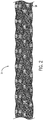
FIG. 1 is a partial side view of a spliced rope apparatus according to the present invention; -
FIG. 2 is a partial side view of a first rope of the spliced rope apparatus; -
FIG. 3 is a partial side view of a second rope of the spliced rope apparatus; -
FIG. 4 is a partial side view of a step for forming the spliced rope apparatus in which the first and second ropes are positioned to face each other and pairs of strands in each rope are taped together; -
FIG. 5 is a partial side view of a step for forming the spliced rope apparatus in which the strand pairs are unbraided from free ends and taped together; -
FIG. 6 is a partial side view of a step for forming a Moran section of the spliced rope apparatus; -
FIG. 7 is a partial side view of a step for beginning to form first and second tuck sections of the spliced rope apparatus; -
FIG. 8 is a partial side view of a step for continuing to form the first tuck section of the spliced rope apparatus; -
FIG. 9 is a partial side view of a step for continuing to form the second tuck section of the spliced rope apparatus; -
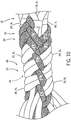
FIG. 10 is a partial side view of a step for beginning to form a first spiral section of the spliced rope apparatus; -
FIG. 11 is a partial side view of a step for beginning to form a second spiral section of the spliced rope apparatus; -
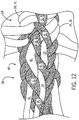
FIG. 12 is a partial side view of a step for continuing to form the first tuck section of the spliced rope apparatus; -
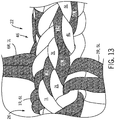
FIG. 13 is a partial side view of a step for continuing to form the second tuck section of the spliced rope apparatus; -
FIG. 14 is a partial side view of a step for continuing to form the first spiral section of the spliced rope apparatus; -
FIG. 15 is a partial side view of a step for continuing to form the second spiral section of the spliced rope apparatus; -
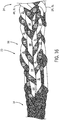
FIG. 16 is a partial side view of a step for completing the first tuck section of the spliced rope apparatus; and -
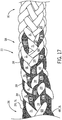
FIG. 17 is a partial side view of a step for completing the second tuck section of the spliced rope apparatus. - Referring to the figures and particularly
FIG. 1 , the present invention provides aspliced rope apparatus 10 in which asplice 12 connects and is defined by a first rope 14 (or a black rope as shown in the figures) and a second rope 16 (or a white rope as shown in the figures). Thesplice 12 includes various sections in which strands of theropes moran section 18, first andsecond tuck sections spiral sections splice 12 from working loose, for example, if thespliced rope apparatus 10 repeatedly passes over a sheave. - In the following paragraphs, the structure of the
spliced rope apparatus 10 will be described in further detail together with a method in which theapparatus 10 may be made. First, however, the initial structure of the black andwhite ropes - Turning now to
FIGS. 2 and3 , the black andwhite ropes ropes splice 10 after thesplice 10 is formed). The strands themselves may each include a plurality of strands that form a repeating pattern, and those strands may in turn each include a plurality of synthetic fibers that may be combined by twisting or other means. For example, the black andwhite ropes - Of the twelve strands in such ropes, six strands extend helically or spiral in a right-handed direction (that is, six strands extend in a clockwise direction around the other strands when viewing the strands from one end and moving longitudinally away from the end) and the other six strands extend helically or spiral in a left-handed direction (that is, six strands extend in a counter-clockwise direction around the other strands when viewing the strands from one end and moving longitudinally away from the end).
- Furthermore, each strand forms a repeating pattern of passing over (that is, radially outwardly if the rope is considered to have a general cylindrical shape) two strands extending in the opposite direction (referred to herein as "opposite strands" for simplicity), then passing under (that is, radially inwardly of) two opposite strands, then passing over two opposite strands, then passing under two opposite strands, then passing over two opposite strands, and then passing under two opposite strands. If the six right-handed strands are sequentially represented as nR for n=1 to 6 (that is, 1 R, 2R, 3R, 4R, 5R, and 6R) and the six left-handed strands are sequentially represented as nL for n=1 to 6 (that is, 1 L, 2L, 3L, 4L, 5L, and 6L), the following weave pattern can be established:
- Strand nR passes over strands nL and (n+1)L, then under strands (n+2)L and (n+3)L, then over strands (n+4)L and (n+5)L, then under strands nL and (n+1)L, then over strands (n+2)L and (n+3)L, and then under strands (n+4)L and (n+5)L.
- For this and the following generalized weave patterns, if the number preceding "L" or "R" exceeds six, six is subtracted from the number, or if the number preceding "L" or "R" is non-positive, six is added to the number. Other conventions may be used to describe the weave pattern; for example, a convention may be used in which
strand 1 R first passes under an opposite strand identified asstrand 6L. However, the above convention will be used through the remainder of the disclosure. - At each location where a strand passes over strands spiraling in the opposite direction, the strand can be described as defining a pick. As used herein, the term "pick" refers to a section of a strand that passes over another strand or multiple sequential strands to define, in part, the outermost radial surface of the rope at that longitudinal location of the rope.
FIGS. 2 and3 essentially show a plurality of strand picks that obscure other portions of the strands. From the above, it should also be apparent that the term "sequential" refers to directly neighboring picks or strands that extend in the same direction. For example,strands first rope 14 form set of sequential strands. - A method for forming the spliced
rope apparatus 10 will now be described in further detail. Referring toFIG. 4 , the method begins by positioning theropes locations taping locations strand 1 R. The other right-handed strands, nR for n=2 to 6, are identified sequentially and proceeding away from the free ends 28 and 30. This in turn identifies the left-handed strands, nL for n=1 to 6, according to the above convention and as shown in the figures. - Next, pairs of right-handed strands and left-handed strands are taped together at the
taping locations strands strands ropes taping locations -
Exit locations locations past strands 6R) are then identified and may be indicated, for example, by another colored ink. Theexit locations - Turning to
FIG. 5 , theropes taping locations opposite rope rope taping locations rope - Referring to
FIG. 6 , the strand pairs of theblack rope 14 are next inserted into the center of thewhite rope 16 longitudinally at the tapinglocation 34 to begin forming themoran section 18. That is, the strand pairs extend longitudinally through the center of thewhite rope 16 until they reach theexit location 38, at which point they exit the center of thewhite rope 16. Each strand pair of theblack rope 14 passes through theexit location 38 adjacent a different intersection of the strands of thewhite rope 16. For example,black strand pair white rope 16 past the intersection ofwhite strands white rope 16 past the intersection of white strands (6-n)R and nL, and even black strand pairs (7-n)R and nL for n=1, 3, and 5 exit the center of thewhite rope 16 past the intersection of white strands (n+5)R and (7-n)L. - To complete the
moran section 18, the tape at the tapinglocation 32 on theblack rope 14 is then removed, and the black strands are pulled through theexit location 38 on thewhite rope 16 until theexit location 36 on theblack rope 14 longitudinally aligns with the tapinglocation 34 on thewhite rope 16. - After forming the
moran section 18, it may be advantageous to temporarily seize thesection 18 in the middle and at the ends to compress thesection 18. To this end, a well-known method, such as using a double-clove hitch, may be used. - Referring to
FIG. 7 , the strand pairs of eachrope outer portions second tuck sections moran section 18. The strands of each pair together pass over one strand of theother rope other rope white rope 16, for example,white strand pair black strand 5L and then sequentially underblack strands White strand pair black strand 3R and then sequentially underblack strands - For the
black rope 14, for example,black strand pair white strand 6L and then sequentially underwhite strands Black strand pair white strand 3R and then sequentially underblack strands - Turning to
FIGS. 8 and9 , individual strands of eachrope inner portions second tuck sections rope FIG. 8 , untapedwhite strand 6R passes underblack strand 2R, then overblack strand 3R, then underblack strand 4R, and then overblack strand 5R. Alternatingly, untapedwhite strand 1 L passes overblack strand 2R, then underblack strand 3R, then overblack strand 4R, and then underblack strand 5R. Generally, untaped white strand (7-n)R for n=1, 3, and 5 passes under black strand (n+1)R, then over black strand (n+2)R, then under black strand (n+3)R, then over black strand (n+4)R, and, alternatingly, untaped white strand nL for n=1, 3, and 5 passes over black strand (n+1)R, then under black strand (n+2)R, then over black strand (n+3)R, then under black strand (n+4)R. - As another example and as shown in
FIG. 9 , untapedblack strand 4R passes underwhite strand 6R, then overwhite strand 1 R, then underwhite strand 2R, and then overwhite strand 3R. Alternatingly, untapedblack strand 3L passes overwhite strand 6R, then underwhite strand 1 R, then overwhite strand 2R, and then underwhite strand 3R. Generally, untaped black strand (7-n)R for n=1, 3, and 5 passes under white strand (n+3)R, then over white strand (n+4)R, then under white strand (n+5)R, then over white strand nR, and, alternatingly, untaped black strand nL for n=1, 3, and 5 passes over white strand (n+3)R, then under white strand (n+4)R, then over white strand (n+5)R, then under white strand nR. - Referring to
FIGS. 10 and11 , the odd strand pairs are next woven with the strands of the other rope to form first and second right-handedportions spiral sections inner tuck portions rope second tuck portions 44 and 46). For example, in thefirst spiral section 24 oddwhite strand pair inner tuck portion 44, then underblack strand 4L, then over a previously-formed segment of the firstinner tuck portion 44, then underblack strand 1 L, then over a previously-formed segment of the firstinner tuck portion 44, and then underblack strand 4L (seeFIG. 10 ). Generally, odd white strand pair nR and (7-n)L for n=1, 3, and 5 extends helically right-handedly around theblack rope 14 and passes over a previously-formed segment of the firstinner tuck portion 44, then under black strand (n+3)L, then over a previously-formed segment of the firstinner tuck portion 44, then under black strand nL, then over a previously-formed segment of the firstinner tuck portion 44, and then under black strand (n+3)L. - As another example, in the second right-
handed spiral portion 50 oddblack pair inner tuck portion 46, then underwhite strand 5L, then over a previously-formed segment of the secondinner tuck portion 46, then underwhite strand 2L, then over a previously-formed segment of the secondinner tuck portion 46, and then underwhite strand 5L (seeFIG. 11 ). Generally, odd black strand pair nR and (7-n)L for n=1, 3, and 5 extends helically right-handedly around thewhite rope 16 and passes over a previously-formed segment of the secondinner tuck portion 46, then under white strand nL, then over a previously-formed segment of the secondinner tuck portion 46, then under white strand (n+3)L, then over a previously-formed segment of the secondinner tuck portion 46, and then under white strand nL. - From the above, it should be apparent that neighboring spiraling strand pairs pass under sequential picks defined by the other rope. For example and as shown in
FIG. 11 , oddblack pair white strand 3L and oddblack pair white strand 4L. It should also be apparent that the previous steps form segments of theinner tuck portions spiral sections inner tuck portions spiral sections - Additional segments of the
tuck sections spiral sections tuck sections spiral sections - For example and turning now to
FIGS. 12 and13 , individual strands of eachrope inner tuck portions rope FIG. 12 , untapedwhite strand 1 R passes overblack strand 5L, then underblack strand 6L, then overblack strand 1 L, and then underblack strand 2L. Alternatingly, untapedwhite strand 6L passes underblack strand 5L, then overblack strand 6L, then underblack strand 1 L, and then overblack strand 2L. Generally, untaped white strand nR for n=1, 3, and 5 passes over black strand (n+4)L, then under black strand (n+5)L, then over black strand nL, then under black strand (n+1)L, and, alternatingly, untaped white strand (7-n)L for n=1, 3, and 5 passes under black strand (n+4)L, then over black strand (n+5)L, then under black strand nL, then over black strand (n+1)L. - As another example and as shown in
FIG. 13 , untapedblack strand 1 R passes overwhite strand 2L, then underwhite strand 3L, then overwhite strand 4L, and then underwhite strand 5L. Alternatingly, untapedblack strand 6L passes underwhite strand 2L, then overwhite strand 3L, then underwhite strand 4L, and then overwhite strand 5L. Generally, untaped black strand nR for n=1, 3, and 5 passes over black strand (n+1)L, then under black strand (n+2)L, then over black strand (n+3)L, then under black strand (n+4)L, and, alternatingly, untaped black strand (7-n)L for n=1, 3, and 5 passes under black strand (n+1)L, then over black strand (n+2)L, then under black strand (n+3)L, then over black strand (n+4)L. - Referring to
FIGS. 14 and15 , the even strand pairs are next woven with the strands of the other rope to form first and second left-handedportions 52 and 54 of thespiral sections inner tuck portions rope first spiral section 24 evenwhite strand pair inner tuck portion 44, then underblack strand 2R (seeFIG. 14 ), then over a previously-formed segment of the firstinner tuck portion 44, then underblack strand 5R, then over a previously-formed segment of the firstinner tuck portion 44, and then underblack strand 2R (seeFIG. 14 ). Generally, even white strand pair (7-n)R and nL for n=1, 3, and 5 extends helically left-handedly around theblack rope 14 and passes over a previously-formed segment of the firstinner tuck portion 44, then under black strand (n+1)R, then over a previously-formed segment of the firstinner tuck portion 44, then under black strand (n+4)R, then over a previously-formed segment of the firstinner tuck portion 44, and then under black strand (n+1)R. - As another example, in the
second spiral section 26 evenblack pair inner tuck portion 46, then underwhite strand 2R, then over a previously-formed segment of the secondinner tuck portion 46, then underwhite strand 5R (seeFIG. 15 ), then over a previously-formed segment of the secondinner tuck portion 46, and then underwhite strand 2R. Generally, even black strand pair (7-n)R and nL for n=1, 3, and 5 extends helically left-handedly around thewhite rope 16 and passes over a previously-formed segment of the secondinner tuck portion 46, then under white strand (n+3)L, then over a previously-formed segment of the secondinner tuck portion 46, then under white strand nL, then over a previously-formed segment of the secondinner tuck portion 46, and then under white strand (n+3)L. - Turning now to
FIGS. 16 and17 , the first andsecond tuck sections end burying portions second spiral sections splice 12 tapers to the general width of the portions of theropes splice 12. - For example and as shown in
FIG. 16 , untapedwhite strand 5R passes overblack strand 1 L, then underblack strand 2L, then overblack strand 3L, then underblack strand 4L, then overblack strand 5L, then underblack strand 6L, then overblack strand 1 L, then underblack strand 2L, and then is buried for a distance of fifteen picks. Partially alternatingly, untapedwhite strand 2L passes underblack strand 1 L, then overblack strand 2L, then underblack strand 3L, then overblack strand 4L, then underblack strand 5L, and then is buried for a distance of thirteen picks. Generally, untaped white odd pair strand nR for n=1, 3, and 5 passes over black strand (n+2)L, then under black strand (n+3)L, then over black strand (n+4)L, then under black strand (n+5)L, then over black strand nL, then under black strand (n+1)L, then over black strand (n+2)L, then under black strand (n+3)L, and then is buried for a distance of (n+10) picks, and, partially alternatingly, untaped white odd pair strand (7-n)L for n=1, 3, and 5 passes under black strand (n+2)L, then over black strand (n+3)L, then under black strand (n+4)L, then over black strand (n+5)L, then under black strand nL, and then is buried for a distance of (n+8) picks. - As another example and as shown in
FIG. 16 , untapedwhite strand 4R passes underblack strand 5R, then overblack strand 6R, then underblack strand 1 R, then overblack strand 2R, then underblack strand 3R, and then is buried for a distance of eleven picks. Partially alternatingly, untapedwhite strand 3L passes overblack strand 5R, then underblack strand 6R, then overblack strand 1 R, then underblack strand 2R, then overblack strand 3R, then underblack strand 4R, then overblack strand 5R, then underblack strand 6R, and then is buried for a distance of thirteen picks. Generally, untaped white even pair strand (7-n)R for n=1, 3, and 5 passes under black strand (n+2)R, then over black strand (n+3)R, then under black strand (n+4)R, then over black strand (n+5)R, then under black strand nR, and then is buried for a distance of (n+8) picks, and, partially alternatingly, untaped white even pair strand nL for n=1, 3, and 5 passes over black strand (n+2)R, then under black strand (n+3)R, then over black strand (n+4)R, then under black strand (n+5)R, then over black strand nR, then under black strand (n+1)R, then over black strand (n+2)R, then under black strand (n+3)R, and then is buried for a distance of (n+10) picks. - As another example and as shown in
FIG. 17 , untapedblack strand 3R passes overwhite strand 2L, then underwhite strand 3L, then overwhite strand 4L, then underwhite strand 5L, then overwhite strand 6L, then underwhite strand 1 L, then overwhite strand 2L, then underwhite strand 3L, and then is buried for a distance of thirteen picks. Partially alternatingly, untapedblack strand 4L passes underwhite strand 2L, then overwhite strand 3L, then underwhite strand 4L, then overwhite strand 5L, then underwhite strand 6L, and then is buried for a distance of eleven picks. Generally, untaped black odd pair strand nR for n=1, 3, and 5 passes over white strand (n+5)L, then under white strand nL, then over white strand (n+1)L, then under white strand (n+2)L, then over white strand (n+3)L, then under white strand (n+4)L, then over white strand (n+5)L, then under white strand nL, and is buried for a distance of (n+10) picks, and, partially alternatingly, untaped black odd pair strand (7-n)L for n=1, 3, and 5 passes under white strand (n+5)L, then over white strand nL, then under white strand (n+1)L, then over white strand (n+2)L, then under white strand (n+3)L, and is buried for a distance of (n+8) picks. - As yet another example and as shown in
FIG. 17 , untapedblack strand 4R passes underwhite strand 1 R, then overwhite strand 2R, then underwhite strand 3R, then overwhite strand 4R, then underwhite strand 5R, and is then buried for a distance of eleven picks. Partially alternatingly, untapedblack strand 3L passes overwhite strand 1 R, then underwhite strand 2R, then overwhite strand 3R, then underwhite strand 4R, then overwhite strand 5R, then underwhite strand 6R, then overwhite strand 1 R, then underwhite strand 2R, and then is buried for a distance of thirteen picks. Generally, untaped black even pair strand (7-n)R for n=1, 3, and 5 passes under white strand (n+4)R, then over white strand (n+5)R, then under white strand nR, then over white strand (n+1)R, then under white strand (n+2)R, and is then buried for a distance (n+8) picks, and, partially alternatingly, untaped black even pair strand nL for n=1, 3, and 5 passes over white strand (n+4)R, then under white strand (n+5)R, then over white strand nR, then under white strand (n+1)R, then over white strand (n+2)R, then under white strand (n+3)R, then over white strand (n+4)R, then under white strand (n+5)R, and then is buried for a distance of (n+10) picks. - To complete the
splice 12, the free end of each strand is extracted from the other rope at the appropriate pick distance and angle cut where the strand exits the rope. Theropes - From the above description, it should be apparent that the present invention provides a spliced rope apparatus and method in which several weave patterns are used to advantageously inhibit the splice from working loose, for example, if the spliced rope apparatus repeatedly passes over a sheave. As such, as the rope wears, sections with relatively high wear can be removed and replaced with new sections instead of replacing the entire rope and sections with relatively little wear.
- A preferred embodiment of the invention has been described in considerable detail. Many other modifications and variations to the preferred embodiment will be apparent to a person of ordinary skill in the art. Therefore, the invention should not be limited to the embodiment described, but should be defined by the claims that follow.
Claims (15)
- A spliced rope apparatus (10), comprising: a first rope (14) including a first plurality of strands; a second rope (16) including a second plurality of strands; a splice (12) connecting the first and second ropes and defined by the first and second pluralities of strands, the splice (12) including: a spiral section (24, 26) including a first pair having strands of the first plurality of strands that are positioned proximate each other, and the first pair extending helically and the strands of the first pair together passing under a plurality of picks defined by the second plurality of strands and together passing over a remainder of the second plurality of strands; and a tuck section (20, 22) in which at least some of the first plurality of strands extend longitudinally to pass under and over sequential picks defined by the second plurality of strands.
- The spliced rope apparatus (10) of claim 1, wherein the tuck section (20, 22) is disposed longitudinally aside the spiral section (24, 26).
- The spliced rope apparatus (10) of claim 2, wherein:the tuck section (20, 22) includes a second pair having strands of the first plurality of strands that are positioned proximate each other and together sequentially pass over a first strand of the second plurality of strands and then under a second strand and a third strand of the second plurality of strands; orthe tuck section (20, 22) includes a second pair having strands of the first plurality of strands that are positioned proximate each other and sequentially and alternatingly, with respect to each other, pass over and under a first strand and a second strand of the second plurality of strands.
- The spliced rope apparatus (10) of claim 1, wherein the tuck section (20, 22) is disposed under the spiral section (24, 26).
- The spliced rope apparatus (10) of claim 4, wherein the tuck section (20, 22) includes a second pair having strands of the first plurality of strands that are positioned proximate each other and alternatingly, with respect to each other, and sequentially pass over and under a first strand and a second strand of the second plurality of strands.
- The spliced rope apparatus (10) of claim 4, wherein the tuck section (20, 22) includes: an outer portion disposed longitudinally aside the spiral section (24, 26); and an inner portion disposed below the spiral section (24, 26).
- The spliced rope apparatus (10) of claim 6, wherein the tuck section (20, 22) includes a second pair having strands of the first plurality of strands that are positioned proximate each other and, in the outer portion, together sequentially pass over a first strand of the second plurality of strands, under a second strand and a third strand of the second plurality of strands, and then, in the inner portion, sequentially and alternatingly, with respect to each other, pass over and under a fourth strand and a fifth strand of the second plurality of strands.
- The spliced rope apparatus (10) of claim 1, wherein:the first pair of strands extends helically in a right-handed direction, and wherein the spiral section (24, 26) includes a second pair having strands of the first plurality of strands positioned proximate each other and extending helically in a left-handed direction to together pass under another plurality of picks defined by the second plurality of strands; orthe first pair of strands extends helically in a first direction and passes under a first pick defined by the second plurality of strands, and wherein the spiral section (24, 26) includes a second pair having strands of the first plurality of strands positioned proximate each other and extending helically in the first direction to together pass under a second pick defined by the second plurality of strands sequential with the first pick.
- The spliced rope apparatus (10) of claim 1, wherein the first rope (14) has a total of twelve strands in which six strands extend helically in a right-handed direction and six strands extend helically in a left-handed direction, and wherein the second rope (16) has a total of twelve strands in which six strands extend helically in the right-handed direction and six strands extend helically in the left-handed direction.
- The spliced rope apparatus (10) of claim 9, wherein for both the first rope (14) and the second rope (16) the six strands extending helically in the right-handed direction are sequentially identifiable as nR for n=1, 2, 3, 4, 5, and 6, and the six strands extending helically in the left-handed direction are sequentially identifiable as nL for n=1, 2, 3, 4, 5, and 6, wherein strand nR forms a repeating weave pattern by passing over strands nL and (n+1)L, then under strands (n+2)L and (n+3)L, then over strands (n+4)L and (n+5)L, then under strands nL and (n+1)L, then over strands (n+2)L and (n+3)L, and then under strands (n+4)L and (n+5)L for n = 1, 2, 3, 4, 5, and 6, and for a value preceding "L" that exceeds six, six is subtracted from the value.
- The spliced rope apparatus (10) of claim 10, wherein the spiral section (24, 26) includes three pairs of strands of the first plurality of strands given by nR and (7-n)L for n=1, 3, and 5, and the strands in each of the three pairs are positioned proximate each other and extend helically in the right-handed direction to together pass under the plurality of picks defined by the second plurality of strands and together pass over the remainder of the second plurality of strands.
- The spliced rope apparatus (10) of claim 11, wherein:the three pairs of strands of the first plurality of strands given by nR and (7-n)L for n=1, 3, and 5 each extend helically in the right-handed direction and the strands nR and (7-n)L together pass under strand (n+3)L of the second plurality of strands, under strand nL of the second plurality of strands, and under strand (n+3)L of the second plurality of strands, and for a value preceding "L" that exceeds six, six is subtracted from the value; orthe spiral section (24, 26) includes a right-handed portion defined by the three pairs of strands of the first plurality of strands; a left-handed portion disposed longitudinally aside from the right-handed portion, the left-handed portion including three additional pairs of strands of the first plurality of strands given by (7-n)R and nL for n=1, 3, and 5, and the strands in each of the three additional pairs are positioned proximate each other and extend helically in the left-handed direction to together pass under another plurality of picks defined by the second plurality of strands and together pass over another remainder of the second plurality of strands; orthe tuck section (20, 22) is disposed below the spiral section (24, 26), and in the tuck section (20, 22) strands of the first plurality of strands given by (7-n)R for n=1, 3, and 5 pass under strand (n+1)R of the second plurality of strands, then over strand (n+2)R of the second plurality of strands, then under strand (n+3)R of the second plurality of strands, then over strand (n+4)R of the second plurality of strands, and strands of the first plurality of strands given by nL for n=1, 3, and 5 pass over strand (n+1)R of the second plurality of strands, then under strand (n+2)R of the second plurality of strands, then over strand (n+3)R of the second plurality of strands, then under strand (n+4)R of the second plurality of strands, and for a value preceding "R" that exceeds six, six is subtracted from the value.
- A method of splicing a first rope (14) including a first plurality of strands to a second rope (16) including a second plurality of strands, the method comprising the steps of: forming a spiral splice section (24, 26) by helically extending a first pair of strands of the first plurality of strands around the second rope (16), passing the strands of the first pair together under a plurality of picks defined by the second plurality of strands, and passing the strands of the first pair together over a remainder of the second plurality of strands; and forming a tuck splice section (20, 22) by alternatingly and longitudinally passing at least some of the first plurality of strands under and over sequential picks defined by the second plurality of strands.
- The method of claim 13, wherein the step of forming the tuck splice section (20, 22) includes forming the tuck splice section (20, 22) longitudinally to at least one side of the spiral splice section (24, 26); wherein optionally the step of forming the tuck splice section (20, 22) further includes forming the tuck splice section (20, 22) below the spiral splice section (24, 26) by alternatingly and longitudinally passing the at least some of the first plurality of strands under and over the sequential picks defined by the second plurality of strands before forming the spiral splice section (24, 26).
- The method of claim 13, wherein the step of forming the tuck splice section (20, 22) includes forming the tuck splice section (20, 22) below the spiral splice section (24, 26) by alternatingly and longitudinally passing the at least some of the first plurality of strands under and over the sequential picks defined by the second plurality of strands before forming the spiral splice section(24, 26).
Applications Claiming Priority (2)
| Application Number | Priority Date | Filing Date | Title |
|---|---|---|---|
| US201261606670P | 2012-03-05 | 2012-03-05 | |
| PCT/US2013/028181 WO2013134033A1 (en) | 2012-03-05 | 2013-02-28 | Spliced rope apparatus and method |
Publications (3)
| Publication Number | Publication Date |
|---|---|
| EP2822887A1 EP2822887A1 (en) | 2015-01-14 |
| EP2822887A4 EP2822887A4 (en) | 2016-02-17 |
| EP2822887B1 true EP2822887B1 (en) | 2017-08-02 |
Family
ID=49117201
Family Applications (1)
| Application Number | Title | Priority Date | Filing Date |
|---|---|---|---|
| EP13757678.1A Active EP2822887B1 (en) | 2012-03-05 | 2013-02-28 | Spliced rope apparatus and method |
Country Status (7)
| Country | Link |
|---|---|
| US (1) | US9732468B2 (en) |
| EP (1) | EP2822887B1 (en) |
| KR (1) | KR102039763B1 (en) |
| AU (1) | AU2013230564B2 (en) |
| BR (1) | BR112014022006B1 (en) |
| NO (1) | NO2934152T3 (en) |
| WO (1) | WO2013134033A1 (en) |
Cited By (1)
| Publication number | Priority date | Publication date | Assignee | Title |
|---|---|---|---|---|
| WO2024177506A1 (en) | 2023-02-23 | 2024-08-29 | Lankhorst Touwfabrieken B.V. | Helical endless splice |
Families Citing this family (10)
| Publication number | Priority date | Publication date | Assignee | Title |
|---|---|---|---|---|
| US8689534B1 (en) | 2013-03-06 | 2014-04-08 | Samson Rope Technologies | Segmented synthetic rope structures, systems, and methods |
| WO2014151957A1 (en) | 2013-03-15 | 2014-09-25 | Samson Rope Technologies | Splice systems and methods for ropes |
| EP3178030B1 (en) * | 2014-08-06 | 2020-09-16 | Waitak Labels Factory Limited | Authentication devices |
| US20160168787A1 (en) * | 2014-12-15 | 2016-06-16 | Samson Rope Technologies | Tapered Line Splice Systems and Methods |
| WO2016059261A2 (en) * | 2015-03-02 | 2016-04-21 | Dsm Ip Assets B.V. | Low slip splice |
| US10377607B2 (en) | 2016-04-30 | 2019-08-13 | Samson Rope Technologies | Rope systems and methods for use as a round sling |
| JP2022516605A (en) * | 2018-12-21 | 2022-03-01 | アンピックス パワー ベスローテン ベンノートシャップ | Rope for flight wind power generation system |
| CN110835865B (en) * | 2019-11-05 | 2021-11-19 | 山东鲁普科技有限公司 | Connecting method of twelve-strand braided rope and twelve-strand braided rope ring |
| US20210214890A1 (en) * | 2020-01-10 | 2021-07-15 | Samson Rope Technologies | Directional rope structures and methods and mooring systems including directional rope systems and methods |
| CN119308160B (en) * | 2024-09-29 | 2025-10-28 | 山东港口渤海湾港集团有限公司 | Barge cable splicing method |
Family Cites Families (17)
| Publication number | Priority date | Publication date | Assignee | Title |
|---|---|---|---|---|
| US345719A (en) * | 1886-07-20 | Art of splicing cables | ||
| US411637A (en) * | 1889-09-24 | batchelob | ||
| US460407A (en) * | 1890-04-22 | 1891-09-29 | Method of splicing cables | |
| US1283044A (en) * | 1917-03-29 | 1918-10-29 | Thomas Beasley | Marlinespike cable-splicer. |
| US2482204A (en) * | 1948-02-10 | 1949-09-20 | American Chain & Cable Co | Wire rope splice |
| US2645840A (en) * | 1951-01-11 | 1953-07-21 | Joseph C Leary | Bale twine tie |
| DE941050C (en) * | 1952-10-03 | 1956-03-29 | Heinrich Bruening | Cable splice, especially short splice for thimbles, eyelets or the like. |
| US3356397A (en) * | 1965-05-07 | 1967-12-05 | Percy R Bagby | Wire rope long splice and method of making |
| SE406755B (en) * | 1973-01-19 | 1979-02-26 | Pujol Isern Carlos | KIT FOR SEEDING THREADS AND FORGARN IN TEXTILE PROCESSES AND DEVICE FOR PERFORMING THE KIT |
| GB2011969B (en) * | 1977-11-11 | 1982-04-07 | Cable Belt Ltd | Ropes and the like |
| JPS5640850U (en) * | 1979-09-05 | 1981-04-15 | ||
| JP3035503B2 (en) * | 1997-02-28 | 2000-04-24 | 古澤工業株式会社 | Ship rope |
| US5931076A (en) * | 1997-06-10 | 1999-08-03 | Puget Sound Rope Corporation | Rope construction |
| US6422118B1 (en) * | 2000-10-04 | 2002-07-23 | E.I. Du Pont De Nemours & Company | Braided cord splice |
| FI112642B (en) | 2002-11-15 | 2003-12-31 | Kone Corp | A method for verifying and measuring the internal tension of an elevator hoisting rope and an elevator enabling the method |
| US20150167782A1 (en) * | 2012-05-24 | 2015-06-18 | Gregg Marine, Inc. | Braided termination for fiber subsea umbilical line |
| US20160168787A1 (en) * | 2014-12-15 | 2016-06-16 | Samson Rope Technologies | Tapered Line Splice Systems and Methods |
-
2013
- 2013-02-28 WO PCT/US2013/028181 patent/WO2013134033A1/en not_active Ceased
- 2013-02-28 AU AU2013230564A patent/AU2013230564B2/en active Active
- 2013-02-28 BR BR112014022006-9A patent/BR112014022006B1/en active IP Right Grant
- 2013-02-28 US US14/382,468 patent/US9732468B2/en active Active
- 2013-02-28 EP EP13757678.1A patent/EP2822887B1/en active Active
- 2013-02-28 KR KR1020147027981A patent/KR102039763B1/en active Active
- 2013-09-30 NO NO13864064A patent/NO2934152T3/no unknown
Non-Patent Citations (1)
| Title |
|---|
| None * |
Cited By (2)
| Publication number | Priority date | Publication date | Assignee | Title |
|---|---|---|---|---|
| WO2024177506A1 (en) | 2023-02-23 | 2024-08-29 | Lankhorst Touwfabrieken B.V. | Helical endless splice |
| NL2034215B1 (en) | 2023-02-23 | 2024-09-05 | Lankhorst Touwfab Bv | Helical endless splice |
Also Published As
| Publication number | Publication date |
|---|---|
| WO2013134033A1 (en) | 2013-09-12 |
| US20150128553A1 (en) | 2015-05-14 |
| EP2822887A4 (en) | 2016-02-17 |
| US9732468B2 (en) | 2017-08-15 |
| KR102039763B1 (en) | 2019-11-01 |
| EP2822887A1 (en) | 2015-01-14 |
| AU2013230564A1 (en) | 2014-09-25 |
| NO2934152T3 (en) | 2018-04-07 |
| BR112014022006B1 (en) | 2021-01-19 |
| KR20140132000A (en) | 2014-11-14 |
| AU2013230564B2 (en) | 2017-05-25 |
Similar Documents
| Publication | Publication Date | Title |
|---|---|---|
| AU2013230564B2 (en) | Spliced rope apparatus and method | |
| US9951447B2 (en) | Jacket for a lengthy body | |
| EP3443158B1 (en) | Hoisting rope | |
| KR102098417B1 (en) | Hybrid rope or hybrid strand | |
| US8322765B2 (en) | Synthetic sling with component parts having opposing lays | |
| EP3143196B1 (en) | Cut resistant rope | |
| EP2567021A2 (en) | Forming an eye end termination on a rope | |
| WO2012107939A1 (en) | Braided rope, suitable to be used as a towing warp, comprising changing properties in the length direction thereof | |
| CN106283775A (en) | A kind of composite rope of novel multi-layer braiding | |
| KR200475026Y1 (en) | Mooring rope for ship | |
| KR20250154442A (en) | Spiral infinite splice | |
| AU2018362047B2 (en) | A blended rope | |
| CN109024011A (en) | A kind of multi-layer braided composite rope | |
| CN106368023A (en) | Corrosion-resistant composite cable | |
| WO2012150469A2 (en) | Forming an eye end termination on a rope | |
| CN206828863U (en) | A kind of high intensity electric traction rope | |
| US12372137B2 (en) | Device for termination of a rope | |
| CN113327707A (en) | Lightweight, high strength photoelectricity umbilical cable |
Legal Events
| Date | Code | Title | Description |
|---|---|---|---|
| PUAI | Public reference made under article 153(3) epc to a published international application that has entered the european phase |
Free format text: ORIGINAL CODE: 0009012 |
|
| 17P | Request for examination filed |
Effective date: 20140929 |
|
| AK | Designated contracting states |
Kind code of ref document: A1 Designated state(s): AL AT BE BG CH CY CZ DE DK EE ES FI FR GB GR HR HU IE IS IT LI LT LU LV MC MK MT NL NO PL PT RO RS SE SI SK SM TR |
|
| AX | Request for extension of the european patent |
Extension state: BA ME |
|
| RIN1 | Information on inventor provided before grant (corrected) |
Inventor name: LONGERICH, RANDY Inventor name: DEVERO, NEATHAN |
|
| DAX | Request for extension of the european patent (deleted) | ||
| RA4 | Supplementary search report drawn up and despatched (corrected) |
Effective date: 20160119 |
|
| RIC1 | Information provided on ipc code assigned before grant |
Ipc: B65H 69/06 20060101AFI20160113BHEP |
|
| GRAP | Despatch of communication of intention to grant a patent |
Free format text: ORIGINAL CODE: EPIDOSNIGR1 |
|
| INTG | Intention to grant announced |
Effective date: 20170130 |
|
| GRAJ | Information related to disapproval of communication of intention to grant by the applicant or resumption of examination proceedings by the epo deleted |
Free format text: ORIGINAL CODE: EPIDOSDIGR1 |
|
| GRAL | Information related to payment of fee for publishing/printing deleted |
Free format text: ORIGINAL CODE: EPIDOSDIGR3 |
|
| GRAS | Grant fee paid |
Free format text: ORIGINAL CODE: EPIDOSNIGR3 |
|
| GRAR | Information related to intention to grant a patent recorded |
Free format text: ORIGINAL CODE: EPIDOSNIGR71 |
|
| GRAA | (expected) grant |
Free format text: ORIGINAL CODE: 0009210 |
|
| INTC | Intention to grant announced (deleted) | ||
| AK | Designated contracting states |
Kind code of ref document: B1 Designated state(s): AL AT BE BG CH CY CZ DE DK EE ES FI FR GB GR HR HU IE IS IT LI LT LU LV MC MK MT NL NO PL PT RO RS SE SI SK SM TR |
|
| INTG | Intention to grant announced |
Effective date: 20170626 |
|
| REG | Reference to a national code |
Ref country code: CH Ref legal event code: EP Ref country code: AT Ref legal event code: REF Ref document number: 914212 Country of ref document: AT Kind code of ref document: T Effective date: 20170815 |
|
| REG | Reference to a national code |
Ref country code: IE Ref legal event code: FG4D |
|
| REG | Reference to a national code |
Ref country code: DE Ref legal event code: R096 Ref document number: 602013024416 Country of ref document: DE |
|
| REG | Reference to a national code |
Ref country code: NL Ref legal event code: FP |
|
| REG | Reference to a national code |
Ref country code: AT Ref legal event code: MK05 Ref document number: 914212 Country of ref document: AT Kind code of ref document: T Effective date: 20170802 |
|
| REG | Reference to a national code |
Ref country code: LT Ref legal event code: MG4D |
|
| REG | Reference to a national code |
Ref country code: NO Ref legal event code: T2 Effective date: 20170802 |
|
| PG25 | Lapsed in a contracting state [announced via postgrant information from national office to epo] |
Ref country code: LT Free format text: LAPSE BECAUSE OF FAILURE TO SUBMIT A TRANSLATION OF THE DESCRIPTION OR TO PAY THE FEE WITHIN THE PRESCRIBED TIME-LIMIT Effective date: 20170802 Ref country code: SE Free format text: LAPSE BECAUSE OF FAILURE TO SUBMIT A TRANSLATION OF THE DESCRIPTION OR TO PAY THE FEE WITHIN THE PRESCRIBED TIME-LIMIT Effective date: 20170802 Ref country code: HR Free format text: LAPSE BECAUSE OF FAILURE TO SUBMIT A TRANSLATION OF THE DESCRIPTION OR TO PAY THE FEE WITHIN THE PRESCRIBED TIME-LIMIT Effective date: 20170802 Ref country code: AT Free format text: LAPSE BECAUSE OF FAILURE TO SUBMIT A TRANSLATION OF THE DESCRIPTION OR TO PAY THE FEE WITHIN THE PRESCRIBED TIME-LIMIT Effective date: 20170802 Ref country code: FI Free format text: LAPSE BECAUSE OF FAILURE TO SUBMIT A TRANSLATION OF THE DESCRIPTION OR TO PAY THE FEE WITHIN THE PRESCRIBED TIME-LIMIT Effective date: 20170802 |
|
| REG | Reference to a national code |
Ref country code: FR Ref legal event code: PLFP Year of fee payment: 6 |
|
| PG25 | Lapsed in a contracting state [announced via postgrant information from national office to epo] |
Ref country code: LV Free format text: LAPSE BECAUSE OF FAILURE TO SUBMIT A TRANSLATION OF THE DESCRIPTION OR TO PAY THE FEE WITHIN THE PRESCRIBED TIME-LIMIT Effective date: 20170802 Ref country code: IS Free format text: LAPSE BECAUSE OF FAILURE TO SUBMIT A TRANSLATION OF THE DESCRIPTION OR TO PAY THE FEE WITHIN THE PRESCRIBED TIME-LIMIT Effective date: 20171202 Ref country code: ES Free format text: LAPSE BECAUSE OF FAILURE TO SUBMIT A TRANSLATION OF THE DESCRIPTION OR TO PAY THE FEE WITHIN THE PRESCRIBED TIME-LIMIT Effective date: 20170802 Ref country code: PL Free format text: LAPSE BECAUSE OF FAILURE TO SUBMIT A TRANSLATION OF THE DESCRIPTION OR TO PAY THE FEE WITHIN THE PRESCRIBED TIME-LIMIT Effective date: 20170802 Ref country code: GR Free format text: LAPSE BECAUSE OF FAILURE TO SUBMIT A TRANSLATION OF THE DESCRIPTION OR TO PAY THE FEE WITHIN THE PRESCRIBED TIME-LIMIT Effective date: 20171103 Ref country code: RS Free format text: LAPSE BECAUSE OF FAILURE TO SUBMIT A TRANSLATION OF THE DESCRIPTION OR TO PAY THE FEE WITHIN THE PRESCRIBED TIME-LIMIT Effective date: 20170802 Ref country code: BG Free format text: LAPSE BECAUSE OF FAILURE TO SUBMIT A TRANSLATION OF THE DESCRIPTION OR TO PAY THE FEE WITHIN THE PRESCRIBED TIME-LIMIT Effective date: 20171102 |
|
| PG25 | Lapsed in a contracting state [announced via postgrant information from national office to epo] |
Ref country code: DK Free format text: LAPSE BECAUSE OF FAILURE TO SUBMIT A TRANSLATION OF THE DESCRIPTION OR TO PAY THE FEE WITHIN THE PRESCRIBED TIME-LIMIT Effective date: 20170802 Ref country code: RO Free format text: LAPSE BECAUSE OF FAILURE TO SUBMIT A TRANSLATION OF THE DESCRIPTION OR TO PAY THE FEE WITHIN THE PRESCRIBED TIME-LIMIT Effective date: 20170802 Ref country code: CZ Free format text: LAPSE BECAUSE OF FAILURE TO SUBMIT A TRANSLATION OF THE DESCRIPTION OR TO PAY THE FEE WITHIN THE PRESCRIBED TIME-LIMIT Effective date: 20170802 |
|
| REG | Reference to a national code |
Ref country code: DE Ref legal event code: R097 Ref document number: 602013024416 Country of ref document: DE |
|
| PG25 | Lapsed in a contracting state [announced via postgrant information from national office to epo] |
Ref country code: SM Free format text: LAPSE BECAUSE OF FAILURE TO SUBMIT A TRANSLATION OF THE DESCRIPTION OR TO PAY THE FEE WITHIN THE PRESCRIBED TIME-LIMIT Effective date: 20170802 Ref country code: EE Free format text: LAPSE BECAUSE OF FAILURE TO SUBMIT A TRANSLATION OF THE DESCRIPTION OR TO PAY THE FEE WITHIN THE PRESCRIBED TIME-LIMIT Effective date: 20170802 Ref country code: SK Free format text: LAPSE BECAUSE OF FAILURE TO SUBMIT A TRANSLATION OF THE DESCRIPTION OR TO PAY THE FEE WITHIN THE PRESCRIBED TIME-LIMIT Effective date: 20170802 |
|
| PLBE | No opposition filed within time limit |
Free format text: ORIGINAL CODE: 0009261 |
|
| STAA | Information on the status of an ep patent application or granted ep patent |
Free format text: STATUS: NO OPPOSITION FILED WITHIN TIME LIMIT |
|
| 26N | No opposition filed |
Effective date: 20180503 |
|
| PG25 | Lapsed in a contracting state [announced via postgrant information from national office to epo] |
Ref country code: SI Free format text: LAPSE BECAUSE OF FAILURE TO SUBMIT A TRANSLATION OF THE DESCRIPTION OR TO PAY THE FEE WITHIN THE PRESCRIBED TIME-LIMIT Effective date: 20170802 |
|
| REG | Reference to a national code |
Ref country code: CH Ref legal event code: PL |
|
| PG25 | Lapsed in a contracting state [announced via postgrant information from national office to epo] |
Ref country code: MC Free format text: LAPSE BECAUSE OF FAILURE TO SUBMIT A TRANSLATION OF THE DESCRIPTION OR TO PAY THE FEE WITHIN THE PRESCRIBED TIME-LIMIT Effective date: 20170802 |
|
| REG | Reference to a national code |
Ref country code: IE Ref legal event code: MM4A |
|
| PG25 | Lapsed in a contracting state [announced via postgrant information from national office to epo] |
Ref country code: LU Free format text: LAPSE BECAUSE OF NON-PAYMENT OF DUE FEES Effective date: 20180228 Ref country code: CH Free format text: LAPSE BECAUSE OF NON-PAYMENT OF DUE FEES Effective date: 20180228 Ref country code: LI Free format text: LAPSE BECAUSE OF NON-PAYMENT OF DUE FEES Effective date: 20180228 |
|
| PG25 | Lapsed in a contracting state [announced via postgrant information from national office to epo] |
Ref country code: IE Free format text: LAPSE BECAUSE OF NON-PAYMENT OF DUE FEES Effective date: 20180228 |
|
| PG25 | Lapsed in a contracting state [announced via postgrant information from national office to epo] |
Ref country code: MT Free format text: LAPSE BECAUSE OF NON-PAYMENT OF DUE FEES Effective date: 20180228 |
|
| PG25 | Lapsed in a contracting state [announced via postgrant information from national office to epo] |
Ref country code: TR Free format text: LAPSE BECAUSE OF FAILURE TO SUBMIT A TRANSLATION OF THE DESCRIPTION OR TO PAY THE FEE WITHIN THE PRESCRIBED TIME-LIMIT Effective date: 20170802 |
|
| REG | Reference to a national code |
Ref country code: NL Ref legal event code: HC Owner name: ENERPAC TOOL GROUP CORP.; US Free format text: DETAILS ASSIGNMENT: CHANGE OF OWNER(S), CHANGE OF OWNER(S) NAME; FORMER OWNER NAME: ACTUANT CORPORATION Effective date: 20200326 |
|
| REG | Reference to a national code |
Ref country code: DE Ref legal event code: R081 Ref document number: 602013024416 Country of ref document: DE Owner name: CORTLAND INDUSTRIAL LLC, MENOMONEE FALLS, US Free format text: FORMER OWNER: ACTUANT CORP., MENOMONEE FALLS, WIS., US Ref country code: DE Ref legal event code: R081 Ref document number: 602013024416 Country of ref document: DE Owner name: CORTLAND COMPANY, INC., STAFFORD, US Free format text: FORMER OWNER: ACTUANT CORP., MENOMONEE FALLS, WIS., US Ref country code: DE Ref legal event code: R081 Ref document number: 602013024416 Country of ref document: DE Owner name: ENERPAC TOOL GROUP CORP., MENOMONEE FALLS, US Free format text: FORMER OWNER: ACTUANT CORP., MENOMONEE FALLS, WIS., US |
|
| REG | Reference to a national code |
Ref country code: NO Ref legal event code: CHAD Owner name: ENERPAC TOOL GROUP CORP., US |
|
| PG25 | Lapsed in a contracting state [announced via postgrant information from national office to epo] |
Ref country code: HU Free format text: LAPSE BECAUSE OF FAILURE TO SUBMIT A TRANSLATION OF THE DESCRIPTION OR TO PAY THE FEE WITHIN THE PRESCRIBED TIME-LIMIT; INVALID AB INITIO Effective date: 20130228 Ref country code: PT Free format text: LAPSE BECAUSE OF FAILURE TO SUBMIT A TRANSLATION OF THE DESCRIPTION OR TO PAY THE FEE WITHIN THE PRESCRIBED TIME-LIMIT Effective date: 20170802 |
|
| PG25 | Lapsed in a contracting state [announced via postgrant information from national office to epo] |
Ref country code: CY Free format text: LAPSE BECAUSE OF FAILURE TO SUBMIT A TRANSLATION OF THE DESCRIPTION OR TO PAY THE FEE WITHIN THE PRESCRIBED TIME-LIMIT Effective date: 20170802 Ref country code: MK Free format text: LAPSE BECAUSE OF NON-PAYMENT OF DUE FEES Effective date: 20170802 |
|
| PG25 | Lapsed in a contracting state [announced via postgrant information from national office to epo] |
Ref country code: AL Free format text: LAPSE BECAUSE OF FAILURE TO SUBMIT A TRANSLATION OF THE DESCRIPTION OR TO PAY THE FEE WITHIN THE PRESCRIBED TIME-LIMIT Effective date: 20170802 |
|
| REG | Reference to a national code |
Ref country code: BE Ref legal event code: HC Owner name: ENERPAC TOOL GROUP CORP.; US Free format text: DETAILS ASSIGNMENT: CHANGE OF OWNER(S), CHANGEMENT DE NOM DU PROPRIETAIRE; FORMER OWNER NAME: ACTUANT CORPORATION Effective date: 20200420 |
|
| REG | Reference to a national code |
Ref country code: DE Ref legal event code: R081 Ref document number: 602013024416 Country of ref document: DE Owner name: CORTLAND INDUSTRIAL LLC, MENOMONEE FALLS, US Free format text: FORMER OWNER: ENERPAC TOOL GROUP CORP., MENOMONEE FALLS, WI, US Ref country code: DE Ref legal event code: R082 Ref document number: 602013024416 Country of ref document: DE Representative=s name: GRUENECKER PATENT- UND RECHTSANWAELTE PARTG MB, DE |
|
| REG | Reference to a national code |
Ref country code: DE Ref legal event code: R081 Ref document number: 602013024416 Country of ref document: DE Owner name: CORTLAND INDUSTRIAL LLC, MENOMONEE FALLS, US Free format text: FORMER OWNER: CORTLAND COMPANY, INC., STAFFORD, TX, US |
|
| P01 | Opt-out of the competence of the unified patent court (upc) registered |
Effective date: 20230529 |
|
| REG | Reference to a national code |
Ref country code: GB Ref legal event code: 732E Free format text: REGISTERED BETWEEN 20230615 AND 20230621 |
|
| REG | Reference to a national code |
Ref country code: GB Ref legal event code: 732E Free format text: REGISTERED BETWEEN 20230622 AND 20230628 |
|
| REG | Reference to a national code |
Ref country code: NO Ref legal event code: CREP Representative=s name: ACAPO AS, EDVARD GRIEGS VEI 1, 5059 BERGEN, NORGE Ref country code: NO Ref legal event code: CHAD Owner name: CORTLAND INDUSTRIAL LLC, US |
|
| REG | Reference to a national code |
Ref country code: NL Ref legal event code: PD Owner name: CORTLAND INDUSTRIAL LLC; US Free format text: DETAILS ASSIGNMENT: CHANGE OF OWNER(S), ASSIGNMENT; FORMER OWNER NAME: ENERPAC TOOL GROUP CORP. Effective date: 20231023 |
|
| REG | Reference to a national code |
Ref country code: BE Ref legal event code: PD Free format text: DETAILS ASSIGNMENT: CHANGE OF OWNER(S), ASSIGNMENT Effective date: 20230801 |
|
| REG | Reference to a national code |
Ref country code: BE Ref legal event code: PD Owner name: CORTLAND COMPANY, INC.; US Free format text: DETAILS ASSIGNMENT: CHANGE OF OWNER(S), ASSIGNMENT; FORMER OWNER NAME: CORTLAND COMPANY, INC. Effective date: 20250106 |
|
| PGFP | Annual fee paid to national office [announced via postgrant information from national office to epo] |
Ref country code: NL Payment date: 20260121 Year of fee payment: 14 |
|
| PGFP | Annual fee paid to national office [announced via postgrant information from national office to epo] |
Ref country code: GB Payment date: 20260121 Year of fee payment: 14 |
|
| PGFP | Annual fee paid to national office [announced via postgrant information from national office to epo] |
Ref country code: NO Payment date: 20260123 Year of fee payment: 14 Ref country code: DE Payment date: 20260121 Year of fee payment: 14 |
|
| PGFP | Annual fee paid to national office [announced via postgrant information from national office to epo] |
Ref country code: BE Payment date: 20260121 Year of fee payment: 14 Ref country code: IT Payment date: 20260121 Year of fee payment: 14 |
|
| PGFP | Annual fee paid to national office [announced via postgrant information from national office to epo] |
Ref country code: FR Payment date: 20260121 Year of fee payment: 14 |