EP2822656B1 - 3-aryl-5-substituted-isoquinolin-1-one compounds and their therapeutic use - Google Patents
3-aryl-5-substituted-isoquinolin-1-one compounds and their therapeutic use Download PDFInfo
- Publication number
- EP2822656B1 EP2822656B1 EP13709994.1A EP13709994A EP2822656B1 EP 2822656 B1 EP2822656 B1 EP 2822656B1 EP 13709994 A EP13709994 A EP 13709994A EP 2822656 B1 EP2822656 B1 EP 2822656B1
- Authority
- EP
- European Patent Office
- Prior art keywords
- independently
- compound according
- present
- nhr
- optionally substituted
- Prior art date
- Legal status (The legal status is an assumption and is not a legal conclusion. Google has not performed a legal analysis and makes no representation as to the accuracy of the status listed.)
- Active
Links
- 0 Cc1c(C=C(c2ccc(CN(CC3)CC3(*)N(C)C)cc2)NC2=O)c2ccc1 Chemical compound Cc1c(C=C(c2ccc(CN(CC3)CC3(*)N(C)C)cc2)NC2=O)c2ccc1 0.000 description 26
- SJEYUILSPCJPAV-UHFFFAOYSA-N CC(C)(C)OC(N(CC1)CCN1c(cc1)ccc1C(NC(c1ccc2)=O)=Cc1c2Cl)=O Chemical compound CC(C)(C)OC(N(CC1)CCN1c(cc1)ccc1C(NC(c1ccc2)=O)=Cc1c2Cl)=O SJEYUILSPCJPAV-UHFFFAOYSA-N 0.000 description 2
- CFQBUMSPCJESQT-UHFFFAOYSA-N CC(C)(c(cc1)ccc1C(N1)=Cc2c(C)cccc2C1=O)N(CC1)CCN1S(c1ccc(C)cc1)(=O)=O Chemical compound CC(C)(c(cc1)ccc1C(N1)=Cc2c(C)cccc2C1=O)N(CC1)CCN1S(c1ccc(C)cc1)(=O)=O CFQBUMSPCJESQT-UHFFFAOYSA-N 0.000 description 2
- QRHFINCTWLZVEQ-UHFFFAOYSA-N CN(CC1)CCN1c(ncc(C(N1)=Cc(c(Cl)ccc2)c2C1=O)c1)c1F Chemical compound CN(CC1)CCN1c(ncc(C(N1)=Cc(c(Cl)ccc2)c2C1=O)c1)c1F QRHFINCTWLZVEQ-UHFFFAOYSA-N 0.000 description 2
- KFIWBGRNBOUVQI-UHFFFAOYSA-N Cc1c(C=C(c(cc2)ccc2C(N(C2)CC2O)=O)NC2=O)c2ccc1 Chemical compound Cc1c(C=C(c(cc2)ccc2C(N(C2)CC2O)=O)NC2=O)c2ccc1 KFIWBGRNBOUVQI-UHFFFAOYSA-N 0.000 description 2
- GBKSOWOCLCIUQS-UHFFFAOYSA-N Cc1c(C=C(c(cc2)ccc2S(N(C)C)(=O)=O)NC2=O)c2ccc1 Chemical compound Cc1c(C=C(c(cc2)ccc2S(N(C)C)(=O)=O)NC2=O)c2ccc1 GBKSOWOCLCIUQS-UHFFFAOYSA-N 0.000 description 2
- KVHVSYCDNFEXMT-UHFFFAOYSA-N Cc1c(C=C(c2ccc(CCN(CC3)CCN3C3CC3)cc2)NC2=O)c2ccc1 Chemical compound Cc1c(C=C(c2ccc(CCN(CC3)CCN3C3CC3)cc2)NC2=O)c2ccc1 KVHVSYCDNFEXMT-UHFFFAOYSA-N 0.000 description 2
- SMZSXTSYJKMMLF-UHFFFAOYSA-N O=C(c1c(cc2)F)NC(c3ccc(CN4CCNCC4)cc3)=Cc1c2F Chemical compound O=C(c1c(cc2)F)NC(c3ccc(CN4CCNCC4)cc3)=Cc1c2F SMZSXTSYJKMMLF-UHFFFAOYSA-N 0.000 description 2
- CZIFGMXHXRCEOC-UHFFFAOYSA-N C#Cc1cccc2c1C=C(c1ccc(CN3CCNCC3)cc1)NC2=O Chemical compound C#Cc1cccc2c1C=C(c1ccc(CN3CCNCC3)cc1)NC2=O CZIFGMXHXRCEOC-UHFFFAOYSA-N 0.000 description 1
- JEOCMUNNSXSUEH-UHFFFAOYSA-N CC(C(N(C1)CC1O)=O)(c(cc1)ccc1C(NC(c1c2)=O)=Cc1c(C)cc2F)N Chemical compound CC(C(N(C1)CC1O)=O)(c(cc1)ccc1C(NC(c1c2)=O)=Cc1c(C)cc2F)N JEOCMUNNSXSUEH-UHFFFAOYSA-N 0.000 description 1
- HRJTVQVSEHPABM-PEZBUJJGSA-N CC(C)(/C=C(/CC1)\CC1O)c(cc1)ccc1C(NC(c1c2)=O)=Cc1c(C)cc2F Chemical compound CC(C)(/C=C(/CC1)\CC1O)c(cc1)ccc1C(NC(c1c2)=O)=Cc1c(C)cc2F HRJTVQVSEHPABM-PEZBUJJGSA-N 0.000 description 1
- LIJLVPMLZSOMHP-UHFFFAOYSA-N CC(C)(C(N(C1)CC1O)=O)c(cc1)ccc1C(N1)=Cc2c(C)cccc2C1=O Chemical compound CC(C)(C(N(C1)CC1O)=O)c(cc1)ccc1C(N1)=Cc2c(C)cccc2C1=O LIJLVPMLZSOMHP-UHFFFAOYSA-N 0.000 description 1
- JZQJSIPYCLRFLK-UHFFFAOYSA-N CC(C)(C(N(C1)CC1O)=O)c(cc1)ccc1C(NC(c1c2)=O)=Cc1c(C)cc2F Chemical compound CC(C)(C(N(C1)CC1O)=O)c(cc1)ccc1C(NC(c1c2)=O)=Cc1c(C)cc2F JZQJSIPYCLRFLK-UHFFFAOYSA-N 0.000 description 1
- JXTQOMQCUWYJKH-UHFFFAOYSA-N CC(C)(C)OC(N(C)C1CN(Cc(cc2)ccc2C(N2)=Cc3c(C)cccc3C2=O)C1)=O Chemical compound CC(C)(C)OC(N(C)C1CN(Cc(cc2)ccc2C(N2)=Cc3c(C)cccc3C2=O)C1)=O JXTQOMQCUWYJKH-UHFFFAOYSA-N 0.000 description 1
- VJIYWAQWCDKIAD-UHFFFAOYSA-N CC(C)(C)OC(N(CC1)CC11CN(Cc(nc2)ccc2C(N2)=Cc3c(C)cccc3C2=O)CC1)=O Chemical compound CC(C)(C)OC(N(CC1)CC11CN(Cc(nc2)ccc2C(N2)=Cc3c(C)cccc3C2=O)CC1)=O VJIYWAQWCDKIAD-UHFFFAOYSA-N 0.000 description 1
- WHVHQDFBMIQDRX-UHFFFAOYSA-N CC(C)(C)OC(N(CC1)CC11CN(Cc2ccc(B(O)O)cn2)CC1)=O Chemical compound CC(C)(C)OC(N(CC1)CC11CN(Cc2ccc(B(O)O)cn2)CC1)=O WHVHQDFBMIQDRX-UHFFFAOYSA-N 0.000 description 1
- NJMLKKISHJLPBY-UHFFFAOYSA-N CC(C)(C)OC(N(CC1)CCN1c(cc1)ccc1C(N1)=Cc2c(C)cccc2C1=O)=O Chemical compound CC(C)(C)OC(N(CC1)CCN1c(cc1)ccc1C(N1)=Cc2c(C)cccc2C1=O)=O NJMLKKISHJLPBY-UHFFFAOYSA-N 0.000 description 1
- BOEZRCFPNLTFCF-UHFFFAOYSA-N CC(C)(C)OC(N(CC1)CCN1c(cc1)ncc1C(N1)=Cc2c(C)cccc2C1=O)=O Chemical compound CC(C)(C)OC(N(CC1)CCN1c(cc1)ncc1C(N1)=Cc2c(C)cccc2C1=O)=O BOEZRCFPNLTFCF-UHFFFAOYSA-N 0.000 description 1
- LCSFNUJQFKPOQM-UHFFFAOYSA-N CC(C)(C)OC(N(CC1)CCN1c(ncc(C(NC(c1ccc2)=O)=Cc1c2Cl)c1)c1F)=O Chemical compound CC(C)(C)OC(N(CC1)CCN1c(ncc(C(NC(c1ccc2)=O)=Cc1c2Cl)c1)c1F)=O LCSFNUJQFKPOQM-UHFFFAOYSA-N 0.000 description 1
- KONYFZGVZZLEAZ-UHFFFAOYSA-N CC(C)(C)OC(N(CC1)CN1N(C)C(c1ccc(B2OC(C)(C)C(C)(C)O2)cc1)=O)=O Chemical compound CC(C)(C)OC(N(CC1)CN1N(C)C(c1ccc(B2OC(C)(C)C(C)(C)O2)cc1)=O)=O KONYFZGVZZLEAZ-UHFFFAOYSA-N 0.000 description 1
- AZFXEKGBJAJBQG-UHFFFAOYSA-N CC(C)(C)OC(N(CCN1Cc(cc2)ccc2C#N)CC1=O)=O Chemical compound CC(C)(C)OC(N(CCN1Cc(cc2)ccc2C#N)CC1=O)=O AZFXEKGBJAJBQG-UHFFFAOYSA-N 0.000 description 1
- XZTUTTFOGKGYQK-UHFFFAOYSA-N CC(C)(C)OC(N(CCN1Cc(cc2)ccc2C(N2)=Cc3c(C)cccc3C2=O)CC1=O)=O Chemical compound CC(C)(C)OC(N(CCN1Cc(cc2)ccc2C(N2)=Cc3c(C)cccc3C2=O)CC1=O)=O XZTUTTFOGKGYQK-UHFFFAOYSA-N 0.000 description 1
- OZGHLCHGUHGCIF-UHFFFAOYSA-N CC(C)(C)OC(N1CC(CN(Cc(cc2)ccc2C(N2)=Cc3c(C)cccc3C2=O)C2)C2C1)=O Chemical compound CC(C)(C)OC(N1CC(CN(Cc(cc2)ccc2C(N2)=Cc3c(C)cccc3C2=O)C2)C2C1)=O OZGHLCHGUHGCIF-UHFFFAOYSA-N 0.000 description 1
- WMMXQGOMUFASQD-UHFFFAOYSA-N CC(C)(C)OC(N1CCC(CN(C)C(c(cc2)ccc2C(N2)=Cc3c(C)cccc3C2=O)=O)CC1)=O Chemical compound CC(C)(C)OC(N1CCC(CN(C)C(c(cc2)ccc2C(N2)=Cc3c(C)cccc3C2=O)=O)CC1)=O WMMXQGOMUFASQD-UHFFFAOYSA-N 0.000 description 1
- LIZOBSOXCQSPPH-UHFFFAOYSA-N CC(C)(C)OC(N1CCC(CN(C)C(c(cc2)ccc2C(NC(c2ccc3)=O)=Cc2c3Cl)=O)CC1)=O Chemical compound CC(C)(C)OC(N1CCC(CN(C)C(c(cc2)ccc2C(NC(c2ccc3)=O)=Cc2c3Cl)=O)CC1)=O LIZOBSOXCQSPPH-UHFFFAOYSA-N 0.000 description 1
- VROYVPPAMIIMGK-UHFFFAOYSA-N CC(C)(C)OC(N1CCN(Cc(c(F)c2)ccc2C(N2)=Cc3c(C)cccc3C2=O)CC1)=O Chemical compound CC(C)(C)OC(N1CCN(Cc(c(F)c2)ccc2C(N2)=Cc3c(C)cccc3C2=O)CC1)=O VROYVPPAMIIMGK-UHFFFAOYSA-N 0.000 description 1
- FSUNHTZTIMKELH-UHFFFAOYSA-N CC(C)(C)OC(N1CCN(Cc(cc2)ccc2C(N2)=Cc3c(C)cccc3C2=O)CCC1)=O Chemical compound CC(C)(C)OC(N1CCN(Cc(cc2)ccc2C(N2)=Cc3c(C)cccc3C2=O)CCC1)=O FSUNHTZTIMKELH-UHFFFAOYSA-N 0.000 description 1
- FMDCPJWAFMDJAN-UHFFFAOYSA-N CC(C)(C)OC(N1CCN(Cc(cc2)ccc2C(NC(c2c(cc3)F)=O)=Cc2c3F)CC1)=O Chemical compound CC(C)(C)OC(N1CCN(Cc(cc2)ccc2C(NC(c2c(cc3)F)=O)=Cc2c3F)CC1)=O FMDCPJWAFMDJAN-UHFFFAOYSA-N 0.000 description 1
- FIIMOSUVDVBHQZ-UHFFFAOYSA-N CC(C)(C)OC(N1CCN(Cc(cc2)ccc2C(NC(c2c3)=O)=Cc2c(C)cc3F)CC1)=O Chemical compound CC(C)(C)OC(N1CCN(Cc(cc2)ccc2C(NC(c2c3)=O)=Cc2c(C)cc3F)CC1)=O FIIMOSUVDVBHQZ-UHFFFAOYSA-N 0.000 description 1
- VZVMPYSZUODPPV-UHFFFAOYSA-N CC(C)(C)OC(N1CCN(Cc(cc2)ccc2C(NC(c2ccc3)=O)=Cc2c3Br)CC1)=O Chemical compound CC(C)(C)OC(N1CCN(Cc(cc2)ccc2C(NC(c2ccc3)=O)=Cc2c3Br)CC1)=O VZVMPYSZUODPPV-UHFFFAOYSA-N 0.000 description 1
- NYCMATLPUCDAMZ-UHFFFAOYSA-N CC(C)(C)[Si+](c1ccccc1)(c1ccccc1)OCCN(CC1)CCN1C(c1ccc(B(O)O)cc1)=O Chemical compound CC(C)(C)[Si+](c1ccccc1)(c1ccccc1)OCCN(CC1)CCN1C(c1ccc(B(O)O)cc1)=O NYCMATLPUCDAMZ-UHFFFAOYSA-N 0.000 description 1
- ARRBBTGENMRDAA-UHFFFAOYSA-N CC(C)(C)[Si+](c1ccccc1)(c1ccccc1)OCCNC Chemical compound CC(C)(C)[Si+](c1ccccc1)(c1ccccc1)OCCNC ARRBBTGENMRDAA-UHFFFAOYSA-N 0.000 description 1
- SDVORRNWIFCKDQ-UHFFFAOYSA-N CC(C)(C)[Si](c1ccccc1)(c1ccccc1)OCCN(CC1)CCN1C(c(cc1)ccc1C(NC(c1c2)=O)=Cc1c(C)cc2F)=O Chemical compound CC(C)(C)[Si](c1ccccc1)(c1ccccc1)OCCN(CC1)CCN1C(c(cc1)ccc1C(NC(c1c2)=O)=Cc1c(C)cc2F)=O SDVORRNWIFCKDQ-UHFFFAOYSA-N 0.000 description 1
- MBVMANHGFKCAAS-UHFFFAOYSA-N CC(C)OC(N1CCC(CN(C)S(c(cc2)ccc2C(NC(c2ccc3)=O)=Cc2c3Cl)(=O)=O)CC1)=O Chemical compound CC(C)OC(N1CCC(CN(C)S(c(cc2)ccc2C(NC(c2ccc3)=O)=Cc2c3Cl)(=O)=O)CC1)=O MBVMANHGFKCAAS-UHFFFAOYSA-N 0.000 description 1
- QCRVMQARTIPKKH-UHFFFAOYSA-N CC(C1(C)C=C(c(cc2)ccc2N(C)C)N2)C=CC=C1C2=O Chemical compound CC(C1(C)C=C(c(cc2)ccc2N(C)C)N2)C=CC=C1C2=O QCRVMQARTIPKKH-UHFFFAOYSA-N 0.000 description 1
- YABXZFBPEODIOP-UHFFFAOYSA-N CC(C1)N(Cc(cc2)ccc2C#N)C(C)CN1C(OCc1ccccc1)=O Chemical compound CC(C1)N(Cc(cc2)ccc2C#N)C(C)CN1C(OCc1ccccc1)=O YABXZFBPEODIOP-UHFFFAOYSA-N 0.000 description 1
- ZZKZWRIRPFOUEL-UHFFFAOYSA-N CC(N(CC1)CCN1c(cc1)ccc1C(N1)=Cc2c(C)cccc2C1=[U])=O Chemical compound CC(N(CC1)CCN1c(cc1)ccc1C(N1)=Cc2c(C)cccc2C1=[U])=O ZZKZWRIRPFOUEL-UHFFFAOYSA-N 0.000 description 1
- XFRVQIAZIAGEIF-UHFFFAOYSA-N CC(N1CCN(Cc(cc2)ccc2C(N2)=Cc3c(C)cccc3C2=O)CC1)=O Chemical compound CC(N1CCN(Cc(cc2)ccc2C(N2)=Cc3c(C)cccc3C2=O)CC1)=O XFRVQIAZIAGEIF-UHFFFAOYSA-N 0.000 description 1
- PIEAXIAOSMYZGT-UHFFFAOYSA-N CC(c(cc1)ccc1C(N1)=Cc2c(C)cccc2C1=O)N1CCN(C)CC1 Chemical compound CC(c(cc1)ccc1C(N1)=Cc2c(C)cccc2C1=O)N1CCN(C)CC1 PIEAXIAOSMYZGT-UHFFFAOYSA-N 0.000 description 1
- OJOGCLVIIMWMOL-UHFFFAOYSA-N CC1(CN(C)C)C=CC(C(NC(c2ccc3)=O)=Cc2c3Cl)=CC1 Chemical compound CC1(CN(C)C)C=CC(C(NC(c2ccc3)=O)=Cc2c3Cl)=CC1 OJOGCLVIIMWMOL-UHFFFAOYSA-N 0.000 description 1
- UAIVFDJJMVMUGY-UHFFFAOYSA-N CC1N(C)CCN(C)C1 Chemical compound CC1N(C)CCN(C)C1 UAIVFDJJMVMUGY-UHFFFAOYSA-N 0.000 description 1
- FPCBLUOMMUISJZ-UHFFFAOYSA-N CC1NCCN(Cc(cc2)ccc2C(N2)=Cc3c(C)cccc3C2=O)C1 Chemical compound CC1NCCN(Cc(cc2)ccc2C(N2)=Cc3c(C)cccc3C2=O)C1 FPCBLUOMMUISJZ-UHFFFAOYSA-N 0.000 description 1
- KHULDHLSLQXRHP-UHFFFAOYSA-N CCc1c(C=C(c2ccc(CN(CC3)CCN3C(OC(C)(C)C)=O)cc2)NC2=O)c2ccc1 Chemical compound CCc1c(C=C(c2ccc(CN(CC3)CCN3C(OC(C)(C)C)=O)cc2)NC2=O)c2ccc1 KHULDHLSLQXRHP-UHFFFAOYSA-N 0.000 description 1
- USKNFPOEJGPJAE-UHFFFAOYSA-N CCc1c(C=C(c2ccc(CN3CCNCC3)cc2)NC2=O)c2ccc1 Chemical compound CCc1c(C=C(c2ccc(CN3CCNCC3)cc2)NC2=O)c2ccc1 USKNFPOEJGPJAE-UHFFFAOYSA-N 0.000 description 1
- VMCLXPBPGSYFAX-UHFFFAOYSA-N CN(C)C(CC1)CCN1c(cc1)ncc1C(NC(c1ccc2)=O)=Cc1c2Cl Chemical compound CN(C)C(CC1)CCN1c(cc1)ncc1C(NC(c1ccc2)=O)=Cc1c2Cl VMCLXPBPGSYFAX-UHFFFAOYSA-N 0.000 description 1
- GCQWNWQAJXLNBX-UHFFFAOYSA-N CN(C)CCN(CC1)CCN1c(cc1)ncc1C(NC(c1ccc2)=O)=Cc1c2Cl Chemical compound CN(C)CCN(CC1)CCN1c(cc1)ncc1C(NC(c1ccc2)=O)=Cc1c2Cl GCQWNWQAJXLNBX-UHFFFAOYSA-N 0.000 description 1
- ASUCEOZIZFFDNZ-UHFFFAOYSA-N CN(C)CCOc(cc1)ccc1C(N1)=Cc(c(C#CCCO)ccc2)c2C1=O Chemical compound CN(C)CCOc(cc1)ccc1C(N1)=Cc(c(C#CCCO)ccc2)c2C1=O ASUCEOZIZFFDNZ-UHFFFAOYSA-N 0.000 description 1
- GRTWLLSXCGHDCK-UHFFFAOYSA-N CN(C)CCOc(cc1)ccc1C(N1)=Cc(c(C#CCOC)ccc2)c2C1=O Chemical compound CN(C)CCOc(cc1)ccc1C(N1)=Cc(c(C#CCOC)ccc2)c2C1=O GRTWLLSXCGHDCK-UHFFFAOYSA-N 0.000 description 1
- CWNBOPKGTZECPB-UHFFFAOYSA-N CN(C)Cc(cc1)ccc1C(N1)=Cc2c(C(F)(F)F)cccc2C1=O Chemical compound CN(C)Cc(cc1)ccc1C(N1)=Cc2c(C(F)(F)F)cccc2C1=O CWNBOPKGTZECPB-UHFFFAOYSA-N 0.000 description 1
- HBXVMXCXZVJWOC-UHFFFAOYSA-N CN(C)Cc(cc1)ccc1C(N1)=Cc2ccccc2C1=O Chemical compound CN(C)Cc(cc1)ccc1C(N1)=Cc2ccccc2C1=O HBXVMXCXZVJWOC-UHFFFAOYSA-N 0.000 description 1
- RNACJATVMVJMRP-UHFFFAOYSA-N CN(C)Cc(cc1)ccc1C(NC(c1ccc2)=O)=Cc1c2F Chemical compound CN(C)Cc(cc1)ccc1C(NC(c1ccc2)=O)=Cc1c2F RNACJATVMVJMRP-UHFFFAOYSA-N 0.000 description 1
- WPTBAHVJHOWFLL-UHFFFAOYSA-N CN(C)c(cc1)ccc1C(NC(c1c2)=O)=Cc1ccc2N(C)C Chemical compound CN(C)c(cc1)ccc1C(NC(c1c2)=O)=Cc1ccc2N(C)C WPTBAHVJHOWFLL-UHFFFAOYSA-N 0.000 description 1
- SECJNFUOPJJDPO-UHFFFAOYSA-N CN(C1CCN(C)CC1)S(c(cc1)ccc1C(NC(c1ccc2)=O)=Cc1c2Cl)(=O)=O Chemical compound CN(C1CCN(C)CC1)S(c(cc1)ccc1C(NC(c1ccc2)=O)=Cc1c2Cl)(=O)=O SECJNFUOPJJDPO-UHFFFAOYSA-N 0.000 description 1
- ALOCUZOKRULSAA-UHFFFAOYSA-N CN(CC1)CCC1N Chemical compound CN(CC1)CCC1N ALOCUZOKRULSAA-UHFFFAOYSA-N 0.000 description 1
- ILNVLRZFTJYYCF-UHFFFAOYSA-N CN(CC1)CCN1C(c1ccc(B(O)O)cc1)=O Chemical compound CN(CC1)CCN1C(c1ccc(B(O)O)cc1)=O ILNVLRZFTJYYCF-UHFFFAOYSA-N 0.000 description 1
- BMAOFHBAVNZQBR-UHFFFAOYSA-N CN(CC1)CCN1S(c(cc1)ccc1C#N)(=O)=O Chemical compound CN(CC1)CCN1S(c(cc1)ccc1C#N)(=O)=O BMAOFHBAVNZQBR-UHFFFAOYSA-N 0.000 description 1
- HCYKFEQKLXSTJT-UHFFFAOYSA-N CN(CC1)CCN1S(c(cc1)ccc1C(NC(c1ccc2)=O)=Cc1c2Cl)(=O)=O Chemical compound CN(CC1)CCN1S(c(cc1)ccc1C(NC(c1ccc2)=O)=Cc1c2Cl)(=O)=O HCYKFEQKLXSTJT-UHFFFAOYSA-N 0.000 description 1
- YCIDTZNWAFSUIS-UHFFFAOYSA-N CN(CC1CCNCC1)C(c(cc1)ccc1C(NC(c1ccc2)=O)=Cc1c2Cl)=O Chemical compound CN(CC1CCNCC1)C(c(cc1)ccc1C(NC(c1ccc2)=O)=Cc1c2Cl)=O YCIDTZNWAFSUIS-UHFFFAOYSA-N 0.000 description 1
- OGKGJUYAIDUKSC-UHFFFAOYSA-N CN(CCC1)C2C1OCC2 Chemical compound CN(CCC1)C2C1OCC2 OGKGJUYAIDUKSC-UHFFFAOYSA-N 0.000 description 1
- UUVDXASBRLJWDT-UHFFFAOYSA-N CN1C2OCCOC2CCC1 Chemical compound CN1C2OCCOC2CCC1 UUVDXASBRLJWDT-UHFFFAOYSA-N 0.000 description 1
- ATZWXDWXCISHBE-UHFFFAOYSA-N CN1CC(CCC2)N2CC1 Chemical compound CN1CC(CCC2)N2CC1 ATZWXDWXCISHBE-UHFFFAOYSA-N 0.000 description 1
- DTRDDAMCENRPOO-UHFFFAOYSA-N CN1CCN(Cc(cc2)ccc2C#N)CCC1 Chemical compound CN1CCN(Cc(cc2)ccc2C#N)CCC1 DTRDDAMCENRPOO-UHFFFAOYSA-N 0.000 description 1
- UURPCSPUNVCARH-UHFFFAOYSA-N CN1CCN(Cc(cc2)ccc2C(N2)=Cc(c(C#CCO)ccc3)c3C2=O)CC1 Chemical compound CN1CCN(Cc(cc2)ccc2C(N2)=Cc(c(C#CCO)ccc3)c3C2=O)CC1 UURPCSPUNVCARH-UHFFFAOYSA-N 0.000 description 1
- IDLNUYVBZGWMLL-UHFFFAOYSA-N CN1CCN(Cc(cc2)ccc2C(N2)=Cc(c(C#CCOC)ccc3)c3C2=O)CC1 Chemical compound CN1CCN(Cc(cc2)ccc2C(N2)=Cc(c(C#CCOC)ccc3)c3C2=O)CC1 IDLNUYVBZGWMLL-UHFFFAOYSA-N 0.000 description 1
- KMHHTJOSKGCADM-UHFFFAOYSA-N CN1CCN(Cc(cc2)ccc2C(NC(c2ccc3)=O)=Cc2c3Cl)CC1 Chemical compound CN1CCN(Cc(cc2)ccc2C(NC(c2ccc3)=O)=Cc2c3Cl)CC1 KMHHTJOSKGCADM-UHFFFAOYSA-N 0.000 description 1
- PVOAHINGSUIXLS-UHFFFAOYSA-N CN1CCNCC1 Chemical compound CN1CCNCC1 PVOAHINGSUIXLS-UHFFFAOYSA-N 0.000 description 1
- FXHRAKUEZPSMLJ-UHFFFAOYSA-N CN1CCNCCC1 Chemical compound CN1CCNCCC1 FXHRAKUEZPSMLJ-UHFFFAOYSA-N 0.000 description 1
- SJRJJKPEHAURKC-UHFFFAOYSA-N CN1CCOCC1 Chemical compound CN1CCOCC1 SJRJJKPEHAURKC-UHFFFAOYSA-N 0.000 description 1
- UYPSMNKRWIJATL-UHFFFAOYSA-N COc1ccc(C=C(c(cc2)ccc2N(CCCC2)C2=O)N(c(nc2)ccc2Cl)C2=O)c2c1 Chemical compound COc1ccc(C=C(c(cc2)ccc2N(CCCC2)C2=O)N(c(nc2)ccc2Cl)C2=O)c2c1 UYPSMNKRWIJATL-UHFFFAOYSA-N 0.000 description 1
- ZQEGKXOSJLYEHN-HWKANZROSA-N Cc(cc1)c(/C=C/C(O)=O)cc1F Chemical compound Cc(cc1)c(/C=C/C(O)=O)cc1F ZQEGKXOSJLYEHN-HWKANZROSA-N 0.000 description 1
- XKYFPPKGUOPUMY-UHFFFAOYSA-N Cc(cc1)c(C=C(c(cc2)ccc2C(N2CCN(CCO)CC2)=O)NC2=O)c2c1F Chemical compound Cc(cc1)c(C=C(c(cc2)ccc2C(N2CCN(CCO)CC2)=O)NC2=O)c2c1F XKYFPPKGUOPUMY-UHFFFAOYSA-N 0.000 description 1
- IPCFAMAWEFBVMQ-UHFFFAOYSA-N Cc(cc1)c(C=C(c2cnc(C(N3CCN(C)CC3)=O)nc2)NC2=O)c2c1F Chemical compound Cc(cc1)c(C=C(c2cnc(C(N3CCN(C)CC3)=O)nc2)NC2=O)c2c1F IPCFAMAWEFBVMQ-UHFFFAOYSA-N 0.000 description 1
- SPPZNJJDQJPADJ-UHFFFAOYSA-N Cc(cc1)ccc1C(NC(c1ccc2)=O)=Cc1c2N(C)C Chemical compound Cc(cc1)ccc1C(NC(c1ccc2)=O)=Cc1c2N(C)C SPPZNJJDQJPADJ-UHFFFAOYSA-N 0.000 description 1
- JDLKIXCCCIULOW-UHFFFAOYSA-N Cc1c(C=C(c(cc2)ccc2C(N(C)C2(CC=N)CN(C)CC2)=O)NC2=O)c2ccc1 Chemical compound Cc1c(C=C(c(cc2)ccc2C(N(C)C2(CC=N)CN(C)CC2)=O)NC2=O)c2ccc1 JDLKIXCCCIULOW-UHFFFAOYSA-N 0.000 description 1
- JHFYWJBBYBDLKJ-UHFFFAOYSA-N Cc1c(C=C(c(cc2)ccc2C(N(C)C2CNCC2)=O)NC2=O)c2cc(F)c1 Chemical compound Cc1c(C=C(c(cc2)ccc2C(N(C)C2CNCC2)=O)NC2=O)c2cc(F)c1 JHFYWJBBYBDLKJ-UHFFFAOYSA-N 0.000 description 1
- QJHRZIILKNKYPY-UHFFFAOYSA-N Cc1c(C=C(c(cc2)ccc2C(N(C)CC2CCN(C)CC2)=O)NC2=O)c2ccc1 Chemical compound Cc1c(C=C(c(cc2)ccc2C(N(C)CC2CCN(C)CC2)=O)NC2=O)c2ccc1 QJHRZIILKNKYPY-UHFFFAOYSA-N 0.000 description 1
- PFMBLVYMUGLEBC-UHFFFAOYSA-N Cc1c(C=C(c(cc2)ccc2C(N(CC2)CCN2C2CC2)=O)NC2=O)c2ccc1 Chemical compound Cc1c(C=C(c(cc2)ccc2C(N(CC2)CCN2C2CC2)=O)NC2=O)c2ccc1 PFMBLVYMUGLEBC-UHFFFAOYSA-N 0.000 description 1
- KXWMZYQSUMJPEB-UHFFFAOYSA-N Cc1c(C=C(c(cc2)ccc2C(N(CCOC)CCOC)=O)NC2=O)c2ccc1 Chemical compound Cc1c(C=C(c(cc2)ccc2C(N(CCOC)CCOC)=O)NC2=O)c2ccc1 KXWMZYQSUMJPEB-UHFFFAOYSA-N 0.000 description 1
- FFCLEILVLNTLHO-UHFFFAOYSA-N Cc1c(C=C(c(cc2)ccc2C(N2CCN(C)CC2)=O)NC2=O)c2ccc1 Chemical compound Cc1c(C=C(c(cc2)ccc2C(N2CCN(C)CC2)=O)NC2=O)c2ccc1 FFCLEILVLNTLHO-UHFFFAOYSA-N 0.000 description 1
- ZGJSTDPCZUDFOI-UHFFFAOYSA-N Cc1c(C=C(c(cc2)ccc2N2CCNCC2)NC2=O)c2ccc1 Chemical compound Cc1c(C=C(c(cc2)ccc2N2CCNCC2)NC2=O)c2ccc1 ZGJSTDPCZUDFOI-UHFFFAOYSA-N 0.000 description 1
- FNRMXEBZOOIUOU-UHFFFAOYSA-N Cc1c(C=C(c(cc2)ccc2S(N(C)CC2CCOCC2)(=O)=O)NC2=O)c2ccc1 Chemical compound Cc1c(C=C(c(cc2)ccc2S(N(C)CC2CCOCC2)(=O)=O)NC2=O)c2ccc1 FNRMXEBZOOIUOU-UHFFFAOYSA-N 0.000 description 1
- ICLIGDOCDDYSBE-UHFFFAOYSA-N Cc1c(C=C(c(cc2)ccc2S(N(C)CCN(C)C)(=O)=O)NC2=O)c2ccc1 Chemical compound Cc1c(C=C(c(cc2)ccc2S(N(C)CCN(C)C)(=O)=O)NC2=O)c2ccc1 ICLIGDOCDDYSBE-UHFFFAOYSA-N 0.000 description 1
- JKUBXIYDHVPCBK-UHFFFAOYSA-N Cc1c(C=C(c(cc2)ccc2S(N(C2CC2)C2CCN(C)CC2)(=O)=O)NC2=O)c2ccc1 Chemical compound Cc1c(C=C(c(cc2)ccc2S(N(C2CC2)C2CCN(C)CC2)(=O)=O)NC2=O)c2ccc1 JKUBXIYDHVPCBK-UHFFFAOYSA-N 0.000 description 1
- YKBIPWDUNULPOI-UHFFFAOYSA-N Cc1c(C=C(c(cc2)cnc2N(CC2)CCC2N(C)C)NC2=[U])c2ccc1 Chemical compound Cc1c(C=C(c(cc2)cnc2N(CC2)CCC2N(C)C)NC2=[U])c2ccc1 YKBIPWDUNULPOI-UHFFFAOYSA-N 0.000 description 1
- HFSQBNIBBUIDTB-UHFFFAOYSA-N Cc1c(C=C(c(cc2)cnc2N2CCN(CCN(C)C)CC2)NC2=O)c2ccc1 Chemical compound Cc1c(C=C(c(cc2)cnc2N2CCN(CCN(C)C)CC2)NC2=O)c2ccc1 HFSQBNIBBUIDTB-UHFFFAOYSA-N 0.000 description 1
- DORNYMSHEPPAAL-UHFFFAOYSA-N Cc1c(C=C(c(cc2F)cnc2N2CCNCC2)NC2=O)c2ccc1 Chemical compound Cc1c(C=C(c(cc2F)cnc2N2CCNCC2)NC2=O)c2ccc1 DORNYMSHEPPAAL-UHFFFAOYSA-N 0.000 description 1
- OOTUHYXYLQSDHZ-UHFFFAOYSA-N Cc1c(C=C(c(nc2)ccc2C(N2CCN(CC3CC3)CC2)=O)NC2=O)c2ccc1 Chemical compound Cc1c(C=C(c(nc2)ccc2C(N2CCN(CC3CC3)CC2)=O)NC2=O)c2ccc1 OOTUHYXYLQSDHZ-UHFFFAOYSA-N 0.000 description 1
- ZICJJDXUHVOCEZ-UHFFFAOYSA-N Cc1c(C=C(c2cc(F)c(C(N(C3)CC3O)=O)c(F)c2)NC2=O)c2ccc1 Chemical compound Cc1c(C=C(c2cc(F)c(C(N(C3)CC3O)=O)c(F)c2)NC2=O)c2ccc1 ZICJJDXUHVOCEZ-UHFFFAOYSA-N 0.000 description 1
- RJAVEODKVYEBFD-UHFFFAOYSA-N Cc1c(C=C(c2cc(F)c(N3CCN(C)CC3)nc2)NC2=O)c2ccc1 Chemical compound Cc1c(C=C(c2cc(F)c(N3CCN(C)CC3)nc2)NC2=O)c2ccc1 RJAVEODKVYEBFD-UHFFFAOYSA-N 0.000 description 1
- UUJUREMRXOHERG-UHFFFAOYSA-N Cc1c(C=C(c2ccc(C(N3CCN(C)CC3)=O)nc2)NC2=O)c2cc(F)c1 Chemical compound Cc1c(C=C(c2ccc(C(N3CCN(C)CC3)=O)nc2)NC2=O)c2cc(F)c1 UUJUREMRXOHERG-UHFFFAOYSA-N 0.000 description 1
- RRYZLGDLIPFRFW-UHFFFAOYSA-N Cc1c(C=C(c2ccc(CN(C3)CC3O)cc2)NC2=O)c2ccc1 Chemical compound Cc1c(C=C(c2ccc(CN(C3)CC3O)cc2)NC2=O)c2ccc1 RRYZLGDLIPFRFW-UHFFFAOYSA-N 0.000 description 1
- MPEKOPYYJJTKEF-UHFFFAOYSA-N Cc1c(C=C(c2ccc(CN(CC3)CC3(N)N(C)C)cc2)NC2=O)c2ccc1 Chemical compound Cc1c(C=C(c2ccc(CN(CC3)CC3(N)N(C)C)cc2)NC2=O)c2ccc1 MPEKOPYYJJTKEF-UHFFFAOYSA-N 0.000 description 1
- REAAFAGOQMRLBO-UHFFFAOYSA-N Cc1c(C=C(c2ccc(CN(CC3)CC33CN(C)CC3)cc2)NC2=O)c2ccc1 Chemical compound Cc1c(C=C(c2ccc(CN(CC3)CC33CN(C)CC3)cc2)NC2=O)c2ccc1 REAAFAGOQMRLBO-UHFFFAOYSA-N 0.000 description 1
- NTYDTSZTSDHWIR-UHFFFAOYSA-N Cc1c(C=C(c2ccc(CN(CC3)CCN3C3CC3)cc2)NC2=O)c2ccc1 Chemical compound Cc1c(C=C(c2ccc(CN(CC3)CCN3C3CC3)cc2)NC2=O)c2ccc1 NTYDTSZTSDHWIR-UHFFFAOYSA-N 0.000 description 1
- KPDSLGYFNGDFBZ-UHFFFAOYSA-N Cc1c(C=C(c2ccc(CN(CCNC3)C3=O)cc2)NC2=O)c2ccc1 Chemical compound Cc1c(C=C(c2ccc(CN(CCNC3)C3=O)cc2)NC2=O)c2ccc1 KPDSLGYFNGDFBZ-UHFFFAOYSA-N 0.000 description 1
- INONXBKKVSBONG-UHFFFAOYSA-N Cc1c(C=C(c2ccc(CN3CCCC3)cc2)NC2=O)c2ccc1 Chemical compound Cc1c(C=C(c2ccc(CN3CCCC3)cc2)NC2=O)c2ccc1 INONXBKKVSBONG-UHFFFAOYSA-N 0.000 description 1
- NKMRDAYDTZXEQB-UHFFFAOYSA-N Cc1c(C=C(c2ccc(CN3CCCCC3)cc2)NC2=O)c2ccc1 Chemical compound Cc1c(C=C(c2ccc(CN3CCCCC3)cc2)NC2=O)c2ccc1 NKMRDAYDTZXEQB-UHFFFAOYSA-N 0.000 description 1
- AKGKAUQMOQCXDE-UHFFFAOYSA-N Cc1c(C=C(c2ccc(CN3CCN(C)CC3)cc2)NC2=O)c2cc(F)c1 Chemical compound Cc1c(C=C(c2ccc(CN3CCN(C)CC3)cc2)NC2=O)c2cc(F)c1 AKGKAUQMOQCXDE-UHFFFAOYSA-N 0.000 description 1
- RDAGLFLFHKNHGG-UHFFFAOYSA-N Cc1c(C=C(c2ccc(CN3CCN(C)CC3)cc2)NC2=O)c2ccc1 Chemical compound Cc1c(C=C(c2ccc(CN3CCN(C)CC3)cc2)NC2=O)c2ccc1 RDAGLFLFHKNHGG-UHFFFAOYSA-N 0.000 description 1
- ZZCWXOKQTXSKMI-UHFFFAOYSA-N Cc1c(C=C(c2ccc(CN3CCNCC3)cc2)NC2=O)c2ccc1 Chemical compound Cc1c(C=C(c2ccc(CN3CCNCC3)cc2)NC2=O)c2ccc1 ZZCWXOKQTXSKMI-UHFFFAOYSA-N 0.000 description 1
- DAAAIFGPEQFLLR-UHFFFAOYSA-N Cc1c(C=C(c2ccc(CN3CCNCC3)nc2)NC2=O)c2ccc1 Chemical compound Cc1c(C=C(c2ccc(CN3CCNCC3)nc2)NC2=O)c2ccc1 DAAAIFGPEQFLLR-UHFFFAOYSA-N 0.000 description 1
- XSLBJAWWMSEALX-UHFFFAOYSA-N Cc1c(C=C(c2ccc(CN3CCOCC3)cc2)NC2=O)c2ccc1 Chemical compound Cc1c(C=C(c2ccc(CN3CCOCC3)cc2)NC2=O)c2ccc1 XSLBJAWWMSEALX-UHFFFAOYSA-N 0.000 description 1
- IHNLKVFMQQGBSP-UHFFFAOYSA-N Cc1c(C=C(c2ccc(C[n]3c4ccccc4nc3)cc2)NC2=O)c2ccc1 Chemical compound Cc1c(C=C(c2ccc(C[n]3c4ccccc4nc3)cc2)NC2=O)c2ccc1 IHNLKVFMQQGBSP-UHFFFAOYSA-N 0.000 description 1
- QUSZOYLWBHWZLQ-UHFFFAOYSA-N Cc1c(C=C(c2cnc(N(CC3)CCN3C(C3CC3)=O)nc2)NC2=O)c2ccc1 Chemical compound Cc1c(C=C(c2cnc(N(CC3)CCN3C(C3CC3)=O)nc2)NC2=O)c2ccc1 QUSZOYLWBHWZLQ-UHFFFAOYSA-N 0.000 description 1
- CNIHCSOXSASBHN-UHFFFAOYSA-N Cc1cccc2c1C=C(c(c(Cl)c1)cnc1N1CCN(C)CC1)NC2=O Chemical compound Cc1cccc2c1C=C(c(c(Cl)c1)cnc1N1CCN(C)CC1)NC2=O CNIHCSOXSASBHN-UHFFFAOYSA-N 0.000 description 1
- YPWIRLUPTPIDFF-UHFFFAOYSA-N Cc1cccc2c1C=C(c(cc1)ccc1C(N(C)C1CCN(C)CC1)=O)NC2=O Chemical compound Cc1cccc2c1C=C(c(cc1)ccc1C(N(C)C1CCN(C)CC1)=O)NC2=O YPWIRLUPTPIDFF-UHFFFAOYSA-N 0.000 description 1
- SCMRMWWHEHPIRD-QGZVFWFLSA-N Cc1cccc2c1C=C(c(cc1)ccc1C(N(C)C[C@H]1CN(C)CC1)=O)NC2=O Chemical compound Cc1cccc2c1C=C(c(cc1)ccc1C(N(C)C[C@H]1CN(C)CC1)=O)NC2=O SCMRMWWHEHPIRD-QGZVFWFLSA-N 0.000 description 1
- AHTXQIRRIFNTDG-UHFFFAOYSA-N Cc1cccc2c1C=C(c1cc(F)c(C(CCC(C3)CC3O)=O)c(F)c1)NC2=O Chemical compound Cc1cccc2c1C=C(c1cc(F)c(C(CCC(C3)CC3O)=O)c(F)c1)NC2=O AHTXQIRRIFNTDG-UHFFFAOYSA-N 0.000 description 1
- SQMUSHUHUOLBGX-UHFFFAOYSA-N Cc1ncc[n]1Cc(cc1)ccc1C#N Chemical compound Cc1ncc[n]1Cc(cc1)ccc1C#N SQMUSHUHUOLBGX-UHFFFAOYSA-N 0.000 description 1
- RRIBXJZZNAKFOQ-UHFFFAOYSA-N Cc1ncc[n]1Cc(cc1)ccc1C(N1)=Cc2c(C)cccc2C1=O Chemical compound Cc1ncc[n]1Cc(cc1)ccc1C(N1)=Cc2c(C)cccc2C1=O RRIBXJZZNAKFOQ-UHFFFAOYSA-N 0.000 description 1
- RNVQEFHPCHPNMQ-UHFFFAOYSA-N N#Cc(cc1)ccc1C(N(CC1)CCN1C1CC1)=O Chemical compound N#Cc(cc1)ccc1C(N(CC1)CCN1C1CC1)=O RNVQEFHPCHPNMQ-UHFFFAOYSA-N 0.000 description 1
- JAGIRKWKDOBPMB-UHFFFAOYSA-N N#Cc1ccc(CCN2CCCC2)cc1 Chemical compound N#Cc1ccc(CCN2CCCC2)cc1 JAGIRKWKDOBPMB-UHFFFAOYSA-N 0.000 description 1
- WCSZCDBJAZYTMJ-UHFFFAOYSA-N Nc(cc1)ccc1C(N1)=C(c2ccccc2)c2ccccc2C1=O Chemical compound Nc(cc1)ccc1C(N1)=C(c2ccccc2)c2ccccc2C1=O WCSZCDBJAZYTMJ-UHFFFAOYSA-N 0.000 description 1
- WZCIKJSSLBAMDW-UHFFFAOYSA-N Nc(cc1)ccc1C(N1CCCCCO)=Cc2ccccc2C1=O Chemical compound Nc(cc1)ccc1C(N1CCCCCO)=Cc2ccccc2C1=O WZCIKJSSLBAMDW-UHFFFAOYSA-N 0.000 description 1
- KGUBYWQVNBIVMD-UHFFFAOYSA-N Nc1c(C=C(c2cnc(N3CCNCC3)nc2)NC2=O)c2ccc1 Chemical compound Nc1c(C=C(c2cnc(N3CCNCC3)nc2)NC2=O)c2ccc1 KGUBYWQVNBIVMD-UHFFFAOYSA-N 0.000 description 1
- XQODCRIKSVVAPM-UHFFFAOYSA-N O=C(c1cc(F)c2)NC(c3ccc(CN4CCNCC4)cc3)=Cc1c2F Chemical compound O=C(c1cc(F)c2)NC(c3ccc(CN4CCNCC4)cc3)=Cc1c2F XQODCRIKSVVAPM-UHFFFAOYSA-N 0.000 description 1
- OEYUEQACPRSERN-UHFFFAOYSA-N O=C(c1ccc2)NC(c3cc(F)c(N4CCNCC4)nc3)=Cc1c2Cl Chemical compound O=C(c1ccc2)NC(c3cc(F)c(N4CCNCC4)nc3)=Cc1c2Cl OEYUEQACPRSERN-UHFFFAOYSA-N 0.000 description 1
- GJWVHPLEQRYVQY-UHFFFAOYSA-N O=C(c1ccc2)NC(c3ccc(CN4CCNCC4)cc3)=Cc1c2Br Chemical compound O=C(c1ccc2)NC(c3ccc(CN4CCNCC4)cc3)=Cc1c2Br GJWVHPLEQRYVQY-UHFFFAOYSA-N 0.000 description 1
- IMNOQKULWLGTTN-UHFFFAOYSA-N O=C1NC(c2ccc(CN3CCNCC3)cc2)=Cc2c1cccc2C1CC1 Chemical compound O=C1NC(c2ccc(CN3CCNCC3)cc2)=Cc2c1cccc2C1CC1 IMNOQKULWLGTTN-UHFFFAOYSA-N 0.000 description 1
- DNLSTFSJLFJZBO-UHFFFAOYSA-N OB(c(c(F)c1)ccc1C(N1CCN(CC2CC2)CC1)=O)O Chemical compound OB(c(c(F)c1)ccc1C(N1CCN(CC2CC2)CC1)=O)O DNLSTFSJLFJZBO-UHFFFAOYSA-N 0.000 description 1
Classifications
-
- C—CHEMISTRY; METALLURGY
- C07—ORGANIC CHEMISTRY
- C07D—HETEROCYCLIC COMPOUNDS
- C07D217/00—Heterocyclic compounds containing isoquinoline or hydrogenated isoquinoline ring systems
- C07D217/22—Heterocyclic compounds containing isoquinoline or hydrogenated isoquinoline ring systems with hetero atoms or with carbon atoms having three bonds to hetero atoms with at the most one bond to halogen, e.g. ester or nitrile radicals, directly attached to carbon atoms of the nitrogen-containing ring
- C07D217/24—Oxygen atoms
-
- A—HUMAN NECESSITIES
- A61—MEDICAL OR VETERINARY SCIENCE; HYGIENE
- A61P—SPECIFIC THERAPEUTIC ACTIVITY OF CHEMICAL COMPOUNDS OR MEDICINAL PREPARATIONS
- A61P17/00—Drugs for dermatological disorders
-
- A—HUMAN NECESSITIES
- A61—MEDICAL OR VETERINARY SCIENCE; HYGIENE
- A61P—SPECIFIC THERAPEUTIC ACTIVITY OF CHEMICAL COMPOUNDS OR MEDICINAL PREPARATIONS
- A61P19/00—Drugs for skeletal disorders
-
- A—HUMAN NECESSITIES
- A61—MEDICAL OR VETERINARY SCIENCE; HYGIENE
- A61P—SPECIFIC THERAPEUTIC ACTIVITY OF CHEMICAL COMPOUNDS OR MEDICINAL PREPARATIONS
- A61P19/00—Drugs for skeletal disorders
- A61P19/08—Drugs for skeletal disorders for bone diseases, e.g. rachitism, Paget's disease
- A61P19/10—Drugs for skeletal disorders for bone diseases, e.g. rachitism, Paget's disease for osteoporosis
-
- A—HUMAN NECESSITIES
- A61—MEDICAL OR VETERINARY SCIENCE; HYGIENE
- A61P—SPECIFIC THERAPEUTIC ACTIVITY OF CHEMICAL COMPOUNDS OR MEDICINAL PREPARATIONS
- A61P25/00—Drugs for disorders of the nervous system
-
- A—HUMAN NECESSITIES
- A61—MEDICAL OR VETERINARY SCIENCE; HYGIENE
- A61P—SPECIFIC THERAPEUTIC ACTIVITY OF CHEMICAL COMPOUNDS OR MEDICINAL PREPARATIONS
- A61P25/00—Drugs for disorders of the nervous system
- A61P25/18—Antipsychotics, i.e. neuroleptics; Drugs for mania or schizophrenia
-
- A—HUMAN NECESSITIES
- A61—MEDICAL OR VETERINARY SCIENCE; HYGIENE
- A61P—SPECIFIC THERAPEUTIC ACTIVITY OF CHEMICAL COMPOUNDS OR MEDICINAL PREPARATIONS
- A61P25/00—Drugs for disorders of the nervous system
- A61P25/28—Drugs for disorders of the nervous system for treating neurodegenerative disorders of the central nervous system, e.g. nootropic agents, cognition enhancers, drugs for treating Alzheimer's disease or other forms of dementia
-
- A—HUMAN NECESSITIES
- A61—MEDICAL OR VETERINARY SCIENCE; HYGIENE
- A61P—SPECIFIC THERAPEUTIC ACTIVITY OF CHEMICAL COMPOUNDS OR MEDICINAL PREPARATIONS
- A61P27/00—Drugs for disorders of the senses
- A61P27/02—Ophthalmic agents
-
- A—HUMAN NECESSITIES
- A61—MEDICAL OR VETERINARY SCIENCE; HYGIENE
- A61P—SPECIFIC THERAPEUTIC ACTIVITY OF CHEMICAL COMPOUNDS OR MEDICINAL PREPARATIONS
- A61P3/00—Drugs for disorders of the metabolism
-
- A—HUMAN NECESSITIES
- A61—MEDICAL OR VETERINARY SCIENCE; HYGIENE
- A61P—SPECIFIC THERAPEUTIC ACTIVITY OF CHEMICAL COMPOUNDS OR MEDICINAL PREPARATIONS
- A61P3/00—Drugs for disorders of the metabolism
- A61P3/04—Anorexiants; Antiobesity agents
-
- A—HUMAN NECESSITIES
- A61—MEDICAL OR VETERINARY SCIENCE; HYGIENE
- A61P—SPECIFIC THERAPEUTIC ACTIVITY OF CHEMICAL COMPOUNDS OR MEDICINAL PREPARATIONS
- A61P3/00—Drugs for disorders of the metabolism
- A61P3/08—Drugs for disorders of the metabolism for glucose homeostasis
- A61P3/10—Drugs for disorders of the metabolism for glucose homeostasis for hyperglycaemia, e.g. antidiabetics
-
- A—HUMAN NECESSITIES
- A61—MEDICAL OR VETERINARY SCIENCE; HYGIENE
- A61P—SPECIFIC THERAPEUTIC ACTIVITY OF CHEMICAL COMPOUNDS OR MEDICINAL PREPARATIONS
- A61P31/00—Antiinfectives, i.e. antibiotics, antiseptics, chemotherapeutics
- A61P31/12—Antivirals
-
- A—HUMAN NECESSITIES
- A61—MEDICAL OR VETERINARY SCIENCE; HYGIENE
- A61P—SPECIFIC THERAPEUTIC ACTIVITY OF CHEMICAL COMPOUNDS OR MEDICINAL PREPARATIONS
- A61P35/00—Antineoplastic agents
-
- A—HUMAN NECESSITIES
- A61—MEDICAL OR VETERINARY SCIENCE; HYGIENE
- A61P—SPECIFIC THERAPEUTIC ACTIVITY OF CHEMICAL COMPOUNDS OR MEDICINAL PREPARATIONS
- A61P35/00—Antineoplastic agents
- A61P35/02—Antineoplastic agents specific for leukemia
-
- A—HUMAN NECESSITIES
- A61—MEDICAL OR VETERINARY SCIENCE; HYGIENE
- A61P—SPECIFIC THERAPEUTIC ACTIVITY OF CHEMICAL COMPOUNDS OR MEDICINAL PREPARATIONS
- A61P35/00—Antineoplastic agents
- A61P35/04—Antineoplastic agents specific for metastasis
-
- A—HUMAN NECESSITIES
- A61—MEDICAL OR VETERINARY SCIENCE; HYGIENE
- A61P—SPECIFIC THERAPEUTIC ACTIVITY OF CHEMICAL COMPOUNDS OR MEDICINAL PREPARATIONS
- A61P5/00—Drugs for disorders of the endocrine system
- A61P5/24—Drugs for disorders of the endocrine system of the sex hormones
-
- A—HUMAN NECESSITIES
- A61—MEDICAL OR VETERINARY SCIENCE; HYGIENE
- A61P—SPECIFIC THERAPEUTIC ACTIVITY OF CHEMICAL COMPOUNDS OR MEDICINAL PREPARATIONS
- A61P9/00—Drugs for disorders of the cardiovascular system
-
- C—CHEMISTRY; METALLURGY
- C07—ORGANIC CHEMISTRY
- C07D—HETEROCYCLIC COMPOUNDS
- C07D217/00—Heterocyclic compounds containing isoquinoline or hydrogenated isoquinoline ring systems
- C07D217/12—Heterocyclic compounds containing isoquinoline or hydrogenated isoquinoline ring systems with radicals, substituted by hetero atoms, attached to carbon atoms of the nitrogen-containing ring
- C07D217/14—Heterocyclic compounds containing isoquinoline or hydrogenated isoquinoline ring systems with radicals, substituted by hetero atoms, attached to carbon atoms of the nitrogen-containing ring other than aralkyl radicals
-
- C—CHEMISTRY; METALLURGY
- C07—ORGANIC CHEMISTRY
- C07D—HETEROCYCLIC COMPOUNDS
- C07D217/00—Heterocyclic compounds containing isoquinoline or hydrogenated isoquinoline ring systems
- C07D217/12—Heterocyclic compounds containing isoquinoline or hydrogenated isoquinoline ring systems with radicals, substituted by hetero atoms, attached to carbon atoms of the nitrogen-containing ring
- C07D217/14—Heterocyclic compounds containing isoquinoline or hydrogenated isoquinoline ring systems with radicals, substituted by hetero atoms, attached to carbon atoms of the nitrogen-containing ring other than aralkyl radicals
- C07D217/16—Heterocyclic compounds containing isoquinoline or hydrogenated isoquinoline ring systems with radicals, substituted by hetero atoms, attached to carbon atoms of the nitrogen-containing ring other than aralkyl radicals substituted by oxygen atoms
-
- C—CHEMISTRY; METALLURGY
- C07—ORGANIC CHEMISTRY
- C07D—HETEROCYCLIC COMPOUNDS
- C07D401/00—Heterocyclic compounds containing two or more hetero rings, having nitrogen atoms as the only ring hetero atoms, at least one ring being a six-membered ring with only one nitrogen atom
- C07D401/02—Heterocyclic compounds containing two or more hetero rings, having nitrogen atoms as the only ring hetero atoms, at least one ring being a six-membered ring with only one nitrogen atom containing two hetero rings
- C07D401/04—Heterocyclic compounds containing two or more hetero rings, having nitrogen atoms as the only ring hetero atoms, at least one ring being a six-membered ring with only one nitrogen atom containing two hetero rings directly linked by a ring-member-to-ring-member bond
-
- C—CHEMISTRY; METALLURGY
- C07—ORGANIC CHEMISTRY
- C07D—HETEROCYCLIC COMPOUNDS
- C07D401/00—Heterocyclic compounds containing two or more hetero rings, having nitrogen atoms as the only ring hetero atoms, at least one ring being a six-membered ring with only one nitrogen atom
- C07D401/02—Heterocyclic compounds containing two or more hetero rings, having nitrogen atoms as the only ring hetero atoms, at least one ring being a six-membered ring with only one nitrogen atom containing two hetero rings
- C07D401/10—Heterocyclic compounds containing two or more hetero rings, having nitrogen atoms as the only ring hetero atoms, at least one ring being a six-membered ring with only one nitrogen atom containing two hetero rings linked by a carbon chain containing aromatic rings
-
- C—CHEMISTRY; METALLURGY
- C07—ORGANIC CHEMISTRY
- C07D—HETEROCYCLIC COMPOUNDS
- C07D401/00—Heterocyclic compounds containing two or more hetero rings, having nitrogen atoms as the only ring hetero atoms, at least one ring being a six-membered ring with only one nitrogen atom
- C07D401/02—Heterocyclic compounds containing two or more hetero rings, having nitrogen atoms as the only ring hetero atoms, at least one ring being a six-membered ring with only one nitrogen atom containing two hetero rings
- C07D401/12—Heterocyclic compounds containing two or more hetero rings, having nitrogen atoms as the only ring hetero atoms, at least one ring being a six-membered ring with only one nitrogen atom containing two hetero rings linked by a chain containing hetero atoms as chain links
-
- C—CHEMISTRY; METALLURGY
- C07—ORGANIC CHEMISTRY
- C07D—HETEROCYCLIC COMPOUNDS
- C07D401/00—Heterocyclic compounds containing two or more hetero rings, having nitrogen atoms as the only ring hetero atoms, at least one ring being a six-membered ring with only one nitrogen atom
- C07D401/14—Heterocyclic compounds containing two or more hetero rings, having nitrogen atoms as the only ring hetero atoms, at least one ring being a six-membered ring with only one nitrogen atom containing three or more hetero rings
-
- C—CHEMISTRY; METALLURGY
- C07—ORGANIC CHEMISTRY
- C07D—HETEROCYCLIC COMPOUNDS
- C07D405/00—Heterocyclic compounds containing both one or more hetero rings having oxygen atoms as the only ring hetero atoms, and one or more rings having nitrogen as the only ring hetero atom
- C07D405/02—Heterocyclic compounds containing both one or more hetero rings having oxygen atoms as the only ring hetero atoms, and one or more rings having nitrogen as the only ring hetero atom containing two hetero rings
- C07D405/12—Heterocyclic compounds containing both one or more hetero rings having oxygen atoms as the only ring hetero atoms, and one or more rings having nitrogen as the only ring hetero atom containing two hetero rings linked by a chain containing hetero atoms as chain links
-
- C—CHEMISTRY; METALLURGY
- C07—ORGANIC CHEMISTRY
- C07D—HETEROCYCLIC COMPOUNDS
- C07D487/00—Heterocyclic compounds containing nitrogen atoms as the only ring hetero atoms in the condensed system, not provided for by groups C07D451/00 - C07D477/00
- C07D487/02—Heterocyclic compounds containing nitrogen atoms as the only ring hetero atoms in the condensed system, not provided for by groups C07D451/00 - C07D477/00 in which the condensed system contains two hetero rings
- C07D487/04—Ortho-condensed systems
-
- C—CHEMISTRY; METALLURGY
- C07—ORGANIC CHEMISTRY
- C07D—HETEROCYCLIC COMPOUNDS
- C07D487/00—Heterocyclic compounds containing nitrogen atoms as the only ring hetero atoms in the condensed system, not provided for by groups C07D451/00 - C07D477/00
- C07D487/02—Heterocyclic compounds containing nitrogen atoms as the only ring hetero atoms in the condensed system, not provided for by groups C07D451/00 - C07D477/00 in which the condensed system contains two hetero rings
- C07D487/08—Bridged systems
-
- C—CHEMISTRY; METALLURGY
- C07—ORGANIC CHEMISTRY
- C07D—HETEROCYCLIC COMPOUNDS
- C07D487/00—Heterocyclic compounds containing nitrogen atoms as the only ring hetero atoms in the condensed system, not provided for by groups C07D451/00 - C07D477/00
- C07D487/02—Heterocyclic compounds containing nitrogen atoms as the only ring hetero atoms in the condensed system, not provided for by groups C07D451/00 - C07D477/00 in which the condensed system contains two hetero rings
- C07D487/10—Spiro-condensed systems
Definitions
- the present invention pertains generally to the field of therapeutic compounds. More specifically the present invention pertains to certain 3-aryl-5-substituted-2H-isoquinolin-1-one compounds that, inter alia , inhibit PARP (e.g., PARP1, TNKS1, TNKS2, etc .) and/or Wnt signalling.
- PARP e.g., PARP1, TNKS1, TNKS2, etc .
- the present invention also pertains to pharmaceutical compositions comprising such compounds, and the use of such compounds and compositions, both in vitro and in vivo , to inhibit PARP (e.g., PARP1, TNKS1, TNKS2, etc .); to inhibit Wnt signalling; to treat disorders that are ameliorated by the inhibition of PARP (e.g., PARP1, TNKS1, TNKS2, etc .); to treat disorders that are ameliorated by the inhibition of Wnt signalling; to treat proliferative conditions such as cancer, etc .
- PARP e.g., PARP1, TNKS1, TNKS2, etc .
- Wnt signalling e.g., Wnt signalling
- Ranges are often expressed herein as from “about” one particular value, and/or to “about” another particular value. When such a range is expressed, another embodiment includes from the one particular value and/or to the other particular value. Similarly, when values are expressed as approximations, by the use of the antecedent "about,” it will be understood that the particular value forms another embodiment.
- Cancer is the second largest cause of death worldwide. Cancer accounts for 13% of global mortality with more than 70% of cancer deaths occurring in low and middle-income countries where the prevalence of cancer is expected to increase as mortality from other diseases decreases. In the UK alone, a disease such as breast cancer kills over 12,000 women each year.
- PARP poly ADP ribose polymerase
- PARP1, PARP2, Tankyrase 1 also known as TNKS1, PARP5a
- Tankyrase 2 also known as TNKS2, PARP5B
- PARP superfamily members use beta-NAD + as a substrate to generate ADP-ribose polymers on amino acid residues of protein acceptors.
- the result is a dramatic post-translational modification that can significantly alter the properties of the protein acceptor. See, e.g., Krishnakumar et al ., 2010.
- PARP PARP1
- studies over the past decade have identified a family of as many as 17 proteins that share homology to the catalytic domain of PARP1.
- the PARP family members are "functionalized” with a wide variety of other structural and functional domains (e.g., DBDs, RNA-binding domains, subcellular localization signals, macrodomains, BRCT motifs, ankyrin repeats, zinc fingers) that determine their overall biological activities.
- ARTs ADP-ribosyl transferases
- PARPs 1-5 which are bona fide PARPs containing a conserved glutamate (Glu 988 in PARP1) that defines the PARP catalytic activity
- PARPs 6-8, 10-12, and 14-16 which are confirmed or putative mARTs
- PARPs 9 and 13 which lack key NAD-binding residues and the catalytic glutamate, and are likely inactive. See, e.g., Krishnakumar et al ., 2010.
- PARP family members localize to various cellular compartments, including the nucleus, cytoplasm, mitochondria, and vault particles, although the subcellular localization and function of many of the PARPs are unknown.
- the known functions of the PARP family members span a wide range of cellular processes, including DNA repair, transcription, cellular signalling, cell-cycle regulation, and mitosis. This diverse array of processes plays key roles in a wide variety of biological outcomes, including differentiation, development, stress responses, inflammation, and cancer. See, e.g., Krishnakumar et al ., 2010.
- the primary nuclear PARPs are PARP1, PARP2 (the closest paralog to PARP1), PARP3, and tankyrases 1 and 2.
- PARP1 is a very well studied protein and has a well-established role in DNA repair. See, e.g., Lord et al ., 2008.
- Tankyrase 1 encompasses four distinct domains; the N terminal HPS domain (homopolymeric stretches of His, Pro and Ser); the ankyrin domain, containing 24 ANK repeats; a SAM (sterile alpha module) domain; and a C terminal PARP catalytic domain. See, e.g., Hsiao et al ., 2008.
- telomere maintenance The best characterised function of tankyrase 1 is in telomere maintenance.
- the cellular machinery that normally replicates genomic DNA is unable to synthesise DNA at the telomere, the structure that caps the end of each chromosome.
- DNA synthesis at the telomere is instead carried out by telomerase.
- This enzyme complex consists of a RNA template and a DNA polymerase catalytic subunit.
- the activity of telomerase in most human somatic cells is relatively low and as such, attrition of the DNA at the telomere gradually occurs.
- telomeres This attrition of telomeric DNA is one of the factors that can lead to replicative senescence in somatic cells and this shortening of telomeres is often referred to as a "mitotic clock" that predetermines the replicative capacity of most cells.
- mitotic clock This shortening of telomeres is often referred to as a "mitotic clock" that predetermines the replicative capacity of most cells.
- the situation in cancer cells is considerably different from that in somatic cells; up to 90% of all human cancer cells have a high level of telomerase activity.
- This increased level of telomere maintenance is one of the factors that enables tumour cells to avoid senescence and perpetually replicate. See, e.g., Harley, 2008.
- telomere length is determined by a "protein counting" mechanism in which a series of telomere-bound proteins negatively regulate the access of telomerase to the telomere. For example, longer telomeres bind a larger number of DNA double strand-binding Telomeric Repeat Binding Factor (TRF1) proteins. Together with the TIN2-TPP1-POT1 protein complex, TRF1 blocks the access of telomerase to the 3' DNA overhang at the end of chromosomes, thus limiting further extension of the telomere.
- TRF1 DNA double strand-binding Telomeric Repeat Binding Factor
- Tankyrase 1 is also required after DNA replication in the S/G 2 phase of the cell cycle to resolve sister chromatid cohesion before mitosis ensues.
- Depletion of tankyrase 1 in HeLa cells results in mitotic arrest.
- Persistent sister chromatid cohesion in tankyrase 1 depleted cells results in sister chromatid fusion.
- the mitotic defect in tankyrase-depleted cells may, in part, be determined by the tankyrase 1-mediated poly(ADP ribosyl)ation of the protein NuMA, which plays an essential role in organising microtubules at spindle pores. See, e.g., Chang et al ., 2005.
- Tankyrase 1 in the control of oncogenic Wnt signalling, most likely via a mechanism that involves the stabilisation of the Wnt signalling component, Axin. See, e.g., Huang et al ., 2009. In this latter work and subsequent work (see, e.g., James et al., 2012; Bao et al., 2012; Casás-Selves et al., 2012; Waaler et al., 2012; Riffell et al., 2012) a number of investigators have shown that toolbox, non-drug like small molecule inhibitors of tankyrase can inhibit oncogenic Wnt signalling and can inhibit tumour cells that are addicted to Wnt signalling.
- Wnt signalling is an intracellular protein signalling network that transduces signals from cell surface bound receptors to a series of gene transcription events.
- Wnt ligands bind to cell-surface receptors of the Frizzled family; Frizzled bound receptors activate Dishevelled family proteins.
- activated Dishevelled proteins inhibit the function of a complex of proteins including Axin 1 and 2, GSK-3, and the protein APC. This Axin/GSK-3/APC complex normally promotes the proteolytic degradation of the ⁇ -catenin intracellular signalling molecule.
- tankyrase inhibition could be used in order to modulate Wnt signalling, both in cancer, but also in other, non-cancer, pathologies where Wnt signalling is aberrant.
- telomere attrition caused by tankyrase 1 inhibition
- stalled replication forks caused by BRCA deficiency
- BRCA deficiency a threshold of DNA damage that is inconsistent with cell viability.
- synergistic defects in cytokinesis and sister chromatid segregation caused by BRCA deficiency and tankyrase 1 inhibition may also underlie the BRCA selective effect. See, e.g., Daniels, 2004.
- the use of tankyrase 1 inhibition in this context is described in McCabe et al ., 2009a and McCabe et al ., 2009b.
- BRCAness a property termed BRCAness.
- BRCA1 deficient, triple-negative breast cancer cell lines such as HCC1937 are particularly sensitive to tankyrase 1 inhibition. See, e.g., McCabe et al ., 2009a and McCabe et al ., 2009b. Inhibiting tankyrase 1 therefore, may be very effective in patients with germ-line BRCA mutations as well as patients whose tumours exhibit a BRCAness phenotype.
- tankyrase inhibitors having potential as cancer therapeutics
- a number of other studies suggest tankyrase inhibitors could be used in a number of other non-cancer related pathologies, the majority of which are driven by aberrant Wnt signalling, of which tankyrase activity is a rate limiting step (see, e.g., Riffell et al., 2012).
- tankyrase is essential for Herpes Simplex Virus replication (HSV). Efficient HSV-1 replication requires tankyrase PARP activity (see, e.g., Li et al ., 2011). Further support for this hypothesis comes from the observation that HSV did not replicate efficiently in cells depleted of tankyrase 1. Moreover, tankyrase and the tankyrase substrate TRF2 (telomeric repeat binding factor 2) control the degradation of Ebstein-Barr Virus (EBV) DNA (see, e.g., Deng et al ., 2002), suggesting tankyrase inhibitors could have utility as antiviral agents.
- EBV Ebstein-Barr Virus
- tankyrase inhibition is known to modulate glucose uptake (see, e.g., Yeh et al ., 2007), suggesting that a small molecule tankyrase inhibitor could have utility in the treatment of metabolic diseases such as type 2 diabetes.
- tankyrase inhibition is thought to modulate glucose uptake by altering the function and cellular localisation of the glucose transporter type 4 (GLUT4) and the aminopeptidase IRAP (insulin-responsive aminopeptidase).
- tankyrase inhibition is known to induce cardiomyocyte differentiation (see, e.g., Wang et al ., 2011), suggesting that small molecule tankyrase inhibitors could have some ability in the treatment of cardiac disorders, such as cardiac repair after cardiac infarction.
- tankyrase inhibition is know to minimise the pathological effects of lung fibrosis and tankyrase inhibitors can improve the survival of mice with bleomycin induced lung fibrosis (see, e.g., Distler et al., 2012) suggesting that small molecule tankyrase inhibitors could have some usefuleness in the treatment of lung disorders and fibrotic disorders such as pulmonary fibrosis, cystic fibrosis, cirrhosis, endomyocardial fibrosis, mediastinal fibrosis, myelofibrosis, retroperitoneal fibrosis, progressive massive fibrosis, nephrogenic systemic fibrosis, Crohn's disease, keloid, scleroderma/systemic sclerosis and arthrofibrosis.
- lung disorders and fibrotic disorders such as pulmonary fibrosis, cystic fibrosis, cirrhosis, endomyocardial fibrosis, mediastinal fibrosis, myelofibrosis,
- Wnt signalling and its modulation are also involved in a number of other pathogenic conditions suggesting that small molecules tankyrase inhibitors could have utility in these other Wnt related diseases, including:
- telomerase protein component TERT expression and aberrant Wnt signalling are implicated in nephropathy, including HIV-associated nephropathy (see, e.g., Shkreli et al ., 2011).
- nephropathy including HIV-associated nephropathy (see, e.g., Shkreli et al ., 2011).
- tankyrase inhibitors and modulation of both Wnt signalling and TERT function, it is likely that small molecule tankyrase inhibitors could be used in the treatment of these pathologies.
- the inventors have identified a class of small molecule inhibitors of PARP superfamily members including PARP1 and Tankyrase 1 which are useful in the treatment of conditions, including proliferative conditions such as cancer.
- these inhibitors are able to elicit biochemical inhibition of these targets as well as eliciting cellular activity including one or more or all of: (i) inhibition of Wnt signalling; (ii) inhibition of cell survival/proliferation; (iii) stabilisation of Axin and tankyrase levels; and (iv) formation of markers of DNA damage such as yH2AX foci.
- EP 1 557 414 A1 (Mitsubishi Pharma Corporation - 27 July 2005) describes certain isoquinoline compounds of the following formula (I), wherein -Y- is "absent or an alkylene chain having 1 to 8 carbon atoms wherein an optional carbon atom may have a hydroxyl group", and R is group of the following formula (II), wherein "X is CH or a nitrogen atom, provided that when Y is absent, then X should be CH; W is CH or a nitrogen atom, provided that when X is CH, then W should be a nitrogen atom; s is an integer of 1 to 5; and t is an integer of 1 to 5".
- the compounds are allegedly useful as PARP inhibitors.
- EP 1 544 194 A1 (Kyorin Pharmaceutical Co., Ltd. - 22 June 2005) describes certain isoquinoline compounds of the following formula (I). The compounds are allegedly useful as PARP inhibitors.
- IQ compounds 3-aryl-5-substituted-2H-isoquinolin-1-one compounds
- compositions e.g., a pharmaceutical composition
- a composition comprising an IQ compound, as described herein, and a pharmaceutically acceptable carrier or diluent.
- compositions e.g., a pharmaceutical composition
- a method of preparing a composition comprising the step of mixing an IQ compound, as described herein, and a pharmaceutically acceptable carrier or diluent.
- Another aspect of the present invention pertains to a method of inhibiting PARP (e.g., PARP1, TNKS1, TNKS2, etc .) function (e.g., in a cell), in vitro , comprising contacting the cell with an effective amount of an IQ compound, as described herein.
- PARP e.g., PARP1, TNKS1, TNKS2, etc .
- Another aspect of the present invention pertains to a method of inhibiting Wnt signalling (e.g., in a cell), in vitro , comprising contacting the cell with an effective amount of an IQ compound, as described herein.
- Also described herein is a method of treatment comprising administering to a subject in need of treatment a therapeutically-effective amount of an IQ compound, as described herein, preferably in the form of a pharmaceutical composition.
- Another aspect of the present invention pertains to an IQ compound as described herein for use in a method of treatment of the human or animal body by therapy.
- IQ compound as described herein, in the manufacture of a medicament for use in treatment.
- the treatment is treatment of a proliferative condition.
- the treatment is treatment of cancer.
- the treatment is treatment of head cancer; neck cancer; nervous system cancer; lung/mediastinum cancer; breast cancer; oesophagus cancer; stomach cancer; liver cancer; biliary tract cancer; pancreatic cancer; small bowel cancer; large bowel cancer; gynaecological cancer; genito-urinary cancer; thyroid gland cancer; adrenal gland cancer; skin cancer; bone sarcoma; soft tissue sarcoma; paediatric malignancy; Hodgkin's disease; non-Hodgkin's lymphoma; myeloma; leukaemia; or metastasis from an unknown primary site.
- the treatment is treatment of: a neurodegenerative disorder, such as multiple sclerosis (MS); a neurological disorder associated with demyelination; neonatal hypoxic ischemic encephalopathy (HIE); neonatal periventricular leukomalacia (PVL); a cardiac related pathology, such as myocardial infarction; cardiac damage (e.g., to repair cardiac damage); an infectious disease, such as a pathology related to Herpes Simplex Virus (HSV); a pathology related to Epstein-Barr Virus (EBV); a metabolic disease, such as a metabolic disease where glucose uptake is dysfunctional, such as diabetes, such as type 2 diabetes; or fibrosis (e.g., lung fibrosis).
- a neurodegenerative disorder such as multiple sclerosis (MS); a neurological disorder associated with demyelination; neonatal hypoxic ischemic encephalopathy (HIE); neonatal periventricular leukomalacia (PVL); a cardiac related path
- the treatment is treatment of: a neurodegenerative disorder, such as multiple sclerosis (MS); neonatal hypoxic ischemic encephalopathy (HIE); neonatal periventricular leukomalacia (PVL); a cardiac related pathology, such as myocardial infarction; a pathology related to Herpes Simplex Virus (HSV); a pathology related to Epstein-Barr Virus (EBV); or a metabolic disease such as type 2 diabetes.
- a neurodegenerative disorder such as multiple sclerosis (MS); neonatal hypoxic ischemic encephalopathy (HIE); neonatal periventricular leukomalacia (PVL); a cardiac related pathology, such as myocardial infarction; a pathology related to Herpes Simplex Virus (HSV); a pathology related to Epstein-Barr Virus (EBV); or a metabolic disease such as type 2 diabetes.
- a neurodegenerative disorder such as multiple sclerosis (MS); neonatal hypoxic
- the treatment is treatment of: Alzheimer's disease; late onset Alzheimer's disease; Dupuytren skin disease; tooth agenesis; vascular defects in the eye; Osteoperosis-pseudoglioma Syndrome (OPPG); exudative vitreoretinopathy; familial exudative vitreoretinopathy; retinal angiogenesis; schizophrenia; osteoporosis; dermal hypoplasia; XX sex reversal; Mullerian-duct regression and virilization; SERKAL syndrome; anonychia; hyponychia; sclerosteosis; van Buchem disease; Fuhrmann syndrome; odonto-onchyo-dermal hypoplasia; Type 2 diabetes; obesity; early onset obesity; a nephropathy, such as HIV-associated nephropathy; early coronary disease; bone density defects; tetra-amelia syndrome; split-hand/foot malformation; caudal duplication; Fuhrmann
- the treatment is treatment of: Alzheimer's disease; Dupuytren skin disease; tooth agenesis; exudative vitreoretinopathy; schizophrenia; osteoporosis; dermal hypoplasia; XX sex reversal; anonychia; hyponychia; sclerosteosis; van Buchem disease; Fuhrmann syndrome; odonto-onchyo-dermal hypoplasia; early onset obesity; or a nephropathy, such as HIV-associated nephropathy.
- kits comprising (a) an IQ compound, as described herein, preferably provided as a pharmaceutical composition and in a suitable container and/or with suitable packaging; and (b) instructions for use, for example, written instructions on how to administer the compound.
- an IQ compound obtainable by a method of synthesis as described herein, or a method comprising a method of synthesis as described herein.
- an IQ compound obtained by a method of synthesis as described herein, or a method comprising a method of synthesis as described herein.
- One aspect of the present invention relates to certain compounds which are structurally related to 2H-isoquinolin-1-one.
- the present invention relates to certain 3-aryl-5-substituted-2H-isoquinolin-1-one compounds, as defined herein.
- the present invention relates to certain 2H-isoquinolin-1-one compounds which have both:
- one aspect of the present invention pertains to compounds selected from compounds of the following formula, and pharmaceutically acceptable salts, N-oxides, hydrates, and solvates thereof, wherein -R 3N , -L 3P -, W, X, Y, Z, -R 4 , -R 5 , -R 6 , -R 7 , and -R 8 are as defined herein (for convenience, collectively referred to herein as "3-aryl-5-substituted-2H-isoquinolin-1-one compounds" or "IQ compounds”):
- any two or more of -R 3N , -L 3P , W, X, Y, Z, -R 4 , -R 5 , -R 6 , -R 7 , and -R 8 together form a ring fused to the ring(s) to which they are attached.
- -R 4 and -R 5 together form a ring fused to the ring to which they are attached.
- -R 4 and Z together form a ring fused to the rings to which they are attached.
- -R 4 and W together form a ring fused to the rings to which they are attached.
- substituted on carbon is intended to refer to a substituent which is attached to a carbon ring atom.
- substituted on secondary nitrogen is intended to refer to a substituent which is attached to a nitrogen ring atom which, in the absence of the substituent, would be a secondary nitrogen ring atom (i.e., -NH-). Consequently, a pyridyl group may only have “substituents on carbon", whereas 1H-pyrrole may have both "substituents on carbon” and a “substituent on secondary nitrogen", as illustrated below.
- piperidino group may only have “substituents on carbon”, whereas piperizino may have both “substituents on carbon” and a “substituent on secondary nitrogen”, as illustrated below.
- the Group -R WWN The Group -R WWN
- the Group -R SN The Group -R SN
- the Group -R TN The Group -R TN
- -NR C5 R D5 if present, is 1H-pyrrol-1-yl; and is optionally substituted with one or more groups -R H .
- (366) A compound according to any one of (1) to (360), wherein -NR C5 R D5 , if present, is 1H-imidazol-1-yl; and is optionally substituted with one or more groups -R H .
- (369) A compound according to any one of (1) to (360), wherein -NR C5 R D5 , if present, is 1H-indol-1-yl; and is optionally substituted with one or more groups -R H .
- IQ compounds as described herein, in substantially purified form and/or in a form substantially free from contaminants.
- the compound is in substantially purified form and/or in a form substantially free from contaminants.
- the compound is in a substantially purified form with a purity of least 50% by weight, e.g., at least 60% by weight, e.g., at least 70% by weight, e.g., at least 80% by weight, e.g., at least 90% by weight, e.g., at least 95% by weight, e.g., at least 97% by weight, e.g., at least 98% by weight, e.g., at least 99% by weight.
- a purity of least 50% by weight e.g., at least 60% by weight, e.g., at least 70% by weight, e.g., at least 80% by weight, e.g., at least 90% by weight, e.g., at least 95% by weight, e.g., at least 97% by weight, e.g., at least 98% by weight, e.g., at least 99% by weight.
- the substantially purified form refers to the compound in any stereoisomeric or enantiomeric form.
- the substantially purified form refers to a mixture of stereoisomers, i.e., purified with respect to other compounds.
- the substantially purified form refers to one stereoisomer, e.g., optically pure stereoisomer.
- the substantially purified form refers to a mixture of enantiomers.
- the substantially purified form refers to an equimolar mixture of enantiomers (i.e., a racemic mixture, a racemate).
- the substantially purified form refers to one enantiomer, e.g., optically pure enantiomer.
- the compound is in a form substantially free from contaminants wherein the contaminants represent no more than 50% by weight, e.g., no more than 40% by weight, e.g., no more than 30% by weight, e.g., no more than 20% by weight, e.g., no more than 10% by weight, e.g., no more than 5% by weight, e.g., no more than 3% by weight, e.g., no more than 2% by weight, e.g., no more than 1% by weight.
- the contaminants represent no more than 50% by weight, e.g., no more than 40% by weight, e.g., no more than 30% by weight, e.g., no more than 20% by weight, e.g., no more than 10% by weight, e.g., no more than 5% by weight, e.g., no more than 3% by weight, e.g., no more than 2% by weight, e.g., no more than 1% by weight.
- the contaminants refer to other compounds, that is, other than stereoisomers or enantiomers. In one embodiment, the contaminants refer to other compounds and other stereoisomers. In one embodiment, the contaminants refer to other compounds and the other enantiomer.
- the compound is in a substantially purified form with an optical purity of at least 60% (i.e., 60% of the compound, on a molar basis, is the desired stereoisomer or enantiomer, and 40% is undesired stereoisomer(s) or enantiomer), e.g., at least 70%, e.g., at least 80%, e.g., at least 90%, e.g., at least 95%, e.g., at least 97%, e.g., at least 98%, e.g., at least 99%.
- Certain compounds may exist in one or more particular geometric, optical, enantiomeric, diasteriomeric, epimeric, atropic, stereoisomeric, tautomeric, conformational, or anomeric forms, including but not limited to, cis- and trans-forms; E- and Z-forms; c-, t-, and r-forms; endo- and exo-forms; R-, S-, and meso-forms; D- and L-forms; d- and I-forms; (+) and (-) forms; keto-, enol-, and enolate-forms; syn- and anti-forms; synclinal- and anticlinal-forms; ⁇ - and ⁇ -forms; axial and equatorial forms; boat-, chair-, twist-, envelope-, and halfchair-forms; and combinations thereof, hereinafter collectively referred to as "isomers” (or "isomeric forms").
- isomers are structural (or constitutional) isomers (i.e., isomers which differ in the connections between atoms rather than merely by the position of atoms in space).
- a reference to a methoxy group, -OCH 3 is not to be construed as a reference to its structural isomer, a hydroxymethyl group, -CH 2 OH.
- a reference to ortho-chlorophenyl is not to be construed as a reference to its structural isomer, meta-chlorophenyl.
- a reference to a class of structures may well include structurally isomeric forms falling within that class (e.g., C 1-7 alkyl includes n-propyl and iso-propyl; butyl includes n-, iso-, sec-, and tert-butyl; methoxyphenyl includes ortho-, meta-, and para-methoxyphenyl).
- C 1-7 alkyl includes n-propyl and iso-propyl
- butyl includes n-, iso-, sec-, and tert-butyl
- methoxyphenyl includes ortho-, meta-, and para-methoxyphenyl
- keto/enol (illustrated below), imine/enamine, amide/imino alcohol, amidine/amidine, nitroso/oxime, thioketone/enethiol, N-nitroso/hydroxyazo, and nitro/aci-nitro.
- 1H-pyridin-2-one-5-yl and 2-hydroxyl-pyridin-5-yl are tautomers of one another.
- a reference herein to one is intended to encompass both.
- H may be in any isotopic form, including 1 H, 2 H (D), and 3 H (T); C may be in any isotopic form, including 12 C, 13 C, and 14 C; O may be in any isotopic form, including 16 O and 18 O; and the like.
- a reference to a particular compound includes all such isomeric forms, including mixtures (e.g., racemic mixtures) thereof.
- Methods for the preparation (e.g., asymmetric synthesis) and separation (e.g., fractional crystallisation and chromatographic means) of such isomeric forms are either known in the art or are readily obtained by adapting the methods taught herein, or known methods, in a known manner.
- a corresponding salt of the compound for example, a pharmaceutically-acceptable salt.
- pharmaceutically acceptable salts are discussed in Berge et al., 1977, "Pharmaceutically Acceptable Salts," J. Pharm. Sci., Vol. 66, pp. 1-19 .
- a salt may be formed with a suitable cation.
- suitable inorganic cations include, but are not limited to, alkali metal ions such as Na + and K + , alkaline earth cations such as Ca 2+ and Mg 2+ , and other cations such as Al 3+ .
- Suitable organic cations include, but are not limited to, ammonium ion (i.e., NH 4 + ) and substituted ammonium ions (e.g., NH 3 R + , NH 2 R 2 + , NHR 3 + , NR 4 + ).
- suitable substituted ammonium ions are those derived from: ethylamine, diethylamine, dicyclohexylamine, triethylamine, butylamine, ethylenediamine, ethanolamine, diethanolamine, piperazine, benzylamine, phenylbenzylamine, choline, meglumine, and tromethamine, as well as amino acids, such as lysine and arginine.
- An example of a common quaternary ammonium ion is N(CH 3 ) 4 + .
- a salt may be formed with a suitable anion.
- suitable inorganic anions include, but are not limited to, those derived from the following inorganic acids: hydrochloric, hydrobromic, hydroiodic, sulfuric, sulfurous, nitric, nitrous, phosphoric, and phosphorous.
- Suitable organic anions include, but are not limited to, those derived from the following organic acids: 2-acetyoxybenzoic, acetic, ascorbic, aspartic, benzoic, camphorsulfonic, cinnamic, citric, edetic, ethanedisulfonic, ethanesulfonic, formic, fumaric, glucheptonic, gluconic, glutamic, glycolic, hydroxymaleic, hydroxynaphthalene carboxylic, isethionic, lactic, lactobionic, lauric, maleic, malic, methanesulfonic, mucic, oleic, oxalic, palmitic, pamoic, pantothenic, phenylacetic, phenylsulfonic, propionic, pyruvic, salicylic, stearic, succinic, sulfanilic, tartaric, toluenesulfonic, and valeric.
- a reference to a particular compound also includes salt forms thereof.
- a compound having a pyridyl group may be prepared, purified, and/or handled as the corresponding N-oxide.
- a reference to a particular compound also includes N-oxide forms thereof.
- solvate is used herein in the conventional sense to refer to a complex of solute (e.g., compound, salt of compound) and solvent. If the solvent is water, the solvate may be conveniently referred to as a hydrate, for example, a mono-hydrate, a di-hydrate, a tri-hydrate, etc.
- a reference to a particular compound also includes solvate and hydrate forms thereof.
- chemically protected form is used herein in the conventional chemical sense and pertains to a compound in which one or more reactive functional groups are protected from undesirable chemical reactions under specified conditions (e.g., pH, temperature, radiation, solvent, and the like).
- specified conditions e.g., pH, temperature, radiation, solvent, and the like.
- well known chemical methods are employed to reversibly render unreactive a functional group, which otherwise would be reactive, under specified conditions.
- one or more reactive functional groups are in the form of a protected or protecting group (also known as a masked or masking group or a blocked or blocking group).
- the aldehyde or ketone group is readily regenerated by hydrolysis using a large excess of water in the presence of acid.
- an amine group may be protected, for example, as an amide (-NRCO-R) or a urethane (-NRCO-OR), for example, as: a methyl amide (-NHCO-CH 3 ); a benzyloxycarbonyl amide (-NHCO-OCH 2 C 6 H 5 , -NH-Cbz); as a t-butoxycarbonyl amine (-NHCO-OC(CH 3 ) 3 , -NH-Boc); a 2-biphenyl-2-propoxycarbonyl amine (-NHCO-OC(CH 3 ) 2 C 6 H 4 C 6 H 5 , -NH-Bpoc), as a 9-fluorenylmethoxycarbonyl amine (-NH-Fmoc), as a 6-nitroveratryloxycarbonyl amine (-NH-Nvoc), as a 2-trimethylsilylethyloxycarbonyl amine (-NH-Teoc), as a 2,2,2-
- a carboxylic acid group may be protected as an ester for example, as: an C 1-7 alkyl ester (e.g., a methyl ester; a t-butyl ester); a C 1-7 haloalkyl ester (e.g., a C 1-7 trihaloalkyl ester); a triC 1-7 alkylsilyl-C 1-7 alkyl ester; or a C 5-20 aryl-C 1-7 alkyl ester (e.g., a benzyl ester; a nitrobenzyl ester); or as an amide, for example, as a methyl amide.
- an C 1-7 alkyl ester e.g., a methyl ester; a t-butyl ester
- a C 1-7 haloalkyl ester e.g., a C 1-7 trihaloalkyl ester
- prodrug refers to a compound which, when metabolised (e.g., in vivo ), yields the desired active compound. Typically, the prodrug is inactive, or less active than the desired active compound, but may provide advantageous handling, administration, or metabolic properties.
- prodrugs are activated enzymatically to yield the active compound, or a compound which, upon further chemical reaction, yields the active compound (for example, as in ADEPT, GDEPT, LIDEPT, etc .).
- the prodrug may be a sugar derivative or other glycoside conjugate, or may be an amino acid ester derivative.
- Acid 1 can be reacted with amine 2 (e.g., N,N -diethylamine) to yield amide 3 , either by utilising standard amine coupling procedures (e.g., EDCI, HATU, etc.) or converting the acid 1 into the corresponding acid chloride (or mixed anhydride) and reacting with the amine 2 (see, e.g., Le et al. , 2004).
- amine 2 e.g., N,N -diethylamine
- amide 3 either by utilising standard amine coupling procedures (e.g., EDCI, HATU, etc.) or converting the acid 1 into the corresponding acid chloride (or mixed anhydride) and reacting with the amine 2 (see, e.g., Le et al. , 2004).
- the 2- H -isoquinolin-1-one 5 can be prepared by in situ deprotonation of 2-methyl-benzamide derivative 3 with a suitable base (e.g., n -BuLi, sec-BuLi, t -BuLi, LDA, etc .) in THF (or similar suitable aprotic solvent) at -78°C, then reacting with the required nitrile 4 (see, e.g., Hattori et al. , 2006).
- a suitable base e.g., n -BuLi, sec-BuLi, t -BuLi, LDA, etc .
- the 2 H -isoquinolin-1-one 5 can be synthesised by a palladium-mediated cross-coupling from the corresponding aryl halide 11 (e.g. chloride) and the corresponding boronic acid or ester (Suzuki cross-coupling).
- the 2 H -isoquinolin-1-one 5 can be synthesised by a palladium-mediated cross-coupling from the corresponding aryl or heteroaryl halides 13 (e.g., bromide) and the corresponding boronic ester 35 (Suzuki cross-coupling).
- the boronic ester 35 can be accessed by a palladium-mediated cross-coupling from the corresponding 3-halo-2 H -isoquinolin-1-one 11 (e.g., chloride) with a suitable diboron reagent (e.g.
- a suitable source of palladium e.g., Pd(PPh 3 ) 4 , PdCl 2 (PPh 3 ) 2
- an appropriate solvent e.g., THF, DMF, DME, DCE, toluene, etc.
- 3-halo-2 H -isoquinolin-1-one (e.g chloride) 11 can be reacted with a suitable boronic acid or ester 12 in the presence of a suitable base (e.g., K 2 CO 3 , NaO t -Bu, K 3 PO 4 , etc. ), a suitable source of palladium (e.g., Pd(PPh 3 ) 4 , PdCl 2 (PPh 3 ) 2 , etc .) and a ligand (e.g., P( t -Bu) 3 , BINAP, etc. ) in an appropriate solvent (e.g., THF, DME, DCE, toluene, etc. ).
- a suitable base e.g., K 2 CO 3 , NaO t -Bu, K 3 PO 4 , etc.
- a suitable source of palladium e.g., Pd(PPh 3 ) 4 , PdCl 2 (PPh 3 ) 2
- the 3-chloro-2 H -isoquinolin-1-one 11 can be synthesised from indan-1,2-dione 2-oxime 10 (see, e.g., Merchant et al. , 1984) via Beckmann rearrangement followed by treatment with PCl 5 .
- Indan-1,2-dione 2-oxime 10 can be accessed from commercial sources or prepared from commercially available indanones 9 by nitrosation or from aldehyde 6 via chain extension, cyclisation and nitrosation (see, e.g., Musso et al. , 2003).
- the nitrile 4 can be accessed by a palladium-mediated cyanide insertion from the corresponding carboaryl or heteroaryl halide 13 (e.g., iodide, bromide, chloride) with a source of cyanide e.g., Zn(CN) 2 , Cu(CN) 2 , and a suitable source of palladium (e.g., Pd(PPh 3 ) 4 , PdCl 2 (PPh 3 ) 2 ) in an appropriate solvent (e.g., THF, DMF, DME, DCE, toluene, etc. ).
- a source of cyanide e.g., Zn(CN) 2 , Cu(CN) 2
- a suitable source of palladium e.g., Pd(PPh 3 ) 4 , PdCl 2 (PPh 3 ) 2
- an appropriate solvent e.g., THF, DMF, DME, DCE, toluene
- the boronic acid or ester 12 can be accessed by a palladium-mediated cross-coupling from the corresponding aryl (heteroaryl) halide 13 (e.g., iodide, bromide, chloride) with bis (pinacolato) diboron, and a suitable source of palladium (e.g., Pd(PPh 3 ) 4 , PdCl 2 (PPh 3 ) 2 ) in an appropriate solvent (e.g., THF, DMF, DME, DCE, toluene, etc.).
- aryl (heteroaryl) halide 13 e.g., iodide, bromide, chloride
- Pd(PPh 3 ) 4 e.g., PdCl 2 (PPh 3 ) 2
- an appropriate solvent e.g., THF, DMF, DME, DCE, toluene, etc.
- the amine 17 can be accessed by bromide displacement from the corresponding halide 15 (e.g., iodide, bromide, chloride) and an appropriate amine 16 in an appropriate solvent (e.g., THF, DMF, CH 2 Cl 2 etc. ).
- halide 15 e.g., iodide, bromide, chloride
- an appropriate solvent e.g., THF, DMF, CH 2 Cl 2 etc.
- the amine 17 can be accessed by standard reductive amination conditions from the corresponding aldehyde 18 and an appropriate amine 16 in an appropriate solvent (e.g., DCE etc.), with the use a standard reducing reagent (e.g., sodium triacetoxy borohydride, sodium borohydride, etc.).
- an appropriate solvent e.g., DCE etc.
- a standard reducing reagent e.g., sodium triacetoxy borohydride, sodium borohydride, etc.
- the amide 20 can be accessed by standard amine coupling conditions from the corresponding acid (or acid chloride) 19 and an appropiate amine 16 in an appropriate solvent (e.g., THF, DMF, CH 2 Cl 2 etc. ), with a suitable base (e.g., DIPEA, Et 3 N etc. ) with the use a standard amine coupling reagent (e.g., HATU, TBTU, EDCI etc. ).
- an appropriate solvent e.g., THF, DMF, CH 2 Cl 2 etc.
- a suitable base e.g., DIPEA, Et 3 N etc.
- a standard amine coupling reagent e.g., HATU, TBTU, EDCI etc.
- the amide 20 can be accessed by standard amine coupling conditions from the corresponding acid chloride 19 and an appropiate amine 16 in an appropriate solvent (e.g., THF, DMF, CH 2 Cl 2 etc. ), with a suitable base (e.g., DIPEA, Et 3 N etc. ).
- an appropriate solvent e.g., THF, DMF, CH 2 Cl 2 etc.
- a suitable base e.g., DIPEA, Et 3 N etc.
- the sulfonamide 22 can be prepared from the corresponding sulfonyl chloride 21 and an appropriate amine 16 in an appropriate solvent (e.g., THF, CH 2 Cl 2 etc. ), with a suitable base (e.g., DIPEA, Et 3 N etc. ).
- an appropriate solvent e.g., THF, CH 2 Cl 2 etc.
- a suitable base e.g., DIPEA, Et 3 N etc.
- Halo-heteroaryl 23 can be reacted with amine 16 to yield amino-heteroaryl 24 (see, e.g., Nettekoven et al. , 2006) either by heating in acetonitrile (or other suitable solvent) or by irradiation using microwave heating in acetonitrile (or other suitable solvent).
- the 2 H -isoquinolin-1-one 5 can be synthesised by palladium-mediated cross-coupling of an aryl halide 25 and a suitable trialkylaluminium reagent 26 (see, e.g., Molander et al. , 2003) in the presence of a suitable source of palladium (e.g., Pd(PPh 3 ) 4 , PdCl 2 (PPh 3 ) 2 , etc. ) and CeCl 3 in an appropriate solvent (e.g., THF, DME, DCE, toluene, dioxane, etc. ).
- a suitable source of palladium e.g., Pd(PPh 3 ) 4 , PdCl 2 (PPh 3 ) 2 , etc.
- CeCl 3 e.g., CeCl 3
- an appropriate solvent e.g., THF, DME, DCE, toluene, dioxane, etc.
- the aryl halide 25 can alternatively be reacted with a suitable organo-zinc halide or diorgano-zinc compound 27 (see, e.g., Hughes et al. , 2007) in the presence of a suitable source of palladium (e.g., Pd(PPh 3 ) 4 , PdCl 2 (PPh 3 ) 2 , etc. ), a ligand (e.g., P( t -Bu) 3 , BINAP, etc. ) in an appropriate solvent (e.g., THF, DME, DCE, toluene, dioxane, etc. ).
- a suitable source of palladium e.g., Pd(PPh 3 ) 4 , PdCl 2 (PPh 3 ) 2 , etc.
- a ligand e.g., P( t -Bu) 3 , BINAP, etc.
- an appropriate solvent e.g., THF,
- the 2 H -isoquinolin-1-one 5 can be synthesised by palladium/copper-mediated cross-coupling (Sonogashira coupling) of an aryl halide 25 and a suitable alkynyl reagent 38 in the presence of a base (e.g., DIPEA, triethylamine, pyrrolidine, piperidine, Cs 2 CO 3 , etc. ), a suitable source of palladium (e.g., Pd(PPh 3 ) 4 , PdCl 2 (PPh 3 ) 2 , etc.
- a base e.g., DIPEA, triethylamine, pyrrolidine, piperidine, Cs 2 CO 3 , etc.
- a suitable source of palladium e.g., Pd(PPh 3 ) 4 , PdCl 2 (PPh 3 ) 2 , etc.
- a ligand e.g., PPh 3 , P( t -Bu) 3 , etc.
- an appropriate solvent e.g., THF, DMF, DME, DCE, toluene, dioxane, etc.
- the amide 30 can be accessed by standard amine coupling conditions from the corresponding amine 28 and an appropiate acid 29 in an appropriate solvent (e.g., THF, DMF, CH 2 Cl 2 etc. ), with a suitable base (e.g., DIPEA, Et 3 N etc. ) with the use a standard amine coupling reagent (e.g., HATU, TBTU, EDCI etc. ).
- an appropriate solvent e.g., THF, DMF, CH 2 Cl 2 etc.
- a suitable base e.g., DIPEA, Et 3 N etc.
- a standard amine coupling reagent e.g., HATU, TBTU, EDCI etc.
- the amide 30 can be accessed by standard amine coupling conditions from the corresponding amine 28 and an appropiate acid chloride 29 in an appropriate solvent (e.g., THF, DMF, CH 2 Cl 2 etc. ), with a suitable base (e.g., DIPEA, Et 3 N etc. ).
- an appropriate solvent e.g., THF, DMF, CH 2 Cl 2 etc.
- a suitable base e.g., DIPEA, Et 3 N etc.
- the urea 32 can be accessed by standard urea formation conditions from the corresponding amine 28 and an appropiate isocyanate 31 in an appropriate solvent (e.g, DMF, CH 2 Cl 2 etc. ).
- an appropriate solvent e.g, DMF, CH 2 Cl 2 etc.
- the amide 34 can be accessed by standard amine coupling conditions from the corresponding acid 33 and an appropiate amine 16 in an appropriate solvent (e.g., THF, DMF, CH 2 Cl 2 etc. ), with a suitable base (e.g., DIPEA, Et 3 N etc. ) with the use a standard amine coupling reagent (e.g., HATU, TBTU, EDCI etc. ) .
- an appropriate solvent e.g., THF, DMF, CH 2 Cl 2 etc.
- a suitable base e.g., DIPEA, Et 3 N etc.
- a standard amine coupling reagent e.g., HATU, TBTU, EDCI etc.
- compositions e.g., a pharmaceutical composition
- a composition comprising an IQ compound, as described herein, and a pharmaceutically acceptable carrier, diluent, or excipient.
- compositions e.g., a pharmaceutical composition
- a composition comprising mixing an IQ compound, as described herein, and a pharmaceutically acceptable carrier, diluent, or excipient.
- IQ compounds as described herein, are useful, for example, in the treatment of disorders (e.g., diseases) that are ameliorated by the inhibition of PARP (e.g., PARP1, TNKS1, TNKS2, etc.) and/or the inhibition of Wnt signalling, as described herein.
- disorders e.g., diseases
- PARP e.g., PARP1, TNKS1, TNKS2, etc.
- Wnt signalling e.g., Wnt signalling
- One aspect of the present invention pertains to a method of inhibiting PARP (e.g., PARP1, TNKS1, TNKS2, etc .) in a cell, in vitro , comprising contacting the cell with an effective amount of an IQ compound, as described herein.
- PARP e.g., PARP1, TNKS1, TNKS2, etc .
- One aspect of the present invention pertains to a method of inhibiting TNKS1 and/or TNKS2 in a cell, in vitro , comprising contacting the cell with an effective amount of an IQ compound, as described herein.
- a candidate compound inhibits PARP (e.g., PARP1, TNKS1, TNKS2, etc .).
- suitable assays are described herein or are known in the art.
- the method is performed in vitro.
- the IQ compound is provided in the form of a pharmaceutically acceptable composition.
- Any type of cell may be treated, including but not limited to, adipose, lung, gastrointestinal (including, e.g., bowel, colon), breast (mammary), ovarian, prostate, liver (hepatic), kidney (renal), bladder, pancreas, brain, and skin.
- adipose lung, gastrointestinal (including, e.g., bowel, colon), breast (mammary), ovarian, prostate, liver (hepatic), kidney (renal), bladder, pancreas, brain, and skin.
- a sample of cells may be grown in vitro and a compound brought into contact with said cells, and the effect of the compound on those cells observed.
- effect the morphological status of the cells (e.g., alive or dead, etc .) may be determined. Where the compound is found to exert an influence on the cells, this may be used as a prognostic or diagnostic marker of the efficacy of the compound in methods of treating a patient carrying cells of the same cellular type.
- One aspect of the present invention pertains to a method of inhibiting Wnt signalling in a cell, in vitro , comprising contacting the cell with an effective amount of an IQ compound, as described herein.
- the method is performed in vitro.
- the IQ compound is provided in the form of a pharmaceutically acceptable composition.
- the IQ compounds described herein e.g., (a) regulate (e.g., inhibit) cell proliferation; (b) inhibit cell cycle progression; (c) promote apoptosis; or (d) a combination of one or more of these.
- Also described herein is a method of regulating (e.g., inhibiting) cell proliferation (e.g., proliferation of a cell), inhibiting cell cycle progression, promoting apoptosis, or a combination of one or more these, in vitro or in vivo, comprising contacting a cell with an effective amount of an IQ compound, as described herein.
- the method is a method of regulating (e.g., inhibiting) cell proliferation (e.g., proliferation of a cell), in vitro or in vivo, comprising contacting a cell with an effective amount of an IQ compound, as described herein.
- the method is performed in vitro.
- the method is performed in vivo.
- the IQ compound is provided in the form of a pharmaceutically acceptable composition.
- Any type of cell may be treated, including but not limited to, lung, gastrointestinal (including, e.g., bowel, colon), breast (mammary), ovarian, prostate, liver (hepatic), kidney (renal), bladder, pancreas, brain, and skin.
- gastrointestinal including, e.g., bowel, colon
- breast mammary
- ovarian prostate
- liver hepatic
- kidney renal
- bladder pancreas
- brain and skin.
- a candidate compound regulates (e.g., inhibits) cell proliferation, etc.
- assays which may conveniently be used to assess the activity offered by a particular compound are described herein.
- a sample of cells e.g., from a tumour
- a compound brought into contact with said cells, and the effect of the compound on those cells observed.
- effect the morphological status of the cells (e.g., alive or dead, etc .) may be determined.
- this may be used as a prognostic or diagnostic marker of the efficacy of the compound in methods of treating a patient carrying cells of the same cellular type.
- Another aspect of the present invention pertains to an IQ compound, as described herein, for use in a method of treatment of the human or animal body by therapy.
- IQ compound as described herein, in the manufacture of a medicament for use in treatment.
- the medicament comprises the IQ compound.
- Also described herein is a method of treatment comprising administering to a patient in need of treatment a therapeutically effective amount of an IQ compound, as described herein, preferably in the form of a pharmaceutical composition.
- the treatment is treatment of a disorder (e.g., a disease) that is ameliorated by the inhibition of PARP.
- a disorder e.g., a disease
- the treatment is treatment of a disorder (e.g., a disease) that is ameliorated by the inhibition of TNKS1 and/or TNKS2.
- a disorder e.g., a disease
- the treatment is treatment of: a proliferative condition.
- proliferative condition pertains to an unwanted or uncontrolled cellular proliferation of excessive or abnormal cells which is undesired, such as neoplastic or hyperplastic growth.
- the treatment is treatment of: a proliferative condition characterised by benign, pre-malignant, or malignant cellular proliferation, including for example: neoplasms, hyperplasias, and tumours (e.g., histocytoma, glioma, astrocyoma, osteoma), cancers (see below), psoriasis, bone diseases, fibroproliferative disorders (e.g., of connective tissues), pulmonary fibrosis, atherosclerosis, smooth muscle cell proliferation in the blood vessels, such as stenosis or restenosis following angioplasty.
- a proliferative condition characterised by benign, pre-malignant, or malignant cellular proliferation, including for example: neoplasms, hyperplasias, and tumours (e.g., histocytoma, glioma, astrocyoma, osteoma), cancers (see below), psoriasis, bone diseases, fibroproliferative disorders (
- the treatment is treatment of cancer.
- the treatment is treatment of cancer characterised by, or further characterised by, cancer cells which overexpress PARP.
- the treatment is treatment of cancer characterised by, or further characterised by, cancer cells which overexpress TNKS1 and/or TNKS2.
- the treatment is treatment of lung cancer, small cell lung cancer, non-small cell lung cancer, gastrointestinal cancer, stomach cancer, bowel cancer, colon cancer, rectal cancer, colorectal cancer, thyroid cancer, breast cancer, ovarian cancer, endometrial cancer, prostate cancer, testicular cancer, liver cancer, kidney cancer, renal cell carcinoma, bladder cancer, pancreatic cancer, brain cancer, glioma, sarcoma, osteosarcoma, bone cancer, nasopharyngeal cancer (e.g., head cancer, neck cancer), skin cancer, squamous cancer, Kaposi's sarcoma, melanoma, malignant melanoma, lymphoma, or leukemia.
- lung cancer small cell lung cancer, non-small cell lung cancer, gastrointestinal cancer, stomach cancer, bowel cancer, colon cancer
- rectal cancer colorectal cancer, thyroid cancer, breast cancer, ovarian cancer, endometrial cancer, prostate cancer, testicular cancer, liver cancer, kidney cancer, renal cell carcinoma, bladder cancer
- the treatment is treatment of:
- the treatment is treatment of solid tumour cancer.
- the treatment is treatment of cancer head and neck cancer; nervous system cancer; lung/mediastinum cancer; breast cancer; oesophagus cancer; stomach cancer; liver cancer; biliary tract cancer; pancreatic cancer; small bowel cancer; large bowel cancer; gynaecological cancer; genito-urinary cancer; thyroid gland cancer; adrenal gland cancer; skin cancer; bone sarcoma; soft tissue sarcoma; paediatric malignancy; Hodgkin's disease; non-Hodgkin's lymphoma; myeloma; leukaemia; or metastasis from an unknown primary site.
- the treatment is treatment of cancer metastasis.
- the cancer is characterised by, or further characterised by, cancer stem cells.
- the anti-cancer effect may arise through one or more mechanisms, including but not limited to, the regulation of cell proliferation, the inhibition of cell cycle progression, the inhibition of angiogenesis (the formation of new blood vessels), the inhibition of metastasis (the spread of a tumour from its origin), the inhibition of cell migration (the spread of cancer cells to other parts of the body), the inhibition of invasion (the spread of tumour cells into neighbouring normal structures), or the promotion of apoptosis (programmed cell death).
- the compounds of the present invention may be used in the treatment of the cancers described herein, independent of the mechanisms discussed herein.
- the treatment is treatment of: a neurodegenerative disorder, such as multiple sclerosis (MS); a neurological disorder associated with demyelination; neonatal hypoxic ischemic encephalopathy (HIE); neonatal periventricular leukomalacia (PVL); a cardiac related pathology, such as myocardial infarction; cardiac damage (e.g., to repair cardiac damage); an infectious disease, such as a pathology related to Herpes Simplex Virus (HSV); a pathology related to Epstein-Barr Virus (EBV); a metabolic disease, such as a metabolic disease where glucose uptake is dysfunctional, such as diabetes, such as type 2 diabetes; or fibrosis (e.g., lung fibrosis).
- a neurodegenerative disorder such as multiple sclerosis (MS); a neurological disorder associated with demyelination; neonatal hypoxic ischemic encephalopathy (HIE); neonatal periventricular leukomalacia (PVL); a cardiac related path
- the treatment is treatment of: a neurodegenerative disorder, such as multiple sclerosis (MS); neonatal hypoxic ischemic encephalopathy (HIE); neonatal periventricular leukomalacia (PVL); a cardiac related pathology, such as myocardial infarction; a pathology related to Herpes Simplex Virus (HSV); a pathology related to Epstein-Barr Virus (EBV); or a metabolic disease such as type 2 diabetes.
- a neurodegenerative disorder such as multiple sclerosis (MS); neonatal hypoxic ischemic encephalopathy (HIE); neonatal periventricular leukomalacia (PVL); a cardiac related pathology, such as myocardial infarction; a pathology related to Herpes Simplex Virus (HSV); a pathology related to Epstein-Barr Virus (EBV); or a metabolic disease such as type 2 diabetes.
- a neurodegenerative disorder such as multiple sclerosis (MS); neonatal hypoxic
- the treatment is treatment of: Alzheimer's disease; late onset Alzheimer's disease; Dupuytren skin disease; tooth agenesis; vascular defects in the eye; Osteoperosis-pseudoglioma Syndrome (OPPG); exudative vitreoretinopathy; familial exudative vitreoretinopathy; retinal angiogenesis; schizophrenia; osteoporosis; dermal hypoplasia; XX sex reversal; Mullerian-duct regression and virilization; SERKAL syndrome; anonychia; hyponychia; sclerosteosis; van Buchem disease; Fuhrmann syndrome; odonto-onchyo-dermal hypoplasia; Type 2 diabetes; obesity; early onset obesity; a nephropathy, such as HIV-associated nephropathy; early coronary disease; bone density defects; tetra-amelia syndrome; split-hand/foot malformation; caudal duplication; Fuhrmann
- the treatment is treatment of: Alzheimer's disease; Dupuytren skin disease; tooth agenesis; exudative vitreoretinopathy; schizophrenia; osteoporosis; dermal hypoplasia; XX sex reversal; anonychia; hyponychia; sclerosteosis; van Buchem disease; Fuhrmann syndrome; odonto-onchyo-dermal hypoplasia; early onset obesity; or a nephropathy, such as HIV-associated nephropathy.
- treatment refers generally to treatment of a human or an animal (e.g., in veterinary applications), in which some desired therapeutic effect is achieved, for example, the inhibition of the progress of the disorder, and includes a reduction in the rate of progress, a halt in the rate of progress, alleviation of symptoms of the disorder, amelioration of the disorder, and cure of the disorder.
- Treatment as a prophylactic measure i.e., prophylaxis
- use with patients who have not yet developed the disorder, but who are at risk of developing the disorder is encompassed by the term "treatment.”
- treatment includes the prophylaxis of cancer, reducing the incidence of cancer, alleviating the symptoms of cancer, etc.
- terapéuticaally-effective amount refers to that amount of a compound, or a material, composition or dosage form comprising a compound, which is effective for producing some desired therapeutic effect, commensurate with a reasonable benefit/risk ratio, when administered in accordance with a desired treatment regimen.
- treatment includes combination treatments and therapies, in which two or more treatments or therapies are combined, for example, sequentially or simultaneously.
- the compounds described herein may also be used in combination therapies, e.g., in conjunction with other agents.
- treatments and therapies include, but are not limited to, chemotherapy (the administration of active agents, including, e.g., drugs, antibodies (e.g., as in immunotherapy), prodrugs (e.g., as in photodynamic therapy, GDEPT, ADEPT, etc. ); surgery; radiation therapy; photodynamic therapy; gene therapy; and controlled diets.
- Also described herein is a compound as described herein, in combination with one or more (e.g., 1, 2, 3, 4, etc .) additional therapeutic agents, as described below.
- the agents may be administered simultaneously or sequentially, and may be administered in individually varying dose schedules and via different routes.
- the agents can be administered at closely spaced intervals (e.g., over a period of 5-10 minutes) or at longer intervals (e.g., 1, 2, 3, 4 or more hours apart, or even longer periods apart where required), the precise dosage regimen being commensurate with the properties of the therapeutic agent(s).
- agents i.e., the compound described here, plus one or more other agents
- the agents may be formulated together in a single dosage form, or alternatively, the individual agents may be formulated separately and presented together in the form of a kit, optionally with instructions for their use.
- agents/therapies that may be co-administered/combined with treatment with the IQ compounds described herein include the following: antimetabolites; alkylating agents; spindle poisons; topoisomerase inhibitors; DNA binding agents; kinase inhibitors; therapeutic antibodies; PARP inhibitors; NAD metabolism inhibitors; metabolic inhibitors; targeted agents; endocrine agents; etc.
- the IQ compounds described herein may also be used as cell culture additives to inhibit PARP (e.g., PARP1, TNKS1, TNKS2, etc .), to inhibit Wnt signalling, etc.
- PARP e.g., PARP1, TNKS1, TNKS2, etc .
- IQ compounds described herein may also be used as part of an in vitro assay, for example, in order to determine whether a candidate host is likely to benefit from treatment with the compound in question.
- the IQ compounds described herein may also be used as a standard, for example, in an assay, in order to identify other active compounds, other PARP (e.g., PARP1, TNKS1, TNKS2, etc. ) inhibitors, other Wnt signalling inhibitors, etc .
- PARP e.g., PARP1, TNKS1, TNKS2, etc.
- Wnt signalling inhibitors etc .
- kits comprising (a) an IQ compound as described herein, or a composition comprising an IQ compound as described herein, e.g., preferably provided in a suitable container and/or with suitable packaging; and (b) instructions for use, e.g., written instructions on how to administer the compound or composition.
- the written instructions may also include a list of indications for which the active ingredient is a suitable treatment.
- the IQ compound or pharmaceutical composition comprising the IQ compound may be administered to a subject by any convenient route of administration, whether systemically/peripherally or topically (i.e., at the site of desired action).
- Routes of administration include, but are not limited to, oral (e.g., by ingestion); buccal; sublingual; transdermal (including, e.g., by a patch, plaster, etc. ); transmucosal (including, e.g., by a patch, plaster, etc.
- intranasal e.g., by nasal spray
- ocular e.g., by eyedrops
- pulmonary e.g., by inhalation or insufflation therapy using, e.g., via an aerosol, e.g., through the mouth or nose
- rectal e.g., by suppository or enema
- vaginal e.g., by pessary
- parenteral for example, by injection, including subcutaneous, intradermal, intramuscular, intravenous, intraarterial, intracardiac, intrathecal, intraspinal, intracapsular, subcapsular, intraorbital, intraperitoneal, intratracheal, subcuticular, intraarticular, subarachnoid, and intrasternal; by implant of a depot or reservoir, for example, subcutaneously or intramuscularly.
- the subject/patient may be a chordate, a vertebrate, a mammal, a placental mammal, a marsupial (e.g., kangaroo, wombat), a rodent (e.g., a guinea pig, a hamster, a rat, a mouse), murine (e.g., a mouse), a lagomorph (e.g., a rabbit), avian (e.g., a bird), canine (e.g., a dog), feline (e.g., a cat), equine (e.g., a horse), porcine (e.g., a pig), ovine (e.g., a sheep), bovine (e.g., a cow), a primate, simian (e.g., a monkey or ape), a monkey (e.g., marmoset, baboon), an ape (e.g
- the subject/patient may be any of its forms of development, for example, a foetus.
- the subject/patient is a human.
- an IQ compound While it is possible for an IQ compound to be administered alone, it is preferable to present it as a pharmaceutical formulation (e.g., composition, preparation, medicament) comprising at least one IQ compound, as described herein, together with one or more other pharmaceutically acceptable ingredients well known to those skilled in the art, including, but not limited to, pharmaceutically acceptable carriers, diluents, excipients, adjuvants, fillers, buffers, preservatives, anti-oxidants, lubricants, stabilisers, solubilisers, surfactants (e.g., wetting agents), masking agents, colouring agents, flavouring agents, and sweetening agents.
- the formulation may further comprise other active agents, for example, other therapeutic or prophylactic agents.
- the present invention further provides pharmaceutical compositions, as defined above, and methods of making a pharmaceutical composition comprising mixing at least one IQ compound, as described herein, together with one or more other pharmaceutically acceptable ingredients well known to those skilled in the art, e.g., carriers, diluents, excipients, etc. If formulated as discrete units (e.g., tablets, etc.), each unit contains a predetermined amount (dosage) of the compound.
- pharmaceutically acceptable pertains to compounds, ingredients, materials, compositions, dosage forms, etc., which are, within the scope of sound medical judgment, suitable for use in contact with the tissues of the subject in question (e.g., human) without excessive toxicity, irritation, allergic response, or other problem or complication, commensurate with a reasonable benefit/risk ratio.
- Each carrier, diluent, excipient, etc. must also be “acceptable” in the sense of being compatible with the other ingredients of the formulation.
- Suitable carriers, diluents, excipients, etc. can be found in standard pharmaceutical texts, for example, Remington's Pharmaceutical Sciences, 18th edition, Mack Publishing Company, Easton, Pa., 1990 ; and Handbook of Pharmaceutical Excipients, 5th edition, 2005 .
- the formulations may be prepared by any methods well known in the art of pharmacy. Such methods include the step of bringing into association the compound with a carrier which constitutes one or more accessory ingredients. In general, the formulations are prepared by uniformly and intimately bringing into association the compound with carriers (e.g., liquid carriers, finely divided solid carrier, etc.), and then shaping the product, if necessary.
- carriers e.g., liquid carriers, finely divided solid carrier, etc.
- the formulation may be prepared to provide for rapid or slow release; immediate, delayed, timed, or sustained release; or a combination thereof.
- Formulations may suitably be in the form of liquids, solutions (e.g., aqueous, non-aqueous), suspensions (e.g., aqueous, non-aqueous), emulsions (e.g., oil-in-water, water-in-oil), elixirs, syrups, electuaries, mouthwashes, drops, tablets (including, e.g., coated tablets), granules, powders, losenges, pastilles, capsules (including, e.g., hard and soft gelatin capsules), cachets, pills, ampoules, boluses, suppositories, pessaries, tinctures, gels, pastes, ointments, creams, lotions, oils, foams, sprays, mists, or aerosols.
- solutions e.g., aqueous, non-aqueous
- suspensions e.g., aqueous, non-aqueous
- Formulations may suitably be provided as a patch, adhesive plaster, bandage, dressing, or the like which is impregnated with one or more compounds and optionally one or more other pharmaceutically acceptable ingredients, including, for example, penetration, permeation, and absorption enhancers. Formulations may also suitably be provided in the form of a depot or reservoir.
- the compound may be dissolved in, suspended in, or mixed with one or more other pharmaceutically acceptable ingredients.
- the compound may be presented in a liposome or other microparticulate which is designed to target the compound, for example, to blood components or one or more organs.
- Formulations suitable for oral administration include liquids, solutions (e.g., aqueous, non-aqueous), suspensions (e.g., aqueous, non-aqueous), emulsions (e.g., oil-in-water, water-in-oil), elixirs, syrups, electuaries, tablets, granules, powders, capsules, cachets, pills, ampoules, boluses.
- Formulations suitable for buccal administration include mouthwashes, losenges, pastilles, as well as patches, adhesive plasters, depots, and reservoirs.
- Losenges typically comprise the compound in a flavored basis, usually sucrose and acacia or tragacanth.
- Pastilles typically comprise the compound in an inert matrix, such as gelatin and glycerin, or sucrose and acacia.
- Mouthwashes typically comprise the compound in a suitable liquid carrier.
- Formulations suitable for sublingual administration include tablets, losenges, pastilles, capsules, and pills.
- Formulations suitable for oral transmucosal administration include liquids, solutions (e.g., aqueous, non-aqueous), suspensions (e.g., aqueous, non-aqueous), emulsions (e.g., oil-in-water, water-in-oil), mouthwashes, losenges, pastilles, as well as patches, adhesive plasters, depots, and reservoirs.
- solutions e.g., aqueous, non-aqueous
- suspensions e.g., aqueous, non-aqueous
- emulsions e.g., oil-in-water, water-in-oil
- mouthwashes e.g., losenges, pastilles, as well as patches, adhesive plasters, depots, and reservoirs.
- Formulations suitable for non-oral transmucosal administration include liquids, solutions (e.g., aqueous, non-aqueous), suspensions (e.g., aqueous, non-aqueous), emulsions (e.g., oil-in-water, water-in-oil), suppositories, pessaries, gels, pastes, ointments, creams, lotions, oils, as well as patches, adhesive plasters, depots, and reservoirs.
- solutions e.g., aqueous, non-aqueous
- suspensions e.g., aqueous, non-aqueous
- emulsions e.g., oil-in-water, water-in-oil
- suppositories e.g., pessaries, gels, pastes, ointments, creams, lotions, oils, as well as patches, adhesive plasters, depots, and reservoirs.
- Formulations suitable for transdermal administration include gels, pastes, ointments, creams, lotions, and oils, as well as patches, adhesive plasters, bandages, dressings, depots, and reservoirs.
- Tablets may be made by conventional means, e.g., compression or moulding, optionally with one or more accessory ingredients.
- Compressed tablets may be prepared by compressing in a suitable machine the compound in a free-flowing form such as a powder or granules, optionally mixed with one or more binders (e.g., povidone, gelatin, acacia, sorbitol, tragacanth, hydroxypropylmethyl cellulose); fillers or diluents (e.g., lactose, microcrystalline cellulose, calcium hydrogen phosphate); lubricants (e.g., magnesium stearate, talc, silica); disintegrants (e.g., sodium starch glycolate, cross-linked povidone, cross-linked sodium carboxymethyl cellulose); surface-active or dispersing or wetting agents (e.g., sodium lauryl sulfate); preservatives (e.g., methyl p-hydroxybenzoate, propyl
- Moulded tablets may be made by moulding in a suitable machine a mixture of the powdered compound moistened with an inert liquid diluent.
- the tablets may optionally be coated or scored and may be formulated so as to provide slow or controlled release of the compound therein using, for example, hydroxypropylmethyl cellulose in varying proportions to provide the desired release profile.
- Tablets may optionally be provided with a coating, for example, to affect release, for example an enteric coating, to provide release in parts of the gut other than the stomach.
- Ointments are typically prepared from the compound and a paraffinic or a water-miscible ointment base.
- Creams are typically prepared from the compound and an oil-in-water cream base.
- the aqueous phase of the cream base may include, for example, at least about 30% w/w of a polyhydric alcohol, i.e., an alcohol having two or more hydroxyl groups such as propylene glycol, butane-1,3-diol, mannitol, sorbitol, glycerol and polyethylene glycol and mixtures thereof.
- the topical formulations may desirably include a compound which enhances absorption or penetration of the compound through the skin or other affected areas. Examples of such dermal penetration enhancers include dimethylsulfoxide and related analogues.
- Emulsions are typically prepared from the compound and an oily phase, which may optionally comprise merely an emulsifier (otherwise known as an emulgent), or it may comprise a mixture of at least one emulsifier with a fat or an oil or with both a fat and an oil.
- an emulsifier also known as an emulgent
- a hydrophilic emulsifier is included together with a lipophilic emulsifier which acts as a stabiliser. It is also preferred to include both an oil and a fat.
- the emulsifier(s) with or without stabiliser(s) make up the so-called emulsifying wax
- the wax together with the oil and/or fat make up the so-called emulsifying ointment base which forms the oily dispersed phase of the cream formulations.
- Suitable emulgents and emulsion stabilisers include Tween 60, Span 80, cetostearyl alcohol, myristyl alcohol, glyceryl monostearate and sodium lauryl sulfate.
- suitable oils or fats for the formulation is based on achieving the desired cosmetic properties, since the solubility of the compound in most oils likely to be used in pharmaceutical emulsion formulations may be very low.
- the cream should preferably be a non-greasy, non-staining and washable product with suitable consistency to avoid leakage from tubes or other containers.
- Straight or branched chain, mono- or dibasic alkyl esters such as di-isoadipate, isocetyl stearate, propylene glycol diester of coconut fatty acids, isopropyl myristate, decyl oleate, isopropyl palmitate, butyl stearate, 2-ethylhexyl palmitate or a blend of branched chain esters known as Crodamol CAP may be used, the last three being preferred esters. These may be used alone or in combination depending on the properties required. Alternatively, high melting point lipids such as white soft paraffin and/or liquid paraffin or other mineral oils can be used.
- Formulations suitable for intranasal administration, where the carrier is a liquid include, for example, nasal spray, nasal drops, or by aerosol administration by nebuliser, include aqueous or oily solutions of the compound.
- Formulations suitable for intranasal administration, where the carrier is a solid include, for example, those presented as a coarse powder having a particle size, for example, in the range of about 20 to about 500 microns which is administered in the manner in which snuff is taken, i.e., by rapid inhalation through the nasal passage from a container of the powder held close up to the nose.
- Formulations suitable for pulmonary administration include those presented as an aerosol spray from a pressurised pack, with the use of a suitable propellant, such as dichlorodifluoromethane, trichlorofluoromethane, dichoro-tetrafluoroethane, carbon dioxide, or other suitable gases.
- a suitable propellant such as dichlorodifluoromethane, trichlorofluoromethane, dichoro-tetrafluoroethane, carbon dioxide, or other suitable gases.
- Formulations suitable for ocular administration include eye drops wherein the compound is dissolved or suspended in a suitable carrier, especially an aqueous solvent for the compound.
- Formulations suitable for rectal administration may be presented as a suppository with a suitable base comprising, for example, natural or hardened oils, waxes, fats, semi-liquid or liquid polyols, for example, cocoa butter or a salicylate; or as a solution or suspension for treatment by enema.
- a suitable base comprising, for example, natural or hardened oils, waxes, fats, semi-liquid or liquid polyols, for example, cocoa butter or a salicylate; or as a solution or suspension for treatment by enema.
- Formulations suitable for vaginal administration may be presented as pessaries, tampons, creams, gels, pastes, foams or spray formulations containing in addition to the compound, such carriers as are known in the art to be appropriate.
- Formulations suitable for parenteral administration include aqueous or non-aqueous, isotonic, pyrogen-free, sterile liquids (e.g., solutions, suspensions), in which the compound is dissolved, suspended, or otherwise provided (e.g., in a liposome or other microparticulate).
- Such liquids may additionally contain other pharmaceutically acceptable ingredients, such as anti-oxidants, buffers, preservatives, stabilisers, bacteriostats, suspending agents, thickening agents, and solutes which render the formulation isotonic with the blood (or other relevant bodily fluid) of the intended recipient.
- excipients include, for example, water, alcohols, polyols, glycerol, vegetable oils, and the like.
- suitable isotonic carriers for use in such formulations include Sodium Chloride Injection, Ringer's Solution, or Lactated Ringer's Injection.
- the concentration of the compound in the liquid is from about 1 ng/mL to about 10 ⁇ g/mL, for example from about 10 ng/mL to about 1 ⁇ g/mL
- the formulations may be presented in unit-dose or multi-dose sealed containers, for example, ampoules and vials, and may be stored in a freeze-dried (lyophilised) condition requiring only the addition of the sterile liquid carrier, for example water for injections, immediately prior to use. Extemporaneous injection solutions and suspensions may be prepared from sterile powders, granules, and tablets.
- IQ compounds can vary from patient to patient. Determining the optimal dosage will generally involve the balancing of the level of therapeutic benefit against any risk or deleterious side effects.
- the selected dosage level will depend on a variety of factors including, but not limited to, the activity of the particular IQ compound, the route of administration, the time of administration, the rate of excretion of the IQ compound, the duration of the treatment, other drugs, compounds, and/or materials used in combination, the severity of the disorder, and the species, sex, age, weight, condition, general health, and prior medical history of the patient.
- the amount of IQ compound and route of administration will ultimately be at the discretion of the physician, veterinarian, or clinician, although generally the dosage will be selected to achieve local concentrations at the site of action which achieve the desired effect without causing substantial harmful or deleterious side-effects.
- Administration can be effected in one dose, continuously or intermittently (e.g., in divided doses at appropriate intervals) throughout the course of treatment. Methods of determining the most effective means and dosage of administration are well known to those of skill in the art and will vary with the formulation used for therapy, the purpose of the therapy, the target cell(s) being treated, and the subject being treated. Single or multiple administrations can be carried out with the dose level and pattern being selected by the treating physician, veterinarian, or clinician.
- a suitable dose of the IQ compound is in the range of about 10 ⁇ g to about 250 mg (more typically about 100 ⁇ g to about 25 mg) per kilogram body weight of the subject per day.
- the amount administered is calculated on the basis of the parent compound and so the actual weight to be used is increased proportionately.
- Reverse Phase Preparative HPLC-MS Mass-directed purification by preparative LC-MS using a preparative C-18 column (Phenomenex Luna C18 (2), 100 x 21.2 mm, 5 ⁇ m).
- the crude material was purified by silica gel column chromatography, eluting with isohexane and increasing the polarity to 30% EtOAc/isohexane to obtain N,N- diethyl-2,3-dimethyl-benzamide as a colourless liquid (1.48 g, 72%).
- N,N-diethyl-benzamide derivatives are prepared using analogous procedures.
- Table 1 N,N -Diethyl-benzamide Derivatives of Formula 2 Compound Reference Analytical Data Mass, %Yield, State Compound reported by Snieckus et al., 1989 AnalpH2_MeOH_4min: Rt 2.84 min; m/z 226 [M+1] + 10 g, 77%, colourless oil Compound reported by Fujio et al., 2009 AnalpH2_MeOH_4min: Rt 2.63 min; m/z 210 [M+1] + 1.15 g, 86%, colourless oil AnalpH2_MeOH_4min: Rt 2.94 min; m/z 260 [M+1] + 1.17 g, 92%, colourless oil Compound reported by Naoto et al., 2009 AnalpH2_MeOH_4min: Rt 2.80 min; m/z 269 [M+1] +
- Step F Synthesis of Amino-Substituted Pyridine-Carbonitrile Derivatives 12
- 6-Chloropyridine-2-carbonitrile 104 mg, 0.75 mmol
- 1-acetylpiperazine 384 mg, 0.75 mmol
- acetonitrile 2.5 mL
- the reaction mixture was concentrated in vacuo and purified by silica gel column chromatography, eluting with CH 2 Cl 2 and increasing the polarity to 10% MeOH/CH 2 Cl 2 to afford 6-(4-acetyl-piperazin-1-yl)-nicotinonitrile as an off-white solid (172 mg, quant.).
- AnalpH2_MeOH_4min Rt 1.77 min; m/z 231 [M+1] + .
- N,N- Diethyl-2,3-dimethyl-benzamide (200 mg, 0.97 mmol) was dissolved in anhydrous THF (4 mL) under a N 2 and cooled to -78 °C.
- n -BuLi 2.5M in n-hexanes, 0.82 mL, 2.04 mmol was added dropwise to yield a deep red coloured solution and the reaction mixture was stirred at -78 °C for 30 minutes.
- AnalpH2_MeOH_OC Rt 5.70 min; m/z 424 [M+1] + .
- Table 10 2H -Isoquinolin-1-one Derivatives of Formula 4 Compound Code Analytical Data Mass, %Yield, State IQ-145 AnalpH2_MeO H_QC(Sunfire 1): Rt 8.08 min; m/z 510 [M+1] + 142 mg, 31%, light beige solid IQ-101 AnalpH2_MeO H_QC: Rt 5.21 min; m/z 382 [M+1] + 10 mg, 3 %, pale yellow solid IQ-102 AnalpH2_MeO H_QC: Rt 5.08 min; m/z 407 [M+1] + 24 mg, 5%, beige solid IQ-103 AnalpH2_MeO H_QC: Rt 5.33 min; m/z 410 [M+1] + 5 mg, 3%, white solid IQ-104 An
- reaction mixture was transferred dropwise, via syringe, to a reaction vessel containing 4-cyano- N -methyl- N -(1-methyl-piperidin-4-yl)-benzamide (725 mg, 2.82 mmol) in anhydrous THF (5 mL) at -78 °C and under N 2 ,.
- the reaction mixture was stirred at -78 °C for 3.5 h.
- Water (10 mL) was added and the reaction mixture was extracted with EtOAc (10 mL) and CH 2 Cl 2 (10 mL).
- EtOAc EtOAc
- CH 2 Cl 2 10 mL
- reaction mixture was heated at 80 °C for 15 h, allowed to cool and passed through a SCX-2 cartridge (1 g), eluting with 0.5M NH 3 in MeOH.
- the crude material was concentrated in vacuo and purified by reverse phase preparative HPLC-MS to afford 5-methyl-3-[4-(2-methylamino-ethoxy)-phenyl]- 2H -isoquinolin-1-one as a white solid (4 mg, 12%).
- AnalpH2_MeOH_QC Rt 5.43 min; m/z 309 [M+1] + .
- n -BuLi dropwise 2.5M in n-hexanes, 7.2 mL, 18 mmol
- reaction mixture was passed through a Si-NH 2 cartridge (1 g), eluting with DMF (2 x column volumes), MeOH (2 x column volumes) and the solvent removed in vacuo and the crude product purified by reverse phase preparative HPLC-MS to obtain N-methyl-4-(5-methyl-1-oxo-1,2-dihydro-isoquinolin-3-yl)-N-(tetrahydro-pyran-4-ylmethyl)-benzamide as a yellow foam (24 mg, 48%).
- Phenyl acrylic acid derivatives of formula 36 are prepared using analogous procedures.
- Table 19 Phenyl acrylic acid Derivatives 36 Compound Reference Analytical Data Mass, %Yield, State Reported as commercially available AnalpH2_M eCN_FA_7 min(XTERR A1.m): Rt 3.16 min; m/z 185 [M+1] + . 25 g, 64%, off-white solid Reported as commercially available AnalpH2_M eOH_4min( 3): Rt 2.63 min; m/z not observed 6.3 g, 97%, white solid
- Phenyl Propanoic Derivatives 37 Compound Reference Analytical Data Mass, %Yield, State Reported as commercially available AnalpH2_MeCN_F A_7min(XTERRA1. m): Rt 3.19 min; m/z 185 [M-1] - . 8g, 73%, off-white solid Reported as commercially available AnalpH2_MeOH_4 min(3): Rt 2.58 min; m/z not observed 6.37 g, 100%, white solid
- indanone derivatives 38 are prepared using analogous procedures.
- Table 21 Indanone Derivatives 38 Compound Reference Analytical Data Mass, %Yield, State Commercially available N/A N/A Reported as commercially available AnalpH2_MeCN _TFA_4min(1): Rt 1.80 min; m/z 169 [M+1] + . 5.2 g, 57%, off-white solid
- the reaction mixture was heated at 60 °C for 2 h, cooled to RT and diluted with EtOAc (50 mL), washed with water (25 mL), saturated NaHCO 3 solution (25 mL), brine solution (25 mL), dried (Na 2 SO 4 ), filtered and concentrated in vacuo.
- the crude material was washed with diethyl ether (10 mL), n -pentane (10 mL) and was dried in vacuo to obtain 3-chloro-7-fluoro-5-methylisoquinolin-1(2 H )-one as a pale yellow solid (550 mg, 68%).
- bromo aryl derivatives 47 are prepared using analogous procedures.
- Table 28 Aryl bromide derivatives of Formula 47 Compound Analytical Data Mass, %Yield, State AnalpH2_MeOH_4 min(3): Rt 0.84 min; m/z 325 [M+1] + 390 mg, 53%, colorless oil, solidifies on standing AnalpH9_MeOH_4 min(2): Rt 1.64 min; m/z 285 [M+1] + 314 mg, 50%, tan solid AnalpH9_MeOH_4 min(2): Rt 2.06 min; m/z 284 [M+1] + 1.17 g, 83%, dark orange oil AnalpH2_MeOH_4 min(3): Rt 3.65 min; m/z 530 [M+1] + 971 mg, 82%, orange oil AnalpH2_MeOH_4 min(3): Rt 2.64 min; m/z 298 [M+1] + 500 mg, 81%, white solid An
- aryl boronic acid or boronic ester derivatives 43 are prepared using analogous procedures.
- the crude material was purified by silica gel column chromatography, eluting with CH 2 Cl 2 and increasing the polarity to 50% MeOH/CH 2 Cl 2 .
- the crude material was trituared with MeOH and washed with isohexane to afford 5-methyl-3-[2-(4-methyl-piperazin-1-yl)-pyrimidin-5-yl]- 2H- isoquinolin-1-one as an off-white solid (28 mg, 32%).
- N,N - B is-(2-hydroxy-ethyl)-4-(5-methyl-1-oxo-1,2-dihydro-isoquinolin-3-yl)-benzamide ( IQ-191)
- the aqueous phase was further extracted with CH 2 Cl 2 (5 mL). The combined organics were evaporated to dryness. Product was found to be also present in the aqueous phase and was passed through an Isolute-103 cartridge (500 mg), washing with H 2 O (4 x column volumes). The product was eluted from the column with MeOH (4 x column volumes) and evaporated to dryness. The combined crude product was purified by reverse phase preparative HPLC-MS to obtain N,N -bis-(2-hydroxy-ethyl)-4-(5-methyl-1-oxo-1,2-dihydro-isoquinolin-3-yl)-benzamide as a white solid (23 mg, 63%).
- boronic acid derivatives 48 are prepared using analogous procedures.
- Table 33 Boronic acid derivatives of Formula 48 Compound Analytical Data Mass, %Yield, State AnalpH2_MeOH_4 min(3): Rt 2.18 min; m/z 222 [M+1] + 59 mg, 38%, pale yellow solid
- reaction mixture was filtered through Celite® 545, diluted with DMSO and was purified by reverse phase preparative HPLC-MS to obtain 3-[4-(2-dimethylaminoethoxy)phenyl]-5-(4-hydroxybut-1-ynyl)-2 H -isoquinolin-1-one as a brown solid (19.0 mg, 39%).
- Tankyrase activity was assayed using a 96-well format HT Universal Chemiluminescent PARP Assay Kit (Trevigen, Inc, cat. no. 4676-096-K) according to the manufacturer's instructions.
- tankyrase/PARP activity is quantified by the incorporation of biotinylated nicotinamide adenine dinucleotide (biotin-NAD + ) onto the immobilised pseudo substrate, Histone.
- inhibitor stocks Prior to assay initiation, inhibitor stocks were prepared in aqueous DMSO (10 % (v/v)) from 5 millimolar (mM) stock in 100% DMSO (Sigma Aldrich, cat. no. 265855) as 10x concentrations.
- aqueous DMSO 10 % (v/v)
- mM millimolar
- 100% DMSO Sigma Aldrich, cat. no. 265855
- IC 50 determination corresponded to 100 ⁇ M, 30 ⁇ M, 10 ⁇ M, 3.0 ⁇ M, 1.0 ⁇ M, 0.30 ⁇ M, 0.10 ⁇ M and 0 ⁇ M in 10% DMSO for final concentrations of 10 ⁇ M, 3.0 ⁇ M, 1.0 ⁇ M, 0.30 ⁇ M, 0.10 ⁇ M, 0.030 ⁇ M, 0.010 ⁇ M and 0 ⁇ M with 1% (v/v) final DMSO.
- the assay was initiated by the addition of 10x inhibitor (5 microlitres ( ⁇ L)) or 10% aqueous DMSO (5 ⁇ L) to triplicate wells.
- TNKS1 protein 200 nanomolar (nM) final conc.
- PARP buffer Tevigen, Inc, cat. no. 4671-096-02
- Triplicate wells with 1% DMSO/buffer alone (no enzyme) were also added as a measure of assay 'noise'.
- Positive control for PARP inhibition included the addition of 4-amino-1,8-naphthalimide (Sigma Aldrich, cat. no A0966) in corresponding doses.
- the mixture was incubated for 10 minutes at room temperature and the PARylation reaction initiated by the addition of PARP cocktail (25 ⁇ L, Trevigen, Inc) containing biotin-NAD + (Trevigen, Inc, cat. no. 4670-500-01), activated DNA (Trevigen, Inc, cat. no. 4671-096-06) and PARP buffer.
- the reaction was incubated for 1.5 hours (for TNKS1) or 1 hour (for PARP1) at room temperature.
- the reaction mixture was then removed by aspiration and the wells washed (3 x 200 ⁇ L) with phosphate buffered saline containing Triton X-100 (0.1% (v/v), Sigma Aldrich cat. no. T8787).
- strep-HRP 50 ⁇ L, Trevigen, Inc, cat. no. 4800-30-06
- strep-diluent 1:500 dilution, Trevigen Inc, cat. no. 4671-096-04
- the Strep-HRP mixture was then aspirated and the wells washed (3 x 200 ⁇ L) with phosphate buffered saline containing Triton X-100 (0.1% (v/v)) followed by phosphate buffered saline (3 x 200 ⁇ L) and then incubated with PeroxyGlowTM reagent (100 ⁇ L, Trevigen, Inc, cat. nos. 4675-096-01, 4675-096-02, room temperature, mixed 1:1).
- PeroxyGlowTM reagent 100 ⁇ L, Trevigen, Inc, cat. nos. 4675-096-01, 4675-096-02, room temperature, mixed 1:1).
- the amount of light emitted as a result of the peroxidase-chemiluminescent reagent reaction was in proportion to the extent of poly(Biotin-ADP)ribosylation and was immediately measured with a Victor 2 plate reader (Perkin Elmer, luminescence detection assay, luminescent units described as ' C ounts P er S econd' (CPS)).
- the data were normalised to the DMSO control after subtraction of 'noise' and was expressed as % PARP activity as a function of inhibitor dose. Inhibition was expressed as 100% - (% PARP activity).
- Dose response curves used to determine IC 50 values were Log transformed and analysed by non-linear regression analysis (variable slope) using Prism (GraphPad Software, Inc) and were presented as IC 50 with 95% confidence interval to determine relative potency.
- Tankyrase1 (pNIC-Bsa4-TNKS1 PARP ) expression construct was obtained from the Structural Genomics Consortium (SGC) and expresses the active PARP domain of TNKS1 as a polyhistidine tagged protein.
- SGC Structural Genomics Consortium
- the cells were grown at 30°C overnight.
- the overnight culture (20 mL) was used to inoculate 1.5 l TB supplemented with 8 g/l glycerol, 50 ⁇ g/mL kanamycin and approximately 200 ⁇ l PPG P2,000 81380 anti-foam solution (Fluka).
- the culture was grown in a LEX bioreactor system (Harbinger Biotechnology) at 37°C until OD 600 reached ⁇ 2.
- the culture was down-tempered to 18°C over a period of 1 hour before target expression was induced by addition of 0.5 mM IPTG. Expression was allowed to continue overnight and cells were harvested the following morning by centrifugation (5,500 x g, 10 min, 4 °C).
- the resulting cell pellet (38.2 g wet cell weight) was resuspended in lysis buffer (2 mL/g cell pellet), supplemented with one tablet of Complete EDTA-free protease inhibitor (Roche Applied Science). The cell suspension was stored at-80°C. Extraction buffers Lysis buffer: 50 mM HEPES, 300 mM NaCl, 10% glycerol, 10 mM imidazole, 0.5 mM TCEP, pH 7.8 Extraction procedure The cell suspension was quickly thawed in water and 2500 U Benzonase (Merck) was added.
- IMAC wash1 buffer 30 mM HEPES, 500 mM NaCl, 10% glycerol, 10 mM imidazole, 0.5 mM TCEP, pH 7.5.
- IMAC wash2 buffer 30 mM HEPES, 500 mM NaCl, 10% glycerol, 25 mM imidazole, 0.5 mM TCEP, pH 7.5.
- IMAC elution buffer 30 mM HEPES, 500 mM NaCl, 10% glycerol, 500 mM imidazole, 0.5 mM TCEP, pH 7.5.
- Gel filtration (GF) buffer 30 mM HEPES, 300 mM NaCl, 10% glycerol, 0.5 mM TCEP, pH 7.5 Purification procedure
- IMAC Ni-charged 1 mL HiTrap Chelating HP (GE Healthcare).
- Tankyrase2 (pNIC-Bsa4-TNKS2 PARP ) expression construct was also obtained from the Structural Genomics Consortium (SGC) and prepared in an analogous method to TNKS1.
- PARP1 protein was commercially available and was obtained from Trevigen, Inc (PARP-HSA ' H igh S pecific A ctivity', cat. no. 4668-50-010).
- a Wnt dependent cell line i.e., DLD1 colorectal adenocarcinoma cell line
- DLD1 colorectal adenocarcinoma cell line was transduced with replication incompetent VSV-g pseudotyped lentiviral particles expressing the firefly luciferase gene under the control of minimal cytomegalovirus (mCMV) promoter and tandem repeats of the TCF/LEF transcriptional response element.
- Post-transduction selection using puromycin (Sigma Aldrich, cat. no. P8833, 1.5 micrograms per millilitre (ug/mL)) for one week resulted in an enriched polyclonal cell population (DLD1-Wnt-Luc cells) that was expanded and collected for minimal passage and stored in liquid nitrogen.
- DLD1-Wnt-Luc cells were seeded (5000 cells/well) in a 96-well plate (Greiner Bio-One, cat. no. 655098) in Dubelco's M odified E agle M edium (DMEM, GIBCO/Invitrogen, cat no. 41965-039) supplemented with F etal B ovine S erum (FBS, 10%, GIBCO/Invitrogen, cat no. 10108-165). After overnight incubation, the media was replaced with OptiMEM (GIBCO/Invitrogen, cat no. 11058-021) supplemented with FBS (0.5%) and non-essential amino acids (1%, GIBCO/Invitrogen, cat no.
- DLD1 cells were assayed for the effect of putative Tankyrase1/2 inhibitors on TNKS1/2, Axin1/2 and ⁇ -catenin protein levels.
- Effective TNKS inhibitors will (1) increase TNKS protein levels by inhibition of auto-PARylation and subsequent proteasomal degradation, (2) increase Axin1/2 protein levels by inhibition of TNKS induced PARylation and subsequent proteasomal degradation and, consequently, stabilisation of the Axin/APC/GSK/CK destruction complex leading to (3) decrease of ⁇ -catenin protein levels.
- Reduction of nuclear accumulation of ⁇ -catenin and ultimately, reduction of ⁇ -catenin/TCF/LEF transcriptional activation of Wnt target genes should correlate with loss of Wnt-luc reporter signal in the Wnt reporter assay.
- DLD1 cells were seeded in a 6-well dish at 10000 cells/well in DMEM supplemented with 10% FBS. After overnight incubation, cells were dosed with an appropriate amount of putative Tankyrase1/2 inhibitor (2 uM, 0.75 uM, 0.25 uM, 0 uM) in DMEM (0.5% FBS, 1% DMSO). After 20-22 hours incubation, the cells were washed in cold PBS and lysed in lysis buffer (50 mM Tris pH 8.0, 500 mM NaCl, 0.5% NP-40, complete protease inhibitor cocktail (Roche, cat. no.
- Protein samples 25-50 ug) in protein sample loading buffer ( 'Laemmli buffer', Laemmli, U.K., Nature, 1970, 227, 680-685 ) were denatured by boiling and loaded onto a sodium dodecyl sulfate - polyacrylamide gel (SDS-PAGE with 10% acrylamide) and separated by electrophroresis followed by electroblotting onto nitrocellulose membrane.
- protein sample loading buffer 'Laemmli buffer', Laemmli, U.K., Nature, 1970, 227, 680-685
- SDS-PAGE with 10% acrylamide sodium dodecyl sulfate - polyacrylamide gel
- the membrane was blocked in skimmed milk (5% in T ris- b ase s aline with 0.01% T ween 20 (TBS-T)) and subsequently probed overnight with the required antibody: Tankyrase1/2 (1:1000, Santa Cruz, cat. no. sc-8337); Axin1 (1:1000, Cell Signalling Technology, cat. no. 2087); Axin2 (1:1000, Cell Signalling Technology, cat. no. 2151); ⁇ -catenin (1:1000, Cell Signalling Technology, cat. no. 9581).
- the membrane was probed with a species specific secondary antibody conjugated to HRP (1:5000, Pierce/ThermoFisher), washed again in TBS-T and reacted with chemiluminescent detection reagents (ECL, GE Healthcare, cat. no. RPN2109) followed by exposure to X-ray film (FujiFilm XR).
- HRP chemiluminescent detection reagents
- TNKS inhibitors In order to determine the efficacy of chronic dosing of putative TNKS inhibitors, long term clonogenic or 'colony formation' assays were carried out. This included the sparse seeding of cells in a 6-well dish followed by continuous dosing of cells over 12-14 days (depending on relative cell growth). Appropriate cell lines (DLD1 or HT55) were seeded at 500 cells/well in a 6-well dish in DMEM supplemented with FBS.
- TNKS inhibitor 10 ⁇ M, 3 ⁇ M, 1 ⁇ M, 0.30 ⁇ M, 0.1 ⁇ M and 0 ⁇ M at 0.2-1% final DMSO concentration (cell line dependent) in DMEM supplemented with 10% FBS (DLD1 cells were dosed in DMEM supplemented with 0.5% FBS). Dosages were carried out in triplicate. Cell media containing compound or DMSO only was replenished every 48 hours. Termination of the assay included the fixation of cells with trichlororacetic acid (1 mL, 10% (v/v), Sigma Aldrich, cat. no. T6399) and incubation for 16 hours at 4 °C.
- All of the compounds have a TNKS1 IC 50 of less than 5 ⁇ M.
- the following compounds have a TNKS1 IC 50 of less than 0.5 ⁇ M:
- the following compounds have a TNKS1 IC 50 of less than 0.05 ⁇ M:
- the following compounds have a TNKS1 IC 50 of less than 0.02 ⁇ M:
- IQ-016 has a TNKS1 IC 50 of 0.012 ⁇ M.
- All of the compounds have a Wnt IC 50 of less than 10 ⁇ M.
- the following compounds have a Wnt IC 50 of less than 5 ⁇ M:
- the following compounds have a Wnt IC 50 of less than 0.5 ⁇ M:
- the following compounds have a Wnt IC 50 of less than 0.05 ⁇ M:
- IQ-016 has a Wnt IC 50 of 0.014 ⁇ M.
- All of the compounds have a Clonogenic SF 50 (DLD1) of less than 10 ⁇ M.
- Clonogenic SF 50 (DLD1) of less than 2 ⁇ M:
- Clonogenic SF 50 (DLD1) of less than 0.5 ⁇ M:
- IQ-016 has a Clonogenic SF 50 (DLD1) of 0.291 ⁇ M.
- All of the compounds have a Clonogenic SF 50 (HT55) of less than 10 ⁇ M.
- Clonogenic SF 50 (HT55) of less than 3 ⁇ M:
- Clonogenic SF 50 (HT55) of less than 1.5 ⁇ M:
- IQ-016 has a Clonogenic SF 50 (HT55) of 1.235 ⁇ M.
Landscapes
- Organic Chemistry (AREA)
- Chemical & Material Sciences (AREA)
- Health & Medical Sciences (AREA)
- Life Sciences & Earth Sciences (AREA)
- General Chemical & Material Sciences (AREA)
- Public Health (AREA)
- Medicinal Chemistry (AREA)
- Nuclear Medicine, Radiotherapy & Molecular Imaging (AREA)
- Chemical Kinetics & Catalysis (AREA)
- Pharmacology & Pharmacy (AREA)
- Veterinary Medicine (AREA)
- Animal Behavior & Ethology (AREA)
- General Health & Medical Sciences (AREA)
- Engineering & Computer Science (AREA)
- Bioinformatics & Cheminformatics (AREA)
- Diabetes (AREA)
- Biomedical Technology (AREA)
- Physical Education & Sports Medicine (AREA)
- Neurosurgery (AREA)
- Neurology (AREA)
- Hematology (AREA)
- Obesity (AREA)
- Oncology (AREA)
- Orthopedic Medicine & Surgery (AREA)
- Psychiatry (AREA)
- Rheumatology (AREA)
- Endocrinology (AREA)
- Emergency Medicine (AREA)
- Virology (AREA)
- Communicable Diseases (AREA)
- Ophthalmology & Optometry (AREA)
- Hospice & Palliative Care (AREA)
- Child & Adolescent Psychology (AREA)
- Heart & Thoracic Surgery (AREA)
- Cardiology (AREA)
- Dermatology (AREA)
- Pharmaceuticals Containing Other Organic And Inorganic Compounds (AREA)
- Plural Heterocyclic Compounds (AREA)
- Nitrogen Condensed Heterocyclic Rings (AREA)
- Other In-Based Heterocyclic Compounds (AREA)
Description
- The present invention pertains generally to the field of therapeutic compounds. More specifically the present invention pertains to certain 3-aryl-5-substituted-2H-isoquinolin-1-one compounds that, inter alia, inhibit PARP (e.g., PARP1, TNKS1, TNKS2, etc.) and/or Wnt signalling. The present invention also pertains to pharmaceutical compositions comprising such compounds, and the use of such compounds and compositions, both in vitro and in vivo, to inhibit PARP (e.g., PARP1, TNKS1, TNKS2, etc.); to inhibit Wnt signalling; to treat disorders that are ameliorated by the inhibition of PARP (e.g., PARP1, TNKS1, TNKS2, etc.); to treat disorders that are ameliorated by the inhibition of Wnt signalling; to treat proliferative conditions such as cancer, etc.
- A number of publications are cited herein in order to more fully describe and disclose the invention and the state of the art to which the invention pertains.
- Throughout this specification, including the claims which follow, unless the context requires otherwise, the word "comprise," and variations such as "comprises" and "comprising," will be understood to imply the inclusion of a stated integer or step or group of integers or steps but not the exclusion of any other integer or step or group of integers or steps.
- It must be noted that, as used in the specification and the appended claims, the singular forms "a," "an," and "the" include plural referents unless the context clearly dictates otherwise. Thus, for example, reference to "a pharmaceutical carrier" includes mixtures of two or more such carriers, and the like.
- Ranges are often expressed herein as from "about" one particular value, and/or to "about" another particular value. When such a range is expressed, another embodiment includes from the one particular value and/or to the other particular value. Similarly, when values are expressed as approximations, by the use of the antecedent "about," it will be understood that the particular value forms another embodiment.
- This disclosure includes information that may be useful in understanding the present invention. It is not an admission that any of the information provided herein is prior art or relevant to the presently claimed invention, or that any publication specifically or implicitly referenced is prior art.
- Cancer is the second largest cause of death worldwide. Cancer accounts for 13% of global mortality with more than 70% of cancer deaths occurring in low and middle-income countries where the prevalence of cancer is expected to increase as mortality from other diseases decreases. In the UK alone, a disease such as breast cancer kills over 12,000 women each year.
- One approach to this problem has been to identify novel targets for cancer therapies and to use these to tailor the treatment of each patient according to the molecular make-up of their particular disease, rather than their overt clinical characteristics. While this has been in part successful, there are still a significant number of tumour types for which there are no targeted therapies and few treatment options other than surgery and cytotoxic chemotherapy.
- There is now a significant body of evidence to suggest that inhibition of poly ADP ribose polymerase (PARP) superfamily proteins, such as PARP1, PARP2, Tankyrase 1 (also known as TNKS1, PARP5a) and Tankyrase 2 (also known as TNKS2, PARP5B) could have clinical utility. See, e.g., Krishnakumar et al., 2010. PARP superfamily members use beta-NAD+ as a substrate to generate ADP-ribose polymers on amino acid residues of protein acceptors. The result is a dramatic post-translational modification that can significantly alter the properties of the protein acceptor. See, e.g., Krishnakumar et al., 2010.
- Although much of the focus has been on PARP1, studies over the past decade have identified a family of as many as 17 proteins that share homology to the catalytic domain of PARP1. In addition to the PARP-like domain, the PARP family members are "functionalized" with a wide variety of other structural and functional domains (e.g., DBDs, RNA-binding domains, subcellular localization signals, macrodomains, BRCT motifs, ankyrin repeats, zinc fingers) that determine their overall biological activities. Recently, a unified nomenclature referring to this family of proteins as ADP-ribosyl transferases (ARTs) has been proposed to recognize that fact that (1) PARPs catalyze a transferase reaction, not a template-dependent polymerization reaction; and (2) not all family members have PARP activity; some are likely to function as mono(ADP-ribosyl) transferases (mARTs). This new nomenclature is reflected in a recent structure-based classification of PARP family members into three groups based on their catalytic domains: (1) PARPs 1-5, which are bona fide PARPs containing a conserved glutamate (Glu 988 in PARP1) that defines the PARP catalytic activity; (2) PARPs 6-8, 10-12, and 14-16, which are confirmed or putative mARTs; and (3) PARPs 9 and 13, which lack key NAD-binding residues and the catalytic glutamate, and are likely inactive. See, e.g., Krishnakumar et al., 2010.
- PARP family members localize to various cellular compartments, including the nucleus, cytoplasm, mitochondria, and vault particles, although the subcellular localization and function of many of the PARPs are unknown. The known functions of the PARP family members span a wide range of cellular processes, including DNA repair, transcription, cellular signalling, cell-cycle regulation, and mitosis. This diverse array of processes plays key roles in a wide variety of biological outcomes, including differentiation, development, stress responses, inflammation, and cancer. See, e.g., Krishnakumar et al., 2010.
- The primary nuclear PARPs are PARP1, PARP2 (the closest paralog to PARP1), PARP3, and tankyrases 1 and 2. PARP1 is a very well studied protein and has a well-established role in DNA repair. See, e.g., Lord et al., 2008. Tankyrase 1 encompasses four distinct domains; the N terminal HPS domain (homopolymeric stretches of His, Pro and Ser); the ankyrin domain, containing 24 ANK repeats; a SAM (sterile alpha module) domain; and a C terminal PARP catalytic domain. See, e.g., Hsiao et al., 2008.
- The best characterised function of tankyrase 1 is in telomere maintenance. The cellular machinery that normally replicates genomic DNA is unable to synthesise DNA at the telomere, the structure that caps the end of each chromosome. DNA synthesis at the telomere is instead carried out by telomerase. This enzyme complex consists of a RNA template and a DNA polymerase catalytic subunit. However, the activity of telomerase in most human somatic cells is relatively low and as such, attrition of the DNA at the telomere gradually occurs. This attrition of telomeric DNA is one of the factors that can lead to replicative senescence in somatic cells and this shortening of telomeres is often referred to as a "mitotic clock" that predetermines the replicative capacity of most cells. However, the situation in cancer cells is considerably different from that in somatic cells; up to 90% of all human cancer cells have a high level of telomerase activity. This increased level of telomere maintenance is one of the factors that enables tumour cells to avoid senescence and perpetually replicate. See, e.g., Harley, 2008.
- The length of telomeric DNA is determined by a "protein counting" mechanism in which a series of telomere-bound proteins negatively regulate the access of telomerase to the telomere. For example, longer telomeres bind a larger number of DNA double strand-binding Telomeric Repeat Binding Factor (TRF1) proteins. Together with the TIN2-TPP1-POT1 protein complex, TRF1 blocks the access of telomerase to the 3' DNA overhang at the end of chromosomes, thus limiting further extension of the telomere. Regulation of this process is controlled by tankyrase 1 which promotes telomeric extension by poly(ADP-ribosyl)ating TRF1, causing its release from the telomere and eventual proteasomal destruction. This release and degradation of TRF1 allows an enhanced level of telomerase access to the chromosome end and extension of the telomere. See, e.g., Harley, 2008.
- Tankyrase 1 is also required after DNA replication in the S/G2 phase of the cell cycle to resolve sister chromatid cohesion before mitosis ensues. Depletion of tankyrase 1 in HeLa cells results in mitotic arrest. Persistent sister chromatid cohesion in tankyrase 1 depleted cells results in sister chromatid fusion. See, e.g., Hsiao et al., 2009. The mitotic defect in tankyrase-depleted cells may, in part, be determined by the tankyrase 1-mediated poly(ADP ribosyl)ation of the protein NuMA, which plays an essential role in organising microtubules at spindle pores. See, e.g., Chang et al., 2005.
- Recent work has also suggested a role for Tankyrase 1 in the control of oncogenic Wnt signalling, most likely via a mechanism that involves the stabilisation of the Wnt signalling component, Axin. See, e.g., Huang et al., 2009. In this latter work and subsequent work (see, e.g., James et al., 2012; Bao et al., 2012; Casás-Selves et al., 2012; Waaler et al., 2012; Riffell et al., 2012) a number of investigators have shown that toolbox, non-drug like small molecule inhibitors of tankyrase can inhibit oncogenic Wnt signalling and can inhibit tumour cells that are addicted to Wnt signalling.
- Wnt signalling is an intracellular protein signalling network that transduces signals from cell surface bound receptors to a series of gene transcription events. In canonical Wnt signalling, Wnt ligands bind to cell-surface receptors of the Frizzled family; Frizzled bound receptors activate Dishevelled family proteins. In turn, activated Dishevelled proteins inhibit the function of a complex of proteins including Axin 1 and 2, GSK-3, and the protein APC. This Axin/GSK-3/APC complex normally promotes the proteolytic degradation of the β-catenin intracellular signalling molecule. When Wnt signalling is stimulated and Dishevelled proteins are active, the "β-catenin destruction complex" is inhibited, β-catenin degradation is reduced and β-catenin is able to enter the nucleus and interact with TCF/LEF family transcription factors. This latter act drives a series of specific gene expression events that ultimately mediate Wnt signalling.
- The association of dysregulated Wnt/β-catenin signalling with cancer has been well documented. Constitutively activated β-catenin signalling, caused either by APC deficiency or activating β-catenin mutations can lead to tumourigenesis. Furthermore, tankyrase is directly involved in the Wnt signalling cascade. Tankyrase PARylates both Axin 1 and Axin 2 and causes their degradation, driving β-catenin stabilisation/nuclear translocation and TCF/LEF mediated transcription. See, e.g., Huang et al., 2009. When tankyrase is inhibited, either genetically or with small molecules, Axin1 and 2 levels are stabilized and β-catenin degradation is enhanced, ultimately suppressing Wnt signalling, even in situations where Wnt signalling is usually constitutively elevated, such as APC deficiency. See, e.g., Huang et al., 2009. These data suggest that tankyrase inhibition could be used in order to modulate Wnt signalling, both in cancer, but also in other, non-cancer, pathologies where Wnt signalling is aberrant.
- In addition to its effects on Wnt signally, it has also recently been demonstrated that silencing of tankyrase 1 by RNA interference is lethal in tumour cells with deficiencies in either of the breast cancer susceptibility proteins, BRCA1 and BRCA2, but not in wild type cells. BRCA mutation carriers with cancer still retain functional BRCA protein function in their normal cells, whilst it is lacking in tumour cells, suggesting that a tankyrase 1 inhibitor could be used to selectively target tumour cells in BRCA patients. See, e.g., McCabe et al., 2009b. This approach of combining tumour-specific genetic deficiencies with inhibition of a drug target to elicit a therapeutic window is an example of a "synthetic lethal" approach to the design of cancer therapies. See, e.g., Kaelin, 2009. This BRCA selective effect of tankyrase 1 inhibition may be caused by telomere attrition (caused by tankyrase 1 inhibition) and stalled replication forks (caused by BRCA deficiency) acting in concert to cause a threshold of DNA damage that is inconsistent with cell viability. Alternatively, synergistic defects in cytokinesis and sister chromatid segregation caused by BRCA deficiency and tankyrase 1 inhibition may also underlie the BRCA selective effect. See, e.g., Daniels, 2004. The use of tankyrase 1 inhibition in this context is described in McCabe et al., 2009a and McCabe et al., 2009b.
- It has been shown that a proportion of patients without BRCA mutations have clinical characteristics, tumour morphologies and tumour molecular profiles that are reminiscent of BRCA mutation-associated cancer, a property termed BRCAness. See, e.g., Turner et al., 2004. This BRCAness phenotype is most well described in a significant number of patients with triple negative breast tumours. See, e.g., Turner et al., 2004. It has been shown that BRCA1 deficient, triple-negative breast cancer cell lines such as HCC1937 are particularly sensitive to tankyrase 1 inhibition. See, e.g., McCabe et al., 2009a and McCabe et al., 2009b. Inhibiting tankyrase 1 therefore, may be very effective in patients with germ-line BRCA mutations as well as patients whose tumours exhibit a BRCAness phenotype.
- In addition to tankyrase inhibitors having potential as cancer therapeutics, a number of other studies suggest tankyrase inhibitors could be used in a number of other non-cancer related pathologies, the majority of which are driven by aberrant Wnt signalling, of which tankyrase activity is a rate limiting step (see, e.g., Riffell et al., 2012).
- For example:
- Recent work has indicated that inhibition of tankyrase can stabilize Axin2 levels in immature oligodendrocyte progenitor cells (OLPs) (see, e.g., Fancy et al., 2011). On the basis that Axin2 function is essential for normal kinetics of remyelination, tankyrase inhibition has been shown to accelerate OLP myelination after hypoxic and demyelinating injury (see, e.g., Fancy et al., 2011). This data suggest that small molecule tankyrase inhibitors might serve as pharmacological agents that could aid remyelination in neuropathies such as multiple sclerosis, neonatal hypoxic ischemic encephalopathy (HIE), and neonatal periventricular leukomalacia (PVL) (see, e.g., Fancy et al., 2011).
- Other studies have also shown that tankyrase is essential for Herpes Simplex Virus replication (HSV). Efficient HSV-1 replication requires tankyrase PARP activity (see, e.g., Li et al., 2011). Further support for this hypothesis comes from the observation that HSV did not replicate efficiently in cells depleted of tankyrase 1. Moreover, tankyrase and the tankyrase substrate TRF2 (telomeric repeat binding factor 2) control the degradation of Ebstein-Barr Virus (EBV) DNA (see, e.g., Deng et al., 2002), suggesting tankyrase inhibitors could have utility as antiviral agents.
- In addition, tankyrase inhibition is known to modulate glucose uptake (see, e.g., Yeh et al., 2007), suggesting that a small molecule tankyrase inhibitor could have utility in the treatment of metabolic diseases such as type 2 diabetes. In this case, tankyrase inhibition is thought to modulate glucose uptake by altering the function and cellular localisation of the glucose transporter type 4 (GLUT4) and the aminopeptidase IRAP (insulin-responsive aminopeptidase).
- In addition, tankyrase inhibition is known to induce cardiomyocyte differentiation (see, e.g., Wang et al., 2011), suggesting that small molecule tankyrase inhibitors could have some ability in the treatment of cardiac disorders, such as cardiac repair after cardiac infarction.
- In addition, tankyrase inhibition is know to minimise the pathological effects of lung fibrosis and tankyrase inhibitors can improve the survival of mice with bleomycin induced lung fibrosis (see, e.g., Distler et al., 2012) suggesting that small molecule tankyrase inhibitors could have some usefuleness in the treatment of lung disorders and fibrotic disorders such as pulmonary fibrosis, cystic fibrosis, cirrhosis, endomyocardial fibrosis, mediastinal fibrosis, myelofibrosis, retroperitoneal fibrosis, progressive massive fibrosis, nephrogenic systemic fibrosis, Crohn's disease, keloid, scleroderma/systemic sclerosis and arthrofibrosis.
- In addition to these pathologies, Wnt signalling and its modulation are also involved in a number of other pathogenic conditions suggesting that small molecules tankyrase inhibitors could have utility in these other Wnt related diseases, including:
- Alzheimer's disease, where the Wnt mediator B-catenin activity is aberrant (see, e.g., Caricasole et al., 2003; Moon et al., 2004; Mudher and Lovestone, 2002);
- Dupuytren skin disease, where the Wnt mediator B-catenin activity is also aberrant (see, e.g., Varallo et al., 2003);
- tooth agenesis, where the Wnt mediator Axin2 activity is aberrant (see, e.g., Lammi et al., 2004);
- osteoarthritis, where the Wnt mediator secreted frizzled-related protein 3 (FRP3) activity is aberrant (see, e.g., Loughlin et al., 2004);
- exudative vitreoretinopathy, where the Wnt mediators frizzled family receptor 4 (FZD4) (see, e.g., Robitaille et al., 2002) and Norrie disease protein (see, e.g., Xu et al., 2004) activities are aberrant;
- schizophrenia, where the Wnt mediators glycogen synthase kinase 3 beta (GSK3b) and wingless-type MMTV integration site family member 1 (Wnt1) are aberrant (see, e.g., Kozlovsky et al., 2002; Miyaoka et al., 1999);
- osteoporosis, where the Wnt mediator low density lipoprotein receptor-related protein 5 (LRP5) activity is aberrant (see, e.g., Gong et al., 2001);
- dermal hypoplasia, where the Wnt mediator porcupine homolog (PORCN) activity is aberrant (see, e.g., Grzeschik et al., 2007);
- XX sex reversal, where the Wnt mediator R-spondin 1 (RSPO1) activity is aberrant (see, e.g., Parma et al., 2006);
- anonychia and hyponychia, were the Wnt mediator R-spondin 4 (RSPO4) is aberrant (see, e.g., Bergmann et al., 2006; Blaydon et al., 2006);
- sclerosteosis and Van Buchem disease, where the Wnt mediator sclerostin (SOST) activity is aberrant (see, e.g., Balemans et al., 2001; Balemans et al., 2002);
- Fuhrmann syndrome, were the Wnt mediator wingless-related MMTV integration site 7A (Wnt7a) activity is aberrant (see, e.g., Woods et al., 2006);
- Odonto-onchyo-dermal hypoplasia, where Wnt mediator wingless related MMTV integration site 10a (Wnt10a) activity is aberrant (see, e.g., Adaimy et al., 2007); and
- early onset obesity, where the Wnt mediator wingless related MMTV integration site 10b (Wnt10b) activity is aberrant (see, e.g., Christodoulides et al., 2006).
- Moreover, aberrant telomerase protein component TERT expression and aberrant Wnt signalling are implicated in nephropathy, including HIV-associated nephropathy (see, e.g., Shkreli et al., 2011). Given the strong link between tankyrase inhibitors and modulation of both Wnt signalling and TERT function, it is likely that small molecule tankyrase inhibitors could be used in the treatment of these pathologies.
- The inventors have identified a class of small molecule inhibitors of PARP superfamily members including PARP1 and Tankyrase 1 which are useful in the treatment of conditions, including proliferative conditions such as cancer. In some cases, these inhibitors are able to elicit biochemical inhibition of these targets as well as eliciting cellular activity including one or more or all of: (i) inhibition of Wnt signalling; (ii) inhibition of cell survival/proliferation; (iii) stabilisation of Axin and tankyrase levels; and (iv) formation of markers of DNA damage such as yH2AX foci.
- It appears that the following 3-aryl-5- substituted -2H-isoquinolin-1-ones are known.
# Structure Registry No. P01 
70351-69-8 P02 
70351-70-1 P03 
70351-71-2 P04 
70351-72-3 P05 
203628-15-3 P06 
203628-17-5 P07 
203628-19-7 P08 
220630-92-2 P09 
223553-35-3 P10 
884500-93-0 P11 
884501-99-9 P12 
1256940-02-9 P13 
1256940-03-0 P14 
1256940-06-3 P15 
1256940-07-4 P16 
1256940-08-5 P17 
1256940-09-6 P18 
1256940-10-9 P19 
1256940-11-0 P20 
1256940-12-1 P21 
1256940-13-2 P22 
1256940-16-5 P23 
1256940-17-6 P24 
1262335-24-9 - It appears that the following 3-aryl-5-unsubstituted-2H-isoquinolin-1-ones are known.
# Structure Registry No. P25 
19069-81-9 P26 
98659-53-1 P27 
98659-55-3 P28 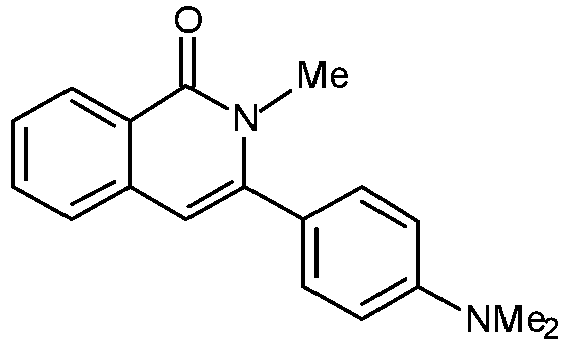
145104-33-2 P29 
223552-86-1 P30 
223553-20-6 P31 
376354-94-8 P32 
376354-97-1 P33 
503613-43-2 P34 
503613-44-3 P35 
630423-61-9 P36 
630423-64-2 P37 
721960-58-3 P38 
721960-60-7 P39 
721960-73-2 P40 
862469-72-5 P41 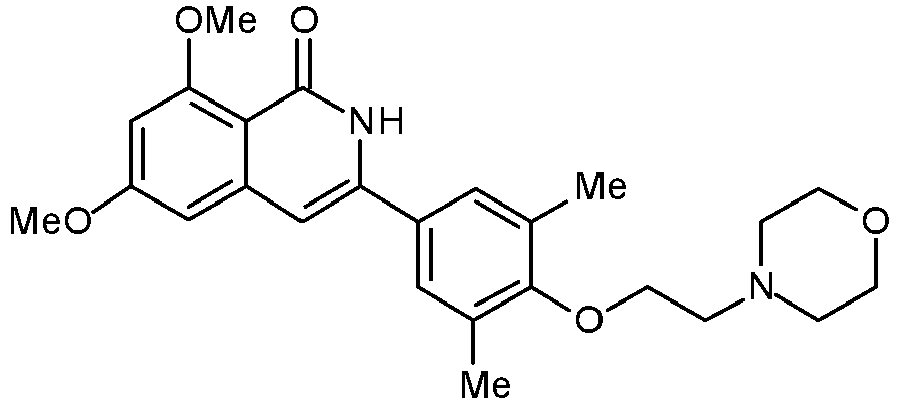
924299-93-4 P42 
1044871-80-8 P43 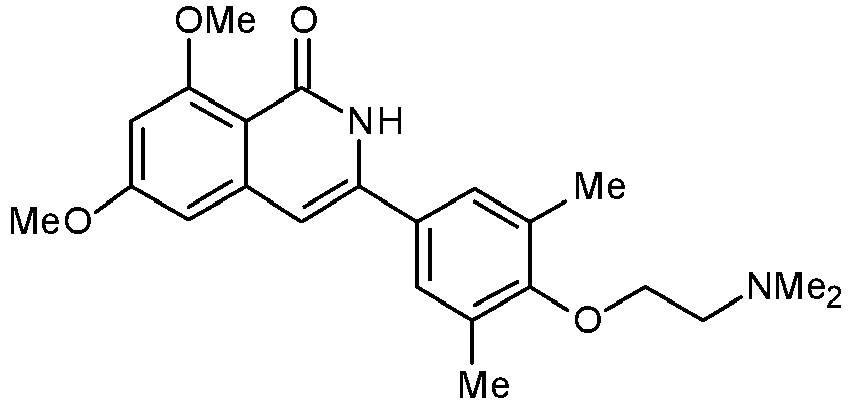
1044871-83-1 P44 
1193268-39-1 P45 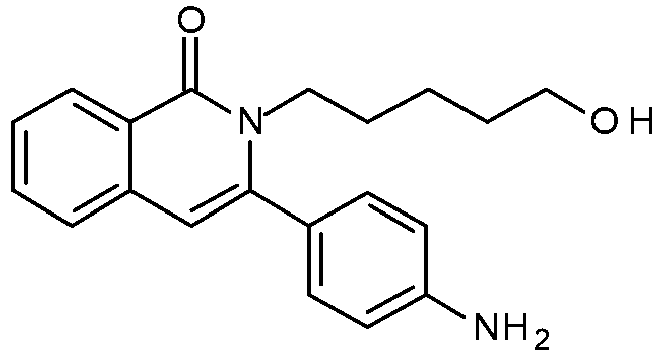
1193268-40-4 P46 
1253733-07-1 P47 
1253733-10-6 P48 
1417652-57-3 -
EP 1 557 414 A1 (Mitsubishi Pharma Corporation - 27 July 2005) describes certain isoquinoline compounds of the following formula (I), wherein -Y- is "absent or an alkylene chain having 1 to 8 carbon atoms wherein an optional carbon atom may have a hydroxyl group", and R is group of the following formula (II), wherein "X is CH or a nitrogen atom, provided that when Y is absent, then X should be CH; W is CH or a nitrogen atom, provided that when X is CH, then W should be a nitrogen atom; s is an integer of 1 to 5; and t is an integer of 1 to 5". The compounds are allegedly useful as PARP inhibitors.
-
EP 1 544 194 A1 (Kyorin Pharmaceutical Co., Ltd. - 22 June 2005) describes certain isoquinoline compounds of the following formula (I). The compounds are allegedly useful as PARP inhibitors.
- One aspect of the invention pertains to certain 3-aryl-5-substituted-2H-isoquinolin-1-one compounds (referred to herein as IQ compounds), as described herein.
- Another aspect of the invention pertains to a composition (e.g., a pharmaceutical composition) comprising an IQ compound, as described herein, and a pharmaceutically acceptable carrier or diluent.
- Another aspect of the invention pertains to a method of preparing a composition (e.g., a pharmaceutical composition) comprising the step of mixing an IQ compound, as described herein, and a pharmaceutically acceptable carrier or diluent.
- Another aspect of the present invention pertains to a method of inhibiting PARP (e.g., PARP1, TNKS1, TNKS2, etc.) function (e.g., in a cell), in vitro, comprising contacting the cell with an effective amount of an IQ compound, as described herein.
- Another aspect of the present invention pertains to a method of inhibiting Wnt signalling (e.g., in a cell), in vitro, comprising contacting the cell with an effective amount of an IQ compound, as described herein.
- Also described herein is a method of treatment comprising administering to a subject in need of treatment a therapeutically-effective amount of an IQ compound, as described herein, preferably in the form of a pharmaceutical composition.
- Another aspect of the present invention pertains to an IQ compound as described herein for use in a method of treatment of the human or animal body by therapy.
- Also described herein is use of an IQ compound, as described herein, in the manufacture of a medicament for use in treatment.
- In one embodiment, the treatment is treatment of a proliferative condition.
- In one embodiment, the treatment is treatment of cancer.
- In one embodiment, the treatment is treatment of head cancer; neck cancer; nervous system cancer; lung/mediastinum cancer; breast cancer; oesophagus cancer; stomach cancer; liver cancer; biliary tract cancer; pancreatic cancer; small bowel cancer; large bowel cancer; gynaecological cancer; genito-urinary cancer; thyroid gland cancer; adrenal gland cancer; skin cancer; bone sarcoma; soft tissue sarcoma; paediatric malignancy; Hodgkin's disease; non-Hodgkin's lymphoma; myeloma; leukaemia; or metastasis from an unknown primary site.
- In one embodiment, the treatment is treatment of: a neurodegenerative disorder, such as multiple sclerosis (MS); a neurological disorder associated with demyelination; neonatal hypoxic ischemic encephalopathy (HIE); neonatal periventricular leukomalacia (PVL); a cardiac related pathology, such as myocardial infarction; cardiac damage (e.g., to repair cardiac damage); an infectious disease, such as a pathology related to Herpes Simplex Virus (HSV); a pathology related to Epstein-Barr Virus (EBV); a metabolic disease, such as a metabolic disease where glucose uptake is dysfunctional, such as diabetes, such as type 2 diabetes; or fibrosis (e.g., lung fibrosis).
- In one embodiment, the treatment is treatment of: a neurodegenerative disorder, such as multiple sclerosis (MS); neonatal hypoxic ischemic encephalopathy (HIE); neonatal periventricular leukomalacia (PVL); a cardiac related pathology, such as myocardial infarction; a pathology related to Herpes Simplex Virus (HSV); a pathology related to Epstein-Barr Virus (EBV); or a metabolic disease such as type 2 diabetes.
- In one embodiment, the treatment is treatment of: Alzheimer's disease; late onset Alzheimer's disease; Dupuytren skin disease; tooth agenesis; vascular defects in the eye; Osteoperosis-pseudoglioma Syndrome (OPPG); exudative vitreoretinopathy; familial exudative vitreoretinopathy; retinal angiogenesis; schizophrenia; osteoporosis; dermal hypoplasia; XX sex reversal; Mullerian-duct regression and virilization; SERKAL syndrome; anonychia; hyponychia; sclerosteosis; van Buchem disease; Fuhrmann syndrome; odonto-onchyo-dermal hypoplasia; Type 2 diabetes; obesity; early onset obesity; a nephropathy, such as HIV-associated nephropathy; early coronary disease; bone density defects; tetra-amelia syndrome; split-hand/foot malformation; caudal duplication; Fuhrmann syndrome; odonto-onycho-dermal dysplasia; skeletal dysplasia; focal dermal hypoplasia; autosomal recessive anonychia; or neural tube defects.
- In one embodiment, the treatment is treatment of: Alzheimer's disease; Dupuytren skin disease; tooth agenesis; exudative vitreoretinopathy; schizophrenia; osteoporosis; dermal hypoplasia; XX sex reversal; anonychia; hyponychia; sclerosteosis; van Buchem disease; Fuhrmann syndrome; odonto-onchyo-dermal hypoplasia; early onset obesity; or a nephropathy, such as HIV-associated nephropathy.
- Also described herein is a kit comprising (a) an IQ compound, as described herein, preferably provided as a pharmaceutical composition and in a suitable container and/or with suitable packaging; and (b) instructions for use, for example, written instructions on how to administer the compound.
- Also described herein is an IQ compound obtainable by a method of synthesis as described herein, or a method comprising a method of synthesis as described herein.
- Also described herein is an IQ compound obtained by a method of synthesis as described herein, or a method comprising a method of synthesis as described herein.
- Also described herein are novel intermediates, as described herein, which are suitable for use in the methods of synthesis described herein.
- Also described herein is the use of such novel intermediates, as described herein, in the methods of synthesis described herein.
- As will be appreciated by one of skill in the art, features and preferred embodiments of one aspect of the invention will also pertain to other aspects of the invention.
- One aspect of the present invention relates to certain compounds which are structurally related to 2H-isoquinolin-1-one.

- More particularly, the present invention relates to certain 3-aryl-5-substituted-2H-isoquinolin-1-one compounds, as defined herein.
- Yet more particularly, the present invention relates to certain 2H-isoquinolin-1-one compounds which have both:
- (a) a particular substituent (denoted herein as R5) at the 5-position; and
- (b) a particular six-membered carboaryl or heteroaryl substituent (denoted herein as the ring containing W, X, Y, and Z) at the 3-position having a particular para-substituent (denoted herein as -L3P-R3N).
- Thus, one aspect of the present invention pertains to compounds selected from compounds of the following formula, and pharmaceutically acceptable salts, N-oxides, hydrates, and solvates thereof, wherein -R3N, -L3P-, W, X, Y, Z, -R4, -R5, -R6, -R7, and -R8 are as defined herein (for convenience, collectively referred to herein as "3-aryl-5-substituted-2H-isoquinolin-1-one compounds" or "IQ compounds"):

- Some embodiments of the invention include the following:
- (1) A compound selected from compounds of the following formula, and pharmaceutically acceptable salts, N-oxides, hydrates, and solvates thereof:

- W is CRW, X is CRX, Y is CRY, and Z is CRZ ("phenyl"); or
- W is N, X is CRX, Y is CRY, and Z is CRZ ("pyrid-2-yl"); or
- W is CRW, X is N, Y is CRY, and Z is CRZ ("pyrid-3-yl"); or
- W is N, X is CRX, Y is CRY, and Z is N ("pyrimidin-2-yl"); or
- W is CRW, X is N, Y is N, and Z is CRZ ("pyrimidin-5-yl"); or
- W is N, X is CRX, Y is N, and Z is CRZ ("pyrazin-2-yl"); or
- W is N, X is N, Y is CRY, and Z is CRZ ("pyridazin-3-yl");
- RW is independently -H or -RWW;
- RX is independently -H or -RXX;
- RY is independently -H or -RYY; and
- RZ is independently -H or -RZZ;
- RWW is independently -X1, -R1, -OH, -OR1, -CF3, or -OCF3;
- RXX is independently -X1, -R1, -OH, -OR1, -CF3, or -OCF3;
- RYY is independently -X1, -R1, -OH, -OR1, -CF3, or -OCF3; and
- RZZ is independently -X1, -R1, -OH, -OR1, -CF3, or -OCF3;
- each -X1 is independently -F, -Cl, -Br, or -I; and
- each -R1 is independently linear or branched saturated C1-4alkyl;
- L3P- is independently a single covalent bond or -L3PL-;
- L3PL- is independently -L3PR1-, -C(=O)-, -L3PR2-C(=O)-, -S(=O)2-, -L3PR3-S(=O)2-, or -O-L3PR4-;
- each -L3PR1- is linear or branched saturated C1-4alkylene;
- each -L3PR2- is linear or branched saturated C1-4alkylene;
- each -L3PR3- is linear or branched saturated C1-4alkylene;
- each -L3PR4- is linear or branched saturated C1-4alkylene;
- R3N is independently-NH2, -NHRA, -NRARB, or -NRCRD;
- each -RA is independently:
- RA1, -RA2, -RA3, -RA4, -RA5, -LA-RA2, -LA-RA3, -LA-RA4, or -LA-RA5;
- each -RA1 is linear or branched saturated C1-6alkyl,
and is optionally substituted with one or more groups -RS1; - each -RA2 is saturated C3-6cycloalkyl,
and is optionally substituted with one or more groups -RS2C; - each -RA3 is non-aromatic C3-7heterocyclyl,
and is optionally substituted on carbon with one or more groups -RS2C,
and is optionally substituted on secondary nitrogen, if present, with a group -RSN; - each -RA4 is independently phenyl or naphthyl,
and is optionally substituted with one or more groups -RS3C; - each -RA5 is C5-10heteroaryl,
and is optionally substituted on carbon with one or more groups -RS3C,
and is optionally substituted on secondary nitrogen, if present, with a group -RSN; - each -LA- is linear or branched saturated C1-4alkylene;
- each -RS1 is independently:
- F, -Cl, -Br, -I,
- OH, -ORTT,
- OCF3,
- NH2, -NHRTT, -NRTT 2, -RTM,
- C(=O)OH, -C(=O)ORTT, -OC(=O)RTT,
- C(=O)NH2, -C(=O)NHRTT, -C(=O)NRTT 2, -C(=O)RTM,
- NHC(=O)RTT, -NRTNC(=O)RTT,
- NHC(=O)NH2, -NHC(=O)NHRTT, -NHC(=O)NRTT 2, -NHC(=O)RTM,
- NRTNC(=O)NH2, -NRTNC(=O)NHRTT, -NRTNC(=O)NRTT 2, -NRTNC(=O)RTM,
- NHC(=O)ORTT, -NRTNC(=O)ORTT,
- OC(=O)NH2, -OC(=O)NHRTT, -OC(=O)NRTT 2, -OC(=O)RTM,
- C(=O)RTT,
- S(=O)2NH2, -S(=O)2NHRTT, -S(=O)2NRTT 2, -S(=O)2RTM,
- NHS(=O)2RTT, -NRTNS(=O)2RTT,
- S(=O)2RTT,
- CN, -NO2, -SRTT, or =O;
- each -RS2C is independently:
- RTT,
- F, -Cl, -Br, -I,
- OH, -ORTT,
- LT-OH, -LT-ORTT,
- CF3, -OCF3,
- NH2, -NHRTT, -NRTT 2, -RTM,
- LT-NH2, -LT-NHRTT, -LT-NRTT 2, -LT-RTM,
- C(=O)OH, -C(=O)ORTT, -OC(=O)RTT,
- C(=O)NH2, -C(=O)NHRTT, -C(=O)NRTT 2, -C(=O)RTM,
- NHC(=O)RTT, -NRTNC(=O)RTT,
- NHC(=O)NH2, -NHC(=O)NHRTT, -NHC(=O)NRTT 2, -NHC(=O)RTM,
- NRTNC(=O)NH2, -NRTNC(=O)NHRTT, -NRTNC(=O)NRTT 2, -NRTNC(=O)RTM,
- NHC(=O)ORTT, -NRTNC(=O)ORTT,
- OC(=O)NH2, -OC(=O)NHRTT, -OC(=O)NRTT 2, -OC(=O)RTM,
- C(=O)RTT,
- S(=O)2NH2, -S(=O)2NHRTT, -S(=O)2NRTT 2, -S(=O)2RTM,
- NHS(=O)2RTT, -NRTNS(=O)2RTT,
- S(=O)2RTT,
- CN, -NO2, -SRTT, or =O;
- each -RS3C is independently:
- RTT,
- F, -Cl, -Br, -I,
- OH, -ORTT,
- LT-OH, -LT-ORTT,
- CF3, -OCF3,
- NH2, -NHRTT, -NRTT 2, -RTM,
- LT-NH2, -LT-NHRTT, -LT-NRTT 2, -LT-RTM,
- C(=O)OH, -C(=O)ORTT, -OC(=O)RTT,
- C(=O)NH2, -C(=O)NHRTT, -C(=O)NRTT 2, -C(=O)RTM,
- NHC(=O)RTT, -NRTNC(=O)RTT,
- NHC(=O)NH2, -NHC(=O)NHRTT, -NHC(=O)NRTT 2, -NHC(=O)RTM,
- NRTNC(=O)NH2, -NRTNC(=O)NHRTT, -NRTNC(=O)NRTT 2, -NRTNC(=O)RTM,
- NHC(=O)ORTT, -NRTNC(=O)ORTT,
- OC(=O)NH2, -OC(=O)NHRTT, -OC(=O)NRTT 2, -OC(=O)RTM,
- C(=O)RTT,
- S(=O)2NH2, -S(=O)2NHRTT, -S(=O)2NRTT 2, -S(=O)2RTM,
- NHS(=O)2RTT, -NRTNS(=O)2RTT,
- S(=O)2RTT,
- CN, -NO2, or -SRTT;
- each -RSN is independently:
- RTT,
- LT-OH, -LT-ORTT,
- LT-NH2, -LT-NHRTT, -LT-NRTT 2, -LT-RTM,
- C(=O)RTT,
- C(=O)ORTT,
- C(=O)NH2, -C(=O)NHRTT, -C(=O)NRTT 2, -C(=O)RTM, or
- S(=O)2RTT;
- each -LT- is linear or branched saturated C1-4alkylene;
- each -RTT is independently linear or branched saturated C1-4alkyl, saturated C3-6cycloalkyl, saturated C3-6cycloalkyl-methyl, phenyl, or benzyl; wherein said linear or branched saturated C1-4alkyl is optionally substituted with -OH or -ORTTT, wherein -RTTT is linear or branched saturated C1-4alkyl;
- each -RTN is linear or branched saturated C1-4alkyl;
- each -RTM is independently azetidino, pyrrolidino, piperidino, piperazino, morpholino, azepano, or diazepano, and is:
- optionally substituted on carbon with one or more groups selected from: -RTMM, -C(=O)RTMM, -S(=O)2RTMM, -F, -NH2, -NHRTMM, -NRTMM 2, -OH, and -ORTMM; and
- optionally substituted on secondary nitrogen, if present, with a group selected from: -RTMM, -C(=O)RTMM, -C(=O)ORTMM, and -S(=O)2RTMM;
- RB is independently-RB1, -RB2, or -LB-RB2;
- RB1 is linear or branched saturated C1-6alkyl, and is optionally substituted with -OH or -ORBB, wherein -RBB is linear or branched saturated C1-4alkyl;
- RB2 is saturated C3-6cycloalkyl; and
- LB- is linear or branched saturated C1-4alkylene;
- NRCRD is independently -NRC1RD1, -NRC2RD2, -NRC3RD3, -NRC4RD4, or -NRC5RD5;
- NRC1RD1 is a monocyclic non-aromatic heterocyclyl group having from 4 to 8 ring atoms, wherein exactly 1 of said ring atoms is a ring heteroatom, and is N, or exactly 2 of said ring atoms are ring heteroatoms, and are both N, or exactly 2 of said ring atoms are ring heteroatoms, and are N and O, or exactly 2 of said ring atoms are ring heteroatoms, and are N and S, wherein said S is optionally in the form of S(=O) or S(=O)2;
and wherein said monocyclic non-aromatic heterocyclyl group is:- optionally substituted on carbon with one or more groups -RNC, and
- optionally substituted on secondary nitrogen, if present, with a group -RNN;
- NRC2RD2 is a fused bicyclic non-aromatic heterocyclyl group having from 7 to 12 ring atoms, wherein exactly 1 of said ring atoms is a ring heteroatom, and is N, or exactly 2 of said ring atoms are ring heteroatoms, and are both N, or exactly 2 of said ring atoms are ring heteroatoms, and are N and O, or exactly 2 of said ring atoms are ring heteroatoms, and are N and S, wherein said S is optionally in the form of S(=O) or S(=O)2, or exactly 3 of said ring atoms are ring heteroatoms, one of which is N, and each of the other two is independently N, O, or S, wherein said S is optionally in the form of S(=O) or S(=O)2;
and wherein said fused bicyclic non-aromatic heterocyclyl group is:- optionally substituted on carbon with one or more groups -RNC, and
- optionally substituted on secondary nitrogen, if present, with a group -RNN;
- NRC3RD3 is a bridged non-aromatic heterocyclyl group having from 7 to 11 ring atoms, wherein exactly 1 of said ring atoms is a ring heteroatom, and is N, or exactly 2 of said ring atoms are ring heteroatoms, and are both N, or exactly 2 of said ring atoms are ring heteroatoms, and are N and O, or exactly 2 of said ring atoms are ring heteroatoms, and are N and S, wherein said S is optionally in the form of S(=O) or S(=O)2, or exactly 3 of said ring atoms are ring heteroatoms, one of which is N, and each of the other two is independently N, O, or S, wherein said S is optionally in the form of S(=O) or S(=O)2;
and wherein said bridged non-aromatic heterocyclyl group is:- optionally substituted on carbon with one or more groups -RNC, and
- optionally substituted on secondary nitrogen, if present, with a group -RNN;
- NRC4RD4 is a spiro non-aromatic heterocyclyl group having from 6 to 12 ring atoms, wherein exactly 1 of said ring atoms is a ring heteroatom, and is N, or exactly 2 of said ring atoms are ring heteroatoms, and are both N, or exactly 2 of said ring atoms are ring heteroatoms, and are N and O, or exactly 2 of said ring atoms are ring heteroatoms, and are N and S, or exactly 3 of said ring atoms are ring heteroatoms, one of which is N, and each of the other two is independently N, O, or S, wherein said S is optionally in the form of S(=O) or S(=O)2;
and wherein said spiro non-aromatic heterocyclyl group is:- optionally substituted on carbon with one or more groups -RNC, and
- optionally substituted on secondary nitrogen, if present, with a group -RNN;
- each -RNC is independently:
- RQQ,
- F, -Cl, -Br, -I,
- OH, -ORQQ,
- LQ-OH, -LQ-ORQQ,
- CF3, -OCF3,
- NH2, -NHRQQ, -NRQQ 2, -RQM,
- LQ-NH2, -LQ-NHRQQ, -LQ-NRQQ 2, -LQ-RQM,
- C(=O)OH, -C(=O)ORQQ, -OC(=O)RQQ,
- C(=O)NH2, -C(=O)NHRQQ, -C(=O)NRQQ 2, -C(=O)RQM,
- NHC(=O)RQQ, -NRQNC(=O)RQQ,
- NHC(=O)NH2, -NHC(=O)NHRQQ, -NHC(=O)NRQQ 2, -NHC(=O)RQM,
- NRQNC(=O)NH2, -NRQNC(=O)NHRQQ,
- NRQNC(=O)NRQQ 2, -NRQNC(=O)RQM,
- NHC(=O)ORQQ, -NRQNC(=O)ORQQ,
- OC(=O)NH2, -OC(=O)NHRQQ, -OC(=O)NRQQ 2, -OC(=O)RQM,
- C(=O)RQQ,
- S(=O)2NH2, -S(=O)2NHRQQ, -S(=O)2NRQQ 2, -S(=O)2RQM,
- NHS(=O)2RQQ, -NRQNS(=O)2RQQ,
- S(=O)2RQQ,
- CN, -NO2, -SRQQ, or =O;
- each -RNN is independently:
- RQQ,
- LQ-OH, -LQ-ORQQ,
- LQ-NH2, -LQ-NHRQQ, -LQ-NRQQ 2, -LQ-RQM,
- C(=O)RQQ,
- C(=O)ORQQ,
- C(=O)NH2, -C(=O)NHRQQ, -C(=O)NRQQ 2, -C(=Q)RQM, or
- S(=O)2RQQ;
- each -LQ- is linear or branched saturated C1-4alkylene;
- each -RQQ is independently linear or branched saturated C1-4alkyl, saturated C3-6cycloalkyl, saturated C3-6cycloalkyl-methyl, phenyl or benzyl; wherein said linear or branched saturated C1-4alkyl is optionally substituted with -OH or -ORQQQ, and said phenyl and benzyl are optionally substituted with -RQQQ, wherein each -RQQQ is linear or branched saturated C1-4alkyl;
- each -RQN is linear or branched saturated C1-4alkyl;
- each -RQM is independently azetidino, pyrrolidino, piperidino, piperazino, morpholino, azepano, or diazepano, and is:
- optionally substituted on carbon with one or more groups selected from: -RQMM, -C(=O)RQMM, -S(=O)2RQMM, -F, -NH2, -NHRQMM, -NRQMM 2, -OH, and -ORQMM; and
- optionally substituted on secondary nitrogen, if present, with a group selected from: -RQMM, -C(=O)RQMM, -C(=O)ORQMM, and -S(=O)2RQMM;
- NRC5RD5 is independently: 1H-pyrrol-1-yl; 2H-isoindol-2-yl; 1H-indol-1-yl; 1H-pyrazol-1-yl; 1H-benzoimidazol-1-yl; 1H-imidazol-1-yl; 2H-indazol-2-yl; 1H-indazol-1-yl; 4H-[1,2,4]triazol-4-yl; 1H-[1,2,3]triazol-1-yl; 1H-[1,2,4]triazol-1-yl; 1H-benzotriazol-1-yl; or 1H-tetrazol-1-yl; and is optionally substituted with one or more groups -RH;
wherein each -RH is independently:- RHH,
- F, -Cl, -Br, -I,
- OH, -ORHH,
- LH-OH, -LH-ORHH,
- CF3, -OCF3,
- NH2, -NHRHH, -NRHH 2, -RHM,
- LH-NH2, -LH-NHRHH -LH-NRHH 2, -LH-RHM,
- C(=O)OH, -C(=O)ORHH, -OC(=O)RHH,
- C(=O)NH2, -C(=O)NHRHH, -C(=O)NRHH 2, -C(=O)RHM,
- NHC(=O)RHH, -NRHNC(=O)RHH,
- NHC(=O)NH2, -NHC(=O)NHRHH, -NHC(=O)NRHH 2, -NHC(=O)R HM,
- NRHNC(=O)NH2, -NRHNC(=O)NHRHH, -NRHNC(=O)NRHH 2, -NRHNC(=O)RHM,
- NHC(=O)ORHH, -NRHNC(=O)ORHH,
- OC(=O)NH2, -OC(=O)NHRHH, -OC(=O)NRHH 2, -OC(=O)RHM,
- C(=O)RHH,
- S(=O)2NH2, -S(=O)2NHRHH, -S(=O)2NRHH 2, -S(=O)2RHM,
- NHS(=O)2RHH, -NRHNS(=O)2RHH,
- S(=O)2RHH,
- CN, -NO2, or -SRHH;
- each -LH- is linear or branched saturated C1-4alkylene;
- each -RHH is independently linear or branched saturated C1-4alkyl, saturated C3-6cycloalkyl, saturated C3-6cycloalkyl-methyl, phenyl, or benzyl; wherein said linear or branched saturated C1-4alkyl is optionally substituted with -OH or -ORHHH, wherein -RHHH is linear or branched saturated C1-4alkyl;
- each -RHN is linear or branched saturated C1-4alkyl;
- each -RHM is independently azetidino, pyrrolidino, piperidino, piperazino, morpholino, azepano, or diazepano, and is:
- optionally substituted on carbon with one or more groups selected from: -RHMM, -C(=O)RHMM, -S(=O)2RHMM -F -NH2, -NHRHMM, -NRHMM 2 -OH, and -ORHMM; and
- optionally substituted on secondary nitrogen, if present, with a group selected from: -RHMM, -C(=O)RHMM, -C(=O)ORHMM, and -S(=O)2RHMM; wherein each -RHMM is independently linear or branched saturated C1-4alkyl, saturated C3-6cycloalkyl, saturated C3-6cycloalkyl-methyl, phenyl, or benzyl; and wherein:
- R5 is independently -R5A, -R5B, -R5c, -R5D, or -R5E;
- R5A is linear or branched saturated C1-4alkyl;
- R5B is saturated C3-6cycloalkyl;
- R5c is independently -F, -Cl, -Br, or -I;
- R5D is -CF3; and
- R5E is independently -C=CH or C3-6alkynyl optionally substituted with one or more groups -REE; wherein each -REE is independently selected from -OH, -OREEE, -NH2, -NHREEE, and -NREEE 2; wherein each -REEE is linear or branched saturated C1-4alkyl;
- R4 is -H;
- R6 is independently -H or -F; and
- R7 is independently -H or -F; and
- R8 is independently -H or -F.
- For the avoidance of doubt, it is not intended that any two or more of -R3N, -L3P, W, X, Y, Z, -R4, -R5, -R6, -R7, and -R8 together form a ring fused to the ring(s) to which they are attached. For example, it is not intended that -R4 and -R5 together form a ring fused to the ring to which they are attached. Similarly, it is not intended that -R4 and Z together form a ring fused to the rings to which they are attached. Similarly, it is not intended that -R4 and W together form a ring fused to the rings to which they are attached.
- For the avoidance of doubt, the phrase "substituent on carbon" is intended to refer to a substituent which is attached to a carbon ring atom. Similarly, the phrase "substituent on secondary nitrogen" is intended to refer to a substituent which is attached to a nitrogen ring atom which, in the absence of the substituent, would be a secondary nitrogen ring atom (i.e., -NH-). Consequently, a pyridyl group may only have "substituents on carbon", whereas 1H-pyrrole may have both "substituents on carbon" and a "substituent on secondary nitrogen", as illustrated below.

- Similarly, a piperidino group may only have "substituents on carbon", whereas piperizino may have both "substituents on carbon" and a "substituent on secondary nitrogen", as illustrated below.

-
- (2) A compound according to (1), wherein:
- W is CRW, X is CRX, Y is CRY, and Z is CRZ ("phenyl"); or
- W is N, X is CRX, Y is CRY, and Z is CRZ ("pyrid-2-yl"); or
- W is CRW, X is N, Y is CRY, and Z is CRZ ("pyrid-3-yl"); or
- W is N, X is CRX, Y is CRY, and Z is N ("pyrimidin-2-yl"); or
- W is CRW, X is N, Y is N, and Z is CRZ ("pyrimidin-5-yl").
- (3) A compound according to any (1), wherein:
- W is CRW, X is CRX, Y is CRY, and Z is CRZ ("phenyl"); or
- W is CRW, X is N, Y is CRY, and Z is CRZ ("pyrid-3-yl"); or
- W is CRW, X is N, Y is N, and Z is CRZ ("pyrimidin-5-yl").
- (4) A compound according to (1), wherein:
- W is CRW, X is CRX, Y is CRY, and Z is CRZ ("phenyl").
- (5) A compound according to (1), wherein:
- W is CRW, X is N, Y is CRY, and Z is CRZ ("pyrid-3-yl").
- (6) A compound according to (1), wherein:
- W is CRW, X is N, Y is N, and Z is CRZ ("pyrimidin-5-yl").
-
- (7) A compound according to any one of (1) to (6), wherein -RW, if present, is -H.
- (8) A compound according to any one of (1) to (6), wherein -RW, if present, is -RWW.
-
- (9) A compound according to any one of (1) to (8), wherein -RX, if present, is -H.
- (10) A compound according to any one of (1) to (8), wherein -RX, if present, is -RXX.
-
- (11) A compound according to any one of (1) to (10), wherein -RY, if present, is -H.
- (12) A compound according to any one of (1) to (10), wherein -RY, if present, is -RYY.
-
- (13) A compound according to any one of (1) to (12), wherein -RZ, if present, is -H.
- (14) A compound according to any one of (1) to (12), wherein -RZ, if present, is -RZZ.
-
- (15) A compound according to any one of (1) to (14), wherein -RWW, if present, is independently -X1, -R1, or -CF3.
- (16) A compound according to any one of (1) to (14), wherein -RWW, if present, is independently -X1 or -R1.
- (17) A compound according to any one of (1) to (14), wherein -RWW, if present, is independently -X1.
- (18) A compound according to any one of (1) to (14), wherein -RWW, if present, is independently -R1.
-
- (19) A compound according to any one of (1) to (18), wherein -RXX, if present, is independently -X1, -R1, or -CF3.
- (20) A compound according to any one of (1) to (18), wherein -RXX, if present, is independently -X1 or -R1.
- (21) A compound according to any one of (1) to (18), wherein -RXX, if present, is independently -X1.
- (22) A compound according to any one of (1) to (18), wherein -RXX, if present, is independently -R1.
-
- (23) A compound according to any one of (1) to (22), wherein -RYY, if present, is independently -X1, -R1, or -CF3.
- (24) A compound according to any one of (1) to (22), wherein -RYY, if present, is independently -X1 or -R1.
- (25) A compound according to any one of (1) to (22), wherein -RYY, if present, is independently -X1.
- (26) A compound according to any one of (1) to (22), wherein -RYY, if present, is independently -R1.
-
- (27) A compound according to any one of (1) to (26), wherein -RZZ, if present, is independently -X1, -R1, or -CF3.
- (28) A compound according to any one of (1) to (26), wherein -RZZ, if present, is independently -X1 or -R1.
- (29) A compound according to any one of (1) to (26), wherein -RZZ, if present, is independently -X1.
- (30) A compound according to any one of (1) to (26), wherein -RZZ, if present, is independently -R1.
-
- (31) A compound according to any one of (1) to (30), wherein each -X1, if present, is independently -F, -Cl, or -Br.
- (32) A compound according to any one of (1) to (30), wherein each -X1, if present, is independently -F or -Cl.
- (33) A compound according to any one of (1) to (30), wherein each -X1, if present, is -F.
- (34) A compound according to any one of (1) to (30), wherein each -X1, if present, is -Cl.
- (35) A compound according to any one of (1) to (30), wherein each -X1, if present, is -Br.
- (36) A compound according to any one of (1) to (30), wherein each -X1, if present, is -I.
-
- (37) A compound according to any one of (1) to (36), wherein each -R1, if present, is independently -Me, -Et, -nPr, -iPr, -nBu, -iBu, or -tBu.
- (38) A compound according to any one of (1) to (36), wherein each -R1, if present, is independently -Me, -Et, -nPr, or -iPr.
- (39) A compound according to any one of (1) to (36), wherein each -R1, if present, is independently -Me or -Et.
- (40) A compound according to any one of (1) to (36), wherein each -R1, if present, is -Me.
-
- (41) A compound according to any one of (1) to (40), wherein -L3P- is a single covalent bond.
- (42) A compound according to any one of (1) to (40), wherein -L3P- is -L3PL-.
-
- (43) A compound according to any one of (1) to (42), wherein -L3PL-, if present, is independently -L3PR1-, -C(=O)-, -L3PR2-C(=O)-, -O-L3PR4-, or -S(=O)2-.
- (44) A compound according to any one of (1) to (42), wherein -L3PL-, if present, is independently -L3PR1-, -C(=O)-, -O-L3PR4-, or -S(=O)2-.
- (45) A compound according to any one of (1) to (42), wherein -L3PL-, if present, is -L3PR1-.
- (46) A compound according to any one of (1) to (42), wherein -L3PL-, if present, is -C(=O)-.
- (47) A compound according to any one of (1) to (42), wherein -L3PL-, if present, is -L3PR2-C(=O)-.
- (48) A compound according to any one of (1) to (42), wherein -L3PL-, if present, is -S(=O)2-.
- (49) A compound according to any one of (1) to (42), wherein -L3PL-, if present, is -L3PR3-S(=O)2-.
- (50) A compound according to any one of (1) to (42), wherein -L3PL-, if present, is -O-L3PR4-.
-
- (51) A compound according to any one of (1) to (50), wherein each -L3PR1-, if present, is independently -CH2-, -CH(Me)-, -C(Me)2-, -CH2CH2-, -CH(Me)CH2-, -CH2CH(Me)-, -C(Me)2CH2-, -CH2C(Me)2-, -CH2CH2CH2-, or-CH2CH2CH2CH2-.
- (52) A compound according to any one of (1) to (50), wherein each -L3PR1-, if present, is independently-CH2-, -CH(Me)-, -C(Me)2-, -CH(Et)-, or-CH2CH2-.
- (53) A compound according to any one of (1) to (50), wherein each -L3PR1-, if present, is independently -CH2-, -CH(Me)-, or -C(Me)2-.
- (54) A compound according to any one of (1) to (50), wherein each -L3PR1-, if present, is independently-CH2-, -CH2CH2-, -CH2CH2CH2-, or-CH2CH2CH2CH2-.
- (55) A compound according to any one of (1) to (50), wherein each -L3PR1-, if present, is independently-CH2CH2-, -CH2CH2CH2-, or-CH2CH2CH2CH2-.
- (56) A compound according to any one of (1) to (50), wherein each -L3PR1-, if present, is independently -CH2- or -CH2CH2-.
- (57) A compound according to any one of (1) to (50), wherein each -L3PR1-, if present, is -CH2-.
- (58) A compound according to any one of (1) to (50), wherein each -L3PR1-, if present, is independently -CH(Me)-.
- (59) A compound according to any one of (1) to (50), wherein each -L3PR1-, if present, is independently -C(Me)2-.
- (60) A compound according to any one of (1) to (50), wherein each -L3PR1-, if present, is -CH2CH2-.
-
- (61) A compound according to any one of (1) to (60), wherein each -L3PR2-, if present, is independently -CH2-, -CH(Me)-, -C(Me)2-, -CH2CH2-, -CH(Me)CH2-, -CH2CH(Me)-, -C(Me)2CH2-, -CH2C(Me)2-, -CH2CH2CH2-, or-CH2CH2CH2CH2-.
- (62) A compound according to any one of (1) to (60), wherein each -L3PR2-, if present, is independently -CH2-, -CH(Me)-, -C(Me)2-, -CH(Et)-, or -CH2CH2-.
- (63) A compound according to any one of (1) to (60), wherein each -L3PR2-, if present, is independently -CH2-, -CH(Me)-, or -C(Me)2-.
- (64) A compound according to any one of (1) to (60), wherein each -L3PR2-, if present, is independently -CH2-, -CH2CH2-, -CH2CH2CH2-, or -CH2CH2CH2CH2.
- (65) A compound according to any one of (1) to (60), wherein each -L3PR2-, if present, is independently -CH2CH2-, -CH2CH2CH2-, or -CH2CH2CH2CH2.
- (66) A compound according to any one of (1) to (60), wherein each -L3PR2-, if present, is independently -CH2- or -CH2CH2-.
- (67) A compound according to any one of (1) to (60), wherein each -L3PR2-, if present, is -CH2-.
- (68) A compound according to any one of (1) to (60), wherein each -L3PR2-, if present, is independently -CH(Me)-.
- (69) A compound according to any one of (1) to (60), wherein each -L3PR2-, if present, is independently -C(Me)2-.
- (70) A compound according to any one of (1) to (60), wherein each -L3PR2-, if present, is -CH2CH2-.
-
- (71) A compound according to any one of (1) to (70), wherein each -L3PR3-, if present, is independently -CH2-, -CH(Me)-, -C(Me)2-, -CH2CH2-, -CH(Me)CH2-, -CH2CH(Me)-, -C(Me)2CH2-, -CH2C(Me)2-, -CH2CH2CH2-, or-CH2CH2CH2CH2-.
- (72) A compound according to any one of (1) to (70), wherein each -L3PR3-, if present, is independently -CH2-, -CH(Me)-, -C(Me)2-, -CH(Et)-, or -CH2CH2-.
- (73) A compound according to any one of (1) to (70), wherein each -L3PR3-, if present, is independently -CH2-, -CH(Me)-, or -C(Me)2-.
- (74) A compound according to any one of (1) to (70), wherein each -L3PR3-, if present, is independently -CH2-, -CH2CH2-, -CH2CH2CH2-, or -CH2CH2CH2CH2-.
- (75) A compound according to any one of (1) to (70), wherein each -L3PR3-, if present, is independently -CH2CH2-, -CH2CH2CH2-, or -CH2CH2CH2CH2.
- (76) A compound according to any one of (1) to (70), wherein each -L3PR3-, if present, is independently -CH2- or -CH2CH2-.
- (77) A compound according to any one of (1) to (70), wherein each -L3PR3-, if present, is -CH2-.
- (78) A compound according to any one of (1) to (70), wherein each -L3PR3-, if present, is -CH2CH2-.
-
- (79) A compound according to any one of (1) to (78), wherein each -L3PR4-, if present, is independently -CH2-, -CH(Me)-, -C(Me)2-, -CH2CH2-, -CH(Me)CH2-, -CH2CH(Me)-, -C(Me)2CH2-, -CH2C(Me)2-, -CH2CH2CH2-, or-CH2CH2CH2CH2-.
- (80) A compound according to any one of (1) to (78), wherein each -L3PR4-, if present, is independently-CH2-, -CH(Me)-, -C(Me)2-, -CH(Et)-, or -CH2CH2-.
- (81) A compound according to any one of (1) to (78), wherein each -L3PR4-, if present, is independently -CH2-, -CH(Me)-, or -C(Me)2-.
- (82) A compound according to any one of (1) to (78), wherein each -L3PR4-, if present, is independently-CH2-, -CH2CH2-, -CH2CH2CH2-, or -CH2CH2CH2CH2-.
- (83) A compound according to any one of (1) to (78), wherein each -L3PR4-, if present, is independently -CH2CH2-, -CH2CH2CH2-, or -CH2CH2CH2CH2-.
- (84) A compound according to any one of (1) to (78), wherein each -L3PR4-, if present, is independently -CH2- or -CH2CH2-.
- (85) A compound according to any one of (1) to (78), wherein each -L3PR4-, if present, is -CH2-.
- (86) A compound according to any one of (1) to (78), wherein each -L3PR4-, if present, is -CH2CH2-.
-
- (87) A compound according to any one of (1) to (86), wherein -R3N is independently -NHRA, -NRARB, or -NRCRD.
- (88) A compound according to any one of (1) to (86), wherein -R3N is independently -NRARB or -NRCRD.
- (89) A compound according to any one of (1) to (86), wherein -R3N is -NH2.
- (90) A compound according to any one of (1) to (86), wherein -R3N is -NHRA.
- (91) A compound according to any one of (1) to (86), wherein -R3N is -NRARB.
- (92) A compound according to any one of (1) to (86), wherein -R3N is -NRCRD.
-
- (93) A compound according to any one of (1) to (92), wherein each -RA, if present, is independently: -RA1, -RA2, -RA3, -LA-RA2, or -LA-RA3.
- (94) A compound according to any one of (1) to (92), wherein each -RA, if present, is independently: -RA1, -RA3, or -LA-RA3.
- (95) A compound according to any one of (1) to (92), wherein each -RA, if present, is -RA1.
- (96) A compound according to any one of (1) to (92), wherein each -RA, if present, is -RA2.
- (97) A compound according to any one of (1) to (92), wherein each -RA, if present, is -RA3.
- (98) A compound according to any one of (1) to (92), wherein each -RA, if present, is -RA4.
- (99) A compound according to any one of (1) to (92), wherein each -RA, if present, is -RA5.
- (100) A compound according to any one of (1) to (92), wherein each -RA, if present, is -LA-RA2.
- (101) A compound according to any one of (1) to (92), wherein each -RA, if present, is -LA-RA3.
- (102) A compound according to any one of (1) to (92), wherein each -RA, if present, is -LA-RA4.
- (103) A compound according to any one of (1) to (92), wherein each -RA, if present, is -LA-RA5.
-
- (104) A compound according to any one of (1) to (103), wherein each -RA1, if present, is independently linear or branched saturated C1-4alkyl, and is optionally substituted with one or more groups -RS1.
- (105) A compound according to any one of (1) to (103), wherein each -RA1, if present, is independently linear or branched saturated C1-4alkyl, and is optionally substituted with one or more groups selected from: -OH, -ORTT, -NH2, -NHRTT, and -NRTT 2.
- (106) A compound according to any one of (1) to (xx), wherein each -RA1, if present, is independently linear or branched saturated C1-4alkyl, and is optionally substituted with one or more groups selected from: -OH and -ORTT.
- (107) A compound according to any one of (1) to (103), wherein each -RA1, if present, is independently -Me, -Et, -nPr, -iPr, -nBu, -iBu, or -tBu, and is optionally substituted with one or more groups -RS1.
- (108) A compound according to any one of (1) to (103), wherein each -RA1, if present, is independently -Me, -Et, -nPr, -iPr, -nBu, -iBu, or -tBu, and is optionally substituted with one or more groups selected from: -OH, -ORTT, -NH2, -NHRTT, and -NRTT 2.
- (109) A compound according to any one of (1) to (103), wherein each -RA1, if present, is independently -Me, -Et, -nPr, or -iPr, and is optionally substituted with one or more groups -RS1.
- (110) A compound according to any one of (1) to (103), wherein each -RA1, if present, is independently -Me, -Et, -nPr, or -iPr, and is optionally substituted with one or more groups selected from: -OH, -ORTT, -NH2, -NHRTT, and -NRTT 2.
- (111) A compound according to any one of (1) to (103), wherein each -RA1, if present, is independently -Me or -Et, and is optionally substituted with one or more groups -RS1.
- (112) A compound according to any one of (1) to (103), wherein each -RA1, if present, is independently linear or branched saturated C1-4alkyl.
- (113) A compound according to any one of (1) to (103), wherein each -RA1, if present, is independently -Me, -Et, -nPr, -iPr, -nBu, -iBu, or -tBu.
- (114) A compound according to any one of (1) to (103), wherein each -RA1, if present, is independently -Me, -Et, -nPr, or -iPr.
- (115) A compound according to any one of (1) to (103), wherein each -RA1, if present, is independently -Me or -Et.
- (116) A compound according to any one of (1) to (103), wherein each -RA1, if present, is -Me.
-
- (117) A compound according to any one of (1) to (116), wherein each -RA2, if present, is independently cyclopropyl, cyclobutyl, cyclopentyl, or cyclohexyl, and is optionally substituted with one or more groups -RS2C.
- (118) A compound according to any one of (1) to (116), wherein each -RA2, if present, is independently cyclopropyl, cyclobutyl, or cyclopentyl, and is optionally substituted with one or more groups -RS2C.
- (119) A compound according to any one of (1) to (116), wherein each -RA2, if present, is independently cyclopropyl or cyclobutyl, and is optionally substituted with one or more groups -RS2C.
-
- (120) A compound according to any one of (1) to (119), wherein each -RA3, if present, is independently oxetanyl, tetrahydrofuranyl, tetrahydropyranyl, dioxanyl, azetidinyl, pyrrolidinyl, piperidinyl, piperazinyl, morpholinyl, azepanyl, or diazepanyl,
and is optionally substituted on carbon with one or more groups -RS2C,
and is optionally substituted on secondary nitrogen, if present, with a group -RSN. - (121) A compound according to any one of (1) to (119), wherein each -RA3, if present, is independently tetrahydrofuranyl, tetrahydropyranyl, dioxanyl, pyrrolidinyl, piperidinyl, piperazinyl, morpholinyl,
and is optionally substituted on carbon with one or more groups -RS2C,
and is optionally substituted on secondary nitrogen, if present, with a group -RSN. - (122) A compound according to any one of (1) to (119), wherein each -RA3, if present, is independently tetrahydropyranyl or piperidinyl,
and is optionally substituted on carbon with one or more groups -RS2C,
and is optionally substituted on secondary nitrogen, if present, with a group -RSN. - (123) A compound according to any one of (1) to (119), wherein each -RA3, if present, is tetrahydropyranyl, and is optionally substituted on carbon with one or more groups -RS2C.
- (124) A compound according to any one of (1) to (119), wherein each -RA3, if present, is piperidinyl,
and is optionally substituted on carbon with one or more groups -RS2C,
and is optionally substituted on secondary nitrogen with a group -RSN. - (125) A compound according to any one of (1) to (119), wherein each -RA3, if present, is pyrrolidinyl,
and is optionally substituted on carbon with one or more groups -RS2C,
and is optionally substituted on secondary nitrogen with a group -RSN. - (126) A compound according to any one of (1) to (119), wherein each -RA3, if present, is azetidinyl,
and is optionally substituted on carbon with one or more groups -RS2C,
and is optionally substituted on secondary nitrogen with a group -RSN. -
- (127) A compound according to any one of (1) to (126), wherein each -RA4, if present, is phenyl, and is optionally substituted with one or more groups -RS3C.
- (128) A compound according to any one of (1) to (126), wherein each -RA4, if present, is naphthyl, and is optionally substituted with one or more groups -RS3C.
-
- (129) A compound according to any one of (1) to (128), wherein each -RA5, if present, is independently furanyl, thienyl, pyrrolyl, imidazolyl, oxazolyl, thiazolyl, pyrazolyl, isoxazolyl, isothiazolyl, pyridyl, pyridazinyl, pyrimidinyl, pyrazinyl, indolyl, benzoimidazolyl, indazolyl, benzofuranyl, benzothienyl, benzooxazolyl, benzothiazolyl, benzoisoxazolyl, benzoisothiazolyl, quinolinyl, isoquinolinyl, cinnolinyl, quinoxalinyl, quinazolinyl, or phthalazinyl,
and is optionally substituted on carbon with one or more groups -RS3C,
and is optionally substituted on secondary nitrogen, if present, with a group -RSN. - (130) A compound according to any one of (1) to (128), wherein each -RA5, if present, is independently furanyl, thienyl, pyrrolyl, imidazolyl, oxazolyl, thiazolyl, pyrazolyl, isoxazolyl, isothiazolyl, pyridyl, pyridazinyl, pyrimidinyl, or pyrazinyl,
and is optionally substituted on carbon with one or more groups -RS3C,
and is optionally substituted on secondary nitrogen, if present, with a group -RSN. - (131) A compound according to any one of (1) to (128), wherein each -RA5, if present, is independently furanyl, thienyl, pyrrolyl, imidazolyl, oxazolyl, thiazolyl, pyrazolyl, isoxazolyl, or isothiazolyl,
and is optionally substituted on carbon with one or more groups -RS3C,
and is optionally substituted on secondary nitrogen, if present, with a group -RSN. - (132) A compound according to any one of (1) to (128), wherein each -RA5, if present, is imidazolyl,
and is optionally substituted on carbon with one or more groups -RS3C,
and is optionally substituted on secondary nitrogen with a group -RSN. - (133) A compound according to any one of (1) to (128), wherein each -RA5, if present, is independently pyridyl, pyridazinyl, pyrimidinyl, or pyrazinyl,
and is optionally substituted on carbon with one or more groups -RS3C. -
- (134) A compound according to any one of (1) to (133), wherein each -LA-, if present, is independently -CH2-, -CH(Me)-, -C(Me)2-, -CH2CH2-, -CH(Me)CH2-, -CH2CH(Me)-, -C(Me)2CH2-, -CH2C(Me)2-, -CH2CH2CH2-, or -CH2CH2CH2CH2-.
- (135) A compound according to any one of (1) to (133), wherein each -LA-, if present, is independently -CH2-, -CH(Me)-, -C(Me)2-, -CH(Et)-, or -CH2CH2-.
- (136) A compound according to any one of (1) to (133), wherein each -LA-, if present, is independently -CH2-, -CH(Me)-, or -C(Me)2-.
- (137) A compound according to any one of (1) to (133), wherein each -LA-, if present, is independently -CH2-, -CH2CH2-, -CH2CH2CH2-, or -CH2CH2CH2CH2-.
- (138) A compound according to any one of (1) to (133), wherein each -LA-, if present, is independently -CH2CH2-, -CH2CH2CH2-, or -CH2CH2CH2CH2.
- (139) A compound according to any one of (1) to (133), wherein each -LA-, if present, is independently -CH2- or -CH2CH2-.
- (140) A compound according to any one of (1) to (133), wherein each -LA-, if present, is -CH2-.
- (141) A compound according to any one of (1) to (133), wherein each -LA-, if present, is -CH2CH2-.
-
- (142) A compound according to any one of (1) to (141), wherein each -RS1, if present, is independently:
- F, -Cl, -Br, -I,
- OH, -ORTT,
- OCF3,
- NH2, -NHRTT, -NRTT 2, -RTM,
- C(=O)OH, -C(=O)ORTT, -OC(=O)RTT,
- C(=O)NH2, -C(=O)NHRTT, -C(=O)NRTT 2, -C(=O)RTM,
- C(=O)RTT,
- S(=O)2NH2, -S(=O)2NHRTT, -S(=O)2NRTT2, -S(=O)2 TM,
- NHS(=O)2RTT -NRTNS(=O)2RTT,
- S(=O)2RTT,
- CN, -NO2, -SRTT, or =O.
- (143) A compound according to any one of (1) to (141), wherein each -RS1, if present, is independently:
- F, -Cl, -Br, -I,
- OH, -ORTT,
- OCF3,
- NH2, -NHRTT, -NRTT2, -RTM,
- C(=O)OH, -C(=O)ORTT, -OC(=O)RTT,
- C(=O)NH2, -C(=O)NHRTT, -C(=O)NRTT 2, -C(=O)RTM,
- NHC(=O)RTT, -NRTNC(=O)RTT,
- C(=O)RTT,
- S(=O)2NH2, -S(=O)2NHRTT, -S(=O)2NRTT 2, -S(=O)2RTM,
- NHS(=O)2RTT -NRTNS(=O)2RTT, or
- S(=O)2RTT.
- (144) A compound according to any one of (1) to (141), wherein each -RS1, if present, is independently:
- F, -Cl, -Br, -I,
- OH, -ORTT,
- OCF3,
- NH2, -NHRTT, -NRTT 2, -RTM,
- C(=O)OH, -C(=O)ORTT, -OC(=O)RTT,
- C(=O)NH2, -C(=O)NHRTT, -C(=O)NRTT 2, -C(=O)RTM,
- NHC(=O)RTT, -NRTNC(=O)RTT, or
- C(=O)RTT.
- (145) A compound according to any one of (1) to (141), wherein each -RS1, if present, is independently:
- F,
- OH, -ORTT,
- NH2, -NHRTT, -NRTT 2, or -RTM.
- (146) A compound according to any one of (1) to (141), wherein each -RS1, if present, is independently:
- OH, -ORTT,
- NH2, -NHRTT, -NRTT 2, or -RTM.
- (147) A compound according to any one of (1) to (141), wherein each -RS1, if present, is independently -OH or -ORTT.
-
- (148) A compound according to any one of (1) to (148), wherein each -RS2C, if present, is independently:
- RTT,
- F, -Cl, -Br, -I,
- OH, -ORTT,
- LT-OH, -LT-ORTT,
- CF3, -OCF3,
- NH2, -NHRTT, -NRTT 2, -RTM,
- LT-NH2, -LT-NHRTT, -LT-NRTT 2, -LT-RTM,
- C(=O)OH, -C(=O)ORTT, -OC(=O)RTT,
- C(=O)NH2, -C(=O)NHRTT, -C(=O)NRTT 2, -C(=O)RTM,
- NHC(=O)RTT, -NRTNC(=O)RTT,
- C(=O)RTT,
- S(=O)2NH2, -S(=O)2NHRTT, -S(=O)2NRTT 2, -S(=O)2RTM,
- NHS(=O)2RTT -NRTNS(=O)2RTT,
- S(=O)2RTT,
- CN, -NO2, -SRTT, or =O.
- (149) A compound according to any one of (1) to (148), wherein each -RS2C, if present, is independently:
- RTT,
- F, -Cl, -Br, -I,
- OH, -ORTT,
- LT-OH, -LT-ORTT,
- CF3, -OCF3,
- NH2, -NHRTT, -NRTT 2, -RTM,
- LT-NH2, -LT-NHRTT, -LT-NRTT 2, -LT-RTM,
- C(=O)OH, -C(=O)ORTT, -OC(=O)RTT,
- C(=O)NH2, -C(=O)NHRTT, -C(=O)NRTT 2, -C(=O)RTM,
- NHC(=O)RTT, -NRTNC(=O)RTT,
- C(=O)RTT,
- S(=O)2NH2, -S(=O)2NHRTT, -S(=O)2NRTT 2, -S(=O)2RTM,
- NHS(=O)2RTT -NRTNS(=O)2RTT,
- S(=O)2RTT, or
- (150) A compound according to any one of (1) to (148), wherein each -RS2C, if present, is independently:
- RTT,
- F, -Cl, -Br, -I,
- OH, -ORTT,
- LT-OH, -LT-ORTT,
- OCF3,
- NH2, -NHRTT, -NRTT 2, -RTM,
- LT-NH2, -LT-NHRTT, -LT-NRTT 2, -LT-RTM, or
- (151) A compound according to any one of (1) to (148), wherein each -RS2C, if present, is independently:
- RTT,
- F,
- OH, -ORTT,
- LT-OH, -LT-ORTT,
- OCF3,
- NH2, -NHRTT, -NRTT 2, -RTM,
- LT-NH2, -LT-NHRTT, -LT-NRTT 2, -LT-RTM, or
- (152) A compound according to any one of (1) to (148), wherein each -RS2C, if present, is independently:
- RTT,
- F,
- OH, -ORTT,
- LT-OH, -LT-ORTT,
- NH2, -NHRTT, -NRTT 2, -RTM,
- LT-NH2, -LT-NHRTT, -LT-NRTT 2, -LT-RTM, or
- (153) A compound according to any one of (1) to (148), wherein each -RS2C, if present, is independently:
- RTT,
- OH, -ORTT,
- LT-OH, -LT-ORTT,
- NH2, -NHRTT, -NRTT 2, -RTM,
- LT-NH2, -LT-NHRTT, -LT-NRTT 2, -LT-RTM, or
- (154) A compound according to any one of (1) to (148), wherein each -RS2C, if present, is independently:
- RTT,
- OH, -ORTT,
- NH2, -NHRTT, -NRTT 2, -RTM, or
-
- (155) A compound according to any one of (1) to (154), wherein each -RS3C, if present, is independently:
- RTT,
- F, -Cl, -Br, -I,
- OH, -ORTT,
- LT-OH, -LT-ORTT,
- CF3, -OCF3,
- NH2, -NHRTT, -NRTT 2, -RTM,
- LT-NH2, -LT-NHRTT, -LT-NRTT 2, -LT-RTM,
- C(=O)OH, -C(=O)ORTT, -OC(=O)RTT,
- C(=O)NH2, -C(=O)NHRTT, -C(=O)NRTT 2, -C(=O)RTM,
- NHC(=O)RTT, -NRTNC(=O)RTT,
- C(=O)RTT,
- S(=O)2NH2, -S(=O)2NHRTT, -S(=O)2NRTT 2, -S(=O)2RTM,
- NHS(=O)2RTT, -NRTNS(=O)2RTT,
- S(=O)2RTT,
- CN, -NO2, or -SRTT.
- (156) A compound according to any one of (1) to (154), wherein each -RS3C, if present, is independently:
- RTT,
- F, -Cl, -Br, -I,
- OH, -ORTT,
- LT-OH, -LT-ORTT,
- CF3, -OCF3,
- NH2, -NHRTT, -NRTT 2, -RTM,
- LT-NH2, -LT-NHRTT, -LT-NRTT 2, -LT-RTM,
- C(=O)OH, -C(=O)ORTT, -OC(=O)RTT,
- C(=O)NH2, -C(=O)NHRTT, -C(=O)NRTT 2, -C(=O)RTM,
- NHC(=O)RTT, -NRTNC(=O)RTT, or
- C(=O)RTT.
- (157) A compound according to any one of (1) to (154), wherein each -RS3C, if present, is independently:
- RTT,
- F, -Cl, -Br, -I,
- OH, -ORTT,
- LT-OH, -LT-ORTT,
- NH2, -NHRTT, -NRTT 2, -RTM,
- LT-NH2, -LT-NHRTT, -LT-NRTT 2, or -LT-RTM.
- (158) A compound according to any one of (1) to (154), wherein each -RS3C, if present, is independently:
- RTT,
- F, -Cl, -Br, -I,
- OH, -ORTT,
- NH2, -NHRTT, -NRTT 2, or -RTM.
-
- (159) A compound according to any one of (1) to (158), wherein each -RSN, if present, is independently:
- RTT,
- LT-OH, -LT-ORTT,
- LT-NH2, -LT-NHRTT, -LT-NRTT 2, -LT-RTM,
- C(=O)RTT,
- C(=O)ORTT,
- C(=O)NH2, -C(=O)NHRTT, -C(=O)NRTT 2, or -C(=O)RTM.
- (160) A compound according to any one of (1) to (158), wherein each -RSN, if present, is independently:
- RTT,
- LT-OH, -LT-ORTT,
- LT-NH2, -LT-NHRTT, -LT-NRTT 2, -LT-RTM,
- C(=O)RTT, or
- C(=O)ORTT.
- (161) A compound according to any one of (1) to (158), wherein each -RSN, if present, is independently:
- RTT,
- LT-OH, -LT-ORTT,
- LT-NH2, -LT-NHRTT, -LT-NRTT 2, -LT-RTM, or
- C(=O)RTT.
- (162) A compound according to any one of (1) to (158), wherein each -RSN, if present, is independently:
- RTT,
- LT-OH, -LT-ORTT,
- LT-NH2, -LT-NHRTT, -LT-NRTT 2, or
- C(=O)RTT.
- (163) A compound according to any one of (1) to (158), wherein each -RSN, if present, is independently:
- RTT,
- C(=O)RTT, or
- C(=O)ORTT.
- (164) A compound according to any one of (1) to (158), wherein each -RSN, if present, is independently -RTT or -C(=O)RTT.
- (165) A compound according to any one of (1) to (158), wherein each -RSN, if present, is independently -RTT.
-
- (166) A compound according to any one of (1) to (165), wherein each -LT-, if present, is independently -CH2-, -CH(Me)-, -C(Me)2-, -CH2CH2-, -CH(Me)CH2-, -CH2CH(Me)-, -C(Me)2CH2-, -CH2C(Me)2-, -CH2CH2CH2-, or -CH2CH2CH2CH2-.
- (167) A compound according to any one of (1) to (165), wherein each -LT-, if present, is independently -CH2-, -CH(Me)-, -C(Me)2-, -CH(Et)-, or -CH2CH2-.
- (168) A compound according to any one of (1) to (165), wherein each -LT-, if present, is independently -CH2-, -CH(Me)-, or -C(Me)2-.
- (169) A compound according to any one of (1) to (165), wherein each -LT-, if present, is independently -CH2-, -CH2CH2-, -CH2CH2CH2-, or -CH2CH2CH2CH2-.
- (170) A compound according to any one of (1) to (165), wherein each -LT-, if present, is independently -CH2CH2-, -CH2CH2CH2-, or -CH2CH2CH2CH2-.
- (171) A compound according to any one of (1) to (165), wherein each -LT-, if present, is independently -CH2- or -CH2CH2-.
- (172) A compound according to any one of (1) to (165), wherein each -LT-, if present, is -CH2-.
- (173) A compound according to any one of (1) to (165), wherein each -LT-, if present, is -CH2CH2-.
-
- (174) A compound according to any one of (1) to (173), wherein each -RTT, if present, is independently linear or branched saturated C1-4alkyl, saturated C3-6cycloalkyl, saturated C3-6cycloalkyl-methyl, phenyl, or benzyl.
- (175) A compound according to any one of (1) to (173), wherein each -RTT, if present, is independently linear or branched saturated C1-4alkyl, saturated C3-6cycloalkyl, phenyl, or benzyl.
- (176) A compound according to any one of (1) to (173), wherein each -RTT, if present, is independently linear or branched saturated C1-4alkyl, phenyl, or benzyl.
- (177) A compound according to any one of (1) to (173), wherein each -RTT, if present, is independently linear or branched saturated C1-4alkyl, saturated C3-6cycloalkyl, or saturated C3-6cycloalkyl-methyl; wherein said linear or branched saturated C1-4alkyl is optionally substituted with -OH or -ORTTT, wherein -RTTT is linear or branched saturated C1-4alkyl.
- (178) A compound according to any one of (1) to (173), wherein each -RTT, if present, is independently linear or branched saturated C1-4alkyl, saturated C3-6cycloalkyl, or saturated C3-6cycloalkyl-methyl.
- (179) A compound according to any one of (1) to (173), wherein each -RTT, if present, is independently linear or branched saturated C1-4alkyl or saturated C3-6cycloalkyl; wherein said linear or branched saturated C1-4alkyl is optionally substituted with -OH or -ORTTT, wherein -RTTT is linear or branched saturated C1-4alkyl.
- (180) A compound according to any one of (1) to (173), wherein each -RTT, if present, is independently linear or branched saturated C1-4alkyl or saturated C3-6cycloalkyl.
- (181) A compound according to any one of (1) to (173), wherein each -RTT, if present, is linear or branched saturated C1-4alkyl, and is optionally substituted with -OH or -ORTTT, wherein -RTTT is linear or branched saturated C1-4alkyl.
- (182) A compound according to any one of (1) to (173), wherein each -RTT, if present, is linear or branched saturated C1-4alkyl.
- (183) A compound according to any one of (1) to (173), wherein each -RTT, if present, is independently -Me, -Et, -nPr, -iPr, -nBu, -iBu, or -tBu.
- (184) A compound according to any one of (1) to (173), wherein each -RTT, if present, is independently -Me or -tBu.
- (185) A compound according to any one of (1) to (173), wherein each -RTT, if present, is -Me.
- (186) A compound according to any one of (1) to (173), wherein each -RTT, if present, is -tBu.
-
- (187) A compound according to any one of (1) to (186), wherein each -RTTT, if present, is independently -Me, -Et, -nPr, -iPr, -nBu, -iBu, or -tBu.
- (188) A compound according to any one of (1) to (186), wherein each -RTTT, if present, is independently -Me or -Et.
- (189) A compound according to any one of (1) to (186), wherein each -RTTT, if present, is -Me.
-
- (190) A compound according to any one of (1) to (189), wherein each -RTN, if present, is independently -Me, -Et, -nPr, -iPr, -nBu, -iBu, or -tBu.
- (191) A compound according to any one of (1) to (189), wherein each -RTN, if present, is independently -Me or -Et.
- (192) A compound according to any one of (1) to (189), wherein each -RTN, if present, is -Me.
-
- (193) A compound according to any one of (1) to (192), wherein each -RTM, if present, is independently pyrrolidino, piperidino, piperazino, or morpholino, and is:
- optionally substituted on carbon with one or more groups selected from: -RTMM, -C(=O)RTMM, -S(=O)2RTMM, -F, -NH2, -NHRTMM, -NRTMM 2, -OH, and -ORTMM; and
- optionally substituted on secondary nitrogen, if present, with a group selected from: -RTMM, -C(=O)RTMM, -C(=O)ORTMM, and -S(=O)2RTMM;
-
- (194) A compound according to any one of (1) to (193), wherein each -RTMM, if present, is independently linear or branched saturated C1-4alkyl, saturated C3-6cycloalkyl, phenyl, or benzyl.
- (195) A compound according to any one of (1) to (193), wherein each -RTMM, if present, is independently linear or branched saturated C1-4alkyl, phenyl, or benzyl.
- (196) A compound according to any one of (1) to (193), wherein each -RTMM, if present, is independently linear or branched saturated C1-4alkyl, saturated C3-6cycloalkyl, or saturated C3-6cycloalkyl-methyl.
- (197) A compound according to any one of (1) to (193), wherein each -RTMM, if present, is independently linear or branched saturated C1-4alkyl or saturated C3-6cycloalkyl.
- (198) A compound according to any one of (1) to (193), wherein each -RTMM, if present, is linear or branched saturated C1-4alkyl.
- (199) A compound according to any one of (1) to (193), wherein each -RTMM, if present, is independently -Me, -Et, -nPr, -iPr, -nBu, -iBu, or -tBu.
- (200) A compound according to any one of (1) to (193), wherein each -RTMM, if present, is independently -Me or -Et.
- (201) A compound according to any one of (1) to (193), wherein each -RTMM, if present, is -Me.
- (202) A compound according to any one of (1) to (193), wherein each -RTMM, if present, is independently saturated C3-6cycloalkyl.
- (203) A compound according to any one of (1) to (193), wherein each -RTMM, if present, is independently cyclopropyl, cyclobutyl, cyclopentyl, or cyclohexyl.
- (204) A compound according to any one of (1) to (193), wherein each -RTMM, if present, is cyclopropyl.
-
- (205) A compound according to any one of (1) to (204), wherein -RB, if present, is -RB1.
- (206) A compound according to any one of (1) to (204), wherein -RB, if present, is -RB2.
- (207) A compound according to any one of (1) to (204), wherein -RB, if present, is -LB-RB2.
-
- (208) A compound according to any one of (1) to (207), wherein -RB1, if present, is linear or branched saturated C1-6alkyl.
- (209) A compound according to any one of (1) to (207), wherein -RB1, if present, is independently -Me, -Et, -nPr, -iPr, -nBu, -iBu, or -tBu, and is optionally substituted with -OH or -ORBB, wherein -RBB is linear or branched saturated C1-4alkyl.
- (210) A compound according to any one of (1) to (207), wherein -RB1, if present, is independently -Me, -Et, -nPr, -iPr, -nBu, -iBu, or -tBu.
- (211) A compound according to any one of (1) to (207), wherein -RB1, if present, is independently -Me, -Et, -nPr, or -iPr.
- (212) A compound according to any one of (1) to (207), wherein -RB1, if present, is independently: -Me; or -Et that is optionally substituted with -OH or -ORBB, wherein -RBB is linear or branched saturated C1-4alkyl.
- (213) A compound according to any one of (1) to (207), wherein -RB1 if present, is independently -Me, -Et, -CH2CH2OH, or -CH2CH2OMe.
- (214) A compound according to any one of (1) to (207), wherein -RB1 if present, is independently -Me, -Et, or -CH2CH2OH.
- (215) A compound according to any one of (1) to (207), wherein -RB1, if present, is independently -Me or -Et.
- (216) A compound according to any one of (1) to (207), wherein -RB1, if present, is -Me.
-
- (217) A compound according to any one of (1) to (216), wherein -RBB, if present, is independently -Me or -Et.
- (218) A compound according to any one of (1) to (216), wherein -RBB, if present, is -Me.
-
- (219) A compound according to any one of (1) to (218), wherein -RB2, if present, is independently cyclopropyl, cyclobutyl, cyclopentyl, or cyclohexyl.
- (220) A compound according to any one of (1) to (218), wherein -RB2, if present, is independently cyclopropyl, cyclobutyl, or cyclopentyl.
- (221) A compound according to any one of (1) to (218), wherein -RB2, if present, is independently cyclopropyl or cyclobutyl.
- (222) A compound according to any one of (1) to (218), wherein -RB2, if present, is cyclopropyl.
-
- (223) A compound according to any one of (1) to (222), wherein each -LB-, if present, is independently -CH2-, -CH(Me)-, -C(Me)2-, -CH2CH2-, -CH(Me)CH2-, -CH2CH(Me)-, -C(Me)2CH2-, -CH2C(Me)2-, -CH2CH2CH2-, or -CH2CH2CH2CH2-.
- (224) A compound according to any one of (1) to (222), wherein each -LB-, if present, is independently -CH2-, -CH(Me)-, -C(Me)2-, -CH(Et), or -CH2CH2.
- (225) A compound according to any one of (1) to (222), wherein each -LB-, if present, is independently -CH2-, -CH(Me)-, or -C(Me)2-.
- (226) A compound according to any one of (1) to (222), wherein each -LB-, if present, is independently -CH2-, -CH2CH2-, -CH2CH2CH2-, or -CH2CH2CH2CH2-.
- (227) A compound according to any one of (1) to (222), wherein each -LB-, if present, is independently -CH2CH2-, -CH2CH2CH2-, or -CH2CH2CH2CH2-.
- (228) A compound according to any one of (1) to (222), wherein each -LB-, if present, is independently -CH2- or -CH2CH2-.
- (229) A compound according to any one of (1) to (222), wherein each -LB-, if present, is -CH2-.
- (230) A compound according to any one of (1) to (222), wherein each -LB-, if present, is -CH2CH2-.
-
- (231) A compound according to any one of (1) to (230), wherein -NRCRD, if present, is -NRC1RD1.
- (232) A compound according to any one of (1) to (230), wherein -NRCRD, if present, is -NRC2RD2.
- (233) A compound according to any one of (1) to (230), wherein -NRCRD, if present, is -NRC3RD3.
- (234) A compound according to any one of (1) to (230), wherein -NRCRD, if present, is -NRC4RD4.
- (235) A compound according to any one of (1) to (230), wherein -NRCRD, if present, is -NRC5RD5.
-
- (236) A compound according to any one of (1) to (235), wherein -NRC1RD1, if present, is a monocyclic non-aromatic heterocyclyl group having from 4 to 7 ring atoms.
- (237) A compound according to any one of (1) to (235), wherein -NRC1RD1, if present, is a monocyclic non-aromatic heterocyclyl group having from 5 to 7 ring atoms.
- (238) A compound according to any one of (1) to (235), wherein -NRC1RD1, if present, is a monocyclic non-aromatic heterocyclyl group having 5 ring atoms.
- (239) A compound according to any one of (1) to (235), wherein -NRC1RD1, if present, is a monocyclic non-aromatic heterocyclyl group having 6 ring atoms.
- (240) A compound according to any one of (1) to (235), wherein -NRC1RD1, if present, is a monocyclic non-aromatic heterocyclyl group having 7 ring atoms.
- (241) A compound according to any one of (1) to (235), wherein, in -NRC1RD1, if present, exactly 1 of said ring atoms is a ring heteroatom, and is N.
- (242) A compound according to any one of (1) to (235), wherein, in -NRC1RD1, if present, exactly 2 of said ring atoms are ring heteroatoms, and are both N.
- (243) A compound according to any one of (1) to (235), wherein, in -NRC1RD1, if present, exactly 2 of said ring atoms are ring heteroatoms, and are N and O.
- (244) A compound according to any one of (1) to (235), wherein, in -NRC1RD1, NRc1Rm, if present, exactly 2 of said ring atoms are ring heteroatoms, and are N and S, wherein said S is optionally in the form of S(=O) or S(=O)2.
- (245) A compound according to any one of (1) to (235), wherein, in -NRC1RD1, if present, exactly 2 of said ring atoms are ring heteroatoms, and are N and S.
- (246) A compound according to any one of (1) to (235), wherein, -NRC1RD1, if present, is independently selected from the following groups, wherein S, if present, is optionally in the form of S(=O) or S(=O)2, and is:
- optionally substituted on carbon with one or more groups -RNC, and
- optionally substituted on secondary nitrogen, if present, with a group -RNN:

- (247) A compound according to any one of (1) to (235), wherein, -NRC1RD1, if present, is independently selected from the following groups, and is:
- optionally substituted on carbon with one or more groups -RNC, and
- optionally substituted on secondary nitrogen, if present, with a group -RNN:

- (248) A compound according to any one of (1) to (235), wherein, -NRC1RD1, if present, is independently selected from the following groups, and is:
- optionally substituted on carbon with one or more groups -RNC, and
- optionally substituted on secondary nitrogen, if present, with a group -RNN:

- (249) A compound according to any one of (1) to (235), wherein, -NRC1RD1, if present, is the following group, and is optionally substituted on carbon with one or more groups -RNC:

- (250) A compound according to any one of (1) to (235), wherein, -NRC1RD1, if present, is the following group, and is optionally substituted on carbon with one or more groups -RNC:

- (251) A compound according to any one of (1) to (235), wherein, -NRC1RD1, if present, is the following group, and is:
- optionally substituted on carbon with one or more groups -RNC, and
- optionally substituted on secondary nitrogen with a group -RNN:

- (252) A compound according to any one of (1) to (235), wherein, -NRC1RD1, if present, is the following group, and is optionally substituted on carbon with one or more groups -RNC:
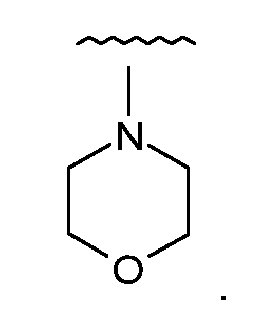
- (253) A compound according to any one of (1) to (235), wherein, -NRC1RD1, if present, is the following group, and is:
- optionally substituted on carbon with one or more groups -RNC, and
- optionally substituted on secondary nitrogen with a group -RNN:

-
- (254) A compound according to any one of (1) to (253), wherein -NRC2RD2, if present, is a fused bicyclic non-aromatic heterocyclyl group having from 7 to 12 ring atoms, wherein exactly 1 of said ring atoms is a ring heteroatom, and is N, or exactly 2 of said ring atoms are ring heteroatoms, and are both N, or exactly 2 of said ring atoms are ring heteroatoms, and are N and O, or exactly 2 of said ring atoms are ring heteroatoms, and are N and S, wherein said S is optionally in the form of S(=O) or S(=O)2;
and wherein said fused bicyclic non-aromatic heterocyclyl group is:- optionally substituted on carbon with one or more groups -RNC, and
- optionally substituted on secondary nitrogen, if present, with a group -RNN.
- (255) A compound according to any one of (1) to (253), wherein -NRC2RD2, if present, is a fused bicyclic non-aromatic heterocyclyl group having from 8 to 10 ring atoms.
- (256) A compound according to any one of (1) to (253), wherein -NRC2RD2, if present, is a fused bicyclic non-aromatic heterocyclyl group having 8 ring atoms.
- (257) A compound according to any one of (1) to (253), wherein -NRC2RD2, if present, is a fused bicyclic non-aromatic heterocyclyl group having 9 ring atoms.
- (258) A compound according to any one of (1) to (253), wherein -NRC2RD2, if present, is a fused bicyclic non-aromatic heterocyclyl group having 10 ring atoms.
- (259) A compound according to any one of (1) to (258), wherein, in -NRC2RD2, if present, exactly 1 of said ring atoms is a ring heteroatom, and is N.
- (260) A compound according to any one of (1) to (258), wherein, in -NRC2RD2, if present, exactly 2 of said ring atoms are ring heteroatoms, and are both N.
- (261) A compound according to any one of (1) to (258), wherein, in -NRC2RD2, if present, exactly 2 of said ring atoms are ring heteroatoms, and are N and O.
- (262) A compound according to any one of (1) to (258), wherein, in -NRC2RD2, if present, exactly 2 of said ring atoms are ring heteroatoms, and are N and S, wherein said S is optionally in the form of S(=O) or S(=O)2.
- (263) A compound according to any one of (1) to (258), wherein, in -NRC2RD2, if present, exactly 2 of said ring atoms are ring heteroatoms, and are N and S.
- (264) A compound according to any one of (1) to (253), wherein, -NRC2RD2, if present, is independently selected from the following groups, and is:
- optionally substituted on carbon with one or more groups -RNC, and
- optionally substituted on secondary nitrogen, if present, with a group -RNN:


- (265) A compound according to any one of (1) to (253), wherein, -NRC2RD2, if present, is independently selected from the following groups, and is:
- optionally substituted on carbon with one or more groups -RNC, and
- optionally substituted on secondary nitrogen, if present, with a group -RNN:

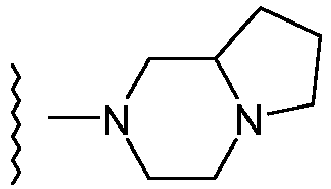
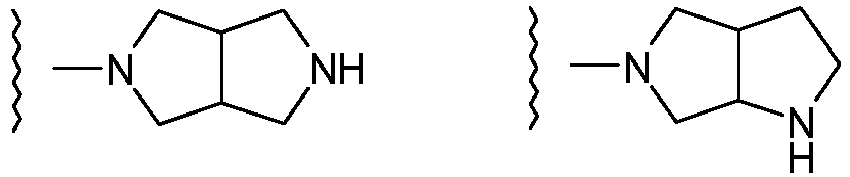

- (266) A compound according to any one of (1) to (253), wherein, -NRC2RD2, if present, is the following group, and is optionally substituted on carbon with one or more groups -RNC:

- (267) A compound according to any one of (1) to (253), wherein, -NRC2RD2, if present, is the following group, and is:
- optionally substituted on carbon with one or more groups -RNC, and
- optionally substituted on secondary nitrogen with a group -RNN:

-
- (268) A compound according to any one of (1) to (267), wherein -NRC3RD3, if present, is a bridged non-aromatic heterocyclyl group having from 7 to 11 ring atoms, wherein exactly 1 of said ring atoms is a ring heteroatom, and is N, or exactly 2 of said ring atoms are ring heteroatoms, and are both N, or exactly 2 of said ring atoms are ring heteroatoms, and are N and O; and wherein said bridged non-aromatic heterocyclyl group is:
- optionally substituted on carbon with one or more groups -RNC, and
- optionally substituted on secondary nitrogen, if present, with a group -RNN.
- (269) A compound according to any one of (1) to (267), wherein -NRC3RD3, if present, is a bridged non-aromatic heterocyclyl group having 7 ring atoms.
- (270) A compound according to any one of (1) to (267), wherein -NRC3RD3, if present, is a bridged non-aromatic heterocyclyl group having 8 ring atoms.
- (271) A compound according to any one of (1) to (267), wherein -NRC3RD3, if present, is a bridged non-aromatic heterocyclyl group having 9 ring atoms.
- (272) A compound according to any one of (1) to (267), wherein -NRC3RD3, if present, is a bridged non-aromatic heterocyclyl group having 11 ring atoms.
- (273) A compound according to any one of (1) to (272), wherein, in -NRC3RD3, if present, exactly 1 of said ring atoms is a ring heteroatom, and is N.
- (274) A compound according to any one of (1) to (272), wherein, in -NRC3RD3, if present, exactly 2 of said ring atoms are ring heteroatoms, and are both N.
- (275) A compound according to any one of (1) to (272), wherein, in -NRC3RD3, if present, exactly 2 of said ring atoms are ring heteroatoms, and are N and O.
- (276) A compound according to any one of (1) to (272), wherein, in -NRC3RD3, if present, exactly 2 of said ring atoms are ring heteroatoms, and are N and S, wherein said S is optionally in the form of S(=O) or S(=O)2.
- (277) A compound according to any one of (1) to (272), wherein, in -NRC3RD3, if present, exactly 2 of said ring atoms are ring heteroatoms, and are N and S.
- (278) A compound according to any one of (1) to (272), wherein, in -NRC3RD3, if present, exactly 3 of said ring atoms are ring heteroatoms, one of which is N, and each of the other two is independently N, O, or S, wherein said S is optionally in the form of S(=O) or S(=O)2.
- (279) A compound according to any one of (1) to (272), wherein, in -NRC3RD3, if present, exactly 3 of said ring atoms are ring heteroatoms, one of which is N, and each of the other two is independently N, O, or S.
- (280) A compound according to any one of (1) to (267), wherein, -NRC3RD3, if present, is independently selected from the following groups, and is:
- optionally substituted on carbon with one or more groups -RNC, and
- optionally substituted on secondary nitrogen, if present, with groups -RNN:


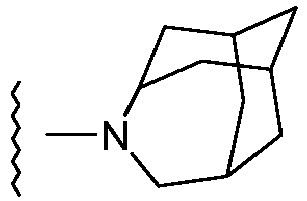
- (281) A compound according to any one of (1) to (267), wherein, -NRC3RD3, if present, is independently selected from the following groups, and is:
- optionally substituted on carbon with one or more groups -RNC, and
- optionally substituted on secondary nitrogen, if present, with groups -RNN:

- (282) A compound according to any one of (1) to (267), wherein, -NRC3RD3, if present, is independently selected from the following groups, and is:
- optionally substituted on carbon with one or more groups -RNC, and
- optionally substituted on secondary nitrogen, if present, with groups -RNN:

- (283) A compound according to any one of (1) to (267), wherein, -NRC3RD3, if present, is the following group, and is:
- optionally substituted on carbon with one or more groups -RNC, and
- optionally substituted on secondary nitrogen with a group -RNN:

- (284) A compound according to any one of (1) to (267), wherein, -NRC3RD3, if present, is the following group, and is:
- optionally substituted on carbon with one or more groups -RNC, and
- optionally substituted on secondary nitrogen with groups -RNN:

-
- (285) A compound according to any one of (1) to (284), wherein -NRC4RD4, if present, is a spiro non-aromatic heterocyclyl group having 7 ring atoms.
- (286) A compound according to any one of (1) to (284), wherein -NRC4RD4, if present, is a spiro non-aromatic heterocyclyl group having 8 ring atoms.
- (287) A compound according to any one of (1) to (284), wherein -NRC4RD4, if present, is a spiro non-aromatic heterocyclyl group having 9 ring atoms.
- (288) A compound according to any one of (1) to (284), wherein -NRC4RD4, if present, is a spiro non-aromatic heterocyclyl group having 10 ring atoms.
- (289) A compound according to any one of (1) to (284), wherein -NRC4RD4, if present, is a spiro non-aromatic heterocyclyl group having 11 ring atoms.
- (290) A compound according to any one of (1) to (284), wherein -NRC4RD4, if present, is a spiro non-aromatic heterocyclyl group having 12 ring atoms.
- (291) A compound according to any one of (1) to (290), wherein, in -NRC4RD4, if present, exactly 1 of said ring atoms is a ring heteroatom, and is N.
- (292) A compound according to any one of (1) to (290), wherein, in -NRC4RD4, if present, exactly 2 of said ring atoms are ring heteroatoms, and are both N.
- (293) A compound according to any one of (1) to (290), wherein, in -NRC4RD4, if present, exactly 2 of said ring atoms are ring heteroatoms, and are N and O.
- (294) A compound according to any one of (1) to (290), wherein, in -NRC4RD4, if present, exactly 2 of said ring atoms are ring heteroatoms, and are N and S, wherein said S is optionally in the form of S(=O) or S(=O)2.
- (295) A compound according to any one of (1) to (290), wherein, in -NRC4RD4, if present, exactly 2 of said ring atoms are ring heteroatoms, and are N and S.
- (296) A compound according to any one of (1) to (290), wherein, in -NRC4RD4, if present, exactly 3 of said ring atoms are ring heteroatoms, one of which is N, and each of the other two is independently N, O, or S, wherein said S is optionally in the form of S(=O) or S(=O)2.
- (297) A compound according to any one of (1) to (290), wherein, in -NRC4RD4, if present, exactly 3 of said ring atoms are ring heteroatoms, one of which is N, and each of the other two is independently N, O, or S.
- (298) A compound according to any one of (1) to (284), wherein, -NRC4RD4, if present, is independently selected from the following groups, and is:
- optionally substituted on carbon with one or more groups -RNC, and
- optionally substituted on secondary nitrogen, if present, with a group -RNN:


- (299) A compound according to any one of (1) to (284), wherein, -NRC4RD4, if present, is independently selected from the following groups, and is:
- optionally substituted on carbon with one or more groups -RNC, and
- optionally substituted on secondary nitrogen, if present, with a group -RNN:


- (300) A compound according to any one of (1) to (284), wherein, -NRC4RD4, if present, is independently selected from the following groups, and is:
- optionally substituted on carbon with one or more groups -RNC, and
- optionally substituted on secondary nitrogen with a group -RNN:

- (301) A compound according to any one of (1) to (284), wherein, -NRC4RD4, if present, is the following group, and is:
- optionally substituted on carbon with one or more groups -RNC, and
- optionally substituted on secondary nitrogen with a group -RNN:

-
- (302) A compound according to any one of (1) to (301), wherein each -RNC, if present, is independently:
- RQQ,
- F, -Cl, -Br, -I,
- OH, -ORQQ,
- LQ-OH, -LQ-ORQQ,
- NH2, -NHRQQ, -NRQQ 2, -RQM,
- LQ-NH2, -LQ-NHRQQ, -LQ-NRQQ 2, -LQ-RQM, or
- (303) A compound according to any one of (1) to (301), wherein each -RNC, if present, is independently:
- RQQ,
- OH, -ORQQ,
- NH2, -NHRQQ, -NRQQ 2, -RQM, or
- (304) A compound according to any one of (1) to (301), wherein each -RNC, if present, is independently -RQQ.
-
- (305) A compound according to any one of (1) to (304), wherein each -RNN, if present, is independently:
- RQQ,
- LQ-OH, -LQ-ORQQ,
- LQ-NH2, -LQ-NHRQQ, -LQ-NRQQ 2, -LQ-RQM,
- C(=O)RQQ,
- C(=O)ORQQ,
- C(=O)NH2, -C(=O)NHRQQ, -C(=O)NRQQ 2, or -C(=O)RQM.
- (306) A compound according to any one of (1) to (304), wherein each -RNN, if present, is independently:
- RQQ,
- LQ-OH, -LQ-ORQQ,
- LQ-NH2, -LQ-NHRQQ, -LQ-NRQQ 2, -LQ-RQM,
- C(=O)RQQ, or
- C(=O)ORQQ.
- (307) A compound according to any one of (1) to (304), wherein each -RNN, if present, is independently:
- RQQ,
- LQ-OH, -LQ-ORQQ,
- LQ-NH2, -LQ-NHRQQ, -LQ-NRQQ 2, -LQ-RQM, or
- C(=O)RQQ.
- (308) A compound according to any one of (1) to (304), wherein each -RNN, if present, is independently:
- RQQ,
- LQ-OH, -LQ-ORQQ,
- LQ-NH2, -LQ-NHRQQ, -LQ-NRQQ 2, or
- C(=O)RQQ.
- (309) A compound according to any one of (1) to (304), wherein each -RNN, if present, is independently:
- RQQ,
- C(=O)RQQ, or
- C(=O)ORQQ.
- (310) A compound according to any one of (1) to (304), wherein each -RNN, if present, is independently -RQQ or -C(=O)RQQ.
- (311) A compound according to any one of (1) to (304), wherein each -RNN, if present, is independently -RQQ.
- (312) A compound according to any one of (1) to (304), wherein each -RNN, if present, is independently: -RQQ, -LQ-OH, or -LQ-ORQQ.
- (313) A compound according to any one of (1) to (304), wherein each -RNN, if present, is independently: -LQ-OH or -LQ-ORQQ.
- (314) A compound according to any one of (1) to (304), wherein each -RNN, if present, is independently: -LQ-OH.
-
- (315) A compound according to any one of (1) to (314), wherein each -LQ-, if present, is independently -CH2-, -CH(Me)-, -C(Me)2-, -CH2CH2-, -CH(Me)CH2-, -CH2CH(Me)-, -C(Me)2CH2-, -CH2C(Me)2-, -CH2CH2CH2-, or -CH2CH2CH2CH2-.
- (316) A compound according to any one of (1) to (314), wherein each -LQ-, if present, is independently -CH2-, -CH(Me)-, -C(Me)2-, -CH(Et)-, or -CH2CH2-.
- (317) A compound according to any one of (1) to (314), wherein each -LQ-, if present, is independently -CH2-, -CH(Me)-, or -C(Me)2-.
- (318) A compound according to any one of (1) to (314), wherein each -LQ-, if present, is independently -CH2-, -CH2CH2-, -CH2CH2CH2-, or -CH2CH2CH2CH2-.
- (319) A compound according to any one of (1) to (314), wherein each -LQ-, if present, is independently -CH2CH2-, -CH2CH2CH2-, or -CH2CH2CH2CH2-.
- (320) A compound according to any one of (1) to (314), wherein each -LQ-, if present, is independently -CH2- or -CH2CH2-.
- (321) A compound according to any one of (1) to (314), wherein each -LQ-, if present, is -CH2-.
- (322) A compound according to any one of (1) to (314), wherein each -LQ-, if present, is -CH2CH2-.
-
- (323) A compound according to any one of (1) to (322), wherein each -RQQ, if present, is independently linear or branched saturated C1-4alkyl, saturated C3-6cycloalkyl, saturated C3-6cycloalkyl-methyl, phenyl, or benzyl; wherein said linear or branched saturated C1-4alkyl is optionally substituted with -OH or -ORQQQ, wherein -RQQQ is linear or branched saturated C1-4alkyl.
- (324) A compound according to any one of (1) to (322), wherein each -RQQ, if present, is independently linear or branched saturated C1-4alkyl, saturated C3-6cycloalkyl, saturated C3-6cycloalkyl-methyl, phenyl, or benzyl.
- (325) A compound according to any one of (1) to (322), wherein each -RQQ, if present, is independently linear or branched saturated C1-4alkyl, saturated C3-6cycloalkyl, phenyl, or benzyl.
- (326) A compound according to any one of (1) to (322), wherein each -RQQ, if present, is independently linear or branched saturated C1-4alkyl, phenyl, or benzyl.
- (327) A compound according to any one of (1) to (322), wherein each -RQQ, if present, is independently linear or branched saturated C1-4alkyl, saturated C3-6cycloalkyl, or saturated C3-6cycloalkyl-methyl; wherein said linear or branched saturated C1-4alkyl is optionally substituted with -OH or -ORQQ, wherein -RQQ is linear or branched saturated C1-4alkyl.
- (328) A compound according to any one of (1) to (322), wherein each -RQQ, if present, is independently linear or branched saturated C1-4alkyl, saturated C3-6cycloalkyl, or saturated C3-6cycloalkyl-methyl.
- (329) A compound according to any one of (1) to (322), wherein each -RQQ, if present, is independently linear or branched saturated C1-4alkyl or saturated C3-6cycloalkyl; wherein said linear or branched saturated C1-4alkyl is optionally substituted with -OH or -ORQQ, wherein -RQQ is linear or branched saturated C1-4alkyl.
- (330) A compound according to any one of (1) to (322), wherein each -RQQ, if present, is independently linear or branched saturated C1-4alkyl or saturated C3-6cycloalkyl.
- (331) A compound according to any one of (1) to (322), wherein each -RQQ, if present, is linear or branched saturated C1-4alkyl, and is optionally substituted with -OH or -ORQQ, wherein -RQQ is linear or branched saturated C1-4alkyl.
- (332) A compound according to any one of (1) to (322), wherein each -RQQ, if present, is linear or branched saturated C1-4alkyl.
- (333) A compound according to any one of (1) to (322), wherein each -RQQ, if present, is independently -Me, -Et, -nPr, -iPr, -nBu, -iBu, or -tBu.
- (334) A compound according to any one of (1) to (322), wherein each -RQQ, if present, is independently -Me or -tBu.
- (335) A compound according to any one of (1) to (322), wherein each -RQQ, if present, is -Me.
- (336) A compound according to any one of (1) to (322), wherein each -RQQ, if present, is -tBu.
- (337) A compound according to any one of (1) to (322), wherein each -RQQ, if present, is saturated C3-6cycloalkyl.
- (338) A compound according to any one of (1) to (322), wherein each -RQQ, if present, is independently cyclopropyl, cyclobutyl, cyclopentyl, or cyclohexyl.
- (339) A compound according to any one of (1) to (322), wherein each -RQQ, if present, is cyclopropyl.
- (340) A compound according to any one of (1) to (322), wherein each -RQQ, if present, is saturated C3-6cycloalkyl-methyl.
- (341) A compound according to any one of (1) to (322), wherein each -RQQ, if present, is independently cyclopropyl-methyl, cyclobutyl-methyl, cyclopentyl-methyl, or cyclohexyl-methyl.
- (342) A compound according to any one of (1) to (322), wherein each -RQQ, if present, is cyclopropyl-methyl.
-
- (343) A compound according to any one of (1) to (342), wherein each -RQQQ, if present, is independently -Me, -Et, -nPr, -iPr, -nBu, -iBu, or -tBu.
- (344) A compound according to any one of (1) to (342), wherein each -RQQQ, if present, is independently -Me or -Et.
- (345) A compound according to any one of (1) to (342), wherein each -RQQQ, if present, is independently -Me.
-
- (346) A compound according to any one of (1) to (345), wherein each -RQN, if present, is independently -Me, -Et, -nPr, -iPr, -nBu, -iBu, or -tBu.
- (347) A compound according to any one of (1) to (345), wherein each -RQN if present, is independently -Me or -Et.
- (348) A compound according to any one of (1) to (345), wherein each -RQN if present, is independently -Me.
-
- (349) A compound according to any one of (1) to (348), wherein each -RQM, if present, is independently pyrrolidino, piperidino, piperazino, or morpholino, and is:
- optionally substituted on carbon with one or more groups selected from: -RQMM, -C(=O)RQMM, -S(=O)2RQMM, -F, -NH2, -NHRQMM, -NRQMM 2, -OH, and -ORQMM; and
- optionally substituted on secondary nitrogen, if present, with a group selected from: -RQMM, -C(=O)RQMM, -C(=O)ORQMM, and -S(=O)2RQMM;
-
- (350) A compound according to any one of (1) to (349), wherein each -RQMM, if present, is independently linear or branched saturated C1-4alkyl, saturated C3-6cycloalkyl, phenyl, or benzyl.
- (351) A compound according to any one of (1) to (349), wherein each -RQMM, if present, is independently linear or branched saturated C1-4alkyl, phenyl, or benzyl.
- (352) A compound according to any one of (1) to (349), wherein each -RQMM, if present, is independently linear or branched saturated C1-4alkyl, saturated C3-6cycloalkyl, or saturated C3-6cycloalkyl-methyl.
- (353) A compound according to any one of (1) to (349), wherein each -RQMM, if present, is independently linear or branched saturated C1-4alkyl or saturated C3-6cycloalkyl.
- (354) A compound according to any one of (1) to (349), wherein each -RQMM, if present, is linear or branched saturated C1-4alkyl.
- (355) A compound according to any one of (1) to (349), wherein each -RQMM, if present, is independently -Me, -Et, -nPr, -iPr, -nBu, -iBu, or -tBu.
- (356) A compound according to any one of (1) to (349), wherein each -RQMM, if present, is independently -Me or -Et.
- (357) A compound according to any one of (1) to (349), wherein each -RQMM, if present, is -Me.
- (358) A compound according to any one of (1) to (349), wherein each -RQMM, if present, is independently saturated C3-6cycloalkyl.
- (359) A compound according to any one of (1) to (349), wherein each -RQMM, if present, is independently cyclopropyl, cyclobutyl, cyclopentyl, or cyclohexyl.
- (360) A compound according to any one of (1) to (349), wherein each -RQMM, if present, is cyclopropyl.
-
(361) A compound according to any one of (1) to (360), wherein -NRC5RD5, if present, is independently: 1 H-pyrrol-1-yl; 2H-isoindol-2-yl; 1H-indol-1-yl; 1H-pyrazol-1-yl; 1H-benzoimidazol-1-yl; 1H-imidazol-1-yl; 2H-indazol-2-yl; 1H-indazol-1-yl; 4H-[1,2,4]triazol-4-yl; 1H-[1,2,3]triazol-1-yl; 1H-[1,2,4]triazol-1-yl; 1H-benzotriazol-1-yl; or 1H-tetrazol-1-yl; and is optionally substituted with one or more groups -RH.
1H-pyrrol-1-yl 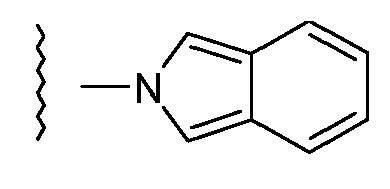
2H-isoindol-2-yl 
1H-indol-1-yl 
1H-imidazol-1-yl 
1H-benzoimidazol-1-yl 
1H-pyrazol-1-yl 
2H-indazol-2-yl 
1H-indazol-1-yl 
4H-[1,2,4]triazol-4-yl 
1H-[1,2,4]triazol-1-yl 
1H-[1,2,3]triazol-1-yl 
1H-benzotriazol-1-yl 
1H-tetrazol-1-yl
(362) A compound according to any one of (1) to (360), wherein -NRC5RD5, if present, is independently: 1H-pyrrol-1-yl; 1H-pyrazol-1-yl; 1H-imidazol-1-yl; 4H-[1,2,4]triazol-4-yl; 1H-[1,2,3]triazol-1-yl; 1H-[1,2,4]triazol-1-yl; or 1H-tetrazol-1-yl; and is optionally substituted with one or more groups -RH.
(363) A compound according to any one of (1) to (360), wherein -NRC5RD5, if present, is independently: 1H-pyrrol-1-yl; 1H-pyrazol-1-yl; or 1H-imidazol-1-yl; and is optionally substituted with one or more groups -RH.
(364) A compound according to any one of (1) to (360), wherein -NRC5RD5, if present, is 1H-pyrrol-1-yl; and is optionally substituted with one or more groups -RH.
(365) A compound according to any one of (1) to (360), wherein -NRC5RD5, if present, is 1H-pyrazol-1-yl; and is optionally substituted with one or more groups -RH.
(366) A compound according to any one of (1) to (360), wherein -NRC5RD5, if present, is 1H-imidazol-1-yl; and is optionally substituted with one or more groups -RH.
(367) A compound according to any one of (1) to (360), wherein -NRC5RD5, if present, is 1H-[1,2,4]triazol-1-yl; and is optionally substituted with one or more groups -RH.
(368) A compound according to any one of (1) to (360), wherein -NRC5RD5, if present, is 1H-benzoimidazol-1-yl; and is optionally substituted with one or more groups -RH.
(369) A compound according to any one of (1) to (360), wherein -NRC5RD5, if present, is 1H-indol-1-yl; and is optionally substituted with one or more groups -RH. -
- (370) A compound according to any one of (1) to (369), wherein each -RH, if present, is independently:
- RHH,
- F, -Cl, -Br, -I,
- OH, -ORHH,
- LH-OH, -LH-ORHH,
- CF3, -OCF3,
- NH2, -NHRHH, -NRHH 2, -RHM,
- LH-NH2, -LH-NHRHH, -LH-NRHH 2, -LH-RHM,
- C(=O)OH, -C(=O)ORHH, -OC(=O)RHH,
- C(=O)NH2, -C(=O)NHRHH, -C(=O)NRHH 2, -C(=O)RHM,
- NHC(=O)RHH, -NRHNC(=O)RHH, or
- C(=O)RHH.
- (371) A compound according to any one of (1) to (369), wherein each -RH, if present, is independently:
- RHH,
- F, -Cl, -Br, -I,
- OH, -ORHH,
- LH-OH, -LHH-ORHH,
- NH2, -NHRHH, -NRHH 2, -RHM,
- LH-NH2, -LH-NHRHH, -LH-NRHH 2, or -LH-RHM.
- (372) A compound according to any one of (1) to (369), wherein each -RH, if present, is independently:
- RHH,
- OH, -ORHH,
- NH2, -NHRHH, -NRHH 2, or -RHM.
- (373) A compound according to any one of (1) to (369), wherein each -RH, if present, is independently -RHH.
-
- (374) A compound according to any one of (1) to (373), wherein each -LH-, if present, is independently -CH2-, -CH(Me)-, -C(Me)2-, -CH2CH2-, -CH(Me)CH2-, -CH2CH(Me)-, -C(Me)2CH2-, -CH2C(Me)2-, -CH2CH2CH2-, or -CH2CH2CH2CH2-.
- (375) A compound according to any one of (1) to (373), wherein each -LH-, if present, is independently -CH2-, -CH(Me)-, -C(Me)2-, -CH(Et)-, or -CH2CH2-.
- (376) A compound according to any one of (1) to (373), wherein each -LH-, if present, is independently -CH2-, -CH(Me)-, or -C(Me)2-.
- (377) A compound according to any one of (1) to (373), wherein each -LH-, if present, is independently -CH2-, -CH2CH2-, -CH2CH2CH2-, or -CH2CH2CH2CH2-.
- (378) A compound according to any one of (1) to (373), wherein each -LH-, if present, is independently -CH2CH2-, -CH2CH2CH2-, or -CH2CH2CH2CH2-.
- (379) A compound according to any one of (1) to (373), wherein each -LH-, if present, is independently -CH2- or -CH2CH2-.
- (380) A compound according to any one of (1) to (373), wherein each -LH-, if present, is -CH2-.
- (381) A compound according to any one of (1) to (373), wherein each -LH-, if present, is -CH2CH2-.
-
- (382) A compound according to any one of (1) to (381), wherein each -RHH, if present, is independently linear or branched saturated C1-4alkyl, saturated C3-6cycloalkyl, saturated C3-6cycloalkyl-methyl, phenyl, or benzyl.
- (383) A compound according to any one of (1) to (381), wherein each -RHH, if present, is independently linear or branched saturated C1-4alkyl, saturated C3-6cycloalkyl, phenyl, or benzyl.
- (384) A compound according to any one of (1) to (381), wherein each -RHH, if present, is independently linear or branched saturated C1-4alkyl, phenyl, or benzyl.
- (385) A compound according to any one of (1) to (381), wherein each -RHH, if present, is independently linear or branched saturated C1-4alkyl, saturated C3-6cycloalkyl, or saturated C3-6cycloalkyl-methyl; wherein said linear or branched saturated C1-4alkyl is optionally substituted with -OH or -ORHHH, wherein -RHHH is linear or branched saturated C1-4alkyl.
- (386) A compound according to any one of (1) to (381), wherein each -RHH, if present, is independently linear or branched saturated C1-4alkyl, saturated C3-6cycloalkyl, or saturated C3-6cycloalkyl-methyl.
- (387) A compound according to any one of (1) to (381), wherein each -RHH, if present, is independently linear or branched saturated C1-4alkyl or saturated C3-6cycloalkyl; wherein said linear or branched saturated C1-4alkyl is optionally substituted with -OH or -ORHHH, wherein -RQQ is linear or branched saturated C1-4alkyl.
- (388) A compound according to any one of (1) to (381), wherein each -RHH, if present, is independently linear or branched saturated C1-4alkyl or saturated C3-6cycloalkyl.
- (389) A compound according to any one of (1) to (381), wherein each -RHH, if present, is linear or branched saturated C1-4alkyl, and is optionally substituted with -OH or -ORHHH, wherein -RHHH is linear or branched saturated C1-4alkyl.
- (390) A compound according to any one of (1) to (381), wherein each -RHH, if present, is linear or branched saturated C1-4alkyl.
- (391) A compound according to any one of (1) to (381), wherein each -RHH, if present, is independently -Me, -Et, -nPr, -iPr, -nBu, -iBu, or -tBu.
- (392) A compound according to any one of (1) to (381), wherein each -RHH, if present, is independently -Me or -tBu.
- (393) A compound according to any one of (1) to (381), wherein each -RHH, if present, is -Me.
- (394) A compound according to any one of (1) to (381), wherein each -RHH, if present, is -tBu.
- (395) A compound according to any one of (1) to (381), wherein each -RHH, if present, is saturated C3-6cycloalkyl.
- (396) A compound according to any one of (1) to (381), wherein each -RHH, if present, is independently cyclopropyl, cyclobutyl, cyclopentyl, or cyclohexyl.
- (397) A compound according to any one of (1) to (381), wherein each -RHH, if present, is cyclopropyl.
-
- (398) A compound according to any one of (1) to (397), wherein each -RHHH, if present, is independently -Me, -Et, -nPr, -iPr, -nBu, -iBu, or -tBu.
- (399) A compound according to any one of (1) to (397), wherein each -RHHH, if present, is independently -Me or -Et.
- (400) A compound according to any one of (1) to (397), wherein each -RHH, if present, is independently -Me.
-
- (401) A compound according to any one of (1) to (400), wherein each -RHN, if present, is independently -Me, -Et, -nPr, -iPr, -nBu, -iBu, or -tBu.
- (402) A compound according to any one of (1) to (400), wherein each -RHN, if present, is independently -Me or -Et.
- (403) A compound according to any one of (1) to (400), wherein each -RHN, if present, is independently -Me.
-
- (404) A compound according to any one of (1) to (403), wherein each -RHM, if present, is independently pyrrolidino, piperidino, piperazino, or morpholino, and is:
- optionally substituted on carbon with one or more groups selected from: -RHMM, -C(=O)RHMM, -S(=O)2RHMM, -F -NH2, -NHRHMM -NRHMM 2, -OH, and -ORHMM; and
- optionally substituted on secondary nitrogen, if present, with a group selected from: -RHMM, -C(=O)RHMM, -C(=O)ORHMM, and -S(=O)2RHMM;
-
- (405) A compound according to any one of (1) to (404), wherein each -RHMM, if present, is independently linear or branched saturated C1-4alkyl, saturated C3-6cycloalkyl, phenyl, or benzyl.
- (406) A compound according to any one of (1) to (404), wherein each -RHMM, if present, is independently linear or branched saturated C1-4alkyl, phenyl, or benzyl.
- (407) A compound according to any one of (1) to (404), wherein each -RHMM, if present, is independently linear or branched saturated C1-4alkyl, saturated C3-6cycloalkyl, or saturated C3-6cycloalkyl-methyl.
- (408) A compound according to any one of (1) to (404), wherein each -RHMM, if present, is independently linear or branched saturated C1-4alkyl or saturated C3-6cycloalkyl.
- (409) A compound according to any one of (1) to (404), wherein each -RHMM, if present, is linear or branched saturated C1-4alkyl.
- (410) A compound according to any one of (1) to (404), wherein each -RHMM, if present, is independently -Me, -Et, -nPr, -iPr, -nBu, -iBu, or -tBu.
- (411) A compound according to any one of (1) to (404), wherein each -RHMM, if present, is independently -Me or -Et.
- (412) A compound according to any one of (1) to (404), wherein each -RHMM, if present, is -Me.
- (413) A compound according to any one of (1) to (404), wherein each -RHMM, if present, is independently saturated C3-6cycloalkyl.
- (414) A compound according to any one of (1) to (404), wherein each -RHMM, if present, is independently cyclopropyl, cyclobutyl, cyclopentyl, or cyclohexyl.
- (415) A compound according to any one of (1) to (404), wherein each -RHMM, if present, is cyclopropyl.
-
- (416) A compound according to any one of (1) to (415), wherein -R5 is independently -R5A, -R5B, -R5C, or -R5D.
- (417) A compound according to any one of (1) to (415), wherein -R5 is -R5A.
- (418) A compound according to any one of (1) to (415), wherein -R5 is -R5B.
- (419) A compound according to any one of (1) to (415), wherein -R5 is -R5C.
- (420) A compound according to any one of (1) to (415), wherein -R5 is -R5D.
- (421) A compound according to any one of (1) to (415), wherein -R5 is -R5E.
-
- (422) A compound according to any one of (1) to (421), wherein -R5A, if present, is independently -Me, -Et, -nPr, -iPr, -nBu, -iBu, or -tBu.
- (423) A compound according to any one of (1) to (421), wherein -R5A, if present, is independently -Me, -Et, -nPr, or -iPr.
- (424) A compound according to any one of (1) to (421), wherein -R5A, if present, is independently -Me or -Et.
- (425) A compound according to any one of (1) to (421), wherein -R5A, if present, is -Me.
-
- (426) A compound according to any one of (1) to (425), wherein -R5B, if present, is independently cyclopropyl, cyclobutyl, cyclopentyl, or cyclohexyl.
- (427) A compound according to any one of (1) to (425), wherein -R5B, if present, is independently cyclopropyl, cyclobutyl, or cyclopentyl.
- (428) A compound according to any one of (1) to (425), wherein -R5B, if present, is independently cyclopropyl or cyclobutyl.
- (429) A compound according to any one of (1) to (425), wherein -R5B, if present, is cyclopropyl.
-
- (430) A compound according to any one of (1) to (429), wherein -R5C, if present, is independently -F, -Cl, or -Br.
- (431) A compound according to any one of (1) to (429), wherein -R5C, if present, is independently -F or -Cl.
- (432) A compound according to any one of (1) to (429), wherein -R5C, if present, is -F.
- (433) A compound according to any one of (1) to (429), wherein -R5C, if present, is -Cl.
- (434) A compound according to any one of (1) to (429), wherein -R5C, if present, is -Br.
- (435) A compound according to any one of (1) to (429), wherein -R5C, if present, is -1.
-
- (436) A compound according to any one of (1) to (435), wherein -R5E, if present, is independently -C≡CH or C3-4alkynyl optionally substituted with one or more groups -REE; wherein each -REE is independently selected from -OH, -OREEE, -NH2, -NHREEE, and -NREEE 2; wherein each -REEE is linear or branched saturated C1-4alkyl.
- (437) A compound according to any one of (1) to (435), wherein -R5E, if present, is -C≡CH.
- (438) A compound according to any one of (1) to (435), wherein -R5E, if present, is C3-4alkynyl optionally substituted with one or more groups -REE; wherein each -REE is independently selected from -OH, -OREEE, -NH2, -NHREEE, and -NREEE 2; wherein each -REEE is linear or branched saturated C1-4alkyl.
- (439) A compound according to any one of (1) to (435), wherein -R5E, if present, is independently -C≡CH, -C≡CH-CH3, -C≡CH-CH2REE, -C≡CH-CH2CH3 or -C≡CH-CH2CH2REE; wherein each -REE is independently selected from -OH, -OREEE, -NH2, -NHREEE, and -NREEE 2; wherein each -REEE is linear or branched saturated C1-4alkyl.
- (440) A compound according to any one of (1) to (435), wherein -R5E, if present, is independently -C≡CH-CH3 or -C≡CH-CH2REE; wherein each -REE is independently selected from -OH, -OREEE, -NH2, -NHREEE, and -NREEE 2; wherein each -REEE is linear or branched saturated C1-4alkyl.
- (441) A compound according to any one of (1) to (435), wherein -R5E, if present, is independently -C≡CH-CH2CH3 or -C≡CH-CH2CH2REE; wherein each -REE is independently selected from -OH, -OREEE, -NH2, -NHREEE, and -NREEE 2; wherein each -REEE is linear or branched saturated C1-4alkyl.
-
- (442) A compound according to any one of (1) to (441), wherein -REE, if present, is independently -OH or -OREEE.
- (443) A compound according to any one of (1) to (441), wherein -REE, if present, is independently-NH2, -NHREEE, or -NREEE 2.
-
- (444) A compound according to any one of (1) to (443), wherein each -REEE, if present, is independently -Me, -Et, -nPr, -iPr, -nBu, -iBu, or -tBu.
- (445) A compound according to any one of (1) to (443), wherein each -REEE, if present, is independently -Me, -Et, -nPr, or -iPr.
- (446) A compound according to any one of (1) to (443), wherein each -REEE, if present, is independently -Me or -Et.
- (447) A compound according to any one of (1) to (443), wherein each -REEE, if present, is -Me.
-
- (448) A compound according to any one of (1) to (447), wherein -R6 is -H.
- (449) A compound according to any one of (1) to (447), wherein -R6 is -F.
-
- (450) A compound according to any one of (1) to (449), wherein -R7 is -H.
- (451) A compound according to any one of (1) to (449), wherein -R7 is -F.
-
- (452) A compound according to any one of (1) to (451), wherein -R8 is -H.
- (453) A compound according to any one of (1) to (451), wherein -R8 is -F.
-
(454) A compound according to (1), selected from compounds of the following formulae and pharmaceutically acceptable salts, N-oxides, hydrates, and solvates thereof:Pat. Code Structure IQ-001 
IQ-002 
IQ-003 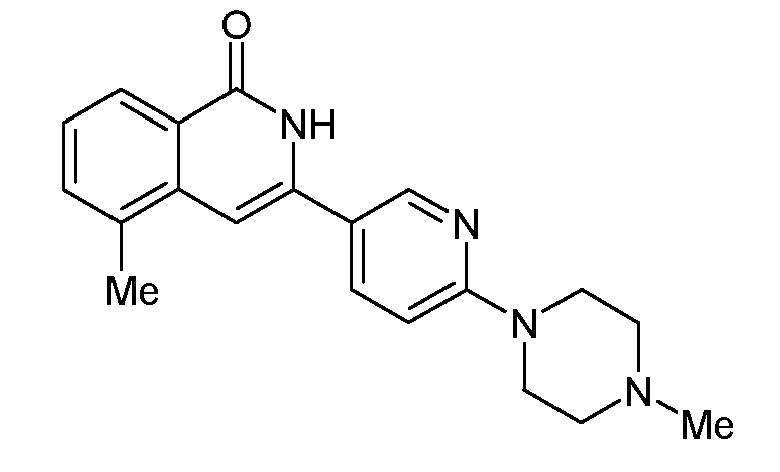
IQ-004 
IQ-005 
IQ-006 
IQ-007 
IQ-008 
IQ-009 
IQ-010 
IQ-011 
IQ-012 
IQ-013 
IQ-014 
IQ-015 
IQ-016 
IQ-017 
IQ-018 
IQ-019 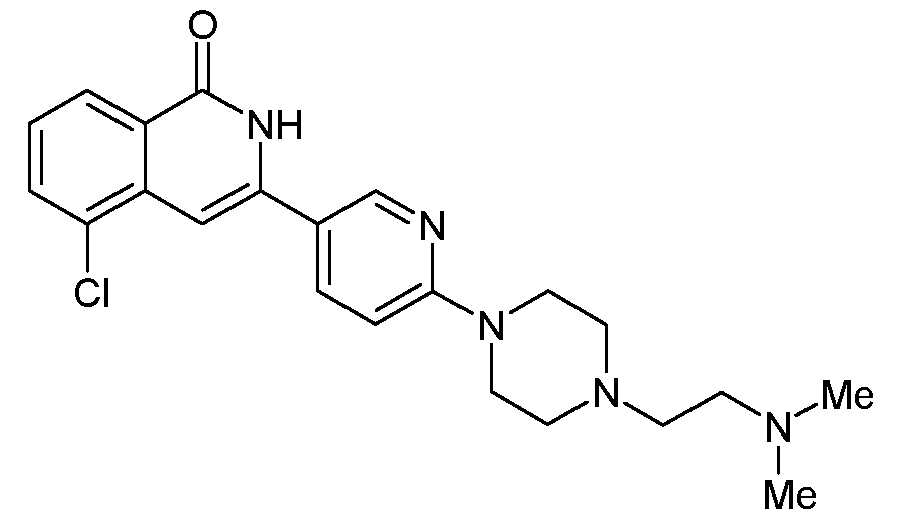
IQ-020 
IQ-021 
IQ-022 
IQ-023 
IQ-024 
IQ-025 
IQ-026 
IQ-027 
IQ-028 
IQ-029 
IQ-030 
IQ-031 
IQ-032 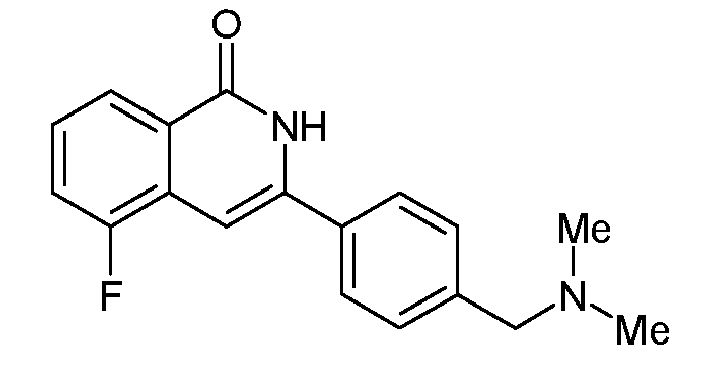
IQ-033 
IQ-034 
IQ-035 
IQ-036 
IQ-037 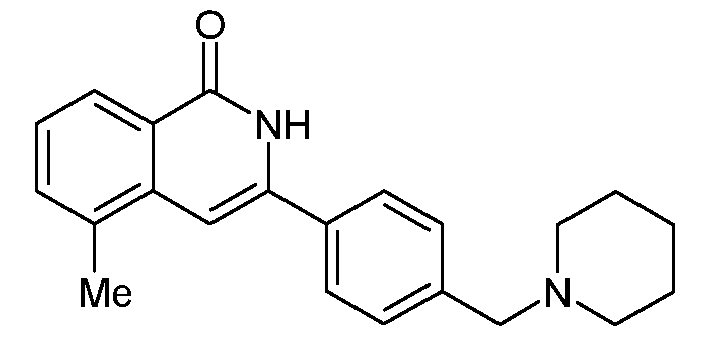
IQ-038 
IQ-039 
IQ-040 
IQ-041 
IQ-042 
IQ-043 
IQ-044 
IQ-045 
IQ-046 
IQ-047 
IQ-048 
IQ-049 
IQ-050 
IQ-051 
IQ-052 
IQ-053 
IQ-054 
IQ-055 
IQ-056 
IQ-057 
IQ-058 
IQ-059 
IQ-060 
IQ-061 
IQ-062 
IQ-063 
IQ-064 
IQ-065 
IQ-066 
IQ-067 
IQ-068 
IQ-069 
IQ-070 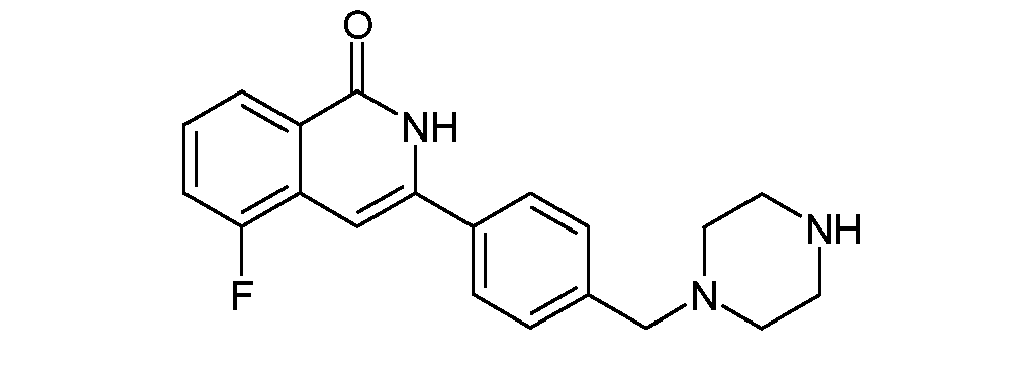
IQ-071 
IQ-072 
IQ-073 
IQ-074 
IQ-075 
IQ-076 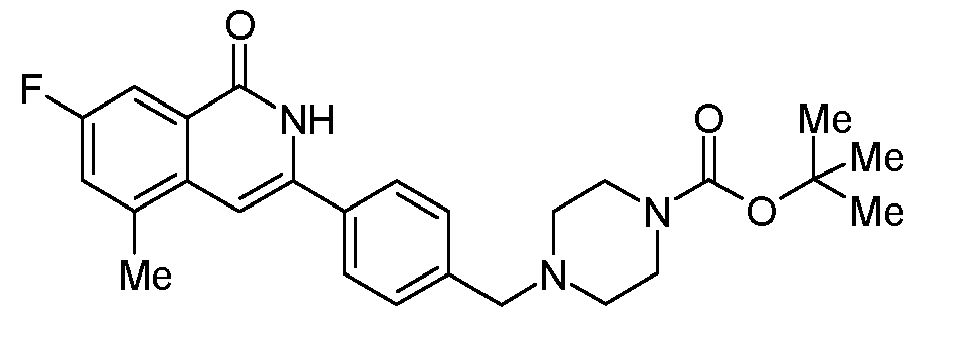
IQ-077 
IQ-078 
IQ-079 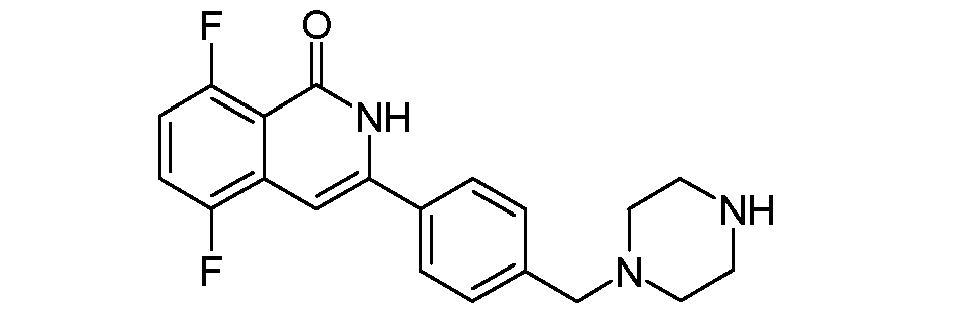
IQ-080 
IQ-081 
IQ-082 
IQ-083 
IQ-084 
IQ-085 
IQ-086 
IQ-087 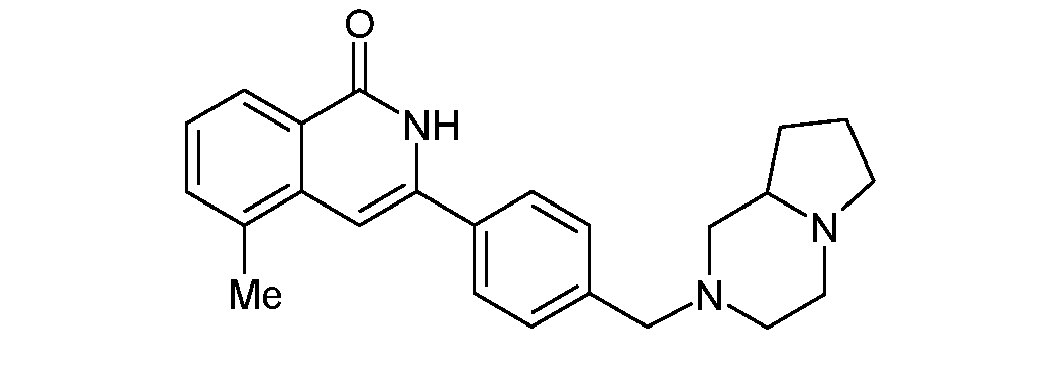
IQ-088 
IQ-089 
IQ-090 
IQ-091 
IQ-092 
IQ-093 
IQ-094 
IQ-095 
IQ-096 
IQ-097 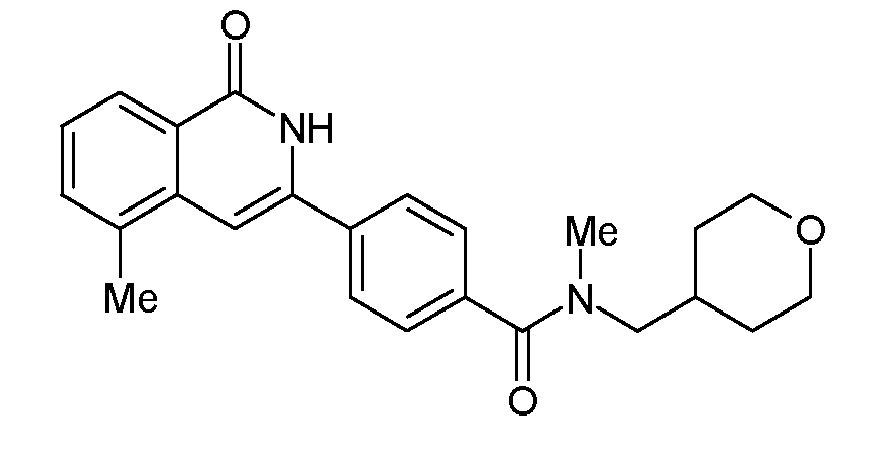
IQ-098 
IQ-099 
IQ-100 
IQ-101 
IQ-102 
IQ-103 
IQ-104 
IQ-105 
IQ-106 
IQ-107 
IQ-108 
IQ-109 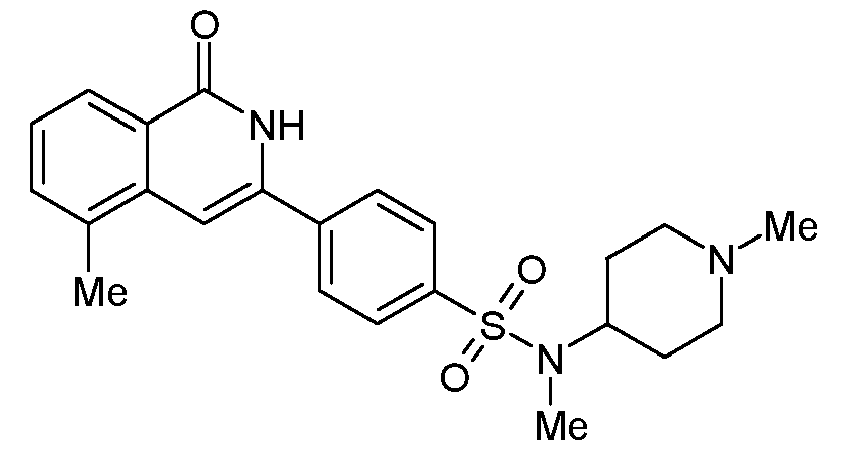
IQ-110 
IQ-111 
IQ-112 
IQ-113 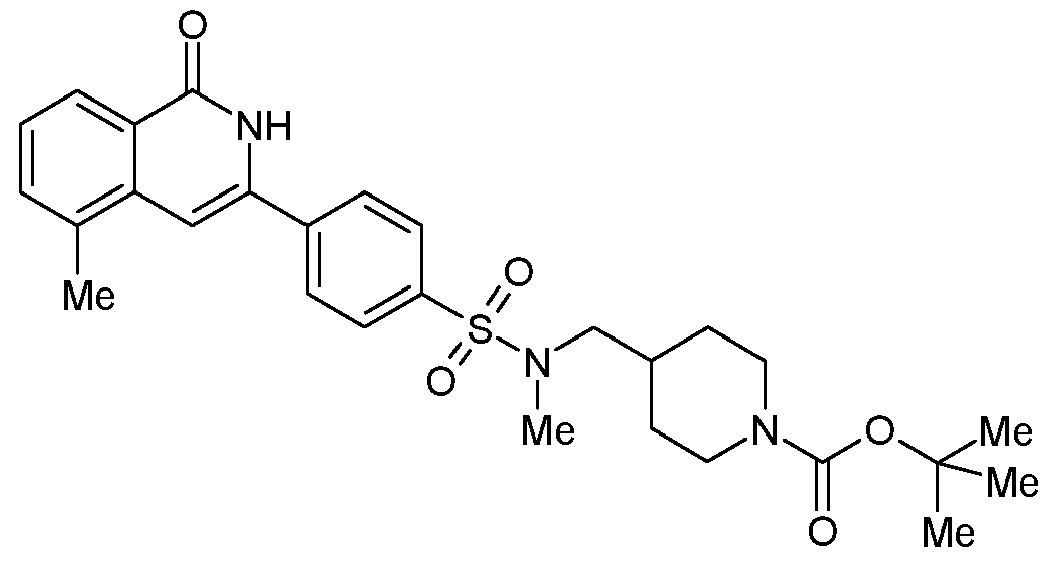
IQ-114 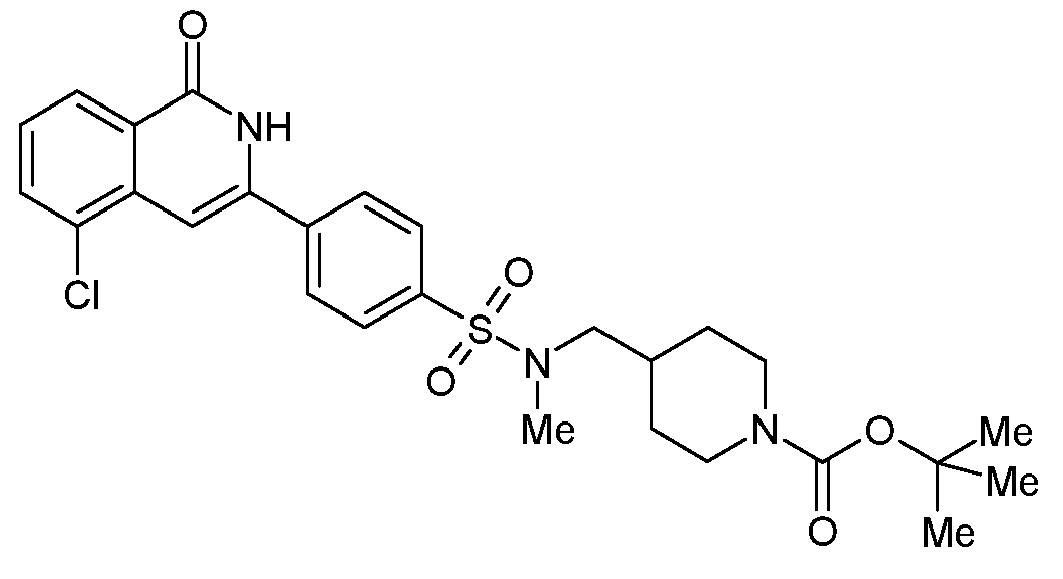
IQ-115 
IQ-116 
IQ-117 
IQ-118 
IQ-119 
IQ-120 
IQ-121 
IQ-122 
IQ-123 
IQ-124 
IQ-125 
IQ-126 
IQ-127 
IQ-128 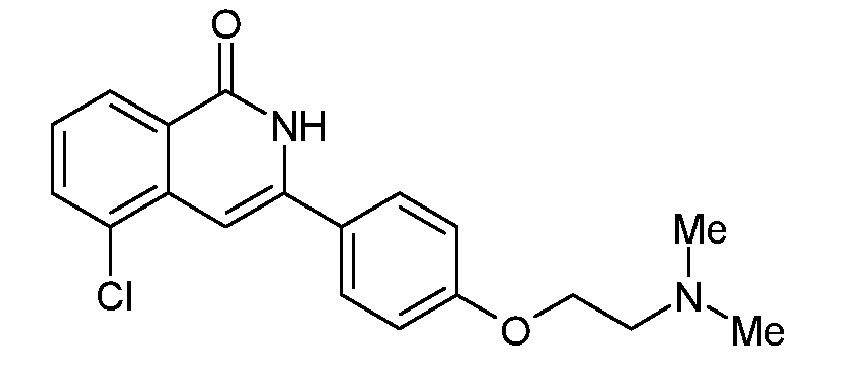
IQ-129 
IQ-130 
IQ-131 
IQ-132 
IQ-133 
IQ-134 
IQ-135 
IQ-136 
IQ-137 
IQ-138 
IQ-139 
IQ-140 
IQ-141 
IQ-142 
IQ-143 
IQ-144 
IQ-145 
IQ-146 
IQ-147 
IQ-148 
IQ-149 
IQ-150 
IQ-151 
IQ-152 
IQ-153 
IQ-154 
IQ-155 
IQ-156 
IQ-157 
IQ-158 
IQ-159 
IQ-160 
IQ-161 
IQ-162 
IQ-163 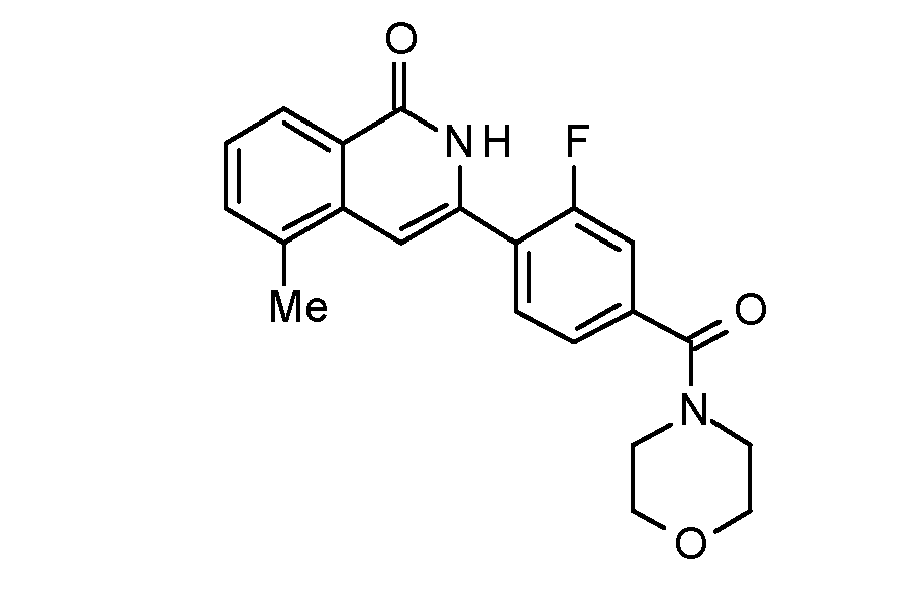
IQ-164 
IQ-165 
IQ-166 
IQ-167 
IQ-168 
IQ-169 
IQ-170 
IQ-171 
IQ-172 
IQ-173 
IQ-174 
IQ-175 
IQ-176 
IQ-177 
IQ-178 
IQ-179 
IQ-180 
IQ-181 
IQ-182 
IQ-183 
IQ-184 
IQ-185 
IQ-186 
IQ-187 
IQ-188 
IQ-189 
IQ-190 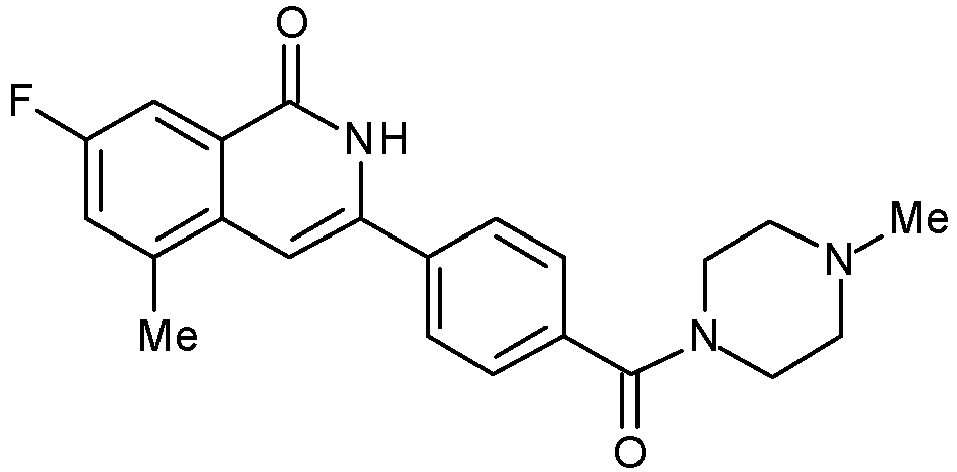
IQ-191 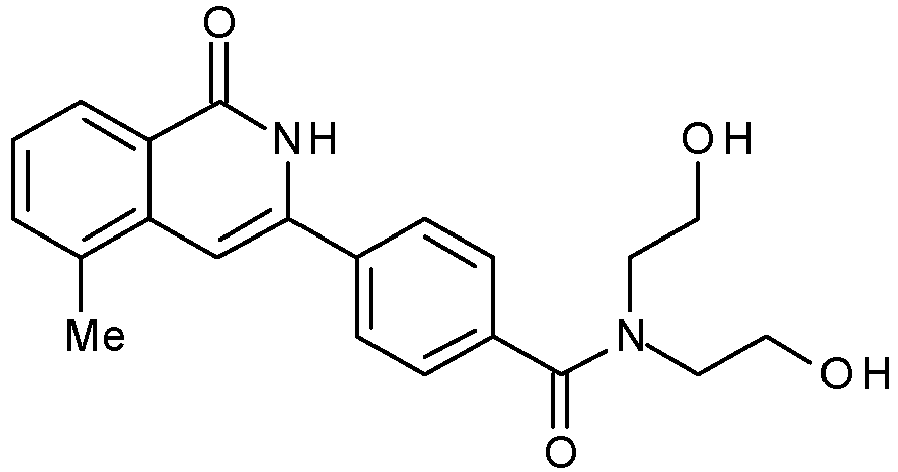
IQ-192 
IQ-193 
IQ-194 
IQ-195 
IQ-196 
IQ-197 
IQ-198 
IQ-199 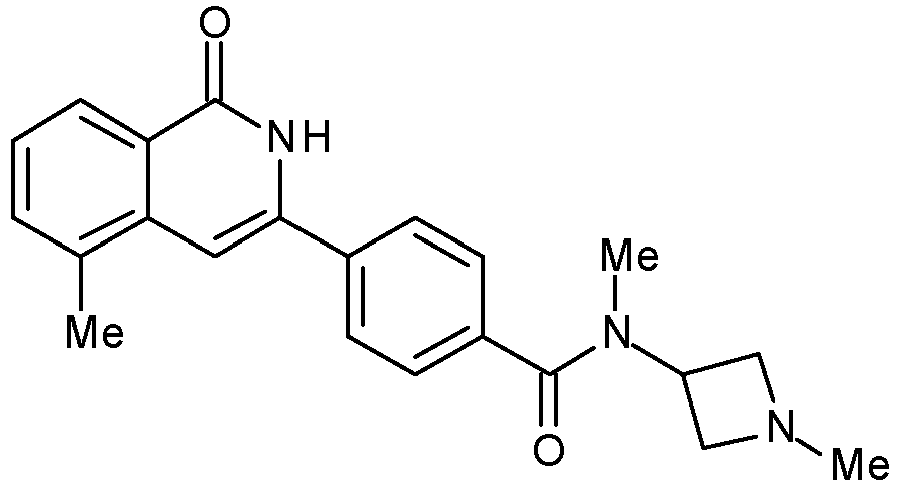
IQ-200 
IQ-201 
IQ-202 
IQ-203 
IQ-204 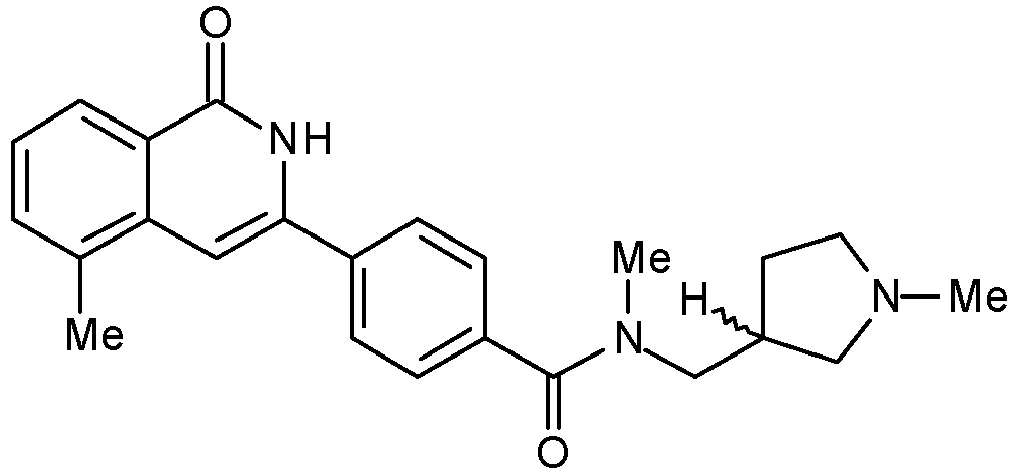
IQ-205 
IQ-206 
IQ-207 
IQ-208 
IQ-209 
IQ-210 
IQ-211 
IQ-212 
IQ-213 
IQ-214 
IQ-215 
IQ-216 
IQ-217 
IQ-218 
IQ-219 
IQ-220 
IQ-221 
IQ-222 
IQ-223 
IQ-224 
IQ-225 
IQ-226 
IQ-227 
IQ-228 
IQ-229 
IQ-230 
IQ-231 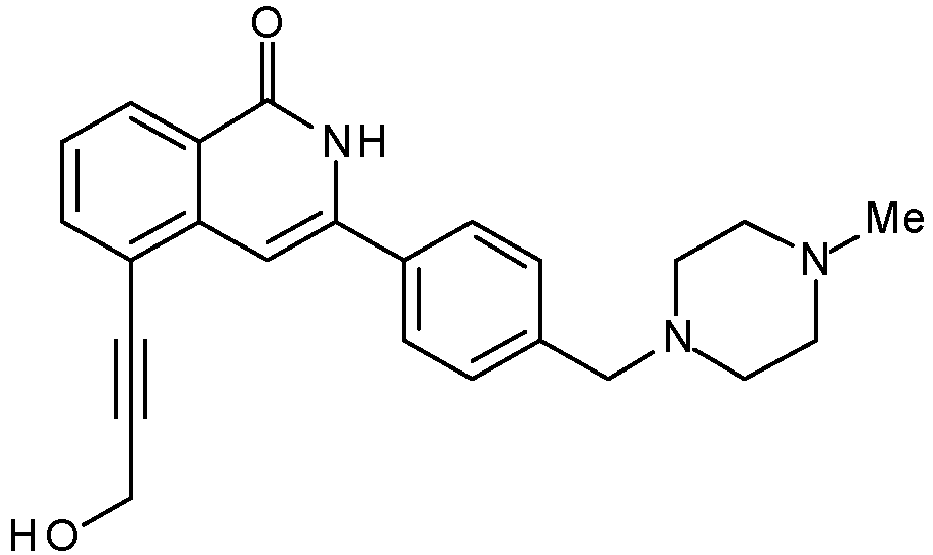
IQ-232 
IQ-233 
IQ-234 
IQ-235 
IQ-236 
IQ-237 
IQ-238 
- It is appreciated that certain features of the invention, which are, for clarity, described in the context of separate embodiments, may also be provided in combination in a single embodiment. Conversely, various features of the invention, which are, for brevity, described in the context of a single embodiment, may also be provided separately or in any suitable sub-combination. All combinations of the embodiments pertaining to the chemical groups represented by the variables (e.g., W, X, Y, Z, -RW, -RX, -RY, -RZ, -RWW, -RXX, -RYY, -RZZ, -X1, -R1, -L3P-, -L3PL-, -L3PR1-, -L3PR2-, -L3PR3-, -L3PR4-, -R3N, -RA, -RA1, -RA2, -RXX, -RYY, -RZZ, -X1, -R1, -L3P-, -L3PL-, -L3PR1-, -L3PR2-, -L3PR3-, -L3PR4-, -R3N, -RA, -RA1, -RA2, -RA3, -RA4, -RA5, -LA-, -RS1, -RS2C, -RS3C, -RSN, -LT-, -RTT, -RTTT, -RTN, -RTM, -RTMM, -RB, -RB1, -RB1, -RB2, -LB-, -RBB, -NRCRD, -NRC1RD1, -NRC2RD2, -NRC3RD3, -NRC4RD4, -NRC5RD5, -RNC, -RNN, -LQ-, -RQQ, -RQN, -RQM, -RQMM, -RH, -LH, -RHH, -RHN, -RHM, -RHMM, -R5, -R5A, -R5B, -R5C, -R5D, -LQ-, -RQQ, -RQN, -RQM, -RQMM, -RH, -LH-, -RHH, -RHN, -RHM, -RHMM, -R5, -R5A, -R5B, -R5C, -R5D, -R5E, -R5EE, -R5EEE, -R4, -R6, -R7, -R8, etc.) are specifically embraced by the present invention and are disclosed herein just as if each and every combination was individually and explicitly disclosed, to the extent that such combinations embrace compounds that are stable compounds (i.e., compounds that can be isolated, characterised, and tested for biological activity). In addition, all sub-combinations of the chemical groups listed in the embodiments describing such variables are also specifically embraced by the present invention and are disclosed herein just as if each and every such sub-combination of chemical groups was individually and explicitly disclosed herein.
- Also described herein are IQ compounds, as described herein, in substantially purified form and/or in a form substantially free from contaminants.
- In one embodiment, the compound is in substantially purified form and/or in a form substantially free from contaminants.
- In one embodiment, the compound is in a substantially purified form with a purity of least 50% by weight, e.g., at least 60% by weight, e.g., at least 70% by weight, e.g., at least 80% by weight, e.g., at least 90% by weight, e.g., at least 95% by weight, e.g., at least 97% by weight, e.g., at least 98% by weight, e.g., at least 99% by weight.
- Unless specified, the substantially purified form refers to the compound in any stereoisomeric or enantiomeric form. For example, in one embodiment, the substantially purified form refers to a mixture of stereoisomers, i.e., purified with respect to other compounds. In one embodiment, the substantially purified form refers to one stereoisomer, e.g., optically pure stereoisomer. In one embodiment, the substantially purified form refers to a mixture of enantiomers. In one embodiment, the substantially purified form refers to an equimolar mixture of enantiomers (i.e., a racemic mixture, a racemate). In one embodiment, the substantially purified form refers to one enantiomer, e.g., optically pure enantiomer.
- In one embodiment, the compound is in a form substantially free from contaminants wherein the contaminants represent no more than 50% by weight, e.g., no more than 40% by weight, e.g., no more than 30% by weight, e.g., no more than 20% by weight, e.g., no more than 10% by weight, e.g., no more than 5% by weight, e.g., no more than 3% by weight, e.g., no more than 2% by weight, e.g., no more than 1% by weight.
- Unless specified, the contaminants refer to other compounds, that is, other than stereoisomers or enantiomers. In one embodiment, the contaminants refer to other compounds and other stereoisomers. In one embodiment, the contaminants refer to other compounds and the other enantiomer.
- In one embodiment, the compound is in a substantially purified form with an optical purity of at least 60% (i.e., 60% of the compound, on a molar basis, is the desired stereoisomer or enantiomer, and 40% is undesired stereoisomer(s) or enantiomer), e.g., at least 70%, e.g., at least 80%, e.g., at least 90%, e.g., at least 95%, e.g., at least 97%, e.g., at least 98%, e.g., at least 99%.
- Certain compounds may exist in one or more particular geometric, optical, enantiomeric, diasteriomeric, epimeric, atropic, stereoisomeric, tautomeric, conformational, or anomeric forms, including but not limited to, cis- and trans-forms; E- and Z-forms; c-, t-, and r-forms; endo- and exo-forms; R-, S-, and meso-forms; D- and L-forms; d- and I-forms; (+) and (-) forms; keto-, enol-, and enolate-forms; syn- and anti-forms; synclinal- and anticlinal-forms; α- and β-forms; axial and equatorial forms; boat-, chair-, twist-, envelope-, and halfchair-forms; and combinations thereof, hereinafter collectively referred to as "isomers" (or "isomeric forms").
- Note that, except as discussed below for tautomeric forms, specifically excluded from the term "isomers," as used herein, are structural (or constitutional) isomers (i.e., isomers which differ in the connections between atoms rather than merely by the position of atoms in space). For example, a reference to a methoxy group, -OCH3, is not to be construed as a reference to its structural isomer, a hydroxymethyl group, -CH2OH. Similarly, a reference to ortho-chlorophenyl is not to be construed as a reference to its structural isomer, meta-chlorophenyl. However, a reference to a class of structures may well include structurally isomeric forms falling within that class (e.g., C1-7alkyl includes n-propyl and iso-propyl; butyl includes n-, iso-, sec-, and tert-butyl; methoxyphenyl includes ortho-, meta-, and para-methoxyphenyl).
- The above exclusion does not pertain to tautomeric forms, for example, keto-, enol-, and enolate-forms, as in, for example, the following tautomeric pairs: keto/enol (illustrated below), imine/enamine, amide/imino alcohol, amidine/amidine, nitroso/oxime, thioketone/enethiol, N-nitroso/hydroxyazo, and nitro/aci-nitro.

- For example, 1H-pyridin-2-one-5-yl and 2-hydroxyl-pyridin-5-yl (shown below) are tautomers of one another. A reference herein to one is intended to encompass both.

- Note that specifically included in the term "isomer" are compounds with one or more isotopic substitutions. For example, H may be in any isotopic form, including 1H, 2H (D), and 3H (T); C may be in any isotopic form, including 12C, 13C, and 14C; O may be in any isotopic form, including 16O and 18O; and the like.
- Unless otherwise specified, a reference to a particular compound includes all such isomeric forms, including mixtures (e.g., racemic mixtures) thereof. Methods for the preparation (e.g., asymmetric synthesis) and separation (e.g., fractional crystallisation and chromatographic means) of such isomeric forms are either known in the art or are readily obtained by adapting the methods taught herein, or known methods, in a known manner.
- It may be convenient or desirable to prepare, purify, and/or handle a corresponding salt of the compound, for example, a pharmaceutically-acceptable salt. Examples of pharmaceutically acceptable salts are discussed in Berge et al., 1977, "Pharmaceutically Acceptable Salts," J. Pharm. Sci., Vol. 66, pp. 1-19.
- For example, if the compound is anionic, or has a functional group which may be anionic (e.g., -COOH may be -COO-), then a salt may be formed with a suitable cation. Examples of suitable inorganic cations include, but are not limited to, alkali metal ions such as Na+ and K+, alkaline earth cations such as Ca2+ and Mg2+, and other cations such as Al3+. Examples of suitable organic cations include, but are not limited to, ammonium ion (i.e., NH4 +) and substituted ammonium ions (e.g., NH3R+, NH2R2 +, NHR3 +, NR4 +). Examples of some suitable substituted ammonium ions are those derived from: ethylamine, diethylamine, dicyclohexylamine, triethylamine, butylamine, ethylenediamine, ethanolamine, diethanolamine, piperazine, benzylamine, phenylbenzylamine, choline, meglumine, and tromethamine, as well as amino acids, such as lysine and arginine. An example of a common quaternary ammonium ion is N(CH3)4 +.
- If the compound is cationic, or has a functional group which may be cationic (e.g., -NH2 may be -NH3 +), then a salt may be formed with a suitable anion. Examples of suitable inorganic anions include, but are not limited to, those derived from the following inorganic acids: hydrochloric, hydrobromic, hydroiodic, sulfuric, sulfurous, nitric, nitrous, phosphoric, and phosphorous.
- Examples of suitable organic anions include, but are not limited to, those derived from the following organic acids: 2-acetyoxybenzoic, acetic, ascorbic, aspartic, benzoic, camphorsulfonic, cinnamic, citric, edetic, ethanedisulfonic, ethanesulfonic, formic, fumaric, glucheptonic, gluconic, glutamic, glycolic, hydroxymaleic, hydroxynaphthalene carboxylic, isethionic, lactic, lactobionic, lauric, maleic, malic, methanesulfonic, mucic, oleic, oxalic, palmitic, pamoic, pantothenic, phenylacetic, phenylsulfonic, propionic, pyruvic, salicylic, stearic, succinic, sulfanilic, tartaric, toluenesulfonic, and valeric. Examples of suitable polymeric organic anions include, but are not limited to, those derived from the following polymeric acids: tannic acid, carboxymethyl cellulose.
- Unless otherwise specified, a reference to a particular compound also includes salt forms thereof.
- It may be convenient or desirable to prepare, purify, and/or handle a corresponding N-oxide of the compound. For example, a compound having a pyridyl group may be prepared, purified, and/or handled as the corresponding N-oxide.

- Unless otherwise specified, a reference to a particular compound also includes N-oxide forms thereof.
- It may be convenient or desirable to prepare, purify, and/or handle a corresponding solvate of the compound. The term "solvate" is used herein in the conventional sense to refer to a complex of solute (e.g., compound, salt of compound) and solvent. If the solvent is water, the solvate may be conveniently referred to as a hydrate, for example, a mono-hydrate, a di-hydrate, a tri-hydrate, etc.
- Unless otherwise specified, a reference to a particular compound also includes solvate and hydrate forms thereof.
- It may be convenient or desirable to prepare, purify, and/or handle the compound in a chemically protected form. The term "chemically protected form" is used herein in the conventional chemical sense and pertains to a compound in which one or more reactive functional groups are protected from undesirable chemical reactions under specified conditions (e.g., pH, temperature, radiation, solvent, and the like). In practice, well known chemical methods are employed to reversibly render unreactive a functional group, which otherwise would be reactive, under specified conditions. In a chemically protected form, one or more reactive functional groups are in the form of a protected or protecting group (also known as a masked or masking group or a blocked or blocking group). By protecting a reactive functional group, reactions involving other unprotected reactive functional groups can be performed, without affecting the protected group; the protecting group may be removed, usually in a subsequent step, without substantially affecting the remainder of the molecule. See, for example, Protective Groups in Organic Synthesis (T. Greene and P. Wuts; 4th Edition; John Wiley and Sons, 2006).
- A wide variety of such "protecting," "blocking," or "masking" methods are widely used and well known in organic synthesis. For example, a compound which has two nonequivalent reactive functional groups, both of which would be reactive under specified conditions, may be derivatized to render one of the functional groups "protected," and therefore unreactive, under the specified conditions; so protected, the compound may be used as a reactant which has effectively only one reactive functional group. After the desired reaction (involving the other functional group) is complete, the protected group may be "deprotected" to return it to its original functionality.
- For example, a hydroxy group may be protected as an ether (-OR) or an ester (-OC(=O)R), for example, as: a t-butyl ether; a benzyl, benzhydryl (diphenylmethyl), or trityl (triphenylmethyl) ether; a trimethylsilyl or t-butyldimethylsilyl ether; or an acetyl ester (-OC(=O)CH3, -OAc).
- For example, an aldehyde or ketone group may be protected as an acetal (R-CH(OR)2) or ketal (R2C(OR)2), respectively, in which the carbonyl group (>C=O) is converted to a diether (>C(OR)2), by reaction with, for example, a primary alcohol. The aldehyde or ketone group is readily regenerated by hydrolysis using a large excess of water in the presence of acid.
- For example, an amine group may be protected, for example, as an amide (-NRCO-R) or a urethane (-NRCO-OR), for example, as: a methyl amide (-NHCO-CH3); a benzyloxycarbonyl amide (-NHCO-OCH2C6H5, -NH-Cbz); as a t-butoxycarbonyl amine (-NHCO-OC(CH3)3, -NH-Boc); a 2-biphenyl-2-propoxycarbonyl amine (-NHCO-OC(CH3)2C6H4C6H5, -NH-Bpoc), as a 9-fluorenylmethoxycarbonyl amine (-NH-Fmoc), as a 6-nitroveratryloxycarbonyl amine (-NH-Nvoc), as a 2-trimethylsilylethyloxycarbonyl amine (-NH-Teoc), as a 2,2,2-trichloroethyloxycarbonyl amine (-NH-Troc), as an allyloxycarbonyl amine (-NH-Alloc), as a 2(-phenylsulfonyl)ethyloxycarbonyl amine (-NH-Psec); or, in suitable cases (e.g., cyclic amines), as a nitroxide radical (>N-O•).
- For example, a carboxylic acid group may be protected as an ester for example, as: an C1-7alkyl ester (e.g., a methyl ester; a t-butyl ester); a C1-7haloalkyl ester (e.g., a C1-7trihaloalkyl ester); a triC1-7alkylsilyl-C1-7alkyl ester; or a C5-20aryl-C1-7alkyl ester (e.g., a benzyl ester; a nitrobenzyl ester); or as an amide, for example, as a methyl amide.
- For example, a thiol group may be protected as a thioether (-SR), for example, as: a benzyl thioether; an acetamidomethyl ether (-S-CH2NHC(=O)CH3).
- It may be convenient or desirable to prepare, purify, and/or handle the compound in the form of a prodrug. The term "prodrug," as used herein, pertains to a compound which, when metabolised (e.g., in vivo), yields the desired active compound. Typically, the prodrug is inactive, or less active than the desired active compound, but may provide advantageous handling, administration, or metabolic properties.
- For example, some prodrugs are esters of the active compound (e.g., a physiologically acceptable metabolically labile ester). During metabolism, the ester group (-C(=O)OR) is cleaved to yield the active drug. Such esters may be formed by esterification, for example, of any of the carboxylic acid groups (-C(=O)OH) in the parent compound, with, where appropriate, prior protection of any other reactive groups present in the parent compound, followed by deprotection if required.
- Also, some prodrugs are activated enzymatically to yield the active compound, or a compound which, upon further chemical reaction, yields the active compound (for example, as in ADEPT, GDEPT, LIDEPT, etc.). For example, the prodrug may be a sugar derivative or other glycoside conjugate, or may be an amino acid ester derivative.
- Several methods for the chemical synthesis of IQ compounds are described herein. These and/or other well known methods may be modified and/or adapted in known ways in order to facilitate the synthesis of additional compounds described herein.
- All reagents were either purchased from common commercial sources or synthesised in accordance with known literature procedures. Commercial reagents were used without further purification unless otherwise stated. Microwave reactions were conducted using a CEM Discover. Flash column chromatography was conducted using pre-packed silica Biotage® SNAP (KP-Sil) cartiridges. Ion exchange chromatography was performed using Isolute® Flash SCX-2 cartridges.
-
- APCI : atmospheric pressure chemical ionisation.
- BBr3 : boron tribromide.
- BINAP : 2,2'-bis(diphenylphosphino)-1,1'-binaphthyl.
- Boc : tert-butyloxycarbonyl.
- CH2Cl2 : dichloromethane.
- CV: column volume.
- DEAD : diethylazodicarboxylate.
- DIAD : diisopropyl azodicarboxylate.
- DIPEA: N,N-diisopropylamine
- DMA : dimethyl acetamide.
- DMAP : 4-dimethylaminopyridine
- DME : dimethoxyethane.
- DMF : N,N-dimethylformamide.
- Dppf : 1,1'-Bis(diphenylphosphino)ferrocene.
- EDCI : 1-ethyl-3-(3-dimethylaminopropyl) carbodiimide.
- ES : electrospray.
- EtOAc: ethyl acetate.
- h : hour(s).
- HATU: 2-(7-Aza-1H-benzotriazole-1-yl)-1,1,3,3-tetramethyluronium hexafluorophosphate.
- IPA : isopropyl alcohol.
- LDA : lithium diisopropylamide.
- MCPBA : meta-Chloroperoxybenzoic acid
- min : minute(s).
- Ms/mesyl : methane sulfonyl
- PFPA : perfluorophthalic anhydride.
- PPh3 : triphenyl phosphine.
- PS : polymer supported.
- Py : pyridine.
- Rf : retention factor
- Rt : retention time.
- RT : room temperature.
- SCX : strong cation exchange
- SEM : 2-(trimethylsilyl)ethoxymethyl.
- TBAF : tetra-n-butylammonium fluoride.
- TBDMS : tert-butyldimethylsilyl.
- TBDPS: tert-butyldiphenyllsilyl.
- TBTU : O-(benzotriazol-1-yl)-N,N,N',N'-tetramethyluronium tetrafluoroborate.
- TFA : trifluoroacetic acid.
- THF : tetrahydrofuran.
- Ts/tosyl ; 4-toluenesulfonyl.
- The general synthetic methods for the synthesis of 2H-isoquinolin-1-ones 5 are illustrated below:
-

- Acid 1 can be reacted with amine 2 (e.g., N,N-diethylamine) to yield amide 3, either by utilising standard amine coupling procedures (e.g., EDCI, HATU, etc.) or converting the acid 1 into the corresponding acid chloride (or mixed anhydride) and reacting with the amine 2 (see, e.g., Le et al., 2004). The 2-H-isoquinolin-1-one 5 can be prepared by in situ deprotonation of 2-methyl-benzamide derivative 3 with a suitable base (e.g., n-BuLi, sec-BuLi, t-BuLi, LDA, etc.) in THF (or similar suitable aprotic solvent) at -78°C, then reacting with the required nitrile 4 (see, e.g., Hattori et al., 2006).
-
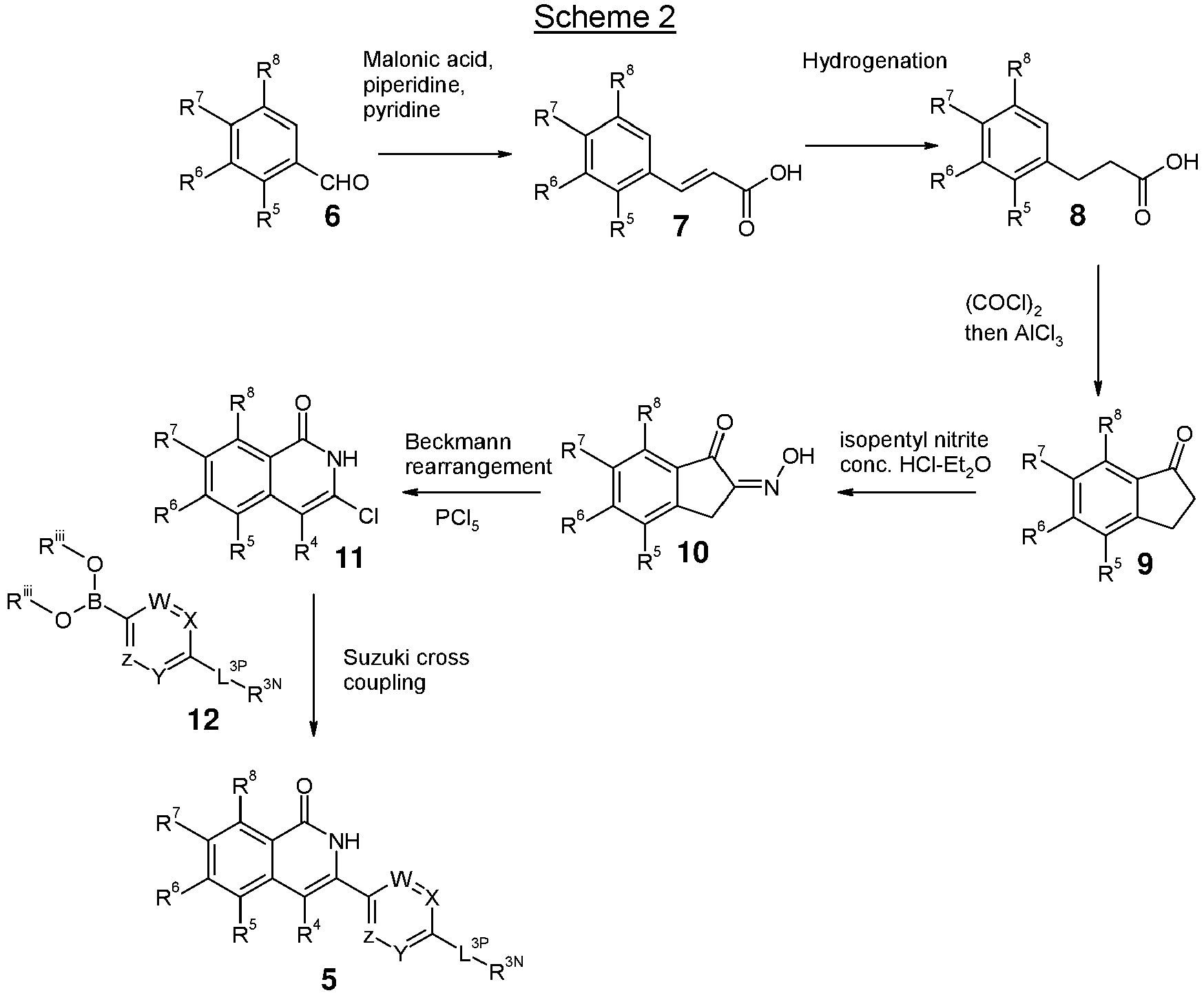
- The 2H-isoquinolin-1-one 5 can be synthesised by a palladium-mediated cross-coupling from the corresponding aryl halide 11 (e.g. chloride) and the corresponding boronic acid or ester (Suzuki cross-coupling).
-
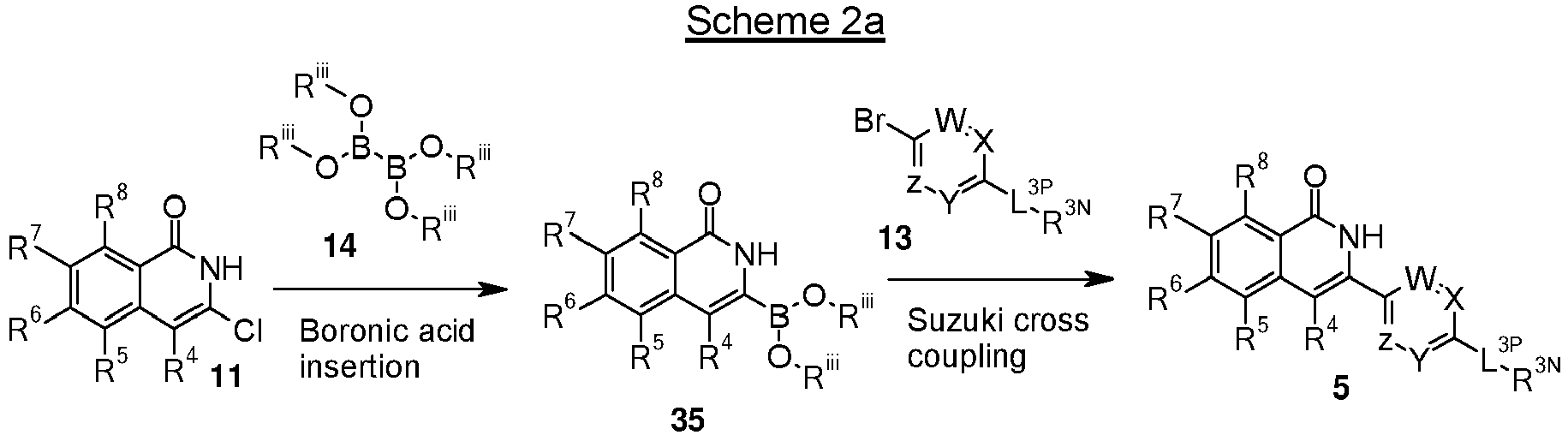
- In an alternative route, the 2H-isoquinolin-1-one 5 can be synthesised by a palladium-mediated cross-coupling from the corresponding aryl or heteroaryl halides 13 (e.g., bromide) and the corresponding boronic ester 35 (Suzuki cross-coupling). The boronic ester 35 can be accessed by a palladium-mediated cross-coupling from the corresponding 3-halo-2H-isoquinolin-1-one 11 (e.g., chloride) with a suitable diboron reagent (e.g. bis (pinacolato) diboron), and a suitable source of palladium (e.g., Pd(PPh3)4, PdCl2(PPh3)2) in an appropriate solvent (e.g., THF, DMF, DME, DCE, toluene, etc.).
- For the Suzuki cross-coupling, 3-halo-2H-isoquinolin-1-one (e.g chloride) 11 can be reacted with a suitable boronic acid or ester 12 in the presence of a suitable base (e.g., K2CO3, NaOt-Bu, K3PO4, etc.), a suitable source of palladium (e.g., Pd(PPh3)4, PdCl2(PPh3)2, etc.) and a ligand (e.g., P(t-Bu)3, BINAP, etc.) in an appropriate solvent (e.g., THF, DME, DCE, toluene, etc.).
- The 3-chloro-2H-isoquinolin-1-one 11 can be synthesised from indan-1,2-dione 2-oxime 10 (see, e.g., Merchant et al., 1984) via Beckmann rearrangement followed by treatment with PCl5.
- Indan-1,2-dione 2-oxime 10 can be accessed from commercial sources or prepared from commercially available indanones 9 by nitrosation or from aldehyde 6 via chain extension, cyclisation and nitrosation (see, e.g., Musso et al., 2003).
- The general synthetic methods for the synthesis of nitrile intermediates 4 and boronic acid or boronic ester intermediates 12 are illustrated below:
-

- The nitrile 4 can be accessed by a palladium-mediated cyanide insertion from the corresponding carboaryl or heteroaryl halide 13 (e.g., iodide, bromide, chloride) with a source of cyanide e.g., Zn(CN)2, Cu(CN)2, and a suitable source of palladium (e.g., Pd(PPh3)4, PdCl2(PPh3)2) in an appropriate solvent (e.g., THF, DMF, DME, DCE, toluene, etc.).
-

- The boronic acid or ester 12 can be accessed by a palladium-mediated cross-coupling from the corresponding aryl (heteroaryl) halide 13 (e.g., iodide, bromide, chloride) with bis (pinacolato) diboron, and a suitable source of palladium (e.g., Pd(PPh3)4, PdCl2(PPh3)2) in an appropriate solvent (e.g., THF, DMF, DME, DCE, toluene, etc.).
-

- The amine 17 can be accessed by bromide displacement from the corresponding halide 15 (e.g., iodide, bromide, chloride) and an appropriate amine 16 in an appropriate solvent (e.g., THF, DMF, CH2Cl2 etc.).
- This method is exemplified in Scheme 5 with benzyl or heteroarylmethyl bromides, but it is understood that the same approach can be extended to other examples of A-aryl-L3PR1-Br. The same method can be used for any amine 16 as defined in the claims, including aromatic heterocycles HNRC5RD5 (e.g., imidazole, pyrazole, etc.).
-
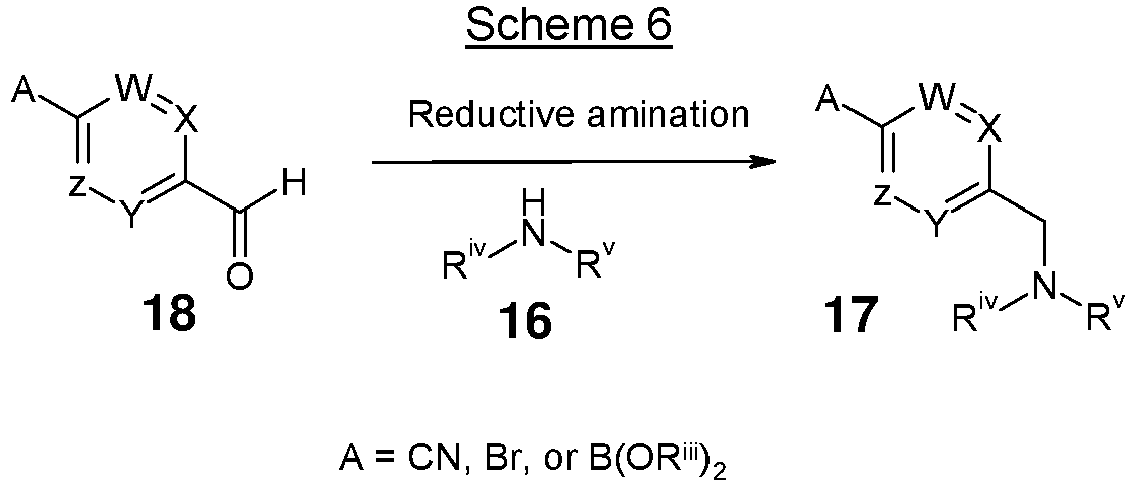
- The amine 17 can be accessed by standard reductive amination conditions from the corresponding aldehyde 18 and an appropriate amine 16 in an appropriate solvent (e.g., DCE etc.), with the use a standard reducing reagent (e.g., sodium triacetoxy borohydride, sodium borohydride, etc.).
-

- The amide 20 can be accessed by standard amine coupling conditions from the corresponding acid (or acid chloride) 19 and an appropiate amine 16 in an appropriate solvent (e.g., THF, DMF, CH2Cl2 etc.), with a suitable base (e.g., DIPEA, Et3N etc.) with the use a standard amine coupling reagent (e.g., HATU, TBTU, EDCI etc.).
- Alternatively, the amide 20 can be accessed by standard amine coupling conditions from the corresponding acid chloride 19 and an appropiate amine 16 in an appropriate solvent (e.g., THF, DMF, CH2Cl2 etc.), with a suitable base (e.g., DIPEA, Et3N etc.).
-

- The same method from Scheme 7 can be applied using a carboxylic acid (or acid chloride) 36, with an amine 16, to afford amide 37.
-

- The sulfonamide 22 can be prepared from the corresponding sulfonyl chloride 21 and an appropriate amine 16 in an appropriate solvent (e.g., THF, CH2Cl2 etc.), with a suitable base (e.g., DIPEA, Et3N etc.).
-

- Halo-heteroaryl 23 can be reacted with amine 16 to yield amino-heteroaryl 24 (see, e.g., Nettekoven et al., 2006) either by heating in acetonitrile (or other suitable solvent) or by irradiation using microwave heating in acetonitrile (or other suitable solvent).
- The general synthetic methods for the synthesis of 2H-isoquinolin-1-ones 5 are illustrated below:
-

- The 2H-isoquinolin-1-one 5 can be synthesised by palladium-mediated cross-coupling of an aryl halide 25 and a suitable trialkylaluminium reagent 26 (see, e.g., Molander et al., 2003) in the presence of a suitable source of palladium (e.g., Pd(PPh3)4, PdCl2(PPh3)2, etc.) and CeCl3 in an appropriate solvent (e.g., THF, DME, DCE, toluene, dioxane, etc.).
- The aryl halide 25 can alternatively be reacted with a suitable organo-zinc halide or diorgano-zinc compound 27 (see, e.g., Hughes et al., 2007) in the presence of a suitable source of palladium (e.g., Pd(PPh3)4, PdCl2(PPh3)2, etc.), a ligand (e.g., P(t-Bu)3, BINAP, etc.) in an appropriate solvent (e.g., THF, DME, DCE, toluene, dioxane, etc.).
-
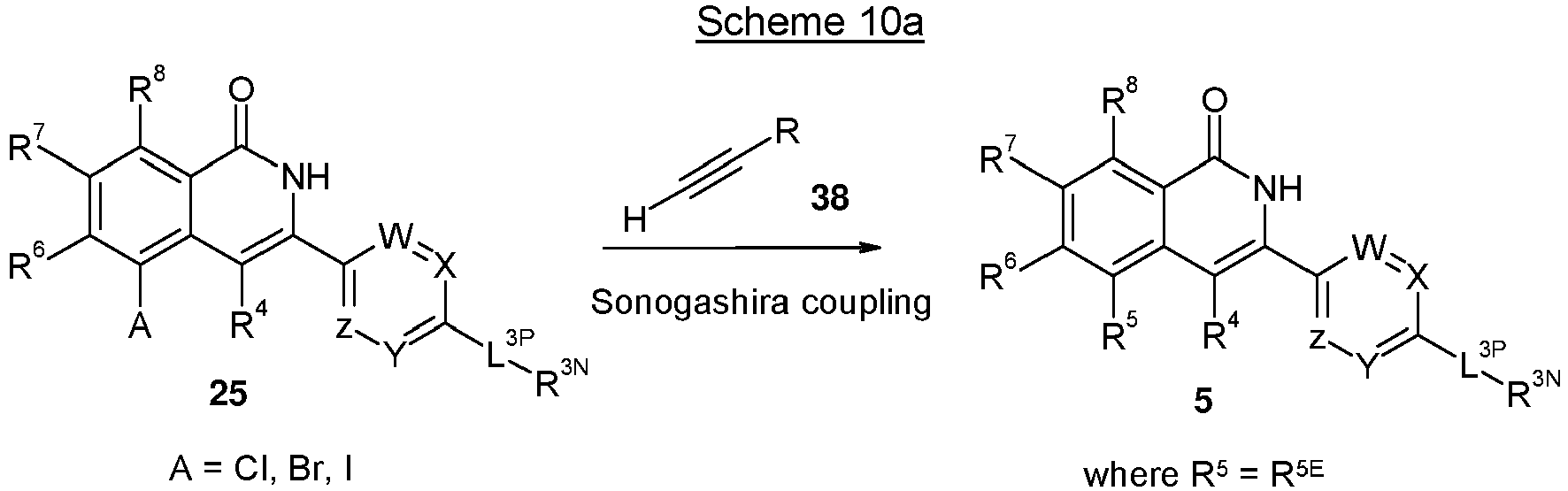
- The 2H-isoquinolin-1-one 5 can be synthesised by palladium/copper-mediated cross-coupling (Sonogashira coupling) of an aryl halide 25 and a suitable alkynyl reagent 38 in the presence of a base (e.g., DIPEA, triethylamine, pyrrolidine, piperidine, Cs2CO3, etc.), a suitable source of palladium (e.g., Pd(PPh3)4, PdCl2(PPh3)2, etc.) and a ligand (e.g., PPh3, P(t-Bu)3, etc.) in an appropriate solvent (e.g., THF, DMF, DME, DCE, toluene, dioxane, etc.).
-
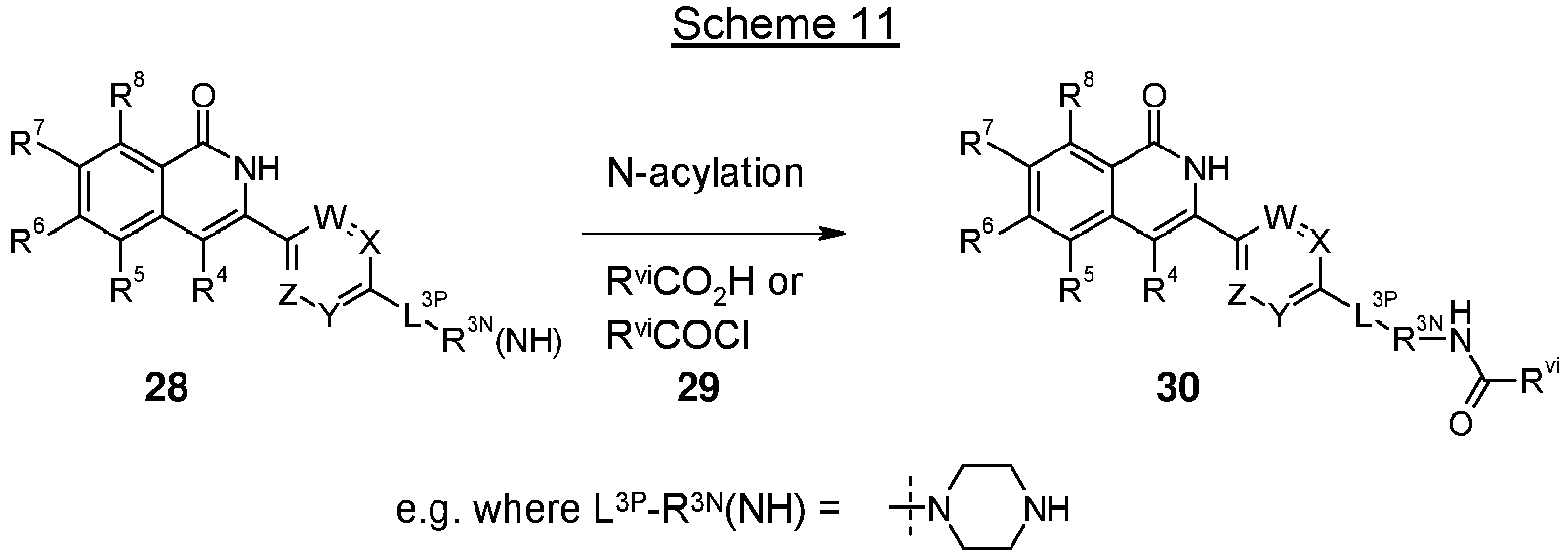
- The amide 30 can be accessed by standard amine coupling conditions from the corresponding amine 28 and an appropiate acid 29 in an appropriate solvent (e.g., THF, DMF, CH2Cl2 etc.), with a suitable base (e.g., DIPEA, Et3N etc.) with the use a standard amine coupling reagent (e.g., HATU, TBTU, EDCI etc.).
- Alternatively, the amide 30 can be accessed by standard amine coupling conditions from the corresponding amine 28 and an appropiate acid chloride 29 in an appropriate solvent (e.g., THF, DMF, CH2Cl2 etc.), with a suitable base (e.g., DIPEA, Et3N etc.).
-

- The urea 32 can be accessed by standard urea formation conditions from the corresponding amine 28 and an appropiate isocyanate 31 in an appropriate solvent (e.g, DMF, CH2Cl2 etc.).
-

- The amide 34 can be accessed by standard amine coupling conditions from the corresponding acid 33 and an appropiate amine 16 in an appropriate solvent (e.g., THF, DMF, CH2Cl2 etc.), with a suitable base (e.g., DIPEA, Et3N etc.) with the use a standard amine coupling reagent (e.g., HATU, TBTU, EDCI etc.).
-

- The same method from Scheme 13 can be applied using a carboxylic acid 39, with an amine 16, to afford amide 40.
- One aspect of the present invention pertains to a composition (e.g., a pharmaceutical composition) comprising an IQ compound, as described herein, and a pharmaceutically acceptable carrier, diluent, or excipient.
- Another aspect of the present invention pertains to a method of preparing a composition (e.g., a pharmaceutical composition) comprising mixing an IQ compound, as described herein, and a pharmaceutically acceptable carrier, diluent, or excipient.
- The IQ compounds, as described herein, are useful, for example, in the treatment of disorders (e.g., diseases) that are ameliorated by the inhibition of PARP (e.g., PARP1, TNKS1, TNKS2, etc.) and/or the inhibition of Wnt signalling, as described herein.
- One aspect of the present invention pertains to a method of inhibiting PARP (e.g., PARP1, TNKS1, TNKS2, etc.) in a cell, in vitro, comprising contacting the cell with an effective amount of an IQ compound, as described herein.
- One aspect of the present invention pertains to a method of inhibiting TNKS1 and/or TNKS2 in a cell, in vitro, comprising contacting the cell with an effective amount of an IQ compound, as described herein.
- One of ordinary skill in the art is readily able to determine whether or not a candidate compound inhibits PARP (e.g., PARP1, TNKS1, TNKS2, etc.). For example, suitable assays are described herein or are known in the art.
- In one embodiment, the method is performed in vitro.
- In one embodiment, the IQ compound is provided in the form of a pharmaceutically acceptable composition.
- Any type of cell may be treated, including but not limited to, adipose, lung, gastrointestinal (including, e.g., bowel, colon), breast (mammary), ovarian, prostate, liver (hepatic), kidney (renal), bladder, pancreas, brain, and skin.
- For example, a sample of cells may be grown in vitro and a compound brought into contact with said cells, and the effect of the compound on those cells observed. As an example of "effect," the morphological status of the cells (e.g., alive or dead, etc.) may be determined. Where the compound is found to exert an influence on the cells, this may be used as a prognostic or diagnostic marker of the efficacy of the compound in methods of treating a patient carrying cells of the same cellular type.
- One aspect of the present invention pertains to a method of inhibiting Wnt signalling in a cell, in vitro, comprising contacting the cell with an effective amount of an IQ compound, as described herein.
- One of ordinary skill in the art is readily able to determine whether or not a candidate compound inhibits Wnt signaling. For example, suitable assays are described herein or are known in the art.
- In one embodiment, the method is performed in vitro.
- In one embodiment, the IQ compound is provided in the form of a pharmaceutically acceptable composition.
- The IQ compounds described herein, e.g., (a) regulate (e.g., inhibit) cell proliferation; (b) inhibit cell cycle progression; (c) promote apoptosis; or (d) a combination of one or more of these.
- Also described herein is a method of regulating (e.g., inhibiting) cell proliferation (e.g., proliferation of a cell), inhibiting cell cycle progression, promoting apoptosis, or a combination of one or more these, in vitro or in vivo, comprising contacting a cell with an effective amount of an IQ compound, as described herein.
- In one embodiment, the method is a method of regulating (e.g., inhibiting) cell proliferation (e.g., proliferation of a cell), in vitro or in vivo, comprising contacting a cell with an effective amount of an IQ compound, as described herein.
- In one embodiment, the method is performed in vitro.
- In one embodiment, the method is performed in vivo.
- In one embodiment, the IQ compound is provided in the form of a pharmaceutically acceptable composition.
- Any type of cell may be treated, including but not limited to, lung, gastrointestinal (including, e.g., bowel, colon), breast (mammary), ovarian, prostate, liver (hepatic), kidney (renal), bladder, pancreas, brain, and skin.
- One of ordinary skill in the art is readily able to determine whether or not a candidate compound regulates (e.g., inhibits) cell proliferation, etc. For example, assays which may conveniently be used to assess the activity offered by a particular compound are described herein.
- For example, a sample of cells (e.g., from a tumour) may be grown in vitro and a compound brought into contact with said cells, and the effect of the compound on those cells observed. As an example of "effect," the morphological status of the cells (e.g., alive or dead, etc.) may be determined. Where the compound is found to exert an influence on the cells, this may be used as a prognostic or diagnostic marker of the efficacy of the compound in methods of treating a patient carrying cells of the same cellular type.
- Another aspect of the present invention pertains to an IQ compound, as described herein, for use in a method of treatment of the human or animal body by therapy.
- Also described herein is use of an IQ compound, as described herein, in the manufacture of a medicament for use in treatment.
- In one embodiment, the medicament comprises the IQ compound.
- Also described herein is a method of treatment comprising administering to a patient in need of treatment a therapeutically effective amount of an IQ compound, as described herein, preferably in the form of a pharmaceutical composition.
- In one embodiment (e.g., of use in methods of therapy, of use in the manufacture of medicaments, of methods of treatment), the treatment is treatment of a disorder (e.g., a disease) that is ameliorated by the inhibition of PARP.
- In one embodiment (e.g., of use in methods of therapy, of use in the manufacture of medicaments, of methods of treatment), the treatment is treatment of a disorder (e.g., a disease) that is ameliorated by the inhibition of TNKS1 and/or TNKS2.
- In one embodiment (e.g., of use in methods of therapy, of use in the manufacture of medicaments, of methods of treatment), the treatment is treatment of: a proliferative condition.
- The term "proliferative condition," as used herein, pertains to an unwanted or uncontrolled cellular proliferation of excessive or abnormal cells which is undesired, such as neoplastic or hyperplastic growth.
- In one embodiment, the treatment is treatment of: a proliferative condition characterised by benign, pre-malignant, or malignant cellular proliferation, including for example: neoplasms, hyperplasias, and tumours (e.g., histocytoma, glioma, astrocyoma, osteoma), cancers (see below), psoriasis, bone diseases, fibroproliferative disorders (e.g., of connective tissues), pulmonary fibrosis, atherosclerosis, smooth muscle cell proliferation in the blood vessels, such as stenosis or restenosis following angioplasty.
- In one embodiment (e.g., of use in methods of therapy, of use in the manufacture of medicaments, of methods of treatment), the treatment is treatment of cancer.
- In one embodiment, the treatment is treatment of cancer characterised by, or further characterised by, cancer cells which overexpress PARP.
- In one embodiment, the treatment is treatment of cancer characterised by, or further characterised by, cancer cells which overexpress TNKS1 and/or TNKS2.
- In one embodiment, the treatment is treatment of lung cancer, small cell lung cancer, non-small cell lung cancer, gastrointestinal cancer, stomach cancer, bowel cancer, colon cancer, rectal cancer, colorectal cancer, thyroid cancer, breast cancer, ovarian cancer, endometrial cancer, prostate cancer, testicular cancer, liver cancer, kidney cancer, renal cell carcinoma, bladder cancer, pancreatic cancer, brain cancer, glioma, sarcoma, osteosarcoma, bone cancer, nasopharyngeal cancer (e.g., head cancer, neck cancer), skin cancer, squamous cancer, Kaposi's sarcoma, melanoma, malignant melanoma, lymphoma, or leukemia.
- In one embodiment, the treatment is treatment of:
- a carcinoma, for example a carcinoma of the bladder, breast, colon (e.g., colorectal carcinomas such as colon adenocarcinoma and colon adenoma), kidney, epidermal, liver, lung (e.g., adenocarcinoma, small cell lung cancer and non-small cell lung carcinomas), oesophagus, gall bladder, ovary, pancreas (e.g., exocrine pancreatic carcinoma), stomach, cervix, thyroid, prostate, skin (e.g., squamous cell carcinoma);
- a hematopoietic tumour of lymphoid lineage, for example leukemia, acute lymphocytic leukemia, B-cell lymphoma, T-cell lymphoma, Hodgkin's lymphoma, non-Hodgkin's lymphoma, hairy cell lymphoma, or Burkett's lymphoma;
- a hematopoietic tumour of myeloid lineage, for example acute and chronic myelogenous leukemias, myelodysplastic syndrome, or promyelocytic leukemia;
- a tumour of mesenchymal origin, for example fibrosarcoma or habdomyosarcoma;
- a tumour of the central or peripheral nervous system, for example astrocytoma, neuroblastoma, glioma or schwannoma;
- melanoma; seminoma; teratocarcinoma; osteosarcoma; xenoderoma pigmentoum; keratoctanthoma; thyroid follicular cancer; or Kaposi's sarcoma.
- In one embodiment, the treatment is treatment of solid tumour cancer.
- In one embodiment, the treatment is treatment of cancer head and neck cancer; nervous system cancer; lung/mediastinum cancer; breast cancer; oesophagus cancer; stomach cancer; liver cancer; biliary tract cancer; pancreatic cancer; small bowel cancer; large bowel cancer; gynaecological cancer; genito-urinary cancer; thyroid gland cancer; adrenal gland cancer; skin cancer; bone sarcoma; soft tissue sarcoma; paediatric malignancy; Hodgkin's disease; non-Hodgkin's lymphoma; myeloma; leukaemia; or metastasis from an unknown primary site.
- In one embodiment, the treatment is treatment of cancer metastasis.
- In one embodiment, the cancer is characterised by, or further characterised by, cancer stem cells.
- The anti-cancer effect may arise through one or more mechanisms, including but not limited to, the regulation of cell proliferation, the inhibition of cell cycle progression, the inhibition of angiogenesis (the formation of new blood vessels), the inhibition of metastasis (the spread of a tumour from its origin), the inhibition of cell migration (the spread of cancer cells to other parts of the body), the inhibition of invasion (the spread of tumour cells into neighbouring normal structures), or the promotion of apoptosis (programmed cell death). The compounds of the present invention may be used in the treatment of the cancers described herein, independent of the mechanisms discussed herein.
- In one embodiment, the treatment is treatment of: a neurodegenerative disorder, such as multiple sclerosis (MS); a neurological disorder associated with demyelination; neonatal hypoxic ischemic encephalopathy (HIE); neonatal periventricular leukomalacia (PVL); a cardiac related pathology, such as myocardial infarction; cardiac damage (e.g., to repair cardiac damage); an infectious disease, such as a pathology related to Herpes Simplex Virus (HSV); a pathology related to Epstein-Barr Virus (EBV); a metabolic disease, such as a metabolic disease where glucose uptake is dysfunctional, such as diabetes, such as type 2 diabetes; or fibrosis (e.g., lung fibrosis).
- In one embodiment, the treatment is treatment of: a neurodegenerative disorder, such as multiple sclerosis (MS); neonatal hypoxic ischemic encephalopathy (HIE); neonatal periventricular leukomalacia (PVL); a cardiac related pathology, such as myocardial infarction; a pathology related to Herpes Simplex Virus (HSV); a pathology related to Epstein-Barr Virus (EBV); or a metabolic disease such as type 2 diabetes.
- In one embodiment, the treatment is treatment of: Alzheimer's disease; late onset Alzheimer's disease; Dupuytren skin disease; tooth agenesis; vascular defects in the eye; Osteoperosis-pseudoglioma Syndrome (OPPG); exudative vitreoretinopathy; familial exudative vitreoretinopathy; retinal angiogenesis; schizophrenia; osteoporosis; dermal hypoplasia; XX sex reversal; Mullerian-duct regression and virilization; SERKAL syndrome; anonychia; hyponychia; sclerosteosis; van Buchem disease; Fuhrmann syndrome; odonto-onchyo-dermal hypoplasia; Type 2 diabetes; obesity; early onset obesity; a nephropathy, such as HIV-associated nephropathy; early coronary disease; bone density defects; tetra-amelia syndrome; split-hand/foot malformation; caudal duplication; Fuhrmann syndrome; odonto-onycho-dermal dysplasia; skeletal dysplasia; focal dermal hypoplasia; autosomal recessive anonychia; or neural tube defects.
- In one embodiment, the treatment is treatment of: Alzheimer's disease; Dupuytren skin disease; tooth agenesis; exudative vitreoretinopathy; schizophrenia; osteoporosis; dermal hypoplasia; XX sex reversal; anonychia; hyponychia; sclerosteosis; van Buchem disease; Fuhrmann syndrome; odonto-onchyo-dermal hypoplasia; early onset obesity; or a nephropathy, such as HIV-associated nephropathy.
- The term "treatment," as used herein in the context of treating a disorder, pertains generally to treatment of a human or an animal (e.g., in veterinary applications), in which some desired therapeutic effect is achieved, for example, the inhibition of the progress of the disorder, and includes a reduction in the rate of progress, a halt in the rate of progress, alleviation of symptoms of the disorder, amelioration of the disorder, and cure of the disorder. Treatment as a prophylactic measure (i.e., prophylaxis) is also included. For example, use with patients who have not yet developed the disorder, but who are at risk of developing the disorder, is encompassed by the term "treatment."
- For example, treatment includes the prophylaxis of cancer, reducing the incidence of cancer, alleviating the symptoms of cancer, etc.
- The term "therapeutically-effective amount," as used herein, pertains to that amount of a compound, or a material, composition or dosage form comprising a compound, which is effective for producing some desired therapeutic effect, commensurate with a reasonable benefit/risk ratio, when administered in accordance with a desired treatment regimen.
- The term "treatment" includes combination treatments and therapies, in which two or more treatments or therapies are combined, for example, sequentially or simultaneously. For example, the compounds described herein may also be used in combination therapies, e.g., in conjunction with other agents. Examples of treatments and therapies include, but are not limited to, chemotherapy (the administration of active agents, including, e.g., drugs, antibodies (e.g., as in immunotherapy), prodrugs (e.g., as in photodynamic therapy, GDEPT, ADEPT, etc.); surgery; radiation therapy; photodynamic therapy; gene therapy; and controlled diets.
- Also described herein is a compound as described herein, in combination with one or more (e.g., 1, 2, 3, 4, etc.) additional therapeutic agents, as described below.
- The particular combination would be at the discretion of the physician who would select dosages using his common general knowledge and dosing regimens known to a skilled practitioner.
- The agents (i.e., the compound described herein, plus one or more other agents) may be administered simultaneously or sequentially, and may be administered in individually varying dose schedules and via different routes. For example, when administered sequentially, the agents can be administered at closely spaced intervals (e.g., over a period of 5-10 minutes) or at longer intervals (e.g., 1, 2, 3, 4 or more hours apart, or even longer periods apart where required), the precise dosage regimen being commensurate with the properties of the therapeutic agent(s).
- The agents (i.e., the compound described here, plus one or more other agents) may be formulated together in a single dosage form, or alternatively, the individual agents may be formulated separately and presented together in the form of a kit, optionally with instructions for their use.
- Examples of additional agents/therapies that may be co-administered/combined with treatment with the IQ compounds described herein include the following: antimetabolites; alkylating agents; spindle poisons; topoisomerase inhibitors; DNA binding agents; kinase inhibitors; therapeutic antibodies; PARP inhibitors; NAD metabolism inhibitors; metabolic inhibitors; targeted agents; endocrine agents; etc.
- The IQ compounds described herein may also be used as cell culture additives to inhibit PARP (e.g., PARP1, TNKS1, TNKS2, etc.), to inhibit Wnt signalling, etc.
- The IQ compounds described herein may also be used as part of an in vitro assay, for example, in order to determine whether a candidate host is likely to benefit from treatment with the compound in question.
- The IQ compounds described herein may also be used as a standard, for example, in an assay, in order to identify other active compounds, other PARP (e.g., PARP1, TNKS1, TNKS2, etc.) inhibitors, other Wnt signalling inhibitors, etc.
- Also described herein is a kit comprising (a) an IQ compound as described herein, or a composition comprising an IQ compound as described herein, e.g., preferably provided in a suitable container and/or with suitable packaging; and (b) instructions for use, e.g., written instructions on how to administer the compound or composition.
- The written instructions may also include a list of indications for which the active ingredient is a suitable treatment.
- The IQ compound or pharmaceutical composition comprising the IQ compound may be administered to a subject by any convenient route of administration, whether systemically/peripherally or topically (i.e., at the site of desired action).
- Routes of administration include, but are not limited to, oral (e.g., by ingestion); buccal; sublingual; transdermal (including, e.g., by a patch, plaster, etc.); transmucosal (including, e.g., by a patch, plaster, etc.); intranasal (e.g., by nasal spray); ocular (e.g., by eyedrops); pulmonary (e.g., by inhalation or insufflation therapy using, e.g., via an aerosol, e.g., through the mouth or nose); rectal (e.g., by suppository or enema); vaginal (e.g., by pessary); parenteral, for example, by injection, including subcutaneous, intradermal, intramuscular, intravenous, intraarterial, intracardiac, intrathecal, intraspinal, intracapsular, subcapsular, intraorbital, intraperitoneal, intratracheal, subcuticular, intraarticular, subarachnoid, and intrasternal; by implant of a depot or reservoir, for example, subcutaneously or intramuscularly.
- The subject/patient may be a chordate, a vertebrate, a mammal, a placental mammal, a marsupial (e.g., kangaroo, wombat), a rodent (e.g., a guinea pig, a hamster, a rat, a mouse), murine (e.g., a mouse), a lagomorph (e.g., a rabbit), avian (e.g., a bird), canine (e.g., a dog), feline (e.g., a cat), equine (e.g., a horse), porcine (e.g., a pig), ovine (e.g., a sheep), bovine (e.g., a cow), a primate, simian (e.g., a monkey or ape), a monkey (e.g., marmoset, baboon), an ape (e.g., gorilla, chimpanzee, orangutang, gibbon), or a human.
- Furthermore, the subject/patient may be any of its forms of development, for example, a foetus.
- In one preferred embodiment, the subject/patient is a human.
- While it is possible for an IQ compound to be administered alone, it is preferable to present it as a pharmaceutical formulation (e.g., composition, preparation, medicament) comprising at least one IQ compound, as described herein, together with one or more other pharmaceutically acceptable ingredients well known to those skilled in the art, including, but not limited to, pharmaceutically acceptable carriers, diluents, excipients, adjuvants, fillers, buffers, preservatives, anti-oxidants, lubricants, stabilisers, solubilisers, surfactants (e.g., wetting agents), masking agents, colouring agents, flavouring agents, and sweetening agents. The formulation may further comprise other active agents, for example, other therapeutic or prophylactic agents.
- Thus, the present invention further provides pharmaceutical compositions, as defined above, and methods of making a pharmaceutical composition comprising mixing at least one IQ compound, as described herein, together with one or more other pharmaceutically acceptable ingredients well known to those skilled in the art, e.g., carriers, diluents, excipients, etc. If formulated as discrete units (e.g., tablets, etc.), each unit contains a predetermined amount (dosage) of the compound.
- The term "pharmaceutically acceptable," as used herein, pertains to compounds, ingredients, materials, compositions, dosage forms, etc., which are, within the scope of sound medical judgment, suitable for use in contact with the tissues of the subject in question (e.g., human) without excessive toxicity, irritation, allergic response, or other problem or complication, commensurate with a reasonable benefit/risk ratio. Each carrier, diluent, excipient, etc. must also be "acceptable" in the sense of being compatible with the other ingredients of the formulation.
- Suitable carriers, diluents, excipients, etc. can be found in standard pharmaceutical texts, for example, Remington's Pharmaceutical Sciences, 18th edition, Mack Publishing Company, Easton, Pa., 1990; and Handbook of Pharmaceutical Excipients, 5th edition, 2005.
- The formulations may be prepared by any methods well known in the art of pharmacy. Such methods include the step of bringing into association the compound with a carrier which constitutes one or more accessory ingredients. In general, the formulations are prepared by uniformly and intimately bringing into association the compound with carriers (e.g., liquid carriers, finely divided solid carrier, etc.), and then shaping the product, if necessary.
- The formulation may be prepared to provide for rapid or slow release; immediate, delayed, timed, or sustained release; or a combination thereof.
- Formulations may suitably be in the form of liquids, solutions (e.g., aqueous, non-aqueous), suspensions (e.g., aqueous, non-aqueous), emulsions (e.g., oil-in-water, water-in-oil), elixirs, syrups, electuaries, mouthwashes, drops, tablets (including, e.g., coated tablets), granules, powders, losenges, pastilles, capsules (including, e.g., hard and soft gelatin capsules), cachets, pills, ampoules, boluses, suppositories, pessaries, tinctures, gels, pastes, ointments, creams, lotions, oils, foams, sprays, mists, or aerosols.
- Formulations may suitably be provided as a patch, adhesive plaster, bandage, dressing, or the like which is impregnated with one or more compounds and optionally one or more other pharmaceutically acceptable ingredients, including, for example, penetration, permeation, and absorption enhancers. Formulations may also suitably be provided in the form of a depot or reservoir.
- The compound may be dissolved in, suspended in, or mixed with one or more other pharmaceutically acceptable ingredients. The compound may be presented in a liposome or other microparticulate which is designed to target the compound, for example, to blood components or one or more organs.
- Formulations suitable for oral administration (e.g., by ingestion) include liquids, solutions (e.g., aqueous, non-aqueous), suspensions (e.g., aqueous, non-aqueous), emulsions (e.g., oil-in-water, water-in-oil), elixirs, syrups, electuaries, tablets, granules, powders, capsules, cachets, pills, ampoules, boluses.
- Formulations suitable for buccal administration include mouthwashes, losenges, pastilles, as well as patches, adhesive plasters, depots, and reservoirs. Losenges typically comprise the compound in a flavored basis, usually sucrose and acacia or tragacanth. Pastilles typically comprise the compound in an inert matrix, such as gelatin and glycerin, or sucrose and acacia. Mouthwashes typically comprise the compound in a suitable liquid carrier.
- Formulations suitable for sublingual administration include tablets, losenges, pastilles, capsules, and pills.
- Formulations suitable for oral transmucosal administration include liquids, solutions (e.g., aqueous, non-aqueous), suspensions (e.g., aqueous, non-aqueous), emulsions (e.g., oil-in-water, water-in-oil), mouthwashes, losenges, pastilles, as well as patches, adhesive plasters, depots, and reservoirs.
- Formulations suitable for non-oral transmucosal administration include liquids, solutions (e.g., aqueous, non-aqueous), suspensions (e.g., aqueous, non-aqueous), emulsions (e.g., oil-in-water, water-in-oil), suppositories, pessaries, gels, pastes, ointments, creams, lotions, oils, as well as patches, adhesive plasters, depots, and reservoirs.
- Formulations suitable for transdermal administration include gels, pastes, ointments, creams, lotions, and oils, as well as patches, adhesive plasters, bandages, dressings, depots, and reservoirs.
- Tablets may be made by conventional means, e.g., compression or moulding, optionally with one or more accessory ingredients. Compressed tablets may be prepared by compressing in a suitable machine the compound in a free-flowing form such as a powder or granules, optionally mixed with one or more binders (e.g., povidone, gelatin, acacia, sorbitol, tragacanth, hydroxypropylmethyl cellulose); fillers or diluents (e.g., lactose, microcrystalline cellulose, calcium hydrogen phosphate); lubricants (e.g., magnesium stearate, talc, silica); disintegrants (e.g., sodium starch glycolate, cross-linked povidone, cross-linked sodium carboxymethyl cellulose); surface-active or dispersing or wetting agents (e.g., sodium lauryl sulfate); preservatives (e.g., methyl p-hydroxybenzoate, propyl p-hydroxybenzoate, sorbic acid); flavours, flavour enhancing agents, and sweeteners. Moulded tablets may be made by moulding in a suitable machine a mixture of the powdered compound moistened with an inert liquid diluent. The tablets may optionally be coated or scored and may be formulated so as to provide slow or controlled release of the compound therein using, for example, hydroxypropylmethyl cellulose in varying proportions to provide the desired release profile. Tablets may optionally be provided with a coating, for example, to affect release, for example an enteric coating, to provide release in parts of the gut other than the stomach.
- Ointments are typically prepared from the compound and a paraffinic or a water-miscible ointment base.
- Creams are typically prepared from the compound and an oil-in-water cream base. If desired, the aqueous phase of the cream base may include, for example, at least about 30% w/w of a polyhydric alcohol, i.e., an alcohol having two or more hydroxyl groups such as propylene glycol, butane-1,3-diol, mannitol, sorbitol, glycerol and polyethylene glycol and mixtures thereof. The topical formulations may desirably include a compound which enhances absorption or penetration of the compound through the skin or other affected areas. Examples of such dermal penetration enhancers include dimethylsulfoxide and related analogues.
- Emulsions are typically prepared from the compound and an oily phase, which may optionally comprise merely an emulsifier (otherwise known as an emulgent), or it may comprise a mixture of at least one emulsifier with a fat or an oil or with both a fat and an oil. Preferably, a hydrophilic emulsifier is included together with a lipophilic emulsifier which acts as a stabiliser. It is also preferred to include both an oil and a fat. Together, the emulsifier(s) with or without stabiliser(s) make up the so-called emulsifying wax, and the wax together with the oil and/or fat make up the so-called emulsifying ointment base which forms the oily dispersed phase of the cream formulations.
- Suitable emulgents and emulsion stabilisers include Tween 60, Span 80, cetostearyl alcohol, myristyl alcohol, glyceryl monostearate and sodium lauryl sulfate. The choice of suitable oils or fats for the formulation is based on achieving the desired cosmetic properties, since the solubility of the compound in most oils likely to be used in pharmaceutical emulsion formulations may be very low. Thus the cream should preferably be a non-greasy, non-staining and washable product with suitable consistency to avoid leakage from tubes or other containers. Straight or branched chain, mono- or dibasic alkyl esters such as di-isoadipate, isocetyl stearate, propylene glycol diester of coconut fatty acids, isopropyl myristate, decyl oleate, isopropyl palmitate, butyl stearate, 2-ethylhexyl palmitate or a blend of branched chain esters known as Crodamol CAP may be used, the last three being preferred esters. These may be used alone or in combination depending on the properties required. Alternatively, high melting point lipids such as white soft paraffin and/or liquid paraffin or other mineral oils can be used.
- Formulations suitable for intranasal administration, where the carrier is a liquid, include, for example, nasal spray, nasal drops, or by aerosol administration by nebuliser, include aqueous or oily solutions of the compound.
- Formulations suitable for intranasal administration, where the carrier is a solid, include, for example, those presented as a coarse powder having a particle size, for example, in the range of about 20 to about 500 microns which is administered in the manner in which snuff is taken, i.e., by rapid inhalation through the nasal passage from a container of the powder held close up to the nose.
- Formulations suitable for pulmonary administration (e.g., by inhalation or insufflation therapy) include those presented as an aerosol spray from a pressurised pack, with the use of a suitable propellant, such as dichlorodifluoromethane, trichlorofluoromethane, dichoro-tetrafluoroethane, carbon dioxide, or other suitable gases.
- Formulations suitable for ocular administration include eye drops wherein the compound is dissolved or suspended in a suitable carrier, especially an aqueous solvent for the compound.
- Formulations suitable for rectal administration may be presented as a suppository with a suitable base comprising, for example, natural or hardened oils, waxes, fats, semi-liquid or liquid polyols, for example, cocoa butter or a salicylate; or as a solution or suspension for treatment by enema.
- Formulations suitable for vaginal administration may be presented as pessaries, tampons, creams, gels, pastes, foams or spray formulations containing in addition to the compound, such carriers as are known in the art to be appropriate.
- Formulations suitable for parenteral administration (e.g., by injection), include aqueous or non-aqueous, isotonic, pyrogen-free, sterile liquids (e.g., solutions, suspensions), in which the compound is dissolved, suspended, or otherwise provided (e.g., in a liposome or other microparticulate). Such liquids may additionally contain other pharmaceutically acceptable ingredients, such as anti-oxidants, buffers, preservatives, stabilisers, bacteriostats, suspending agents, thickening agents, and solutes which render the formulation isotonic with the blood (or other relevant bodily fluid) of the intended recipient. Examples of excipients include, for example, water, alcohols, polyols, glycerol, vegetable oils, and the like. Examples of suitable isotonic carriers for use in such formulations include Sodium Chloride Injection, Ringer's Solution, or Lactated Ringer's Injection. Typically, the concentration of the compound in the liquid is from about 1 ng/mL to about 10 µg/mL, for example from about 10 ng/mL to about 1 µg/mL The formulations may be presented in unit-dose or multi-dose sealed containers, for example, ampoules and vials, and may be stored in a freeze-dried (lyophilised) condition requiring only the addition of the sterile liquid carrier, for example water for injections, immediately prior to use. Extemporaneous injection solutions and suspensions may be prepared from sterile powders, granules, and tablets.
- It will be appreciated by one of skill in the art that appropriate dosages of the IQ compounds, and compositions comprising the IQ compounds, can vary from patient to patient. Determining the optimal dosage will generally involve the balancing of the level of therapeutic benefit against any risk or deleterious side effects. The selected dosage level will depend on a variety of factors including, but not limited to, the activity of the particular IQ compound, the route of administration, the time of administration, the rate of excretion of the IQ compound, the duration of the treatment, other drugs, compounds, and/or materials used in combination, the severity of the disorder, and the species, sex, age, weight, condition, general health, and prior medical history of the patient. The amount of IQ compound and route of administration will ultimately be at the discretion of the physician, veterinarian, or clinician, although generally the dosage will be selected to achieve local concentrations at the site of action which achieve the desired effect without causing substantial harmful or deleterious side-effects.
- Administration can be effected in one dose, continuously or intermittently (e.g., in divided doses at appropriate intervals) throughout the course of treatment. Methods of determining the most effective means and dosage of administration are well known to those of skill in the art and will vary with the formulation used for therapy, the purpose of the therapy, the target cell(s) being treated, and the subject being treated. Single or multiple administrations can be carried out with the dose level and pattern being selected by the treating physician, veterinarian, or clinician.
- In general, a suitable dose of the IQ compound is in the range of about 10 µg to about 250 mg (more typically about 100 µg to about 25 mg) per kilogram body weight of the subject per day. Where the compound is a salt, an ester, an amide, a prodrug, or the like, the amount administered is calculated on the basis of the parent compound and so the actual weight to be used is increased proportionately.
- The following examples are provided solely to illustrate the present invention and are not intended to limit the scope of the invention, as described herein.
- Reverse Phase Preparative HPLC-MS: Mass-directed purification by preparative LC-MS using a preparative C-18 column (Phenomenex Luna C18 (2), 100 x 21.2 mm, 5 µm).
- Analysis of products and intermediates has been carried out using reverse phase analytical HPLC-MS using the parameters set out below.
-
- AnalpH2_MeOH_4min: Phenomenex Luna C18 (2) 3 µm, 50 x 4.6 mm; A = water + 0.1% formic acid; B = MeOH; 45 °C; %B: 0 min 5%, 1 min 37.5%, 3 min 95%, 3.51 min 5%, 4.5 min 5%; 2.25 mL/min.
- AnalpH2_MeOH_4min(1): Phenomenex Luna C18 (2) 3 µm, 50 x 4.6 mm; A = water + 0.1 % formic acid; B = MeOH + 0.1 % formic acid; 45 °C; %B: 0 min 5%, 1 min 37.5%, 3 min 95%, 3.51 min 5%, 4.5 min 5%; 2.25 mL/min.
- AnalpH2_MeOH_4min(2): Phenomenex Luna C18 (2) 3 µm, 50 x 4.6 mm; A = water + 0.1 % formic acid; B = MeOH + 0.1 % formic acid; 40 °C; %B: 0 min 5%, 1 min 37.5%, 3 min 95%, 3.51 min 5%, 4.5 min 5%; 2.25 mL/min.
- AnalpH2_MeOH_4min(3): Phenomenex Luna C18 (2) 3 µm, 50 x 4.6 mm; A = water + 0.1 % formic acid; B = MeOH + 0.1 % formic acid; 45 °C; %B: 0 min 5%, 1 min 37.5%, 3 min 95%, 3.51 min 5%, 4.0 min 5%; 2.25 mL/min.
- AnalpH9_MeOH_4min: Phenomenex Luna C18 (2) 3 µm, 50 x 4.6 mm; A = water pH9 (Ammonium Bicarbonate 10 mM); B = MeOH; 45 °C; %B: 0 min 5%, 1 min 37.5%, 3 min 95%, 3.51 min 5%, 4.5 min 5%; 2.25 mL/min.
- AnalpH9_MeOH_4min(1): Phenomenex Luna C18 (2) 3 µm, 50 x 4.6 mm; A = water pH9 (Ammonium Bicarbonate 10 mM); B = MeOH + 0.1% formic acid; 45 °C; %B: 0 min 5%, 1 min 37.5%, 3 min 95%, 3.51 min 5%, 4.5 min 5%; 2.25 mL/min. AnalpH9_MeOH_4min(2): Phenomenex Luna C18 (2) 3 µm, 50 x 4.6 mm; A = water pH9 (Ammonium Bicarbonate 10 mM); B = MeOH; 45 °C; %B: 0 min 5%, 1 min 37.5%, 3 min 95%, 3.51 min 5%, 4.0 min 5%; 2.25 mL/min.
- AnalpH2_MeCN_TFA_4min: Acquity UPLC BEH C18 1.7 µm, 50 x 2.1 mm; A = water + 0.025% TFA; B = Acetonitrile + 0.025% TFA; %B: 0 min 15%, 3 min 95%, 4 min 95%, 4.1 min 15%; 0.4 mL/min.
- AnalpH2_MeCN_TFA_4min(1): Acquity UPLC BEH C18 1.7 µm, 50 x 2.1 mm; A = water + 0.025% TFA; B = Acetonitrile + 0.025% TFA; %B: 0 min 50%, 4 min 80%, 6 min 80%, 6.1 min 50%; 0.3 mL/min.
- AnalpH2_MeCN_FA_7min(XTERRA1.m): Xterra C18 2.5 µm, 50 x 4.6 mm; A = water + 0.1 % FA; B = Acetonitrile + 0.1% FA; %B: 0 min 20%, 4 min 90%, 7 min 90%, 7.1 min 20%; 1.0 mL/min.
- AnalpH9_MeCN_AB_10min(Develosil): Develosil C18 2.7 µm, 150 x 4.6 mm; A = water + 0.01 M Ammonium bicarbonate; B = Acetonitrile; %B: 0 min 50%, 4 min 90%, 10 min 90%, 10.1 min 50%; 1.0 mL/min.
- AnalpH2_MeOH_QC: Phenomenex Luna C18 (2) 3 µm, 150 x 4.6 mm; A = water + 0.1% formic acid; B = MeOH; 35 °C; %B: 0 min 5%, 7.5 min 95%, 10 min 95%, 10.10 min 5%,13.0 min 5%; 1.5 mL/min.
- AnalpH2_MeOH_QC(1): Phenomenex Luna C18 (2) 3 µm, 150 x 4.6 mm; A = water + 0.1% formic acid; B = MeOH + 0.1% formic acid; 40 °C; %B: 0 min 5%, 7.5 min 95%, 10 min 95%, 10.10 min 5%, 13.0 min 5%; 1.5 mL/min.
- AnalpH2_MeOH_QC(2): Phenomenex Gemini C18 5 µm, 150 x 4.6 mm; A = water + 0.1% formic acid; B = MeOH + 0.1% formic acid; 40 °C; %B: 0 min 5%, 7.5 min 95%, 10 min 95%, 10.10 min 5%, 13.0 min 5%; 1.5 mL/min.
- AnalpH2_MeOH_QC(3): Phenomenex Gemini C18 5 µm, 250 x 4.6 mm; A = water + 0.1% formic acid; B = MeOH + 0.1% formic acid; 40 °C; %B: 0 min 5%, 16 min 95%, 18 min 95%, 18.10 min 5%, 24.0 min 5%; 1.5 mL/min.
- AnalpH9_MeOH_QC: Phenomenex Luna C18 (2)) 3 µm, 50 x 4.6 mm; A = water + pH9 (Ammonium Bicarbonate 10 mM); B = MeOH; 35 °C; %B: 0 min 5%, 7.5 min 95%, 10 min 95%, 10.10 min 5%, 13.0 min 5%; 1.5 mL/min.
- AnalpH9_MeOH_QC(1): Phenomenex Luna C18 (2) 3 µm, 50 x 4.6 mm; A = water + pH9 (Ammonium Bicarbonate 10 mM); B = MeOH + 0.1% formic acid; 35 °C; %B: 0 min 5%, 7.5 min 95%, 10 min 95%, 10.10 min 5%, 13.0 min 5%; 1.5 mL/min.
- AnalpH2_MeOH_QC(Sunfire): Waters Sunfire C18 (2) 5 µm, 100 x 4.6 mm; A = water + 0.1% formic acid; B = MeOH; 35 °C; %B: 0 min 5%, 7.5 min 95%, 10 min 95%, 10.10 min 5%,13.0 min 5%; 1.5 mL/min.
- AnalpH2_MeOH_QC(Sunfire1): Waters Sunfire C18 (2) 5 µm, 100 x 4.6 mm; A = water + 0.1% formic acid; B = MeOH + 0.1% formic acid; 40 °C; %B: 0 min 5%, 7.5 min 95%, 10 min 95%, 10.10 min 5%, 13.0 min 5%; 1.5 mL/min.
- AnalpH9_MeOH_QC(Sunfire): Waters Sunfire C18 (2) 5 µm, 100 x 4.6 mm; A = water + pH9 (Ammonium Bicarbonate 10 mM); B = MeOH; 35 °C; %B: 0 min 5%, 7.5 min 95%, 10 min 95%, 10.10 min 5%, 13.0 min 5%; 1.5 mL/min.
- AnalpH9_MeOH_QC(Sunfire1): Waters Sunfire C18 (2) 5 µm, 100 x 4.6 mm; A = water + pH9 (Ammonium Bicarbonate 10 mM); B = MeOH + 0.1% formic acid; 35 °C; %B: 0 min 5%, 7.5 min 95%, 10 min 95%, 10.10 min 5%, 13.0 min 5%; 1.5 mL/min.
-
- Chiral_Method_1: Daicel IA, 10 µm, 250 x 20 mm; MeOH + 0.2% diethylamine
- Chiral_Method_2: Daicel IA, 10 µm, 250 x 20 mm; 50% (MeCN + 3% diethylamine) + 50% EtOH
- Chiral_Method_3: Daicel IA, 10 µm, 250 x 20 mm; EtOH + 0.05% diethylamine
-

-

- To a stirred solution of 2,3-dimethyl-benzoic acid (1.52 g, 10.1 mmol) in CH2Cl2/DMF (118 mL/ 12 mL) was added N,- diisopropylethylamine (1.76 mL, 10.1 mmol) and TBTU (3.25 g, 10.1 mmol) and the reaction mixture stirred at RT for 50 min. N,N-diethylamine (1.58 mL, 15.2 mmol) was added and the reaction mixture stirred for 18 h. The reaction mixture was washed with 10% Na2CO3 solution (2 x 100 mL) and concentrated in vacuo. The crude material was purified by silica gel column chromatography, eluting with isohexane and increasing the polarity to 30% EtOAc/isohexane to obtain N,N-diethyl-2,3-dimethyl-benzamide as a colourless liquid (1.48 g, 72%).
1H NMR (400MHz, DMSO-d6): δ 7.20-7.10 (m, 2H), 6.90 (d, J= 8 Hz, 1H), 3.70-3.55 (m, 1H), 3.35-3.20 (m, 1H), 3.15-2.90 (m, 2H), 2.25 (s, 3H), 2.07 (s, 3H), 1.17 (t, J = 7 Hz, 3H), 0.95 (t, J = 7 Hz, 3H).
AnalpH2_MeOH_4min: Rt 2.75 min; m/z 206 [M+1]+. - The following N,N-diethyl-benzamide derivatives are prepared using analogous procedures.
Table 1: N,N-Diethyl-benzamide Derivatives of Formula 2 Compound Reference Analytical Data Mass, %Yield, State 
Compound reported by Snieckus et al., 1989 AnalpH2_MeOH_4min: Rt 2.84 min; m/z 226 [M+1]+ 10 g, 77%, colourless oil 
Compound reported by Fujio et al., 2009 AnalpH2_MeOH_4min: Rt 2.63 min; m/z 210 [M+1]+ 1.15 g, 86%, colourless oil 
AnalpH2_MeOH_4min: Rt 2.94 min; m/z 260 [M+1]+ 1.17 g, 92%, colourless oil 
Compound reported by Naoto et al., 2009 AnalpH2_MeOH_4min: Rt 2.80 min; m/z 269 [M+1]+ 4.93 g, 98%, colourless oil -

- A solution of 3-bromo-N-N-diethyl-2-methylbenzamide (2.5 g, 9 mmol), cyclopropyl boronic acid (955 mg, 11 mmol), K3PO4 (9.81 g, 46 mmol) and water (10 mL) in toluene (40 mL) was de-gassed using N2 for 1.5 h, Pd(OAc)2 (207 mg, 0.9 mmol) and triphenyl phosphine (42 mg, 0.92 mmol) was added and the reaction mixture degassed for 1 h and heated at 90 °C for 16 h. The reaction mixture was cooled to RT, diluted with EtOAc (40 mL), washed with water (10 mL), dried over Na2SO4 and concentrated in vacuo. The crude compound was purified by silica gel column chromatography eluting with 3% EtOAc/CH2Cl2 to obtain 3-cyclopropyl-N,N-diethyl-2-methyl-benzamide as a pale yellow liquid (1.3 g, 61%).
1H NMR (400MHz, CDCl3): δ 7.13-7.09 (m, 1H), 7.00-6.98 (m, 2H), 3.91-3.70 (m, 1H), 3.55-3.35 (m, 1H), 3.20-3.05 (m, 2H), 2.34 (s, 3H), 1.95-1.80 (m, 1H), 1.26 (t, J= 7 Hz, 3H), 1.02 (d, J= 7 Hz, 3H), 0.99-090 (m, 2H), 0.75-0.60 (m, 2H).
AnalpH2_MeOH_4min: Rt 2.92 min; m/z 232 [M+1]+. -

-

- To a stirred solution of 4-cyanobenzoic acid (322 mg, 2.19 mmol) in CH2Cl2 (10 mL) was added TBTU (702 mg, 2.19 mmol) and N,N-diisopropylethylamine (1.14 mL, 6.54 mmol) and the reaction mixture stirred at RT for 10 min. 4-Methylaminomethyl-piperidine-1-carboxylic acid tert-butyl ester (500 mg, 2.19 mmol) in DMF (4 mL) was added and the reaction mixture was stirred at RT for 2 h. The crude material was concentrated in vacuo and purified by silica gel column chromatography, eluting with isohexane and increasing the polarity to 100% EtOAc to afford 4-{[(4-cyano-benzoyl)-methyl-amino]-methyl}-piperidine-1-carboxylic acid tert-butyl ester as a orange solid (700 mg, 89%).
AnalpH2_MeOH_4min(1): Rt 2.73 min; m/z 358 [M+1]+. - The following nitrile benzamide derivatives are prepared using analogous procedures.
Table 2: Amide-substituted Benzonitrile Intermediates 3 of Formula 10 Compound Analytical Data Mass, %Yield, State 
AnalpH9_MeO H_4min: Rt 1.87 min; m/z 274 [M+1]+ 1.46 g (92%), yellow semisolid 
AnalpH9_MeO H_4min: Rt 1.82 min; m/z 258 [M+1]+ 1.27 g (97%), white solid 
AnalpH9_MeO H_4min: Rt 1.89 min; m/z 258 [M+1]+ 1.0 g (99%), white solid 
AnalpH9_MeO H_4min: Rt 2.21 min; m/z 256 [M+1]+ 992 mg (99%), white solid -

- 4-cyanobenzoylchloride (200 mg, 1.21 mmol) was dissolved in anhydrous CH2Cl2 (4 mL) and cooled to 0 °C. Methyl-(1-methyl-piperidin-4-ylmethyl)-amine (172 mg, 1.21 mmol) in anhydrous CH2Cl2 (1 mL) was added followed by N,N-diisopropylethylamine (0.63 mL, 3.62 mmol). The reaction mixture was allowed to warm to RT over 2 h. The reaction mixture was concentrated in vacuo and the crude product purified by reverse phase preparative HPLC-MS to obtain 4-cyano-N-methyl-N-(1-methyl-piperidin-4-ylmethyl)-benzamide as an off-white solid (213 mg, 65%).
AnalpH9_MeOH_4min(1): Rt 1.77 min; m/z 272 [M+1]+. -

-

- 6-Chloropyridine-2-carbonitrile (104 mg, 0.75 mmol) and 1-acetylpiperazine (384 mg, 0.75 mmol) in acetonitrile (2.5 mL) were stirred and irradiated using a microwave reactor (300W, 150 °C, 60 min). The reaction mixture was concentrated in vacuo and purified by silica gel column chromatography, eluting with CH2Cl2 and increasing the polarity to 10% MeOH/CH2Cl2 to afford 6-(4-acetyl-piperazin-1-yl)-nicotinonitrile as an off-white solid (172 mg, quant.).
AnalpH2_MeOH_4min: Rt 1.77 min; m/z 231 [M+1]+. - The following substituted pyridine-carbonitrile derivatives are prepared using analogous procedures.
Table 3: Substituted Amino-Pyridine-Carbonitrile Derivatives 3 of formula 12 Compound Analytical Data Mass, %Yield, State 
AnalpH9_MeOH_4min: Rt 2.55 min; m/z 231 [M+1]+ 157 mg, 91%, light brown crystalline solid 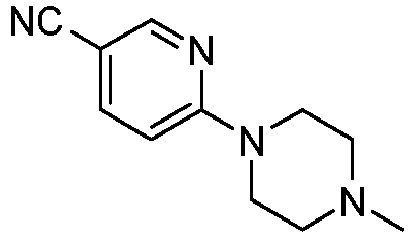
Commercially available N/A 
Commercially available N/A 
AnalpH9_MeOH_4min: Rt 2.30 min; m/z 237 [M+1]+ 94 mg, 17%, yellow solid 
AnalpH2_MeOH_4min: Rt 3.10 min; m/z not observed 731 mg, 94%, yellow solid 
AnalpH9_MeOH_4min: Rt 1.80 min; m/z 221 [M+1]+ 496 mg, 88%, yellow solid 
AnalpH9_MeOH_4min: Rt 1.46 min; m/z 260 [M+1]+ 485 mg, 65%, yellow oil 
AnalpH9_MeOH_4min: Rt 1.85 min; m/z 233 [M+1]+ 350 mg, 70%, pale yellow solid 
AnalpH9_MeOH_4min: Rt 2.12 min; m/z 217 [M+1]+ 312 mg, 80%, light brown oil 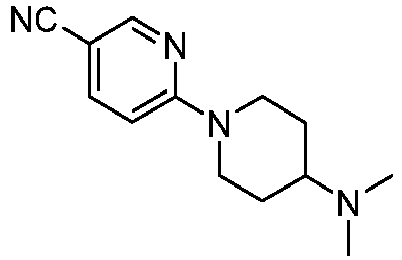
AnalpH9_MeOH_4min: Rt 2.22 min; m/z 231 [M+1]+ 449 mg, 87%, cream solid 
AnalpH9_MeOH_4min: Rt 2.56 min; m/z 229 [M+1]+ 340 mg, 85%, beige solid 
AnalpH2_MeOH_4min(3): Rt 0.98 min; m/z 194 [M+1]+ Used in next step as crude material -

-

- To a solution of 6-[4-(2-hydroxy-ethyl)-piperazin-1-yl]-nicotinonitrile (350 mg, 1.51 mmol) and imidazole (236 mg, 3.47 mmol) in anhydrous DMF (3 mL) was added TBDMS chloride (295 mg, 1.96 mmol) in anhydrous DMF (2 mL) and the reaction mixture stirred for 16 h at RT. The reaction mixture was diluted with EtOAc (5 mL) and washed with water (10 mL) and brine (10 mL). The organic phase was separated, passed through a phase separation cartridge and concentrated in vacuo. The crude residue was purified on silica gel column chromatography eluting with 30% EtOAc/isohexane, and increasing the polarity to 50% EtOAc/isohexane to afford 6-{4-[2-(tert-butyl-dimethyl-silanyloxy)-ethyl]-piperazin-1-yl}-nicotinonitrile as a pale yellow solid (394 mg, 75%).
AnalpH2_MeOH_4min: Rt 2.17 min; m/z 347 [M+1]+. - The following TBDMS-protected nicotinonitrile derivatives are prepared using analogous procedures.
Table 4: Nitrile Intermediates 3 of formula 14 Compound Reference Analytical Data Mass, %Yield, State 
Intermediate for IQ-219 AnalpH2_MeO H_4min(3): Rt 3.76 min; m/z 422 [M+1]+ 1.34 g, 88%, white solid -

-

- (2-Hydroxy-ethyl)-methyl-carbamic acid tert-butyl ester (400 mg, 2.28 mmol), TBDPS chloride (593 µL, 2.28 mmol) and imidazole (342 mg, 5.02 mmol) in DMF (2 mL) were stirred at RT for 12 h. The reaction mixture was diluted with brine and extracted with CH2Cl2. The combined organics were passed through a phase separation cartridge and concentrated in vacuo. The crude material was purified by silica gel column chromatography, eluting with isohexane and increasing the polarity to 50% EtOAc/ isohexane to obtain [2-(tert-butyl-diphenyl-silanyloxy)-ethyl]-methyl-carbamic acid tert-butyl ester as a colourless oil (572 mg, 61%).
AnalpH2_MeOH_4min(1): Rt 3.74 min; m/z 414 [M+1]+. -

- [2-(tert-Butyl-diphenyl-silanyloxy)-ethyl]-methyl-carbamic acid tert-butyl ester (572 mg, 1.38 mmol) and 4M HCl/dioxane (3 mL) in CH2Cl2 (5 mL) were stirred at RT for 3 h. The reaction mixture was concentrated in vacuo and the crude material was purified by silica gel column chromatography, eluting with CH2Cl2 and increasing the polarity to 10% MeOH/CH2Cl2 to obtain [2-(tert-butyl-diphenyl-silanyloxy)-ethyl]-methyl-amine as a yellow solid (105 mg, 21%).
AnalpH2_MeOH_4min(1): Rt 2.41 min; m/z 314 [M+1]+. -

- To a stirred solution of 4-cyanobenzenesulfonyl chloride (411 mg, 2.2 mmol) in CH2Cl2 (10 mL) was added 4-methylaminomethyl-piperidine-1-carboxylic acid tert-butyl ester (500 mg, 2.2 mmol) and triethylamine (0.91 mL, 6.5 mmol) and the reaction stirred at RT for 2 h after which time silica was added and solvent removed. The crude residue was purified by silica gel chromatography eluting with isohexane, and increasing the polarity to 100% EtOAc to afford 4{[4-cyano-benzenesulfonyl)-methyl-amino]-methyl}-piperidine-1-carboxylic acid tert-butyl ester as a white solid (750 mg, 87%).
AnalpH2_MeOH_4min(1): Rt 2.91 min; m/z 416 [M+23]+. - The following substituted sulfonamide derivatives are prepared using analogous procedures.
Table 5: Sulfonamide Derivatives 3 of formula 16 Compound Reference Analytical Data Mass, %Yield, State 
AnalpH2_MeO H_4min: Rt 2.72 min; m/z 374 [M+23]+ 669 mg, 96%, white solid 
Commercially available N/A 
AnalpH2_MeO H_4min(1): Rt 1.24 min; m/z 320 [M+1]+ 300 mg, 94%, cream solid 
AnalpH2_MeO H_4min(1): Rt 2.29 min; m/z not observed 310 mg, quant., white solid 
AnalpH2_MeO H_4min(1): Rt 2.07 min; m/z 268 [M+1]+ 367 mg, quant., cream solid 
AnalpH2_MeO H_4min: Rt 1.80 min; m/z 294 [M+1]+ 560 mg, quant., white solid 
AnalpH2_MeO H_4min: Rt 1.05 min; m/z 308 [M+1]+ 669 mg, quant., white solid 
AnalpH9_MeO H_4min(1): Rt 1.86 min; m/z 294 [M+1]+ 129 mg, 65%, yellow solid 
AnalpH2_MeO H_4min: Rt 0.85 min; m/z 266 [M+1]+ 268 mg, quant., off-white solid 
AnalpH2_MeO H_4min(1): Rt 3.49 min; m/z 479 [M+1]+ 131 mg, 91%, yellow solid -

-

- To a stirred solution of 4-hydroxy-piperidine-1-carboxylic acid tert-butyl ester (400 mg, 1.98 mmol) in DMF (2 mL) was added TBDPS chloride (0.52 mL, 1.98 mmol) and imidazole (297 mg, 4.47 mmol) and the reaction stirred at RT for 16 h afterwhich time the reaction mixture was diluted with brine (10 mL), washed with CH2Cl2 (3 x 25 mL) and the organics combined and dried through a phase separation cartridge and concentrated in vacuo. The crude material was purified by silica gel column chromatography, eluting with EtOAc and increasing the polarity to 30% EtOAc/isohexane to obtain 4-(tert-butyldiphenyl-silanyloxy)-piperidine-1-carboxylic acid tert-butyl ester as a colourless oil (545 mg, 62%).
AnalpH2_MeOH_4min(1): Rt 3.92 min; m/z 440 [M+1]+. - The following substituted amine derivatives are prepared using analogous procedures.
Table 6: Boc-protected Amine Intermediates 17 Compound Code Analytical Data Mass, %Yield, State 
IQ-167 AnalpH2_MeO H_4min(3): Rt 3.68 min; m/z 412 [M+1]+ 2.14 g, 90%, colourless oil 
IQ-172 AnalpH2_MeO H_4min(3): Rt 3.75 min; m/z 326 [M-(Boc)]+ 1.07 g, 95%, colourless oil -

- To 4-(tert-butyl-diphenyl-silanyloxy)-piperidine-1-carboxylic acid tert-butyl ester (54 mg, 0.124 mmol) was added 4M HCl/dioxane (2 mL) and CH2Cl2 (5 mL). The reaction mixture was stirred at RT for 2 h. 4M HCl/dioxane (3 mL) added and reaction stirred for a further 1 hr. The reaction mixture was concentrated in vacuo. The crude material was purified by silica gel column chromatography eluting with CH2Cl2 and increasing the polarity to 10% MeOH/CH2Cl2 to obtain 4-(tert-butyl-diphenyl silanyloxy)-piperidine as a cream foam (370 mg, 79%).
AnalpH2_MeOH_4min(1): Rt 2.54 min; m/z 340 [M+1]+. - The following substituted amine derivatives are prepared using analogous procedures.
Table 7: Boc-deprotected Amine Intermediates 18 Compound Reference Analytical Data Mass, %Yield, State 
Intermediate for IQ-167 or IQ-169 AnalpH2_MeO H_4min(3): Rt 2.39 min; m/z 312 [M+1]+ 950 mg, 59%, pale oil 
Intermediate for IQ-172 AnalpH2_MeO H_4min(3): Rt 2.46 min; m/z 326 [M+1]+ 188 mg, 21 %, white solid -

- To 4-(bromomethyl)benzonitrile (277 mg, 1.41 mmol) was added hexahydro-pyrrolo[3,4-c]pyrrole-2-carboxylic acid (300 mg, 1.41 mmol), potassium carbonate (215 mg, 1.55 mmol) and acetone (7 mL) and the reaction mixture stirred for 16 h. The reaction mixture was concentrated in vacuo, dissolved in CH2Cl2 (4 mL) and washed with water (4 mL). The organic phase was separated and the aqueous layer washed with CH2Cl2 (4 mL). The organic phases were combined, passed through a phase separation cartridge and concentrated in vacuo. The crude material was purified by silica gel column chromatography, eluting with CH2Cl2 and increasing the polarity to 3.5% MeOH/ CH2Cl2 to obtain (3aS,6aR)-5-(4-cyano-benzyl)-hexahydro-pyrrolo[3,4-c]pyrrole-2-carboxylic acid tert-butyl ester as a yellow oil (278 mg, 60%).
AnalpH2_MeOH_4min(1): Rt 1.54 min; m/z 328 [M+1]+. - The following nitrile derivatives are prepared using analogous procedures.
Table 8: Nitrile Intermediates 3 of formula 22 Compound Reference Analytical Data Mass, %Yield, State 
AnalpH2_MeO H_4min(1): Rt 2.53 min; m/z 316 [M+1]+ 630 mg, 100%, white solid 
AnalpH2_MeO H_4min(1): Rt 1.82 min; m/z 316 [M+1]+ 220 mg, 73%, colourless oil 
AnalpH2_MeO H_4min(1): Rt 2.51 min; m/z 364 [M+1]+ 197 mg, 85%, colourless oil 
AnalpH2_MeO H_4min(1): Rt 3.20 min; m/z 330 [M+1]+ 280 mg, 83%, colourless oil 
AnalpH2_MeO H_4min(1): Rt 1.55 min; m/z 316 [M+1]+ 294 mg, 92%, colourless oil 
AnalpH2_MeO H_4min: Rt 1.43 min; m/z 314 [M+1]+ 445 mg, 69%, colourless oil 
AnalpH2_MeO H_4min: Rt 2.54 min; m/z 316 [M+1]+ 550 mg, 85%, colourless oil 
AnalpH2_MeO H_4min: Rt 1.85 min; m/z 316 [M+1]+ 420 mg, 65%, white solid 
Commercially available N/A 
Commercially available N/A 
AnalpH9_MeO H_4min: Rt 2.51 min; m/z 205 [M+1]+ 760 mg, 80%, pale yellow liquid 
Commercially available N/A 
AnalpH9_MeC N_4min: Rt 1.83 min; m/z 230 [M+1]+ 189 mg, 89%, colourless oil 
AnalpH9_MeC N_4min(1): Rt 1.39 min; m/z 230 [M+1]+ 1.02 g, 85%, orange oil 
AnalpH9_MeO H_4min(1): Rt 1.81 min; m/z 230 [M+1]+ 150 mg, 64%, colourless oil 
AnalpH9_MeC N_4min(1): Rt 1.72 min; m/z 256 [M+1]+ 63 mg, 15%, brown oil 
AnalpH2_MeO H_4min(1): Rt 1.47 min; m/z 230 [M+1]+ 212 mg, 45%, orange glass 
AnalpH9_MeC N_4min: Rt 1.94 min; m/z 242 [M+1]+ 171 mg, 34%, pale orange oil 
AnalpH9_MeC N_4min: Rt 1.72 min; m/z 244 [M+1]+ 231 mg, 37%, white solid 
AnalpH2_MeO H_4min: Rt 0.95 min; m/z 230 [M+1]+ 110 mg, 23%, orange oil 
AnalpH9_MeC N_4min: Rt 2.19 min; m/z 242 [M+1]+ 68 mg, 13%, pale orange oil 
AnalpH2_MeO H_4min: Rt 0.34, 0.74 min; m/z 201 [M+1]+ 700 mg, 68%, pale yellow liquid 
AnalpH2_MeO H_4min: Rt 0.33, 0.57 min; m/z 187 [M+1]+, 373 [2M+1]+ 700 mg, 73%, pale yellow liquid 
Commercially available N/A 
AnalpH2_MeO H_4min(1): Rt 2.69 min; m/z 455 [M+1]+ 360 mg, 80%, yellow glass 
AnalpH2_MeO H_4min: Rt 2.82 min; m/z 328 [M+1]+ 194 mg, 100%, cream solid 
Intermediate for IQ-167 AnalpH2_MeO H_4min(3): Rt 2.56 min; m/z 427 [M+1]+ 180 mg, 28%, colourless glass 
Commercially available N/A 
Commercially available N/A 
Intermediate for IQ-169 AnalpH2_MeO H_4min(3): Rt 2.75 min; m/z 445 [M+1]+ 50 mg, 6%, yellow oil 
Intermediate for IQ-173 AnalpH2_MeO H_4min(3): Rt 0.39 min; m/z 230 [M+1]+ 414 mg, 51%, orange oil 
Intermediate for IQ-174 AnalpH9_MeO H_4min(2): Rt 0.39 min; m/z 230 [M+1]+ 469 mg, 65%, bright yellow oil 
Commercially available N/A -

- To a solution of 1-(4-bromo-phenyl)-1-methyl-ethylamine (400 mg, 1.84 mmol) in diisopropylethylamine (4 mL) was added N,N-bis(2-chloroethyl)-4-methylbenzene sulphonamide (500 mg, 1.68 mmol) and the reaction subjected to microwave irradiation at 150 °C for 9 h afterwhich time the reaction was concentrated in vacuo and the crude residue purified by reverse phase preparative HPLC-MS to afford 1-[1-(4-bromo-phenyl)-1-methyl-ethyl]-4-(toluene-4-sulfonyl)-piperazine as a peach solid (375 mg, 47%).
AnalpH2_MeOH_4min(1): RT 3.04 min; m/z 437/439 [M+1]+. -

- To a solution of 1-[1-(4-bromo-phenyl)-1-methyl-ethyl]-4-(toluene-4-sulfonyl)-piperazine (200 mg, 0.45 mmol) in DMF (3 mL) was added zinc cyanide (64.41 mg, 0.54 mmol) and tetrakis(triphenylphosphine)palladium(0) (52 mg, 0.045 mmol) and the reaction mixture degassed for 10 min under N2. The reaction mixture was then subjected to microwave irradiation for 30 min at 180 °C, afterwhich time the reaction was diluted with 1:1 CH2Cl2/EtOAc (20 mL), washed with water (2 x 10 mL), passed through a phase separation cartridge and concentrated in vacuo. The crude residue was purified by reverse phase preparative HPLC-MS to afford 4-{1-methyl-1-[4-(toluene-4-sulfonyl)-piperazin-1-yl]-ethyl]-benzonitrile as a cream solid (70 mg, 47%).
AnalpH2_MeOH_4min(1): Rt 2.78 min; m/z 384 [M+1]+. -

- To 4-[(methylamine)methyl]benzonitrile (1g, 6.8 mmol) in CH2Cl2 (50 mL) was added DMAP (0.93 g, 7.6 mmol), di-tert-butyl dicarbonate (1.7 g, 7.6 mmol) and the reaction stirred for 48 h at RT. The reaction mixture was washed with saturated, aqueous NaHCO3 and brine. The organic phase was separated and concentrated in vacuo. The crude residue was purified on silica gel chromatography eluting with isohexane, and increasing the polarity to 20% EtOAc/isohexane to afford (4-cyano-benzyl)-methyl-carbamic acid tert-butyl ester as a colourless oil (1.48 g, 89%).
AnalpH2_MeOH_4min: Rt 2.75 min; m/z 247 [M+1]+. -

- To a stirred solution of 4-formylbenzonitrile (68 mg, 0.51 mmol) and 3-(tert-Butyl-diphenyl-silanyloxy)-3-methyl-azetidine hydrochloride (188 mg, 0.51 mmol) in 1:1 MeOH/DMF (26 mL) was added acetic acid (catalytic). The reaction mixture was stirred under N2 at 0 °C for 1 h. Sodium cyanoborohydride (1M in THF, 0.6 mL, 0.57 mmol) was added and the reaction mixture stirred at RT, under N2 for 18 h. The reacton mixture was concentrated in vacuo, the residue suspended in H2O (10 mL), washed with CH2Cl2 (2 x 10 mL) and the solution passed through a phase separation cartridge. The combined organic layers were concentrated in vacuo and the crude residue purified by silica gel chromatography eluting with 100% isohexane and increasing the polarity 100% EtOAc to afford 4-[3-(tert-butyl-diphenyl-silanyloxy)-3-methyl-azetidin-1-ylmethyl]-benzonitrile as a colourless oil (196 mg, 86%).
AnalpH2_MeOH_4min(3): Rt 2.71 min; m/z 441 [M+1]+. -

-

- To a solution of 4-(2-hydroxy-ethyl)-benzonitrile (2 g, 13.6 mmol) in CH2Cl2 (10 mL) was added Et3N (6.8 mL, 47.52 mmol) and mesyl chloride (1.4 mL, 17.63 mmol) at 0 °C and stirred for 2 h. The reaction mixture was diluted with CH2Cl2 (30 mL), washed with saturated NaHCO3 solution (2 x 10 mL), the organic layer was dried over Na2SO4, filtered and concentrated in vacuo to obtain 4-cyano phenethyl methanesulfonate (3 g) as a pale yellow gummy liquid. The crude compound was used for the next step without further purification.
R f : 0.6 (50% EtOAc/petroleum ether 60-80). -

- To a stirred solution of 4-cyano phenethyl methanesulfonate (6.04 mmol) in CH2Cl2 (10 mL) at 0 °C was added morpholine (3.5g, 40.22 mmol) and heated 50 °C for 16 h.The reaction mixture was diluted with CH2Cl2 (100 mL), washed with saturated NaHCO3 solution (2 x 10 mL), the organic layer was dried over Na2SO4 and concentrated in vacuo. The crude material was purified by silica gel column chromatography, eluting with 3% MeOH/CHCl3 to obtain 4-(2-morpholinoethyl) benzonitrile as a pale yellow solid (700 mg, 48%).
1H NMR (400MHz, CDCl3): δ 7.58 (d, J= 8 Hz, 2H), 7.30 (d, J= 8 Hz, 2H), 3.72 (t, J= 4.8 Hz, 4H), 2.85 (t, J= 8 Hz, 2H), 2.61-2.49 (6H, m).
AnalpH9_MeOH_4min: Rt 2.20 min; m/z 217 [M+1]+. - The following nitrile derivatives are prepared using analogous procedures.
Table 9: Nitrile Intermediates 3 of formula 26 Compound Analytical Data Mass, %Yield, State 
AnalpH9_MeO H_4min: Rt 2.39 min; m/z 201 [M+1]+ Pale yellow solid 
AnalpH9_MeO H_4min: Rt 2.62 min; m/z 256 [M+1]+ Pale yellow solid -

- N,N-Diethyl-2,3-dimethyl-benzamide (200 mg, 0.97 mmol) was dissolved in anhydrous THF (4 mL) under a N2 and cooled to -78 °C. n-BuLi (2.5M in n-hexanes, 0.82 mL, 2.04 mmol) was added dropwise to yield a deep red coloured solution and the reaction mixture was stirred at -78 °C for 30 minutes. 4-{[(4-Cyano-benzoyl)-methyl-amino]-methyl}-piperidine-1-carboxylic acid tert-butyl ester (348 mg, 0.97 mmol) was dissolved in anhydrous THF (4 mL) and added dropwise, and the reaction stirred at -78 °C for 2 h. The reaction mixture was quenched with ice/water, allowed to warm to RT and extracted with CH2Cl2 and EtOAc. The combined organic phase was passed through a phase separation cartridge and concentrated in vacuo. The crude compound was triturated with isohexane/diethyl ether (80:20), the solid filtered and dried in vacuo to give 4-({methyl-[4-(5-methyl-1-oxo-1,2-dihydro-isoquinolin-3-yl)-benzoyl]-amino}-methyl)-piperidine-1-carboxylic acid tert-butyl ester as a light beige solid (171 mg, 36%).
AnalpH2_MeOH_OC(Sunfire1): Rt 7.81 min; m/z 490 [M+1]+. -
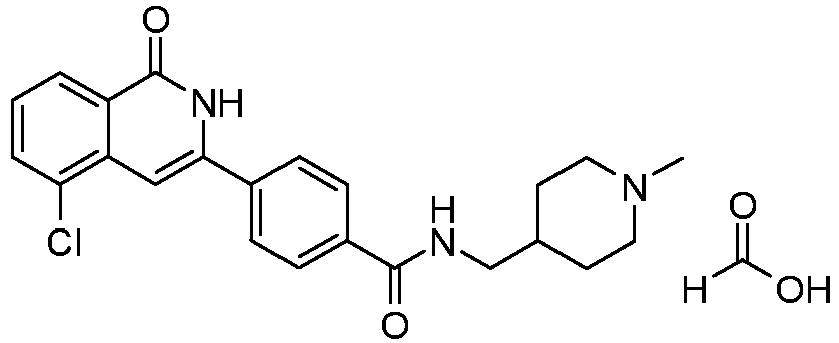
- 3-Chloro-N,N-diethyl-2-methyl-benzamide (150 mg, 0.66 mmol) was dissolved in anhydrous THF (2 mL) under N2 and cooled to -78 °C. n-BuLi (2.5M in n-hexanes, 558 µL, 1.39 mmol) was added dropwise and the reaction mixture was stirred at -78 °C for 30 minutes. 4-Cyano-N-(1-methyl-piperidin-4-ylmethyl)-benzamide (180 mg, 0.66 mmol) in anhydrous THF (2 mL) was added dropwise to the reaction mixture and stirred at-78 °C continued for 1 h. The reaction mixture was poured into ice/water, allowed to warm to RT and extracted with CH2Cl2 (x3) and the organic phase dried (MgSO4). The solution was filtered and concentrated in vacuo. The crude material was purified by reverse phase preparative HPLC-MS to afford 4-(5-chloro-1-oxo-1,2-dihydro-isoquinolin-3-yl)-N-(1-methyl-piperidin-4-ylmethyl)-benzamide as a white solid (37 mg, 13%).
1H NMR (400 MHz, DMSO-d6 ): δ11.91 (br s, 1H), 8.25 (s, formic acid, 1H), 8.21 (d, J=8. Hz, 1 H), 7.9 (dd, J = 8 Hz, 1 H), 7.85 (d, J = 8 Hz, 2H), 7.53 (d, J = 8 Hz, 1 H), 7.51 (t, J = 8 Hz, 1H), 7.46 (d, J = 8 Hz, 1H), 6.97 (s, 1H), 3.42-3.38 (m, 1H), 3.20-3.12 (m, 1H), 2.95 (s, 1H), 2.90 (s, 2H), 2.82-2.78 (m, 1H), 2.68-2.64 (m, 1H), 2.18 (s, 2H), 2.09 (s, 1H), 1.86-1.92 (m, 1H), 1.79-1.81 (m, 1H), 1.68-1.65 (m, 2H), 1.49-1.42 (m, 1H), 1.30-1.23 (m, 1 H), 0.90-0.79 (m, 1 H).
AnalpH2_MeOH_OC: Rt 5.70 min; m/z 424 [M+1]+.Table 10: 2H-Isoquinolin-1-one Derivatives of Formula 4 Compound Code Analytical Data Mass, %Yield, State 
IQ-145 AnalpH2_MeO H_QC(Sunfire 1): Rt 8.08 min; m/z 510 [M+1]+ 142 mg, 31%, light beige solid 
IQ-101 AnalpH2_MeO H_QC: Rt 5.21 min; m/z 382 [M+1]+ 10 mg, 3 %, pale yellow solid 
IQ-102 AnalpH2_MeO H_QC: Rt 5.08 min; m/z 407 [M+1]+ 24 mg, 5%, beige solid 
IQ-103 AnalpH2_MeO H_QC: Rt 5.33 min; m/z 410 [M+1]+ 5 mg, 3%, white solid 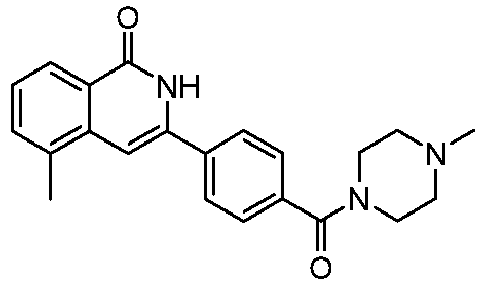
IQ-104 AnalpH2_MeO H_QC: Rt 4.93 min; m/z 362 [M+1]+ 27 mg, 9%, white solid 1H NMR (400 MHz, DMSO-d6 ): δ11.61 (brs, 1H), 8.09 (d, J = 7.8 Hz, 1 H), 7.90 (d, J = 8.6 Hz, 2H), 7.58 (d, J = 7.3 Hz, 1 H), 7.50 (d, J = 8.6 Hz, 2H), 7.4 (t, J = 7.8 Hz, 1H), 6.92 (s, 1 H), 3.63 (br s, 2H), 3.38 (br s, 2H), 2.57 (s, 3H), 2.34 (br s, 4H), 2.21 (s, 3H). 
IQ-001 AnalpH2_MeO H_QC: Rt 8.49 min; m/z 279 [M+1]+ 143 mg, 64%, pale yellow solid 
IQ-013 AnalpH2_MeO H_QC: Rt 8.84 min; m/z 420 [M+1]+ 123 mg, 43%, yellow solid 
IQ-010 AnalpH2_MeO H_QC: Rt 9.14 min; m/z 440 [M+1]+ 231 mg, 60%, cream solid 
IQ-042 AnalpH2_MeO H_4min: Rt 5.21 min; m/z 349 [M+1]+ 46 mg, 26%, off-white solid 
IQ-041 AnalpH2_MeO H_4min: Rt 5.30 min; m/z 333 [M+1]+ 30 mg, 9%, off-white solid 
IQ-137 AnalpH2_MeO H_4min: Rt 5.55 min; m/z 388 [M+1]+ 12 mg, 6%, white solid 
IQ-131 AnalpH2_MeO H_QC:Rt 5.74 min; m/z 377 [M+1]+ 22 mg, 10%, pale brown gum 
IQ-132 AnalpH2_MeO H_QC: Rt 5.69 min; m/z 387 [M+1]+ 1.23 g, 86%, cream solid 
IQ-128 AnalpH2_MeO H_QC: Rt 5.59 min; m/z 343 [M+1]+ 86 mg, 32%, beige solid 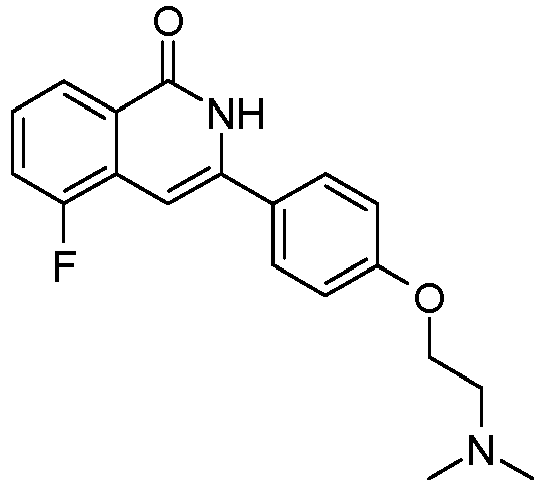
IQ-129 AnalpH2_MeO H_QC: Rt 5.21 min; m/z 327 [M+1]+ 135 mg, 52%, beige solid 
IQ-130 AnalpH2_MeO H_QC: Rt 5.27 min; m/z 323 [M+1]+ 101 mg, 40%, pale yellow solid 
IQ-133 AnalpH2_MeO H_QC: Rt 5.37 min; m/z 365 [M+1]+ 230 mg, 63%, white solid 
IQ-134 AnalpH2_MeO H_QC: Rt 5.53 min; m/z 349 [M+1]+ 42 mg, 24%, off-white solid 
IQ-135 AnalpH2_MeO H_QC: Rt 8.84 min; m/z 369 [M+1]+ 40 mg, 22%, off-white solid 
IQ-003 AnalpH2_MeO H_QC: Rt 5.16 min; m/z 335 [M+1]+ 14 mg, 4%, off-white solid 
IQ-002-1 AnalpH2_MeO H_QC: Rt 5.45 min; m/z 355 [M+1]+ 196 mg, 84%, pale yellow solid 
IQ-153 AnalpH9_MeO H_QC: Rt 8.51 min; m/z 421 [M+1]+ 24 mg, 6%, yellow solid 
IQ-136 AnalpH2_MeO H_QC: Rt 8.79 min; m/z 441 [M+1]+ 126 mg, 29%, off-white solid 
IQ-144 AnalpH2_MeO H_QC: Rt 5.55 min; m/z 369 [M+1]+ 5.5 mg, 4%, white solid 
IQ-139 AnalpH2_MeO H_QC: Rt 9.37 min; m/z 459 [M+1]+ 139 mg, 34%, orange solid 
IQ-020 AnalpH2_MeO H_QC: Rt 9.03 min; m/z 439 [M+1]+ 63 mg, 15%, cream solid 
IQ-021 AnalpH2_MeO H_QC:Rt 5.37 min; m/z 353 [M+1]+ 8 mg, 3%, cream solid 
IQ-022 AnalpH2_MeO H_QC: Rt 5.69 min; m/z 373 [M+1]+ 56 mg, 23%, cream solid 
IQ-019 AnalpH2_MeO H_QC: Rt 5.59 min; m/z 412 [M+1]+ 49 mg, 26%, off-white solid 
IQ-018 AnalpH2_MeO H_QC: Rt 5.10 min; m/z 392 [M+1]+ 50 mg, 28%, pale yellow solid 
AnalpH2_MeO H_4min: Rt 2.68 min; m/z 499 [M+1]+ 222 mg, 99%, yellow solid 
AnalpH2_MeO H_4min: Rt 2.58 min; m/z 479 [M+1]+ 214 mg, 99%, orange solid 
IQ-009 AnalpH2_MeO H_QC:Rt 5.29 min; m/z 369 [M+1]+ 25.5 mg, 15%, tan solid 
IQ-008 AnalpH2_MeO H_QC: Rt 4.77 min; m/z 349 [M+1]+ 28 mg, 18%, pale yellow solid 
IQ-007 AnalpH2_MeO H_QC: Rt 5.51 min; m/z 384 [M+1]+ 72 mg, 42%, yellow solid 1H NMR (400 MHz, DMSO-d6 ): δ11.72 (br s, 1 H), 8.54 (d, J = 2.8 Hz, 1H), 8.16 (dt, J = 7.6 Hz, 1H), 7.92 (dd, J= 9.1 Hz, 1 H), 7.84 (dd, J = 7.6 Hz, 1H), 7.42 (t, J = 7.8 Hz, 1H), 6.94 (d, J = 8.8 Hz, 1 H), 6.82 (s, 1H), 4.4 (br d, J = 13.1 Hz, 2H), 2.91 (t, J = 11.9 Hz, 2H), 2.39-2.38 (m, 1 H), 2.19 (s, 6H), 1.83 (br d, J = 12.6 Hz, 2H), 1.39-1.29 (m, 2H). 
IQ-006 AnalpH2_MeO H_QC: Rt 5.09 min; m/z 364 [M+1]+ 26 mg, 16%, pale yellow solid 
IQ-005 AnalpH2_MeO H_QC: Rt 7.39 min; m/z 363 [M+1]+ 24.5 mg, 8%, pale yellow solid 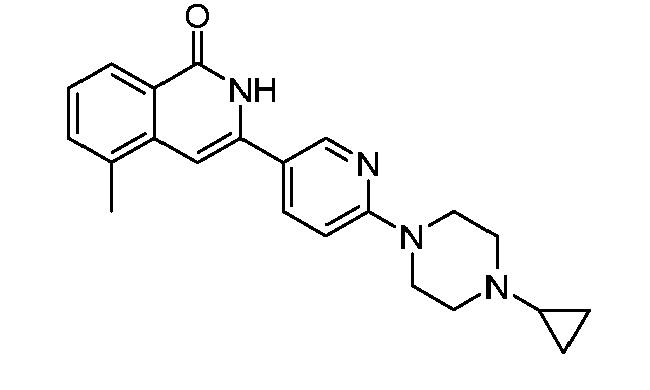
IQ-004 AnalpH2_MeO H_QC: Rt 5.45 min; m/z 362 [M+1]+ 53 mg, 33%, pale yellow solid 
IQ-114 AnalpH2_MeO H_QC(Sunfire 1): Rt 8.21 min; m/z 546 [M+1]+ 210 mg, 43%, white solid 
IQ-113 AnalpH2_MeO H_QC(Sunfire) : Rt 7.98 min; m/z 526 [M+1]+ 230 mg, 45%, cream solid 
IQ-141 AnalpH2_MeO H_QC: Rt 8.71 min; m/z 504 [M+1]+ 189 mg, 57%, yellow solid 
IQ-140 AnalpH2_MeO H_QC: Rt 8.42 min; m/z 484 [M+1]+ 107 mg, 31%, yellow solid 
IQ-108 AnalpH2_MeO H_QC: Rt 7.56 min; m/z 343 [M+1]+ 32.5 mg, 12%, cream solid 
IQ-119 AnalpH2_MeO H_QC(1): Rt 5.71 min; m/z 452 [M+1]+ 83 mg, 20%, cream solid 
IQ-118 AnalpH2_MeO H_QC(1): Rt 7.98 min; m/z 427 [M+1]+ 120 mg, 28%, pale yellow solid 
IQ-117 AnalpH2_MeO H_QC(1): Rt 5.38 min; m/z 400 [M+1]+ 193 mg, 43%, pale yellow solid 
IQ-126 AnalpH2_MeO H_QC: Rt 5.85 min; m/z 446 [M+1]+ 163 mg, 56%, yellow yellow solid 
IQ-125 AnalpH2_MeO H_QC: Rt 5.55 min; m/z 426 [M+1]+ 104 mg, 33%, yellow yellow solid 
IQ-110 AnalpH2_MeO H_QC: Rt 5.87 min; m/z 446 [M+1]+ 130 mg, 48%, white solid 
IQ-111 AnalpH2_MeO H_QC: Rt 5.72 min; m/z 440 [M+1]+ 47 mg, 15%, white solid 
IQ-112 AnalpH2_MeO H_QC: Rt 6.02 min; m/z 461 [M+1]+ 52 mg, 18%, white solid 1H NMR (400 MHz, DMSO-d6 ): δ11.99 (br s, 1 H), 8.23-8.21 (m, 1H), 8.21 (s, formic acid CHO, 0.4H), 8.06-8.03 (m, 2H), 7.92-7.88 (m, 3H), 7.54 (t, J = 7.6 Hz, 1H), 7.02 (s, 1H), 2.84 (d, J = 7.6 Hz, 2H), 2.80-2.74 (m, 2H), 2.70 (s, 3H), 2.18 (s, 3H), 1.92-1.86 (m, 2H), 1.65-1.50 (m, 2H), 1.59-1.50 (m, 1H), 1.21-1.10 (m, 2H). 
IQ-109 AnalpH2_MeO H_QC: Rt 5.58 min; m/z 426 [M+1]+ 10 mg, 4%, white solid 
IQ-122 AnalpH2_MeO H_QC: Rt 5.80 min; m/z 418 [M+1]+ 142 mg, 68%, cream solid 
IQ-121 AnalpH2_MeO H_QC: Rt 5.49 min; m/z 398 [M+1]+ 77 mg, 39%, cream solid 
AnalpH2_MeO H_QC(1): Rt 9.80 min; m/z 611 [M+1]+ 3.8 mg, 2%, white solid 
IQ-031 AnalpH2_MeO H_QC: Rt 5.44 min; m/z 313 [M+1]+ 138 mg, 67%, cream solid 
IQ-030 AnalpH2_MeO H_QC: Rt 4.83 min; m/z 347 [M+1]+ 2 mg, 1% yellow solid 
IQ-032 AnalpH2_MeO H-QC: Rt 4.90 min; m/z 297 [M+1]+ 175.1 mg, 91 % cream solid 
IQ-034 AnalpH2_MeO H_QC: Rt 4.94 min; m/z 293 [M+1]+ 133 mg, 58% pale yellow solid 
IQ-147 AnalpH2_MeO H_QC(1): Rt 8.32 min; m/z 448 [M+1]+ 36 mg, 8%, white solid 
IQ-089 AnalpH2_MeO H_QC(1): Rt 6.02 min; m/z 460 [M+1]+ 11.8 mg, 31%, off-white foam 
IQ-069 AnalpH2_MeO H_QC(1): Rt 6.51 min; m/z 438 [M+1]+ 111 mg, 51%, pink solid 
IQ-066 AnalpH2_MeO H_QC(1): Rt 6.45 min; m/z 448 [M+1]+ 131 mg, 43%, cream solid 
IQ-064 AnalpH2_MeO H_QC(1): Rt 7.05 min; m/z 496 [M+1]+ 28 mg, 7.3%, white solid 
IQ-061 AnalpH2_MeO H_QC(1): Rt 8.89 min; m/z 462 [M+1]+ 180 mg, 46%, cream solid 
IQ-060 AnalpH2_MeO H_QC(1): Rt 6.03 min; m/z 448 [M+1]+ 160 mg, 38%, off-white solid 
IQ-085 AnalpH2_MeO H_QC: Rt 6.01 min; m/z 446 [M+1]+ 37 mg, 18%, white solid 
IQ-143 AnalpH2_MeO H_QC: Rt 7.21 min; m/z 448 [M+1]+ 98 mg, 30%, white solid 
IQ-142 AnalpH2_MeO H_QC: Rt 6.42 min; m/z 448 [M+1]+ 164 mg, 50%, white solid 
IQ-047 AnalpH2_MeO H_QC: Rt 6.82 min; m/z 460 [M+1]+ 38 mg, 16%, white solid 
IQ-044 AnalpH2_MeO H_QC: Rt 6.91 min; m/z 454 [M+1]+ 138 mg, 46%, white solid 
IQ-040 AnalpH2_MeO H_QC: Rt 6.41 min; m/z 434 [M+1]+ 395 mg, 46%, white solid 
IQ-058 AnalpH2_MeO H_QC(1): Rt 7.21 min; m/z 452 [M+1]+ 120 mg, 39%, pale yellow solid 
IQ-039 AnalpH2_MeO H_QC: Rt 5.23 min; m/z 337 [M+1]+ 29 mg, 11 %, pale yellow solid 
IQ-038 AnalpH2_MeO H_QC: Rt 5.47 min; m/z 348 [M+1]+ 615 mg, 59%, white solid 1H NMR (400 MHz, DMSO-d6 ): δ11.56 (br s, 1 H), 8.07 (d, J= 8.1 Hz, 1 H), 7.78 (d, J = 8.3 Hz, 2H), 7.56 (d, J = 6.8 Hz, 1H), 7.41 (d, J = 8.3 Hz, 2H), 7.37 (t, J = 7.6 Hz, 1H), 6.85 (s, 1 H), 3.51 (s, 2H), 2.56 (s, 3H), 2.33 (br s, 8H), 2.16 (s, 3H). 
IQ-048 AnalpH2_MeO H_QC: Rt 5.77 min; m/z 362 [M+1]+ 44 mg, 15%, cream solid 
IQ-056 AnalpH9_MeO H_QC(Sunfire 1): Rt 7.22 min; m/z 382 [M+1]+ 16 mg, 4%, light beige solid 
IQ-065 AnalpH2_MeO H_QC(1): Rt 4.49 min; m/z 362 [M+1]+ 14 mg, 5%, cream solid 
IQ-088 AnalpH2_MeO H_QC(Sunfire) : Rt 2.93 min; m/z 388 [M+1]+ 12 mg, 13%, white solid 
IQ-043 AnalpH2_MeO H_QC: Rt 5.75 min; m/z 368 [M+1]+ 92 mg, 38%, white solid 
IQ-054 AnalpH2_MeO H_QC(Sunfire) : Rt 6.13 min; m/z 362 [M+1]+ 19 mg, 6%, pale orange solid 
IQ-087 AnalpH2_MeO H_QC: Rt 4.69 min; m/z 374 [M+1]+ 17 mg, 16%, orange solid 
IQ-053 AnalpH2_MeO H_QC: Rt 4.09 min; m/z 376 [M+1]+ 14 mg, 3%, white solid 1H NMR (400 MHz, DMSO-d6 ): δ11.53 (br s, 1 H), 8.30 (s, formic acid CHO, 0.5H), 8.07 (d, J = 8.4 Hz, 1 H), 7.78 (d, J = 8.4 Hz, 2H), 7.56 (d, J = 6.8 Hz, 1 H), 7.41 (d, J = 8.4 Hz, 2H), 7.37 (d, J = 8.0 Hz, 1 H), 6.85 (s, 1 H), 3.50 (s, 2H), 2.86-2.83 (m, 2H), 2.56 (s, 3H), 2.18 (s, 6H), 2.12-2.04 (m, 1H), 1.98-1.92 (m, 2H), 1.74-1.71 (m, 2H), 1.44-1.34 (m,2H). 
IQ-052 AnalpH2_MeO H_QC: Rt 5.70 min; m/z 362 [M+1]+ 37 mg, 21%, white solid 
IQ-050 AnalpH2_MeO H_QC: Rt 5.60 min; m/z 374 [M+1]+ 9 mg, 8.5%, beige solid 
IQ-046 AnalpH2_MeO H_QC: Rt 5.81 min; m/z 374 [M+1]+ 154 mg, 32%, yellow yellow solid 
IQ-037 AnalpH2_MeO H_QC: Rt 5.27 min; m/z 665 [2M+1]+ 79 mg, 30%, beige solid 
IQ-036 AnalpH2_MeO H_QC: Rt 5.12 min; m/z 319 [M+1]+ 172 mg, 68%, yellow/orange solid 
IQ-035 AnalpH2_MeO H_QC: Rt 5.11 min; m/z 335 [M+1]+ 51 mg, 19%, white solid 
AnalpH2_MeO H_4min(1): Rt 2.86 min m/z 587[M+1]+. 213 mg, 46%, white solid 
IQ-148 AnalpH2_MeO H_QC(1): Rt 7.99 min m/z 516[M+1]+. 34 mg (29%) White solid 
IQ-155 AnalpH2_MeO H_QC: Rt 7.77 min m/z 460[M+1]+. 32 mg, 23%, white solid 
Intermediate for IQ-167 AnalpH2_MeO H_4min(3): Rt 2.77 min; m/z 559 [M+1]+ 210 mg, 89%, off-white solid 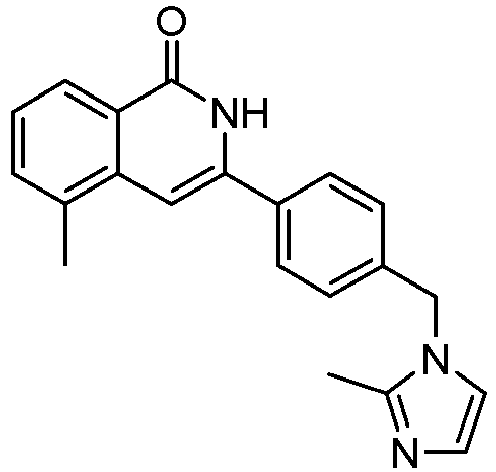
IQ-168 AnalpH2_MeO H_QC(2): Rt 4.74 min; m/z 330 [M+1]+ 8.2 mg, 52 %, pale yellow solid 1H NMR (400 MHz, DMSO-d6 ): δ11.59 (br s, 1 H), 8.08 (d, J = 8.0 Hz, 1 H), 7.85 (d, J = 8.0 Hz, 2H), 7.57 (d, J= 6.8 Hz, 1H), 7.48 (s, 1 H), 7.40-7.36 (m, 3H), 7.24 (s, 1 H), 6.87 (s, 1H), 5.35 (s, 2H), 2.56 (s, 3H), 2.45 (s, 3H). 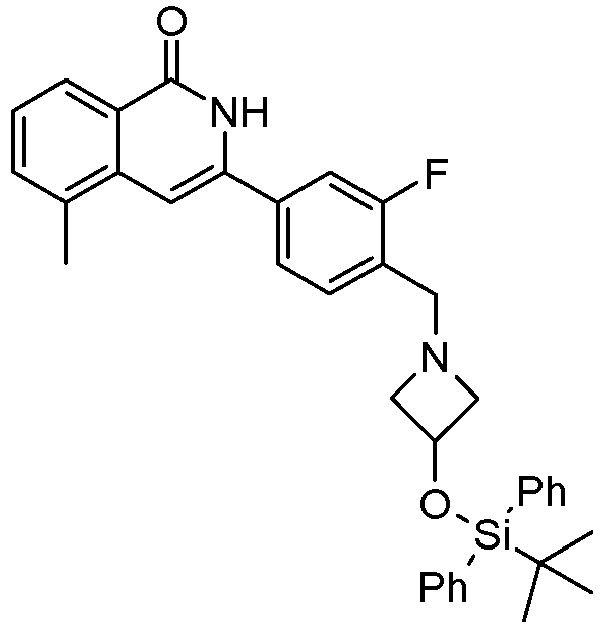
Intermediate for IQ-169 AnalpH2_MeO H_4min(3): Rt 2.89 min; m/z 577 [M+1]+ 35 mg, 54%, cream solid 
IQ-174 AnalpH2_MeO H_QC(1): Rt 4.77 min; m/z 348 [M+1]+ 119.5 mg, 43 %, off-white solid 
IQ-182 AnalpH2_MeO H_QC(2): Rt 7.52 min; m/z 316 [M+1]+ 61 mg, 10% off-white solid 1H NMR (400 MHz, DMSO-d6 ): δ11.57 (br s, 1 H), 8.07 (d, J = 8.0 Hz, 1 H), 7.89 (d, J = 2.4 Hz, 1 H), 7.79 (d, J= 8.4 Hz, 2H), 7.56 (d, J = 7.2 Hz, 1 H), 7.49 (d, J= 1.6 Hz, 1H), 7.37 (t, J = 7.6 Hz, 1 H), 7.32 (d, J = 8.0 Hz, 2H), 6.84 (s, 1 H), 6.30 (t, J = 2.0 Hz, 1 H), 5.41 (s, 2H), 2.55 (s, 3H). -

- To a solution of N,N-diethyl-2,3-dimethyl-benzamide (578 mg, 2.82 mmol) in anhydrous THF (3 mL) under N2 at -78 °C was added dropwise n-BuLi (2.5M in n-hexanes, 2.4 mL, 5.92 mmol) to give a deep red solution. The reaction mixture was stirred at -78 °C for 30 minutes. The reaction mixture was transferred dropwise, via syringe, to a reaction vessel containing 4-cyano-N-methyl-N-(1-methyl-piperidin-4-yl)-benzamide (725 mg, 2.82 mmol) in anhydrous THF (5 mL) at -78 °C and under N2,. The reaction mixture was stirred at -78 °C for 3.5 h. Water (10 mL) was added and the reaction mixture was extracted with EtOAc (10 mL) and CH2Cl2 (10 mL). The combined organic layers concentrated in vacuo and the resultant solid was triturated with 2:1 isohexane/EtOAc, filtered and dried in vacuo. The crude material was purified by silica gel column chromatography, eluting with CH2Cl2 and increasing the polarity to 15% MeOH/CH2Cl2 to afford N-methyl-4-(5-methyl-1-oxo-1,2-dihydro-isoquinolin-3-yl)-N-(1-methyl-piperidin-4-yl)-benzamide as a white solid (487 mg, 44%).
1H NMR (400 MHz, DMSO-d6 ): δ11.80-11.41 (br s, 1H), 8.10 (d, J = 8 Hz, 1H), 7.89 (d, J = 8 Hz, 2H), 7.58 (d, J = 7 Hz, 1 H), 7.48 (d, J = 8 Hz, 2H), 7.39 (t, J = 7 Hz, 1 H), 6.93 (s, 1 H), 3.31 (s, 3H), 2.96-2.70 (m, 5H), 2.58 (s, 3H), 2.23-1.96 (m, 3H), 1.93-1.71 (br s, 2H), 1.71-1.53 (br s, 2H).
AnalpH2_MeOH_QC(Sunfire): Rt 4.29 min; m/z 390 [M+1]+. - The following 2H-isoquinolin-1-one derivatives are prepared using analogous procedures.
Table 11: 2H-isoquinolin-1-one derivatives of Formula 4 Compound Code Analytical Data Mass, %Yield, State 
IQ-105 AnalpH2_MeOH_QC(1): Rt 4.97 min; m/z 388 [M+1]+ 2.7 mg, 3%, white solid 
IQ-106 AnalpH2_MeOH_QC(1): Rt 4.98 min; m/z 390 [M+1]+ 4 mg, 2%, white solid 
IQ-171 AnalpH2_MeOH_QC(1): Rt 7.41 min; m/z 317 [M+1]+ 8.5 mg, 4 %, white solid 
Intermediate for IQ-219 AnalpH2_MeOH_4min(3) : Rt 2.59 min; m/z 554 [M+1]+ Used in next step as crude material 
Intermediate for IQ-172 AnalpH2_MeOH_4min(3) : Rt 2.86 min; m/z 573 [M+1]+ 63 mg, 27 %, white solid 
IQ-173 AnalpH2_MeOH_QC(1): Rt 4.46 min; m/z 363 [M+1]+ 41 mg, 23 %, white solid -
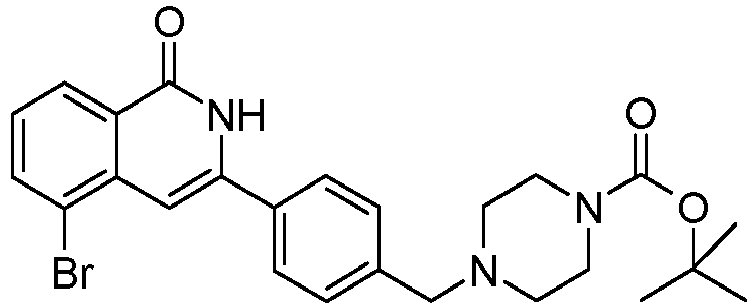
- To a stirred solution of N,N-diisopropylamine (1.56 mL, 11.10 mmol) in THF (5 mL) under N2 at -78 °C was added n-BuLi (2.5M in hexanes) (4.44 mL, 11.10 mmol) and the reaction stirred at -78 °C for 20 min, after which time a solution of 3-bromo-N,N-diethyl-2-methyl-benzamide (1 g, 3.70 mmol) in THF (5 mL) was added, and the reaction stirred at -78 °C for 30 minutes. A solution of 4-(4-cyano-benzyl)-piperazine-1-carboxylic acid tert-butyl ester (1.15g, 3.70 mmol) in THF (5 mL) was added and the reaction stirred at -78 °C for 2 h. The reaction was quenched with ice and water, EtOAc added and concentrated in vacuo. The crude material was purified by silica gel column chromatography, eluting with isohexane and increasing the polarity to 100% EtOAc to afford 4-[4-(5-bromo-1-oxo-1,2-dihydro-isoquinolin-3-yl)-benzyl]-piperazine-1-carboxylic acid tert-butyl ester as a cream solid (1.22 g, 66%).
AnalpH2_MeOH_QC: Rt 6.94 min; m/z 498 [M+1]+. - The following 2H-isoquinolin-1-one derivatives are prepared using analogous procedures.
Table 12: 2H-isoquinolin-1-one derivatives of Formula 4 Compound Code Analytical Data Mass, %Yield, State 
IQ-033 AnalpH2_MeOH_QC: Rt 5.40 min; m/z 357 [M+1]+ 56 mg, 15% cream solid 
IQ-156 AnalpH2_MeoH_4min: Rt 1.85 min; m/z 454 [M+1]+. 122 mg, 71%, pale yellow solid -

- To a stirred solution of 4-[4-(5-Bromo-1-oxo-1,2-dihydro-isoquinolin-3-yl)-benzyl]-piperazine-1-carboxylic acid tert-butyl ester (200 mg, 0.4 mmol) in anhydrous THF (4 mL) under N2 was added dichlorobis(tri-o-tolylphosphine)palladium(II) (14 mg, 0.02 mmol), CeCl3 (99 mg, 0.4 mmol) and AlEt3 (1M in hexanes, 1.5 mL, 1.2 mmol) and the reaction stirred at RT for 4 h. The reaction was quenched with ice, diluted with 0.5M aqueous Rochelle's salts (30 mL) and extracted with EtOAc (3 x 40 mL). The combined organics were washed with Rochelle's salts (2 x 50 mL), brine (50 mL), dried over MgSO4, filtered and concentrated in vacuo and the crude residue purified by reverse phase preparative HPLC-MS to afford 4-[4-(5-ethyl-1-oxo-1,2-dihydro-isoquinolin-3-yl)-benzyl]-piperazine-1-carboxylic acid tert-butyl ester as an orange solid (83 mg, 61%).
AnalpH2_MeOH_QC(1):Rt 5.13min; m/z 446 [M+1]+. -

- 1-Chloro-ethyl chloroformate (97 mg, 0.68 mmol) in 1,2-dichloroethane (0.3 mL) was added to a solution of 3-[4-(2-dimethylamino-ethoxy)-phenyl]-5-methyl-2H-isoquinolin-1-one (35 mg, 0.109 mmol) in 1,2-dichloroethane (0.6 mL) at cooled to 0 °C, and stirred for 10 min. The reaction mixture was irradiated using a microwave (300W, 180 °C, 15 min) then concentrated in vacuo and EtOH (0.8 mL) added. The reaction mixture was heated at 80 °C for 15 h, allowed to cool and passed through a SCX-2 cartridge (1 g), eluting with 0.5M NH3 in MeOH. The crude material was concentrated in vacuo and purified by reverse phase preparative HPLC-MS to afford 5-methyl-3-[4-(2-methylamino-ethoxy)-phenyl]-2H-isoquinolin-1-one as a white solid (4 mg, 12%).
AnalpH2_MeOH_QC: Rt 5.43 min; m/z 309 [M+1]+. -

- To 4-({methyl-[4-(5-methyl-1-oxo-1,2-dihydro-isoquinolin-3-yl)-benzoyl]-amino}-methyl)-piperidine-1-carboxylic acid tert-butyl ester (170 mg, 0.35 mmol) in CH2Cl2 (5 mL) was added 4M HCl/dioxane (2 mL) and the reaction mixture stirred at RT for 4 h. The solvent was removed in vacuo and the crude product purified by reverse phase preparative HPLC-MS to obtain N-methyl-4-(5-methyl-1-oxo-1,2-dihydro-isoquinolin-3-yl)-N-piperidin-4-ylmethyl-benzamide as a pale orange solid (44 mg, 33%).
1H NMR (400 MHz, DMSO-d6 ): δ8.09 (d, J = 8 Hz, 1H), 7.89 (d, J = 8 Hz, 2H), 7.57 (d, J = 7 Hz, 1 H), 7.50 (br d, J = 8 Hz, 1 H), 7.45 (br d, J = 8 Hz, 1 H), 6.92 (s, 1 H), 3.35 (d, J = 7 Hz, 1 H), 3.15 (d, J = 7 Hz, 1 H), 2.97 (s, 2H), 2.92 (s, 3H), 2.84-2.82 (m, 1 H), 2.51 (s, 3H), 2.46-2.36 (m, 1H), 1.84 (s, 0.5H), 1.77 (s, 0.5H), 1.61 (d, J = 10 Hz, 1H), 1.42 (d, J = 10 Hz, 1H), 1.11-1.08 (m, 1H), 0.70-0.68 (m, 1H).
AnalpH2_MeOH_QC(Sunfire1): Rt 4.49 min; m/z 390 [M+1]+. - The following 2H-isoquinolin-1-one derivatives are prepared using analogous procedures.
Table 13: 2H-isoquinolin-1-one Formula 5 Compound Code Analytical Data Mass, %Yield, State 
IQ-094 AnalpH2_MeOH_Q C(Sunfire1): Rt 4.82 min; m/z 410 [M+1]+ 66 mg, 60%, white solid 
IQ-070 AnaIpH2_MeOH_Q C(1): Rt 5.19 min; m/z 338 [M+1]+ 63 mg, 94%, pale pink solid 
IQ-067 AnalpH2_MeOH_Q C(1): Rt 5.57 min; m/z 348 [M+1]+ 14 mg, 12%, orange solid 
IQ-073 AnalpH2_MeOH_Q C(1): Rt 5.32 min; m/z 348 [M+1]+ 7 mg, 28%, white solid 
IQ-090 AnalpH2_MeOH_Q C(1): Rt 3.96 min; m/z 360 [M+1]+ 48 mg, 33%, pale yellow solid 
IQ-062 AnalpH2_MeOH_Q C(1): Rt 4.23 min; m/z 348 [M+1]+ 211 mg, 100%, pale orange solid 
IQ-051-1 AnalpH2_MeOH_Q C: Rt 5.65 min; m/z 348 [M+1]+ 108 mg, 77%, cream solid 
IQ-051-2 AnalpH2_MeOH_Q C(1): Rt 5.47 min; m/z 348 [M+1]+ 10.2 mg, 35% recovery, off-white solid; obtained via Chiral_Method_2 
IQ-051-3 AnalpH2_MeOH_Q C(1): Rt 5.47 min; m/z 348 [M+1]+ 8.3 mg, 29% recovery, off-white solid; obtained via Chiral_Method_2 
IQ-084-3 AnalpH2_MeOH_Q C: Rt 5.61 min; m/z 348 [M+1]+ 34 mg, 42%, cream solid 
IQ-084-1 AnalpH2_MeOH_Q C(Sunfire1): Rt 4.67 min; m/z 348 [M+1]+ 4.5 mg, 13% recovery, white solid; obtained via Chiral_Method_1 
IQ-084-2 AnalpH2_MeOH_Q C(Sunfire1): Rt 4.66 min; m/z 348 [M+1]+ 3.5 mg, 11% recovery, white solid; obtained via Chiral_Method_1 
IQ-063 AnalpH2_MeOH_Q C(1): Rt 5.56 min; m/z 362 [M+1 ]+ 87 mg, 55%, cream solid 
IQ-059 AnalpH2_MeOH_Q C(1): Rt 5.51 min; m/z 352 [M+1]+ 112 mg, 100%, pale orange solid 
IQ-082 AnalpH2_MeOH_Q C: Rt 5.36 min; m/z 334 [M+1]+ 107 mg, 38%, white solid 
IQ-083 AnalpH2_MeOH_Q C: Rt 5.87 min; m/z 354 [M+1]+ 115 mg, 97%, yellow yellow solid 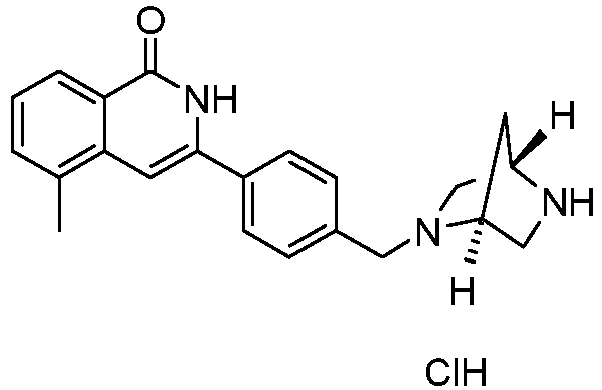
IQ-086 AnalpH2_MeOH_Q C: Rt 4.77 min; m/z 346 [M+1]+ 22 mg, 72%, white solid 
IQ-049 AnalpH2_MeOH_Q C: Rt 5.91 min; m/z 360 [M+1]+ 25 mg, 96%, off-white solid 
IQ-029 AnalpH2_MeOH_Q C: Rt 5.00 min; m/z 279 [M+1]+ 9 mg, 24%, off-white solid 
IQ-150 AnalpH2_MeOH_Q C(1): Rt 5.83 min; m/z 400 [M+1]+ 367 mg, 56%, cream solid 
IQ-158 AnalpH2_MeOH_Q C: Rt 5.62 min; m/z 356 [M+1]+ 22 mg, 65% white solid 
IQ-081 AnalpH2_MeOH_Q C(1): Rt 5.71 min; m/z 348 [M+1]+ 29 mg, 48%, pale peach solid 
IQ-028-1 AnalpH2_MeOH_Q C(Sunfire1): Rt 4.29 min; m/z 321 [M+1]+ 212 mg, 45%, orange solid 1H NMR (400 MHz, DMSO-d6 ): δ11.42 (br s, 1 H), 8.58 (d, J = 2.3 Hz, 1H), 8.05 (d, J = 7.8 Hz, 1H), 7.97 (dd, J = 8.8, 1.0Hz, 1H), 7.53 (d, J = 6.8 Hz, 1H), 7.32 (t, J = 7.6 Hz, 1 H), 6.9 (d, J = 8.8 Hz, 1H), 6.77 (s, 1H), 3.53 (t, J = 5.1 Hz, 4H), 2.81 (t, J= 5.1 Hz, 4H), 2.54 (s, 3H). 
IQ-027 AnalpH2_MeOH_Q C(Sunfire1): Rt 4.73 min; m/z 341 [M+1]+ 460 mg, 66%, pale yellow solid 1H NMR (400 MHz, DMSO-d6 ): δ8.54 (d, J = 2.2 Hz, 1H), 8.16 (d, J = 7.8 Hz, 1H), 7.93 (dd, J= 9.1, 2.5 Hz, 1H), 7.85 (dd, J= 7.6 Hz, 1.0 1H), 7.43 (t, J = 7.8 Hz, 1 H), 6.90 (d, J = 9.1 Hz, 1H), 6.83 (s, 1 H), 3.54-3.52 (m, 4H), 2.80-2.78 (m, 4H). 
IQ-024 AnalpH2_MeOH_Q C: Rt 5.74 min; m/z 359 [M+1]+ 82 mg, 67%, pale orange solid 
IQ-023 AnalpH2_MeOH_Q C: Rt 5.41 min; m/z 339 [M+1]+ 51 mg, 97%, yellow solid 
IQ-016 AnalpH2_MeOH_Q C: Rt 5.35 min; m/z 320 [M+1]+ 59 mg, 41%, beige solid 
IQ-014 AnalpH2_MeOH_Q C: Rt 5.65 min; m/z 340 [M+1]+ 20 mg, 10%, yellow yellow solid 
IQ-115 AnalpH2_MeOH_Q C(Sunfire1): RT 4.81 min; m/z 426 [M+1]+. 60 mg, 32%, cream solid 
IQ-116 AnalpH2_MeOH_Q C(Sunfire1): RT 5.13 min; m/z 446 [M+1]+. 36 mg, 21%, pale orange solid 
IQ-124 AnalpH2_MeOH_Q C: RT 5.79 min; m/z 404 [M+1]+. 146 mg, 89%, yellow yellow solid 
IQ-123 AnalpH2_MeOH_Q C: RT 5.50 min; m/z 384 [M+1]+. 54 mg, 59%, yellow yellow solid 
IQ-159 AnalpH2_MeOH_Q C: Rt 6.08 min; m/z 360 [M+1]+ 4.4 mg, 17% pale cream solid -

- To a solution of 3-(6-{4-[2-(tert-butyl-dimethyl-silanyloxy)-ethyl]-piperazin-1-yl}-pyridin-3-yl)-5-methyl-2H-isoquinolin-1-one (214 mg, 0.45 mmol) in THF (1.5 mL) at 5 °C was added 1 M TBAF/THF (0.58 mL, 0.58 mmol) dropwise. The reaction mixture was allowed to warm to RT and stirred for 1 h. The reaction mixture was diluted with EtOAc (10 mL) and washed with water and brine. The organic layer was concentrated in vacuo and purified by reverse phase preparative HPLC-MS to obtain 3-{6-[4-(2-hydroxy-ethyl)-piperazin-1-yl]-pyridin-3-yl}-5-methyl-2H-isoquinolin-1-one as a yellow solid (27 mg, 16%).
1H NMR (400 MHz, DMSO-d6 ): δ11.61-11.29 (br s, 1H), 8.59 (d, J = 2.5 Hz, 1H), 8.05 (d, J= 8 Hz, 1H), 7.98 (dd, J= 9, 2.5 Hz, 1H), 7.53 (d, J = 8 Hz, 1H), 7.32 (t, J = 8 Hz, 1H), 6.92 (d, J = 9 Hz, 1H), 6.77 (s, 1H), 4.43 (t, J = 5 Hz, 1H), 3.59-3.54 (m, 6H), 2.54 (s, 3H), 2.54-2.52 (m, 4H), 2.44 (t, J = 5 Hz, 2H).
AnalpH2_MeOH_QC: Rt 5.04 min; m/z 365 [M+1]+. - The following 2H-isoquinolin-1-one of formula 5_derivatives are prepared using analogous procedures.
Table 14: 2H-isoquinolin-1-one derivatives of Formula 5 Compound Code Analytical Data Mass, %Yield, State 
IQ-012 AnalpH2_MeOH_QC: Rt 5.40 min; m/z 385 [M+1]+ 21 mg, 12%, pale yellow solid 
IQ-219 AnalpH2_MeOH_QC(1): Rt 5.08 min; m/z 326 [M+1]+ 65 mg, 13 %, white solid -

- To a stirred solution of 3-{4-[4-(tert-butyl-diphenyl-silanyloxy)-piperidin-1-ylmethyl]-phenyl}-5-methyl-2H-isoquinolin-1-one (213 mg, 0.36 mmol) in CH2Cl2 (2 mL) was added 1.25M methanolic HCl (1 mL) and the reaction stirred at RT for 48 h. The reaction mixture was concentrated in vacuo and the crude residue purified by reverse phase preparative HPLC-MS to afford 3-[4-(4-hydroxy-piperidin-1-ylmethyl)-phenyl]-5-methyl-2H-isoquinolin-1-one as a pale yellow solid (80 mg, 64%).
AnalpH2_MeOH_QC(1): Rt 5.03 min; m/z 349 [M+1]+.
1H NMR (400 MHz, DMSO-d6 ): δ11.63-11.35 (br s, 1H), 8.15 (s, 0.8H) 8.07 (d, J= 7 Hz, 1H), 7.78 (d, J= 8 Hz, 2H), 7.56 (d with fine coupling, J= 7 Hz, 1H), 7.41 (d, J= 8 Hz, 2H), 7.37 (t, J = 8 Hz, 1 H), 6.85 (s, 1 H), 4.66-4.52 (br s,1 H), 3.52 (s, 2H), 3.50-3.45 (m, 1H), 2.70-2.67 (m, 2H), 2.56 (s, 3H), 2.11-2.06 (m, 2H), 1.74-1.70 (m, 2H), 1.45-1.36 (m, 2H). - The following 2H-isoquinolin-1-one derivatives are prepared using analogous procedures.
Table 15: 2H-isoquinolin-1-one derivatives of Formula 5 Compound Code Analytical Data Mass, %Yield, State 
IQ-120 AnalpH2_MeO H_QC(1): Rt 7.31 min; m/z 373 [M+1]+ 39 mg, 60%, white solid 
IQ-167 AnalpH2_MeO H_QC(1): Rt 5.04 min; m/z 321 [M+1]+ 70 mg, 50 %, off-white solid 
IQ-169 AnalpH2_MeO H_QC(1): Rt 5.11 min; m/z 339 [M+1]+ 3.5 mg, 15 %, off-white solid 
IQ-172 AnalpH2_MeO H_QC(1): Rt 5.09 min; m/z 335 [M+1]+ 17 mg, 49 %, off-white solid -

- To a solution of 5-methyl-3-(4-{1-methyl-1-[4-(toluene-4-sulfonyl)-piperazin-1-yl]-ethyl}-phenyl)-2H-isoquinolin-1-one (33 mg, 0.064 mmol) in HBr (33% w/w in acetic acid) (0.25 mL) was added 4-hydroxybenzoic acid (27 mg, 0.194 mmol) and the reaction stirred for 16 h at RT after which time the rection was concentrated in vacuo and the crude residue purified by preperative HPLC to afford 5-Methyl-3-[(4-(1-methyl-1-piperazin-1-yl]-ethyl)-phenyl]-2H-isoquinolin-1-one as a pale orange solid (1.06 mg, 4.5%).
AnalpH2_MeOH_QC(1): RT 6.01 min; m/z 362 [M+1]+. -
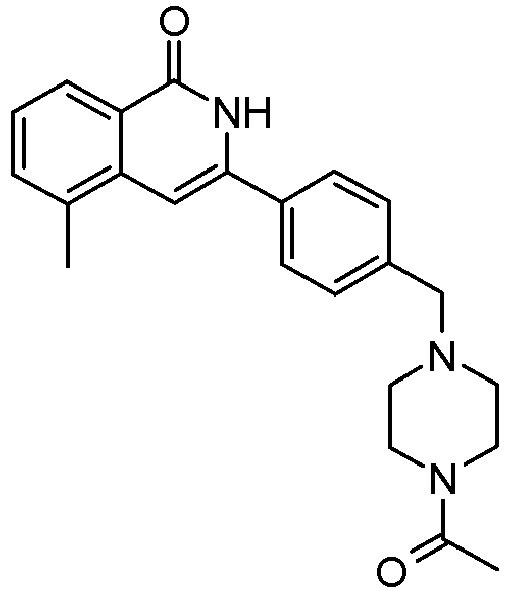
- To a stirred solution of acetic acid (0.005 mL, 0.068 mmol) in CH2Cl2 (5 mL) was added TBTU (22 mg, 0.068 mmol) and N,N-diisopropylethylamine (0.036 mL, 0.20 mmol) and the reaction stirred for 10 min at RT. 5-Methyl-3-(4-piperazin-1-ylmethylphenyl)-2H-isoquinolin-1-one (23 mg, 0.068 mmol) was then added and the reaction stirred for 2 h at RT. The reaction mixture was concentrated in vacuo and purified by reverse phase preparative HPLC-MS to afford 3-[4-(4-acetyl-piperazine-1-ylmethyl)-phenyl]-5-methyl-2H-isoquinolin-1-one as a white solid (2 mg, 9%).
1H NMR (400 MHz, DMSO-d6 ): δ 11.70-11.38 (br s, 1H), 8.08 (d, J= 8 Hz, 1H), 7.80 (d, J = 8 Hz, 2H), 7.56 (d, J= 8 Hz, 1 H), 7.44 (d, J = 8 Hz, 2H), 7.37 (t, J = 8 Hz, 1 H), 6.92 (s, 1 H), 3.57 (s, 2H), 3.46-3.42, (m, 4H), 2.56 (s, 3H), 2.44-2.39 (m, 2H), 2.35-2.32 (m, 2H), 1.99 (3H, s).
AnalpH2_MeOH_QC(Sunfire): Rt 4.38 min; m/z 376 [M+1]+. - The following 2H-isoquinolin-1-one derivatives are prepared using analogous procedures.
Table 16 2H-isoquinolin-1-one derivatives of Formula 6 Compound Code Analytical Data Mass, %Yield, State 
IQ-017 AnalpH2_M eOH_QC: Rt 7.76 min; m/z 362 [M+1]+ 18 mg, 36%, beige solid 
IQ-015 AnalpH2_M eOH_QC: Rt 8.16 min; m/z 382 [M+1]+ 11 mg, 43%, yellow solid 
IQ-045 AnalpH2_M eOH_QC Rt 5.62 min m/z 396 [M+1]+. 17 mg, 42%, white solid -
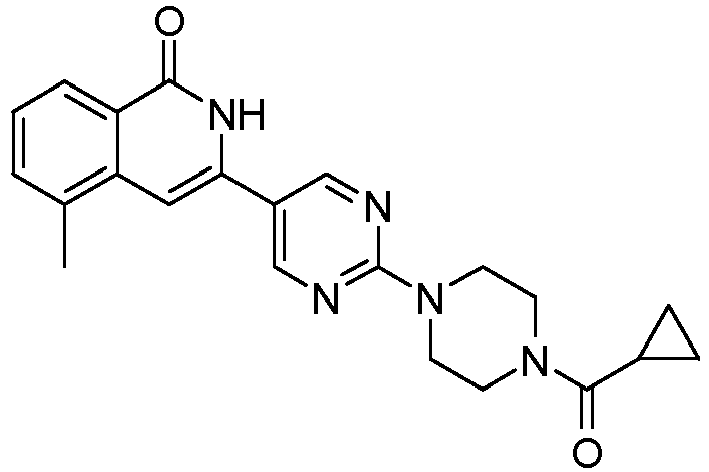
- Cyclopropylcarbonyl chloride (9 µL, 2.28 mmol) was added to a stirred solution of 5-methyl-3-(2-piperazin-1-yl-pyrimidin-5-yl)-2H-isoquinolin-1-one (36 mg, 0.11 mmol) and N,N-diisopropylethylamine (23 µL, 0.132 mmol) in CH2Cl2 (2 mL) at -20 °C and allowed to stir for 10 min. The reaction mixture was concentrated in vacuo. The crude residue was purified by reverse phase preparative HPLC-MS to afford 3-[2-(4-cyclopropanecarbonyl- piperazin-1-yl)-pyrimidin-5-yl]-5-methyl-2H-isoquinolin-1-one as a white solid (19 mg, 45%).
1H NMR (400 MHz, DMSO-d6 ): δ11.82-11.11 (br s, 1H), 8.85 (s, 2H), 8.05 (d, J= 8 Hz, 1 H), 7.55 (d, J= 8 Hz, 1 H), 7.35 (t, J= 8 Hz, 1 H), 6.84 (s, 1 H), 3.96-3.76 (br m, 6H), 3.64-3.54 (br s, 2H), 2.54 (s, 3H), 2.08-2.00 (m, 1 H), 0.82-0.70 (m, 4H).
AnalpH2_MeOH_QC(1): Rt 8.05 min; m/z 390 [M+1]+. -

- To a stirred solution of 5-methyl-3-(4-piperazin-1-ylmethyl-phenyl)-2H-isoquinolin-1-one (40 mg, 0.12 mmol) in CH2Cl2 (0.5 mL) was added tert-butyl isocyanate (0.014 mL, 0.12 mmol) and the reaction mixture stirred at RT for 1 h after which time the solvent was removed in vacuo and the crude residue purified by reverse phase preparative HPLC-MS to afford 4-[4-(5-methyl-1-oxo-1,2-dihydro-isoquinolin-3-yl)-benzyl]-piperazine-1- carboxylic acid tert-butylamide as a white solid (28 mg, 54%).
1H NMR (400 MHz, DMSO-d6 ): δ 11.50-11.12 (br s, 1H), 7.83 (d, J= 8 Hz, 1H), 7.55 (d, J= 8 Hz, 2H), 7.32 (d, J= 8 Hz, 1H), 7.19 (d, J = 8 Hz, 2H), 7.13 (t, J = 8 Hz, 1H), 6.62 (s, 1H), 5.49 (s, 1H), 3.30 (s, 2H), 3.03-3.01, (m, 4H) 2.32 (s, 3H), 2.10-2.08 (m, 4H), 1.01 (s, 9H).
AnalpH2_MeOH_QC(1): Rt 5.83 min; m/z 433 [M+1]+. -

-

- MCPBA (41 mg, 0.184 mmol) was added to a solution of 5-chloro-3-[6-(4-methyl-piperazin-1-yl)-pyridin-3-yl]-2H-isoquinolin-1-one (58 mg, 0.164 mmol) in CH2Cl2 (7 mL) at -78 °C and allowed to warm to RT and stirred at this temperature for a further 40 minutes. The reaction mixture was quenched with saturated, aqueous NaHCO3 (2 mL) and extracted with CH2Cl2 followed by EtOAc. The combined organic layer was concentrated in vacuo and passed through an SCX-2 cartridge (5 g), eluting with 10% NH3/MeOH. The desired fractions were concentrated in vacuo and the crude material purified by reverse phase preparative HPLC-MS to obtain 5-chloro-3-[6-(4-methyl-piperazin-1-yl)-1-oxy-pyridin-3-yl]-2H-isoquinolin-1-one as a white solid (19 mg, 33%).
1H NMR (400 MHz, DMSO-d6 ): δ12.30-12.00 (br s, 1H), 8.59 (d, J = 8 Hz, 1H), 8.31 (s, 0.6H), 8.17 (d, J = 9 Hz, 1H), 8.01 (dd, J = 9, 3 Hz, 1H), 7.84 (d, J = 8 Hz, 1H), 7.43 (t, J = 8 Hz, 1 H), 7.03 (d, J = 9 Hz, 1 H), 6.84 (s, 1 H), 4.29-4.27 (m, 2H), 3.59-3.49 (m, 4H), 3.35-3.31 (m, 2H), 3.25 (s, 3H).
AnalpH9_MeOH_QC: Rt 7.20 min; m/z 371 [M+1]+. - The following 2H-isoquinolin-1-one derivatives are prepared using analogous procedures.
Table 17: 2H-isoquinolin-1-one derivatives 27 Compound Code Analytical Data Mass, %Yield, State 
IQ-028-2 AnalpH9_MeOH_QC (Sunfire1): Rt 5.86 min; m/z 337 [M+1]+ 48 mg, 57%, brown solid -

-

- To N,N-diisopropylamine (2.54 mL, 18 mmol) in anhydrous THF (15 mL), under N2 at -78 °C was added n-BuLi dropwise (2.5M in n-hexanes, 7.2 mL, 18 mmol) and the reaction mixture maintained at this temperature for 30 minutes. A solution of N,N-diethyl-2,3-dimethyl-benzamide (1.23 g, 6 mmol) in anhydrous THF (15 mL) was added dropwise to give a deep red solution. After 20 minutes at -78 °C, 4-bromobenzonitrile (1.09 g, 6 mmol) in anhydrous THF (15 mL) was added dropwise and the reaction mixture allowed to stir at this temperature for 2.5 h. The reaction mixture was quenched by adding dropwise onto ice, upon which a pale yellow solid precipitated out. The solid was triturated with isohexane/EtOAc (2:1), filtered and dried in vacuo to afford 3-(4-bromo-phenyl)-5-methyl-2H-isoquinolin-1-one as a pale yellow solid (1.1 g, 58%).
AnalpH2_MeOH_4min(1): Rt 3.25 min; m/z 314 [M+1]+. -

- 3-(4-Bromo-phenyl)-5-methyl-2H-isoquinolin-1-one (200 mg, 0.64 mmol), zinc cyanide (90 mg, 0.76 mmol) and tetrakis(triphenylphosphine)palladium(0) (74 mg, 0.064 mmol) were stirred in DMF (2.1 mL) and degassed with N2. The reaction mixtures were irradiated using a microwave (300W, 180 °C, 30 min). The reaction mixtures were combined and the resulting precipitate was filtered, washed with DMF and water and dried to give 4-(5-methyl-1-oxo-1,2-dihydro-isoquinolin-3-yl)-benzonitrile as a yellowish solid (718 mg, 79%) which was used in the next step without further purification.
AnalpH2_MeOH_4min(1): Rt 2.83 min; m/z 261 [M+1]+. -
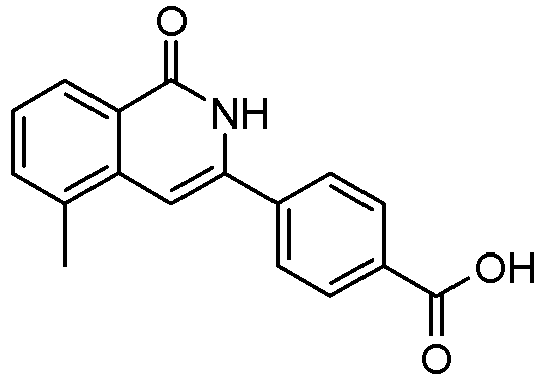
- To 4-(5-methyl-1-oxo-1,2-dihydro-isoquinolin-3-yl)-benzonitrile (100 mg, 0.38 mmol) was added 2M NaOH (1.5 mL) and the reaction mixture irradiated using a microwave (300W, 130 °C, 20 min). The reaction mixtures was diluted with water and adjusted to pH2 with 2M HCl whereupon a pale yellow solid precipitated out of solution. The solid was filtered, washed with water and dried. The solid was dissolved in DMF and passed through a Si-thiol cartridge to remove any residual palladium, eluting with DMF. The eluent was removed in vacuo to give 4-(5-methyl-1-oxo-1,2-dihydro-isoquinolin-3-yl)-benzoic acid as a pale yellow solid (120 mg, 63%).
AnalpH9_MeOH_4min(1): Rt 2.24 min; m/z 280 [M+1]+. -

- To 4-(5-methyl-1-oxo-1,2-dihydro-isoquinolin-3-yl)-benzoic acid (35 mg, 0.125 mmol), TBTU (40 mg, 0.125 mmol) was added 0.36M N,N-diisopropylethylamine/CH2Cl2 (0.35 mL, 0.125 mmol) and anhydrous DMF (0.9 mL). The reaction mixture was stirred at RT for 45 min after which time methyl-(tetrahydro-pyran-4-ylmethyl)-amine (19 mg, 0.15 mmol) in anhydrous DMF (0.45 mL) was added and the reaction mixture was stirred at RT overnight. The reaction mixture was passed through a Si-NH2 cartridge (1 g), eluting with DMF (2 x column volumes), MeOH (2 x column volumes) and the solvent removed in vacuo and the crude product purified by reverse phase preparative HPLC-MS to obtain N-methyl-4-(5-methyl-1-oxo-1,2-dihydro-isoquinolin-3-yl)-N-(tetrahydro-pyran-4-ylmethyl)-benzamide as a yellow foam (24 mg, 48%).
1H NMR (400 MHz, DMSO-d6 ): δ11.69-11.54 (br s, 1H), 8.09 (d, J = 7 Hz, 1H), 7.89 (d, J = 8 Hz, 2H), 7.58 (d, J = 7 Hz, 1 H), 7.52 (br d, J = 8 Hz, 1 H), 7.46 (br d, J = 8 Hz, 1 H), 7.40 (t, J = 7 Hz, 1H), 6.92 (s, 1H), 3.90 (br d, J = 11 Hz, 1H), 3.75 (brd, J = 11 Hz, 1H), 3.40-3.17 (m, 4H), 2.99 (br s, 1 H), 2.94 (br s, 2H), 2.58 (s, 3H), 2.08-1.82 (br m, 1 H), 1.63 (br d, J = 12 Hz, 1 H), 1.44 (br d, J = 12 Hz, 1 H), 1.32-1.25 (m, 1 H), 0.95-0.80 (m, 1 H).
AnalpH2_MeOH_QC(1): Rt 7.69 min; m/z 391 [M+1]+. - The following 2H-isoquinolin-1-one derivatives are prepared using analogous procedures
Table 18: 2H-isoquinolin-1-one derivatives of Formula 33 Compound Code Analytical Data Mass, %Yield, State 
IQ-107 AnalpH2_MeO H_QC(1): Rt 7.44 min; m/z 349 [M+1]+ 12 mg, 51%, white solid 
IQ-146 AnalpH2_MeO H_QC(1): Rt 5.27 min; m/z 376 [M+1]+ 16 mg, 35%, off-white solid 
IQ-098 AnalpH2_MeO H_QC(1): Rt 5.51 min; m/z 416 [M+1]+ 15 mg, 29%, off-white solid 
IQ-153 AnalpH2_MeO H_4min: Rt 3.15 min; m/z 476 [M+1]+ 21 mg, 100%, beige solid -

- To 4-{methyl-[4-(5-methyl-1-oxo-1,2-dihydro-isoquinolin-3-yl)-benzoyl]-amino}-piperidine-1-carboxylic acid tert-butyl ester (21 mg, 0.044 mmol) was added 2:1 CH2Cl2/TFA (1 mL) and the reaction mixture stirred at RT for 1 h. The solvent was removed in vacuo, re-dissolved in MeOH and passed through an SCX-2 cartridge (1 g). The column was washed with MeOH (4 x column volumes), the desired product eluted from the cartridge with 0.5M NH3/MeOH (4 x column volumes) and concentrated in vacuo. The crude product was purified by reverse phase preparative HPLC-MS to obtain N-methyl-4-(5-methyl-1-oxo-1,2-dihydro-isoquinolin-3-yl)-N-piperidin-4-yl-benzamide as a white solid (2.4 mg, 14%).
AnalpH2_MeOH_QC(1): Rt 5.10 min; m/z 376 [M+1]+. -

-

- A stirred solution of 4-fluoro-2-methyl-benzaldehyde (20 g, 144.9 mmol) and malonic acid (30.1 g, 289.8 mmol) in pyridine (100 mL) was heated to 50 °C. Piperidine (10 mL) was added and the reaction mixture was heated at 70 °C for 18 h. The reaction mixture was cooled RT and poured into chilled aqueous 1N HCl solution (1500 mL), the resulting precipitate was filtered and washed with petroleum ether 60-80 and dried in vacuo to obtain (E)-3-(4-fluoro-2-methylphenyl)acrylic acid (18 g, 69%) as an off white solid.
1H NMR (400MHz, CDCl3): δ8.00 (d, J= 16 Hz, 1H), 7.60-7.55 (m, 1H), 6.96-6.90 (m, 2H), 6.32 (d, J = 16 Hz, 1H), 2.44 (s, 3H).
AnalpH2_MeCN_FA_7min(XTERRA1.m): Rt 3.34 min; m/z 181 [M+1]+. - The following phenyl acrylic acid derivatives of formula 36 are prepared using analogous procedures.
Table 19: Phenyl acrylic acid Derivatives 36 Compound Reference Analytical Data Mass, %Yield, State 
Reported as commercially available AnalpH2_M eCN_FA_7 min(XTERR A1.m): Rt 3.16 min; m/z 185 [M+1]+. 25 g, 64%, off-white solid 
Reported as commercially available AnalpH2_M eOH_4min( 3): Rt 2.63 min; m/z not observed 6.3 g, 97%, white solid -

- To a solution of (E)-3-(4-fluoro-2-methylphenyl)acrylic acid (13 g, 72.22 mmol) in EtOH (250 mL) was added PtO2 (250 mg) and then hydrogenated at 30 psi for 3 h. The reaction mixture was filtered on a Celite® pad, washed with MeOH (100 mL), and the filtrate was concentrated, washed with diethyl ether (20 mL), n-pentane (50 mL) and dried in vacuo to give 3-(4-fluoro-2-methylphenyl)propanoic acid as an off-white solid (10 g, 77%).
1H NMR (400MHz, CDCl3): δ 7.13-7.05 (m, 1H), 6.90-6.79 (m, 2H), 2.95-2.85 (2H, m), 2.65-2.55 (2H, m), 2.31 (s, 3H)
AnalpH2_MeCN_FA_7min(XTERRA1.m): Rt 3.33 min; m/z 181 [M-1]-. - The following phenyl propanoic derivatives 37 are prepared using analogous procedures.
Table 20: Phenyl Propanoic Derivatives 37 Compound Reference Analytical Data Mass, %Yield, State 
Reported as commercially available AnalpH2_MeCN_F A_7min(XTERRA1. m): Rt 3.19 min; m/z 185 [M-1]-. 8g, 73%, off-white solid 
Reported as commercially available AnalpH2_MeOH_4 min(3): Rt 2.58 min; m/z not observed 6.37 g, 100%, white solid -

- To a solution of 3-(4-fluoro-2-methylphenyl)propanoic acid (12 g, 65.93 mmol) in CH2Cl2 (200 mL) was added oxalyl chloride (11.3 mL, 131.7 mmol) and stirred at RT for 16h. The reaction mixture was concentrated in vacuo and re-dissolved in CH2Cl2 (150 mL) and added to a suspension of AlCl3 (11.4 g, 85.7 mmol) in CH2Cl2 (150 mL) at 0 °C. The reaction mixture was heated at 50 °C for 3 h and allowed to stir at RT for 16h. The reaction mixture poured into ice water (150 mL), extracted with CH2Cl2 (2 x 100 mL), the organic extract was washed with 1 N NaOH solution (2 x 50 mL), brine solution (50 mL), dried over Na2SO4 and concentrated in vacuo. The crude material was purified by silica gel column chromatography, eluting with 10% EtOAc/petroleum ether 60-80 to afford 6-fluoro-4-methyl-2,3-dihydro-1H-inden-1-one as an off white solid (7 g, 70%).
1H NMR (400MHz, CDCl3): δ 7.28-7.25 (m, 1H), 7.18-7.12 (m, 1H), 3.03-2.96 (m, 2H), 2.78-2.73 (m, 2H), 2.35 (s, 3H).
AnalpH2_MeCN_TFA_4min(1): Rt 1.89 min; m/z 165 [M+1]+. - The following indanone derivatives 38 are prepared using analogous procedures.
Table 21: Indanone Derivatives 38 Compound Reference Analytical Data Mass, %Yield, State 
Commercially available N/A N/A 
Reported as commercially available AnalpH2_MeCN _TFA_4min(1): Rt 1.80 min; m/z 169 [M+1]+. 5.2 g, 57%, off-white solid 
Commercially available N/A N/A 
Reported as commercially available AnalpH2_MeOH _4min(3): Rt 2.23 min; m/z 165 [M+1]+ 5.62 g, 98%, off-white solid -
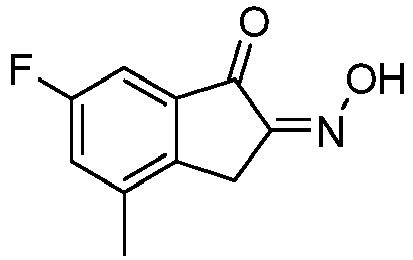
- To a stirred solution of 6-fluoro-4-methyl-2,3-dihydro-1H-inden-1-one (1 g, 6.09 mmol) in a mixture of diethyl ether (10 mL) and concentrated HCl (10 mL) was added isopentyl nitrite (0.73 mL, 5.47 mmol) and stirred at RT for 3 h. The precipitated solid was collected by filtration and washed with MeOH to obtain 6-fluoro-2-(hydroxyimino)-4-methyl-2,3-dihydro-1H-inden-1-one as a brown solid (800 mg, 68%).
1H NMR (400MHz, DMSO-d6 ): δ12.73 (s, 1H), 7.52-7.45 (m, 1H), 7.32-7.29 (m, 1H), 3.67 (s, 2H), 2.35 (s, 3H).
AnalpH2_MeCN_FA_7min(XTERRA1.m): Rt 3.04 min; m/z 194 [M+1]+. - The following 2-(hydroxyimino -2,3-dihydro-1H-inden-1-one derivatives 39 are prepared using analogous procedures.
Table 22: 2-(hydroxyimino-2,3-dihydro-1H-inden-1-one Derivatives of formula 39 Compound Reference Analytical Data Mass, %Yield, State 
AnalpH9_MeCN _AB_10min(Dev elosil): Rt 2.85 min; m/z 176 [M+1]+ 5 g, 43%, pale yellow solid. 
AnalpH2_MeCN _FA_7min(XTER RA1.m): Rt2.93 min; m/z 198 [M+1]+. 1 g, 57%, brown solid 
AnalpH2_MeOH _4min(1): Rt 2.08 min; m/z 198 [M+1]+ 4.27 g, 72%, beige solid 
AnalpH2_MeOH _4min(3): Rt 2.17 min; m/z 194 [M+1]+ 3.84 g, 58%, pale brown solid -

- To a solution of 6-fluoro-2-(hydroxyimino)-4-methyl-2,3-dihydro-1H-inden-1-one (800 mg, 4.12 mmol) in anhydrous CCl4 (100 mL) was added PCl5 (1.28g, 6.18 mmol) and stirred at RT for 16 h. The reaction mixture was concentrated in vacuo and the residue dissolved in anhydrous 1,4-dioxane (100 mL), cooled 0 °C, the solution was saturated with HCl gas and allowed to stir RT for 16 h. The reaction mixture was heated at 60 °C for 2 h, cooled to RT and diluted with EtOAc (50 mL), washed with water (25 mL), saturated NaHCO3 solution (25 mL), brine solution (25 mL), dried (Na2SO4), filtered and concentrated in vacuo. The crude material was washed with diethyl ether (10 mL), n-pentane (10 mL) and was dried in vacuo to obtain 3-chloro-7-fluoro-5-methylisoquinolin-1(2H)-one as a pale yellow solid (550 mg, 68%).
1H NMR (400MHz, DMSO-d6 ): δ12.55-12.40 (br s, 1H), 7.70-7.63 (m, 1H), 7.55-7.49 (m, 1 H), 6.84-6.70 (br s, 1 H), 2.48 (s, 3H).
AnalpH2_MeOH_4min(1): Rt 2.74 min; m/z 212 [M+1]+. - The following 3-chloro-isoquinolin-1(2H)-one derivatives 40 are prepared using analogous procedures.
Table 23: 3-Chloro-isoquinolin-1(2H)-one Derivatives of formula 40 Compound Reference Analytical Data Mass, %Yield, State 
Compound reported by Krämer et al., 1969 AnalpH2_MeO H_4min: Rt 2.67 min(1); m/z 193 [M+1]+ 1.1 g, 20%, white solid 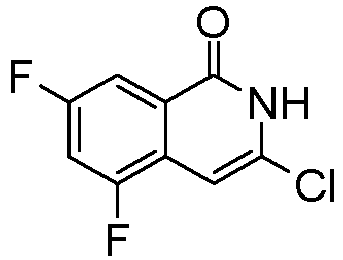
Novel AnalpH2_MeO H_4min(1): Rt 2.78 min; m/z 216 [M+1]+ 650 mg, 62%, off white solid 
Novel AnalpH2_MeO H_4min(1): Rt 2.51 min; m/z 215 [M+1]+ 150 mg, 28%, off-white solid 
AnalpH2_MeO H_4min(3): Rt 2.46 min; m/z 212 [M+1]+ 2.43 g, 58%, pale yellow solid -

-
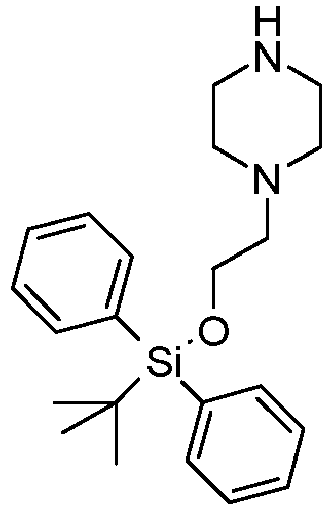
- To 2-piperazin-1-yl-ethanol (2g, 15.36 mmol) in CH2Cl2 (70 mL) and pyridine (1.85 mL, 23.04 mmol) was added DMAP (188 mg, 1.53 mmol) and TBDPS chloride (3.37 mL, 18.44 mmol) and the reaction mixture stirred at RT for 18 h. The reaction mixture was concentrated in vacuo and the crude material was purified by silica gel column chromatography, eluting with CH2Cl2 and increasing the polarity to 10% MeOH/CH2Cl2 to obtain 1-[2-(tert-butyl-diphenyl-silanyloxy)-ethyl]-piperazine as a colourless oil (1.1 g, 21%).
AnalpH2_MeOH_4min(3): Rt 2.48 min; m/z 369 [M+1]+. -

- To 4-carboxy-2-fluoro-benzene boronic acid (150 mg, 0.82 mmol), TBTU (262 mg, 0.82 mmol) in anhydrous DMF (8 mL), was added 0.36M N,N-diisopropylethylamine in anhydrous CH2Cl2 (2.3 mL, 0.82 mmol) and the reaction mixture stirred at RT for 45 min. Morpholine (85 mg, 0.99 mmol) in anhydrous DMF (1 mL) was added and the reaction mixture stirred for 18 hr at RT. The reaction mixture was concentrated in vacuo and the crude material was purified by reverse phase preparative HPLC-MS to afford 2-fluoro-4-(morpholine-4-carbonyl)-boronic acid as a white solid (98 mg, 47%).
AnalpH2_MeOH_4min: Rt 1.47 min; m/z 254 [M+1]+. - The following aryl boronic acid or boronic ester derivatives 43 are prepared using analogous procedures.
Table 24: Aryl boronic acid or boronic ester derivatives of Formula 43 Compound Analytical Data Mass, %Yield, State 
AnalpH2_MeOH_4 min: Rt 0.32, 0.43 min; m/z 267 [M+1]+ 240 mg, 55%, white solid 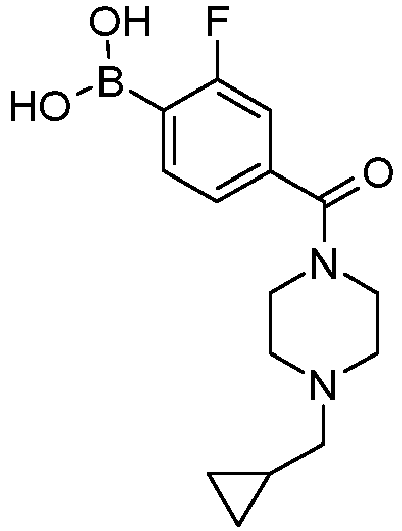
AnalpH2_MeOH_4 min: Rt 0.33, 0.61 min; m/z 307 [M+1]+ 245 mg, 49%, white solid 
AnalpH2_MeOH_4 min(3): Rt 1.83 min; m/z 282 [M+1]+ 554 mg, 65%, off-white solid 
AnalpH2_MeOH_4 min(3): Rt 3.45 min; m/z 460 [M+1]+ 1.56 g, 96%, cream solid 
AnalpH2_MeOH_4 min(3): Rt 0.31 min; m/z 249 [M+1]+ 1.54 g, 54%, colourless oil 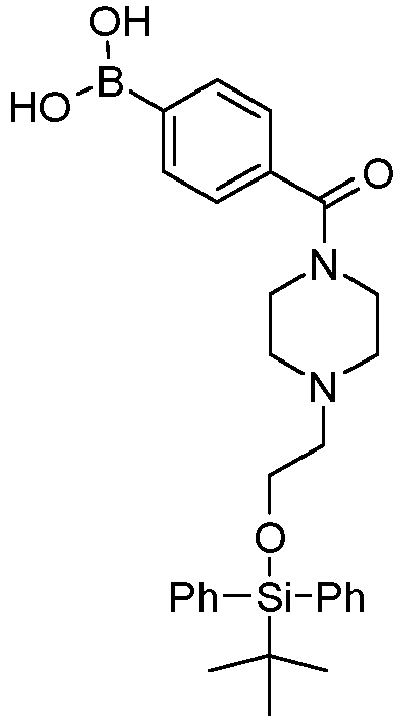
AnalpH2_MeOH_4 min(3): Rt 2.76 min; m/z 516[M+1]+ 978 mg, 64%, white solid 
AnalpH9_MeOH_4 min(2): Rt 1.62 min; m/z 263 [M+1]+ 242 mg, 83%, dark orange oil 
AnalpH2_MeOH_4 min(3): Rt 0.77 min; m/z 291 [M+1]+ 127 mg, 65%, white solid 
AnalpH2_MeOH_4 min(3): Rt 1.71 min; m/z 359.5 [M+1]+ 992 mg, 46%, pale yellow solid 
AnalpH2_MeOH_4 min(3): Rt 1.70 min; m/z 345 [M+1]+ 294 mg, 24%, off-white solid 
AnalpH2_MeOH_4 min(3): Rt 1.72 min; m/z 356 [M+1]+ 532 mg, 74%, yellow oil 
AnalpH2_MeOH_4 min(3): Rt 1.66 min; m/z 331 [M+1]+ 118 mg, 25%, white solid 
AnalpH2_MeOH_4 min(3): Rt 3.21 min; m/z 431 [M+1]+ 899 mg, 67%, cream solid 
AnalpH2_MeOH_4 min(3): Rt 1.68 min; m/z 331 [M+1]+ 233 mg, 49%, yellow solid 
AnalpH2_MeOH_4 min(3): Rt 1.73 min; m/z 359 [M+1]+ 149 mg, 19%, yellow oil 
AnalpH2_MeOH_4 min(3): Rt 1.74 min; m/z 387 [M+1]+ 995 mg, 91%, yellow solid 
AnalpH2_MeOH_4 min(3): Rt 1.77 min; m/z 373 [M+1]+ 589 mg, 81%, yellow solid 
AnalpH2_MeOH_4 min(3): Rt 1.80 min; m/z 373 [M+1]+ 593 mg, 82%, dark yellow solid 
AnalpH2_MeOH_4 min(3): Rt 3.25 min; m/z 445 [M+1]+ 889 mg, quant., white solid 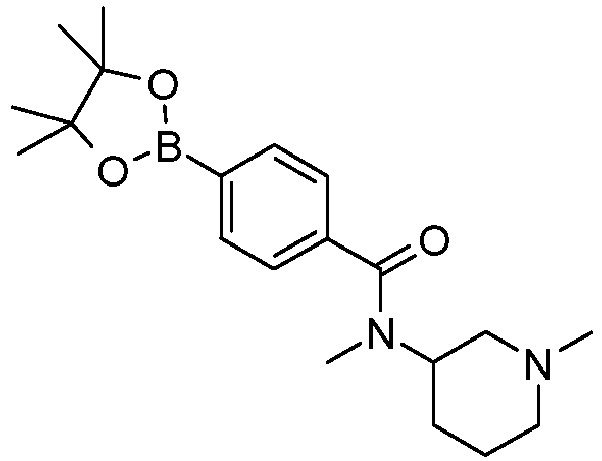
AnalpH2_MeOH_4 min(3): Rt 1.75 min; m/z 359 [M+1]+ 784 mg, 73%, yellow/orange foam -

- To a stirred solution of 2-formylpyridine-5-boronic acid pinacolate (200 mg, 1.33 mmol) in DCE (10 mL) was added 1-(cyclopropylmethyl) piperazine (0.217 mL, 1.46 mmol) and stirred at RT for 30 min. Sodium triacetoxyborohydride (424 mg, 2.00 mmol) was added and the reaction mixture stirred for 18 h at RT. The reaction mixture concentrated in vacuo and the residue was diluted with water (20 mL) and the aqueous layer washed with EtOAc. The combined aqueous layer was concentrated in vacuo and the crude material was purified by reverse phase preparative HPLC-MS to obtain pyridin-2-ylmethyl-[1-(4-cyclopropylmethyl-piperazine)]-5-boronic acid as a pale yellow oil (140 mg, 38%). AnalpH2_MeOH_4min: Rt 0.33 min; m/z 275 [M+1]+.
- The following aryl boronic acid derivatives 43 are prepared using analogous procedures.
Table 25: Aryl boronic acid derivatives of Formula 43 Compound Analytical Data Mass, %Yield, State 
AnalpH9_MeOH_4 min: Rt 1.85 min; m/z 290 [M+1]+ 122 mg, 32%, brown oil 
AnalpH2_MeOH_4 min: Rt 1.72 min; m/z 362 [M+1]+ 68 mg, 47%, pale yellow solid 
AnalpH2_MeOH_4 min: Rt 0.73 min; m/z 253 [M+1]+ 164 mg, 55%, off-white solid -

- To a solution of 4-bromomethylphenylboronic acid pinacol ester (564 mg, 1.90 mmol) in acetone (19 mL) was added 2-methylbenzimidazole (377 mg, 2.85 mmol), potassium iodide (16 mg, 0.095 mmol) and K2CO3 (394 mg, 2.85 mmol) and the reaction mixture heated at 60 °C for 3.25 h. The reaction mixture was diluted with H2O and extracted with EtOAc (x2). The organic layers were combined, dried (phase separation cartridge) and concentrated in vacuo. The crude material was purified by reverse phase preparative HPLC-MS to afford 2-Methyl-1-[4-(4,4,5,5-tetramethyl-[1,3,2]dioxaborolan-2-yl)-benzyl] 1H-benzoimidazole as an off-white solid (234 mg, 35%).
AnalpH2_MeOH_4min(3): Rt 2.26 min; m/z 349 [M+1]+. - The following aryl boronic ester derivatives 43 are prepared using analogous procedures.
Table 26: Aryl boronic ester derivatives of Formula 43 Compound Analytical Data Mass, %Yield, State 
AnalpH2_MeOH_4 min(3): Rt 2.49 min; m/z 335 [M+1]+. 385 mg, 53%, white solid 
Commercially available N/A -

- To NaH (78 mg, 1.94 mmol) in anhydrous DMF (4 mL) under N2, at 0 °C was added indole (227 mg, 1.94 mmol) in anhydrous DMF (5 mL). The reaxtion mixture was maintained at this temperature for 10 min. 4-bromomethylphenylboronic acid pinacol ester (523 mg, 1.76 mmol) in anhydrous DMF (8 mL) was added and the reaction stirred at RT for 18 h. The reaction mixture was diluted with H2O and extracted with CH2Cl2 (x2). The organic phases were combined, washed with brine, dried (phase separation cartridge) and the solvent removed in vacuo. The crude material was purified by silica gel column chromatography eluting with isohexane and increasing the polarity to 5% EtOAc/isohexane. The compound was further purified by reverse phase preparative HPLC-MS to afford 1-[4-(4,4,5,5-Tetramethyl-[1,3,2]dioxaborolan-2-yl)-benzyl]-1H-indole as an off-white solid (120 mg, 10%).
AnalpH2_MeOH_4min(3): Rt 3.50 min; m/z 334 [M+1]+. - The following aryl boronic ester derivatives 43 are prepared using analogous procedures.
Table 27: Aryl boronic ester derivatives of Formula 43 Compound Analytical Data Mass, %Yield, State 
AnalpH2_MeOH_4 min(3): Rt 3.34 min; m/z 284 [M+1]+ 130 mg, 23%, white solid -
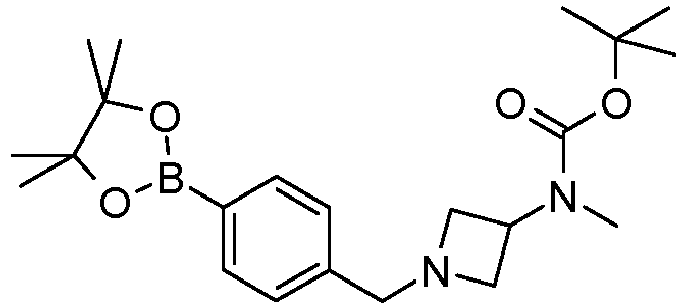
- To 4-bromomethylboronic acid pinacol ester (500 mg, 168 mmol) and azetidin-3-yl-methyl-carbamic acid tert-butyl ester hydrochloride (561 mg, 2.52 mmol) in anhydrous THF (12 mL) was added NEt3 (704 µl, 5.05 mmol). The reaction mixture was stirred at RT, under N2 balloon, for 18 h. The reaction mixture was concentrated in vacuo, suspended in CH2Cl2 and washed with H2O. The aqueous layer was separated and washed with CH2Cl2. The organic layers were combined, dried (phase separation cartridge) and cthe solvent removed in vacuo. The crude material was purified by silica gel column chromatography eluting with CH2Cl2 and increasing the polarity to 20% MeOH/CH2Cl2to afford methyl-{1-[4-(4,4,5,5-tetramethyl-[1,3,2]dioxaborolan-2-yl)-benzyl]-azetidin-3-yl}-carbamic acid tert-butyl ester as a colourless oil (441 mg, 65%). AnalpH2_MeOH_4min(3): Rt 2.21 min; m/z 403 [M+1]+.
-

- To 5-bromopyrimidine-2-carboxylic acid (100 mg, 0.49 mmol) and TBTU (158 mg, 0.49 mmol) in anhydrous DMF 94.4. mL) was added DIPEA (0.36M in CH2Cl2, 1.4 mL, 0.49 mmol) and the reaction mixture stirred at RT for 40 min. N-cyclopropylmethylpiperazine (83 mg, 0.59 mmol) in anhydrous DMF (1 mL) was added and the reaction stirred at RT for 18 h. The reaction mixture was passed through a Si-NH2 cartridge (5g), eluting with DMF and MeOH. The eluents were combined, concentrated in vacuo and purified by reverse phase preparative HPLC-MS to obtain (5-bromo-pyrimidin-2-yl)-(4-cyclopropylmethyl-piperazin-1-yl)-methanone as a pale yellow solid (46 mg, 29%).
AnalpH2_MeOH_4min(3): Rt 0.35, 0.81 min; m/z 325 [M+1]+. - The following bromo aryl derivatives 47 are prepared using analogous procedures.
Table 28: Aryl bromide derivatives of Formula 47 Compound Analytical Data Mass, %Yield, State 
AnalpH2_MeOH_4 min(3): Rt 0.84 min; m/z 325 [M+1]+ 390 mg, 53%, colorless oil, solidifies on standing 
AnalpH9_MeOH_4 min(2): Rt 1.64 min; m/z 285 [M+1]+ 314 mg, 50%, tan solid 
AnalpH9_MeOH_4 min(2): Rt 2.06 min; m/z 284 [M+1]+ 1.17 g, 83%, dark orange oil 
AnalpH2_MeOH_4 min(3): Rt 3.65 min; m/z 530 [M+1]+ 971 mg, 82%, orange oil 
AnalpH2_MeOH_4 min(3): Rt 2.64 min; m/z 298 [M+1]+ 500 mg, 81%, white solid 
AnalpH2_MeOH_4 min(3): Rt 2.47 min; m/z 284 [M+1]+ 457 mg, 67%, pale yellow solid -

- To 4-bromophenyl acetylchloride (300 mg, 1.28 mmol) in CH2Cl2 (5 mL) was added 3-(tert-Butyl-diphenyl-silanyloxy)-azetidine (399 mg, 1.28 mmol), DIPEA (670 µL, 3.85 mmol) and the reaction stirred at RT for 2 h. The crude material was purified by silica gel column chromatography, eluting with isohexane and increasing the polarity to 80% EtOAc/isohexane to obtain 2-(4-bromo-phenyl)-l-[3-(tert-butyl-diphenyl-silanyloxy)-azetidin-1-yl]-ethanone as a colourless glass (632 mg, 97%).
AnalpH2_MeOH_4min(3): Rt 3.71 min; m/z 510 [M+1]+. -

- To 4-bromomethylbenzyl bromide (300 mg, 1.2 mmol) in THF (5 mL) was added NEt3 (418 µl, 3 mmol) and the reaction mixture stirred at RT for 10 min. 3-(tert-Butyl-diphenyl-silanyloxy)-azetidine hydrochloride (628 mg, 1.8 mmol) was added and the reaction stirred at RT for 18 h. The reaction mixture was concentrated in vacuo and the residue partitioned between CH2Cl2 and 5% NaHCO3 (aq). The organic phase was separated, dried (MgSO4) and concentrated in vacuo. The crude material was purified by silica gel column chromatography, eluting with isohexane and increasing the polarity to 50% EtOAc/isohexane to obtain 1-(4-Bromo-benzyl)-3-(tert-butyl-diphenyl-silanyloxy)-azetidine as a colourless oil (328 mg, 57%).
AnalpH2_MeOH_4min(3): Rt 2.77 min; m/z 480 [M+1]+. -

- 1-(4-Bromophenyl)-1-methyl-ethylamine (1g, 4.67 mmol) and epichlorohydrin (439 µl, 5.6 mmol) in EtOH (15 mL) were heated at 70 °C for 18 h. The reaction mixture was concentrated in vacuo and purified by reverse phase preparative HPLC-MS to obtain 1-[1-(4-bromo-phenyl)-l-methyl-ethyl]-azetidin-3-ol as a white solid (489 mg, 38%).
AnalpH2_MeOH_4min(3): Rt 2.77 min; m/z 480 [M+1]+. -

- (5-Bromo-pyrimidin-2-yl)-(4-cyclopropylmethyl-piperazin-1-yl)-methanone (46 mg, 0.14 mmol), bis(pinacolato)diboron (43 mg, 0.17 mmol), Pd(dppf)Cl2 (12 mg, 0.014 mmol) and potassium acetate (42 mg, 0.42 mmol) in 1,4-dioxane (0.7 mL) were added to a microwave vial and the reaction mixture purged with N2 for 10 min. The reaction mixture was irradiated using a microwave reactor (300W, 120 °C, 20 min). The reaction mixture was passed through a Si-thiol cartridge (2 g) and the column washed with MeOH (4 x column volumes). The solvent was removed in vacuo and purified by reverse phase preparative HPLC-MS. The sample was passed through a SCX-2 cartridge (500 mg) and the column washed with MeOH (4 x column volumes). The compound was eluted from the column with 0.5M NH3/MeOH to afford 2-(4-cyclopropylmethyl-piperazine-1-carbonyl)-pyrimidine-5-boronic acid as a white solid (29 mg, 70%).
AnalpH9_MeOH_4min(2): Rt 1.15 min; m/z 291 [M+1]+. - The following aryl boronic acid or boronic ester derivatives 43 are prepared using analogous procedures.
Table 29: Aryl boronic acid or boronic ester derivatives of Formula 43 Compound Analytical Data Mass, %Yield, State 
AnalpH2_MeOH_4 min(3): Rt 0.3 min; m/z 251 [M+1]+ 163 mg, 68%, white solid 
AnalpH2_MeOH_4 min(3): Rt 3.72 min; m/z 556 [M+1]+ 141 mg, 47%, brown oil -

- 3-Chloro-5-methyl-2H-isoquinolin-1-one (50 mg, 0.26 mmol), 2-(4-methylpiperazin-1-yl)pyrimidine-5-boronic acid pinacol ester (118 mg, 0.39 mmol), K2CO3 (73 mg, 0.52 mmol) and Pd(dppf)Cl2 (10 mg, 0.013 mmol) in DME/EtOH/H2O 4:0.5:1 (2.75 mL) were added to a microwave vial and the reaction mixture purged with N2 for 10 min. The reaction mixture was irradiated using a microwave reactor (300W, 100 °C, 60 min). The reaction mixture was filtered through celite and concentrated in vacuo. The crude material was purified by silica gel column chromatography, eluting with CH2Cl2 and increasing the polarity to 50% MeOH/CH2Cl2. The crude material was trituared with MeOH and washed with isohexane to afford 5-methyl-3-[2-(4-methyl-piperazin-1-yl)-pyrimidin-5-yl]-2H-isoquinolin-1-one as an off-white solid (28 mg, 32%).
AnalpH2_MeOH_QC(1): Rt 4.97 min; m/z 336 [M+1]+. - The following 2H-isoquinolin-1-one derivatives are prepared using analogous procedures.
Table 30: 2H-isoquinolin-1-one derivatives of Formula 4 Compound Code Analytical Data Mass, %Yield, State 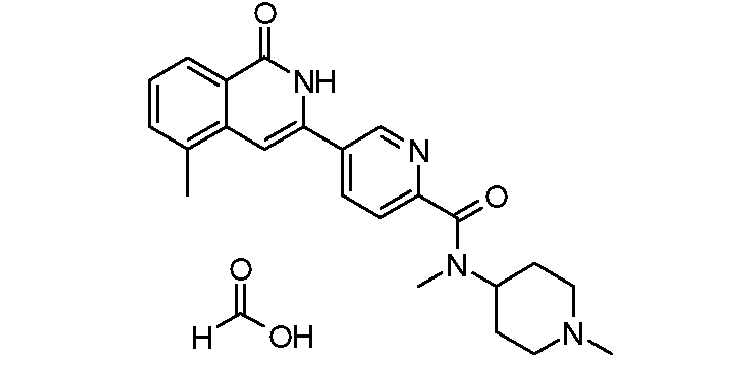
IQ-099 AnalpH2_MeOH -QC(1): Rt 4.74 min; m/z 391 [M+1]+ 13 mg, 10%, cream solid 
IQ-071 AnalpH2_MeOH _QC(1): Rt 6.35 min; m/z 435 [M+1]+ 31 mg, 27%, cream solid 
IQ-057 AnalpH2_MeOH _QC(1): Rt 4.84 min; m/z 349 [M+1]+ 17 mg, 20%, pale orange solid 
IQ-076 AnalpH2_MeOH _QC(1): Rt 6.56 min; m/z 452 [M+1]+ 72 mg, 66%, pale orange solid 
IQ-077 AnalpH2_MeOH _QC(1): Rt 6.69 min; m/z 456 [M+1]+ 46 mg, 29%, pale brown solid 
IQ-154 AnalpH2_MeOH _QC(1):: Rt 6.69 min; m/z 456 [M+1]+ 46 mg, 29%, pale brown solid 
IQ-080 AnalpH2_MeOH _QC(1): Rt 5.57 min; m/z 366 [M+1]+ 39 mg, 45%, brown solid 
IQ-138 AnalpH2_MeOH _QC(1): Rt 5.63 min; m/z 370 [M+1]+ 25 mg, 29%, white solid 
IQ-161 AnalpH2_MeOH QC: Rt 5.19 min; m/z 389 [M+1]+ 44 mg, 40%, pale brown solid 
IQ-162 AnalpH2_MeOH QC: Rt 5.41 min; m/z 404 [M+1]+ 48 mg, 43%, pale brown solid 
IQ-163 AnalpH2_MeOH QC: Rt 7.44 min; m/z 367 [M+1]+ 19 mg, 11%, off-white solid 
IQ-164 AnalpH2_MeOH QC: Rt 5.19 min; m/z 380 [M+1]+ 40 mg, 23%, beige solid 
IQ-165 AnalpH2_MeOH QC: Rt 5.38 min; m/z 420 [M+1]+ 50 mg, 26%, light brown solid 
AnalpH2_MeOH 4min(1): Rt 3.31 min; m/z 422 [M+1]+ Used in next step as crude material 
AnalpH2_MeOH 4min: Rt 2.31 min; m/z 476 [M+1]+ Used in next step as crude material 
IQ-166 AnalpH2_MeOH QC: Rt 7.23 min; m/z 366 [M+1]+ 23 mg, 20%, white solid 
IQ-229 AnalpH2_MeOH _QC(1): Rt 4.36 min; m/z 426 [M+1]+ 4.8 mg, 15%, off-white solid 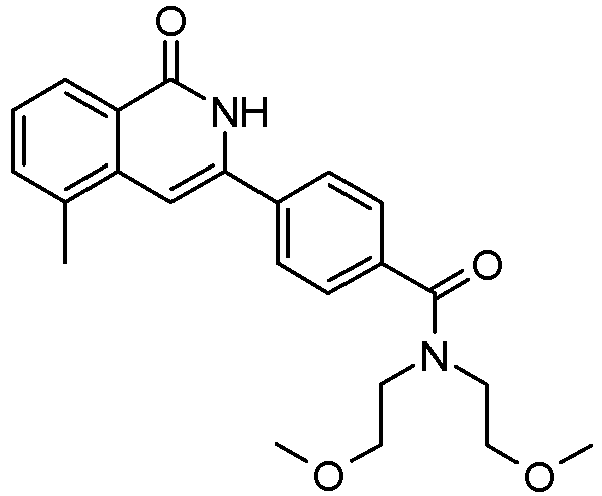
IQ-187 AnalpH2_MeOH _QC(1): Rt 8.05 min; m/z 395 [M+1]+ 79 mg, 42%, off-white solid 
IQ-188 AnalpH2_MeOH _QC(1): Rt 7.10 min; m/z 335 [M+1]+ 92 mg, 27%, white solid 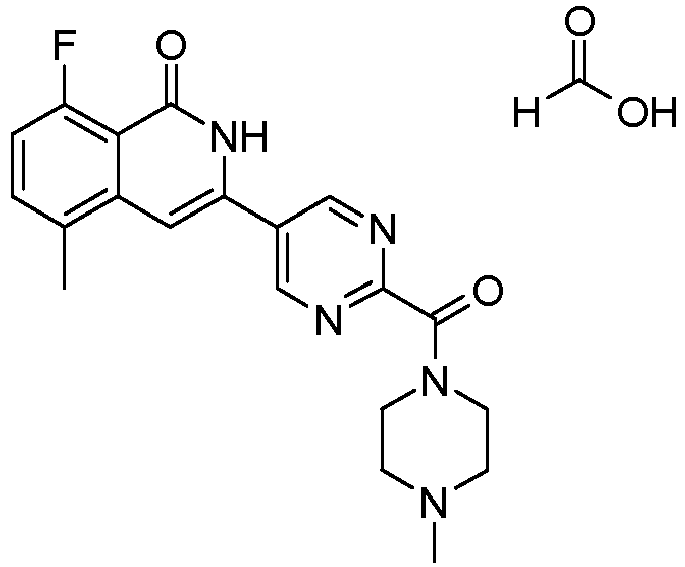
IQ-225 AnalpH2_MeOH _QC(1): Rt 4.27 min; m/z 382 [M+1]+ 7 mg, 8%, pale yellow solid 
IQ-226 AnalpH2_MeOH _QC(1): Rt 4.74 min; m/z 384 [M+1]+ 3.6 mg, 4%, beige solid 
IQ-227 AnalpH2_MeOH _QC(1): Rt 5.19 min; m/z 384 [M+1]+ 3.4 mg, 3%, white solid 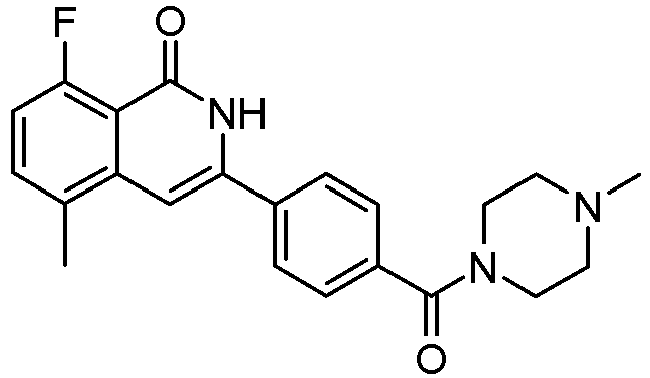
IQ-189 AnalpH2_MeOH _QC(1): Rt 4.89 min; m/z 380 [M+1]+ 4.7 mg, 5%, white solid 
IQ-190 AnalpH2_MeOH _QC(1): Rt 5.25 min; m/z 380 [M+1]+ 5 mg, 5%, white solid 
Intermediate for IQ-228 AnalpH2_MeOH -4min(3): Rt 3.22 min; m/z 652 [M+1]+ 83 mg, 54%, beige solid 
Intermediate for IQ-192 AnalpH2_MeOH _4min(3): Rt 3.19 min; m/z 649 [M+1]+ 63 mg, 36%, beige solid 
Intermediate for IQ-193 AnalpH2_MeOH _4min(3): Rt 3.10 min; m/z 649 [M+1]+ 79 mg, 44%, beige solid 
IQ-214 AnalpH2_MeOH _QC(1): Rt 7.24 min; m/z 349 [M+1]+ 20 mg, 17 %, off-white solid 
IQ-215 AnalpH2_MeOH _QC(1): Rt 7.45 min; m/z 367 [M+1]+ 44 mg, 37 %, off-white solid 
IQ-195 AnalpH2_MeOH _QC(1): Rt 5.35 min; m/z 408 [M+1]+ 72 mg, 38 %, white solid 1H NMR (400 MHz, DMSO-d6 ): δ11.77 (br s, 1H), 7.89 (d, J = 8.8 Hz, 2H), 7.74 (dd, J = 9.6, 2.8 Hz, 1H), 7.52 (dd, J = 9.6, 2.8 Hz, 1 H), 7.48 (d, J = 7.6 Hz, 2H), 6.94 (s, 1 H), 4.33-4.24 (br s, 0.5H), 2.92-2.73 (m, 5H), 2.61 (s, 3H), 2.22-1.93 (m, 4H), 1.92-1.55 (m, 5.5H). 
IQ-196 AnalpH2_MeOH _QC(1): Rt 5.17 min; m/z 377 [M+1]+ 99 mg, 81 %, brown solid 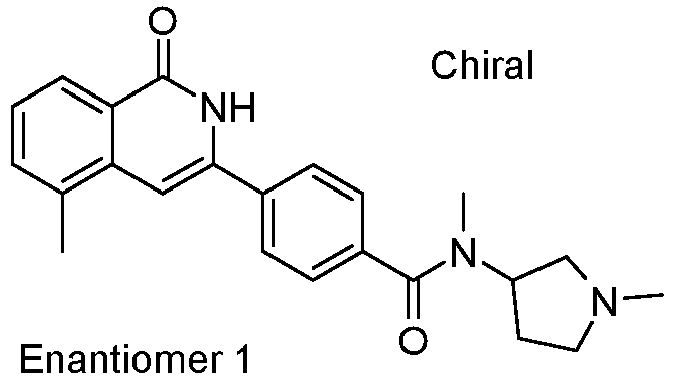
IQ-205-1 AnalpH2_MeOH _OC(2): Rt 4.69 min; m/z 376.5 [M+1]+ 13.4 mg, 37.5 %, off-white solid; obtained via Chiral_Methods _3 
IQ-205-2 AnalpH2_MeOH _OC(2): Rt 4.67 min; m/z 376.5 [M+1]+ 12.4 mg, 34.7 %, off-white solid; obtained via Chiral Methods _3 
IQ-197 AnalpH2_MeOH _QC(1): Rt 5.35 min; m/z 394 [M+1]+ 60 mg, 48 %, off-white solid 
IQ-207-1 AnalpH2_MeOH _QC(2): Rt 4.84 min; m/z 394 [M+1]+ 5.5 mg, 37 %, white solid; obtained via Chiral_Methods _3 
IQ-207-2 AnalpH2_MeOH _QC(2): Rt 4.83 min; m/z 394.5 [M+1]+ 4.9 mg, 33 %, white solid; obtained via Chiral_Method _3 
IQ-198 AnalpH2_MeOH _QC(1): Rt 5.22 min; m/z 388 [M+1]+ 80 mg, 40 %, off-white solid 
IQ-199 AnalpH2_MeOH _QC(1): Rt 5.11 min; m/z 362 [M+1]+ 70 mg, 72 %, off-white solid 
Intermediate for IQ-200 AnalpH2_MeOH _4min(3): Rt 3.08 min; m/z 462.5 [M+1]+ Used in next step as crude material 
Intermediate for IQ-186 AnalpH2_MeOH _4min(3): Rt 3.12 min; m/z 480.5 [M+1]+ Used in next step as crude material 
IQ-201 AnalpH2_MeOH _QC(1): Rt 5.31 min; m/z 380.4 [M+1]+ 37 mg, 34 %, off-white solid 
IQ-202 AnalpH2_MeOH _QC(1): Rt 5.11 min; m/z 362 [M+1]+ 16 mg, 16 %, white solid 
IQ-203 AnalpH2_MeOH _QC(1): Rt 5.35 min; m/z 381 [M+1]+ 16 mg, 15 %, white solid 
IQ-204 AnalpH2_MeOH _QC(1): Rt 5.29 min; m/z 390.5 [M+1]+ 57mg, 42 %, off-white solid 
IQ-175 AnalpH2_MeOH _QC(1): Rt 5.30 min; m/z 376.5 [M+1]+ 131 mg, 49 %, off-white solid 
IQ-176 AnalpH2_MeOH _QC(1): Rt 5.48 min; m/z 404.5 [M+1]+ 43 mg, 31 %, off-white solid 
IQ-20 AnalpH2_MeOH _QC(2): Rt 4.91 min; m/z 418.5 [M+1]+ 28 mg, 13 %, white solid 
Intermediate for IQ-177 AnalpH2_MeOH _4min(3): Rt 2.16 min; m/z 434.5 [M+1]+ 154 mg, 83 %, brown, sticky solid 
Intermediate for IQ-178 AnalpH2_MeOH _4min(3): Rt 2.21 min; m/z 452.5 [M+1]+ 159 mg, 83 %, brown, sticky solid 
IQ-208 AnalpH2_MeOH _QC(2): Rt 4.96 min; AnalpH2_MeOH _4min(2): m/z 422 [M+1]+ 42 mg, 19 %, white solid 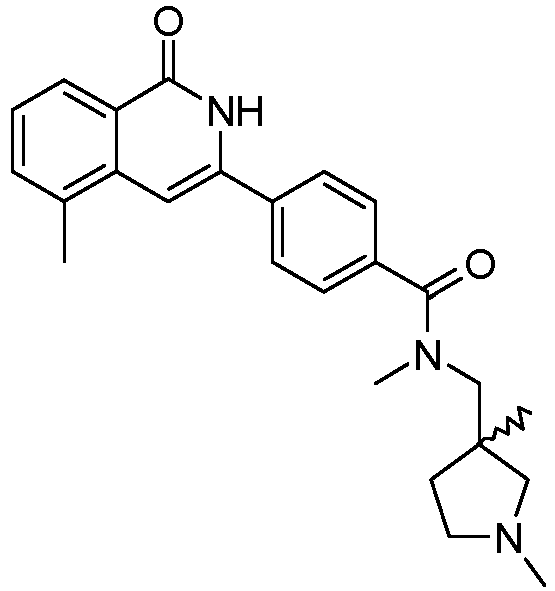
IQ-209 AnalpH2_MeOH _OC(2): Rt 4.89 min; AnalpH2_MeOH _4min(2): m/z 404 [M+1]+ 86 mg, 38 %, beige solid 
IQ-210 AnalpH2_MeOH _QC(2): Rt 5.02 min; AnalpH2_MeOH _4min(2): m/z 422.5 [M+1]+ 92 mg, 29 %, off-white solid 1H NMR (400 MHz, DMSO-d6 ): δ11.72 (br s, 1H), 7.88 (d, J = 8.3 Hz, 2H), 7.74 (br dd, J=9.3, 2.7 Hz, 1H), 7.55-7.44 (m, 3H), 6.93 (s, 1 H), 3.63 (br d,J=13.2Hz, 1H), 3.44 (br d, J=13.2Hz, 1 H), 3.00 (br s, 3H), 2.60 (s, 3H), 2.48-2.44 (m, 1 H), 2.29 (d, J = 9.1 Hz, 1H), 2.24 (s, 3H), 2.13 (br s, 1 H), 1.86-1.79 (m, 1 H), 1.56-1.50 (m, 1 H), 1.13 (s, 3H), 0.89 (br s, 1 H). 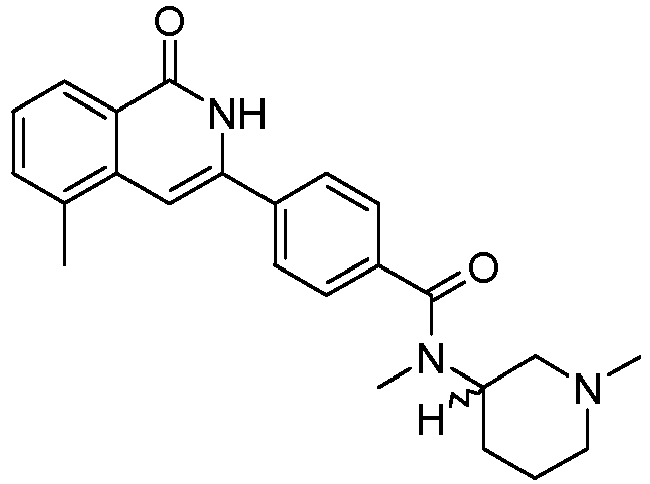
IQ-211 AnalpH2_MeOH _QC(2): Rt 4.76 min; m/z 390.5 [M+1]+ 22 mg, 10 %, off-white solid 
IQ-212 AnalpH2_MeOH _OC(2): Rt 4.89 min; AnalpH2_MeOH 4min(2): m/z 408 [M+1]+ 84 mg, 37 %, off-white solid 
Intermediate for IQ-213 AnalpH2_MeOH _4min(3): Rt 3.16 min; m/z 494 [M+1]+ Used in next step as crude material 
IQ-180 AnalpH2_MeOH _QC(2): Rt 4.75 min; m/z 316 [M+1]+ 140 mg, 79%, beige solid 
IQ-179 AnalpH2_MeOH _QC(2): Rt 5.81 min; m/z 380.5 [M+1]+ 66 mg, 31%, beige solid 
IQ-181 AnalpH2_MeOH _QC(2): Rt 6.56 min; m/z 366.5 [M+1]+ 101 mg, 49%, beige solid 
IQ-183 AnalpH2_MeOH _QC(2): Rt 8.54 min; m/z 365.5 [M+1]+ 17 mg, 16%, beige solid 
IQ-184 AnalpH2_MeOH _QC(2): Rt 8.16 min; m/z 315 [M+1]+ 10.6 mg, 5%, brown solid -

- The synthesis is analogous to the Boc deprotection procedure used in Scheme A, Step C (Protocol 1) above to give 7-Fluoro-5-methyl-3-(4-piperazin-1-ylmethyl-phenyl)-2H-isoquinolin-1-one as an off-white solid (18.4 mg, 37%).
1H NMR (400 MHz, DMSO-d6 ): δ7.86 (d, J= 8 Hz, 2H), 7.81 (dd, J = 9, 3 Hz, 1H), 7.60 (dd, J= 9, 3 Hz, 1H), 7.50 (d, J = 8 Hz, 2H), 6.94 (s, 1H), 3.57 (s, 2H), 2.79-2.77 (m, 4H), 2.68 (s, 3H), 2.39 (br s, 4H).
AnalpH2_MeOH_QC(1): Rt 5.49 min; m/z 352 [M+1]+ - The following 2H-isoquinolin-1-one derivatives are prepared using analogous procedures.
Table 31: 2H-isoauinolin-1-one Formula 5 Compound Reference Analytical Data Mass, %Yield, State 
IQ-079 AnalpH2_Me OH_Q(1): Rt 5.05 min; m/z 356 [M+1]+ 8 mg, 14%, off-white solid 
IQ-158 AnalpH2_Me OH_QC: Rt 5.62 min; m/z 356 [M+1]+ 22 mg, 65% white solid 
IQ-072 AnalpH2_Me OH_OC(1): Rt 4.87 min; m/z 335 [M+1]+ 11 mg, 50%, white solid 
IQ-026 AnalpH2_Me OH_OC(1): Rt 5.05 min; m/z 322 [M+1]+ 28 mg, 17%, white solid 
IQ-160 AnalpH2_Me OH_QC:Rt 4.31 mins; m/z 375 [M+1]+ 16 mg, 29% light brown solid 
IQ-200 AnalpH2_Me OH_OC(1): Rt 5.21 min; m/z 362.5 [M+1]+ 210 mg, 76 %, off-white solid 
IQ-186 AnalpH2_Me OH_OC(1): Rt 5.39 min; m/z 380.5 [M+1]+ 135 mg, 61 %, off-white solid 
IQ-177 AnalpH2_Me OH_QC(2): Rt 3.68 min; m/z 334.5 [M+1]+ 35 mg, 29 %, white solid 
IQ-178 AnalpH2_Me OH_QC(2): Rt 3.84 min; m/z 352.5 [M+1]+ 42 mg, 34 %, white solid 
IQ-213 AnalpH2_Me OH_QC(2): Rt 4.81 min; AnalpH2_Me OH_4min(2): m/z 394 [M+1]+ 80 mg, 36 %, off-white solid -
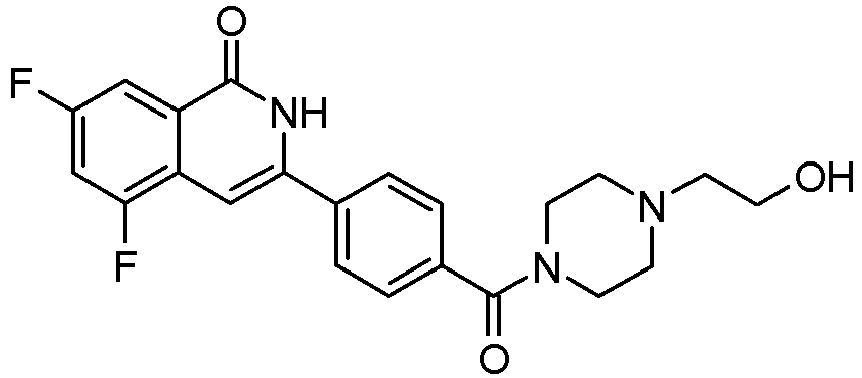
- The synthesis is analogous to the TBDPS deprotection procedure used in Scheme A, Step C (Protocol 3) above to give 5,7-difluoro-3-{4-[4-(2-hydroxy-ethyl)-piperazine-1-carbonyl]-phenyl}-2H-isoquinolin-1-one as a white solid (20 mg, 48%).
1H NMR (400 MHz, DMSO-d6 ): δ11.96 (br s, 1H), 7.87 (d, J= 8 Hz, 2H), 7.80-7.75 (m, 2H), 7.50 (d, J = 8 Hz, 2H), 6.91 (s, 1 H), 4.46-4.44 (m, 1 H), 3.63 (br s, 2H), 3.50 (q, J = 7 Hz, 2H), 3.35 (br s, 6H), 2.42 (t, J= 6 Hz, 2H).
AnalpH2_MeOH_QC(1): Rt 5.19 min; m/z 414 [M+1]+. - The following 2H-isoquinolin-1-one derivatives are prepared using analogous procedures.
Table 32: 2H-isoauinolin-1-one Formula 5 Compound Reference Analytical Data Mass, %Yield, State 
IQ-192 AnalpH2_Me OH_QC(3): Rt 9.23 min; m/z 410 [M+1]+ 26 mg, 64 %, white solid 
IQ-193 AnalpH2_Me OH_QC(1): Rt 4.90 min; m/z 410 [M+1]+ 37 mg, 75 %, white solid -
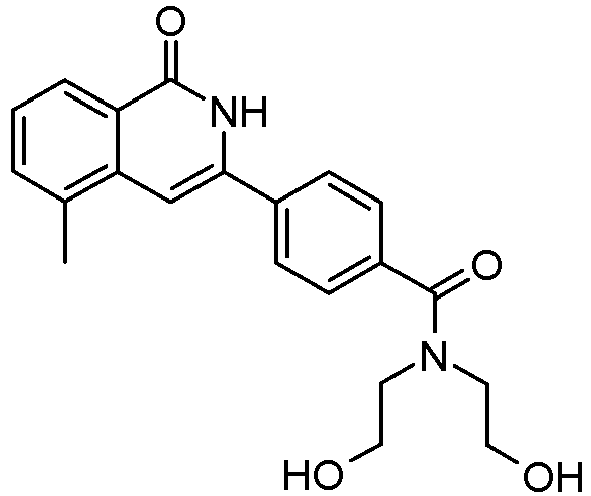
- To a stirred solution of N,N-Bis-(2-methoxy-ethyl)-4-(5-methyl-1-oxo-1,2-dihydro-isoquinolin-3-yl)-benzamide (40 mg, 0.10 mmol) in CH2Cl2 (2.5 mL) under N2 at - 78 °C was added boron tribromide (1M in CH2Cl2, 2.54 mL, 2.54 mmol). The reaction was allowed to warm to RT and stirred for 16 h. The reaction mixture was quenched with H2O and extracted with EtOAc (5 mL) upon which a pale yellow solid precipitated and was filtered off. The aqueous phase was further extracted with CH2Cl2 (5 mL). The combined organics were evaporated to dryness. Product was found to be also present in the aqueous phase and was passed through an Isolute-103 cartridge (500 mg), washing with H2O (4 x column volumes). The product was eluted from the column with MeOH (4 x column volumes) and evaporated to dryness. The combined crude product was purified by reverse phase preparative HPLC-MS to obtain N,N-bis-(2-hydroxy-ethyl)-4-(5-methyl-1-oxo-1,2-dihydro-isoquinolin-3-yl)-benzamide as a white solid (23 mg, 63%).
1H NMR (400 MHz, DMSO-d6 ): δ11.64 (br s, 1H), 8.09 (d, J=8 Hz, 1H), 7.88 (d, J=8 Hz, 2H), 7.58 (d, J = 7 Hz, 1 H), 7.52 (d, J= 8.6 Hz, 2H), 7.39 (t, J= 7.6 Hz, 1 H), 6.92 (s, 1 H), 4.88-4.82 (m, 2H), 3.66-3.62 (m, 2H), 3.56-3.53 (m, 2H), 3.49-3.48 (m, 2H), 2.58 (s, 3H).
AnalpH2_MeOH_QC(1): Rt 6.76 min; m/z 367 [M+1]+. -

-

- 3-Chloro-5-methyl-2H-isoquinolin-1-one (50 mg, 0.26 mmol), 4-carboxybenezeneboronic acid (64 mg, 0.39 mmol), K2CO3 (73 mg, 0.52 mmol) and Pd(dppf)Cl2 (11 mg, 0.013 mmol) in DME/EtOH/H2O 4:0.5:1 (2.75 mL) were added to a microwave vial and the reaction mixture purged with N2 for 10 min. The reaction mixture was irradiated using a microwave (300W, 120 °C, 2 h). The reaction mixture was concentrated in vacuo, water added and the mixture acidified to pH2 with 0.2M HCl aq. A brown solid precipiated from the solution which was filtered and dried in vacuo, dissolved in DMF and passed through a Si-thiol cartridge, eluting with DMF (4 x column volumes) and the solvent removed in vacuo. The resulting solid was triturated with MeOH, filtered and dried to give 4-(5-methyl-1-oxo-1,2-dihydro-isoquinolin-3-yl)-benzoic acid as a beige solid (29 mg, 40%).
AnalpH2_MeOH_QC(1): Rt 7.93 min; m/z 280 [M+1]+. -

- The synthesis is analogous to the acid coupling procedure used in Step E above to give N-methyl-4-(5-methyl-1-oxo-1,2-dihydro-isoquinolin-3-yl)-N-(1-methyl-piperidin-4-ylmethyl)-benzamide as a pale yellow foam (27 mg, 93%).
- 1H NMR (400 MHz, DMSO-d6 ): δ11.65-11.59 (br s, 1H), 8.09 (d, J = 8 Hz, 1H), 7.89 (d, J = 8 Hz, 2H), 7.57 (d, J = 7 Hz, 1H) 7.51 (br d, J = 7 Hz, 1 H), 7.45 (br d, J = 7 Hz, 1 H) 7.39 (t, J = 7 Hz, 1H), 6.92 (s, 1H), 3.39-3.37 (m, 1H), 3.18-3.14 (m, 1H), 2.98 (s, 1H), 2.93 (s, 2H), 2.78 (d, J = 10 Hz, 1H), 2.66 (d, J = 10 Hz, 1H), 2.58 (s, 3H), 2.16 (s, 2H), 2.08 (s, 1H), 1.88-1.63 (m, 4H), 1.48-1.44 (d, J = 10 Hz, 1H), 1.28-1.21 (m, 1H), 0.89-0.80 (m, 1 H).
AnalpH2_MeOH_QC(1): Rt 5.18 min; m/z 404 [M+1]+. -

-

- 3-Chloro-5-methyl-2H-isoquinolin-1-one (100 mg, 0.52 mmol), bis(pinacolato)diboron (157 mg, 0.62 mmol), Pd(dppf)Cl2 (42 mg, 0.054 mmol) and KOAc (153 mg, 1.56 mmol) in 1,4-dioxane (2 mL) were added to a microwave vial and the reaction mixture purged with N2 for 10 min. The reaction mixture was irradiated using a microwave reactor (300W, 120 °C, 20 min). The reaction mixture was passed through a Si-thiol cartridge and concentrated in vacuo. The crude product was purified by reverse phase preparative HPLC-MS to afford 5-methyl-1-oxo-1,2-dihydro-isoquinoline-3-boronic acid as a white solid (51 mg, 49%).
AnalpH2_MeOH_4min(3): Rt 2.18 min; m/z 204 [M+1]+. - The following boronic acid derivatives 48 are prepared using analogous procedures.
Table 33: Boronic acid derivatives of Formula 48 Compound Analytical Data Mass, %Yield, State 
AnalpH2_MeOH_4 min(3): Rt 2.18 min; m/z 222 [M+1]+ 59 mg, 38%, pale yellow solid 
AnalpH2_MeOH_4 min(3): Rt 2.41 min; m/z 222 [M+1]+ 84 mg, 40%, off-white solid -

- 5-Methyl-1-oxo-1,2-dihydro-isoquinoline-3-boronic acid (40 mg, 0.20 mmol), (6-bromo-pyridin-3-yl)-(4-cyclopropylmethyl-piperazin-1-yl)-methanone (95 mg, 0.30 mmol), K2CO3 (56 mg, 0.4 mmol) and Pd(dppf)Cl2 (16 mg, 0.02 mmol) in DME/EtOH/H2O 4:0.5:1 (3.5 mL) were added to a microwave vial and the reaction mixture purged with N2 for 10 min. The reaction mixture was irradiated using a microwave reactor (300W, 130 °C, 60 min). The reaction mixture was filtered through a Si-thiol and concentrated in vacuo. The crude material was purified by reverse phase preparative HPLC-MS to obtain 3-[5-(4-cyclopropylmethyl-piperazine-1-carbonyl)-pyridin-2-yl]-5-methyl-2H-isoquinolin-1-one as a brown solid (18 mg, 22%).
AnalpH2_MeOH_QC(1): Rt 4.97 min; m/z 403 [M+1]+. - The following 2H-isoquinolin-1-one derivatives are prepared using analogous procedures.
Table 34: 2H-isoquinolin-1-one derivatives of Formula 4 Compound Code Analytical Data Mass, %Yield, State 
IQ-224 AnalpH2_Me OH_QC(1): Rt 4.41 min; m/z 364 [M+1]+ 3.2 mg, 16 %, off-white solid 
IQ-220 AnalpH2_Me OH_QC(3): Rt 8.03 min; m/z 363 [M+1]+ 34 mg, 34 %, white solid 
IQ-221 AnalpH2_Me OH_QC(3): Rt 7.66 min; m/z 381 [M+1]+ 78 mg, 76 %, beige solid 
IQ-222 AnalpH2_Me OH_QC(1): Rt 4.96 min; m/z 381 [M+1]+ 35 mg, 24 %, beige solid 
IQ-194 AnalpH2_Me OH_QC(1): Rt 7.15 min; m/z 371 [M+1]+ 32 mg, 16 %, white solid 
Intermediate for IQ-170 AnalpH2_Me OH_4min(3): Rt 2.80 min; m/z 577 [M+1]+ 300 mg, quant., black oil 
IQ-217 AnalpH2_Me OH_QC(1): Rt 7.87 min; m/z 378 [M+1]+ 41 mg, 32 %, pale brown solid 
IQ-218 AnalpH2_Me OH_QC(1): Rt 8.00 min; m/z 396 [M+1]+ 37 mg, 27 %, off-white solid 
IQ-216 AnalpH2_Me OH_QC(1): Rt 7.74 min; m/z 381 [M+1]+ 140 mg, 69 %, off-white solid 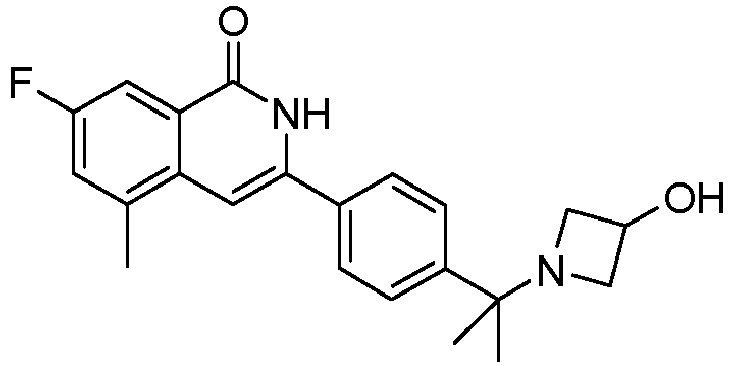
IQ-185 AnalpH2_Me OH_QC(1): Rt 5.54 min; m/z 367 [M+1]+ 14.4 mg, 5.5 %, white solid 1H NMR (400 MHz, DMSO-d6 ): δ11.68 (br s, 1 H), 7.76 (d, J = 8.8 Hz, 2H), 7.58 (dd, J = 9.2, 2.8 Hz, 1H), 7.58 (d, J = 8.8 Hz, 2H), 7.51 (dd, J = 9.6, 2.8 Hz, 1H), 6.85 (s, 1 H), 5.22 (d, J = 6.4 Hz, 1 H), 4.22-4.15 (m, 1 H), 3.25 (dd, J = 7.2, 6.0 Hz, 2H), 2.87 (dd, J = 7.2, 6.0 Hz, 2H), 2.59 (s, 3H), 1.28 (s, 6H). -
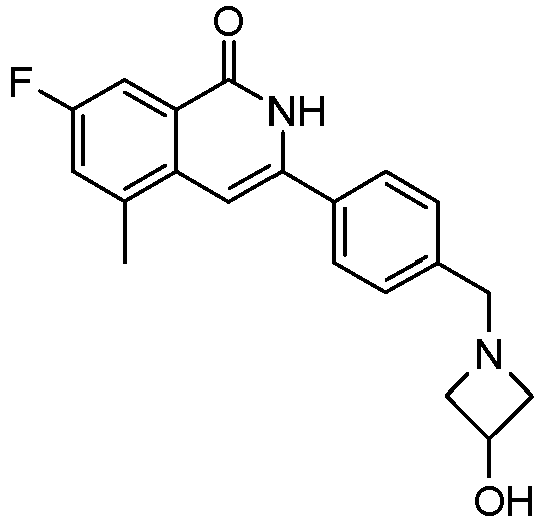
- The synthesis is analogous to the TBDPS deprotection procedure used in Scheme A, Step C (Protocol 3) above to give 7-Fluoro-3-[4-(3-hydroxy-azetidin-1-ylmethyl)-phenyl]-5-methyl-2H-isoquinolin-1-one as a white solid (3 mg, 11 %).
AnalpH2_MeOH_QC(1): Rt 5.25 min; m/z 339 [M+1]+. -

-

- The synthesis is analogous to the cyclisation procedure used in Scheme A Step B (protocol 3) above to give 5-bromo-3-[4-(2-dimethylaminoethoxy)phenyl]-2H-isoquinolin-1-one as a yellow solid (1.23 g, 86%).
1H NMR (400 MHz, DMSO-d6 ): δ11.78 (br s, 1H), 8.21 (d, J = 8 Hz, 1H), 8.02 (d, J = 8 Hz, 1H), 7.72 (d, J = 8.8 Hz, 2H), 7.37 (t, J = 7.8 Hz, 1H), 7.07 (d, J = 8.8 Hz, 2H), 6.80 (s, 1H), 4.11 (t, J = 5.8 Hz, 2H), 2.64 (t, J = 5.8 Hz, 2H), 2.22 (s, 6H).
AnalpH2_MeOH_QC: Rt 5.69 min; m/z 387 [M+1]+. - The following 2H-isoquinolin-1-one derivatives are prepared using analogous procedures.
Table 35: 2H-isoquinolin-1-one derivatives of Formula 4 Compound Code Analytical Data Mass, %Yield, State 
IQ-238 AnalpH2_MeO H_4min: Rt 1.97 min; m/z 412 [M+1]+ 845 mg, 79%, pale orange/pink solid -

- 5-Bromo-3-[4-(2-dimethylaminoethoxy)phenyl]-2H-isoquinolin-1-one (50.0 mg, 0.130 mmol), triethylamine (1.1 mL, 8.36 mmol), dichlorobis(triphenylphosphine)palladium(II) (5.0 mg, 0.0065 mmol), copper (I) iodide (3.0 mg, 0.009 mmol), 3-butyn-1-ol (20 µL, 0.260 mmol) in DMF (1.1 mL) were added to a microwave vial and the reaction mixture purged with N2 for 5 min. The reaction mixture was irradiated using a microwave reactor (300W, 100°C, 90 min). The reaction mixture was filtered through Celite® 545, diluted with DMSO and was purified by reverse phase preparative HPLC-MS to obtain 3-[4-(2-dimethylaminoethoxy)phenyl]-5-(4-hydroxybut-1-ynyl)-2H-isoquinolin-1-one as a brown solid (19.0 mg, 39%).
1H NMR (400 MHz, CDCl3): δ9.77 (br s, 1H), 8.31 (d, J = 8.4 Hz, 1H), 7.75 (dd, J = 7.6, 1.0 Hz, 1H), 7.64 (d, J = 8.8 Hz, 2H), 7.37 (t, J = 7.8 Hz, 1H), 7.17 (s, 1H), 7.03 (d, J = 8.8 Hz, 2H), 4.29 (t, J= 5.2 Hz, 2H), 3.91 (t, J= 6.2 Hz, 2H), 3.12 (t, J= 4.4 Hz, 2H), 2.83 (t, J= 6.2 Hz, 2H), 2.60 (s, 6H).
AnalpH2_MeOH_QC: Rt 5.17 min; m/z 377 [M+1]+. - The following 2H-isoquinolin-1-one derivatives are prepared using analogous procedures.
Table 36: 2H-isoquinolin-1-one Formula 51 Compound Code Analytical Data Mass, %Yield, State 
IQ-232 AnalpH2_MeO H_QC: Rt 4.93 min; m/z 363 [M+1]+ 19 mg, 20%, brown oil 
IQ-234 AnalpH2_MeO H_QC: Rt 5.53 min; m/z 377 [M+1]+ 36 mg, 34%, beige solid 
IQ-233 AnalpH2_MeO H_QC(1): Rt 5.70 min; m/z 402 [M+1]+ 23 mg, 44%, beige solid 
IQ-231 AnalpH2_MeO H_QC(1): Rt 5.06 min; m/z 388 [M+1]+ 25 mg, 41%, beige solid 
IQ-235 AnalpH2_MeO H_4min: Rt 0.94 min m/z 415 [M+1]+ 36 mg, 54%, off-white solid -

- 4-[4-(5-Bromo-1-oxo-1,2-dihydro-isoquinolin-3-yl)benzyl]piperazine-1-carboxylic acid (140.0 mg, 0.281 mmol), ethynyltrimethylsilane (119 µL, 0.843 mmol), triethylamine (391 µL, 2.81 mmol), dichlorobis(triphenylphosphine)palladium(II) (19.6 mg, 0.028 mmol), and triphenylphosphine (3.67 mg, 0.014 mmol) in anhydrous DMF (3 mL) were added to a microwave vial and the reaction mixture purged with N2 for 5 min. Copper (I) iodide (5.33 mg, 0.028 mmol) was added and the mixture was degassed for a further minute. The reaction mixture was irradiated using a microwave reactor (300W, 110°C, 1 h). The reaction mixture was then concentrated in vacuo, diluted with water (50 mL) and extracted with EtOAc (2 x 50 mL). The combined organic layer was washed with brine (50 mL), dried over Na2SO4, filtered and concentrated in vacuo. The crude material was purified by silica gel column chromatography, eluting with iso-hexane and increasing the polarity to 100% EtOAc/iso-hexane to afford 4-[4-(1-oxo-5-trimethylsilanylethynyl-1,2-dihydroisoquinolin-3-yl)benzyl]piperazine-1-carboxylic acid tert-butyl ester as a yellow solid (70.3 mg, 49%).
AnalpH2_MeOH_4min (3): Rt 3.05 min; m/z 515.5 [M+1]+. -

- To a stirred solution of 4-[4-(1-oxo-5-trimethylsilanylethynyl-1,2-dihydroisoquinolin-3-yl)benzyl]piperazine-1-carboxylic acid tert-butyl ester compound (70.0 mg, 0.136 mmol) in THF (5 mL) was added TBAF (1M in THF, 272 µL, 0.272 mmol). The resulting reaction mixture was stirred at RT for 2 h and then quenched by the addition of water (20 mL). The mixture was extracted with EtOAc (3 x 20 mL) and the combined organic layer was washed with brine (50 mL), dried over Na2SO4, filtered and concentrated in vacuo to obtain 4-[4-(5-ethynyl-1-oxo-1,2-dihydroisoquinolin-3-yl)benzyl]piperazine-1-carboxylic acid tert-butyl ester (60.3 mg, 100%) as an orange solid. The crude compound was used for the next step without further purification.
AnalpH2_MeOH_4min (3): Rt 2.35 min; m/z 444.5 [M+1]+. -

- 4-[4-(5-Ethynyl-1-oxo-1,2-dihydroisoquinolin-3-yl)benzyl]piperazine-1-carboxylic acid tert-butyl ester (60.3 mg, 0.136 mmol) and 4M HCl/dioxane (3 mL) in CH2Cl2 (3 mL) were stirred at RT for 2 h. The reaction mixture was concentrated in vacuo and the crude material was purified by reverse phase preparative HPLC-MS to obtain 5-ethynyl-3-(4-piperazin-1-ylmethylphenyl)-2H-isoquinolin-1-one as an off-white solid (16.0 mg, 34%).
1H NMR (400 MHz, DMSO-d6 ): δ8.23 (d, J = 8 Hz, 1H), 7.89 (dd, J = 7.6 Hz, 1H), 7.72 (d, J = 8.4 Hz, 1 H), 7.47 (t, J = 7.6 Hz, 1 H), 7.43 (d, J = 8.0 Hz, 2H), 6.97 (s, 1 H), 4.67 (s, 1 H), 3.48 (s, 2H), 2.69-2.67 (m, 4H), 2.30 (br s, 4H).
AnalpH2_MeOH_QC (1): Rt 5.46 min; m/z 344.5 [M+1]+. - Tankyrase activity was assayed using a 96-well format HT Universal Chemiluminescent PARP Assay Kit (Trevigen, Inc, cat. no. 4676-096-K) according to the manufacturer's instructions. In short, tankyrase/PARP activity is quantified by the incorporation of biotinylated nicotinamide adenine dinucleotide (biotin-NAD+) onto the immobilised pseudo substrate, Histone. The extent of poly(Biotin-ADP)ribosylation (PARylation) in the presence of increasing dose of inhibitor is then quantified by binding of streptavidin conjugated horse radish peroxidase (strep-HRP) followed by chemiluminescent detection.
- Prior to assay initiation, inhibitor stocks were prepared in aqueous DMSO (10 % (v/v)) from 5 millimolar (mM) stock in 100% DMSO (Sigma Aldrich, cat. no. 265855) as 10x concentrations. For the primary assay (i.e., single dose at 1 micromolar (µM) final concentration) this corresponded to 10 µM in 10% DMSO. For IC50 determination, this corresponded to 100 µM, 30 µM, 10 µM, 3.0 µM, 1.0 µM, 0.30 µM, 0.10 µM and 0 µM in 10% DMSO for final concentrations of 10 µM, 3.0 µM, 1.0 µM, 0.30 µM, 0.10 µM, 0.030 µM, 0.010 µM and 0 µM with 1% (v/v) final DMSO. The assay was initiated by the addition of 10x inhibitor (5 microlitres (µL)) or 10% aqueous DMSO (5 µL) to triplicate wells. Twenty microlitres of diluted TNKS1 protein (200 nanomolar (nM) final conc.) in PARP buffer (Trevigen, Inc, cat. no. 4671-096-02) was added to each histone coated well, which was previously hydrated with PARP buffer. Triplicate wells with 1% DMSO/buffer alone (no enzyme) were also added as a measure of assay 'noise'. Positive control for PARP inhibition included the addition of 4-amino-1,8-naphthalimide (Sigma Aldrich, cat. no A0966) in corresponding doses.
- The mixture was incubated for 10 minutes at room temperature and the PARylation reaction initiated by the addition of PARP cocktail (25 µL, Trevigen, Inc) containing biotin-NAD+ (Trevigen, Inc, cat. no. 4670-500-01), activated DNA (Trevigen, Inc, cat. no. 4671-096-06) and PARP buffer. The reaction was incubated for 1.5 hours (for TNKS1) or 1 hour (for PARP1) at room temperature. The reaction mixture was then removed by aspiration and the wells washed (3 x 200 µL) with phosphate buffered saline containing Triton X-100 (0.1% (v/v), Sigma Aldrich cat. no. T8787). The wells were then washed (3 x 200 µL) with phosphate buffered saline and then incubated with strep-HRP (50 µL, Trevigen, Inc, cat. no. 4800-30-06) in strep-diluent (1:500 dilution, Trevigen Inc, cat. no. 4671-096-04) for 1 hour at room temperature. The Strep-HRP mixture was then aspirated and the wells washed (3 x 200 µL) with phosphate buffered saline containing Triton X-100 (0.1% (v/v)) followed by phosphate buffered saline (3 x 200 µL) and then incubated with PeroxyGlow™ reagent (100 µL, Trevigen, Inc, cat. nos. 4675-096-01, 4675-096-02, room temperature, mixed 1:1).
- The amount of light emitted as a result of the peroxidase-chemiluminescent reagent reaction was in proportion to the extent of poly(Biotin-ADP)ribosylation and was immediately measured with a Victor2 plate reader (Perkin Elmer, luminescence detection assay, luminescent units described as 'Counts Per Second' (CPS)). The data were normalised to the DMSO control after subtraction of 'noise' and was expressed as % PARP activity as a function of inhibitor dose. Inhibition was expressed as 100% - (% PARP activity). Dose response curves used to determine IC50 values were Log transformed and analysed by non-linear regression analysis (variable slope) using Prism (GraphPad Software, Inc) and were presented as IC50 with 95% confidence interval to determine relative potency.
- Tankyrase1 (pNIC-Bsa4-TNKS1PARP) expression construct was obtained from the Structural Genomics Consortium (SGC) and expresses the active PARP domain of TNKS1 as a polyhistidine tagged protein. The expression and purification of TNKS1 protein was carried out according to the SGC protocol provided at http://www.thesgc.org/ structures/ materials_methods/2RF5/, which is summarised in the following table.
Structure TNKS1 PDB Code 2RF5 Entry clone accession BC098394 Entry clone source Mammalian Gene Collection Tag N-terminal hexahistidine tag with integrated TEV protease cleavage site: mhhhhhhssgvdlgtenlyfq*s(m) Construct sequence 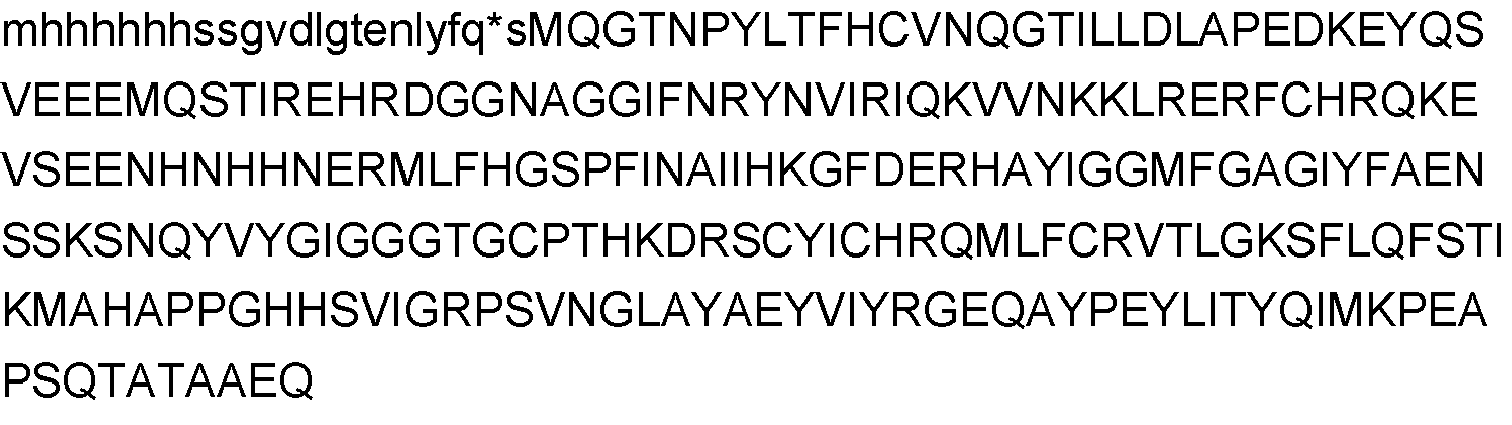
Vector pNIC-Bsa4 Expression host E.coli Rosetta2(DE3) (Novagen) Growth method Cells from a glycerol stock were streaked onto LB-agar plates. 5-10 colonies were used to inoculate 20 mL TB supplemented with 8 g/l glycerol, 100 µg/mL kanamycin and 34 µg/mL chloramphenicol. The cells were grown at 30°C overnight. The overnight culture (20 mL) was used to inoculate 1.5 l TB supplemented with 8 g/l glycerol, 50 µg/mL kanamycin and approximately 200 µl PPG P2,000 81380 anti-foam solution (Fluka). The culture was grown in a LEX bioreactor system (Harbinger Biotechnology) at 37°C until OD600 reached ∼2. The culture was down-tempered to 18°C over a period of 1 hour before target expression was induced by addition of 0.5 mM IPTG. Expression was allowed to continue overnight and cells were harvested the following morning by centrifugation (5,500 x g, 10 min, 4 °C). The resulting cell pellet (38.2 g wet cell weight) was resuspended in lysis buffer (2 mL/g cell pellet), supplemented with one tablet of Complete EDTA-free protease inhibitor (Roche Applied Science). The cell suspension was stored at-80°C. Extraction buffers Lysis buffer: 50 mM HEPES, 300 mM NaCl, 10% glycerol, 10 mM imidazole, 0.5 mM TCEP, pH 7.8 Extraction procedure The cell suspension was quickly thawed in water and 2500 U Benzonase (Merck) was added. Cells were disrupted by sonication (Vibra-Cell, Sonics) at 80% amplitude for 3 min effective time (pulsed 4s on, 4s off) and cell debris was removed by centrifugation (49,100 x g, 20 min, 4 °C). The supernatant was decanted and filtered through a 0.45 µm flask filter. Purification buffers IMAC wash1 buffer: 30 mM HEPES, 500 mM NaCl, 10% glycerol, 10 mM imidazole, 0.5 mM TCEP, pH 7.5. IMAC wash2 buffer: 30 mM HEPES, 500 mM NaCl, 10% glycerol, 25 mM imidazole, 0.5 mM TCEP, pH 7.5. IMAC elution buffer: 30 mM HEPES, 500 mM NaCl, 10% glycerol, 500 mM imidazole, 0.5 mM TCEP, pH 7.5. Gel filtration (GF) buffer: 30 mM HEPES, 300 mM NaCl, 10% glycerol, 0.5 mM TCEP, pH 7.5 Purification procedure Columns: IMAC: Ni-charged 1 mL HiTrap Chelating HP (GE Healthcare). Gel filtration column: HiLoad 16/60 Superdex 75 Prep Grade (GE Healthcare). Procedure: Purification of the protein was performed as a two step process on an ÄKTAxpress system (GE Healthcare). Prior to purification, columns were equilibrated with IMAC wash1 buffer and gel filtration buffer, respectively. The filtered lysate was loaded onto the Ni-charged HiTrap Chelating column and washed with IMAC wash1 buffer followed by IMAC wash2 buffer. Bound protein was eluted from the IMAC column with IMAC elution buffer and automatically loaded onto the gel filtration column. Fractions containing the target protein were pooled and fresh TCEP was added to a final concentration of 2 mM. The protein was subsequently concentrated using a Amicon Ultra-15 centrifugal filter device, 10,000 NMWL (Millipore) to 22.8 mg/mL in a volume of 0.28 mL. The identity of the protein was confirmed by mass spectrometry. - Tankyrase2 (pNIC-Bsa4-TNKS2PARP) expression construct was also obtained from the Structural Genomics Consortium (SGC) and prepared in an analogous method to TNKS1.
- PARP1 protein was commercially available and was obtained from Trevigen, Inc (PARP-HSA 'High Specific Activity', cat. no. 4668-50-010).
- A Wnt dependent cell line (i.e., DLD1 colorectal adenocarcinoma cell line) was transduced with replication incompetent VSV-g pseudotyped lentiviral particles expressing the firefly luciferase gene under the control of minimal cytomegalovirus (mCMV) promoter and tandem repeats of the TCF/LEF transcriptional response element. Post-transduction selection using puromycin (Sigma Aldrich, cat. no. P8833, 1.5 micrograms per millilitre (ug/mL)) for one week resulted in an enriched polyclonal cell population (DLD1-Wnt-Luc cells) that was expanded and collected for minimal passage and stored in liquid nitrogen.
- DLD1-Wnt-Luc cells were seeded (5000 cells/well) in a 96-well plate (Greiner Bio-One, cat. no. 655098) in Dubelco's Modified Eagle Medium (DMEM, GIBCO/Invitrogen, cat no. 41965-039) supplemented with Fetal Bovine Serum (FBS, 10%, GIBCO/Invitrogen, cat no. 10108-165). After overnight incubation, the media was replaced with OptiMEM (GIBCO/Invitrogen, cat no. 11058-021) supplemented with FBS (0.5%) and non-essential amino acids (1%, GIBCO/Invitrogen, cat no. 11140-035) and the appropriate putative TNKS inhibitor at a final concentration of 10 µM, 3 µM, 1 µM, 0.30 µM, 0.10 µM, 0.030 µM, 0.010 µM and 0 µM with 1% (v/v) final DMSO in double-triplicate wells. Positive control includes the use of XAV-939 (Maybridge, FisherScientific, 3,5,7,8-tetrahydro-2-[4-(trifluoromethyl)phenyl]-4H-thiopyrano[4,3-d]pyrimidin-4-one, cat. no. RF03920, see: Huang et al., Nature, 2009, Vol. 461, pp. 614-620). Cells were incubated for 20-22 hours before assaying for luciferase (first set of triplicates: Wnt activation) and viability (second set of triplicates: cell survival for data normalisation vs Wnt-activation) using ONE-Glo (Promega, cat. no. E6110) and CellTiter-Glo (Promega, cat. no. G7570) reagents consecutively. The assay was measured using a Victor2 plate reader. The data were normalised to the DMSO control and were expressed as % Wnt activity as a function of inhibitor dose. Dose response curves used to determine IC50 values were Log transformed and analysed by non-linear regression analysis (variable slope) using Prism (GraphPad Software, Inc).
- DLD1 cells were assayed for the effect of putative Tankyrase1/2 inhibitors on TNKS1/2, Axin1/2 and β-catenin protein levels. Effective TNKS inhibitors will (1) increase TNKS protein levels by inhibition of auto-PARylation and subsequent proteasomal degradation, (2) increase Axin1/2 protein levels by inhibition of TNKS induced PARylation and subsequent proteasomal degradation and, consequently, stabilisation of the Axin/APC/GSK/CK destruction complex leading to (3) decrease of β-catenin protein levels. Reduction of nuclear accumulation of β-catenin and ultimately, reduction of β-catenin/TCF/LEF transcriptional activation of Wnt target genes should correlate with loss of Wnt-luc reporter signal in the Wnt reporter assay.
- DLD1 cells were seeded in a 6-well dish at 10000 cells/well in DMEM supplemented with 10% FBS. After overnight incubation, cells were dosed with an appropriate amount of putative Tankyrase1/2 inhibitor (2 uM, 0.75 uM, 0.25 uM, 0 uM) in DMEM (0.5% FBS, 1% DMSO). After 20-22 hours incubation, the cells were washed in cold PBS and lysed in lysis buffer (50 mM Tris pH 8.0, 500 mM NaCl, 0.5% NP-40, complete protease inhibitor cocktail (Roche, cat. no. 11836153001)), centrifuged at 15000 rpm for 10 minutes and the protein concentration of the supernatant quantified using Bradford reagent (BioRad protein assay reagent, cat. no. 500-0006). Protein samples (25-50 ug) in protein sample loading buffer ('Laemmli buffer', Laemmli, U.K., Nature, 1970, 227, 680-685) were denatured by boiling and loaded onto a sodium dodecyl sulfate - polyacrylamide gel (SDS-PAGE with 10% acrylamide) and separated by electrophroresis followed by electroblotting onto nitrocellulose membrane. The membrane was blocked in skimmed milk (5% in Tris-base saline with 0.01% Tween20 (TBS-T)) and subsequently probed overnight with the required antibody: Tankyrase1/2 (1:1000, Santa Cruz, cat. no. sc-8337); Axin1 (1:1000, Cell Signalling Technology, cat. no. 2087); Axin2 (1:1000, Cell Signalling Technology, cat. no. 2151); β-catenin (1:1000, Cell Signalling Technology, cat. no. 9581). After washing in TBS-T, the membrane was probed with a species specific secondary antibody conjugated to HRP (1:5000, Pierce/ThermoFisher), washed again in TBS-T and reacted with chemiluminescent detection reagents (ECL, GE Healthcare, cat. no. RPN2109) followed by exposure to X-ray film (FujiFilm XR).
- Appropriate cell lines (HeLa, HT1080, HTC75) were also assayed for the effect of TNKS inhibition on TNKS stabilisation (see, e.g., Smith et al., Science, 1998, Vol. 282, pp. 1484-1487). Cells were seeded, dosed and whole cell lysates were isolated and western blotted as described above. Primary antibodies included TNKS (1:1000, Santa Cruz Biotech, cat. no. SC8377).
- In order to determine the efficacy of chronic dosing of putative TNKS inhibitors, long term clonogenic or 'colony formation' assays were carried out. This included the sparse seeding of cells in a 6-well dish followed by continuous dosing of cells over 12-14 days (depending on relative cell growth). Appropriate cell lines (DLD1 or HT55) were seeded at 500 cells/well in a 6-well dish in DMEM supplemented with FBS. After overnight incubation, cells were treated with the appropriate putative TNKS inhibitor at 10 µM, 3 µM, 1 µM, 0.30 µM, 0.1 µM and 0 µM at 0.2-1% final DMSO concentration (cell line dependent) in DMEM supplemented with 10% FBS (DLD1 cells were dosed in DMEM supplemented with 0.5% FBS). Dosages were carried out in triplicate. Cell media containing compound or DMSO only was replenished every 48 hours. Termination of the assay included the fixation of cells with trichlororacetic acid (1 mL, 10% (v/v), Sigma Aldrich, cat. no. T6399) and incubation for 16 hours at 4 °C. Fixed cells were then washed with water, allowed to dry and stained with sulforhodamine B solution (sulforhodamine B 0.05% (w/v), Sigma Aldrich cat. no. S1402, acetic acid 1% (v/v), Fisher Scientific, cat. no. A/0400/PB17)) for 12 hours at room temperature. The stain was then removed and the cells washed copiously with aqueous acetic acid (1% v/v) and allowed to dry.
- Quantification of colony formation was then carried out by dissolution of incorporated sulforhodamine B in Tris-base (1 mL, 10 mM, pH 10) and measurement of absorbance at 560 nM. The data was normalised to the DMSO control and was expressed as surviving fraction as a function of inhibitor dose. Dose response curves used to determine GI50 values were Log transformed and analysed by non-linear regression analysis (variable slope) using Prism (GraphPad Software, Inc).
- The following compounds were tested in the TNKS1/PARP Biochemical Assay described above:
- IQ-001, IQ-002-1, IQ-002-2, IQ-003, IQ-004, IQ-005, IQ-006, IQ-007, IQ-008, IQ-009, IQ-010, IQ-011, IQ-012, IQ-013, IQ-014, IQ-015, IQ-016, IQ-017, IQ-018, IQ-019, IQ-020, IQ-021, IQ-023, IQ-024, IQ-025, IQ-026, IQ-027, IQ-028-1, IQ-028-2, IQ-029, IQ-030, IQ-031, IQ-032, IQ-033, IQ-034, IQ-035, IQ-036, IQ-037, IQ-038, IQ-039, IQ-040, IQ-041, IQ-042, IQ-043, IQ-044, IQ-045, IQ-046, IQ-047, IQ-048, IQ-049, IQ-050, IQ-051-1, IQ-051-2, IQ-051-3, IQ-052, IQ-053, IQ-054, IQ-055, IQ-056, IQ-057, IQ-059, IQ-060, IQ-062, IQ-063, IQ-065, IQ-067, IQ-068, IQ-070, IQ-071, IQ-072, IQ-073, IQ-074, IQ-075, IQ-076, IQ-077, IQ-078, IQ-079, IQ-080, IQ-081, IQ-082, IQ-083, IQ-084-1, IQ-084-2, IQ-084-3, IQ-085, IQ-086, IQ-087, IQ-088, IQ-089, IQ-090, IQ-091, IQ-092, IQ-093, IQ-094, IQ-095, IQ-096, IQ-097, IQ-098, IQ-099, IQ-100, IQ-101, IQ-102, IQ-103, IQ-104, IQ-105, IQ-106, IQ-107, IQ-108, IQ-109, IQ-110, IQ-111, IQ-112, IQ-113, IQ-114, IQ-115, IQ-116, IQ-117, IQ-118, IQ-119, IQ-120, IQ-121, IQ-122, IQ-123, IQ-124, IQ-125, IQ-126, IQ-127, IQ-128, IQ-129, IQ-130, IQ-131, IQ-132, IQ-133, IQ-134, IQ-135, IQ-136, IQ-138, IQ-139, IQ-140, IQ-141, IQ-142, IQ-143, IQ-144, IQ-145, IQ-148, IQ-149, IQ-150, IQ-151, IQ-154, IQ-157, IQ-158, IQ-160, IQ-161, IQ-162, IQ-163, IQ-164, IQ-165, IQ-166, IQ-167, IQ-168, IQ-169, IQ-170, IQ-171, IQ-172, IQ-173, IQ-174, IQ-175, IQ-176, IQ-177, IQ-178, IQ-179, IQ-180, IQ-181, IQ-182, IQ-183, IQ-184, IQ-185, IQ-186, IQ-187, IQ-188, IQ-189, IQ-190, IQ-191, IQ-192, IQ-193, IQ-194, IQ-195, IQ-196, IQ-197, IQ-198, IQ-199, IQ-200, IQ-201, IQ-202, IQ-203, IQ-204, IQ-205-1, IQ-205-2, IQ-206, IQ-207-1, IQ-207-2, IQ-208, IQ-209, IQ-210, IQ-211, IQ-212, IQ-213, IQ-214, IQ-215, IQ-216, IQ-217, IQ-218, IQ-219, IQ-220, IQ-221, IQ-222, IQ-223, IQ-224, IQ-225, IQ-226, IQ-227, IQ-228, IQ-229, IQ-230, IQ-231, IQ-232, IQ-233, IQ-234, IQ-236.
- All of the compounds have a TNKS1 IC50 of less than 5 µM.
- The following compounds have a TNKS1 IC50 of less than 0.5 µM:
- IQ-001, IQ-002-1, IQ-002-2, IQ-003, IQ-004, IQ-005, IQ-006, IQ-007, IQ-008, IQ-009, IQ-010, IQ-011, IQ-012, IQ-013, IQ-014, IQ-015, IQ-016, IQ-017, IQ-018, IQ-019, IQ-020, IQ-021, IQ-023, IQ-024, IQ-025, IQ-026, IQ-027, IQ-028-1, IQ-028-2, IQ-029, IQ-031, IQ-032, IQ-033, IQ-034, IQ-035, IQ-036, IQ-037, IQ-038, IQ-039, IQ-040, IQ-041, IQ-042, IQ-043, IQ-044, IQ-045, IQ-046, IQ-047, IQ-048, IQ-049, IQ-050, IQ-051-1, IQ-051-2, IQ-051-3, IQ-052, IQ-053, IQ-054, IQ-055, IQ-056, IQ-057, IQ-059, IQ-060, IQ-062, IQ-063, IQ-065, IQ-067, IQ-068, IQ-070, IQ-071, IQ-072, IQ-073, IQ-074, IQ-075, IQ-076, IQ-077, IQ-078, IQ-079, IQ-080, IQ-081, IQ-082, IQ-083, IQ-084-1, IQ-084-2, IQ-084-3, IQ-085, IQ-086, IQ-087, IQ-088, IQ-089, IQ-090, IQ-091, IQ-092, IQ-093, IQ-094, IQ-095, IQ-096, IQ-097, IQ-098, IQ-099, IQ-100, IQ-101, IQ-102, IQ-103, IQ-104, IQ-105, IQ-106, IQ-107, IQ-108, IQ-109, IQ-110, IQ-111, IQ-112, IQ-113, IQ-114, IQ-115, IQ-116, IQ-117, IQ-118, IQ-119, IQ-120, IQ-121, IQ-122, IQ-123, IQ-124, IQ-125, IQ-126, IQ-127, IQ-128, IQ-129, IQ-130, IQ-132, IQ-133, IQ-134, IQ-135, IQ-136, IQ-138, IQ-140, IQ-142, IQ-143, IQ-145, IQ-148, IQ-149, IQ-150, IQ-154, IQ-157, IQ-158, IQ-160, IQ-161, IQ-162, IQ-163, IQ-164, IQ-165, IQ-166, IQ-167, IQ-168, IQ-169, IQ-170, IQ-171, IQ-172, IQ-173, IQ-174, IQ-175, IQ-176, IQ-177, IQ-178, IQ-179, IQ-180, IQ-181, IQ-182, IQ-184, IQ-185, IQ-186, IQ-187, IQ-188, IQ-189, IQ-190, IQ-191, IQ-192, IQ-193, IQ-194, IQ-195, IQ-196, IQ-197, IQ-198, IQ-199, IQ-200, IQ-201, IQ-202, IQ-203, IQ-204, IQ-205-1, IQ-205-2, IQ-206, IQ-207-1, IQ-207-2, IQ-208, IQ-209, IQ-210, IQ-211, IQ-212, IQ-213, IQ-214, IQ-215, IQ-216, IQ-217, IQ-218, IQ-219, IQ-220, IQ-221, IQ-222, IQ-223, IQ-224, IQ-225, IQ-226, IQ-227, IQ-228, IQ-229, IQ-230, IQ-231, IQ-232, IQ-234, IQ-236.
- The following compounds have a TNKS1 IC50 of less than 0.05 µM:
- IQ-001, IQ-002-1, IQ-003, IQ-004, IQ-005, IQ-006, IQ-007, IQ-008, IQ-011, IQ-012, IQ-013, IQ-014, IQ-015, IQ-016, IQ-017, IQ-018, IQ-019, IQ-021, IQ-023, IQ-025, IQ-026, IQ-027, IQ-028-1, IQ-028-2, IQ-029, IQ-032, IQ-033, IQ-034, IQ-035, IQ-036, IQ-037, IQ-038, IQ-042, IQ-045, IQ-048, IQ-050, IQ-051-1, IQ-051-2, IQ-051-3, IQ-052, IQ-053, IQ-054, IQ-055, IQ-056, IQ-057, IQ-059, IQ-062, IQ-065, IQ-067, IQ-068, IQ-070, IQ-073, IQ-074, IQ-078, IQ-080, IQ-081, IQ-082, IQ-083, IQ-084-1, IQ-084-2, IQ-084-3, IQ-085, IQ-086, IQ-087, IQ-088, IQ-090, IQ-093, IQ-094, IQ-095, IQ-096, IQ-097, IQ-098, IQ-099, IQ-100, IQ-101, IQ-102, IQ-104, IQ-105, IQ-106, IQ-107, IQ-108, IQ-109, IQ-111, IQ-112, IQ-115, IQ-116, IQ-117, IQ-118, IQ-120, IQ-121, IQ-123, IQ-124, IQ-125, IQ-127, IQ-129, IQ-130, IQ-134, IQ-138, IQ-149, IQ-158, IQ-160, IQ-162, IQ-167, IQ-168, IQ-169, IQ-170, IQ-171, IQ-172, IQ-173, IQ-174, IQ-175, IQ-176, IQ-177, IQ-178, IQ-180, IQ-182, IQ-185, IQ-187, IQ-188, IQ-189, IQ-190, IQ-191, IQ-192, IQ-193, IQ-194, IQ-195, IQ-196, IQ-197, IQ-198, IQ-199, IQ-200, IQ-201, IQ-203, IQ-204, IQ-205-1, IQ-205-2, IQ-206, IQ-207-1, IQ-207-2, IQ-208, IQ-209, IQ-210, IQ-211, IQ-212, IQ-213, IQ-214, IQ-215, IQ-216, IQ-217, IQ-218, IQ-219, IQ-220, IQ-222, IQ-224, IQ-226, IQ-227, IQ-228, IQ-231.
- The following compounds have a TNKS1 IC50 of less than 0.02 µM:
- IQ-001, IQ-004, IQ-005, IQ-006, IQ-008, IQ-011, IQ-014, IQ-016, IQ-017, IQ-018, IQ-025, IQ-028-1, IQ-029, IQ-032, IQ-034, IQ-038, IQ-048, IQ-051-1, IQ-054, IQ-055, IQ-062, IQ-082, IQ-086, IQ-088, IQ-093, IQ-097, IQ-099, IQ-100, IQ-102, IQ-104, IQ-107, IQ-109, IQ-115, IQ-117, IQ-118, IQ-120, IQ-123, IQ-125, IQ-130, IQ-162, IQ-167, IQ-168, IQ-170, IQ-172, IQ-175, IQ-176, IQ-177, IQ-178, IQ-180, IQ-182, IQ-188, IQ-189, IQ-190, IQ-191, IQ-192, IQ-193, IQ-194, IQ-195, IQ-196, IQ-197, IQ-198, IQ-199, IQ-200, IQ-204, IQ-205-2, IQ-208, IQ-209, IQ-210, IQ-211, IQ-213, IQ-214, IQ-215, IQ-219, IQ-222, IQ-227.
- For example, IQ-016 has a TNKS1 IC50 of 0.012 µM.
- The following compounds were tested in the Wnt-Luciferase Reporter Assay described above:
- IQ-001, IQ-002-1, IQ-003, IQ-004, IQ-005, IQ-006, IQ-007, IQ-008, IQ-009, IQ-010, IQ-011, IQ-012, IQ-013, IQ-014, IQ-015, IQ-016, IQ-017, IQ-018, IQ-019, IQ-020, IQ-021, IQ-023, IQ-024, IQ-025, IQ-026, IQ-027, IQ-028-1, IQ-029, IQ-031, IQ-032, IQ-033, IQ-034, IQ-035, IQ-036, IQ-037, IQ-038, IQ-040, IQ-041, IQ-042, IQ-043, IQ-045, IQ-046, IQ-048, IQ-050, IQ-051-1, IQ-051-2, IQ-051-3, IQ-052, IQ-053, IQ-054, IQ-055, IQ-056, IQ-057, IQ-059, IQ-060, IQ-062, IQ-063, IQ-065, IQ-067, IQ-068, IQ-070, IQ-071, IQ-072, IQ-073, IQ-074, IQ-075, IQ-076, IQ-077, IQ-078, IQ-079, IQ-080, IQ-081, IQ-082, IQ-083, IQ-084-1, IQ-084-2, IQ-084-3, IQ-085, IQ-086, IQ-087, IQ-088, IQ-089, IQ-090, IQ-091, IQ-093, IQ-094, IQ-095, IQ-096, IQ-097, IQ-098, IQ-099, IQ-100, IQ-101, IQ-102, IQ-103, IQ-104, IQ-105, IQ-106, IQ-107, IQ-108, IQ-109, IQ-110, IQ-111, IQ-112, IQ-115, IQ-116, IQ-117, IQ-118, IQ-119, IQ-120, IQ-121, IQ-122, IQ-123, IQ-124, IQ-125, IQ-127, IQ-128, IQ-129, IQ-130, IQ-132, IQ-133, IQ-134, IQ-135, IQ-138, IQ-142, IQ-143, IQ-148, IQ-149, IQ-150, IQ-151, IQ-154, IQ-157, IQ-158, IQ-160, IQ-161, IQ-162, IQ-163, IQ-164, IQ-165, IQ-166, IQ-167, IQ-168, IQ-169, IQ-170, IQ-171, IQ-172, IQ-173, IQ-174, IQ-175, IQ-176, IQ-177, IQ-178, IQ-179, IQ-180, IQ-181, IQ-182, IQ-183, IQ-184, IQ-185, IQ-186, IQ-187, IQ-188, IQ-189, IQ-190, IQ-191, IQ-192, IQ-193, IQ-194, IQ-195, IQ-196, IQ-197, IQ-198, IQ-199, IQ-200, IQ-201, IQ-202, IQ-203, IQ-204, IQ-205-1, IQ-205-2, IQ-206, IQ-207-1, IQ-207-2, IQ-208, IQ-209, IQ-210, IQ-211, IQ-212, IQ-213, IQ-214, IQ-215, IQ-216, IQ-217, IQ-218, IQ-219, IQ-220, IQ-221, IQ-222, IQ-223, IQ-224, IQ-225, IQ-226, IQ-227, IQ-228, IQ-229, IQ-230, IQ-231, IQ-232, IQ-234, IQ-236.
- All of the compounds have a Wnt IC50 of less than 10 µM.
- The following compounds have a Wnt IC50 of less than 5 µM:
- IQ-001, IQ-002-1, IQ-003, IQ-004, IQ-005, IQ-006, IQ-007, IQ-008, IQ-009, IQ-010, IQ-011, IQ-012, IQ-013, IQ-014, IQ-015, IQ-016, IQ-017, IQ-018, IQ-019, IQ-020, IQ-021, IQ-023, IQ-024, IQ-025, IQ-026, IQ-027, IQ-028-1, IQ-029, IQ-031, IQ-032, IQ-033, IQ-034, IQ-035, IQ-036, IQ-037, IQ-038, IQ-040, IQ-041, IQ-042, IQ-043, IQ-045, IQ-046, IQ-048, IQ-050, IQ-051-1, IQ-051-2, IQ-051-3, IQ-052, IQ-053, IQ-054, IQ-055, IQ-056, IQ-057, IQ-059, IQ-060, IQ-062, IQ-063, IQ-065, IQ-067, IQ-068, IQ-070, IQ-071, IQ-072, IQ-073, IQ-074, IQ-075, IQ-076, IQ-077, IQ-078, IQ-079, IQ-080, IQ-081, IQ-082, IQ-083, IQ-084-1, IQ-084-2, IQ-084-3, IQ-085, IQ-086, IQ-087, IQ-088, IQ-089, IQ-090, IQ-091, IQ-093, IQ-094, IQ-095, IQ-096, IQ-097, IQ-098, IQ-099, IQ-100, IQ-101, IQ-102, IQ-103, IQ-104, IQ-105, IQ-106, IQ-107, IQ-108, IQ-109, IQ-110, IQ-111, IQ-112, IQ-115, IQ-116, IQ-117, IQ-118, IQ-119, IQ-120, IQ-121, IQ-122, IQ-123, IQ-124, IQ-125, IQ-127, IQ-128, IQ-129, IQ-130, IQ-132, IQ-133, IQ-134, IQ-135, IQ-138, IQ-142, IQ-143, IQ-148, IQ-149, IQ-150, IQ-151, IQ-154, IQ-157, IQ-158, IQ-160, IQ-161, IQ-162, IQ-163, IQ-164, IQ-165, IQ-166, IQ-167, IQ-168, IQ-169, IQ-170, IQ-171, IQ-172, IQ-173, IQ-174, IQ-175, IQ-176, IQ-177, IQ-178, IQ-179, IQ-180, IQ-181, IQ-182, IQ-183, IQ-184, IQ-185, IQ-186, IQ-187, IQ-188, IQ-189, IQ-190, IQ-191, IQ-192, IQ-193, IQ-194, IQ-195, IQ-196, IQ-197, IQ-198, IQ-199, IQ-200, IQ-201, IQ-202, IQ-203, IQ-204, IQ-205-1, IQ-205-2, IQ-206, IQ-207-1, IQ-207-2, IQ-208, IQ-209, IQ-210, IQ-211, IQ-212, IQ-213, IQ-214, IQ-215, IQ-216, IQ-217, IQ-218, IQ-219, IQ-220, IQ-221, IQ-222, IQ-223, IQ-224, IQ-225, IQ-226, IQ-227, IQ-228, IQ-230, IQ-231, IQ-232, IQ-234.
- The following compounds have a Wnt IC50 of less than 0.5 µM:
- IQ-001, IQ-002-1, IQ-003, IQ-004, IQ-005, IQ-006, IQ-007, IQ-008, IQ-009, IQ-010, IQ-011, IQ-012, IQ-013, IQ-014, IQ-015, IQ-016, IQ-017, IQ-018, IQ-019, IQ-020, IQ-021, IQ-023, IQ-025, IQ-026, IQ-027, IQ-028-1, IQ-029, IQ-031, IQ-034, IQ-035, IQ-036, IQ-037, IQ-038, IQ-040, IQ-041, IQ-042, IQ-043, IQ-045, IQ-048, IQ-050, IQ-051-1, IQ-051-2, IQ-051-3, IQ-052, IQ-053, IQ-054, IQ-055, IQ-056, IQ-057, IQ-059, IQ-060, IQ-062, IQ-063, IQ-065, IQ-067, IQ-068, IQ-071, IQ-072, IQ-073, IQ-074, IQ-075, IQ-076, IQ-077, IQ-078, IQ-079, IQ-080, IQ-082, IQ-083, IQ-084-1, IQ-084-2, IQ-084-3, IQ-085, IQ-086, IQ-087, IQ-088, IQ-089, IQ-090, IQ-091, IQ-095, IQ-096, IQ-097, IQ-098, IQ-099, IQ-100, IQ-101, IQ-102, IQ-104, IQ-105, IQ-106, IQ-107, IQ-108, IQ-109, IQ-110, IQ-111, IQ-112, IQ-115, IQ-116, IQ-117, IQ-118, IQ-119, IQ-120, IQ-121, IQ-122, IQ-123, IQ-125, IQ-127, IQ-130, IQ-133, IQ-134, IQ-138, IQ-142, IQ-143, IQ-148, IQ-154, IQ-157, IQ-158, IQ-161, IQ-162, IQ-166, IQ-167, IQ-168, IQ-169, IQ-170, IQ-171, IQ-172, IQ-173, IQ-174, IQ-175, IQ-176, IQ-177, IQ-178, IQ-179, IQ-180, IQ-181, IQ-182, IQ-183, IQ-184, IQ-185, IQ-186, IQ-187, IQ-188, IQ-189, IQ-190, IQ-192, IQ-193, IQ-194, IQ-195, IQ-196, IQ-197, IQ-198, IQ-199, IQ-200, IQ-201, IQ-202, IQ-203, IQ-204, IQ-205-1, IQ-205-2, IQ-206, IQ-207-1, IQ-207-2, IQ-208, IQ-209, IQ-210, IQ-211, IQ-212, IQ-213, IQ-214, IQ-215, IQ-218, IQ-219, IQ-220, IQ-222, IQ-226, IQ-227, IQ-228, IQ-231, IQ-234.
- The following compounds have a Wnt IC50 of less than 0.05 µM:
- IQ-001, IQ-003, IQ-004, IQ-005, IQ-006, IQ-008, IQ-011, IQ-015, IQ-016, IQ-017, IQ-018, IQ-028-1, IQ-035, IQ-038, IQ-040, IQ-042, IQ-048, IQ-051-2, IQ-051-3, IQ-054, IQ-055, IQ-062, IQ-065, IQ-067, IQ-068, IQ-073, IQ-078, IQ-080, IQ-097, IQ-098, IQ-100, IQ-102, IQ-104, IQ-105, IQ-106, IQ-107, IQ-108, IQ-109, IQ-111, IQ-117, IQ-118, IQ-120, IQ-121, IQ-123, IQ-125, IQ-133, IQ-148, IQ-157, IQ-167, IQ-168, IQ-170, IQ-171, IQ-173, IQ-174, IQ-175, IQ-176, IQ-177, IQ-178, IQ-179, IQ-180, IQ-181, IQ-182, IQ-184, IQ-185, IQ-190, IQ-192, IQ-195, IQ-198, IQ-201, IQ-206, IQ-209, IQ-210, IQ-211, IQ-212, IQ-215, IQ-234.
- For example, IQ-016 has a Wnt IC50 of 0.014 µM.
- The following compounds were studied using the Western Blotting Assays described above, and were found to stabilize Axin1 and to stabilize TNKS: IQ-002-1, IQ-003, IQ-027, IQ-034, IQ-036, IQ-037, IQ-038, IQ-053, IQ-100, IQ-102, IQ-127, IQ-130, IQ-133.
- The following compounds were tested in the Long-Term Clonogenic Assay described above (DLD1 cells):
- IQ-001, IQ-002-1, IQ-003, IQ-004, IQ-005, IQ-006, IQ-007, IQ-008, IQ-009, IQ-011, IQ-016, IQ-017, IQ-018, IQ-019, IQ-021, IQ-023, IQ-026, IQ-027, IQ-028-1, IQ-032, IQ-034, IQ-038, IQ-040, IQ-042, IQ-043, IQ-048, IQ-051-2, IQ-051-3, IQ-053, IQ-054, IQ-057, IQ-065, IQ-067, IQ-068, IQ-072, IQ-073, IQ-074, IQ-075, IQ-081, IQ-082, IQ-083, IQ-084-1, IQ-084-2, IQ-086, IQ-088, IQ-090, IQ-091, IQ-095, IQ-096, IQ-097, IQ-099, IQ-100, IQ-101, IQ-102, IQ-103, IQ-104, IQ-105, IQ-106, IQ-107, IQ-108, IQ-109, IQ-111, IQ-118, IQ-121, IQ-123, IQ-125, IQ-127, IQ-128, IQ-129, IQ-130, IQ-149, IQ-161, IQ-162, IQ-166, IQ-167, IQ-168, IQ-169, IQ-188, IQ-189, IQ-190, IQ-231, IQ-234.
- All of the compounds have a Clonogenic SF50 (DLD1) of less than 10 µM.
- The following compounds have a Clonogenic SF50 (DLD1) of less than 2 µM:
- IQ-001, IQ-002-1, IQ-003, IQ-005, IQ-006, IQ-007, IQ-008, IQ-009, IQ-011, IQ-016, IQ-017, IQ-018, IQ-019, IQ-021, IQ-023, IQ-027, IQ-028-1, IQ-034, IQ-038, IQ-040, IQ-042, IQ-043, IQ-048, IQ-051-2, IQ-051-3, IQ-053, IQ-054, IQ-057, IQ-065, IQ-067, IQ-068, IQ-073, IQ-074, IQ-075, IQ-081, IQ-082, IQ-083, IQ-084-1, IQ-084-2, IQ-086, IQ-088, IQ-090, IQ-091, IQ-102, IQ-104, IQ-105, IQ-106, IQ-107, IQ-108, IQ-109, IQ-111, IQ-118, IQ-121, IQ-123, IQ-125, IQ-127, IQ-129, IQ-149, IQ-161, IQ-162, IQ-166, IQ-168, IQ-190.
- The following compounds have a Clonogenic SF50 (DLD1) of less than 0.5 µM:
- IQ-006, IQ-007, IQ-008, IQ-011, IQ-016, IQ-018, IQ-027, IQ-028-1, IQ-040, IQ-042, IQ-051-2, IQ-053, IQ-065, IQ-067, IQ-073, IQ-075, IQ-081, IQ-082, IQ-083, IQ-088, IQ-090, IQ-091, IQ-104, IQ-105, IQ-107, IQ-108, IQ-109, IQ-111, IQ-118, IQ-123, IQ-125, IQ-161, IQ-162, IQ-166, IQ-168.
- For example, IQ-016 has a Clonogenic SF50 (DLD1) of 0.291 µM.
- The following compounds were tested in the Long-Term Clonogenic Assay described above (HT55 cells):
- IQ-168, IQ-185, IQ-007, IQ-018, IQ-027, IQ-053, IQ-173, IQ-006, IQ-195, IQ-075, IQ-080, IQ-170, IQ-016, IQ-011, IQ-182, IQ-174, IQ-177, IQ-178, IQ-197, IQ-201, IQ-158, IQ-204, IQ-048, IQ-196, IQ-117, IQ-210, IQ-199, IQ-176, IQ-059, IQ-179, IQ-198, IQ-054, IQ-209, IQ-005, IQ-042, IQ-213, IQ-218, IQ-100, IQ-127, IQ-171, IQ-208, IQ-206, IQ-205-1, IQ-205-2, IQ-207-1, IQ-207-2, IQ-028-1.
- All of the compounds have a Clonogenic SF50 (HT55) of less than 10 µM.
- The following compounds have a Clonogenic SF50 (HT55) of less than 3 µM:
- IQ-006, IQ-007, IQ-011, IQ-016, IQ-018, IQ-027, IQ-028-1, IQ-048, IQ-053, IQ-059, IQ-075, IQ-080, IQ-117, IQ-158, IQ-168, IQ-170, IQ-173, IQ-174, IQ-176, IQ-177, IQ-178, IQ-179, IQ-182, IQ-185, IQ-195, IQ-196, IQ-197, IQ-199, IQ-201, IQ-204, IQ-205-1, IQ-205-2, IQ-207-1, IQ-207-2, IQ-210.
- The following compounds have a Clonogenic SF50 (HT55) of less than 1.5 µM:
- IQ-006, IQ-007, IQ-011, IQ-016, IQ-018, IQ-027, IQ-028-1, IQ-053, IQ-075, IQ-080, IQ-168, IQ-170, IQ-173, IQ-185, IQ-195, IQ-205-1, IQ-207-1.
- For example, IQ-016 has a Clonogenic SF50 (HT55) of 1.235 µM.
- As demonstrated by this comparison, the presence of R5 as -Me (as compared to -H) decreased Wnt IC50 by a factor of about 13.
Code Structure TNKS1 IC50 (µM) Wnt IC50 (µM) IQ-025 
0.017 0.062 REF-1 
0.033 0.825 - As demonstrated by this comparison, the presence of R5 as -Me (as compared to -H) decreased Wnt IC50 (by a factor of about 24).
Code Structure TNKS1 IC50 (µM) Wnt IC50 (µM) IQ-080 
0.029 0.042 REF-2 
0.048 1.003 - As demonstrated by this comparison, the presence of R5 as -Me (as compared to -H) decreased Wnt IC50 (by a factor of about 62).
- Also as demonstrated by this comparison, the presence of R5 as -Cl (as compared to -H) decreased Wnt IC50 (by a factor of about 4).
Code Structure TNKS1 IC50 (µM) Wnt IC50 (µM) IQ-003 
0.021 0.012 IQ-002 
0.039 0.179 REF-3 
0.024 0.742 - As demonstrated by this comparison, the presence of R5 as -Me (as compared to -H) decreased Wnt IC50 (by a factor of at least 9).
Code Structure TNKS1 IC50 (µM) Wnt IC50 (µM) IQ-034 
0.012 1.07 REF-4 
0.018 >10 - As demonstrated by this comparison, the presence of R5 as -Me (as compared to -H) decreased Wnt IC50 (by a factor of at least 60).
Code Structure TNKS1 IC50 (µM) Wnt IC50 (µM) IQ-130 
0.016 0.165 REF-5 
0.017 >10 - As demonstrated by this comparison, the presence of R5 as -Me (as compared to -OH) decreased Wnt IC50 (by a factor of at least 14).
Code Structure TNKS1 IC50 (µM) Wnt IC50 (µM) IQ-157 
0.051 0.041 REF-6 
0.024 0.611 - As demonstrated by this comparison, the presence of R5 as -Me (as compared to -OH) decreased Wnt IC50 (by a factor of at least 36).
- Also as demonstrated by this comparison, the additional change of R7 as -F (as compared to -H) further decreased Wnt IC50 (now by a factor of at least 60).
Code Structure TNKS1 IC50 (µM) Wnt IC50 (µM) IQ-220 
0.026 0.274 IQ-222 
0.016 0.174 REF-7 
0.042 >10 - As demonstrated by this comparison, the presence of -L3P-R3N as N-(cyclopropylmethyl)-piperazino-carbonyl (as compared to -OMe) decreased Wnt IC50 (by a factor of at least about 3).
Code Structure TNKS1 IC50 (µM) Wnt IC50 (µM) IQ-223 
0.076 1.34 REF-8 
0.039 4.32 - The foregoing has described the principles, preferred embodiments, and modes of operation of the present invention. However, the invention should not be construed as limited to the particular embodiments discussed. Instead, the above-described embodiments should be regarded as illustrative rather than restrictive. It should be appreciated that variations may be made in those embodiments by workers skilled in the art.
- A number of publications are cited herein in order to more fully describe and disclose the invention and the state of the art to which the invention pertains. Full citations for these references are provided below.
- Abbot et al., 2010, "Heterocyclic antiviral compounds", US patent publication number
US 2010/0226879 A1 published 09 September 2010 . - Adaimy et al., 2007 "Mutation in WNT10A is associated with an autosomal recessive ectodermal dysplasia: the odonto-onycho-dermal dysphasia", Am. J. Hum. Genet., Vol. 81, pp. 821-828.
- Balemans et al., 2001, "Increased bone density in sclerosteosis is due to the deficiency of a novel secreted protein (SOST)", Hum. Mol. Genet., Vol. 10, pp. 537-543.
- Balemans et al, 2002, "Identification of a 52 kb deletion downstream of the SOST gene in patients with van Buchem disease", J. Med. Genet., Vol. 39, pp. 91-97.
- Bao et al., 2012, "Inhibition of tankyrases induces Axin stabilization and blocks Wnt signalling in breast cancer cells", PLoS One, Vol. 7, No. 11, e48670.
- Bergmann et al, 2006, "Mutations in the gene encoding the Wnt-signaling component R-spondin 4 (RSPO4) cause autosomal recessive anonychia", Am. J. Hum. Genet., Vol. 79, pp. 1105-1109.
- Beugelmans et al., 1992, "A common and general access to berberine and benzo[c]phenanthridine alkaloids", Tetrahedron, Vol. 48, No. 38, pp. 8285-8294.
- Blaydon et al., 2006, "The gene encoding R-spondin 4 (RSPO4), a secreted protein implicated in Wnt signaling, is mutated in inherited anonychia", Nat. Genet., Vol. 38, pp. 1245-1247.
- Bregman et al., 2013, "Discovery of a class of novel tankyrase inhibitors that bind to both the nicotinamide pocket and the induced pocket", J. Med. Chem., DOI: 10.1021/jm301607v, published 14 January 2013.
- Caricasole et al., 2003, "The Wnt pathway, cell-cycle activation and beta-amyloid: novel therapeutic strategies in Alzheimer's disease?", Trends Pharmacol. Sci., Vol. 24, pp. 233-238.
- Casás-Selves et al., 2012, "Tankyrase and the canonical Wnt pathway protect lung cancer cells from EGFR inhibition", Cancer Research, Vol. 72, No. 16, pp. 4154-4164.
- Chang et al., 2005, "Tankyrase-1 polymerization of poly(ADP-ribose) is required for spindle structure and function", Nat. Cell Biol., Vol. 7, No. 11, pp. 1133-1139.
- Chen et al., 2013, "4-Piperidinyl compounds for use as tankyrase inhibitors", international patent publication number
WO 2013/008217 A1 published 17 January 2013 . - Cheon et al., 1997, "Synthesis and structure-activity relationship studies of 2,3-dihydroimidazo[2,1-a]isoquinoline analogs as antitumour agents", Arch. Pharm. Res., Vol., 20, No. 2, pp. 138-143.
- Cheon et al., 2001, "Structure-activity relationship studies of isoquinolineone type anticancer agent", Arch. Pharm. Res., Vol. 24, No. 4, pp. 276-280.
- Cheung et al., 2009, "Methods and compositions for measuring WNT activation and for treating WNT-related cancers", international patent publication number
WO 2009/059994 A2 published 14 May 2009 . - Cheung et al., 2013, "4-Oxo-3,5,7,8-tetrahydro-4H-pyrano{4,3-d}pyrimidinyl compounds for use as tankyrase inhibitors", international patent publication number
WO 2013/010092 A1 published 17 January 2013 . - Cheung et al., 2013, "Novel 2-piperidin-1-yl-acetamide compounds for use as tankyrase inhibitors", international patent publication number
WO 2013/012723 A1 published 23 January 2013 . - Cho et al., 1998, "Synthesis and comparative molecular field analysis (CoMFA) of antitumor 3-arylisoquinoline derivatives", Bioorganic & Medicinal Chemistry, Vol. 6, No. 12, pp. 2449-2458.
- Cho et al., 1998, "Synthesis and biological evaluation of 3-arylisoquinolines as antitumor agents", Bioorganic & Medicinal Chemistry Letters, Vol. 8, No. 1, pp. 41-46.
- Cho et al., 2002, "Molecular modeling of 3-arylisoquinoline antitumor agents active against A-549. A comparative molecular field analysis study", Bioorganic & Medicinal Chemistry, Vol. 10, No. 9, pp. 2953-2961.
- Christodoulides et al., "WNT10B mutations in human obesity", Diabetologia, Vol. 49, pp. 678-684.
- Couture et al., 1992, "Intramolecular Peterson olefination of ortho-trimethylsilylmethyl-N-acyl-N-alkylbenzamides. A new route to 2-alkyl-1(2H)isoquinolones", J. Organometallic Chem., Vol. 440, Nos. 1-2, pp. 7-13.
- Couture et al., 2000, "A convenient synthesis of 3-aryl-2-methyl-3,4-dihydro-1(2H)-isoquinolones and -1,2,3,4-tetrahydroisoquinolines", Synthetic Comm., Vol. 30, No. 15, pp. 2775-2784.
- Daniels, 2004, "Abnormal cytokinesis in cells deficient in the breast cancer susceptibility protein BRCA2", Science, Vol. 306, No 5697, pp. 876-879.
- Deng et al., 2002, "Telomeric proteins regulate episomal maintenance of Epstein-Barr virus origin of plasmid replication", Mol. Cell, Vol. 9, pp. 493-503.
- Distler et al., 2012, "Inactivation of tankyrases reduces experimental fibrosis by inhibiting canonical Wnt signalling", Ann. Rheum. Dis., 12 November 2012, e-publication ahead of print.
- Fancy et al., 2011, "Axin2 as regulatory and therapeutic target in newborn brain injury and remyelination", Nat. Neurosci., Vol. 14, pp. 1009-1016.
- Fujio et al., 2009, "Isoquinoline compound and pharmaceutical use thereof", United States Patent Publication number
US 2009/0076276 . - Gong et al., 2001, "LDL receptor-related protein 5 (LRP5) affects bone accrual and eye development", Cell, Vol. 107, pp. 513-523.
- Grzeschik et al., 2007, "Deficiency of PORCN, a regulator of Wnt signaling, is associated with focal dermal hypoplasia", Nat. Genet., Vol. 39, pp. 833-835.
- Guimond et al., 2010, "Rhodium(III)-catalyzed isoquinolone synthesis: The N-O bond as a handle for C-N bond formation and catalyst turnover", J. Am. Chem. Soc., Vol. 132, pp. 6908-6909.
- Hansen et al., 2008, "Compounds for the Prevention and Treatment of Cardiovascular Dieases", international patent publication number
WO 2008/092231 A1 published 07 August 2008 . - Hansen et al., 2010, "Novel anti-inflammatory agents", international patent publication number
WO 2010/106436 A2 published 23 September 2010 . - Hansen et al., 2010, "Novel anti-inflammatory agents", international patent publication number
WO 2010/123975 A1 published 28 October 2010 . - Harley, 2008, "Telomerase and cancer therapeutics", Nat. Rev. Cancer, Vol. 8, No. 3, pp. 167-169.
- Hattori et al., 2005, "1-(2H)-isoquinolone derivatives and use thereof as anticancer agents", international patent publication number
WO 2005/075432 A1 published 18 August 2005 . - Hattori et al., 2006, "1-(2H)-Isoquinolone derivative", European patent publication number
EP 1 724 262 A1, published 22 November 2006 . - Hsiao et al., 2008, "Tankyrase function at telomeres, spindle poles, and beyond", Biochimie, Vol. 90, No. 1, pp. 83-92.
- Hsiao et al., 2009, "Sister telomeres rendered dysfunctional by persistent cohesion are fused by NHEJ", J. Cell. Biol., Vol. 184, No. 4, pp. 515-526.
- Huang et al., 2009, "Tankyrase inhibition stabilizes axin and antagonizes Wnt signalling", Nature, Vol. 461, No. 7264, pp. 614-620.
- Hughes et al., 2007, "Novel Intramolecular Reactivity of Oximes: Synthesis of Cyclic and Spiro-fused Imines", Organic Letters, Vol. 9, pp.981-983.
- James et al., 2012, "WIKI4, a novel inhibitor of tankyrase and Wnt/β-catenin signaling", PLoS One, Vol. 7, No. 12, e50457.
- Johansson et al., 2007, "Pharmaceutical compositions for the prevention and treatment of complex diseases and their delivery by insertable medical devices", international patent publication number
WO 2007/016525 A2 published 08 February 2007 . - Johnson et al., 2004, "Isoquinolinone derivatives and their use as therapeutic agents", international patent publication number
WO 2004/058717 A1 published 15 July 2004 . - Kaelin, 2009, "Synthetic lethality: a framework for the development of wiser cancer therapeutics", Genome Med., Vol. 1, No. 10, p. 99.
- Khadka et al., 2012, "Synthesis of 12-oxobenzo[c]phenanthridines and 4-substituted 3-arylisoquinolones via Vilsmeier-Haack reaction", Tetrahedron, Vol. 68, No. 1, p. 250-261.
- Kim et al., 2002, "Hypothetical drug binding receptor site analysis using CoMFA method for 3-arylisoquinolines active against SK-OV-3 tumor cell line", Yakhak Hoechi, Vol. 46, No. 4, pp. 219-225
- Kozlovsky et al., 2002, "GSK-3 and the neurodevelopmental hypothesis of schizophrenia", Eur. Neuropsychopharmacol., Vol. 12, pp. 13-25.
- Krämer et al., 1969, "Reaktionen mit Halogenwasserstoffaddukten der Nitrile, I. Eine neue Isochinolinsynthese", Chemische Berichte., Vol. 102, pp. 3656-3665.
- Krishnakumar et al., 2010, "The PARP side of the nucleus: molecular actions, physiological outcomes, and clinical targets", Mol. Cell., Vol. 39, No. 1, pp. 8-24.
- Lammi et al., 2004, "Mutations in AXIN2 cause familial tooth agenesis and predispose to colorectal cancer", Am. J. Hum. Genet., Vol. 74, pp. 1043-1050.
- Le et al., 2004, "A versatile total synthesis of benzo[c]phenanthridine andprotoberberine alkaloids using lithiated toluamide-benzonitrile cycloaddition", J. Org. Chem., Vol. 69, pp. 2768-2772.
- Li et al., 2010, "Platinum(II)-catalyzed intramolecular cyclization of alkynylbenzonitriles: synthesis of 1-alkoxyisoquinolines and isoquinolones", Tetrahedron Letters, Vol. 51, pp. 6422-6425.
- Li et al., 2011, "Herpes Simplex Virus Requires PARP Activity for Efficient Replication and Induces ERK-dependent Phosphorylation and ICPO-dependent Nuclear Localization of Tankyrase 1", J. Virol., Vol. 86, pp. 492-503.
- Lord et al., 2008, "Targeted therapy for cancer using PARP inhibitors", Curr. Opin. Pharmacol., Vol. 8, No. 4, pp. 363-369.
- Loughlin et al., 2004, "Functional variants within the secreted frizzled-related protein 3 gene are associated with hip osteoarthritis in females," Proc. Natl. Acad. Sci. USA, Vol. 101, pp. 9757-9762.
- Marsili et al., 1968, "Conversion of indones to quinoline and isoquinoline derivatives. III. Schmidt reaction with 2,3-diphenylindone and similar compounds", Tetrahedron, Vol. 24, No. 14, pp. 4981-4991.
- McCabe et al., 2009a, "Materials and methods for exploiting synthetic lethality in BRCA-associated cancers", international patent publication number
WO 2009/027650 A1 published 05 March 2009 . - McCabe, 2009b, "Targeting Tankyrase 1 as a therapeutic strategy for BRCA-associated cancer", Oncogene, Vol. 28, No. 11, pp. 1465-1470.
- McPhee et al., 2004, "Macrocyclic isoquinoline peptide inhibitors of hepatitis C virus", international patent publication number
WO 2004/094452 A2 published 04 November 2004 . - Merchant et al., 1984, "Synthesis of Heterocyclic Compounds involving Reactions of Indan-1-ones", Indian Journal of Chemistry, Section B: Organic Chemistry including Medicinal Chemistry, Vol. 23, pp. 863-865.
- Miyaoka et al., 1999, "Increased expression of Wnt-1 in schizophrenic brains", Schizophr. Res., Vol. 38, pp. 1-6.
- Molander et al., 2003, "Lanthanide assisted cross-coupling of aryl bromides with triethylaluminum", Tetrahedron Letters, Vol. 44, pp. 8593-8595.
- Moon et al., 2004, "WNT and beta-catenin signalling: diseases and therapies", Nat. Rev. Genet., Vol. 5, pp. 691-701.
- Mudher et al., 2002, "Alzheimer's disease-do tauists and baptists finally shake hands?", Trends Neurosci., Vol. 25, pp. 22-26.
- Musso et al., 2003, "Indanylidenes. 1. Design and synthesis of (E)-2-(4,6-difluoro-1-indanylidene)acetamide, a potent, centrally acting muscle relaxant with anti-inflammatory and analgesic activity, Vol. 46, pp. 399-408.
- Naoto et al., 2009, "Imidazole derivative", European patent publication number
EP 2090570 A1 . - Nettekoven et al., 2006, "Piperazinyl pyridine derivatives as anti-obesity agents", international patent publication number
WO 2006/063718 A1 published 22 June 2006 . - Oda et al., 2002, "2-Pyridone ring formation through the photo-reaction of arenecarbothioamides with unsaturated carboxylic acids", Heterocycles, Vol. 56, pp. 69-72.
- Olbrich et al., 1985, "CNDO/S-Cl calculations of some carbonyl-containing organic luminophores with a stilbene subchromophone", Z. Naturforsch, Vol. 40a, pp. 859-863.
- Papeo et al., 2010, "Isoquinolin-1(2H)-one derivatives as PARP-1 inhibitors", international patent publication number
WO 2010/133647 A1 published 25 November 2010 . - Parma et al., 2006, "R-spondin1 is essential in sex determination, skin differentiation and malignancy", Nat. Genet., Vol. 38, pp. 1304-1309.
- Pinto et al., 2003, "Lactam-containing compounds and derivatives thereof as factor XA inhibitors", international patent publication number
WO 03/026652 A1 published 03 April 2003 - Ratcliffe et al., 2011, "Condensed azine-derivatives for the treatment of diseases related to the acetylcholine receptor", international patent publication number
WO 2011/045258 A1 published 21 April 2011 . - Ren et al., 2011, "Chemical compounds, compositions and methods for kinase modulation", international patent publication number
WO 2011/146882 A1 published 24 November 2011 . - Riffell et al., 2012, "Tankyrase-targeted therapeutics: expanding opportunities in the PARP family", Nat. Rev. Drug Discovery, Vol. 11, No. 12, pp. 923-936.
- Robitaille et al., 2002, "Mutant frizzled-4 disrupts retinal angiogenesis in familial exudative vitreoretinopathy", Nat. Genet., Vol. 32, pp. 326-330.
- Roy et al., 2009, "Solution-phase synthesis of a diverse isocoumarin library", J. Combinatorial Chemistry, Vol. 11, No. 6, pp. 1128-1135.
- Sarkhel et al., 1978, "Synthesis fo some 3-aryl-5-methoxy-7-methylisocoumarins", Indian J. Chem., Vol. 16B, No. 11, pp. 1034-1036.
- Shkreli et al., 2011, "Reversible cell-cycle entry in adult kidney podocytes through regulated control of telomerase and Wnt signaling", Nat. Med., submitted for publication.
- Shuler et al., 2012, "Preparation and X-Ray Crystal Structure of 3-(4-(Dimethylamino)phenyl)-2-(phenylamino)isoquinolin-1(2H)-one, 3-(4-Methoxyphenyl)-2-(phenylamino)isoquinolin-1(2H)-one, and 2-Methyl-N'-(4-methylbenzoyl)-N'-phenylbenzohydrazide from Polylithiated 2-methylbenzoic Acid Phenylhydrazide and Methyl 4-dimethylaminobenzoate, Methyl 4-methoxybenzoate, or Methyl 4-methylbenzoate", J. Chem. Crystallography, Vol. 42, No. 9, pp. 952-959.
- Sin et al., 2008, "Hepatitis C Virus Inhibitors", international patent publication number
WO 2008/060927 A2 published 22 May 2008 . - Snieckus et al., 1989, "Directed ortho metalation of N,N-diethylbenzamides. Silicon protection of ortho sites and the o-methyl group", J. Org. Chem., Vol. 54, pp. 4372-4385.
- Sunderland et al., 2010, "Synthesis of 4-alkyl, 4-aryl and 4-arylamino-5-aminoisoquinolin-1-ones and identification of a new PARP-2 selected inhibitor", Organic & Biomolecular Chemistry, DOI: 10.1039/c0ob00665c.
- Suto et al., 1993, "Substituted dihydroisoquinolinones and related compounds as potentiators of the lethal effects of radiation and certain chemotherapeutics agents; selected compounds, analoges and process",
US Patent No. 5,177,075 granted 05 January 1993 . - Treus et al., 2010, "(Z)-Ethyl 2-phenyl-1-(2-vinylphenyl)vinylcarbamates. Part 1: Synthesis and preliminary studies on their divergent transformation into benzo[c]phenanthridines and 2-phenyl-1,4-naphthoquinones", Tetrahedron, Vol. 66, No. 52, pp. 9986-9995.
- Tropsha et al., 2011, "Development of kNN QSAR models for 3-arylisoquinoline antitumor agents", Bulletin of the Korean Chemical Society, Vol. 32, No. 7, pp. 2397-2404.
- Turner et al., 2004, "Hallmarks of 'BRCAness' in sporadic cancers", Nat. Rev. Cancer, Vol. 4, No. 10, pp. 814-819.
- Ueno et al., 1999, "Fused pyridine derivatives", international patent publication number
WO 99/18077 A1 published 15 April 1999 - Varallo et al., 2003, "Beta-catenin expression in Dupuytren's disease: potential role for cell-matrix interactions in modulating beta-catenin levels in vivo and in vitro", Oncogene, Vol. 22, pp. 3680-3684.
- Waaler et al., 2012, "A novel tankyrase inhibitor decreases canonical Wnt signaling in colon carcinoma cells and reduces tumor growth in conditional APC mutant mice", Cancer Research, Vol. 72, No. 11, pp. 2822-2832.
- Wang et al., 2003, "Hepatitis C virus inhibitors", international patent publication number
WO 03/099274 A1 published 04 December 2003 - Wang et al., 2011, "Cardiac induction of embryonic stem cells by a small molecule inhibitor of Wnt/beta-catenin signaling", ACS Chem. Biol., Vol. 6, pp. 192-197.
- Wong et al., 2006, "Flavenoids and isoflavenoids for the prevention and treatment of cardiovascular diseases", international patent publication number
WO 2006/045096 A2 published 27 April 2006 . - Wong et al., 2008, "Compounds for the prevention and treatment of cardiovascular diseases", US patent publication number
US 2008/0188467 A1 published 07 August 2008 . - Woods et al., 2006, "Mutations in WNT7A cause a range of limb malformations, including Fuhrmann syndrome and Al-Awadi/Raas-Rothschild/Schinzel phocomelia syndrome", Am. J. Hum. Genet., Vol. 79, pp. 402-408.
- Xu et al., 2004, "Vascular development in the retina and inner ear: control by Norrin and Frizzled-4, a high-affinity ligand-receptor pair", Cell, Vol. 116, pp. 883-895.
- Yeh et al., 2007, "Insulin-stimulated exocytosis of GLUT4 is enhanced by IRAP and its partner tankyrase", Biochem. J., Vol. 402, pp. 279-290.
Claims (32)
- A compound selected from compounds of the following formula, and pharmaceutically acceptable salts, N-oxides, hydrates, and solvates thereof:
 W is CRW, X is CRX, Y is CRY, and Z is CRZ ("phenyl"); orW is N, X is CRX, Y is CRY, and Z is CRZ ("pyrid-2-yl"); orW is CRW, X is N, Y is CRY, and Z is CRZ ("pyrid-3-yl"); orW is N, X is CRX, Y is CRY, and Z is N ("pyrimidin-2-yl"); orW is CRW, X is N, Y is N, and Z is CRZ ("pyrimidin-5-yl"); orW is N, X is CRX, Y is N, and Z is CRZ ("pyrazin-2-yl"); orW is N, X is N, Y is CRY, and Z is CRZ ("pyridazin-3-yl");wherein:- RW is independently -H or -RWW;- RX is independently -H or -RXX;- RY is independently -H or -RYY; and- RZ is independently -H or -RZZ;wherein:- RWW is independently -X1, -R1, -OH, -OR1, -CF3, or -OCF3;- RXX is independently -X1, -R1, -OH, -OR1, -CF3, or -OCF3;- RYY is independently -X1, -R1, -OH, -OR1, -CF3, or -OCF3; and- RZZ is independently -X1, -R1, -OH, -OR1, -CF3, or -OCF3;wherein:each -X1 is independently -F, -Cl, -Br, or -I; andeach -R1 is independently linear or branched saturated C1-4alkyl;and wherein:- L3P- is independently a single covalent bond or -L3PL-;wherein:- L3PL- is independently -L3PR1-, -C(=O)-, -L3PR2-C(=O)-, -S(=O)2-,- L3PR3-S(=O)2-, or -O-L3PR4-;wherein:each -L3PR1- is linear or branched saturated C1-4alkylene;each -L3PR2- is linear or branched saturated C1-4alkylene;each -L3PR3- is linear or branched saturated C1-4alkylene;each -L3PR4- is linear or branched saturated C1-4alkylene;and wherein:- R3N is independently -NH2, -NHRA, -NRARB, or -NRCRD;wherein:each -RA is independently:- RA1 -RA2 -RA3 -RA4, -RA5, -LA-RA2, -LA-RA3, -LA-RA4, or -LA-RA5;each -RA1 is linear or branched saturated C1-6alkyl,
and is optionally substituted with one or more groups -RS1;each -RA2 is saturated C3-6cycloalkyl,
and is optionally substituted with one or more groups -RS2C;each -RA3 is non-aromatic C3-7heterocyclyl,
and is optionally substituted on carbon with one or more groups -RS2C,
and is optionally substituted on secondary nitrogen, if present, with a group -RSN;each -RA4 is independently phenyl or naphthyl,
and is optionally substituted with one or more groups -RS3C;each -RA5 is C5-10heteroaryl,
and is optionally substituted on carbon with one or more groups -RS3C,
and is optionally substituted on secondary nitrogen, if present, with a group -RSN;each -LA- is linear or branched saturated C1-4alkylene;and wherein:each -RS1 is independently:- F, -Cl, -Br, -I,- OH, -ORTT,- OCF3,- NH2, -NHRTT, -NRTT 2, -R™,- C(=O)OH, -C(=O)ORTT, -OC(=O)RTT,- C(=O)NH2, -C(=O)NHRTT, -C(=O)NRTT 2, -C(=O)RTM,- NHC(=O)RTT, -NRTNC(=O)RTT,- NHC(=O)NH2, -NHC(=O)NHRTT, -NHC(=O)NRTT 2, -NHC(=O)RTM,- NRTNC(=O)NH2, -NRTNC(=O)NHRTT, -NRTNC(=O)NRTT 2, -NRTNC(=O)RTM,- NHC(=O)ORTT, -NRTNC(=O)ORTT,- OC(=O)NH2, -OC(=O)NHRTT, -OC(=O)NRTT 2, -OC(=O)RTM,- C(=O)RTT,- S(=O)2NH2, -S(=O)2NHRTT, -S(=O)2NRTT 2, -S(=O)2RTM,- NHS(=O)2RTT, -NRTNS(=O)2RTT,- S(=O)2RTT,- CN, -NO2, -SRTT, or =O;each -RS2C is independently:- RTT,- F, -Cl, -Br, -I,- OH, -ORTT,- LT-OH, -LT -ORTT,- CF3, -OCF3,- NH2, -NHRTT, -NRTT 2, -RTM,- LT-NH2, -LT-NHRTT, -LT-NRTT 2, -LT-RTM,- C(=O)OH, -C(=O)ORTT, -OC(=O)RTT,- C(=O)NH2, -C(=O)NHRTT, -C(=O)NRTT 2, -C(=O)RTM,- NHC(=O)RTT, -NRTNC(=O)RTT,- NHC(=O)NH2, -NHC(=O)NHRTT, -NHC(=O)NRTT 2, -NHC(=O)RTM,- NRTNC(=O)NH2, -NRTNC(=O)NHRTT, -NRTNC(=O)NRTT 2, -NRTNC(=O)RTM,- NHC(=O)ORTT, -NRTNC(=O)ORTT,- OC(=O)NH2, -OC(=O)NHRTT, -OC(=O)NRTT 2, -OC(=O)RTM,- C(=O)RTT,- S(=O)2NH2, -S(=O)2NHRTT, -S(=O)2NRTT 2, -S(=O)2RTM,- NHS(=O)2RTT, -NRTNS(=O)2RTT,- S(=O)2RTT,- CN, -NO2, -SRTT, or =O;each -RS3C is independently:- RTT,- F, -Cl, -Br, -I,- OH, -ORTT,- LT-OH, -LT -ORTT,- CF3, -OCF3,- NH2, -NHRTT, -NRTT 2, -RTM,- LT-NH2, -LT-NHRTT, -LT-NRTT 2, -LT-RTM,- C(=O)OH, -C(=O)ORTT, -OC(=O)RTT,- C(=O)NH2, -C(=O)NHRTT, -C(=O)NRTT 2, -C(=O)RTM,- NHC(=O)RTT, -NRTNC(=O)RTT,- NHC(=O)NH2, -NHC(=O)NHRTT, -NHC(=O)NRTT 2, -NHC(=O)RTM,- NRTNC(=O)NH2, -NRTNC(=O)NHRTT, -NRTNC(=O)NRTT 2, -NRTNC(=O)RTM,- NHC(=O)ORTT, -NRTNC(=O)ORTT,- OC(=O)NH2, -OC(=O)NHRTT, -OC(=O)NRTT 2, -OC(=O)RTM,- C(=O)RTT,- S(=O)2NH2, -S(=O)2NHRTT, -S(=O)2NRTT 2, -S(=O)2RTM,- NHS(=O)2RTT, -NRTNS(=O)2RTT,- S(=O)2RTT,- CN, -NO2, or -SRTT;and additionally, two adjacent groups -RS3C, if present, may together form: -O-CH2-O- or -O-CH2CH2-O-;each -RSN is independently:wherein:- RTT,- LT-OH, -LT-ORTT,- LT-NH2, -LT-NHRTT -LT-NRTT 2, -LT-RTM,- C(=O)RTT,- C(=O)ORTT,- C(=O)NH2, -C(=O)NHRTT, -C(=O)NRTT 2, -C(=O)RTM, or- S(=O)2RTT;wherein:each -LT- is linear or branched saturated C1-4alkylene;each -RTT is independently linear or branched saturated C1-4alkyl, saturated C3-6cycloalkyl, saturated C3-6cycloalkyl-methyl, phenyl, or benzyl; wherein said linear or branched saturated C1-4alkyl is optionally substituted with -OH or -ORTTT, wherein -RTTT is linear or branched saturated C1-4alkyl;each -RTN is linear or branched saturated C1-4alkyl;each -RTM is independently azetidino, pyrrolidino, piperidino, piperazino, morpholino, azepano, or diazepano, and is:and wherein:optionally substituted on carbon with one or more groups selected from: -RTMM, -C(=O)RTMM, -S(=O)2RTMM, -F, -NH2, -NHRTMM, -NRTMM 2, -OH, and -ORTMM; andoptionally substituted on secondary nitrogen, if present, with a group selected from: -RTMM, -C(=O)RTMM, -C(=O)ORTMM, and -S(=O)2RTMM;wherein each -RTMM is independently linear or branched saturated C1-4alkyl, saturated C3-6cycloalkyl, saturated C3-6cycloalkyl-methyl, phenyl, or benzyl;- RB is independently -RB1, -RB2, or -LB-RB2;- RB1 is linear or branched saturated C1-6alkyl, and is optionally substituted with -OH or -ORBB, wherein -RBB is linear or branched saturated C1-4alkyl;- RB2 is saturated C3-6cycloalkyl; and- LB- is linear or branched saturated C1-4alkylene;and wherein:- NRCRD is independently-NRC1RD1, -NRC2RD2, -NRC3RD3, -NRC4RD4, or -NRC5RD5;wherein:- NRC1RD1 is a monocyclic non-aromatic heterocyclyl group having from 4 to 8 ring atoms, wherein exactly 1 of said ring atoms is a ring heteroatom, and is N, or exactly 2 of said ring atoms are ring heteroatoms, and are both N, or exactly 2 of said ring atoms are ring heteroatoms, and are N and O, or exactly 2 of said ring atoms are ring heteroatoms, and are N and S, wherein said S is optionally in the form of S(=O) or S(=O)2;
and wherein said monocyclic non-aromatic heterocyclyl group is:optionally substituted on carbon with one or more groups -RNC, andoptionally substituted on secondary nitrogen, if present, with a group -RNN;- NRC2RD2 is a fused bicyclic non-aromatic heterocyclyl group having from 7 to 12 ring atoms, wherein exactly 1 of said ring atoms is a ring heteroatom, and is N, or exactly 2 of said ring atoms are ring heteroatoms, and are both N, or exactly 2 of said ring atoms are ring heteroatoms, and are N and O, or exactly 2 of said ring atoms are ring heteroatoms, and are N and S, wherein said S is optionally in the form of S(=O) or S(=O)2, or exactly 3 of said ring atoms are ring heteroatoms, one of which is N, and each of the other two is independently N, O, or S, wherein said S is optionally in the form of S(=O) or S(=O)2;
and wherein said fused bicyclic non-aromatic heterocyclyl group is:optionally substituted on carbon with one or more groups -RNC, andoptionally substituted on secondary nitrogen, if present, with a group -RNN;- NRC3RD3 is a bridged non-aromatic heterocyclyl group having from 7 to 11 ring atoms, wherein exactly 1 of said ring atoms is a ring heteroatom, and is N, or exactly 2 of said ring atoms are ring heteroatoms, and are both N, or exactly 2 of said ring atoms are ring heteroatoms, and are N and O, or exactly 2 of said ring atoms are ring heteroatoms, and are N and S, wherein said S is optionally in the form of S(=O) or S(=O)2, or exactly 3 of said ring atoms are ring heteroatoms, one of which is N, and each of the other two is independently N, O, or S, wherein said S is optionally in the form of S(=O) or S(=O)2;
and wherein said bridged non-aromatic heterocyclyl group is:optionally substituted on carbon with one or more groups -RNC , andoptionally substituted on secondary nitrogen, if present, with a group -RNN;- NRC4RD4 is a spiro non-aromatic heterocyclyl group having from 6 to 12 ring atoms, wherein exactly 1 of said ring atoms is a ring heteroatom, and is N, or exactly 2 of said ring atoms are ring heteroatoms, and are both N, or exactly 2 of said ring atoms are ring heteroatoms, and are N and O, or exactly 2 of said ring atoms are ring heteroatoms, and are N and S, or exactly 3 of said ring atoms are ring heteroatoms, one of which is N, and each of the other two is independently N, O, or S, wherein said S is optionally in the form of S(=O) or S(=O)2;
and wherein said spiro non-aromatic heterocyclyl group is:optionally substituted on carbon with one or more groups -RNC, andoptionally substituted on secondary nitrogen, if present, with a group -RNN;each -RNC is independently:- RQQ,- F, -Cl, -Br, -I,- OH, -ORQQ,- LQ-OH, -LQ-ORQQ,- CF3, -OCF3,- NH2, -NHRQQ, -NRQQ 2, -RQm,- LQ-NH2, -LQ-NHRQQ, -LQ-NRQQ2, -LQ-RQM,- C(=O)OH, -C(=O)ORQQ, -OC(=O)RQQ,- C(=O)NH2, -C(=O)NHRQQ, -C(=O)NRQQ 2, -C(=O)RQM,- NHC(=O)RQQ, -NRQNC(=O)RQQ,- NHC(=O)NH2, -NHC(=O)NHRQQ, -NHC(=O)NRQQ 2, -NHC(=O)RQM,- NRQNC(=O)NH2, -NRQNC(=O)NHRQQ,- NRQNC(=O)NRQQ 2, -NRQNC(=O)RQM,- NHC(=O)ORQQ, -NRQNC(=O)ORQQ,- OC(=O)NH2, -OC(=O)NHRQQ, -OC(=O)NRQQ 2, -OC(=O)RQM,- C(=O)RQQ,- S(=O)2NH2, -S(=O)2NHRQQ, -S(=O)2NRQQ 2, -S(=O)2RQM,- NHS(=O)2RQQ, -NRQNS(=O)2RQQ,- S(=O)2RQQ,- CN, -NO2, -SRQQ, or =O;each -RNN is independently:- RQQ,- LQ-OH, -LQ-ORQQ,- LQ-NH2, -LQ-NHRQQ, -LQ-NRQQ2, -LQ-RQM,- C(=O)RQQ,- C(=O)ORQQ,- C(=O)NH2, -C(=O)NHRQQ, -C(=O)NRQQ 2, -C(=O)RQQ, or- S(=O)2RQQ;wherein:each -LQ- is linear or branched saturated C1-4alkylene;each -RQQ is independently linear or branched saturated C1-4alkyl, saturated C3-6cycloalkyl, saturated C3-6cycloalkyl-methyl, phenyl or benzyl; wherein said linear or branched saturated C1-4alkyl is optionally substituted with -OH or -ORQQQ, and said phenyl and benzyl are optionally substituted with -RQQQ, wherein each -RQQQ is linear or branched saturated C1-4alkyl;each -RQN is linear or branched saturated C1-4alkyl;each -RQM is independently azetidino, pyrrolidino, piperidino, piperazino, morpholino, azepano, or diazepano, and is:and wherein:optionally substituted on carbon with one or more groups selected from: -RQMM, -C(=O)RQMM, -S(=O)2RQMM, -F, -NH2, -NHRQMM, -NRQMM 2, -OH, and -ORQMM; andoptionally substituted on secondary nitrogen, if present, with a group selected from: -RQMM, -C(=O)RQMM, -C(=O)ORQMM, and -S(=O)2RQMM;wherein each -RQMM is independently linear or branched saturated C1-4alkyl, saturated C3-6cycloalkyl, saturated C3-6cycloalkyl-methyl, phenyl, or benzyl;- NRC5RD5 is independently: 1 H-pyrrol-1-yl; 2H-isoindol-2-yl; 1 H-indol-1-yl; 1H-pyrazol-1-yl; 1H-benzoimidazol-1-yl; 1H-imidazol-1-yl; 2H-indazol-2-yl; 1H-indazol-1-yl; 4H-[1,2,4]triazol-4-yl; 1H-[1,2,3]triazol-1-yl; 1H-[1,2,4]triazol-1-yl; 1H-benzotriazol-1-yl; or 1H-tetrazol-1-yl; and is optionally substituted with one or more groups -RH;wherein each -RH is independently:- RHH,- F, -Cl, -Br, -I,- OH, -ORHH,- LH-OH, -LH-ORHH,- CF3, -OCF3,- NH2, -NHRHH, -NRHH 2, -RHM,- LH-NH2, -LH-NHRHH, -LH-NRHH 2, -LH-RHM,- C(=O)OH, -C(=O)ORHH, -OC(=O)RHH,- C(=O)NH2, -C(=O)NHRHH, -C(=O)NRHH 2, -C(=O)RHM,- NHC(=O)RHH, -NRHNC(=O)RHH,- NHC(=O)NH2, -NHC(=O)NHRHH, -NHC(=O)NRHH 2, -NHC(=O)RHM,- NRHNC(=O)NH2, -NRHNC(=O)NHRHH, -NRHNC(=O)NRHH 2, -NRHNC(=O)RHM,- NHC(=O)ORHH, -NRHNC(=O)ORHH,- OC(=O)NH2, -OC(=O)NHRHH, -OC(=O)NRHH 2, -OC(=O)RHM,- C(=O)RHH,- S(=O)2NH2, -S(=O)2NHRHH, -S(=O)2NRHH 2, -S(=O)2RHM,- NHS(=O)2RHH -NRHNS(=O)2RHH,- S(=O)2RHH,- CN, -NO2, or -SRHH;wherein:each -LH- is linear or branched saturated C1-4alkylene;each -RHH is independently linear or branched saturated C1-4alkyl, saturated C3-6cycloalkyl, saturated C3-6cycloalkyl-methyl, phenyl, or benzyl; wherein said linear or branched saturated C1-4alkyl is optionally substituted with -OH or -ORHHH, wherein -RHHH is linear or branched saturated C1-4alkyl;each -RHN is linear or branched saturated C1-4alkyl;each -RHM is independently azetidino, pyrrolidino, piperidino, piperazino, morpholino, azepano, or diazepano, and is:and wherein:optionally substituted on carbon with one or more groups selected from: -R HMM, -C(=O)RHMM, -S(=O)2RHMM, -F, -NH2, -NHRHMM, -NRHMM 2, -OH, and -ORHMM; andoptionally substituted on secondary nitrogen, if present, with a group selected from: -RHMM, -C(=O)RHMM, -C(=O)ORHMM, and -S(=O)2RHMM;
wherein each -RHMM is independently linear or branched saturated C1-4alkyl, saturated C3-6cycloalkyl, saturated C3-6cycloalkyl-methyl, phenyl, or benzyl;- R5 is independently -R5A, -R5B, -R5C, -R5D, or -R5E;- R5A is linear or branched saturated C1-4alkyl;- R5B is saturated C3-6cycloalkyl;- R5C is independently -F, -Cl, -Br, or -I;- R5D is -CF3; and- R5E is independently -C=CH or C3-6alkynyl optionally substituted with one or more groups -REE; wherein each -REE is independently selected from -OH, -OREEE, -NH2, -NHREEE, and -NREEE 2; wherein each -REEE is linear or branched saturated C1-4alkyl;and wherein:- R4 is -H;- R6 is independently -H or -F; and- R7 is independently -H or -F; and- R8 is independently -H or -F. - A compound according to claim 1, wherein:W is CRW, X is CRx, Y is CRY, and Z is CRz ("phenyl").
- A compound according to claim 1 or 2, wherein:- Rw, if present, is -H;- Rx, if present, is -H;- RY, if present, is -H; and- Rz, if present, is -H.
- A compound according to any one of claims 1 to 3, wherein -L3P- is a single covalent bond.
- A compound according to any one of claims 1 to 3, wherein -L3P- is -L3PL- .
- A compound according to any one of claims 1 to 5, wherein -L3PL-, if present, is -L3PR1-.
- A compound according to any one of claims 1 to 5, wherein -L3PL-, if present, is -C(=O)-.
- A compound according to any one of claims 1 to 5, wherein -L3PL-, if present, is -L3PR2-C(=O)-.
- A compound according to any one of claims 1 to 8, wherein:each -L3PR1-, if present, is independently -CH2-, -CH(Me)-, or -C(Me)2-; andeach -L3PR2-, if present, is independently -CH2-, -CH(Me)-, or -C(Me)2-.
- A compound according to any one of claims 1 to 9, wherein -R3N is -NRARB.
- A compound according to any one of claims 1 to 9, wherein -R3N is -NRCRD.
- A compound according to any one of claims 1 to 11, wherein each -RA, if present,
is independently: -RA1, -RA3, or -LA-RA3. - A compound according to any one of claims 1 to 12, wherein:each -RA1, if present, is independently linear or branched saturated C1-4alkyl, and is optionally substituted with one or more groups -RS1; andeach -RA3, if present, is piperidinyl,and is optionally substituted on carbon with one or more groups -RS2C,
and is optionally substituted on secondary nitrogen with a group -RSN. - A compound according to any one of claims 1 to 13, wherein each -RSN, if present, is independently:- RTT,- C(=O)RTT, or- C(=O)ORTT.
- A compound according to any one of claims 1 to 14, wherein each -RTT, if present, is -Me.
- A compound according to any one of claims 1 to 15, wherein -NRCRD, if present, is -NRC1RD1, wherein, -NRC1RD1 is independently selected from the following groups, and is:optionally substituted on carbon with one or more groups -RNC , andoptionally substituted on secondary nitrogen, if present, with a group -RNN:

- A compound according to any one of claims 1 to 16, wherein:each -RNC, if present, is independently:- RQQ,- OH, -ORQQ,- NH2, -NHRQQ, -NRQQ 2, -RQM, or=O;each -RNN, if present, is independently:- RQQ,- LQ-OH, -LQ-ORQQ,- LQ-NH2, -LQ-NHRQQ, -LQ-NRQQ 2, -LQ-RQM,- C(=O)RQQ, or- C(=O)ORQQ; andeach -RQQ is independently linear or branched saturated C1-4alkyl, saturated C3-6cycloalkyl, or saturated C3-6cycloalkyl-methyl.
- A compound according to any one of claims 1 to 17, wherein each -RQQ, if present, is -Me.
- A compound according to any one of claims 1 to 18, wherein -NRCRD, if present, is -NRC5RD5, wherein -NRC5RD5 is: 1H-pyrazol-1-yl; and is optionally substituted with one or more groups -RH.
- A compound according to any one of claims 1 to 18, wherein -NRCRD, if present, is -NRC5RD5, wherein -NRC5RD5 is: 1 H-imidazol-1-yl; and is optionally substituted with one or more groups -RH.
- A compound according to any one of claims 1 to 20, wherein each -RH, if present, is independently -RHH.
- A compound according to any one of claims 1 to 21, wherein -R5 is -R5A, wherein -R5A is -Me.
- A compound according to any one of claims 1 to 21, wherein -R5 is -R5C, wherein -R5C is -Cl.
- A compound according to any one of claims 1 to 23, wherein -R6 is -H.
- A compound according to claim 1, selected from compounds of the following formulae and pharmaceutically acceptable salts, N-oxides, hydrates, and solvates thereof:


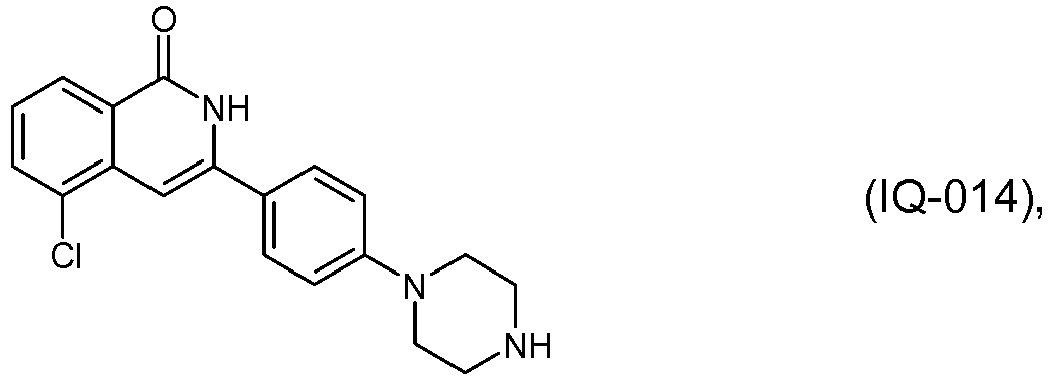


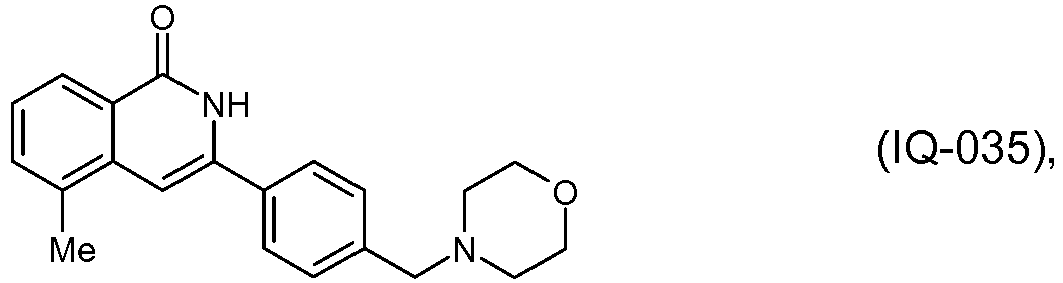


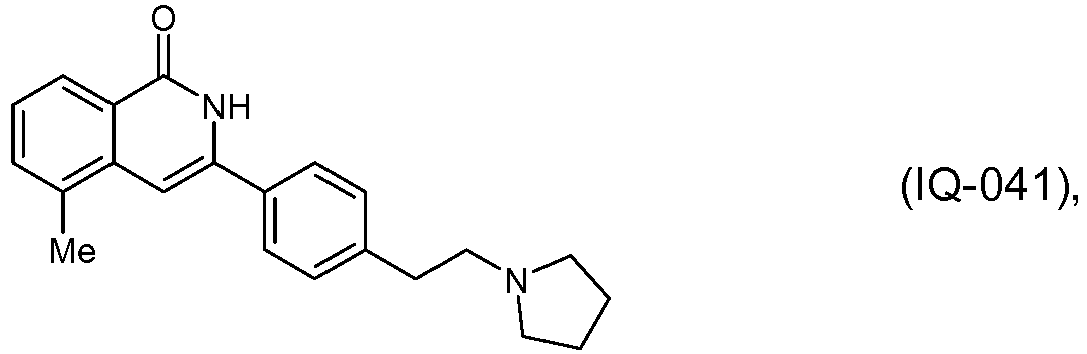


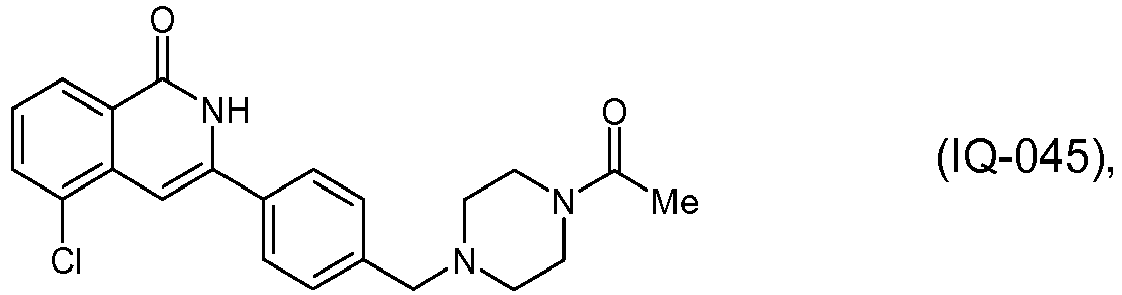


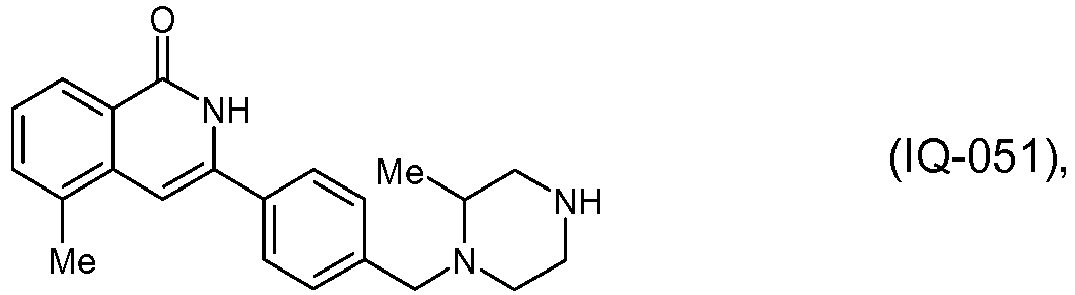


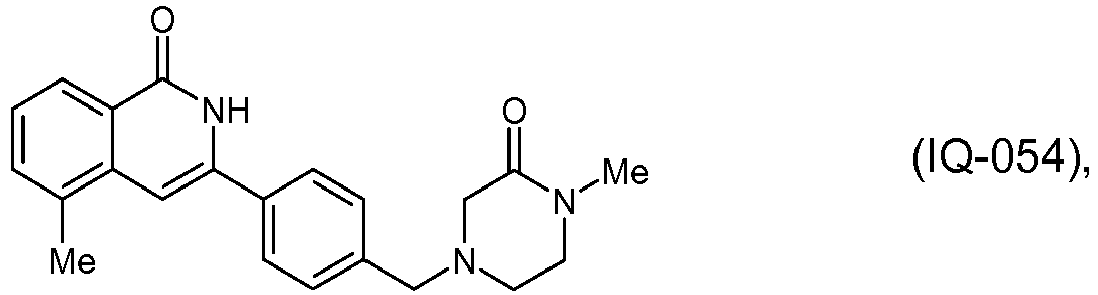


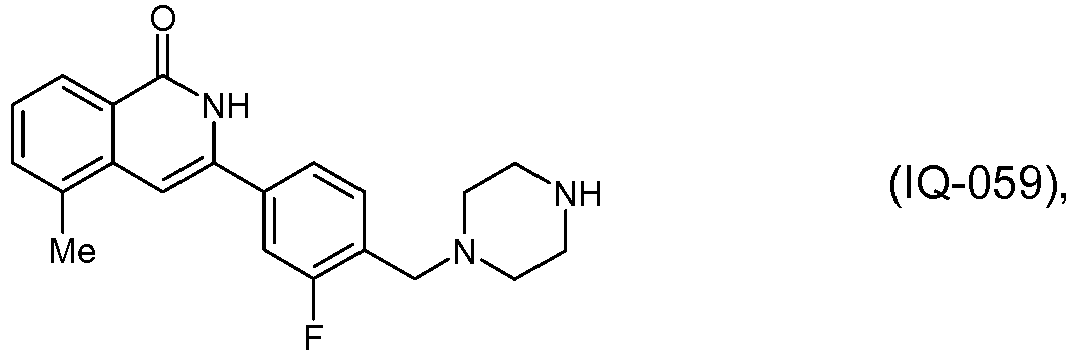


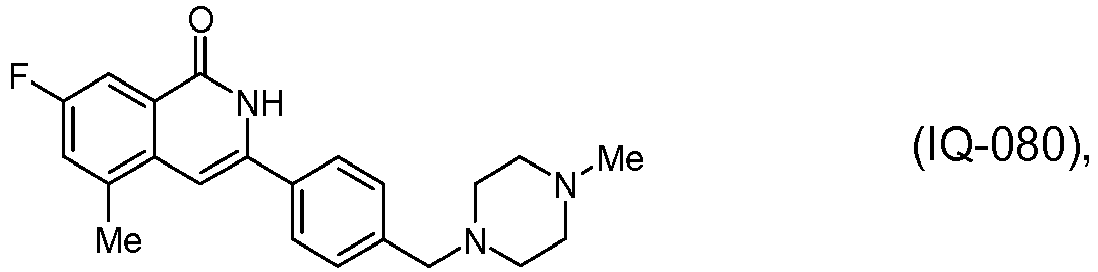


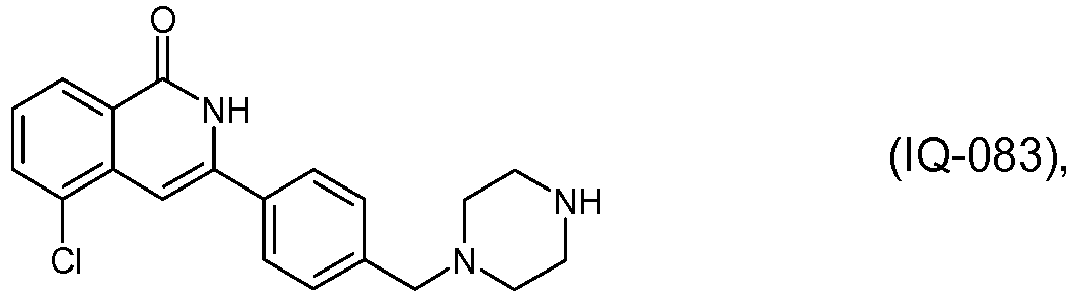


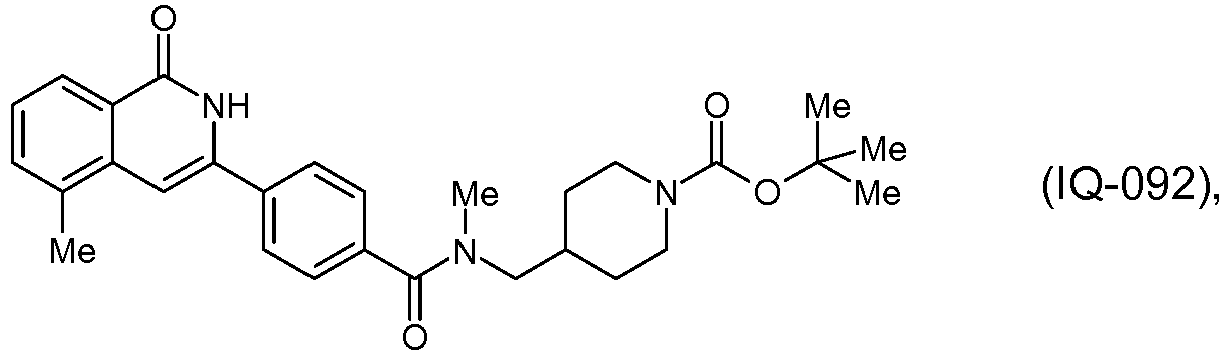


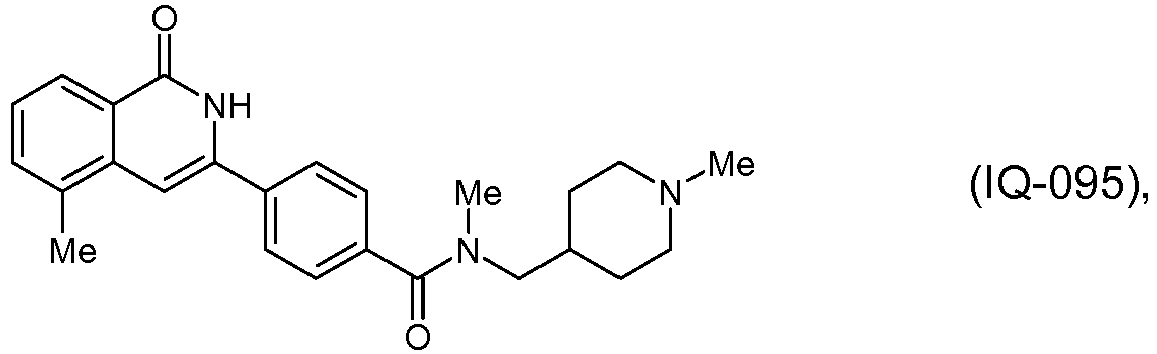
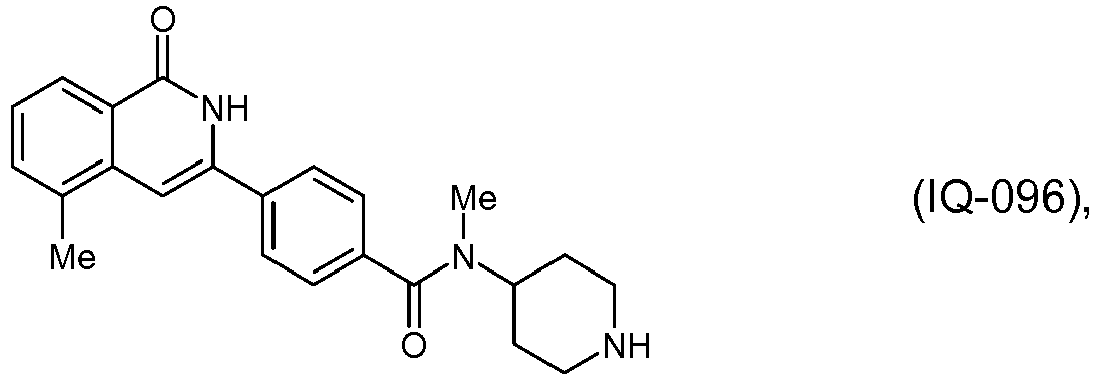


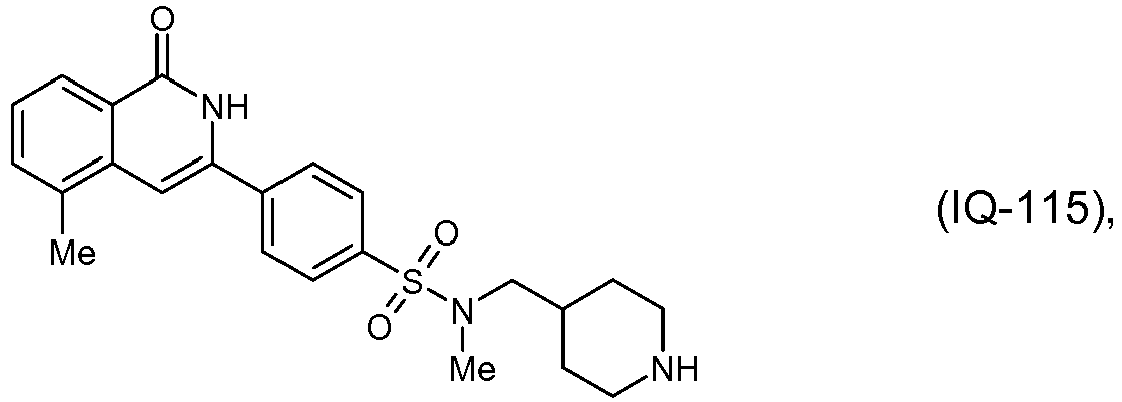


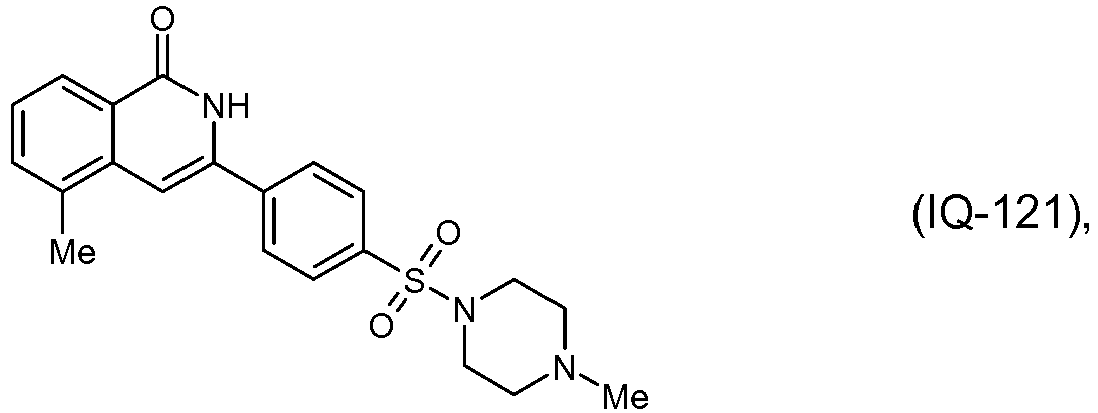


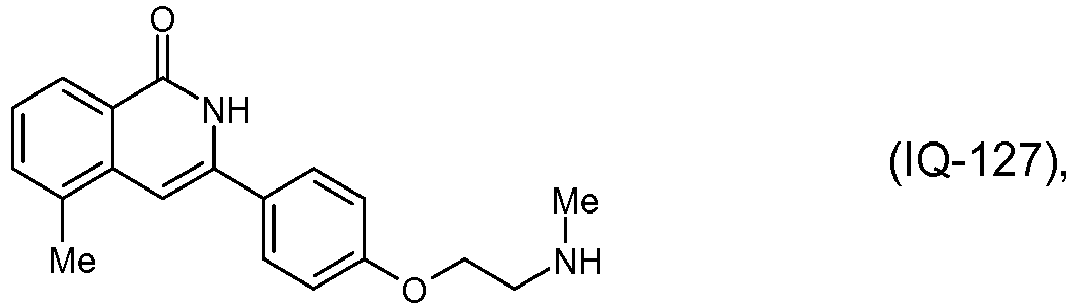


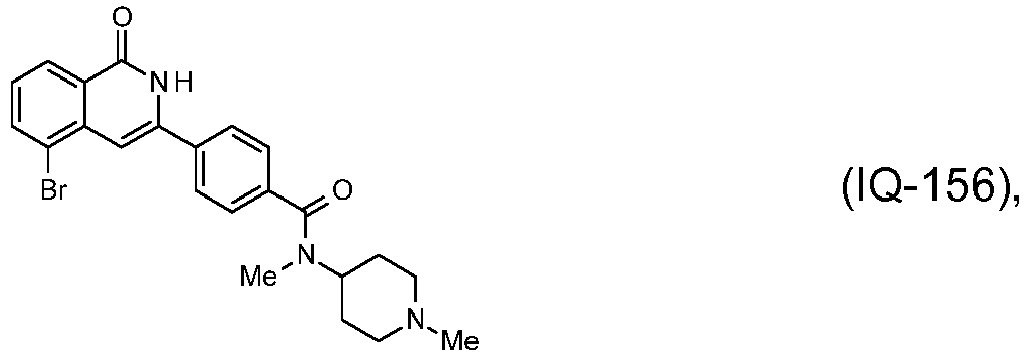


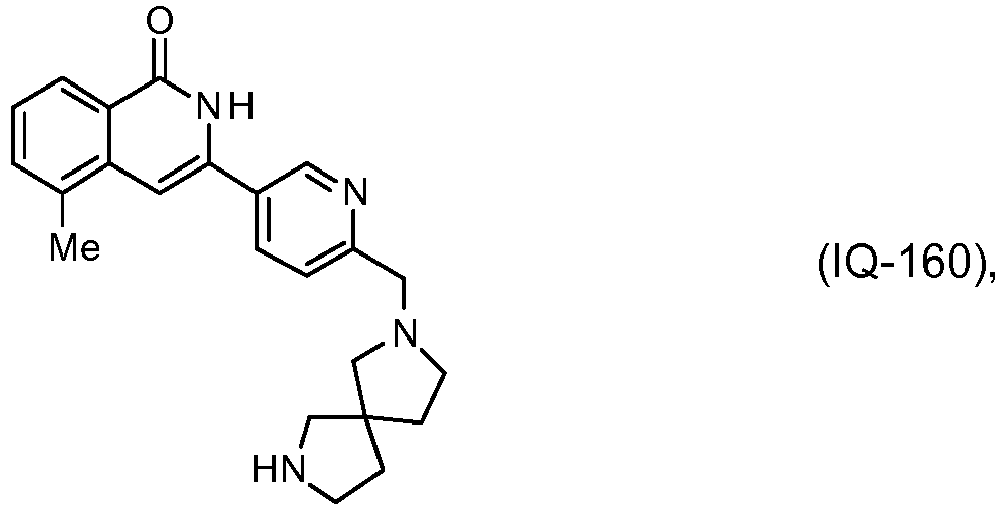


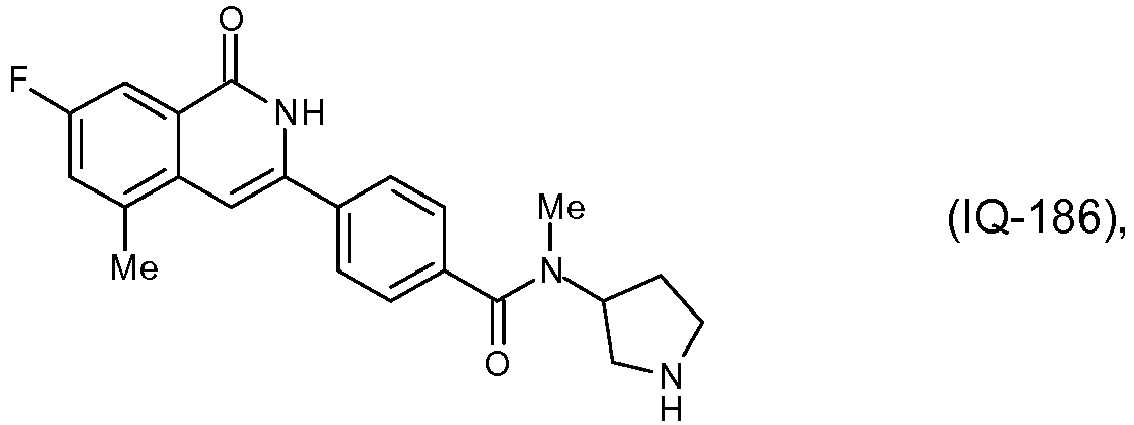


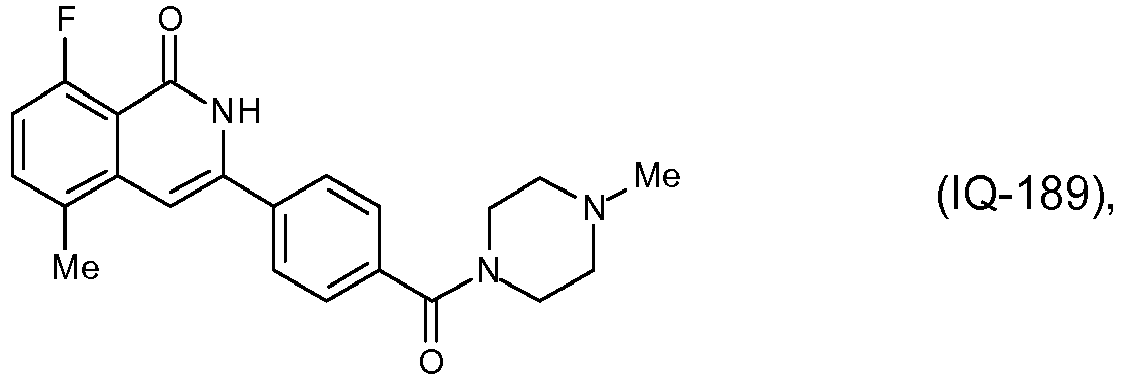


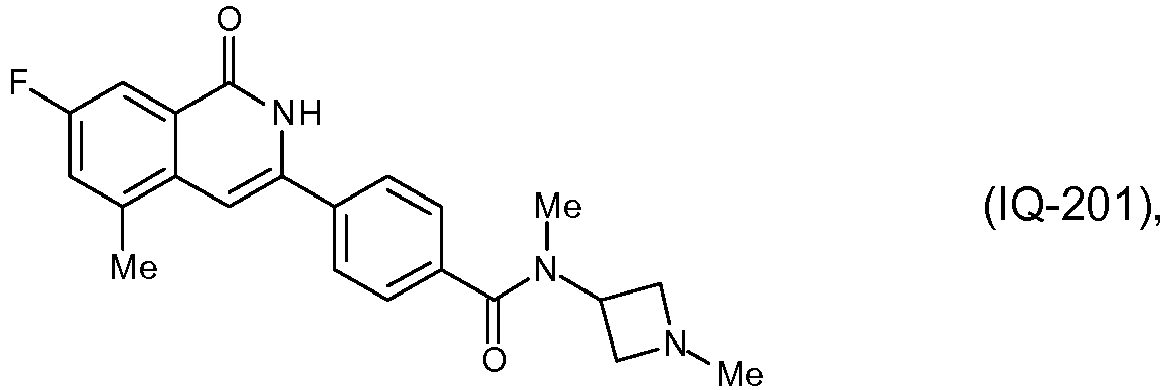


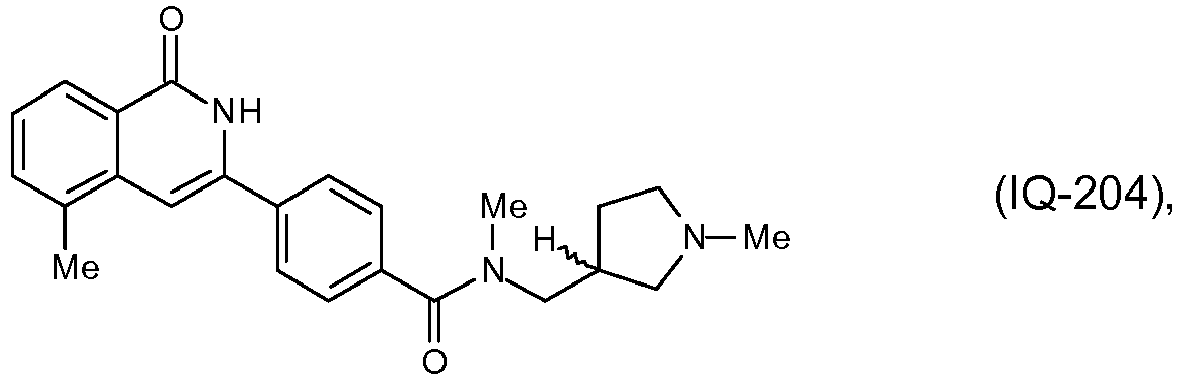


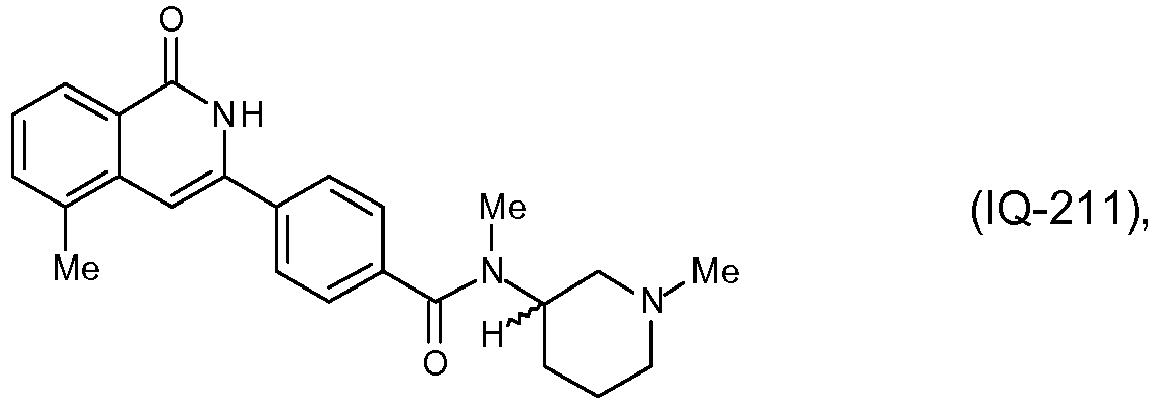


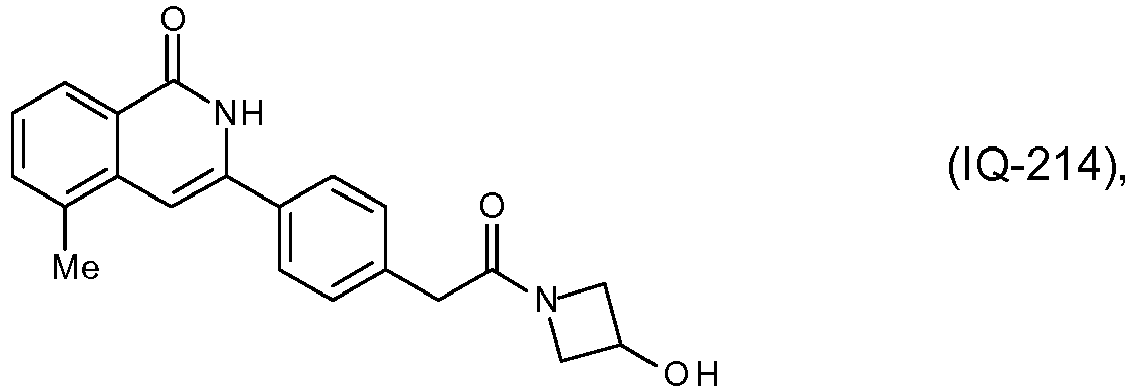


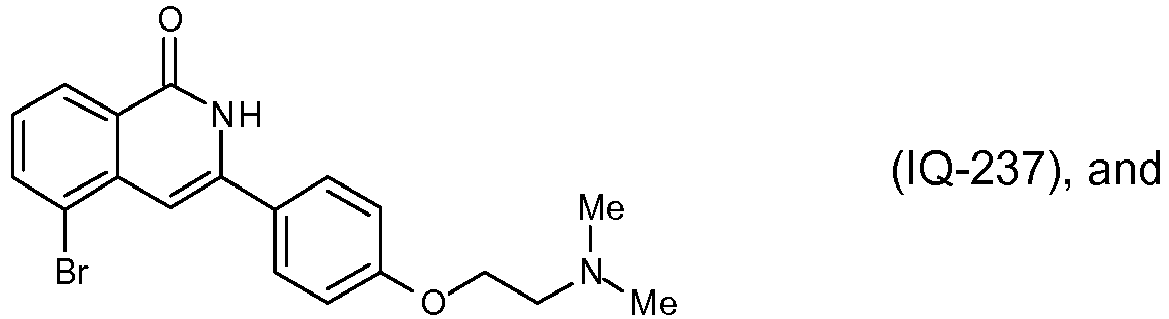

- A pharmaceutical composition comprising a compound according to any one of claims 1 to 25, and a pharmaceutically acceptable carrier or diluent.
- A method of preparing a pharmaceutical composition comprising the step of mixing a compound according to any one of claims 1 to 25, and a pharmaceutically acceptable carrier or diluent.
- A method of inhibiting PARP function, TNKS1 and/or TNKS2 function, or Wnt signalling in a cell, in vitro, comprising contacting the cell with an effective amount of a compound according to any one of claims 1 to 25.
- A compound according to any one of claims 1 to 25, for use in a method of treatment of the human or animal body by therapy.
- A compound for use according to claim 29, in a method of treatment of a proliferative condition.
- A compound for use according to claim 29, in a method of treatment of cancer.
- A compound for use according to claim 29, in a method of treatment of:head and neck cancer; nervous system cancer; lung/mediastinum cancer; breast cancer; oesophagus cancer; stomach cancer; liver cancer; biliary tract cancer; pancreatic cancer; small bowel cancer; large bowel cancer; gynaecological cancer; genito-urinary cancer; thyroid gland cancer; adrenal gland cancer; skin cancer; bone sarcoma; soft tissue sarcoma; paediatric malignancy; Hodgkin's disease; non-Hodgkin's lymphoma; myeloma; leukaemia; or metastasis from an unknown primary site; ora neurodegenerative disorder, such as multiple sclerosis (MS); a neurological disorder associated with demyelination; neonatal hypoxic ischemic encephalopathy (HIE); neonatal periventricular leukomalacia (PVL); a cardiac related pathology, such as myocardial infarction; cardiac damage (e.g., to repair cardiac damage); an infectious disease, such as a pathology related to Herpes Simplex Virus (HSV); a pathology related to Epstein-Barr Virus (EBV); a metabolic disease, such as a metabolic disease where glucose uptake is dysfunctional, such as diabetes, such as type 2 diabetes; or fibrosis (e.g., lung fibrosis); orAlzheimer's disease; late onset Alzheimer's disease; Dupuytren skin disease; tooth agenesis; vascular defects in the eye; Osteoperosis-pseudoglioma Syndrome (OPPG); exudative vitreoretinopathy; familial exudative vitreoretinopathy; retinal angiogenesis; schizophrenia; osteoporosis; dermal hypoplasia; XX sex reversal; Mullerian-duct regression and virilization; SERKAL syndrome; anonychia; hyponychia; sclerosteosis; van Buchem disease; Fuhrmann syndrome; odonto-onchyo-dermal hypoplasia; Type 2 diabetes; obesity; early onset obesity; a nephropathy, such as HIV-associated nephropathy; early coronary disease; bone density defects; tetra-amelia syndrome; split-hand/foot malformation; caudal duplication; Fuhrmann syndrome; odonto-onycho-dermal dysplasia; skeletal dysplasia; focal dermal hypoplasia; autosomal recessive anonychia; or neural tube defects.
Applications Claiming Priority (2)
| Application Number | Priority Date | Filing Date | Title |
|---|---|---|---|
| US201261607680P | 2012-03-07 | 2012-03-07 | |
| PCT/GB2013/050561 WO2013132253A1 (en) | 2012-03-07 | 2013-03-07 | 3-aryl-5-substituted-isoquinolin-1-one compounds and their therapeutic use |
Publications (2)
| Publication Number | Publication Date |
|---|---|
| EP2822656A1 EP2822656A1 (en) | 2015-01-14 |
| EP2822656B1 true EP2822656B1 (en) | 2016-10-19 |
Family
ID=47891779
Family Applications (1)
| Application Number | Title | Priority Date | Filing Date |
|---|---|---|---|
| EP13709994.1A Active EP2822656B1 (en) | 2012-03-07 | 2013-03-07 | 3-aryl-5-substituted-isoquinolin-1-one compounds and their therapeutic use |
Country Status (13)
| Country | Link |
|---|---|
| US (1) | US9193689B2 (en) |
| EP (1) | EP2822656B1 (en) |
| JP (1) | JP6082409B2 (en) |
| KR (1) | KR102104144B1 (en) |
| CN (1) | CN104302358B (en) |
| AU (1) | AU2013229229B2 (en) |
| CA (1) | CA2865511A1 (en) |
| DK (1) | DK2822656T3 (en) |
| ES (1) | ES2611504T3 (en) |
| IN (1) | IN2014MN01875A (en) |
| MX (1) | MX346147B (en) |
| RU (1) | RU2696572C2 (en) |
| WO (1) | WO2013132253A1 (en) |
Families Citing this family (34)
| Publication number | Priority date | Publication date | Assignee | Title |
|---|---|---|---|---|
| RU2696572C2 (en) | 2012-03-07 | 2019-08-05 | Инститьют Оф Кансер Ресёрч: Ройял Кансер Хоспитал (Зе) | 3-aryl-5-substituted isoquinolin-1-one compounds and their therapeutic application |
| CN104507912B (en) * | 2012-08-08 | 2016-09-28 | 默克专利股份公司 | (azepine-) isoquinolinone derivatives |
| CA2922469A1 (en) | 2013-09-11 | 2015-03-19 | Institute Of Cancer Research: Royal Cancer Hospital (The) | 3-aryl-5-substituted-isoquinolin-1-one compounds and their therapeutic use |
| DK3356345T3 (en) * | 2015-09-30 | 2024-02-12 | Max Planck Gesellschaft | HETEROARYL DERIVATIVES AS SEPIAPTERIN REDUCTASE INHIBITORS |
| CN108289448B (en) | 2015-12-02 | 2021-10-22 | 先正达参股股份有限公司 | Microbicidal oxadiazole derivatives |
| UY37623A (en) | 2017-03-03 | 2018-09-28 | Syngenta Participations Ag | DERIVATIVES OF OXADIAZOL THIOPHEN FUNGICIDES |
| WO2018219773A1 (en) | 2017-06-02 | 2018-12-06 | Syngenta Participations Ag | Fungicidal compositions |
| CN110709395A (en) | 2017-06-02 | 2020-01-17 | 先正达参股股份有限公司 | Microbicidal oxadiazole derivatives |
| US20200315176A1 (en) | 2017-06-28 | 2020-10-08 | Syngenta Participations Ag | Fungicidal compositions |
| BR112020000465B1 (en) | 2017-07-11 | 2024-02-20 | Syngenta Participations Ag | OXADIAZOLE DERIVATIVES MICROBIOCIDES |
| WO2019011929A1 (en) | 2017-07-11 | 2019-01-17 | Syngenta Participations Ag | Microbiocidal oxadiazole derivatives |
| WO2019011928A1 (en) | 2017-07-11 | 2019-01-17 | Syngenta Participations Ag | Microbiocidal oxadiazole derivatives |
| WO2019011926A1 (en) | 2017-07-11 | 2019-01-17 | Syngenta Participations Ag | Microbiocidal oxadiazole derivatives |
| BR112020000371A2 (en) | 2017-07-12 | 2020-07-14 | Syngenta Participations Ag | microbiocidal oxadiazole derivatives |
| BR112020000463A2 (en) | 2017-07-13 | 2020-07-21 | Syngenta Participations Ag | microbiocidal oxadiazole derivatives |
| US12402885B2 (en) | 2017-09-23 | 2025-09-02 | Universität Zürich | Medical occlusion device |
| EP3459469A1 (en) | 2017-09-23 | 2019-03-27 | Universität Zürich | Medical occluder device |
| AR114136A1 (en) | 2017-10-10 | 2020-07-29 | Hoffmann La Roche | HETEROCYCLIC COMPOUNDS |
| CN112689631A (en) | 2018-07-16 | 2021-04-20 | 先正达农作物保护股份公司 | Microbicidal oxadiazole derivatives |
| ES2960987T3 (en) | 2019-04-12 | 2024-03-07 | Riboscience Llc | Bicyclic heteroaryl derivatives as inhibitors of ectonucleotide pyrophosphatase phosphodiesterase 1 |
| AR118673A1 (en) * | 2019-04-18 | 2021-10-20 | Syngenta Crop Protection Ag | PROCEDURE FOR THE PREPARATION OF OXADIAZOLE DERIVATIVES MICROBIOCIDES |
| EP4033999B1 (en) | 2019-09-26 | 2024-11-27 | Universität Zürich | Left atrial appendage occlusion devices |
| JP7512380B2 (en) * | 2019-10-30 | 2024-07-08 | ディグムバイオ.インコーポレイテッド | Isoquinolinone derivatives, their production method, and pharmaceutical compositions containing the same as an active ingredient for preventing or treating poly(ADP-ribose)polymerase-1 (PARP-1)-related diseases |
| US12564408B2 (en) | 2020-03-25 | 2026-03-03 | Universitat Zurich | Medical occluder delivery systems |
| WO2022087269A1 (en) | 2020-10-21 | 2022-04-28 | Verint Americas Inc. | System and method of automated determination of use of sensitive information and corrective action for improper use |
| CN117043302A (en) | 2021-03-18 | 2023-11-10 | 默克专利有限公司 | Heteraromatic compounds for organic electroluminescent devices |
| US20240246903A1 (en) * | 2021-05-04 | 2024-07-25 | Board Of Regents, The University Of Texas System | Indanone and tetraloneketo or hydroxyl oximes as cancel therapeutics |
| EP4359401A1 (en) * | 2021-06-23 | 2024-05-01 | Blueprint Medicines Corporation | Process for preparing egfr inhibitors |
| JP2025508714A (en) * | 2022-02-16 | 2025-04-10 | デューク ストリート バイオ リミテッド | Pharmaceutical Compounds |
| CN115572262B (en) * | 2022-10-27 | 2024-08-27 | 厦门沃克沃德医药科技有限公司 | Isoquinoline derivative and preparation method thereof |
| WO2024238871A1 (en) * | 2023-05-18 | 2024-11-21 | Rectify Pharmaceuticals, Inc. | Aryl sulfonamide compounds and their use in treating medical conditions |
| GB2634228A (en) * | 2023-10-02 | 2025-04-09 | Duke Street Bio Ltd | PARP1 inhibitor compounds |
| AU2024406047A1 (en) * | 2023-12-19 | 2026-07-16 | Merck Sharp & Dohme Llc | Agonists of trem2 activity |
| CN122079889B (en) * | 2026-04-24 | 2026-08-07 | 北京海望氢能科技有限公司 | Synthetic method of isoquinoline |
Family Cites Families (67)
| Publication number | Priority date | Publication date | Assignee | Title |
|---|---|---|---|---|
| US2851458A (en) | 1955-06-08 | 1958-09-09 | Burroughs Wellcome Co | Diquaternary compounds and the manufacture thereof |
| US3464563A (en) | 1967-02-06 | 1969-09-02 | American Air Filter Co | Liquid filter apparatus |
| US4678500A (en) | 1984-06-29 | 1987-07-07 | E. I. Du Pont De Nemours And Company | Herbicidal 2,6-disubstituted benzylsulfonamides and benzenesulfamates |
| US5177075A (en) | 1988-08-19 | 1993-01-05 | Warner-Lambert Company | Substituted dihydroisoquinolinones and related compounds as potentiators of the lethal effects of radiation and certain chemotherapeutic agents; selected compounds, analogs and process |
| US4942163A (en) | 1989-03-07 | 1990-07-17 | E. I. Du Pont De Nemours And Company | 1(2H)-isoquinolinones and 1-isoquinolineamines as cancer chemotherapeutic agents |
| WO1999018077A1 (en) | 1997-10-02 | 1999-04-15 | Eisai Co., Ltd. | Fused pyridine derivatives |
| US6878714B2 (en) | 2001-01-12 | 2005-04-12 | Amgen Inc. | Substituted alkylamine derivatives and methods of use |
| US20040176361A1 (en) | 2001-05-23 | 2004-09-09 | Masakazu Fujio | Fused heterocyclic compound and medicinal use thereof |
| AU2002341693B2 (en) | 2001-09-21 | 2008-05-29 | Bristol-Myers Squibb Holdings Ireland Unlimited Company | Lactam-containing compounds and derivatives thereof as factor Xa inhibitors |
| MY140680A (en) | 2002-05-20 | 2010-01-15 | Bristol Myers Squibb Co | Hepatitis c virus inhibitors |
| AU2003255149A1 (en) * | 2002-07-24 | 2004-02-09 | Kyorin Pharmaceutical Co., Ltd. | 4-(substituted aryl)-5-hydroxyisoquinolinone derivative |
| CN100390164C (en) * | 2002-10-01 | 2008-05-28 | 三菱制药株式会社 | Isoquinoline compound and medical application thereof |
| KR20050065624A (en) | 2002-10-23 | 2005-06-29 | 그렌마크 파머수티칼스 엘티디. | Novel tricyclic compounds useful for the treatment of inflammatory and allergic disorders, process for their preparation and pharmaceutical compositions containing them |
| WO2004058717A1 (en) | 2002-12-20 | 2004-07-15 | X-Ceptor Therapeutics, Inc. | Isoquinolinone derivatives and their use as therapeutic agents |
| ATE422895T1 (en) | 2003-04-16 | 2009-03-15 | Bristol Myers Squibb Co | MACROCYCLIC ISOQUINOLINE PEPTIDE INHIBITORS OF HEPATITIS C VIRUS |
| WO2005075432A1 (en) | 2004-02-06 | 2005-08-18 | Chugai Seiyaku Kabushiki Kaisha | 1-(2h)-isoquinolone derivatives and use thereof as anticancer agents |
| TW200536830A (en) | 2004-02-06 | 2005-11-16 | Chugai Pharmaceutical Co Ltd | 1-(2H)-isoquinolone derivative |
| WO2005113540A1 (en) | 2004-05-20 | 2005-12-01 | Mitsubishi Pharma Corporation | Isoquinoline compound and pharmaceutical use thereof |
| US7846915B2 (en) | 2004-10-20 | 2010-12-07 | Resverlogix Corporation | Stilbenes and chalcones for the prevention and treatment of cardiovascular diseases |
| CN101437514B (en) | 2004-10-22 | 2012-04-25 | 詹森药业有限公司 | Inhibitors of C-FMS kinase |
| ATE412636T1 (en) | 2004-12-16 | 2008-11-15 | Hoffmann La Roche | PIPERAZINYLPYRIDINE DERIVATIVES AS AN AGAINST OBESITY |
| TWI389897B (en) | 2005-02-22 | 2013-03-21 | Chugai Pharmaceutical Co Ltd | 1- (2H) -isoquinolinone derivatives |
| SI1864976T1 (en) | 2005-03-31 | 2012-12-31 | Astellas Pharma Inc. | Propane-1,3-dion derivative or salt thereof |
| WO2007016525A2 (en) | 2005-07-29 | 2007-02-08 | Resverlogix Corp. | Pharmaceutical compositions for the prevention and treatment of complex diseases and their delivery by insertable medical devices |
| CN101316592A (en) * | 2005-08-24 | 2008-12-03 | 伊诺泰克制药公司 | Indenoisoquinolinone Analogs and Their Uses |
| CA2662112A1 (en) | 2006-09-05 | 2008-03-13 | Kyowa Hakko Kirin Co., Ltd. | Imidazole derivatives and their use as cannabinoid type 2 (cb2) receptor modulators |
| US7772180B2 (en) | 2006-11-09 | 2010-08-10 | Bristol-Myers Squibb Company | Hepatitis C virus inhibitors |
| PT2118074E (en) | 2007-02-01 | 2014-03-20 | Resverlogix Corp | Compounds for the prevention and treatment of cardiovascular diseases |
| FR2919286A1 (en) * | 2007-07-27 | 2009-01-30 | Sanofi Aventis Sa | New dihydroquinazoline- or dihydroisoquinoline carboxamide compounds are beta-secretase inhibitors useful to treat e.g. senile dementia, mild cognitive disorder, Huntington disease, Creutzfeldt-Jakob disease, migraine and anxiety |
| US20090054392A1 (en) | 2007-08-20 | 2009-02-26 | Wyeth | Naphthylpyrimidine, naphthylpyrazine and naphthylpyridazine analogs and their use as agonists of the wnt-beta-catenin cellular messaging system |
| WO2009027650A1 (en) | 2007-08-24 | 2009-03-05 | The Institute Of Cancer: Royal Cancer Hospital | Materials and methods for exploiting synthetic lethality in brca-associated cancers |
| AU2008324203A1 (en) | 2007-11-05 | 2009-05-14 | Novartis Ag | Methods and compositions for measuring Wnt activation and for treating Wnt-related cancers |
| DE102008019838A1 (en) | 2008-04-19 | 2009-12-10 | Boehringer Ingelheim International Gmbh | New arylsulfonylglycine derivatives, their preparation and their use as pharmaceuticals |
| JP5369173B2 (en) | 2008-04-22 | 2013-12-18 | ジヤンセン・フアーマシユーチカ・ナームローゼ・フエンノートシヤツプ | Quinoline or isoquinoline substituted P2X7 antagonists |
| AR074199A1 (en) | 2008-11-20 | 2010-12-29 | Glaxosmithkline Llc | COMPOSITE OF 6- (4-PYRIMIDINYL) -1H-INDAZOL, PHARMACEUTICAL COMPOSITIONS THAT INCLUDE IT AND ITS USE TO PREPARE A USEFUL MEDICINAL PRODUCT FOR THE TREATMENT OR DECREASE OF CANCER GRAVITY. |
| JP2012519661A (en) | 2009-03-06 | 2012-08-30 | エフ.ホフマン−ラ ロシュ アーゲー | Antiviral heterocyclic compounds |
| NZ617779A (en) | 2009-03-18 | 2015-08-28 | Resverlogix Corp | Novel anti-inflammatory agents |
| US9757368B2 (en) | 2009-04-22 | 2017-09-12 | Resverlogix Corp. | Anti-inflammatory agents |
| TWI499418B (en) | 2009-05-21 | 2015-09-11 | Nerviano Medical Sciences Srl | Isoquinolin-1(2h)-one derivatives |
| CN102666540A (en) | 2009-10-13 | 2012-09-12 | Msd欧斯股份有限公司 | Condensed azine derivatives for treating acetylcholine receptor related diseases |
| JP5951600B2 (en) | 2010-05-21 | 2016-07-13 | インフィニティー ファーマシューティカルズ, インコーポレイテッド | Compounds, compositions and methods for kinase regulation |
| CN102947274A (en) | 2010-06-17 | 2013-02-27 | 诺瓦提斯公司 | Biphenyl substituted 1,3-dihydro-benzimidazol-2-ylideneamine derivatives |
| US9181266B2 (en) | 2011-07-13 | 2015-11-10 | Novartis Ag | 2-piperidin-1-yl-acetamide compounds for use as tankyrase inhibitors |
| US9227982B2 (en) | 2011-07-13 | 2016-01-05 | Novartis Ag | 4-oxo-3,5,7,8-tetrahydro-4H-pyrano[4,3-d]pyrminidinyl compounds for use as tankyrase inhibitors |
| CA2841932A1 (en) | 2011-07-13 | 2013-01-17 | Novartis Ag | 4 - piperidinyl compounds for use as tankyrase inhibitors |
| EP2788328B1 (en) | 2011-11-25 | 2018-01-31 | Nerviano Medical Sciences S.r.l. | 3-phenyl-isoquinolin-1(2h)-one derivatives as parp-1 inhibitors |
| KR101716012B1 (en) | 2011-12-31 | 2017-03-13 | 베이진 엘티디 | Fused tetra or penta-cyclic dihydrodiazepinocarbazolones as parp inhibitors |
| KR101684039B1 (en) | 2011-12-31 | 2016-12-07 | 베이진 엘티디 | Fused tetra or penta-cyclic pyridophthalazinones as parp inhibitors |
| CN104080773B (en) | 2012-01-28 | 2016-12-28 | 默克专利股份公司 | Nitrogen heterocyclic |
| WO2013116182A1 (en) | 2012-01-31 | 2013-08-08 | Boehringer Ingelheim International Gmbh | Heterocyclic compounds as inhibitors of leukotriene production |
| US9339503B2 (en) | 2012-02-09 | 2016-05-17 | Merck Patent Gmbh | Tetrahydro-quinazolinone derivatives as TANK and PARP inhibitors |
| EP2822944A1 (en) | 2012-03-05 | 2015-01-14 | Amgen, Inc. | Oxazolidinone compounds and derivatives thereof |
| RU2696572C2 (en) | 2012-03-07 | 2019-08-05 | Инститьют Оф Кансер Ресёрч: Ройял Кансер Хоспитал (Зе) | 3-aryl-5-substituted isoquinolin-1-one compounds and their therapeutic application |
| HRP20160908T1 (en) | 2012-03-28 | 2016-09-23 | Merck Patent Gmbh | CYCLIC DERIVATIVES OF PIRAZINONE |
| US20130281397A1 (en) | 2012-04-19 | 2013-10-24 | Rvx Therapeutics Inc. | Treatment of diseases by epigenetic regulation |
| SG11201406997WA (en) | 2012-05-04 | 2014-11-27 | Merck Patent Gmbh | Pyrrolotriazinone derivatives |
| WO2013177349A2 (en) | 2012-05-25 | 2013-11-28 | Glaxosmithkline Llc | Quinazolinediones as tankyrase inhibitors |
| BR112014030416A2 (en) | 2012-06-07 | 2017-06-27 | Hoffmann La Roche | compound, methods for tankyrase 1 inhibition and cancer treatment, use of a compound, composition and invention. |
| CA2874546A1 (en) | 2012-06-07 | 2013-12-12 | F. Hoffmann-La Roche Ag | Pyrazolopyrimidone and pyrazolopyridone inhibitors of tankyrase |
| CA2870062A1 (en) | 2012-06-20 | 2013-12-27 | F.Hoffmann-La Roche Ag | Pyrrolopyrazone inhibitors of tankyrase |
| HK1201066A1 (en) | 2012-06-20 | 2015-08-21 | 霍夫曼-拉罗奇有限公司 | Pyranopyridone inhibitors of tankyrase |
| CN104507912B (en) | 2012-08-08 | 2016-09-28 | 默克专利股份公司 | (azepine-) isoquinolinone derivatives |
| EP2890696A1 (en) | 2012-08-29 | 2015-07-08 | Amgen, Inc. | Quinazolinone compounds and derivatives thereof |
| WO2014045101A1 (en) | 2012-09-21 | 2014-03-27 | Cellzome Gmbh | Tetrazolo quinoxaline derivatives as tankyrase inhibitors |
| AR092211A1 (en) | 2012-09-24 | 2015-04-08 | Merck Patent Ges Mit Beschränkter Haftung | HYDROPIRROLOPIRROL DERIVATIVES |
| MX362855B (en) | 2012-09-26 | 2019-02-20 | Merck Patent Gmbh | Quinazolinone derivatives as parp inhibitors. |
| WO2014087165A1 (en) | 2012-12-06 | 2014-06-12 | University Of Bath | Tankyrase inhibitors |
-
2013
- 2013-03-07 RU RU2014138194A patent/RU2696572C2/en not_active Application Discontinuation
- 2013-03-07 IN IN1875MUN2014 patent/IN2014MN01875A/en unknown
- 2013-03-07 WO PCT/GB2013/050561 patent/WO2013132253A1/en not_active Ceased
- 2013-03-07 MX MX2014010509A patent/MX346147B/en active IP Right Grant
- 2013-03-07 CN CN201380023162.0A patent/CN104302358B/en not_active Expired - Fee Related
- 2013-03-07 US US14/381,712 patent/US9193689B2/en not_active Expired - Fee Related
- 2013-03-07 EP EP13709994.1A patent/EP2822656B1/en active Active
- 2013-03-07 JP JP2014560442A patent/JP6082409B2/en not_active Expired - Fee Related
- 2013-03-07 KR KR1020147026143A patent/KR102104144B1/en not_active Expired - Fee Related
- 2013-03-07 ES ES13709994.1T patent/ES2611504T3/en active Active
- 2013-03-07 DK DK13709994.1T patent/DK2822656T3/en active
- 2013-03-07 AU AU2013229229A patent/AU2013229229B2/en not_active Ceased
- 2013-03-07 CA CA2865511A patent/CA2865511A1/en not_active Abandoned
Also Published As
| Publication number | Publication date |
|---|---|
| CN104302358A (en) | 2015-01-21 |
| IN2014MN01875A (en) | 2015-07-03 |
| ES2611504T3 (en) | 2017-05-09 |
| JP6082409B2 (en) | 2017-02-15 |
| CN104302358B (en) | 2017-12-05 |
| US20150099732A1 (en) | 2015-04-09 |
| MX346147B (en) | 2017-03-09 |
| US9193689B2 (en) | 2015-11-24 |
| JP2015512885A (en) | 2015-04-30 |
| AU2013229229B2 (en) | 2017-10-19 |
| WO2013132253A1 (en) | 2013-09-12 |
| RU2696572C2 (en) | 2019-08-05 |
| EP2822656A1 (en) | 2015-01-14 |
| MX2014010509A (en) | 2014-10-14 |
| KR102104144B1 (en) | 2020-04-23 |
| CA2865511A1 (en) | 2013-09-12 |
| AU2013229229A1 (en) | 2014-09-25 |
| DK2822656T3 (en) | 2017-01-30 |
| KR20150001734A (en) | 2015-01-06 |
| RU2014138194A (en) | 2016-04-27 |
Similar Documents
| Publication | Publication Date | Title |
|---|---|---|
| US9193689B2 (en) | 3-aryl-5-substituted-isoquinolin-1-one compounds and their therapeutic use | |
| EP3044221B1 (en) | 3-aryl-5-substituted-isoquinolin-1-one compounds and their therapeutic use | |
| US8530468B2 (en) | Bicyclylaryl-aryl-amine compounds and their use | |
| EP2197874B1 (en) | Pyrazin-2-yl-pyridin-2-yl-amine and pyrazin-2-yl-pyrimidin-4-yl-amine compounds and their use | |
| US9598423B2 (en) | Substituted 4,5,6,7-tetrahydropyrazolo[1,5-A]pyrazine derivatives as casein kinase 1 D/E inhibitors | |
| KR20180006334A (en) | NOVEL 4-AMINOPYRAZOLO[3,4-d]PYRIMIDINYLAZABICYCLO DERIVATIVES AND PHARMACEUTICAL COMPOSITION COMPRISING THE SAME | |
| US12473303B2 (en) | 4-[[(7-aminopyrazolo[1,5-a]pyrimidin-5-yl)amino methyl]piperidin-3-ol compounds and their therapeutic use | |
| EP2935272B1 (en) | Pyrazole substituted imidazopyrazines as casein kinase 1 d/e inhibitors | |
| KR20160050080A (en) | Triazolopyridine compounds, compositions and methods of use thereof | |
| AU2024231943A1 (en) | Biarylamide derivatives and their use as pkmyt1 inhibitors | |
| TWI709559B (en) | New amino-pyrimidonyl derivatives, a process for their preparation and pharmaceutical compositions containing them | |
| HK40012561B (en) | Heteroaryl compounds and their use as mer inhibitors | |
| HK1231852A1 (en) | Pyrazolo[1,5-a]pyrimidine-5,7-diamine compounds as cdk inhibitors and their therapeutic use | |
| HK1231852B (en) | Pyrazolo[1,5-a]pyrimidine-5,7-diamine compounds as cdk inhibitors and their therapeutic use |
Legal Events
| Date | Code | Title | Description |
|---|---|---|---|
| PUAI | Public reference made under article 153(3) epc to a published international application that has entered the european phase |
Free format text: ORIGINAL CODE: 0009012 |
|
| 17P | Request for examination filed |
Effective date: 20141003 |
|
| AK | Designated contracting states |
Kind code of ref document: A1 Designated state(s): AL AT BE BG CH CY CZ DE DK EE ES FI FR GB GR HR HU IE IS IT LI LT LU LV MC MK MT NL NO PL PT RO RS SE SI SK SM TR |
|
| AX | Request for extension of the european patent |
Extension state: BA ME |
|
| 17Q | First examination report despatched |
Effective date: 20151110 |
|
| GRAP | Despatch of communication of intention to grant a patent |
Free format text: ORIGINAL CODE: EPIDOSNIGR1 |
|
| INTG | Intention to grant announced |
Effective date: 20160506 |
|
| GRAS | Grant fee paid |
Free format text: ORIGINAL CODE: EPIDOSNIGR3 |
|
| GRAA | (expected) grant |
Free format text: ORIGINAL CODE: 0009210 |
|
| AK | Designated contracting states |
Kind code of ref document: B1 Designated state(s): AL AT BE BG CH CY CZ DE DK EE ES FI FR GB GR HR HU IE IS IT LI LT LU LV MC MK MT NL NO PL PT RO RS SE SI SK SM TR |
|
| AX | Request for extension of the european patent |
Extension state: BA ME |
|
| REG | Reference to a national code |
Ref country code: GB Ref legal event code: FG4D |
|
| REG | Reference to a national code |
Ref country code: CH Ref legal event code: EP |
|
| REG | Reference to a national code |
Ref country code: AT Ref legal event code: REF Ref document number: 837828 Country of ref document: AT Kind code of ref document: T Effective date: 20161115 |
|
| REG | Reference to a national code |
Ref country code: IE Ref legal event code: FG4D |
|
| REG | Reference to a national code |
Ref country code: DE Ref legal event code: R096 Ref document number: 602013012933 Country of ref document: DE |
|
| REG | Reference to a national code |
Ref country code: DK Ref legal event code: T3 Effective date: 20170126 |
|
| REG | Reference to a national code |
Ref country code: NL Ref legal event code: FP |
|
| REG | Reference to a national code |
Ref country code: SE Ref legal event code: TRGR |
|
| REG | Reference to a national code |
Ref country code: LT Ref legal event code: MG4D |
|
| PG25 | Lapsed in a contracting state [announced via postgrant information from national office to epo] |
Ref country code: LV Free format text: LAPSE BECAUSE OF FAILURE TO SUBMIT A TRANSLATION OF THE DESCRIPTION OR TO PAY THE FEE WITHIN THE PRESCRIBED TIME-LIMIT Effective date: 20161019 |
|
| REG | Reference to a national code |
Ref country code: NO Ref legal event code: T2 Effective date: 20161019 |
|
| REG | Reference to a national code |
Ref country code: FR Ref legal event code: PLFP Year of fee payment: 5 |
|
| PG25 | Lapsed in a contracting state [announced via postgrant information from national office to epo] |
Ref country code: LT Free format text: LAPSE BECAUSE OF FAILURE TO SUBMIT A TRANSLATION OF THE DESCRIPTION OR TO PAY THE FEE WITHIN THE PRESCRIBED TIME-LIMIT Effective date: 20161019 |
|
| REG | Reference to a national code |
Ref country code: ES Ref legal event code: FG2A Ref document number: 2611504 Country of ref document: ES Kind code of ref document: T3 Effective date: 20170509 |
|
| PG25 | Lapsed in a contracting state [announced via postgrant information from national office to epo] |
Ref country code: PT Free format text: LAPSE BECAUSE OF FAILURE TO SUBMIT A TRANSLATION OF THE DESCRIPTION OR TO PAY THE FEE WITHIN THE PRESCRIBED TIME-LIMIT Effective date: 20170220 Ref country code: HR Free format text: LAPSE BECAUSE OF FAILURE TO SUBMIT A TRANSLATION OF THE DESCRIPTION OR TO PAY THE FEE WITHIN THE PRESCRIBED TIME-LIMIT Effective date: 20161019 Ref country code: IS Free format text: LAPSE BECAUSE OF FAILURE TO SUBMIT A TRANSLATION OF THE DESCRIPTION OR TO PAY THE FEE WITHIN THE PRESCRIBED TIME-LIMIT Effective date: 20170219 Ref country code: RS Free format text: LAPSE BECAUSE OF FAILURE TO SUBMIT A TRANSLATION OF THE DESCRIPTION OR TO PAY THE FEE WITHIN THE PRESCRIBED TIME-LIMIT Effective date: 20161019 Ref country code: PL Free format text: LAPSE BECAUSE OF FAILURE TO SUBMIT A TRANSLATION OF THE DESCRIPTION OR TO PAY THE FEE WITHIN THE PRESCRIBED TIME-LIMIT Effective date: 20161019 |
|
| REG | Reference to a national code |
Ref country code: DE Ref legal event code: R097 Ref document number: 602013012933 Country of ref document: DE |
|
| PG25 | Lapsed in a contracting state [announced via postgrant information from national office to epo] |
Ref country code: SK Free format text: LAPSE BECAUSE OF FAILURE TO SUBMIT A TRANSLATION OF THE DESCRIPTION OR TO PAY THE FEE WITHIN THE PRESCRIBED TIME-LIMIT Effective date: 20161019 Ref country code: RO Free format text: LAPSE BECAUSE OF FAILURE TO SUBMIT A TRANSLATION OF THE DESCRIPTION OR TO PAY THE FEE WITHIN THE PRESCRIBED TIME-LIMIT Effective date: 20161019 Ref country code: CZ Free format text: LAPSE BECAUSE OF FAILURE TO SUBMIT A TRANSLATION OF THE DESCRIPTION OR TO PAY THE FEE WITHIN THE PRESCRIBED TIME-LIMIT Effective date: 20161019 Ref country code: EE Free format text: LAPSE BECAUSE OF FAILURE TO SUBMIT A TRANSLATION OF THE DESCRIPTION OR TO PAY THE FEE WITHIN THE PRESCRIBED TIME-LIMIT Effective date: 20161019 |
|
| PLBE | No opposition filed within time limit |
Free format text: ORIGINAL CODE: 0009261 |
|
| STAA | Information on the status of an ep patent application or granted ep patent |
Free format text: STATUS: NO OPPOSITION FILED WITHIN TIME LIMIT |
|
| PG25 | Lapsed in a contracting state [announced via postgrant information from national office to epo] |
Ref country code: SM Free format text: LAPSE BECAUSE OF FAILURE TO SUBMIT A TRANSLATION OF THE DESCRIPTION OR TO PAY THE FEE WITHIN THE PRESCRIBED TIME-LIMIT Effective date: 20161019 Ref country code: BG Free format text: LAPSE BECAUSE OF FAILURE TO SUBMIT A TRANSLATION OF THE DESCRIPTION OR TO PAY THE FEE WITHIN THE PRESCRIBED TIME-LIMIT Effective date: 20170119 |
|
| 26N | No opposition filed |
Effective date: 20170720 |
|
| PG25 | Lapsed in a contracting state [announced via postgrant information from national office to epo] |
Ref country code: MC Free format text: LAPSE BECAUSE OF FAILURE TO SUBMIT A TRANSLATION OF THE DESCRIPTION OR TO PAY THE FEE WITHIN THE PRESCRIBED TIME-LIMIT Effective date: 20161019 Ref country code: SI Free format text: LAPSE BECAUSE OF FAILURE TO SUBMIT A TRANSLATION OF THE DESCRIPTION OR TO PAY THE FEE WITHIN THE PRESCRIBED TIME-LIMIT Effective date: 20161019 |
|
| PG25 | Lapsed in a contracting state [announced via postgrant information from national office to epo] |
Ref country code: LU Free format text: LAPSE BECAUSE OF NON-PAYMENT OF DUE FEES Effective date: 20170307 |
|
| REG | Reference to a national code |
Ref country code: FR Ref legal event code: PLFP Year of fee payment: 6 |
|
| PG25 | Lapsed in a contracting state [announced via postgrant information from national office to epo] |
Ref country code: MT Free format text: LAPSE BECAUSE OF NON-PAYMENT OF DUE FEES Effective date: 20170307 |
|
| PG25 | Lapsed in a contracting state [announced via postgrant information from national office to epo] |
Ref country code: HU Free format text: LAPSE BECAUSE OF FAILURE TO SUBMIT A TRANSLATION OF THE DESCRIPTION OR TO PAY THE FEE WITHIN THE PRESCRIBED TIME-LIMIT; INVALID AB INITIO Effective date: 20130307 |
|
| PG25 | Lapsed in a contracting state [announced via postgrant information from national office to epo] |
Ref country code: CY Free format text: LAPSE BECAUSE OF FAILURE TO SUBMIT A TRANSLATION OF THE DESCRIPTION OR TO PAY THE FEE WITHIN THE PRESCRIBED TIME-LIMIT Effective date: 20161019 |
|
| PG25 | Lapsed in a contracting state [announced via postgrant information from national office to epo] |
Ref country code: MK Free format text: LAPSE BECAUSE OF FAILURE TO SUBMIT A TRANSLATION OF THE DESCRIPTION OR TO PAY THE FEE WITHIN THE PRESCRIBED TIME-LIMIT Effective date: 20161019 |
|
| PG25 | Lapsed in a contracting state [announced via postgrant information from national office to epo] |
Ref country code: TR Free format text: LAPSE BECAUSE OF FAILURE TO SUBMIT A TRANSLATION OF THE DESCRIPTION OR TO PAY THE FEE WITHIN THE PRESCRIBED TIME-LIMIT Effective date: 20161019 |
|
| REG | Reference to a national code |
Ref country code: AT Ref legal event code: UEP Ref document number: 837828 Country of ref document: AT Kind code of ref document: T Effective date: 20161019 |
|
| PG25 | Lapsed in a contracting state [announced via postgrant information from national office to epo] |
Ref country code: AL Free format text: LAPSE BECAUSE OF FAILURE TO SUBMIT A TRANSLATION OF THE DESCRIPTION OR TO PAY THE FEE WITHIN THE PRESCRIBED TIME-LIMIT Effective date: 20161019 |
|
| PGFP | Annual fee paid to national office [announced via postgrant information from national office to epo] |
Ref country code: GR Payment date: 20210319 Year of fee payment: 9 Ref country code: FR Payment date: 20210330 Year of fee payment: 9 Ref country code: FI Payment date: 20210331 Year of fee payment: 9 |
|
| PGFP | Annual fee paid to national office [announced via postgrant information from national office to epo] |
Ref country code: AT Payment date: 20210331 Year of fee payment: 9 Ref country code: GB Payment date: 20210325 Year of fee payment: 9 |
|
| PGFP | Annual fee paid to national office [announced via postgrant information from national office to epo] |
Ref country code: IT Payment date: 20210331 Year of fee payment: 9 Ref country code: DE Payment date: 20210331 Year of fee payment: 9 Ref country code: NO Payment date: 20210406 Year of fee payment: 9 |
|
| PGFP | Annual fee paid to national office [announced via postgrant information from national office to epo] |
Ref country code: BE Payment date: 20210331 Year of fee payment: 9 Ref country code: SE Payment date: 20210331 Year of fee payment: 9 Ref country code: IE Payment date: 20210429 Year of fee payment: 9 Ref country code: ES Payment date: 20210401 Year of fee payment: 9 Ref country code: CH Payment date: 20210331 Year of fee payment: 9 Ref country code: DK Payment date: 20210331 Year of fee payment: 9 |
|
| PGFP | Annual fee paid to national office [announced via postgrant information from national office to epo] |
Ref country code: NL Payment date: 20210330 Year of fee payment: 9 |
|
| REG | Reference to a national code |
Ref country code: DE Ref legal event code: R119 Ref document number: 602013012933 Country of ref document: DE |
|
| REG | Reference to a national code |
Ref country code: FI Ref legal event code: MAE |
|
| REG | Reference to a national code |
Ref country code: NO Ref legal event code: MMEP Ref country code: DK Ref legal event code: EBP Effective date: 20220331 |
|
| PG25 | Lapsed in a contracting state [announced via postgrant information from national office to epo] |
Ref country code: FI Free format text: LAPSE BECAUSE OF NON-PAYMENT OF DUE FEES Effective date: 20220307 |
|
| REG | Reference to a national code |
Ref country code: CH Ref legal event code: PL |
|
| REG | Reference to a national code |
Ref country code: NL Ref legal event code: MM Effective date: 20220401 |
|
| REG | Reference to a national code |
Ref country code: AT Ref legal event code: MM01 Ref document number: 837828 Country of ref document: AT Kind code of ref document: T Effective date: 20220307 |
|
| GBPC | Gb: european patent ceased through non-payment of renewal fee |
Effective date: 20220307 |
|
| REG | Reference to a national code |
Ref country code: BE Ref legal event code: MM Effective date: 20220331 |
|
| PG25 | Lapsed in a contracting state [announced via postgrant information from national office to epo] |
Ref country code: SE Free format text: LAPSE BECAUSE OF NON-PAYMENT OF DUE FEES Effective date: 20220308 Ref country code: NO Free format text: LAPSE BECAUSE OF NON-PAYMENT OF DUE FEES Effective date: 20220331 Ref country code: NL Free format text: LAPSE BECAUSE OF NON-PAYMENT OF DUE FEES Effective date: 20220401 Ref country code: LI Free format text: LAPSE BECAUSE OF NON-PAYMENT OF DUE FEES Effective date: 20220331 Ref country code: IE Free format text: LAPSE BECAUSE OF NON-PAYMENT OF DUE FEES Effective date: 20220307 Ref country code: GB Free format text: LAPSE BECAUSE OF NON-PAYMENT OF DUE FEES Effective date: 20220307 Ref country code: FR Free format text: LAPSE BECAUSE OF NON-PAYMENT OF DUE FEES Effective date: 20220331 Ref country code: DE Free format text: LAPSE BECAUSE OF NON-PAYMENT OF DUE FEES Effective date: 20221001 Ref country code: CH Free format text: LAPSE BECAUSE OF NON-PAYMENT OF DUE FEES Effective date: 20220331 Ref country code: AT Free format text: LAPSE BECAUSE OF NON-PAYMENT OF DUE FEES Effective date: 20220307 |
|
| PG25 | Lapsed in a contracting state [announced via postgrant information from national office to epo] |
Ref country code: GR Free format text: LAPSE BECAUSE OF NON-PAYMENT OF DUE FEES Effective date: 20221006 Ref country code: BE Free format text: LAPSE BECAUSE OF NON-PAYMENT OF DUE FEES Effective date: 20220331 |
|
| PG25 | Lapsed in a contracting state [announced via postgrant information from national office to epo] |
Ref country code: DK Free format text: LAPSE BECAUSE OF NON-PAYMENT OF DUE FEES Effective date: 20220331 |
|
| REG | Reference to a national code |
Ref country code: ES Ref legal event code: FD2A Effective date: 20230526 |
|
| PG25 | Lapsed in a contracting state [announced via postgrant information from national office to epo] |
Ref country code: IT Free format text: LAPSE BECAUSE OF NON-PAYMENT OF DUE FEES Effective date: 20220307 |
|
| PG25 | Lapsed in a contracting state [announced via postgrant information from national office to epo] |
Ref country code: ES Free format text: LAPSE BECAUSE OF NON-PAYMENT OF DUE FEES Effective date: 20220308 |