EP2820003B1 - Diaminophenothiazinium derivatives for labelling biomolecules, method and substrate for labelling oligonucleotides, and oligonucleotides obtained - Google Patents
Diaminophenothiazinium derivatives for labelling biomolecules, method and substrate for labelling oligonucleotides, and oligonucleotides obtained Download PDFInfo
- Publication number
- EP2820003B1 EP2820003B1 EP13710497.2A EP13710497A EP2820003B1 EP 2820003 B1 EP2820003 B1 EP 2820003B1 EP 13710497 A EP13710497 A EP 13710497A EP 2820003 B1 EP2820003 B1 EP 2820003B1
- Authority
- EP
- European Patent Office
- Prior art keywords
- carbon atoms
- group
- diaminophenothiazinium
- represent
- another
- Prior art date
- Legal status (The legal status is an assumption and is not a legal conclusion. Google has not performed a legal analysis and makes no representation as to the accuracy of the status listed.)
- Active
Links
Images
Classifications
-
- C—CHEMISTRY; METALLURGY
- C07—ORGANIC CHEMISTRY
- C07F—ACYCLIC, CARBOCYCLIC OR HETEROCYCLIC COMPOUNDS CONTAINING ELEMENTS OTHER THAN CARBON, HYDROGEN, HALOGEN, OXYGEN, NITROGEN, SULFUR, SELENIUM OR TELLURIUM
- C07F9/00—Compounds containing elements of Groups 5 or 15 of the Periodic Table
- C07F9/02—Phosphorus compounds
- C07F9/547—Heterocyclic compounds, e.g. containing phosphorus as a ring hetero atom
- C07F9/6536—Heterocyclic compounds, e.g. containing phosphorus as a ring hetero atom having nitrogen and sulfur atoms with or without oxygen atoms, as the only ring hetero atoms
- C07F9/6544—Six-membered rings
- C07F9/6547—Six-membered rings condensed with carbocyclic rings or carbocyclic ring systems
-
- C—CHEMISTRY; METALLURGY
- C07—ORGANIC CHEMISTRY
- C07D—HETEROCYCLIC COMPOUNDS
- C07D279/00—Heterocyclic compounds containing six-membered rings having one nitrogen atom and one sulfur atom as the only ring hetero atoms
- C07D279/10—1,4-Thiazines; Hydrogenated 1,4-thiazines
- C07D279/14—1,4-Thiazines; Hydrogenated 1,4-thiazines condensed with carbocyclic rings or ring systems
- C07D279/18—[b, e]-condensed with two six-membered rings
-
- C—CHEMISTRY; METALLURGY
- C07—ORGANIC CHEMISTRY
- C07H—SUGARS; DERIVATIVES THEREOF; NUCLEOSIDES; NUCLEOTIDES; NUCLEIC ACIDS
- C07H1/00—Processes for the preparation of sugar derivatives
-
- C—CHEMISTRY; METALLURGY
- C07—ORGANIC CHEMISTRY
- C07H—SUGARS; DERIVATIVES THEREOF; NUCLEOSIDES; NUCLEOTIDES; NUCLEIC ACIDS
- C07H21/00—Compounds containing two or more mononucleotide units having separate phosphate or polyphosphate groups linked by saccharide radicals of nucleoside groups, e.g. nucleic acids
-
- C—CHEMISTRY; METALLURGY
- C09—DYES; PAINTS; POLISHES; NATURAL RESINS; ADHESIVES; COMPOSITIONS NOT OTHERWISE PROVIDED FOR; APPLICATIONS OF MATERIALS NOT OTHERWISE PROVIDED FOR
- C09B—ORGANIC DYES OR CLOSELY-RELATED COMPOUNDS FOR PRODUCING DYES, e.g. PIGMENTS; MORDANTS; LAKES
- C09B21/00—Thiazine dyes
Definitions
- the present invention relates to the technical field of biomolecule markers. More specifically, the present invention relates to novel diaminophenothiazinium derivatives of the same family as methylene blue, and of a structure adapted to be incorporated into oligonucleotides, directly during their synthesis. The invention also relates to the oligonucleotide growth processes using such derivatives, the oligonucleotides thus obtained and synthesis supports for oligonucleotides on which diaminophenothiazinium derivatives are grafted.
- Methylene blue is a molecule with multiple properties. It is, among other things, an electroactive molecule that has the property of passing from a reduced state to an oxidized state under the action of an oxidation potential, by releasing 2 electrons ( Farjami, E .; Clima, L .; Gothelf, KV; Ferapontova, EE Analyst 2010, 135, 1443-1448 ). Methylene blue is also a colored molecule, which absorbs at the wavelength of 665 nm in an aqueous medium and a fluorescent molecule, whose excitation wavelength is 665 nm and that of emission is 682 nm. nm.
- methylene blue is a very effective biological marker, whether for performing optical detection or electrochemical detection of the labeled biological entity.
- This protecting group is removed by acid treatment, for example with trichloroacetic acid, and the 5 'end of the oligonucleotide thus released is then coupled with a nucleotide construct substituted at its 3' end with a phosphoramidite derivative.
- the activating agent of the coupling reaction is, for example, tetrazole which reacts with the phosphoramidite function of the synthon, forming in situ a highly reactive intermediate with respect to the deprotected alcohol function present at the end. of the oligonucleotide attached to the support.
- the sequence of a reaction can be repeated a large number of times, for example up to 150 times.
- an oligonucleotide of desired sequence is synthesized, it is released from the support by a basic treatment which also makes it possible to eliminate the various protective groups.
- the oligonucleotide obtained can then be purified by HPLC or by gel electrophoresis.
- the synthesis chemistry of the oligonucleotides in the solid phase therefore requires a final step of deprotection of the nucleotides forming the oligonucleotide and stalling of the support, in a basic medium, typically in an aqueous solution of NH 4 OH 30% by volume or K 2 CO 3 to 0.05M.
- a basic medium typically in an aqueous solution of NH 4 OH 30% by volume or K 2 CO 3 to 0.05M.
- the inventors propose novel diaminophenothiazinium derivatives which can be directly integrated in biomolecules, and in particular in oligonucleotides during their synthesis.
- the dimethylamine groups of methylene blue have been replaced by longer and more congested chains, in order to obtain a methylene blue derivative which, once integrated into an oligonucleotide, is more stable, in particular in basic conditions.
- a derivative is therefore compatible with a use in the synthesis of supported oligonucleotides which require in the final step a basic treatment to release the oligonucleotide formed from the synthesis support and / or to deprotect the nucleotides.
- a 1 and A 2 are linear alkylene chains or branched, wherein 2 to 6 consecutive carbon atoms separate the oxygen and nitrogen atoms.
- R 5 and R 6 represent, for example, a hydrogen atom, as in the case of methylene blue.
- the group R 7 can be of the type -P (NR'aR'b) R'c (and thus forms a phosphoramidite with -OA 1 -), -P (O) (OH) (OR'd) (and therefore forms a phosphodiester with -OA 1 -) or -P (O) (OH) H (and thus forms a hydrogenophosphonate with "OA 1 -), in which R'a, R'b, R'c and R'd are, for example, optionally substituted alkyl or phenyl groups
- Such diaminophenothiazinium derivatives may be prepared according to techniques well known to those skilled in the art, in particular by analogy with the techniques described in the examples. Essentially, it is possible to form amine derivatives of phenothiazinium by reaction, especially at room temperature, of a phenothiazinium salt, such as phenothiazinium tetraiodide, with a dialkylamine, a dihydroxyalkylamine or an alkyl (hydroxyalkyl) amine in an alcohol such as methanol or a chlorinated solvent such as dichloromethane,
- a phenothiazinium salt such as phenothiazinium tetraiodide
- a new reaction will be carried out with another amine under analogous conditions.
- At least one of the amines used is substituted with a hydroxyalkyl group.
- a coupling is then carried out on the hydroxyl function with at least one halogenated derivative, and in particular a chlorinated derivative Cl-R 7 or Cl-R 8 , to obtain the desired -OR 7 or -OR 8 function .
- Such coupling is carried out under conditions well known to those skilled in the art, especially in the presence of diisopropylethylamine in acetonitrile. Two successive couplings can be made to obtain two different functionalizations, in the case where at least two hydroxyl functions are present,
- the derivatives according to the invention may be integrated into an oligonucleotide, in a conventional supported synthesis method, in place of a nucleotide.
- oligonucleotide refers to a sequence of at least 2 nucleotides (deoxyribonucleotides or ribonucleotides, or both), natural or modified, capable of hybridizing, under appropriate hybridization conditions, with an at least partially complementary oligonucleotide.
- nucleotides is meant an organic compound consisting of a purine base or pyrimidine linked to an ose (ribose or deoxyribose) and to a phosphate group.
- modified nucleotide is meant, for example, a nucleotide having a base modified and / or having a modification at the level of the internucleotide and / or at the backbone.
- modified base mention may be made of inosine, methyl-5-deoxycytidine, dimethylamino-5-deoxyuridine, diamino-2,6-purine and bromo-5-deoxyuridine.
- modified internucleotide linkage there may be mentioned phosphorothioate, N-alkylphosphoramidate, alkylphosphonate and alkylphosphotriester linkages.
- the subject of the present invention is also a process for labeling an oligonucleotide with a diaminophenothiazinium derivative according to the invention, which comprises the growth of an oligonucleotide grafted onto a solid support, and the replacement of one or more nucleotides with one or more of said diaminophenothiazinium derivatives according to the invention, before the oligonucleotide is detached from the support solid.
- At least one substitution with a diaminophenothiazinium derivative may be performed at the 3 'or 5' positions on the first or the last nucleotide, respectively.
- a diaminophenothiazinium derivative according to the invention on any position of an oligonucleotide sequence. Moreover, it is possible to incorporate a large number of diaminophenothiazinium derivatives into an oligonucleotide sequence, by synthesis. supported. According to a particular embodiment, at least two insertions, for example consecutive, are made. It should be noted that such a marking process was already described in the application. WO 03/068787 in the case of ferrocene derivative, however, the replacement of a ferrocene type marker with a diaminophenothiazinium derivative will be able to bring about a noticeable improvement in terms of marking performance.
- the markers according to the invention transfer two electrons per oxidation wave, instead of an electron transferred in the case of ferrocene.
- the diaminophenothiazinium derivatives are also more stable with respect to the oxidizing conditions and more sensitive to their steric and ionic environment, in the medium.
- the subject of the present invention is also the labeled oligonucleotides obtainable by the labeling method according to the invention or from the supports described hereinafter.
- diaminophenothiazinium derivatives according to the invention are very reactive and can also be used to react effectively with another type of biomolecule, polymer or a flat or particulate support, bearing alcohol or amine functions in particular.
- the support may especially be chosen from resins, in particular from resins based on polystyrene, polyacrylamide, polyethylene glycol, cellulose, polyethylene, polyester, latex, polyamide, polydimethylacrylamide, synthetic or natural hydrophilic polymers, controlled porosity glasses and silicas, glass beads, silica gels.
- This type of support generally comprises surface amine functions that will be modified to reveal surface acid functions that will then be able to be coupled to hydroxyalkylamino functions carried by the heterocycle to lead to the supports (Sa) and (Sb) ci -above.
- alkyl is meant a saturated monovalent hydrocarbon group, linear or branched.
- alkyl group there may be mentioned methyl, ethyl, n-propyl, isopropyl, n-butyl, isobutyl, sec-butyl, t-butyl, n-pentyl, n-hexyl.
- alkenyl is meant an unsaturated monovalent hydrocarbon group comprising at least one double bond, linear or branched.
- alkynyl is meant an unsaturated monovalent hydrocarbon group comprising at least one triple bond, linear or branched.
- alkylene is meant a saturated bivalent hydrocarbon group, linear or branched.
- alkylene group comprising from 2 to 12 carbon atoms
- Oxygen and nitrogen atoms being separated by at least two consecutive carbon atoms means that a linear alkylene chain comprising at least two carbon atoms separates the oxygen atom from the nitrogen atom ( we have at least the -NCCO- sequence, the other carbon atoms, in the case of a branched alkylene chain comprising more than 2 carbon atoms, which can then be on the branches.
- a group protecting the hydroxyl functions under oligonucleotide synthesis conditions is for example chosen from trityl, 4-O-monomethoxytrityl and 4,4'-O-dimethoxytrityl groups, tert-butyldimethylsilyl, acetyl, trifluoroacetyl, 9-phenylxanthen-9-yl (pixyl) (the pixyl protecting group is described in particular in the document Chattopadhyaya and Reese, Chem. Soc Chem, Comm., 1978, 639-640 ) and fluorenylmethyloxycarbonyl (Fmoc).
- the amines of the nucleotide synthons used are protected, in order to avoid any parasitic reactions with the phosphorus functions of the nucleotide synthons reacted during the synthesis of the oligonucleotide (step 3).
- These protection techniques are well known to those skilled in the art.
- the exocyclic amine function may be protected by a phenoxyacetyl group
- the exocyclic amino function may be protected by an acetyl group
- the function amine exocyclic may be protected by an isopropylphenoxyacetyl group ...
- steps 2), 3), 4) and 5) are followed by rinsing to remove unreacted reagents.
- Steps 2) to 5) are repeated as many times as necessary, with the selected nucleotide constructs that can vary from one cycle to another, to have the desired oligonucleotide sequence.
- step 3 the nucleotide synthon carrying a phosphodiester function is coupled in the presence of 1-mesitylenesulfonyl-3-1,2,4-nitro triazole (MSNT) and 1-methylimidazole. There is no oxidation step 5).
- MSNT 1-mesitylenesulfonyl-3-1,2,4-nitro triazole
- step 5 a treatment with a solution of syn-2-nitrobenzaldoxime and 1,1,3,3-tetramethylguanidine in aqueous dioxane is carried out, as for example described in US Pat. chapter 4 of the book edited by Gait, M., Oligonucleotide synthesis. A practical approach (1984) IRL Press, Oxford ,
- step 3 the nucleotide construct carrying a hydrogen phosphonate function is coupled in the presence of pivaloyl chloride dissolved in acetonitrile.
- Steps 2) to 4) are repeated as many times as necessary to have the desired oligonucleotide sequence.
- the oxidation step 5) is carried out at the very end of synthesis.
- a final step in basic medium is carried out, for example, either with a basic solution of sodium hydroxide, ammonia, or potassium carbonate or a solution of methylamine and ammonia or a solution of diisopropylamine and 8-mercaptoethanol, either with ammonia or with methylamine in the gas phase.
- This basic treatment makes it possible to deprotect the nucleotides present in the oligonucleotide formed and, in the case of the method using phosphoramidite or hydrogenophosphonate synthons, also allows the release of the support of the oligonucleotide formed, in the case of the method using synthons phosphodiesters, this stall occurs during treatment with a mixture of syn-2-nitrobenzaldoxime and 1,1,3,3-tetramethylguanidine, More specifically, it is possible to use either a basic solution of sodium hydroxide for example at a concentration of 0, 1 to 0.5 M nucleotides, in a solvent such as a water / methanol mixture, at a temperature of 15 to 80 ° C, or by means of an ammonia solution for example at a concentration of 20 to 40% by weight, at a temperature of 15 to 65 ° C, ie a solution of potassium carbonate for example at a concentration of 0.02 to 0.1 M in a solvent such as methanol, at a temperature
- step 1) of the first cycle a support (Sa) according to the invention, which will allow to introduce at the end 3 'of the oligonucleotide synthesized a diaminophenothiazinium derivative.
- step 3 it is also possible during any cycle to use a diaminophenothiazinium derivative (I), and especially (Ia) or (Ib) in step 3) in place of the nucleotide synthon carrying a phosphoramidite function and This allows to integrate a diaminophenothiazinium derivative inside the oligonucleotide, in place of a nucleotide.
- the use in step 3) of the last ring of a diaminophenothiazinium derivative (Ic) will allow the introduction to the 3 'end of the diaminophenothiazinium group.
- Dimethoxytrityl (dibutylamino) - (diethanolamino) phenothiazinium phosphoramidite is prepared according to SCHEME 1 below.
- Phenothiazinium tetraiodide (14.5 g, 20 mmol) is dissolved in 290 mL of methanol at room temperature.
- the dibutylamine (6.7 mL, 40 mmol, 2 eq) is added dropwise to the phenothiazinium solution, with magnetic stirring.
- the reaction mixture is monitored by TLC in an eluent consisting of a mixture CH 2 Cl 2 / CH 3 OH 95/5 (v / v).
- the (dibutylamino) phenothiazinium iodide (7.45 g, 10.5 mmol) is dissolved in 150 mL of methanol at room temperature (22 ° C).
- a solution of diethanolamine (2.22 g, 21 mmol, 2 eq) diluted in methanol (35 mL) is prepared and then added dropwise by a dropping funnel to the phenothiazinium solution, with magnetic stirring at room temperature. room.
- the reaction mixture is monitored by TLC in an eluent consisting of a mixture CH 2 Cl 2 / CH 3 OH 9/1 (v / v).
- the (dibutylamino) - (diethanolamino) phenothiazinium iodide (2.85 g, 5.13 mmol) is introduced into a 500 ml flask previously dried in an oven.
- the anhydrous acetonitrile 300 mL is added under an argon atmosphere.
- Diisopropylethylamine DIPEA (900 ⁇ l, 5.13 mmol, 1 eq) is added and then a solution of chlorodimethoxytrityl (1.56 g, 4.62 mmol, 0.9 eq) in 80 ml of anhydrous acetonitrile is added dropwise to the syringe.
- the reaction medium is stirred at room temperature.
- the reaction is monitored by TLC in DCM / MeOH / TEA 89/10/1, v / v / v.
- Dimethoxytrityl- (dibutylamino) - (diethanolamino) phenothiazinium iodide (2.28 g, 2.66 mmol) is co-evaporated twice in 20 mL of anhydrous acetonitrile and then taken up in 50 mL of anhydrous acetonitrile.
- Diisopropylethylamine (930 ⁇ L, 5.32 mmol, 2 eq) is added under an argon atmosphere, then the chlorophosphine (710 ⁇ L, 3.19 mmol, 1.2 eq) is added dropwise to the syringe.
- the reaction medium is stirred at room temperature.
- the reaction is monitored by TLC in CH 2 Cl 2 / CH 3 CN / Et 3 N 49/49/2, v / v / v.
- A represents adenosine, C cytidine, guanosine, T thymidine, X (dibutylamino) (diethanolamino) phenothiazinium and Y 1,2-dithiane which will allow the grafting of the oligonucleotide on a gold surface for electrochemical characterizations.
- the synthesis is carried out using the corresponding phosphoramidite synthons protected at the 5 'position by a dimethoxytrityl group.
- the exocyclic amine function is protected by the phenoxyacetyl group.
- the function Exocyclic amine is protected by the acetyl group.
- the exocyclic amine function is protected by the isopropylphenoxyacetyl group.
- the dimethoxytrityl group of the dithiane molecule grafted on the CPG is cleaved by treatment with trichloroacetic acid at 3% by weight in dichloromethane, at room temperature for 120s, releasing a hydroxyl function,
- a synthon carrying a phosphoramidite function and a hydroxyl function protected with a dimethoxytrityl group at a concentration of 0.1 M in acetonitrile is coupled in the presence of tetrazole to a concentration of 0.45 M in the acetonitrile, at room temperature, for 30s for phosphoramidites A, T, C and G, 360s for dithiane phosphoramidite and 60s for (dibutylamino) - (diethanolamino) phenothiazinium phosphoramidite.
- a third step the hydroxyl functions which have not reacted in the previous step are blocked by a solution of phenoxyacetic anhydride / pyridine / tetrahydrofuran (1: 1: 8), in the presence of methylimidazole at 16% by weight in tetrahydrofuran, at room temperature for 20s.
- the phosphite triester is oxidized to phosphate triester by an iodine solution at a concentration of 0.02 M in a water / pyridine / tetrahydrofuran (1: 2: 7) mixture, at room temperature for 30s.
- the oligonucleotide is separated from the support by treatment with 0.05 M potassium carbonate in anhydrous methanol (1 mL), at room temperature for 6 hours. The solution is then neutralized by adding 1.5 ml of 2M tetraethylammonium acetate in water and then filtered on Amicon 3K filters (Millipore) to remove the salts and compounds resulting from the deprotection of the oligonucleotide.
- the oligonucleotide is purified by high performance liquid chromatography (HPLC) on a reverse phase Licrospher RP18 column. Elution of the oligonucleotide labeled with the phenothiazinium derivative is followed by visible absorption at 677 nm. The corresponding fractions are collected and concentrated in a SpeedVac evaporator.
- HPLC high performance liquid chromatography
- the product is analyzed by MALDI-ToF mass spectrometry by co-crystallization in a 3-hydroxypicolinic acid matrix.
- the mass measured (18813 Da) corresponds to the calculated mass (18814 Da) which proves that the phenothiazinium derivative was not degraded under the conditions of synthesis and deprotection of the oligonucleotide.
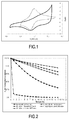
- a comparison of the oxidoreductive properties of dimethylamino phenothiazinium (methylene blue) and synthon (dibutylamino) - (diethanolamino) phenothiazinium incorporated on an oligonucleotide is performed using an electrochemical cell consisting of a gold working electrode, a counter-electrode in platinum and a reference to saturated calomel.
- the technique used is cyclic voltammetry.
- the buffer used is Na 2 HPO 4 / KH 2 PO 4 buffer 20mM KCl 250mM pH 6.7.
- Phenothiazinium tetraiodide (145 mg, 0.2 mmol) is dissolved in 4 mL of methanol at room temperature. Butylbutanolamine (115 ⁇ l, 1 mmol, 5 eq) is added dropwise to the phenothiazinium solution, with magnetic stirring. The reaction mixture is monitored by TLC in an eluent consisting of a mixture CH 2 Cl 2 / CH 3 OH 9/1 (v / v).
- This compound is prepared as in Example 1, 4) and 5).
Landscapes
- Chemical & Material Sciences (AREA)
- Organic Chemistry (AREA)
- Health & Medical Sciences (AREA)
- Life Sciences & Earth Sciences (AREA)
- Biochemistry (AREA)
- Molecular Biology (AREA)
- General Health & Medical Sciences (AREA)
- Engineering & Computer Science (AREA)
- Biotechnology (AREA)
- Genetics & Genomics (AREA)
- Saccharide Compounds (AREA)
Description
La présente invention concerne le domaine technique des marqueurs de biomolécules. Plus précisément, la présente invention concerne de nouveaux dérivés de diaminophénothiazinium de la même famille que le bleu de méthylène, et de structure adaptée pour pouvoir être incorporés dans des oligonucléotides, directement lors de leur synthèse. L'invention a également pour objet les procédés de croissance des oligonucléotides utilisant de tels dérivés, les oligonucléotides ainsi obtenus et des supports de synthèse pour oligonucléotides sur lesquels des dérivés de diaminophénothiazinium sont greffés.The present invention relates to the technical field of biomolecule markers. More specifically, the present invention relates to novel diaminophenothiazinium derivatives of the same family as methylene blue, and of a structure adapted to be incorporated into oligonucleotides, directly during their synthesis. The invention also relates to the oligonucleotide growth processes using such derivatives, the oligonucleotides thus obtained and synthesis supports for oligonucleotides on which diaminophenothiazinium derivatives are grafted.
Le bleu de méthylène est une molécule aux propriétés multiples. C'est, entre autres, une molécule électroactive qui a la propriété de passer d'un état réduit à un état oxydé sous l'action d'un potentiel d'oxydation, en libérant 2 électrons (
Pour toutes ces raisons, le bleu de méthylène est un marqueur biologique très efficace, que ce soit pour réaliser une détection optique ou une détection électrochimique de l'entité biologique marquée.For all these reasons, methylene blue is a very effective biological marker, whether for performing optical detection or electrochemical detection of the labeled biological entity.
Dans les années 80 des synthèses en phase solide des biomolécules et notamment des peptides et des oligonucléotides ont été développées, Le procédé chimique actuellement le plus utilisé pour la synthèse des oligonucléotides est connu sous le nom de « la méthode aux phosphoramidites ». Cette méthode consiste à ajouter, d'une manière séquentielle, un seul nucléotide à la fois, à une chaîne croissante d'oligonudéotides. Un groupe protecteur des fonctions hydroxyle dans des conditions de synthèse des oligonucléotides tels, que par exemple, un groupe diméthoxytrityle, est placé à l'extrémité 5' d'une chaîne croissante d'oligonucléotide qui est elle-même accrochée par son extrémité 3' à un support solide. Ce groupe protecteur est éliminé grâce à un traitement acide, par exemple avec de l'acide trichloroacétique, et l'extrémité 5' de l'oligonucléotide ainsi libérée est ensuite couplée avec un synthon nucléotidique substitué à son extrémité 3' avec un dérivé phosphoramidite, ce qui permet d'accroitre la chaine nucléotidique. L'agent d'activation de la réaction de couplage est, par exemple, le tétrazole qui réagit avec la fonction phosphoramidite du synthon, formant in situ un intermédiaire très réactif vis-à-vis de la fonction alcool déprotégée présente à l'extrémité 5' de l'oligonucléotide fixé au support. Il est également possible d'utiliser à la place d'un groupe phosphoramidite, un groupe phosphodiester (
Dans les synthétiseurs automatiques, la séquence d'une réaction peut être répétée un grand nombre de fois, par exemple, jusqu'à 150 fois. Dès qu'un oligonucléotide de séquence voulue est synthétisé, il est libéré du support par un traitement basique qui permet également d'éliminer les différents groupements protecteurs. L'oligonucléotide obtenu peut alors être purifié par HPLC ou par électrophorèse sur gel.In automatic synthesizers, the sequence of a reaction can be repeated a large number of times, for example up to 150 times. As soon as an oligonucleotide of desired sequence is synthesized, it is released from the support by a basic treatment which also makes it possible to eliminate the various protective groups. The oligonucleotide obtained can then be purified by HPLC or by gel electrophoresis.
La chimie de synthèse des oligonucléotides en phase solide nécessite donc une étape finale de déprotection des nucléotides formant l'oligonudéotide et de décrochage du support, en milieu basique, typiquement dans une solution aqueuse de NH4OH 30% en volume ou de K2CO3 à 0,05M. Ces traitements ne sont pas compatibles avec un greffage préalable du bleu de méthylène sur l'oligonucléotide lors de sa synthèse, car le bleu de méthylène est une phénothiazine substituée par deux diméthylamines qui n'est pas stable en milieu basique. En effet, les groupements diméthylamine se clivent rapidement en milieu basique entraînant la perte des propriétés électrochimiques et colorantes (
A ce jour, les stratégies proposées pour greffer un dérivé de bleu de méthylène sur une blomolécule du type oligonucléotide font intervenir un couplage post-synthèse sur la biomolécule, c'est-à-dire un couplage lors d'une étape finale sur la biomolécule déjà formée. Un dérivé ester activé du bleu de méthylène a été synthétisé pour être couplé sur une biomolécule porteuse de fonctions amine primaire (
D'une manière générale, il a été considéré dans l'art antérieur que le bleu de méthylène devait être couplé en toute dernière étape de la synthèse, pour limiter les risques de dégradation rencontrés dans des milieux trop agressifs utilisant une base ou un agent réducteur utilisé dans les synthèses de biomolécules, et notamment dans le cas de la synthèse des oligonucléotides.In general, it has been considered in the prior art that methylene blue must be coupled at the very last stage of the synthesis, to limit the risks of degradation encountered in overly aggressive media using a base or a reducing agent used in syntheses of biomolecules, and in particular in the case of the synthesis of oligonucleotides.
Dans le cadre de l'invention, les inventeurs proposent des nouveaux dérivés de diaminophénothiazinium qui peuvent être directement intégrés dans des biomolécules, et en particulier dans des oligonucléotides lors de leur synthèse.In the context of the invention, the inventors propose novel diaminophenothiazinium derivatives which can be directly integrated in biomolecules, and in particular in oligonucleotides during their synthesis.
Dans ce contexte, la présente invention concerne des dérivés de diaminophénothiazinium de formule (1) :

- un des groupes R1, R2, R3 et R4, représente -A1-OR7, avec A1 qui représente une chaîne alkylène linéaire ou ramifiée comprenant de 2 à 12 carbones, les atomes d'oxygène et d'azote étant séparés par au moins deux atomes de carbone consécutifs et R7 qui représente un groupe phosphoré capable de réagir avec un hydroxyle libre dans des conditions de synthèse des oligonucléotides, ledit groupe formant avec OA1 auquel il est lié un groupe phosphoramidite, phosphodiester ou hydrogénophosphonate,
- les autres groupes R1, R2, R3 et R4, identiques ou différents, représentent indépendamment l'un de l'autre :
- o un groupe -Ay2-OR8, avec A2 qui représente une chaîne alkylène linéaire ou ramifiée comprenant de 2 à 12 carbones, les atomes d'oxygène et d'azote étant séparés par au moins deux atomes de carbone consécutifs, et R8 qui représente un groupe protecteur des fonctions hydroxyle dans des conditions de synthèse des oligonucléotides choisi parmi les groupes trityle, 4-O-monométhoxytrityle, 4,4'-O-diméthoxytrityle, tert-butyldiméthyisilyle, acétyle, trifluoroacétyle, 9-phénylxanthen-9-yle et fluorénylméthyloxycarbonyle,
- o un groupe alkyle de 2 à 12 atomes de carbone,
- o ou bien R1 et R2 ou R3 et R4 sont liés entre eux pour former avec l'atome d'azote auquel ils sont liés un groupe pipéridinyle ou pyrrolidinyl,
- R5 et R6 identiques ou différents, représentent, indépendamment l'un de l'autre, un atome d'hydrogène, de chlore, brome, iode ou fluor, ou un groupe alkyle de 1 à 12 atomes de carbone, un groupe alcényle de 2 à 12 atomes de carbone, un groupe alcynyle de 2 à 12 atomes de carbone, un groupe acyle ou un groupe phényle,
- X- représente un anion, de préférence choisi parmi Cl-, I-, ClO4 -, NO3 -.
- one of the groups R 1 , R 2 , R 3 and R 4 represents -A 1 -OR 7 , with A 1 representing a linear or branched alkylene chain comprising from 2 to 12 carbons, the oxygen and nitrogen atoms being separated by at least two consecutive carbon atoms and R 7 which represents a phosphorus group capable of reacting with a free hydroxyl under oligonucleotide synthesis conditions, said group forming with OA 1 to which it is bonded a phosphoramidite, phosphodiester or hydrogenophosphonate group ,
- the other groups R 1 , R 2 , R 3 and R 4 , which are identical or different, represent independently of one another:
- a group -Ay 2- OR 8 , with A 2 which represents a linear or branched alkylene chain comprising from 2 to 12 carbons, the oxygen and nitrogen atoms being separated by at least two consecutive carbon atoms, and R 8 which represents a group protecting the hydroxyl functions under oligonucleotide synthesis conditions selected from trityl, 4-O-monomethoxytrityl, 4,4'-O-dimethoxytrityl, tert-butyldimethylsilyl, acetyl, trifluoroacetyl, 9-phenylxanthen-9-yl and fluorenylmethyloxycarbonyl,
- an alkyl group of 2 to 12 carbon atoms,
- o or else R 1 and R 2 or R 3 and R 4 are linked together to form, with the nitrogen atom to which they are bonded, a piperidinyl or pyrrolidinyl group,
- R 5 and R 6, which are identical or different, represent, independently of one another, a hydrogen, chlorine, bromine, iodine or fluorine atom, or an alkyl group of 1 to 12 carbon atoms, an alkenyl group; from 2 to 12 carbon atoms, an alkynyl group of 2 to 12 carbon atoms, an acyl group or a phenyl group,
- X - represents an anion, preferably selected from Cl - , I - , ClO 4 - , NO 3 - .
Dans le cadre de l'invention, les groupements diméthylamine du bleu de méthylène ont été remplacés par des chaînes plus longues et plus encombrées, afin d'obtenir un dérivé de bleu de méthylène qui une fois intégré à un oligonucléotide, est plus stable, notamment en conditions basiques. Un tel dérivé est donc compatible avec une utilisation dans la synthèse des oligonucléotides supportées qui nécessitent en étape finale un traitement basique pour libérer l'oligonucléotide formé du support de synthèse et/ou déprotéger les nucléotides.In the context of the invention, the dimethylamine groups of methylene blue have been replaced by longer and more congested chains, in order to obtain a methylene blue derivative which, once integrated into an oligonucleotide, is more stable, in particular in basic conditions. Such a derivative is therefore compatible with a use in the synthesis of supported oligonucleotides which require in the final step a basic treatment to release the oligonucleotide formed from the synthesis support and / or to deprotect the nucleotides.
De plus, il a également été constaté que ces modifications chimiques n'affectaient pas, de manière problématique, les propriétés oxydo-réductrices, des dérivés de diaminophénothiazinium ainsi obtenus, confirmant ainsi leur intérêt pour le marquage des oligonucléotides, voire d'autres biomolécules telles que les peptides.Moreover, it has also been found that these chemical modifications do not affect, in a problematic manner, the oxydo-reducing properties of the diaminophenothiazinium derivatives thus obtained, thus confirming their interest for the labeling of oligonucleotides, or even other biomolecules such as than the peptides.
Selon des modes de réalisation préférés, notamment en termes de stabilité, A1 et A2 (lorsqu'il est présent) sont des chaînes alkylène linéaires ou ramifiées, dans lesquelles de 2 à 6 atomes de carbone consécutifs séparent les atomes d'oxygène et d'azote.According to preferred embodiments, particularly in terms of stability, A 1 and A 2 (when present) are linear alkylene chains or branched, wherein 2 to 6 consecutive carbon atoms separate the oxygen and nitrogen atoms.
Dans le cadre de l'invention, il est possible que trois des groupes R1, R2, R3 et R4 représentent un groupe -A2-OR8 tel que défini dans l'invention, Dans ce cas, il est possible de greffer plusieurs nucléotides sur un même dérivé de diaminophénothiazinium, ce qui permet de synthétiser des oligonucléotides ramifiés. Selon d'autres modes de réalisation, au moins un des groupes R1, R2, R3 et R4, ne représente pas un groupe -A2-OR8 et le ou lesdits groupes Ri, R2, R3 ou R4 différent(s) de -A1-OR7 et de -A2-OR8 représente(nt) un groupe alkyle de 2 à 12 atomes de carbone, de préférence de 4 à 12 atomes de carbone. Dans ce cas, les dérivés de diaminophénothiazinium peuvent répondre à l'une des formules données ci-après :
- formule (Ia) :

- A1, A2, R5, R6, R7, R8 et X- sont tels que définis pour les composés de formule (I),
- R1 et R2, identiques ou différents, représentent indépendamment l'un de l'autre un groupe alkyle de 2 à 12 atomes de carbone, de préférence de 4 à 12 atomes de carbone, ou R1 et R2 sont liés entre eux pour former avec l'atome d'azote auquel ils sont liés un groupe pipéridinyle ou pyrrolidinyle;
- formule (Ib) :

- A1, A2, R5, R6, R7, R8 et X- sont tels que définis pour les composés de formule (I),
- R2 et R4, identiques ou différents, représentent indépendamment l'un de l'autre un groupe alkyle de 2 à 12 atomes de carbone, de préférence de 4 à 12 atomes de carbone ; et
- formule (Ic) :

- A1, R5, R6, R7 et X- sont tels que définis pour les composés (I),
- R1 et R2, identiques ou différents, représentent indépendamment l'un de l'autre un groupe alkyle de 2 à 12 atomes de carbone, de préférence de 4 à 12 atomes de carbone, ou R1 et R2 sont liés entre eux pour former avec l'atome d'azote auquel ils sont liés un groupe pipéridinyle ou pyrrolidinyle,
- R3 représente un groupe alkyle de 2 à 12 atomes de carbone, de préférence de 4 à 12 atomes de carbone.
- formula (Ia):
- A 1 , A 2 , R 5 , R 6 , R 7 , R 8 and X - are as defined for the compounds of formula (I),
- R 1 and R 2 , which are identical or different, represent, independently of one another, an alkyl group of 2 to 12 carbon atoms, preferably of 4 to 12 carbon atoms, or R 1 and R 2 are linked together to form with the nitrogen atom to which they are attached a piperidinyl or pyrrolidinyl group;
- formula (Ib):
- A 1 , A 2 , R 5 , R 6 , R 7 , R 8 and X - are as defined for the compounds of formula (I),
- R 2 and R 4 , which may be identical or different, represent, independently of one another, an alkyl group of 2 to 12 carbon atoms, preferably of 4 to 12 carbon atoms; and
- formula (Ic):
- A 1 , R 5 , R 6 , R 7 and X - are as defined for the compounds (I),
- R 1 and R 2 , which are identical or different, represent, independently of one another, an alkyl group of 2 to 12 carbon atoms, preferably of 4 to 12 carbon atoms, or R 1 and R 2 are linked together to form with the nitrogen atom to which they are attached a piperidinyl or pyrrolidinyl group,
- R 3 represents an alkyl group of 2 to 12 carbon atoms, preferably of 4 to 12 carbon atoms.
Quel que soit le composé de formule (I), (Ia), (Ib) ou (Ic) précédemment décrit, R5 et R6 représentent, par exemple, un atome d'hydrogène, comme dans le cas du bleu de méthylène.Whatever the compound of formula (I), (Ia), (Ib) or (Ic) previously described, R 5 and R 6 represent, for example, a hydrogen atom, as in the case of methylene blue.
Le groupe R7 peut être du type -P(NR'aR'b)R'c (et forme donc un phosphoramidite avec -OA1-), -P(O)(OH)(OR'd) (et forme donc un phosphodiester avec -OA1-) ou -P(O)(OH)H (et forme donc un hydrogénophosphonate avec "OA1-), dans lesquels R'a, R'b, R'c et R'd sont, par exemple, des groupe alkyle ou phényle éventuellement substitué. De manière avantageuse, dans les composés de formule (I), (Ia), (Ib) et (Ic) précédemment décrits, un des groupes R1, R2, R3 et R4 représente un groupe -A1-OR7 dans lequel R7 représente un groupe -P[N(iPr)2](OCH2CH2C≡N) (avec iPr = isopropyle) et forme donc un phosphoramidite avec OA1 et A1 est tel que précédemment défini, R7 peut plus généralement représenter un groupe -P{N[(C2-C12)alky]2}(OCH2CH2C≡N), R7 peut également représenter un groupe tel que le O-(2-chlorophénylphosphate) ou le O-2-(1-méthylimidazol-2-yl)phénylphosphate, de manière à former un phosphodiester avec OA1, R7 peut également représenter un groupe -P(O)(OH)H,The group R 7 can be of the type -P (NR'aR'b) R'c (and thus forms a phosphoramidite with -OA 1 -), -P (O) (OH) (OR'd) (and therefore forms a phosphodiester with -OA 1 -) or -P (O) (OH) H (and thus forms a hydrogenophosphonate with "OA 1 -), in which R'a, R'b, R'c and R'd are, for example, optionally substituted alkyl or phenyl groups Advantageously, in the compounds of formula (I), (Ia), (Ib) and (Ic) previously described, one of the groups R 1 , R 2 , R 3 and R 4 represents a group -A 1 -OR 7 in which R 7 represents a group -P [N ( i Pr) 2 ] (OCH 2 CH 2 C≡N) (with i Pr = isopropyl) and thus forms a phosphoramidite with OA 1 and A 1 is as previously defined, R 7 may more generally represent a group -P {N [(C 2 -C 12 ) alkyl] 2 } (OCH 2 CH 2 C≡N), R 7 may also represent a group such as O- (2-chlorophenylphosphate) or O -2- (1-methylimidazol-2-yl) phenylphosphate, so as to form a phosphodiester with OA 1 , R 7 may equal represent a -P (O) (OH) H group,
De tels dérivés de diaminophénothiazinium pourront être préparés selon des techniques bien connues de l'homme de l'art, notamment par analogie avec les techniques décrites dans les exemples. Pour l'essentiel, il est possible de former des dérivés aminés de phénothiazinium par réaction, notamment à température ambiante, d'un sel de phénothiazinium, tel que le tétraiodure de phénothiazinium, avec une dialkylamine, une dihydroxyalkylamine ou une alkyl(hydroxyalkyl)amine dans un alcool tel que le méthanol ou un solvant chloré tel que le dichlorométhane,Such diaminophenothiazinium derivatives may be prepared according to techniques well known to those skilled in the art, in particular by analogy with the techniques described in the examples. Essentially, it is possible to form amine derivatives of phenothiazinium by reaction, especially at room temperature, of a phenothiazinium salt, such as phenothiazinium tetraiodide, with a dialkylamine, a dihydroxyalkylamine or an alkyl (hydroxyalkyl) amine in an alcohol such as methanol or a chlorinated solvent such as dichloromethane,
Le rapport molaire amine/sel de phénothiazinium sera environ égal à 2 lorsque l'on souhaite greffer une seule amine sur le cycle et sera supérieur à 2 lorsque l'on souhaite greffer deux amines identiques de part et d'autre du cycle phénothiazinium (cas des composés de formule (Ib) dans lesquels A1=A2 et R2=R4). Pour les composés dans lesquels il est nécessaire de greffer deux amines différentes de part et d'autre du cycle phénothiazinium (cas des composés (Ia) et des composés (Ib) dans lesquels A1 est différent de A2 et/ou R2 est différent de R4), une nouvelle réaction sera réalisée avec une autre amine dans des conditions analogues. Au moins une des amines utilisées est substituée par un groupe hydroxyalkyle. Un couplage est ensuite réalisé sur la fonction hydroxyle avec au moins un dérivé halogéné, et en particulier un dérivé chloré Cl-R7 ou Cl-R8, pour obtenir la fonction -O-R7 ou -O-R8 désiré. Un tel couplage est réalisé dans des conditions bien connues de l'homme de l'art, notamment en présence de diisopropyléthylamine dans l'acétonitrile. Deux couplages successifs pourront être réalisés pour obtenir deux fonctionnalisations différentes, dans le cas où au moins deux fonctions hydroxyle sont présentes,The amine / phenothiazinium salt molar ratio will be approximately equal to 2 when it is desired to graft a single amine on the ring and will be greater than 2 when it is desired to graft two identical amines on either side of the phenothiazinium ring (case compounds of formula (Ib) in which A 1 = A 2 and R 2 = R 4 ). For compounds in which it is necessary to graft two different amines on either side of the phenothiazinium cycle (case of compounds (Ia) and compounds (Ib) in which A 1 is different from A 2 and / or R 2 is different from R 4 ), a new reaction will be carried out with another amine under analogous conditions. At least one of the amines used is substituted with a hydroxyalkyl group. A coupling is then carried out on the hydroxyl function with at least one halogenated derivative, and in particular a chlorinated derivative Cl-R 7 or Cl-R 8 , to obtain the desired -OR 7 or -OR 8 function . Such coupling is carried out under conditions well known to those skilled in the art, especially in the presence of diisopropylethylamine in acetonitrile. Two successive couplings can be made to obtain two different functionalizations, in the case where at least two hydroxyl functions are present,
Les dérivés selon invention pourront être intégrés dans un oligonucléotide, dans un procédé de synthèse supportée classique, à la place d'un nucléotide.The derivatives according to the invention may be integrated into an oligonucleotide, in a conventional supported synthesis method, in place of a nucleotide.
Le terme « oligonucléotide » désigne un enchaînement d'au moins 2 nucléotides (désoxyribonucléotides ou ribonucléotides, ou les deux), naturels ou modifiés, susceptibles de s'hybrider, dans des conditions appropriées d'hybridation, avec un oligonucléotide au moins partiellement complémentaire. Par «nucléotides», on entend un composé organique consistant en une base purine ou pyrimidine liée à un ose (ribose ou deoxyribose) et à un groupe phosphate. Par « nucléotide modifié », on entend, par exemple, un nucléotide comportant une base modifiée et/ou comportant une modification au niveau de la liaison internucléotidique et/ou au niveau du squelette. A titre d'exemple de base modifiée, on peut citer l'inosine, la méthyl-5-désoxycytidine, la diméthylamino-5-désoxyuridine, la diamino-2, 6-purine et la bromo-5-désoxyuridine. Pour illustrer une liaison internucléotidique modifiée, on peut mentionner les liaisons phosphorothioate, N-alkylphophoramldate, alkylphosphonate et alkylphosphotriester.The term "oligonucleotide" refers to a sequence of at least 2 nucleotides (deoxyribonucleotides or ribonucleotides, or both), natural or modified, capable of hybridizing, under appropriate hybridization conditions, with an at least partially complementary oligonucleotide. By "nucleotides" is meant an organic compound consisting of a purine base or pyrimidine linked to an ose (ribose or deoxyribose) and to a phosphate group. By "modified nucleotide" is meant, for example, a nucleotide having a base modified and / or having a modification at the level of the internucleotide and / or at the backbone. As an example of a modified base, mention may be made of inosine, methyl-5-deoxycytidine, dimethylamino-5-deoxyuridine, diamino-2,6-purine and bromo-5-deoxyuridine. To illustrate a modified internucleotide linkage, there may be mentioned phosphorothioate, N-alkylphosphoramidate, alkylphosphonate and alkylphosphotriester linkages.
La présente invention a également pour objet un procédé de marquage d'un oligonucléotide par un dérivé de diaminophénothiazinium selon l'invention, qui comprend la croissance d'un oligonucléotide greffé sur un support solide, et le remplacement d'un ou plusieurs nucléotides par un ou plusieurs desdits dérivés de diaminophénothiazinium selon l'invention, avant que l'oligonucléotide ne soit détaché du support solide. Au moins une substitution par un dérivé de diaminophénothiazinium peut être effectuée en positions 3' ou 5', sur le premier ou le dernier nucléotide, respectivement. Il est également possible de réaliser l'insertion d'un dérivé de diaminophénothiazinium à l'intérieur de la chaine nucléotidique, le remplacement d'un synthon nucléotidique phosphoramidite, phosphodiester ou hydrogénophosphonate par un dérivé de diaminophénothiazinium selon l'invention, étant alors réalisée avant la fin de la croissance de l'oligonucléotide. Dans le cadre de l'invention, il est possible insérer le dérivé de diaminophénothiazinium à n'importe quelle place sur la chaine nucléotidique, étant donné que ce dernier peut être introduit directement lors de la croissance des oligonucléotides. Il est possible d'incorporer un dérivé de diaminophénothiazinium selon l'invention sur n'importe quelle position d'une séquence oligonucléotidique, De plus, il est possible incorporer un nombre important de dérivés de diaminophénothiazinium au sein d'une séquence oligonucléotidique, par synthèse supportée. Selon un mode de réalisation particulier, au moins deux insertions, par exemple consécutives, sont effectuées, Il convient de noter qu'un tel processus de marquage était déjà décrit dans la demande
La présente invention a également pour objet les oligonucléotides marqués susceptibles d'être obtenus par le procédé de marquage selon l'invention ou à partir des supports décrits ci-après.The subject of the present invention is also the labeled oligonucleotides obtainable by the labeling method according to the invention or from the supports described hereinafter.
Les dérivés de diaminophénothiazinium selon l'invention sont très réactifs et peuvent aussi être utilisés pour réagir efficacement avec un autre type de biomolécule, polymère ou un support plan ou particulaire, porteur de fonctions alcool ou amine notamment.The diaminophenothiazinium derivatives according to the invention are very reactive and can also be used to react effectively with another type of biomolecule, polymer or a flat or particulate support, bearing alcohol or amine functions in particular.
L'invention concerne également les supports de synthèse d'oligonucléotides, comprenant au moins un dérivé de diaminophénothiazinium greffé de manière covalente en surface du support et répondant à la formule :

- R5, R6 et X- sont tels que définis pour les composés de formule (I),
- R1' et R'2, identiques ou différents, représentent indépendamment l'un de l'autre un groupe alkyle de 2 à 12 atomes de carbone, de préférence de 4 à 12 atomes de carbone, ou R1 et R2 sont liés entre eux pour former avec l'atome d'azote auquel ils sont liés un groupe pipéridinyle ou pyrrolidinyle,
- A1' et A1", identiques ou différents, représentent, indépendamment l'un de l'autre, une chaine A1 telle que définie pour les composés de formule (I), et
- R9 représente un groupe protecteur des fonctions hydroxyle dans les conditions classiquement utilisées dans la synthèse des oligonucléotides choisi parmi les groupes trityle, 4-0-monométhoxytrityle, 4,4'-O-diméthoxytrityle, tert-butyldiméthylsilyle, acétyle, trifluoroacétyle, 9-phénylxanthen-9-yle et fluorénylméthyloxycarbonyle; et
- R10 représente -CO-A3-CO-NH-Support, avec A3 qui représente une chaîne alkylène linéaire ou ramifiée comprenant de 1 à 6 atomes de carbone ; ou

- R5, R6 et X- sont tels que définis pour les composés de formule (I),
- R'2 et R'4, identiques ou différents, représentent indépendamment l'un de l'autre un groupe alkyle de 2 à 12 atomes de carbone, de préférence de 4 à 12 atomes de carbone,
- A1' et A1", identiques ou différents, représentent, indépendamment l'un de l'autre, une chaine A1 telle que définie pour les composés de formule (I), et
- R9 représente un groupe protecteur des fonctions hydroxyle dans les conditions classiquement utilisées dans la synthèse des oligonucléotides choisi parmi les groupes trityle, 4-0-monométhoxytrityle, 4,4'-O-diméthoxytrityle, tert-butyldiméthylsilyle, acétyle, trifluoroacétyle, 9-phénylxanthen-9-yle et fiuorénylméthyloxycarbonyle ; et
- R10 représente -CO-A3-CO-NH-Support, avec A3 qui représente une chaîne alkylène linéaire ou ramifiée comprenant de 1 à 6 atomes de carbone.
- R 5 , R 6 and X - are as defined for the compounds of formula (I),
- R 1 'and R' 2 , which are identical or different, represent, independently of one another, an alkyl group of 2 to 12 carbon atoms, preferably of 4 to 12 carbon atoms, or R 1 and R 2 are linked together between them to form with the nitrogen atom to which they are attached a piperidinyl or pyrrolidinyl group,
- A 1 'and A 1 ", identical or different, represent, independently of one another, a chain A 1 as defined for the compounds of formula (I), and
- R 9 represents a group protecting the hydroxyl functions under the conditions conventionally used in the synthesis of oligonucleotides chosen from trityl, 4-O-monomethoxytrityl, 4,4'-O-dimethoxytrityl, tert-butyldimethylsilyl groups, acetyl, trifluoroacetyl, 9-phenylxanthen-9-yl and fluorenylmethyloxycarbonyl; and
- R 10 is -CO-A 3 -CO-NH-Support, with A 3 being a linear or branched alkylene chain having 1 to 6 carbon atoms; or
- R 5 , R 6 and X - are as defined for the compounds of formula (I),
- R ' 2 and R' 4 , which may be identical or different, represent, independently of one another, an alkyl group of 2 to 12 carbon atoms, preferably of 4 to 12 carbon atoms,
- A 1 'and A 1 ", identical or different, represent, independently of one another, a chain A 1 as defined for the compounds of formula (I), and
- R 9 represents a group protecting the hydroxyl functions under the conditions conventionally used in the synthesis of oligonucleotides selected from trityl, 4-O-monomethoxytrityl, 4,4'-O-dimethoxytrityl, tert-butyldimethylsilyl, acetyl, trifluoroacetyl, 9- phenylxanthen-9-yl and fluorenylmethyloxycarbonyl; and
- R 10 represents -CO-A 3 -CO-NH-Support, with A 3 which represents a linear or branched alkylene chain comprising from 1 to 6 carbon atoms.
Le support peut notamment être choisi parmi les résines, en particulier parmi les résines à base de polystyrène, polyacrylamide, polyéthylèneglycol, cellulose, polyéthylène, polyester, latex, polyamide, polydiméthylacrylamide, les polymères hydrophiles synthétiques ou naturels, les verres et silices à porosité contrôlée, les billes de verre, les gels de silice. Ce type de support comporte généralement des fonctions amine de surface qui vont être modifiées pour faire apparaître des fonctions acide de surface qui vont alors pouvoir être couplées à des fonctions hydroxyalkylamino portées par l'hétérocycle pour conduire aux supports (Sa) et (Sb) ci-dessus.The support may especially be chosen from resins, in particular from resins based on polystyrene, polyacrylamide, polyethylene glycol, cellulose, polyethylene, polyester, latex, polyamide, polydimethylacrylamide, synthetic or natural hydrophilic polymers, controlled porosity glasses and silicas, glass beads, silica gels. This type of support generally comprises surface amine functions that will be modified to reveal surface acid functions that will then be able to be coupled to hydroxyalkylamino functions carried by the heterocycle to lead to the supports (Sa) and (Sb) ci -above.
Certaines définitions utilisées dans la description de l'invention sont rappelées.Some definitions used in the description of the invention are recalled.
Par « alkyle », on entend un groupe hydrocarboné monovalent saturé, linéaire ou ramifié. A titre d'exemples de groupe alkyle, on pourra citer les groupes méthyle, éthyle, n-propyle, isopropyle, n-butyle, isobutyle, sec-butyle, t-butyle, n-pentyle, n-hexyle.By "alkyl" is meant a saturated monovalent hydrocarbon group, linear or branched. As examples of alkyl group, there may be mentioned methyl, ethyl, n-propyl, isopropyl, n-butyl, isobutyl, sec-butyl, t-butyl, n-pentyl, n-hexyl.
Par « alcényle », on entend un groupe hydrocarboné monovalent insaturé comprenant au moins une double liaison, linéaire ou ramifié.By "alkenyl" is meant an unsaturated monovalent hydrocarbon group comprising at least one double bond, linear or branched.
Par « alcynyle », on entend un groupe hydrocarboné monovalent insaturé comprenant au moins une triple liaison, linéaire ou ramifié.By "alkynyl" is meant an unsaturated monovalent hydrocarbon group comprising at least one triple bond, linear or branched.
Par « alkylène », on entend un groupe hydrocarboné bivalent saturé, linéaire ou ramifié. A titre d'exemple de groupe alkylène comprenant de 2 à 12 atomes de carbone, on peut citer -(CH2)2-, -CH2-CH(CH3)-, -(CH2)3-, -(CH2)4-, -(CH2)5-, -(CH2)6-, -(CH2)7-, -(CH2)8-, -(CH2)9-, -(CH2)10-, -(CH2)11-, -(CH2)12-, -CH2-CH(CH2CH3)-, -(CH2)2-CH(CH2CH3)--...By "alkylene" is meant a saturated bivalent hydrocarbon group, linear or branched. By way of example of an alkylene group comprising from 2 to 12 carbon atoms, mention may be made of - (CH 2 ) 2 -, -CH 2 -CH (CH 3 ) -, - (CH 2 ) 3 -, - (CH 2 ) 4 -, - (CH 2 ) 5 -, - (CH 2 ) 6 -, - (CH 2 ) 7 -, - (CH 2 ) 8 -, - (CH 2 ) 9 -, - (CH 2 ) 10 -, - (CH 2 ) 11 -, - (CH 2 ) 12 -, -CH 2 -CH (CH 2 CH 3 ) -, - (CH 2 ) 2 -CH (CH 2 CH 3 ) - .. .
« Les atomes d'oxygène et d'azote étant séparés par au moins deux atomes de carbone consécutifs » signifie qu'une chaine alkylène linéaire comprenant au moins deux atomes de carbone séparent l'atome d'oxygène de l'atome d'azote (on a donc au moins l'enchainement -N-C-C-O-), les autres atomes de carbone, dans le cas d'une chaine alkylène ramifiée comprenant plus de 2 atomes de carbone, pouvant alors se trouver sur les ramifications."Oxygen and nitrogen atoms being separated by at least two consecutive carbon atoms" means that a linear alkylene chain comprising at least two carbon atoms separates the oxygen atom from the nitrogen atom ( we have at least the -NCCO- sequence, the other carbon atoms, in the case of a branched alkylene chain comprising more than 2 carbon atoms, which can then be on the branches.
A titre d'exemple de groupe protecteur des fonctions hydroxyle dans des conditions de synthèse des oligonucléotides, est par exemple choisi parmi les groupes trityle, 4-O-monométhoxytrityle, 4,4'-O-diméthoxytrityle, tert-butyldiméthylsilyle, acétyle, trifluoroacétyle, 9-phénylxanthen-9-yle (pixyle) (le groupement protecteur pixyle est décrit notamment dans le document
A titre d'exemple de conditions de synthèse des oligonucléotides, on peut notamment se référer à
D'une manière générale, un procédé de synthèse d'oligonucléotide sur support solide comprend les étapes suivantes qui correspondent au premier cycle du procédé :
- 1) Disposer d'un support sur lequel un nucléoside porteur d'une fonction -OH protégée, par exemple par un groupe trityle, 4-O-monométhoxytrityle, 4,4'-O-diméthoxytrityle, tert-butyldiméthylsilyle, acétyle, trifluoroacétyle, 9-phénylxanthen-9-yle ou fiuorénylméthyloxycarbonyle,
- 2) Déprotéger la fonction hydroxyle, par un traitement acide, par exemple grâce à une solution d'acide trichloroacétique ou acide dichloroacétique, à une
concentration de 2 à 3% en masse dans un solvant tel que le dichlorométhane, - 3) Ajouter une solution d'un synthon nucléotidique porteur d'une fonction phosphoramidite et d'une fonction hydroxyle protégée, par exemple à une
concentration de 0,05 à 0,2 M (=mol/L), en présence d'un agent de couplage, tel que le tétrazole, l'éthylthiotétrazole,le 4,5-dicyanoimidazole, le saccharin 1-méthylimidazole ou le 5-benzylthiotétrazole, par exemple à uneconcentration de - 4) Bloquer les fonctions hydroxyles n'ayant pas réagi avec les fonctions phosphorées réactives, par action d'anhydride acétique ou d'anhydride phénoxyacétique qui correspond à des conditions plus douces, éventuellement en présence de méthylimidazole ou de diméthylaminopyridine, dans un solvant tel que le tétrahydrofurane ou un mélange tétrahydrofurane/pyridine ou tétrahydrofurane/lutidine ;
- 5) oxydation du phosphore par action d'une solution d'iode, par exemple à une
concentration de 0,02 à 0,1 M, par exemple dans un mélange tétrahydrofurane/pyridine/eau, ou par action d'un péroxyde, par exemple le tert-butylhydropéroxyde, le cumène hydropéroxyde, le péroxyde d'hydrogène ou le bis-triméthylsilyl peroxyde, par exemple à uneconcentration de 1 à 2 M dans un mélange décane/dichlorométhane, ou par action d'un oxydant non-aqueux comme le (10-camphorsulfonyl)-oxaziridine, par exemple à uneconcentration de
- 1) Have a support on which a nucleoside carrying a protected -OH function, for example by a trityl group, 4-O-monomethoxytrityl, 4,4'-O-dimethoxytrityl, tert-butyldimethylsilyl, acetyl, trifluoroacetyl, 9-phenylxanthen-9-yl or fiuorenylmethyloxycarbonyl,
- 2) Unprotect the hydroxyl function, by acid treatment, for example by means of a solution of trichloroacetic acid or dichloroacetic acid, at a concentration of 2 to 3% by weight in a solvent such as dichloromethane,
- 3) Add a solution of a nucleotide synthon carrying a phosphoramidite function and a protected hydroxyl function, for example at a concentration of 0.05 to 0.2 M (= mol / L), in the presence of a coupling agent, such as tetrazole, ethylthiotetrazole, 4,5-dicyanoimidazole, saccharin 1-methylimidazole or 5-benzylthiotetrazole, for example at a concentration of 0.2 to 0.5 M, in a solvent such as that acetonitrile,,
- 4) block the hydroxyl functions unreacted with reactive phosphorus functions, by action of acetic anhydride or phenoxyacetic anhydride which corresponds to milder conditions, optionally in the presence of methylimidazole or dimethylaminopyridine in a solvent such as tetrahydrofuran or a tetrahydrofuran / pyridine or tetrahydrofuran / lutidine mixture;
- 5) oxidation of phosphorus by the action of an iodine solution, for example at a concentration of 0.02 to 0.1 M, for example in a tetrahydrofuran / pyridine / water mixture, or by the action of a peroxide, for example for example, tert-butylhydroperoxide, cumene hydroperoxide, hydrogen peroxide or bis-trimethylsilyl peroxide, for example at a concentration of 1 to 2 M in a decane / dichloromethane mixture, or by the action of a non-aqueous oxidant such as (10-Camphorsulfonyl) oxaziridine, for example at a concentration of 0.1 to 0.5 M in acetonitrile.
De manière classique, les amines des synthons nucléotidiques utilisés sont protégées, afin d'éviter toutes réactions parasites avec les fonctions phosphorées des synthons nucléotidiques mis en réaction au cours de la synthèse de l'oligonucléotide (étape 3). Ces techniques de protection sont bien connues de l'homme du métier. Notamment, dans le cas de l'adénosine, la fonction amine exocyclique pourra être protégée par un groupe phénoxyacétyle, dans le cas de la cytidine, la fonction aminée exocyclique pourra être protégée par un groupe acétyle, dans le cas de la guanosine, la fonction aminée exocyclique pourra être protégée par un groupe isopropylphénoxyacétyle...In a conventional manner, the amines of the nucleotide synthons used are protected, in order to avoid any parasitic reactions with the phosphorus functions of the nucleotide synthons reacted during the synthesis of the oligonucleotide (step 3). These protection techniques are well known to those skilled in the art. In particular, in the case of adenosine, the exocyclic amine function may be protected by a phenoxyacetyl group, in the case of cytidine, the exocyclic amino function may be protected by an acetyl group, in the case of guanosine, the function amine exocyclic may be protected by an isopropylphenoxyacetyl group ...
Toutes ces étapes peuvent être réalisées à température ambiante (22°C). Les nucléotides sont protégés tout au long de la synthèse nucléotidique, selon des méthodes bien connues de l'homme de l'art,All these steps can be performed at room temperature (22 ° C). The nucleotides are protected throughout the nucleotide synthesis, according to methods well known to those skilled in the art,
En général, les étapes 2), 3), 4) et 5) sont suivies d'un rinçage pour éliminer les réactifs n'ayant pas réagi.In general, steps 2), 3), 4) and 5) are followed by rinsing to remove unreacted reagents.
Les étapes 2) à 5) sont répétées autant de fois que nécessaire, avec les synthons nucléotidiques sélectionnés qui peuvent varier d'un cycle à l'autre, pour avoir la séquence d'oligonucléotide souhaitée.Steps 2) to 5) are repeated as many times as necessary, with the selected nucleotide constructs that can vary from one cycle to another, to have the desired oligonucleotide sequence.
Dans le cas où un synthon nucléotidique porteur d'une fonction phosphodiester est utilisé, à l'étape 3), le synthon nucléotidique porteur d'une fonction phosphodiester est couplé en présence de 1-mésitylènesulfonyl-3-nitro-1,2,4-triazole (MSNT) et de 1-méthylimidazole. Il n'y a pas d'étape d'oxydation 5). De plus, en fin de synthèse, préalablement au traitement basique final, un traitement avec une solution de syn-2-nitrobenzaldoxime et de 1,1,3,3-tétraméthylguanidine dans du dioxane aqueux est réalisé, comme par exemple décrit dans le
Dans le cas où un synthon nucléotidique porteur d'une fonction hydrogénophosphonate est utilisé, à l'étape 3), le synthon nucléotidique porteur d'une fonction hydrogénophosphonate est couplé en présence de chlorure de pivaloyle en solution dans l'acétonitrile. Les étapes 2) à 4) sont répétées autant de fois que nécessaire pour avoir la séquence d'oligonucléotide souhaitée. L'étape d'oxydation 5) est réalisée en toute fin de synthèse.In the case where a nucleotide synthon carrying a hydrogenophosphonate function is used, in step 3), the nucleotide construct carrying a hydrogen phosphonate function is coupled in the presence of pivaloyl chloride dissolved in acetonitrile. Steps 2) to 4) are repeated as many times as necessary to have the desired oligonucleotide sequence. The oxidation step 5) is carried out at the very end of synthesis.
Ensuite, une étape finale en milieu basique est réalisée, par exemple, soit grâce à une solution basique de soude, d'ammoniaque, ou de carbonate de potassium ou d'une solution de méthylamine et d'ammoniaque ou d'une solution de diisopropylamine et de 8-mercaptoethanol, soit grâce à de l'ammoniac ou de la méthylamine en phase gazeuse. Ce traitement basique permet de déprotéger les nucléotides présents dans l'oligonucléotide formé et, dans le cas de la méthode utilisant des synthons phosphoramidites ou hydrogénophosphonates, permet également le décrochage du support de l'oligonucléotide formé, Dans le cas de la méthode utilisant des synthons phosphodiesters, ce décrochage se produit lors du traitement avec un mélange de syn-2-nitrobenzaldoxime et de 1,1,3,3-tétraméthylguanidine, Plus précisément, on pourra utiliser soit une solution basique de soude par exemple à une concentration de 0,1 à 0,5 M des nucléotides, dans un solvant tel qu'un mélange eau/méthanol, à une température de 15 à 80 °C, soit grâce à une solution d'ammoniaque par exemple à une concentration de 20 à 40% massique, à une température de 15 à 65 °C, soit une solution de carbonate de potassium par exemple à une concentration de 0,02 à 0,1 M, dans un solvant tel que le méthanol, à une température de 15 à 30 °C, soit une solution de méthylamine et d'ammoniaque (AMA) par exemple à une concentration de 10% à 20% massique chacun, dans un solvant tel que l'eau, à une température de 15 à 65 °C, soit une solution de 10% diisopropylamine/0,25 M 6-mercaptoethanol dans un solvant tel que le méthanol, à une température de 45 à 65°C, soit de l'ammoniac ou de la méthylamine en phase gazeuse, par exemple à une température de 15 à 30 °C. De préférence, un traitement basique avec une solution de carbonate de potassium à une concentration de 0,02 à 0,1 M, dans le méthanol, à une température de 15 à 30 °C, est réalisé.Then, a final step in basic medium is carried out, for example, either with a basic solution of sodium hydroxide, ammonia, or potassium carbonate or a solution of methylamine and ammonia or a solution of diisopropylamine and 8-mercaptoethanol, either with ammonia or with methylamine in the gas phase. This basic treatment makes it possible to deprotect the nucleotides present in the oligonucleotide formed and, in the case of the method using phosphoramidite or hydrogenophosphonate synthons, also allows the release of the support of the oligonucleotide formed, in the case of the method using synthons phosphodiesters, this stall occurs during treatment with a mixture of syn-2-nitrobenzaldoxime and 1,1,3,3-tetramethylguanidine, More specifically, it is possible to use either a basic solution of sodium hydroxide for example at a concentration of 0, 1 to 0.5 M nucleotides, in a solvent such as a water / methanol mixture, at a temperature of 15 to 80 ° C, or by means of an ammonia solution for example at a concentration of 20 to 40% by weight, at a temperature of 15 to 65 ° C, ie a solution of potassium carbonate for example at a concentration of 0.02 to 0.1 M in a solvent such as methanol, at a temperature of 15 to 30 ° C, a solution of methylamine and ammonia (AMA) for example at a concentration of 10% to 20% by weight each, in a solvent such as water, at a temperature of 15 to 65 ° C, a solution of 10% diisopropylamine / 0.25 M 6-mercaptoethanol in a solvent such as methanol, at a temperature of 45 to 65 ° C, or ammonia or methylamine in the gas phase, for example at a temperature of 15 to 30 ° C. Preferably, a basic treatment with a solution of potassium carbonate at a concentration of 0.02 to 0.1 M in methanol at a temperature of 15 to 30 ° C is carried out.
Dans le cadre du procédé selon l'invention, il est possible d'utiliser à l'étape 1) du premier cycle un support (Sa) conforme à invention, ce qui va permettre d'introduire à l'extrémité 3' de l'oligonucléotide synthétisé un dérivé de diaminophénothiazinium.In the context of the method according to the invention, it is possible to use in step 1) of the first cycle a support (Sa) according to the invention, which will allow to introduce at the end 3 'of the oligonucleotide synthesized a diaminophenothiazinium derivative.
Il est également possible lors de n'importe quel cycle d'utiliser un dérivé de diaminophénothiazinium (I), et notamment (Ia) ou (Ib) à l'étape 3) à la place du synthon nucléotidique porteur d'une fonction phosphoramidite et d'une fonction hydroxyle protégée, Ceci permet d'intégrer un dérivé de diaminophénothiazinium à l'intérieur de l'oligonucléotide, à la place d'un nucléotide. L'utilisation à l'étape 3) du dernier cycle d'un dérivé de diaminophénothiazinium (Ic) va permettre l'introduction à l'extrémité 3' du groupement diaminophénothiazinium.It is also possible during any cycle to use a diaminophenothiazinium derivative (I), and especially (Ia) or (Ib) in step 3) in place of the nucleotide synthon carrying a phosphoramidite function and This allows to integrate a diaminophenothiazinium derivative inside the oligonucleotide, in place of a nucleotide. The use in step 3) of the last ring of a diaminophenothiazinium derivative (Ic) will allow the introduction to the 3 'end of the diaminophenothiazinium group.
Bien entendu, toutes ces possibilités peuvent être combinées pour incorporer différents groupements diaminophénothiazinium au sein de l'oligonucléotide formé.Of course, all of these possibilities can be combined to incorporate different diaminophenothiazinium groups within the formed oligonucleotide.
Les exemples donnés ci-après, en référence aux figures annexées, lustrent l'invention mais n'ont aucun caractère limitatif.
- La
Figure 1 montre les potentiels d'oxydo-réduction du bleu de méthylène et d'un composé selon l'invention incorporé à un oligonucléotide conformément à l'exemple 1. - La
Figure 2 montre l'évolution des pourcentages d'absorbance en fonction du temps de différents dérivés de bisaminophénylthiazinium, en milieu basique.
- The
Figure 1 shows the oxidation-reduction potentials of methylene blue and a compound according to the invention incorporated into an oligonucleotide according to Example 1. - The
Figure 2 shows the evolution of the percentages of absorbance as a function of time of different bisaminophenylthiazinium derivatives, in basic medium.
Le diméthoxytrityl(dibutylamino)-(diéthanolamino) phénothiazinium phosphoramidite est préparé conformément au SCHEMA 1 ci-dessous.

Une solution d'iode (15.2 g, 60 mmol) dans le chloroforme (450 mL) est ajoutée goutte à goutte pendant 2h30 à une solution de phénothiazine (4.0 g, 20 mmol) dans le chloroforme (120 mL), dans un ballon de 1L sous agitation magnétique dans un bain de glace. Après la fin de l'addition, le mélange est agité dans un bain de glace pendant toute la nuit.A solution of iodine (15.2 g, 60 mmol) in chloroform (450 mL) is added dropwise for 2.5 hours to a solution of phenothiazine (4.0 g, 20 mmol) in chloroform (120 mL) in a flask of 1L under magnetic stirring in an ice bath. After the end of the addition, the mixture is stirred in an ice bath overnight.
Le mélange réactionnel est filtré sur verre fritté, Le solide est lavé avec 900mL de chloroforme pour éliminer l'excédent d'iode. Le solide est séché sous pression réduite pendant 2h. Une poudre gris-pourpre est obtenue avec un rendement quantitatif (14.5 g, 20 mmol),
RMN 1 H (DMSO-d6) : δ (ppm) = 8.06 (d, 2H); 7.92 (d, 2H); 7.73 (t, 2H); 7.61 (t, 2H)
SM (ESI+) : masse calculée = 198.0, masse mesurée = 198.0The reaction mixture is filtered on a sintered glass. The solid is washed with 900 ml of chloroform to remove excess iodine. The solid is dried under reduced pressure for 2 hours. A gray-purple powder is obtained with a quantitative yield (14.5 g, 20 mmol),
1 H NMR (DMSO-d6): δ (ppm) = 8.06 (d, 2H); 7.92 (d, 2H); 7.73 (t, 2H); 7.61 (t, 2H)
MS (ESI +): calculated mass = 198.0, measured mass = 198.0
Le tétraiodure de phénothiazinium (14.5 g, 20 mmol) est dissous dans 290 mL de méthanol à température ambiante. La dibutylamine (6.7 mL, 40 mmol, 2 éq) est ajoutée goutte à goutte à la solution de phénothiazinium, sous agitation magnétique. Le mélange réactionnel est contrôlé par CCM dans un éluant constitué d'un mélange CH2Cl2/CH3OH 95/5 (v/v).Phenothiazinium tetraiodide (14.5 g, 20 mmol) is dissolved in 290 mL of methanol at room temperature. The dibutylamine (6.7 mL, 40 mmol, 2 eq) is added dropwise to the phenothiazinium solution, with magnetic stirring. The reaction mixture is monitored by TLC in an eluent consisting of a mixture CH 2 Cl 2 / CH 3 OH 95/5 (v / v).
Après 2h de réaction, le mélange est filtré sur verre fritté. Un précipité est récupéré sur le fritté, après lavages avec 3 fois 30 mL de méthanol. Le solide est séché sous pression réduite pendant 1h30. Une poudre gris-pourpre est obtenue avec un rendement de 53% (7.45 g, 10.5 mmol).
RMN 1 H (CD3CN) : δ (ppm) = 8.25-7.55 (m, 7H, H arom.); 3.85 (m, 4H, 2xN-CH2); 1.80 (m, 4H, 2xCH2); 1.50 (m, 4H, 2xCH 2 -CH3); 1,01 (m, 6H, 2xCH3) SM (ESI+) : masse calculée = 325.2, masse mesurée = 325.2After 2 hours of reaction, the mixture is filtered on sintered glass. A precipitate is recovered on the sinter, after washing with 3 times 30 ml of methanol. The solid is dried under reduced pressure for 1h30. A gray-purple powder is obtained with a yield of 53% (7.45 g, 10.5 mmol).
1 H NMR (CD 3 CN): δ (ppm) = 8.25-7.55 (m, 7H, arom H); 3.85 (m, 4H, 2xN-CH 2 ); 1.80 (m, 4H, 2xCH 2 ); 1.50 (m, 4H, 2x CH 2 -CH 3 ); 1.01 (m, 6H, 2xCH 3 ) MS (ESI +): calculated mass = 325.2, measured mass = 325.2
Le iodure de (dibutylamino)phénothiazinium (7,45 g, 10.5 mmol) est dissous dans 150 mL de méthanol à température ambiante (22°C). Une solution de diéthanolamine (2.22 g, 21 mmol, 2 éq) diluée dans le méthanol (35 mL) est préparée puis ajoutée goutte à goutte par une ampoule à brome à la solution de phénothiazinium, sous agitation magnétique à température ambiante. Le mélange réactionnel est contrôlé par CCM dans un éluant constitué d'un mélange CH2Cl2/CH3OH 9/1 (v/v).The (dibutylamino) phenothiazinium iodide (7.45 g, 10.5 mmol) is dissolved in 150 mL of methanol at room temperature (22 ° C). A solution of diethanolamine (2.22 g, 21 mmol, 2 eq) diluted in methanol (35 mL) is prepared and then added dropwise by a dropping funnel to the phenothiazinium solution, with magnetic stirring at room temperature. room. The reaction mixture is monitored by TLC in an eluent consisting of a mixture CH 2 Cl 2 / CH 3 OH 9/1 (v / v).
Après 3h de réaction, le mélange est concentré à l'évaporateur rotatif. Le produit est purifié par chromatographie sur gel de silice (éluant CH2Cl2/CH3OH, 95/5, v/v). Un solide pourpre est obtenu avec un rendement de 49% (2.85 g, 5.13 mmol).
RMN 1 H (CD3CN) : δ (ppm) = 7.90-7.22 (m, 6H, H arom.); 3.87 (m, 8H, 4xN-CH2); 3.63 (m, 4H, 2xCH 2 -OH); 1.71 (m, 4H, 2xN-CH2-CH 2 ); 1.45 (m, 4H, 2xCH 2 -CH3); 1.01 (m, 6H, 2xCH3)
SM (ESI+) : masse calculée = 428.2, masse mesurée = 428.3After 3 hours of reaction, the mixture is concentrated on a rotary evaporator. The product is purified by chromatography on silica gel (eluent CH 2 Cl 2 / CH 3 OH, 95/5, v / v). A purple solid is obtained with a yield of 49% (2.85 g, 5.13 mmol).
1 H NMR (CD 3 CN): δ (ppm) = 7.90-7.22 (m, 6H, arom H); 3.87 (m, 8H, 4xN-CH 2 ); 3.63 (m, 4H, 2x CH 2 -OH); 1.71 (m, 4H, 2xN-CH 2 -CH 2 ); 1.45 (m, 4H, 2x CH 2 -CH 3 ); 1.01 (m, 6H, 2xCH 3 )
MS (ESI +): calculated mass = 428.2, measured mass = 428.3
Le iodure de (dibutylamino)-(diéthanolamino) phénothiazinium (2.85 g, 5.13 mmol) est introduit dans un ballon de 500 mL préalablement séché à l'étuve. L'acétonitrile anhydre (300 mL) est ajouté sous atmosphère d'argon. La diisopropyléthylamine DIPEA (900 µL, 5.13 mmol, 1 éq) est ajoutée puis une solution de chlorodiméthoxytrityle (1.56 g, 4.62 mmol, 0.9 éq) dans 80 mL d'acétonitrile anhydre est additionnée goutte à goutte à la seringue. Le milieu réactionnel est agité à température ambiante. La réaction est suivie par CCM dans DCM/MeOH/TEA 89/10/1, v/v/v.The (dibutylamino) - (diethanolamino) phenothiazinium iodide (2.85 g, 5.13 mmol) is introduced into a 500 ml flask previously dried in an oven. The anhydrous acetonitrile (300 mL) is added under an argon atmosphere. Diisopropylethylamine DIPEA (900 μl, 5.13 mmol, 1 eq) is added and then a solution of chlorodimethoxytrityl (1.56 g, 4.62 mmol, 0.9 eq) in 80 ml of anhydrous acetonitrile is added dropwise to the syringe. The reaction medium is stirred at room temperature. The reaction is monitored by TLC in DCM / MeOH / TEA 89/10/1, v / v / v.
Après 1h30, la réaction est arrêtée par l'ajout de 1 mL de méthanol. La solution est concentrée à l'évaporateur rotatif. Le produit est purifié par chromatographie sur gel de silice (éluant CH2Cl2/CH3OH/Et3N, 94/5/1, v/v/v). Un solide pourpre est obtenu avec un rendement de 52% (2.28 g, 2.66 mmol).
RMN 1 H (CD3CN) : δ (ppm) = 7.90-6.75 (m, 19H, H arom.); 3.75 (m, 4H, 2xN-CH2); 3.66 (s, 6H, 2xO-CH3) ; 3.66-3.45 (m, 8H, 2xN-CH2 et 2xCH 2 -OH); 1.70 (m, 4H, 2xN-CH2-CH 2 ); 1.45 (m, 4H, 2xCH 2 -CH3); 1.01 (m, 6H, 2xCH3) SM (ESI+) : masse calculée = 730.4, masse mesurée = 730.7After 1:30, the reaction is stopped by adding 1 mL of methanol. The solution is concentrated on a rotary evaporator. The product is purified by chromatography on silica gel (eluent CH 2 Cl 2 / CH 3 OH / Et 3 N, 94/5/1, v / v / v). A purple solid is obtained with a yield of 52% (2.28 g, 2.66 mmol).
1 H NMR (CD 3 CN): δ (ppm) = 7.90-6.75 (m, 19H, arom H); 3.75 (m, 4H, 2xN-CH 2 ); 3.66 (s, 6H, 2xO-CH 3 ); 3.66-3.45 (m, 8H, 2xN-CH 2 and 2x CH 2 -OH); 1.70 (m, 4H, 2xN-CH 2 -CH 2 ); 1.45 (m, 4H, 2x CH 2 -CH 3 ); 1.01 (m, 6H, 2xCH 3 ) MS (ESI +): calculated mass = 730.4, measured mass = 730.7
Le iodure de diméthoxytrityl-(dibutylamino)-(diéthanolamino) phénothiazinium (2.28 g, 2.66 mmol) est co-évaporé deux fois dans 20 mL d'acétonitrile anhydre, puis repris dans 50 mL d'acétonitrile anhydre. La diisopropyléthylamine (930 µL, 5.32 mmol, 2 éq) est ajoutée sous atmosphère d'argon, puis la chlorophosphine (710 µL, 3.19 mmol, 1.2 éq) est additionnée goutte à goutte à la seringue. Le milieu réactionnel est agité à température ambiante. La réaction est suivie par CCM dans CH2Cl2/CH3CN/Et3N 49/49/2, v/v/v.Dimethoxytrityl- (dibutylamino) - (diethanolamino) phenothiazinium iodide (2.28 g, 2.66 mmol) is co-evaporated twice in 20 mL of anhydrous acetonitrile and then taken up in 50 mL of anhydrous acetonitrile. Diisopropylethylamine (930 μL, 5.32 mmol, 2 eq) is added under an argon atmosphere, then the chlorophosphine (710 μL, 3.19 mmol, 1.2 eq) is added dropwise to the syringe. The reaction medium is stirred at room temperature. The reaction is monitored by TLC in CH 2 Cl 2 / CH 3 CN / Et 3 N 49/49/2, v / v / v.
Après 30 min de réaction, la solution est concentrée à l'évaporateur rotatif. Le produit est purifié par chromatographie sur gel de silice (éluant CH2Cl2/ Et3N, 99/1). Une huile pourpre est obtenue avec un rendement de 26% (743 mg, 0.70 mmol).
RMN 31 P (CD3CN) : δ (ppm) = 149.3
SM (ESI+) : masse calculée = 930.5, masse mesurée 930.5After 30 minutes of reaction, the solution is concentrated on a rotary evaporator. The product is purified by chromatography on silica gel (eluent CH 2 Cl 2 / Et 3 N, 99/1). A purple oil is obtained with a yield of 26% (743 mg, 0.70 mmol).
31 P NMR (CD 3 CN): δ (ppm) = 149.3
MS (ESI +): calculated mass = 930.5, measured mass 930.5
Cet exemple illustre l'incorporation de l'iodure de diméthoxytrityl-(dibutylamino)-(diéthanolamino) phénothiazinium phosphoramidite (composé 1.1) dans la synthèse d'un oligonucléotide de formule : 5'-d(XGGGAAAGGGAGAAGACGTCCAAAAACTTTCCCYY)-3'This example illustrates the incorporation of dimethoxytrityl- (dibutylamino) - (diethanolamino) phenothiazinium phosphoramidite iodide (compound 1.1) in the synthesis of an oligonucleotide of formula: 5'-d (XGGGAAAGGGAGAAGACGTCCAAAAACTTTCCCYY) -3 '
Dans cette séquence, A représente l'adénosine, C la cytidine, G la guanosine, T la thymidine, X le (dibutylamino)-(diéthanolamino) phénothiazinium et Y le 1,2-dithiane qui permettra le greffage de l'oligonucléotide sur une surface d'or pour les caractérisations électrochimiques. La synthèse est effectuée en utilisant les synthons phosphoramidites correspondants protégés en position 5' par un groupe diméthoxytrityle. Pour l'adénosine, la fonction aminée exocyclique est protégée par le groupement phénoxyacétyle. Pour la cytidine, la fonction aminée exocyclique est protégée par le groupement acétyle. Pour la guanosine, la fonction aminée exocyclique est protégée par le groupement isopropylphénoxyacétyle.In this sequence, A represents adenosine, C cytidine, guanosine, T thymidine, X (dibutylamino) (diethanolamino) phenothiazinium and
La synthèse a été effectuée au moyen d'un synthétiseur automatique d'oligonucléotides Applied Biosystems DNA/RNA 394 en utilisant :
- 1 µmole d'une molécule dialcool dithiane (4-0-diméthoxytrityl cyclodithioerythritol) greffée sur un support « Controlled Pore Glass » fonctionnalisée par des chaînes aminées, la liaison entre le 4-O-diméthoxytrityl cyclodithioerythritol et l'amine étant réalisée par un radical succinyl comme décrit dans l'article de
P. Liepold, T. Kratzmüller, N. Persike, M. Bandilla, M. Hinz, H. Wieder, H. Hillebrandt, E. Ferrer, G. Hartwich, Anal. Bioanal. Chem. (2008) 391:1759-1772 - 15 µmoles de (dibutylamino)-(diéthanolamino) phénothiazinium ou de synthons d'adénosine, cytidine, guanosine, thymidine ou dithiane par cycle de synthèse suivant la séquence préalablement programmée,
- 1 μmol of a dialkyl dithiane (4-O-dimethoxytrityl cyclodithioerythritol) molecule grafted onto a "Controlled Pore Glass" support functionalized with amine chains, the linkage between 4-O-dimethoxytrityl cyclodithioerythritol and the amine being carried out by a radical succinyl as described in the article of
P. Liepold, T. Kratzmüller, N. Persike, M. Bandilla, M. Hinz, H. Wieder, H. Hillebrandt, E. Ferrer, G. Hartwich, Anal. Bioanal. Chem. (2008) 391: 1759-1772 - 15 μmol of (dibutylamino) - (diethanolamino) phenothiazinium or of adenosine, cytidine, guanosine, thymidine or dithiane synthons per synthesis cycle according to the previously programmed sequence,
Dans une première étape, le groupement Diméthoxytrityle de la molécule dithiane greffée sur la CPG est clivé par un traitement à l'acide trichloroacétique à 3% massique dans le dichlorométhane, à température ambiante pendant 120s, libérant une fonction hydroxyle,In a first step, the dimethoxytrityl group of the dithiane molecule grafted on the CPG is cleaved by treatment with trichloroacetic acid at 3% by weight in dichloromethane, at room temperature for 120s, releasing a hydroxyl function,
Dans une deuxième étape, un synthon porteur d'une fonction phosphoramidite et d'une fonction hydroxyle protégée par un groupement diméthoxytrityle, à une concentration de 0.1 M dans l'acétonitrile est couplé, en présence de tétrazole à une concentration de 0.45 M dans l'acétonitrile, à température ambiante, pendant 30s pour les phosphoramidites A, T, C et G, 360s pour le dithiane phosphoramidite et 60s pour le (dibutylamino)-(diéthanolamino) phénothiazinium phosphoramidite.In a second step, a synthon carrying a phosphoramidite function and a hydroxyl function protected with a dimethoxytrityl group at a concentration of 0.1 M in acetonitrile is coupled in the presence of tetrazole to a concentration of 0.45 M in the acetonitrile, at room temperature, for 30s for phosphoramidites A, T, C and G, 360s for dithiane phosphoramidite and 60s for (dibutylamino) - (diethanolamino) phenothiazinium phosphoramidite.
Dans une troisième étape, les fonctions hydroxyles qui n'ont pas réagi à l'étape précédente sont bloquées par une solution d'anhydride phénoxyacétique/pyridine/tétrahydrofurane (1:1:8), en présence de méthylimidazole à 16% massique dans le tétrahydrofurane, à température ambiante pendant 20s.In a third step, the hydroxyl functions which have not reacted in the previous step are blocked by a solution of phenoxyacetic anhydride / pyridine / tetrahydrofuran (1: 1: 8), in the presence of methylimidazole at 16% by weight in tetrahydrofuran, at room temperature for 20s.
Dans une quatrième étape, le phosphite triester est oxydé en phosphate triester par une solution d'iode à une concentration de 0.02 M dans un mélange eau/pyridine/tétrahydrofurane (1:2:7), à température ambiante pendant 30s.In a fourth step, the phosphite triester is oxidized to phosphate triester by an iodine solution at a concentration of 0.02 M in a water / pyridine / tetrahydrofuran (1: 2: 7) mixture, at room temperature for 30s.
Les quatre étapes sont répétées autant de fois que nécessite la séquence programmée.The four steps are repeated as many times as the programmed sequence requires.
A la fin de la synthèse, l'oligonucléotide est désolidarisé du support par traitement au carbonate de potassium à 0.05 M dans le méthanol anhydre (1mL), à température ambiante pendant 6h. La solution est ensuite neutralisée par ajout de 1.5ml d'acétate de tétraéthylammonium 2 M dans l'eau, puis filtrée sur filtres Amicon 3K (Millipore) pour éliminer les sels et composés issus de la déprotection de l'oligonucléotide.At the end of the synthesis, the oligonucleotide is separated from the support by treatment with 0.05 M potassium carbonate in anhydrous methanol (1 mL), at room temperature for 6 hours. The solution is then neutralized by adding 1.5 ml of 2M tetraethylammonium acetate in water and then filtered on Amicon 3K filters (Millipore) to remove the salts and compounds resulting from the deprotection of the oligonucleotide.
L'oligonucléotide est purifié par chromatographie liquide à haute performance (CLHP) sur une colonne phase inverse Licrospher RP18. L'élution de l'oligonucléotide marqué par le dérivé phénothiazinium est suivie par absorption visible à 677nm. Les fractions correspondantes sont recueillies et concentrées dans un évaporateur SpeedVac.The oligonucleotide is purified by high performance liquid chromatography (HPLC) on a reverse phase Licrospher RP18 column. Elution of the oligonucleotide labeled with the phenothiazinium derivative is followed by visible absorption at 677 nm. The corresponding fractions are collected and concentrated in a SpeedVac evaporator.
Le produit est analysé par spectrométrie de masse MALDI-ToF par cocristallisation dans une matrice d'acide 3-hydroxypicolinique. La masse mesurée (18813 Da) correspond à la masse calculée (18814 Da) ce qui prouve que le dérivé phénothiazinium n'a pas été dégradé dans les conditions de synthèse et de déprotection de l'oligonucléotide.The product is analyzed by MALDI-ToF mass spectrometry by co-crystallization in a 3-hydroxypicolinic acid matrix. The mass measured (18813 Da) corresponds to the calculated mass (18814 Da) which proves that the phenothiazinium derivative was not degraded under the conditions of synthesis and deprotection of the oligonucleotide.
Une comparaison des propriétés oxydo-réductrices du diméthylamino phénothiazinium (bleu de méthylène) et du synthon (dibutylamino)-(diéthanolamino) phénothiazinium incorporé sur un oligonucléotide est effectuée en utilisant une cellule électrochimique constituée d'une électrode de travail en or, d'une contre-électrode en platine et d'une électrode de référence au calomel saturé. La technique utilisée est la voltamétrie cyclique. Le tampon utilisé est un tampon Na2HPO4/KH2PO4 20mM KCl 250mM de pH 6.7.A comparison of the oxidoreductive properties of dimethylamino phenothiazinium (methylene blue) and synthon (dibutylamino) - (diethanolamino) phenothiazinium incorporated on an oligonucleotide is performed using an electrochemical cell consisting of a gold working electrode, a counter-electrode in platinum and a reference to saturated calomel. The technique used is cyclic voltammetry. The buffer used is Na 2 HPO 4 / KH 2 PO 4 buffer 20mM KCl 250mM pH 6.7.
Le bleu de méthylène (courbe en pointillés) est étudié en solution (concentration 15.6µM). Le synthon modifié (courbe en trait plein) est étudié après greffage sur l'électrode d'or d'une solution contenant 2 nmol de l'oligonucléotide marqué. On observe
Le tétraiodure de phénothiazinium (145 mg, 0.2 mmol) est dissous dans 4 mL de méthanol à température ambiante. La butylbutanolamine (115 µL, 1 mmol, 5 éq) est ajoutée goutte à goutte à la solution de phénothiazinium, sous agitation magnétique. Le mélange réactionnel est contrôlé par CCM dans un éluant constitué d'un mélange CH2Cl2/CH3OH 9/1 (v/v).Phenothiazinium tetraiodide (145 mg, 0.2 mmol) is dissolved in 4 mL of methanol at room temperature. Butylbutanolamine (115 μl, 1 mmol, 5 eq) is added dropwise to the phenothiazinium solution, with magnetic stirring. The reaction mixture is monitored by TLC in an eluent consisting of a mixture CH 2 Cl 2 / CH 3 OH 9/1 (v / v).
Après 2h de réaction, la solution est concentrée à l'évaporateur rotatif. Le produit est purifié par chromatographie sur gel de silice (éluant CH2Cl2/CH3OH, 95/5, v/v). Une huile pourpre est obtenue avec un rendement de 41% (50 mg, 0.08 mmol).
RMN 1 H (CD3CN) : δ (ppm) = 7.90-7.23 (m, 6H, H arom.); 3.60 (m, 8H, 4xN-CH2); 3.00 (m, 4H, 2xCH 2 -OH); 1.90-1.55 (m, 12H, 6xCH2); 1.50-1.32 (m, 4H, 2xCH 2 -CH3); 0.99 (m, 6H, 2xCH3)
SM (ESI+) : masse calculée = 484.3, masse mesurée = 484.3After 2 hours of reaction, the solution is concentrated on a rotary evaporator. The product is purified by chromatography on silica gel (eluent CH 2 Cl 2 / CH 3 OH, 95/5, v / v). A purple oil is obtained with a yield of 41% (50 mg, 0.08 mmol).
1 H NMR (CD 3 CN): δ (ppm) = 7.90-7.23 (m, 6H, arom H); 3.60 (m, 8H, 4xN-CH 2 ); 3.00 (m, 4H, 2x CH 2 -OH); 1.90-1.55 (m, 12H, 6xCH 2 ); 1.50-1.32 (m, 4H, 2x CH 2 -CH 3 ); 0.99 (m, 6H, 2xCH 3 )
MS (ESI +): calculated mass = 484.3, measured mass = 484.3
Ce composé est préparé comme à l'exemple 1, 4) et 5).This compound is prepared as in Example 1, 4) and 5).
Il a été démontré qu'en incorporant une dibutylamine et une diéthanolamine ou deux butylbutanolamine, un important gain de stabilité dans une solution de K2CO3 (0,05M) dans du méthanol est obtenu par rapport au composé iodure de bis(diméthylamino)phénothiazinium (sel de bleu de méthylène) comme illustré sur la
Le TABLEAU ci-dessous met également en évidence les gains de stabilité obtenus avec des amines autres que les diméthylamines présentes sur le bleu de méthylène.

Claims (15)
- Diaminophenothiazinium derivatives of formula (I):
 - one of the R1, R2, R3 and R4 groups represents -A1-OR7, with A1 representing a linear or branched alkylene chain comprising from 2 to 12 carbons, the oxygen and nitrogen atoms being separated by at least two consecutive carbon atoms, and R7 representing a phosphorus-comprising group capable of reacting with a free hydroxyl under oligonucleotide synthesis conditions, said group forming, with OA1 to which it is bonded, a phosphoramidite, phosphodiester or hydrogen phosphonate group,- the other R1, R2, R3 and R4 groups, which may be identical or different, represent, independently of one another:o an -A2-OR8 group, with A2 representing a linear or branched alkylene chain comprising from 2 to 12 carbons, the oxygen and nitrogen atoms being separated by at least two consecutive carbon atoms, and R8 representing a group chosen from trityl, 4-O-monomethoxytrityl, 4,4'-O-dimethoxytrityl, tert-butyldimethylsilyl, acetyl, trifluoroacetyl, 9-phenylxanthen-9-yl and fluorenylmethyloxycarbonyl groups,○ an alkyl group having from 2 to 12 carbon atoms,○ or else R1 and R2 or R3 and R4 are bonded to one another to form, with the nitrogen atom to which they are bonded, a piperidinyl or pyrrolidinyl group,- R5 and R6, which may be identical or different, represent, independently of one another, a hydrogen, chlorine, bromine, iodine or fluorine atom, or an alkyl group having from 1 to 12 carbon atoms, an alkenyl group having from 2 to 12 carbon atoms, an alkynyl group having from 2 to 12 carbon atoms, an acyl group or a phenyl group,- X- represents an anion, preferably chosen from Cl-, I-, ClO4 - and NO3 -.
 - The diaminophenothiazinium derivatives as claimed in claim 1, characterized in that A1 and A2 are linear or branched alkylene chains in which from 2 to 6 consecutive carbon atoms separate the oxygen and nitrogen atoms.
- The diaminophenothiazinium derivatives as claimed in claim 1 or 2, characterized in that at least one of the R1, R2, R3 and R4 groups does not represent an -A2-OP8 group as defined in claim 1 and said R1, R2, R3 or R4 group(s) different than -A1-OR1 and than -A2-OR8 represent(s) an alkyl group having from 2 to 12 carbon atoms, preferably from 4 to 12 carbon atoms.
- The diaminophenothiazinium derivatives as claimed in one of claims 1 to 3, characterized in that R5 = R6 = H.
- The diaminophenothiazinium derivatives as claimed in one of claims 1 to 4, characterized in that R7 represents a -P{N[(C2-C12)alkyl]2}(OCH2CH2C≡N) group, such as the -P[N(iPr)2](OCH2CH2C≡N) group.
- The diaminophenothiazinium derivatives as claimed in one of the preceding claims, of formula (Ia):
 - A1, A2, R5, R6, R7, R8 and X- are as defined in claim 1, 2, 4 or 5,- R1 and R2, which may be identical or different, represent, independently of one another, an alkyl group having from 2 to 12 carbon atoms, preferably from 4 to 12 carbon atoms, or R1 and R2 are bonded to one another to form, with the nitrogen atom to which they are bonded, a piperidinyl or pyrrolidinyl group.
 - The diaminophenothiazinium derivatives as claimed in one of claims 1 to 5, of formula (Ib):
 - A1, A2, R5, R6, R7, R8 and X- are as defined in claim 1, 2, 4 or 5,- R2 and R4, which may be identical or different, represent, independently of one another, an alkyl group having from 2 to 12 carbon atoms, preferably from 4 to 12 carbon atoms.
 - The diaminophenothiazinium derivatives as claimed in one of claims 1 to 5, of formula (Ic):
 - A1, R5, R6, R7 and X- are as defined in claim 1, 2, 4 or 5,- R1 and R2, which may be identical or different, represent, independently of one another, an alkyl group having from 2 to 12 carbon atoms, preferably from 4 to 12 carbon atoms, or R1 and R2 are bonded to one another to form, with the nitrogen atom to which they are bonded, a piperidinyl or pyrrolidinyl group,- R3 represents an alkyl group having from 2 to 12 carbon atoms, preferably from 4 to 12 carbon atoms.
 - A method for labeling an oligonucleotide with a diaminophenothiazinium derivative as claimed in any one of the preceding claims, which comprises the growth of an oligonucleotide grafted onto a solid substrate, and the replacement of one or more of the nucleotides of which it is formed with one or more of said diaminophenothiazinium derivatives, before the oligonucleotide is detached from the solid substrate.
- The labeling method as claimed in claim 9, characterized in that at least one replacement with a diaminophenothiazinium derivative is carried out before the end of the growth of the oligonucleotide.
- The labeling method as claimed in claim 9 or 10, characterized in that at least one substitution with a diaminophenothiazinium derivative is carried out in the 3' or 5' positions, on the first or the last nucleotide, respectively.
- The labeling method as claimed in one of claims 9 to 11, characterized in that it comprises a final step of treatment in a basic medium, either using a basic solution of sodium hydroxide, of aqueous ammonia or of potassium carbonate or a solution of methylamine and of aqueous ammonia or a solution of diisopropylamine and of ß-mercaptoethanol, or using ammonia or methylamine in the gas phase.
- An oligonucleotide synthesis substrate comprising at least one diaminophenothiazinium derivative covalently grafted at the surface according to the series:
 - R5, R6 and X- are as defined in claim 1 or 4,- R'1 and R'2, which may be identical or different, represent, independently of one another, an alkyl group having from 2 to 12 carbon atoms, preferably from 4 to 12 carbon atoms, or R1 and R2 are bonded to one another to form, with the nitrogen atom to which they are bonded, a piperidinyl or pyrrolidinyl group,- A1' and A1", which may be identical or different, represent, independently of one another, an A1 chain as defined in claim 1 or 2, and- R9 represents a group chosen from trityl, 4-O-monomethoxytrityl, 4,4'-O-dimethoxytrityl, tert-butyldimethylsilyl, acetyl, trifluoroacetyl, 9-phenylxanthen-9-yl and fluorenylmethyloxycarbonyl groups; and- R10 represents -CO-A3-CO-NH-Substrate, with A3 representing a linear or branched alkylene chain comprising from 1 to 6 carbon atoms; or
 - R5, R6 and X- are as defined in claim 1 or 4,- R'2 and R'4, which may be identical or different, represent, independently of one another, an alkyl group having from 2 to 12 carbon atoms, preferably from 4 to 12 carbon atoms,- A1' and A1", which may be identical or different, represent, independently of one another, an A1 chain as defined in claim 1 or 2, and- R9 represents a group chosen from trityl, 4-O-monomethoxytrityl, 4,4'-0-dimethoxytrityl, tert-butyldimethylsilyl, acetyl, trifluoroacetyl, 9-phenylxanthen-9-yl and fluorenylmethyloxycarbonyl groups; and- R10 represents -CO-A3-CO-NH-Substrate, with A3 representing a linear or branched alkylene chain comprising from 1 to 6 carbon atoms.
 - The oligonucleotide synthesis substrate as claimed in claim 13, characterized in that the substrate is chosen from resins, in particular from resins based on polystyrene, polyacrylamide, polyethylene glycol, cellulose, polyethylene, polyester, latex, polyamide, polydimethylacrylamide, synthetic or natural hydrophilic polymers, glasses and silicas with a controlled porosity, glass beads or silica gels.
- Labeled oligonucleotides characterized in that they are obtained by means of the labeling method as claimed in one of claims 9 to 12 or from a solid substrate as defined in claim 13 or 14.
Applications Claiming Priority (2)
| Application Number | Priority Date | Filing Date | Title |
|---|---|---|---|
| FR1251739A FR2987359B1 (en) | 2012-02-27 | 2012-02-27 | DIAMINOPHENOTHIAZINIUM DERIVATIVES FOR THE MARKING OF BIOMOLECULES, PROCESS AND MARKING MEDIUM OF OLIGONUCLEOTIDES AND OLIGONUCLEOTIDES OBTAINED |
| PCT/FR2013/050356 WO2013128099A1 (en) | 2012-02-27 | 2013-02-21 | Diaminophenothiazinium derivatives for labelling biomolecules, method and substrate for labelling oligonucleotides, and oligonucleotides obtained |
Publications (3)
| Publication Number | Publication Date |
|---|---|
| EP2820003A1 EP2820003A1 (en) | 2015-01-07 |
| EP2820003B1 true EP2820003B1 (en) | 2016-08-10 |
| EP2820003B9 EP2820003B9 (en) | 2017-05-03 |
Family
ID=47901210
Family Applications (1)
| Application Number | Title | Priority Date | Filing Date |
|---|---|---|---|
| EP13710497.2A Active EP2820003B9 (en) | 2012-02-27 | 2013-02-21 | Diaminophenothiazinium derivatives for labelling biomolecules, method and substrate for labelling oligonucleotides, and oligonucleotides obtained |
Country Status (5)
| Country | Link |
|---|---|
| US (1) | US9540405B2 (en) |
| EP (1) | EP2820003B9 (en) |
| ES (1) | ES2602304T3 (en) |
| FR (1) | FR2987359B1 (en) |
| WO (1) | WO2013128099A1 (en) |
Families Citing this family (3)
| Publication number | Priority date | Publication date | Assignee | Title |
|---|---|---|---|---|
| US10153510B2 (en) | 2014-06-23 | 2018-12-11 | University Of Kentucky Research Foundation | Non-aqueous redox flow batteries including 3,7-perfluoroalkylated phenothiazine derivatives |
| CN107253936B (en) * | 2017-06-23 | 2021-07-23 | 复旦大学 | A class of fluorescent probes that can be used for detection of hypochlorous acid, preparation method and application thereof |
| WO2019067635A1 (en) * | 2017-09-27 | 2019-04-04 | Ultima Genomics, Inc. | Methods and systems for nucleic acid sequencing |
Family Cites Families (1)
| Publication number | Priority date | Publication date | Assignee | Title |
|---|---|---|---|---|
| FR2835836B1 (en) | 2002-02-14 | 2006-03-17 | Bio Merieux | BIFONCTIONALIZED METALLOCENES, PROCESS FOR OBTAINING THEM, USE FOR THE MARKING OF BIOLOGICAL MOLECULES |
-
2012
- 2012-02-27 FR FR1251739A patent/FR2987359B1/en not_active Expired - Fee Related
-
2013
- 2013-02-21 WO PCT/FR2013/050356 patent/WO2013128099A1/en not_active Ceased
- 2013-02-21 US US14/379,417 patent/US9540405B2/en active Active
- 2013-02-21 EP EP13710497.2A patent/EP2820003B9/en active Active
- 2013-02-21 ES ES13710497.2T patent/ES2602304T3/en active Active
Also Published As
| Publication number | Publication date |
|---|---|
| EP2820003A1 (en) | 2015-01-07 |
| US20150011712A1 (en) | 2015-01-08 |
| WO2013128099A1 (en) | 2013-09-06 |
| EP2820003B9 (en) | 2017-05-03 |
| FR2987359A1 (en) | 2013-08-30 |
| ES2602304T3 (en) | 2017-02-20 |
| US9540405B2 (en) | 2017-01-10 |
| FR2987359B1 (en) | 2014-04-25 |
Similar Documents
| Publication | Publication Date | Title |
|---|---|---|
| US7741472B2 (en) | Polynucleotide containing a phosphate mimetic | |
| US7271258B2 (en) | Methods of synthesizing oligonucleotides using carbonate protecting groups and alpha-effect nucleophile deprotection | |
| EP0617047B1 (en) | Dye-labelled phosphoramadites | |
| US7193077B2 (en) | Exocyclic amine triaryl methyl protecting groups in two-step polynucleotide synthesis | |
| EP0438203B1 (en) | Nucleoside derivatives and their use in oligonucleotide synthesis | |
| EP1510523A1 (en) | Precurors for two-step polynucleotide synthesis | |
| EP0900805A2 (en) | Incorporation of selectably cleavable and/or abasic sites into oligonucleotide chains and reagents therefor | |
| FR2607507A1 (en) | NOVEL A-D-OLIGONUCLEOTIDE DERIVATIVES, THEIR PREPARATION AND THEIR USE | |
| WO1988004301A1 (en) | alpha OLIGONUCLEOTIDES | |
| EP2820003B1 (en) | Diaminophenothiazinium derivatives for labelling biomolecules, method and substrate for labelling oligonucleotides, and oligonucleotides obtained | |
| JP7452549B2 (en) | Phosphoramidite activator | |
| DE69912443T2 (en) | OLIGOMER CLEANING BY SELECTION BY TWO ENDS | |
| FR2636633A1 (en) | PROCESS FOR SYNTHESIS OF ALPHA OLIGORIBONUCLEOTIDES AND COMPOUNDS USEFUL IN THE PROCESS | |
| US7049432B2 (en) | Oligonucleotides having alkylphosphonate linkages and methods for their preparation | |
| JP2010527945A (en) | Oligonucleotide synthesis | |
| US7456309B2 (en) | Reusable universal polymer support for repetitive oligonucleotide synthesis | |
| FR2597871A1 (en) | METHOD FOR PHOTOCLIVING NUCLEIC ACIDS USING 2,7-DIAZAPYRENIUM DATES, NEW DIAZAPYRENIC DERIVATIVES | |
| HK1126224B (en) | Polynucleotide containing a phosphate mimetic |
Legal Events
| Date | Code | Title | Description |
|---|---|---|---|
| PUAI | Public reference made under article 153(3) epc to a published international application that has entered the european phase |
Free format text: ORIGINAL CODE: 0009012 |
|
| 17P | Request for examination filed |
Effective date: 20140808 |
|
| AK | Designated contracting states |
Kind code of ref document: A1 Designated state(s): AL AT BE BG CH CY CZ DE DK EE ES FI FR GB GR HR HU IE IS IT LI LT LU LV MC MK MT NL NO PL PT RO RS SE SI SK SM TR |
|
| AX | Request for extension of the european patent |
Extension state: BA ME |
|
| RIN1 | Information on inventor provided before grant (corrected) |
Inventor name: CHAIX, CAROLE Inventor name: DE CROZALS, GABRIEL |
|
| DAX | Request for extension of the european patent (deleted) | ||
| 17Q | First examination report despatched |
Effective date: 20150724 |
|
| GRAP | Despatch of communication of intention to grant a patent |
Free format text: ORIGINAL CODE: EPIDOSNIGR1 |
|
| RIC1 | Information provided on ipc code assigned before grant |
Ipc: C07D 279/18 20060101AFI20160222BHEP Ipc: C09B 49/06 20060101ALI20160222BHEP Ipc: C07H 21/04 20060101ALI20160222BHEP Ipc: C07F 9/6547 20060101ALI20160222BHEP Ipc: C09B 21/00 20060101ALI20160222BHEP |
|
| INTG | Intention to grant announced |
Effective date: 20160315 |
|
| GRAS | Grant fee paid |
Free format text: ORIGINAL CODE: EPIDOSNIGR3 |
|
| GRAA | (expected) grant |
Free format text: ORIGINAL CODE: 0009210 |
|
| AK | Designated contracting states |
Kind code of ref document: B1 Designated state(s): AL AT BE BG CH CY CZ DE DK EE ES FI FR GB GR HR HU IE IS IT LI LT LU LV MC MK MT NL NO PL PT RO RS SE SI SK SM TR |
|
| REG | Reference to a national code |
Ref country code: GB Ref legal event code: FG4D Free format text: NOT ENGLISH |
|
| REG | Reference to a national code |
Ref country code: CH Ref legal event code: EP Ref country code: AT Ref legal event code: REF Ref document number: 818901 Country of ref document: AT Kind code of ref document: T Effective date: 20160815 |
|
| REG | Reference to a national code |
Ref country code: IE Ref legal event code: FG4D Free format text: LANGUAGE OF EP DOCUMENT: FRENCH |
|
| REG | Reference to a national code |
Ref country code: DE Ref legal event code: R096 Ref document number: 602013010276 Country of ref document: DE |
|
| REG | Reference to a national code |
Ref country code: NL Ref legal event code: FP |
|
| REG | Reference to a national code |
Ref country code: CH Ref legal event code: NV Representative=s name: BOVARD AG, CH |
|
| REG | Reference to a national code |
Ref country code: LT Ref legal event code: MG4D |
|
| REG | Reference to a national code |
Ref country code: NO Ref legal event code: T2 Effective date: 20160810 |
|
| REG | Reference to a national code |
Ref country code: AT Ref legal event code: MK05 Ref document number: 818901 Country of ref document: AT Kind code of ref document: T Effective date: 20160810 |
|
| REG | Reference to a national code |
Ref country code: FR Ref legal event code: PLFP Year of fee payment: 5 |
|
| PG25 | Lapsed in a contracting state [announced via postgrant information from national office to epo] |
Ref country code: IS Free format text: LAPSE BECAUSE OF FAILURE TO SUBMIT A TRANSLATION OF THE DESCRIPTION OR TO PAY THE FEE WITHIN THE PRESCRIBED TIME-LIMIT Effective date: 20161210 Ref country code: HR Free format text: LAPSE BECAUSE OF FAILURE TO SUBMIT A TRANSLATION OF THE DESCRIPTION OR TO PAY THE FEE WITHIN THE PRESCRIBED TIME-LIMIT Effective date: 20160810 Ref country code: FI Free format text: LAPSE BECAUSE OF FAILURE TO SUBMIT A TRANSLATION OF THE DESCRIPTION OR TO PAY THE FEE WITHIN THE PRESCRIBED TIME-LIMIT Effective date: 20160810 Ref country code: LT Free format text: LAPSE BECAUSE OF FAILURE TO SUBMIT A TRANSLATION OF THE DESCRIPTION OR TO PAY THE FEE WITHIN THE PRESCRIBED TIME-LIMIT Effective date: 20160810 Ref country code: RS Free format text: LAPSE BECAUSE OF FAILURE TO SUBMIT A TRANSLATION OF THE DESCRIPTION OR TO PAY THE FEE WITHIN THE PRESCRIBED TIME-LIMIT Effective date: 20160810 |
|
| REG | Reference to a national code |
Ref country code: ES Ref legal event code: FG2A Ref document number: 2602304 Country of ref document: ES Kind code of ref document: T3 Effective date: 20170220 |
|
| PG25 | Lapsed in a contracting state [announced via postgrant information from national office to epo] |
Ref country code: PL Free format text: LAPSE BECAUSE OF FAILURE TO SUBMIT A TRANSLATION OF THE DESCRIPTION OR TO PAY THE FEE WITHIN THE PRESCRIBED TIME-LIMIT Effective date: 20160810 Ref country code: LV Free format text: LAPSE BECAUSE OF FAILURE TO SUBMIT A TRANSLATION OF THE DESCRIPTION OR TO PAY THE FEE WITHIN THE PRESCRIBED TIME-LIMIT Effective date: 20160810 Ref country code: PT Free format text: LAPSE BECAUSE OF FAILURE TO SUBMIT A TRANSLATION OF THE DESCRIPTION OR TO PAY THE FEE WITHIN THE PRESCRIBED TIME-LIMIT Effective date: 20161212 Ref country code: AT Free format text: LAPSE BECAUSE OF FAILURE TO SUBMIT A TRANSLATION OF THE DESCRIPTION OR TO PAY THE FEE WITHIN THE PRESCRIBED TIME-LIMIT Effective date: 20160810 Ref country code: GR Free format text: LAPSE BECAUSE OF FAILURE TO SUBMIT A TRANSLATION OF THE DESCRIPTION OR TO PAY THE FEE WITHIN THE PRESCRIBED TIME-LIMIT Effective date: 20161111 Ref country code: SE Free format text: LAPSE BECAUSE OF FAILURE TO SUBMIT A TRANSLATION OF THE DESCRIPTION OR TO PAY THE FEE WITHIN THE PRESCRIBED TIME-LIMIT Effective date: 20160810 |
|
| PG25 | Lapsed in a contracting state [announced via postgrant information from national office to epo] |
Ref country code: EE Free format text: LAPSE BECAUSE OF FAILURE TO SUBMIT A TRANSLATION OF THE DESCRIPTION OR TO PAY THE FEE WITHIN THE PRESCRIBED TIME-LIMIT Effective date: 20160810 Ref country code: RO Free format text: LAPSE BECAUSE OF FAILURE TO SUBMIT A TRANSLATION OF THE DESCRIPTION OR TO PAY THE FEE WITHIN THE PRESCRIBED TIME-LIMIT Effective date: 20160810 |
|
| REG | Reference to a national code |
Ref country code: DE Ref legal event code: R097 Ref document number: 602013010276 Country of ref document: DE |
|
| PG25 | Lapsed in a contracting state [announced via postgrant information from national office to epo] |
Ref country code: BG Free format text: LAPSE BECAUSE OF FAILURE TO SUBMIT A TRANSLATION OF THE DESCRIPTION OR TO PAY THE FEE WITHIN THE PRESCRIBED TIME-LIMIT Effective date: 20161110 Ref country code: SK Free format text: LAPSE BECAUSE OF FAILURE TO SUBMIT A TRANSLATION OF THE DESCRIPTION OR TO PAY THE FEE WITHIN THE PRESCRIBED TIME-LIMIT Effective date: 20160810 Ref country code: DK Free format text: LAPSE BECAUSE OF FAILURE TO SUBMIT A TRANSLATION OF THE DESCRIPTION OR TO PAY THE FEE WITHIN THE PRESCRIBED TIME-LIMIT Effective date: 20160810 Ref country code: CZ Free format text: LAPSE BECAUSE OF FAILURE TO SUBMIT A TRANSLATION OF THE DESCRIPTION OR TO PAY THE FEE WITHIN THE PRESCRIBED TIME-LIMIT Effective date: 20160810 Ref country code: SM Free format text: LAPSE BECAUSE OF FAILURE TO SUBMIT A TRANSLATION OF THE DESCRIPTION OR TO PAY THE FEE WITHIN THE PRESCRIBED TIME-LIMIT Effective date: 20160810 |
|
| PLBE | No opposition filed within time limit |
Free format text: ORIGINAL CODE: 0009261 |
|
| STAA | Information on the status of an ep patent application or granted ep patent |
Free format text: STATUS: NO OPPOSITION FILED WITHIN TIME LIMIT |
|
| 26N | No opposition filed |
Effective date: 20170511 |
|
| PG25 | Lapsed in a contracting state [announced via postgrant information from national office to epo] |
Ref country code: SI Free format text: LAPSE BECAUSE OF FAILURE TO SUBMIT A TRANSLATION OF THE DESCRIPTION OR TO PAY THE FEE WITHIN THE PRESCRIBED TIME-LIMIT Effective date: 20160810 |
|
| PG25 | Lapsed in a contracting state [announced via postgrant information from national office to epo] |
Ref country code: MC Free format text: LAPSE BECAUSE OF FAILURE TO SUBMIT A TRANSLATION OF THE DESCRIPTION OR TO PAY THE FEE WITHIN THE PRESCRIBED TIME-LIMIT Effective date: 20160810 |
|
| REG | Reference to a national code |
Ref country code: IE Ref legal event code: MM4A |
|
| PG25 | Lapsed in a contracting state [announced via postgrant information from national office to epo] |
Ref country code: LU Free format text: LAPSE BECAUSE OF NON-PAYMENT OF DUE FEES Effective date: 20170221 |
|
| REG | Reference to a national code |
Ref country code: FR Ref legal event code: PLFP Year of fee payment: 6 |
|
| PG25 | Lapsed in a contracting state [announced via postgrant information from national office to epo] |
Ref country code: IE Free format text: LAPSE BECAUSE OF NON-PAYMENT OF DUE FEES Effective date: 20170221 |
|
| PG25 | Lapsed in a contracting state [announced via postgrant information from national office to epo] |
Ref country code: MT Free format text: LAPSE BECAUSE OF FAILURE TO SUBMIT A TRANSLATION OF THE DESCRIPTION OR TO PAY THE FEE WITHIN THE PRESCRIBED TIME-LIMIT Effective date: 20160810 |
|
| PG25 | Lapsed in a contracting state [announced via postgrant information from national office to epo] |
Ref country code: AL Free format text: LAPSE BECAUSE OF FAILURE TO SUBMIT A TRANSLATION OF THE DESCRIPTION OR TO PAY THE FEE WITHIN THE PRESCRIBED TIME-LIMIT Effective date: 20160810 |
|
| PG25 | Lapsed in a contracting state [announced via postgrant information from national office to epo] |
Ref country code: HU Free format text: LAPSE BECAUSE OF FAILURE TO SUBMIT A TRANSLATION OF THE DESCRIPTION OR TO PAY THE FEE WITHIN THE PRESCRIBED TIME-LIMIT; INVALID AB INITIO Effective date: 20130221 |
|
| PG25 | Lapsed in a contracting state [announced via postgrant information from national office to epo] |
Ref country code: CY Free format text: LAPSE BECAUSE OF FAILURE TO SUBMIT A TRANSLATION OF THE DESCRIPTION OR TO PAY THE FEE WITHIN THE PRESCRIBED TIME-LIMIT Effective date: 20160810 |
|
| PG25 | Lapsed in a contracting state [announced via postgrant information from national office to epo] |
Ref country code: MK Free format text: LAPSE BECAUSE OF FAILURE TO SUBMIT A TRANSLATION OF THE DESCRIPTION OR TO PAY THE FEE WITHIN THE PRESCRIBED TIME-LIMIT Effective date: 20160810 |
|
| PG25 | Lapsed in a contracting state [announced via postgrant information from national office to epo] |
Ref country code: TR Free format text: LAPSE BECAUSE OF FAILURE TO SUBMIT A TRANSLATION OF THE DESCRIPTION OR TO PAY THE FEE WITHIN THE PRESCRIBED TIME-LIMIT Effective date: 20160810 |
|
| PGFP | Annual fee paid to national office [announced via postgrant information from national office to epo] |
Ref country code: NO Payment date: 20210219 Year of fee payment: 9 Ref country code: NL Payment date: 20210217 Year of fee payment: 9 Ref country code: IT Payment date: 20210222 Year of fee payment: 9 |
|
| PGFP | Annual fee paid to national office [announced via postgrant information from national office to epo] |
Ref country code: BE Payment date: 20210217 Year of fee payment: 9 |
|
| PGFP | Annual fee paid to national office [announced via postgrant information from national office to epo] |
Ref country code: ES Payment date: 20210422 Year of fee payment: 9 |
|
| REG | Reference to a national code |
Ref country code: NO Ref legal event code: MMEP |
|
| REG | Reference to a national code |
Ref country code: NL Ref legal event code: MM Effective date: 20220301 |
|
| REG | Reference to a national code |
Ref country code: BE Ref legal event code: MM Effective date: 20220228 |
|
| PG25 | Lapsed in a contracting state [announced via postgrant information from national office to epo] |
Ref country code: NO Free format text: LAPSE BECAUSE OF NON-PAYMENT OF DUE FEES Effective date: 20220228 |
|
| PG25 | Lapsed in a contracting state [announced via postgrant information from national office to epo] |
Ref country code: NL Free format text: LAPSE BECAUSE OF NON-PAYMENT OF DUE FEES Effective date: 20220301 |
|
| PG25 | Lapsed in a contracting state [announced via postgrant information from national office to epo] |
Ref country code: BE Free format text: LAPSE BECAUSE OF NON-PAYMENT OF DUE FEES Effective date: 20220228 |
|
| REG | Reference to a national code |
Ref country code: DE Ref legal event code: R082 Ref document number: 602013010276 Country of ref document: DE Representative=s name: CBDL PATENTANWAELTE GBR, DE Ref country code: DE Ref legal event code: R082 Ref document number: 602013010276 Country of ref document: DE Representative=s name: CBDL PATENTANWAELTE EGBR, DE |
|
| REG | Reference to a national code |
Ref country code: ES Ref legal event code: FD2A Effective date: 20230509 |
|
| PG25 | Lapsed in a contracting state [announced via postgrant information from national office to epo] |
Ref country code: IT Free format text: LAPSE BECAUSE OF NON-PAYMENT OF DUE FEES Effective date: 20220221 |
|
| P01 | Opt-out of the competence of the unified patent court (upc) registered |
Effective date: 20230530 |
|
| PG25 | Lapsed in a contracting state [announced via postgrant information from national office to epo] |
Ref country code: ES Free format text: LAPSE BECAUSE OF NON-PAYMENT OF DUE FEES Effective date: 20220222 |
|
| PGFP | Annual fee paid to national office [announced via postgrant information from national office to epo] |
Ref country code: DE Payment date: 20250218 Year of fee payment: 13 |
|
| PGFP | Annual fee paid to national office [announced via postgrant information from national office to epo] |
Ref country code: CH Payment date: 20250301 Year of fee payment: 13 |
|
| PGFP | Annual fee paid to national office [announced via postgrant information from national office to epo] |
Ref country code: FR Payment date: 20250221 Year of fee payment: 13 |
|
| PGFP | Annual fee paid to national office [announced via postgrant information from national office to epo] |
Ref country code: GB Payment date: 20250219 Year of fee payment: 13 |
|
| REG | Reference to a national code |
Ref country code: CH Ref legal event code: U11 Free format text: ST27 STATUS EVENT CODE: U-0-0-U10-U11 (AS PROVIDED BY THE NATIONAL OFFICE) Effective date: 20260301 |