EP2819018A2 - Systems and methods for evaluating onscreen keyboards - Google Patents
Systems and methods for evaluating onscreen keyboards Download PDFInfo
- Publication number
- EP2819018A2 EP2819018A2 EP20140173777 EP14173777A EP2819018A2 EP 2819018 A2 EP2819018 A2 EP 2819018A2 EP 20140173777 EP20140173777 EP 20140173777 EP 14173777 A EP14173777 A EP 14173777A EP 2819018 A2 EP2819018 A2 EP 2819018A2
- Authority
- EP
- European Patent Office
- Prior art keywords
- onscreen keyboard
- score
- user
- cognitive
- parameters
- Prior art date
- Legal status (The legal status is an assumption and is not a legal conclusion. Google has not performed a legal analysis and makes no representation as to the accuracy of the status listed.)
- Withdrawn
Links
Images



Classifications
-
- G—PHYSICS
- G06—COMPUTING OR CALCULATING; COUNTING
- G06F—ELECTRIC DIGITAL DATA PROCESSING
- G06F3/00—Input arrangements for transferring data to be processed into a form capable of being handled by the computer; Output arrangements for transferring data from processing unit to output unit, e.g. interface arrangements
- G06F3/01—Input arrangements or combined input and output arrangements for interaction between user and computer
- G06F3/02—Input arrangements using manually operated switches, e.g. using keyboards or dials
-
- G—PHYSICS
- G06—COMPUTING OR CALCULATING; COUNTING
- G06F—ELECTRIC DIGITAL DATA PROCESSING
- G06F11/00—Error detection; Error correction; Monitoring
- G06F11/30—Monitoring
- G06F11/34—Recording or statistical evaluation of computer activity, e.g. of down time, of input/output operation ; Recording or statistical evaluation of user activity, e.g. usability assessment
- G06F11/3438—Recording or statistical evaluation of computer activity, e.g. of down time, of input/output operation ; Recording or statistical evaluation of user activity, e.g. usability assessment monitoring of user actions
-
- A—HUMAN NECESSITIES
- A63—SPORTS; GAMES; AMUSEMENTS
- A63F—CARD, BOARD, OR ROULETTE GAMES; INDOOR GAMES USING SMALL MOVING PLAYING BODIES; VIDEO GAMES; GAMES NOT OTHERWISE PROVIDED FOR
- A63F13/00—Video games, i.e. games using an electronically generated display having two or more dimensions
Definitions
- the present subject matter described herein in general, relates to onscreen keyboards, and more particularly to systems and methods for evaluating onscreen keyboards displayed on display screens.
- a method for evaluating onscreen keyboards comprises receiving a first set of parameters from a user using a first onscreen keyboard.
- the first set of parameters is indicative of a usability of the first onscreen keyboard.
- the method further comprises receiving a second set of parameters from the user using a second onscreen keyboard.
- the second set of parameters is indicative of a usability of the second onscreen keyboard.
- the method further comprises determining a first cognitive score for the first onscreen keyboard using the first set of parameters.
- the method further comprises determining a second cognitive score for the second onscreen keyboard using the second set of parameters.
- the method further comprises validating the first cognitive score and the second cognitive score using an Electroencephalography (EEG) signal of the user.
- EEG Electroencephalography
- a system for evaluating two onscreen keyboards by determining cognitive scores associated with each of the two onscreen keyboards comprises a processor and a memory.
- the memory is coupled to the processor.
- the processor is capable of executing a plurality of modules stored in the memory.
- the plurality of modules comprising a receiving module, a calculation module, and a validation module.
- the receiving module is configured to receive a first set of parameters from a user using a first onscreen keyboard.
- the first set of parameters is indicative of a usability of the first onscreen keyboard.
- the receiving module is further configured to receive a second set of parameters from the user using a second onscreen keyboard.
- the second set of parameters is indicative of a usability of the second onscreen keyboard.
- the calculation module is configured to determine a first cognitive score for the first onscreen keyboard using the first set of parameters.
- the calculation module is further configured determine a second cognitive score for the second onscreen keyboard using the second set of parameters.
- the validation module is configured to validate the first cognitive score and the second cognitive score using an Electroencephalography (EEG) signal of the user.
- EEG Electroencephalography
- non-transitory computer readable medium containing a computer program product for evaluating two onscreen keyboards by determining cognitive scores associated with each of the two onscreen keyboards.
- the non-transitory computer readable medium comprises, a) a program code for receiving a first set of parameters from a user using a first onscreen keyboard, wherein the first set of parameters is indicative of a usability of the first onscreen keyboard; b) a program code for receiving a second set of parameters from the user using a second onscreen keyboard, wherein the second set of parameters is indicative of a usability of the second onscreen keyboard; c) a program code for determining a first cognitive score for the first onscreen keyboard using the first set of parameters; d) a program code for determining a second cognitive score for the second onscreen keyboard using the second set of parameters; and e) a program code for validating the first cognitive score and the second cognitive score using an Electroencephalography (EEG) signal of the user, wherein the EEG signal of the user is
- EEG
- a non-transitory computer readable medium storing machine readable instructions executable by one or more processors.
- the machine readable instructions may be executed by the one or more processors for receiving a first set of parameters from a user using a first onscreen keyboard, wherein the first set of parameters is indicative of a usability of the first onscreen keyboard; and receiving a second set of parameters from the user using a second onscreen keyboard, wherein the second set of parameters is indicative of a usability of the second onscreen keyboard.
- the machine readable instructions may be executed by the one or more processors for determining, using the first set of parameters, a first cognitive score for the first onscreen keyboard; and determining, using the second set of parameters, a second cognitive score associated with the second onscreen keyboard. Furthermore, the machine readable instructions may be executed by the one or more processors for validating, using an Electroencephalography (EEG) signal of the user, the first cognitive score and the second cognitive score, wherein the EEG signal of the user is captured while the user is using the first onscreen keyboard and the second onscreen keyboard.
- EEG Electroencephalography
- the present subject matter relates generally to evaluation of onscreen keyboards by determining cognitive scores associated with each of the two onscreen keyboards.
- the onscreen keyboards may be displayed on a display screen such as, a television, a computer, a point of sale screen, and a tablet computer. Evaluating an onscreen keyboard means determining whether a layout of the onscreen keyboard is comfortable enough for users or not.
- the onscreen keyboard may be evaluated by determining the cognitive scores associated with them.
- the cognitive scores may be determined based upon a set of parameters associated with the usability of the onscreen keyboards.
- the set of parameters may be associated with a Keystroke Level Model - Goals, Operators, Methods, and Selection (KLM-GOMS) model.
- KLM-GOMS Keystroke Level Model - Goals, Operators, Methods, and Selection
- an EEG signal of the user may be used to validate the cognitive scores so determined.
- the onscreen keyboards may be evaluated in two scenarios. In a first scenario, the onscreen keyboards to be evaluated will not be assisted with predictive text entry, whereas in a second scenario, the onscreen keyboards to be evaluated will be assisted with predictive text entry.
- the cognitive scores associated with the onscreen keyboards are determined using KLM-GOMS model and are validated using the EEG signal. After the cognitive scores are validated, it may ascertained whether to use the onscreen keyboard or not. More is the cognitive score, more will be the cognitive load, and more uncomfortable the onscreen keyboard will be to use. Therefore, after determining cognitive scores for several onscreen keyboard, one may choose to use an onscreen keyboard with least cognitive score.
- the cognitive scores associated with the onscreen keyboards are determined using KLM-GOMS model and are validated using the EEG signal. After the cognitive scores are validated, it may ascertained whether to use the onscreen keyboard or not. More is the cognitive score, more will be the cognitive load, and more uncomfortable the onscreen keyboard will be to use. Therefore, after determining cognitive scores for several onscreen keyboard, one may choose to use an onscreen keyboard with least cognitive score. Having said that, in the second scenario, a new parameter called a dynamic mental operator may also be determined for assisting in the evaluation of the onscreen keyboard.
- the dynamic mental operator is indicative of a cognitive load on the user while the user is assisted with predictive text entry on the onscreen keyboard. In other words, since the dynamic mental operator indicates an amount of cognitive load which is directly proportional to non-comfort-ness of the user of the onscreen keyboard.
- the several onscreen keyboard layouts may be evaluated by using the method and system proposed in the present subject matter.
- onscreen keyboard layouts having several arrangements of alphabets, characters, and numerals may be evaluated for determining a comfort of the users for one or more of those onscreen keyboard layouts. Based upon the comfort of a user for any particular onscreen keyboard, such a keyboard may be chosen to be displayed on a display screen of the user for his use.
- the system 102 receives a first set of parameters from a user using a first onscreen keyboard; and a second set of parameters from the user using a second onscreen keyboard.
- the first set of parameters is indicative of a usability of the first onscreen keyboard
- the second set of parameters is indicative of a usability of the second onscreen keyboard.
- the system 102 may determine a first cognitive score for the first onscreen keyboard.
- the system 102 may determine a second cognitive score for the second onscreen keyboard. After the cognitive scores are determined the, the system 102 may validate the first cognitive score and the second cognitive score using an Electroencephalography (EEG) signal of the user.
- EEG Electroencephalography
- the user may take an informed decision whether to use the first onscreen keyboard or the second onscreen keyboard.
- system 102 may also be implemented in a variety of computing systems, such as a laptop computer, a desktop computer, a notebook, a workstation, a mainframe computer, a server, a network server, and the like. It will be understood that the system 102 may be accessed by multiple users through one or more user devices 104-1, 104-2...104-N, collectively referred to as user devices 104 hereinafter, or applications residing on the user devices 104. Examples of the user devices 104 may include, but are not limited to, a portable computer, a personal digital assistant, a handheld device, an EEG system, a workstation, and remote such as, a television remote. The user devices 104 are communicatively coupled to the system 102 through a network 106.
- the network 106 may be a wireless network, a wired network or a combination thereof.
- the network 106 can be implemented as one of the different types of networks, such as intranet, local area network (LAN), wide area network (WAN), the internet, and the like.
- the network 106 may either be a dedicated network or a shared network.
- the shared network represents an association of the different types of networks that use a variety of protocols, for example, Hypertext Transfer Protocol (HTTP), Transmission Control Protocol/Internet Protocol (TCP/IP), Wireless Application Protocol (WAP), and the like, to communicate with one another.
- the network 106 may include a variety of network devices, including routers, bridges, servers, computing devices, storage devices, and the like.
- the system 102 may include at least one processor 202, an input/output (I/O) interface 204, and a memory 206.
- the at least one processor 202 may be implemented as one or more microprocessors, microcomputers, microcontrollers, digital signal processors, central processing units, state machines, logic circuitries, and/or any devices that manipulate signals based on operational instructions.
- the at least one processor 202 is configured to fetch and execute computer-readable instructions stored in the memory 206.
- the I/O interface 204 may include a variety of software and hardware interfaces, for example, a web interface, a graphical user interface, and the like.
- the I/O interface 204 may allow the system 102 to interact with a user directly or through the client devices 104. Further, the I/O interface 204 may enable the system 102 to communicate with other computing devices, such as web servers and external data servers (not shown).
- the I/O interface 204 can facilitate multiple communications within a wide variety of networks and protocol types, including wired networks, for example, LAN, cable, etc., and wireless networks, such as WLAN, cellular, or satellite.
- the I/O interface 204 may include one or more ports for connecting a number of devices to one another or to another server.
- the memory 206 may include any computer-readable medium known in the art including, for example, volatile memory, such as static random access memory (SRAM) and dynamic random access memory (DRAM), and/or non-volatile memory, such as read only memory (ROM), erasable programmable ROM, flash memories, hard disks, optical disks, and magnetic tapes.
- volatile memory such as static random access memory (SRAM) and dynamic random access memory (DRAM)
- non-volatile memory such as read only memory (ROM), erasable programmable ROM, flash memories, hard disks, optical disks, and magnetic tapes.
- ROM read only memory
- erasable programmable ROM erasable programmable ROM
- the modules 208 include routines, programs, objects, components, data structures, etc., which perform particular tasks or implement particular abstract data types.
- the modules 208 may include a receiving module 212, a calculation module 214, a validation module 216, and other modules 218.
- the other modules 218 may include programs or coded instructions that supplement applications and functions of the system 102.
- the data 210 serves as a repository for storing data processed, received, and generated by one or more of the modules 208.
- the data 210 may also include and other data 220.
- the other data 220 may include data generated as a result of the execution of one or more modules in the other module 218.
- a user may use the user device 104 to access the system 102 via the I/O interface 204.
- the user may register themselves using the I/O interface 204 in order to use the system 102.
- the system 102 may be used for evaluating onscreen keyboards.
- the onscreen keyboards are the keyboards that may be displayed on a display screen such as, a television, a computer, a point of sale screen, and a tablet computer.
- the onscreen keyboards may be accessed using wireless remotes.
- Evaluating an onscreen keyboard means determining whether a layout of the onscreen keyboard is comfortable enough for users or not.
- the layout of the onscreen keyboard may be understood as an arrangement of alphabets, characters, numbers, and the like in form of a keyboard displayed on a display screen such as a television.
- a QWERTY keyboard may be understood as a layout of an onscreen keyboard.
- English alphabets arranged in a sequence order may also be understood as a layout of an onscreen keyboard.
- first the user may capture a first set of parameters associated with a first onscreen keyboard; and a second set of parameters associated with a second onscreen keyboard.
- the first set of parameters and the second set of parameters are indicative of a usability of the first onscreen keyboard and the second onscreen keyboard, respectively.
- first set of parameters and the second set of parameters may be modified versions of original parameters used in a Keystroke Level Model - Goals, Operators, Methods, and Selection (KLM-GOMS) model.
- KLM-GOMS Keystroke Level Model - Goals, Operators, Methods, and Selection
- a pointing parameter P of the KLM-GOMS model may be redefined.
- the pointing parameter P may be redefined to indicate a sum of a time required to locate a key on the onscreen keyboard and a time required to move a focus on the key on the onscreen keyboard using a wireless remote. Therefore, it may be understood that each of the first set of parameters and the second set of parameters may include all parameters of the KLG-GOMS model except that the pointing parameter P is redefined. Table 1 shows all the parameters present in the first set of parameters and the second set of parameters.
- a user study was conducted on a group of 20 people. During the user study, a tape recorded message consisting of 25 randomly selected alphabets was played. The users were instructed to focus on a particular block containing alphabets. A time taken to finish such as exercise was noted using a stop watch. To reduce an error as much as possible, an average value was taken for each user.
- the point parameter P for a NON-QWERTY keyboard layout (the first onscreen keyboard) was found to be 1.77 second and the pointing parameter for a QWERTY keyboard layout (the second onscreen keyboard) was found to be 2.1 seconds. It may be understood that the users may be a mix batch of computer users and non-computer users.
- the first set of parameters and the second set of parameters that may be used to ascertain the usability of the first onscreen keyboard and second onscreen keyboard are shown in Table 1 below:
- Table 1 The parameters present in the first set of parameters and the second set of parameters: Parameters Description Time in sec for the first onscreen keyboard Time in sec for the second onscreen keyboard p Time required to find a key and move focus on that key 1.77 2.1 K Key or button press 0.20 0.20 H Move from mouse to keyboard and back 0.4 0.4 R(t) Waiting time for device to respond t t M Mental preparation and thinking time 1.35 1.35 F Finger movement 0.22 0.22
- the first set of parameters and the second set of parameters after being captured by the user may be sent to the system 102.
- the receiving module 212 of the system 102 may receive the first set of parameters and the second set of parameters.
- the Calculation Module 214 The Calculation Module 214
- the calculation module 214 may determine a first cognitive score for the first onscreen keyboard. Similarly, based upon the second set of parameters, the calculation module 214 may determine a second cognitive score for the second onscreen keyboard. Specifically, the calculation module 214 may add up time, shown in Column 3 of Table 1, corresponding to each parameter of the first set of parameters to determine the first cognitive score. Similarly, the calculation module 214 may add up time, shown in Column 4 of Table 1, corresponding to each parameter of the second set of parameters to determine the second cognitive score.
- the calculation module 214 may determine a first cognitive load. Similarly, based upon the second cognitive score, the calculation module 214 may determine a second cognitive load.
- a term cognitive load is used in cognitive psychology to illustrate the load related to executive control of working memory.
- the validation module 216 uses EEG signal of the user, while the user is using the first onscreen keyboard and the second onscreen keyboard, to validate the first cognitive score and the second cognitive score. Specifically, the validation module 216 determines a first validation score associated the first onscreen keyboard by capturing the EEG signal while the user is using the first onscreen keyboard. Subsequently, the validation module 216 compares the first validation score with the first cognitive score to determine whether the first cognitive score is same as the first validation score, thereby validating the first cognitive score.
- the validation module 216 determines a second validation score associated the second onscreen keyboard by capturing the EEG signal while the user is using the second onscreen keyboard without predictive text entry. Subsequently, the validation module 216 compares the second validation score with the second cognitive score to determine whether the second cognitive score is same as the second validation score, thereby validating the second cognitive score.
- both the onscreen keyboards may be evaluated under two scenarios.
- both of the first onscreen keyboard and the second onscreen keyboard may not be assisted with predictive text entry.
- the user being unassisted with predictive text entry may mean that when the user wishes to enter a word, no suggestions on that word may be provided to the user for selection as and when the user types using a wireless remote.
- both of the first onscreen keyboard and the second onscreen keyboard may be assisted with predictive text entry.
- the user being assisted with predictive text entry may mean that when the user wishes to enter a word, one or more suggestions on that word may be provided to the user for selection as and when the user types using a wireless remote.
- the cognitive scores associated with the onscreen keyboards are determined using the values shown in Table 1. Subsequently, the cognitive scores are validated using the EEG signal as explained above. After the cognitive scores are validated, it may be ascertained whether to use the onscreen keyboard or not. More is the cognitive score, more will be the cognitive load, and more uncomfortable the onscreen keyboard will be to use. Therefore, after determining cognitive scores for several onscreen keyboards, one may choose to use an onscreen keyboard with least cognitive score.
- the cognitive scores associated with the onscreen keyboards are determined using the values shown in Table 1. Subsequently, the cognitive scores are validated using the EEG signal as explained above. Further, in the second scenario, a new parameter called a dynamic mental operator may also be determined for assisting in the evaluation of the onscreen keyboards.
- the dynamic mental operator is indicative of an additional cognitive load on the user while the user is assisted with predictive text entry on the onscreen keyboard. In other words, the dynamic mental operator indicates an amount of additional cognitive load which is directly proportional to non-comfort-ness of the user of the onscreen keyboard.
- the dynamic mental operator for the first onscreen keyboard and the second onscreen keyboard may be determined by the calculation module 214.
- the calculation module 214 may use the KLM-GOMS model to determine the dynamic mental operator for each of the first onscreen keyboard and the second onscreen keyboard.
- each of the first set of parameters and the second set of parameters may be arranged one by one in equations similar to equations of the KLM-GOMS model.
- T h is of no use.
- Dynamic mental operator may be calculated by the calculation module 214 using equation (5). From Table 1, one gets,
- T dm ( op ) The dynamic mental operator for different users using the first onscreen keyboard is given in table 2 below.
- the average value of T dm ( op ) was found to be 0.063.
- Table 2 Dynamic mental operator for different users User Total time taken to type in sec Effective key-presses (K eff ) No of words typed (w) T dm(op) in Sec 1 228.62 65.43 30 0.0935 2 218.66 61.84 29 0.102 3 237.40 72.61 30 0.010 4 224.28 65.43 30 0.027 5 200.26 59.85 25 0.074 6 206.14 61.84 26 0.0515 7 216.98 63.84 28 0.064 8 224.5 65.43 30 0.035 9 212.52 63.04 27 0.0648 10 215.88 63.84 28 0.049
- the dynamic mental operator may be calculated for users using the second onscreen keyboard. It may be understood that the dynamic mental operator indicates an additional amount of cognitive load which is directly proportional to non-comfort-ness of the user of the onscreen keyboard. In other words, more is the value of the dynamic mental operator, more will be the cognitive load, and more uncomfortable the user will be to use a particular onscreen keyboard. Therefore, it may be understood that the dynamic mental operator may facilitate further evaluation of the onscreen keyboards. Based upon the dynamic mental operator, a layout of an onscreen keyboard may be decided.
- the validation module 216 may determine the first validation score, the second validation score, and a validation operator.
- a method performed by the validation module 216 is shown in Figure 3 .
- the EEG signal of the user may be captured while the user is using the first onscreen keyboard.
- the validation module 216 may apply a Common Spatial Pattern (CSP) filter to the EEG signal to obtain a filtered EEG signal.
- CSP Common Spatial Pattern
- the validation module 216 may extract certain EEG features from the filtered EEG signal using a sliding window approach known in the art.
- the EEG features may comprise log variance, HJORTH parameters, frequency band powers, and spectral distributions (See graphs shown in Figures 4A, 4B , and 4C ).
- the validation module 216 may classify the EEG features using a linear Support Vector Machine (SVM). Thereafter, the validation module 216 may determine the first validation score for the first onscreen keyboard.
- SVM Support Vector Machine
- the validation module 216 may determine a second validation score for the second onscreen keyboard. The different of the first validation score and the second validation score is equal to the validation operator.
- the validation operator may be compared with the dynamic mental operator, calculated using the KLM-GOMS equations, to determine whether the validation operator is equal to the dynamic mental operator, thereby validating the dynamic mental operator.
- the EEG of the signal of the user may be captured in both the first scenario and in the second scenario.
- the EEG signal may be captured when both the first onscreen keyboard and the second onscreen keyboard are without predictive text entry.
- the EEG signal may be captured when both the first onscreen keyboard and the second onscreen keyboard are assisted with predictive text entry.
- the first cognitive score, the second cognitive score, and the validation operator may also be validated using a Stroop effect test, such as a Psychometric test known in the art.
- a Stroop effect test such as a Psychometric test known in the art.
- the several onscreen keyboard layouts may be evaluated by using the method and system 102 proposed in the present subject matter. For example, onscreen keyboard layouts having several arrangements of alphabets, characters, and numerals may be evaluated for determining a comfort of the users for one or more of those onscreen keyboard layouts. Based upon the comfort of a user for any particular onscreen keyboard, such a keyboard may be displayed on a display screen of the user for his use.
- a method 500 for evaluating onscreen keyboards is shown, in accordance with an embodiment of the present subject matter.
- the method 500 may be described in the general context of computer executable instructions.
- computer executable instructions can include routines, programs, objects, components, data structures, procedures, modules, functions, etc., that perform particular functions or implement particular abstract data types.
- the method 500 may also be practiced in a distributed computing environment where functions are performed by remote processing devices that are linked through a communications network.
- computer executable instructions may be located in both local and remote computer storage media, including memory storage devices.
- the order in which the method 500 is described is not intended to be construed as a limitation, and any number of the described method blocks can be combined in any order to implement the method 500 or alternate methods. Additionally, individual blocks may be deleted from the method 500 without departing from the spirit and scope of the subject matter described herein. Furthermore, the method can be implemented in any suitable hardware, software, firmware, or combination thereof. However, for ease of explanation, in the embodiments described below, the method 500 may be considered to be implemented in the above described media system 102.
- a first set of parameters may be received from a user using a first onscreen keyboard.
- the first set of parameters is indicative of a usability of the first onscreen keyboard.
- the user uses the first onscreen keyboard via a wireless remote.
- the first set of parameters may be received by the receiving module 212.
- a second set of parameters may be received from a user using a second onscreen keyboard.
- the second set of parameters is indicative of a usability of the second onscreen keyboard.
- the user uses the second onscreen keyboard via a wireless remote.
- the second set of parameters may be received by the receiving module 212.
- a first cognitive score for the first onscreen keyboard may be determined using the first set of parameters.
- the first cognitive score may be determined by the calculation module 214.
- a first cognitive score for the first onscreen keyboard may be determined using the first set of parameters.
- the first cognitive score may be determined by the calculation module 214.
- the first cognitive score and the second cognitive score are validated using an Electroencephalography (EEG) signal of the user,
- EEG Electroencephalography
- the EEG signal of the user is captured while the user is using the first onscreen keyboard and the second onscreen keyboard.
- the first cognitive score and the second cognitive score may be validated by the validation module 216.
Landscapes
- Engineering & Computer Science (AREA)
- General Engineering & Computer Science (AREA)
- Theoretical Computer Science (AREA)
- Multimedia (AREA)
- Physics & Mathematics (AREA)
- General Physics & Mathematics (AREA)
- Computer Hardware Design (AREA)
- Quality & Reliability (AREA)
- Human Computer Interaction (AREA)
- Input From Keyboards Or The Like (AREA)
- User Interface Of Digital Computer (AREA)
Abstract
Description
- This European patent application claims the benefit of priority from Indian Patent Application No.
2132/MUM/2013, filed on June 24, 2013 - The present subject matter described herein, in general, relates to onscreen keyboards, and more particularly to systems and methods for evaluating onscreen keyboards displayed on display screens.
- In the modern era of smart display devices such as, smart televisions capable of being coupled to a modem or other electronic devices for Internet and for other activities, people tend to use the smart display devices for a variety of purposes such as, surfing Internet and play games. In order to surf Internet or play games or to perform other activities on the smart display devices, one needs an onscreen keyboard to be displayed on the smart display devices. In other words, with these new evolving functionalities there is an increased need to enable its users to input text through onscreen keyboards and remote control devices.
- As may be understood, a variety of onscreen keyboards with varied arrangements of alphabets, numbers, and characters are available. However, an onscreen keyboard that is most comfortable and user friendly to the users may be presented. Therefore, there is a need to evaluate onscreen keyboards before presenting the same to the users as existing onscreen layouts are not comfortable options to use in TV.
- This summary is provided to introduce concepts related to systems and methods for evaluating onscreen keyboards and the concepts are further described below in the detailed description. This summary is not intended to identify essential features of the claimed subject matter nor is it intended for use in determining or limiting the scope of the claimed subject matter.
- In one embodiment, a method for evaluating onscreen keyboards is disclosed. The method comprises receiving a first set of parameters from a user using a first onscreen keyboard. The first set of parameters is indicative of a usability of the first onscreen keyboard. The method further comprises receiving a second set of parameters from the user using a second onscreen keyboard. The second set of parameters is indicative of a usability of the second onscreen keyboard. The method further comprises determining a first cognitive score for the first onscreen keyboard using the first set of parameters. The method further comprises determining a second cognitive score for the second onscreen keyboard using the second set of parameters. The method further comprises validating the first cognitive score and the second cognitive score using an Electroencephalography (EEG) signal of the user. The EEG signal of the user is captured while the user is using the first onscreen keyboard and the second onscreen keyboard.
- In another implementation, a system for evaluating two onscreen keyboards by determining cognitive scores associated with each of the two onscreen keyboards is disclosed. The system comprises a processor and a memory. The memory is coupled to the processor. The processor is capable of executing a plurality of modules stored in the memory. The plurality of modules comprising a receiving module, a calculation module, and a validation module. The receiving module is configured to receive a first set of parameters from a user using a first onscreen keyboard. The first set of parameters is indicative of a usability of the first onscreen keyboard. The receiving module is further configured to receive a second set of parameters from the user using a second onscreen keyboard. The second set of parameters is indicative of a usability of the second onscreen keyboard. The calculation module is configured to determine a first cognitive score for the first onscreen keyboard using the first set of parameters. The calculation module is further configured determine a second cognitive score for the second onscreen keyboard using the second set of parameters. The validation module is configured to validate the first cognitive score and the second cognitive score using an Electroencephalography (EEG) signal of the user. The EEG signal of the user is captured while the user is using the first onscreen keyboard and the second onscreen keyboard.
- In yet another implementation, non-transitory computer readable medium containing a computer program product for evaluating two onscreen keyboards by determining cognitive scores associated with each of the two onscreen keyboards is disclosed. The non-transitory computer readable medium comprises, a) a program code for receiving a first set of parameters from a user using a first onscreen keyboard, wherein the first set of parameters is indicative of a usability of the first onscreen keyboard; b) a program code for receiving a second set of parameters from the user using a second onscreen keyboard, wherein the second set of parameters is indicative of a usability of the second onscreen keyboard; c) a program code for determining a first cognitive score for the first onscreen keyboard using the first set of parameters; d) a program code for determining a second cognitive score for the second onscreen keyboard using the second set of parameters; and e) a program code for validating the first cognitive score and the second cognitive score using an Electroencephalography (EEG) signal of the user, wherein the EEG signal of the user is captured while the user is using the first onscreen keyboard and the second onscreen keyboard.
- In yet another embodiment, a non-transitory computer readable medium storing machine readable instructions executable by one or more processors is disclosed. The machine readable instructions may be executed by the one or more processors for receiving a first set of parameters from a user using a first onscreen keyboard, wherein the first set of parameters is indicative of a usability of the first onscreen keyboard; and receiving a second set of parameters from the user using a second onscreen keyboard, wherein the second set of parameters is indicative of a usability of the second onscreen keyboard. Additionally, the machine readable instructions may be executed by the one or more processors for determining, using the first set of parameters, a first cognitive score for the first onscreen keyboard; and determining, using the second set of parameters, a second cognitive score associated with the second onscreen keyboard. Furthermore, the machine readable instructions may be executed by the one or more processors for validating, using an Electroencephalography (EEG) signal of the user, the first cognitive score and the second cognitive score, wherein the EEG signal of the user is captured while the user is using the first onscreen keyboard and the second onscreen keyboard.
- The detailed description is described with reference to the accompanying figures. In the figures, the left-most digit(s) of a reference number identifies the figure in which the reference number first appears. The same numbers are used throughout the drawings to refer like features and components.
-
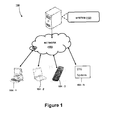
Figure 1 illustrates a network implementation of a system for evaluating two onscreen keyboards to determine cognitive scores associated with each of the two onscreen keyboards, in accordance with an embodiment of the present subject matter. -
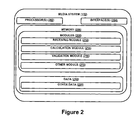
Figure 2 illustrates the system ofFigure 1 , in accordance with an embodiment of the present subject matter. -
Figure 3 is a method for validating a dynamic mental operator using an EEG signal, in accordance with an embodiment of the present subject matter. -
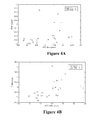
Figures 4A, 4B , and4C show graphs associated with validation of the dynamic mental operator, in accordance with an embodiment of the present subject matter. -
Figure 5 shows a flowchart illustrating a method for evaluating an onscreen keyboard, in accordance with an embodiment of the present subject matter. - The present subject matter relates generally to evaluation of onscreen keyboards by determining cognitive scores associated with each of the two onscreen keyboards. The onscreen keyboards may be displayed on a display screen such as, a television, a computer, a point of sale screen, and a tablet computer. Evaluating an onscreen keyboard means determining whether a layout of the onscreen keyboard is comfortable enough for users or not. The onscreen keyboard may be evaluated by determining the cognitive scores associated with them. The cognitive scores may be determined based upon a set of parameters associated with the usability of the onscreen keyboards. The set of parameters may be associated with a Keystroke Level Model - Goals, Operators, Methods, and Selection (KLM-GOMS) model. The KLM-GOMS model assist in determining theoretical values of the cognitive scores.
- After the theoretical values of the cognitive scores are determined using the KLS-GOMS model, an EEG signal of the user may be used to validate the cognitive scores so determined. It may be understood that the onscreen keyboards may be evaluated in two scenarios. In a first scenario, the onscreen keyboards to be evaluated will not be assisted with predictive text entry, whereas in a second scenario, the onscreen keyboards to be evaluated will be assisted with predictive text entry.
- In the first scenario, the cognitive scores associated with the onscreen keyboards are determined using KLM-GOMS model and are validated using the EEG signal. After the cognitive scores are validated, it may ascertained whether to use the onscreen keyboard or not. More is the cognitive score, more will be the cognitive load, and more uncomfortable the onscreen keyboard will be to use. Therefore, after determining cognitive scores for several onscreen keyboard, one may choose to use an onscreen keyboard with least cognitive score.
- In the second scenario, the cognitive scores associated with the onscreen keyboards are determined using KLM-GOMS model and are validated using the EEG signal. After the cognitive scores are validated, it may ascertained whether to use the onscreen keyboard or not. More is the cognitive score, more will be the cognitive load, and more uncomfortable the onscreen keyboard will be to use. Therefore, after determining cognitive scores for several onscreen keyboard, one may choose to use an onscreen keyboard with least cognitive score. Having said that, in the second scenario, a new parameter called a dynamic mental operator may also be determined for assisting in the evaluation of the onscreen keyboard. The dynamic mental operator is indicative of a cognitive load on the user while the user is assisted with predictive text entry on the onscreen keyboard. In other words, since the dynamic mental operator indicates an amount of cognitive load which is directly proportional to non-comfort-ness of the user of the onscreen keyboard.
- Therefore, it may be understood that the several onscreen keyboard layouts may be evaluated by using the method and system proposed in the present subject matter. For example, onscreen keyboard layouts having several arrangements of alphabets, characters, and numerals may be evaluated for determining a comfort of the users for one or more of those onscreen keyboard layouts. Based upon the comfort of a user for any particular onscreen keyboard, such a keyboard may be chosen to be displayed on a display screen of the user for his use.
- While aspects of described system and method for evaluating two onscreen keyboards by determining cognitive scores associated with each of the two onscreen keyboards may be implemented in any number of different computing systems, environments, and/or configurations, the embodiments are described in the context of the following exemplary system.
- Referring now to
Figure 1 , anetwork implementation 100 of asystem 102 for evaluating two onscreen keyboards by determining cognitive scores associated with each of the two onscreen keyboards is illustrated, in accordance with an embodiment of the present subject matter. In one embodiment, thesystem 102 receives a first set of parameters from a user using a first onscreen keyboard; and a second set of parameters from the user using a second onscreen keyboard. The first set of parameters is indicative of a usability of the first onscreen keyboard, whereas the second set of parameters is indicative of a usability of the second onscreen keyboard. Based upon the first set of parameters, thesystem 102 may determine a first cognitive score for the first onscreen keyboard. Subsequently, thesystem 102 may determine a second cognitive score for the second onscreen keyboard. After the cognitive scores are determined the, thesystem 102 may validate the first cognitive score and the second cognitive score using an Electroencephalography (EEG) signal of the user. The EEG signal of the user is captured while the user is using the first onscreen keyboard and the second onscreen keyboard. - It may be understood that after the cognitive scores are validated, the user may take an informed decision whether to use the first onscreen keyboard or the second onscreen keyboard.
- Although the present subject matter is explained considering that the
system 102 is implemented as a server, it may be understood that thesystem 102 may also be implemented in a variety of computing systems, such as a laptop computer, a desktop computer, a notebook, a workstation, a mainframe computer, a server, a network server, and the like. It will be understood that thesystem 102 may be accessed by multiple users through one or more user devices 104-1, 104-2...104-N, collectively referred to asuser devices 104 hereinafter, or applications residing on theuser devices 104. Examples of theuser devices 104 may include, but are not limited to, a portable computer, a personal digital assistant, a handheld device, an EEG system, a workstation, and remote such as, a television remote. Theuser devices 104 are communicatively coupled to thesystem 102 through anetwork 106. - In one implementation, the
network 106 may be a wireless network, a wired network or a combination thereof. Thenetwork 106 can be implemented as one of the different types of networks, such as intranet, local area network (LAN), wide area network (WAN), the internet, and the like. Thenetwork 106 may either be a dedicated network or a shared network. The shared network represents an association of the different types of networks that use a variety of protocols, for example, Hypertext Transfer Protocol (HTTP), Transmission Control Protocol/Internet Protocol (TCP/IP), Wireless Application Protocol (WAP), and the like, to communicate with one another. Further, thenetwork 106 may include a variety of network devices, including routers, bridges, servers, computing devices, storage devices, and the like. - Referring now to
Figure 2 , thesystem 102 is illustrated in accordance with an embodiment of the present subject matter. In one embodiment, thesystem 102 may include at least oneprocessor 202, an input/output (I/O)interface 204, and amemory 206. The at least oneprocessor 202 may be implemented as one or more microprocessors, microcomputers, microcontrollers, digital signal processors, central processing units, state machines, logic circuitries, and/or any devices that manipulate signals based on operational instructions. Among other capabilities, the at least oneprocessor 202 is configured to fetch and execute computer-readable instructions stored in thememory 206. - The I/
O interface 204 may include a variety of software and hardware interfaces, for example, a web interface, a graphical user interface, and the like. The I/O interface 204 may allow thesystem 102 to interact with a user directly or through theclient devices 104. Further, the I/O interface 204 may enable thesystem 102 to communicate with other computing devices, such as web servers and external data servers (not shown). The I/O interface 204 can facilitate multiple communications within a wide variety of networks and protocol types, including wired networks, for example, LAN, cable, etc., and wireless networks, such as WLAN, cellular, or satellite. The I/O interface 204 may include one or more ports for connecting a number of devices to one another or to another server. - The
memory 206 may include any computer-readable medium known in the art including, for example, volatile memory, such as static random access memory (SRAM) and dynamic random access memory (DRAM), and/or non-volatile memory, such as read only memory (ROM), erasable programmable ROM, flash memories, hard disks, optical disks, and magnetic tapes. Thememory 206 may includemodules 208 anddata 210. - The
modules 208 include routines, programs, objects, components, data structures, etc., which perform particular tasks or implement particular abstract data types. In one implementation, themodules 208 may include a receiving module 212, acalculation module 214, avalidation module 216, andother modules 218. Theother modules 218 may include programs or coded instructions that supplement applications and functions of thesystem 102. - The
data 210, amongst other things, serves as a repository for storing data processed, received, and generated by one or more of themodules 208. Thedata 210 may also include andother data 220. Theother data 220 may include data generated as a result of the execution of one or more modules in theother module 218. - In one implementation, at first, a user may use the
user device 104 to access thesystem 102 via the I/O interface 204. The user may register themselves using the I/O interface 204 in order to use thesystem 102. Thesystem 102 may be used for evaluating onscreen keyboards. The onscreen keyboards are the keyboards that may be displayed on a display screen such as, a television, a computer, a point of sale screen, and a tablet computer. The onscreen keyboards may be accessed using wireless remotes. - Evaluating an onscreen keyboard means determining whether a layout of the onscreen keyboard is comfortable enough for users or not. The layout of the onscreen keyboard may be understood as an arrangement of alphabets, characters, numbers, and the like in form of a keyboard displayed on a display screen such as a television. For example, a QWERTY keyboard may be understood as a layout of an onscreen keyboard. Similarly, English alphabets arranged in a sequence order may also be understood as a layout of an onscreen keyboard.
- In the subsequent description, evaluation of two onscreen keyboards may be explained in detail. However, it may be understood that an underlined concept to evaluate an onscreen keyboard may be extended to any number of onscreen keyboards.
- In order to evaluate two onscreen keyboards, at first, the user may capture a first set of parameters associated with a first onscreen keyboard; and a second set of parameters associated with a second onscreen keyboard. The first set of parameters and the second set of parameters are indicative of a usability of the first onscreen keyboard and the second onscreen keyboard, respectively. In one example, first set of parameters and the second set of parameters may be modified versions of original parameters used in a Keystroke Level Model - Goals, Operators, Methods, and Selection (KLM-GOMS) model. Specifically, a pointing parameter P of the KLM-GOMS model may be redefined. According to an embodiment of the present subject matter, the pointing parameter P may be redefined to indicate a sum of a time required to locate a key on the onscreen keyboard and a time required to move a focus on the key on the onscreen keyboard using a wireless remote. Therefore, it may be understood that each of the first set of parameters and the second set of parameters may include all parameters of the KLG-GOMS model except that the pointing parameter P is redefined. Table 1 shows all the parameters present in the first set of parameters and the second set of parameters.
- In one example, in order to estimate the values of the pointing parameter P for first onscreen keyboard and the second onscreen keyboard, a user study was conducted on a group of 20 people. During the user study, a tape recorded message consisting of 25 randomly selected alphabets was played. The users were instructed to focus on a particular block containing alphabets. A time taken to finish such as exercise was noted using a stop watch. To reduce an error as much as possible, an average value was taken for each user. The point parameter P for a NON-QWERTY keyboard layout (the first onscreen keyboard) was found to be 1.77 second and the pointing parameter for a QWERTY keyboard layout (the second onscreen keyboard) was found to be 2.1 seconds. It may be understood that the users may be a mix batch of computer users and non-computer users.
- The first set of parameters and the second set of parameters that may be used to ascertain the usability of the first onscreen keyboard and second onscreen keyboard are shown in Table 1 below:
Table 1: The parameters present in the first set of parameters and the second set of parameters: Parameters Description Time in sec for the first onscreen keyboard Time in sec for the second onscreen keyboard p Time required to find a key and move focus on that key 1.77 2.1 K Key or button press 0.20 0.20 H Move from mouse to keyboard and back 0.4 0.4 R(t) Waiting time for device to respond t t M Mental preparation and thinking time 1.35 1.35 F Finger movement 0.22 0.22 - The first set of parameters and the second set of parameters after being captured by the user may be sent to the
system 102. The receiving module 212 of thesystem 102 may receive the first set of parameters and the second set of parameters. - Based upon the first set of parameters, the
calculation module 214 may determine a first cognitive score for the first onscreen keyboard. Similarly, based upon the second set of parameters, thecalculation module 214 may determine a second cognitive score for the second onscreen keyboard. Specifically, thecalculation module 214 may add up time, shown inColumn 3 of Table 1, corresponding to each parameter of the first set of parameters to determine the first cognitive score. Similarly, thecalculation module 214 may add up time, shown in Column 4 of Table 1, corresponding to each parameter of the second set of parameters to determine the second cognitive score. - Based upon the first cognitive score, the
calculation module 214 may determine a first cognitive load. Similarly, based upon the second cognitive score, thecalculation module 214 may determine a second cognitive load. A term cognitive load is used in cognitive psychology to illustrate the load related to executive control of working memory. Theories contend that during complex learning activities an amount of information and interactions that must be processed simultaneously can either under-load or over load a finite amount of working memory one possesses. - After the determining the first cognitive score and the second cognitive score, these score may be validated by the
validation module 216. Thevalidation module 216 uses EEG signal of the user, while the user is using the first onscreen keyboard and the second onscreen keyboard, to validate the first cognitive score and the second cognitive score. Specifically, thevalidation module 216 determines a first validation score associated the first onscreen keyboard by capturing the EEG signal while the user is using the first onscreen keyboard. Subsequently, thevalidation module 216 compares the first validation score with the first cognitive score to determine whether the first cognitive score is same as the first validation score, thereby validating the first cognitive score. - Similarly, the
validation module 216 determines a second validation score associated the second onscreen keyboard by capturing the EEG signal while the user is using the second onscreen keyboard without predictive text entry. Subsequently, thevalidation module 216 compares the second validation score with the second cognitive score to determine whether the second cognitive score is same as the second validation score, thereby validating the second cognitive score. - More details on determination of the first validation score and the second validation score may be provided in the explanation of
Figure 3 . - It may be understood that both the onscreen keyboards may be evaluated under two scenarios. In a first scenario, both of the first onscreen keyboard and the second onscreen keyboard may not be assisted with predictive text entry. The user being unassisted with predictive text entry may mean that when the user wishes to enter a word, no suggestions on that word may be provided to the user for selection as and when the user types using a wireless remote. However, in a second scenario, both of the first onscreen keyboard and the second onscreen keyboard may be assisted with predictive text entry. The user being assisted with predictive text entry may mean that when the user wishes to enter a word, one or more suggestions on that word may be provided to the user for selection as and when the user types using a wireless remote.
- In the first scenario, the cognitive scores associated with the onscreen keyboards are determined using the values shown in Table 1. Subsequently, the cognitive scores are validated using the EEG signal as explained above. After the cognitive scores are validated, it may be ascertained whether to use the onscreen keyboard or not. More is the cognitive score, more will be the cognitive load, and more uncomfortable the onscreen keyboard will be to use. Therefore, after determining cognitive scores for several onscreen keyboards, one may choose to use an onscreen keyboard with least cognitive score.
- However, in the second scenario, the cognitive scores associated with the onscreen keyboards are determined using the values shown in Table 1. Subsequently, the cognitive scores are validated using the EEG signal as explained above. Further, in the second scenario, a new parameter called a dynamic mental operator may also be determined for assisting in the evaluation of the onscreen keyboards. The dynamic mental operator is indicative of an additional cognitive load on the user while the user is assisted with predictive text entry on the onscreen keyboard. In other words, the dynamic mental operator indicates an amount of additional cognitive load which is directly proportional to non-comfort-ness of the user of the onscreen keyboard.
- The dynamic mental operator for the first onscreen keyboard and the second onscreen keyboard may be determined by the
calculation module 214. In one embodiment, thecalculation module 214 may use the KLM-GOMS model to determine the dynamic mental operator for each of the first onscreen keyboard and the second onscreen keyboard. In this embodiment, in order to determine the dynamic mental operator, each of the first set of parameters and the second set of parameters may be arranged one by one in equations similar to equations of the KLM-GOMS model. - The KLM-GOMS equation for traditional text entry of a given phrase for the first onscreen keyboard may be written as:

- Th = homing time
- rk = time for button press
- kt =average number of key presses per word
- w = number of words typed
- Further, as mentioned above, for predictive text entry the dynamic mental operator comes into play. The dynamic mental operator corresponds to the additional cognitive load on the user for reading and selecting suggestions provided. The suggestions may change with each keystroke.
Thus, equation (1) becomes,
- where, Tdm = dynamic mental operator
= time for reading suggestions (dynamic mental (DM) operator) + time for one key press to select the word
= T dm(op)+ Tk - For present scenario, one can neglect Th as it is of no use. Further, Tk is also modified to take into account the search time of a key to be pressed in the onscreen keyboard and Ts= time for finding any key and moving focus needs to be considered. Thus equation (4) becomes,

- In order to calculate the dynamic mental operator, six phrase sets may be selected randomly. Users may be given an initial familiarization phrase and then may be asked to enter six phrases at one go using predictive onscreen keyboard. Time taken by each user and the number of keystrokes required to type the phrase may be recorded. Dynamic mental operator may be calculated by the
calculation module 214 using equation (5). From Table 1, one gets, - ts = time for finding any key and moving focus = 1.77s
- Tk = time taken for button press = 0.02s
- Tm = Mental preparation and thinking time = 1.35s
- Values of w, Keff and total time taken for typing are different for different users and are given in table 2 below.
- The dynamic mental operator for different users using the first onscreen keyboard is given in table 2 below. The average value of T dm(op) was found to be 0.063.
Table 2: Dynamic mental operator for different users User Total time taken to type in sec Effective key-presses (Keff) No of words typed (w) Tdm(op) in Sec 1 228.62 65.43 30 0.0935 2 218.66 61.84 29 0.102 3 237.40 72.61 30 0.010 4 224.28 65.43 30 0.027 5 200.26 59.85 25 0.074 6 206.14 61.84 26 0.0515 7 216.98 63.84 28 0.064 8 224.5 65.43 30 0.035 9 212.52 63.04 27 0.0648 10 215.88 63.84 28 0.049 - Similarly, the dynamic mental operator may be calculated for users using the second onscreen keyboard. It may be understood that the dynamic mental operator indicates an additional amount of cognitive load which is directly proportional to non-comfort-ness of the user of the onscreen keyboard. In other words, more is the value of the dynamic mental operator, more will be the cognitive load, and more uncomfortable the user will be to use a particular onscreen keyboard. Therefore, it may be understood that the dynamic mental operator may facilitate further evaluation of the onscreen keyboards. Based upon the dynamic mental operator, a layout of an onscreen keyboard may be decided.
- As mentioned above, in order to validate the first cognitive score, the second cognitive score, and the dynamic mental operator (of each of the first onscreen keyboard and of the second onscreen keyboard), the
validation module 216 may determine the first validation score, the second validation score, and a validation operator. A method performed by thevalidation module 216 is shown inFigure 3 . The EEG signal of the user may be captured while the user is using the first onscreen keyboard. After the receiving the EEG signal, thevalidation module 216 may apply a Common Spatial Pattern (CSP) filter to the EEG signal to obtain a filtered EEG signal. Thereafter, thevalidation module 216 may extract certain EEG features from the filtered EEG signal using a sliding window approach known in the art. In one example, the EEG features may comprise log variance, HJORTH parameters, frequency band powers, and spectral distributions (See graphs shown inFigures 4A, 4B , and4C ). At a further step, thevalidation module 216 may classify the EEG features using a linear Support Vector Machine (SVM). Thereafter, thevalidation module 216 may determine the first validation score for the first onscreen keyboard. - Similarly, the
validation module 216 may determine a second validation score for the second onscreen keyboard. The different of the first validation score and the second validation score is equal to the validation operator. The validation operator may be compared with the dynamic mental operator, calculated using the KLM-GOMS equations, to determine whether the validation operator is equal to the dynamic mental operator, thereby validating the dynamic mental operator. - It may be understood that the EEG of the signal of the user may be captured in both the first scenario and in the second scenario. In the first scenario, the EEG signal may be captured when both the first onscreen keyboard and the second onscreen keyboard are without predictive text entry. In the second scenario, the EEG signal may be captured when both the first onscreen keyboard and the second onscreen keyboard are assisted with predictive text entry.
- Further, it may be understood that the first cognitive score, the second cognitive score, and the validation operator may also be validated using a Stroop effect test, such as a Psychometric test known in the art. Based upon the above explanation, it may be understood that the several onscreen keyboard layouts may be evaluated by using the method and
system 102 proposed in the present subject matter. For example, onscreen keyboard layouts having several arrangements of alphabets, characters, and numerals may be evaluated for determining a comfort of the users for one or more of those onscreen keyboard layouts. Based upon the comfort of a user for any particular onscreen keyboard, such a keyboard may be displayed on a display screen of the user for his use. - Referring now to
Figure 5 , amethod 500 for evaluating onscreen keyboards is shown, in accordance with an embodiment of the present subject matter. Themethod 500 may be described in the general context of computer executable instructions. Generally, computer executable instructions can include routines, programs, objects, components, data structures, procedures, modules, functions, etc., that perform particular functions or implement particular abstract data types. Themethod 500 may also be practiced in a distributed computing environment where functions are performed by remote processing devices that are linked through a communications network. In a distributed computing environment, computer executable instructions may be located in both local and remote computer storage media, including memory storage devices. - The order in which the
method 500 is described is not intended to be construed as a limitation, and any number of the described method blocks can be combined in any order to implement themethod 500 or alternate methods. Additionally, individual blocks may be deleted from themethod 500 without departing from the spirit and scope of the subject matter described herein. Furthermore, the method can be implemented in any suitable hardware, software, firmware, or combination thereof. However, for ease of explanation, in the embodiments described below, themethod 500 may be considered to be implemented in the above describedmedia system 102. - At
block 502, a first set of parameters may be received from a user using a first onscreen keyboard. The first set of parameters is indicative of a usability of the first onscreen keyboard. The user uses the first onscreen keyboard via a wireless remote. In one example, the first set of parameters may be received by the receiving module 212. - At
block 504, a second set of parameters may be received from a user using a second onscreen keyboard. The second set of parameters is indicative of a usability of the second onscreen keyboard. The user uses the second onscreen keyboard via a wireless remote. In one example, the second set of parameters may be received by the receiving module 212. - At
block 506, a first cognitive score for the first onscreen keyboard may be determined using the first set of parameters. In one example, the first cognitive score may be determined by thecalculation module 214. - At
block 508, a first cognitive score for the first onscreen keyboard may be determined using the first set of parameters. In one example, the first cognitive score may be determined by thecalculation module 214. - At
block 510, the first cognitive score and the second cognitive score are validated using an Electroencephalography (EEG) signal of the user, The EEG signal of the user is captured while the user is using the first onscreen keyboard and the second onscreen keyboard. In one example, the first cognitive score and the second cognitive score may be validated by thevalidation module 216. - Although implementations for methods and systems for evaluating onscreen keyboards have been described in language specific to structural features and/or methods, it is to be understood that the appended claims are not necessarily limited to the specific features or methods described. Rather, the specific features and methods are disclosed as examples of implementations for a system and a method for evaluating onscreen keyboards.


Claims (15)
- A method for evaluating onscreen keyboards, the method comprising:receiving, by one or more processors, a first set of parameters associated with a user using a first onscreen keyboard, wherein the first set of parameters is indicative of a usability of the first onscreen keyboard;receiving, by the one or more processors, a second set of parameters associated with the user using a second onscreen keyboard, wherein the second set of parameters is indicative of a usability of the second onscreen keyboard;determining, by the one or more processors using the first set of parameters, a first cognitive score for the first onscreen keyboard;determining, by the one or more processors using the second set of parameters, a second cognitive score associated with the second onscreen keyboard; andvalidating the first cognitive score and the second cognitive score using an Electroencephalography (EEG) signal of the user, wherein the EEG signal of the user is captured while the user is using the first onscreen keyboard and the second onscreen keyboard.
- The method of claim 1, wherein each of the first set of parameters and the second set of parameters comprises a pointing parameter P and a time required to move a focus on the key using a wireless remote, wherein the pointing parameter P is indicative of a sum of time required to locate a key on either of the first onscreen keyboard or the second onscreen keyboard, and wherein the first cognitive score and the second cognitive score are determined using one or more equations associated with a Keystroke Level Model - Goals, Operators, Methods, and Selection (KLM-GOMS) model, wherein the one or more equations associated with the KLM-GOMS model are modified using the pointing parameter P.
- The method of claim 1, wherein the user is unassisted with predictive text entry while using the first onscreen keyboard and while using the second onscreen keyboard.
- The method of claim 1, further comprising determining a first cognitive load and a second cognitive load based upon the first cognitive score and the second cognitive score, respectively.
- The method of claim 3, wherein the validating comprises:determining a first validation score associated with the first onscreen keyboard by capturing the EEG signal while the user is using the first onscreen keyboard without predictive text entry;determining a second validation score associated with the second onscreen keyboard by capturing the EEG signal while the user is using the second onscreen keyboard without predictive text entry;comparing the first validation score with the first cognitive score to determine whether the first cognitive score is consistent with the first validation score, thereby validating the first cognitive score; andcomparing the second validation score with the second cognitive score to determine whether the second cognitive score is consistent with the second validation score, thereby validating the second cognitive score.
- The method of claim 1, wherein the user is assisted with predictive text entry while using the first onscreen keyboard and while using the second onscreen keyboard.
- The method of claim 6, further comprising determining a dynamic mental operator when the user is assisted with predictive text entry.
- The method of claim 7, wherein the dynamic mental operator is determined using one or more equations associated with a Keystroke Level Model - Goals, Operators, Methods, and Selection (KLM-GOMS) model, wherein the one or more equations associated with the KLM-GOMS model are modified using a pointing parameter P.
- The method of claim 6, wherein the validating comprises:determining a first validation score associated with the first onscreen keyboard by capturing the EEG signal while the user is using the first onscreen keyboard with predictive text entry;determining a second validation score associated with the second onscreen keyboard by capturing the EEG signal while the user is using the second onscreen keyboard with predictive text entry;comparing the first validation score with the first cognitive score to determine whether the first cognitive score is consistent with the first validation score; andcomparing the second validation score with the second cognitive score to determine whether the second cognitive score is consistent with the second validation score, thereby validating the first cognitive score and the second cognitive score.
- The method of claim 1, further comprising:determining a dynamic mental operator when the user is assisted with predictive text entry while using the first onscreen keyboard and while using the second onscreen keyboard; andvalidating the dynamic mental operator.
- The method of claim 10, wherein validating the dynamic mental operator comprises:determining a first validation score associated with the first onscreen keyboard by capturing the EEG signal while the user is using the first onscreen keyboard with predictive text entry;determining a second validation score associated the second onscreen keyboard by capturing the EEG signal while the user is using the second onscreen keyboard with predictive text entry;determining a difference between the first validation score and the second validation score to generate a validation operator;comparing the validation operator with the dynamic mental operator to determine whether the validation operator is consistent with the dynamic mental operator, thereby validating the dynamic mental operator.
- The method of claim 11, wherein determining the first validation score comprises:receiving the EEG signal while the user is using the first onscreen keyboard;applying a Common Spatial Pattern (CSP) filter to the EEG signal to obtain a filtered EEG signal;extracting EEG features from the filtered EEG signal using a sliding window approach, wherein the EEG features comprise at least one of a log variance, HJORTH parameters, frequency band powers, and spectral distributions;classifying the EEG features using a linear Support Vector Machine (SVM); anddetermining the first validation score based upon the classification.
- The method of claim 11, wherein determining the second validation score comprises:receiving the EEG signal while the user is using the second onscreen keyboard;applying a Common Spatial Pattern (CSP) filter to the EEG signal to obtain a filtered EEG signal;extracting EEG features from the filtered EEG signal using a sliding window approach, wherein the EEG features comprise at least one of a log variance, HJORTH parameters, frequency band powers, and spectral distributions;classifying the EEG features using a linear Support Vector Machine (SVM); anddetermining the second validation score based upon the classification.
- A system for evaluating two onscreen keyboards by determining cognitive scores associated with each of the two onscreen keyboards, the system comprising:one or more hardware processors; andone or more memory units storing machine readable instructions executable by the one or more processors for:receiving a first set of parameters associated with a user using a first onscreen keyboard, wherein the first set of parameters is indicative of a usability of the first onscreen keyboard;receiving a second set of parameters associated with the user using a second onscreen keyboard, wherein the second set of parameters is indicative of a usability of the second onscreen keyboard;determining, using the first set of parameters, a first cognitive score for the first onscreen keyboard;determining, using the second set of parameters, a second cognitive score associated with the second onscreen keyboard; andvalidating, using an Electroencephalography (EEG) signal of the user, the first cognitive score and the second cognitive score, wherein the EEG signal of the user is captured while the user is using the first onscreen keyboard and the second onscreen keyboard.
- A non-transitory computer readable medium storing machine readable instructions executable by one or more processors for:receiving a first set of parameters associated with a user using a first onscreen keyboard, wherein the first set of parameters is indicative of a usability of the first onscreen keyboard;receiving a second set of parameters associated with the user using a second onscreen keyboard, wherein the second set of parameters is indicative of a usability of the second onscreen keyboard;determining, using the first set of parameters, a first cognitive score for the first onscreen keyboard;determining, using the second set of parameters, a second cognitive score associated with the second onscreen keyboard; andvalidating, using an Electroencephalography (EEG) signal of the user, the first cognitive score and the second cognitive score, wherein the EEG signal of the user is captured while the user is using the first onscreen keyboard and the second onscreen keyboard.
Applications Claiming Priority (1)
| Application Number | Priority Date | Filing Date | Title |
|---|---|---|---|
| IN2132MU2013 IN2013MU02132A (en) | 2013-06-24 | 2013-06-24 |
Publications (2)
| Publication Number | Publication Date |
|---|---|
| EP2819018A2 true EP2819018A2 (en) | 2014-12-31 |
| EP2819018A3 EP2819018A3 (en) | 2015-01-21 |
Family
ID=51032959
Family Applications (1)
| Application Number | Title | Priority Date | Filing Date |
|---|---|---|---|
| EP20140173777 Withdrawn EP2819018A3 (en) | 2013-06-24 | 2014-06-24 | Systems and methods for evaluating onscreen keyboards |
Country Status (3)
| Country | Link |
|---|---|
| US (1) | US9411426B2 (en) |
| EP (1) | EP2819018A3 (en) |
| IN (1) | IN2013MU02132A (en) |
Families Citing this family (1)
| Publication number | Priority date | Publication date | Assignee | Title |
|---|---|---|---|---|
| US12530526B2 (en) * | 2024-02-09 | 2026-01-20 | Meta Platforms Technologies, Llc | Methods of utilizing reinforcement learning for enhanced text suggestions, and systems and devices therefor |
Family Cites Families (7)
| Publication number | Priority date | Publication date | Assignee | Title |
|---|---|---|---|---|
| JP2004537361A (en) | 2001-08-07 | 2004-12-16 | ローレンス フェアウェル | False psychophysiological detection method by brain function analysis |
| US7350190B2 (en) * | 2004-06-29 | 2008-03-25 | International Business Machines Corporation | Computer implemented modeling and analysis of an application user interface |
| US20060088154A1 (en) | 2004-10-21 | 2006-04-27 | Motorola, Inc. | Telecommunication devices that adjust audio characteristics for elderly communicators |
| US8374687B2 (en) | 2006-01-21 | 2013-02-12 | Honeywell International Inc. | Rapid serial visual presentation triage prioritization based on user state assessment |
| US9304601B2 (en) * | 2009-07-08 | 2016-04-05 | Open Invention Network, Llc | System, method, and computer-readable medium for facilitating adaptive technologies |
| US8758018B2 (en) * | 2009-12-31 | 2014-06-24 | Teledyne Scientific & Imaging, Llc | EEG-based acceleration of second language learning |
| US9195321B2 (en) | 2011-03-17 | 2015-11-24 | Intellitact Llc | Input device user interface enhancements |
-
2013
- 2013-06-24 IN IN2132MU2013 patent/IN2013MU02132A/en unknown
-
2014
- 2014-06-23 US US14/312,100 patent/US9411426B2/en active Active
- 2014-06-24 EP EP20140173777 patent/EP2819018A3/en not_active Withdrawn
Non-Patent Citations (1)
| Title |
|---|
| None |
Also Published As
| Publication number | Publication date |
|---|---|
| IN2013MU02132A (en) | 2015-06-05 |
| EP2819018A3 (en) | 2015-01-21 |
| US9411426B2 (en) | 2016-08-09 |
| US20140375567A1 (en) | 2014-12-25 |
Similar Documents
| Publication | Publication Date | Title |
|---|---|---|
| US8456425B2 (en) | Self-adapting keypad | |
| US20110201387A1 (en) | Real-time typing assistance | |
| US9430626B1 (en) | User authentication via known text input cadence | |
| Nicolau et al. | Typing performance of blind users: An analysis of touch behaviors, learning effect, and in-situ usage | |
| Roy et al. | Typing efficiency and suggestion accuracy influence the benefits and adoption of word suggestions | |
| Speier et al. | Evaluating true BCI communication rate through mutual information and language models | |
| Alharbi et al. | The effects of predictive features of mobile keyboards on text entry speed and errors | |
| Liu et al. | Gazetry: Swipe text typing using gaze | |
| WO2024157107A1 (en) | Learning to combine explicit diversity conditions for effective question answer generation | |
| Nicolau et al. | Investigating laboratory and everyday typing performance of blind users | |
| US20150199171A1 (en) | Handwritten document processing apparatus and method | |
| Nicolau et al. | Mobile text-entry and visual demands: reusing and optimizing current solutions | |
| Lin et al. | Why is gesture typing promising for older adults? comparing gesture and tap typing behavior of older with young adults | |
| US9411426B2 (en) | Evaluating onscreen keyboard | |
| Gizatdinova et al. | Vision‐Based Interfaces for Character‐Based Text Entry: Comparison of Errors and Error Correction Properties of Eye Typing and Head Typing | |
| Bogon et al. | Cognitive Integration of Delays: Anticipated System Delays Slow Down User Actions | |
| KR20190129365A (en) | Method for displaying virtual keyboard for subjective test in mobile device | |
| US20160253061A1 (en) | Evaluating user interface efficiency | |
| Iman et al. | Refining UI/UX with minimalist design and AI: Towards sustainable and efficient digital experiences | |
| Ghosh et al. | Shift+ tap or tap+ longpress? the upper bound of typing speed on inscript | |
| Chahine et al. | Eye tracking-based adaptive displays: a review of the recent literature | |
| CN115061595A (en) | Control method and device of electronic equipment, electronic equipment and readable storage medium | |
| Kurosu | Human-computer interaction. interaction techniques and novel applications: thematic area, HCI 2021, Held as Part of the 23rd HCI International Conference, HCII 2021, Virtual Event, July 24–29, 2021, Proceedings, Part II | |
| Cazorla et al. | Eye-based keystroke prediction for natural texts–a feasibility analysis | |
| KR102470274B1 (en) | Input system and input method |
Legal Events
| Date | Code | Title | Description |
|---|---|---|---|
| PUAL | Search report despatched |
Free format text: ORIGINAL CODE: 0009013 |
|
| PUAI | Public reference made under article 153(3) epc to a published international application that has entered the european phase |
Free format text: ORIGINAL CODE: 0009012 |
|
| 17P | Request for examination filed |
Effective date: 20140624 |
|
| AK | Designated contracting states |
Kind code of ref document: A2 Designated state(s): AL AT BE BG CH CY CZ DE DK EE ES FI FR GB GR HR HU IE IS IT LI LT LU LV MC MK MT NL NO PL PT RO RS SE SI SK SM TR |
|
| AX | Request for extension of the european patent |
Extension state: BA ME |
|
| AK | Designated contracting states |
Kind code of ref document: A3 Designated state(s): AL AT BE BG CH CY CZ DE DK EE ES FI FR GB GR HR HU IE IS IT LI LT LU LV MC MK MT NL NO PL PT RO RS SE SI SK SM TR |
|
| AX | Request for extension of the european patent |
Extension state: BA ME |
|
| RIC1 | Information provided on ipc code assigned before grant |
Ipc: G06F 11/34 20060101AFI20141218BHEP Ipc: A63F 13/20 20140101ALI20141218BHEP |
|
| STAA | Information on the status of an ep patent application or granted ep patent |
Free format text: STATUS: THE APPLICATION IS DEEMED TO BE WITHDRAWN |
|
| 18D | Application deemed to be withdrawn |
Effective date: 20150722 |