EP2815398B1 - Audio human interactive proof based on text-to-speech and semantics - Google Patents
Audio human interactive proof based on text-to-speech and semantics Download PDFInfo
- Publication number
- EP2815398B1 EP2815398B1 EP13749405.0A EP13749405A EP2815398B1 EP 2815398 B1 EP2815398 B1 EP 2815398B1 EP 13749405 A EP13749405 A EP 13749405A EP 2815398 B1 EP2815398 B1 EP 2815398B1
- Authority
- EP
- European Patent Office
- Prior art keywords
- text
- speech
- audio
- response
- words
- Prior art date
- Legal status (The legal status is an assumption and is not a legal conclusion. Google has not performed a legal analysis and makes no representation as to the accuracy of the status listed.)
- Active
Links
Images


Classifications
-
- G—PHYSICS
- G10—MUSICAL INSTRUMENTS; ACOUSTICS
- G10L—SPEECH ANALYSIS TECHNIQUES OR SPEECH SYNTHESIS; SPEECH RECOGNITION; SPEECH OR VOICE PROCESSING TECHNIQUES; SPEECH OR AUDIO CODING OR DECODING
- G10L13/00—Speech synthesis; Text to speech systems
- G10L13/02—Methods for producing synthetic speech; Speech synthesisers
- G10L13/033—Voice editing, e.g. manipulating the voice of the synthesiser
-
- G—PHYSICS
- G06—COMPUTING OR CALCULATING; COUNTING
- G06F—ELECTRIC DIGITAL DATA PROCESSING
- G06F2221/00—Indexing scheme relating to security arrangements for protecting computers, components thereof, programs or data against unauthorised activity
- G06F2221/21—Indexing scheme relating to G06F21/00 and subgroups addressing additional information or applications relating to security arrangements for protecting computers, components thereof, programs or data against unauthorised activity
- G06F2221/2133—Verifying human interaction, e.g., Captcha
-
- G—PHYSICS
- G10—MUSICAL INSTRUMENTS; ACOUSTICS
- G10L—SPEECH ANALYSIS TECHNIQUES OR SPEECH SYNTHESIS; SPEECH RECOGNITION; SPEECH OR VOICE PROCESSING TECHNIQUES; SPEECH OR AUDIO CODING OR DECODING
- G10L15/00—Speech recognition
-
- G—PHYSICS
- G10—MUSICAL INSTRUMENTS; ACOUSTICS
- G10L—SPEECH ANALYSIS TECHNIQUES OR SPEECH SYNTHESIS; SPEECH RECOGNITION; SPEECH OR VOICE PROCESSING TECHNIQUES; SPEECH OR AUDIO CODING OR DECODING
- G10L21/00—Speech or voice signal processing techniques to produce another audible or non-audible signal, e.g. visual or tactile, in order to modify its quality or its intelligibility
- G10L21/003—Changing voice quality, e.g. pitch or formants
Definitions
- a Human Interactive Proof also known as CAPTCHA (Completely Automated Public Turing test to tell Computers and Humans Apart) differentiates a human user from automatic programming (i.e., a bot).
- the goal of most HIP schemes is to prevent automated access by a computer, while allowing access by a human.
- this goal is addressed by providing a method for generating and grading tests that most people can easily pass, and that most computer programs cannot pass.
- US 2005/015257 discloses a human test which includes posing a question that is selected to exercise a human conceptual capability, obtaining an answer to the question, and comparing the answer to a correct answer that would be rendered by a human being.
- the text-to-speech audio Human Interactive Proof (HIP) technique described herein provides an audio HIP that employs text-to-speech technologies and semantics in creating an audio challenge to determine whether an unknown computer user is a human or a bot.
- ASR Automatic Speech Recognition
- the technique prevents the speech recognition mechanism of the ASR system from recognizing or learning from HIP samples generated by the technique.
- the technique may do this by making spoken HIP sentences very different from the audio data used in training a model of the ASR system, and by varying the characteristics in the spoken HIP words or sentences.
- ASR systems are typically based on statistical models. The farther the HIP sentence is away from the training data distribution of the ASR model, the more difficult it is for the ASR system to recognize the word or sentence of the HIP.
- the text-to-speech audio HIP technique described herein can apply spectral frequency warping, vowel duration warping, background addition, echo addition, and time duration between words in generating a spoken HIP sentence through a Text-to-Speech (TTS) engine, in addition to the claimed volume warping.
- TTS Text-to-Speech
- the resulting tempo, pitch, and voice of the spoken sentence are therefore very different from the normal data used to train ASR systems.
- the technique employs a large set of text-to-speech parameters to allow the technique to change effects frequently or constantly to disable the use of previously used audio HIP challenges from being used to train a model of an ASR system to recognize HIP challenges generated by the technique.
- the text-to-speech audio HIP technique described herein adds an additional mechanism to differentiate human users from bots: a sentence of the audio HIP challenge must be understood to pass the challenge.
- the sentence can be a question or an instruction for which semantic understanding of the sentence posed as an audio challenge is required in order to respond correctly to the challenge.
- an ASR system can recognize all of the words in the sentence used as the audio challenge, a bot may still not able to pass the test without understanding the sentence. Semantic understanding of sentences is still considered a challenging Artificial Intelligence problem.
- a HIP also known as CAPTCHA (Completely Automated Public Turing test to tell Computers and Humans Apart) differentiates a human user from automatic programming (i.e., a bot).
- CAPTCHA Completely Automated Public Turing test to tell Computers and Humans Apart
- the goal of most HIP schemes is to prevent automated access by a computer, while allowing access by a human.
- this goal is addressed by providing a method for generating and grading tests that most people can easily pass, and that most computer programs cannot pass.
- HIP schemes There are many HIP schemes presently available. For example, one conventional visual scheme operates by randomly selecting characters or words from a dictionary, then rendering a distorted image containing the characters or words. This scheme then presents a test to its user which consists of the distorted image and a request to type some of the characters or words appearing in the image. By tailoring the types of deformations that are applied, an image is created wherein most humans can read the required number of characters or words from the distorted image, while current computer programs typically cannot.
- the text-to-speech audio HIP technique described herein uses different (preferably non-repeating) sentences or words generated via a text-to-speech engine as audio HIP challenges.
- the technique can apply different effects in a text-to-speech synthesizer speaking a sentence or words to be used as a HIP.
- the different effects can include, for example, spectral frequency warping; vowel duration warping; background addition; echo addition; and variation of the time duration between words, among others, in addition to the claimed volume warping.
- the technique varies the set of parameters to generate audio HIP challenges over time and for the generation of different challenges in order to prevent an ASR from learning a model that can be used to recognize the audio HIP challenges generated by the technique. Additionally, in some embodiments the technique introduces the requirement of semantic understanding in order to solve the HIP challenges.
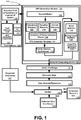
- FIG. 1 shows an exemplary architecture 100 for practicing one embodiment of the text-to-speech audio HIP technique.
- this exemplary architecture 100 includes a text selector module 101 which may contain a library 102 of text (e.g., text sentences and expected responses) or library 103 of words.
- the module 101 selects and provides text 106 to the HIP generation module 104 and expected responses 107 to a verifier 109.
- the text selector module 101 may select a specific item (e.g., preferably a text sentence and its expected response), either randomly or in a specific manner.
- the sentences in the text library 102 can be selected from documents or articles provided from a certain source, crawled from the Internet, or generated from a module (not shown in FIG.
- expected responses are produced with the sentences.
- An expected response can be the sentence itself, or an answer that humans would provide in response to the sentence.
- the former is typically used when the sentence is produced from a document or article automatically.
- the latter is typically used when the sentence is produced by a program module.
- the text selector module 101 may contain a library of words from which a group of correlated or uncorrelated words can be selected, either randomly or in a certain manner.
- the selected words are used as the selected text 106 that is sent to the HIP generation module 104 and the words arranged in the same order as the selected text 106 are also used as the expected response 107 that is sent to the verifier 109.
- the architecture includes an audio HIP generation module 104 which resides on the same or a different general computing device 500 as the text selector 101.
- the general computing device 500 will be discussed in greater detail with respect to FIG. 5 .
- the HIP generation module 104 contains a TTS engine, TTS distortion modules 114 and post TTS distortion modules 116.
- a conventional TTS engine consists of two parts, a speech model 108 and a text to speech synthesizer 110.
- the TTS engine processes the selected text 106 using the speech model 108.
- TTS distortion modules 114 adjust the parameters as modeled by speech model 108 to apply one or more distortions so that the selected text 106 will be distorted when read by the text-to-speech synthesizer 110.
- the TTS output may be further processed by post-TTS distortion modules 116 to apply one or more additional distortions such as adding echo or background to the TTS generated spoken text.
- the resulting sound is used as an audio HIP/CATCHA 112.
- the distortions or distortion parameters defining one or more of the distortions in the TTS synthesizer 110 or post-TTS can be varied randomly or in a specific pattern with each instance of generating an audio challenge string.
- the HIP generation module 104 determines the distortion parameters that are used to model the selected text using the speech model 108.
- this speech model 108 is a Hidden Markov Model (HMM) that is used to model the frequency spectrum (vocal tract), fundamental frequency (vocal source) and duration of the speech (prosody).
- HMM Hidden Markov Model
- the TTS distortion modules 114 inside the HIP generation module 104 can include a frequency warping module 120 that warps the frequency parameters of the selected text 106 when read by the text-to-speech synthesizer 110.
- the TTS distortion modules 114 can also include a module 118 for varying the durations of pronounceable sounds.
- this module 118 can perform vowel duration warping that varies the time vowels of the selected sentence 106 are pronounced when read by the text-to-speech synthesizer 110.
- the TTS distortion modules 114 include a module 122 for varying the volumes of sounds and may include a module 124 to for varying the time duration between words when the text-to-speech synthesizer 110 generate a voice for the selected text 106.
- the post-TTS distortion modules 116 may include an echo addition module 126 to add echo effects and/or a background addition module 128 to add background sounds to a generated audio clip of the selected text 106 from the text to speech synthesizer 110.
- Different background sounds can be added by the background addition module 128.
- music can be added as background sounds.
- another voice referred to as background voice hereafter, can be added to the voice, referred to as foreground voice, of the selected text 106 from the text to speech synthesizer 110. Distortions and other modifications can be applied to the background sounds to produce additional variations on the background sounds for the same or different audio HIP challenges.
- the background voice can be of the same language as the foreground voice. It can also be of a language different from the foreground voice's language. For example, when the foreground voice is English, the background voice can be Chinese or Spanish.
- the background voice can be generated with the TTS synthesizer 110, in a similar way as the foreground voice. Different distortions such as frequency warping and others mentioned above for the foreground voice can be applied during the generation of the background voice.
- the text of the background voice can be a sentence selected from a text library or words randomly selected from a dictionary. With an added background voice, humans can easily tell the difference between the two languages, and identify and recognize the foreground language, but a machine such as an ASR engine cannot differentiate the foreground voice from the background voice, and thus cannot recognize the spoken text of the foreground voice.
- An audio challenge generated from the HIP generation module is sent to an unknown user 130 who can input a response with various methods, such as using a keyboard, a mouse, or a touch screen.
- the unknown user 130 may speak a response, and voice recognition technologies are used to recognize the response and convert it to text.
- a received text response 132 is then sent to the verifier 109 which compares the received response with the expected response of the audio challenge.
- the verifier 109 identifies the unknown user 130 as human 134 if it determines that the response 132 from the unknown user matches the expected response 107. Otherwise the unknown user is identified as a bot 136.
- the unknown user 130 recognizes an audio challenge 112 to provide a correct response to pass the test.
- the unknown user 130 must have a semantic understanding of the audio challenge in order to provide a correct response to pass the test.
- the verifier 109 determines if a received response 132 matches an expected response. In one embodiment, the verifier determines that the two responses match each other only when they match exactly. In this case, no error is tolerated. In another embodiment, the verifier determines that the two responses match each other if the error between the two responses is below a tolerance error. In one embodiment, the error between two responses is calculated using edit distance or its variations.
- the verifier 109 may process a response before comparing it with the other response. For example, the verifier 109 may normalize the text of a response such as replacing a word or a string of text with its standard expression and remove insignificant words. The verifier 109 may also convert a text response to a string of phones, and compare strings of phones to determine if the two responses match each other or not. Many techniques can be used to convert text to phones. In one embodiment, the speech model in a TTS is used to convert text to phones.
- FIG. 2 shows a general exemplary process for practicing one embodiment of the text-to-speech audio HIP technique described herein.
- a text sentence or a group of correlated or uncorrelated words is selected from a plurality of text sentences or a plurality of words.
- a text-to-speech engine is applied to generate the voice of the selected text as an audio challenge, for identification of whether an unknown user is a human or a bot, with one or more distortions applied during or post generation of the voice of the selected text.
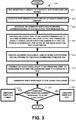
- FIG. 3 shows a more detailed exemplary process 300 for practicing another embodiment of the text-to-speech audio HIP technique.
- this embodiment of the text-to-speech audio HIP technique operates by first finding or defining a library of discrete text sentences or words, as shown in block 302.
- the text sentences can be selected from various appropriate text sources.
- the text in the text library is non-repeating sentences that are automatically extracted from articles or documents that are easy for humans to understand, such as newspapers and magazines that aimed at ordinary human readers.
- the length of extracted sentences is of a preset range. If a sentence is too short, it may be combined with the next sentence or simply dropped. A too long sentence may be cut into two or more smaller pieces to fit into the required length.
- the articles or documents may be provided from internal sources or crawled from the Internet.
- the audio HIP technique builds or defines a library of words. This library can be built from a dictionary by removing insignificant words or confusing words. Words that are easy to be confused by humans by their spelling or by their sounds may be removed from the library. Given this library of text sentences or words, as shown in block 304, the technique automatically selects a text sentence from the library of text sentences or selects a group of correlated or uncorrelated words from the library of words for use in creating an audio challenge for determining whether an unknown user is a human or a bot.
- the technique may also retrieve the expected response from the library of the text sentences, if the response is stored in the library with the retrieved text sentence, or generates an expected response from the selected text sentences or group of correlated or uncorrelated words, as shown in block 306.
- the generated expected response is the same as the selected string of text.
- the generated expected response is the result after text normalization is applied to the selected text.
- Text normalization receives a text input and produces a text output which converts the input text into a standard format. For example, insignificant words such as "a”, "an” may be removed, "I'm” may be replaced by "I am” during text normalization.
- the expected response is sent to a verifier 316 to compare with the response from an unknown user 314 to determine if the unknown user 318 is a human or a bot 320.
- the selected text is then automatically processed to determine parameters to add one or more distortions when the selected text is read by a text-to-speech synthesizer, as shown in block 308.
- One or more language models may be used in block 308 in determining the parameters. These distortions, discussed in greater detail below, can include spectral frequency warping, vowel duration warping, warping of times between words, in addition to the claimed volume warping.
- the technique creates an audio challenge in block 310.
- One or more additional distortions may be applied to the voice generated in block 308 during the creation of an audio challenge. These distortions may be adding echo, background voice or music. Distortions may be applied to the background music or voice before adding it to the voice generated in block 308.
- the background voice may be generated in a way similar to generation of the foreground voice, for example, by selecting a text sentence or a group of correlated or uncorrelated words from a library, and then applying a language model and a text-to-speech synthesizer to generate the background voice.
- Parameters may be determined and modified to apply one or more distortions when the voice is generated by the text-to-speech synthesizer. These distortions can be similar to the distortions applied inside TTS synthesizer during generation of the foreground voice.
- the background voice can be of different languages. In one embodiment, the added background voice is of the same language as that of the language of the foreground voice generated in block 308. In another embodiment, the added background voice is of a language different from the language of the foreground voice generated in block 308.
- the addition of distortions during and after generating of the voice using the TTS synthesizer serves to create an audio challenge that is relatively easy for a person to recognize, but difficult for a computer to recognize, and introduces variations among generated audio challenges.
- the next step is to send and present the audio challenge to an unknown user for identification, as shown in block 312.
- the unknown user is then required to respond by typing or speaking a response to the audio challenge, as shown in block 314.
- this user's response is then compared to the expected response. In one embodiment, the user's response is spoken. Speech recognition techniques are applied to convert the spoken response to a text response before comparing to the expected response.
- the unknown user is deemed to be a human (block 318). Otherwise the unknown user is deemed to be a bot (block 320).
- the match is required to be exact. In another embodiment, the match does not have to be exact. Some mismatch between the two responses may be allowed. The user's response is still determined to match the expected response as long as the mismatch is within some predetermined error tolerance or threshold.
- the verifier in block 316 may normalize the responses to remove variations of same expressions before comparing the two responses. This normalization may remove insignificant characters or words, and replace one or more words with standard, equivalent words. For example, "I'm” may be replaced by "I am", and "intl.” may be replaced by international.
- the responses may be converted to strings of sounds, i.e., phones, and the comparison is based on the phones instead of the text.
- edit distance is used to calculate the errors between two strings of text or phones.
- the normalization stage mentioned in the paragraph above may be applied before calculating the edit distance.
- the calculation of the edit distance may be based on words or phones, or on characters.
- two words may be considered the same if one word is another's variation, such as plural form of the other word, or the difference between the two words is within some error tolerance range.
- two similarly pronounced phones may be considered the same in calculating errors of two responses.
- FIG. 4 shows yet another exemplary process 400 for practicing another embodiment of the text-to-speech audio HIP technique.
- the technique operates by first defining a library of discrete text sentences and their expected answers that require a user to understand the semantic meaning of the sentence in order to provide a correct response to the sentence, as shown in block 402.
- the text is non-repeating sentences that are automatically generated based on a preset set of rules.
- a text sentence in the library is typically an instruction or a question for which understanding of the sentence is required to provide a correct answer.
- one set of rules may produce many questions regarding the addition or subtraction of items, where an item can be any common object such as, for example, an apple, a dog, or a plane.
- Another set of rules may produce many questions using multiplication and/or division, and/or addition and multiplication.
- a set of rules may generate a question by asking a user to input a response in a specific way, such as by providing a sentence and then asking a user to input the second letter of the spoken words in the reverse order, or to input the third word followed by its predecessor. This set of rules can also generate many questions.
- the text-to-speech audio HIP technique varies the pattern of the sentences generated by the same set of rules, and interleaves sentences generated using different sets of rules for generating audio HIP challenges in order to prevent bots from correctly classifying an audio HIP based on the set of rules used in generating the audio HIP challenges, or by knowing how to provide a correct response based on certain patterns or key words.
- the text sentences are stored with their appropriate answers or expected responses.
- the technique automatically selects one or more text sentences from the library for use in creating an audio challenge to be used in determining whether an unknown computer user is a human or a bot.
- This selected sentence can then automatically be processed to determine one or more distortions that can be added when it is read by a text-to-speech synthesizer, as shown in block 406.
- distortions discussed in greater detail below include spectral frequency warping, vowel duration warping, and variations of time between words, in addition to the claimed volume warping.
- One or more additional distortions such as background addition and echo addition may be applied to the voice generated by the text-to-speech synthesizer in creating an audio HIP, as shown in block 408. It should be noted, however, that in one embodiment the sentence requiring semantic understanding is not distorted when or after the sentence is read by the text-to-speech synthesizer.
- the undistorted audio HIP challenge relies on a semantic understanding of the challenge to determine if an unknown user is a human or a bot. The semantic understanding prevents bots from providing a correct response.
- the next step, as shown in block 410, is to present the audio challenge to the unknown party for identification.
- the unknown party is then required to respond to the sentence that requires semantic understanding, either by typing or speaking an appropriate response, as shown to block 412.
- a spoken response may be converted to a text response by applying speech recognition techniques.
- a response may be converted to a string of phones that represent how the response is pronounced. Normalization may be applied to a response to replace variations with standard ways to express the response, and insignificant characters or words may also be removed.
- the user's response is then compared to the expected response of the audio challenge to determine if they match or not, as shown in block 414. Only if the user's response is determined to match the expected response, the unknown user is deemed to be a human, as shown in block 416.
- two responses are determined to match each other only if they match each other exactly. In another embodiment, two responses are determined to match each other if their error is within a tolerance range. Different techniques can be used to calculate the error of two responses, for example, edit distance or its variations. Many of the techniques described for the exemplary process shown in FIG. 3 . may also be applied for the exemplary process described in FIG. 4 .
- one or more distortions may be applied during the creation of an audio challenge from the selected text. These distortions can be applied when and/or after generating the voice of the text. The distortions can be varied with each instance of producing an audio challenge.
- the text-to-speech audio HIP technique can employ spectral frequency warping, variation of pronounceable sounds such as vowel duration warping, and variations of the time between neighboring words when the selected text is read by a text-to-speech synthesizer, and/or by background addition and echo addition to the generated voice in creating an audio HIP challenge, in addition to the claimed variations of the volumes of the voice. Details of applying these and other distortions in creating an audio HIP challenge used to determine if an unknown user is a human or a bot are described below.
- frequency warping can be applied when the selected text is converted to voice to distort the generated voice in order to make it more difficult for a bot to recognize the audio challenge.
- one or more frequency warping distortions can be applied during the generation of the audio challenge to distort the generated voice.
- various warping functions and parameters are determined and are used to vary spectral frequency warping effects over time and over different audio challenges.
- the warping functions can be linear, piecewise linear, bi-linear or nonlinear.
- warping parameter ⁇ ( t ) preferably changes smoothly over time.
- warping function is one exemplary warping function that can be employed with the technique described herein.
- Various other warping functions can be used and these other warping functions or their parameters can also vary over time or can be applied smoothly over time.
- the duration of the pronunciation of pronounceable sounds is varied to distort the generated voice of the selected text string when the text is read by a text-to-speech synthesizer.
- vowel duration warping is used to vary the durations of pronunciations of vowels in reading the selected text by the text-to-speech synthesizer.
- the text-to-speech audio HIP technique first sets a minimum and maximum duration for each vowel which still can be perceived by persons, and then randomly adjusts vowel duration during the generation of the voice of the selected text by the text-to-speech synthesizer. It should also be noted that certain consonants can also be varied in a similar manner
- Volume warping is applied to change the volumes of pronounceable sounds when the selected text is read by the text-to-speech synthesizer.
- a minimum volume and a maximum volume are set, and a random volume between the minimum and maximum volumes is applied to a pronunciation to apply the volume warping.
- the duration between two words can also be varied when the selected text is read by the text-to-speech synthesizer.
- a minimum duration and a maximum duration are set, and a duration between the minimum duration and the maximum duration can be randomly selected and applied to the duration of two neighboring words. If the selected time duration is negative, the two neighboring words are pronounced with specified overlapping. This variation of durations between words may make it hard for an ASR system to segment a sentence into individual words.
- the text-to-speech audio HIP technique may also add one or more distortions to the generated voice of the selected text.
- background and echo may be applied to the voice read by the text-to-speech synthesizer.
- the background can be noise, music, speech voice of the same or other language, and so forth.
- Echo can also be added to the generated voice of the selected text.
- the percentage of decay, the time of delay and initial echo volume can be randomly set.
- one or more distortions applied after generation of the voice of the selected text string can include adding another speech generated by a text-to-speech technique to the background of the voice of the text string to create an audio challenge.
- this additional speech added to the background can be speech in a different language as that of the selected text string.
- the background speech may be selected to be a language that most targeted people of the generated audio challenge do not know. Humans may easily identify the speeches of different languages and focus on the foreground speech that a human user knows. Bots may have a difficulty to separate the foreground speech from the background speech, and thus cannot recognize the foreground speech.
- the background speech can be of the same language as the foreground speech.
- the background speech can be generated by reading a sentence or a group of correlated or uncorrelated words with a text-to-speech synthesizer. The volume of the background speech may be varied in an appropriate range to make the foreground speech can be easily identified by humans.
- One or more distortions may be applied when the added background.
- one or more distortions may be applied to the added background speech when or after the background speech is read by a text-to-speech synthesizer. These distortions may include, but are not limited to frequency warping, duration warping of pronounceable sounds, volume warping, and variations of durations between words.
- One or more distortions may be applied to the background speech generated by a text-to-speech synthesizer.
- echo may be added to the background speech before it is added to the foreground speech.
- the background speech can be in the form of meaningless speech or recorded audio. In the embodiment that the background speech is of the same language as the background speech, meaningless background speech can help humans identify and recognize the foreground speech.
- each audio HIP challenge is a sentence spoken via a text-to-speech synthesizer.
- One simple embodiment of the text-to-speech audio HIP technique randomly selects a sentence of appropriate length of words, typically within a specific range, from an article and uses the text-to-speech synthesizer to speak out the selected sentence.
- an audio HIP challenge is a string of correlated or uncorrelated words spoken via a text-to-speech synthesizer. These words may be selected from a library of words, built from a dictionary by removing words that may confuse humans when human recognize these words, and insignificant words.
- the technique presents an audio challenge to an unknown user and asks the unknown user to type or speak a response to the audio challenge.
- the unknown user is asked to respond with the sentence or the string of words as he or she heard. This is typically used when semantic understanding of the selected text is not needed.
- the unknown user needs only to recognize correctly the spoken sentence or string of words.
- These embodiments have an advantage that can easily generate audio HIP challenges of different languages.
- the unknown user needs to understand the spoken sentence to provide a correct response.
- the sentence is typically an instruction or a question generated automatically with one or more sets of rules.
- These embodiments have an advantage that additional security level is applied in the generated audio challenges.
- An unknown user needs not only to recognize correctly the spoken sentence but also understand the sentence correctly in order to provide a correct response.
- semantic understanding is required to respond an audio challenge, the expected answer is typically generated with the sentence, and stored together with the sentence in a library.
- an additional mechanism is added to help differentiate humans from bots.
- understanding of the sentence of an audio HIP challenge is required to pass the test.
- This sentence can be a question or an instruction.
- the technique defines a plurality of categories of questions or instructions based on the types of a question or instruction.
- One or more rules may be associated with each category to help generate text sentences and their expected answers automatically. Semantic understanding of such a sentence is required to provide a correct response. Humans understand the sentence, and thus can easily provide a correct answer.
- a category is that an expected response is a specific string of characters or words based on a sentence. For example, it can be a randomly selected sentence followed by an instruction to ask a user to input the second letter of the words in the previous sentence, or input the last two words in the reverse order, etc.
- the set of rules associated with the category determine different types of instructions (and thus different expected responses for the same selected sentence) and different ways to state equivalent instructions which produce the same expected response. Since bots don't understand the instruction, they would not be able to provide a correct response. Once such a composite sentence (a randomly selected sentence plus the following instruction) is generated, the expected response is also generated. The expected response or responses can be added into a library that will be selected later in generating an audio HIP challenge.
- a category to be used while an expected answer is a specific calculation result. For example, the set of rules associated with the category is to generate different questions related to calculation results and different ways of expressions that produce the same calculation result.
- a generated sentence may be: "Simon ate three apples yesterday and has eaten two bananas today, which day did he eat more fruits in terms of units of fruit?"
- the expected answer to this sentence is also automatically generated.
- the technique can generate a plurality of sentences and their expected responses.
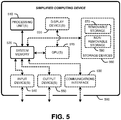
- FIG. 5 illustrates a simplified example of a general-purpose computer system on which various embodiments and elements of the text-to-speech audio HIP technique, as described herein, may be implemented. It should be noted that any boxes that are represented by broken or dashed lines in FIG. 5 represent alternate embodiments of the simplified computing device, and that any or all of these alternate embodiments, as described below, may be used in combination with other alternate embodiments that are described throughout this document.
- FIG. 5 shows a general system diagram showing a simplified computing device 500.
- Such computing devices can be typically be found in devices having at least some minimum computational capability, including, but not limited to, personal computers, server computers, hand-held computing devices, laptop or mobile computers, communications devices such as cell phones and PDA's, multiprocessor systems, microprocessor-based systems, set top boxes, programmable consumer electronics, network PCs, minicomputers, mainframe computers, audio or video media players, etc.
- the device should have a sufficient computational capability and system memory to enable basic computational operations.
- the computational capability is generally illustrated by one or more processing unit(s) 510, and may also include one or more GPUs 515, either or both in communication with system memory 520.
- the processing unit(s) 510 of the general computing device of may be specialized microprocessors, such as a DSP, a VLIW, or other micro-controller, or can be conventional CPUs having one or more processing cores, including specialized GPU-based cores in a multi-core CPU.
- the simplified computing device of FIG. 5 may also include other components, such as, for example, a communications interface 530.
- the simplified computing device of FIG. 5 may also include one or more conventional computer input devices 540 (e.g., pointing devices, keyboards, audio input devices, video input devices, haptic input devices, devices for receiving wired or wireless data transmissions, etc.).
- the simplified computing device of FIG. 5 may also include other optional components, such as, for example, one or more conventional computer output devices 550 (e.g., display device(s) 555, audio output devices, video output devices, devices for transmitting wired or wireless data transmissions, etc.).
- typical communications interfaces 530, input devices 540, output devices 550, and storage devices 550 for general-purpose computers are well known to those skilled in the art, and will not be described in detail herein.
- the simplified computing device of FIG. 5 may also include a variety of computer readable media.
- Computer readable media can be any available media that can be accessed by computer 500 via storage devices 560 and includes both volatile and nonvolatile media that is either removable 570 and/or non-removable 580, for storage of information such as computer-readable or computer-executable instructions, data structures, program modules, or other data.
- Computer readable media may comprise computer storage media and communication media.
- Computer storage media includes, but is not limited to, computer or machine readable media or storage devices such as DVD's, CD's, floppy disks, tape drives, hard drives, optical drives, solid state memory devices, RAM, ROM, EEPROM, flash memory or other memory technology, magnetic cassettes, magnetic tapes, magnetic disk storage, or other magnetic storage devices, or any other device which can be used to store the desired information and which can be accessed by one or more computing devices.
- computer or machine readable media or storage devices such as DVD's, CD's, floppy disks, tape drives, hard drives, optical drives, solid state memory devices, RAM, ROM, EEPROM, flash memory or other memory technology, magnetic cassettes, magnetic tapes, magnetic disk storage, or other magnetic storage devices, or any other device which can be used to store the desired information and which can be accessed by one or more computing devices.
- modulated data signal or “carrier wave” generally refer a signal that has one or more of its characteristics set or changed in such a manner as to encode information in the signal.
- communication media includes wired media such as a wired network or direct-wired connection carrying one or more modulated data signals, and wireless media such as acoustic, RF, infrared, laser, and other wireless media for transmitting and/or receiving one or more modulated data signals or carrier waves. Combinations of the any of the above should also be included within the scope of communication media.
- software, programs, and/or computer program products embodying the some or all of the various embodiments of the text-to-speech audio HIP technique described herein, or portions thereof, may be stored, received, transmitted, or read from any desired combination of computer or machine readable media or storage devices and communication media in the form of computer executable instructions or other data structures.
- text-to-speech audio HIP technique described herein may be further described in the general context of computer-executable instructions, such as program modules, being executed by a computing device.
- program modules include routines, programs, objects, components, data structures, etc., that perform particular tasks or implement particular abstract data types.
- the embodiments described herein may also be practiced in distributed computing environments where tasks are performed by one or more remote processing devices, or within a cloud of one or more devices, that are linked through one or more communications networks.
- program modules may be located in both local and remote computer storage media including media storage devices.
- the aforementioned instructions may be implemented, in part or in whole, as hardware logic circuits, which may or may not include a processor.
Landscapes
- Engineering & Computer Science (AREA)
- Computational Linguistics (AREA)
- Health & Medical Sciences (AREA)
- Audiology, Speech & Language Pathology (AREA)
- Human Computer Interaction (AREA)
- Physics & Mathematics (AREA)
- Acoustics & Sound (AREA)
- Multimedia (AREA)
- Machine Translation (AREA)
Applications Claiming Priority (2)
| Application Number | Priority Date | Filing Date | Title |
|---|---|---|---|
| US13/399,496 US10319363B2 (en) | 2012-02-17 | 2012-02-17 | Audio human interactive proof based on text-to-speech and semantics |
| PCT/US2013/024245 WO2013122750A1 (en) | 2012-02-17 | 2013-02-01 | Audio human interactive proof based on text-to-speech and semantics |
Publications (3)
| Publication Number | Publication Date |
|---|---|
| EP2815398A1 EP2815398A1 (en) | 2014-12-24 |
| EP2815398A4 EP2815398A4 (en) | 2015-05-06 |
| EP2815398B1 true EP2815398B1 (en) | 2017-03-29 |
Family
ID=48982943
Family Applications (1)
| Application Number | Title | Priority Date | Filing Date |
|---|---|---|---|
| EP13749405.0A Active EP2815398B1 (en) | 2012-02-17 | 2013-02-01 | Audio human interactive proof based on text-to-speech and semantics |
Country Status (7)
| Country | Link |
|---|---|
| US (1) | US10319363B2 (enExample) |
| EP (1) | EP2815398B1 (enExample) |
| JP (1) | JP6238312B2 (enExample) |
| KR (1) | KR102101044B1 (enExample) |
| CN (1) | CN104115221B (enExample) |
| ES (1) | ES2628901T3 (enExample) |
| WO (1) | WO2013122750A1 (enExample) |
Families Citing this family (29)
| Publication number | Priority date | Publication date | Assignee | Title |
|---|---|---|---|---|
| US20140067394A1 (en) * | 2012-08-28 | 2014-03-06 | King Abdulaziz City For Science And Technology | System and method for decoding speech |
| US10149077B1 (en) * | 2012-10-04 | 2018-12-04 | Amazon Technologies, Inc. | Audio themes |
| US9338162B2 (en) * | 2014-06-13 | 2016-05-10 | International Business Machines Corporation | CAPTCHA challenge incorporating obfuscated characters |
| CN105047192B (zh) * | 2015-05-25 | 2018-08-17 | 上海交通大学 | 基于隐马尔科夫模型的统计语音合成方法及装置 |
| CN105185379B (zh) * | 2015-06-17 | 2017-08-18 | 百度在线网络技术(北京)有限公司 | 声纹认证方法和装置 |
| CN105161105A (zh) * | 2015-07-31 | 2015-12-16 | 北京奇虎科技有限公司 | 一种交互系统的语音识别方法和装置 |
| CN105161098A (zh) * | 2015-07-31 | 2015-12-16 | 北京奇虎科技有限公司 | 一种交互系统的语音识别方法和装置 |
| US10277581B2 (en) * | 2015-09-08 | 2019-04-30 | Oath, Inc. | Audio verification |
| US9466299B1 (en) | 2015-11-18 | 2016-10-11 | International Business Machines Corporation | Speech source classification |
| US10347247B2 (en) * | 2016-12-30 | 2019-07-09 | Google Llc | Modulation of packetized audio signals |
| US10332520B2 (en) | 2017-02-13 | 2019-06-25 | Qualcomm Incorporated | Enhanced speech generation |
| CN108630193B (zh) * | 2017-03-21 | 2020-10-02 | 北京嘀嘀无限科技发展有限公司 | 语音识别方法及装置 |
| WO2018183290A1 (en) * | 2017-03-27 | 2018-10-04 | Orion Labs | Bot group messaging using general voice libraries |
| CN107609389B (zh) * | 2017-08-24 | 2020-10-30 | 南京理工大学 | 一种基于图像内容相关性的验证方法及系统 |
| JP6791825B2 (ja) * | 2017-09-26 | 2020-11-25 | 株式会社日立製作所 | 情報処理装置、対話処理方法及び対話システム |
| WO2019077013A1 (en) | 2017-10-18 | 2019-04-25 | Soapbox Labs Ltd. | METHODS AND SYSTEMS FOR PROCESSING AUDIO SIGNALS CONTAINING VOICE DATA |
| KR20190057687A (ko) * | 2017-11-20 | 2019-05-29 | 삼성전자주식회사 | 챗봇 변경을 위한 위한 전자 장치 및 이의 제어 방법 |
| US11355125B2 (en) | 2018-08-06 | 2022-06-07 | Google Llc | Captcha automated assistant |
| CN111048062B (zh) * | 2018-10-10 | 2022-10-04 | 华为技术有限公司 | 语音合成方法及设备 |
| US11423073B2 (en) | 2018-11-16 | 2022-08-23 | Microsoft Technology Licensing, Llc | System and management of semantic indicators during document presentations |
| US11126794B2 (en) * | 2019-04-11 | 2021-09-21 | Microsoft Technology Licensing, Llc | Targeted rewrites |
| CN110390104B (zh) * | 2019-07-23 | 2023-05-05 | 思必驰科技股份有限公司 | 用于语音对话平台的不规则文本转写方法及系统 |
| KR102663669B1 (ko) * | 2019-11-01 | 2024-05-08 | 엘지전자 주식회사 | 소음 환경에서의 음성 합성 |
| US20220035898A1 (en) * | 2020-07-31 | 2022-02-03 | Nuance Communications, Inc. | Audio CAPTCHA Using Echo |
| FR3122508A1 (fr) * | 2021-04-29 | 2022-11-04 | Orange | Caractérisation d’un utilisateur par association d’un son à un élément interactif |
| US20230142081A1 (en) * | 2021-11-10 | 2023-05-11 | Nuance Communications, Inc. | Voice captcha |
| CN114299919B (zh) * | 2021-12-27 | 2025-06-03 | 完美世界(北京)软件科技发展有限公司 | 文字转语音方法、装置、存储介质及计算机设备 |
| US20240363119A1 (en) * | 2023-04-28 | 2024-10-31 | Pindrop Security, Inc. | Active voice liveness detection system |
| WO2024259486A1 (en) * | 2023-06-19 | 2024-12-26 | Macquarie University | Scam call system |
Citations (1)
| Publication number | Priority date | Publication date | Assignee | Title |
|---|---|---|---|---|
| US20050015257A1 (en) * | 2003-07-14 | 2005-01-20 | Alexandre Bronstein | Human test based on human conceptual capabilities |
Family Cites Families (34)
| Publication number | Priority date | Publication date | Assignee | Title |
|---|---|---|---|---|
| JPS63231496A (ja) * | 1987-03-20 | 1988-09-27 | 富士通株式会社 | 音声認識応答システム |
| US6195698B1 (en) | 1998-04-13 | 2001-02-27 | Compaq Computer Corporation | Method for selectively restricting access to computer systems |
| US7054811B2 (en) | 2002-11-06 | 2006-05-30 | Cellmax Systems Ltd. | Method and system for verifying and enabling user access based on voice parameters |
| US7039949B2 (en) | 2001-12-10 | 2006-05-02 | Brian Ross Cartmell | Method and system for blocking unwanted communications |
| JP2003302999A (ja) * | 2002-04-11 | 2003-10-24 | Advanced Media Inc | 音声による個人認証システム |
| US20040254793A1 (en) * | 2003-06-12 | 2004-12-16 | Cormac Herley | System and method for providing an audio challenge to distinguish a human from a computer |
| CN1246826C (zh) * | 2004-06-01 | 2006-03-22 | 安徽中科大讯飞信息科技有限公司 | 在语音合成系统中将背景音与文本语音混合输出的方法 |
| US7558389B2 (en) | 2004-10-01 | 2009-07-07 | At&T Intellectual Property Ii, L.P. | Method and system of generating a speech signal with overlayed random frequency signal |
| US8255223B2 (en) | 2004-12-03 | 2012-08-28 | Microsoft Corporation | User authentication by combining speaker verification and reverse turing test |
| US7945952B1 (en) * | 2005-06-30 | 2011-05-17 | Google Inc. | Methods and apparatuses for presenting challenges to tell humans and computers apart |
| US8145914B2 (en) | 2005-12-15 | 2012-03-27 | Microsoft Corporation | Client-side CAPTCHA ceremony for user verification |
| US20070165811A1 (en) | 2006-01-19 | 2007-07-19 | John Reumann | System and method for spam detection |
| US7680891B1 (en) * | 2006-06-19 | 2010-03-16 | Google Inc. | CAPTCHA-based spam control for content creation systems |
| US8036902B1 (en) * | 2006-06-21 | 2011-10-11 | Tellme Networks, Inc. | Audio human verification |
| US20090055193A1 (en) * | 2007-02-22 | 2009-02-26 | Pudding Holdings Israel Ltd. | Method, apparatus and computer code for selectively providing access to a service in accordance with spoken content received from a user |
| BRPI0808289A2 (pt) * | 2007-03-21 | 2015-06-16 | Vivotext Ltd | "biblioteca de amostras de fala para transformar texto em falta e métodos e instrumentos para gerar e utilizar o mesmo" |
| CN101059830A (zh) | 2007-06-01 | 2007-10-24 | 华南理工大学 | 一种可结合游戏特征的机器人外挂识别方法 |
| US8495727B2 (en) | 2007-08-07 | 2013-07-23 | Microsoft Corporation | Spam reduction in real time communications by human interaction proof |
| US20090249477A1 (en) * | 2008-03-28 | 2009-10-01 | Yahoo! Inc. | Method and system for determining whether a computer user is human |
| US8489399B2 (en) | 2008-06-23 | 2013-07-16 | John Nicholas and Kristin Gross Trust | System and method for verifying origin of input through spoken language analysis |
| US8752141B2 (en) * | 2008-06-27 | 2014-06-10 | John Nicholas | Methods for presenting and determining the efficacy of progressive pictorial and motion-based CAPTCHAs |
| US8793135B2 (en) * | 2008-08-25 | 2014-07-29 | At&T Intellectual Property I, L.P. | System and method for auditory captchas |
| US8925057B1 (en) * | 2009-02-06 | 2014-12-30 | New Jersey Institute Of Technology | Automated tests to distinguish computers from humans |
| US9342508B2 (en) * | 2009-03-19 | 2016-05-17 | Microsoft Technology Licensing, Llc | Data localization templates and parsing |
| US8315871B2 (en) * | 2009-06-04 | 2012-11-20 | Microsoft Corporation | Hidden Markov model based text to speech systems employing rope-jumping algorithm |
| WO2012010743A1 (en) * | 2010-07-23 | 2012-01-26 | Nokia Corporation | Method and apparatus for authorizing a user or a user device based on location information |
| WO2012029519A1 (ja) * | 2010-08-31 | 2012-03-08 | 楽天株式会社 | 応答判定装置、応答判定方法、応答判定プログラム、記録媒体、および、応答判定システム |
| US8719930B2 (en) * | 2010-10-12 | 2014-05-06 | Sonus Networks, Inc. | Real-time network attack detection and mitigation infrastructure |
| CA2819473A1 (en) * | 2010-11-30 | 2012-06-07 | Towson University | Audio based human-interaction proof |
| JP2012163692A (ja) * | 2011-02-04 | 2012-08-30 | Nec Corp | 音声信号処理システム、音声信号処理方法および音声信号処理方法プログラム |
| US20120232907A1 (en) * | 2011-03-09 | 2012-09-13 | Christopher Liam Ivey | System and Method for Delivering a Human Interactive Proof to the Visually Impaired by Means of Semantic Association of Objects |
| US8810368B2 (en) * | 2011-03-29 | 2014-08-19 | Nokia Corporation | Method and apparatus for providing biometric authentication using distributed computations |
| US8904517B2 (en) * | 2011-06-28 | 2014-12-02 | International Business Machines Corporation | System and method for contexually interpreting image sequences |
| US9146917B2 (en) * | 2011-07-15 | 2015-09-29 | International Business Machines Corporation | Validating that a user is human |
-
2012
- 2012-02-17 US US13/399,496 patent/US10319363B2/en active Active
-
2013
- 2013-02-01 EP EP13749405.0A patent/EP2815398B1/en active Active
- 2013-02-01 KR KR1020147022837A patent/KR102101044B1/ko not_active Expired - Fee Related
- 2013-02-01 CN CN201380009453.4A patent/CN104115221B/zh active Active
- 2013-02-01 WO PCT/US2013/024245 patent/WO2013122750A1/en not_active Ceased
- 2013-02-01 ES ES13749405.0T patent/ES2628901T3/es active Active
- 2013-02-01 JP JP2014557674A patent/JP6238312B2/ja not_active Expired - Fee Related
Patent Citations (1)
| Publication number | Priority date | Publication date | Assignee | Title |
|---|---|---|---|---|
| US20050015257A1 (en) * | 2003-07-14 | 2005-01-20 | Alexandre Bronstein | Human test based on human conceptual capabilities |
Also Published As
| Publication number | Publication date |
|---|---|
| CN104115221B (zh) | 2017-09-01 |
| WO2013122750A1 (en) | 2013-08-22 |
| JP6238312B2 (ja) | 2017-11-29 |
| US10319363B2 (en) | 2019-06-11 |
| KR102101044B1 (ko) | 2020-04-14 |
| CN104115221A (zh) | 2014-10-22 |
| ES2628901T3 (es) | 2017-08-04 |
| EP2815398A1 (en) | 2014-12-24 |
| US20130218566A1 (en) | 2013-08-22 |
| KR20140134653A (ko) | 2014-11-24 |
| JP2015510147A (ja) | 2015-04-02 |
| EP2815398A4 (en) | 2015-05-06 |
Similar Documents
| Publication | Publication Date | Title |
|---|---|---|
| EP2815398B1 (en) | Audio human interactive proof based on text-to-speech and semantics | |
| Ali et al. | Automatic dialect detection in arabic broadcast speech | |
| US20230230576A1 (en) | Text-to-speech synthesis method and system, and a method of training a text-to-speech synthesis system | |
| CN101551947A (zh) | 辅助口语语言学习的计算机系统 | |
| US9437195B2 (en) | Biometric password security | |
| JP6810580B2 (ja) | 言語モデル学習装置およびそのプログラム | |
| Lopez-Otero et al. | Depression Detection Using Automatic Transcriptions of De-Identified Speech. | |
| Seki et al. | Diversity-based core-set selection for text-to-speech with linguistic and acoustic features | |
| Dielen | Improving the automatic speech recognition model whisper with voice activity detection | |
| US20080120108A1 (en) | Multi-space distribution for pattern recognition based on mixed continuous and discrete observations | |
| Zahariev et al. | An approach to speech ambiguities eliminating using semantically-acoustical analysis | |
| Guldimann | Speech Recognition for German-Speaking Children with Congenital Disorders: Current Limitations and Dataset Challenges | |
| US20230037541A1 (en) | Method and system for synthesizing speeches by scoring speeches | |
| Louw et al. | The Speect text-to-speech entry for the Blizzard Challenge 2016 | |
| Li et al. | Dota-me-cs: Daily oriented text audio-mandarin english-code switching dataset | |
| Rashmi et al. | Text-to-Speech translation using Support Vector Machine, an approach to find a potential path for human-computer speech synthesizer | |
| Mohanty et al. | Double ended speech enabled system in Indian travel & tourism industry | |
| Cheng et al. | Off-Topic Detection in Automated Speech Assessment Applications. | |
| Afzal et al. | Recitation of The Holy Quran Verses Recognition System Based on Speech Recognition Techniques | |
| Nema | Automatic passkey generator using speech biometric features | |
| Kovtun et al. | A method of language units classification oriented to automated transcribing. | |
| Yong et al. | Low footprint high intelligibility Malay speech synthesizer based on statistical data | |
| Sulír et al. | Speaker adaptation for Slovak statistical parametric speech synthesis based on hidden Markov models | |
| Gill et al. | Prosodic information extraction and classification based on MFCC features and machine learning models | |
| Risques Montalban | A study of Spanish forensics speech setection methods |
Legal Events
| Date | Code | Title | Description |
|---|---|---|---|
| PUAI | Public reference made under article 153(3) epc to a published international application that has entered the european phase |
Free format text: ORIGINAL CODE: 0009012 |
|
| 17P | Request for examination filed |
Effective date: 20140807 |
|
| AK | Designated contracting states |
Kind code of ref document: A1 Designated state(s): AL AT BE BG CH CY CZ DE DK EE ES FI FR GB GR HR HU IE IS IT LI LT LU LV MC MK MT NL NO PL PT RO RS SE SI SK SM TR |
|
| AX | Request for extension of the european patent |
Extension state: BA ME |
|
| RA4 | Supplementary search report drawn up and despatched (corrected) |
Effective date: 20150407 |
|
| RIC1 | Information provided on ipc code assigned before grant |
Ipc: G10L 21/003 20130101ALN20150330BHEP Ipc: G10L 13/033 20130101AFI20150330BHEP Ipc: G10L 15/00 20130101ALN20150330BHEP Ipc: G06F 21/31 20130101ALN20150330BHEP |
|
| 17Q | First examination report despatched |
Effective date: 20150427 |
|
| DAX | Request for extension of the european patent (deleted) | ||
| RAP1 | Party data changed (applicant data changed or rights of an application transferred) |
Owner name: MICROSOFT TECHNOLOGY LICENSING, LLC |
|
| GRAP | Despatch of communication of intention to grant a patent |
Free format text: ORIGINAL CODE: EPIDOSNIGR1 |
|
| RIC1 | Information provided on ipc code assigned before grant |
Ipc: G10L 15/00 20130101ALN20160907BHEP Ipc: G10L 13/033 20130101AFI20160907BHEP Ipc: G10L 21/003 20130101ALN20160907BHEP Ipc: G06F 21/31 20130101ALN20160907BHEP |
|
| INTG | Intention to grant announced |
Effective date: 20160921 |
|
| GRAJ | Information related to disapproval of communication of intention to grant by the applicant or resumption of examination proceedings by the epo deleted |
Free format text: ORIGINAL CODE: EPIDOSDIGR1 |
|
| REG | Reference to a national code |
Ref country code: DE Ref legal event code: R079 Ref document number: 602013019190 Country of ref document: DE Free format text: PREVIOUS MAIN CLASS: G10L0013080000 Ipc: G10L0013033000 |
|
| INTC | Intention to grant announced (deleted) | ||
| GRAR | Information related to intention to grant a patent recorded |
Free format text: ORIGINAL CODE: EPIDOSNIGR71 |
|
| GRAS | Grant fee paid |
Free format text: ORIGINAL CODE: EPIDOSNIGR3 |
|
| RIC1 | Information provided on ipc code assigned before grant |
Ipc: G10L 21/003 20130101ALN20170113BHEP Ipc: G06F 21/31 20130101ALN20170113BHEP Ipc: G10L 13/033 20130101AFI20170113BHEP Ipc: G10L 15/00 20130101ALN20170113BHEP |
|
| GRAA | (expected) grant |
Free format text: ORIGINAL CODE: 0009210 |
|
| AK | Designated contracting states |
Kind code of ref document: B1 Designated state(s): AL AT BE BG CH CY CZ DE DK EE ES FI FR GB GR HR HU IE IS IT LI LT LU LV MC MK MT NL NO PL PT RO RS SE SI SK SM TR |
|
| INTG | Intention to grant announced |
Effective date: 20170217 |
|
| REG | Reference to a national code |
Ref country code: GB Ref legal event code: FG4D |
|
| REG | Reference to a national code |
Ref country code: CH Ref legal event code: EP |
|
| REG | Reference to a national code |
Ref country code: AT Ref legal event code: REF Ref document number: 880418 Country of ref document: AT Kind code of ref document: T Effective date: 20170415 |
|
| REG | Reference to a national code |
Ref country code: IE Ref legal event code: FG4D |
|
| REG | Reference to a national code |
Ref country code: DE Ref legal event code: R096 Ref document number: 602013019190 Country of ref document: DE |
|
| REG | Reference to a national code |
Ref country code: NL Ref legal event code: FP |
|
| PG25 | Lapsed in a contracting state [announced via postgrant information from national office to epo] |
Ref country code: GR Free format text: LAPSE BECAUSE OF FAILURE TO SUBMIT A TRANSLATION OF THE DESCRIPTION OR TO PAY THE FEE WITHIN THE PRESCRIBED TIME-LIMIT Effective date: 20170630 Ref country code: FI Free format text: LAPSE BECAUSE OF FAILURE TO SUBMIT A TRANSLATION OF THE DESCRIPTION OR TO PAY THE FEE WITHIN THE PRESCRIBED TIME-LIMIT Effective date: 20170329 Ref country code: HR Free format text: LAPSE BECAUSE OF FAILURE TO SUBMIT A TRANSLATION OF THE DESCRIPTION OR TO PAY THE FEE WITHIN THE PRESCRIBED TIME-LIMIT Effective date: 20170329 Ref country code: LT Free format text: LAPSE BECAUSE OF FAILURE TO SUBMIT A TRANSLATION OF THE DESCRIPTION OR TO PAY THE FEE WITHIN THE PRESCRIBED TIME-LIMIT Effective date: 20170329 Ref country code: NO Free format text: LAPSE BECAUSE OF FAILURE TO SUBMIT A TRANSLATION OF THE DESCRIPTION OR TO PAY THE FEE WITHIN THE PRESCRIBED TIME-LIMIT Effective date: 20170629 |
|
| REG | Reference to a national code |
Ref country code: ES Ref legal event code: FG2A Ref document number: 2628901 Country of ref document: ES Kind code of ref document: T3 Effective date: 20170804 |
|
| REG | Reference to a national code |
Ref country code: AT Ref legal event code: MK05 Ref document number: 880418 Country of ref document: AT Kind code of ref document: T Effective date: 20170329 |
|
| PG25 | Lapsed in a contracting state [announced via postgrant information from national office to epo] |
Ref country code: LV Free format text: LAPSE BECAUSE OF FAILURE TO SUBMIT A TRANSLATION OF THE DESCRIPTION OR TO PAY THE FEE WITHIN THE PRESCRIBED TIME-LIMIT Effective date: 20170329 Ref country code: RS Free format text: LAPSE BECAUSE OF FAILURE TO SUBMIT A TRANSLATION OF THE DESCRIPTION OR TO PAY THE FEE WITHIN THE PRESCRIBED TIME-LIMIT Effective date: 20170329 Ref country code: SE Free format text: LAPSE BECAUSE OF FAILURE TO SUBMIT A TRANSLATION OF THE DESCRIPTION OR TO PAY THE FEE WITHIN THE PRESCRIBED TIME-LIMIT Effective date: 20170329 Ref country code: BG Free format text: LAPSE BECAUSE OF FAILURE TO SUBMIT A TRANSLATION OF THE DESCRIPTION OR TO PAY THE FEE WITHIN THE PRESCRIBED TIME-LIMIT Effective date: 20170629 |
|
| PG25 | Lapsed in a contracting state [announced via postgrant information from national office to epo] |
Ref country code: EE Free format text: LAPSE BECAUSE OF FAILURE TO SUBMIT A TRANSLATION OF THE DESCRIPTION OR TO PAY THE FEE WITHIN THE PRESCRIBED TIME-LIMIT Effective date: 20170329 Ref country code: AT Free format text: LAPSE BECAUSE OF FAILURE TO SUBMIT A TRANSLATION OF THE DESCRIPTION OR TO PAY THE FEE WITHIN THE PRESCRIBED TIME-LIMIT Effective date: 20170329 Ref country code: RO Free format text: LAPSE BECAUSE OF FAILURE TO SUBMIT A TRANSLATION OF THE DESCRIPTION OR TO PAY THE FEE WITHIN THE PRESCRIBED TIME-LIMIT Effective date: 20170329 Ref country code: SK Free format text: LAPSE BECAUSE OF FAILURE TO SUBMIT A TRANSLATION OF THE DESCRIPTION OR TO PAY THE FEE WITHIN THE PRESCRIBED TIME-LIMIT Effective date: 20170329 Ref country code: CZ Free format text: LAPSE BECAUSE OF FAILURE TO SUBMIT A TRANSLATION OF THE DESCRIPTION OR TO PAY THE FEE WITHIN THE PRESCRIBED TIME-LIMIT Effective date: 20170329 |
|
| PG25 | Lapsed in a contracting state [announced via postgrant information from national office to epo] |
Ref country code: SM Free format text: LAPSE BECAUSE OF FAILURE TO SUBMIT A TRANSLATION OF THE DESCRIPTION OR TO PAY THE FEE WITHIN THE PRESCRIBED TIME-LIMIT Effective date: 20170329 Ref country code: PL Free format text: LAPSE BECAUSE OF FAILURE TO SUBMIT A TRANSLATION OF THE DESCRIPTION OR TO PAY THE FEE WITHIN THE PRESCRIBED TIME-LIMIT Effective date: 20170329 Ref country code: PT Free format text: LAPSE BECAUSE OF FAILURE TO SUBMIT A TRANSLATION OF THE DESCRIPTION OR TO PAY THE FEE WITHIN THE PRESCRIBED TIME-LIMIT Effective date: 20170731 Ref country code: IS Free format text: LAPSE BECAUSE OF FAILURE TO SUBMIT A TRANSLATION OF THE DESCRIPTION OR TO PAY THE FEE WITHIN THE PRESCRIBED TIME-LIMIT Effective date: 20170729 |
|
| REG | Reference to a national code |
Ref country code: DE Ref legal event code: R097 Ref document number: 602013019190 Country of ref document: DE |
|
| REG | Reference to a national code |
Ref country code: FR Ref legal event code: PLFP Year of fee payment: 6 |
|
| PG25 | Lapsed in a contracting state [announced via postgrant information from national office to epo] |
Ref country code: DK Free format text: LAPSE BECAUSE OF FAILURE TO SUBMIT A TRANSLATION OF THE DESCRIPTION OR TO PAY THE FEE WITHIN THE PRESCRIBED TIME-LIMIT Effective date: 20170329 |
|
| PLBE | No opposition filed within time limit |
Free format text: ORIGINAL CODE: 0009261 |
|
| STAA | Information on the status of an ep patent application or granted ep patent |
Free format text: STATUS: NO OPPOSITION FILED WITHIN TIME LIMIT |
|
| 26N | No opposition filed |
Effective date: 20180103 |
|
| PG25 | Lapsed in a contracting state [announced via postgrant information from national office to epo] |
Ref country code: SI Free format text: LAPSE BECAUSE OF FAILURE TO SUBMIT A TRANSLATION OF THE DESCRIPTION OR TO PAY THE FEE WITHIN THE PRESCRIBED TIME-LIMIT Effective date: 20170329 |
|
| REG | Reference to a national code |
Ref country code: CH Ref legal event code: PL |
|
| PG25 | Lapsed in a contracting state [announced via postgrant information from national office to epo] |
Ref country code: MC Free format text: LAPSE BECAUSE OF FAILURE TO SUBMIT A TRANSLATION OF THE DESCRIPTION OR TO PAY THE FEE WITHIN THE PRESCRIBED TIME-LIMIT Effective date: 20170329 |
|
| REG | Reference to a national code |
Ref country code: IE Ref legal event code: MM4A |
|
| REG | Reference to a national code |
Ref country code: BE Ref legal event code: MM Effective date: 20180228 |
|
| PG25 | Lapsed in a contracting state [announced via postgrant information from national office to epo] |
Ref country code: CH Free format text: LAPSE BECAUSE OF NON-PAYMENT OF DUE FEES Effective date: 20180228 Ref country code: LI Free format text: LAPSE BECAUSE OF NON-PAYMENT OF DUE FEES Effective date: 20180228 Ref country code: LU Free format text: LAPSE BECAUSE OF NON-PAYMENT OF DUE FEES Effective date: 20180201 |
|
| PG25 | Lapsed in a contracting state [announced via postgrant information from national office to epo] |
Ref country code: IE Free format text: LAPSE BECAUSE OF NON-PAYMENT OF DUE FEES Effective date: 20180201 |
|
| PG25 | Lapsed in a contracting state [announced via postgrant information from national office to epo] |
Ref country code: BE Free format text: LAPSE BECAUSE OF NON-PAYMENT OF DUE FEES Effective date: 20180228 |
|
| REG | Reference to a national code |
Ref country code: DE Ref legal event code: R082 Ref document number: 602013019190 Country of ref document: DE |
|
| PG25 | Lapsed in a contracting state [announced via postgrant information from national office to epo] |
Ref country code: MT Free format text: LAPSE BECAUSE OF NON-PAYMENT OF DUE FEES Effective date: 20180201 |
|
| PG25 | Lapsed in a contracting state [announced via postgrant information from national office to epo] |
Ref country code: TR Free format text: LAPSE BECAUSE OF FAILURE TO SUBMIT A TRANSLATION OF THE DESCRIPTION OR TO PAY THE FEE WITHIN THE PRESCRIBED TIME-LIMIT Effective date: 20170329 |
|
| PG25 | Lapsed in a contracting state [announced via postgrant information from national office to epo] |
Ref country code: HU Free format text: LAPSE BECAUSE OF FAILURE TO SUBMIT A TRANSLATION OF THE DESCRIPTION OR TO PAY THE FEE WITHIN THE PRESCRIBED TIME-LIMIT; INVALID AB INITIO Effective date: 20130201 |
|
| PG25 | Lapsed in a contracting state [announced via postgrant information from national office to epo] |
Ref country code: CY Free format text: LAPSE BECAUSE OF FAILURE TO SUBMIT A TRANSLATION OF THE DESCRIPTION OR TO PAY THE FEE WITHIN THE PRESCRIBED TIME-LIMIT Effective date: 20170329 Ref country code: MK Free format text: LAPSE BECAUSE OF NON-PAYMENT OF DUE FEES Effective date: 20170329 |
|
| PG25 | Lapsed in a contracting state [announced via postgrant information from national office to epo] |
Ref country code: AL Free format text: LAPSE BECAUSE OF FAILURE TO SUBMIT A TRANSLATION OF THE DESCRIPTION OR TO PAY THE FEE WITHIN THE PRESCRIBED TIME-LIMIT Effective date: 20170329 |
|
| P01 | Opt-out of the competence of the unified patent court (upc) registered |
Effective date: 20230502 |
|
| PGFP | Annual fee paid to national office [announced via postgrant information from national office to epo] |
Ref country code: NL Payment date: 20240123 Year of fee payment: 12 |
|
| PGFP | Annual fee paid to national office [announced via postgrant information from national office to epo] |
Ref country code: ES Payment date: 20240301 Year of fee payment: 12 |
|
| PGFP | Annual fee paid to national office [announced via postgrant information from national office to epo] |
Ref country code: DE Payment date: 20240123 Year of fee payment: 12 Ref country code: GB Payment date: 20240123 Year of fee payment: 12 |
|
| PGFP | Annual fee paid to national office [announced via postgrant information from national office to epo] |
Ref country code: IT Payment date: 20240123 Year of fee payment: 12 Ref country code: FR Payment date: 20240123 Year of fee payment: 12 |
|
| REG | Reference to a national code |
Ref country code: DE Ref legal event code: R119 Ref document number: 602013019190 Country of ref document: DE |
|
| REG | Reference to a national code |
Ref country code: NL Ref legal event code: MM Effective date: 20250301 |
|
| GBPC | Gb: european patent ceased through non-payment of renewal fee |
Effective date: 20250201 |
|
| PG25 | Lapsed in a contracting state [announced via postgrant information from national office to epo] |
Ref country code: NL Free format text: LAPSE BECAUSE OF NON-PAYMENT OF DUE FEES Effective date: 20250301 |