EP2813054B1 - Secure mechanism for obtaining authorization for a discovered location server - Google Patents
Secure mechanism for obtaining authorization for a discovered location server Download PDFInfo
- Publication number
- EP2813054B1 EP2813054B1 EP13707947.1A EP13707947A EP2813054B1 EP 2813054 B1 EP2813054 B1 EP 2813054B1 EP 13707947 A EP13707947 A EP 13707947A EP 2813054 B1 EP2813054 B1 EP 2813054B1
- Authority
- EP
- European Patent Office
- Prior art keywords
- network
- location server
- terminal
- access
- home
- Prior art date
- Legal status (The legal status is an assumption and is not a legal conclusion. Google has not performed a legal analysis and makes no representation as to the accuracy of the status listed.)
- Not-in-force
Links
- 238000013475 authorization Methods 0.000 title claims description 40
- 230000007246 mechanism Effects 0.000 title claims description 11
- 238000000034 method Methods 0.000 claims description 55
- 230000007774 longterm Effects 0.000 claims description 4
- 238000004891 communication Methods 0.000 description 30
- 238000005259 measurement Methods 0.000 description 8
- 230000008569 process Effects 0.000 description 8
- 230000015654 memory Effects 0.000 description 6
- 230000003936 working memory Effects 0.000 description 6
- 230000005540 biological transmission Effects 0.000 description 5
- 238000013500 data storage Methods 0.000 description 4
- 238000005516 engineering process Methods 0.000 description 4
- 230000003287 optical effect Effects 0.000 description 4
- 238000012545 processing Methods 0.000 description 4
- 230000001143 conditioned effect Effects 0.000 description 3
- 230000006870 function Effects 0.000 description 3
- 238000009434 installation Methods 0.000 description 3
- 239000011159 matrix material Substances 0.000 description 3
- 230000008901 benefit Effects 0.000 description 2
- 230000001413 cellular effect Effects 0.000 description 2
- 238000013461 design Methods 0.000 description 2
- 238000010586 diagram Methods 0.000 description 2
- 230000008520 organization Effects 0.000 description 2
- 230000004044 response Effects 0.000 description 2
- RYGMFSIKBFXOCR-UHFFFAOYSA-N Copper Chemical compound [Cu] RYGMFSIKBFXOCR-UHFFFAOYSA-N 0.000 description 1
- 235000015429 Mirabilis expansa Nutrition 0.000 description 1
- 244000294411 Mirabilis expansa Species 0.000 description 1
- 241001168730 Simo Species 0.000 description 1
- 230000001133 acceleration Effects 0.000 description 1
- 238000003491 array Methods 0.000 description 1
- 230000010267 cellular communication Effects 0.000 description 1
- 239000003795 chemical substances by application Substances 0.000 description 1
- 230000000295 complement effect Effects 0.000 description 1
- 230000006835 compression Effects 0.000 description 1
- 238000007906 compression Methods 0.000 description 1
- 238000004590 computer program Methods 0.000 description 1
- 230000006837 decompression Effects 0.000 description 1
- 230000001934 delay Effects 0.000 description 1
- 230000001419 dependent effect Effects 0.000 description 1
- 239000000835 fiber Substances 0.000 description 1
- 230000000977 initiatory effect Effects 0.000 description 1
- 235000013536 miso Nutrition 0.000 description 1
- 238000010295 mobile communication Methods 0.000 description 1
- 229920001690 polydopamine Polymers 0.000 description 1
- 230000001902 propagating effect Effects 0.000 description 1
- 230000001953 sensory effect Effects 0.000 description 1
- URWAJWIAIPFPJE-YFMIWBNJSA-N sisomycin Chemical compound O1C[C@@](O)(C)[C@H](NC)[C@@H](O)[C@H]1O[C@@H]1[C@@H](O)[C@H](O[C@@H]2[C@@H](CC=C(CN)O2)N)[C@@H](N)C[C@H]1N URWAJWIAIPFPJE-YFMIWBNJSA-N 0.000 description 1
- 238000012795 verification Methods 0.000 description 1
Images




Classifications
-
- H—ELECTRICITY
- H04—ELECTRIC COMMUNICATION TECHNIQUE
- H04L—TRANSMISSION OF DIGITAL INFORMATION, e.g. TELEGRAPHIC COMMUNICATION
- H04L63/00—Network architectures or network communication protocols for network security
- H04L63/08—Network architectures or network communication protocols for network security for authentication of entities
- H04L63/0884—Network architectures or network communication protocols for network security for authentication of entities by delegation of authentication, e.g. a proxy authenticates an entity to be authenticated on behalf of this entity vis-à-vis an authentication entity
-
- H—ELECTRICITY
- H04—ELECTRIC COMMUNICATION TECHNIQUE
- H04L—TRANSMISSION OF DIGITAL INFORMATION, e.g. TELEGRAPHIC COMMUNICATION
- H04L63/00—Network architectures or network communication protocols for network security
- H04L63/10—Network architectures or network communication protocols for network security for controlling access to devices or network resources
- H04L63/102—Entity profiles
-
- H—ELECTRICITY
- H04—ELECTRIC COMMUNICATION TECHNIQUE
- H04L—TRANSMISSION OF DIGITAL INFORMATION, e.g. TELEGRAPHIC COMMUNICATION
- H04L63/00—Network architectures or network communication protocols for network security
- H04L63/10—Network architectures or network communication protocols for network security for controlling access to devices or network resources
- H04L63/107—Network architectures or network communication protocols for network security for controlling access to devices or network resources wherein the security policies are location-dependent, e.g. entities privileges depend on current location or allowing specific operations only from locally connected terminals
-
- H—ELECTRICITY
- H04—ELECTRIC COMMUNICATION TECHNIQUE
- H04W—WIRELESS COMMUNICATION NETWORKS
- H04W12/00—Security arrangements; Authentication; Protecting privacy or anonymity
- H04W12/06—Authentication
-
- H—ELECTRICITY
- H04—ELECTRIC COMMUNICATION TECHNIQUE
- H04W—WIRELESS COMMUNICATION NETWORKS
- H04W12/00—Security arrangements; Authentication; Protecting privacy or anonymity
- H04W12/06—Authentication
- H04W12/069—Authentication using certificates or pre-shared keys
-
- H—ELECTRICITY
- H04—ELECTRIC COMMUNICATION TECHNIQUE
- H04W—WIRELESS COMMUNICATION NETWORKS
- H04W12/00—Security arrangements; Authentication; Protecting privacy or anonymity
- H04W12/08—Access security
-
- H—ELECTRICITY
- H04—ELECTRIC COMMUNICATION TECHNIQUE
- H04W—WIRELESS COMMUNICATION NETWORKS
- H04W12/00—Security arrangements; Authentication; Protecting privacy or anonymity
- H04W12/60—Context-dependent security
- H04W12/63—Location-dependent; Proximity-dependent
-
- H—ELECTRICITY
- H04—ELECTRIC COMMUNICATION TECHNIQUE
- H04W—WIRELESS COMMUNICATION NETWORKS
- H04W4/00—Services specially adapted for wireless communication networks; Facilities therefor
- H04W4/20—Services signaling; Auxiliary data signalling, i.e. transmitting data via a non-traffic channel
Definitions
- location solutions and associated location servers that enable and assist such location solutions are becoming more widely deployed.
- SUPL Secure User Plane Location
- OMA Open Mobile Alliance
- CP Control Plane
- 3GPP 3 rd Generation Partnership Project Due to the ever increasing prevalence of mobile devices, location servers can sometimes restrict a user's ability to obtain access the location server without some form of authentication or authorization. Thus, services provided by the location server may not be readily available to visiting mobile devices at first.
- a method for obtaining authorized access from a terminal to a discovered location server.
- the method may include switching from a first network that does not support authenticated access to a home location server by the terminal to a second network that does support authenticated access to the home location server by the terminal.
- Authenticated access to home location server may be obtained using the second network.
- Authorization for the discovered location server may then be obtained from the home location server.
- the terminal may then switch from the second network back to the first network.
- the terminal may then access the discovered location server using the first network based on the obtained authorization from the home location server.
- the first network is a wireless local area network (WLAN).
- the second network is a network that supports Long Term Evolution (LTE), WCDMA, GSM or cdma2000 HRPD.
- LTE Long Term Evolution
- WCDMA Wideband Code Division Multiple Access
- GSM Global System for Mobile communications
- a terminal for obtaining authorized access to a discovered location server may include a transceiver configured to switch from a first network that does not support authenticated accesses to a home location server by the terminal to a second network that does support authenticated access to the home location server by the terminal.
- the transceiver may switch from the second network back to the first network after the terminal obtains authenticated access to the home location server using the second network.
- the terminal may also include a processor configured to obtain authenticated access to the home location server using the second network.
- the processor may also be configured to obtain authorization for the discovered location server from the home location server, and to access the discovered location server using the first network based on the obtained authorization from the home location server.
- an apparatus for obtaining authorized access to a discovered location server.
- the apparatus may include means for switching from a first network that does not support authenticated access to a home location server by a terminal to a second network that does support authenticated access to the home location server by the terminal.
- the apparatus may also include means for obtaining authenticated access to the home location server using the second network, and means for obtaining authorization for the discovered location server from the home location server.
- the apparatus may also include means for switching from the second network back to the first network, and means for accessing the discovered location server using the first network based on the obtained authorization from the home location server.
- a method for obtaining authorized access from a terminal to a secure user plane location (SUPL) platform.
- the method may include switching from a first network that does not support authentication of the terminal to a second network that does support authentication of the terminal.
- Authenticated access to a first SUPL platform may be obtained using the second network.
- Authorization for a second SUPL platform may then be obtained from the first SUPL platform.
- the terminal may then switch from the second network back to the first network.
- the terminal may then access the second SUPL platform using the first network based on the obtained authorization from the first SUPL platform.
- CDMA Code Division Multiple Access
- TDMA Time Division Multiple Access
- FDMA Frequency Division Multiple Access
- OFDMA Orthogonal FDMA
- SC-FDMA Single-Carrier FDMA
- a CDMA network may implement a radio technology such as Universal Terrestrial Radio Access (UTRA), CDMA2000, etc.
- UTRA includes Wideband-CDMA (W-CDMA) and Low Chip Rate (LCR).
- CDMA2000 covers IS-2000, IS-95 and IS-856 standards.
- a TDMA network may implement a radio technology such as Global System for Mobile Communications (GSM).
- GSM Global System for Mobile Communications
- SC-FDMA Single carrier frequency division multiple access
- SC-FDMA may have similar performance and overall complexity as those of OFDMA system.
- SC-FDMA signal may have lower peak-to-average power ratio (PAPR) because of its inherent single carrier structure.
- PAPR peak-to-average power ratio
- SC-FDMA has drawn great attention, especially in the uplink communications where lower PAPR greatly benefits the mobile terminal in terms of transmit power efficiency. It is currently a working assumption for uplink multiple access scheme in 3GPP Long Term Evolution (LTE), or Evolved UTRA.
- LTE Long Term Evolution
- An access terminal can also be called a system, subscriber unit, subscriber station, mobile station, mobile, remote station, remote terminal, mobile device, user terminal, terminal, wireless communication device, user agent, user device, user equipment (UE) or, in the case that SUPL is supported, a SUPL Enabled Terminal (SET).
- An access terminal can be a cellular telephone, a cordless telephone, a Session Initiation Protocol (SIP) phone, a wireless local loop (WLL) station, a personal digital assistant (PDA), a handheld device having wireless connection capability, a computing device, a smartphone, a tablet, a laptop or other processing device connected to or containing a modem, for example a wireless modem.
- SIP Session Initiation Protocol
- WLL wireless local loop
- PDA personal digital assistant
- a base station may be used in addition to or instead of the AP 100.
- a first transmitter such as the AP 100 may provide access to a first network while a second transmitter, for example a cellular base station, may provide access to a second network.
- the areas in which each of the first transmitter and second transmitter may be accessed overlap.
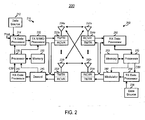
- each data stream is transmitted over a respective transmit antenna.
- TX data processor 214 formats, codes, and interleaves the traffic data for each data stream based on a particular coding scheme selected for that data stream to provide coded data.
- Apparatuses, methods, systems and computer-readable media for obtaining secure connections to a discovered location server are presented.
- location solutions and associated location servers that enable and assist such location solutions are becoming more widely deployed.
- One example of such a location solution is the SUPL solution defined by the OMA.
- Another example is the CP location solution defined by 3GPP.
- IETF Internet Engineering Task Force
- location servers can sometimes be restricted to supporting the location of mobile devices in small or medium sized geographic areas (e.g. a shopping mall, airport, town or city).
- the AT may wish to access the discovered location server for various reasons, including for location services, rather than any home location server that the AT may have. This may be because the discovered location server may provide better services in the particular area in which the AT is currently located (e.g. the AT may be roaming in a remote area from the home server, or is inside a building or other structure for which the home server has little or no information), or for any other reason of a variety of reasons.
- the AT may need to have the discovered location server authorized by the home location server, for example, in order to comply with standards bodies and to ensure that the discovered location server may be trusted by the AT to provide the services and to not provide unauthorized access or information of the AT to other parties.
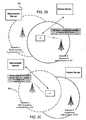
- the AT is unable to access the discovered server to obtain support for location servers such as (i) obtaining assistance data from the discovered server to enable the AT to locate itself from measurements made by the AT of access points belonging to network A or (ii) having the discovered server locate the AT from measurements made by the AT and/or by network A of the AT.
- the measurements may comprise timing and signal strength measurements for nearby base stations (e.g. AP 100), timing measurements for global navigation satellites, round trip time (RTT) measurements, received signal strength indicator (RSSI) measurements, assisted global navigation satellite system (GNSS) measurements, and the like.
- network B may enable one or more of the following capabilities: (i) access to the home server by the AT; (ii) authentication of the AT by the home server; (iii) authentication by the AT of the home server; (iv) discovery of the discovered server by the AT from the home server; (v) authorization of the discovered server by the home server including information that tells the AT under what circumstances (e.g. at which locations or from which networks) it may access the discovered server; (vi) provision of information from the home server to the AT to enable authentication of the AT by the discovered server; and (vii) provision of information by the home server to the AT to enable authentication of the discovered server by the AT.
- These enabled capabilities may not be supported by network A in the scenario shown in FIG. 3A , thereby initially preventing access by the AT to the discovered server.
- Network A may not provide access to the SET's H-SLP or Network A may provide access but not support or enable authentication of the SET by the SET's H-SLP using a method such as the SUPL alternative client authentication (ACA) mechanism.
- ACA SUPL alternative client authentication
- Such impediments may be due to various reasons, including network A having no access to a public network such as the Internet, the home network having no means to verify an IP address assigned by network A, restrictions on communication imposed by network A, the home network or intermediate entities, having too much traffic in network A, lacking proper network configurations to access the H-SLP, or other impediments.
- the H-SLP may authenticate the SET using the ACA method or some other method defined by OMA for SUPL such as use of device certificates or use of the Generic Bootstrapping Architecture (GBA).
- the SET may authenticate the H-SLP using; for example, a public key certificate provided by the H-SLP.
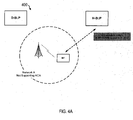
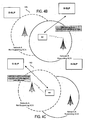
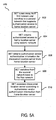
- flowchart 530 may represent an alternative collection of method steps according to other embodiments. These descriptions may be consistent with any of the descriptions in FIGs. 1 , 2 , 3A , 3B , 3C , 4A , 4B, and 4C .
- the AT and discovered server may use device certificates to perform mutual authentication with the device certificates possibly provided to the AT by the home server as part of block 546.
- the discovered server may not authenticate the AT because discovered server access may be restricted to the first network and the discovered server may provide free location services to any AT using the first network.
- a SET may use a WLAN and discovers a Discovered SUPL location platform (D-SLP) (e.g. discovers the address of a previously unknown SLP being broadcast from the WLAN).
- D-SLP Discovered SUPL location platform
- the SET used in this example may be consistent with the AT 116 and/or the system 250, for example.
- block 562 may be performed, for example, by at least the transceiver 252.
- the SET may obtain location services from the D-SLP, e.g. to obtain location assistance data, local map data, computation of its location.
- an AT is unable to obtain authorization and possibly authentication information to enable access to a discovered location server using a first network and tunes away to a second network in order to obtain authenticated access to a home location server that is able to authorize the discovered location server and, if needed, provide information to allow subsequent authenticated access by the AT to the discovered location server.
- the AT then tunes back to the first network in order to access the discovered location server.
- the AT may not need to or may prefer not to tune back to the first network and may instead access the discovered location server using the second network or using some other third network different to the first and second networks.
- such embodiments may reduce delay in accessing the discovered location server and may enable improved authentication either of the AT by the discovered location server or of the discovered location server by the AT than is possible when the AT accesses the discovered location server using the first network.
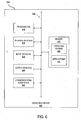
- FIG. 6 a computer system as illustrated in FIG. 6 may be incorporated as part of a computing device, which may implement, perform, and/or execute any and/or all of the features, methods, and/or method steps described herein.
- a computing device may implement, perform, and/or execute any and/or all of the features, methods, and/or method steps described herein.
- the processor 610, memory 635, and communications subsystems 630 may be used to implement any or all of the blocks as shown in FIGs 5A , 5B , and 5C .
- computer system 600 may represent some of the components of a hand-held device.
- FIG. 6 provides a schematic illustration of one embodiment of a computer system 600 that can perform the methods provided by various other embodiments, as described herein, and/or can function as the host computer system, a remote kiosk/terminal, a point-of-sale device, a mobile device, a set-top box, and/or a computer system.
- FIG. 6 is meant only to provide a generalized illustration of various components, any and/or all of which may be utilized as appropriate.
- FIG. 6 therefore, broadly illustrates how individual system elements may be implemented in a relatively separated or relatively more integrated manner.
- These instructions might take the form of executable code, which is executable by the computer system 600 and/or might take the form of source and/or installable code, which, upon compilation and/or installation on the computer system 600 (e.g., using any of a variety of generally available compilers, installation programs, compression/decompression utilities, etc.) then takes the form of executable code.
- Some embodiments may employ a computer system (such as the computer system 600) to perform methods in accordance with the disclosure. For example, some or all of the procedures of the described methods may be performed by the computer system 600 in response to processor 610 executing one or more sequences of one or more instructions (which might be incorporated into the operating system 640 and/or other code, such as an application program 645) contained in the working memory 635. Such instructions may be read into the working memory 635 from another computer-readable medium, such as one or more of the storage device(s) 625.
- a computer system such as the computer system 600
- machine-readable medium and “computer-readable medium,” as used herein, refer to any medium that participates in providing data that causes a machine to operate in a specific fashion.
- various computer-readable media might be involved in providing instructions/code to processor(s) 610 for execution and/or might be used to store and/or carry such instructions/code (e.g., as signals).
- a computer-readable medium is a physical and/or tangible storage medium.
- Such a medium may take many forms, including but not limited to, non-volatile media, volatile media, and transmission media.
- Non-volatile media include, for example, optical and/or magnetic disks, such as the storage device(s) 625.
- the functions described may be implemented in hardware, software, firmware, or any combination thereof. If implemented in software, the functions may be stored on or transmitted over as one or more instructions or code on a computer-readable medium.
- Computer-readable media may include computer data storage media.
- Data storage media may be any available media that can be accessed by one or more computers or one or more processors to retrieve instructions, code and/or data structures for implementation of the techniques described in this disclosure. "Data storage media" as used herein refers to manufactures and does not refer to transitory propagating signals.
- the code may be executed by one or more processors, such as one or more digital signal processors (DSPs), general purpose microprocessors, application specific integrated circuits (ASICs), field programmable logic arrays (FPGAs), or other equivalent integrated or discrete logic circuitry.
- DSPs digital signal processors
- ASICs application specific integrated circuits
- FPGAs field programmable logic arrays
- processors may refer to any of the foregoing structure or any other structure suitable for implementation of the techniques described herein.
- the functionality described herein may be provided within dedicated hardware and/or software modules configured for encoding and decoding, or incorporated in a combined codec. Also, the techniques could be fully implemented in one or more circuits or logic elements.
Landscapes
- Engineering & Computer Science (AREA)
- Computer Security & Cryptography (AREA)
- Computer Networks & Wireless Communication (AREA)
- Signal Processing (AREA)
- Computer Hardware Design (AREA)
- Computing Systems (AREA)
- General Engineering & Computer Science (AREA)
- Mobile Radio Communication Systems (AREA)
Applications Claiming Priority (3)
| Application Number | Priority Date | Filing Date | Title |
|---|---|---|---|
| US201261597704P | 2012-02-10 | 2012-02-10 | |
| US13/762,231 US9100388B2 (en) | 2012-02-10 | 2013-02-07 | Secure mechanism for obtaining authorization for a discovered location server |
| PCT/US2013/025447 WO2013120027A1 (en) | 2012-02-10 | 2013-02-08 | Secure mechanism for obtaining authorization for a discovered location server |
Publications (2)
| Publication Number | Publication Date |
|---|---|
| EP2813054A1 EP2813054A1 (en) | 2014-12-17 |
| EP2813054B1 true EP2813054B1 (en) | 2015-09-30 |
Family
ID=48946773
Family Applications (1)
| Application Number | Title | Priority Date | Filing Date |
|---|---|---|---|
| EP13707947.1A Not-in-force EP2813054B1 (en) | 2012-02-10 | 2013-02-08 | Secure mechanism for obtaining authorization for a discovered location server |
Country Status (7)
| Country | Link |
|---|---|
| US (2) | US9100388B2 (enExample) |
| EP (1) | EP2813054B1 (enExample) |
| JP (1) | JP5922259B2 (enExample) |
| KR (2) | KR101615203B1 (enExample) |
| CN (2) | CN107257330A (enExample) |
| ES (1) | ES2555169T3 (enExample) |
| WO (1) | WO2013120027A1 (enExample) |
Families Citing this family (3)
| Publication number | Priority date | Publication date | Assignee | Title |
|---|---|---|---|---|
| US9100388B2 (en) | 2012-02-10 | 2015-08-04 | Qualcomm Incorporated | Secure mechanism for obtaining authorization for a discovered location server |
| US9300376B2 (en) * | 2013-07-05 | 2016-03-29 | Samsung Electronics Co., Ltd. | Transmitting apparatus, receiving apparatus, and control methods thereof |
| CN111885602B (zh) * | 2020-07-27 | 2021-04-27 | 西南交通大学 | 一种面向异构网络的批量切换认证及密钥协商方法 |
Family Cites Families (18)
| Publication number | Priority date | Publication date | Assignee | Title |
|---|---|---|---|---|
| US8630414B2 (en) * | 2002-06-20 | 2014-01-14 | Qualcomm Incorporated | Inter-working function for a communication system |
| KR20060004864A (ko) * | 2004-07-10 | 2006-01-16 | 엘지전자 주식회사 | 이동통신 단말기의 위치알림 방법 및 시스템 |
| CN100391303C (zh) * | 2004-12-15 | 2008-05-28 | 华为技术有限公司 | 一种定位上报服务方法 |
| KR100595714B1 (ko) | 2005-04-01 | 2006-07-03 | 엘지전자 주식회사 | Supl 기반의 위치정보 시스템에서 supl 초기화메시지 및 이를 이용한 supl 처리방법 |
| KR100677510B1 (ko) * | 2005-04-30 | 2007-02-02 | 엘지전자 주식회사 | I-wlan에서의 위치정보 서비스를 위한 시스템 및 방법 |
| CN100479605C (zh) | 2005-06-29 | 2009-04-15 | 华为技术有限公司 | 一种定位其他终端的方法 |
| CN101346638A (zh) * | 2005-11-07 | 2009-01-14 | 高通股份有限公司 | Wlan和其它无线网络的定位 |
| US7873370B2 (en) | 2005-12-01 | 2011-01-18 | Lg Electronics Inc. | Location information system and method for performing notification based upon location |
| KR20070108301A (ko) * | 2005-12-01 | 2007-11-09 | 엘지전자 주식회사 | 위치 기반의 통지를 위한 위치정보 시스템 및 그 방법 |
| US9094784B2 (en) * | 2006-10-10 | 2015-07-28 | Qualcomm Incorporated | Registration of a terminal with a location server for user plane location |
| KR101114663B1 (ko) | 2007-04-05 | 2012-03-05 | 노키아 코포레이션 | 위치 플랫폼으로부터의 supl 메시지를 송신하기 위해 무선 데이터그램 프로토콜 대신 사용자 데이터그램 프로토콜을 이용하는 방법, 장치, 시스템 및 컴퓨터 판독가능한 매체 |
| CN101568063B (zh) * | 2008-04-24 | 2011-08-10 | 华为技术有限公司 | 位置业务的实现方法及系统 |
| CN101657013B (zh) * | 2008-08-20 | 2011-12-28 | 华为技术有限公司 | 用户面定位中的定位方法、系统时间同步方法及终端 |
| US8301160B2 (en) * | 2009-03-16 | 2012-10-30 | Andrew Llc | System and method for SUPL roaming using a held client |
| CN101562814A (zh) * | 2009-05-15 | 2009-10-21 | 中兴通讯股份有限公司 | 一种第三代网络的接入方法及系统 |
| US8620270B2 (en) * | 2009-10-06 | 2013-12-31 | Mosaid Technologies Incorporated | System and method providing interoperability between cellular and other wireless systems |
| US8406786B2 (en) | 2010-02-25 | 2013-03-26 | Motorola Mobility Llc | Methods and apparatus for extended generic messaging in a networked geolocation system |
| US9100388B2 (en) | 2012-02-10 | 2015-08-04 | Qualcomm Incorporated | Secure mechanism for obtaining authorization for a discovered location server |
-
2013
- 2013-02-07 US US13/762,231 patent/US9100388B2/en active Active
- 2013-02-08 ES ES13707947.1T patent/ES2555169T3/es active Active
- 2013-02-08 JP JP2014556756A patent/JP5922259B2/ja not_active Expired - Fee Related
- 2013-02-08 EP EP13707947.1A patent/EP2813054B1/en not_active Not-in-force
- 2013-02-08 WO PCT/US2013/025447 patent/WO2013120027A1/en not_active Ceased
- 2013-02-08 KR KR1020147024980A patent/KR101615203B1/ko not_active Expired - Fee Related
- 2013-02-08 CN CN201710397640.4A patent/CN107257330A/zh active Pending
- 2013-02-08 KR KR1020167010121A patent/KR20160049035A/ko not_active Abandoned
- 2013-02-08 CN CN201380008649.1A patent/CN104106249B/zh not_active Expired - Fee Related
-
2015
- 2015-06-29 US US14/754,473 patent/US9467856B2/en active Active
Also Published As
| Publication number | Publication date |
|---|---|
| CN107257330A (zh) | 2017-10-17 |
| US20130212649A1 (en) | 2013-08-15 |
| US9100388B2 (en) | 2015-08-04 |
| KR20140129118A (ko) | 2014-11-06 |
| CN104106249B (zh) | 2017-05-17 |
| CN104106249A (zh) | 2014-10-15 |
| JP5922259B2 (ja) | 2016-05-24 |
| US9467856B2 (en) | 2016-10-11 |
| JP2015507445A (ja) | 2015-03-05 |
| WO2013120027A1 (en) | 2013-08-15 |
| KR20160049035A (ko) | 2016-05-04 |
| ES2555169T3 (es) | 2015-12-29 |
| KR101615203B1 (ko) | 2016-04-25 |
| US20150373540A1 (en) | 2015-12-24 |
| EP2813054A1 (en) | 2014-12-17 |
Similar Documents
| Publication | Publication Date | Title |
|---|---|---|
| JP6104943B2 (ja) | モバイル・デバイスのため、発見された位置決めサーバへのセキュアなアクセスをイネーブルすること | |
| CN109155908B (zh) | 用于非蜂窝无线接入的紧急服务支持的方法和设备 | |
| US8094651B2 (en) | Emergency call services for wireless network roaming | |
| US9467856B2 (en) | Secure mechanism for obtaining authorization for a discovered location server | |
| US20130344887A1 (en) | D-slp service area detection using area id | |
| EP2944099B1 (en) | Method and apparatus for configuring secure user plan location (supl) enabled terminals | |
| US20240205813A1 (en) | Method and apparatus to access core networks via gateway functions | |
| CN116762470A (zh) | 一种生成设备间通信的密钥的方法、系统和装置 |
Legal Events
| Date | Code | Title | Description |
|---|---|---|---|
| PUAI | Public reference made under article 153(3) epc to a published international application that has entered the european phase |
Free format text: ORIGINAL CODE: 0009012 |
|
| 17P | Request for examination filed |
Effective date: 20140814 |
|
| AK | Designated contracting states |
Kind code of ref document: A1 Designated state(s): AL AT BE BG CH CY CZ DE DK EE ES FI FR GB GR HR HU IE IS IT LI LT LU LV MC MK MT NL NO PL PT RO RS SE SI SK SM TR |
|
| AX | Request for extension of the european patent |
Extension state: BA ME |
|
| GRAP | Despatch of communication of intention to grant a patent |
Free format text: ORIGINAL CODE: EPIDOSNIGR1 |
|
| DAX | Request for extension of the european patent (deleted) | ||
| RIN1 | Information on inventor provided before grant (corrected) |
Inventor name: WACHTER, ANDREAS KLAUS Inventor name: HAWKES, PHILIP MICHAEL Inventor name: EDGE, STEPHEN WILLIAM Inventor name: BURROUGHS, KIRK ALLAN |
|
| RAP1 | Party data changed (applicant data changed or rights of an application transferred) |
Owner name: QUALCOMM INCORPORATED |
|
| INTG | Intention to grant announced |
Effective date: 20150415 |
|
| GRAS | Grant fee paid |
Free format text: ORIGINAL CODE: EPIDOSNIGR3 |
|
| GRAA | (expected) grant |
Free format text: ORIGINAL CODE: 0009210 |
|
| AK | Designated contracting states |
Kind code of ref document: B1 Designated state(s): AL AT BE BG CH CY CZ DE DK EE ES FI FR GB GR HR HU IE IS IT LI LT LU LV MC MK MT NL NO PL PT RO RS SE SI SK SM TR |
|
| REG | Reference to a national code |
Ref country code: CH Ref legal event code: EP Ref country code: GB Ref legal event code: FG4D |
|
| REG | Reference to a national code |
Ref country code: AT Ref legal event code: REF Ref document number: 753021 Country of ref document: AT Kind code of ref document: T Effective date: 20151015 |
|
| REG | Reference to a national code |
Ref country code: IE Ref legal event code: FG4D |
|
| REG | Reference to a national code |
Ref country code: DE Ref legal event code: R096 Ref document number: 602013003309 Country of ref document: DE |
|
| REG | Reference to a national code |
Ref country code: FR Ref legal event code: PLFP Year of fee payment: 4 |
|
| REG | Reference to a national code |
Ref country code: ES Ref legal event code: FG2A Ref document number: 2555169 Country of ref document: ES Kind code of ref document: T3 Effective date: 20151229 |
|
| REG | Reference to a national code |
Ref country code: NL Ref legal event code: FP |
|
| PG25 | Lapsed in a contracting state [announced via postgrant information from national office to epo] |
Ref country code: LT Free format text: LAPSE BECAUSE OF FAILURE TO SUBMIT A TRANSLATION OF THE DESCRIPTION OR TO PAY THE FEE WITHIN THE PRESCRIBED TIME-LIMIT Effective date: 20150930 Ref country code: NO Free format text: LAPSE BECAUSE OF FAILURE TO SUBMIT A TRANSLATION OF THE DESCRIPTION OR TO PAY THE FEE WITHIN THE PRESCRIBED TIME-LIMIT Effective date: 20151230 Ref country code: LV Free format text: LAPSE BECAUSE OF FAILURE TO SUBMIT A TRANSLATION OF THE DESCRIPTION OR TO PAY THE FEE WITHIN THE PRESCRIBED TIME-LIMIT Effective date: 20150930 Ref country code: FI Free format text: LAPSE BECAUSE OF FAILURE TO SUBMIT A TRANSLATION OF THE DESCRIPTION OR TO PAY THE FEE WITHIN THE PRESCRIBED TIME-LIMIT Effective date: 20150930 Ref country code: GR Free format text: LAPSE BECAUSE OF FAILURE TO SUBMIT A TRANSLATION OF THE DESCRIPTION OR TO PAY THE FEE WITHIN THE PRESCRIBED TIME-LIMIT Effective date: 20151231 |
|
| REG | Reference to a national code |
Ref country code: LT Ref legal event code: MG4D |
|
| REG | Reference to a national code |
Ref country code: AT Ref legal event code: MK05 Ref document number: 753021 Country of ref document: AT Kind code of ref document: T Effective date: 20150930 |
|
| PG25 | Lapsed in a contracting state [announced via postgrant information from national office to epo] |
Ref country code: SE Free format text: LAPSE BECAUSE OF FAILURE TO SUBMIT A TRANSLATION OF THE DESCRIPTION OR TO PAY THE FEE WITHIN THE PRESCRIBED TIME-LIMIT Effective date: 20150930 Ref country code: HR Free format text: LAPSE BECAUSE OF FAILURE TO SUBMIT A TRANSLATION OF THE DESCRIPTION OR TO PAY THE FEE WITHIN THE PRESCRIBED TIME-LIMIT Effective date: 20150930 Ref country code: RS Free format text: LAPSE BECAUSE OF FAILURE TO SUBMIT A TRANSLATION OF THE DESCRIPTION OR TO PAY THE FEE WITHIN THE PRESCRIBED TIME-LIMIT Effective date: 20150930 |
|
| PG25 | Lapsed in a contracting state [announced via postgrant information from national office to epo] |
Ref country code: EE Free format text: LAPSE BECAUSE OF FAILURE TO SUBMIT A TRANSLATION OF THE DESCRIPTION OR TO PAY THE FEE WITHIN THE PRESCRIBED TIME-LIMIT Effective date: 20150930 Ref country code: CZ Free format text: LAPSE BECAUSE OF FAILURE TO SUBMIT A TRANSLATION OF THE DESCRIPTION OR TO PAY THE FEE WITHIN THE PRESCRIBED TIME-LIMIT Effective date: 20150930 Ref country code: IS Free format text: LAPSE BECAUSE OF FAILURE TO SUBMIT A TRANSLATION OF THE DESCRIPTION OR TO PAY THE FEE WITHIN THE PRESCRIBED TIME-LIMIT Effective date: 20160130 Ref country code: SK Free format text: LAPSE BECAUSE OF FAILURE TO SUBMIT A TRANSLATION OF THE DESCRIPTION OR TO PAY THE FEE WITHIN THE PRESCRIBED TIME-LIMIT Effective date: 20150930 |
|
| PG25 | Lapsed in a contracting state [announced via postgrant information from national office to epo] |
Ref country code: PL Free format text: LAPSE BECAUSE OF FAILURE TO SUBMIT A TRANSLATION OF THE DESCRIPTION OR TO PAY THE FEE WITHIN THE PRESCRIBED TIME-LIMIT Effective date: 20150930 Ref country code: AT Free format text: LAPSE BECAUSE OF FAILURE TO SUBMIT A TRANSLATION OF THE DESCRIPTION OR TO PAY THE FEE WITHIN THE PRESCRIBED TIME-LIMIT Effective date: 20150930 Ref country code: RO Free format text: LAPSE BECAUSE OF FAILURE TO SUBMIT A TRANSLATION OF THE DESCRIPTION OR TO PAY THE FEE WITHIN THE PRESCRIBED TIME-LIMIT Effective date: 20150930 Ref country code: PT Free format text: LAPSE BECAUSE OF FAILURE TO SUBMIT A TRANSLATION OF THE DESCRIPTION OR TO PAY THE FEE WITHIN THE PRESCRIBED TIME-LIMIT Effective date: 20160201 Ref country code: BE Free format text: LAPSE BECAUSE OF NON-PAYMENT OF DUE FEES Effective date: 20160229 |
|
| REG | Reference to a national code |
Ref country code: DE Ref legal event code: R097 Ref document number: 602013003309 Country of ref document: DE |
|
| PLBE | No opposition filed within time limit |
Free format text: ORIGINAL CODE: 0009261 |
|
| STAA | Information on the status of an ep patent application or granted ep patent |
Free format text: STATUS: NO OPPOSITION FILED WITHIN TIME LIMIT |
|
| PG25 | Lapsed in a contracting state [announced via postgrant information from national office to epo] |
Ref country code: DK Free format text: LAPSE BECAUSE OF FAILURE TO SUBMIT A TRANSLATION OF THE DESCRIPTION OR TO PAY THE FEE WITHIN THE PRESCRIBED TIME-LIMIT Effective date: 20150930 |
|
| 26N | No opposition filed |
Effective date: 20160701 |
|
| PG25 | Lapsed in a contracting state [announced via postgrant information from national office to epo] |
Ref country code: LU Free format text: LAPSE BECAUSE OF FAILURE TO SUBMIT A TRANSLATION OF THE DESCRIPTION OR TO PAY THE FEE WITHIN THE PRESCRIBED TIME-LIMIT Effective date: 20160208 Ref country code: MC Free format text: LAPSE BECAUSE OF FAILURE TO SUBMIT A TRANSLATION OF THE DESCRIPTION OR TO PAY THE FEE WITHIN THE PRESCRIBED TIME-LIMIT Effective date: 20150930 |
|
| REG | Reference to a national code |
Ref country code: CH Ref legal event code: PL |
|
| PG25 | Lapsed in a contracting state [announced via postgrant information from national office to epo] |
Ref country code: LI Free format text: LAPSE BECAUSE OF NON-PAYMENT OF DUE FEES Effective date: 20160229 Ref country code: CH Free format text: LAPSE BECAUSE OF NON-PAYMENT OF DUE FEES Effective date: 20160229 |
|
| PG25 | Lapsed in a contracting state [announced via postgrant information from national office to epo] |
Ref country code: SI Free format text: LAPSE BECAUSE OF FAILURE TO SUBMIT A TRANSLATION OF THE DESCRIPTION OR TO PAY THE FEE WITHIN THE PRESCRIBED TIME-LIMIT Effective date: 20150930 |
|
| REG | Reference to a national code |
Ref country code: IE Ref legal event code: MM4A |
|
| PG25 | Lapsed in a contracting state [announced via postgrant information from national office to epo] |
Ref country code: BE Free format text: LAPSE BECAUSE OF FAILURE TO SUBMIT A TRANSLATION OF THE DESCRIPTION OR TO PAY THE FEE WITHIN THE PRESCRIBED TIME-LIMIT Effective date: 20150930 |
|
| REG | Reference to a national code |
Ref country code: FR Ref legal event code: PLFP Year of fee payment: 5 |
|
| PG25 | Lapsed in a contracting state [announced via postgrant information from national office to epo] |
Ref country code: IE Free format text: LAPSE BECAUSE OF NON-PAYMENT OF DUE FEES Effective date: 20160208 |
|
| PG25 | Lapsed in a contracting state [announced via postgrant information from national office to epo] |
Ref country code: MT Free format text: LAPSE BECAUSE OF FAILURE TO SUBMIT A TRANSLATION OF THE DESCRIPTION OR TO PAY THE FEE WITHIN THE PRESCRIBED TIME-LIMIT Effective date: 20150930 |
|
| REG | Reference to a national code |
Ref country code: FR Ref legal event code: PLFP Year of fee payment: 6 |
|
| PGFP | Annual fee paid to national office [announced via postgrant information from national office to epo] |
Ref country code: NL Payment date: 20180209 Year of fee payment: 6 |
|
| PGFP | Annual fee paid to national office [announced via postgrant information from national office to epo] |
Ref country code: ES Payment date: 20180302 Year of fee payment: 6 Ref country code: GB Payment date: 20180125 Year of fee payment: 6 Ref country code: DE Payment date: 20180207 Year of fee payment: 6 |
|
| PG25 | Lapsed in a contracting state [announced via postgrant information from national office to epo] |
Ref country code: HU Free format text: LAPSE BECAUSE OF FAILURE TO SUBMIT A TRANSLATION OF THE DESCRIPTION OR TO PAY THE FEE WITHIN THE PRESCRIBED TIME-LIMIT; INVALID AB INITIO Effective date: 20130208 Ref country code: SM Free format text: LAPSE BECAUSE OF FAILURE TO SUBMIT A TRANSLATION OF THE DESCRIPTION OR TO PAY THE FEE WITHIN THE PRESCRIBED TIME-LIMIT Effective date: 20150930 |
|
| PGFP | Annual fee paid to national office [announced via postgrant information from national office to epo] |
Ref country code: IT Payment date: 20180216 Year of fee payment: 6 Ref country code: FR Payment date: 20180118 Year of fee payment: 6 |
|
| PG25 | Lapsed in a contracting state [announced via postgrant information from national office to epo] |
Ref country code: MT Free format text: LAPSE BECAUSE OF FAILURE TO SUBMIT A TRANSLATION OF THE DESCRIPTION OR TO PAY THE FEE WITHIN THE PRESCRIBED TIME-LIMIT Effective date: 20160229 Ref country code: CY Free format text: LAPSE BECAUSE OF FAILURE TO SUBMIT A TRANSLATION OF THE DESCRIPTION OR TO PAY THE FEE WITHIN THE PRESCRIBED TIME-LIMIT Effective date: 20150930 Ref country code: MK Free format text: LAPSE BECAUSE OF FAILURE TO SUBMIT A TRANSLATION OF THE DESCRIPTION OR TO PAY THE FEE WITHIN THE PRESCRIBED TIME-LIMIT Effective date: 20150930 |
|
| PG25 | Lapsed in a contracting state [announced via postgrant information from national office to epo] |
Ref country code: BG Free format text: LAPSE BECAUSE OF FAILURE TO SUBMIT A TRANSLATION OF THE DESCRIPTION OR TO PAY THE FEE WITHIN THE PRESCRIBED TIME-LIMIT Effective date: 20150930 |
|
| PG25 | Lapsed in a contracting state [announced via postgrant information from national office to epo] |
Ref country code: AL Free format text: LAPSE BECAUSE OF FAILURE TO SUBMIT A TRANSLATION OF THE DESCRIPTION OR TO PAY THE FEE WITHIN THE PRESCRIBED TIME-LIMIT Effective date: 20150930 Ref country code: TR Free format text: LAPSE BECAUSE OF FAILURE TO SUBMIT A TRANSLATION OF THE DESCRIPTION OR TO PAY THE FEE WITHIN THE PRESCRIBED TIME-LIMIT Effective date: 20150930 |
|
| REG | Reference to a national code |
Ref country code: DE Ref legal event code: R119 Ref document number: 602013003309 Country of ref document: DE |
|
| REG | Reference to a national code |
Ref country code: NL Ref legal event code: MM Effective date: 20190301 |
|
| GBPC | Gb: european patent ceased through non-payment of renewal fee |
Effective date: 20190208 |
|
| PG25 | Lapsed in a contracting state [announced via postgrant information from national office to epo] |
Ref country code: DE Free format text: LAPSE BECAUSE OF NON-PAYMENT OF DUE FEES Effective date: 20190903 Ref country code: GB Free format text: LAPSE BECAUSE OF NON-PAYMENT OF DUE FEES Effective date: 20190208 Ref country code: NL Free format text: LAPSE BECAUSE OF NON-PAYMENT OF DUE FEES Effective date: 20190301 |
|
| PG25 | Lapsed in a contracting state [announced via postgrant information from national office to epo] |
Ref country code: IT Free format text: LAPSE BECAUSE OF NON-PAYMENT OF DUE FEES Effective date: 20190208 Ref country code: FR Free format text: LAPSE BECAUSE OF NON-PAYMENT OF DUE FEES Effective date: 20190228 |
|
| REG | Reference to a national code |
Ref country code: ES Ref legal event code: FD2A Effective date: 20200327 |
|
| PG25 | Lapsed in a contracting state [announced via postgrant information from national office to epo] |
Ref country code: ES Free format text: LAPSE BECAUSE OF NON-PAYMENT OF DUE FEES Effective date: 20190209 |