EP2806484A1 - Thermally managed battery assembly - Google Patents
Thermally managed battery assembly Download PDFInfo
- Publication number
- EP2806484A1 EP2806484A1 EP20140162037 EP14162037A EP2806484A1 EP 2806484 A1 EP2806484 A1 EP 2806484A1 EP 20140162037 EP20140162037 EP 20140162037 EP 14162037 A EP14162037 A EP 14162037A EP 2806484 A1 EP2806484 A1 EP 2806484A1
- Authority
- EP
- European Patent Office
- Prior art keywords
- battery assembly
- cathode
- thermocrystal
- anode
- metamaterial structure
- Prior art date
- Legal status (The legal status is an assumption and is not a legal conclusion. Google has not performed a legal analysis and makes no representation as to the accuracy of the status listed.)
- Ceased
Links
- 229910001416 lithium ion Inorganic materials 0.000 claims abstract description 11
- 239000003792 electrolyte Substances 0.000 claims description 40
- 239000013078 crystal Substances 0.000 claims description 26
- 239000012535 impurity Substances 0.000 claims description 19
- 229910000428 cobalt oxide Inorganic materials 0.000 claims description 12
- 238000007726 management method Methods 0.000 claims description 11
- IVMYJDGYRUAWML-UHFFFAOYSA-N cobalt(ii) oxide Chemical compound [Co]=O IVMYJDGYRUAWML-UHFFFAOYSA-N 0.000 claims description 10
- XEEYBQQBJWHFJM-UHFFFAOYSA-N Iron Chemical compound [Fe] XEEYBQQBJWHFJM-UHFFFAOYSA-N 0.000 claims description 9
- PXHVJJICTQNCMI-UHFFFAOYSA-N Nickel Chemical compound [Ni] PXHVJJICTQNCMI-UHFFFAOYSA-N 0.000 claims description 9
- HBBGRARXTFLTSG-UHFFFAOYSA-N Lithium ion Chemical compound [Li+] HBBGRARXTFLTSG-UHFFFAOYSA-N 0.000 claims description 8
- 229910044991 metal oxide Inorganic materials 0.000 claims description 8
- 150000004706 metal oxides Chemical class 0.000 claims description 8
- 239000003575 carbonaceous material Substances 0.000 claims description 4
- 230000007547 defect Effects 0.000 claims description 4
- 229910052742 iron Inorganic materials 0.000 claims description 4
- 229910052759 nickel Inorganic materials 0.000 claims description 4
- 239000011255 nonaqueous electrolyte Substances 0.000 claims description 4
- 230000008878 coupling Effects 0.000 claims description 3
- 238000010168 coupling process Methods 0.000 claims description 3
- 238000005859 coupling reaction Methods 0.000 claims description 3
- 229910000625 lithium cobalt oxide Inorganic materials 0.000 description 6
- BFZPBUKRYWOWDV-UHFFFAOYSA-N lithium;oxido(oxo)cobalt Chemical compound [Li+].[O-][Co]=O BFZPBUKRYWOWDV-UHFFFAOYSA-N 0.000 description 6
- 238000000034 method Methods 0.000 description 6
- 239000000203 mixture Substances 0.000 description 6
- 239000012528 membrane Substances 0.000 description 5
- 238000006243 chemical reaction Methods 0.000 description 4
- 150000002500 ions Chemical class 0.000 description 4
- 239000000463 material Substances 0.000 description 4
- 229910017052 cobalt Inorganic materials 0.000 description 3
- 239000010941 cobalt Substances 0.000 description 3
- GUTLYIVDDKVIGB-UHFFFAOYSA-N cobalt atom Chemical compound [Co] GUTLYIVDDKVIGB-UHFFFAOYSA-N 0.000 description 3
- 230000006870 function Effects 0.000 description 3
- 239000007788 liquid Substances 0.000 description 3
- 239000002184 metal Substances 0.000 description 3
- 229910052751 metal Inorganic materials 0.000 description 3
- 238000012986 modification Methods 0.000 description 3
- 230000004048 modification Effects 0.000 description 3
- XLYOFNOQVPJJNP-UHFFFAOYSA-N water Substances O XLYOFNOQVPJJNP-UHFFFAOYSA-N 0.000 description 3
- LYCAIKOWRPUZTN-UHFFFAOYSA-N Ethylene glycol Chemical compound OCCO LYCAIKOWRPUZTN-UHFFFAOYSA-N 0.000 description 2
- WHXSMMKQMYFTQS-UHFFFAOYSA-N Lithium Chemical compound [Li] WHXSMMKQMYFTQS-UHFFFAOYSA-N 0.000 description 2
- VYPSYNLAJGMNEJ-UHFFFAOYSA-N Silicium dioxide Chemical compound O=[Si]=O VYPSYNLAJGMNEJ-UHFFFAOYSA-N 0.000 description 2
- 239000010406 cathode material Substances 0.000 description 2
- 239000012809 cooling fluid Substances 0.000 description 2
- 230000005611 electricity Effects 0.000 description 2
- 239000007789 gas Substances 0.000 description 2
- 229910052744 lithium Inorganic materials 0.000 description 2
- 229910021645 metal ion Inorganic materials 0.000 description 2
- 239000002105 nanoparticle Substances 0.000 description 2
- 239000004033 plastic Substances 0.000 description 2
- 238000000926 separation method Methods 0.000 description 2
- 239000007787 solid Substances 0.000 description 2
- HFSKWPUHEMGYMQ-UHFFFAOYSA-N 1,3-dioxolan-2-one Chemical compound O=C1OCCO1.O=C1OCCO1 HFSKWPUHEMGYMQ-UHFFFAOYSA-N 0.000 description 1
- OKTJSMMVPCPJKN-UHFFFAOYSA-N Carbon Chemical compound [C] OKTJSMMVPCPJKN-UHFFFAOYSA-N 0.000 description 1
- RYGMFSIKBFXOCR-UHFFFAOYSA-N Copper Chemical compound [Cu] RYGMFSIKBFXOCR-UHFFFAOYSA-N 0.000 description 1
- VEXZGXHMUGYJMC-UHFFFAOYSA-N Hydrochloric acid Chemical compound Cl VEXZGXHMUGYJMC-UHFFFAOYSA-N 0.000 description 1
- 229910001290 LiPF6 Inorganic materials 0.000 description 1
- 239000002253 acid Substances 0.000 description 1
- 150000007513 acids Chemical class 0.000 description 1
- 239000000853 adhesive Substances 0.000 description 1
- 230000001070 adhesive effect Effects 0.000 description 1
- 230000002411 adverse Effects 0.000 description 1
- 239000012080 ambient air Substances 0.000 description 1
- 239000002131 composite material Substances 0.000 description 1
- 150000001875 compounds Chemical class 0.000 description 1
- 239000004020 conductor Substances 0.000 description 1
- 229910052802 copper Inorganic materials 0.000 description 1
- 239000010949 copper Substances 0.000 description 1
- 238000010586 diagram Methods 0.000 description 1
- 238000004090 dissolution Methods 0.000 description 1
- 238000003411 electrode reaction Methods 0.000 description 1
- 239000008151 electrolyte solution Substances 0.000 description 1
- 229940021013 electrolyte solution Drugs 0.000 description 1
- 125000000524 functional group Chemical group 0.000 description 1
- 229910002804 graphite Inorganic materials 0.000 description 1
- 239000010439 graphite Substances 0.000 description 1
- 229910000041 hydrogen chloride Inorganic materials 0.000 description 1
- IXCSERBJSXMMFS-UHFFFAOYSA-N hydrogen chloride Substances Cl.Cl IXCSERBJSXMMFS-UHFFFAOYSA-N 0.000 description 1
- WGCNASOHLSPBMP-UHFFFAOYSA-N hydroxyacetaldehyde Natural products OCC=O WGCNASOHLSPBMP-UHFFFAOYSA-N 0.000 description 1
- -1 lithium hexafluorophosphate Chemical compound 0.000 description 1
- 229910003002 lithium salt Inorganic materials 0.000 description 1
- 159000000002 lithium salts Chemical class 0.000 description 1
- 150000002739 metals Chemical class 0.000 description 1
- 239000003960 organic solvent Substances 0.000 description 1
- 230000000737 periodic effect Effects 0.000 description 1
- 229920000867 polyelectrolyte Polymers 0.000 description 1
- 238000009877 rendering Methods 0.000 description 1
- 238000012827 research and development Methods 0.000 description 1
- 150000003839 salts Chemical class 0.000 description 1
- 239000000377 silicon dioxide Substances 0.000 description 1
- 239000000243 solution Substances 0.000 description 1
- 239000002904 solvent Substances 0.000 description 1
- 239000000126 substance Substances 0.000 description 1
- 229920001059 synthetic polymer Polymers 0.000 description 1
- 238000012546 transfer Methods 0.000 description 1
Images

Classifications
-
- H—ELECTRICITY
- H01—ELECTRIC ELEMENTS
- H01M—PROCESSES OR MEANS, e.g. BATTERIES, FOR THE DIRECT CONVERSION OF CHEMICAL ENERGY INTO ELECTRICAL ENERGY
- H01M4/00—Electrodes
- H01M4/02—Electrodes composed of, or comprising, active material
- H01M4/36—Selection of substances as active materials, active masses, active liquids
- H01M4/48—Selection of substances as active materials, active masses, active liquids of inorganic oxides or hydroxides
- H01M4/485—Selection of substances as active materials, active masses, active liquids of inorganic oxides or hydroxides of mixed oxides or hydroxides for inserting or intercalating light metals, e.g. LiTi2O4 or LiTi2OxFy
-
- H—ELECTRICITY
- H01—ELECTRIC ELEMENTS
- H01M—PROCESSES OR MEANS, e.g. BATTERIES, FOR THE DIRECT CONVERSION OF CHEMICAL ENERGY INTO ELECTRICAL ENERGY
- H01M4/00—Electrodes
- H01M4/02—Electrodes composed of, or comprising, active material
- H01M4/36—Selection of substances as active materials, active masses, active liquids
- H01M4/48—Selection of substances as active materials, active masses, active liquids of inorganic oxides or hydroxides
- H01M4/52—Selection of substances as active materials, active masses, active liquids of inorganic oxides or hydroxides of nickel, cobalt or iron
- H01M4/525—Selection of substances as active materials, active masses, active liquids of inorganic oxides or hydroxides of nickel, cobalt or iron of mixed oxides or hydroxides containing iron, cobalt or nickel for inserting or intercalating light metals, e.g. LiNiO2, LiCoO2 or LiCoOxFy
-
- H—ELECTRICITY
- H01—ELECTRIC ELEMENTS
- H01M—PROCESSES OR MEANS, e.g. BATTERIES, FOR THE DIRECT CONVERSION OF CHEMICAL ENERGY INTO ELECTRICAL ENERGY
- H01M10/00—Secondary cells; Manufacture thereof
- H01M10/05—Accumulators with non-aqueous electrolyte
- H01M10/052—Li-accumulators
- H01M10/0525—Rocking-chair batteries, i.e. batteries with lithium insertion or intercalation in both electrodes; Lithium-ion batteries
-
- H—ELECTRICITY
- H01—ELECTRIC ELEMENTS
- H01M—PROCESSES OR MEANS, e.g. BATTERIES, FOR THE DIRECT CONVERSION OF CHEMICAL ENERGY INTO ELECTRICAL ENERGY
- H01M10/00—Secondary cells; Manufacture thereof
- H01M10/60—Heating or cooling; Temperature control
-
- H—ELECTRICITY
- H01—ELECTRIC ELEMENTS
- H01M—PROCESSES OR MEANS, e.g. BATTERIES, FOR THE DIRECT CONVERSION OF CHEMICAL ENERGY INTO ELECTRICAL ENERGY
- H01M10/00—Secondary cells; Manufacture thereof
- H01M10/60—Heating or cooling; Temperature control
- H01M10/61—Types of temperature control
- H01M10/617—Types of temperature control for achieving uniformity or desired distribution of temperature
-
- H—ELECTRICITY
- H01—ELECTRIC ELEMENTS
- H01M—PROCESSES OR MEANS, e.g. BATTERIES, FOR THE DIRECT CONVERSION OF CHEMICAL ENERGY INTO ELECTRICAL ENERGY
- H01M10/00—Secondary cells; Manufacture thereof
- H01M10/60—Heating or cooling; Temperature control
- H01M10/65—Means for temperature control structurally associated with the cells
- H01M10/653—Means for temperature control structurally associated with the cells characterised by electrically insulating or thermally conductive materials
-
- H—ELECTRICITY
- H01—ELECTRIC ELEMENTS
- H01M—PROCESSES OR MEANS, e.g. BATTERIES, FOR THE DIRECT CONVERSION OF CHEMICAL ENERGY INTO ELECTRICAL ENERGY
- H01M10/00—Secondary cells; Manufacture thereof
- H01M10/60—Heating or cooling; Temperature control
- H01M10/65—Means for temperature control structurally associated with the cells
- H01M10/654—Means for temperature control structurally associated with the cells located inside the innermost case of the cells, e.g. mandrels, electrodes or electrolytes
-
- H—ELECTRICITY
- H01—ELECTRIC ELEMENTS
- H01M—PROCESSES OR MEANS, e.g. BATTERIES, FOR THE DIRECT CONVERSION OF CHEMICAL ENERGY INTO ELECTRICAL ENERGY
- H01M10/00—Secondary cells; Manufacture thereof
- H01M10/60—Heating or cooling; Temperature control
- H01M10/65—Means for temperature control structurally associated with the cells
- H01M10/655—Solid structures for heat exchange or heat conduction
-
- H—ELECTRICITY
- H01—ELECTRIC ELEMENTS
- H01M—PROCESSES OR MEANS, e.g. BATTERIES, FOR THE DIRECT CONVERSION OF CHEMICAL ENERGY INTO ELECTRICAL ENERGY
- H01M10/00—Secondary cells; Manufacture thereof
- H01M10/60—Heating or cooling; Temperature control
- H01M10/65—Means for temperature control structurally associated with the cells
- H01M10/655—Solid structures for heat exchange or heat conduction
- H01M10/6554—Rods or plates
-
- H—ELECTRICITY
- H01—ELECTRIC ELEMENTS
- H01M—PROCESSES OR MEANS, e.g. BATTERIES, FOR THE DIRECT CONVERSION OF CHEMICAL ENERGY INTO ELECTRICAL ENERGY
- H01M10/00—Secondary cells; Manufacture thereof
- H01M10/60—Heating or cooling; Temperature control
- H01M10/65—Means for temperature control structurally associated with the cells
- H01M10/655—Solid structures for heat exchange or heat conduction
- H01M10/6556—Solid parts with flow channel passages or pipes for heat exchange
-
- H—ELECTRICITY
- H01—ELECTRIC ELEMENTS
- H01M—PROCESSES OR MEANS, e.g. BATTERIES, FOR THE DIRECT CONVERSION OF CHEMICAL ENERGY INTO ELECTRICAL ENERGY
- H01M4/00—Electrodes
- H01M4/02—Electrodes composed of, or comprising, active material
- H01M4/04—Processes of manufacture in general
-
- H—ELECTRICITY
- H01—ELECTRIC ELEMENTS
- H01M—PROCESSES OR MEANS, e.g. BATTERIES, FOR THE DIRECT CONVERSION OF CHEMICAL ENERGY INTO ELECTRICAL ENERGY
- H01M4/00—Electrodes
- H01M4/02—Electrodes composed of, or comprising, active material
- H01M4/36—Selection of substances as active materials, active masses, active liquids
- H01M4/58—Selection of substances as active materials, active masses, active liquids of inorganic compounds other than oxides or hydroxides, e.g. sulfides, selenides, tellurides, halogenides or LiCoFy; of polyanionic structures, e.g. phosphates, silicates or borates
- H01M4/583—Carbonaceous material, e.g. graphite-intercalation compounds or CFx
- H01M4/587—Carbonaceous material, e.g. graphite-intercalation compounds or CFx for inserting or intercalating light metals
-
- Y—GENERAL TAGGING OF NEW TECHNOLOGICAL DEVELOPMENTS; GENERAL TAGGING OF CROSS-SECTIONAL TECHNOLOGIES SPANNING OVER SEVERAL SECTIONS OF THE IPC; TECHNICAL SUBJECTS COVERED BY FORMER USPC CROSS-REFERENCE ART COLLECTIONS [XRACs] AND DIGESTS
- Y02—TECHNOLOGIES OR APPLICATIONS FOR MITIGATION OR ADAPTATION AGAINST CLIMATE CHANGE
- Y02E—REDUCTION OF GREENHOUSE GAS [GHG] EMISSIONS, RELATED TO ENERGY GENERATION, TRANSMISSION OR DISTRIBUTION
- Y02E60/00—Enabling technologies; Technologies with a potential or indirect contribution to GHG emissions mitigation
- Y02E60/10—Energy storage using batteries
-
- Y—GENERAL TAGGING OF NEW TECHNOLOGICAL DEVELOPMENTS; GENERAL TAGGING OF CROSS-SECTIONAL TECHNOLOGIES SPANNING OVER SEVERAL SECTIONS OF THE IPC; TECHNICAL SUBJECTS COVERED BY FORMER USPC CROSS-REFERENCE ART COLLECTIONS [XRACs] AND DIGESTS
- Y10—TECHNICAL SUBJECTS COVERED BY FORMER USPC
- Y10T—TECHNICAL SUBJECTS COVERED BY FORMER US CLASSIFICATION
- Y10T29/00—Metal working
- Y10T29/49—Method of mechanical manufacture
- Y10T29/49002—Electrical device making
- Y10T29/49108—Electric battery cell making
Definitions
- This application relates to batteries, such as rechargeable metal (e.g., lithium) ion batteries, and, more particularly, to thermal management of batteries and, even more particularly, to thermal management of batteries based on directional heat control.
- batteries such as rechargeable metal (e.g., lithium) ion batteries, and, more particularly, to thermal management of batteries and, even more particularly, to thermal management of batteries based on directional heat control.
- Rechargeable batteries are used in a variety of applications, such as in aircraft and in electronic devices (e.g., computers and mobile telephones). While various types of rechargeable batteries are available in the marketplace, lithium-ion batteries, such as lithium cobalt oxide (LiCoO 2 ) batteries, are commonly used due to their relatively high energy density and lack of battery memory after a partial charge.
- lithium-ion batteries such as lithium cobalt oxide (LiCoO 2 ) batteries
- Lithium-ion batteries are known to generate heat, both under load and during charging. Therefore, when a battery application requires the high energy density provided by lithium-ion batteries, a thermal management system is commonly employed.
- One example of thermal management of Li-ion CoO 2 batteries is to physically separate the various cells.
- Another example thermal management system monitors the temperature of each cell in a lithium-ion battery and shuts down cells that are experiencing a temperature that exceeds a predetermined threshold value.
- the disclosed thermally managed battery assembly may include an anode and a cathode, wherein at least one of the anode and the cathode includes a thermocrystal metamaterial structure.
- the disclosed thermally managed battery assembly may include an anode, a cathode and an electrolyte, wherein the cathode includes a thermocrystal metamaterial structure.
- the disclosed thermally managed battery assembly may include an electrolyte, an anode in electrical contact with the electrolyte, and a cathode in electrical contact with the electrolyte, wherein the cathode includes a thermocrystal metamaterial structure that includes impurities embedded within the crystal lattice.
- the disclosed thermally managed battery assembly may include an electrolyte, an anode in electrical contact with the electrolyte, and a cathode in electrical contact with the electrolyte, wherein the cathode includes a thermocrystal metamaterial structure that includes a layered metal oxide with metal ions embedded between the layers of metal oxide and impurities within the layers of metal oxide.
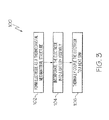
- thermo management method that includes the steps of (1) forming an electrode having a thermocrystal metamaterial structure; (2) incorporating the electrode into a battery assembly; and (3) thermally coupling a heat sink to the electrode such that the thermocrystal metamaterial structure directionally aligns heat waves with the heat sink.
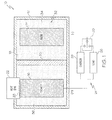
- one embodiment of the disclosed thermally managed battery assembly may include a battery housing 12, an anode 14, a cathode 16, an electrolyte 18, a separator 20 and a heat sink 22.
- the anode 14 and the cathode 16 of the thermally managed battery assembly 10 may be part of an electric circuit 24, which may include a load 26, a charger 28 and a switch 30.
- the switch 30 may be toggled between at least a first position, wherein the charger 28 charges the thermally managed battery assembly 10, and a second position, wherein the thermally managed battery assembly 10 powers the load 26.
- the battery housing 12 may define an internal chamber 32 in which the anode 14, the cathode 16 and the electrolyte 18 may be received and housed.
- the battery housing 12 may be a water-tight and/or air-tight housing configured to isolate the anode 14, the cathode 16 and the electrolyte 18 from the ambient surroundings.
- the battery housing 12 may be a rigid plastic, metal or composite housing.
- the battery housing may be a pliable plastic housing.
- the electrolyte 18 may be received in, and may partially fill or substantially entirely fill, the internal chamber 32 of the battery housing 12.
- the electrolyte 18 may be a liquid, a solid or a mixture of liquid and solid (e.g., a gel).
- the electrolyte may be substantially free of water (e.g., non-aqueous) to avoid adverse chemical reactions.
- the electrolyte 18 may be a non-aqueous electrolyte that includes a lithium salt in an organic solvent.
- the electrolyte 18 may be a non-aqueous electrolyte that includes lithium hexafluorophosphate (LiPF 6 ) in anhydrous ethylene carbonate (1,3-dioxolan-2-one).
- An electrolyte is any compound that ionizes when dissolved in a suitable solvents (e.g., water). This includes most soluble salts, acids, and bases. In some cases, gases, such as hydrogen chloride, under conditions of high temperature or low pressure can also function as electrolytes.
- Electrolyte solutions can also result from the dissolution of some biological and synthetic polymers termed polyelectrolytes, which contain charged functional groups.
- polyelectrolytes which contain charged functional groups.
- the electrolyte will conduct electricity, since they are ionized in solution. Lone electrons cannot pass through the electrolyte. Instead, a chemical reaction occurs at the cathode consuming electrons from the anode. Another reaction occurs at the anode, producing electrons that are eventually transferred to the cathode. As a result, a negative charge cloud develops in the electrolyte around the cathode and a positive charge develops around the anode.
- the ions in the electrolyte neutralize these charges, enabling the electrons to keep flowing and the reactions to continue.
- two materials with different electron affinities are used as electrodes; electrons flow from one electrode to the other outside of the battery, while inside the battery the circuit is closed by the electrolyte's ions.
- the electrode reactions convert chemical energy to electrical energy.
- the separator 20 may be received in the internal chamber 32 of the battery housing 12 to divide the internal chamber 32 into an anode chamber 34 and a cathode chamber 36.
- the separator 20 may fluidly and electrically isolate the anode chamber 34 (and thus the anode 14) from the cathode chamber 36 (and thus the cathode 16), while permitting ions to pass between the anode chamber 34 and the cathode chamber 36.
- the separator 20 may be a permeable membrane, such as a permeable polymeric membrane.
- a permeable membrane such as a permeable polymeric membrane.
- Various commercially-available permeable membranes may be suitable for use as the separation 20 of the disclosed thermally managed battery assembly 10.
- a permeable membrane suitable for use as the separation 20 is a membrane formed from Hi-SilTM precipitated silica, which is available from PPG Industries of Pittsburgh, Pennsylvania.
- the anode 14 may be received in the anode chamber 34 and may be in electrical contact with (e.g., submerged in) the electrolyte 18.
- the anode 14 may function as the negative electrode of the thermally managed battery assembly 10. Therefore, the anode 14 may be electrically conductive.
- compositions of the anode 14 may be employed. Selection of the composition of the anode 14 may be dictated by, among other things, the composition of the electrolyte 18 (e.g., the anode 14 may be formed from a material that does not degrade when exposed to the electrolyte 18). As one general, non-limiting example, the anode 14 may be formed from a conductive carbonaceous material. As one specific, non-limiting example, the anode 14 may be formed from graphite.
- the cathode 16 may be received in the cathode chamber 36 and may be in electrical contact with (e.g., submerged in) the electrolyte 18.
- the cathode 16 may function as the positive electrode of the thermally managed battery assembly 10. Therefore, the cathode 16 may be electrically conductive.
- thermocrystal metamaterial structure of the cathode 16 may freely conduct electricity.
- the thermocrystal metamaterial structure of the cathode 16 may shift the lattice vibration frequencies that generate heat (which may be in the terahertz range) to a lower frequency range (e.g., about 100 to about 300 gigahertz) and may directionally align the vibrations.
- thermocrystal metamaterial structure of the cathode 16 may focus the heat waves (or at least a significant frequency portion of the heat waves) onto the heat sink 22 rather than emit, or allow multidirectional propagation of, heat in all directions.
- thermocrystal metamaterial structure of the cathode 16 may be constructed using various cathode materials known in the art, such as traditional crystalline cathode materials (e.g., lithium cobalt oxide).
- the specific composition of the cathode 16 may be dictated by, among other things, battery chemistry and electrolyte compatibility, as well as the ability to use the material of interest to form thermocrystal metamaterials suitable for use as a cathode in a battery.
- the cathode 16 may include a layered metal oxide having metal ions embedded between the layers of the metal oxide crystal lattice, as is known in the art.
- impurities may be introduced to the metal oxide crystal lattice to distort energy bands, thereby rendering the cathode 16 a thermocrystal metamaterial structure.
- an "impurity" in a crystal lattice includes any interstitial defect in the crystal lattice, as well as engineered compositional modifications to the crystal lattice, such as the replacement of some elements in the crystal lattice with other elements to yield a metamaterial.
- the cathode 16 may include a lithium cobalt oxide-based thermocrystal metamaterial structure.
- the lithium cobalt oxide-based thermocrystal metamaterial structure generally designated 50, may include layers of cobalt oxide (CoO 2 ) 52 with lithium ions (Li + ) 54 embedded between the layers of cobalt oxide 52.
- Impurities 56 may be introduced to the layers of cobalt oxide 52 to form the thermocrystal metamaterial structure 50 such that the thermocrystal metamaterial structure 50 of the cathode 16 ( Fig. 1 ) may directionally guide heat waves to the heat sink 22 ( Fig. 1 ).
- the impurities 56 may be introduced to the cobalt oxide crystal lattice 52 by replacing some of the cobalt (Co) within the lattice 52 with a similar element.
- Co cobalt
- iron (Fe) and/or nickel (Ni) which are metals located adjacent to cobalt on the periodic table, may replace some of the cobalt within the crystal lattice 52 such that the iron and nickel act as impurities 56.
- impurities 56 may be introduced to the cobalt oxide crystal lattice 52 by interstitially embedding materials into the crystal lattice 52.
- impurities 56 may be introduced to the cobalt oxide crystal lattice 52 by interstitially embedding materials into the crystal lattice 52.
- nanoparticles such as iron nanoparticles, may be incorporated into the cobalt oxide crystal lattice 52 as interstitial defects.
- the heat sink 22 may be thermally coupled to the cathode 16.
- the heat sink 22 maybe position proximate (e.g., in abutting engagement with) the cathode 16.
- a thermally conductive adhesive may thermally couple the heat sink 22 to the cathode 16.
- the specific location of the heat sink 22 relative to the cathode 16 may be dictated by the configuration of the cathode 16. Specifically, the heat sink 22 may be located proximate the target area 23 upon which the thermocrystal metamaterial structure of the cathode 16 may focus heat.
- the heat sink 22 may be any apparatus or system capable of removing heat from the thermally managed battery assembly 10. Therefore, the heat sink 22 may transfer away from the thermally managed battery assembly 10 thermal energy (heat) generated within the battery housing 12.
- the heat sink 22 may be active or passive.
- the heat sink 22 may be a mass of thermally conductive material (e.g., copper), which may or may not be finned.
- the heat sink 22 may include a flowing cooling fluid.
- the cooling fluid may be a liquid (e.g., water or glycol) or a gas (e.g., ambient air).
- thermocrystal metamaterial structure While the present disclosure focuses on constructing the cathode 16 of the thermally managed battery assembly 10 as a thermocrystal metamaterial structure, it is also contemplated that one or more other components of the thermally managed battery assembly 10, such as the anode 14, may be constructed as a thermocrystal metamaterial structure to enhance thermal management. Modifying a battery assembly such that the anode, rather than the cathode, is a thermocrystal metamaterial structure, or such that both the anode and the cathode are thermocrystal metamaterial structures, will not result in a departure from the scope of the present disclosure.
- thermocrystal metamaterial structure of the electrode may be formed by introducing impurities into a crystal lattice, such as lithium cobalt oxide.
- the electrode formed in Block 102 may be incorporated into a battery assembly.
- the electrode having a thermocrystal metamaterial structure may be used as the cathode of the battery assembly. Therefore, the battery assembly, which may be a lithium-ion battery, may include an electrolyte, an anode immersed in the electrolyte, the thermocrystal metamaterial structure electrode (cathode) immersed in the electrolyte, and a separator separating the anode from the cathode.
- thermocrystal metamaterial structure electrode may focus heat onto the heat sink, and the heat sink may extract the heat from the battery assembly.
- the disclosed thermally managed battery assembly and associated method may employ a thermocrystal metamaterial structure to focus heat onto a single target area (or a few specific target areas) such that excess heat need only be extracted at a single point (or a few specific points).
- the disclosed thermally managed battery assembly may be more lightweight and compact, while also being less prone to thermal runaway.
Landscapes
- Chemical & Material Sciences (AREA)
- Chemical Kinetics & Catalysis (AREA)
- Electrochemistry (AREA)
- General Chemical & Material Sciences (AREA)
- Engineering & Computer Science (AREA)
- Manufacturing & Machinery (AREA)
- Inorganic Chemistry (AREA)
- Materials Engineering (AREA)
- Secondary Cells (AREA)
- Battery Electrode And Active Subsutance (AREA)
Abstract
A thermally managed Li-ion battery assembly including an anode and a cathode, wherein at least one of the anode and the cathode includes a thermocrystal metamaterial structure.
Description
- This application relates to batteries, such as rechargeable metal (e.g., lithium) ion batteries, and, more particularly, to thermal management of batteries and, even more particularly, to thermal management of batteries based on directional heat control.
- Rechargeable batteries are used in a variety of applications, such as in aircraft and in electronic devices (e.g., computers and mobile telephones). While various types of rechargeable batteries are available in the marketplace, lithium-ion batteries, such as lithium cobalt oxide (LiCoO2) batteries, are commonly used due to their relatively high energy density and lack of battery memory after a partial charge.
- Lithium-ion batteries are known to generate heat, both under load and during charging. Therefore, when a battery application requires the high energy density provided by lithium-ion batteries, a thermal management system is commonly employed. One example of thermal management of Li-ion CoO2 batteries is to physically separate the various cells. Another example thermal management system monitors the temperature of each cell in a lithium-ion battery and shuts down cells that are experiencing a temperature that exceeds a predetermined threshold value.
- Despite advances already made, those skilled in the art continue with research and development efforts in the field of thermal management of batteries.
- In one embodiment, the disclosed thermally managed battery assembly may include an anode and a cathode, wherein at least one of the anode and the cathode includes a thermocrystal metamaterial structure.
- In another embodiment, the disclosed thermally managed battery assembly may include an anode, a cathode and an electrolyte, wherein the cathode includes a thermocrystal metamaterial structure.
- In another embodiment, the disclosed thermally managed battery assembly may include an electrolyte, an anode in electrical contact with the electrolyte, and a cathode in electrical contact with the electrolyte, wherein the cathode includes a thermocrystal metamaterial structure that includes impurities embedded within the crystal lattice.
- In another embodiment, the disclosed thermally managed battery assembly may include an electrolyte, an anode in electrical contact with the electrolyte, and a cathode in electrical contact with the electrolyte, wherein the cathode includes a thermocrystal metamaterial structure that includes a layered metal oxide with metal ions embedded between the layers of metal oxide and impurities within the layers of metal oxide.
- In yet another embodiment, also disclosed is a thermal management method that includes the steps of (1) forming an electrode having a thermocrystal metamaterial structure; (2) incorporating the electrode into a battery assembly; and (3) thermally coupling a heat sink to the electrode such that the thermocrystal metamaterial structure directionally aligns heat waves with the heat sink.
- Other embodiments of the disclosed thermally managed battery assembly and method will become apparent from the following detailed description, the accompanying drawings and the appended claims.
-
-
Fig. 1 is a schematic block diagram of one embodiment of the disclosed thermally managed battery assembly; -
Fig. 2 is a schematic representation of the thermocrystal structure of the cathode of the thermally managed battery assembly ofFig. 1 ; and -
Fig. 3 is flow chart depicting one embodiment of the disclosed method for thermally managing a battery. - Referring to
Fig. 1 , one embodiment of the disclosed thermally managed battery assembly, generally designated 10, may include abattery housing 12, ananode 14, acathode 16, anelectrolyte 18, aseparator 20 and aheat sink 22. Theanode 14 and thecathode 16 of the thermally managedbattery assembly 10 may be part of anelectric circuit 24, which may include aload 26, acharger 28 and aswitch 30. Theswitch 30 may be toggled between at least a first position, wherein thecharger 28 charges the thermally managedbattery assembly 10, and a second position, wherein the thermally managedbattery assembly 10 powers theload 26. - The
battery housing 12 may define aninternal chamber 32 in which theanode 14, thecathode 16 and theelectrolyte 18 may be received and housed. Thebattery housing 12 may be a water-tight and/or air-tight housing configured to isolate theanode 14, thecathode 16 and theelectrolyte 18 from the ambient surroundings. As one example, thebattery housing 12 may be a rigid plastic, metal or composite housing. As another example, the battery housing may be a pliable plastic housing. - The
electrolyte 18 may be received in, and may partially fill or substantially entirely fill, theinternal chamber 32 of thebattery housing 12. Theelectrolyte 18 may be a liquid, a solid or a mixture of liquid and solid (e.g., a gel). Depending on the battery chemistry being employed, such as in the context of lithium-based battery chemistry, the electrolyte may be substantially free of water (e.g., non-aqueous) to avoid adverse chemical reactions. - Those skilled in the art will appreciate that various electrolyte compositions may be used without departing from the scope of the present disclosure. As one general, non-limiting example, the
electrolyte 18 may be a non-aqueous electrolyte that includes a lithium salt in an organic solvent. As one specific, non-limiting example, theelectrolyte 18 may be a non-aqueous electrolyte that includes lithium hexafluorophosphate (LiPF6) in anhydrous ethylene carbonate (1,3-dioxolan-2-one). - An electrolyte is any compound that ionizes when dissolved in a suitable solvents (e.g., water). This includes most soluble salts, acids, and bases. In some cases, gases, such as hydrogen chloride, under conditions of high temperature or low pressure can also function as electrolytes.
- Electrolyte solutions can also result from the dissolution of some biological and synthetic polymers termed polyelectrolytes, which contain charged functional groups. When electrodes are positioned in an electrolyte and a voltage is applied, the electrolyte will conduct electricity, since they are ionized in solution. Lone electrons cannot pass through the electrolyte. Instead, a chemical reaction occurs at the cathode consuming electrons from the anode. Another reaction occurs at the anode, producing electrons that are eventually transferred to the cathode. As a result, a negative charge cloud develops in the electrolyte around the cathode and a positive charge develops around the anode. The ions in the electrolyte neutralize these charges, enabling the electrons to keep flowing and the reactions to continue. In batteries, two materials with different electron affinities are used as electrodes; electrons flow from one electrode to the other outside of the battery, while inside the battery the circuit is closed by the electrolyte's ions. Here the electrode reactions convert chemical energy to electrical energy.
- The
separator 20 may be received in theinternal chamber 32 of thebattery housing 12 to divide theinternal chamber 32 into ananode chamber 34 and acathode chamber 36. Theseparator 20 may fluidly and electrically isolate the anode chamber 34 (and thus the anode 14) from the cathode chamber 36 (and thus the cathode 16), while permitting ions to pass between theanode chamber 34 and thecathode chamber 36. - The
separator 20 may be a permeable membrane, such as a permeable polymeric membrane. Various commercially-available permeable membranes may be suitable for use as theseparation 20 of the disclosed thermally managedbattery assembly 10. One specific, non-limiting example of a permeable membrane suitable for use as theseparation 20 is a membrane formed from Hi-Sil™ precipitated silica, which is available from PPG Industries of Pittsburgh, Pennsylvania. - The
anode 14 may be received in theanode chamber 34 and may be in electrical contact with (e.g., submerged in) theelectrolyte 18. Theanode 14 may function as the negative electrode of the thermally managedbattery assembly 10. Therefore, theanode 14 may be electrically conductive. - Those skilled in the art will appreciate that various anode compositions may be employed. Selection of the composition of the
anode 14 may be dictated by, among other things, the composition of the electrolyte 18 (e.g., theanode 14 may be formed from a material that does not degrade when exposed to the electrolyte 18). As one general, non-limiting example, theanode 14 may be formed from a conductive carbonaceous material. As one specific, non-limiting example, theanode 14 may be formed from graphite. - The
cathode 16 may be received in thecathode chamber 36 and may be in electrical contact with (e.g., submerged in) theelectrolyte 18. Thecathode 16 may function as the positive electrode of the thermally managedbattery assembly 10. Therefore, thecathode 16 may be electrically conductive. - High frequency lattice vibrations within the
cathode 16 may generate heat. With prior art cathodes, this heat is dissipated in all directions, thereby making it difficult to effectively remove the heat. It is believed that thermal management of the disclosed thermally managedbattery assembly 10 may be enhanced by constructing thecathode 16 as a thermocrystal metamaterial structure. The thermocrystal metamaterial structure of thecathode 16 may freely conduct electricity. However, the thermocrystal metamaterial structure of thecathode 16 may shift the lattice vibration frequencies that generate heat (which may be in the terahertz range) to a lower frequency range (e.g., about 100 to about 300 gigahertz) and may directionally align the vibrations. Therefore, without being limited to any particular theory, the thermocrystal metamaterial structure of thecathode 16 may focus the heat waves (or at least a significant frequency portion of the heat waves) onto theheat sink 22 rather than emit, or allow multidirectional propagation of, heat in all directions. - The thermocrystal metamaterial structure of the
cathode 16 may be constructed using various cathode materials known in the art, such as traditional crystalline cathode materials (e.g., lithium cobalt oxide). The specific composition of thecathode 16 may be dictated by, among other things, battery chemistry and electrolyte compatibility, as well as the ability to use the material of interest to form thermocrystal metamaterials suitable for use as a cathode in a battery. - In one particular implementation, the
cathode 16 may include a layered metal oxide having metal ions embedded between the layers of the metal oxide crystal lattice, as is known in the art. However, impurities may be introduced to the metal oxide crystal lattice to distort energy bands, thereby rendering the cathode 16 a thermocrystal metamaterial structure. As used herein, an "impurity" in a crystal lattice includes any interstitial defect in the crystal lattice, as well as engineered compositional modifications to the crystal lattice, such as the replacement of some elements in the crystal lattice with other elements to yield a metamaterial. - As one specific, non-limiting example, the
cathode 16 may include a lithium cobalt oxide-based thermocrystal metamaterial structure. As shown inFig. 2 , the lithium cobalt oxide-based thermocrystal metamaterial structure, generally designated 50, may include layers of cobalt oxide (CoO2) 52 with lithium ions (Li+) 54 embedded between the layers ofcobalt oxide 52.Impurities 56 may be introduced to the layers ofcobalt oxide 52 to form thethermocrystal metamaterial structure 50 such that thethermocrystal metamaterial structure 50 of the cathode 16 (Fig. 1 ) may directionally guide heat waves to the heat sink 22 (Fig. 1 ). - Still referring to
Fig. 2 , theimpurities 56 may be introduced to the cobaltoxide crystal lattice 52 by replacing some of the cobalt (Co) within thelattice 52 with a similar element. For example, iron (Fe) and/or nickel (Ni), which are metals located adjacent to cobalt on the periodic table, may replace some of the cobalt within thecrystal lattice 52 such that the iron and nickel act asimpurities 56. - Alternatively or in addition to selective element replacement,
impurities 56 may be introduced to the cobaltoxide crystal lattice 52 by interstitially embedding materials into thecrystal lattice 52. For example, nanoparticles, such as iron nanoparticles, may be incorporated into the cobaltoxide crystal lattice 52 as interstitial defects. - Referring back to
Fig. 1 , theheat sink 22 may be thermally coupled to thecathode 16. As one non-limiting example, theheat sink 22 maybe position proximate (e.g., in abutting engagement with) thecathode 16. As another non-limiting example, a thermally conductive adhesive may thermally couple theheat sink 22 to thecathode 16. - The specific location of the
heat sink 22 relative to thecathode 16 may be dictated by the configuration of thecathode 16. Specifically, theheat sink 22 may be located proximate thetarget area 23 upon which the thermocrystal metamaterial structure of thecathode 16 may focus heat. - The
heat sink 22 may be any apparatus or system capable of removing heat from the thermally managedbattery assembly 10. Therefore, theheat sink 22 may transfer away from the thermally managedbattery assembly 10 thermal energy (heat) generated within thebattery housing 12. Theheat sink 22 may be active or passive. As one non-limiting example, theheat sink 22 may be a mass of thermally conductive material (e.g., copper), which may or may not be finned. As another non-limiting example, theheat sink 22 may include a flowing cooling fluid. The cooling fluid may be a liquid (e.g., water or glycol) or a gas (e.g., ambient air). - While the present disclosure focuses on constructing the
cathode 16 of the thermally managedbattery assembly 10 as a thermocrystal metamaterial structure, it is also contemplated that one or more other components of the thermally managedbattery assembly 10, such as theanode 14, may be constructed as a thermocrystal metamaterial structure to enhance thermal management. Modifying a battery assembly such that the anode, rather than the cathode, is a thermocrystal metamaterial structure, or such that both the anode and the cathode are thermocrystal metamaterial structures, will not result in a departure from the scope of the present disclosure. - Referring to
Fig. 3 , also disclosed is a method, generally designated 100, for thermally managing a battery assembly. Themethod 100 may begin atBlock 102 with the step of forming an electrode as a thermocrystal metamaterial structure. The thermocrystal metamaterial structure of the electrode may be formed by introducing impurities into a crystal lattice, such as lithium cobalt oxide. - At
Block 104, the electrode formed inBlock 102 may be incorporated into a battery assembly. For example, the electrode having a thermocrystal metamaterial structure may be used as the cathode of the battery assembly. Therefore, the battery assembly, which may be a lithium-ion battery, may include an electrolyte, an anode immersed in the electrolyte, the thermocrystal metamaterial structure electrode (cathode) immersed in the electrolyte, and a separator separating the anode from the cathode. - At
Block 106, a heat sink may be thermally coupled to the thermocrystal metamaterial structure electrode. Therefore, the thermocrystal metamaterial structure electrode may focus heat onto the heat sink, and the heat sink may extract the heat from the battery assembly. - Accordingly, the disclosed thermally managed battery assembly and associated method may employ a thermocrystal metamaterial structure to focus heat onto a single target area (or a few specific target areas) such that excess heat need only be extracted at a single point (or a few specific points). As such, the disclosed thermally managed battery assembly may be more lightweight and compact, while also being less prone to thermal runaway.
- Although various embodiments of the disclosed thermally managed battery assembly and method have been shown and described, modifications may occur to those skilled in the art upon reading the specification. The present application includes such modifications and is limited only by the scope of the claims.
- Further, the disclosure comprises embodiments according to the following clauses:
- Clause 1. A battery assembly comprising: an anode and a cathode, wherein at least one of said anode and said cathode comprises a thermocrystal metamaterial structure.
- Clause 2. The battery assembly of Clause 1 further comprising an electrolyte, wherein said anode and said cathode are electrically coupled with said electrolyte.
- Clause 3. The battery assembly of Clause 2 wherein said electrolyte is a non-aqueous electrolyte.
- Clause 4. The battery assembly of Clause 1 further comprising a separator positioned to electrically isolate said anode from said cathode.
- Clause 5. The battery assembly of Clause 1 further comprising a battery housing, wherein said anode and said cathode are housed in said battery housing.
- Clause 6. The battery assembly of Clause 1 wherein said anode comprises a conductive carbonaceous material.
- Clause 7. The battery assembly of Clause 1 wherein said thermocrystal metamaterial structure comprises a metal oxide crystal lattice with impurities within said crystal lattice.
- Clause 8. The battery assembly of Clause 7 wherein said impurities comprise interstitial defects in said crystal lattice.
- Clause 9. The battery assembly of Clause 7 wherein said impurities comprise element replacements within said crystal lattice.
-
Clause 10. The battery assembly of Clause 1 further comprising a heat sink thermally coupled to said thermocrystal metamaterial structure. - Clause 11. A battery assembly comprising: an anode; and a cathode, wherein said cathode comprises a thermocrystal metamaterial structure.
-
Clause 12. The battery assembly of Clause 11 further comprising an electrolyte, wherein said anode and said cathode are electrically coupled with said electrolyte. - Clause 13. The battery assembly of Clause 11 further comprising a separator positioned to electrically isolate said anode from said cathode.
-
Clause 14. The battery assembly of Clause 11 further comprising a battery housing, wherein said anode and said cathode are housed in said battery housing. - Clause 15. The battery assembly of Clause 11 wherein said anode comprises a conductive carbonaceous material.
-
Clause 16. The battery assembly of Clause 11 wherein said thermocrystal metamaterial structure comprises lithium ions in a cobalt oxide crystal lattice. - Clause 17. The battery assembly of
Clause 16 wherein said thermocrystal metamaterial structure further comprises impurities within said cobalt oxide crystal lattice. -
Clause 18. The battery assembly of Clause 17 wherein said impurities comprise an element selected from the group consisting of iron and nickel. - Clause 19. The battery assembly of Clause 11 further comprising a heat sink thermally coupled to said thermocrystal metamaterial structure.
-
Clause 20. A thermal management method comprising the steps of: forming an electrode having a thermocrystal metamaterial structure; incorporating said electrode into a battery assembly; and thermally coupling a heat sink to said electrode such that said thermocrystal metamaterial structure directionally aligns heat waves with said heat sink.
Claims (15)
- A battery assembly (10) comprising:an anode (14) and a cathode (16), wherein at least one of said anode and said cathode comprises a thermocrystal metamaterial structure (50).
- The battery assembly (10) of Claim 1 wherein said thermocrystal metamaterial structure (50) comprises a metal oxide crystal lattice with impurities within said crystal lattice.
- The battery assembly (10) of Claim 2 wherein said impurities comprise interstitial defects in said crystal lattice.
- The battery assembly (10) of Claim 2 wherein said impurities comprise element replacements within said crystal lattice.
- The battery assembly (10) of any preceding Claim wherein said cathode (16) comprises said thermocrystal metamaterial structure (50).
- The battery assembly (10) of Claim 1 or 5 wherein said thermocrystal metamaterial structure (50) comprises lithium ions (54) in a cobalt oxide crystal lattice (52).
- The battery assembly (10) of Claim 6 wherein said thermocrystal metamaterial structure (50) further comprises impurities (56) within said cobalt oxide crystal lattice (52).
- The battery assembly (10) of Claim 7 wherein said impurities (56) comprise an element selected from the group consisting of iron and nickel.
- The battery assembly (10) of any preceding Claim further comprising an electrolyte (18), wherein said anode (14) and said cathode (16) are electrically coupled with said electrolyte.
- The battery assembly (10) of Claim 9 wherein said electrolyte (18) is a non-aqueous electrolyte.
- The battery assembly (10) of any preceding Claim further comprising a separator (20) positioned to electrically isolate said anode (14) from said cathode (16).
- The battery assembly (10) of any preceding Claim further comprising a battery housing (12), wherein said anode (14) and said cathode (16) are housed in said battery housing.
- The battery assembly (10) of any preceding Claim wherein said anode (14) comprises a conductive carbonaceous material.
- The battery assembly (10) of any preceding Claim further comprising a heat sink (22) thermally coupled to said thermocrystal metamaterial structure (50).
- A thermal management method (100) comprising the steps of:forming (102) an electrode having a thermo crystal metamaterial structure;incorporating (104) said electrode into a battery assembly; andthermally coupling (106) a heat sink to said electrode such that said thermocrystal metamaterial structure directionally aligns heat waves with said heat sink.
Priority Applications (1)
| Application Number | Priority Date | Filing Date | Title |
|---|---|---|---|
| EP20155198.3A EP3686974A1 (en) | 2013-05-24 | 2014-03-27 | Thermally managed battery assembly |
Applications Claiming Priority (1)
| Application Number | Priority Date | Filing Date | Title |
|---|---|---|---|
| US13/902,207 US9203086B2 (en) | 2013-05-24 | 2013-05-24 | Thermally managed battery assembly |
Related Child Applications (1)
| Application Number | Title | Priority Date | Filing Date |
|---|---|---|---|
| EP20155198.3A Division EP3686974A1 (en) | 2013-05-24 | 2014-03-27 | Thermally managed battery assembly |
Publications (1)
| Publication Number | Publication Date |
|---|---|
| EP2806484A1 true EP2806484A1 (en) | 2014-11-26 |
Family
ID=50382347
Family Applications (2)
| Application Number | Title | Priority Date | Filing Date |
|---|---|---|---|
| EP20155198.3A Withdrawn EP3686974A1 (en) | 2013-05-24 | 2014-03-27 | Thermally managed battery assembly |
| EP20140162037 Ceased EP2806484A1 (en) | 2013-05-24 | 2014-03-27 | Thermally managed battery assembly |
Family Applications Before (1)
| Application Number | Title | Priority Date | Filing Date |
|---|---|---|---|
| EP20155198.3A Withdrawn EP3686974A1 (en) | 2013-05-24 | 2014-03-27 | Thermally managed battery assembly |
Country Status (3)
| Country | Link |
|---|---|
| US (1) | US9203086B2 (en) |
| EP (2) | EP3686974A1 (en) |
| JP (1) | JP6310771B2 (en) |
Families Citing this family (5)
| Publication number | Priority date | Publication date | Assignee | Title |
|---|---|---|---|---|
| US20040037828A1 (en) | 2002-07-09 | 2004-02-26 | Bar-Ilan University | Methods and pharmaceutical compositions for healing wounds |
| US9287726B2 (en) * | 2013-11-06 | 2016-03-15 | The Boeing Company | Virtual cell for battery thermal management |
| US10109829B2 (en) | 2015-11-05 | 2018-10-23 | Ford Global Technologies, Llc | Support assembly for traction battery |
| DE102018116056B4 (en) | 2018-07-03 | 2024-05-02 | Dr. Ing. H.C. F. Porsche Aktiengesellschaft | Galvanic cell for use in a vehicle, and method for producing a galvanic cell |
| EP4456223B1 (en) * | 2023-04-25 | 2025-06-18 | Volvo Car Corporation | Battery with deformable metamaterial unit |
Citations (2)
| Publication number | Priority date | Publication date | Assignee | Title |
|---|---|---|---|---|
| US20020136944A1 (en) * | 2001-03-21 | 2002-09-26 | Ngk Insulators, Ltd. | Lithium secondary cell and lithium secondary cell connecting structure |
| US8094023B1 (en) * | 2008-03-10 | 2012-01-10 | Sandia Corporation | Phononic crystal devices |
Family Cites Families (4)
| Publication number | Priority date | Publication date | Assignee | Title |
|---|---|---|---|---|
| GB2244368A (en) * | 1990-05-16 | 1991-11-27 | Chloride Silent Power Ltd | A thermal shunt for a battery contained in a thermally-insulated container |
| JP4645606B2 (en) * | 2007-03-08 | 2011-03-09 | 日産自動車株式会社 | Lithium ion secondary battery |
| JP5325888B2 (en) * | 2009-04-10 | 2013-10-23 | 日立マクセル株式会社 | Electrode active material, electrode for non-aqueous secondary battery and non-aqueous secondary battery |
| KR20130003390U (en) * | 2010-10-01 | 2013-06-07 | 그라프텍 인터내셔널 홀딩스 인코포레이티드 | Thermal management structures for battery packs |
-
2013
- 2013-05-24 US US13/902,207 patent/US9203086B2/en active Active
-
2014
- 2014-03-27 EP EP20155198.3A patent/EP3686974A1/en not_active Withdrawn
- 2014-03-27 EP EP20140162037 patent/EP2806484A1/en not_active Ceased
- 2014-05-21 JP JP2014105294A patent/JP6310771B2/en active Active
Patent Citations (2)
| Publication number | Priority date | Publication date | Assignee | Title |
|---|---|---|---|---|
| US20020136944A1 (en) * | 2001-03-21 | 2002-09-26 | Ngk Insulators, Ltd. | Lithium secondary cell and lithium secondary cell connecting structure |
| US8094023B1 (en) * | 2008-03-10 | 2012-01-10 | Sandia Corporation | Phononic crystal devices |
Non-Patent Citations (3)
| Title |
|---|
| JULIEN C ED - MURIN IGOR UVAROV NIKOLAI: "Local structure and electrochemistry of lithium cobalt oxides and their doped compounds", SOLID STATE IONICS, NORTH HOLLAND PUB. COMPANY. AMSTERDAM; NL, NL, vol. 157, no. 1-4, 31 December 2003 (2003-12-31), pages 57 - 71, XP004411808, ISSN: 0167-2738, DOI: 10.1016/S0167-2738(02)00190-X * |
| MARTIN MALDOVAN: "Narrow Low-Frequency Spectrum and Heat Management by Thermocrystals", PHYSICAL REVIEW LETTERS, vol. 110, no. 2, 9 January 2013 (2013-01-09), XP055136178, ISSN: 0031-9007, DOI: 10.1103/PhysRevLett.110.025902 * |
| N. KALAISELVI ET AL: "Iron doped lithium cobalt oxides as lithium intercalating cathode materials", IONICS, vol. 7, no. 4-6, 31 December 2001 (2001-12-31), pages 451 - 455, XP055136437, ISSN: 0947-7047, DOI: 10.1007/BF02373583 * |
Also Published As
| Publication number | Publication date |
|---|---|
| JP2014229617A (en) | 2014-12-08 |
| US9203086B2 (en) | 2015-12-01 |
| JP6310771B2 (en) | 2018-04-11 |
| EP3686974A1 (en) | 2020-07-29 |
| US20140349162A1 (en) | 2014-11-27 |
Similar Documents
| Publication | Publication Date | Title |
|---|---|---|
| US11670807B2 (en) | Flexible battery and electronic device | |
| US8968929B2 (en) | Silicon clathrate anodes for lithium-ion batteries | |
| ES2821827T3 (en) | Polymeric gel electrolyte, method of preparation thereof and electrochemical device comprising the same | |
| EP2533328B1 (en) | Method for manufacturing cable-type secondary battery | |
| US8753770B2 (en) | Electrode body, all solid state battery element, and all solid state battery | |
| JP4656102B2 (en) | Solid battery | |
| CN100416909C (en) | Lithium electrochemical generator comprising at least one double electrode with aluminum or aluminum alloy conductive substrate | |
| KR20140104888A (en) | Electrode assembly, battery cell and battery pack comprising the electrode assembly, and method for preparing the battery cell | |
| US9203086B2 (en) | Thermally managed battery assembly | |
| KR20130130675A (en) | Battery comprising cuboid cells which contain a bipolar electrode | |
| US20160118644A1 (en) | Lithium-ion storage battery and fabricating method thereof | |
| US20160118689A1 (en) | Lithium-ion storage battery | |
| KR101690497B1 (en) | Secondary Battery and the Design Method Thereof | |
| EP2793306B1 (en) | Cable-type rechargeable battery | |
| JP2015018799A (en) | Secondary battery and manufacturing method thereof | |
| KR20070032494A (en) | Lithium Batteries with Divided Electrolyte | |
| KR101746189B1 (en) | Method for recovering valuable metal | |
| US20250343271A1 (en) | Liquid Electrolytes Comprising Ionic Liquids for Lithium-Metal Battery Modules | |
| KR20150130175A (en) | High energy metal secondary battery and system using the same | |
| US20240266614A1 (en) | Polymer electrolyte for lithium secondary battery and lithium secondary battery including the same | |
| CN118715656A (en) | Secondary battery | |
| KR101735148B1 (en) | Cathode thin film, cathode and secondary battery comprising the same | |
| US10361453B2 (en) | Battery cell structure including a solid-state electrolyte | |
| US11757082B2 (en) | Method for fabricating an anode for a lithium battery cell | |
| Nikolić | Lithium-ion batteries |
Legal Events
| Date | Code | Title | Description |
|---|---|---|---|
| PUAI | Public reference made under article 153(3) epc to a published international application that has entered the european phase |
Free format text: ORIGINAL CODE: 0009012 |
|
| 17P | Request for examination filed |
Effective date: 20140327 |
|
| AK | Designated contracting states |
Kind code of ref document: A1 Designated state(s): AL AT BE BG CH CY CZ DE DK EE ES FI FR GB GR HR HU IE IS IT LI LT LU LV MC MK MT NL NO PL PT RO RS SE SI SK SM TR |
|
| AX | Request for extension of the european patent |
Extension state: BA ME |
|
| 17Q | First examination report despatched |
Effective date: 20171031 |
|
| STAA | Information on the status of an ep patent application or granted ep patent |
Free format text: STATUS: THE APPLICATION HAS BEEN REFUSED |
|
| 18R | Application refused |
Effective date: 20200204 |