EP2805916A1 - Application of lactam as solvent in nanomaterial preparation - Google Patents
Application of lactam as solvent in nanomaterial preparation Download PDFInfo
- Publication number
- EP2805916A1 EP2805916A1 EP12865702.0A EP12865702A EP2805916A1 EP 2805916 A1 EP2805916 A1 EP 2805916A1 EP 12865702 A EP12865702 A EP 12865702A EP 2805916 A1 EP2805916 A1 EP 2805916A1
- Authority
- EP
- European Patent Office
- Prior art keywords
- nanomaterials
- solvent
- lactam
- use according
- add
- Prior art date
- Legal status (The legal status is an assumption and is not a legal conclusion. Google has not performed a legal analysis and makes no representation as to the accuracy of the status listed.)
- Granted
Links
Images





Classifications
-
- C—CHEMISTRY; METALLURGY
- C01—INORGANIC CHEMISTRY
- C01G—COMPOUNDS CONTAINING METALS NOT COVERED BY SUBCLASSES C01D OR C01F
- C01G49/00—Compounds of iron
- C01G49/02—Oxides; Hydroxides
- C01G49/06—Ferric oxide [Fe2O3]
-
- C—CHEMISTRY; METALLURGY
- C01—INORGANIC CHEMISTRY
- C01B—NON-METALLIC ELEMENTS; COMPOUNDS THEREOF; METALLOIDS OR COMPOUNDS THEREOF NOT COVERED BY SUBCLASS C01C
- C01B19/00—Selenium; Tellurium; Compounds thereof
- C01B19/007—Tellurides or selenides of metals
-
- C—CHEMISTRY; METALLURGY
- C01—INORGANIC CHEMISTRY
- C01B—NON-METALLIC ELEMENTS; COMPOUNDS THEREOF; METALLOIDS OR COMPOUNDS THEREOF NOT COVERED BY SUBCLASS C01C
- C01B19/00—Selenium; Tellurium; Compounds thereof
- C01B19/04—Binary compounds including binary selenium-tellurium compounds
-
- C—CHEMISTRY; METALLURGY
- C01—INORGANIC CHEMISTRY
- C01B—NON-METALLIC ELEMENTS; COMPOUNDS THEREOF; METALLOIDS OR COMPOUNDS THEREOF NOT COVERED BY SUBCLASS C01C
- C01B33/00—Silicon; Compounds thereof
- C01B33/113—Silicon oxides; Hydrates thereof
- C01B33/12—Silica; Hydrates thereof, e.g. lepidoic silicic acid
- C01B33/18—Preparation of finely divided silica neither in sol nor in gel form; After-treatment thereof
-
- C—CHEMISTRY; METALLURGY
- C01—INORGANIC CHEMISTRY
- C01F—COMPOUNDS OF THE METALS BERYLLIUM, MAGNESIUM, ALUMINIUM, CALCIUM, STRONTIUM, BARIUM, RADIUM, THORIUM, OR OF THE RARE-EARTH METALS
- C01F11/00—Compounds of calcium, strontium, or barium
- C01F11/46—Sulfates
- C01F11/462—Sulfates of Sr or Ba
-
- C—CHEMISTRY; METALLURGY
- C01—INORGANIC CHEMISTRY
- C01F—COMPOUNDS OF THE METALS BERYLLIUM, MAGNESIUM, ALUMINIUM, CALCIUM, STRONTIUM, BARIUM, RADIUM, THORIUM, OR OF THE RARE-EARTH METALS
- C01F17/00—Compounds of rare earth metals
- C01F17/20—Compounds containing only rare earth metals as the metal element
- C01F17/206—Compounds containing only rare earth metals as the metal element oxide or hydroxide being the only anion
- C01F17/224—Oxides or hydroxides of lanthanides
-
- C—CHEMISTRY; METALLURGY
- C01—INORGANIC CHEMISTRY
- C01F—COMPOUNDS OF THE METALS BERYLLIUM, MAGNESIUM, ALUMINIUM, CALCIUM, STRONTIUM, BARIUM, RADIUM, THORIUM, OR OF THE RARE-EARTH METALS
- C01F5/00—Compounds of magnesium
- C01F5/14—Magnesium hydroxide
-
- C—CHEMISTRY; METALLURGY
- C01—INORGANIC CHEMISTRY
- C01F—COMPOUNDS OF THE METALS BERYLLIUM, MAGNESIUM, ALUMINIUM, CALCIUM, STRONTIUM, BARIUM, RADIUM, THORIUM, OR OF THE RARE-EARTH METALS
- C01F5/00—Compounds of magnesium
- C01F5/14—Magnesium hydroxide
- C01F5/20—Magnesium hydroxide by precipitation from solutions of magnesium salts with ammonia
-
- C—CHEMISTRY; METALLURGY
- C01—INORGANIC CHEMISTRY
- C01F—COMPOUNDS OF THE METALS BERYLLIUM, MAGNESIUM, ALUMINIUM, CALCIUM, STRONTIUM, BARIUM, RADIUM, THORIUM, OR OF THE RARE-EARTH METALS
- C01F5/00—Compounds of magnesium
- C01F5/24—Magnesium carbonates
-
- C—CHEMISTRY; METALLURGY
- C01—INORGANIC CHEMISTRY
- C01F—COMPOUNDS OF THE METALS BERYLLIUM, MAGNESIUM, ALUMINIUM, CALCIUM, STRONTIUM, BARIUM, RADIUM, THORIUM, OR OF THE RARE-EARTH METALS
- C01F7/00—Compounds of aluminium
- C01F7/02—Aluminium oxide; Aluminium hydroxide; Aluminates
- C01F7/16—Preparation of alkaline-earth metal aluminates or magnesium aluminates; Aluminium oxide or hydroxide therefrom
- C01F7/162—Magnesium aluminates
-
- C—CHEMISTRY; METALLURGY
- C01—INORGANIC CHEMISTRY
- C01F—COMPOUNDS OF THE METALS BERYLLIUM, MAGNESIUM, ALUMINIUM, CALCIUM, STRONTIUM, BARIUM, RADIUM, THORIUM, OR OF THE RARE-EARTH METALS
- C01F7/00—Compounds of aluminium
- C01F7/02—Aluminium oxide; Aluminium hydroxide; Aluminates
- C01F7/34—Preparation of aluminium hydroxide by precipitation from solutions containing aluminium salts
-
- C—CHEMISTRY; METALLURGY
- C01—INORGANIC CHEMISTRY
- C01F—COMPOUNDS OF THE METALS BERYLLIUM, MAGNESIUM, ALUMINIUM, CALCIUM, STRONTIUM, BARIUM, RADIUM, THORIUM, OR OF THE RARE-EARTH METALS
- C01F7/00—Compounds of aluminium
- C01F7/78—Compounds containing aluminium, with or without oxygen or hydrogen, and containing two or more other elements
- C01F7/784—Layered double hydroxide, e.g. comprising nitrate, sulfate or carbonate ions as intercalating anions
- C01F7/785—Hydrotalcite
-
- C—CHEMISTRY; METALLURGY
- C01—INORGANIC CHEMISTRY
- C01G—COMPOUNDS CONTAINING METALS NOT COVERED BY SUBCLASSES C01D OR C01F
- C01G11/00—Compounds of cadmium
-
- C—CHEMISTRY; METALLURGY
- C01—INORGANIC CHEMISTRY
- C01G—COMPOUNDS CONTAINING METALS NOT COVERED BY SUBCLASSES C01D OR C01F
- C01G23/00—Compounds of titanium
- C01G23/04—Oxides; Hydroxides
- C01G23/047—Titanium dioxide
- C01G23/053—Producing by wet processes, e.g. hydrolysing titanium salts
-
- C—CHEMISTRY; METALLURGY
- C01—INORGANIC CHEMISTRY
- C01G—COMPOUNDS CONTAINING METALS NOT COVERED BY SUBCLASSES C01D OR C01F
- C01G23/00—Compounds of titanium
- C01G23/04—Oxides; Hydroxides
- C01G23/047—Titanium dioxide
- C01G23/053—Producing by wet processes, e.g. hydrolysing titanium salts
- C01G23/0532—Producing by wet processes, e.g. hydrolysing titanium salts by hydrolysing sulfate-containing salts
-
- C—CHEMISTRY; METALLURGY
- C01—INORGANIC CHEMISTRY
- C01G—COMPOUNDS CONTAINING METALS NOT COVERED BY SUBCLASSES C01D OR C01F
- C01G23/00—Compounds of titanium
- C01G23/04—Oxides; Hydroxides
- C01G23/047—Titanium dioxide
- C01G23/053—Producing by wet processes, e.g. hydrolysing titanium salts
- C01G23/0536—Producing by wet processes, e.g. hydrolysing titanium salts by hydrolysing chloride-containing salts
-
- C—CHEMISTRY; METALLURGY
- C01—INORGANIC CHEMISTRY
- C01G—COMPOUNDS CONTAINING METALS NOT COVERED BY SUBCLASSES C01D OR C01F
- C01G3/00—Compounds of copper
- C01G3/02—Oxides; Hydroxides
-
- C—CHEMISTRY; METALLURGY
- C01—INORGANIC CHEMISTRY
- C01G—COMPOUNDS CONTAINING METALS NOT COVERED BY SUBCLASSES C01D OR C01F
- C01G49/00—Compounds of iron
- C01G49/02—Oxides; Hydroxides
- C01G49/08—Ferroso-ferric oxide [Fe3O4]
-
- C—CHEMISTRY; METALLURGY
- C01—INORGANIC CHEMISTRY
- C01G—COMPOUNDS CONTAINING METALS NOT COVERED BY SUBCLASSES C01D OR C01F
- C01G5/00—Compounds of silver
-
- C—CHEMISTRY; METALLURGY
- C01—INORGANIC CHEMISTRY
- C01G—COMPOUNDS CONTAINING METALS NOT COVERED BY SUBCLASSES C01D OR C01F
- C01G5/00—Compounds of silver
- C01G5/02—Halides
-
- C—CHEMISTRY; METALLURGY
- C01—INORGANIC CHEMISTRY
- C01G—COMPOUNDS CONTAINING METALS NOT COVERED BY SUBCLASSES C01D OR C01F
- C01G9/00—Compounds of zinc
- C01G9/02—Oxides; Hydroxides
-
- C—CHEMISTRY; METALLURGY
- C01—INORGANIC CHEMISTRY
- C01G—COMPOUNDS CONTAINING METALS NOT COVERED BY SUBCLASSES C01D OR C01F
- C01G9/00—Compounds of zinc
- C01G9/08—Sulfides
-
- C—CHEMISTRY; METALLURGY
- C22—METALLURGY; FERROUS OR NON-FERROUS ALLOYS; TREATMENT OF ALLOYS OR NON-FERROUS METALS
- C22B—PRODUCTION AND REFINING OF METALS; PRETREATMENT OF RAW MATERIALS
- C22B11/00—Obtaining noble metals
- C22B11/04—Obtaining noble metals by wet processes
-
- C—CHEMISTRY; METALLURGY
- C22—METALLURGY; FERROUS OR NON-FERROUS ALLOYS; TREATMENT OF ALLOYS OR NON-FERROUS METALS
- C22B—PRODUCTION AND REFINING OF METALS; PRETREATMENT OF RAW MATERIALS
- C22B15/00—Obtaining copper
- C22B15/0063—Hydrometallurgy
- C22B15/0065—Leaching or slurrying
-
- C—CHEMISTRY; METALLURGY
- C22—METALLURGY; FERROUS OR NON-FERROUS ALLOYS; TREATMENT OF ALLOYS OR NON-FERROUS METALS
- C22B—PRODUCTION AND REFINING OF METALS; PRETREATMENT OF RAW MATERIALS
- C22B3/00—Extraction of metal compounds from ores or concentrates by wet processes
- C22B3/04—Extraction of metal compounds from ores or concentrates by wet processes by leaching
-
- C—CHEMISTRY; METALLURGY
- C01—INORGANIC CHEMISTRY
- C01P—INDEXING SCHEME RELATING TO STRUCTURAL AND PHYSICAL ASPECTS OF SOLID INORGANIC COMPOUNDS
- C01P2002/00—Crystal-structural characteristics
- C01P2002/70—Crystal-structural characteristics defined by measured X-ray, neutron or electron diffraction data
- C01P2002/72—Crystal-structural characteristics defined by measured X-ray, neutron or electron diffraction data by d-values or two theta-values, e.g. as X-ray diagram
-
- C—CHEMISTRY; METALLURGY
- C01—INORGANIC CHEMISTRY
- C01P—INDEXING SCHEME RELATING TO STRUCTURAL AND PHYSICAL ASPECTS OF SOLID INORGANIC COMPOUNDS
- C01P2002/00—Crystal-structural characteristics
- C01P2002/80—Crystal-structural characteristics defined by measured data other than those specified in group C01P2002/70
- C01P2002/86—Crystal-structural characteristics defined by measured data other than those specified in group C01P2002/70 by NMR- or ESR-data
-
- C—CHEMISTRY; METALLURGY
- C01—INORGANIC CHEMISTRY
- C01P—INDEXING SCHEME RELATING TO STRUCTURAL AND PHYSICAL ASPECTS OF SOLID INORGANIC COMPOUNDS
- C01P2004/00—Particle morphology
- C01P2004/01—Particle morphology depicted by an image
- C01P2004/03—Particle morphology depicted by an image obtained by SEM
-
- C—CHEMISTRY; METALLURGY
- C01—INORGANIC CHEMISTRY
- C01P—INDEXING SCHEME RELATING TO STRUCTURAL AND PHYSICAL ASPECTS OF SOLID INORGANIC COMPOUNDS
- C01P2004/00—Particle morphology
- C01P2004/01—Particle morphology depicted by an image
- C01P2004/04—Particle morphology depicted by an image obtained by TEM, STEM, STM or AFM
-
- C—CHEMISTRY; METALLURGY
- C01—INORGANIC CHEMISTRY
- C01P—INDEXING SCHEME RELATING TO STRUCTURAL AND PHYSICAL ASPECTS OF SOLID INORGANIC COMPOUNDS
- C01P2004/00—Particle morphology
- C01P2004/60—Particles characterised by their size
- C01P2004/64—Nanometer sized, i.e. from 1-100 nanometer
-
- C—CHEMISTRY; METALLURGY
- C01—INORGANIC CHEMISTRY
- C01P—INDEXING SCHEME RELATING TO STRUCTURAL AND PHYSICAL ASPECTS OF SOLID INORGANIC COMPOUNDS
- C01P2006/00—Physical properties of inorganic compounds
- C01P2006/42—Magnetic properties
Definitions
- This invention belongs to the technical field of nanomaterials, which relates to use of lactam as a solvent in preparation of nanomaterials.
- Nanomaterials refer to those with at least one dimension in three-dimensional space within the nanoscale range (1-100nm) or materials constituted by them as basic units. Nano-size effects often exhibit melting points and magnetic, optical, thermal conduction and electrical conduction characteristics which are different from bulk materials, so they can be widely used in optoelectronic materials, ceramic materials, sensors, semiconductor materials, catalytic materials, medical treatment and other fields.
- the methods for synthesis of nanomaterials mainly include three categories: solid phase method, liquid phase method and gas phase method. Since nanomaterials have high surface energy, it is hard for nanomaterials obtained by various solid-phase synthesis methods, including high-temperature calcination and mechanical milling, to reach the characteristics of ultrafine size, narrow size distribution and high dispersibility.
- Gas phase method is an important method for synthesis of ultrafine nanopowder, for example, vapor deposition method is the technology most widely used in semiconductor industry to deposit a variety of nanomaterials, but this process has higher equipment requirements, and deposition of nanoparticles in matrix is often accompanied with permanent agglomeration of the nanoparticles, so it is difficult to ensure their monodispersity.
- liquid phase method can prepare nanomaterials of various morphologies and sizes by selecting appropriate solvents and additives.
- water is the most commonly used solvent in liquid phase method.
- water has high polarity, the raw materials for synthesis of nanomaterials react fast in this medium, and it is very difficult to simply use water as the solvent for controlled synthesis of ideal nanomaterials, so improvement is generally made by adding surfactants and changing synthesis process.
- surfactants or surfactant-like additives are used.
- Lactam is an organic compound containing amide groups in cycles, for its derivatives, some nitrogen atoms and hydrogen on carbon can be substituted by other groups, among which, butyrolactam (also called ⁇ -pyrrolidone) containing four carbon atoms is liquid at room temperature and a commonly used high-boiling-point polar solvent in organic systhesis.
- butyrolactam also called ⁇ -pyrrolidone
- Gao, et al has synthesized super paramagnetic ferroferric oxide ⁇ 20nm in size with carbonyl iron and ferric trichloride in butyrolactam solvent [see specific literature: One-Pot Reaction to Synthesize Water-Soluble Magnetite Nanocrystals, Chem. Mater., Vol. 16, No.
- butyrolactam used in this method itself is a highly toxic solvent, which brings great threat to production safety and environmental protection; More importantly, butyrolactam has a strong coordination effect and can be firmly adsorbed on the surface of nanomaterials, which will certainly affect the subsequent use of nanomaterials containing toxic components, especially in medical treatment, health, food and other fields.
- other literatures were restricted to synthesis of nano ferroferric oxide with butyrolactam as the solvent, but not investigated other oxides, hydroxides and metal nanomaterials.
- lactams except butyrolactam, cyclic lactams containing 5 or more carbon atoms in cycles are solid at room temperature, and the melting point increases with the number of carbon atoms, for example, the melting point was 39°C for valerolactam, 68°C for caprolactam and up to 153°C for laurolactam, so it is difficult to think about through butyrolactam that lactams containing 5 or more carbon atoms should be used as the solvents for organic synthesis, and moreover, there is no report on use of them alone as the solvents for synthesis of nanomaterials.
- lactam's amide groups have a coordination effect and can play a role similar to surfactant, so no other surfactants are required for synthesis of nanomaterials when using this solvent.
- lactam derivatives contains two amide groups in the cycles, for example, succinimide, glutarimide, adipimide also have similar characteristics. Therefore, lactams containing 5 or more carbon atoms, above their melting points, can substitute other common solvents for preparation of nanomaterials.
- the present invention is to provide use of lactams as the solvents for preparation of nanomaterials.
- valerolactam From valerolactam, caprolactam, oenantholactam, 2-azacyclononanone, nonanoylamide, caprinlactam, undecanoylamide, laurolactam, glutarimide or adipimide, in which caprolactam, laurolactam, glutarimide or adipimide are preferred, and caprolactam is more preferred.
- R 0 , R 1 , R 2 , R 3 ------R n is one or more of substances selected from hydrogen, halogen, alkyl, hydroxy, alkoxy or acyl, wherein: halogen is selected from fluorine, chlorine, bromine or iodine; alkyl is selected from methyl, ethyl or propyl; alkoxy is selected from methoxy, ethoxy or propoxy; acyl is selected from acetyl or propionyl.
- the cyclic amide derivatives are selected from N-methylvalerolactam, N-methylcaprolactam, N-vinylcaprolactam or N-methoxycaprolactam, and N-methylcaprolactam is preferred.
- the nanomaterials refer to substances containing inorganic particles with 1 nm ⁇ particle size ⁇ 100nm; the content of the inorganic particles is no less than 0.01%; the inorganic particles are mixtures composed of one or more of substances selected from hydroxides, oxides, sulfides, metals or inorganic salts.
- the hydroxides refer to water-insoluble or slightly water-soluble inorganic compounds formed by one or more than one metal elements and hydroxyl, preferably mixtures composed of one or more of substances further selected from Ni(OH) 2 , Mg(OH) 2 , Al(OH) 3 , Nd(OH) 3 , Y(OH) 3 , Mg-Al hydrotalcite or Zn-Al hydrotalcite;
- the oxides refer to water insoluble or slightly soluble inorganic compounds formed by one or more metal elements or metalloid elements and oxygen, preferably mixtures composed of one or more of substances further selected from Ag 2 O, ZnO, Cu 2 O, Fe 3 O 4 , SiO 2 , MgAl 2 O 4 or CaTiO 3 , preferably from Ag 2 O, ZnO, Cu 2 O or Fe 3 O 4 ;
- the sulfides are the water insoluble or slightly soluble inorganic compounds formed by binding metal elements or metalloid elements with sulfur, selenium, tellurium, arsenic or antimony, preferably mixtures composed of one or more of substances further selected from CuS, ZnS, CdS, CdSe, CdTe, WSe 2 , CuTe, CoAs 2 or GaAs, preferably ZnS, CdS, CdSe or CdTe;
- the metals are water insoluble or slightly soluble substances composed of one or more of metal elements selected from Group IIIA, IVA, IB, IIB or VIII in the periodic table of elements, preferably are alloys or mixtures composed of one or more of substances selected fromFe, Ni, Cu, Ag, Pd, Pt, Au or Ru, preferably from Cu, Ag, Au, Pd or Cu-Ag alloy;
- the inorganic salts refer to water insoluble or slightly soluble inorganic compounds formed by binding positive ions of metal elements with carbonate, sulfate, silicate or halogen negative ions, preferably mixtures composed of one or more of substances selected from CaCO 3 , MgCO 3 , BaSO 4 , CaSiO 3 , AgCl, AgBr or CaF 2 , preferably from MgCO 3 , BaSO 4 , AgCl or CaF 2 .
- This invention also provides a method of using lactams as the solvents for preparation of nanomaterials.
- Lactams can partly or completely substitute currently commonly used solvents, including water, alcohol, polyhydric alcohols with molecular weight no higher than 5000, oleic acid and ⁇ -pyrrolidone, for preparation of various nanomaterials.
- the methods for the lactam as a solvent for synthesis of nanomaterials include precipitation method, sol-gel method or high temperature pyrolysis.
- the precipitation method for synthesis of nanomaterials includes the following steps: add 0.01-100 weight parts of precursor and 100 weight parts of lactam into the reactor and stir at 80-200°C for 0.1-2h to make the precursor fully dissolved or dispersed in the molten lactam solvent, when stirring, add 0.05-50 weight parts of precipitant for sufficient precipitation reaction, with the reaction temperature of 80-250°C and the reaction time of 0.1-200h, and obtain the nanomaterials after washing with water, separation and drying.
- the lactam solvent has a purity ⁇ 60% and moisture ⁇ 30%;
- the precursor is selected from soluble inorganic salts formed by binding metal cations with halogen, nitrate, nitrite, sulfate, sulfite or carbonate anions, further from MgCl 2 ⁇ 6H 2 O, Nd(NO 3 ) 3 ⁇ 6H 2 O, Y(NO 3 ) 3 ⁇ 6H 2 O, AlCl 3 ⁇ 9H 2 O, Al 2 (SO 4 ) 3 ⁇ 18H 2 O, ZnCl 2 , AgNO 3 , CuSO 4 ⁇ 5H 2 O, FeCl 2 ⁇ 4H 2 O, FeCl 3 ⁇ 6H 2 O, Cd(NO 3 ) 2 ⁇ 2H 2 O, BaCl 2 or PdCl 2 ; or from organic compounds containing metals or metalloids, further from zinc acetate, carbonyl iron, iron acetylacetonate, iron oleate, butyl titanate or tetraethyl orthosilicate;
- the precipitant is selected from alkali metals, alkali metal oxides, alkali metal hydroxides, alkali metal organic salts, ammonia and compounds able to release ammonia by pyrolysis, soluble inorganic salts formed by metal elements and halogen elements, soluble inorganic salts formed by metal elements and chalcogens, soluble inorganic salts formed by metal elements and carbonate, or soluble inorganic salts formed by metal elements and sulfate; in which, alkali metals are further selected from Li, Na or K; alkali metal oxides are further selected from Na 2 O, K 2 O, Na 2 O 2 or K 2 O 2 ; alkali metal hydroxides are further selected from NaOH or KOH; alkali metal organic salts are further selected from sodium methoxide, sodium ethoxide, sodium phenoxide, potassium oleate, sodium lactam or potassium caprolactam; ammonia and compounds able to release ammonia by pyrolysis are further selected from
- the sol-gel method for synthesis of nanomaterials with lactam as the solvent includes the following steps: add 0.01-100 weight parts of hydrolyzable precursor and 100 weight parts of lactam into the reactor and stir at 80-150°C for 0.1-2h to make the precursor fully dissolved or dispersed in the molten lactam solvent, and add 0.01-50 weight parts of water for hydrolysis to obtain sol, with the hydrolysis temperature of 80 ⁇ 250°C and hydrolysis time of 0.01 ⁇ 48h; perform gelatinization at 80 ⁇ 270°C for 0.01 ⁇ 96h, and obtain the nanomaterials after washing with water, separation and drying.
- the hydrolyzable precursor is selected from hydrolyzable inorganic salts formed by binding metal cations with halogen, nitrate, sulfate or acetate anions or from metal organics; wherein: hydrolyzable inorganic salts formed by binding metal cations with halogen, nitrate, sulfate or acetate anions are further selected from FeCl 2 ⁇ 4H 2 O, FeCl 3 , FeCl 3 ⁇ 6H 2 O, Fe(NO 3 ) 3 ⁇ 6H 2 O, Fe 2 (SO 4 ) 3 , AlCl 3 , AlCl 3 ⁇ 6H 2 O, CuSO 4 ⁇ 5H 2 O, CuCl 2 , CuCl 2 -2H 2 O, TiCl 3 , TiCl 4 or Zn(OAc) 2 ⁇ 2H 2 O, preferably FeCl 3 ⁇ 6H 2 O or AlCl 3 ; metal organics are further selected from diethyl aluminium chloride, aluminum iso
- the lactam solvent has a purity ⁇ 60% and moisture ⁇ 30%.
- the high temperature pyrolysis method for synthesis of nanomaterials with lactam as the solvent includes the following steps: add 0.01-100 weight parts of pyrolyzable precursor and 100 weight parts of lactam into the reactor and stir at 80-150°C for 0.1-2h to make the precursor fully dissolved or dispersed in the molten lactam solvent, perform pyrolysis at 100-270°C for 0.1 ⁇ 20h, and obtain the nanomaterials after washing with water, separation and drying.
- the pyrolyzable precursor is selected from soluble inorganic salts pyrolyzable in solvent no higher than 280°C or from metal organics pyrolyzable in solvent no higher than 280°C; in which, soluble inorganic salts pyrolyzable in solvent no higher than 280°C are further selected from AgNO 3 , FeCl 3 , Zn(OAc) 2 or TiCl 4 ; metal organics pyrolyzable in solvent no higher than 280°C are further selected from oleate, levulinate or carbonyl salts, preferably ferric oleate, acetylacetone or carbonyl iron (Fe(CO) 5 ).
- the anion donors are selected from compounds pyrolyzable at the temperature of ⁇ 280°C and able to produce anions required for synthesis of nanomaterials, futher selected from benzyl alcohol, trioctylphosphine oxide (provide O 2- required for synthesis of oxides) or tetramethyl thiuram disulfide (provide S 2- required for synthesis of sulfides).
- the reductant is selected from ascorbic acid, potassium borohydride, sodium borohydride, hydrazine, hydrazine hydrate, hydroxylamine or aldehyde group-containing organics; in which: aldehyde group-containing organics are further selected from formaldehyde, acetaldehyde, glyoxal, benzaldehyde or glucose.
- sol-gel method or high temperature pyrolysis after adding lactam, further add 0.01-20 weight parts of stabilizer or 0.1-80 weight parts of insoluble inorganics.
- the stabilizer is selected from anionic surfactant, cationic surfactant, amphoteric surfactant or nonionic surfactant that adjusts the morphology of synthetic nanomaterials, in which: anionic surfactant is further selected from sodium dodecyl sulfate, sodium alkyl benzene sulfonate or sodium oleate, cationic surfactant is further selected from tetrapropylammonium hydroxide, tetrapropylammonium bromide, tetrapropylammonium chloride, cetyltrimethylammonium bromide, cetyltrimethylammonium chloride or dodecyltrimethylammonium bromide, amphoteric surfactant is further selected from dodecyl ethoxy sulfobetaine, octadecyl 2 hydroxyethyl amine oxide or octadecanamide dimethylamine oxide, and nonionic surfactant is further selected from triblock cop
- the insoluble inorganics are selected from the substances as the carrier or attachment point for synthesis of nanomaterials, further from activated carbon, graphene, carbon fibers, carbon nanotubes, molecular sieves, smectite clay, diatomaceous earth, glass fibers or glass microspheres.
- the methods applicable to synthesis of nanomaterials with lactams as solvents also include cooperative use of precipitation method, sol-gel method, or high-temperature pyrolysis.
- this invention has the following advantages and beneficial effects:
- caprolactam as solvent for synthesis of nano-Mg(OH) 2 by precipitation method
- Figure 1 shows 13 C-NMR before and after use of caprolactam solvent, deuterated chloroform is used as a solvent, and the spectrum keeps unchanged before and after use of caprolactam solvent, indicating that caprolactam solvent can be recycled.
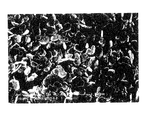
- FIG 3 is the scanning electron microscopy (SEM) image of synthetic nano-Mg(OH) 2 powder with the method in this Embodiment, and the observation results show that Mg(OH) 2 powder is composed of regular hexagonal flaky nanoparticles of about 10nm in thickness and about 80nm in long diameter.
- Mg(OH) 2 /PA6 nanocomposite can be obtained by mixing this Mg(OH) 2 powder as the filler, when the adding amout reaches 80 weight parts, Mg(OH) 2 /PA6 nanocomposite can reach level V-0 inflaming retarding effect, and the tensile strength and notched impact strength still remain at 69.5 and 11.2kJ/m 2 (the results are tested respectively according to ASTM-D638 and D6110 standard).
- caprolactam as solvent for synthesis of nano-Nd(OH) 3 by precipitation method
- Figure 4 is transmission electron microscopy (TEM) image of synthetic nano-Nd(OH) 3 powder with the method in this Embodiment, and the observation results show that Nd(OH) 3 powder is composed of evenly dispersed rodlike nanoparticles of about 40nm is mean length and about 7nm in mean diameter.
- TEM transmission electron microscopy
- caprolactam as solvent for synthesis of nano-Al(OH) 3 /Y(OH) 3 compound by precipitation
- valerolactam as solvent for synthesis of nano-Mg-Al hydrotalcite by precipitation method
- caprolactam as solvent for synthesis of nano-Ag 2 O by precipitation method
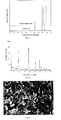
- Figure 6 is the X-ray diffraction diagram (XRD) of synthetic nano-Ag 2 O powder with the method in this Embodiment, and positions and intensity of all the diffraction peaks perfectly match the JCPDS card 65-6811 of Ag 2 O in the database, indicating that the product is high-purity Ag 2 O; moreover, diffraction peak broadening is generally due to particle size refinement, indicating that the synthetic Ag 2 O is small in particle size; however, diffraction peak intensity is still high, indicating that the synthetic material has high degree of crystallinity.
- Figure 7 is TEM image of synthetic nano-Ag 2 O powder with the method in this Embodiment, and the observation results show that Ag 2 O powder is composed of monodisperse spherical particles of about 5nm in diameter.
- caprolactam as solvent for synthesis of nano-ZnO by precipitation method
- Figure 8 is the X-ray diffraction diagram (XRD) of synthetic nano-ZnO powder with the method in this Embodiment, and positions and intensity of all the diffraction peaks perfectly match the JCPDS card 36-1451 of zincite ZnO in the database, indicating that the product is high-purity ZnO; moreover, diffraction peak broadening is generally due to particle size refinement, indicating that the synthetic ZnO is small in particle size; however, diffraction peak intensity is still high, indicating that the synthetic material has high degree of crystallinity and is very applicable to luminescent materials.
- Figure 9 is SEM image of synthetic nano-ZnO powder with the method in this Embodiment, and the observation results show that ZnO powder is composed of spherical particles of about 8nm in diameter and can be used for semiconductor luminescent quantum dots.
- valerolactam as solvent for synthesis of nano-ZnO by precipitation method
- FIG. 10 is SEM image of synthetic nano-ZnO powder with the method in this Embodiment, and the observation results show that the product is composed of monodisperse spherical particles of about 5nm in diameter.
- FIG. 11 is SEM image of synthetic nano-ZnO powder with the method in this Embodiment, and the observation results show that the product is composed of monodisperse spherical particles of about 20nm in diameter.
- caprolactam / laurolactam as mixed solvent for synthesis of nano-ZnO by precipitation method
- caprolactam / N-methylcaprolactam as mixed solvent for synthesis of nano-ZnO by precipitation method
- valerolactam / caprolactam / laurolactam as mixed solvent for synthesis of nano-ZnO by precipitation method
- N-methylcaprolactam as solvent for synthesis of nano-ZnO by precipitation method
- caprolactam as solvent for synthesis of nano-CuO by precipitation method
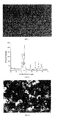
- Figure 12 is the X-ray diffraction diagram (XRD) of synthetic nano-CuO powder with the method in this Embodiment, and positions and intensity of all the diffraction peaks perfectly match the JCPDS card 44-0706 of CuO in the database, indicating that the product is high-purity CuO; moreover, diffraction peak broadening is generally due to particle size refinement, indicating that the synthetic CuO is small in particle size.
- Figure 13 is TEM image of synthetic nano-CuO powder with the method in this Embodiment, and the observation results show that the product is composed of monodisperse and narrow-distributed spherical particles of about 3.5nm in diameter.
- caprolactam as solvent for synthesis of nano-Fe 3 O 4 by precipitation method
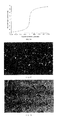
- Figure 14 is the X-ray diffraction diagram (XRD) of synthetic nano- Fe304 powder with the method in this Embodiment, and positions and intensity of all the diffraction peaks perfectly match magnetite Fe 3 O 4 in the database, indicating that the product is high-purity Fe 3 O 4 ; moreover, diffraction peak broadening is generally due to particle size refinement, indicating that the synthetic Fe 3 O 4 is small in particle size.
- Figure 15 is TEM image of synthetic nano- Fe 3 O 4 powder with the method in this Embodiment, and the observation results show that the product is composed of spherical particles of about 5nm in diameter.
- Figure 16 is magnetization curve measured by Superconductivity Quantum Interference Device (SQUID), and the results show that Fe 3 O 4 powder is a super-paramagnetic material, with the saturation magnetization of 40emu/g, and is very applicable to magnetic separation and MRI.
- SQUID Superconductivity Quantum Interference Device
- caprolactam as solvent for synthesis of nano-MgCO 3 by precipitation method
- caprolactam as solvent for synthesis of nano-BaS0 4 by precipitation method
- caprolactam as solvent for synthesis of nano-AgCl by precipitation method
- caprolactam as solvent for synthesis of nano-ZnS by precipitation method
- FIG. 17 is TEM image of synthetic nano-ZnS powder with the method in this Embodiment, and the observation results show that the product is composed of spherical particles of about 20nm in diameter.
- caprolactam as solvent for synthesis of nano-CdSe by precipitation method
- caprolactam as solvent for synthesis of nano-CdTe by precipitation method
- Figure 18 is TEM image of synthetic nano-CdTe powder with the method in this Embodiment, and the observation results show that the product is composed of monodisperse spherical particles of about 5nm in diameter and is very applicable to luminescent devices as semiconductor quantum dots.
- caprolactam as solvent for synthesis of nano-Ag by precipitation method
- FIG. 19 is TEM image of synthetic nano-Ag powder with the method in this Embodiment, and the observation results show that the product is composed of spherical particles of about 6nm in diameter.
- This nano-Ag powder can be stably dispersed in water, alcohol and other solvents, and the dispersion liquid can be directly used as conductive adhesive and antibacterial agent.
- caprolactam as solvent for synthesis of nano-Ag by precipitation method
- FIG. 20 is TEM image of synthetic nano-Ag powder with the method in this Embodiment, and the observation results show that the product is composed of rodlike particles of about 15nm in diameter and about 200nm in length.
- caprolactam as solvent for synthesis of nano-Ag plated glass microspheres by precipitation method
- nano-Ag plated glass microspheres can be used as an antibacterial component to be added in polymers and metals and as an electricity and heat conductive filler to be added in plastic and rubber.
- caprolactam as solvent for synthesis of nano-Cu by co-precipitation method
- FIG. 21 is TEM image of synthetic nano-Cu powder with the method in this Embodiment, and the observation results show that the product is composed of rodlike particles of about 300x30 nm in diameter.
- caprolactam as solvent for preparation activated carbon loaded nano-Pd by precipitation method
- This activated carbon loaded nano-Pd has high catalytic activity in hydrogenation reduction of nitrobenzene-containing compounds to aminobenzene compound, and in catalytic hydrogenation of paranitrotoluene to produce 4-methylaniline, the conversion rate is 90% and the selectivity is 98%.
- caprolactam as solvent for synthesis of nano-Fe 2 O 3 by sol-gel method method
- FIG. 22 is TEM image of synthetic nano-Fe 2 O 3 powder with the method in this Embodiment, and the observation results show that the product is composed of particles of about 3nm in diameter.
- caprolactam as solvent for synthesis of nano-Al(OH) 3 by sol-gel method
- caprolactam as solvent for synthesis of nano-SiO 2 by sol-gel method
- caprolactam as solvent for synthesis of nano-SiO 2 by sol-gel method
- caprolactam as solvent for synthesis of nano-SiO 2 by sol-gel method
- caprolactam as solvent for synthesis of nano-TiO 2 by sol-gel method
- FIG. 23 is TEM image of synthetic nano-TiO 2 powder with the method in this Embodiment, and the observation results show that the product is composed of particles of about 7nm in diameter.
- caprolactam as solvent for synthesis of nano-Fe 3 O 4 by high-temperature pyrolysis
- caprolactam as solvent for synthesis of nano-ZnS by high-temperature pyrolysis
- caprolactam as solvent for synthesis of nano-TiO 2 by high-temperature pyrolysis
- caprolactam as solvent for synthesis of nano-Ag by high-temperature pyrolysis
Landscapes
- Chemical & Material Sciences (AREA)
- Organic Chemistry (AREA)
- Inorganic Chemistry (AREA)
- Life Sciences & Earth Sciences (AREA)
- Geology (AREA)
- Engineering & Computer Science (AREA)
- Environmental & Geological Engineering (AREA)
- General Life Sciences & Earth Sciences (AREA)
- Materials Engineering (AREA)
- Manufacturing & Machinery (AREA)
- Mechanical Engineering (AREA)
- Metallurgy (AREA)
- Geochemistry & Mineralogy (AREA)
- Catalysts (AREA)
- Compositions Of Macromolecular Compounds (AREA)
- Inorganic Compounds Of Heavy Metals (AREA)
- Compounds Of Iron (AREA)
- Silicon Compounds (AREA)
- Compounds Of Alkaline-Earth Elements, Aluminum Or Rare-Earth Metals (AREA)
- Carbon And Carbon Compounds (AREA)
- Manufacture Of Metal Powder And Suspensions Thereof (AREA)
- Colloid Chemistry (AREA)
Abstract
Description
- This invention belongs to the technical field of nanomaterials, which relates to use of lactam as a solvent in preparation of nanomaterials.
- Nanomaterials refer to those with at least one dimension in three-dimensional space within the nanoscale range (1-100nm) or materials constituted by them as basic units. Nano-size effects often exhibit melting points and magnetic, optical, thermal conduction and electrical conduction characteristics which are different from bulk materials, so they can be widely used in optoelectronic materials, ceramic materials, sensors, semiconductor materials, catalytic materials, medical treatment and other fields.
- Currently, the methods for synthesis of nanomaterials mainly include three categories: solid phase method, liquid phase method and gas phase method. Since nanomaterials have high surface energy, it is hard for nanomaterials obtained by various solid-phase synthesis methods, including high-temperature calcination and mechanical milling, to reach the characteristics of ultrafine size, narrow size distribution and high dispersibility. Gas phase method is an important method for synthesis of ultrafine nanopowder, for example, vapor deposition method is the technology most widely used in semiconductor industry to deposit a variety of nanomaterials, but this process has higher equipment requirements, and deposition of nanoparticles in matrix is often accompanied with permanent agglomeration of the nanoparticles, so it is difficult to ensure their monodispersity. Compared to the former two methods, liquid phase method can prepare nanomaterials of various morphologies and sizes by selecting appropriate solvents and additives. Currently, due to low cost and wide sources, water is the most commonly used solvent in liquid phase method. However, water has high polarity, the raw materials for synthesis of nanomaterials react fast in this medium, and it is very difficult to simply use water as the solvent for controlled synthesis of ideal nanomaterials, so improvement is generally made by adding surfactants and changing synthesis process. In almost all the methods currently reported in literatures and patents for synthesis of nanomaterials of monodispersity, small size and narrow distribution with water solvent system, surfactants or surfactant-like additives are used. These surfactants or additives not only increase the cost for preparation of nanomaterials, but also inevitably remain on the surface of nanomaterials, thus affecting their subsequent use, for example, residues may intoxicate some catalytic nanomaterials, affect biocompatibility of medical nanomaterials, etc.
- Recently, a literature has reported use of organics as the solvents for synthesis of nanomaterials, such as the "alcohol-thermal method" using ethanol, ethylene glycol, propylene glycol, polyethylene glycol, etc. as the solvents and high-temperature pyrolysis, with oleic acid as the solvent, of metal oleate, carbonyl salts or acetylacetone to prepare oxides, but these methods still require to use surfactants or expensive organic metal salts, and even some synthetic routes need to consume organic solvents to provide oxygen required to produce oxides, which is not conducive to application of these methods [see specific literature: Magnetite Nanocrystals: Nonaqueous Synthesis, Characterization, and Solubility, Chem. Mater 2005, 17, 3044-3049].
- Lactam is an organic compound containing amide groups in cycles, for its derivatives, some nitrogen atoms and hydrogen on carbon can be substituted by other groups, among which, butyrolactam (also called α-pyrrolidone) containing four carbon atoms is liquid at room temperature and a commonly used high-boiling-point polar solvent in organic systhesis. Recently, Gao, et al, has synthesized super paramagnetic ferroferric oxide < 20nm in size with carbonyl iron and ferric trichloride in butyrolactam solvent [see specific literature: One-Pot Reaction to Synthesize Water-Soluble Magnetite Nanocrystals, Chem. Mater., Vol. 16, No. 8, 2004; Preparation of Water-Soluble Magnetite Nanocrystals from Hydrated Ferric Salts in 2-Pyrrolidone: Mechanism Leading to Fe3O4, Angew. Chem. Int. Ed. 2005, 44, 123-126]. Butyrolactam used in this method itself is a highly toxic solvent, which brings great threat to production safety and environmental protection; More importantly, butyrolactam has a strong coordination effect and can be firmly adsorbed on the surface of nanomaterials, which will certainly affect the subsequent use of nanomaterials containing toxic components, especially in medical treatment, health, food and other fields. In addition, other literatures were restricted to synthesis of nano ferroferric oxide with butyrolactam as the solvent, but not investigated other oxides, hydroxides and metal nanomaterials.
- Among lactams, except butyrolactam, cyclic lactams containing 5 or more carbon atoms in cycles are solid at room temperature, and the melting point increases with the number of carbon atoms, for example, the melting point was 39°C for valerolactam, 68°C for caprolactam and up to 153°C for laurolactam, so it is difficult to think about through butyrolactam that lactams containing 5 or more carbon atoms should be used as the solvents for organic synthesis, and moreover, there is no report on use of them alone as the solvents for synthesis of nanomaterials. Such substances have the structures similar to that of butyrolactam, and at temperature higher than their melting points, they have relatively strong polarity, but weaker than the polarity of water, so they can not only guarantee certain solubility of raw materials for synthesis of nanomaterials in the solvents, but aslo slow down the reactions, thus they are a kind of ideal solvents for synthesis of nanomaterials. Most importantly, lactam's amide groups have a coordination effect and can play a role similar to surfactant, so no other surfactants are required for synthesis of nanomaterials when using this solvent. Furthermore, lactam derivatives contains two amide groups in the cycles, for example, succinimide, glutarimide, adipimide also have similar characteristics. Therefore, lactams containing 5 or more carbon atoms, above their melting points, can substitute other common solvents for preparation of nanomaterials.
- For shortages of solid phase method, gas phase method and liquid phase method in existing techniques that are not conducive to preparation of nanomaterials with ultrafine size, narrow size distribution and high dispersibility, especially for the high toxicity of butyrolactam, which affects subsequent use of the synthetic nanoparticles, the present invention is to provide use of lactams as the solvents for preparation of nanomaterials.
- The technical solutions of this invention are as follows:
- This invention provides use of lactams as solvent in the synthesis of nanomaterials.
- The lactam is one or more of substances selected from cyclic amides or cyclic amide derivatives.
- The general structural formula of the metioned cyclic amides is:


- From valerolactam, caprolactam, oenantholactam, 2-azacyclononanone, nonanoylamide, caprinlactam, undecanoylamide, laurolactam, glutarimide or adipimide, in which caprolactam, laurolactam, glutarimide or adipimide are preferred, and caprolactam is more preferred.
- The general structural formula of the metioned cyclic amide derivatives is:

- The cyclic amide derivatives are selected from N-methylvalerolactam, N-methylcaprolactam, N-vinylcaprolactam or N-methoxycaprolactam, and N-methylcaprolactam is preferred.
- The nanomaterials refer to substances containing inorganic particles with 1 nm < particle size ≤ 100nm; the content of the inorganic particles is no less than 0.01%; the inorganic particles are mixtures composed of one or more of substances selected from hydroxides, oxides, sulfides, metals or inorganic salts.
- The hydroxides refer to water-insoluble or slightly water-soluble inorganic compounds formed by one or more than one metal elements and hydroxyl, preferably mixtures composed of one or more of substances further selected from Ni(OH)2, Mg(OH)2, Al(OH)3, Nd(OH)3, Y(OH)3, Mg-Al hydrotalcite or Zn-Al hydrotalcite;
- The oxides refer to water insoluble or slightly soluble inorganic compounds formed by one or more metal elements or metalloid elements and oxygen, preferably mixtures composed of one or more of substances further selected from Ag2O, ZnO, Cu2O, Fe3O4, SiO2, MgAl2O4 or CaTiO3, preferably from Ag2O, ZnO, Cu2O or Fe3O4;
- The sulfides are the water insoluble or slightly soluble inorganic compounds formed by binding metal elements or metalloid elements with sulfur, selenium, tellurium, arsenic or antimony, preferably mixtures composed of one or more of substances further selected from CuS, ZnS, CdS, CdSe, CdTe, WSe2, CuTe, CoAs2 or GaAs, preferably ZnS, CdS, CdSe or CdTe;
- The metals are water insoluble or slightly soluble substances composed of one or more of metal elements selected from Group IIIA, IVA, IB, IIB or VIII in the periodic table of elements, preferably are alloys or mixtures composed of one or more of substances selected fromFe, Ni, Cu, Ag, Pd, Pt, Au or Ru, preferably from Cu, Ag, Au, Pd or Cu-Ag alloy;
- The inorganic salts refer to water insoluble or slightly soluble inorganic compounds formed by binding positive ions of metal elements with carbonate, sulfate, silicate or halogen negative ions, preferably mixtures composed of one or more of substances selected from CaCO3, MgCO3, BaSO4, CaSiO3, AgCl, AgBr or CaF2, preferably from MgCO3, BaSO4, AgCl or CaF2.
- This invention also provides a method of using lactams as the solvents for preparation of nanomaterials. Lactams can partly or completely substitute currently commonly used solvents, including water, alcohol, polyhydric alcohols with molecular weight no higher than 5000, oleic acid and α-pyrrolidone, for preparation of various nanomaterials.
- The methods for the lactam as a solvent for synthesis of nanomaterials include precipitation method, sol-gel method or high temperature pyrolysis.
- The precipitation method for synthesis of nanomaterials includes the following steps: add 0.01-100 weight parts of precursor and 100 weight parts of lactam into the reactor and stir at 80-200°C for 0.1-2h to make the precursor fully dissolved or dispersed in the molten lactam solvent, when stirring, add 0.05-50 weight parts of precipitant for sufficient precipitation reaction, with the reaction temperature of 80-250°C and the reaction time of 0.1-200h, and obtain the nanomaterials after washing with water, separation and drying.
- The lactam solvent has a purity ≥60% and moisture ≤30%;
- The precursor is selected from soluble inorganic salts formed by binding metal cations with halogen, nitrate, nitrite, sulfate, sulfite or carbonate anions, further from MgCl2·6H2O, Nd(NO3)3·6H2O, Y(NO3)3·6H2O, AlCl3·9H2O, Al2(SO4)3·18H2O, ZnCl2, AgNO3, CuSO4·5H2O, FeCl2·4H2O, FeCl3·6H2O, Cd(NO3)2·2H2O, BaCl2 or PdCl2; or from organic compounds containing metals or metalloids, further from zinc acetate, carbonyl iron, iron acetylacetonate, iron oleate, butyl titanate or tetraethyl orthosilicate;
- The precipitant is selected from alkali metals, alkali metal oxides, alkali metal hydroxides, alkali metal organic salts, ammonia and compounds able to release ammonia by pyrolysis, soluble inorganic salts formed by metal elements and halogen elements, soluble inorganic salts formed by metal elements and chalcogens, soluble inorganic salts formed by metal elements and carbonate, or soluble inorganic salts formed by metal elements and sulfate; in which, alkali metals are further selected from Li, Na or K; alkali metal oxides are further selected from Na2O, K2O, Na2O2 or K2O2; alkali metal hydroxides are further selected from NaOH or KOH; alkali metal organic salts are further selected from sodium methoxide, sodium ethoxide, sodium phenoxide, potassium oleate, sodium lactam or potassium caprolactam; ammonia and compounds able to release ammonia by pyrolysis are further selected from ammonia gas, ammonia water, urea, ammonium carbonate or ammonium bicarbonate, preferably ammonia water; soluble inorganic salts formed by metal elements and halogen elements are further selected from NaCl, KC1, MgCl2, CaCl2, AlCl3·6H2O, FeCl2·4H2O or FeCl3·6H2O, preferably NaCl or KCl; soluble inorganic salts formed by metal elements and chalcogens are further selected from Na2S, K2S, Na2S·9H2O, Na2Se or NaHTe; soluble inorganic salts formed by metal elements and carbonate are further selected from Na2CO3 or K2CO3; soluble inorganic salts formed by metal elements and sulfate are further selected from Na2SO4 or K2SO4.
- During systhesis of nanomaterials by the precipitation method, after adding precipitant, further add 0.05-50 weight parts of reductant.
- The sol-gel method for synthesis of nanomaterials with lactam as the solvent includes the following steps: add 0.01-100 weight parts of hydrolyzable precursor and 100 weight parts of lactam into the reactor and stir at 80-150°C for 0.1-2h to make the precursor fully dissolved or dispersed in the molten lactam solvent, and add 0.01-50 weight parts of water for hydrolysis to obtain sol, with the hydrolysis temperature of 80~250°C and hydrolysis time of 0.01~48h; perform gelatinization at 80~270°C for 0.01~96h, and obtain the nanomaterials after washing with water, separation and drying.
- The hydrolyzable precursor is selected from hydrolyzable inorganic salts formed by binding metal cations with halogen, nitrate, sulfate or acetate anions or from metal organics; wherein: hydrolyzable inorganic salts formed by binding metal cations with halogen, nitrate, sulfate or acetate anions are further selected from FeCl2·4H2O, FeCl3, FeCl3·6H2O, Fe(NO3)3·6H2O, Fe2(SO4)3, AlCl3, AlCl3·6H2O, CuSO4·5H2O, CuCl2, CuCl2-2H2O, TiCl3, TiCl4 or Zn(OAc)2·2H2O, preferably FeCl3·6H2O or AlCl3; metal organics are further selected from diethyl aluminium chloride, aluminum isopropoxide, diethyl zinc, tetraethyl orthosilicate, butyl titanate or tetraethyl titanate, preferably tetraethyl orthosilicate or butyl titanate;
- The lactam solvent has a purity ≥60% and moisture ≤30%.
- During systhesis of nanomaterials by the sol-gel method, after hydrolysis, further add 0.05-50 weight parts of reductant.
- The high temperature pyrolysis method for synthesis of nanomaterials with lactam as the solvent includes the following steps: add 0.01-100 weight parts of pyrolyzable precursor and 100 weight parts of lactam into the reactor and stir at 80-150°C for 0.1-2h to make the precursor fully dissolved or dispersed in the molten lactam solvent, perform pyrolysis at 100-270°C for 0.1~20h, and obtain the nanomaterials after washing with water, separation and drying.
- The pyrolyzable precursor is selected from soluble inorganic salts pyrolyzable in solvent no higher than 280°C or from metal organics pyrolyzable in solvent no higher than 280°C; in which, soluble inorganic salts pyrolyzable in solvent no higher than 280°C are further selected from AgNO3, FeCl3, Zn(OAc)2 or TiCl4; metal organics pyrolyzable in solvent no higher than 280°C are further selected from oleate, levulinate or carbonyl salts, preferably ferric oleate, acetylacetone or carbonyl iron (Fe(CO)5).
- During systhesis of nanomaterials by the high temperature pyrolysis, after adding lactam, further add 0.05-50 weight parts of anion donors.
- The anion donors are selected from compounds pyrolyzable at the temperature of ≤ 280°C and able to produce anions required for synthesis of nanomaterials, futher selected from benzyl alcohol, trioctylphosphine oxide (provide O2- required for synthesis of oxides) or tetramethyl thiuram disulfide (provide S2- required for synthesis of sulfides).
- During systhesis of mixtures including nanoparticles/lactam by the high temperature pyrolysis, before pyrolysis at 100-270°C, further add 0.05-50 weight parts of reductant.
- The reductant is selected from ascorbic acid, potassium borohydride, sodium borohydride, hydrazine, hydrazine hydrate, hydroxylamine or aldehyde group-containing organics; in which: aldehyde group-containing organics are further selected from formaldehyde, acetaldehyde, glyoxal, benzaldehyde or glucose.
- During systhesis of nanomaterials by the precipitation method, sol-gel method or high temperature pyrolysis, after adding lactam, further add 0.01-20 weight parts of stabilizer or 0.1-80 weight parts of insoluble inorganics.
- The stabilizer is selected from anionic surfactant, cationic surfactant, amphoteric surfactant or nonionic surfactant that adjusts the morphology of synthetic nanomaterials, in which: anionic surfactant is further selected from sodium dodecyl sulfate, sodium alkyl benzene sulfonate or sodium oleate, cationic surfactant is further selected from tetrapropylammonium hydroxide, tetrapropylammonium bromide, tetrapropylammonium chloride, cetyltrimethylammonium bromide, cetyltrimethylammonium chloride or dodecyltrimethylammonium bromide, amphoteric surfactant is further selected from dodecyl ethoxy sulfobetaine, octadecyl 2 hydroxyethyl amine oxide or octadecanamide dimethylamine oxide, and nonionic surfactant is further selected from triblock copolymer(P123, PEO-PPO-PEO), polyethylene glycol, polyvinyl pyridine, glycerol or 2-mercaptopropionic acid.
- The insoluble inorganics are selected from the substances as the carrier or attachment point for synthesis of nanomaterials, further from activated carbon, graphene, carbon fibers, carbon nanotubes, molecular sieves, smectite clay, diatomaceous earth, glass fibers or glass microspheres.
- The methods applicable to synthesis of nanomaterials with lactams as solvents also include cooperative use of precipitation method, sol-gel method, or high-temperature pyrolysis.
- As the fact that presently lactams are only used as medical and pharmaceutical raw materials, polymer monomers and chemical intermediates, this invention has developed a new use of lactams as solvents for synthesis of nanomaterials.
- Compared to existing techniques, this invention has the following advantages and beneficial effects:
- 1. Compared to other traditional uses, lactams, as the solvents for preparation of nanomaterials, have the following advantages: 1) nanomaterials belong to an emerging technology field and have added value higher than that of traditional polymers and pharmaceutical intermediates; 2) as solvents, if recovery conditions are appropriate, they can be recycled, which complies with environmental protection requirements.
- 2. In the field of synthesis of nanomaterials with liquid phase method, compared to water or other organic solvents, lactam solvents have the following advantages: 1) nanoparticles with the size of no larger than 100nm can be synthesized with or without adding surfactant; 2) lactam solvents can well dissolve common water-soluble salts and organic metals, and under the premise of ensuring small size, high dispersibility and high crystallinity, the yield of nanoparticles per unit mass is high; 3) the synthesized oxide nanoparticles have narrow size distribution and high dispersibility and no residual surfactant; 4) lactam solvents have high boiling point and have no pressure-resistant requirements to reaction equipments at high-temperature synthesis; 5) lactam solvents do not participate in chemical reactions throughout the preparation and can be recycled, and are suitable for large scale industrial production; 6) compared to butyrolactam with hightoxicity, tactam solvents used in this invention have low toxicity.
- 3. The raw materials used for this method are at low cost, production equipments are simple, and synthetic routes are environmentally friendly, and this method is suitable for large-scale industrial production.
-
-
Figure 1 (13C-NMR) before and after use of caprolactam solvent for synthesis of nano-Mg(OH)2 powder with the method inEmbodiment 1. -
Figure 2 X-ray diffraction diagram of synthetic nano-Mg(OH)2 powder with the method inEmbodiment 1. -
Figure 3 Scanning electron microscopy image of synthetic nano-Mg(OH)2 powder with the method inEmbodiment 1. -
Figure 4 Transmission electron microscopy image of synthetic nano-Nd(OH)3 powder with the method in Embodiment 2. -
Figure 5 Transmission electron microscopy image of synthetic nano-Al(OH)3/Y(OH)3 powder with the method in Embodiment 3. -
Figure 6 X-ray diffraction diagram of synthetic nano-Ag2O powder with the method in Embodiment 5. -
Figure 7 Transmission electron microscopy image of synthetic nano-Ag2O powder with the method in Embodiment 5. -
Figure 8 X-ray diffraction diagram of synthetic nano-ZnO powder with the method in Embodiment 6. -
Figure 9 Scanning electron microscopy image of synthetic nano-ZnO powder with the method in Embodiment 6. -
Figure 10 Scanning electron microscopy image of synthetic nano-ZnO powder with the method in Embodiment 7. -
Figure 11 Scanning electron microscopy image of synthetic nano-ZnO powder with the method in Embodiment 8. -
Figure 12 X-ray diffraction diagram of synthetic nano-CuO powder with the method in Embodiment 14. -
Figure 13 Transmission electron microscopy image of synthetic nano-CuO powder with the method in Embodiment 14. -
Figure 14 X-ray diffraction diagram of synthetic nano-Fe3O4 powder with the method in Embodiment 15. -
Figure 15 Transmission electron microscopy image of synthetic nano-Fe3O4 powder with the method in Embodiment 15. -
Figure 16 Magnetization curve measured by Superconductivity Quantum Interference Device (SQUID) of synthetic nano-Fe3O4 powder with the method in Embodiment 15. -
Figure 17 Transmission electron microscopy image of synthetic nano-ZnS powder with the method in Embodiment 19. -
Figure 18 Transmission electron microscopy image of synthetic nano-CdTe powder with the method in Embodiment 21. -
Figure 19 Transmission electron microscopy image of synthetic nano-Ag powder with the method in Embodiment 22. -
Figure 20 Transmission electron microscopy image of synthetic nano-Ag powder with the method in Embodiment 23. -
Figure 21 Transmission electron microscopy image of synthetic nano-Cu powder with the method in Embodiment 25. -
Figure 22 Transmission electron microscopy image of synthetic nano-Fe2O3 powder with the method in Embodiment 27. -
Figure 23 Transmission electron microscopy image of synthetic nano-TiO2 powder with the method inEmbodiment 32. - Further explanations are made to this invention in combination with the embodiments shown in the following diagrams.
- Add 20.3g MgCl2·6H2O into 100g melten caprolactam (purity of caprolactam ≥80%, moisture ≤20%) and stir at 100°C for 30min to make MgCl2 fully dissolved. When stirring, rapidly add 10g ammonia water (containing ammonia: 26%) and keep at constant temperature of 100°C for 24h. Wash the obtained mixture with 200g deionized water by centrifugation for three times, and obtain nano-Mg(OH)2 powder after intensive drying and crushing.
-
Figure 1 shows 13C-NMR before and after use of caprolactam solvent, deuterated chloroform is used as a solvent, and the spectrum keeps unchanged before and after use of caprolactam solvent, indicating that caprolactam solvent can be recycled.Figure 2 is the X-ray diffraction diagram of synthetic nano-Mg(OH)2 powder with the method in this Embodiment, and at the double diffraction angles 2θ=18.7°, 38.0°, 50.8° and 58.8°, the number of JCPDS card corresponding to the diffraction peak in comparison database is 44-1482, belonging to typical brucite crystal form, indicating that the product is high-purity Mg(OH)2; moreover, diffraction peak broadening is generally due to particle size refinement, indicating that the synthetic Mg(OH)2 is small in particle size; however, diffraction peak intensity is still high, indicating that the synthetic material has high degree of crystallinity.Figure 3 is the scanning electron microscopy (SEM) image of synthetic nano-Mg(OH)2 powder with the method in this Embodiment, and the observation results show that Mg(OH)2 powder is composed of regular hexagonal flaky nanoparticles of about 10nm in thickness and about 80nm in long diameter. Mg(OH)2/PA6 nanocomposite can be obtained by mixing this Mg(OH)2 powder as the filler, when the adding amout reaches 80 weight parts, Mg(OH)2/PA6 nanocomposite can reach level V-0 inflaming retarding effect, and the tensile strength and notched impact strength still remain at 69.5 and 11.2kJ/m2 (the results are tested respectively according to ASTM-D638 and D6110 standard). - Add 10.96g Nd(NO3)3·6H2O into 100g melten caprolactam (purity of caprolactam ≥80%, moisture ≤20%) and stir at 200°C for 30min to make Nd(NO3)3·6H2O fully dissolved. When stirring, rapidly add 3g NaOH and keep at constant temperature of 200°C for 24h. Wash the obtained mixture with 200g deionized water by centrifugation for three times, and obtain nano-Nd(OH)3 powder after intensive drying and crushing.
Figure 4 is transmission electron microscopy (TEM) image of synthetic nano-Nd(OH)3 powder with the method in this Embodiment, and the observation results show that Nd(OH)3 powder is composed of evenly dispersed rodlike nanoparticles of about 40nm is mean length and about 7nm in mean diameter. - Add 3.83g Y(NO3)3·6H2O and 4.02g AlCl3·9H2O (molar ratio: [Y3+]/[Al3+]=3/5) into 100g melten caprolactam (purity of caprolactam ≥80%, moisture ≤20%) and stir at 200°C for 30min to make Y(NO3)3·6H2O and AlCl3·9H2O fully dissolved. When stirring, rapidly add 8g NaOH and keep at constant temperature of 200°C for 24h. Wash the obtained mixture with 200g deionized water by centrifugation for three times, and obtain nano-Al(OH)3/Y(OH)3 powder after intensive drying and crushing.
Figure 5 is TEM image of synthetic nano-Al(OH)3/Y(OH)3 powder with the method in this Embodiment, and the observation results show that the product is aggregated by small particles of about 5nm in diameter. - Add 2.03g MgCl2·6H2O and 3.33g Al2(SO4)3 ·18H2O into 100g melten valerolactam (purity of valerolactam >80%, moisture ≤20%) and stir at 120°C for 30min to make the raw materials fully dissolved, and add 1.4g NaOH and 1.86g Na2CO3 and keep at constant temperature of 150°C for 24h. Wash the obtained mixture with 200g deionized water by centrifugation for three times, and obtain nano-Mg-Al hydrotalcite powder after intensive drying and crushing.
- Add 4.24g AgNO3 into 100g melten caprolactam (purity of caprolactam ≥60%, moisture ≤30%) and stir at 80°C for 30min to make AgNO3 fully dissolved. When stirring, rapidly add 1g NaOH and keep at constant temperature of 100°C for 2h. Wash the obtained mixture with 200g deionized water by centrifugation for three times, and obtain nano-Ag2O powder after intensive drying and crushing.
Figure 6 is the X-ray diffraction diagram (XRD) of synthetic nano-Ag2O powder with the method in this Embodiment, and positions and intensity of all the diffraction peaks perfectly match the JCPDS card 65-6811 of Ag2O in the database, indicating that the product is high-purity Ag2O; moreover, diffraction peak broadening is generally due to particle size refinement, indicating that the synthetic Ag2O is small in particle size; however, diffraction peak intensity is still high, indicating that the synthetic material has high degree of crystallinity.Figure 7 is TEM image of synthetic nano-Ag2O powder with the method in this Embodiment, and the observation results show that Ag2O powder is composed of monodisperse spherical particles of about 5nm in diameter. - Add 3.41 g ZnCl2 into 100g melten caprolactam (purity of caprolactam ≥80%, moisture ≤20%) and stir at 150°C for 30min to make ZnCl2 fully dissolved. When stirring, rapidly add 2g NaOH and keep at constant temperature of 100°C for 2h. Wash the obtained mixture with 200g deionized water by centrifugation for three times, and obtain nano-ZnO powder after intensive drying and crushing.
Figure 8 is the X-ray diffraction diagram (XRD) of synthetic nano-ZnO powder with the method in this Embodiment, and positions and intensity of all the diffraction peaks perfectly match the JCPDS card 36-1451 of zincite ZnO in the database, indicating that the product is high-purity ZnO; moreover, diffraction peak broadening is generally due to particle size refinement, indicating that the synthetic ZnO is small in particle size; however, diffraction peak intensity is still high, indicating that the synthetic material has high degree of crystallinity and is very applicable to luminescent materials.Figure 9 is SEM image of synthetic nano-ZnO powder with the method in this Embodiment, and the observation results show that ZnO powder is composed of spherical particles of about 8nm in diameter and can be used for semiconductor luminescent quantum dots. - Add 3.41 g ZnCl2 into 100g melten valerolactam (purity of valerolactam ≥80%, moisture ≤20%) and stir at 150°C for 30min to make ZnCl2 fully dissolved. When stirring, rapidly add 2g NaOH and keep at constant temperature of 100°C for 2h. Wash the obtained mixture with 200g deionized water by centrifugation for three times, and obtain nano-ZnO powder after intensive drying and crushing.
Figure 10 is SEM image of synthetic nano-ZnO powder with the method in this Embodiment, and the observation results show that the product is composed of monodisperse spherical particles of about 5nm in diameter. - Add 3.41g ZnCl2 into 100g melten laurolactam (purity of laurolactam ≥90%, moisture ≤5%) and stir at 160°C for 30min to make ZnCl2 fully dissolved. When stirring, rapidly add 2g NaOH and keep at constant temperature of 100°C for 2h. Wash the obtained mixture with 200g deionized water by centrifugation for three times, and obtain nano-ZnO powder after intensive drying and crushing.
Figure 11 is SEM image of synthetic nano-ZnO powder with the method in this Embodiment, and the observation results show that the product is composed of monodisperse spherical particles of about 20nm in diameter. - Add 3.41g ZnCl2 into mixed lactam solvent composed of 80g caprolactam and 20g laurolactam (purity of caprolactam and laurolactam ≥90%, moisture ≤5%) and stir at 160°C for 30min to make ZnCl2 fully dissolved. When stirring, rapidly add 2g NaOH and keep at constant temperature of 100°C for 2h. Wash the obtained mixture with 200g deionized water by centrifugation for three times, and obtain nano-ZnO powder after intensive drying and crushing, with the size of about 12nm.
- Add 3.41g ZnCl2 into mixed lactam solvent composed of 80g caprolactam and 20g N-methylcaprolactam (purity of caprolactam and N-methylcaprolactam ≥90%, moisture ≤5%) and stir at 160°C for 30min to make ZnCl2 fully dissolved. When stirring, rapidly add 2g NaOH and keep at constant temperature of 100°C for 2h. Wash the obtained mixture with 200g deionized water by centrifugation for three times, and obtain nano-ZnO powder after intensive drying and crushing, with the size of about 10nm.
- Add 3.41 g ZnCl2 into mixed lactam solvent composed of 20g valerolactam, 60g caprolactam and 20g laurolactam (purity of caprolactam ≥90%, moisture ≤5%; purity of valerolactam and laurolactam ≥80%, moisture ≤20%) and stir at 160°C for 30min to make ZnCl2 fully dissolved. When stirring, rapidly add 2g NaOH and keep at constant temperature of 100°C for 2h. Wash the obtained mixture with 200g deionized water by centrifugation for three times, and obtain nano-ZnO powder after intensive drying and crushing, with the size of about 10nm, indicating that the size of synthetic nanomaterials can be effectively adjusted by changing the components of lactam solvent.
- Add 3.41g ZnCl2 into 100g melten adipimide (purity of adipimide ≥90%, moisture ≤5%) and stir at 160°C for 30min to make ZnCl2 fully dissolved. When stirring, rapidly add 2g NaOH and keep at constant temperature of 100°C for 2h. Wash the obtained mixture with 200g deionized water by centrifugation for three times, and obtain nano-ZnO powder after intensive drying and crushing.
- Add 3.41g ZnCl2 into 100g melten N-methylcaprolactam (purity of N-methylcaprolactam ≥99%, moisture <0.2%) and stir at 160°C for 30min to make ZnCl2 fully dissolved. When stirring, rapidly add 2g NaOH and keep at constant temperature of 100°C for 8h. Wash the obtained mixture with 200g deionized water by centrifugation for three times, and obtain nano-ZnO powder after intensive drying and crushing.
- Add 6.242g CuSO4·5H2O into 100g melten caprolactam (purity of caprolactam ≥80%, moisture ≤20%) and stir at 100°C for 30min to make CuSO4·5H2O fully dissolved. When stirring, rapidly add 2g NaOH and keep at constant temperature of 100°C for 2h. Wash the obtained mixture with 200g deionized water by centrifugation for three times, and obtain nano-CuO powder after intensive drying and crushing.
Figure 12 is the X-ray diffraction diagram (XRD) of synthetic nano-CuO powder with the method in this Embodiment, and positions and intensity of all the diffraction peaks perfectly match the JCPDS card 44-0706 of CuO in the database, indicating that the product is high-purity CuO; moreover, diffraction peak broadening is generally due to particle size refinement, indicating that the synthetic CuO is small in particle size.Figure 13 is TEM image of synthetic nano-CuO powder with the method in this Embodiment, and the observation results show that the product is composed of monodisperse and narrow-distributed spherical particles of about 3.5nm in diameter. - Add 4.1g FeCl2·4H2O and 8.2g FeCl3·6H2O into 100g melten caprolactam (purity of caprolactam ≥80%, moisture ≤20%) and stir at 150°C for 30min to make them fully dissolved. When stirring, rapidly add 9.8g KOH and keep at constant temperature of 100°C for 2h. Wash the obtained mixture with 200g deionized water by centrifugation for three times, and obtain nano-Fe3O4 powder after intensive drying and crushing.
Figure 14 is the X-ray diffraction diagram (XRD) of synthetic nano- Fe304 powder with the method in this Embodiment, and positions and intensity of all the diffraction peaks perfectly match magnetite Fe3O4 in the database, indicating that the product is high-purity Fe3O4; moreover, diffraction peak broadening is generally due to particle size refinement, indicating that the synthetic Fe3O4 is small in particle size.Figure 15 is TEM image of synthetic nano- Fe3O4 powder with the method in this Embodiment, and the observation results show that the product is composed of spherical particles of about 5nm in diameter.Figure 16 is magnetization curve measured by Superconductivity Quantum Interference Device (SQUID), and the results show that Fe3O4 powder is a super-paramagnetic material, with the saturation magnetization of 40emu/g, and is very applicable to magnetic separation and MRI. - Add 20.3g MgCl2·6H2O into 100g melten caprolactam (purity of caprolactam ≥80%, moisture ≤20%) and stir at 100°C for 30min to make MgCl2 fully dissolved. When stirring, rapidly add 15g Na2CO3 and keep at constant temperature of 100°C for 24h. Wash the obtained mixture with 200g deionized water by centrifugation for three times, and obtain nano-MgCO3 powder after intensive drying and crushing. The product is in flake structure, with the thickness of about 5nm and long diameter of 60nm.
- Add 5.6g BaCl2 into 100g melten caprolactam (purity of caprolactam ≥80%, moisture ≤20%) and stir at 100°C for 30min to make MgCl2 fully dissolved. When stirring, rapidly add 3.0g Na2SO4 and keep at constant temperature of 100°C for 24h. Wash the obtained mixture with 200g deionized water by centrifugation for three times, and obtain nano-BaSO4 powder after intensive drying and crushing. The product is in flake structure, with the thickness of about 4nm and long diameter of 90nm.
- Add 2.1 g AgNO3 into 100g melten caprolactam (purity of caprolactam ≥80%, moisture ≤20%) and stir at 100°C for 30min to make AgNO3 fully dissolved. When stirring, rapidly add 1.5g NaCl and keep at constant temperature of 100°C for 24h. Wash the obtained mixture with 200g deionized water by centrifugation for three times, and obtain nano-AgCl powder after intensive drying and crushing. The product is composed of spherical particles, with the size of about 3nm.
- Add 10.0g ZnCl2 into 100g melten caprolactam (purity of caprolactam ≥80%, moisture ≤20%) and stir at 100°C for 30min to make ZnCl2 fully dissolved. When stirring, rapidly add 12.0g Na2S·9H2O and keep at constant temperature of 150°C for 12h. Wash the obtained mixture with 200g deionized water by centrifugation for three times, and obtain nano-ZnS powder after intensive drying and crushing.
Figure 17 is TEM image of synthetic nano-ZnS powder with the method in this Embodiment, and the observation results show that the product is composed of spherical particles of about 20nm in diameter. - Add 7.71g Cd(NO3)2·2H2O into 100g melten caprolactam (purity of caprolactam ≥80%, moisture ≤20%) and stir at 100°C for 30min to make Cd(NO3)2·2H2O fully dissolved. When stirring, rapidly add 3g Na2Se and keep at constant temperature of 150°C for 12h. Wash the obtained mixture with 200g deionized water by centrifugation for three times, and obtain nano-CdSe powder after intensive drying and crushing.
- Add 0.82g Cd(NO3)2·2H2O and 0.54ml 2-mercaptopropionic acid (stabilizer) into 100g melten caprolactam (purity of caprolactam ≥90%, moisture ≤1%) and stir at 80°C for 30min to make Cd(NO3)2·2H2O and 2-mercaptopropionic acid fully dissolved. Under the protection of nitrogen, rapidly add 0.5g NaHTe and keep at constant temperature of 90°C for 4h. Wash the obtained mixture with 200g deionized water by centrifugation for three times, and obtain nano-CdTe powder after intensive drying and crushing.
Figure 18 is TEM image of synthetic nano-CdTe powder with the method in this Embodiment, and the observation results show that the product is composed of monodisperse spherical particles of about 5nm in diameter and is very applicable to luminescent devices as semiconductor quantum dots. - Add 4.24g AgNO3 into 100g melten caprolactam (purity of caprolactam ≥80%, moisture ≤20%) and stir at 100°C for 30min to make AgNO3 fully dissolved. When stirring, rapidly add 1g NaOH and keep at constant temperature of 100°C for 2h, and then add 2g NaBH for continued reaction for 1h. Wash the obtained mixture with 200g deionized water by centrifugation for three times, and obtain nano-Ag powder after intensive drying and crushing.
Figure 19 is TEM image of synthetic nano-Ag powder with the method in this Embodiment, and the observation results show that the product is composed of spherical particles of about 6nm in diameter. This nano-Ag powder can be stably dispersed in water, alcohol and other solvents, and the dispersion liquid can be directly used as conductive adhesive and antibacterial agent. - Add 4.24g AgNO3 and 10g cetyltrimethylammonium bromide into 100g melten caprolactam (purity of caprolactam ≥95%, moisture ≤1%) and stir at 100°C for 30min to make AgNO3 and cetyltrimethylammonium bromide fully dissolved. When stirring, rapidly add 1g NaOH and keep at constant temperature of 100°C for 2h, and then add 2g NaBH for continued reaction for 1h. Wash the obtained mixture with 200g deionized water by centrifugation for three times, and obtain nano-Ag powder after intensive drying and crushing.
Figure 20 is TEM image of synthetic nano-Ag powder with the method in this Embodiment, and the observation results show that the product is composed of rodlike particles of about 15nm in diameter and about 200nm in length. - Add 4.24g AgNO3 and 10g glass microspheres (mean diameter is about 15um) into 100g melten caprolactam (purity of caprolactam ≥80%, moisture ≤20%) and stir at 100°C for 1h to make glass microspheres fully dispersed. When stirring, rapidly add 1g NaOH and keep at constant temperature of 100°C for 30min, and then add 2g glucose for continued reaction for 12h. Wash the obtained mixture with 200g deionized water by centrifugation for three times, and obtain nano-Ag plated glass microspheres after intensive drying and crushing. The nano-Ag plated glass microspheres can be used as an antibacterial component to be added in polymers and metals and as an electricity and heat conductive filler to be added in plastic and rubber.
- Add 6.242g CuSO4·5H2O into 100g melten caprolactam (purity of caprolactam ≥80%, moisture ≤20%) and stir at 100°C for 30min to make CuSO4·5H2O fully dissolved. When stirring, rapidly add 1g NaOH and keep at constant temperature of 120°C for 2h, and then add 4g ascorbic acid for reaction for 12h. Wash the obtained mixture with 200g deionized water by centrifugation for three times, and obtain nano-Cu powder after intensive drying and crushing.
Figure 21 is TEM image of synthetic nano-Cu powder with the method in this Embodiment, and the observation results show that the product is composed of rodlike particles of about 300x30 nm in diameter. - Add 5.0g PdCl2 and 10g activated carbon (carrier) into 100g melten caprolactam (purity of caprolactam ≥80%, moisture ≤20%) and stir at 100°C for 30min to make PdCl2 fully dissolved. When stirring, rapidly add 1g NaOH and keep at constant temperature of 100°C for 2h, and then add 2g KBH4 for continued reaction for 2h. Wash the obtained mixture with 200g deionized water by centrifugation for three times, and obtain activated carbon loaded nano-Pd after intensive drying and crushing. This activated carbon loaded nano-Pd has high catalytic activity in hydrogenation reduction of nitrobenzene-containing compounds to aminobenzene compound, and in catalytic hydrogenation of paranitrotoluene to produce 4-methylaniline, the conversion rate is 90% and the selectivity is 98%.
- Add 8.2g FeCl3·6H2O into 100g melten caprolactam (purity of caprolactam ≥95%, moisture ≤1%) and stir at 80°C for 30min, add 5g deionized water for hydrolysis reaction at 100°C for 24h, and then vacuumize to remove water and shift to crystallization at 180°C for 8h. Wash the obtained mixture with 200g absolute alcohol by centrifugation for three times, and obtain nano-Fe2O3 powder after intensive drying and crushing.
Figure 22 is TEM image of synthetic nano-Fe2O3 powder with the method in this Embodiment, and the observation results show that the product is composed of particles of about 3nm in diameter. - Add 6.4g AlCl3 into 100g melten caprolactam (purity of caprolactam ≥99.5%, moisture ≤0.1%) and stir at 80°C for 30min, slowly add 10g deionized water for hydrolysis reaction at 100°C for 24h, and then vacuumize to remove water and shift to crystallization at 150°C for 24h. Wash the obtained mixture with 200g absolute alcohol by centrifugation for three times, and obtain nano-Al(OH)3 powder after intensive drying and crushing. The powder is composed of irregular flaky particles of 2nm in thickness.
- Add 6g tetraethyl orthosilicate into 100g melten caprolactam (purity of caprolactam ≥60%, moisture ≤30%) and stir at 150°C for 30min, add 20g deionized water for hydrolysis reaction at 120°C for 5h, and then vacuumize to remove water and shift to crystallization at 200°C for 24h. Wash the obtained mixture with 200g absolute alcohol by centrifugation for three times, and obtain nano-SiO2 powder after intensive drying and crushing, with the size of 50nm.
- Add 6g tetraethyl orthosilicate into 100g melten caprolactam (purity of caprolactam ≥60%, moisture ≤30%) and stir at 150°C for 30min, add 0.1g deionized water for hydrolysis reaction at 120°C for 5h, and then vacuumize to remove water and shift to crystallization at 200°C for 24h. Wash the obtained mixture with 200g absolute alcohol by centrifugation for three times, and obtain nano-SiO2 powder after intensive drying and crushing, with the size of 12nm.
- Add 6g tetraethyl orthosilicate into 100g melten caprolactam (purity of caprolactam ≥60%, moisture ≤30%) and stir at 150°C for 30min, add 40g deionized water for hydrolysis reaction at 120°C for 5h, and then vacuumize to remove water and shift to crystallization at 200°C for 24h. Wash the obtained mixture with 200g absolute alcohol by centrifugation for three times, and obtain nano-SiO2 powder after intensive drying and crushing, with the size of 80nm.
- Add 5ml butyl titanate into 100g melten caprolactam (purity of caprolactam ≥99.5%, moisture ≤0.1%) and stir at 80°C for 30min, add 5g deionized water for hydrolysis reaction at 100°C for 24h, and then vacuumize to remove water and shift to crystallization at 200°C for 8h. Wash the obtained mixture with 200g absolute alcohol by centrifugation for three times, and obtain nano-TiO2 powder after intensive drying and crushing.
Figure 23 is TEM image of synthetic nano-TiO2 powder with the method in this Embodiment, and the observation results show that the product is composed of particles of about 7nm in diameter. - Add 3.2g carbonyl iron into 100g melten caprolactam (purity of caprolactam ≥99.5%, moisture ≤0.1%) and stir at 150°C for 30min to make it fully dissolved, add 5g glucose, and increase the temperature to 270°C for reflux reaction for 2h. Wash the obtained mixture with 200g absolute alcohol by centrifugation for three times, and obtain nano-Fe3O4 powder after intensive drying and crushing, with the size of 4nm and the saturation magnetization of 65 emu/g.
- Add 2.2g zinc acetate and 2.4g tetramethylthiuram disulfide (donor of anion S2-) into 100g melten caprolactam (purity of caprolactam ≥90%, moisture ≤1%) and stir at 150°C for 30min to make it fully dissolved, and increase the temperature to 270°C for reflux reaction for 2h. Wash the obtained mixture with 200g absolute alcohol by centrifugation for three times, and obtain nano-ZnS powder after intensive drying and crushing.
- Add 1g TiCl4 and 1.4g trioctylphosphine oxide (donor of anion O2-) into 100g melten caprolactam (purity of caprolactam ≥99.5%, moisture ≤0.01%) and stir at 80°C for 30min to make them fully dissolved, and increase the temperature to 270°C for reflux reaction for 2h. Wash the obtained mixture with 200g absolute alcohol by centrifugation for three times, and obtain nano-TiO2 powder after intensive drying and crushing.
- Add 4.24g AgNO3 into 100g melten caprolactam (purity of caprolactam ≥99.5%, moisture ≤0.01%) and stir at 80°C for 30min to make AgNO3 fully dissolved, add 5g glucose, and increase the temperature to 200°C for reaction for 12h. Wash the obtained mixture with 200g absolute alcohol by centrifugation for three times, and obtain nano-Ag powder after intensive drying and crushing.
- The above descriptions of the embodiments are to help ordinary technicians in this technical field understand and apply this invention. The technicians skilled in the field can readily make various modifications to these embodiments and apply the general principles described herein to other embodiments without creative work. Therefore, the present invention is not limited to the embodiments herein, and the improvement and modifications within the scope of this invention made by the technicians in this field according to the disclosure of this invention should be within the protection scope of this invention.
Claims (23)
- Use of lactam as solvent in the synthesis of nanomaterials.
- The use according to claim 1, wherein the lactam is one or more of substances selected from cyclic amides or cyclic amide derivatives.
- The use according to claim 2, wherein the general structural formula of the cyclic amides is:


- The use according to claim 2, wherein the general structural formula of the cyclic amide derivatives is:

- The use according to claim 2 or 4, wherein the cyclic amide derivatives are selected from N-methylvalerolactam, N-methylcaprolactam, N-vinylcaprolactam or N-methoxycaprolactam, and N-methylcaprolactam is preferred.
- The use according to claim 1, wherein the nanomaterials refer to substances containing inorganic particles with 1 nm < particle size ≤ 100nm; the content of the inorganic particles is no less than 0.01%; the inorganic particles are mixtures composed of one or more of substances selected from hydroxides, oxides, sulfides, metals or inorganic salts.
- The use according to claim 6, wherein the hydroxides refer to water-insoluble or slightly water-soluble inorganic compounds formed by one or more than one metal elements and hydroxyl, preferably mixtures composed of one or more of substances further selected from Ni(OH)2, Mg(OH)2, Al(OH)3, Nd(OH)3, Y(OH)3, Mg-Al hydrotalcite or Zn-Al hydrotalcite; the oxides refer to water-insoluble or slightly water-soluble inorganic compounds formed by one or more metal elements or metalloid elements and oxygen, preferably mixtures composed of one or more of substances further selected from Ag2O, ZnO, Cu2O, Fe3O4, SiO2, MgAl2O4 or CaTiO3, preferably from Ag2O, ZnO, Cu2O or Fe304; the sulfides are water-insoluble or slightly water-soluble inorganic compounds formed by binding metal elements or metalloid elements with sulfur, selenium, tellurium, arsenic or antimony, preferably mixtures composed of one or more of substances further selected from CuS, ZnS, CdS, CdSe, CdTe, WSe2, CuTe, CoAs2 or GaAs, preferably from ZnS, CdS, CdSe or CdTe; the metals are water-insoluble or slightly water-soluble substances composed of one or more of metal elements selected from Group IIIA, IVA, IB, IIB or VIII in the periodic table of elements, preferably are alloys or mixtures composed of one or more of substances selected from Fe, Ni, Cu, Ag, Pd, Pt, Au or Ru, preferably from Cu, Ag, Au, Pd or Cu-Ag alloy; the inorganic salts refer to water-insoluble or slightly water-soluble inorganic compounds formed by binding positive ions of metal elements with carbonate, sulfate, silicate or halogen negative ions, preferably mixtures composed of one or more of substances selected from CaCO3, MgCO3, BaSO4, CaSiO3, AgCl, AgBr or CaF2, preferably from MgCO3, BaSO4, AgCl or CaF2.
- The use according to claim 1, wherein the methods for the lactam as a solvent for synthesis of nanomaterials include precipitation method, sol-gel method or high temperature pyrolysis.
- The use according to claim 8, wherein the precipitation method for synthesis of nanomaterials includes the following steps: add 0.01-100 weight parts of precursor and 100 weight parts of lactam into a reactor and stir at 80-200°C for 0.1-2h to make the precursor fully dissolved or dispersed in the molten lactam solvent, when stirring, add 0.05-50 weight parts of precipitant for sufficient precipitation reaction, with the reaction temperature of 80-250°C and the reaction time of 0.1-200h, and obtain the nanomaterials after washing, separation and drying.
- The use according to claim 9, wherein the purity of the lactam solvent is greater than or equal to 60% and the moisture of the lactam solvent is less than or equal to 30%; the precursor is selected from soluble inorganic salts formed by binding metal cations with halogen, nitrate, nitrite, sulfate, sulfite or carbonate anions, further from MgCl2·6H2O, Nd(NO3)3·6H2O, Y(NO3)3·6H2O, AlCl3·9H2O, Al2(SO4)3·18H2O, ZnCl2, AgNO3, CuSO4·5H2O, FeCl2·4H2O, FeCl3·6H2O, Cd(NO3)2·2H2O, BaCl2 or PdCl2; or from organic compounds containing metals or metalloids, further from zinc acetate, carbonyl iron, iron acetylacetonate, iron oleate, butyl titanate or tetraethyl orthosilicate; the precipitant is selected from alkali metals, alkali metal oxides, alkali metal hydroxides, alkali metal organic salts, ammonia and compounds able to release ammonia by pyrolysis, soluble inorganic salts formed by metal elements and halogen elements, soluble inorganic salts formed by metal elements and chalcogens, soluble inorganic salts formed by metal elements and carbonate, or soluble inorganic salts formed by metal elements and sulfate; in which, alkali metals are further selected from Li, Na or K; alkali metal oxides are further selected from Na2O, K2O, Na2O2 or K2O2; alkali metal hydroxides are further selected from NaOH or KOH; alkali metal organic salts are further selected from sodium methoxide, sodium ethoxide, sodium phenoxide, potassium oleate, sodium lactam or potassium caprolactam; ammonia and compounds able to release ammonia by pyrolysis are further selected from ammonia gas, ammonia water, urea, ammonium carbonate or ammonium bicarbonate, preferably ammonia water; soluble inorganic salts formed by metal elements and halogen elements are further selected from NaCl, KCl, MgCl2, CaCl2, AlCl3·6H2O, FeCl2·4H2O or FeCl3-6H2O, preferably NaCl or KCl; soluble inorganic salts formed by metal elements and chalcogens are further selected from Na2S, K2S, Na2S·9H2O, Na2Se or NaHTe; soluble inorganic salts formed by metal elements and carbonate are further selected from Na2CO3 or K2CO3; soluble inorganic salts formed by metal elements and sulfate are further selected from Na2SO4 or K2SO4.
- The use according to claim 9 or 10, wherein during synthesis of nanomaterials by the precipitation method, after adding precipitant, further add 0.05-50 weight parts of reductant.
- The use according to claim 8, wherein the sol-gel method for synthesis of nanomaterials with lactam as the solvent includes the following steps: add 0.01-100 weight parts of hydrolyzable precursor and 100 weight parts of lactam into the reactor and stir at 80-150°C for 0.1-2h to make the precursor fully dissolved or dispersed in the molten lactam solvent, and add 0.01-50 weight parts of water for hydrolysis to obtain sol, with the hydrolysis temperature of 80~250°C and hydrolysis time of 0.01~48h; perform gelatinization at 80~270°C for 0.01~96h, and obtain the nanomaterials after washing, separation and drying.
- The use according to claim 12, wherein the hydrolyzable precursor is selected from hydrolyzable inorganic salts formed by binding metal cations with halogen, nitrate, sulfate or acetate anions or from metal organics; wherein: hydrolyzable inorganic salts formed by binding metal cations with halogen, nitrate, sulfate or acetate anions are further selected from FeCl2·4H2O, FeCl3, FeCl3·6H2O, Fe(NO3)3·6H2O, Fe2(SO4)3, AlCl3, AlCl3·6H2O, CuSO4·5H2O, CuCl2, CuCl2-2H2O,TiCl3, TiCl4 or Zn(OAc)2·2H2O, preferably FeCl3·6H2O or AlCl3; metal organics are further selected from diethyl aluminium chloride, aluminum isopropoxide, diethyl zinc, tetraethyl orthosilicate, butyl titanate or tetraethyl titanate, preferably tetraethyl orthosilicate or butyl titanate; the purity of the lactam solvent is ≥60% and the moisture of the lactam solvent is ≤30%.
- The use according to claim 12 or 13, wherein during synthesis of nanomaterials by the sol-gel method, after hydrolysis, further add 0.05-50 weight parts of reductant.
- The use according to claim 8, wherein the high temperature pyrolysis method for synthesis of nanomaterials with lactam as the solvent includes the following steps: add 0.01-100 weight parts of pyrolyzable precursor and 100 weight parts of lactam into the reactor and stir at 80-150°C for 0.1-2h to make the precursor fully dissolved or dispersed in the molten lactam solvent, perform pyrolysis at 100~270°C for 0.1~20h, and obtain the nanomaterials after washing, separation and drying.
- The use according to claim 15, wherein the pyrolyzable precursor is selected from soluble inorganic salts pyrolyzable in solvent at the temperature of no higher than 280°C or from metal organics pyrolyzable in solvent at the temperature of no higher than 280°C; in which, soluble inorganic salts pyrolyzable in solvent at the temperature of no higher than 280°C are further selected from AgNO3, FeCl3, Zn(OAc)2 or TiCl4; metal organics pyrolyzable in solvent at the temperature of no higher than 280°C are further selected from oleate, levulinate or carbonyl salts, preferably ferric oleate, acetylacetone or carbonyl iron (Fe(CO)s).
- The use according to claim 15 or 16, wherein during synthesis of nanomaterials by the high temperature pyrolysis, after adding lactam, further add 0.05-50 weight parts of anion donors.
- The use according to claim 17, wherein the anion donors are selected from compounds pyrolyzable at the temperature of ≤ 280°C and able to produce anions required for synthesis of nanomaterials, futher selected from benzyl alcohol, trioctylphosphine oxide or tetramethyl thiuram disulfide.
- The use according to any of claims 15 to 18, wherein during synthesis of nanomaterials by the high temperature pyrolysis, before pyrolysis at the temperature of 100-270°C, further add 0.05-50 weight parts of reductant.
- The use according to claim 11, 14 or 19, wherein the reductant is selected from ascorbic acid, potassium borohydride, sodium borohydride, hydrazine, hydrazine hydrate, hydroxylamine or aldehyde group-containing organics; in which: aldehyde group-containing organics are further selected from formaldehyde, acetaldehyde, glyoxal, benzaldehyde or glucose.
- The use according to any of claims 8 to 20, wherein during synthesis of nanomaterials by the precipitation method, sol-gel method or high temperature pyrolysis, after adding lactam, further add 0.01-20 weight parts of stabilizer or 0.1-80 weight parts of insoluble inorganics.
- The use according to claim 21, wherein the stabilizer is selected from anionic surfactant, cationic surfactant, amphoteric surfactant or nonionic surfactant that adjusts the morphology of synthetic nanomaterials, in which: anionic surfactant is further selected from sodium dodecyl sulfate, sodium alkyl benzene sulfonate or sodium oleate, cationic surfactant is further selected from tetrapropylammonium hydroxide, tetrapropylammonium bromide, tetrapropylammonium chloride, cetyltrimethylammonium bromide, cetyltrimethylammonium chloride or dodecyltrimethylammonium bromide, amphoteric surfactant is further selected from dodecyl ethoxy sulfobetaine, octadecyl 2 hydroxyethyl amine oxide or octadecanamide dimethylamine oxide, and nonionic surfactant is further selected from triblock copolymer, polyethylene glycol, polyvinyl pyridine, glycerol or 2-mercaptopropionic acid.
- The use according to claim 21, wherein the insoluble inorganics are selected from the substances as the carrier or attachment point for synthesis of nanomaterials, further from activated carbon, graphene, carbon fibers, carbon nanotubes, molecular sieves, smectite clay, diatomaceous earth, glass fibers or glass microspheres.
Applications Claiming Priority (2)
| Application Number | Priority Date | Filing Date | Title |
|---|---|---|---|
| CN201210014380.5A CN103204525B (en) | 2012-01-17 | 2012-01-17 | Application of the lactams as solvent in nano material preparation |
| PCT/CN2012/070568 WO2013107017A1 (en) | 2012-01-17 | 2012-01-19 | Application of lactam as solvent in nanomaterial preparation |
Publications (3)
| Publication Number | Publication Date |
|---|---|
| EP2805916A1 true EP2805916A1 (en) | 2014-11-26 |
| EP2805916A4 EP2805916A4 (en) | 2016-01-13 |
| EP2805916B1 EP2805916B1 (en) | 2019-04-24 |
Family
ID=48751968
Family Applications (1)
| Application Number | Title | Priority Date | Filing Date |
|---|---|---|---|
| EP12865702.0A Active EP2805916B1 (en) | 2012-01-17 | 2012-01-19 | Application of lactam as solvent in nanomaterial preparation |
Country Status (6)
| Country | Link |
|---|---|
| US (1) | US9764964B2 (en) |
| EP (1) | EP2805916B1 (en) |
| JP (1) | JP6008985B2 (en) |
| KR (1) | KR101591620B1 (en) |
| CN (1) | CN103204525B (en) |
| WO (1) | WO2013107017A1 (en) |
Families Citing this family (21)
| Publication number | Priority date | Publication date | Assignee | Title |
|---|---|---|---|---|
| EP2781562B1 (en) * | 2013-03-20 | 2016-01-20 | Agfa-Gevaert | A method to prepare a metallic nanoparticle dispersion |
| CN103675026B (en) * | 2013-11-27 | 2016-04-06 | 上海纳米技术及应用国家工程研究中心有限公司 | For the preparation method of the Hierarchical self-assembly zinc paste micro-nano structure of gas sensor |
| CN104861160A (en) * | 2013-12-30 | 2015-08-26 | 中国科学院成都有机化学有限公司 | Method for preparing aliphatic polycarbonate through melt transesterification and polycondensation |
| CN103920888A (en) * | 2014-04-02 | 2014-07-16 | 合肥杰事杰新材料股份有限公司 | Sliver nanoparticles and production method thereof |
| CN104148668A (en) * | 2014-08-22 | 2014-11-19 | 宁波蓝威环保科技有限公司 | Preparation method of liquid phase nanometer silver colloid |
| JP6514568B2 (en) * | 2015-05-19 | 2019-05-15 | 東ソー・ファインケム株式会社 | Solution containing dialkyl zinc partial hydrolyzate and method for producing zinc oxide thin film using this solution |
| CN105174316B (en) * | 2015-08-28 | 2016-09-07 | 河南大学 | A kind of pie ferric oxide nano particulate with hierarchy and preparation method thereof |
| CN105417573B (en) * | 2015-12-10 | 2018-04-17 | 齐齐哈尔大学 | One kind prepares Cu using lauroylamidopropyl betaine2The method of O nanoparticles |
| CN106735301B (en) * | 2016-12-29 | 2018-05-04 | 西安交通大学青岛研究院 | A kind of preparation method of gold nanorod matrix |
| CN106890644B (en) * | 2017-01-13 | 2019-10-11 | 安徽师范大学 | Iron-cobalt alloy microstructure catalyst material, preparation method and application |
| CN109205596B (en) * | 2018-10-26 | 2022-08-05 | 上海应用技术大学 | graphene/WSe 2 NiFe-LDH aerogel and preparation thereof |
| CN110028810A (en) * | 2019-05-14 | 2019-07-19 | 常州市卓群纳米新材料有限公司 | A kind of preparation method and applications of composite modified nano yttrium oxide |
| CN110818893A (en) * | 2019-09-26 | 2020-02-21 | 江阴市强力化纤有限公司 | Polymerization production method of antibacterial nylon 6 slices |
| CN110804220A (en) * | 2019-11-19 | 2020-02-18 | 安徽微威环保科技有限公司 | Carbon nanotube modified natural rubber material and preparation method thereof |
| CN111302380B (en) * | 2020-03-02 | 2022-02-22 | 黑龙江大学 | Method for preparing holmium oxide nano materials with different morphologies |
| CN111659900A (en) * | 2020-05-09 | 2020-09-15 | 苏州英纳电子材料有限公司 | Nano silver particle and preparation method thereof |
| CN115721962B (en) * | 2021-08-31 | 2024-07-09 | 中国石油化工股份有限公司 | A method for removing oxygen-containing compounds from low molecular weight hydrocarbons |
| CN114042920A (en) * | 2021-11-16 | 2022-02-15 | 苏州铂韬新材料科技有限公司 | Superfine flaky zinc powder and preparation process thereof |
| CN114031955B (en) * | 2021-11-25 | 2022-05-24 | 江苏宇星科技有限公司 | Easily-dispersible iron oxide black composite pigment and preparation method thereof |
| CN114988419B (en) * | 2022-05-25 | 2023-12-08 | 陕西科技大学 | SiO (silicon dioxide) 2 SnSe/C nanospheres and preparation method thereof |
| WO2024097368A1 (en) * | 2022-11-03 | 2024-05-10 | Celanese International Corporation | Functionalized porous composites |
Family Cites Families (6)
| Publication number | Priority date | Publication date | Assignee | Title |
|---|---|---|---|---|
| JP4326197B2 (en) * | 2002-08-30 | 2009-09-02 | 独立行政法人科学技術振興機構 | Novel process for producing pigment nanoparticles |
| JP4968570B2 (en) * | 2005-05-26 | 2012-07-04 | 三菱マテリアル株式会社 | Carbon nanofiber dispersion and composition comprising the dispersion |
| DE102005025057B4 (en) * | 2005-05-30 | 2008-01-10 | Gkss-Forschungszentrum Geesthacht Gmbh | Process for producing nanoparticles using porous membranes |
| JP5081653B2 (en) * | 2008-02-04 | 2012-11-28 | 日本化学工業株式会社 | Colloidal silica comprising silica particles with ε-caprolactam immobilized |
| JP2010046625A (en) * | 2008-08-22 | 2010-03-04 | Tohoku Univ | Method of synthesizing metal/alloy nanoparticles by supercritical hydrothermal reaction |
| JP5598989B2 (en) * | 2011-02-07 | 2014-10-01 | エム・テクニック株式会社 | Method for producing precipitated substance with controlled amount of doping element |
-
2012
- 2012-01-17 CN CN201210014380.5A patent/CN103204525B/en active Active
- 2012-01-19 EP EP12865702.0A patent/EP2805916B1/en active Active
- 2012-01-19 WO PCT/CN2012/070568 patent/WO2013107017A1/en not_active Ceased
- 2012-01-19 JP JP2014552459A patent/JP6008985B2/en active Active
- 2012-01-19 KR KR1020147022815A patent/KR101591620B1/en not_active Expired - Fee Related
- 2012-01-19 US US14/372,864 patent/US9764964B2/en not_active Expired - Fee Related
Also Published As
| Publication number | Publication date |
|---|---|
| JP6008985B2 (en) | 2016-10-19 |
| CN103204525A (en) | 2013-07-17 |
| EP2805916A4 (en) | 2016-01-13 |
| KR101591620B1 (en) | 2016-02-03 |
| JP2015515430A (en) | 2015-05-28 |
| KR20140125792A (en) | 2014-10-29 |
| WO2013107017A1 (en) | 2013-07-25 |
| US9764964B2 (en) | 2017-09-19 |
| US20150098883A1 (en) | 2015-04-09 |
| CN103204525B (en) | 2017-04-05 |
| EP2805916B1 (en) | 2019-04-24 |
Similar Documents
| Publication | Publication Date | Title |
|---|---|---|
| EP2805916B1 (en) | Application of lactam as solvent in nanomaterial preparation | |
| EP2660268A1 (en) | Nano particle/polyamide composite material, preparation method therefor, and use thereof | |
| Gao et al. | Novel tunable hierarchical Ni–Co hydroxide and oxide assembled from two-wheeled units | |
| Khorasanizadeh et al. | Ultrasound-accelerated synthesis of uniform DyVO4 nanoparticles as high activity visible-light-driven photocatalyst | |
| Chou et al. | Studies on the chemical synthesis of nanosized nickel powder and its stability | |
| CN109110795B (en) | Copper-based nano/micron composite particles and preparation method and application thereof | |
| JP2014501309A5 (en) | ||
| Behnoudnia et al. | Copper (II) oxalate nanospheres and its usage in preparation of Cu (OH) 2, Cu2O and CuO nanostructures: Synthesis and growth mechanism | |
| JP2015515430A5 (en) | ||
| CN102716734A (en) | Preparation method for cerium oxide/graphene oxide nanocomposite | |
| CN101906662B (en) | Preparation method of TiO2 nanotubes modified by silver nanoparticles with different particle diameters | |
| CN101234750A (en) | Method of preparing superfine micro-particle and nano granule | |
| Ma et al. | Novel synthesis and characterization of bismuth nano/microcrystals with sodium hypophosphite as reductant | |
| Xia et al. | Facile synthesis of inorganic nanoparticles by a precipitation method in molten ε-caprolactam solvent | |
| Kashid et al. | Microwave assisted synthesis of nickel nanostructures by hydrazine reduction route: Effect of solvent and capping agent on morphology and magnetic properties | |
| CN114620689A (en) | Preparation method and application of nano metal hydroxide particles or dispersion | |
| CN100453220C (en) | A kind of preparation method of improved nanometer zero valent iron particle | |
| US10464136B2 (en) | Preparation method of copper nano-structures | |
| CN103708560B (en) | Preparation method of nano tungsten trioxide powder | |
| Logutenko et al. | A novel method to prepare copper microspheres via chemical reduction route | |
| CN103482681A (en) | Method for preparing monodisperse spherical nano ZnO | |
| Wang et al. | Preparation and thermal stability of nickel nanowires via self-assembly process under magnetic field | |
| Zhu et al. | Solution-phase synthesis of Cu2O cubes using CuO as a precursor | |
| Elen et al. | Comparison of Two Novel Solution‐Based Routes for the Synthesis of Equiaxed ZnO Nanoparticles | |
| CN101269971B (en) | Method of preparing nano-particle |
Legal Events
| Date | Code | Title | Description |
|---|---|---|---|
| PUAI | Public reference made under article 153(3) epc to a published international application that has entered the european phase |
Free format text: ORIGINAL CODE: 0009012 |
|
| 17P | Request for examination filed |
Effective date: 20140722 |
|
| AK | Designated contracting states |
Kind code of ref document: A1 Designated state(s): AL AT BE BG CH CY CZ DE DK EE ES FI FR GB GR HR HU IE IS IT LI LT LU LV MC MK MT NL NO PL PT RO RS SE SI SK SM TR |
|
| DAX | Request for extension of the european patent (deleted) | ||
| RA4 | Supplementary search report drawn up and despatched (corrected) |
Effective date: 20151211 |
|
| STAA | Information on the status of an ep patent application or granted ep patent |
Free format text: STATUS: EXAMINATION IS IN PROGRESS |
|
| 17Q | First examination report despatched |
Effective date: 20171130 |
|
| GRAP | Despatch of communication of intention to grant a patent |
Free format text: ORIGINAL CODE: EPIDOSNIGR1 |
|
| STAA | Information on the status of an ep patent application or granted ep patent |
Free format text: STATUS: GRANT OF PATENT IS INTENDED |
|
| RIC1 | Information provided on ipc code assigned before grant |
Ipc: C22B 3/04 20060101ALI20181011BHEP Ipc: C01G 3/02 20060101ALI20181011BHEP Ipc: C22B 3/00 20060101ALI20181011BHEP Ipc: C01G 9/08 20060101ALI20181011BHEP Ipc: C01G 5/00 20060101ALI20181011BHEP Ipc: C01G 49/08 20060101ALI20181011BHEP Ipc: C01G 49/06 20060101ALI20181011BHEP Ipc: C01F 5/20 20060101AFI20181011BHEP Ipc: C01G 5/02 20060101ALI20181011BHEP Ipc: C01F 7/34 20060101ALI20181011BHEP Ipc: C01G 23/053 20060101ALI20181011BHEP Ipc: C01G 11/00 20060101ALI20181011BHEP Ipc: C22B 15/00 20060101ALI20181011BHEP Ipc: C01F 17/00 20060101ALI20181011BHEP Ipc: C01B 33/12 20060101ALI20181011BHEP Ipc: C01G 9/02 20060101ALI20181011BHEP Ipc: C01F 5/24 20060101ALI20181011BHEP Ipc: C01F 11/46 20060101ALI20181011BHEP Ipc: C01F 7/00 20060101ALI20181011BHEP Ipc: C01F 7/16 20060101ALI20181011BHEP |
|
| INTG | Intention to grant announced |
Effective date: 20181108 |
|
| GRAS | Grant fee paid |
Free format text: ORIGINAL CODE: EPIDOSNIGR3 |
|
| GRAA | (expected) grant |
Free format text: ORIGINAL CODE: 0009210 |
|
| STAA | Information on the status of an ep patent application or granted ep patent |
Free format text: STATUS: THE PATENT HAS BEEN GRANTED |
|
| AK | Designated contracting states |
Kind code of ref document: B1 Designated state(s): AL AT BE BG CH CY CZ DE DK EE ES FI FR GB GR HR HU IE IS IT LI LT LU LV MC MK MT NL NO PL PT RO RS SE SI SK SM TR |
|
| REG | Reference to a national code |
Ref country code: GB Ref legal event code: FG4D |
|
| REG | Reference to a national code |
Ref country code: CH Ref legal event code: EP |
|
| REG | Reference to a national code |
Ref country code: AT Ref legal event code: REF Ref document number: 1123918 Country of ref document: AT Kind code of ref document: T Effective date: 20190515 Ref country code: IE Ref legal event code: FG4D |
|
| REG | Reference to a national code |
Ref country code: DE Ref legal event code: R096 Ref document number: 602012059452 Country of ref document: DE |
|
| REG | Reference to a national code |
Ref country code: NL Ref legal event code: MP Effective date: 20190424 |
|
| REG | Reference to a national code |
Ref country code: LT Ref legal event code: MG4D |
|
| PG25 | Lapsed in a contracting state [announced via postgrant information from national office to epo] |
Ref country code: NL Free format text: LAPSE BECAUSE OF FAILURE TO SUBMIT A TRANSLATION OF THE DESCRIPTION OR TO PAY THE FEE WITHIN THE PRESCRIBED TIME-LIMIT Effective date: 20190424 |
|
| PG25 | Lapsed in a contracting state [announced via postgrant information from national office to epo] |
Ref country code: NO Free format text: LAPSE BECAUSE OF FAILURE TO SUBMIT A TRANSLATION OF THE DESCRIPTION OR TO PAY THE FEE WITHIN THE PRESCRIBED TIME-LIMIT Effective date: 20190724 Ref country code: HR Free format text: LAPSE BECAUSE OF FAILURE TO SUBMIT A TRANSLATION OF THE DESCRIPTION OR TO PAY THE FEE WITHIN THE PRESCRIBED TIME-LIMIT Effective date: 20190424 Ref country code: ES Free format text: LAPSE BECAUSE OF FAILURE TO SUBMIT A TRANSLATION OF THE DESCRIPTION OR TO PAY THE FEE WITHIN THE PRESCRIBED TIME-LIMIT Effective date: 20190424 Ref country code: LT Free format text: LAPSE BECAUSE OF FAILURE TO SUBMIT A TRANSLATION OF THE DESCRIPTION OR TO PAY THE FEE WITHIN THE PRESCRIBED TIME-LIMIT Effective date: 20190424 Ref country code: SE Free format text: LAPSE BECAUSE OF FAILURE TO SUBMIT A TRANSLATION OF THE DESCRIPTION OR TO PAY THE FEE WITHIN THE PRESCRIBED TIME-LIMIT Effective date: 20190424 Ref country code: PT Free format text: LAPSE BECAUSE OF FAILURE TO SUBMIT A TRANSLATION OF THE DESCRIPTION OR TO PAY THE FEE WITHIN THE PRESCRIBED TIME-LIMIT Effective date: 20190824 Ref country code: AL Free format text: LAPSE BECAUSE OF FAILURE TO SUBMIT A TRANSLATION OF THE DESCRIPTION OR TO PAY THE FEE WITHIN THE PRESCRIBED TIME-LIMIT Effective date: 20190424 Ref country code: FI Free format text: LAPSE BECAUSE OF FAILURE TO SUBMIT A TRANSLATION OF THE DESCRIPTION OR TO PAY THE FEE WITHIN THE PRESCRIBED TIME-LIMIT Effective date: 20190424 |
|
| PG25 | Lapsed in a contracting state [announced via postgrant information from national office to epo] |
Ref country code: LV Free format text: LAPSE BECAUSE OF FAILURE TO SUBMIT A TRANSLATION OF THE DESCRIPTION OR TO PAY THE FEE WITHIN THE PRESCRIBED TIME-LIMIT Effective date: 20190424 Ref country code: GR Free format text: LAPSE BECAUSE OF FAILURE TO SUBMIT A TRANSLATION OF THE DESCRIPTION OR TO PAY THE FEE WITHIN THE PRESCRIBED TIME-LIMIT Effective date: 20190725 Ref country code: PL Free format text: LAPSE BECAUSE OF FAILURE TO SUBMIT A TRANSLATION OF THE DESCRIPTION OR TO PAY THE FEE WITHIN THE PRESCRIBED TIME-LIMIT Effective date: 20190424 Ref country code: RS Free format text: LAPSE BECAUSE OF FAILURE TO SUBMIT A TRANSLATION OF THE DESCRIPTION OR TO PAY THE FEE WITHIN THE PRESCRIBED TIME-LIMIT Effective date: 20190424 Ref country code: BG Free format text: LAPSE BECAUSE OF FAILURE TO SUBMIT A TRANSLATION OF THE DESCRIPTION OR TO PAY THE FEE WITHIN THE PRESCRIBED TIME-LIMIT Effective date: 20190724 |
|
| REG | Reference to a national code |
Ref country code: AT Ref legal event code: MK05 Ref document number: 1123918 Country of ref document: AT Kind code of ref document: T Effective date: 20190424 |
|
| PG25 | Lapsed in a contracting state [announced via postgrant information from national office to epo] |
Ref country code: IS Free format text: LAPSE BECAUSE OF FAILURE TO SUBMIT A TRANSLATION OF THE DESCRIPTION OR TO PAY THE FEE WITHIN THE PRESCRIBED TIME-LIMIT Effective date: 20190824 |
|
| REG | Reference to a national code |
Ref country code: DE Ref legal event code: R097 Ref document number: 602012059452 Country of ref document: DE |
|
| PG25 | Lapsed in a contracting state [announced via postgrant information from national office to epo] |
Ref country code: CZ Free format text: LAPSE BECAUSE OF FAILURE TO SUBMIT A TRANSLATION OF THE DESCRIPTION OR TO PAY THE FEE WITHIN THE PRESCRIBED TIME-LIMIT Effective date: 20190424 Ref country code: RO Free format text: LAPSE BECAUSE OF FAILURE TO SUBMIT A TRANSLATION OF THE DESCRIPTION OR TO PAY THE FEE WITHIN THE PRESCRIBED TIME-LIMIT Effective date: 20190424 Ref country code: SK Free format text: LAPSE BECAUSE OF FAILURE TO SUBMIT A TRANSLATION OF THE DESCRIPTION OR TO PAY THE FEE WITHIN THE PRESCRIBED TIME-LIMIT Effective date: 20190424 Ref country code: DK Free format text: LAPSE BECAUSE OF FAILURE TO SUBMIT A TRANSLATION OF THE DESCRIPTION OR TO PAY THE FEE WITHIN THE PRESCRIBED TIME-LIMIT Effective date: 20190424 Ref country code: AT Free format text: LAPSE BECAUSE OF FAILURE TO SUBMIT A TRANSLATION OF THE DESCRIPTION OR TO PAY THE FEE WITHIN THE PRESCRIBED TIME-LIMIT Effective date: 20190424 Ref country code: EE Free format text: LAPSE BECAUSE OF FAILURE TO SUBMIT A TRANSLATION OF THE DESCRIPTION OR TO PAY THE FEE WITHIN THE PRESCRIBED TIME-LIMIT Effective date: 20190424 |
|
| PG25 | Lapsed in a contracting state [announced via postgrant information from national office to epo] |
Ref country code: IT Free format text: LAPSE BECAUSE OF FAILURE TO SUBMIT A TRANSLATION OF THE DESCRIPTION OR TO PAY THE FEE WITHIN THE PRESCRIBED TIME-LIMIT Effective date: 20190424 Ref country code: SM Free format text: LAPSE BECAUSE OF FAILURE TO SUBMIT A TRANSLATION OF THE DESCRIPTION OR TO PAY THE FEE WITHIN THE PRESCRIBED TIME-LIMIT Effective date: 20190424 |
|
| PLBE | No opposition filed within time limit |
Free format text: ORIGINAL CODE: 0009261 |
|
| STAA | Information on the status of an ep patent application or granted ep patent |
Free format text: STATUS: NO OPPOSITION FILED WITHIN TIME LIMIT |
|
| PG25 | Lapsed in a contracting state [announced via postgrant information from national office to epo] |
Ref country code: TR Free format text: LAPSE BECAUSE OF FAILURE TO SUBMIT A TRANSLATION OF THE DESCRIPTION OR TO PAY THE FEE WITHIN THE PRESCRIBED TIME-LIMIT Effective date: 20190424 |
|
| 26N | No opposition filed |
Effective date: 20200127 |
|
| PG25 | Lapsed in a contracting state [announced via postgrant information from national office to epo] |
Ref country code: SI Free format text: LAPSE BECAUSE OF FAILURE TO SUBMIT A TRANSLATION OF THE DESCRIPTION OR TO PAY THE FEE WITHIN THE PRESCRIBED TIME-LIMIT Effective date: 20190424 |
|
| PG25 | Lapsed in a contracting state [announced via postgrant information from national office to epo] |
Ref country code: MC Free format text: LAPSE BECAUSE OF FAILURE TO SUBMIT A TRANSLATION OF THE DESCRIPTION OR TO PAY THE FEE WITHIN THE PRESCRIBED TIME-LIMIT Effective date: 20190424 |
|
| REG | Reference to a national code |
Ref country code: CH Ref legal event code: PL |
|
| GBPC | Gb: european patent ceased through non-payment of renewal fee |
Effective date: 20200119 |
|
| REG | Reference to a national code |
Ref country code: BE Ref legal event code: MM Effective date: 20200131 |
|
| PG25 | Lapsed in a contracting state [announced via postgrant information from national office to epo] |
Ref country code: FR Free format text: LAPSE BECAUSE OF NON-PAYMENT OF DUE FEES Effective date: 20200131 Ref country code: LU Free format text: LAPSE BECAUSE OF NON-PAYMENT OF DUE FEES Effective date: 20200119 Ref country code: GB Free format text: LAPSE BECAUSE OF NON-PAYMENT OF DUE FEES Effective date: 20200119 |
|
| PG25 | Lapsed in a contracting state [announced via postgrant information from national office to epo] |
Ref country code: CH Free format text: LAPSE BECAUSE OF NON-PAYMENT OF DUE FEES Effective date: 20200131 Ref country code: LI Free format text: LAPSE BECAUSE OF NON-PAYMENT OF DUE FEES Effective date: 20200131 Ref country code: BE Free format text: LAPSE BECAUSE OF NON-PAYMENT OF DUE FEES Effective date: 20200131 |
|
| PG25 | Lapsed in a contracting state [announced via postgrant information from national office to epo] |
Ref country code: IE Free format text: LAPSE BECAUSE OF NON-PAYMENT OF DUE FEES Effective date: 20200119 |
|
| PG25 | Lapsed in a contracting state [announced via postgrant information from national office to epo] |
Ref country code: MT Free format text: LAPSE BECAUSE OF FAILURE TO SUBMIT A TRANSLATION OF THE DESCRIPTION OR TO PAY THE FEE WITHIN THE PRESCRIBED TIME-LIMIT Effective date: 20190424 Ref country code: CY Free format text: LAPSE BECAUSE OF FAILURE TO SUBMIT A TRANSLATION OF THE DESCRIPTION OR TO PAY THE FEE WITHIN THE PRESCRIBED TIME-LIMIT Effective date: 20190424 |
|
| PG25 | Lapsed in a contracting state [announced via postgrant information from national office to epo] |
Ref country code: MK Free format text: LAPSE BECAUSE OF FAILURE TO SUBMIT A TRANSLATION OF THE DESCRIPTION OR TO PAY THE FEE WITHIN THE PRESCRIBED TIME-LIMIT Effective date: 20190424 |
|
| PGFP | Annual fee paid to national office [announced via postgrant information from national office to epo] |
Ref country code: DE Payment date: 20240119 Year of fee payment: 13 |
|
| REG | Reference to a national code |
Ref country code: DE Ref legal event code: R119 Ref document number: 602012059452 Country of ref document: DE |
|
| PG25 | Lapsed in a contracting state [announced via postgrant information from national office to epo] |
Ref country code: DE Free format text: LAPSE BECAUSE OF NON-PAYMENT OF DUE FEES Effective date: 20250801 |