EP2804399B1 - Verfahren und Vorrichtung zum drahtlosen Senden von Audioströmen - Google Patents
Verfahren und Vorrichtung zum drahtlosen Senden von Audioströmen Download PDFInfo
- Publication number
- EP2804399B1 EP2804399B1 EP13167809.6A EP13167809A EP2804399B1 EP 2804399 B1 EP2804399 B1 EP 2804399B1 EP 13167809 A EP13167809 A EP 13167809A EP 2804399 B1 EP2804399 B1 EP 2804399B1
- Authority
- EP
- European Patent Office
- Prior art keywords
- audio
- package
- primary
- transmitter unit
- pilot
- Prior art date
- Legal status (The legal status is an assumption and is not a legal conclusion. Google has not performed a legal analysis and makes no representation as to the accuracy of the status listed.)
- Active
Links
Images


Classifications
-
- H—ELECTRICITY
- H04—ELECTRIC COMMUNICATION TECHNIQUE
- H04R—LOUDSPEAKERS, MICROPHONES, GRAMOPHONE PICK-UPS OR LIKE ACOUSTIC ELECTROMECHANICAL TRANSDUCERS; ELECTRIC HEARING AIDS; PUBLIC ADDRESS SYSTEMS
- H04R25/00—Electric hearing aids
- H04R25/55—Electric hearing aids using an external connection, either wireless or wired
- H04R25/552—Binaural
-
- H—ELECTRICITY
- H04—ELECTRIC COMMUNICATION TECHNIQUE
- H04R—LOUDSPEAKERS, MICROPHONES, GRAMOPHONE PICK-UPS OR LIKE ACOUSTIC ELECTROMECHANICAL TRANSDUCERS; ELECTRIC HEARING AIDS; PUBLIC ADDRESS SYSTEMS
- H04R2227/00—Details of public address [PA] systems covered by H04R27/00 but not provided for in any of its subgroups
- H04R2227/005—Audio distribution systems for home, i.e. multi-room use
-
- H—ELECTRICITY
- H04—ELECTRIC COMMUNICATION TECHNIQUE
- H04R—LOUDSPEAKERS, MICROPHONES, GRAMOPHONE PICK-UPS OR LIKE ACOUSTIC ELECTROMECHANICAL TRANSDUCERS; ELECTRIC HEARING AIDS; PUBLIC ADDRESS SYSTEMS
- H04R2420/00—Details of connection covered by H04R, not provided for in its groups
- H04R2420/03—Connection circuits to selectively connect loudspeakers or headphones to amplifiers
-
- H—ELECTRICITY
- H04—ELECTRIC COMMUNICATION TECHNIQUE
- H04R—LOUDSPEAKERS, MICROPHONES, GRAMOPHONE PICK-UPS OR LIKE ACOUSTIC ELECTROMECHANICAL TRANSDUCERS; ELECTRIC HEARING AIDS; PUBLIC ADDRESS SYSTEMS
- H04R2420/00—Details of connection covered by H04R, not provided for in its groups
- H04R2420/07—Applications of wireless loudspeakers or wireless microphones
-
- H—ELECTRICITY
- H04—ELECTRIC COMMUNICATION TECHNIQUE
- H04R—LOUDSPEAKERS, MICROPHONES, GRAMOPHONE PICK-UPS OR LIKE ACOUSTIC ELECTROMECHANICAL TRANSDUCERS; ELECTRIC HEARING AIDS; PUBLIC ADDRESS SYSTEMS
- H04R2460/00—Details of hearing devices, i.e. of ear- or headphones covered by H04R1/10 or H04R5/033 but not provided for in any of their subgroups, or of hearing aids covered by H04R25/00 but not provided for in any of its subgroups
- H04R2460/03—Aspects of the reduction of energy consumption in hearing devices
-
- H—ELECTRICITY
- H04—ELECTRIC COMMUNICATION TECHNIQUE
- H04R—LOUDSPEAKERS, MICROPHONES, GRAMOPHONE PICK-UPS OR LIKE ACOUSTIC ELECTROMECHANICAL TRANSDUCERS; ELECTRIC HEARING AIDS; PUBLIC ADDRESS SYSTEMS
- H04R25/00—Electric hearing aids
- H04R25/55—Electric hearing aids using an external connection, either wireless or wired
- H04R25/554—Electric hearing aids using an external connection, either wireless or wired using a wireless connection, e.g. between microphone and amplifier or using Tcoils
-
- H—ELECTRICITY
- H04—ELECTRIC COMMUNICATION TECHNIQUE
- H04R—LOUDSPEAKERS, MICROPHONES, GRAMOPHONE PICK-UPS OR LIKE ACOUSTIC ELECTROMECHANICAL TRANSDUCERS; ELECTRIC HEARING AIDS; PUBLIC ADDRESS SYSTEMS
- H04R27/00—Public address systems
Definitions
- the present disclosure relates to an audio system for audio streaming and associated method. More specifically, the present disclosure describes a method and audio system for transmitting wireless audio streams, in particular to hearing device(s).
- Wireless communication to and from hearing devices has been increasing in continuation of the developments within wireless communication technology.
- audio In a crowded environment where audio is distributed to the crowd, for example in an airport or in a movie theatre, it is known to stream audio via a telecoil solution having a limited bandwidth with limited possibilities of separating different audio streams.
- Digital solutions of audio streaming have enhanced possibilities for broadcasting audio.
- the range of a single transmitter unit transmitting an audio stream is limited, thus there is a need for a method that allows reception of the same audio stream from different transmitter units.
- WO 2004/110099 relates to a hearing aid wireless network and provides a hearing aid comprising a transceiver for interconnection of the hearing aid with a wireless network for communication with a plurality of other devices, and a communication controller that is adapted for controlling data exchange through the network in accordance with a simple network protocol.
- GB 2 463 277 relates to a wireless communication system for a karaoke wireless microphone operating within a predetermined frequency band.
- WO 2012/049311 relates to a hearing device and a method of compensating a frequency difference between a transmitter and receiver.
- a compensation of the differences between the oscillator crystal in a transmitting participant and the oscillator crystal in a receiving participant in a wireless network is provided.
- US 2013/0042291 relates to streaming audio visual content simultaneously to different topologies on a wireless adapter.
- a source of video data may be coupled to a plurality of sinks using a wireless branch device with more than one connector.
- a wireless audio dissemination system includes a plurality of television monitors configured to display video content from a media source coupled thereto.
- the system further includes a plurality of transmitters coupled to an associated one of the plurality of television monitors and configured to propagate a wireless broadcast stream including audio content corresponding to video content displayed on the associated television monitor.
- GSM Handover or Handoff by Ian Poole (http://www.radio-electronics.com/info/ cellulartelecomms/gsm_technical/handover-handoff.php ) teaches various handover concepts for multiple base station wireless transmitters to a moving mobile handset in a cellular GSM network.
- the limited battery power of hearing devices however requires ways of minimizing data transmission from the hearing device, in an effort to prolong battery life.
- the shift from receiving the audio stream from one transmitter unit to receiving the same audio stream from an alternative transmitter unit demands that the transmission of data from the hearing device is eliminated or seriously minimized.
- a method for transmitting wireless audio streams to one or more hearing devices in an audio system comprising a first transmitter unit comprises the sequence of steps defined in claim 1.
- an electromagnetic signal for transmitting wireless audio streams to one or more hearing devices according to the set of features defined in claim 6.
- an audio system for transmitting wireless audio streams to one or more hearing devices comprising the set of features defined in claim 10.
- Also disclosed is a transmitter unit for transmitting wireless audio streams to one ore more hearing devices comprising the set of features defined in claim 12.
- provision of a primary pilot package enables simpler and less power-consuming handover.
- the present invention relates to a method and an audio system capable of transmitting or streaming audio stream(s) representing audio track(s) to hearing devices.
- one or more transmitter units are configured for broadcasting or transmitting an audio stream, e.g. to one or more hearing devices.
- a transmitter unit transmits one or more audio streams.
- a transmitter unit is identified by a transmitter unit address.
- An audio track is an audible signal.
- Exemplary audible signals are an airport call, a movie sound track, speech or a piece of music.
- An audio stream is an electromagnetic signal representative of an audio track.
- An audio stream is represented by a number of audio blocks each comprising one or more audio packages.
- An audio package comprises a finite part of an audio stream. Further explanation of an audio stream can be found in Fig. 3 and the accompanying description.
- An audio block comprises one or more audio packages.
- An audio block comprises one or more primary audio packages and/or one or more secondary audio packages.
- a secondary audio package constitutes a copy of a primary audio package allowing a hearing device to recover lost packages.
- an audio block comprises first audio packages and/or second audio packages for example constituting audio stream data for a left or a right ear, respectively.
- An audio block comprises a first primary audio package and/or a second primary audio package. Further, a first secondary audio package and/or a second secondary audio package are included in the audio block(s). Sending the same audio data in two or more audio packages provides improved quality of sound at the receiver. Further explanation of audio blocks and audio packages can be found in Fig. 4 and the accompanying description.
- An audio stream comprises a number of pilot packages.
- a pilot package comprises information about a subsequent such as the following or next audio block.
- An audio frame comprises an audio block with one or more audio packages, and one or more pilot packages including a primary and/or a secondary pilot package.
- An audio frame may comprise a tertiary pilot package to further improve handover between transmitter units.
- An audio block may have a length between 0.240 ms and 8.0 ms, such as in the range from 0.380 ms to 6.8 ms, such as in the range from 2.0 ms to 3.5 ms, e.g. 2.85 ms.
- An illustrative example of an audio frame can be found in Fig. 3 and the accompanying description.
- An audio stream may comprise an audio stream identifier, which may comprise one or more elements such as audio track identification, transmitter unit address, audio group identification etc.
- Audio track identification may enable selection of audio streams representative of the same audio track
- audio group identification may identify a certain group of audio tracks or audio streams e.g. an audio group may be audio tracks in the same or similar language, e.g. English, Danish or Chinese.
- An audio package comprises transmitter unit address of the transmitter unit transmitting the audio package, thus enabling the hearing device to sort out audio packages sent from other transmitter units.
- a pilot package comprises information enabling receipt of a subsequent such as the following or next audio block from the transmitter unit sending the audio stream in question.
- a pilot package comprises one or more time offsets indicative of timing between packages and/or audio blocks in the audio stream.
- a pilot package comprises a channel identifier.
- a channel identifier indicates the channel of audio package(s) in a subsequent such as the following audio block.
- a pilot package comprises transmitter unit address and/or audio stream identifier.
- a pilot package may comprise network identifier or other data indicative of a group of transmitter units, thereby enabling a hearing device to select or limit searching for pilot packages of a group of transmitter units.
- a pilot package from a transmitter unit enables a hearing device to receive a subsequent such as the following audio block from the transmitter unit in question by configuring the hearing device in accordance with information comprised within the received pilot package.
- a primary pilot package in an audio block comprises transmitter unit address, a primary time offset, and a channel identifier of the first primary audio package of a subsequent such as the following audio block.
- a secondary pilot package in an audio block comprises transmitter unit address, a secondary time offset, and a channel identifier of the first primary audio package of a subsequent such as the following audio block.
- a time offset comprised within the pilot package indicates the time of transmittal of a subsequent such as the following audio block.
- the time offset is, for example, the time from start of transmission of the pilot package to the time of start of transmission of the following audio block and/or to the time of start of transmission of an audio package in the following audio block.
- An illustrative example of the time offset can be found in Fig. 3 and the accompanying description.
- the channel identifier comprised within the pilot package is indicative of the channel where a subsequent such as the following audio block is transmitted.
- a channel may be a known frequency.
- the transmitter unit address comprised within the pilot package is transmitter unit address of the transmitter unit from where the pilot package was transmitted, thus enabling the hearing device to identify the transmitter unit from where it may receive following audio packages corresponding to the pilot package in question.
- An audio frame has a time duration or period length T.
- T may be defined as being from start of transmission of an audio block to the start of transmission of the following audio block.
- T may be defined as being the time from start of transmission of the first primary audio package of the first audio block to the start of transmission of the first primary audio package of the second audio block.
- the period length T may be fixed e.g. be a time of between 2 ms and 20 ms, such as between 5 ms and 12 ms or such as between 6 ms and 10.2 ms, or between 6 ms and 6.5 ms, or between 7.2 ms and 7.7 ms, or between 9.8 ms and 10.2 ms.
- a long period length T may be beneficial for providing increased possibility of power saving in a hearing device, as a long period length T provides for a long duration where the receiver may be switched off.
- a long T leads to an increased latency, meaning that a long T is not sufficient if the audio needs to be synchronized with e.g. a movie.
- a short T is beneficial if the audio is to be synchronized with another input, or is to be happening as close to real time as possible.
- the audio system comprises a first transmitter unit and optionally a second transmitter unit or optionally any number of a plurality of transmitter units. See e.g. transmitter units of Fig. 1 for an illustrative example of an audio system comprising a plurality of transmitter units.
- Transmitting and receiving the wireless audio stream is achieved by using wireless technology, thus transmitting audio blocks at one or more frequencies, e.g. in the range from 2.4 GHz to 2.5 GHz, in the range from 800 MHz to 1 GHz, in the range from 3.6 GHz to 3.7 GHz, and/or in the range from 4.9 GHz to 5.9 GHz.
- frequencies e.g. in the range from 2.4 GHz to 2.5 GHz, in the range from 800 MHz to 1 GHz, in the range from 3.6 GHz to 3.7 GHz, and/or in the range from 4.9 GHz to 5.9 GHz.
- a pilot package is sent on a pilot channel. Pilot packages are transmitted on pilot channels selected from one or more available channels.
- the pilot channel for a pilot package may be selected from a subset of available channels, thus further reducing load on the hearing device during search for available transmitter units, by allowing the hearing device to only need to listen for pilot packages of alternative transmitter units at known channel(s).
- the channel(s) for pilot packages may be at one or more frequencies, e.g. in the range from 2.4 GHz to 2.5 GHz, in the range from 800 MHz to 1 GHz, in the range from 3.6 GHz to 3.7 GHz, and/or in the range from 4.9 GHz to 5.9 GHz.
- Pilot package(s) may be transmitted in the same frequency range as audio blocks. Alternatively, pilot packages may be transmitted in a different frequency range than audio blocks and/or by using a different modulation scheme.
- Transmission of pilot packages may be performed using a frequency hopping scheme, i.e. the pilot channel may be selected according to a frequency hopping scheme between three or more channels.
- the frequency hopping scheme may be random or pseudo-random or predetermined.
- the method for transmitting wireless audio streams comprises transmitting a first secondary pilot package, e.g. in the first audio frame.
- the first secondary pilot package comprises transmitter unit address of the first transmitter unit, i.e. the transmitter unit from where it was transmitted, a first secondary time offset, and/or a channel identifier of an audio package, such as the first primary audio package, of the second audio block. Provision of a secondary pilot channel enables faster switching between transmitter units, which leads to improved sound quality experienced by a moving user.
- the first secondary time offset is indicative of time offset between the first secondary pilot package and an audio package, e.g. the first primary audio package, of the second audio block.
- Transmission of a secondary pilot package enhances the possibility of a hearing device listening to another transmitter unit to be able to receive a pilot package, since either one may be transmitted concurrently with the audio blocks sent from the other transmitter, or at a time period when the receiver of the hearing device is turned off. Thus faster switching or handover between transmitter units is provided for.
- Selecting secondary time offsets may be based on a predetermined offset scheme, a random offset scheme, or a pseudo-random offset scheme. Transmitting the secondary pilot package at times that are not fixed in respect to the audio block or primary pilot package further enhances the possibility of a hearing device searching for possible alternative transmitter units to receive a pilot package of a transmitter unit transmitting a desired audio stream.
- the time difference between a primary and a secondary pilot package may be selected to be larger than a first time threshold.
- the first time threshold (Tdif,min) may be a percentage of the period length T.
- the first time threshold (Tdif,min) may be in the range from 0.05T to 0.8T, such as 0.20T, 0.25T, 0.30T, 0.40T, 0.50T, 0.60T or any ranges there between.
- the first time threshold (Tdif,min) is selected to be larger than 0.5T.
- the first time threshold (Tdif,min) may be larger than the length of an audio block.
- the first audio block may comprise a second primary audio package.
- the second primary audio package may comprise transmitter unit address.
- Transmitting a first audio block may comprise transmitting a second primary audio package.
- the second primary audio package may comprise transmitter unit address of the first transmitter unit, i.e. the transmitter unit from where it was transmitted.
- the first audio block may comprise secondary audio package(s) constituting a copy of the primary audio package(s), and allowing for recovering packages which have been dropped.
- First and second audio packages enables provision of audio data to the left and right ear respectively, thus providing transmission of audio in stereo. All audio packages (first, second, primary, secondary) transmitted from the first transmitter unit may comprise transmitter unit address of the first transmitter unit, i.e. the transmitter unit from which they were transmitted.
- a pilot package may comprise an audio stream identifier.
- the audio stream identifier may be indicative of the audio track within the audio stream, allowing a hearing device receiving the pilot package to identify the audio track of the audio stream corresponding to the received pilot package.
- the audio stream identifier and/or a network identifier and/or other data indicative of a group of transmitter units in the pilot package may allow the hearing device to only consider switching to alternative transmitter units that transmits one of a group of specific audio streams, e.g. the same audio track as the hearing device is already receiving.
- a plurality of audio streams comprising a number of different audio tracks is transmitted.
- the hearing device is provided with information of an audio stream from receiving the corresponding pilot package.
- the hearing device examines the audio stream identifiers comprised within the received pilot packages, the hearing device thus ensures that switching is performed so as to receive the correct audio track from an alternative transmitter unit, i.e. the audio track which is already being received from the first transmitter unit.
- the method is utilized by transmitting an electromagnetic signal in accordance with the method as described.
- the electromagnetic signal comprises a plurality of audio blocks, including a first audio block in a first audio frame and a second audio block in a second audio frame following the first audio frame.
- Audio blocks of the electromagnetic signal e.g. the first audio block and the second audio block, each comprise one or more audio packages including a first primary audio package.
- the electromagnetic signal comprises a first primary pilot package in the first audio frame.
- the first primary pilot package and the first primary audio package of the second audio block are separated by a first primary time offset.
- the first primary pilot package comprises a transmitter unit address, the first primary time offset, and a channel identifier of the first primary audio package of the second audio block.
- the electromagnetic signal comprises a first secondary pilot package in the first audio frame.
- the first secondary pilot package and the first primary audio package of the second audio block are separated by a first secondary time offset.
- the first secondary pilot package comprises a transmitter unit address, the first secondary time offset and a channel identifier of the first primary audio package of the second audio block.
- Transmission of an audio stream as described is performed by a transmitter unit or an audio system comprising one or more transmitter units.
- An audio system for transmitting wireless audio streams comprises a first transmitter unit configured for transmitting audio blocks.
- Each audio block includes one or more audio packages including a first primary audio package.
- the first primary audio package comprises a transmitter unit address of the respective transmitter.
- the first transmitter unit is configured to transmit a first audio block in a first audio frame.
- the first audio block comprises a first primary audio package, and the first primary audio package comprises a transmitter unit address of the first transmitter unit.
- the first transmitter unit is further configured to transmit a first primary pilot package.
- the first primary pilot package comprises a transmitter unit address of the first transmitter unit, a first primary time offset, and a channel identifier of a first primary audio package of a second audio block in a second audio frame.
- the first transmitter unit is further configured to transmit the first primary audio package of the second audio block at a start time depending on the first primary time offset and the channel identifier.
- the second audio block is thus transmitted from the first transmitter unit on a channel according to the channel identifier comprised within the first primary pilot package, and at a time in accordance with the first primary time offset comprised within the first primary pilot package.
- a hearing device receiving the first primary pilot package is able to receive the second audio block based on information in the primary pilot package.
- the first primary time offset and primary time offsets in general may be fixed or randomly or pseudo-randomly selected. However, whether fixed or randomly or pseudo-randomly selected, the time of transmitting the second audio block is known when transmitting the first primary pilot package. In an exemplary method and audio system, the (first) primary pilot package follows directly after the audio block.
- the first secondary time offset and secondary time offsets in general may be randomly or pseudo-randomly selected. However, whether fixed or randomly or pseudo-randomly selected, the time of transmitting the second audio block is known when transmitting the first secondary pilot package.
- the audio system may comprise a second transmitter unit, wherein the second transmitter unit may be configured to transmit a first audio block in a first audio frame.
- the first audio block may comprise a first primary audio package, and the first primary audio package may comprise transmitter unit address of the second transmitter unit.
- the second transmitter unit may further be configured to transmit a first primary pilot package.
- the first primary pilot package may comprise transmitter unit address of the second transmitter unit, a first primary time offset, and channel identifier of a first primary audio package of a second audio block in a second audio frame.
- the second transmitter unit may further be configured to transmit the first primary audio package of the second audio block at a start time depending on the first primary time offset and the channel identifier of the first primary pilot package from the second transmitter.
- Fig. 1 schematically illustrates the functionality of an exemplary audio system 2.
- the audio system 2 is illustrated with a plurality of transmitter units 6 connected to a transmitter control unit 4.
- a user in a first position 50 wearing a hearing device receives an audio stream from a first transmitter unit 7.
- the audio stream signal transmitted from the first transmitter unit 7 may become weak.
- the hearing device performs a search, which is facilitated by receiving pilot packages of available transmitter units 6.
- the hearing device identifies a second transmitter unit 7' transmitting the same audio track and hence change to continue the reception by receiving the audio stream from the second transmitter unit 7'.
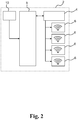
- Fig. 2 schematically illustrates an exemplary audio system 2 in more detail.
- the audio system 2 comprises one or a plurality of transmitter units 6 as illustrated, a transmitter control unit 4, an audio system control unit 8 and a user interface 10.
- the transmitter units 6 stream audio data comprising audio packages and pilot packages according to the method described herein.
- the transmitter control unit 4 controls the transmitter units 6, e.g. controlling for each transmitter unit 6 which audio track to stream and operating parameters of the transmitter units.
- the audio system control unit 8 controls the transmitter units 6 via the transmitter control unit 4, in accordance with external inputs. External input may in the exemplary audio system 2 be provided by a user interface 10.
- the user interface may be accessed either by an operator or by a user.
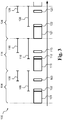
- Fig. 3 schematically illustrates an exemplary electromagnetic signal 100.
- the electromagnetic signal 100 may in an exemplary audio system be transmitted from any of the transmitter units 6 as shown in figure 1 and 2 .
- Each audio frame comprises an audio block 101, 111, 121, a primary pilot package 102, 112, 122, and optionally a secondary pilot package 103, 113, 123, respectively.
- the audio blocks 101, 111, 121 comprise at least a first primary audio package (not shown) and may in addition comprise any number of audio packages. The number of audio packages does not need to be the same for all audio blocks.
- the first audio frame 104 starts by a first primary audio package of the first audio block 101 being transmitted. After transmitting the first primary audio block 101, a first primary pilot package 102 is transmitted, and a first secondary pilot package 103 is transmitted.
- the first primary pilot package 102 comprises information as to how (e.g. channel identifier of the first primary audio package of the second audio block) and when (e.g. first primary time offset 106) to receive the first primary audio package of the second audio block 111.
- the first primary pilot package 102 comprises a first primary time offset 106 indicating the time between transmittal of the first primary pilot package 102 and transmittal of the first primary audio package of the second audio block 111 of the second audio frame 114.
- the first primary pilot package is transmitted on a first primary pilot channel selected from a subset of three or more available channels according to a pseudo-random frequency hopping scheme.
- the first secondary pilot package 103 comprises, as the first primary pilot package, information as to how and when to receive the first primary audio package of the second audio block 111.
- the first secondary pilot package 103 comprises a first secondary time offset 108 indicating the time between transmittal of the first secondary pilot package 103 and transmittal of the first primary audio package of the second audio block 111 of the second audio frame 114.
- the time duration T of an audio frame 104, 114, 124 is constant, and may e.g. be a time of between 2 ms and 20 ms, such as between 5 ms and 12 ms or such as between 6 ms and 10.2 ms, or between 6 ms and 6.5 ms, or between 7.2 ms and 7.7 ms, or between 9.8 ms and 10.2 ms.
- the primary pilot packages 102, 112, 122 are transmitted at a time within the respective audio frames resulting in that the primary time offsets 106, 116, 126 are fixed and equal for all audio frames 104, 114, 124.
- the secondary pilot packages 103, 113, 123 are transmitted at a time selected randomly or pseudo-randomly, resulting in a random or pseudo random secondary time offset 108, 118, 128 between the respective secondary pilot packages and first primary audio packages of the following audio blocks.
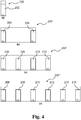
- Fig. 4 (a) to (d) illustrate four different exemplary audio blocks 200, 200', 200", 200"'.
- Fig. 4(a) illustrates an audio block 200 comprising a primary audio package 202, e.g. a mono audio signal.
- Fig. 4(b) illustrates an audio block 200' of an exemplary mono signal comprising a primary audio package 202 and a secondary audio package 204.
- the secondary audio package 204 is a copy of the primary audio package 202, to enhance chances of a successful reception of data in a hearing device.
- Fig. 4(c) illustrates an audio block 200" of an exemplary stereo signal.
- the audio block 200" in Fig. 4(c) comprises a first primary audio package 206 and a second primary audio package 208 for right and left ear, respectively.
- the audio block 200" illustrated in Fig. 4(c) further comprises a first secondary audio package 210 and a second secondary audio package 212.
- the first secondary audio package 210 is a copy of the first primary audio package 206
- the second secondary audio package 212 is a copy of the second primary audio package 208.
- Fig. 4(d) illustrates an audio block 200'" of an exemplary stereo signal.
- the audio block 200'" illustrated in Fig. 4d comprises a first tertiary audio package 214 and a second tertiary audio package 216.
- the first tertiary audio package 214 may be a copy of the first secondary right audio package 210 and/or the first primary audio package 206.
- the second tertiary audio package 216 may be a copy of the second secondary audio package 212 and/or the second primary audio package 208.
- a "copy of" means that at least the audio data of the audio packages are identical.
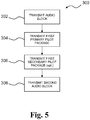
- Fig. 5 is a flow diagram of an exemplary method 300 according to the invention.
- the method 300 comprises transmitting 302 a first audio block, transmitting 304 a first primary pilot package and transmitting 308 a second audio block.
- the method 300 comprises transmitting 306 a first secondary pilot package after transmitting 304 the first primary pilot package and before transmitting 308 the second audio block in the second audio frame.
- Transmitting 302 the first audio block comprises transmitting at least a first primary audio package comprising a transmitter unit address of the transmitter unit from which it was transmitted.
- Transmitting 304 the first primary pilot package comprises transmitting a transmitter unit address of the transmitter unit from which it was transmitted, a first primary time offset, and a channel identifier of the first primary audio package of the second audio block in a second audio frame.
- the transmission transmittal 306 of a first secondary pilot package comprises transmitting a first secondary pilot package comprising a transmitter unit address of the transmitter unit from which it was transmitted, a first secondary time offset, and a channel identifier of the first primary audio package of the second audio block in a second audio frame.
- Fig. 6 illustrates an exemplary audio package comprising a transmitter unit address an optional audio stream identifier, and audio stream data.
- Transmitter unit address is indicative of the transmitter unit from which the audio package was transmitted.
- Audio stream identifier may comprise data indicative of the audio stream, e.g. audio track identification, audio group identification etc. Audio stream data comprises a finite part of the audible information forming the audio stream.
- Fig. 7 illustrates a primary and/or secondary pilot package comprising a transmitter unit address, a channel identifier, a time offset, an optional audio stream identifier, and an optional network identifier.
- Transmitter unit address is indicative of the transmitter unit from which the pilot package was transmitted.
- Channel identifier is indicative of the channel where the next audio block of the audio stream is transmitted, i.e. the channel identifier may be a frequency or a number indicating a frequency.
- Time offset is indicative of when the next audio block is transmitted.
- Audio stream identifier may comprise data indicative of the audio stream, e.g. audio track identification, audio group identification etc.
- Network identifier may be indicative of a group of transmitter units, e.g. a network identifier may comprise a subnet address.
- the information comprised within a pilot package enables the hearing device to receive the following audio block from the transmitter unit transmitting the audio stream in question by configuring the hearing device in accordance with the information.
Landscapes
- Engineering & Computer Science (AREA)
- Computer Networks & Wireless Communication (AREA)
- Health & Medical Sciences (AREA)
- General Health & Medical Sciences (AREA)
- Neurosurgery (AREA)
- Otolaryngology (AREA)
- Physics & Mathematics (AREA)
- Acoustics & Sound (AREA)
- Signal Processing (AREA)
- Transmitters (AREA)
Claims (12)
- Verfahren zum Senden von drahtlosen Audioströmen an ein oder mehrere Hörgeräte in einem Audiosystem umfassend eine Sendeeinheit, welches Verfahren Folgendes umfasst- Senden eines ersten Audioblocks in einem ersten Audioframe mit der Sendeeinheit,dadurch gekennzeichnet, dass der erste Audioblock ein erstes primäres Audiopaket umfasst, umfassend eine Sendeeinheitadresse der Sendeeinheit; und das Verfahren Folgendes umfasst- Senden eines ersten primären Pilotpakets mit der Sendeeinheit, wobei das erste primäre Pilotpaket die Sendeeinheitadresse der Sendeeinheit, einen ersten primären Zeitversatz und einen Kanalidentifizierer eines ersten primären Audiopakets eines zweiten Audioblocks in einem zweiten Audioframe umfasst; und- Senden eines ersten primären Audiopakets des zweiten Audioblocks zu einem Startzeitpunkt abhängig von dem ersten primären Zeitversatz und dem Kanalidentifizierer;wobei das Verfahren weiter Senden eines ersten sekundären Pilotpakets umfasst, wobei das erste sekundäre Pilotpaket die Sendeeinheitadresse der Sendeeinheit, einen ersten sekundären Zeitversatz und den Kanalidentifizierer des ersten primären Audiopakets des zweiten Audioblocks umfasst, wobei der zweite Zeitversatz einen Zeitversatz zwischen dem ersten sekundären Pilotpaket und dem ersten primären Audiopaket des zweiten Audioblocks angibt.
- Verfahren nach Anspruch 1, weiter umfassend Auswählen des ersten sekundären Zeitversatzes basierend auf einem vorgegebenen Versatzschema, einem zufälligen Versatzschema oder einem pseudozufälligen Versatzschema.
- Verfahren nach einem der Ansprüche 1-2, wobei ein Zeitunterschied zwischen dem ersten primären Pilotpaket und dem ersten sekundären Pilotpaket größer als ein erster Zeitschwellenwert ist.
- Verfahren nach einem der vorgehenden Ansprüche, wobei das Senden eines ersten Audioblocks Senden eines zweiten primären Audiopakets umfassend die Sendeeinheitadresse der Sendeeinheit umfasst.
- Verfahren nach einem der vorgehenden Ansprüche, wobei das erste primäre Pilotpaket einen Audiostromidentifizierer umfasst.
- Elektromagnetisches Signal zum Senden von drahtlosen Audioströmen an ein oder mehrere Hörgeräte, wobei das elektromagnetische Signal eine Mehrheit von Audioblöcken einschließlich eines ersten Audioblocks in einem ersten Audioframe und eines zweiten Audioblocks in einem zweiten Audioframe nach dem ersten Audioframe umfasst, dadurch gekennzeichnet, dass der erste Audioblock und der zweite Audioblock jeweils ein erstes primäres Audiopaket umfasst, umfassend eine Sendeeinheitadresse, wobei das elektromagnetische Signal ein erstes primäres Pilotpaket im ersten Audioframe umfasst, wobei das erste primäre Pilotpaket und das erste primäre Audiopaket des zweiten Audioblocks durch einen ersten primären Zeitversatz getrennt sind, wobei das erste primäre Pilotpaket die Sendeeinheitadresse, den ersten primären Zeitversatz und einen Kanalidentifizierer des ersten primären Audiopakets des zweiten Audioblocks umfasst;
wobei das elektromagnetische Signal weiter ein erstes sekundäres Pilotpaket im ersten Audioframe umfasst, wobei das erste sekundäre Pilotpaket und das erste primäre Audiopaket des zweiten Audioblocks durch einen ersten sekundären Zeitversatz getrennt sind, wobei das erste sekundäre Pilotpaket die Sendeeinheitadresse, den ersten sekundären Zeitversatz und den Kanalidentifizierer des ersten primären Audiopakets des zweiten Audioblocks umfasst. - Elektromagnetisches Signal nach Anspruch 6, wobei ein Zeitunterschied zwischen dem ersten primären Pilotpaket und dem ersten sekundären Pilotpaket größer als ein erster Zeitschwellenwert ist.
- Elektromagnetisches Signal nach einem der Ansprüche 6-7, wobei der erste Audioblock ein zweites primäres Audiopaket umfasst, umfassend die Sendeeinheitadresse.
- Elektromagnetisches Signal nach einem der Ansprüche 6-8, wobei das erste primäre Pilotpaket einen Audiostromidentifizierer umfasst.
- Audiosystem zum Senden von drahtlosen Audioströmen an ein oder mehrere Hörgeräte, wobei das Audiosystem eine oder mehrere Sendeeinheiten umfasst, einschließlich einer ersten Sendeeinheit, wobei die eine oder mehrere Sendeeinheiten zum Senden von Audioblöcken ausgelegt ist bzw. sind, dadurch gekennzeichnet, dass jeder Audioblock ein erstes primäres Audiopaket umfassend eine Sendeeinheitadresse des jeweiligen Senders umfasst, wobei die erste Sendeeinheit dafür ausgelegt ist, das Verfahren nach einem der Ansprüche 1-5 auszuführen.
- Audiosystem nach Anspruch 10, wobei das Audiosystem eine zweite Sendeeinheit umfasst, wobei die zweite Sendeeinheit dafür ausgelegt ist, das Verfahren nach einem der Ansprüche 1-5 auszuführen.
- Sendeeinheit zum Senden von drahtlosen Audioströmen an ein oder mehrere Hörgeräte, wobei die Sendeeinheit zum Senden eines elektromagnetischen Signals nach einem der Ansprüche 6-9 ausgelegt ist.
Priority Applications (7)
| Application Number | Priority Date | Filing Date | Title |
|---|---|---|---|
| EP13167809.6A EP2804399B1 (de) | 2013-05-15 | 2013-05-15 | Verfahren und Vorrichtung zum drahtlosen Senden von Audioströmen |
| DK13167809.6T DK2804399T3 (da) | 2013-05-15 | 2013-05-15 | Fremgangsmåde og indretning til overførsel af trådløse audiostrømme |
| EP19168691.4A EP3528514B1 (de) | 2013-05-15 | 2013-05-15 | Verfahren und vorrichtung zur drahtlosen übertragung von audioströmen |
| DK19168691.4T DK3528514T3 (da) | 2013-05-15 | 2013-05-15 | Fremgangsmåde og indretning til trådløs overførsel af audiostrømme |
| US13/899,228 US9232296B2 (en) | 2013-05-15 | 2013-05-21 | Method and apparatus for transmitting wireless audio streams |
| JP2014100759A JP5816328B2 (ja) | 2013-05-15 | 2014-05-14 | 無線音声ストリームを送信する方法および装置 |
| CN201410205845.4A CN104168034B (zh) | 2013-05-15 | 2014-05-15 | 用于发送无线音频流的方法和装置 |
Applications Claiming Priority (1)
| Application Number | Priority Date | Filing Date | Title |
|---|---|---|---|
| EP13167809.6A EP2804399B1 (de) | 2013-05-15 | 2013-05-15 | Verfahren und Vorrichtung zum drahtlosen Senden von Audioströmen |
Related Child Applications (2)
| Application Number | Title | Priority Date | Filing Date |
|---|---|---|---|
| EP19168691.4A Division-Into EP3528514B1 (de) | 2013-05-15 | 2013-05-15 | Verfahren und vorrichtung zur drahtlosen übertragung von audioströmen |
| EP19168691.4A Division EP3528514B1 (de) | 2013-05-15 | 2013-05-15 | Verfahren und vorrichtung zur drahtlosen übertragung von audioströmen |
Publications (2)
| Publication Number | Publication Date |
|---|---|
| EP2804399A1 EP2804399A1 (de) | 2014-11-19 |
| EP2804399B1 true EP2804399B1 (de) | 2019-05-15 |
Family
ID=48482912
Family Applications (2)
| Application Number | Title | Priority Date | Filing Date |
|---|---|---|---|
| EP13167809.6A Active EP2804399B1 (de) | 2013-05-15 | 2013-05-15 | Verfahren und Vorrichtung zum drahtlosen Senden von Audioströmen |
| EP19168691.4A Active EP3528514B1 (de) | 2013-05-15 | 2013-05-15 | Verfahren und vorrichtung zur drahtlosen übertragung von audioströmen |
Family Applications After (1)
| Application Number | Title | Priority Date | Filing Date |
|---|---|---|---|
| EP19168691.4A Active EP3528514B1 (de) | 2013-05-15 | 2013-05-15 | Verfahren und vorrichtung zur drahtlosen übertragung von audioströmen |
Country Status (2)
| Country | Link |
|---|---|
| EP (2) | EP2804399B1 (de) |
| DK (2) | DK2804399T3 (de) |
Family Cites Families (5)
| Publication number | Priority date | Publication date | Assignee | Title |
|---|---|---|---|---|
| US7778432B2 (en) * | 2003-06-06 | 2010-08-17 | Gn Resound A/S | Hearing aid wireless network |
| GB2463277B (en) * | 2008-09-05 | 2010-09-08 | Sony Comp Entertainment Europe | Wireless communication system |
| CN103262580B (zh) * | 2010-10-14 | 2017-11-03 | Gn瑞声达A/S | 听力设备和补偿发送器与接收器之间的频率差的方法 |
| WO2013106024A1 (en) * | 2011-04-05 | 2013-07-18 | Planetmac, Llc | Wireless audio dissemination system |
| US8918569B2 (en) * | 2011-08-10 | 2014-12-23 | Intel Corporation | Streaming audio visual content simultaneously to different topologies on a wireless adapter |
-
2013
- 2013-05-15 DK DK13167809.6T patent/DK2804399T3/da active
- 2013-05-15 EP EP13167809.6A patent/EP2804399B1/de active Active
- 2013-05-15 EP EP19168691.4A patent/EP3528514B1/de active Active
- 2013-05-15 DK DK19168691.4T patent/DK3528514T3/da active
Non-Patent Citations (1)
| Title |
|---|
| IAN POOLE: "GSM Handover | GSM Handoff | Radio-Electronics.Com", 1 December 2009 (2009-12-01), XP055460652, Retrieved from the Internet <URL:http://www.radio-electronics.com/info/cellulartelecomms/gsm_technical/handover-handoff.php> [retrieved on 20180319] * |
Also Published As
| Publication number | Publication date |
|---|---|
| EP3528514B1 (de) | 2021-11-03 |
| DK2804399T3 (da) | 2019-06-03 |
| EP2804399A1 (de) | 2014-11-19 |
| EP3528514A1 (de) | 2019-08-21 |
| DK3528514T3 (da) | 2022-01-24 |
Similar Documents
| Publication | Publication Date | Title |
|---|---|---|
| US20260082169A1 (en) | Display apparatus and device control method | |
| US9826320B2 (en) | Hearing device and a method for receiving wireless audio streaming | |
| CN115550894A (zh) | 一种无线通信方法及无线音频播放组件 | |
| CN106303287B (zh) | 一种基于近场通信的多移动终端屏幕拼接方法、设备及系统 | |
| CN104754468B (zh) | 具有位置数据的听力设备、音频系统和相关方法 | |
| CN110149620B (zh) | 一种智能耳机的控制方法、装置,智能耳机及存储介质 | |
| US20240430914A1 (en) | BLE Audio Broadcasting Method, Device and System | |
| US12096192B2 (en) | Bluetooth communication system capable of avoiding voice interruption, and related Bluetooth host device and Bluetooth device set | |
| US9232296B2 (en) | Method and apparatus for transmitting wireless audio streams | |
| CN110830973B (zh) | 一种利用无线耳机传输音频信息的方法 | |
| EP3528514B1 (de) | Verfahren und vorrichtung zur drahtlosen übertragung von audioströmen | |
| JP4881454B2 (ja) | 電子機器 | |
| JP2017050826A (ja) | 通信装置、通信方法、および、プログラム | |
| US9287998B2 (en) | Broadcast device for broadcasting payload data, network device for receiving broadcasted payload data and method for initiating broadcasting payload data | |
| CN104125339A (zh) | 一种移动终端电台频道切换方法及系统 | |
| EP3624356B1 (de) | Drahtloses headset und signalübertragungsverfahren dafür | |
| EP2804400B1 (de) | Hörgerät und Verfahren zum drahtlosen Empfangen von Audioströmen | |
| EP2773135B1 (de) | Audiosystem für Audiostreaming und zugehöriges Verfahren | |
| JP2017085384A (ja) | 無線通信システム、無線通信装置、無線通信装置の制御方法 | |
| US20250016745A1 (en) | BLE broadcast communication method, device and system | |
| CN108632797B (zh) | 一种实现降低干扰的快速蓝牙连接方法及蓝牙系统 | |
| EP4131984A1 (de) | Toneingabe-/-ausgabesteuerungsvorrichtung, toneingabe-/-ausgabesteuerungsverfahren und programm |
Legal Events
| Date | Code | Title | Description |
|---|---|---|---|
| PUAI | Public reference made under article 153(3) epc to a published international application that has entered the european phase |
Free format text: ORIGINAL CODE: 0009012 |
|
| 17P | Request for examination filed |
Effective date: 20130515 |
|
| AK | Designated contracting states |
Kind code of ref document: A1 Designated state(s): AL AT BE BG CH CY CZ DE DK EE ES FI FR GB GR HR HU IE IS IT LI LT LU LV MC MK MT NL NO PL PT RO RS SE SI SK SM TR |
|
| AX | Request for extension of the european patent |
Extension state: BA ME |
|
| R17P | Request for examination filed (corrected) |
Effective date: 20150519 |
|
| RBV | Designated contracting states (corrected) |
Designated state(s): AL AT BE BG CH CY CZ DE DK EE ES FI FR GB GR HR HU IE IS IT LI LT LU LV MC MK MT NL NO PL PT RO RS SE SI SK SM TR |
|
| 17Q | First examination report despatched |
Effective date: 20160627 |
|
| STAA | Information on the status of an ep patent application or granted ep patent |
Free format text: STATUS: EXAMINATION IS IN PROGRESS |
|
| GRAP | Despatch of communication of intention to grant a patent |
Free format text: ORIGINAL CODE: EPIDOSNIGR1 |
|
| STAA | Information on the status of an ep patent application or granted ep patent |
Free format text: STATUS: GRANT OF PATENT IS INTENDED |
|
| INTG | Intention to grant announced |
Effective date: 20181206 |
|
| GRAS | Grant fee paid |
Free format text: ORIGINAL CODE: EPIDOSNIGR3 |
|
| GRAA | (expected) grant |
Free format text: ORIGINAL CODE: 0009210 |
|
| STAA | Information on the status of an ep patent application or granted ep patent |
Free format text: STATUS: THE PATENT HAS BEEN GRANTED |
|
| RAP1 | Party data changed (applicant data changed or rights of an application transferred) |
Owner name: GN HEARING A/S |
|
| AK | Designated contracting states |
Kind code of ref document: B1 Designated state(s): AL AT BE BG CH CY CZ DE DK EE ES FI FR GB GR HR HU IE IS IT LI LT LU LV MC MK MT NL NO PL PT RO RS SE SI SK SM TR |
|
| REG | Reference to a national code |
Ref country code: CH Ref legal event code: EP Ref country code: GB Ref legal event code: FG4D |
|
| REG | Reference to a national code |
Ref country code: DK Ref legal event code: T3 Effective date: 20190529 |
|
| REG | Reference to a national code |
Ref country code: DE Ref legal event code: R096 Ref document number: 602013055329 Country of ref document: DE |
|
| REG | Reference to a national code |
Ref country code: IE Ref legal event code: FG4D |
|
| REG | Reference to a national code |
Ref country code: NL Ref legal event code: MP Effective date: 20190515 |
|
| REG | Reference to a national code |
Ref country code: LT Ref legal event code: MG4D |
|
| PG25 | Lapsed in a contracting state [announced via postgrant information from national office to epo] |
Ref country code: ES Free format text: LAPSE BECAUSE OF FAILURE TO SUBMIT A TRANSLATION OF THE DESCRIPTION OR TO PAY THE FEE WITHIN THE PRESCRIBED TIME-LIMIT Effective date: 20190515 Ref country code: NL Free format text: LAPSE BECAUSE OF FAILURE TO SUBMIT A TRANSLATION OF THE DESCRIPTION OR TO PAY THE FEE WITHIN THE PRESCRIBED TIME-LIMIT Effective date: 20190515 Ref country code: LT Free format text: LAPSE BECAUSE OF FAILURE TO SUBMIT A TRANSLATION OF THE DESCRIPTION OR TO PAY THE FEE WITHIN THE PRESCRIBED TIME-LIMIT Effective date: 20190515 Ref country code: HR Free format text: LAPSE BECAUSE OF FAILURE TO SUBMIT A TRANSLATION OF THE DESCRIPTION OR TO PAY THE FEE WITHIN THE PRESCRIBED TIME-LIMIT Effective date: 20190515 Ref country code: SE Free format text: LAPSE BECAUSE OF FAILURE TO SUBMIT A TRANSLATION OF THE DESCRIPTION OR TO PAY THE FEE WITHIN THE PRESCRIBED TIME-LIMIT Effective date: 20190515 Ref country code: FI Free format text: LAPSE BECAUSE OF FAILURE TO SUBMIT A TRANSLATION OF THE DESCRIPTION OR TO PAY THE FEE WITHIN THE PRESCRIBED TIME-LIMIT Effective date: 20190515 Ref country code: PT Free format text: LAPSE BECAUSE OF FAILURE TO SUBMIT A TRANSLATION OF THE DESCRIPTION OR TO PAY THE FEE WITHIN THE PRESCRIBED TIME-LIMIT Effective date: 20190915 Ref country code: NO Free format text: LAPSE BECAUSE OF FAILURE TO SUBMIT A TRANSLATION OF THE DESCRIPTION OR TO PAY THE FEE WITHIN THE PRESCRIBED TIME-LIMIT Effective date: 20190815 Ref country code: AL Free format text: LAPSE BECAUSE OF FAILURE TO SUBMIT A TRANSLATION OF THE DESCRIPTION OR TO PAY THE FEE WITHIN THE PRESCRIBED TIME-LIMIT Effective date: 20190515 |
|
| PG25 | Lapsed in a contracting state [announced via postgrant information from national office to epo] |
Ref country code: LV Free format text: LAPSE BECAUSE OF FAILURE TO SUBMIT A TRANSLATION OF THE DESCRIPTION OR TO PAY THE FEE WITHIN THE PRESCRIBED TIME-LIMIT Effective date: 20190515 Ref country code: RS Free format text: LAPSE BECAUSE OF FAILURE TO SUBMIT A TRANSLATION OF THE DESCRIPTION OR TO PAY THE FEE WITHIN THE PRESCRIBED TIME-LIMIT Effective date: 20190515 Ref country code: GR Free format text: LAPSE BECAUSE OF FAILURE TO SUBMIT A TRANSLATION OF THE DESCRIPTION OR TO PAY THE FEE WITHIN THE PRESCRIBED TIME-LIMIT Effective date: 20190816 Ref country code: BG Free format text: LAPSE BECAUSE OF FAILURE TO SUBMIT A TRANSLATION OF THE DESCRIPTION OR TO PAY THE FEE WITHIN THE PRESCRIBED TIME-LIMIT Effective date: 20190815 |
|
| REG | Reference to a national code |
Ref country code: AT Ref legal event code: MK05 Ref document number: 1134806 Country of ref document: AT Kind code of ref document: T Effective date: 20190515 |
|
| PG25 | Lapsed in a contracting state [announced via postgrant information from national office to epo] |
Ref country code: CZ Free format text: LAPSE BECAUSE OF FAILURE TO SUBMIT A TRANSLATION OF THE DESCRIPTION OR TO PAY THE FEE WITHIN THE PRESCRIBED TIME-LIMIT Effective date: 20190515 Ref country code: RO Free format text: LAPSE BECAUSE OF FAILURE TO SUBMIT A TRANSLATION OF THE DESCRIPTION OR TO PAY THE FEE WITHIN THE PRESCRIBED TIME-LIMIT Effective date: 20190515 Ref country code: SK Free format text: LAPSE BECAUSE OF FAILURE TO SUBMIT A TRANSLATION OF THE DESCRIPTION OR TO PAY THE FEE WITHIN THE PRESCRIBED TIME-LIMIT Effective date: 20190515 Ref country code: EE Free format text: LAPSE BECAUSE OF FAILURE TO SUBMIT A TRANSLATION OF THE DESCRIPTION OR TO PAY THE FEE WITHIN THE PRESCRIBED TIME-LIMIT Effective date: 20190515 Ref country code: AT Free format text: LAPSE BECAUSE OF FAILURE TO SUBMIT A TRANSLATION OF THE DESCRIPTION OR TO PAY THE FEE WITHIN THE PRESCRIBED TIME-LIMIT Effective date: 20190515 |
|
| REG | Reference to a national code |
Ref country code: BE Ref legal event code: MM Effective date: 20190531 |
|
| REG | Reference to a national code |
Ref country code: DE Ref legal event code: R097 Ref document number: 602013055329 Country of ref document: DE |
|
| PG25 | Lapsed in a contracting state [announced via postgrant information from national office to epo] |
Ref country code: MC Free format text: LAPSE BECAUSE OF FAILURE TO SUBMIT A TRANSLATION OF THE DESCRIPTION OR TO PAY THE FEE WITHIN THE PRESCRIBED TIME-LIMIT Effective date: 20190515 Ref country code: SM Free format text: LAPSE BECAUSE OF FAILURE TO SUBMIT A TRANSLATION OF THE DESCRIPTION OR TO PAY THE FEE WITHIN THE PRESCRIBED TIME-LIMIT Effective date: 20190515 Ref country code: IT Free format text: LAPSE BECAUSE OF FAILURE TO SUBMIT A TRANSLATION OF THE DESCRIPTION OR TO PAY THE FEE WITHIN THE PRESCRIBED TIME-LIMIT Effective date: 20190515 Ref country code: LU Free format text: LAPSE BECAUSE OF NON-PAYMENT OF DUE FEES Effective date: 20190515 |
|
| PLBE | No opposition filed within time limit |
Free format text: ORIGINAL CODE: 0009261 |
|
| STAA | Information on the status of an ep patent application or granted ep patent |
Free format text: STATUS: NO OPPOSITION FILED WITHIN TIME LIMIT |
|
| PG25 | Lapsed in a contracting state [announced via postgrant information from national office to epo] |
Ref country code: TR Free format text: LAPSE BECAUSE OF FAILURE TO SUBMIT A TRANSLATION OF THE DESCRIPTION OR TO PAY THE FEE WITHIN THE PRESCRIBED TIME-LIMIT Effective date: 20190515 |
|
| 26N | No opposition filed |
Effective date: 20200218 |
|
| PG25 | Lapsed in a contracting state [announced via postgrant information from national office to epo] |
Ref country code: PL Free format text: LAPSE BECAUSE OF FAILURE TO SUBMIT A TRANSLATION OF THE DESCRIPTION OR TO PAY THE FEE WITHIN THE PRESCRIBED TIME-LIMIT Effective date: 20190515 Ref country code: IE Free format text: LAPSE BECAUSE OF NON-PAYMENT OF DUE FEES Effective date: 20190515 |
|
| PG25 | Lapsed in a contracting state [announced via postgrant information from national office to epo] |
Ref country code: BE Free format text: LAPSE BECAUSE OF NON-PAYMENT OF DUE FEES Effective date: 20190531 Ref country code: SI Free format text: LAPSE BECAUSE OF FAILURE TO SUBMIT A TRANSLATION OF THE DESCRIPTION OR TO PAY THE FEE WITHIN THE PRESCRIBED TIME-LIMIT Effective date: 20190515 |
|
| PG25 | Lapsed in a contracting state [announced via postgrant information from national office to epo] |
Ref country code: CY Free format text: LAPSE BECAUSE OF FAILURE TO SUBMIT A TRANSLATION OF THE DESCRIPTION OR TO PAY THE FEE WITHIN THE PRESCRIBED TIME-LIMIT Effective date: 20190515 |
|
| PG25 | Lapsed in a contracting state [announced via postgrant information from national office to epo] |
Ref country code: IS Free format text: LAPSE BECAUSE OF FAILURE TO SUBMIT A TRANSLATION OF THE DESCRIPTION OR TO PAY THE FEE WITHIN THE PRESCRIBED TIME-LIMIT Effective date: 20190915 |
|
| PG25 | Lapsed in a contracting state [announced via postgrant information from national office to epo] |
Ref country code: MT Free format text: LAPSE BECAUSE OF FAILURE TO SUBMIT A TRANSLATION OF THE DESCRIPTION OR TO PAY THE FEE WITHIN THE PRESCRIBED TIME-LIMIT Effective date: 20190515 Ref country code: HU Free format text: LAPSE BECAUSE OF FAILURE TO SUBMIT A TRANSLATION OF THE DESCRIPTION OR TO PAY THE FEE WITHIN THE PRESCRIBED TIME-LIMIT; INVALID AB INITIO Effective date: 20130515 |
|
| PG25 | Lapsed in a contracting state [announced via postgrant information from national office to epo] |
Ref country code: MK Free format text: LAPSE BECAUSE OF FAILURE TO SUBMIT A TRANSLATION OF THE DESCRIPTION OR TO PAY THE FEE WITHIN THE PRESCRIBED TIME-LIMIT Effective date: 20190515 |
|
| P01 | Opt-out of the competence of the unified patent court (upc) registered |
Effective date: 20230525 |
|
| PGFP | Annual fee paid to national office [announced via postgrant information from national office to epo] |
Ref country code: GB Payment date: 20240517 Year of fee payment: 12 |
|
| PGFP | Annual fee paid to national office [announced via postgrant information from national office to epo] |
Ref country code: DK Payment date: 20240515 Year of fee payment: 12 |
|
| REG | Reference to a national code |
Ref country code: DK Ref legal event code: EBP Effective date: 20250531 |
|
| GBPC | Gb: european patent ceased through non-payment of renewal fee |
Effective date: 20250515 |
|
| PG25 | Lapsed in a contracting state [announced via postgrant information from national office to epo] |
Ref country code: GB Free format text: LAPSE BECAUSE OF NON-PAYMENT OF DUE FEES Effective date: 20250515 |
|
| PG25 | Lapsed in a contracting state [announced via postgrant information from national office to epo] |
Ref country code: DK Free format text: LAPSE BECAUSE OF NON-PAYMENT OF DUE FEES Effective date: 20250531 |
|
| REG | Reference to a national code |
Ref country code: CH Ref legal event code: U11 Free format text: ST27 STATUS EVENT CODE: U-0-0-U10-U11 (AS PROVIDED BY THE NATIONAL OFFICE) Effective date: 20260623 |
|
| PGFP | Annual fee paid to national office [announced via postgrant information from national office to epo] |
Ref country code: DE Payment date: 20260519 Year of fee payment: 14 |
|
| PGFP | Annual fee paid to national office [announced via postgrant information from national office to epo] |
Ref country code: CH Payment date: 20260623 Year of fee payment: 14 |
|
| PGFP | Annual fee paid to national office [announced via postgrant information from national office to epo] |
Ref country code: FR Payment date: 20260623 Year of fee payment: 14 |