EP2804068A1 - Rotation position detection mechanism for trunnion axis - Google Patents
Rotation position detection mechanism for trunnion axis Download PDFInfo
- Publication number
- EP2804068A1 EP2804068A1 EP13735707.5A EP13735707A EP2804068A1 EP 2804068 A1 EP2804068 A1 EP 2804068A1 EP 13735707 A EP13735707 A EP 13735707A EP 2804068 A1 EP2804068 A1 EP 2804068A1
- Authority
- EP
- European Patent Office
- Prior art keywords
- lever
- trunnion axis
- follower lever
- rotation position
- operation lever
- Prior art date
- Legal status (The legal status is an assumption and is not a legal conclusion. Google has not performed a legal analysis and makes no representation as to the accuracy of the status listed.)
- Withdrawn
Links
Images


Classifications
-
- F—MECHANICAL ENGINEERING; LIGHTING; HEATING; WEAPONS; BLASTING
- F16—ENGINEERING ELEMENTS AND UNITS; GENERAL MEASURES FOR PRODUCING AND MAINTAINING EFFECTIVE FUNCTIONING OF MACHINES OR INSTALLATIONS; THERMAL INSULATION IN GENERAL
- F16H—GEARING
- F16H59/00—Control inputs to control units of change-speed- or reversing-gearings for conveying rotary motion
- F16H59/02—Selector apparatus
- F16H59/04—Ratio selector apparatus
-
- B—PERFORMING OPERATIONS; TRANSPORTING
- B60—VEHICLES IN GENERAL
- B60K—ARRANGEMENT OR MOUNTING OF PROPULSION UNITS OR OF TRANSMISSIONS IN VEHICLES; ARRANGEMENT OR MOUNTING OF PLURAL DIVERSE PRIME-MOVERS IN VEHICLES; AUXILIARY DRIVES FOR VEHICLES; INSTRUMENTATION OR DASHBOARDS FOR VEHICLES; ARRANGEMENTS IN CONNECTION WITH COOLING, AIR INTAKE, GAS EXHAUST OR FUEL SUPPLY OF PROPULSION UNITS IN VEHICLES
- B60K20/00—Arrangement or mounting of change-speed gearing control devices in vehicles
- B60K20/02—Arrangement or mounting of change-speed gearing control devices in vehicles of initiating means
-
- B—PERFORMING OPERATIONS; TRANSPORTING
- B60—VEHICLES IN GENERAL
- B60K—ARRANGEMENT OR MOUNTING OF PROPULSION UNITS OR OF TRANSMISSIONS IN VEHICLES; ARRANGEMENT OR MOUNTING OF PLURAL DIVERSE PRIME-MOVERS IN VEHICLES; AUXILIARY DRIVES FOR VEHICLES; INSTRUMENTATION OR DASHBOARDS FOR VEHICLES; ARRANGEMENTS IN CONNECTION WITH COOLING, AIR INTAKE, GAS EXHAUST OR FUEL SUPPLY OF PROPULSION UNITS IN VEHICLES
- B60K26/00—Arrangement or mounting of propulsion-unit control devices in vehicles
- B60K26/02—Arrangement or mounting of propulsion-unit control devices in vehicles of initiating means or elements
-
- F—MECHANICAL ENGINEERING; LIGHTING; HEATING; WEAPONS; BLASTING
- F16—ENGINEERING ELEMENTS AND UNITS; GENERAL MEASURES FOR PRODUCING AND MAINTAINING EFFECTIVE FUNCTIONING OF MACHINES OR INSTALLATIONS; THERMAL INSULATION IN GENERAL
- F16H—GEARING
- F16H61/00—Control functions within control units of change-speed- or reversing-gearings for conveying rotary motion ; Control of exclusively fluid gearing, friction gearing, gearings with endless flexible members or other particular types of gearing
- F16H61/38—Control of exclusively fluid gearing
- F16H61/40—Control of exclusively fluid gearing hydrostatic
- F16H61/42—Control of exclusively fluid gearing hydrostatic involving adjustment of a pump or motor with adjustable output or capacity
- F16H61/437—Pump capacity control by mechanical control means, e.g. by levers or pedals
-
- G—PHYSICS
- G05—CONTROLLING; REGULATING
- G05G—CONTROL DEVICES OR SYSTEMS INSOFAR AS CHARACTERISED BY MECHANICAL FEATURES ONLY
- G05G1/00—Controlling members, e.g. knobs or handles; Assemblies or arrangements thereof; Indicating position of controlling members
- G05G1/04—Controlling members for hand actuation by pivoting movement, e.g. levers
-
- B—PERFORMING OPERATIONS; TRANSPORTING
- B60—VEHICLES IN GENERAL
- B60Y—INDEXING SCHEME RELATING TO ASPECTS CROSS-CUTTING VEHICLE TECHNOLOGY
- B60Y2200/00—Type of vehicle
- B60Y2200/20—Off-Road Vehicles
- B60Y2200/22—Agricultural vehicles
- B60Y2200/221—Tractors
-
- F—MECHANICAL ENGINEERING; LIGHTING; HEATING; WEAPONS; BLASTING
- F16—ENGINEERING ELEMENTS AND UNITS; GENERAL MEASURES FOR PRODUCING AND MAINTAINING EFFECTIVE FUNCTIONING OF MACHINES OR INSTALLATIONS; THERMAL INSULATION IN GENERAL
- F16H—GEARING
- F16H59/00—Control inputs to control units of change-speed- or reversing-gearings for conveying rotary motion
- F16H59/02—Selector apparatus
- F16H59/04—Ratio selector apparatus
- F16H59/06—Ratio selector apparatus the ratio being infinitely variable
-
- Y—GENERAL TAGGING OF NEW TECHNOLOGICAL DEVELOPMENTS; GENERAL TAGGING OF CROSS-SECTIONAL TECHNOLOGIES SPANNING OVER SEVERAL SECTIONS OF THE IPC; TECHNICAL SUBJECTS COVERED BY FORMER USPC CROSS-REFERENCE ART COLLECTIONS [XRACs] AND DIGESTS
- Y10—TECHNICAL SUBJECTS COVERED BY FORMER USPC
- Y10T—TECHNICAL SUBJECTS COVERED BY FORMER US CLASSIFICATION
- Y10T74/00—Machine element or mechanism
- Y10T74/20—Control lever and linkage systems
- Y10T74/20012—Multiple controlled elements
- Y10T74/20018—Transmission control
- Y10T74/2014—Manually operated selector [e.g., remotely controlled device, lever, push button, rotary dial, etc.]
Definitions
- the present invention relates to a rotation position detection mechanism for a trunnion axis in a hydraulic stepless transmission (HST).
- HST hydraulic stepless transmission
- a traveling vehicle etc. which include a hydraulic stepless transmission (HST) which can change rotation speed and rotation direction of an output axis by way of a rotation operation of a trunnion axis have been publicly known.
- HST hydraulic stepless transmission
- a rotation position of the trunnion axis is detected by way of detecting operation amount of a speed change pedal which is an operation tool for operating the trunnion axis.
- a rotation support shaft of the speed change pedal is provided with a potentiometer.
- the potentiometer is configured to increase/decrease an output value at a constant rate proportionately with a rotation amount.
- Patent Literature 1 such configuration can be found in Patent Literature 1.
- Patent Literature 1 the Japanese Patent Laid Open Gazette 2010-280284
- the present invention is made in order to solve the above-described problems.
- An objective of the present invention to provide a rotation position detection mechanism for a trunnion axis which is capable of detecting predetermined rotation position of the trunnion axis upon suppressing effects of the operation state of an operation tool by a simple configuration.
- the present invention relates to a rotation position detection mechanism for a trunnion axis in a hydraulic stepless transmission wherein, by way of a rotation operation of the trunnion axis, the rotation speed and the rotation direction of an output axis can be changed.
- the rotation position detection mechanism for the trunnion axis includes: an operation lever whose one side end portion is supported by the trunnion axis so as to be incapable of relative rotation and which is configured to be capable of rotating the trunnion axis by rotating around the trunnion axis; a follower lever whose middle portion is supported by the trunnion axis so as to be capable of free relative rotation; and a detection switch which is turned on/off by one side end portion of the follower lever.
- a link for operating the operation lever is connected to the middle portion thereof so that, when the operation lever is rotated to one direction from a predetermined rotation position by the link, the other side end portion of the operation lever comes into tactile contact with the other side end portion of the follower lever so as to rotate the follower lever in order to switch between on and off for the detection switch, whereas when the operation lever is rotated to another direction from the predetermined rotation position by the link, the other side end portion spaces apart from the other side end portion of the follower lever whereby the follower lever does not turn.
- the other side end portion of the operation lever or the other side end portion of the follower lever is configured to be detachable from the operation lever or the follower lever.
- the other side end portion of the follower lever has a contact pin which comes into tactile contact with the other side end portion of the operation lever.
- the detection switch has a projecting portion to be switched on/off by pushing-in.
- the follower lever is activated by a biasing member in the direction of pushing-in the projecting part. And the follower lever is rotated in a separating direction from the projecting part when the operation lever is turned.
- the detection switch is attached through an attachment plate and disposed in the vicinity of the follower lever. And the attachment plate comes into tactile contact with the follower lever before the entire projecting portion is pushed into the detection switch.
- the detection switch is activated by the biasing member through a pushing-in member.
- the pushing-in member is configured to be capable of reciprocating only in the pushing-in direction.
- the present invention exerts effects described below.
- the operation lever and the follower lever are supported by the trunnion axis. Accordingly, there is no need to provide another member for supporting the operation lever or the follower lever separately.
- the timing of switching of on/off and the detection sensitivity of the detection switch can be arbitrarily determined depending on the shapes of the operation lever and the follower lever. As such, the operation state of the operation lever and the attaching position of the detection switch can be arbitrarily set.
- a working quantity of the follower lever with respect to an amount of operation of the operation lever can be easily changed without changing constitution of the mechanism. As such, maintainability and general versatility are improved.
- the operation lever can come into tactile contact with the follower lever through the contact pin. As such, the arrangement of the operation lever and the follower lever is facilitated.
- the detection switch is not pushed-in by the force from the operation lever. As such, a possibility of breakage of the detection switch due to operation of the operation lever is eliminated.
- the present invention not the entire biasing force of the biasing member is applied to the detection switch. As such, the possibility of breakage of the detection switch due to the biasing force of the biasing member is eliminated.
- rotation moment is not applied to the projecting portion of the detection switch. As such, the possibility of breakage of the detection switch is eliminated.
- a hydraulic stepless transmission 1 outputs the rotative power from the engine etc. after changing the speed steplessly through hydraulic oil.
- the hydraulic stepless transmission 1 includes a variable displacement hydraulic pump (not shown) and a fixed displacement hydraulic motor (not shown) (Hereinafter referred to as "HST").
- the variable displacement hydraulic pump includes a trunnion axis 2.
- an angle of a swash plate (not shown) can be changed by rotatably operating the trunnion axis 2 around its axis. That is to say, with respect to the HST 1, the rotation of an output axis 3 can be switched between rotation in one direction, rotation in the other direction, and stopping the rotation depending on the rotation position of the trunnion axis 2.
- the hydraulic stepless transmission is configured as the HST 1.
- the configuration of the hydraulic stepless transmission is not limited to this.
- an operation lever 11 is fixed and supported to the trunnion axis 2 of the HST 1. That is to say, one side end portion of the operation lever 11 is fixed to the trunnion axis 2, and the operation lever 11 is protruding upward from the fixed portion.
- the operation lever 11 is configured to be integrally rotatable with the trunnion axis 2 around the trunnion axis 2 as a rotation center. Accordingly, when the operation lever 11 is rotated with the rotation operation, the trunnion axis 2 is rotated in the same direction as the operation lever 11.
- the output axis 3 of the HST 1 is rotated in one direction (forward movement direction).
- the output axis 3 of the HST 1 is rotated in the other direction (rearward movement direction).
- the operation lever 11 configures a part of a rotation position detection mechanism 10 which will be described below.
- the operation tool of the traveling vehicle is operated when moving the traveling vehicle forward or rearward.
- the operation tool includes a forward movement pedal 4 and a rearward movement pedal 6.
- a press section 4a which is provided on one side end portion of the forward movement pedal 4, is pressed when moving the traveling vehicle forward.
- the other side end portion of the forward movement pedal 4 is rotatably supported by the forward movement pedal support axis 5.
- a first lever section 4b and a second lever section 4c is integrally formed with the forward movement pedal 4.
- the first lever section 4b is connected to the operation lever 11 of the trunnion axis 2 through a link 8.
- the first lever section 4b is configured such that when the press section 4a of the forward movement pedal 4 is pressed (in a black arrow direction in FIG.
- the first lever section 4b is rotated in a separating direction from the operation lever 11 around the forward movement pedal support axis 5 as a rotation center. That is to say, when the press section 4a of the forward movement pedal 4 is pressed, the operation lever 11 is moved rotationally in the clockwise direction.
- a press section 6a which is provided on one side end portion of the rearward movement pedal 6, is pressed when moving the traveling vehicle rearward.
- the other side end portion of the rearward movement pedal 6 is rotatably supported by the rearward movement pedal support axis 7.
- a rearward movement lever section 6b is integrally formed with the rearward movement pedal 6.
- the rearward movement lever section 6b is configured such that the rearward movement lever section 6b can come into tactile contact with the second lever section 4c of the forward movement pedal 4. That is to say, the forward movement pedal 4 is interlocked with the rearward movement pedal 6 by the second lever section 4c and the rearward movement lever section 6b.
- the rearward movement lever section 6b is configured such that when the press section 6a of the rearward movement pedal 6 is pressed (in a white arrow direction in FIG. 1), the rearward movement lever section 6b is rotated in a direction where the rearward movement lever section 6b closely approaches the second lever section 4c around a rearward movement pedal support axis 7 as a rotation axis.
- the second lever section 4c of the forward movement pedal 4 is pressed by the rearward movement lever section 6b
- the first lever section 4b is rotated in a direction where the first lever section 4b closely approaches the operation lever 11 of the trunnion axis 2. That is to say, when the press section 6a of the rearward movement pedal 6 is pressed, the operation lever 11 is moved rotationally in the counterclockwise direction (the white arrow direction in FIG. 1).
- the operation lever 11 of the trunnion axis 2 does not move rotationally.
- the operation lever 11 is disposed on the trunnion axis 2 such that the output axis 3 of the HST 1 stops. That is to say, when neither the forward movement pedal 4 nor the rearward movement pedal 6 is pressed, the rotation position of the trunnion axis 2 is designed to be at a neutral position where the output axis 3 of the HST 1 stops.
- the configuration of the operation tool is not limited to this.
- the forward movement pedal 4 may be integrally formed with the rearward movement pedal 6 like see-saw type pedal.
- the rotation position detection mechanism 10 for the trunnion axis detects the rotation position of the trunnion axis 2.
- the rotation position detection mechanism 10 for the trunnion axis mainly includes the operation lever 11, a follower lever13, a detection switch 17, etc.
- the operation lever 11 rotates the trunnion axis 2 of the HST 1.
- One side end portion of the operation lever 11 is integrally supported by the trunnion axis 2.
- a middle portion of the operation lever 11 is connected with the link 8, and the link 8 is connected with the forward movement pedal 4 of the traveling vehicle. Because of this configuration, the constitution is simple compared to the case where a first support axis is provided separately from the trunnion axis 2.
- a tactile contact portion 12 is formed on an edge face opposite to the link 8 side.
- the tactile contact portion 12 of the operation lever 11 is integrally formed with the operation lever 11.
- the configuration of the tactile contact portion 12 is not limited to this.
- the tactile contact portion 12 may be detachably provided on the operation lever 11.
- the operation lever 11 is configured so as to move rotationally in clockwise direction around the trunnion axis 2 as a rotation center when the forward movement pedal 4 is pressed, that is to say, when the link 8 moves forward due to the rotation of the forward movement pedal 4. Also, the operation lever 11 is configured so as to move rotationally in counterclockwise direction around the trunnion axis 2 as a rotation center when the rearward movement pedal 6 is pressed, that is to say, when the link 8 moves rearward due to the rotation of the rearward movement pedal 6.
- the follower lever 13 turns on/off the below-described detection switch 17.
- a middle portion of the follower lever 13 is supported by the trunnion axis 2 so as to be capable of free relative rotation. That is to say, the operation lever 11 and the follower lever 13 are disposed on the trunnion axis 2 next to each other.
- the other side of the follower lever 13 across the trunnion axis 2 is disposed on the operation lever 11 side, and the one side of the follower lever 13 across the trunnion axis 2 is disposed on the detection switch 17 side.
- the other side end portion of the follower lever 13 is provided with a contact pin 14 extending to the operation lever 11.
- the curved surface side part of the contact pin 14 is configured to have a length which can come into tactile contact with the tactile contact portion 12.
- the edge surface on the side at which the link 8 is disposed is folded to form a fold portion 15.
- the fold portion 15 can come into tactile contact with the below-described detection switch 17 etc.
- the one side end portion of the follower lever 13 is biased in the direction of approaching the detection switch 17 by a tension spring 16 which is configured from a spring as a biasing member.
- the contact pin 14 is fixed to the one side end portion of the follower lever 13.
- the configuration of the contact pin 14 is not limited to this.
- the contact pin 14 may be detachable from the follower lever 13.
- the detection switch 17 detects the position of the trunnion axis 2.
- the detection switch 17 has a projecting portion 17a which can be pushed into the detection switch 17.
- the detection switch 17 is configured to be switched on/off by pushing in the projecting portion 17a.
- the detection switch 17 is attached to a casing etc. of the HST 1 through an attachment plate 18 where the distance between the trunnion axis 2 and the attachment plate 18 is constant.
- the projecting portion 17a is disposed to protrude outward beyond the attachment plate 18.
- the amount of protrusion of the projecting portion 17a of the detection switch 17 is set to be equal to or more than the pushing-in amount required for switching on/off, and also set to be less than the maximum pushing-in amount.
- the attachment plate 18 is attached to the casing etc. of the HST 1 such that the attachment plate 18 can come into tactile contact with the fold portion 15 of the follower lever 13. That is to say, the attachment plate 18 is configured to behave like a turning stopper of the follower lever 13.
- the attachment plate 18 is formed with a long hole 18a. Bolts 18a etc. are inserted into the long hole 18a so as to attach the attachment plate 18. Because of this configuration, it is easy to remove the detection switch 17 and positional adjustment of the detection switch 17 relative to the follower lever 13 is facilitated. That is to say, since the attachment position of the detection switch is adjustable, assembly accuracy relative to the rotation position of the trunnion axis 2 or the operation lever 11 is improved and maintainability of the detection switch 17 is improved.
- the detection switch 17 and the attachment plate 18 are disposed at a position where the fold portion 15 of the follower lever 13 comes into tactile contact with the attachment plate 18 when the rotation position of the trunnion axis 2 is at the neutral position. Because of this configuration, when the rotation position of the trunnion axis 2 is at the neutral position, the projecting portion 17a is pushed into the detection switch 17 by the fold portion 15 by the amount protruding from the attachment plate 18. In this state, the detection switch 17 is "on” (or "off”). Additionally, since the follower lever 13 comes into tactile contact with the attachment plate 18, the clockwise rotation of the follower lever 13 is restricted.
- the detection switch 17 is preferably arranged so that the cable side of the detection switch 17 is downwardly directed.
- this arrangement short circuit of wiring etc. is prevented even if condensation etc. occurs. That is to say, this arrangement hardly accumulates moisture in a wiring part of the detection switch 17, whereby moisture does not flow to the detection switch 17.
- the follower lever 13 is configured such that, when the operation lever 11 is rotated in the counterclockwise direction, that is to say, when the tactile contact portion 12 of the operation lever 11 is moved to a direction approaching the contact pin 14, the follower lever 13 is rotated in the counterclockwise direction around the trunnion axis 2 as the rotation center. Because of this, the follower lever 13 is turned from a rotation position ⁇ 0 where the fold portion 15 is in tactile contact with the attachment plate 18 to a rotation position y2 which is defined by the shape of the operation lever 11 and the shape of the follower lever 13.
- the follower lever 13 is configured such that, when the operation lever 11 is rotated in the clockwise direction from the above-mentioned state, that is to say, when the tactile contact portion 12 of the operation lever 11 is moved to a direction spacing apart from the contact pin 14, the follower lever 13 is rotated in the clockwise direction around the trunnion axis 2 as the rotation center. Because of this, the follower lever 13 is turned from the rotation position ⁇ 2 which is defined by the shape of the operation lever 11 and the shape of the follower lever 13 to the rotation position ⁇ 0 where the fold portion 15 comes into tactile contact with the attachment plate 18.
- the operation lever 11 for operating the trunnion axis 2 is configured so as to be capable of turning in the range between the rotation position ⁇ 0 to the rotation position ⁇ 1 by the forward movement pedal 4, whereas the follower lever 13 is configured so as to be incapable of moving further from rotation position ⁇ 0.
- the operation lever 11 is configured so as to be capable of turning in the range between the rotation position ⁇ 0 to the rotation position ⁇ 2 by the rearward movement pedal 6, whereas the follower lever 13 is configured so as to be capable of turning between the rotation position ⁇ 0 to the rotation position ⁇ 2.
- the operation lever 11 When neither the forward movement pedal 4 nor the rearward movement pedal 6 is pressed, the operation lever 11 does not move rotationally. As a result, as shown in FIG. 2(a) , the operation lever 11 is disposed at the rotation position ⁇ 0, and the rotation position of the trunnion axis 2 is at the neutral position. Accordingly, the tactile contact portion 12 of the operation lever 11 is kept in tactile contact with the contact pin 14 of the follower lever 13, whereby the operation lever 11 is stopped.
- the operation lever 11 moves rotationally from the rotation position ⁇ 0 in the separating direction apart from the follower lever 13. Therefore, the follower lever 13 does not move rotationally. As a result, the follower lever 13 is kept in the rotation position ⁇ 0 (see FIG. 2(c) ) since its fold portion 15 is activated so as to come to tactile contact with the attachment plate 18 by the tension spring 16. Accordingly, the projecting portion 17a of the detection switch 17 is pushed-in by the fold portion 15 of the follower lever 13.
- the operation lever 11 When the forward movement pedal 4 is brought back to the unpressed state, the operation lever 11 is moved rotationally in the counterclockwise direction (direction opposite to the black arrow direction in FIG. 3(a) ) As a result, the operation lever 11 is arranged at rotation position ⁇ 0. And, the rotation position of the trunnion axis 2 becomes the neutral position in which the output axis 3 (see FIG. 1) of the HST 1 is stopped. Accordingly, the tactile contact portion 12 of the operation lever 11 comes into tactile contact with the contact pin 14 of the follower lever 13.
- the follower lever 13 since the operation lever 11 is moved rotationally to the rotation position ⁇ 0 where the operation lever 11 comes into tactile contact with the contact pin 14 of the follower lever 13, the follower lever 13 does not move rotationally. As a result, the follower lever 13 is maintained in a state being arranged at the rotation position ⁇ 0 by being activated by the tension spring 16 such that the fold portion 15 of the follower lever 13 comes into tactile contact with the attachment plate 18. Accordingly, the projecting portion 17a of the detection switch 17 is pushed-in by the fold portion 15 of the follower lever 13.
- the follower lever 13 is moved rotationally in the counterclockwise direction (the white arrow direction in FIG. 3(b) and FIG. 3(c) ).
- the follower lever 13 is moved rotationally according to the relation of the rotation position of the follower lever 13 relative to the rotation position of the operation lever 11 which is set according to the shape of the operation lever 11 and the shape of the follower lever 13.
- the follower lever 13 is arranged in a range from the rotation position ⁇ 0 to the rotation position ⁇ 2.
- the shape of the operation lever 11 and the shape of the follower lever 13 are set in a manner such that the follower lever 13 is moved rotationally from rotation position ⁇ 0 to the rotation position ⁇ 3 while the operation lever 11 is moved rotationally from the rotation position ⁇ 0 to the rotation position ⁇ 3.
- the rotation position ⁇ 3 of the follower lever 13 is a position where on/off of the detection switch 17 is switched.
- the detection switch 17 is turned on/off. That is to say, detection sensitivity of the detection switch 17 relative to the operation lever 11 (rearward movement pedal 6) can be arbitrarily set according to the shape of the operation lever 11 and the shape of the follower lever 13. And, detection sensitivity and the detection timing of the detection switch 17 can be arbitrarily set regardless of the model of the traveling vehicle. Moreover, operation feeling of the rearward movement pedal 6 can be arbitrarily set according to the shape of the operation lever 11 and the shape of the follower lever 13.
- the operation lever 11 When the rearward movement pedal 6 is brought back to the unpressed state, the operation lever 11 is moved rotationally in the clockwise direction (opposite to the white arrow direction in FIG. 3(b) and FIG. 3(c) ). As a result, the operation lever 11 is arranged at the rotation position ⁇ 0. And, the rotation position of the trunnion axis 2 is at the neutral position in which the output axis 3 of the HST 1 is stopped. Accordingly, the operation lever 11 is moved rotationally to the direction where the tactile contact portion 12 spaces apart from the contact pin 14 of the follower lever 13. In this case, the contact pin 14 of the follower lever 13 is kept in tactile contact with the tactile contact portion 12 of the operation lever 11 by the biasing force of the tension spring 16. That is to say, the tactile contact portion 12 of the operation lever 11 is kept in tactile contact with the contact pin 14 while the operation lever 11 is rotatively moving.
- the follower lever 13 is moved rotationally in the clockwise direction (opposite to the white arrow direction in FIG. 3(b) and FIG. 3(c) ).
- the follower lever 13 is moved rotationally according to the relation of the rotation position of the follower lever 13 relative to the rotation position of the operation lever 11 which is set according to the shape of the operation lever 11 and the shape of the follower lever 13.
- the external force acting on the detection switch 17 is only the biasing force of the tension spring 16 which acts when the projecting portion 17a is pushed. Accordingly, the turning on/off of the detection switch 17 is not influenced by the operation state of the forward movement pedal 4 and the rearward movement pedal 6. As a result, malfunction during pushing-in operation of the detection switch 17 can be suppressed. Also, since the operation force of the forward movement pedal 4 and the rearward movement pedal 6 does not act on the detection switch 17, a possibility of breakage of the detection switch 17 is eliminated.
- the rotation position detection mechanism 10 for the trunnion axis is configured such that the detection switch 17 is switched on/off when the operation lever 11 is moved rotationally to the rotation position ⁇ 3.
- the configuration of the rotation position detection mechanism 10 for the trunnion axis is not limited to this.
- the timing of switching of the detection switch 17 can be set to desired timing by altering the shape of the tactile contact portion 12 of the operation lever 11, the shape of the operation lever 11, and the shape of the follower lever 13.
- the disclosure relates to the rotation position detection mechanism 10 for the trunnion axis 2 in a hydraulic stepless transmission wherein, by way of a rotation operation of the trunnion axis 2, the rotation speed and the rotation direction of the output axis 3 can be changed.
- the rotation position detection mechanism 10 for the trunnion axis 2 includes: the operation lever 11 whose one side end portion is supported by the trunnion axis 2 so as to be incapable of relative rotation and which is configured to be capable of rotating the trunnion axis 2 by rotating around the trunnion axis 2; the follower lever 13 whose middle portion is supported by the trunnion axis 2 which is turned on/off by one side end portion of the follower lever.
- the link 8 for operating the operation lever 11 is connected to the middle portion thereof so that, when the operation lever 11 is rotated to one direction from the predetermined rotation position ⁇ 0 by the link 8, the other side end portion (tactile contact portion 12) of the operation lever 11 comes into tactile contact with the other side end portion (contact pin 14) of the follower lever 13 so as to rotate the follower lever 13 in order to switch between on and off for the detection switch 17, whereas when the operation lever 11 is rotated to another direction from the predetermined rotation position by the link, the other side end portion spaces apart from the other side end portion of the follower lever 13 whereby the follower 13 lever does not turn. Because of this configuration, the operation lever 11 and the follower lever 13 are supported by the trunnion axis 2.
- the timing of switching of on/off and the detection sensitivity of the detection switch 17 can be arbitrarily determined depending on the shapes of the operation lever 11 and the follower lever 13. As such, the operation state of the operation lever 11 and the attaching position of the detection switch 17 can be arbitrarily set.
- the other side end portion (tactile contact portion 12) of the operation lever or the other side end portion (contact pin 14) of the follower lever 13 is configured to be detachable from the operation lever 11 or the follower lever 13. Because of this configuration, a working quantity of the follower lever 13 with respect to an amount of operation of the operation lever 11 can be easily changed without changing constitution of the mechanism. As such, maintainability and general versatility are improved.
- the other side end portion of the follower lever 13 has a contact pin 14 which comes into tactile contact with the other side end portion (tactile contact portion 12) of the operation lever 11. Because of this configuration, even if the operation lever 11 is spaced apart from the follower lever 13, the operation lever 11 can come into tactile contact with the follower lever 13 through the contact pin 14. As such, the arrangement of the operation lever 11 and the follower lever 13 is facilitated.
- the detection switch 17 has a projecting portion 17a to be switched on/off by pushing-in.
- the follower lever 13 is activated by the tension spring 16 in the direction of pushing-in the projecting part 17a. And the follower lever 13 is rotated in a separating direction from the projecting part 17a when the operation lever 11 is turned. Because of this configuration, the detection switch 17 is not pushed-in by the force from the operation lever 11. As such, the possibility of breakage of the detection switch 17 due to operation of the operation lever 11 is eliminated.
- the detection switch 17 is attached through the attachment plate 18 and disposed in the vicinity of the follower lever 13. And the attachment plate 18 comes into tactile contact with the follower lever 13 before the entire projecting portion 17a is pushed into the detection switch 17. Because of this configuration, not the entire biasing force of the tension spring 16 is applied to the detection switch 17. As such, the possibility of breakage of the detection switch 17 due to the biasing force of the tension spring 16 is eliminated.
- the rotation position detection mechanism 20 for the trunnion axis mainly includes the operation lever 11, the follower lever 13, the detection switch 17, an pushing-in guide 21, etc.
- the pushing-in guide 21 pushes-in the projecting portion 17a of the detection switch 17.
- the pushing-in guide 21 includes a pushing-in portion 22, a guide portion 23, and a compression spring 24.
- the pushing-in portion 22 is configured from a columnar shaped member.
- a hole 23a is formed on the guide portion 23 and the pushing-in portion 22 can be inserted into the hole 23a of the guide portion 23 without space between so as to be capable of free sliding.
- the pushing-in portion 22 is inserted into the hole 23a of the guide portion 23 and supported by the guide portion 23 so as to be capable of free moving only in the axial direction.
- the pushing-in guide 21 is arranged such that the shaft center of the one side end portion of the pushing-in portion 22 comes into tactile contact with the center of the projecting portion 17a of the detection switch 17. Additionally, the pushing-in guide 21 is arranged such that the axial direction of the pushing-in portion 22 matches with the pushing-in direction of the projecting portion 17a of the detection switch 17. Furthermore, the pushing-in guide 21 is arranged such that the fold portion 15 of the follower lever 13 comes into tactile contact with the other side end portion of the pushing-in portion 22.
- the projecting portion 17a is configured to be pushed into the detection switch 17 to the position to be switched on/off when the other side end portion of the pushing-in portion 22 is pushed in by the fold portion 15 of the follower lever 13. And, with respect to the pushing-in guide 21, the pushing-in portion 22 is activated by the compression spring 24 to a direction separating from the projecting portion 17a.
- the follower lever 13 is moved rotationally in the counterclockwise direction (a white arrow direction in FIG. 5(a) ).
- the follower lever 13 is moved rotationally according to the relation of the rotation position of the follower lever 13 relative to the rotation position of the operation lever 11 which is set according to the shape of the operation lever 11 and the shape of the follower lever 13.
- the follower lever 13 is moved rotationally to a direction separating from the other side end portion of the pushing-in portion 22 of the pushing-in guide 21.
- the pushing-in portion 22 is moved to a direction separating from the projecting portion 17a of the detection switch 17 by the biasing force of the compression spring 24 of the pushing-in guide 21.
- the detection switch 17 detects the switching of on/off when the follower lever 13 is moved rotationally in the counterclockwise direction to a predetermined rotation position.
- the follower lever 13 is moved rotationally in the clockwise direction (a black arrow direction in FIG. 5(b) ).
- the follower lever 13 is moved rotationally according to the relation of rotation position of the follower lever 13 relative to the rotation position of the operation lever 11 which is set according to the shape of the operation lever 11 and the shape of the follower lever 13.
- the follower lever 13 is moved rotationally to the direction approaching the other side end portion of the pushing-in portion 22 of the pushing-in guide 21.
- the pushing-in portion 22 is moved to the direction approaching the projecting portion 17a of the detection switch 17 by the biasing force of the tension spring 16 of the follower lever 13. That is to say, the projecting portion 17a is pushed into the detection switch 17 through the pushing-in portion 22 activated by the biasing force of the tension spring 16.
- the detection switch 17 detects switching of on/off when the follower lever 13 is moved rotationally in the clockwise direction to a predetermined rotation position.
- the pushing-in portion 22 is pushed-in by being pushed by the follower lever 13 which rotatively moves around the trunnion axis 2.
- rotation moment from the follower lever 13 is applied to the pushing-in guide 21.
- the pushing-in portion 22 is supported by the guide portion 23 of the pushing-in guide 21 so as to be capable of free moving only in its axial direction. That is to say, even if rotation moment is applied, the pushing-in portion 22 is moved only to the push-in direction of the projecting portion 17a of the detection switch 17. Accordingly, rotation moment from the follower lever 13 is not applied to the projecting portion 17a which is pushed into the detection switch 17 by the pushing-in portion 22.
- the projecting portion 17a of the detection switch 17 is activated by the compression spring 24 through the pushing-in portion 22.
- the pushing-in portion 22 is configured to be capable of reciprocating only in the pushing-in direction. Because of this configuration, rotation moment is not applied to the projecting portion 17a of the detection switch 17. As such, the possibility of breakage of the detection switch 17 is eliminated.
- the present invention can be utilized to a rotation position detection mechanism for a trunnion axis in a hydraulic stepless transmission (HST).
- HST hydraulic stepless transmission
Landscapes
- Engineering & Computer Science (AREA)
- Mechanical Engineering (AREA)
- General Engineering & Computer Science (AREA)
- Chemical & Material Sciences (AREA)
- Combustion & Propulsion (AREA)
- Transportation (AREA)
- General Physics & Mathematics (AREA)
- Automation & Control Theory (AREA)
- Physics & Mathematics (AREA)
- Arrangement Or Mounting Of Control Devices For Change-Speed Gearing (AREA)
- Mechanical Control Devices (AREA)
- Control Of Transmission Device (AREA)
- Auxiliary Drives, Propulsion Controls, And Safety Devices (AREA)
- Control Of Fluid Gearings (AREA)
Abstract
Description
- The present invention relates to a rotation position detection mechanism for a trunnion axis in a hydraulic stepless transmission (HST).
- Conventionally, a traveling vehicle etc. which include a hydraulic stepless transmission (HST) which can change rotation speed and rotation direction of an output axis by way of a rotation operation of a trunnion axis have been publicly known. With respect to such traveling vehicle including the hydraulic stepless transmission, a rotation position of the trunnion axis is detected by way of detecting operation amount of a speed change pedal which is an operation tool for operating the trunnion axis. Specifically, for example, a rotation support shaft of the speed change pedal is provided with a potentiometer. The potentiometer is configured to increase/decrease an output value at a constant rate proportionately with a rotation amount. For example, such configuration can be found in
Patent Literature 1. - However, with regard to the technique disclosed in
Patent Literature 1, when an operation speed of the speed change pedal is slow, increase/decrease of the output of the potentiometer per unit time also becomes slow. However, when the output of the potentiometer per unit angle is amplified, the output value can be easily affected by a disturbance such as noise etc. Particularly, on detecting the predetermined rotation position, the potentiometer can have a problem of a delay in detection or a detection error depending on the operation speed of the speed change pedal or a setting of the potentiometer. - Patent Literature 1: the Japanese Patent Laid Open Gazette
2010-280284 - The present invention is made in order to solve the above-described problems. An objective of the present invention to provide a rotation position detection mechanism for a trunnion axis which is capable of detecting predetermined rotation position of the trunnion axis upon suppressing effects of the operation state of an operation tool by a simple configuration.
- That is to say, the present invention relates to a rotation position detection mechanism for a trunnion axis in a hydraulic stepless transmission wherein, by way of a rotation operation of the trunnion axis, the rotation speed and the rotation direction of an output axis can be changed. The rotation position detection mechanism for the trunnion axis includes: an operation lever whose one side end portion is supported by the trunnion axis so as to be incapable of relative rotation and which is configured to be capable of rotating the trunnion axis by rotating around the trunnion axis; a follower lever whose middle portion is supported by the trunnion axis so as to be capable of free relative rotation; and a detection switch which is turned on/off by one side end portion of the follower lever. For the operation lever, a link for operating the operation lever is connected to the middle portion thereof so that, when the operation lever is rotated to one direction from a predetermined rotation position by the link, the other side end portion of the operation lever comes into tactile contact with the other side end portion of the follower lever so as to rotate the follower lever in order to switch between on and off for the detection switch, whereas when the operation lever is rotated to another direction from the predetermined rotation position by the link, the other side end portion spaces apart from the other side end portion of the follower lever whereby the follower lever does not turn.
- With respect to the present invention, the other side end portion of the operation lever or the other side end portion of the follower lever is configured to be detachable from the operation lever or the follower lever.
- With respect to the present invention, the other side end portion of the follower lever has a contact pin which comes into tactile contact with the other side end portion of the operation lever.
- With respect to the present invention, the detection switch has a projecting portion to be switched on/off by pushing-in. The follower lever is activated by a biasing member in the direction of pushing-in the projecting part. And the follower lever is rotated in a separating direction from the projecting part when the operation lever is turned.
- With respect to the present invention, the detection switch is attached through an attachment plate and disposed in the vicinity of the follower lever. And the attachment plate comes into tactile contact with the follower lever before the entire projecting portion is pushed into the detection switch.
- With respect to the present invention, the detection switch is activated by the biasing member through a pushing-in member. The pushing-in member is configured to be capable of reciprocating only in the pushing-in direction.
- The present invention exerts effects described below.
- According to the present invention, the operation lever and the follower lever are supported by the trunnion axis. Accordingly, there is no need to provide another member for supporting the operation lever or the follower lever separately. The timing of switching of on/off and the detection sensitivity of the detection switch can be arbitrarily determined depending on the shapes of the operation lever and the follower lever. As such, the operation state of the operation lever and the attaching position of the detection switch can be arbitrarily set.
- According to the present invention, a working quantity of the follower lever with respect to an amount of operation of the operation lever can be easily changed without changing constitution of the mechanism. As such, maintainability and general versatility are improved.
- According to the present invention, even if the operation lever is spaced apart from the follower lever, the operation lever can come into tactile contact with the follower lever through the contact pin. As such, the arrangement of the operation lever and the follower lever is facilitated.
- According to the present invention, the detection switch is not pushed-in by the force from the operation lever. As such, a possibility of breakage of the detection switch due to operation of the operation lever is eliminated.
- According to the present invention, not the entire biasing force of the biasing member is applied to the detection switch. As such, the possibility of breakage of the detection switch due to the biasing force of the biasing member is eliminated.
- According to the present invention, rotation moment is not applied to the projecting portion of the detection switch. As such, the possibility of breakage of the detection switch is eliminated.
-
- [FIG. 1] It is a schematic view showing a configuration of a detection mechanism for a trunnion axis according to one embodiment of the present invention and a hydraulic stepless transmission (HST).
- [
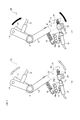
FIG. 2] FIG. 2(a) is a side view of the detection mechanism for the trunnion axis according to one embodiment of the present invention.FIG. 2(b) is a figure showing the detection mechanism for the trunnion axis viewing from an arrow direction of A ofFIG. 2(a). FIG. 2(c) is a figure showing a state in which a follower lever of the detection mechanism for the trunnion axis is pushing in a detection switch viewing from an arrow direction of B ofFIG. 2(a) . - [
FIG. 3] FIG. 3(a) is a side view showing the detection mechanism for the trunnion axis according to one embodiment of the present invention in a state in which a forward movement pedal is pressed.FIG. 3(b) is a side view showing the detection mechanism for the trunnion axis according to one embodiment of the present invention in a state in which a rearward movement pedal is pressed and on/off of the detection switch is switched.FIG. 3(c) is a side view showing the detection mechanism for the trunnion axis according to one embodiment of the present invention in a state in which the rearward movement pedal is pressed and the follower lever is spaced apart from a projecting part of the detection switch. - [
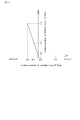
Fig. 4 ] It is a figure showing a relation between a rotation position of the operation lever and a rotation position of the follower lever which are included in the detection mechanism for the trunnion axis according to one embodiment of the present invention. - [
Fig. 5 ] It is a side view showing the detection mechanism for the trunnion axis according to the other embodiment of the present invention. - Hereinafter, an explanation will be given of a rotation position detection mechanism for a trunnion axis mounted on a hydraulic stepless transmission and entire constitution of a operation tool of a traveling vehicle such as tractor etc. with reference to FIG. 1 and
FIG. 2 . - A hydraulic
stepless transmission 1 outputs the rotative power from the engine etc. after changing the speed steplessly through hydraulic oil. The hydraulicstepless transmission 1 includes a variable displacement hydraulic pump (not shown) and a fixed displacement hydraulic motor (not shown) (Hereinafter referred to as "HST"). The variable displacement hydraulic pump includes atrunnion axis 2. - With respect to the variable displacement hydraulic pump, an angle of a swash plate (not shown) can be changed by rotatably operating the
trunnion axis 2 around its axis. That is to say, with respect to theHST 1, the rotation of anoutput axis 3 can be switched between rotation in one direction, rotation in the other direction, and stopping the rotation depending on the rotation position of thetrunnion axis 2. In this embodiment, the hydraulic stepless transmission is configured as theHST 1. However, the configuration of the hydraulic stepless transmission is not limited to this. - As shown in FIG. 1 an
operation lever 11 is fixed and supported to thetrunnion axis 2 of theHST 1. That is to say, one side end portion of theoperation lever 11 is fixed to thetrunnion axis 2, and theoperation lever 11 is protruding upward from the fixed portion. Theoperation lever 11 is configured to be integrally rotatable with thetrunnion axis 2 around thetrunnion axis 2 as a rotation center. Accordingly, when theoperation lever 11 is rotated with the rotation operation, thetrunnion axis 2 is rotated in the same direction as theoperation lever 11. When thetrunnion axis 2 is rotated in a clockwise direction, theoutput axis 3 of theHST 1 is rotated in one direction (forward movement direction). When thetrunnion axis 2 is rotated in a counterclockwise direction, theoutput axis 3 of theHST 1 is rotated in the other direction (rearward movement direction). Theoperation lever 11 configures a part of a rotationposition detection mechanism 10 which will be described below. - The operation tool of the traveling vehicle is operated when moving the traveling vehicle forward or rearward. The operation tool includes a
forward movement pedal 4 and arearward movement pedal 6. - With respect to the
forward movement pedal 4, apress section 4a, which is provided on one side end portion of theforward movement pedal 4, is pressed when moving the traveling vehicle forward. The other side end portion of theforward movement pedal 4 is rotatably supported by the forward movementpedal support axis 5. For the other side end portion of theforward movement pedal 4, afirst lever section 4b and asecond lever section 4c is integrally formed with theforward movement pedal 4. Thefirst lever section 4b is connected to theoperation lever 11 of thetrunnion axis 2 through alink 8. Thefirst lever section 4b is configured such that when thepress section 4a of theforward movement pedal 4 is pressed (in a black arrow direction in FIG. 1), thefirst lever section 4b is rotated in a separating direction from theoperation lever 11 around the forward movementpedal support axis 5 as a rotation center. That is to say, when thepress section 4a of theforward movement pedal 4 is pressed, theoperation lever 11 is moved rotationally in the clockwise direction. - With respect to the
rearward movement pedal 6, apress section 6a, which is provided on one side end portion of therearward movement pedal 6, is pressed when moving the traveling vehicle rearward. The other side end portion of therearward movement pedal 6 is rotatably supported by the rearward movementpedal support axis 7. For the other side end portion of therearward movement pedal 6, a rearwardmovement lever section 6b is integrally formed with therearward movement pedal 6. The rearwardmovement lever section 6b is configured such that the rearwardmovement lever section 6b can come into tactile contact with thesecond lever section 4c of theforward movement pedal 4. That is to say, theforward movement pedal 4 is interlocked with therearward movement pedal 6 by thesecond lever section 4c and the rearwardmovement lever section 6b. The rearwardmovement lever section 6b is configured such that when thepress section 6a of therearward movement pedal 6 is pressed (in a white arrow direction in FIG. 1), the rearwardmovement lever section 6b is rotated in a direction where the rearwardmovement lever section 6b closely approaches thesecond lever section 4c around a rearward movementpedal support axis 7 as a rotation axis. When thesecond lever section 4c of theforward movement pedal 4 is pressed by the rearwardmovement lever section 6b, thefirst lever section 4b is rotated in a direction where thefirst lever section 4b closely approaches theoperation lever 11 of thetrunnion axis 2. That is to say, when thepress section 6a of therearward movement pedal 6 is pressed, theoperation lever 11 is moved rotationally in the counterclockwise direction (the white arrow direction in FIG. 1). - When the
forward movement pedal 4 and therearward movement pedal 6 are not pressed, theoperation lever 11 of thetrunnion axis 2 does not move rotationally. In this case, theoperation lever 11 is disposed on thetrunnion axis 2 such that theoutput axis 3 of theHST 1 stops. That is to say, when neither theforward movement pedal 4 nor therearward movement pedal 6 is pressed, the rotation position of thetrunnion axis 2 is designed to be at a neutral position where theoutput axis 3 of theHST 1 stops. However, the configuration of the operation tool is not limited to this. For example, theforward movement pedal 4 may be integrally formed with therearward movement pedal 6 like see-saw type pedal. - As shown in FIG. 1 and
FIG. 2 , the rotationposition detection mechanism 10 for the trunnion axis detects the rotation position of thetrunnion axis 2. The rotationposition detection mechanism 10 for the trunnion axis mainly includes theoperation lever 11, a follower lever13, adetection switch 17, etc. - The
operation lever 11 rotates thetrunnion axis 2 of theHST 1. One side end portion of theoperation lever 11 is integrally supported by thetrunnion axis 2. A middle portion of theoperation lever 11 is connected with thelink 8, and thelink 8 is connected with theforward movement pedal 4 of the traveling vehicle. Because of this configuration, the constitution is simple compared to the case where a first support axis is provided separately from thetrunnion axis 2. Furthermore, for the other side end portion of theoperation lever 11, atactile contact portion 12 is formed on an edge face opposite to thelink 8 side. In this embodiment, thetactile contact portion 12 of theoperation lever 11 is integrally formed with theoperation lever 11. However, the configuration of thetactile contact portion 12 is not limited to this. For example, thetactile contact portion 12 may be detachably provided on theoperation lever 11. - The
operation lever 11 is configured so as to move rotationally in clockwise direction around thetrunnion axis 2 as a rotation center when theforward movement pedal 4 is pressed, that is to say, when thelink 8 moves forward due to the rotation of theforward movement pedal 4. Also, theoperation lever 11 is configured so as to move rotationally in counterclockwise direction around thetrunnion axis 2 as a rotation center when therearward movement pedal 6 is pressed, that is to say, when thelink 8 moves rearward due to the rotation of therearward movement pedal 6. - The
follower lever 13 turns on/off the below-describeddetection switch 17. A middle portion of thefollower lever 13 is supported by thetrunnion axis 2 so as to be capable of free relative rotation. That is to say, theoperation lever 11 and thefollower lever 13 are disposed on thetrunnion axis 2 next to each other. The other side of thefollower lever 13 across thetrunnion axis 2 is disposed on theoperation lever 11 side, and the one side of thefollower lever 13 across thetrunnion axis 2 is disposed on thedetection switch 17 side. As shown inFIG. 2(a) and FIG. 2(b) , the other side end portion of thefollower lever 13 is provided with acontact pin 14 extending to theoperation lever 11. The curved surface side part of thecontact pin 14 is configured to have a length which can come into tactile contact with thetactile contact portion 12. For the one side end portion of thefollower lever 13, the edge surface on the side at which thelink 8 is disposed is folded to form afold portion 15. Thefold portion 15 can come into tactile contact with the below-describeddetection switch 17 etc. The one side end portion of thefollower lever 13 is biased in the direction of approaching thedetection switch 17 by atension spring 16 which is configured from a spring as a biasing member. In this embodiment, thecontact pin 14 is fixed to the one side end portion of thefollower lever 13. However, the configuration of thecontact pin 14 is not limited to this. For example, thecontact pin 14 may be detachable from thefollower lever 13. - The
detection switch 17 detects the position of thetrunnion axis 2. Thedetection switch 17 has a projectingportion 17a which can be pushed into thedetection switch 17. Thedetection switch 17 is configured to be switched on/off by pushing in the projectingportion 17a. Thedetection switch 17 is attached to a casing etc. of theHST 1 through anattachment plate 18 where the distance between thetrunnion axis 2 and theattachment plate 18 is constant. Upon attaching thedetection switch 17, the projectingportion 17a is disposed to protrude outward beyond theattachment plate 18. The amount of protrusion of the projectingportion 17a of thedetection switch 17 is set to be equal to or more than the pushing-in amount required for switching on/off, and also set to be less than the maximum pushing-in amount. - The
attachment plate 18 is attached to the casing etc. of theHST 1 such that theattachment plate 18 can come into tactile contact with thefold portion 15 of thefollower lever 13. That is to say, theattachment plate 18 is configured to behave like a turning stopper of thefollower lever 13. Theattachment plate 18 is formed with along hole 18a.Bolts 18a etc. are inserted into thelong hole 18a so as to attach theattachment plate 18. Because of this configuration, it is easy to remove thedetection switch 17 and positional adjustment of thedetection switch 17 relative to thefollower lever 13 is facilitated. That is to say, since the attachment position of the detection switch is adjustable, assembly accuracy relative to the rotation position of thetrunnion axis 2 or theoperation lever 11 is improved and maintainability of thedetection switch 17 is improved. - As shown in
FIG. 2(c) , thedetection switch 17 and theattachment plate 18 are disposed at a position where thefold portion 15 of thefollower lever 13 comes into tactile contact with theattachment plate 18 when the rotation position of thetrunnion axis 2 is at the neutral position. Because of this configuration, when the rotation position of thetrunnion axis 2 is at the neutral position, the projectingportion 17a is pushed into thedetection switch 17 by thefold portion 15 by the amount protruding from theattachment plate 18. In this state, thedetection switch 17 is "on" (or "off"). Additionally, since thefollower lever 13 comes into tactile contact with theattachment plate 18, the clockwise rotation of thefollower lever 13 is restricted. Upon this, thedetection switch 17 is preferably arranged so that the cable side of thedetection switch 17 is downwardly directed. By this arrangement, short circuit of wiring etc. is prevented even if condensation etc. occurs. That is to say, this arrangement hardly accumulates moisture in a wiring part of thedetection switch 17, whereby moisture does not flow to thedetection switch 17. - As shown in
FIG. 2(a) , thefollower lever 13 is configured such that, when theoperation lever 11 is rotated in the counterclockwise direction, that is to say, when thetactile contact portion 12 of theoperation lever 11 is moved to a direction approaching thecontact pin 14, thefollower lever 13 is rotated in the counterclockwise direction around thetrunnion axis 2 as the rotation center. Because of this, thefollower lever 13 is turned from a rotation position γ0 where thefold portion 15 is in tactile contact with theattachment plate 18 to a rotation position y2 which is defined by the shape of theoperation lever 11 and the shape of thefollower lever 13. - Also, the
follower lever 13 is configured such that, when theoperation lever 11 is rotated in the clockwise direction from the above-mentioned state, that is to say, when thetactile contact portion 12 of theoperation lever 11 is moved to a direction spacing apart from thecontact pin 14, thefollower lever 13 is rotated in the clockwise direction around thetrunnion axis 2 as the rotation center. Because of this, thefollower lever 13 is turned from the rotation position γ2 which is defined by the shape of theoperation lever 11 and the shape of thefollower lever 13 to the rotation position γ0 where thefold portion 15 comes into tactile contact with theattachment plate 18. - As shown in
FIG. 2(a) and FIG. 2(c) , when theoperation lever 11 is moved from the rotation position θ0 (neutral position) to the rotation position θ1 in the clockwise direction (in the forward movement direction), thefollower lever 13 comes into tactile contact with theattachment plate 18. Accordingly, thefollower lever 13 does not move further from the rotation position γ0. In this state, thefollower lever 13 is activated by the biasing force of thetension spring 16 and thereby pushing in the projectingportion 17a of thedetection switch 17. However, thefollower lever 13 does not push-in the projectingportion 17a of the detection switch to the maximum pushing-in amount due to the restriction of theattachment plate 18. As such, the problem that thedetection switch 17 would break due to excessive push-in amount is suppressed. - With respect to the rotation
position detection mechanism 10 for thetrunnion axis 2 which has above-described configuration, theoperation lever 11 for operating thetrunnion axis 2 is configured so as to be capable of turning in the range between the rotation position θ0 to the rotation position θ1 by theforward movement pedal 4, whereas thefollower lever 13 is configured so as to be incapable of moving further from rotation position γ0. And, theoperation lever 11 is configured so as to be capable of turning in the range between the rotation position θ0 to the rotation position θ2 by therearward movement pedal 6, whereas thefollower lever 13 is configured so as to be capable of turning between the rotation position γ0 to the rotation position γ2. - Hereinafter, with respect to the rotation
position detection mechanism 10 for thetrunnion axis 2 which has above-described configuration, an explanation will be given of an operation mode for the case in which theforward movement pedal 4 and therearward movement pedal 6 are operated with reference toFIG. 2 to FIG. 4 . - When neither the
forward movement pedal 4 nor therearward movement pedal 6 is pressed, theoperation lever 11 does not move rotationally. As a result, as shown inFIG. 2(a) , theoperation lever 11 is disposed at the rotation position θ0, and the rotation position of thetrunnion axis 2 is at the neutral position. Accordingly, thetactile contact portion 12 of theoperation lever 11 is kept in tactile contact with thecontact pin 14 of thefollower lever 13, whereby theoperation lever 11 is stopped. - Meanwhile, since the
operation lever 11 has been stopped in rotation position θ0, thefollower lever 13 does not move rotationally. As a result, as shown inFIG. 2(c) , thefollower lever 13 is kept in the rotation position γ0 since thefold portion 15 of thefollower lever 13 is activated so as to come to tactile contact with theattachment plate 18 by thetension spring 16. Accordingly, the projectingportion 17a of thedetection switch 17 is pushed-in by thefold portion 15 of thefollower lever 13. - As shown in
FIG. 3(a) , when theforward movement pedal 4 is pressed, theoperation lever 11 is moved rotationally in the clockwise direction (the black arrow direction inFIG. 3(a) ). As a result, theoperation lever 11 is arranged in the range between the rotation position θ0 and the rotation position θ1. And, the rotation position of thetrunnion axis 2 becomes from the neutral position where theoutput axis 3 of theHST 1 is stopped to the rotation position where the output axis 3 (see FIG. 1) of theHST 1 is rotated in one direction (forward movement direction). Accordingly, thetactile contact portion 12 of theoperation lever 11 is spaced apart from thecontact pin 14 of thefollower lever 13. - Meanwhile, the
operation lever 11 moves rotationally from the rotation position θ0 in the separating direction apart from thefollower lever 13. Therefore, thefollower lever 13 does not move rotationally. As a result, thefollower lever 13 is kept in the rotation position γ0 (seeFIG. 2(c) ) since itsfold portion 15 is activated so as to come to tactile contact with theattachment plate 18 by thetension spring 16. Accordingly, the projectingportion 17a of thedetection switch 17 is pushed-in by thefold portion 15 of thefollower lever 13. - When the
forward movement pedal 4 is brought back to the unpressed state, theoperation lever 11 is moved rotationally in the counterclockwise direction (direction opposite to the black arrow direction inFIG. 3(a) ) As a result, theoperation lever 11 is arranged at rotation position θ0. And, the rotation position of thetrunnion axis 2 becomes the neutral position in which the output axis 3 (see FIG. 1) of theHST 1 is stopped. Accordingly, thetactile contact portion 12 of theoperation lever 11 comes into tactile contact with thecontact pin 14 of thefollower lever 13. - Meanwhile, since the
operation lever 11 is moved rotationally to the rotation position θ0 where theoperation lever 11 comes into tactile contact with thecontact pin 14 of thefollower lever 13, thefollower lever 13 does not move rotationally. As a result, thefollower lever 13 is maintained in a state being arranged at the rotation position γ0 by being activated by thetension spring 16 such that thefold portion 15 of thefollower lever 13 comes into tactile contact with theattachment plate 18. Accordingly, the projectingportion 17a of thedetection switch 17 is pushed-in by thefold portion 15 of thefollower lever 13. - As shown in
FIG. 3(b) and FIG. 3(c) , when therearward movement pedal 6 is pressed, theoperation lever 11 is moved rotationally in the counterclockwise direction (the white arrow direction inFIG. 3(b) and FIG. 3(c) ). As a result, theoperation lever 11 is arranged in a range between the rotation position θ0 and the rotation position θ2. And, the rotation position of thetrunnion axis 2 becomes from the neutral position where theoutput axis 3 of theHST 1 is stopped to the rotation position where theoutput axis 3 of theHST 1 is rotated in the other direction (rearward movement direction). Accordingly, thetactile contact portion 12 of theoperation lever 11 is kept in tactile contact with thecontact pin 14 of thefollower lever 13 while theoperation lever 11 is rotatively moving. - Meanwhile, since the
operation lever 11 is moved rotationally from the rotation position θ0 while thetactile contact portion 12 of theoperation lever 11 is kept in tactile contact with thecontact pin 14 of thefollower lever 13, thefollower lever 13 is moved rotationally in the counterclockwise direction (the white arrow direction inFIG. 3(b) and FIG. 3(c) ). In this case, as shown inFIG. 4 , thefollower lever 13 is moved rotationally according to the relation of the rotation position of thefollower lever 13 relative to the rotation position of theoperation lever 11 which is set according to the shape of theoperation lever 11 and the shape of thefollower lever 13. As a result, thefollower lever 13 is arranged in a range from the rotation position γ0 to the rotation position γ2. - Particularly, as shown in
FIG. 3(b) andFIG. 4 , the shape of theoperation lever 11 and the shape of thefollower lever 13 are set in a manner such that thefollower lever 13 is moved rotationally from rotation position γ0 to the rotation position γ3 while theoperation lever 11 is moved rotationally from the rotation position θ0 to the rotation position θ3. The rotation position γ3 of thefollower lever 13 is a position where on/off of thedetection switch 17 is switched. - Accordingly, when the
follower lever 13 is moved rotationally from the rotation position γ0 to the rotation position γ3, thedetection switch 17 is turned on/off. That is to say, detection sensitivity of thedetection switch 17 relative to the operation lever 11 (rearward movement pedal 6) can be arbitrarily set according to the shape of theoperation lever 11 and the shape of thefollower lever 13. And, detection sensitivity and the detection timing of thedetection switch 17 can be arbitrarily set regardless of the model of the traveling vehicle. Moreover, operation feeling of therearward movement pedal 6 can be arbitrarily set according to the shape of theoperation lever 11 and the shape of thefollower lever 13. - When the
rearward movement pedal 6 is brought back to the unpressed state, theoperation lever 11 is moved rotationally in the clockwise direction (opposite to the white arrow direction inFIG. 3(b) and FIG. 3(c) ). As a result, theoperation lever 11 is arranged at the rotation position θ0. And, the rotation position of thetrunnion axis 2 is at the neutral position in which theoutput axis 3 of theHST 1 is stopped. Accordingly, theoperation lever 11 is moved rotationally to the direction where thetactile contact portion 12 spaces apart from thecontact pin 14 of thefollower lever 13. In this case, thecontact pin 14 of thefollower lever 13 is kept in tactile contact with thetactile contact portion 12 of theoperation lever 11 by the biasing force of thetension spring 16. That is to say, thetactile contact portion 12 of theoperation lever 11 is kept in tactile contact with thecontact pin 14 while theoperation lever 11 is rotatively moving. - Meanwhile, since the
operation lever 11 is moved rotationally in the direction spacing apart from thefollower lever 13 to the rotation position θ0 while thetactile contact portion 12 of theoperation lever 11 is in tactile contact with thecontact pin 14 of thefollower lever 13, thefollower lever 13 is moved rotationally in the clockwise direction (opposite to the white arrow direction inFIG. 3(b) and FIG. 3(c) ). In this case, as shown inFIG. 4 , thefollower lever 13 is moved rotationally according to the relation of the rotation position of thefollower lever 13 relative to the rotation position of theoperation lever 11 which is set according to the shape of theoperation lever 11 and the shape of thefollower lever 13. - As mentioned above, the external force acting on the
detection switch 17 is only the biasing force of thetension spring 16 which acts when the projectingportion 17a is pushed. Accordingly, the turning on/off of thedetection switch 17 is not influenced by the operation state of theforward movement pedal 4 and therearward movement pedal 6. As a result, malfunction during pushing-in operation of thedetection switch 17 can be suppressed. Also, since the operation force of theforward movement pedal 4 and therearward movement pedal 6 does not act on thedetection switch 17, a possibility of breakage of thedetection switch 17 is eliminated. - In this embodiment, the rotation
position detection mechanism 10 for the trunnion axis is configured such that thedetection switch 17 is switched on/off when theoperation lever 11 is moved rotationally to the rotation position θ3. However, the configuration of the rotationposition detection mechanism 10 for the trunnion axis is not limited to this. The timing of switching of thedetection switch 17 can be set to desired timing by altering the shape of thetactile contact portion 12 of theoperation lever 11, the shape of theoperation lever 11, and the shape of thefollower lever 13. - As mentioned above, the disclosure relates to the rotation
position detection mechanism 10 for thetrunnion axis 2 in a hydraulic stepless transmission wherein, by way of a rotation operation of thetrunnion axis 2, the rotation speed and the rotation direction of theoutput axis 3 can be changed. The rotationposition detection mechanism 10 for thetrunnion axis 2 includes: theoperation lever 11 whose one side end portion is supported by thetrunnion axis 2 so as to be incapable of relative rotation and which is configured to be capable of rotating thetrunnion axis 2 by rotating around thetrunnion axis 2; thefollower lever 13 whose middle portion is supported by thetrunnion axis 2 which is turned on/off by one side end portion of the follower lever. For theoperation lever 11, thelink 8 for operating theoperation lever 11 is connected to the middle portion thereof so that, when theoperation lever 11 is rotated to one direction from the predetermined rotation position θ0 by thelink 8, the other side end portion (tactile contact portion 12) of theoperation lever 11 comes into tactile contact with the other side end portion (contact pin 14) of thefollower lever 13 so as to rotate thefollower lever 13 in order to switch between on and off for thedetection switch 17, whereas when theoperation lever 11 is rotated to another direction from the predetermined rotation position by the link, the other side end portion spaces apart from the other side end portion of thefollower lever 13 whereby thefollower 13 lever does not turn.
Because of this configuration, theoperation lever 11 and thefollower lever 13 are supported by thetrunnion axis 2. Accordingly, there is no need to provide another member for supporting theoperation lever 11 or thefollower lever 13 separately. The timing of switching of on/off and the detection sensitivity of thedetection switch 17 can be arbitrarily determined depending on the shapes of theoperation lever 11 and thefollower lever 13. As such, the operation state of theoperation lever 11 and the attaching position of thedetection switch 17 can be arbitrarily set. - And, the other side end portion (tactile contact portion 12) of the operation lever or the other side end portion (contact pin 14) of the
follower lever 13 is configured to be detachable from theoperation lever 11 or thefollower lever 13.
Because of this configuration, a working quantity of thefollower lever 13 with respect to an amount of operation of theoperation lever 11 can be easily changed without changing constitution of the mechanism. As such, maintainability and general versatility are improved. - And, the other side end portion of the
follower lever 13 has acontact pin 14 which comes into tactile contact with the other side end portion (tactile contact portion 12) of theoperation lever 11.
Because of this configuration, even if theoperation lever 11 is spaced apart from thefollower lever 13, theoperation lever 11 can come into tactile contact with thefollower lever 13 through thecontact pin 14. As such, the arrangement of theoperation lever 11 and thefollower lever 13 is facilitated. - And, the
detection switch 17 has a projectingportion 17a to be switched on/off by pushing-in. Thefollower lever 13 is activated by thetension spring 16 in the direction of pushing-in the projectingpart 17a. And thefollower lever 13 is rotated in a separating direction from the projectingpart 17a when theoperation lever 11 is turned.
Because of this configuration, thedetection switch 17 is not pushed-in by the force from theoperation lever 11. As such, the possibility of breakage of thedetection switch 17 due to operation of theoperation lever 11 is eliminated. - And, the
detection switch 17 is attached through theattachment plate 18 and disposed in the vicinity of thefollower lever 13. And theattachment plate 18 comes into tactile contact with thefollower lever 13 before the entire projectingportion 17a is pushed into thedetection switch 17.
Because of this configuration, not the entire biasing force of thetension spring 16 is applied to thedetection switch 17. As such, the possibility of breakage of thedetection switch 17 due to the biasing force of thetension spring 16 is eliminated. - Hereinafter, an explanation will be given of a rotation
position detection mechanism 20 for the trunnion axis which is the other embodiment of the rotation position detection mechanism for the trunnion axis according to the present invention with reference toFIG. 5 . In the below embodiment, for the point which is the same as that of in the already described embodiment, the concrete explanation is omitted, and the explanation will be given by focusing mainly on the different point. - As shown in
FIG. 5 , the rotationposition detection mechanism 20 for the trunnion axis mainly includes theoperation lever 11, thefollower lever 13, thedetection switch 17, an pushing-inguide 21, etc. - The pushing-in
guide 21 pushes-in the projectingportion 17a of thedetection switch 17. The pushing-inguide 21 includes a pushing-inportion 22, aguide portion 23, and acompression spring 24. The pushing-inportion 22 is configured from a columnar shaped member. Ahole 23a is formed on theguide portion 23 and the pushing-inportion 22 can be inserted into thehole 23a of theguide portion 23 without space between so as to be capable of free sliding. The pushing-inportion 22 is inserted into thehole 23a of theguide portion 23 and supported by theguide portion 23 so as to be capable of free moving only in the axial direction. - The pushing-in
guide 21 is arranged such that the shaft center of the one side end portion of the pushing-inportion 22 comes into tactile contact with the center of the projectingportion 17a of thedetection switch 17. Additionally, the pushing-inguide 21 is arranged such that the axial direction of the pushing-inportion 22 matches with the pushing-in direction of the projectingportion 17a of thedetection switch 17. Furthermore, the pushing-inguide 21 is arranged such that thefold portion 15 of thefollower lever 13 comes into tactile contact with the other side end portion of the pushing-inportion 22. In this case, for the pushing-inguide 21, the projectingportion 17a is configured to be pushed into thedetection switch 17 to the position to be switched on/off when the other side end portion of the pushing-inportion 22 is pushed in by thefold portion 15 of thefollower lever 13. And, with respect to the pushing-inguide 21, the pushing-inportion 22 is activated by thecompression spring 24 to a direction separating from the projectingportion 17a. - Hereinafter, with respect to the rotation
position detection mechanism 20 for the trunnion axis which has above-described configuration, an explanation will be given of an operation mode for the case in which therearward movement pedal 6 is operated with reference toFIG. 5 . - As shown in
FIG. 5(a) , when therearward movement pedal 6 is pressed, theoperation lever 11 is moved rotationally in the counterclockwise direction (a white arrow direction inFIG 5(a) ). While theoperation lever 11 is rotatively moving, thetactile contact portion 12 of theoperation lever 11 is kept in tactile contact with thecontact pin 14 of thefollower lever 13. - Meanwhile, since the
operation lever 11 is moved rotationally toward thefollower lever 13 while thetactile contact portion 12 of theoperation lever 11 is kept in tactile contact with thecontact pin 14 of thefollower lever 13, thefollower lever 13 is moved rotationally in the counterclockwise direction (a white arrow direction inFIG. 5(a) ). Thefollower lever 13 is moved rotationally according to the relation of the rotation position of thefollower lever 13 relative to the rotation position of theoperation lever 11 which is set according to the shape of theoperation lever 11 and the shape of thefollower lever 13. - The
follower lever 13 is moved rotationally to a direction separating from the other side end portion of the pushing-inportion 22 of the pushing-inguide 21. As a result, the pushing-inportion 22 is moved to a direction separating from the projectingportion 17a of thedetection switch 17 by the biasing force of thecompression spring 24 of the pushing-inguide 21. Accordingly, thedetection switch 17 detects the switching of on/off when thefollower lever 13 is moved rotationally in the counterclockwise direction to a predetermined rotation position. - As shown in
FIG. 5(b) , when therearward movement pedal 6 is brought back to an unpressed state, theoperation lever 11 is moved rotationally to the clockwise direction (a black arrow direction inFIG. 5(b) ). Accordingly, theoperation lever 11 is moved rotationally while thetactile contact portion 12 of theoperation lever 11 is kept in tactile contact with thecontact pin 14 of thefollower lever 13. - Meanwhile, since the
operation lever 11 is moved rotationally to a direction separating from thefollower lever 13 while thetactile contact portion 12 of theoperation lever 11 is kept in tactile contact with thecontact pin 14, thefollower lever 13 is moved rotationally in the clockwise direction (a black arrow direction inFIG. 5(b) ). Thefollower lever 13 is moved rotationally according to the relation of rotation position of thefollower lever 13 relative to the rotation position of theoperation lever 11 which is set according to the shape of theoperation lever 11 and the shape of thefollower lever 13. - The
follower lever 13 is moved rotationally to the direction approaching the other side end portion of the pushing-inportion 22 of the pushing-inguide 21. As a result, the pushing-inportion 22 is moved to the direction approaching the projectingportion 17a of thedetection switch 17 by the biasing force of thetension spring 16 of thefollower lever 13. That is to say, the projectingportion 17a is pushed into thedetection switch 17 through the pushing-inportion 22 activated by the biasing force of thetension spring 16. Accordingly, thedetection switch 17 detects switching of on/off when thefollower lever 13 is moved rotationally in the clockwise direction to a predetermined rotation position. - With respect to the pushing-in
guide 21, the pushing-inportion 22 is pushed-in by being pushed by thefollower lever 13 which rotatively moves around thetrunnion axis 2. As such, rotation moment from thefollower lever 13 is applied to the pushing-inguide 21. However, the pushing-inportion 22 is supported by theguide portion 23 of the pushing-inguide 21 so as to be capable of free moving only in its axial direction. That is to say, even if rotation moment is applied, the pushing-inportion 22 is moved only to the push-in direction of the projectingportion 17a of thedetection switch 17. Accordingly, rotation moment from thefollower lever 13 is not applied to the projectingportion 17a which is pushed into thedetection switch 17 by the pushing-inportion 22. - As described above, the projecting
portion 17a of thedetection switch 17 is activated by thecompression spring 24 through the pushing-inportion 22. The pushing-inportion 22 is configured to be capable of reciprocating only in the pushing-in direction.
Because of this configuration, rotation moment is not applied to the projectingportion 17a of thedetection switch 17. As such, the possibility of breakage of thedetection switch 17 is eliminated. - The present invention can be utilized to a rotation position detection mechanism for a trunnion axis in a hydraulic stepless transmission (HST).
-
- 1
- hydraulic stepless transmission
- 2
- trunnion axis
- 3
- output axis
- 8
- link
- 10
- rotation position detection mechanism for a trunnion axis
- 11
- operation lever
- 13
- follower lever
- 18
- detection switch
Claims (6)
- A rotation position detection mechanism for a trunnion axis in a hydraulic stepless transmission wherein, by way of a rotation operation of the trunnion axis, the rotation speed and the rotation direction of an output axis can be changed, comprising:an operation lever whose one side end portion is supported by the trunnion axis so as to be incapable of relative rotation and which is configured to be capable of rotating the trunnion axis by rotating around the trunnion axis;a follower lever whose middle portion is supported by the trunnion axis so as to be capable of free relative rotation; anda detection switch which is turned on/off by one side end portion of the follower lever; wherein,for the operation lever, a link for operating the operation lever is connected to the middle portion thereof so that, when the operation lever is rotated to one direction from a predetermined rotation position by the link, the other side end portion of the operation lever comes into tactile contact with the other side end portion of the follower lever so as to rotate the follower lever in order to switch between on and off for the detection switch, whereas when the operation lever is rotated to another direction from the predetermined rotation position by the link, the other side end portion spaces apart from the other side end portion of the follower lever whereby the follower lever does not turn.
- The rotation position detection mechanism for the trunnion axis according to Claim 1 wherein,
the other side end portion of the operation lever or the other side end portion of the follower lever is configured to be detachable from the operation lever or the follower lever. - The rotation position detection mechanism for the trunnion axis according to Claim 1 or Claim 2 wherein,
the other side end portion of the follower lever has a contact pin which comes into tactile contact with the other side end portion of the operation lever. - The rotation position detection mechanism for the trunnion axis according to any one of Claim 1 to Claim 3 wherein,
the detection switch has a projecting portion to be switched on/off by pushing-in, and wherein,
the follower lever is activated by a biasing member in the direction of pushing-in the projecting part, and wherein,
the follower lever is rotated in a separating direction from the projecting part when the operation lever is turned. - The rotation position detection mechanism for the trunnion axis according to Claim 4 wherein,
the detection switch is attached through an attachment plate and disposed in the vicinity of the follower lever, wherein,
the attachment plate comes into tactile contact with the follower lever before the entire projecting portion is pushed into the detection switch. - The rotation position detection mechanism for the trunnion axis according to Claim 4 wherein,
the detection switch is activated by the biasing member through a pushing-in member, wherein,
the pushing-in member is configured to be capable of reciprocating only in the pushing-in direction.
Applications Claiming Priority (2)
| Application Number | Priority Date | Filing Date | Title |
|---|---|---|---|
| JP2012004508A JP5806126B2 (en) | 2012-01-12 | 2012-01-12 | Trunnion shaft rotational position detection mechanism |
| PCT/JP2013/050234 WO2013105581A1 (en) | 2012-01-12 | 2013-01-09 | Rotation position detection mechanism for trunnion axis |
Publications (2)
| Publication Number | Publication Date |
|---|---|
| EP2804068A1 true EP2804068A1 (en) | 2014-11-19 |
| EP2804068A4 EP2804068A4 (en) | 2015-09-02 |
Family
ID=48781526
Family Applications (1)
| Application Number | Title | Priority Date | Filing Date |
|---|---|---|---|
| EP13735707.5A Withdrawn EP2804068A4 (en) | 2012-01-12 | 2013-01-09 | Rotation position detection mechanism for trunnion axis |
Country Status (4)
| Country | Link |
|---|---|
| US (1) | US9470306B2 (en) |
| EP (1) | EP2804068A4 (en) |
| JP (1) | JP5806126B2 (en) |
| WO (1) | WO2013105581A1 (en) |
Families Citing this family (1)
| Publication number | Priority date | Publication date | Assignee | Title |
|---|---|---|---|---|
| KR102719104B1 (en) * | 2019-08-08 | 2024-10-16 | 현대자동차주식회사 | Shift lever apparatus for vehicle |
Family Cites Families (14)
| Publication number | Priority date | Publication date | Assignee | Title |
|---|---|---|---|---|
| US2368017A (en) * | 1941-04-14 | 1945-01-23 | Oilgear Co | Control for hydraulic transmissions |
| JPS5659427U (en) * | 1979-10-13 | 1981-05-21 | ||
| JPH0353305Y2 (en) | 1987-04-30 | 1991-11-21 | ||
| US4958535A (en) * | 1989-03-15 | 1990-09-25 | Deere & Company | Transmission control structure including a combination direction and cruise control and a brake interlock |
| JPH082897Y2 (en) | 1989-12-12 | 1996-01-29 | いすゞ自動車株式会社 | Connection structure of pedal and switch |
| JPH0386220U (en) | 1989-12-21 | 1991-08-30 | ||
| JP2590404Y2 (en) | 1993-06-02 | 1999-02-17 | 日産ディーゼル工業株式会社 | Vehicle pedal position detecting device |
| JP3568422B2 (en) | 1999-07-09 | 2004-09-22 | 株式会社クボタ | Gear shift neutral detector for work equipment |
| JP2003211987A (en) | 2002-01-18 | 2003-07-30 | Mitsubishi Agricult Mach Co Ltd | Position detection device for gear shift lever |
| JP2004009792A (en) | 2002-06-04 | 2004-01-15 | Iseki & Co Ltd | Operating device of mobile work machine |
| CA2409173A1 (en) * | 2002-10-18 | 2004-04-18 | Deere & Company | Interlock of parking brake and drive control pedals for utility vehicle |
| JP4362426B2 (en) * | 2004-09-15 | 2009-11-11 | 株式会社クボタ | Work vehicle transmission structure |
| JP5035866B2 (en) * | 2005-10-04 | 2012-09-26 | ヤンマー株式会社 | Power transmission device for work vehicle |
| JP5350891B2 (en) | 2009-06-03 | 2013-11-27 | ヤンマー株式会社 | Work vehicle |
-
2012
- 2012-01-12 JP JP2012004508A patent/JP5806126B2/en not_active Expired - Fee Related
-
2013
- 2013-01-09 EP EP13735707.5A patent/EP2804068A4/en not_active Withdrawn
- 2013-01-09 US US14/371,895 patent/US9470306B2/en not_active Expired - Fee Related
- 2013-01-09 WO PCT/JP2013/050234 patent/WO2013105581A1/en not_active Ceased
Also Published As
| Publication number | Publication date |
|---|---|
| WO2013105581A1 (en) | 2013-07-18 |
| JP5806126B2 (en) | 2015-11-10 |
| US9470306B2 (en) | 2016-10-18 |
| US20140352474A1 (en) | 2014-12-04 |
| JP2013143111A (en) | 2013-07-22 |
| EP2804068A4 (en) | 2015-09-02 |
Similar Documents
| Publication | Publication Date | Title |
|---|---|---|
| US8353264B2 (en) | Valve drive arrangement | |
| CN101712280A (en) | Accelerator pedal device | |
| EP2804068A1 (en) | Rotation position detection mechanism for trunnion axis | |
| JP2017227215A (en) | Valve mechanism of internal combustion engine | |
| JP2012524209A (en) | Device for detecting adjusted stroke volume | |
| EP3264217B1 (en) | Lever operation device | |
| SE464751B (en) | ENPAKS RULES FOR BAATAR | |
| CN107575566B (en) | Method for adjusting neutral position of gear lever | |
| US20130081501A1 (en) | Shifter Assembly For Providing Mechanical And Electronic Actuation To A Transmission Of A Vehicle And A Method of Operating The Shifter Assembly | |
| KR101341128B1 (en) | Electronic automatic transmission lever assembly | |
| KR101900286B1 (en) | Transmission operating device for Hydro Static Transmission | |
| JP2017222457A (en) | Electric lever device | |
| CN103502606B (en) | The governor arrangement of motor | |
| JP2013141965A (en) | Rotational position detecting mechanism of trunnion shaft | |
| EP2708971B1 (en) | Push and slide switch for a vehicle and motor vehicle | |
| KR101519264B1 (en) | Shift lever apparatus for vehicle | |
| JPS6222419Y2 (en) | ||
| KR101837114B1 (en) | Clutch control apparatus for manual transmission vehicle | |
| JP6379843B2 (en) | Detent spring mounting structure for parking | |
| JP2005088700A (en) | Work vehicle travel control device | |
| JP2008137100A (en) | Sheet punching device | |
| JPS6216341Y2 (en) | ||
| KR101989073B1 (en) | Inhibitor switch for automatic transmission | |
| KR102228444B1 (en) | Clutch control apparatus for manual transmission vehicle | |
| JP2013237282A (en) | Hst transmission device of working vehicle |
Legal Events
| Date | Code | Title | Description |
|---|---|---|---|
| PUAI | Public reference made under article 153(3) epc to a published international application that has entered the european phase |
Free format text: ORIGINAL CODE: 0009012 |
|
| 17P | Request for examination filed |
Effective date: 20140812 |
|
| AK | Designated contracting states |
Kind code of ref document: A1 Designated state(s): AL AT BE BG CH CY CZ DE DK EE ES FI FR GB GR HR HU IE IS IT LI LT LU LV MC MK MT NL NO PL PT RO RS SE SI SK SM TR |
|
| DAX | Request for extension of the european patent (deleted) | ||
| RA4 | Supplementary search report drawn up and despatched (corrected) |
Effective date: 20150805 |
|
| RIC1 | Information provided on ipc code assigned before grant |
Ipc: B60K 26/02 20060101ALI20150730BHEP Ipc: F16H 61/437 20100101ALI20150730BHEP Ipc: G05G 25/00 20060101AFI20150730BHEP Ipc: F16H 59/06 20060101ALI20150730BHEP Ipc: B60K 20/02 20060101ALI20150730BHEP |
|
| STAA | Information on the status of an ep patent application or granted ep patent |
Free format text: STATUS: THE APPLICATION IS DEEMED TO BE WITHDRAWN |
|
| 18D | Application deemed to be withdrawn |
Effective date: 20160301 |