EP2803550A1 - Vorrichtung und Verfahren zur Regelung der Geschwindigkeit eines Transportgerätes - Google Patents
Vorrichtung und Verfahren zur Regelung der Geschwindigkeit eines Transportgerätes Download PDFInfo
- Publication number
- EP2803550A1 EP2803550A1 EP14168325.0A EP14168325A EP2803550A1 EP 2803550 A1 EP2803550 A1 EP 2803550A1 EP 14168325 A EP14168325 A EP 14168325A EP 2803550 A1 EP2803550 A1 EP 2803550A1
- Authority
- EP
- European Patent Office
- Prior art keywords
- information
- speed
- transport equipment
- transported
- equipment
- Prior art date
- Legal status (The legal status is an assumption and is not a legal conclusion. Google has not performed a legal analysis and makes no representation as to the accuracy of the status listed.)
- Withdrawn
Links
- 238000000034 method Methods 0.000 title claims description 30
- 230000033228 biological regulation Effects 0.000 title claims description 14
- 238000004364 calculation method Methods 0.000 claims abstract description 9
- 238000004590 computer program Methods 0.000 claims description 6
- 230000005540 biological transmission Effects 0.000 claims description 3
- 230000007257 malfunction Effects 0.000 claims description 3
- 238000012544 monitoring process Methods 0.000 claims description 3
- 230000001105 regulatory effect Effects 0.000 abstract description 9
- 238000010586 diagram Methods 0.000 description 7
- 238000005265 energy consumption Methods 0.000 description 6
- 238000012423 maintenance Methods 0.000 description 5
- 230000008901 benefit Effects 0.000 description 4
- 230000009467 reduction Effects 0.000 description 4
- 230000003416 augmentation Effects 0.000 description 3
- 230000005611 electricity Effects 0.000 description 3
- 229940082150 encore Drugs 0.000 description 3
- 235000021183 entrée Nutrition 0.000 description 3
- 238000003860 storage Methods 0.000 description 3
- 238000004891 communication Methods 0.000 description 2
- 230000001276 controlling effect Effects 0.000 description 2
- 230000003247 decreasing effect Effects 0.000 description 2
- 230000006870 function Effects 0.000 description 2
- 238000009434 installation Methods 0.000 description 2
- 238000005259 measurement Methods 0.000 description 2
- 230000003287 optical effect Effects 0.000 description 2
- 238000005457 optimization Methods 0.000 description 2
- 230000001360 synchronised effect Effects 0.000 description 2
- 238000012795 verification Methods 0.000 description 2
- 206010003830 Automatism Diseases 0.000 description 1
- 230000006978 adaptation Effects 0.000 description 1
- 230000008859 change Effects 0.000 description 1
- 230000001419 dependent effect Effects 0.000 description 1
- 238000001514 detection method Methods 0.000 description 1
- 238000013213 extrapolation Methods 0.000 description 1
- 230000004941 influx Effects 0.000 description 1
- 238000004519 manufacturing process Methods 0.000 description 1
- 239000000463 material Substances 0.000 description 1
- 238000004377 microelectronic Methods 0.000 description 1
- 238000012986 modification Methods 0.000 description 1
- 230000004048 modification Effects 0.000 description 1
- 239000002994 raw material Substances 0.000 description 1
- 238000011084 recovery Methods 0.000 description 1
Images

Classifications
-
- B—PERFORMING OPERATIONS; TRANSPORTING
- B61—RAILWAYS
- B61B—RAILWAY SYSTEMS; EQUIPMENT THEREFOR NOT OTHERWISE PROVIDED FOR
- B61B12/00—Component parts, details or accessories not provided for in groups B61B7/00 - B61B11/00
- B61B12/06—Safety devices or measures against cable fracture
-
- Y—GENERAL TAGGING OF NEW TECHNOLOGICAL DEVELOPMENTS; GENERAL TAGGING OF CROSS-SECTIONAL TECHNOLOGIES SPANNING OVER SEVERAL SECTIONS OF THE IPC; TECHNICAL SUBJECTS COVERED BY FORMER USPC CROSS-REFERENCE ART COLLECTIONS [XRACs] AND DIGESTS
- Y02—TECHNOLOGIES OR APPLICATIONS FOR MITIGATION OR ADAPTATION AGAINST CLIMATE CHANGE
- Y02T—CLIMATE CHANGE MITIGATION TECHNOLOGIES RELATED TO TRANSPORTATION
- Y02T30/00—Transportation of goods or passengers via railways, e.g. energy recovery or reducing air resistance
Definitions
- the present invention relates to automated speed control devices and methods for transport equipment. More particularly, it relates to means for managing, effectively under various constraints and with various objectives, a network of ski lifts deployed in a ski resort.
- Transport equipment for example ski lifts in a ski area, or conveyors allowing the movement of manufactured products or raw materials in an industrial environment, are confronted with the problem of regulating the speed of movement of the objects transported.
- Various constraints, sometimes complex and related, must be taken into account in order to optimize performance on the one hand, but also on the other hand to achieve other objectives such as limiting the cost of operation or wear.
- One of the objectives of the invention is to provide automated means for effectively managing the flow of objects or people transported, to optimize electricity consumption, including the instantaneous consumption of motive power, or to reduce the phenomena wear of parts, and therefore the frequency of maintenance periods of equipment over a given period. Another object of the invention is to overcome the manual human intervention. Another object of the invention is to automatically manage the operation of the transport equipment according to constraints, previously available information, or information collected during operation. Another object of the invention is to provide simple means to install on existing networks. Another objective of the invention is to propose additional means without intervening on the subsystems of the equipment subjected to strong security constraints.
- the transport equipment may be, for example, transport equipment used for the routing of manufactured products or materials or objects in an industrial environment.
- Transportation equipment may also be transportation equipment used to transport people, especially a lift. It generally consists of a scroll member (such as a cable or a treadmill) which are fixed nacelles each able to contain one or more people or objects.
- the scroll member ensures the movement of the nacelles on the course between a starting point and an end point.
- the speed of travel of the transport equipment is the speed of the scroll member as a whole, which thus determines the speed of advancement of all the nacelles.
- the speed of transport of people that is to say the flow of people or objects that are removed from the point departure, is not directly related to the speed of the equipment.
- the device being an auxiliary device of the transport equipment and in particular of its control and regulation system, it is simple to implement and does not require substantial modifications of the transport equipment.
- the device according to the invention since the control system of the existing equipment is not modified, the device according to the invention has no impact on the safety constraints of the transport equipment, nor on the maintenance visits, or again on the performances of the latter.
- the safety system of the transport equipment acting for example on emergency braking in the event of a problem, on stopping because of wind that could cause a derailment, is not affected.
- the device according to the invention does not condition the operation of the equipment, but allows to provide the necessary information to regulate it.
- the use of the device according to the invention makes it possible to achieve substantial savings with respect to a manual regulation of the transport equipment, thanks in particular to the energy savings that the invention makes possible.
- Significant savings can be achieved by limiting the wear of parts (rubber tires, bearings, motorization less energy consuming, because less sudden variations), which typically results in a gain in electrical energy of 15-18% and a economy on the mechanics of the order of 10%.
- the input interface can be used to receive TARG instructions for the transport equipment and its operation.
- the output interface is for example adapted to be coupled with an external module of a transport equipment.
- the output interface may be an Ethernet card, adapted to be coupled to a wired or wireless WiFi network, to allow interconnection with the Internet, or an internal network.
- the output interface comprises for example a connection box, as well as wired links adaptable to the external module.
- the external module is an automatism equipped with a speed variation device for a synchronous or asynchronous DC or AC machine.
- the calculating means may comprise at least one processor, interfaces and storage units for storing and executing a computer program, and / or an integrated circuit in which a program is incorporated. Verification of compliance with the instruction can be made substantially continuously, or periodically, for example every second.
- the transmission of the commands can be carried out substantially continuously, periodically, for example every five seconds, or only when the difference between the setpoint and the information exceeds a determined threshold.
- the control message may include an indication of the optimum speed to be achieved, instructions for increasing / decreasing / keeping the speed of the equipment stable, physical indications on a parameter influencing the speed of the equipment, or a combination thereof. indications or instructions.
- the commands are adapted to be processed by the external module when the transport equipment is in operation.
- the automated device includes a user interface for displaying, presenting or transmitting information relating to the operation of the automated module, and / or receiving information provided by a user.
- the user interface may comprise a touch screen, for example to display parameters such as the speed of the transport equipment, the state of the automated module, or the currently applied instructions.
- the user interface can also include input means such as a keyboard or a touch screen, to allow a user to configure the automated module, adapt or modify the instructions or enter information relating to the transport equipment and its operation. It can also be deported and include connection means adapted to send to and / or receive from another remote user interface information EXTINF.
- the transport equipment information, as well as the setpoints can be received by the input interface, preconfigured, stored in the automated module, or entered by a user on the user interface.
- Said at least one instruction may relate to a number of persons and / or objects transported per unit of time. It can also relate to the costs incurred by the operation of transport equipment. It may also be a function of the weather, and / or information relating to the transport equipment, and / or information relating to the environment of the transport equipment received or obtained by the user. input interface.
- the information relating to the transport equipment is obtained for example from statistical data relating to the operation of the transport equipment. For example, it may include at least one or a combination of the following information: an average over a given period of time of the number of people or objects transported per day or hour, an average - over a given period, and for weather conditions data - the number of persons or objects transported, the average electrical consumption over a given period of transport equipment, an average speed over a given period of movement of objects and / or persons.
- Transport equipment information can be obtained from and / or by measuring a parameter of the transport equipment. It first includes information relating to a number of people and / or objects transported or transported. This number may be provided per unit of time, or for a given time period or at a given time, and may be based on a measurement or on an estimate made during a specified period or at a given reference time.
- the information advantageously includes other information.
- it can include at least one or a combination of the following information: speed measured instant or average over a given period of movement of objects and / or people, measured instantaneous or average electrical consumption over a given period of transport equipment, etc. It can also relate to a speed, average or instantaneous movement of objects and / or people transported by the transport equipment.
- the information relating to the transport equipment may still relate to a number per time unit of persons and / or objects transported or transported.
- it may include at least one or a combination of the following information: a measure of the traffic over a given period of time at a given point in the transportation equipment, an estimate of the number of people or objects wishing to travel on the road; transport equipment at a given time or over a given period, an estimate and / or an instantaneous or over a given period of time, of the number of persons or objects carried by the transport equipment.
- the unit of time may be a single reference period or repeated, more or less long.
- Transport equipment information may still relate to the costs incurred in operating the transportation equipment.
- the present invention thus makes it possible to regulate the speed of a transport equipment, based on a set of requirements, one of which relates to the number of passengers or objects that must be transported from one point to another .
- This requirement is linked to the achievement of a high satisfaction index for passengers who do not wait long before being supported by the equipment. It is also an advantage for the manager of object transport equipment, which will optimize the movements according to the number of packages to be moved.
- the device further comprises a self-monitoring module able to detect a malfunction and, where appropriate, to disable the sending of the control message. Security is enhanced and maintenance of the device is facilitated.
- the invention relates to a computer program comprising instructions for executing the steps of the method according to the fourth aspect, or for performing the steps of the method according to the fifth aspect, when said program is executed by a processor.
- Each of these programs can use any programming language, and be in the form of source code, object code, or intermediate code between source code and object code, such as in a partially compiled form, or in any form what other form is desirable.
- the invention relates to a recording medium readable by a computer on which is recorded a computer program comprising instructions for executing the steps of the method according to the fourth aspect or for performing the steps of the method according to the fifth aspect.
- the information carrier may be any entity or any device capable of storing the program.
- the medium may comprise storage means, such as a ROM, for example a CD-ROM or a microelectronic circuit ROM, or a magnetic recording means, for example a diskette or a hard disk.
- the information medium may be a transmissible medium such as an electrical or optical signal, which may be conveyed by an electrical or optical cable, by radio or by other means.
- the program according to the invention can in particular be downloaded to an Internet network.
- the information carrier may be an integrated circuit in which the program is incorporated, the circuit being adapted to execute or to be used in the execution of the method in question.
- the input interface is used to receive INFO information relating to the transport equipment and its operation.
- the information relating to the transport equipment is obtained for example from and / or by measuring a parameter of the transport equipment. For example, it includes a combination of the following information: the instantaneous or average measured speed over a given period of movement of objects and / or people, the instantaneous or average measured power consumption over a given period of transportation equipment, etc. .
- the information relating to the transport equipment may still relate to a number per unit of time, persons and / or objects transported or transported. For example, it includes at least one of the following information: a measure of the traffic over a given period of time at a given point in the transport equipment, an estimate of the number of persons or objects wishing to borrow transport equipment at a given point in time; at a given moment or over a given period, an estimate and / or an instantaneous measurement or over a given period of time, of the number of persons or objects carried by the transport equipment.
- the information relating to the transport equipment may also relate to a speed, average or instantaneous movement of objects and / or persons transported by the transport equipment.
- Information on transport equipment can be obtained from statistical data relating to the operation of transport equipment, collected over a period of time, such as: an average of the number of people or objects transported per day or hour, an average for specified weather conditions of the number of persons or objects carried, the consumption average electrical transportation equipment, an average speed of movement of objects and / or people. It can still be related to the costs generated by the operation of the transport equipment.
- the input interface makes it possible to receive TARG instructions relating to the transport equipment and its operation.
- the instructions may relate to a number of persons and / or objects transported per unit of time, to the costs generated by the operation of the transport equipment. They may be a function of the weather, and / or information relating to the transport equipment, and / or information relating to the environment of the transport equipment received or obtained by the input interface.
- TARG instructions may depend on external parameters such as weather, weather conditions, or others. They can be received, stored locally, and used until new TARGs received replace them. By way of non-limiting example, they may relate to a minimum vehicle occupancy, a range of vehicle travel speeds, maximum energy consumption, optimum transported passenger flow rate, a desired flow range, etc.
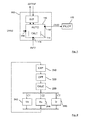
- the automated device 100 optionally includes a user interface 120 for displaying, presenting or transmitting information relating to the operation of the automated module 100, and receiving EXTINF information provided by a user.
- the user interface 120 may comprise a touch screen, to display parameters such as the speed of the transport equipment, the state of the automated module, or the TARG instructions currently applied. It can comprise input means such as a keyboard or a touch screen, to enable a user to configure the automated module 110, to adapt or modify the TARG instructions or to enter INFO information relating to the transport equipment. and its exploitation.
- the interface 120 may be deported and include connection means for sending to and / or receiving from another remote user interface the EXTINF information.
- the automated device 100 is included in a package measuring about 10 cm x 10 cm x 8 cm.
- the output interface 112 can be coupled to a terminal of the ski lift, usually located in the hut of the pole vaulter.
- the automated device 100 is configured to issue CMD orders to reduce or increase the speed at which objects or persons are transported by the transport equipment.
- the automated device 100 uses the information INFO, measured on the transport equipment or specific to the latter, such as the capacity of the installation, the current operating speed, the tracking distance.
- the INFO information can be received by the first interface 114, preconfigured or stored in the automated module 110, or entered by a user on the user interface 120.
- the automated device 100 takes into account for this TARG instructions, for example a instructions relating to the operating cost, production rate, waiting time, or flow management on transport equipment in relation to other nearby transport equipment.
- the TARG instructions may be received by the second interface 116, preconfigured or stored in the automated module 110, or entered by a user on the user interface 120.
- the automated module 110 may also include a self-monitoring module (not shown in the figures), configured to detect malfunctions of the automated device 100 and disable the sending of speed control commands CMD and / or inform the external module of the occurrence of an anomaly.
- a self-monitoring module (not shown in the figures), configured to detect malfunctions of the automated device 100 and disable the sending of speed control commands CMD and / or inform the external module of the occurrence of an anomaly.
- An automated method for controlling the speed of transport of objects or persons by one or more transport equipment, according to a filling or occupying purpose, according to one embodiment of the invention, is illustrated on the figure 2 .
- the automated device 110 described above can be used to implement said method.
- operating data of the transport equipment is collected.
- the instantaneous speed V of the transport equipment is measured or calculated.
- Other operating data may be collected for example: the number of vehicles making up the transport equipment; the speed of the vehicles; specific and statistical data such as current energy consumption, average hourly electricity consumption, etc.
- a counter for the number of passengers currently transported is consulted to determine the number of people using the vehicles that make up the transport equipment that are in circulation. For example, he It is possible to count the number of people who have passed a gate located at a point of departure of the transport equipment.
- an average TOCC occupancy rate of the vehicles or transport equipment is calculated and then compared with a setpoint COPT defining a range [L1 ... L2] of acceptable values for the average occupancy rate.
- a CMD command to increase the speed at which objects or persons are transported by the transport equipment is issued only if the speed of the transport equipment is lower or equal to a limit speed Vmax.
- the speed limit Vmax can be set according to the wishes of the user and within the mechanical safety limits provided by the transport equipment manufacturer as well as the safety standards of the persons or objects transported in force.
- a CMD command to reduce the speed at which objects or persons are transported by the transport equipment is issued only if the speed of the transport equipment remains, once the CMD command taken into account by the transport equipment, greater than or equal to a minimum speed Vmin.
- Vmin is typically equal to 3 m / s, Vmax to 5 m / s.
- the lift includes 10 vehicles suitable for the transport of 4 passengers. The maximum occupancy for a complete transport cycle is therefore 40 persons. If, for a given cycle, at least 35 persons have been transported, a CMD speed increase command is issued in step 244. If, for a given cycle, 25 or fewer persons were transported, a CMD speed reduction command is issued in step 246. If, for a given cycle, at least 26 people, but less than 35 have been transported, no CMD command is issued (step 242).
- FIG. 3 An automated method for controlling the speed of transport of objects or persons by one or more transport equipment, according to a cost objective, according to one embodiment of the invention, is illustrated on the figure 3 .
- the automated device 110 may be used to implement said method.
- This method can be combined with the automated method to allow the speed regulation according to a filling or occupancy objective, illustrated on the figure 2 .
- the break-even point SRENT can be a maximum cost threshold Cmax, valid for a given day.
- a third step 330 the instantaneous cost CI is compared with the break-even point SRENT is compared. If the instantaneous cost CI is less than the break-even point SRENT, a speed reduction command CMD is issued in a step 346. If the instantaneous cost CI is greater than the break-even point SRENT, a command CMD for increasing the speed is issued in a step 344. In all other cases, no CMD command is issued (step 342).
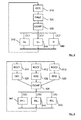
- the figure 4 is a block diagram of an automated network, according to one embodiment of the invention, lifts, deployed in a ski resort.
- the automated network comprises four lifts: three lifts 431, 432, 433 carrying passengers respectively on three independent segments R1, R2, R3 and a lift 434 carrying passengers on an R4 segment following the R3 segment.
- the ski lift 434 is therefore positioned to take over the ski lift 433 to carry on the R4 segment the passengers having borrowed the R3 segment.
- the lifts 431, 432, 433, 434 are respectively regulated in speed by regulators 421, 422, 423, 424.
- the ski lift 433 can be declared master relative to the lift 434 called slave, in the sense that the speed of this last is then chosen according to the speed of the 433 master lift, in general so as to be substantially equal.
- the regulator 424 is configured so as to regulate the speed of the mechanical lift 434 to be substantially equal to the speed of the mechanical lift 433.
- the regulator 424 is thus controlled by the regulator 423.
- the network comprises a controller which collects the INFO information relating to the various lifts 431, 432, 433, 434, and makes it possible to collect the TARG instructions as well as the data entered by a user.
- the network comprises again an automated device 100 according to one embodiment of the invention, adapted to emit speed control commands.
- the automated device 100 is coupled to the regulators 421, 422, 423, 424.
- a communication network for example of the Ethernet, wired and / or wireless type, can be deployed so as to interconnect the automated device 100, the regulators 421, 422, 423, 424, and the lifts 431, 432, 433, 434, in order to allow overall management of a station. It is also possible to interconnect the communication network only the devices associated with the independent lifts 431, 432, and mechanical lifts 433. Photoelectric cells can be positioned for each lift mechanically to allow the detection and counting the passage of a vehicle of said lift and skiers at each gate. Regulators are for example dimmers configured to control the motor of the corresponding ski lift, and the input of the device that controls the speed of the cable in the case of disengageable baskets.
- the count of the affluence can be done by counting the passengers passing access gates to the vehicles of the lifts, by forecasting with the help of statistical data, or by extrapolation according to the sales data of the day, for example depending on the number of ski passes sold to access the slopes served by the ski lifts of the network. For example, from the statistics for the previous days or the corresponding days of the previous seasons, it is possible to know that for 1000 ski passes sold per day, the skiers will use a given number NB of times at each ascent, over a period of opening of 8 hours.
- the automated device 100 can thus obtain this information and regulate the speed of each of the lifts accordingly.
- FIG. 5 An automated method of regulating the speed of people by a network according to the invention is illustrated on the figure 5 .
- the automated network illustrated in figure 4 can be used to implement said method.
- each independent ski lift or master network For each independent ski lift or master network, during the steps 511, 512, 513, operating data is collected. The number of people transported is determined and the occupancy rate is calculated. Data relating to the instantaneous cost CI, for each independent ski lift or master network, can also be collected and taken into account. For independent or master lifts, it is possible to determine the number of people transported, by counting for a cycle corresponding to a predetermined number of vehicles, for example 20 to 30 vehicles per counting cycle, to reduce in particular the frequency regulations. Then, during the steps 521, 522, 523, the speed of each independent mechanical lift or master of the network is regulated, according to the data collected and calculated during the steps 511, 512, 513. The parameterization of the regulation is made depending on the characteristics and possibilities of each lift.
Landscapes
- Engineering & Computer Science (AREA)
- Transportation (AREA)
- Mechanical Engineering (AREA)
- Management, Administration, Business Operations System, And Electronic Commerce (AREA)
Applications Claiming Priority (1)
| Application Number | Priority Date | Filing Date | Title |
|---|---|---|---|
| FR1354426A FR3005757B1 (fr) | 2013-05-17 | 2013-05-17 | Dispositif et procede de regulation de la vitesse d'un equipement de transport |
Publications (1)
| Publication Number | Publication Date |
|---|---|
| EP2803550A1 true EP2803550A1 (de) | 2014-11-19 |
Family
ID=48980007
Family Applications (1)
| Application Number | Title | Priority Date | Filing Date |
|---|---|---|---|
| EP14168325.0A Withdrawn EP2803550A1 (de) | 2013-05-17 | 2014-05-14 | Vorrichtung und Verfahren zur Regelung der Geschwindigkeit eines Transportgerätes |
Country Status (2)
| Country | Link |
|---|---|
| EP (1) | EP2803550A1 (de) |
| FR (1) | FR3005757B1 (de) |
Cited By (3)
| Publication number | Priority date | Publication date | Assignee | Title |
|---|---|---|---|---|
| WO2016088147A1 (en) * | 2014-12-04 | 2016-06-09 | Laboratorio Inntech S.R.L. | Mobility system through route suspended by fixed cables of autonomous vehicles lightweight at electrical supply |
| CN113467334A (zh) * | 2021-07-29 | 2021-10-01 | 娄底市同丰科技有限公司 | 一种索道安全运行的控制系统、结构及方法 |
| CN116902011A (zh) * | 2022-04-12 | 2023-10-20 | 创新专利有限公司 | 索道和具有多个索道的索道网络 |
Citations (3)
| Publication number | Priority date | Publication date | Assignee | Title |
|---|---|---|---|---|
| US20100018434A1 (en) * | 2008-07-24 | 2010-01-28 | Innova Patent Gmbh | Cable Railway System |
| EP2233400A1 (de) * | 2009-03-25 | 2010-09-29 | OPM S.p.A. | Verpackungs-Verfahren und Vorrichtung |
| FR2958776A1 (fr) | 2010-04-12 | 2011-10-14 | Lumiplan Montagne | Procede et systeme de gestion de flux de skieurs se deplacant dans un reseau skiable. |
Family Cites Families (1)
| Publication number | Priority date | Publication date | Assignee | Title |
|---|---|---|---|---|
| GB2191310A (en) * | 1986-05-29 | 1987-12-09 | Ford Motor Co | Conveying system |
-
2013
- 2013-05-17 FR FR1354426A patent/FR3005757B1/fr active Active
-
2014
- 2014-05-14 EP EP14168325.0A patent/EP2803550A1/de not_active Withdrawn
Patent Citations (3)
| Publication number | Priority date | Publication date | Assignee | Title |
|---|---|---|---|---|
| US20100018434A1 (en) * | 2008-07-24 | 2010-01-28 | Innova Patent Gmbh | Cable Railway System |
| EP2233400A1 (de) * | 2009-03-25 | 2010-09-29 | OPM S.p.A. | Verpackungs-Verfahren und Vorrichtung |
| FR2958776A1 (fr) | 2010-04-12 | 2011-10-14 | Lumiplan Montagne | Procede et systeme de gestion de flux de skieurs se deplacant dans un reseau skiable. |
Cited By (4)
| Publication number | Priority date | Publication date | Assignee | Title |
|---|---|---|---|---|
| WO2016088147A1 (en) * | 2014-12-04 | 2016-06-09 | Laboratorio Inntech S.R.L. | Mobility system through route suspended by fixed cables of autonomous vehicles lightweight at electrical supply |
| CN113467334A (zh) * | 2021-07-29 | 2021-10-01 | 娄底市同丰科技有限公司 | 一种索道安全运行的控制系统、结构及方法 |
| CN113467334B (zh) * | 2021-07-29 | 2022-07-05 | 娄底市同丰科技有限公司 | 一种索道安全运行的控制系统、结构及方法 |
| CN116902011A (zh) * | 2022-04-12 | 2023-10-20 | 创新专利有限公司 | 索道和具有多个索道的索道网络 |
Also Published As
| Publication number | Publication date |
|---|---|
| FR3005757A1 (fr) | 2014-11-21 |
| FR3005757B1 (fr) | 2016-09-30 |
Similar Documents
| Publication | Publication Date | Title |
|---|---|---|
| US20250368080A1 (en) | Real-time electric vehicle fleet management | |
| CA2426372C (fr) | Procede et dispositif pour le controle et la regulation de la puissance consommee par un systeme de transport | |
| EP2460057B1 (de) | Energieverwaltung in einem gebäude | |
| FR2980880A1 (fr) | Procede et systeme de reservation a distance d'un emplacement de stationnement, et installation de location automatisee de vehicules. | |
| US12441208B2 (en) | Energy management system | |
| CN119323889B (zh) | 一种基于人工智能的高速公路硬路肩开放管控方法 | |
| EP2803550A1 (de) | Vorrichtung und Verfahren zur Regelung der Geschwindigkeit eines Transportgerätes | |
| EP1892170A1 (de) | Vorrichtung für eine geregelte Fahrzeugsteuerung mit rezentrierter Präzision | |
| FR3106558A1 (fr) | Système et procédé d’optimisation des opérations de trains circulant le long d’une ligne ferroviaire | |
| EP3352327B1 (de) | Verfahren und system zur verwaltung des elektrischen netzes eines eisenbahnnetzes | |
| CN120348187A (zh) | 异常充电桩的识别方法、装置、计算机设备及存储介质 | |
| EP2928721B1 (de) | Verfahren zur verteilten verwaltung des ladevorgangs von traktionsbatterien von elektrofahrzeugen | |
| WO2023094602A1 (fr) | Procédé et système de supervision automatisée de l'affluence de passagers à court terme dans un réseau de transport | |
| WO2020039061A1 (fr) | Procédé et système de prédiction quasi temps réel d'au moins un indicateur de fonctionnement d'un réseau de transport de passagers | |
| US20240420194A1 (en) | System and method for detecting billing errors and determining alternative solutions for a provided service | |
| CN118762417B (zh) | 数据检测方法、装置、设备、介质 | |
| US11388246B2 (en) | Method for providing information about an object and an object providing information | |
| FR3131255A1 (fr) | Procédé et un système de gestion d’un dispositif de batterie électrique d’un véhicule à motorisation électrique ou hybride | |
| CN109214693B (zh) | 空中交通管制员疲劳风险的评估方法、系统、介质及设备 | |
| WO2024184451A1 (fr) | Fonction avancée d'une couche de contrôle-commande intermédiaire d'une centrale virtuelle | |
| CN117592638A (zh) | 一种景区客流分析与管控的方法及系统 | |
| EP3646255A1 (de) | System und verfahren zur verwaltung von risiken in einem prozess | |
| EP2783185B1 (de) | Verfahren zur steuerung des energieverbrauchs einer industriellen infrastruktur in echtzeit | |
| WO2025209814A1 (fr) | Système et procédé de détermination d'un point de charge d'une station de recharge de batterie pour véhicule électrique | |
| CN119962775A (zh) | 基于数据分析的充电管理方法、装置及计算机设备 |
Legal Events
| Date | Code | Title | Description |
|---|---|---|---|
| PUAI | Public reference made under article 153(3) epc to a published international application that has entered the european phase |
Free format text: ORIGINAL CODE: 0009012 |
|
| 17P | Request for examination filed |
Effective date: 20140514 |
|
| AK | Designated contracting states |
Kind code of ref document: A1 Designated state(s): AL AT BE BG CH CY CZ DE DK EE ES FI FR GB GR HR HU IE IS IT LI LT LU LV MC MK MT NL NO PL PT RO RS SE SI SK SM TR |
|
| AX | Request for extension of the european patent |
Extension state: BA ME |
|
| R17P | Request for examination filed (corrected) |
Effective date: 20150512 |
|
| RBV | Designated contracting states (corrected) |
Designated state(s): AL AT BE BG CH CY CZ DE DK EE ES FI FR GB GR HR HU IE IS IT LI LT LU LV MC MK MT NL NO PL PT RO RS SE SI SK SM TR |
|
| 17Q | First examination report despatched |
Effective date: 20190703 |
|
| STAA | Information on the status of an ep patent application or granted ep patent |
Free format text: STATUS: THE APPLICATION HAS BEEN WITHDRAWN |
|
| 18W | Application withdrawn |
Effective date: 20190828 |