EP2802109B1 - System und verfahren für eine gemeinsam genutzte speicher-hash-tabelle mit benachrichtigungen - Google Patents
System und verfahren für eine gemeinsam genutzte speicher-hash-tabelle mit benachrichtigungen Download PDFInfo
- Publication number
- EP2802109B1 EP2802109B1 EP14167803.7A EP14167803A EP2802109B1 EP 2802109 B1 EP2802109 B1 EP 2802109B1 EP 14167803 A EP14167803 A EP 14167803A EP 2802109 B1 EP2802109 B1 EP 2802109B1
- Authority
- EP
- European Patent Office
- Prior art keywords
- value
- slot
- notification
- reader
- key
- Prior art date
- Legal status (The legal status is an assumption and is not a legal conclusion. Google has not performed a legal analysis and makes no representation as to the accuracy of the status listed.)
- Active
Links
Images





Classifications
-
- G—PHYSICS
- G06—COMPUTING OR CALCULATING; COUNTING
- G06F—ELECTRIC DIGITAL DATA PROCESSING
- G06F3/00—Input arrangements for transferring data to be processed into a form capable of being handled by the computer; Output arrangements for transferring data from processing unit to output unit, e.g. interface arrangements
- G06F3/06—Digital input from, or digital output to, record carriers, e.g. RAID, emulated record carriers or networked record carriers
- G06F3/0601—Interfaces specially adapted for storage systems
- G06F3/0602—Interfaces specially adapted for storage systems specifically adapted to achieve a particular effect
- G06F3/0604—Improving or facilitating administration, e.g. storage management
-
- G—PHYSICS
- G06—COMPUTING OR CALCULATING; COUNTING
- G06F—ELECTRIC DIGITAL DATA PROCESSING
- G06F16/00—Information retrieval; Database structures therefor; File system structures therefor
- G06F16/20—Information retrieval; Database structures therefor; File system structures therefor of structured data, e.g. relational data
- G06F16/23—Updating
- G06F16/2308—Concurrency control
-
- G—PHYSICS
- G06—COMPUTING OR CALCULATING; COUNTING
- G06F—ELECTRIC DIGITAL DATA PROCESSING
- G06F16/00—Information retrieval; Database structures therefor; File system structures therefor
- G06F16/20—Information retrieval; Database structures therefor; File system structures therefor of structured data, e.g. relational data
- G06F16/23—Updating
- G06F16/2308—Concurrency control
- G06F16/2315—Optimistic concurrency control
- G06F16/2322—Optimistic concurrency control using timestamps
-
- G—PHYSICS
- G06—COMPUTING OR CALCULATING; COUNTING
- G06F—ELECTRIC DIGITAL DATA PROCESSING
- G06F16/00—Information retrieval; Database structures therefor; File system structures therefor
- G06F16/20—Information retrieval; Database structures therefor; File system structures therefor of structured data, e.g. relational data
- G06F16/23—Updating
- G06F16/2308—Concurrency control
- G06F16/2315—Optimistic concurrency control
- G06F16/2329—Optimistic concurrency control using versioning
-
- G—PHYSICS
- G06—COMPUTING OR CALCULATING; COUNTING
- G06F—ELECTRIC DIGITAL DATA PROCESSING
- G06F3/00—Input arrangements for transferring data to be processed into a form capable of being handled by the computer; Output arrangements for transferring data from processing unit to output unit, e.g. interface arrangements
- G06F3/06—Digital input from, or digital output to, record carriers, e.g. RAID, emulated record carriers or networked record carriers
- G06F3/0601—Interfaces specially adapted for storage systems
- G06F3/0602—Interfaces specially adapted for storage systems specifically adapted to achieve a particular effect
- G06F3/0614—Improving the reliability of storage systems
-
- G—PHYSICS
- G06—COMPUTING OR CALCULATING; COUNTING
- G06F—ELECTRIC DIGITAL DATA PROCESSING
- G06F3/00—Input arrangements for transferring data to be processed into a form capable of being handled by the computer; Output arrangements for transferring data from processing unit to output unit, e.g. interface arrangements
- G06F3/06—Digital input from, or digital output to, record carriers, e.g. RAID, emulated record carriers or networked record carriers
- G06F3/0601—Interfaces specially adapted for storage systems
- G06F3/0628—Interfaces specially adapted for storage systems making use of a particular technique
- G06F3/0638—Organizing or formatting or addressing of data
-
- G—PHYSICS
- G06—COMPUTING OR CALCULATING; COUNTING
- G06F—ELECTRIC DIGITAL DATA PROCESSING
- G06F3/00—Input arrangements for transferring data to be processed into a form capable of being handled by the computer; Output arrangements for transferring data from processing unit to output unit, e.g. interface arrangements
- G06F3/06—Digital input from, or digital output to, record carriers, e.g. RAID, emulated record carriers or networked record carriers
- G06F3/0601—Interfaces specially adapted for storage systems
- G06F3/0628—Interfaces specially adapted for storage systems making use of a particular technique
- G06F3/0653—Monitoring storage devices or systems
-
- G—PHYSICS
- G06—COMPUTING OR CALCULATING; COUNTING
- G06F—ELECTRIC DIGITAL DATA PROCESSING
- G06F3/00—Input arrangements for transferring data to be processed into a form capable of being handled by the computer; Output arrangements for transferring data from processing unit to output unit, e.g. interface arrangements
- G06F3/06—Digital input from, or digital output to, record carriers, e.g. RAID, emulated record carriers or networked record carriers
- G06F3/0601—Interfaces specially adapted for storage systems
- G06F3/0628—Interfaces specially adapted for storage systems making use of a particular technique
- G06F3/0655—Vertical data movement, i.e. input-output transfer; data movement between one or more hosts and one or more storage devices
-
- G—PHYSICS
- G06—COMPUTING OR CALCULATING; COUNTING
- G06F—ELECTRIC DIGITAL DATA PROCESSING
- G06F3/00—Input arrangements for transferring data to be processed into a form capable of being handled by the computer; Output arrangements for transferring data from processing unit to output unit, e.g. interface arrangements
- G06F3/06—Digital input from, or digital output to, record carriers, e.g. RAID, emulated record carriers or networked record carriers
- G06F3/0601—Interfaces specially adapted for storage systems
- G06F3/0668—Interfaces specially adapted for storage systems adopting a particular infrastructure
- G06F3/067—Distributed or networked storage systems, e.g. storage area networks [SAN], network attached storage [NAS]
-
- G—PHYSICS
- G06—COMPUTING OR CALCULATING; COUNTING
- G06F—ELECTRIC DIGITAL DATA PROCESSING
- G06F3/00—Input arrangements for transferring data to be processed into a form capable of being handled by the computer; Output arrangements for transferring data from processing unit to output unit, e.g. interface arrangements
- G06F3/06—Digital input from, or digital output to, record carriers, e.g. RAID, emulated record carriers or networked record carriers
- G06F3/0601—Interfaces specially adapted for storage systems
- G06F3/0668—Interfaces specially adapted for storage systems adopting a particular infrastructure
- G06F3/0671—In-line storage system
- G06F3/0673—Single storage device
-
- H—ELECTRICITY
- H04—ELECTRIC COMMUNICATION TECHNIQUE
- H04L—TRANSMISSION OF DIGITAL INFORMATION, e.g. TELEGRAPHIC COMMUNICATION
- H04L45/00—Routing or path finding of packets in data switching networks
- H04L45/74—Address processing for routing
- H04L45/745—Address table lookup; Address filtering
- H04L45/7453—Address table lookup; Address filtering using hashing
Definitions
- This invention relates generally to data networking and more particularly storing a hash table in shared memory in which the shared memory hash table can notify readers of updates to the shared memory hash table.
- a network element can include two different planes that are used to process network traffic, a control plane and a data plane.
- the data plane receives, processes, and forwards network traffic using various configuration data (e.g., forwarding, security, quality of service (QoS), and other network traffic processing information). For example, for each received packet of the network traffic, the data plane determines a destination address of that packet, looks up the requisite information for that destination in one or more tables stored in the data plane, and forwards the packet out the proper outgoing interface.
- the control plane gathers the configuration data from different sources (e.g., locally stored configuration data, via a command line interface, or other management channel such as Simple Network Management Protocol (SNMP)) and configures the data plane using the configuration data.
- SNMP Simple Network Management Protocol
- control plane will store the configuration data in one or more tables.
- the network element will store the routing information in a routing table that is used by the data plane.
- the data plane can further include multiple different hardware forwarding engines. Each of these hardware forwarding engines will use the configuration data from these tables by reading the tables in the control plane and updating local copies of the tables for each of the hardware forwarding engines.
- the control plane includes a writer that writes the configuration data, where multiple readers for the hardware forwarding engines read this data.
- a problem that can arise is that one of the multiple readers attempts to read data from one of the tables that the writer is currently updating. For example, if a reader reads data that is concurrently being modified by the writer, the reader may read data that is partially updated and, thus, is not valid data that is usable by the reader.
- the readers are useful for building asynchronous, distributed, cooperating agents.
- Agent logic is triggered upon receipt of attribute notifications delivered via the reader from tables, producing further state changes for other services that correspond to this agent.
- the attribute notifications can include updated configuration data for an agent that describes an aspect of a state of the originating agent.
- the tables are a central clearinghouse of state, responsible for storage and delivery to the readers and corresponding agents and services.
- This notification model is a useful mechanism for distributed software development. For example, one way to use notifications is to build a queue in which every change is recorded as a "key" within the table and its new associated value.
- the performance of this type of implementation supports only limited sized tables.
- the notification model can adequately support routing tables with up to 16,000 routes and updating 8-10 readers. This model, however, may not be able to support tables up to one million routes and 32 readers.
- a method and apparatus of a device that includes a shared memory hash table that notifies one or more readers of changes to the shared memory hash table is described.
- a device modifies a value in the shared memory hash table, where the value has a corresponding key.
- the device further stores a notification in a notification queue that indicates the value has changed.
- the device invalidates a previous entry in the notification queue that indicates the value has been modified.
- the device signals to the reader that a notification is ready to be processed.
- the device receives a signal that a notification is available in the notification queue, where the notification indicates that the value has been modified and the value has a corresponding key.
- the device further determines an entry in the notification queue for the value, where one or more previous entries in the notification queue corresponding to the key have been invalidated.
- the device modifies the local copy of the value based on comparing the value in the shared memory hash table and the local copy of the value.
- Coupled is used to indicate that two or more elements, which may or may not be in direct physical or electrical contact with each other, co-operate or interact with each other.
- Connected is used to indicate the establishment of communication between two or more elements that are coupled with each other.
- processing logic that comprises hardware (e.g., circuitry, dedicated logic, etc.), software (such as is run on a general-purpose computer system or a dedicated machine), or a combination of both.
- processing logic comprises hardware (e.g., circuitry, dedicated logic, etc.), software (such as is run on a general-purpose computer system or a dedicated machine), or a combination of both.
- server client
- device refer generally to data processing systems rather than specifically to a particular form factor for the server, client, and/or device.
- a method and apparatus of a device that includes a shared memory hash table with notifications to readers for updates is described.
- the shared memory hash table with notification provides a mechanism for stateful sharing of tabular data between a writer and multiple readers in a network element.
- This shared memory hash table is intended to accelerate data collections (e.g., routing tables, address tables, etc.) with high frequency update rates.
- the shared memory hash table can provide high availability and fault tolerance.
- the shared memory hash table with notification can accelerate a targeted number of collections that are very large, have high update rates, and a relatively large numbers of readers (e.g., a routing table with 1 million entries, a Media Access Control (MAC) address table with 288k entries and 16 to 32 readers).
- the shared memory hash table notifications operate on the principle of coalescing the notification.
- the writers and readers operate independently by running at their own speed, within bounded memory and with an O(1) complexity.
- concurrency is handled via wait-free and lock-free data protocols by using 64-bit atomic load/store operations.
- atomic read-modify-write variants are not needed.
- the shared memory hash table does not utilize shared locks, which allows linear scaling of throughput over multiple CPUs as more readers and writers are added.
- the shared memory hash table with notifications does not have a central controlling Agent. Instead, each writer manages a corresponding shared memory hash table, independent of other shared memory hash tables. If a writer restarts, the writer state is validated and reconciled from shared memory and the execution of the writer resumes.
- the throughput of modified values from a writer to multiple readers scales linearly as readers and writers are added. In this embodiment, there is no blocking synchronization required by the participants, and the threads of execution are lock-free and wait-free.
- writes to the shared memory hash table are coalesced in-place. In this embodiment, a fast writer does not block or consume unbounded memory because of slow or stuck readers.
- the granularity of change notification is a compound value type consisting of multiple individual attributes value type rather than individual attributes.
- the maximum number of notifications that can ever be queued at once is bounded to the number of elements in the table.
- the shared memory hash table mechanism is comprised of three main components: the shared memory hash table, the notification queue, and the reader's local shadow table.
- the writer modifies an entry in the hash table and puts a notification in the notification queue. Readers pull the notification from the queue and populate their local shadow table. In turn, each reader modifies a corresponding agent's value collection.
- the hash table notification mechanism is based on the notification of slot identifiers ("slot-ids"), not keys.
- a slot is a placeholder for a (key, value) pair.
- the (key, value) pairs can come and go in a slot, but the slot-id remains the same.
- a notification on a slot indicates to a reader that something in this slot changed and it is up to the reader to figure out the change.
- each entry in the shared memory hash table is assigned a slot. So to deliver a notification that a table entry has changed, the writer that modified the table entry delivers the slot identifier.
- the slot entry for this slot identifier indexes directly into the shared memory hash table to see what changed.
- the use of slots to index the shared memory hash table is space and cycle efficient, because slot identifiers are simple 32-bit data, compared to an arbitrary size for the key.
- the writer can build a notification queue containing slot identifier notifications. In one embodiment, this is the notification queue as described below. In this embodiment, the reader follows this queue and consumes slot identifier notifications, reading the value from the corresponding slot and updating a reader-local shadow copy of the shared memory hash table. These key notifications can then be delivered to the agent.
- the values table, slot identifier and notification queue management is straightforward and is of O(1) complexity.
- a single notification queue is used to service any number of readers.
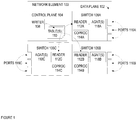
- Figure 1 is a block diagram of one embodiment of a network element 100 that includes a shared memory hash table with notifications to readers for updates.
- the network element 100 includes a data plane 102 and a control plane 104.
- the data plane 102 receives, processes, and forwards network data using various configuration data (e.g., forwarding, security, quality of service (QoS), and other network traffic processing information). For example, for each received packet of the network traffic, the data plane determines a destination address of that packet, looks up the requisite information for that destination in one or more tables stored in the data plane, and forwards the packet out the proper outgoing interface.
- configuration data e.g., forwarding, security, quality of service (QoS), and other network traffic processing information.
- QoS quality of service
- the data plane determines a destination address of that packet, looks up the requisite information for that destination in one or more tables stored in the data plane, and forwards the packet out the proper outgoing interface.
- the data plane 102 includes multiple switches 106A-C, where each switch 106A-C receives, processes, and/or forwards network traffic.
- each switch includes an ASIC that is coupled to one or more ports.
- the network element 100 is a single logical switch the includes multiple ASICs, where each ASIC is coupled to multiple ports.
- each switch 106A-C includes one ASIC and multiple ports (e.g., 24 ports/ASIC).
- each switch 106A-C includes a reader 112A-C, co-processor 114A-C, ports 116A-C, and agent(s) 118A-C, respectively.
- the reader 112A-C reads the data in the tables 110 and stores the data in a local buffer (not illustrated) of the respective switch 106A-C.
- each reader 112A-C is notified of new data modification, and the corresponding reader 112A-C performs lock-free reads of the data so as to not read data that is in the middle of being modified. Performing a read of a table as a result of being notified is further described in Figures 8A-11B below.
- the co-processor 114A-C is a processor for each switch 106A-C that can be used to accelerate various functions of the switch 114A-C.
- the co-processor 114A-C can accelerate bulk reads and write from memory in the control plane 104 to the local buffers.
- the ports 116A-C are used to receive and transmit network traffic.
- the ports 116A-C can be the same or different physical media (e.g., copper, optical, wireless and/or another physical media).
- each of the agent(s) 118A-C is a component of software that reads the configuration database, interacts with some resource (hardware or a network protocol or some other software component or agent, e.g. the operating system kernel), and produces a status of that resource.
- control plane 104 gathers the configuration data from different sources (e.g., locally stored configuration data, via a command line interface, or other management channel (e.g., SNMP, Simple Object Access Protocol (SOAP), Representational State Transfer type Application Programming Interface (RESTful API), Hypertext Transfer Protocol (HTTP), HTTP over Secure Sockets layer (HTTPs), Network Configuration Protocol (NetConf), Secure Shell (SSH), and/or another management protocol) and writes this configuration data to one or more tables 110.
- the control plane 104 includes a writer 108 that writes configuration data to the table(s) 110 by performing wait-free writes and reader notifications, such that a reader reading the data can read data that is not in the middle of being modified. Performing a wait-free write of a table with reader notification is further described in Figures 8A-11A below.
- each of the one or more tables 110 is a hash table that is shared between the writer 108 and the readers 112A-C.
- the table(s) 110 are stored in memory that is shared between the data plane 102 and the control plane 104.
- the tables 110 store configuration data (e.g., forwarding, security, quality of service (QoS), and other network traffic processing information).
- the writer 108 adds, deletes, or updates the data stored in the tables 110 and, in addition, notifies the readers 112A-C that there is new data in the tables 110 to be read.
- the reader 112A-C receives the notification, determines which data has been modified from the notification, and reads this data from the tables 110.
- the reader 112A-C updates the corresponding agent 118A-C with the modified data.
- the writer 108 notifies the reader using a notification queue.
- the writer 108 stores the notification at the head of the notification queue for a particular piece of data (e.g., a routing table entry) and invalidates previous notifications in this queue for this particular piece of data.
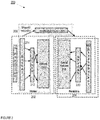
- FIG. 2 is a block diagram of one embodiment of a shared memory hash table system 200 with notifications to one or more readers.
- the shared memory hash table system includes a writer 202, one or more readers 204, and the shared memory hash table 206.
- the writer 202 writes values to the shared memory hash table 206 using a wait-free write, where each of the values is a (key, value) pair.
- the shared memory hash table 206 is a data structure used to implement an associative array of entries, which is a structure that can map the data keys to the data values.
- a hash table uses a hash function to compute an index into an array of entries, from which the correct value can be stored or retrieved.
- the shared memory hash table is further described in Figures 3-7 below.
- the readers 204 each read the values stored in the shared memory hash table 206.
- the shared memory hash table 206 includes bucket table 214, slot table 212, and value table 210.
- the bucket table 214 serves as the hash function range: the hashing function will hash a key into a position in the bucket table 214.
- the bucket table entry contains a versioned offset, linking the bucket to a chain in the slot table 212.
- the bucket table is further described in Figure 3 below.
- the slot table 212 is an array of slot entries, each entry containing a versioned offset to the key/value data in shared memory, plus a versioned link. The versioned link is used for building hash chains on occupied entries, and for free list management on unoccupied entries.
- the slot table 212 is further described in Figure 4 below.
- the value table 210 is the region where the value data is stored in shared memory. Each of the versioned offsets in the Slot table reference an entry in the values table 210.
- a writer 202 further includes a positions table 216, which is used to locate a slot's position in the notification queue 208.
- the positions table 216 is a slot identifier to position table that is maintained privately by the writer to provide a direct lookup of the slot identifier to notification queue mapping.
- the slot table 212 and value table 210 are illustrated as separate tables, in alternative embodiments, the slot table 212 and the value table 210 may be combined into a single "SlotValue" table.
- the slot and value are stored in a single table and a lookaside buffer is used to modify the contents of the SlotValue table without allowing readers to see intermediate states of a partially-written value.
- the lookaside buffer can be a lookaside buffer as described in U.S. Patent Application No. US14/270,122 , entitled “System and Method for Reading and Writing Data with a Shared Memory Hash Table", filed on 5 May, 2014.
- the benefit of this embodiment is a reduction in code complexity, cache footprint, and a consummate improvement in runtime speed as there are fewer pointers to maintain, less code to execute, and better cache locality.
- the reader(s) 204 read the data stored in the values table 210 and uses this data to update the corresponding agent.
- Each reader 204 includes local values table 218, shadow table 220, and shadow bucket table 222.
- the local values table 218, shadow table 220, and shadow bucket table 222 are snapshots of the value table 210, slot table 212, and bucket table 214, respectively.
- a snapshot table is a snapshot of the shared memory table. In this embodiment, whereas a reader may need to take care when accessing a shared memory table, the snapshot does not change until the reader specifically copies data from the shared memory table into the "snapshot" table.
- the snapshot tables allow software (e.g., the readers) that is unaware or unable to deal with the constraints of shared memory tables to run unmodified within the reading agent or process. For example and in one embodiment, an unsophisticated bit of software may expect that if it reads key K and retrieves value V that if it reads K again immediately it will get value V again. Due to the concurrent operation of the shared memory hash table, repeated reading of this key may not guarantee a retrieval of the same value. In one embodiment, handling with this concurrent operation can require changes to the reader software if, for instance, it was originally written without the shared memory approach in mind.
- one approach to sending notifications for a hash table between processes is to send a stream of key-to-value updates (insertion, deletion, or changes) over a network socket.
- the local copy within the reader's address space does not changes except when the reader intentionally de-queues updates from the socket.
- the hash table in shared memory can change asynchronously, requiring either changes in the reader software or some code to produce a snapshot version of the table that does not change asynchronously.
- the local values table 218 is the region where the sanitized version of the value data are stored in shared memory.
- the shadow table 220 is a reader-local "shadow" of the shared memory slot table 212. It represents the reader's sanitized copy of the constantly changing slot table 212 state, as updated exclusively by the received slot identifier ("slot-id") notifications.
- the shadow table 220 is sized with the same number of N entries, and has matching slot-id indexes. The shadow table 220 is further described in Figure 5 below.
- the shadow bucket table 222 is similar to the bucket table 214 and the shadow bucket table 222 provides a hash index into the shadow slot table 220, so that the reader(s) 204 can perform lookups on their local sanitized state.
- the shadow bucket table 222 is further described in Figure 6 below.
- the writer 202 to notify each reader 204 of the changes to the values stored in the values table, stores notifications in the notification queue 208.
- the notification queue 208 is a single shared notification queue for any number of readers, and writers are unaware of any reader state. The notification queue 208 is further described in Figure 7 below.
- the shared memory hash table includes a bucket table.
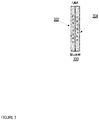
- Figure 3 is a block diagram of one embodiment of a bucket table 300 of the shared memory hash table.
- the bucket table 300 serves as the hash function range: the hashing function will hash a key into a position in the bucket table 300.
- the bucket table entry contains a versioned offset, linking the bucket to a chain in the slot table.
- versioned offsets are used in the shared memory hash table data structures. The versioned offsets allow for a lock-free mechanism for writers and readers to safely access shared state. An illustrated discussion on how versioned offsets works is described further in Figures 12 and 13 .
- a versioned offset is a 32-bit offset (or index, or pointer) and 32-bit version.
- the versioned offset is written atomically using a single 64-bit load or store instruction, and the versioned offset is read atomically using a single 64-bit load instruction.
- the versioned offset looks like this:
- FIG. 4 is a block diagram of one embodiment of a slot table 400 for the shared memory hash table.
- the slot table 400 is an array of slot entries, where each entry containing a versioned offset to the key/value data in shared memory, plus a versioned link.
- the versioned link is used for building hash chains on occupied entries, and for free list management on unoccupied entries.
- the slot table 400 has the entries linked onto a writer-owned freelist.
- a slot entry is allocated from the freelist, and the index of the entry being the slot identifier.
- This automatic allocation and mapping of slot identifiers is a feature of this coalesced hashing algorithm. If the newly inserted key/value has collided with an existing slot linked to the bucket, the new allocation is linked to the existing chain in key order. Ordering the chains by key helps preserve important iteration properties (such as no duplicates) and allow for faster key lookup.
- the number of entries in the table is sized to be the same the maximum supported table entries, which are N elements.
- uint32_t and uint64_t are standard POSIX type declarations used to represent 32-bit and 64-bit unsigned integers, respectively.
- the values table is the region where the value data are stored in shared memory.
- the versioned offsets in the slot table references the values stored in the values table.
- the value types are statically sized, and thus, the values table is a single table with N+1 entries.
- each entry has a link for a freelist, making entry allocation and deallocation easy.
- a dynamically sized value types are used and a dynamic memory allocator is used. In this embodiment, the allocator need not worry about concurrency issues as the readers are not aware of allocator metadata.
- FIG. 5 is a block diagram of one embodiment of a shadow table 500 for the shared memory hash table.
- the shadow table 500 is a reader-local "shadow" of the shared memory Slot table. It represents the reader's sanitized copy of the constantly changing Slot table state, as updated exclusively by the received slot-id notifications.
- the shadow table is sized with the same number of N entries, and has matching slot-id indexes.
- the shadow table is updated to the current state: that is, key A now occupies the shadow slot.
- the infrastructure restricts lookups to be local, and not to the shared memory hash table. If the shadow lookup succeeds, then a subsequent lookup into the shared memory hash table can proceed to retrieve the most up-to-date Value. Otherwise the reader risks the "lost delete" race condition. This is one of the reasons why the shadow table maintains a snapshot copy of the keys. For example and in one embodiment, a reader compares the shadow slot with the writer slot and copies the writer copy if different. In this embodiment, readers do local lookups into the shadow table to avoid the 'lost delete' race condition.
- the shadow table Since the shadow table is local to the reader and is accessed by that reader, this shadow table does not need to use versioned offsets. Instead, the shadow table can use local 32-bit pointers to the local key buffer.
- each reader includes a shadow bucket table.
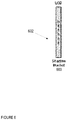
- Figure 6 is a block diagram of one embodiment of a shadow bucket table 600 for the shared memory hash table.
- shadow bucket table 600 provides a hash index into the shadow slot table so that readers can perform lookups on their local sanitized state. The hash function indexes into this table, allowing the lookup to follow the chain.
- this table is private to the reader and it does not reside in shared memory. In this embodiment, because each shadow table 600 corresponds to one reader, the shadow entries do not need a versioned offset.
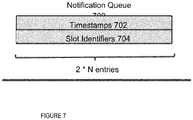
- FIG. 7 is a block diagram of one embodiment of a notification queue 700 for the shared memory hash table.
- the notification queue 700 is a single shared notification queue for any number of readers, with writers being unaware of any reader state.
- a writer publishes slot changes to the notification queue.
- each entry in the queue is a uint32_t slot-id plus a uint64_t timestamp.
- the timestamp is a virtual timer that increments each time the writer inserts something in the queue.
- the writer invalidates the old entries occupied by the same slot. This is part of the coalescing mechanism: old, prior entries are wiped out, while new recent entries are in the front.
- a slot identifier to position table is maintained privately by the writer to provide direct lookup.
- the notification queue 700 can fill up with invalidated entries and slot identifiers, at which time the writer initiates a compression phase to sweep out the invalidated entries.
- the writer To notify sleeping readers that a new slot is available for consumption, the writer employs an out-of- band "reader-kick" mechanism. A single byte is sent over a Unix domain socket, giving the reader a hint that notification data is available.
- a notification queue of size N+1 is the theoretical minimum (N occupied slots plus one invalid entry). However, in this embodiment, on a full table of N slots, this will leave room for only one write before compression is needed.
- the notification queue 700 is be sized to 2*N entries, making the table to be full every N notifications on average.
- the notification queue can be a different size. For example and in one embodiment, any size that is a constant multiple of N can be used and will still result in a constant time per-write cost for the compression, when amortized over all writes.
- the notification queue can be compressed when the end of the queue is reached by removing the invalidated entries.
- an alternate notification queue buffer of the same size as the active notification queue is maintained. The alternate notification queue allows the writer to sweep the queue, copy over the active slot identifier entries, while readers continue to concurrently process entries.
- the writer finishes compressing to the alternate buffer the writer flips a master versioned pointer and the alternate becomes the active. Readers that are concurrently looking at the notification queue 700 should validate that the master notification queue pointer has not changed before and after reading from the queue.
- the reader repositions itself. In one embodiment, the reader repositions itself by doing a binary search on the queue timestamps to find the new position. The reader finds its position in the newly-compressed queue by searching for the first timestamp that is larger than the timestamp of the entry that it last processed. Once the new position is found, the reader can continue consuming slot notifications.
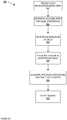
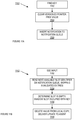
- FIG 8A is a flow diagram of one embodiment of a process 800 to signal a reader that a value has been modified in the shared memory hash table.
- a writer performs process 800 to signal a reader that one of the values for a key has been modified, such as the writer 202 as described in Figure 2 above.
- Figure 8A illustrates an overall modification process of a value. Specific examples of adding a key, modifying a key, and deleting a key are further described in Figures 9A , 10A , and 11A below.
- process 800 begins by receiving a value table modifying instruction at block 802.
- a value table instruction modifying can be an insertion of a new (key, value) pair into the value table, a change to a value of a (key, value) pair, or a deletion of a (key, value) pair.
- process 800 determines a slot identifier for the value instruction.
- the slot identifier identifies a slot in the slot table that corresponds to a key of the affected the (key, value) pair. If there is not a slot corresponding to the key in the instruction, a new slot is created. For example and in one embodiment, process 800 allocates a new slot for the instruction.
- Process 800 performs that modification to the value at block 806.
- the modification can be adding a new (key, value) pair to the value table, changing a value of a (key, value) pair, or delete a (key, value) pair.
- Process 800 invalidates previous notifications for the slot identifier in the notification queue at block 808. In one embodiment, by invalidating the previous notifications in the notification queue for this slot identifier allows a reader to process the most recent notification for that slot, as each reader maintains a sanitized copy of the values in the value table. In one embodiment, a sanitized copy is a copy that includes some or all of the up-to-date values that are stored in the values table.
- process 800 stores a notification in a notification queue that a slot in the slot table has a value that has been modified. In one embodiment, the notification queue is used to hold notifications for readers that indicate values in the value table have been modified. Process 800 signals the reader that there is a new notification available for the read to process at block 812.
- process 800 signals the reader by sending a single byte over a Unix domain socket, giving the reader an indication that a notification is available.
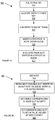
- Figure 8B is a flow diagram of one embodiment of a process 850 to process a signal that a value has been modified in the shared memory hash table.
- a reader performs process 850 to process a signal that one of the values for a key has been modified, such as the reader 204 as described in Figure 2 above.
- Figure 8B illustrates an overall signaling process. Specific examples of adding a key, modifying a key, and deleting a key are further described in Figures 9B , 10B , and 11B below.
- process 850 begins by receiving the signal that there are one or more notifications for process 850 to process at block 852.
- the signal is a single byte received over a Unix domain socket.
- process 850 determines a slot-identifier for the each of notifications. In one embodiment, process 850 reads the next available slot identifier from the notification queue, skipping over any invalidated entries. Using the retrieved slot identifier, process 850 compares the slot and shadow slot entries and modifies the local copy value accordingly at block 854. In one embodiment, process 850 compares the existence and/or content of the value associated with the key corresponding to the slot identifier with the corresponding value in the shadow table and determines whether to update the locally stored key, add the key, or delete the key. Comparing the slot and shadow slot entries is further described in Figures 9B , 10B , and 11B below.
- the performance of the writer is O(1) per write.
- a writer update to the shared memory hash table costs an O(1) table lookup, plus an O(1) update to the notification queue. If the notification queue is full, a compaction occurs, where the writer reads each queue entry and copies the live entries to the alternate queue.
- the compaction of the notification queue is an O(n) traversal, which happens if all notification queue entries are used up, and so this operation adds up to only three operations per entry for the life of the queue.
- the performance of the writer is O(1) per write.
- the compaction of the notification queue occurs without disruption of read access for a reader. In this embodiment, a reader can still have access to the notification entries while the compaction of the notification queue occurs.
- each reader update is also O(1) per notification.
- reading the next slot identifier from the notification queue and comparing the slot with the shadow slot by the reader is O(1). Updating the shadow value table, if necessary, is O(1). If the notification queue undergoes compaction, the reader performs a binary search of the queue, repositioning itself at the correct timestamp. This search is O(log N), but the binary search happens when the writer has performed compaction. Thus, each reader update is O(1) per notification.
- both the writes and the reads are basically O(1).
- the shared memory hash table does have one special property that should be noted. Writes generate traffic in the notification queue. Whether the writer writes to the same key or different keys, the notification queue will be undergoing fill/compress cycles, regardless of what the readers are doing. For a reader, the slower the reader is at processing updates, the more invalid entry skipping and O(log N) repositioning they will do. In one embodiment, one or more optimizations can help reduce this churn, such as invalid entry skipping and duplicate writes. These optimizations are described below.
- a number of optimization can be made to the shared memory hash table.
- a writer that modifies the same slot over and over again will generate an ongoing stream of same-slot invalid entries. This churn can easily be eliminated by the writer first looking at the notification queue head, and if the notification is for the same slot, simply increment the existing timestamp (and kicking the readers if necessary). Thus, in this embodiment, consecutive duplicate writes will only result in timestamp increments and no additional invalid entries.
- this can be achieved by forming a doubly-linked list structure of valid slots in the notification queue.
- Each slot in the notification queue is a pair of ⁇ timestamp, slot identifier> (padded to 64-bit alignment), but there is enough space to add a next position to give a hint as to where is the next valid slot in the queue ⁇ timestamp, slot identifier, next position>.
- the previous positions in the double-linked list are used by the writer to update the next positions and these can be stored in alternative notification queue buffer (as described in paragraph 61 above) without any versioning.
- the writer maintains a position array to directly index a slot identifier to notification queue position.
- the writer uses the position array to index into the notification queue at the most recent position of slot S so that it can be invalidated.
- this position array need not be visible to readers as this is part of the writer's private state.
- this position index can be part of the slot table entry. Every time the writer looks up a slot, it will also likely need the position index as well. Keeping these values in the same structure can improve cache locality.
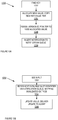
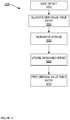
- Figure 9A is a flow diagram of one embodiment of a process 900 to notify a reader that a value has been added in the shared memory hash table.
- process 900 begins by failing to find a key in the bucket table at block 902.
- process 900 looks up in the bucket table for the newly added key and process 900 fails to find this key.
- process 900 allocates a free entry from the values table for the new key.
- process 900 further allocates a free slot from the slot table's free-list.
- process 900 copies the data into the newly allocated value entry.
- process 900 sets the slot versioned pointer in the newly allocated slot entry from block 902 to reference the newly allocated value entry.
- Process 900 links the slot entry to the bucket chain. In one embodiment, process 900 links this slot entry to the bucket chain in the key order. By linking the slot entry to the corresponding bucket chain, process 900 makes the newly allocated value entry available to the one or more readers.
- Process 900 invalidates prior slot entries with the same slot identifier in the notification queue at block 908. In one embodiment, process 900 invalidates these entries so that a reader retrieves the latest notification and does not retrieve older, unprocessed notifications. In this embodiment, the older unprocessed notification(s) are not needed as the reader uses the latest notification for the slot to maintain the sanitized copy of the reader.
- process 900 inserts a notification into the notification queue. In one embodiment, this notification indicates that the slot allocated at block 904 is updated. In this embodiment, a reader reading this notification would extract the slot identifier from the notification and process this notification. Processing the notification for a key addition is further described in Figure 9B below.
- Figure 9B is a flow diagram of one embodiment of a process 950 to process a notification that a value has been added in the shared memory hash table.
- process 950 begins by seeing input on the reader's file descriptor at block 952.
- process 950 includes an activity manager with a select/poll.
- the select/poll sees input on the reader-kick file descriptor, which invokes a file descriptor handler.
- seeing input on the reader's file descriptor indicates that there is one or more notifications in the notification queue that are available to process.
- process 950 reads the next available slot identifier for each available notification from the notification queue.
- process 950 further skips over any invalidated entries in the notification queue.
- Process 950 reads the key associated with the slot identifier and compares this key with the key identified by the same slot identifier in the shadow slot table. If there is not a key identified in the shadow slot table, process 950 determines that the corresponding shadow slot is empty at block 956. At block 958, process 950 sets the corresponding slot to this key. Furthermore, process 950 delivers an updated value for this key to an agent. For example, if this key is a new route for the routing table, process 950 delivers this updated route to the agent that handles routing table updates.
- FIG 10A is a flow diagram of one embodiment of a process to notify a reader that a value has been changed in the shared memory hash table.
- process 1000 finds a key corresponding to a changed value at block 1002.
- process 1000 performs a key lookup in the bucket table and finds this key.
- process allocates a new value table entry and copies the (key, value) pair is copied into the newly allocated value table entry.
- Process 1000 assigns the versioned pointer to the value table entry and the old value table entry for the key is freed at block 1006. Assigning the version pointer is further described in Figure 13 below.
- process 1000 inserts a notification into the notification queue and invalidates older entries.
- this notification indicates that the slot identified at block 1002 is updated.
- a reader reading this notification would extract the slot identifier from the notification, determine the corresponding key, and process this notification. Processing the notification for a key change is further described in Figure 10B below.
- process 1000 invalidates the prior slot entry that has the same slot identifier in the notification queue. In one embodiment, process 1000 invalidates this entry so that a reader retrieves the latest notification and does not retrieve older, unprocessed notifications. In this embodiment, the older unprocessed notification(s) are not needed as the reader uses the latest notification for the slot to maintain the sanitized copy of the reader.
- FIG 10B is a flow diagram of one embodiment of a process 1050 to process a notification that a value has been changed in the shared memory hash table.
- process 1050 begins by seeing input on the reader's file descriptor at block 1052.
- process 1050 includes an event loop or thread that uses, for example a select, poll, epoll, kqueue, read, or other operation to detect input on the reader's file descriptor at block 1052.
- the reader event loop or thread sees input on the reader-kick file descriptor.
- seeing input on the reader's file descriptor indicates that there is a notification in the notification queue available to process.
- process 1050 reads the next available slot identifier from the notification queue. In this embodiment, process 1050 further skips over any invalidated entries in the notification queue. Process 1050 reads the key associated with the slot identifier and compares this key with the key identified by the same slot identifier in the shadow slot table. If the same key is identified in the shadow slot table, process 1050 updates the value. At block 1056, process 1050 updates the corresponding slot in the shadow slot to the value for this key. Furthermore, process 1050 delivers an updated value for this key to an agent. For example, if this key is an updated route for the routing table, process 1050 delivers this updated route to the agent that handles routing table updates.
- FIG 11A is a flow diagram of one embodiment of a process 1100 to notify a reader that a value has been deleted in the shared memory hash table.
- process 1100 finds a key corresponding to a deleted value at block 1102.
- process 1100 performs a key lookup in the bucket table and finds this key.
- process 1100 clears the versioned pointer and frees the value table entry that corresponds to the key.
- process 1100 clears the versioned pointer by zeroing the offset and incrementing the version.
- process 1100 inserts a notification into the notification queue and invalidates older entries. In one embodiment, this notification indicates that the slot identified at block 1102 is updated.
- process 1100 invalidates the prior slot entry with the same slot identifier in the notification queue. In one embodiment, process 1100 invalidates these entries so that a reader retrieves the latest notification and does not retrieve older, unprocessed notifications. In this embodiment, the older unprocessed notification(s) are not needed as the reader uses the latest notification for the slot to maintain the sanitized copy of the reader.
- Figure 11B is a flow diagram of one embodiment of a process 1150 to process a notification that a value has been deleted in the shared memory hash table.
- process 1150 begins by seeing input on the reader's file descriptor at block 1152.
- process 1150 includes an event loop or thread using select, poll, epoll, kqueue, read, or other operation.
- the event loop or thread sees input on the reader-kick file descriptor.
- seeing input on the reader's file descriptor indicates that there is a notification in the notification queue available to process.
- process 1150 reads the next available slot identifier from the notification queue.
- process 1150 further skips over any invalidated entries in the notification queue.
- Process 1150 reads the key associated with the slot identifier and compares this key with the key identified by the same slot identifier in the shadow slot table.
- Process 1150 determines that the slot is empty in the slot table and that the corresponding slot entry in the shadow slot table contains the key.
- process 1150 deletes the corresponding slot entry in the shadow slot table.
- process 1150 delivers an updated value for this key to an agent. For example, if this key is a route for the routing table, process 1150 delivers this updated route to the agent that handles routing table updates.
- a reader kick is a synchronization trigger delivered from the writer to the reader.
- the reader kick is a way to tell the reader there is work to do on the notification queue. After a reader has processed the entries in the notification queue, the reader returns control back to the event loop.
- the agent sleeps until woken by activity on a file descriptor.
- a reader kick uses one of the file descriptor dependent options.
- a type of file descriptor that is used is a Linux kernel eventfd, Linux pipe, named pipe or first-in first-out (FIFO), POSIX Message queue, or a Unix Domain Socket.
- the eventfd is a kernel primitive for enabling file-descriptor based cross-process synchronization.
- the eventfd is lightweight and easy to use and requires file-descriptor inheritance through fork/exec or the sendmsg/recvmsg control channel.
- the Linux pipe is a reliable, unidirectional, streamed pipe.
- a named pipe or FIFO is a reliable, unidirectional, streamed pipe through the kernel with filesystem naming.
- a POSIX Message queue is a reliable, unidirectional queue that preserves message boundaries.
- a Unix domain socket is a reliable, bidirectional, and is either stream or datagram (preserves message boundaries). In one embodiment, that another type of notification mechanism could be used without changing the essential form or substance of the invention.
- the writer and the readers communicate using Unix domain sockets, because having the property of bidirectional communication is useful.
- the writer creates a socket in the filesystem, at the same place the shared memory files are located:
- kicking the reader may require a form of cross-process synchronization, which can be an expensive operation.
- a reader timestamp can be used in shared memory or from the socket.
- the reader updates its most recent timestamp from the notification queue in a shared memory location available to the writer. On each notification queue update, the writer compares the reader's shared memory current timestamp with the last time the reader got kicked, and issues a kick if they are different.
- a reader timestamp from socket it is the same as above, except that the reader timestamp is delivered in a named pipe, FIFO, or Unix domain socket.
- the writer gets notified when a reader has blocked (by virtue of receiving data on the socket) the above option does not have this notification.
- an advantage of the shared memory reader timestamp is that the communication between the writer and the reader has low latency and is fast.
- the amount of time it takes the writer to look at the reader's timestamp is simply a direct memory access time, with no process scheduling or other kernel interaction.
- this does require a special shared memory area to be set up, thus complicating the procedure a reader uses when attaching to a notification queue.
- there is no notification on the reader changing this value so the writer would have to poll all readers, thus making each write O(r) , where r is the number of readers.
- having a shared memory region for each writer-reader memory pair would create a memory visibility dependency on readers, possibly complicating the cache coherency and memory ordering.
- the socket reader timestamp approach can add latency and extra work because of kernel and scheduling interactions.
- the socket reader timestamp approach does not require a shared memory segment from the reader to the writer.
- this approach provides an automatic notification to the writer when a reader is ready to be kicked. This can avoid repeated redundant kicks.
- the writer kicks a reader using the socket reader timestamp approach.
- a versioned pointer or offset is composed of an offset, combined with a version.
- the version is incremented.
- the version increment is an indication to concurrent readers that the entry has changed beneath it, and the entry now cannot be trusted.
- the reader reads both the version and the object the version protects onto the stack of the reader. Before the reader uses the read object, the reader checks that the version has not yet changed. If the object protected by a version is a pointer or table index, the data pointed to can be copied to the reader's local (non-shared) storage.
- the reader validates the versioned pointer to ensure that the data the reader has a copy of was indeed a completely valid snapshot of that data at some point in the past, if not also currently.
- the offset and versions are 32-bit data and the writer writes the complete 64-bit quantity atomically. In one embodiment, if the offset and version are written out of lockstep, there is window of opportunity that an inconsistency can result.
- a reader can read the entire 64-bit quantity atomically, but is not necessary. Instead, a reader reads the 32bit version first, then the offset. Once access to the offset contents is complete, the version is read again and compared with its initial version. If different, the read operation is redone to get a consistent result.
- Figure 12 is a flow diagram of one embodiment of a process 1200 to perform a wait-free write of a value.
- a writer performs process 1200 to perform a wait-free write of a value, such as the writer 202 as described in Figure 2 above.
- process 1200 begins by saving the original offset of the value table entry for this value at block 1202.
- this offset is saved so that this value table entry can be freed after the new value table entry is inserted into the value table.
- process 1200 allocates a new value table entry for the (key, value) pair.
- the new value table entry for the (key, value) pair can be retrieved from a free-list that is maintained for the values tables or can be dynamically allocated.
- the new value table entry includes an offset that references the new value table entry.
- Process 1200 increments the version stored in the slot for this key at block 1206. In one embodiment, an incremented version can indicate to a reader that a previously read value may not be an up to date value.
- process 1200 updates the slot with the offset for the new value table entry and the incremented version. In one embodiment, process 1200 updates the slot atomically. Process 1200 frees the original value table entry using the saved offset at block 1210.
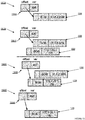
- Figure 13 is an illustration illustrating a wait-free write of a value.
- Figure 13 illustrates the wait-free write of process 1200 as described in Figure 12 above.
- illustrations 1302A-D illustrate the wait-free write of an update to a value table entry that includes a route "BOB" from a value of 10.1.2.3/24 to 172.7.20.1/16.
- a versioned offset 1304A references a value table entry 1306 for a route "BOB" that has a value 10.1.2.3/24.
- a new value table entry 1308 is allocated that is for an updated "BOB" route with the value 172.7.20.1/16 in illustration 1302B.
- the versioned offset 1304A at this point, still references the original value table entry 1306.
- the versioned offset 1304B is updated to reference the new value table entry 1308 and the version is updated from 496 to 497.
- the original value table entry 1306 is freed in illustration 1302D.
- a writer audits its tables when restarting, which ensures that offsets in the tables are pointing to valid locations.
- auditing when restarting is important for a recover from failures in which a failing writer may exit in a way that corrupts the shared memory tables.
- the writer rebuilds a list of allocated/freed records, so that bucket chains are valid and notifications have not been lost.
- the writer builds a set of allocated and a set of free records from the values table, ensuring that the allocated records are being pointed by the slots table and that there is not a slot is pointing to a freed memory location. In one embodiment, this can be achieved by walking the slots table and following each offset. In another embodiment, the writer can kick all readers when restarting rather than keeping an internal state.
- the writer keeps an internal state in the notification queue to avoid any lost notification.
- a writer finishes auditing its tables it will open its Unix domain socket and start accepting connections so that readers can resume consuming notifications.
- Figure 14 is a block diagram of a writer 202.
- the writer 202 includes a reader signal module 1402, notify value added module 1404, notify value changed module 1406, notify value deleted module 1408, and wait-free write module 1410.
- the reader signal module 1402 signals a reader that a notification is available as described in Figure 8A above.
- the notify value added module 1404 notifies that a value has been added as described in Figure 9A above.
- the notify value changed module 1406 notifies that a value has changed as described in Figure 10A above.
- the notify value deleted module 1408 notifies that a value has been added as described in Figure 11A above.
- the wait-free write module 1410 performs a lock free write as described in Figure 12 above.
- Figure 15 is a block diagram of a reader 204.
- the reader 204 includes a process signal module 1502, process added value module 1504, process changed value module 1506, process deleted value module 1508.
- the process signal module 1502 processes a signal that a notification is available as described in Figure 8B above.
- the process added value module 1504 processes that a value has been added as described in Figure 9B above.
- the process value changed module 1506 processes that a value has changed as described in Figure 10B above.
- the process value deleted module 1508 processes that a value has been added as described in Figure 11B above.
- Figure 16 shows one example of a data processing system 1600, which may be used with one embodiment of the present invention.
- the system 1600 may be implemented including a network element 100 as shown in Figure 1 .
- Figure 16 illustrates various components of a computer system, it is not intended to represent any particular architecture or manner of interconnecting the components as such details are not germane to the present invention. It will also be appreciated that network computers and other data processing systems or other consumer electronic devices, which have fewer components or perhaps more components, may also be used with the present invention.
- the computer system 1600 which is a form of a data processing system, includes a bus 1603 which is coupled to a microprocessor(s) 1605 and a ROM (Read Only Memory) 1609 and volatile RAM 1609 and a non-volatile memory 1611.
- the microprocessor 1605 may retrieve the instructions from the memories 1607, 1609, 1611 and execute the instructions to perform operations described above.
- the bus 1603 interconnects these various components together and also interconnects these components 1605, 1607, 1609, and 1611 to a display controller and display device 1615 and to peripheral devices such as input/output (I/O) devices which may be mice, keyboards, modems, network interfaces, printers and other devices which are well known in the art.
- I/O input/output
- the system 1600 includes a plurality of network interfaces of the same or different type (e.g., Ethernet copper interface, Ethernet fiber interfaces, wireless, and/or other types of network interfaces).
- the system 1600 can include a forwarding engine to forward network date received on one interface out another interface.
- the input/output devices 1615 are coupled to the system through input/output controllers 1619.
- the volatile RAM (Random Access Memory) 1609 is typically implemented as dynamic RAM (DRAM), which requires power continually in order to refresh or maintain the data in the memory.
- DRAM dynamic RAM
- the mass storage 1611 is typically a magnetic hard drive or a magnetic optical drive or an optical drive or a DVD RAM or a flash memory or other types of memory systems, which maintain data (e.g. large amounts of data) even after power is removed from the system.
- the mass storage 1611 will also be a random access memory although this is not required.
- Figure 16 shows that the mass storage 1611 is a local device coupled directly to the rest of the components in the data processing system, it will be appreciated that the present invention may utilize a non-volatile memory which is remote from the system, such as a network storage device which is coupled to the data processing system through a network interface such as a modem, an Ethernet interface or a wireless network.
- the bus 1603 may include one or more buses connected to each other through various bridges, controllers and/or adapters as is well known in the art.
- Portions of what was described above may be implemented with logic circuitry such as a dedicated logic circuit or with a microcontroller or other form of processing core that executes program code instructions.
- logic circuitry such as a dedicated logic circuit or with a microcontroller or other form of processing core that executes program code instructions.
- program code such as machine-executable instructions that cause a machine that executes these instructions to perform certain functions.
- a “machine” may be a machine that converts intermediate form (or “abstract") instructions into processor specific instructions (e.g., an abstract execution environment such as a "process virtual machine” (e.g., a Java Virtual Machine), an interpreter, a Common Language Runtime, a high-level language virtual machine, etc.), and/or, electronic circuitry disposed on a semiconductor chip (e.g., "logic circuitry” implemented with transistors) designed to execute instructions such as a general-purpose processor and/or a special-purpose processor. Processes taught by the discussion above may also be performed by (in the alternative to a machine or in combination with a machine) electronic circuitry designed to perform the processes (or a portion thereof) without the execution of program code.
- processor specific instructions e.g., an abstract execution environment such as a "process virtual machine” (e.g., a Java Virtual Machine), an interpreter, a Common Language Runtime, a high-level language virtual machine, etc.)
- the present invention also relates to an apparatus for performing the operations described herein.
- This apparatus may be specially constructed for the required purpose, or it may comprise a general-purpose computer selectively activated or reconfigured by a computer program stored in the computer.
- a computer program may be stored in a computer readable storage medium, such as, but is not limited to, any type of disk including floppy disks, optical disks, CD-ROMs, and magnetic-optical disks, read-only memories (ROMs), RAMs, EPROMs, EEPROMs, magnetic or optical cards, or any type of media suitable for storing electronic instructions, and each coupled to a computer system bus.
- a machine readable medium includes any mechanism for storing or transmitting information in a form readable by a machine (e.g., a computer).
- a machine readable medium includes non-transitory media such read only memory ("ROM”); random access memory (“RAM”); magnetic disk storage media; optical storage media; flash memory devices; etc, and includes transitory media such as a signal.
- An article of manufacture may be used to store program code.
- An article of manufacture that stores program code may be embodied as, but is not limited to, one or more memories (e.g., one or more flash memories, random access memories (static, dynamic or other)), optical disks, CD-ROMs, DVD ROMs, EPROMs, EEPROMs, magnetic or optical cards or other type of machine-readable media suitable for storing electronic instructions.
- Program code may also be downloaded from a remote computer (e.g., a server) to a requesting computer (e.g., a client) by way of data signals embodied in a propagation medium (e.g., via a communication link (e.g., a network connection)).
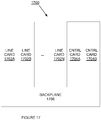
- FIG 17 is a block diagram of one embodiment of an exemplary network element 1700 that reads and writes data with a shared memory hash table using notifications.
- the backplane 1706 couples to the line cards 1702A-N and controller cards 1704A-B. While in one embodiment, the controller cards 1704A-B control the processing of the traffic by the line cards 1702A-N, in alternate embodiments, the controller cards 1704A-B, perform the same and/or different functions (e.g., writing data with a shared memory hash table using reader notifications, etc.). In one embodiment, the line cards 1702A-N process and forward traffic according to the network policies received from controller cards the 1704A-B.
- the controller cards 1704A-B write data to the shared memory hash table using reader notifications as described in Figures 8A , 9A , 10A , and 11A .
- the controller cards include a writer hash module to write data to the shared memory hash table using reader notifications, such as the writer 108 as described in Figure 1 above.
- the line cards 1702A-N read data from the shared memory hash table using notifications as described in Figures 8B , 9B , 10B , and 11B .
- one or more of the line cards 1702A-N include the reader hash module to read data from the shared memory hash table using notifications, such as the reader 112A-C as described in Figure 1 above. It should be understood that the architecture of the network element 1700 illustrated in Figure 17 is exemplary, and different combinations of cards may be used in other embodiments of the invention.
Landscapes
- Engineering & Computer Science (AREA)
- Theoretical Computer Science (AREA)
- Physics & Mathematics (AREA)
- General Engineering & Computer Science (AREA)
- General Physics & Mathematics (AREA)
- Human Computer Interaction (AREA)
- Data Mining & Analysis (AREA)
- Databases & Information Systems (AREA)
- Computer Networks & Wireless Communication (AREA)
- Signal Processing (AREA)
- Information Retrieval, Db Structures And Fs Structures Therefor (AREA)
Claims (16)
- Verfahren zum Benachrichtigen eines Lesegeräts, dass ein Wert in einer Hash-Tabelle eines geteilt genutzten Speichers modifiziert worden ist, wobei der Wert Teil eines Schlüssel-Wert-Paares ist, wobei das Verfahren umfasst:Modifizieren eines Werts in der Hash-Tabelle des geteilt genutzten Speichers,Speichern einer Benachrichtigung in einer Benachrichtigungswarteschlange, die angibt, dass der Wert sich verändert hat,Annullieren einer oder mehrerer früherer Einträge in der Benachrichtigungswarteschlange, die mit dem Schlüssel korrespondieren, der mit dem Wert gepaart ist, undSignalausgabe an das Lesegerät, dass eine Benachrichtigung zur Verarbeitung bereit steht.
- Verfahren nach Anspruch 1, bei dem das Modifizieren umfasst:
Identifizieren einer Slot-Identifizierung für den Schlüssel, wobei die Slot-Identifizierung auf einen Slot-Eintrag in einer Slot-Tabelle verweist, wobei ein Slot-Eintrag einen Platzhalter für das Schlüssel-Wert-Paar darstellt. - Verfahren nach Anspruch 2, bei dem der Slot-Eintrag einen Verweis zum modifizierten Wert beinhaltet.
- Verfahren nach Anspruch 2 oder 3, bei dem die Benachrichtigung die Slot-Identifizierung beinhaltet.
- Verfahren nach Anspruch 2, 3 oder 4, bei dem ein Annullieren des einen oder der mehreren früheren Einträge in der Benachrichtigungswarteschlange umfasst:
Annullieren anderer Benachrichtigungen in der Benachrichtigungswarteschlange mit der Slot-Identifizierung. - Verfahren nach einem der vorhergehenden Ansprüche, bei dem ein Speichern der Benachrichtigung umfasst:
Einsetzen der Benachrichtigung vorne an der Benachrichtigungswarteschlange. - Verfahren nach einem der vorhergehenden Ansprüche, bei dem das Modifizieren ausgewählt ist aus der Gruppe von Addieren eines Werts, Löschen eines Werts und Verändern eines Werts.
- Verfahren nach einem der vorhergehenden Ansprüche, bei dem das Lesegerät eine lokale Kopie des Werts unter Verwendung der Benachrichtigung aktualisiert, indem aus der Hash-Tabelle des geteilt genutzten Speichers der Wert ausgelesen wird, der der nächsten Slot-Identifizierung zugeordnet ist, die es aus der Benachrichtigungswarteschlange ausliest.
- Verfahren nach Anspruch 8, bei dem das Lesegerät die lokale Kopie durch Auslesen einer dem Schlüssel zugeordneten Version, Auslesen des mit dem Schlüssel gepaarten Werts und Validieren der Version aktualisiert.
- Verfahren nach einem der vorhergehenden Ansprüche, bei dem die Signalausgabe einen Kick-Mechanismus verwendet, der das Lesegerät in Reaktion auf das Senden einer Benachrichtigung vom Lesegerät benachrichtigt, dass das Lesegerät blockiert und für neue Benachrichtigungen bereit ist.
- Verfahren nach einem der vorhergehenden Ansprüche, weiter umfassend:Komprimieren der Benachrichtigungswarteschlange, wenn die Benachrichtigungswarteschlange voll ist, ohne den Lesezugriff für das Lesegerät zu stören, wobei das Komprimieren durchErstellen einer neuen Benachrichtigungswarteschlange,Kopieren aktiver Slot-Identifizierungseinträge in die neue Benachrichtigungswarteschlange undBenachrichtigen des Lesegeräts, die neue Benachrichtigungswarteschlange zu verwenden, erfolgt.
- Verfahren nach einem der vorhergehenden Ansprüche, weiter umfassend:
Überprüfen der Benachrichtigungswarteschlange zur Gewährleistung gültiger Einträge, wobei das Überprüfen in Abhängigkeit von einem Neustart eines Schreibgeräts erfolgt. - Maschinenlesbares Medium mit ausführbaren Instruktionen, die eine oder mehrere Verarbeitungseinheiten dazu veranlassen, das Verfahren nach einem der vorhergehenden Ansprüche auszuführen.
- Netzwerkelement, das ein Lesegerät benachrichtigt, dass ein Wert in einer Hash-Tabelle des geteilt genutzten Speichers modifiziert worden ist, wobei der Wert Teil eines Schlüssel-Wert-Paares ist, wobei das Netzwerkelement umfasst:einen Prozessor,einen durch einen Bus mit dem Prozessor gekoppelten Speicher undeinen aus dem Speicher durch den Prozessor durchgeführten Prozess, der den Prozessor dazu veranlasst,einen Wert in der Hash-Tabelle des geteilt genutzten Speichers zu modifizieren, wobei der Wert eine korrespondierende Slot-Identifizierung aufweist, wobei die Slot-Identifizierung auf einen Slot-Eintrag in einer Slot-Tabelle verweist und ein Slot-Eintrag einen Platzhalter für das Schlüssel-Wert-Paar darstellt,eine Benachrichtigung in einer Benachrichtigungswarteschlange zu speichern, die angibt, dass der Wert, der der korrespondierenden Slot-Identifizierung zugeordnet ist, sich verändert hat,einen oder mehrere frühere Einträge in der Benachrichtigungswarteschlange zu annullieren, die mit der Slot-Identifizierung korrespondieren, und dem Lesegerät zu signalisieren, dass eine Benachrichtigung zur Verarbeitung bereit steht.
- Netzwerkelement nach Anspruch 14, bei dem der Prozess den Prozessor veranlasst, das Modifizieren durch Identifizieren einer Slot-Identifizierung für den Schlüssel, die mit dem Wert korrespondiert, durchzuführen, wobei die Slot-Identifizierung auf einen Slot-Eintrag in einer Slot-Tabelle verweist, wobei ein Slot-Eintrag einen Platzhalter für den Schlüssel darstellt.
- Netzwerkelement nach Anspruch 15, bei dem der Slot-Eintrag einen Verweis auf den modifizierten Wert beinhaltet.
Applications Claiming Priority (2)
| Application Number | Priority Date | Filing Date | Title |
|---|---|---|---|
| US201361822261P | 2013-05-10 | 2013-05-10 | |
| US14/270,226 US9367251B2 (en) | 2013-05-10 | 2014-05-05 | System and method of a shared memory hash table with notifications |
Publications (2)
| Publication Number | Publication Date |
|---|---|
| EP2802109A1 EP2802109A1 (de) | 2014-11-12 |
| EP2802109B1 true EP2802109B1 (de) | 2018-08-01 |
Family
ID=50774628
Family Applications (1)
| Application Number | Title | Priority Date | Filing Date |
|---|---|---|---|
| EP14167803.7A Active EP2802109B1 (de) | 2013-05-10 | 2014-05-09 | System und verfahren für eine gemeinsam genutzte speicher-hash-tabelle mit benachrichtigungen |
Country Status (2)
| Country | Link |
|---|---|
| US (2) | US9367251B2 (de) |
| EP (1) | EP2802109B1 (de) |
Families Citing this family (18)
| Publication number | Priority date | Publication date | Assignee | Title |
|---|---|---|---|---|
| US9367251B2 (en) * | 2013-05-10 | 2016-06-14 | Arista Networks, Inc. | System and method of a shared memory hash table with notifications |
| US10108422B2 (en) | 2015-04-28 | 2018-10-23 | Liqid Inc. | Multi-thread network stack buffering of data frames |
| US10642750B2 (en) * | 2015-08-03 | 2020-05-05 | Arista Networks, Inc. | System and method of a shared memory hash table with notifications and reduced memory utilization |
| US11068469B2 (en) | 2015-09-04 | 2021-07-20 | Arista Networks, Inc. | System and method of a dynamic shared memory hash table with notifications |
| WO2017091234A1 (en) * | 2015-11-27 | 2017-06-01 | Hewlett Packard Enterprise Development Lp | Providing a segmented hash map |
| US20170220659A1 (en) * | 2016-01-29 | 2017-08-03 | Arista Networks, Inc. | System and method of key range deletions |
| CN106161110B (zh) * | 2016-08-31 | 2019-05-17 | 东软集团股份有限公司 | 一种网络设备中的数据处理方法及系统 |
| WO2018113973A1 (en) * | 2016-12-22 | 2018-06-28 | Nokia Solutions And Networks Oy | Control and user plane architecture |
| TWI733745B (zh) * | 2017-01-23 | 2021-07-21 | 香港商阿里巴巴集團服務有限公司 | 核心模式的虛擬機器(kvm)虛擬化下處理i/o請求的方法和裝置 |
| US11138225B2 (en) * | 2018-07-20 | 2021-10-05 | ZenPayroll, Inc. | Sanitizing database structures for testing |
| SG11202102264QA (en) | 2018-09-11 | 2021-04-29 | Visa Int Service Ass | System, method, and computer program product for fraud management with a shared hash map |
| US11023299B2 (en) * | 2018-09-28 | 2021-06-01 | Arista Networks, Inc. | System and method of a shared memory allocator |
| US11726788B2 (en) * | 2019-12-18 | 2023-08-15 | International Business Machines Corporation | Tuple checkout with notify in coordination namespace system |
| US11422872B2 (en) * | 2020-05-28 | 2022-08-23 | Arista Networks, Inc. | Lock-free method of transmitting hierarchical collections through shared memory |
| US11314656B2 (en) * | 2020-08-12 | 2022-04-26 | Arista Networks, Inc. | Restartable, lock-free concurrent shared memory state with pointers |
| CN112069091B (zh) * | 2020-08-17 | 2023-09-01 | 北京科技大学 | 一种应用于分子动力学模拟软件的访存优化方法及装置 |
| CN113434515B (zh) * | 2021-07-23 | 2022-10-14 | 深圳智多豚物联技术有限公司 | 基于持久化redis存储服务的分布式高速存储系统 |
| CN114253979B (zh) * | 2021-12-23 | 2023-10-03 | 北京百度网讯科技有限公司 | 一种报文处理方法、装置及电子设备 |
Family Cites Families (7)
| Publication number | Priority date | Publication date | Assignee | Title |
|---|---|---|---|---|
| US6014730A (en) * | 1996-12-26 | 2000-01-11 | Nec Corporation | Dynamic adding system for memory files shared among hosts, dynamic adding method for memory files shared among hosts, and computer-readable medium recording dynamic adding program for memory files shared among hosts |
| US7516196B1 (en) * | 2000-03-21 | 2009-04-07 | Nokia Corp. | System and method for delivery and updating of real-time data |
| US8099538B2 (en) * | 2006-03-29 | 2012-01-17 | Intel Corporation | Increasing functionality of a reader-writer lock |
| US7756898B2 (en) * | 2006-03-31 | 2010-07-13 | Isilon Systems, Inc. | Systems and methods for notifying listeners of events |
| US9274963B2 (en) * | 2012-07-20 | 2016-03-01 | International Business Machines Corporation | Cache replacement for shared memory caches |
| US9239874B1 (en) * | 2013-03-15 | 2016-01-19 | Emc Corporation | Integrated search for shared storage using index throttling to maintain quality of service |
| US9367251B2 (en) * | 2013-05-10 | 2016-06-14 | Arista Networks, Inc. | System and method of a shared memory hash table with notifications |
-
2014
- 2014-05-05 US US14/270,226 patent/US9367251B2/en active Active
- 2014-05-09 EP EP14167803.7A patent/EP2802109B1/de active Active
-
2016
- 2016-05-11 US US15/152,494 patent/US9996263B2/en active Active
Also Published As
| Publication number | Publication date |
|---|---|
| US20160253098A1 (en) | 2016-09-01 |
| US9996263B2 (en) | 2018-06-12 |
| EP2802109A1 (de) | 2014-11-12 |
| US9367251B2 (en) | 2016-06-14 |
| US20140359232A1 (en) | 2014-12-04 |
Similar Documents
| Publication | Publication Date | Title |
|---|---|---|
| EP2802109B1 (de) | System und verfahren für eine gemeinsam genutzte speicher-hash-tabelle mit benachrichtigungen | |
| US11860861B2 (en) | Growing dynamic shared memory hash table | |
| CN110113420B (zh) | 基于nvm的分布式消息队列管理系统 | |
| US9164702B1 (en) | Single-sided distributed cache system | |
| US8930669B2 (en) | Tiered data management method and system for high performance data monitoring | |
| US8074014B2 (en) | Storage systems using write off-loading | |
| US10642750B2 (en) | System and method of a shared memory hash table with notifications and reduced memory utilization | |
| US9977760B1 (en) | Accessing data on distributed storage systems | |
| Ziegler et al. | Design guidelines for correct, efficient, and scalable synchronization using one-sided RDMA | |
| US10162686B2 (en) | Cache affinity and processor utilization technique | |
| US7647490B2 (en) | Method and apparatus for providing updated system locality information during runtime | |
| US10185681B2 (en) | Hybrid message-based scheduling technique | |
| US11221777B2 (en) | Storage system indexed using persistent metadata structures | |
| US10031859B2 (en) | Pulse counters | |
| Du et al. | Fast one-sided RDMA-based state machine replication for disaggregated memory | |
| Pellegrini et al. | Transparent and efficient shared-state management for optimistic simulations on multi-core machines | |
| Murat et al. | SWARM: Replicating Shared Disaggregated-Memory Data in No Time | |
| CN115543952A (zh) | 用于分布式系统中的共享存储器访问api的方法和系统 | |
| Wang et al. | CTXNL: A software-hardware co-designed solution for efficient cxl-based transaction processing | |
| Duan et al. | Hardware-supported remote persistence for distributed persistent memory | |
| Jasny et al. | Synchronizing Disaggregated Data Structures with One-Sided RDMA: Pitfalls, Experiments and Design Guidelines | |
| Devulapalli et al. | Data structure consistency using atomic operations in storage devices | |
| Zhang et al. | Localized validation accelerates distributed transactions on disaggregated persistent memory | |
| Luo et al. | A Memory-Disaggregated Radix Tree | |
| Kappes et al. | Diciclo: Flexible user-level services for efficient multitenant isolation |
Legal Events
| Date | Code | Title | Description |
|---|---|---|---|
| PUAI | Public reference made under article 153(3) epc to a published international application that has entered the european phase |
Free format text: ORIGINAL CODE: 0009012 |
|
| 17P | Request for examination filed |
Effective date: 20140509 |
|
| AK | Designated contracting states |
Kind code of ref document: A1 Designated state(s): AL AT BE BG CH CY CZ DE DK EE ES FI FR GB GR HR HU IE IS IT LI LT LU LV MC MK MT NL NO PL PT RO RS SE SI SK SM TR |
|
| AX | Request for extension of the european patent |
Extension state: BA ME |
|
| STAA | Information on the status of an ep patent application or granted ep patent |
Free format text: STATUS: EXAMINATION IS IN PROGRESS |
|
| 17Q | First examination report despatched |
Effective date: 20161206 |
|
| GRAP | Despatch of communication of intention to grant a patent |
Free format text: ORIGINAL CODE: EPIDOSNIGR1 |
|
| STAA | Information on the status of an ep patent application or granted ep patent |
Free format text: STATUS: GRANT OF PATENT IS INTENDED |
|
| INTG | Intention to grant announced |
Effective date: 20180302 |
|
| GRAS | Grant fee paid |
Free format text: ORIGINAL CODE: EPIDOSNIGR3 |
|
| GRAA | (expected) grant |
Free format text: ORIGINAL CODE: 0009210 |
|
| STAA | Information on the status of an ep patent application or granted ep patent |
Free format text: STATUS: THE PATENT HAS BEEN GRANTED |
|
| AK | Designated contracting states |
Kind code of ref document: B1 Designated state(s): AL AT BE BG CH CY CZ DE DK EE ES FI FR GB GR HR HU IE IS IT LI LT LU LV MC MK MT NL NO PL PT RO RS SE SI SK SM TR |
|
| REG | Reference to a national code |
Ref country code: GB Ref legal event code: FG4D |
|
| REG | Reference to a national code |
Ref country code: CH Ref legal event code: EP Ref country code: AT Ref legal event code: REF Ref document number: 1025646 Country of ref document: AT Kind code of ref document: T Effective date: 20180815 |
|
| REG | Reference to a national code |
Ref country code: IE Ref legal event code: FG4D |
|
| REG | Reference to a national code |
Ref country code: DE Ref legal event code: R096 Ref document number: 602014029414 Country of ref document: DE |
|
| REG | Reference to a national code |
Ref country code: NL Ref legal event code: MP Effective date: 20180801 |
|
| REG | Reference to a national code |
Ref country code: LT Ref legal event code: MG4D |
|
| REG | Reference to a national code |
Ref country code: AT Ref legal event code: MK05 Ref document number: 1025646 Country of ref document: AT Kind code of ref document: T Effective date: 20180801 |
|
| PG25 | Lapsed in a contracting state [announced via postgrant information from national office to epo] |
Ref country code: LT Free format text: LAPSE BECAUSE OF FAILURE TO SUBMIT A TRANSLATION OF THE DESCRIPTION OR TO PAY THE FEE WITHIN THE PRESCRIBED TIME-LIMIT Effective date: 20180801 Ref country code: PL Free format text: LAPSE BECAUSE OF FAILURE TO SUBMIT A TRANSLATION OF THE DESCRIPTION OR TO PAY THE FEE WITHIN THE PRESCRIBED TIME-LIMIT Effective date: 20180801 Ref country code: IS Free format text: LAPSE BECAUSE OF FAILURE TO SUBMIT A TRANSLATION OF THE DESCRIPTION OR TO PAY THE FEE WITHIN THE PRESCRIBED TIME-LIMIT Effective date: 20181201 Ref country code: AT Free format text: LAPSE BECAUSE OF FAILURE TO SUBMIT A TRANSLATION OF THE DESCRIPTION OR TO PAY THE FEE WITHIN THE PRESCRIBED TIME-LIMIT Effective date: 20180801 Ref country code: RS Free format text: LAPSE BECAUSE OF FAILURE TO SUBMIT A TRANSLATION OF THE DESCRIPTION OR TO PAY THE FEE WITHIN THE PRESCRIBED TIME-LIMIT Effective date: 20180801 Ref country code: NO Free format text: LAPSE BECAUSE OF FAILURE TO SUBMIT A TRANSLATION OF THE DESCRIPTION OR TO PAY THE FEE WITHIN THE PRESCRIBED TIME-LIMIT Effective date: 20181101 Ref country code: NL Free format text: LAPSE BECAUSE OF FAILURE TO SUBMIT A TRANSLATION OF THE DESCRIPTION OR TO PAY THE FEE WITHIN THE PRESCRIBED TIME-LIMIT Effective date: 20180801 Ref country code: BG Free format text: LAPSE BECAUSE OF FAILURE TO SUBMIT A TRANSLATION OF THE DESCRIPTION OR TO PAY THE FEE WITHIN THE PRESCRIBED TIME-LIMIT Effective date: 20181101 Ref country code: GR Free format text: LAPSE BECAUSE OF FAILURE TO SUBMIT A TRANSLATION OF THE DESCRIPTION OR TO PAY THE FEE WITHIN THE PRESCRIBED TIME-LIMIT Effective date: 20181102 Ref country code: FI Free format text: LAPSE BECAUSE OF FAILURE TO SUBMIT A TRANSLATION OF THE DESCRIPTION OR TO PAY THE FEE WITHIN THE PRESCRIBED TIME-LIMIT Effective date: 20180801 Ref country code: SE Free format text: LAPSE BECAUSE OF FAILURE TO SUBMIT A TRANSLATION OF THE DESCRIPTION OR TO PAY THE FEE WITHIN THE PRESCRIBED TIME-LIMIT Effective date: 20180801 |
|
| PG25 | Lapsed in a contracting state [announced via postgrant information from national office to epo] |
Ref country code: HR Free format text: LAPSE BECAUSE OF FAILURE TO SUBMIT A TRANSLATION OF THE DESCRIPTION OR TO PAY THE FEE WITHIN THE PRESCRIBED TIME-LIMIT Effective date: 20180801 Ref country code: LV Free format text: LAPSE BECAUSE OF FAILURE TO SUBMIT A TRANSLATION OF THE DESCRIPTION OR TO PAY THE FEE WITHIN THE PRESCRIBED TIME-LIMIT Effective date: 20180801 Ref country code: AL Free format text: LAPSE BECAUSE OF FAILURE TO SUBMIT A TRANSLATION OF THE DESCRIPTION OR TO PAY THE FEE WITHIN THE PRESCRIBED TIME-LIMIT Effective date: 20180801 |
|
| PG25 | Lapsed in a contracting state [announced via postgrant information from national office to epo] |
Ref country code: IT Free format text: LAPSE BECAUSE OF FAILURE TO SUBMIT A TRANSLATION OF THE DESCRIPTION OR TO PAY THE FEE WITHIN THE PRESCRIBED TIME-LIMIT Effective date: 20180801 Ref country code: EE Free format text: LAPSE BECAUSE OF FAILURE TO SUBMIT A TRANSLATION OF THE DESCRIPTION OR TO PAY THE FEE WITHIN THE PRESCRIBED TIME-LIMIT Effective date: 20180801 Ref country code: ES Free format text: LAPSE BECAUSE OF FAILURE TO SUBMIT A TRANSLATION OF THE DESCRIPTION OR TO PAY THE FEE WITHIN THE PRESCRIBED TIME-LIMIT Effective date: 20180801 Ref country code: RO Free format text: LAPSE BECAUSE OF FAILURE TO SUBMIT A TRANSLATION OF THE DESCRIPTION OR TO PAY THE FEE WITHIN THE PRESCRIBED TIME-LIMIT Effective date: 20180801 Ref country code: CZ Free format text: LAPSE BECAUSE OF FAILURE TO SUBMIT A TRANSLATION OF THE DESCRIPTION OR TO PAY THE FEE WITHIN THE PRESCRIBED TIME-LIMIT Effective date: 20180801 |
|
| REG | Reference to a national code |
Ref country code: DE Ref legal event code: R097 Ref document number: 602014029414 Country of ref document: DE |
|
| PG25 | Lapsed in a contracting state [announced via postgrant information from national office to epo] |
Ref country code: SM Free format text: LAPSE BECAUSE OF FAILURE TO SUBMIT A TRANSLATION OF THE DESCRIPTION OR TO PAY THE FEE WITHIN THE PRESCRIBED TIME-LIMIT Effective date: 20180801 Ref country code: DK Free format text: LAPSE BECAUSE OF FAILURE TO SUBMIT A TRANSLATION OF THE DESCRIPTION OR TO PAY THE FEE WITHIN THE PRESCRIBED TIME-LIMIT Effective date: 20180801 Ref country code: SK Free format text: LAPSE BECAUSE OF FAILURE TO SUBMIT A TRANSLATION OF THE DESCRIPTION OR TO PAY THE FEE WITHIN THE PRESCRIBED TIME-LIMIT Effective date: 20180801 |
|
| PLBE | No opposition filed within time limit |
Free format text: ORIGINAL CODE: 0009261 |
|
| STAA | Information on the status of an ep patent application or granted ep patent |
Free format text: STATUS: NO OPPOSITION FILED WITHIN TIME LIMIT |
|
| 26N | No opposition filed |
Effective date: 20190503 |
|
| PG25 | Lapsed in a contracting state [announced via postgrant information from national office to epo] |
Ref country code: SI Free format text: LAPSE BECAUSE OF FAILURE TO SUBMIT A TRANSLATION OF THE DESCRIPTION OR TO PAY THE FEE WITHIN THE PRESCRIBED TIME-LIMIT Effective date: 20180801 |
|
| REG | Reference to a national code |
Ref country code: CH Ref legal event code: PL |
|
| PG25 | Lapsed in a contracting state [announced via postgrant information from national office to epo] |
Ref country code: CH Free format text: LAPSE BECAUSE OF NON-PAYMENT OF DUE FEES Effective date: 20190531 Ref country code: MC Free format text: LAPSE BECAUSE OF FAILURE TO SUBMIT A TRANSLATION OF THE DESCRIPTION OR TO PAY THE FEE WITHIN THE PRESCRIBED TIME-LIMIT Effective date: 20180801 Ref country code: LI Free format text: LAPSE BECAUSE OF NON-PAYMENT OF DUE FEES Effective date: 20190531 |
|
| REG | Reference to a national code |
Ref country code: BE Ref legal event code: MM Effective date: 20190531 |
|
| PG25 | Lapsed in a contracting state [announced via postgrant information from national office to epo] |
Ref country code: LU Free format text: LAPSE BECAUSE OF NON-PAYMENT OF DUE FEES Effective date: 20190509 |
|
| PG25 | Lapsed in a contracting state [announced via postgrant information from national office to epo] |
Ref country code: TR Free format text: LAPSE BECAUSE OF FAILURE TO SUBMIT A TRANSLATION OF THE DESCRIPTION OR TO PAY THE FEE WITHIN THE PRESCRIBED TIME-LIMIT Effective date: 20180801 |
|
| PG25 | Lapsed in a contracting state [announced via postgrant information from national office to epo] |
Ref country code: IE Free format text: LAPSE BECAUSE OF NON-PAYMENT OF DUE FEES Effective date: 20190509 |
|
| PG25 | Lapsed in a contracting state [announced via postgrant information from national office to epo] |
Ref country code: BE Free format text: LAPSE BECAUSE OF NON-PAYMENT OF DUE FEES Effective date: 20190531 |
|
| PG25 | Lapsed in a contracting state [announced via postgrant information from national office to epo] |
Ref country code: PT Free format text: LAPSE BECAUSE OF FAILURE TO SUBMIT A TRANSLATION OF THE DESCRIPTION OR TO PAY THE FEE WITHIN THE PRESCRIBED TIME-LIMIT Effective date: 20181201 Ref country code: FR Free format text: LAPSE BECAUSE OF NON-PAYMENT OF DUE FEES Effective date: 20190531 |
|
| PG25 | Lapsed in a contracting state [announced via postgrant information from national office to epo] |
Ref country code: CY Free format text: LAPSE BECAUSE OF FAILURE TO SUBMIT A TRANSLATION OF THE DESCRIPTION OR TO PAY THE FEE WITHIN THE PRESCRIBED TIME-LIMIT Effective date: 20180801 |
|
| PG25 | Lapsed in a contracting state [announced via postgrant information from national office to epo] |
Ref country code: HU Free format text: LAPSE BECAUSE OF FAILURE TO SUBMIT A TRANSLATION OF THE DESCRIPTION OR TO PAY THE FEE WITHIN THE PRESCRIBED TIME-LIMIT; INVALID AB INITIO Effective date: 20140509 Ref country code: MT Free format text: LAPSE BECAUSE OF FAILURE TO SUBMIT A TRANSLATION OF THE DESCRIPTION OR TO PAY THE FEE WITHIN THE PRESCRIBED TIME-LIMIT Effective date: 20180801 |
|
| REG | Reference to a national code |
Ref country code: DE Ref legal event code: R079 Ref document number: 602014029414 Country of ref document: DE Free format text: PREVIOUS MAIN CLASS: H04L0012743000 Ipc: H04L0045745300 |
|
| PG25 | Lapsed in a contracting state [announced via postgrant information from national office to epo] |
Ref country code: MK Free format text: LAPSE BECAUSE OF FAILURE TO SUBMIT A TRANSLATION OF THE DESCRIPTION OR TO PAY THE FEE WITHIN THE PRESCRIBED TIME-LIMIT Effective date: 20180801 |
|
| P01 | Opt-out of the competence of the unified patent court (upc) registered |
Effective date: 20230530 |
|
| PGFP | Annual fee paid to national office [announced via postgrant information from national office to epo] |
Ref country code: GB Payment date: 20250320 Year of fee payment: 12 |
|
| PGFP | Annual fee paid to national office [announced via postgrant information from national office to epo] |
Ref country code: DE Payment date: 20250311 Year of fee payment: 12 |