EP2801595A1 - Photopolymerizable inkjet ink, ink cartridge, photopolymerizable composition, and coated matter - Google Patents
Photopolymerizable inkjet ink, ink cartridge, photopolymerizable composition, and coated matter Download PDFInfo
- Publication number
- EP2801595A1 EP2801595A1 EP20140164675 EP14164675A EP2801595A1 EP 2801595 A1 EP2801595 A1 EP 2801595A1 EP 20140164675 EP20140164675 EP 20140164675 EP 14164675 A EP14164675 A EP 14164675A EP 2801595 A1 EP2801595 A1 EP 2801595A1
- Authority
- EP
- European Patent Office
- Prior art keywords
- ink
- parts
- weight
- meth
- photopolymerizable composition
- Prior art date
- Legal status (The legal status is an assumption and is not a legal conclusion. Google has not performed a legal analysis and makes no representation as to the accuracy of the status listed.)
- Granted
Links
- 239000000203 mixture Substances 0.000 title claims abstract description 44
- XFCMNSHQOZQILR-UHFFFAOYSA-N 2-[2-(2-methylprop-2-enoyloxy)ethoxy]ethyl 2-methylprop-2-enoate Chemical compound CC(=C)C(=O)OCCOCCOC(=O)C(C)=C XFCMNSHQOZQILR-UHFFFAOYSA-N 0.000 claims abstract description 16
- 125000001997 phenyl group Chemical group [H]C1=C([H])C([H])=C(*)C([H])=C1[H] 0.000 claims abstract description 15
- 239000012956 1-hydroxycyclohexylphenyl-ketone Substances 0.000 claims abstract description 10
- MQDJYUACMFCOFT-UHFFFAOYSA-N bis[2-(1-hydroxycyclohexyl)phenyl]methanone Chemical compound C=1C=CC=C(C(=O)C=2C(=CC=CC=2)C2(O)CCCCC2)C=1C1(O)CCCCC1 MQDJYUACMFCOFT-UHFFFAOYSA-N 0.000 claims abstract description 10
- 125000001797 benzyl group Chemical group [H]C1=C([H])C([H])=C(C([H])=C1[H])C([H])([H])* 0.000 claims abstract description 9
- -1 amine compound Chemical class 0.000 claims description 33
- CXMXRPHRNRROMY-UHFFFAOYSA-N sebacic acid Chemical compound OC(=O)CCCCCCCCC(O)=O CXMXRPHRNRROMY-UHFFFAOYSA-N 0.000 claims description 10
- JMWGZSWSTCGVLX-UHFFFAOYSA-N 2-ethyl-2-(hydroxymethyl)propane-1,3-diol;2-methylprop-2-enoic acid Chemical class CC(=C)C(O)=O.CC(=C)C(O)=O.CC(=C)C(O)=O.CCC(CO)(CO)CO JMWGZSWSTCGVLX-UHFFFAOYSA-N 0.000 claims description 8
- MPIAGWXWVAHQBB-UHFFFAOYSA-N [3-prop-2-enoyloxy-2-[[3-prop-2-enoyloxy-2,2-bis(prop-2-enoyloxymethyl)propoxy]methyl]-2-(prop-2-enoyloxymethyl)propyl] prop-2-enoate Chemical class C=CC(=O)OCC(COC(=O)C=C)(COC(=O)C=C)COCC(COC(=O)C=C)(COC(=O)C=C)COC(=O)C=C MPIAGWXWVAHQBB-UHFFFAOYSA-N 0.000 claims description 4
- 239000000976 ink Substances 0.000 description 114
- 239000011248 coating agent Substances 0.000 description 70
- 238000000576 coating method Methods 0.000 description 70
- 239000000463 material Substances 0.000 description 70
- 230000000052 comparative effect Effects 0.000 description 60
- 239000000049 pigment Substances 0.000 description 50
- NIXOWILDQLNWCW-UHFFFAOYSA-M Acrylate Chemical compound [O-]C(=O)C=C NIXOWILDQLNWCW-UHFFFAOYSA-M 0.000 description 36
- 206010070835 Skin sensitisation Diseases 0.000 description 29
- 231100000370 skin sensitisation Toxicity 0.000 description 29
- 241001465754 Metazoa Species 0.000 description 24
- 238000012360 testing method Methods 0.000 description 20
- WOVKYSAHUYNSMH-RRKCRQDMSA-N 5-bromodeoxyuridine Chemical compound C1[C@H](O)[C@@H](CO)O[C@H]1N1C(=O)NC(=O)C(Br)=C1 WOVKYSAHUYNSMH-RRKCRQDMSA-N 0.000 description 19
- 239000006229 carbon black Substances 0.000 description 17
- 239000003505 polymerization initiator Substances 0.000 description 17
- CERQOIWHTDAKMF-UHFFFAOYSA-N Methacrylic acid Chemical compound CC(=C)C(O)=O CERQOIWHTDAKMF-UHFFFAOYSA-N 0.000 description 16
- 238000007641 inkjet printing Methods 0.000 description 16
- 239000000126 substance Substances 0.000 description 16
- 206010070834 Sensitisation Diseases 0.000 description 14
- 230000008313 sensitization Effects 0.000 description 14
- 238000002360 preparation method Methods 0.000 description 12
- 210000001165 lymph node Anatomy 0.000 description 11
- 231100000647 material safety data sheet Toxicity 0.000 description 10
- 238000005259 measurement Methods 0.000 description 10
- 239000013641 positive control Substances 0.000 description 9
- 238000004383 yellowing Methods 0.000 description 8
- 230000037396 body weight Effects 0.000 description 7
- 239000000178 monomer Substances 0.000 description 7
- 239000002585 base Substances 0.000 description 6
- 230000000977 initiatory effect Effects 0.000 description 6
- 229920003023 plastic Polymers 0.000 description 6
- 239000004033 plastic Substances 0.000 description 6
- 229920000728 polyester Polymers 0.000 description 6
- LYCAIKOWRPUZTN-UHFFFAOYSA-N Ethylene glycol Chemical compound OCCO LYCAIKOWRPUZTN-UHFFFAOYSA-N 0.000 description 5
- 231100000220 OECD 429 (LLNA) Skin Sensitisation Toxicity 0.000 description 5
- 150000001412 amines Chemical class 0.000 description 5
- 239000003086 colorant Substances 0.000 description 5
- 150000001875 compounds Chemical class 0.000 description 5
- 238000000034 method Methods 0.000 description 5
- 239000000123 paper Substances 0.000 description 5
- 238000006116 polymerization reaction Methods 0.000 description 5
- 229920002635 polyurethane Polymers 0.000 description 5
- 239000004814 polyurethane Substances 0.000 description 5
- QQONPFPTGQHPMA-UHFFFAOYSA-N propylene Natural products CC=C QQONPFPTGQHPMA-UHFFFAOYSA-N 0.000 description 5
- 230000005808 skin problem Effects 0.000 description 5
- 239000007787 solid Substances 0.000 description 5
- 239000002250 absorbent Substances 0.000 description 4
- 230000002745 absorbent Effects 0.000 description 4
- 239000011521 glass Substances 0.000 description 4
- TXBCBTDQIULDIA-UHFFFAOYSA-N 2-[[3-hydroxy-2,2-bis(hydroxymethyl)propoxy]methyl]-2-(hydroxymethyl)propane-1,3-diol Chemical compound OCC(CO)(CO)COCC(CO)(CO)CO TXBCBTDQIULDIA-UHFFFAOYSA-N 0.000 description 3
- HRPVXLWXLXDGHG-UHFFFAOYSA-N Acrylamide Chemical compound NC(=O)C=C HRPVXLWXLXDGHG-UHFFFAOYSA-N 0.000 description 3
- 241000699670 Mus sp. Species 0.000 description 3
- 239000004721 Polyphenylene oxide Substances 0.000 description 3
- ZJCCRDAZUWHFQH-UHFFFAOYSA-N Trimethylolpropane Chemical compound CCC(CO)(CO)CO ZJCCRDAZUWHFQH-UHFFFAOYSA-N 0.000 description 3
- 239000002253 acid Substances 0.000 description 3
- 229940117913 acrylamide Drugs 0.000 description 3
- 239000003513 alkali Substances 0.000 description 3
- 229910052782 aluminium Inorganic materials 0.000 description 3
- XAGFODPZIPBFFR-UHFFFAOYSA-N aluminium Chemical compound [Al] XAGFODPZIPBFFR-UHFFFAOYSA-N 0.000 description 3
- 125000003277 amino group Chemical group 0.000 description 3
- 125000003178 carboxy group Chemical group [H]OC(*)=O 0.000 description 3
- XCJYREBRNVKWGJ-UHFFFAOYSA-N copper(II) phthalocyanine Chemical compound [Cu+2].C12=CC=CC=C2C(N=C2[N-]C(C3=CC=CC=C32)=N2)=NC1=NC([C]1C=CC=CC1=1)=NC=1N=C1[C]3C=CC=CC3=C2[N-]1 XCJYREBRNVKWGJ-UHFFFAOYSA-N 0.000 description 3
- 238000001035 drying Methods 0.000 description 3
- 238000011156 evaluation Methods 0.000 description 3
- 125000002887 hydroxy group Chemical group [H]O* 0.000 description 3
- 125000002496 methyl group Chemical group [H]C([H])([H])* 0.000 description 3
- 229920000570 polyether Polymers 0.000 description 3
- 238000007639 printing Methods 0.000 description 3
- 239000000243 solution Substances 0.000 description 3
- 230000000638 stimulation Effects 0.000 description 3
- AZQWKYJCGOJGHM-UHFFFAOYSA-N 1,4-benzoquinone Chemical compound O=C1C=CC(=O)C=C1 AZQWKYJCGOJGHM-UHFFFAOYSA-N 0.000 description 2
- LEJBBGNFPAFPKQ-UHFFFAOYSA-N 2-(2-prop-2-enoyloxyethoxy)ethyl prop-2-enoate Chemical compound C=CC(=O)OCCOCCOC(=O)C=C LEJBBGNFPAFPKQ-UHFFFAOYSA-N 0.000 description 2
- INQDDHNZXOAFFD-UHFFFAOYSA-N 2-[2-(2-prop-2-enoyloxyethoxy)ethoxy]ethyl prop-2-enoate Chemical compound C=CC(=O)OCCOCCOCCOC(=O)C=C INQDDHNZXOAFFD-UHFFFAOYSA-N 0.000 description 2
- HCLJOFJIQIJXHS-UHFFFAOYSA-N 2-[2-[2-(2-prop-2-enoyloxyethoxy)ethoxy]ethoxy]ethyl prop-2-enoate Chemical compound C=CC(=O)OCCOCCOCCOCCOC(=O)C=C HCLJOFJIQIJXHS-UHFFFAOYSA-N 0.000 description 2
- XMLYCEVDHLAQEL-UHFFFAOYSA-N 2-hydroxy-2-methyl-1-phenylpropan-1-one Chemical compound CC(C)(O)C(=O)C1=CC=CC=C1 XMLYCEVDHLAQEL-UHFFFAOYSA-N 0.000 description 2
- CSCPPACGZOOCGX-UHFFFAOYSA-N Acetone Chemical compound CC(C)=O CSCPPACGZOOCGX-UHFFFAOYSA-N 0.000 description 2
- VTYYLEPIZMXCLO-UHFFFAOYSA-L Calcium carbonate Chemical compound [Ca+2].[O-]C([O-])=O VTYYLEPIZMXCLO-UHFFFAOYSA-L 0.000 description 2
- 238000002965 ELISA Methods 0.000 description 2
- QIGBRXMKCJKVMJ-UHFFFAOYSA-N Hydroquinone Chemical compound OC1=CC=C(O)C=C1 QIGBRXMKCJKVMJ-UHFFFAOYSA-N 0.000 description 2
- CERQOIWHTDAKMF-UHFFFAOYSA-M Methacrylate Chemical compound CC(=C)C([O-])=O CERQOIWHTDAKMF-UHFFFAOYSA-M 0.000 description 2
- 239000002202 Polyethylene glycol Substances 0.000 description 2
- VYPSYNLAJGMNEJ-UHFFFAOYSA-N Silicium dioxide Chemical compound O=[Si]=O VYPSYNLAJGMNEJ-UHFFFAOYSA-N 0.000 description 2
- XLOMVQKBTHCTTD-UHFFFAOYSA-N Zinc monoxide Chemical compound [Zn]=O XLOMVQKBTHCTTD-UHFFFAOYSA-N 0.000 description 2
- 238000002835 absorbance Methods 0.000 description 2
- 150000003926 acrylamides Chemical class 0.000 description 2
- 230000001154 acute effect Effects 0.000 description 2
- 230000002411 adverse Effects 0.000 description 2
- 229910052784 alkaline earth metal Inorganic materials 0.000 description 2
- 150000001342 alkaline earth metals Chemical class 0.000 description 2
- PNEYBMLMFCGWSK-UHFFFAOYSA-N aluminium oxide Inorganic materials [O-2].[O-2].[O-2].[Al+3].[Al+3] PNEYBMLMFCGWSK-UHFFFAOYSA-N 0.000 description 2
- TZCXTZWJZNENPQ-UHFFFAOYSA-L barium sulfate Chemical compound [Ba+2].[O-]S([O-])(=O)=O TZCXTZWJZNENPQ-UHFFFAOYSA-L 0.000 description 2
- WERYXYBDKMZEQL-UHFFFAOYSA-N butane-1,4-diol Chemical compound OCCCCO WERYXYBDKMZEQL-UHFFFAOYSA-N 0.000 description 2
- 239000011575 calcium Substances 0.000 description 2
- 239000000919 ceramic Substances 0.000 description 2
- 239000002131 composite material Substances 0.000 description 2
- 238000006731 degradation reaction Methods 0.000 description 2
- 238000010586 diagram Methods 0.000 description 2
- 239000002270 dispersing agent Substances 0.000 description 2
- 230000007613 environmental effect Effects 0.000 description 2
- 238000001914 filtration Methods 0.000 description 2
- 229910052731 fluorine Inorganic materials 0.000 description 2
- 239000003999 initiator Substances 0.000 description 2
- 239000001023 inorganic pigment Substances 0.000 description 2
- 239000005001 laminate film Substances 0.000 description 2
- 230000007774 longterm Effects 0.000 description 2
- 229910052751 metal Inorganic materials 0.000 description 2
- 239000002184 metal Substances 0.000 description 2
- SLCVBVWXLSEKPL-UHFFFAOYSA-N neopentyl glycol Chemical compound OCC(C)(C)CO SLCVBVWXLSEKPL-UHFFFAOYSA-N 0.000 description 2
- 239000003921 oil Substances 0.000 description 2
- 235000019198 oils Nutrition 0.000 description 2
- 239000012860 organic pigment Substances 0.000 description 2
- 229940059574 pentaerithrityl Drugs 0.000 description 2
- WXZMFSXDPGVJKK-UHFFFAOYSA-N pentaerythritol Chemical compound OCC(CO)(CO)CO WXZMFSXDPGVJKK-UHFFFAOYSA-N 0.000 description 2
- 239000002504 physiological saline solution Substances 0.000 description 2
- 229940099800 pigment red 48 Drugs 0.000 description 2
- 239000002985 plastic film Substances 0.000 description 2
- 229920006255 plastic film Polymers 0.000 description 2
- 239000004417 polycarbonate Substances 0.000 description 2
- 229920000515 polycarbonate Polymers 0.000 description 2
- 229920001223 polyethylene glycol Polymers 0.000 description 2
- 229920000193 polymethacrylate Polymers 0.000 description 2
- 239000011347 resin Substances 0.000 description 2
- 229920005989 resin Polymers 0.000 description 2
- RMAQACBXLXPBSY-UHFFFAOYSA-N silicic acid Chemical compound O[Si](O)(O)O RMAQACBXLXPBSY-UHFFFAOYSA-N 0.000 description 2
- 239000000725 suspension Substances 0.000 description 2
- CNHDIAIOKMXOLK-UHFFFAOYSA-N toluquinol Chemical compound CC1=CC(O)=CC=C1O CNHDIAIOKMXOLK-UHFFFAOYSA-N 0.000 description 2
- 231100000419 toxicity Toxicity 0.000 description 2
- 230000001988 toxicity Effects 0.000 description 2
- 239000003981 vehicle Substances 0.000 description 2
- DTGKSKDOIYIVQL-WEDXCCLWSA-N (+)-borneol Chemical group C1C[C@@]2(C)[C@@H](O)C[C@@H]1C2(C)C DTGKSKDOIYIVQL-WEDXCCLWSA-N 0.000 description 1
- QNODIIQQMGDSEF-UHFFFAOYSA-N (1-hydroxycyclohexyl)-phenylmethanone Chemical compound C=1C=CC=CC=1C(=O)C1(O)CCCCC1 QNODIIQQMGDSEF-UHFFFAOYSA-N 0.000 description 1
- CKGKXGQVRVAKEA-UHFFFAOYSA-N (2-methylphenyl)-phenylmethanone Chemical compound CC1=CC=CC=C1C(=O)C1=CC=CC=C1 CKGKXGQVRVAKEA-UHFFFAOYSA-N 0.000 description 1
- 239000001414 (2E)-2-(phenylmethylidene)octanal Substances 0.000 description 1
- FYADHXFMURLYQI-UHFFFAOYSA-N 1,2,4-triazine Chemical class C1=CN=NC=N1 FYADHXFMURLYQI-UHFFFAOYSA-N 0.000 description 1
- BPXVHIRIPLPOPT-UHFFFAOYSA-N 1,3,5-tris(2-hydroxyethyl)-1,3,5-triazinane-2,4,6-trione Chemical compound OCCN1C(=O)N(CCO)C(=O)N(CCO)C1=O BPXVHIRIPLPOPT-UHFFFAOYSA-N 0.000 description 1
- ALVZNPYWJMLXKV-UHFFFAOYSA-N 1,9-Nonanediol Chemical compound OCCCCCCCCCO ALVZNPYWJMLXKV-UHFFFAOYSA-N 0.000 description 1
- JWYVGKFDLWWQJX-UHFFFAOYSA-N 1-ethenylazepan-2-one Chemical compound C=CN1CCCCCC1=O JWYVGKFDLWWQJX-UHFFFAOYSA-N 0.000 description 1
- XLPJNCYCZORXHG-UHFFFAOYSA-N 1-morpholin-4-ylprop-2-en-1-one Chemical compound C=CC(=O)N1CCOCC1 XLPJNCYCZORXHG-UHFFFAOYSA-N 0.000 description 1
- YIKSHDNOAYSSPX-UHFFFAOYSA-N 1-propan-2-ylthioxanthen-9-one Chemical compound S1C2=CC=CC=C2C(=O)C2=C1C=CC=C2C(C)C YIKSHDNOAYSSPX-UHFFFAOYSA-N 0.000 description 1
- SYENVBKSVVOOPS-UHFFFAOYSA-N 2,2-bis(hydroxymethyl)butyl prop-2-enoate Chemical compound CCC(CO)(CO)COC(=O)C=C SYENVBKSVVOOPS-UHFFFAOYSA-N 0.000 description 1
- CZZVAVMGKRNEAT-UHFFFAOYSA-N 2,2-dimethylpropane-1,3-diol;3-hydroxy-2,2-dimethylpropanoic acid Chemical compound OCC(C)(C)CO.OCC(C)(C)C(O)=O CZZVAVMGKRNEAT-UHFFFAOYSA-N 0.000 description 1
- BTJPUDCSZVCXFQ-UHFFFAOYSA-N 2,4-diethylthioxanthen-9-one Chemical compound C1=CC=C2C(=O)C3=CC(CC)=CC(CC)=C3SC2=C1 BTJPUDCSZVCXFQ-UHFFFAOYSA-N 0.000 description 1
- JZODKRWQWUWGCD-UHFFFAOYSA-N 2,5-di-tert-butylbenzene-1,4-diol Chemical compound CC(C)(C)C1=CC(O)=C(C(C)(C)C)C=C1O JZODKRWQWUWGCD-UHFFFAOYSA-N 0.000 description 1
- PUBNJSZGANKUGX-UHFFFAOYSA-N 2-(dimethylamino)-2-[(4-methylphenyl)methyl]-1-(4-morpholin-4-ylphenyl)butan-1-one Chemical compound C=1C=C(N2CCOCC2)C=CC=1C(=O)C(CC)(N(C)C)CC1=CC=C(C)C=C1 PUBNJSZGANKUGX-UHFFFAOYSA-N 0.000 description 1
- KJSGODDTWRXQRH-UHFFFAOYSA-N 2-(dimethylamino)ethyl benzoate Chemical compound CN(C)CCOC(=O)C1=CC=CC=C1 KJSGODDTWRXQRH-UHFFFAOYSA-N 0.000 description 1
- GJKGAPPUXSSCFI-UHFFFAOYSA-N 2-Hydroxy-4'-(2-hydroxyethoxy)-2-methylpropiophenone Chemical compound CC(C)(O)C(=O)C1=CC=C(OCCO)C=C1 GJKGAPPUXSSCFI-UHFFFAOYSA-N 0.000 description 1
- WMYINDVYGQKYMI-UHFFFAOYSA-N 2-[2,2-bis(hydroxymethyl)butoxymethyl]-2-ethylpropane-1,3-diol Chemical compound CCC(CO)(CO)COCC(CC)(CO)CO WMYINDVYGQKYMI-UHFFFAOYSA-N 0.000 description 1
- LCZVSXRMYJUNFX-UHFFFAOYSA-N 2-[2-(2-hydroxypropoxy)propoxy]propan-1-ol Chemical compound CC(O)COC(C)COC(C)CO LCZVSXRMYJUNFX-UHFFFAOYSA-N 0.000 description 1
- UHFFVFAKEGKNAQ-UHFFFAOYSA-N 2-benzyl-2-(dimethylamino)-1-(4-morpholin-4-ylphenyl)butan-1-one Chemical compound C=1C=C(N2CCOCC2)C=CC=1C(=O)C(CC)(N(C)C)CC1=CC=CC=C1 UHFFVFAKEGKNAQ-UHFFFAOYSA-N 0.000 description 1
- PAAVDLDRAZEFGW-UHFFFAOYSA-N 2-butoxyethyl 4-(dimethylamino)benzoate Chemical compound CCCCOCCOC(=O)C1=CC=C(N(C)C)C=C1 PAAVDLDRAZEFGW-UHFFFAOYSA-N 0.000 description 1
- ZCDADJXRUCOCJE-UHFFFAOYSA-N 2-chlorothioxanthen-9-one Chemical compound C1=CC=C2C(=O)C3=CC(Cl)=CC=C3SC2=C1 ZCDADJXRUCOCJE-UHFFFAOYSA-N 0.000 description 1
- PCKZAVNWRLEHIP-UHFFFAOYSA-N 2-hydroxy-1-[4-[[4-(2-hydroxy-2-methylpropanoyl)phenyl]methyl]phenyl]-2-methylpropan-1-one Chemical compound C1=CC(C(=O)C(C)(O)C)=CC=C1CC1=CC=C(C(=O)C(C)(C)O)C=C1 PCKZAVNWRLEHIP-UHFFFAOYSA-N 0.000 description 1
- LWRBVKNFOYUCNP-UHFFFAOYSA-N 2-methyl-1-(4-methylsulfanylphenyl)-2-morpholin-4-ylpropan-1-one Chemical compound C1=CC(SC)=CC=C1C(=O)C(C)(C)N1CCOCC1 LWRBVKNFOYUCNP-UHFFFAOYSA-N 0.000 description 1
- FQMIAEWUVYWVNB-UHFFFAOYSA-N 3-prop-2-enoyloxybutyl prop-2-enoate Chemical compound C=CC(=O)OC(C)CCOC(=O)C=C FQMIAEWUVYWVNB-UHFFFAOYSA-N 0.000 description 1
- YDIYEOMDOWUDTJ-UHFFFAOYSA-N 4-(dimethylamino)benzoic acid Chemical compound CN(C)C1=CC=C(C(O)=O)C=C1 YDIYEOMDOWUDTJ-UHFFFAOYSA-N 0.000 description 1
- BOTGCZBEERTTDQ-UHFFFAOYSA-N 4-Methoxy-1-naphthol Chemical compound C1=CC=C2C(OC)=CC=C(O)C2=C1 BOTGCZBEERTTDQ-UHFFFAOYSA-N 0.000 description 1
- KSMGAOMUPSQGTB-UHFFFAOYSA-N 9,10-dibutoxyanthracene Chemical compound C1=CC=C2C(OCCCC)=C(C=CC=C3)C3=C(OCCCC)C2=C1 KSMGAOMUPSQGTB-UHFFFAOYSA-N 0.000 description 1
- WOVKYSAHUYNSMH-UHFFFAOYSA-N BROMODEOXYURIDINE Natural products C1C(O)C(CO)OC1N1C(=O)NC(=O)C(Br)=C1 WOVKYSAHUYNSMH-UHFFFAOYSA-N 0.000 description 1
- SVMHJGGEHKZZCC-UHFFFAOYSA-N C(C)(C)(C)C=1C(=C(C=CC1)NC1=CC=CC=C1)C(C)(C)C Chemical compound C(C)(C)(C)C=1C(=C(C=CC1)NC1=CC=CC=C1)C(C)(C)C SVMHJGGEHKZZCC-UHFFFAOYSA-N 0.000 description 1
- KVLMYKFXMWXYML-UHFFFAOYSA-N CCCC(CC[S+](O1)Cl)C1=S Chemical compound CCCC(CC[S+](O1)Cl)C1=S KVLMYKFXMWXYML-UHFFFAOYSA-N 0.000 description 1
- ZAMOUSCENKQFHK-UHFFFAOYSA-N Chlorine atom Chemical compound [Cl] ZAMOUSCENKQFHK-UHFFFAOYSA-N 0.000 description 1
- 235000003913 Coccoloba uvifera Nutrition 0.000 description 1
- 239000005977 Ethylene Substances 0.000 description 1
- IAYPIBMASNFSPL-UHFFFAOYSA-N Ethylene oxide Chemical group C1CO1 IAYPIBMASNFSPL-UHFFFAOYSA-N 0.000 description 1
- 206010015548 Euthanasia Diseases 0.000 description 1
- YCKRFDGAMUMZLT-UHFFFAOYSA-N Fluorine atom Chemical compound [F] YCKRFDGAMUMZLT-UHFFFAOYSA-N 0.000 description 1
- 241000238631 Hexapoda Species 0.000 description 1
- 239000004420 Iupilon Substances 0.000 description 1
- NQSMEZJWJJVYOI-UHFFFAOYSA-N Methyl 2-benzoylbenzoate Chemical compound COC(=O)C1=CC=CC=C1C(=O)C1=CC=CC=C1 NQSMEZJWJJVYOI-UHFFFAOYSA-N 0.000 description 1
- WHNWPMSKXPGLAX-UHFFFAOYSA-N N-Vinyl-2-pyrrolidone Chemical compound C=CN1CCCC1=O WHNWPMSKXPGLAX-UHFFFAOYSA-N 0.000 description 1
- WYWZRNAHINYAEF-UHFFFAOYSA-N Padimate O Chemical compound CCCCC(CC)COC(=O)C1=CC=C(N(C)C)C=C1 WYWZRNAHINYAEF-UHFFFAOYSA-N 0.000 description 1
- 239000004952 Polyamide Substances 0.000 description 1
- 239000004698 Polyethylene Substances 0.000 description 1
- 239000004743 Polypropylene Substances 0.000 description 1
- 239000004793 Polystyrene Substances 0.000 description 1
- 240000008976 Pterocarpus marsupium Species 0.000 description 1
- 239000005708 Sodium hypochlorite Substances 0.000 description 1
- QAOWNCQODCNURD-UHFFFAOYSA-N Sulfuric acid Chemical class OS(O)(=O)=O QAOWNCQODCNURD-UHFFFAOYSA-N 0.000 description 1
- BGNXCDMCOKJUMV-UHFFFAOYSA-N Tert-Butylhydroquinone Chemical compound CC(C)(C)C1=CC(O)=CC=C1O BGNXCDMCOKJUMV-UHFFFAOYSA-N 0.000 description 1
- GWEVSGVZZGPLCZ-UHFFFAOYSA-N Titan oxide Chemical compound O=[Ti]=O GWEVSGVZZGPLCZ-UHFFFAOYSA-N 0.000 description 1
- OKKRPWIIYQTPQF-UHFFFAOYSA-N Trimethylolpropane trimethacrylate Chemical compound CC(=C)C(=O)OCC(CC)(COC(=O)C(C)=C)COC(=O)C(C)=C OKKRPWIIYQTPQF-UHFFFAOYSA-N 0.000 description 1
- LFOXEOLGJPJZAA-UHFFFAOYSA-N [(2,6-dimethoxybenzoyl)-(2,4,4-trimethylpentyl)phosphoryl]-(2,6-dimethoxyphenyl)methanone Chemical compound COC1=CC=CC(OC)=C1C(=O)P(=O)(CC(C)CC(C)(C)C)C(=O)C1=C(OC)C=CC=C1OC LFOXEOLGJPJZAA-UHFFFAOYSA-N 0.000 description 1
- WGQHNVLDXMRSRQ-UHFFFAOYSA-N [4-(2-methylphenyl)sulfanylphenyl]-phenylmethanone Chemical compound CC1=CC=CC=C1SC1=CC=C(C(=O)C=2C=CC=CC=2)C=C1 WGQHNVLDXMRSRQ-UHFFFAOYSA-N 0.000 description 1
- DBHQYYNDKZDVTN-UHFFFAOYSA-N [4-(4-methylphenyl)sulfanylphenyl]-phenylmethanone Chemical compound C1=CC(C)=CC=C1SC1=CC=C(C(=O)C=2C=CC=CC=2)C=C1 DBHQYYNDKZDVTN-UHFFFAOYSA-N 0.000 description 1
- GUCYFKSBFREPBC-UHFFFAOYSA-N [phenyl-(2,4,6-trimethylbenzoyl)phosphoryl]-(2,4,6-trimethylphenyl)methanone Chemical compound CC1=CC(C)=CC(C)=C1C(=O)P(=O)(C=1C=CC=CC=1)C(=O)C1=C(C)C=C(C)C=C1C GUCYFKSBFREPBC-UHFFFAOYSA-N 0.000 description 1
- 230000005856 abnormality Effects 0.000 description 1
- VEBCLRKUSAGCDF-UHFFFAOYSA-N ac1mi23b Chemical compound C1C2C3C(COC(=O)C=C)CCC3C1C(COC(=O)C=C)C2 VEBCLRKUSAGCDF-UHFFFAOYSA-N 0.000 description 1
- 150000001252 acrylic acid derivatives Chemical class 0.000 description 1
- 125000005396 acrylic acid ester group Chemical group 0.000 description 1
- 229920000122 acrylonitrile butadiene styrene Polymers 0.000 description 1
- GUUHFMWKWLOQMM-NTCAYCPXSA-N alpha-hexylcinnamaldehyde Chemical compound CCCCCC\C(C=O)=C/C1=CC=CC=C1 GUUHFMWKWLOQMM-NTCAYCPXSA-N 0.000 description 1
- 229940072717 alpha-hexylcinnamaldehyde Drugs 0.000 description 1
- GUUHFMWKWLOQMM-UHFFFAOYSA-N alpha-n-hexylcinnamic aldehyde Natural products CCCCCCC(C=O)=CC1=CC=CC=C1 GUUHFMWKWLOQMM-UHFFFAOYSA-N 0.000 description 1
- 238000010171 animal model Methods 0.000 description 1
- LFZDEAVRTJKYAF-UHFFFAOYSA-L barium(2+) 2-[(2-hydroxynaphthalen-1-yl)diazenyl]naphthalene-1-sulfonate Chemical compound [Ba+2].C1=CC=CC2=C(S([O-])(=O)=O)C(N=NC3=C4C=CC=CC4=CC=C3O)=CC=C21.C1=CC=CC2=C(S([O-])(=O)=O)C(N=NC3=C4C=CC=CC4=CC=C3O)=CC=C21 LFZDEAVRTJKYAF-UHFFFAOYSA-L 0.000 description 1
- 230000004888 barrier function Effects 0.000 description 1
- WPYMKLBDIGXBTP-UHFFFAOYSA-N benzoic acid Chemical compound OC(=O)C1=CC=CC=C1 WPYMKLBDIGXBTP-UHFFFAOYSA-N 0.000 description 1
- RWCCWEUUXYIKHB-UHFFFAOYSA-N benzophenone Chemical compound C=1C=CC=CC=1C(=O)C1=CC=CC=C1 RWCCWEUUXYIKHB-UHFFFAOYSA-N 0.000 description 1
- 239000012965 benzophenone Substances 0.000 description 1
- 150000008366 benzophenones Chemical class 0.000 description 1
- RSOILICUEWXSLA-UHFFFAOYSA-N bis(1,2,2,6,6-pentamethylpiperidin-4-yl) decanedioate Chemical compound C1C(C)(C)N(C)C(C)(C)CC1OC(=O)CCCCCCCCC(=O)OC1CC(C)(C)N(C)C(C)(C)C1 RSOILICUEWXSLA-UHFFFAOYSA-N 0.000 description 1
- 229910000019 calcium carbonate Inorganic materials 0.000 description 1
- 239000000378 calcium silicate Substances 0.000 description 1
- 229910052918 calcium silicate Inorganic materials 0.000 description 1
- OYACROKNLOSFPA-UHFFFAOYSA-N calcium;dioxido(oxo)silane Chemical compound [Ca+2].[O-][Si]([O-])=O OYACROKNLOSFPA-UHFFFAOYSA-N 0.000 description 1
- 125000005588 carbonic acid salt group Chemical group 0.000 description 1
- 230000004663 cell proliferation Effects 0.000 description 1
- PZTQVMXMKVTIRC-UHFFFAOYSA-L chembl2028348 Chemical compound [Ca+2].[O-]S(=O)(=O)C1=CC(C)=CC=C1N=NC1=C(O)C(C([O-])=O)=CC2=CC=CC=C12 PZTQVMXMKVTIRC-UHFFFAOYSA-L 0.000 description 1
- 239000003153 chemical reaction reagent Substances 0.000 description 1
- 239000000460 chlorine Substances 0.000 description 1
- 229910052801 chlorine Inorganic materials 0.000 description 1
- 239000004927 clay Substances 0.000 description 1
- 238000004040 coloring Methods 0.000 description 1
- 238000013461 design Methods 0.000 description 1
- 125000004386 diacrylate group Chemical group 0.000 description 1
- 235000014113 dietary fatty acids Nutrition 0.000 description 1
- 239000004205 dimethyl polysiloxane Substances 0.000 description 1
- SZXQTJUDPRGNJN-UHFFFAOYSA-N dipropylene glycol Chemical compound OCCCOCCCO SZXQTJUDPRGNJN-UHFFFAOYSA-N 0.000 description 1
- VPWFPZBFBFHIIL-UHFFFAOYSA-L disodium 4-[(4-methyl-2-sulfophenyl)diazenyl]-3-oxidonaphthalene-2-carboxylate Chemical compound [Na+].[Na+].[O-]S(=O)(=O)C1=CC(C)=CC=C1N=NC1=C(O)C(C([O-])=O)=CC2=CC=CC=C12 VPWFPZBFBFHIIL-UHFFFAOYSA-L 0.000 description 1
- 239000000428 dust Substances 0.000 description 1
- 230000000694 effects Effects 0.000 description 1
- 229920001971 elastomer Polymers 0.000 description 1
- 238000010894 electron beam technology Methods 0.000 description 1
- 229920006351 engineering plastic Polymers 0.000 description 1
- 238000005516 engineering process Methods 0.000 description 1
- 239000000194 fatty acid Substances 0.000 description 1
- 229930195729 fatty acid Natural products 0.000 description 1
- 239000011737 fluorine Substances 0.000 description 1
- 230000004927 fusion Effects 0.000 description 1
- XXMIOPMDWAUFGU-UHFFFAOYSA-N hexane-1,6-diol Chemical compound OCCCCCCO XXMIOPMDWAUFGU-UHFFFAOYSA-N 0.000 description 1
- NWVVVBRKAWDGAB-UHFFFAOYSA-N hydroquinone methyl ether Natural products COC1=CC=C(O)C=C1 NWVVVBRKAWDGAB-UHFFFAOYSA-N 0.000 description 1
- WGCNASOHLSPBMP-UHFFFAOYSA-N hydroxyacetaldehyde Natural products OCC=O WGCNASOHLSPBMP-UHFFFAOYSA-N 0.000 description 1
- 235000019239 indanthrene blue RS Nutrition 0.000 description 1
- UHOKSCJSTAHBSO-UHFFFAOYSA-N indanthrone blue Chemical compound C1=CC=C2C(=O)C3=CC=C4NC5=C6C(=O)C7=CC=CC=C7C(=O)C6=CC=C5NC4=C3C(=O)C2=C1 UHOKSCJSTAHBSO-UHFFFAOYSA-N 0.000 description 1
- 239000003112 inhibitor Substances 0.000 description 1
- 238000012690 ionic polymerization Methods 0.000 description 1
- 231100001231 less toxic Toxicity 0.000 description 1
- 238000012423 maintenance Methods 0.000 description 1
- 239000012528 membrane Substances 0.000 description 1
- 125000005397 methacrylic acid ester group Chemical group 0.000 description 1
- DBQGARDMYOMOOS-UHFFFAOYSA-N methyl 4-(dimethylamino)benzoate Chemical compound COC(=O)C1=CC=C(N(C)C)C=C1 DBQGARDMYOMOOS-UHFFFAOYSA-N 0.000 description 1
- YLHXLHGIAMFFBU-UHFFFAOYSA-N methyl phenylglyoxalate Chemical compound COC(=O)C(=O)C1=CC=CC=C1 YLHXLHGIAMFFBU-UHFFFAOYSA-N 0.000 description 1
- SNVLJLYUUXKWOJ-UHFFFAOYSA-N methylidenecarbene Chemical compound C=[C] SNVLJLYUUXKWOJ-UHFFFAOYSA-N 0.000 description 1
- 238000012986 modification Methods 0.000 description 1
- 230000004048 modification Effects 0.000 description 1
- ZQXSMRAEXCEDJD-UHFFFAOYSA-N n-ethenylformamide Chemical compound C=CNC=O ZQXSMRAEXCEDJD-UHFFFAOYSA-N 0.000 description 1
- 235000019645 odor Nutrition 0.000 description 1
- 239000004006 olive oil Substances 0.000 description 1
- 235000008390 olive oil Nutrition 0.000 description 1
- KOOHRIRWWIYFRH-UHFFFAOYSA-N oxolan-2-one;prop-2-enoic acid Chemical compound OC(=O)C=C.O=C1CCCO1 KOOHRIRWWIYFRH-UHFFFAOYSA-N 0.000 description 1
- 239000002245 particle Substances 0.000 description 1
- 230000000149 penetrating effect Effects 0.000 description 1
- ZBVQEUUTPTVMHY-UHFFFAOYSA-N phenyl-(2-phenylphenyl)methanone Chemical compound C=1C=CC=C(C=2C=CC=CC=2)C=1C(=O)C1=CC=CC=C1 ZBVQEUUTPTVMHY-UHFFFAOYSA-N 0.000 description 1
- XNGJNGFXWWYBJS-UHFFFAOYSA-N phosphoroso-(2,4,6-trimethylphenyl)methanone Chemical compound CC1=CC(C)=C(C(=O)P=O)C(C)=C1 XNGJNGFXWWYBJS-UHFFFAOYSA-N 0.000 description 1
- IEQIEDJGQAUEQZ-UHFFFAOYSA-N phthalocyanine Chemical compound N1C(N=C2C3=CC=CC=C3C(N=C3C4=CC=CC=C4C(=N4)N3)=N2)=C(C=CC=C2)C2=C1N=C1C2=CC=CC=C2C4=N1 IEQIEDJGQAUEQZ-UHFFFAOYSA-N 0.000 description 1
- 230000000704 physical effect Effects 0.000 description 1
- 229940110337 pigment blue 1 Drugs 0.000 description 1
- 229940104573 pigment red 5 Drugs 0.000 description 1
- 229940067265 pigment yellow 138 Drugs 0.000 description 1
- 229920000435 poly(dimethylsiloxane) Polymers 0.000 description 1
- 229920002647 polyamide Polymers 0.000 description 1
- 229920006289 polycarbonate film Polymers 0.000 description 1
- 229920000573 polyethylene Polymers 0.000 description 1
- 229920000139 polyethylene terephthalate Polymers 0.000 description 1
- 239000005020 polyethylene terephthalate Substances 0.000 description 1
- 229920000642 polymer Polymers 0.000 description 1
- 229920001155 polypropylene Polymers 0.000 description 1
- 229920005651 polypropylene glycol dimethacrylate Polymers 0.000 description 1
- 229920002223 polystyrene Polymers 0.000 description 1
- 239000004800 polyvinyl chloride Substances 0.000 description 1
- 229920000915 polyvinyl chloride Polymers 0.000 description 1
- 239000011148 porous material Substances 0.000 description 1
- 239000000843 powder Substances 0.000 description 1
- 238000012545 processing Methods 0.000 description 1
- 230000009257 reactivity Effects 0.000 description 1
- 239000005060 rubber Substances 0.000 description 1
- 238000005070 sampling Methods 0.000 description 1
- 239000000377 silicon dioxide Substances 0.000 description 1
- 235000012239 silicon dioxide Nutrition 0.000 description 1
- SUKJFIGYRHOWBL-UHFFFAOYSA-N sodium hypochlorite Chemical compound [Na+].Cl[O-] SUKJFIGYRHOWBL-UHFFFAOYSA-N 0.000 description 1
- 238000005507 spraying Methods 0.000 description 1
- 238000010186 staining Methods 0.000 description 1
- 238000003860 storage Methods 0.000 description 1
- 239000004094 surface-active agent Substances 0.000 description 1
- 239000000454 talc Substances 0.000 description 1
- 229910052623 talc Inorganic materials 0.000 description 1
- 239000008399 tap water Substances 0.000 description 1
- 235000020679 tap water Nutrition 0.000 description 1
- 238000010998 test method Methods 0.000 description 1
- YRHRIQCWCFGUEQ-UHFFFAOYSA-N thioxanthen-9-one Chemical class C1=CC=C2C(=O)C3=CC=CC=C3SC2=C1 YRHRIQCWCFGUEQ-UHFFFAOYSA-N 0.000 description 1
- 210000001519 tissue Anatomy 0.000 description 1
- OGIDPMRJRNCKJF-UHFFFAOYSA-N titanium oxide Inorganic materials [Ti]=O OGIDPMRJRNCKJF-UHFFFAOYSA-N 0.000 description 1
- 125000000391 vinyl group Chemical group [H]C([*])=C([H])[H] 0.000 description 1
- 229920002554 vinyl polymer Polymers 0.000 description 1
- XLYOFNOQVPJJNP-UHFFFAOYSA-N water Substances O XLYOFNOQVPJJNP-UHFFFAOYSA-N 0.000 description 1
- 239000002023 wood Substances 0.000 description 1
- 239000001052 yellow pigment Substances 0.000 description 1
- 239000011787 zinc oxide Substances 0.000 description 1
Images
Classifications
-
- C—CHEMISTRY; METALLURGY
- C09—DYES; PAINTS; POLISHES; NATURAL RESINS; ADHESIVES; COMPOSITIONS NOT OTHERWISE PROVIDED FOR; APPLICATIONS OF MATERIALS NOT OTHERWISE PROVIDED FOR
- C09D—COATING COMPOSITIONS, e.g. PAINTS, VARNISHES OR LACQUERS; FILLING PASTES; CHEMICAL PAINT OR INK REMOVERS; INKS; CORRECTING FLUIDS; WOODSTAINS; PASTES OR SOLIDS FOR COLOURING OR PRINTING; USE OF MATERIALS THEREFOR
- C09D11/00—Inks
- C09D11/02—Printing inks
- C09D11/10—Printing inks based on artificial resins
- C09D11/101—Inks specially adapted for printing processes involving curing by wave energy or particle radiation, e.g. with UV-curing following the printing
-
- C—CHEMISTRY; METALLURGY
- C09—DYES; PAINTS; POLISHES; NATURAL RESINS; ADHESIVES; COMPOSITIONS NOT OTHERWISE PROVIDED FOR; APPLICATIONS OF MATERIALS NOT OTHERWISE PROVIDED FOR
- C09D—COATING COMPOSITIONS, e.g. PAINTS, VARNISHES OR LACQUERS; FILLING PASTES; CHEMICAL PAINT OR INK REMOVERS; INKS; CORRECTING FLUIDS; WOODSTAINS; PASTES OR SOLIDS FOR COLOURING OR PRINTING; USE OF MATERIALS THEREFOR
- C09D11/00—Inks
- C09D11/30—Inkjet printing inks
- C09D11/38—Inkjet printing inks characterised by non-macromolecular additives other than solvents, pigments or dyes
-
- C—CHEMISTRY; METALLURGY
- C09—DYES; PAINTS; POLISHES; NATURAL RESINS; ADHESIVES; COMPOSITIONS NOT OTHERWISE PROVIDED FOR; APPLICATIONS OF MATERIALS NOT OTHERWISE PROVIDED FOR
- C09D—COATING COMPOSITIONS, e.g. PAINTS, VARNISHES OR LACQUERS; FILLING PASTES; CHEMICAL PAINT OR INK REMOVERS; INKS; CORRECTING FLUIDS; WOODSTAINS; PASTES OR SOLIDS FOR COLOURING OR PRINTING; USE OF MATERIALS THEREFOR
- C09D4/00—Coating compositions, e.g. paints, varnishes or lacquers, based on organic non-macromolecular compounds having at least one polymerisable carbon-to-carbon unsaturated bond ; Coating compositions, based on monomers of macromolecular compounds of groups C09D183/00 - C09D183/16
Definitions
- the present invention relates to a photopolymerizable inkjet ink, an ink cartridge containing the ink, photopolymerizable composition and a coated matter.
- PCT Japanese published national phase application No. 2004-526820 discloses a photopolymerizable composition and a photopolymerizable inkjet ink using (meth)acrylic acid ester.
- the present inventors have found some (meth)acrylic acid esters and (meth)acryl amides having no problem of skin sensitization. As disclosed in Japanese published unexamined application No. JP-2012-140593-A , they noticed that methacrylate is less toxic than acrylate and suggested an inkjet ink mainly using methacrylate.
- JP-2013-181114-A and JP-2013-256659-A disclose a coating film having sufficient durability for the purpose of protecting surface. However, besides the sufficient durability, it is required that appearance is not changed even when exposed to direct sunlight.
- the present inventors disclose in Japanese patent application No. 2012-215753 a coating film having low viscosity and high strength without a skin problem of skin sensitization.
- one object of the present invention is to provide a photopolymerizable composition capable of forming a coating film having low viscosity, high strength and light resistance without a skin problem of skin sensitization,
- Another object of the present invention is to provide an inkjet ink using the photopolymerizable composition.
- a further object of the present invention is to provide a cartridge containing the ink.
- Another object of the present invention is to provide a coated matter using the photopolymerizable composition.
- nonaqueous photopolymerizable composition including diethyleneglycol dimethacrylate; 1-hydroxy-cyclohexyl-phenyl-ketone; 2- hydroxy-1- ⁇ 4-[4-(2-hydroxy-2-methyl-propionyl)benzyl]phenyl ⁇ -2-methyl-1-propane-1-one; and 2-[2-hydroxy-4-(1-octyloxycarbonylethoxy)phenyl]-4,6-bis(4-phenyl)-4, 6-bis)4-phenylphenyl-1, 3, 5-triazine.
- the present invention provides a photopolymerizable composition capable of forming a coating film having low viscosity, high strength and light resistance without a skin problem of skin sensitization.
- the photopolymerizable composition (ink) of the present invention includes at least diethyleneglycol dimethacrylate which is a methacrylic acid ester compound.
- a monomeric component including the methacrylic acid ester having a negative skin sensitization has high safeness, and preferably including acrylic acid ester has a viscosity capable of ejecting an inkjet as well.
- the 2-[2-hydroxy-4-(1-octyloxycarbonylethoxy)phenyl]- 4, 6-bis(4-phenyl)-4, 6-bis)4-phenylphenyl-1, 3, 5-triazine improves light resistance and largely prevents yellowing.
- a hindered amine compound further prevents yellowing while maintaining strength of the coating film.
- the photopolymerizable composition negative for skin sensitization refers to a compound satisfying at least the following (1) or (2):
- the compound having the SI value of less than 3 is considered as negative for skin sensitization as described in literatures, for example, " Functional Material” (Kino Zairyou) 2005, September, Vol. 25, No. 9, p. 55 .
- the lower SI value means the lower level of skin sensitization.
- a monomer having the lower SI value is preferably used.
- the SI value of the monomer used is preferably less than 3, more preferably 2 or lower, and even more preferably 1.6 or lower.
- a photopolymerizable composition having sufficient curability and low viscosity is obtainable when used together with 2- hydroxy-1- ⁇ 4-[4-(2-hydroxy-2-methyl-propionyl)benzyl]phenyl ⁇ -2-methyl-1-propane-1-one.
- the photopolymerizable composition preferably includes the polymerization initiator in an amount of from 10 to 20 parts by weight per 100 parts by weight of monomeric components because of having good light resistance and prevents itself from yellowing, but the amount is not limited thereto.
- the photopolymerizable composition preferably includes the 2-[2-hydroxy-4-(1-octyloxycarbonylethoxy)phenyl]-4,6-bis(4-phenyl)-4, 6-bis)4-phenylphenyl-1, 3, 5-triazine in an amount of from 0.5 to 0.9 parts by weight per 100 parts by weight of the (meth)acrylic acid ester because of having good light resistance and good photocurability, but the amount is not limited thereto.
- the photopolymerizable composition of the present invention preferably includes caprolactone-modified dipentaerythritol hexaacrylate or ethyleneoxide-modified trimethylol propane trimethacrylate as a polymerizable monomer in addition to the diethyleneglycol dimethacrylate.
- the photopolymerizable composition preferably includes the caprolactone-modified dipentaerythritol hexaacrylate in an amount of from 3 to 15 parts by weight, and more preferably from 5 to 10 pasts by weight per 100 parts by weight of the (meth)acrylic acid ester monomer.
- the photopolymerizable composition preferably includes the ethyleneoxide-modified trimethylol propane trimethacrylate in an amount of from 15 to 60 parts by weight, and more preferably from 20 to 50 pasts by weight per 100 parts by weight of the (meth)acrylic acid ester monomer,
- the photopolymerizable composition preferably includes the hindered amine compound in an amount of from 0.5 to 0.9 parts by weight per 100 parts by weight of the (meth)acrylic acid ester monomer, but the amount is not limited thereto.
- Plural hindered amines can be used together as triazine compounds can, e.g., a hindered amine having higher anti-degradation (self-oxidized quicker) and a hindered amine having less anti-degradation (slowly self-oxidized) can be used together.
- the photopolymerizable composition preferably includes the diethyleneglycol dimethacrylate in an amount of from 10 to 95 parts by weight per 100 parts by weight of monomeric components.
- the following (meth)acrylates and (meth)acryl amides can be used together as long as a resulting ink does not have a problem, even through they have a problem of skin sensitization in some degrees when used alone, or skin sensitization thereof is not confirmed.
- the diethyleneglycol dimethacrylate and (meth)acrylate or (meth)acrylamide usable therewith preferably have a weight ratio of from 100/0 to 3/97, and more preferably from 95/5 to 10/90, although depending on conditions such as curability and viscosity.
- a photoradical polymerization initiator such as 1-hydroxy-cyclohexyl-phenyl-ketone and 2-hydroxy-2-methyl-1-phenylpropan-1-one is preferably used for the photopolymerizable composition of the present invention.
- the (meth)acrylic acid ester and the (meth)acryl amide are known to have an ionic polymerizability as well.
- the ionic polymerization initiators are generally expensive and generate a slight amount of strong acid or strong alkali even in the state where they are not irradiated with light.
- it is necessary to take special cares such as imparting acid resistance and alkali resistance to an ink supply channel of an inkjet coating system, imposing limitation on the choice of members constituting the inkjet coating system.
- the ink of the present invention can use a photoradical polymerization initiator that is inexpensive and generates no strong acid or strong alkali.
- a photoradical polymerization initiator that is inexpensive and generates no strong acid or strong alkali.
- a quite high energy light source such as electron beams, ⁇ rays, ⁇ rays, ⁇ rays or X rays
- polymerization reaction can proceed without polymerization initiator. Since this is a conventionally known matter, the equipment is very expensive and the maintenance is complicated, this not described in detail in the present invention.
- the photoradical polymerization initiators include, but are not limited to, a self-cleaving photopolymerization initiator and a hydrogen-abstracting polymerization initiator. These may be used alone, or in combination.
- the self-cleaving photopolymerization initiator include, but are not limited to, 1-hydroxy-cyclohexyl-phenyl-ketone, 2-hydroxy-2-methyl-1-phenylpropan-1-one, 1-[4-(2-hydroxyethoxy)-phenyl]-2-hydroxy-2-methyl-1-propan-1-one, 2-hydroxy-1- ⁇ 4-[4-(2-hydroxy-2-methylpropionyl)benzyl]phenyl ⁇ -2-methyl-1-propan-1-one, phenylglyoxylic acid methyl ester, 2-methyl-1-[4-(methylthio)phenyl]-2-morpholinopropan-1-one, 2-benzyl-2-dimethylamino-1-(4-morpholinophenyl)butanone-1, 2-dimethylamino-2-(4-methylbenzyl)-1-(4-morpholin-4-yl-phenyl)butan-1-one, bis(2,4,6-trimethylbenzoyl)phenyl phos
- hydrogen-abstracting polymerization initiator examples include, but are not limited to, benzophenone compounds such as benzophenone, methylbenzophenone, methyl-2-benzoylbenzoate, 4-benzoyl-4'-methyldiphenyl sulfide and phenylbenzophenone; and thioxanthone compounds such as 2,4-diethylthioxanthone, 2-chlorothioxanthone, isopropylthioxanthone and 1-chloro-4-propylthioxanthione.
- benzophenone compounds such as benzophenone, methylbenzophenone, methyl-2-benzoylbenzoate, 4-benzoyl-4'-methyldiphenyl sulfide and phenylbenzophenone
- thioxanthone compounds such as 2,4-diethylthioxanthone, 2-chlorothioxanthone, isopropylthioxanthone and 1-chlor
- Amines can be used together as a polymerization accelerator.
- Specific examples thereof include, but are not limited to, p-dimethylaminobenzoate, 2-ethylhexyl p-dimethylaminobenzoate, methyl p-dimethylaminobenzoate, 2-dimethylaminoethyl benzoate and butoxyethyl p-dimethylaminobenzoate.
- the photopolymerizable composition may be transparent without including a colorant, and may include a colorant when necessary.
- materials having less color are preferably used besides the polymerization initiator, the polymerization accelerator and the colorant.
- Known inorganic pigments and organic pigments can be used as a colorant coloring the photopolymerizable composition.
- black pigments include, but are not limited to, carbon black produced by a furnace method of a channel method.
- yellow pigments include, but are not limited to, pigments of Pigment Yellow series, such as Pigment Yellow 1, Pigment Yellow 2, Pigment Yellow 3, Pigment Yellow 12, Pigment Yellow 13, Pigment Yellow 14, Pigment Yellow 16, Pigment Yellow 17, Pigment Yellow 73, Pigment Yellow 74, Pigment Yellow 75, Pigment Yellow 83, Pigment Yellow 93, Pigment Yellow 95, Pigment Yellow 97, Pigment Yellow 98, Pigment Yellow 114, Pigment Yellow 120, Pigment Yellow 128, Pigment Yellow 129, Pigment Yellow 138, Pigment Yellow 150, Pigment Yellow 151, Pigment Yellow 154, Pigment Yellow 155, and Pigment Yellow 180.
- Pigment Yellow series such as Pigment Yellow 1, Pigment Yellow 2, Pigment Yellow 3, Pigment Yellow 12, Pigment Yellow 13, Pigment Yellow 14, Pigment Yellow 16, Pigment Yellow 17, Pigment Yellow 73, Pigment Yellow 74, Pigment Yellow 75, Pigment Yellow 83, Pigment Yellow 93, Pigment Yellow 95, Pigment Yellow 97, Pigment Yellow 98, Pigment Yellow 114, Pigment Yellow 120, Pig
- magenta pigments include, but are not limited to, pigments of Pigment Red series, such as Pigment Red 5, Pigment Red 7, Pigment Red 12, Pigment Red 48(Ca), Pigment Red 48(Mn), Pigment Red 57(Ca), Pigment Red 57:1, Pigment Red 112, Pigment Red 122, Pigment Red 123, Pigment Red 168, Pigment Red 184, Pigment Red 202, and Pigment Violet 19.
- Pigment Red series such as Pigment Red 5, Pigment Red 7, Pigment Red 12, Pigment Red 48(Ca), Pigment Red 48(Mn), Pigment Red 57(Ca), Pigment Red 57:1, Pigment Red 112, Pigment Red 122, Pigment Red 123, Pigment Red 168, Pigment Red 184, Pigment Red 202, and Pigment Violet 19.
- cyan pigments include, but are not limited to, pigments of Pigment Blue series, such as Pigment Blue 1, Pigment Blue 2, Pigment Blue 3, Pigment Blue 15, Pigment Blue 15:3, Pigment Blue 15:4, Pigment Blue 16, Pigment Blue 22, Pigment Blue 60, Vat Blue 4, and Vat Blue 60.
- Pigment Blue series such as Pigment Blue 1, Pigment Blue 2, Pigment Blue 3, Pigment Blue 15, Pigment Blue 15:3, Pigment Blue 15:4, Pigment Blue 16, Pigment Blue 22, Pigment Blue 60, Vat Blue 4, and Vat Blue 60.
- white pigments include, but are not limited to, sulfuric acid salts of alkaline earth metals such as barium sulfate; carbonic acid salts of alkaline earth metals such as calcium carbonate; silica such as fine silicic acid powder and synthetic silicic acid salts; calcium silicate; alumina; alumina hydrate; titanium oxide; zinc oxide; talc; and clay.
- various inorganic or organic pigments may be optionally used considering, for example, physical properties of the photopolymerizable composition.
- a polymerization inhibitor e.g., 4-methoxy-1-naphthol, methylhydroquinone, hydroquinone, t-butylhydroquinone, di-t-butylhydroquinone, methoquinone, 2,2'-dihydroxy-3,3'-di( ⁇ -methylcyclohexyl)-5,5'-dimethyldiphenylmethane, p-benzoquinone, di-t-butyl diphenylamine, and 9,10-di-n-butoxyanthracene, 4,4'-[1,10-dioxo-1,10-decandiylbis(oxy)] bis[2,2,6,6-tetramethyl]-1-piperidinyloxy), a surfactant (e.g.,
- the ink of the present invention can be housed in a container, and used as an ink cartridge.
- users do not have to directly touch the ink during operations, such as exchange of the ink, and thus there is no concern about staining of their fingers, hands, clothes, etc.
- it is possible to prevent interfusion of foreign matter such as dust into the ink.
- the container is not particularly limited, and a shape, structure, size, and material thereof can be appropriately selected depending on the intended purpose.
- a container for example, preferred is a container having an ink bag formed of an aluminum laminate film, or a resin film.
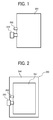
- FIG. 1 is a schematic diagram illustrating one example of an ink bag 241 of the ink cartridge
- FIG. 2 is a schematic diagram illustrating the ink cartridge 200, in which the ink bag 241 of FIG. 1 is housed in a cartridge case 244.
- the ink bag 241 is filled with the ink by injecting the ink from an ink inlet 242. After removal of air present inside the ink bag 241, the ink inlet 242 is sealed by fusion bonding. At the time of use, a needle attached to the main body of the device is inserted into an ink outlet 243 formed of a rubber member to supply the ink to the device therethrough,
- the ink bag 241 is formed of a wrapping member such as an air non-permeable aluminum laminate film.
- the ink bag 241 is typically housed in a plastic cartridge case 244, which is then detachably mounted in various inkjet recording devices to thereby use as the ink cartridge 200.
- the ink cartridge of the present invention is preferably detachably mounted in inkjet recording devices.
- the ink cartridge can simplify the refill and exchange of the ink to improve workability.
- a coating base for the ink of the present invention paper, plastic, metal, ceramic, glass, or a composite material thereof is used. Since an absorbent base, such as wood free paper, can expect an effect of penetrating and drying, it is practical to use an aqueous ink or an oil ink, which is not a quick-drying ink, for such base. On the other hand, it is practical to use a quick-drying ink for a non-absorbent base, such as gloss coat paper, a plastic film, a plastic molded particle, ceramic, glass, and metal.
- the ink of the present invention is preferably used on, but is not limited to, the non-absorbent base of being immediately cured upon application of light.
- the ink of the present invention is suitably used for a plastic material, such as a plastic film, and a plastic molded article, which is formed of polyethylene, polypropylene, polyethylene terephthalate, polycarbonate, an ABS resin, polyvinyl chloride, polystyrene, any of other polyesters, polyamide, a vinyl-based material, or a composite material thereof.
- the SI value was measured in the manner described below.
- ⁇ -hexylcinnamaldehyde (HCA; product of Wako Pure Chemical Industries, Ltd.) was used as the positive control.
- acetone product of Wako Pure Chemical Industries, Ltd.
- olive oil product of Fudimi Pharmaceutical Co., Ltd.
- mice Before treated with the test substances, the positive control or the medium control, female mice were acclimated for 8 days including 6-day quarantine. No abnormalities were found in all the mice (used animals) during the quarantine/acclimation period.
- mice/group Based on the body weights measured 2 days before the initiation of sensitization, they were categorized into 2 groups (4 mice/group) by the body weight stratified random sampling method so that the body weight of each individual was within ⁇ 20% of the average body weight of all the individuals. Each of the used animals was 8 weeks old to 9 weeks old at the time of the initiation of sensitization. The individuals remaining after the categorization were excluded from the test.
- the used animals were individually identified by application of oil ink to their tale throughout the test period, and also their cages were labeled for identification.
- the used animals were housed in an animal room with barrier system, which was set as follows: 21°C to 25°C in temperature, 40% to 70% in relative humidity, 10 times/hour to 15 times/hour in frequency of air circulation, and a 12 hour-interval lighting cycle (lighting from 7:00 to 19:00).
- the housing cages used were those made of polycarbonate, and four animals were housed in each cage.
- the used animals were given ad libitum solid feed for laboratory animals MF (product of Oriental Yeast Co., Ltd.). Also, using a water-supply bottle, the used animals were given ad libitum tap water in which sodium hypochlorite (PURELOX, product of OYALOX Co., Ltd.) had been added so that the chlorine concentration was about 5 ppm. Bedding used was SUNFLAKE (fir tree, shavings obtained with a power planer) (product of Charles River Inc.). The feed and all of the feeding equipments were sterilized with an autoclave (121°C, 30 min) before use.
- PURELOX sodium hypochlorite
- the housing cage and the bedding were replaced with new ones at the times of the categorization and the removal of the auricular lymph node (i.e., the time when the animals were transferred from the animal room), and the water-supply bottle and rack were replaced with new ones at the time of the categorization.
- Table 1 Test group Sensitization substance Sensitization dose ( ⁇ L/auricle) Times of sensitization Number of animals (animal No.) Medium control group Medium only 25 Once/day ⁇ 3 days 4 (1-4) Positive control group 25.0%HCA 25 Once/day ⁇ 3 days 4 (5-8)
- Table 2 shows the amount of the test substance.
- the test substance was weighed in a measuring flask, and the volume of the test substance was adjusted to 1 mL with the medium.
- the thus-prepared test substance preparation was placed in a light-shielded airtight container (made of glass).
- Table 2 Concentration after adjustment (w/v%) Mass of test substance (g) Test substance 50.0 0.5
- the positive control preparation was prepared on the day before the initiation of sensitization, and stored in a cold place except in use.
- the medium and the test substance preparations were prepared on the day of sensitization.
- the BrdU preparation was prepared 2 days before administration and stored in a cold place until the day of administration.
- test substance preparations 25 ⁇ L
- positive control preparation or the medium was applied to both the auricles of each of the used animals using a micropipetter. This treatment was performed once a day for three consecutive days.
- the BrdU preparation (0.5 mL) was intraperitoneally administered once to each of the used animals.
- All the used animals used for the test were observed once or more times a day from the day of the initiation of sensitization to the day of the removal of the auricular lymph node (i.e., the day when the animals were transferred from the animal room). Notably, the observation day was counted from the day of the initiation of sensitization being regarded as Day 1.
- the body weight of each of the used animals was measured on the day of the initiation of sensitization and on the day of the removal of the auricular lymph node (i.e., the day when the animals were transferred from the animal room). Also, the average of the body weights and the standard error thereof were calculated for each group.
- the used animals were allowed to undergo euthanasia, and their auricular lymph nodes were sampled.
- the surrounding tissue of each auricular lymph node was removed, and the auricular lymph nodes from both the auricles were collectively weighed. Also, the average of the weights of the auricular lymph nodes and the standard error thereof were calculated for each group.
- the auricular lymph nodes of each individual were stored in a frozen state using a BIO MEDICAL FREEZER set to -20°C.
- the auricular lymph nodes were mashed with the gradual addition of physiological saline, and suspended therein.
- the thus-obtained suspension was filtrated and then dispensed into the wells of a 96-well microplate, with 3 wells being used per individual.
- the thus-dispensed suspensions were measured for intake of BrdU by the ELISA method.
- the reagents used were those of a commercially available kit (Cell Proliferation ELISA, BrdU colorimetric, Cat. No. 1647229, product of Roche Diagnostics Inc.).
- a multiplate reader (FLUOSTAR OPTIMA, product of BMG LABTECH Inc.) was used to measure the absorbance of each well (OD: 370 nm to 492 nm, the intake of BrdU), and the average of the absorbance of the 3 wells for each individual was used as the measurement of BrdU for the individual.
- the measurement of BrdU intake for each individual was divided by the average of the measurements of BrdU intake in the vehicle control group to calculate the SI value for the individual.
- the SI value of each test group was the average of the SI values of the individuals. Also, the standard error of the SI values was calculated for each test group. Notably, the SI value was rounded at the second decimal place and shown to the first decimal place.
- SI Average of measurements of BrdU intake for each individual average of 3 wells Average of measurements of BrdU intake in the vehicle control group average of 4 animals
- the materials (a) to (d) were mixed at ratios (parts by weight) shown in Tables 4-1 to 4-4 to prepare an ink.
- the materials (a) to (d) were mixed at ratios (parts by weight) shown in Tables 4-1 to 4-4 to prepare an ink.
- the materials (a) to (c) were mixed at ratios (parts by weight) shown in Tables 4-1 to 4-4 to prepare an ink.
- the materials (a) to (d) were mixed at ratios (parts by weight) shown in Tables 4-1 to 4-4 to prepare an ink.
- the materials (a) to (d) were mixed at ratios (parts by weight) shown in Tables 4-1 to 4-4 to prepare an ink.
- the materials (a) to (c) were mixed at ratios (parts by weight) shown in Tables 5-1 to 5-4 to prepare an ink.
- the materials (a) to (d) were mixed at ratios (parts by weight) shown in Tables 5-1 to 5-4 to prepare an ink.
- the materials (a) to (d) were mixed at ratios (parts by weight) shown in Tables 5-1 to 5-4 to prepare an ink.
- the materials (a) to (c) were mixed at ratios (parts by weight) shown in Tables 5-1 to 5-4 to prepare an ink.
- the materials (a) to (d) were mixed at ratios (parts by weight) shown in Tables 5-1 to 5-4 to prepare an ink.
- the materials (a) to (d) were mixed at ratios (parts by weight) shown in Tables 5-1 to 5-4 to prepare an ink.
- the materials (a) to (d) were mixed at ratios (parts by weight) shown in Table 6 to prepare an ink.
- the materials (a) to (d) were mixed at ratios (parts by weight) shown in Table 6 to prepare an ink.
- the materials (a) to (d) were mixed at ratios (parts by weight) shown in Table 6 to prepare an ink.
- the materials (a) and (b) were mixed at ratios (parts by weight) shown in Tables 3-1 to 3-4 to prepare an ink.
- the materials (a) to (c) were mixed at ratios (parts by weight) shown in Tables 3-1 to 3-4 to prepare an ink.
- the materials (a) to (d) were mixed at ratios (parts by weight) shown in Tables 3-1 to 3-4 to prepare an ink.
- the materials (a) to (d) were mixed at ratios (parts by weight) shown in Tables 3-1 to 3-4 to prepare an ink.
- the materials (a) and (b) were mixed at ratios (parts by weight) shown in Tables 3-1 to 3-4 to prepare an ink.
- the materials (a) to (c) were mixed at ratios (parts by weight) shown in Tables 3-1 to 3-4 to prepare an ink.
- the materials (a) to (d) were mixed at ratios (parts by weight) shown in Tables 3-1 to 3-4 to prepare an ink.
- the materials (a) to (d) were mixed at ratios (parts by weight) shown in Tables 3-1 to 3-4 to prepare an ink.
- the materials (a) and (b) were mixed at ratios (parts by weight) shown in Tables 4-1 to 4-4 to prepare an ink.
- the materials (a) to (c) were mixed at ratios (parts by weight) shown in Tables 4-1 to 4-4 to prepare an ink.
- the materials (a) to (d) were mixed at ratios (parts by weight) shown in Tables 4-1 to 4-4 to prepare an ink.
- the materials (a) to (d) were mixed at ratios (parts by weight) shown in Tables 4-1 to 4-4 to prepare an ink.
- the materials (a) to (d) were mixed at ratios (parts by weight) shown in Tables 4-1 to 4-4 to prepare an ink.
- the materials (a) and (b) were mixed at ratios (parts by weight) shown in Tables 4-1 to 4-4 to prepare an ink.
- the materials (a) to (c) were mixed at ratios (parts by weight) shown in Tables 4-1 to 4-4 to prepare an ink.
- the materials (a) to (d) were mixed at ratios (parts by weight) shown in Tables 4-1 to 4-4 to prepare an ink.
- the materials (a) to (d) were mixed at ratios (parts by weight) shown in Tables 4-1 to 4-4 to prepare an ink.
- the materials (a) and (b) were mixed at ratios (parts by weight) shown in Tables 5-1 to 5-4 to prepare an ink.
- the materials (a) to (c) were mixed at ratios (parts by weight) shown in Tables 5-1 to 5-4 to prepare an ink.
- the materials (a) to (d) were mixed at ratios (parts by weight) shown in Tables 5-1 to 5-4 to prepare an ink.
- the materials (a) to (d) were mixed at ratios (parts by weight) shown in Tables 5-1 to 5-4 to prepare an ink.
- the materials (a) and (b) were mixed at ratios (parts by weight) shown in Tables 5-1 to 5-4 to prepare an ink.
- the materials (a) to (c) were mixed at ratios (parts by weight) shown in Tables 5-1 to 5-4 to prepare an ink.
- the materials (a) to (d) were mixed at ratios (parts by weight) shown in Tables 5-1 to 5-4 to prepare an ink.
- the materials (a) to (d) were mixed at ratios (parts by weight) shown in Tables 5-1 to 5-4 to prepare an ink.
- the viscosity of each ink was measured by a cone plate-type rotary viscometer (manufactured by TOKI SANGYO CO., LTD.) with the temperature of circulating water being constantly set 25, 45 and 60°C.
- the temperature of 25°C is temperature set considering typical room temperature.
- the temperatures of 45 and 60°C are temperatures of a heatable marketed inkjet ejection head such as GEN4 from Ricoh Printing Systems, Ltd.
- the photopolymerizable composition prepared at a predetermined combination was used as it was in evaluation by brush coating.
- inkjet ink After the ink was filtered through a membrane filter made of fluorine resin, having a pore diameter of 5 microns, the ink was sealed in an aluminum pouch bag having the shape in FIG. 1 so that a bubble was formed.
- the pouch bag the ink was sealed in was contained in a plastic cartridge as shown in FIG. 2 .
- an ink flow channel was formed from the cartridge to the GEN4 head from Ricoh Printing Systems, Ltd. to eject the ink and form a solid coating film.
- Each of the brush coating and the inkjet printing was controlled to form a solid coating film having a thickness about 40 microns.
- a solid coating film formed on a marketed polycarbonate film (Iupilon E2000 having a thickness of 100 microns from Mitsubishi Engineering-Plastics Corp.) was irradiated at 0.3 W/cm 2 and 1,200 mJ/cm 2 and hardened so as to evaluate its strength and light resistance.
- Pencil hardness includes 2H, H, F, HB, B, 2B to 6B in descending order of hardness.
- a coating film formed at 1,200 mJ/cm 2 was left sill under an insect collector fluorescent lamp FL15BL (15W) from Toshiba Lighting & Technology Corp for 72 hrs, and the color tone of the coating film before and after exposed to the light was measured by 938 spectrodensitometer from X-rite, Inc, to evaluate yellowing as a color toner difference ⁇ E.
- the color tone was measured using 20 plain papers MY PAPER from Ricoh Company, Ltd., having a weight of 64 g/m 2 .
- the ink When the photopolymerizable composition is used as an inkjet ink, the ink preferably has properties meeting with required specifications of an inkjet ejection head used.
- Various ejection heads are marketed from many manufacturers, and some of them have large ejection power to eject an ink having high viscosity and wide thermostat.
- the ink preferably has a viscosity of from 2 to 150 mPa ⁇ s, and more preferably from 5 to 18 mPa ⁇ s at 25°C.
- the thermostat of the ejection head can be used. When the viscosity is too high at 25°C, the head may be heated when necessary to make the ink have lower viscosity.
- the ink When heated at from 45 to 60°C, the ink preferably has a viscosity of from 5 to 18 mPa ⁇ s thereat.
- Table 3-1 Material Comparative Example 1 Comparative Example 2 Comparative Example 3 Comparative Example 4 a1 95 95 95 95 a a2 5 5 5 5 5 a3 b b1 20 20 20 20 b2 c c1 0.5 0.5 0.9 d d1 05 0.9 d2 Carbon Black*1 25°C Viscosity 8 8 9 10 45°C Viscosity *2 *2 *2 *2 *2 *2 *2 60°C Viscosity *2 *2 *2 *2 *2 Inkjet Printing Ejection head temperature 25°C 25°C 25°C 25°C Coating film strength (1200 mj/cm 2 ) F F F F F F F F F F F F F Less than 6B ⁇ E 12 8 7 2 Brush Coating Coating film strength (1200 mj/cm 2 ) F F F F F F
- Comparative Examples 2 to 4 and Examples 1 to 3 Comparative Examples 6 to 8 and Examples 4 to 6, Comparative Examples 10 to 12 and Examples 13 to 15 or Comparative Examples 23 to 25 and Examples 16 to 18 proves that a combination of 1-hydroxy-cyclohexyl-phenyl-ketone and 2- hydroxy-1- ⁇ 4-[4-(2-hydroxy-2-methyl-propionyl)benzyl]phenyl ⁇ -2-methyl-1-propane-1-one improves strength of the coating film.
- a hindered amine compound is proved to further decrease ⁇ E and improve light resistance when used together.
- Examples 19 to 21 prove high light resistance and practically sufficient strength of the coating film can be achieved even when the content ratio of the triazine compound and the hindered amine compounds is changed or the hindered amine is changed.
- a component included in a small amount preferably has negative skin sensitization, and a material having a problem of skin sensitization such as a mixture of sebacic acid bis[1,2, 2, 6, 6-pentamethyl-piperidine-4-yl] and sebacic acid [1, 2, 2, 6, 6-pentamethyl-piperidine-4-yl]methyl is preferably included in a minimum amount.
- Example 22 proves high light resistance and practically sufficient strength of the coating film can be achieved even when a colorant is included to color the composition to a light color.
- X represents a length of ethyleneoxide part. The larger the X, the larger the molecular weight and the higher the viscosity. The higher the viscosity, the more difficult to use as an inkjet ink material. However, monomers of a4 to a8 are expected to improve processing suitability.
- X of the ethyleneoxide-modified trimethylol propane trimethacrylate used in Examples is 1.
- the ethyleneoxide-modified trimethylol propane trimethacrylate does not have a problem of viscosity as a material included in an inkjet ink.
- the photopolymerizable composition including this forms a coating film having sufficient strength.
- the ethyleneoxide-modified trimethylol propane trimethacrylate has no problem of skin sensitization, environmental dangerous hazardousness, acute aquatic toxicity and long-term adverse affect. X may be larger when necessary.
Landscapes
- Chemical & Material Sciences (AREA)
- Life Sciences & Earth Sciences (AREA)
- Engineering & Computer Science (AREA)
- Materials Engineering (AREA)
- Wood Science & Technology (AREA)
- Organic Chemistry (AREA)
- Inks, Pencil-Leads, Or Crayons (AREA)
- Polymerisation Methods In General (AREA)
- Addition Polymer Or Copolymer, Post-Treatments, Or Chemical Modifications (AREA)
- Ink Jet (AREA)
- Ink Jet Recording Methods And Recording Media Thereof (AREA)
Abstract
Description
- The present invention relates to a photopolymerizable inkjet ink, an ink cartridge containing the ink, photopolymerizable composition and a coated matter.
- PCT Japanese published national phase application No.
2004-526820 - The present inventors have found some (meth)acrylic acid esters and (meth)acryl amides having no problem of skin sensitization. As disclosed in Japanese published unexamined application No.
JP-2012-140593-A - Further, Japanese published unexamined applications Nos.
JP-2013-181114-A JP-2013-256659-A - When a solid coating film is formed without printing a specific design, spray coating oz brush coating can be used instead of inkjet printing. However, it is difficult to form a coating film having high strength and good light resistance without a skin problem of skin sensitization.
- The present inventors disclose in Japanese patent application No.
2012-215753 - Because of these reasons, a need exists for a photopolymerizable composition capable of forming a coating film having low viscosity, high strength and light resistance without a skin problem of skin sensitization.
- Accordingly, one object of the present invention is to provide a photopolymerizable composition capable of forming a coating film having low viscosity, high strength and light resistance without a skin problem of skin sensitization,
- Another object of the present invention is to provide an inkjet ink using the photopolymerizable composition.
- A further object of the present invention is to provide a cartridge containing the ink.
- Another object of the present invention is to provide a coated matter using the photopolymerizable composition.
- These objects and other objects of the present invention, either individually or collectively, have been satisfied by the discovery of a nonaqueous photopolymerizable composition, including diethyleneglycol dimethacrylate; 1-hydroxy-cyclohexyl-phenyl-ketone; 2- hydroxy-1-{4-[4-(2-hydroxy-2-methyl-propionyl)benzyl]phenyl}-2-methyl-1-propane-1-one; and 2-[2-hydroxy-4-(1-octyloxycarbonylethoxy)phenyl]-4,6-bis(4-phenyl)-4, 6-bis)4-phenylphenyl-1, 3, 5-triazine.
- These and other objects, features and advantages of the present invention will become apparent upon consideration of the following description of the preferred embodiments of the present invention taken in conjunction with the accompanying drawings.
- Various other objects, features and attendant advantages of the present invention will be more fully appreciated as the same becomes better understood from the detailed description when considered in connection with the accompanying drawings in which like reference characters designate like corresponding parts throughout and wherein:
-
FIG. 1 is a schematic view illustrating an example of an ink bag of the ink cartridge of the present invention; and -
FIG. 2 is a schematic view illustrating an example of the ink cartridge of the present invention housing the ink bag. - The present invention provides a photopolymerizable composition capable of forming a coating film having low viscosity, high strength and light resistance without a skin problem of skin sensitization.
- The photopolymerizable composition (ink) of the present invention includes at least diethyleneglycol dimethacrylate which is a methacrylic acid ester compound. A monomeric component including the methacrylic acid ester having a negative skin sensitization has high safeness, and preferably including acrylic acid ester has a viscosity capable of ejecting an inkjet as well. The 2-[2-hydroxy-4-(1-octyloxycarbonylethoxy)phenyl]- 4, 6-bis(4-phenyl)-4, 6-bis)4-phenylphenyl-1, 3, 5-triazine improves light resistance and largely prevents yellowing. Since irradiation causes light curing and yellowing, when the photopolymerizable composition or its cured coating fully transmits light, curing is good, but yellowing is noticeable. When light is blocked, the cured coating cannot be formed. However, a combination of the 1-hydroxy-cyclohexyl-phenyl-ketone and the 2- hydroxy-1-{4-[4-(2-hydroxy-2-methyl-propionyl)benzyl]phenyl}-2-methyl-1-propane-1-one as a polymerization initiator realizes non-conventional high curability and largely prevents yellowing.
- A hindered amine compound further prevents yellowing while maintaining strength of the coating film.
- The photopolymerizable composition negative for skin sensitization refers to a compound satisfying at least the following (1) or (2):
- (1) a compound having a Stimulation Index (SI value) of less than 3, where the Stimulation Index indicates the level of sensitization as measured by a skin sensitization test based on the LLNA (Local Lymph Node Assay); and
- (2) a compound evaluated as "negative for skin sensitization" or "no skin sensitization" in its MSDS (Material Safety Data Sheet).
- Regarding the above (1), the compound having the SI value of less than 3 is considered as negative for skin sensitization as described in literatures, for example, "Functional Material" (Kino Zairyou) 2005, September, Vol. 25, No. 9, p. 55. The lower SI value means the lower level of skin sensitization. Thus, in the present invention, a monomer having the lower SI value is preferably used. The SI value of the monomer used is preferably less than 3, more preferably 2 or lower, and even more preferably 1.6 or lower.
- Although easily-obtainable (meth)acrylic acid ester having a negative skin sensitization includes a material having poor polymerization reactivity, a photopolymerizable composition having sufficient curability and low viscosity is obtainable when used together with 2- hydroxy-1-{4-[4-(2-hydroxy-2-methyl-propionyl)benzyl]phenyl}-2-methyl-1-propane-1-one.
- The photopolymerizable composition preferably includes the polymerization initiator in an amount of from 10 to 20 parts by weight per 100 parts by weight of monomeric components because of having good light resistance and prevents itself from yellowing, but the amount is not limited thereto.
- The photopolymerizable composition preferably includes the 2-[2-hydroxy-4-(1-octyloxycarbonylethoxy)phenyl]-4,6-bis(4-phenyl)-4, 6-bis)4-phenylphenyl-1, 3, 5-triazine in an amount of from 0.5 to 0.9 parts by weight per 100 parts by weight of the (meth)acrylic acid ester because of having good light resistance and good photocurability, but the amount is not limited thereto.
- The photopolymerizable composition of the present invention preferably includes caprolactone-modified dipentaerythritol hexaacrylate or ethyleneoxide-modified trimethylol propane trimethacrylate as a polymerizable monomer in addition to the diethyleneglycol dimethacrylate. The photopolymerizable composition preferably includes the caprolactone-modified dipentaerythritol hexaacrylate in an amount of from 3 to 15 parts by weight, and more preferably from 5 to 10 pasts by weight per 100 parts by weight of the (meth)acrylic acid ester monomer. The photopolymerizable composition preferably includes the ethyleneoxide-modified trimethylol propane trimethacrylate in an amount of from 15 to 60 parts by weight, and more preferably from 20 to 50 pasts by weight per 100 parts by weight of the (meth)acrylic acid ester monomer,
- The photopolymerizable composition preferably includes the hindered amine compound in an amount of from 0.5 to 0.9 parts by weight per 100 parts by weight of the (meth)acrylic acid ester monomer, but the amount is not limited thereto. Plural hindered amines can be used together as triazine compounds can, e.g., a hindered amine having higher anti-degradation (self-oxidized quicker) and a hindered amine having less anti-degradation (slowly self-oxidized) can be used together.
- The photopolymerizable composition preferably includes the diethyleneglycol dimethacrylate in an amount of from 10 to 95 parts by weight per 100 parts by weight of monomeric components.
- The following (meth)acrylates and (meth)acryl amides can be used together as long as a resulting ink does not have a problem, even through they have a problem of skin sensitization in some degrees when used alone, or skin sensitization thereof is not confirmed.
- Specific examples thereof include, but are not limited to, ethylene glycol di(meth)acrylate, hydroxypivalic acid neopentyl glycol di(meth)acrylate, γ-butyrolactone acrylate, isobornyl(meth)acrylate, formalated trimethylol propane mono(meth)acrylate, polytetramethylene glycol di(meth)acrylate, trimethylol propane (meth)acrylic acid benzoate, diethyleneglycol diacrylate, triethylene glycol diacrylate, tetraethylene glycol diacrylate, polyethylene glycol diacrylate, [CH2=CH-CO(OC2H4)n-OCOCH=CH2 (n≈9)], [CH2=CH-CO(OC2H4)n-OCOCH=CH2 (n≈14)], [CH2=CH-CO(OC2H4)n-OCOCH=CH2 (n≈23)], dipropylene glycol di(meth)acrylate, tripropylene glycol di(meth)acrylate, polypropylene glycol dimethacrylate [CH2=C(CH3)-CO-(OC3H6)n-OCOC(CH3)=CH2 (n≈7)], 1,3-butanediol diacrylate, 1,4-butanediol di(meth)acrylate, 1,6-hexanediol di(meth)acrylate, 1,9-nonanediol di(meth)acrylate, neopentyl glycol di(meth)acrylate, tricyclodecane dimethanol diacrylate, propylene oxide-modified bisphenol A di(meth)acrylate, polyethylene glycol di(meth)acrylate, dipentaerythritol hexa(meth)acrylate, (meth)acryloyl morpholine, 2-hydroxypropyl (meth)acryl amide, propylene oxide-modified tetramethylol methane tetra(meth)acrylate, dipentaerythritol hydroxypenta(meth)acrylate, caprolactone-modified dipentaerythritol hydroxypenta(meth)acrylate, ditrimethylol propane tetra(meth)acrylate, pentaerythritol tetra(meth)acrylate, trimethylol propane acrylate, ethylene oxide-modified trimethylol propane triacrylate, propylene oxide-modified trimethylol propane tri(meth)acrylate, caprolactone-modified trimethylol propane tri(meth)acrylate, pentaerythritol tri(meth)acrylate, tris(2-hydroxyethyl)isocyanurate tri(meth)acrylate, ethoxylated neopentyl glycol di(meth)acrylate, propylene oxide-modified neopentyl glycol di(meth)acrylate, propylene oxide-modified glyceryl tri(meth)acrylate, polyester di(meth)acrylate, polyester tri(meth)acrylate, polyester tetra(meth)acrylate, polyester penta(meth)acrylate, polyester poly(meth)acrylate, N-vinyl caprolactam, N-vinyl pyrrolidone, N-vinyl formamide, polyurethane di(meth)acrylate, polyurethane tri(meth)acrylate, polyurethane tetra(meth)acrylate, polyurethane penta(meth)acrylate and polyurethane poly(meth)acrylate,
- The diethyleneglycol dimethacrylate and (meth)acrylate or (meth)acrylamide usable therewith preferably have a weight ratio of from 100/0 to 3/97, and more preferably from 95/5 to 10/90, although depending on conditions such as curability and viscosity.
- A photoradical polymerization initiator such as 1-hydroxy-cyclohexyl-phenyl-ketone and 2-hydroxy-2-methyl-1-phenylpropan-1-one is preferably used for the photopolymerizable composition of the present invention.
- The (meth)acrylic acid ester and the (meth)acryl amide are known to have an ionic polymerizability as well. The ionic polymerization initiators are generally expensive and generate a slight amount of strong acid or strong alkali even in the state where they are not irradiated with light. Thus, it is necessary to take special cares such as imparting acid resistance and alkali resistance to an ink supply channel of an inkjet coating system, imposing limitation on the choice of members constituting the inkjet coating system.
- In contrast, the ink of the present invention can use a photoradical polymerization initiator that is inexpensive and generates no strong acid or strong alkali. Thus, it is possible to produce an ink at low cost, and also it is easy to choose members of an inkjet coating system. When using a quite high energy light source, such as electron beams, α rays, β rays, γ rays or X rays, polymerization reaction can proceed without polymerization initiator. Since this is a conventionally known matter, the equipment is very expensive and the maintenance is complicated, this not described in detail in the present invention.
- The photoradical polymerization initiators include, but are not limited to, a self-cleaving photopolymerization initiator and a hydrogen-abstracting polymerization initiator. These may be used alone, or in combination.
- Specific examples of the self-cleaving photopolymerization initiator include, but are not limited to, 1-hydroxy-cyclohexyl-phenyl-ketone, 2-hydroxy-2-methyl-1-phenylpropan-1-one, 1-[4-(2-hydroxyethoxy)-phenyl]-2-hydroxy-2-methyl-1-propan-1-one, 2-hydroxy-1-{4-[4-(2-hydroxy-2-methylpropionyl)benzyl]phenyl}-2-methyl-1-propan-1-one, phenylglyoxylic acid methyl ester, 2-methyl-1-[4-(methylthio)phenyl]-2-morpholinopropan-1-one, 2-benzyl-2-dimethylamino-1-(4-morpholinophenyl)butanone-1, 2-dimethylamino-2-(4-methylbenzyl)-1-(4-morpholin-4-yl-phenyl)butan-1-one, bis(2,4,6-trimethylbenzoyl)phenyl phosphine oxide, bis(2,6-dimethoxybenzoyl)-2,4,4-trimethyl-pentylphosphine oxide, 2,4,6-trimethylbenzoylphosphine oxide, 1,2-octanedion-[4-(phenylthio)-2-(o-benzoyloxime)], ethanone-1-[9-ethyl-6-(2-methylbenzoyl)-9H-carbazol-3-yl]-1-(O-acetyloxime) and [4-(methylphenylthio)phenyl]phenylmethanone.
- Specific examples of the hydrogen-abstracting polymerization initiator include, but are not limited to, benzophenone compounds such as benzophenone, methylbenzophenone, methyl-2-benzoylbenzoate, 4-benzoyl-4'-methyldiphenyl sulfide and phenylbenzophenone; and thioxanthone compounds such as 2,4-diethylthioxanthone, 2-chlorothioxanthone, isopropylthioxanthone and 1-chloro-4-propylthioxanthione.
- Amines can be used together as a polymerization accelerator.
- Specific examples thereof include, but are not limited to, p-dimethylaminobenzoate, 2-ethylhexyl p-dimethylaminobenzoate, methyl p-dimethylaminobenzoate, 2-dimethylaminoethyl benzoate and butoxyethyl p-dimethylaminobenzoate.
- The photopolymerizable composition may be transparent without including a colorant, and may include a colorant when necessary. When the photopolymerizable composition is desired to be colorless or white, materials having less color are preferably used besides the polymerization initiator, the polymerization accelerator and the colorant.
- Known inorganic pigments and organic pigments can be used as a colorant coloring the photopolymerizable composition.
- Specific examples of black pigments include, but are not limited to, carbon black produced by a furnace method of a channel method.
- Specific examples of yellow pigments include, but are not limited to, pigments of Pigment Yellow series, such as Pigment Yellow 1, Pigment Yellow 2, Pigment Yellow 3, Pigment Yellow 12, Pigment Yellow 13, Pigment Yellow 14, Pigment Yellow 16, Pigment Yellow 17, Pigment Yellow 73, Pigment Yellow 74, Pigment Yellow 75, Pigment Yellow 83, Pigment Yellow 93, Pigment Yellow 95, Pigment Yellow 97, Pigment Yellow 98, Pigment Yellow 114, Pigment Yellow 120, Pigment Yellow 128, Pigment Yellow 129, Pigment Yellow 138, Pigment Yellow 150, Pigment Yellow 151, Pigment Yellow 154, Pigment Yellow 155, and Pigment Yellow 180.
- Specific examples of magenta pigments include, but are not limited to, pigments of Pigment Red series, such as Pigment Red 5, Pigment Red 7, Pigment Red 12, Pigment Red 48(Ca), Pigment Red 48(Mn), Pigment Red 57(Ca), Pigment Red 57:1, Pigment Red 112, Pigment Red 122, Pigment Red 123, Pigment Red 168, Pigment Red 184, Pigment Red 202, and Pigment Violet 19.
- Specific examples of cyan pigments include, but are not limited to, pigments of Pigment Blue series, such as Pigment Blue 1, Pigment Blue 2, Pigment Blue 3, Pigment Blue 15, Pigment Blue 15:3, Pigment Blue 15:4, Pigment Blue 16, Pigment Blue 22, Pigment Blue 60, Vat Blue 4, and Vat Blue 60.
- Specific examples of white pigments include, but are not limited to, sulfuric acid salts of alkaline earth metals such as barium sulfate; carbonic acid salts of alkaline earth metals such as calcium carbonate; silica such as fine silicic acid powder and synthetic silicic acid salts; calcium silicate; alumina; alumina hydrate; titanium oxide; zinc oxide; talc; and clay.
- In addition, various inorganic or organic pigments may be optionally used considering, for example, physical properties of the photopolymerizable composition. Further, in the photopolymerizable composition, a polymerization inhibitor (e.g., 4-methoxy-1-naphthol, methylhydroquinone, hydroquinone, t-butylhydroquinone, di-t-butylhydroquinone, methoquinone, 2,2'-dihydroxy-3,3'-di(α-methylcyclohexyl)-5,5'-dimethyldiphenylmethane, p-benzoquinone, di-t-butyl diphenylamine, and 9,10-di-n-butoxyanthracene, 4,4'-[1,10-dioxo-1,10-decandiylbis(oxy)] bis[2,2,6,6-tetramethyl]-1-piperidinyloxy), a surfactant (e.g., higher fatty acid ester containing polyether, an amino group, a carboxyl group, or a hydroxyl group, a polydimethylsiloxane compound containing, in its side chain or terminal, polyether, an amino group, a carboxyl group, or a hydroxyl group, and a fluoroalkyl compound containing a polyether residue, an amino group, a carboxyl group, and a hydroxyl group), and a polar group-containing polymer pigment dispersing agent may be optionally used.
- The ink of the present invention can be housed in a container, and used as an ink cartridge. With this form, users do not have to directly touch the ink during operations, such as exchange of the ink, and thus there is no concern about staining of their fingers, hands, clothes, etc. In addition, it is possible to prevent interfusion of foreign matter such as dust into the ink.
- The container is not particularly limited, and a shape, structure, size, and material thereof can be appropriately selected depending on the intended purpose. As for the container, for example, preferred is a container having an ink bag formed of an aluminum laminate film, or a resin film.
- The ink cartridge will be explained with reference to
FIGs. 1 and 2. FIG. 1 is a schematic diagram illustrating one example of anink bag 241 of the ink cartridge, andFIG. 2 is a schematic diagram illustrating theink cartridge 200, in which theink bag 241 ofFIG. 1 is housed in acartridge case 244. - As illustrated in
FIG. 1 , theink bag 241 is filled with the ink by injecting the ink from anink inlet 242. After removal of air present inside theink bag 241, theink inlet 242 is sealed by fusion bonding. At the time of use, a needle attached to the main body of the device is inserted into anink outlet 243 formed of a rubber member to supply the ink to the device therethrough, Theink bag 241 is formed of a wrapping member such as an air non-permeable aluminum laminate film. As illustrated inFIG. 2 , theink bag 241 is typically housed in aplastic cartridge case 244, which is then detachably mounted in various inkjet recording devices to thereby use as theink cartridge 200. - The ink cartridge of the present invention is preferably detachably mounted in inkjet recording devices. The ink cartridge can simplify the refill and exchange of the ink to improve workability.
- As for a coating base for the ink of the present invention, paper, plastic, metal, ceramic, glass, or a composite material thereof is used. Since an absorbent base, such as wood free paper, can expect an effect of penetrating and drying, it is practical to use an aqueous ink or an oil ink, which is not a quick-drying ink, for such base. On the other hand, it is practical to use a quick-drying ink for a non-absorbent base, such as gloss coat paper, a plastic film, a plastic molded particle, ceramic, glass, and metal.
- The ink of the present invention is preferably used on, but is not limited to, the non-absorbent base of being immediately cured upon application of light. Among the non-absorbent bases, the ink of the present invention is suitably used for a plastic material, such as a plastic film, and a plastic molded article, which is formed of polyethylene, polypropylene, polyethylene terephthalate, polycarbonate, an ABS resin, polyvinyl chloride, polystyrene, any of other polyesters, polyamide, a vinyl-based material, or a composite material thereof.
- Having generally described this invention, further understanding can be obtained by reference to certain specific examples which are provided herein for the purpose of illustration only and are not intended to be limiting. In the descriptions in the following examples, the numbers represent weight ratios in parts, unless otherwise specified.
- According to the skin sensitization test based on the LLNA (Local Lymph Node Assay), the SI value was measured in the manner described below.
- α-hexylcinnamaldehyde (HCA; product of Wako Pure Chemical Industries, Ltd.) was used as the positive control.
- As a medium, a mixture containing acetone (product of Wako Pure Chemical Industries, Ltd.) and olive oil (product of Fudimi Pharmaceutical Co., Ltd.) in a volume ratio of 4/1 was used.
- Before treated with the test substances, the positive control or the medium control, female mice were acclimated for 8 days including 6-day quarantine. No abnormalities were found in all the mice (used animals) during the quarantine/acclimation period.
- Based on the body weights measured 2 days before the initiation of sensitization, they were categorized into 2 groups (4 mice/group) by the body weight stratified random sampling method so that the body weight of each individual was within ± 20% of the average body weight of all the individuals. Each of the used animals was 8 weeks old to 9 weeks old at the time of the initiation of sensitization. The individuals remaining after the categorization were excluded from the test.
- The used animals were individually identified by application of oil ink to their tale throughout the test period, and also their cages were labeled for identification.
- Throughout the housing period including the quarantine/acclimation period, the used animals were housed in an animal room with barrier system, which was set as follows: 21°C to 25°C in temperature, 40% to 70% in relative humidity, 10 times/hour to 15 times/hour in frequency of air circulation, and a 12 hour-interval lighting cycle (lighting from 7:00 to 19:00).
- The housing cages used were those made of polycarbonate, and four animals were housed in each cage.
- The used animals were given ad libitum solid feed for laboratory animals MF (product of Oriental Yeast Co., Ltd.). Also, using a water-supply bottle, the used animals were given ad libitum tap water in which sodium hypochlorite (PURELOX, product of OYALOX Co., Ltd.) had been added so that the chlorine concentration was about 5 ppm. Bedding used was SUNFLAKE (fir tree, shavings obtained with a power planer) (product of Charles River Inc.). The feed and all of the feeding equipments were sterilized with an autoclave (121°C, 30 min) before use.
- The housing cage and the bedding were replaced with new ones at the times of the categorization and the removal of the auricular lymph node (i.e., the time when the animals were transferred from the animal room), and the water-supply bottle and rack were replaced with new ones at the time of the categorization.
- The group compositions of the medium control group and positive control group used for the measurement of the Si value are shown in Table 1.
Table 1 Test group Sensitization substance Sensitization dose (µL/auricle) Times of sensitization Number of animals (animal No.) Medium control group Medium only 25 Once/day × 3 days 4 (1-4) Positive control group 25.0%HCA 25 Once/day × 3 days 4 (5-8) - Table 2 shows the amount of the test substance. The test substance was weighed in a measuring flask, and the volume of the test substance was adjusted to 1 mL with the medium. The thus-prepared test substance preparation was placed in a light-shielded airtight container (made of glass).
Table 2 Concentration after adjustment (w/v%) Mass of test substance (g) Test substance 50.0 0.5 - About 0.25 g of HCA was accurately weighed, and the medium was added to the HCA to have the volume of 1 mL, to thereby prepare a 25.0% by mass solution. The thus-prepared positive control substance preparation was placed in a light-shielded airtight container (made of glass).
- In a measuring flask, 200 mg of 5-bromo-2'-deoxyuridine (BrdU, product of NACALAI TESQUE, INC.) was accurately weighed in a measuring flask. Then, physiological saline (product of OTSUKA PHARMACEUTICAL CO., LTD.) was added to the measuring flask, and dissolved through application of ultrasonic waves. Thereafter, the volume of the resultant solution was adjusted to 20 mL to prepare a 10 mg/mL solution (BrdU preparation). The BrdU preparation was sterilized through filtration with a sterilized filtration filter and placed in a sterilized container.
- The positive control preparation was prepared on the day before the initiation of sensitization, and stored in a cold place except in use. The medium and the test substance preparations were prepared on the day of sensitization. The BrdU preparation was prepared 2 days before administration and stored in a cold place until the day of administration.
- Each (25 µL) of the test substance preparations, the positive control preparation or the medium was applied to both the auricles of each of the used animals using a micropipetter. This treatment was performed once a day for three consecutive days.
- About 48 hours after the final sensitization, the BrdU preparation (0.5 mL) was intraperitoneally administered once to each of the used animals.
- All the used animals used for the test were observed once or more times a day from the day of the initiation of sensitization to the day of the removal of the auricular lymph node (i.e., the day when the animals were transferred from the animal room). Notably, the observation day was counted from the day of the initiation of sensitization being regarded as Day 1.
- The body weight of each of the used animals was measured on the day of the initiation of sensitization and on the day of the removal of the auricular lymph node (i.e., the day when the animals were transferred from the animal room). Also, the average of the body weights and the standard error thereof were calculated for each group.
- About 24 hours after the administration of BrdU, the used animals were allowed to undergo euthanasia, and their auricular lymph nodes were sampled. The surrounding tissue of each auricular lymph node was removed, and the auricular lymph nodes from both the auricles were collectively weighed. Also, the average of the weights of the auricular lymph nodes and the standard error thereof were calculated for each group. After the measurement of the weights, the auricular lymph nodes of each individual were stored in a frozen state using a BIO MEDICAL FREEZER set to -20°C.
- After returning the auricular lymph nodes to room temperature, the auricular lymph nodes were mashed with the gradual addition of physiological saline, and suspended therein. The thus-obtained suspension was filtrated and then dispensed into the wells of a 96-well microplate, with 3 wells being used per individual. The thus-dispensed suspensions were measured for intake of BrdU by the ELISA method. The reagents used were those of a commercially available kit (Cell Proliferation ELISA, BrdU colorimetric, Cat. No. 1647229, product of Roche Diagnostics Inc.). A multiplate reader (FLUOSTAR OPTIMA, product of BMG LABTECH Inc.) was used to measure the absorbance of each well (OD: 370 nm to 492 nm, the intake of BrdU), and the average of the absorbance of the 3 wells for each individual was used as the measurement of BrdU for the individual.
- As shown in the following formula, the measurement of BrdU intake for each individual was divided by the average of the measurements of BrdU intake in the vehicle control group to calculate the SI value for the individual. The SI value of each test group was the average of the SI values of the individuals. Also, the standard error of the SI values was calculated for each test group. Notably, the SI value was rounded at the second decimal place and shown to the first decimal place.

- The following materials (a) to (c) were mixed at ratios (parts by weight) shown in Tables 3-1 to 3-4 to prepare an ink.
(a) (Meth)acrylic acid ester having negative skin sensitization a1 95 parts a2 5 parts (b) Photoradical polymerization initiator b1 15 parts b2 5 parts (c) Triazine compound c1 0.5 parts - Details of a1 to a3, b1 and b2, c1, d1 and d2 are as follows. Values in () at the ends are SI values in (1) LLNA test, and "None" means "negative for skin sensitization" or "no skin sensitization" in (2) MSDS (Material Safety Data Sheet).
- a1: diethyleneglycol dimethacrylate "2G" from Shin-Nakamura Chemical Co., Ltd., (1.1)
- a2: caprolactone-modified dipentaerythritol hexaacrylate DPCA 60 from Nippon Kayaku Co., Ltd. (Negative in MSDS)
- a3: ethyleneoxide-modified trimethylolpropane trimethacrylate "TMPT-3EO" from Shin-Nakamura Chemical Co., Ltd., (1.0)
- b1: 1-hydroxy cyclohexyl phenyl ketone "Irgacure 184" from BASF (Negative in MSDS)
- b2: 2- hydroxy-1-{4-[4-(2-hydroxy-2-methyl-propionyl)benzyl]phenyl}-2-methyl-1-propane-1-one "Irgacure 127" from BASF (Negative in MSDS)
- c1: 2-[2-hydroxy-4-(1-octyloxycarbonylethoxy)phenyl]- 4, 6-bis(4-phenyl)-4, 6-bis)4-phenylphenyl-1, 3, 5-triazine "TINUVIN479" from BASF (Negative in MSDS)
- d1: sebacic acid bis[2, 2, 6, 6-tetramethyl-1-(octyloxy)piperidine-4-yl] "TINUVIN123" from BASF (Negative in MSDS)
- d2: a mixture of sebacic acid bis[1, 2, 2, 6, 6-pentamethyl-piperidine-4-yl] and sebacic acid [1, 2, 2, 6, 6-pentamethyl-piperidine-4-yl]methyl "TINUVIN292" from BASF (Positive in MSDS)
- The following materials (a) to (d) were mixed at ratios (parts by weight) shown in Tables 3-1 to 3-4 to prepare an ink.
(a) (Meth)acrylic acid ester having negative skin sensitization a1 95 parts a2 5 parts (b) Photoradical polymerization initiator b1 15 parts b2 5 parts (c) Triazine compound c1 0.5 parts (d) Hindered amine compound d1 0.5 parts - The following materials (a) to (d) were mixed at ratios (parts by weight) shown in Tables 3-1 to 3-4 to prepare an ink.
(a) (Meth)acrylic acid ester having negative skin sensitization a1 95 parts a2 5 parts (b) Photoradical polymerization initiator b1 15 parts b2 5 parts (c) Triazine compound c1 0.9 parts (d) Hindered amine compound d1 0.9 parts - The following materials (a) to (c) were mixed at ratios (parts by weight) shown in Tables 3-1 to 3-4 to prepare an ink.
(a) (Meth)acrylic acid ester having negative skin sensitization a1 80 parts a2 20 parts (b) Photoradical polymerization initiator b1 15 parts b2 5 parts (c) Triazine compound c1 0.5 parts - The following materials (a) to (d) were mixed at ratios (parts by weight) shown in Tables 3-1 to 3-4 to prepare an ink.
(a) (Meth)acrylic acid ester having negative skin sensitization a1 80 parts a2 20 parts (b) Photoradical polymerization initiator b1 15 parts b2 5 parts (c) Triazine compound c1 0.5 parts (d) Hindered amine compound d1 0.5 parts - The following materials (a) to (d) were mixed at ratios (parts by weight) shown in Tables 3-1 to 3-4 to prepare an ink.
(a) (Meth)acrylic acid ester having negative skin sensitization a1 80 parts a2 20 parts (b) Photoradical polymerization initiator b1 15 parts b2 5 parts (c) Triazine compound c1 0.9 parts (d) Hindered amine compound d1 0.9 parts - The materials (a) to (c) were mixed at ratios (parts by weight) shown in Tables 4-1 to 4-4 to prepare an ink,
- The materials (a) to (d) were mixed at ratios (parts by weight) shown in Tables 4-1 to 4-4 to prepare an ink.
- The materials (a) to (d) were mixed at ratios (parts by weight) shown in Tables 4-1 to 4-4 to prepare an ink.
- The materials (a) to (c) were mixed at ratios (parts by weight) shown in Tables 4-1 to 4-4 to prepare an ink.
- The materials (a) to (d) were mixed at ratios (parts by weight) shown in Tables 4-1 to 4-4 to prepare an ink.
- The materials (a) to (d) were mixed at ratios (parts by weight) shown in Tables 4-1 to 4-4 to prepare an ink.
- The materials (a) to (c) were mixed at ratios (parts by weight) shown in Tables 5-1 to 5-4 to prepare an ink.
- The materials (a) to (d) were mixed at ratios (parts by weight) shown in Tables 5-1 to 5-4 to prepare an ink.
- The materials (a) to (d) were mixed at ratios (parts by weight) shown in Tables 5-1 to 5-4 to prepare an ink.
- The materials (a) to (c) were mixed at ratios (parts by weight) shown in Tables 5-1 to 5-4 to prepare an ink.
- The materials (a) to (d) were mixed at ratios (parts by weight) shown in Tables 5-1 to 5-4 to prepare an ink.
- The materials (a) to (d) were mixed at ratios (parts by weight) shown in Tables 5-1 to 5-4 to prepare an ink.
- The materials (a) to (d) were mixed at ratios (parts by weight) shown in Table 6 to prepare an ink.
- The materials (a) to (d) were mixed at ratios (parts by weight) shown in Table 6 to prepare an ink.
- The materials (a) to (d) were mixed at ratios (parts by weight) shown in Table 6 to prepare an ink.
- The materials (a) to (d), and carbon black were mixed at ratios (parts by weight) shown in Table 6 to prepare an ink.
(a) (Meth)acrylic acid ester having negative skin sensitization a1 80 parts a2 20 parts (b) Photoradical polymerization initiator b1 15 parts b2 5 parts (c) Triazine compound c1 0.9 parts (d) Hindered amine compound d1 0.9 parts Carbon black 0.05 parts - The materials (a) and (b) were mixed at ratios (parts by weight) shown in Tables 3-1 to 3-4 to prepare an ink.
- The materials (a) to (c) were mixed at ratios (parts by weight) shown in Tables 3-1 to 3-4 to prepare an ink.
- The materials (a) to (d) were mixed at ratios (parts by weight) shown in Tables 3-1 to 3-4 to prepare an ink.
- The materials (a) to (d) were mixed at ratios (parts by weight) shown in Tables 3-1 to 3-4 to prepare an ink.
- The materials (a) and (b) were mixed at ratios (parts by weight) shown in Tables 3-1 to 3-4 to prepare an ink.
- The materials (a) to (c) were mixed at ratios (parts by weight) shown in Tables 3-1 to 3-4 to prepare an ink.
- The materials (a) to (d) were mixed at ratios (parts by weight) shown in Tables 3-1 to 3-4 to prepare an ink.
- The materials (a) to (d) were mixed at ratios (parts by weight) shown in Tables 3-1 to 3-4 to prepare an ink.
- The materials (a) and (b) were mixed at ratios (parts by weight) shown in Tables 4-1 to 4-4 to prepare an ink.
- The materials (a) to (c) were mixed at ratios (parts by weight) shown in Tables 4-1 to 4-4 to prepare an ink.
- The materials (a) to (d) were mixed at ratios (parts by weight) shown in Tables 4-1 to 4-4 to prepare an ink.
- The materials (a) to (d) were mixed at ratios (parts by weight) shown in Tables 4-1 to 4-4 to prepare an ink.
- The materials (a) to (d) were mixed at ratios (parts by weight) shown in Tables 4-1 to 4-4 to prepare an ink.
- The materials (a) and (b) were mixed at ratios (parts by weight) shown in Tables 4-1 to 4-4 to prepare an ink.
- The materials (a) to (c) were mixed at ratios (parts by weight) shown in Tables 4-1 to 4-4 to prepare an ink.
- The materials (a) to (d) were mixed at ratios (parts by weight) shown in Tables 4-1 to 4-4 to prepare an ink.
- The materials (a) to (d) were mixed at ratios (parts by weight) shown in Tables 4-1 to 4-4 to prepare an ink.
- The materials (a) and (b) were mixed at ratios (parts by weight) shown in Tables 5-1 to 5-4 to prepare an ink.
- The materials (a) to (c) were mixed at ratios (parts by weight) shown in Tables 5-1 to 5-4 to prepare an ink.
- The materials (a) to (d) were mixed at ratios (parts by weight) shown in Tables 5-1 to 5-4 to prepare an ink.
- The materials (a) to (d) were mixed at ratios (parts by weight) shown in Tables 5-1 to 5-4 to prepare an ink.
- The materials (a) and (b) were mixed at ratios (parts by weight) shown in Tables 5-1 to 5-4 to prepare an ink.
- The materials (a) to (c) were mixed at ratios (parts by weight) shown in Tables 5-1 to 5-4 to prepare an ink.
- The materials (a) to (d) were mixed at ratios (parts by weight) shown in Tables 5-1 to 5-4 to prepare an ink.
- The materials (a) to (d) were mixed at ratios (parts by weight) shown in Tables 5-1 to 5-4 to prepare an ink.
- The viscosity (mPa·s) and the strength of coating film at 25, 45 and 60°C of each ink were measured.
- The viscosity of each ink was measured by a cone plate-type rotary viscometer (manufactured by TOKI SANGYO CO., LTD.) with the temperature of circulating water being constantly set 25, 45 and 60°C. The temperature of 25°C is temperature set considering typical room temperature. The temperatures of 45 and 60°C are temperatures of a heatable marketed inkjet ejection head such as GEN4 from Ricoh Printing Systems, Ltd.
- The photopolymerizable composition prepared at a predetermined combination was used as it was in evaluation by brush coating. To evaluate inkjet ink, after the ink was filtered through a membrane filter made of fluorine resin, having a pore diameter of 5 microns, the ink was sealed in an aluminum pouch bag having the shape in
FIG. 1 so that a bubble was formed. The pouch bag the ink was sealed in was contained in a plastic cartridge as shown inFIG. 2 . In a chassis capable of containing the cartridge, an ink flow channel was formed from the cartridge to the GEN4 head from Ricoh Printing Systems, Ltd. to eject the ink and form a solid coating film. Each of the brush coating and the inkjet printing was controlled to form a solid coating film having a thickness about 40 microns. - A solid coating film formed on a marketed polycarbonate film (Iupilon E2000 having a thickness of 100 microns from Mitsubishi Engineering-Plastics Corp.) was irradiated at 0.3 W/cm2 and 1,200 mJ/cm2 and hardened so as to evaluate its strength and light resistance.
- Scratch hardness of the irradiated and hardened coating film was evaluated by a pencil method specified in JIS-K-5600-5-4. Pencil hardness includes 2H, H, F, HB, B, 2B to 6B in descending order of hardness.
- A coating film formed at 1,200 mJ/cm2 was left sill under an insect collector fluorescent lamp FL15BL (15W) from Toshiba Lighting & Technology Corp for 72 hrs, and the color tone of the coating film before and after exposed to the light was measured by 938 spectrodensitometer from X-rite, Inc, to evaluate yellowing as a color toner difference ΔE. The color tone was measured using 20 plain papers MY PAPER from Ricoh Company, Ltd., having a weight of 64 g/m2.
- When the photopolymerizable composition is used as an inkjet ink, the ink preferably has properties meeting with required specifications of an inkjet ejection head used. Various ejection heads are marketed from many manufacturers, and some of them have large ejection power to eject an ink having high viscosity and wide thermostat. The ink preferably has a viscosity of from 2 to 150 mPa·s, and more preferably from 5 to 18 mPa·s at 25°C. However, the thermostat of the ejection head can be used. When the viscosity is too high at 25°C, the head may be heated when necessary to make the ink have lower viscosity. When heated at from 45 to 60°C, the ink preferably has a viscosity of from 5 to 18 mPa·s thereat.
Table 3-1 Material Comparative Example 1 Comparative Example 2 Comparative Example 3 Comparative Example 4 a1 95 95 95 95 a a2 5 5 5 5 a3 b b1 20 20 20 20 b2 c c1 0.5 0.5 0.9 d d1 05 0.9 d2 Carbon Black*1 25°C Viscosity 8 8 9 10 45°C Viscosity *2 *2 *2 *2 60°C Viscosity *2 *2 *2 *2 Inkjet Printing Ejection head temperature 25°C 25°C 25°C 25°C Coating film strength (1200 mj/cm2) F F F Less than 6B ΔE 12 8 7 2 Brush Coating Coating film strength (1200 mj/cm2) F F F Less than 6B ΔE 12 8 7 2 Table 3-2 Material Example 1 Example 2 Example 3 a1 95 95 95 a a2 5 5 5 a3 b b1 15 15 15 b2 5 5 5 c c1 0.5 0.5 0.9 d d1 0.5 0.9 d2 Carbon Black*1 25°C Viscosity 9 9 10 45°C Viscosity *2 *2 *2 60°C Viscosity *2 *2 *2 Inkjet Printing Ejection head temperature 25°C 25°C 25°C Coating film strength (1200 mj/cm2) 2H 2H H ΔE 8 7 2 Brush Coating Coating film strength (1200 mj/cm2) 2H 2H H ΔE 8 7 2 Table 3-3 Material Comparative Example 5 Comparative Example 6 Comparative Example 7 Comparative Example 8 a1 80 80 80 80 a a2 20 20 20 20 a3 b b1 20 20 20 20 b2 c c1 0.5 0.5 0.9 d d1 05 0.9 d2 Carbon Black*1 25°C Viscosity 16 17 17 18 45°C Viscosity 8 8 9 9 60°C Viscosity *2 *2 *2 *2 Inkjet Printing Ejection head temperature 45°C 45°C 45°C 45°C Coating film strength (1200 mj/cm2) F F F Less than 6B ΔE 13 8 7 2 Brush Coating Coating film strength (1200 mj/cm2) F F F Less than 6B ΔE 13 8 7 2 Table 3-4 Material Example 4 Example 5 Example 6 a1 80 80 80 a a2 20 20 20 a3 b b1 15 15 15 b2 5 5 5 c c1 0.5 0.5 0.9 d d1 2 0.5 0.9 d2 Carbon Black*1 25°C Viscosity 18 18 19 45°C Viscosity 8 9 10 60°C Viscosity *2 *2 *2 Inkjet Printing Ejection head temperature 45°C 45°C 45°C Coating film strength (1200 mj/cm2) 2H 2H H ΔE 8 7 2 Brush Coating Coating film strength (1200 mj/cm2) 2H 2H H ΔE 8 7 2 Table 4-1 Material Comparative Example 9 Comparative Example 10 Comparative Example 11 Comparative Example 12 a1 50 50 50 50 a a2 50 50 50 50 a3 b b1 10 10 10 10 b2 c c1 0.5 0.5 0.9 d d1 05 0.9 d2 Carbon Black*1 25°C Viscosity 55 56 57 59 45°C Viscosity 22 22 23 24 60°C Viscosity 13 13 14 14 Inkjet Printing Ejection head temperature 60°C 60°C 60°C 60°C Coating film strength (1200 mj/cm2) F F F Less than 6B ΔE 7 4 3 2 Brush Coating Coating film strength (1200 mj/cm2) F F F Less than 6B ΔE 7 4 3 2 Table 4-2 Material Example 7 Example 8 Example 9 a1 50 50 50 a a2 50 50 50 a3 b b1 7.5 7.5 7.5 b2 2.5 2.5 2.5 c c1 0.5 0.5 0.9 d d1 0.5 0.9 d2 Carbon Black*1 25°C Viscosity 57 58 60 45°C Viscosity 22 24 25 60°C Viscosity 13 14 14 Inkjet Printing Ejection head temperature 60°C 60°C 60°C Coating film strength (1200 mj/cm2) 2H 2H H ΔE 4 3 2 Brush Coating Coating film strength (1200 mj/cm2) 2H 2H H ΔE 4 3 2 Table 4-3 Material Comparative Example 13 Comparative Example 14 Comparative Example 15 Comparative Example 16 a1 50 70 70 70 a a2 50 10 10 10 a3 20 20 20 b b1 15 15 15 b2 10 c c1 0.9 0.5 0.5 d d1 0.9 05 0.9 d2 Carbon Black*1 25°C Viscosity *3 14 15 15 45°C Viscosity *3 7 7 7 60°C Viscosity *3 *2 *2 *2 Inkjet Printing Ejection head temperature *3 45°C 45°C 45°C Coating film strength (1200 mj/cm2) *3 H H H ΔE *3 9 6 5 Brush Coating Coating film strength (120 0 mj/cm2) *3 H H Less than 6B ΔE *3 9 6 5 Table 4-4 Material Comparative Example 17 Example 10 Example 11 Example 12 a1 70 70 70 70 a a2 10 10 10 10 a3 20 20 20 20 b b1 15 11 11 11 b2 4 4 4 c c1 0.9 0.5 0.5 0.9 d d1 0.9 05 0.9 d2 Carbon Black*1 25°C Viscosity 45°C Viscosity 60°C Viscosity *2 *2 *2 *2 Inkjet Printing Ejection head temperature 45°C 45°C 45°C 45°C Coating film strength (1200 mj/cm2) Less than 6B 2H 2H H ΔE 2 6 5 2 Brush Coating Coating film strength (1200 mj/cm2) Less than 6B 2H 2H H ΔE 2 6 5 2 Table 5-1 Material Comparative Example 18 Comparative Example 19 Comparative Example 20 Comparative Example 21 a1 10 10 10 10 a a2 a3 90 90 90 90 b b1 20 20 20 20 b2 c c1 0.5 0.5 0.9 d d1 05 0.9 d2 Carbon Black*1 25°C Viscosity 18 19 20 21 45°C Viscosity 15 15 16 17 60°C Viscosity 9 9 10 10 Inkjet Printing Ejection head temperature 60°C 60°C 60°C 60°C Coating film strength (1200 mj/cm2) H H H Less than 6B ΔE 14 8 7 2 Brush Coating Coating film strength (1200 mj/cm2) H H H Less than 6B ΔE 14 8 7 2 Table 3-2 Material Example 13 Example 14 Example 15 a1 10 10 10 a a2 a3 90 90 90 b b1 15 15 15 b2 5 5 5 c c1 0.5 0.5 0.9 d d1 0.5 0.9 d2 Carbon Black*1 25°C Viscosity 20 21 21 45°C Viscosity 15 16 18 60°C Viscosity 9 10 10 Inkjet Printing Ejection head temperature 60°C 60°C 60°C Coating film strength (1200 mj/cm2) 2H 2H H ΔE 8 7 2 Brush Coating Coating film strength (1200 mj/cm2) 2H 2H H ΔE 8 7 2 Table 5-3 Material Comparative Example 22 Comparative Example 23 Comparative Example 24 Comparative Example 25 a1 50 50 50 50 a a2 a3 50 50 50 50 b b1 20 20 20 20 b2 c c1 0.5 0.5 0.9 d d1 05 0.9 d2 Carbon Black*1 25°C Viscosity 16 17 17 18 45°C Viscosity 8 8 9 9 60°C Viscosity *2 *2 *2 *2 Inkjet Printing Ejection head temperature 45°C 45°C 45°C 45°C Coating film strength (1200 mj/cm2) H H H Less than 6B ΔE 13 8 7 2 Brush Coating Coating film strength (1200 mj/cm2) H H H Less than 6B ΔE 13 8 7 2 Table 5-4 Material Example 16 Example 17 Example 18 a1 50 50 50 a a2 a3 50 50 50 b b1 15 15 15 b2 5 5 5 c c1 0.5 0.5 0.9 d d1 0.5 0.9 d2 Carbon Black*1 25°C Viscosity 17 18 18 45°C Viscosity 8 9 9 60°C Viscosity *2 *2 *2 Inkjet Printing Ejection head temperature 45°C 45°C 45°C Coating film strength (1200 mj/cm2) 2H 2H H ΔE 8 7 2 Brush Coating Coating film strength (1200 mj/cm2) 2H 2H H ΔE 8 7 2 Table 6 Material Example 19 Example 20 Example 21 Example 22 a1 50 50 50 50 a a2 50 50 50 50 a3 b b1 7.5 7.5 7.5 7.5 b2 2.5 2.5 2.5 2.5 c c1 0.9 0.8 0.9 0.9 d d1 0.7 0.9 0.9 d2 0.9 Carbon Black*1 0.05 25°C Viscosity 60 60 60 62 45°C Viscosity 25 25 25 26 60°C Viscosity 14 14 14 15 Inkjet Printing Ejection head temperature 60°C 60°C 60°C 60°C Coating film strength (1200 mj/cm2) 2H 2H 2H H ΔE 2 2 2 2 Brush Coating Coating film strength (1200 mj/cm2) 2H 2H 2H H ΔE 2 2 2 2 *1: Carbon black #10 from Mitsubishi Chemical Corp. and a dispersing agent "Solsperse39000" manufactured by Lubrizol Japan Co., with the weight ratio of 3/1.
*2: Viscosity was not measured because the ink was ejectable at lower temperature.
*3: Not uniformly dissolved, and not evaluated. - A comparison between Comparative Examples 2 to 4 and Examples 1 to 3, Comparative Examples 6 to 8 and Examples 4 to 6, Comparative Examples 10 to 12 and Examples 13 to 15 or Comparative Examples 23 to 25 and Examples 16 to 18 proves that a combination of 1-hydroxy-cyclohexyl-phenyl-ketone and 2- hydroxy-1-{4-[4-(2-hydroxy-2-methyl-propionyl)benzyl]phenyl}-2-methyl-1-propane-1-one improves strength of the coating film. Particularly, a comparison between Comparative Example 4 and Example 3, Comparative Example 8 and Example 6, Comparative Example 12 and Example 9, Comparative Example 17 and Example 12, Comparative Example 21 and Example 15 or Comparative Example 25 and Example 18 proves that only the 1-hydroxy-cyclohexyl-phenyl-ketone is difficult to obtain practical curability to achieve low yellowing ΔE = 2 which is hard to visually observe, but the combination of 1-hydroxy-cyclohexyl-phenyl-ketone and 2-hydroxy-1-{4-[4-(2-hydroxy-2-methyl-propionyl)benzyl]phenyl}-2-methyl-1-propane-1-one achieves high light resistance and practically sufficient strength of the coating film.
- In addition, a hindered amine compound is proved to further decrease ΔE and improve light resistance when used together. Examples 19 to 21 prove high light resistance and practically sufficient strength of the coating film can be achieved even when the content ratio of the triazine compound and the hindered amine compounds is changed or the hindered amine is changed. However, even a component included in a small amount preferably has negative skin sensitization, and a material having a problem of skin sensitization such as a mixture of sebacic acid bis[1,2, 2, 6, 6-pentamethyl-piperidine-4-yl] and sebacic acid [1, 2, 2, 6, 6-pentamethyl-piperidine-4-yl]methyl is preferably included in a minimum amount.
- Example 22 proves high light resistance and practically sufficient strength of the coating film can be achieved even when a colorant is included to color the composition to a light color.
- Ethyleneoxide-modified trimethylol propane trimethacrylate has a formula [CH3CH2C-{CH2(O-CH2CH2)x-OCOC(CH3)=CH2}3]. X represents a length of ethyleneoxide part. The larger the X, the larger the molecular weight and the higher the viscosity. The higher the viscosity, the more difficult to use as an inkjet ink material. However, monomers of a4 to a8 are expected to improve processing suitability. It is preferable not to use trimethylol propane trimethacrylate (x = 0) because of having a symbol mark "N" representing environmental dangerous hazardousness and a risk phrase "R51/53" representing acute aquatic toxicity and long-term adverse affect in EU. Directive 67/548/EEC in consideration of influence on the environment. X of the ethyleneoxide-modified trimethylol propane trimethacrylate used in Examples is 1. The ethyleneoxide-modified trimethylol propane trimethacrylate does not have a problem of viscosity as a material included in an inkjet ink. The photopolymerizable composition including this forms a coating film having sufficient strength. Further, the ethyleneoxide-modified trimethylol propane trimethacrylate has no problem of skin sensitization, environmental dangerous hazardousness, acute aquatic toxicity and long-term adverse affect. X may be larger when necessary.
- There were no noticeable differences between coating films formed by the inkjet printing and the brush coating. All the photopolymerizable compositions and the inks had no particular odors to be cautioned.
- Having now fully described the invention, it will be apparent to one of ordinary skill in the art that many changes and modifications can be made thereto without departing from the spirit and scope of the invention as set forth therein.
Claims (8)
- A photopolymerizable composition, comprising:diethyleneglycol dimethacrylate;1-hydroxy-cyclohexyl-phenyl-ketone;2-hydroxy-1-{4-[4-(2-hydroxy-2-methyl-propionyl)benzyl]phenyl}-2-methyl-1-propane-1-one; and2-[2-hydroxy-4-(1-octyloxycarbonylethoxy)phenyl]-4, 6-bis(4-phenyl)-4, 6-bis)4-phenylphenyl-1, 3, 5-triazine.
- The photopolymerizable composition of Claim 1, further comprising caprolactone-modified dipentaerythritol hexaacrylate.
- The photopolymerizable composition of Claim 1 or 2, further comprising ethyleneoxide-modified trimethylolpropane trimethacrylate.
- The photopolymerizable composition of any one of Claims 1 to 3, further comprising a hindered amine compound.
- The photopolymerizable composition of Claim 4, wherein the hindered amine compound is sebacic acid bis[2, 2, 6, 6-tetramethyl-1-(octyloxy)piperidine-4-yl].
- An inkjet ink, comprising the photopolymerizable composition according to any one of Claims 1 to 5.
- A cartridge containing the ink according to Claim 6.
- A coated matter coated with the photopolymerizable composition according to any one of Claims 1 to 5.
Applications Claiming Priority (2)
| Application Number | Priority Date | Filing Date | Title |
|---|---|---|---|
| JP2013097313 | 2013-05-07 | ||
| JP2014035643A JP6299274B2 (en) | 2013-05-07 | 2014-02-26 | Photopolymerizable composition, photopolymerizable inkjet ink, ink cartridge, coated product |
Publications (2)
| Publication Number | Publication Date |
|---|---|
| EP2801595A1 true EP2801595A1 (en) | 2014-11-12 |
| EP2801595B1 EP2801595B1 (en) | 2018-07-25 |
Family
ID=50478767
Family Applications (1)
| Application Number | Title | Priority Date | Filing Date |
|---|---|---|---|
| EP14164675.2A Not-in-force EP2801595B1 (en) | 2013-05-07 | 2014-04-15 | Photopolymerizable inkjet ink, ink cartridge, photopolymerizable composition, and coated matter |
Country Status (5)
| Country | Link |
|---|---|
| US (1) | US9120940B2 (en) |
| EP (1) | EP2801595B1 (en) |
| JP (1) | JP6299274B2 (en) |
| CN (1) | CN104140715B (en) |
| BR (1) | BR102014011052B1 (en) |
Cited By (1)
| Publication number | Priority date | Publication date | Assignee | Title |
|---|---|---|---|---|
| GB2574719A (en) * | 2018-05-11 | 2019-12-18 | Fujifilm Speciality Ink Systems Ltd | A printing ink |
Families Citing this family (14)
| Publication number | Priority date | Publication date | Assignee | Title |
|---|---|---|---|---|
| JP5803746B2 (en) * | 2012-03-02 | 2015-11-04 | 株式会社リコー | Photopolymerizable inkjet ink, ink cartridge |
| JP2015218272A (en) | 2014-05-19 | 2015-12-07 | 株式会社リコー | Radical polymerizable composition, inkjet ink, ink cartridge, coating method, coated material |
| JP6519320B2 (en) | 2014-06-06 | 2019-05-29 | 株式会社リコー | Photopolymerizable composition, photopolymerizable ink, container for containing composition, method for forming image or cured product, image or cured product forming apparatus, and image or cured product |
| US9835944B2 (en) | 2014-12-10 | 2017-12-05 | Goo Chemical Co., Ltd. | Liquid solder resist composition and covered-printed wiring board |
| JP6780227B2 (en) | 2015-03-17 | 2020-11-04 | 株式会社リコー | Active energy ray-curable composition |
| US10995226B2 (en) | 2015-06-22 | 2021-05-04 | Ricoh Company, Ltd. | Active-energy-ray-curable composition, active-energy-ray-curable ink composition, composition stored container, two-dimensional or three-dimensional image forming apparatus, method for forming two-dimensional or three-dimensional image, cured product, and laminated cured product |
| US10414150B2 (en) | 2015-07-08 | 2019-09-17 | Ricoh Company, Ltd. | Active-energy-ray-curable composition, composition stored container, two-dimensional or three-dimensional image forming apparatus, method for forming two-dimensional or three-dimensional image, and cured product |
| JP2017025124A (en) | 2015-07-15 | 2017-02-02 | 株式会社リコー | Active-energy-ray-curable composition |
| US10227497B2 (en) | 2015-07-21 | 2019-03-12 | Ricoh Company, Ltd. | Active energy ray curable composition, active energy ray curable ink, inkjet ink, stereoscopic modeling material, active energy ray curable composition container, two-dimensional or three dimensional image forming apparatus, two-dimensional or three-dimensional image forming method, cured product, and processed product |
| US9988539B2 (en) | 2015-11-12 | 2018-06-05 | Ricoh Company, Ltd. | Active-energy-ray-curable composition, active-energy-ray-curable ink, composition stored container, two-dimensional or three-dimensional image forming apparatus, two-dimensional or three-dimensional image forming method, cured material, and structure |
| JP2017088805A (en) | 2015-11-16 | 2017-05-25 | 株式会社リコー | Active energy ray curable composition, active energy ray curable ink, composition container, two-dimensional or three-dimensional image forming method and forming apparatus, and molded product |
| JP2017088830A (en) | 2015-11-17 | 2017-05-25 | 株式会社リコー | Active energy ray curable compound, active energy ray curable ink, composition accommodation container, image formation method, image formation device, cured article, image formation article |
| US10858527B2 (en) | 2017-07-19 | 2020-12-08 | Ricoh Company, Ltd. | Composition, cured product, image forming apparatus, and image forming method |
| US11299641B2 (en) | 2018-01-10 | 2022-04-12 | Ricoh Company, Ltd. | Curable liquid composition, composition-accommodating container, liquid composition discharging device, cured material, and method of manufacturing cured material |
Citations (9)
| Publication number | Priority date | Publication date | Assignee | Title |
|---|---|---|---|---|
| JP2004526820A (en) | 2001-01-29 | 2004-09-02 | セリコル リミテッド | Printing ink |
| US20110178225A1 (en) * | 2008-12-11 | 2011-07-21 | Dic Corporation | Curable resin compositions, coatings, and laminated plastics including the same |
| JP2012140593A (en) | 2010-12-14 | 2012-07-26 | Ricoh Co Ltd | Ultraviolet-curing inkjet ink, ink cartridge, image forming apparatus, and image forming method |
| US20120243115A1 (en) * | 2009-09-30 | 2012-09-27 | Dai Nippon Printing Co., Ltd. | Optical layered body and method for producing optical layered body |
| JP2012215753A (en) | 2011-04-01 | 2012-11-08 | Seiko Epson Corp | Projector |
| WO2012153867A1 (en) * | 2011-05-12 | 2012-11-15 | Ricoh Company, Ltd. | Photopolymerizable inkjet ink, ink cartridge, and inkjet recording device |
| JP2013181114A (en) | 2012-03-02 | 2013-09-12 | Ricoh Co Ltd | Photopolymerizable inkjet ink, and ink cartridge |
| JP2013256659A (en) | 2012-05-18 | 2013-12-26 | Ricoh Co Ltd | Photopolymerizable composition, photopolymerizable inkjet ink, and ink cartridge |
| WO2014050711A1 (en) * | 2012-09-28 | 2014-04-03 | Ricoh Company, Ltd. | Photopolymerizable composition, photopolymerizable inkjet ink, and ink cartridge |
Family Cites Families (10)
| Publication number | Priority date | Publication date | Assignee | Title |
|---|---|---|---|---|
| CN102473601B (en) * | 2009-08-25 | 2015-04-29 | 日产化学工业株式会社 | High-hardness material for imprint |
| JP5990868B2 (en) | 2010-04-09 | 2016-09-14 | 株式会社リコー | Film production method and film by ink jet method |
| JP5547540B2 (en) * | 2010-04-14 | 2014-07-16 | 関西ペイント株式会社 | Active energy ray-curable coating composition and coated article |
| JP5843215B2 (en) | 2010-10-08 | 2016-01-13 | 株式会社リコー | Inkjet recording method |
| JP2012140550A (en) | 2011-01-04 | 2012-07-26 | Ricoh Co Ltd | Ultraviolet-curable ink and inkjet recording method |
| JP5879689B2 (en) * | 2011-02-07 | 2016-03-08 | 株式会社リコー | Photopolymerizable inkjet black ink, ink cartridge, inkjet printer, printed matter, and manufacturing method |
| JP5966482B2 (en) | 2011-03-25 | 2016-08-10 | 株式会社リコー | Ink jet recording method and ink jet recording apparatus |
| JP5874194B2 (en) | 2011-05-16 | 2016-03-02 | 株式会社リコー | Photopolymerizable inkjet ink, ink cartridge, printer |
| JP2012255069A (en) * | 2011-06-08 | 2012-12-27 | Seiko Epson Corp | Photocurable ink composition, image recording method, and image recording apparatus |
| JP5994393B2 (en) | 2012-05-31 | 2016-09-21 | 株式会社リコー | Photopolymerizable inkjet ink, ink cartridge, inkjet printing apparatus |
-
2014
- 2014-02-26 JP JP2014035643A patent/JP6299274B2/en active Active
- 2014-04-15 EP EP14164675.2A patent/EP2801595B1/en not_active Not-in-force
- 2014-04-24 US US14/260,584 patent/US9120940B2/en active Active
- 2014-05-06 CN CN201410188542.6A patent/CN104140715B/en not_active Expired - Fee Related
- 2014-05-07 BR BR102014011052-6A patent/BR102014011052B1/en not_active IP Right Cessation
Patent Citations (9)
| Publication number | Priority date | Publication date | Assignee | Title |
|---|---|---|---|---|
| JP2004526820A (en) | 2001-01-29 | 2004-09-02 | セリコル リミテッド | Printing ink |
| US20110178225A1 (en) * | 2008-12-11 | 2011-07-21 | Dic Corporation | Curable resin compositions, coatings, and laminated plastics including the same |
| US20120243115A1 (en) * | 2009-09-30 | 2012-09-27 | Dai Nippon Printing Co., Ltd. | Optical layered body and method for producing optical layered body |
| JP2012140593A (en) | 2010-12-14 | 2012-07-26 | Ricoh Co Ltd | Ultraviolet-curing inkjet ink, ink cartridge, image forming apparatus, and image forming method |
| JP2012215753A (en) | 2011-04-01 | 2012-11-08 | Seiko Epson Corp | Projector |
| WO2012153867A1 (en) * | 2011-05-12 | 2012-11-15 | Ricoh Company, Ltd. | Photopolymerizable inkjet ink, ink cartridge, and inkjet recording device |
| JP2013181114A (en) | 2012-03-02 | 2013-09-12 | Ricoh Co Ltd | Photopolymerizable inkjet ink, and ink cartridge |
| JP2013256659A (en) | 2012-05-18 | 2013-12-26 | Ricoh Co Ltd | Photopolymerizable composition, photopolymerizable inkjet ink, and ink cartridge |
| WO2014050711A1 (en) * | 2012-09-28 | 2014-04-03 | Ricoh Company, Ltd. | Photopolymerizable composition, photopolymerizable inkjet ink, and ink cartridge |
Non-Patent Citations (1)
| Title |
|---|
| KINO ZAIRYOU, FUNCTIONAL MATERIAL, vol. 25, no. 9, September 2005 (2005-09-01), pages 55 |
Cited By (2)
| Publication number | Priority date | Publication date | Assignee | Title |
|---|---|---|---|---|
| GB2574719A (en) * | 2018-05-11 | 2019-12-18 | Fujifilm Speciality Ink Systems Ltd | A printing ink |
| GB2574719B (en) * | 2018-05-11 | 2020-12-16 | Fujifilm Speciality Ink Systems Ltd | A printing ink containing light stabilisers |
Also Published As
| Publication number | Publication date |
|---|---|
| US20140336298A1 (en) | 2014-11-13 |
| EP2801595B1 (en) | 2018-07-25 |
| CN104140715A (en) | 2014-11-12 |
| BR102014011052B1 (en) | 2020-07-28 |
| JP2014237804A (en) | 2014-12-18 |
| JP6299274B2 (en) | 2018-03-28 |
| BR102014011052A2 (en) | 2015-01-06 |
| CN104140715B (en) | 2017-04-12 |
| US9120940B2 (en) | 2015-09-01 |
Similar Documents
| Publication | Publication Date | Title |
|---|---|---|
| EP2801595B1 (en) | Photopolymerizable inkjet ink, ink cartridge, photopolymerizable composition, and coated matter | |
| US9777095B2 (en) | Photopolymerizable composition, photopolymerizable inkjet ink, and ink cartridge | |
| CA2854278C (en) | Photopolymerizable inkjet ink | |
| EP2820094B1 (en) | Non-aqueous photopolymerizable inkjet ink and ink cartridge | |
| EP2904020B1 (en) | Photopolymerizable composition, photopolymerizable inkjet ink, and ink cartridge | |
| US9546288B2 (en) | Radical polymerizable composition, inkjet ink, ink cartridge, coating method and coated matter | |
| US9150743B2 (en) | Photopolymerizable composition, photopolymerizable ink jet ink, ink cartridge, and coated matter | |
| US9988478B2 (en) | Photopolymerizable composition, photopolymerizable ink jet ink, and ink cartridge | |
| US9624392B2 (en) | Photopolymerizable inkjet ink, ink cartridge, photopolymerizable composition, and coated matter | |
| EP2900701B1 (en) | Photopolymerizable composition, photopolymerizable inkjet ink, and ink cartridge |
Legal Events
| Date | Code | Title | Description |
|---|---|---|---|
| PUAI | Public reference made under article 153(3) epc to a published international application that has entered the european phase |
Free format text: ORIGINAL CODE: 0009012 |
|
| 17P | Request for examination filed |
Effective date: 20140415 |
|
| AK | Designated contracting states |
Kind code of ref document: A1 Designated state(s): AL AT BE BG CH CY CZ DE DK EE ES FI FR GB GR HR HU IE IS IT LI LT LU LV MC MK MT NL NO PL PT RO RS SE SI SK SM TR |
|
| AX | Request for extension of the european patent |
Extension state: BA ME |
|
| REG | Reference to a national code |
Ref country code: DE Ref legal event code: R079 Ref document number: 602014028985 Country of ref document: DE Free format text: PREVIOUS MAIN CLASS: C09D0011100000 Ipc: C09D0011101000 |
|
| GRAP | Despatch of communication of intention to grant a patent |
Free format text: ORIGINAL CODE: EPIDOSNIGR1 |
|
| STAA | Information on the status of an ep patent application or granted ep patent |
Free format text: STATUS: GRANT OF PATENT IS INTENDED |
|
| RIC1 | Information provided on ipc code assigned before grant |
Ipc: C09D 11/38 20140101ALI20180201BHEP Ipc: C09D 4/00 20060101ALI20180201BHEP Ipc: C09D 11/101 20140101AFI20180201BHEP |
|
| INTG | Intention to grant announced |
Effective date: 20180223 |
|
| GRAS | Grant fee paid |
Free format text: ORIGINAL CODE: EPIDOSNIGR3 |
|
| GRAA | (expected) grant |
Free format text: ORIGINAL CODE: 0009210 |
|
| STAA | Information on the status of an ep patent application or granted ep patent |
Free format text: STATUS: THE PATENT HAS BEEN GRANTED |
|
| AK | Designated contracting states |
Kind code of ref document: B1 Designated state(s): AL AT BE BG CH CY CZ DE DK EE ES FI FR GB GR HR HU IE IS IT LI LT LU LV MC MK MT NL NO PL PT RO RS SE SI SK SM TR |
|
| REG | Reference to a national code |
Ref country code: GB Ref legal event code: FG4D |
|
| REG | Reference to a national code |
Ref country code: CH Ref legal event code: EP |
|
| REG | Reference to a national code |
Ref country code: AT Ref legal event code: REF Ref document number: 1021745 Country of ref document: AT Kind code of ref document: T Effective date: 20180815 |
|
| REG | Reference to a national code |
Ref country code: IE Ref legal event code: FG4D |
|
| REG | Reference to a national code |
Ref country code: DE Ref legal event code: R096 Ref document number: 602014028985 Country of ref document: DE |
|
| REG | Reference to a national code |
Ref country code: NL Ref legal event code: MP Effective date: 20180725 |
|
| REG | Reference to a national code |
Ref country code: LT Ref legal event code: MG4D |
|
| PG25 | Lapsed in a contracting state [announced via postgrant information from national office to epo] |
Ref country code: NL Free format text: LAPSE BECAUSE OF FAILURE TO SUBMIT A TRANSLATION OF THE DESCRIPTION OR TO PAY THE FEE WITHIN THE PRESCRIBED TIME-LIMIT Effective date: 20180725 |
|
| REG | Reference to a national code |
Ref country code: AT Ref legal event code: MK05 Ref document number: 1021745 Country of ref document: AT Kind code of ref document: T Effective date: 20180725 |
|
| PG25 | Lapsed in a contracting state [announced via postgrant information from national office to epo] |
Ref country code: AT Free format text: LAPSE BECAUSE OF FAILURE TO SUBMIT A TRANSLATION OF THE DESCRIPTION OR TO PAY THE FEE WITHIN THE PRESCRIBED TIME-LIMIT Effective date: 20180725 Ref country code: FI Free format text: LAPSE BECAUSE OF FAILURE TO SUBMIT A TRANSLATION OF THE DESCRIPTION OR TO PAY THE FEE WITHIN THE PRESCRIBED TIME-LIMIT Effective date: 20180725 Ref country code: RS Free format text: LAPSE BECAUSE OF FAILURE TO SUBMIT A TRANSLATION OF THE DESCRIPTION OR TO PAY THE FEE WITHIN THE PRESCRIBED TIME-LIMIT Effective date: 20180725 Ref country code: IS Free format text: LAPSE BECAUSE OF FAILURE TO SUBMIT A TRANSLATION OF THE DESCRIPTION OR TO PAY THE FEE WITHIN THE PRESCRIBED TIME-LIMIT Effective date: 20181125 Ref country code: GR Free format text: LAPSE BECAUSE OF FAILURE TO SUBMIT A TRANSLATION OF THE DESCRIPTION OR TO PAY THE FEE WITHIN THE PRESCRIBED TIME-LIMIT Effective date: 20181026 Ref country code: NO Free format text: LAPSE BECAUSE OF FAILURE TO SUBMIT A TRANSLATION OF THE DESCRIPTION OR TO PAY THE FEE WITHIN THE PRESCRIBED TIME-LIMIT Effective date: 20181025 Ref country code: LT Free format text: LAPSE BECAUSE OF FAILURE TO SUBMIT A TRANSLATION OF THE DESCRIPTION OR TO PAY THE FEE WITHIN THE PRESCRIBED TIME-LIMIT Effective date: 20180725 Ref country code: SE Free format text: LAPSE BECAUSE OF FAILURE TO SUBMIT A TRANSLATION OF THE DESCRIPTION OR TO PAY THE FEE WITHIN THE PRESCRIBED TIME-LIMIT Effective date: 20180725 Ref country code: BG Free format text: LAPSE BECAUSE OF FAILURE TO SUBMIT A TRANSLATION OF THE DESCRIPTION OR TO PAY THE FEE WITHIN THE PRESCRIBED TIME-LIMIT Effective date: 20181025 Ref country code: PL Free format text: LAPSE BECAUSE OF FAILURE TO SUBMIT A TRANSLATION OF THE DESCRIPTION OR TO PAY THE FEE WITHIN THE PRESCRIBED TIME-LIMIT Effective date: 20180725 |
|
| PG25 | Lapsed in a contracting state [announced via postgrant information from national office to epo] |
Ref country code: LV Free format text: LAPSE BECAUSE OF FAILURE TO SUBMIT A TRANSLATION OF THE DESCRIPTION OR TO PAY THE FEE WITHIN THE PRESCRIBED TIME-LIMIT Effective date: 20180725 Ref country code: AL Free format text: LAPSE BECAUSE OF FAILURE TO SUBMIT A TRANSLATION OF THE DESCRIPTION OR TO PAY THE FEE WITHIN THE PRESCRIBED TIME-LIMIT Effective date: 20180725 Ref country code: HR Free format text: LAPSE BECAUSE OF FAILURE TO SUBMIT A TRANSLATION OF THE DESCRIPTION OR TO PAY THE FEE WITHIN THE PRESCRIBED TIME-LIMIT Effective date: 20180725 |
|
| REG | Reference to a national code |
Ref country code: DE Ref legal event code: R097 Ref document number: 602014028985 Country of ref document: DE |
|
| PG25 | Lapsed in a contracting state [announced via postgrant information from national office to epo] |
Ref country code: ES Free format text: LAPSE BECAUSE OF FAILURE TO SUBMIT A TRANSLATION OF THE DESCRIPTION OR TO PAY THE FEE WITHIN THE PRESCRIBED TIME-LIMIT Effective date: 20180725 Ref country code: RO Free format text: LAPSE BECAUSE OF FAILURE TO SUBMIT A TRANSLATION OF THE DESCRIPTION OR TO PAY THE FEE WITHIN THE PRESCRIBED TIME-LIMIT Effective date: 20180725 Ref country code: CZ Free format text: LAPSE BECAUSE OF FAILURE TO SUBMIT A TRANSLATION OF THE DESCRIPTION OR TO PAY THE FEE WITHIN THE PRESCRIBED TIME-LIMIT Effective date: 20180725 Ref country code: IT Free format text: LAPSE BECAUSE OF FAILURE TO SUBMIT A TRANSLATION OF THE DESCRIPTION OR TO PAY THE FEE WITHIN THE PRESCRIBED TIME-LIMIT Effective date: 20180725 Ref country code: EE Free format text: LAPSE BECAUSE OF FAILURE TO SUBMIT A TRANSLATION OF THE DESCRIPTION OR TO PAY THE FEE WITHIN THE PRESCRIBED TIME-LIMIT Effective date: 20180725 |
|
| PG25 | Lapsed in a contracting state [announced via postgrant information from national office to epo] |
Ref country code: SK Free format text: LAPSE BECAUSE OF FAILURE TO SUBMIT A TRANSLATION OF THE DESCRIPTION OR TO PAY THE FEE WITHIN THE PRESCRIBED TIME-LIMIT Effective date: 20180725 Ref country code: DK Free format text: LAPSE BECAUSE OF FAILURE TO SUBMIT A TRANSLATION OF THE DESCRIPTION OR TO PAY THE FEE WITHIN THE PRESCRIBED TIME-LIMIT Effective date: 20180725 Ref country code: SM Free format text: LAPSE BECAUSE OF FAILURE TO SUBMIT A TRANSLATION OF THE DESCRIPTION OR TO PAY THE FEE WITHIN THE PRESCRIBED TIME-LIMIT Effective date: 20180725 |
|
| PLBE | No opposition filed within time limit |
Free format text: ORIGINAL CODE: 0009261 |
|
| STAA | Information on the status of an ep patent application or granted ep patent |
Free format text: STATUS: NO OPPOSITION FILED WITHIN TIME LIMIT |
|
| 26N | No opposition filed |
Effective date: 20190426 |
|
| PG25 | Lapsed in a contracting state [announced via postgrant information from national office to epo] |
Ref country code: SI Free format text: LAPSE BECAUSE OF FAILURE TO SUBMIT A TRANSLATION OF THE DESCRIPTION OR TO PAY THE FEE WITHIN THE PRESCRIBED TIME-LIMIT Effective date: 20180725 |
|
| REG | Reference to a national code |
Ref country code: CH Ref legal event code: PL |
|
| REG | Reference to a national code |
Ref country code: BE Ref legal event code: MM Effective date: 20190430 |
|
| PG25 | Lapsed in a contracting state [announced via postgrant information from national office to epo] |
Ref country code: LU Free format text: LAPSE BECAUSE OF NON-PAYMENT OF DUE FEES Effective date: 20190415 Ref country code: MC Free format text: LAPSE BECAUSE OF FAILURE TO SUBMIT A TRANSLATION OF THE DESCRIPTION OR TO PAY THE FEE WITHIN THE PRESCRIBED TIME-LIMIT Effective date: 20180725 |
|
| PG25 | Lapsed in a contracting state [announced via postgrant information from national office to epo] |
Ref country code: CH Free format text: LAPSE BECAUSE OF NON-PAYMENT OF DUE FEES Effective date: 20190430 Ref country code: LI Free format text: LAPSE BECAUSE OF NON-PAYMENT OF DUE FEES Effective date: 20190430 |
|
| PG25 | Lapsed in a contracting state [announced via postgrant information from national office to epo] |
Ref country code: BE Free format text: LAPSE BECAUSE OF NON-PAYMENT OF DUE FEES Effective date: 20190430 |
|
| PG25 | Lapsed in a contracting state [announced via postgrant information from national office to epo] |
Ref country code: TR Free format text: LAPSE BECAUSE OF FAILURE TO SUBMIT A TRANSLATION OF THE DESCRIPTION OR TO PAY THE FEE WITHIN THE PRESCRIBED TIME-LIMIT Effective date: 20180725 |
|
| PG25 | Lapsed in a contracting state [announced via postgrant information from national office to epo] |
Ref country code: IE Free format text: LAPSE BECAUSE OF NON-PAYMENT OF DUE FEES Effective date: 20190415 |
|
| PG25 | Lapsed in a contracting state [announced via postgrant information from national office to epo] |
Ref country code: PT Free format text: LAPSE BECAUSE OF FAILURE TO SUBMIT A TRANSLATION OF THE DESCRIPTION OR TO PAY THE FEE WITHIN THE PRESCRIBED TIME-LIMIT Effective date: 20181125 |
|
| PG25 | Lapsed in a contracting state [announced via postgrant information from national office to epo] |
Ref country code: CY Free format text: LAPSE BECAUSE OF FAILURE TO SUBMIT A TRANSLATION OF THE DESCRIPTION OR TO PAY THE FEE WITHIN THE PRESCRIBED TIME-LIMIT Effective date: 20180725 |
|
| PG25 | Lapsed in a contracting state [announced via postgrant information from national office to epo] |
Ref country code: HU Free format text: LAPSE BECAUSE OF FAILURE TO SUBMIT A TRANSLATION OF THE DESCRIPTION OR TO PAY THE FEE WITHIN THE PRESCRIBED TIME-LIMIT; INVALID AB INITIO Effective date: 20140415 Ref country code: MT Free format text: LAPSE BECAUSE OF FAILURE TO SUBMIT A TRANSLATION OF THE DESCRIPTION OR TO PAY THE FEE WITHIN THE PRESCRIBED TIME-LIMIT Effective date: 20180725 |
|
| PG25 | Lapsed in a contracting state [announced via postgrant information from national office to epo] |
Ref country code: MK Free format text: LAPSE BECAUSE OF FAILURE TO SUBMIT A TRANSLATION OF THE DESCRIPTION OR TO PAY THE FEE WITHIN THE PRESCRIBED TIME-LIMIT Effective date: 20180725 |
|
| P01 | Opt-out of the competence of the unified patent court (upc) registered |
Effective date: 20230522 |
|
| PGFP | Annual fee paid to national office [announced via postgrant information from national office to epo] |
Ref country code: FR Payment date: 20230424 Year of fee payment: 10 Ref country code: DE Payment date: 20230420 Year of fee payment: 10 |
|
| PGFP | Annual fee paid to national office [announced via postgrant information from national office to epo] |
Ref country code: GB Payment date: 20230419 Year of fee payment: 10 |
|
| REG | Reference to a national code |
Ref country code: DE Ref legal event code: R119 Ref document number: 602014028985 Country of ref document: DE |
|
| GBPC | Gb: european patent ceased through non-payment of renewal fee |
Effective date: 20240415 |
|
| PG25 | Lapsed in a contracting state [announced via postgrant information from national office to epo] |
Ref country code: DE Free format text: LAPSE BECAUSE OF NON-PAYMENT OF DUE FEES Effective date: 20241105 |
|
| PG25 | Lapsed in a contracting state [announced via postgrant information from national office to epo] |
Ref country code: GB Free format text: LAPSE BECAUSE OF NON-PAYMENT OF DUE FEES Effective date: 20240415 |
|
| PG25 | Lapsed in a contracting state [announced via postgrant information from national office to epo] |
Ref country code: FR Free format text: LAPSE BECAUSE OF NON-PAYMENT OF DUE FEES Effective date: 20240430 |
|
| PG25 | Lapsed in a contracting state [announced via postgrant information from national office to epo] |
Ref country code: GB Free format text: LAPSE BECAUSE OF NON-PAYMENT OF DUE FEES Effective date: 20240415 Ref country code: FR Free format text: LAPSE BECAUSE OF NON-PAYMENT OF DUE FEES Effective date: 20240430 Ref country code: DE Free format text: LAPSE BECAUSE OF NON-PAYMENT OF DUE FEES Effective date: 20241105 |