EP2794920B1 - Diagnostic test for streptococcus equi using internal control bacterial strain - Google Patents
Diagnostic test for streptococcus equi using internal control bacterial strain Download PDFInfo
- Publication number
- EP2794920B1 EP2794920B1 EP12816093.4A EP12816093A EP2794920B1 EP 2794920 B1 EP2794920 B1 EP 2794920B1 EP 12816093 A EP12816093 A EP 12816093A EP 2794920 B1 EP2794920 B1 EP 2794920B1
- Authority
- EP
- European Patent Office
- Prior art keywords
- horse
- equi
- streptococcus
- primers
- bacterial strain
- Prior art date
- Legal status (The legal status is an assumption and is not a legal conclusion. Google has not performed a legal analysis and makes no representation as to the accuracy of the status listed.)
- Not-in-force
Links
- 241000194048 Streptococcus equi Species 0.000 title claims description 97
- 230000001580 bacterial effect Effects 0.000 title claims description 39
- 238000002405 diagnostic procedure Methods 0.000 title description 3
- 241000283073 Equus caballus Species 0.000 claims description 164
- 239000000523 sample Substances 0.000 claims description 82
- 108090000623 proteins and genes Proteins 0.000 claims description 66
- 238000000034 method Methods 0.000 claims description 57
- 150000007523 nucleic acids Chemical group 0.000 claims description 50
- 108020004707 nucleic acids Proteins 0.000 claims description 46
- 102000039446 nucleic acids Human genes 0.000 claims description 46
- 241000120569 Streptococcus equi subsp. zooepidemicus Species 0.000 claims description 30
- 238000001514 detection method Methods 0.000 claims description 25
- 239000002773 nucleotide Substances 0.000 claims description 18
- 125000003729 nucleotide group Chemical group 0.000 claims description 18
- 239000012472 biological sample Substances 0.000 claims description 14
- 241001465754 Metazoa Species 0.000 claims description 11
- 108091028043 Nucleic acid sequence Proteins 0.000 claims description 9
- 241000894006 Bacteria Species 0.000 claims description 7
- 238000009007 Diagnostic Kit Methods 0.000 claims description 4
- 208000033809 Suppuration Diseases 0.000 claims description 3
- 206010000269 abscess Diseases 0.000 claims description 3
- 241000283074 Equus asinus Species 0.000 claims description 2
- 241001331845 Equus asinus x caballus Species 0.000 claims description 2
- 230000000241 respiratory effect Effects 0.000 description 61
- 108020004414 DNA Proteins 0.000 description 58
- 239000013615 primer Substances 0.000 description 58
- 208000004145 Endometritis Diseases 0.000 description 45
- 206010062233 Uterine infection Diseases 0.000 description 45
- 206010000210 abortion Diseases 0.000 description 45
- 231100000176 abortion Toxicity 0.000 description 45
- 238000003556 assay Methods 0.000 description 36
- 238000003752 polymerase chain reaction Methods 0.000 description 32
- 238000011529 RT qPCR Methods 0.000 description 26
- 230000003321 amplification Effects 0.000 description 20
- 238000003199 nucleic acid amplification method Methods 0.000 description 20
- 230000000295 complement effect Effects 0.000 description 18
- 239000013612 plasmid Substances 0.000 description 16
- 238000009396 hybridization Methods 0.000 description 15
- 244000052616 bacterial pathogen Species 0.000 description 14
- 108091034117 Oligonucleotide Proteins 0.000 description 13
- 241000282472 Canis lupus familiaris Species 0.000 description 11
- 206010050167 Lymph node abscess Diseases 0.000 description 11
- 206010048038 Wound infection Diseases 0.000 description 11
- 238000006243 chemical reaction Methods 0.000 description 11
- 210000004027 cell Anatomy 0.000 description 10
- 238000012360 testing method Methods 0.000 description 10
- 241000283086 Equidae Species 0.000 description 8
- 239000012634 fragment Substances 0.000 description 8
- 239000002987 primer (paints) Substances 0.000 description 8
- 208000015181 infectious disease Diseases 0.000 description 7
- 108091008146 restriction endonucleases Proteins 0.000 description 7
- 241000194017 Streptococcus Species 0.000 description 6
- 239000000203 mixture Substances 0.000 description 6
- 244000052769 pathogen Species 0.000 description 6
- 102000053602 DNA Human genes 0.000 description 5
- 108020005187 Oligonucleotide Probes Proteins 0.000 description 5
- 239000003153 chemical reaction reagent Substances 0.000 description 5
- 238000003745 diagnosis Methods 0.000 description 5
- 239000002751 oligonucleotide probe Substances 0.000 description 5
- 238000003753 real-time PCR Methods 0.000 description 5
- 230000035945 sensitivity Effects 0.000 description 5
- 238000012163 sequencing technique Methods 0.000 description 5
- XEEYBQQBJWHFJM-UHFFFAOYSA-N Iron Chemical compound [Fe] XEEYBQQBJWHFJM-UHFFFAOYSA-N 0.000 description 4
- 108020004682 Single-Stranded DNA Proteins 0.000 description 4
- 239000000969 carrier Substances 0.000 description 4
- 201000010099 disease Diseases 0.000 description 4
- 208000037265 diseases, disorders, signs and symptoms Diseases 0.000 description 4
- 238000003780 insertion Methods 0.000 description 4
- 230000037431 insertion Effects 0.000 description 4
- 238000002955 isolation Methods 0.000 description 4
- 230000001717 pathogenic effect Effects 0.000 description 4
- 239000000758 substrate Substances 0.000 description 4
- 238000012546 transfer Methods 0.000 description 4
- 208000035473 Communicable disease Diseases 0.000 description 3
- 238000007400 DNA extraction Methods 0.000 description 3
- JLCPHMBAVCMARE-UHFFFAOYSA-N [3-[[3-[[3-[[3-[[3-[[3-[[3-[[3-[[3-[[3-[[3-[[5-(2-amino-6-oxo-1H-purin-9-yl)-3-[[3-[[3-[[3-[[3-[[3-[[5-(2-amino-6-oxo-1H-purin-9-yl)-3-[[5-(2-amino-6-oxo-1H-purin-9-yl)-3-hydroxyoxolan-2-yl]methoxy-hydroxyphosphoryl]oxyoxolan-2-yl]methoxy-hydroxyphosphoryl]oxy-5-(5-methyl-2,4-dioxopyrimidin-1-yl)oxolan-2-yl]methoxy-hydroxyphosphoryl]oxy-5-(6-aminopurin-9-yl)oxolan-2-yl]methoxy-hydroxyphosphoryl]oxy-5-(6-aminopurin-9-yl)oxolan-2-yl]methoxy-hydroxyphosphoryl]oxy-5-(6-aminopurin-9-yl)oxolan-2-yl]methoxy-hydroxyphosphoryl]oxy-5-(6-aminopurin-9-yl)oxolan-2-yl]methoxy-hydroxyphosphoryl]oxyoxolan-2-yl]methoxy-hydroxyphosphoryl]oxy-5-(5-methyl-2,4-dioxopyrimidin-1-yl)oxolan-2-yl]methoxy-hydroxyphosphoryl]oxy-5-(4-amino-2-oxopyrimidin-1-yl)oxolan-2-yl]methoxy-hydroxyphosphoryl]oxy-5-(5-methyl-2,4-dioxopyrimidin-1-yl)oxolan-2-yl]methoxy-hydroxyphosphoryl]oxy-5-(5-methyl-2,4-dioxopyrimidin-1-yl)oxolan-2-yl]methoxy-hydroxyphosphoryl]oxy-5-(6-aminopurin-9-yl)oxolan-2-yl]methoxy-hydroxyphosphoryl]oxy-5-(6-aminopurin-9-yl)oxolan-2-yl]methoxy-hydroxyphosphoryl]oxy-5-(4-amino-2-oxopyrimidin-1-yl)oxolan-2-yl]methoxy-hydroxyphosphoryl]oxy-5-(4-amino-2-oxopyrimidin-1-yl)oxolan-2-yl]methoxy-hydroxyphosphoryl]oxy-5-(4-amino-2-oxopyrimidin-1-yl)oxolan-2-yl]methoxy-hydroxyphosphoryl]oxy-5-(6-aminopurin-9-yl)oxolan-2-yl]methoxy-hydroxyphosphoryl]oxy-5-(4-amino-2-oxopyrimidin-1-yl)oxolan-2-yl]methyl [5-(6-aminopurin-9-yl)-2-(hydroxymethyl)oxolan-3-yl] hydrogen phosphate Polymers Cc1cn(C2CC(OP(O)(=O)OCC3OC(CC3OP(O)(=O)OCC3OC(CC3O)n3cnc4c3nc(N)[nH]c4=O)n3cnc4c3nc(N)[nH]c4=O)C(COP(O)(=O)OC3CC(OC3COP(O)(=O)OC3CC(OC3COP(O)(=O)OC3CC(OC3COP(O)(=O)OC3CC(OC3COP(O)(=O)OC3CC(OC3COP(O)(=O)OC3CC(OC3COP(O)(=O)OC3CC(OC3COP(O)(=O)OC3CC(OC3COP(O)(=O)OC3CC(OC3COP(O)(=O)OC3CC(OC3COP(O)(=O)OC3CC(OC3COP(O)(=O)OC3CC(OC3COP(O)(=O)OC3CC(OC3COP(O)(=O)OC3CC(OC3COP(O)(=O)OC3CC(OC3COP(O)(=O)OC3CC(OC3COP(O)(=O)OC3CC(OC3CO)n3cnc4c(N)ncnc34)n3ccc(N)nc3=O)n3cnc4c(N)ncnc34)n3ccc(N)nc3=O)n3ccc(N)nc3=O)n3ccc(N)nc3=O)n3cnc4c(N)ncnc34)n3cnc4c(N)ncnc34)n3cc(C)c(=O)[nH]c3=O)n3cc(C)c(=O)[nH]c3=O)n3ccc(N)nc3=O)n3cc(C)c(=O)[nH]c3=O)n3cnc4c3nc(N)[nH]c4=O)n3cnc4c(N)ncnc34)n3cnc4c(N)ncnc34)n3cnc4c(N)ncnc34)n3cnc4c(N)ncnc34)O2)c(=O)[nH]c1=O JLCPHMBAVCMARE-UHFFFAOYSA-N 0.000 description 3
- 230000015572 biosynthetic process Effects 0.000 description 3
- 238000004925 denaturation Methods 0.000 description 3
- 230000036425 denaturation Effects 0.000 description 3
- 238000005516 engineering process Methods 0.000 description 3
- 230000036541 health Effects 0.000 description 3
- 230000010354 integration Effects 0.000 description 3
- 238000007837 multiplex assay Methods 0.000 description 3
- 238000010200 validation analysis Methods 0.000 description 3
- GUAHPAJOXVYFON-ZETCQYMHSA-N (8S)-8-amino-7-oxononanoic acid zwitterion Chemical compound C[C@H](N)C(=O)CCCCCC(O)=O GUAHPAJOXVYFON-ZETCQYMHSA-N 0.000 description 2
- FWMNVWWHGCHHJJ-SKKKGAJSSA-N 4-amino-1-[(2r)-6-amino-2-[[(2r)-2-[[(2r)-2-[[(2r)-2-amino-3-phenylpropanoyl]amino]-3-phenylpropanoyl]amino]-4-methylpentanoyl]amino]hexanoyl]piperidine-4-carboxylic acid Chemical compound C([C@H](C(=O)N[C@H](CC(C)C)C(=O)N[C@H](CCCCN)C(=O)N1CCC(N)(CC1)C(O)=O)NC(=O)[C@H](N)CC=1C=CC=CC=1)C1=CC=CC=C1 FWMNVWWHGCHHJJ-SKKKGAJSSA-N 0.000 description 2
- 108700028369 Alleles Proteins 0.000 description 2
- 241000606153 Chlamydia trachomatis Species 0.000 description 2
- 239000003155 DNA primer Substances 0.000 description 2
- 230000006820 DNA synthesis Effects 0.000 description 2
- ULGZDMOVFRHVEP-RWJQBGPGSA-N Erythromycin Chemical compound O([C@@H]1[C@@H](C)C(=O)O[C@@H]([C@@]([C@H](O)[C@@H](C)C(=O)[C@H](C)C[C@@](C)(O)[C@H](O[C@H]2[C@@H]([C@H](C[C@@H](C)O2)N(C)C)O)[C@H]1C)(C)O)CC)[C@H]1C[C@@](C)(OC)[C@@H](O)[C@H](C)O1 ULGZDMOVFRHVEP-RWJQBGPGSA-N 0.000 description 2
- 241000192125 Firmicutes Species 0.000 description 2
- ZHNUHDYFZUAESO-UHFFFAOYSA-N Formamide Chemical compound NC=O ZHNUHDYFZUAESO-UHFFFAOYSA-N 0.000 description 2
- 206010018910 Haemolysis Diseases 0.000 description 2
- 238000002105 Southern blotting Methods 0.000 description 2
- 230000004913 activation Effects 0.000 description 2
- 150000001412 amines Chemical group 0.000 description 2
- 238000004458 analytical method Methods 0.000 description 2
- 238000000137 annealing Methods 0.000 description 2
- 230000008901 benefit Effects 0.000 description 2
- 238000010876 biochemical test Methods 0.000 description 2
- 210000004369 blood Anatomy 0.000 description 2
- 239000008280 blood Substances 0.000 description 2
- 239000006161 blood agar Substances 0.000 description 2
- 210000002421 cell wall Anatomy 0.000 description 2
- 230000002759 chromosomal effect Effects 0.000 description 2
- 210000000349 chromosome Anatomy 0.000 description 2
- 230000001351 cycling effect Effects 0.000 description 2
- 238000013461 design Methods 0.000 description 2
- 238000011161 development Methods 0.000 description 2
- 231100000676 disease causative agent Toxicity 0.000 description 2
- 101150070420 gyrA gene Proteins 0.000 description 2
- 230000008588 hemolysis Effects 0.000 description 2
- 230000002949 hemolytic effect Effects 0.000 description 2
- 230000002008 hemorrhagic effect Effects 0.000 description 2
- 244000052637 human pathogen Species 0.000 description 2
- 238000011534 incubation Methods 0.000 description 2
- 230000000977 initiatory effect Effects 0.000 description 2
- 229910052742 iron Inorganic materials 0.000 description 2
- 206010023332 keratitis Diseases 0.000 description 2
- 210000001165 lymph node Anatomy 0.000 description 2
- 239000000463 material Substances 0.000 description 2
- 239000012528 membrane Substances 0.000 description 2
- 238000001823 molecular biology technique Methods 0.000 description 2
- 238000010369 molecular cloning Methods 0.000 description 2
- 238000002703 mutagenesis Methods 0.000 description 2
- 231100000350 mutagenesis Toxicity 0.000 description 2
- 230000008569 process Effects 0.000 description 2
- 102000004169 proteins and genes Human genes 0.000 description 2
- 239000007787 solid Substances 0.000 description 2
- 241000894007 species Species 0.000 description 2
- 238000010561 standard procedure Methods 0.000 description 2
- 235000000346 sugar Nutrition 0.000 description 2
- 238000003786 synthesis reaction Methods 0.000 description 2
- 230000008685 targeting Effects 0.000 description 2
- 101150014742 AGE1 gene Proteins 0.000 description 1
- 208000030090 Acute Disease Diseases 0.000 description 1
- 229920001817 Agar Polymers 0.000 description 1
- GUBGYTABKSRVRQ-XLOQQCSPSA-N Alpha-Lactose Chemical compound O[C@@H]1[C@@H](O)[C@@H](O)[C@@H](CO)O[C@H]1O[C@@H]1[C@@H](CO)O[C@H](O)[C@H](O)[C@H]1O GUBGYTABKSRVRQ-XLOQQCSPSA-N 0.000 description 1
- 241000193830 Bacillus <bacterium> Species 0.000 description 1
- 241000193738 Bacillus anthracis Species 0.000 description 1
- 208000035143 Bacterial infection Diseases 0.000 description 1
- 241000283690 Bos taurus Species 0.000 description 1
- 208000004020 Brain Abscess Diseases 0.000 description 1
- 241000589876 Campylobacter Species 0.000 description 1
- 241000282465 Canis Species 0.000 description 1
- FBPFZTCFMRRESA-FSIIMWSLSA-N D-Glucitol Natural products OC[C@H](O)[C@H](O)[C@@H](O)[C@H](O)CO FBPFZTCFMRRESA-FSIIMWSLSA-N 0.000 description 1
- FBPFZTCFMRRESA-JGWLITMVSA-N D-glucitol Chemical compound OC[C@H](O)[C@@H](O)[C@H](O)[C@H](O)CO FBPFZTCFMRRESA-JGWLITMVSA-N 0.000 description 1
- HMFHBZSHGGEWLO-SOOFDHNKSA-N D-ribofuranose Chemical compound OC[C@H]1OC(O)[C@H](O)[C@@H]1O HMFHBZSHGGEWLO-SOOFDHNKSA-N 0.000 description 1
- 108020001019 DNA Primers Proteins 0.000 description 1
- 239000003298 DNA probe Substances 0.000 description 1
- 102000016928 DNA-directed DNA polymerase Human genes 0.000 description 1
- 108010014303 DNA-directed DNA polymerase Proteins 0.000 description 1
- 101710186862 Factor H binding protein Proteins 0.000 description 1
- 241000589602 Francisella tularensis Species 0.000 description 1
- 206010064571 Gene mutation Diseases 0.000 description 1
- 206010018366 Glomerulonephritis acute Diseases 0.000 description 1
- 238000009015 Human TaqMan MicroRNA Assay kit Methods 0.000 description 1
- 102100034343 Integrase Human genes 0.000 description 1
- GUBGYTABKSRVRQ-QKKXKWKRSA-N Lactose Natural products OC[C@H]1O[C@@H](O[C@H]2[C@H](O)[C@@H](O)C(O)O[C@@H]2CO)[C@H](O)[C@@H](O)[C@H]1O GUBGYTABKSRVRQ-QKKXKWKRSA-N 0.000 description 1
- 241000187479 Mycobacterium tuberculosis Species 0.000 description 1
- 206010028885 Necrotising fasciitis Diseases 0.000 description 1
- 239000000020 Nitrocellulose Substances 0.000 description 1
- 238000002944 PCR assay Methods 0.000 description 1
- 101710178747 Phosphatidate cytidylyltransferase 1 Proteins 0.000 description 1
- 239000004793 Polystyrene Substances 0.000 description 1
- 241000589516 Pseudomonas Species 0.000 description 1
- 239000013614 RNA sample Substances 0.000 description 1
- 108010092799 RNA-directed DNA polymerase Proteins 0.000 description 1
- 206010039101 Rhinorrhoea Diseases 0.000 description 1
- PYMYPHUHKUWMLA-LMVFSUKVSA-N Ribose Natural products OC[C@@H](O)[C@@H](O)[C@@H](O)C=O PYMYPHUHKUWMLA-LMVFSUKVSA-N 0.000 description 1
- 241000607142 Salmonella Species 0.000 description 1
- 241000192023 Sarcina Species 0.000 description 1
- 206010039587 Scarlet Fever Diseases 0.000 description 1
- 238000012300 Sequence Analysis Methods 0.000 description 1
- 102100031075 Serine/threonine-protein kinase Chk2 Human genes 0.000 description 1
- 241000607768 Shigella Species 0.000 description 1
- XUIMIQQOPSSXEZ-UHFFFAOYSA-N Silicon Chemical compound [Si] XUIMIQQOPSSXEZ-UHFFFAOYSA-N 0.000 description 1
- CDBYLPFSWZWCQE-UHFFFAOYSA-L Sodium Carbonate Chemical compound [Na+].[Na+].[O-]C([O-])=O CDBYLPFSWZWCQE-UHFFFAOYSA-L 0.000 description 1
- 241000191940 Staphylococcus Species 0.000 description 1
- 241000193996 Streptococcus pyogenes Species 0.000 description 1
- 241000282887 Suidae Species 0.000 description 1
- 108010012715 Superoxide dismutase Proteins 0.000 description 1
- 108010006785 Taq Polymerase Proteins 0.000 description 1
- 241000607479 Yersinia pestis Species 0.000 description 1
- 231100000851 acute glomerulonephritis Toxicity 0.000 description 1
- 239000008272 agar Substances 0.000 description 1
- 239000011543 agarose gel Substances 0.000 description 1
- HMFHBZSHGGEWLO-UHFFFAOYSA-N alpha-D-Furanose-Ribose Natural products OCC1OC(O)C(O)C1O HMFHBZSHGGEWLO-UHFFFAOYSA-N 0.000 description 1
- XAGFODPZIPBFFR-UHFFFAOYSA-N aluminium Chemical compound [Al] XAGFODPZIPBFFR-UHFFFAOYSA-N 0.000 description 1
- 229910052782 aluminium Inorganic materials 0.000 description 1
- 125000003277 amino group Chemical group 0.000 description 1
- 239000013584 assay control Substances 0.000 description 1
- 229940065181 bacillus anthracis Drugs 0.000 description 1
- 208000022362 bacterial infectious disease Diseases 0.000 description 1
- 239000011324 bead Substances 0.000 description 1
- 239000011230 binding agent Substances 0.000 description 1
- 230000005540 biological transmission Effects 0.000 description 1
- 210000001124 body fluid Anatomy 0.000 description 1
- 210000000481 breast Anatomy 0.000 description 1
- 239000000872 buffer Substances 0.000 description 1
- 239000007853 buffer solution Substances 0.000 description 1
- 150000001720 carbohydrates Chemical class 0.000 description 1
- 235000014633 carbohydrates Nutrition 0.000 description 1
- 230000008859 change Effects 0.000 description 1
- 239000003795 chemical substances by application Substances 0.000 description 1
- 229940038705 chlamydia trachomatis Drugs 0.000 description 1
- 238000010367 cloning Methods 0.000 description 1
- 230000001332 colony forming effect Effects 0.000 description 1
- 230000000052 comparative effect Effects 0.000 description 1
- 238000010276 construction Methods 0.000 description 1
- 238000007821 culture assay Methods 0.000 description 1
- 238000012217 deletion Methods 0.000 description 1
- 230000037430 deletion Effects 0.000 description 1
- 238000010790 dilution Methods 0.000 description 1
- 239000012895 dilution Substances 0.000 description 1
- 238000006073 displacement reaction Methods 0.000 description 1
- 239000012154 double-distilled water Substances 0.000 description 1
- 238000002848 electrochemical method Methods 0.000 description 1
- 238000001962 electrophoresis Methods 0.000 description 1
- 230000008029 eradication Effects 0.000 description 1
- 210000003743 erythrocyte Anatomy 0.000 description 1
- 229960003276 erythromycin Drugs 0.000 description 1
- 238000002474 experimental method Methods 0.000 description 1
- 238000000605 extraction Methods 0.000 description 1
- 238000000855 fermentation Methods 0.000 description 1
- 230000004151 fermentation Effects 0.000 description 1
- 239000012530 fluid Substances 0.000 description 1
- 229940118764 francisella tularensis Drugs 0.000 description 1
- 230000005714 functional activity Effects 0.000 description 1
- 230000002068 genetic effect Effects 0.000 description 1
- 238000012268 genome sequencing Methods 0.000 description 1
- 238000003205 genotyping method Methods 0.000 description 1
- 244000144980 herd Species 0.000 description 1
- 238000010348 incorporation Methods 0.000 description 1
- 230000005764 inhibitory process Effects 0.000 description 1
- 239000008101 lactose Substances 0.000 description 1
- 238000007834 ligase chain reaction Methods 0.000 description 1
- 108010026228 mRNA guanylyltransferase Proteins 0.000 description 1
- 238000004519 manufacturing process Methods 0.000 description 1
- 208000010753 nasal discharge Diseases 0.000 description 1
- 201000007970 necrotizing fasciitis Diseases 0.000 description 1
- 201000008383 nephritis Diseases 0.000 description 1
- 229920001220 nitrocellulos Polymers 0.000 description 1
- 239000002777 nucleoside Substances 0.000 description 1
- -1 nucleoside triphosphates Chemical class 0.000 description 1
- 244000039328 opportunistic pathogen Species 0.000 description 1
- 230000003287 optical effect Effects 0.000 description 1
- 239000008188 pellet Substances 0.000 description 1
- 238000010647 peptide synthesis reaction Methods 0.000 description 1
- 230000002688 persistence Effects 0.000 description 1
- 150000004713 phosphodiesters Chemical class 0.000 description 1
- 210000002381 plasma Anatomy 0.000 description 1
- 239000004033 plastic Substances 0.000 description 1
- 229930001118 polyketide hybrid Natural products 0.000 description 1
- 125000003308 polyketide hybrid group Chemical group 0.000 description 1
- 238000006116 polymerization reaction Methods 0.000 description 1
- 229920002223 polystyrene Polymers 0.000 description 1
- 230000002265 prevention Effects 0.000 description 1
- 238000000746 purification Methods 0.000 description 1
- 238000012175 pyrosequencing Methods 0.000 description 1
- 238000003908 quality control method Methods 0.000 description 1
- 230000009467 reduction Effects 0.000 description 1
- 230000008439 repair process Effects 0.000 description 1
- 201000003068 rheumatic fever Diseases 0.000 description 1
- 238000005096 rolling process Methods 0.000 description 1
- 210000003296 saliva Anatomy 0.000 description 1
- 238000012216 screening Methods 0.000 description 1
- 239000006152 selective media Substances 0.000 description 1
- 238000011896 sensitive detection Methods 0.000 description 1
- 210000002966 serum Anatomy 0.000 description 1
- 229910052710 silicon Inorganic materials 0.000 description 1
- 239000010703 silicon Substances 0.000 description 1
- 239000000600 sorbitol Substances 0.000 description 1
- 238000011895 specific detection Methods 0.000 description 1
- 238000006467 substitution reaction Methods 0.000 description 1
- 150000008163 sugars Chemical class 0.000 description 1
- YBBRCQOCSYXUOC-UHFFFAOYSA-N sulfuryl dichloride Chemical class ClS(Cl)(=O)=O YBBRCQOCSYXUOC-UHFFFAOYSA-N 0.000 description 1
- 231100000617 superantigen Toxicity 0.000 description 1
- 238000001308 synthesis method Methods 0.000 description 1
- 230000002194 synthesizing effect Effects 0.000 description 1
- 210000001519 tissue Anatomy 0.000 description 1
- 239000003053 toxin Substances 0.000 description 1
- 231100000765 toxin Toxicity 0.000 description 1
- 108700012359 toxins Proteins 0.000 description 1
- 238000013518 transcription Methods 0.000 description 1
- 230000035897 transcription Effects 0.000 description 1
- 230000009466 transformation Effects 0.000 description 1
- 230000001131 transforming effect Effects 0.000 description 1
- 239000001226 triphosphate Substances 0.000 description 1
- 235000011178 triphosphate Nutrition 0.000 description 1
- 210000002700 urine Anatomy 0.000 description 1
- 230000001018 virulence Effects 0.000 description 1
- 239000000304 virulence factor Substances 0.000 description 1
- 230000007923 virulence factor Effects 0.000 description 1
- 238000005406 washing Methods 0.000 description 1
Images

Classifications
-
- C—CHEMISTRY; METALLURGY
- C12—BIOCHEMISTRY; BEER; SPIRITS; WINE; VINEGAR; MICROBIOLOGY; ENZYMOLOGY; MUTATION OR GENETIC ENGINEERING
- C12Q—MEASURING OR TESTING PROCESSES INVOLVING ENZYMES, NUCLEIC ACIDS OR MICROORGANISMS; COMPOSITIONS OR TEST PAPERS THEREFOR; PROCESSES OF PREPARING SUCH COMPOSITIONS; CONDITION-RESPONSIVE CONTROL IN MICROBIOLOGICAL OR ENZYMOLOGICAL PROCESSES
- C12Q1/00—Measuring or testing processes involving enzymes, nucleic acids or microorganisms; Compositions therefor; Processes of preparing such compositions
- C12Q1/68—Measuring or testing processes involving enzymes, nucleic acids or microorganisms; Compositions therefor; Processes of preparing such compositions involving nucleic acids
- C12Q1/6876—Nucleic acid products used in the analysis of nucleic acids, e.g. primers or probes
- C12Q1/6888—Nucleic acid products used in the analysis of nucleic acids, e.g. primers or probes for detection or identification of organisms
- C12Q1/689—Nucleic acid products used in the analysis of nucleic acids, e.g. primers or probes for detection or identification of organisms for bacteria
-
- C—CHEMISTRY; METALLURGY
- C12—BIOCHEMISTRY; BEER; SPIRITS; WINE; VINEGAR; MICROBIOLOGY; ENZYMOLOGY; MUTATION OR GENETIC ENGINEERING
- C12Q—MEASURING OR TESTING PROCESSES INVOLVING ENZYMES, NUCLEIC ACIDS OR MICROORGANISMS; COMPOSITIONS OR TEST PAPERS THEREFOR; PROCESSES OF PREPARING SUCH COMPOSITIONS; CONDITION-RESPONSIVE CONTROL IN MICROBIOLOGICAL OR ENZYMOLOGICAL PROCESSES
- C12Q2545/00—Reactions characterised by their quantitative nature
- C12Q2545/10—Reactions characterised by their quantitative nature the purpose being quantitative analysis
- C12Q2545/101—Reactions characterised by their quantitative nature the purpose being quantitative analysis with an internal standard/control
-
- C—CHEMISTRY; METALLURGY
- C12—BIOCHEMISTRY; BEER; SPIRITS; WINE; VINEGAR; MICROBIOLOGY; ENZYMOLOGY; MUTATION OR GENETIC ENGINEERING
- C12Q—MEASURING OR TESTING PROCESSES INVOLVING ENZYMES, NUCLEIC ACIDS OR MICROORGANISMS; COMPOSITIONS OR TEST PAPERS THEREFOR; PROCESSES OF PREPARING SUCH COMPOSITIONS; CONDITION-RESPONSIVE CONTROL IN MICROBIOLOGICAL OR ENZYMOLOGICAL PROCESSES
- C12Q2600/00—Oligonucleotides characterized by their use
- C12Q2600/16—Primer sets for multiplex assays
-
- C—CHEMISTRY; METALLURGY
- C12—BIOCHEMISTRY; BEER; SPIRITS; WINE; VINEGAR; MICROBIOLOGY; ENZYMOLOGY; MUTATION OR GENETIC ENGINEERING
- C12Q—MEASURING OR TESTING PROCESSES INVOLVING ENZYMES, NUCLEIC ACIDS OR MICROORGANISMS; COMPOSITIONS OR TEST PAPERS THEREFOR; PROCESSES OF PREPARING SUCH COMPOSITIONS; CONDITION-RESPONSIVE CONTROL IN MICROBIOLOGICAL OR ENZYMOLOGICAL PROCESSES
- C12Q2600/00—Oligonucleotides characterized by their use
- C12Q2600/166—Oligonucleotides used as internal standards, controls or normalisation probes
Definitions
- the invention relates to a method for detecting the presence or absence of a bacterial pathogen in a biological sample obtained from an animal subject.
- the invention relates to a method for detecting the presence or absence of Streptococcus equi in an equine sample.
- the invention also relates to host cells and nucleic acids for use in said method in addition to diagnostic kits comprising said host cells and nucleic acids.
- Streptococcus is a genus of spherical shaped Gram-positive bacteria. Clinically, individual species of streptococci are classified primarily based on their Lancefield serotyping - according to specific carbohydrates in the bacterial cell wall. These are named Lancefield groups A to T. However the pathogens in these different groups share many similarities at the genetic level. For example Streptococcus equi (which is in group C1 and which is the causative agent of equine strangles) shares 80% genome identity with the human pathogen S.
- Streptococci are further characterised via their haemolytic properties. Alpha haemolysis is caused by a reduction of iron in haemoglobin giving it a greenish color on blood agar. Beta only haemolysis is complete rupture of red blood cells giving distinct, wide, clear areas around bacterial colonies on blood agar. Other streptococci are labeled as gamma haemolytic.
- Strangles caused by Streptococcus equi subspecies equi ( S. equi ), is the most frequently diagnosed infectious disease of horses worldwide and is responsible for significant welfare cost and economic losses to the equine industry.
- the disease is characterised by abscessation of the lymph nodes of the head and neck. Abscesses formed in the retropharyngeal lymph nodes usually rupture into the guttural pouches, which drain via the nostrils leading to the classical mucopurulent nasal discharge associated with strangles. However, the purulent material in a proportion of guttural pouches fails to drain completely. Over time this becomes inspissated, enabling live S .
- a multiplex assay based upon a region of the superoxide dismutase gene ( sodA ) present in both S . equi sub-species and the S . equi -specific gene seeI was developed to identify and differentiate S . equi and S . zooepidemicus isolated on culture plates (Baverud et al., 2007). However, the ability of this test to identify S. equi direct from clinical sample material was not determined.
- a method for detecting the presence or absence of Streptococcus equi in a biological sample comprising the steps of:
- nucleic acid sequence comprising SEQ ID NO: 1.
- control bacterial strain i.e. host cell
- a vector which comprises the nucleic acid of SEQ ID NO: 1.
- a diagnostic kit for detecting the presence or absence of a bacterial pathogen, such as S. equi which comprises:
- a method for detecting the presence or absence of Streptococcus equi in a biological sample comprising the steps of:
- the described methodology may equally apply to any bacterial pathogen (such as Mycobacterium tuberculosis, Streptococcus, Pseudomonas, Shigella, Campylobacter and Salmonella ) which is intended to be detected, the invention finds particular utility in the detection of Streptococcus, such as Streptococcus equi. Therefore, in one embodiment, the bacterial pathogen is Streptococcus equi.
- the existing methodology for detecting the presence of Streptococcus equi has the disadvantage of providing false-negative results. For example, if the diagnostic assay returns a negative result it confirms one of two results, i.e. the sample either lacks Streptococcus equi or there is an error with the diagnostic assay and it has not been conducted successfully.
- the methodology of the present disclosure mixes a control bacterial strain into the sample obtained from the subject and by conducting a multiplex assay to detect sequences present within the target Streptococcus equi strain and the control bacterial strain, this provides a positive internal control that the multiplex assay has been successful.
- Surprisingly efficient results have been obtained by using the method of the invention.
- data is presented herein which demonstrates that the method of the invention has a limit of detection of 20 copies of S . equi DNA and has an overall sensitivity and specificity of 92.3% and 97.7%, respectively (as can be demonstrated in Table 1).
- Table 1 Comparison of triplex qPCR assay of the invention with a conventional eqbE singlex qPCR test as described in WO 2010/046648 triplex positive negative total eqbE singlex positive 12 2 14 negative 1 85 86 total 13 87 100
- control bacterial strain will be one which should not cross-react with any other bacteria which may exist in the biological sample.
- the control bacterial strain is a Gram positive bacteria.
- the control bacterial strain is a Gram positive cocci bacteria. Examples of such Gram positive cocci include Diplococci, Streptococcus Sarcina or Staphylococcus.
- the control bacterial strain is a Streptococcus strain, such as a Streptococcus strain other than S . equi.
- the control bacterial strain is Streptococcus zooepidemicus.
- the most desirable manner in which to select a control bacterial strain wherein the genome contains a target sequence region which differs from a sequence within Streptococcus equi is to provide a control bacterial strain transformed with a target sequence which has no homology with any nucleotide sequences in the NCBI database. This would ensure that probes directed to the target sequence can be confirmed to bind to the control bacterial strain only and serve as an accurate positive internal control for the diagnostic assay.
- the target sequence region within the control bacterial strain has no homology with any known nucleotide sequences.
- the target sequence region should be flanked with restriction enzyme sites to facilitate cloning into a plasmid and subsequent transformation into the control bacterial strain.
- the target sequence region comprises a nucleotide sequence of:
- SZIC for Streptococcus zooepidemicus internal control
- SZIC Forward CGCATGCGGGTAGATTATGTAG
- SZIC Reverse TCCCACGAGAAGGTCGAGAA
- SZIC Probe AGAGACATCCAGGTCAA; SEQ ID NO: 4
- sequence of SEQ ID NO: 1 can be detected by PCR using the SZIC Forward and Reverse primers or a taqman assay using the SZIC Forward and Reverse primers in combination with the SZIC Probe.
- SEQ ID NO: 1 constitutes an entirely novel sequence which has no homology with any sequences within the NCBI database and therefore constitutes one particular aspect of the invention. Therefore, according to a further aspect of the invention there is provided a nucleic acid sequence comprising SEQ ID NO: 1.
- a vector comprising the nucleic acid comprising SEQ ID NO: 1.
- the vector may be any suitable moiety, such as a plasmid, suitable for transforming the control bacterial strain and integration into a chromosome of the host control bacterial strain.
- a novel target sequence region such as the sequence of SEQ ID NO: 1 into a chromosome of the host control bacterial strain.
- such a process may typically involve selecting a chosen gene within the control bacterial strain.
- the chosen gene may be the SZO07770 pseudogene.
- selected fragments i.e. 500 bp fragments
- the SZO07770 pseudogene may be amplified by PCR.
- the resultant product will suitably be designed to contain restriction enzyme sites complementary to both the chosen plasmid and the target sequence region (i.e. the sequence of SEQ ID NO: 1).
- the amplified products are then digested using the restriction enzyme sites which are complementary to an insertion point of a chosen plasmid (i.e. pGhost9).
- the digested PCR product is then ligated into the plasmid which consequently generates a plasmid containing the chosen gene (i.e. pGHost9 ⁇ SZO07770).
- the target sequence region i.e. the sequence of SEQ ID NO: 1
- the target sequence region is then subcloned into the generated plasmid by using the restriction enzyme sites which are complementary to the generated plasmid.
- the resultant plasmid i.e. pGHost9SZIC
- the resultant plasmid is then transformed into the control bacterial strain (i.e. Streptococcus zooepidemicus, such as Streptococcus zooepidemicus H70) in accordance with standard techniques.
- control bacterial strain i.e. Streptococcus zooepidemicus, such as Streptococcus zooepidemicus H70
- the target sequence region i.e. SZIC
- SZO07770 the chromosomal copy of the selected gene
- the control bacterial cell i.e. Streptococcus zooepidemicus H70
- allelic replacement mutagenesis procedures such as those described previously for constructing a ⁇ prtM mutant.
- a control bacterial strain i.e. host cell
- a vector which comprises the nucleic acid of SEQ ID NO: 1.
- the host cell is Streptococcus zooepidemicus, such as Streptococcus zooepidemicus H70.
- Examples of animal subjects include horses, pigs, cattle or dogs. It will be appreciated that the method of the invention finds great utility in detecting the presence of a bacterial pathogen (i.e. Streptococcus equi) in an equine, such as a horse, donkey or mule. Camelids (or canines) may also be sampled since they may also harbour S . equi.
- a bacterial pathogen i.e. Streptococcus equi
- an equine such as a horse, donkey or mule.
- Camelids or canines
- the sample will generally be obtained from an individual animal which is believed to be affected by or a carrier of strangles, or being at risk of these things. For example it may be obtained from symptomatic or asymptomatic, contagious or shedding horses.
- suitable biological samples include whole blood, blood serum, plasma, urine, saliva, or other bodily fluid, or an extract or purification therefrom, or dilution thereof.
- the method disclosed herein additionally comprises the step of extracting nucleic acid from the biological sample obtained from the animal subject.
- Nucleic acid containing samples may be obtained from nasal swabs or washes, pus from an abscess and lavages of the guttural pouch, the primary site for asymptomatic carriage (Newton et al, 2000).
- the samples may be pooled from herds or other collections. Different samples may be taken at different time e.g. 0, 7 and 14 days.
- the DNA sample analysed may be all or part of the sample being obtained. Alternatively, the assessment of the invention may be performed or based on an historical DNA sample, or information already obtained therefrom.
- step (b) of the invention may be conducted in accordance with the experimental details described in WO 2010/046648 and those described herein.
- establishing the presence or absence of the one or more genes in step (b) and detecting the presence of the target sequence region in step (c) is performed by means of a sequence-specific probe.
- the detection probe will be complementary to a sequence that is present within the one or more genes.
- Hybridization is carried out under conditions such that the probe binds to the one or more genes to form a stable hybrid duplex only if the hybridizing regions of the probe is complementary to the nucleic acid in the sample.
- establishing the presence or absence of the one or more genes is performed by means of a nucleic acid amplification reaction to amplify all or part of the one or more genes that may be present in the sample.
- the amplification reaction may be performed at the "point-of-care" using methods published in the art.
- US 2009/0215050 describes the use of solid silicon supports for detecting bacterial infection from blood or nasal swabs. A number of detection methods are described therein including fluorometric, chemiluminescent, and electrochemical methods. Other systems are described in the literature including Wang et al. (2009) Talanta Volume 78, Issue 3, pages 647-652 . This relates to a biosensor having single-stranded DNA (ssDNA) probe functionalized aluminum anodized oxide (AAO) nanopore membranes useful for bacterial pathogen detection.
- ssDNA single-stranded DNA
- AAO aluminum anodized oxide
- the nucleic acid amplification reaction is performed by means of two DNA primers to amplify all or part of the one or more genes.
- the one or more genes are detected using PCR to amplify all or part of the one or more genes that may be present in the sample.
- the PCR may be real time PCR where detecting and identifying amplified nucleic acid is achieved by hybridization with one or more sequence-specific oligonucleotide probes.
- the assessing step (b) comprises detecting the Streptococcus equi (eqbE) gene disclosed in WO 2010/046648 as SEQ ID NO: 2. Detection of the eqbE gene is described in WO 2010/046648 and herein and typically comprises the primers and probes of SEQ ID NOS: 16, 17 and 20.
- the assessing step (b) comprises detecting one additional gene specific for the bacterial pathogen.
- the additional gene assessed in step (b) comprises the SEQ 2190 gene. Detection of the SEQ 2190 gene is described herein and typically comprises the primers and probes of SEQ ID NOS: 18, 19 and 21.
- the probes or primers may be labelled.
- label or "labelled” is used herein this refers to a detectable molecule which is incorporated indirectly or directly into an oligonucleotide, wherein the label molecule facilitates the detection of the oligonucleotide.
- Methods of producing labelled probes or primers are well known to those skilled on the art (See for example, Molecular Cloning, a laboratory manual: editors Sambrook, Fritsch, Maniatis; Cold Spring Harbor Laboratory Press, 1989 ; BioTechniques "Producing single-stranded DNA probes with the Taq DNA polymerase: a high yield protocol," 10:36, 1991 ).
- the detectable moiety may be incorporated directly or indirectly such as, for example, by biotinylating the 5' amino group of the oligonucleotide with sulfo-NHS-biotin.
- Other label molecules known to those skilled in the art as being useful for detection, include radioactively, fluorescently, enzymatically or electrochemically labelled molecules.
- fluorescent molecules are known in the art which are suitable for use to label a nucleic acid substrate for the method of the invention.
- Fluorescent molecules used as labels may include amine-reactive molecules which are reactive to end terminal amines of the substrate; sulfonyl chlorides which are conjugated to the substrate through amine residues; and the like.
- incorporating the substrate with the fluorescent molecule label includes attachment by covalent or non-covalent means.
- the protocol for such incorporation may vary depending upon the fluorescent molecule used. Such protocols are known in the art for the respective fluorescent molecule.
- Suitable labels include FAM, VIC and NED.
- the method of assessment of steps (b) and (c) may comprise directly determining the binding of an oligonucleotide probe to the nucleic acid sample.
- the probe may comprise a nucleic acid sequence which hybridizes specifically to a distinctive part of the one or more genes and the target sequence region.
- hybridization refers to the formation of a duplex structure by two single- stranded nucleic acids due to complementary base pairing. Hybridization can occur between complementary nucleic acid strands or between nucleic acid strands that contain minor regions of mismatch. Conditions under which only fully complementary nucleic acid strands will hybridize are referred to as "stringent hybridization conditions". Two single-stranded nucleic acids that are complementary except for minor regions of mismatch are referred to as “substantially complementary”. Stable duplexes of substantially complementary sequences can be achieved under less stringent hybridization conditions. Those skilled in the art of nucleic acid technology can determine duplex stability empirically considering a number of variables including, for example, the length and composition of the oligonucleotides, ionic strength, and incidence and type of mismatched base pairs.
- nucleic acid is double-stranded DNA
- hybridisation will generally be preceded by denaturation to produce single-stranded DNA.
- a screening procedure chosen from the many available to those skilled in the art, is used to identify successful hybridisation events and isolated hybridised nucleic acid. Probing may employ the standard Southern blotting technique. For instance DNA may be extracted from cells and digested with different restriction enzymes. Restriction fragments may then be separated by electrophoresis on an agarose gel, before denaturation and transfer to a nitrocellulose filter. Labelled probe may be hybridised to the DNA fragments on the filter and binding determined. Binding of a probe to target nucleic acid (e.g. DNA) may be measured using any of a variety of techniques at the disposal of those skilled in the art. For instance, probes may be radioactively, fluorescently, enzymatically or electrochemically labelled as described above.
- probe refers to an oligonucleotide which forms a duplex structure with a sequence of a target nucleic acid due to complementary base pairing.
- the probe will consist of a "hybridizing region", which is a region of the oligonucleotide preferably consisting of 10 to 50 nucleotides, more preferably from 15 to 30 nucleotides, corresponding to a region of the target sequence.
- oligonucleotide probe optionally can be bound to additional molecules which allow for the detection or immobilization of the probe but do not alter the hybridization characteristics of the probe.
- the complement of an oligonucleotide probe is also suitable as a probe. In one embodiment, the lengths of these probes are at least 15 to 30 nucleotides. After incubation, all non-annealed nucleic acids are removed from the nucleic acid:gene hybrid. The presence of nucleic acids that have hybridized, if any such molecules exist, is then detected.
- the nucleic acid from the cell type or tissue of interest can be immobilized, for example, to a solid support such as a membrane, or a plastic surface such as that on a microtitre plate or polystyrene beads.
- a solid support such as a membrane, or a plastic surface such as that on a microtitre plate or polystyrene beads.
- Detection of the remaining, annealed, labeled nucleic acid reagents is accomplished using standard techniques well-known to those in the art.
- the gene sequences to which the nucleic acid reagents have annealed can be compared to the annealing pattern expected from a normal gene sequence in order to determine whether a gene mutation is present.
- suitable probes may comprise all or part of the one or more genes in step (b) or target sequence region in step (c) (or reverse complement thereof).
- Suitable selective hybridisation conditions for oligonucleotides of 17 to 30 bases include hybridization overnight at 42°C in 6X SSC and washing in 6X SSC at a series of increasing temperatures from 42°C to 65°C.
- T m 81.5°C + 16.6Log [Na + ] + 0.41 (% G+C) - 0.63 (% formamide) - 600/#bp in duplex.
- Preferred detection methods of the disclosure are based on PCR or other amplification procedures wherein all or part of the one or more genes of step (b) (if present) and the target sequence region of step (c) is amplified.
- the existence (and preferably identity) of any amplification product may then be assessed by any suitable method, e.g., as described herein.
- An example of such a method is a combination of PCR and low stringency hybridisation with a suitable probe.
- the methods of assessing the presence of the one or more genes of step (b) and the target sequence region of step (c) described herein may be performed on a native DNA sample, or on an amplification product thereof.
- any suitable primers designed to amplify the one or more genes of step (b) and the target sequence region of step (c) may be used.
- the primers both bind within the one or more genes of step (b) and the target sequence region of step (c), though one or both may flank the one or more genes of step (b) and the target sequence region of step (c), provided some or all of the one or more genes of step (b) and the target sequence region of step (c) is amplified.
- primer refers to an oligonucleotide, whether natural or synthetic, capable of acting as a point of initiation of DNA synthesis under conditions in which synthesis of a primer extension product complementary to a nucleic acid strand is induced, i.e., in the presence of four different nucleoside triphosphates and an agent for polymerization (i.e., DNA polymerase or reverse transcriptase) in an appropriate buffer and at a suitable temperature.
- a primer need not reflect the exact sequence of the template but must be sufficiently complementary to hybridize with a template. Primers can incorporate additional features which allow for the detection or immobilization of the primer but do not alter the basic property of the primer, that of acting as a point of initiation of DNA synthesis.
- An oligonucleotide primer for use in nucleic acid amplification may be about 30 or fewer nucleotides. Generally specific primers are upwards of 14 nucleotides in length, but are preferably 15-35 inclusive, more preferably 18-32, more preferably 20-30. Those skilled in the art are well versed in the design of primers for use processes such as PCR. Various techniques for synthesizing oligonucleotide primers are well known in the art, including phosphotriester and phosphodiester synthesis methods.
- the amplified region (including some of the one or more genes of step (b) and the target sequence region of step (c)) which the primers flank is less than 600, 500, 400, 300 nucleotides, more preferably less than 250 nucleotides, more preferably 20 to 200, or 50 to 180, or 100 to 150 nucleotides in length.
- PCR polymerase chain reaction
- An amplification method may be a method other than PCR. Such methods include strand displacement activation, the QB replicase system, the repair chain reaction, the ligase chain reaction, rolling circle amplification and ligation activated transcription.
- PCR is used herein in contexts where other nucleic acid amplification techniques may be applied by those skilled in the art. Unless the context requires otherwise, reference to PCR should be taken to cover use of any suitable nucleic amplification reaction available in the art. As noted above, this includes (without limitation) so called "point of care" amplification reactions. Examples of results from the real time PCR genotyping assay are shown below.
- step (b) The presence of the one or more genes of step (b) and the target sequence region of step (c) may be assessed or confirmed by nucleotide sequencing of a nucleic acid sample to determine whether all that sequence, or a characteristic portion, is present.
- Nucleotide sequence analysis may be performed on a genomic DNA sample, or amplified part thereof, or RNA sample as appropriate, using methods which are standard in the art.
- Example sequence primers are described herein.
- Other techniques which may be used are single base extension techniques and pyrosequencing.
- control bacterial strain and nucleic acids disclosed herein for use in the methods of the present disclosure may be provided in isolated form and may be part of a kit, e.g. in a suitable container such as a vial in which the contents are protected from the external environment.
- the kit may include instructions for use of the nucleic acid, e.g. in PCR and/or a method for determining the presence of nucleic acid of interest in a test sample and/or in the detection of S . equi.
- Primers "substantially complementary” to these are also included. As known to those skilled in the art, a very high degree of complementarity is needed for specificity and sensitivity involving hybridization, although it need not be 100%. Thus, for example, an oligonucleotide which is identical in nucleotide sequence to an oligonucleotide disclosed herein, except for one base change or substitution, may function equivalently to the disclosed oligonucleotides.
- a kit wherein the nucleic acid is intended for use in PCR may include one or more other reagents required for the reaction, such as polymerase, nucleotides, buffer solution etc.
- a kit for use in determining the presence or absence of nucleic acid of interest may include one or more articles and/or reagents for performance of the method, such as means for providing the test sample itself, e.g. a nasal swab (such components generally being sterile).
- a diagnostic kit for detecting the presence or absence of a bacterial pathogen, such as S . equi which comprises:
- the vector comprises the nucleic acid of SEQ ID NO: 1.
- the vector may be provided within a host cell.
- the host cell is Streptococcus zooepidemicus, such as Streptococcus zooepidemicus H70.
- the primers and/or probes directed to the target sequence region may be selected from any of the primers and probes of SEQ ID NOS: 2, 3 and 4.
- the primers and/or probes directed to the one or more genes specific for the bacterial pathogen, such as S. equi may be selected from any of the primers and probes of SEQ ID NOS: 16, 17, 18, 19, 20 and 21.
- Se4047 was obtained from a submandibular lymph node abscess of a New Forest pony in 1990 and SzH70 was obtained from a Thoroughbred horse in 2000 in Newmarket, England. Strains were cultured in Todd Hewett broth (Oxoid) at 37°C with 5% CO 2 .
- the eqbE and SEQ2190 target genes were PCR amplified from a DNA library of a diverse collection of 26 S . equi strains using the primers ZM435 and ZM436 and 2190A and 2190B, respectively (Table 2) and sequenced on an ABI3100 DNA sequencer with BigDye fluorescent terminators and the same primers used for PCR and primer ZM437 for eqbE.
- a 100 bp sequence of DNA was designed, which had no significant homology with any nucleotide sequences on the NCBI database. Restriction sites for PvuI and AgeI were engineered to the 5' and 3' end of the DNA fragment, respectively and the resultant artificial DNA sequence, SZIC, was produced using the Gene Oracle gene synthesis service.
- the synthesised SZIC DNA was digested with PvuI and AgeI restriction enzymes and sub-cloned into pGHost9 ⁇ SZO07770 digested with the same restriction enzymes such that the resultant plasmid, pGHost9SZIC, contained SZIC flanked by approximately 500 bp SZO077770 gene fragments.
- the pGHost9SZIC plasmid was transformed into electrocompetent Sz H70. Integration of the construct, insertion of the SZIC sequence into the chromosomal copy of the SZO077770 gene and excision of the pGHost9 plasmid was achieved by allelic replacement mutagenesis as described previously for constructing a ⁇ prtM mutant (Hamilton et al., 2006). The fidelity of SZIC was confirmed by PCR and sequencing across the SZO07770 insertion site.
- the Sz 07770c strain a genetically modified category II pathogen, was grown to an optical density of 0.3 600nm in Todd Hewitt Broth and heat killed at 95°C for 30 minutes. No colonies of Sz 07770c were obtained when 100 ⁇ l of this culture was incubated overnight at 37°C and 5% CO 2 on COBA streptococcal selective agar. The killed culture was diluted to obtain a bacterial density equivalent to 80,000 colony-forming units (cfu)/ml in PBS and stored at -20°C prior to use.
- the samples containing spiked Sz 07770c were assayed using the triplex qPCR assay and the number of copies of eqbE in the DNA isolated from the other aliquot was quantified by qPCR using the eqbE singlex assay by the Animal Health Trust's diagnostic laboratory.
- the S . equi-specific eqbE and SEQ2190 targets were identified on comparison of the Se 4047 and SzH70 genomes (Heather et al., 2008; Holden et al., 2009).
- the eqbE and SEQ2190 target sequences were unique to S . equi and had no known homology to non- S . equi sequences on the NCBI database.
- PCR and sequencing across the insertion site confirmed that the SZIC sequence had successfully been incorporated into the SZO07770 pseudogene in the Sz07770c strain and that all plasmid DNA had been excised.
- the Sz07770c strain was sensitive to erythromycin.
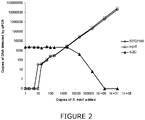
- the SZIC assay detected approximately 2,000 copies in all reactions where the amount of S . equi DNA was 2,000 copies or less. S . equi DNA levels of 2 x 10 4 copies per reaction or higher interfered with the SZIC qPCR assay.
- the triplex assay had a limit of detection of 20 and 10 copies of S. equi DNA via the eqbE and SEQ2190 qPCR assays, respectively ( Figure 2 ).
- Quantitative PCR permits the rapid and sensitive detection of target DNA sequences and offers significant advantages over traditional culture tests, which are often confounded by the presence of S . zooepidemicus. However, particular care is required to ensure both the specificity and conservation of selected target sequences.
- the sequence of the 5' region of SeM targeted by the first S. equi PCR tests has been shown to be highly diverse and is deleted in some strains recovered from persistently infected carriers.
- the superantigen-encoding genes seeH, seeI, seeL and seeM are encoded on the prophage ⁇ Seq4 and ⁇ Seq3 and may excise and/or transfer to S . zooepidemicus.
- the eqbE gene forms part of the equibactin locus, which is believed to encode a non-ribosomal peptide synthesis system that enhances the ability of S . equi to acquire iron (Heather et al., 2008).
- the acquisition of this locus has been suggested to represent the speciation event of S . equi and is proposed to be important for the rapid development of lymph node abscesses.
- the equibactin locus is encoded on an integrative conjugative element, ICE Se2 , which has the potential for horizontal transfer, although this has not yet been demonstrated and the locus appears to be restricted to S . equi.
- SEQ2190 encodes a putative sortase-processed protein and is present in all strains of S . equi screened for this target.
- a partial homologue of SEQ2190, SZO18970, lacking the 5' region targeted by the triplex assay is present in SzH70 (Holden et al., 2009).
- none of the 140 diverse strains of S . zooepidemicus examined tested qPCR positive for SEQ2190 and the target region was absolutely conserved in the 26 strains of S . equi strains tested.
- the novel internal control strain, Sz07770c which serves as a DNA extraction and assay control ensures that all clinical samples should generate a qPCR result.
- High levels of S . equi DNA (>2 x 10 4 copies) out-compete the SZIC assay and generate eqbE, SEQ2190 positive; SZIC negative results.
- Clinical samples containing moderate to low quantities of S . equi (between 2 x 10 4 and 20 copies) yield eqbE, SEQ2190 and SZIC positive results.
- Samples containing ⁇ 20 copies of S . equi DNA yield eqbE, SEQ2190 negative; SZIC positive results, thereby ruling out the possibility that S . equi could have been present in the sample, but was missed due to a DNA extraction failure.
- the strangles triplex qPCR assay was optimised to ensure that amplification of low concentrations of S . equi DNA (20 copies) was not inhibited by the presence of SZIC and that the S . equi qPCR copy numbers obtained from clinical samples using the triplex assay were comparable to those obtained using an assay based only on eqbE.
- the triplex assay has a qPCR run time of 30 minutes and a larger volume of DNA extracted from the submitted clinical sample is added, maximising sensitivity.
- the use of sensitive qPCR assays will improve the identification and treatment of horses persistently infected with S . equi, which often intermittently shed low levels of S . equi that can easily be missed by traditional culture and PCR assays.
- the strangles triplex assay of the invention provides a rapid, sensitive and robust method for the detection of S . equi infection.
Landscapes
- Chemical & Material Sciences (AREA)
- Life Sciences & Earth Sciences (AREA)
- Analytical Chemistry (AREA)
- Proteomics, Peptides & Aminoacids (AREA)
- Organic Chemistry (AREA)
- Zoology (AREA)
- Wood Science & Technology (AREA)
- Health & Medical Sciences (AREA)
- Engineering & Computer Science (AREA)
- Microbiology (AREA)
- Immunology (AREA)
- Molecular Biology (AREA)
- Biotechnology (AREA)
- Biophysics (AREA)
- Physics & Mathematics (AREA)
- Biochemistry (AREA)
- Bioinformatics & Cheminformatics (AREA)
- General Engineering & Computer Science (AREA)
- General Health & Medical Sciences (AREA)
- Genetics & Genomics (AREA)
- Measuring Or Testing Involving Enzymes Or Micro-Organisms (AREA)
Description
- The invention relates to a method for detecting the presence or absence of a bacterial pathogen in a biological sample obtained from an animal subject. In particular, the invention relates to a method for detecting the presence or absence of Streptococcus equi in an equine sample. The invention also relates to host cells and nucleic acids for use in said method in addition to diagnostic kits comprising said host cells and nucleic acids.
- Streptococcus is a genus of spherical shaped Gram-positive bacteria. Clinically, individual species of streptococci are classified primarily based on their Lancefield serotyping - according to specific carbohydrates in the bacterial cell wall. These are named Lancefield groups A to T. However the pathogens in these different groups share many similarities at the genetic level. For example Streptococcus equi (which is in group C1 and which is the causative agent of equine strangles) shares 80% genome identity with the human pathogen S. pyogenes (which is in group A, and which is the causative agent of many human conditions including strep throat, acute rheumatic fever, scarlet fever, acute glomerulonephritis and necrotizing fasciitis). Additionally the two organisms share many near identical toxins and virulence factors. Streptococci are further characterised via their haemolytic properties. Alpha haemolysis is caused by a reduction of iron in haemoglobin giving it a greenish color on blood agar. Beta only haemolysis is complete rupture of red blood cells giving distinct, wide, clear areas around bacterial colonies on blood agar. Other streptococci are labeled as gamma haemolytic.
- Strangles, caused by Streptococcus equi subspecies equi (S. equi), is the most frequently diagnosed infectious disease of horses worldwide and is responsible for significant welfare cost and economic losses to the equine industry. The disease is characterised by abscessation of the lymph nodes of the head and neck. Abscesses formed in the retropharyngeal lymph nodes usually rupture into the guttural pouches, which drain via the nostrils leading to the classical mucopurulent nasal discharge associated with strangles. However, the purulent material in a proportion of guttural pouches fails to drain completely. Over time this becomes inspissated, enabling live S. equi to persist in horses that have recovered from the acute disease for up to several years in the absence of obvious clinical signs (Newton et al., 1997). S. equi periodically sheds from persistently infected carrier horses allowing transmission to naïve individuals and resulting in new outbreaks of disease. The generation and persistence of carriers within equine populations is proposed to have been critical to the global spread of S. equi infection and the efficient identification and treatment of carriers is key to the prevention and eradication of this important disease.
- Traditionally the diagnosis of S. equi infection was based upon the culture of this β-haemolytic organism using selective media, followed by biochemical tests, which rely on the inability of S. equi to ferment lactose, sorbitol or ribose (Bannister et al., 1985). The isolation of β-haemolytic colonies is complicated by the presence of other bacteria most notably the closely related opportunistic pathogen Streptococcus equi subspecies zooepidemicus (S. zooepidemicus). This β-haemolytic organism confounds the isolation of S. equi leading to the generation of potential false-negative results. Furthermore, as the culture test identifies S. equi through a lack of sugar fermentation, strains of S. zooepidemicus that also fail to ferment these sugars (Holden et al., 2009) can be mis-identified as S. equi leading to the reporting of false-positive results. Finally, the isolation and identification of S. equi is time consuming and requires a minimum of 48 hours from receipt of clinical samples. This reporting delay often has consequences for the isolation of infected horses providing S. equi with greater opportunity to transmit through the horse population.
- Advances in nucleic acid based technologies and the increased number of published pathogen genome sequences has had a significant impact on the diagnosis of infectious diseases. The first PCR-based test developed for S. equi targeted the 5' region of the SeM gene, which encodes a cell wall anchored protein, thought to be important in the virulence of S. equi. Using this target, up to 3 times more clinical samples were positive for S. equi than by culture and biochemical tests alone (Newton et al., 2000; Timoney and Artiushin, 1997).
- Historically, the SeM gene was thought to be non-variant based upon its HindIII restriction pattern on Southern blotting (Galan and Timoney, 1988). However, this has since been disproved in a number of separate studies that have demonstrated that not only is this region of the SeM gene highly variable (Anzai et al., 2005; Kelly et al., 2006), with 99 alleles identified to date (http://pubmlst,.org/perl/mlstdnet/agdnet.pl?file=sz_seM.xml, last accessed 11/12/2011), but that it is also frequently deleted in strains of S. equi isolated from persistently infected carriers (Chanter et al., 2000). These results highlight that SeM should no longer be considered a suitable PCR target for the diagnosis of S. equi infection as sequence variation in primer binding sites and loss of the target may lead to the reporting of false-negative results.
- The loss of diagnostic PCR targets leading to incorrect reporting can have serious consequences for the control of infectious disease. In Sweden, the occurrence of a 377 bp deletion in CDS1 of the pSW2 plasmid of the human pathogen Chlamydia trachomatis resulted in the false-negative diagnosis of many infected patients, and the rapid spread of this variant within the population, to the extent that in Sweden the variant accounted for 20 - 64% of current infections (Seth-Smith et al., 2009). The completion of the S. equi strain 4047 (Se4047) and S. zooepidemicus strain H70 (SzH70) genome sequences (Holden et al., 2009) has enabled the identification of alternative S. equi-specific targets suitable for multiplex diagnostic PCR-based tests, that reduce the risk of false-negative reporting.
- A multiplex assay based upon a region of the superoxide dismutase gene (sodA) present in both S. equi sub-species and the S. equi-specific gene seeI was developed to identify and differentiate S. equi and S. zooepidemicus isolated on culture plates (Baverud et al., 2007). However, the ability of this test to identify S. equi direct from clinical sample material was not determined.
- There is therefore a need to provide a robust and sensitive diagnostic test for horses infected with S. equi and in particular overcome the problems with conventional methodology primarily related to the existence of false-negative results.
- According to a first aspect of the invention, there is provided a method for detecting the presence or absence of Streptococcus equi in a biological sample, the method comprising the steps of:
- (a) adding a control bacterial strain to a biological sample obtained from an animal subject, wherein the genome of the control bacterial strain contains a target sequence region comprising a nucleotide sequence of:

- (b) assessing the sample for the presence or absence of one or more genes specific for Streptococcus equi, wherein positive identification of the one or more genes specific for Streptococcus equi is indicative of a positive identification for Streptococcus equi in the biological sample; and
- (c) assessing the sample for the presence of the target sequence region within the control bacterial strain, wherein positive identification of the target sequence region within the control bacteria is indicative of an accurate result for step (b).
- According to a further aspect of the disclosure there is provided a nucleic acid sequence comprising SEQ ID NO: 1.
- According to a further aspect of the disclosure, there is provided a control bacterial strain (i.e. host cell) comprising a vector which comprises the nucleic acid of SEQ ID NO: 1.
- According to a further aspect of the disclosure there is provided a diagnostic kit for detecting the presence or absence of a bacterial pathogen, such as S. equi, which comprises:
- (a) a vector which contains a target sequence region which differs from the sequence of the bacterial pathogen; and
- (b) primers and/or probes directed to the target sequence region and one or more genes specific for the bacterial pathogen.
-
-
Figure 1 provides a ClonalFrame analysis of MLST alleles of 26 S. equi and 140 S. zooepidemicus isolates (as listed in Table 3) and its relationship with the prevalence of eqbE, SEQ2190 and gyrA between the Se4047 and SzH70 genomes. Genes examined were eqbE (within the equibactin locus), SEQ2190 and gyrA. The number of isolates representing each ST is indicated. STs where all isolates contained the gene or possessed functional activity are shown in black. STs where all isolates lacked the gene or functionality are shown in grey. The position of S. equi isolates and SzH70 are indicated. -
Figure 2 demonstrates the limit of detection of the eqbE and SEQ2190 qPCR assays in samples spiked with 2,000 copies of SZIC. - According to a first aspect of the invention, there is provided a method for detecting the presence or absence of Streptococcus equi in a biological sample, the method comprising the steps of:
- (a) adding a control bacterial strain to a biological sample obtained from an animal subject, wherein the genome of the control bacterial strain contains a target sequence region comprising a nucleotide sequence of:

- (b) assessing the sample for the presence or absence of one or more genes specific for Streptococcus equi, wherein positive identification of the one or more genes specific for Streptococcus equi is indicative of a positive identification for Streptococcus equi in the biological sample; and
- (c) assessing the sample for the presence of the target sequence region within the control bacterial strain, wherein positive identification of the target sequence region within the control bacteria is indicative of an accurate result for step (b).
- Although it will be appreciated that the described methodology may equally apply to any bacterial pathogen (such as Mycobacterium tuberculosis, Streptococcus, Pseudomonas, Shigella, Campylobacter and Salmonella) which is intended to be detected, the invention finds particular utility in the detection of Streptococcus,
such as Streptococcus equi. Therefore, in one embodiment, the bacterial pathogen is Streptococcus equi. - As discussed hereinbefore, the existing methodology for detecting the presence of Streptococcus equi has the disadvantage of providing false-negative results. For example, if the diagnostic assay returns a negative result it confirms one of two results, i.e. the sample either lacks Streptococcus equi or there is an error with the diagnostic assay and it has not been conducted successfully.
- The methodology of the present disclosure mixes a control bacterial strain into the sample obtained from the subject and by conducting a multiplex assay to detect sequences present within the target Streptococcus equi strain and the control bacterial strain, this provides a positive internal control that the multiplex assay has been successful. Surprisingly efficient results have been obtained by using the method of the invention. In particular, data is presented herein which demonstrates that the method of the invention has a limit of detection of 20 copies of S. equi DNA and has an overall sensitivity and specificity of 92.3% and 97.7%, respectively (as can be demonstrated in Table 1).
Table 1: Comparison of triplex qPCR assay of the invention with a conventional eqbE singlex qPCR test as described in WO 2010/046648 triplex positive negative total eqbE singlex positive 12 2 14 negative 1 85 86 total 13 87 100 - It will be appreciated that the control bacterial strain will be one which should not cross-react with any other bacteria which may exist in the biological sample. In one embodiment, the control bacterial strain is a Gram positive bacteria. In a further embodiment, the control bacterial strain is a Gram positive cocci bacteria. Examples of such Gram positive cocci include Diplococci, Streptococcus Sarcina or Staphylococcus. In one embodiment, the control bacterial strain is a Streptococcus strain, such as a Streptococcus strain other than S. equi. In a further embodiment, the control bacterial strain is Streptococcus zooepidemicus.
- It will be appreciated that the most desirable manner in which to select a control bacterial strain wherein the genome contains a target sequence region which differs from a sequence within Streptococcus equi is to provide a control bacterial strain transformed with a target sequence which has no homology with any nucleotide sequences in the NCBI database. This would ensure that probes directed to the target sequence can be confirmed to bind to the control bacterial strain only and serve as an accurate positive internal control for the diagnostic assay. Thus, in one embodiment, the target sequence region within the control bacterial strain has no homology with any known nucleotide sequences. It will also be appreciated that the target sequence region should be flanked with restriction enzyme sites to facilitate cloning into a plasmid and subsequent transformation into the control bacterial strain. In a further embodiment, the target sequence region comprises a nucleotide sequence of:

- The nucleotide sequence of SEQ ID NO: 1 is referred to herein as SZIC (for Streptococcus zooepidemicus internal control) and contains a sequence which corresponds to a forward primer (SZIC Forward: CGCATGCGGGTAGATTATGTAG; SEQ ID NO: 2), a sequence which corresponds to a reverse primer (SZIC Reverse: TCCCACGAGAAGGTCGAGAA; SEQ ID NO: 3) and a specific target sequence for the detection probe (SZIC Probe: AGAGACATCCAGGTCAA; SEQ ID NO: 4). The person skilled in the art of molecular biology techniques will understand that the sequence of SEQ ID NO: 1 can be detected by PCR using the SZIC Forward and Reverse primers or a taqman assay using the SZIC Forward and Reverse primers in combination with the SZIC Probe.
- It will be appreciated that the target sequence region of SEQ ID NO: 1 constitutes an entirely novel sequence which has no homology with any sequences within the NCBI database and therefore constitutes one particular aspect of the invention. Therefore, according to a further aspect of the invention there is provided a nucleic acid sequence comprising SEQ ID NO: 1.
- According to a further aspect of the invention, there is provided a vector comprising the nucleic acid comprising SEQ ID NO: 1. It will be appreciated that the vector may be any suitable moiety, such as a plasmid, suitable for transforming the control bacterial strain and integration into a chromosome of the host control bacterial strain.
- The person skilled in the art of molecular biology techniques will understand how to integrate a novel target sequence region, such as the sequence of SEQ ID NO: 1 into a chromosome of the host control bacterial strain. However, for the avoidance of doubt such a process may typically involve selecting a chosen gene within the control bacterial strain. For example, where the control bacterial strain is Streptococcus zooepidemicus, the chosen gene may be the SZO07770 pseudogene. In this example (which is also described in more detail in the Methods section herein), selected fragments (i.e. 500 bp fragments) of the SZO07770 pseudogene may be amplified by PCR. The resultant product will suitably be designed to contain restriction enzyme sites complementary to both the chosen plasmid and the target sequence region (i.e. the sequence of SEQ ID NO: 1). The amplified products are then digested using the restriction enzyme sites which are complementary to an insertion point of a chosen plasmid (i.e. pGhost9). The digested PCR product is then ligated into the plasmid which consequently generates a plasmid containing the chosen gene (i.e. pGHost9ΔSZO07770).
- The target sequence region (i.e. the sequence of SEQ ID NO: 1) is then subcloned into the generated plasmid by using the restriction enzyme sites which are complementary to the generated plasmid. In the examples described herein, the resultant plasmid (i.e. pGHost9SZIC) contains SZIC flanked by approximately 500 bp SZO07770 gene fragments.
- The resultant plasmid is then transformed into the control bacterial strain (i.e. Streptococcus zooepidemicus, such as Streptococcus zooepidemicus H70) in accordance with standard techniques.
- The target sequence region (i.e. SZIC) must then be integrated into the chromosomal copy of the selected gene (i.e. SZO07770) within the control bacterial cell (i.e. Streptococcus zooepidemicus H70) and the plasmid must be excised. Such integration steps may be achieved in accordance with known allelic replacement mutagenesis procedures such as those described previously for constructing a ΔprtM mutant.
- According to a further aspect of the invention, there is provided a control bacterial strain (i.e. host cell) comprising a vector which comprises the nucleic acid of SEQ ID NO: 1. In one embodiment the host cell is Streptococcus zooepidemicus, such as Streptococcus zooepidemicus H70.
- Examples of animal subjects include horses, pigs, cattle or dogs. It will be appreciated that the method of the invention finds great utility in detecting the presence of a bacterial pathogen (i.e. Streptococcus equi) in an equine, such as a horse, donkey or mule. Camelids (or canines) may also be sampled since they may also harbour S. equi.
- The sample will generally be obtained from an individual animal which is believed to be affected by or a carrier of strangles, or being at risk of these things. For example it may be obtained from symptomatic or asymptomatic, contagious or shedding horses. Examples of suitable biological samples include whole blood, blood serum, plasma, urine, saliva, or other bodily fluid, or an extract or purification therefrom, or dilution thereof.
- In one embodiment, the method disclosed herein additionally comprises the step of extracting nucleic acid from the biological sample obtained from the animal subject.
- Nucleic acid containing samples may be obtained from nasal swabs or washes, pus from an abscess and lavages of the guttural pouch, the primary site for asymptomatic carriage (Newton et al, 2000).
- The samples may be pooled from herds or other collections. Different samples may be taken at different time e.g. 0, 7 and 14 days. The DNA sample analysed may be all or part of the sample being obtained. Alternatively, the assessment of the invention may be performed or based on an historical DNA sample, or information already obtained therefrom.
- When the bacterial pathogen comprises Streptococcus equi, the assay methodology of step (b) of the invention may be conducted in accordance with the experimental details described in
WO 2010/046648 and those described herein. - In one aspect, establishing the presence or absence of the one or more genes in step (b) and detecting the presence of the target sequence region in step (c) is performed by means of a sequence-specific probe. The detection probe will be complementary to a sequence that is present within the one or more genes. Hybridization is carried out under conditions such that the probe binds to the one or more genes to form a stable hybrid duplex only if the hybridizing regions of the probe is complementary to the nucleic acid in the sample.
- In one aspect, establishing the presence or absence of the one or more genes is performed by means of a nucleic acid amplification reaction to amplify all or part of the one or more genes that may be present in the sample. The amplification reaction may be performed at the "point-of-care" using methods published in the art. For example
US 2009/0215050 describes the use of solid silicon supports for detecting bacterial infection from blood or nasal swabs. A number of detection methods are described therein including fluorometric, chemiluminescent, and electrochemical methods. Other systems are described in the literature including Wang et al. (2009) Talanta Volume 78, . This relates to a biosensor having single-stranded DNA (ssDNA) probe functionalized aluminum anodized oxide (AAO) nanopore membranes useful for bacterial pathogen detection. - In one embodiment, the nucleic acid amplification reaction is performed by means of two DNA primers to amplify all or part of the one or more genes. In one embodiment, the one or more genes are detected using PCR to amplify all or part of the one or more genes that may be present in the sample. Alternatively, the PCR may be real time PCR where detecting and identifying amplified nucleic acid is achieved by hybridization with one or more sequence-specific oligonucleotide probes.
- In one embodiment, the assessing step (b) comprises detecting the Streptococcus equi (eqbE) gene disclosed in
WO 2010/046648 as SEQ ID NO: 2. Detection of the eqbE gene is described inWO 2010/046648 and herein and typically comprises the primers and probes of SEQ ID NOS: 16, 17 and 20. - In one embodiment, the assessing step (b) comprises detecting one additional gene specific for the bacterial pathogen. In a further embodiment, the additional gene assessed in step (b) comprises the SEQ 2190 gene. Detection of the SEQ 2190 gene is described herein and typically comprises the primers and probes of SEQ ID NOS: 18, 19 and 21.
- The use of real time PCR system has the advantage of providing high specificity and high sensitivity (the primers and probe of the invention could detect as little as 20 copies of Streptococcus equi DNA by real-time PCR assay).
- In one embodiment, the probes or primers may be labelled.
- Where the term "label" or "labelled" is used herein this refers to a detectable molecule which is incorporated indirectly or directly into an oligonucleotide, wherein the label molecule facilitates the detection of the oligonucleotide. Methods of producing labelled probes or primers are well known to those skilled on the art (See for example, Molecular Cloning, a laboratory manual: editors Sambrook, Fritsch, Maniatis; Cold Spring Harbor Laboratory Press, 1989; BioTechniques "Producing single-stranded DNA probes with the Taq DNA polymerase: a high yield protocol," 10:36, 1991). Alternatively, the detectable moiety may be incorporated directly or indirectly such as, for example, by biotinylating the 5' amino group of the oligonucleotide with sulfo-NHS-biotin. Other label molecules, known to those skilled in the art as being useful for detection, include radioactively, fluorescently, enzymatically or electrochemically labelled molecules.
- Various fluorescent molecules are known in the art which are suitable for use to label a nucleic acid substrate for the method of the invention. Fluorescent molecules used as labels may include amine-reactive molecules which are reactive to end terminal amines of the substrate; sulfonyl chlorides which are conjugated to the substrate through amine residues; and the like. Depending on the fluorescent molecule used, incorporating the substrate with the fluorescent molecule label includes attachment by covalent or non-covalent means. The protocol for such incorporation may vary depending upon the fluorescent molecule used. Such protocols are known in the art for the respective fluorescent molecule.
- Examples of suitable labels include FAM, VIC and NED.
- The method of assessment of steps (b) and (c) may comprise directly determining the binding of an oligonucleotide probe to the nucleic acid sample.
- The probe may comprise a nucleic acid sequence which hybridizes specifically to a distinctive part of the one or more genes and the target sequence region.
- The term "hybridization" refers to the formation of a duplex structure by two single- stranded nucleic acids due to complementary base pairing. Hybridization can occur between complementary nucleic acid strands or between nucleic acid strands that contain minor regions of mismatch. Conditions under which only fully complementary nucleic acid strands will hybridize are referred to as "stringent hybridization conditions". Two single-stranded nucleic acids that are complementary except for minor regions of mismatch are referred to as "substantially complementary". Stable duplexes of substantially complementary sequences can be achieved under less stringent hybridization conditions. Those skilled in the art of nucleic acid technology can determine duplex stability empirically considering a number of variables including, for example, the length and composition of the oligonucleotides, ionic strength, and incidence and type of mismatched base pairs.
- Where the nucleic acid is double-stranded DNA, hybridisation will generally be preceded by denaturation to produce single-stranded DNA. A screening procedure, chosen from the many available to those skilled in the art, is used to identify successful hybridisation events and isolated hybridised nucleic acid. Probing may employ the standard Southern blotting technique. For instance DNA may be extracted from cells and digested with different restriction enzymes. Restriction fragments may then be separated by electrophoresis on an agarose gel, before denaturation and transfer to a nitrocellulose filter. Labelled probe may be hybridised to the DNA fragments on the filter and binding determined. Binding of a probe to target nucleic acid (e.g. DNA) may be measured using any of a variety of techniques at the disposal of those skilled in the art. For instance, probes may be radioactively, fluorescently, enzymatically or electrochemically labelled as described above.
- The term "probe" refers to an oligonucleotide which forms a duplex structure with a sequence of a target nucleic acid due to complementary base pairing. The probe will consist of a "hybridizing region", which is a region of the oligonucleotide preferably consisting of 10 to 50 nucleotides, more preferably from 15 to 30 nucleotides, corresponding to a region of the target sequence.
- "Corresponding" means identical to or complementary to the designated nucleic acid. An oligonucleotide probe optionally can be bound to additional molecules which allow for the detection or immobilization of the probe but do not alter the hybridization characteristics of the probe. One of skill in the art will recognize that, in general, the complement of an oligonucleotide probe is also suitable as a probe. In one embodiment, the lengths of these probes are at least 15 to 30 nucleotides. After incubation, all non-annealed nucleic acids are removed from the nucleic acid:gene hybrid. The presence of nucleic acids that have hybridized, if any such molecules exist, is then detected. Using such a detection scheme, the nucleic acid from the cell type or tissue of interest can be immobilized, for example, to a solid support such as a membrane, or a plastic surface such as that on a microtitre plate or polystyrene beads. In this case, after incubation, non-annealed, labeled nucleic acid reagents are easily removed. Detection of the remaining, annealed, labeled nucleic acid reagents is accomplished using standard techniques well-known to those in the art. The gene sequences to which the nucleic acid reagents have annealed can be compared to the annealing pattern expected from a normal gene sequence in order to determine whether a gene mutation is present.
- As discussed above, suitable probes may comprise all or part of the one or more genes in step (b) or target sequence region in step (c) (or reverse complement thereof).
- Those skilled in the art are well able to employ suitable conditions of the desired stringency for selective hybridisation, taking into account factors such as oligonucleotide length and base composition, temperature and so on. Suitable selective hybridisation conditions for oligonucleotides of 17 to 30 bases include hybridization overnight at 42°C in 6X SSC and washing in 6X SSC at a series of increasing temperatures from 42°C to 65°C. One common formula for calculating the stringency conditions required to achieve hybridization between nucleic acid molecules of a specified sequence homology is (Sambrook et al., 1989): Tm = 81.5°C + 16.6Log [Na+] + 0.41 (% G+C) - 0.63 (% formamide) - 600/#bp in duplex.
- Other suitable conditions and protocols are described in Molecular Cloning: a Laboratory Manual: 2nd edition, Sambrook et al., 1989, Cold Spring Harbor Laboratory Press and Current Protocols in Molecular Biology, Ausubel et al. eds., John Wiley & Sons, 1992.
- Preferred detection methods of the disclosure are based on PCR or other amplification procedures wherein all or part of the one or more genes of step (b) (if present) and the target sequence region of step (c) is amplified. The existence (and preferably identity) of any amplification product may then be assessed by any suitable method, e.g., as described herein. An example of such a method is a combination of PCR and low stringency hybridisation with a suitable probe. Unless stated otherwise, the methods of assessing the presence of the one or more genes of step (b) and the target sequence region of step (c) described herein may be performed on a native DNA sample, or on an amplification product thereof.
- Where the method involves PCR, or other amplification procedure, any suitable primers designed to amplify the one or more genes of step (b) and the target sequence region of step (c) may be used. Preferably the primers both bind within the one or more genes of step (b) and the target sequence region of step (c), though one or both may flank the one or more genes of step (b) and the target sequence region of step (c), provided some or all of the one or more genes of step (b) and the target sequence region of step (c) is amplified.
- The term "primer" refers to an oligonucleotide, whether natural or synthetic, capable of acting as a point of initiation of DNA synthesis under conditions in which synthesis of a primer extension product complementary to a nucleic acid strand is induced, i.e., in the presence of four different nucleoside triphosphates and an agent for polymerization (i.e., DNA polymerase or reverse transcriptase) in an appropriate buffer and at a suitable temperature. A primer need not reflect the exact sequence of the template but must be sufficiently complementary to hybridize with a template. Primers can incorporate additional features which allow for the detection or immobilization of the primer but do not alter the basic property of the primer, that of acting as a point of initiation of DNA synthesis. An oligonucleotide primer for use in nucleic acid amplification may be about 30 or fewer nucleotides. Generally specific primers are upwards of 14 nucleotides in length, but are preferably 15-35 inclusive, more preferably 18-32, more preferably 20-30. Those skilled in the art are well versed in the design of primers for use processes such as PCR. Various techniques for synthesizing oligonucleotide primers are well known in the art, including phosphotriester and phosphodiester synthesis methods.
- Preferably the amplified region (including some of the one or more genes of step (b) and the target sequence region of step (c)) which the primers flank is less than 600, 500, 400, 300 nucleotides, more preferably less than 250 nucleotides, more preferably 20 to 200, or 50 to 180, or 100 to 150 nucleotides in length.
- Suitable polymerase chain reaction (PCR) methods are reviewed, for instance, in "PCR protocols; A Guide to Methods and Applications", Eds. Innis et al, 1990, Academic Press, New York, Mullis et al, Cold Spring Harbor Symp. Quant. Biol., 51 :263, (1987), Ehrlich (ed), PCR technology, Stockton Press, NY, 1989, and Ehrlich et al, Science, 252:1643- 1650, (1991)). PCR comprises steps of denaturation of template nucleic acid (if double- stranded), annealing of primer to target, and polymerisation.
- An amplification method may be a method other than PCR. Such methods include strand displacement activation, the QB replicase system, the repair chain reaction, the ligase chain reaction, rolling circle amplification and ligation activated transcription. For convenience, and because it is generally preferred, the term PCR is used herein in contexts where other nucleic acid amplification techniques may be applied by those skilled in the art. Unless the context requires otherwise, reference to PCR should be taken to cover use of any suitable nucleic amplification reaction available in the art. As noted above, this includes (without limitation) so called "point of care" amplification reactions. Examples of results from the real time PCR genotyping assay are shown below.
- The presence of the one or more genes of step (b) and the target sequence region of step (c) may be assessed or confirmed by nucleotide sequencing of a nucleic acid sample to determine whether all that sequence, or a characteristic portion, is present.
- Nucleotide sequence analysis may be performed on a genomic DNA sample, or amplified part thereof, or RNA sample as appropriate, using methods which are standard in the art. Example sequence primers are described herein. Other techniques which may be used are single base extension techniques and pyrosequencing.
- The control bacterial strain and nucleic acids disclosed herein for use in the methods of the present disclosure, such as an oligonucleotide probe and/or pair of amplification primers useful for the amplification of all or part of the one or more genes of step (b) and the target sequence region of step (c), and specific detection thereof, may be provided in isolated form and may be part of a kit, e.g. in a suitable container such as a vial in which the contents are protected from the external environment. The kit may include instructions for use of the nucleic acid, e.g. in PCR and/or a method for determining the presence of nucleic acid of interest in a test sample and/or in the detection of S. equi. Primers "substantially complementary" to these are also included. As known to those skilled in the art, a very high degree of complementarity is needed for specificity and sensitivity involving hybridization, although it need not be 100%. Thus, for example, an oligonucleotide which is identical in nucleotide sequence to an oligonucleotide disclosed herein, except for one base change or substitution, may function equivalently to the disclosed oligonucleotides. A kit wherein the nucleic acid is intended for use in PCR may include one or more other reagents required for the reaction, such as polymerase, nucleotides, buffer solution etc. A kit for use in determining the presence or absence of nucleic acid of interest may include one or more articles and/or reagents for performance of the method, such as means for providing the test sample itself, e.g. a nasal swab (such components generally being sterile).
- Thus, according to a further aspect of the disclosure there is provided a diagnostic kit for detecting the presence or absence of a bacterial pathogen, such as S. equi, which comprises:
- (a) a vector which contains a target sequence region which differs from the sequence of the bacterial pathogen; and
- (b) primers and/or probes directed to the target sequence region and one or more genes specific for the bacterial pathogen.
- In one embodiment, the vector comprises the nucleic acid of SEQ ID NO: 1. In one embodiment the vector may be provided within a host cell. In a further embodiment, the host cell is Streptococcus zooepidemicus, such as Streptococcus zooepidemicus H70.
- In one embodiment, the primers and/or probes directed to the target sequence region may be selected from any of the primers and probes of SEQ ID NOS: 2, 3 and 4.
- In one embodiment, the primers and/or probes directed to the one or more genes specific for the bacterial pathogen, such as S. equi, may be selected from any of the primers and probes of SEQ ID NOS: 16, 17, 18, 19, 20 and 21.
- The following studies illustrate the invention.
- Se4047 was obtained from a submandibular lymph node abscess of a New Forest pony in 1990 and SzH70 was obtained from a Thoroughbred horse in 2000 in Newmarket, England. Strains were cultured in Todd Hewett broth (Oxoid) at 37°C with 5% CO2.
- The selection of S. equi specific targets for this assay was informed by comparative genome analysis of the published Se4047 and SzH70 genomes (Heather et al., 2008; Holden et al., 2009).
- The eqbE and SEQ2190 target genes were PCR amplified from a DNA library of a diverse collection of 26 S. equi strains using the primers ZM435 and ZM436 and 2190A and 2190B, respectively (Table 2) and sequenced on an ABI3100 DNA sequencer with BigDye fluorescent terminators and the same primers used for PCR and primer ZM437 for eqbE.
Table 2: Primer and Probe Sequences Primer/probe name Sequence SEQ ID NO ZM435 5' - CCGAATTTGTCCAAGTGGTATG - 3' 5 ZM436 5' - GCACTCCGTTATACTCACTG - 3' 6 ZM437 5' - TTTGCTAGTGCTACTCCTGC - 3' 7 2190A 5' - ATGGGAACAGGACTACTTG - 3' 8 2190B 5' - GTCTTAGCTTCCTCTTTCGC - 3' 9 Ec07770Fwd1 
10 Ec07770Rev1a 
11 Ec07770Fwd2 
12 Ec07770Rev2 
13 5' pGhost9 5' - TTGGAAAGTTACACGTTACTAAAG - 3' 14 3' pGhost9 5' - GGGCGAATTGGGGTACCGGGC - 3' 15 eqbE2 forward 5' - TGGGATTCTGTGCCGATTTT - 3' 16 eqbE2 reverse 5' - CCCTGAAAGCATCACAATTCTAAA - 3' 17 2190 forward 5' - CAACGCGTAGAAGAACGATCTAAA - 3' 18 2190 reverse 5' - CCTCCAATTGAGCTTTTTGGTT - 3' 19 SZIC forward 5' - CGCATGCGGGTAGATTATGTAG - 3' 2 SZIC reverse 5' - TCCCACGAGAAGGTCGAGAA - 3' 3 eqbE2 probe (FAM) 5' - ATTGTTACTATGGCTGAAGGT - 3' 20 2190 probe (VIC) 5' - AAGCCAAGGAAGCCACT - 3' 21 SZIC probe (NED) 5' - AGAGACATCCAGGTCAA - 3' 4 - The presence of eqbE and SEQ2190 in a diverse library of 140 S. zooepidemicus isolates (Holden et al., 2009 and Table 3) was also determined by PCR with primers ZM435 and ZM436 and 2190A and 2190B (
Figure 1 ).Table 3: Identity of S. equi and S. zooepidemicus isolates studied Species ST Strain ID Disease/ Source Animal Year Sz 19 B27 3726.1 Uterine infection/abortion Horse 2007 Sz 101 3604 Uterine infection/abortion Horse 2006 Sz 101 B24 2382 Uterine infection/abortion Horse 2004 Sz 101 B24 4996 Uterine infection/abortion Horse 2004 Sz 142 3727 Uterine infection/abortion Horse 2007 Sz 56 B23 3322 Uterine infection/abortion Horse 2003 Se 179 3154 Strangles Horse 2004 Se 179 8229 Strangles Dog 2004 Se 179 B23 7325 Strangles Horse 2003 Se 179 4047 Strangles Horse 1990 Se 179 SA Strangles Horse 1999 Se 179 303 Strangles Horse 1999 Se 179 7060 Strangles Horse 2003 Se 179 1931 Strangles Horse 2004 Se 179 1351 Strangles Horse 2004 Se 179 1350 Strangles Horse 2003 Se 179 7344 Strangles Horse 2003 Se 179 7140 Strangles Horse 2003 Se 179 7171 Strangles Horse 2003 Se 179 7364 Strangles Horse 2003 Se 179 7326 Strangles Horse 2003 Se 179 3155 Strangles Horse 2004 Se 179 3156 Strangles Horse 2004 Se 179 181063 Strangles Horse 1999 Se 179 JKS 044 Strangles carrier Horse 2006 Se 179 JKS 043 Strangles Horse 2006 Se 179 JKS 063 Strangles Horse 2006 Se 179 JKS 225 Strangles Horse 2006 Se 179 CF32 Strangles Horse 1981 Se 179 JKS 559 Strangles Horse 2006 Se 151 7329 Strangles Horse 2006 Se 151 Mo Strangles brain abscess Horse 2008 Sz 49 B25 4861.1 Wound infection Horse 2005 Sz 49 B23 6378 Uterine infection/abortion Horse 2003 Sz 49 B27 1175.2 Uterine infection/abortion Horse 2007 Sz 49 B26 8276 Upper respiratory Horse 2006 Sz 137 628 Uterine infection/abortion Horse 2007 Sz 149 6619 Uterine infection/abortion Horse 2003 Sz 6 S13 Skin swab Dog 2002 Sz 133 2258 Foot swab Horse 2007 Sz 10 BHS32 Lower respiratory Dog 2001 Sz 10 BHS41 Lower respiratory Dog 2001 Sz 10 B26 6443 Wound infection Horse 2006 Sz 22 BHS53 Lower respiratory Dog 2001 Sz 47 BHS 28 Lower respiratory Dog 2001 Sz 55 B23 7163 Uterine infection/abortion Horse 2003 Sz 15 B23 6907 Uterine infection/abortion Horse 2003 Sz 15 B27 2806.2 Uterine infection/abortion Horse 2007 Sz 91 BHS 37 Lower respiratory Dog 2001 Sz 110 4847 Upper respiratory Horse 1996 Sz 119 4904 Upper respiratory Horse 1996 Sz 119 5382 Upper respiratory Horse 1996 Sz 45 605851 Upper respiratory Horse 1996 Sz 45 5845 Upper respiratory Horse 1996 Sz 45 D56 Lower respiratory Horse 2000 Sz 147 6875 Uterine infection/abortion Horse 2006 Sz 51 B23 6074 Uterine infection/abortion Horse 2003 Sz 143 3512 Uterine infection/abortion Horse 2007 Sz 128 8718.2 Uterine infection/abortion Horse 2006 Sz 111 5831 Upper respiratory Horse 1996 Sz 126 5079 Uterine infection/abortion Horse 2006 Sz 131 3543 Foot swab Horse 2006 Sz 16 B24 7132 Upper respiratory Horse 2004 Sz 140 B27 3530.1 Wound infection Horse 2007 Sz 134 2567.1 Udder swab Horse 2007 Sz 57 JKS 115 Upper respiratory Horse 2006 Sz 1 H70 Upper respiratory Horse 2000 Sz 1 B27 7271 Uterine infection/abortion Horse 2003 Sz 1 B27 0479 Uterine infection/abortion Horse 2007 Sz 71 60 5632 Upper respiratory Horse 1996 Sz 71 60 5013 Upper respiratory Horse 1996 Sz 104 8278 Upper respiratory Horse 2006 Sz 104 8275 Upper respiratory Horse 2006 Sz 108 5938 Upper respiratory Horse 1996 Sz 108 4853 Upper respiratory Horse 1996 Sz 123 BHS5 Lower respiratory Dog 2001 Sz 127 6360 Wound infection Horse 2006 Sz 141 482 Uterine infection/abortion Horse 2007 Sz 7 B26 8900 Wound infection Horse 2006 Sz 7 B27 1185 Uterine infection/abortion Horse 2007 Sz 7 60 2333 Upper respiratory Horse 1996 Sz 48 B25 4433 Lymph node abscess Horse 2005 Sz 70 B26 8310 Upper respiratory Horse 2006 Sz 70 B26 8277 Upper respiratory Horse 2006 Sz 5 B24 7159 Lymph node abscess Horse 2004 Sz 5 B24 7043 Lymph node abscess Horse 2004 Sz 53 B24 7102.2 Lymph node abscess Horse 2004 Sz 8 H8 Lower respiratory Horse 2000 Sz 8 D40 Lower respiratory Horse 2000 Sz 8 D2a Lower respiratory Horse 2000 Sz 46 B25 0061 Lymph node abscess Horse 2005 Sz 113 4885 Upper respiratory Horse 1996 Sz 113 5617 Upper respiratory Horse 1996 Sz 96 B25 4763 Lymph node abscess Horse 2005 Sz 20 B25 4042.1 NA Horse 2005 Sz 118 3050 Nasal fluid Horse 2007 Sz 118 4901 Upper respiratory Horse 1996 Sz 118 2329 Upper respiratory Horse 1996 Sz 139 972395 Upper respiratory Horse 1997 Sz 146 8250 Wound infection Horse 2006 Sz 58 B26 Tansey Nephritis Horse 2006 Sz 61 B26 8269.1 Wound infection Horse 2006 Sz 61 B26 0225 Uterine infection/abortion Horse 2006 Sz 94 B23 6170 Uterine infection/abortion Horse 2003 Sz 26 B27 2596 Uterine infection/abortion Horse 2007 Sz 26 B26 6993 Uterine infection/abortion Horse 2006 Sz 124 5808 Wound infection Horse 2003 Sz 135 2265 Intra-abdomen pus Horse 2007 Sz 39 B26 6334 Wound infection Horse 2006 Sz 39 JKS 241 Upper respiratory Horse 2007 Sz 106 605849 Upper respiratory Horse 1996 Sz 106 5936 Upper respiratory Horse 1996 Sz 106 8306 Upper respiratory Horse 2006 Sz 107 8307 Upper respiratory Horse 2006 Sz 9 H54 Upper respiratory Horse 2000 Sz 120 4897 Upper respiratory Horse 1996 Sz 63 B26 2253 Uterine infection/abortion Horse 2006 Sz 63 B26 3540 Foot swab Horse 2006 Sz 54 B24 7155 Upper respiratory Horse 2004 Sz 130 7101 Wound infection Horse 2006 Sz 50 B25 5405 Lymph node abscess Horse 2005 Sz 138 917 Uterine infection/abortion Horse 2007 Sz 82 B26 6458 Uterine infection/abortion Horse 2006 Sz 178 2958 Uterine infection/abortion Horse 2007 Sz 109 5820 Upper respiratory Horse 1996 Sz 150 8311 Upper respiratory Horse 2006 Sz 150 8308 Upper respiratory Horse 2006 Sz 4 B27 4388 Uterine infection/abortion Horse 2007 Sz 4 B24 4389 Uterine infection/abortion Horse 2004 Sz 132 2853 Lymph node abscess Horse 2007 Sz 132 1913 Uterine infection/abortion Horse 2007 Sz 103 8300 Upper respiratory Horse 2006 Sz 103 8297 Upper respiratory Horse 2006 Sz 116 8293 Upper respiratory Horse 1996 Sz 112 4866 Upper respiratory Horse 1996 Sz 112 5951 Upper respiratory Horse 1996 Sz 122 4871 Upper respiratory Horse 1996 Sz 93 B23 7166 Uterine infection/abortion Horse 2003 Sz 121 5185 Upper respiratory Horse 2006 Sz 3 D33 Lower respiratory Horse 2000 Sz 92 B23 4314B NA Horse 2003 Sz 125 7157 Upper respiratory Horse 2004 Sz 136 3101 Uterine infection/abortion Horse 2007 Sz 97 B26 5081.1 Uterine infection/abortion Horse 2006 Sz 97 B26 8570 Uterine infection/abortion Horse 2006 Sz 97 B26 8571 Uterine infection/abortion Horse 2006 Sz 97 B27 2742.2 Uterine infection/abortion Horse 2007 Sz 97 B27 7714 Lymph node abscess Horse 2007 Sz 97 B27 0624.2 Uterine infection/abortion Horse 2007 Sz 97 B27 0624.1 Uterine infection/abortion Horse 2007 Sz 97 B26 8575 Uterine infection/abortion Horse 2006 Sz 99 B27 0739 Uterine infection/abortion Horse 2007 Sz 117 5623 Lower respiratory Horse 1996 Sz 148 4875 Lower respiratory Horse 1996 Sz 2 D14a Lower respiratory Horse 2000 Sz 12 B25 0590 Wound infection Horse 2005 Sz 13 B26 0863 Uterine infection/abortion Horse 2006 Sz 18 1770 Fatal haemorrhagic pneumoniae Dog 2008 Sz 18 1727 Fatal haemorrhagic pneumoniae Dog 2008 Sz 95 B24 7156 Upper respiratory Horse 2004 Sz 98 B26 8337 Keratitis Horse 2006 Sz 98 B27 2247 Uterine infection/abortion Horse 2007 Sz 100 B26 3593 Keratitis Horse 2006 Sz 102 8299 Upper respiratory Horse 2006 Sz 115 4893 Upper respiratory Horse 1996 Sz 144 2410 Upper respiratory Horse 1997 NA = Information not available - Two approximately 500 bp fragments of the SZO07770 pseudogene were PCR amplified from SzH70 using primers Ec07770Fwd1 with Ec07770Rev1a and Ec07770Fwd2 with Ec07770Rev2 (Table 2). PCR products were digested with EcoR1 and Age1, and Pvu1 and Sa/1, respectively and ligated into EcoR1 and Sa/1 cut pGHost9 to generate pGHost9ΔSZO07770, which was sequenced using primers 5' pGhost9 and 3' pGhost9 (Table 2).
- A 100 bp sequence of DNA was designed, which had no significant homology with any nucleotide sequences on the NCBI database. Restriction sites for PvuI and AgeI were engineered to the 5' and 3' end of the DNA fragment, respectively and the resultant artificial DNA sequence, SZIC, was produced using the Gene Oracle gene synthesis service. The synthesised SZIC DNA was digested with PvuI and AgeI restriction enzymes and sub-cloned into pGHost9ΔSZO07770 digested with the same restriction enzymes such that the resultant plasmid, pGHost9SZIC, contained SZIC flanked by approximately 500 bp SZO077770 gene fragments. The pGHost9SZIC plasmid was transformed into electrocompetent SzH70. Integration of the construct, insertion of the SZIC sequence into the chromosomal copy of the SZO077770 gene and excision of the pGHost9 plasmid was achieved by allelic replacement mutagenesis as described previously for constructing a ΔprtM mutant (Hamilton et al., 2006). The fidelity of SZIC was confirmed by PCR and sequencing across the SZO07770 insertion site.
- To enable simple transfer of the triplex assay to different laboratories the Sz07770c strain, a genetically modified category II pathogen, was grown to an optical density of 0.3600nm in Todd Hewitt Broth and heat killed at 95°C for 30 minutes. No colonies of Sz07770c were obtained when 100 µl of this culture was incubated overnight at 37°C and 5% CO2 on COBA streptococcal selective agar. The killed culture was diluted to obtain a bacterial density equivalent to 80,000 colony-forming units (cfu)/ml in PBS and stored at -20°C prior to use.
- 1 ml of clinical and limit of detection samples were spiked with 25 µl of killed diluted Sz07770c, containing bacteria equivalent to 2000 cfu in the original live culture. DNA was extracted using the GenElute kit (Sigma) according to the manufacturer's instructions for isolating DNA from streptococci and eluted in 200 µl ddH2O.
- Compatible primers and minor groove binder (MGB) probes were designed against eqbE, SEQ2190 and SZIC (Table 2). Reaction conditions were optimised for a fast cycling assay using an ABI StepOne Plus instrument with KAPA Fast probe mix (Kapa Biosystems), with a 50:50 master-mix to DNA sample mixture (for one reaction: 10 µl KAPA Fast probe mix, 0.09
µl 100 mM eqbE2 forward, 0.09µl 100 mM eqbE2 reverse, 0.09µl 100 mM 2190 forward, 0.09µl 100 mM 2190 reverse, 0.04µl 100 mM SZIC forward and 0.04µl 100 mM SZIC reverse, and 0.03 µl of eqbE2 probe, 2190 probe and SZIC probe and 10 µl DNA). Cycling conditions were 3 minutes activation at 95°C followed by 40 cycles of 95°C for 3 seconds and 60°C for 10 seconds. All qPCR experiments were performed in triplicate. - Ninety-five clinical samples of >2 ml in volume were received by the Animal Health Trust diagnostic laboratories for detection of S. equi via the eqbE singlex qPCR assay. Two 1 ml aliquots of the original clinical sample were removed and blinded. 25 µl of heat-killed Sz07770c was added to one aliquot and both aliquots were then centrifuged at 16,100 xg and DNA isolated separately from the pellets using the GenElute kit (Sigma) according to the manufacturer's instructions for isolating DNA from streptococci. The samples containing spiked Sz07770c were assayed using the triplex qPCR assay and the number of copies of eqbE in the DNA isolated from the other aliquot was quantified by qPCR using the eqbE singlex assay by the Animal Health Trust's diagnostic laboratory.
- The S. equi-specific eqbE and SEQ2190 targets were identified on comparison of the Se4047 and SzH70 genomes (Heather et al., 2008; Holden et al., 2009). The eqbE and SEQ2190 target sequences were unique to S. equi and had no known homology to non-S. equi sequences on the NCBI database. PCR and sequencing of a 1,063 bp region of eqbE (position 1,229,518 to 1,228,456 of the Se4047 genome) and a 449 bp region of SEQ2190 (position 2,203,349 to 2,203,797 of the Se4047 genome) found that these sequences were identical across all 26 strains of S. equi examined.
- PCR and sequencing across the insertion site confirmed that the SZIC sequence had successfully been incorporated into the SZO07770 pseudogene in the Sz07770c strain and that all plasmid DNA had been excised. The Sz07770c strain was sensitive to erythromycin.
- The SZIC assay detected approximately 2,000 copies in all reactions where the amount of S. equi DNA was 2,000 copies or less. S. equi DNA levels of 2 x 10⁴ copies per reaction or higher interfered with the SZIC qPCR assay. The triplex assay had a limit of detection of 20 and 10 copies of S. equi DNA via the eqbE and SEQ2190 qPCR assays, respectively (
Figure 2 ). - Thirteen of 100 clinical samples tested positive for S. equi via the eqbE singlex qPCR assay and 87 tested negative. Twelve of the singlex-positive and two singlex-negative sample tested positive for S. equi using the triplex assay giving an overall sensitivity of 93.3% and specificity of 97.7%.
- Quantitative PCR permits the rapid and sensitive detection of target DNA sequences and offers significant advantages over traditional culture tests, which are often confounded by the presence of S. zooepidemicus. However, particular care is required to ensure both the specificity and conservation of selected target sequences. The sequence of the 5' region of SeM targeted by the first S. equi PCR tests has been shown to be highly diverse and is deleted in some strains recovered from persistently infected carriers. The superantigen-encoding genes seeH, seeI, seeL and seeM are encoded on the prophage ϕSeq4 and ϕSeq3 and may excise and/or transfer to S. zooepidemicus. The production of four superantigens confers a certain level of functional redundancy (Paillot et al., 2010) and S. zooepidemicus multilocus sequence types ST-106, ST-118 and ST-120 were qPCR positive for seeL and seeM (Holden et al., 2009), suggesting that the use of these targets may lead to the identification of false-positive results due to the presence of certain S. zooepidemicus strains. The gene encoding the factor H-binding protein Se18.9 is also present in ST-57 strains of S. zooepidemicus (Holden et al., 2009), suggesting that qPCRs targeting this sequence may also lead to false-positive results.
- We exploited emerging genome sequencing data and our extensive global collections of S. equi and S. zooepidemicus to select two conserved S. equi-specific targets that are located in separate regions of the Se4047 genome. The eqbE gene forms part of the equibactin locus, which is believed to encode a non-ribosomal peptide synthesis system that enhances the ability of S. equi to acquire iron (Heather et al., 2008). The acquisition of this locus has been suggested to represent the speciation event of S. equi and is proposed to be important for the rapid development of lymph node abscesses. The equibactin locus is encoded on an integrative conjugative element, ICESe2, which has the potential for horizontal transfer, although this has not yet been demonstrated and the locus appears to be restricted to S. equi.
- SEQ2190 encodes a putative sortase-processed protein and is present in all strains of S. equi screened for this target. A partial homologue of SEQ2190, SZO18970, lacking the 5' region targeted by the triplex assay is present in SzH70 (Holden et al., 2009). However, none of the 140 diverse strains of S. zooepidemicus examined tested qPCR positive for SEQ2190 and the target region was absolutely conserved in the 26 strains of S. equi strains tested.
- Targeting both eqbE and SEQ2190 significantly reduces the chance of infrequent, yet important situations occurring where the diagnostic target is lost in a strain, resulting in the failure of the test and subsequent clonal expansion of the modified strain as occurred with C. trachomatis in Sweden (Seth-Smith et al., 2009).
- The novel internal control strain, Sz07770c, which serves as a DNA extraction and assay control ensures that all clinical samples should generate a qPCR result. High levels of S. equi DNA (>2 x 10⁴ copies) out-compete the SZIC assay and generate eqbE, SEQ2190 positive; SZIC negative results. Clinical samples containing moderate to low quantities of S. equi (between 2 x 10⁴ and 20 copies) yield eqbE, SEQ2190 and SZIC positive results. Samples containing <20 copies of S. equi DNA yield eqbE, SEQ2190 negative; SZIC positive results, thereby ruling out the possibility that S. equi could have been present in the sample, but was missed due to a DNA extraction failure. These results permit robust quality control of the data generated and will ensure that a reliable diagnosis is provided to submitting veterinarians.
- The inhibition of SZIC amplification when higher concentrations of S. equi DNA are present does not invalidate the assay because the purpose of SZIC is to confirm that the extraction and qPCR were successful, and high levels of S. equi confirms that these procedures have worked. High levels of Bacillus anthracis, Francisella tularensis, and Yersinia pestis were noted to inhibit the detection of the Bacillus thuringensis internal control in a multiplex qPCR assay (Janse et al., 2010). However, it is highly important that the amplification of internal control sequences do not inhibit the amplification of pathogen target DNA, particularly when low concentrations of pathogen DNA are present. The strangles triplex qPCR assay was optimised to ensure that amplification of low concentrations of S. equi DNA (20 copies) was not inhibited by the presence of SZIC and that the S. equi qPCR copy numbers obtained from clinical samples using the triplex assay were comparable to those obtained using an assay based only on eqbE. The triplex assay has a qPCR run time of 30 minutes and a larger volume of DNA extracted from the submitted clinical sample is added, maximising sensitivity.
- The use of sensitive qPCR assays will improve the identification and treatment of horses persistently infected with S. equi, which often intermittently shed low levels of S. equi that can easily be missed by traditional culture and PCR assays. The strangles triplex assay of the invention provides a rapid, sensitive and robust method for the detection of S. equi infection.
-
- Anzai, T. et al., 2005. Am J Vet Res 66, 2167-2171.
- Bannister, M.F. et al., 1985. J Clin Microbiol 21, 524-526.
- Baverud, V. et al., 2007. Vet Microbiol 124, 219-229.
- Chanter, N. et al., 2000. Microbiology 146 ( Pt 6), 1361-1369.
- Galan, J.E., Timoney, J.F., 1988. J Clin Microbiol 26, 1142-1146.
- Hamilton, A. et al. 2006. Infection and Immunity 74, 6907-6919.
- Heather, Z. et al., 2008. Mol Microbiol 70, 1274-1292.
- Holden, M.T. et al., 2009. PLoS Pathog 5, e1000346.
- Janse, I. et al., 2010. .
- Kelly, C. et al., 2006. J Clin Microbiol 44, 480-486.
- Newton, J.R. et al., 2000. Equine Vet J 32, 515-526.
- Newton, J.R. et al., 1997. Vet Rec 140, 84-90.
- Paillot, R. et al., 2010. Infect Immun 78, 1728-1739.
- Seth-Smith, H.M. et al., 2009. .
- Timoney, J.F., Artiushin, S.C., 1997. .
-
- <110> Animal Health Trust
- <120> DIAGNOSTIC TEST FOR BACTERIAI, PATHOGENS
- <130> AHT-C-P1376PCT
- <160> 21
- <170> PatentIn version 3.5
- <210> 1
<211> 82
<212> DNA
<213> Artificial - <220>
<223> Synthetic sequence - <400> 1

- <210> 2
<211> 22
<212> DNA
<213> Artificial - <220>
<223> Synthetic primer - <400> 2
cgcatgcggg tagattatgtag 22 - <210> 3
<211> 20
<212> DNA
<213> Artificial - <220>
<223> Synthetic primer - <400> 3
tcccacgaga aggtcgagaa 20 - <210> 4
<211> 17
<212> DNA
<213> Artificial - <220>
<223> Synthetic probe - <400> 4
agagacatcc aggtcaa 17 - <210> 5
<211> 22
<212> DNA
<213> Artificial - <220>
<223> Synthetic primer - <400> 5
ccgaatttgt ccaagtggta tg 22 - <210> 6
<211> 20
<212> DNA
<213> Artificial - <220>
<223> Synthetic primer - <400> 6
gcactccgtt atactcactg 20 - <210> 7
<211> 20
<212> DNA
<213> Artificial - <220>
<223> Synthetic primer - <400> 7
tttgctagtg ctactcctgc 20 - <210> 8
<211> 19
<212> DNA
<213> Artificial - <220>
<223> Synthetic primer - <400> 8
atgggaacag gactacttg 19 - <210> 9
<211> 20
<212> DNA
<213> Artificial - <220>
<223> Synthetic primer - <400> 9
gtcttagctt cctctttcgc 20 - <210> 10
<211> 32
<212> DNA
<213> Artificial - <220>
<223> Synthetic primer - <400> 10
gacgacgaat tctgagaggc aagtgacgag tc 32 - <210> 11
<211> 44
<212> DNA
<213> Artificial - <220>
<223> Synthetic primer - <400> 11
gacgaccgat cggacgacac cggtttgcca aactcccttc caag 44 - <210> 12
<211> 33
<212> DNA
<213> Artificial - <220>
<223> Synthetic primer - <400> 12
gacgaccgat cgcacttgct tgttctagct gag 33 - <210> 13
<211> 32
<212> DNA
<213> Artificial - <220>
<223> Synthetic primer - <400> 13
gacgacgtcg acggaacgaa cctcttacca ca 32 - <210> 14
<211> 24
<212> DNA
<213> Artificial - <220>
<223> Synthetic primer - <400> 14
ttggaaagtt acacgttact aaag 24 - <210> 15
<211> 21
<212> DNA
<213> Artificial - <220>
<223> Synthetic primer - <400> 15
gggcgaattg gggtaccggg c 21 - <210> 16
<211> 20
<212> DNA
<213> Artificial - <220>
<223> Synthetic primer - <400> 16
tgggattctg tgccgatttt 20 - <210> 17
<211> 24
<212> DNA
<213> Artificial - <220>
<223> Synthetic primer - <400> 17
ccctgaaagc atcacaattc taaa 24 - <210> 18
<211> 24
<212> DNA
<213> Artificial - <220>
<223> Synthetic primer - <400> 18
caacgcgtag aagaacgatc taaa 24 - <210> 19
<211> 22
<212> DNA
<213> Artificial - <220>
<223> Synthetic primer - <400> 19
cctccaattg agctttttggtt 22 - <210> 20
<211> 21
<212> DNA
<213> Artificial - <220>
<223> Synthetic probe - <400> 20
attgttacta tggctgaagg t 21 - <210> 21
<211> 17
<212> DNA
<213> Artificial - <220>
<223> Synthetic probe - <400> 21
aagccaagga agccact 17
Claims (15)
- A method for detecting the presence or absence of Streptococcus equi in a biological sample, the method comprising the steps of:(a) adding a control bacterial strain to a biological sample obtained from an animal subject, wherein the genome of the control bacterial strain contains a target sequence region comprising a nucleotide sequence of:
 (b) assessing the sample for the presence or absence of one or more genes specific for Streptococcus equi, wherein positive identification of the one or more genes specific for Streptococcus equi is indicative of a positive identification for Streptococcus equi in the biological sample; and(c) assessing the sample for the presence of the target sequence region within the control bacterial strain, wherein positive identification of the target sequence region within the control bacteria is indicative of an accurate result for step (b).
 - A method as defined in claim 1, wherein the control bacterial strain is Streptococcus zooepidemicus, such as Streptococcus zooepidemicus H70.
- A method as defined in claim 1 or claim 2, wherein the sample is obtained from an equine, such as a horse, donkey or mule.
- A method as defined in any one of claims 1 to 3, wherein the biological sample comprises a nasal swab or wash, pus from an abscess or lavage of the guttural pouch.
- A method as defined in any one of claims 1 to 4, wherein the assessing step (b) comprises detecting the Streptococcus equi (eqbE) gene, such as wherein detection of the eqbE gene comprises the primers and probes of SEQ ID NOS: 16, 17 and 20.
- A method as defined in any one of claims 1 to 5, wherein the assessing step (b) comprises detecting an additional gene specific for Streptococcus equi.
- A method as defined in claim 6, wherein the additional gene assessed in step (b) comprises the SEQ 2190 gene, such as wherein detection of the SEQ 2190 gene comprises the primers and probes of SEQ ID NOS: 18, 19 and 21.
- A nucleic acid sequence comprising SEQ ID NO: 1.
- A vector comprising the nucleic acid of claim 8.
- A control bacterial strain comprising a vector which comprises the nucleic acid of claim 8.
- A control bacterial strain as defined in claim 10, which is Streptococcus zooepidemicus, such as Streptococcus zooepidemicus H70.
- A diagnostic kit for detecting the presence or absence of Streptococcus equi, which comprises:(a) a vector which contains a target sequence region comprising a nucleotide sequence of:
 (b) primers and/or probes directed to the target sequence region and one or more genes specific for Streptococcus equi.
 - A kit as defined in claim 12, wherein the vector may be provided within a host cell.
- A kit as defined in claim 12 or claim 13, wherein the host cell is Streptococcus zooepidemicus, such as Streptococcus zooepidemicus H70.
- A kit as defined in any one of claims 12 to 14, wherein the primers and/or probes directed to the target sequence region may be selected from any of the primers and probes of SEQ ID NOS: 2, 3 and 4 and/or wherein the primers and/or probes directed to the one or more genes specific for Streptococcus equi may be selected from any of the primers and probes of SEQ ID NOS: 16, 17, 18, 19, 20 and 21.
Applications Claiming Priority (2)
| Application Number | Priority Date | Filing Date | Title |
|---|---|---|---|
| GB201122121A GB201122121D0 (en) | 2011-12-22 | 2011-12-22 | Diagnostic test for bacterial pathogens |
| PCT/GB2012/053235 WO2013093498A1 (en) | 2011-12-22 | 2012-12-21 | Diagnostic test for bacterial pathogens using internal control bacterial strain |
Publications (2)
| Publication Number | Publication Date |
|---|---|
| EP2794920A1 EP2794920A1 (en) | 2014-10-29 |
| EP2794920B1 true EP2794920B1 (en) | 2017-02-22 |
Family
ID=45572884
Family Applications (1)
| Application Number | Title | Priority Date | Filing Date |
|---|---|---|---|
| EP12816093.4A Not-in-force EP2794920B1 (en) | 2011-12-22 | 2012-12-21 | Diagnostic test for streptococcus equi using internal control bacterial strain |
Country Status (6)
| Country | Link |
|---|---|
| US (1) | US9637800B2 (en) |
| EP (1) | EP2794920B1 (en) |
| AU (1) | AU2012356388B2 (en) |
| CA (1) | CA2858948A1 (en) |
| GB (1) | GB201122121D0 (en) |
| WO (1) | WO2013093498A1 (en) |
Families Citing this family (3)
| Publication number | Priority date | Publication date | Assignee | Title |
|---|---|---|---|---|
| US10738338B2 (en) | 2016-10-18 | 2020-08-11 | The Research Foundation for the State University | Method and composition for biocatalytic protein-oligonucleotide conjugation and protein-oligonucleotide conjugate |
| CN114736952B (en) * | 2022-03-29 | 2023-09-15 | 佛山科学技术学院 | Primers, methods and applications for real-time fluorescence quantitative PCR detection of Streptococcus equi subsp. zooepidemicus |
| WO2026005351A1 (en) * | 2024-06-27 | 2026-01-02 | 주식회사 씨젠 | Method for detecting nucleic acid of target microorganism from sample collected from skin using corynebacterium spp. or cutibacterium spp. as endogenous internal control |
Family Cites Families (8)
| Publication number | Priority date | Publication date | Assignee | Title |
|---|---|---|---|---|
| US6558901B1 (en) | 1997-05-02 | 2003-05-06 | Biomerieux Vitek | Nucleic acid assays |
| KR20010020529A (en) | 1997-06-24 | 2001-03-15 | 에프 티모니 존 | Compounds encoding the protective m-like protein of streptococcus equi and assays therefor |
| EP1579002B1 (en) * | 2002-12-13 | 2014-02-12 | Geneohm Sciences Canada, Inc. | Methods to verify the efficiency of sample preparation and nucleic acid amplification and/or detection |
| WO2004104229A2 (en) | 2003-05-16 | 2004-12-02 | Vickery Michael C L | Internal control nucleic acid molecule for nucleic acid amplification systems |
| EP3167900B1 (en) | 2006-03-29 | 2018-11-21 | Merial Limited | Vaccine against streptococci |
| US20090215050A1 (en) | 2008-02-22 | 2009-08-27 | Robert Delmar Jenison | Systems and methods for point-of-care amplification and detection of polynucleotides |
| CA2741351C (en) | 2008-10-21 | 2018-01-23 | Animal Health Trust | Diagnostic test for eqbe gene of streptococcus equi |
| EP2534259A1 (en) | 2010-02-12 | 2012-12-19 | Vereniging voor Christelijk Hoger Onderwijs, Wetenschappelijk Onderzoek en Patiëntenzorg | Method for combined monitoring of detection of at least two molecular targets and to a kit therefore |
-
2011
- 2011-12-22 GB GB201122121A patent/GB201122121D0/en not_active Ceased
-
2012
- 2012-12-21 CA CA2858948A patent/CA2858948A1/en not_active Abandoned
- 2012-12-21 AU AU2012356388A patent/AU2012356388B2/en not_active Ceased
- 2012-12-21 US US14/367,479 patent/US9637800B2/en not_active Expired - Fee Related
- 2012-12-21 EP EP12816093.4A patent/EP2794920B1/en not_active Not-in-force
- 2012-12-21 WO PCT/GB2012/053235 patent/WO2013093498A1/en not_active Ceased
Also Published As
| Publication number | Publication date |
|---|---|
| US9637800B2 (en) | 2017-05-02 |
| AU2012356388A1 (en) | 2014-07-03 |
| NZ626100A (en) | 2015-10-30 |
| AU2012356388B2 (en) | 2018-03-01 |
| GB201122121D0 (en) | 2012-02-01 |
| WO2013093498A1 (en) | 2013-06-27 |
| EP2794920A1 (en) | 2014-10-29 |
| US20150051082A1 (en) | 2015-02-19 |
| CA2858948A1 (en) | 2013-06-27 |
Similar Documents
| Publication | Publication Date | Title |
|---|---|---|
| EP3957753B1 (en) | Polymerase chain reaction primers and probes for mycobacterium tuberculosis | |
| EP2344673B1 (en) | Diagnostic test for streptococcus equi | |
| EP2419527B1 (en) | Method for the detection and characterization of a toxinogenic clostridium difficile strain | |
| Ikryannikova et al. | Misidentification of alpha-hemolytic streptococci by routine tests in clinical practice | |
| BRPI0517131B1 (en) | METHODS TO SIMPLIFY MICROBIAL NUCLEIC ACIDS BY CHEMICAL MODIFICATION OF CYTOSINES | |
| Debruyne et al. | Comparative performance of different PCR assays for the identification of Campylobacter jejuni and Campylobacter coli | |
| US20110287965A1 (en) | Methods and compositions to detect clostridium difficile | |
| US9637800B2 (en) | Diagnostic test for bacterial pathogens using internal control bacterial strain | |
| WO2012087135A1 (en) | Genetic markers specific for clostridium difficile ribotypes 027 (nap01/b1; rt 027) and 078 (nap7/8; rt 078) and their use | |
| AU2018351471A1 (en) | New tools for assessing FimH blockers therapeutic efficiency | |
| KR101765677B1 (en) | Primer set for detection of mycobacterium tuberculosis and non-Tuberculosis mycobacteria and use thereof | |
| JP2010512728A (en) | Rapid detection of highly pathogenic ST-17 clones of BSTREPTOCOCCUS | |
| CN113564269A (en) | Probe composition for preventing reverse transcription of bacterial conserved region and application thereof | |
| NZ626100B2 (en) | Diagnostic test for bacterial pathogens using internal control bacterial strain | |
| Jie et al. | Establishment and modification of ninety-seven pneumococcal serotyping assays based on quantitative real-time polymerase chain reaction | |
| US7531309B2 (en) | PCR based capsular typing method | |
| EP2723891B1 (en) | Diagnostic methods for detecting clostridium difficile | |
| WO2013132443A1 (en) | Real-time pcr detection of mycobacterium tuberculosis complex | |
| EP1957674A2 (en) | Identification of usa300 community-associated methicillin-resistant staphylococcus aureus | |
| US20150299778A1 (en) | Primers, probes, and methods for mycobacterium tuberculosis specific diagnosis | |
| HK40072693B (en) | Polymerase chain reaction primers and probes for mycobacterium tuberculosis | |
| HK40072693A (en) | Polymerase chain reaction primers and probes for mycobacterium tuberculosis | |
| CA2608742A1 (en) | Dna fragments, primers, kits, and methods for amplification the detection and identification of clinically relevant candida species | |
| US8530224B2 (en) | Marker of Streptococcus anginosus/ Streptococcus constellatus (Moac) and uses thereof | |
| JP2013081467A (en) | Quick detection of highly-pathogenic st-17 clone of b streptococcus |
Legal Events
| Date | Code | Title | Description |
|---|---|---|---|
| PUAI | Public reference made under article 153(3) epc to a published international application that has entered the european phase |
Free format text: ORIGINAL CODE: 0009012 |
|
| 17P | Request for examination filed |
Effective date: 20140717 |
|
| AK | Designated contracting states |
Kind code of ref document: A1 Designated state(s): AL AT BE BG CH CY CZ DE DK EE ES FI FR GB GR HR HU IE IS IT LI LT LU LV MC MK MT NL NO PL PT RO RS SE SI SK SM TR |
|
| DAX | Request for extension of the european patent (deleted) | ||
| 17Q | First examination report despatched |
Effective date: 20150528 |
|
| GRAP | Despatch of communication of intention to grant a patent |
Free format text: ORIGINAL CODE: EPIDOSNIGR1 |
|
| INTG | Intention to grant announced |
Effective date: 20160414 |
|
| GRAJ | Information related to disapproval of communication of intention to grant by the applicant or resumption of examination proceedings by the epo deleted |
Free format text: ORIGINAL CODE: EPIDOSDIGR1 |
|
| GRAP | Despatch of communication of intention to grant a patent |
Free format text: ORIGINAL CODE: EPIDOSNIGR1 |
|
| INTC | Intention to grant announced (deleted) | ||
| INTG | Intention to grant announced |
Effective date: 20160909 |
|
| GRAS | Grant fee paid |
Free format text: ORIGINAL CODE: EPIDOSNIGR3 |
|
| GRAA | (expected) grant |
Free format text: ORIGINAL CODE: 0009210 |
|
| AK | Designated contracting states |
Kind code of ref document: B1 Designated state(s): AL AT BE BG CH CY CZ DE DK EE ES FI FR GB GR HR HU IE IS IT LI LT LU LV MC MK MT NL NO PL PT RO RS SE SI SK SM TR |
|
| REG | Reference to a national code |
Ref country code: GB Ref legal event code: FG4D |
|
| REG | Reference to a national code |
Ref country code: CH Ref legal event code: EP |
|
| REG | Reference to a national code |
Ref country code: AT Ref legal event code: REF Ref document number: 869327 Country of ref document: AT Kind code of ref document: T Effective date: 20170315 |
|
| REG | Reference to a national code |
Ref country code: IE Ref legal event code: FG4D |
|
| REG | Reference to a national code |
Ref country code: DE Ref legal event code: R096 Ref document number: 602012029022 Country of ref document: DE |
|
| REG | Reference to a national code |
Ref country code: SE Ref legal event code: TRGR |
|
| REG | Reference to a national code |
Ref country code: NL Ref legal event code: FP |
|
| REG | Reference to a national code |
Ref country code: LT Ref legal event code: MG4D |
|
| REG | Reference to a national code |
Ref country code: AT Ref legal event code: MK05 Ref document number: 869327 Country of ref document: AT Kind code of ref document: T Effective date: 20170222 |
|
| PG25 | Lapsed in a contracting state [announced via postgrant information from national office to epo] |
Ref country code: NO Free format text: LAPSE BECAUSE OF FAILURE TO SUBMIT A TRANSLATION OF THE DESCRIPTION OR TO PAY THE FEE WITHIN THE PRESCRIBED TIME-LIMIT Effective date: 20170522 Ref country code: FI Free format text: LAPSE BECAUSE OF FAILURE TO SUBMIT A TRANSLATION OF THE DESCRIPTION OR TO PAY THE FEE WITHIN THE PRESCRIBED TIME-LIMIT Effective date: 20170222 Ref country code: HR Free format text: LAPSE BECAUSE OF FAILURE TO SUBMIT A TRANSLATION OF THE DESCRIPTION OR TO PAY THE FEE WITHIN THE PRESCRIBED TIME-LIMIT Effective date: 20170222 Ref country code: GR Free format text: LAPSE BECAUSE OF FAILURE TO SUBMIT A TRANSLATION OF THE DESCRIPTION OR TO PAY THE FEE WITHIN THE PRESCRIBED TIME-LIMIT Effective date: 20170523 Ref country code: LT Free format text: LAPSE BECAUSE OF FAILURE TO SUBMIT A TRANSLATION OF THE DESCRIPTION OR TO PAY THE FEE WITHIN THE PRESCRIBED TIME-LIMIT Effective date: 20170222 |
|
| PG25 | Lapsed in a contracting state [announced via postgrant information from national office to epo] |
Ref country code: LV Free format text: LAPSE BECAUSE OF FAILURE TO SUBMIT A TRANSLATION OF THE DESCRIPTION OR TO PAY THE FEE WITHIN THE PRESCRIBED TIME-LIMIT Effective date: 20170222 Ref country code: RS Free format text: LAPSE BECAUSE OF FAILURE TO SUBMIT A TRANSLATION OF THE DESCRIPTION OR TO PAY THE FEE WITHIN THE PRESCRIBED TIME-LIMIT Effective date: 20170222 Ref country code: AT Free format text: LAPSE BECAUSE OF FAILURE TO SUBMIT A TRANSLATION OF THE DESCRIPTION OR TO PAY THE FEE WITHIN THE PRESCRIBED TIME-LIMIT Effective date: 20170222 Ref country code: ES Free format text: LAPSE BECAUSE OF FAILURE TO SUBMIT A TRANSLATION OF THE DESCRIPTION OR TO PAY THE FEE WITHIN THE PRESCRIBED TIME-LIMIT Effective date: 20170222 Ref country code: BG Free format text: LAPSE BECAUSE OF FAILURE TO SUBMIT A TRANSLATION OF THE DESCRIPTION OR TO PAY THE FEE WITHIN THE PRESCRIBED TIME-LIMIT Effective date: 20170522 Ref country code: PT Free format text: LAPSE BECAUSE OF FAILURE TO SUBMIT A TRANSLATION OF THE DESCRIPTION OR TO PAY THE FEE WITHIN THE PRESCRIBED TIME-LIMIT Effective date: 20170622 |
|
| PG25 | Lapsed in a contracting state [announced via postgrant information from national office to epo] |
Ref country code: RO Free format text: LAPSE BECAUSE OF FAILURE TO SUBMIT A TRANSLATION OF THE DESCRIPTION OR TO PAY THE FEE WITHIN THE PRESCRIBED TIME-LIMIT Effective date: 20170222 Ref country code: SK Free format text: LAPSE BECAUSE OF FAILURE TO SUBMIT A TRANSLATION OF THE DESCRIPTION OR TO PAY THE FEE WITHIN THE PRESCRIBED TIME-LIMIT Effective date: 20170222 Ref country code: EE Free format text: LAPSE BECAUSE OF FAILURE TO SUBMIT A TRANSLATION OF THE DESCRIPTION OR TO PAY THE FEE WITHIN THE PRESCRIBED TIME-LIMIT Effective date: 20170222 Ref country code: CZ Free format text: LAPSE BECAUSE OF FAILURE TO SUBMIT A TRANSLATION OF THE DESCRIPTION OR TO PAY THE FEE WITHIN THE PRESCRIBED TIME-LIMIT Effective date: 20170222 Ref country code: IT Free format text: LAPSE BECAUSE OF FAILURE TO SUBMIT A TRANSLATION OF THE DESCRIPTION OR TO PAY THE FEE WITHIN THE PRESCRIBED TIME-LIMIT Effective date: 20170222 |
|
| REG | Reference to a national code |
Ref country code: DE Ref legal event code: R097 Ref document number: 602012029022 Country of ref document: DE |
|
| PG25 | Lapsed in a contracting state [announced via postgrant information from national office to epo] |
Ref country code: SM Free format text: LAPSE BECAUSE OF FAILURE TO SUBMIT A TRANSLATION OF THE DESCRIPTION OR TO PAY THE FEE WITHIN THE PRESCRIBED TIME-LIMIT Effective date: 20170222 Ref country code: DK Free format text: LAPSE BECAUSE OF FAILURE TO SUBMIT A TRANSLATION OF THE DESCRIPTION OR TO PAY THE FEE WITHIN THE PRESCRIBED TIME-LIMIT Effective date: 20170222 Ref country code: PL Free format text: LAPSE BECAUSE OF FAILURE TO SUBMIT A TRANSLATION OF THE DESCRIPTION OR TO PAY THE FEE WITHIN THE PRESCRIBED TIME-LIMIT Effective date: 20170222 |
|
| REG | Reference to a national code |
Ref country code: FR Ref legal event code: PLFP Year of fee payment: 6 |
|
| PLBE | No opposition filed within time limit |
Free format text: ORIGINAL CODE: 0009261 |
|
| STAA | Information on the status of an ep patent application or granted ep patent |
Free format text: STATUS: NO OPPOSITION FILED WITHIN TIME LIMIT |
|
| 26N | No opposition filed |
Effective date: 20171123 |
|
| PG25 | Lapsed in a contracting state [announced via postgrant information from national office to epo] |
Ref country code: SI Free format text: LAPSE BECAUSE OF FAILURE TO SUBMIT A TRANSLATION OF THE DESCRIPTION OR TO PAY THE FEE WITHIN THE PRESCRIBED TIME-LIMIT Effective date: 20170222 |
|
| REG | Reference to a national code |
Ref country code: CH Ref legal event code: PL |
|
| PG25 | Lapsed in a contracting state [announced via postgrant information from national office to epo] |
Ref country code: LU Free format text: LAPSE BECAUSE OF NON-PAYMENT OF DUE FEES Effective date: 20171221 Ref country code: MT Free format text: LAPSE BECAUSE OF NON-PAYMENT OF DUE FEES Effective date: 20171221 |
|
| REG | Reference to a national code |
Ref country code: BE Ref legal event code: MM Effective date: 20171231 |
|
| PG25 | Lapsed in a contracting state [announced via postgrant information from national office to epo] |
Ref country code: LI Free format text: LAPSE BECAUSE OF NON-PAYMENT OF DUE FEES Effective date: 20171231 Ref country code: CH Free format text: LAPSE BECAUSE OF NON-PAYMENT OF DUE FEES Effective date: 20171231 Ref country code: BE Free format text: LAPSE BECAUSE OF NON-PAYMENT OF DUE FEES Effective date: 20171231 |
|
| PG25 | Lapsed in a contracting state [announced via postgrant information from national office to epo] |
Ref country code: MC Free format text: LAPSE BECAUSE OF FAILURE TO SUBMIT A TRANSLATION OF THE DESCRIPTION OR TO PAY THE FEE WITHIN THE PRESCRIBED TIME-LIMIT Effective date: 20170222 Ref country code: HU Free format text: LAPSE BECAUSE OF FAILURE TO SUBMIT A TRANSLATION OF THE DESCRIPTION OR TO PAY THE FEE WITHIN THE PRESCRIBED TIME-LIMIT; INVALID AB INITIO Effective date: 20121221 |
|
| PG25 | Lapsed in a contracting state [announced via postgrant information from national office to epo] |
Ref country code: CY Free format text: LAPSE BECAUSE OF FAILURE TO SUBMIT A TRANSLATION OF THE DESCRIPTION OR TO PAY THE FEE WITHIN THE PRESCRIBED TIME-LIMIT Effective date: 20170222 |
|
| PG25 | Lapsed in a contracting state [announced via postgrant information from national office to epo] |
Ref country code: MK Free format text: LAPSE BECAUSE OF FAILURE TO SUBMIT A TRANSLATION OF THE DESCRIPTION OR TO PAY THE FEE WITHIN THE PRESCRIBED TIME-LIMIT Effective date: 20170222 |
|
| PGFP | Annual fee paid to national office [announced via postgrant information from national office to epo] |
Ref country code: NL Payment date: 20191218 Year of fee payment: 8 Ref country code: IE Payment date: 20191212 Year of fee payment: 8 Ref country code: SE Payment date: 20191217 Year of fee payment: 8 |
|
| PGFP | Annual fee paid to national office [announced via postgrant information from national office to epo] |
Ref country code: FR Payment date: 20191216 Year of fee payment: 8 |
|
| PG25 | Lapsed in a contracting state [announced via postgrant information from national office to epo] |
Ref country code: TR Free format text: LAPSE BECAUSE OF FAILURE TO SUBMIT A TRANSLATION OF THE DESCRIPTION OR TO PAY THE FEE WITHIN THE PRESCRIBED TIME-LIMIT Effective date: 20170222 |
|
| PGFP | Annual fee paid to national office [announced via postgrant information from national office to epo] |
Ref country code: GB Payment date: 20191218 Year of fee payment: 8 Ref country code: DE Payment date: 20191219 Year of fee payment: 8 |
|
| PG25 | Lapsed in a contracting state [announced via postgrant information from national office to epo] |
Ref country code: IS Free format text: LAPSE BECAUSE OF FAILURE TO SUBMIT A TRANSLATION OF THE DESCRIPTION OR TO PAY THE FEE WITHIN THE PRESCRIBED TIME-LIMIT Effective date: 20170622 Ref country code: AL Free format text: LAPSE BECAUSE OF FAILURE TO SUBMIT A TRANSLATION OF THE DESCRIPTION OR TO PAY THE FEE WITHIN THE PRESCRIBED TIME-LIMIT Effective date: 20170222 |
|
| REG | Reference to a national code |
Ref country code: DE Ref legal event code: R119 Ref document number: 602012029022 Country of ref document: DE |
|
| REG | Reference to a national code |
Ref country code: SE Ref legal event code: EUG |
|
| REG | Reference to a national code |
Ref country code: NL Ref legal event code: MM Effective date: 20210101 |
|
| GBPC | Gb: european patent ceased through non-payment of renewal fee |
Effective date: 20201221 |
|
| PG25 | Lapsed in a contracting state [announced via postgrant information from national office to epo] |
Ref country code: NL Free format text: LAPSE BECAUSE OF NON-PAYMENT OF DUE FEES Effective date: 20210101 |
|
| PG25 | Lapsed in a contracting state [announced via postgrant information from national office to epo] |
Ref country code: IE Free format text: LAPSE BECAUSE OF NON-PAYMENT OF DUE FEES Effective date: 20201221 Ref country code: FR Free format text: LAPSE BECAUSE OF NON-PAYMENT OF DUE FEES Effective date: 20201231 |
|
| PG25 | Lapsed in a contracting state [announced via postgrant information from national office to epo] |
Ref country code: DE Free format text: LAPSE BECAUSE OF NON-PAYMENT OF DUE FEES Effective date: 20210701 Ref country code: GB Free format text: LAPSE BECAUSE OF NON-PAYMENT OF DUE FEES Effective date: 20201221 Ref country code: SE Free format text: LAPSE BECAUSE OF NON-PAYMENT OF DUE FEES Effective date: 20201222 |