EP2793595B2 - Method for making low-salt cheese using gad-negative culture and low-salt cheese produced - Google Patents
Method for making low-salt cheese using gad-negative culture and low-salt cheese produced Download PDFInfo
- Publication number
- EP2793595B2 EP2793595B2 EP12808404.3A EP12808404A EP2793595B2 EP 2793595 B2 EP2793595 B2 EP 2793595B2 EP 12808404 A EP12808404 A EP 12808404A EP 2793595 B2 EP2793595 B2 EP 2793595B2
- Authority
- EP
- European Patent Office
- Prior art keywords
- salt
- cheese
- strain
- gad
- spp
- Prior art date
- Legal status (The legal status is an assumption and is not a legal conclusion. Google has not performed a legal analysis and makes no representation as to the accuracy of the status listed.)
- Active
Links
Images

Classifications
-
- A—HUMAN NECESSITIES
- A23—FOODS OR FOODSTUFFS; TREATMENT THEREOF, NOT COVERED BY OTHER CLASSES
- A23C—DAIRY PRODUCTS, e.g. MILK, BUTTER OR CHEESE; MILK OR CHEESE SUBSTITUTES; PREPARATION THEREOF
- A23C19/00—Cheese; Cheese preparations; Making thereof
- A23C19/02—Making cheese curd
- A23C19/032—Making cheese curd characterised by the use of specific microorganisms, or enzymes of microbial origin
- A23C19/0323—Making cheese curd characterised by the use of specific microorganisms, or enzymes of microbial origin using only lactic acid bacteria, e.g. Pediococcus and Leuconostoc species; Bifidobacteria; Microbial starters in general
-
- A—HUMAN NECESSITIES
- A23—FOODS OR FOODSTUFFS; TREATMENT THEREOF, NOT COVERED BY OTHER CLASSES
- A23C—DAIRY PRODUCTS, e.g. MILK, BUTTER OR CHEESE; MILK OR CHEESE SUBSTITUTES; PREPARATION THEREOF
- A23C19/00—Cheese; Cheese preparations; Making thereof
- A23C19/02—Making cheese curd
- A23C19/04—Making cheese curd characterised by the use of specific enzymes of vegetable or animal origin
-
- A—HUMAN NECESSITIES
- A23—FOODS OR FOODSTUFFS; TREATMENT THEREOF, NOT COVERED BY OTHER CLASSES
- A23C—DAIRY PRODUCTS, e.g. MILK, BUTTER OR CHEESE; MILK OR CHEESE SUBSTITUTES; PREPARATION THEREOF
- A23C19/00—Cheese; Cheese preparations; Making thereof
- A23C19/06—Treating cheese curd after whey separation; Products obtained thereby
- A23C19/064—Salting
-
- A—HUMAN NECESSITIES
- A23—FOODS OR FOODSTUFFS; TREATMENT THEREOF, NOT COVERED BY OTHER CLASSES
- A23C—DAIRY PRODUCTS, e.g. MILK, BUTTER OR CHEESE; MILK OR CHEESE SUBSTITUTES; PREPARATION THEREOF
- A23C19/00—Cheese; Cheese preparations; Making thereof
- A23C19/06—Treating cheese curd after whey separation; Products obtained thereby
- A23C19/068—Particular types of cheese
- A23C19/072—Cheddar type or similar hard cheeses without eyes
-
- A—HUMAN NECESSITIES
- A23—FOODS OR FOODSTUFFS; TREATMENT THEREOF, NOT COVERED BY OTHER CLASSES
- A23L—FOODS, FOODSTUFFS OR NON-ALCOHOLIC BEVERAGES, NOT OTHERWISE PROVIDED FOR; PREPARATION OR TREATMENT THEREOF
- A23L27/00—Spices; Flavouring agents or condiments; Artificial sweetening agents; Table salts; Dietetic salt substitutes; Preparation or treatment thereof
-
- A—HUMAN NECESSITIES
- A23—FOODS OR FOODSTUFFS; TREATMENT THEREOF, NOT COVERED BY OTHER CLASSES
- A23L—FOODS, FOODSTUFFS OR NON-ALCOHOLIC BEVERAGES, NOT OTHERWISE PROVIDED FOR; PREPARATION OR TREATMENT THEREOF
- A23L27/00—Spices; Flavouring agents or condiments; Artificial sweetening agents; Table salts; Dietetic salt substitutes; Preparation or treatment thereof
- A23L27/40—Table salts; Dietetic salt substitutes
-
- A—HUMAN NECESSITIES
- A23—FOODS OR FOODSTUFFS; TREATMENT THEREOF, NOT COVERED BY OTHER CLASSES
- A23L—FOODS, FOODSTUFFS OR NON-ALCOHOLIC BEVERAGES, NOT OTHERWISE PROVIDED FOR; PREPARATION OR TREATMENT THEREOF
- A23L33/00—Modifying nutritive qualities of foods; Dietetic products; Preparation or treatment thereof
-
- C—CHEMISTRY; METALLURGY
- C12—BIOCHEMISTRY; BEER; SPIRITS; WINE; VINEGAR; MICROBIOLOGY; ENZYMOLOGY; MUTATION OR GENETIC ENGINEERING
- C12N—MICROORGANISMS OR ENZYMES; COMPOSITIONS THEREOF; PROPAGATING, PRESERVING, OR MAINTAINING MICROORGANISMS; MUTATION OR GENETIC ENGINEERING; CULTURE MEDIA
- C12N1/00—Microorganisms; Compositions thereof; Processes of propagating, maintaining or preserving microorganisms or compositions thereof; Processes of preparing or isolating a composition containing a microorganism; Culture media therefor
- C12N1/20—Bacteria; Culture media therefor
- C12N1/205—Bacterial isolates
-
- C—CHEMISTRY; METALLURGY
- C12—BIOCHEMISTRY; BEER; SPIRITS; WINE; VINEGAR; MICROBIOLOGY; ENZYMOLOGY; MUTATION OR GENETIC ENGINEERING
- C12N—MICROORGANISMS OR ENZYMES; COMPOSITIONS THEREOF; PROPAGATING, PRESERVING, OR MAINTAINING MICROORGANISMS; MUTATION OR GENETIC ENGINEERING; CULTURE MEDIA
- C12N9/00—Enzymes; Proenzymes; Compositions thereof; Processes for preparing, activating, inhibiting, separating or purifying enzymes
- C12N9/88—Lyases (4.)
-
- A—HUMAN NECESSITIES
- A23—FOODS OR FOODSTUFFS; TREATMENT THEREOF, NOT COVERED BY OTHER CLASSES
- A23V—INDEXING SCHEME RELATING TO FOODS, FOODSTUFFS OR NON-ALCOHOLIC BEVERAGES AND LACTIC OR PROPIONIC ACID BACTERIA USED IN FOODSTUFFS OR FOOD PREPARATION
- A23V2400/00—Lactic or propionic acid bacteria
- A23V2400/11—Lactobacillus
- A23V2400/147—Helveticus
-
- A—HUMAN NECESSITIES
- A23—FOODS OR FOODSTUFFS; TREATMENT THEREOF, NOT COVERED BY OTHER CLASSES
- A23V—INDEXING SCHEME RELATING TO FOODS, FOODSTUFFS OR NON-ALCOHOLIC BEVERAGES AND LACTIC OR PROPIONIC ACID BACTERIA USED IN FOODSTUFFS OR FOOD PREPARATION
- A23V2400/00—Lactic or propionic acid bacteria
- A23V2400/21—Streptococcus, lactococcus
- A23V2400/231—Lactis
-
- C—CHEMISTRY; METALLURGY
- C12—BIOCHEMISTRY; BEER; SPIRITS; WINE; VINEGAR; MICROBIOLOGY; ENZYMOLOGY; MUTATION OR GENETIC ENGINEERING
- C12R—INDEXING SCHEME ASSOCIATED WITH SUBCLASSES C12C - C12Q, RELATING TO MICROORGANISMS
- C12R2001/00—Microorganisms ; Processes using microorganisms
- C12R2001/01—Bacteria or Actinomycetales ; using bacteria or Actinomycetales
- C12R2001/225—Lactobacillus
Definitions
- the present invention relates to a method for producing cheese with good flavor, especially low-salt cheese.
- Cheddar cheese represents a widely consumed international cheese type, a fairly high source of sodium (typically in the range of 1.6 to 2.0% w/w salt (Guinee et al. 2008)) and consequently a priority product for sodium reduction. It is therefore not surprising that numerous previous investigations attempted to restore the quality of low-salt Cheddar cheese. In particular, a series of cheese trials were conducted in the 1980's evaluating with varying degrees of success the partial substitution of NaCl by KCl and other chloride salts (Fitzgerald and Buckley 1985; Lindsay et al. 1982; Reddy and Marth 1993).
- an objective of the present invention is to provide other solutions to producing low-salt cheeses with a sensory quality matching the corresponding cheeses with a normal salt content (around 1.6 to 1.9%) (Table 1).
- Table 1 NaCl levels of various cheese types Cheese Normal salt (% (w/w)) Low salt (% (w/w)) lower limit (including) upper limit lower limit upper limit (excluding) Cheddar 1.5 1.9 0.7 1.5 Emmental 0.7 1.5 0.3 0.7 Danbo 1.4 1.9 0.7 1.4 Parmesan 2.5 4.0 1.2 2.5 Feta 3.0 4.0 1.5 3.0 Blue cheese 3.5 4.5 1.7 3.5 Camembert 2.5 3.3 1.2 2.5 Gouda 1.5 2.0 0.7 1.5 Edam 1.5 2.0 0.7 1.5 Mozzarella 0.7 1.5 0.3 0.7
- the present inventors have surprisingly found out that it is possible to obtain low-salt cheeses of high flavor intensity when a glutamate decarboxylase (GAD)-negative starter comprising a strain selected from the group consisting of: CHCC 4356 deposited as DSM 25485, CHCC 4427 deposited as DSM 25486, CHCC 5188 deposited as DMS 25487, CHCC 1916 deposited as DSM 21405 and IG227 deposited as DSM 14797 plus a GAD-negative Lactobacillus ( Lb. ) helveticus adjunct culture is used.
- GAD glutamate decarboxylase
- the GAD-negative starter culture ensures that no glutamate is converted to ⁇ -amino butyric acid (GABA) and CO 2 .
- GABA ⁇ -amino butyric acid
- glutamate imparts a flavor-enhancing effect and compensates for lack of flavor commonly found in low-slt cheese, then it is important that it accumulates to as high concentracions as possible during ripening.
- increased accumulation can be achieved by using a GAD-negartive starter culture.
- Glutamate levels were boosted even further in the cheese when a Lb . helveticus adjunct culture was also used.
- the Lb. helveticus adjunct was also GAD-negative, but was further characterized by having a high lytic and peptidolytic activity, and thus releasing high levels of glutamate into the cheese.
- both the starter cultures and the Lb. helveticus adjunct culture should be GAD-negative in order to get the optimal (highest) flavor intensity.
- a further improvement in the sensory quality of low-salt cheese could be achieved with the use of camel chymosin as coagulant.
- Normal coagulants such as bovine chymosin, microbially-derived coagulants (from Mucor miehei ) and plant-derived coagulants are problematic in low-salt cheese.
- the increased water activity in low-salt cheese results in unbalanced ripening due to the high general (unspecific) proteolyic activity of bovine chymosin, microbially-derived coagulants (from Mucor miehei ) and plant-derived coagulants. This commonly results in the accumulation of undesirable bitter-tasting peptides derived from the hydrolysis of the caseins during ripening.
- Camel chymosin has a much lower general proteolytic activity than that of bovine chymosin, microbially-derived coagulants or plant-derived coagulants, and thus, it was possible to produce a low-salt cheese with markedly lower rates of bitter-tasting peptide formation during ripening. Levels of bitter-tasting peptides were reduced even further in the cheese when camel chymosin was used in combination with the Lb. helveticus adjunct due to aforementioned high lytic and peptidolytic activity.
- the best possible low-salt cheese is produced by combining these two concepts: (i) using a GAD-negative starter culture comprising a strain selected from the group consisting of: CHCC 4356 deposited as DSM 25485, CHCC 4427 deposited as DSM 25486, CHCC 5188 deposited as DSM 25487, CHCC 1916 deposited as DSM 21405 and IG227 deposited as DSM 14797 and a GAD-negative Lb .
- helveticus adjunct culture for boosting desirable flavor intensity
- the present invention in its broadest scope relates to a method for producing low-salt cheese comprising the following steps:
- the invention relates to a cheese which is obtainable by the method of the invention.
- the step e) in the methods of the invention comprises further cheese-making procedures.
- the exact procedure to be used depends on the cheese to be made. Normally the procedure includes one or more of: cutting the coagulum, draining off the whey from the coagulum (curd), scalding (heating) the curd, adding salt to the curd, molding, and ripening (storing), see e.g. Kosikowski and Mistry (1997).
- the starter culture may comprise one or more LAB strains, such as from 2 to 20 strains, from 3 to 20 strains or from 4 to 20 strains. It presently preferred that the starter culture contains more than 1 strain, preferably more than 2 different strains, such as more than 3, more than 4, more than 5 or more than 6 different strains.
- the starter culture comprises only GAD-negative strains and comprises a strain selected from the group consisting of: CHCC 4356 deposited as DSM 25485, CHCC 4427 deposited as DSM 25486, CHCC 5188 deposited as DSM 25487, CHCC 1916 deposited as DSM 21405 and IG227 deposited as DSM 14797, no GAD-positive strains are used for inoculation of the milk substrate. Further interesting embodiments of the invention are:
- the milk substrate is further inoculated with a Lb. helveticus strain (such as a strain having a high lytic and peptidolytic activity or a strain having proteolytic activity), said strain is GAD-negative.
- a Lb. helveticus strain such as a strain having a high lytic and peptidolytic activity or a strain having proteolytic activity
- said strain is GAD-negative.
- only one starter culture which may contain several different strains
- the adjunct culture is also GAD negative, and the adjunct culture does only comprise GAD-negative strains.
- the present invention relates to a cheese, which is obtainable by the method of the invention, such as a Cheddar cheese.
- a cheese which is obtainable by the method of the invention, such as a Cheddar cheese.
- Preferred embodiments of this aspect are:
- a LAB strain which is GAD-negative selected from the group consisting of CHCC 4356 deposited as DSM 25485, CHCC 4427 deposited as DSM 25486, CHCC 5188 deposited as DSM25487, CHCC 1916 deposited as DSM21405 and IG227 deposited as DSM 14797; or a mutant or a variant thereof, especially a mutant of any of these strains, which is GAD-negative.
- a LAB culture which is GAD-negative which contains 2 to 20 different LAB strains, such as 2 to 20 or 3 to 20 different LAB strains, such as a culture, which contains
- the LAB culture can contain 1, 2, 3, 4, 5 or more additional strains, which are different from the strains in 1) and 2).
- GAD-negative glutamate (Glu) decarboxylation negative
- GABA ⁇ -amino butyric acid
- Preferred GAD-negative strains produce GABA to a level of less than 0.05 mM when incubated within the range of 15 to 55°C in a glutamate-containing medium. The incubation period may be up to 72 hours, but shorter or longer periods of incubation are also possible.
- a typical glutamate-containing medium may be milk with or without glutamate supplementation.
- glutamate may be released from various protein and peptide components of the medium during incubation.
- Other media such as MRS, M17 and Brain Heat Infusion medium (BHI) may also be used for the incubation of the bacteria.
- a strain (or a culture consisting of one or more strains) is considered to be GAD-negative if the strain or culture produces less than 0.05 mM GABA in milk, as determined according to the following assay: Reconstituted skim milk (9.5%, boiled) is inoculated with 10E8 cell forming units of the strain/culture per mL of milk and allowed to stand at 35°C for 24 hours. After the 24 hours the pH has dropped below 5.0, and the content of GABA is measured. If the concentration of GABA is lower than 0.05 mM, the strain/culture is considered to be glutamate decarboxylase negative.
- Preferred strains produce less than 0.04 or less than 0.03 mM GABA in the above assay.
- Other preferred strains produce less than 0.05, less than 0.04 or less than 0.03 mM GABA in an assay as above, after the pH has dropped below 5.0, but when the milk has been incubated for 48 or 72 hours (instead of 24 hours).
- GABA GABA decarboxylation positive
- GAD-positive glutamate decarboxylation positive
- Glutamate decarboxylase positive GABA decarboxylase positive
- lactic acid bacteria designates gram-positive, microaerophilic or anaerobic bacteria, which ferment sugars with the production of acids including lactic acid as the predominantly produced acid, acetic acid and propionic acid.
- the industrially most useful lactic acid bacteria are found within the order "Lactobacillales” which includes Lactococcus spp., Streptococcus spp., Lactobacillus spp., Leuconostoc spp., Pseudoleuconostoc spp., Pediococcus spp., Brevibacterium spp., Enterococcus spp. and Propionibacterium spp.
- lactic acid producing bacteria belonging to the group of the strict anaerobic bacteria bifidobacteria, i.e. Bifidobacterium spp.
- bifidobacteria i.e. Bifidobacterium spp.
- LAB lactic acid producing bacteria belonging to the group of the strict anaerobic bacteria
- cheeses including hard, semi-hard and soft cheeses, such as cheeses of the following types: Cheddar, Parmesan, Mozzarella, Emmentaler, Danbo, Gouda, Edam, Feta-type, blue cheeses, Camembert and Brie.
- Cheddar Parmesan
- Mozzarella Emmentaler
- Danbo Gouda
- Edam Feta-type
- blue cheeses Camembert and Brie.
- the person skilled in the art knows how to convert the coagulum into cheese, methods can be found in the literature, see e.g. Kosikowski and Mistry (1997).
- the definition of the term “low-salt” in connection with cheese depends on the cheese type and should normally be understood as cheese, which contains NaCl within a concentration range of 0.2 to 1.7% (w/w) (including the range of 0.2 to 1.6%).
- low-salt in the present context can also be read from Table 1 and Table 2. From Table 2 it should be understood that a low-salt cheese of Cheddar type preferably contains an amount of salt in the range 0.1 up to 1.5% (w/w), more preferred in the range 0.2 to 1.3% (w/w) and most preferred in the range 0.3 to 1.1% (w/w).
- milk substrate may be any raw and/or processed milk material that can be subjected to fermentation according to the method of the invention.
- useful milk substrates include, but are not limited to, solutions/suspensions of any milk or milk-like products comprising protein, such as whole or low-fat milk, skimmed milk, buttermilk, reconstituted skimmed milk, condensed milk, dried milk, whey, whey permeate, lactose, mother liquid from crystallization of lactose, whey protein concentrate, or cream.
- the milk substrate may originate from any mammal, e.g. being substantially pure mammalian milk, or reconstituted milk.
- the protein in the milk substrate is proteins naturally occurring in milk, such as casein or whey protein.
- part of the protein may be proteins which are not naturally occurring in milk.
- the milk substrate Prior to fermentation, the milk substrate may be homogenized and pasteurized according to methods known in the art.
- milk is to be understood as the lacteal secretion obtained by milking any mammal, such as cows, sheep, goats, buffaloes or camels.
- the milk is cow's milk.
- the term milk also comprises soy milk.
- the milk is acidified, e.g. by addition of an acid (such as citric, acetic or lactic acid), or mixed, e.g. with water or cream.
- the milk may be raw or processed, e.g. by filtering, sterilizing, pasteurizing, homogenizing etc., or it may be reconstituted dried milk.
- An important example of "bovine milk” according to the present invention is pasteurized cow's milk. It is understood that the milk may be acidified, mixed or processed before, during and/or after the inoculation with bacteria.
- the term "providing a milk substrate” includes pretreatment of the milk (substrate), such as the processing steps described above.
- camel chymosin should be understood a chymosin obtainable by the method of EP1334182B1 , incl. the chymosin derived from Camelus dromedarius. CHY-MAX ® M is presently preferred.
- “Fermentation” in the methods of the present invention means the conversion of carbohydrates into alcohols or acids through the action of a microorganism.
- fermentation in the methods of the invention comprises conversion of lactose to lactic acid.
- LAB including bacteria of the species Lactobacillus sp. and Streptococcus thermophilus
- LAB are normally supplied to the dairy industry either as frozen or freeze-dried cultures for bulk starter propagation or as so-called "Direct Vat Set” (DVS) cultures, intended for direct inoculation into a fermentation vessel or vat for the production of a dairy product, such as a fermented milk product.
- DFS Direct Vat Set
- Such cultures are in general referred to as "starter cultures” or “starters”.
- the term "packaging" (a suitable amount of) the fermented milk in a suitable package relates to the final packaging of the fermented milk to obtain a product that can be ingested by e.g. a person or a group of persons.
- a suitable package may thus be a bottle or similar, and a suitable amount may be e.g. 10 mL to 5000 mL, but it is presently preferred that the amount in a package is from 50 mL to 1000 mL.
- mutant should be understood as a strain derived from a strain of the invention by means of e.g. genetic engineering, radiation and/or chemical treatment. It is preferred that the mutant is a functionally equivalent mutant, e.g. a mutant that has substantially the same, or improved, properties (e.g. regarding glutamate decarboxylase activity (an interesting mutant has decreased activity compared to mother strain), flavor, acidification speed, and/or phage robustness) as the mother strain. Such a mutant is a part of the present invention.
- mutant refers to a strain obtained by subjecting a strain of the invention to any conventionally used mutagenization treatment including treatment with a chemical mutagen such as ethane methane sulphonate (EMS) or N-methyl-N'-nitro-N-nitroguanidine (NTG), UV light or to a spontaneously occurring mutant.
- a mutant may have been subjected to several mutagenization treatments (a single treatment should be understood one mutagenization step followed by a screening/selection step), but it is presently preferred that no more than 20, or no more than 10, or no more than 5, treatments are carried out.
- a presently preferred mutant less that 5%, or less than 1% or even less than 0.1% of the nucleotides in the bacterial genome have been shifted with another nucleotide, or deleted, compared to the mother strain.
- variant should be understood as a strain, which is functionally equivalent to a strain of the invention, e.g. having substantially the same, or improved, properties (e.g. regarding glutamate decarboxylase activity (an interesting variant has decreased activity compared to mother strain), flavor potential, acidification speed and/or phage robustness).
- properties e.g. regarding glutamate decarboxylase activity (an interesting variant has decreased activity compared to mother strain), flavor potential, acidification speed and/or phage robustness).
- Such variants which may be identified using appropriate screening techniques, are a part of the present invention.
- GABA ⁇ -amino butyric acid
- GABA ⁇ -amino butyric acid
- Two g of frozen culture pellets was dispersed into 200 g of double boiled 9.5% reconstituted skimmed milk.
- a 0.01% final inoculation rate was prepared by taking 2 g of this dispersion and inoculating into 200 g of double boiled 9.5% reconstituted skimmed milk, previously spiked with 1 mM glutamate (spiking was performed by the addition of 2 mL of a 100 mM glutamate solution to 200 g of 9.5% reconstituted skimmed milk).
- the cultures were incubated at 30°C for Lc.
- the GAD-negative strains were grown in a milk-based medium, harvested, concentrated and frozen in order to produce a DVS culture.
- a freeze-dried culture is also possible. Production of the culture in DVS format is for purposes of convenience during cheese application experiments, but the essential characteristic (i.e. absence of GAD activity) of the culture remains whether it is concentrated or not.
- F-DVS R-604 (Chr. Hansen) was included in the screening experiment. This culture exhibited a GAD-positive phenotype and is consequently unsuitable for cheese trials, where high levels of glutamate are required.
- Other commercial starter cultures with GAD activity include: F-DVS R-603 (Chr. Hansen), F-DVS R-607 (Chr. Hansen), F-DVS R-608 (Chr. Hansen), CHOOZIT MA 11 (DuPont), CHOOZIT MA 14 (DuPont), CHOOZIT MA 16 (DuPont) and CHOOZIT MA 19 (DuPont).
- the screening method was also used in order to select a Lb. helveticus adjunct culture (F-DVS LH-32) with no GAD activity.
- F-DVS LH-32 Lb. helveticus adjunct culture
- the screening revealed that the Lb. helveticus strain was able to increase the level of glutamate in the milk. Milk was spiked with 1 mM glutamate at the start of the fermentation and after incubation for 72 hours, the level had increase to 4.8 mM.
- This Lb. helveticus culture is commercially available from Chr. Hansen as F-DVS LH-32.
- Other similar commercial cultures include: F-DVS LHB01 (Chr. Hansen), F-DVS LHB02 (Chr.
- the milk was coagulated by the addition of CHY-EXTRA ® (bovine chymosin) at a rate of 0.0061% w/w (600 IMCU ⁇ mL -1 ; Chr. Hansen A/S) or of CHY-MAX ® M (camel chymosin) at a rate of 0.0029% (w/w) (1000 IMCU ⁇ mL -1 ; Chr. Hansen A/S).
- CHY-EXTRA ® bovine chymosin
- CHY-MAX ® M camel chymosin
- Table 5 Settings of variable technological parameters of cheese-making protocols used for manufacture of full fat Cheddar cheese of variable final salt content and equal final moisture content (37.0 to 38.0% (w/w)) Salt level Target salt (% (w/w)) Curd grain cutting size (mm 3 ) Cooking (°C/min) Cheddaring a (# layers /min) Chip size (L ⁇ W ⁇ T) (cm) Salting rate (% (w/w)) Low 0.8 125 40.5/45 1/25-3/15-3/15-4/15-6/15-6/15 4.0 ⁇ 1.8 ⁇ 2.0 0.95 Normal 1.8 1000 37.0/5 1/20-2/25-3/30-3/15-4/15-6/10 1.7 ⁇ 1.1 ⁇ 3.0 3.70 Abbreviations: L, length; T, thickness; W, width a All turning steps are tabled with the number of curd blocks per pile and the time interval of each turn.
- the milled curds were dry-salted in a warm vessel by manually mixing approximately half the amount of salt thoroughly into the curd followed by a few minutes rest before mixing in the remaining salt; except for the lowest rate of salting which was added all at once (Table 5).
- the salted curds were mixed thoroughly every 5 min over a mellowing period of 20 min to obtain a uniform distribution of the salt; whey drainage during mellowing was confined by a plastic lining of the vessel.
- the curds were pre-pressed at 0.20 MPa for 15 min and then at 0.57 MPa for 17 hours. After pressing, each cheese was cut into 4 equal blocks, which were vacuum packed separately and ripened at 9°C until analysis.
- the NaCl content was determined by automated potentiometric endpoint titration of Cl - with AgNO 3 (DL50, Mettler-Toledo A/S, Glostrup, Denmark. Moisture was analyzed gravimetrically by drying to a constant weight at 102°C. Fat and protein were determined by near infrared reflectance spectroscopy using a Cheddar cheese calibration model (FoodScan TM Lab, FOSS). The pH was measured potentiometrically (pHC2002, Radiometer Analytical SAS, Lyon, France) in a paste prepared by macerating 10 g of grated cheese in 10 mL of deionised water. Duplicate samples were prepared for the above analyses.
- the pH 4.6-soluble peptides were analyzed by reversed phase (RP) HPLC electro spray ionization mass spectrometry.
- Thawed, grated cheese (10.0 g) was dispersed in 40 mL of 0.5 mol ⁇ L -1 Na 3 citrate by stirring in a 45°C water bath for 1 h. After cooling to room temperature, the cheese slurries were diluted to 5% (w/v) with water and stirred for 5 min. Aliquots of the cheese slurries were cooled to 12 °C and adjusted to pH 4.5 by adding 1 mol ⁇ L -1 cold HCl with vigorous mixing.
- the flow rate was 0.25 mL ⁇ min -1 , and detection was at 210 and 280 nm.
- the instrument was interfaced with Bruker Daltonik MSD Trap Control software, Ver. 5.3 and ChemStation for LC 3D systems, Rev. B.01.03-SR2 (Agilent Technologies ApS) and data were processed in Bruker Daltoniks DataAnalysis software, Ver. 3.3 (Agilent Technologies ApS).
- the area of selected peaks (A 210 nm ) was calculated by integration in ChemStation software, Rev. B.01.03 (Agilent Technologies ApS) and used for peak-wise quantitative comparison of the underlying peptide(s) across cheeses.
- Free amino acid determination of the cheeses was performed by RP-HPLC with o-phthaldialdehyde and fluorenylmethyl chloroformate pre-column derivitisation according to the method of Bütikofer and Ardö (1999).
- Descriptive sensory analysis was performed in collaboration with the research group of Sensory Science, Department of Food Science, University of Copenhagen.
- the sensory panel consisted of 10 external persons (7 females, 3 males, aged between 22 and 39 years) previously tested, selected and trained according to IS022935-1:IDF99-1 (2009).
- Four training sessions of 2 hours guided by a panel leader took place on 4 consecutive days and served to further develop a pre-drafted vocabulary until agreement was reached upon a "best shared language" describing the sensory properties experienced within the set of experimental cheeses.
- Qualitative and quantitative calibration of the panel was achieved through fine-tuning of descriptor and scale definitions, use of reference materials, standardization of evaluation procedures and evaluation of sub-sets of the experimental cheeses. In the following week, 4 evaluation sessions were undertaken on 4 consecutive days.
- Panelists were provided with unsalted and unflavored crisp bread, peeled cucumber slices and tap water for palate cleansing. All 8 different samples were served and evaluated one by one in randomized order in all 4 sessions (Latin square design, FIZZ, Ver. 2.46B, Biosystemes).
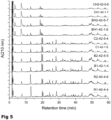
- Low-salt cheeses produced with the GAD-negative starter plus bovine chymosin (B1-42-1-4, B2-42-5-5) were similar to R1-40-4-4, R2-40-4-6 in terms of having a high bitterness score ( Figure 3 ) and high levels of (small to medium-sized) hydrophobic peptides (retention time 47-50 min, Figure 5 ).
- low-salt cheeses produced with the GAD-negative starter plus Lb. helveticus adjunct culture plus camel chymosin (CH1-42-1-7, CH2-42-5-6) had a significantly lower bitterness score ( Figure 3 ) and lower levels of (small to medium-sized) hydrophobic peptides (retention time 47-50 min, Figure 5 ).
- the low-salt cheeses produced with the GAD-negative starter plus Lb. helveticus adjunct culture plus bovine chymosin (BH1-42-1-6, BH2-42-5-7) were also found to have a low bitterness score ( Figure 3 ) and low levels of (small to medium-sized) hydrophobic peptides (retention time 47-50 min, Figure 5 ), but not as low as the low-salt cheeses, where the bovine chymosin was replaced with camel chymosin (CH1-42-1-7, CH2-42-5-6).
- low-salt cheese with reduced bitterness can be produced by using a GAD-negative starter culture comprising a strain selected from the group consisting of: CHCC 4356 deposited as DSM 25485, CHCC 4427 deposited as DSM 25486, CHCC 5188 deposited as DSM 25487, CHCC 1916 deposited as DSM 21405 and IG227 deposited as DSM 14797 plus a Lb. helveticus adjunct culture.
- a further reduction in bitterness can be achieved if camel chymosin is used instead of bovine chymosin.
- the low-salt cheeses were also assessed for their flavor intensity (umami) by a trained sensory panel.
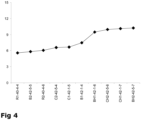
- the low-salt cheeses with the highest flavor intensity ( Figure 4 ) were produced using the GAD-negative starter plus the Lb. helveticus adjunct culture (BH1-42-1-6, BH2-42-5-7, CH1-42-1-7, CH2-42-5-6). Indeed, cheeses with highest flavor intensity scores (BH1-42-1-6, BH2-42-5-7, CH1-42-1-7, CH2-42-5-6) also had the highest levels of glutamate (28.6 ⁇ 0.9 mmol/kg, after 5 months ripening) (Table 7). In contrast, low-salt cheeses (R1-40-4-4, R2-40-4-6) manufactured with the GAD-positive starter without Lb.
- helveticus adjunct culture were characterised by significantly lower flavor intensities ( Figure 4 ) and glutamate levels (1.2 ⁇ 0.1 mmol/kg, after 5 months ripening) (Table 7).
- low-salt cheese with increased flavor intensity can be produced by using a GAD-negative starter culture comprising a strain selected from the group consisting of: CHCC 4356 deposited as DSM 25485, CHCC 4427 deposited as DSM 25486, CHCC 5188 deposited as DSM 25487, CHCC 1916 deposited as DSM 21405 and IG227 deposited as DSM 14797 plus a Lb. helveticus adjunct culture.
- Table 7 Glutamate levels in cheeses produced with a GAD-negative starter culture, a GAD-negative Lb.
- the Applicant requests that a sample of the deposited microorganism should be made available only to an expert approved by the Applicant.
Landscapes
- Life Sciences & Earth Sciences (AREA)
- Chemical & Material Sciences (AREA)
- Engineering & Computer Science (AREA)
- Health & Medical Sciences (AREA)
- Food Science & Technology (AREA)
- Polymers & Plastics (AREA)
- Zoology (AREA)
- Genetics & Genomics (AREA)
- Nutrition Science (AREA)
- Organic Chemistry (AREA)
- Wood Science & Technology (AREA)
- Bioinformatics & Cheminformatics (AREA)
- Microbiology (AREA)
- Biotechnology (AREA)
- Biomedical Technology (AREA)
- Biochemistry (AREA)
- General Engineering & Computer Science (AREA)
- General Health & Medical Sciences (AREA)
- Medicinal Chemistry (AREA)
- Molecular Biology (AREA)
- Mycology (AREA)
- Tropical Medicine & Parasitology (AREA)
- Virology (AREA)
- Dairy Products (AREA)
- Micro-Organisms Or Cultivation Processes Thereof (AREA)
Description
- The present invention relates to a method for producing cheese with good flavor, especially low-salt cheese.
- Cheese is consumed globally in large and increasing quantities (IDF 2010) and contributes to dietary sodium almost exclusively in the form of NaCl (salt, unless otherwise stated), which is traditionally added in varying amounts dependent on the cheese variety (Guinee and Fox 2004). Hence, in view of an efficient sodium reduction strategy, cheese, apart from constituting a direct and often daily source of sodium, plays an important role in defining the level of salty taste generally accepted by the human perception (taste adaptation) (Walsh 2007). Sodium reduction of significant magnitudes, however, represents a great challenge to the cheese industry since the level of salting is tightly balanced to take advantage of multiple direct and indirect functions of salt in cheese. Particularly in mature cheeses, salt has a critical influence on microbial and enzyme activities needed for a series of biochemical ripening events to proceed in a desired direction.
- Cheddar cheese represents a widely consumed international cheese type, a fairly high source of sodium (typically in the range of 1.6 to 2.0% w/w salt (Guinee et al. 2008)) and consequently a priority product for sodium reduction. It is therefore not surprising that numerous previous investigations attempted to restore the quality of low-salt Cheddar cheese. In particular, a series of cheese trials were conducted in the 1980's evaluating with varying degrees of success the partial substitution of NaCl by KCl and other chloride salts (Fitzgerald and Buckley 1985; Lindsay et al. 1982; Reddy and Marth 1993).
- However, solutions based on mere salt substitution are not acceptable to the customers, and therefore an objective of the present invention is to provide other solutions to producing low-salt cheeses with a sensory quality matching the corresponding cheeses with a normal salt content (around 1.6 to 1.9%) (Table 1).
Table 1: NaCl levels of various cheese types Cheese Normal salt (% (w/w)) Low salt (% (w/w)) lower limit (including) upper limit lower limit upper limit (excluding) Cheddar 1.5 1.9 0.7 1.5 Emmental 0.7 1.5 0.3 0.7 Danbo 1.4 1.9 0.7 1.4 Parmesan 2.5 4.0 1.2 2.5 Feta 3.0 4.0 1.5 3.0 Blue cheese 3.5 4.5 1.7 3.5 Camembert 2.5 3.3 1.2 2.5 Gouda 1.5 2.0 0.7 1.5 Edam 1.5 2.0 0.7 1.5 Mozzarella 0.7 1.5 0.3 0.7 - A. G. Cruz et al, "Cheeses with reduced sodium content: Effects on functionality, public health benefits and sensory properties", Trends in Food Science & Technology 22 (2011) 276-291 discloses preparation of low-salt cheese by replacing part of the NaCl with glutamate. In combination with nucleic acids or yeast extract umami taste was synergistically improved.
- The present inventors have surprisingly found out that it is possible to obtain low-salt cheeses of high flavor intensity when a glutamate decarboxylase (GAD)-negative starter comprising a strain selected from the group consisting of: CHCC 4356 deposited as DSM 25485, CHCC 4427 deposited as DSM 25486, CHCC 5188 deposited as DMS 25487, CHCC 1916 deposited as DSM 21405 and IG227 deposited as DSM 14797 plus a GAD-negativeLactobacillus (Lb.) helveticus adjunct culture is used. By combining these strains it was possible to significantly boost the level of glutamate in the low-salt cheese and thereby increase the sensory quality. The GAD-negative starter culture ensures that no glutamate is converted to γ-amino butyric acid (GABA) and CO2. As glutamate imparts a flavor-enhancing efect and compensates for lack of flavor commonly found in low-slt cheese, then it is important that it accumulates to as high concentracions as possible during ripening. Thus, increased accumulation can be achieved by using a GAD-negartive starter culture. Glutamate levels were boosted even further in the cheese when a Lb. helveticus adjunct culture was also used. The Lb. helveticus adjunct was also GAD-negative, but was further characterized by having a high lytic and peptidolytic activity, and thus releasing high levels of glutamate into the cheese. Thus, it is contemplated that both the starter cultures and the Lb. helveticus adjunct culture should be GAD-negative in order to get the optimal (highest) flavor intensity.
- A further improvement in the sensory quality of low-salt cheese could be achieved with the use of camel chymosin as coagulant. Normal coagulants such as bovine chymosin, microbially-derived coagulants (from Mucor miehei) and plant-derived coagulants are problematic in low-salt cheese. The increased water activity in low-salt cheese results in unbalanced ripening due to the high general (unspecific) proteolyic activity of bovine chymosin, microbially-derived coagulants (from Mucor miehei) and plant-derived coagulants. This commonly results in the accumulation of undesirable bitter-tasting peptides derived from the hydrolysis of the caseins during ripening. Surprisingly, the inventors were able to use camel chymosin as coagulant in order to reduce the problem of bitterness in low-salt cheeses. Camel chymosin has a much lower general proteolytic activity than that of bovine chymosin, microbially-derived coagulants or plant-derived coagulants, and thus, it was possible to produce a low-salt cheese with markedly lower rates of bitter-tasting peptide formation during ripening. Levels of bitter-tasting peptides were reduced even further in the cheese when camel chymosin was used in combination with the Lb. helveticus adjunct due to aforementioned high lytic and peptidolytic activity.
- Thus, the best possible low-salt cheese is produced by combining these two concepts: (i) using a GAD-negative starter culture comprising a strain selected from the group consisting of: CHCC 4356 deposited as DSM 25485, CHCC 4427 deposited as DSM 25486, CHCC 5188 deposited as DSM 25487, CHCC 1916 deposited as DSM 21405 and IG227 deposited as DSM 14797 and a GAD-negative Lb. helveticus adjunct culture for boosting desirable flavor intensity and (ii) using camel chymosin as coagulant and a Lb. helveticus adjunct for the reduction of undesirable, bitter off-taste.
- In accordance with the surprising findings, the present invention in its broadest scope relates to a method for producing low-salt cheese comprising the following steps:
- a) providing a milk substrate;
- b) inoculating the milk substrate with a lactic acid bacteria (LAB) starter culture which is Glu decarboxylation (GAD) negative;
- c) adding a coagulant to the milk substrate;
- d) allowing the resulting product from steps b) and c) to coagulate;
- e) using the coagulum from step d) to produce cheese;
- f) optionally storing the cheese;
- wherein the total GAD activity results inthat below0.05 mM γ-amino butyric acid (GABA) is produced following incubation in a glutamate containing milk medium at 35°C for 24 hours; and
- wherein the low-salt cheese is selected from the group consisting of Cheddar containing an amount of salt in the range 0.1 up to 1.5% - excluding 1.5%;
- Parmesan containing an amount of salt in the range 0.1 up to 2.5% - excluding 2.5%;
- Mozzarella containing an amount of salt in the range 0.1 up to 0.7% - excluding 0.7%;
- Emmental containing an amount of salt in the range 0.1 up to 0.7% - excluding 0.7%;
- Danbo containing an amount of salt in the range 0.1 up to 1.4% - excluding 1.4%;
- Gouda containing an amount of salt in the range 0.1 up to 1.5% - excluding 1.5%;
- Edam containing an amount of salt in the range 0.1 up to 1.5% - excluding 1.5%;
- Feta-type containing an amount of salt in the range 0.1 up to 3.0% - excluding 3.0%;
- Blue cheese containing an amount of salt in the range 0.1 up to 3.5%- excluding 3.5%; and
- Camembert containing an amount of salt in the range 0.1 up to 2.5%- excluding 2.5%; and
- wherein the method comprises the further step of inoculating the milk substrate with Lactobacillus helveticus (Lb. helveticus) strain, said strain is GAD-negative; and
- wherein a LAB starter culture or a strain is considered to be GAD-negative if the strain or culture produces less than 0.05 mM GABA in milk, as determined according to the following assay: Reconstituted skim milk at 9.5%, boiled, is inoculated with 10E8 cell forming units of the strain/culture per ml of milk and allowed to stand at 35°C for 24 hours - After the 24 hours the pH has dropped below 5.0, and the content of GABA is measured - If the concentration of GABA is lower than 0.05 mM, the strain/culture is considered to be glutamate decarboxylase negative, and wherein the starter culture comprises a strain selected from the group consisting of: CHCC 4356 deposited as DSM 25485, CHCC 4427 deposited as DSM 25486, CHCC 5188 deposited as DSM 25487, CHCC 1916 deposited as DSM 21405 and IG227 deposited as DSM 14797.
- Also, the invention relates to a cheese which is obtainable by the method of the invention.
- Aspects of the invention are described in the appended claims.
- It should be understood the step e) in the methods of the invention comprises further cheese-making procedures. The exact procedure to be used depends on the cheese to be made. Normally the procedure includes one or more of: cutting the coagulum, draining off the whey from the coagulum (curd), scalding (heating) the curd, adding salt to the curd, molding, and ripening (storing), see e.g. Kosikowski and Mistry (1997).
- The starter culture may comprise one or more LAB strains, such as from 2 to 20 strains, from 3 to 20 strains or from 4 to 20 strains. It presently preferred that the starter culture contains more than 1 strain, preferably more than 2 different strains, such as more than 3, more than 4, more than 5 or more than 6 different strains.
- The starter culture comprises only GAD-negative strains and comprises a strain selected from the group consisting of: CHCC 4356 deposited as DSM 25485, CHCC 4427 deposited as DSM 25486, CHCC 5188 deposited as DSM 25487, CHCC 1916 deposited as DSM 21405 and IG227 deposited as DSM 14797, no GAD-positive strains are used for inoculation of the milk substrate. Further interesting embodiments of the invention are:
- The method of the invention, wherein the total GAD activity results in that below 0.04 or below 0.03 mM GABA is produced following incubation in a glutamate-containing medium at 35°C for 24 hours.
- The method of the invention, wherein the total GAD activity results in that below 0.05 mM GABA (such as below 0.04 or below 0.03 mM) is produced following incubation in a glutamate-containing medium at 35°C for 48 hours.
- The method of the invention, wherein the total GAD activity results in that below 0.05 mM GABA (such as below 0.04 or below 0.03 mM) is produced following incubation in a glutamate containing medium at 35°C for 72 hours.
- The method of the invention, wherein the glutamate-containing medium is milk (e.g. reconstituted skimmed milk or boiled reconstituted skimmed milk).
- The method of the invention, wherein the step c) is performed before, during and/or after step b).
- The method of the invention, wherein the starter culture comprises LAB selected from the group consisting of Lactobacillales which includes Lactococcus spp., Streptococcus spp., Lactobacillus spp., Leuconostoc spp., Pseudoleuconostoc spp., Pediococcus spp., Brevibacterium spp., Bifidobacterium spp., Enterococcus spp. and Propionibacterium spp.
- It is presently preferred that the strain is a component of a LAB starter culture comprising 2 to 20 different strains. It is presently also preferred that the strain constitutes 5 to 95%, such as 20 to 95%, of the starter culture, as measured in cellforming units (CFU).
- The method of the invention, wherein the milk substrate is inoculated with 10E5 to 10E12 CFU/mL of the starter culture.
- According to the method of the invention the milk substrate is further inoculated with a Lb. helveticus strain (such as a strain having a high lytic and peptidolytic activity or a strain having proteolytic activity), said strain is GAD-negative. It should be understood that only one starter culture (which may contain several different strains) is added to the milk substrate together with the Lb. helveticus strain. Preferably, no further cultures are added. The adjunct culture is also GAD negative, and the adjunct culture does only comprise GAD-negative strains.
- The method of the invention, wherein the milk substrate is inoculated with 10E5 to 10E12 CFU/mL of the strain.
- The method of the invention, wherein the resulting product of step b) has a GABA content below 0.05 mM, such as below 0.04 mM, below 0.03 mM or below 0.02 mM.
- The method of the invention, wherein the resulting product of step c) has a GABA content below 0.05 mM, such as below 0.04 mM, below 0.03 mM or below 0.02 mM.
- The method of the invention, wherein the resulting product of step d) has a GABA content below 0.05 mM, such as below 0.04 mM, below 0.03 mM or below 0.02 mM.
- The method of the invention, wherein the resulting product of step e) has a GABA content below 0.05 mM, such as below 0.04 mM, below 0.03 mM or below 0.02 mM.
- The method of the invention, wherein the resulting product of step e) has a GABA content below 0.20 mmol/kg, such as below 0.10 mmol/kg, below 0.05 mmol/kg, below 0.04 mmol/kg, below 0.03 mmol/kg or below 0.02 mmol/kg.
- The method of the invention, wherein the resulting product of step f) (after storage for 5 months) has a GABA content below 0.20 mmol/kg, such as below 0.10 mmol/kg, below 0.05 mmol/kg, below 0.04 mmol/kg, below 0.03 mmol/kg or below 0.02 mmol/kg.
- the method of the invention, wherein the resulting product of step f) (after storage for 9 months) has a GABA content below 0.20 mmol/kg, such as below 0.10 mmol/kg, below 0.05 mmol/kg, below 0.04 mmol/kg, below 0.03 mmol/kg or below 0.02 mmol/kg.
- The method of the invention, wherein the cheese is selected from the group consisting of Cheddar, Parmesan, Mozzarella, Emmental, Danbo, Gouda, Edam, Feta-type, blue cheeses, and Camembert.
- The method of the invention, wherein the cheese is a Cheddar cheese.
- The method of the invention, wherein the cheese has a moisture content in the range from 25% to 70%, such as from 25 to 60%.
- The method of the invention, wherein the coagulant is an aspartic protease, such as chymosin or rennet.
- The method of the invention, wherein the coagulant is selected from the group consisting of bovine chymosin (such as CHY-MAX®).
- The method of the invention, wherein the coagulant is selected from the group consisting of camel chymosin (such as CHY-MAX® M).
- The method of the invention, wherein the storing is performed for a period of 1 to 24 months at a temperature in the range of 5 to 20°C.
- The method of the invention, which comprises a packaging step (before, during or after step f)).
- In a further aspect, the present invention relates to a cheese, which is obtainable by the method of the invention, such as a Cheddar cheese. Preferred embodiments of this aspect are:
- A cheese which has a GABA content below 0.20 mmol/kg, such as below 0.10 mmol/kg, below 0.05 mmol/kg, below 0.04 mmol/kg, below 0.03 mmol/kg or below 0.02 mmol/kg;
- A cheese which after storage (ripening/maturation) for 5 months has a GABA content below 0.20 mmol/kg, such as below 0.10 mmol/kg, below 0.05 mmol/kg, below 0.04 mmol/kg, below 0.03 mmol/kg or below 0.02 mmol/kg; or
- A cheese which after storage (ripening/maturation) for 9 months has a GABA content below 0.20 mmol/kg, such as below 0.10 mmol/kg, below 0.05 mmol/kg, below 0.04 mmol/kg, below 0.03 mmol/kg or below 0.02 mmol/kg. It is preferred that the cheeses are low-salt cheese, such as low-salt Cheddar cheeses. Normally cheddar cheeses are ripened at a temperation in the range of 8 to 14 degrees C. Presently most preferred is a low-salt Cheddar that has a GABA content below 0.20 mmol/kg if ripened for 5 months at a temperature of 8C.
- Disclosed but not part of the invention is a LAB strain, which is GAD-negative selected from the group consisting of CHCC 4356 deposited as DSM 25485, CHCC 4427 deposited as DSM 25486, CHCC 5188 deposited as DSM25487, CHCC 1916 deposited as DSM21405 and IG227 deposited as DSM 14797; or a mutant or a variant thereof, especially a mutant of any of these strains, which is GAD-negative.
- Disclosed but not part of the invention is a LAB culture, which is GAD-negative which contains 2 to 20 different LAB strains, such as 2 to 20 or 3 to 20 different LAB strains, such as a culture, which contains
- 1) a bacterial strain selected from the group consisting of CHCC 4356 deposited as DSM 25485, CHCC 4427 deposited as DSM 25486, CHCC 5188 deposited as DSM 25487, CHCC 1916 deposited as DSM 21405 and IG227 deposited as DSM 14797; and
- 2) a LAB strain, which is GAD-negative and which is different from the strain in 1).
- In this aspect, the LAB culture can contain 1, 2, 3, 4, 5 or more additional strains, which are different from the strains in 1) and 2).
- In the present context, the term "glutamate (Glu) decarboxylation negative" ("GAD-negative") and the term "glutamate decarboxylase negative"refers to strains of bacteria, especially LAB, which are unable to convert the free amino acid, glutamate into γ-amino butyric acid (GABA) and CO2. Preferred GAD-negative strains produce GABA to a level of less than 0.05 mM when incubated within the range of 15 to 55°C in a glutamate-containing medium. The incubation period may be up to 72 hours, but shorter or longer periods of incubation are also possible. A typical glutamate-containing medium may be milk with or without glutamate supplementation. In cases, where no glutamate supplementation is used, then the natural level of glutamate in the medium serves as the source of glutamate. In addition, glutamate may be released from various protein and peptide components of the medium during incubation. Other media such as MRS, M17 and Brain Heat Infusion medium (BHI) may also be used for the incubation of the bacteria.
- More specifically, a strain (or a culture consisting of one or more strains) is considered to be GAD-negative if the strain or culture produces less than 0.05 mM GABA in milk, as determined according to the following assay:
Reconstituted skim milk (9.5%, boiled) is inoculated with 10E8 cell forming units of the strain/culture per mL of milk and allowed to stand at 35°C for 24 hours. After the 24 hours the pH has dropped below 5.0, and the content of GABA is measured. If the concentration of GABA is lower than 0.05 mM, the strain/culture is considered to be glutamate decarboxylase negative. Preferred strains produce less than 0.04 or less than 0.03 mM GABA in the above assay. Other preferred strains produce less than 0.05, less than 0.04 or less than 0.03 mM GABA in an assay as above, after the pH has dropped below 5.0, but when the milk has been incubated for 48 or 72 hours (instead of 24 hours). - Strains (or cultures) of bacteria that are able to produce GABA to a level of greater than or equal to 0.05 mM are in the present context described as "glutamate decarboxylation positive" ("GAD-positive") or "glutamate decarboxylase positive".
- As used herein, the term "lactic acid bacteria" (LAB) designates gram-positive, microaerophilic or anaerobic bacteria, which ferment sugars with the production of acids including lactic acid as the predominantly produced acid, acetic acid and propionic acid. The industrially most useful lactic acid bacteria are found within the order "Lactobacillales" which includes Lactococcus spp., Streptococcus spp., Lactobacillus spp., Leuconostoc spp., Pseudoleuconostoc spp., Pediococcus spp., Brevibacterium spp., Enterococcus spp. and Propionibacterium spp. Additionally, lactic acid producing bacteria belonging to the group of the strict anaerobic bacteria, bifidobacteria, i.e. Bifidobacterium spp., are generally included in the group of LAB. These are frequently used as food cultures alone or in combination with other lactic acid bacteria.
- By the term "cheese" is understood any cheese, including hard, semi-hard and soft cheeses, such as cheeses of the following types: Cheddar, Parmesan, Mozzarella, Emmentaler, Danbo, Gouda, Edam, Feta-type, blue cheeses, Camembert and Brie. The person skilled in the art knows how to convert the coagulum into cheese, methods can be found in the literature, see e.g. Kosikowski and Mistry (1997).The definition of the term "low-salt" in connection with cheese depends on the cheese type and should normally be understood as cheese, which contains NaCl within a concentration range of 0.2 to 1.7% (w/w) (including the range of 0.2 to 1.6%). More specifically, the term low-salt in the present context can also be read from Table 1 and Table 2. From Table 2 it should be understood that a low-salt cheese of Cheddar type preferably contains an amount of salt in the range 0.1 up to 1.5% (w/w), more preferred in the range 0.2 to 1.3% (w/w) and most preferred in the range 0.3 to 1.1% (w/w).
Table 2: Definition of low-salt related to specific cheese types (% (w/w)) Cheese Preferred Salt range More Preferred salt range Most preferred salt range lower limit (including) upper limit (excluding) lower limit upper limit lower limit upper limit Cheddar 0.1 1.5 0.2 1.3 0.3 1.1 Parmesan 0.1 2.5 0.2 2.0 0.3 2.0 Mozzarella 0.1 0.7 0.2 0.6 0.2 0.5 Emmental 0.1 0.7 0.2 0.6 0.2 0.5 Danbo 0.1 1.4 0.2 1.2 0.3 1.0 Gouda 0.1 1.5 0.2 1.3 0.3 1.2 Edam 0.1 1.5 0.2 1.3 0.3 1.2 Feta-type 0.1 3.0 0.2 2.5 0.3 2.0 Blue cheese 0.1 3.5 0.2 3.3 0.3 3.0 Camembert 0.1 2.5 0.2 2.2 0.3 2.0 - In the present context, the term "milk substrate" may be any raw and/or processed milk material that can be subjected to fermentation according to the method of the invention. Thus, useful milk substrates include, but are not limited to, solutions/suspensions of any milk or milk-like products comprising protein, such as whole or low-fat milk, skimmed milk, buttermilk, reconstituted skimmed milk, condensed milk, dried milk, whey, whey permeate, lactose, mother liquid from crystallization of lactose, whey protein concentrate, or cream. Obviously, the milk substrate may originate from any mammal, e.g. being substantially pure mammalian milk, or reconstituted milk. Preferably, at least part of the protein in the milk substrate is proteins naturally occurring in milk, such as casein or whey protein. However, part of the protein may be proteins which are not naturally occurring in milk. Prior to fermentation, the milk substrate may be homogenized and pasteurized according to methods known in the art.
- The term "milk" is to be understood as the lacteal secretion obtained by milking any mammal, such as cows, sheep, goats, buffaloes or camels. In a preferred embodiment, the milk is cow's milk. The term milk also comprises soy milk. Optionally, the milk is acidified, e.g. by addition of an acid (such as citric, acetic or lactic acid), or mixed, e.g. with water or cream. The milk may be raw or processed, e.g. by filtering, sterilizing, pasteurizing, homogenizing etc., or it may be reconstituted dried milk. An important example of "bovine milk" according to the present invention is pasteurized cow's milk. It is understood that the milk may be acidified, mixed or processed before, during and/or after the inoculation with bacteria. The term "providing a milk substrate" includes pretreatment of the milk (substrate), such as the processing steps described above.
- By the term "camel chymosin" should be understood a chymosin obtainable by the method of
EP1334182B1 , incl. the chymosin derived from Camelus dromedarius. CHY-MAX® M is presently preferred. - "Fermentation" in the methods of the present invention means the conversion of carbohydrates into alcohols or acids through the action of a microorganism. Preferably, fermentation in the methods of the invention comprises conversion of lactose to lactic acid.
- LAB, including bacteria of the species Lactobacillus sp. and Streptococcus thermophilus, are normally supplied to the dairy industry either as frozen or freeze-dried cultures for bulk starter propagation or as so-called "Direct Vat Set" (DVS) cultures, intended for direct inoculation into a fermentation vessel or vat for the production of a dairy product, such as a fermented milk product. Such cultures are in general referred to as "starter cultures" or "starters".
- In the present context, the term "packaging" (a suitable amount of) the fermented milk in a suitable package relates to the final packaging of the fermented milk to obtain a product that can be ingested by e.g. a person or a group of persons. A suitable package may thus be a bottle or similar, and a suitable amount may be e.g. 10 mL to 5000 mL, but it is presently preferred that the amount in a package is from 50 mL to 1000 mL.
- In the present context, the term "mutant" should be understood as a strain derived from a strain of the invention by means of e.g. genetic engineering, radiation and/or chemical treatment. It is preferred that the mutant is a functionally equivalent mutant, e.g. a mutant that has substantially the same, or improved, properties (e.g. regarding glutamate decarboxylase activity (an interesting mutant has decreased activity compared to mother strain), flavor, acidification speed, and/or phage robustness) as the mother strain. Such a mutant is a part of the present invention. Especially, the term "mutant" refers to a strain obtained by subjecting a strain of the invention to any conventionally used mutagenization treatment including treatment with a chemical mutagen such as ethane methane sulphonate (EMS) or N-methyl-N'-nitro-N-nitroguanidine (NTG), UV light or to a spontaneously occurring mutant. A mutant may have been subjected to several mutagenization treatments (a single treatment should be understood one mutagenization step followed by a screening/selection step), but it is presently preferred that no more than 20, or no more than 10, or no more than 5, treatments are carried out. In a presently preferred mutant, less that 5%, or less than 1% or even less than 0.1% of the nucleotides in the bacterial genome have been shifted with another nucleotide, or deleted, compared to the mother strain.
- In the present context, the term "variant" should be understood as a strain, which is functionally equivalent to a strain of the invention, e.g. having substantially the same, or improved, properties (e.g. regarding glutamate decarboxylase activity (an interesting variant has decreased activity compared to mother strain), flavor potential, acidification speed and/or phage robustness). Such variants, which may be identified using appropriate screening techniques, are a part of the present invention.
- The use of the terms "a", "an", "the" and similar referents in the context of describing the invention (especially in the context of the following claims) is to be construed to cover both the singular and the plural, unless otherwise indicated herein or clearly contradicted by context. The terms "comprising", "having", "including" and "containing" are to be construed as open-ended terms (i.e. meaning "including, but not limited to,"), unless otherwise noted. Recitation of ranges of values herein are merely intended to serve as a shorthand method of referring individually to each separate value falling within the range, unless otherwise indicated herein, and each separate value is incorporated into the specification as if it was individually recited herein. All methods described herein can be performed in any suitable order, unless otherwise indicated herein or otherwise clearly contradicted by context. The use of any and all examples, or exemplary language (e.g. "such as") provided herein, is intended merely to better illuminate the invention and does not pose a limitation on the scope of the invention, unless otherwise claimed. No language in the specification should be construed as indicating any non-claimed element as essential to the practice of the invention.
- Strains were screened based on their inability to decarboxylate glutamate by measuring the levels of γ-amino butyric acid (GABA) and glutamate following growth in milk. Two g of frozen culture pellets was dispersed into 200 g of double boiled 9.5% reconstituted skimmed milk. A 0.01% final inoculation rate was prepared by taking 2 g of this dispersion and inoculating into 200 g of double boiled 9.5% reconstituted skimmed milk, previously spiked with 1 mM glutamate (spiking was performed by the addition of 2 mL of a 100 mM glutamate solution to 200 g of 9.5% reconstituted skimmed milk). The cultures were incubated at 30°C for Lc. lactis and 37 C for Lb. helveticus for 72 hours. After incubation 1.0 g of fermented skim milk was mixed with 1.0 mL of 4% (w/v) TCA and the samples were mixed, and left stand at room temperature for 30 min. The samples were then centrifuged at 15,000 x g for 20 min at 4°C, and 1 mL of supernatant was transferred into a fresh eppendorf, and re-centrifuged at 15,000 x g for 10 min at 4°C. The final supernatant was stored at -50°C until analysis by GC-MS. Free amino acids were determined according to the method of Glastrup and Houlberg (2009).
- Using this screening method it was possible to select strains CHCC 1916, IG227, CHCC 4356, CHCC 4427 and CHCC 5188, which clearly exhibited a glutamate decarboxylase negative phenotype. Glutamate decarboxylase negative strains were characterized by their inability to produce GABA in the presence of glutamate (Table 2). Consequently, any of these strains alone or in combination could be used as a starter culture in order to ensure that glutamate conversion to GABA is limited and/or prevented. For the formulation of a phage robust culture, then a combination of GAD-negative strains is preferable. Thus, a phage robust culture with GAD-negative properties was formulated by mixing strains of CHCC 1916, IG227, CHCC 4427 and CHCC 5188.
- For cheese application experiments (Example 3), the GAD-negative strains were grown in a milk-based medium, harvested, concentrated and frozen in order to produce a DVS culture. In addition to producing a frozen DVS culture, a freeze-dried culture is also possible. Production of the culture in DVS format is for purposes of convenience during cheese application experiments, but the essential characteristic (i.e. absence of GAD activity) of the culture remains whether it is concentrated or not.
Table 3: Screening of glutamate decarboxylase-negative strains Strain or culture Glutamate (mM) γ-amino butyric acid (mM) GAD reaction CHCC 1916 1.6 <LOQ Negative IG227 1.6 <LOQ Negative CHCC 4356 2.0 <LOQ Negative CHCC 4360 1.4 <LOQ Negative CHCC 4427 1.6 <LOQ Negative CHCC 5188 1.4 <LOQ Negative R-604 0.0 0.5 Positive LH-32 4.8 <LOQ Negative LOQ (limit of quantification) = 0.01 mM - For purposes of comparison, the commercial starter culture F-DVS R-604 (Chr. Hansen) was included in the screening experiment. This culture exhibited a GAD-positive phenotype and is consequently unsuitable for cheese trials, where high levels of glutamate are required. Other commercial starter cultures with GAD activity include: F-DVS R-603 (Chr. Hansen), F-DVS R-607 (Chr. Hansen), F-DVS R-608 (Chr. Hansen), CHOOZIT MA 11 (DuPont), CHOOZIT MA 14 (DuPont), CHOOZIT MA 16 (DuPont) and CHOOZIT MA 19 (DuPont).
- The screening method was also used in order to select a Lb. helveticus adjunct culture (F-DVS LH-32) with no GAD activity. In addition to this property, the screening revealed that the Lb. helveticus strain was able to increase the level of glutamate in the milk. Milk was spiked with 1 mM glutamate at the start of the fermentation and after incubation for 72 hours, the level had increase to 4.8 mM. This Lb. helveticus culture is commercially available from Chr. Hansen as F-DVS LH-32. Other similar commercial cultures include: F-DVS LHB01 (Chr. Hansen), F-DVS LHB02 (Chr. Hansen), CHOOZIT FLAV 25, (DuPont), CHOOZIT FLAV 54 (DuPont), CHOOZIT HelvA (DuPont), CHOOZIT HelvB (DuPont), CHOOZIT LH 11 (DuPont) and L100 (CSK Food Enrichment).
- All cheeses were manufactured in duplicate. A normal level of salt was defined as 1.8% (w/w) and low-salt cheese was defined as 0.8% (w/w).
- The trial was set-up according to Table 4, wherein the starter culture is the GAD-positive F-DVS R-604 (Chr. Hansen).
Table 4: Salt and coagulant variables Cheese ID Salt level Coagulant 1 NB1-26-2-4 Normal (1.8% (w/w)) Bovine NB2-26-4-4 chymosin 2 NC1-26-2-5 Normal (1.8% (w/w)) Camel chymosin NC2-26-4-5 3 LB1-26-2-6 Low (0.8% (w/w)) Bovine LB2-26-4-6 chymosin 4 LC1-26-2-7 Low (0.8% (w/w)) Camel chymosin LC2-26-4-7 1. Normal-salt cheese made with bovine chymosin as coagulant (NB1-26-2-4, NB2-26-4-4) 2. Normal-salt cheese made with camel chymosin as coagulant (NC1-26-2-5, NC2-26-4-5) 3. Low-salt cheese made with bovine chymosin as coagulant (LB1-26-2-6, LB2-26-4-6) 4. Low-salt cheese made with camel chymosin as coagulant (LC1-26-2-7, LC2-26-4-7) - Cheddar cheese-making trials were undertaken on at the Application and Technology Centre, Chr. Hansen A/S, Hørsholm, Denmark. Open vats of cheese on a 150 L scale were manufactured. Fresh, pasteurised (74°C, 15 s) bovine milk (3.40% fat, 3.25% protein) was delivered on the morning of production from Arla Foods Amba (Christiansfeld Mejericenter, Denmark). The milk was analysed by MilkoScan™ (FOSS, Hillerød, Denmark) and standardised to a protein:fat ratio of 0.9 and heated to 31-32°C for cheese-making. Frozen DVS starter (R-604) was added at a rate of 0.012% (w/w). The milk was coagulated by the addition of CHY-EXTRA® (bovine chymosin) at a rate of 0.0061% w/w (600 IMCU·mL-1; Chr. Hansen A/S) or of CHY-MAX® M (camel chymosin) at a rate of 0.0029% (w/w) (1000 IMCU·mL-1; Chr. Hansen A/S). The curd grains were heated to target temperature and cooked at this temperature for variable lengths of time (Table 5).
Table 5: Settings of variable technological parameters of cheese-making protocols used for manufacture of full fat Cheddar cheese of variable final salt content and equal final moisture content (37.0 to 38.0% (w/w)) Salt level Target salt (% (w/w)) Curd grain cutting size (mm3) Cooking (°C/min) Cheddaringa (#layers/min) Chip size (L × W × T) (cm) Salting rate (% (w/w)) Low 0.8 125 40.5/45 1/25-3/15-3/15-4/15-6/15-6/15 4.0×1.8×2.0 0.95 Normal 1.8 1000 37.0/5 1/20-2/25-3/30-3/15-4/15-6/10 1.7×1.1×3.0 3.70 Abbreviations: L, length; T, thickness; W, width a All turning steps are tabled with the number of curd blocks per pile and the time interval of each turn. - The milled curds were dry-salted in a warm vessel by manually mixing approximately half the amount of salt thoroughly into the curd followed by a few minutes rest before mixing in the remaining salt; except for the lowest rate of salting which was added all at once (Table 5). The salted curds were mixed thoroughly every 5 min over a mellowing period of 20 min to obtain a uniform distribution of the salt; whey drainage during mellowing was confined by a plastic lining of the vessel. Following molding, the curds were pre-pressed at 0.20 MPa for 15 min and then at 0.57 MPa for 17 hours. After pressing, each cheese was cut into 4 equal blocks, which were vacuum packed separately and ripened at 9°C until analysis.
- The NaCl content was determined by automated potentiometric endpoint titration of Cl- with AgNO3 (DL50, Mettler-Toledo A/S, Glostrup, Denmark. Moisture was analyzed gravimetrically by drying to a constant weight at 102°C. Fat and protein were determined by near infrared reflectance spectroscopy using a Cheddar cheese calibration model (FoodScan™ Lab, FOSS). The pH was measured potentiometrically (pHC2002, Radiometer Analytical SAS, Lyon, France) in a paste prepared by macerating 10 g of grated cheese in 10 mL of deionised water. Duplicate samples were prepared for the above analyses.
- The pH 4.6-soluble peptides were analyzed by reversed phase (RP) HPLC electro spray ionization mass spectrometry. Thawed, grated cheese (10.0 g) was dispersed in 40 mL of 0.5 mol·L-1 Na3 citrate by stirring in a 45°C water bath for 1 h. After cooling to room temperature, the cheese slurries were diluted to 5% (w/v) with water and stirred for 5 min. Aliquots of the cheese slurries were cooled to 12 °C and adjusted to pH 4.5 by adding 1 mol·L-1 cold HCl with vigorous mixing. Total volumes of 20 mL were centrifuged (2,000 x g, 30 min, 5°C), and the supernatants were filtered (0.20 µm) and stored at -20°C until analysis. Thawed samples were centrifuged (13,000 x g, 3 min, ambient) before injection (30 µl) onto the RP-HPLC (1100 Series, Agilent Technologies ApS) column (Zorbax 300 SB-C18, 2.1 x 150 mm, 5 µm, Agilent Technologies ApS). Separation of the peptides was performed at 40 °C using binary gradient elution by mixing 0.1% (v/v) TFA (for spectroscopy; Merck Chemicals, Darmstadt, Germany) in water (eluent A) with 0.1% (v/v) TFA in acetonitrile:water (90:10 (v/v)) (eluent B) (acetonitrile was Rathburn HPLC Grade S, Mikrolab Aarhus A/S, Højbjerg, Denmark). A linear gradient was generated by increasing the concentration of eluent B from 2 to 55% over 60 min, after which the column was purged with 100% B for 6 min and re-equilibrated at 2% B for 10 min. The flow rate was 0.25 mL·min-1, and detection was at 210 and 280 nm. The instrument was interfaced with Bruker Daltonik MSD Trap Control software, Ver. 5.3 and ChemStation for LC 3D systems, Rev. B.01.03-SR2 (Agilent Technologies ApS) and data were processed in Bruker Daltoniks DataAnalysis software, Ver. 3.3 (Agilent Technologies ApS). The area of selected peaks (A210 nm) was calculated by integration in ChemStation software, Rev. B.01.03 (Agilent Technologies ApS) and used for peak-wise quantitative comparison of the underlying peptide(s) across cheeses.
- Free amino acid determination of the cheeses was performed by RP-HPLC with o-phthaldialdehyde and fluorenylmethyl chloroformate pre-column derivitisation according to the method of Bütikofer and Ardö (1999).
- Descriptive sensory analysis was performed in collaboration with the research group of Sensory Science, Department of Food Science, University of Copenhagen. The sensory panel consisted of 10 external persons (7 females, 3 males, aged between 22 and 39 years) previously tested, selected and trained according to IS022935-1:IDF99-1 (2009). Four training sessions of 2 hours guided by a panel leader took place on 4 consecutive days and served to further develop a pre-drafted vocabulary until agreement was reached upon a "best shared language" describing the sensory properties experienced within the set of experimental cheeses. Qualitative and quantitative calibration of the panel was achieved through fine-tuning of descriptor and scale definitions, use of reference materials, standardization of evaluation procedures and evaluation of sub-sets of the experimental cheeses. In the following week, 4 evaluation sessions were undertaken on 4 consecutive days. Samples of rind-free cheese (9 x 1.5 x 1.5 cm of which 1.5 cm were cut off) were freshly cut on the day of use, distributed and blinded in transparent plastic beakers with lids and tempered to 14°C during 2 hours prior to presentation to the panel (ISO22935-2:IDF99-2 2009). The normal-salt cheese was selected for serving (blinded) to the panel as an additional "warm-up sample" at the start of each evaluation session, which took place in test rooms complying with ISO8589 (2007). All descriptors were scored on a horizontal 15 cm unstructured line scale anchored at both ends with appropriate extremes and data were collected by FIZZ software, Ver. 2.46B (Biosystemes, Couternon, France). Panelists were provided with unsalted and unflavored crisp bread, peeled cucumber slices and tap water for palate cleansing. All 8 different samples were served and evaluated one by one in randomized order in all 4 sessions (Latin square design, FIZZ, Ver. 2.46B, Biosystemes).
- One of the major defects associated with the production of low-salt cheese is that a serious flavor defect known as "bitterness" develops. Bitterness is due to the accumulation of mainly small to medium-sized, hydrophobic peptides in the cheese above a certain threshold. The accumulation of these peptides is often due to excessive activity of the coagulant in the low-salt environment. The coagulants used to manufacture such cheese have typically been bovine chymosin or acid proteinases from moulds such as Mucor miehei. However, recently, it has been shown that camel chymosin can be used to produce cheese. Camel chymosin has a lower general proteolytic activity than bovine chymosin.
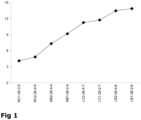
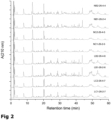
- After ripening for 9 months at 9 °C the cheeses were assessed by a trained sensory panel. Cheeses manufactured with low salt and bovine chymosin (LB1-26-2-6, LB2-26-4-6) had the highest bitterness score (
Figure 1 ). This was further illustrated by the highest concentration of hydrophobic peptides in these cheeses (retention time 47-50 min,Figure 2 ). More specifically, higher concentrations of small to medium-sized, hydrophobic peptides (retention time 35-45 min,Figure 2 ) were present in the low-salt cheeses with bovine chymosin (LB1-26-2-6, LB2-26-4-6). Surprisingly, it was found that when camel chymosin was used in the manufacture of low-salt cheese (LC1-26-2-7, LC2-26-4-7), the bitterness score was significantly lower than that of the low-salt cheeses manufactured with bovine chymosin (LB1-26-2-6, LB2-26-4-6). This finding is also supported by the chemical analysis of the cheeses which showed lower concentrations of (small to medium-sized) hydrophobic peptides in the low-salt cheeses manufactured with camel chymosin (LC1-26-2-7, LC2-26-4-7). - For normal-salt cheeses, a similar trend regarding the effect of camel chymosin was found. The bitterness score of and level of (small to medium-sized) hydrophobic peptides in the cheeses manufactured with camel chymosin (NC1-26-2-5, NC2-26-4-5) were significantly lower than the corresponding normal-salt cheeses manufactured with bovine chymosin (NB1-26-2-4, NB2-26-4-4). In conclusion, the use of camel chymosin results in lower levels of (small to medium-sized) hydrophobic peptides in, and hence, lower bitterness intensity of both low- and normal-salt cheeses.
- Production of low-salt Cheddar cheese with reduced bitterness and increased flavor intensity
- All cheeses were manufactured in duplicate. A low-salt cheese was defined as 0.8% (w/w).
- The trial was set-up according to Table 6.
Table 6: Starter culture, adjunct culture and coagulant variables Cheese ID Starter culture Adjunct culture Coagulant 1 R1-40-4-4 GAD-positive (F-DVS R-604, Chr. Hansen) none Bovine chymosin R2-40-4-6 2 B1-42-1-4 GAD-negative (F-DVS) none Bovine chymosin B2-42-5-5 3 C1-42-1-5 GAD-negative (F-DVS) none Camel chymosin C2-42-5-4 4 BH1-42-1-6 GAD-negative (F-DVS) Lb. helveticus (F-DVS LH-32, CHr. Hansen) Bovine chymosin BH2-42-5-7 5 CH1-42-1-7 GAD-negative (F-DVS) Lb. helveticus (F-DVS LH-32, Chr. Hansen) Camel chymosin CH2-42-5-6 1. GAD-positive starter culture and bovine chymosin as coagulant (R1-40-4, R2-40-4-6) 2. GAD-negative starter culture and bovine chymosin as coagulant (B1-42-1-4, B2-42-5-5) 3. GAD-negative starter culture and camel chymosin as coagulant (C1-42-1-5, C2-42-5-4) 4. GAD-negative starter, Lb. helveticus adjunct culture and bovine chymosin as coagulant (BH1-42-1-6, BH2-42-5-7) 5. GAD-negative starter, Lb. helveticus adjunct culture and camel chymosin as coagulant (CH1-42-1-7, CH2-42-5-6) - Cheeses were manufactured as described previously (Example 2). F-DVS R-604 was added at a rate of 0.012% (w/w). F-DVS GAD-negative starter culture was added at a rate of 0.02% (w/w). F-DVS LH-32 Lb. helveticus adjunct culture was added at a rate of 0.0013% (w/w).
- Cheese compositional analysis, pH 4.6-soluble peptide analysis, free amino acid analysis and sensory analysis were performed as described above (Example 2).
- Low-salt cheeses manufactured with the GAD-positive starter (F-DVS R-604) plus bovine chymosin (R1-40-4-4, R2-40-4-6) had the highest bitterness score (
Figure 3 ) and the highest levels of hydrophobic peptides (retention time 47-50 min,Figure 5 ). More specifically, higher concentrations of small to medium-sized, hydrophobic peptides (retention time 35-45 min,Figure 2 ) were present in the low-salt cheeses with bovine chymosin (LB1-26-2-6, LB2-26-4-6). Low-salt cheeses produced with the GAD-negative starter plus bovine chymosin (B1-42-1-4, B2-42-5-5) were similar to R1-40-4-4, R2-40-4-6 in terms of having a high bitterness score (Figure 3 ) and high levels of (small to medium-sized) hydrophobic peptides (retention time 47-50 min,Figure 5 ). However, low-salt cheeses produced with the GAD-negative starter plus Lb. helveticus adjunct culture plus camel chymosin (CH1-42-1-7, CH2-42-5-6) had a significantly lower bitterness score (Figure 3 ) and lower levels of (small to medium-sized) hydrophobic peptides (retention time 47-50 min,Figure 5 ). The low-salt cheeses produced with the GAD-negative starter plus Lb. helveticus adjunct culture plus bovine chymosin (BH1-42-1-6, BH2-42-5-7) were also found to have a low bitterness score (Figure 3 ) and low levels of (small to medium-sized) hydrophobic peptides (retention time 47-50 min,Figure 5 ), but not as low as the low-salt cheeses, where the bovine chymosin was replaced with camel chymosin (CH1-42-1-7, CH2-42-5-6). - Taken in their totality, these results surprisingly show that low-salt cheese with reduced bitterness can be produced by using a GAD-negative starter culture comprising a strain selected from the group consisting of: CHCC 4356 deposited as DSM 25485, CHCC 4427 deposited as DSM 25486, CHCC 5188 deposited as DSM 25487, CHCC 1916 deposited as DSM 21405 and IG227 deposited as DSM 14797 plus a Lb. helveticus adjunct culture. A further reduction in bitterness can be achieved if camel chymosin is used instead of bovine chymosin.
- The low-salt cheeses were also assessed for their flavor intensity (umami) by a trained sensory panel. The low-salt cheeses with the highest flavor intensity (
Figure 4 ) were produced using the GAD-negative starter plus the Lb. helveticus adjunct culture (BH1-42-1-6, BH2-42-5-7, CH1-42-1-7, CH2-42-5-6). Indeed, cheeses with highest flavor intensity scores (BH1-42-1-6, BH2-42-5-7, CH1-42-1-7, CH2-42-5-6) also had the highest levels of glutamate (28.6 ± 0.9 mmol/kg, after 5 months ripening) (Table 7). In contrast, low-salt cheeses (R1-40-4-4, R2-40-4-6) manufactured with the GAD-positive starter without Lb. helveticus adjunct culture were characterised by significantly lower flavor intensities (Figure 4 ) and glutamate levels (1.2 ± 0.1 mmol/kg, after 5 months ripening) (Table 7). Low-salt cheeses manufactured with the GAD-negative starter and without Lb. helveticus adjunct culture (B1-42-1-4, B2-42-5-5, C1-42-1-5, C2-42-5-4) had higher levels of glutamate (4.2 ± 0.2 mmol/kg) than cheeses (R1-40-4-4, R2-40-4-6) made with the GAD-positive (F-DVS R-604) starter (Table 7). - Taken in their totality, these results surprisingly show that low-salt cheese with increased flavor intensity (umami) can be produced by using a GAD-negative starter culture comprising a strain selected from the group consisting of: CHCC 4356 deposited as DSM 25485, CHCC 4427 deposited as DSM 25486, CHCC 5188 deposited as DSM 25487, CHCC 1916 deposited as DSM 21405 and IG227 deposited as DSM 14797 plus a Lb. helveticus adjunct culture.
Table 7: Glutamate levels in cheeses produced with a GAD-negative starter culture, a GAD-negative Lb. helveticus adjunct culture and camel chymosin as coagulant Cheese Glutamate (mmol/kg) γ-amino butyric acid (mmol/kg) Day 1 Month 5 Day 1 Month 5 R1 -40-4-4 1.83 1.31 <LOQ 3.62 R2-40-4-6 1.74 1.12 <LOQ 3.89 B1-42-1-4 0.70 3.98 <LOQ <LOQ B2-42-5-5 0.82 4.41 <LOQ <LOQ C1-42-1-5 0.72 4.18 <LOQ <LOQ C2-42-5-4 0.85 4.32 <LOQ <LOQ BH1-42-1-6 1.79 28.4 <LOQ <LOQ BH2-42-5-7 1.65 27.8 <LOQ <LOQ CH1-42-1-7 1.73 28.3 <LOQ <LOQ CH2-42-5-6 1.74 29.9 <LOQ <LOQ LOQ (limit of quantificatoion) = 0.2 mmol/kg -
-
Figure 1 depicts the bitterness score of cheeses produced with a low (L) (0.8% (w/w)) or a normal (N) (1.8% (w/w)) salt content and bovine (B) or camel (C) chymosin. After 9 months ripening. -
Figure 2 is RP-HPLC chromatograms of cheeses produced with a low (L) (0.8% (w/w)) or a normal (N) (1.8% (w/w)) salt content and bovine (B) or camel (C) chymosin. After 9 months ripening. -
Figure 3 depicts the bitterness score of cheeses produced with a GAD-negative or GAD-positive (R) starter culture, Lb. helveticus (H) or no adjunct culture and bovine (B) or camel (C) chymosin as coagulant. After 5 months ripening. -
Figure 4 depicts the umami (flavor intensity) score of cheeses produced with a GAD-negative or GAD-positive (R) starter culture, Lb. helveticus (H) or no adjunct culture and bovine (B) or camel (C) chymosin as coagulant. After 5 months ripening. -
Figure 5 is RP-HPLC chromatograms of cheeses produced with a GAD-negative or GAD-positive (R) starter culture, Lb. helveticus (H) or no adjunct culture and bovine (B) or camel (C) chymosin as coagulant. After 5 months ripening. - The following strains were deposited at Deutsche Sammlung von Mikroorganismen und Zellkulturen GmbH, Inhoffenstr. 7B, D-38124 Braunschweig (DSM):
- CHCC 4356 deposited as DSM 25485 on 14th December 2011,
- CHCC 4427 deposited as DSM 25486 on 14th December 2011,
- CHCC 5188 deposited as DSM 25487 on 14th December 2011,
- CHCC 1916 deposited as DSM 21405 on 23rd April 2008 and
- IG227 deposited as DSM 14797 on 5th February 2002.
- The deposits were made according to the Budapest treaty on the international recognition of the deposit of microorganisms for the purposes of patent procedure.
- The Applicant requests that a sample of the deposited microorganism should be made available only to an expert approved by the Applicant.
-
- Bütikofer U, Ardö Y (1999) Quantitative determination of free amino acids in cheese. In: IDF General Secretariat (eds) Chemical methods for evaluating proteolysis in cheese maturation (part 2). Bulletin no 337 of the International Dairy Federation. International Dairy Federation, Brussels, Belgium, pp 24-32
- Fitzgerald E, Buckley J (1985) Effect of total and partial substitution of sodium chloride on the quality of Cheddar cheese. J Dairy Sci 68:3127-3134
- Glastrup J, Houlberg U (2009) Derivatisering med chlorformiater - analyse af aminosyrer med GCMS. Dansk Kemi 90:30-31
- Guinee TP, Fox PF (2004) Salt in cheese: physical, chemical and biological aspects. In: Fox PF, McSweeney PLH, Cogan TM, Guinee TP (eds) Cheese: chemistry, physics and microbiology. Volume 1: general aspects. Elsevier Academic Press, San Diego, CA, USA, pp 207-259
- Guinee TR, Kilcawley KN, Beresford TP (2008) How variable are retail vintage brands of cheddar cheese in composition and biochemistry? Aust J Dairy Tech 63:50-60
- ISO22935-1:IDF99-1 (2009) Milk and milk products - Sensory analysis - Part 1: General guidance for the recruitment, selection, training and monitoring of assessors. International Dairy Federation, Brussels, Belgium
- ISO22935-2:2009|IDF99-2 (2009) Milk and milk products - Sensory analysis - Part 2: Recommended methods for sensory evaluation. International Dairy Federation, Brussels, Belgium
- IDF (2010) The world dairy situation. Bulletin no 446 of the International Dairy Federation. International Dairy Federation, Brussels, Belgium
- ISO8589 (2007) Sensory analysis - General guidance for the design of test rooms. 2 ed. International Organisation for Standardisation, Genève, Switzerland
- Kosikowski FV, Mistry VV (1997) Cheese and fermented milk foods. 3rd ed. FV Kosikowski, LCC, Westport, CT, USA
- Lindsay RC, Hargett SM, Bush CS (1982) Effect of sodium/potassium (1:1) chloride and low sodium chloride concentrations on quality of Cheddar cheese. J Dairy Sci 65:360-370
- Reddy KA, Marth EH (1993) Proteolysis in Cheddar cheese made with sodium chloride, potassium chloride or mixtures of sodium and potassium chloride. Lebensm Wiss Technol 26: 434-442
- Walsh C (2007) Consumer responses to low-salt food products. In: Kilcast D, Angus F (eds) Reducing salt in foods: practical strategies. Woodhouse Publishing Limited, Cambridge, pp 124-133
Claims (11)
- A method for producing low-salt cheese comprising the following steps:a) providing a milk substrate;b) inoculating the milk substrate with a lactic acid bacteria (LAB) starter culture which is Glu decarboxylation (glutamate decarboxylation - GAD) negative;c) adding a coagulant to the milk substrate;d) allowing the resulting product from steps b) and c) to coagulate;e) using the coagulum from step d) to produce cheese;f) optionally storing the cheese;wherein the total GAD activity results in that below 0.05 mMγ -amino butyric acid (GABA) is produced following incubation in a glutamate containing milk medium at 35°C for 24 hours;and wherein the low-salt cheese is selected from the group consisting of Cheddar containing an amount of salt in the range 0.1 up to 1.5% - excluding 1.5%;Parmesan containing an amount of salt in the range 0.1 up to 2.5% - excluding 2.5%;Mozzarella containing an amount of salt in the range 0.1 up to 0.7% - excluding 0.7%;Emmental containing an amount of salt in the range 0.1 up to 0.7% - excluding 0.7%;Danbo containing an amount of salt in the range 0.1 up to 1.4% - excluding 1.4%;Gouda containing an amount of salt in the range 0.1 up to 1.5% - excluding 1.5%;Edam containing an amount of salt in the range 0.1 up to 1.5% - excluding 1.5%;Feta-type containing an amount of salt in the range 0.1 up to 3.0% - excluding 3.0%;Blue cheese containing an amount of salt in the range 0.1 up to 3.5% - excluding 3.5%; andCamembert containing an amount of salt in the range 0.1 up to 2.5% - excluding 2.5%,and wherein the method comprises the further step of inoculating the milk substrate with Lactobacillus helveticus (Lb. helveticus) strain, said strain is GAD-negative;wherein a strain or LAB starter culture is considered to be GAD-negative if the strain or culture produces less than 0.05 mM GABA in milk, as determined according to the following assay:Reconstituted skim milk, at 9.5%, boiled, is inoculated with 10E8 cell forming units of the strain/culture per mL of milk and allowed to stand at 35°C for 24 hours - After the 24 hours the pH has dropped below 5.0, and the content of GABA is measured - If the concentration of GABA is lower than 0.05 mM, the strain/culture is considered to be glutamate decarboxylase negativeand wherein the starter culture comprises a strain selected from the group consisting of: CHCC 4356 deposited as DSM 25485, CHCC 4427 deposited as DSM 25486, CHCC 5188 deposited as DSM 25487, CHCC 1916 deposited as DSM 21405 and IG227 deposited as DSM 14797.
- The method of claim 1, wherein the starter culture comprises LAB selected from the group consisting of Lactococcus spp., Leuconostoc spp., Pseudoleuconostoc spp., Pediococcus spp., Brevibacterium spp., Bifidobacterium spp., Enterococcus spp. and Propionibacterium spp.
- The method of any preceding claim, wherein the milk substrate is inoculated with 10E5 to 10E12 CFU/mL of the Lb. helveticus strain.
- The method of any preceding claim, wherein the coagulant is selected from the group consisting of camel chymosin such as CHY-MAX® M.
- The method of the preceding claim, wherein the starter culture comprises one or more LAB strains, such as from 2 to 20 strains, from 3 to 20 strains or from 4 to 20 strains.
- The method of any preceding claims, wherein the total GAD activity results in that below 0.05 mM GABA is produced following incubation in a glutamate-containing milk medium at 35°C for 48 hours.
- A method of any preceding claim for producing a cheese, comprising the following steps:b) inoculating a milk substrate with a LAB starter culture, which is GAD-negative;c) adding a camel chymosin to the milk substrate;d) allowing the resulting product from steps b) and c) to coagulate;e) using the coagulum from step d) to produce low-salt cheese;f) optionally storing the cheese.
- A method of any preceding claim for producing a cheese, comprising the following steps:b) inoculating a milk substrate with a LAB starter culture, which is GAD-negative and a L b. helveticus strain such as a strain having a high lytic and peptidolytic activity or a strain having proteolytic activity, which is GADnegative;c) adding a coagulant to the milk substrate;d) allowing the resulting product from steps b) and c) to coagulate;e) using the coagulum from step d) to produce low-salt Cheddar cheese;f) optionally storing the cheese.
- The method of any preceding claim, wherein the culture comprises LAB selected from the group consisting of Lactococcus spp., Leuconostoc spp., Pseudoleuconostoc spp., Pediococcus spp., Brevibacterium spp., Bifidobacterium spp., Enterococcus spp. and Propionibacterium spp., and contains more than 1 strain, preferably more than 2 different strains, such as more than 3, more than 4, more than 5 or more than 6 different strains.
- The method of the preceding claim, wherein the culture comprises a bacterial strain selected from the group consisting of: CHCC 4356 deposited as DSM 25485, CHCC 4427 deposited as DSM 25486, CHCC 5188 deposited as DSM 25487, CHCC 1916 deposited as DSM 21405 and IG227 deposited as DSM 14797; and mutants or variants thereof.
- A cheese which is obtainable by the method of any preceding claims, such as a Cheddar cheese.
Applications Claiming Priority (2)
| Application Number | Priority Date | Filing Date | Title |
|---|---|---|---|
| DKPA201101005 | 2011-12-23 | ||
| PCT/EP2012/076744 WO2013093049A2 (en) | 2011-12-23 | 2012-12-21 | Method for making cheese |
Publications (3)
| Publication Number | Publication Date |
|---|---|
| EP2793595A2 EP2793595A2 (en) | 2014-10-29 |
| EP2793595B1 EP2793595B1 (en) | 2019-04-10 |
| EP2793595B2 true EP2793595B2 (en) | 2024-05-29 |
Family
ID=47458988
Family Applications (1)
| Application Number | Title | Priority Date | Filing Date |
|---|---|---|---|
| EP12808404.3A Active EP2793595B2 (en) | 2011-12-23 | 2012-12-21 | Method for making low-salt cheese using gad-negative culture and low-salt cheese produced |
Country Status (5)
| Country | Link |
|---|---|
| US (1) | US20140348978A1 (en) |
| EP (1) | EP2793595B2 (en) |
| AU (2) | AU2012356776B2 (en) |
| DK (1) | DK2793595T4 (en) |
| WO (1) | WO2013093049A2 (en) |
Families Citing this family (7)
| Publication number | Priority date | Publication date | Assignee | Title |
|---|---|---|---|---|
| ITMI20132121A1 (en) * | 2013-12-18 | 2015-06-19 | Ct Latte Lodi S R L | PROCESS FOR THE PREPARATION OF A CASE DERIVATIVE |
| US12239141B2 (en) | 2015-02-10 | 2025-03-04 | Chr. Hansen A/S | Method for production of soft cheese comprising simultaneous addition of acidifying bacteria and coagulant |
| WO2017005631A1 (en) * | 2015-07-03 | 2017-01-12 | Chr. Hansen A/S | Bypassing curd-wash in continental cheese making |
| CN104957264A (en) * | 2015-07-24 | 2015-10-07 | 黑龙江省乳品工业技术开发中心 | Preparation method and application of cheese rich in gamma-aminobutyric acid (GABA) |
| CN106900874A (en) * | 2017-02-10 | 2017-06-30 | 广西壮族自治区水牛研究所 | A kind of cheese and preparation method thereof |
| JP7158761B2 (en) * | 2018-07-05 | 2022-10-24 | シンバイオ テック インコーポレイテッド | Starter cultures containing mixtures of lactic acid bacteria strains, fermented products produced using such starter cultures, and uses of the fermented products |
| CN114502719A (en) * | 2019-08-23 | 2022-05-13 | 科·汉森有限公司 | Textured lactococcus lactis with unique EPS gene cluster |
Citations (1)
| Publication number | Priority date | Publication date | Assignee | Title |
|---|---|---|---|---|
| NL2003442C2 (en) † | 2009-09-04 | 2011-03-10 | Csk Food Enrichment Bv | Cheese with a reduced salt content. |
Family Cites Families (8)
| Publication number | Priority date | Publication date | Assignee | Title |
|---|---|---|---|---|
| NZ503458A (en) * | 1997-08-25 | 2001-08-31 | Chr Hansen As | The preparation of a stable, aqueous suspension of a starter culture where the propagation of a mother culture into the bulk starter is not required |
| DK1141233T4 (en) * | 1998-08-26 | 2016-06-27 | Chr Hansen As | Liquid starter cultures having improved storage stability and the use thereof |
| DK1334182T4 (en) * | 2000-11-06 | 2021-04-26 | Eidgenoessische Technische Hochschule Eth | Process for the preparation and use of non-bovine chymosin |
| NL1018047C2 (en) | 2001-03-28 | 2002-10-01 | Campina Melkunie Bv | Method for preparing cheese and cheese thus formed. |
| EP1441027A1 (en) | 2003-01-22 | 2004-07-28 | Chr. Hansen A/S | Storage stable frozen lactic acid bacteria |
| DK2165608T4 (en) | 2008-09-22 | 2020-09-07 | Csk Food Enrichment Bv | Process for making cheese using a nisin-producing direct-vessel starter culture |
| CN102892887A (en) * | 2009-09-08 | 2013-01-23 | 普拉克生物化学有限公司 | Method for improving flavor production in a fermented food product |
| FI122531B (en) * | 2009-09-30 | 2012-03-15 | Valio Oy | Cheese and process for making them |
-
2012
- 2012-12-21 AU AU2012356776A patent/AU2012356776B2/en not_active Withdrawn - After Issue
- 2012-12-21 EP EP12808404.3A patent/EP2793595B2/en active Active
- 2012-12-21 US US14/366,552 patent/US20140348978A1/en not_active Abandoned
- 2012-12-21 WO PCT/EP2012/076744 patent/WO2013093049A2/en not_active Ceased
- 2012-12-21 DK DK12808404.3T patent/DK2793595T4/en active
-
2017
- 2017-01-20 AU AU2017200424A patent/AU2017200424A1/en not_active Withdrawn
Patent Citations (1)
| Publication number | Priority date | Publication date | Assignee | Title |
|---|---|---|---|---|
| NL2003442C2 (en) † | 2009-09-04 | 2011-03-10 | Csk Food Enrichment Bv | Cheese with a reduced salt content. |
Also Published As
| Publication number | Publication date |
|---|---|
| WO2013093049A3 (en) | 2013-08-15 |
| AU2012356776A1 (en) | 2014-06-12 |
| DK2793595T3 (en) | 2019-07-22 |
| WO2013093049A2 (en) | 2013-06-27 |
| US20140348978A1 (en) | 2014-11-27 |
| AU2017200424A1 (en) | 2017-02-16 |
| EP2793595A2 (en) | 2014-10-29 |
| EP2793595B1 (en) | 2019-04-10 |
| DK2793595T4 (en) | 2024-08-05 |
| AU2012356776B2 (en) | 2016-10-20 |
Similar Documents
| Publication | Publication Date | Title |
|---|---|---|
| US11096396B2 (en) | Lactobacillus fermentum bacteria with antifungal activity | |
| AU2016315139B2 (en) | Lactobacillus fermentum bacteria inhibiting post-acidification | |
| EP2793595B2 (en) | Method for making low-salt cheese using gad-negative culture and low-salt cheese produced | |
| EP2836587B1 (en) | Bioprotection using lactobacillus rhamnosus strains | |
| US20180235249A1 (en) | Lactobacillus fermentum bacteria reducing the concentration of acetaldehyde | |
| EP2869709B1 (en) | Method for preparing cheeses with improved aroma | |
| Nikolova et al. | From Traditional Bulgarian Dairy Products to Functional Foods | |
| Taboada et al. | Biochemical and microbiological changes throughout the ripening of Argentinean fresh goat's milk cheeses made with native cultures | |
| EP4697970A1 (en) | Storage stable lacticaseibacillus rhamnosus | |
| JP2025542041A (en) | Bioprotective Lacticaceibacillus rhamnosus with low post-acidification | |
| JP2026513608A (en) | Storage stability of Lacticacea rhamnosus |
Legal Events
| Date | Code | Title | Description |
|---|---|---|---|
| PUAI | Public reference made under article 153(3) epc to a published international application that has entered the european phase |
Free format text: ORIGINAL CODE: 0009012 |
|
| 17P | Request for examination filed |
Effective date: 20140723 |
|
| AK | Designated contracting states |
Kind code of ref document: A2 Designated state(s): AL AT BE BG CH CY CZ DE DK EE ES FI FR GB GR HR HU IE IS IT LI LT LU LV MC MK MT NL NO PL PT RO RS SE SI SK SM TR |
|
| DAX | Request for extension of the european patent (deleted) | ||
| 17Q | First examination report despatched |
Effective date: 20160915 |
|
| STAA | Information on the status of an ep patent application or granted ep patent |
Free format text: STATUS: EXAMINATION IS IN PROGRESS |
|
| GRAP | Despatch of communication of intention to grant a patent |
Free format text: ORIGINAL CODE: EPIDOSNIGR1 |
|
| STAA | Information on the status of an ep patent application or granted ep patent |
Free format text: STATUS: GRANT OF PATENT IS INTENDED |
|
| RIC1 | Information provided on ipc code assigned before grant |
Ipc: A23C 19/04 20060101ALI20180430BHEP Ipc: A23L 27/40 20160101ALI20180430BHEP Ipc: C12N 9/88 20060101ALI20180430BHEP Ipc: C12R 1/225 20060101ALI20180430BHEP Ipc: A23C 19/064 20060101ALI20180430BHEP Ipc: A23C 19/072 20060101ALI20180430BHEP Ipc: A23L 33/00 20160101ALI20180430BHEP Ipc: A23L 27/00 20160101ALI20180430BHEP Ipc: A23C 19/032 20060101AFI20180430BHEP |
|
| INTG | Intention to grant announced |
Effective date: 20180523 |
|
| GRAJ | Information related to disapproval of communication of intention to grant by the applicant or resumption of examination proceedings by the epo deleted |
Free format text: ORIGINAL CODE: EPIDOSDIGR1 |
|
| STAA | Information on the status of an ep patent application or granted ep patent |
Free format text: STATUS: EXAMINATION IS IN PROGRESS |
|
| GRAP | Despatch of communication of intention to grant a patent |
Free format text: ORIGINAL CODE: EPIDOSNIGR1 |
|
| STAA | Information on the status of an ep patent application or granted ep patent |
Free format text: STATUS: GRANT OF PATENT IS INTENDED |
|
| INTC | Intention to grant announced (deleted) | ||
| INTG | Intention to grant announced |
Effective date: 20181023 |
|
| RIC1 | Information provided on ipc code assigned before grant |
Ipc: A23C 19/072 20060101ALI20180430BHEP Ipc: A23C 19/032 20060101AFI20180430BHEP Ipc: A23C 19/04 20060101ALI20180430BHEP Ipc: C12R 1/225 20060101ALI20180430BHEP Ipc: A23L 27/00 20160101ALI20180430BHEP Ipc: A23L 33/00 20160101ALI20180430BHEP Ipc: A23C 19/064 20060101ALI20180430BHEP Ipc: A23L 27/40 20160101ALI20180430BHEP Ipc: C12N 9/88 20060101ALI20180430BHEP |
|
| GRAS | Grant fee paid |
Free format text: ORIGINAL CODE: EPIDOSNIGR3 |
|
| GRAA | (expected) grant |
Free format text: ORIGINAL CODE: 0009210 |
|
| STAA | Information on the status of an ep patent application or granted ep patent |
Free format text: STATUS: THE PATENT HAS BEEN GRANTED |
|
| AK | Designated contracting states |
Kind code of ref document: B1 Designated state(s): AL AT BE BG CH CY CZ DE DK EE ES FI FR GB GR HR HU IE IS IT LI LT LU LV MC MK MT NL NO PL PT RO RS SE SI SK SM TR |
|
| REG | Reference to a national code |
Ref country code: GB Ref legal event code: FG4D |
|
| REG | Reference to a national code |
Ref country code: CH Ref legal event code: EP Ref country code: AT Ref legal event code: REF Ref document number: 1117441 Country of ref document: AT Kind code of ref document: T Effective date: 20190415 |
|
| REG | Reference to a national code |
Ref country code: IE Ref legal event code: FG4D |
|
| REG | Reference to a national code |
Ref country code: DE Ref legal event code: R096 Ref document number: 602012058903 Country of ref document: DE |
|
| REG | Reference to a national code |
Ref country code: DK Ref legal event code: T3 Effective date: 20190717 |
|
| REG | Reference to a national code |
Ref country code: NL Ref legal event code: FP |
|
| REG | Reference to a national code |
Ref country code: LT Ref legal event code: MG4D |
|
| REG | Reference to a national code |
Ref country code: AT Ref legal event code: MK05 Ref document number: 1117441 Country of ref document: AT Kind code of ref document: T Effective date: 20190410 |
|
| PG25 | Lapsed in a contracting state [announced via postgrant information from national office to epo] |
Ref country code: FI Free format text: LAPSE BECAUSE OF FAILURE TO SUBMIT A TRANSLATION OF THE DESCRIPTION OR TO PAY THE FEE WITHIN THE PRESCRIBED TIME-LIMIT Effective date: 20190410 Ref country code: NO Free format text: LAPSE BECAUSE OF FAILURE TO SUBMIT A TRANSLATION OF THE DESCRIPTION OR TO PAY THE FEE WITHIN THE PRESCRIBED TIME-LIMIT Effective date: 20190710 Ref country code: PT Free format text: LAPSE BECAUSE OF FAILURE TO SUBMIT A TRANSLATION OF THE DESCRIPTION OR TO PAY THE FEE WITHIN THE PRESCRIBED TIME-LIMIT Effective date: 20190910 Ref country code: ES Free format text: LAPSE BECAUSE OF FAILURE TO SUBMIT A TRANSLATION OF THE DESCRIPTION OR TO PAY THE FEE WITHIN THE PRESCRIBED TIME-LIMIT Effective date: 20190410 Ref country code: AL Free format text: LAPSE BECAUSE OF FAILURE TO SUBMIT A TRANSLATION OF THE DESCRIPTION OR TO PAY THE FEE WITHIN THE PRESCRIBED TIME-LIMIT Effective date: 20190410 Ref country code: SE Free format text: LAPSE BECAUSE OF FAILURE TO SUBMIT A TRANSLATION OF THE DESCRIPTION OR TO PAY THE FEE WITHIN THE PRESCRIBED TIME-LIMIT Effective date: 20190410 Ref country code: LT Free format text: LAPSE BECAUSE OF FAILURE TO SUBMIT A TRANSLATION OF THE DESCRIPTION OR TO PAY THE FEE WITHIN THE PRESCRIBED TIME-LIMIT Effective date: 20190410 Ref country code: HR Free format text: LAPSE BECAUSE OF FAILURE TO SUBMIT A TRANSLATION OF THE DESCRIPTION OR TO PAY THE FEE WITHIN THE PRESCRIBED TIME-LIMIT Effective date: 20190410 |
|
| PG25 | Lapsed in a contracting state [announced via postgrant information from national office to epo] |
Ref country code: RS Free format text: LAPSE BECAUSE OF FAILURE TO SUBMIT A TRANSLATION OF THE DESCRIPTION OR TO PAY THE FEE WITHIN THE PRESCRIBED TIME-LIMIT Effective date: 20190410 Ref country code: PL Free format text: LAPSE BECAUSE OF FAILURE TO SUBMIT A TRANSLATION OF THE DESCRIPTION OR TO PAY THE FEE WITHIN THE PRESCRIBED TIME-LIMIT Effective date: 20190410 Ref country code: BG Free format text: LAPSE BECAUSE OF FAILURE TO SUBMIT A TRANSLATION OF THE DESCRIPTION OR TO PAY THE FEE WITHIN THE PRESCRIBED TIME-LIMIT Effective date: 20190710 Ref country code: LV Free format text: LAPSE BECAUSE OF FAILURE TO SUBMIT A TRANSLATION OF THE DESCRIPTION OR TO PAY THE FEE WITHIN THE PRESCRIBED TIME-LIMIT Effective date: 20190410 Ref country code: GR Free format text: LAPSE BECAUSE OF FAILURE TO SUBMIT A TRANSLATION OF THE DESCRIPTION OR TO PAY THE FEE WITHIN THE PRESCRIBED TIME-LIMIT Effective date: 20190711 |
|
| PG25 | Lapsed in a contracting state [announced via postgrant information from national office to epo] |
Ref country code: AT Free format text: LAPSE BECAUSE OF FAILURE TO SUBMIT A TRANSLATION OF THE DESCRIPTION OR TO PAY THE FEE WITHIN THE PRESCRIBED TIME-LIMIT Effective date: 20190410 Ref country code: IS Free format text: LAPSE BECAUSE OF FAILURE TO SUBMIT A TRANSLATION OF THE DESCRIPTION OR TO PAY THE FEE WITHIN THE PRESCRIBED TIME-LIMIT Effective date: 20190810 |
|
| REG | Reference to a national code |
Ref country code: DE Ref legal event code: R026 Ref document number: 602012058903 Country of ref document: DE |
|
| PLBI | Opposition filed |
Free format text: ORIGINAL CODE: 0009260 |
|
| PLAX | Notice of opposition and request to file observation + time limit sent |
Free format text: ORIGINAL CODE: EPIDOSNOBS2 |
|
| PG25 | Lapsed in a contracting state [announced via postgrant information from national office to epo] |
Ref country code: RO Free format text: LAPSE BECAUSE OF FAILURE TO SUBMIT A TRANSLATION OF THE DESCRIPTION OR TO PAY THE FEE WITHIN THE PRESCRIBED TIME-LIMIT Effective date: 20190410 Ref country code: SK Free format text: LAPSE BECAUSE OF FAILURE TO SUBMIT A TRANSLATION OF THE DESCRIPTION OR TO PAY THE FEE WITHIN THE PRESCRIBED TIME-LIMIT Effective date: 20190410 Ref country code: CZ Free format text: LAPSE BECAUSE OF FAILURE TO SUBMIT A TRANSLATION OF THE DESCRIPTION OR TO PAY THE FEE WITHIN THE PRESCRIBED TIME-LIMIT Effective date: 20190410 Ref country code: EE Free format text: LAPSE BECAUSE OF FAILURE TO SUBMIT A TRANSLATION OF THE DESCRIPTION OR TO PAY THE FEE WITHIN THE PRESCRIBED TIME-LIMIT Effective date: 20190410 |
|
| 26 | Opposition filed |
Opponent name: CSK FOOD ENRICHMENT B.V. Effective date: 20200110 |
|
| PG25 | Lapsed in a contracting state [announced via postgrant information from national office to epo] |
Ref country code: IT Free format text: LAPSE BECAUSE OF FAILURE TO SUBMIT A TRANSLATION OF THE DESCRIPTION OR TO PAY THE FEE WITHIN THE PRESCRIBED TIME-LIMIT Effective date: 20190410 Ref country code: SM Free format text: LAPSE BECAUSE OF FAILURE TO SUBMIT A TRANSLATION OF THE DESCRIPTION OR TO PAY THE FEE WITHIN THE PRESCRIBED TIME-LIMIT Effective date: 20190410 |
|
| PG25 | Lapsed in a contracting state [announced via postgrant information from national office to epo] |
Ref country code: TR Free format text: LAPSE BECAUSE OF FAILURE TO SUBMIT A TRANSLATION OF THE DESCRIPTION OR TO PAY THE FEE WITHIN THE PRESCRIBED TIME-LIMIT Effective date: 20190410 |
|
| PLAF | Information modified related to communication of a notice of opposition and request to file observations + time limit |
Free format text: ORIGINAL CODE: EPIDOSCOBS2 |
|
| PG25 | Lapsed in a contracting state [announced via postgrant information from national office to epo] |
Ref country code: SI Free format text: LAPSE BECAUSE OF FAILURE TO SUBMIT A TRANSLATION OF THE DESCRIPTION OR TO PAY THE FEE WITHIN THE PRESCRIBED TIME-LIMIT Effective date: 20190410 |
|
| PLAB | Opposition data, opponent's data or that of the opponent's representative modified |
Free format text: ORIGINAL CODE: 0009299OPPO |
|
| R26 | Opposition filed (corrected) |
Opponent name: CSK FOOD ENRICHMENT B.V. Effective date: 20200110 |
|
| PLBB | Reply of patent proprietor to notice(s) of opposition received |
Free format text: ORIGINAL CODE: EPIDOSNOBS3 |
|
| REG | Reference to a national code |
Ref country code: CH Ref legal event code: PL |
|
| REG | Reference to a national code |
Ref country code: BE Ref legal event code: MM Effective date: 20191231 |
|
| PG25 | Lapsed in a contracting state [announced via postgrant information from national office to epo] |
Ref country code: MC Free format text: LAPSE BECAUSE OF FAILURE TO SUBMIT A TRANSLATION OF THE DESCRIPTION OR TO PAY THE FEE WITHIN THE PRESCRIBED TIME-LIMIT Effective date: 20190410 |
|
| PG25 | Lapsed in a contracting state [announced via postgrant information from national office to epo] |
Ref country code: IE Free format text: LAPSE BECAUSE OF NON-PAYMENT OF DUE FEES Effective date: 20191221 Ref country code: LU Free format text: LAPSE BECAUSE OF NON-PAYMENT OF DUE FEES Effective date: 20191221 |
|
| PG25 | Lapsed in a contracting state [announced via postgrant information from national office to epo] |
Ref country code: CH Free format text: LAPSE BECAUSE OF NON-PAYMENT OF DUE FEES Effective date: 20191231 Ref country code: LI Free format text: LAPSE BECAUSE OF NON-PAYMENT OF DUE FEES Effective date: 20191231 Ref country code: BE Free format text: LAPSE BECAUSE OF NON-PAYMENT OF DUE FEES Effective date: 20191231 |
|
| PG25 | Lapsed in a contracting state [announced via postgrant information from national office to epo] |
Ref country code: CY Free format text: LAPSE BECAUSE OF FAILURE TO SUBMIT A TRANSLATION OF THE DESCRIPTION OR TO PAY THE FEE WITHIN THE PRESCRIBED TIME-LIMIT Effective date: 20190410 |
|
| PG25 | Lapsed in a contracting state [announced via postgrant information from national office to epo] |
Ref country code: HU Free format text: LAPSE BECAUSE OF FAILURE TO SUBMIT A TRANSLATION OF THE DESCRIPTION OR TO PAY THE FEE WITHIN THE PRESCRIBED TIME-LIMIT; INVALID AB INITIO Effective date: 20121221 Ref country code: MT Free format text: LAPSE BECAUSE OF FAILURE TO SUBMIT A TRANSLATION OF THE DESCRIPTION OR TO PAY THE FEE WITHIN THE PRESCRIBED TIME-LIMIT Effective date: 20190410 |
|
| APBM | Appeal reference recorded |
Free format text: ORIGINAL CODE: EPIDOSNREFNO |
|
| APBP | Date of receipt of notice of appeal recorded |
Free format text: ORIGINAL CODE: EPIDOSNNOA2O |
|
| APAH | Appeal reference modified |
Free format text: ORIGINAL CODE: EPIDOSCREFNO |
|
| APAW | Appeal reference deleted |
Free format text: ORIGINAL CODE: EPIDOSDREFNO |
|
| APBM | Appeal reference recorded |
Free format text: ORIGINAL CODE: EPIDOSNREFNO |
|
| APBP | Date of receipt of notice of appeal recorded |
Free format text: ORIGINAL CODE: EPIDOSNNOA2O |
|
| APBQ | Date of receipt of statement of grounds of appeal recorded |
Free format text: ORIGINAL CODE: EPIDOSNNOA3O |
|
| PLBP | Opposition withdrawn |
Free format text: ORIGINAL CODE: 0009264 |
|
| PG25 | Lapsed in a contracting state [announced via postgrant information from national office to epo] |
Ref country code: MK Free format text: LAPSE BECAUSE OF FAILURE TO SUBMIT A TRANSLATION OF THE DESCRIPTION OR TO PAY THE FEE WITHIN THE PRESCRIBED TIME-LIMIT Effective date: 20190410 |
|
| APBU | Appeal procedure closed |
Free format text: ORIGINAL CODE: EPIDOSNNOA9O |
|
| PGFP | Annual fee paid to national office [announced via postgrant information from national office to epo] |
Ref country code: DK Payment date: 20231214 Year of fee payment: 12 |
|
| PUAH | Patent maintained in amended form |
Free format text: ORIGINAL CODE: 0009272 |
|
| STAA | Information on the status of an ep patent application or granted ep patent |
Free format text: STATUS: PATENT MAINTAINED AS AMENDED |
|
| 27A | Patent maintained in amended form |
Effective date: 20240529 |
|
| AK | Designated contracting states |
Kind code of ref document: B2 Designated state(s): AL AT BE BG CH CY CZ DE DK EE ES FI FR GB GR HR HU IE IS IT LI LT LU LV MC MK MT NL NO PL PT RO RS SE SI SK SM TR |
|
| REG | Reference to a national code |
Ref country code: DE Ref legal event code: R102 Ref document number: 602012058903 Country of ref document: DE |
|
| REG | Reference to a national code |
Ref country code: NL Ref legal event code: FP |
|
| REG | Reference to a national code |
Ref country code: DK Ref legal event code: T4 Effective date: 20240802 |
|
| PGFP | Annual fee paid to national office [announced via postgrant information from national office to epo] |
Ref country code: NL Payment date: 20241004 Year of fee payment: 13 |
|
| PGFP | Annual fee paid to national office [announced via postgrant information from national office to epo] |
Ref country code: DE Payment date: 20241029 Year of fee payment: 13 |
|
| PGFP | Annual fee paid to national office [announced via postgrant information from national office to epo] |
Ref country code: GB Payment date: 20241001 Year of fee payment: 13 |
|
| PGFP | Annual fee paid to national office [announced via postgrant information from national office to epo] |
Ref country code: FR Payment date: 20241008 Year of fee payment: 13 |
|
| REG | Reference to a national code |
Ref country code: DK Ref legal event code: EBP Effective date: 20241231 |
|
| PG25 | Lapsed in a contracting state [announced via postgrant information from national office to epo] |
Ref country code: DK Free format text: LAPSE BECAUSE OF NON-PAYMENT OF DUE FEES Effective date: 20241231 |