EP2789751A1 - Cutting edge for a foldable blade of a work machine - Google Patents
Cutting edge for a foldable blade of a work machine Download PDFInfo
- Publication number
- EP2789751A1 EP2789751A1 EP13162962.8A EP13162962A EP2789751A1 EP 2789751 A1 EP2789751 A1 EP 2789751A1 EP 13162962 A EP13162962 A EP 13162962A EP 2789751 A1 EP2789751 A1 EP 2789751A1
- Authority
- EP
- European Patent Office
- Prior art keywords
- central
- flanking
- cutting
- cutting edge
- apexed
- Prior art date
- Legal status (The legal status is an assumption and is not a legal conclusion. Google has not performed a legal analysis and makes no representation as to the accuracy of the status listed.)
- Granted
Links
Images


Classifications
-
- E—FIXED CONSTRUCTIONS
- E02—HYDRAULIC ENGINEERING; FOUNDATIONS; SOIL SHIFTING
- E02F—DREDGING; SOIL-SHIFTING
- E02F3/00—Dredgers; Soil-shifting machines
- E02F3/04—Dredgers; Soil-shifting machines mechanically-driven
- E02F3/76—Graders, bulldozers, or the like with scraper plates or ploughshare-like elements; Levelling scarifying devices
- E02F3/80—Component parts
- E02F3/815—Blades; Levelling or scarifying tools
- E02F3/8152—Attachments therefor, e.g. wear resisting parts, cutting edges
-
- E—FIXED CONSTRUCTIONS
- E02—HYDRAULIC ENGINEERING; FOUNDATIONS; SOIL SHIFTING
- E02F—DREDGING; SOIL-SHIFTING
- E02F3/00—Dredgers; Soil-shifting machines
- E02F3/04—Dredgers; Soil-shifting machines mechanically-driven
- E02F3/76—Graders, bulldozers, or the like with scraper plates or ploughshare-like elements; Levelling scarifying devices
- E02F3/80—Component parts
- E02F3/815—Blades; Levelling or scarifying tools
- E02F3/8155—Blades; Levelling or scarifying tools provided with movable parts, e.g. cutting discs, vibrating teeth or the like
Definitions
- This disclosure relates to blades attached to a work machine, in particular to foldable blades that are suitable for work such as digging, soil carrying, and leveling. More particularly, this disclosure relates to the operative cutting edge of foldable blades.
- Work machines such as tractors and bulldozers are generally known. These work machines may have a wide variety of applications in construction and agricultural industries. These machines generally may have ground engaging tracks or wheels which support a chassis and an operator's cab, an engine and a blade for handling of materials. The blade may be wider than the work machine which allows the machine to handle more material thereby decreasing operating costs.
- Transportation restrictions may require that the blade does not extend beyond the width of the work machine. However, in order to comply with transportation restrictions the overall length of the blades may have to be reduced during transportation.
- Work machines may be equipped with modifiable blades that may be adapted prior to transportation to reduce their effective width. Some modifiable blades may be able to fold and/or to pivot so as to avoid extending beyond the width of the work machine.
- the operating capacity and efficiency of the work machine may be linked to the blade.
- the ability of the blade to dig into the ground may depend on the edge section (cutting edge), in particular the shape of the cutting edge, the force for pressing the cutting edge into the ground and the angle of the cutting edge when it contacts the earth. Accordingly, the operating efficiency of the blade may be determined by the structure, shape, width, height, position and digging angle of the cutting edge.
- the cutting edge of modifiable blades may need to be suitably adapted to be mounted on such blades while providing the required level of operating efficiency.
- WO1993007344 discloses a cutting edge member for blades of earth moving machines.
- the cutting edge member has interlocking engagement means with adjacent cutting edge members that have same structure.
- Each cutting edge member is adjustable and reversible in position relative to said adjacent like cutting-edge members.
- the interlocking means comprise non-tapered angled dovetailed members spaced along each side of each cutting edge member and being separated by recesses.
- the present disclosure is directed, at least in part, to improving or overcoming one or more aspects of the prior art system.
- the present disclosure describes a cutting edge for a foldable blade of a work machine, the cutting edge comprising: a central member having opposed first and second apexed terminals and at least one central cutting side disposed between the first and second apexed terminals; a first flanking member having a first cutting side and a first inner inclined end, the first inner inclined end being contiguously positionable to the first apexed terminal; and a second flanking member having a second cutting side and a second inner inclined end, the second inner inclined end being contiguously positionable to the second apexed terminal, wherein the first and second flanking members and the central member are rectilinearly alignable such that the first and second cutting sides and the central cutting side form a continuous cutting verge.
- This disclosure generally relates to a cutting edge 10 for a foldable blade 100 of a work machine.
- the cutting edge 10 may be mounted onto the foldable blade 100.
- Fig. 1 illustrates the cutting edge 10.
- the cutting edge 10 may comprise a central member 12, a first flanking member 14 and a second flanking member 16.
- the central member 12 may have a first apexed terminal 18 and a second apexed terminal 20.
- the first and second apexed terminals 18, 20 are on opposed ends of the central member 12.
- Central member 12 may have a longitudinal axis 21.
- First and second apexed terminals 18, 20 may be aligned on the longitudinal axis 21.
- First apex 22 of the first apexed terminal 18 and second apex 24 of the second apexed terminal 20 may be positioned on the longitudinal axis 21.
- Central member 12 may have at least one central cutting side 26.
- Central cutting side 26 may be disposed between the first and second apexed terminals 18, 20.
- Central cutting side 26 may be connected to the first and second apexed terminals 18, 20.
- Central cutting side 26 may extend along the entire length of the central member 12.
- Central cutting side 26 may be parallel with the longitudinal axis 21.
- the first flanking member 14 may have a first cutting side 28.
- First cutting side 28 may extend along the entire side of the first flanking member 14.
- First cutting side 28 may be parallel with a longitudinal axis 30 of the first flanking member 14.
- First flanking member 14 may have a first inner inclined end 32.
- First inner inclined end 32 may be connected to the first cutting side 28.
- First inner inclined end 32 may be angled relative to the first cutting side 28.
- First inner inclined end 32 may be angled relative to the longitudinal axis 30.
- First flanking member 14 may be positionable so as to be in abutting contact with central member 12.
- the first inner inclined end 32 may be contiguously positionable to the first apexed terminal 18.
- First inner inclined end 32 may be configured to match the configuration of the first apexed terminal 18.
- the second flanking member 16 may have a second cutting side 34.
- Second cutting side 34 may extend along the entire side of the second flanking member 16.
- Second cutting side 34 may be parallel with a longitudinal axis 36 of the second flanking member 16.
- Second flanking member 16 may have a second inner inclined end 38.
- Second inner inclined end 38 may be connected to the second cutting side 34.
- Second inner inclined end 38 may be angled relative to the second cutting side 34.
- Second inner inclined end 38 may be angled relative to the longitudinal axis 36.
- Second flanking member 16 may be positionable so as to be in abutting contact with central member 12.
- the second inner inclined end 38 may be contiguously positionable to the second apexed terminal 20.
- Second inner inclined end 38 may be configured to match the configuration of the second apexed terminal 20.
- first and second flanking members 14, 16 may be moved relative to the central member 12.
- First and second flanking members 14, 16 and the central member 12 may be positioned such that the longitudinal axes 21, 30, 36 may be mutually aligned.
- First and second flanking members 14, 16 and the central member 12 may be rectilinearly alignable such that the first and second cutting sides 28, 34 and the central cutting side 26 form a continuous cutting verge 40.
- First and second cutting sides 28, 34 and the central cutting side 26 may be formed as a continuous edge for contacting work material or for contacting ground to be leveled.
- First and second flanking members 14, 16 may be juxtaposed on opposite ends of the central member 12.
- the central member 12 may further comprise a second central cutting side 42.
- Second central cutting side 42 may be parallel to the central cutting side 26.
- Second central cutting side 42 may be disposed between the first and second apexed terminals 18, 20.
- Second central cutting side 42 may be connected to the first and second apexed terminals 18, 20.
- Second central cutting side 42 may extend along the entire length of the central member 12.
- Second central cutting side 42 may be parallel with the longitudinal axis 21.
- the central member 12 may be rotated so that the second central cutting side 42 occupies the position of the central cutting side 26 such that the second central cutting side 42 may form a continuous blade verge with first and second cutting sides 28, 34.
- the central member 12 may comprise a first central portion 44 and a second central portion 46.
- the first central portion 44 may have the first apexed terminal 18.
- the second central portion 46 may have the second apexed terminal 20.
- the first central portion 44 may have a first inner end 48 and the second central portion 46 may have a second inner end 50.
- First inner end 48 may be disposed opposite the first apexed terminal 18.
- Second inner end 50 may be disposed opposite the second apexed terminal 20.
- the first inner end 48 may be abuttingly positionable to the second inner end 50.
- the first inner end 48 may be contiguously positioned to the second inner end 50.
- the first flanking member 14 may have a first outer inclined end 52 that is opposite to the first inner inclined end 32.
- the second flanking member 16 may have a second outer inclined end 54 that is opposite to the second inner inclined end 38.
- a first central portion 44 of the central member 12 is illustrated.
- First central portion 44 may have parallel cutting sides that are portions of the central cutting side 26 and the second central cutting side 42.
- the first and second cutting side portions 56, 58 may be formed between the first apexed terminal 18 and the first inner end 48.
- First and second cutting side portions 56, 58 may each have a length of 1107.7mm.
- First inner end 48 may have a height of 126.2mm.
- First inner end 48 may be perpendicular to the first and second cutting side portions 56, 58.
- First central portion 44 may have a front central face 60.
- Front central face 60 may be bound by first and second cutting side portions 56, 58, first apexed terminal 18 and the first inner end 48.
- First central portion 44 may be provided with holes 62 for receiving bolts or rivets to mount the first central portion 44 on the foldable blade 100.
- Holes 62 may extend through the first central portion 44.
- the holes 62 may be aligned along the longitudinal axis 21.
- the holes 62 may be aligned on the longitudinal axis 21 so as to allow the central member 12 to be rotated such that second central cutting side 42 replaces the central cutting side 26 at the continuous cutting verge (40).
- the holes 62 may be mutually spaced by a distance of 152.4mm.
- the holes 62 are square shaped.
- the first apexed terminal 18 may have sloped sides 64.
- Each sloped side 64 may extend between respective first and second cutting side portions 56, 58 and first apex 22.
- At least one sloped side 64 may have an angle ⁇ of 69 0 from the at least one central cutting side 26.
- Sloped sides 64 may each have an angle ⁇ of 69 0 from the respective first and second cutting side portions 56, 58.
- Each sloped side 64 may have a length of 127.8mm.
- the second apexed terminal 20 may have sloped sides 66.
- each sloped side 66 may extend between respective first and second cutting side portions 76, 78 and second apex 24.
- At least one sloped side 66 may have an angle ⁇ of 69 0 from the at least one central cutting side 26.
- sloped sides 66 may each have an angle ⁇ of 69 0 from the respective first and second cutting side portions 76, 78.
- Each sloped side 66 may have a length of 127.8mm.
- the first apex 22 of the first apexed terminal 18 may extend beyond the end of the first and second cutting side portions 56, 58.
- the distance from apex 22 to the first inner end 48 may be 1217.3mm.
- the longitudinal length of the apex 22 extending from a point on the longitudinal axis 21 corresponding to the end of the first and second cutting side portions 56, 58 may be 109.6mm.
- the longitudinal length of the apex 24 extending from a point on the longitudinal axis 21 corresponding to the end of the respective first and second cutting side portions 76, 78 may be 109.6mm.
- the apexes 22, 24 of the first and second apexed terminals 18, 20 extend beyond the respective opposite ends of the at least one central cutting side 26 at a longitudinal distance of 109.6mm
- the first central portion 44 may have a rear central face 70 opposite the front central face 60. Holes 62 may extend from the front central face 60 to the rear central face 70. Front and rear central faces 60, 70 may be mutually parallel. Rear central face 70 may have a smaller dimension relative to the front central face 60. Rear central face 70 may have a smaller surface area relative to the front central face 60.
- Front central surface 60 may have a transverse width of 254mm.
- Rear central face 70 may have a transverse width of 198.2mm.
- First and second cutting side portions 56, 58 may each comprise a slanted surface 72 and a flat surface 74.
- the slanted surface 72 and the flat surface 74 may be parallel to the longitudinal axis 21.
- Slanted surface 72 and the flat surface 74 may extend along the entire length of the first and second cutting side portions 56, 58.
- the horizontal distance between each junction of the flat surface 74 and the oblique surface 68 from the centre of the adjacent hole 62 may be 52.9mm.
- the horizontal distance may be parallel to the longitudinal axis 21 of the central member 12
- First and second cutting side portions 56, 58 may have a width of 19mm that extends between the rear central face 70 and the front central face 60.
- Each slanted surface 72 may be inclined relative to the rear central face 70 at an angle of 20 0 to 30 0 .
- Each slanted surface 72 may be inclined relative to the rear central face 70 at an angle of 25 0 .
- the vertical distance from the rear central face 70 and the front central face 60 may be 27.9mm, the vertical distance may be transverse to the longitudinal axis 21 of the central member 12. The vertical distance may be measured from the edge of the rear central face 70 to the adjacent edge of the front central face 60.
- the edges of the rear central face 70 and the front central face 60 may be parallel to the longitudinal axis 21.
- the first central portion 44 may be a substantially flat panel with the apexed terminal 18 extending from the first and second cutting side portions 56, 58.
- the first apexed terminal 18 may have oblique surfaces 68 that are formed between front central face 60 and rear central face 70.
- Oblique surfaces 68 may extend from respective first and second cutting side portions 56, 58 to apex 22.
- Oblique surfaces 68 may be inclined from respective sloped sides 64.
- each oblique surface 68 may be inclined relative to front central face 60 at an angle of 55 0 to 65 0 .
- Each oblique surface 68 may be inclined relative to front central face 60 at an angle of 60 0 .
- the second apexed terminal 20 may have oblique surfaces 82 that are formed between front central face 60 and rear central face 70.
- Oblique surfaces 82 may extend from respective first and second cutting side portions 76, 78 to apex 24.
- Oblique surfaces 82 may be inclined from respective sloped sides 66.
- Each oblique surface 82 may be inclined relative to front central face 60 at an angle of 59.5 0 to 60.5 0 .
- Each oblique surface 82 may be inclined relative to front central face 60 at an angle of 60 0 .
- a first flanking member 14 is illustrated.
- First flanking member 14 may have a first limit side 80 opposite to the first cutting side 28.
- First limit side 80 may be parallel to the first cutting side 28.
- First flanking member 14 may have the first outer inclined end 52 opposite to the first inner inclined end 32.
- First outer inclined end 52 and first inner inclined end 32 may diverge from ends of first limit side 80 and connect to ends of first cutting side 28.
- First flanking member 14 may have a trapezoidal shape.
- First limit side 80 may have a length of 748mm.
- First cutting side 28 may have a length of 943mm.
- First outer inclined end 52 and first inner inclined end 32 may each have a length of 272.07mm.
- First inner inclined end 32 may have an angle ⁇ of 111 0 from the first limit side 80.
- second inclined end 38 of second flanking member 16 may have an angle ⁇ of 111 0 from the second limit side 90.
- First outer inclined end 52 and second outer inclined end 54 may each have an angle ⁇ of 111 0 from the respective first and second limit sides 80, 90.
- First inclined end 32 and second inclined end 38 may be configured so as to correspond with respective slopped sides 64, 66 of the central member 12.
- First flanking member 14 may have a first front flanking face 84.
- First front flanking face 84 may be bound by first outer inclined end 52, first inclined end 32, first cutting side 28 and first limit side 80.
- First flanking member 14 may be provided with a set of apertures 86 and a set of openings 88 for receiving bolts or rivets to mount the first flanking member 14 on a foldable blade.
- Apertures 86 and openings 88 may extend through the first flanking member 14.
- the apertures 86 may be aligned along the longitudinal axis 36.
- the apertures 86 may be mutually spaced by a distance of 152.4mm.
- the apertures 86 are square shaped.
- the openings 88 may be positioned between the first limit side 80 and the set of apertures 86.
- the openings 88 are square shaped.
- the first flanking member 14 may have a first rear flanking face 92 opposite the first front flanking face 84. Apertures 86 and openings 88 may extend from the first front flanking face 84 to the first rear flanking face 92. First front flanking face 84 and first rear flanking face 92 may be mutually parallel. First rear flanking face 92 may have a smaller dimension relative to the first front flanking face 84. First rear flanking face 92 may have a smaller surface area relative to the first front flanking face 84.
- First front flanking face 84 may have a transverse width of 254mm.
- First rear flanking face 92 may have a transverse width of 198.2mm.
- First limit side 80 and first cutting side 28 may each comprise a slanted surface 94 and a flat surface 96.
- the slanted surface 94 and the flat surface 96 may be parallel to the longitudinal axis 36.
- Slanted surface 94 and the flat surface 96 may extend along the entire length of the first limit side 80 and the first cutting side 28.
- First limit side 80 and first cutting side 28 may have a width of 25mm that extends between the first front flanking face 84 and the first rear flanking face 92.
- Each slanted surface 94 may be inclined relative to the first rear flanking face 92 at an angle of 20 0 to 30 0 .
- Each slanted surface 94 may be inclined relative to the first rear flanking face 92 at an angle of 25 0 .
- the vertical distance from the first rear flanking face 92 and the first front flanking face 84 may be 27.9mm.
- the first flanking member 14 may be a substantially flat panel.
- the first inclined end 32 may have a first bevel surface 98 that is formed between first front flanking face 84 and the first rear flanking face 92.
- First bevel surface 98 may extend between first limit side 80 and the first cutting side 28 (not shown).
- First bevel surface 98 may be inclined relative to first flanking face 84.
- first outer inclined end may be provided with a first outer bevel surface 99.
- the first outer bevel surface 99 may be formed between first front flanking face 84 and first rear flanking faces 92.
- First outer bevel surface 99 may extend between limit side 80 and cutting side 28.
- first bevel surface 98 may be inclined relative to first rear flanking face 92 at an angle of 59.5 0 to 60.5 0 .
- First bevel surface 98 may be inclined relative to first rear flanking face 92 at an angle of 60 0 .
- the second inclined end 38 may have a second bevel surface 108 that is formed between second front flanking face 110 and the second rear flanking face 112. Second bevel surface 108 may extend between second limit side 114 and the second cutting side 34 (not shown). Second bevel surface 108 may be inclined relative to second front flanking face 110.
- second outer inclined end 54 may have a second outer bevel surface 109.
- the second outer bevel surface 109 may be formed between second front flanking face 110 and second rear flanking face 112. Second outer bevel surface 109 may extend between limit side 114 and cutting side 34.
- Second bevel surface 108 may be inclined relative to second rear flanking face 112 at an angle of 59.5 0 to 60.5 0 . Second bevel surface 108 may be inclined relative to second rear flanking face 112 at an angle of 60 0 .
- the cutting edge 10 may be mounted to a foldable blade 100.
- Foldable blade 100 may have a centre element 102, a first flanking element 104 and a second flanking element 106.
- Central member 12 may be mounted to the centre element 102.
- First flaking member 14 may be mounted to first flanking element 104.
- Second flaking member 106 may be mounted to second flanking element 106.
- Foldable blade 100 may be in an unfolded configuration with first and second flanking elements 104, 106 being rectilinearly aligned with the centre element 102.
- first and second flanking members 14 may be positioned rectilinearly with the central member 12.
- the foldable blade 100 may be in a folded configuration with first and second flanking elements 104, 106 being inclined relative to the centre element 102.
- first and second flanking members 14, 16 may be inclined relative to the central member 12.
- This disclosure describes a cutting edge 10 for a foldable blade 100 of a work machine.
- the foldable blade 100 may be folded so that the overall length thereof may be reduced for transportation of the work machine.
- the cutting edge 10 may have at least three members 12, 14, 16. In an embodiment, the cutting edge 10 may have four members with first and second central portions 44, 46.
- the cutting edge 10 may be mounted to the foldable blade 100.
- flanking members 14, 16 may be positioned so as to be rectilinearly aligned to the central member 12.
- First and second inclined ends 32, 38 may be suitably configured to correspond with the first and second apexed terminals 18, 20 so that the flanking members 14, 16 may be flush with the central member 12.
- the central cutting side 26 may be aligned with the first and second cutting sides 28, 34 so as to form a continuous cutting verge 40.
- the cutting verge 40 may contact the work materials during work operations.
Landscapes
- Engineering & Computer Science (AREA)
- Mechanical Engineering (AREA)
- Mining & Mineral Resources (AREA)
- Civil Engineering (AREA)
- General Engineering & Computer Science (AREA)
- Structural Engineering (AREA)
- Sawing (AREA)
- Harvester Elements (AREA)
Abstract
Description
- This disclosure relates to blades attached to a work machine, in particular to foldable blades that are suitable for work such as digging, soil carrying, and leveling. More particularly, this disclosure relates to the operative cutting edge of foldable blades.
- Work machines such as tractors and bulldozers are generally known. These work machines may have a wide variety of applications in construction and agricultural industries. These machines generally may have ground engaging tracks or wheels which support a chassis and an operator's cab, an engine and a blade for handling of materials. The blade may be wider than the work machine which allows the machine to handle more material thereby decreasing operating costs.
- Transportation restrictions may require that the blade does not extend beyond the width of the work machine. However, in order to comply with transportation restrictions the overall length of the blades may have to be reduced during transportation. Work machines may be equipped with modifiable blades that may be adapted prior to transportation to reduce their effective width. Some modifiable blades may be able to fold and/or to pivot so as to avoid extending beyond the width of the work machine.
- The operating capacity and efficiency of the work machine may be linked to the blade. The ability of the blade to dig into the ground may depend on the edge section (cutting edge), in particular the shape of the cutting edge, the force for pressing the cutting edge into the ground and the angle of the cutting edge when it contacts the earth. Accordingly, the operating efficiency of the blade may be determined by the structure, shape, width, height, position and digging angle of the cutting edge.
- The cutting edge of modifiable blades may need to be suitably adapted to be mounted on such blades while providing the required level of operating efficiency.
-
WO1993007344 discloses a cutting edge member for blades of earth moving machines. The cutting edge member has interlocking engagement means with adjacent cutting edge members that have same structure. Each cutting edge member is adjustable and reversible in position relative to said adjacent like cutting-edge members. The interlocking means comprise non-tapered angled dovetailed members spaced along each side of each cutting edge member and being separated by recesses. - The present disclosure is directed, at least in part, to improving or overcoming one or more aspects of the prior art system.
- In a first aspect, the present disclosure describes a cutting edge for a foldable blade of a work machine, the cutting edge comprising: a central member having opposed first and second apexed terminals and at least one central cutting side disposed between the first and second apexed terminals; a first flanking member having a first cutting side and a first inner inclined end, the first inner inclined end being contiguously positionable to the first apexed terminal; and a second flanking member having a second cutting side and a second inner inclined end, the second inner inclined end being contiguously positionable to the second apexed terminal, wherein the first and second flanking members and the central member are rectilinearly alignable such that the first and second cutting sides and the central cutting side form a continuous cutting verge.
- The foregoing and other features and advantages of the present disclosure will be more fully understood from the following description of various embodiments, when read together with the accompanying drawings, in which:
-
Fig. 1 is a front view of a cutting edge for a foldable blade according to the present disclosure; -
Fig. 2 is a front view of a portion of a central member of the cutting edge ofFig. 1 ; -
Fig. 3 is an end view of the portion of the central member ofFig. 2 from the direction A; -
Fig. 4 is a side view of the portion of the central member ofFig. 2 ; -
Fig. 5 is a view of the portion of the central member ofFig. 2 across B-B'; -
Fig. 6 is a front view of a flanking member of the cutting edge ofFig. 1 ; -
Fig. 7 is an end view of the flanking member ofFig. 6 from the direction C; -
Fig. 8 is a side view of the flanking member ofFig. 6 ; -
Fig. 9 is a view of the flanking member ofFig. 6 across D-D'; -
Fig. 10 is a front view of a second flanking member of the cutting edge ofFig. 1 ; -
Fig. 11 is a side view of a second flanking member ofFig. 10 ; -
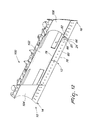
Fig. 12 is an isometric view of the cutting edge mounted on a foldable blade in an unfolded configuration according to the present invention; and -
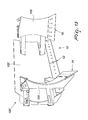
Fig. 13 is an isometric view of the cutting edge mounted on a foldable blade in a folded configuration according to the present invention. - This disclosure generally relates to a
cutting edge 10 for afoldable blade 100 of a work machine. Thecutting edge 10 may be mounted onto thefoldable blade 100. -
Fig. 1 illustrates thecutting edge 10. Thecutting edge 10 may comprise acentral member 12, afirst flanking member 14 and asecond flanking member 16. - The
central member 12 may have a first apexedterminal 18 and a second apexedterminal 20. The first and second apexedterminals central member 12.Central member 12 may have alongitudinal axis 21. First and second apexedterminals longitudinal axis 21.First apex 22 of the first apexedterminal 18 andsecond apex 24 of the second apexedterminal 20 may be positioned on thelongitudinal axis 21. -
Central member 12 may have at least onecentral cutting side 26.Central cutting side 26 may be disposed between the first and second apexedterminals Central cutting side 26 may be connected to the first and second apexedterminals Central cutting side 26 may extend along the entire length of thecentral member 12.Central cutting side 26 may be parallel with thelongitudinal axis 21. - The
first flanking member 14 may have afirst cutting side 28.First cutting side 28 may extend along the entire side of thefirst flanking member 14.First cutting side 28 may be parallel with alongitudinal axis 30 of thefirst flanking member 14. -
First flanking member 14 may have a first innerinclined end 32. First innerinclined end 32 may be connected to thefirst cutting side 28. First innerinclined end 32 may be angled relative to thefirst cutting side 28. First innerinclined end 32 may be angled relative to thelongitudinal axis 30. -
First flanking member 14 may be positionable so as to be in abutting contact withcentral member 12. The first innerinclined end 32 may be contiguously positionable to the first apexedterminal 18. First innerinclined end 32 may be configured to match the configuration of the first apexedterminal 18. - The
second flanking member 16 may have a second cutting side 34. Second cutting side 34 may extend along the entire side of thesecond flanking member 16. Second cutting side 34 may be parallel with alongitudinal axis 36 of the second flankingmember 16. - Second flanking
member 16 may have a second innerinclined end 38. Second innerinclined end 38 may be connected to the second cutting side 34. Second innerinclined end 38 may be angled relative to the second cutting side 34. Second innerinclined end 38 may be angled relative to thelongitudinal axis 36. - Second flanking
member 16 may be positionable so as to be in abutting contact withcentral member 12. The second innerinclined end 38 may be contiguously positionable to thesecond apexed terminal 20. Second innerinclined end 38 may be configured to match the configuration of thesecond apexed terminal 20. - The first and second flanking
members central member 12. First and second flankingmembers central member 12 may be positioned such that thelongitudinal axes members central member 12 may be rectilinearly alignable such that the first and second cutting sides 28, 34 and thecentral cutting side 26 form acontinuous cutting verge 40. First and second cutting sides 28, 34 and thecentral cutting side 26 may be formed as a continuous edge for contacting work material or for contacting ground to be leveled. First and second flankingmembers central member 12. - The
central member 12 may further comprise a second central cuttingside 42. Secondcentral cutting side 42 may be parallel to thecentral cutting side 26. Secondcentral cutting side 42 may be disposed between the first and secondapexed terminals central cutting side 42 may be connected to the first and secondapexed terminals central cutting side 42 may extend along the entire length of thecentral member 12. Secondcentral cutting side 42 may be parallel with thelongitudinal axis 21. - The
central member 12 may be rotated so that the second central cuttingside 42 occupies the position of thecentral cutting side 26 such that the second central cuttingside 42 may form a continuous blade verge with first and second cutting sides 28, 34. - In an embodiment, the
central member 12 may comprise a firstcentral portion 44 and a secondcentral portion 46. The firstcentral portion 44 may have the firstapexed terminal 18. The secondcentral portion 46 may have thesecond apexed terminal 20. - The first
central portion 44 may have a firstinner end 48 and the secondcentral portion 46 may have a secondinner end 50. Firstinner end 48 may be disposed opposite the firstapexed terminal 18. Secondinner end 50 may be disposed opposite thesecond apexed terminal 20. The firstinner end 48 may be abuttingly positionable to the secondinner end 50. The firstinner end 48 may be contiguously positioned to the secondinner end 50. - The first flanking
member 14 may have a first outerinclined end 52 that is opposite to the first innerinclined end 32. The second flankingmember 16 may have a second outerinclined end 54 that is opposite to the second innerinclined end 38. - With reference to
Fig. 2 , a firstcentral portion 44 of thecentral member 12 is illustrated. The following description duly applies to corresponding features on the secondcentral portion 46 that have not been herein described. - First
central portion 44 may have parallel cutting sides that are portions of thecentral cutting side 26 and the second central cuttingside 42. The first and secondcutting side portions apexed terminal 18 and the firstinner end 48. First and secondcutting side portions inner end 48 may have a height of 126.2mm. Firstinner end 48 may be perpendicular to the first and secondcutting side portions - First
central portion 44 may have a frontcentral face 60. Frontcentral face 60 may be bound by first and secondcutting side portions terminal 18 and the firstinner end 48. - First
central portion 44 may be provided withholes 62 for receiving bolts or rivets to mount the firstcentral portion 44 on thefoldable blade 100.Holes 62 may extend through the firstcentral portion 44. Theholes 62 may be aligned along thelongitudinal axis 21. Theholes 62 may be aligned on thelongitudinal axis 21 so as to allow thecentral member 12 to be rotated such that second central cuttingside 42 replaces thecentral cutting side 26 at the continuous cutting verge (40). Theholes 62 may be mutually spaced by a distance of 152.4mm. In an embodiment, theholes 62 are square shaped. - With reference to
Figs. 1 and2 , the firstapexed terminal 18 may have slopedsides 64. Each slopedside 64 may extend between respective first and secondcutting side portions first apex 22. At least onesloped side 64 may have an angle α of 690 from the at least onecentral cutting side 26. Sloped sides 64 may each have an angle α of 690 from the respective first and secondcutting side portions side 64 may have a length of 127.8mm. - The
second apexed terminal 20 may have slopedsides 66. With respect toFig. 12 , eachsloped side 66 may extend between respective first and secondcutting side portions second apex 24. At least onesloped side 66 may have an angle α of 690 from the at least onecentral cutting side 26. With reference toFig. 12 , slopedsides 66 may each have an angle α of 690 from the respective first and secondcutting side portions side 66 may have a length of 127.8mm. - With reference to
Fig. 2 , thefirst apex 22 of the firstapexed terminal 18 may extend beyond the end of the first and secondcutting side portions apex 22 to the firstinner end 48 may be 1217.3mm. The longitudinal length of the apex 22 extending from a point on thelongitudinal axis 21 corresponding to the end of the first and secondcutting side portions Fig. 12 , the longitudinal length of the apex 24 extending from a point on thelongitudinal axis 21 corresponding to the end of the respective first and secondcutting side portions - The
apexes apexed terminals central cutting side 26 at a longitudinal distance of 109.6mm - With reference to
Fig. 3 , the firstcentral portion 44 may have a rearcentral face 70 opposite the frontcentral face 60.Holes 62 may extend from the frontcentral face 60 to the rearcentral face 70. Front and rear central faces 60, 70 may be mutually parallel. Rearcentral face 70 may have a smaller dimension relative to the frontcentral face 60. Rearcentral face 70 may have a smaller surface area relative to the frontcentral face 60. - Front
central surface 60 may have a transverse width of 254mm. Rearcentral face 70 may have a transverse width of 198.2mm. - First and second
cutting side portions surface 72 and aflat surface 74. The slantedsurface 72 and theflat surface 74 may be parallel to thelongitudinal axis 21. Slantedsurface 72 and theflat surface 74 may extend along the entire length of the first and secondcutting side portions - The horizontal distance between each junction of the
flat surface 74 and theoblique surface 68 from the centre of theadjacent hole 62 may be 52.9mm. The horizontal distance may be parallel to thelongitudinal axis 21 of thecentral member 12 - First and second
cutting side portions central face 70 and the frontcentral face 60. Each slantedsurface 72 may be inclined relative to the rearcentral face 70 at an angle of 200 to 300. Each slantedsurface 72 may be inclined relative to the rearcentral face 70 at an angle of 250. The vertical distance from the rearcentral face 70 and the frontcentral face 60 may be 27.9mm, the vertical distance may be transverse to thelongitudinal axis 21 of thecentral member 12. The vertical distance may be measured from the edge of the rearcentral face 70 to the adjacent edge of the frontcentral face 60. The edges of the rearcentral face 70 and the frontcentral face 60 may be parallel to thelongitudinal axis 21. With reference toFig. 4 , the firstcentral portion 44 may be a substantially flat panel with the apexed terminal 18 extending from the first and secondcutting side portions - With reference to
Figs. 2 and 3 , the firstapexed terminal 18 may haveoblique surfaces 68 that are formed between frontcentral face 60 and rearcentral face 70.Oblique surfaces 68 may extend from respective first and secondcutting side portions apex 22.Oblique surfaces 68 may be inclined from respective sloped sides 64. - With reference to
Fig. 5 eachoblique surface 68 may be inclined relative to frontcentral face 60 at an angle of 550 to 650. Eachoblique surface 68 may be inclined relative to frontcentral face 60 at an angle of 600. - With reference to
Fig. 12 , thesecond apexed terminal 20 may haveoblique surfaces 82 that are formed between frontcentral face 60 and rearcentral face 70.Oblique surfaces 82 may extend from respective first and secondcutting side portions apex 24.Oblique surfaces 82 may be inclined from respective sloped sides 66. - Each
oblique surface 82 may be inclined relative to frontcentral face 60 at an angle of 59.50 to 60.50. Eachoblique surface 82 may be inclined relative to frontcentral face 60 at an angle of 600. - With reference to
Fig. 6 , a first flankingmember 14 is illustrated. The following description duly applies to corresponding features on the second flankingmember 16 that have not been herein described. - First flanking
member 14 may have afirst limit side 80 opposite to thefirst cutting side 28.First limit side 80 may be parallel to thefirst cutting side 28. First flankingmember 14 may have the first outerinclined end 52 opposite to the first innerinclined end 32. First outerinclined end 52 and first innerinclined end 32 may diverge from ends offirst limit side 80 and connect to ends of first cuttingside 28. First flankingmember 14 may have a trapezoidal shape.First limit side 80 may have a length of 748mm. First cuttingside 28 may have a length of 943mm. First outerinclined end 52 and first innerinclined end 32 may each have a length of 272.07mm. - First inner
inclined end 32 may have an angle β of 1110 from thefirst limit side 80. With reference toFig. 10 , secondinclined end 38 of second flankingmember 16 may have an angle β of 1110 from thesecond limit side 90. First outerinclined end 52 and second outerinclined end 54 may each have an angle β of 1110 from the respective first and second limit sides 80, 90. Firstinclined end 32 and secondinclined end 38 may be configured so as to correspond with respective sloppedsides central member 12. - First flanking
member 14 may have a firstfront flanking face 84. Firstfront flanking face 84 may be bound by first outerinclined end 52, firstinclined end 32, first cuttingside 28 andfirst limit side 80. - First flanking
member 14 may be provided with a set ofapertures 86 and a set ofopenings 88 for receiving bolts or rivets to mount the first flankingmember 14 on a foldable blade. Apertures 86 andopenings 88 may extend through the first flankingmember 14. Theapertures 86 may be aligned along thelongitudinal axis 36. Theapertures 86 may be mutually spaced by a distance of 152.4mm. In an embodiment, theapertures 86 are square shaped. Theopenings 88 may be positioned between thefirst limit side 80 and the set ofapertures 86. In an embodiment, theopenings 88 are square shaped. - With reference to
Fig. 7 , the first flankingmember 14 may have a firstrear flanking face 92 opposite the firstfront flanking face 84. Apertures 86 andopenings 88 may extend from the firstfront flanking face 84 to the firstrear flanking face 92. Firstfront flanking face 84 and firstrear flanking face 92 may be mutually parallel. First rear flankingface 92 may have a smaller dimension relative to the firstfront flanking face 84. First rear flankingface 92 may have a smaller surface area relative to the firstfront flanking face 84. - First
front flanking face 84 may have a transverse width of 254mm. First rear flankingface 92 may have a transverse width of 198.2mm. -
First limit side 80 and first cuttingside 28 may each comprise a slantedsurface 94 and aflat surface 96. The slantedsurface 94 and theflat surface 96 may be parallel to thelongitudinal axis 36. Slantedsurface 94 and theflat surface 96 may extend along the entire length of thefirst limit side 80 and thefirst cutting side 28. -
First limit side 80 and first cuttingside 28 may have a width of 25mm that extends between the firstfront flanking face 84 and the firstrear flanking face 92. Each slantedsurface 94 may be inclined relative to the firstrear flanking face 92 at an angle of 200 to 300. Each slantedsurface 94 may be inclined relative to the firstrear flanking face 92 at an angle of 250. The vertical distance from the firstrear flanking face 92 and the firstfront flanking face 84 may be 27.9mm. With reference toFig. 8 , the first flankingmember 14 may be a substantially flat panel. - With reference to
Fig. 8 , the firstinclined end 32 may have afirst bevel surface 98 that is formed between firstfront flanking face 84 and the firstrear flanking face 92.First bevel surface 98 may extend betweenfirst limit side 80 and the first cutting side 28 (not shown).First bevel surface 98 may be inclined relative to first flankingface 84. - In an embodiment, first outer inclined end may be provided with a first
outer bevel surface 99. The firstouter bevel surface 99 may be formed between firstfront flanking face 84 and first rear flanking faces 92. Firstouter bevel surface 99 may extend betweenlimit side 80 and cuttingside 28. - With reference to
Fig. 9 ,first bevel surface 98 may be inclined relative to firstrear flanking face 92 at an angle of 59.50 to 60.50.First bevel surface 98 may be inclined relative to firstrear flanking face 92 at an angle of 600. - With reference to
Fig. 11 the secondinclined end 38 may have asecond bevel surface 108 that is formed between secondfront flanking face 110 and the secondrear flanking face 112.Second bevel surface 108 may extend between second limit side 114 and the second cutting side 34 (not shown).Second bevel surface 108 may be inclined relative to secondfront flanking face 110. - In an embodiment, second outer
inclined end 54 may have a secondouter bevel surface 109. The secondouter bevel surface 109 may be formed between secondfront flanking face 110 and secondrear flanking face 112. Secondouter bevel surface 109 may extend between limit side 114 and cutting side 34. -
Second bevel surface 108 may be inclined relative to secondrear flanking face 112 at an angle of 59.50 to 60.50.Second bevel surface 108 may be inclined relative to secondrear flanking face 112 at an angle of 600. - With reference to
Fig. 12 , thecutting edge 10 may be mounted to afoldable blade 100.Foldable blade 100 may have acentre element 102, afirst flanking element 104 and asecond flanking element 106.Central member 12 may be mounted to thecentre element 102. First flakingmember 14 may be mounted to first flankingelement 104. Second flakingmember 106 may be mounted tosecond flanking element 106. -
Foldable blade 100 may be in an unfolded configuration with first and second flankingelements centre element 102. In the unfolded configuration of thefoldable blade 100, the first and second flankingmembers 14 may be positioned rectilinearly with thecentral member 12. - With reference to
Fig. 13 , thefoldable blade 100 may be in a folded configuration with first and second flankingelements centre element 102. In the folded configuration of thefoldable blade 100, the first and second flankingmembers central member 12. - The skilled person would appreciate that foregoing embodiment may be modified or combined to obtain the
cutting edge 10 of the present disclosure. - This disclosure describes a
cutting edge 10 for afoldable blade 100 of a work machine. Thefoldable blade 100 may be folded so that the overall length thereof may be reduced for transportation of the work machine. Thecutting edge 10 may have at least threemembers cutting edge 10 may have four members with first and secondcentral portions cutting edge 10 may be mounted to thefoldable blade 100. - In the folded configuration of the
foldable blade 100, the flankingmembers central member 12. First and second inclined ends 32, 38 may be suitably configured to correspond with the first and secondapexed terminals members central member 12. Thecentral cutting side 26 may be aligned with the first and second cutting sides 28, 34 so as to form acontinuous cutting verge 40. The cuttingverge 40 may contact the work materials during work operations. - Accordingly, this disclosure includes all modifications and equivalents of the subject matter recited in the claims appended hereto as permitted by applicable law. Moreover, any combination of the above-described elements in all possible variations thereof is encompassed by the disclosure unless otherwise indicated herein.
- Where technical features mentioned in any claim are followed by reference signs, the reference signs have been included for the sole purpose of increasing the intelligibility of the claims and accordingly, neither the reference signs nor their absence have any limiting effect on the technical features as described above or on the scope of any claim elements.
- One skilled in the art will realise the disclosure may be embodied in other specific forms without departing from the disclosure or essential characteristics thereof. The foregoing embodiments are therefore to be considered in all respects illustrative rather than limiting of the disclosure described herein. Scope of the invention is thus indicated by the appended claims, rather than the foregoing description, and all changes that come within the meaning and range of equivalence of the claims are therefore intended to be embraced therein.
Claims (15)
- A cutting edge (10) for a foldable blade (100) of a work machine, the cutting edge (10) comprising:a central member (12) having opposed first and second apexed terminals (18, 20) and at least one central cutting side (26) disposed between the first and second apexed terminals (18, 20);a first flanking member (14) having a first cutting side (28) and a first inner inclined end (32), the first inner inclined end (32) being contiguously positionable to the first apexed terminal (18); anda second flanking member (16) having a second cutting side (34) and a second inner inclined end (38), the second inner inclined end (38) being contiguously positionable to the second apexed terminal (20),wherein the first and second flanking members (14, 16) and the central member (12) are rectilinearly alignable such that the first and second cutting sides (28, 34) and the central cutting side (26) form a continuous cutting verge (40).
- The cutting edge (10) according to claim 1 wherein the central member (12) comprises a second central cutting side (42) parallel to the at least one central cutting side (26).
- The cutting edge (10) according to claim 1 or claim 2 wherein the first and second apexed terminals (18, 20) have respective sloped sides (64, 66), at least one respective sloped side (64, 66) has an angle (α) of 690 from the at least one cutting side (26).
- The cutting edge (10) according to any one of preceding claims wherein the apexes (22, 24) of the first and second apexed terminals (18, 20) extend beyond the respective opposite ends of the at least one central cutting side (26) at a longitudinal distance of 109.6mm.
- The cutting edge (10) according to any one of preceding claims wherein the first and second apexed terminals (18, 20) have oblique surfaces (68, 74) formed between a front central face (60) and a rear central face (70) of the central member (12).
- The cutting edge (10) according to claim 5 wherein each oblique surface (68, 82) has an angle of 59.50 to 60.50 from the front central face (60).
- The cutting edge (10) according to any one of preceding claims wherein the first inner inclined end (32) and the second inner inclined end (38) have angles of 690 respectively from the first and second limit sides (80, 90).
- The cutting edge (10) according to any one of preceding claims wherein the first inner inclined end (32) has a first bevel surface (98) formed between a first front flanking face (84) and a first rear flanking face (92) of the first flanking member (14) and the second inner inclined end (38) has a second bevel surface (108) formed between a second front flanking face (110) and a second rear flanking face (112) of the second flanking member (16).
- The cutting edge (10) according to claim 8 wherein the first bevel surface (98) has an angle of 59.50 to 60.50 from the first rear flanking face (92) and the second bevel surface (108) has an angle of 59.50 to 60.50 from the second rear flanking face (112).
- The cutting edge (10) according to any one of the preceding claims wherein the central member (12) includes a first central portion (44) having the first apexed terminal (18) and a second central portion (46) having the second apexed terminal (20).
- The cutting edge (10) according to claim 10 wherein the first central portion (44) has a first inner end (48) opposite the first apexed terminal (18) and the second central portion (46) has a second inner end (50) opposite the second apexed terminal (20), the first inner end (48) being abuttingly positionable to the second inner end (50).
- The cutting edge (10) according to any one of preceding claims 2 to 11 wherein holes (62) are formed along the longitudinal axis (21) of the central member (12) so as to permit rotation of the central member (12) such that second central cutting side (42) replaces the at least one central cutting side (26) at the continuous cutting verge (40).
- A foldable blade (100) of a work machine, the foldable blade (100) comprising:a cutting edge (10) of any one of preceding claims, wherein the central member (12) is mounted to a central element (102), the first flanking member (14) is mounted to a first flanking element (104) and the second flanking element (16) is mounted to the second flanking element (106) such that the cutting edge (10) is aligned to form a continuous cutting verge (40) when the first and second flanking elements (104, 106) are rectilinearly aligned to the central element (102).
- A central member (12) for a cutting edge (10) of a foldable blade (100) of a work machine having opposed first and second apexed terminals (18, 20) and at least one central cutting side (26) disposed between the first and second apexed terminals (18, 20).
- A flanking member (14) for a cutting edge (10) of a foldable blade (100) of a work machine having a first cutting side (28) disposed opposite a first limit side (80), the first cutting side being parallel to the first limit side (80) and a first inner inclined end (32) and a first outer inclined end (52) diverging from the first inner inclined end (32) and the first outer inclined end (52).
Priority Applications (2)
| Application Number | Priority Date | Filing Date | Title |
|---|---|---|---|
| EP13162962.8A EP2789751B1 (en) | 2013-04-09 | 2013-04-09 | Cutting edge for a foldable blade of a work machine |
| CN201420165152.2U CN203768965U (en) | 2013-04-09 | 2014-04-08 | Cutting edge of folding scraper knife of operating machine |
Applications Claiming Priority (1)
| Application Number | Priority Date | Filing Date | Title |
|---|---|---|---|
| EP13162962.8A EP2789751B1 (en) | 2013-04-09 | 2013-04-09 | Cutting edge for a foldable blade of a work machine |
Publications (2)
| Publication Number | Publication Date |
|---|---|
| EP2789751A1 true EP2789751A1 (en) | 2014-10-15 |
| EP2789751B1 EP2789751B1 (en) | 2018-10-10 |
Family
ID=48050545
Family Applications (1)
| Application Number | Title | Priority Date | Filing Date |
|---|---|---|---|
| EP13162962.8A Active EP2789751B1 (en) | 2013-04-09 | 2013-04-09 | Cutting edge for a foldable blade of a work machine |
Country Status (2)
| Country | Link |
|---|---|
| EP (1) | EP2789751B1 (en) |
| CN (1) | CN203768965U (en) |
Families Citing this family (3)
| Publication number | Priority date | Publication date | Assignee | Title |
|---|---|---|---|---|
| CN105178374B (en) * | 2014-11-27 | 2018-05-08 | 上海彭浦机器厂有限公司 | A kind of folding pushing mamoty and bull-dozer |
| US10633820B2 (en) * | 2016-12-22 | 2020-04-28 | Caterpillar Inc. | Cutter for dozing blade assembly and body section for same |
| JP7008556B2 (en) * | 2018-03-26 | 2022-02-10 | 本田技研工業株式会社 | Cutting tool for cutting |
Citations (4)
| Publication number | Priority date | Publication date | Assignee | Title |
|---|---|---|---|---|
| WO1993007344A1 (en) | 1991-10-09 | 1993-04-15 | Curry, Norell, Margaret | Blades for earth moving machines |
| US6112438A (en) * | 1998-08-14 | 2000-09-05 | Pro-Tech Welding & Fabrication, Inc. | Snow plow |
| US20020148622A1 (en) * | 2001-04-16 | 2002-10-17 | Tapio John A. | Bulldozer attachment to facilitate grading |
| US20120152573A1 (en) * | 2010-12-18 | 2012-06-21 | Caterpillar Inc. | Tractor blade assembly |
Family Cites Families (1)
| Publication number | Priority date | Publication date | Assignee | Title |
|---|---|---|---|---|
| US4390071A (en) * | 1979-11-23 | 1983-06-28 | Paper, Calmenson & Co. | Replaceable cutting blade assembly for dozers |
-
2013
- 2013-04-09 EP EP13162962.8A patent/EP2789751B1/en active Active
-
2014
- 2014-04-08 CN CN201420165152.2U patent/CN203768965U/en not_active Expired - Lifetime
Patent Citations (4)
| Publication number | Priority date | Publication date | Assignee | Title |
|---|---|---|---|---|
| WO1993007344A1 (en) | 1991-10-09 | 1993-04-15 | Curry, Norell, Margaret | Blades for earth moving machines |
| US6112438A (en) * | 1998-08-14 | 2000-09-05 | Pro-Tech Welding & Fabrication, Inc. | Snow plow |
| US20020148622A1 (en) * | 2001-04-16 | 2002-10-17 | Tapio John A. | Bulldozer attachment to facilitate grading |
| US20120152573A1 (en) * | 2010-12-18 | 2012-06-21 | Caterpillar Inc. | Tractor blade assembly |
Also Published As
| Publication number | Publication date |
|---|---|
| EP2789751B1 (en) | 2018-10-10 |
| CN203768965U (en) | 2014-08-13 |
Similar Documents
| Publication | Publication Date | Title |
|---|---|---|
| US8689897B2 (en) | Tractor blade assembly | |
| US9428881B1 (en) | Bucket with multi-component wrapper | |
| DE112012001005B4 (en) | Unloading spoon for a construction machine | |
| US9995021B2 (en) | Wear member for tool | |
| EP2154294A1 (en) | Extendible scraper blade | |
| EP2789751A1 (en) | Cutting edge for a foldable blade of a work machine | |
| CN108625427B (en) | Bucket for implement system having symmetrical tooth mounting members | |
| AU2017379736B2 (en) | Cutter for dozing blade assembly and body section for same | |
| CN106687646A (en) | Implement cutting edge wear member | |
| CN106715805A (en) | Implement wear member | |
| DE112012004104B4 (en) | Lifting spoon for construction machine | |
| US20120274101A1 (en) | Fender providing enhanced visibility | |
| CN106715804A (en) | Implement end bit wear member | |
| CN107075831A (en) | Equipment abrasion member with wear indicator | |
| SE1550337A1 (en) | Lorry with subframe | |
| CN104011303A (en) | Attachments for buckets | |
| KR20130069648A (en) | Comb tooth holder | |
| EP3362603B1 (en) | Skid segment for an edge protection on a road milling machine and edge protection for a road milling machine | |
| EP2975181B1 (en) | Work vehicle bucket and work vehicle provided with such bucket | |
| KR101543652B1 (en) | Flatness work plate assembly for excavator and manufacturing method thereof | |
| EP2830798A1 (en) | Cutting plate having flank faces and contact faces on the peripheral geometry | |
| AU2019235398B2 (en) | Holding assembly of an excavator tooth, having a holder, for arranging on the bucket of a bucket-wheel excavator | |
| US20140131494A1 (en) | Device For Crushing And/Or Cutting Material, As Well As A Piercing Element, Suitable For Mounting To The Free Nose End Of A Mouth Of Such A Device | |
| WO2015065703A1 (en) | Blade assembly | |
| DE202010008045U1 (en) | Stripping edge |
Legal Events
| Date | Code | Title | Description |
|---|---|---|---|
| PUAI | Public reference made under article 153(3) epc to a published international application that has entered the european phase |
Free format text: ORIGINAL CODE: 0009012 |
|
| 17P | Request for examination filed |
Effective date: 20130409 |
|
| AK | Designated contracting states |
Kind code of ref document: A1 Designated state(s): AL AT BE BG CH CY CZ DE DK EE ES FI FR GB GR HR HU IE IS IT LI LT LU LV MC MK MT NL NO PL PT RO RS SE SI SK SM TR |
|
| AX | Request for extension of the european patent |
Extension state: BA ME |
|
| R17P | Request for examination filed (corrected) |
Effective date: 20150227 |
|
| RBV | Designated contracting states (corrected) |
Designated state(s): AL AT BE BG CH CY CZ DE DK EE ES FI FR GB GR HR HU IE IS IT LI LT LU LV MC MK MT NL NO PL PT RO RS SE SI SK SM TR |
|
| STAA | Information on the status of an ep patent application or granted ep patent |
Free format text: STATUS: EXAMINATION IS IN PROGRESS |
|
| 17Q | First examination report despatched |
Effective date: 20161021 |
|
| GRAP | Despatch of communication of intention to grant a patent |
Free format text: ORIGINAL CODE: EPIDOSNIGR1 |
|
| STAA | Information on the status of an ep patent application or granted ep patent |
Free format text: STATUS: GRANT OF PATENT IS INTENDED |
|
| INTG | Intention to grant announced |
Effective date: 20180423 |
|
| GRAS | Grant fee paid |
Free format text: ORIGINAL CODE: EPIDOSNIGR3 |
|
| GRAA | (expected) grant |
Free format text: ORIGINAL CODE: 0009210 |
|
| STAA | Information on the status of an ep patent application or granted ep patent |
Free format text: STATUS: THE PATENT HAS BEEN GRANTED |
|
| AK | Designated contracting states |
Kind code of ref document: B1 Designated state(s): AL AT BE BG CH CY CZ DE DK EE ES FI FR GB GR HR HU IE IS IT LI LT LU LV MC MK MT NL NO PL PT RO RS SE SI SK SM TR |
|
| REG | Reference to a national code |
Ref country code: GB Ref legal event code: FG4D |
|
| REG | Reference to a national code |
Ref country code: CH Ref legal event code: EP Ref country code: AT Ref legal event code: REF Ref document number: 1051412 Country of ref document: AT Kind code of ref document: T Effective date: 20181015 |
|
| REG | Reference to a national code |
Ref country code: IE Ref legal event code: FG4D |
|
| REG | Reference to a national code |
Ref country code: DE Ref legal event code: R096 Ref document number: 602013044728 Country of ref document: DE |
|
| REG | Reference to a national code |
Ref country code: CH Ref legal event code: NV Representative=s name: MODIANO AND PARTNERS S.A., CH |
|
| REG | Reference to a national code |
Ref country code: NL Ref legal event code: MP Effective date: 20181010 |
|
| REG | Reference to a national code |
Ref country code: LT Ref legal event code: MG4D |
|
| REG | Reference to a national code |
Ref country code: AT Ref legal event code: MK05 Ref document number: 1051412 Country of ref document: AT Kind code of ref document: T Effective date: 20181010 |
|
| PG25 | Lapsed in a contracting state [announced via postgrant information from national office to epo] |
Ref country code: NL Free format text: LAPSE BECAUSE OF FAILURE TO SUBMIT A TRANSLATION OF THE DESCRIPTION OR TO PAY THE FEE WITHIN THE PRESCRIBED TIME-LIMIT Effective date: 20181010 |
|
| PG25 | Lapsed in a contracting state [announced via postgrant information from national office to epo] |
Ref country code: ES Free format text: LAPSE BECAUSE OF FAILURE TO SUBMIT A TRANSLATION OF THE DESCRIPTION OR TO PAY THE FEE WITHIN THE PRESCRIBED TIME-LIMIT Effective date: 20181010 Ref country code: LV Free format text: LAPSE BECAUSE OF FAILURE TO SUBMIT A TRANSLATION OF THE DESCRIPTION OR TO PAY THE FEE WITHIN THE PRESCRIBED TIME-LIMIT Effective date: 20181010 Ref country code: AT Free format text: LAPSE BECAUSE OF FAILURE TO SUBMIT A TRANSLATION OF THE DESCRIPTION OR TO PAY THE FEE WITHIN THE PRESCRIBED TIME-LIMIT Effective date: 20181010 Ref country code: FI Free format text: LAPSE BECAUSE OF FAILURE TO SUBMIT A TRANSLATION OF THE DESCRIPTION OR TO PAY THE FEE WITHIN THE PRESCRIBED TIME-LIMIT Effective date: 20181010 Ref country code: NO Free format text: LAPSE BECAUSE OF FAILURE TO SUBMIT A TRANSLATION OF THE DESCRIPTION OR TO PAY THE FEE WITHIN THE PRESCRIBED TIME-LIMIT Effective date: 20190110 Ref country code: IS Free format text: LAPSE BECAUSE OF FAILURE TO SUBMIT A TRANSLATION OF THE DESCRIPTION OR TO PAY THE FEE WITHIN THE PRESCRIBED TIME-LIMIT Effective date: 20190210 Ref country code: PL Free format text: LAPSE BECAUSE OF FAILURE TO SUBMIT A TRANSLATION OF THE DESCRIPTION OR TO PAY THE FEE WITHIN THE PRESCRIBED TIME-LIMIT Effective date: 20181010 Ref country code: HR Free format text: LAPSE BECAUSE OF FAILURE TO SUBMIT A TRANSLATION OF THE DESCRIPTION OR TO PAY THE FEE WITHIN THE PRESCRIBED TIME-LIMIT Effective date: 20181010 Ref country code: LT Free format text: LAPSE BECAUSE OF FAILURE TO SUBMIT A TRANSLATION OF THE DESCRIPTION OR TO PAY THE FEE WITHIN THE PRESCRIBED TIME-LIMIT Effective date: 20181010 Ref country code: BG Free format text: LAPSE BECAUSE OF FAILURE TO SUBMIT A TRANSLATION OF THE DESCRIPTION OR TO PAY THE FEE WITHIN THE PRESCRIBED TIME-LIMIT Effective date: 20190110 |
|
| PG25 | Lapsed in a contracting state [announced via postgrant information from national office to epo] |
Ref country code: GR Free format text: LAPSE BECAUSE OF FAILURE TO SUBMIT A TRANSLATION OF THE DESCRIPTION OR TO PAY THE FEE WITHIN THE PRESCRIBED TIME-LIMIT Effective date: 20190111 Ref country code: SE Free format text: LAPSE BECAUSE OF FAILURE TO SUBMIT A TRANSLATION OF THE DESCRIPTION OR TO PAY THE FEE WITHIN THE PRESCRIBED TIME-LIMIT Effective date: 20181010 Ref country code: PT Free format text: LAPSE BECAUSE OF FAILURE TO SUBMIT A TRANSLATION OF THE DESCRIPTION OR TO PAY THE FEE WITHIN THE PRESCRIBED TIME-LIMIT Effective date: 20190210 Ref country code: AL Free format text: LAPSE BECAUSE OF FAILURE TO SUBMIT A TRANSLATION OF THE DESCRIPTION OR TO PAY THE FEE WITHIN THE PRESCRIBED TIME-LIMIT Effective date: 20181010 Ref country code: RS Free format text: LAPSE BECAUSE OF FAILURE TO SUBMIT A TRANSLATION OF THE DESCRIPTION OR TO PAY THE FEE WITHIN THE PRESCRIBED TIME-LIMIT Effective date: 20181010 |
|
| REG | Reference to a national code |
Ref country code: DE Ref legal event code: R097 Ref document number: 602013044728 Country of ref document: DE |
|
| PG25 | Lapsed in a contracting state [announced via postgrant information from national office to epo] |
Ref country code: CZ Free format text: LAPSE BECAUSE OF FAILURE TO SUBMIT A TRANSLATION OF THE DESCRIPTION OR TO PAY THE FEE WITHIN THE PRESCRIBED TIME-LIMIT Effective date: 20181010 Ref country code: IT Free format text: LAPSE BECAUSE OF FAILURE TO SUBMIT A TRANSLATION OF THE DESCRIPTION OR TO PAY THE FEE WITHIN THE PRESCRIBED TIME-LIMIT Effective date: 20181010 Ref country code: DK Free format text: LAPSE BECAUSE OF FAILURE TO SUBMIT A TRANSLATION OF THE DESCRIPTION OR TO PAY THE FEE WITHIN THE PRESCRIBED TIME-LIMIT Effective date: 20181010 |
|
| PLBE | No opposition filed within time limit |
Free format text: ORIGINAL CODE: 0009261 |
|
| STAA | Information on the status of an ep patent application or granted ep patent |
Free format text: STATUS: NO OPPOSITION FILED WITHIN TIME LIMIT |
|
| PG25 | Lapsed in a contracting state [announced via postgrant information from national office to epo] |
Ref country code: SK Free format text: LAPSE BECAUSE OF FAILURE TO SUBMIT A TRANSLATION OF THE DESCRIPTION OR TO PAY THE FEE WITHIN THE PRESCRIBED TIME-LIMIT Effective date: 20181010 Ref country code: RO Free format text: LAPSE BECAUSE OF FAILURE TO SUBMIT A TRANSLATION OF THE DESCRIPTION OR TO PAY THE FEE WITHIN THE PRESCRIBED TIME-LIMIT Effective date: 20181010 Ref country code: EE Free format text: LAPSE BECAUSE OF FAILURE TO SUBMIT A TRANSLATION OF THE DESCRIPTION OR TO PAY THE FEE WITHIN THE PRESCRIBED TIME-LIMIT Effective date: 20181010 Ref country code: SM Free format text: LAPSE BECAUSE OF FAILURE TO SUBMIT A TRANSLATION OF THE DESCRIPTION OR TO PAY THE FEE WITHIN THE PRESCRIBED TIME-LIMIT Effective date: 20181010 |
|
| 26N | No opposition filed |
Effective date: 20190711 |
|
| PG25 | Lapsed in a contracting state [announced via postgrant information from national office to epo] |
Ref country code: SI Free format text: LAPSE BECAUSE OF FAILURE TO SUBMIT A TRANSLATION OF THE DESCRIPTION OR TO PAY THE FEE WITHIN THE PRESCRIBED TIME-LIMIT Effective date: 20181010 |
|
| REG | Reference to a national code |
Ref country code: BE Ref legal event code: MM Effective date: 20190430 |
|
| GBPC | Gb: european patent ceased through non-payment of renewal fee |
Effective date: 20190409 |
|
| PG25 | Lapsed in a contracting state [announced via postgrant information from national office to epo] |
Ref country code: LU Free format text: LAPSE BECAUSE OF NON-PAYMENT OF DUE FEES Effective date: 20190409 Ref country code: MC Free format text: LAPSE BECAUSE OF FAILURE TO SUBMIT A TRANSLATION OF THE DESCRIPTION OR TO PAY THE FEE WITHIN THE PRESCRIBED TIME-LIMIT Effective date: 20181010 |
|
| PG25 | Lapsed in a contracting state [announced via postgrant information from national office to epo] |
Ref country code: GB Free format text: LAPSE BECAUSE OF NON-PAYMENT OF DUE FEES Effective date: 20190409 |
|
| PG25 | Lapsed in a contracting state [announced via postgrant information from national office to epo] |
Ref country code: BE Free format text: LAPSE BECAUSE OF NON-PAYMENT OF DUE FEES Effective date: 20190430 |
|
| PG25 | Lapsed in a contracting state [announced via postgrant information from national office to epo] |
Ref country code: TR Free format text: LAPSE BECAUSE OF FAILURE TO SUBMIT A TRANSLATION OF THE DESCRIPTION OR TO PAY THE FEE WITHIN THE PRESCRIBED TIME-LIMIT Effective date: 20181010 |
|
| PG25 | Lapsed in a contracting state [announced via postgrant information from national office to epo] |
Ref country code: IE Free format text: LAPSE BECAUSE OF NON-PAYMENT OF DUE FEES Effective date: 20190409 |
|
| PG25 | Lapsed in a contracting state [announced via postgrant information from national office to epo] |
Ref country code: CY Free format text: LAPSE BECAUSE OF FAILURE TO SUBMIT A TRANSLATION OF THE DESCRIPTION OR TO PAY THE FEE WITHIN THE PRESCRIBED TIME-LIMIT Effective date: 20181010 |
|
| PG25 | Lapsed in a contracting state [announced via postgrant information from national office to epo] |
Ref country code: MT Free format text: LAPSE BECAUSE OF FAILURE TO SUBMIT A TRANSLATION OF THE DESCRIPTION OR TO PAY THE FEE WITHIN THE PRESCRIBED TIME-LIMIT Effective date: 20181010 Ref country code: HU Free format text: LAPSE BECAUSE OF FAILURE TO SUBMIT A TRANSLATION OF THE DESCRIPTION OR TO PAY THE FEE WITHIN THE PRESCRIBED TIME-LIMIT; INVALID AB INITIO Effective date: 20130409 |
|
| PG25 | Lapsed in a contracting state [announced via postgrant information from national office to epo] |
Ref country code: MK Free format text: LAPSE BECAUSE OF FAILURE TO SUBMIT A TRANSLATION OF THE DESCRIPTION OR TO PAY THE FEE WITHIN THE PRESCRIBED TIME-LIMIT Effective date: 20181010 |
|
| REG | Reference to a national code |
Ref country code: DE Ref legal event code: R081 Ref document number: 602013044728 Country of ref document: DE Owner name: CATERPILLAR FRANCE S.A.S., FR Free format text: FORMER OWNER: CATERPILLAR FRANCE, GRENOBLE, FR |
|
| P01 | Opt-out of the competence of the unified patent court (upc) registered |
Effective date: 20230517 |
|
| PGFP | Annual fee paid to national office [announced via postgrant information from national office to epo] |
Ref country code: DE Payment date: 20250319 Year of fee payment: 13 |
|
| PGFP | Annual fee paid to national office [announced via postgrant information from national office to epo] |
Ref country code: CH Payment date: 20250501 Year of fee payment: 13 |
|
| PGFP | Annual fee paid to national office [announced via postgrant information from national office to epo] |
Ref country code: FR Payment date: 20260319 Year of fee payment: 14 |