EP2785719B1 - Long-acting injectable moxidectin formulations and novel moxidectin crystal forms - Google Patents
Long-acting injectable moxidectin formulations and novel moxidectin crystal forms Download PDFInfo
- Publication number
- EP2785719B1 EP2785719B1 EP12798570.3A EP12798570A EP2785719B1 EP 2785719 B1 EP2785719 B1 EP 2785719B1 EP 12798570 A EP12798570 A EP 12798570A EP 2785719 B1 EP2785719 B1 EP 2785719B1
- Authority
- EP
- European Patent Office
- Prior art keywords
- moxidectin
- amorphous
- crystals
- dried
- dsc
- Prior art date
- Legal status (The legal status is an assumption and is not a legal conclusion. Google has not performed a legal analysis and makes no representation as to the accuracy of the status listed.)
- Active
Links
Images














Classifications
-
- A—HUMAN NECESSITIES
- A61—MEDICAL OR VETERINARY SCIENCE; HYGIENE
- A61K—PREPARATIONS FOR MEDICAL, DENTAL OR TOILETRY PURPOSES
- A61K31/00—Medicinal preparations containing organic active ingredients
- A61K31/33—Heterocyclic compounds
- A61K31/335—Heterocyclic compounds having oxygen as the only ring hetero atom, e.g. fungichromin
- A61K31/365—Lactones
-
- A—HUMAN NECESSITIES
- A61—MEDICAL OR VETERINARY SCIENCE; HYGIENE
- A61K—PREPARATIONS FOR MEDICAL, DENTAL OR TOILETRY PURPOSES
- A61K9/00—Medicinal preparations characterised by special physical form
- A61K9/0012—Galenical forms characterised by the site of application
- A61K9/0019—Injectable compositions; Intramuscular, intravenous, arterial, subcutaneous administration; Compositions to be administered through the skin in an invasive manner
- A61K9/0024—Solid, semi-solid or solidifying implants, which are implanted or injected in body tissue
-
- A—HUMAN NECESSITIES
- A61—MEDICAL OR VETERINARY SCIENCE; HYGIENE
- A61P—SPECIFIC THERAPEUTIC ACTIVITY OF CHEMICAL COMPOUNDS OR MEDICINAL PREPARATIONS
- A61P33/00—Antiparasitic agents
-
- C—CHEMISTRY; METALLURGY
- C07—ORGANIC CHEMISTRY
- C07D—HETEROCYCLIC COMPOUNDS
- C07D493/00—Heterocyclic compounds containing oxygen atoms as the only ring hetero atoms in the condensed system
- C07D493/22—Heterocyclic compounds containing oxygen atoms as the only ring hetero atoms in the condensed system in which the condensed system contains four or more hetero rings
Definitions
- This invention relates to novel processes for making antiparasitic polymorphs and solvates (pseudopolymorphs) of moxidectin.
- the moxidectin forms may be used in oral, parental or topical veterinary formulations for treating, controlling and preventing of endo- and ectoparasite infections/infestations in mammals, birds or fish, such as horses and household pets.
- Other parasites which occur in the gastrointestinal tract of animals and humans include Ancylostoma, Necator, Ascaris, Strongyloides, Trichinella, Capillaria, Toxocara, Toxascaris, Trichuris, Enterobius and parasites which are found in the blood or other tissues and organs such as filarial worms and the extra intestinal stages of Strongyloides, Toxocara and Trichinella.
- Bioerodible polymeric dosage forms are ideally suited for these applications, and provide the additional advantage that drug delivery from a single dosage form may effectively treat the disease state for a prolonged period.
- bioerodible polymeric controlled release devices can be generally categorized as either encapsulated devices or matrix devices.
- beneficial agent e.g., drug
- a polymer layer which controls release of the beneficial agent.
- the beneficial agent in a matrix device is dissolved or suspended in the polymer matrix and diffuses through the matrix, or is released in conjunction with the dissolution, disintegration, decomposition, or erosion of the matrix.
- beneficial agents can be incorporated into the matrix by physical entrapment or are chemically bound to the matrix.
- the polymer matrix dissolves, disintegrates, decomposes, or erodes (i.e., degrades) to release beneficial agent.
- Significant experimental effort is required to "tune" the polymer / beneficial agent formulation to enable it to be stable and to release at the desired rate.
- a particularly important class of beneficial agents is the macrocyclic lactone, which may be used for treating endo- and ectoparasite infections in mammals and birds.
- Compounds that belong to this class include the avermectins and milbemycins. These compounds are potent antiparasitic agents against a wide range of internal and external parasites. Avermectins and milbemycins share the same common 16-membered macrocyclic lactone ring; however, milbemycins do not possess the disaccharide substituent on the 13-position of the lactone ring.
- avermectins and milbemycins are used to treat endoparasites, e.g., round worm infections, in warm-blooded animals.
- the avermectins may be isolated from the fermentation broth of an avermectin producing strain of Streptomyces avermitilis and derivatives thereof.
- the production, isolation and structural determination of the avermectins are documented in Albers- Schonberg, et. al, J. Am. Chem. Soc. 1981, 103, 4216-4221 and references cited therein.
- the description of the morphological characteristics of the culture is described in U.S. Patent No. 4,310,519 .
- the milbemycins are the aglycone derivatives of the avermectins, such as those described, for example in U.S. Patent Nos. 4,144,352 ; 4,791,134 ; and 6,653,342 .
- a particularly important anthelmintic of this family includes moxidectin, as described, for example in U.S. Patent Nos. 7,348,417 ; US4900753 ; US4988824 ; US5106994 ; US7645863 ; and 4,916,154 (and references cited therein).
- US 6,797,701 (to Pfizer ) disclosed avermectin 13-monosaccharide 5-oxime formulations consisting essentially of the active ingredient and glycol ether.
- sustained release mini-implants or pellets in combination may provide a blood level of ivermectin active preferably 1 to 4 weeks.
- a list of potential polymers was disclosed, including PLGA, polyamino acids, PGS and Biopol.
- Ivermectin was also successfully combined with PLGA to produce a biodegradable drug delivery matrix for use in dogs ( Clark et al., AJVR 2004 ).
- ProHeart 6 Pfizer sustained-release moxidectin product
- moxidectin sterile microspheres however, the product was recalled on September 3, 2004 due to adverse events, including death, thus illustrating the significant challenge in producing formulations capable of safely delivering beneficial agents, particularly moxidectin, over long periods of time.
- the instant invention provides for, inter alia , a process for making crystalline moxidectin Form A, characterised by a melting point of about 210°C, said process comprising the steps of heating amorphous moxidectin in an oil bath held at a temperature of about 190°C for a period of from about 2 to about 10 minutes, followed by cooling.
- the invention relates to a process for making crystalline moxidectin Form A, characterised by a melting point of about 210°C, said process comprising the step of rapidly desolvating [moxidectin•1.5 BuOH] solvate.
- the invention also relates to a process for preparing [moxidectin•1.5 BuOH] by adding amorphous moxidectin to n-butanol gradually to saturation whilst maintaining the temperature at 50°C to 60°C, followed by transferring to - 10°C overnight.
- crystal forms of moxidectin described herein and compositions comprising the forms are highly effective for the treatment or prophylaxis of parasites in or on mammals, fish and birds, and in particular, cats, dogs, horses, chickens, pigs, sheep and cattle with the aim of ridding these hosts of all the parasites commonly encountered by mammals, fish and birds.
- the compounds and compositions described are also active against pests that damage agricultural material, and may be effectively used to treat and protect plants, crops, plant propagation material, property containing wood or derived from wood, from harmful pests.
- the moxidectin forms may be produced according to the procedures summarized in FIG. 1 .
- the amorphous moxidectin is converted to the new crystalline form by immersing the moxidectin into an oil bath at 190 °C for about 2 to about 10 minutes, followed by cooling.
- Amorphous moxidectin may be distinguished from the novel crystalline moxidectin (Polymorph A), for example, by x-ray crystallography ( FIG. 2A ).
- amorphous moxidectin exhibits a glass transition at 115 °C, crystallizes at 175 °C to Polymorph A, melts at 206 °C, and finally decomposes at 230 °C. Molten moxidectin becomes amorphous upon cooling. Moxidectin (lot 090601) crystallized at 175 °C, and moxidectin (lot 080701) did not crystallize.
- DSC Differential Scanning Calorimetry
- TGA Thermal Gravity Analysis
- X-Ray Powder Diffraction (XRPD). Patterns were obtained at room temperature on Shimadzu's XRD-6000. The isothermal measurement conditions were as follows: Target: Cu Voltage: 40 kV Current: 40 mA Divergence Slit: 1.0 mm Anti-scatter Slit: 1.0 mm Receiving Slit: 0.15 mm Monochromator: None Detector Slit: 0.15 mm Scan range: 2 to 40 deg Scanning Speed: 1 deg/minute Step Size: 0.02 deg Preset Time: 1.20 sec
- the XRPD diffractograms of the samples were compared with regard to peak position and relative intensity, peak shifting, and the presence or lack of peaks in certain angular regions.
- the optical photomicrographs were obtained at room temperature on Axioskop 40 polarized light microscope from Zeiss. Under reflected light and grazing illumination, the images at 5X magnification were captured through a charge-coupled device (CCD) camera, and were processed and enhanced using Axiovision Version 4.3 software.
- CCD charge-coupled device
- Attenuated Total Reflectance Infrared (ATR-IR) Spectroscopy A diamond ATR (Smart Orbit) accessory, and a Nicolet 6700 FTIR from ThermoFisher were used with the following instrument conditions: 1) Scan range: 4000 to 650 cm -1 ; 2) 32 scans; and 3) 4 cm -1 resolution.
- Moisture Sorption Gravimetric Analysis Utilizing a dynamic SGA100 from VTI, adsorption and desorption profiles were obtained with the following conditions: 1) Isothermal @ 25°C; 2) Maximum Equilibration Time of 10 minutes; 3) 0.0010 wt % in 5 minutes; and 4) % RH (Relative Humidity) Steps of 5 to 95, and 95 to 5 @ 5% increments.
- the modulated DSC is shown in FIG. 7 . This result is consistent with those obtained from conventional DSC. A glass transition appeared in the reversible heat flow experiment, while the relaxation enthalpy, crystallization and decomposition were observed under irreversible heat flow conditions. Melting occurred in both the reversible and irreversible heat flow modes.
- the PXRD pattern shows significant diffraction peaks indicative of the presence of a sizable amount of crystalline material although a certain amount of amorphous material still remained as evidenced by the halo envelope in the diffraction pattern. This indicates that amorphous moxidectin crystallizes upon heating to 190 °C ( FIG. 8 ).
- the IR and Raman spectra of amorphous and thermally transformed crystalline moxidectin are shown in FIG. 9 and FIG. 10 .
- crystalline moxidectin shows two sharp peaks, 3471 cm -1 and 3541 cm -1 superimposed on the broad peak around 3500 cm -1 .
- the carbonyl stretching vibration of crystalline moxidectin shows slight red shift to 1707 cm -1 from 1712 cm -1 . This demonstrates that these peaks in the IR can be used to distinguish this crystalline form from amorphous moxidectin.
- DSC did not show the corresponding solvent loss due to its low content. It exhibits a small exotherm around 150 °C, then melts at 214 °C ( FIG. 15 ). The small peak at 150 °C results from either solvent evaporation or phase transition. The melting point is very close to that obtained from amorphous moxidectin, suggesting that they might be the same form.
- Moxidectin ⁇ EtOH crystals were separated and air-dried for 2h. The crystals were ground with a mortar and pestle and analyzed by powder X-ray diffraction and thermal analysis. PXRD shows a strong diffraction pattern ( FIG. 17 ), which is different from that of moxidectin ⁇ MeOH, indicating that they have different crystal forms.
- the DSC of this material exhibits a sharp endotherm with a shoulder at 90 °C, which probably corresponds to loss of ethanol as shown in FIG. 19 .
- the Moxidectin ⁇ EtOH crystals were dried under vacuum at 100 °C for 4h.
- DSC shows the vacuum-dried moxidectin became amorphous ( FIG. 20 ). This is further confirmed by powder X-ray diffraction. Only a few small scattered peaks appear on the PXRD ( FIG. 21 ), due likely to incomplete collapse of the structure upon removal of the solvent.
- DSC of this material demonstrated a sharp endotherm with a shoulder at 90 °C ( FIG. 28 ), which probably corresponds to the solvent loss of IPA.
- the small peak at 130 °C results from either solvent evaporation or phase transition, and needs to be further investigated.
- the Moxdectin ⁇ IPA crystals were dried under vacuum at 100 °C for 30 min. DSC shows the vacuum-dried moxidectin becomes amorphous ( FIG. 29 ).
- DSC exhibits a sharp endotherm at 65 °C ( FIG. 33 ), which likely corresponds to the loss of n-butanol.
- the desolvated moxidectin melts at 215 °C, which corresponds to the melting point of Polymorph A.
- the desolvation temperature is relatively low compared with moxidectin ⁇ EtOH and moxidectin ⁇ IPA, suggesting that n-butanol is loosely bound with the moxidectin molecule.
- a series of crystalline moxidectin forms were obtained from alcohol solvents including methanol, ethanol, IPA and butanol etc. Those prepared from methanol and methylcyclohexane have essentially the same PXRD patterns as the thermally transformed one, indicating they have similar crystal form. Recrystallization of moxidectin from ethanol, IPA and n-butanol produce their respective solvates. The moxidectin ⁇ EtOH and moxidectin ⁇ IPA solvates become amorphous after loss of solvents, while surprisingly and unexpectedly, the moxidectin ⁇ n-butanol remains crystalline upon rapid removal of solvent. Crystalline moxidectin is almost non-hygroscopic, while amorphous moxidectin is slightly hygroscopic.
- crystal form properties of moxidectin API are depicted in FIGs. 2-8 and 10-12 : including glass transition temperature, crystallization and the crystal melt.
- Polymeric implants containing either amorphous or crystalline moxidectin were prepared.
- the process temperature was kept between ⁇ 120-170°C.
- any temperature above 120°C but below moxidectin's decomposition temperature
- moxidectin crystallizes above 170°C.
- amorphous moxidectin crystallizes, and this transition has the effect of altering the release profile of any polymeric implants produced.
- a solution of moxidectin (40% w/w), BHT (1.4%), and poly d lactide-glycolide (75:25 L:G ; 0.4 iv) was prepared in methylene chloride and spray dried on a Buchi spray drier.
- the spray dried powder was placed in 3/8" single screw extruder (0.75 mm short land die, elongational mixing screw, K-Tron micro feeder set to 24 g/hr) and extruded at 130°C.
- the resulting ⁇ 0.8 mm diameter polymer strand was cut into small pellets ⁇ 2 mm in length.
Landscapes
- Health & Medical Sciences (AREA)
- Chemical & Material Sciences (AREA)
- Organic Chemistry (AREA)
- Veterinary Medicine (AREA)
- Animal Behavior & Ethology (AREA)
- Public Health (AREA)
- General Health & Medical Sciences (AREA)
- Medicinal Chemistry (AREA)
- Pharmacology & Pharmacy (AREA)
- Life Sciences & Earth Sciences (AREA)
- Epidemiology (AREA)
- Neurosurgery (AREA)
- Dermatology (AREA)
- Biomedical Technology (AREA)
- Engineering & Computer Science (AREA)
- Tropical Medicine & Parasitology (AREA)
- Chemical Kinetics & Catalysis (AREA)
- General Chemical & Material Sciences (AREA)
- Nuclear Medicine, Radiotherapy & Molecular Imaging (AREA)
- Pharmaceuticals Containing Other Organic And Inorganic Compounds (AREA)
- Saccharide Compounds (AREA)
- Medicinal Preparation (AREA)
Description
- This invention relates to novel processes for making antiparasitic polymorphs and solvates (pseudopolymorphs) of moxidectin. The moxidectin forms may be used in oral, parental or topical veterinary formulations for treating, controlling and preventing of endo- and ectoparasite infections/infestations in mammals, birds or fish, such as horses and household pets.
- Animals and humans suffer from endoparasitical infections including, for example, helminthiasis which is most frequently caused by a group of parasitic worms described as nematodes or roundworms. These parasites cause severe economic losses in pigs, sheep, horses, and cattle as well as poultry. Other parasites which occur in the gastrointestinal tract of animals and humans include Ancylostoma, Necator, Ascaris, Strongyloides, Trichinella, Capillaria, Toxocara, Toxascaris, Trichuris, Enterobius and parasites which are found in the blood or other tissues and organs such as filarial worms and the extra intestinal stages of Strongyloides, Toxocara and Trichinella.
- Because of bioavailability, efficacy, or dosing convenience concerns, many beneficial agents are preferably administered parenterally. Since a recipient could receive several dosage forms over a lifetime, it is essential that the dosage form leave little or no undesirable residue. Bioerodible polymeric dosage forms are ideally suited for these applications, and provide the additional advantage that drug delivery from a single dosage form may effectively treat the disease state for a prolonged period.
- Known bioerodible polymeric controlled release devices can be generally categorized as either encapsulated devices or matrix devices. In encapsulated devices, beneficial agent (e.g., drug) is surrounded by a polymer layer which controls release of the beneficial agent. The beneficial agent in a matrix device, however, is dissolved or suspended in the polymer matrix and diffuses through the matrix, or is released in conjunction with the dissolution, disintegration, decomposition, or erosion of the matrix.
- With matrix devices, beneficial agents can be incorporated into the matrix by physical entrapment or are chemically bound to the matrix. When exposed to a biological environment of use, the polymer matrix dissolves, disintegrates, decomposes, or erodes (i.e., degrades) to release beneficial agent. Significant experimental effort is required to "tune" the polymer / beneficial agent formulation to enable it to be stable and to release at the desired rate.
- As regards treatment and prevention of parasitic infestation, a particularly important class of beneficial agents is the macrocyclic lactone, which may be used for treating endo- and ectoparasite infections in mammals and birds. Compounds that belong to this class include the avermectins and milbemycins. These compounds are potent antiparasitic agents against a wide range of internal and external parasites. Avermectins and milbemycins share the same common 16-membered macrocyclic lactone ring; however, milbemycins do not possess the disaccharide substituent on the 13-position of the lactone ring. In addition to treating parasitic insects, avermectins and milbemycins are used to treat endoparasites, e.g., round worm infections, in warm-blooded animals.
- The avermectins may be isolated from the fermentation broth of an avermectin producing strain of Streptomyces avermitilis and derivatives thereof. The production, isolation and structural determination of the avermectins are documented in Albers-Schonberg, et. al, J. Am. Chem. Soc. 1981, 103, 4216-4221 and references cited therein. The description of the morphological characteristics of the culture is described in
U.S. Patent No. 4,310,519 . - The milbemycins are the aglycone derivatives of the avermectins, such as those described, for example in
U.S. Patent Nos. 4,144,352 ;4,791,134 ; and6,653,342 . A particularly important anthelmintic of this family includes moxidectin, as described, for example inU.S. Patent Nos. 7,348,417 ;US4900753 ;US4988824 ;US5106994 ;US7645863 ; and4,916,154 (and references cited therein). For milbemycins, reference may be made, inter alia, to Vercruysse, J. and Rew, R.S., editors, Macrocyclic Lactones in Antiparasitic Therapy, CABI International 2002; Campbell, William C., editor, Ivermectin and Abamectin, Springer-Verlag, 1989; Davies H.G. et al., 1986, "Avermectins and Milbemycins", Nat. Prod. Rep., 3, 87-121, Mrozik H. et al., 1983, Synthesis of Milbemycins from Avermectins, Tetrahedron Lett., 24, 5333-5336,U.S. Patent No. 4,134,973 andEP 0 677 054EP 1505069 andUS 4,900,753 . -
US 6,162,820 (to Merial ) disclosed long-acting combinations of fipronil and ivermectin (an avermectin). -
US 6,733,767 (to Merck ) disclosed a liquid polymeric composition for controlled release of eprinomectin, consisting essentially of the active ingredient, PLGA, and solvent mixture. The composition forms a depot upon injection into the animal. -
US 6,797,701 (to Pfizer ) disclosed avermectin 13-monosaccharide 5-oxime formulations consisting essentially of the active ingredient and glycol ether. -
US 7,326,428 (to Rutgers University ) disclosed (in its background section) ivermectin encapsulated in PLGA (50:50) microspheres. The subsequent pulsed release of this agent, in vivo, was shown to be dependent on the degradation rate of the polymer matrix. -
US 2004/0241204 (to Martinod et al. ) disclosed sustained release mini-implants or pellets in combination may provide a blood level of ivermectin active preferably 1 to 4 weeks. A list of potential polymers was disclosed, including PLGA, polyamino acids, PGS and Biopol. - Ivermectin was also successfully combined with PLGA to produce a biodegradable drug delivery matrix for use in dogs (Clark et al., AJVR 2004).
- ProHeart 6 (Pfizer sustained-release moxidectin product) provided moxidectin sterile microspheres, however, the product was recalled on September 3, 2004 due to adverse events, including death, thus illustrating the significant challenge in producing formulations capable of safely delivering beneficial agents, particularly moxidectin, over long periods of time.
- In view of above references, there are several examples of macrocyclic lactone "microsphere" formulations, as well as "liquid polymer depot-type" formulations, but inventors are unaware of any polymeric moxidectin solid implant dosage forms as of the filing of this disclosure.
- Notwithstanding the excellent progress in antiparasitic research, concerns remain with respect to increasingly common reports of resistance among veterinary parasites (Parasitology 2005, 131, S179-190). Other concerns related to potential adverse effects on dung-dwelling insects essential for dung degradation have been raised with respect to endectocides. Thus, there remains an ongoing need for novel endectocides and anthelmintic treatments in veterinary medicine. It is an object of this invention to provide novel processes for making a crystalline form of moxidectin.
- Citation or identification of any document in this application does not constitute an admission that such document is available as prior art to the present invention.
- The instant invention provides for, inter alia, a process for making crystalline moxidectin Form A, characterised by a melting point of about 210°C, said process comprising the steps of heating amorphous moxidectin in an oil bath held at a temperature of about 190°C for a period of from about 2 to about 10 minutes, followed by cooling.
- In another aspect, the invention relates to a process for making crystalline moxidectin Form A, characterised by a melting point of about 210°C, said process comprising the step of rapidly desolvating [moxidectin•1.5 BuOH] solvate.
- In still another aspect, the invention also relates to a process for preparing [moxidectin•1.5 BuOH] by adding amorphous moxidectin to n-butanol gradually to saturation whilst maintaining the temperature at 50°C to 60°C, followed by transferring to - 10°C overnight.
- These and other embodiments are disclosed or are obvious from and encompassed by, the following Detailed Description.
- The following detailed description, given by way of examples, but not intended to limit the invention solely to the specific embodiments described, may best be understood in conjunction with the accompanying drawings, in which:
-
FIG. 1 depicts a flow diagram summarizing the disclosed moxidectin crystal forms and transformations to and therefrom; -
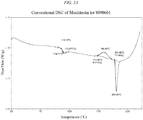
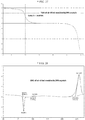
FIG. 2A depicts a DSC of moxidectin (lot S090601, amorphous form); -
FIG. 2B depicts a DSC of moxidectin (lot S080701, amorphous form); -
FIG. 3 depicts a PRXD of moxidectin (lot S090601, amorphous form); -
FIG. 4 depicts a heating-cooling-heating (20-193-20-250 °C) DSC cycle of moxidectin (lot S090601); -
FIG. 5 depicts a heating-cooling-heating (20-198-20-250 °C) DSC cycle of moxidectin (lot S090601); -
FIG. 6 depicts a heating-cooling-heating (20-220-20-250 °C) DSC cycle of moxidectin (lot S090601); -
FIG. 7 depicts a MDSC curve of moxidectin (lot S090601); -
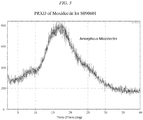
FIG. 8 depicts an X-Ray Powder Diffraction pattern (PXRD) of moxidectin (now Form A) after heating at 190 °C (lot S090601); -
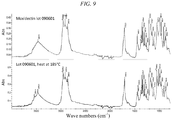
FIG. 9 depicts the IR spectra of moxidectin (top: amorphous moxidectin, lot S090601; bottom: thermally transformed crystalline moxidectin, Form A); -
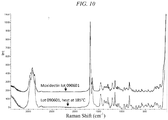
FIG. 10 depicts the Raman spectra for moxidectin (black: amorphous moxidectin, lot S090601; grey: thermally transformed crystalline moxidectin); -
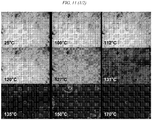
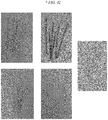
FIG. 11 presents microscopic images of hot-stage moxidectin (lot S090601);- *
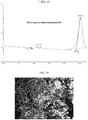
FIG. 12 is an image of moxidectin crystal recrystallized from MeOH (moxidectin·(MeOH)x; - *
FIG. 13 presents the PXRD of air-dried moxidectin/MeOH crystals(moxidectin·(MeOH)x; - *
FIG. 14 is a TGA of air-dried moxidectin/MeOH crystals; - *
FIG. 15 . DSC of air-dried moxidectin/MeOH crystals; - *
FIG. 16 presents an image of Moxidectin crystal resulting from recrystallization of (lot S090601) from EtOH (amorphous form); - *
FIG. 17 presents the PXRD of air-dried moxidectin/EtOH crystals(moxidectin·(EtOH)x); - *
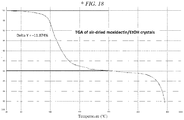
FIG. 18 presents the TGA of air-dried moxidectin/EtOH crystals; - *
FIG. 19 presents the DSC of air-dried moxidectin/EtOH crystals; - *
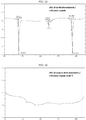
FIG. 20 presents the DSC of vacuum-dried moxidectin/EtOH crystals; - *
FIG. 21 presents the PXRD of moxidectin/EtOH crystals after vacuum drying at 95°C; - *
FIG. 22 presents the molecular structure of moxidectin/EtOH showing its hydrogen bonding connection; - *
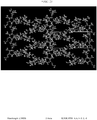
FIG. 23 presents a packing diagram showing its porous channels along [100] direction; - *
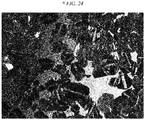
FIG. 24 presents an image of Moxidectin crystal resulting from recrystallization of (lot S090601)(amorphous) from IPA(moxidectin·(iPrOH)x); - *
FIG. 25 presents the PXRD air-dried moxidectin/IPA crystals(moxidectin·(iPrOH)x); - *
FIG. 26 presents an image of Moxidectin crystal recrystallized from IPA (lot 070201); - *
FIG. 27 presents the TGA of air-dried moxidectin/IPA crystals; - *
FIG. 28 presents the DSC of air-dried moxidectin/IPA crystals; - *
FIG. 29 presents the DSC of vacuum-dried moxidectin/IPA crystals; -
FIG. 30 presents an image of Moxidectin crystal recrystallized from n-Butanol(moxidectin·(n-BuOH)x); -
FIG. 31 presents the PXRD of air-dried moxidectin/n-Butanol crystals(moxidectin·(n-BuOH)x); -
FIG. 32 presents the TGA of air-dried moxidectin/n-Butanol crystals; -
FIG. 33 presents the DSC of air-dried moxidectin/n-Butanol crystals; -
FIG. 34 presents the DSC of vacuum-dried moxidectin/n-Butanol crystals at 60 °C; -
FIG. 35 presents the PXRD of moxidectin/n-Butanol crystals after vacuum drying at 65 °C; -
FIG. 36 presents DSC of vacuum-dried moxidectin/n-Butanol crystals at RT (moxidectin·(n-BuOH)x); - *
FIG. 37 presents Image of Moxidectin crystal recrystallized from methylcyclohexane (moxidectin·(MCH)x); - *
FIG. 38 presents PXRD of air-dried moxidectin/MCH crystals(moxidectin·(MCH)x); - *
FIG. 39 presents TGA of air-dried moxidectin/MCH crystals; - *
FIG. 40 presents DSC of air-dried moxidectin/MCH crystals; -
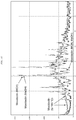
FIG. 41 presents An overlay of PXRD of air-dried moxidectin/MCH, moxidectin/MeOH and thermal transformed moxidectin; - *
FIG. 42 depicts polymeric implants according to the instant invention; - *
FIG. 43 depicts heat flow DSC for 2 different polymeric implants; - *
FIG. 44 presents in vitro release for a long-acting formulation (Lot 438-148) containing amorphous moxidectin, 75:25 DLG, 0.4 iv; - *
FIG. 45 presents in vitro release for a long-acting formulation (Lot 588-17) containing crystalline moxidectin (Form A), 75:25 DLG, 0.4 iv; - *
FIG. 46 presents moxidectin plasma levels for canines implanted with the amorphous moxidectin long-acting formulation.
- *
- The crystal forms of moxidectin described herein and compositions comprising the forms are highly effective for the treatment or prophylaxis of parasites in or on mammals, fish and birds, and in particular, cats, dogs, horses, chickens, pigs, sheep and cattle with the aim of ridding these hosts of all the parasites commonly encountered by mammals, fish and birds.
- The compounds and compositions described are also active against pests that damage agricultural material, and may be effectively used to treat and protect plants, crops, plant propagation material, property containing wood or derived from wood, from harmful pests.
- The forms and solvates of moxidectin are prepared by the application or adaptation of known methods (i.e. methods heretofore used or described in the chemical literature); or methods described in one or more of
U.S. Patents 4,199,569 ;4,310,519 ;4,423,209 ;4,427,663 ;4,457,920 ,4,806,527 ;4,831,016 ;4,855,317 ;4,859,657 ;4,871,719 ;4,873,224 ;4,874,749 ;4,895,837 ;4,906,619 ,4,920,148 ;4,963,582 ;4,973,711 ;4,978,677 ;5,015,630 ,5,023,241 ,5,030,622 ;5,055,454 ;5,055,596 ;5,057,499 ;5,077,308 ;5,089,490 ;5,162,363 ;5,169,839 ;5,208,222 ;5,244,879 ;5,262,400 ;5,830,875 ;7,250,402 ; andEP 0 214 731 - In one embodiment of the invention, the moxidectin forms may be produced according to the procedures summarized in
FIG. 1 . - In another embodiment of the invention, the amorphous moxidectin is converted to the new crystalline form by immersing the moxidectin into an oil bath at 190 °C for about 2 to about 10 minutes, followed by cooling. Amorphous moxidectin may be distinguished from the novel crystalline moxidectin (Polymorph A), for example, by x-ray crystallography (
FIG. 2A ). - With increasing temperature, amorphous moxidectin exhibits a glass transition at 115 °C, crystallizes at 175 °C to Polymorph A, melts at 206 °C, and finally decomposes at 230 °C. Molten moxidectin becomes amorphous upon cooling. Moxidectin (lot 090601) crystallized at 175 °C, and moxidectin (lot 080701) did not crystallize.
- Terms used herein will have their customary meaning in the art unless specified otherwise.
- The above description of the invention is intended to be illustrative and not limiting. Various changes or modifications in the embodiments described may occur to those skilled in the art. These can be made without departing from the scope or spirit of the invention.
- The invention is further described, for example, in the following non-limiting examples. Better understanding of the present invention and of its many advantages will be had from the following non-limiting examples, given by way of illustration. It will be apparent to those skilled in the art that these examples are non-limiting, and that similar methods to achieve the following transformations are possible.
- <*> (asterisked examples and sections represent subject matter included for reference only).
- Differential Scanning Calorimetry (DSC). The samples were subjected to three modes of testing with TA Instruments' Q100 to determine the thermal possibilities.
- 1. The Conventional DSC method was used involving the following steps:
- a) Equilibrate at 20 °C for 3 minutes.
- b)
Ramp 10 °C / minute to 250 °C [HEAT]
- 2. The Modulated DSC with the following sequence of steps:
- a) Equilibrate at 200 °C.
- b) Modulate ± 1°C every 60 seconds.
- c) Isothermal for 5 minutes.
- d)
Ramp 50 °C per minute to 200 °C.
- 3. The Heat-Cool-Heat method at a higher temperature range:
- a) Equilibrate at 20°C for 3 minutes.
- b)
Ramp 10 °C / minute to 200 °C [HEAT] - c) Ramp 10 °C / minute to 20 °C [COOL]
- d)
Ramp 10 °C / minute to 250 °C [HEAT]
- Thermal Gravity Analysis (TGA). TGA was performed on
Perkin Elmer Pyris 1 TGA instrument. Samples were equilibrated at 22 °C for 1 minute, then heat was applied at ramp of 10 °C / minute to 300 °C. - X-Ray Powder Diffraction (XRPD). Patterns were obtained at room temperature on Shimadzu's XRD-6000. The isothermal measurement conditions were as follows:
Target: Cu Voltage: 40 kV Current: 40 mA Divergence Slit: 1.0 mm Anti-scatter Slit: 1.0 mm Receiving Slit: 0.15 mm Monochromator: None Detector Slit: 0.15 mm Scan range: 2 to 40 deg Scanning Speed: 1 deg/minute Step Size: 0.02 deg Preset Time: 1.20 sec - The XRPD diffractograms of the samples were compared with regard to peak position and relative intensity, peak shifting, and the presence or lack of peaks in certain angular regions.
- Optical Microscopy. The optical photomicrographs were obtained at room temperature on
Axioskop 40 polarized light microscope from Zeiss. Under reflected light and grazing illumination, the images at 5X magnification were captured through a charge-coupled device (CCD) camera, and were processed and enhanced using Axiovision Version 4.3 software. - Attenuated Total Reflectance Infrared (ATR-IR) Spectroscopy. A diamond ATR (Smart Orbit) accessory, and a Nicolet 6700 FTIR from ThermoFisher were used with the following instrument conditions: 1) Scan range: 4000 to 650 cm-1; 2) 32 scans; and 3) 4 cm-1 resolution.
- Raman Spectroscopy. DXR Raman Microscope from ThermoFisher was used with the following instrument conditions: 1) Exposure time = 20s; 2) 32 scans; 3) 24 sample scans; and 4) 32 background scans.
- Moisture Sorption Gravimetric Analysis (SGA). Utilizing a dynamic SGA100 from VTI, adsorption and desorption profiles were obtained with the following conditions: 1) Isothermal @ 25°C; 2) Maximum Equilibration Time of 10 minutes; 3) 0.0010 wt % in 5 minutes; and 4) % RH (Relative Humidity) Steps of 5 to 95, and 95 to 5 @ 5% increments.
- Thermal analysis of commercial moxidectin (Lot #S090601) The conventional DSC of lot S090601 is depicted in
FIG. 2A . It shows an endothermal event at 114 °C, which is attributed to the glass transition of moxidectin. Starting from 174 °C, it presents a broad exotherm centered at 186 °C, which is presumably the crystallization of rubbery moxidectin. Immediately following the crystallization, a sharp endotherm occurs at 206 °C, which demonstrates the melting point of crystalline moxidectin Form A. The moxidectin starts to decompose above 230 °C. The PXRD confirms that the original moxidectin (lot S090601) is amorphous as shown inFIG. 3 . - To better understand its thermal behavior, several heating-cooling-heating cycle experiments were performed. In the first experiment, the moxidectin was cooled down from 193 °C, which was just above the crystallization temperature, as shown in
FIG. 4 . The reheating experiment showed that the sample still contained a certain amount of amorphous material due to the presence of the glass transition at 105 °C. In contrast, the second heat cycle exhibited a melting endotherm without evidence of crystallization. This indicates that the moxidectin crystallization was complete during the initial heat cycle. After cooling the sample from 198 °C to a temperature below the previously observed crystallization temperature, (FIG. 5 ), reheating showed no evidence of the previously observed glass transition, suggesting that all of the moxidectin crystallized during the first heat cycle. This is further supported by the observation of the melting point even though no crystallization transition was observed during the second heat cycle. After cooling the sample from 220 °C (FIG. 6 ), which was higher than the melting point but below the decomposition temperature, the second heat cycle showed only the glass transition, indicating that the sample became amorphous upon cooling of the molten material. - The modulated DSC is shown in
FIG. 7 . This result is consistent with those obtained from conventional DSC. A glass transition appeared in the reversible heat flow experiment, while the relaxation enthalpy, crystallization and decomposition were observed under irreversible heat flow conditions. Melting occurred in both the reversible and irreversible heat flow modes. - Thermally transformed moxidectin. Approximately 1g of moxidectin (lot S090601) was placed in a glass vial, which was then placed in a hot oil bath at ∼ 190 °C and held at that temperature for approximately 5 minutes. Upon cooling the material had yellowed slightly.. The yellowish solid was collected and ground in a mortar and pestle. To evaluate the purity of the moxidectin which had been subjected to these conditions, HPLC and LC-MS were performed. The powder was analyzed by powder x-ray diffraction (PXRD) spectroscopy. The PXRD pattern shows significant diffraction peaks indicative of the presence of a sizable amount of crystalline material although a certain amount of amorphous material still remained as evidenced by the halo envelope in the diffraction pattern. This indicates that amorphous moxidectin crystallizes upon heating to 190 °C (
FIG. 8 ). - The IR and Raman spectra of amorphous and thermally transformed crystalline moxidectin are shown in
FIG. 9 andFIG. 10 . Compared with amorphous moxidectin, crystalline moxidectin shows two sharp peaks, 3471 cm-1 and 3541 cm-1 superimposed on the broad peak around 3500 cm-1. The carbonyl stretching vibration of crystalline moxidectin shows slight red shift to 1707 cm-1 from 1712 cm-1. This demonstrates that these peaks in the IR can be used to distinguish this crystalline form from amorphous moxidectin. - A hot stage microscopic image was taken (
FIG. 11 ) of this thermal transition. The bulk, amorphous moxidectin demonstrated a wetting phenomenon around 120 °C. The wetting increased significantly with increasing temperature and the sample appeared to flow, indicating that the sample had undergone a glass transition. This parallels the DSC observation. Between 120 and 170 °C, the sample maintained this rubbery state. At about 185 °C, white spots began appearing and a large patch of "prismatic crystals" appeared at 190 °C. More crystals developed with increasing temperature to 205 °C. Above 210 °C, the crystals began to melt with completion at 218 °C. The compound decomposed around 230 °C. The hot-stage microscopic experiment verified the DSC result, confirming the transformation of moxidectin from amorphous state through glass transition to a rubbery state followed by crystallization and subsequent melting then decomposition. - *Preparation and characterization of Moxidectin/MeOH. To 0.5 ml methanol at 50-60 °C amorphous moxidectin (lot#S090601) was added gradually until the solution became saturated. The resulting mixture was cooled to room temperature and rod-like crystals formed after a short period of time. The solid was filtered and the crystal image is presented in
FIG. 12 . The crystals were birefringent, indicative of crystallinity. Moxidectin/MeOH crystals were dried in air for 1h. The powder X-ray diffraction confirmed its high degree of crystallinity (FIG. 13 ). - Thermal analysis of air-dried Moxdectin·MeOH crystals demonstrated a weight loss of 0.98% between 50-150 °C (
FIG. 14 ). The compound decomposes above 250 °C. - DSC did not show the corresponding solvent loss due to its low content. It exhibits a small exotherm around 150 °C, then melts at 214 °C (
FIG. 15 ). The small peak at 150 °C results from either solvent evaporation or phase transition. The melting point is very close to that obtained from amorphous moxidectin, suggesting that they might be the same form. - *Preparation and characterization of Moxidectin·EtOH. To 1 ml ethanol,, amorphous moxidectin (lot#S090601) was added gradually at 50-60 °C until the solution was saturated. The resulting mixture was left at room temperature and quickly formed large crystals having approximate dimensions of about 2 mm x 2 mm x 0.5 mm. One representative crystal was crushed and the crystal image was taken, which is depicted in
FIG. 16 . - Moxidectin·EtOH crystals were separated and air-dried for 2h. The crystals were ground with a mortar and pestle and analyzed by powder X-ray diffraction and thermal analysis. PXRD shows a strong diffraction pattern (
FIG. 17 ), which is different from that of moxidectin·MeOH, indicating that they have different crystal forms. - The thermal gravimetric analysis of air-dried Moxidectin·EtOH demonstrated a weight loss of 11.87% upon heating from 25 to 200 °C (
FIG. 18 ). This weight loss roughly corresponds to two mole of ethanol per mole of moxidectin. The theoretical calculation based on moxidectin:ethanol = 1:2 gives 12.57% ethanol weight content which is consistent with the experimental value. The compound decomposes above 250 °C. - The DSC of this material exhibits a sharp endotherm with a shoulder at 90 °C, which probably corresponds to loss of ethanol as shown in
FIG. 19 . - The Moxidectin·EtOH crystals were dried under vacuum at 100 °C for 4h. DSC shows the vacuum-dried moxidectin became amorphous (
FIG. 20 ). This is further confirmed by powder X-ray diffraction. Only a few small scattered peaks appear on the PXRD (FIG. 21 ), due likely to incomplete collapse of the structure upon removal of the solvent. - The single crystal structure of crystalline Moxidectin·EtOH was determined demonstrating a monoclinic P21 space group with the cell parameter a = 11.2731(15) Å, b = 8.9286(12) Å, c = 21.955(3) Å, β = 93.623(2)°, V = 2205.4(5) Å3, Z = 2.
- There are one moxidectin and two ethanol molecules per asymmetric unit as depicted in
FIG. 22 . This is consistent with the TGA result. One ethanol is hydrogen-bonded with one hydroxyl group of moxidectin as a donor and the other ethanol is hydrogen bonded to another hydroxyl group of moxidectin as an acceptor. Moxidectin molecules are connected together by hydrogen bonds, forming a channel along the crystallographic a direction, in which ethanol molecules are accommodated (FIG. 23 ). - *Preparation and characterization of Moxidectin·IPA. To 1 ml isopropanol solution, amorphous moxidectin (lot#S090601) was added gradually to saturation at 50-60 °C. The resulting solution was cooled and held at room temperature resulting in rapid formation of large prismatic crystals. The crystal image was taken and depicted in
FIG. 24 . Moxidectin·IPA crystals were isolated and air-dried for 2h. Powder X-ray diffraction shows that these crystals are highly crystalline (FIG. 25 ). When moxidectin (lot#070201, which does not contain BHT) was used for crystallization, the crystals were also formed as shown inFIG. 26 . The thermal analysis of air-dried Moxidectin·IPA crystals displayed a single weight loss of 14.87% from 25-200 °C (FIG. 27 ). This weight loss approximately corresponds to two moles of IPA per moxidectin. The theoretical calculation based on moxidectin:IPA = 1:2 gives 15.78% IPA weight content which is in reasonably good agreement with the experimental data. The compound decomposes above 250 °C. - DSC of this material demonstrated a sharp endotherm with a shoulder at 90 °C (
FIG. 28 ), which probably corresponds to the solvent loss of IPA. The small peak at 130 °C results from either solvent evaporation or phase transition, and needs to be further investigated. - The Moxdectin·IPA crystals were dried under vacuum at 100 °C for 30 min. DSC shows the vacuum-dried moxidectin becomes amorphous (
FIG. 29 ). - Preparation and characterization of Moxidectin·n-Butanol. To 0.5 ml of n-butanol, amorphous moxidectin (lot#S090601) was added gradually to saturation (maintaining temperature between 50-60 °C). The mixture was then transferred to -10 °C over night, during which time crystals had formed (
FIG. 30 ). Moxidectin/n-butanol crystals were separated and dried in air for 2h. Powder X-ray diffraction shows that these crystals are highly crystalline (FIG. 31 ). - Thermal analysis of air-dried Moxidectin·n-butanol displays a weight loss of 14.94% upon heating from 25 to 150 °C (
FIG. 32 ). This weight loss corresponds to 1.5 moles of n-butanol per mole of moxidectin. The theoretical calculation based on moxidectin:n-butanol = 1:1.5 gives 14.78% n-butanol weight content. The compound decomposes above 250 °C. - DSC exhibits a sharp endotherm at 65 °C (
FIG. 33 ), which likely corresponds to the loss of n-butanol. The desolvated moxidectin melts at 215 °C, which corresponds to the melting point of Polymorph A. The desolvation temperature is relatively low compared with moxidectin·EtOH and moxidectin·IPA, suggesting that n-butanol is loosely bound with the moxidectin molecule. - To confirm the process of desolvation of moxidectin·n-butanol, the crystals were dried under vacuum at 60 °C for 2h. The DSC and PXRD show the vacuum-dried moxidectin became amorphous after drying (
FIG. 34 and35 ). Less rigorous drying conditions did not successfully desolvate the material (FIG. 36 ). - *Preparation and characterization of Moxidectin·MCH. To 1 ml methylcyclohexane (MCH) solution, about 500 mg amorphous moxidectin (lot#S090601) was added while heating to 50-60 °C and the mixture was concentrated by evaporation. After cooling to room temperature, hexane was added and solid precipitate formed. The solid was washed with hexane and dried at room temperature for a short period of time (image,
FIG. 37 ). Powder X-ray diffraction demonstrated its crystallinity (FIG. 38 ). - Thermal analysis of air-dried Moxdectin·MCH crystal demonstrated a weight loss of 1.68% upon heating from 50 to 150 °C (
FIG. 39 ). The compound decomposes above 250 °C. DSC demonstrated an apparent melting point at 211 °C (FIG. 40 ). This melting temperature is in agreement with that of the thermally transformed solid and Moxidectin·MeOH, implying that they are the same crystalline form. Further, the PXRD patterns of the moxidectin crystals obtained from methanol and MCH are identical (FIG. 13 for MeOH vs.FIG. 41 for MCH) further confirming the similarity of the crystal forms from the two solvent systems - Conclusions. A series of crystalline moxidectin forms were obtained from alcohol solvents including methanol, ethanol, IPA and butanol etc. Those prepared from methanol and methylcyclohexane have essentially the same PXRD patterns as the thermally transformed one, indicating they have similar crystal form. Recrystallization of moxidectin from ethanol, IPA and n-butanol produce their respective solvates. The moxidectin·EtOH and moxidectin·IPA solvates become amorphous after loss of solvents, while surprisingly and unexpectedly, the moxidectin·n-butanol remains crystalline upon rapid removal of solvent. Crystalline moxidectin is almost non-hygroscopic, while amorphous moxidectin is slightly hygroscopic.
- Summary. The crystal form properties of moxidectin API are depicted in
FIGs. 2-8 and10-12 : including glass transition temperature, crystallization and the crystal melt. Polymeric implants containing either amorphous or crystalline moxidectin were prepared. For amorphous moxidectin implants, the process temperature was kept between ∼120-170°C. Inventors envision that any temperature above 120°C (but below moxidectin's decomposition temperature) would be acceptable as the moxidectin would flow above its glass transition temperature and would be more easily extruded with increasing temperature (i.e. from 120 to 170 °C). The inventors found surprisingly and unexpectedly that moxidectin crystallizes above 170°C. Thus, there is a narrow temperature range that is optimal for preparation of the inventive implants, and processing at a temperature higher than re-crystallization temperature, though it runs counter to expectation, is not desirable for producing implants containing amorphous moxidectin. When processed at temperatures between 180-210 °C, amorphous moxidectin crystallizes, and this transition has the effect of altering the release profile of any polymeric implants produced. - Polymeric Implants. A solution of moxidectin (40% w/w), BHT (1.4%) and poly d lactide-glycolide (75:25 L:G ; 0.4 iv) was prepared in methylene chloride and spray dried on a Buchi spray drier. The spray dried powder was placed in the Tenius Olsen plastometer and extruded at 118°C. The resulting ∼0.8 mm diameter polymer strand was cut into small pellets ∼2 mm in length. Five pellets were placed in a scintillation vial containing 10
mL 2% SDS in PBS, pH 7. Triplicate vials were prepared and placed in a 37°C shaking (120 rpm) water bath. The solution was removed at each sampling point, replaced with fresh 2% SDS in PBS and assay by HPLC. The results are shown inFIG. 44 . The in vitro release profile is provided inFIG. 44 . Additionally, samples were assayed by DSC (FIG. 43 ). Moxidectin was amorphous in the pellet samples. - In an alternate batch, a solution of moxidectin (40% w/w), BHT (1.4%), and poly d lactide-glycolide (75:25 L:G ; 0.4 iv) was prepared in methylene chloride and spray dried on a Buchi spray drier. The spray dried powder was placed in 3/8" single screw extruder (0.75 mm short land die, elongational mixing screw, K-Tron micro feeder set to 24 g/hr) and extruded at 130°C. The resulting ∼0.8 mm diameter polymer strand was cut into small pellets ∼2 mm in length. Five pellets were placed in a scintillation vial containing 10
mL 2% SDS in PBS, pH 7. Triplicate vials were prepared and placed in a 37°C shaking (120 rpm) water bath. The solution was removed at each sampling point, replaced with fresh 2% SDS in PBS and assay by HPLC. The in vitro dissolution data are shown inFIG. 45 . - On
Day 0, five canine animals were administered subcutaneously one injection of 4 implants (containing 2000 mcg amorphous moxidectin, 75:25 DLG (0.4 i.v.), prepared as above-lot#438-148), a separate implant needle containing the appropriate number of implants was used for each treated animal. Blood samples (approximately 5 to 7 mL) were collected in individually labeled heparinized tubes. Plasma was recovered and stored frozen in aliquots, until required for assay. Canine study data results are shown inFIG. 46 . Additionally, implant samples were also assayed by DSC and IR which determined that Moxidectin was amorphous in the implant. - Having thus described in detail the preferred embodiments of the present invention, it is to be understood that the above description of the invention is intended to be illustrative and not limited to particular details set forth in the above description, as many apparent variations thereof are possible.
Claims (3)
- A process for making crystalline moxidectin Form A, characterised by a melting point of about 210°C, said process comprising the steps of heating amorphous moxidectin in an oil bath held at a temperature of about 190°C for a period of from about 2 to about 10 minutes, followed by cooling.
- A process for making crystalline moxidectin Form A, characterised by a melting point of about 210°C, said process comprising the step of rapidly desolvating [moxidectin•1.5 BuOH] solvate.
- A process according to claim 2 wherein the [moxidectin•1.5 BuOH] solvate is prepared by the steps of adding amorphous moxidectin to n-butanol gradually to saturation whilst maintaining the temperature at 50°C to 60°C, followed by transferring to -10°C overnight.
Priority Applications (3)
| Application Number | Priority Date | Filing Date | Title |
|---|---|---|---|
| PL12798570T PL2785719T3 (en) | 2011-12-02 | 2012-11-30 | Long-acting injectable moxidectin formulations and novel moxidectin crystal forms |
| EP17190708.2A EP3351546B9 (en) | 2011-12-02 | 2012-11-30 | Long-acting injectable moxidectin formulations |
| DK17190708.2T DK3351546T5 (en) | 2011-12-02 | 2012-11-30 | LONG-ACTING INJECTABLE MOXIDECT INFORMULATIONS |
Applications Claiming Priority (2)
| Application Number | Priority Date | Filing Date | Title |
|---|---|---|---|
| US201161566336P | 2011-12-02 | 2011-12-02 | |
| PCT/US2012/067215 WO2013082373A1 (en) | 2011-12-02 | 2012-11-30 | Long-acting injectable moxidectin formulations and novel moxidectin crystal forms |
Related Child Applications (2)
| Application Number | Title | Priority Date | Filing Date |
|---|---|---|---|
| EP17190708.2A Division EP3351546B9 (en) | 2011-12-02 | 2012-11-30 | Long-acting injectable moxidectin formulations |
| EP17190708.2A Division-Into EP3351546B9 (en) | 2011-12-02 | 2012-11-30 | Long-acting injectable moxidectin formulations |
Publications (2)
| Publication Number | Publication Date |
|---|---|
| EP2785719A1 EP2785719A1 (en) | 2014-10-08 |
| EP2785719B1 true EP2785719B1 (en) | 2017-11-08 |
Family
ID=47324470
Family Applications (2)
| Application Number | Title | Priority Date | Filing Date |
|---|---|---|---|
| EP12798570.3A Active EP2785719B1 (en) | 2011-12-02 | 2012-11-30 | Long-acting injectable moxidectin formulations and novel moxidectin crystal forms |
| EP17190708.2A Active EP3351546B9 (en) | 2011-12-02 | 2012-11-30 | Long-acting injectable moxidectin formulations |
Family Applications After (1)
| Application Number | Title | Priority Date | Filing Date |
|---|---|---|---|
| EP17190708.2A Active EP3351546B9 (en) | 2011-12-02 | 2012-11-30 | Long-acting injectable moxidectin formulations |
Country Status (14)
| Country | Link |
|---|---|
| US (2) | US8715711B2 (en) |
| EP (2) | EP2785719B1 (en) |
| CN (2) | CN105232529B (en) |
| AU (4) | AU2012345813B2 (en) |
| BR (2) | BR122020002199B1 (en) |
| CA (2) | CA2857958C (en) |
| DK (2) | DK3351546T5 (en) |
| ES (2) | ES2978407T3 (en) |
| HU (2) | HUE067125T2 (en) |
| MX (2) | MX379693B (en) |
| PL (2) | PL3351546T3 (en) |
| PT (2) | PT2785719T (en) |
| WO (1) | WO2013082373A1 (en) |
| ZA (1) | ZA201404122B (en) |
Families Citing this family (11)
| Publication number | Priority date | Publication date | Assignee | Title |
|---|---|---|---|---|
| PE20151726A1 (en) * | 2013-04-12 | 2015-11-18 | Zoetis Services Llc | STABLE VETERINARY FORMULATIONS OF COMBINATION OF MACROCYCLIC LACTONES AND IMIDAZOTHIAZOLES |
| CN103405388B (en) * | 2013-08-21 | 2015-04-08 | 成都乾坤动物药业有限公司 | Wettable moxidectin solid dispersing powder as well as preparation method and application thereof |
| FR3028314B1 (en) * | 2014-11-07 | 2016-12-23 | Aircelle Sa | PROCESS FOR CHARACTERIZING THERMAL AGING OF COMPOSITE MATERIALS, PARTICULARLY COMPOSITE MATERIALS WITH ORGANIC MATRIX |
| EP3280413A1 (en) * | 2015-04-08 | 2018-02-14 | Merial, Inc. | Extended release injectable formulations comprising an isoxazoline active agent, methods and uses thereof |
| EP3551173A1 (en) | 2016-12-09 | 2019-10-16 | Bayer Animal Health GmbH | Pharmaceutical preparation and method for its manufacture |
| HUE065367T2 (en) * | 2017-04-13 | 2024-05-28 | Ceva Sante Animale | Implant for treating parasites infestations |
| KR102101969B1 (en) * | 2017-09-06 | 2020-04-22 | (주)인벤티지랩 | Microparticles containing moxidectin and method for manufacturing same |
| CA3082048A1 (en) * | 2017-11-23 | 2019-05-31 | Ceva Sante Animale | Composition containing moxidectin for treating parasites infestations |
| EP3962448A1 (en) | 2019-05-03 | 2022-03-09 | Intervet International B.V. | Injectable pharmaceutical compositions and uses thereof |
| KR20230061465A (en) | 2020-09-04 | 2023-05-08 | 엘랑코 유에스 인코포레이티드 | palatable formulation |
| US20260014227A1 (en) | 2022-06-30 | 2026-01-15 | Virbac | Deslorelin use in chemical castration of a non-human mammal related to pk/pd interaction |
Family Cites Families (93)
| Publication number | Priority date | Publication date | Assignee | Title |
|---|---|---|---|---|
| US6426333B1 (en) | 1996-09-19 | 2002-07-30 | Merial | Spot-on formulations for combating parasites |
| FR2753377B1 (en) | 1996-09-19 | 1999-09-24 | Rhone Merieux | NOVEL PARASITICIDE ASSOCIATION BASED ON 1-N-PHENYLPYRAZOLES AND ENDECTOCIDAL MACROCYCLIC LACTONES |
| NL160809C (en) | 1970-05-15 | 1979-12-17 | Duphar Int Res | METHOD FOR PREPARING BENZOYLURUM COMPOUNDS, AND METHOD FOR PREPARING INSECTICIDE PREPARATIONS BASED ON BENZOYLURUM COMPOUNDS. |
| US3818047A (en) | 1972-08-07 | 1974-06-18 | C Henrick | Substituted pyrones |
| SE434277B (en) | 1976-04-19 | 1984-07-16 | Merck & Co Inc | SET TO MAKE NEW ANTIHELMINTICALLY EFFECTIVE ASSOCIATIONS BY CULTIVATING STREPTOMYCS AVERMITILIS |
| US4166452A (en) | 1976-05-03 | 1979-09-04 | Generales Constantine D J Jr | Apparatus for testing human responses to stimuli |
| CH604517A5 (en) | 1976-08-19 | 1978-09-15 | Ciba Geigy Ag | |
| US5089490A (en) | 1977-04-02 | 1992-02-18 | Hoechst Aktiengesellschaft | Cephem derivatives |
| US4256108A (en) | 1977-04-07 | 1981-03-17 | Alza Corporation | Microporous-semipermeable laminated osmotic system |
| US4134973A (en) | 1977-04-11 | 1979-01-16 | Merck & Co., Inc. | Carbohydrate derivatives of milbemycin and processes therefor |
| US4199569A (en) | 1977-10-03 | 1980-04-22 | Merck & Co., Inc. | Selective hydrogenation products of C-076 compounds and derivatives thereof |
| US4144352A (en) | 1977-12-19 | 1979-03-13 | Merck & Co., Inc. | Milbemycin compounds as anthelmintic agents |
| US4265874A (en) | 1980-04-25 | 1981-05-05 | Alza Corporation | Method of delivering drug with aid of effervescent activity generated in environment of use |
| US4457920A (en) | 1981-09-03 | 1984-07-03 | Merck & Co., Inc. | 4a-Substituted avermectin compounds |
| US4423209A (en) | 1982-02-26 | 1983-12-27 | Merck & Co., Inc. | Processes for the interconversion of avermectin compounds |
| US4427663A (en) | 1982-03-16 | 1984-01-24 | Merck & Co., Inc. | 4"-Keto-and 4"-amino-4"-deoxy avermectin compounds and substituted amino derivatives thereof |
| DE3235931A1 (en) | 1982-09-29 | 1984-03-29 | Bayer Ag, 5090 Leverkusen | Bait to fight vermin |
| JPS59199673A (en) | 1983-04-25 | 1984-11-12 | Sumitomo Chem Co Ltd | Nitrogen-containing heterocyclic compound, its preparation and pesticide containing the same |
| US5106994A (en) | 1984-06-05 | 1992-04-21 | American Cyanamid Company | Agents and method of production thereof |
| EP0165900A3 (en) | 1984-06-08 | 1986-05-28 | Ciba-Geigy Ag | Lactones, their preparation and their use as herbicides |
| EP0179022B1 (en) | 1984-10-18 | 1990-11-07 | Ciba-Geigy Ag | Benzoylphenyl ureas |
| EP0192060B1 (en) | 1985-02-04 | 1991-09-18 | Nihon Bayer Agrochem K.K. | Heterocyclic compounds |
| ES8800986A1 (en) | 1985-07-27 | 1987-12-01 | Pfizer | A PROCEDURE FOR THE PRODUCTION OF A NEW AVERMECTIN DERIVATIVE |
| EP0237482A1 (en) | 1986-03-06 | 1987-09-16 | Ciba-Geigy Ag | Derivatives of C(29)-carbonyloxy-milbemycine against parasites in animals and plants |
| ES2019932B3 (en) | 1986-03-25 | 1991-07-16 | Sankyo Co | MACROLID COMPOUNDS. |
| CA1296329C (en) * | 1986-06-06 | 1992-02-25 | Derek R. Sutherland | Macrolide compounds |
| DE3778768D1 (en) | 1986-07-02 | 1992-06-11 | Ciba Geigy Ag | PESTICIDES. |
| US4758435A (en) * | 1986-08-11 | 1988-07-19 | American Cyanamid Company | Estradiol implant composition and method for preparation |
| US4916154A (en) | 1986-09-12 | 1990-04-10 | American Cyanamid Company | 23-Imino derivatives of LL-F28249 compounds |
| US4831016A (en) | 1986-10-31 | 1989-05-16 | Merck & Co., Inc. | Reduced avermectin derivatives |
| US4855317A (en) | 1987-03-06 | 1989-08-08 | Ciba-Geigy Corporation | Insecticides and parasiticides |
| US4806527A (en) | 1987-03-16 | 1989-02-21 | Merck & Co., Inc. | Avermectin derivatives |
| US4871719A (en) | 1987-03-24 | 1989-10-03 | Ciba-Geigy Corporation | Composition for controlling parasites in productive livestock |
| US4874749A (en) | 1987-07-31 | 1989-10-17 | Merck & Co., Inc. | 4"-Deoxy-4-N-methylamino avermectin Bla/Blb |
| EP0319142B1 (en) | 1987-11-03 | 1994-04-06 | Beecham Group Plc | Intermediates for the preparation of anthelmintic macrolide antibiotics |
| US4895837A (en) | 1988-01-29 | 1990-01-23 | Merck & Co., Inc. | Avermectin derivatives |
| US4873224A (en) | 1988-05-23 | 1989-10-10 | Merck & Co., Inc. | Avermectin derivatives |
| US4906619A (en) | 1988-07-22 | 1990-03-06 | Merck & Co., Inc. | Alkyl avermectin derivatives |
| US5015630A (en) | 1989-01-19 | 1991-05-14 | Merck & Co., Inc. | 5-oxime avermectin derivatives |
| NZ232422A (en) | 1989-02-16 | 1992-11-25 | Merck & Co Inc | 13-ketal milbemycin derivatives and parasiticides |
| US5057499A (en) | 1989-06-02 | 1991-10-15 | Merck & Co. Inc. | Avermectin derivatives |
| US5030622A (en) | 1989-06-02 | 1991-07-09 | Merck & Co., Inc. | Avermectin derivatives |
| US5023241A (en) | 1989-07-31 | 1991-06-11 | Merck & Co., Inc. | Avermectin derivatives |
| US4988824A (en) | 1989-09-11 | 1991-01-29 | Maulding Donald R | Process for the preparation of 23-(C1-C6 alkyloxime)-LL-F28249 compounds |
| US5055454A (en) | 1989-10-30 | 1991-10-08 | Merck & Co., Inc. | 13-epi-avermectin derivatives useful as antiparasitic agents |
| US5830875A (en) | 1989-10-30 | 1998-11-03 | Merck & Co., Inc. | 24-and 25-substituted avermectin and milbemycin derivatives |
| IE904606A1 (en) | 1989-12-21 | 1991-07-03 | Beecham Group Plc | Novel products |
| US5169839A (en) | 1990-05-11 | 1992-12-08 | Merck & Co., Inc. | Derivatives of 3'- and 3"-o-desmethyl avermectin compounds, compositions and methods of treating melmintic and parasitic infections |
| US5733566A (en) | 1990-05-15 | 1998-03-31 | Alkermes Controlled Therapeutics Inc. Ii | Controlled release of antiparasitic agents in animals |
| NZ239370A (en) | 1990-08-22 | 1994-04-27 | Merck & Co Inc | Bioerodible implantable controlled release dosage form comprising a poly(ortho ester) or a polyacetal with an active agent incorporated into the chain backbone |
| US5208222A (en) | 1991-03-28 | 1993-05-04 | Merck & Co., Inc. | 4"-and 4'-alkylthio avermectin derivatives |
| WO1992022555A1 (en) | 1991-06-17 | 1992-12-23 | Beecham Group Plc | Paraherquamide derivatives, precursor thereof, processes for their preparation, microorganism used and their use as antiparasitic agents |
| US5262400A (en) | 1991-06-20 | 1993-11-16 | Merck & Co., Inc. | 4α-substituted avermectin derivatives |
| US5162363A (en) | 1992-03-18 | 1992-11-10 | Merck & Co., Inc. | 23-nor-23-thia avermectin analogs are active anthelmintic agents |
| US5244879A (en) | 1992-03-18 | 1993-09-14 | Merck & Co., Inc. | 23-nor-23-oxa avermectin analogs are active anthelmintic agents |
| GB9300883D0 (en) | 1993-01-18 | 1993-03-10 | Pfizer Ltd | Antiparasitic agents |
| US5399582A (en) | 1993-11-01 | 1995-03-21 | Merck & Co., Inc. | Antiparasitic agents |
| US6221894B1 (en) | 1995-03-20 | 2001-04-24 | Merck & Co., Inc. | Nodulisporic acid derivatives |
| US5962499A (en) | 1995-03-20 | 1999-10-05 | Merck & Co., Inc. | Nodulisporic acid derivatives |
| MY113806A (en) | 1995-07-21 | 2002-05-31 | Upjohn Co | Antiparasitic marcfortines and paraherquamides |
| FR2752525B1 (en) | 1996-08-20 | 2000-05-05 | Rhone Merieux | METHOD FOR CONTROLLING MYIA OF CATTLE AND SHEEP HERBS AND COMPOSITIONS FOR CARRYING OUT SAID METHOD |
| IE80657B1 (en) | 1996-03-29 | 1998-11-04 | Merial Sas | Insecticidal combination to control mammal fleas in particular fleas on cats and dogs |
| US5885607A (en) | 1996-03-29 | 1999-03-23 | Rhone Merieux | N-phenylpyrazole-based anti-flea and anti-tick external device for cats and dogs |
| US6010710A (en) | 1996-03-29 | 2000-01-04 | Merial | Direct pour-on skin solution for antiparasitic use in cattle and sheep |
| FR2750861B1 (en) | 1996-07-11 | 1998-12-24 | Rhone Merieux | PROCESSES FOR REMOVING PARASITES, ESPECIALLY VERTEBRATE ECTOPARASITES, ESPECIALLY MAMMALS AND COMPOSITIONS FOR CARRYING OUT THIS PROCESS |
| US6998131B2 (en) | 1996-09-19 | 2006-02-14 | Merial Limited | Spot-on formulations for combating parasites |
| US6207647B1 (en) | 1997-07-18 | 2001-03-27 | Smithkline Beecham Corporation | RatA |
| ES2359973T3 (en) | 1998-03-19 | 2011-05-30 | MERCK SHARP & DOHME CORP. | LIQUID POLYMER COMPOSITIONS FOR THE CONTROLLED RELEASE OF BIOACTIVE SUBSTANCES. |
| US6174540B1 (en) | 1998-09-14 | 2001-01-16 | Merck & Co., Inc. | Long acting injectable formulations containing hydrogenated caster oil |
| GB9825402D0 (en) | 1998-11-19 | 1999-01-13 | Pfizer Ltd | Antiparasitic formulations |
| US6787342B2 (en) | 2000-02-16 | 2004-09-07 | Merial Limited | Paste formulations |
| PE20011289A1 (en) | 2000-04-07 | 2001-12-21 | Upjohn Co | ANTIHELMINE COMPOSITIONS INCLUDING MACROCYCLIC AND SPIRODIOXEPINOINDOLES LACTONES |
| DK1276748T3 (en) | 2000-04-27 | 2006-03-20 | Sankyo Lifetech Company Ltd | 13-substituted milbemycin derivatives, their preparation and their use against insects and other pests |
| US6399786B1 (en) | 2000-07-14 | 2002-06-04 | Merck & Co., Inc. | Nonacyclic nodulisporic acid derivatives |
| JPWO2002012248A1 (en) | 2000-08-09 | 2004-01-15 | 社団法人北里研究所 | Evermectin derivative |
| AUPR602501A0 (en) | 2001-06-29 | 2001-07-26 | Smart Drug Systems Inc | Sustained release pharmaceutical composition |
| AUPR610501A0 (en) * | 2001-07-04 | 2001-07-26 | Smart Drug Systems Inc | Treatment of parasitic disease |
| US7001889B2 (en) | 2002-06-21 | 2006-02-21 | Merial Limited | Anthelmintic oral homogeneous veterinary pastes |
| AR042420A1 (en) | 2002-09-11 | 2005-06-22 | Novartis Ag | BENZOTRIAZOLIL- AMINOACETONITRIL COMPOUNDS, PROCESS FOR ITS PREPARATION, METHOD AND USE OF THE SAME IN THE CONTROL OF ENDO- AND ECTO-PARASITES WITHIN AND ON LIVESTOCK PRODUCER OF HOT BLOOD AND DOMESTIC AND PLANT ANIMALS, AND IN THE PREPARATION OF A COMPOSITION |
| US7326428B2 (en) | 2002-12-18 | 2008-02-05 | Evergreen Innovation Partners I, Lp | Multi-compartment container and lid assembly |
| US7348417B2 (en) | 2003-08-07 | 2008-03-25 | Wyeth | Method of purifying moxidectin through crystallization |
| US8221778B2 (en) * | 2005-01-12 | 2012-07-17 | The Trustees Of The University Of Pennsylvania | Drug-containing implants and methods of use thereof |
| CN101768129B (en) | 2004-03-05 | 2012-05-23 | 日产化学工业株式会社 | Preparation intermediate of isoxazoline substituted benzamide compound |
| US8362086B2 (en) | 2005-08-19 | 2013-01-29 | Merial Limited | Long acting injectable formulations |
| BRPI0620668A2 (en) | 2005-12-14 | 2011-11-22 | Du Pont | compound of formula 1, composition comprising compound, invertebrate pest control composition, spray composition, bait composition, trap device, invertebrate pest control methods, cockroach, ants or termites control method and protection method. seeds against invertebrate pests |
| TW200803740A (en) | 2005-12-16 | 2008-01-16 | Du Pont | 5-aryl isoxazolines for controlling invertebrate pests |
| TWI412322B (en) | 2005-12-30 | 2013-10-21 | Du Pont | Isoxazolines for controlling invertebrate pests |
| RU2009141185A (en) | 2007-04-10 | 2011-05-20 | Байер КропСайенс АГ (DE) | INSECTICIDAL DERIVATIVES OF ARILIZOXOXAZOLINE |
| PL3088384T3 (en) | 2007-05-15 | 2019-06-28 | Merial, Inc. | Aryloazol-2-yl cyanoethylamino compounds, method of making and method of using thereof |
| TWI430995B (en) | 2007-06-26 | 2014-03-21 | Du Pont | Naphthalene isoxazoline invertebrate pest control agents |
| HUE037127T2 (en) | 2007-06-27 | 2018-08-28 | Du Pont | Animal pest control method |
| PL2170321T3 (en) | 2007-06-29 | 2013-12-31 | Zoetis Services Llc | Anthelmintic combination |
| TWI556741B (en) | 2007-08-17 | 2016-11-11 | 英特威特國際股份有限公司 | Isoxazoline compositions and their use as antiparasitics |
-
2012
- 2012-11-30 BR BR122020002199-3A patent/BR122020002199B1/en active IP Right Grant
- 2012-11-30 CN CN201510629669.1A patent/CN105232529B/en active Active
- 2012-11-30 EP EP12798570.3A patent/EP2785719B1/en active Active
- 2012-11-30 DK DK17190708.2T patent/DK3351546T5/en active
- 2012-11-30 MX MX2018009965A patent/MX379693B/en unknown
- 2012-11-30 CA CA2857958A patent/CA2857958C/en active Active
- 2012-11-30 US US13/690,185 patent/US8715711B2/en active Active
- 2012-11-30 HU HUE17190708A patent/HUE067125T2/en unknown
- 2012-11-30 ES ES17190708T patent/ES2978407T3/en active Active
- 2012-11-30 AU AU2012345813A patent/AU2012345813B2/en active Active
- 2012-11-30 PL PL17190708.2T patent/PL3351546T3/en unknown
- 2012-11-30 CN CN201280067425.3A patent/CN104053660B/en active Active
- 2012-11-30 PT PT127985703T patent/PT2785719T/en unknown
- 2012-11-30 EP EP17190708.2A patent/EP3351546B9/en active Active
- 2012-11-30 BR BR112014013371A patent/BR112014013371B1/en active IP Right Grant
- 2012-11-30 ES ES12798570.3T patent/ES2659159T3/en active Active
- 2012-11-30 HU HUE12798570A patent/HUE036441T2/en unknown
- 2012-11-30 DK DK12798570.3T patent/DK2785719T3/en active
- 2012-11-30 PL PL12798570T patent/PL2785719T3/en unknown
- 2012-11-30 PT PT171907082T patent/PT3351546T/en unknown
- 2012-11-30 MX MX2014006601A patent/MX358476B/en active IP Right Grant
- 2012-11-30 CA CA3082432A patent/CA3082432C/en active Active
- 2012-11-30 WO PCT/US2012/067215 patent/WO2013082373A1/en not_active Ceased
-
2014
- 2014-03-25 US US14/225,187 patent/US9044453B2/en active Active
- 2014-06-05 ZA ZA2014/04122A patent/ZA201404122B/en unknown
-
2017
- 2017-01-11 AU AU2017200177A patent/AU2017200177B2/en active Active
- 2017-11-28 AU AU2017268548A patent/AU2017268548B2/en active Active
-
2019
- 2019-09-13 AU AU2019229407A patent/AU2019229407A1/en not_active Abandoned
Non-Patent Citations (1)
| Title |
|---|
| None * |
Also Published As
Similar Documents
| Publication | Publication Date | Title |
|---|---|---|
| DK2785719T3 (en) | LONG-EFFECTIVE INJECTABLE MOXIDECTIN FORMULATIONS AND HIS UNKNOWN MOXIDECTIN CRYSTAL FORMS | |
| AU2018205137B2 (en) | Long-acting injectable formulations comprising an isoxazoline active agent, methods and uses thereof | |
| JP5132560B2 (en) | Long-acting injectable formulation | |
| JP6824900B2 (en) | Extended-release injectable formulations containing isooxazoline active agents, methods and their use | |
| GB2514951B (en) | Parasiticidal oral veterinary compositions comprising systemically-acting active agents, methods and uses thereof | |
| CN104812758B (en) | 1-(5'-(5-(3,5-dichloro-4-fluorophenyl)-5-(trifluoromethyl)-4,5-dihydroisoxazol-3-yl)-3' Crystal form of H-spiro[azetidine-3,1′-isobenzofuran]-1-yl)-2-(methylsulfonyl)ethanone | |
| WO2014039489A1 (en) | Spirocyclic derivatives as antiparasitic agents | |
| RU2747149C9 (en) | Anti-endoparasitic depsipeptides | |
| HK1201264B (en) | Long-acting injectable moxidectin formulations and novel moxidectin crystal forms | |
| CN112384511B (en) | Endoparasite depsipeptides | |
| NO300136B1 (en) | Analogous Process for Preparation of Therapeutically Active Stable Salts of 4 '' - Deoxy-4 '' - Epimethylaminoavermectin B1a / B1b | |
| OA17075A (en) | Parasiticidal oral veterinary compositions comprising systemically-acting active agents, methods and uses thereof. |
Legal Events
| Date | Code | Title | Description |
|---|---|---|---|
| PUAI | Public reference made under article 153(3) epc to a published international application that has entered the european phase |
Free format text: ORIGINAL CODE: 0009012 |
|
| 17P | Request for examination filed |
Effective date: 20140702 |
|
| AK | Designated contracting states |
Kind code of ref document: A1 Designated state(s): AL AT BE BG CH CY CZ DE DK EE ES FI FR GB GR HR HU IE IS IT LI LT LU LV MC MK MT NL NO PL PT RO RS SE SI SK SM TR |
|
| AX | Request for extension of the european patent |
Extension state: BA ME |
|
| RIN1 | Information on inventor provided before grant (corrected) |
Inventor name: JAIN, UDAY Inventor name: MA, BAOQING Inventor name: CHAPMAN, ROBERT, CLARK Inventor name: YANG, CHUNHUA Inventor name: CADY, SUSAN, MANCINI |
|
| REG | Reference to a national code |
Ref country code: HK Ref legal event code: DE Ref document number: 1201264 Country of ref document: HK |
|
| 17Q | First examination report despatched |
Effective date: 20150805 |
|
| RAP1 | Party data changed (applicant data changed or rights of an application transferred) |
Owner name: MERIAL, INC. |
|
| STAA | Information on the status of an ep patent application or granted ep patent |
Free format text: STATUS: EXAMINATION IS IN PROGRESS |
|
| GRAP | Despatch of communication of intention to grant a patent |
Free format text: ORIGINAL CODE: EPIDOSNIGR1 |
|
| STAA | Information on the status of an ep patent application or granted ep patent |
Free format text: STATUS: GRANT OF PATENT IS INTENDED |
|
| INTG | Intention to grant announced |
Effective date: 20170531 |
|
| GRAS | Grant fee paid |
Free format text: ORIGINAL CODE: EPIDOSNIGR3 |
|
| GRAA | (expected) grant |
Free format text: ORIGINAL CODE: 0009210 |
|
| STAA | Information on the status of an ep patent application or granted ep patent |
Free format text: STATUS: THE PATENT HAS BEEN GRANTED |
|
| AK | Designated contracting states |
Kind code of ref document: B1 Designated state(s): AL AT BE BG CH CY CZ DE DK EE ES FI FR GB GR HR HU IE IS IT LI LT LU LV MC MK MT NL NO PL PT RO RS SE SI SK SM TR |
|
| AX | Request for extension of the european patent |
Extension state: BA ME |
|
| REG | Reference to a national code |
Ref country code: GB Ref legal event code: FG4D |
|
| REG | Reference to a national code |
Ref country code: CH Ref legal event code: EP Ref country code: CH Ref legal event code: NV Representative=s name: BOHEST AG, CH Ref country code: AT Ref legal event code: REF Ref document number: 944045 Country of ref document: AT Kind code of ref document: T Effective date: 20171115 |
|
| REG | Reference to a national code |
Ref country code: FR Ref legal event code: PLFP Year of fee payment: 6 |
|
| REG | Reference to a national code |
Ref country code: IE Ref legal event code: FG4D |
|
| REG | Reference to a national code |
Ref country code: DK Ref legal event code: T3 Effective date: 20171127 |
|
| REG | Reference to a national code |
Ref country code: SE Ref legal event code: TRGR |
|
| REG | Reference to a national code |
Ref country code: DE Ref legal event code: R096 Ref document number: 602012039565 Country of ref document: DE |
|
| REG | Reference to a national code |
Ref country code: PT Ref legal event code: SC4A Ref document number: 2785719 Country of ref document: PT Date of ref document: 20180208 Kind code of ref document: T Free format text: AVAILABILITY OF NATIONAL TRANSLATION Effective date: 20180202 |
|
| REG | Reference to a national code |
Ref country code: NL Ref legal event code: FP |
|
| REG | Reference to a national code |
Ref country code: ES Ref legal event code: FG2A Ref document number: 2659159 Country of ref document: ES Kind code of ref document: T3 Effective date: 20180314 |
|
| REG | Reference to a national code |
Ref country code: LT Ref legal event code: MG4D |
|
| PG25 | Lapsed in a contracting state [announced via postgrant information from national office to epo] |
Ref country code: FI Free format text: LAPSE BECAUSE OF FAILURE TO SUBMIT A TRANSLATION OF THE DESCRIPTION OR TO PAY THE FEE WITHIN THE PRESCRIBED TIME-LIMIT Effective date: 20171108 Ref country code: NO Free format text: LAPSE BECAUSE OF FAILURE TO SUBMIT A TRANSLATION OF THE DESCRIPTION OR TO PAY THE FEE WITHIN THE PRESCRIBED TIME-LIMIT Effective date: 20180208 Ref country code: LT Free format text: LAPSE BECAUSE OF FAILURE TO SUBMIT A TRANSLATION OF THE DESCRIPTION OR TO PAY THE FEE WITHIN THE PRESCRIBED TIME-LIMIT Effective date: 20171108 |
|
| PG25 | Lapsed in a contracting state [announced via postgrant information from national office to epo] |
Ref country code: HR Free format text: LAPSE BECAUSE OF FAILURE TO SUBMIT A TRANSLATION OF THE DESCRIPTION OR TO PAY THE FEE WITHIN THE PRESCRIBED TIME-LIMIT Effective date: 20171108 Ref country code: LV Free format text: LAPSE BECAUSE OF FAILURE TO SUBMIT A TRANSLATION OF THE DESCRIPTION OR TO PAY THE FEE WITHIN THE PRESCRIBED TIME-LIMIT Effective date: 20171108 Ref country code: IS Free format text: LAPSE BECAUSE OF FAILURE TO SUBMIT A TRANSLATION OF THE DESCRIPTION OR TO PAY THE FEE WITHIN THE PRESCRIBED TIME-LIMIT Effective date: 20180308 Ref country code: RS Free format text: LAPSE BECAUSE OF FAILURE TO SUBMIT A TRANSLATION OF THE DESCRIPTION OR TO PAY THE FEE WITHIN THE PRESCRIBED TIME-LIMIT Effective date: 20171108 |
|
| REG | Reference to a national code |
Ref country code: GR Ref legal event code: EP Ref document number: 20180400027 Country of ref document: GR Effective date: 20180518 |
|
| REG | Reference to a national code |
Ref country code: HK Ref legal event code: GR Ref document number: 1201264 Country of ref document: HK |
|
| REG | Reference to a national code |
Ref country code: HU Ref legal event code: AG4A Ref document number: E036441 Country of ref document: HU |
|
| PG25 | Lapsed in a contracting state [announced via postgrant information from national office to epo] |
Ref country code: SK Free format text: LAPSE BECAUSE OF FAILURE TO SUBMIT A TRANSLATION OF THE DESCRIPTION OR TO PAY THE FEE WITHIN THE PRESCRIBED TIME-LIMIT Effective date: 20171108 Ref country code: EE Free format text: LAPSE BECAUSE OF FAILURE TO SUBMIT A TRANSLATION OF THE DESCRIPTION OR TO PAY THE FEE WITHIN THE PRESCRIBED TIME-LIMIT Effective date: 20171108 Ref country code: CY Free format text: LAPSE BECAUSE OF FAILURE TO SUBMIT A TRANSLATION OF THE DESCRIPTION OR TO PAY THE FEE WITHIN THE PRESCRIBED TIME-LIMIT Effective date: 20171108 |
|
| REG | Reference to a national code |
Ref country code: DE Ref legal event code: R097 Ref document number: 602012039565 Country of ref document: DE |
|
| PG25 | Lapsed in a contracting state [announced via postgrant information from national office to epo] |
Ref country code: LU Free format text: LAPSE BECAUSE OF NON-PAYMENT OF DUE FEES Effective date: 20171130 Ref country code: SM Free format text: LAPSE BECAUSE OF FAILURE TO SUBMIT A TRANSLATION OF THE DESCRIPTION OR TO PAY THE FEE WITHIN THE PRESCRIBED TIME-LIMIT Effective date: 20171108 Ref country code: RO Free format text: LAPSE BECAUSE OF FAILURE TO SUBMIT A TRANSLATION OF THE DESCRIPTION OR TO PAY THE FEE WITHIN THE PRESCRIBED TIME-LIMIT Effective date: 20171108 |
|
| PLBE | No opposition filed within time limit |
Free format text: ORIGINAL CODE: 0009261 |
|
| STAA | Information on the status of an ep patent application or granted ep patent |
Free format text: STATUS: NO OPPOSITION FILED WITHIN TIME LIMIT |
|
| PG25 | Lapsed in a contracting state [announced via postgrant information from national office to epo] |
Ref country code: MT Free format text: LAPSE BECAUSE OF NON-PAYMENT OF DUE FEES Effective date: 20171130 |
|
| 26N | No opposition filed |
Effective date: 20180809 |
|
| PG25 | Lapsed in a contracting state [announced via postgrant information from national office to epo] |
Ref country code: SI Free format text: LAPSE BECAUSE OF FAILURE TO SUBMIT A TRANSLATION OF THE DESCRIPTION OR TO PAY THE FEE WITHIN THE PRESCRIBED TIME-LIMIT Effective date: 20171108 |
|
| REG | Reference to a national code |
Ref country code: AT Ref legal event code: UEP Ref document number: 944045 Country of ref document: AT Kind code of ref document: T Effective date: 20171108 |
|
| PG25 | Lapsed in a contracting state [announced via postgrant information from national office to epo] |
Ref country code: MC Free format text: LAPSE BECAUSE OF FAILURE TO SUBMIT A TRANSLATION OF THE DESCRIPTION OR TO PAY THE FEE WITHIN THE PRESCRIBED TIME-LIMIT Effective date: 20171108 |
|
| REG | Reference to a national code |
Ref country code: NL Ref legal event code: PD Owner name: BOEHRINGER INGELHEIM ANIMAL HEALTH USA INC.; US Free format text: DETAILS ASSIGNMENT: CHANGE OF OWNER(S), MERGE Effective date: 20191011 Ref country code: NL Ref legal event code: PD Owner name: BOEHRINGER INGELHEIM ANIMAL HEALTH USA INC.; US Free format text: DETAILS ASSIGNMENT: CHANGE OF OWNER(S), MERGE; FORMER OWNER NAME: MERIAL, INC. Effective date: 20191011 |
|
| REG | Reference to a national code |
Ref country code: DE Ref legal event code: R082 Ref document number: 602012039565 Country of ref document: DE Representative=s name: VOSSIUS & PARTNER PATENTANWAELTE RECHTSANWAELT, DE Ref country code: DE Ref legal event code: R081 Ref document number: 602012039565 Country of ref document: DE Owner name: BOEHRINGER INGELHEIM ANIMAL HEALTH USA INC., D, US Free format text: FORMER OWNER: MERIAL, INC., DULUTH, GA., US |
|
| PG25 | Lapsed in a contracting state [announced via postgrant information from national office to epo] |
Ref country code: MK Free format text: LAPSE BECAUSE OF FAILURE TO SUBMIT A TRANSLATION OF THE DESCRIPTION OR TO PAY THE FEE WITHIN THE PRESCRIBED TIME-LIMIT Effective date: 20171108 |
|
| PG25 | Lapsed in a contracting state [announced via postgrant information from national office to epo] |
Ref country code: TR Free format text: LAPSE BECAUSE OF FAILURE TO SUBMIT A TRANSLATION OF THE DESCRIPTION OR TO PAY THE FEE WITHIN THE PRESCRIBED TIME-LIMIT Effective date: 20171108 |
|
| PG25 | Lapsed in a contracting state [announced via postgrant information from national office to epo] |
Ref country code: AL Free format text: LAPSE BECAUSE OF FAILURE TO SUBMIT A TRANSLATION OF THE DESCRIPTION OR TO PAY THE FEE WITHIN THE PRESCRIBED TIME-LIMIT Effective date: 20171108 |
|
| REG | Reference to a national code |
Ref country code: ES Ref legal event code: PC2A Owner name: BOEHRINGER INGELHEIM ANIMAL HEALTH USA INC. Effective date: 20200918 |
|
| REG | Reference to a national code |
Ref country code: GB Ref legal event code: 732E Free format text: REGISTERED BETWEEN 20210211 AND 20210217 |
|
| P01 | Opt-out of the competence of the unified patent court (upc) registered |
Effective date: 20230509 |
|
| REG | Reference to a national code |
Ref country code: DE Ref legal event code: R081 Ref document number: 602012039565 Country of ref document: DE Owner name: BOEHRINGER INGELHEIM VETMEDICA GESELLSCHAFT MI, DE Free format text: FORMER OWNER: BOEHRINGER INGELHEIM ANIMAL HEALTH USA INC., DULUTH, GA, US |
|
| REG | Reference to a national code |
Ref country code: GB Ref legal event code: 732E Free format text: REGISTERED BETWEEN 20240307 AND 20240313 |
|
| REG | Reference to a national code |
Ref country code: AT Ref legal event code: PC Ref document number: 944045 Country of ref document: AT Kind code of ref document: T Owner name: BOEHRINGER INGELHEIM VETMEDICA GMBH, DE Effective date: 20240311 |
|
| REG | Reference to a national code |
Ref country code: CH Ref legal event code: U11 Free format text: ST27 STATUS EVENT CODE: U-0-0-U10-U11 (AS PROVIDED BY THE NATIONAL OFFICE) Effective date: 20251201 |
|
| PGFP | Annual fee paid to national office [announced via postgrant information from national office to epo] |
Ref country code: PT Payment date: 20251120 Year of fee payment: 14 |
|
| PGFP | Annual fee paid to national office [announced via postgrant information from national office to epo] |
Ref country code: HU Payment date: 20251121 Year of fee payment: 14 |
|
| PGFP | Annual fee paid to national office [announced via postgrant information from national office to epo] |
Ref country code: NL Payment date: 20251119 Year of fee payment: 14 |
|
| PGFP | Annual fee paid to national office [announced via postgrant information from national office to epo] |
Ref country code: DE Payment date: 20251119 Year of fee payment: 14 |
|
| PGFP | Annual fee paid to national office [announced via postgrant information from national office to epo] |
Ref country code: GB Payment date: 20251121 Year of fee payment: 14 |
|
| PGFP | Annual fee paid to national office [announced via postgrant information from national office to epo] |
Ref country code: AT Payment date: 20251120 Year of fee payment: 14 |
|
| PGFP | Annual fee paid to national office [announced via postgrant information from national office to epo] |
Ref country code: IT Payment date: 20251125 Year of fee payment: 14 Ref country code: DK Payment date: 20251125 Year of fee payment: 14 |
|
| PGFP | Annual fee paid to national office [announced via postgrant information from national office to epo] |
Ref country code: FR Payment date: 20251125 Year of fee payment: 14 |
|
| PGFP | Annual fee paid to national office [announced via postgrant information from national office to epo] |
Ref country code: BE Payment date: 20251119 Year of fee payment: 14 Ref country code: GR Payment date: 20251120 Year of fee payment: 14 |
|
| PGFP | Annual fee paid to national office [announced via postgrant information from national office to epo] |
Ref country code: SE Payment date: 20251119 Year of fee payment: 14 Ref country code: CH Payment date: 20251201 Year of fee payment: 14 |
|
| PGFP | Annual fee paid to national office [announced via postgrant information from national office to epo] |
Ref country code: CZ Payment date: 20251125 Year of fee payment: 14 Ref country code: IE Payment date: 20251121 Year of fee payment: 14 |
|
| PGFP | Annual fee paid to national office [announced via postgrant information from national office to epo] |
Ref country code: PL Payment date: 20251120 Year of fee payment: 14 Ref country code: BG Payment date: 20251120 Year of fee payment: 14 |
|
| PGFP | Annual fee paid to national office [announced via postgrant information from national office to epo] |
Ref country code: ES Payment date: 20251229 Year of fee payment: 14 |