EP2781852A1 - Air conditioner - Google Patents
Air conditioner Download PDFInfo
- Publication number
- EP2781852A1 EP2781852A1 EP12849809.4A EP12849809A EP2781852A1 EP 2781852 A1 EP2781852 A1 EP 2781852A1 EP 12849809 A EP12849809 A EP 12849809A EP 2781852 A1 EP2781852 A1 EP 2781852A1
- Authority
- EP
- European Patent Office
- Prior art keywords
- temperature
- air
- remote controller
- conditioner body
- remote
- Prior art date
- Legal status (The legal status is an assumption and is not a legal conclusion. Google has not performed a legal analysis and makes no representation as to the accuracy of the status listed.)
- Withdrawn
Links
Images

Classifications
-
- G—PHYSICS
- G05—CONTROLLING; REGULATING
- G05D—SYSTEMS FOR CONTROLLING OR REGULATING NON-ELECTRIC VARIABLES
- G05D23/00—Control of temperature
- G05D23/19—Control of temperature characterised by the use of electric means
-
- F—MECHANICAL ENGINEERING; LIGHTING; HEATING; WEAPONS; BLASTING
- F24—HEATING; RANGES; VENTILATING
- F24F—AIR-CONDITIONING; AIR-HUMIDIFICATION; VENTILATION; USE OF AIR CURRENTS FOR SCREENING
- F24F11/00—Control or safety arrangements
- F24F11/30—Control or safety arrangements for purposes related to the operation of the system, e.g. for safety or monitoring
-
- F—MECHANICAL ENGINEERING; LIGHTING; HEATING; WEAPONS; BLASTING
- F24—HEATING; RANGES; VENTILATING
- F24F—AIR-CONDITIONING; AIR-HUMIDIFICATION; VENTILATION; USE OF AIR CURRENTS FOR SCREENING
- F24F11/00—Control or safety arrangements
- F24F11/30—Control or safety arrangements for purposes related to the operation of the system, e.g. for safety or monitoring
- F24F11/46—Improving electric energy efficiency or saving
-
- F—MECHANICAL ENGINEERING; LIGHTING; HEATING; WEAPONS; BLASTING
- F24—HEATING; RANGES; VENTILATING
- F24F—AIR-CONDITIONING; AIR-HUMIDIFICATION; VENTILATION; USE OF AIR CURRENTS FOR SCREENING
- F24F11/00—Control or safety arrangements
- F24F11/50—Control or safety arrangements characterised by user interfaces or communication
- F24F11/56—Remote control
-
- F—MECHANICAL ENGINEERING; LIGHTING; HEATING; WEAPONS; BLASTING
- F24—HEATING; RANGES; VENTILATING
- F24F—AIR-CONDITIONING; AIR-HUMIDIFICATION; VENTILATION; USE OF AIR CURRENTS FOR SCREENING
- F24F11/00—Control or safety arrangements
- F24F11/50—Control or safety arrangements characterised by user interfaces or communication
- F24F11/61—Control or safety arrangements characterised by user interfaces or communication using timers
-
- F—MECHANICAL ENGINEERING; LIGHTING; HEATING; WEAPONS; BLASTING
- F24—HEATING; RANGES; VENTILATING
- F24F—AIR-CONDITIONING; AIR-HUMIDIFICATION; VENTILATION; USE OF AIR CURRENTS FOR SCREENING
- F24F11/00—Control or safety arrangements
- F24F11/62—Control or safety arrangements characterised by the type of control or by internal processing, e.g. using fuzzy logic, adaptive control or estimation of values
-
- F—MECHANICAL ENGINEERING; LIGHTING; HEATING; WEAPONS; BLASTING
- F24—HEATING; RANGES; VENTILATING
- F24F—AIR-CONDITIONING; AIR-HUMIDIFICATION; VENTILATION; USE OF AIR CURRENTS FOR SCREENING
- F24F11/00—Control or safety arrangements
- F24F11/70—Control systems characterised by their outputs; Constructional details thereof
- F24F11/72—Control systems characterised by their outputs; Constructional details thereof for controlling the supply of treated air, e.g. its pressure
- F24F11/74—Control systems characterised by their outputs; Constructional details thereof for controlling the supply of treated air, e.g. its pressure for controlling air flow rate or air velocity
- F24F11/76—Control systems characterised by their outputs; Constructional details thereof for controlling the supply of treated air, e.g. its pressure for controlling air flow rate or air velocity by means responsive to temperature, e.g. bimetal springs
-
- F—MECHANICAL ENGINEERING; LIGHTING; HEATING; WEAPONS; BLASTING
- F24—HEATING; RANGES; VENTILATING
- F24F—AIR-CONDITIONING; AIR-HUMIDIFICATION; VENTILATION; USE OF AIR CURRENTS FOR SCREENING
- F24F11/00—Control or safety arrangements
- F24F11/70—Control systems characterised by their outputs; Constructional details thereof
- F24F11/72—Control systems characterised by their outputs; Constructional details thereof for controlling the supply of treated air, e.g. its pressure
- F24F11/74—Control systems characterised by their outputs; Constructional details thereof for controlling the supply of treated air, e.g. its pressure for controlling air flow rate or air velocity
- F24F11/77—Control systems characterised by their outputs; Constructional details thereof for controlling the supply of treated air, e.g. its pressure for controlling air flow rate or air velocity by controlling the speed of ventilators
-
- F—MECHANICAL ENGINEERING; LIGHTING; HEATING; WEAPONS; BLASTING
- F24—HEATING; RANGES; VENTILATING
- F24F—AIR-CONDITIONING; AIR-HUMIDIFICATION; VENTILATION; USE OF AIR CURRENTS FOR SCREENING
- F24F2110/00—Control inputs relating to air properties
- F24F2110/10—Temperature
Definitions
- the present invention relates to the operation control of an air conditioner provided with a remote controller having a temperature sensor.
- the remote controller disclosed in Patent Literature 1 includes a remote-control transmission section which transmits an operation signal to an air-conditioner body by using an infrared ray system, and a temperature sensor which detects temperatures of an area closer to the presence of a person.
- the remote controller is configured to periodically transmit a room temperature detected by the temperature sensor to the air-conditioner body.
- the air-conditioner body when the room temperature measured with the temperature sensor of the remote controller becomes substantially equal to a preset temperature preset at the air-conditioner body side, for example, when the room temperature becomes the preset temperature ⁇ 0.5°C, operation of the air-conditioner body is stopped to shift the air-conditioner body to a standby state. While a temperature difference between the room temperature measured with the temperature sensor and the preset temperature becomes equal to a predetermined temperature or more, the air-conditioner body is shifted to an operation mode to perform operation control so that the room temperature reaches the preset temperature. Thereby, the air-conditioner body is prevented from being operated endlessly, to reduce power consumption of the air-conditioner body.
- Patent Document 1 Japanese Laid-open Patent Publication No. 2010-164231
- a communications area is wider than that of a conventional infrared ray communication system. Therefore, it becomes possible to operate the air-conditioner body from places such as rooms other than the room where the air-conditioner body (air-conditioner indoor unit) is installed. Accordingly, the remote controller is expected to be placed in places such as rooms other than the room where the air-conditioner indoor unit is installed.
- the temperature detected by the temperature sensor included in the remote controller is not indicative of the room temperature of the room which is air-conditioned by the air-conditioner indoor unit. Therefore, in the case where the remote controller of the air conditioner, as disclosed in Patent Literature 1, is replaced with an RF remote controller, the temperature detected by the temperature sensor of the remote controller is unchanged even when the air-conditioner indoor unit performs such control as increasing operating power in attempting to reduce the difference between the temperature detected by the temperature sensor and the preset temperature. This may cause useless air-conditioning operation. From the viewpoint of energy saving, such operation control is preferably performed only when the remote controller is actually present in the room which is an air-conditioning target of the air-conditioner indoor unit.
- the present invention has been made in view of the above circumstances, and it is an object of the present invention to provide an air conditioner, which regards a temperature detected by a temperature sensor included in an RF remote controller as a room temperature and performs operation control based on the room temperature, being capable of preventing useless cooling operation in the case where the remote controller is not present in a room which is an air-conditioning target of an air-conditioner indoor unit.
- an air conditioner includes: an air-conditioner body that performs air-conditioning operation; and a remote controller that operates the air-conditioner body, wherein the air-conditioner body includes control unit that performs operation control of the air-conditioner body, and body receiving unit that receives a transmission signal from the remote controller, the remote controller includes temperature detecting unit that detects a temperature around the remote controller, and remote-controller transmission unit that transmits the temperature detected by the temperature detecting unit as a transmission signal by means of an radio wave at predetermined time intervals, and at a time of cooling operation, the control unit compares the detected temperature received from the remote controller and a preset temperature predetermined, and when the detected temperature is lower than the preset temperature, the control unit operates the air-conditioner body so as to reduce a temperature difference between the detected temperature and the preset temperature, or when the detected temperature is equal to or higher than the preset temperature, the control unit operates the air-conditioner body based on the preset temperature.
- the air-conditioner body includes control unit that performs operation control of the
- the air-conditioner body includes timer unit, and when the temperature difference between the detected temperature and the preset temperature is equal to or more than a first predetermined temperature and the timer unit counts a first predetermined period for which a state of the first predetermined temperature has continued, the control unit operates the air-conditioner body based on the preset temperature.
- the air-conditioner body includes timer unit, and when the control unit receives the detected temperature from the remote controller and when the detected temperature has changed by a second predetermined temperature or more within a second predetermined period counted by the timer unit, the control unit operates the air-conditioner body based on the preset temperature.
- the air-conditioner body includes body transmission unit that transmits a response signal to the remote controller in response to reception of the transmission signal transmitted from the remote controller
- the remote controller includes remote-controller receiving unit that receives the response signal
- the remote controller transmits the temperature detected by the temperature detecting unit as a transmission signal
- the remote controller stops transmitting a subsequent detected temperature as a transmission signal
- operation control control to increase the cooling capacity of the air-conditioner body is performed so as to reduce the temperature difference.
- the remote controller is not in an air-conditioning target room, the temperature difference is not reduced no matter how long the cooling operation is performed, while the air-conditioning target room is excessively cooled since the detected temperature is not indicative of the room temperature of the air-conditioning target room.
- air-conditioning operation by the air-conditioner body is controlled (controlled to decrease the cooling capacity) so as to reduce the temperature difference between the preset temperature and the detected temperature, only when at least the detected temperature is lower than the preset temperature.
- the air-conditioner body determines that the remote controller is not in the air-conditioning target room, and performs air-conditioning operation based on the preset temperature. As a result, even when the remote controller is not in the air-conditioning target room, the air-conditioning target room is not excessively cooled, so that useless operation can be prevented.
- the air-conditioner body determines that the remote controller is moved out of the air-conditioning target room, and performs air conditioning operation based on the preset temperature. As a result, even when the remote controller is not in the air-conditioning target room, the air-conditioning target room is not excessively cooled, so that useless operation can be prevented.
- the air-conditioner body includes body transmission unit that transmits a response signal to the remote controller in response to reception of the transmission signal transmitted from the remote controller.
- the remote controller includes remote-controller receiving unit that receives the response signal.
- the present invention can provide an effect that useless operation caused by excessive cooling at the time of cooling operation can be prevented based on the determination that the remote controller is not in the air-conditioning target room.
- an air conditioner 10 As illustrated in FIG. 1 , an air conditioner 10 according to the present invention includes an indoor unit 12 and an outdoor unit 14 used as an air-conditioner body, and a remote controller 16.
- the indoor unit 12 includes body receiving unit 18 that receives an operation signal for operating the indoor unit 12 from the remote controller 16, body transmission unit 20 that transmits operation information on the indoor unit 12 and the outdoor unit 14 to the remote controller 16, a room temperature sensor 22 that detects temperatures around the indoor unit, timer unit 25, a fan not illustrated, and control unit 24 that controls these components.
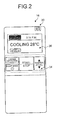
- the remote controller 16 is an apparatus using a bidirectional radio communication system with an RF module. As illustrated in FIGS. 1 and 2 , the remote controller 16 includes a display section 36 for displaying operation information (operation time, power consumption, etc.) on an air-conditioner, an operation section 34 that operates the air-conditioner, remote-controller transmission unit 26 that transmits an operation signal for drive operation and a preset temperature signal to the indoor unit 12, remote-controller receiving unit 28 that receives the operation information on the indoor unit 12 and the outdoor unit 14 transmitted from the indoor unit 12, a temperature sensor 30 (temperature detecting unit) that detects temperatures around the remote-controller transmission unit 26 and the remote-controller receiving unit 28, remote-controller timer unit 38 that counts time, and remote-controller control unit 32 that controls these components.
- operation information operation time, power consumption, etc.
- the remote controller 16 includes a display section 36 for displaying operation information (operation time, power consumption, etc.) on an air-conditioner, an operation section 34 that operates the air-conditioner, remote-controller
- the temperature detected by the temperature sensor 30 may be regarded as a room temperature of the place where a user is present.
- the remote-controller-sensor temperature by the temperature sensor 30 is transmitted to the body receiving unit 18 in the indoor unit 12 via the remote-controller transmission unit 26 at predetermined time intervals (for example, 5-minute intervals) counted by the remote-controller timer unit 38.
- a transmission and reception section of the remote controller 16 is usually turned off to prevent consumption of a battery to be used. Therefore, communication between the remote controller 16 and the indoor unit 12 is always started after the operation signal is transmitted from the remote controller 16 to the indoor unit 12 that is an operation target.
- the control unit 24 of the indoor unit 12 operates the air conditioner based on a preset temperature predetermined. More specifically, in order to air-condition the room so that the room temperature reaches the preset temperature transmitted by the remote controller 16, the control unit 24 controls the air-conditioner body while monitoring the room temperature sensor 22 so that the temperature detected by the room temperature sensor 22 becomes closer to the preset temperature.
- the above control is performed by such operation as adjusting the revolution speed of a fan (not illustrated), and/or the revolution speed of a compressor of the outdoor unit 14.
- the control unit 24 controls the air-conditioner body so as to reduce the temperature difference.
- the room temperature becomes closer to the preset temperature.
- the state of the remote-controller-sensor temperature being higher than the preset temperature tends to continue since the temperature outside the air-conditioned room is generally higher.
- the control unit 24 determines that the remote controller 16 and the indoor unit 12 are likely to be in the same room. Based on this determination, air-conditioning operation by the air-conditioner body is controlled so as to reduce the temperature difference between the preset temperature and the remote-controller-sensor temperature.
- the preset temperature is higher when the remote-controller-sensor temperature is lower than the preset temperature, whereas at the time of heating operation, when the remote-controller-sensor temperature is higher than the preset temperature, it is preferable to correct the preset temperature to be lower. More specifically, the correction is implemented as shown below.
- the remote controller 16 transmits a remote-controller-sensor temperature detected by the temperature sensor 30 as a transmission signal to the air-conditioner body 12 (step S1) as illustrated in FIG. 3 .
- the control unit 24 of the air-conditioner body 12 receives the transmission signal of the remote-controller-sensor temperature.
- the control unit 24 of the air-conditioner body 12 corrects the preset air-conditioning temperature, which is preset for the air-conditioner body, to be higher (step S3), and controls the operation of the air-conditioner body with the corrected preset temperature (step S4).
- controlling process jumps to the operation control performed by the air-conditioner body (step S4) without correcting the preset temperature with the remote-controller-sensor temperature, and the controlling process returns to S1.
- the preset temperature when the preset temperature is 28°C and the remote-controller-sensor temperature is 26°C, which is lower than the preset temperature by 2°C, the preset temperature may be corrected to be 29°C by increasing the temperature by 1°C.
- the operation control of the air-conditioner body may be performed with this new preset temperature of 29°C.
- the air conditioner is controlled to increase the cooling capacity so that the temperature difference is reduced.
- the remote controller 16 is not in an air-conditioning target room A but in a room B, as illustrated in FIG. 1 , the remote-controller-sensor temperature is not indicative of the room temperature of the air-conditioning target room A. This brings about a problem of failure to reduce the temperature difference despite the cooling operation, while the air-conditioning target room A is excessively cooled by useless operation.
- the air conditioner is controlled to decrease the cooling capacity so as to reduce the temperature difference between the preset temperature and the remote-controller-sensor temperature only when the remote-controller-sensor temperature is lower than the preset temperature. Consequently, the air-conditioning target room A is not excessively cooled, so that useless operation is prevented and energy saving is achieved even if the remote controller 16 is not in the air-conditioning target room A but in the room B as illustrated in FIG. 1 .
- the remote controller 16 transmits a remote-controller-sensor temperature detected by the temperature sensor 30 as a transmission signal to the air-conditioner body 12 (step S5) as illustrated in FIG. 4 .
- the control unit 24 of the air-conditioner body 12 receives the transmission signal of the remote-controller-sensor temperature.
- the control unit 24 of the air-conditioner body 12 corrects the air-conditioning preset temperature, which is preset for the air-conditioner body, to be lower (step S7), and controls the operation of the air-conditioner body with the corrected preset temperature (step S8).
- controlling process jumps to the operation control performed by the air-conditioner body (step S8) without correcting the preset temperature with the remote-controller-sensor temperature, and the controlling process returns to S5.
- the preset temperature when the preset temperature is 28°C and the remote-controller-sensor temperature is 30°C, which is 2°C higher than the preset temperature, the preset temperature may be corrected to 27°C by lowering the temperature by 1°C. The operation control of the air-conditioner body may be performed with this new preset temperature of 27°C.
- the air conditioner is controlled to increase the heating capacity so that the temperature difference is reduced.
- the remote controller 16 is not in an air-conditioning target room A but in a room B, as illustrated in FIG. 1 , the remote-controller-sensor temperature is not indicative of the room temperature of the air-conditioning target room A. This brings about a problem of failure to reduce the temperature difference despite the heating operation, while the air-conditioning target room A is excessively heated by useless operation.
- the air conditioner is controlled to decrease the heating capacity so as to reduce the temperature difference between the preset temperature and the remote-controller-sensor temperature only when the remote-controller-sensor temperature is higher than the preset temperature. Consequently, the air-conditioning target room A is not excessively heated, so that useless operation is prevented and energy saving is achieved even if the remote controller 16 is not in the air-conditioning target room A but in the room B as illustrated in FIG. 1 .
- the present invention can prevent excessive cooling at the time of cooling operation and excessive heating at the time of heating operation.
- a temperature difference between a detected temperature, which is detected by the temperature sensor 30 and transmitted from the remote controller 16, and a preset temperature is equal to or more than a first predetermined temperature (for example, 5°C) and the state of the first predetermined temperature has continued for a first predetermined period (for example, 15 minutes) as counted by the timer unit 25, i.e., when the detected temperature does not reach the preset temperature despite the air-conditioning operation, the control unit 24 of the air-conditioner body 12 determines that the remote controller 16 is not in the air-conditioning target room. Accordingly, the control unit 24 performs air-conditioning operation not based on the remote-controller-sensor temperature but based on the preset temperature.
- a first predetermined temperature for example, 5°C
- a first predetermined period for example, 15 minutes
- the control unit 24 of the air-conditioner body 12 determines that the remote controller has been moved out of the air-conditioning target room and is not in the air-conditioning target room. Accordingly, the control unit 24 performs air-conditioning operation not based on the remote-controller-sensor temperature but based on the preset temperature.
- the determination is made based on the time counted by the timer unit 25 of the air-conditioner body 12. However, the determination may be made based on the presence of a significant change (for example, 3°C or more) in the detected temperature, transmitted from the remote controller 16, between a previously detected temperature and a currently detected temperature.
- a significant change for example, 3°C or more
- the air-conditioner body 12 transmits a response signal from the body transmission unit 20 to the remote controller 16 in response to reception of the transmission signal from the remote controller 16.
- the remote controller 16 determines that the remote controller 16 is within an operation target range. Therefore, when the remote controller 16 transmits the detected temperature detected by the temperature sensor 30 to the air-conditioner body 12 but does not receive a response signal from the air-conditioner body 12, the remote controller 16 is determined to be out of the operation target range, i.e., out of the air-conditioning target room. Accordingly, transmission of a subsequent detected temperature by the remote controller 16 is stopped.
- the control unit 24 of the air-conditioner body 12 performs air-conditioning operation not based on the remote-controller-sensor temperature but based on the preset temperature.
- a bidirectional wireless communication system is used between the remote controller 16 and the air-conditioner body (indoor unit 12) to enable the display section 36 of the remote controller 16 to display the operation information on the air-conditioner body (for example, information on electricity bill after the operation is over and on maintenance operation such as filter cleaning).
- the remote controller 16 does not need to use the function of bidirectional communication, and may perform only transmission of the transmission signal.
- air-conditioning operation by the air-conditioner body is controlled only when at least the detected temperature is lower than the preset temperature so as to reduce the temperature difference between the preset temperature and the detected temperature (control to decrease the cooling capacity) in order to prevent useless operation, which occurs in a situation where, when the detected temperature is higher than the preset temperature in cooling operation, operation control (control to increase the cooling capacity) of the air-conditioner body is performed so as to reduce the temperature difference, and when the remote controller is not in an air-conditioning target room, since the detected temperature is not indicative of the room temperature of the air-conditioning target room, the temperature difference is not reduced despite the cooling operation, while the air-conditioning target room is excessively cooled.
- the air-conditioner body determines that the remote controller is not in the air-conditioning target room, and performs air-conditioning operation based on the preset temperature. As a result, even when the remote controller is not in the air-conditioning target room, the air-conditioning target room is not excessively cooled, so that useless operation can be prevented.
- the air-conditioner body determines that the remote controller has been moved out of the air-conditioning target room, and performs air conditioning operation based on the preset temperature. As a result, even when the remote controller is not in the air-conditioning target room, the air-conditioning target room is not excessively cooled, so that useless operation can be prevented.
- the air-conditioner body includes the body transmission unit that transmits a response signal to the remote controller in response to reception of the transmission signal from the remote controller.
- the remote controller includes the remote-controller receiving unit that receives the response signal.
- the present invention can provide an advantage that useless operation caused by excessive cooling at the time of cooling operation can be prevented based on the determination that the remote controller is not in the air-conditioning target room.
- the air conditioner according to the present invention is useful for an air conditioner that uses a temperature detected by the temperature sensor included in the remote controller as a room temperature and performs operation control based on the room temperature.
- the air conditioner according to the present invention is particularly suitable for an air conditioner using an RF remote controller that employs a bidirectional radio-communication radio wave with an RF module.
Landscapes
- Engineering & Computer Science (AREA)
- General Engineering & Computer Science (AREA)
- Chemical & Material Sciences (AREA)
- Combustion & Propulsion (AREA)
- Mechanical Engineering (AREA)
- Physics & Mathematics (AREA)
- Human Computer Interaction (AREA)
- Fluid Mechanics (AREA)
- Mathematical Physics (AREA)
- Signal Processing (AREA)
- Fuzzy Systems (AREA)
- General Physics & Mathematics (AREA)
- Automation & Control Theory (AREA)
- Air Conditioning Control Device (AREA)
Abstract
Description
- The present invention relates to the operation control of an air conditioner provided with a remote controller having a temperature sensor.
- There has been known a remote controller, which performs remote control of an air conditioner and/or sets various parameters such as a preset temperature (see, for example, Patent Literature 1). The remote controller disclosed in Patent Literature 1 includes a remote-control transmission section which transmits an operation signal to an air-conditioner body by using an infrared ray system, and a temperature sensor which detects temperatures of an area closer to the presence of a person. The remote controller is configured to periodically transmit a room temperature detected by the temperature sensor to the air-conditioner body.
- In this configuration, when the room temperature measured with the temperature sensor of the remote controller becomes substantially equal to a preset temperature preset at the air-conditioner body side, for example, when the room temperature becomes the preset temperature ± 0.5°C, operation of the air-conditioner body is stopped to shift the air-conditioner body to a standby state. While a temperature difference between the room temperature measured with the temperature sensor and the preset temperature becomes equal to a predetermined temperature or more, the air-conditioner body is shifted to an operation mode to perform operation control so that the room temperature reaches the preset temperature. Thereby, the air-conditioner body is prevented from being operated endlessly, to reduce power consumption of the air-conditioner body.
- Patent Document 1: Japanese Laid-open Patent Publication No.
2010-164231 - In the case of an RF remote controller using an radio wave, a communications area is wider than that of a conventional infrared ray communication system. Therefore, it becomes possible to operate the air-conditioner body from places such as rooms other than the room where the air-conditioner body (air-conditioner indoor unit) is installed. Accordingly, the remote controller is expected to be placed in places such as rooms other than the room where the air-conditioner indoor unit is installed.
- When the remote controller is placed in places other than the room where the air-conditioner indoor unit is installed, the temperature detected by the temperature sensor included in the remote controller is not indicative of the room temperature of the room which is air-conditioned by the air-conditioner indoor unit. Therefore, in the case where the remote controller of the air conditioner, as disclosed in Patent Literature 1, is replaced with an RF remote controller, the temperature detected by the temperature sensor of the remote controller is unchanged even when the air-conditioner indoor unit performs such control as increasing operating power in attempting to reduce the difference between the temperature detected by the temperature sensor and the preset temperature. This may cause useless air-conditioning operation. From the viewpoint of energy saving, such operation control is preferably performed only when the remote controller is actually present in the room which is an air-conditioning target of the air-conditioner indoor unit.
- The present invention has been made in view of the above circumstances, and it is an object of the present invention to provide an air conditioner, which regards a temperature detected by a temperature sensor included in an RF remote controller as a room temperature and performs operation control based on the room temperature, being capable of preventing useless cooling operation in the case where the remote controller is not present in a room which is an air-conditioning target of an air-conditioner indoor unit.
- According to an aspect of the present invention, an air conditioner includes: an air-conditioner body that performs air-conditioning operation; and a remote controller that operates the air-conditioner body, wherein the air-conditioner body includes control unit that performs operation control of the air-conditioner body, and body receiving unit that receives a transmission signal from the remote controller, the remote controller includes temperature detecting unit that detects a temperature around the remote controller, and remote-controller transmission unit that transmits the temperature detected by the temperature detecting unit as a transmission signal by means of an radio wave at predetermined time intervals, and at a time of cooling operation, the control unit compares the detected temperature received from the remote controller and a preset temperature predetermined, and when the detected temperature is lower than the preset temperature, the control unit operates the air-conditioner body so as to reduce a temperature difference between the detected temperature and the preset temperature, or when the detected temperature is equal to or higher than the preset temperature, the control unit operates the air-conditioner body based on the preset temperature.
- According to another aspect of the present invention, the air-conditioner body includes timer unit, and when the temperature difference between the detected temperature and the preset temperature is equal to or more than a first predetermined temperature and the timer unit counts a first predetermined period for which a state of the first predetermined temperature has continued, the control unit operates the air-conditioner body based on the preset temperature.
- According to another aspect of the present invention, the air-conditioner body includes timer unit, and when the control unit receives the detected temperature from the remote controller and when the detected temperature has changed by a second predetermined temperature or more within a second predetermined period counted by the timer unit, the control unit operates the air-conditioner body based on the preset temperature.
- According to another aspect of the present invention, the air-conditioner body includes body transmission unit that transmits a response signal to the remote controller in response to reception of the transmission signal transmitted from the remote controller, the remote controller includes remote-controller receiving unit that receives the response signal, the remote controller transmits the temperature detected by the temperature detecting unit as a transmission signal, and when the remote controller fails to receive the response signal from the air-conditioner body, the remote controller stops transmitting a subsequent detected temperature as a transmission signal.
- When a detected temperature is higher than a preset temperature at the time of cooling operation, operation control (control to increase the cooling capacity) of the air-conditioner body is performed so as to reduce the temperature difference. In this case, if the remote controller is not in an air-conditioning target room, the temperature difference is not reduced no matter how long the cooling operation is performed, while the air-conditioning target room is excessively cooled since the detected temperature is not indicative of the room temperature of the air-conditioning target room. According to the air conditioner of the present invention, in order to prevent such useless operation, air-conditioning operation by the air-conditioner body is controlled (controlled to decrease the cooling capacity) so as to reduce the temperature difference between the preset temperature and the detected temperature, only when at least the detected temperature is lower than the preset temperature.
- According to another air conditioner of the present invention, when a temperature difference between the detected temperature and the preset temperature is equal to or more than a first predetermined temperature and the state of the first predetermined temperature has continued for a predetermined first period, the air-conditioner body determines that the remote controller is not in the air-conditioning target room, and performs air-conditioning operation based on the preset temperature. As a result, even when the remote controller is not in the air-conditioning target room, the air-conditioning target room is not excessively cooled, so that useless operation can be prevented.
- According to another air conditioner of the present invention, when the detected temperature has changed by a second predetermined temperature or more during a second predetermined period, the air-conditioner body determines that the remote controller is moved out of the air-conditioning target room, and performs air conditioning operation based on the preset temperature. As a result, even when the remote controller is not in the air-conditioning target room, the air-conditioning target room is not excessively cooled, so that useless operation can be prevented.
- According to another air conditioner of the present invention, the air-conditioner body includes body transmission unit that transmits a response signal to the remote controller in response to reception of the transmission signal transmitted from the remote controller. The remote controller includes remote-controller receiving unit that receives the response signal. When the remote controller transmits the temperature detected by the temperature detecting unit as a transmission signal but does not receive a response signal from the air-conditioner body, it is determined that the remote controller is not in the air-conditioning target room, and a subsequent detected temperature is not transmitted as a transmission signal, so that useless transmission can be prevented.
- Therefore, the present invention can provide an effect that useless operation caused by excessive cooling at the time of cooling operation can be prevented based on the determination that the remote controller is not in the air-conditioning target room.
-
-
FIG. 1 is a block diagram illustrating an example of an air conditioner according to the present invention. -
FIG. 2 is a diagram illustrating one example of a remote controller of the air conditioner according to the present invention. -
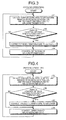
FIG. 3 is a flow chart of cooling operation by the air conditioner according to the present invention. -
FIG. 4 is a flow chart of heating operation by the air conditioner according to the present invention. Description of Embodiment - Hereinafter, an embodiment of the air conditioner according to the present invention will be described in detail with reference to the accompanying drawings. It should be understood that this example is not intended to limit the present embodiment.
- As illustrated in
FIG. 1 , anair conditioner 10 according to the present invention includes an indoor unit 12 and anoutdoor unit 14 used as an air-conditioner body, and aremote controller 16. - The indoor unit 12 includes body receiving unit 18 that receives an operation signal for operating the indoor unit 12 from the
remote controller 16, body transmission unit 20 that transmits operation information on the indoor unit 12 and theoutdoor unit 14 to theremote controller 16, aroom temperature sensor 22 that detects temperatures around the indoor unit,timer unit 25, a fan not illustrated, and control unit 24 that controls these components. - The
remote controller 16 is an apparatus using a bidirectional radio communication system with an RF module. As illustrated inFIGS. 1 and2 , theremote controller 16 includes adisplay section 36 for displaying operation information (operation time, power consumption, etc.) on an air-conditioner, anoperation section 34 that operates the air-conditioner, remote-controller transmission unit 26 that transmits an operation signal for drive operation and a preset temperature signal to the indoor unit 12, remote-controller receivingunit 28 that receives the operation information on the indoor unit 12 and theoutdoor unit 14 transmitted from the indoor unit 12, a temperature sensor 30 (temperature detecting unit) that detects temperatures around the remote-controller transmission unit 26 and the remote-controller receivingunit 28, remote-controller timer unit 38 that counts time, and remote-controller control unit 32 that controls these components. The temperature detected by the temperature sensor 30 (hereinafter referred to as a remote-controller-sensor temperature) may be regarded as a room temperature of the place where a user is present. The remote-controller-sensor temperature by thetemperature sensor 30 is transmitted to the body receiving unit 18 in the indoor unit 12 via the remote-controller transmission unit 26 at predetermined time intervals (for example, 5-minute intervals) counted by the remote-controller timer unit 38. A transmission and reception section of theremote controller 16 is usually turned off to prevent consumption of a battery to be used. Therefore, communication between theremote controller 16 and the indoor unit 12 is always started after the operation signal is transmitted from theremote controller 16 to the indoor unit 12 that is an operation target. - The control unit 24 of the indoor unit 12 operates the air conditioner based on a preset temperature predetermined. More specifically, in order to air-condition the room so that the room temperature reaches the preset temperature transmitted by the
remote controller 16, the control unit 24 controls the air-conditioner body while monitoring theroom temperature sensor 22 so that the temperature detected by theroom temperature sensor 22 becomes closer to the preset temperature. The above control is performed by such operation as adjusting the revolution speed of a fan (not illustrated), and/or the revolution speed of a compressor of theoutdoor unit 14. - When a temperature difference between the preset temperature and the remote-controller-sensor temperature is detected, the control unit 24 controls the air-conditioner body so as to reduce the temperature difference. In this case, when the
remote controller 16 and the indoor unit 12 are in the same room, the room temperature becomes closer to the preset temperature. However, in the case of, for example, cooling operation, if theremote controller 16 is in another room where air-conditioning is not performed, the state of the remote-controller-sensor temperature being higher than the preset temperature tends to continue since the temperature outside the air-conditioned room is generally higher. - Accordingly, in the present invention, when the remote-controller-sensor temperature is lower than the preset temperature at the time of cooling operation, and when the remote-controller-sensor temperature is higher than the preset temperature at the time of heating operation, the control unit 24 determines that the
remote controller 16 and the indoor unit 12 are likely to be in the same room. Based on this determination, air-conditioning operation by the air-conditioner body is controlled so as to reduce the temperature difference between the preset temperature and the remote-controller-sensor temperature. - At the time of cooling operation, it is preferable to correct the preset temperature to be higher when the remote-controller-sensor temperature is lower than the preset temperature, whereas at the time of heating operation, when the remote-controller-sensor temperature is higher than the preset temperature, it is preferable to correct the preset temperature to be lower. More specifically, the correction is implemented as shown below.
- First, at the time of cooling operation, the
remote controller 16 transmits a remote-controller-sensor temperature detected by thetemperature sensor 30 as a transmission signal to the air-conditioner body 12 (step S1) as illustrated inFIG. 3 . The control unit 24 of the air-conditioner body 12 receives the transmission signal of the remote-controller-sensor temperature. When the remote-controller-sensor temperature is lower than the preset temperature (YES at step S2), the control unit 24 of the air-conditioner body 12 corrects the preset air-conditioning temperature, which is preset for the air-conditioner body, to be higher (step S3), and controls the operation of the air-conditioner body with the corrected preset temperature (step S4). When the remote-controller-sensor temperature is higher than the preset temperature in step S2 (NO at step S2 ), controlling process jumps to the operation control performed by the air-conditioner body (step S4) without correcting the preset temperature with the remote-controller-sensor temperature, and the controlling process returns to S1. - In one specific example, when the preset temperature is 28°C and the remote-controller-sensor temperature is 26°C, which is lower than the preset temperature by 2°C, the preset temperature may be corrected to be 29°C by increasing the temperature by 1°C. The operation control of the air-conditioner body may be performed with this new preset temperature of 29°C.
- When the remote-controller-sensor temperature is higher than the preset temperature in cooling operation, the air conditioner is controlled to increase the cooling capacity so that the temperature difference is reduced. In this case, when the
remote controller 16 is not in an air-conditioning target room A but in a room B, as illustrated inFIG. 1 , the remote-controller-sensor temperature is not indicative of the room temperature of the air-conditioning target room A. This brings about a problem of failure to reduce the temperature difference despite the cooling operation, while the air-conditioning target room A is excessively cooled by useless operation. - However, in the present invention, the air conditioner is controlled to decrease the cooling capacity so as to reduce the temperature difference between the preset temperature and the remote-controller-sensor temperature only when the remote-controller-sensor temperature is lower than the preset temperature. Consequently, the air-conditioning target room A is not excessively cooled, so that useless operation is prevented and energy saving is achieved even if the
remote controller 16 is not in the air-conditioning target room A but in the room B as illustrated inFIG. 1 . - At the time of heating operation, the
remote controller 16 transmits a remote-controller-sensor temperature detected by thetemperature sensor 30 as a transmission signal to the air-conditioner body 12 (step S5) as illustrated inFIG. 4 . The control unit 24 of the air-conditioner body 12 receives the transmission signal of the remote-controller-sensor temperature. When the remote-controller-sensor temperature is higher than the preset temperature (YES at step S6), the control unit 24 of the air-conditioner body 12 corrects the air-conditioning preset temperature, which is preset for the air-conditioner body, to be lower (step S7), and controls the operation of the air-conditioner body with the corrected preset temperature (step S8). When the remote-controller-sensor temperature is lower than the preset temperature in step S6 (NO at Step S6), controlling process jumps to the operation control performed by the air-conditioner body (step S8) without correcting the preset temperature with the remote-controller-sensor temperature, and the controlling process returns to S5. - In one specific example, when the preset temperature is 28°C and the remote-controller-sensor temperature is 30°C, which is 2°C higher than the preset temperature, the preset temperature may be corrected to 27°C by lowering the temperature by 1°C. The operation control of the air-conditioner body may be performed with this new preset temperature of 27°C.
- When the remote-controller-sensor temperature is lower than the preset temperature in heating operation, the air conditioner is controlled to increase the heating capacity so that the temperature difference is reduced. In this case, when the
remote controller 16 is not in an air-conditioning target room A but in a room B, as illustrated inFIG. 1 , the remote-controller-sensor temperature is not indicative of the room temperature of the air-conditioning target room A. This brings about a problem of failure to reduce the temperature difference despite the heating operation, while the air-conditioning target room A is excessively heated by useless operation. - However, in the present invention, the air conditioner is controlled to decrease the heating capacity so as to reduce the temperature difference between the preset temperature and the remote-controller-sensor temperature only when the remote-controller-sensor temperature is higher than the preset temperature. Consequently, the air-conditioning target room A is not excessively heated, so that useless operation is prevented and energy saving is achieved even if the
remote controller 16 is not in the air-conditioning target room A but in the room B as illustrated inFIG. 1 . - Therefore, the present invention can prevent excessive cooling at the time of cooling operation and excessive heating at the time of heating operation.
- A description will now be given to a method for determining whether the remote controller is in the air-conditioning target room or not.
- When a temperature difference between a detected temperature, which is detected by the
temperature sensor 30 and transmitted from theremote controller 16, and a preset temperature is equal to or more than a first predetermined temperature (for example, 5°C) and the state of the first predetermined temperature has continued for a first predetermined period (for example, 15 minutes) as counted by thetimer unit 25, i.e., when the detected temperature does not reach the preset temperature despite the air-conditioning operation, the control unit 24 of the air-conditioner body 12 determines that theremote controller 16 is not in the air-conditioning target room. Accordingly, the control unit 24 performs air-conditioning operation not based on the remote-controller-sensor temperature but based on the preset temperature. - When the detected temperature, which is detected by the
temperature sensor 30 and transmitted from theremote controller 16, has changed by a second predetermined temperature (for example, 3°C) or more within a second predetermined period (for example, 10 minutes) as counted by thetimer unit 25, i.e., when the detected temperature has abruptly changed in a short period of time, the control unit 24 of the air-conditioner body 12 determines that the remote controller has been moved out of the air-conditioning target room and is not in the air-conditioning target room. Accordingly, the control unit 24 performs air-conditioning operation not based on the remote-controller-sensor temperature but based on the preset temperature. - In the above case, the determination is made based on the time counted by the
timer unit 25 of the air-conditioner body 12. However, the determination may be made based on the presence of a significant change (for example, 3°C or more) in the detected temperature, transmitted from theremote controller 16, between a previously detected temperature and a currently detected temperature. - The air-conditioner body 12 transmits a response signal from the body transmission unit 20 to the
remote controller 16 in response to reception of the transmission signal from theremote controller 16. When the response signal from the air-conditioner body 12 is received in the remote-controller receiving unit 28, theremote controller 16 determines that theremote controller 16 is within an operation target range. Therefore, when theremote controller 16 transmits the detected temperature detected by thetemperature sensor 30 to the air-conditioner body 12 but does not receive a response signal from the air-conditioner body 12, theremote controller 16 is determined to be out of the operation target range, i.e., out of the air-conditioning target room. Accordingly, transmission of a subsequent detected temperature by theremote controller 16 is stopped. When the detected temperature from theremote controller 16 is not received for a given period of time, the control unit 24 of the air-conditioner body 12 performs air-conditioning operation not based on the remote-controller-sensor temperature but based on the preset temperature. - In the above-described embodiment, a bidirectional wireless communication system is used between the
remote controller 16 and the air-conditioner body (indoor unit 12) to enable thedisplay section 36 of theremote controller 16 to display the operation information on the air-conditioner body (for example, information on electricity bill after the operation is over and on maintenance operation such as filter cleaning). However, in the present invention, theremote controller 16 does not need to use the function of bidirectional communication, and may perform only transmission of the transmission signal. - As described in the foregoing, according to the air-conditioner of the present invention, in the cooling operation, air-conditioning operation by the air-conditioner body is controlled only when at least the detected temperature is lower than the preset temperature so as to reduce the temperature difference between the preset temperature and the detected temperature (control to decrease the cooling capacity) in order to prevent useless operation, which occurs in a situation where, when the detected temperature is higher than the preset temperature in cooling operation, operation control (control to increase the cooling capacity) of the air-conditioner body is performed so as to reduce the temperature difference, and when the remote controller is not in an air-conditioning target room, since the detected temperature is not indicative of the room temperature of the air-conditioning target room, the temperature difference is not reduced despite the cooling operation, while the air-conditioning target room is excessively cooled.
- According to another air conditioner of the present invention, when a temperature difference between the detected temperature and the preset temperature is equal to or more than a first predetermined temperature and the state of the first predetermined temperature has continued for a predetermined first period, the air-conditioner body determines that the remote controller is not in the air-conditioning target room, and performs air-conditioning operation based on the preset temperature. As a result, even when the remote controller is not in the air-conditioning target room, the air-conditioning target room is not excessively cooled, so that useless operation can be prevented.
- According to another air conditioner of the present invention, when the detected temperature has changed by a second predetermined temperature or more during a second predetermined period, the air-conditioner body determines that the remote controller has been moved out of the air-conditioning target room, and performs air conditioning operation based on the preset temperature. As a result, even when the remote controller is not in the air-conditioning target room, the air-conditioning target room is not excessively cooled, so that useless operation can be prevented.
- According to another air conditioner of the present invention, the air-conditioner body includes the body transmission unit that transmits a response signal to the remote controller in response to reception of the transmission signal from the remote controller. The remote controller includes the remote-controller receiving unit that receives the response signal. When the remote controller transmits a temperature detected by the temperature detecting unit but does not receive the response signal from the air-conditioner body, the remote controller determines that the remote controller is not in the air-conditioning target room, and refrains from transmitting a subsequent detected temperature, so that useless transmission and consumption of a battery can be prevented.
- Therefore, the present invention can provide an advantage that useless operation caused by excessive cooling at the time of cooling operation can be prevented based on the determination that the remote controller is not in the air-conditioning target room.
- As described in the foregoing, the air conditioner according to the present invention is useful for an air conditioner that uses a temperature detected by the temperature sensor included in the remote controller as a room temperature and performs operation control based on the room temperature. The air conditioner according to the present invention is particularly suitable for an air conditioner using an RF remote controller that employs a bidirectional radio-communication radio wave with an RF module.
-
- 10
- Air conditioner
- 12
- Indoor unit (air-conditioner body)
- 14
- Outdoor unit (air-conditioner body)
- 16
- Remote controller
- 18
- Body receiving unit
- 20
- Body transmission unit
- 22
- Room temperature sensor
- 24
- Control unit
- 25
- Timer unit
- 26
- Remote-controller transmission unit
- 28
- Remote-controller receiving unit
- 30
- Temperature sensor
- 32
- Remote-controller control unit
- 34
- Operation section (operation unit)
- 36
- Display section (display unit)
- 38
- Remote-controller timer unit
Claims (4)
- An air conditioner, comprising:an air-conditioner body that performs air-conditioning operation; anda remote controller that operates the air-conditioner body, whereinthe air-conditioner body includes control unit that performs operation control of the air-conditioner body, and body receiving unit that receives a transmission signal from the remote controller,the remote controller includes temperature detecting unit that detects a temperature around the remote controller, and remote-controller transmission unit that transmits the temperature detected by the temperature detecting unit as a transmission signal by means of an radio wave at predetermined time intervals, andat a time of cooling operation, the control unit compares the detected temperature received from the remote controller and a preset temperature predetermined, and when the detected temperature is lower than the preset temperature, the control unit operates the air-conditioner body so as to reduce a temperature difference between the detected temperature and the preset temperature, or when the detected temperature is equal to or higher than the preset temperature, the control unit operates the air-conditioner body based on the preset temperature.
- The air conditioner according to claim 1, wherein
the air-conditioner body includes timer unit, and
when the temperature difference between the detected temperature and the preset temperature is equal to or more than a first predetermined temperature and the timer unit counts a first predetermined period for which a state of the first predetermined temperature has continued, the control unit operates the air-conditioner body based on the preset temperature. - The air conditioner according to claim 1, wherein
the air-conditioner body includes timer unit, and
when the control unit receives the detected temperature from the remote controller and counts with the timer unit a second predetermined period during which the detected temperature has changed by a second prescribed temperature or more, the control unit operates the air-conditioner body based on the preset temperature. - The air conditioner according to claim 1, wherein
the air-conditioner body includes body transmission unit that transmits a response signal to the remote controller in response to reception of the transmission signal transmitted from the remote controller,
the remote controller includes remote-controller receiving unit that receives the response signal, and
when the remote controller transmits the temperature detected by the temperature detecting unit as a transmission signal but does not receive the response signal from the air-conditioning apparatus body, the remote controller does not transmit a subsequent detected temperature as a transmission signal.
Applications Claiming Priority (2)
| Application Number | Priority Date | Filing Date | Title |
|---|---|---|---|
| JP2011251163A JP5333565B2 (en) | 2011-11-16 | 2011-11-16 | Air conditioner |
| PCT/JP2012/079235 WO2013073493A1 (en) | 2011-11-16 | 2012-11-12 | Air conditioner |
Publications (2)
| Publication Number | Publication Date |
|---|---|
| EP2781852A1 true EP2781852A1 (en) | 2014-09-24 |
| EP2781852A4 EP2781852A4 (en) | 2015-11-11 |
Family
ID=48429552
Family Applications (1)
| Application Number | Title | Priority Date | Filing Date |
|---|---|---|---|
| EP12849809.4A Withdrawn EP2781852A4 (en) | 2011-11-16 | 2012-11-12 | AIR CONDITIONING |
Country Status (6)
| Country | Link |
|---|---|
| US (1) | US10671102B2 (en) |
| EP (1) | EP2781852A4 (en) |
| JP (1) | JP5333565B2 (en) |
| CN (1) | CN103917830B (en) |
| AU (1) | AU2012337876B2 (en) |
| WO (1) | WO2013073493A1 (en) |
Cited By (4)
| Publication number | Priority date | Publication date | Assignee | Title |
|---|---|---|---|---|
| CN104990232A (en) * | 2015-07-31 | 2015-10-21 | 广东美的制冷设备有限公司 | Control method, control device and control system of air conditioner |
| EP3746719A4 (en) * | 2018-02-01 | 2021-10-13 | Ademco Inc. | PROCESS AND SYSTEM FOR CONTROLLING A BIBLOC HVAC UNIT FROM A REMOTE LOCATION |
| USD974389S1 (en) | 2018-03-26 | 2023-01-03 | Ademco Inc. | Display screen with graphical user interface |
| US11549713B2 (en) | 2018-02-01 | 2023-01-10 | Ademco Inc. | Universal wireless HVAC controller with an internally stored infrared (IR) database |
Families Citing this family (6)
| Publication number | Priority date | Publication date | Assignee | Title |
|---|---|---|---|---|
| JP5829665B2 (en) * | 2013-11-18 | 2015-12-09 | リンナイ株式会社 | heater |
| CN105448059A (en) * | 2015-11-30 | 2016-03-30 | 惠州学院 | Wireless controller for wireless communication system of commercial air conditioner |
| CN106288150B (en) * | 2016-08-03 | 2019-06-11 | 深圳创维空调科技有限公司 | A kind of temperature control method and system based on air-conditioning remote control |
| JP6597747B2 (en) | 2017-10-18 | 2019-10-30 | 株式会社富士通ゼネラル | Air conditioner |
| JP7170960B2 (en) * | 2018-05-07 | 2022-11-15 | 鉄心 馬場 | ENVIRONMENTAL CONTROL SYSTEM, SENSING UNIT BODY USED IN THIS SYSTEM, AND ENVIRONMENTAL CONTROL METHOD |
| CN111720984B (en) * | 2019-03-19 | 2022-04-01 | 青岛海尔空调电子有限公司 | Air conditioning system, data transmission method and device and computer storage medium |
Family Cites Families (15)
| Publication number | Priority date | Publication date | Assignee | Title |
|---|---|---|---|---|
| KR910005446B1 (en) * | 1989-05-23 | 1991-07-29 | 삼성전자 주식회사 | Fan motor control system and control method by remote control with room temperature sensor |
| US5410890A (en) * | 1994-01-27 | 1995-05-02 | Fujitsu General Limited | Control apparatus of air-conditioner |
| JP2001153439A (en) * | 1999-11-29 | 2001-06-08 | Funai Electric Co Ltd | Air conditioner |
| JP2002206791A (en) * | 2001-01-12 | 2002-07-26 | Matsushita Electric Ind Co Ltd | Air conditioner remote control |
| JP2003130420A (en) | 2001-10-26 | 2003-05-08 | Daikin Ind Ltd | Air conditioner control system and air conditioner |
| US6938433B2 (en) * | 2002-08-02 | 2005-09-06 | Hewlett-Packard Development Company, Lp. | Cooling system with evaporators distributed in series |
| JP2005315488A (en) | 2004-04-28 | 2005-11-10 | Daikin Ind Ltd | Refrigeration equipment |
| JP2008241185A (en) * | 2007-03-28 | 2008-10-09 | Fujitsu General Ltd | Equipment with wireless remote control |
| US8167216B2 (en) * | 2007-11-30 | 2012-05-01 | Honeywell International Inc. | User setup for an HVAC remote control unit |
| US8276829B2 (en) * | 2007-11-30 | 2012-10-02 | Honeywell International Inc. | Building control system with remote control unit and methods of operation |
| JP2010164231A (en) | 2009-01-15 | 2010-07-29 | Fujitsu General Ltd | Air conditioner and remote control device used for the same |
| US8072339B2 (en) * | 2009-03-26 | 2011-12-06 | Hui Tan | Remote control with temperature sensor for air conditioner |
| CN201514001U (en) | 2009-09-28 | 2010-06-23 | 华南理工大学 | An air conditioner temperature control device |
| JP5083301B2 (en) * | 2009-12-01 | 2012-11-28 | 株式会社デンソーウェーブ | Central air conditioning system |
| GB2479910A (en) * | 2010-04-29 | 2011-11-02 | David Stapleton | Thermostat apparatus for efficiently controlling a heating system |
-
2011
- 2011-11-16 JP JP2011251163A patent/JP5333565B2/en active Active
-
2012
- 2012-11-12 WO PCT/JP2012/079235 patent/WO2013073493A1/en not_active Ceased
- 2012-11-12 CN CN201280054891.8A patent/CN103917830B/en active Active
- 2012-11-12 AU AU2012337876A patent/AU2012337876B2/en active Active
- 2012-11-12 EP EP12849809.4A patent/EP2781852A4/en not_active Withdrawn
- 2012-11-12 US US14/358,553 patent/US10671102B2/en active Active
Cited By (6)
| Publication number | Priority date | Publication date | Assignee | Title |
|---|---|---|---|---|
| CN104990232A (en) * | 2015-07-31 | 2015-10-21 | 广东美的制冷设备有限公司 | Control method, control device and control system of air conditioner |
| CN104990232B (en) * | 2015-07-31 | 2018-06-26 | 广东美的制冷设备有限公司 | Control method, control device and the control system of air conditioner |
| EP3746719A4 (en) * | 2018-02-01 | 2021-10-13 | Ademco Inc. | PROCESS AND SYSTEM FOR CONTROLLING A BIBLOC HVAC UNIT FROM A REMOTE LOCATION |
| US11221157B2 (en) | 2018-02-01 | 2022-01-11 | Ademco Inc. | Method and system for controlling a mini-split HVAC unit from a remote location |
| US11549713B2 (en) | 2018-02-01 | 2023-01-10 | Ademco Inc. | Universal wireless HVAC controller with an internally stored infrared (IR) database |
| USD974389S1 (en) | 2018-03-26 | 2023-01-03 | Ademco Inc. | Display screen with graphical user interface |
Also Published As
| Publication number | Publication date |
|---|---|
| CN103917830A (en) | 2014-07-09 |
| CN103917830B (en) | 2017-11-21 |
| WO2013073493A1 (en) | 2013-05-23 |
| US20140312130A1 (en) | 2014-10-23 |
| AU2012337876B2 (en) | 2016-01-28 |
| AU2012337876A1 (en) | 2014-06-05 |
| JP5333565B2 (en) | 2013-11-06 |
| JP2013104647A (en) | 2013-05-30 |
| EP2781852A4 (en) | 2015-11-11 |
| US10671102B2 (en) | 2020-06-02 |
Similar Documents
| Publication | Publication Date | Title |
|---|---|---|
| US10671102B2 (en) | Air conditioner provided with remote controller having temperature sensor | |
| EP2790081B1 (en) | Security system with integrated HVAC control | |
| EP3534080B1 (en) | Air conditioner, device and method for cold air prevention during heating for air conditioner | |
| US20170153036A1 (en) | Household electrical appliance and household electrical system | |
| US20090236433A1 (en) | Thermostat control system providing power saving transmissions | |
| EP2431674A2 (en) | HVAC schedule with designated off periods | |
| JP2009216283A (en) | Air-conditioning control system | |
| EP2853824B1 (en) | Air-conditioning system | |
| JP2008241165A (en) | Remote monitoring system | |
| EP2639665A2 (en) | Air-conditioning system | |
| US10612809B2 (en) | Controlling transmission intervals in an HVAC system based on operational modes of the HVAC system | |
| JP2010032190A (en) | Air conditioning control system | |
| JP5389618B2 (en) | Air conditioner control system | |
| US20150226447A1 (en) | Air conditioning system | |
| KR102300918B1 (en) | Automatic cooling and heating set-point temperature control system and its controlling method based on the number of occupants measured | |
| JP2017075729A (en) | Air conditioner | |
| EP3214384B1 (en) | Remote controller for air conditioning system | |
| JP2013064537A (en) | Whole building air conditioning system | |
| JP4155803B2 (en) | Air conditioner and operation control method of air conditioner | |
| JP2002349940A (en) | Air conditioning system | |
| JP2004278916A (en) | Air conditioning system | |
| JP2014159918A (en) | Air-conditioning control system | |
| CN111089389A (en) | Control method and control system of air conditioner with monitoring function and air conditioner | |
| JP2008128582A (en) | Air conditioner | |
| EP3232132B1 (en) | Air conditioning system |
Legal Events
| Date | Code | Title | Description |
|---|---|---|---|
| PUAI | Public reference made under article 153(3) epc to a published international application that has entered the european phase |
Free format text: ORIGINAL CODE: 0009012 |
|
| 17P | Request for examination filed |
Effective date: 20140514 |
|
| AK | Designated contracting states |
Kind code of ref document: A1 Designated state(s): AL AT BE BG CH CY CZ DE DK EE ES FI FR GB GR HR HU IE IS IT LI LT LU LV MC MK MT NL NO PL PT RO RS SE SI SK SM TR |
|
| DAX | Request for extension of the european patent (deleted) | ||
| RA4 | Supplementary search report drawn up and despatched (corrected) |
Effective date: 20151012 |
|
| RIC1 | Information provided on ipc code assigned before grant |
Ipc: G05D 23/19 20060101ALI20151006BHEP Ipc: F24F 11/02 20060101AFI20151006BHEP Ipc: F24F 11/00 20060101ALI20151006BHEP |
|
| GRAP | Despatch of communication of intention to grant a patent |
Free format text: ORIGINAL CODE: EPIDOSNIGR1 |
|
| INTG | Intention to grant announced |
Effective date: 20161207 |
|
| STAA | Information on the status of an ep patent application or granted ep patent |
Free format text: STATUS: THE APPLICATION IS DEEMED TO BE WITHDRAWN |
|
| 18D | Application deemed to be withdrawn |
Effective date: 20170419 |