EP2781724A2 - Engine control device - Google Patents
Engine control device Download PDFInfo
- Publication number
- EP2781724A2 EP2781724A2 EP14159806.0A EP14159806A EP2781724A2 EP 2781724 A2 EP2781724 A2 EP 2781724A2 EP 14159806 A EP14159806 A EP 14159806A EP 2781724 A2 EP2781724 A2 EP 2781724A2
- Authority
- EP
- European Patent Office
- Prior art keywords
- engine
- abnormality
- indicator
- unit
- stop
- Prior art date
- Legal status (The legal status is an assumption and is not a legal conclusion. Google has not performed a legal analysis and makes no representation as to the accuracy of the status listed.)
- Granted
Links
Images

Classifications
-
- F—MECHANICAL ENGINEERING; LIGHTING; HEATING; WEAPONS; BLASTING
- F02—COMBUSTION ENGINES; HOT-GAS OR COMBUSTION-PRODUCT ENGINE PLANTS
- F02D—CONTROLLING COMBUSTION ENGINES
- F02D41/00—Electrical control of supply of combustible mixture or its constituents
- F02D41/02—Circuit arrangements for generating control signals
- F02D41/04—Introducing corrections for particular operating conditions
- F02D41/042—Introducing corrections for particular operating conditions for stopping the engine
-
- B—PERFORMING OPERATIONS; TRANSPORTING
- B60—VEHICLES IN GENERAL
- B60W—CONJOINT CONTROL OF VEHICLE SUB-UNITS OF DIFFERENT TYPE OR DIFFERENT FUNCTION; CONTROL SYSTEMS SPECIALLY ADAPTED FOR HYBRID VEHICLES; ROAD VEHICLE DRIVE CONTROL SYSTEMS FOR PURPOSES NOT RELATED TO THE CONTROL OF A PARTICULAR SUB-UNIT
- B60W50/00—Details of control systems for road vehicle drive control not related to the control of a particular sub-unit, e.g. process diagnostic or vehicle driver interfaces
- B60W50/02—Ensuring safety in case of control system failures, e.g. by diagnosing, circumventing or fixing failures
- B60W50/0205—Diagnosing or detecting failures; Failure detection models
-
- F—MECHANICAL ENGINEERING; LIGHTING; HEATING; WEAPONS; BLASTING
- F02—COMBUSTION ENGINES; HOT-GAS OR COMBUSTION-PRODUCT ENGINE PLANTS
- F02D—CONTROLLING COMBUSTION ENGINES
- F02D41/00—Electrical control of supply of combustible mixture or its constituents
- F02D41/22—Safety or indicating devices for abnormal conditions
-
- B—PERFORMING OPERATIONS; TRANSPORTING
- B60—VEHICLES IN GENERAL
- B60W—CONJOINT CONTROL OF VEHICLE SUB-UNITS OF DIFFERENT TYPE OR DIFFERENT FUNCTION; CONTROL SYSTEMS SPECIALLY ADAPTED FOR HYBRID VEHICLES; ROAD VEHICLE DRIVE CONTROL SYSTEMS FOR PURPOSES NOT RELATED TO THE CONTROL OF A PARTICULAR SUB-UNIT
- B60W50/00—Details of control systems for road vehicle drive control not related to the control of a particular sub-unit, e.g. process diagnostic or vehicle driver interfaces
- B60W50/08—Interaction between the driver and the control system
- B60W50/14—Means for informing the driver, warning the driver or prompting a driver intervention
- B60W2050/143—Alarm means
-
- F—MECHANICAL ENGINEERING; LIGHTING; HEATING; WEAPONS; BLASTING
- F02—COMBUSTION ENGINES; HOT-GAS OR COMBUSTION-PRODUCT ENGINE PLANTS
- F02D—CONTROLLING COMBUSTION ENGINES
- F02D41/00—Electrical control of supply of combustible mixture or its constituents
- F02D41/22—Safety or indicating devices for abnormal conditions
- F02D2041/228—Warning displays
-
- F—MECHANICAL ENGINEERING; LIGHTING; HEATING; WEAPONS; BLASTING
- F02—COMBUSTION ENGINES; HOT-GAS OR COMBUSTION-PRODUCT ENGINE PLANTS
- F02D—CONTROLLING COMBUSTION ENGINES
- F02D2400/00—Control systems adapted for specific engine types; Special features of engine control systems not otherwise provided for; Power supply, connectors or cabling for engine control systems
- F02D2400/14—Power supply for engine control systems
Definitions
- An indicator device for signifying a vehicle state to a driver is provided in a vehicle.
- the indicator device includes a scaled indicator that informs the driver of a remaining fuel amount in the vehicle, and an alarm lamp which is a light-emitting indicator that gives the driver a warning of water temperature rise of the vehicle engine, a shortage of oil of the vehicle engine, or the like.
- the alarm lamp when the water temperature of the engine is normal, the alarm lamp is turned off, and when the water temperature of the engine has an abnormal value, the alarm lamp lights up in red to signify the abnormality to the driver.
- an abnormality can be signified to the driver by turning on or blinking an alarm indicator provided in an instrument panel, a meter panel, or the like when a vehicle engine is operating. Even after the vehicle engine has stopped, when power (electrical power) is supplied from a battery of the vehicle to a control device, the alarm indicator can be turned on or blinked, thereby enabling to signify the abnormality to the driver.
- the present invention has been achieved to solve the above described problems, and an object of the present invention is to provide an engine control device that can signify an abnormality of a vehicle to a driver reliably and efficiently, while improving power saving capability of a battery.
- a first aspect of the present invention is to provide an engine control device including an abnormality detecting unit that detects an abnormality of a vehicle, a signification control unit that controls an indicator for signifying an abnormality detected by the abnormality detecting unit to a driver, an engine-stop judging unit that judges an engine stop, a power-supply switching unit that controls an electrical connection with a battery, and a switching control unit that controls the power-supply switching unit upon receipt of an instruction from the signification control unit, when the engine stop is judged by the engine-stop judging unit, to switch off the electrical connection with the battery, in which the signification control unit controls such that a time period from judgment of the engine stop by the engine-stop judging unit until the electrical connection with the battery is switched off is changed depending on an abnormality status detected by the abnormality detecting unit.
- the signification control unit controls such that the time period from judgment of the engine stop by the engine-stop judging unit until the electrical connection with the battery is switched off is increased depending on the number of types of abnormalities detected by the abnormality detecting unit.
- the signification control unit controls such that the time period is extended when the abnormality detecting unit detects a new abnormality after judgment of the engine stop by the engine-stop judging unit.
- power supply can be maintained only for a time period required for signifying the abnormality to the driver.
- power supply is turned off in a short time, thereby enabling to improve the power saving capability of a battery.
- FIG. 1 shows a schematic configuration of an engine control unit (ECU), which is a control device of a vehicle, for example, a motorcycle.
- ECU engine control unit
- An ECU 1 executes control of a vehicle by receiving power supply from a power supply system 2.
- the ECU 1 is input with a signal of an abnormality detection sensor 3 and a signal of a crank angle sensor 4 of the vehicle, and has a function of controlling turning on/off of a light-emitting indicator 5.
- the light-emitting indicator 5 includes not only an incandescent lamp but also various types of optical devices, for example, a transmissive optical device such as a liquid crystal and an LED, and reflective and self-luminous optical devices.
- the ECU 1 includes an abnormality detecting unit 11, a rotation-speed calculating unit 12, an engine-stop judging unit 13, a signification control unit 14, an indicator drive circuit 15, and a solenoid drive circuit 16 (switching control unit), as a configuration for realizing the function of controlling the indicator 5.
- the engine-stop judging unit 13 judges an operating state of the engine, based on the engine rotation speed calculated by the rotation-speed calculating unit 12. Specifically, when the engine rotation speed is equal to or lower than a predetermined value, the engine-stop judging unit 13 judges that the engine has stopped. A judgment result of the operating state of the engine is transmitted to the signification control unit 14.
- the signification control unit 14 is configured to control turning on/off of the indicator 5 when a specific constituent part of the vehicle is in an abnormal state, and to determine a timing of stopping power supply to the ECU 1 at the time of engine stop.
- the signification control unit 14 includes a counter 21, a flag setting unit 22, a flag judging unit 23, and a timer 24.
- the counter 21 counts the number of abnormality significations issued to a driver by using the indicator 5 at the time of occurrence of an abnormality. Further, when multiple types of abnormalities occur, the counter 21 also counts whether a signification has been performed sequentially each time for the respective abnormalities.
- the flag setting unit 22 sets a flag F indicating that the abnormality signification by using the indicator 5 has been performed for a preset number of times.
- the flag judging unit 23 checks whether a value of the flag F set by the flag setting unit 22 becomes a predetermined value.
- the flag F is used for finishing the abnormality signifying process.
- the timer 24 is used for controlling a time period (time interval) from engine stop until power supply to the ECU 1 is stopped.
- the timer 24 has, as a time period to be counted, a first time period to be used when there is no abnormality, and a second time period to be used when an abnormality has occurred, to use the first time period and the second time period depending on the presence of an abnormality. For example, when there is no abnormality, the timer 24 starts countdown by using the first time period as an initial value, and when the count value becomes zero, stops power supply to the ECU 1.
- the timer 24 can control the timing not by counting down but by counting up. It is preferable that the first time period is shorter than the second time period.
- the solenoid drive circuit 16 controls power supply to the ECU 1 by controlling on/off of a main relay 31, which is a power-supply switching unit of the power supply system 2.
- the indicator 5 is arranged at a position visible from the driver of the vehicle, and is configured to perform turning on/off in a time period instructed by a control signal output from the indicator drive circuit 15.
- the power supply system 2 includes a generator 32 connected to the engine, a drive circuit 33, a battery 34, and a regulator 35, and is configured to be able to supply power from the battery 34 to the ECU 1 via the main relay 31.
- a switch 31A of the main relay 31 can execute on/off control by flowing electric current to a solenoid 31B.
- the solenoid 31B can execute on/off control by the solenoid drive circuit 16 on the ECU 1 side or the drive circuit 33 of the power supply system 2.
- countdown of the timer 24 is performed after engine stop, and when the value of the timer 24 becomes "0", power supply to the ECU 1 is stopped. Until then, power supply to the ECU 1 is maintained.
- Step S101 the rotation-speed calculating unit 12 reads the crank angle to calculate the engine rotation speed.
- Step S102 when the engine-stop judging unit 13 judges that the engine has not stopped, the process proceeds to Step S103.
- Step S104 the process proceeds to Step S104.
- Step S104 When it is judged that the engine is in a stopped state at Step S102, the timer 24 performs countdown at Step S104.
- Step S105 when the value of the timer 24 during countdown is not "0", the process proceeds to Step S106, where the flag judging unit 23 checks the value of the flag F.
- Step S107 the process proceeds to Step S107, to turn ON the drive signal of the solenoid 31B of the main relay 31. In this case, because the engine has stopped at Step S102, the main relay 31 is kept turned ON by the signal from the solenoid drive circuit 16 of the ECU 1.
- a setting process of the flag F is explained next mainly with reference to FIG. 3 .
- the flag F is set to "1", so that power supply to the ECU 1 can be stopped.
- the flag F is maintained to be "0" so that power supply to the ECU 1 is not stopped.
- the value of the counter 21 is reset, to recount the number of abnormality significations from 1.
- the rotation-speed calculating unit 12 reads the crank angle to calculate the engine rotation speed.
- the abnormality detecting unit 11 reads a signal from the abnormality detection sensor 3.
- the indicator 5 repeats turning on/off to signify the abnormality to the driver at Step S204.
- the indicator drive circuit 15 blinks the indicator 5 depending on the type of abnormality, based on an instruction from the signification control unit 14. Blinking the indicator 5 depending on the type of abnormality means that the indicator 5 is blinked for the number of times and with a time interval preset for each type of abnormality. It also means that a plurality of indicators 5 are blinked for the number of times and with a time interval preset for each type of abnormality.
- the present embodiment is characterized such that when multiple types of abnormalities occur, after all the abnormalities have been signified twice, power supply to the ECU 1 is stopped. Therefore, at Step S207, it is checked whether the indicator 5 has signified all the abnormalities once each. For example, when two types of abnormalities have occurred, it is judged whether the counter 21 has counted blinking of the indicator 5 for signifying the first abnormality, and blinking of the indicator 5 for signifying a second abnormality, once each. When the abnormality signification by the indicator 5 has finished once for all the abnormalities, the value C of the counter 21 is incremented at Step S208.
- Step S203 when no abnormality of the vehicle is detected, the indicator 5 need not be blinked. Therefore, the process proceeds to Step S210, and the signification control unit 14 maintains turn-off of the indicator 5. Thereafter, at Step S211, the value C of the counter 21 is set to "0", and at Step S213, the flag setting unit 22 sets the value of the flag F to "1".
- a specific example of the abnormality signifying process is explained next with reference to a timing chart in FIG. 4 .
- a horizontal axis denotes time and a vertical axis denotes, from the top, display of the indicator 5, judgment result of engine stop, value C of the counter 21, value of the flag F, value of the timer 24, and drive signal of the solenoid 31B of the main relay 31.
- the display of the indicator 5 indicates cases in which three types of abnormalities, an abnormality Er1, an abnormality Er2, and an abnormality Er3 are detected.
- the indicator 5 is blinked four times.
- the indicator 5 is blinked three times.
- the indicator 5 is blinked five times.
- the driver can confirm occurrence of an abnormality and the type thereof by the number of blinking and the lighting time interval of the indicator 5.
- the type of abnormality, the number of blinking, and the time interval of turning on/off are not limited to this example.
- the abnormality Er1 and the abnormality Er2 have already been detected. Thereafter, when the engine stops at a time point t1, the timer 24 starts countdown from the initial value Tpre. In this case, because abnormalities have been detected, the second time period is set for the initial value Tpre of the timer 24.
- the state of abnormality of the vehicle When the state of abnormality of the vehicle is different, a time period required for signifying the abnormality becomes different.
- the type of abnormality and the number of types of abnormalities can be mentioned.
- the type of abnormality corresponds to extending the power supplying time to the ECU 1 in a case of an abnormality in which the blinking time of the indicator 5 needs to be long, and shortening the power supplying time to the ECU 1 in a case of an abnormality in which the blinking time of the indicator 5 can be short, when the blinking time of the indicator 5 required for signifying the abnormality to the driver once is different.
Landscapes
- Engineering & Computer Science (AREA)
- Mechanical Engineering (AREA)
- Chemical & Material Sciences (AREA)
- Combustion & Propulsion (AREA)
- General Engineering & Computer Science (AREA)
- Automation & Control Theory (AREA)
- Human Computer Interaction (AREA)
- Transportation (AREA)
- Combined Controls Of Internal Combustion Engines (AREA)
- Control Of Vehicle Engines Or Engines For Specific Uses (AREA)
- Instrument Panels (AREA)
- Output Control And Ontrol Of Special Type Engine (AREA)
Abstract
Description
- The present invention relates to an engine control device, and more particularly relates to an engine control device that is capable of controlling an indicator to turn on/off.
- An indicator device for signifying a vehicle state to a driver is provided in a vehicle. The indicator device includes a scaled indicator that informs the driver of a remaining fuel amount in the vehicle, and an alarm lamp which is a light-emitting indicator that gives the driver a warning of water temperature rise of the vehicle engine, a shortage of oil of the vehicle engine, or the like. For example, when the water temperature of the engine is normal, the alarm lamp is turned off, and when the water temperature of the engine has an abnormal value, the alarm lamp lights up in red to signify the abnormality to the driver.
- Japanese Patent Application Laid-Open Publication No.
2000-85410 - According to the studies by the present inventors, in the above configuration, an abnormality can be signified to the driver by turning on or blinking an alarm indicator provided in an instrument panel, a meter panel, or the like when a vehicle engine is operating. Even after the vehicle engine has stopped, when power (electrical power) is supplied from a battery of the vehicle to a control device, the alarm indicator can be turned on or blinked, thereby enabling to signify the abnormality to the driver.
- However, for example, when a failure that stops the engine occurs, power supply to the control device is turned off, and thus the abnormality (failure) cannot be signified to the driver by turning on or blinking the indicator.
- As a countermeasure therefor, it can be considered to have such a configuration that even after the engine stops, power is supplied to the control device for a required time period. However, when the vehicle has a small battery capacity such as a motorcycle, the abnormality needs to be signified to the driver by turning on or blinking the alarm indicator such as an alarm lamp in a power saving mode.
- The present invention has been achieved to solve the above described problems, and an object of the present invention is to provide an engine control device that can signify an abnormality of a vehicle to a driver reliably and efficiently, while improving power saving capability of a battery.
- To achieve the above object, a first aspect of the present invention is to provide an engine control device including an abnormality detecting unit that detects an abnormality of a vehicle, a signification control unit that controls an indicator for signifying an abnormality detected by the abnormality detecting unit to a driver, an engine-stop judging unit that judges an engine stop, a power-supply switching unit that controls an electrical connection with a battery, and a switching control unit that controls the power-supply switching unit upon receipt of an instruction from the signification control unit, when the engine stop is judged by the engine-stop judging unit, to switch off the electrical connection with the battery, in which the signification control unit controls such that a time period from judgment of the engine stop by the engine-stop judging unit until the electrical connection with the battery is switched off is changed depending on an abnormality status detected by the abnormality detecting unit.
- According to a second aspect of the present invention, in addition to the first aspect, the signification control unit controls such that the time period from judgment of the engine stop by the engine-stop judging unit until the electrical connection with the battery is switched off is increased depending on the number of types of abnormalities detected by the abnormality detecting unit.
- According to a third aspect of the present invention, in addition to the first or second aspects, the signification control unit controls such that the time period is extended when the abnormality detecting unit detects a new abnormality after judgment of the engine stop by the engine-stop judging unit.
- According to the configuration of the present invention, power supply can be maintained only for a time period required for signifying the abnormality to the driver. On the other hand, when no abnormality is detected, power supply is turned off in a short time, thereby enabling to improve the power saving capability of a battery.
-
-
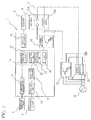
FIG. 1 is a block diagram showing a configuration of an engine control device according to an embodiment of the present invention; -
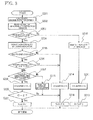
FIG. 2 is a flowchart for explaining a flow of a control process by the engine control device according to the embodiment; -
FIG. 3 is a flowchart for explaining the flow of the control process by the engine control device according to the embodiment; and -
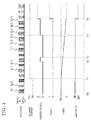
FIG. 4 is a timing chart for explaining a specific example of the flow of the control process by the engine control device according to the embodiment. - An embodiment of the present invention is explained below in detail.
-
FIG. 1 shows a schematic configuration of an engine control unit (ECU), which is a control device of a vehicle, for example, a motorcycle. - An
ECU 1 executes control of a vehicle by receiving power supply from apower supply system 2. In the present embodiment, theECU 1 is input with a signal of anabnormality detection sensor 3 and a signal of acrank angle sensor 4 of the vehicle, and has a function of controlling turning on/off of a light-emitting indicator 5. The light-emitting indicator 5 includes not only an incandescent lamp but also various types of optical devices, for example, a transmissive optical device such as a liquid crystal and an LED, and reflective and self-luminous optical devices. Further, theECU 1 includes anabnormality detecting unit 11, a rotation-speed calculating unit 12, an engine-stop judging unit 13, asignification control unit 14, anindicator drive circuit 15, and a solenoid drive circuit 16 (switching control unit), as a configuration for realizing the function of controlling theindicator 5. - The
abnormality detecting unit 11 is input with a signal from theabnormality detection sensor 3, to perform a process of detecting an abnormality of various constituent parts of the vehicle. As theabnormality detection sensor 3, for example, an engine water temperature sensor and an intake pressure sensor can be mentioned. Theabnormality detecting unit 11 judges that the engine water temperature is abnormal, for example, when a signal of an engine water temperature sensor, which is an example of theabnormality detection sensor 3, exceeds a predetermined threshold, and outputs a signal indicating this fact to thesignification control unit 14. The rotation-speed calculating unit 12 is input with a crank angle signal from thecrank angle sensor 4, to calculate engine rotation speed. The rotation-speed calculating unit 12 can calculate the engine rotation speed based on data other than the data of thecrank angle sensor 4, for example, based on a change in the intake pressure of the engine. - The engine-
stop judging unit 13 judges an operating state of the engine, based on the engine rotation speed calculated by the rotation-speed calculating unit 12. Specifically, when the engine rotation speed is equal to or lower than a predetermined value, the engine-stop judging unit 13 judges that the engine has stopped. A judgment result of the operating state of the engine is transmitted to thesignification control unit 14. - The
signification control unit 14 is configured to control turning on/off of theindicator 5 when a specific constituent part of the vehicle is in an abnormal state, and to determine a timing of stopping power supply to theECU 1 at the time of engine stop. As elements that perform such a process, thesignification control unit 14 includes acounter 21, aflag setting unit 22, aflag judging unit 23, and atimer 24. Thecounter 21 counts the number of abnormality significations issued to a driver by using theindicator 5 at the time of occurrence of an abnormality. Further, when multiple types of abnormalities occur, thecounter 21 also counts whether a signification has been performed sequentially each time for the respective abnormalities. - The
flag setting unit 22 sets a flag F indicating that the abnormality signification by using theindicator 5 has been performed for a preset number of times. - The
flag judging unit 23 checks whether a value of the flag F set by theflag setting unit 22 becomes a predetermined value. The flag F is used for finishing the abnormality signifying process. - The
timer 24 is used for controlling a time period (time interval) from engine stop until power supply to theECU 1 is stopped. Thetimer 24 has, as a time period to be counted, a first time period to be used when there is no abnormality, and a second time period to be used when an abnormality has occurred, to use the first time period and the second time period depending on the presence of an abnormality. For example, when there is no abnormality, thetimer 24 starts countdown by using the first time period as an initial value, and when the count value becomes zero, stops power supply to theECU 1. Thetimer 24 can control the timing not by counting down but by counting up. It is preferable that the first time period is shorter than the second time period. - The
indicator drive circuit 15 generates a control signal for controlling a turn-on state of theindicator 5 upon receipt of a signal from thesignification control unit 14, and outputs the control signal to theindicator 5. - The
solenoid drive circuit 16 controls power supply to theECU 1 by controlling on/off of amain relay 31, which is a power-supply switching unit of thepower supply system 2. - The
indicator 5 is arranged at a position visible from the driver of the vehicle, and is configured to perform turning on/off in a time period instructed by a control signal output from theindicator drive circuit 15. - The
power supply system 2 includes agenerator 32 connected to the engine, adrive circuit 33, abattery 34, and aregulator 35, and is configured to be able to supply power from thebattery 34 to theECU 1 via themain relay 31. Aswitch 31A of themain relay 31 can execute on/off control by flowing electric current to asolenoid 31B. Thesolenoid 31B can execute on/off control by thesolenoid drive circuit 16 on theECU 1 side or thedrive circuit 33 of thepower supply system 2. - In the present embodiment, it is configured such that power from the
generator 32 is supplied to thedrive circuit 33 by cranking of the engine, and power from thebattery 34 is supplied to thesolenoid 31B of themain relay 31, to turn on theswitch 31A. Meanwhile, thepower supply system 2 can have a configuration of supplying power to theECU 1 by rotation of a starter motor (not shown). - Details of the abnormality signifying process using the
ECU 1 are explained next mainly with reference to flowcharts ofFIG. 2 andFIG. 3 .FIG. 2 mainly shows a process of controlling themain relay 31.FIG. 3 mainly shows a process of setting a flag for controlling themain relay 31. - In the process shown in
FIG. 2 , countdown of thetimer 24 is performed after engine stop, and when the value of thetimer 24 becomes "0", power supply to theECU 1 is stopped. Until then, power supply to theECU 1 is maintained. - That is, at Step S101, the rotation-
speed calculating unit 12 reads the crank angle to calculate the engine rotation speed. Subsequently, at Step S102, when the engine-stop judging unit 13 judges that the engine has not stopped, the process proceeds to Step S103. On the other hand, when the engine-stop judging unit 13 judges that the engine has stopped, the process proceeds to Step S104. - At Step S103, a set time to be counted by the
timer 24 is set to a predetermined time Tpre. As the predetermined time Tpre, the first time period is selected when there is no abnormality in the vehicle, and the second time period is selected when there is an abnormality. At Step S107, a drive signal of thesolenoid 31B of themain relay 31 is turned ON. Accordingly, power supply to theECU 1 is continued, and thereafter, the process returns to Step S101. In this case, because the engine has not stopped at Step S102, thesolenoid 31B of themain relay 31 is maintained to be turned ON by the signal from thedrive circuit 33 outside theECU 1. - When it is judged that the engine is in a stopped state at Step S102, the
timer 24 performs countdown at Step S104. At Step S105, when the value of thetimer 24 during countdown is not "0", the process proceeds to Step S106, where theflag judging unit 23 checks the value of the flag F. When the value of the flag F is "0", the process proceeds to Step S107, to turn ON the drive signal of thesolenoid 31B of themain relay 31. In this case, because the engine has stopped at Step S102, themain relay 31 is kept turned ON by the signal from thesolenoid drive circuit 16 of theECU 1. - On the other hand, at Step S106, when the value of the flag F is "1", the process proceeds to Step S108. When the value of the
timer 24 is "0" at Step S105, the process also proceeds to Step S108. - At Step S108, the drive signal of the
solenoid 31B of themain relay 31 is turned OFF. In this case, because the engine has stopped at Step S102, themain relay 31 is turned OFF by stopping a signal output from thesolenoid drive circuit 16 of theECU 1. As a result, power supply to theECU 1 is stopped, to finish the process by theECU 1. Thereafter, the process ends. - A setting process of the flag F is explained next mainly with reference to
FIG. 3 . In the process inFIG. 3 , at the time of occurrence of an abnormality, when all the abnormalities have been signified twice, the flag F is set to "1", so that power supply to theECU 1 can be stopped. Until all the abnormalities have been signified twice, the flag F is maintained to be "0" so that power supply to theECU 1 is not stopped. When a new abnormality is added during signifying the abnormality, the value of thecounter 21 is reset, to recount the number of abnormality significations from 1. - That is, at Step S201, the rotation-
speed calculating unit 12 reads the crank angle to calculate the engine rotation speed. Subsequently, at Step S202, theabnormality detecting unit 11 reads a signal from theabnormality detection sensor 3. At Step S203, if theabnormality detecting unit 11 has detected an abnormality of the vehicle, theindicator 5 repeats turning on/off to signify the abnormality to the driver at Step S204. Specifically, theindicator drive circuit 15 blinks theindicator 5 depending on the type of abnormality, based on an instruction from thesignification control unit 14. Blinking theindicator 5 depending on the type of abnormality means that theindicator 5 is blinked for the number of times and with a time interval preset for each type of abnormality. It also means that a plurality ofindicators 5 are blinked for the number of times and with a time interval preset for each type of abnormality. - At this time, when it is judged that the engine has stopped at Step S205, the process proceeds to Step S206. At Step S206, if a new abnormality is not detected after engine stop, the process proceeds to Step S207.
- The present embodiment is characterized such that when multiple types of abnormalities occur, after all the abnormalities have been signified twice, power supply to the
ECU 1 is stopped. Therefore, at Step S207, it is checked whether theindicator 5 has signified all the abnormalities once each. For example, when two types of abnormalities have occurred, it is judged whether thecounter 21 has counted blinking of theindicator 5 for signifying the first abnormality, and blinking of theindicator 5 for signifying a second abnormality, once each. When the abnormality signification by theindicator 5 has finished once for all the abnormalities, the value C of thecounter 21 is incremented at Step S208. - Further, when the value C of the
counter 21 is C=2 at Step S220, it means that all the abnormalities have been signified twice. Therefore, the process proceeds to Step S221, where theflag setting unit 22 sets the value of the flag F for finishing the abnormality signifying process to "1", to end the process. - At Step S203, when no abnormality of the vehicle is detected, the
indicator 5 need not be blinked. Therefore, the process proceeds to Step S210, and thesignification control unit 14 maintains turn-off of theindicator 5. Thereafter, at Step S211, the value C of thecounter 21 is set to "0", and at Step S213, theflag setting unit 22 sets the value of the flag F to "1". - At Step S205, when an engine stop is not judged, the process proceeds to Step S214, to set the value C of the
counter 21 to "0". Subsequently, at Step S216, theflag setting unit 22 sets the value of the flag F to "0". Further, at Step S206, when a new abnormality is detected by theabnormality detecting unit 11 during signifying the abnormality, the process proceeds to Step S214, to reset the value C of thecounter 21 to "0". Accordingly, abnormality signification is restarted from the initial step. Thereafter, at Step S216, theflag setting unit 22 sets the value of the Flag F to "0", to end the process. - When all the abnormalities have not been signified once each by the
indicator 5 at Step S207, the value C of thecounter 21 is not changed at Step S215, and the process proceeds to Step S216. Even when the value C of thecounter 21 is not "2" at Step S220, the process proceeds to Step S216. - A specific example of the abnormality signifying process is explained next with reference to a timing chart in
FIG. 4 . A horizontal axis denotes time and a vertical axis denotes, from the top, display of theindicator 5, judgment result of engine stop, value C of thecounter 21, value of the flag F, value of thetimer 24, and drive signal of thesolenoid 31B of themain relay 31. - The display of the
indicator 5 indicates cases in which three types of abnormalities, an abnormality Er1, an abnormality Er2, and an abnormality Er3 are detected. When it is the abnormality Er1, theindicator 5 is blinked four times. When it is the abnormality Er2, theindicator 5 is blinked three times. When it is the abnormality Er3, theindicator 5 is blinked five times. Thus, the driver can confirm occurrence of an abnormality and the type thereof by the number of blinking and the lighting time interval of theindicator 5. The type of abnormality, the number of blinking, and the time interval of turning on/off are not limited to this example. - As a judgment result of engine stop, "YES" indicates that the engine stop is judged, and "NO" indicates that it is judged that the engine has not stopped.
- The value C of the
counter 21 indicates the number of significations of the abnormalities Er1 to Er3. That is, the value C of the counter 21 C=0 indicates that the abnormalities Er1 to Er3 currently detected have not been signified. The value C of the counter 21 C=1 indicates that the abnormalities Er1 to Er3 currently detected are signified once. The value C of the counter 21 C=2 indicates that the abnormalities Er1 to Er3 currently detected are signified twice. - The value of the flag F is for judging whether the value C of the
counter 21 has become "2". The flag F is used for confirming whether the abnormality signification has been performed for a specified number of times. When the specified number of times is three, when the value C of thecounter 21 becomes "3", the flag F is set to "1". - The value of the
timer 24 is counted down from the initial value Tpre. When the value of thetimer 24 becomes "0", power supply to theECU 1 is stopped. - When the drive signal of the
solenoid 31B of themain relay 31 is turned ON, power supply to theECU 1 is maintained. When the drive signal is turned OFF, power supply to theECU 1 is stopped. - For example, in a stage of a time point t0, the abnormality Er1 and the abnormality Er2 have already been detected. Thereafter, when the engine stops at a time point t1, the
timer 24 starts countdown from the initial value Tpre. In this case, because abnormalities have been detected, the second time period is set for the initial value Tpre of thetimer 24. - The counter 21 counts the number of blinking for the abnormality Er1 and the abnormality Er2 in this order, after engine stop has been judged. That is, because the
indicator 5 has blinked once for the two abnormalities Er1 and Er2 sequentially between the time point t1 and a time point t2, the value C of thecounter 21 is incremented to "1" at the time point t2. Thereafter, second blinking for the abnormalities Er1 and Er2 is started. - When an abnormality Er3 is newly detected at a time point t3, the value C of the
counter 21 is reset to "0". Thereafter, a process of blinking theindicator 5 sequentially for the three abnormalities Er1 to Er3 is started. When theindicator 5 is blinked once each for the abnormalities Er1 to Er3 at a time point t4, the value C of thecounter 21 is incremented to "1". When theindicator 5 is blinked twice each for the abnormalities Er1 to Er3 at a time point t5, the value C of thecounter 21 is incremented to "2". Accordingly, "1" is set to the flag F, and the drive signal of thesolenoid 31B of themain relay 31 becomes turned OFF to stop power supply to theECU 1. Accordingly, control by theECU 1 ends, and theindicator 5 is turned off. - In this case, the value of the
timer 24 does not become zero at the time point t5. That is, the abnormality signification has ended before countdown of thetimer 24 is complete. On the other hand, the value of thetimer 24 may become zero, before the value of the flag F becomes "1" at the time point t5. In this case, power supply to theECU 1 is stopped and theindicator 5 is turned off, even when theindicator 5 has not been blinked for the abnormalities Er1 to Er3 for the specified number of times. Further, when no abnormality is detected, the first time period is set for the initial value Tpre of thetimer 24. As a result, the value of thetimer 24 becomes - "0" earlier than the time indicated by the timing chart in
FIG. 4 , and power supply to theECU 1 is stopped. - As explained above, the
ECU 1 is configured to change the time period until power supply to theECU 1 is intercepted depending on the state of abnormality, when an abnormality of a vehicle is detected. When an abnormality occurs in a vehicle, theindicator 5 can be blinked reliably even after engine stop. - When the state of abnormality of the vehicle is different, a time period required for signifying the abnormality becomes different. As the state of abnormality, the type of abnormality and the number of types of abnormalities can be mentioned. Depending on the type of abnormality corresponds to extending the power supplying time to the
ECU 1 in a case of an abnormality in which the blinking time of theindicator 5 needs to be long, and shortening the power supplying time to theECU 1 in a case of an abnormality in which the blinking time of theindicator 5 can be short, when the blinking time of theindicator 5 required for signifying the abnormality to the driver once is different. Further, depending on the number of types of abnormalities corresponds to extending the power supplying time to theECU 1 when there are many types of abnormalities, because the time period required for signifying the abnormalities once each increases, and shortening the power supplying time to theECU 1 when there are less types of abnormalities, because the time period required for signifying the abnormalities once each can be short. - Further, the
ECU 1 is configured to change the time period until power supply to theECU 1 is turned off within the range of the second time period, depending on the number of types of abnormalities. Therefore, the time period required for signifying the abnormality can be easily set, and sufficient time can be reliably ensured. When an abnormality is detected, power supply to theECU 1 is stopped at a point in time when all the abnormalities are signified for the predetermined number of times, or the second time period has passed, whichever finishes first. On the other hand, when no abnormality is detected, the first time period shorter than the second time period is selected as the time period until power supply is turned off, and thus power saving capability of thebattery 34 can be improved. - Furthermore, during signifying an abnormality, when a new abnormality is detected, the time period until power supply to the
ECU 1 is turned off can be extended within the range of the second time period. Therefore, the time period required for signifying all the abnormalities can be reliably ensured. When a plurality of types of abnormalities are detected, sufficient time for signifying these abnormalities for the predetermined number of times is set as the second time period. Accordingly, it can be prevented that the ECU is stopped before signifying all the detected failures to the driver. - The present invention is not limited to the above embodiment and is widely applicable. For example, a measurement unit that measures the voltage of the
battery 34 can be provided in theECU 1, and when the voltage of thebattery 34 is equal to or lower than a predetermined value, a time period shorter than the second time period can be selected as the time period until power supply to theECU 1 is turned off, thereby enabling to prevent deterioration of reliability in abnormality detection. - In an engine control device, a signification control unit controls such that a time period from judgment of an engine stop by an engine-stop judging unit until an electrical connection with a battery is switched off is changed depending on an abnormality status detected by an abnormality detecting unit.
Claims (3)
- An engine control device comprising:an abnormality detecting unit that detects an abnormality of a vehicle;a signification control unit that controls an indicator for signifying an abnormality detected by the abnormality detecting unit to a driver;an engine-stop judging unit that judges an engine stop;a power-supply switching unit that controls an electrical connection with a battery; anda switching control unit that controls the power-supply switching unit upon receipt of an instruction from the signification control unit, when the engine stop is judged by the engine-stop judging unit, to switch off the electrical connection with the battery,wherein the signification control unit controls such that a time period from judgment of the engine stop by the engine-stop judging unit until an electrical connection with the battery is switched off is changed depending on an abnormality status detected by the abnormality detecting unit.
- The engine control device according to claim 1, wherein the signification control unit controls such that the time period from judgment of the engine stop by the engine-stop judging unit until the electrical connection with the battery is switched off is increased depending on the number of types of abnormalities detected by the abnormality detecting unit.
- The engine control device according to claim 1 or 2, wherein the signification control unit controls such that the time period is extended when the abnormality detecting unit detects a new abnormality after judgment of the engine stop by the engine-stop judging unit.
Applications Claiming Priority (1)
| Application Number | Priority Date | Filing Date | Title |
|---|---|---|---|
| JP2013058648A JP6133090B2 (en) | 2013-03-21 | 2013-03-21 | Engine control device |
Publications (3)
| Publication Number | Publication Date |
|---|---|
| EP2781724A2 true EP2781724A2 (en) | 2014-09-24 |
| EP2781724A3 EP2781724A3 (en) | 2015-08-19 |
| EP2781724B1 EP2781724B1 (en) | 2018-10-17 |
Family
ID=50342179
Family Applications (1)
| Application Number | Title | Priority Date | Filing Date |
|---|---|---|---|
| EP14159806.0A Active EP2781724B1 (en) | 2013-03-21 | 2014-03-14 | Engine control device |
Country Status (2)
| Country | Link |
|---|---|
| EP (1) | EP2781724B1 (en) |
| JP (1) | JP6133090B2 (en) |
Cited By (1)
| Publication number | Priority date | Publication date | Assignee | Title |
|---|---|---|---|---|
| CN105599676A (en) * | 2016-01-22 | 2016-05-25 | 中通客车控股股份有限公司 | Electric vehicle parking indicating and alarming system and operating method |
Families Citing this family (1)
| Publication number | Priority date | Publication date | Assignee | Title |
|---|---|---|---|---|
| CN106608257B (en) * | 2015-10-19 | 2019-04-19 | 北京宝沃汽车有限公司 | The fault diagnosis and management method of hybrid vehicle |
Citations (1)
| Publication number | Priority date | Publication date | Assignee | Title |
|---|---|---|---|---|
| JP2000085410A (en) | 1998-09-09 | 2000-03-28 | Honda Motor Co Ltd | Arrangement structure of indicator lamps |
Family Cites Families (10)
| Publication number | Priority date | Publication date | Assignee | Title |
|---|---|---|---|---|
| JP3781930B2 (en) * | 1999-11-29 | 2006-06-07 | 株式会社オートネットワーク技術研究所 | Automotive power monitoring device |
| JP2002234406A (en) * | 2001-02-09 | 2002-08-20 | Mitsubishi Electric Corp | Power control device for in-vehicle electronics |
| JP4155094B2 (en) * | 2003-05-12 | 2008-09-24 | トヨタ自動車株式会社 | Power control device |
| JP2005256761A (en) * | 2004-03-12 | 2005-09-22 | Hitachi Ltd | Electronic control device for vehicle |
| JP4677970B2 (en) * | 2006-10-11 | 2011-04-27 | 新神戸電機株式会社 | Battery state determination device and lead battery for automobile |
| JP4211848B2 (en) * | 2007-01-24 | 2009-01-21 | 株式会社デンソー | Electronic control unit |
| JP4609551B2 (en) * | 2008-08-21 | 2011-01-12 | コベルコ建機株式会社 | Engine abnormality judgment device for construction machinery |
| JP4497238B2 (en) * | 2008-09-16 | 2010-07-07 | トヨタ自動車株式会社 | Vehicle control system |
| JP4948643B1 (en) * | 2010-12-24 | 2012-06-06 | 株式会社小松製作所 | Guidance output device, guidance output method, and construction machine equipped with guidance output device |
| JP5450543B2 (en) * | 2011-09-13 | 2014-03-26 | 日立オートモティブシステムズ株式会社 | Engine failure diagnosis device |
-
2013
- 2013-03-21 JP JP2013058648A patent/JP6133090B2/en active Active
-
2014
- 2014-03-14 EP EP14159806.0A patent/EP2781724B1/en active Active
Patent Citations (1)
| Publication number | Priority date | Publication date | Assignee | Title |
|---|---|---|---|---|
| JP2000085410A (en) | 1998-09-09 | 2000-03-28 | Honda Motor Co Ltd | Arrangement structure of indicator lamps |
Cited By (2)
| Publication number | Priority date | Publication date | Assignee | Title |
|---|---|---|---|---|
| CN105599676A (en) * | 2016-01-22 | 2016-05-25 | 中通客车控股股份有限公司 | Electric vehicle parking indicating and alarming system and operating method |
| CN105599676B (en) * | 2016-01-22 | 2018-05-25 | 中通客车控股股份有限公司 | A kind of electric vehicle parking instruction alarm system and method for work |
Also Published As
| Publication number | Publication date |
|---|---|
| EP2781724A3 (en) | 2015-08-19 |
| EP2781724B1 (en) | 2018-10-17 |
| JP2014181687A (en) | 2014-09-29 |
| JP6133090B2 (en) | 2017-05-24 |
Similar Documents
| Publication | Publication Date | Title |
|---|---|---|
| JP5598499B2 (en) | Battery monitoring device | |
| JP6977781B2 (en) | Driving support method and driving support device | |
| US8904855B2 (en) | Device and method for oil pressure sensor fault sensing for vehicle | |
| EP2781724A2 (en) | Engine control device | |
| CN110259618B (en) | Starter monitoring method and device | |
| KR20200071903A (en) | Fault diagnosis apparatus of coolant circulation system for a vehicle | |
| CN103986379A (en) | Driving circuiting, driving chip and driving method of single-chip microcomputer and stepping motor | |
| JP5663821B2 (en) | Emergency generator control device and control method | |
| JP2016109639A (en) | Deterioration diagnostic device of lead battery | |
| JP5900436B2 (en) | In-vehicle battery charger | |
| CN113928112A (en) | Oil tank switching method, electronic device and storage medium | |
| JP2003226208A (en) | Power supply system for vehicles | |
| KR101009477B1 (en) | Car Battery Saver System | |
| JP2005023843A (en) | Abnormality diagnosis device for automatic start timer circuit | |
| US12055594B2 (en) | Measurement system and method for determining a status of a power system in a vehicle using the measurement system | |
| JPH1040479A (en) | Warning device | |
| JP2009228464A (en) | Power source control device for vehicle and power source control method for vehicle | |
| JPH09291873A (en) | Glow plug energization control device | |
| KR102336164B1 (en) | Apparatus for diagnosing abnormal conditions by battery monitoring of construction equipment | |
| KR200440342Y1 (en) | Digital Controller for Automatic Voltage Transfer Switch | |
| JP2979029B2 (en) | Engine oil level detector | |
| KR102251350B1 (en) | Rest life prediction method and system of lamp | |
| JPH05332120A (en) | Engine oil level display controller | |
| JP2008223646A (en) | Portable generator | |
| JPH05340787A (en) | Detecting and displaying device for abnormality of engine oil level sensor |
Legal Events
| Date | Code | Title | Description |
|---|---|---|---|
| PUAI | Public reference made under article 153(3) epc to a published international application that has entered the european phase |
Free format text: ORIGINAL CODE: 0009012 |
|
| 17P | Request for examination filed |
Effective date: 20140314 |
|
| AK | Designated contracting states |
Kind code of ref document: A2 Designated state(s): AL AT BE BG CH CY CZ DE DK EE ES FI FR GB GR HR HU IE IS IT LI LT LU LV MC MK MT NL NO PL PT RO RS SE SI SK SM TR |
|
| AX | Request for extension of the european patent |
Extension state: BA ME |
|
| PUAL | Search report despatched |
Free format text: ORIGINAL CODE: 0009013 |
|
| AK | Designated contracting states |
Kind code of ref document: A3 Designated state(s): AL AT BE BG CH CY CZ DE DK EE ES FI FR GB GR HR HU IE IS IT LI LT LU LV MC MK MT NL NO PL PT RO RS SE SI SK SM TR |
|
| AX | Request for extension of the european patent |
Extension state: BA ME |
|
| RIC1 | Information provided on ipc code assigned before grant |
Ipc: F02D 41/22 20060101ALN20150714BHEP Ipc: F02D 41/04 20060101AFI20150714BHEP Ipc: B60W 50/14 20120101ALN20150714BHEP Ipc: B60R 16/03 20060101ALI20150714BHEP |
|
| GRAP | Despatch of communication of intention to grant a patent |
Free format text: ORIGINAL CODE: EPIDOSNIGR1 |
|
| STAA | Information on the status of an ep patent application or granted ep patent |
Free format text: STATUS: GRANT OF PATENT IS INTENDED |
|
| RIC1 | Information provided on ipc code assigned before grant |
Ipc: B60W 50/14 20120101ALN20180413BHEP Ipc: B60R 16/03 20060101ALI20180413BHEP Ipc: F02D 41/22 20060101ALN20180413BHEP Ipc: F02D 41/04 20060101AFI20180413BHEP |
|
| INTG | Intention to grant announced |
Effective date: 20180507 |
|
| GRAS | Grant fee paid |
Free format text: ORIGINAL CODE: EPIDOSNIGR3 |
|
| GRAA | (expected) grant |
Free format text: ORIGINAL CODE: 0009210 |
|
| STAA | Information on the status of an ep patent application or granted ep patent |
Free format text: STATUS: THE PATENT HAS BEEN GRANTED |
|
| AK | Designated contracting states |
Kind code of ref document: B1 Designated state(s): AL AT BE BG CH CY CZ DE DK EE ES FI FR GB GR HR HU IE IS IT LI LT LU LV MC MK MT NL NO PL PT RO RS SE SI SK SM TR |
|
| REG | Reference to a national code |
Ref country code: GB Ref legal event code: FG4D |
|
| REG | Reference to a national code |
Ref country code: CH Ref legal event code: EP |
|
| REG | Reference to a national code |
Ref country code: IE Ref legal event code: FG4D |
|
| REG | Reference to a national code |
Ref country code: DE Ref legal event code: R096 Ref document number: 602014034124 Country of ref document: DE Ref country code: AT Ref legal event code: REF Ref document number: 1054319 Country of ref document: AT Kind code of ref document: T Effective date: 20181115 |
|
| REG | Reference to a national code |
Ref country code: NL Ref legal event code: MP Effective date: 20181017 |
|
| REG | Reference to a national code |
Ref country code: LT Ref legal event code: MG4D |
|
| REG | Reference to a national code |
Ref country code: AT Ref legal event code: MK05 Ref document number: 1054319 Country of ref document: AT Kind code of ref document: T Effective date: 20181017 |
|
| PG25 | Lapsed in a contracting state [announced via postgrant information from national office to epo] |
Ref country code: NL Free format text: LAPSE BECAUSE OF FAILURE TO SUBMIT A TRANSLATION OF THE DESCRIPTION OR TO PAY THE FEE WITHIN THE PRESCRIBED TIME-LIMIT Effective date: 20181017 |
|
| PG25 | Lapsed in a contracting state [announced via postgrant information from national office to epo] |
Ref country code: ES Free format text: LAPSE BECAUSE OF FAILURE TO SUBMIT A TRANSLATION OF THE DESCRIPTION OR TO PAY THE FEE WITHIN THE PRESCRIBED TIME-LIMIT Effective date: 20181017 Ref country code: LV Free format text: LAPSE BECAUSE OF FAILURE TO SUBMIT A TRANSLATION OF THE DESCRIPTION OR TO PAY THE FEE WITHIN THE PRESCRIBED TIME-LIMIT Effective date: 20181017 Ref country code: HR Free format text: LAPSE BECAUSE OF FAILURE TO SUBMIT A TRANSLATION OF THE DESCRIPTION OR TO PAY THE FEE WITHIN THE PRESCRIBED TIME-LIMIT Effective date: 20181017 Ref country code: LT Free format text: LAPSE BECAUSE OF FAILURE TO SUBMIT A TRANSLATION OF THE DESCRIPTION OR TO PAY THE FEE WITHIN THE PRESCRIBED TIME-LIMIT Effective date: 20181017 Ref country code: PL Free format text: LAPSE BECAUSE OF FAILURE TO SUBMIT A TRANSLATION OF THE DESCRIPTION OR TO PAY THE FEE WITHIN THE PRESCRIBED TIME-LIMIT Effective date: 20181017 Ref country code: BG Free format text: LAPSE BECAUSE OF FAILURE TO SUBMIT A TRANSLATION OF THE DESCRIPTION OR TO PAY THE FEE WITHIN THE PRESCRIBED TIME-LIMIT Effective date: 20190117 Ref country code: FI Free format text: LAPSE BECAUSE OF FAILURE TO SUBMIT A TRANSLATION OF THE DESCRIPTION OR TO PAY THE FEE WITHIN THE PRESCRIBED TIME-LIMIT Effective date: 20181017 Ref country code: NO Free format text: LAPSE BECAUSE OF FAILURE TO SUBMIT A TRANSLATION OF THE DESCRIPTION OR TO PAY THE FEE WITHIN THE PRESCRIBED TIME-LIMIT Effective date: 20190117 Ref country code: IS Free format text: LAPSE BECAUSE OF FAILURE TO SUBMIT A TRANSLATION OF THE DESCRIPTION OR TO PAY THE FEE WITHIN THE PRESCRIBED TIME-LIMIT Effective date: 20190217 Ref country code: AT Free format text: LAPSE BECAUSE OF FAILURE TO SUBMIT A TRANSLATION OF THE DESCRIPTION OR TO PAY THE FEE WITHIN THE PRESCRIBED TIME-LIMIT Effective date: 20181017 |
|
| PG25 | Lapsed in a contracting state [announced via postgrant information from national office to epo] |
Ref country code: RS Free format text: LAPSE BECAUSE OF FAILURE TO SUBMIT A TRANSLATION OF THE DESCRIPTION OR TO PAY THE FEE WITHIN THE PRESCRIBED TIME-LIMIT Effective date: 20181017 Ref country code: GR Free format text: LAPSE BECAUSE OF FAILURE TO SUBMIT A TRANSLATION OF THE DESCRIPTION OR TO PAY THE FEE WITHIN THE PRESCRIBED TIME-LIMIT Effective date: 20190118 Ref country code: SE Free format text: LAPSE BECAUSE OF FAILURE TO SUBMIT A TRANSLATION OF THE DESCRIPTION OR TO PAY THE FEE WITHIN THE PRESCRIBED TIME-LIMIT Effective date: 20181017 Ref country code: PT Free format text: LAPSE BECAUSE OF FAILURE TO SUBMIT A TRANSLATION OF THE DESCRIPTION OR TO PAY THE FEE WITHIN THE PRESCRIBED TIME-LIMIT Effective date: 20190217 Ref country code: AL Free format text: LAPSE BECAUSE OF FAILURE TO SUBMIT A TRANSLATION OF THE DESCRIPTION OR TO PAY THE FEE WITHIN THE PRESCRIBED TIME-LIMIT Effective date: 20181017 |
|
| REG | Reference to a national code |
Ref country code: DE Ref legal event code: R097 Ref document number: 602014034124 Country of ref document: DE |
|
| PG25 | Lapsed in a contracting state [announced via postgrant information from national office to epo] |
Ref country code: DK Free format text: LAPSE BECAUSE OF FAILURE TO SUBMIT A TRANSLATION OF THE DESCRIPTION OR TO PAY THE FEE WITHIN THE PRESCRIBED TIME-LIMIT Effective date: 20181017 Ref country code: CZ Free format text: LAPSE BECAUSE OF FAILURE TO SUBMIT A TRANSLATION OF THE DESCRIPTION OR TO PAY THE FEE WITHIN THE PRESCRIBED TIME-LIMIT Effective date: 20181017 |
|
| PLBE | No opposition filed within time limit |
Free format text: ORIGINAL CODE: 0009261 |
|
| STAA | Information on the status of an ep patent application or granted ep patent |
Free format text: STATUS: NO OPPOSITION FILED WITHIN TIME LIMIT |
|
| PG25 | Lapsed in a contracting state [announced via postgrant information from national office to epo] |
Ref country code: RO Free format text: LAPSE BECAUSE OF FAILURE TO SUBMIT A TRANSLATION OF THE DESCRIPTION OR TO PAY THE FEE WITHIN THE PRESCRIBED TIME-LIMIT Effective date: 20181017 Ref country code: SK Free format text: LAPSE BECAUSE OF FAILURE TO SUBMIT A TRANSLATION OF THE DESCRIPTION OR TO PAY THE FEE WITHIN THE PRESCRIBED TIME-LIMIT Effective date: 20181017 Ref country code: EE Free format text: LAPSE BECAUSE OF FAILURE TO SUBMIT A TRANSLATION OF THE DESCRIPTION OR TO PAY THE FEE WITHIN THE PRESCRIBED TIME-LIMIT Effective date: 20181017 Ref country code: SM Free format text: LAPSE BECAUSE OF FAILURE TO SUBMIT A TRANSLATION OF THE DESCRIPTION OR TO PAY THE FEE WITHIN THE PRESCRIBED TIME-LIMIT Effective date: 20181017 |
|
| 26N | No opposition filed |
Effective date: 20190718 |
|
| PG25 | Lapsed in a contracting state [announced via postgrant information from national office to epo] |
Ref country code: SI Free format text: LAPSE BECAUSE OF FAILURE TO SUBMIT A TRANSLATION OF THE DESCRIPTION OR TO PAY THE FEE WITHIN THE PRESCRIBED TIME-LIMIT Effective date: 20181017 Ref country code: MC Free format text: LAPSE BECAUSE OF FAILURE TO SUBMIT A TRANSLATION OF THE DESCRIPTION OR TO PAY THE FEE WITHIN THE PRESCRIBED TIME-LIMIT Effective date: 20181017 |
|
| REG | Reference to a national code |
Ref country code: CH Ref legal event code: PL |
|
| PG25 | Lapsed in a contracting state [announced via postgrant information from national office to epo] |
Ref country code: LU Free format text: LAPSE BECAUSE OF NON-PAYMENT OF DUE FEES Effective date: 20190314 |
|
| REG | Reference to a national code |
Ref country code: BE Ref legal event code: MM Effective date: 20190331 |
|
| PG25 | Lapsed in a contracting state [announced via postgrant information from national office to epo] |
Ref country code: LI Free format text: LAPSE BECAUSE OF NON-PAYMENT OF DUE FEES Effective date: 20190331 Ref country code: IE Free format text: LAPSE BECAUSE OF NON-PAYMENT OF DUE FEES Effective date: 20190314 Ref country code: CH Free format text: LAPSE BECAUSE OF NON-PAYMENT OF DUE FEES Effective date: 20190331 |
|
| PG25 | Lapsed in a contracting state [announced via postgrant information from national office to epo] |
Ref country code: BE Free format text: LAPSE BECAUSE OF NON-PAYMENT OF DUE FEES Effective date: 20190331 Ref country code: FR Free format text: LAPSE BECAUSE OF NON-PAYMENT OF DUE FEES Effective date: 20190331 |
|
| PG25 | Lapsed in a contracting state [announced via postgrant information from national office to epo] |
Ref country code: TR Free format text: LAPSE BECAUSE OF FAILURE TO SUBMIT A TRANSLATION OF THE DESCRIPTION OR TO PAY THE FEE WITHIN THE PRESCRIBED TIME-LIMIT Effective date: 20181017 |
|
| PG25 | Lapsed in a contracting state [announced via postgrant information from national office to epo] |
Ref country code: MT Free format text: LAPSE BECAUSE OF NON-PAYMENT OF DUE FEES Effective date: 20190314 |
|
| PG25 | Lapsed in a contracting state [announced via postgrant information from national office to epo] |
Ref country code: CY Free format text: LAPSE BECAUSE OF FAILURE TO SUBMIT A TRANSLATION OF THE DESCRIPTION OR TO PAY THE FEE WITHIN THE PRESCRIBED TIME-LIMIT Effective date: 20181017 |
|
| PG25 | Lapsed in a contracting state [announced via postgrant information from national office to epo] |
Ref country code: HU Free format text: LAPSE BECAUSE OF FAILURE TO SUBMIT A TRANSLATION OF THE DESCRIPTION OR TO PAY THE FEE WITHIN THE PRESCRIBED TIME-LIMIT; INVALID AB INITIO Effective date: 20140314 |
|
| REG | Reference to a national code |
Ref country code: GB Ref legal event code: 732E Free format text: REGISTERED BETWEEN 20211210 AND 20211215 |
|
| REG | Reference to a national code |
Ref country code: DE Ref legal event code: R081 Ref document number: 602014034124 Country of ref document: DE Owner name: HITACHI ASTEMO, LTD., HITACHINAKA-SHI, JP Free format text: FORMER OWNER: KEIHIN CORPORATION, TOKYO, JP |
|
| PG25 | Lapsed in a contracting state [announced via postgrant information from national office to epo] |
Ref country code: MK Free format text: LAPSE BECAUSE OF FAILURE TO SUBMIT A TRANSLATION OF THE DESCRIPTION OR TO PAY THE FEE WITHIN THE PRESCRIBED TIME-LIMIT Effective date: 20181017 |
|
| PGFP | Annual fee paid to national office [announced via postgrant information from national office to epo] |
Ref country code: DE Payment date: 20240130 Year of fee payment: 11 |
|
| PGFP | Annual fee paid to national office [announced via postgrant information from national office to epo] |
Ref country code: IT Payment date: 20240212 Year of fee payment: 11 |
|
| REG | Reference to a national code |
Ref country code: DE Ref legal event code: R119 Ref document number: 602014034124 Country of ref document: DE |
|
| PG25 | Lapsed in a contracting state [announced via postgrant information from national office to epo] |
Ref country code: DE Free format text: LAPSE BECAUSE OF NON-PAYMENT OF DUE FEES Effective date: 20251001 |
|
| PG25 | Lapsed in a contracting state [announced via postgrant information from national office to epo] |
Ref country code: IT Free format text: LAPSE BECAUSE OF NON-PAYMENT OF DUE FEES Effective date: 20250314 |
|
| PGFP | Annual fee paid to national office [announced via postgrant information from national office to epo] |
Ref country code: GB Payment date: 20260202 Year of fee payment: 13 |