EP2781637A1 - Nonwoven fabric formed from fiber coated with organic binder polymer compound, electrochemical device comprising nonwoven fabric, and method for manufacturing nonwoven fabric - Google Patents
Nonwoven fabric formed from fiber coated with organic binder polymer compound, electrochemical device comprising nonwoven fabric, and method for manufacturing nonwoven fabric Download PDFInfo
- Publication number
- EP2781637A1 EP2781637A1 EP13859475.9A EP13859475A EP2781637A1 EP 2781637 A1 EP2781637 A1 EP 2781637A1 EP 13859475 A EP13859475 A EP 13859475A EP 2781637 A1 EP2781637 A1 EP 2781637A1
- Authority
- EP
- European Patent Office
- Prior art keywords
- woven fabric
- binder polymer
- propylene glycol
- separator
- organic binder
- Prior art date
- Legal status (The legal status is an assumption and is not a legal conclusion. Google has not performed a legal analysis and makes no representation as to the accuracy of the status listed.)
- Granted
Links
Images



Classifications
-
- D—TEXTILES; PAPER
- D04—BRAIDING; LACE-MAKING; KNITTING; TRIMMINGS; NON-WOVEN FABRICS
- D04H—MAKING TEXTILE FABRICS, e.g. FROM FIBRES OR FILAMENTARY MATERIAL; FABRICS MADE BY SUCH PROCESSES OR APPARATUS, e.g. FELTS, NON-WOVEN FABRICS; COTTON-WOOL; WADDING ; NON-WOVEN FABRICS FROM STAPLE FIBRES, FILAMENTS OR YARNS, BONDED WITH AT LEAST ONE WEB-LIKE MATERIAL DURING THEIR CONSOLIDATION
- D04H1/00—Non-woven fabrics formed wholly or mainly of staple fibres or like relatively short fibres
- D04H1/40—Non-woven fabrics formed wholly or mainly of staple fibres or like relatively short fibres from fleeces or layers composed of fibres without existing or potential cohesive properties
- D04H1/42—Non-woven fabrics formed wholly or mainly of staple fibres or like relatively short fibres from fleeces or layers composed of fibres without existing or potential cohesive properties characterised by the use of certain kinds of fibres insofar as this use has no preponderant influence on the consolidation of the fleece
- D04H1/4382—Stretched reticular film fibres; Composite fibres; Mixed fibres; Ultrafine fibres; Fibres for artificial leather
- D04H1/43835—Mixed fibres, e.g. at least two chemically different fibres or fibre blends
-
- D—TEXTILES; PAPER
- D01—NATURAL OR MAN-MADE THREADS OR FIBRES; SPINNING
- D01D—MECHANICAL METHODS OR APPARATUS IN THE MANUFACTURE OF ARTIFICIAL FILAMENTS, THREADS, FIBRES, BRISTLES OR RIBBONS
- D01D5/00—Formation of filaments, threads, or the like
- D01D5/06—Wet spinning methods
-
- D—TEXTILES; PAPER
- D01—NATURAL OR MAN-MADE THREADS OR FIBRES; SPINNING
- D01F—CHEMICAL FEATURES IN THE MANUFACTURE OF ARTIFICIAL FILAMENTS, THREADS, FIBRES, BRISTLES OR RIBBONS; APPARATUS SPECIALLY ADAPTED FOR THE MANUFACTURE OF CARBON FILAMENTS
- D01F11/00—Chemical after-treatment of artificial filaments or the like during manufacture
-
- D—TEXTILES; PAPER
- D04—BRAIDING; LACE-MAKING; KNITTING; TRIMMINGS; NON-WOVEN FABRICS
- D04H—MAKING TEXTILE FABRICS, e.g. FROM FIBRES OR FILAMENTARY MATERIAL; FABRICS MADE BY SUCH PROCESSES OR APPARATUS, e.g. FELTS, NON-WOVEN FABRICS; COTTON-WOOL; WADDING ; NON-WOVEN FABRICS FROM STAPLE FIBRES, FILAMENTS OR YARNS, BONDED WITH AT LEAST ONE WEB-LIKE MATERIAL DURING THEIR CONSOLIDATION
- D04H3/00—Non-woven fabrics formed wholly or mainly of yarns or like filamentary material of substantial length
- D04H3/08—Non-woven fabrics formed wholly or mainly of yarns or like filamentary material of substantial length characterised by the method of strengthening or consolidating
- D04H3/12—Non-woven fabrics formed wholly or mainly of yarns or like filamentary material of substantial length characterised by the method of strengthening or consolidating with filaments or yarns secured together by chemical or thermo-activatable bonding agents, e.g. adhesives, applied or incorporated in liquid or solid form
-
- D—TEXTILES; PAPER
- D06—TREATMENT OF TEXTILES OR THE LIKE; LAUNDERING; FLEXIBLE MATERIALS NOT OTHERWISE PROVIDED FOR
- D06M—TREATMENT, NOT PROVIDED FOR ELSEWHERE IN CLASS D06, OF FIBRES, THREADS, YARNS, FABRICS, FEATHERS OR FIBROUS GOODS MADE FROM SUCH MATERIALS
- D06M15/00—Treating fibres, threads, yarns, fabrics, or fibrous goods made from such materials, with macromolecular compounds; Such treatment combined with mechanical treatment
- D06M15/19—Treating fibres, threads, yarns, fabrics, or fibrous goods made from such materials, with macromolecular compounds; Such treatment combined with mechanical treatment with synthetic macromolecular compounds
- D06M15/21—Macromolecular compounds obtained by reactions only involving carbon-to-carbon unsaturated bonds
- D06M15/263—Macromolecular compounds obtained by reactions only involving carbon-to-carbon unsaturated bonds of unsaturated carboxylic acids; Salts or esters thereof
-
- D—TEXTILES; PAPER
- D06—TREATMENT OF TEXTILES OR THE LIKE; LAUNDERING; FLEXIBLE MATERIALS NOT OTHERWISE PROVIDED FOR
- D06M—TREATMENT, NOT PROVIDED FOR ELSEWHERE IN CLASS D06, OF FIBRES, THREADS, YARNS, FABRICS, FEATHERS OR FIBROUS GOODS MADE FROM SUCH MATERIALS
- D06M15/00—Treating fibres, threads, yarns, fabrics, or fibrous goods made from such materials, with macromolecular compounds; Such treatment combined with mechanical treatment
- D06M15/19—Treating fibres, threads, yarns, fabrics, or fibrous goods made from such materials, with macromolecular compounds; Such treatment combined with mechanical treatment with synthetic macromolecular compounds
- D06M15/21—Macromolecular compounds obtained by reactions only involving carbon-to-carbon unsaturated bonds
- D06M15/347—Macromolecular compounds obtained by reactions only involving carbon-to-carbon unsaturated bonds of unsaturated ethers, acetals, hemiacetals, ketones or aldehydes
-
- D—TEXTILES; PAPER
- D06—TREATMENT OF TEXTILES OR THE LIKE; LAUNDERING; FLEXIBLE MATERIALS NOT OTHERWISE PROVIDED FOR
- D06M—TREATMENT, NOT PROVIDED FOR ELSEWHERE IN CLASS D06, OF FIBRES, THREADS, YARNS, FABRICS, FEATHERS OR FIBROUS GOODS MADE FROM SUCH MATERIALS
- D06M15/00—Treating fibres, threads, yarns, fabrics, or fibrous goods made from such materials, with macromolecular compounds; Such treatment combined with mechanical treatment
- D06M15/19—Treating fibres, threads, yarns, fabrics, or fibrous goods made from such materials, with macromolecular compounds; Such treatment combined with mechanical treatment with synthetic macromolecular compounds
- D06M15/37—Macromolecular compounds obtained otherwise than by reactions only involving carbon-to-carbon unsaturated bonds
- D06M15/643—Macromolecular compounds obtained otherwise than by reactions only involving carbon-to-carbon unsaturated bonds containing silicon in the main chain
-
- D—TEXTILES; PAPER
- D06—TREATMENT OF TEXTILES OR THE LIKE; LAUNDERING; FLEXIBLE MATERIALS NOT OTHERWISE PROVIDED FOR
- D06M—TREATMENT, NOT PROVIDED FOR ELSEWHERE IN CLASS D06, OF FIBRES, THREADS, YARNS, FABRICS, FEATHERS OR FIBROUS GOODS MADE FROM SUCH MATERIALS
- D06M15/00—Treating fibres, threads, yarns, fabrics, or fibrous goods made from such materials, with macromolecular compounds; Such treatment combined with mechanical treatment
- D06M15/693—Treating fibres, threads, yarns, fabrics, or fibrous goods made from such materials, with macromolecular compounds; Such treatment combined with mechanical treatment with natural or synthetic rubber, or derivatives thereof
-
- D—TEXTILES; PAPER
- D06—TREATMENT OF TEXTILES OR THE LIKE; LAUNDERING; FLEXIBLE MATERIALS NOT OTHERWISE PROVIDED FOR
- D06M—TREATMENT, NOT PROVIDED FOR ELSEWHERE IN CLASS D06, OF FIBRES, THREADS, YARNS, FABRICS, FEATHERS OR FIBROUS GOODS MADE FROM SUCH MATERIALS
- D06M23/00—Treatment of fibres, threads, yarns, fabrics or fibrous goods made from such materials, characterised by the process
- D06M23/10—Processes in which the treating agent is dissolved or dispersed in organic solvents; Processes for the recovery of organic solvents thereof
-
- H—ELECTRICITY
- H01—ELECTRIC ELEMENTS
- H01M—PROCESSES OR MEANS, e.g. BATTERIES, FOR THE DIRECT CONVERSION OF CHEMICAL ENERGY INTO ELECTRICAL ENERGY
- H01M10/00—Secondary cells; Manufacture thereof
- H01M10/05—Accumulators with non-aqueous electrolyte
- H01M10/052—Li-accumulators
-
- H—ELECTRICITY
- H01—ELECTRIC ELEMENTS
- H01M—PROCESSES OR MEANS, e.g. BATTERIES, FOR THE DIRECT CONVERSION OF CHEMICAL ENERGY INTO ELECTRICAL ENERGY
- H01M50/00—Constructional details or processes of manufacture of the non-active parts of electrochemical cells other than fuel cells, e.g. hybrid cells
- H01M50/40—Separators; Membranes; Diaphragms; Spacing elements inside cells
- H01M50/403—Manufacturing processes of separators, membranes or diaphragms
-
- H—ELECTRICITY
- H01—ELECTRIC ELEMENTS
- H01M—PROCESSES OR MEANS, e.g. BATTERIES, FOR THE DIRECT CONVERSION OF CHEMICAL ENERGY INTO ELECTRICAL ENERGY
- H01M50/00—Constructional details or processes of manufacture of the non-active parts of electrochemical cells other than fuel cells, e.g. hybrid cells
- H01M50/40—Separators; Membranes; Diaphragms; Spacing elements inside cells
- H01M50/409—Separators, membranes or diaphragms characterised by the material
- H01M50/411—Organic material
-
- H—ELECTRICITY
- H01—ELECTRIC ELEMENTS
- H01M—PROCESSES OR MEANS, e.g. BATTERIES, FOR THE DIRECT CONVERSION OF CHEMICAL ENERGY INTO ELECTRICAL ENERGY
- H01M50/00—Constructional details or processes of manufacture of the non-active parts of electrochemical cells other than fuel cells, e.g. hybrid cells
- H01M50/40—Separators; Membranes; Diaphragms; Spacing elements inside cells
- H01M50/409—Separators, membranes or diaphragms characterised by the material
- H01M50/411—Organic material
- H01M50/414—Synthetic resins, e.g. thermoplastics or thermosetting resins
-
- H—ELECTRICITY
- H01—ELECTRIC ELEMENTS
- H01M—PROCESSES OR MEANS, e.g. BATTERIES, FOR THE DIRECT CONVERSION OF CHEMICAL ENERGY INTO ELECTRICAL ENERGY
- H01M50/00—Constructional details or processes of manufacture of the non-active parts of electrochemical cells other than fuel cells, e.g. hybrid cells
- H01M50/40—Separators; Membranes; Diaphragms; Spacing elements inside cells
- H01M50/409—Separators, membranes or diaphragms characterised by the material
- H01M50/411—Organic material
- H01M50/414—Synthetic resins, e.g. thermoplastics or thermosetting resins
- H01M50/417—Polyolefins
-
- H—ELECTRICITY
- H01—ELECTRIC ELEMENTS
- H01M—PROCESSES OR MEANS, e.g. BATTERIES, FOR THE DIRECT CONVERSION OF CHEMICAL ENERGY INTO ELECTRICAL ENERGY
- H01M50/00—Constructional details or processes of manufacture of the non-active parts of electrochemical cells other than fuel cells, e.g. hybrid cells
- H01M50/40—Separators; Membranes; Diaphragms; Spacing elements inside cells
- H01M50/409—Separators, membranes or diaphragms characterised by the material
- H01M50/411—Organic material
- H01M50/414—Synthetic resins, e.g. thermoplastics or thermosetting resins
- H01M50/423—Polyamide resins
-
- H—ELECTRICITY
- H01—ELECTRIC ELEMENTS
- H01M—PROCESSES OR MEANS, e.g. BATTERIES, FOR THE DIRECT CONVERSION OF CHEMICAL ENERGY INTO ELECTRICAL ENERGY
- H01M50/00—Constructional details or processes of manufacture of the non-active parts of electrochemical cells other than fuel cells, e.g. hybrid cells
- H01M50/40—Separators; Membranes; Diaphragms; Spacing elements inside cells
- H01M50/409—Separators, membranes or diaphragms characterised by the material
- H01M50/44—Fibrous material
-
- H—ELECTRICITY
- H01—ELECTRIC ELEMENTS
- H01M—PROCESSES OR MEANS, e.g. BATTERIES, FOR THE DIRECT CONVERSION OF CHEMICAL ENERGY INTO ELECTRICAL ENERGY
- H01M50/00—Constructional details or processes of manufacture of the non-active parts of electrochemical cells other than fuel cells, e.g. hybrid cells
- H01M50/40—Separators; Membranes; Diaphragms; Spacing elements inside cells
- H01M50/489—Separators, membranes, diaphragms or spacing elements inside the cells, characterised by their physical properties, e.g. swelling degree, hydrophilicity or shut down properties
-
- H—ELECTRICITY
- H01—ELECTRIC ELEMENTS
- H01M—PROCESSES OR MEANS, e.g. BATTERIES, FOR THE DIRECT CONVERSION OF CHEMICAL ENERGY INTO ELECTRICAL ENERGY
- H01M50/00—Constructional details or processes of manufacture of the non-active parts of electrochemical cells other than fuel cells, e.g. hybrid cells
- H01M50/40—Separators; Membranes; Diaphragms; Spacing elements inside cells
- H01M50/489—Separators, membranes, diaphragms or spacing elements inside the cells, characterised by their physical properties, e.g. swelling degree, hydrophilicity or shut down properties
- H01M50/491—Porosity
-
- Y—GENERAL TAGGING OF NEW TECHNOLOGICAL DEVELOPMENTS; GENERAL TAGGING OF CROSS-SECTIONAL TECHNOLOGIES SPANNING OVER SEVERAL SECTIONS OF THE IPC; TECHNICAL SUBJECTS COVERED BY FORMER USPC CROSS-REFERENCE ART COLLECTIONS [XRACs] AND DIGESTS
- Y02—TECHNOLOGIES OR APPLICATIONS FOR MITIGATION OR ADAPTATION AGAINST CLIMATE CHANGE
- Y02E—REDUCTION OF GREENHOUSE GAS [GHG] EMISSIONS, RELATED TO ENERGY GENERATION, TRANSMISSION OR DISTRIBUTION
- Y02E60/00—Enabling technologies; Technologies with a potential or indirect contribution to GHG emissions mitigation
- Y02E60/10—Energy storage using batteries
Definitions
- a non-woven fabric made from a fiber coated with an organic binder polymer compound.
- the organic binder polymer compound may be any one selected from an acryl-based adhesive compound, a rubber-based adhesive compound, a silicon-based adhesive compound and a vinyl ether-based adhesive compound, or mixtures thereof.
- a pore diameter in the non-woven fabric substrate and a thickness of the non-woven fabric substrate may be different based on a diameter of the fiber, an extent to which the fiber accumulates during making the non-woven fabric, and the like, and may be adjusted through a calendering process.
- a pore in the non-woven fabric substrate may have a diameter in range of 0.001 to 10 ⁇ m when measuring with a capillary flow porometer, and when the pore diameter falls within the range, a favorable movement of a lithium ion may be ensured.
- Another exemplary embodiment of the present disclosure relates to a method of making a porous web non-woven fabric.
- the electrode that will be applied along with the separator of the present disclosure is not limited to a specific type, and may be manufactured in a manner of bonding an electrode active material to an electrode current collector by a general method known in the art.
Landscapes
- Chemical & Material Sciences (AREA)
- Chemical Kinetics & Catalysis (AREA)
- Engineering & Computer Science (AREA)
- General Chemical & Material Sciences (AREA)
- Textile Engineering (AREA)
- Electrochemistry (AREA)
- Manufacturing & Machinery (AREA)
- Dispersion Chemistry (AREA)
- Mechanical Engineering (AREA)
- Cell Separators (AREA)
- Electric Double-Layer Capacitors Or The Like (AREA)
- Nonwoven Fabrics (AREA)
- Treatments For Attaching Organic Compounds To Fibrous Goods (AREA)
Abstract
Description
- The present disclosure relates to a non-woven fabric made from a fiber coated with an organic binder polymer compound, an electrochemical cell comprising the non-woven fabric as a separator substrate, and a method of making the non-woven fabric, and more particularly, to an electrochemical cell using, as a separator substrate, a non-woven fabric made from a fiber coated with an organic binder polymer compound by immersing a spun web fiber in an organic binder polymer compound solution.
- The present application claims priority to Korean Patent Application No.
10-2012-0138494 10-2013-0147402 - Recently, there has been growing interest in energy storage technologies. As the application fields of energy storage technologies have been extended to mobile phones, camcorders, lap-top computers and even electric cars, efforts have increasingly been made towards the research and development of batteries. In this aspect, electrochemical cells have attracted the most attention. The development of rechargeable secondary batteries has been the focus of particular interest. In recent years, extensive research and development has been conducted to design new electrodes and batteries for the purpose of improving capacity density and specific energy of the batteries.
- Among currently available secondary batteries, lithium ion secondary batteries developed in the early 1990's have received a great deal of attention due to their advantages of higher operating voltages and much higher energy densities than conventional batteries using aqueous electrolyte solutions, such as Ni-MH batteries, Ni-Cd batteries, H2SO4-Pb batteries, and the like.
- Generally, a secondary battery includes a cathode, an anode, a separator interposed between the cathode and the anode, and an electrolyte solution, and among them, a separator is an important factor for determining a life span of a secondary battery and serves to electrically insulate the cathode from the anode. To use as a separator, it is preferred to have high ion permeability and excellent mechanical strength, as well as long-term stability against an electrolyte solution of an electrochemical cell.
- Studies have been conducted to use, as a separator, by processing polyolefin-based materials or heat resistant materials among separator materials in a form of a film or a non-woven fabric, and a non-woven fabric has a limitation on its use due to a pore having a relatively large diameter, despite an advantage of a low cost.
- In an exemplary embodiment of the present disclosure, provided is a non-woven fabric made from a fiber having a cohesive or adhesive property and a method of making the same.
- Also, provided is a separator of the non-woven fabric substrate having a pore of a relatively small diameter.
- Also, in an exemplary embodiment of the present disclosure, provided is a method of making the non-woven fabric.
- According to an exemplary embodiment of the present disclosure, provided is a non-woven fabric made from a fiber coated with an organic binder polymer compound.
- The non-woven fabric may have a pore diameter in a range of 0.001 to 10 µm.
- The organic binder polymer compound may be any one selected from an acryl-based adhesive compound, a rubber-based adhesive compound, a silicon-based adhesive compound and a vinyl ether-based adhesive compound, or mixtures thereof.
- The fiber may be a fiber manufactured, by spinning, from any one selected from polyurethane, polyolefin-based resin such as polyethylene or polypropylene; polyamide; thermoplastic polyurethane; polyethyleneterephthalate; nylon; and their copolymers, or mixtures thereof.
- The non-woven fabric may be used as a separator substrate for an electrochemical cell.
- According to another exemplary embodiment of the present disclosure, provided is an electrochemical cell including a cathode, an anode, a separator interposed between the cathode and the anode, and an electrolyte, wherein the separator corresponds to the above-described separator.
- The electrochemical cell may be a lithium secondary battery.
- According to still another exemplary embodiment of the present disclosure, provided is a method of manufacturing a separator using a non-woven fabric including immersing a spun fiber in an organic binder polymer compound solution.
- Subsequently, the method may further include calendaring the fiber coated with the organic binder polymer compound solution under conditions of temperature of 100 to 200°C and pressure of 10 to 500 MPa.
- The fiber may be a fiber obtained by spinning any one selected from polyurethane, polyolefin-based resin such as polyethylene or polypropylene; polyamide; thermoplastic polyurethane; polyethyleneterephthalate; nylon; and their copolymers, or mixtures thereof.
- The organic binder polymer compound solution may be a solution, in which an acryl-based adhesive compound, a rubber-based adhesive compound, a silicon-based adhesive compound or a vinyl ether-based adhesive compound is dissolved in a solvent including any one selected from the group consisting of acetone, methylethylketone, methylisobutylketone, methyl cellosolve, ethyl cellosolve, tetrahydrofuran, 1,4-dioxane, ethylene glycol dimethyl ether, ethylene glycol diethyl ether, propylene glycol dimethyl ether, propylene glycol diethyl ether, chloroform, methylene chloride, 1,2-dichloroethane, 1,1,1-trichloroethane, 1,1,2-trichloroethane, 1,1,2-trichloroethene, 1,2,3-trichloropropane, hexane, heptane, octane, cyclopentane, cyclohexane, bezene, toluene, xylene, methanol, ethanol, isopropanol, propanol, butanol, t-butanol, propylene glycol monomethylether, propylene glycol monoethylether, propylene glycol monopropylether, propylene glycol monobutylether, dipropylene glycol dimethylether, dipropylene glycol diethylether, dipropylene glycol monomethylether, methyl carbitol, ethyl carbitol, propyl carbitol, butyl carbitol, cyclopentanone, cyclohexanone, propylene glycol methyletheracetate, propylene glycol ethyletheracetate, propylene glycol methylether propionate, 3-methoxybutyl acetate, 3-methyl-3-methoxybutyl acetate, ethyl-3-ethoxypropionate, ethyl cellosolve acetate, methyl cellosolve acetate, butyl acetate, propyl acetate and ethyl acetate, or mixtures thereof.
- The organic binder polymer compound solution may have a viscosity in a range of 1 to 100 centipoise (cp).
- A fiber comprising a non-woven fabric made in the present disclosure is coated with an organic binder polymer, and a separator using the non-woven fabric as a substrate may have a pore with a smaller diameter, for example, in a range of 0.001 to 10 µm. Accordingly, a mechanical property issue intrinsic to a non-woven fabric substrate separator may be overcome, while ensuring a favorable movement of a lithium ion.
- Also, in the use of a non-woven fabric as a separator of an electrochemical cell, a need to form a separate adhesive layer is eliminated, resulting in an effect of simplifying a separator manufacturing process.
-
-
FIGS. 1 through 3 schematically illustrate a method of making a non-woven fabric according to a related art. -
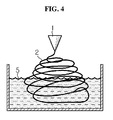
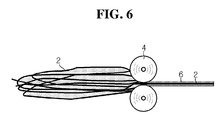
FIGS. 4 through 6 schematically illustrate a method of making a non-woven fabric according to the present disclosure. -
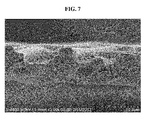
FIG. 7 is a 3000 times-magnified photographic image of a non-woven fabric made according to the present disclosure. - Hereinafter, the present disclosure will be described in detail. Prior to the description, it should be understood that the terms used in the specification and the appended claims should not be construed as limited to general and dictionary meanings, but interpreted based on the meanings and concepts corresponding to technical aspects of the present disclosure on the basis of the principle that the inventor is allowed to define terms appropriately for the best explanation. Therefore, the description proposed herein is just a preferable example for the purpose of illustrations only, not intended to limit the scope of the disclosure, so it should be understood that other equivalents and modifications could be made thereto without departing from the spirit and scope of the disclosure.
- As used herein, the term 'non-woven fabric' represents a product made from fibers by mechanical treatment that arranges and entangles the fibers in a parallel or irregular direction, without performing a weaving process on the fibers.
- The non-woven fabric used in the present disclosure corresponds to a web non-woven fabric made from a material that can be used as a separator for an electrochemical cell. This non-woven fabric is characterized by having elastic, porous, moisture-permeable, and waterproof properties while maintaining a predetermined level of strength.
- As used herein, the terms 'web fiber' and 'fiber' represent a fiber that is spun and makes up a non-woven fabric, and they are interchangeably used.
- In the present disclosure, a non-limiting example of a fiber comprising a non-woven fabric may include any one selected from polyurethane, polyolefin-based resin such as polyethylene or polypropylene; polyamide; thermoplastic polyurethane; polyethyleneterephthalate; nylon; and their copolymers, or mixtures thereof. Also, in the present disclosure, a non-woven fabric forming material may be produced from at least two types of materials, and besides a same type of filament fiber, different types of filament fibers may be used, preferably, for example, a bicomponent fiber containing at least one polyolefin component.
- There is no particular limitation in a method of making a non-woven fabric according to an exemplary embodiment of the present disclosure if it may include a process of immersing a spun fiber in an organic binder polymer compound solution, and a non-limiting example may include a wet spinning method using a paper making method. A spinning condition is not specially limited in the present disclosure, and may correspond to a general condition in the art.
- A diameter of the spun fiber is generally 20 µm or less, and for example, may be in a range of 0.5 to 18 µm or in a range of 1 to 15 µm. A cross section of the fiber may have various shapes of, generally, a circle or an oval, a furrow on the surface, a small strip, a triangle or a polygon, and the like.
- The fiber may have a weight per unit area in a range of 5 to 20 g/m2, however the present disclosure is not limited thereto.
- The fiber of the non-woven fabric according to an exemplary embodiment of the present disclosure is coated with the organic binder polymer compound. Its example is illustrated in
FIG. 3 , and it can be seen that a fiber is coated with an organic binder polymer compound (indicated by an arrow). Since the fiber is coated with the organic binder polymer compound, the non-woven fabric made from the fiber has a cohesive or adhesive strength without applying a separate adhesive layer or an adhesive agent. - For example, when a separator formed from the fiber coated with the organic binder polymer compound is interposed between a cathode and an anode and laminated by applying heat of 80 to 150°C and pressure, adhesion of the separator and the electrode may be made even though an additional separate adhesive layer is not included, and in this instance, an adhesive level is in a range of 10 to 100 gf/25mm. Here, the 'adhesive level' presents a strength measured when pulling the separator at 100 mm/min and 180 degrees.
- In this instance, a non-limiting example of the rubber-based adhesive compound may include a synthetic polyisoprene rubber, a styrene-isoprene-styrene block copolymer, natural rubber, polyisobutylene, polybutene, and the like.
- A non-limiting example of the acryl-based adhesive compound may include a homopolymer or copolymer of an acrylic ester-based monomer including butyl acrylate, isononyl acrylate, and 2-ethyl hexyl acrylate, or a copolymer of such an acrylic acid ester-based monomer and another monomer including acrylic acid, 2-hydroxy ethyl acrylate, vinyl acetate, and the like.
- The web fiber comprising the non-woven fabric may be used to form a non-woven fabric substrate through a general process known in the art, and besides a single-layered structure, the non-woven substrate may be used in a multilayered structure to provide various characteristics, if necessary. The multilayered structure is not limited to a stack structure of multiple types of non-woven fabric substrates, and includes a stack structure of different types of substrates including a plastic film, a non-woven fabric, a porous layer, and the like.
- A pore diameter in the non-woven fabric substrate and a thickness of the non-woven fabric substrate may be different based on a diameter of the fiber, an extent to which the fiber accumulates during making the non-woven fabric, and the like, and may be adjusted through a calendering process. In an exemplary embodiment, a pore in the non-woven fabric substrate may have a diameter in range of 0.001 to 10 µm when measuring with a capillary flow porometer, and when the pore diameter falls within the range, a favorable movement of a lithium ion may be ensured.
- Also, a thickness of the non-woven fabric substrate may be in a range of 0.1 to 100 µm or in a range of 5 to 50 µm. The thickness of the non-woven fabric substrate satisfying the range is preferred in terms of elasticity, workability, durability, and unnecessary volume increase prevention.
- A permeability of the non-woven fabric substrate may be in a range of 1 to 10 sec/100mL.
- Another exemplary embodiment of the present disclosure relates to a method of making a porous web non-woven fabric.
- An embodiment of a method of making a non-woven fabric according to a related art is schematically illustrated in
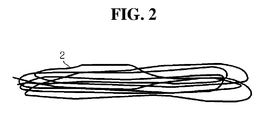
FIGS. 1 through 3 . According to a related art, the method includes spinning aweb fiber 2 in a conventional solution 3 through a spinning device 1 (FIG. 1 ), drying the web 2 (FIG. 2 ), and calendaring thedry web 2 by a calendaring roll 4 (FIG. 3 ). Here, the 'conventional solution' represents a solution in which an organic binder polymer compound is not included. Subsequently, to provide an adhesive property to the non-woven fabric, an operation of forming an adhesive layer is additionally performed in the conventional method. - The method of making a non-woven fabric according to an exemplary embodiment of the present disclosure is schematically illustrated in
FIGS. 4 through 6 . According to the present disclosure, the method includes immersing aweb fiber 2 spun through aspinning device 1 in a binder polymer compound solution (FIG. 4 ), drying theweb 2 having a binder polymer compound coating 6 (FIG. 5 ), and calendaring thedry web 2 by a calendaring roll 4 under temperature and pressure conditions allowing a target pore diameter (FIG. 6 ). The resulting non-woven web fiber has a cohesive or adhesive property. - In the specification, the organic binder polymer compound solution represents a solution in which an acryl-based adhesive compound, a rubber-adhesive compound, a silicon-based adhesive compound, or a vinyl ether-based adhesive compound is dissolved in a solvent. The solvent may include, but is not limited to, any one selected from the group consisting of acetone, methylethylketone, methylisobutylketone, methyl cellosolve, ethyl cellosolve, tetrahydrofuran, 1,4-dioxane, ethylene glycol dimethyl ether, ethylene glycol diethyl ether, propylene glycol dimethyl ether, propylene glycol diethyl ether, chloroform, methylene chloride, 1,2-dichloroethane, 1,1,1-trichloroethane, 1,1,2-trichloroethane, 1,1,2-trichloroethene, 1,2,3-trichloropropane, hexane, heptane, octane, cyclopentane, cyclohexane, bezene, toluene, xylene, methanol, ethanol, isopropanol, propanol, butanol, t-butanol, propylene glycol monomethylether, propylene glycol monoethylether, propylene glycol monopropylether, propylene glycol monobutylether, dipropylene glycol dimethylether, dipropylene glycol diethylether, dipropylene glycol monomethylether, methyl carbitol, ethyl carbitol, propyl carbitol, butyl carbitol, cyclopentanone, cyclohexanone, propylene glycol methyletheracetate, propylene glycol ethyletheracetate, propylene glycol methylether propionate, 3-methoxybutyl acetate, 3-methyl-3-methoxybutyl acetate, ethyl-3-ethoxypropionate, ethyl cellosolve acetate, methyl cellosolve acetate, butyl acetate, propyl acetate and ethyl acetate, or mixtures thereof. It is preferred that the binder polymer compound solution has a viscosity in a range of 1 to 100 centipoise (cp) in view of uniform coating of the binder polymer compound on the fiber.
- The binder polymer compound solution may, if necessary, further include various types of additives, for example, a plasticizer including polyhydric alcohol such as glycerin, polyethylene glycol, and polypropylene glycol, a water-soluble or water-absorbent resin such as polyacrylic acid, a cross-linked polyacrylic acid, and polyvinylpyrrolidone, a rosin-, terpene- or petroleum-based tackifier, a softener, a filler, a pigment, and the like.
- The web fiber coated with the binder polymer compound may be dried at temperature of 40 to 100°C for 1 to 10 minutes in a general manner in the art. The drying temperature within the range is preferred because drying is achieved in a short period of time and melting of the fiber or the binder polymer is prevented.
- The dry web fiber may be calendared in a temperature range of 100 to 200 °C. When the calendaring temperature satisfies the range, an appropriate tensile strength of the non-woven fabric and proper spacing between the fibers may be achieved and melting of the spun fiber and the binder polymer may be prevented.
- Also, the calendaring pressure may be set to a range of 1 to 10 bar. The calendaring pressure satisfying the range is preferred in terms of a tensile strength of the non-woven fabric, spacing between the fibers, and roller durability.
- The non-woven fabric made as described in the foregoing does not have a special limitation in its use, and particularly, may be used as a separator for an electrochemical cell.
- The electrode that will be applied along with the separator of the present disclosure is not limited to a specific type, and may be manufactured in a manner of bonding an electrode active material to an electrode current collector by a general method known in the art.
- In the electrode active material, a cathode active material may include, as a non-limiting example, any cathode active material usable in a cathode of a conventional electrochemical cell, in particular, lithium manganese oxide, lithium cobalt oxide, lithium nickel oxide, lithium iron oxide, or lithium composite oxides thereof.
- A non-limiting example of an anode active material may include any anode active material usable in an anode of a conventional electrochemical cell, in particular, a material capable of absorbing/desorbing lithium such as a lithium metal or a lithium alloy, carbon, petroleum coke, activated carbon, graphite, or other carbons.
- The cathode current collector may be, as a non-limiting example, a foil made from aluminum, nickel or a combination thereof, and the anode current collector may be, as a non-limiting example, a foil made from copper, gold, a nickel or copper alloy, or combinations thereof.
- The electrolyte solution usable in the present disclosure may be an electrolyte solution in which an electrolyte salt, for example, of A+B- structure, where A+ represents an ion including an alkali metal cation such as Li+, Na+ and K+, or combinations thereof, and B- represents an ion including an anion such as PF6 -, BF4 -, Cl-, Br-, I-, ClO4 -, AsF6 -, CH3CO2 -, CF3SO3 -, N(CF3SO2)2 - and C(CF2SO2)3 -, or combinations thereof, is dissolved or dissociated in an electrolyte solvent including, but is not limited to, propylene carbonate (PC), ethylene carbonate (EC), diethyl carbonate (DEC), dimethyl carbonate (DMC), dipropyl carbonate (DPC), dimethylsulfoxide, acetonitrile, dimethoxyethane, diethoxyethane, tetrahydrofuran, N-methyl-2-pyrrolidone (NMP), ethylmethylcarbonate (EMC), gamma butyrolactone, or mixtures thereof.
- Injection of the electrolyte solution may be performed in a proper step among a battery fabrication process based on a manufacturing process and required physical properties of a final product. That is, injection of the electrolyte solution may be applied before battery assembling or in a final step of battery assembling.
- Optionally, the electrode according to the present invention may further include a conductive material, a binder, a filler, and the like, if necessary.
- The conductive material may include, but is not limited to, acetylene black, carbon black, and the like.
- The binder may be at least one selected from the group consisting of polytetrafluoroethylene, polyvinylidene fluoride, polyvinyl fluoride, polyacrylonitrile, nitrile rubber, polybutadiene, polystyrene, styrene butadiene rubber, polysulfide rubber, butyl rubber, hydrogenated styrene butadiene rubber, nitrocellulose, and carboxymethylcellulose.
- The battery according to the present disclosure may be manufactured by a general method known in the art, for example, in a manner of dispersing an electrode active material and a binder in an organic solvent to prepare a slurry, coating the slurry on an electrode current collector, drying and compressing the result, and interposing the separator between the cathode and the anode, however the present disclosure is not limited thereto.
Claims (12)
- A non-woven fabric made from a fiber coated with an organic binder polymer compound.
- The non-woven fabric according to claim 1, wherein the non-woven fabric has a pore diameter in a range of 0.001 to 10 µm.
- The non-woven fabric according to claim 1, wherein the organic binder polymer compound is any one selected from an acryl-based adhesive compound, a rubber-based adhesive compound, a silicon-based adhesive compound and a vinyl ether-based adhesive compound, or mixtures thereof.
- The non-woven fabric according to claim 1, wherein the fiber is spun from any one selected from polyurethane, polyolefin-based resin, polyamide, thermoplastic polyurethane, polyethyleneterephthalate, nylon and their copolymers, or mixtures thereof.
- A separator for an electrochemical cell using the non-woven fabric defined in any one of claims 1 through 4 as a substrate.
- An electrochemical cell comprising a cathode, an anode, a separator interposed between the cathode and the anode, and an electrolyte,
wherein the separator is a the separator defined in claims 5. - The electrochemical cell according to claim 6, wherein the electrochemical cell is a lithium secondary battery.
- A method of manufacturing a separator using a non-woven fabric, the method comprising:immersing a spun fiber in an organic binder polymer compound solution.
- The method according to claim 8, further comprising:subsequently, calendaring the fiber coated with the organic binder polymer compound solution under conditions of temperature of 100 to 200°C and pressure of 10 to 500 MPa.
- The method according to claim 8, wherein the fiber is obtained by spinning any one selected from polyurethane, polyolefin-based resin, polyamide, thermoplastic polyurethane, polyethyleneterephthalate, nylon and their copolymers, or mixtures thereof.
- The method according to claim 8, wherein the organic binder polymer compound solution is a solution in which an acryl-based adhesive compound, a rubber-based adhesive compound, a silicon-based adhesive compound or a vinyl ether-based adhesive compound is dissolved in a solvent including any one selected from the group consisting of acetone, methylethylketone, methylisobutylketone, methyl cellosolve, ethyl cellosolve, tetrahydrofuran, 1,4-dioxane, ethylene glycol dimethyl ether, ethylene glycol diethyl ether, propylene glycol dimethyl ether, propylene glycol diethyl ether, chloroform, methylene chloride, 1,2-dichloroethane, 1,1,1-trichloroethane, 1,1,2-trichloroethane, 1,1,2-trichloroethene, 1,2,3-trichloropropane, hexane, heptane, octane, cyclopentane, cyclohexane, bezene, toluene, xylene, methanol, ethanol, isopropanol, propanol, butanol, t-butanol, propylene glycol monomethylether, propylene glycol monoethylether, propylene glycol monopropylether, propylene glycol monobutylether, dipropylene glycol dimethylether, dipropylene glycol diethylether, dipropylene glycol monomethylether, methyl carbitol, ethyl carbitol, propyl carbitol, butyl carbitol, cyclopentanone, cyclohexanone, propylene glycol methyletheracetate, propylene glycol ethyletheracetate, propylene glycol methylether propionate, 3-methoxybutyl acetate, 3-methyl-3-methoxybutyl acetate, ethyl-3-ethoxypropionate, ethyl cellosolve acetate, methyl cellosolve acetate, butyl acetate, propyl acetate and ethyl acetate, or mixtures thereof.
- The method according to claim 11, wherein the organic binder polymer compound solution has a viscosity in a range of 1 to 100 centipoise (cp).
Applications Claiming Priority (2)
| Application Number | Priority Date | Filing Date | Title |
|---|---|---|---|
| KR20120138494 | 2012-11-30 | ||
| PCT/KR2013/011037 WO2014084683A1 (en) | 2012-11-30 | 2013-11-29 | Nonwoven fabric formed from fiber coated with organic binder polymer compound, electrochemical device comprising nonwoven fabric, and method for manufacturing nonwoven fabric |
Publications (3)
| Publication Number | Publication Date |
|---|---|
| EP2781637A1 true EP2781637A1 (en) | 2014-09-24 |
| EP2781637A4 EP2781637A4 (en) | 2015-09-30 |
| EP2781637B1 EP2781637B1 (en) | 2024-02-21 |
Family
ID=51125286
Family Applications (1)
| Application Number | Title | Priority Date | Filing Date |
|---|---|---|---|
| EP13859475.9A Active EP2781637B1 (en) | 2012-11-30 | 2013-11-29 | Nonwoven fabric formed from fiber coated with organic binder polymer compound, electrochemical device comprising nonwoven fabric, and method for manufacturing nonwoven fabric |
Country Status (12)
| Country | Link |
|---|---|
| US (1) | US10153469B2 (en) |
| EP (1) | EP2781637B1 (en) |
| JP (1) | JP6096908B2 (en) |
| KR (1) | KR101546481B1 (en) |
| CN (1) | CN104136672B (en) |
| BR (1) | BR112014015684B8 (en) |
| ES (1) | ES2977141T3 (en) |
| FI (1) | FI2781637T3 (en) |
| HU (1) | HUE066042T2 (en) |
| IN (1) | IN2014MN02250A (en) |
| PL (1) | PL2781637T3 (en) |
| WO (1) | WO2014084683A1 (en) |
Cited By (1)
| Publication number | Priority date | Publication date | Assignee | Title |
|---|---|---|---|---|
| TWI883165B (en) * | 2020-04-09 | 2025-05-11 | 日商花王股份有限公司 | Nonwoven fabrics and absorbent articles |
Families Citing this family (10)
| Publication number | Priority date | Publication date | Assignee | Title |
|---|---|---|---|---|
| EP3190648B1 (en) * | 2014-09-05 | 2018-11-28 | LG Chem, Ltd. | Lithium electrode, lithium secondary battery comprising same, battery module comprising lithium secondary battery, and preparation method of lithium electrode |
| EP3282502B1 (en) * | 2015-04-06 | 2019-10-30 | Toshiba Infrastructure Systems & Solutions Corporation | Electrode, electrode group and nonaqueous electrolyte battery |
| US11239532B2 (en) * | 2015-08-17 | 2022-02-01 | Celgard, Llc | Battery separators and related methods |
| JP6848051B2 (en) * | 2017-03-28 | 2021-03-24 | 株式会社東芝 | Electrode structure and rechargeable battery |
| CN108539251A (en) * | 2018-05-09 | 2018-09-14 | 安徽宝岛新能源发展有限公司 | A kind of portable lithium battery for electric vehicle |
| KR102811617B1 (en) * | 2018-08-10 | 2025-05-21 | 니폰 제온 가부시키가이샤 | Slurry composition for adhesive layer of non-aqueous secondary battery, adhesive layer for non-aqueous secondary battery, separator for non-aqueous secondary battery, and non-aqueous secondary battery |
| CN109111443A (en) * | 2018-08-28 | 2019-01-01 | 上海迪赛诺药业股份有限公司 | The novel crystal forms and preparation method thereof of DPP-IV inhibitor class antidiabetic drug |
| CN109888286B (en) * | 2019-01-23 | 2022-07-12 | 西安交通大学 | Dynamic ion crosslinked polyacrylic acid-polyethylene glycol hydrogel adhesive and preparation method and application thereof |
| CN117211009A (en) * | 2023-09-08 | 2023-12-12 | 上汽通用五菱汽车股份有限公司 | Composite material and preparation method thereof |
| CN121969802A (en) * | 2023-10-13 | 2026-05-01 | 陶氏环球技术有限责任公司 | Impregnated fabric for use in battery cells |
Family Cites Families (23)
| Publication number | Priority date | Publication date | Assignee | Title |
|---|---|---|---|---|
| US3837988A (en) * | 1967-10-19 | 1974-09-24 | Minnesota Mining & Mfg | Composite mat |
| US4351683A (en) | 1967-10-19 | 1982-09-28 | Minnesota Mining And Manufacturing Company | Method of forming web material |
| GB1434487A (en) * | 1973-02-14 | 1976-05-05 | Kanebo Ltd | Lead-acid storage battery |
| JPS6097832A (en) * | 1983-11-01 | 1985-05-31 | Jun Taga | Manufacture of porous film |
| JPH02127554A (en) | 1988-08-11 | 1990-05-16 | B F Goodrich Co:The | Sheet consisting of porous non-woven fabric |
| JPH0482949A (en) * | 1990-07-17 | 1992-03-16 | Goyo Paper Working Co Ltd | Nonwoven fabric and production thereof |
| DE4233412C1 (en) | 1992-10-05 | 1994-02-17 | Freudenberg Carl Fa | Hydrophilized separator material made of nonwoven fabric for electrochemical energy storage and method for its production |
| EP0898316A4 (en) | 1997-01-16 | 2005-05-25 | Mitsubishi Paper Mills Ltd | SEPARATOR FOR NON-AQUEOUS ELECTROLYTE BATTERY, THE PRODUCTION THEREOF AND ITS USE IN SUCH BATTERY |
| KR100275813B1 (en) | 1998-10-28 | 2000-12-15 | 구광시 | A process of preparing for the agriculturalspunbond nonwoven fabric |
| MXPA01006943A (en) | 1999-01-08 | 2003-06-04 | Ahlstrom Mount Holly Springs L | Durable hydrophilic nonwoven mat for rechargeable alkaline batteries. |
| KR100367284B1 (en) * | 1999-02-22 | 2003-01-09 | 티디케이가부시기가이샤 | Secondary Battery, and its Production Process |
| US6881438B2 (en) * | 2000-03-07 | 2005-04-19 | Teijin Limited | Process for production of composite porous film |
| ATE420233T1 (en) * | 2005-07-29 | 2009-01-15 | Fiberweb Inc | LIQUID-PROOF NON-WOVEN FABRIC MADE OF BICOMPONENT FILAMENTS |
| CA2646991A1 (en) | 2006-03-03 | 2007-09-13 | Toho Tenax Europe Gmbh | Method for producing reinforced placed structures |
| CN101395316B (en) * | 2006-03-03 | 2012-01-18 | 东邦泰纳克丝欧洲有限公司 | Method for producing reinforced placed structures |
| KR101147604B1 (en) | 2007-10-12 | 2012-05-23 | 주식회사 엘지화학 | Preparation Process for Preventing Deformation of Jelly-roll Type Electrode Assembly |
| US9159979B2 (en) * | 2008-02-20 | 2015-10-13 | Carl Freudenberg Kg | Nonwoven fabric having cross-linking material |
| EP2147776A1 (en) * | 2008-07-23 | 2010-01-27 | SGL Carbon SE | Method for manufacturing a compound material reinforced with fibre netting and compound material reinforced with fibre netting and its application |
| KR101055536B1 (en) * | 2009-04-10 | 2011-08-08 | 주식회사 엘지화학 | Separator comprising a porous coating layer, a method of manufacturing the same and an electrochemical device having the same |
| JP5241901B2 (en) | 2010-10-28 | 2013-07-17 | ローム アンド ハース カンパニー | Aqueous nonwoven binder and treated nonwoven made therefrom |
| CN102140734B (en) * | 2011-01-10 | 2012-12-19 | 武汉理工大学 | Enhanced bi-component nanofiber porous membrane and preparation method thereof |
| KR20120111652A (en) * | 2011-04-01 | 2012-10-10 | 강원대학교산학협력단 | Separator for lithium secondary battery, manufacturing method for the same, and lithium secondary battery including the same |
| CN102230257B (en) * | 2011-05-30 | 2013-07-03 | 中国科学院青岛生物能源与过程研究所 | Coaxial compound nanometre fibre film as well as preparation method and application thereof |
-
2013
- 2013-11-29 ES ES13859475T patent/ES2977141T3/en active Active
- 2013-11-29 FI FIEP13859475.9T patent/FI2781637T3/en active
- 2013-11-29 BR BR112014015684A patent/BR112014015684B8/en active IP Right Grant
- 2013-11-29 IN IN2250MUN2014 patent/IN2014MN02250A/en unknown
- 2013-11-29 WO PCT/KR2013/011037 patent/WO2014084683A1/en not_active Ceased
- 2013-11-29 PL PL13859475.9T patent/PL2781637T3/en unknown
- 2013-11-29 EP EP13859475.9A patent/EP2781637B1/en active Active
- 2013-11-29 KR KR1020130147402A patent/KR101546481B1/en active Active
- 2013-11-29 HU HUE13859475A patent/HUE066042T2/en unknown
- 2013-11-29 CN CN201380005669.3A patent/CN104136672B/en active Active
- 2013-11-29 JP JP2015534402A patent/JP6096908B2/en active Active
-
2014
- 2014-05-28 US US14/288,883 patent/US10153469B2/en active Active
Cited By (1)
| Publication number | Priority date | Publication date | Assignee | Title |
|---|---|---|---|---|
| TWI883165B (en) * | 2020-04-09 | 2025-05-11 | 日商花王股份有限公司 | Nonwoven fabrics and absorbent articles |
Also Published As
| Publication number | Publication date |
|---|---|
| KR101546481B1 (en) | 2015-08-21 |
| JP6096908B2 (en) | 2017-03-15 |
| CN104136672B (en) | 2017-09-05 |
| BR112014015684B1 (en) | 2021-08-31 |
| CN104136672A (en) | 2014-11-05 |
| PL2781637T3 (en) | 2024-05-20 |
| US20140272525A1 (en) | 2014-09-18 |
| IN2014MN02250A (en) | 2015-07-24 |
| BR112014015684A8 (en) | 2017-07-04 |
| BR112014015684A2 (en) | 2017-06-13 |
| EP2781637A4 (en) | 2015-09-30 |
| EP2781637B1 (en) | 2024-02-21 |
| ES2977141T3 (en) | 2024-08-19 |
| WO2014084683A1 (en) | 2014-06-05 |
| JP2015535896A (en) | 2015-12-17 |
| BR112014015684B8 (en) | 2023-01-17 |
| HUE066042T2 (en) | 2024-07-28 |
| US10153469B2 (en) | 2018-12-11 |
| FI2781637T3 (en) | 2024-05-16 |
| KR20140070463A (en) | 2014-06-10 |
Similar Documents
| Publication | Publication Date | Title |
|---|---|---|
| US10153469B2 (en) | Non-woven fabric made from fiber coated with organic binder polymer compound, electrochemical cell comprising the non-woven fabric, and method for making the non-woven fabric | |
| JP6463785B2 (en) | Separation membrane for battery including gel polymer layer | |
| CN107316968B (en) | Viscous battery diaphragm and lithium ion battery using same | |
| US10622611B2 (en) | Separator for nonaqueous electrolyte battery, and nonaqueous electrolyte battery | |
| US9368778B2 (en) | Separator for non-aqueous secondary battery, method for producing the same, and non-aqueous secondary battery | |
| EP2696391B1 (en) | Nonaqueous secondary battery separator and nonaqueous secondary battery | |
| TWI479725B (en) | Separator and electrochemical device containing the same | |
| EP2696393B1 (en) | Nonaqueous secondary battery separator and nonaqueous secondary battery | |
| JP6165261B2 (en) | Anode active material slurry, anode using the slurry, and electrochemical device including the same | |
| KR101603628B1 (en) | Separator and preparation method of separator thereof | |
| KR20150132319A (en) | Protected electrode structures and methods | |
| KR20160114587A (en) | Separator for nonaqueous secondary batteries, and nonaqueous secondary battery | |
| US20150179997A1 (en) | Separator for nonaqueous electrolyte battery, and nonaqueous electrolyte battery | |
| KR20170027403A (en) | Secondary Battery Comprising Binder having High Swelling Ratio | |
| JP2001222988A (en) | Electrolyte-supported polymer membrane and secondary battery using the same | |
| KR102829075B1 (en) | Separator for secondary battery and secondary battery containing the same | |
| KR20030065089A (en) | Fibroid separator and energy storage device using the same | |
| KR101796283B1 (en) | Composite separator based non-woven fabric and a method of making the same | |
| KR102038670B1 (en) | Non-woven fabric based separator for electrochemical device and Electrochemical device comprising the same | |
| TWI531696B (en) | Non-woven fabric made from fiber coated with organic binder polymers compound, electrochemical cell comprising the non-woven fabric, and method for making the non-woven fabric | |
| JP5249688B2 (en) | Battery separator and manufacturing method thereof, and lithium ion secondary battery and manufacturing method thereof | |
| CN206703652U (en) | A kind of compound lithium battery diaphragm | |
| KR102598513B1 (en) | Binder resin for electrode of secondary battery, anode for secondary battery and secondary battery | |
| CN107516724A (en) | Battery core and energy storage device |
Legal Events
| Date | Code | Title | Description |
|---|---|---|---|
| PUAI | Public reference made under article 153(3) epc to a published international application that has entered the european phase |
Free format text: ORIGINAL CODE: 0009012 |
|
| 17P | Request for examination filed |
Effective date: 20140617 |
|
| AK | Designated contracting states |
Kind code of ref document: A1 Designated state(s): AL AT BE BG CH CY CZ DE DK EE ES FI FR GB GR HR HU IE IS IT LI LT LU LV MC MK MT NL NO PL PT RO RS SE SI SK SM TR |
|
| RA4 | Supplementary search report drawn up and despatched (corrected) |
Effective date: 20150901 |
|
| RIC1 | Information provided on ipc code assigned before grant |
Ipc: H01M 2/14 20060101ALI20150825BHEP Ipc: D01F 11/00 20060101ALI20150825BHEP Ipc: D06M 15/263 20060101ALI20150825BHEP Ipc: D04H 1/4382 20120101AFI20150825BHEP Ipc: H01M 2/16 20060101ALI20150825BHEP Ipc: D06M 15/347 20060101ALI20150825BHEP Ipc: D04H 1/558 20120101ALI20150825BHEP Ipc: D06M 15/00 20060101ALI20150825BHEP Ipc: D06M 23/10 20060101ALI20150825BHEP Ipc: D04H 1/541 20120101ALI20150825BHEP Ipc: D06M 15/693 20060101ALI20150825BHEP Ipc: D01D 5/06 20060101ALI20150825BHEP Ipc: D06M 15/643 20060101ALI20150825BHEP Ipc: D04H 3/12 20060101ALI20150825BHEP |
|
| DAX | Request for extension of the european patent (deleted) | ||
| STAA | Information on the status of an ep patent application or granted ep patent |
Free format text: STATUS: EXAMINATION IS IN PROGRESS |
|
| 17Q | First examination report despatched |
Effective date: 20180726 |
|
| RAP1 | Party data changed (applicant data changed or rights of an application transferred) |
Owner name: LG ENERGY SOLUTION LTD. |
|
| RAP3 | Party data changed (applicant data changed or rights of an application transferred) |
Owner name: LG ENERGY SOLUTION, LTD. |
|
| RIC1 | Information provided on ipc code assigned before grant |
Ipc: D06M 23/10 20060101ALI20230906BHEP Ipc: D06M 15/693 20060101ALI20230906BHEP Ipc: D06M 15/643 20060101ALI20230906BHEP Ipc: D06M 15/347 20060101ALI20230906BHEP Ipc: D06M 15/263 20060101ALI20230906BHEP Ipc: D04H 3/12 20060101ALI20230906BHEP Ipc: D01F 11/00 20060101ALI20230906BHEP Ipc: D01D 5/06 20060101ALI20230906BHEP Ipc: D06M 15/00 20060101ALI20230906BHEP Ipc: D04H 1/558 20120101ALI20230906BHEP Ipc: D04H 1/541 20120101ALI20230906BHEP Ipc: D04H 1/4382 20120101AFI20230906BHEP |
|
| GRAP | Despatch of communication of intention to grant a patent |
Free format text: ORIGINAL CODE: EPIDOSNIGR1 |
|
| STAA | Information on the status of an ep patent application or granted ep patent |
Free format text: STATUS: GRANT OF PATENT IS INTENDED |
|
| INTG | Intention to grant announced |
Effective date: 20231018 |
|
| GRAS | Grant fee paid |
Free format text: ORIGINAL CODE: EPIDOSNIGR3 |
|
| GRAA | (expected) grant |
Free format text: ORIGINAL CODE: 0009210 |
|
| STAA | Information on the status of an ep patent application or granted ep patent |
Free format text: STATUS: THE PATENT HAS BEEN GRANTED |
|
| AK | Designated contracting states |
Kind code of ref document: B1 Designated state(s): AL AT BE BG CH CY CZ DE DK EE ES FI FR GB GR HR HU IE IS IT LI LT LU LV MC MK MT NL NO PL PT RO RS SE SI SK SM TR |
|
| P01 | Opt-out of the competence of the unified patent court (upc) registered |
Effective date: 20240112 |
|
| REG | Reference to a national code |
Ref country code: GB Ref legal event code: FG4D |
|
| REG | Reference to a national code |
Ref country code: CH Ref legal event code: EP |
|
| REG | Reference to a national code |
Ref country code: DE Ref legal event code: R096 Ref document number: 602013085334 Country of ref document: DE |
|
| REG | Reference to a national code |
Ref country code: IE Ref legal event code: FG4D |
|
| REG | Reference to a national code |
Ref country code: NL Ref legal event code: FP |
|
| REG | Reference to a national code |
Ref country code: FI Ref legal event code: FGE |
|
| REG | Reference to a national code |
Ref country code: SE Ref legal event code: TRGR |
|
| REG | Reference to a national code |
Ref country code: LT Ref legal event code: MG9D |
|
| PG25 | Lapsed in a contracting state [announced via postgrant information from national office to epo] |
Ref country code: IS Free format text: LAPSE BECAUSE OF FAILURE TO SUBMIT A TRANSLATION OF THE DESCRIPTION OR TO PAY THE FEE WITHIN THE PRESCRIBED TIME-LIMIT Effective date: 20240621 |
|
| PG25 | Lapsed in a contracting state [announced via postgrant information from national office to epo] |
Ref country code: LT Free format text: LAPSE BECAUSE OF FAILURE TO SUBMIT A TRANSLATION OF THE DESCRIPTION OR TO PAY THE FEE WITHIN THE PRESCRIBED TIME-LIMIT Effective date: 20240221 |
|
| PG25 | Lapsed in a contracting state [announced via postgrant information from national office to epo] |
Ref country code: GR Free format text: LAPSE BECAUSE OF FAILURE TO SUBMIT A TRANSLATION OF THE DESCRIPTION OR TO PAY THE FEE WITHIN THE PRESCRIBED TIME-LIMIT Effective date: 20240522 |
|
| REG | Reference to a national code |
Ref country code: AT Ref legal event code: MK05 Ref document number: 1659194 Country of ref document: AT Kind code of ref document: T Effective date: 20240221 |
|
| PG25 | Lapsed in a contracting state [announced via postgrant information from national office to epo] |
Ref country code: RS Free format text: LAPSE BECAUSE OF FAILURE TO SUBMIT A TRANSLATION OF THE DESCRIPTION OR TO PAY THE FEE WITHIN THE PRESCRIBED TIME-LIMIT Effective date: 20240521 Ref country code: HR Free format text: LAPSE BECAUSE OF FAILURE TO SUBMIT A TRANSLATION OF THE DESCRIPTION OR TO PAY THE FEE WITHIN THE PRESCRIBED TIME-LIMIT Effective date: 20240221 |
|
| PG25 | Lapsed in a contracting state [announced via postgrant information from national office to epo] |
Ref country code: AT Free format text: LAPSE BECAUSE OF FAILURE TO SUBMIT A TRANSLATION OF THE DESCRIPTION OR TO PAY THE FEE WITHIN THE PRESCRIBED TIME-LIMIT Effective date: 20240221 |
|
| REG | Reference to a national code |
Ref country code: HU Ref legal event code: AG4A Ref document number: E066042 Country of ref document: HU |
|
| PG25 | Lapsed in a contracting state [announced via postgrant information from national office to epo] |
Ref country code: RS Free format text: LAPSE BECAUSE OF FAILURE TO SUBMIT A TRANSLATION OF THE DESCRIPTION OR TO PAY THE FEE WITHIN THE PRESCRIBED TIME-LIMIT Effective date: 20240521 Ref country code: NO Free format text: LAPSE BECAUSE OF FAILURE TO SUBMIT A TRANSLATION OF THE DESCRIPTION OR TO PAY THE FEE WITHIN THE PRESCRIBED TIME-LIMIT Effective date: 20240521 Ref country code: LT Free format text: LAPSE BECAUSE OF FAILURE TO SUBMIT A TRANSLATION OF THE DESCRIPTION OR TO PAY THE FEE WITHIN THE PRESCRIBED TIME-LIMIT Effective date: 20240221 Ref country code: IS Free format text: LAPSE BECAUSE OF FAILURE TO SUBMIT A TRANSLATION OF THE DESCRIPTION OR TO PAY THE FEE WITHIN THE PRESCRIBED TIME-LIMIT Effective date: 20240621 Ref country code: HR Free format text: LAPSE BECAUSE OF FAILURE TO SUBMIT A TRANSLATION OF THE DESCRIPTION OR TO PAY THE FEE WITHIN THE PRESCRIBED TIME-LIMIT Effective date: 20240221 Ref country code: GR Free format text: LAPSE BECAUSE OF FAILURE TO SUBMIT A TRANSLATION OF THE DESCRIPTION OR TO PAY THE FEE WITHIN THE PRESCRIBED TIME-LIMIT Effective date: 20240522 Ref country code: BG Free format text: LAPSE BECAUSE OF FAILURE TO SUBMIT A TRANSLATION OF THE DESCRIPTION OR TO PAY THE FEE WITHIN THE PRESCRIBED TIME-LIMIT Effective date: 20240221 Ref country code: AT Free format text: LAPSE BECAUSE OF FAILURE TO SUBMIT A TRANSLATION OF THE DESCRIPTION OR TO PAY THE FEE WITHIN THE PRESCRIBED TIME-LIMIT Effective date: 20240221 |
|
| PG25 | Lapsed in a contracting state [announced via postgrant information from national office to epo] |
Ref country code: PT Free format text: LAPSE BECAUSE OF FAILURE TO SUBMIT A TRANSLATION OF THE DESCRIPTION OR TO PAY THE FEE WITHIN THE PRESCRIBED TIME-LIMIT Effective date: 20240621 |
|
| REG | Reference to a national code |
Ref country code: ES Ref legal event code: FG2A Ref document number: 2977141 Country of ref document: ES Kind code of ref document: T3 Effective date: 20240819 |
|
| PG25 | Lapsed in a contracting state [announced via postgrant information from national office to epo] |
Ref country code: PT Free format text: LAPSE BECAUSE OF FAILURE TO SUBMIT A TRANSLATION OF THE DESCRIPTION OR TO PAY THE FEE WITHIN THE PRESCRIBED TIME-LIMIT Effective date: 20240621 Ref country code: LV Free format text: LAPSE BECAUSE OF FAILURE TO SUBMIT A TRANSLATION OF THE DESCRIPTION OR TO PAY THE FEE WITHIN THE PRESCRIBED TIME-LIMIT Effective date: 20240221 |
|
| PG25 | Lapsed in a contracting state [announced via postgrant information from national office to epo] |
Ref country code: DK Free format text: LAPSE BECAUSE OF FAILURE TO SUBMIT A TRANSLATION OF THE DESCRIPTION OR TO PAY THE FEE WITHIN THE PRESCRIBED TIME-LIMIT Effective date: 20240221 |
|
| PG25 | Lapsed in a contracting state [announced via postgrant information from national office to epo] |
Ref country code: SM Free format text: LAPSE BECAUSE OF FAILURE TO SUBMIT A TRANSLATION OF THE DESCRIPTION OR TO PAY THE FEE WITHIN THE PRESCRIBED TIME-LIMIT Effective date: 20240221 |
|
| PG25 | Lapsed in a contracting state [announced via postgrant information from national office to epo] |
Ref country code: CZ Free format text: LAPSE BECAUSE OF FAILURE TO SUBMIT A TRANSLATION OF THE DESCRIPTION OR TO PAY THE FEE WITHIN THE PRESCRIBED TIME-LIMIT Effective date: 20240221 Ref country code: EE Free format text: LAPSE BECAUSE OF FAILURE TO SUBMIT A TRANSLATION OF THE DESCRIPTION OR TO PAY THE FEE WITHIN THE PRESCRIBED TIME-LIMIT Effective date: 20240221 |
|
| PG25 | Lapsed in a contracting state [announced via postgrant information from national office to epo] |
Ref country code: SK Free format text: LAPSE BECAUSE OF FAILURE TO SUBMIT A TRANSLATION OF THE DESCRIPTION OR TO PAY THE FEE WITHIN THE PRESCRIBED TIME-LIMIT Effective date: 20240221 |
|
| PG25 | Lapsed in a contracting state [announced via postgrant information from national office to epo] |
Ref country code: SM Free format text: LAPSE BECAUSE OF FAILURE TO SUBMIT A TRANSLATION OF THE DESCRIPTION OR TO PAY THE FEE WITHIN THE PRESCRIBED TIME-LIMIT Effective date: 20240221 Ref country code: SK Free format text: LAPSE BECAUSE OF FAILURE TO SUBMIT A TRANSLATION OF THE DESCRIPTION OR TO PAY THE FEE WITHIN THE PRESCRIBED TIME-LIMIT Effective date: 20240221 Ref country code: RO Free format text: LAPSE BECAUSE OF FAILURE TO SUBMIT A TRANSLATION OF THE DESCRIPTION OR TO PAY THE FEE WITHIN THE PRESCRIBED TIME-LIMIT Effective date: 20240221 Ref country code: EE Free format text: LAPSE BECAUSE OF FAILURE TO SUBMIT A TRANSLATION OF THE DESCRIPTION OR TO PAY THE FEE WITHIN THE PRESCRIBED TIME-LIMIT Effective date: 20240221 Ref country code: DK Free format text: LAPSE BECAUSE OF FAILURE TO SUBMIT A TRANSLATION OF THE DESCRIPTION OR TO PAY THE FEE WITHIN THE PRESCRIBED TIME-LIMIT Effective date: 20240221 Ref country code: CZ Free format text: LAPSE BECAUSE OF FAILURE TO SUBMIT A TRANSLATION OF THE DESCRIPTION OR TO PAY THE FEE WITHIN THE PRESCRIBED TIME-LIMIT Effective date: 20240221 |
|
| REG | Reference to a national code |
Ref country code: DE Ref legal event code: R097 Ref document number: 602013085334 Country of ref document: DE |
|
| PLBE | No opposition filed within time limit |
Free format text: ORIGINAL CODE: 0009261 |
|
| STAA | Information on the status of an ep patent application or granted ep patent |
Free format text: STATUS: NO OPPOSITION FILED WITHIN TIME LIMIT |
|
| 26N | No opposition filed |
Effective date: 20241122 |
|
| PG25 | Lapsed in a contracting state [announced via postgrant information from national office to epo] |
Ref country code: SI Free format text: LAPSE BECAUSE OF FAILURE TO SUBMIT A TRANSLATION OF THE DESCRIPTION OR TO PAY THE FEE WITHIN THE PRESCRIBED TIME-LIMIT Effective date: 20240221 |
|
| PG25 | Lapsed in a contracting state [announced via postgrant information from national office to epo] |
Ref country code: MC Free format text: LAPSE BECAUSE OF FAILURE TO SUBMIT A TRANSLATION OF THE DESCRIPTION OR TO PAY THE FEE WITHIN THE PRESCRIBED TIME-LIMIT Effective date: 20240221 |
|
| PG25 | Lapsed in a contracting state [announced via postgrant information from national office to epo] |
Ref country code: LU Free format text: LAPSE BECAUSE OF NON-PAYMENT OF DUE FEES Effective date: 20241129 |
|
| PG25 | Lapsed in a contracting state [announced via postgrant information from national office to epo] |
Ref country code: IE Free format text: LAPSE BECAUSE OF NON-PAYMENT OF DUE FEES Effective date: 20241129 |
|
| PGFP | Annual fee paid to national office [announced via postgrant information from national office to epo] |
Ref country code: NL Payment date: 20251020 Year of fee payment: 13 |
|
| REG | Reference to a national code |
Ref country code: CH Ref legal event code: U11 Free format text: ST27 STATUS EVENT CODE: U-0-0-U10-U11 (AS PROVIDED BY THE NATIONAL OFFICE) Effective date: 20251201 |
|
| PGFP | Annual fee paid to national office [announced via postgrant information from national office to epo] |
Ref country code: HU Payment date: 20251127 Year of fee payment: 13 |
|
| PGFP | Annual fee paid to national office [announced via postgrant information from national office to epo] |
Ref country code: DE Payment date: 20251020 Year of fee payment: 13 |
|
| PGFP | Annual fee paid to national office [announced via postgrant information from national office to epo] |
Ref country code: GB Payment date: 20251023 Year of fee payment: 13 |
|
| PGFP | Annual fee paid to national office [announced via postgrant information from national office to epo] |
Ref country code: FI Payment date: 20251020 Year of fee payment: 13 Ref country code: IT Payment date: 20251021 Year of fee payment: 13 |
|
| PGFP | Annual fee paid to national office [announced via postgrant information from national office to epo] |
Ref country code: FR Payment date: 20251021 Year of fee payment: 13 |
|
| PGFP | Annual fee paid to national office [announced via postgrant information from national office to epo] |
Ref country code: TR Payment date: 20251022 Year of fee payment: 13 Ref country code: BE Payment date: 20251020 Year of fee payment: 13 |
|
| PGFP | Annual fee paid to national office [announced via postgrant information from national office to epo] |
Ref country code: SE Payment date: 20251021 Year of fee payment: 13 Ref country code: CH Payment date: 20251201 Year of fee payment: 13 |
|
| PGFP | Annual fee paid to national office [announced via postgrant information from national office to epo] |
Ref country code: PL Payment date: 20251020 Year of fee payment: 13 |
|
| PGFP | Annual fee paid to national office [announced via postgrant information from national office to epo] |
Ref country code: ES Payment date: 20251215 Year of fee payment: 13 |
|
| PG25 | Lapsed in a contracting state [announced via postgrant information from national office to epo] |
Ref country code: CY Free format text: LAPSE BECAUSE OF FAILURE TO SUBMIT A TRANSLATION OF THE DESCRIPTION OR TO PAY THE FEE WITHIN THE PRESCRIBED TIME-LIMIT; INVALID AB INITIO Effective date: 20131129 |