EP2780852B1 - Systems and methods for engineering nucleic acid constructs using scoring techniques - Google Patents
Systems and methods for engineering nucleic acid constructs using scoring techniques Download PDFInfo
- Publication number
- EP2780852B1 EP2780852B1 EP12806738.6A EP12806738A EP2780852B1 EP 2780852 B1 EP2780852 B1 EP 2780852B1 EP 12806738 A EP12806738 A EP 12806738A EP 2780852 B1 EP2780852 B1 EP 2780852B1
- Authority
- EP
- European Patent Office
- Prior art keywords
- nucleic acid
- component
- sequence
- polynucleotide
- polynucleotides
- Prior art date
- Legal status (The legal status is an assumption and is not a legal conclusion. Google has not performed a legal analysis and makes no representation as to the accuracy of the status listed.)
- Active
Links
Images








Classifications
-
- G—PHYSICS
- G16—INFORMATION AND COMMUNICATION TECHNOLOGY [ICT] SPECIALLY ADAPTED FOR SPECIFIC APPLICATION FIELDS
- G16B—BIOINFORMATICS, i.e. INFORMATION AND COMMUNICATION TECHNOLOGY [ICT] SPECIALLY ADAPTED FOR GENETIC OR PROTEIN-RELATED DATA PROCESSING IN COMPUTATIONAL MOLECULAR BIOLOGY
- G16B35/00—ICT specially adapted for in silico combinatorial libraries of nucleic acids, proteins or peptides
-
- G—PHYSICS
- G16—INFORMATION AND COMMUNICATION TECHNOLOGY [ICT] SPECIALLY ADAPTED FOR SPECIFIC APPLICATION FIELDS
- G16B—BIOINFORMATICS, i.e. INFORMATION AND COMMUNICATION TECHNOLOGY [ICT] SPECIALLY ADAPTED FOR GENETIC OR PROTEIN-RELATED DATA PROCESSING IN COMPUTATIONAL MOLECULAR BIOLOGY
- G16B30/00—ICT specially adapted for sequence analysis involving nucleotides or amino acids
-
- G—PHYSICS
- G16—INFORMATION AND COMMUNICATION TECHNOLOGY [ICT] SPECIALLY ADAPTED FOR SPECIFIC APPLICATION FIELDS
- G16B—BIOINFORMATICS, i.e. INFORMATION AND COMMUNICATION TECHNOLOGY [ICT] SPECIALLY ADAPTED FOR GENETIC OR PROTEIN-RELATED DATA PROCESSING IN COMPUTATIONAL MOLECULAR BIOLOGY
- G16B30/00—ICT specially adapted for sequence analysis involving nucleotides or amino acids
- G16B30/10—Sequence alignment; Homology search
-
- G—PHYSICS
- G16—INFORMATION AND COMMUNICATION TECHNOLOGY [ICT] SPECIALLY ADAPTED FOR SPECIFIC APPLICATION FIELDS
- G16B—BIOINFORMATICS, i.e. INFORMATION AND COMMUNICATION TECHNOLOGY [ICT] SPECIALLY ADAPTED FOR GENETIC OR PROTEIN-RELATED DATA PROCESSING IN COMPUTATIONAL MOLECULAR BIOLOGY
- G16B30/00—ICT specially adapted for sequence analysis involving nucleotides or amino acids
- G16B30/20—Sequence assembly
-
- G—PHYSICS
- G16—INFORMATION AND COMMUNICATION TECHNOLOGY [ICT] SPECIALLY ADAPTED FOR SPECIFIC APPLICATION FIELDS
- G16C—COMPUTATIONAL CHEMISTRY; CHEMOINFORMATICS; COMPUTATIONAL MATERIALS SCIENCE
- G16C20/00—Chemoinformatics, i.e. ICT specially adapted for the handling of physicochemical or structural data of chemical particles, elements, compounds or mixtures
- G16C20/60—In silico combinatorial chemistry
Definitions
- the present disclosure relates generally to the field of recombinant DNA technology and, more particularly, to improved systems, compositions, and methods for the ordered assembly of component polynucleotides into engineered nucleic acid constructs in a rapid and cost efficient manner using available resources.
- a prominent goal of synthetic biology is to produce novel biological systems that carry out specified desired functions such as the incorporation of biosynthetic pathways into host cells.
- synthetic biology requires tools for the selection of genetic components that are inserted or removed from host cells, as well as tools for selective mutation of genetic components within host cells.
- U.S. Patent No. 7,659,097 discloses how the activity of the MEV and DXP pathways can be altered in a number of ways in order to increase the synthesis of various isoprenoids. Such alterations include, but are not limited to, expressing a modified form of any respective enzyme in the MEV or DXP pathways so that they exhibit increased solubility in the host cell, expression of an altered form of the respective enzyme that lacks a domain through which the activity of the enzyme is inhibited, expressing a modified form of the respective enzyme that has a higher Kcat or a lower Km for its substrate , or expressing an altered form of the respective enzyme that is not affected by feed-back or feed-forward regulation by another molecule in the pathway.
- nucleic acid sequences encoding the enzymes in such synthetic pathways can be modified to reflect the codon preference of the host cell in order to effect a higher expression of such enzymes in the host cell.
- multiple copies of enzymes in such biosynthetic pathways may be introduced into host cells to effect a higher expression of such enzymes.
- such enzymes may be placed under the control of powerful promoters in the host cell to effect a higher expression of such enzymes. See U.S. Patent No. 7,659,097 . The above illustrates just some of the many changes to the locus of a host cell or organism that are made in order to realize a synthetic biology design goal such as the manufacture of isoprenoids.
- Such engineered nucleic acid constructs are then introduced into a host cell or organism where they either recombine with a locus of the host genome or exist in a stable vector form.
- the design of even a limited number of engineered nucleic acid constructs may require the synthesis of dozens or even hundreds of custom oligonucleotide primers in order to make the needed engineered nucleic acid constructs using existing template nucleic acids, such as existing constructs or nucleic acids in a genomic library.
- US 2010/124768 A1 discloses compositions and methods for assembly of one or more assembled polynucleotides from a plurality of component polynucleotides.
- nucleic acid requests are interpreted and expanded into a plurality of component nucleic acids in a contiguous arrangement.
- a database of physically present component polynucleic acids is searched to see if any of the component nucleic acids in the contiguous arrangement already exist. In some embodiments, and where possible, the order of individual component polynucleic acids in the plurality of component polynucleic acids is rearranged, often several times, to see if such contiguous rearrangements lead to the identification of a larger number of component polynucleic acids in the database of physically present component polynucleic acids. In some embodiments, a contiguous arrangement of the plurality of component nucleic acids that is best represented by the database of physically present component polynucleic acids is selected. In some embodiments, primer pairs are generated for the portions of the selected contiguous arrangement not present in the database.
- the portions of the contiguous arrangement amplified by the one or more primer pairs and the one or more component polynucleotides in the database identified for the selected contiguous arrangement can be used to rapidly assemble the engineered nucleic acid construct in a faster, more efficient manner than conventional iterative trial and error approaches to pursuing a synthetic biology design goal.
- the present invention provides a method of defining an engineered nucleic acid construct for integration into a genomic locus L of a target organism or a host cell.
- a plurality of nucleic acid requests ⁇ NR 1 , ..., NR n ⁇ is received from a requester through a computer interface.
- n is a positive integer greater than 1.
- n is an integer in the range 1 to 100.
- Each nucleic acid request NR i in ⁇ NR 1 , ..., NR n ⁇ specifies a genetic change to L, for example, a request to insert an exogenous promoter-gene unit at L.
- Each nucleic request NR i in the plurality of ⁇ NR 1 , ..., NR n ⁇ is expanded into a corresponding component polynucleotide, thereby forming a plurality of component polynucleotides.
- the type of expansion that is performed in this step depends on the nature of each NR i .
- NR i includes the full nucleic acid sequence of what is to be inserted at L . In such embodiments, since the nucleic acid sequence is fully described, the expansion step does not accomplish any actual expansion of the nucleic acid request.
- NR i is a request for a point mutation of a given gene.
- NR i may use abbreviated notation to identify the gene and the point mutation that is requested. Such abbreviated notation is described more fully below.
- the expansion step validates that the name of the gene identified in NR i is a valid gene, retrieves the nucleic acid sequence for the gene, and makes the requested point mutation.
- the plurality of ⁇ NR 1 , ..., NR n ⁇ is represented as a plurality of component polynucleotides.
- the plurality of component polynucleotides is arranged into a contiguous arrangement AR i using linker nucleic acid sequences to form the arrangement AR i .
- the linker nucleic acid sequences are selected from a predetermined library of linker nucleic acid sequences. In some embodiments, this arranging is done a number of times, either in concurrent or sequential arrangement steps, until a set of ⁇ AR 1 , ..., AR m ⁇ contiguous arrangements is formed. This is done because, typically, several different arrangements of the component polynucleotides, each of which fully comply with the requirements of ⁇ NR 1 , ..., NR n ⁇ , exists.
- m is a positive integer greater than 1, and, in fact, often much larger than 1.
- m can be 5 or greater in some embodiments.
- a score S i is determined for each respective contiguous arrangement AR i in ⁇ AR 1 , ..., AR m ⁇ .
- the scoring step is done after each arrangement AR i is made rather than waiting until the set of ⁇ AR 1 , ..., AR m ⁇ has been defined. In such embodiments, the cycle of arranging and scoring is terminated as soon as a satisfactory arrangement is found.
- a contribution to the score S i for the contiguous arrangement is made when one or more source constructs are identified as being physically present in a freezer store.
- Each such physically present source construct encodes one or more of the component polynucleotides.
- a 3' or 5' terminus, or both the 3' and 5' termini, of each respective component polynucleotide of the one or more component polynucleotides encoded by the one or more physically present source constructs is bound to a corresponding linker nucleic acid sequence that was used for the corresponding component polynucleotide in the arranging to form AR i .
- a final contiguous arrangement AR f in ⁇ AR 1 , ..., AR m ⁇ is selected that has a score S i that meets a selection criterion.
- AR f defines the engineered nucleic acid construct.
- one or more primer pairs is calculated based on the AR f , where each primer pair in the one or more primer pairs is capable of amplifying a portion of AR f not represented in any identified one or more physically present source constructs identified for AR f .
- the portions of the contiguous arrangement amplified by the one or more primer pairs and the one or more component polynucleotides in the one or more physically present source constructs identified for AR f , in the order specified in the AR f collectively define the engineered nucleic acid construct.
- at least portions of the above-identified method e.g., the expanding, arranging, repeating, determining, selecting, or calculating described above is performed using one or more suitably programmed computers.
- an apparatus comprising one or more memories and one or more processors.
- the one or more memories and the one or more processors are in electronic communication with each other.
- the one or more memories tangibly encode a set of instructions for defining an engineered nucleic acid construct for integration into a genomic locus L of a target organism or a host cell using the one or more processors.
- the set of instructions comprise instructions for receiving a plurality of nucleic acid requests ⁇ NR1, ..., NR n ⁇ , where n is a positive integer greater than 1, each nucleic acid request NR i in ⁇ NR 1 , ..., NR n ⁇ specifying a genetic change to L .
- the set of instructions further comprise instructions for expanding each NR i in ⁇ NR 1 , ..., NR n ⁇ into a corresponding component polynucleotide, thereby forming a plurality of component polynucleotides.
- the set of instructions can further comprise instructions for arranging the plurality of component polynucleotides into a contiguous arrangement AR i , where the arranging uses linker nucleic acid sequences to combine component polynucleotides in the plurality of component polynucleotides into a contiguous arrangement AR i .
- the linker nucleic acid sequences can be selected from a predetermined library of linker nucleic acid sequences.
- the set of instructions can further comprise instructions for repeating the instructions for arranging until a set of ⁇ AR 1 , ..., AR m ⁇ contiguous arrangements are formed, where m is a positive integer greater than 1.
- the set of ⁇ AR 1 , ..., AR m ⁇ contiguous arrangements represent a plurality of different contiguous arrangements of the component polynucleotides in the plurality of component polynucleotides.
- the set of instructions can further comprise instructions for determining a score S i for each respective contiguous arrangement AR i in ⁇ AR 1 , ..., AR m ⁇ .
- a contribution to the score S i can be made when one or more source constructs are identified as being physically present in a freezer store, where each of the one or more physically present source constructs encode one or more of the component polynucleotides.
- a 3' or 5' terminus, or both the 3' and 5' termini, of each respective component polynucleotide in the one or more component polynucleotides encoded by the one or more physically present source constructs can be bound to a corresponding linker that was used for the corresponding component polynucleotide in the instructions for arranging to form AR i .
- the set of instructions can further comprise instructions for selecting a final contiguous arrangement AR f in ⁇ AR 1 , ..., AR m ⁇ having a score S i that meets a selection criterion as an optimal contiguous arrangement.
- AR f can define the engineered nucleic acid construct.
- the set of instructions can further comprise instructions for calculating one or more primer pairs based upon the final contiguous arrangement AR f , where each primer pair in the one or more primer pairs is capable of amplifying a portion of AR f not represented in any identified one or more component polynucleotides in the one or more physically present source constructs identified for the AR f .
- the portions of the contiguous arrangement amplified by the one or more primer pairs and the one or more component polynucleotides in the one or more physically present source constructs identified for AR f , in the order specified in AR f , can collectively define the engineered nucleic acid construct.
- Another disclosed aspect provides a method of defining an engineered nucleic acid construct for integration into a genomic locus L of a target organism or a host cell.
- the method comprises receiving a plurality of nucleic acid requests ⁇ NR 1 , ..., NR n ⁇ , where n is a positive integer greater than 1.
- Each nucleic acid request NR i in ⁇ NR 1 , ..., NR n ⁇ specifies a genetic change to L .
- Each NR i in ⁇ NR 1 , ..., NR n ⁇ is expanded into a corresponding component polynucleotide, thereby forming a plurality of component polynucleotides.
- the plurality of component polynucleotides can be arranged into a contiguous arrangement AR i .
- This arranging can use linker nucleic acid sequences to combine component polynucleotides in the plurality of component polynucleotides into the AR i .
- the linker nucleic acid sequences are selected from a predetermined library of linker nucleic acid sequences.
- one or more source constructs from a plurality of source constructs physically present in a freezer store can be selected. Each of the one or more physically present source constructs encodes one or more of the component polynucleotides.
- a 3' or 5' terminus, or both a 3' and 5' termini, of each respective component polynucleotide in the one or more component polynucleotides encoded by the one or more physically present source constructs can be bound to a corresponding linker that was used for the corresponding component polynucleotide in the arranging to form AR i .
- One or more primer pairs can be calculated based upon AR i . Each primer pair can be capable of amplifying a portion of AR i not represented in any identified one or more physically present source constructs identified for AR i .
- the portions of the contiguous arrangement AR i amplified by the one or more primer pairs and the one or more component polynucleotides in the one or more physically present source constructs identified for AR i , in the order specified by AR i , can collectively define the engineered nucleic acid construct.
- At least portions of the above-identified method e.g ., the expanding, arranging, selecting, and/or calculating
- Another aspect of the present disclosure provides an apparatus comprising one or more memories and one or more processors.
- the one or more memories and the one or more processors are in electronic communication with each other.
- the one or more memories tangibly encode a set of instructions for defining an engineered nucleic acid construct for integration into a genomic locus L of a target organism or a host cell using the one or more processors.
- the set of instructions comprise instructions for receiving a plurality of nucleic acid requests ⁇ NR 1 , ..., NR n ⁇ , where n is a positive integer greater than 1.
- Each nucleic acid request NR i in ⁇ NR 1 , ..., NR n ⁇ specifies a genetic change to L .
- the set of instructions further comprise instructions for expanding each NR i in ⁇ NR 1 , ..., NR n ⁇ into a corresponding component polynucleotide having a nucleic acid sequence, thereby forming a plurality of component polynucleotides.
- the set of instructions can further comprise instructions for arranging the plurality of component polynucleotides into a contiguous arrangement AR i .
- the arranging can use linker nucleic acid sequences to combine component polynucleotides in the plurality of component polynucleotides into a contiguous arrangement AR i .
- the linker nucleic acid sequences can be selected from a predetermined library of linker nucleic acid sequences.
- the set of instructions can further comprise instructions for selecting one or more source constructs from a plurality of source constructs physically present in a freezer store. Each of the one or more physically present source constructs encodes one or more of the component polynucleotides. A 3' or 5' terminus, or both the 3' and 5' termini, of each respective component polynucleotide in the one or more component polynucleotides encoded by the one or more physically present source constructs can be bound to a corresponding linker nucleic acid that was used for the respective component polynucleotide in the arranging to form AR i . The set of instructions can further comprise instructions for calculating one or more primer pairs based upon the AR i .
- Each primer pair in the one or more primer pairs is capable of amplifying a portion of the AR i not represented in any identified one or more physically present source constructs identified for the AR i .
- the portions of the AR i amplified by the one or more primer pairs and the one or more component polynucleotides in the one or more physically present source constructs identified for the AR i , in the order specified by the AR i can collectively define the engineered nucleic acid construct.
- locus refers to the chromosomal position at which a gene resides.
- a locus can include regions which regulate the expression of the gene product, e.g., promoter sequences, terminators, translational regulatory sequences such as ribosome binding sites and internal ribosome entry sites, enhancers, silencers, insulators, and boundary elements.
- selectable marker refers to wide variety of selectable markers that are known in the art (see, for example, Kaufinan, Meth. Enzymol., 185:487 (1990 ); Kaufman, Meth. Enzymol., 185:537 (1990 ); Srivastava and Schlessinger, Gene, 103:53 (1991 ); Romanos et al., in DNA Cloning 2: Expression Systems, 2nd Edition, pages 123-167 (IRL Press 1995 ); Markie, Methods Mol.
- selectable markers One type of selectable marker is a drug resistant marker.
- a drug resistant marker enables cells to detoxify an exogenous drug that would otherwise kill the cell.
- Illustrative examples of drug resistant markers include, but are not limited to, those which confer resistance to antibiotics such as ampicillin, tetracycline, kanamycin, bleomycin, streptomycin, hygromycin, neomycin, ZEOCINTM, and the like.
- the selectable marker is an auxotrophic marker.
- An auxotrophic marker allows cells to synthesize an essential component, usually an amino acid, while grown in media that lacks that essential component.
- Selectable auxotrophic gene sequences include, for example, hisD, which allows growth in histidine free media in the presence of histidinol.
- selectable markers include a bleomycin-resistance gene, a metallothionein gene, a hygromycin B-phosphotransferase gene, the AURI gene, an adenosine deaminase gene, an aminoglycoside phosphotransferase gene, a dihydrofolate reductase gene, a thymidine kinase gene, a xanthine-guanine phosphoribosyltransferase gene, and the like.
- nucleic acid sequence As used herein, the terms “polynucleotide” and “nucleic acid sequence” interchangeably refer to a polymer composed of nucleotide units as would be understood by one of skill in the art. Preferred nucleotide units include but are not limited to those comprising adenine (A), guanine (G), cytosine (C), thymine (T), and uracil (U).
- A adenine
- G guanine
- C cytosine
- T thymine
- U uracil
- Useful modified nucleotide units include but are not limited to those comprising 4-acetylcytidine, 5-(carboxyhydroxylmethyl)uridine, 2-O-methylcytidine, 5-carboxymethylaminomethyl-2-thiouridine, 5-carboxymethylamino-methyluridine, dihydrouridine, 2-O-methylpseudouridine, 2-O-methylguanosine, inosine, N6-isopentyladenosine, 1-methyladenosine, 1-methylpseudouridine, 1-methylguanosine, 1-methylinosine, 2,2-dimethylguanosine, 2-methyladenosine, 2-methylguanosine, 3-methylcytidine, 5-methylcytidine, N6-methyladenosine, 7-methylguanosine, 5-methylaminomethyluridine, 5-methoxyaminomethyl-2-thiouridine, 5-methoxyuridine, 5-methoxycarbonylmethyl-2-thiouridine, 5-me
- Polynucleotides include naturally occurring nucleic acids, such as deoxyribonucleic acid (“DNA”) and ribonucleic acid (“RNA”), as well as nucleic acid analogs.
- Nucleic acid analogs include those that include non-naturally occurring bases, nucleotides that engage in linkages with other nucleotides other than the naturally occurring phosphodiester bond or that include bases attached through linkages other than phosphodiester bonds.
- nucleotide analogs include, for example and without limitation, phosphorothioates, phosphorodithioates, phosphorotriesters, phosphoramidates, boranophosphates, methylphosphonates, chiral-methyl phosphonates, 2-O-methyl ribonucleotides, peptide-nucleic acids (PNAs), and the like.
- an "engineered nucleic acid construct” refers to a polynucleotide produced by the methods of polynucleotide assembly described herein.
- the assembled polynucleotide can be comprised of the two or more component polynucleotides.
- the assembled polynucleotide comprises 2, 3, 4, 5, 6, 7, 8, 9, 10, 11, 12, 13, 14, 15 or more component polynucleotides.
- Assembled polynucleotide length can range from about 100 to about 20,000 nucleotides, or more.
- the assembled polynucleotide length ranges from about 200 to about 10,000, about 200 to about 8000, about 200 to about 5000, about 200 to about 3000, or about 200 to about 1000 nucleotides. In other embodiments, the assembled polynucleotide length can range from about 200 to about 2000, about 2000 to about 5000, about 5000 to about 10,000, about 10,000 to about 20,000, or greater than 20,000 nucleotides.
- a “component polynucleotide” refers to a polynucleotide sequence that can be assembled together to form an "engineered nucleic acid construct" using the methods of polynucleotide assembly described herein.
- Useful examples include but are not limited to a protein-coding sequence, reporter gene, fluorescent marker coding sequence, promoter, enhancer, terminator, intron, exon, poly-A tail, multiple cloning site, nuclear localization signal, mRNA stabilization signal, selectable marker, integration loci, epitope tag coding sequence, degradation signal, or any other naturally occurring or synthetic DNA molecule.
- the DNA segment can be of natural origin.
- a DNA segment can be completely of synthetic origin, produced in vitro.
- a DNA segment can comprise any combination of isolated naturally occurring DNA molecules, or any combination of an isolated naturally occurring DNA molecule and a synthetic DNA molecule.
- a DNA segment may comprise a heterologous promoter operably linked to a protein coding sequence, a protein coding sequence linked to a poly-A tail, a protein coding sequence linked in-frame with a epitope tag coding sequence, and the like.
- the term "encode,” as used in the context of a construct, for example a physically present source construct "encoding" a component polynucleotide means that the source construct is a nucleic acid molecule that comprises the nucleic acid sequence which defines the component polynucleotide.
- the source construct that "encodes" this component polynucleotide comprises the nucleotide sequence of the promoter.
- Complementary refers to the topological compatibility or matching together of interacting surfaces of two polynucleotides as understood by those of skill in the art. Thus, two sequences are “complementary” to one another if they are capable of hybridizing to one another to form a stable anti-parallel, double-stranded nucleic acid structure.
- a first polynucleotide is complementary to a second polynucleotide if the nucleotide sequence of the first polynucleotide is substantially identical to the nucleotide sequence of the polynucleotide binding partner of the second polynucleotide, or if the first polynucleotide can hybridize to the second polynucleotide under stringent hybridization conditions.
- the polynucleotide whose sequence 5'-TATAC-3' is complementary to a polynucleotide whose sequence is 5'-GTATA-3'.
- Primer refers to a polynucleotide sequence that is capable of specifically hybridizing to a polynucleotide template sequence, e.g ., a primer binding segment, and is capable of providing a point of initiation for synthesis of a complementary polynucleotide under conditions suitable for synthesis, i . e ., in the presence of nucleotides and an agent that catalyzes the synthesis reaction (e.g., a DNA polymerase).
- the primer is complementary to the polynucleotide template sequence, but it need not be an exact complement of the polynucleotide template sequence.
- a primer can be at least about 80, 85, 90, 95, 96, 97, 98, or 99% identical to the complement of the polynucleotide template sequence.
- a primer can be of variable length but generally is at least 15 bases. In some embodiments, the primer is between 15 and 35 bases long. In some embodiments, the primer is more than 35 bases long.
- the primer has a melting temperature (T m ), i.e., the temperature at which one half of the DNA duplex will dissociate to become single stranded, of at least 50°C. In other embodiments, the primer has a T m between about 50°C and 70°C. In still other embodiments, the primer does not form appreciable DNA or RNA secondary structures so as to not impact the efficiency of hybridization to the polynucleotide template sequence.
- the term "primer binding segment" is a polynucleotide sequence that binds to a primer so as to provide a point of initiation for synthesis of a complementary polynucleotide under conditions suitable for synthesis.
- the primer binding sequence is one of the annealable linkers of the present invention.
- a sequence is a primer binding sequence instead of an annealable linker by the absence of a complementary linker within a given set of assembly vectors or component polynucleotides within an assembly composition.
- the primer binding segment can function as a genomic targeting sequence, e.g ., an upstream or downstream genomic targeting sequence.
- linker nucleic acid sequence and "annealable linker sequence” are used interchangeably and refer to a polynucleotide sequence that flanks a DNA segment within an entry vector or assembly vector.
- an annealable linker upon excision of a component polynucleotide from an assembly vector, and denaturation of the component polynucleotide, an annealable linker is capable of specifically hybridizing to a complementary annealable linker sequence of an adjacent component polynucleotide in a polynucleotide assembly reaction, as described herein.
- an annealable linker upon annealing with a complementary linker strand, can provide a point of initiation for synthesis of a complementary polynucleotide.
- vector is used in reference to extrachromosomal nucleic acid molecules capable of replication in a cell and to which an insert sequence can be operatively linked so as to bring about replication of the insert sequence.
- Useful examples include but are not limited to circular DNA molecules such as plasmid constructs, phage constructs, cosmid vectors, etc ., as well as linear nucleic acid constructs (e.g., lambda phage constructs, bacterial artificial chromosomes (BACs), yeast artificial chromosomes (YACs), etc .).
- a vector may include expression signals such as a promoter and/or a terminator, a selectable marker such as a gene conferring resistance to an antibiotic, and one or more restriction sites into which insert sequences can be cloned.
- Vectors can have other unique features (such as the size of DNA insert they can accommodate).
- the term "entry vector” refers to a cloning vector plasmid that can serve as a parental vector for the preparation of an assembly vector to be used in the polynucleotide assembly methods provided herein.
- An entry vector comprises two annealable linker sequences, or an annealable linker sequence and a primer binding segment, which flank restriction sites that can be utilized for the introduction of a DNA segment to form an assembly vector.
- an "assembly vector” refers to an entry vector to which a DNA segment has been introduced.
- An assembly vector can be used in the polynucleotide assembly methods described herein to provide a component polynucleotide to be assembled into an assembled polynucleotide.
- assembly vector refers to a vector comprising one annealable linker sequence, two annealable linker sequences, or an annealable linker sequence and a primer binding segment, and a DNA segment.
- restriction enzyme or “restriction endonuclease” refers to a member or members of a classification of catalytic molecules that bind a cognate sequence of DNA and cleave the DNA molecule at a precise location within that sequence.
- Restriction endonucleases include Type IIS restriction endonucleases. This class of enzymes differs from other restriction endonucleases in that the recognition sequence is separate from the site of cleavage.
- Type IIS restriction enzymes include AlwI, BsaI, BbsI, BbuI, BsmAI, BsrI, BsmI, BspMI, Earl, Esp3I, FokI, HgaI, HphI, LguI, MboII, Mn1I, PleI, SapI, SchI, SfaNi, and the like. Many of these restriction endonucleases are available commercially and are well known to those skilled in the art.
- genomic targeting sequence refers to a nucleotide sequence that is present in the genome of a host cell at a site at which a polynucleotide of the invention is to be inserted by host cell mediated homologous recombination.
- upstream genomic targeting sequence and “downstream genomic targeting sequence” refer to genomic targeting sequences that are located upstream and downstream of each other in the genome of a host cell.
- An example of a genomic targeting sequence is a locus.
- chromosomal targeting sequence refers to a nucleotide sequence that is present in a chromosome of a host cell at a site at which a polynucleotide of the invention is to be inserted by host cell mediated homologous recombination.
- upstream chromosomal targeting sequence and “downstream chromosomal targeting sequence” refer to chromosomal targeting sequences that are located upstream and downstream of each other in a chromosome of a host cell.
- An example of a genomic targeting sequence is a locus.
- codon substitution refers to a process of altering a polynucleotide sequence by changing one or more of the codons encoding one or more amino acids within a polypeptide, though without altering the sequence of the encoded polypeptide.
- GSL genotype specification language
- the genotype specification language (hereafter called GSL) is a formal system for precisely defining a desired genotype with concise and efficient notation. It is designed to be simple for the user to specify, and easily interpreted by a computer.
- the language enables a molecular biologist to communicate a particular engineering construct, and can be compiled in a fashion analogous to computer software, down to the raw material needed to assemble the desired construct.
- the language can easily interface with graphical tools for input or output, enabling transmission of ideas between biologists and tools.
- the language formally separates definitions within the language from the implementation of assembly strategies, thereby remaining agnostic to the assembly method, yet it enables parallel development of assembly tools around the specification.
- Table 1 Provided in Table 1 are four hierarchical levels of the exemplary language. Conceptually, the language of each level is translated into that of the next level down.
- Table 1. Hierarchical design languages Language Level Description Level 3 An abstract design that allows leeway for the compiler to choose parts. For example, a strong constitutive promoter may be specified rather than a particular promoter choice. Level 2 Specifies concrete components to be used but may allow considerable freedom for the compiler to rearrange the parts during construction. Level 1 Can be translated unambiguously to a level 0 sequence assuming conventions. Level 0 Literal DNA sequence, may contain ambiguous bases.
- GSL is defined as a formal Look-Ahead Left to Right, Rightmost derivation (LALR) grammar that implements the language hierarchy framework.
- LALR Look-Ahead Left to Right, Rightmost derivation
- the grammar allows the different language levels to coexist.
- the language levels are mixed together in an input file.
- each input line describes a DNA construct.
- the lines represent a delimited list of parts that are concatenated to produce the end result, level 0 DNA.
- the deliminator between DNA constructs may be a line feed, semicolon, or any other suitable deliminator. When deliminators other than a line feed or carriage return are used, multiple DNA constructs may be represented in the same line. In some embodiments, the deliminator is one of ASCII codes 1 through 255.
- ASCII code when an ASCII code is selected as the deliminator, that code is not used to describe the constructs. For example, in embodiments in which ASCII code 37 (%) is chosen as the deliminator, the percent sign (%) is reserved for use as the deliminator and is not used to describe the DNA constructs. However, in some embodiments, this is not the case.
- the deliminator can be overridden by preceding the deliminator with another predetermined character such as " ⁇ ". Thus, when ⁇ % occurs, it is interpreted as "%”, but when "%" occurs without the " ⁇ ” preceding it, the "%” is interpreted as a deliminator.
- the deliminator is selected from ASCII characters 128 through 255. In some embodiments, the deliminator is selected from ASCII 123-127. In some embodiments, the deliminator is selected from ASCII 123-127. In some embodiments, the deliminator is a combination of selected ASCII character codes (e.g., a predetermined pair of ASCII codes such as "%$).
- the individual parts may be defined by reference to a library part ID, but more typically, will be specified relative to a wild type gene in a namespace, for example, the alcohol dehydrogenase promoter pADH1 in Saccharomyces cerevisiae.
- GSL provides a number of pre- and postfix operators for slicing and modifying DNA sequences. This is the essence of defining novel "parts" from existing genetic material.
- the prefix operators specify particular parts of a locus from a default organism gene namespace. Alternative gene name spaces may be accessed with a namespace qualifier.
- the postfix operators can be used on both wild type genes and existing parts in libraries to derive new parts.
- In-line DNA sequences can be specified as nucleotides or peptide sequences. Table 1 provides examples of different operators, and Table 3 provides examples of parts specification syntax. In Table 1, it will be appreciated that the "Operator", or column 1 symbol value listed, is merely exemplary and that the symbol value can be mapped onto any ASCII value or combination of ASCII values.
- the GSL disclosed herein can have more operators than shown in Table 1. Additionally, in some embodiments, the GSL disclosed herein has any two, three, four, five, six, seven, eight, or nine, or ten of the operators disclosed in Table 1. Additionally, in some embodiments, the GSL disclosed herein has any two, three, four, five, six, seven, eight, or nine, or ten of the operators disclosed in Table 1 in addition to one or more additional operators not listed in Table 1. Table 1.
- the GSL disclosed herein can have more part specifications than shown in Table 2. Additionally, in some embodiments, the GSL disclosed herein has any two, three, four, or five of the part specifications disclosed in Table 2. Additionally, in some embodiments, the GSL disclosed herein has any two, three, four, or five of the part specifications disclosed in Table 2 in addition to one or more additional part specifications not listed in Table 1. Table 2. GSL part specification syntax Part Specification Part Type Example @ External reference @B.
- BBa_T9002 @ Alias @myPreviouslyDefinedParts ### Virtual marker uHO ; ### ; dHO ⁇ Heterology block gERG10[1:100a]; ⁇ ; gERG10[101a:-1E] /../ DNA sequence /GATTACA/ /$../ Protein sequence /$MVRSLT/
- level 1 operators efficiently describe a literal linear sequence of DNA elements. Though this can be useful for a very specific design, the majority of designs do not require a perfectly constrained linear sequence, and a higher level specification allows for computer assistance in finding the optimal part layout. Convenient shortcuts for commonly used higher level designs may also be utilized.
- Table 3 provides exemplary operators associated with level 2. The presence of a level 2 operator indicates to the compiler that a level 2 construct is being specified. Though relatively simple, these operators allow fairly sophisticated manipulation of gene expression. Combining a deletion with promoter expression allows overexpression of a construct. For example, deleting the HO locus and putting a strong promoter in front of ERG10 can be written as HO ⁇ ; pGAL1>mERG10.
- More than one promoter/gene combination may be combined, e.g. HO ⁇ ; pGAL1>mERG10 ; pGAL10>mERG13.
- expression of an existing wild type gene may be titrated by omitting the explicit locus and replacing the native ERG10 promoter using pADH1 > gERG10.
- level 1 $ operator is used for introducing amino acid changes
- level 2 $ operator applied to a locus generates an entire construct for engineering an in vivo allele swap.
- Level 3 extends the level 2 language and introduces more abstract specifications.
- the level 2 language allows the compiler some flexibility in design and layout.
- the Level 3 language in comparison gives the compiler flexibility in choice of parts used to implement the design.
- the user may choose an abstract promoter design overexpressing a gene at a neutral locus, for example gNeutral ⁇ ; pStrong>mERG10. A more complex request may target overexpression of an entire pathway.
- Level 3 examples in accordance with one embodiment, are provided below.
- alternative languages for specific domains may also be utilized. These are typically simpler languages designed for a specific task. In one exemplary embodiment, these languages are included inline in GSL between ⁇ @ and @> delimiters. In one example, the "Roughage" language is used for simple gene overexpression tasks inline. Provided below is an example of roughage code that is translated into pure GSL as part of the compilation process in accordance with one embodiment of the disclosure.
- the GSL language is implemented using the F# language (Microsoft) as a traditional compiler accepting a text file description written in GSL and targeting a number of different output formats.
- the language is separated from a particular DNA assembly strategy.
- the method of DNA assembly is that described in U.S. Patent No. 8,221,982 .
- the compiler can generate an XML based format that can be passed directly to the computer-aided manufacturing system described therein. Alternatively a user may target reagents for gene synthesis or primers for a custom PCR assembly strategy.
- the compiler workflow follows a traditional pattern of parsing input syntax and grammar using the fsyacc and fslex tools from the F# language. From here, the parse tree is examined for any language elements at level II or above. If these elements are detected, the compiler elects it to use a rewriting strategy for the highest level detected. For example, if level 3 elements are present, the input GSL is rewritten to translate these into level 2 constructs. The resulting output GSL is iteratively processed by the compiler until an input stream of level 1 GSL is reached. A user may wish to inspect the intermediate steps and can edit the input before proceeding if they wish to override a particular compiler decision.
- the compiler proceeds to realize concrete DNA definitions for each part, checking that the gene names are valid names within annotation spaces or part spaces. This may require retrieval of DNA parts from registries, for example, via Synthetic Biology Open Language (SBOL), or reverse translation of protein sequences into codon optimized DNA.
- SBOL Synthetic Biology Open Language
- the majority of parts will come from genome definitions, which consist of a fasta sequence of chromosomes with gene locations marked up in, for example, a Saccharomyces genome database tabular reference format.
- a genomic part may be defined with flexible ends using the ⁇ slice notation, for example gADH1[ ⁇ -500:-1].
- the most generous definition of a part is retrieved first; however, retrieving the longest possible sequence as the final part definition in these cases will depend on the assembly strategy. Finally, any reagents necessary for construction are generated.
- the level 1 parts are packaged into one or two piece polynucleotides, flanked by linker sequences that will enable the polynucleotides to be joined into stitches using overlapping linkers. Finally, those stitches can be combined into larger elements that will be transformed into the target genome/chassis.
- users will construct their component polynucleotides ("RABITs”) from one or two PCR products, and the compiler generates all of the necessary primers for creating these pieces from genomic DNA.
- RABITs component polynucleotides
- the primer design also takes advantage of the parts with flexible endings to locate the primers optimally. DNA synthesis is considerably simpler from a design perspective, requiring just the boundaries of any underlying reagents to be selected. For example users may choose to assemble a design from 500bp synthetic pieces.
- pragmas at the line level and individual part level may be specified.
- the #linkers directive allows users to have fine-grained control over the linker sets that are used in a design.
- Table 5 provides examples of different in-line pragmas.
- #name When used in line, this specifies a custom name for the given part. In the absence of a #name directive, an auto generated name will be used.
- #refgenome When used in line, this directs the compiler to generate any DNA sequences from a specific reference genome that must be defined in the lib directory of the compiler.
- #dnasrc This directive gives a hint for the actual physical source for the DNA, and is passed through to the construction phase to assist construction of the part. For example, a custom synthesized gene may need to come from a specific location rather than a general genomic data source.
- #rabitstart When an in-line DNA sequence is used, the default is to locate this at the center of a component polynucleotide (rabbit), using internal primers to edit the sequence and introduce the intended DNA sequence. If the user prefers that the introduced DNA sequence be at the five prime end of a rabbit, then the #rabitstart in-line directive is used.
- Primer generation may utilize any number of optimization schemes known in the art.
- the primer can be designed to have one end anchored, and the other end is selected to target a particular melting temperature with a preference for a GC base in the final residue where reasonable.
- the primer start and end may float, and dynamic programming is used to select an optimal start and end with tradeoffs for location, melting temperature, avoiding low complexity DNA sequence, and the like. These parameters may vary depending on application, but typically oligos less than or equal to 60 bases in length with a melting temperature around 60 degrees Celsius are targeted.
- Another application that can be used to design a heterology block designs a sandwich of two overlapping oligos that introduce a heterologous DNA sequence in between two PCR products. This can require optimization for two divergent PCR melting points and an internal hybridization melting temperature.
- the final annotated assembly containing parts, primers, names and full DNA definitions may be translated into many different formats, e.g., SBOL, Genbank, CX5, fasta, and a flat file format, but this is easily extended to new formats.
- the GSL compiler is designed to operate as standalone with a minimal set of data. Each reference genome will require a fasta sequence, a set of gene coordinates (currently specified in an SGD feature-like format with zero-based coordinates), a codon usage table, and any organism specific engineering parameters such as the preferred length of flanking sequence for homologous recombination. Additionally, other data services from parts registries can be used, for example, the SBOL part registry.
- step 1 Provided below is an exemplary serial expansion of a simple GSL design into parts required for PCR assembly. This is a common design pattern used for introducing mutations into genes.
- the initial input is shown in step 1.
- the input is a request to replace alanine in position 100 of the ADH1 gene with aspartic acid.
- Step 2 Expansion to generate a construct name
- the first rewrite introduces a naming pragma directive so that subsequent rewriting steps can refer to the original construct name when generating part names.
- Step 3 Translate the mutation request into an engineering design
- the next rewrite lays out the basic pieces required for introducing a mutation into the gene.
- the mutation is introduced as an in-line DNA sequence flanked by enough upstream sequence to allow homologous recombination and downstream sequence to reach the end of the gene with a marker introduced in the three prime region after the terminator.
- a heterology block is requested using the ⁇ operator to further rewrite the upstream sequence.
- Step 4 Rewrite the heterology block
- the heterology block is used to adjust the DNA sequence of a coding region without altering the translated protein. This is intended to encourage homologous recombination to occur upstream of the mutation site rather than between the mutation and the 3' end of the gene. Constraints to be imposed may include: maximizing differences with the original DNA sequence, avoiding any sequence that would be difficult to synthesize, e.g., GGGG, avoiding any infrequent codons, and where possible, preferring GC rich sequences that will anneal efficiently if primer based assembly strategies are used. In this iteration, the heterology block has been replaced with a concrete DNA sequence and the boundary of the upstream flanking sequence has been adjusted accordingly. The resulting GSL contains only level 1 parts and may be translated into concrete reagents without further expansion.
- RABITs individual component polynucleotides
- RABITs have upstream and downstream primers and may optionally include internal "quickchange" primer sets that further break the RABIT into two separate PCR products.
- the RABITs are arranged into larger stitches using the stitchSpec sections, and finally, two stitches are combined in vivo (via homologous recombination in a host, e.g., yeast cell) to form the final "megastitch" construct.
- the same input GSL can be used to create a Genbank format that is suitable for importing into the ApE tool ("A Plasmid Editor,” created by Wayne Davis, University of Utah).
- ApE tool A Plasmid Editor
- the output inside ApE is shown below.
- the present disclosure provides rapid, robust, and high-throughput methods for the ordered assembly of a plurality of component polynucleotides into one or more assembled polynucleotides, also termed engineered nucleic acid constructs.
- the systems, compositions and methods provided herein allow for rapid and ordered assembly, or "stitching," of component polynucleotides into assembled polynucleotides, termed engineered nucleic acid constructs.
- engineered nucleic acid constructs a user-friendly interface for the computer-implemented design and assembly of nucleic acid constructs.
- the systems, compositions and methods provided herein enable a molecular biologist to engineer a desired nucleic acid construct to introduce into a host cell genome.
- the systems and methods provide for assembly into a single assembled polynucleotide of a number of functional DNA elements, including but not limited to protein-coding sequences, reporter genes, fluorescent marker coding sequences, promoters, enhancers, terminators, introns, exons, poly-A tails, multiple cloning sites, nuclear localization signals, mRNA stabilization signals, selectable markers, integration loci, epitope tag coding sequences, and degradation signals.
- the methods can be used for the assembly of any type of assembled polynucleotide, including but not limited to synthetic genes, constructs, cloning vectors, expression vectors, chromosomes, genomic integration constructs, genomes, and DNA libraries.
- the methods can be used to assemble DNA segments in a single reaction without need for manipulation and characterization of intermediate products.
- the disclosed methods are particularly advantageous because they make use of available resources to reduce the cost of synthesizing new engineered nucleic acid constructs. For instance, if component polynucleotides that form part of a desired engineered nucleic acid construct are already available in a freezer store, an optimal combination of such component polynucleotides are selected and suitable primer pairs are calculated for the missing portions of the engineered nucleic acid construct, i.e ., those not already available in a freezer store.
- the methods include those disclosed in United States Patent No. 8,110,360 .
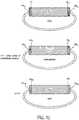
- the disclosed methods utilize circular nucleic acid vectors, termed assembly vectors, that each comprise a DNA segment, D, flanked by an annealable linker sequence (e.g., LA or LB), a pair of annealable linker sequences (e.g., LA and LB), or an annealable linker sequence and a primer binding segment (e.g. , LA and PB or LB and PA), and a pair of restriction sites, RA and RB ( FIG. 9 , where the sites Sapl illustrates both RA and RB).
- assembly vectors that each comprise a DNA segment, D, flanked by an annealable linker sequence (e.g., LA or LB), a pair of annealable linker sequences (e.g., LA and LB), or an annealable linker sequence and a primer binding segment (e.g. , LA and PB or LB and PA), and a
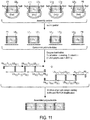
- Restriction endonuclease digestion of a plurality of assembly vectors at restriction sites RA and RB generates a plurality of component polynucleotides comprising the elements 5'-LA-D-3', 5'-D-LB-3', 5'-LA-D-LB-3', 5'-LA-D-PB-3', or 5'-LB-D-PA-3' ( FIG. 10 ).
- annealable linker sequences LA and LB provide the component polynucleotides with complementary termini that are utilized in a splice overlap extension assembly reaction followed by polymerase chain reaction (SOE/PCR) to assemble the component polynucleotides into an assembled polynucleotide with an ordered sequence.
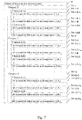
- the assembly composition from which the assembled polynucleotide is generated comprises four input assembly vectors, denoted "first,” “intermediate 1 (int 1 ),” “intermediate 2 (int 2 ),” and "last.”
- Each assembly vector comprises a DNA segment flanked either by an annealable linker sequence and a primer binding segment, or by two annealable linker sequences.
- DNA segment D 0 is flanked by 5' primer binding segment PA and 3' annealable linker sequence LB 0 .
- DNA segment D 1 is flanked by 5' and 3' annealable linker sequences LA 1 and LB 1
- DNA segment D 2 is flanked by 5' and 3' annealable linker sequences LA 2 and LB 2
- DNA segment D 3 is flanked by 3' primer binding segment PB and 5' annealable linker sequence LA 3 .
- the 5'-PA-D-LB-3', 5'-LA-D-LB-3', or 5'-LA-D-PB-3' elements in the assembly vectors are further flanked by SapI restriction endonuclease sites.
- the assembly composition is digested with SapI, resulting in the excision of component polynucleotides, comprising the elements 5'-PA-D-LB-3' , 5'LA-D-LB-3', or 5'-LA-D-PB-3', from the assembly vector backbones into a components composition.
- Sap I is a Type IIS restriction endonuclease, its recognition site is distal to its cleavage site, and cleavage occurs outside of its recognition sequence.
- Type IIS restriction endonucleases particularly useful in the assembly of a polynucleotide according to the methods provided herein, since polynucleotides can be assembled which do not comprise a restriction-site scar, which may otherwise result from cleavage of restriction sites RA and RB with a non-TypeIIS restriction endonuclease.
- the Type IIS recognition site is 5' of the corresponding cleavage site for each of RA 0 , RA n , and RA m , and 3' of its cleavage site RB 0 , RA n , and RA m .
- restriction sites RA 0 through RB m are oriented so that cleavage by one or more Type IIS restriction endonucleases capable of cleaving RA 0 through RB m results in separation of RA 0 from D 0 , LB 0 from RB 0 , RA n , from LA n , LB n from RB n , RA m from LA m , and D m from RB m , wherein resultant linearized nucleic acid molecules comprising D 0 , LB 0 , RA n , LB n , LA m or D m do not comprise any of RA 0 through RB m .
- the resulting component polynucleotides do not include any trace of either the restriction enzyme's recognition or cleavage sites.
- the inventive methods of polynucleotide assembly can be used to transform host cells multiple times without the introduction of sequence repeats which may cause genetic instability.
- restriction endonuclease is optionally inactivated.
- any method known in the art for inactivating endonuclease enzyme activity may be employed, including column or gel-based purification methods.
- One convenient method is heat inactivation, e.g ., at 65° for 20 minutes, which requires little or no manipulation of the components composition outside of the reaction tube.
- annealable linker sequences are designed such that annealable linker sequence LB 0 can hybridize to the complement of annealable linker sequence LA 1 , annealable linker sequence LB 1 can hybridize to the complement of annealable linker sequence LA 2 , and annealable linker sequence LB 2 can hybridize to the complement of annealable linker sequence LA 3 .
- the component polynucleotides are subjected to denaturing conditions (e.g., heat) to generate single-stranded component polynucleotides, which concomitant with or subsequent to the denaturation step of the assembly reaction are contacted with a thermostable DNA polymerase and deoxyribonucleoside triphosphates.
- denaturing conditions e.g., heat
- thermostable DNA polymerase can be any thermostable DNA polymerase deemed suitable by those of skill in the art.
- Thermostable DNA polymerases suitable for use in the present methods include but are not limited to Thermus thermophilus (Tth) DNA polymerase, Thermus aquaticus (Taq) DNA polymerase, Thermotoga neopolitana (Tne) DNA polymerase, Thermotoga maritima (Tma) DNA polymerase, Thermococcus litoralis (Tli or VENTTM) DNA polymerase, Pyrococcus furiosus (Pfu or DEEPVENTTM) DNA polymerase, Pyrococcus woosii (Pwo) DNA polymerase, Bacillus sterothermophilus (Bst) DNA polymerase, Sulfolobus acidocaldarius (SAC) DNA polymerase, Thermoplasma acidophilum (Tac) DNA polymerase, Thermus flavus (T
- Thermostable DNA polymerases having high fidelity (e.g. , proofreading properties) and low error rates are preferred.
- the DNA polymerase can be PHUSIONTMDNA Polymerase (New England Biolabs, Ipswich, MA).
- the DNA Polymerase can be PFUULTRATMII Fusion DNA Polymerase (Strategene / Agilent, La Jolla, California).
- the assembly reaction is then subjected to conditions that allow for strand elongation from the 3'-hydroxyl portions of the overlapping annealable linker sequences, during which the thermostable DNA polymerase fills in the portion between the overlapping annealable linker sequences.
- the assembly reaction is subjected to a limited number of repeating cycles of denaturation / annealing / extension ( e.g. , for 5-15 cycles) during which a substantial amount of double-stranded assembled polynucleotides are formed.
- the component polynucleotides act as both primers and template to generate a full length template for the assembled polynucleotide.
- the annealing and extension steps of the PCR can both be performed at 72 °C.
- the primer binding segments PA and PB are designed to not overlap with each other or any of the annealable linker sequences or DNA segments, but rather serve as binding sites for primers used to amplify the full length assembled polynucleotide.
- primers complementary to primer binding segments PA and PB are added, and the composition is subjected to traditional PCR amplification conditions.
- the PCR amplification conditions can be any PCR amplification conditions deemed suitable by those of skill in the art, including those described in PCR Technology: Principles and Applications for DNA Amplification, ed. HA Erlich, Stockton Press, New York, N.Y.
- the PCR step of the assembly reaction can comprise about 35 cycles of denaturation, annealing, and extension in the presence of primers complementary to primer binding segments PA and PB.
- the annealing and extension steps of the PCR can both be performed at 72°.
- optimal conditions for successful amplification will depend on the thermostable DNA polymerase and the annealable linker sequences utilized, and these conditions may be adjusted accordingly.
- the assembled polynucleotide can be purified by any technique apparent to one of skill in the art, e.g., gel electrophoresis purification methods and used for a variety of purposes.
- the assembled polynucleotide can be inserted into an expression vector backbone for sequence verification.
- the methods also provide for the assembly of an assembled polynucleotide from a plurality of component polynucleotides not originating from a circular assembly vector.
- linear polynucleotides including DNA segments obtained by standard procedures known in the art, such as for example, PCR amplification, chemical synthesis, and the like, can be assembled using the aforementioned methods of assembly.
- the linear polynucleotides comprise nucleic acid sequences that encode genes or genetic elements of interest (e.g. , promoters, terminators, selectable markers, integration loci, epitope tags, localization signals, degradation signals, fluorescent markers, multiple cloning sites).
- these nucleic acid sequences are flanked by one or two annealable linker sequences, LA and/or LB, or by an annealable linker sequence and a primer binding segment (e.g. , LA and PB or LB and PA).
- the linear polynucleotides are added to the assembly reaction at any stage prior to the SOE/PCR reaction or host cell mediated homologous recombination for assembly into the assembled polynucleotide.
- the assembly methods are used to assemble: (1) linear component polynucleotides derived from assembly vectors comprising one or two annealable linker sequences, or an annealable linker sequence and a primer binding segment, and generated by digestion of the assembly vectors; (2) vectorless linear DNA fragments flanked by one or two annealable linker sequences, or by an annealable linker sequence and a primer binding segment; and (3) combinations thereof.
- the disclosed methods of polynucleotide assembly can comprise transforming a host cell with a plurality of linear polynucleotides, for example polynucleotides generated by standard procedures known in the art, such as PCR amplification, chemical synthesis, and the like, or by the methods of polynucleotide assembly described herein, and allowing the host cell to generate one or more assembled polynucleotides in vivo by homologous recombination.
- the host cell can combine the plurality of linear polynucleotides into a single combined polynucleotide by homologous recombination.
- Host cell transformants comprising the combined polynucleotides are selected by virtue of expressing a selectable marker that is generated in the process of combining the linear polynucleotides.
- One or more linear polynucleotides to be assembled in vivo can comprise an annealable linker sequence LB that is homologous to an annealable linker sequence LA of another linear polynucleotide to be assembled, and that is of sufficient length to initiate host mediated homologous recombination.
- the host cell recombines the component polynucleotides at the regions of homology between the annealable linker sequences to form an assembled polynucleotide.
- Host cells comprising the assembled polynucleotide can be readily identified based on a selectable marker encoded by a DNA segment of the assembled polynucleotide.
- the assembled polynucleotide can comprise an upstream chromosomal targeting sequence and a downstream chromosomal targeting sequence, wherein both chromosomal targeting sequences are of sufficient length to initiate host mediated homologous recombination of the assembled polynucleotide with a target loci on a chromosome of the host cell.
- the method is particularly useful for inserting relatively large pieces of polynucleotide into a target polynucleotide by homologous recombination.
- the combined polynucleotide must comprise an upstream genomic targeting sequence located 5' or 3' of the DNA segment and a downstream genomic targeting sequence located 3' or 5' of the coding sequence of the DNA segment, respectively.
- Genomic integration as used herein includes chromosomal integration, i . e ., integration of a polynucleotide into a chromosome of a host cell.
- Suitable chromosomal integration sites in Saccharomyces cerevisiae include but are not limited to the NDT80, HO, GAL2, and GALl - GAL 10-GAL7 locus.
- the method can also be useful for generating host cells comprising an extrachromosomally maintained polynucleotide, e.g. , vectors and expression plasmids.
- the stability of either a chromosomally integrated or an extrachromosomally maintained combined polynucleotide is increased when the combined polynucleotide does not comprise identical annealable linker sequences or DNA segments arranged as direct repeats that can otherwise initiate additional homologous recombination events resulting in the excision of segments of the component polynucleotide. Therefore, in some embodiments, the assembled polynucleotides comprise unique annealable linker sequences and DNA segments. In other embodiments, the assembled polynucleotides contain one or more identical annealable linker sequences or DNA segments that upon combination of the assembled polynucleotides are arranged as inverted repeats in the combined polynucleotide.
- the methods provided herein for defining engineered nucleic acid constructs find use, and are compatible with, methods of assembly of component polynucleotides into an assembled polynucleotide via chain reaction cloning using a thermostable ligase, for example, as described for example, in U.S. Patent No. 6,143,527 , and Pachuk et al., Gene 243:19-25 (2000 ).
- chain reaction cloning utilizes the specificity of Watson-Crick base pairing and the amplification capability of thermostable DNA ligases such as Ampligase® (Epicentre Technologies, Madison, WI).
- the method involves the use of two or more oligonucleotides called "bridge oligonucleotides.” Each bridge oligonucleotide is designed to be complementary to the ends of two DNA molecules to be ligated. The oligonucleotides overlap the ligation junction, for example, by approximately 10-40 bases on each side, and ensure that the two single-stranded nucleic acid molecules are aligned correctly.
- Individual double-stranded nucleic acid molecules to be ligated can include, for example, component polynucleotides flanked by one or two full or partial annealable linker sequences, LA and/or LB, or by a full or partial annealable linker sequence and a full or partial primer binding segment (e.g. , LA and PB or LB and PA).
- component polynucleotides flanked by one or two full or partial annealable linker sequences LA and/or LB
- a full or partial annealable linker sequence and a full or partial primer binding segment e.g. , LA and PB or LB and PA.
- the DNA molecules to be ligated are incubated with the bridge oligonucleotides and a thermostable DNA ligase, and heated, for example, to 94°C to denature the double-stranded DNA.
- the sample is then cooled to a temperature that enables each bridge oligonucleotide to anneal to its two components in the single-stranded DNA molecules.
- the bridge oligonucleotide acts to bring the two single-stranded DNA termini into close proximity, where they can become a substrate for ligation.
- the DNA ligase joins the two nucleic acid molecules into a single, larger, composite nucleic acid molecule.
- the annealing temperature is not dropped below the melting temperature (T m ) of the oligonucleotides.
- T m melting temperature
- All of the oligonucleotides in a reaction can be designed to have a similar T m .
- the temperature is then brought up to 66°C, the optimal temperature for Ampligase®.
- the nucleic acid molecules are subsequently denatured so that the composite molecule formed by the ligated nucleic acid molecules and the template cease to hybridize to each. Each composite molecule then serves as a template for orienting unligated, single-stranded nucleic acid molecules.
- both the bridge oligonucleotide and product molecules act as templates for hybridization and ligation. After several cycles, composite nucleic acid molecules are generated from smaller nucleic acid molecules.
- the methods provided herein for defining engineered nucleic acid constructs find use, and are compatible with, methods of DNA assembly reviewed by Ellis et al., Integr. Biol. 3:109-118 (2011 ), including but not limited to, Overlap Extension PCR ( Horton et al., Gene 77:61-68 (1989 )); In-FusionTM ( Sleight et al., Nucliec Acids Res. 38:2624-2636 (2010 )); Sequence and Ligation Independent Cloning (SLIC) ( Li and Elledge, Nat. Methods4:251-256 (2007 )); Gibson Assembly ( Gibson et al., Nat. Methods 6:343-345 (2009 ); Gibson et al., Nat.
- the disclosed systems can be particularly advantageous because they make use of existing component polynucleotides bound to linker nucleic acid sequences in an available freezer store when such existing component polynucleotides are available.
- the disclosed systems will rearrange the component polynucleotides, in silico, in order to discover a contiguous arrangement of component polynucleotides that will carry out the nucleic acid requests associated with an engineered nucleic acid construct.
- the disclosed systems can concomitantly choose linker nucleic acid sequences that the arrangement dictates, utilizing component polynucleotides available in the freezer store.
- primers for the missing component polynucleotides, i are examples of primers for the missing component polynucleotides, i .
- Fig. 1 details just such an exemplary system 11 for use in defining an engineered nucleic acid construct for integration into a genomic locus L of a target organism or a host cell.
- system 11 may be a scientific apparatus or a general purpose computer system.
- the system preferably comprises a computer system 10 having:
- Operating system 40 can be stored in system memory 36.
- system memory 36 also includes:
- computer 10 comprises data such as engineered nucleic acid constructs 48 as well as associated data for such constructs 48 (e.g., nucleic acid request 50, component polynucleotide sequences 52, scores for contiguous arrangements 56, identity of physically present constructs 58, and identity of primer pairs 60), freezer store database 62, and library of linker nucleic acid sequences 64.
- data can be stored in any form of data storage system including, but not limited to, a flat file, a relational database (SQL), or an on-line analytical processing (OLAP) database (MDX and/or variants thereof).
- SQL relational database
- OLAP on-line analytical processing
- engineered nucleic acid constructs 48 as well as associated data for such constructs 48, freezer store database 62, and library of linker nucleic acid sequences 64 is stored in a single database.
- engineered nucleic acid constructs 48 as well as associated data for such constructs 48, freezer store database 62, and library of linker nucleic acid sequences 64 in fact are stored in a plurality of databases that may or may not all be hosted by the same computer 10.
- some components of engineered nucleic acid constructs 48 as well as associated data for such constructs 48, freezer store database 62, and library of linker nucleic acid sequences 64 are stored on computer systems that are not illustrated by Fig. 1 but that are addressable by wide area network 34.
- computer 10 calculates engineered nucleic acid constructs 48 for at least two engineered nucleic acid constructs 48, at least three engineered nucleic acid constructs 48, at least four engineered nucleic acid constructs 48, at least five engineered nucleic acid constructs 48, at least fifteen engineered nucleic acid constructs 48, or at least fifty engineered nucleic acid constructs 48.
- freezer store database 62 includes at least 2, at least 5, at least 8, at least 10, at least twenty-five, at least fifty, at least one hundred, at least two hundred, at least one thousand, at least five thousand, at least twenty-five thousand or at least 50 thousand different source constructs.
- engineered nucleic acid constructs 48 as well as associated data for such constructs 48, freezer store database 62, and library of linker nucleic acid sequences 64 and related software modules illustrated in Figure 1 are on a single computer (e.g. , computer 10) and in other embodiments they are hosted by several computers (not shown).
- Methods for polynucleotide assembly are provided. Like the systems of Section 5.4, the methods disclosed in this section allow for the efficient construction of engineered nucleic acid constructs using the resources of a freezer store. More specifically, referring to Figure 2 , a method for defining an engineered nucleic acid construct for integration into a genomic locus L of a target organism or a host cell is disclosed. Exemplary target organisms include, but are not limited to, yeast, E. coli, or baculovirus.
- steps are performed by various modules in memory 36.
- all the steps disclosed in Figure 2 are directed by an engineered nucleic acid assembly module 46, with specific input for step 208 from an arrangement scoring module 66 and specific input for step 214 from a primer pair calculation module 68.
- the steps described in Figure 2 can be encoded in a single module or any combination of modules.
- Step 202 a plurality of nucleic acid requests ⁇ NR1, ..., NR n ⁇ are received, where n is a positive integer greater than 1.
- Each nucleic acid request NR i in ⁇ NR 1 , ..., NR n ⁇ specifies a genetic change to locus L of a target organism or a host cell.
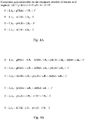
- engineered nucleic acid assembly module 46 provides an input screen, such as input screen 302 for the input of ⁇ NR 1 , ..., NR n ⁇ . Examples of ⁇ NR 1 , ..., NR n ⁇ are illustrated in Figure 3 .
- the ⁇ NR 1 , ..., NR n ⁇ "HO ⁇ ::pSLN1>SKN7" for the target organism yeast specifies the insertion of an exogenous copy of SKN7 under the SLN1 promoter at the yeast HO locus.
- the ⁇ NR 1 , ..., NR n ⁇ "GAL2 ⁇ ::pTDH3>STE14" for the target organism yeast specifies the insertion of an exogenous copy of STE14 under the pTDH3 promoter at the GAL2 locus and the ⁇ NR 1 , ..., NR n ⁇ "GAL2 ⁇ ::pTDH3>ACE2" for the target organism yeast specifies the insertion of an exogenous copy of ACE2 under the pTDH3 promoter at the GAL2 locus.
- the plurality of nucleic acid requests ⁇ NR 1 , ..., NR n ⁇ may place more than one component polynucleotide at a locus. This is denoted herein by “::” to separate the elements. For example, "HO ⁇ ::pSLN1>ADH1::pFBA1>ADH2" specifies that two different genes, ADH1 and ADH2, are placed at the HO locus under different promoters.
- ⁇ NR 1 , ..., NR n ⁇ specifies one or more genetic changes to locus L , two or more genetic changes to locus L, three or more genetic changes to locus L, four or more genetic changes to locus L, five or more genetic changes to locus L, between 5 and 10 genetic changes to locus L, between 5 and 40 changes to locus L, or more than 40 changes to locus L.
- ⁇ NR 1 , ..., NR n ⁇ specifies between 2 and 12 nucleic acid requests (change to locus L ), between 2 and 100 nucleic acid requests, or more than 20 nucleic acid requests.
- locus L (nucleic acid requests) in ⁇ NR1, ..., NR n ⁇
- only one locus L is specified by the plurality of nucleic acid requests ⁇ NR 1 , ..., NR n ⁇ . That is, the genetic changes are directed to only one locus in the genome of the target organism. Multiple deletions, insertions, and other genetic changes disclosed herein can be requested at this one locus L , but only one locus is specified. This is because the end result of the exemplary methods provided herein are one or more engineered nucleic acid constructs that, in preferred embodiments, include insertion sequences for recombining with the target locus by homologous recombination.
- a nucleic acid request NR i may specify an amino acid substitution.
- gGPR1$A640C specifies the GPR1 gene with an amino acid substitution at position 640 from alanine (A) to cysteine (C).
- a nucleic acid request NR i may specify a nucleic acid substitution.
- gADH1*A200G specifies a point mutation at base pair 200 in the open reading frame, numbered from one, from an adenosine to a guanine.
- a nucleic acid request NR i may specify a slice of a desired gene part. This is denoted herein as "[]". The slice follows the gene name specification and specifies a "from” and "to" coordinate separated by a colon. For example gYNG2[1:660] requests the first 660 bases of the open reading frame of the YNG2 gene.
- a coordinate may be specified relative to the first or last base of the open reading frame. By default, everything is relative to the first base, but an 'S' or 'E' can be used to explicitly request and coordinate relative to the particular start or end.
- Relative to the start -1 is the first base preceding the open reading frame and negative coordinates in general specify upstream locations. Positive coordinates are downstream of the first base. Relative to the end, negative coordinates are upstream of the final base in the open reading frame ( e.g. in the open reading frame and positive coordinates are downstream or in the three prime UTR).
- gADH1[1:-4E] specifies the open reading frame of ADH1 omitting the final stop codon.
- gADH1[1E:200E] specifies the downstream 200 base pairs of the ADH1 gene, ( e.g. its terminator sequence).
- gADH1[-500:-1] or gADH1[-500S:-1S] specify the promoter sequence.
- gADH1[ ⁇ 500:-1] takes approximately 500 bases upstream of the ADH1 gene and the final decision for what constitutes the request NR i is based on an optimal construction decision e.g. avoiding low complexity DNA sequence.
- the notation "! can be used generally with any part to indicate that it should be inverted relative to its naturally occurring (locus) orientation.
- the expression !gADH1; pGAL1; gADH2 specifies that the bidirectional gall yeast promoter is used to drive two genes one of which must point in the reverse direction relative to the other and the promoter.
- a nucleic acid request in the plurality of nucleic acid requests specifies insertion of an insertion sequence at L .
- the insertion sequence comprises a promoter and a gene the expression of which is driven by the promoter.
- the insertion sequence comprises a divergent promoter and a first gene and a second gene driven by the divergent promoter.
- the divergent promoter is a back-to-back divergent promoter, an overlapping divergent promoter, or a face-to-face divergent promoter.
- the insertion sequence comprises a promoter, a gene, a terminator, an open reading frame, a codon substitution, a nucleic acid substitution, a point mutation, an insertion mutation, or a deletion mutation. In some embodiments, the insertion sequence comprises a fusable open reading frame without a stop codon.
- the insertion sequence specifies a protein-coding sequence, a reporter gene, a fluorescent marker coding sequence, a promoter, an enhancer, a terminator, an intron, an exon, a poly-A tail, multiple cloning sites, a nuclear localization signal, an mRNA stabilization signal, a selectable marker, an integration loci, an epitope tag coding sequence, or a degradation signal.
- the insertion sequence specifies a DNA segment of natural origin.
- the insertion sequence specifies a DNA segment that can be completely of synthetic origin, produced in vitro.
- an insertion sequence can comprise any combination of isolated naturally occurring DNA molecules, or any combination of an isolated naturally occurring DNA molecule and a synthetic DNA molecule.
- an insertion sequence may comprise a heterologous promoter operably linked to a protein coding sequence, a protein coding sequence linked to a poly-A tail, a protein coding sequence linked in-frame with a epitope tag coding sequence, and the like.
- the nucleic acid request specifies that the entire genomic locus L is to be replaced by the insertion sequence. In some such embodiments, the nucleic acid request specifies that a promoter and a gene at L is to be replaced by the insertion sequence. In some such embodiments, the nucleic acid request specifies that a divergent promoter and a first gene and a second gene driven by the divergent promoter at L is to be replaced by the insertion sequence. In some such embodiments, the divergent promoter is a back-to-back divergent promoter, an overlapping divergent promoter, or a face-to-face divergent promoter.
- the nucleic acid request specifies that a promoter, a gene, a terminator, an open reading frame, a codon substitution, a nucleic acid substitution, a point mutation, an insertion mutation, or a deletion mutation at L is to be replaced by the insertion sequence.
- the nucleic acid request specifies that a fusible open reading frame without a stop codon is to be replaced by the insertion sequence.
- the insertion sequence includes a first copy of a gene in a 3' to 5' orientation and a second copy of the gene in a 5' to 3' orientation, and a bi-directional promoter between the first copy and the second copy.
- Figure 3 illustrates that, in some embodiments, the plurality of nucleic acid requests ⁇ NR 1 , ..., NR n ⁇ is in a data input construct.
- the data input construct further comprises one or more pragmas to be used in performing the disclosed methods.
- a pragma in the one or more pragmas specifies the identity of a predetermined library 64 of linker nucleic acid sequences that is to be used in the assembly of an engineered nucleic acid construct.
- a pragma in the one or more pragmas specifies whether the engineered nucleic acid construct is to be (i) a single construct or, (ii) a two part construct comprising a first PCR product having a first part of a selectable marker and a second PCR product, having a second part of the selectable marker, wherein the first PCR product, running in the 5' to 3' direction, combines with the second PCR product, running in the 3' to 5' direction, to form the engineered nucleic acid construct with the selectable marker.
- a pragma in the one or more pragmas specifies a selectable marker having a nucleic acid sequence to be incorporated into each contiguous arrangement AR i generated by the methods disclosed herein.
- a pragma is between a first nucleic acid request and a second nucleic acid request in the data input construct, and the pragma specifies that a linker nucleic acid sequence not be placed between a first component polynucleotide specified by the first nucleic acid request and a second component polynucleotide specified by the second nucleic acid request in each contiguous arrangement AR i generated by the methods disclosed herein.
- a pragma is useful instances where, for example, no nucleic acid linker is desired between a promoter and the gene the promoter is intended to express.
- the first component polynucleotide comprises a promoter and the second component polynucleotide comprises a gene.
- a pragma in the one or more pragmas specifies a reference genome to be used during expansion step 204, described below, to generate the corresponding component polynucleotide for a nucleic acid request in ⁇ NR 1 , ..., NR n ⁇ .
- an identity of a selectable marker is received with ⁇ NR 1 , ..., NR n ⁇ .
- This selectable marker is included in the engineered nucleic acid construct for purposes of validating successful integration of the engineered nucleic acid construct into the genome of the target organism or host cell.
- a default selectable marker is used when no selectable marker is explicitly included in the received request that includes ⁇ NR 1 , ..., NR n ⁇ .
- an identity of a selectable marker is determined without human intervention from a predetermined list of selectable markers when no selectable marker is explicitly included in the received request that includes ⁇ NR 1 , ..., NR n ⁇ .
- the selectable marker is identified using any of the above-identified techniques during step 206 below.
- Step 204 each NR i in ⁇ NR 1 , ..., NR n ⁇ is expanded into a corresponding component polynucleotide, thereby forming a plurality of component polynucleotides. Expansion is necessary, for example, in instances where a ⁇ was used in an NR i to indicate an approximate preference. For example gADH1[ ⁇ -500:-1] takes approximately 500 bases upstream of the ADH1 gene and the final decision for what constitutes the request NR i is based on an optimal construction decision, e.g. avoiding low complexity DNA sequence. In step 204, such decisions are made as part of the expansion of the NR i to an actual polynucleotide sequence.
- expansion step 204 expands the plurality of nucleic acid requests into component polynucleotides that allow for homologous recombination of pSLN1>ADH1::pFBA1>ADH2 into the HO locus.
- expansion step 204 expands HO ⁇ into upstream and downstream integration sequences for homologous recombination with HO, pSLN1 into a component polynucleotide that encodes pSLN1, ADH1 into a component polynucleotide that encodes ADH1, pFBA1 into a component polynucleotide that encodes pFBA1, and ADH2 into a component polynucleotide that encodes ADH2.
- step 204 comprises expanding a first nucleic acid request in ⁇ NR 1 , ..., NR n ⁇ into a first component polynucleotide and a second component polynucleotide, where the first component polynucleotide is a promoter and the second component polynucleotide is a gene.
- the expansion from nucleic acid request in ⁇ NR 1 , ..., NR n ⁇ to component polynucleotide is a one-to-one expansion, one-to-many expansion, or a many-to-one expansion.
- An example of a one-to-one expansion is the expansion of one nucleic acid request into a single corresponding component polynucleotide.
- An example of a one-to-many expansion is the breakdown of a single nucleic acid request into two or more component polynucleotides.
- An example of a many-to-one expansion is the taking one or more nucleic acid requests and encoding the requests in a single component polynucleotide.
- a nucleic acid request in ⁇ NR 1 , ..., NR n ⁇ specifies a point mutation in a gene at genomic locus L and the expansion of this nucleic acid request in step 204 comprises obtaining a nucleic acid sequence of the gene and modifying the nucleic acid sequence of the gene to form a component polynucleotide in the plurality of component polynucleotides for ⁇ NR 1 , ..., NR n ⁇ .
- a nucleic acid request in ⁇ NR 1 , ..., NR n ⁇ specifies that an exogenous gene is to be inserted at L and the expansion of this nucleic acid request comprises obtaining a sequence of the exogenous gene from a database of nucleic acid sequences to form a component polynucleotide in the plurality of component polynucleotides for ⁇ NR 1 , ..., NR n ⁇ .
- a nucleic acid request references a gene that is to be mutated, deleted from, or integrated in L and the expansion of step 204 comprises validating that the gene exists in an electronic gene database.
- the expansion of step 204 comprises obtaining a nucleic acid segment specified by a nucleic acid request NR i in ⁇ NR 1 , ..., NR n ⁇ from an electronic database of nucleic acid sequences and incorporating the nucleic acid segment into a component polynucleotide associated with the nucleic acid request NR i .
- the nucleic acid segment is a portion of a gene, a promoter, a terminator, or a gene.
- a nucleic acid request NR i specifies a nucleic acid segment having an approximate start point or an approximate end point and the expansion of step 204 defines an exact start point or an exact endpoint for the nucleic acid segment for incorporation into the component polynucleotide corresponding to NR i based on one or more endpoint selection criteria.
- the endpoint selection criterion is avoiding low complexity DNA sequence or avoiding a restriction site.
- the expansion of step 204 comprises obtaining a nucleic acid segment specified by a nucleic acid request NR i in ⁇ NR 1 , ..., NR n ⁇ and inverting the nucleic acid segment relative to a naturally occurring orientation of the nucleic acid segment prior to incorporation of the nucleic acid segment into a component polynucleotide associated with the nucleic acid request NR i .
- a nucleic acid request NR i in ⁇ NR 1 , ..., NR n ⁇ specifies an inline sequence to be incorporated into a nucleic acid sequence corresponding to NR i during step 204, and step 204 comprises inserting the inline sequence into the nucleic acid sequence corresponding to NR i thereby forming a component polynucleotide associated with NR i .
- a nucleic acid request NR i in ⁇ NR 1 , ..., NR n ⁇ specifies a nucleic acid segment within a gene that is to be rewritten with one or more synonymous codons before incorporation into a component polynucleotide corresponding to NR i during step 204, and step 204 comprises replacing the nucleic acid segment with the one or more synonymous codons.
- a nucleic acid request NR i in ⁇ NR 1 , ..., NR n ⁇ specifies that a nucleic acid segment is to be rewritten with synonymous codons, before incorporation into a component polynucleotide corresponding to the nucleic acid request NR i , so that the nucleic acid segment is maximally dissimilar relative to a naturally occurring instance of the nucleic acid segment and step 204 comprises rewriting the nucleic acid segment with synonymous codons so that the nucleic acid segment is maximally dissimilar relative to a naturally occurring instance of the nucleic acid segment and incorporating the rewritten nucleic acid segment in a component polynucleotide corresponding to the nucleic acid request NR i .
- expanding step 204 comprises an iteration between (i) expansion of ⁇ NR 1 , ..., NR n ⁇ to a parse tree and (ii) using the parse tree to rewrite ⁇ NR 1 , ..., NR n ⁇ in simpler form, until no NR i in ⁇ NR 1 , ..., NR n ⁇ can be rewritten in simpler form. Then, any of the above-identified expansion operations are performed on any of the ⁇ NR 1 , ..., NR n ⁇ written out in simpler form. Parse trees and related compiler design principles are disclosed in Modern Compiler Design, Grune et al., John Wiley & Sons Ltd., New York, 2001 .
- Step 206 the plurality of component polynucleotides that were expanded from the plurality of nucleic acid requests are arranged into a contiguous arrangement AR i .
- annealable linker nucleic acid sequences, 64 are used to combine the component polynucleotides corresponding to the plurality of nucleic acid requests ⁇ NR 1 , ..., NR n ⁇ into the contiguous arrangement AR i .
- the linker nucleic acid sequences are selected from a predetermined library of linker nucleic acid sequences.
- such selection of linker nucleic acid sequences is limited to the design criterion that any given linker nucleic acid sequence in the library of linker nucleic acid sequences 64 only be used once in any given engineered nucleic acid construct.
- the predetermined library of annealable linker nucleic acid sequences 64 is a virtual library, not an actual library of nucleic acid sequences. Nevertheless, the virtual library contains predetermined annealable linker nucleic acid sequences that are designed to advantageously combine component polynucleotides into an engineered nucleic acid construct. In some embodiments, such annealable linker nucleic acid sequences provide the component polynucleotides with complementary termini.
- the complementary termini are utilized in a splice overlap extension assembly reaction followed by polymerase chain reaction to assemble the component polynucleotides into an assembled polynucleotide with an ordered sequence.
- a splice overlap extension assembly reaction followed by polymerase chain reaction to assemble the component polynucleotides into an assembled polynucleotide with an ordered sequence.
- the predetermined library of linkers 64 has a structure illustrated in Figure 7 .
- the exemplary library of linkers 64 includes categories 702 of linkers.
- An example of one such category 702 is high G-C content.
- Annealable linker nucleic acid sequences in this category have a high G-C content, i.e., the number of guanine and cytosine nucleotides in the annealable linker nucleic acid sequence as a percentage of the total number of bases in the annealable linker nucleic acid sequence.
- Annealable linker nucleic acid sequences that have a high G-C content are generally useful in the methods of the invention because a high G-C content generally provides for a high T m , which in turn may provide for more specific priming during an assembly reaction and for time and process savings by allowing combination of the annealing and extension steps of SOE/PCR.
- This category of annealable linker nucleic acid sequences is disclosed in more detail in section 5.15 below.
- Annealable linker nucleic acid sequences in this category have a high A-T content, i.e., the number of adenine and thymine nucleotides in the annealable linker nucleic acid sequence as a percentage of the total number of bases in the annealable linker nucleic acid sequence.
- a high A-T content may provide for reduced propensity of the annealable linker nucleic acid sequence to form substantial secondary structures, which may be of particular concern when the annealable linker nucleic acid sequence is used to assemble component polynucleotides comprising a promoter and a protein coding sequence into a assembled polynucleotide in which the annealable linker nucleic acid sequence is positioned between the promoter and the protein coding sequence.
- This category of annealable linker nucleic acid sequences is disclosed in more detail in section 5.15 below.
- LA linkers For each category 702 of annealable linker nucleic acid sequence, there is a set of 3' linkers (LA linkers) and a corresponding set of 5' linkers (LB linkers).
- the 5' linkers (LA) are designed for the 5' end of a component polynucleotide where the 3' linkers (LB) are designed for the 3' end of a component polynucleotide.
- Each linker is assigned a number.
- category 702-1 includes the 702-1-A set of 5' linkers ⁇ 704-1-LA 1 , 704-1-LA 2 , ..., 704-1-LA n ⁇ and the 702-1-B set of 3' linkers ⁇ 704-1-LB 1 , 704-1-LB 2 , ..., 704-1-LB n ⁇
- category 702-2 includes the 702-2-A set of 5' linkers ⁇ 704-2-LA 1 , 704-2-LA 2 , ..., 704-2-LA m ⁇ and the 702-2-B set of 3' linkers ⁇ 704-2-LB 1 , 704-2-LB 2 , ..., 704-2-LB m ⁇ , and so forth.
- the library of linker nucleic acid sequences 64 has one category. In some embodiments, the library of linker nucleic acid sequences 64 has two categories, ( e.g. , A-T rich and G-C rich). In some embodiments, the library of linker nucleic acid sequences 64 has three categories. In some embodiments, the library of linker nucleic acid sequences 64 has four or more categories, five or more categories, six or more categories, ten or more categories, or one hundred or more categories. In some embodiments, there are one or more, two or more, three or more, four or more, five or more, ten or more, or twenty or more 5' LA linkers 704 in a given category 702.
- the library 64 of linker nucleic acid sequences consists of 100 linker nucleic acid sequences 704 or less. In some embodiments, the predetermined library of linker nucleic acid sequences consists of 50 linker nucleic acid sequences 704 or less. In some embodiments, the predetermined library of linker nucleic acid sequences consists of 20 linker nucleic acid sequences 704 or less. In some embodiments, the library 64 of linker nucleic acid sequences consists of 100 linker nucleic acid sequences 704 or less per category 702. In some embodiments, the predetermined library of linker nucleic acid sequences consists of 50 linker nucleic acid sequences 704 or less per category 702. In some embodiments, the predetermined library of linker nucleic acid sequences consists of 20 linker nucleic acid sequences 704 or less per category 702.
- each linker 704-X-LB i upon denaturation to single stranded form, is capable of hybridizing to the complement of 704-X-LA i+1 .
- 704-1-LB 1 is capable of hybridizing to the complement of 704-1-LA 2
- 704-2-LB 1 is capable of hybridizing to the complement of 704-2-LA 2 , and so forth.
- each linker 704-X-LB i upon denaturation to single stranded form, is capable of hybridizing to the complement of 704-X-LA i-1 .
- 704-1-LB 2 is capable of hybridizing to the complement of 704-1-LA 1
- 704-2-LB 2 is capable of hybridizing to the complement of 704-2-LA 1 , and so forth.
- each linker 704-X-LB i upon denaturation to single stranded form, is capable of hybridizing to the complement of 704-X-LA i+1 will be presented.
- each linker 704-X-LB i upon denaturation to single stranded form, is capable of hybridizing to the complement of 704-X-LA i-1 .
- Such alternative examples and embodiments are within the scope of the present disclosure.
- each LB i for i less than t, upon denaturation to single stranded form, is capable of hybridizing to the complement of LA i+1 to specify that each LB i of a respective category 702, for i less than t, upon denaturation to single stranded form, is capable of hybridizing to the complement of LA i+1 in the same respective category 702.
- Such annealable linker nucleic acid sequences and their ability to assemble the component polynucleotides into an assembled polynucleotide with the specified ordered sequence by a splice overlap extension assembly reaction followed by polymerase chain reaction (SOE/PCR), are disclosed in United States Patent No. 8,221,982 as well as section 5.15, below.
- SOE/PCR polymerase chain reaction
- Such assembly methods can be used to assemble any number of component polynucleotides into one or more assembled polynucleotides. In some embodiments, the methods provided herein result in the assembly of 2, 3, 4, 5, 6, 7, 8, 9, 10, 11, 12, 13, 14, 15, or more component polynucleotides into one or more assembled polynucleotides.
- each LB i upon denaturation of X i in A, each LB i , for i less than t, is capable of selectively hybridizing to the complement of LA i+1 compared to each other linker nucleic acid sequence LA y or LB y , or their complements, in A, where each y is an integer, other than i, in the set of integers ⁇ 1, ...., t ⁇ .
- an LA i or an LB i of an X i in A is at least 24 nucleotides in length and has a melting temperature of at least 60°C.
- each LB i upon denaturation of Q i in D and upon cleavage of each restriction site RA i and RB i in D, each LB i , for i less than a, is capable of selectively hybridizing to the complement of LA i+1 compared to each of the other linker nucleic acid sequences LA y or LB y , or their complements, in D, wherein each y is an integer, other than i, in the set of integers ⁇ 1, ...., a ⁇ .
- an LA i or an LB i in a Q i in D is at least 24 nucleotides in length and has a melting temperature of at least 60°C.
- each RA i and each RB i in Q is cleavable by SapI or LguI restriction endonuclease.
- each restriction site RA i and each restriction site RB i is independently cleavable by one or more type IIS restriction endonucleases, where each of restriction site RA i and each restriction site RB i is oriented so that cleavage of a respective restriction site RA i and a respective restriction site RB i separates their recognition and cleavage sites from the resulting nucleic acid molecule LA i - NA i - LB i .
- nucleic acid requests are not important. For instance, unless otherwise specified by a requesting molecular biologist, the nucleic acid requests:
- step 206 uses the linker nucleic acid sequences from the library of nucleic acid sequence 64 to define 5' - LA 1 - pSLN1- LB 1 - 3', 5' - LA 2 - ADH1 - LB 2 - 3', 5' - LA 3 - pFBA1- LB 3 - 3', 5' - LA 4 - ADH2 - LB 4 - 3'.
- the respective complementary termini LB 1 , LA n+1 are utilized in a splice overlap extension assembly reaction followed by polymerase chain reaction (SOE/PCR) to assemble the component polynucleotides into an engineered nucleic acid with an ordered sequence 5' - LA 1 - pSLN1- LB 1 - ADH1 - LB 2 - pFBA 1 - LB 3 - ADH2- LB 4 - 3'.
- the first and last component polynucleotides in the arrangement may also include linkers so that they anneal with the HO insertion sequences.
- the above example is given merely to depict how several different valid arrangements may arise rather than to provide a complete sequence of an engineered nucleic acid with all attendant linkers.
- the number of valid arrangements that will achieve the specifications of the plurality of nucleic acid requests received in step 202 can be extensive, particularly when there are a number of component polynucleotides that need not be placed in a particular order.
- the number of permutations of n distinct component polynucleotides, whose order does not matter is n ⁇ (n - 1) ⁇ (n - 2) ⁇ ... ⁇ 2 ⁇ 1, which number is called "n factorial" and written "n!.
- an arrangement has 15 component nucleotides, for which 5 of the component nucleotides can be arranged in any order.
- component nucleotides can be arranged in any order arises when several different genes are to be inserted into a given locus, each under a different promoter. Typically, the order of such genes is not important as long as each respective inserted gene is driven by the promoter requested for the respective gene.
- a selectable marker is added to an engineered construct to facilitate identification of clones that contain the engineered construct. The location of this selectable marker typically does not matter so long as it does not interrupt the relationship between a gene and its regulatory elements (e.g., promoter, terminator, enhancer, etc .). Where such a selectable marker is used, 5' and 3' linkers from the library of linker nucleic acid sequences are added to the ends of the selectable marker as was the case for the component polynucleotides of step 204.
- a first component polynucleotide is identical to a second component polynucleotide in the plurality of component polynucleotides from expansion step 204.
- a contiguous arrangement that would cause the first component polynucleotide and the second component polynucleotide to run in the same direction in the engineered nucleic acid construct is barred. This is accomplished by running one of the two polynucleotides in the 5' to 3' direction and the other of the two polynucleotides in the 3' to 5' direction in the engineered nucleic acid construct.
- a first component polynucleotide has a high degree of sequence similarity to a second component polynucleotide in the plurality of component polynucleotides from expansion step 204.
- the first component polynucleotide can be at least 70%, 75%, 80%, 85%, 90% or 95% identical to the second component polynucleotide.
- the first component polynucleotide comprises at least 100 contiguous nucleotides having at least 70%, 75%, 80%, 85%, 90% or 95% identity to the second polynucleotide.
- a contiguous arrangement that would cause the first component polynucleotide and the second component polynucleotide to run in the same direction in the engineered nucleic acid construct is barred. This is accomplished by running one of the two polynucleotides in the 5' to 3' direction and the other of the two polynucleotides in the 3' to 5' direction in the engineered nucleic acid construct.
- the arranging of step 206 comprises inserting a selectable marker having a nucleic acid sequence into a contiguous arrangement AR i .
- the engineered nucleic acid construct comprises a first PCR product having a first part of the selectable marker and a second PCR product, having a second part of the selectable marker, where the first PCR product, running in the 5' to 3' direction, combines with the second PCR product, running in the 3' to 5' direction, to form the engineered nucleic acid construct with the selectable marker.
- Advantageous methods for such constructs are disclosed in are disclosed in United States Patent No. 8,221,982 .
- Step 208 a score S i is determined for AR i .
- a query of a freezer store database 62 is made to determine whether a corresponding freezer store includes all or a portion of AR i .
- the arrangement generated in step 206 comprises the component polynucleotides 5' - LA 1 - pFBA1 - LB 1 - 3', 5' - LA 2 - ADH2- LB 2 - 3', 5' - LA 3 - pSLN1- LB 3 - 3', 5' - LA 4 - ADH1- LB 4 - 3', where each LB i , upon denaturation to single stranded form, is capable of hybridizing to the complement of LA i+1 , and where HO insertion sequences are not considered solely to simplify the
- Freezer store database 62 comprises information about a plurality of source constructs 602.
- Each source construct 602 comprises one or more component polynucleotides 604.
- each source construct 602 is in circular vector form.
- An exemplary embodiment of a source construct 602 is an assembly vector. Assembly vectors are described in Section 5.14, below.
- each respective source construct 602 in the freezer store indexed by freezer store database 62 contains a selectable marker and this selectable marker must match the selectable marker that has been selected for the engineered nucleic acid construct in order for the component polynucleotides within the respective source construct to be evaluated against the component polynucleotides of the AR i .
- a 3' or 5' terminus, or both the 3' and 5' termini, of each respective component polynucleotide 604 in the one or more component polynucleotides encoded by the one or more physically present source constructs 602 is bound to a corresponding linker in the library of linker nucleic acid sequences 64.
- a component polynucleotide 604 in a source construct 602 is considered a match to a component polynucleotide in AR i when (i) the sequence of the component polynucleotide 604 matches the sequence of the component polynucleotide in AR i , (ii) a 3' or 5' terminus of the component polynucleotide 604 is bound to a linker that was used for the respective component polynucleotide in step 206 to form AR i , and (iii) the selectable marker for the source construct 602 that contains the component polynucleotide 604 is the same selectable marker that is specified for the engineered nucleic acid construct.
- a component polynucleotide 604 in a source construct 602 is considered a match to a component polynucleotide in AR i when (i) the sequence of the component polynucleotide 604 matches the sequence of the component polynucleotide in AR i , (ii) the 3' terminus of the component polynucleotide 604 is bound to a linker that was used for the 3' terminus of the respective component polynucleotide in step 206 to form AR i , (iii) the 5' terminus of the component polynucleotide 604 is bound to a linker that was used for the 5' terminus of the respective component polynucleotide in step 206 to form AR i , and (iv) the selectable marker for the source construct 602 that contains the component polynucleotide 604 is the same selectable marker that is specified for the engineered nucleic acid construct.
- a component polynucleotide 604 in a source construct 602 is considered a match to a component polynucleotide in AR i when (i) the sequence of the component polynucleotide 604 matches the sequence of the component polynucleotide in AR i and (ii) a 3' or 5' terminus of the component polynucleotide 604 is bound to a linker that was used for the respective component polynucleotide in step 206 to form AR i .
- a component polynucleotide 604 in a source construct 602 is considered a match to a component polynucleotide in AR i when (i) the sequence of the component polynucleotide 604 matches the sequence of the component polynucleotide in AR i , (ii) a 3' or 5' terminus of the component polynucleotide 604 is bound to a linker that was used for the respective component polynucleotide in step 206 to form AR i , (iii) the selectable marker for the source construct 602 that contains the component polynucleotide 604 is the same selectable marker that is specified for the engineered nucleic acid construct, and (iv) the orientation (5' to 3' or 3' to 5') of the component polynucleotide 604 in the source construct 602 matches the orientation of the component polynucleotide in AR i .
- a component polynucleotide 604 in a source construct 602 is considered a match to a component polynucleotide in AR i when (i) the sequence of the component polynucleotide 604 matches the sequence of the component polynucleotide in AR i , (ii) the 3' terminus of the component polynucleotide 604 is bound to a linker that was used for the 3' terminus of the respective component polynucleotide in step 206 to form AR i , (iii) the 5' terminus of the component polynucleotide 604 is bound to a linker that was used for the 5' terminus of the respective component polynucleotide in step 206 to form AR i , (iv) the selectable marker for the source construct 602 that contains the component polynucleotide 604 is the same selectable marker that is specified for the engineered nucleic acid construct, and (v) the orientation (5' to
- a component polynucleotide 604 in a source construct 602 is considered a match to a component polynucleotide in AR i when (i) the sequence of the component polynucleotide 604 matches the sequence of the component polynucleotide in AR i , (ii) a 3' or 5' terminus of the component polynucleotide 604 is bound to a linker that was used for the respective component polynucleotide in step 206 to form AR i , and (iii) the orientation (5' to 3' or 3' to 5') of the component polynucleotide 604 in the source construct 602 matches the orientation of the component polynucleotide in AR i .
- the selectable marker of each source construct 602 is stored in the freezer store database 62.
- the 5' and 3' linker of each component polynucleotide 604 is stored in freezer store database 62.
- the full nucleic acid sequence of each component polynucleotide 604 and any attached linkers is stored in freezer store database 62.
- the quantity of each source construct 602 existing in the freezer store is stored in the freezer store database 62.
- FIG 8 provides a snapshot of representative source constructs 602 and the information that is stored for each source construct 602 in an exemplary embodiment.
- freezer store database 62 includes a unique identifier 802 and a name 804 for each source construct 602.
- freezer store database 62 also includes an identity 806 of a linker, from the library of linker nucleic acid sequences 64, that is used for the source construct insert.
- freezer store database 62 also includes the direction (5' to 3' or 3' to 5') of the source construct insert.
- freezer store database 62 includes the breed 810 (e.g., GST) and the source 812 (e.g ., S. cerevisiae, E. coli , etc .) of the source construct 602.
- freezer store database 62 includes a name of the insert 812 (component polynucleotide) and a status (e.g., available, requested) 818 of the source construct 602.
- freezer store database 62 includes an available concentration 820 of the source construct 602 in the associated freezer store.
- freezer store database 62 optionally includes a popularity of the source construct, for instance, represented by positive and/or negative votes 822 by users of the source construct 602.
- Each of the source constructs 602 indexed by freezer store database 62 is physically present in a collection of freezers that are each proximately located with respect to each other and that are each owned by the same entity.
- the collection of freezers is deemed to be proximately located when they are in the same building, same campus, or within five miles of each other.
- the collection of freezers is deemed to be proximately located when it is possible to retrieve any source construct identified in the freezer store database within thirty minutes, within twenty minutes, within 10 minutes, within five minutes, or within one minute.
- the freezer store database 602 comprises information for 1000 or more source constructs 602 and the corresponding freezer store contains 1000 or more source constructs. In some embodiments, the freezer store database 602 comprises information for 10,000 or more source constructs 602 and the corresponding freezer store contains 10,000 or more source constructs. In some embodiments, the freezer store database 602 comprises information for 50,000 or more source constructs 602 and the corresponding freezer store contains 50,000 or more source constructs. In some embodiments, the freezer store database 602 comprises information for 100,000 or more source constructs 602 and the corresponding freezer store contains 100,000 or more constructs. In some embodiments, the freezer store database 602 comprises information for 500,000 or more source constructs 602 and the corresponding freezer store contains 500,000 or more constructs.
- each source construct 602 comprise one or more component polynucleotides 604.
- Each such component polynucleotide 604 may or may not correspond to a component polynucleotide identified in expansion step 604. For instance, consider the case where expansion step 602 specifies the component polynucleotide 5' - LA 1 - pFBA1 - LB 1 - 3', where the nucleic acid sequences are shown added to the component polynucleotide. It is possible that none of the component polynucleotides 604 in freezer store database 62 will match 5' - LA 1 - pFBA1 - LB 1 - 3'.
- a component polynucleotide 604 in freezer store database 62 contains the promoter pFBA1 but not the linkers 5' - LA 1 and - LB 1 - 3'.
- the component polynucleotide 604 that contains pFBA1 may in fact be 5' - LA 2 - pFBA1 - LB 2 - 3'.
- the component polynucleotide 5' - LA 2 - pFBA1 - LB 2 - 3' will not be considered a match to 5' - LA 1 - pFBA1 - LB 1 - 3' because the linkers do not match up.
- each of the component polynucleotides 604 for a given source construct 602 are listed sequentially in their contiguous 5' to 3' order.
- the construct comprises 5'- component polynucleotide 1-1 - component polynucleotide 1-2 - component polynucleotide 1-A - 3'.
- a number of different queries are made. In some embodiments, these queries are performed in any order. In some embodiments, these queries are performed simultaneously, concurrently or sequentially. In some embodiment, only a subset of these queries are made.
- Figure 4A and 4B collectively list out an exhaustive set of queries that could be made for the exemplary AR i 5' - LA 1 - pFBA1 - LB 1 - 3', 5' - LA 2 - ADH2- LB 2 - 3', 5' - LA 3 - pSLN1 - LB 3 - 3', 5' - LA 4 - ADH1 - LB 4 - 3' which encodes the plurality of nucleic acid requests HO ⁇ ::pFBA1>ADH2::pSLN1>ADH1.
- queries that are made are queries for the absence or presence of each of 5' - LA 1 - pFBA1 - LB 1 - 3', 5' - LA 2 - ADH2- LB 2 - 3', 5' - LA 3 - pSLN1 - LB 3 - 3', 5' - LA 4 - ADH1 - LB 4 - 3' in source constructs in the freezer store database 62.
- These component polynucleotides are illustrated in Figure 4A .
- Assembly vectors are described in further detail in Section 5.14 below. Assembly vectors are a form of source construct in accordance with the present disclosure. As discussed above, in typical embodiments, a component polynucleotide 604 in freezer store database 602 is not deemed a match to a query component polynucleotide in AR i unless they use the same 3' and 5' linkers.
- queries are made for all possible subsets of the arrangement AR i in a single source construct 602 represented in freezer store database 62.
- These component polynucleotides are illustrated in Figure 4B .
- a query is made to determine if any of the component polynucleotides found Figure 4B are in the freezer store database 62.
- Figures 4A and 4B collectively show, in the case where there are four component polynucleotides collectively representing the plurality of nucleic acid requests where each respective component polynucleotide is bound by linkers, a total of 4 ⁇ (4 -1) ⁇ 2 ⁇ 1 queries are made. More generally, in the case of n component polynucleotides collectively representing the plurality of nucleic acid requests where each respective polynucleotide request is bound by at least one linker at its 5' or 3' end, a total of 4 ⁇ (4 -1) ⁇ 2 ⁇ 1 queries are made, which number is called "n factorial" and written "n!.
- Source constructs 602 that encode more than one component polynucleotide are referred to as stitch vectors.
- Stich vectors are otherwise identical to assembly vectors accept that they include two or more component polynucleotides in contiguous order, where the two or more component polynucleotides are each separated by a linker from the library of nucleic acid sequences 64.
- the 3' or 5' terminus, or both the 3' and 5' termini, of each respective component polynucleotide in a stitch vector is bound to a corresponding linker from the predetermined library of linker nucleic acid sequences.
- a stitch vector comprises component polynucleotides A and B.
- component polynucleotides would be encoded as LA x -A-LB x -B-LB x+1 .
- a contribution to the score S i is made for the arrangement AR i when one or more source constructs are identified as being physically present in a freezer store, where the one or more physically present source constructs collectively encode all or a portion of AR;.
- an arrangement AR i comprises twenty component polynucleotides.
- Upon querying the freezer store database 62 a determination is made that four of the twenty component polynucleotides are physically present in the freezer store database 62 and that each of the four component polynucleotides use linker nucleic acid sequences specified for the four component polynucleotides by the AR i .
- the arrangement AR i receives a score of four arbitrary units.
- Each arbitrary unit is for one of the four component polynucleotides that are physically present in the freezer store database 62.
- the determination is made that ten of the twenty component polynucleotides are physically present in the freezer store database 62 and that each of these ten component polynucleotides use linker nucleic acid sequences specified for the ten component polynucleotides by the AR i .
- the arrangement would receive a score of ten arbitrary units.
- a lookup table may include a score to be added to S i for the occurrence of any given component polynucleotide of step 204 in the one or more source constructs. For instance, consider the case in which a first source construct comprises a first component polynucleotide and a second source construct comprises a second component polynucleotide. To determine the contribution made by the first component polynucleotide, a lookup table is consulted to retrieve the value of the first component polynucleotide.
- a lookup table is consulted to retrieve the value of the second component polynucleotide.
- the first component polynucleotide has a value of three arbitrary units and the second component polynucleotide has a value of seven arbitrary units.
- the total contribution of the first and second component polynucleotides is ten arbitrary units.
- the score of a component polynucleotide is determined by a length of the component polynucleotide relative to the length of the engineered nucleic acid. For instance, consider the case in which a component polynucleotide is thirty percent of the total length of the engineered nucleic acid construct. In this instance, the component polynucleotide, when present in a qualifying source construct represented in freezer store database 62, will contribute a sufficient number of arbitrary units to achieve 30 percent of a perfect score. In some embodiments, the source construct is qualifying when it uses the same selectable marker specified for the engineered nucleic acid construct and when the specified component polynucleotide uses the same linkers called for the specified component polynucleotide in AR i .
- the 3' or 5' terminus, or both the 3' and 5' termini, of each respective component polynucleotide in the one or more component polynucleotides encoded by the one or more physically present source constructs is bound to a corresponding linker from the predetermined library of linker nucleic acid sequences.
- This facilitates the construction of the engineered nucleic acid construct through splice overlap extension assembly reaction followed by polymerase chain reaction (SOE/PCR), as disclosed in United States Patent No. 8,221,982.
- step 208 comprises determining whether a source construct having all or a subset of the plurality of component polynucleotides, in the contiguous order specified by the contiguous arrangement AR i , is present in the freezer store, and a contribution the source construct makes to the score S i for the contiguous arrangement AR i is dependent upon a number of component polynucleotides in the source construct that are in the contiguous order specified by the contiguous arrangement AR i .
- step 208 determines a score S i for a contiguous arrangement AR i by (i) identifying a first source construct in the freezer store, the first source construct having a first subset of the plurality of component polynucleotides, in the contiguous order specified by the contiguous arrangement AR i , (ii) identifying a second source construct in the freezer store, the second source construct having a second subset of the plurality of component polynucleotides, in the contiguous order specified by the contiguous arrangement AR i , where there is no overlap between the first subset and the second subset.
- a first contribution to the score S i for the contiguous arrangement AR i is based upon a number of component polynucleotides in the first source construct that are in the contiguous order specified by the contiguous arrangement AR i and a second contribution to the score S i for the contiguous arrangement AR i is based upon a number of component polynucleotides in the second source construct that are in the contiguous order specified by the contiguous arrangement AR i .
- step 208 determines a score S i for a contiguous arrangement AR i by identifying a set of ⁇ C 1 , ..., C q ⁇ source constructs in the freezer store, where q is a positive integer greater than 1, for a contiguous arrangement AR i in the set of contiguous arrangements ⁇ AR 1 , ..., AR m ⁇ , each respective source construct C i in ⁇ C 1 , ..., C q ⁇ having a corresponding subset S i of component polynucleotides in the plurality of component polynucleotides identified in the expansion step 204, in the contiguous order specified by the contiguous arrangement AR i , where the corresponding subset S i of component polynucleotides is not found in any other source construct in ⁇ C 1 , ..., C q ⁇ .
- any given source construct C i in ⁇ C 1 , ..., C q ⁇ are not found in any other source construct in ⁇ C 1 , ..., C q ⁇ .
- a contribution to the score S i for AR i from each respective C i in ⁇ C 1 , ..., C q ⁇ is based upon a number of component polynucleotides in C i that are in a contiguous order specified by AR i .
- the one or more physically present source constructs selected for AR i collectively encode a portion of AR i . In some embodiments, the one or more component polynucleotides in the one or more physically present source constructs identified for AR i is less than 90 percent of a nucleic acid sequence defined by AR i . In some embodiments, the one or more component polynucleotides in the one or more physically present source constructs identified for AR i is less than 80 percent of a nucleic acid sequence defined by AR i .
- the one or more component polynucleotides in the one or more physically present source constructs identified for AR i is less than 60 percent, less than 50 percent, less than 40 percent, less than 30 percent, less than 20 percent or less than 10 percent of a nucleic acid sequence defined by AR i . In some embodiments, the one or more component polynucleotides in the one or more physically present source constructs identified for AR i is more than 10 percent of a nucleic acid sequence defined by AR i .
- the one or more component polynucleotides in the one or more physically present source constructs identified for AR i is more than 20 percent, more than 30 percent, more than 40 percent, more than 50percent, more than 60 percent or more than 80 percent of a nucleic acid sequence defined by AR i .
- Step 210 a determination is made as to whether a threshold number of arrangements have been evaluated. In some embodiments, a threshold number of arrangements have been evaluated when all possible arrangements of the component polynucleotides have been scored. It will be appreciated that, in some instances, the order of some of the component polynucleotides must remain fixed. For instance, the component polynucleotide encoding a promoter for a gene is to immediately precede the component polynucleotide for the gene itself. However, as discussed above, in many instances such as where multiple genes are being inserted into a locus, component polynucleotides may be arranged in several different ways.
- these component polynucleotides are permuted through each possible arrangement to construct the set of ⁇ AR 1 , ..., AR m ⁇ arrangements and each possible arrangement is scored in successive or concurrent instances of steps 206 and 208.
- this threshold number is ten nucleic acids, eleven nucleic acids, twelve nucleic acids, thirteen nucleic acids, fourteen nucleic acids, fifteen nucleic acids, sixteen nucleic acids, seventeen nucleic acids, eighteen nucleic acids, nineteen nucleic acids, twenty nucleic acids, twenty-one nucleic acids, twenty-two nucleic acids, twenty-three nucleic acids, twenty-four nucleic acids, or twenty-five nucleic acids or more.
- a threshold number of arrangements has been evaluated when five or more, ten or more, twenty or more, thirty or more, forty or more, fifty or more, one hundred or more, two hundred or more, three hundred or more, four hundred or more, five hundred or more, or one thousand or more different arrangements have been evaluated.
- repetition of steps 206 and 208 or any other form of execution of these steps 206 and 208 results in a set of contiguous arrangements ⁇ AR 1 , ..., AR m ⁇ .
- the threshold number of arrangements has been evaluated (created) when the set of contiguous arrangements ⁇ AR 1 , ..., AR m ⁇ consists of each possible unique complete contiguous arrangement of the component polynucleotides in the plurality of component polynucleotides.
- contiguous arrangements of the component polynucleotides that place component polynucleotides in positions that will not construct the plurality of nucleic acid requests are not considered possible arrangements.
- the threshold number of arrangements has been evaluated (created) when the set of contiguous arrangements ⁇ AR 1 , ..., AR m ⁇ consists of a randomized subset of all possible unique complete contiguous arrangements of the component polynucleotides in the plurality of component polynucleotides.
- this threshold number is ten percent multiplied by the number of possible unique complete contiguous arrangements of the component polynucleotides in the plurality of component polynucleotides, aside from those arrangements that are barred because they would not enact the plurality of nucleic acid requests. In some embodiments, this threshold number is twenty percent, thirty percent, forty percent, fifty percent, sixty percent, seventy percent, eighty percent or ninety percent multiplied by the number of possible unique complete contiguous arrangements of the component polynucleotides in the plurality of component polynucleotides, aside from those arrangements that are barred because they would not enact the plurality of nucleic acid requests.
- Step 212 a final contiguous arrangement AR f in ⁇ AR 1 , ..., AR m ⁇ having a score S i that meets a selection criterion is selected as an optimal contiguous arrangement.
- the selection criterion is achieving a maximum score and the arrangement AR i in ⁇ AR 1 , ..., AR m ⁇ that has a maximum score, determined in an instance of step 208, relative to the scores of all other arrangements in ⁇ AR 1 , ..., AR m ⁇ is selected as the optimal contiguous arrangement.
- the selection criterion is exceeding a threshold score and any arrangement AR i in ⁇ AR 1 , ..., AR m ⁇ having a score determined in an instance of step 208 that exceeds this threshold score is selected as the optimal contiguous arrangement. In some embodiments, the selection criterion is achieving a minimum score and the arrangement AR i in ⁇ AR 1 , ..., AR m ⁇ that has a minimum score, determined in an instance of step 208, relative to the scores of all other arrangements in ⁇ AR 1 , ..., AR m ⁇ is selected as the optimal contiguous arrangement.
- the selection criterion is falling below a threshold score and any arrangement AR i in ⁇ AR 1 , ..., AR m ⁇ having a score determined in an instance of step 208 that falls below this threshold score is selected as the optimal contiguous arrangement.
- step 212 is done after each instance of step 208, rather than after step 210 as shown in Figure 2 , and the selection criterion is identification of the first AR i to have a score that exceeds a first predetermined threshold or falls below a second predetermined threshold.
- Step 214 one or more primer pairs are calculated based upon the final contiguous arrangement AR f .
- Each primer pair in the one or more primer pairs is capable of amplifying a portion of AR f not represented in any identified one or more physically present source constructs identified for AR f .
- element 502 represents the final contiguous arrangement AR f , encoding an engineered nucleic acid.
- element 502 represents the final contiguous arrangement AR f , encoding an engineered nucleic acid.
- the three source constructs encode the hashed portions 504 of the final contiguous arrangement AR f 502. That is, each hashed portion 504 is a component nucleotide identified in step 204.
- primer pairs 508 are calculated in order to encode portions 506.
- unrepresented portions 506 may each be of sufficient size such that only a single pair of primers 508 is needed for each unrepresented portion. This is the case illustrated in Figure 5 .
- each unrepresented portion 506 requires two or more pairs of primers, three or more pairs of primers, four or more pairs of primers in order to amplify such portions 506 from a library of DNA that includes the genomic locus of the target organism to which the plurality of nucleic acid requests ⁇ NR 1 , ..., NR n ⁇ is directed.
- the arrangement AR f includes linker nucleic acid sequences from the library of linker nucleic acid sequences 64 for the portions 506 that will allow for such recombination to occur. It will be appreciated that portions 506 represent component polynucleotides that could not be found in the freezer store database 62 with the linker nucleic acid sequences specified by AR f . In typical embodiments, the linker nucleic acid sequences used for portions 506 is limited to the design criterion that any given linker nucleic acid sequence in the library of linker nucleic acid sequences 64 only be used once in any given engineered nucleic acid construct.
- step 214 comprises encoding a linker nucleic acid sequence specified for AR f by the instance of step 206 that made arrangement AR f into a primer in the one or more primer pairs calculated for AR f .
- step 214 comprises encoding each respective linker nucleic acid sequence specified for portions 506 of AR f by the instance of step 206 that made arrangement AR f into the corresponding more primer pairs calculated for AR f .
- At least one design rule is used to identify suitable primers in the one or more primer pairs.
- the at least one design rule is (i) avoidance of hair pin termini, (ii) avoidance of self-dimerization, (iii) primer length between 17 and 28 bases, (v) percent G+C content between fifty and sixty percent, (vi) melting temperature between 55°C and 80°C, or (vii) avoidance of runs of three or more Cs or Gs at the 3' terminus.
- any combination of 2, 3, 4, or 5 of the following design rules is used to identify suitable primers in the one or more primer pairs: (i) avoidance of hair pin termini, (ii) avoidance of self-dimerization, (iii) primer length between 17 and 28 bases, (v) percent G+C content between fifty and sixty percent, (vi) melting temperature between 55°C and 80°C, or (vii) avoidance of runs of three or more Cs or Gs at the 3' terminus.
- the engineered nucleic acid construct comprises a first PCR product having a first part of a selectable marker, and a second PCR product having a second part of a selectable marker, where the first PCR product, oriented in a 5' to 3' direction, combines with the second PCR product, oriented in a 3' to 5' direction, to form the engineered nucleic acid construct with the selectable marker, and where the one or more primer pairs computed for the engineered nucleic acid construct comprises a first primer pair and a second primer pair, where the first primer pair defines the termini of the first PCR product and the second primer pair defines the termini of the second PCR product.
- step 214 all the components necessary for making an engineered nucleic acid construct are formed. This typically includes an identification of one or more source constructs in the freezer stores and a set of primer pairs that can be used against a genomic library that includes locus L to synthesize the missing source constructs.
- the selecting step 212 further comprises selecting a plurality of contiguous arrangements in ⁇ AR 1 , ..., AR m ⁇ , including AR f , where each contiguous arrangement AR i in the plurality of contiguous arrangements has a score S i that meets a selection criterion.
- This embodiment differs from what was presented above in the sense that multiple arrangements are selected for further processing, rather than just one, and multiple instances of the engineered nucleic acid constructs are defined. Such an embodiment is desirable, for instance, in high priority situations in which several different versions of the engineered nucleic acid construct are tested in vivo to identify one that works the best.
- step 214 further comprises calculating, for each respective contiguous arrangement AR i in the plurality of contiguous arrangements, one or more primer pairs based upon the respective contiguous arrangement, the one or more primer pairs collectively capable of amplifying the portions of the respective contiguous arrangement AR i not represented in any identified one or more component polynucleotides in the physically present source constructs identified for AR i , where the portions of the contiguous arrangement amplified by the one or more primer pairs and the one or more component polynucleotides in the one or more physically present source constructs identified for AR i , in the order specified in the contiguous arrangement AR i , collectively define an instance of the engineered nucleic acid construct.
- the plurality of contiguous arrangements comprises two contiguous arrangements, three contiguous arrangements, four contiguous arrangements, five contiguous arrangements, six contiguous arrangements, ten contiguous arrangements, twenty contiguous arrangements, thirty contiguous arrangements, forty contiguous arrangements, or fifty contiguous arrangements.
- the method further comprises outputting the nucleic acid construct to a tangible memory, a computer monitor, or some other non-transitory memory or device.
- a manifest of primer pairs and component polynucleotides in the freezer store necessary to synthesize the engineered nucleic acid construct is outputted to a tangible memory, a computer monitor or some other non-transitory memory or device.
- Disclosed is also actual physical synthesis of the engineered nucleic acid construct.
- the engineered nucleic acid construct can be synthesized by a splice overlap extension assembly reaction followed by polymerase chain reaction (SOE/PCR), as disclosed in United States Patent No. 8,221,982 .
- SOE/PCR polymerase chain reaction
- the engineered nucleic acid construct can be contacted with the genome of the target organism or host cell under conditions suitable for homologous recombination, thereby achieving the plurality of ⁇ NR 1 , ..., NR n ⁇ nucleic acid requests at L .
- Figure 3 further illustrates a graphical user interface 300 for designing engineered nucleic acids.
- interface 300 is served by engineered nucleic acid assembly module 46 to a client across wide area network 34 ( e . g ., the Internet).
- wide area network 34 e . g ., the Internet
- the present disclosure provides an apparatus comprising one or more memories and one or more processors, where the one or more memories and the one or more processors are in electronic communication with each other, the one or more memories encoding a set of instructions for defining a plurality of engineered nucleic acid constructs ⁇ EN 1 , ..., EN k ⁇ , where k is an integer greater than 1, each engineered nucleic acid construct EN i in ⁇ EN 1 , ..., EN k ⁇ for integration into a genomic locus L of a target organism or a host cell.
- the set of instructions comprise instructions for receiving, for each respective EN i in ⁇ EN 1 , ..., EN k ⁇ , a corresponding plurality of nucleic acid requests ⁇ NR i,1 , ..., NR i,n ⁇ in digital alphanumeric format, each nucleic acid request NR i,j in ⁇ NR i,1 , ..., NR i,n ⁇ specifying a genetic change to L, where, for each respective EN i in ⁇ EN 1 , ...., EN k ⁇ , n is a positive integer that is the same or different as n for each other EN m in ⁇ EN 1 , ...., EN k ⁇ .
- Examples of a plurality of nucleic acid requests ⁇ NP i,1 , ..., NR i,n ⁇ in digital alphanumeric format are examples 304-1 through 304-14 of Figure 3 .
- the first plurality of nucleic acid requests 304-1 (pACT1>PTC1) specifies driving the PTC1 gene using the pATC promoter.
- a first engineered nucleic acid construct is made that effects these nucleic acid requests.
- the second plurality of nucleic acid requests 304-2 specifies insertion of the SKN7 gene, driven by the pSLN1 promoter, into the HO locus.
- a second engineered nucleic acid construct is made that effects these nucleic acid requests.
- the set of instructions further comprises instructions for expanding, for each respective EN i in ⁇ EN 1 , ..., EN k ⁇ , each NR i,j in JNR i,1 , ..., NR i,n ⁇ into a corresponding component polynucleotide having a nucleic acid sequence, thereby forming a corresponding plurality of component polynucleotides for each respective EN i in ⁇ EN 1 , ..., EN k ⁇ .
- Suitable methods for accomplishing this expansion are described in section 5.5, step 204.
- the set of instructions further comprises instructions for arranging, for each respective EN i in ⁇ EN 1 , ..., EN k ⁇ , the corresponding plurality of component polynucleotides from the instructions for expanding into a contiguous arrangement AR i , where the instructions for arranging use linker nucleic acid sequences to combine component polynucleotides in the plurality of corresponding component polynucleotides into AR i , thereby forming a plurality of contiguous arrangements ⁇ AR 1 , ..., AR m ⁇ , each AR i in ⁇ AR 1 , ..., AR m ⁇ representing an EN i in ⁇ EN 1 , ..., EN k ⁇ .
- the linker nucleic acid sequences can be selected from a predetermined library of linker nucleic acid sequences. Suitable methods for accomplishing this arranging are described in section 5.5, step 206.
- the set of instructions further comprise instructions for selecting, for each respective EN i in ⁇ EN 1 , ...., EN k ⁇ , one or more source constructs from a plurality of source constructs physically present in a freezer store, where each of the one or more physically present source constructs for a respective EN i in ⁇ EN 1 , ..., EN k ⁇ encode one or more of the component polynucleotides in the plurality of component polynucleotides for the respective EN i , and where a 3' or 5' terminus, or both the 3' and 5' termini, of each respective component polynucleotide in the one or more component polynucleotides encoded by the one or more physically present source constructs for a respective EN i is bound to a corresponding linker nucleic acid that was used for the respective component polynucleotide in the arranging to form AR i .
- Suitable methods for accomplishing this selecting are described in section 5.6, step 1208.
- the set of instructions further comprise instructions for calculating, for each respective EN i in ⁇ EN 1 , ...., EN k ⁇ , one or more primer pairs based upon the AR i in ⁇ AR 1 , ..., AR m ⁇ that represents EN i , where each primer pair in the one or more primer pairs for an AR i is capable of amplifying a portion of AR i not represented in any identified one or more source constructs identified for AR i , where the portions of AR i amplified by the one or more primer pairs and the one or more component polynucleotides in the one or more physically present source constructs identified for AR i , in the order specified by AR i , collectively define the engineered nucleic acid construct EN i . Suitable methods for accomplishing this calculating are described in section 5.6, step 1210.
- the set of instructions further comprises instructions for outputting to a non-volatile computer memory, a non-transitory computer memory, a persistent data storage, a monitor, or a printer, for each respective EN i in ⁇ EN 1 , ...., EN k ⁇ , one or more primer pairs based upon the AR i in ⁇ AR 1 , ...., AR k ⁇ that represents EN i , and an identity of each of the one or more source constructs identified by the instructions for calculating for E i .
- the instructions for arranging can comprise instructions for arranging the plurality of corresponding component polynucleotides corresponding to a NR i from the instructions for expanding into a set of temporary contiguous arrangements ⁇ TAR 1 , ..., TAR z ⁇ where z is a positive integer greater than 1 and where, for each TAR i in ⁇ TAR 1 , ..., TAR z ⁇ , the instructions for arranging use linker nucleic acid sequences from the predetermined library 64 of linker nucleic acid sequences to combine component polynucleotides in the plurality of component polynucleotides into TAR i .
- a score S k is determined for each respective TAR k in ⁇ TAR 1 , ..., TAR z ⁇ , where, for each respective TAR k in ⁇ TAR 1 , ..., TAR z ⁇ , the corresponding score S k is determined by a method comprising selecting one or more source constructs from a plurality of source constructs physically present in a freezer store, where the one or more constructs collectively encode all a portion of TAR k , and (b) calculating S k based on an amount of TAR k represented by the one or more source constructs, and (iii) selecting the contiguous arrangement TAR f in ⁇ TAR 1 , ..., TAR z ⁇ having a score S f that meets a selection criterion as the optimal contiguous arrangement, where the selected TAR f is deemed to be the contiguous arrangement AR i for EN i .
- each AR i in ⁇ AR 1 , ..., AR k ⁇ is for a different NR m in ⁇ NR 1 , ..., NR n ⁇ .
- K can be ten or greater, k can be one hundred or greater, or k can be one thousand or greater.
- An apparatus comprising one or more memories and one or more processors is disclosed, where the one or more memories and the one or more processors are in electronic communication with each other, the one or more memories encoding a set of instructions for defining an engineered nucleic acid construct for integration into a genomic locus L of a target organism or a host cell, using the one or more processors.
- the graphical user interface and the set of instructions can be encoded by or directed or otherwise controlled by engineered nucleic acid assembly module 46.
- the set of instructions comprises instructions for listing as a table 1502 on a display 26, where the display 26 is in electronic communication with the one or more processors 22 as illustrated in Figure 2 .
- Table 1502 comprises a first plurality of component polynucleotides physically present in a freezer store. In practice, table 1502 is populated by all or a portion of the component polynucleotides in freezer store database 62.
- each respective component polynucleotide 52 such as the identity 802 of the respective component polynucleotide, the name 804 of the respective component polynucleotide, an identity of a 5' linker nucleic acid sequence 806-A, from the library of linker nucleic acid sequences 64, that is bound to the 5' end of the respective component polynucleotide, an identity of a 3' linker nucleic acid sequence 806-B, from the library of linker nucleic acid sequences 64, that is bound to the 3' end of the respective component polynucleotide, a direction 808 (5' to 3' or 3' to 5') of the respective component polynucleotide 52, a breed 810 of the respective component polynucleotide, a status 1502 of the respective component polynucleotide, the creator 1504 of the respective component polynucleotide, the creation date 1506 of the respective component
- the set of instructions further comprises instructions for receiving a first selection of a first component polynucleotide from the table by a user. For instance, the user may select component polynucleotide 51-1 by clicking on the row associated with this component polynucleotide.
- the set of instructions further comprises instructions for displaying, responsive to the first selection, an icon 1602 on the display for the first component polynucleotide, where the icon for the first component polynucleotide specifies an identity of a 5' linker nucleic acid sequence and an identity of a 3' linker nucleic acid sequence bound to the first component polynucleotide, where the 5' linker nucleic acid sequence and the 3' linker nucleic acid sequence are present in the electronic library of linker nucleic acid sequences 64 that is stored in non- transitory form in the one or more memories.
- component polynucleotide 52-1 illustrated in Figure 15 by clicking on the row associated with this component polynucleotide.
- component polynucleotide 52-1 is displayed as icon 1602-1 on the display.
- Icon 1602-1 details the 5' and the 3' linker nucleic acid sequences of component polynucleotide 51-1, "01" and "1", respectively, from the library of linker nucleic acid sequences 64A component polynucleotide may not have a bound 5' linker nucleic acid sequence. In such instances, no 5' linker nucleic acid sequence is displayed in the icon 1602 for the component polynucleotide.
- a component polynucleotide may not have a bound 3' linker nucleic acid sequence. In such instances, no 3' linker nucleic acid sequence is displayed in the icon 1602 for the component polynucleotide.
- the set of instructions further comprises instructions for updating the table on the display, responsive to the first selection, to provide a second plurality of component polynucleotides physically present in a freezer store.
- Each component polynucleotide in the updated table comprises a 5' linker nucleic acid sequence or a 3' linker nucleic acid sequence that, upon denaturation to single stranded form, is capable of hybridizing to the complement of the 5' linker nucleic acid sequence or the complement of the 3' linker nucleic acid sequence of the previously selected first component polynucleotide.
- icon 1602-1 indicates that the 3' linker nucleic acid sequence is "3'-1".
- component polynucleotides 52 in the freezer store database 62 that include the 5' linker nucleic acid sequence "5'-1" will be listed in the updated table 1502. This is because “3'-1” stands for 1B and “5'-1” stands for 1A, and "5'-1", upon denaturation to single stranded form, is capable of hybridizing to the complement of "3'-1", thereby joining the two component polynucleotides.
- the set of instructions further comprises instructions for receiving a second selection of a second component polynucleotide from the table by a user and instructions for displaying, responsive to the second selection, an icon on the display for the second component polynucleotide, where the icon for the second component polynucleotide specifies an identity of the 5' linker nucleic acid sequence and an identity of the 3' linker nucleic acid sequence bound to the second component polynucleotide.
- the second icon When the 5' linker nucleic acid sequence of the second component polynucleotide, upon denaturation to single stranded form, is capable of hybridizing to the complement of the 3' linker of the first component polynucleotide, the second icon is shown to the right of the first icon on the display, and when the 3' linker nucleic acid sequence of the second component polynucleotide upon denaturation to single stranded form, is capable of hybridizing to the complement of the 5' linker of the first component polynucleotide, the second icon is shown to the left of the first icon on the display.
- Figure 16 illustrates.
- Component polynucleotide 1604-1 of Figure 16 includes a 5'-1 linker nucleic sequence and a 3'-A linker nucleic acid sequence.
- the 5'-1 linker nucleic sequence upon denaturation to single stranded form, is capable of hybridizing to the complement of "3'-1".
- an icon 1602-2 for gHppFMD is depicted to the right of icon 1602-1.
- the defined engineered nucleic acid construct comprises the first component polynucleotide and the second component polynucleotide.
- the table is once again updated to include the component polynucleotides, from freezer store database 62, that have at least one linker nucleic acid sequence that, upon denaturation to the single stranded form, is capable of hybridizing to the complement of an exposed 5' or 3' linker nucleic acid sequence in the growing chain of component polynucleotides depicted as icons 1602.
- one such linker nucleic acid is "5'-A" because, upon denaturation to the single stranded form, it is capable of hybridizing to the complement of exposed 3'-A of icon 1602-2 of Figure 17 .
- component polynucleotide 1702-1 "ATGGGTgPSgcgGTcyc1[136S:-1E]" of Figure 17
- the component polynucleotide is added as icon 1602-3 to the 3' end of the growing chain of icons illustrated in Figure 18 .
- Figure 19 once a user has fully defined an engineered nucleic acid construct, it may be sent to a clone manger application for further processing, as illustrated by icon 1902 of Figure 19 .
- the electronic library of linker nucleic acid sequences can consist of 100 linker nucleic acid sequences or less.
- the electronic library of linker nucleic acid sequences can consist of 50 linker nucleic acid sequences or less.
- Illustrated in Figure 20 is a graphical user interface 2002 that allows for searching for DNA sequences in the freezer store database 62.
- a user pastes or types a polynucleic acid sequence into interface box 2004. Then, all of the possible matches are displayed, with the option to view alignment. Referring to Figure 21 , this expands the box and shows a comparison of the search result 2102 with the polynucleic acid query that was entered.
- the top row of the alignment 2101 is the search result, with the query result placed underneath it.
- an apparatus 10 comprising one or more memories 14/36 and one or more processors 22, where the one or more memories and the one or more processors are in electronic communication with each other as illustrated, for example, in Figure 1 .
- the one or more memories encode a set of instructions for determining whether a nucleic acid sequence is present in any source construct in a plurality of source constructs physically present in a freezer store, using the one or more processors.
- the set of instructions can be a component or module of engineered nucleic acid assembly module 46.
- the set of instructions comprise instructions for receiving a first nucleic acid sequence in electronic alphanumeric format using a display in electronic communication with the one or more memories, as illustrated in Figure 20 .
- the set of instructions further comprise instructions for receiving a matching threshold criterion using the display.
- a user toggles a similarity threshold indicator to dial for a similarity threshold of anywhere from 30% similarity to 100% similarity.
- the user specifies how similar target nucleic acids must be in the plurality of source constructs to the query nucleic acid in order to be considered a match.
- the matching threshold criterion can be percent identity rather than percent similarity and the user can toggle anywhere in the range of 30% identity to 100% identity for matching nucleic acids.
- the set of instructions can further comprise instructions for comparing the first nucleic acid sequence with a sequence of each respective source construct in the plurality of source constructs indexed by freezer store database 62.
- the instructions for comparing further include instructions for displaying an identity of the respective source construct.
- the plurality of source constructs comprises 1000 source constructs.
- the plurality of source constructs comprises 10,000 source constructs.
- the plurality of source constructs comprises 100,000 source constructs.
- the instructions for comparing can further include instructions for displaying an alignment of the second nucleic acid sequence against the first nucleic acid sequence. See, for example, alignment 2102 of Figure 21 .
- the engineered nucleic acid construct is less than 1 kilobase (kb) in size. In some embodiments, the engineered nucleic acid construct is at least 1 kb in size. In some embodiments, the engineered nucleic acid construct is at least 2 kb in size. In some embodiments, the engineered nucleic acid construct is at least 3 kb in size. In other embodiments, the engineered nucleic acid construct is at least 5 kb in size. In still other embodiments, the engineered nucleic acid construct is at least 6, 7, 8, 9, or 10 kb in size.
- the engineered nucleic acid construct is greater than 10 kb in size. In still other embodiments, the engineered nucleic acid construct is greater than 15 kb in size. In still other embodiments, the engineered nucleic acid construct is greater than 20 kb in size. In still other embodiments, the engineered nucleic acid construct is greater than 25 kb in size. In still other embodiments, the engineered nucleic acid construct is greater than 30 kb in size. In still other embodiments, the engineered nucleic acid construct is greater than 35 kb in size. In still other embodiments, the engineered nucleic acid construct is greater than 40 kb in size.
- Disclosed are methods comprise transforming a host cell with an engineered nucleic acid construct generated by the methods of polynucleotide assembly described herein.
- the engineered nucleic acid construct can be circularized prior to transformation or can be transformed as a linear molecule.
- the engineered nucleic acid construct can be maintained in a host cell as an extrachromosomal polynucleotide.
- the engineered nucleic acid construct can be integrated into the genome of the host cell, e.g., by host cell mediated homologous recombination.
- an engineered nucleic acid construct that is to be integrated into a locus of a host cell is generated from an assembly composition comprising a first nucleic acid molecule comprising an upstream chromosomal targeting sequence and a last nucleic acid molecule comprising a downstream chromosomal targeting sequence, each chromosomal targeting sequence being of sufficient length to initiate homologous recombination by the host cell with its chromosome.
- the methods can comprise transforming a host cell with a plurality of engineered nucleic acid construct generated by the methods of polynucleotide assembly described herein.
- the host cell can combine two or more engineered nucleic acid construct into a single combined polynucleotide by homologous recombination.
- Host cell transformants comprising the combined polynucleotides are selected by virtue of expressing a selectable marker that is generated in the process of combining the assembled polynucleotides.
- the method is particularly useful for inserting relatively large pieces of polynucleotide into a target locus by homologous recombination.
- Genomic integration includes chromosomal integration, e.g., integration of a polynucleotide into a chromosome of a host cell. Suitable chromosomal integration sites in Saccharomyces cerevisiae include but are not limited to the NDT80, HO, GAL2, and GAL1-GAL10-GAL7 locus.
- the method can also be useful for generating host cells comprising an extrachromosomally maintained polynucleotide, e.g., vectors and expression plasmids.
- the stability of either a chromosomally integrated or an extrachromosomally maintained combined polynucleotide is increased when the combined polynucleotide does not comprise identical annealable linker nucleic acid sequences or DNA segments arranged as direct repeats that can otherwise initiate additional homologous recombination events resulting in the excision of segments of the component polynucleotide. Therefore, in some embodiments, the assembled polynucleotides comprise unique annealable linker nucleic acid sequences and DNA segments.
- the assembled polynucleotides contain one or more identical annealable linker nucleic acid sequences or DNA segments that upon combination of the assembled polynucleotides are arranged as inverted repeats in the combined polynucleotide.
- FIG. 8 The generation of an exemplary combined polynucleotide and integration of the combined polynucleotide into a chromosome of the host cell by homologous recombination is illustrated in FIG. 8 of United States Patent No. 8,221,982 and the corresponding text in the patent application which describes the figure.
- Such techniques can be used for the engineered nucleic acid constructs of the present invention.
- the methods can comprise transforming a host cell with a plurality of engineered nucleic acid constructs and allowing the host cell to generate one or more engineered nucleic acid constructs by homologous recombination.
- the engineered nucleic acid construct can be extrachromosomally maintained in the host cell or integrated into the chromosome of the host cell.
- FIG. 9 The generation of an exemplary assembled polynucleotide by homologous recombination in a host cell and integration of the assembled polynucleotide into the chromosome of the host cell is illustrated in FIG. 9 of United States Patent No. 8,221,982 and the corresponding text in the patent application which describes the figure. Such techniques can be sued for the generation of an engineered nucleic acid construct by homologous recombination.
- Suitable host cells can be host cells that are capable of recombining polynucleotides based on complementary sequence stretches such as provided by the selectable marker segments, genomic targeting sequences, and annealable linker nucleic acid sequences provided herein.
- Illustrative examples of such host cells include but are not limited to Saccharomyces cerevisiae. Conditions suitable for uptake of DNA by such host cells are well known in the art. More details on suitable host cells are described in Section 5.12 below.
- Host cell transformants comprising an engineered nucleic acid construct can be readily identified by virtue of expressing a selectable marker encoded by the engineered nucleic acid construct that permits selection for or against the growth of the cells.
- the selectable marker may be encoded by a single DNA segment present in an assembly vector of an assembly composition.
- non-functional segments of the selectable marker may be encoded by DNA segments present in multiple assembly vectors of an assembly composition or in multiple assembled engineered nucleic acid construct such that a functional selectable marker is generated only upon generation of an assembled polynucleotide (e.g., engineered nucleic acid construct) or upon generation of a combined polynucleotide, respectively.
- Auxotrophy can also be used to identify host cell transformants comprising a chromosomally integrated assembled or combined polynucleotide (e.g., engineered nucleic acid construct) when the integration of the assembled or combined polynucleotide results in the disruption of a gene that the host cell requires to synthesize a component essential for cell growth, thus rendering the cell auxotrophic.
- a chromosomally integrated assembled or combined polynucleotide e.g., engineered nucleic acid construct
- Host cell transformants comprising a chromosomally integrated assembled or combined polynucleotide (e.g., engineered nucleic acid construct) can also be identified by selecting host cell transformants exhibiting other traits encoded by individual DNA segments or by combinations of DNA segments, e.g., expression of peptides that emit light, or by molecular analysis of individual host cell colonies, e.g., by restriction enzyme mapping, PCR amplification, or sequence analysis of isolated assembled polynucleotides or chromosomal integration sites.
- a chromosomally integrated assembled or combined polynucleotide e.g., engineered nucleic acid construct
- a host cell comprising an engineered nucleic acid construct defined by methods of the invention described above.
- the host cell can comprise the engineered nucleic acid construct integrated into the host cell genome.
- Suitable host cells include any cell in which integration of the engineered nucleic acid construct into a chromosomal or episomal locus is desired.
- the host cell can be a prokaryotic cell.
- the host cell can be a bacterial cell.
- the host cell can be an Escherichia coli cell.
- the host cell can be a eukaryotic cell.
- the host cell can be a mammalian cell.
- the host cell can be a Chinese hamster ovary (CHO) cell, a COS-7 cell, a mouse fibroblast cell, a mouse embryonal carcinoma cell, or a mouse embryonic stem cell.
- the host cell can be an insect cell.
- the host cell can be a S2 cell, a Schneider cell, a S12 cell, a 5B1-4 cell, a Tn5 cell, or a Sf9 cell.
- the host cell can be a unicellular eukaryotic organism cell.
- the host cell can be a yeast cell.
- the host cell can be a diploid yeast cell.
- the host cell can be a haploid yeast cell.
- Useful yeast host cells include yeast cells that have been deposited with microorganism depositories ( e . g .
- IFO IFO, ATCC, etc .
- Botryozyma family of compounds
- Brettanomyces Bullera, Bulleromyces, Candida, Citeromyces, Clavispora, Cryptococcus, Cystofilobasidium, Debaryomyces, Dekkara, Dipodascopsis, Dipodascus, Eeniella, Endomycopsella, Eremascus, Eremothecium, Erythrobasidium, Fellomyces, Filobasidium, Galactomyces, Geotrichum, Guilliermondella, Hanseniaspora, Hansenula, Hasegawaea, Holtermannia, Hormoascus, Hyphopichia, Issatchenkia, Kloeckera, Kloeckera
- the yeast host cell can be a Saccharomyces cerevisiae cell, a Pichia pastoris cell, a Schizosaccharomyces pombe cell, a Dekkera bruxellensis cell, a Kluyveromyces lactis cell, an Arxula adeninivorans cell, or a Hansenula polymorpha (now known as Pichia angusta ) cell.
- the yeast host cell can be in particular a Saccharomyces cerevisiae cell.
- the yeast host cell can be a Saccharomyces fragilis cell or a Kluyveromyces lactis (previously called Saccharomyces lactis) cell.
- the yeast host cell can be a cell belonging to the genus Candida, such as Candida lipolytica, Candida guilliermondii, Candida krusei, Candida pseudotropicalis, or Candida utilis.
- the yeast host cell can be in particular a Kluveromyces marxianus cell.
- the yeast host cell can be in particular a Saccharomyces cerevisiae cell selected from the group consisting of a Baker's yeast cell, a CBS 7959 cell, a CBS 7960 cell, a CBS 7961 cell, a CBS 7962 cell, a CBS 7963 cell, a CBS 7964 cell, a IZ-1904 cell, a TA cell, a BG-1 cell, a CR-1 cell, a SA-1 cell, a M-26 cell, a Y-904 cell, a PE-2 cell, a PE-5 cell, a VR-1 cell, a BR-1 cell, a BR-2 cell, a ME-2 cell, a VR-2 cell, a MA-3 cell, a MA-4 cell, a CAT-1 cell, a CB-1 cell, a NR-1 cell, a BT-1 cell, and a AL-1 cell.
- a Saccharomyces cerevisiae cell selected from the group consisting of a Baker's yeast cell,
- the host cell can be a Saccharomyces cerevisiae cell selected from the group consisting of a PE-2 cell, a CAT-1 cell, a VR-1 cell, a BG-1 cell, a CR-1 cell, and a SA-1 cell.
- the Saccharomyces cerevisiae host cell can be in particular a PE-2 cell.
- the Saccharomyces cerevisiae host cell can be in particular a CAT-1 cell.
- the Saccharomyces cerevisiae host cell can be a BG-1 cell.
- An engineered nucleic acid construct as described above may be introduced into a host cell using any conventional technique to introduce engineered nucleic acids into a cell known in the art. Such methods include, but are not limited to, direct uptake of the molecule by a cell from solution, or facilitated uptake through lipofection using, e . g ., liposomes or immunoliposomes; particle-mediated transfection; etc. See, e.g., U.S. Patent No. 5,272,065 ; Goeddel et al., eds, 1990, Methods in Enzymology, vol.
- An entry vector can be a circular polynucleotide that comprises a selectable marker, an origin of replication, and a DNA segment immediately flanked by two restriction sites that facilitate the subcloning of different DNA segments to be assembled in the assembly methods provided herein.
- the entry vector further comprises one or two annealable linker nucleic acid sequences, or an annealable linker nucleic acid sequence and a primer binding segment, flanking the restriction sites.
- the entry vector further comprises an additional pair of restriction sites positioned at the outer flanks of the DNA segment, e.g., that flank the one or two annealable linker nucleic acid sequences, or the annealable linker nucleic acid sequence and primer binding segment.
- the entry vector can be a circular polynucleotide that comprises, in a 5' to 3' orientation, a restriction site RA, an annealable linker nucleic acid sequence LA, a restriction site RY, a DNA segment D, a restriction site RZ, and a restriction site RB.
- the entry vector can also be a circular polynucleotide that comprises, in a 5' to 3' orientation, a restriction site RA, a restriction site RY, a DNA segment D, a restriction site RZ, an annealable linker nucleic acid sequence LB, and a restriction site RB.
- the entry vector can also be a circular polynucleotide that comprises, in a 5' to 3' orientation, a restriction site RA, a primer binding segment PA or an annealable linker nucleic acid sequence LA, a restriction site RY, a DNA segment D, a restriction site RZ, a primer binding segment PB or an annealable linker nucleic acid sequence LB, and a restriction site RB.
- the sequence of the DNA segment D of the entry vector can be the lac Z reporter gene.
- the lac Z reporter gene is useful for facilitating blue/white selection of colonies transformed with vectors comprising DNA segments other than lac Z, e.g., during the preparation of an assembly vector described herein.
- the entry vector can be a circular polynucleotide that comprises, in a 5' to 3' orientation, a restriction site RA, an annealable linker nucleic acid sequence LA, a restriction site RY, a DNA segment D, a restriction site RZ, and a restriction site RB (i.e., 5'-RA-LA-RY-D-RZ-RB-3').
- the entry vector can be a circular polynucleotide that comprises, in a 5' to 3' orientation, a restriction site RA, a restriction site RY, a DNA segment D, a restriction site RZ, an annealable linker nucleic acid sequence LB, and a restriction site RB ( i.e ., 5'-RA-RY-D-RZ-LB-RB-3').
- the entry vector can be a circular polynucleotide that comprises, in a 5' to 3' orientation, a restriction site RA, an annealable linker nucleic acid sequence LA, a restriction site RY, a DNA segment D, a restriction site RZ, an annealable linker nucleic acid sequence LB, and a restriction site RB (i.e., 5'-RA-LA-RY-D-RZ-LB-RB-3').
- the entry vector can be a circular polynucleotide that comprises, in a 5' to 3' orientation, a restriction site RA, a primer binding segment PA, a restriction site RY, a DNA segment D, a restriction site RZ, an annealable linker nucleic acid sequence LB, and a restriction site RB (i.e ., 5'-RA-PA-RY-D-RZ-LB-RB-3').
- the entry vector can be a circular polynucleotide that comprises, in a 5' to 3' orientation, a restriction site RA, an annealable linker nucleic acid sequence LA, a restriction site RY, a DNA segment D, a restriction site RZ, a primer binding segment PB, and a restriction site RB (i.e ., 5'-RA-LA-RY-D-RZ-PB-RB-3').
- An exemplary entry vector is provided in FIG. 1A .
- the primer binding segment can be any nucleotide sequence that is not complementary with any of the annealable linker nucleic acid sequences that are used to make an assembled polynucleotide.
- the primer binding segment can include a restriction endonuclease recognition and cleavage site.
- the primer binding segment can be simply one of the available linker nucleic acid sequences that are not being used in a particular assembly reaction.
- the nucleic acid sequence of annealable linker nucleic acid sequence LA or LB can be at least 24 nucleotides and has a T m of at least 60 °C.
- the restriction sites RY and RZ can be utilized as cloning sites to introduce various DNA segments for the generation of an assembly vector. RY and RZ may be not identical in sequence. RY and RZ can be cleavable by the same restriction endonuclease. RY and RZ can be identical in sequence. Restriction sites RY and RZ can be cleavable by a restriction endonuclease that generates staggered ends, i.e. termini having a 5' or 3' overhang. Restriction sites RY and RZ can be cleavable by a restriction endonuclease that generates blunt ends.
- restriction sites RY and RZ can be any restriction site known in the art, restriction sites recognized by the Type IIS restriction endonucleases are particularly useful.
- Type IIS restriction endonucleases have DNA binding domains that are distinct from their cleavage domains. Therefore, they recognize a specific sequence but cleave at a defined distance away.
- the Type IIS restriction endonuclease SchI (which is also known as MlyI) binds to a recognition site containing the sequence GAGTC and cleaves four (4) base pairs away from the recognition site, creating a blunt ended DNA molecule.
- Type IIS restriction sites are particularly useful for the preparation of an assembly vector from an entry vector.
- excision of lacZ with a Type IIS restriction endonuclease can result in complete removal of the restriction site recognition sequence.
- extraneous sequence between the annealable linker nucleic acid sequence or the primer binding segment and the newly introduced DNA segment is minimized.
- restriction sites RY and RZ can be restriction sites recognizable and cleavable by any Type IIS restriction endonuclease known in the art.
- Suitable Type IIS restriction endonucleases include but are not limited to the following endonucleases and their isoschizomers, which are indicated in parentheses: Alw26I (BsmAI), AlwI (AclWI, BinI), AsuHPI (HphI), BbvI (Bst7II), BcefI, BstF5I (BseGI, FokI), FauI, HgaI, SapI (LguI), MboII, PleI, SapI, SchI (MlyI), SfaNI, and TspRI, AceIII, BbsI (BbvII, BpiI, BpuAI), Bce83I, BciVI, BfiI (BmrI), BpmI (GsuI), BsaI (Eco31I),
- RA and RB may be not identical in sequence. RA and RB can be cleavable by the same restriction endonuclease. RA and RB can be identical in sequence. Restriction sites RA and RB can be cleavable by a restriction endonuclease that generates staggered ends, i.e. termini having a 5' or 3' overhang. Restriction sites RA and RB can be cleavable by a restriction endonuclease that generates blunt ends.
- restriction sites RA and RB can be any restriction sites known in the art, restriction sites that are relatively infrequent in DNA (e.g., cDNA) of one or more organisms ( i.e., an infrequent cutter) are particularly useful. Restriction sites RA and RB can be recognizable and cleavable by a restriction endonuclease that has relatively infrequent restriction sites in human DNA. Restriction sites RA and RB can be recognizable and cleavable by a restriction endonuclease that has relatively infrequent restriction sites in mouse DNA.
- Restriction sites RA and RB can be recognizable and cleavable by a restriction endonuclease that has relatively infrequent restriction sites in yeast DNA, for example, in the DNA of Saccharomyces cerevisiae, Pichia pastoris, Kluyveromyces lactis, Arxula adeninivorans, or Hansenula polymorpha. Restriction sites RA and RB can be recognizable and cleavable by a restriction endonuclease that has relatively few restriction sites in the DNA of bacteria, for example, in the DNA of Escherichia coli or Bacillus subtilis.
- Restriction sites RA and RB can be recognizable and cleavable by a Type IIS restriction endonuclease wherein the recognition site is distal to the polynucleotide sequence comprising, e.g., PA/LA-D-PB/LB.
- Each restriction site RA and RB can be independently recognizable and cleavable by a restriction endonuclease selected from the group consisting of MssI, NruI (Bsp68I, MluB2I, Sbo13I, SpoI), SnaBI (BstSNI, Eco105I), Srfl, and SwaI (BstRZ246I, BstSWI, MspSWI, SmiI), HpaI, HincII, PshAI, OliI, AluI, Alw26I, BalI, DraI, DpnI, EcoR47III, EcoRCRI, EcoRV, FokI, HaeIII, HincII, MboI, MspA1I, NaeI, RsaI, PvuII, ScaI, SmaI, SspI, StuI, XmnI, EcaBC3I, SciI, HincII, DraI, Bsa
- the entry vector disclosed herein can also comprise one or more nucleic acid sequences that generally have some function in the replication, maintenance, or integrity of the vector (e.g., origins of replication) as well as one or more selectable markers.
- Replication origins are unique polynucleotides that comprise multiple short repeated sequences that are recognized by multimeric origin-binding proteins and that play a key role in assembling DNA replication enzymes at the origin site.
- Suitable origins of replication for use in the entry and assembly vectors provided herein include but are not limited to E. coli oriC, colE1 plasmid origin, 2 ⁇ and ARS (both useful in yeast systems), sfl, SV40 EBV oriP (useful in mammalian systems), or those found in pSC101.
- Selectable markers can be useful elements in vectors as they provide a means to select for or against growth of cells that have been successfully transformed with a vector containing the selectable marker and express the marker.
- vectors known in the art and those commercially available (and variants or derivatives thereof) may be engineered to include a restriction site RA, optionally a primer binding segment PA or an annealable linker nucleic acid sequence LA, a restriction site RY, a DNA segment D, a restriction site RZ, optionally a primer binding segment PB or an annealable linker nucleic acid sequence LB, and a restriction site RB, for use in the methods provided herein.
- vectors may be obtained from, for example, Vector Laboratories Inc., InVitrogen, Promega, Novagen, NEB, Clontech, Boehringer Mannheim, Pharmacia, EpiCenter, OriGenes Technologies Inc., Stratagene, Perkin Elmer, Pharmingen, Life Technologies, Inc., and Research Genetics.
- General classes of vectors of particular interest include prokaryotic and/or eukaryotic cloning vectors, expression vectors, fusion vectors, two-hybrid or reverse two-hybrid vectors, shuttle vectors for use in different hosts, mutagenesis vectors, transcription vectors, vectors for receiving large inserts, and the like.
- vectors of interest include viral origin vectors (M13 vectors, bacterial phage ⁇ vectors, adenovirus vectors, and retrovirus vectors), high, low and adjustable copy number vectors, vectors that have compatible replicons for use in combination in a single host (PACYC184 and pBR322) and eukaryotic episomal replication vectors (pCDM8).
- viral origin vectors M13 vectors, bacterial phage ⁇ vectors, adenovirus vectors, and retrovirus vectors
- high, low and adjustable copy number vectors vectors that have compatible replicons for use in combination in a single host
- pCDM8 eukaryotic episomal replication vectors
- An assembly vector is a circular polynucleotide that comprises a selectable marker, an origin of replication, and a DNA segment flanked by an annealable linker nucleic acid sequence, an annealable linker nucleic acid sequence pair, or by an annealable linker nucleic acid sequence / primer binding segment pair, flanked by a pair of restriction sites.
- the restriction sites can serve to facilitate excision of the component polynucleotide from the assembly vector backbone during the assembly reaction.
- the assembly vector can be a circular polynucleotide that comprises, in a 5' to 3' orientation, a restriction site RA, a primer binding segment PA or an annealable linker nucleic acid sequence LA, a DNA segment D, and a restriction site RB.
- the assembly vector can be a circular polynucleotide that comprises, in a 5' to 3' orientation, a restriction site RA, a DNA segment D, a primer binding segment PB or an annealable linker nucleic acid sequence LB, and a restriction site RB.
- the assembly vector can be a circular polynucleotide that comprises, in a 5' to 3' orientation, a restriction site RA, a primer binding segment PA or an annealable linker nucleic acid sequence LA, a DNA segment D, a primer binding segment PB or an annealable linker nucleic acid sequence LB, and a restriction site RB.
- the assembly vector can be a circular polynucleotide that comprises, in a 5' to 3' orientation, a restriction site RA, an annealable linker nucleic acid sequence LA, a DNA segment D, and a restriction site RB ( i.e ., 5'-RA-LA-D-RB-3').
- the assembly vector can be a circular polynucleotide that comprises, in a 5' to 3' orientation, a restriction site RA, a DNA segment D, an annealable linker nucleic acid sequence LB, and a restriction site RB ( i.e ., 5'-RA-D-LB-RB-3').
- the assembly vector can be a circular polynucleotide that comprises, in a 5' to 3' orientation, a restriction site RA, an annealable linker nucleic acid sequence LA, a DNA segment D, an annealable linker nucleic acid sequence LB, and a restriction site RB ( i . e ., 5'-RA-LA-D-LB-RB-3').
- the assembly vector can be a circular polynucleotide that comprises, in a 5' to 3' orientation, a restriction site RA, a primer binding segment PA, a DNA segment D, an annealable linker nucleic acid sequence LB, and a restriction site RB ( i .
- the assembly vector can be a circular polynucleotide that comprises, in a 5' to 3' orientation, a restriction site RA, an annealable linker nucleic acid sequence LA, a DNA segment D, a primer binding segment PB, and a restriction site RB ( i . e ., 5'-RA-LA-D-PB-RB-3').
- An exemplary assembly vector constructed from a starter vector is provided in FIG. 3B .
- the nucleic acid sequences of primer binding segment PA and primer binding segment PB may be not identical.
- the nucleic acid sequence of annealable linker nucleic acid sequence LA or LB can be at least 24 nucleotides and has a T m of at least 60 °C.
- RA and RB may be not identical in sequence.
- RA and RB can be cleavable by the same restriction endonuclease.
- RA and RB can be identical in sequence.
- Restriction sites RA and RB can be cleavable by a restriction endonuclease that generates staggered ends, i.e. termini having a 5' or 3' overhang. Restriction sites RA and RB can be cleavable by a restriction endonuclease that generates blunt ends.
- restriction sites RA and RB can be any restriction sites known in the art, restriction sites that are relatively infrequent in DNA (e . g ., cDNA) of one or more organisms ( i.e ., an infrequent cutter) are particularly useful. Restriction sites RA and RB can be recognizable and cleavable by a restriction endonuclease that has relatively infrequent restriction sites in human DNA. Restriction sites RA and RB can be recognizable and cleavable by a restriction endonuclease that has relatively infrequent restriction sites in mouse DNA.
- Restriction sites RA and RB can be recognizable and cleavable by a restriction endonuclease that has relatively infrequent restriction sites in yeast DNA, for example, in the DNA of Saccharomyces cerevisiae, Pichia pastoris, Kluyveromyces lactis, Arxula adeninivorans, or Hansenula polymorpha. Restriction sites RA and RB can be recognizable and cleavable by a restriction endonuclease that has relatively few restriction sites in the DNA of bacteria, for example, in the DNA of Escherichia coli or Bacillus subtilis.
- Type IIS restriction endonucleases include but are not limited to: MssI, NruI (Bsp68I, MluB2I, Sbo13I, SpoI), SnaBI (BstSNI, Eco105I), Srfl, and SwaI (BstRZ246I, BstSWI, MspSWI, SmiI), HpaI, HincII, PshAI, OliI, AluI, Alw26I, Ball, DraI, DpnI, EcoR47III, EcoRCRI, EcoRV, FokI, HaeIII, HincII, MboI, MspA1I, NaeI, RsaI, PvuII, ScaI, SmaI, SspI, StuI, XmnI, Eca
- the DNA segment of an assembly vector does not comprise a nucleic acid sequence that can be recognized and cleaved by a restriction endonuclease that can cleave any of restriction sites RA and RB within the assembly vector.
- a restriction endonuclease that can cleave any of restriction sites RA and RB within the assembly vector.
- the DNA segment may not comprise a SapI/LguI site and RA and RB are cleavable by SapI or LguI.
- Site-directed mutagenesis see Carter, Bi Chem. J. 237:1-7 (1986 ); Zoller and Smith, Methods Enzymol.
- cassette mutagenesis cassette mutagenesis, restriction selection mutagenesis ( Wells et al., Gene 34:315-323 (1985 )), oligonucleotide-mediated (site-directed) mutagenesis, PCR mutagenesis, or other known techniques can be performed to modify any such sequence within the DNA segment either before or after ligation of the DNA segment to the entry vector.
- the assembly vector provided herein can also comprise one or more nucleic acid sequences that generally have some function in the replication, maintenance, or integrity of the vector (e.g., origins of replication) as well as one or more selectable markers.
- Replication origins are unique polynucleotides that comprise multiple short repeated sequences that are recognized by multimeric origin-binding proteins and that play a key role in assembling DNA replication enzymes at the origin site.
- Suitable origins of replication for use in the entry and assembly vectors provided herein include but are not limited to E. coli oriC, colE1 plasmid origin, 2 ⁇ and ARS (both useful in yeast systems), sfl, SV40 EBV oriP (useful in mammalian systems), or those found in pSC101.
- Selectable markers can be useful elements in vectors as they provide a means to select for or against growth of cells that have been successfully transformed with a vector containing the selectable marker and express the marker.
- vectors known in the art and those commercially available (and variants or derivatives thereof) may be engineered to include a restriction site RA, a primer binding segment PA or an annealable linker nucleic acid sequence LA, a DNA segment D, a primer binding segment PB or an annealable linker nucleic acid sequence LB, and a restriction site RB, for use in the methods provided herein.
- vectors may be obtained from, for example, Vector Laboratories Inc., InVitrogen, Promega, Novagen, NEB, Clontech, Boehringer Mannheim, Pharmacia, EpiCenter, OriGenes Technologies Inc., Stratagene, Perkin Elmer, Pharmingen, Life Technologies, Inc., and Research Genetics.
- General classes of vectors of particular interest include prokaryotic and/or eukaryotic cloning vectors, expression vectors, fusion vectors, two-hybrid or reverse two-hybrid vectors, shuttle vectors for use in different hosts, mutagenesis vectors, transcription vectors, vectors for receiving large inserts, and the like.
- vectors of interest include viral origin vectors (M13 vectors, bacterial phage ⁇ vectors, adenovirus vectors, and retrovirus vectors), high, low and adjustable copy number vectors, vectors that have compatible replicons for use in combination in a single host (PACYC184 and pBR322) and eukaryotic episomal replication vectors (pCDM8).
- viral origin vectors M13 vectors, bacterial phage ⁇ vectors, adenovirus vectors, and retrovirus vectors
- high, low and adjustable copy number vectors vectors that have compatible replicons for use in combination in a single host
- pCDM8 eukaryotic episomal replication vectors
- An assembly vector can be prepared from an entry vector. Entry vectors are disclosed in Section 5.13 above. To prepare an assembly vector from an entry vector, the entry vector can be digested with one or more restriction endonucleases capable of cleaving RY and RZ thereby linearizing the vector such that it can accept a DNA segment. The DNA segment can be ligated into RY and RZ sites using standard cloning techniques to generate an assembly vector of the invention.
- the DNA segment may be obtained by standard procedures known in the art from cloned DNA (e.g., a DNA "library”), by chemical synthesis, by cDNA cloning, or by the cloning of genomic DNA, or fragments thereof, purified from the desired cell, or by PCR amplification and cloning.
- cloned DNA e.g., a DNA "library”
- chemical synthesis by cDNA cloning
- genomic DNA or fragments thereof, purified from the desired cell, or by PCR amplification and cloning.
- PCR amplification and cloning See , for example, Sambrook et al., Molecular Cloning, A Laboratory Manual, 3d. ed., Cold Spring Harbor Laboratory Press, Cold Spring Harbor, New York (2001 ); Glover, D.M. (ed.), DNA Cloning: A Practical Approach, 2d. ed., MRL Press, Ltd., Oxford, U.K. (1995 ).
- An assembly vector can also be prepared from another vector that does not comprise an annealable linker nucleic acid sequence, an annealable linker nucleic acid sequence pair, or an annealable linker nucleic acid sequence / primer binding segment pair flanking the site of insertion of the DNA segment.
- the vector can be digested with one or more restriction endonucleases capable of cleaving the vector at a site suitable for insertion of a DNA fragment, e.g., at a multiple cloning site, thereby linearizing the vector such that it can accept a DNA fragment.
- the DNA fragment to be inserted can be obtained by standard procedures known in the art such as, for example, cloning, chemical synthesis, or PCR amplification.
- the DNA fragment comprises a DNA segment flanked by an annealable linker nucleic acid sequence, an annealable linker nucleic acid sequence pair or an annealable linker nucleic acid sequence / primer binding segment pair.
- the DNA fragment can comprise, in a 5' to 3' orientation, an annealable linker nucleic acid sequence LA or a primer binding segment PA, a DNA segment D, and an annealable linker nucleic acid sequence LB or a primer binding segment PB (i.e., 5'-LA-D-LB-3' or 5'-PA-D-LB-3' or 5'-LA-D-PB-3').
- the DNA fragment can comprise, in a 5' to 3' orientation, a DNA segment D, and an annealable linker nucleic acid sequence LB or a primer binding segment PB (i.e., 5'-D-LB-3' or 5'-D-PB-3').
- the DNA fragment can comprise, in a 5' to 3' orientation, an annealable linker nucleic acid sequence LA or a primer binding segment PA, and a DNA segment D, (i.e., 5'-LA-D-3' or 5'-PA-D-3').
- the DNA fragment can further comprise a pair of restriction sites that flank the annealable linker nucleic acid sequence, the annealable linker nucleic acid sequence pair or the annealable linker nucleic acid sequence / primer binding segment pair and that upon cleavage by a restriction endonuclease produce termini that are compatible with termini produced by linearising the vector into which the DNA fragment is to be inserted.
- the DNA fragment can generated such that it contains such compatible termini and does not require additional digestion with a restriction endonuclease to produce the compatible termini.
- the restriction sites used to generate the compatible termini may be preserved to serve as restriction sites RA and RB of the assembly vector.
- the ligation may remove the original restriction sites but additional restriction sites may be present in the linearised vector that can serve as restriction sites RA and RB of the assembly vector.
- Exemplary methods for generating an assembly vector from an entry vector i.e ., a pRYSE vector
- another vector i.e ., a pMULE vector
- annealable linker nucleic acid sequences that flank the DNA segment located within entry vectors and assembly vectors.
- Annealable linker nucleic acid sequences provide sequence overlap between adjacent component polynucleotides in an assembly reaction, and thus serve to prime a component polynucleotide for assembly into an assembled polynucleotide.
- the annealable linker nucleic acid sequences LA and LB of the entry and assembly vectors can be optimized to provide efficient and accurate priming to complementary annealable linker nucleic acid sequences during an assembly reaction.
- the length of an annealable linker nucleic acid sequence can be long enough to provide adequate specificity with its complement annealable linker nucleic acid sequence, yet short enough to readily anneal to its complement annealable linker nucleic acid sequence at the annealing temperature of the assembly reaction.
- the length of an annealable linker nucleic acid sequence can be long enough to allow for host cell mediated homologous recombination with its complement annealable linker nucleic acid sequence.
- the annealable linker nucleic acid sequence can be about 5, 10, 15, 20, 25, 30, 35, 40, 45, 50, 55, 60, 65, 70, 75, or 80 nucleotides in length.
- the annealable linker nucleic acid sequence can be at least 10, 12, 14, 16, 18, 20, 22, 24, 26, 28, or 30 nucleotides in length.
- the annealable linker nucleic acid sequence can be greater than 30, 40, 50, 60, 70, 80, 90, 100, 500, 1000, 5000, or 10,000 nucleotides in length.
- the annealable linker can be at least 18 nucleotides in length and is a number divisible by three, so as to facilitate read-through transcription of the linker when ligated to an encoding DNA segment.
- the annealable linker can be in particular 18, 21, 24, 27, 30, 33, 36, 39, 42, 45, 48, 51, 54, 57, or 60 nucleotides in length.
- An annealable linker nucleic acid sequence can have a relatively high melting temperature (T m ), i.e ., the temperature at which one half of an annealed annealable linker nucleic acid sequence duplex will dissociate to become single stranded.
- T m melting temperature
- the T m of an annealable linker can be calculated according to SantaLucia, PNAS, 95:-1460-1465 (1998 ) using a nearest neighbor algorithm.
- a relatively high T m may provide for more specific priming during an assembly reaction.
- a relatively high T m may also allow combination of the annealing and extension steps of PCR or reduce the amount of time needed to adjust temperatures between the annealing and extension steps of PCR and thus enable greater efficiency in using the assembly methods of the invention.
- an annealable linker nucleic acid sequence duplex can have a T m of about 60 °C - 80 °C.
- An annealable linker nucleic acid sequence duplex can have a T m of about 65 °C - 75 °C.
- An annealable linker nucleic acid sequence duplex can have a T m of greater than 50 °C, 55 °C, 60 °C, 65 °C, 70 °C, 75 °C, 80 °C, 85 °C, or 90 °C.
- Annealable linker nucleic acid sequences may not form appreciable secondary structures (e . g ., hairpins, self-dimers) produced via intramolecular ( i . e ., within the same molecule) interactions under the conditions of the methods described herein, either at the DNA level or at the RNA level or at both the DNA and the RNA level.
- appreciable secondary structures e . g ., hairpins, self-dimers
- intramolecular i . e ., within the same molecule
- annealable linker nucleic acid sequences useful in the assembly methods of the present disclosure are designed to not form secondary RNA and/or DNA structures.
- annealable linker nucleic acid sequences can be designed to have large ⁇ G values for the transition from linear to folded states.
- Annealable linker nucleic acid sequences can be designed to have ⁇ G values for the transition from linear to folded states that are equal to or greater than the ⁇ G values for the transition from linear to folded states of the n-bases that lie immediately upstream of the coding sequences of highly expressed genes in the Saccharomyces cerevisiae genome, where n represents an integer that corresponds to the number of bases in the annealable linker nucleic acid sequence.
- Annealable linker nucleic acid sequences can be 36 bases long and have a ⁇ G value for the transition from linear to folded states of -1 or greater.
- Annealable linker nucleic acid sequences can also be designed to avoid unintended intermolecular interactions (e.g., between different molecules).
- an annealable linker nucleic acid sequence may not anneal substantially with any other sequences within the assembly vector that contains the annealable linker nucleic acid sequence (e.g., vector backbone sequences) and/or with any other sequences within other assembly vectors of the assembly compositions aside from the complementary annealable linker nucleic acid sequences required for polynucleotide assembly by the methods provided herein.
- An annealable linker nucleic acid sequence may not anneal substantially with other annealable linker nucleic acid sequences within assembly vectors of the assembly compositions provided herein.
- An annealable linker nucleic acid sequence can have a high G-C content, i.e., the number of guanine and cytosine nucleotides in the annealable linker nucleic acid sequence as a percentage of the total number of bases in the annealable linker nucleic acid sequence.
- Annealable linker nucleic acid sequences that have a high G-C content are generally useful in the methods of the invention because a high G-C content generally provides for a high T m , which in turn may provide for more specific priming during an assembly reaction and for time and process savings by allowing combination of the annealing and extension steps of SOE/PCR.
- the G-C content of the annealable linker nucleic acid sequence can be between about 20-80%.
- the G-C content of the annealable linker nucleic acid sequence can be between about 40-60%.
- the G-C content of the annealable linker nucleic acid sequence can be about 40, 45, 50, 55, 60, or 70%.
- An annealable linker nucleic acid sequence can have in particular a G-C content of greater than 70%.
- Illustrative examples of annealable linker nucleic acid sequences that have a high G-C content, do not form appreciable secondary DNA structures, and have a T m of 70 °C or greater are generally disclosed in United States Patent No. 8,221,982 , including SEQ ID NOS: 1 to 8 filed therein.
- An annealable linker nucleic acid sequence can have a high A-T content, i.e., the number of adenine and thymine nucleotides in the annealable linker nucleic acid sequence as a percentage of the total number of bases in the annealable linker nucleic acid sequence.
- a high A-T content may provide for reduced propensity of the annealable linker nucleic acid sequence to form substantial secondary structures, which may be of particular concern when the annealable linker nucleic acid sequence is used to assemble component polynucleotides comprising a promoter and a protein coding sequence into a assembled polynucleotide in which the annealable linker nucleic acid sequence is positioned between the promoter and the protein coding sequence.
- the A-T content of the annealable linker nucleic acid sequence can be between about 20-80%.
- the A-T content of the annealable linker nucleic acid sequence can be between about 40-60%.
- the A-T content of the annealable linker nucleic acid sequence can be about 30, 35, 40, 45, 50, 55, or 60%.
- the annealable linker nucleic acid sequence can have an A-T content of greater than 30%.
- Illustrative examples of annealable linker nucleic acid sequences that comprise a preferred consensus motif, have a relatively high A-T content, do not form appreciable secondary RNA or DNA structures, and have a T m of 65 °C or greater are generally disclosed in United States Patent No. 8,221,982 , including SEQ ID NOS: 9 to 23 filed therein.
- An annealable linker nucleic acid sequence can comprise one or more restriction sites. Incorporation of restriction sites into an annealable linker nucleic acid sequence allows for the excision of a DNA segment from an entry or assembly vector while maintaining the restriction sites RA and RB within the entry vector or assembly vector. Restriction sites within the annealable linker nucleic acid sequence also facilitate directional subcloning of DNA segments into other entry or assembly vectors. This feature facilitates the efficient construction of assembly vectors comprising the same DNA segment but having different annealable linker nucleic acid sequence pairs or primer binding segment / annealable linker nucleic acid sequence pairs, for instance, to generate a library of assembly vectors comprising different annealable linker nucleic acid sequence pairs as described below.
- the annealable linker nucleic acid sequence can comprise a unique restriction site.
- the restriction site can be a 7-base pair restriction site, i.e., is cleavable by a restriction endonuclease that recognizes a 7-base pair nucleotide sequence.
- the restriction site can be a 8-base pair restriction site.
- the restriction site within the annealable linker nucleic acid sequence can be in particular recognized and cleavable by MreI, FseI, SbfI, AsiSI, NotI, AscI, or BbvCI.
- the annealable linker nucleic acid sequence can comprise a sequence that allows for read-through transcription once the linker is ligated to an encoding DNA segment.
- An annealable linker nucleic acid sequence can allow for read-through transcription in both the 5' to 3' and 3' to 5' orientation.
- the length of the annealable linker nucleic acid sequence preferably, can be a number of nucleotides divisible by three (3).
- An annealable linker nucleic acid sequence may not comprise codons that are rarely used in Escherichia coli ( E. coli ) or Saccharomyces cerevisiae ( S. cerevisiae ) . Efficient expression of heterologous genes in E. coli or S. cerevisiae can be adversely affected by the presence of infrequently used codons, and expression levels of the heterologous protein often rise when rare codons are replaced by more common ones. See, e.g., Williams et al., Nucleic Acids Res. 16: 10453-10467, 1988 and Hoog et al., Gene 43: 13-21, 1986 .
- an annealable linker nucleic acid sequence that comprises a read-through sequence preferably does not comprise rare codons used in E. coli or S. cerevisiae, so as to enable efficient expression of proteins encoded by a assembled polynucleotide comprising the annealable linker nucleic acid sequence.
- the set of annealable linker nucleic acid sequences can be unique sequences that are not found in an intended host organism.
- the set of annealable linker nucleic acid sequences can be unique sequences that are not found in E. coli.
- the set of annealable linker nucleic acid sequences can also be unique sequences that are not found in S. cerevisiase.
- Suitable annealable linker nucleic acid sequences can be identified in a test assembled polynucleotide.
- a test assembled polynucleotide comprises the annealable linker nucleic acid sequence to be tested and additional elements that permit testing of the annealable linker nucleic acid sequence.
- a test assembled polynucleotide can be assembled from the first component polynucleotide comprising, in a 5' to 3' orientation, a primer binding segment or an annealable linker nucleic acid sequence, a DNA segment comprising the promoter, and the annealable linker nucleic acid sequence to be tested, and the second component polynucleotide comprising, in a 5' to 3' orientation, the annealable linker nucleic acid sequence to be tested, a DNA segment encoding a reporter gene (e.g., green fluorescent protein (GFP)), and a primer binding segment or annealable linker nucleic acid sequence.
- a reporter gene e.g., green fluorescent protein (GFP)
- test assembled polynucleotide can be tested in vivo or in vitro for the efficiency of expression of the reporter gene. Similar test assembled polynucleotides can be assembled to test the suitability of annealable linker nucleic acid sequences for assembling component polynucleotides comprising DNA segments comprising other elements, such as an enhancer, terminator, poly-A tail, nuclear localization signal, mRNA stabilization signal, selectable marker, epitope tag coding sequence, degradation signal, and the like.
- test assembled polynucleotide may comprise additional component polynucleotides that enable testing, such as for example, genomic targeting sequences and selectable markers that enable introduction of the test assembled polynucleotide into host cells and selection of positive transformants for in vivo testing.
- additional component polynucleotides that enable testing such as for example, genomic targeting sequences and selectable markers that enable introduction of the test assembled polynucleotide into host cells and selection of positive transformants for in vivo testing.
Landscapes
- Life Sciences & Earth Sciences (AREA)
- Physics & Mathematics (AREA)
- Chemical & Material Sciences (AREA)
- Health & Medical Sciences (AREA)
- Engineering & Computer Science (AREA)
- Theoretical Computer Science (AREA)
- Bioinformatics & Cheminformatics (AREA)
- Bioinformatics & Computational Biology (AREA)
- General Health & Medical Sciences (AREA)
- Biotechnology (AREA)
- Spectroscopy & Molecular Physics (AREA)
- Medical Informatics (AREA)
- Evolutionary Biology (AREA)
- Biophysics (AREA)
- Proteomics, Peptides & Aminoacids (AREA)
- Analytical Chemistry (AREA)
- Crystallography & Structural Chemistry (AREA)
- Medicinal Chemistry (AREA)
- Computing Systems (AREA)
- Biochemistry (AREA)
- Library & Information Science (AREA)
- Molecular Biology (AREA)
- Measuring Or Testing Involving Enzymes Or Micro-Organisms (AREA)
Description
- The present disclosure relates generally to the field of recombinant DNA technology and, more particularly, to improved systems, compositions, and methods for the ordered assembly of component polynucleotides into engineered nucleic acid constructs in a rapid and cost efficient manner using available resources.
- A prominent goal of synthetic biology is to produce novel biological systems that carry out specified desired functions such as the incorporation of biosynthetic pathways into host cells. As such, synthetic biology requires tools for the selection of genetic components that are inserted or removed from host cells, as well as tools for selective mutation of genetic components within host cells.
- One application of synthetic biology is the development of novel isoprenoid synthesis pathways in yeast in order to manufacture isoprenoids at reduced costs relative to conventional techniques. Conventional techniques for manufacturing many isoprenoids, a diverse family of over 40,000 individual compounds, requires their extraction from natural sources such as plants, microbes, and animals. The elucidation of the mevalonate-dependent (MEV) and deoxyxylulose-5-phosphate (DXP) metabolic pathways has made biosynthetic production of some isoprenoids feasible. For instance, microbes have been engineered to overexpress a part of or the entire MEV metabolic pathway for production of an isoprenoid named amorpha -4, II-diene. See
U.S. Pat. Nos. 7,172,886 and7,192,751 . -
U.S. Patent No. 7,659,097 discloses how the activity of the MEV and DXP pathways can be altered in a number of ways in order to increase the synthesis of various isoprenoids. Such alterations include, but are not limited to, expressing a modified form of any respective enzyme in the MEV or DXP pathways so that they exhibit increased solubility in the host cell, expression of an altered form of the respective enzyme that lacks a domain through which the activity of the enzyme is inhibited, expressing a modified form of the respective enzyme that has a higher Kcat or a lower Km for its substrate , or expressing an altered form of the respective enzyme that is not affected by feed-back or feed-forward regulation by another molecule in the pathway. Moreover, the nucleic acid sequences encoding the enzymes in such synthetic pathways can be modified to reflect the codon preference of the host cell in order to effect a higher expression of such enzymes in the host cell. Further still, multiple copies of enzymes in such biosynthetic pathways may be introduced into host cells to effect a higher expression of such enzymes. Further still, such enzymes may be placed under the control of powerful promoters in the host cell to effect a higher expression of such enzymes. SeeU.S. Patent No. 7,659,097 . The above illustrates just some of the many changes to the locus of a host cell or organism that are made in order to realize a synthetic biology design goal such as the manufacture of isoprenoids. - As the above illustrates, the realization of synthetic biology goals is best achieved through an iterative trial and error approach in which tens, hundreds, or even thousands of different design attempts are tested in vivo in a host cell or organism on a periodic basic (e.g., daily, weekly, monthly) to determine if a design goal has been reached and to improve upon such design goals. As such, it is clear that what is needed in the art are improved platforms for realizing such design goals faster, more efficiently, and in an even more economical fashion.
- One facet of a platform for realizing synthetic biology design goals is mechanisms for reducing design goals into a form that is interpretable by a compiler. In one approach, Pedersen and Phillips, 2009, "Towards programming languages for genetic engineering of living cells", J. R. Soc. provide a formal language for genetic engineering of living cells (GEC) in which one or more in silico databases of parts are searched by a compiler for a set of parts that satisfy a design goal. See also,
U.S. Patent Application Publication No. 2011/0054654 in which GEC is also described. The work of Pedersen and coworkers provides a satisfactory framework for modeling complex pathways in silico. Such in silico models can then be used to make in silico predictions on what changes to the model would achieve a desired design goal. However, the data that would make such in silico modeling more useful, such as the molecular properties of a number of components of molecular pathways under a number of different reaction conditions, is presently unavailable. Consequently, to date, the work of Pederson and coworkers has not eliminated the need for an iterative trial and error approach to realizing a synthetic biology design goal in which tens, hundreds, or even thousands of different design attempts are tested in vivo on a periodic basic (e.g., daily, weekly, monthly). - The drawbacks of iterative trial and error approaches are the time and costs that such approaches take. It takes extensive resources, including time and money, to make all the constructs necessary for a design attempt and to test the design attempt in vivo. For each design attempt, the constructs, termed engineered nucleic acid constructs, which effect the desired changes to the locus of a host cell or organism, need to be made. This often requires the custom synthesis of oligonucleotide primers in order to subclone desired nucleic acid components from a genomic library and/or to effect desired mutations in existing nucleic acid sequences. Such engineered nucleic acid constructs are then introduced into a host cell or organism where they either recombine with a locus of the host genome or exist in a stable vector form. As such, the design of even a limited number of engineered nucleic acid constructs may require the synthesis of dozens or even hundreds of custom oligonucleotide primers in order to make the needed engineered nucleic acid constructs using existing template nucleic acids, such as existing constructs or nucleic acids in a genomic library.
US 2010/124768 A1 discloses compositions and methods for assembly of one or more assembled polynucleotides from a plurality of component polynucleotides. - Thus, despite advances in the field of synthetic biology, there remains a need for improved systems, compositions, and methods that provide for the rapid and ordered assembly of nucleic acid components into engineered nucleic acid constructs. Particularly needed are systems and methods that reduce the cost and increase the speed of the iterative trial and error approach that is used in synthetic biology applications, including the construction of engineered nucleic acid constructs. These and other needs are met by systems, compositions, and methods of the present disclosure.
- The scope of the present invention is defined by the appended claims. The present disclosure addresses the shortcomings of known approaches to synthetic biology. In the present disclosure, a robust language is provided for describing nucleic acid requests. These nucleic acid requests are interpreted and expanded into a plurality of component nucleic acids in a contiguous arrangement.
- In some embodiments, a database of physically present component polynucleic acids is searched to see if any of the component nucleic acids in the contiguous arrangement already exist. In some embodiments, and where possible, the order of individual component polynucleic acids in the plurality of component polynucleic acids is rearranged, often several times, to see if such contiguous rearrangements lead to the identification of a larger number of component polynucleic acids in the database of physically present component polynucleic acids. In some embodiments, a contiguous arrangement of the plurality of component nucleic acids that is best represented by the database of physically present component polynucleic acids is selected. In some embodiments, primer pairs are generated for the portions of the selected contiguous arrangement not present in the database. The portions of the contiguous arrangement amplified by the one or more primer pairs and the one or more component polynucleotides in the database identified for the selected contiguous arrangement can be used to rapidly assemble the engineered nucleic acid construct in a faster, more efficient manner than conventional iterative trial and error approaches to pursuing a synthetic biology design goal.
- The present invention provides a method of defining an engineered nucleic acid construct for integration into a genomic locus L of a target organism or a host cell. A plurality of nucleic acid requests {NR1, ..., NRn} is received from a requester through a computer interface. Here, n is a positive integer greater than 1. In some embodiments, n is an integer in the
range 1 to 100. Each nucleic acid request NRi in {NR1, ..., NRn} specifies a genetic change to L, for example, a request to insert an exogenous promoter-gene unit at L. Each nucleic request NRi in the plurality of {NR1, ..., NRn} is expanded into a corresponding component polynucleotide, thereby forming a plurality of component polynucleotides. The type of expansion that is performed in this step depends on the nature of each NRi. In some embodiments, NRi includes the full nucleic acid sequence of what is to be inserted at L. In such embodiments, since the nucleic acid sequence is fully described, the expansion step does not accomplish any actual expansion of the nucleic acid request. In some embodiments, NRi is a request for a point mutation of a given gene. To ease the work on the request, advantageously, NRi may use abbreviated notation to identify the gene and the point mutation that is requested. Such abbreviated notation is described more fully below. In this instance, the expansion step validates that the name of the gene identified in NRi is a valid gene, retrieves the nucleic acid sequence for the gene, and makes the requested point mutation. Once the expansion step is complete, the plurality of {NR1, ..., NRn} is represented as a plurality of component polynucleotides. - In the present invention, the plurality of component polynucleotides is arranged into a contiguous arrangement ARi using linker nucleic acid sequences to form the arrangement ARi. In the present invention, the linker nucleic acid sequences are selected from a predetermined library of linker nucleic acid sequences. In some embodiments, this arranging is done a number of times, either in concurrent or sequential arrangement steps, until a set of {AR1, ..., ARm} contiguous arrangements is formed. This is done because, typically, several different arrangements of the component polynucleotides, each of which fully comply with the requirements of {NR1, ..., NRn}, exists. Thus, m is a positive integer greater than 1, and, in fact, often much larger than 1. For example, m can be 5 or greater in some embodiments. A score Si is determined for each respective contiguous arrangement ARi in {AR1, ..., ARm}. In some embodiments, the scoring step is done after each arrangement ARi is made rather than waiting until the set of {AR1, ..., ARm} has been defined. In such embodiments, the cycle of arranging and scoring is terminated as soon as a satisfactory arrangement is found.
- In the present invention, for each respective contiguous arrangement ARi, a contribution to the score Si for the contiguous arrangement is made when one or more source constructs are identified as being physically present in a freezer store. Each such physically present source construct encodes one or more of the component polynucleotides. Moreover, a 3' or 5' terminus, or both the 3' and 5' termini, of each respective component polynucleotide of the one or more component polynucleotides encoded by the one or more physically present source constructs is bound to a corresponding linker nucleic acid sequence that was used for the corresponding component polynucleotide in the arranging to form ARi. To illustrate, consider the case where there is a component polynucleotide CP with a 3' linker nucleic acid sequence LB2 (i.e., 5'-CP-LB2-3') in ARi. What is desired is a component polynucleotide CP encoded by the one or more physically present source constructs with a 3' linker nucleic acid sequence LB2 (i.e., 5'-CP-LB2-3').
- In the present invention, a final contiguous arrangement ARf in {AR1, ..., ARm} is selected that has a score Si that meets a selection criterion. In the present invention, ARf defines the engineered nucleic acid construct. In some embodiments, in response to selection of the ARf, one or more primer pairs is calculated based on the ARf, where each primer pair in the one or more primer pairs is capable of amplifying a portion of ARf not represented in any identified one or more physically present source constructs identified for ARf. In such embodiments, the portions of the contiguous arrangement amplified by the one or more primer pairs and the one or more component polynucleotides in the one or more physically present source constructs identified for ARf, in the order specified in the ARf, collectively define the engineered nucleic acid construct. In some embodiments, at least portions of the above-identified method (e.g., the expanding, arranging, repeating, determining, selecting, or calculating described above) is performed using one or more suitably programmed computers.
- Disclosed is also an apparatus comprising one or more memories and one or more processors. The one or more memories and the one or more processors are in electronic communication with each other. The one or more memories tangibly encode a set of instructions for defining an engineered nucleic acid construct for integration into a genomic locus L of a target organism or a host cell using the one or more processors. The set of instructions comprise instructions for receiving a plurality of nucleic acid requests {NR1, ..., NRn}, where n is a positive integer greater than 1, each nucleic acid request NRi in {NR1, ..., NRn} specifying a genetic change to L. The set of instructions further comprise instructions for expanding each NRi in {NR1, ..., NRn} into a corresponding component polynucleotide, thereby forming a plurality of component polynucleotides. The set of instructions can further comprise instructions for arranging the plurality of component polynucleotides into a contiguous arrangement ARi, where the arranging uses linker nucleic acid sequences to combine component polynucleotides in the plurality of component polynucleotides into a contiguous arrangement ARi. The linker nucleic acid sequences can be selected from a predetermined library of linker nucleic acid sequences. The set of instructions can further comprise instructions for repeating the instructions for arranging until a set of {AR1, ..., ARm} contiguous arrangements are formed, where m is a positive integer greater than 1. The set of {AR1, ..., ARm} contiguous arrangements represent a plurality of different contiguous arrangements of the component polynucleotides in the plurality of component polynucleotides. The set of instructions can further comprise instructions for determining a score Si for each respective contiguous arrangement ARi in {AR1, ..., ARm}. For each respective contiguous arrangement ARi, a contribution to the score Si can be made when one or more source constructs are identified as being physically present in a freezer store, where each of the one or more physically present source constructs encode one or more of the component polynucleotides. A 3' or 5' terminus, or both the 3' and 5' termini, of each respective component polynucleotide in the one or more component polynucleotides encoded by the one or more physically present source constructs can be bound to a corresponding linker that was used for the corresponding component polynucleotide in the instructions for arranging to form ARi. The set of instructions can further comprise instructions for selecting a final contiguous arrangement ARf in {AR1, ..., ARm} having a score Si that meets a selection criterion as an optimal contiguous arrangement. ARf can define the engineered nucleic acid construct. The set of instructions can further comprise instructions for calculating one or more primer pairs based upon the final contiguous arrangement ARf, where each primer pair in the one or more primer pairs is capable of amplifying a portion of ARf not represented in any identified one or more component polynucleotides in the one or more physically present source constructs identified for the ARf. The portions of the contiguous arrangement amplified by the one or more primer pairs and the one or more component polynucleotides in the one or more physically present source constructs identified for ARf, in the order specified in ARf, can collectively define the engineered nucleic acid construct.
- Another disclosed aspect provides a method of defining an engineered nucleic acid construct for integration into a genomic locus L of a target organism or a host cell. The method comprises receiving a plurality of nucleic acid requests {NR1, ..., NRn}, where n is a positive integer greater than 1. Each nucleic acid request NRi in {NR1, ..., NRn} specifies a genetic change to L. Each NRi in {NR1, ..., NRn} is expanded into a corresponding component polynucleotide, thereby forming a plurality of component polynucleotides. The plurality of component polynucleotides can be arranged into a contiguous arrangement ARi. This arranging can use linker nucleic acid sequences to combine component polynucleotides in the plurality of component polynucleotides into the ARi. The linker nucleic acid sequences are selected from a predetermined library of linker nucleic acid sequences. In response to the arranging, one or more source constructs from a plurality of source constructs physically present in a freezer store can be selected. Each of the one or more physically present source constructs encodes one or more of the component polynucleotides. A 3' or 5' terminus, or both a 3' and 5' termini, of each respective component polynucleotide in the one or more component polynucleotides encoded by the one or more physically present source constructs can be bound to a corresponding linker that was used for the corresponding component polynucleotide in the arranging to form ARi. One or more primer pairs can be calculated based upon ARi. Each primer pair can be capable of amplifying a portion of ARi not represented in any identified one or more physically present source constructs identified for ARi. The portions of the contiguous arrangement ARi amplified by the one or more primer pairs and the one or more component polynucleotides in the one or more physically present source constructs identified for ARi, in the order specified by ARi, can collectively define the engineered nucleic acid construct. At least portions of the above-identified method (e.g., the expanding, arranging, selecting, and/or calculating) can be performed using one or more suitably programmed computers.
- Another aspect of the present disclosure provides an apparatus comprising one or more memories and one or more processors. The one or more memories and the one or more processors are in electronic communication with each other. The one or more memories tangibly encode a set of instructions for defining an engineered nucleic acid construct for integration into a genomic locus L of a target organism or a host cell using the one or more processors. In this aspect of the present disclosure, the set of instructions comprise instructions for receiving a plurality of nucleic acid requests {NR1, ..., NRn}, where n is a positive integer greater than 1. Each nucleic acid request NRi in {NR1, ..., NRn} specifies a genetic change to L. The set of instructions further comprise instructions for expanding each NRi in {NR1, ..., NRn} into a corresponding component polynucleotide having a nucleic acid sequence, thereby forming a plurality of component polynucleotides. The set of instructions can further comprise instructions for arranging the plurality of component polynucleotides into a contiguous arrangement ARi. The arranging can use linker nucleic acid sequences to combine component polynucleotides in the plurality of component polynucleotides into a contiguous arrangement ARi. The linker nucleic acid sequences can be selected from a predetermined library of linker nucleic acid sequences. The set of instructions can further comprise instructions for selecting one or more source constructs from a plurality of source constructs physically present in a freezer store. Each of the one or more physically present source constructs encodes one or more of the component polynucleotides. A 3' or 5' terminus, or both the 3' and 5' termini, of each respective component polynucleotide in the one or more component polynucleotides encoded by the one or more physically present source constructs can be bound to a corresponding linker nucleic acid that was used for the respective component polynucleotide in the arranging to form ARi. The set of instructions can further comprise instructions for calculating one or more primer pairs based upon the ARi. Each primer pair in the one or more primer pairs is capable of amplifying a portion of the ARi not represented in any identified one or more physically present source constructs identified for the ARi. The portions of the ARi amplified by the one or more primer pairs and the one or more component polynucleotides in the one or more physically present source constructs identified for the ARi, in the order specified by the ARi, can collectively define the engineered nucleic acid construct.
-
-
Figure 1 shows an exemplary computer system for defining an engineered nucleic acid construct for integration into a genomic locus in accordance with an embodiment of the present disclosure. -
Figure 2 illustrates an exemplary method for defining an engineered nucleic acid construct for integration into a genomic locus, in which individual arrangements of component polynucleotides in a plurality of different arrangements of component polynucleotides, each such individual arrangement encoding a candidate for the engineered nucleic acid construct, are scored based on availability of their component polynucleotides in a freezer store, in accordance with an embodiment of the present disclosure. -
Figure 3 illustrates a graphical user interface for inputting one or more pluralities of nucleic acid requests, where each of the one or more pluralities of nucleic acid requests specifies a set of genetic changes that are to be made to a locus, in accordance with an embodiment of the present disclosure. - [0026]
Figure 4 provides an exemplary plurality of nucleic acid requests, HO^::pFBA1>ADH2::pSLN1>ADH1, in accordance with an embodiment of the present disclosure.Figure 4A illustrates a complete set of possible component polynucleotides that may be searched in a freezer store database for an exemplary arrangement of the plurality of nucleic acid requests: 5' - LA1 - pFBA1 - LB1 - 3', 5' - LA2 - ADH2- LB2 - 3', 5' - LA3 - pSLN1 - LB3 - 3', 5' - LA4 - ADH1 - LB4 - 3', which encodes the plurality of nucleic acid requests HO^::pFBA1>ADH2::pSLN1>ADH1, in accordance with an embodiment of the present disclosure.Figure 4B illustrates a complete set of possible subsets of an exemplary arrangement in a single source construct. -
Figure 5 illustrates the portions of a final arrangement of component polynucleotides for an engineered nucleic acid construct that are encoded by matching component polynucleotides in a freezer store database and the portions of the final arrangement that are to be built using primer pairs and a nucleic acid library of a target organism or a host cell in accordance with an embodiment of the present disclosure. -
Figure 6A illustrates an exemplary freezer store database detailing source constructs that are physically present in a corresponding freezer store and, for each such source construct, the component polynucleotide (inserts) within the source construct in accordance with an embodiment of the present disclosure. -
Figure 6B illustrates another exemplary freezer store database detailing source constructs that are physically present in a corresponding freezer store and, for each such source construct, the component polynucleotide (inserts) within the source construct in accordance with an embodiment of the present disclosure. -
Figure 7 illustrates a library of linker nucleic acid sequences including the category of each linker nucleic acid sequence in accordance with an embodiment of the present disclosure. -
Figure 8 illustrates another exemplary freezer store database detailing source constructs that are physically present in a corresponding freezer store and, for each such source construct, the component polynucleotide (inserts) within the source construct and other information in accordance with an embodiment of the present disclosure. -
Figure 9 provides an exemplary method of preparing an entry vector for acceptance of a DNA segment to form an assembly vector. In the exemplary method, RY= RZ=SchI. Digestion with SchI, a Type IIS restriction endonuclease that is capable of producing blunt ends, allows for isolation of the vector with the linker sites open to be fused to the DNA segment (D). Blunt-end ligation of D into the entry vector can be performed by traditional methods using, e.g., T4 DNA ligase. -
Figure 10 presents a schematic of an assembly composition comprising a plurality of assembly vectors (first, intermediate, and last), each comprising a DNA segment of interest (D0, Dn, Dm). The first nucleic acid molecule comprises a first restriction site RA0, a primer binding segment PA, a DNA segment D0, an annealable linker sequence LB0, and a second restriction site RB0. The one or more intermediate nucleic acid molecules comprise a first restriction site RAn, a first annealable linker sequence LAn, a DNA segment Dn, a second annealable linker sequence LBn, and a second restriction site RBn wherein n represents an integer from one to the number of intermediate nucleic acid molecules; and the last nucleic acid molecule comprises a first restriction site RAm, an annealable linker sequence LAm, a DNA segment Dm, a primer binding segment PB, a second restriction site RBm wherein m represents an integer one greater than the number of intermediate nucleic acid molecules. -
Figure 11 presents an exemplary method of assembling, i.e., "stitching" an assembled polynucleotide from four (4) component polynucleotides. Assembly vectors comprising DNA segments to be assembled are pooled in a single tube and digested with SapI to release component polynucleotide fragments from the assembly vector backbones. Following heat inactivation of SapI, the component polynucleotide fragments are subjected to denaturing conditions, followed by annealing conditions sufficient for hybridization of the complementary annealable linker pairs. Following primer extension in the presence of DNA polymerase and dNTPs, primers complementary to PA and PB are added, followed by traditional PCR amplification. An assembled polynucleotide comprising component polynucleotides D0, D1, D2, and D3 assembled in a 5' to 3' direction is produced as a result of the assembling reaction. -
Figure 12 illustrates an exemplary method for defining an engineered nucleic acid construct for integration into a genomic locus, in which a single arrangement of component polynucleotides that encodes a candidate for the engineered nucleic acid construct is computed and the availability of component polynucleotides in the arrangement in a freezer store is determined, in accordance with an embodiment of the present disclosure. -
Figure 13 illustrates an exemplary method for defining a plurality of engineered nucleic acid constructs for integration into a genomic locus, in which several different pluralities of nucleic acid requests {NR1, ..., NRn} are received and, for each respective plurality of nucleic acid requests {NR1, ..., NRn}, an arrangement of component polynucleotides that effect the nucleic acid requests of the respective plurality of nucleic acid requests is formed and the availability of component polynucleotides for the arrangement in a freezer store is determined, in accordance with an embodiment of the present disclosure. -
Figure 14 illustrates a graphical user interface upon inputting one or more pluralities of nucleic acid requests, where each of the one or more pluralities of nucleic acid requests specifies a set of genetic changes that are to be made to a locus, in accordance to an embodiment of the present disclosure. -
Figure 15 illustrates a graphical user interface for identifying component polynucleotides in a freezer store in accordance with an embodiment of the present disclosure. -
Figure 16 illustrates a graphical user interface for identifying component polynucleotides in a freezer store, in which a first component polynucleotide has been selected from the freezer store, in accordance with an embodiment of the present disclosure. -
Figure 17 illustrates a graphical user interface for identifying component polynucleotides in a freezer store, in which a second component polynucleotide has been selected from the freezer store and an icon for the second component polynucleotide is aligned with an icon for a first component polynucleotide, in accordance with an embodiment of the present disclosure. -
Figure 18 illustrates a graphical user interface for identifying component polynucleotides in a freezer store, in which a third component polynucleotide has been selected from the freezer store and an icon for the third component polynucleotide is aligned with icons for a first and a second component polynucleotide, in accordance with an embodiment of the present disclosure. -
Figure 19 illustrates a graphical user interface for identifying component polynucleotides in a freezer store, in which selected component polynucleotides are sent to a clone manager as a proposed engineered nucleic acid construct, in accordance with an embodiment of the disclosure. -
Figure 20 illustrates a graphical user interface for searching for polynucleic acid sequences in a freezer store database that match a query polynucleic acid sequence. A user pastes or types a polynucleic acid sequence into an interface box and all of the possible matches that exceed a threshold criterion are displayed. -
Figure 21 illustrates a graphical user interface for searching polynucleic acid sequences in a freezer store database that match a query polynucleic acid sequence. After a user pastes or types the query polynucleic acid sequence into an interface box, an alignment of all of the possible matches against the query polynucleic acid sequence that exceed a threshold criterion is displayed. - Like reference numerals refer to corresponding parts throughout the several views of the drawings.
- As used herein, the term "locus" refers to the chromosomal position at which a gene resides. In addition to the intronic and exonic regions of the gene, a locus can include regions which regulate the expression of the gene product, e.g., promoter sequences, terminators, translational regulatory sequences such as ribosome binding sites and internal ribosome entry sites, enhancers, silencers, insulators, and boundary elements.
- As used herein, the term "selectable marker" refers to wide variety of selectable markers that are known in the art (see, for example, Kaufinan, Meth. Enzymol., 185:487 (1990); Kaufman, Meth. Enzymol., 185:537 (1990); Srivastava and Schlessinger, Gene, 103:53 (1991); Romanos et al., in DNA Cloning 2: Expression Systems, 2nd Edition, pages 123-167 (IRL Press 1995); Markie, Methods Mol. Biol., 54:359 (1996); Pfeifer et al., Gene, 188:183 (1997); Tucker and Burke, Gene, 199:25 (1997); Hashida-Okado et al., FEBS Letters, 425:117 (1998)), each of which teaches selectable markers. One type of selectable marker is a drug resistant marker. A drug resistant marker enables cells to detoxify an exogenous drug that would otherwise kill the cell. Illustrative examples of drug resistant markers include, but are not limited to, those which confer resistance to antibiotics such as ampicillin, tetracycline, kanamycin, bleomycin, streptomycin, hygromycin, neomycin, ZEOCIN™, and the like. In other embodiments, the selectable marker is an auxotrophic marker. An auxotrophic marker allows cells to synthesize an essential component, usually an amino acid, while grown in media that lacks that essential component. Selectable auxotrophic gene sequences include, for example, hisD, which allows growth in histidine free media in the presence of histidinol. Other selectable markers include a bleomycin-resistance gene, a metallothionein gene, a hygromycin B-phosphotransferase gene, the AURI gene, an adenosine deaminase gene, an aminoglycoside phosphotransferase gene, a dihydrofolate reductase gene, a thymidine kinase gene, a xanthine-guanine phosphoribosyltransferase gene, and the like.
- As used herein, the terms "polynucleotide" and "nucleic acid sequence" interchangeably refer to a polymer composed of nucleotide units as would be understood by one of skill in the art. Preferred nucleotide units include but are not limited to those comprising adenine (A), guanine (G), cytosine (C), thymine (T), and uracil (U). Useful modified nucleotide units include but are not limited to those comprising 4-acetylcytidine, 5-(carboxyhydroxylmethyl)uridine, 2-O-methylcytidine, 5-carboxymethylaminomethyl-2-thiouridine, 5-carboxymethylamino-methyluridine, dihydrouridine, 2-O-methylpseudouridine, 2-O-methylguanosine, inosine, N6-isopentyladenosine, 1-methyladenosine, 1-methylpseudouridine, 1-methylguanosine, 1-methylinosine, 2,2-dimethylguanosine, 2-methyladenosine, 2-methylguanosine, 3-methylcytidine, 5-methylcytidine, N6-methyladenosine, 7-methylguanosine, 5-methylaminomethyluridine, 5-methoxyaminomethyl-2-thiouridine, 5-methoxyuridine, 5-methoxycarbonylmethyl-2-thiouridine, 5-methoxycarbonylmethyluridine, 2-methylthio-N6-isopentyladenosine, uridine-5-oxyacetic acid-methylester, uridine-5-oxyacetic acid, wybutoxosine, wybutosine, pseudouridine, queuosine, 2-thiocytidine, 5-methyl-2-thiouridine, 2-thiouridine, 4-thiouridine, 5-methyluridine, 2-O-methyl-5-methyluridine, 2-O-methyluridine, and the like. Polynucleotides include naturally occurring nucleic acids, such as deoxyribonucleic acid ("DNA") and ribonucleic acid ("RNA"), as well as nucleic acid analogs. Nucleic acid analogs include those that include non-naturally occurring bases, nucleotides that engage in linkages with other nucleotides other than the naturally occurring phosphodiester bond or that include bases attached through linkages other than phosphodiester bonds. Thus, nucleotide analogs include, for example and without limitation, phosphorothioates, phosphorodithioates, phosphorotriesters, phosphoramidates, boranophosphates, methylphosphonates, chiral-methyl phosphonates, 2-O-methyl ribonucleotides, peptide-nucleic acids (PNAs), and the like.
- As used herein, an "engineered nucleic acid construct" refers to a polynucleotide produced by the methods of polynucleotide assembly described herein. The assembled polynucleotide can be comprised of the two or more component polynucleotides. In some embodiments, the assembled polynucleotide comprises 2, 3, 4, 5, 6, 7, 8, 9, 10, 11, 12, 13, 14, 15 or more component polynucleotides. Assembled polynucleotide length can range from about 100 to about 20,000 nucleotides, or more. In some embodiments, the assembled polynucleotide length ranges from about 200 to about 10,000, about 200 to about 8000, about 200 to about 5000, about 200 to about 3000, or about 200 to about 1000 nucleotides. In other embodiments, the assembled polynucleotide length can range from about 200 to about 2000, about 2000 to about 5000, about 5000 to about 10,000, about 10,000 to about 20,000, or greater than 20,000 nucleotides.
- Conventional notation is used herein to describe polynucleotide sequences: the left-hand end of a single-stranded polynucleotide sequence is the 5'-end; the left-hand direction of a double-stranded polynucleotide sequence is referred to as the 5'-direction.
- As used herein, a "component polynucleotide" refers to a polynucleotide sequence that can be assembled together to form an "engineered nucleic acid construct" using the methods of polynucleotide assembly described herein. A "component polynucleotide", alternately referred to as "bits" herein, refers to any isolated or isolatable molecule of DNA. Useful examples include but are not limited to a protein-coding sequence, reporter gene, fluorescent marker coding sequence, promoter, enhancer, terminator, intron, exon, poly-A tail, multiple cloning site, nuclear localization signal, mRNA stabilization signal, selectable marker, integration loci, epitope tag coding sequence, degradation signal, or any other naturally occurring or synthetic DNA molecule. In some embodiments, the DNA segment can be of natural origin. Alternatively, a DNA segment can be completely of synthetic origin, produced in vitro. Furthermore, a DNA segment can comprise any combination of isolated naturally occurring DNA molecules, or any combination of an isolated naturally occurring DNA molecule and a synthetic DNA molecule. For example, a DNA segment may comprise a heterologous promoter operably linked to a protein coding sequence, a protein coding sequence linked to a poly-A tail, a protein coding sequence linked in-frame with a epitope tag coding sequence, and the like.
- As used herein, the term "encode," as used in the context of a construct, for example a physically present source construct "encoding" a component polynucleotide, means that the source construct is a nucleic acid molecule that comprises the nucleic acid sequence which defines the component polynucleotide. For example, where the component polynucleotide is a promoter, the source construct that "encodes" this component polynucleotide comprises the nucleotide sequence of the promoter.
- "Complementary" refers to the topological compatibility or matching together of interacting surfaces of two polynucleotides as understood by those of skill in the art. Thus, two sequences are "complementary" to one another if they are capable of hybridizing to one another to form a stable anti-parallel, double-stranded nucleic acid structure. A first polynucleotide is complementary to a second polynucleotide if the nucleotide sequence of the first polynucleotide is substantially identical to the nucleotide sequence of the polynucleotide binding partner of the second polynucleotide, or if the first polynucleotide can hybridize to the second polynucleotide under stringent hybridization conditions. Thus, the polynucleotide whose sequence 5'-TATAC-3' is complementary to a polynucleotide whose sequence is 5'-GTATA-3'.
- "Primer" refers to a polynucleotide sequence that is capable of specifically hybridizing to a polynucleotide template sequence, e.g., a primer binding segment, and is capable of providing a point of initiation for synthesis of a complementary polynucleotide under conditions suitable for synthesis, i.e., in the presence of nucleotides and an agent that catalyzes the synthesis reaction (e.g., a DNA polymerase). The primer is complementary to the polynucleotide template sequence, but it need not be an exact complement of the polynucleotide template sequence. For example, a primer can be at least about 80, 85, 90, 95, 96, 97, 98, or 99% identical to the complement of the polynucleotide template sequence. A primer can be of variable length but generally is at least 15 bases. In some embodiments, the primer is between 15 and 35 bases long. In some embodiments, the primer is more than 35 bases long. In other embodiments, the primer has a melting temperature (Tm), i.e., the temperature at which one half of the DNA duplex will dissociate to become single stranded, of at least 50°C. In other embodiments, the primer has a Tm between about 50°C and 70°C. In still other embodiments, the primer does not form appreciable DNA or RNA secondary structures so as to not impact the efficiency of hybridization to the polynucleotide template sequence.
- As used herein, the term "primer binding segment" is a polynucleotide sequence that binds to a primer so as to provide a point of initiation for synthesis of a complementary polynucleotide under conditions suitable for synthesis. In some embodiments, the primer binding sequence is one of the annealable linkers of the present invention. A sequence is a primer binding sequence instead of an annealable linker by the absence of a complementary linker within a given set of assembly vectors or component polynucleotides within an assembly composition. In some embodiments, the primer binding segment can function as a genomic targeting sequence, e.g., an upstream or downstream genomic targeting sequence.
- As used herein, the term "linker nucleic acid sequence" and "annealable linker sequence" are used interchangeably and refer to a polynucleotide sequence that flanks a DNA segment within an entry vector or assembly vector. In some embodiments, upon excision of a component polynucleotide from an assembly vector, and denaturation of the component polynucleotide, an annealable linker is capable of specifically hybridizing to a complementary annealable linker sequence of an adjacent component polynucleotide in a polynucleotide assembly reaction, as described herein. In some embodiments, an annealable linker, upon annealing with a complementary linker strand, can provide a point of initiation for synthesis of a complementary polynucleotide.
- As used herein, the term "vector" is used in reference to extrachromosomal nucleic acid molecules capable of replication in a cell and to which an insert sequence can be operatively linked so as to bring about replication of the insert sequence. Useful examples include but are not limited to circular DNA molecules such as plasmid constructs, phage constructs, cosmid vectors, etc., as well as linear nucleic acid constructs (e.g., lambda phage constructs, bacterial artificial chromosomes (BACs), yeast artificial chromosomes (YACs), etc.). A vector may include expression signals such as a promoter and/or a terminator, a selectable marker such as a gene conferring resistance to an antibiotic, and one or more restriction sites into which insert sequences can be cloned. Vectors can have other unique features (such as the size of DNA insert they can accommodate).
- As used herein, the term "entry vector" refers to a cloning vector plasmid that can serve as a parental vector for the preparation of an assembly vector to be used in the polynucleotide assembly methods provided herein. An entry vector comprises two annealable linker sequences, or an annealable linker sequence and a primer binding segment, which flank restriction sites that can be utilized for the introduction of a DNA segment to form an assembly vector. As used herein, an "assembly vector" refers to an entry vector to which a DNA segment has been introduced. An assembly vector can be used in the polynucleotide assembly methods described herein to provide a component polynucleotide to be assembled into an assembled polynucleotide.
- As used herein, the term "assembly vector" refers to a vector comprising one annealable linker sequence, two annealable linker sequences, or an annealable linker sequence and a primer binding segment, and a DNA segment.
- As used herein, the term "restriction enzyme" or "restriction endonuclease" refers to a member or members of a classification of catalytic molecules that bind a cognate sequence of DNA and cleave the DNA molecule at a precise location within that sequence. Restriction endonucleases include Type IIS restriction endonucleases. This class of enzymes differs from other restriction endonucleases in that the recognition sequence is separate from the site of cleavage. Some examples of Type IIS restriction enzymes include AlwI, BsaI, BbsI, BbuI, BsmAI, BsrI, BsmI, BspMI, Earl, Esp3I, FokI, HgaI, HphI, LguI, MboII, Mn1I, PleI, SapI, SchI, SfaNi, and the like. Many of these restriction endonucleases are available commercially and are well known to those skilled in the art.
- As used herein, the term "genomic targeting sequence" refers to a nucleotide sequence that is present in the genome of a host cell at a site at which a polynucleotide of the invention is to be inserted by host cell mediated homologous recombination. The terms "upstream genomic targeting sequence" and "downstream genomic targeting sequence" refer to genomic targeting sequences that are located upstream and downstream of each other in the genome of a host cell. An example of a genomic targeting sequence is a locus.
- As used herein, the term "chromosomal targeting sequence" refers to a nucleotide sequence that is present in a chromosome of a host cell at a site at which a polynucleotide of the invention is to be inserted by host cell mediated homologous recombination. The terms "upstream chromosomal targeting sequence" and "downstream chromosomal targeting sequence" refer to chromosomal targeting sequences that are located upstream and downstream of each other in a chromosome of a host cell. An example of a genomic targeting sequence is a locus.
- The term "codon substitution" refers to a process of altering a polynucleotide sequence by changing one or more of the codons encoding one or more amino acids within a polypeptide, though without altering the sequence of the encoded polypeptide.
- In one aspect, provided herein is an exemplary genotype specification language for describing nucleic acid requests. These nucleic acid requests are interpreted and expanded into a plurality of component nucleic acids in a contiguous arrangement. The genotype specification language (hereafter called GSL) is a formal system for precisely defining a desired genotype with concise and efficient notation. It is designed to be simple for the user to specify, and easily interpreted by a computer. The language enables a molecular biologist to communicate a particular engineering construct, and can be compiled in a fashion analogous to computer software, down to the raw material needed to assemble the desired construct. The language can easily interface with graphical tools for input or output, enabling transmission of ideas between biologists and tools. Importantly, the language formally separates definitions within the language from the implementation of assembly strategies, thereby remaining agnostic to the assembly method, yet it enables parallel development of assembly tools around the specification.
- Provided in Table 1 are four hierarchical levels of the exemplary language. Conceptually, the language of each level is translated into that of the next level down.
Table 1. Hierarchical design languages Language Level Description Level 3 An abstract design that allows leeway for the compiler to choose parts. For example, a strong constitutive promoter may be specified rather than a particular promoter choice. Level 2Specifies concrete components to be used but may allow considerable freedom for the compiler to rearrange the parts during construction. Level 1Can be translated unambiguously to a level 0 sequence assuming conventions.Level 0Literal DNA sequence, may contain ambiguous bases. - GSL is defined as a formal Look-Ahead Left to Right, Rightmost derivation (LALR) grammar that implements the language hierarchy framework. The grammar allows the different language levels to coexist. In some embodiments, the language levels are mixed together in an input file.
- Many different methods of implementing
level 1 in such a manner that it can be parsed without human intervention by a computer will be appreciated, For instance, in one implementation of alevel 1 design, each input line describes a DNA construct. As such, the lines represent a delimited list of parts that are concatenated to produce the end result,level 0 DNA. The deliminator between DNA constructs may be a line feed, semicolon, or any other suitable deliminator. When deliminators other than a line feed or carriage return are used, multiple DNA constructs may be represented in the same line. In some embodiments, the deliminator is one ofASCII codes 1 through 255. In some embodiments, when an ASCII code is selected as the deliminator, that code is not used to describe the constructs. For example, in embodiments in which ASCII code 37 (%) is chosen as the deliminator, the percent sign (%) is reserved for use as the deliminator and is not used to describe the DNA constructs. However, in some embodiments, this is not the case. For instance, in some embodiments the deliminator can be overridden by preceding the deliminator with another predetermined character such as "^". Thus, when ^% occurs, it is interpreted as "%", but when "%" occurs without the "^" preceding it, the "%" is interpreted as a deliminator. In some embodiments the deliminator is selected from ASCII characters 128 through 255. In some embodiments, the deliminator is selected from ASCII 123-127. In some embodiments, the deliminator is selected from ASCII 123-127. In some embodiments, the deliminator is a combination of selected ASCII character codes (e.g., a predetermined pair of ASCII codes such as "%$). - The individual parts may be defined by reference to a library part ID, but more typically, will be specified relative to a wild type gene in a namespace, for example, the alcohol dehydrogenase promoter pADH1 in Saccharomyces cerevisiae.
- GSL provides a number of pre- and postfix operators for slicing and modifying DNA sequences. This is the essence of defining novel "parts" from existing genetic material. The prefix operators specify particular parts of a locus from a default organism gene namespace. Alternative gene name spaces may be accessed with a namespace qualifier. The postfix operators can be used on both wild type genes and existing parts in libraries to derive new parts. In-line DNA sequences can be specified as nucleotides or peptide sequences. Table 1 provides examples of different operators, and Table 3 provides examples of parts specification syntax. In Table 1, it will be appreciated that the "Operator", or
column 1 symbol value listed, is merely exemplary and that the symbol value can be mapped onto any ASCII value or combination of ASCII values. Moreover, it will be appreciated that the GSL disclosed herein can have more operators than shown in Table 1. Additionally, in some embodiments, the GSL disclosed herein has any two, three, four, five, six, seven, eight, or nine, or ten of the operators disclosed in Table 1. Additionally, in some embodiments, the GSL disclosed herein has any two, three, four, five, six, seven, eight, or nine, or ten of the operators disclosed in Table 1 in addition to one or more additional operators not listed in Table 1.Table 1. GSL language operators Operator Operator Type Function Example g Prefix Gene locus gADH1 p Prefix Promoter part pERG10 t Prefix Terminator part tERG10 o Prefix Open reading frame oERG10 f Prefix Fusible ORF, no stop codon fERG10 m Prefix mRNA (ORF + Terminator) mERG10 [] Postfix Specifies a sub slice of a gene locus gADH1 [1:400] $ Postfix Amino acid mutation oADH1$A147E * Postfix Nucleotide mutation oADH1*G100C ! Prefix Invert sequence !pERG10 . Infix Namespace qualifier Sc.pERG10 - In Table 2, it will be appreciated that the "Part Specification", or
column 1 symbol value listed, is merely exemplary and that the symbol value can be mapped onto any ASCII value or combination of ASCII values. Moreover, it will be appreciated that the GSL disclosed herein can have more part specifications than shown in Table 2. Additionally, in some embodiments, the GSL disclosed herein has any two, three, four, or five of the part specifications disclosed in Table 2. Additionally, in some embodiments, the GSL disclosed herein has any two, three, four, or five of the part specifications disclosed in Table 2 in addition to one or more additional part specifications not listed in Table 1.Table 2. GSL part specification syntax Part Specification Part Type Example @ External reference @B. BBa_T9002 @ Alias @myPreviouslyDefinedParts ### Virtual marker uHO ; ### ; dHO ∼ Heterology block gERG10[1:100a]; ∼; gERG10[101a:-1E] /../ DNA sequence /GATTACA/ /$../ Protein sequence /$MVRSLT/ - The
level 1 operators efficiently describe a literal linear sequence of DNA elements. Though this can be useful for a very specific design, the majority of designs do not require a perfectly constrained linear sequence, and a higher level specification allows for computer assistance in finding the optimal part layout. Convenient shortcuts for commonly used higher level designs may also be utilized. Table 3 provides exemplary operators associated withlevel 2. The presence of alevel 2 operator indicates to the compiler that alevel 2 construct is being specified. Though relatively simple, these operators allow fairly sophisticated manipulation of gene expression. Combining a deletion with promoter expression allows overexpression of a construct. For example, deleting the HO locus and putting a strong promoter in front of ERG10 can be written as HO^; pGAL1>mERG10. More than one promoter/gene combination may be combined, e.g. HO^; pGAL1>mERG10; pGAL10>mERG13. In fact, expression of an existing wild type gene may be titrated by omitting the explicit locus and replacing the native ERG10 promoter using pADH1>gERG10. Whereas thelevel 1 $ operator is used for introducing amino acid changes, thelevel 2 $ operator applied to a locus generates an entire construct for engineering an in vivo allele swap. - In Table 3, it will be appreciated that the "Operator", or
column 1 symbol value listed, is merely exemplary and that the symbol value can be mapped onto any ASCII value or combination of ASCII values. Moreover, it will be appreciated that the GSL disclosed herein can have more operators than shown in Table 3.Table 3. Level 2 language operatorsOperator Function Example > Promoter driving gene pADH1>gERG10 A Gene deletion (delta) gHO^ $ Allele swap gADH1$A147E -
Level 3 extends thelevel 2 language and introduces more abstract specifications. Thelevel 2 language allows the compiler some flexibility in design and layout. TheLevel 3 language in comparison gives the compiler flexibility in choice of parts used to implement the design. In the simplest form, the user may choose an abstract promoter design overexpressing a gene at a neutral locus, for example gNeutral^ ; pStrong>mERG10. A more complex request may target overexpression of an entire pathway.Level 3 examples, in accordance with one embodiment, are provided below.
// Abstract promoters pStrong > gADH1 pWeak > gADH1 gNeutral^ ; p[eth,high]> mERG10 // Generate sets of alternatives titrate gADH1 overexpress gADH1 // Pathway engineering pipline from=gPAN6 ; to= gCAB5 ; expsys=gal // Generate combinatorial sets 50 * (p1 > mACS2 ; p2 > mADH6 ; p3 > mERG10 ; p4 > mERG12)doe 100 from for p1 in [pFBA1 ; pHXT3 ; pTDH1 ; pGAL1 ; pGAL3] do for p2 in [pFBA1 ; pHXT3 ; pTDH1 ; pGAL1 ; pGAL3] do for locus in [gHO ; gNDT80; gBUD9] do locus^ ; p1 > mACS2 ; p2>mADH6 // Generate mevalonate pathway overexpression designs let THMGR = /ATGG/ {#fuse}; gHMG1[1586:∼200E] pipline expsys=gal ; 1*mERG10 ; 1*mERG13 ; 1*mERG12 ; 3*@THMGR; 4*FS ; 1*mIDI1 1*mERG20 ; 1*mMVD1 ; 1*ERG9
 // Level 1 GSL
 uERG9 ; ### ; pMET3 ; gERG9[1:∼500]
 // Inline roughage
 <@
 HO^
 NDT80^[mKANA]
 pHXT3>ERG20[mKANA]: :pHXT4>ERG19
 pYNG2>ADH2[mURA3]
 HAP4^[mURA3]::pHXT1>ERG7::pHXT5>ERG19
 HO^::ADH1<pGAL10-pGAL1>ADH2[mURA3]
 pYNG1>ADH7[mTRP1]
 pYNG2>ADH1[mKANA]
 @>
| Pragma | Description |
| #fuse | When used between two adjacent DNA slices, the fuse directive requests that a seamless construct be made rather than the incorporation of linkers. |
| #name | When used in line, this specifies a custom name for the given part. In the absence of a #name directive, an auto generated name will be used. |
| #refgenome | When used in line, this directs the compiler to generate any DNA sequences from a specific reference genome that must be defined in the lib directory of the compiler. This enables particular parts in an assembly to be built from a custom genome definition. |
| #dnasrc | This directive gives a hint for the actual physical source for the DNA, and is passed through to the construction phase to assist construction of the part. For example, a custom synthesized gene may need to come from a specific location rather than a general genomic data source. |
| #rabitstart | When an in-line DNA sequence is used, the default is to locate this at the center of a component polynucleotide (rabbit), using internal primers to edit the sequence and introduce the intended DNA sequence. If the user prefers that the introduced DNA sequence be at the five prime end of a rabbit, then the #rabitstart in-line directive is used. For example, to introduce a 5' methionine to a truncated protein sequence, the user would write /$M/ {#rabitstart} ; gYFG1[22:-1E] |
| #rabitend | Similar to #rabitstart, this directive is used when an in-line sequence should be constructed in the 3' terminal primer of a rabbit rather than the default in-line strategy. |
gADH1$A100E
 #name gADH1$A100E
 gADH1$A100E
 #name gADH1$A100E
 gADH1[∼-403:297] {#name gADH1$A100E.hb} ;∼ ;/GAG/ ;gADH1[301:∼200E]
 ;### ;gADH1[1E:∼800E] {#name gADH1$A100E.3ds}
 #name gADH1$A100E
 gADH1[∼-403S:261S]{ #name gADH1$A100E.hb
 };/TATGCGGGCATAAAGTGGCTCAATGGCAGCTGCATGGAG/ ;gADH1[301S:∼200E];###
 ;gADH1[1E:∼800E]{ #name gADH1$A100E.3ds }


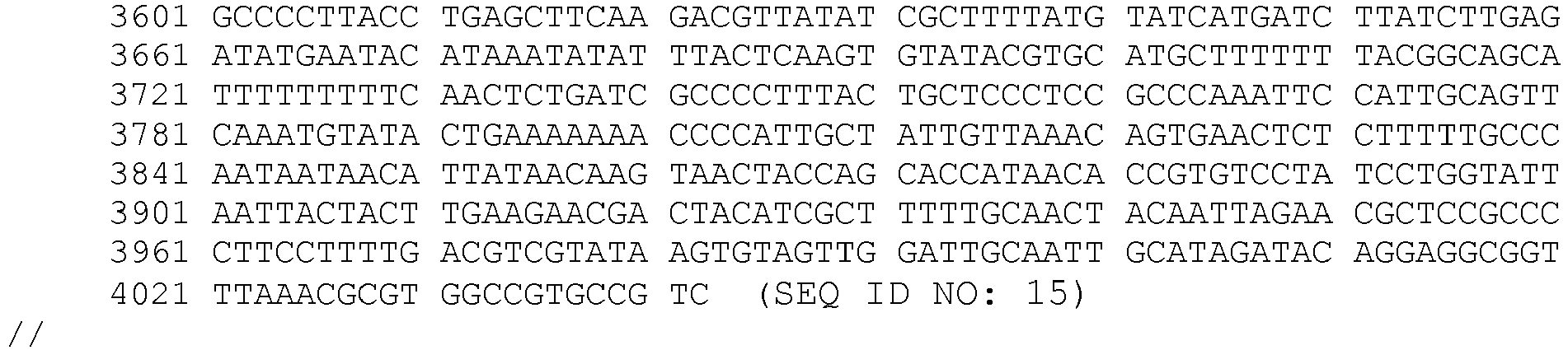
- (a) digesting an assembly composition with one or more restriction endonucleases to generate a components composition, the assembly composition comprising:
- (i) one or more first nucleic acid molecules, wherein each first nucleic acid molecule is circular and comprises, in a 5' to 3' orientation, a first restriction site RA0, any primer binding segment selected from the group PA, any DNA segment selected from the group D0, an annealable linker sequence LB0, and a second restriction site RB0;
- (ii) one or more intermediate nucleic acid molecules wherein each intermediate nucleic acid molecule n is circular and comprises, in a 5' to 3' orientation, a first restriction site RAn, a first annealable linker sequence LAn, any DNA segment selected from the group Dn, a second annealable linker sequence LBn, and a second restriction site RBn, and wherein n represents an integer from one to the number of intermediate nucleic acid molecules; and
- (iii) one or more last nucleic acid molecules, wherein each last nucleic acid molecule is circular and comprises, in a 5' to 3' orientation, a first restriction site RAm, an annealable linker sequence LAm, a DNA segment selected from the group Dm, any primer binding segment selected from the group PB, a second restriction site RBm wherein m represents an integer one greater than the number of intermediate nucleic acid molecules; whereupon cleavage of restriction sites RA0 through RBm and denaturation of the resulting linear nucleic acid molecules, each annealable linker sequence LB(p-1) is capable of hybridizing to the complement of annealable linker sequence LAp, wherein n is an integer that varies from 1 to (m-1), wherein p represents an integer from 1 to m, and wherein each group D0,... Dn,... and Dm consists of one or more DNA segments;
- (b) contacting the components composition with DNA polymerase, deoxyribonucleoside triphosphates and one or more first primers and one or more second primers, under conditions suitable for denaturation of the nucleic acid molecules, annealing of annealable linker sequence LB(p-1) to annealable linker sequence LAp, and extension therefrom; wherein each said first primer is capable of hybridizing to one of said primer binding segments selected from the group PA and each said second primer is capable of hybridizing to one of said primer binding segments selected from the group PB; and subjecting the components composition to polymerase chain reaction,
- (a) providing a components composition comprising:
- (i) one or more first nucleic acid molecules, wherein each first nucleic acid molecule is linear and comprises, in a 5' to 3' orientation, any primer binding segment selected from the group PA, any DNA segment selected from the group D0, and an annealable linker sequence LB0;
- (ii) one or more intermediate nucleic acid molecules wherein each intermediate nucleic acid molecule n is linear and comprises, in a 5' to 3' orientation, a first annealable linker sequence LAn, any DNA segment selected from the group Dn, and a second annealable linker sequence LBn, wherein n represents an integer from one to the number of intermediate nucleic acid molecules; and
- (iii) one or more last nucleic acid molecules, wherein each last nucleic acid molecule is linear and comprises, in a 5' to 3' orientation, an annealable linker sequence LAm, a DNA segment selected from the group Dm, and any primer binding segment selected from the group PB, wherein m represents an integer one greater than the number of intermediate nucleic acid molecules; whereupon denaturation of the resulting linear nucleic acid molecules, each annealable linker sequence LB(p-1) is capable of hybridizing to the complement of annealable linker sequence LAp, wherein n is an integer that varies from 1 to (m-1), wherein p represents an integer from 1 to m, and wherein each group D0,... Dn,...and Dm consists of one or more DNA segments;
- (b) contacting the components composition with DNA polymerase, deoxyribonucleoside triphosphates and one or more first primers and one or more second primers, under conditions suitable for denaturation of the nucleic acid molecules, annealing of annealable linker sequence LB(p-1) to annealable linker sequence LAp, and extension therefrom; wherein each said first primer is capable of hybridizing to one of said primer binding segments selected from the group PA and each said second primer is capable of hybridizing to one of said primer binding segments selected from the group PB; and subjecting the components composition to polymerase chain reaction,
- a
central processing unit 22; - a main non-volatile (non-transitory)
storage unit 14, for example a hard disk drive, for storing software and data, thestorage unit 14 controlled bystorage controller 12; - a
system memory 36, preferably high speed random-access memory (RAM), for storing system control programs, data, and application programs, comprising programs and data loaded fromnon-volatile storage unit 14;system memory 36 may also include read-only memory (ROM); - a
user interface 32, comprising one or more input devices (e.g.,keyboard 28, a mouse) and adisplay 26 or other output device; - optionally, a network interface card 20 (communications circuitry) for connecting to any wired or wireless communication network 34 (e.g., a wide area network such as the Internet);
- a
power source 24 to power the aforementioned elements; and - an
internal bus 30 for interconnecting the aforementioned elements of the system.
- a
file system 42 for controlling access to the various files and data structures; - an identification of a target organism or a
host cell 44 into which an engineered nucleic acid construct will be integrated; - an engineered nucleic
acid assembly module 46 for assembling one or more engineered nucleic acid constructs in accordance with the present disclosure; - the sequences of one or more engineered nucleic constructs 48 that have been constructed by engineered nucleic
acid assembly module 46 in accordance with the present disclosure; - optionally, a
freezer store database 62 that details the source constructs that are physically present in a corresponding freezer store; - a library of linker
nucleic acid sequences 64 that are available for linking component nucleotides in accordance with an embodiment of the present disclosure; - an
arrangement scoring module 66 for scoring an arrangement of component nucleotides in accordance with the present disclosure; and - a primer
pair calculation module 68 for computing primer pairs in accordance with the present disclosure.
5' - (704-2-LA1) - CN1 - (704-1-LB1) - 3', 5' - (704-1-LA2) - CN2 - (704-2-LB2) - 3'
because 704-1-LB1 is capable of hybridizing to the complement of 704-1-LA2 to form the construct:
5' - (704-2-LA1) - CN1 - (704-1-LB1) - CN2 - (704-2-LB2) - 3'.
A = an ordered set {X1, ... , Xt}, where,
- t is a positive integer greater than 1,
- each i is an integer in the set of integers {1, ... , t},
- each Xi comprises 5' - LAi - NAi - LBi - 3',
- each LBi is a linker nucleic acid sequence in the
predetermined library 64 of linker nucleic acid sequences, - each NAi is a component polynucleotide in the plurality of component polynucleotides,
- each LBi, for i less than t, upon denaturation to single stranded form, is capable of hybridizing to the complement of LAi+1, thereby forming the nucleic acid sequence:
5' - LA1 - NA1, ... , LBn-1 - NAn - LBn - 3'.
A = an ordered set {X1, ... , Xt},


- t is a positive integer greater than 1,
- each i is an integer in the set of integers {1, ..., t},
- each Xi comprises 5' - LAi - NAi - LBi - 3',
- each LBi is a linker nucleic acid sequence in the
predetermined library 64 of linker nucleic acid sequences, - each NAi is a component polynucleotide in the plurality of component polynucleotides identified in
step 204, - each LBi, for i less than t, upon denaturation to single stranded form, is capable of hybridizing to the complement of LAi+1, thereby forming the nucleic acid sequence:
5' - LA1 - NA1, ... ,LBN-1 - NAN - LBN - 3', - LB0 is a linker nucleic acid sequence in the predetermined library of linker nucleic acid sequences,
- NA0 and NAt+1 are each component polynucleotides in the plurality of component polynucleotides, the contiguous arrangement ARi comprising, in a 5' to 3' orientation,
A, B, C, and
where,
LB0, upon denaturation to single stranded form, is capable of hybridizing to the complement of LA1, and
LBt, upon denaturation to single stranded form, is capable of hybridizing to the complement of LAt+1, so that the nucleic acid construct comprises the nucleic acid sequence:
5' - NA0 - LB0, ... , LBt-1 - NAt - LBt - NAt+1 - 3'.
D = an ordered set {Q1, ... , Qa}, where,
- a is a positive integer greater than 1,
- each i is an integer in the set of integers {1, ..., a},
- each Qi comprises 5' - RAi - LAi - NAi - LBi - RBi - 3',
- each LBi is a linker nucleic acid sequence from the predetermined library of linker nucleic acid sequences,
- each NAi is a component polynucleotide in the plurality of component polynucleotides, and
- each LBi, for i less than a, upon denaturation to single stranded form and upon cleavage of each restriction site RAi and RBi, is capable of hybridizing to the complement of LAi+1, thereby forming the engineered nucleic acid construct comprising the nucleic acid sequence:
5' - LA1 - NA1, ... ,LBa-1 - NAa - LBa- 3'.


- a is a positive integer greater than 1,
- each i is an integer in the set of integers {1, ..., a},
- each Qi comprises 5' - RAi - LAi - NAi - LBi - RBi - 3',
- each LBi is a linker nucleic acid sequence from the predetermined library of linker nucleic acid sequences,
- each NAi is a component polynucleotide in the plurality of component polynucleotides, and
- each LBi, for i less than a, upon denaturation to single stranded form and upon cleavage of each restriction site RAi and RBi, is capable of hybridizing to the complement of LAi+1, thereby forming the engineered nucleic acid construct comprising the nucleic acid sequence:
5' - LA1 - NA1, ... ,LBa-1 - NAa - LBa - 3', - LB0 is a linker nucleic acid sequence from the predetermined library of linker nucleic acid sequences,
- restriction sites RA0, RB0, RAa+1 and RBa+1 are each independently cleavable by one or more type IIS restriction endonucleases,
- restriction sites RA0 and RB0 are oriented so that cleavage of RA0 and RB0 separates their respective recognition and cleavage sites from the resulting nucleic acid molecule that comprises NA0 - LB0,
- restriction sites RAa+1 and RBa+1 are oriented so that cleavage of RAa+1 and RBa+1 separates their respective recognition and cleavage sites from the resulting nucleic acid molecule that comprises NAa+1 - LBa+1, and
- NA0 and NAa+1 are each component polynucleotides in the plurality of component polynucleotides, the contiguous arrangement ARi comprising, in a 5' to 3' orientation,
D, E, F, and
where- LB0, upon denaturation to single stranded form and upon cleavage of RB0, is capable of hybridizing to the complement of LA1, and
- LBn, upon denaturation to single stranded form and upon cleavage of RBa, is capable of hybridizing to the complement of LAa+1, so that the nucleic acid construct comprises the nucleic acid sequence:
5' - NA0 - LB0, ... , LBa-1 - NAa - LBa - NAa+1 - 3'.
- HO^::pFBA1>ADH2::pSLN1>ADH1, and
- HO^::pSLN1>ADH1::pFBA1>ADH2
A = an ordered set of component polynucleotides {X1, ... , Xn} having the sequential order displayed in the display,
where,
- n is a positive integer greater than 1,
- each i is an integer in the set of integers {1, ..., n},
- each Xi comprises 5' - LAi - NAi - LBi - 3',
- each LBi is a linker nucleic acid sequence in a predetermined library of linker nucleic acid sequences,
- each NAi is a component polynucleotide,
- each LBi, for i less than n, upon denaturation to single stranded form, is capable of hybridizing to the complement of LAi+1, thereby forming the engineered nucleic acid construct comprising the nucleic acid sequence:
5' - LA1 - NA1, ... ,LBn-1 - NAn - LBn - 3'.


- LB0 is a linker nucleic acid sequence in the electronic library of linker nucleic acid sequences,
- NA0 and NAn+1 are each component polynucleotides, the contiguous arrangement ARi comprising, in a 5' to 3' orientation,
A, B, C, and
- LB0, upon denaturation to single stranded form, is capable of hybridizing to the complement of LA1, and
- LBn, upon denaturation to single stranded form, is capable of hybridizing to the complement of LAn+1, so that the engineered nucleic acid construct comprises the nucleic acid sequence:
5' - NA0 - LB0, ... , LBn-1 - NAn - LBn - NAn+1 - 3'.
- <110> AMYRIS, INC.
Platt, Darren M.
Bissell, Michael W.
Chandran, Sunil S.
Hawthorne, Brian L.
Dean, Jedediah Erik
Dolan, Christopher - <120> Systems and Methods for Engineering Nucleic Acid Constructs Using Scoring Techniques
- <130>
060261-5004-WO - <140> Herewith
<141> 2012-11-16 - <150>
US 13/442,625
<151> 2012-04-09 - <150>
US 61/561,241
<151> 2011-11-17 - <160> 18
- <170> PatentIn version 3.5
- <210> 1
<211> 28
<212> DNA
<213> Artificial Sequence - <220>
<223> Upstream primer - <400> 1
gacggcacgg ccacgcgttt aaaccgcc 28 - <210> 2
<211> 23
<212> DNA
<213> Artificial Sequence - <220>
<223> Upstream primer - <400> 2
gggtatctcg aagcacacgaaac 23 - <210> 3
<211> 24
<212> DNA
<213> Artificial Sequence - <220>
<223> Downstream primer - <400> 3
aggtccgccg gcgttggacg agcg 24 - <210> 4
<211> 21
<212> DNA
<213> Artificial Sequence - <220>
<223> Downstream primer - <400> 4
atttgctcgg catgccggta g 21 - <210> 5
<211> 1511
<212> DNA
<213> Artificial Sequence - <220>
<223> Downstream primer - <400> 5


- <210> 6
<211> 33
<212> DNA
<213> Artificial Sequence - <220>
<223> Forward primer - <400> 6
gcggcccata tcccccaggg cacggatctc gag 33 - <210> 7
<211> 20
<212> DNA
<213> Artificial Sequence - <220>
<223> Forward primer - <400> 7
caagtcgccc ccatcttgtg 20 - <210> 8
<211> 33
<212> DNA
<213> Artificial Sequence - <220>
<223> Reverse primer - <400> 8
ctcgagatcc gtgccctggg ggatatgggc cgc 33 - <210> 9
<211> 20
<212> DNA
<213> Artificial Sequence - <220>
<223> Reverse primer - <400> 9
ttgaacagcg tcagcggtag 20 - <210> 10
<211> 31
<212> DNA
<213> Artificial Sequence - <220>
<223> Upstream primer - <400> 10
tcctgtatct atgcaattgc aatccaacta c 31 - <210> 11
<211> 24
<212> DNA
<213> Artificial Sequence - <220>
<223> Downstream primer - <400> 11
aggtccgccg gcgttggacg agcg 24 - <210> 12
<211> 36
<212> DNA
<213> Artificial Sequence - <220>
<223> Downstream primer - <400> 12
gcgaatttct tatgatttat gatttttatt attaaa 36 - <210> 13
<211> 800
<212> DNA
<213> Artificial Sequence - <220>
<223> Downstrream primer - <400> 13


- <210> 14
<211> 39
<212> DNA
<213> Artificial Sequence - <220>
<223> Synethetic - <400> 14
tatgcgggca taaagtggct caatggcagc tgcatggag 39 - <210> 15
<211> 4042
<212> DNA
<213> Artificial Sequence - <220>
<223> Synthetic - <220>
<221> misc_feature
<222> (1)..(28)
<223> Linker - <220>
<221> misc_feature
<222> (29)..(678)
<223> gADH1 - <220>
<221> misc_feature
<222> (679)..(717)
<223> Linker - <220>
<221> misc_feature
<222> (718)..(1666)
<223> gADH1 - <220>
<221> misc_feature
<222> (1667)..(1690)
<223> Linker_2 - <220>
<221> misc_feature
<222> (1691)..(3190)
<223> URA3 - <220>
<221> misc_feature
<222> (3191)..(3214)
<223> Linker_2 - <220>
<221> misc_feature
<222> (3215)..(4014)
<223> gADH1 - <220>
<221> misc_feature
<222> (4015)..(4042)
<223> Linker_0 - <400> 15

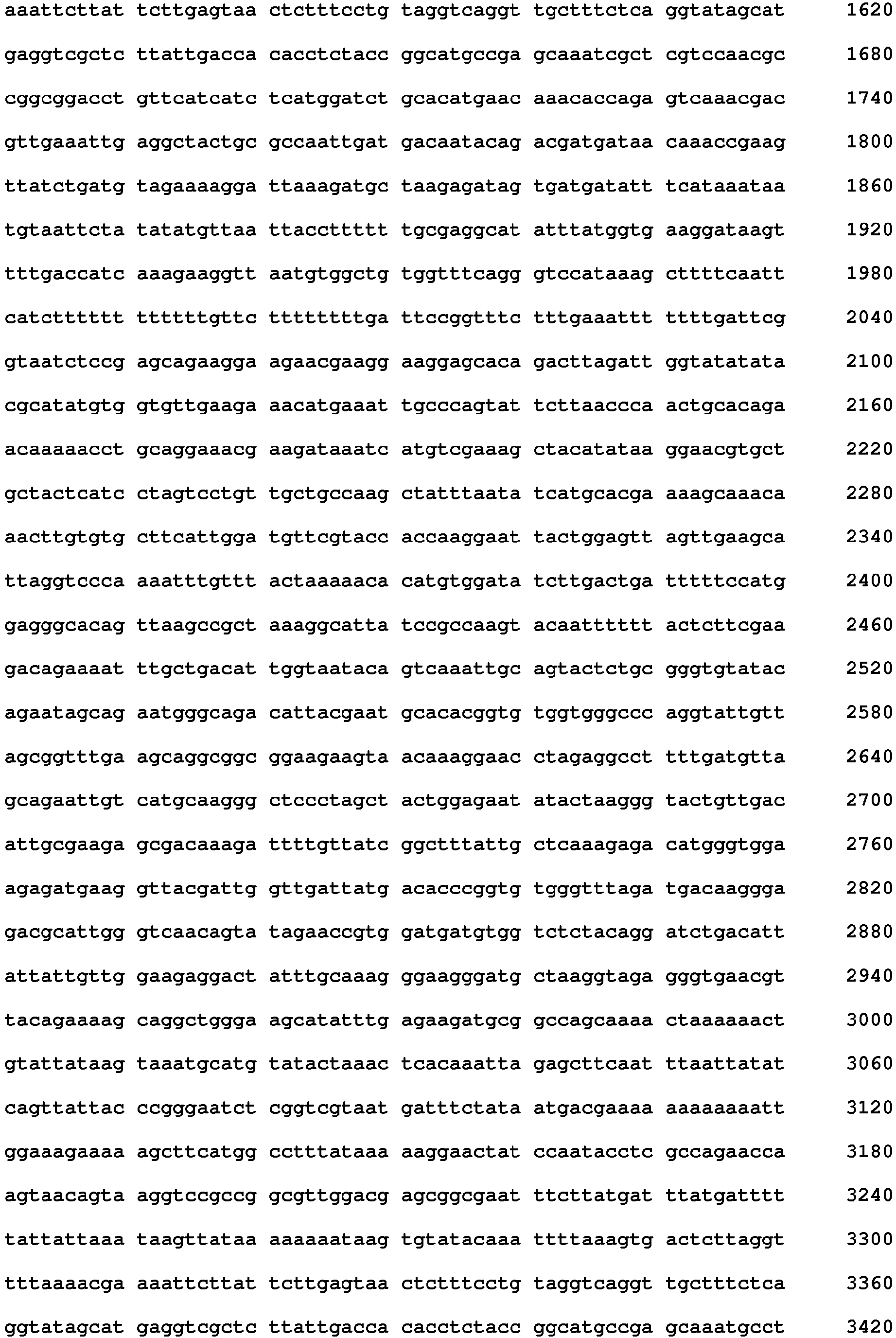
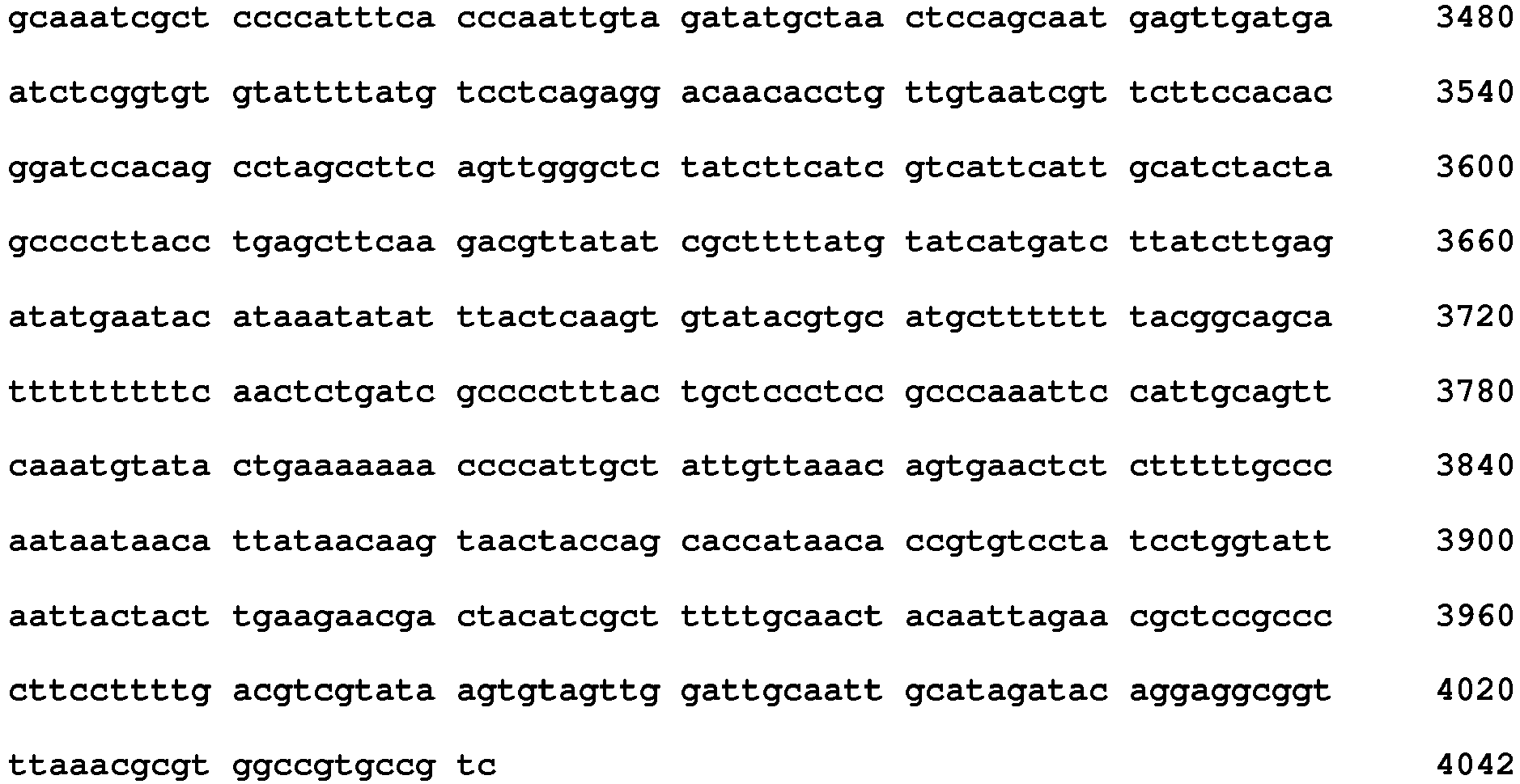
- <210> 16
<211> 102
<212> PRT
<213> Saccharomyces cerevisiae - <400> 16

- <210> 17
<211> 300
<212> DNA
<213> Homo sapiens - <400> 17

- <210> 18
<211> 300
<212> DNA
<213> Homo sapiens - <400> 18

Claims (20)
- A method of defining an engineered nucleic acid construct for integration into a genomic locus L of a target organism or a host cell using a computer system (10) having a central processing unit (22), a main non-volatile storage unit (14) controlled by a storage controller (12), a system memory (36), a user interface (32), a network interface card (20), a power source (24), and an internal bus for interconnecting the central processing unit (22), the main non-volatile storage unit (14), the storage controller (12), the system memory (36), the user interface (32), the network interface card (20), and the power source (24), the method comprising:(A) receiving, at the computer system (10) for storage in the system memory (36), a plurality of nucleic acid requests {NR1 (50-1-1), ..., NRn (50-1-N)}, wherein n is a positive integer greater than 1, each nucleic acid request NRi in {NR1, ..., NRn} specifying a genetic change to L;(B) expanding, using the computer system (10) executing an engineered nucleic acid assembly module (46), each NRi in {NR1, ..., NRn} into a corresponding component polynucleotide sequence (52), thereby forming a plurality of component polynucleotide sequences {(52-1-1), ...., (52-1-N)} for storage in the system memory (36);(C) arranging, using the computer system (10) executing the engineered nucleic acid assembly module (46), the plurality of component polynucleotide sequences into a contiguous arrangement ARi (54), wherein the arranging uses linker nucleic acid sequences (702) from a library of linker nucleic acid sequences (64) addressable by the computer system (10), to combine component polynucleotide sequences in the plurality of component polynucleotide sequences into the contiguous arrangement ARi;(D) repeating, using the central processing unit (22) executing the engineered nucleic acid assembly module (46), the arranging (C) until a set of {AR1, ..., ARm} contiguous arrangements is formed, wherein m is a positive integer greater than 1, the set of {AR1 (54-1-1), ..., ARm (54-1-M)} contiguous arrangements representing a plurality of different contiguous arrangements of the component polynucleotides in the plurality of component polynucleotides;(E) determining, using the central processing unit (22) executing the engineered nucleic acid assembly module (46) and receiving input from an arrangement scoring module (66), a score Si (56) for each respective contiguous arrangement ARi in {AR1, ..., ARm}, wherein, for each respective contiguous arrangement ARi, a contribution to the score Si is made when one or more source constructs (602) are identified, from a freezer store database (62) addressable by the computer system (10), as being physically present in a freezer store, wherein each of the one or more physically present source constructs (602) encodes one or more of the component polynucleotides (604), and wherein a 3' or 5' terminus, or both the 3' and 5' termini, of each respective component polynucleotide in the one or more component polynucleotides encoded by the one or more physically present source constructs is bound to a corresponding linker nucleic acid sequence (702) that was used for the corresponding component polynucleotide in the arranging (C) to form the ARi; and(F) selecting, using the central processing unit (22), a final contiguous arrangement ARf in {AR1, ..., ARm} having a score Si that meets a selection criterion as an optimal contiguous arrangement, wherein ARf, defines the engineered nucleic acid construct.
- The method of claim 1, further comprising:
(G) calculating, using a primer pair calculation module executing on the computer system (10), in response to selection of the ARf, one or more primer pairs based upon the ARf, wherein each primer pair in the one or more primer pairs is capable of amplifying a portion of the ARf not represented in any identified one or more physically present source constructs identified for the ARf, wherein the portions of the contiguous arrangement ARf amplified by the one or more primer pairs and the one or more component polynucleotides in the one or more physically present source constructs identified for the ARf, in the order specified in the ARf, collectively define the engineered nucleic acid construct. - The method of claim 1 or 2, wherein
the arranging (C) comprises inserting a selectable marker having a nucleic acid sequence into the contiguous arrangement ARi, and
the set of contiguous arrangements {AR1, ..., ARm} represents a plurality of different contiguous arrangements of the component polynucleotides in the plurality of component polynucleotides and the selectable marker with respect to each other. - The method of any one of claims 1-3, wherein the score Si for each respective ARi is a function of a number of component polynucleotides already arranged according to the contiguous arrangement specified by ARi in the one or more physically present constructs selected by ARi by the determining (E).
- The method of any one of claims 1-4, wherein a nucleic acid request in the plurality of nucleic acid requests specifies insertion of an insertion sequence at L.
- The method of claim 5, wherein the insertion sequence comprises a promoter and a gene to be expressed by the promoter.
- The method of claim 5, wherein the insertion sequence comprises a divergent promoter and a first gene and a second gene driven by the divergent promoter.
- The method of claim 7, wherein the divergent promoter is a back-to-back divergent promoter, an overlapping divergent promoter, or a face-to-face divergent promoter.
- The method of claim 5, wherein the insertion sequence comprises a promoter, a gene, a terminator, an open reading frame, a codon substitution, a nucleic acid substitution, a point mutation, an insertion mutation, or a deletion mutation.
- The method of claim 5, wherein the insertion sequence comprises a fusable open reading frame without a stop codon.
- The method of any one of claims 5-10, wherein the nucleic acid request specifies that(i) the entire genomic locus L is to be replaced by the insertion sequence,(ii) a promoter and a gene at L is to be replaced by the insertion sequence,(iii) a divergent promoter and a first gene and a second gene driven by the divergent promoter at L is to be replaced by the insertion sequence,(iv) a promoter, a gene, a terminator, an open reading frame, a codon substitution, a nucleic acid substitution, a point mutation, an insertion mutation, or a deletion mutation at L is to be replaced by the insertion sequence, or(v) a fusible open reading frame without a stop codon is to be replaced by the insertion sequence.
- The method of claim 11, wherein the divergent promoter is a back-to-back divergent promoter, an overlapping divergent promoter, or a face-to-face divergent promoter.
- The method of any one of claims 5-12, wherein the insertion sequence includes a first copy of a gene in a 3' to 5' orientation and a second copy of the gene in a 5' to 3' orientation, and a bi-directional promoter between the first copy and the second copy.
- The method of any one of claims 1-13, wherein the arranging (C) comprises barring an ARi that would cause a repeat sequence of greater than a predetermined number of bases to arise in the engineered nucleic acid construct.
- The method of claim 2, wherein the calculating (G) comprises applying at least one design rule to identify primers in the one or more primer pairs.
- The method of claim 15, wherein the at least one design rule is (i) avoidance of hair pin termini, (ii) avoidance of self-dimerization, (iii) primer length between 17 and 28 bases, (iv) percent G+C content between fifty and sixty percent, (v) melting temperature between 55°C and 80°C, or (vi) avoidance of runs of three or more Cs or Gs at the 3' terminus.
- The method of any one of claims 1-16, wherein the expanding (B) comprises expanding a first nucleic acid request in {NR1, ..., NRn} into a first component polynucleotide and a second component polynucleotide, wherein the first component polynucleotide is a promoter and the second component polynucleotide is a gene.
- The method of any one of claims 1-17, wherein the plurality of nucleic acid requests {NR1, ..., NRn} comprises between 2 and 12 nucleic acid requests.
- The method of any one of claims 1-18, wherein a nucleic acid request in {NR1, ..., NRn} specifies a point mutation in a gene at genomic locus L and wherein the expanding (B) obtains a nucleic acid sequence of the gene and modifies the nucleic acid sequence of the gene to form a component polynucleotide in the plurality of component polynucleotides.
- The method of any one of claims 1-19, wherein a nucleic acid request in {NR1, ..., NRn} is a request that an exogenous gene be inserted at L, and wherein the expanding (B) comprises obtaining a sequence of the exogenous gene from a database of nucleic acid sequences to form a component polynucleotide in the plurality of component polynucleotides.
Applications Claiming Priority (3)
| Application Number | Priority Date | Filing Date | Title |
|---|---|---|---|
| US201161561241P | 2011-11-17 | 2011-11-17 | |
| US13/442,625 US8332160B1 (en) | 2011-11-17 | 2012-04-09 | Systems and methods for engineering nucleic acid constructs using scoring techniques |
| PCT/US2012/065708 WO2013075049A2 (en) | 2011-11-17 | 2012-11-16 | Systems and methods for engineering nucleic acid constructs using scoring techniques |
Publications (2)
| Publication Number | Publication Date |
|---|---|
| EP2780852A2 EP2780852A2 (en) | 2014-09-24 |
| EP2780852B1 true EP2780852B1 (en) | 2019-12-25 |
Family
ID=47289186
Family Applications (1)
| Application Number | Title | Priority Date | Filing Date |
|---|---|---|---|
| EP12806738.6A Active EP2780852B1 (en) | 2011-11-17 | 2012-11-16 | Systems and methods for engineering nucleic acid constructs using scoring techniques |
Country Status (14)
| Country | Link |
|---|---|
| US (2) | US8332160B1 (en) |
| EP (1) | EP2780852B1 (en) |
| JP (1) | JP2015507236A (en) |
| KR (1) | KR20140095090A (en) |
| CN (1) | CN104603789A (en) |
| AU (2) | AU2012340175B2 (en) |
| BR (1) | BR112014011924A2 (en) |
| CA (1) | CA2854038A1 (en) |
| IN (1) | IN2014CN04384A (en) |
| MX (1) | MX2014005978A (en) |
| PT (1) | PT2780852T (en) |
| SG (1) | SG11201402201VA (en) |
| WO (1) | WO2013075049A2 (en) |
| ZA (1) | ZA201403601B (en) |
Families Citing this family (48)
| Publication number | Priority date | Publication date | Assignee | Title |
|---|---|---|---|---|
| UA111841C2 (en) * | 2011-04-21 | 2016-06-24 | Гіліад Сайєнсіз, Інк. | BENZOTHIAZOL COMPOUNDS AND THEIR PHARMACEUTICAL APPLICATION |
| AU2014368982B2 (en) | 2013-12-19 | 2021-03-25 | Amyris, Inc. | Methods for genomic integration |
| US9963687B2 (en) * | 2014-08-27 | 2018-05-08 | New England Biolabs, Inc. | Fusion polymerase and method for using the same |
| CA3007635A1 (en) | 2015-12-07 | 2017-06-15 | Zymergen Inc. | Promoters from corynebacterium glutamicum |
| US9988624B2 (en) | 2015-12-07 | 2018-06-05 | Zymergen Inc. | Microbial strain improvement by a HTP genomic engineering platform |
| US11208649B2 (en) | 2015-12-07 | 2021-12-28 | Zymergen Inc. | HTP genomic engineering platform |
| US11151497B2 (en) | 2016-04-27 | 2021-10-19 | Zymergen Inc. | Microbial strain design system and methods for improved large-scale production of engineered nucleotide sequences |
| US11293021B1 (en) | 2016-06-23 | 2022-04-05 | Inscripta, Inc. | Automated cell processing methods, modules, instruments, and systems |
| WO2018005793A1 (en) | 2016-06-30 | 2018-01-04 | Zymergen Inc. | Methods for generating a glucose permease library and uses thereof |
| JP2019519242A (en) | 2016-06-30 | 2019-07-11 | ザイマージェン インコーポレイテッド | Method for generating a bacterial hemoglobin library and its use |
| US9982279B1 (en) | 2017-06-23 | 2018-05-29 | Inscripta, Inc. | Nucleic acid-guided nucleases |
| US10011849B1 (en) | 2017-06-23 | 2018-07-03 | Inscripta, Inc. | Nucleic acid-guided nucleases |
| HUE058668T2 (en) | 2017-06-30 | 2022-09-28 | Inscripta Inc | Automated cell handling procedures, modules, equipment and systems |
| CN110021342B (en) * | 2017-08-21 | 2020-12-15 | 北京哲源科技有限责任公司 | Method and system for accelerating identification of variant sites |
| US10738327B2 (en) | 2017-08-28 | 2020-08-11 | Inscripta, Inc. | Electroporation cuvettes for automation |
| EP3684939A1 (en) | 2017-09-18 | 2020-07-29 | Amyris, Inc. | Methods for genomic integration in pichia and other host cells |
| WO2019068022A1 (en) | 2017-09-30 | 2019-04-04 | Inscripta, Inc. | Flow through electroporation instrumentation |
| US11581064B2 (en) * | 2017-10-26 | 2023-02-14 | Zymergen Inc. | Device-agnostic system for planning and executing high-throughput genomic manufacturing operations |
| WO2019190874A1 (en) | 2018-03-29 | 2019-10-03 | Inscripta, Inc. | Automated control of cell growth rates for induction and transformation |
| WO2019200004A1 (en) | 2018-04-13 | 2019-10-17 | Inscripta, Inc. | Automated cell processing instruments comprising reagent cartridges |
| US10526598B2 (en) | 2018-04-24 | 2020-01-07 | Inscripta, Inc. | Methods for identifying T-cell receptor antigens |
| US10508273B2 (en) | 2018-04-24 | 2019-12-17 | Inscripta, Inc. | Methods for identifying selective binding pairs |
| US10858761B2 (en) | 2018-04-24 | 2020-12-08 | Inscripta, Inc. | Nucleic acid-guided editing of exogenous polynucleotides in heterologous cells |
| AU2019292919A1 (en) | 2018-06-30 | 2021-03-11 | Inscripta, Inc. | Instruments, modules, and methods for improved detection of edited sequences in live cells |
| US10532324B1 (en) | 2018-08-14 | 2020-01-14 | Inscripta, Inc. | Instruments, modules, and methods for improved detection of edited sequences in live cells |
| US11142740B2 (en) | 2018-08-14 | 2021-10-12 | Inscripta, Inc. | Detection of nuclease edited sequences in automated modules and instruments |
| US11965154B2 (en) | 2018-08-30 | 2024-04-23 | Inscripta, Inc. | Detection of nuclease edited sequences in automated modules and instruments |
| EP3870697A4 (en) | 2018-10-22 | 2022-11-09 | Inscripta, Inc. | Engineered enzymes |
| US11214781B2 (en) | 2018-10-22 | 2022-01-04 | Inscripta, Inc. | Engineered enzyme |
| CN113631713A (en) | 2019-03-25 | 2021-11-09 | 因思科瑞普特公司 | Simultaneous multiplex genome editing in yeast |
| US11001831B2 (en) | 2019-03-25 | 2021-05-11 | Inscripta, Inc. | Simultaneous multiplex genome editing in yeast |
| US10837021B1 (en) | 2019-06-06 | 2020-11-17 | Inscripta, Inc. | Curing for recursive nucleic acid-guided cell editing |
| WO2020257395A1 (en) | 2019-06-21 | 2020-12-24 | Inscripta, Inc. | Genome-wide rationally-designed mutations leading to enhanced lysine production in e. coli |
| US10927385B2 (en) | 2019-06-25 | 2021-02-23 | Inscripta, Inc. | Increased nucleic-acid guided cell editing in yeast |
| WO2021102059A1 (en) | 2019-11-19 | 2021-05-27 | Inscripta, Inc. | Methods for increasing observed editing in bacteria |
| KR20250033331A (en) | 2019-12-10 | 2025-03-07 | 인스크립타 인코포레이티드 | Novel mad nucleases |
| US10704033B1 (en) | 2019-12-13 | 2020-07-07 | Inscripta, Inc. | Nucleic acid-guided nucleases |
| CA3157127A1 (en) | 2019-12-18 | 2021-06-24 | Aamir MIR | Cascade/dcas3 complementation assays for in vivo detection of nucleic acid-guided nuclease edited cells |
| CN111145836A (en) * | 2019-12-30 | 2020-05-12 | 云舟生物科技(广州)有限公司 | Method for inserting gene nucleic acid sequence, computer storage medium and electronic device |
| US10689669B1 (en) | 2020-01-11 | 2020-06-23 | Inscripta, Inc. | Automated multi-module cell processing methods, instruments, and systems |
| KR20220133257A (en) | 2020-01-27 | 2022-10-04 | 인스크립타 인코포레이티드 | Electroporation modules and instruments |
| US20210332388A1 (en) | 2020-04-24 | 2021-10-28 | Inscripta, Inc. | Compositions, methods, modules and instruments for automated nucleic acid-guided nuclease editing in mammalian cells |
| US11787841B2 (en) | 2020-05-19 | 2023-10-17 | Inscripta, Inc. | Rationally-designed mutations to the thrA gene for enhanced lysine production in E. coli |
| WO2022060749A1 (en) | 2020-09-15 | 2022-03-24 | Inscripta, Inc. | Crispr editing to embed nucleic acid landing pads into genomes of live cells |
| US11512297B2 (en) | 2020-11-09 | 2022-11-29 | Inscripta, Inc. | Affinity tag for recombination protein recruitment |
| CA3204158A1 (en) | 2021-01-04 | 2022-07-07 | Juhan Kim | Mad nucleases |
| US11332742B1 (en) | 2021-01-07 | 2022-05-17 | Inscripta, Inc. | Mad nucleases |
| US11884924B2 (en) | 2021-02-16 | 2024-01-30 | Inscripta, Inc. | Dual strand nucleic acid-guided nickase editing |
Citations (1)
| Publication number | Priority date | Publication date | Assignee | Title |
|---|---|---|---|---|
| US20100124768A1 (en) * | 2008-11-19 | 2010-05-20 | Zach Serber | Compositions and methods for the assembly of polynucleotides |
Family Cites Families (17)
| Publication number | Priority date | Publication date | Assignee | Title |
|---|---|---|---|---|
| US5272065A (en) | 1983-10-20 | 1993-12-21 | Research Foundation Of State University Of New York | Regulation of gene expression by employing translational inhibition of MRNA utilizing interfering complementary MRNA |
| US4683202A (en) | 1985-03-28 | 1987-07-28 | Cetus Corporation | Process for amplifying nucleic acid sequences |
| US4965188A (en) | 1986-08-22 | 1990-10-23 | Cetus Corporation | Process for amplifying, detecting, and/or cloning nucleic acid sequences using a thermostable enzyme |
| US5851804A (en) | 1996-05-06 | 1998-12-22 | Apollon, Inc. | Chimeric kanamycin resistance gene |
| US6268177B1 (en) * | 1998-09-22 | 2001-07-31 | Smithkline Beecham Corporation | Isolated nucleic acid encoding nucleotide pyrophosphorylase |
| ATE315086T1 (en) | 2000-08-21 | 2006-02-15 | Invitrogen Corp | METHODS AND REAGENTS FOR MOLECULAR CLONING |
| US7529685B2 (en) * | 2001-08-28 | 2009-05-05 | Md Datacor, Inc. | System, method, and apparatus for storing, retrieving, and integrating clinical, diagnostic, genomic, and therapeutic data |
| US7192751B2 (en) | 2001-12-06 | 2007-03-20 | The Regents Of The University Of California | Biosynthesis of amorpha-4,11-diene |
| US7172886B2 (en) | 2001-12-06 | 2007-02-06 | The Regents Of The University Of California | Biosynthesis of isopentenyl pyrophosphate |
| US7894998B2 (en) * | 2002-06-26 | 2011-02-22 | Agilent Technologies, Inc. | Method for identifying suitable nucleic acid probe sequences for use in nucleic acid arrays |
| CN1263860C (en) | 2002-09-30 | 2006-07-12 | 华南农业大学 | Construction method of multigene carrier and its application |
| US20080050808A1 (en) | 2002-10-09 | 2008-02-28 | Reed Thomas D | DNA modular cloning vector plasmids and methods for their use |
| EP1804172B1 (en) * | 2005-12-20 | 2021-08-11 | Roche Diagnostics GmbH | PCR elbow determination using curvature analysis of a double sigmoid |
| CA2651747C (en) | 2006-05-26 | 2017-10-24 | Amyris Biotechnologies, Inc. | Production of isoprenoids |
| WO2008045380A2 (en) | 2006-10-04 | 2008-04-17 | Codon Devices, Inc. | Nucleic acid libraries and their design and assembly |
| US20100291633A1 (en) | 2007-09-03 | 2010-11-18 | Thorsten Selmer | Method of cloning at least one nucleic acid molecule of interest using type iis restriction endonucleases, and corresponding cloning vectors, kits and system using type iis restriction endonucleases |
| US10541046B2 (en) | 2009-09-02 | 2020-01-21 | Microsoft Technology Licensing, Llc | Creating genetic devices |
-
2012
- 2012-04-09 US US13/442,625 patent/US8332160B1/en not_active Expired - Fee Related
- 2012-10-11 US US13/650,049 patent/US20140038294A1/en not_active Abandoned
- 2012-11-16 KR KR1020147016047A patent/KR20140095090A/en not_active Withdrawn
- 2012-11-16 JP JP2014542532A patent/JP2015507236A/en active Pending
- 2012-11-16 IN IN4384CHN2014 patent/IN2014CN04384A/en unknown
- 2012-11-16 BR BR112014011924A patent/BR112014011924A2/en not_active Application Discontinuation
- 2012-11-16 CA CA2854038A patent/CA2854038A1/en not_active Abandoned
- 2012-11-16 MX MX2014005978A patent/MX2014005978A/en unknown
- 2012-11-16 SG SG11201402201VA patent/SG11201402201VA/en unknown
- 2012-11-16 WO PCT/US2012/065708 patent/WO2013075049A2/en not_active Ceased
- 2012-11-16 CN CN201280067178.7A patent/CN104603789A/en active Pending
- 2012-11-16 AU AU2012340175A patent/AU2012340175B2/en not_active Ceased
- 2012-11-16 EP EP12806738.6A patent/EP2780852B1/en active Active
- 2012-11-16 PT PT128067386T patent/PT2780852T/en unknown
-
2014
- 2014-05-16 ZA ZA2014/03601A patent/ZA201403601B/en unknown
-
2018
- 2018-07-06 AU AU2018204935A patent/AU2018204935A1/en not_active Abandoned
Patent Citations (1)
| Publication number | Priority date | Publication date | Assignee | Title |
|---|---|---|---|---|
| US20100124768A1 (en) * | 2008-11-19 | 2010-05-20 | Zach Serber | Compositions and methods for the assembly of polynucleotides |
Non-Patent Citations (2)
| Title |
|---|
| C. K. RAYMOND ET AL: "Linker-Mediated Recombinational Subcloning of Large DNA Fragments Using Yeast", GENOME RESEARCH, vol. 12, no. 1, 1 January 2002 (2002-01-01), pages 190 - 197, XP055532111, DOI: 10.1101/gr.205201 * |
| ERNST WEBER ET AL: "A Modular Cloning System for Standardized Assembly of Multigene Constructs", PLOS ONE, vol. 6, no. 2, 18 February 2011 (2011-02-18), pages e16765, XP055110994, ISSN: 1932-6203, DOI: 10.1371/journal.pone.0016765 * |
Also Published As
| Publication number | Publication date |
|---|---|
| AU2012340175B2 (en) | 2018-05-10 |
| WO2013075049A2 (en) | 2013-05-23 |
| CA2854038A1 (en) | 2013-05-23 |
| ZA201403601B (en) | 2016-01-27 |
| KR20140095090A (en) | 2014-07-31 |
| AU2012340175A2 (en) | 2014-06-19 |
| IN2014CN04384A (en) | 2015-09-04 |
| JP2015507236A (en) | 2015-03-05 |
| MX2014005978A (en) | 2015-03-23 |
| AU2018204935A1 (en) | 2018-07-26 |
| PT2780852T (en) | 2020-03-06 |
| US20140038294A1 (en) | 2014-02-06 |
| EP2780852A2 (en) | 2014-09-24 |
| SG11201402201VA (en) | 2014-06-27 |
| AU2012340175A1 (en) | 2014-05-22 |
| CN104603789A (en) | 2015-05-06 |
| BR112014011924A2 (en) | 2017-05-30 |
| HK1200039A1 (en) | 2015-07-31 |
| US8332160B1 (en) | 2012-12-11 |
Similar Documents
| Publication | Publication Date | Title |
|---|---|---|
| US8332160B1 (en) | Systems and methods for engineering nucleic acid constructs using scoring techniques | |
| Leppek et al. | Combinatorial optimization of mRNA structure, stability, and translation for RNA-based therapeutics | |
| US8110360B2 (en) | Compositions and methods for the assembly of polynucleotides | |
| Wang et al. | Systematic identification and analysis of exonic splicing silencers | |
| Venturini et al. | Leveraging multiple transcriptome assembly methods for improved gene structure annotation | |
| Missirlis et al. | A high-throughput screen identifying sequence and promiscuity characteristics of the loxP spacer region in Cre-mediated recombination | |
| EP3021248A1 (en) | Systems and methods for designing and ordering polynucleotides | |
| EP4219731A2 (en) | Compositions and methods for genomic integration of nucleic acids into exogenous landing pads | |
| US9361427B2 (en) | Scar-less multi-part DNA assembly design automation | |
| WO2008045380A2 (en) | Nucleic acid libraries and their design and assembly | |
| WO2009149218A2 (en) | Novel proteins and methods of designing and using same | |
| Bitinaite et al. | DNA cloning and engineering by uracil excision | |
| HK1200039B (en) | Systems and methods for engineering nucleic acid constructs using scoring techniques | |
| Torres Montaguth et al. | ENDO-Pore: high-throughput linked-end mapping of single DNA cleavage events using nanopore sequencing | |
| WO2023168259A1 (en) | Depletion probes | |
| Zheng et al. | A database designed to computationally aid an experimental approach to alternative splicing | |
| Jiang et al. | The Bioinformatic applications of Hi-C and linked reads | |
| Everett et al. | Primer Prim'r: A web based server for automated primer design | |
| Schwartz et al. | Systematic overrepresentation of DNA termini and underrepresentation of subterminal regions among sequencing templates prepared from hydrodynamically sheared linear DNA molecules | |
| Vogelbacher et al. | Sequence optimization for synthetic genes using a genetic algorithm | |
| Leppek et al. | Combinatorial optimization of mRNA structure, stability, and translation for RNA-based | |
| Xie et al. | Transcriptome analysis through expressed sequences |
Legal Events
| Date | Code | Title | Description |
|---|---|---|---|
| PUAI | Public reference made under article 153(3) epc to a published international application that has entered the european phase |
Free format text: ORIGINAL CODE: 0009012 |
|
| 17P | Request for examination filed |
Effective date: 20140610 |
|
| AK | Designated contracting states |
Kind code of ref document: A2 Designated state(s): AL AT BE BG CH CY CZ DE DK EE ES FI FR GB GR HR HU IE IS IT LI LT LU LV MC MK MT NL NO PL PT RO RS SE SI SK SM TR |
|
| DAX | Request for extension of the european patent (deleted) | ||
| REG | Reference to a national code |
Ref country code: HK Ref legal event code: DE Ref document number: 1200039 Country of ref document: HK |
|
| STAA | Information on the status of an ep patent application or granted ep patent |
Free format text: STATUS: EXAMINATION IS IN PROGRESS |
|
| 17Q | First examination report despatched |
Effective date: 20181217 |
|
| REG | Reference to a national code |
Ref country code: DE Ref legal event code: R079 Ref document number: 602012066749 Country of ref document: DE Free format text: PREVIOUS MAIN CLASS: G06F0019220000 Ipc: G16B0030000000 |
|
| GRAP | Despatch of communication of intention to grant a patent |
Free format text: ORIGINAL CODE: EPIDOSNIGR1 |
|
| STAA | Information on the status of an ep patent application or granted ep patent |
Free format text: STATUS: GRANT OF PATENT IS INTENDED |
|
| RIC1 | Information provided on ipc code assigned before grant |
Ipc: G16B 30/00 20190101AFI20190528BHEP Ipc: G16B 35/10 20190101ALI20190528BHEP |
|
| INTG | Intention to grant announced |
Effective date: 20190703 |
|
| GRAS | Grant fee paid |
Free format text: ORIGINAL CODE: EPIDOSNIGR3 |
|
| GRAA | (expected) grant |
Free format text: ORIGINAL CODE: 0009210 |
|
| STAA | Information on the status of an ep patent application or granted ep patent |
Free format text: STATUS: THE PATENT HAS BEEN GRANTED |
|
| AK | Designated contracting states |
Kind code of ref document: B1 Designated state(s): AL AT BE BG CH CY CZ DE DK EE ES FI FR GB GR HR HU IE IS IT LI LT LU LV MC MK MT NL NO PL PT RO RS SE SI SK SM TR |
|
| REG | Reference to a national code |
Ref country code: GB Ref legal event code: FG4D |
|
| REG | Reference to a national code |
Ref country code: CH Ref legal event code: EP |
|
| REG | Reference to a national code |
Ref country code: AT Ref legal event code: REF Ref document number: 1218008 Country of ref document: AT Kind code of ref document: T Effective date: 20200115 |
|
| REG | Reference to a national code |
Ref country code: DE Ref legal event code: R096 Ref document number: 602012066749 Country of ref document: DE |
|
| REG | Reference to a national code |
Ref country code: IE Ref legal event code: FG4D |
|
| REG | Reference to a national code |
Ref country code: PT Ref legal event code: SC4A Ref document number: 2780852 Country of ref document: PT Date of ref document: 20200306 Kind code of ref document: T Free format text: AVAILABILITY OF NATIONAL TRANSLATION Effective date: 20200302 |
|
| REG | Reference to a national code |
Ref country code: NL Ref legal event code: MP Effective date: 20191225 |
|
| PG25 | Lapsed in a contracting state [announced via postgrant information from national office to epo] |
Ref country code: NO Free format text: LAPSE BECAUSE OF FAILURE TO SUBMIT A TRANSLATION OF THE DESCRIPTION OR TO PAY THE FEE WITHIN THE PRESCRIBED TIME-LIMIT Effective date: 20200325 Ref country code: GR Free format text: LAPSE BECAUSE OF FAILURE TO SUBMIT A TRANSLATION OF THE DESCRIPTION OR TO PAY THE FEE WITHIN THE PRESCRIBED TIME-LIMIT Effective date: 20200326 Ref country code: LT Free format text: LAPSE BECAUSE OF FAILURE TO SUBMIT A TRANSLATION OF THE DESCRIPTION OR TO PAY THE FEE WITHIN THE PRESCRIBED TIME-LIMIT Effective date: 20191225 Ref country code: BG Free format text: LAPSE BECAUSE OF FAILURE TO SUBMIT A TRANSLATION OF THE DESCRIPTION OR TO PAY THE FEE WITHIN THE PRESCRIBED TIME-LIMIT Effective date: 20200325 Ref country code: LV Free format text: LAPSE BECAUSE OF FAILURE TO SUBMIT A TRANSLATION OF THE DESCRIPTION OR TO PAY THE FEE WITHIN THE PRESCRIBED TIME-LIMIT Effective date: 20191225 Ref country code: FI Free format text: LAPSE BECAUSE OF FAILURE TO SUBMIT A TRANSLATION OF THE DESCRIPTION OR TO PAY THE FEE WITHIN THE PRESCRIBED TIME-LIMIT Effective date: 20191225 Ref country code: SE Free format text: LAPSE BECAUSE OF FAILURE TO SUBMIT A TRANSLATION OF THE DESCRIPTION OR TO PAY THE FEE WITHIN THE PRESCRIBED TIME-LIMIT Effective date: 20191225 |
|
| REG | Reference to a national code |
Ref country code: LT Ref legal event code: MG4D |
|
| PG25 | Lapsed in a contracting state [announced via postgrant information from national office to epo] |
Ref country code: HR Free format text: LAPSE BECAUSE OF FAILURE TO SUBMIT A TRANSLATION OF THE DESCRIPTION OR TO PAY THE FEE WITHIN THE PRESCRIBED TIME-LIMIT Effective date: 20191225 Ref country code: RS Free format text: LAPSE BECAUSE OF FAILURE TO SUBMIT A TRANSLATION OF THE DESCRIPTION OR TO PAY THE FEE WITHIN THE PRESCRIBED TIME-LIMIT Effective date: 20191225 |
|
| PG25 | Lapsed in a contracting state [announced via postgrant information from national office to epo] |
Ref country code: AL Free format text: LAPSE BECAUSE OF FAILURE TO SUBMIT A TRANSLATION OF THE DESCRIPTION OR TO PAY THE FEE WITHIN THE PRESCRIBED TIME-LIMIT Effective date: 20191225 |
|
| PG25 | Lapsed in a contracting state [announced via postgrant information from national office to epo] |
Ref country code: NL Free format text: LAPSE BECAUSE OF FAILURE TO SUBMIT A TRANSLATION OF THE DESCRIPTION OR TO PAY THE FEE WITHIN THE PRESCRIBED TIME-LIMIT Effective date: 20191225 Ref country code: CZ Free format text: LAPSE BECAUSE OF FAILURE TO SUBMIT A TRANSLATION OF THE DESCRIPTION OR TO PAY THE FEE WITHIN THE PRESCRIBED TIME-LIMIT Effective date: 20191225 Ref country code: RO Free format text: LAPSE BECAUSE OF FAILURE TO SUBMIT A TRANSLATION OF THE DESCRIPTION OR TO PAY THE FEE WITHIN THE PRESCRIBED TIME-LIMIT Effective date: 20191225 Ref country code: EE Free format text: LAPSE BECAUSE OF FAILURE TO SUBMIT A TRANSLATION OF THE DESCRIPTION OR TO PAY THE FEE WITHIN THE PRESCRIBED TIME-LIMIT Effective date: 20191225 |
|
| PG25 | Lapsed in a contracting state [announced via postgrant information from national office to epo] |
Ref country code: SM Free format text: LAPSE BECAUSE OF FAILURE TO SUBMIT A TRANSLATION OF THE DESCRIPTION OR TO PAY THE FEE WITHIN THE PRESCRIBED TIME-LIMIT Effective date: 20191225 Ref country code: SK Free format text: LAPSE BECAUSE OF FAILURE TO SUBMIT A TRANSLATION OF THE DESCRIPTION OR TO PAY THE FEE WITHIN THE PRESCRIBED TIME-LIMIT Effective date: 20191225 Ref country code: IS Free format text: LAPSE BECAUSE OF FAILURE TO SUBMIT A TRANSLATION OF THE DESCRIPTION OR TO PAY THE FEE WITHIN THE PRESCRIBED TIME-LIMIT Effective date: 20200425 |
|
| REG | Reference to a national code |
Ref country code: DE Ref legal event code: R097 Ref document number: 602012066749 Country of ref document: DE |
|
| PG25 | Lapsed in a contracting state [announced via postgrant information from national office to epo] |
Ref country code: DK Free format text: LAPSE BECAUSE OF FAILURE TO SUBMIT A TRANSLATION OF THE DESCRIPTION OR TO PAY THE FEE WITHIN THE PRESCRIBED TIME-LIMIT Effective date: 20191225 Ref country code: ES Free format text: LAPSE BECAUSE OF FAILURE TO SUBMIT A TRANSLATION OF THE DESCRIPTION OR TO PAY THE FEE WITHIN THE PRESCRIBED TIME-LIMIT Effective date: 20191225 |
|
| PLBE | No opposition filed within time limit |
Free format text: ORIGINAL CODE: 0009261 |
|
| STAA | Information on the status of an ep patent application or granted ep patent |
Free format text: STATUS: NO OPPOSITION FILED WITHIN TIME LIMIT |
|
| REG | Reference to a national code |
Ref country code: AT Ref legal event code: MK05 Ref document number: 1218008 Country of ref document: AT Kind code of ref document: T Effective date: 20191225 |
|
| PG25 | Lapsed in a contracting state [announced via postgrant information from national office to epo] |
Ref country code: SI Free format text: LAPSE BECAUSE OF FAILURE TO SUBMIT A TRANSLATION OF THE DESCRIPTION OR TO PAY THE FEE WITHIN THE PRESCRIBED TIME-LIMIT Effective date: 20191225 |
|
| 26N | No opposition filed |
Effective date: 20200928 |
|
| PG25 | Lapsed in a contracting state [announced via postgrant information from national office to epo] |
Ref country code: AT Free format text: LAPSE BECAUSE OF FAILURE TO SUBMIT A TRANSLATION OF THE DESCRIPTION OR TO PAY THE FEE WITHIN THE PRESCRIBED TIME-LIMIT Effective date: 20191225 Ref country code: IT Free format text: LAPSE BECAUSE OF FAILURE TO SUBMIT A TRANSLATION OF THE DESCRIPTION OR TO PAY THE FEE WITHIN THE PRESCRIBED TIME-LIMIT Effective date: 20191225 |
|
| PG25 | Lapsed in a contracting state [announced via postgrant information from national office to epo] |
Ref country code: PL Free format text: LAPSE BECAUSE OF FAILURE TO SUBMIT A TRANSLATION OF THE DESCRIPTION OR TO PAY THE FEE WITHIN THE PRESCRIBED TIME-LIMIT Effective date: 20191225 |
|
| PG25 | Lapsed in a contracting state [announced via postgrant information from national office to epo] |
Ref country code: MC Free format text: LAPSE BECAUSE OF FAILURE TO SUBMIT A TRANSLATION OF THE DESCRIPTION OR TO PAY THE FEE WITHIN THE PRESCRIBED TIME-LIMIT Effective date: 20191225 |
|
| REG | Reference to a national code |
Ref country code: CH Ref legal event code: PL |
|
| PG25 | Lapsed in a contracting state [announced via postgrant information from national office to epo] |
Ref country code: LU Free format text: LAPSE BECAUSE OF NON-PAYMENT OF DUE FEES Effective date: 20201116 |
|
| REG | Reference to a national code |
Ref country code: BE Ref legal event code: MM Effective date: 20201130 |
|
| PG25 | Lapsed in a contracting state [announced via postgrant information from national office to epo] |
Ref country code: CH Free format text: LAPSE BECAUSE OF NON-PAYMENT OF DUE FEES Effective date: 20201130 Ref country code: LI Free format text: LAPSE BECAUSE OF NON-PAYMENT OF DUE FEES Effective date: 20201130 |
|
| PG25 | Lapsed in a contracting state [announced via postgrant information from national office to epo] |
Ref country code: IE Free format text: LAPSE BECAUSE OF NON-PAYMENT OF DUE FEES Effective date: 20201116 |
|
| PG25 | Lapsed in a contracting state [announced via postgrant information from national office to epo] |
Ref country code: TR Free format text: LAPSE BECAUSE OF FAILURE TO SUBMIT A TRANSLATION OF THE DESCRIPTION OR TO PAY THE FEE WITHIN THE PRESCRIBED TIME-LIMIT Effective date: 20191225 Ref country code: MT Free format text: LAPSE BECAUSE OF FAILURE TO SUBMIT A TRANSLATION OF THE DESCRIPTION OR TO PAY THE FEE WITHIN THE PRESCRIBED TIME-LIMIT Effective date: 20191225 Ref country code: CY Free format text: LAPSE BECAUSE OF FAILURE TO SUBMIT A TRANSLATION OF THE DESCRIPTION OR TO PAY THE FEE WITHIN THE PRESCRIBED TIME-LIMIT Effective date: 20191225 |
|
| PG25 | Lapsed in a contracting state [announced via postgrant information from national office to epo] |
Ref country code: MK Free format text: LAPSE BECAUSE OF FAILURE TO SUBMIT A TRANSLATION OF THE DESCRIPTION OR TO PAY THE FEE WITHIN THE PRESCRIBED TIME-LIMIT Effective date: 20191225 |
|
| PG25 | Lapsed in a contracting state [announced via postgrant information from national office to epo] |
Ref country code: BE Free format text: LAPSE BECAUSE OF NON-PAYMENT OF DUE FEES Effective date: 20201130 |
|
| P01 | Opt-out of the competence of the unified patent court (upc) registered |
Effective date: 20230315 |
|
| PGFP | Annual fee paid to national office [announced via postgrant information from national office to epo] |
Ref country code: GB Payment date: 20230928 Year of fee payment: 12 |
|
| PGFP | Annual fee paid to national office [announced via postgrant information from national office to epo] |
Ref country code: FR Payment date: 20230911 Year of fee payment: 12 |
|
| PGFP | Annual fee paid to national office [announced via postgrant information from national office to epo] |
Ref country code: PT Payment date: 20231114 Year of fee payment: 12 Ref country code: DE Payment date: 20230919 Year of fee payment: 12 |
|
| REG | Reference to a national code |
Ref country code: DE Ref legal event code: R119 Ref document number: 602012066749 Country of ref document: DE |
|
| PG25 | Lapsed in a contracting state [announced via postgrant information from national office to epo] |
Ref country code: PT Free format text: LAPSE BECAUSE OF NON-PAYMENT OF DUE FEES Effective date: 20250516 |
|
| GBPC | Gb: european patent ceased through non-payment of renewal fee |
Effective date: 20241116 |
|
| PG25 | Lapsed in a contracting state [announced via postgrant information from national office to epo] |
Ref country code: DE Free format text: LAPSE BECAUSE OF NON-PAYMENT OF DUE FEES Effective date: 20250603 |
|
| PG25 | Lapsed in a contracting state [announced via postgrant information from national office to epo] |
Ref country code: GB Free format text: LAPSE BECAUSE OF NON-PAYMENT OF DUE FEES Effective date: 20241116 |
|
| PG25 | Lapsed in a contracting state [announced via postgrant information from national office to epo] |
Ref country code: FR Free format text: LAPSE BECAUSE OF NON-PAYMENT OF DUE FEES Effective date: 20241130 |