EP2780838B1 - Locating relevant content items across multiple disparate content sources - Google Patents
Locating relevant content items across multiple disparate content sources Download PDFInfo
- Publication number
- EP2780838B1 EP2780838B1 EP12848846.7A EP12848846A EP2780838B1 EP 2780838 B1 EP2780838 B1 EP 2780838B1 EP 12848846 A EP12848846 A EP 12848846A EP 2780838 B1 EP2780838 B1 EP 2780838B1
- Authority
- EP
- European Patent Office
- Prior art keywords
- query
- content
- user
- computer
- content items
- Prior art date
- Legal status (The legal status is an assumption and is not a legal conclusion. Google has not performed a legal analysis and makes no representation as to the accuracy of the status listed.)
- Active
Links
Images




Classifications
-
- G—PHYSICS
- G06—COMPUTING OR CALCULATING; COUNTING
- G06F—ELECTRIC DIGITAL DATA PROCESSING
- G06F16/00—Information retrieval; Database structures therefor; File system structures therefor
- G06F16/90—Details of database functions independent of the retrieved data types
- G06F16/95—Retrieval from the web
- G06F16/953—Querying, e.g. by the use of web search engines
-
- G—PHYSICS
- G06—COMPUTING OR CALCULATING; COUNTING
- G06F—ELECTRIC DIGITAL DATA PROCESSING
- G06F16/00—Information retrieval; Database structures therefor; File system structures therefor
- G06F16/90—Details of database functions independent of the retrieved data types
- G06F16/95—Retrieval from the web
- G06F16/951—Indexing; Web crawling techniques
Definitions
- the content source entries 224 may also be grouped by content collection 122, by content server 116, or by other groups. In one embodiment, the grouping of the content source entries 224 corresponding to the content sources 114 in the query statistics may be selected by the user 104 through the UI 200.
- the query statistics 222 may further include sub-totals and totals of the count and/or size of the located content items 112, a percentage of items located versus total content items in the content sources 114, and the like.
- the computer architecture further includes a system memory 1008, including a random access memory (“RAM”) 1014 and a read-only memory 1016 (“ROM”), and a system bus 1004 that couples the memory to the CPUs 1002.
- the computer 1000 also includes a mass storage device 1010 for storing an operating system 1018, application programs, and other program modules, which are described in greater detail herein.
Landscapes
- Engineering & Computer Science (AREA)
- Databases & Information Systems (AREA)
- Theoretical Computer Science (AREA)
- Data Mining & Analysis (AREA)
- Physics & Mathematics (AREA)
- General Engineering & Computer Science (AREA)
- General Physics & Mathematics (AREA)
- Information Transfer Between Computers (AREA)
- Information Retrieval, Db Structures And Fs Structures Therefor (AREA)
Description
- A company involved in litigation may be obligated to locate and disclose all relevant "evidence" to opposing counsel. Such evidence may include a variety of electronic content, including email messages, documents and other files, list and other contents maintained on websites, and the like. This electronic content may be located on a number of different types of content servers in the enterprise, each having a different process of indexing and/or searching information. Identifying, preserving, and processing this electronic content across the multiple servers may be difficult, time consuming, and expensive. The amount of data that the company is required to sort through and produce may be vast. In addition, the lack of tools to effectively limit the amount of relevant electronic content disclosed may increase litigation costs due to the manual review needed of all content before it is disclosed
- It is with respect to these considerations and others that the disclosure made herein is presented.
-
US 2009/150168 A1 relates to software for litigation document management that is communicably coupled with a rules repository. The example software is operable to identify a litigation matter. The software can then execute an electronic discovery process across a plurality of object types for the identified litigation matter to identify relevant objects using the rules repository, where the electronic discovery process operable to automatically discover relationships among a plurality of the relevant objects perhaps in response to user input. The software is further operable to place a legal hold on at least a first of the relevant objects. The software can then visualize information for at least a portion of the relevant objects. -
US 2010/0017366 A1 relates to a system and method for performing contextual searches across content sources. According to this document, a request is received from a user to perform a contextual search based on a media file or metadata for the media file. A type of the media file is determined. A contextual search menu is presented to the user. A selected contextual search query type selected from the contextual search menu is received from the user. One or more search modules each associated with one or more content sources are queried to determine which one or more search modules can perform the selected contextual search query type. A request is generated for one or more search modules that can perform the selected contextual search query type to perform the selected contextual search query type against one or more selected content sources associated with the one or more search modules. Search results are received from the one or more search modules, wherein the search results include links to one or more files associated with the one or more content sources. The search results are displayed to the user. - The object of the present invention is to improve the location of relevant content items across multiple disparate content sources.
- This object is solved by the subject matter of the independent claims.
- Preferred embodiments are defined by the dependent claims.
- Technologies are described herein for locating relevant content items across multiple disparate content sources. Utilizing the technologies described herein, a user may leverage search technologies to locate relevant content items from multiple, different content sources, such as email servers, content sites, fileshares, databases and the like, in order to identify, preserve, and process for export the relevant items. For example, a user involved in an e-discovery investigation may utilize the systems, methods, and user interfaces described herein to create targeted search queries against an identified "virtual archive" of items that produce relevant content items for export and disclosure, thereby decreasing the material requiring manual review and reducing cost and risks involved in the corresponding litigation.
- According to examples of the present invention, query parameters are received from a user interface for defining a query for searching a number of content sources located on multiple, disparate content servers. A native search is executed on each of the content servers based on the received query parameters, and query statistics and other data regarding content items in the content sources matching the query parameters are received. The query statistics are aggregated across the content servers and presented in the user interface. The presentation of the query statistics may be broken out by each content source, by each query phrase segmented from the query, and the like. In addition, a preview of a number of content items matching the query parameters is presented based on the data received.
- It should be appreciated that the above-described subject matter may be implemented as a computer-controlled apparatus, a computer process, a computing system, or as an article of manufacture such as a computer-readable medium. These and various other features will be apparent from a reading of the following Detailed Description and a review of the associated drawings.
- This Summary is provided to introduce a selection of concepts in a simplified form that are further described below in the Detailed Description. This Summary is not intended to identify key features or essential features of the claimed subject matter, nor is it intended that this Summary be used to limit the scope of the claimed subject matter. Furthermore, the claimed subject matter is not limited to implementations that solve any or all disadvantages noted in any part of this disclosure.
-
-
FIGURE 1 is a block diagram showing aspects of an illustrative operating environment and software components provided by the examples of the present invention presented herein; -
FIGURES 2 and3 are screen diagrams showing an illustrative user interface for defining a query for locating content items across multiple content sources and providing query statistics regarding the results of the query, according to examples of the present invention described herein; -
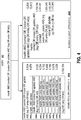
FIGURE 4 is a is a block diagram showing multiple examples of the segmentation of queries for generation of query statistics, according to examples of the present invention described herein; -
FIGURES 5 and6 are screen diagrams showing an illustrative user interface for previewing results of the query, according to examples of the present invention described herein; -
FIGURE 7 is a screen diagram showing an illustrative user interface for accepting refinements to the query results, according to examples of the present invention described herein; -
FIGURE 8 is a screen diagram showing an illustrative user interface for managing multiple saved queries, according to examples of the present invention described herein; -
FIGURE 9 is a flow diagram showing one method for locating relevant content items across multiple disparate content sources, according to examples of the present invention described herein; and -
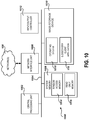
FIGURE 10 is a block diagram showing an illustrative computer hardware and software architecture for a computing system capable of implementing aspects of the examples of the present invention presented herein. - The following detailed description is directed to technologies for locating relevant content items across multiple disparate content sources. While the subject matter described herein is presented in the general context of program modules that execute in conjunction with the execution of an operating system and application programs on a computer system, those skilled in the art will recognize that other implementations may be performed in combination with other types of program modules. Generally, program modules include routines, programs, components, data structures, and other types of structures that perform particular tasks or implement particular abstract data types. Moreover, those skilled in the art will appreciate that the subject matter described herein may be practiced with other computer system configurations, including hand-held devices, multiprocessor systems, microprocessor-based or programmable consumer electronics, minicomputers, mainframe computers, and the like.
- In the following detailed description, references are made to the accompanying drawings that form a part hereof and that show, by way of illustration, specific embodiments or examples. In the accompanying drawings, like numerals represent like elements through the several figures.
-
FIGURE 1 shows anillustrative operating environment 100 including software components for locating relevant content items across multiple disparate content sources, according to examples of the present invention provided herein. Theenvironment 100 includes acomputer system 102. In one example of the present invention, thecomputer system 102 represents one or more Web and/or application servers executing web-based application programs and accessed over anetwork 108 by auser 104 using a Web browser or other client application executing on auser computing device 106. Thenetwork 108 may be a local-area network ("LAN"), a wide-area network ("WAN"), the Internet, or any other networking topology known in the art that connects theuser computing device 106 to thecomputer system 102. The user computing device may comprise a personal computer ("PC"), a desktop workstation, a laptop, a notebook, a tablet, a mobile device, a personal digital assistant ("PDA"), a game console, a set-top box, a consumer electronics device, and the like. Alternatively, thecomputer system 102 may represent a user computing device executing application programs locally, or any combination of server computers and user computing devices. - An
e-discovery client application 110 may execute on thecomputer system 102. Theuser 104 may utilize thee-discovery client application 110 to identify, preserve, and export a set of content items relevant to a business issue or event, such as litigation or other legal matters, for example. In particular, thee-discovery client application 110 may allow theuser 104 to produce targeted search queries to locate relevant content items from a "virtual archive" comprisingcontent items 112 stored inmultiple content sources 114. The e-discoveryclient application 110 may further provide theuser 104 with the ability to preview thecontent items 112 returned by a search, refine the query, and to dispatch a list of therelevant content items 112 for export. Examples of acontent source 114 may include an email mailbox; a document library, list item archive, e.g. a discussion thread or Web log ("blog"), or other content site; a fileshare or fileshare folder; a website; and the like. Examples ofcontent items 112 may include email messages; documents or files; webpages; list items, e.g. entries in a discussion thread, blog posts, or wiki page entries; and the like. According to examples of the present invention, thecontent items 112 may be stored on and/or accessed through multiple,disparate content servers 116A-116N (also referred to herein generally as content servers 116 or content server 116). - In one example of the present invention, the content servers 116 include one or more email servers, such as MICROSOFT® EXCHANGE SERVER email servers from Microsoft Corporation of Redmond, Washington. The content servers 116 may also include one or more content site servers, such as MICROSOFT® SHAREPOINT® servers, also from Microsoft Corporation. The content servers 116 may also include one or more file servers, NAS storage devices, or other file and document storage systems. In other examples of the present invention, the content servers 116 may include document management servers, database servers, Web servers, and other data and content servers known in the art.
- According to other examples of the present invention, each
content server 116A-116N may provide acorresponding search interface 118A-118N (also referred to herein as search interfaces 118 or search interface 118) for searching thecontent items 112 stored on and/or accessed through the content server. For example acontent server 116A comprising an email server may provide a search interface 118 that allowscontent items 112 comprising email messages contained incontent sources 114 comprising email mailboxes to be searched by external applications, such as thee-discovery client application 110 executing on thecomputer system 102. In one example of the present invention, the content server 116 maintains one or more indexes supporting the searching of associatedcontent items 112 through the search interface 118. The search interface 118 may comprise an application programming interface ("API") that defines SOAP-based Web services, Java RMI calls, WINDOWS® communication foundation ("WFC") services, RPC calls, and the like. - The
e-discovery client application 110 may access acase dataset 120 that defines thevarious content sources 114 containing thecontent items 112 comprising the virtual archive of items to be searched. Thecase dataset 120 may represent an XML file, one or more database tables in a database, or any other structured storage mechanism known in the art stored on or accessible to thecomputer system 102. Thecase dataset 120 may be built by theuser 104 utilizing thee-discovery client application 110 or another application based on content sources deemed potentially relevant to the litigation other business issue/event at hand. In one embodiment, thecase dataset 120 may be built by theuser 104 using methods and user interfaces similar to that described herein for locatingrelevant content items 112 in the virtual archive. - The
case dataset 120 may contain one ormore content collections 122, eachcontent collection 122 comprising one ormore source specifications 124A-124N (also referred to herein as source specifications 124 or source specification 124). Each source specification 124 may identify aspecific content source 114 containingcontent items 112 that collectively make up the virtual archive. For example, onesource specification 124A may identify a specific personal mailbox stored on or accessed through anemail content server 116A. Anothersource specification 124B may identify a document library accessed through acontent server 116B hosting a content site. Organizing the source specifications 124 into content collection(s) 122 allows configuration options for the virtual archive to be applied to at a content collection level, such as whethercontent items 112 should be preserved in place or copied to an archive and the like. In addition, filters may be applied at the content collection level to further limit thecontent items 112 from the specifiedcontent sources 114 to be included in the virtual archive. Filters may include date-ranges for email messages sent or documents created or modified, author/sender of documents or email messages, keyword filters, and the like. In other examples of the present invention, filters may further be specified at a content sources level, i.e. per source specification 124, or for the entire virtual archive defined in thecase dataset 120. - The
case dataset 120 may further contain one ormore query specifications 126. Eachquery specification 126 defines a query that is used to search thecontent sources 114 comprising the virtual archive as defined by the source specifications 124 to locaterelevant content items 112. According to examples of the present invention, the users may utilizee-discovery client application 110 to build thequery specifications 126 and save them to thecase dataset 120. Thee-discovery client application 110 may further parse thequery specification 126 and utilize the search interface 118 of each content server 116 identified by the source specifications 124 to execute the query against eachcontent source 114. Statistics regarding the query as executed against eachcontent source 114 may then be aggregated by thee-discovery client application 110 and presented to theuser 104, as will be described in more detail below. In addition, thee-discovery client application 110 may combine data regarding thecontent items 112 located by each content server 116 in order to present a preview of the results to theuser 104 to allow for further refinement of the query. - Finally, the
e-discovery client application 110 may generate a manifest of all therelevant content items 112 located by the query(s) from thevarious content sources 114. The manifest may then be dispatched to an export application that may utilize additional interfaces of each content server 116 to retrieve thecontent items 112 specified in the manifest and save them to a case export file. -
FIGURE 2 shows an illustrative user interface ("UI") 200 for defining a query to search thecontent sources 114 of the virtual archive as defined by the source specifications 124 contained in thecase dataset 120. TheUI 200 may be presented by thee-discovery client application 110 to theuser 104 in abrowser window 202 rendered by a Web browser application executing on theuser computing device 106, for example. - The
UI 200 includes aquery specification section 206 where the parameters defining the query may be specified by theuser 104. For example, thequery specification section 206 may contain a field allowing the user to specify free-text query 208 in any suitable syntax, such as a keyword query language ("KQL") query, which may include keywords for the query along with junction words, grouping parenthesis, and the like. In one example of the present invention, the free-text query 208 may further include advanced query syntax/specifications, such as property restrictions using the "property:value" syntax, for example. According to examples of the present invention, the syntax of the free-text query 208 may be independent of the form or syntax of the query required by search interface 118 of each content server 116 to search the content sources 114. Thee-discovery client application 110 will parse the free-text query 208 and translate the query to the proper form and/or syntax for the content servers 116 when the query is executed. - The
query specification section 206 may also contain fields that allow theuser 104 to specify a from-date value 210 and to-date value 212 defining a date-range parameter for the query. The date-range parameter may be applied to specific properties ofcontent items 112 depending on their type, such as the sent date of email messages, the creation or modification date of documents or files, the posting date for discussion entries, and the like. Thequery specification section 206 may also contain a field that allows theuser 104 to specify an author/sender parameter 214. Similar to the date-range parameter, the author/sender parameter 214 may be applied to specific properties ofcontent items 112 depending on their type, such as the sender of email messages, the creator of documents, the poster of discussion entries, and the like. - The
UI 200 may further include a mechanism for specifying a scope of the query being defined, i.e. thosecontent sources 114 of the virtual archive to which the query is to be applied. For example, theUI 200 may include ascope UI control 216 that, when selected by theuser 104, causes a queryscope specification panel 302 to be displayed in thewindow 202, as shown inFIGURE 3 . The queryscope specification panel 302 may include a list of content item groupings, such ascontent item groupings 304A-304D, corresponding to thecontent collections 122 and/or source specifications 124 contained in thecase dataset 120. In addition, thecontent item groupings 304A-304D may be presented in a hierarchical fashion. For example,content item grouping 304A may correspond to afirst content collection 122 defined in thecase dataset 120, whilecontent item groupings 304B-304D may correspond to source specifications 124 for threecontent sources 114, one for a personal mailbox for "Adam Barr," one for a personal mailbox for "Regina Wilcox," and one for a fileshare located at "\\PUBLIC\ADAM BARR," each of which are included in thefirst content collection 122. - Each content item grouping 304A-304D may further include an
inclusion UI control 308 that allows theuser 104 to specify whether content source(s) 114 identified by the corresponding source specification 124 orcontent collection 122 are to be included in the scope of the query being defined. The queryscope specification panel 302 may also include a select allUI control 310 that allows theuser 104 to specify that allcontent sources 114 identified thecase dataset 120 are to be included in the search. - Returning to
FIGURE 2 , theUI 200 may further include a source querystatistic section 220 that provides theuser 104 withquery statistics 222 regarding the execution of the defined query against thecontent sources 114 identified in the query scope. For example, the user may utilize an executequery UI control 218 to cause thee-discovery client application 110 to parse the query parameters and utilize the search interface 118 of each content server 116 identified by the source specifications 124 to execute a native query against the specifiedcontent sources 114.Query statistics 222 regarding the query as executed against eachcontent source 114 may then be aggregated by thee-discovery client application 110 and presented in the source querystatistic section 220 of theUI 200. - According to one embodiment, the
query statistics 222 may include a list of content source entries, such ascontent source entry 224, corresponding to eachcontent source 114 included in the scope of the query. Thecontent source entry 224 may include an identifier of the correspondingcontent source 114, as shown at 226, a count of the number ofcontent items 112 located in the content source that match the query parameters, as shown at 228, a total size of the content items located, as shown at 230, and the like. Thecontent source entries 224 in the query statistics may be further grouped undergrouping headers 232A-232C. For example, thecontent source entries 224 may be grouped by a type of the correspondingcontent source 114, as shown inFIGURE 2 . Thecontent source entries 224 may also be grouped bycontent collection 122, by content server 116, or by other groups. In one embodiment, the grouping of thecontent source entries 224 corresponding to thecontent sources 114 in the query statistics may be selected by theuser 104 through theUI 200. Thequery statistics 222 may further include sub-totals and totals of the count and/or size of the locatedcontent items 112, a percentage of items located versus total content items in thecontent sources 114, and the like. - The
UI 200 may also include a query segmentationstatistic section 240 that provides theuser 104 withadditional query statistics 222 regarding the execution of the defined query. Theadditional query statistics 222 may further include a count ofcontent items 112 located by the query, as shown at 242, broken down by various phrases, such asquery phrase 244, of the free-text query 208 specified in the query parameters. The segmentation of the query may be performed by thee-discovery client application 110 in a variety of ways. As shown at 404A inFIGURE 4 , in one example of the present invention a query may be divided intoquery phrases 244A-244N at each explicit or implied OR, such asquery phrases query 402. - The segmentation process may be performed iteratively based on explicit groupings in the
query 402 by parenthesis or implied groupings in the query based on operator precedence, syntax, and the like. For example, thequery phrase 244B may be further segmented intoquery phrases 244C-244H using the same process. The resultingquery phrases 244A-244N may be presented in a hierarchical fashion representing the groupings in thequery 402. In another example of the present invention, thequery 402 may be divided intoquery phrases 244 at each explicit or implied AND, as shown at 404B inFIGURE 4 . As shown inFIGURE 2 , the count ofcontent items 112 matching eachquery phrase 244 is further shown in the query segmentationstatistic section 240. The counts may be generated for eachquery phrase 244 by the content servers(s) 116 and/or thee-discovery client application 110 may perform a search operation with eachindividual query phrase 244 in order to aggregate thequery statistics 222 for presentation in the query segmentationstatistic section 240. It will be appreciated that thequery statistics 222 presented in the source querystatistic section 220 and the query segmentationstatistic section 240 may be updated each time the query parameters defined for the query are modified by the user, or the query parameters. -
FIGURE 5 shows anotherillustrative UI 500 for providing the user a preview of thecontent items 112 located by the query defined in thequery specification section 206. As described above, thee-discovery client application 110 may further provide theuser 104 with the ability to preview thecontent items 112 returned by a search and further refine the query in order to locate only relevant content items for export. TheUI 500 may be presented by thee-discovery client application 110 to theuser 104 in abrowser window 202 rendered by a Web browser application executing on theuser computing device 106, for example. Thee-discovery client application 110 may render theUI 500 in addition to or as an alternative to theUI 200 described above in regard toFIGURES 2-4 . - The
UI 500 includes thequery specification section 206 detailing the parameters defined for the query as well as aresult list 502 comprising content item entries, such ascontent item entry 506, containing data regarding each previewedcontent item 112 matching the search parameters. Different result lists 502 may be provided for different types ofcontent sources 114, selectable by the user through a tab metaphor, as shown inFIGURE 5 , or another UI mechanism known in the art. For example, each type category ofcontent source 114 may have acorresponding tab 504A-504C showing aresult list 502 containing data specific tocontent items 112 of that type. For example, forcontent sources 114 comprising email mailboxes, eachcontent item entry 506 in theresult list 502 on a "MAILBOXES"tab 504A may include header information for the corresponding email message, such as a subject, the recipients, the sender, the date sent, and the like. Forcontent sources 114 comprising document libraries or fileshares, eachcontent item entry 506 in theresult list 502 on a "FILESHARES"tab 504C may include digest information for the corresponding document of file, such as a document title or filename, a file type, an author, the creation date, the last modification date, and the like. - In another example of the present invention, the
content item entries 506 in theresult list 502 may contain additional data from the previewedcontent item 112, such as the first few lines of the body of an email message, a thumbnail image of a document or file, and the like. In another example of the present invention, eachtab 504A-504C corresponds to the search mechanism or index that results in surfacingcontent items 112 from thecontent source 114. Therefore aresult list 502 containing email messages from email mailboxes and files from fileshares may be listed under an "ENTERPRISE" tab corresponding to an enterprise-wide search index, while documents from document libraries and list items from blogs or discussion groups may appear in a result list under the "CONTENT SITES"tab 504B corresponding to search indexes from one or more content sites. In further examples of the present invention, eachtab 504A-504C may correspond to a type of content server 116, a specific content server, or other categories or grouping ofcontent items 112,content sources 114, and/or content servers. - The
e-discovery client application 110 may retrieve header or digest information for the top-Nmatching content items 112 of the type corresponding to the selectedtab 504A-505C from the identified content servers 116 based on a default or user-selectable sort order, for example, for display in theresults list 502. The header or digest information may be retrieved from the content servers 116 through the corresponding search interfaces 118 or through another API specific to the content server type. In addition, the data may be retrieved by thee-discovery client application 110 asynchronously as the query is modified by theuser 104 and/or as thequery statistics 222 are updated in theUI 200. In addition, as shown inFIGURE 6 , thee-discovery client application 110 may retrieve the entire contents of acontent item 112 and display it in apreview pane 602 when the correspondingcontent item entry 506 in theresult list 502 is selected by the user, by hovering amouse pointer 604 over the entry, for example. - Referring now to
FIGURE 7 , theUI 500 may further contain aquery refinement section 508 that allows further refinements to the query to be made by theuser 104. Thequery refinement section 508 may contain a list of properties or "filter categories" 704A-704D (referred to herein general as filter categories 704) for which values for refinement of the query may be selected. The filter categories 704 presented to theuser 104 may be specific to the type ofcontent sources 114 for which the previewedcontent items 112 are being presented. For example, as shown inFIGURE 7 , if the email messages are being previewed in theresult list 502 on the "MAILBOXES"tab 504A, thefilter categories 704A-704D may comprise properties of email messages, such as recipient, domain, mail type, attachment type, and the like. Additional and/or alternative filter categories 704 may be shown with result lists 502 onother tabs content items 112 of different types. - If the
user 104 selects a particular filter category, such asfilter category 704A, the user may be further presented with a list of value entries, such asvalue entry 706, for the selected filter category generated from the previewedcontent items 112. In one example of the present invention, eachvalue entry 706 listed may further include query statistics showing a count ofcontent items 112 from the current query having the property matching the corresponding value, as further shown inFIGURE 7 . Theuser 104 may select one or more of the listedvalue entries 706 for the selected filter category 704, and then select a UI control, such as the applypushbutton UI control 710, to apply the selected filter category/value pairs to the query. Applying the selected filter category/value pairs to the query may both update thequery statistics 222 presented in theUI 200 as well as updating the previewedcontent items 112 shown in the results list 502 on the currently selectedtab 504A. In another example of the present invention, the selected filter category/value pairs may be added to the free-text query 208 in the query parameters, uses the "property:value" syntax, for example. Theuser 104 may then re-arrange, group, and change junction operators for the filter category/value pairs in the free-text query 208 to further refine the query. - According to one example of the present invention, only one
filter category 704A-704D may be open and modified at a given time. If theuser 104 is modifying onefilter category 704A and then switches to another before selecting the applypushbutton UI control 710, thee-discovery client application 110 may warn the user that any changes to the filter category will not be saved unless they select the apply pushbutton. In another example of the present invention, theuser 104 is provided with a customfilter UI control 708 that allows the user to specify an unlisted value for one of thefilter categories 704A-704D and/or to specify value(s) for another property or filter category for the content source type beyond the filter categories shown. Selecting the customfilter UI control 708 may turn the UI control into a text box, where the user can enter the additional filter category/value pair in the "property:value" syntax, for example. - The
UI 500 may further include a query savesection 712 that allows the query to be saved as acorresponding query specification 126 in thecase dataset 120, as described above in regard toFIGURE 1 . The user may be presented with a UI control to provide a name or other identifier to associate with thequery specification 126. According to examples of the present invention, all query parameters for the query are saved to thecorresponding query specification 126, including the free-text query 208, the date-range parameter, the author/sender parameter 214, the source specifications 124 and/orcontent collections 122 comprising the query scope, any filter category/value pairs selected in thequery refinement section 508, and the like. In addition, thequery statistics 222 last generated by the content servers 116 may be stored with thecorresponding query specification 126 for later retrieval. In one example of the present invention, theuser 104 may be provided the ability to copy the query parameters from an existingquery specification 126 to create a new query, which may then be modified while the existingquery specification 126 remains intact. -
FIGURE 8 shows anotherillustrative UI 800 for the management of saved queries, according to further examples of the present invention. TheUI 800 may be presented by thee-discovery client application 110 to theuser 104 in abrowser window 202 rendered by a Web browser application executing on theuser computing device 106, for example. TheUI 800 may include aquery list 802 including query entries, such asquery entry 804, for thequery specification 126 saved in the in thecase dataset 120. Eachquery entry 804 may include thefree text query 806 from thequery specification 126, along with thename 808 or other identifier associated with the query when saved by theuser 104. In addition, thequery entry 804 may includequery statistics 222, such as atotal count 810 andtotal size 812 ofcontent items 112 matching the query. Thequery statistics 222 from the last execution of the query may have been stored with thecorresponding query specification 126 when theuser 104 saved the query, as described above in regard toFIGURE 7 . - According to examples of the present invention, each
query entry 804 may further include aquery selection control 814 that allows theuser 104 to select one or more queries in thequery list 802. Theuser 104 may then select anexport UI control 816 that will cause thee-discovery client application 110 to generate a manifest of all therelevant content items 112 from allcontent sources 114 across all content servers 116 that match one or more of the selected query(s) and dispatch the manifest to an export application that retrieves thecontent items 112 specified and saves them to a case export file, as described above in regard toFIGURE 1 . - Referring now to
FIGURE 9 , additional details will be provided regarding the example of the present invention presented herein. It should be appreciated that the logical operations described with respect toFIGURE 9 are implemented (1) as a sequence of computer implemented acts or program modules running on a computing system and/or (2) as interconnected machine logic circuits or circuit modules within the computing system. The implementation is a matter of choice dependent on the performance and other requirements of the computing system. Accordingly, the logical operations described herein are referred to variously as operations, structural devices, acts, or modules. These operations, structural devices, acts, and modules may be implemented in software, in firmware, in special purpose digital logic, and any combination thereof. It should also be appreciated that more or fewer operations may be performed than shown in the figures and described herein. The operations may also be performed in a different order than described. -
FIGURE 9 illustrates oneroutine 900 for locating relevant content items across multiple disparate content sources, according to one example of the present invention. The routine 900 may be performed by thee-discovery client application 110 executing on thecomputer system 102, for example. It will be appreciated that the routine 900 may also be performed by other modules or components executing on thecomputer system 102, or by any combination of modules, components, and computing devices. The routine 900 begins atoperation 902, where thee-discovery client application 110 presents a UI to auser 104 for defining a query to search thecontent sources 114 of the virtual archive as defined by the source specifications 124 contained in thecase dataset 120. According to examples of the present invention, the source specifications 124 may identifycontent sources 114 on multiple, disparate content servers 116, such as email mailboxes on an email server, a document library on a content site server, and/or a fileshare on a file server. - The
e-discovery client application 110 may present theUI 200 described above in regard toFIGURES 2 and3 to theuser 104 for defining the query. TheUI 200 may be presented by thee-discovery client application 110 to theuser 104 in abrowser window 202 rendered by a Web browser application executing on theuser computing device 106, for example. TheUI 200 may include aquery specification section 206 that allows the user to specify parameters defining the query, such as a free-text query 208, a date-range parameter, an author/sender parameter 214, and the like. TheUI 200 may further include a queryscope specification panel 302 that allows the user to specify thecontent collections 122 and/or source specifications 124 contained in thecase dataset 120 to which the query is to be applied. - The routine 900 proceeds from
operation 902 tooperation 904, where thee-discovery client application 110 receives the query parameters and/or query scope from theuser 104 through theUI 200, as described above. In another example of the present invention, theuser 104 may load the query parameters and query scope from aquery specification 126 previously saved to thecase dataset 120. Fromoperation 904, the routine 900 proceeds tooperation 906, where thee-discovery client application 110 executes a native search of each content server 116 specified in the source specifications 124 comprising the query scope. As described above, thee-discovery client application 110 may parse the query parameters and utilize the search interface 118 of each content server 116 identified by the source specifications 124 to execute a native query against the specifiedcontent sources 114. According to one example of the present invention, thee-discovery client application 110 may provide theuser 104 with a user interface to view and/or modify the native queries generated for the various content servers 116. - The routine 900 proceeds from
operation 906 tooperation 908 where thee-discovery client application 110 receivesquery statistics 222 regarding the query as executed against eachcontent source 114 from the content servers 116. Thee-discovery client application 110 may receive raw statistics broken out by one or more of thecontent source 114,query phrases 244 segmented from the free-text query 208, and the like. It will be appreciated that thequery statistics 222 received from the content servers 116 may include a variety of information at different levels, and that different types of content servers 116 may return different levels of query statistics from the query. In one example of the present invention, thee-discovery client application 110 receives header or digest information regarding thecontent items 112 in thecontent sources 114 that match the query, and the e-discovery client application generates thequery statistics 222 from this information. - At
operation 910, thee-discovery client application 110 aggregates thequery statistics 222 regarding thevarious content sources 114 received from the content servers 116 and presents the aggregated statistics to theuser 104. Thee-discovery client application 110 may presentquery statistics 222 broken out by eachcontent source 114 included in the scope of the query, as shown in the source querystatistic section 220 of theUI 200 described above in regard toFIGURE 2 . Thequery statistics 222 may further include sub-totals and totals of the count and/or size of the locatedcontent items 112, a percentage of items located versus total content items in thecontent sources 114, and the like. Thee-discovery client application 110 may further presentquery statistics 222 broken out by various phrases of the query, as further shown in the query segmentationstatistic section 240 of theUI 200 described above in regard toFIGURES 2 and4 . - From
operation 910, the routine 900 proceeds tooperation 912, where thee-discovery client application 110 retrieves data regarding thecontent items 112 in thevarious content sources 114 matching the query parameters. As described above in regard toFIGURE 5 , thee-discovery client application 110 may retrieve header or digest information for a number of matchingcontent items 112 from the identified content servers 116 based on a default or user-selectable sort order, for example. The header or digest information may be retrieved from the content servers 116 through the corresponding search interfaces 118 or through another API specific to the content server type. - The routine 900 proceeds from
operation 912 tooperation 914, where thee-discovery client application 110 presents the retrieved header or digest information to theuser 104 as a preview of matchingcontent items 112. For example, thee-discovery client application 110 may present theUI 500 described above in regard toFIGURES 5 and6 that allows the user to preview matchingcontent items 112 by content source type. In one example of the present invention, the previewedcontent items 112 may be de-duplicated at each content server 116 forcontent sources 114 served by that content server or similar content servers. In another example of the present invention, thee-discovery client application 110 may perform additional or alternative de-duplication of matchingcontent items 112 acrosscontent sources 114 and content servers 116 before presenting thequery statistics 222 and/or previewedcontent items 112 to theuser 104. - From
operation 914, the routine 900 proceeds tooperation 916, where thee-discovery client application 110 may receive a change or refinement to the query. For example theuser 104 may change one or more of the query parameters in thequery specification section 206 of theUI 200 or the query scope in the queryscope specification panel 302 as described above in regard toFIGURES 2 and3 . Theuser 104 may additionally or alternatively select or specify one or more filter category/value pairs from thequery refinement section 508 of theUI 500 described above in regard toFIGURE 7 . If a change or refinement to the query is received, the routine 900 returns tooperation 906, where thee-discovery client application 110 re-executes the modified query against each content server 116 and collects and presents thequery statistics 222 and previewedcontent items 112 to theuser 104, as described above. If no changes or refinements to the query is received by thee-discovery client application 110 atoperation 916, then the routine 900 ends. -
FIGURE 10 shows an example computer architecture for acomputer 1000 capable of executing the software components described herein for locating relevant content items across multiple disparate content sources, in the manner presented above. The computer architecture shown inFIGURE 10 illustrates a server computer, a conventional desktop computer, laptop, notebook, tablet, PDA, wireless phone, or other computing device, and may be utilized to execute any aspects of the software components presented herein described as executing on thecomputer system 102, theuser computing device 106, and/or other computing device. - The computer architecture shown in
FIGURE 10 includes one or more central processing units ("CPUs") 1002. TheCPUs 1002 may be standard processors that perform the arithmetic and logical operations necessary for the operation of thecomputer 1000. TheCPUs 1002 perform the necessary operations by transitioning from one discrete, physical state to the next through the manipulation of switching elements that differentiate between and change these states. Switching elements may generally include electronic circuits that maintain one of two binary states, such as flip-flops, and electronic circuits that provide an output state based on the logical combination of the states of one or more other switching elements, such as logic gates. These basic switching elements may be combined to create more complex logic circuits, including registers, adders-subtractors, arithmetic logic units, floating-point units, and other logic elements. - The computer architecture further includes a
system memory 1008, including a random access memory ("RAM") 1014 and a read-only memory 1016 ("ROM"), and asystem bus 1004 that couples the memory to theCPUs 1002. A basic input/output system containing the basic routines that help to transfer information between elements within thecomputer 1000, such as during startup, is stored in theROM 1016. Thecomputer 1000 also includes amass storage device 1010 for storing anoperating system 1018, application programs, and other program modules, which are described in greater detail herein. - The
mass storage device 1010 is connected to theCPUs 1002 through a mass storage controller (not shown) connected to thebus 1004. Themass storage device 1010 provides non-volatile storage for thecomputer 1000. Thecomputer 1000 may store information on themass storage device 1010 by transforming the physical state of the device to reflect the information being stored. The specific transformation of physical state may depend on various factors, in different implementations of this description. Examples of such factors may include, but are not limited to, the technology used to implement the mass storage device, whether the mass storage device is characterized as primary or secondary storage, and the like. - For example, the
computer 1000 may store information to themass storage device 1010 by issuing instructions to the mass storage controller to alter the magnetic characteristics of a particular location within a magnetic disk drive, the reflective or refractive characteristics of a particular location in an optical storage device, or the electrical characteristics of a particular capacitor, transistor, or other discrete component in a solid-state storage device. Other transformations of physical media are possible without departing from the scope and spirit of the present description. Thecomputer 1000 may further read information from themass storage device 1010 by detecting the physical states or characteristics of one or more particular locations within the mass storage device. - As mentioned briefly above, a number of program modules and data files may be stored in the
mass storage device 1010 andRAM 1014 of thecomputer 1000, including anoperating system 1018 suitable for controlling the operation of a computer. Themass storage device 1010 andRAM 1014 may also store one or more program modules. In particular, themass storage device 1010 and theRAM 1014 may store thee-discovery client application 110, which was described in detail above in regard toFIGURE 1 . Themass storage device 1010 and theRAM 1014 may also store other types of program modules or data. - In addition to the
mass storage device 1010 described above, thecomputer 1000 may have access to other computer-readable media to store and retrieve information, such as program modules, data structures, or other data. It should be appreciated by those skilled in the art that computer-readable media may be any available media that can be accessed by thecomputer 1000, including computer-readable storage media and communications media. Communications media includes transitory signals. Computer-readable storage media includes volatile and non-volatile, removable and non-removable media implemented in any method or technology for the storage of information, such as computer-readable instructions, data structures, program modules, or other data. For example, computer-readable storage media includes, but is not limited to, RAM, ROM, EPROM, EEPROM, flash memory or other solid state memory technology, CD-ROM, digital versatile disks (DVD), HD-DVD, BLU-RAY, or other optical storage, magnetic cassettes, magnetic tape, magnetic disk storage or other magnetic storage devices, or any other medium that can be used to store the desired information and that can be accessed by thecomputer 1000. - The computer-readable storage medium may be encoded with computer-executable instructions that, when loaded into the
computer 1000, may transform the computer system from a general-purpose computing system into a special-purpose computer capable of implementing the embodiments described herein. The computer-executable instructions may be encoded on the computer-readable storage medium by altering the electrical, optical, magnetic, or other physical characteristics of particular locations within the media. These computer-executable instructions transform thecomputer 1000 by specifying how theCPUs 1002 transition between states, as described above. According to one example of the present invention, thecomputer 1000 may have access to computer-readable storage media storing computer-executable instructions that, when executed by the computer, perform the routine 900 for locating relevant content items across multiple disparate content sources described above in regard toFIGURE 9 . - According to various examples of the present invention, the
computer 1000 may operate in a networked environment using logical connections to remote computing devices and computer systems through one ormore networks 108, such as a LAN, a WAN, the Internet, or a network of any topology known in the art. Thecomputer 1000 may connect to the network 1020 through anetwork interface unit 1006 connected to thebus 1004. It should be appreciated that thenetwork interface unit 1006 may also be utilized to connect to other types of networks and remote computer systems. - The
computer 1000 may also include an input/output controller 1012 for receiving and processing input from one or more input devices, including a keyboard, a mouse, a touchpad, a touch-sensitive display, an electronic stylus, or other type of input device. Similarly, the input/output controller 1012 may provide output to a display device, such as a computer monitor, a flat-panel display, a digital projector, a printer, a plotter, or other type of output device. It will be appreciated that thecomputer 1000 may not include all of the components shown inFIGURE 10 , may include other components that are not explicitly shown inFIGURE 10 , or may utilize an architecture completely different than that shown inFIGURE 10 . - Based on the foregoing, it should be appreciated that technologies for locating relevant content items across multiple disparate content sources are provided herein. Although the subject matter presented herein has been described in language specific to computer structural features, methodological acts, and computer-readable storage media, it is to be understood that the invention defined in the appended claims is not necessarily limited to the specific features, acts, or media described herein. Rather, the specific features, acts, and mediums are disclosed as example forms of implementing the claims.
- The subject matter described above is provided by way of illustration only and should not be construed as limiting. Various modifications and changes may be made to the subject matter described herein without following the example embodiments and applications illustrated and described, and without departing from the scope of the present invention, which is set forth in the following claims.
Claims (10)
- A computer-implemented method for locating content items in a plurality of content sources across different content servers, the method comprising:presenting a user interface (200) for defining a query for searching the plurality of content sources;receiving from a user query parameters that define a query associated with a source specification (124) contained in a case dataset (120), the case data set defining the plurality of content sources (114), the plurality of content sources (114) containing content items (112) to be searched, and the source specification (124) identifying a specific content source from the plurality of content sources (114);saving the query as a query specification (126) in the case dataset (120);executing the query of the saved query specification (126) including executing the query against the searchable content items (112) in the specific content source (114) that is identified within the saved query specification (126) by the source specification (124) associated with the query;receiving data regarding content items (112, 228) located through execution of the query;aggregating query statistics (222) based on the received data; andpresenting the query statistics to the user.
- The computer-implemented method of claim 1, wherein query statistics are presented regarding each content source defined by the source specification associated with the query.
- The computer-implemented method of claim 2, wherein query statistics regarding each content source is grouped together by content source type.
- The computer-implemented method of claim 1, further comprising segmenting the query, wherein query statistics are presented regarding each of a plurality of query phrases segmented from the query.
- The computer-implemented method of claim 4, wherein the plurality of query phrases are segmented from the query at each explicit or implied OR junction.
- The computer-implemented method of claim 1, further comprising:
presenting a preview of one or more content items matching the query to the user from the received data, wherein the preview of the one or more content items is presented for content items from content sources of a same type. - The computer-implemented method of claim 1, further comprising:receiving from the user a modification of the query parameters of the saved query;executing the modified query;receiving data regarding the content items located through application of the modified query against searchable content items; andupon receiving the data, updating the query statistics presented to the user.
- The computer-implemented method of claim 1, further comprising:presenting a filter category along with one or more values for the filter category to the user based on the received data;receiving a selection of one of the one or more values for the filter category from the user;modifying the query parameters to include a filter category/value pair based on the selection;saving the modified query as a retrievable modified query specification;retrieving the modified query specification and executing the modified query specification;receiving data regarding the content items located through execution of the modified query; andupon receiving the data, updating the query statistics presented to the user.
- The computer-implemented method of claim 1, wherein the specific content source identified by a first source specification comprises an email server and the specific content source identified by a second source specification comprises a content site server.
- A system for locating content items in a plurality of content sources across different content servers, the system comprising:one or more processors (1002);a memory (1008) coupled to the one or more processors andan e-discovery client application (110) residing in the memory and comprising computer-executable instructions that, when executed by the one or more processors, cause the system to perform the steps of at least one of the methods of claims 1 to 9.
Applications Claiming Priority (2)
| Application Number | Priority Date | Filing Date | Title |
|---|---|---|---|
| US13/295,108 US9817898B2 (en) | 2011-11-14 | 2011-11-14 | Locating relevant content items across multiple disparate content sources |
| PCT/US2012/064252 WO2013074378A2 (en) | 2011-11-14 | 2012-11-09 | Locating relevant content items across multiple disparate content sources |
Publications (3)
| Publication Number | Publication Date |
|---|---|
| EP2780838A2 EP2780838A2 (en) | 2014-09-24 |
| EP2780838A4 EP2780838A4 (en) | 2015-10-14 |
| EP2780838B1 true EP2780838B1 (en) | 2019-08-07 |
Family
ID=47928142
Family Applications (1)
| Application Number | Title | Priority Date | Filing Date |
|---|---|---|---|
| EP12848846.7A Active EP2780838B1 (en) | 2011-11-14 | 2012-11-09 | Locating relevant content items across multiple disparate content sources |
Country Status (4)
| Country | Link |
|---|---|
| US (2) | US9817898B2 (en) |
| EP (1) | EP2780838B1 (en) |
| CN (1) | CN102999574A (en) |
| WO (1) | WO2013074378A2 (en) |
Families Citing this family (25)
| Publication number | Priority date | Publication date | Assignee | Title |
|---|---|---|---|---|
| US7933859B1 (en) | 2010-05-25 | 2011-04-26 | Recommind, Inc. | Systems and methods for predictive coding |
| US9817898B2 (en) * | 2011-11-14 | 2017-11-14 | Microsoft Technology Licensing, Llc | Locating relevant content items across multiple disparate content sources |
| JP5966974B2 (en) * | 2013-03-05 | 2016-08-10 | 富士ゼロックス株式会社 | Relay device, client device, system, and program |
| JP2014170491A (en) * | 2013-03-05 | 2014-09-18 | Fuji Xerox Co Ltd | Repeater, system, and program |
| US10949459B2 (en) * | 2013-06-13 | 2021-03-16 | John F. Groom | Alternative search methodology |
| US9219776B2 (en) | 2013-06-24 | 2015-12-22 | Microsoft Technology Licensing, Llc | Aggregating content from different content sources at a cloud service |
| US9336332B2 (en) * | 2013-08-28 | 2016-05-10 | Clipcard Inc. | Programmatic data discovery platforms for computing applications |
| US9485543B2 (en) | 2013-11-12 | 2016-11-01 | Google Inc. | Methods, systems, and media for presenting suggestions of media content |
| US9552395B2 (en) * | 2013-11-13 | 2017-01-24 | Google Inc. | Methods, systems, and media for presenting recommended media content items |
| US9846718B1 (en) * | 2014-03-31 | 2017-12-19 | EMC IP Holding Company LLC | Deduplicating sets of data blocks |
| US10229208B2 (en) * | 2014-07-28 | 2019-03-12 | Facebook, Inc. | Optimization of query execution |
| US10430454B2 (en) * | 2014-12-23 | 2019-10-01 | Veritas Technologies Llc | Systems and methods for culling search results in electronic discovery |
| US10096074B2 (en) | 2014-12-23 | 2018-10-09 | Veritas Technologies Llc | Systems and methods for expanding relevant search results in electronic discovery |
| US10055301B2 (en) * | 2015-06-15 | 2018-08-21 | Open Text Sa Ulc | Systems and methods for content server make disk image operation |
| JP7028858B2 (en) * | 2016-08-09 | 2022-03-02 | リップコード インコーポレイテッド | Systems and methods for contextual search of electronic records |
| US10482096B2 (en) * | 2017-02-13 | 2019-11-19 | Microsoft Technology Licensing, Llc | Distributed index searching in computing systems |
| US11232068B2 (en) | 2017-03-27 | 2022-01-25 | Microsoft Technology Licensing, Llc | Unified document retention management system |
| US10503908B1 (en) * | 2017-04-04 | 2019-12-10 | Kenna Security, Inc. | Vulnerability assessment based on machine inference |
| US10409634B2 (en) * | 2017-04-19 | 2019-09-10 | Microsoft Technology Licensing, Llc | Surfacing task-related applications in a heterogeneous tab environment |
| CN107196919B (en) * | 2017-04-27 | 2021-01-01 | 北京小米移动软件有限公司 | A method and apparatus for matching data |
| US10902066B2 (en) | 2018-07-23 | 2021-01-26 | Open Text Holdings, Inc. | Electronic discovery using predictive filtering |
| US11294925B2 (en) * | 2018-09-24 | 2022-04-05 | Jpmorgan Chase Bank, N.A. | Methods for implementing and using a database actuator |
| US11366814B2 (en) | 2019-06-12 | 2022-06-21 | Elsevier, Inc. | Systems and methods for federated search with dynamic selection and distributed relevance |
| CN113779374B (en) * | 2021-02-24 | 2023-09-26 | 北京京东振世信息技术有限公司 | Page query management method and device |
| US12461956B2 (en) * | 2023-12-15 | 2025-11-04 | Microsoft Technology Licensing, Llc | Telecommunications network management |
Citations (1)
| Publication number | Priority date | Publication date | Assignee | Title |
|---|---|---|---|---|
| US20100017366A1 (en) * | 2008-07-18 | 2010-01-21 | Robertson Steven L | System and Method for Performing Contextual Searches Across Content Sources |
Family Cites Families (74)
| Publication number | Priority date | Publication date | Assignee | Title |
|---|---|---|---|---|
| US5826260A (en) | 1995-12-11 | 1998-10-20 | International Business Machines Corporation | Information retrieval system and method for displaying and ordering information based on query element contribution |
| US6122666A (en) | 1998-02-23 | 2000-09-19 | International Business Machines Corporation | Method for collaborative transformation and caching of web objects in a proxy network |
| US6643694B1 (en) | 2000-02-09 | 2003-11-04 | Michael A. Chernin | System and method for integrating a proxy server, an e-mail server, and a DHCP server, with a graphic interface |
| US6738760B1 (en) | 2000-03-23 | 2004-05-18 | Albert Krachman | Method and system for providing electronic discovery on computer databases and archives using artificial intelligence to recover legally relevant data |
| AU6108901A (en) | 2000-04-27 | 2001-11-07 | Webfeat Inc | Method and system for retrieving search results from multiple disparate databases |
| US7451136B2 (en) | 2000-10-11 | 2008-11-11 | Microsoft Corporation | System and method for searching multiple disparate search engines |
| US7043489B1 (en) | 2001-02-23 | 2006-05-09 | Kelley Hubert C | Litigation-related document repository |
| TW586069B (en) | 2001-03-01 | 2004-05-01 | Ibm | A method and a bridge for coupling a server and a client of different object types |
| US20020129145A1 (en) | 2001-03-06 | 2002-09-12 | Accelerate Software Inc. | Method and system for real-time querying, retrieval and integration of data from database over a computer network |
| US6745197B2 (en) | 2001-03-19 | 2004-06-01 | Preston Gates Ellis Llp | System and method for efficiently processing messages stored in multiple message stores |
| US8266124B2 (en) | 2001-12-18 | 2012-09-11 | Caldvor Acquisitions Ltd., Llc | Integrated asset management |
| US20030131241A1 (en) | 2002-01-04 | 2003-07-10 | Gladney Henry M. | Trustworthy digital document interchange and preservation |
| US20030130953A1 (en) | 2002-01-09 | 2003-07-10 | Innerpresence Networks, Inc. | Systems and methods for monitoring the presence of assets within a system and enforcing policies governing assets |
| ITMO20020006A1 (en) | 2002-01-10 | 2003-07-10 | Dream Team Srl | METHOD AND SYSTEM FOR USER IDENTIFICATION AND AUTHENTICATION OF DIGITAL DOCUMENTS ON TELEMATIC NETWORKS |
| AU2003223238A1 (en) | 2002-03-11 | 2003-09-29 | Visionshare, Inc. | Method and system for peer-to-peer secure communication |
| US20040167979A1 (en) | 2003-02-20 | 2004-08-26 | International Business Machines Corporation | Automatic configuration of metric components in a service level management system |
| US7162473B2 (en) | 2003-06-26 | 2007-01-09 | Microsoft Corporation | Method and system for usage analyzer that determines user accessed sources, indexes data subsets, and associated metadata, processing implicit queries based on potential interest to users |
| EP1494394A1 (en) | 2003-06-30 | 2005-01-05 | Sony International (Europe) GmbH | Distance-aware service mechanism for determining the availability of remote services in wireless personal area networks |
| US7523220B2 (en) | 2003-09-17 | 2009-04-21 | Microsoft Corporation | Metaspace: communication middleware for partially connected mobile ad hoc networks |
| US20050149496A1 (en) | 2003-12-22 | 2005-07-07 | Verity, Inc. | System and method for dynamic context-sensitive federated search of multiple information repositories |
| US7437353B2 (en) | 2003-12-31 | 2008-10-14 | Google Inc. | Systems and methods for unification of search results |
| US7376644B2 (en) | 2004-02-02 | 2008-05-20 | Ram Consulting Inc. | Knowledge portal for accessing, analyzing and standardizing data |
| US20060048216A1 (en) | 2004-07-21 | 2006-03-02 | International Business Machines Corporation | Method and system for enabling federated user lifecycle management |
| US7734606B2 (en) | 2004-09-15 | 2010-06-08 | Graematter, Inc. | System and method for regulatory intelligence |
| US20080077570A1 (en) | 2004-10-25 | 2008-03-27 | Infovell, Inc. | Full Text Query and Search Systems and Method of Use |
| US7984057B2 (en) | 2005-05-10 | 2011-07-19 | Microsoft Corporation | Query composition incorporating by reference a query definition |
| US7984039B2 (en) | 2005-07-14 | 2011-07-19 | International Business Machines Corporation | Merging of results in distributed information retrieval |
| US20070050431A1 (en) | 2005-08-26 | 2007-03-01 | Microsoft Corporation | Deploying content between networks |
| US20070073638A1 (en) | 2005-09-26 | 2007-03-29 | Bea Systems, Inc. | System and method for using soft links to managed content |
| WO2007044709A2 (en) | 2005-10-06 | 2007-04-19 | Guidance Software, Inc. | Electronic discovery system and method |
| US20070118529A1 (en) | 2005-11-18 | 2007-05-24 | Howell James A Jr | Content download experience |
| US7752204B2 (en) | 2005-11-18 | 2010-07-06 | The Boeing Company | Query-based text summarization |
| US8386469B2 (en) | 2006-02-16 | 2013-02-26 | Mobile Content Networks, Inc. | Method and system for determining relevant sources, querying and merging results from multiple content sources |
| US8214394B2 (en) | 2006-03-01 | 2012-07-03 | Oracle International Corporation | Propagating user identities in a secure federated search system |
| JP2009541839A (en) | 2006-06-23 | 2009-11-26 | コーニンクレッカ フィリップス エレクトロニクス エヌ ヴィ | Representation of digital content metadata |
| EP1901526B1 (en) | 2006-09-13 | 2010-06-09 | Alcatel Lucent | Concatenation of web services |
| US7792789B2 (en) | 2006-10-17 | 2010-09-07 | Commvault Systems, Inc. | Method and system for collaborative searching |
| JP4940898B2 (en) | 2006-11-02 | 2012-05-30 | 富士通株式会社 | Digital content search program, digital content search device, and digital content search method |
| US7866543B2 (en) | 2006-11-21 | 2011-01-11 | International Business Machines Corporation | Security and privacy enforcement for discovery services in a network of electronic product code information repositories |
| EP2115638A1 (en) | 2006-12-29 | 2009-11-11 | Thomson Reuters Global Resources | Information-retrieval systems, methods, and software with concept-based searching and ranking |
| US20080222296A1 (en) | 2007-03-07 | 2008-09-11 | Lisa Ellen Lippincott | Distributed server architecture |
| US7844609B2 (en) | 2007-03-16 | 2010-11-30 | Expanse Networks, Inc. | Attribute combination discovery |
| US20080288509A1 (en) | 2007-05-16 | 2008-11-20 | Google Inc. | Duplicate content search |
| US7904470B2 (en) | 2007-06-13 | 2011-03-08 | Sap Ag | Discovery service for electronic data environment |
| EP2212816A1 (en) | 2007-10-01 | 2010-08-04 | Microsoft Corporation | Integrated genomic system |
| US8396838B2 (en) | 2007-10-17 | 2013-03-12 | Commvault Systems, Inc. | Legal compliance, electronic discovery and electronic document handling of online and offline copies of data |
| US8145684B2 (en) | 2007-11-28 | 2012-03-27 | International Business Machines Corporation | System and computer program product for assembly of personalized enterprise information integrators over conjunctive queries |
| US8276152B2 (en) | 2007-12-05 | 2012-09-25 | Microsoft Corporation | Validation of the change orders to an I T environment |
| US20090150906A1 (en) | 2007-12-07 | 2009-06-11 | Sap Ag | Automatic electronic discovery of heterogeneous objects for litigation |
| US20090150168A1 (en) * | 2007-12-07 | 2009-06-11 | Sap Ag | Litigation document management |
| CN101187888A (en) | 2007-12-11 | 2008-05-28 | 浪潮电子信息产业股份有限公司 | A method of duplicating database data in heterogeneous environment |
| US8572043B2 (en) | 2007-12-20 | 2013-10-29 | International Business Machines Corporation | Method and system for storage of unstructured data for electronic discovery in external data stores |
| US9411861B2 (en) | 2007-12-21 | 2016-08-09 | International Business Machines Corporation | Multiple result sets generated from single pass through a dataspace |
| US8140494B2 (en) | 2008-01-21 | 2012-03-20 | International Business Machines Corporation | Providing collection transparency information to an end user to achieve a guaranteed quality document search and production in electronic data discovery |
| US8055665B2 (en) | 2008-03-13 | 2011-11-08 | International Business Machines Corporation | Sorted search in a distributed directory environment using a proxy server |
| TWI476610B (en) | 2008-04-29 | 2015-03-11 | Maxiscale Inc | Peer-to-peer redundant file server system and methods |
| US7930306B2 (en) | 2008-04-30 | 2011-04-19 | Msc Intellectual Properties B.V. | System and method for near and exact de-duplication of documents |
| US20100235354A1 (en) | 2009-03-12 | 2010-09-16 | International Business Machines Corporation | Collaborative search engine system |
| US8239399B2 (en) * | 2009-05-14 | 2012-08-07 | Microsoft Corporation | Providing tools for navigational search query results |
| CN101576977A (en) | 2009-06-01 | 2009-11-11 | 中国政法大学 | Evidence management system |
| US8200642B2 (en) | 2009-06-23 | 2012-06-12 | Maze Gary R | System and method for managing electronic documents in a litigation context |
| US8285681B2 (en) | 2009-06-30 | 2012-10-09 | Commvault Systems, Inc. | Data object store and server for a cloud storage environment, including data deduplication and data management across multiple cloud storage sites |
| RU2420800C2 (en) | 2009-06-30 | 2011-06-10 | Государственное образовательное учреждение высшего профессионального образования Академия Федеральной службы охраны Российской Федерации (Академия ФСО России) | Method of searching for electronic documents similar on semantic content, stored on data storage devices |
| US20110047166A1 (en) | 2009-08-20 | 2011-02-24 | Innography, Inc. | System and methods of relating trademarks and patent documents |
| US20110082848A1 (en) * | 2009-10-05 | 2011-04-07 | Lev Goldentouch | Systems, methods and computer program products for search results management |
| CN101789021A (en) | 2010-02-24 | 2010-07-28 | 浪潮通信信息系统有限公司 | Universal configurable database data migration method |
| WO2011109558A1 (en) | 2010-03-02 | 2011-09-09 | Renew Data Corp. | System and method for creating a de-duplicated data set and preserving its metadata |
| US9361350B2 (en) | 2010-03-26 | 2016-06-07 | Salesforce.Com, Inc. | Data transfer between first and second databases |
| US8346780B2 (en) | 2010-04-16 | 2013-01-01 | Hitachi, Ltd. | Integrated search server and integrated search method |
| CN101819592A (en) | 2010-04-19 | 2010-09-01 | 山东高效能服务器和存储研究院 | Universal mass historical data processing method for crossing operating system |
| US20110320494A1 (en) | 2010-06-28 | 2011-12-29 | Martin Fisher | Litigation document management linking unstructured documents with business objects |
| KR101064981B1 (en) | 2010-10-07 | 2011-09-15 | 한국과학기술정보연구원 | Apparatus and method for providing resource retrieval information showing correlations among research subjects using knowledge base that integrates multiple resources |
| US8515962B2 (en) | 2011-03-30 | 2013-08-20 | Sap Ag | Phased importing of objects |
| US9817898B2 (en) * | 2011-11-14 | 2017-11-14 | Microsoft Technology Licensing, Llc | Locating relevant content items across multiple disparate content sources |
-
2011
- 2011-11-14 US US13/295,108 patent/US9817898B2/en not_active Expired - Fee Related
-
2012
- 2012-11-09 EP EP12848846.7A patent/EP2780838B1/en active Active
- 2012-11-09 WO PCT/US2012/064252 patent/WO2013074378A2/en not_active Ceased
- 2012-11-13 CN CN2012104523061A patent/CN102999574A/en active Pending
-
2016
- 2016-07-01 US US15/201,124 patent/US9996618B2/en active Active
Patent Citations (1)
| Publication number | Priority date | Publication date | Assignee | Title |
|---|---|---|---|---|
| US20100017366A1 (en) * | 2008-07-18 | 2010-01-21 | Robertson Steven L | System and Method for Performing Contextual Searches Across Content Sources |
Also Published As
| Publication number | Publication date |
|---|---|
| WO2013074378A2 (en) | 2013-05-23 |
| US9996618B2 (en) | 2018-06-12 |
| US9817898B2 (en) | 2017-11-14 |
| EP2780838A2 (en) | 2014-09-24 |
| CN102999574A (en) | 2013-03-27 |
| US20130124552A1 (en) | 2013-05-16 |
| EP2780838A4 (en) | 2015-10-14 |
| US20170032039A1 (en) | 2017-02-02 |
| WO2013074378A3 (en) | 2013-07-18 |
Similar Documents
| Publication | Publication Date | Title |
|---|---|---|
| US9996618B2 (en) | Locating relevant content items across multiple disparate content sources | |
| US20130124562A1 (en) | Export of content items from multiple, disparate content sources | |
| US11853334B2 (en) | Systems and methods for generating and using aggregated search indices and non-aggregated value storage | |
| US7996380B2 (en) | Method and apparatus for processing metadata | |
| US8645349B2 (en) | Indexing structures using synthetic document summaries | |
| US8429740B2 (en) | Search result presentation | |
| US10311062B2 (en) | Filtering structured data using inexact, culture-dependent terms | |
| EP2215568B1 (en) | Presenting and navigating content having varying properties | |
| US9330178B2 (en) | Search engine | |
| US10430448B2 (en) | Computer-implemented method of and system for searching an inverted index having a plurality of posting lists | |
| AU2014318151B2 (en) | Smart search refinement | |
| WO2016054196A1 (en) | Document curation system | |
| US20140359488A1 (en) | Centralized Management of Link Data for Multiple Applications, Computers and Resources, through Operating Systems and Networked Storage Services | |
| US7774345B2 (en) | Lightweight list collection | |
| US12393406B2 (en) | Entity search engine powered by copy-detection | |
| KR101441219B1 (en) | Automatic association of informational entities | |
| US20130006979A1 (en) | Enhancing cluster analysis using document metadata | |
| US20130297576A1 (en) | Efficient in-place preservation of content across content sources | |
| US8875007B2 (en) | Creating and modifying an image wiki page | |
| US20260030220A1 (en) | Using generative models for filesystem management | |
| CN121166625A (en) | Book management system and method based on intelligent machine tool |
Legal Events
| Date | Code | Title | Description |
|---|---|---|---|
| PUAI | Public reference made under article 153(3) epc to a published international application that has entered the european phase |
Free format text: ORIGINAL CODE: 0009012 |
|
| 17P | Request for examination filed |
Effective date: 20140416 |
|
| AK | Designated contracting states |
Kind code of ref document: A2 Designated state(s): AL AT BE BG CH CY CZ DE DK EE ES FI FR GB GR HR HU IE IS IT LI LT LU LV MC MK MT NL NO PL PT RO RS SE SI SK SM TR |
|
| DAX | Request for extension of the european patent (deleted) | ||
| RAP1 | Party data changed (applicant data changed or rights of an application transferred) |
Owner name: MICROSOFT TECHNOLOGY LICENSING, LLC |
|
| A4 | Supplementary search report drawn up and despatched |
Effective date: 20150910 |
|
| RIC1 | Information provided on ipc code assigned before grant |
Ipc: G06F 15/16 20060101ALI20150904BHEP Ipc: G06Q 50/10 20120101ALI20150904BHEP Ipc: G06F 17/30 20060101AFI20150904BHEP |
|
| STAA | Information on the status of an ep patent application or granted ep patent |
Free format text: STATUS: EXAMINATION IS IN PROGRESS |
|
| 17Q | First examination report despatched |
Effective date: 20180706 |
|
| REG | Reference to a national code |
Ref country code: DE Ref legal event code: R079 Ref document number: 602012062797 Country of ref document: DE Free format text: PREVIOUS MAIN CLASS: G06F0017300000 Ipc: G06F0016951000 |
|
| GRAP | Despatch of communication of intention to grant a patent |
Free format text: ORIGINAL CODE: EPIDOSNIGR1 |
|
| STAA | Information on the status of an ep patent application or granted ep patent |
Free format text: STATUS: GRANT OF PATENT IS INTENDED |
|
| RIC1 | Information provided on ipc code assigned before grant |
Ipc: G06F 16/951 20190101AFI20190222BHEP Ipc: G06F 15/16 20060101ALI20190222BHEP Ipc: G06Q 50/10 20120101ALI20190222BHEP |
|
| INTG | Intention to grant announced |
Effective date: 20190311 |
|
| GRAS | Grant fee paid |
Free format text: ORIGINAL CODE: EPIDOSNIGR3 |
|
| GRAA | (expected) grant |
Free format text: ORIGINAL CODE: 0009210 |
|
| STAA | Information on the status of an ep patent application or granted ep patent |
Free format text: STATUS: THE PATENT HAS BEEN GRANTED |
|
| AK | Designated contracting states |
Kind code of ref document: B1 Designated state(s): AL AT BE BG CH CY CZ DE DK EE ES FI FR GB GR HR HU IE IS IT LI LT LU LV MC MK MT NL NO PL PT RO RS SE SI SK SM TR |
|
| REG | Reference to a national code |
Ref country code: GB Ref legal event code: FG4D |
|
| REG | Reference to a national code |
Ref country code: CH Ref legal event code: EP Ref country code: AT Ref legal event code: REF Ref document number: 1164936 Country of ref document: AT Kind code of ref document: T Effective date: 20190815 |
|
| REG | Reference to a national code |
Ref country code: DE Ref legal event code: R096 Ref document number: 602012062797 Country of ref document: DE |
|
| REG | Reference to a national code |
Ref country code: IE Ref legal event code: FG4D |
|
| REG | Reference to a national code |
Ref country code: NL Ref legal event code: MP Effective date: 20190807 |
|
| REG | Reference to a national code |
Ref country code: LT Ref legal event code: MG4D |
|
| PG25 | Lapsed in a contracting state [announced via postgrant information from national office to epo] |
Ref country code: PT Free format text: LAPSE BECAUSE OF FAILURE TO SUBMIT A TRANSLATION OF THE DESCRIPTION OR TO PAY THE FEE WITHIN THE PRESCRIBED TIME-LIMIT Effective date: 20191209 Ref country code: SE Free format text: LAPSE BECAUSE OF FAILURE TO SUBMIT A TRANSLATION OF THE DESCRIPTION OR TO PAY THE FEE WITHIN THE PRESCRIBED TIME-LIMIT Effective date: 20190807 Ref country code: FI Free format text: LAPSE BECAUSE OF FAILURE TO SUBMIT A TRANSLATION OF THE DESCRIPTION OR TO PAY THE FEE WITHIN THE PRESCRIBED TIME-LIMIT Effective date: 20190807 Ref country code: NO Free format text: LAPSE BECAUSE OF FAILURE TO SUBMIT A TRANSLATION OF THE DESCRIPTION OR TO PAY THE FEE WITHIN THE PRESCRIBED TIME-LIMIT Effective date: 20191107 Ref country code: LT Free format text: LAPSE BECAUSE OF FAILURE TO SUBMIT A TRANSLATION OF THE DESCRIPTION OR TO PAY THE FEE WITHIN THE PRESCRIBED TIME-LIMIT Effective date: 20190807 Ref country code: HR Free format text: LAPSE BECAUSE OF FAILURE TO SUBMIT A TRANSLATION OF THE DESCRIPTION OR TO PAY THE FEE WITHIN THE PRESCRIBED TIME-LIMIT Effective date: 20190807 Ref country code: BG Free format text: LAPSE BECAUSE OF FAILURE TO SUBMIT A TRANSLATION OF THE DESCRIPTION OR TO PAY THE FEE WITHIN THE PRESCRIBED TIME-LIMIT Effective date: 20191107 Ref country code: NL Free format text: LAPSE BECAUSE OF FAILURE TO SUBMIT A TRANSLATION OF THE DESCRIPTION OR TO PAY THE FEE WITHIN THE PRESCRIBED TIME-LIMIT Effective date: 20190807 |
|
| REG | Reference to a national code |
Ref country code: AT Ref legal event code: MK05 Ref document number: 1164936 Country of ref document: AT Kind code of ref document: T Effective date: 20190807 |
|
| PG25 | Lapsed in a contracting state [announced via postgrant information from national office to epo] |
Ref country code: GR Free format text: LAPSE BECAUSE OF FAILURE TO SUBMIT A TRANSLATION OF THE DESCRIPTION OR TO PAY THE FEE WITHIN THE PRESCRIBED TIME-LIMIT Effective date: 20191108 Ref country code: LV Free format text: LAPSE BECAUSE OF FAILURE TO SUBMIT A TRANSLATION OF THE DESCRIPTION OR TO PAY THE FEE WITHIN THE PRESCRIBED TIME-LIMIT Effective date: 20190807 Ref country code: AL Free format text: LAPSE BECAUSE OF FAILURE TO SUBMIT A TRANSLATION OF THE DESCRIPTION OR TO PAY THE FEE WITHIN THE PRESCRIBED TIME-LIMIT Effective date: 20190807 Ref country code: RS Free format text: LAPSE BECAUSE OF FAILURE TO SUBMIT A TRANSLATION OF THE DESCRIPTION OR TO PAY THE FEE WITHIN THE PRESCRIBED TIME-LIMIT Effective date: 20190807 Ref country code: IS Free format text: LAPSE BECAUSE OF FAILURE TO SUBMIT A TRANSLATION OF THE DESCRIPTION OR TO PAY THE FEE WITHIN THE PRESCRIBED TIME-LIMIT Effective date: 20191207 Ref country code: ES Free format text: LAPSE BECAUSE OF FAILURE TO SUBMIT A TRANSLATION OF THE DESCRIPTION OR TO PAY THE FEE WITHIN THE PRESCRIBED TIME-LIMIT Effective date: 20190807 |
|
| PG25 | Lapsed in a contracting state [announced via postgrant information from national office to epo] |
Ref country code: TR Free format text: LAPSE BECAUSE OF FAILURE TO SUBMIT A TRANSLATION OF THE DESCRIPTION OR TO PAY THE FEE WITHIN THE PRESCRIBED TIME-LIMIT Effective date: 20190807 |
|
| PG25 | Lapsed in a contracting state [announced via postgrant information from national office to epo] |
Ref country code: IT Free format text: LAPSE BECAUSE OF FAILURE TO SUBMIT A TRANSLATION OF THE DESCRIPTION OR TO PAY THE FEE WITHIN THE PRESCRIBED TIME-LIMIT Effective date: 20190807 Ref country code: RO Free format text: LAPSE BECAUSE OF FAILURE TO SUBMIT A TRANSLATION OF THE DESCRIPTION OR TO PAY THE FEE WITHIN THE PRESCRIBED TIME-LIMIT Effective date: 20190807 Ref country code: DK Free format text: LAPSE BECAUSE OF FAILURE TO SUBMIT A TRANSLATION OF THE DESCRIPTION OR TO PAY THE FEE WITHIN THE PRESCRIBED TIME-LIMIT Effective date: 20190807 Ref country code: AT Free format text: LAPSE BECAUSE OF FAILURE TO SUBMIT A TRANSLATION OF THE DESCRIPTION OR TO PAY THE FEE WITHIN THE PRESCRIBED TIME-LIMIT Effective date: 20190807 Ref country code: PL Free format text: LAPSE BECAUSE OF FAILURE TO SUBMIT A TRANSLATION OF THE DESCRIPTION OR TO PAY THE FEE WITHIN THE PRESCRIBED TIME-LIMIT Effective date: 20190807 Ref country code: EE Free format text: LAPSE BECAUSE OF FAILURE TO SUBMIT A TRANSLATION OF THE DESCRIPTION OR TO PAY THE FEE WITHIN THE PRESCRIBED TIME-LIMIT Effective date: 20190807 |
|
| PG25 | Lapsed in a contracting state [announced via postgrant information from national office to epo] |
Ref country code: CZ Free format text: LAPSE BECAUSE OF FAILURE TO SUBMIT A TRANSLATION OF THE DESCRIPTION OR TO PAY THE FEE WITHIN THE PRESCRIBED TIME-LIMIT Effective date: 20190807 Ref country code: IS Free format text: LAPSE BECAUSE OF FAILURE TO SUBMIT A TRANSLATION OF THE DESCRIPTION OR TO PAY THE FEE WITHIN THE PRESCRIBED TIME-LIMIT Effective date: 20200224 Ref country code: SM Free format text: LAPSE BECAUSE OF FAILURE TO SUBMIT A TRANSLATION OF THE DESCRIPTION OR TO PAY THE FEE WITHIN THE PRESCRIBED TIME-LIMIT Effective date: 20190807 Ref country code: SK Free format text: LAPSE BECAUSE OF FAILURE TO SUBMIT A TRANSLATION OF THE DESCRIPTION OR TO PAY THE FEE WITHIN THE PRESCRIBED TIME-LIMIT Effective date: 20190807 |
|
| REG | Reference to a national code |
Ref country code: DE Ref legal event code: R097 Ref document number: 602012062797 Country of ref document: DE |
|
| REG | Reference to a national code |
Ref country code: CH Ref legal event code: PL |
|
| PLBE | No opposition filed within time limit |
Free format text: ORIGINAL CODE: 0009261 |
|
| STAA | Information on the status of an ep patent application or granted ep patent |
Free format text: STATUS: NO OPPOSITION FILED WITHIN TIME LIMIT |
|
| PG2D | Information on lapse in contracting state deleted |
Ref country code: IS |
|
| PG25 | Lapsed in a contracting state [announced via postgrant information from national office to epo] |
Ref country code: CH Free format text: LAPSE BECAUSE OF NON-PAYMENT OF DUE FEES Effective date: 20191130 Ref country code: LU Free format text: LAPSE BECAUSE OF NON-PAYMENT OF DUE FEES Effective date: 20191109 Ref country code: LI Free format text: LAPSE BECAUSE OF NON-PAYMENT OF DUE FEES Effective date: 20191130 Ref country code: MC Free format text: LAPSE BECAUSE OF FAILURE TO SUBMIT A TRANSLATION OF THE DESCRIPTION OR TO PAY THE FEE WITHIN THE PRESCRIBED TIME-LIMIT Effective date: 20190807 |
|
| 26N | No opposition filed |
Effective date: 20200603 |
|
| REG | Reference to a national code |
Ref country code: BE Ref legal event code: MM Effective date: 20191130 |
|
| PG25 | Lapsed in a contracting state [announced via postgrant information from national office to epo] |
Ref country code: SI Free format text: LAPSE BECAUSE OF FAILURE TO SUBMIT A TRANSLATION OF THE DESCRIPTION OR TO PAY THE FEE WITHIN THE PRESCRIBED TIME-LIMIT Effective date: 20190807 |
|
| PG25 | Lapsed in a contracting state [announced via postgrant information from national office to epo] |
Ref country code: IE Free format text: LAPSE BECAUSE OF NON-PAYMENT OF DUE FEES Effective date: 20191109 |
|
| PG25 | Lapsed in a contracting state [announced via postgrant information from national office to epo] |
Ref country code: BE Free format text: LAPSE BECAUSE OF NON-PAYMENT OF DUE FEES Effective date: 20191130 |
|
| PG25 | Lapsed in a contracting state [announced via postgrant information from national office to epo] |
Ref country code: CY Free format text: LAPSE BECAUSE OF FAILURE TO SUBMIT A TRANSLATION OF THE DESCRIPTION OR TO PAY THE FEE WITHIN THE PRESCRIBED TIME-LIMIT Effective date: 20190807 |
|
| PG25 | Lapsed in a contracting state [announced via postgrant information from national office to epo] |
Ref country code: MT Free format text: LAPSE BECAUSE OF FAILURE TO SUBMIT A TRANSLATION OF THE DESCRIPTION OR TO PAY THE FEE WITHIN THE PRESCRIBED TIME-LIMIT Effective date: 20190807 Ref country code: HU Free format text: LAPSE BECAUSE OF FAILURE TO SUBMIT A TRANSLATION OF THE DESCRIPTION OR TO PAY THE FEE WITHIN THE PRESCRIBED TIME-LIMIT; INVALID AB INITIO Effective date: 20121109 |
|
| PG25 | Lapsed in a contracting state [announced via postgrant information from national office to epo] |
Ref country code: MK Free format text: LAPSE BECAUSE OF FAILURE TO SUBMIT A TRANSLATION OF THE DESCRIPTION OR TO PAY THE FEE WITHIN THE PRESCRIBED TIME-LIMIT Effective date: 20190807 |
|
| P01 | Opt-out of the competence of the unified patent court (upc) registered |
Effective date: 20230505 |
|
| PGFP | Annual fee paid to national office [announced via postgrant information from national office to epo] |
Ref country code: FR Payment date: 20231019 Year of fee payment: 12 |
|
| PG25 | Lapsed in a contracting state [announced via postgrant information from national office to epo] |
Ref country code: FR Free format text: LAPSE BECAUSE OF NON-PAYMENT OF DUE FEES Effective date: 20241130 |
|
| PGFP | Annual fee paid to national office [announced via postgrant information from national office to epo] |
Ref country code: DE Payment date: 20251022 Year of fee payment: 14 |
|
| PGFP | Annual fee paid to national office [announced via postgrant information from national office to epo] |
Ref country code: GB Payment date: 20251023 Year of fee payment: 14 |