EP2778225A1 - Method for producing recombinant prothrombin, and vector DNA - Google Patents
Method for producing recombinant prothrombin, and vector DNA Download PDFInfo
- Publication number
- EP2778225A1 EP2778225A1 EP14158806.1A EP14158806A EP2778225A1 EP 2778225 A1 EP2778225 A1 EP 2778225A1 EP 14158806 A EP14158806 A EP 14158806A EP 2778225 A1 EP2778225 A1 EP 2778225A1
- Authority
- EP
- European Patent Office
- Prior art keywords
- prothrombin
- tag
- vector dna
- thrombin
- reagent
- Prior art date
- Legal status (The legal status is an assumption and is not a legal conclusion. Google has not performed a legal analysis and makes no representation as to the accuracy of the status listed.)
- Granted
Links
Images




Classifications
-
- C—CHEMISTRY; METALLURGY
- C12—BIOCHEMISTRY; BEER; SPIRITS; WINE; VINEGAR; MICROBIOLOGY; ENZYMOLOGY; MUTATION OR GENETIC ENGINEERING
- C12N—MICROORGANISMS OR ENZYMES; COMPOSITIONS THEREOF; PROPAGATING, PRESERVING, OR MAINTAINING MICROORGANISMS; MUTATION OR GENETIC ENGINEERING; CULTURE MEDIA
- C12N9/00—Enzymes; Proenzymes; Compositions thereof; Processes for preparing, activating, inhibiting, separating or purifying enzymes
- C12N9/14—Hydrolases (3)
- C12N9/48—Hydrolases (3) acting on peptide bonds (3.4)
- C12N9/50—Proteinases, e.g. Endopeptidases (3.4.21-3.4.25)
- C12N9/64—Proteinases, e.g. Endopeptidases (3.4.21-3.4.25) derived from animal tissue
- C12N9/6421—Proteinases, e.g. Endopeptidases (3.4.21-3.4.25) derived from animal tissue from mammals
- C12N9/6424—Serine endopeptidases (3.4.21)
- C12N9/6429—Thrombin (3.4.21.5)
-
- C—CHEMISTRY; METALLURGY
- C12—BIOCHEMISTRY; BEER; SPIRITS; WINE; VINEGAR; MICROBIOLOGY; ENZYMOLOGY; MUTATION OR GENETIC ENGINEERING
- C12N—MICROORGANISMS OR ENZYMES; COMPOSITIONS THEREOF; PROPAGATING, PRESERVING, OR MAINTAINING MICROORGANISMS; MUTATION OR GENETIC ENGINEERING; CULTURE MEDIA
- C12N9/00—Enzymes; Proenzymes; Compositions thereof; Processes for preparing, activating, inhibiting, separating or purifying enzymes
- C12N9/14—Hydrolases (3)
- C12N9/48—Hydrolases (3) acting on peptide bonds (3.4)
- C12N9/50—Proteinases, e.g. Endopeptidases (3.4.21-3.4.25)
- C12N9/64—Proteinases, e.g. Endopeptidases (3.4.21-3.4.25) derived from animal tissue
- C12N9/6421—Proteinases, e.g. Endopeptidases (3.4.21-3.4.25) derived from animal tissue from mammals
- C12N9/6424—Serine endopeptidases (3.4.21)
- C12N9/647—Blood coagulation factors not provided for in a preceding group or according to more than one of the proceeding groups
-
- C—CHEMISTRY; METALLURGY
- C12—BIOCHEMISTRY; BEER; SPIRITS; WINE; VINEGAR; MICROBIOLOGY; ENZYMOLOGY; MUTATION OR GENETIC ENGINEERING
- C12Q—MEASURING OR TESTING PROCESSES INVOLVING ENZYMES, NUCLEIC ACIDS OR MICROORGANISMS; COMPOSITIONS OR TEST PAPERS THEREFOR; PROCESSES OF PREPARING SUCH COMPOSITIONS; CONDITION-RESPONSIVE CONTROL IN MICROBIOLOGICAL OR ENZYMOLOGICAL PROCESSES
- C12Q1/00—Measuring or testing processes involving enzymes, nucleic acids or microorganisms; Compositions therefor; Processes of preparing such compositions
- C12Q1/56—Measuring or testing processes involving enzymes, nucleic acids or microorganisms; Compositions therefor; Processes of preparing such compositions involving blood clotting factors, e.g. involving thrombin, thromboplastin, fibrinogen
-
- C—CHEMISTRY; METALLURGY
- C12—BIOCHEMISTRY; BEER; SPIRITS; WINE; VINEGAR; MICROBIOLOGY; ENZYMOLOGY; MUTATION OR GENETIC ENGINEERING
- C12Y—ENZYMES
- C12Y304/00—Hydrolases acting on peptide bonds, i.e. peptidases (3.4)
- C12Y304/21—Serine endopeptidases (3.4.21)
- C12Y304/21005—Thrombin (3.4.21.5)
-
- C—CHEMISTRY; METALLURGY
- C07—ORGANIC CHEMISTRY
- C07K—PEPTIDES
- C07K2319/00—Fusion polypeptide
- C07K2319/20—Fusion polypeptide containing a tag with affinity for a non-protein ligand
-
- C—CHEMISTRY; METALLURGY
- C07—ORGANIC CHEMISTRY
- C07K—PEPTIDES
- C07K2319/00—Fusion polypeptide
- C07K2319/20—Fusion polypeptide containing a tag with affinity for a non-protein ligand
- C07K2319/24—Fusion polypeptide containing a tag with affinity for a non-protein ligand containing a MBP (maltose binding protein)-tag
-
- C—CHEMISTRY; METALLURGY
- C07—ORGANIC CHEMISTRY
- C07K—PEPTIDES
- C07K2319/00—Fusion polypeptide
- C07K2319/35—Fusion polypeptide containing a fusion for enhanced stability/folding during expression, e.g. fusions with chaperones or thioredoxin
-
- C—CHEMISTRY; METALLURGY
- C12—BIOCHEMISTRY; BEER; SPIRITS; WINE; VINEGAR; MICROBIOLOGY; ENZYMOLOGY; MUTATION OR GENETIC ENGINEERING
- C12N—MICROORGANISMS OR ENZYMES; COMPOSITIONS THEREOF; PROPAGATING, PRESERVING, OR MAINTAINING MICROORGANISMS; MUTATION OR GENETIC ENGINEERING; CULTURE MEDIA
- C12N2710/00—MICROORGANISMS OR ENZYMES; COMPOSITIONS THEREOF; PROPAGATING, PRESERVING, OR MAINTAINING MICROORGANISMS; MUTATION OR GENETIC ENGINEERING; CULTURE MEDIA dsDNA viruses
- C12N2710/00011—Details
- C12N2710/14011—Baculoviridae
- C12N2710/14111—Nucleopolyhedrovirus, e.g. autographa californica nucleopolyhedrovirus
- C12N2710/14141—Use of virus, viral particle or viral elements as a vector
- C12N2710/14143—Use of virus, viral particle or viral elements as a vector viral genome or elements thereof as genetic vector
Definitions
- the present invention relates to a method for producing recombinant prothrombin, and a vector DNA.
- Prothrombin is a thrombin precursor protein having a molecular weight of about 72,000 which is produced in the liver and is also called "blood coagulation factor II". Limited proteolysis of prothrombin in vivo with the complex of activated factor X, activated factor V, phospholipids, and calcium ions results in conversion into thrombin.
- Thrombin is a serine protease that converts fibrinogen to fibrin by limited proteolysis in the blood-clotting reaction as well as an important protein involved in hemostasis, wound healing or the like. Therefore, the thrombin is used not only as a hemostatic agent or blood test reagent in the clinical field, but also as a reagent for study in the molecular biology field, etc.
- thrombin as a preparation or reagent is mainly prepared by using the plasma from human or bovine as a raw material.
- infectious materials such as hepatitis virus, human immunodeficiency virus, and abnormal prion are mixed in those raw materials.
- the plasma is a naturally-occurring raw material and thus a difference between the production lots causes a problem. Therefore, the methods for producing thrombin from the prothrombin or prethrombin produced by the recombinant DNA technique using Escherichia coli or mammalian cells have been recently studied and developed (Japanese Patent Application Laid-Open (JP-A) No. 2002-306163 , US 2004/197858 , and US 2009/137001 ).
- thrombin is prepared from prethrombin-2 obtained in the Escherichia coli expression system. Further, it shows that the percentage of the thrombin having an enzyme activity among the proteins solubilized by refolding is from about 4 to 7%. That is, the specific activity of the thrombin obtained from the thrombin precursor solubilized by refolding is from about 4 to 7% of that of a native form thrombin derived from plasma.
- a recombinant protein with a functional tag protein fused to a desired protein may be expressed in the expression system using Escherichia coli or mammalian cells.
- tags for purifying recombinant proteins include 6xHis, glutathione-S-transferase (GST), FLAG, and maltose binding protein (MBP) tags.
- GST glutathione-S-transferase
- FLAG FLAG
- MBP maltose binding protein
- tag proteins which improve the expression level and solubility of recombinant proteins have been developed.
- an MBP tag and a small ubiquitin-like modifier (SUMO) tag are known as tags which improve the protein solubility.
- the solubility of recombinant proteins has been improved in the expression system using Escherichia coli or yeast ( US 2009/305342 and US 2007/037246 ).
- the present inventors have aimed at providing a method for producing recombinant prothrombin which satisfies both the condition where a soluble prothrombin can be produced simply and in a large amount, and the condition where thrombin converted from the obtained prothrombin has a high specific activity.
- the present inventors have conducted intensive examinations. As a result, they have found that a soluble prothrombin can be obtained simply and in a large amount by expressing prothrombin with a predetermined tag fused in the expression system using a lepidopteran insect and thrombin converted from the obtained prothrombin has a high specific activity. Thus, they have completed the present invention.
- the present invention provides a method for producing recombinant prothrombin.
- the method comprises: providing a vector DNA into which a gene encoding a tag and a gene encoding prothrombin are incorporated, wherein the tag is selected from the group consisting of MBP, SUMO, and NusA; and expressing a tag fusion type prothrombin in a lepidopteran insect or cultured cells of the lepidopteran insect.
- the present invention provides a vector DNA into which a gene encoding a tag and a gene encoding prothrombin are incorporated, wherein the tag is selected from the group consisting of MBP, SUMO, and NusA.
- the present invention provides a reagent kit comprising: a thrombin reagent comprising a thrombin; and a diluent buffer for diluting plasma of a subject.
- the thrombin in the thrombin reagent is obtained from a tag fusion type prothrombin which is expressed in a lepidopteran insect or cultured cells of the lepidopteran insect using a vector DNA into which a gene encoding a tag and a gene encoding prothrombin are incorporated, wherein the tag is selected from the group consisting of MBP, SUMO, and NusA.
- soluble recombinant prothrombin can be produced simply and in a large amount. Therefore, according to the present invention, the refolding of an insoluble aggregate is not needed. Further, the resulting recombinant prothrombin is activated so that recombinant thrombin with a specific activity nearly equal to that of the native form thrombin can be obtained.
- production method a vector DNA into which a gene encoding a tag selected from the group consisting of MBP, SUMO, and NusA and a gene encoding prothrombin are incorporated is used.
- MBP is a protein having a molecular weight of about 42 kDa and is known to be involved in the transport of maltodextrin in Gram-negative bacteria.
- a gene encoding MBP is not particularly limited as long as it is an isolated gene which encodes an MBP protein well-known as a recombinant protein tag or its derivative. It is preferably a gene encoding E. coli-derived MBP, more preferably a gene encoding an amino acid sequence represented by SEQ ID NO: 1.
- SUMO is a kind of ubiquitin-like proteins called sentrin, SMT3, PIC1, GMP1 or UBL1 and is known to be highly preserved in from yeasts to vertebrates including humans.
- a gene encoding SUMO is not particularly limited as long as it is an isolated gene which encodes the SUMO protein well-known as a recombinant protein tag or its derivative. It is preferably a gene encoding yeast SUMO (SMT3), human SUMO-3 or SUMOstar (modified SUMO, LifeSensors Inc.), more preferably a gene encoding an amino acid sequence represented by SEQ ID NO: 2.
- NusA is a protein having a molecular weight of about 55 kDa and is known as a transcription elongation factor bound to RNA polymerase.
- a gene encoding NusA is not particularly limited as long as it is an isolated gene which encodes the NusA protein well-known as a recombinant protein tag or its derivative. It is preferably a gene encoding E. coli-derived NusA or Nus-Tag (trademark, Merck), more preferably a gene encoding an amino acid sequence represented by SEQ ID NO: 3.
- prothrombin is not particularly limited as long as it is an isolated prothrombin gene derived from desired animal species with prothrombin (or blood coagulation factor II).
- it is a gene encoding human prothrombin.
- the base sequence of human prothrombin gene itself is well-known. For example, it is registered as the accession number NM_000506 in the database of the National Center for Biotechnology Information (NCBI) of the U.S. National Library of Medicine.
- the vector DNA is not particularly limited as long as the DNA has a promoter capable of expressing a gene in a lepidopteran insect or cultured cells of the insect and can insert the gene into the downstream of the promoter.
- it is a transfer vector capable of producing a recombinant baculovirus having the gene inserted by homologous recombination with baculovirus DNA.
- the vector DNA itself is well-known in the art. Examples thereof include pM02, pYNG, pBM030, pBM050, and pVL1392.
- the promoter can be appropriately selected from promoters well-known in the art. Examples thereof include polyhedrin promoter, p10 promoter, and Bombyx mori actin promoter.
- a gene encoding tag fusion type prothrombin is incorporated into the downstream of the promoter.
- the gene encoding a tag may be inserted into either the upstream or downstream of the gene encoding prothrombin. Preferably, it is inserted into the upstream of the gene encoding prothrombin. That is, the gene encoding a tag is preferably incorporated into the vector DNA so that the tag is fused to the N terminal of prothrombin.
- a gene encoding an amino acid sequence represented by any one of SEQ ID NOS: 7 to 9 is preferably incorporated into the vector DNA.
- prothrombin when prothrombin is converted to thrombin, the N terminal of prothrombin is cleaved. Accordingly, when a tag is fused to the N terminal of prothrombin, the removal of the tag can be performed simultaneously by the operation of converting prothrombin to thrombin.
- a gene encoding a protein secretory signal sequence is preferably further incorporated into the vector DNA.
- the protein secretory signal sequence may be appropriately selected from well-known sequences used in the production of recombinant prothrombin or the expression system utilizing a lepidopteran insect. Examples thereof include a prothrombin-derived secretory signal sequence (SEQ ID NO: 4), a Bombyx mori-derived 30K signal sequence (SEQ ID NO: 5), and a Bombyx mori-derived SP signal sequence (SEQ ID NO: 6).
- the Bombyx mori-derived 30K signal sequence and a gene encoding human prothrombin with a tag fused to its N terminal are preferably incorporated into the vector DNA.
- the tag fusion type prothrombin is expressed in a lepidopteran insect or cultured cells of the insect by using the vector DNA.
- the lepidopteran insect is not particularly limited as long as it is a well-known lepidopteran insect suitable for expressing recombinant proteins. Examples thereof include Bombyx mori, Spilosoma imparilis, Antheraea pernyi, Spodoptera frugiperda, and Trichoplusiani. Among them, Bombyx mori is particularly preferred.
- the cultured cells of the lepidopteran insect are not particularly limited as long as they are cell lines established from lepidopteran insects suitable for expressing recombinant proteins. Examples thereof include BmN, BmN4, SpIm, Anpe, Sf9, Sf21, and High5.
- the tag fusion type prothrombin is preferably expressed in a lepidopteran insect from the viewpoint of producing a large amount of the recombinant prothrombin.
- the lepidopteran insect may be at any stage of imago, pupa, and larva. From the viewpoint of the activity of serine protease, and the sensitivity to baculovirus, it is preferable to use a pupa of the lepidopteran insect.
- the means for expressing a tag fusion type prothrombin in a lepidopteran insect or cultured cells of the lepidopteran insect is not particularly limited and it may be appropriately determined according to the kind of the vector DNA.
- a lepidopteran insect or cultured cells of the insect may be directly transfected with a vector DNA by a well-known transgenic method in order to express the tag fusion type prothrombin.
- a lepidopteran insect or cultured cells of the insect is infected with a baculovirus recombined with the vector DNA in order to express the tag fusion type prothrombin.
- a recombinant baculovirus may be obtained by co-transfection of the baculovirus DNA after linearization with a restriction enzyme and the vector DNA having a gene encoding a tag fusion type prothrombin incorporated into cultured cells of a lepidopteran insect, and screening of the infected cells.
- the kind of baculovirus is not particularly limited as long as it is a virus with which the lepidopteran insect or cultured cells of the insect can be infected.
- a nuclear polyhedrosis virus (NPV) or its recombinant virus is preferred.
- viruses include recombinant baculoviruses infective to hosts (Bombyx mori of the family Bombycidae and Autographa californica of the family Noctuidae) such as BmNPV, HycuNPV, AnpeNPV, and AcNPV,(refer to JP-A No. 2003-52371 ).
- a cysteine protease defective (CPd) baculovirus is used (refer to Japanese Patent Application No. 7-303488 ).
- the means for infecting a lepidopteran insect or cultured cells of the insect with a recombinant baculovirus is not particularly limited and it may be appropriately selected from well-known methods in the art.
- a method of injecting a solution containing a recombinant baculovirus into the insect is used.
- the solution containing a recombinant baculovirus may be added to a culture medium.
- the tag fusion type prothrombin can be expressed by infecting a lepidopteran insect or cultured cells of the insect with a virus and breeding the insect or culturing the cells for five to eight days.
- the means for obtaining a tag fusion type prothrombin from a lepidopteran insect or cultured cells of the insect in which the tag fusion type prothrombin is expressed in the above manner is not particularly limited.
- the tag fusion type prothrombin may be obtained by collecting a body fluid or crushing the insect to prepare a homogenate.
- the tag fusion type prothrombin may be obtained by physically crushing the cells or dissolving them in a solution containing a cell dissolving agent such as a surfactant.
- the solubility of the expressed recombinant prothrombin is significantly improved.
- a large amount of tag fusion type prothrombin is contained in the soluble fraction. Therefore, in the embodiment of the present invention, it is preferable to further include the step of obtaining a soluble fraction containing the tag fusion type prothrombin from the lepidopteran insect or cultured cells of the insect obtained in the expression step.
- the soluble fraction may be obtained by filtering or centrifuging the body fluid, homogenate, cell disrupted solution or cell lysate of the lepidopteran insect obtained in the above manner and separating the supernatant.
- an appropriate buffer may be optionally added to a sample.
- the buffer is not particularly limited as long as it is a buffer suitable for storing a protein. Examples thereof include Tris buffers and phosphate buffers.
- the resulting recombinant prothrombin may be converted into thrombin by any well-known method in the art.
- the method is not particularly limited and examples thereof include a method including reacting ecarin (i.e., a prothrombin activating enzyme) with the recombinant prothrombin to obtain thrombin. Further, the specific activity of the resulting thrombin may be measured by any well-known method in the art.
- the specific activity may be calculated by reacting S-2238 (i.e., a chromogenic synthetic substrate for thrombin, SEKISUI MEDICAL CO., LTD.) with the recombinant thrombin for a predetermined time, adding a reaction termination solution thereto, and measuring the absorbance.
- S-2238 i.e., a chromogenic synthetic substrate for thrombin, SEKISUI MEDICAL CO., LTD.
- the scope of the present invention includes a baculovirus recombined with a vector DNA into which a gene encoding a tag selected from the group consisting of MBP, SUMO, and NusA and a gene encoding prothrombin are incorporated.
- the production and use of the baculovirus are the same as described in the production method of the present invention.
- the scope of the present invention also includes a kit for producing recombinant prothrombin which includes the vector DNA into which a gene encoding a tag selected from the group consisting of MBP, SUMO, and NusA and a gene encoding prothrombin are incorporated.
- the production and use of the vector DNA included in the kit are the same as described in the production method of the present invention.
- the vector DNA is preferably incorporated into the baculovirus.
- the vector DNA and the baculovirus may be put in different containers.
- a gene encoding a protein secretory signal sequence is further incorporated into the vector DNA.
- the scope of the present invention includes a tag fusion type prothrombin which is expressed in a lepidopteran insect or cultured cells of the lepidopteran insect using the vector DNA into which a gene encoding a tag selected from the group consisting of MBP, SUMO, and NusA and a gene encoding prothrombin are incorporated.
- the method for producing a tag fusion type prothrombin is the same as described in the production method of the present invention.
- the scope of the present invention also includes a thrombin reagent containing a thrombin fragment obtained from the tag fusion type prothrombin.
- the thrombin reagent of the present invention may also contain a well-known stabilizer to stabilize thrombin.
- the stabilizer is not particularly limited as long as it is a substance which is usually used for the thrombin reagent. Examples thereof include calcium ions, organic acids, surfactants, and proteins.
- Calcium ions are preferably provided in such a manner that a water-soluble calcium compound is added to the reagent.
- Examples of calcium compounds include calcium chloride, calcium lactate, calcium gluconate, calcium glucuronate, and calcium tartrate. One kind of these calcium compounds may be used alone, or two or more kinds thereof may be used in combination.
- the stabilization effective amount of the calcium compound(s) to thrombin is not particularly limited as long as the amount improves the stability of the thrombin reagent.
- the concentration of the calcium compound(s) in the thrombin reagent is, for example, preferably from 5 to 100 mM, more preferably from 10 to 50 mM.
- organic acids examples include formic acid, acetic acid, propionic acid, butyric acid, valeric acid, oxalic acid, malonic acid, succinic acid, gluconic acid, lactic acid, glucuronic acid, glycolic acid, tartaric acid, malic acid, citric acid, tartaric acid, glutaric acid, aminoacetic acid, and aminocaproic acid. These organic acids may be used in the form of either free acid or salt thereof. Further, one kind of the organic acids may be used alone, or two or more kinds thereof may be used in combination.
- the additive amount of the organic acids is not particularly limited as long as the amount improves the stability of the thrombin reagent.
- the surfactant concentration in the thrombin reagent is, for example, preferably from 10 to 500 mM, more preferably from 50 to 200 mM.
- the surfactant may be appropriately selected from anionic surfactants, cationic surfactants, zwitterionic surfactants, and nonionic surfactants.
- anionic surfactants include sodium dodecyl sulfate, sodium dodecyl sulfonate, sodium dodecyl-N-sarcosinate, sodium cholate, sodium deoxycholate, and sodium taurodeoxycholate.
- cationic surfactants include cetyltrimethylammonium bromide, tetradecylammonium bromide, and dodecylpyridinium chloride.
- zwitterionic surfactants include 3-[(3-cholamidepropyl)dimethylammonio]-1-propanesulfonic acid (CHAPS), 3-[(3-cholamidepropyl)dimethylammonio]-2-hydroxy-1-propanesulfonic acid (CHAPSO), palmitoyllysolecithin, dodecyl-N-betaine, and dodecyl- ⁇ -alanine.
- nonionic surfactants include octyl glucoside, heptyl thioglucoside, decanoyl-N-methylglucamide, polyoxyethylene dodecyl ether, polyoxyethylene heptamethylhexyl ether, polyoxyethylene isooctylphenyl ether (TritonTM X series), polyoxyethylene nonylphenyl ether, polyoxyethylene fatty acid ester, sucrose fatty acid ester, and polyoxyethylene sorbitol ester (Tween® series).
- nonionic surfactants are particularly preferred.
- One kind of these surfactants may be used alone, or two or more kinds thereof may be used in combination.
- the additive amount of the surfactants is not particularly limited as long as the amount improves the stability of the thrombin reagent.
- the surfactant concentration in the thrombin reagent is, for example, preferably from 0.001 to 1% by weight/volume, more preferably from 0.005 to 0.1% by weight/volume.
- proteins as stabilizers include albumin, gelatin, and globulin. One kind of these proteins may be used alone, or two or more kinds thereof may be used in combination.
- the additive amount of the proteins is not particularly limited as long as the amount improves the stability of the thrombin reagent.
- the protein concentration in the thrombin reagent is, for example, preferably from 0.05 to 10% by weight/volume, more preferably from 0.1 to 5% by weight/volume.
- the above stabilizers are selected taking into consideration influences of thrombin on enzyme activity during storage of thrombin in liquid, dried or frozen form, when a dried product is dissolved, or when a frozen product is melted. Further, when a plurality of stabilizers are used in combination, in the case of a liquid product of thrombin, the stabilizers are added to the liquid product. In the case of a dried or frozen product of thrombin, the stabilizers are prepared so that stabilization effects are exerted when the product finally becomes the form of liquid and then added to the dried or frozen product.
- the thrombin reagent of the present invention may also contain a buffer.
- the buffer may be appropriately selected from buffers having a buffering capacity at a pH range of 4 to 9 and used.
- the buffer for example, one kind of buffers such as citric acid, phosphoric acid, acetic acid, imidazole, GTA, HEPES, MOPS, BIS-TRIS, TRIS, MOPSO, ADA, and MES may be used alone, or two or more kinds thereof may be used in combination.
- the additive amount of these buffers is not particularly limited as long as it is the amount of a buffering capacity.
- the concentration in the thrombin reagent is preferably from 5 to 1000 mM, more preferably from 50 to 500 mM.
- the thrombin reagent of the present invention may also contain high molecular polysaccharides.
- high molecular polysaccharides include dextran 40, dextran 70, dextran 200,000, dextran 500,000, and Ficoll.
- One kind of those high molecular polysaccharides may be used alone, or two or more kinds thereof may be used in combination.
- the additive amount of these high molecular polysaccharides is not particularly limited as long as the amount improves reproducibility.
- the concentration of the high molecular polysaccharides in the thrombin reagent is, for example, preferably from 0.1 to 10% by weight/volume, more preferably from 0.3 to 3% by weight/volume.
- the thrombin reagent of the present invention may also contain synthetic polymers.
- synthetic polymers include polyvinyl alcohol 500, polyvinyl alcohol 1500, polyvinyl alcohol 2000, polyethylene glycol 1500, polyethylene glycol 2000, polyethylene glycol 4000, polyethylene glycol 6000, polyethylene glycol 8000, polyethylene glycol 20000, and polyvinylpyrrolidone.
- One kind of these synthetic polymers may be used alone, or two or more kinds thereof may be used in combination.
- the additive amount of these synthetic polymers is not particularly limited as long as the amount improves reproducibility.
- the concentration of the synthetic polymers in the thrombin reagent is, for example, preferably from 0.1 to 10% by weight/volume, more preferably from 0.3 to 3% by weight/volume.
- an appropriate preservative may be added to the thrombin reagent of the present invention.
- the preservative for example, one kind of ciprofloxacin, propionic acid, and sodium benzoate may be used alone, or two or more kinds thereof may be used in combination.
- a salt such as sodium chloride or a usual stabilizer such as an amino acid or sugar may be contained in the reagent, if necessary.
- the thrombin content in the thrombin reagent of the present invention is not particularly limited as long as the activity is adjusted to a target value.
- thrombin reagent for example, a pH 6.0 solution consisting of 200 U/mL thrombin and a buffer containing acetic acid and calcium lactate may be used.
- the thrombin reagent of the present invention may be a liquid product, a frozen product, or a dried product.
- the thrombin reagent of the present invention is a dried product, it is dissolved by adding purified water or a buffer.
- the concentration described above is the concentration in the liquid product and the concentration of the dried product or the like is the concentration when dissolved in water or the like before use.
- the scope of the present invention also includes a clotting function test reagent kit which includes the thrombin reagent and a diluent buffer for diluting plasma of a subject.
- diluent buffers included in the clotting function test reagent kit of the present invention include Good buffers such as MES, Bis-Tris, ADA, PIPES, ACES, MOPSO, BES, MOPS, TES, HEPES, DIPSO, TAPSO, POPSO, HEPPSO, EPPS, Tricine, Bicine, TAPS, CHES, CAPSO, and CAPS; and a barbital buffer. Further, examples thereof include a TC buffer (manufactured by SYSMEX CORPORATION).
- the clotting function test reagent kit of the present invention may further include a normal solution which contains a predetermined concentration of fibrinogen.
- the clotting function test reagent kit of the present invention can be used as a fibrinogen quantitative reagent.
- a procedure for quantifying fibrinogen is specifically as follows. First, normal solutions are diluted 5-, 10-, and 20-fold with a diluent buffer (the dilution rate may be appropriately adjusted). Subsequently, each of the diluted normal solutions (0.2 mL) is heated at 37°C for 3 minutes. 0.1 mL of a test reagent or thrombin reagent previously heated to 37°C is added to each of the solutions.
- the clotting time is measured and the measured values of the diluted normal solutions are plotted on a graph to produce a calibration curve. Then, a plasma sample is diluted 10-fold with a diluent buffer (the dilution rate may be appropriately adjusted). The clotting time of the resulting diluted sample is measured in the same manner as described above. On the basis of the resulting clotting time, the concentration may be calculated from the calibration curve.
- the clotting function test reagent kit of the present invention may be used to measure activities of thrombin inhibitors, such as activities of antithrombin, hirudin, and chemosynthetic inhibitors.
- the thrombin reagent and the diluent buffer are separately packaged in the clotting function test reagent kit.
- the thrombin reagent is put in a first reagent container and the diluent buffer is put in a second reagent container.
- the clotting function test reagent kit further includes the normal solution which contains a predetermined concentration of fibrinogen, the normal solution is put in a third reagent container other than the first and second reagent containers.
- the clotting function test reagent kit may include another reagent which is put in another reagent container, if desired.
- the clotting function test reagent kit may include one or more kinds of buffers for diluting one or more kinds of reagents, instructions for use, a container usable for reactions and the like, if desired.
- Example 1 Production of baculovirus into which tag and human prothrombin genes are incorporated
- hPTH gene On the basis of the base sequence of human prothrombin gene (NCBI Acc. No. NM_000506) published on the database (hereinafter also referred to as "hPTH gene"), a primer set for cloning hPTH gene was designed. The sequences of each primer are as follows:
- the hPTH gene was isolated using the primer sets by the PCR method using a human liver cDNA library (Clontech Laboratories, Inc.) as a template.
- the isolated DNA fragment was purified using QIAquick (QIAGEN) and treated with restriction enzymes EcoRI and XbaI.
- the resulting fragment was incorporated into a multi-cloning site of pM02 vector (SYSMEX CORPORATION).
- the resulting plasmid construct is referred to as "pM02-hPTH".
- the malE gene was isolated using the malE gene primer set by the PCR method using pMAL-p5x (New England Biolabs) as a template.
- the SUMO and NusA genes were respectively isolated using the SUMO gene primer set and the NusA gene primer set by the PCR method using pI SUMOstar (LifeSensors Inc.) and pET-44 (+) (Merck) as templates.
- the isolated DNA fragments of tag genes were purified using QIAquick (QIAGEN) and treated with restriction enzymes EcoRI and KpnI. Then, the resulting DNA fragments of the genes were incorporated into the upstream of the hPTH gene in pM02-hPTH to prepare the vector DNAs (transfer plasmids) of the present invention.
- the resulting transfer plasmids are referred to as "pM02-MBP-hPTH, pM02-SUMO-hPTH, and pM02-NusA hPTH", respectively.
- Recombinant baculovirus was produced by modifying the method of Maeda et al. (InverterbrateCell system and Applications, Vol. 1, p.167-181, CRC Press, Boca Raton (1989 )). The specific procedure is as follows. First, the transfer plasmids were purified using Plasmid purification kit (QIAGEN). Then, these transfer plasmids (0.5 ⁇ g) and DNA (0.2 ⁇ g) of CPd baculovirus (ATCC VR2500) after linearization were co-transfected into BmN cells (Maeda, 1989) using a lipofection reagent (X-tremeGENE 9 DNATransfection Reagent: Roche).
- the supernatant was recovered to prepare a lysate of BmN cells.
- the obtained lysate was analyzed by SDS-PAGE and Western blotting.
- a mouse antithrombin antibody NOVUS
- anti-mouse IgG Dako
- Immobilon Western HRP reagent Millipore
- Example 2 Examination of expression and specific activity of tag fusion type prothrombin in Bombyx mori
- the recombinant baculovirus produced in Example 1 was inoculated into pupae of Bombyx mori (variety: Kinsyu-showa, silkworm seeds were purchased from Ueda-sanshu and developed to pupae in the laboratory of SYSMEX CORPORATION).
- the infected pupae were recovered seven days after the virus inoculation and frozen at -80°C.
- the frozen pupae were crushed with a blender.
- the residues of pupae in the resulting disrupted solution were removed by low-speed centrifugation and filtration to give a homogenate.
- the resulting homogenate was separated into a supernatant and a precipitate by centrifugation at 20000 x g for 30 minutes.
- the resulting supernatant was defined as a soluble fraction and the precipitate was defined as an insoluble fraction.
- the resulting homogenate and soluble and insoluble fractions were analyzed by SDS-PAGE and Western blotting.
- a mouse antithrombin antibody NOVUS
- anti-mouse IgG Dako
- Immobilon Western HRP reagent Millipore
- the band intensity of a soluble fraction of the prothrombin without fusion tag ( FIG. 1D : control plot) is defined as 1 and the relative ratios of the band intensities of the soluble fractions of each soluble tag fusion type prothrombin ( FIGS. 1A to C ) are shown.
- FIGS. 1A to D show that both the tag fusion type prothrombin and the prothrombin without fusion tag were expressed in the pupae of Bombyx mori.
- the prothrombin without fusion tag was little contained in each soluble fraction. That is, it was found that, in the case of the prothrombin without fusion tag, most of the prothrombin expressed in the pupae of Bombyx mori was an insoluble protein.
- FIG. 2 shows that in each prothrombin to which MBP, SUMO or NusA was fused as a tag, a large amount of prothrombin was contained in each soluble fraction.
- FIG. 2 shows that the solubility of each tag fusion type prothrombin was more than or equal to about 12 times that of the prothrombin without fusion tag.
- the soluble fractions prepared in the above process were simply purified using Q-Sepharose FastFlow (GE healthcare). Ecarin (i.e., a prothrombin activating enzyme, Sigma) was added to each of the purified soluble fractions so as to have a final concentration of 1 U/ml, followed by reaction at 37°C for 2 hours. The resulting reaction solution was analyzed by SDS-PAGE and Western blotting using a mouse antithrombin antibody (NOVUS).
- Ecarin i.e., a prothrombin activating enzyme, Sigma
- a mouse antithrombin antibody (NOVUS) was used as a primary antibody
- anti-mouse IgG (Dako) was used as a secondary antibody
- Immobilon Western HRP reagent (Millipore) was used as a detection reagent.
- each tag fusion type human prothrombin was activated by the effect of ecarin and had a molecular weight equal to that of the native form human prothrombin.
- the thrombin specific activity (NIH U/mg) of each tag fusion type human prothrombin was measured using a specific synthetic substrate of thrombin (S-2238, SEKISUI MEDICAL CO., LTD.).
- S-2238 SEKISUI MEDICAL CO., LTD.
- the thrombin prepared by the reaction of ecarin with the native form human prothrombin (derived from human plasma, Calbiochem) was used.
- the measurement results are shown in FIG. 3 . According to FIG. 3 , it is shown that the thrombin fragments obtained from each of the tag fusion type human prothrombin species had a specific activity equal to that of the native form thrombin.
- the hPTH gene isolated in Example 1 was incorporated into the pM01 vector (SYSMEX CORPORATION) to prepare a vector DNA with a human prothrombin-derived secretory signal at the upstream of the hPTH gene.
- the hPTH gene was incorporated into the pM15 vector (SYYSMEX CORPORATION), the pM23 vector (SYSMEX CORPORATION), the pM31a vector (SYSMEX CORPORATION), and the pM47 vector (SYSMEX CORPORATION), respectively, to prepare vector DNAs, having a human prothrombin-derived secretory signal, into which genes encoding human prothrombin having the 6xHis, FLAG, DOCK, and GST fused to the C terminal were introduced.
- the isolated hPTH gene was incorporated into the pM16 vector (SYSMEX CORPORATION), the pM27 vector (SYSMEX CORPORATION), the pM35a vector (SYSMEX CORPORATION), and the pM51 vector (SYSMEX CORPORATION), respectively, to prepare vector DNAs into which genes encoding human prothrombin having a Bombyx mori-derived 30K signal and the 6xHis tag, FLAG, DOCK, and GST fused to the C terminal were introduced.
- the isolated hPTH gene was incorporated into the pM-SP-01 vector (SYSMEX CORPORATION), the pM-SP06 vector (SYSMEX CORPORATION), the pM-SP 24 vector (SYSMEX CORPORATION), the pM-SP 32 vector (SYSMEX CORPORATION), and the pM-SP 48 vector (SYSMEX CORPORATION), respectively, to prepare a vector DNA with a Bombyx mori-derived SP signal at the upstream of the hPTH gene and vector DNAs into which genes encoding human prothrombin having the 6xHis tag, FLAG, DOCK, and GST fused to the C terminal and a Bombyx mori-derived SP signal were introduced.
- Recombinant baculoviruses were produced in the same manner as in Example 1 using the vector DNAs produced in the above process. Then, pupae of Bombyx mori were infected with the resulting recombinant baculoviruses in the same manner as in Example 2 to prepare a homogenate and soluble and insoluble fractions.
- the obtained homogenate and soluble and insoluble fractions were analyzed by SDS-PAGE and Western blotting.
- a mouse antithrombin antibody NOVUS
- anti-mouse IgG Dako
- ECL detection kit GE healthcare
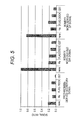
- FIG. 5 On the basis of the results of Western blotting, ratios of the expression levels in the soluble fractions of various tag fusion type prothrombin fragments are shown in FIG. 5 .
- the band intensity of a soluble fraction of the prothrombin without a tag to which the Bombyx mori-derived 30K signal peptide of FIG. 4B was fused is defined as 1 and the relative ratios of the band intensities of other soluble fractions are shown.
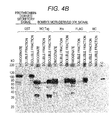
- FIGS. 4A to D show that both the tag fusion type prothrombin and the prothrombin without fusion tag were expressed in the pupae of Bombyx mori. Further, little difference in the expression level due to the kind of signal peptide was observed. However, in the case of the prothrombin to which any of the tags of His, FLAG, DOCK, and GST was fussed, the prothrombin was little contained in each soluble fraction.
- FIG. 5 shows that the solubility of the prothrombin to which any of the tags was fused was inferior to that of the prothrombin without fusion tag. That is, it was found that even if these tags were fused, the solubility of the prothrombin expressed in the pupae of Bombyx mori was not improved.
- genes were prepared by artificial gene synthesis (Life Technologies). In the prepared genes, a KpnI site was added to the 5' terminal and an EcoRI site was added to the 3' terminal, followed by insertion into pUC19 (Life Technologies). These genes were purified and subjected to a restriction enzyme treatment under the same conditions as Example 1.
- the DNA fragments of the genes were incorporated to the upstream of the hPTH gene in pM02-hPTH to prepare vector DNAs into which genes encoding human prothrombin having the avidin gene, the streptavidin (full) gene, and the streptavidin (core) gene fused to the N terminal were introduced.
- Recombinant baculoviruses were produced in the same manner as in Example 1, using the vector DNAs produced in the above manner. Then, pupae of Bombyx mori were infected with the resulting recombinant baculoviruses in the same manner as in Example 2 to prepare a homogenate and soluble and insoluble fractions.
- the obtained homogenate and soluble and insoluble fractions were analyzed by SDS-PAGE and Western blotting.
- a mouse antithrombin antibody NOVUS
- anti-mouse IgG Dako
- Immobilon Western HRP reagent Millipore
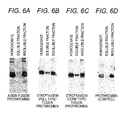
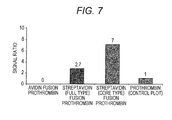
- FIGS. 6A to D ratios of the expression levels in the soluble fractions of various tag fusion type prothrombin fragments are shown in FIG. 7 .
- the band intensity of a soluble fraction of the prothrombin without a tag is defined as 1 and the relative ratios of the band intensities of other soluble fractions are shown.
- the MBP-fusion prothrombin which was used to measure the specific activity in Example 2 was used. Activation of the MBP-fusion prothrombin by ecarin resulted in formation of thrombin.
- the thrombin, 0.9% sodium benzoate, and a solution containing 0.2% Tween® 80 were mixed to prepare a thrombin reagent of the present invention.
- the thrombin activity in the present reagent was 200 U/ml.
- the sensitivity, accuracy, and stability of the thrombin reagent of the present invention obtained in the above manner were evaluated.
- the clotting time was measured using an analyzer: Coagrex-800 (manufactured by SYSMEX CORPORATION).
- Control plasma N for blood coagulation test (manufactured by SYSMEX CORPORATION) was used.
- TC buffer (manufactured by SYSMEX CORPORATION) was used.
- As the control reagent a commercially available reagent: Thrombocheck Fib(L) containing human-derived native form thrombin (manufactured by SYSMEX CORPORATION) was used.
- the thrombin activity of the control reagent was 200 U/ml.
- the sample was 5-, 10- or 20-fold diluted using the TC buffer. 100 ⁇ l of the resulting sample was heated at 37°C for 1 minute. Thereafter, 50 ⁇ l of the thrombin reagent of this example or control reagent preheated was added to the sample, followed by measurement of the clotting time. The measurement was performed twice (N1 and N2).
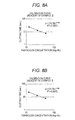
- the calibration curve for quantifying the fibrinogen concentration in the sample was created ( FIG. 8 ).
- the clotting time of the sample with the known fibrinogen concentration (247 mg/dL: standard) was measured by using the calibration curves.
- the measurement was performed twice (N1 and N2).
- the fibrinogen concentration was calculated by the regression equation using the measured clotting time.
- Table 2 In the case of the reagent of this example, the calculated value was 258.0 mg/dL. In the case of the control reagent, the calculated value was 224.4 mg/dL.
- the fibrinogen concentration was 247 mg/dL.
- the concentration was 104.5% based on the counter-standard.
- the concentration was 90.9% based on the counter-standard.
- the accuracy of the thrombin reagent of this example was equal to that of the control reagent.
- the thrombin reagent of this example and the control reagent were allowed to stand at 4°C or 37°C.
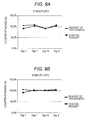
- the fibrinogen concentration of the sample was measured in the same manner as the accuracy test one day, seven days, fifteen days, and twenty-one days after the standing. The results are shown in FIGS. 9A and 9B . From FIGS. 9A and 9B , it was verified that, under any temperature condition, the storage stability of the thrombin reagent of this example was equal to that of the control reagent.
Landscapes
- Health & Medical Sciences (AREA)
- Chemical & Material Sciences (AREA)
- Life Sciences & Earth Sciences (AREA)
- Engineering & Computer Science (AREA)
- Organic Chemistry (AREA)
- Wood Science & Technology (AREA)
- Zoology (AREA)
- Bioinformatics & Cheminformatics (AREA)
- Genetics & Genomics (AREA)
- Biomedical Technology (AREA)
- General Engineering & Computer Science (AREA)
- Biochemistry (AREA)
- General Health & Medical Sciences (AREA)
- Microbiology (AREA)
- Biotechnology (AREA)
- Molecular Biology (AREA)
- Medicinal Chemistry (AREA)
- Hematology (AREA)
- Proteomics, Peptides & Aminoacids (AREA)
- Physics & Mathematics (AREA)
- Analytical Chemistry (AREA)
- Biophysics (AREA)
- Neurosurgery (AREA)
- Immunology (AREA)
- Micro-Organisms Or Cultivation Processes Thereof (AREA)
- Peptides Or Proteins (AREA)
- Enzymes And Modification Thereof (AREA)
- Measuring Or Testing Involving Enzymes Or Micro-Organisms (AREA)
- Preparation Of Compounds By Using Micro-Organisms (AREA)
Abstract
Description
- The present invention relates to a method for producing recombinant prothrombin, and a vector DNA.
- Prothrombin is a thrombin precursor protein having a molecular weight of about 72,000 which is produced in the liver and is also called "blood coagulation factor II". Limited proteolysis of prothrombin in vivo with the complex of activated factor X, activated factor V, phospholipids, and calcium ions results in conversion into thrombin. Thrombin is a serine protease that converts fibrinogen to fibrin by limited proteolysis in the blood-clotting reaction as well as an important protein involved in hemostasis, wound healing or the like. Therefore, the thrombin is used not only as a hemostatic agent or blood test reagent in the clinical field, but also as a reagent for study in the molecular biology field, etc.
- Since a large amount of thrombin is present in the plasma, thrombin as a preparation or reagent is mainly prepared by using the plasma from human or bovine as a raw material. However, there is a risk such that infectious materials such as hepatitis virus, human immunodeficiency virus, and abnormal prion are mixed in those raw materials. Further, the plasma is a naturally-occurring raw material and thus a difference between the production lots causes a problem. Therefore, the methods for producing thrombin from the prothrombin or prethrombin produced by the recombinant DNA technique using Escherichia coli or mammalian cells have been recently studied and developed (Japanese Patent Application Laid-Open (JP-A) No.
2002-306163 US 2004/197858 , andUS 2009/137001 ). - The scope of the present invention is defined solely by the appended claims, and is not affected to any degree by the statements within this summary.
- It is known that almost all of the expression of prothrombin or prethrombin in Escherichia coli results in an insoluble aggregate called an inclusion body. Therefore, it is necessary to perform refolding after solubilization of the recovered insoluble aggregate with a denaturant. However, it is known that the refolding is complicated and the refolding efficiencies of proteins having complicated structures such as prothrombin or prethrombin are very low. Further, in the thrombin obtained from the thrombin precursor solubilized by refolding, the specific activity (an activity per unit weight) is low. This leads to concerns. For example, the article of Soejima K. et al. (J. Biochem. vol. 130, p.269-277, 2001) teaches that thrombin is prepared from prethrombin-2 obtained in the Escherichia coli expression system. Further, it shows that the percentage of the thrombin having an enzyme activity among the proteins solubilized by refolding is from about 4 to 7%. That is, the specific activity of the thrombin obtained from the thrombin precursor solubilized by refolding is from about 4 to 7% of that of a native form thrombin derived from plasma.
- It is possible to produce a soluble prothrombin or prethrombin in the expression system using mammalian cells. However, there are problems that the yield is very low and the manufacturing cost is also high from the viewpoint of industrial-scale production.
- On the other hand, a recombinant protein with a functional tag protein fused to a desired protein may be expressed in the expression system using Escherichia coli or mammalian cells. Examples of tags for purifying recombinant proteins include 6xHis, glutathione-S-transferase (GST), FLAG, and maltose binding protein (MBP) tags. In recent years, tag proteins which improve the expression level and solubility of recombinant proteins have been developed. For example, an MBP tag and a small ubiquitin-like modifier (SUMO) tag are known as tags which improve the protein solubility. The solubility of recombinant proteins has been improved in the expression system using Escherichia coli or yeast (
US 2009/305342 andUS 2007/037246 ). - However, it is known that even if the solubility as the whole protein having a solubilization tag fused is maintained, a target protein portion does not have a regular structure, and thus the protein may not have an original activity. Thus, in the recombinant protein soluble in appearance due to fusion of the solubilization tag, if the solubilization tag is cleaved, the protein may become an insoluble aggregate or lose its activity.
- In view of the above circumstances, the present inventors have aimed at providing a method for producing recombinant prothrombin which satisfies both the condition where a soluble prothrombin can be produced simply and in a large amount, and the condition where thrombin converted from the obtained prothrombin has a high specific activity.
- The present inventors have conducted intensive examinations. As a result, they have found that a soluble prothrombin can be obtained simply and in a large amount by expressing prothrombin with a predetermined tag fused in the expression system using a lepidopteran insect and thrombin converted from the obtained prothrombin has a high specific activity. Thus, they have completed the present invention.
- That is, the present invention provides a method for producing recombinant prothrombin. The method comprises: providing a vector DNA into which a gene encoding a tag and a gene encoding prothrombin are incorporated, wherein the tag is selected from the group consisting of MBP, SUMO, and NusA; and expressing a tag fusion type prothrombin in a lepidopteran insect or cultured cells of the lepidopteran insect.
- Further, the present invention provides a vector DNA into which a gene encoding a tag and a gene encoding prothrombin are incorporated, wherein the tag is selected from the group consisting of MBP, SUMO, and NusA.
- The present invention provides a reagent kit comprising: a thrombin reagent comprising a thrombin; and a diluent buffer for diluting plasma of a subject. The thrombin in the thrombin reagent is obtained from a tag fusion type prothrombin which is expressed in a lepidopteran insect or cultured cells of the lepidopteran insect using a vector DNA into which a gene encoding a tag and a gene encoding prothrombin are incorporated, wherein the tag is selected from the group consisting of MBP, SUMO, and NusA.
- According to the present invention, soluble recombinant prothrombin can be produced simply and in a large amount. Therefore, according to the present invention, the refolding of an insoluble aggregate is not needed. Further, the resulting recombinant prothrombin is activated so that recombinant thrombin with a specific activity nearly equal to that of the native form thrombin can be obtained.
-
-
FIGS. 1A to 1D show photographs showing the expression levels of prothrombin in samples prepared from pupae of Bombyx mori in which each tag fusion type prothrombin of the present invention or the prothrombin without a tag are expressed; -
FIG. 2 is a graph showing the relative ratios of the amounts of each tag fusion type prothrombin of the present invention contained in soluble fractions; -
FIG. 3 is a graph showing specific activities of thrombin obtained from each tag fusion type prothrombin and a native form prothrombin: -
FIG. 4A shows a photograph showing the expression levels of prothrombin in samples prepared from pupae of Bombyx mori in which each tag fusion type prothrombin or the prothrombin without a tag are expressed; -
FIG. 4B shows a photograph showing the expression levels of prothrombin in samples prepared from pupae of Bombyx mori in which each tag fusion type prothrombin or the prothrombin without a tag are expressed; -
FIG. 4C shows a photograph showing the expression levels of prothrombin in samples prepared from pupae of Bombyx mori in which each tag fusion type prothrombin or the prothrombin without a tag are expressed; -
FIG. 4D shows a photograph showing the expression levels of prothrombin in samples prepared from pupae of Bombyx mori in which each tag fusion type prothrombin is expressed; -
FIG. 5 is a graph showing the relative ratios of the amounts of each tag fusion type prothrombin contained in soluble fractions; -
FIGS. 6A to 6D show photographs showing the expression levels of prothrombin in samples prepared from pupae of Bombyx mori in which each tag fusion type prothrombin or the prothrombin without a tag are expressed; -
FIG. 7 is a graph showing the relative ratios of the amounts of each tag fusion type prothrombin contained in soluble fractions; -
FIG. 8A is a graph showing a calibration curve created using a reagent of the present invention prepared in Example 3; -
FIG. 8B is a graph showing a calibration curve created using a control reagent used in Example 3; -
FIG. 9A is a graph showing the storage stability of the reagent of the present invention prepared in Example 3; and -
FIG. 9B is a graph showing the storage stability of the control reagent used in Example 3. - The preferred embodiments of the present invention will be described hereinafter with reference to the drawings.
- In the method for producing prothrombin of the present invention (hereinafter, simply referred to as "production method"), a vector DNA into which a gene encoding a tag selected from the group consisting of MBP, SUMO, and NusA and a gene encoding prothrombin are incorporated is used.
- MBP is a protein having a molecular weight of about 42 kDa and is known to be involved in the transport of maltodextrin in Gram-negative bacteria. In the embodiment of the present invention, a gene encoding MBP is not particularly limited as long as it is an isolated gene which encodes an MBP protein well-known as a recombinant protein tag or its derivative. It is preferably a gene encoding E. coli-derived MBP, more preferably a gene encoding an amino acid sequence represented by SEQ ID NO: 1.
- SUMO is a kind of ubiquitin-like proteins called sentrin, SMT3, PIC1, GMP1 or UBL1 and is known to be highly preserved in from yeasts to vertebrates including humans. In the embodiment of the present invention, a gene encoding SUMO is not particularly limited as long as it is an isolated gene which encodes the SUMO protein well-known as a recombinant protein tag or its derivative. It is preferably a gene encoding yeast SUMO (SMT3), human SUMO-3 or SUMOstar (modified SUMO, LifeSensors Inc.), more preferably a gene encoding an amino acid sequence represented by SEQ ID NO: 2.
- NusA is a protein having a molecular weight of about 55 kDa and is known as a transcription elongation factor bound to RNA polymerase. In the embodiment of the present invention, a gene encoding NusA is not particularly limited as long as it is an isolated gene which encodes the NusA protein well-known as a recombinant protein tag or its derivative. It is preferably a gene encoding E. coli-derived NusA or Nus-Tag (trademark, Merck), more preferably a gene encoding an amino acid sequence represented by SEQ ID NO: 3.
- The gene encoding prothrombin is not particularly limited as long as it is an isolated prothrombin gene derived from desired animal species with prothrombin (or blood coagulation factor II). Preferably, it is a gene encoding human prothrombin. In this regard, the base sequence of human prothrombin gene itself is well-known. For example, it is registered as the accession number NM_000506 in the database of the National Center for Biotechnology Information (NCBI) of the U.S. National Library of Medicine.
- The vector DNA is not particularly limited as long as the DNA has a promoter capable of expressing a gene in a lepidopteran insect or cultured cells of the insect and can insert the gene into the downstream of the promoter. Preferably, it is a transfer vector capable of producing a recombinant baculovirus having the gene inserted by homologous recombination with baculovirus DNA. The vector DNA itself is well-known in the art. Examples thereof include pM02, pYNG, pBM030, pBM050, and pVL1392. In this regard, the promoter can be appropriately selected from promoters well-known in the art. Examples thereof include polyhedrin promoter, p10 promoter, and Bombyx mori actin promoter.
- In the vector DNA into which the above genes are incorporated, a gene encoding tag fusion type prothrombin is incorporated into the downstream of the promoter. Here, the gene encoding a tag may be inserted into either the upstream or downstream of the gene encoding prothrombin. Preferably, it is inserted into the upstream of the gene encoding prothrombin. That is, the gene encoding a tag is preferably incorporated into the vector DNA so that the tag is fused to the N terminal of prothrombin. Specifically, a gene encoding an amino acid sequence represented by any one of SEQ ID NOS: 7 to 9 is preferably incorporated into the vector DNA. Here, when prothrombin is converted to thrombin, the N terminal of prothrombin is cleaved. Accordingly, when a tag is fused to the N terminal of prothrombin, the removal of the tag can be performed simultaneously by the operation of converting prothrombin to thrombin.
- In the embodiment of the present invention, a gene encoding a protein secretory signal sequence is preferably further incorporated into the vector DNA. The protein secretory signal sequence may be appropriately selected from well-known sequences used in the production of recombinant prothrombin or the expression system utilizing a lepidopteran insect. Examples thereof include a prothrombin-derived secretory signal sequence (SEQ ID NO: 4), a Bombyx mori-derived 30K signal sequence (SEQ ID NO: 5), and a Bombyx mori-derived SP signal sequence (SEQ ID NO: 6).
- In the embodiment of the present invention, the Bombyx mori-derived 30K signal sequence and a gene encoding human prothrombin with a tag fused to its N terminal are preferably incorporated into the vector DNA.
- In the production method of the present invention, the tag fusion type prothrombin is expressed in a lepidopteran insect or cultured cells of the insect by using the vector DNA. Here, the lepidopteran insect is not particularly limited as long as it is a well-known lepidopteran insect suitable for expressing recombinant proteins. Examples thereof include Bombyx mori, Spilosoma imparilis, Antheraea pernyi, Spodoptera frugiperda, and Trichoplusiani. Among them, Bombyx mori is particularly preferred. Further, the cultured cells of the lepidopteran insect are not particularly limited as long as they are cell lines established from lepidopteran insects suitable for expressing recombinant proteins. Examples thereof include BmN, BmN4, SpIm, Anpe, Sf9, Sf21, and High5.
- In the embodiment of the present invention, the tag fusion type prothrombin is preferably expressed in a lepidopteran insect from the viewpoint of producing a large amount of the recombinant prothrombin. In this regard, the lepidopteran insect may be at any stage of imago, pupa, and larva. From the viewpoint of the activity of serine protease, and the sensitivity to baculovirus, it is preferable to use a pupa of the lepidopteran insect.
- The means for expressing a tag fusion type prothrombin in a lepidopteran insect or cultured cells of the lepidopteran insect is not particularly limited and it may be appropriately determined according to the kind of the vector DNA. For example, a lepidopteran insect or cultured cells of the insect may be directly transfected with a vector DNA by a well-known transgenic method in order to express the tag fusion type prothrombin. In a preferred embodiment of the present invention, a lepidopteran insect or cultured cells of the insect is infected with a baculovirus recombined with the vector DNA in order to express the tag fusion type prothrombin.
- The method for recombining a baculovirus with a DNA having a desired base sequence itself is well-known in the art. For example, when the vector DNA is a transfer vector, a recombinant baculovirus may be obtained by co-transfection of the baculovirus DNA after linearization with a restriction enzyme and the vector DNA having a gene encoding a tag fusion type prothrombin incorporated into cultured cells of a lepidopteran insect, and screening of the infected cells.
- In the embodiment of the present invention, the kind of baculovirus is not particularly limited as long as it is a virus with which the lepidopteran insect or cultured cells of the insect can be infected. A nuclear polyhedrosis virus (NPV) or its recombinant virus is preferred. Examples of viruses include recombinant baculoviruses infective to hosts (Bombyx mori of the family Bombycidae and Autographa californica of the family Noctuidae) such as BmNPV, HycuNPV, AnpeNPV, and AcNPV,(refer to
JP-A No. 2003-52371 7-303488 - The means for infecting a lepidopteran insect or cultured cells of the insect with a recombinant baculovirus is not particularly limited and it may be appropriately selected from well-known methods in the art. For example, in order to infect the lepidopteran insect, a method of injecting a solution containing a recombinant baculovirus into the insect is used. In order to infect the cultured cells, the solution containing a recombinant baculovirus may be added to a culture medium. The tag fusion type prothrombin can be expressed by infecting a lepidopteran insect or cultured cells of the insect with a virus and breeding the insect or culturing the cells for five to eight days.
- In the embodiment of the present invention, the means for obtaining a tag fusion type prothrombin from a lepidopteran insect or cultured cells of the insect in which the tag fusion type prothrombin is expressed in the above manner is not particularly limited. For example, in the case of a lepidopteran insect, the tag fusion type prothrombin may be obtained by collecting a body fluid or crushing the insect to prepare a homogenate. In the case of cultured cells, the tag fusion type prothrombin may be obtained by physically crushing the cells or dissolving them in a solution containing a cell dissolving agent such as a surfactant.
- Here, in the production method of present invention, the solubility of the expressed recombinant prothrombin is significantly improved. Thus, a large amount of tag fusion type prothrombin is contained in the soluble fraction. Therefore, in the embodiment of the present invention, it is preferable to further include the step of obtaining a soluble fraction containing the tag fusion type prothrombin from the lepidopteran insect or cultured cells of the insect obtained in the expression step. The soluble fraction may be obtained by filtering or centrifuging the body fluid, homogenate, cell disrupted solution or cell lysate of the lepidopteran insect obtained in the above manner and separating the supernatant. In the centrifugation process, an appropriate buffer may be optionally added to a sample. The buffer is not particularly limited as long as it is a buffer suitable for storing a protein. Examples thereof include Tris buffers and phosphate buffers.
- In the embodiment of the present invention, the resulting recombinant prothrombin may be converted into thrombin by any well-known method in the art. The method is not particularly limited and examples thereof include a method including reacting ecarin (i.e., a prothrombin activating enzyme) with the recombinant prothrombin to obtain thrombin. Further, the specific activity of the resulting thrombin may be measured by any well-known method in the art. For example, the specific activity may be calculated by reacting S-2238 (i.e., a chromogenic synthetic substrate for thrombin, SEKISUI MEDICAL CO., LTD.) with the recombinant thrombin for a predetermined time, adding a reaction termination solution thereto, and measuring the absorbance.
- The scope of the present invention includes a baculovirus recombined with a vector DNA into which a gene encoding a tag selected from the group consisting of MBP, SUMO, and NusA and a gene encoding prothrombin are incorporated. The production and use of the baculovirus are the same as described in the production method of the present invention. In the embodiment of the present invention, it is preferable to use a baculovirus recombined with a vector DNA into which a gene encoding a protein secretory signal sequence is further incorporated.
- Further, the scope of the present invention also includes a kit for producing recombinant prothrombin which includes the vector DNA into which a gene encoding a tag selected from the group consisting of MBP, SUMO, and NusA and a gene encoding prothrombin are incorporated. The production and use of the vector DNA included in the kit are the same as described in the production method of the present invention.
- In the embodiment of the present invention, the vector DNA is preferably incorporated into the baculovirus. Alternatively, in another embodiment, the vector DNA and the baculovirus may be put in different containers. Preferably, a gene encoding a protein secretory signal sequence is further incorporated into the vector DNA.
- Further, the scope of the present invention includes a tag fusion type prothrombin which is expressed in a lepidopteran insect or cultured cells of the lepidopteran insect using the vector DNA into which a gene encoding a tag selected from the group consisting of MBP, SUMO, and NusA and a gene encoding prothrombin are incorporated. The method for producing a tag fusion type prothrombin is the same as described in the production method of the present invention.
- The scope of the present invention also includes a thrombin reagent containing a thrombin fragment obtained from the tag fusion type prothrombin.
- The thrombin reagent of the present invention may also contain a well-known stabilizer to stabilize thrombin. The stabilizer is not particularly limited as long as it is a substance which is usually used for the thrombin reagent. Examples thereof include calcium ions, organic acids, surfactants, and proteins.
- Calcium ions are preferably provided in such a manner that a water-soluble calcium compound is added to the reagent. Examples of calcium compounds include calcium chloride, calcium lactate, calcium gluconate, calcium glucuronate, and calcium tartrate. One kind of these calcium compounds may be used alone, or two or more kinds thereof may be used in combination. The stabilization effective amount of the calcium compound(s) to thrombin is not particularly limited as long as the amount improves the stability of the thrombin reagent. The concentration of the calcium compound(s) in the thrombin reagent is, for example, preferably from 5 to 100 mM, more preferably from 10 to 50 mM.
- Examples of organic acids include formic acid, acetic acid, propionic acid, butyric acid, valeric acid, oxalic acid, malonic acid, succinic acid, gluconic acid, lactic acid, glucuronic acid, glycolic acid, tartaric acid, malic acid, citric acid, tartaric acid, glutaric acid, aminoacetic acid, and aminocaproic acid. These organic acids may be used in the form of either free acid or salt thereof. Further, one kind of the organic acids may be used alone, or two or more kinds thereof may be used in combination. The additive amount of the organic acids is not particularly limited as long as the amount improves the stability of the thrombin reagent. The surfactant concentration in the thrombin reagent is, for example, preferably from 10 to 500 mM, more preferably from 50 to 200 mM.
- The surfactant may be appropriately selected from anionic surfactants, cationic surfactants, zwitterionic surfactants, and nonionic surfactants. Examples of anionic surfactants include sodium dodecyl sulfate, sodium dodecyl sulfonate, sodium dodecyl-N-sarcosinate, sodium cholate, sodium deoxycholate, and sodium taurodeoxycholate. Examples of cationic surfactants include cetyltrimethylammonium bromide, tetradecylammonium bromide, and dodecylpyridinium chloride. Examples of zwitterionic surfactants include 3-[(3-cholamidepropyl)dimethylammonio]-1-propanesulfonic acid (CHAPS), 3-[(3-cholamidepropyl)dimethylammonio]-2-hydroxy-1-propanesulfonic acid (CHAPSO), palmitoyllysolecithin, dodecyl-N-betaine, and dodecyl-β-alanine. Examples of nonionic surfactants include octyl glucoside, heptyl thioglucoside, decanoyl-N-methylglucamide, polyoxyethylene dodecyl ether, polyoxyethylene heptamethylhexyl ether, polyoxyethylene isooctylphenyl ether (Triton™ X series), polyoxyethylene nonylphenyl ether, polyoxyethylene fatty acid ester, sucrose fatty acid ester, and polyoxyethylene sorbitol ester (Tween® series).
- Among these surfactants, nonionic surfactants are particularly preferred. One kind of these surfactants may be used alone, or two or more kinds thereof may be used in combination. The additive amount of the surfactants is not particularly limited as long as the amount improves the stability of the thrombin reagent. The surfactant concentration in the thrombin reagent is, for example, preferably from 0.001 to 1% by weight/volume, more preferably from 0.005 to 0.1% by weight/volume.
- Examples of proteins as stabilizers include albumin, gelatin, and globulin. One kind of these proteins may be used alone, or two or more kinds thereof may be used in combination. The additive amount of the proteins is not particularly limited as long as the amount improves the stability of the thrombin reagent. The protein concentration in the thrombin reagent is, for example, preferably from 0.05 to 10% by weight/volume, more preferably from 0.1 to 5% by weight/volume.
- The above stabilizers are selected taking into consideration influences of thrombin on enzyme activity during storage of thrombin in liquid, dried or frozen form, when a dried product is dissolved, or when a frozen product is melted. Further, when a plurality of stabilizers are used in combination, in the case of a liquid product of thrombin, the stabilizers are added to the liquid product. In the case of a dried or frozen product of thrombin, the stabilizers are prepared so that stabilization effects are exerted when the product finally becomes the form of liquid and then added to the dried or frozen product.
- The thrombin reagent of the present invention may also contain a buffer. The buffer may be appropriately selected from buffers having a buffering capacity at a pH range of 4 to 9 and used. As the buffer, for example, one kind of buffers such as citric acid, phosphoric acid, acetic acid, imidazole, GTA, HEPES, MOPS, BIS-TRIS, TRIS, MOPSO, ADA, and MES may be used alone, or two or more kinds thereof may be used in combination. The additive amount of these buffers is not particularly limited as long as it is the amount of a buffering capacity. Regarding the additive amount of the buffers, for example, the concentration in the thrombin reagent is preferably from 5 to 1000 mM, more preferably from 50 to 500 mM.
- The thrombin reagent of the present invention may also contain high molecular polysaccharides. Examples of high molecular polysaccharides include dextran 40, dextran 70, dextran 200,000, dextran 500,000, and Ficoll. One kind of those high molecular polysaccharides may be used alone, or two or more kinds thereof may be used in combination. The additive amount of these high molecular polysaccharides is not particularly limited as long as the amount improves reproducibility. The concentration of the high molecular polysaccharides in the thrombin reagent is, for example, preferably from 0.1 to 10% by weight/volume, more preferably from 0.3 to 3% by weight/volume.
- The thrombin reagent of the present invention may also contain synthetic polymers. Examples of synthetic polymers include
polyvinyl alcohol 500, polyvinyl alcohol 1500, polyvinyl alcohol 2000, polyethylene glycol 1500, polyethylene glycol 2000, polyethylene glycol 4000, polyethylene glycol 6000, polyethylene glycol 8000, polyethylene glycol 20000, and polyvinylpyrrolidone. One kind of these synthetic polymers may be used alone, or two or more kinds thereof may be used in combination. The additive amount of these synthetic polymers is not particularly limited as long as the amount improves reproducibility. The concentration of the synthetic polymers in the thrombin reagent is, for example, preferably from 0.1 to 10% by weight/volume, more preferably from 0.3 to 3% by weight/volume. - Further, an appropriate preservative may be added to the thrombin reagent of the present invention. As the preservative, for example, one kind of ciprofloxacin, propionic acid, and sodium benzoate may be used alone, or two or more kinds thereof may be used in combination. Further, a salt such as sodium chloride or a usual stabilizer such as an amino acid or sugar may be contained in the reagent, if necessary.
- The thrombin content in the thrombin reagent of the present invention is not particularly limited as long as the activity is adjusted to a target value.
- As a specific thrombin reagent, for example, a pH 6.0 solution consisting of 200 U/mL thrombin and a buffer containing acetic acid and calcium lactate may be used.
- The thrombin reagent of the present invention may be a liquid product, a frozen product, or a dried product. When the thrombin reagent of the present invention is a dried product, it is dissolved by adding purified water or a buffer.
- The concentration described above is the concentration in the liquid product and the concentration of the dried product or the like is the concentration when dissolved in water or the like before use.
- The scope of the present invention also includes a clotting function test reagent kit which includes the thrombin reagent and a diluent buffer for diluting plasma of a subject.
- Examples of diluent buffers included in the clotting function test reagent kit of the present invention include Good buffers such as MES, Bis-Tris, ADA, PIPES, ACES, MOPSO, BES, MOPS, TES, HEPES, DIPSO, TAPSO, POPSO, HEPPSO, EPPS, Tricine, Bicine, TAPS, CHES, CAPSO, and CAPS; and a barbital buffer. Further, examples thereof include a TC buffer (manufactured by SYSMEX CORPORATION).
- The clotting function test reagent kit of the present invention may further include a normal solution which contains a predetermined concentration of fibrinogen. In this case, the clotting function test reagent kit of the present invention can be used as a fibrinogen quantitative reagent. A procedure for quantifying fibrinogen is specifically as follows. First, normal solutions are diluted 5-, 10-, and 20-fold with a diluent buffer (the dilution rate may be appropriately adjusted). Subsequently, each of the diluted normal solutions (0.2 mL) is heated at 37°C for 3 minutes. 0.1 mL of a test reagent or thrombin reagent previously heated to 37°C is added to each of the solutions. The clotting time is measured and the measured values of the diluted normal solutions are plotted on a graph to produce a calibration curve. Then, a plasma sample is diluted 10-fold with a diluent buffer (the dilution rate may be appropriately adjusted). The clotting time of the resulting diluted sample is measured in the same manner as described above. On the basis of the resulting clotting time, the concentration may be calculated from the calibration curve.
- The clotting function test reagent kit of the present invention may be used to measure activities of thrombin inhibitors, such as activities of antithrombin, hirudin, and chemosynthetic inhibitors.
- The thrombin reagent and the diluent buffer are separately packaged in the clotting function test reagent kit. For example, the thrombin reagent is put in a first reagent container and the diluent buffer is put in a second reagent container. Further, when the clotting function test reagent kit further includes the normal solution which contains a predetermined concentration of fibrinogen, the normal solution is put in a third reagent container other than the first and second reagent containers. In this regard, the clotting function test reagent kit may include another reagent which is put in another reagent container, if desired. Further, the clotting function test reagent kit may include one or more kinds of buffers for diluting one or more kinds of reagents, instructions for use, a container usable for reactions and the like, if desired.
- Hereinafter, the present invention will be described in detail with reference to examples, however the present invention is not limited to the examples.
- On the basis of the base sequence of human prothrombin gene (NCBI Acc. No. NM_000506) published on the database (hereinafter also referred to as "hPTH gene"), a primer set for cloning hPTH gene was designed. The sequences of each primer are as follows:
- F: 5'- AAGAATTCATGGCCAACACCTTCTTGGAGGAG -3' (SEQ ID NO: 10);
and - R: 5'- AATCTAGACTACTCTCCAAACTGATCAATGACCTT -3' (SEQ ID NO: 11).
- The hPTH gene was isolated using the primer sets by the PCR method using a human liver cDNA library (Clontech Laboratories, Inc.) as a template. The isolated DNA fragment was purified using QIAquick (QIAGEN) and treated with restriction enzymes EcoRI and XbaI. The resulting fragment was incorporated into a multi-cloning site of pM02 vector (SYSMEX CORPORATION). The resulting plasmid construct is referred to as "pM02-hPTH".
- On the basis of base sequences of the reported malE, SUMO, and NusA genes, primer sets for subcloning the genes were designed. The sequences of the primers are shown as follows:
- malE gene primer set
- F: 5'- AAGGTACCATGAAAATAAA.AACAGGTGCGC -3' (SEQ ID NO: 12)
- R: 5'- TTGAATTCGCTCTGAAAGTACAGATCCTCAGTCTGCGC -3' (SEQ ID NO: 13)
- SUMO gene primer set
- F: 5'- AAGGTACCATGTCCCTGCAGGACTCAG -3' (SEQ ID NO: 14)
- R:5'-TTGAATTCGCTCTGAAAGTACAGATCCTCAATCTGTTCTC -3' (SEQ ID NO: 15)
- NusA gene primer set
- F: 5'- AAGAATTCGCTCTGAAAGTACAGATCCTCCGCTTCGTCAC -3' (SEQ ID NO: 16)
- R: 5'- AAGGTACCATGAACAAAGAAATTTTGGCTGTAG -3' (SEQ ID NO: 17).
- The malE gene was isolated using the malE gene primer set by the PCR method using pMAL-p5x (New England Biolabs) as a template. Similarly, the SUMO and NusA genes were respectively isolated using the SUMO gene primer set and the NusA gene primer set by the PCR method using pI SUMOstar (LifeSensors Inc.) and pET-44 (+) (Merck) as templates.
- The isolated DNA fragments of tag genes were purified using QIAquick (QIAGEN) and treated with restriction enzymes EcoRI and KpnI. Then, the resulting DNA fragments of the genes were incorporated into the upstream of the hPTH gene in pM02-hPTH to prepare the vector DNAs (transfer plasmids) of the present invention. The resulting transfer plasmids are referred to as "pM02-MBP-hPTH, pM02-SUMO-hPTH, and pM02-NusA hPTH", respectively.
- Recombinant baculovirus was produced by modifying the method of Maeda et al. (InverterbrateCell system and Applications, Vol. 1, p.167-181, CRC Press, Boca Raton (1989)). The specific procedure is as follows. First, the transfer plasmids were purified using Plasmid purification kit (QIAGEN). Then, these transfer plasmids (0.5 µg) and DNA (0.2 µg) of CPd baculovirus (ATCC VR2500) after linearization were co-transfected into BmN cells (Maeda, 1989) using a lipofection reagent (X-tremeGENE 9 DNATransfection Reagent: Roche). Screening was performed by the limiting dilution method using a 96-well plate. The virus presented with the symptoms of infection was selected and the culture supernatant was recovered. As a result, the recombinant baculovirus of the present invention into which a gene encoding a tag and a prothrombin gene were incorporated was obtained. In the case of pM02-hPTH, the recombinant baculovirus was produced in the same manner as described above.
- The supernatant was recovered to prepare a lysate of BmN cells. The obtained lysate was analyzed by SDS-PAGE and Western blotting. In the Western blotting, a mouse antithrombin antibody (NOVUS) was used as a primary antibody, anti-mouse IgG (Dako) was used as a secondary antibody, and Immobilon Western HRP reagent (Millipore) was used as a detection reagent. As a result, it was confirmed that a protein having a molecular weight assumed to be the tag fusion type prothrombin was expressed in the BmN lysate.
- The recombinant baculovirus produced in Example 1 was inoculated into pupae of Bombyx mori (variety: Kinsyu-showa, silkworm seeds were purchased from Ueda-sanshu and developed to pupae in the laboratory of SYSMEX CORPORATION). The infected pupae were recovered seven days after the virus inoculation and frozen at -80°C. The frozen pupae were crushed with a blender. The residues of pupae in the resulting disrupted solution were removed by low-speed centrifugation and filtration to give a homogenate. The resulting homogenate was separated into a supernatant and a precipitate by centrifugation at 20000 x g for 30 minutes. The resulting supernatant was defined as a soluble fraction and the precipitate was defined as an insoluble fraction.
- The resulting homogenate and soluble and insoluble fractions were analyzed by SDS-PAGE and Western blotting. In the Western blotting, a mouse antithrombin antibody (NOVUS) was used as a primary antibody, anti-mouse IgG (Dako) was used as a secondary antibody, and Immobilon Western HRP reagent (Millipore) was used as a detection reagent. The results are shown in
FIGS. 1A to D . On the basis of the results of Western blotting, ratios of the expression levels in the soluble fractions of each soluble tag fusion type prothrombin are shown inFIG. 2 . In the graph ofFIG. 2 , the band intensity of a soluble fraction of the prothrombin without fusion tag (FIG. 1D : control plot) is defined as 1 and the relative ratios of the band intensities of the soluble fractions of each soluble tag fusion type prothrombin (FIGS. 1A to C ) are shown. - The bands in the homogenates of
FIGS. 1A to D show that both the tag fusion type prothrombin and the prothrombin without fusion tag were expressed in the pupae of Bombyx mori. However, the prothrombin without fusion tag was little contained in each soluble fraction. That is, it was found that, in the case of the prothrombin without fusion tag, most of the prothrombin expressed in the pupae of Bombyx mori was an insoluble protein. On the other hand, it was found that in each prothrombin to which MBP, SUMO or NusA was fused as a tag, a large amount of prothrombin was contained in each soluble fraction.FIG. 2 shows that the solubility of each tag fusion type prothrombin was more than or equal to about 12 times that of the prothrombin without fusion tag. - The soluble fractions prepared in the above process were simply purified using Q-Sepharose FastFlow (GE healthcare). Ecarin (i.e., a prothrombin activating enzyme, Sigma) was added to each of the purified soluble fractions so as to have a final concentration of 1 U/ml, followed by reaction at 37°C for 2 hours. The resulting reaction solution was analyzed by SDS-PAGE and Western blotting using a mouse antithrombin antibody (NOVUS). In the Western blotting, a mouse antithrombin antibody (NOVUS) was used as a primary antibody, anti-mouse IgG (Dako) was used as a secondary antibody, and Immobilon Western HRP reagent (Millipore) was used as a detection reagent.
- As a result of Western blotting, it was found that each tag fusion type human prothrombin was activated by the effect of ecarin and had a molecular weight equal to that of the native form human prothrombin. The thrombin specific activity (NIH U/mg) of each tag fusion type human prothrombin was measured using a specific synthetic substrate of thrombin (S-2238, SEKISUI MEDICAL CO., LTD.). As the control, the thrombin prepared by the reaction of ecarin with the native form human prothrombin (derived from human plasma, Calbiochem) was used. The measurement results are shown in
FIG. 3 . According toFIG. 3 , it is shown that the thrombin fragments obtained from each of the tag fusion type human prothrombin species had a specific activity equal to that of the native form thrombin. - In the case of expressing prothrombin by a recombinant protein expression system in Bombyx mori, it was examined whether tags (His, FLAG, DOCK, and GST) frequently used for an Escherichia coli expression system were effective in improving the solubility. Further, influences on the solubility due to the kind of signal peptide were also examined.
- The hPTH gene isolated in Example 1 was incorporated into the pM01 vector (SYSMEX CORPORATION) to prepare a vector DNA with a human prothrombin-derived secretory signal at the upstream of the hPTH gene. Similarly, the hPTH gene was incorporated into the pM15 vector (SYYSMEX CORPORATION), the pM23 vector (SYSMEX CORPORATION), the pM31a vector (SYSMEX CORPORATION), and the pM47 vector (SYSMEX CORPORATION), respectively, to prepare vector DNAs, having a human prothrombin-derived secretory signal, into which genes encoding human prothrombin having the 6xHis, FLAG, DOCK, and GST fused to the C terminal were introduced. Then, the isolated hPTH gene was incorporated into the pM16 vector (SYSMEX CORPORATION), the pM27 vector (SYSMEX CORPORATION), the pM35a vector (SYSMEX CORPORATION), and the pM51 vector (SYSMEX CORPORATION), respectively, to prepare vector DNAs into which genes encoding human prothrombin having a Bombyx mori-derived 30K signal and the 6xHis tag, FLAG, DOCK, and GST fused to the C terminal were introduced. Then, the isolated hPTH gene was incorporated into the pM-SP-01 vector (SYSMEX CORPORATION), the pM-SP06 vector (SYSMEX CORPORATION), the pM-SP 24 vector (SYSMEX CORPORATION), the pM-SP 32 vector (SYSMEX CORPORATION), and the pM-SP 48 vector (SYSMEX CORPORATION), respectively, to prepare a vector DNA with a Bombyx mori-derived SP signal at the upstream of the hPTH gene and vector DNAs into which genes encoding human prothrombin having the 6xHis tag, FLAG, DOCK, and GST fused to the C terminal and a Bombyx mori-derived SP signal were introduced.
- Recombinant baculoviruses were produced in the same manner as in Example 1 using the vector DNAs produced in the above process. Then, pupae of Bombyx mori were infected with the resulting recombinant baculoviruses in the same manner as in Example 2 to prepare a homogenate and soluble and insoluble fractions.
- The obtained homogenate and soluble and insoluble fractions were analyzed by SDS-PAGE and Western blotting. In the Western blotting, a mouse antithrombin antibody (NOVUS) was used as a primary antibody, anti-mouse IgG (Dako) was used as a secondary antibody, and ECL detection kit (GE healthcare) was used as a detection reagent. The results are shown in
FIGS. 4A to D . InFIG. 4 , N.C indicates uninfected Bombyx mori and P.C indicates the native form human prothrombin (derived from human plasma, Calbiochem). On the basis of the results of Western blotting, ratios of the expression levels in the soluble fractions of various tag fusion type prothrombin fragments are shown inFIG. 5 . In the graph ofFIG. 5 , the band intensity of a soluble fraction of the prothrombin without a tag to which the Bombyx mori-derived 30K signal peptide ofFIG. 4B was fused (the same conditions as the control of Example 2) is defined as 1 and the relative ratios of the band intensities of other soluble fractions are shown. - The bands in the homogenates of
FIGS. 4A to D show that both the tag fusion type prothrombin and the prothrombin without fusion tag were expressed in the pupae of Bombyx mori. Further, little difference in the expression level due to the kind of signal peptide was observed. However, in the case of the prothrombin to which any of the tags of His, FLAG, DOCK, and GST was fussed, the prothrombin was little contained in each soluble fraction.FIG. 5 shows that the solubility of the prothrombin to which any of the tags was fused was inferior to that of the prothrombin without fusion tag. That is, it was found that even if these tags were fused, the solubility of the prothrombin expressed in the pupae of Bombyx mori was not improved. - In the case of expressing prothrombin in a recombinant protein expression system in Bombyx mori, it was examined whether fusion type proteins other than the tag of the present invention (avidin, full and core types of streptavidin) were effective in improving the solubility.
- On the basis of base sequences of the avidin gene (NCBI Acc. No. NM_205320.1) and the streptavidin (core or full type) gene (NCBI Acc. No. X03591.1) registered on the database, genes were prepared by artificial gene synthesis (Life Technologies). In the prepared genes, a KpnI site was added to the 5' terminal and an EcoRI site was added to the 3' terminal, followed by insertion into pUC19 (Life Technologies). These genes were purified and subjected to a restriction enzyme treatment under the same conditions as Example 1. The DNA fragments of the genes were incorporated to the upstream of the hPTH gene in pM02-hPTH to prepare vector DNAs into which genes encoding human prothrombin having the avidin gene, the streptavidin (full) gene, and the streptavidin (core) gene fused to the N terminal were introduced.
- Recombinant baculoviruses were produced in the same manner as in Example 1, using the vector DNAs produced in the above manner. Then, pupae of Bombyx mori were infected with the resulting recombinant baculoviruses in the same manner as in Example 2 to prepare a homogenate and soluble and insoluble fractions.
- The obtained homogenate and soluble and insoluble fractions were analyzed by SDS-PAGE and Western blotting. In the Western blotting, a mouse antithrombin antibody (NOVUS) was used as a primary antibody, anti-mouse IgG (Dako) was used as a secondary antibody, and Immobilon Western HRP reagent (Millipore) was used as a detection reagent. The results are shown in
FIGS. 6A to D . On the basis of the results of Western blotting, ratios of the expression levels in the soluble fractions of various tag fusion type prothrombin fragments are shown inFIG. 7 . In the graph ofFIG. 7 , the band intensity of a soluble fraction of the prothrombin without a tag (the same conditions as the control of Example 2) is defined as 1 and the relative ratios of the band intensities of other soluble fractions are shown. - The bands in the homogenates of
FIGS. 6A to D show that both the tag fusion type prothrombin and the prothrombin without fusion tag were expressed in the pupae of Bombyx mori. It was found that almost all of the tag fusion type prothrombins were contained in the insoluble fractions. FromFIG. 7 , it was found that the solubility of the avidin-fused prothrombin was not improved. It was also found that the solubility of the prothrombin fused to the full or core type of streptavidin was improved as compared to the prothrombin without a tag, however, it was not sufficient. - In this example, the MBP-fusion prothrombin which was used to measure the specific activity in Example 2 was used. Activation of the MBP-fusion prothrombin by ecarin resulted in formation of thrombin. The thrombin, 0.9% sodium benzoate, and a solution containing 0.2% Tween® 80 were mixed to prepare a thrombin reagent of the present invention. The thrombin activity in the present reagent was 200 U/ml.
- The sensitivity, accuracy, and stability of the thrombin reagent of the present invention obtained in the above manner were evaluated. The clotting time was measured using an analyzer: Coagrex-800 (manufactured by SYSMEX CORPORATION). As a sample, Control plasma N for blood coagulation test (manufactured by SYSMEX CORPORATION) was used. As a buffer, TC buffer (manufactured by SYSMEX CORPORATION) was used. As the control reagent, a commercially available reagent: Thrombocheck Fib(L) containing human-derived native form thrombin (manufactured by SYSMEX CORPORATION) was used. The thrombin activity of the control reagent was 200 U/ml.
- The sample was 5-, 10- or 20-fold diluted using the TC buffer. 100 µl of the resulting sample was heated at 37°C for 1 minute. Thereafter, 50 µl of the thrombin reagent of this example or control reagent preheated was added to the sample, followed by measurement of the clotting time. The measurement was performed twice (N1 and N2).
- The sensitivity was evaluated based on a difference between the average clotting time when using the 20-fold diluted sample and the average clotting time when using the 5-fold diluted sample. The results are shown in Table 1. From Table 1, it was verified that the sensitivity of the thrombin reagent of this example was equal to that of the control reagent.
[Table 1] Reagent of this example Control reagent Dilution rate of sample × 5 × 10 × 20 × 5 × 10 × 20 Clotting time N1 7.7 12.1 24.1 8.0 14.8 23.5 N2 7.7 13.5 23.0 7.9 15.0 23.1 Average 7.7 12.8 23.6 8.0 14.9 23.3 Clotting time difference 15.9 15.4 - On the basis of the measurement result of the sensitivity test and the fibrinogen concentration of the sample, the calibration curve for quantifying the fibrinogen concentration in the sample was created (
FIG. 8 ). The clotting time of the sample with the known fibrinogen concentration (247 mg/dL: standard) was measured by using the calibration curves. The measurement was performed twice (N1 and N2). The fibrinogen concentration was calculated by the regression equation using the measured clotting time. The results are shown in Table 2. In the case of the reagent of this example, the calculated value was 258.0 mg/dL. In the case of the control reagent, the calculated value was 224.4 mg/dL. The fibrinogen concentration was 247 mg/dL. Thus, in the case of the reagent of this example, the concentration was 104.5% based on the counter-standard. In the case of the control reagent, the concentration was 90.9% based on the counter-standard. As described above, it was verified that the accuracy of the thrombin reagent of this example was equal to that of the control reagent.[Table 2] Reagent of this example Control reagent Clotting time N1 12.1 14.8 N2 13.5 15.0 Average 12.8 14.9 Calculated value 258.0 224.4 Counter-standard 104.5% 90.9% - The thrombin reagent of this example and the control reagent were allowed to stand at 4°C or 37°C. The fibrinogen concentration of the sample was measured in the same manner as the accuracy test one day, seven days, fifteen days, and twenty-one days after the standing. The results are shown in
FIGS. 9A and 9B . FromFIGS. 9A and 9B , it was verified that, under any temperature condition, the storage stability of the thrombin reagent of this example was equal to that of the control reagent.
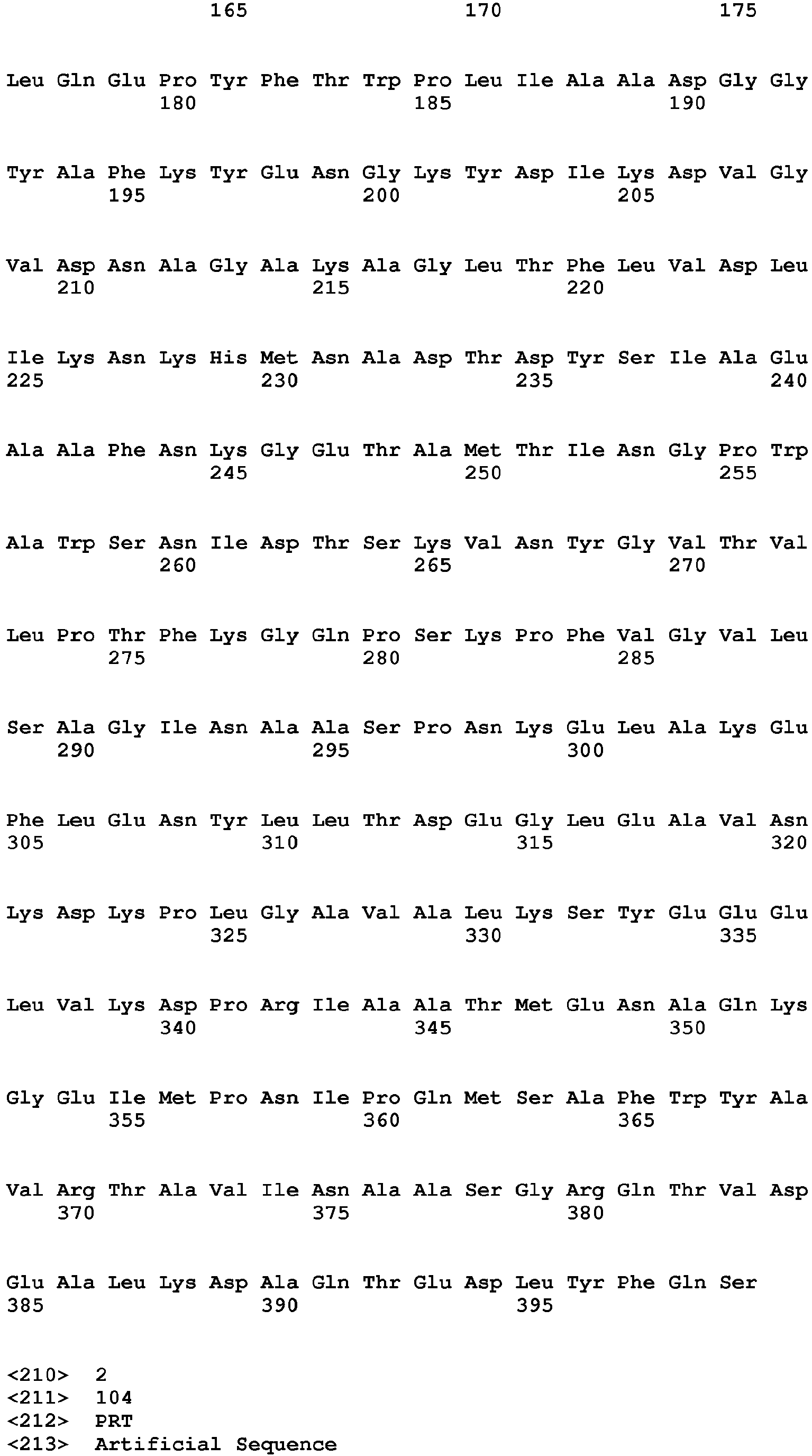


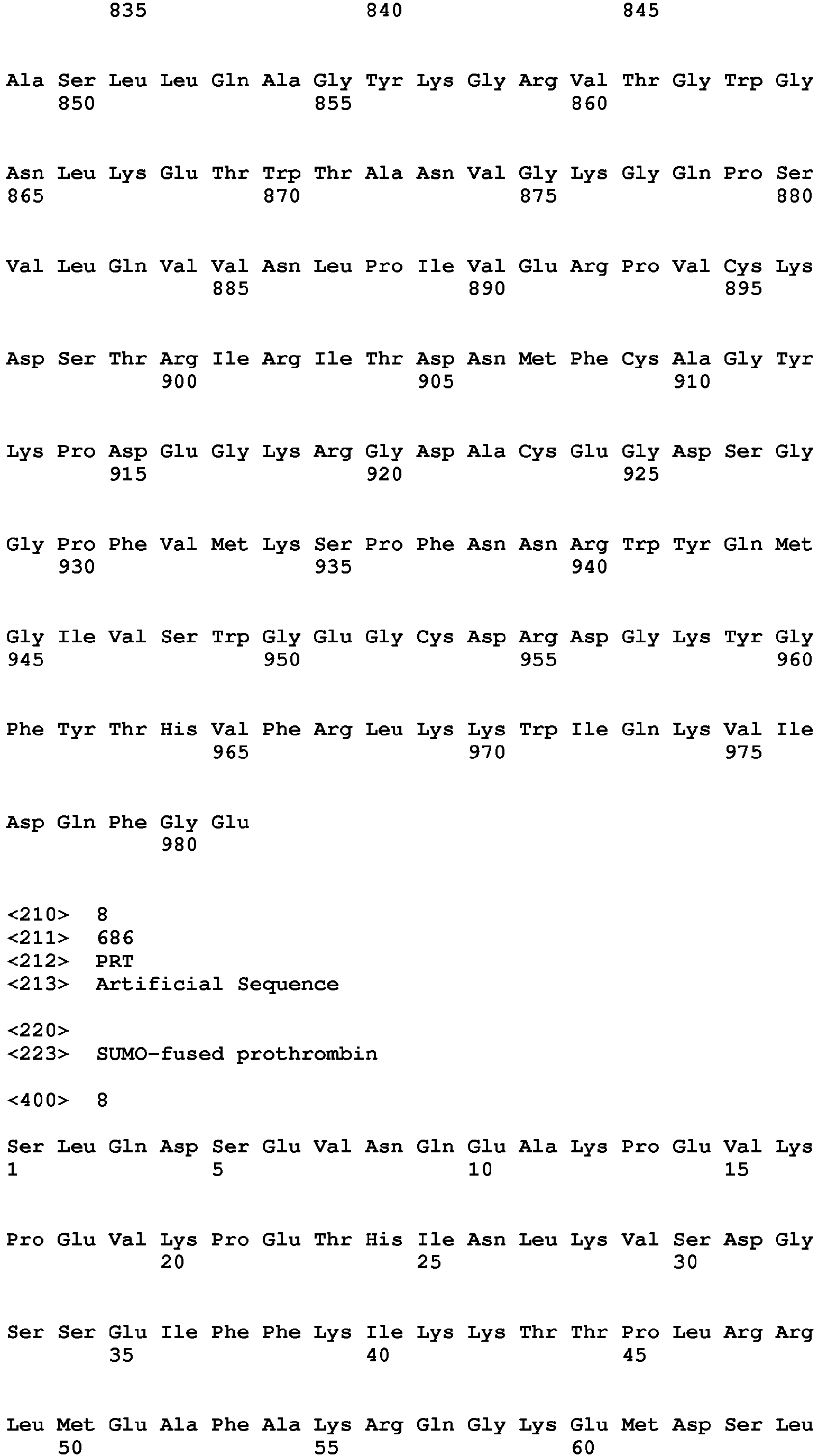


Claims (19)
- A method for producing recombinant prothrombin, comprising:providing a vector DNA into which a gene encoding a tag and a gene encoding prothrombin are incorporated, wherein the tag is selected from the group consisting of MBP, SUMO, and NusA; andexpressing a tag fusion type prothrombin in a lepidopteran insect or cultured cells of the lepidopteran insect.
- The method according to claim 1, further comprising:obtaining a soluble fraction containing the tag fusion type prothrombin from the lepidopteran insect or the cultured cells of the lepidopteran insect after the expressing step.
- The method according to claim 1 or 2, wherein the gene encoding a tag is incorporated into the vector DNA so that the tag is fused to the N terminal of prothrombin.
- The method according to any of claims 1 to 3, wherein a gene encoding an amino acid sequence represented by any one of SEQ ID NOS: 7 to 9 is incorporated into the vector DNA.
- The method according to any of claims 1 to 4, wherein the tag fusion type prothrombin is expressed in the lepidopteran insect in the expressing step.
- The method according to any of claims 1 to 5, wherein the tag fusion type prothrombin is expressed in a pupa of the lepidopteran insect in the expressing.
- The method according to any of claims 1 to 6, wherein the lepidopteran insect is Bombyx mori.
- The method according to any of claims 1 to 7, wherein the expressing step comprises infecting the lepidopteran insect or the cultured cells of the lepidopteran insect with a baculovirus comprising the vector DNA.
- The method according to any of claims 1 to 8, wherein a gene encoding a protein secretory signal sequence is incorporated into the vector DNA.
- The method according to claim 9, wherein the protein secretory signal sequence is at least one selected from the group consisting of a prothrombin-derived secretory signal sequence, a Bombyx mori-derived 30K signal sequence, and a Bombyx mori-derived SP signal sequence.
- A vector DNA into which a gene encoding a tag and a gene encoding prothrombin are incorporated, wherein the tag is selected from the group consisting of MBP, SUMO, and NusA.
- A baculovirus comprising the vector DNA according to claim 11.
- A kit for manufacturing recombinant prothrombin comprising the vector DNA according to claim 11.
- The kit according to claim 13, wherein the vector DNA is comprised in a baculovirus.
- The kit according to claim 13 or 14, wherein a gene encoding a protein secretory signal sequence is incorporated into the vector DNA.
- A tag fusion type prothrombin which is expressed in a lepidopteran insect or cultured cells of the lepidopteran insect using the vector DNA according to claim 11.
- A thrombin reagent comprising a thrombin obtained from the tag fusion type prothrombin according to claim 16.
- A reagent kit comprising:a thrombin reagent comprising a thrombin according to claim 17; anda diluent buffer for diluting plasma of a subject.
- The reagent kit according to claim 18, further comprising a reference solution which contains a predetermined concentration of fibrinogen.
Applications Claiming Priority (2)
| Application Number | Priority Date | Filing Date | Title |
|---|---|---|---|
| JP2013053566 | 2013-03-15 | ||
| JP2014011411A JP6216647B2 (en) | 2013-03-15 | 2014-01-24 | Method for producing recombinant prothrombin and use thereof |
Publications (2)
| Publication Number | Publication Date |
|---|---|
| EP2778225A1 true EP2778225A1 (en) | 2014-09-17 |
| EP2778225B1 EP2778225B1 (en) | 2017-02-01 |
Family
ID=50238279
Family Applications (1)
| Application Number | Title | Priority Date | Filing Date |
|---|---|---|---|
| EP14158806.1A Active EP2778225B1 (en) | 2013-03-15 | 2014-03-11 | Method for producing recombinant prothrombin, and vector DNA |
Country Status (4)
| Country | Link |
|---|---|
| US (1) | US9447402B2 (en) |
| EP (1) | EP2778225B1 (en) |
| JP (1) | JP6216647B2 (en) |
| CN (1) | CN104046606B (en) |
Families Citing this family (5)
| Publication number | Priority date | Publication date | Assignee | Title |
|---|---|---|---|---|
| WO2017062802A1 (en) | 2015-10-09 | 2017-04-13 | Cleveland State University | Recombinant prothrombin analogues and uses thereof |
| US20220315911A1 (en) * | 2017-03-02 | 2022-10-06 | Isobionics B.V. | Santalene synthase |
| CN108409838B (en) * | 2018-01-30 | 2020-11-13 | 浙江理工大学 | Guide peptides for secretory expression in insect expression systems |
| CN113005176A (en) * | 2019-12-20 | 2021-06-22 | 深圳市帝迈生物技术有限公司 | Stabilizer, prothrombin time detection reagent, preparation method and kit thereof |
| CN115558015B (en) * | 2022-10-12 | 2024-01-19 | 生工生物工程(上海)股份有限公司 | Method for purifying GST-tag-free target protein from product obtained after GST fusion protein cleavage and product |
Citations (7)
| Publication number | Priority date | Publication date | Assignee | Title |
|---|---|---|---|---|
| JPH07303488A (en) | 1994-03-15 | 1995-11-21 | Katakura Kogyo Kk | Cysteine protease gene-deleted baculovirus and its production and production of useful protein using the same |
| JP2002306163A (en) | 2001-04-11 | 2002-10-22 | Chemo Sero Therapeut Res Inst | Method for preparing recombinant human thrombin using Escherichia coli as a host |
| JP2003052371A (en) | 2001-08-17 | 2003-02-25 | Katakura Industries Co Ltd | Recombinant baculovirus and method for obtaining protein using the same |
| US20040197858A1 (en) | 2001-07-06 | 2004-10-07 | Hiroshi Yonemura | Process for producing human thrombin by gene modification technique |
| WO2005003313A2 (en) * | 2003-06-26 | 2005-01-13 | Lifesensors, Inc. | Methods and compositions for enhanced protein expression and purification |
| WO2007120809A1 (en) * | 2006-04-14 | 2007-10-25 | New England Biolabs, Inc. | Solubilization and purification of a target protein fused to a mutant maltose-binding protein |
| US20090137001A1 (en) | 2005-09-30 | 2009-05-28 | Tatsufumi Onchi | Process for preparing recombinant human thrombin with culture cell |
Family Cites Families (1)
| Publication number | Priority date | Publication date | Assignee | Title |
|---|---|---|---|---|
| JP2002300886A (en) * | 2001-04-06 | 2002-10-15 | Katakura Industries Co Ltd | Stable recombinant human chymase, method for producing the same, and screening method using the same |
-
2014
- 2014-01-24 JP JP2014011411A patent/JP6216647B2/en active Active
- 2014-03-10 US US14/202,046 patent/US9447402B2/en not_active Expired - Fee Related
- 2014-03-11 EP EP14158806.1A patent/EP2778225B1/en active Active
- 2014-03-14 CN CN201410095588.3A patent/CN104046606B/en active Active
Patent Citations (9)
| Publication number | Priority date | Publication date | Assignee | Title |
|---|---|---|---|---|
| JPH07303488A (en) | 1994-03-15 | 1995-11-21 | Katakura Kogyo Kk | Cysteine protease gene-deleted baculovirus and its production and production of useful protein using the same |
| JP2002306163A (en) | 2001-04-11 | 2002-10-22 | Chemo Sero Therapeut Res Inst | Method for preparing recombinant human thrombin using Escherichia coli as a host |
| US20040197858A1 (en) | 2001-07-06 | 2004-10-07 | Hiroshi Yonemura | Process for producing human thrombin by gene modification technique |
| JP2003052371A (en) | 2001-08-17 | 2003-02-25 | Katakura Industries Co Ltd | Recombinant baculovirus and method for obtaining protein using the same |
| WO2005003313A2 (en) * | 2003-06-26 | 2005-01-13 | Lifesensors, Inc. | Methods and compositions for enhanced protein expression and purification |
| US20070037246A1 (en) | 2003-06-26 | 2007-02-15 | Butt Tauseef R | Methods and compositions for enhanced protein expression and purification |
| US20090137001A1 (en) | 2005-09-30 | 2009-05-28 | Tatsufumi Onchi | Process for preparing recombinant human thrombin with culture cell |
| WO2007120809A1 (en) * | 2006-04-14 | 2007-10-25 | New England Biolabs, Inc. | Solubilization and purification of a target protein fused to a mutant maltose-binding protein |
| US20090305342A1 (en) | 2006-04-14 | 2009-12-10 | New England Biolabs, Inc. | Solubilization and Purification of a Target Protein fused to a Mutant Maltose-Binding Protein |
Non-Patent Citations (3)
| Title |
|---|
| DAVIS GREGORY D ET AL: "New fusion protein systems designed to give soluble expression in Escherichia coli", BIOTECHNOLOGY AND BIOENGINEERING, WILEY & SONS, HOBOKEN, NJ, US, vol. 65, no. 4, 1 January 1999 (1999-01-01), pages 382 - 388, XP002192026, ISSN: 0006-3592, DOI: 10.1002/(SICI)1097-0290(19991120)65:4<382::AID-BIT2>3.0.CO;2-I * |
| MAEDA ET AL.: "InverterbrateCell system and Applications", vol. 1, 1989, CRC PRESS, pages: 167 - 181 |
| SOEJIMA K. ET AL., J. BIOCHEM., vol. 130, 2001, pages 269 - 277 |
Also Published As
| Publication number | Publication date |
|---|---|
| EP2778225B1 (en) | 2017-02-01 |
| CN104046606A (en) | 2014-09-17 |
| US9447402B2 (en) | 2016-09-20 |
| JP2014198040A (en) | 2014-10-23 |
| JP6216647B2 (en) | 2017-10-18 |
| US20140273040A1 (en) | 2014-09-18 |
| CN104046606B (en) | 2020-02-14 |
Similar Documents
| Publication | Publication Date | Title |
|---|---|---|
| US20250171761A1 (en) | Novel recombinant factor c and method for producing the same, and method for measuring endotoxin | |
| EP2778225B1 (en) | Method for producing recombinant prothrombin, and vector DNA | |
| RU2567811C2 (en) | Method for purification of blood-coagulation factor viii | |
| US5753220A (en) | Cysteine protease gene defective baculovirus, process for its production, and process for the production of economic protein by using the same | |
| EP1935902B1 (en) | Reagent for measuring clotting time and method for manufacturing the reagent | |
| JP5838159B2 (en) | Purification of VWF to enhance removal of non-lipid enveloped virus | |
| Elhalwagi et al. | Alternate amino terminal processing of surfactant protein A results in cysteinyl isoforms required for multimer formation | |
| Morifuji et al. | Expression, purification, and characterization of recombinant human α1-antitrypsin produced using silkworm–baculovirus expression system | |
| Jin et al. | Serine protease homolog pairs CLIPA4-A6, A4-A7Δ, and A4-A12 act as cofactors for proteolytic activation of prophenoloxidase-2 and-7 in Anopheles gambiae | |
| US9303251B2 (en) | Recombinant baculovirus and use thereof | |
| Wu et al. | High-level expression, purification and production of the fungal immunomodulatory protein-gts in baculovirus-infected insect larva | |
| Targovnik et al. | Horseradish peroxidase production from Spodoptera frugiperda larvae: a simple and inexpensive method | |
| Vasanth et al. | The serine protease homolog Skanda modulates Toll-Phenoloxidase-mediated immunity in Drosophila | |
| CN113025578A (en) | Anti-apoptosis monoclonal cell strain and preparation method thereof | |
| Tan et al. | Preparation and application analysis of a polyclonal antibody as reference protein in Helicoverpa armigera (Lepidoptera: Noctuidae) | |
| US11932860B2 (en) | Method for producing alkaline phosphatase, alkaline phosphatase obtained using said method, and vector and transformant for production thereof | |
| Patel et al. | Purification, crystallization and preliminary X-ray crystallographic analysis of MIL, a glycosylated jacalin-related lectin from mulberry (Morus indica) latex | |
| AU2004240623A1 (en) | Process for manufacture of Nematode-extracted Anticoagulant Protein (NAP) | |
| JPWO2000000516A1 (en) | Novel carbohydrate-binding thrombomodulin-like peptides | |
| JP2002503474A (en) | Expression vector for DEAD protein production |
Legal Events
| Date | Code | Title | Description |
|---|---|---|---|
| 17P | Request for examination filed |
Effective date: 20140311 |
|
| AK | Designated contracting states |
Kind code of ref document: A1 Designated state(s): AL AT BE BG CH CY CZ DE DK EE ES FI FR GB GR HR HU IE IS IT LI LT LU LV MC MK MT NL NO PL PT RO RS SE SI SK SM TR |
|
| AX | Request for extension of the european patent |
Extension state: BA ME |
|
| PUAI | Public reference made under article 153(3) epc to a published international application that has entered the european phase |
Free format text: ORIGINAL CODE: 0009012 |
|
| R17P | Request for examination filed (corrected) |
Effective date: 20150310 |
|
| RBV | Designated contracting states (corrected) |
Designated state(s): AL AT BE BG CH CY CZ DE DK EE ES FI FR GB GR HR HU IE IS IT LI LT LU LV MC MK MT NL NO PL PT RO RS SE SI SK SM TR |
|
| GRAP | Despatch of communication of intention to grant a patent |
Free format text: ORIGINAL CODE: EPIDOSNIGR1 |
|
| RIC1 | Information provided on ipc code assigned before grant |
Ipc: C12N 15/866 20060101ALI20160919BHEP Ipc: C07K 19/00 20060101ALI20160919BHEP Ipc: C12N 9/64 20060101ALI20160919BHEP Ipc: C12N 9/74 20060101AFI20160919BHEP |
|
| INTG | Intention to grant announced |
Effective date: 20161004 |
|
| GRAS | Grant fee paid |
Free format text: ORIGINAL CODE: EPIDOSNIGR3 |
|
| GRAA | (expected) grant |
Free format text: ORIGINAL CODE: 0009210 |
|
| AK | Designated contracting states |
Kind code of ref document: B1 Designated state(s): AL AT BE BG CH CY CZ DE DK EE ES FI FR GB GR HR HU IE IS IT LI LT LU LV MC MK MT NL NO PL PT RO RS SE SI SK SM TR |
|
| REG | Reference to a national code |
Ref country code: GB Ref legal event code: FG4D |
|
| REG | Reference to a national code |
Ref country code: CH Ref legal event code: EP Ref country code: AT Ref legal event code: REF Ref document number: 865623 Country of ref document: AT Kind code of ref document: T Effective date: 20170215 |
|
| REG | Reference to a national code |
Ref country code: IE Ref legal event code: FG4D |
|
| REG | Reference to a national code |
Ref country code: FR Ref legal event code: PLFP Year of fee payment: 4 |
|
| REG | Reference to a national code |
Ref country code: DE Ref legal event code: R096 Ref document number: 602014006447 Country of ref document: DE |
|
| REG | Reference to a national code |
Ref country code: NL Ref legal event code: MP Effective date: 20170201 |
|
| REG | Reference to a national code |
Ref country code: LT Ref legal event code: MG4D |
|
| REG | Reference to a national code |
Ref country code: AT Ref legal event code: MK05 Ref document number: 865623 Country of ref document: AT Kind code of ref document: T Effective date: 20170201 |
|
| PG25 | Lapsed in a contracting state [announced via postgrant information from national office to epo] |
Ref country code: HR Free format text: LAPSE BECAUSE OF FAILURE TO SUBMIT A TRANSLATION OF THE DESCRIPTION OR TO PAY THE FEE WITHIN THE PRESCRIBED TIME-LIMIT Effective date: 20170201 Ref country code: IS Free format text: LAPSE BECAUSE OF FAILURE TO SUBMIT A TRANSLATION OF THE DESCRIPTION OR TO PAY THE FEE WITHIN THE PRESCRIBED TIME-LIMIT Effective date: 20170601 Ref country code: GR Free format text: LAPSE BECAUSE OF FAILURE TO SUBMIT A TRANSLATION OF THE DESCRIPTION OR TO PAY THE FEE WITHIN THE PRESCRIBED TIME-LIMIT Effective date: 20170502 Ref country code: LT Free format text: LAPSE BECAUSE OF FAILURE TO SUBMIT A TRANSLATION OF THE DESCRIPTION OR TO PAY THE FEE WITHIN THE PRESCRIBED TIME-LIMIT Effective date: 20170201 Ref country code: FI Free format text: LAPSE BECAUSE OF FAILURE TO SUBMIT A TRANSLATION OF THE DESCRIPTION OR TO PAY THE FEE WITHIN THE PRESCRIBED TIME-LIMIT Effective date: 20170201 Ref country code: NO Free format text: LAPSE BECAUSE OF FAILURE TO SUBMIT A TRANSLATION OF THE DESCRIPTION OR TO PAY THE FEE WITHIN THE PRESCRIBED TIME-LIMIT Effective date: 20170501 |
|
| PG25 | Lapsed in a contracting state [announced via postgrant information from national office to epo] |
Ref country code: PL Free format text: LAPSE BECAUSE OF FAILURE TO SUBMIT A TRANSLATION OF THE DESCRIPTION OR TO PAY THE FEE WITHIN THE PRESCRIBED TIME-LIMIT Effective date: 20170201 Ref country code: ES Free format text: LAPSE BECAUSE OF FAILURE TO SUBMIT A TRANSLATION OF THE DESCRIPTION OR TO PAY THE FEE WITHIN THE PRESCRIBED TIME-LIMIT Effective date: 20170201 Ref country code: NL Free format text: LAPSE BECAUSE OF FAILURE TO SUBMIT A TRANSLATION OF THE DESCRIPTION OR TO PAY THE FEE WITHIN THE PRESCRIBED TIME-LIMIT Effective date: 20170201 Ref country code: BG Free format text: LAPSE BECAUSE OF FAILURE TO SUBMIT A TRANSLATION OF THE DESCRIPTION OR TO PAY THE FEE WITHIN THE PRESCRIBED TIME-LIMIT Effective date: 20170501 Ref country code: AT Free format text: LAPSE BECAUSE OF FAILURE TO SUBMIT A TRANSLATION OF THE DESCRIPTION OR TO PAY THE FEE WITHIN THE PRESCRIBED TIME-LIMIT Effective date: 20170201 Ref country code: LV Free format text: LAPSE BECAUSE OF FAILURE TO SUBMIT A TRANSLATION OF THE DESCRIPTION OR TO PAY THE FEE WITHIN THE PRESCRIBED TIME-LIMIT Effective date: 20170201 Ref country code: SE Free format text: LAPSE BECAUSE OF FAILURE TO SUBMIT A TRANSLATION OF THE DESCRIPTION OR TO PAY THE FEE WITHIN THE PRESCRIBED TIME-LIMIT Effective date: 20170201 Ref country code: RS Free format text: LAPSE BECAUSE OF FAILURE TO SUBMIT A TRANSLATION OF THE DESCRIPTION OR TO PAY THE FEE WITHIN THE PRESCRIBED TIME-LIMIT Effective date: 20170201 Ref country code: PT Free format text: LAPSE BECAUSE OF FAILURE TO SUBMIT A TRANSLATION OF THE DESCRIPTION OR TO PAY THE FEE WITHIN THE PRESCRIBED TIME-LIMIT Effective date: 20170601 |
|
| PG25 | Lapsed in a contracting state [announced via postgrant information from national office to epo] |
Ref country code: IT Free format text: LAPSE BECAUSE OF FAILURE TO SUBMIT A TRANSLATION OF THE DESCRIPTION OR TO PAY THE FEE WITHIN THE PRESCRIBED TIME-LIMIT Effective date: 20170201 Ref country code: RO Free format text: LAPSE BECAUSE OF FAILURE TO SUBMIT A TRANSLATION OF THE DESCRIPTION OR TO PAY THE FEE WITHIN THE PRESCRIBED TIME-LIMIT Effective date: 20170201 Ref country code: SK Free format text: LAPSE BECAUSE OF FAILURE TO SUBMIT A TRANSLATION OF THE DESCRIPTION OR TO PAY THE FEE WITHIN THE PRESCRIBED TIME-LIMIT Effective date: 20170201 Ref country code: EE Free format text: LAPSE BECAUSE OF FAILURE TO SUBMIT A TRANSLATION OF THE DESCRIPTION OR TO PAY THE FEE WITHIN THE PRESCRIBED TIME-LIMIT Effective date: 20170201 Ref country code: CZ Free format text: LAPSE BECAUSE OF FAILURE TO SUBMIT A TRANSLATION OF THE DESCRIPTION OR TO PAY THE FEE WITHIN THE PRESCRIBED TIME-LIMIT Effective date: 20170201 |
|
| REG | Reference to a national code |
Ref country code: CH Ref legal event code: PL |
|
| REG | Reference to a national code |
Ref country code: DE Ref legal event code: R097 Ref document number: 602014006447 Country of ref document: DE |
|
| PG25 | Lapsed in a contracting state [announced via postgrant information from national office to epo] |
Ref country code: DK Free format text: LAPSE BECAUSE OF FAILURE TO SUBMIT A TRANSLATION OF THE DESCRIPTION OR TO PAY THE FEE WITHIN THE PRESCRIBED TIME-LIMIT Effective date: 20170201 Ref country code: MC Free format text: LAPSE BECAUSE OF FAILURE TO SUBMIT A TRANSLATION OF THE DESCRIPTION OR TO PAY THE FEE WITHIN THE PRESCRIBED TIME-LIMIT Effective date: 20170201 Ref country code: SM Free format text: LAPSE BECAUSE OF FAILURE TO SUBMIT A TRANSLATION OF THE DESCRIPTION OR TO PAY THE FEE WITHIN THE PRESCRIBED TIME-LIMIT Effective date: 20170201 |
|
| PLBE | No opposition filed within time limit |
Free format text: ORIGINAL CODE: 0009261 |
|
| STAA | Information on the status of an ep patent application or granted ep patent |
Free format text: STATUS: NO OPPOSITION FILED WITHIN TIME LIMIT |
|
| REG | Reference to a national code |
Ref country code: IE Ref legal event code: MM4A |
|
| 26N | No opposition filed |
Effective date: 20171103 |
|
| PG25 | Lapsed in a contracting state [announced via postgrant information from national office to epo] |
Ref country code: LU Free format text: LAPSE BECAUSE OF NON-PAYMENT OF DUE FEES Effective date: 20170311 |
|
| REG | Reference to a national code |
Ref country code: FR Ref legal event code: PLFP Year of fee payment: 5 |
|
| PG25 | Lapsed in a contracting state [announced via postgrant information from national office to epo] |
Ref country code: CH Free format text: LAPSE BECAUSE OF NON-PAYMENT OF DUE FEES Effective date: 20170331 Ref country code: LI Free format text: LAPSE BECAUSE OF NON-PAYMENT OF DUE FEES Effective date: 20170331 Ref country code: IE Free format text: LAPSE BECAUSE OF NON-PAYMENT OF DUE FEES Effective date: 20170311 Ref country code: SI Free format text: LAPSE BECAUSE OF FAILURE TO SUBMIT A TRANSLATION OF THE DESCRIPTION OR TO PAY THE FEE WITHIN THE PRESCRIBED TIME-LIMIT Effective date: 20170201 |
|
| REG | Reference to a national code |
Ref country code: BE Ref legal event code: MM Effective date: 20170331 |
|
| PG25 | Lapsed in a contracting state [announced via postgrant information from national office to epo] |
Ref country code: BE Free format text: LAPSE BECAUSE OF NON-PAYMENT OF DUE FEES Effective date: 20170331 |
|
| PG25 | Lapsed in a contracting state [announced via postgrant information from national office to epo] |
Ref country code: MT Free format text: LAPSE BECAUSE OF NON-PAYMENT OF DUE FEES Effective date: 20170311 |
|
| PG25 | Lapsed in a contracting state [announced via postgrant information from national office to epo] |
Ref country code: HU Free format text: LAPSE BECAUSE OF FAILURE TO SUBMIT A TRANSLATION OF THE DESCRIPTION OR TO PAY THE FEE WITHIN THE PRESCRIBED TIME-LIMIT; INVALID AB INITIO Effective date: 20140311 |
|
| PG25 | Lapsed in a contracting state [announced via postgrant information from national office to epo] |
Ref country code: CY Free format text: LAPSE BECAUSE OF NON-PAYMENT OF DUE FEES Effective date: 20170201 |
|
| PG25 | Lapsed in a contracting state [announced via postgrant information from national office to epo] |
Ref country code: MK Free format text: LAPSE BECAUSE OF FAILURE TO SUBMIT A TRANSLATION OF THE DESCRIPTION OR TO PAY THE FEE WITHIN THE PRESCRIBED TIME-LIMIT Effective date: 20170201 |
|
| PG25 | Lapsed in a contracting state [announced via postgrant information from national office to epo] |
Ref country code: TR Free format text: LAPSE BECAUSE OF FAILURE TO SUBMIT A TRANSLATION OF THE DESCRIPTION OR TO PAY THE FEE WITHIN THE PRESCRIBED TIME-LIMIT Effective date: 20170201 |
|
| PG25 | Lapsed in a contracting state [announced via postgrant information from national office to epo] |
Ref country code: AL Free format text: LAPSE BECAUSE OF FAILURE TO SUBMIT A TRANSLATION OF THE DESCRIPTION OR TO PAY THE FEE WITHIN THE PRESCRIBED TIME-LIMIT Effective date: 20170201 |
|
| PGFP | Annual fee paid to national office [announced via postgrant information from national office to epo] |
Ref country code: GB Payment date: 20260202 Year of fee payment: 13 |
|
| PGFP | Annual fee paid to national office [announced via postgrant information from national office to epo] |
Ref country code: DE Payment date: 20260128 Year of fee payment: 13 |
|
| PGFP | Annual fee paid to national office [announced via postgrant information from national office to epo] |
Ref country code: FR Payment date: 20260209 Year of fee payment: 13 |