EP2774986A1 - Improvement of clostridial butanol production by gene overexpression - Google Patents
Improvement of clostridial butanol production by gene overexpression Download PDFInfo
- Publication number
- EP2774986A1 EP2774986A1 EP13158012.8A EP13158012A EP2774986A1 EP 2774986 A1 EP2774986 A1 EP 2774986A1 EP 13158012 A EP13158012 A EP 13158012A EP 2774986 A1 EP2774986 A1 EP 2774986A1
- Authority
- EP
- European Patent Office
- Prior art keywords
- clostridium
- cell
- butanol
- gene encoding
- gene
- Prior art date
- Legal status (The legal status is an assumption and is not a legal conclusion. Google has not performed a legal analysis and makes no representation as to the accuracy of the status listed.)
- Withdrawn
Links
- LRHPLDYGYMQRHN-UHFFFAOYSA-N N-Butanol Chemical compound CCCCO LRHPLDYGYMQRHN-UHFFFAOYSA-N 0.000 title claims abstract description 138
- 238000004519 manufacturing process Methods 0.000 title claims abstract description 41
- 241001112695 Clostridiales Species 0.000 title description 8
- 238000003208 gene overexpression Methods 0.000 title description 5
- 230000006872 improvement Effects 0.000 title description 5
- 241000193401 Clostridium acetobutylicum Species 0.000 claims abstract description 45
- 108090000623 proteins and genes Proteins 0.000 claims abstract description 45
- 241000193403 Clostridium Species 0.000 claims abstract description 34
- 230000002018 overexpression Effects 0.000 claims abstract description 33
- 108010023922 Enoyl-CoA hydratase Proteins 0.000 claims abstract description 14
- 238000012239 gene modification Methods 0.000 claims abstract description 14
- 230000005017 genetic modification Effects 0.000 claims abstract description 14
- 235000013617 genetically modified food Nutrition 0.000 claims abstract description 14
- 108010055682 3-hydroxybutyryl-CoA dehydrogenase Proteins 0.000 claims abstract description 13
- 102000011426 Enoyl-CoA hydratase Human genes 0.000 claims abstract description 13
- 102100039894 Hemoglobin subunit delta Human genes 0.000 claims abstract description 13
- 108010068197 Butyryl-CoA Dehydrogenase Proteins 0.000 claims abstract description 11
- 102000004190 Enzymes Human genes 0.000 claims abstract description 11
- 108090000790 Enzymes Proteins 0.000 claims abstract description 11
- 102100024639 Short-chain specific acyl-CoA dehydrogenase, mitochondrial Human genes 0.000 claims abstract description 10
- LFQSCWFLJHTTHZ-UHFFFAOYSA-N Ethanol Chemical compound CCO LFQSCWFLJHTTHZ-UHFFFAOYSA-N 0.000 claims description 48
- 238000000034 method Methods 0.000 claims description 24
- 125000003275 alpha amino acid group Chemical group 0.000 claims description 17
- 230000000694 effects Effects 0.000 claims description 16
- 239000013598 vector Substances 0.000 claims description 15
- 241000423302 Clostridium acetobutylicum ATCC 824 Species 0.000 claims description 11
- QTBSBXVTEAMEQO-UHFFFAOYSA-M Acetate Chemical compound CC([O-])=O QTBSBXVTEAMEQO-UHFFFAOYSA-M 0.000 claims description 10
- 239000013612 plasmid Substances 0.000 claims description 10
- 235000000346 sugar Nutrition 0.000 claims description 10
- 241000588724 Escherichia coli Species 0.000 claims description 7
- 108091028043 Nucleic acid sequence Proteins 0.000 claims description 4
- 239000002243 precursor Substances 0.000 claims description 4
- 230000001131 transforming effect Effects 0.000 claims description 4
- 230000011987 methylation Effects 0.000 claims description 3
- 238000007069 methylation reaction Methods 0.000 claims description 3
- 241000894007 species Species 0.000 claims description 3
- 241001156739 Actinobacteria <phylum> Species 0.000 claims description 2
- 238000010367 cloning Methods 0.000 claims description 2
- 230000009466 transformation Effects 0.000 claims description 2
- 230000001965 increasing effect Effects 0.000 abstract description 15
- 238000012269 metabolic engineering Methods 0.000 abstract description 10
- CSCPPACGZOOCGX-UHFFFAOYSA-N Acetone Chemical compound CC(C)=O CSCPPACGZOOCGX-UHFFFAOYSA-N 0.000 description 42
- 210000004027 cell Anatomy 0.000 description 26
- WQZGKKKJIJFFOK-GASJEMHNSA-N Glucose Natural products OC[C@H]1OC(O)[C@H](O)[C@@H](O)[C@@H]1O WQZGKKKJIJFFOK-GASJEMHNSA-N 0.000 description 19
- 239000008103 glucose Substances 0.000 description 19
- 230000008569 process Effects 0.000 description 16
- 239000002609 medium Substances 0.000 description 15
- 238000000855 fermentation Methods 0.000 description 12
- 230000004151 fermentation Effects 0.000 description 12
- 239000000047 product Substances 0.000 description 12
- FERIUCNNQQJTOY-UHFFFAOYSA-M Butyrate Chemical compound CCCC([O-])=O FERIUCNNQQJTOY-UHFFFAOYSA-M 0.000 description 9
- FERIUCNNQQJTOY-UHFFFAOYSA-N Butyric acid Natural products CCCC(O)=O FERIUCNNQQJTOY-UHFFFAOYSA-N 0.000 description 9
- ZSLZBFCDCINBPY-ZSJPKINUSA-N acetyl-CoA Chemical compound O[C@@H]1[C@H](OP(O)(O)=O)[C@@H](COP(O)(=O)OP(O)(=O)OCC(C)(C)[C@@H](O)C(=O)NCCC(=O)NCCSC(=O)C)O[C@H]1N1C2=NC=NC(N)=C2N=C1 ZSLZBFCDCINBPY-ZSJPKINUSA-N 0.000 description 8
- 230000015572 biosynthetic process Effects 0.000 description 8
- 239000002904 solvent Substances 0.000 description 8
- 241001112696 Clostridia Species 0.000 description 7
- 108060008225 Thiolase Proteins 0.000 description 7
- 238000013459 approach Methods 0.000 description 7
- QTBSBXVTEAMEQO-UHFFFAOYSA-N Acetic acid Chemical compound CC(O)=O QTBSBXVTEAMEQO-UHFFFAOYSA-N 0.000 description 6
- CSNNHWWHGAXBCP-UHFFFAOYSA-L Magnesium sulfate Chemical compound [Mg+2].[O-][S+2]([O-])([O-])[O-] CSNNHWWHGAXBCP-UHFFFAOYSA-L 0.000 description 6
- 102000002932 Thiolase Human genes 0.000 description 6
- 238000002474 experimental method Methods 0.000 description 6
- 239000007789 gas Substances 0.000 description 6
- CRFNGMNYKDXRTN-CITAKDKDSA-N butyryl-CoA Chemical compound O[C@@H]1[C@H](OP(O)(O)=O)[C@@H](COP(O)(=O)OP(O)(=O)OCC(C)(C)[C@@H](O)C(=O)NCCC(=O)NCCSC(=O)CCC)O[C@H]1N1C2=NC=NC(N)=C2N=C1 CRFNGMNYKDXRTN-CITAKDKDSA-N 0.000 description 5
- 238000006243 chemical reaction Methods 0.000 description 5
- 238000001704 evaporation Methods 0.000 description 5
- 230000008020 evaporation Effects 0.000 description 5
- YBJHBAHKTGYVGT-ZKWXMUAHSA-N (+)-Biotin Chemical compound N1C(=O)N[C@@H]2[C@H](CCCCC(=O)O)SC[C@@H]21 YBJHBAHKTGYVGT-ZKWXMUAHSA-N 0.000 description 4
- ALYNCZNDIQEVRV-UHFFFAOYSA-N 4-aminobenzoic acid Chemical compound NC1=CC=C(C(O)=O)C=C1 ALYNCZNDIQEVRV-UHFFFAOYSA-N 0.000 description 4
- ULGZDMOVFRHVEP-RWJQBGPGSA-N Erythromycin Chemical compound O([C@@H]1[C@@H](C)C(=O)O[C@@H]([C@@]([C@H](O)[C@@H](C)C(=O)[C@H](C)C[C@@](C)(O)[C@H](O[C@H]2[C@@H]([C@H](C[C@@H](C)O2)N(C)C)O)[C@H]1C)(C)O)CC)[C@H]1C[C@@](C)(OC)[C@@H](O)[C@H](C)O1 ULGZDMOVFRHVEP-RWJQBGPGSA-N 0.000 description 4
- FAPWRFPIFSIZLT-UHFFFAOYSA-M Sodium chloride Chemical compound [Na+].[Cl-] FAPWRFPIFSIZLT-UHFFFAOYSA-M 0.000 description 4
- 239000002253 acid Substances 0.000 description 4
- 238000012365 batch cultivation Methods 0.000 description 4
- UVMPXOYNLLXNTR-UHFFFAOYSA-N butan-1-ol;ethanol;propan-2-one Chemical compound CCO.CC(C)=O.CCCCO UVMPXOYNLLXNTR-UHFFFAOYSA-N 0.000 description 4
- 230000007613 environmental effect Effects 0.000 description 4
- 230000002068 genetic effect Effects 0.000 description 4
- 230000012010 growth Effects 0.000 description 4
- 238000011081 inoculation Methods 0.000 description 4
- SXGZJKUKBWWHRA-UHFFFAOYSA-N 2-(N-morpholiniumyl)ethanesulfonate Chemical compound [O-]S(=O)(=O)CC[NH+]1CCOCC1 SXGZJKUKBWWHRA-UHFFFAOYSA-N 0.000 description 3
- 102000007698 Alcohol dehydrogenase Human genes 0.000 description 3
- 108010021809 Alcohol dehydrogenase Proteins 0.000 description 3
- IJGRMHOSHXDMSA-UHFFFAOYSA-N Atomic nitrogen Chemical compound N#N IJGRMHOSHXDMSA-UHFFFAOYSA-N 0.000 description 3
- 239000007836 KH2PO4 Substances 0.000 description 3
- PLXBWHJQWKZRKG-UHFFFAOYSA-N Resazurin Chemical compound C1=CC(=O)C=C2OC3=CC(O)=CC=C3[N+]([O-])=C21 PLXBWHJQWKZRKG-UHFFFAOYSA-N 0.000 description 3
- HEMHJVSKTPXQMS-UHFFFAOYSA-M Sodium hydroxide Chemical compound [OH-].[Na+] HEMHJVSKTPXQMS-UHFFFAOYSA-M 0.000 description 3
- 150000007513 acids Chemical class 0.000 description 3
- 230000003698 anagen phase Effects 0.000 description 3
- ZPWVASYFFYYZEW-UHFFFAOYSA-L dipotassium hydrogen phosphate Chemical compound [K+].[K+].OP([O-])([O-])=O ZPWVASYFFYYZEW-UHFFFAOYSA-L 0.000 description 3
- 229910000396 dipotassium phosphate Inorganic materials 0.000 description 3
- 230000002255 enzymatic effect Effects 0.000 description 3
- BAUYGSIQEAFULO-UHFFFAOYSA-L iron(2+) sulfate (anhydrous) Chemical compound [Fe+2].[O-]S([O-])(=O)=O BAUYGSIQEAFULO-UHFFFAOYSA-L 0.000 description 3
- 229910000359 iron(II) sulfate Inorganic materials 0.000 description 3
- 229910052943 magnesium sulfate Inorganic materials 0.000 description 3
- 230000002503 metabolic effect Effects 0.000 description 3
- 229910000402 monopotassium phosphate Inorganic materials 0.000 description 3
- 230000037361 pathway Effects 0.000 description 3
- GNSKLFRGEWLPPA-UHFFFAOYSA-M potassium dihydrogen phosphate Chemical compound [K+].OP(O)([O-])=O GNSKLFRGEWLPPA-UHFFFAOYSA-M 0.000 description 3
- 239000000725 suspension Substances 0.000 description 3
- 102000005369 Aldehyde Dehydrogenase Human genes 0.000 description 2
- 108020002663 Aldehyde Dehydrogenase Proteins 0.000 description 2
- VHUUQVKOLVNVRT-UHFFFAOYSA-N Ammonium hydroxide Chemical compound [NH4+].[OH-] VHUUQVKOLVNVRT-UHFFFAOYSA-N 0.000 description 2
- 239000002028 Biomass Substances 0.000 description 2
- 241000193454 Clostridium beijerinckii Species 0.000 description 2
- 241000429427 Clostridium saccharobutylicum Species 0.000 description 2
- 241001508458 Clostridium saccharoperbutylacetonicum Species 0.000 description 2
- SRBFZHDQGSBBOR-IOVATXLUSA-N D-xylopyranose Chemical compound O[C@@H]1COC(O)[C@H](O)[C@H]1O SRBFZHDQGSBBOR-IOVATXLUSA-N 0.000 description 2
- XEEYBQQBJWHFJM-UHFFFAOYSA-N Iron Chemical compound [Fe] XEEYBQQBJWHFJM-UHFFFAOYSA-N 0.000 description 2
- KFZMGEQAYNKOFK-UHFFFAOYSA-N Isopropanol Chemical compound CC(C)O KFZMGEQAYNKOFK-UHFFFAOYSA-N 0.000 description 2
- 108091034117 Oligonucleotide Proteins 0.000 description 2
- CDBYLPFSWZWCQE-UHFFFAOYSA-L Sodium Carbonate Chemical compound [Na+].[Na+].[O-]C([O-])=O CDBYLPFSWZWCQE-UHFFFAOYSA-L 0.000 description 2
- 108090000992 Transferases Proteins 0.000 description 2
- 102000004357 Transferases Human genes 0.000 description 2
- JLCPHMBAVCMARE-UHFFFAOYSA-N [3-[[3-[[3-[[3-[[3-[[3-[[3-[[3-[[3-[[3-[[3-[[5-(2-amino-6-oxo-1H-purin-9-yl)-3-[[3-[[3-[[3-[[3-[[3-[[5-(2-amino-6-oxo-1H-purin-9-yl)-3-[[5-(2-amino-6-oxo-1H-purin-9-yl)-3-hydroxyoxolan-2-yl]methoxy-hydroxyphosphoryl]oxyoxolan-2-yl]methoxy-hydroxyphosphoryl]oxy-5-(5-methyl-2,4-dioxopyrimidin-1-yl)oxolan-2-yl]methoxy-hydroxyphosphoryl]oxy-5-(6-aminopurin-9-yl)oxolan-2-yl]methoxy-hydroxyphosphoryl]oxy-5-(6-aminopurin-9-yl)oxolan-2-yl]methoxy-hydroxyphosphoryl]oxy-5-(6-aminopurin-9-yl)oxolan-2-yl]methoxy-hydroxyphosphoryl]oxy-5-(6-aminopurin-9-yl)oxolan-2-yl]methoxy-hydroxyphosphoryl]oxyoxolan-2-yl]methoxy-hydroxyphosphoryl]oxy-5-(5-methyl-2,4-dioxopyrimidin-1-yl)oxolan-2-yl]methoxy-hydroxyphosphoryl]oxy-5-(4-amino-2-oxopyrimidin-1-yl)oxolan-2-yl]methoxy-hydroxyphosphoryl]oxy-5-(5-methyl-2,4-dioxopyrimidin-1-yl)oxolan-2-yl]methoxy-hydroxyphosphoryl]oxy-5-(5-methyl-2,4-dioxopyrimidin-1-yl)oxolan-2-yl]methoxy-hydroxyphosphoryl]oxy-5-(6-aminopurin-9-yl)oxolan-2-yl]methoxy-hydroxyphosphoryl]oxy-5-(6-aminopurin-9-yl)oxolan-2-yl]methoxy-hydroxyphosphoryl]oxy-5-(4-amino-2-oxopyrimidin-1-yl)oxolan-2-yl]methoxy-hydroxyphosphoryl]oxy-5-(4-amino-2-oxopyrimidin-1-yl)oxolan-2-yl]methoxy-hydroxyphosphoryl]oxy-5-(4-amino-2-oxopyrimidin-1-yl)oxolan-2-yl]methoxy-hydroxyphosphoryl]oxy-5-(6-aminopurin-9-yl)oxolan-2-yl]methoxy-hydroxyphosphoryl]oxy-5-(4-amino-2-oxopyrimidin-1-yl)oxolan-2-yl]methyl [5-(6-aminopurin-9-yl)-2-(hydroxymethyl)oxolan-3-yl] hydrogen phosphate Polymers Cc1cn(C2CC(OP(O)(=O)OCC3OC(CC3OP(O)(=O)OCC3OC(CC3O)n3cnc4c3nc(N)[nH]c4=O)n3cnc4c3nc(N)[nH]c4=O)C(COP(O)(=O)OC3CC(OC3COP(O)(=O)OC3CC(OC3COP(O)(=O)OC3CC(OC3COP(O)(=O)OC3CC(OC3COP(O)(=O)OC3CC(OC3COP(O)(=O)OC3CC(OC3COP(O)(=O)OC3CC(OC3COP(O)(=O)OC3CC(OC3COP(O)(=O)OC3CC(OC3COP(O)(=O)OC3CC(OC3COP(O)(=O)OC3CC(OC3COP(O)(=O)OC3CC(OC3COP(O)(=O)OC3CC(OC3COP(O)(=O)OC3CC(OC3COP(O)(=O)OC3CC(OC3COP(O)(=O)OC3CC(OC3COP(O)(=O)OC3CC(OC3CO)n3cnc4c(N)ncnc34)n3ccc(N)nc3=O)n3cnc4c(N)ncnc34)n3ccc(N)nc3=O)n3ccc(N)nc3=O)n3ccc(N)nc3=O)n3cnc4c(N)ncnc34)n3cnc4c(N)ncnc34)n3cc(C)c(=O)[nH]c3=O)n3cc(C)c(=O)[nH]c3=O)n3ccc(N)nc3=O)n3cc(C)c(=O)[nH]c3=O)n3cnc4c3nc(N)[nH]c4=O)n3cnc4c(N)ncnc34)n3cnc4c(N)ncnc34)n3cnc4c(N)ncnc34)n3cnc4c(N)ncnc34)O2)c(=O)[nH]c1=O JLCPHMBAVCMARE-UHFFFAOYSA-N 0.000 description 2
- OJFDKHTZOUZBOS-CITAKDKDSA-N acetoacetyl-CoA Chemical compound O[C@@H]1[C@H](OP(O)(O)=O)[C@@H](COP(O)(=O)OP(O)(=O)OCC(C)(C)[C@@H](O)C(=O)NCCC(=O)NCCSC(=O)CC(=O)C)O[C@H]1N1C2=NC=NC(N)=C2N=C1 OJFDKHTZOUZBOS-CITAKDKDSA-N 0.000 description 2
- 229960004050 aminobenzoic acid Drugs 0.000 description 2
- BFNBIHQBYMNNAN-UHFFFAOYSA-N ammonium sulfate Chemical compound N.N.OS(O)(=O)=O BFNBIHQBYMNNAN-UHFFFAOYSA-N 0.000 description 2
- 229910052921 ammonium sulfate Inorganic materials 0.000 description 2
- 230000006696 biosynthetic metabolic pathway Effects 0.000 description 2
- 229960002685 biotin Drugs 0.000 description 2
- 235000020958 biotin Nutrition 0.000 description 2
- 239000011616 biotin Substances 0.000 description 2
- 229940041514 candida albicans extract Drugs 0.000 description 2
- 238000012512 characterization method Methods 0.000 description 2
- 239000013611 chromosomal DNA Substances 0.000 description 2
- 238000001816 cooling Methods 0.000 description 2
- 239000000287 crude extract Substances 0.000 description 2
- 229960003276 erythromycin Drugs 0.000 description 2
- 230000004907 flux Effects 0.000 description 2
- 230000008774 maternal effect Effects 0.000 description 2
- 230000000813 microbial effect Effects 0.000 description 2
- 244000005700 microbiome Species 0.000 description 2
- 230000004048 modification Effects 0.000 description 2
- 238000012986 modification Methods 0.000 description 2
- 150000007523 nucleic acids Chemical group 0.000 description 2
- 235000005985 organic acids Nutrition 0.000 description 2
- -1 organic acids acetate Chemical class 0.000 description 2
- 230000027086 plasmid maintenance Effects 0.000 description 2
- 210000002966 serum Anatomy 0.000 description 2
- 239000011780 sodium chloride Substances 0.000 description 2
- 150000008163 sugars Chemical class 0.000 description 2
- 238000003786 synthesis reaction Methods 0.000 description 2
- 238000010792 warming Methods 0.000 description 2
- XLYOFNOQVPJJNP-UHFFFAOYSA-N water Substances O XLYOFNOQVPJJNP-UHFFFAOYSA-N 0.000 description 2
- 239000012138 yeast extract Substances 0.000 description 2
- IYSZVNGVOFVEHH-UHFFFAOYSA-K 2-[bis(carboxylatomethyl)amino]acetate;titanium(3+) Chemical compound [Ti+3].[O-]C(=O)CN(CC([O-])=O)CC([O-])=O IYSZVNGVOFVEHH-UHFFFAOYSA-K 0.000 description 1
- 108010092060 Acetate kinase Proteins 0.000 description 1
- 101100235000 Acetobacterium woodii (strain ATCC 29683 / DSM 1030 / JCM 2381 / KCTC 1655 / WB1) lctB gene Proteins 0.000 description 1
- 101100235003 Acetobacterium woodii (strain ATCC 29683 / DSM 1030 / JCM 2381 / KCTC 1655 / WB1) lctC gene Proteins 0.000 description 1
- 229920001817 Agar Polymers 0.000 description 1
- DCXYFEDJOCDNAF-UHFFFAOYSA-N Asparagine Natural products OC(=O)C(N)CC(N)=O DCXYFEDJOCDNAF-UHFFFAOYSA-N 0.000 description 1
- 241000193830 Bacillus <bacterium> Species 0.000 description 1
- 101000695175 Bacillus subtilis (strain 168) Probable phosphate butyryltransferase Proteins 0.000 description 1
- 241000894006 Bacteria Species 0.000 description 1
- 108700024126 Butyrate kinases Proteins 0.000 description 1
- OKTJSMMVPCPJKN-UHFFFAOYSA-N Carbon Chemical compound [C] OKTJSMMVPCPJKN-UHFFFAOYSA-N 0.000 description 1
- 241000768750 Clostridium acetobutylicum DSM 1731 Species 0.000 description 1
- 241000193155 Clostridium botulinum Species 0.000 description 1
- 241000193468 Clostridium perfringens Species 0.000 description 1
- 241000193449 Clostridium tetani Species 0.000 description 1
- 108020004414 DNA Proteins 0.000 description 1
- 238000001712 DNA sequencing Methods 0.000 description 1
- 101710088194 Dehydrogenase Proteins 0.000 description 1
- 101150110799 ETFA gene Proteins 0.000 description 1
- 101150046595 ETFB gene Proteins 0.000 description 1
- 241000192125 Firmicutes Species 0.000 description 1
- DCXYFEDJOCDNAF-REOHCLBHSA-N L-asparagine Chemical compound OC(=O)[C@@H](N)CC(N)=O DCXYFEDJOCDNAF-REOHCLBHSA-N 0.000 description 1
- JVTAAEKCZFNVCJ-UHFFFAOYSA-M Lactate Chemical compound CC(O)C([O-])=O JVTAAEKCZFNVCJ-UHFFFAOYSA-M 0.000 description 1
- 240000001929 Lactobacillus brevis Species 0.000 description 1
- 235000013957 Lactobacillus brevis Nutrition 0.000 description 1
- 108700023175 Phosphate acetyltransferases Proteins 0.000 description 1
- 239000004793 Polystyrene Substances 0.000 description 1
- 241000589516 Pseudomonas Species 0.000 description 1
- LCTONWCANYUPML-UHFFFAOYSA-M Pyruvate Chemical compound CC(=O)C([O-])=O LCTONWCANYUPML-UHFFFAOYSA-M 0.000 description 1
- 101710182361 Pyruvate:ferredoxin oxidoreductase Proteins 0.000 description 1
- 229910010062 TiCl3 Inorganic materials 0.000 description 1
- 239000007983 Tris buffer Substances 0.000 description 1
- 230000002053 acidogenic effect Effects 0.000 description 1
- 239000008272 agar Substances 0.000 description 1
- 150000001299 aldehydes Chemical class 0.000 description 1
- 229960000723 ampicillin Drugs 0.000 description 1
- AVKUERGKIZMTKX-NJBDSQKTSA-N ampicillin Chemical compound C1([C@@H](N)C(=O)N[C@H]2[C@H]3SC([C@@H](N3C2=O)C(O)=O)(C)C)=CC=CC=C1 AVKUERGKIZMTKX-NJBDSQKTSA-N 0.000 description 1
- 238000004458 analytical method Methods 0.000 description 1
- 239000002518 antifoaming agent Substances 0.000 description 1
- PYMYPHUHKUWMLA-UHFFFAOYSA-N arabinose Natural products OCC(O)C(O)C(O)C=O PYMYPHUHKUWMLA-UHFFFAOYSA-N 0.000 description 1
- 229960001230 asparagine Drugs 0.000 description 1
- 235000009582 asparagine Nutrition 0.000 description 1
- QVGXLLKOCUKJST-UHFFFAOYSA-N atomic oxygen Chemical compound [O] QVGXLLKOCUKJST-UHFFFAOYSA-N 0.000 description 1
- 238000010923 batch production Methods 0.000 description 1
- SRBFZHDQGSBBOR-UHFFFAOYSA-N beta-D-Pyranose-Lyxose Natural products OC1COC(O)C(O)C1O SRBFZHDQGSBBOR-UHFFFAOYSA-N 0.000 description 1
- WQZGKKKJIJFFOK-VFUOTHLCSA-N beta-D-glucose Chemical compound OC[C@H]1O[C@@H](O)[C@H](O)[C@@H](O)[C@@H]1O WQZGKKKJIJFFOK-VFUOTHLCSA-N 0.000 description 1
- 239000002551 biofuel Substances 0.000 description 1
- 239000000872 buffer Substances 0.000 description 1
- 108010057307 butanol dehydrogenase Proteins 0.000 description 1
- 239000006227 byproduct Substances 0.000 description 1
- 229910052799 carbon Inorganic materials 0.000 description 1
- 239000006285 cell suspension Substances 0.000 description 1
- 230000002759 chromosomal effect Effects 0.000 description 1
- 210000000349 chromosome Anatomy 0.000 description 1
- 238000009833 condensation Methods 0.000 description 1
- 230000005494 condensation Effects 0.000 description 1
- KFWWCMJSYSSPSK-PAXLJYGASA-N crotonoyl-CoA Chemical compound O[C@@H]1[C@H](OP(O)(O)=O)[C@@H](COP(O)(=O)OP(O)(=O)OCC(C)(C)[C@@H](O)C(=O)NCCC(=O)NCCSC(=O)/C=C/C)O[C@H]1N1C2=NC=NC(N)=C2N=C1 KFWWCMJSYSSPSK-PAXLJYGASA-N 0.000 description 1
- 238000007357 dehydrogenase reaction Methods 0.000 description 1
- 230000003111 delayed effect Effects 0.000 description 1
- 229910001873 dinitrogen Inorganic materials 0.000 description 1
- 239000006185 dispersion Substances 0.000 description 1
- 238000004520 electroporation Methods 0.000 description 1
- 238000005516 engineering process Methods 0.000 description 1
- 238000001952 enzyme assay Methods 0.000 description 1
- 239000000284 extract Substances 0.000 description 1
- 238000012262 fermentative production Methods 0.000 description 1
- 239000012634 fragment Substances 0.000 description 1
- 239000000446 fuel Substances 0.000 description 1
- 238000012215 gene cloning Methods 0.000 description 1
- 230000014509 gene expression Effects 0.000 description 1
- 238000010353 genetic engineering Methods 0.000 description 1
- 239000011521 glass Substances 0.000 description 1
- 239000001963 growth medium Substances 0.000 description 1
- 230000006801 homologous recombination Effects 0.000 description 1
- 238000002744 homologous recombination Methods 0.000 description 1
- 238000001727 in vivo Methods 0.000 description 1
- 230000001939 inductive effect Effects 0.000 description 1
- 238000009776 industrial production Methods 0.000 description 1
- 229910052500 inorganic mineral Inorganic materials 0.000 description 1
- 229910052742 iron Inorganic materials 0.000 description 1
- 239000007788 liquid Substances 0.000 description 1
- 230000007774 longterm Effects 0.000 description 1
- SQQMAOCOWKFBNP-UHFFFAOYSA-L manganese(II) sulfate Chemical compound [Mn+2].[O-]S([O-])(=O)=O SQQMAOCOWKFBNP-UHFFFAOYSA-L 0.000 description 1
- 229910000357 manganese(II) sulfate Inorganic materials 0.000 description 1
- 238000005259 measurement Methods 0.000 description 1
- 230000037353 metabolic pathway Effects 0.000 description 1
- 238000000386 microscopy Methods 0.000 description 1
- 239000011707 mineral Substances 0.000 description 1
- 239000000203 mixture Substances 0.000 description 1
- 238000010369 molecular cloning Methods 0.000 description 1
- 229930027945 nicotinamide-adenine dinucleotide Natural products 0.000 description 1
- BOPGDPNILDQYTO-NNYOXOHSSA-N nicotinamide-adenine dinucleotide Chemical compound C1=CCC(C(=O)N)=CN1[C@H]1[C@H](O)[C@H](O)[C@@H](COP(O)(=O)OP(O)(=O)OC[C@@H]2[C@H]([C@@H](O)[C@@H](O2)N2C3=NC=NC(N)=C3N=C2)O)O1 BOPGDPNILDQYTO-NNYOXOHSSA-N 0.000 description 1
- MGFYIUFZLHCRTH-UHFFFAOYSA-N nitrilotriacetic acid Chemical compound OC(=O)CN(CC(O)=O)CC(O)=O MGFYIUFZLHCRTH-UHFFFAOYSA-N 0.000 description 1
- 229910052757 nitrogen Inorganic materials 0.000 description 1
- 230000003287 optical effect Effects 0.000 description 1
- 239000001301 oxygen Substances 0.000 description 1
- 229910052760 oxygen Inorganic materials 0.000 description 1
- 244000052769 pathogen Species 0.000 description 1
- 239000008188 pellet Substances 0.000 description 1
- 230000021715 photosynthesis, light harvesting Effects 0.000 description 1
- 229920001451 polypropylene glycol Polymers 0.000 description 1
- 229920002223 polystyrene Polymers 0.000 description 1
- 238000002360 preparation method Methods 0.000 description 1
- ULWHHBHJGPPBCO-UHFFFAOYSA-N propane-1,1-diol Chemical compound CCC(O)O ULWHHBHJGPPBCO-UHFFFAOYSA-N 0.000 description 1
- 238000011002 quantification Methods 0.000 description 1
- 230000035484 reaction time Effects 0.000 description 1
- 239000002824 redox indicator Substances 0.000 description 1
- 230000009467 reduction Effects 0.000 description 1
- 230000010076 replication Effects 0.000 description 1
- 238000011160 research Methods 0.000 description 1
- 150000003839 salts Chemical class 0.000 description 1
- 238000013341 scale-up Methods 0.000 description 1
- 239000013605 shuttle vector Substances 0.000 description 1
- 229910000029 sodium carbonate Inorganic materials 0.000 description 1
- 239000000243 solution Substances 0.000 description 1
- 238000000527 sonication Methods 0.000 description 1
- 230000001954 sterilising effect Effects 0.000 description 1
- 238000004659 sterilization and disinfection Methods 0.000 description 1
- 239000000758 substrate Substances 0.000 description 1
- 239000006228 supernatant Substances 0.000 description 1
- 239000013595 supernatant sample Substances 0.000 description 1
- 230000004083 survival effect Effects 0.000 description 1
- 238000012360 testing method Methods 0.000 description 1
- YONPGGFAJWQGJC-UHFFFAOYSA-K titanium(iii) chloride Chemical compound Cl[Ti](Cl)Cl YONPGGFAJWQGJC-UHFFFAOYSA-K 0.000 description 1
- 239000003053 toxin Substances 0.000 description 1
- 231100000765 toxin Toxicity 0.000 description 1
- 230000007704 transition Effects 0.000 description 1
- LENZDBCJOHFCAS-UHFFFAOYSA-N tris Chemical compound OCC(N)(CO)CO LENZDBCJOHFCAS-UHFFFAOYSA-N 0.000 description 1
- 239000012137 tryptone Substances 0.000 description 1
- NWONKYPBYAMBJT-UHFFFAOYSA-L zinc sulfate Chemical compound [Zn+2].[O-]S([O-])(=O)=O NWONKYPBYAMBJT-UHFFFAOYSA-L 0.000 description 1
- 229910000368 zinc sulfate Inorganic materials 0.000 description 1
- 239000011686 zinc sulphate Substances 0.000 description 1
Images


Classifications
-
- C—CHEMISTRY; METALLURGY
- C12—BIOCHEMISTRY; BEER; SPIRITS; WINE; VINEGAR; MICROBIOLOGY; ENZYMOLOGY; MUTATION OR GENETIC ENGINEERING
- C12N—MICROORGANISMS OR ENZYMES; COMPOSITIONS THEREOF; PROPAGATING, PRESERVING, OR MAINTAINING MICROORGANISMS; MUTATION OR GENETIC ENGINEERING; CULTURE MEDIA
- C12N9/00—Enzymes; Proenzymes; Compositions thereof; Processes for preparing, activating, inhibiting, separating or purifying enzymes
- C12N9/0004—Oxidoreductases (1.)
- C12N9/0006—Oxidoreductases (1.) acting on CH-OH groups as donors (1.1)
-
- C—CHEMISTRY; METALLURGY
- C12—BIOCHEMISTRY; BEER; SPIRITS; WINE; VINEGAR; MICROBIOLOGY; ENZYMOLOGY; MUTATION OR GENETIC ENGINEERING
- C12N—MICROORGANISMS OR ENZYMES; COMPOSITIONS THEREOF; PROPAGATING, PRESERVING, OR MAINTAINING MICROORGANISMS; MUTATION OR GENETIC ENGINEERING; CULTURE MEDIA
- C12N15/00—Mutation or genetic engineering; DNA or RNA concerning genetic engineering, vectors, e.g. plasmids, or their isolation, preparation or purification; Use of hosts therefor
- C12N15/09—Recombinant DNA-technology
- C12N15/11—DNA or RNA fragments; Modified forms thereof; Non-coding nucleic acids having a biological activity
- C12N15/52—Genes encoding for enzymes or proenzymes
-
- C—CHEMISTRY; METALLURGY
- C12—BIOCHEMISTRY; BEER; SPIRITS; WINE; VINEGAR; MICROBIOLOGY; ENZYMOLOGY; MUTATION OR GENETIC ENGINEERING
- C12N—MICROORGANISMS OR ENZYMES; COMPOSITIONS THEREOF; PROPAGATING, PRESERVING, OR MAINTAINING MICROORGANISMS; MUTATION OR GENETIC ENGINEERING; CULTURE MEDIA
- C12N9/00—Enzymes; Proenzymes; Compositions thereof; Processes for preparing, activating, inhibiting, separating or purifying enzymes
- C12N9/88—Lyases (4.)
-
- C—CHEMISTRY; METALLURGY
- C12—BIOCHEMISTRY; BEER; SPIRITS; WINE; VINEGAR; MICROBIOLOGY; ENZYMOLOGY; MUTATION OR GENETIC ENGINEERING
- C12P—FERMENTATION OR ENZYME-USING PROCESSES TO SYNTHESISE A DESIRED CHEMICAL COMPOUND OR COMPOSITION OR TO SEPARATE OPTICAL ISOMERS FROM A RACEMIC MIXTURE
- C12P7/00—Preparation of oxygen-containing organic compounds
- C12P7/02—Preparation of oxygen-containing organic compounds containing a hydroxy group
- C12P7/04—Preparation of oxygen-containing organic compounds containing a hydroxy group acyclic
- C12P7/16—Butanols
-
- Y—GENERAL TAGGING OF NEW TECHNOLOGICAL DEVELOPMENTS; GENERAL TAGGING OF CROSS-SECTIONAL TECHNOLOGIES SPANNING OVER SEVERAL SECTIONS OF THE IPC; TECHNICAL SUBJECTS COVERED BY FORMER USPC CROSS-REFERENCE ART COLLECTIONS [XRACs] AND DIGESTS
- Y02—TECHNOLOGIES OR APPLICATIONS FOR MITIGATION OR ADAPTATION AGAINST CLIMATE CHANGE
- Y02E—REDUCTION OF GREENHOUSE GAS [GHG] EMISSIONS, RELATED TO ENERGY GENERATION, TRANSMISSION OR DISTRIBUTION
- Y02E50/00—Technologies for the production of fuel of non-fossil origin
- Y02E50/10—Biofuels, e.g. bio-diesel
Definitions
- the present invention is related to the field of industrial microbiology and genetic engineering of organisms. More specifically the present invention relates to metabolic engineering of Clostridia such as Clostridium acetobutylicum. Even more specifically, the invention relates to overexpression of enzymes from the butanol metabolic pathway, namely crotonase (Crt), butyryi-CoA dehydrogenase (Bcd) and/or 3-hydroxybutyryl-CoA dehydrogenase (Hbd).
- Crt crotonase
- Bcd butyryi-CoA dehydrogenase
- Hbd 3-hydroxybutyryl-CoA dehydrogenase
- Butanol is an advanced biofuel because it can be used in existing gasoline-powered vehicles and other liquid-fueled processes without technical modifications.
- ABE acetone-butanol-ethanol
- strains from genus Clostridium was employed since 1920s for industrial butanol and acetone production.
- industrial ABE fermentation declined rapidly after the 1950s as a result of the cheaper petrochemical production routes.
- solventogenic clostridia have regained much interest recently due to their unique metabolic capacity of n-butanol production from renewable resources.
- Clostridium represents a diverse group of strictly anaerobic Gram-positive bacteria with the ability to form heat-resistant endospores for long-term survival under unfavorable environmental conditions.
- toxin-producing species such as Clostridium perfringens, C. botulinum or C. tetani
- a large number of terrestrial non-pathogenic species show biotechnologically interesting metabolic properties like the formation of ethanol, butanol, acetone, isopropanol or propanediol.
- many clostridial strains are capable of solvent production in various amounts and ratios, the major producers are C. acetobutylicum, C. beijerinckii, C.
- the fermentation of sugars by clostridia typically causes three different growth phases: (i) exponential growth and formation of acids, (ii) transition to stationary growth phase with reassimilation of acids and concomitant formation of solvents and (iii) formation of endospores.
- Sugars such as glucose or xylose are catabolized to pyruvate, and acetyl-CoA is primarily formed by the pyruvate:ferredoxin oxidoreductase.
- lactate can be the major fermentation product.
- C C.
- acetobutylicum synthesizes acetate via phosphotransacetylase and acetate kinase reactions with the latter reaction providing ATP.
- acetyl-CoA For the biosynthesis of butyrate, two molecules of acetyl-CoA are condensed to acetoacetyl-CoA, followed by a reduction to butyryl-CoA, which is then converted to butyrate via phosphotransbutyrylase and butyrate kinase reactions with ATP generation.
- acetyl-CoA is first converted to butyryl-CoA via thiolase, 3-hydroxybutyryl-CoA dehydrogenase, crotonase and butyryl-CoA dehydrogenase reactions. Subsequently, butyryl-CoA is converted to butyrate in the acidogenic and to butanol in the solventogenic phase, the latter catalyzed by combined aldehyde/alcohol dehydrogenase activities.
- Metabolic engineering of Clostridium acetobutylicum strain M5 was done by overexpression of thiolase (Thl) combined with overexpression of alcohol dehydrogenase (Adh). The modification of the strain resulted in less side products as acetone but the maximal achievable concentration of the butanol remained at the wildtype level ( Sillers R, Chow A, Tracy B, Papoutsakis ET. 2008. Metabolic engineering of the non-sporulating, non-solventogenic Clostridium acetobutylicum strain M5 to produce butanol without acetone demonstrate the robustness of the acid-formation pathways and the importance of the electron balance. Metab Eng 10:321-332 .).
- WO2012045022 describes the overexpression of alcohol/aldehyde dehydrogenase and butanol dehydrogenase in a non-butanol producing strain of Clostridum tyrobutyricum. The production of butanol was demonstrated, however at a lower level than wt Clostridium acetobutylicum. A similar approach has been tried in application KR20110033086 . Comparable data are shown in ( Sillers R et al, 2008 Metab Eng 10:321-332 .), where no significant increase in butanol production was achieved. A slightly different approach was described in CN10261979 . In addition to Adh, overexpression tests with Acetoacetyl-acylCoA transferase were performed. However, the achieved increase of butanol level was not significant.
- the object of the present invention is thus to provide an improved process for the microbial production of butanol, and to provide microbial cells for such a process.
- the inventors have surprisingly found that the overexpression of specific enzymes involved in clostridial butanol production not only results in high butanol titer and faster kinetics, but also fails to lead to a significant increase in the acetate level. The inventors could also successfully show the scale-up of this approach to reactor scale.
- the invention thus provides a method for producing butanol, comprising the steps of fermenting a medium containing a sugar, or a precursor thereof, with a Clostridium cell with the ability to produce butanol, wherein the cell comprises a genetic modification that results in overexpression of one or more of the following genes:
- the invention further provides a Clostridium cell or strain as defined above, a method for its production, including a vector for production of such cells.
- the cells for use in the method of the present invention are Clostridium cells with the ability to produce butanol, wherein the cell comprises a genetic modification that results in overexpression of one or more of the following genes:
- the genetically modified Clostridium cell is preferably a cell or strain from C . acetobutylicum, C . beijerinckii, C . saccharoperbutylacetonicum and C . saccharobutylicum, with C . acetobutylicum being preferred.
- Wild-type C . acetobutylicum is a strain that naturally produces the solvents acetone, butanol and ethanol in a ratio of 3:6:1.
- the presence of a genetic modification that results in overexpression of one or more of the genes crt, bcd, and hbd can be verified by the presence of genetic elements that cannot be found in wild-type strains and that have a positive impact on the relevant enzymatic activity.
- Such genetic elements are particularly additional copies of one or more of crt, bcd and hbd. These additional copies have preferably a nucleic acid sequence encoding an amino acid sequence which is at least 70 % , more preferably at least 80 %, even more preferably at least 90 % such as at least 95 % or even 100 % identical to the amino acid sequence of SEQ ID No.
- Such additional copies may be present in the cell's chromosome, in episomes or in plasmids. Additionally, or alternatively, such genetic elements may be stronger native promoters (lie the thl promoter) that replace the wild-type promoters of the chromosomally located crt, bcd, and hbd (which can be effected e.g. by homologous recombination). Furthermore, one may usually conclude from such an analysis of the genetic elements which (wild-type) strain was used for genetic modification.
- the entire wild-type Clostridium acetobutylicum ATCC824 genome is shown in http://www.ncbi.nlm.nih.gov/nucoore/NC 003030; Accession is NC_003030).
- the genetic modification can also be verified by an increased enzymatic activity of one or more of Crt, Bcd, and Hbd in comparison to the wild-type strain.
- the increased enzymatic activity can e.g. be shown by an increased butanol production.
- the genetic modification can be a genetic modification that results in overexpression of one of crt, bcd and hbd, a genetic modification that results in overexpression of two of crt, bcd and hbd, or a genetic modification that results in overexpression of all three of crt, bcd and hbd.
- the overexpressed gene(s) is preferably homologous to the Clostridium cell. Alternatively, it may be heterologous to the Clostridium cell. For example, the genes may originate from any other species belonging to the class of Actinobacteria.
- the genetic modification is preferably the result of a transformation with one or more vectors comprising one or more of the genes crt, bcd and hbd.
- the vectors preferably contain a nucleic acid sequence encoding an amino acid sequence which is at least 70 % , more preferably at least 80 %, even more preferably at least 90 % such as at least 95 % identical to the amino acid sequence of SEQ ID No. 1, and/or a sequence encoding an amino acid sequence which is at least 70 %, more preferably at least 80 %, even more preferably at least 90 % such as at least 95 % identical to the amino acid sequence of SEQ ID No.
- amino acid sequence which is at least 70 %, more preferably at least 80 %, even more preferably at least 90 % such as at least 95 % identical to the amino acid sequence of identical to the amino acid sequence of SEQ ID No. 3.
- the gene is operatively linked to a promoter.
- a preferred promoter is the promoter of C.acetobutylicum ATCC 824 thiolase gene having the sequence of SEQ ID No. 4., or a functional equivalent having a sequence identity of at least 90, more preferably 95 %.
- the vector is a shuttle vector for replication in E.coli and C . acetobutylicum.
- Suitable promoters and vectors are described in Girbal et al., Applied and Environmental Microbiology 2005, Vol. 71, No. 5, p.2777-2781 and Mann et al. Biotechnol.Lett (2012) 34: 1643-1649 .
- the cells of the present invention can be produced by a method comprising the steps of
- the plasmids are transformed into E.coli for methylation prior to step (iv).
- the invention provides an improved process for producing butanol using Clostridia strains with increased metabolic fluxes through butyryl-CoA synthesis.
- the fluxes were increased in Clostridium acetobutylicum strain by homologous overexpression of butyryl-CoA synthesis genes.
- the present invention also provides a method for producing butanol, comprising the steps of fermenting a medium containing a sugar, or a precursor thereof, with a Clostridium cell of the present invention, wherein the Clostridium cell ferments sugar to butanol, and recovering butanol.
- the Clostridium cell also preferably ferments sugar to ethanol. Most preferably butanol and ethanol are generated in a molar ratio in the range of 1:1 to 3:1.
- the maximum butanol concentration is at least 150 mM (e.g. in the range of 160 to 200 nM), and the maximum ethanol concentration is at least 60 mM (e.g. in the range of 100 to 150 nM).
- Acetate is preferably generated in a molar ratio butanol:acetate of at least 8:1, preferably at least 12:1, more preferably at least 20:1.
- the overall ABE titers are preferably in the range above 20 g/I ABE. These values can be determined e.g. after 20 hours of fermentation.
- the process is preferably carried out in batch mode.
- the reaction volume comprising the sugar, or precursor thereof and the bacteria is preferably 1 I or more, more preferably 10 I or more.
- the reaction time is preferably in the range of 15 to 25 hours.
- the BCS genes of Clostridium acetobutylicum were homologously overexpressed for increased dosages of 3-hydroxybutyryl-CoA dehydrogenase (Hbd), crotonase (Crt) and butyryl-CoA dehydrogenase (Bcd) complex.
- Hbd 3-hydroxybutyryl-CoA dehydrogenase
- Crt crotonase
- Bcd butyryl-CoA dehydrogenase
- the genes hbd (CAC2708), crt (CAC2712) and bcd / etfAB (CAC2709-2711) were amplified by PCR from chromosomal DNA of C. acetobutylicum ATCC 824 ( Fischer et al. , J.
- E. coli DH5a The resulting plasmids pT:: hbd , pT:: crt and pT::bcd, respectively, were transformed into E. coli DH5a and validated by DNA sequencing (LGC Genomics GmbH, Berlin, Germany).
- E. coli strains were cultivated in LB medium comprising per liter 5 g yeast extract, 10 g tryptone and 10 g NaCl, ampicillin was added for plasmid maintenance at a concentration of 100 ⁇ g/ml ( Sambrock J and Russell DW, 2001. Molecular Cloning: A Laboratory Manual, 3rd Ed. Cold Spring Harbor Laboratory Press, NY, USA .). After in vivo methylation in E.
- the plasmids were transformed into C . acetobutylicum ATCC 824 by electroporation and respective overexpression strains were selected on reinforced clostridial agar (RCA, Oxoid GmbH, Wesel, Germany) containing 40 ⁇ g ml -1 erythromycin.
- the recombinant strains of C . acetobutylicum were subjected to fermentation experiments at a 200 ml-scale in a defined synthetic medium to assess the phenotypic characteristics.
- the parental wildtype C . acetobutylicum ATCC 824 and the vector control strain C, acetobutylicum ATCC 824/pT were used as references.
- recombinant C. acetobutylicum strains were cultivated anaerobically at 37°C without shaking in Hungate tubes or serum bottles, 40 ⁇ g/ml erythromycin were added for plasmid maintenance.
- Resazurin (7-hydroxy-10-oxidophenoxazin-10-ium-3-one) was added as a redox indicator for anaerobiosis at a concentration of 1 mg/l and residual oxygen was removed by addition of 50-100 ⁇ l titanium (III) nitrilotriacetic acid (NTA) solution (1.3 M NaOH, 0.16 M NTA, 0.27 M Na 2 CO 3 and 1.3 % TiCl 3 ).
- Fermentation experiments were performed in 200 ml MS-MES medium in serum bottles (Müller & Krève AG, Bülach, Switzerland) with the following composition per liter: 0.55 g KH 2 PO 4 , 0.55 g K 2 HPO 4 , 0.22 g MgSO 4 x 7 H 2 O, 0.011 g FeSO 4 x 7 H 2 O and 2.3 ml acetic acid; after the pH was adjusted to 6.6 with NH 4 OH, 40 ⁇ g p-aminobenzoic acid, 0.32 ⁇ g biotin, 1 mg resazurin and 21.3 g 2-(N-morpholino) ethanesulfonic acid (MES) were added (modified from Monot, F et al, 1982, Appl.
- MES 2-(N-morpholino) ethanesulfonic acid
- cells of C. actetobutylicum grown in MS-MES were harvested in the late expontential growth, and cells were stored at -70°C when necessary. All following steps were done at 4°C or on ice, respectively.
- the cell pellets were resuspended in 100 mM Tris/HCl buffer, pH 7.6, and disrupted by sonication using a Hielscher UP200S ultrasonic processor equipped with the sonotrode S3 (Hielscher Ultrasonics GmbH, Teltow, Germany).
- the cell suspension was sonicated for 90 s at 80 % amplitude, followed by a break for 60 s, this cycle was repeated 8-12 times.
- Thiolase activity was measured spectrophotometrically by acetoacetyl-CoA decrease at 303 nm.
- 3-Hydroxybutyryl-CoA dehydrogenase (Hbd) activity was determined by NADH decrease at 340 nm according to Madan et al. (1973). Crotonase activity was measured by crotonyl-CoA decrease at 263 nm as described previously.
- Precultures were obtained from spore suspensions inoculated to clostridial growth medium in anaerobic flasks with a liquid volume of 5 mL (glucose, 2.5 g L -1 ; KH 2 PO 4 , 0.75 g L -1 ; K 2 HPO 4 , 0.75 g L -1 ; MgSO 4 ⁇ 7 H 2 O, 0.4 g L -1 ; MnSO 4 ⁇ H z O, 0.01 g L -1 ; FeSO 4 ⁇ 7 H 2 O, 0.01 g L -1 ; NaCl, 1 g L -1 ; (NH 4 ) 2 SO 4 , 2 g L -1 ; yeast extract, 5 g L -1 ; asparagine, 2 g L -1 ; pH 6.6 adjusted with NH 4 OH) and pasteurized at 80°C for 10 min.
- MS-MES medium 2-(N-morpholino) ethanesulfonic acid medium
- MS-MES medium was prepared in anaerobic flasks (45 mL working volume) with glucose (60 g L -1 ), KH 2 PO 4 (0.55 g L -1 ), K 2 HPO 4 (0.42 g L -1 ), MgSO 4 ⁇ 7 H 2 O (0.22 g L -1 ), FeSO 4 ⁇ 7 H 2 O (0.011 g L -1 ), 10.08 mg L -1 biotin and 8 mg L -1 p-aminobenzoic acid, (NH 4 ) 2 SO 4 (5.496 g L -1 ) and acetic acid (2.3 g L -1 ) at pH 5.5 adjusted with KOH (modified from Monot, F et al, 1982, Appl.
- the parallel bioreactor system was applied with baffled single-use bioreactorsmade of polystyrene. To ensure initial anaerobic conditions, the system and all necessary componentswere stored in an anaerobic chamber overnight before each of the parallel bioreactorswith a nominal volume of 20 mL was filled with 12 mL of an inoculated MS MES medium with0.1 mL L -1 polypropylene glycol as an antifoaming agent. The inoculated parallel bioreactor system was manually transferred to the control station outside the glove box. Immediately afterwards it wasgassed with 48 L h -1 of N 2 for 1 h to ensure anaerobic conditions.
- the sterile gas cover of the parallelbioreactor system ensured identical gas flows into the headspaces of each parallel stirred-tank bioreactor. Afterwards the total gassing rate was reduced to 6 L h -1 ( ⁇ 2.1 mL min -1 for each parallel bioreactor), the cultivation temperature was adjusted to 37°C, and headspace cooling was set to 2°C to reduce evaporation. This headspace cooling temperature resulted in a volume-specific evaporationrate identical to that on the liter scale (data not shown). For this purpose, evaporation experiments without microorganisms were performed under these conditions.
- the volume-specific evaporation rates of butanol, acetone, and ethanol were 0.06, 0.14, and 0.01 g L -1 h -1 , respectively, on both scales. Evaporation of water was negligible. Because energy dissipation is a relevant scale criteria for the cultivation of C. acetobutylicum the stirrer speed at the milliliter scale was adjusted to 400 rpm, which resulted in a power supply of 0.2 W L -1 . Due to this relatively low rotationalspeed, no gas phase was sucked in by the gas-inducing stirrers for dispersion of gas bubbles into the fermentation medium.
- the reference batch process was carried out at 37°C in a 2 L stirred tank reactor (Labfors 3, Infors, Switzerland) with 2 Rushton turbine impellers at a working volume of 1 L.
- the pH was monitored with the control software Iris NT Pro v 5.02 (Infors-HT, Bottmingen, Switzerland).
- the reactor was immediately sparged with sterile nitrogen gas (2 L min -1 , 5.0 Nitrogen; Air Liquide, Kunststoff, Germany) while being cooled to establish and remain anaerobic conditions.
- sterile nitrogen gas (2 L min -1 , 5.0 Nitrogen; Air Liquide, Kunststoff, Germany
- the initial pH was manually adjusted to pH 5.5 with KOH.
- the stirrer speed was increased from 50 rpm to 200 rpm after the pH dropped down to pH 5.4 (power consumption at 200 rpm for the liter-scale system: 0.2 W L -1 ; .
- Figure 2 shows changes in product concentrations during the batch cultivation in stirred tank reactors of C. acetobutylicum OverExpression--pT::bcd are shown and compared to the wild type strains performance.
- the process time axis of the cultivations on a mL scale was delayed for 10 hours. With this delay both scales show the same process performance for the recombinant strain.
- the courses of all concentrations of the recombinant strain on both scales were comparable.
- Glucose was consumed completely at a process time of 20 hours. This resulted in a glucose consumption rate of 2.4 g/(Lh).
- the wild type strain showed a glucose consumption rate of 0.9 g/(Lh) at a process time of 20 hours and at a process time of 50 hours a rest glucose concentration of 10 g/L remained in the medium.
- the maximum cell dry weight 4 g/L of C.
- acetobutylicum ÜE-pT::bcd was 35 % higher and was obtained 10 h earlier compared to the wild type strain.
- the maximum acid concentrations were not determined, but the qualitative courses are lower compared to that of the wild types. This may be a proof for a better reassimilation of acids. Ethanol production was a bit higher than the wild type strains.
- butanol concentrations At a process time of 14 hours butanol concentrations of 6 g/L were produced by the recombinant strain while the wild type strain produced only 2 g/L. At a process time of 20 hours a butanol concentration of 9 g/L were produced by the recombinant strain, while the wild type strain produced a maximal butanol concentration of 7 g/L after 31 hours.
- the course of the acetone concentration was qualitatively comparable.
- the onset of the production of the recombinant strain occurred earlier and a maximum concentration of 4.4 g/L was reached at 20 h.
- the wild type strain reached a maximum acetone concentration of 4 g/L after 31 h.
- the decrease in cell dry mass immediately after reaching the maximum butanol concentration is noticeable with both strains.
- Figure 3 shows product concentrations during the batch cultivation of C . acetobutylicum OverExpression-pT::crt and compares them to the wild type strains performance.
- the glucose consumption rates of C. acetobutylicum OverExpression-pT::crt were 250 % increased (2,3 g/L compared to 0,9 g/L wild type glucose consumtion rate).
- the maximum cell dry weight of 4 g/L of C. acetobutylicum OverExpression--pT::crt was 35 % higher and was obtained 10 h earlier compared to the wild type strain.
- butyrate concentrations were comparable to the one of the wild type strain but the acetate concentration was increased to 5 g/L compared to 3 g/L reached with the wild type strain before the onset of reassimilation.
Landscapes
- Life Sciences & Earth Sciences (AREA)
- Health & Medical Sciences (AREA)
- Chemical & Material Sciences (AREA)
- Genetics & Genomics (AREA)
- Engineering & Computer Science (AREA)
- Organic Chemistry (AREA)
- Zoology (AREA)
- Wood Science & Technology (AREA)
- Bioinformatics & Cheminformatics (AREA)
- General Engineering & Computer Science (AREA)
- Biotechnology (AREA)
- Biomedical Technology (AREA)
- General Health & Medical Sciences (AREA)
- Biochemistry (AREA)
- Molecular Biology (AREA)
- Microbiology (AREA)
- Medicinal Chemistry (AREA)
- Physics & Mathematics (AREA)
- Biophysics (AREA)
- Plant Pathology (AREA)
- Chemical Kinetics & Catalysis (AREA)
- General Chemical & Material Sciences (AREA)
- Preparation Of Compounds By Using Micro-Organisms (AREA)
- Micro-Organisms Or Cultivation Processes Thereof (AREA)
Abstract
● a gene encoding crotonase (crt),
● a gene encoding butyryl-CoA dehydrogenase (bcd),
● a gene encoding 3-hydroxybutyryl-CoA dehydrogenase (hbd).
Description
- The present invention is related to the field of industrial microbiology and genetic engineering of organisms. More specifically the present invention relates to metabolic engineering of Clostridia such as Clostridium acetobutylicum. Even more specifically, the invention relates to overexpression of enzymes from the butanol metabolic pathway, namely crotonase (Crt), butyryi-CoA dehydrogenase (Bcd) and/or 3-hydroxybutyryl-CoA dehydrogenase (Hbd).
- Butanol is an advanced biofuel because it can be used in existing gasoline-powered vehicles and other liquid-fueled processes without technical modifications. Historically, the so-called acetone-butanol-ethanol (ABE) fermentation with strains from genus Clostridium was employed since 1920s for industrial butanol and acetone production. However, industrial ABE fermentation declined rapidly after the 1950s as a result of the cheaper petrochemical production routes. Given today's knowledge on economic and environmental issues of fossil oil resources and increasing environmental problems due to global warming, biotechnological routes for energy production become more and more important. Therefore, so-called solventogenic clostridia have regained much interest recently due to their unique metabolic capacity of n-butanol production from renewable resources.
- The genus Clostridium represents a diverse group of strictly anaerobic Gram-positive bacteria with the ability to form heat-resistant endospores for long-term survival under unfavorable environmental conditions. Besides several toxin-producing species such as Clostridium perfringens, C. botulinum or C. tetani, a large number of terrestrial non-pathogenic species show biotechnologically interesting metabolic properties like the formation of ethanol, butanol, acetone, isopropanol or propanediol. Although many clostridial strains are capable of solvent production in various amounts and ratios, the major producers are C. acetobutylicum, C. beijerinckii, C. saccharoperbutylacetonicum and C. saccharobutylicum, with C. acetobutylicum being the model organism of solvent producing clostridia for scientific research (Dürre P. 2011. Fermentative production of butanol - the academic perspective. Curr Opin Biotechnol 22:331-336.)
- The fermentation of sugars by clostridia typically causes three different growth phases: (i) exponential growth and formation of acids, (ii) transition to stationary growth phase with reassimilation of acids and concomitant formation of solvents and (iii) formation of endospores. Sugars such as glucose or xylose are catabolized to pyruvate, and acetyl-CoA is primarily formed by the pyruvate:ferredoxin oxidoreductase. Under certain growth conditions such as pH values > 5 and iron limitation, lactate can be the major fermentation product. Usually, C. acetobutylicum synthesizes acetate via phosphotransacetylase and acetate kinase reactions with the latter reaction providing ATP. For the biosynthesis of butyrate, two molecules of acetyl-CoA are condensed to acetoacetyl-CoA, followed by a reduction to butyryl-CoA, which is then converted to butyrate via phosphotransbutyrylase and butyrate kinase reactions with ATP generation. In the butyrate/butanol biosynthetic pathway, acetyl-CoA is first converted to butyryl-CoA via thiolase, 3-hydroxybutyryl-CoA dehydrogenase, crotonase and butyryl-CoA dehydrogenase reactions. Subsequently, butyryl-CoA is converted to butyrate in the acidogenic and to butanol in the solventogenic phase, the latter catalyzed by combined aldehyde/alcohol dehydrogenase activities.
- Metabolic engineering efforts to improve butanol production have been of limited success (reviewed by Lütke-Eversloh, Bahl 2011, Metabolic engineering of Clostridium acetobutylicum: recent advances to improve butanol production, Curr Opin Biotechnol 22:634-647; and Papoutsakis ET; 2008, Engineering solventogenic clostridia; Curr Opin Biotechnol 19:420-429.) .)
- The studies on overexpression of butanol biosynthesis pathway genes were to date mainly focused on heterologous overexpression in organisms other than Clostrida: E.coli (Atsumi S et al 2007, Metab Eng 10(6): 305-11), Lactobacillus brevis (
RU2375451 - Metabolic engineering of Clostridium acetobutylicum strain M5 was done by overexpression of thiolase (Thl) combined with overexpression of alcohol dehydrogenase (Adh). The modification of the strain resulted in less side products as acetone but the maximal achievable concentration of the butanol remained at the wildtype level (Sillers R, Chow A, Tracy B, Papoutsakis ET. 2008. Metabolic engineering of the non-sporulating, non-solventogenic Clostridium acetobutylicum strain M5 to produce butanol without acetone demonstrate the robustness of the acid-formation pathways and the importance of the electron balance. Metab Eng 10:321-332.). In a similar study, Adh and Thl overexpression coupled with CoA transferase downregeulation lead to higher alcohol titers, but improved butanol titers were not achieved (Sillers R et al, 2009, Biotechnol Bioeng 102:38-49).
-
WO2012045022 describes the overexpression of alcohol/aldehyde dehydrogenase and butanol dehydrogenase in a non-butanol producing strain of Clostridum tyrobutyricum. The production of butanol was demonstrated, however at a lower level than wt Clostridium acetobutylicum. A similar approach has been tried in applicationKR20110033086 CN10261979 . In addition to Adh, overexpression tests with Acetoacetyl-acylCoA transferase were performed. However, the achieved increase of butanol level was not significant. - Another problem of prior metabolic engineering approaches to improve clostridial butanol production was a concomitant increase of the acetate level which is not useable as fuel and thus undesirable for industrial production.
- As a consequence of the limited success of rational metabolic engineering approaches to improve clostridial butanol production, Lütke-Eversloh, Bahl 2011, Metabolic engineering of Clostridium acetobutylicum: recent advances to improve butanol production. Curr Opin Biotechnol 22, 634-647, recommend an alternative approach to provide improved Clostridia strains, namely by selecting improved strains because of their phenotypic characteristics.
- The object of the present invention is thus to provide an improved process for the microbial production of butanol, and to provide microbial cells for such a process.
- The inventors have surprisingly found that the overexpression of specific enzymes involved in clostridial butanol production not only results in high butanol titer and faster kinetics, but also fails to lead to a significant increase in the acetate level. The inventors could also successfully show the scale-up of this approach to reactor scale.
- The invention thus provides a method for producing butanol, comprising the steps of fermenting a medium containing a sugar, or a precursor thereof, with a Clostridium cell with the ability to produce butanol, wherein the cell comprises a genetic modification that results in overexpression of one or more of the following genes:
- a gene encoding crotonase (crt),
- a gene encoding butyryl-CoA dehydrogenase (bcd),
- a gene encoding 3-hydroxybutyryl-CoA dehydrogenase (hbd).
- The invention further provides a Clostridium cell or strain as defined above, a method for its production, including a vector for production of such cells.
-
-
Figure 1 shows product concentrations of (Acetone-Butanol-Ethanol = ABE) and, yields on glucose of recombinant C. acetobutylicum-strains.Figure 1 legend: Acetone-butanol-ethanol (ABE) titers (a) and yields on glucose (b) of recombinant C. acetobutylicum strains. Cultivations were performed as described in Example 2, average data of three independent experiments are shown. Control, C. acetobutylicum ATCC 824/pT (vector control); pT::hbd, C. acetobutylicum ATCC 824/pT::hbd, pT::crt, C. acetobutylicum ATCC 824/pT::crt pT::bcd, C. acetobutyticum ATCC 824/pT::bcd. -
Figure 2 shows changes in product concentrations during the batch cultivation in stirred tank reactors of C. acetobutylicum: OverExpression--pT::bcd are shown and compared to the wild type strains performance.Figure 2 legend: Characterization of C. acetobutylicum bcd overexpression strain: Utilization of glucose, production of biomass, production of organic acids acetate, butyrate, and production of solvents acetone, ethanol and butanol is shown. White circles present performance of the bcd overexpression strain in liter scale reactor and black circles present strain performance in milliliter scale reactor. Performance of maternal strain with wt genotype is presented with grey line. Error bars stay for standard deviation from 3 independent experiments. -
Figure 3 shows product concentrations during the batch cultivation of C. acetobutylicum OverExpression-pT::crt and compares them to the wild type strains performance.Figure 3 legend: Characterization of C. acetobutylicum crt overexpression strain: Utilization of glucose, production of biomass, production of organic acids acetate, butyrate, and production of solvents acetone, ethanol and butanol is shown. White circles present performance of the crt overexpression strain in liter scale reactor and black circles present strain performance in milliliter scale reactor. Performace of maternal strain with wt genotype is presented with grey line. Error bars stay for standard deviation from 3 independent experiments. - The cells for use in the method of the present invention are Clostridium cells with the ability to produce butanol, wherein the cell comprises a genetic modification that results in overexpression of one or more of the following genes:
- a gene encoding crotonase (crt),
- a gene encoding butyryl-CoA dehydrogenase (bcd),
- a gene encoding 3-hydroxybutyryl-CoA dehydrogenase (hbd).
- The genetically modified Clostridium cell is preferably a cell or strain from C. acetobutylicum, C. beijerinckii, C. saccharoperbutylacetonicum and C. saccharobutylicum, with C. acetobutylicum being preferred. Wild-type C. acetobutylicum is a strain that naturally produces the solvents acetone, butanol and ethanol in a ratio of 3:6:1. The sequence of the operon containing crt, bcd and hbd (as well as etfA and etfB) is given under http://www.ncbi.nlm.nih.gov/nuccore/U17110.1 (Accession is U17110.1). These genes are chromosomal. Suitable wild-type strains for genetic modification include C. acetobutylicum ATCC824, C. acetobutylicum DSM1731, C. acetobutylicum ATCC4529, and C. acetobutylicum M5.
- The presence of a genetic modification that results in overexpression of one or more of the genes crt, bcd, and hbd can be verified by the presence of genetic elements that cannot be found in wild-type strains and that have a positive impact on the relevant enzymatic activity. Such genetic elements are particularly additional copies of one or more of crt, bcd and hbd. These additional copies have preferably a nucleic acid sequence encoding an amino acid sequence which is at least 70 % , more preferably at least 80 %, even more preferably at least 90 % such as at least 95 % or even 100 % identical to the amino acid sequence of SEQ ID No. 1, having crotonase activity, and/or a sequence encoding an amino acid sequence which is at least 70 %, more preferably at least 80 %, even more preferably at least 90 % such as at least 95 % or even 100 % identical to the amino acid sequence of SEQ ID No. 2, having butyryl-CoA dehydrogenase activity, and/or a sequence encoding an amino acid sequence which is at least 70 %, more preferably at least 80 %, even more preferably at least 90 % such as at least 95 % or even 100 % identical to the amino acid sequence of identical to the amino acid sequence of SEQ ID No. 3, having 3-hydroxybutyryl-CoA dehydrogenase.
- Comparison of sequence identity (alignments) is performed using the ClustalW Algorithm (Larkin M.A., Blackshields G., Brown N.P., Chenna R., McGettigan P.A., McWilliam H., Valentin F., Wallace I.M., Wilm A., Lopez R., Thompson J.D., Gibson T.J. and Higgins D.G. (2007) ClustalW and ).
- These additional copies may be present in the cell's chromosome, in episomes or in plasmids. Additionally, or alternatively, such genetic elements may be stronger native promoters (lie the thl promoter) that replace the wild-type promoters of the chromosomally located crt, bcd, and hbd (which can be effected e.g. by homologous recombination). Furthermore, one may usually conclude from such an analysis of the genetic elements which (wild-type) strain was used for genetic modification. (For example, the entire wild-type Clostridium acetobutylicum ATCC824 genome is shown in http://www.ncbi.nlm.nih.gov/nucoore/NC 003030; Accession is NC_003030). If the wild-type strain is available for comparison, the genetic modification can also be verified by an increased enzymatic activity of one or more of Crt, Bcd, and Hbd in comparison to the wild-type strain. The increased enzymatic activity can e.g. be shown by an increased butanol production.
- The genetic modification can be a genetic modification that results in overexpression of one of crt, bcd and hbd, a genetic modification that results in overexpression of two of crt, bcd and hbd, or a genetic modification that results in overexpression of all three of crt, bcd and hbd.
- The overexpressed gene(s) is preferably homologous to the Clostridium cell. Alternatively, it may be heterologous to the Clostridium cell. For example, the genes may originate from any other species belonging to the class of Actinobacteria.
- The genetic modification is preferably the result of a transformation with one or more vectors comprising one or more of the genes crt, bcd and hbd. The vectors preferably contain a nucleic acid sequence encoding an amino acid sequence which is at least 70 % , more preferably at least 80 %, even more preferably at least 90 % such as at least 95 % identical to the amino acid sequence of SEQ ID No. 1, and/or a sequence encoding an amino acid sequence which is at least 70 %, more preferably at least 80 %, even more preferably at least 90 % such as at least 95 % identical to the amino acid sequence of SEQ ID No. 2, and/or a sequence encoding an amino acid sequence which is at least 70 %, more preferably at least 80 %, even more preferably at least 90 % such as at least 95 % identical to the amino acid sequence of identical to the amino acid sequence of SEQ ID No. 3.
- In the vector, the gene is operatively linked to a promoter. A preferred promoter is the promoter of C.acetobutylicum ATCC 824 thiolase gene having the sequence of SEQ ID No. 4., or a functional equivalent having a sequence identity of at least 90, more preferably 95 %.
- In a particularly preferred embodiment, the vector is a shuttle vector for replication in E.coli and C. acetobutylicum.
- Suitable promoters and vectors are described in Girbal et al., Applied and Environmental Microbiology 2005, Vol. 71, No. 5, p.2777-2781 and Mann et al. Biotechnol.Lett (2012) 34: 1643-1649.
- The cells of the present invention can be produced by a method comprising the steps of
- (i) providing a wild-type Clostridium strain;
- (ii) amplifying one or more of the following genes of said strain:
- a gene encoding crotonase (crt),
- a gene encoding butyryl-CoA dehydrogenase (bcd),
- a gene encoding 3-hydroxybutyryl-CoA dehydrogenase (hbd),
- (iii) cloning the amplified DNA sequences into plasmids;
- (iv) transforming the wild-type Clostridium strain with the plasmids obtained in step (iii);
- (v) selecting strains that show a higher activity of the enzyme encoded by the amplified gene than the wild-type Clostridium strain.
- It is particularly preferred that the plasmids are transformed into E.coli for methylation prior to step (iv).
- The invention provides an improved process for producing butanol using Clostridia strains with increased metabolic fluxes through butyryl-CoA synthesis. The fluxes were increased in Clostridium acetobutylicum strain by homologous overexpression of butyryl-CoA synthesis genes. The present invention also provides a method for producing butanol, comprising the steps of fermenting a medium containing a sugar, or a precursor thereof, with a Clostridium cell of the present invention, wherein the Clostridium cell ferments sugar to butanol, and recovering butanol. The Clostridium cell also preferably ferments sugar to ethanol. Most preferably butanol and ethanol are generated in a molar ratio in the range of 1:1 to 3:1. More preferably, the maximum butanol concentration is at least 150 mM (e.g. in the range of 160 to 200 nM), and the maximum ethanol concentration is at least 60 mM (e.g. in the range of 100 to 150 nM). Acetate is preferably generated in a molar ratio butanol:acetate of at least 8:1, preferably at least 12:1, more preferably at least 20:1. The overall ABE titers are preferably in the range above 20 g/I ABE. These values can be determined e.g. after 20 hours of fermentation.
- The process is preferably carried out in batch mode. The reaction volume comprising the sugar, or precursor thereof and the bacteria is preferably 1 I or more, more preferably 10 I or more. The reaction time is preferably in the range of 15 to 25 hours.
-
- SEQ ID: No: 1: crotonase

- SEQ ID No. 2: putative butyryl-CoA dehydrogenase


- SEQ ID No. 3: 3-hydroxybutyryl-CoA dehydrogenase

- SEQ ID: No : 4 : Thl prmoter 135 bp:

- In order to improve the metabolic fluxes through the butyryl-CoA synthesis (BCS) pathway, the BCS genes of Clostridium acetobutylicum were homologously overexpressed for increased dosages of 3-hydroxybutyryl-CoA dehydrogenase (Hbd), crotonase (Crt) and butyryl-CoA dehydrogenase (Bcd) complex.. To accomplish this, the genes hbd (CAC2708), crt (CAC2712) and bcd/etfAB (CAC2709-2711) were amplified by PCR from chromosomal DNA of C. acetobutylicum ATCC 824 (Fischer et al. , J. Bacteriol, August 2006; 5469-5478) using the oligonucleotides listed in TABLE 1 as PCR primers. The DNA fragments were cloned via BamHI and KasI restriction sites into the pTHydA plasmid as described (Girbal et al. 2005; Hillmann F, Döring C, Riebe O, Ehrenreich A, Fischer RJ and Bahl H, 2009. The role of PerR in O2-affected gene expression of Clostridium acetobutylicum. J. Bacteriol. 191:6082-6093.; Mann et al. 2012).
TABLE 1: Oligonucleotides used for gene cloning. Genes were amplified from chromosomal DNA of C. acetobutylcium ATCC 824 and purified PCR products were cloned into the pT vector via BamHI and KasI restriction sites (underlined). Gene (ORF) Primer Sequence (5' → 3') hbd (CAC2708) hbd_fw_BamHI AAAAAGGATCCATGAAAAAGGTATGTG hbd_rv_KasI AAAAAGGCGCCTTATTTTGAATAATCGTAG crt (CAC2712) crt_fw_BamHI AAAAAGGATCCATGGAACTAAACAATG crt_rv_KasI AAAAAGGCGCCCTATCTATTTTTGAAGCC bcd/etfAB (CAC2709-2711) bcd_etfAB_fw_BamHI AAAAAGGATCCATGGATTTTAATTTAACAAG bcd_etfAB_rv_KasI AAAAAGGCGCCTTAATTATTAGCAGCTTTAAC - The resulting plasmids pT::hbd, pT::crt and pT::bcd, respectively, were transformed into E. coli DH5a and validated by DNA sequencing (LGC Genomics GmbH, Berlin, Germany). E. coli strains were cultivated in LB medium comprising per liter 5 g yeast extract, 10 g tryptone and 10 g NaCl, ampicillin was added for plasmid maintenance at a concentration of 100 µg/ml (Sambrock J and Russell DW, 2001. Molecular Cloning: A Laboratory Manual, 3rd Ed. Cold Spring Harbor Laboratory Press, NY, USA.). After in vivo methylation in E. coli ER2275 pAN2, the plasmids were transformed into C. acetobutylicum ATCC 824 by electroporation and respective overexpression strains were selected on reinforced clostridial agar (RCA, Oxoid Deutschland GmbH, Wesel, Germany) containing 40 µg ml-1 erythromycin.
- The recombinant strains of C. acetobutylicum were subjected to fermentation experiments at a 200 ml-scale in a defined synthetic medium to assess the phenotypic characteristics. The parental wildtype C. acetobutylicum ATCC 824 and the vector control strain C, acetobutylicum ATCC 824/pT (Mann et al. 2012) were used as references.
- In general, recombinant C. acetobutylicum strains were cultivated anaerobically at 37°C without shaking in Hungate tubes or serum bottles, 40 µg/ml erythromycin were added for plasmid maintenance. Resazurin (7-hydroxy-10-oxidophenoxazin-10-ium-3-one) was added as a redox indicator for anaerobiosis at a concentration of 1 mg/l and residual oxygen was removed by addition of 50-100 µl titanium (III) nitrilotriacetic acid (NTA) solution (1.3 M NaOH, 0.16 M NTA, 0.27 M Na2CO3 and 1.3 % TiCl3).
- Fermentation experiments were performed in 200 ml MS-MES medium in serum bottles (Müller & Krempel AG, Bülach, Switzerland) with the following composition per liter: 0.55 g KH2PO4, 0.55 g K2HPO4, 0.22 g MgSO4 x 7 H2O, 0.011 g FeSO4 x 7 H2O and 2.3 ml acetic acid; after the pH was adjusted to 6.6 with NH4OH, 40 µg p-aminobenzoic acid, 0.32 µg biotin, 1 mg resazurin and 21.3 g 2-(N-morpholino) ethanesulfonic acid (MES) were added (modified from Monot, F et al, 1982, Appl. Environ. Microbiol. 44, 1318-1324). glucose was used as carbon source at a concentrations of 60 g/l. Samples were regularly drawn to monitor growth and cell-free supernatant samples were stored at -20°C until quantification of glucose and fermentation products. Acetate, butyrate, acetone, ethanol and butanol were determined as described previously on an Agilent 7890A gas chromatograph (Agilent Technologies, Böblingen, Germany) equipped with a Chromosorb 101 (80/100 mesh, 2.0 m x 3.0 mm x 1.6 mm) glass column.
TABLE 2: Fermentation products of recombinant C. acetobutylicum-strains. Mean values and standard deviations after 88 h of cultivation of three independent replicates per strain are shown. Products C. acetobutylicum strain Wildtype pT pT::hbd pT::crt pT::bcd Acetate (mM) 5.9 ± 1.8 15.6 ± 5.2 8.6 ± 1.2 14.2 ± 0.6 18.1 ±5.8 Butyrate (mM) 0 0 0 0 0 Acetone (mM) 63.8 ± 4.1 82.0 ± 3.1 114.5 ± 11.9 83.1 ± 2.3 81.1 ± 1.1 Ethanol (mM) 32.1 ± 2.1 21.7 ± 5.6 124.1 ± 1.0 140.8 ± 3.9 62.0 ± 2.4 Butanol (mM) 139.4 ± 3.4 139.1 ± 2.3 180.6 ± 1.9 172.7 ± 2.4 166.4 ± 4.4 - Figure 1 shows product concentrations of (Acetone-Butanol-Ethanol = ABE) and yields on glucose of recombinant C. acetobutylicum-strains.
- Interestingly, all three novel overexpression strains exhibited a significantly improved solvent production, i. e. acetone, butanol and ethanol (ABE). The overall ABE titers were increased to 25.7 ± 0.9 g/l (hbd overexpression), 24.1 ± 0.5 g/I (crt overexpression) and 19.9 ± 0.5 g/I (bcd/etfAB overexpression), respectively, as compared to the vector control strain with 16.1 ± 0.6 g/l ABE (
FIGURE 1 ). Whereas n-butanol was the main fermentation product in all recombinant C. acetobutylicum strains, hbd and crt overexpression also resulted in higher ethanol formation (TABLE 2). These results clearly indicate that increasing BCS pathway enzymes by gene overexpression constitutes a suitable metabolic engineering strategy to overcome natural limits in clostridial butanol production. Such approach was for first time demonstrated in this publication. - To validate increased BCS enzyme dosages, the Hbd and Crt as well as the thiolase activities were measured in the recombinant C. acetobutylicum strains and compared to the wildtype and vector control strains.
- For the determination of enzyme activities in crude extracts, cells of C. actetobutylicum grown in MS-MES were harvested in the late expontential growth, and cells were stored at -70°C when necessary. All following steps were done at 4°C or on ice, respectively. The cell pellets were resuspended in 100 mM Tris/HCl buffer, pH 7.6, and disrupted by sonication using a Hielscher UP200S ultrasonic processor equipped with the sonotrode S3 (Hielscher Ultrasonics GmbH, Teltow, Germany). The cell suspension was sonicated for 90 s at 80 % amplitude, followed by a break for 60 s, this cycle was repeated 8-12 times. When necessary, breaks of 4-5 min were included to prevent warming of the suspension, the process was controlled by light microscopy. The cell extract was centrifugated at 13,000 rpm for 30 min and the supernatant was used for enzyme assays as described below. The protein content was determined according to Bradford (1976).
- Thiolase activity was measured spectrophotometrically by acetoacetyl-CoA decrease at 303 nm. 3-Hydroxybutyryl-CoA dehydrogenase (Hbd) activity was determined by NADH decrease at 340 nm according to Madan et al. (1973). Crotonase activity was measured by crotonyl-CoA decrease at 263 nm as described previously.
- As summarized in TABLE 3, Hbd and Crt activities were significantly increased in C. acetobutylicum pT::hbd and C. acetobutylicum pT::crt, respectively. Interestingly, activities of the thiolase, the first enzyme of the BCS pathway catalyzing the condensation of two molecules acetyl-CoA, was not significantly changed in any overexpression strain as compared to the wildtype and the vector control strain.
TABLE 3: Enzyme activities of recombinant C. acetobutylicum-strains. Average values and standard deviations of three independent measurements are shown. One unit of activity corresponds to the conversion of one millimole substrate per minute per milligram protein content of the crude extracts. C. acetobutylicum strain Thiolase (U/mg) 3-Hydroxybutyryl-CoA dehydrogenase (U/mg) Crotonase (U/mg) Wildtype 31.5 ± 1.2 10.3 ± 0.5 94.9 ± 4.5 pT 29.9 ± 0.6 10.8 ± 0.6 97.8 ± 7.1 pT::hbd 29.7 ± 1.3 19.0 ± 0.8 100.9 ± 2.5 pT::crt 31.9 ± 0.4 11.5 ± 0.3 160.2±4.4 pT::bcd 34.2 ± 2.0 9.9 ± 0.8 91.4 ± 2.2 - C. acetobutylicumATCC 824, Clostridium acetobutylicum ÜE-pT::bcd, Clostridium acetobutylicum ÜE-pT::crt), were cultivated anaerobically at 37°C. Precultures were obtained from spore suspensions inoculated to clostridial growth medium in anaerobic flasks with a liquid volume of 5 mL (glucose, 2.5 g L-1; KH2PO4, 0.75 g L-1; K2HPO4, 0.75 g L-1; MgSO4·7 H2O, 0.4 g L-1; MnSO4 ·HzO, 0.01 g L-1; FeSO4 ·7 H2O, 0.01 g L-1; NaCl, 1 g L-1; (NH4)2SO4, 2 g L-1; yeast extract, 5 g L-1; asparagine, 2 g L-1; pH 6.6 adjusted with NH4OH) and pasteurized at 80°C for 10 min. After an initial growth phase of 16 h, the germed culture suspension was transferred to a modified mineral salt 2-(N-morpholino) ethanesulfonic acid medium (MS-MES medium; 10% v/v). MS-MES medium was prepared in anaerobic flasks (45 mL working volume) with glucose (60 g L-1), KH2PO4 (0.55 g L-1), K2HPO4 (0.42 g L-1), MgSO4 · 7 H2O (0.22 g L-1), FeSO4 · 7 H2O (0.011 g L-1), 10.08 mg L-1 biotin and 8 mg L-1 p-aminobenzoic acid, (NH4)2SO4 (5.496 g L-1) and acetic acid (2.3 g L-1) at pH 5.5 adjusted with KOH (modified from Monot, F et al, 1982, Appl. Environ. Microbiol. 44, 1318-1324). 18 mg L-1 ZnSO4 · 7 H2O were added, if declared.The exponentially growing microorganisms were transferred after 16 h into fresh MS-MES medium in anaerobic flasks. This procedure was repeated until sufficient cells were available for the inoculation of a stirred-tank reactor. Before inoculation the optical density (OD) was measured at 600 nm to adjust the inoculation volume to achieve an initial dry cell weight of 0.15 g L-1 in the stirred-tank bioreactors filled with sterile MS-MES medium.
- The parallel bioreactor system was applied with baffled single-use bioreactorsmade of polystyrene. To ensure initial anaerobic conditions, the system and all necessary componentswere stored in an anaerobic chamber overnight before each of the parallel bioreactorswith a nominal volume of 20 mL was filled with 12 mL of an inoculated MS MES medium with0.1 mL L-1 polypropylene glycol as an antifoaming agent. The inoculated parallel bioreactor system was manually transferred to the control station outside the glove box. Immediately afterwards it wasgassed with 48 L h-1 of N2 for 1 h to ensure anaerobic conditions. The sterile gas cover of the parallelbioreactor system ensured identical gas flows into the headspaces of each parallel stirred-tank bioreactor. Afterwards the total gassing rate was reduced to 6 L h-1 (≈ 2.1 mL min-1 for each parallel bioreactor), the cultivation temperature was adjusted to 37°C, and headspace cooling was set to 2°C to reduce evaporation. This headspace cooling temperature resulted in a volume-specific evaporationrate identical to that on the liter scale (data not shown). For this purpose, evaporation experiments without microorganisms were performed under these conditions. The volume-specific evaporation rates of butanol, acetone, and ethanol were 0.06, 0.14, and 0.01 g L-1 h-1, respectively, on both scales. Evaporation of water was negligible. Because energy dissipation is a relevant scale criteria for the cultivation of C. acetobutylicum the stirrer speed at the milliliter scale was adjusted to 400 rpm, which resulted in a power supply of 0.2 W L-1 . Due to this relatively low rotationalspeed, no gas phase was sucked in by the gas-inducing stirrers for dispersion of gas bubbles into the fermentation medium.
- The reference batch process was carried out at 37°C in a 2 L stirred tank reactor (
Labfors 3, Infors, Switzerland) with 2 Rushton turbine impellers at a working volume of 1 L. The pH was monitored with
the control software Iris NT Pro v 5.02 (Infors-HT, Bottmingen, Switzerland). After heat sterilization (121°C, 20 min) of the reactor with MS-MES medium, the reactor was immediately sparged with sterile nitrogen gas (2 L min-1, 5.0 Nitrogen; Air Liquide, Munich, Germany) while being cooled to establish and remain anaerobic conditions. At a temperature of 37°C gassing was reduced to 0.17 L N2 min-1. After inoculation, the initial pH was manually adjusted to pH 5.5 with KOH. The stirrer speed was increased from 50 rpm to 200 rpm after the pH dropped down to pH 5.4 (power consumption at 200 rpm for the liter-scale system: 0.2 W L-1; . The fermentation process time was initiated (t = 0 h) when the stirrer speed was increased to 200 rpm, because the initial lag phases varied extremely. The evaporation of water was negligible due to the low gassing rate. -
Figure 2 shows changes in product concentrations during the batch cultivation in stirred tank reactors of C. acetobutylicum OverExpression--pT::bcd are shown and compared to the wild type strains performance. - The process time axis of the cultivations on a mL scale was delayed for 10 hours. With this delay both scales show the same process performance for the recombinant strain.
The courses of all concentrations of the recombinant strain on both scales were comparable. Glucose was consumed completely at a process time of 20 hours. This resulted in a glucose consumption rate of 2.4 g/(Lh). The wild type strain showed a glucose consumption rate of 0.9 g/(Lh) at a process time of 20 hours and at a process time of 50 hours a rest glucose concentration of 10 g/L remained in the medium. The maximum cell dry weight of 4 g/L of C. acetobutylicum ÜE-pT::bcd was 35 % higher and was obtained 10 h earlier compared to the wild type strain. The maximum acid concentrations were not determined, but the qualitative courses are lower compared to that of the wild types. This may be a proof for a better reassimilation of acids. Ethanol production was a bit higher than the wild type strains. - An earlier onset of butanol production and a significant increase in butanol production were evident. This resulted in higher butanol concentrations. At a process time of 14 hours butanol concentrations of 6 g/L were produced by the recombinant strain while the wild type strain produced only 2 g/L. At a process time of 20 hours a butanol concentration of 9 g/L were produced by the recombinant strain, while the wild type strain produced a maximal butanol concentration of 7 g/L after 31 hours.
- The course of the acetone concentration was qualitatively comparable. The onset of the production of the recombinant strain occurred earlier and a maximum concentration of 4.4 g/L was reached at 20 h. The wild type strain reached a maximum acetone concentration of 4 g/L after 31 h. The decrease in cell dry mass immediately after reaching the maximum butanol concentration is noticeable with both strains.
- The data clearly demonstrate that bcd overexpression led to faster kinetics butanol production and to higher butanol yields. This is a first demonstration of butanol production improvement achieved by gene overexpression on reactor scale. Such improvement exceeds expectations and it is relevant for production level.
-
Figure 3 shows product concentrations during the batch cultivation of C. acetobutylicum OverExpression-pT::crt and compares them to the wild type strains performance. - In contrast to the recombinant OverExpression-pT::bcd strain, the C. acetobutylicum OverExpression -pT::crt strain did not consume all glucose at a process time of 20 hours. 6 g/L glucose concentration remained in the medium at this process time but this is considerably less compared to the performance of the wild type strain (35 g/L glucose concentration at t = 20 h). The glucose consumption rates of C. acetobutylicum OverExpression-pT::crt were 250 % increased (2,3 g/L compared to 0,9 g/L wild type glucose consumtion rate). The maximum cell dry weight of 4 g/L of C. acetobutylicum OverExpression--pT::crt was 35 % higher and was obtained 10 h earlier compared to the wild type strain.
- The butyrate concentrations were comparable to the one of the wild type strain but the acetate concentration was increased to 5 g/L compared to 3 g/L reached with the wild type strain before the onset of reassimilation.
- The solventogenic phase proceeded comparably to C. acetobutylicum OverExpression-pT::bcd. At a process time of 20 hours the maximal solvent concentrations were obtained (9 g/L butanol concentration and 1 g/L ethanol concentration and 4,3 g/L acetone).
- Again the data clearly demonstrate that bcd overexpression led to faster kinetics of butanol production and to higher butanol yields. This is a first demonstration of butanol production improvement achieved by gene overexpression on reactor scale. Such improvement exceeds expectations and it is relevant for production level.


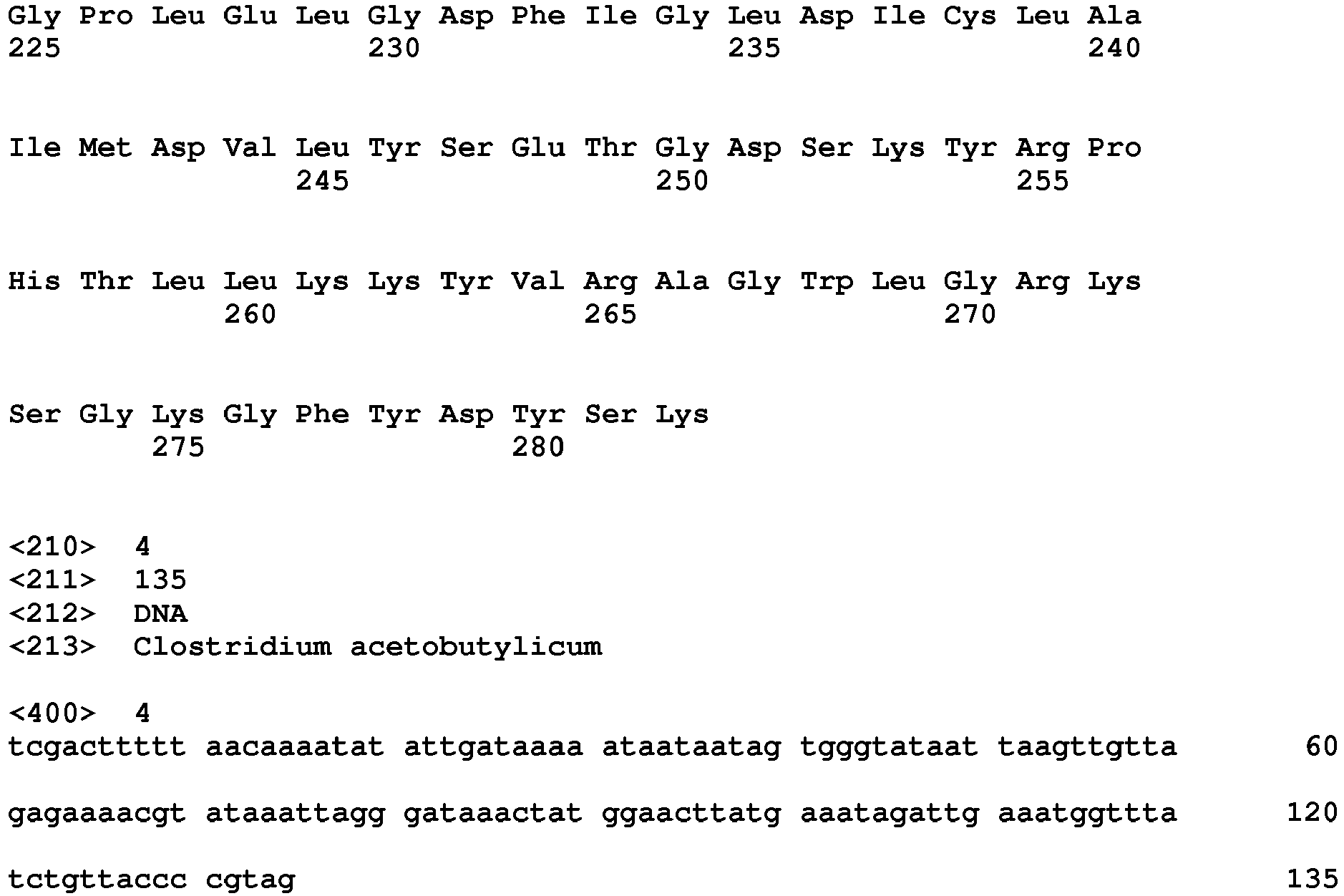
Claims (15)
- A Clostridium cell with the ability to produce butanol, wherein the cell comprises a genetic modification that results in overexpression of one or more of the following genes:• a gene encoding crotonase (crt),• a gene encoding butyryl-CoA dehydrogenase (bcd),• a gene encoding 3-hydroxybutyryl-CoA dehydrogenase (hbd).
- The Clostridium cell of claim 1, wherein the genetic modification is the result of a transformation with a vector comprising one or more of the following genes:• a gene encoding crotonase (crt),• a gene encoding butyryl-CoA dehydrogenase (bcd),• a gene encoding 3-hydroxybutyryl-CoA dehydrogenase (hbd).
- The Clostridium cell of claim 1 or 2, wherein the gene(s) are homologous to the Clostridium cell.
- The Clostridium cell of claim 1 or 2, wherein the gene(s) are heterologous to the Clostridium cell.
- The Clostridium cell of claim 4, wherein the gene(s) is overexpressed by transforming the cell with a crotonase gene or a butyryl-CoA dehydrogenase gene originating from species belonging to class of Actinobacteria.
- The Clostridium cell of one or more of the preceding claims, wherein the Clostridium cell belongs to the species Clostridium acetobutylicum.
- The Clostridium cell of claim 1, wherein the Clostridium cell is derived from Clostridium acetobutylicum ATCC 824.
- A vector for transforming a Clostridium cell, comprising one or more of the following genes:• a gene encoding crotonase (crt),• a gene encoding butyryl-CoA dehydrogenase (bcd),• a gene encoding 3-hydroxybutyryl-CoA dehydrogenase (hbd).
- The vector of claim 8, comprising one or more of the following sequences:• a sequence encoding an amino acid sequence which is at least 70 % identical to SEQ ID No. 1,• a sequence encoding an amino acid sequence which is at least 70 % identical to SEQ ID No. 2,• a sequence encoding an amino acid sequence which is at least 70 % identical to SEQ ID No. 3.
- A method for producing the cell according to one or more of claims 1 to 7, comprising the steps of(vi) providing a wild-type Clostridium strain;(vii) amplifying one or more of the following genes of said strain:• a gene encoding crotonase (crt),• a gene encoding butyryl-CoA dehydrogenase (bcd),• a gene encoding 3-hydroxybutyryl-CoA dehydrogenase (hbd),(viii) cloning the amplified DNA sequences into plasmids;(ix) transforming the wild-type Clostridium strain with the plasmids obtained in step (iii);(x) selecting strains that show a higher activity of the enzyme encoded by the amplified gene than the wild-type Clostridium strain.
- The method of claim 10, wherein the plasmids are transformed into E.coli for methylation prior to step (iv).
- A method for producing butanol, comprising the steps of fermenting a medium containing a sugar, or a precursor thereof, with a Clostridium cell of one or more of the claims 1 to 7, wherein the Clostridium cell ferments sugar to butanol, and recovering butanol.
- The method of claim 12, wherein the Clostridium cell also ferments sugar to ethanol.
- The method of claim 13, wherein butanol and ethanol are generated in a molar ratio in the range of 1:1 to 3:1.
- The method of claim 13 or 14, wherein acetate is generated in a molar ratio butanol:acetate of at least 8:1.
Priority Applications (3)
| Application Number | Priority Date | Filing Date | Title |
|---|---|---|---|
| EP13158012.8A EP2774986A1 (en) | 2013-03-06 | 2013-03-06 | Improvement of clostridial butanol production by gene overexpression |
| EP14708052.7A EP2964757A1 (en) | 2013-03-06 | 2014-03-06 | Improvement of clostridial butanol production by gene overexpression |
| PCT/EP2014/054334 WO2014135633A1 (en) | 2013-03-06 | 2014-03-06 | Improvement of clostridial butanol production by gene overexpression |
Applications Claiming Priority (1)
| Application Number | Priority Date | Filing Date | Title |
|---|---|---|---|
| EP13158012.8A EP2774986A1 (en) | 2013-03-06 | 2013-03-06 | Improvement of clostridial butanol production by gene overexpression |
Publications (1)
| Publication Number | Publication Date |
|---|---|
| EP2774986A1 true EP2774986A1 (en) | 2014-09-10 |
Family
ID=47827033
Family Applications (2)
| Application Number | Title | Priority Date | Filing Date |
|---|---|---|---|
| EP13158012.8A Withdrawn EP2774986A1 (en) | 2013-03-06 | 2013-03-06 | Improvement of clostridial butanol production by gene overexpression |
| EP14708052.7A Withdrawn EP2964757A1 (en) | 2013-03-06 | 2014-03-06 | Improvement of clostridial butanol production by gene overexpression |
Family Applications After (1)
| Application Number | Title | Priority Date | Filing Date |
|---|---|---|---|
| EP14708052.7A Withdrawn EP2964757A1 (en) | 2013-03-06 | 2014-03-06 | Improvement of clostridial butanol production by gene overexpression |
Country Status (2)
| Country | Link |
|---|---|
| EP (2) | EP2774986A1 (en) |
| WO (1) | WO2014135633A1 (en) |
Families Citing this family (2)
| Publication number | Priority date | Publication date | Assignee | Title |
|---|---|---|---|---|
| US11692207B2 (en) | 2016-05-05 | 2023-07-04 | Newpek S.A. De C.V. | Enzymatic methods for butanol production |
| CN116042666B (en) * | 2022-08-16 | 2023-07-28 | 山东乾肽生物科技有限公司 | Overexpression genes galK, galT and engineering bacteria thereof |
Citations (5)
| Publication number | Priority date | Publication date | Assignee | Title |
|---|---|---|---|---|
| WO2008143704A2 (en) * | 2006-12-01 | 2008-11-27 | Gevo, Inc. | Engineered microorganisms for producing n-butanol and related methods |
| KR20110033086A (en) | 2009-09-22 | 2011-03-30 | 한국과학기술원 | Recombinant mutant microorganism with increased butanol or mixed alcohol production ability and acetone removal ability and method for producing butanol or mixed alcohol using same |
| CN102161979A (en) | 2011-03-02 | 2011-08-24 | 中国科学院微生物研究所 | Recombinant strain for co-producing butanol, isopropanol and ethanol and application thereof |
| US20110236941A1 (en) * | 2010-10-22 | 2011-09-29 | Lanzatech New Zealand Limited | Recombinant microorganism and methods of production thereof |
| WO2012045022A2 (en) | 2010-10-01 | 2012-04-05 | The Ohio State University | Metabolic engineering of clostridium tyrobutyricum for butanol production |
Family Cites Families (1)
| Publication number | Priority date | Publication date | Assignee | Title |
|---|---|---|---|---|
| RU2375451C1 (en) | 2008-06-10 | 2009-12-10 | Федеральное государственное унитарное предприятие "Государственный научно-исследовательский институт генетики и селекции промышленных микроорганизмов" (ФГУП ГосНИИгенетика) | RECOMBINANT PLASMID DNA, CONTAINING GENES OF BUTANOL SYNTHESIS FROM Clostridium acetobutylicum (VERSIONS), RECOMBINANT STRAIN Lactobacillus brevis - PRODUCER OF N-BUTANOL (VERSIONS) AND METHOD FOR MICROBIOLOGICAL SYNTHESIS OF N-BUTANOL |
-
2013
- 2013-03-06 EP EP13158012.8A patent/EP2774986A1/en not_active Withdrawn
-
2014
- 2014-03-06 EP EP14708052.7A patent/EP2964757A1/en not_active Withdrawn
- 2014-03-06 WO PCT/EP2014/054334 patent/WO2014135633A1/en not_active Ceased
Patent Citations (5)
| Publication number | Priority date | Publication date | Assignee | Title |
|---|---|---|---|---|
| WO2008143704A2 (en) * | 2006-12-01 | 2008-11-27 | Gevo, Inc. | Engineered microorganisms for producing n-butanol and related methods |
| KR20110033086A (en) | 2009-09-22 | 2011-03-30 | 한국과학기술원 | Recombinant mutant microorganism with increased butanol or mixed alcohol production ability and acetone removal ability and method for producing butanol or mixed alcohol using same |
| WO2012045022A2 (en) | 2010-10-01 | 2012-04-05 | The Ohio State University | Metabolic engineering of clostridium tyrobutyricum for butanol production |
| US20110236941A1 (en) * | 2010-10-22 | 2011-09-29 | Lanzatech New Zealand Limited | Recombinant microorganism and methods of production thereof |
| CN102161979A (en) | 2011-03-02 | 2011-08-24 | 中国科学院微生物研究所 | Recombinant strain for co-producing butanol, isopropanol and ethanol and application thereof |
Non-Patent Citations (18)
| Title |
|---|
| ATSUMI S ET AL., METAB ENG, vol. 10, no. 6, 2007, pages 305 - 11 |
| DURRE P.: "Fermentative production of butanol - the academic perspective.", CURR OPIN BIOTECHNOL, vol. 22, 2011, pages 331 - 336 |
| FISCHER ET AL., J. BACTERIOL, August 2006 (2006-08-01), pages 5469 - 5478 |
| GIRBAL ET AL., APPLIED AND ENVIRONMENTAL MICROBIOLOGY, vol. 71, no. 5, 2005, pages 2777 - 2781 |
| HILLMANN F; DÖRING C; RIEBE 0; EHRENREICH A; FISCHER RJ; BAHL H: "The role of PerR in 02-affected gene expression of Clostridium acetobutylicum.", J. BACTERIOL., vol. 191, 2009, pages 6082 - 6093 |
| LARKIN M.A.; BLACKSHIELDS G.; BROWN N.P.; CHENNA R.; MCGETTIGAN P.A.; MCWILLIAM H.; VALENTIN F.; WALLACE I.M.; WILM A.; LOPEZ R.: "ClustalW and ClustalX version 2.", BIOINFORMATICS, vol. 23, no. 21, 2007, pages 2947 - 2948 |
| LÜTKE-EVERSLOH; BAHL: "Metabolic engineering of Clostridium acetobutylicum: recent advances to improve butanol production", CURR OPIN BIOTECHNOL, vol. 22, 2011, pages 634 - 647, XP055016922, DOI: doi:10.1016/j.copbio.2011.01.011 |
| LUTKE-EVERSTOH; BAHL: "Metabolic engineering of Clostridium acetobutylicum: recent advances to improve butanol production", CURR OPIN BIOTECHNOL, vol. 22, 2011, pages 634 - 647, XP055016922, DOI: doi:10.1016/j.copbio.2011.01.011 |
| MANN ET AL., BIOTECHNOL.LETT, vol. 34, 2012, pages 1643 - 1649 |
| MONOT, F ET AL., APPL. ENVIRON. MICROBIOL., vol. 44, 1982, pages 1318 - 1324 |
| NIELSEN DR ET AL., METAB ENG, vol. 11, no. 4-5, 2009, pages 262 - 73 |
| PAPOUTSAKIS: "Engineering solventogenic clostridia", CURR OPIN BIOTECHNOL, vol. 19, 2008, pages 420 - 429, XP025495863, DOI: doi:10.1016/j.copbio.2008.08.003 |
| SAMBROCK J; RUSSELL DW: "Molecular Cloning: A Laboratory Manual, 3rd Ed.", 2001, COLD SPRING HARBOR LABORATORY PRESS |
| SILLERS R ET AL., BIOTECHNOL BIOENG, vol. 102, 2009, pages 38 - 49 |
| SILLERS R ET AL., METAB ENG, vol. 10, 2008, pages 321 - 332 |
| SILLERS R; CHOW A; TRACY B; PAPOUTSAKIS ET: "Metabolic engineering of the non-sporulating, non-solventogenic Clostridium acetobutylicum strain M5 to produce butanol without acetone demonstrate the robustness of the acid-formation pathways and the importance of the electron balance.", METAB ENG, vol. 10, 2008, pages 321 - 332, XP025800634, DOI: doi:10.1016/j.ymben.2008.07.005 |
| VEL BERZIN ET AL: "Selective n-Butanol Production by Clostridium sp. MTButOH1365 During Continuous Synthesis Gas Fermentation Due to Expression of Synthetic Thiolase, 3-Hydroxy Butyryl-CoA Dehydrogenase, Crotonase, Butyryl-CoA Dehydrogenase, Butyraldehyde Dehydrogenase, and NAD-Dependent Butanol Dehydrogenase", APPLIED BIOCHEMISTRY AND BIOTECHNOLOGY, vol. 169, no. 3, 8 January 2013 (2013-01-08), pages 950 - 959, XP055066601, ISSN: 0273-2289, DOI: 10.1007/s12010-012-0060-7 * |
| XIAOHU HOU ET AL: "Engineering Clostridium acetobutylicum for alcohol production", JOURNAL OF BIOTECHNOLOGY, vol. 166, no. 1-2, 4 May 2013 (2013-05-04), pages 25 - 33, XP055066625, ISSN: 0168-1656, DOI: 10.1016/j.jbiotec.2013.04.013 * |
Also Published As
| Publication number | Publication date |
|---|---|
| WO2014135633A1 (en) | 2014-09-12 |
| EP2964757A1 (en) | 2016-01-13 |
Similar Documents
| Publication | Publication Date | Title |
|---|---|---|
| AU2007332240B2 (en) | Method for preparing butanol through butyryl-coa as an intermediate using bacteria | |
| US9359611B2 (en) | Recombinant microorganism and methods of production thereof | |
| Lehmann et al. | Switching Clostridium acetobutylicum to an ethanol producer by disruption of the butyrate/butanol fermentative pathway | |
| US9284580B2 (en) | Metabolic engineering of clostridium tyrobutyricum for butanol production | |
| BRPI0618074A2 (en) | thermophilic organisms for converting lignocellulosic biomass to ethanol | |
| EP3273782B1 (en) | Mixotrophic fermentation method for making acetone, isopropanol, and other bioproducts, and mixtures thereof | |
| US20110256600A1 (en) | Recombinant Microorganisms and Methods of Use Thereof | |
| EP1322775B1 (en) | Ethanol production | |
| US20150376654A1 (en) | Recombinant microorganisms with increased tolerance to ethanol | |
| WO2014135633A1 (en) | Improvement of clostridial butanol production by gene overexpression | |
| US9914943B2 (en) | Modified bacteria for the production of bioalcohol | |
| CN113234653B (en) | Mutant strain for improving content of ethanol produced by fermentation of synthesis gas and application of mutant strain | |
| ZA200302998B (en) | Ethanol production | |
| US20240026391A1 (en) | Methods and cells for production of volatile compounds | |
| RU2375451C1 (en) | RECOMBINANT PLASMID DNA, CONTAINING GENES OF BUTANOL SYNTHESIS FROM Clostridium acetobutylicum (VERSIONS), RECOMBINANT STRAIN Lactobacillus brevis - PRODUCER OF N-BUTANOL (VERSIONS) AND METHOD FOR MICROBIOLOGICAL SYNTHESIS OF N-BUTANOL | |
| US12071637B2 (en) | Method of producing value-added chemicals by using Clostridium and Bacillus co-cultures | |
| US20250376704A1 (en) | Butanol production method | |
| DK2173881T3 (en) | YET ACETYL-COA-PRODUCING ENZYMS |
Legal Events
| Date | Code | Title | Description |
|---|---|---|---|
| PUAI | Public reference made under article 153(3) epc to a published international application that has entered the european phase |
Free format text: ORIGINAL CODE: 0009012 |
|
| 17P | Request for examination filed |
Effective date: 20130306 |
|
| AK | Designated contracting states |
Kind code of ref document: A1 Designated state(s): AL AT BE BG CH CY CZ DE DK EE ES FI FR GB GR HR HU IE IS IT LI LT LU LV MC MK MT NL NO PL PT RO RS SE SI SK SM TR |
|
| AX | Request for extension of the european patent |
Extension state: BA ME |
|
| RIN1 | Information on inventor provided before grant (corrected) |
Inventor name: SCHMIDT, MICHAEL Inventor name: SCHIRRMACHER, GEORG Inventor name: LUETKE-EVERSLOH, TINA Inventor name: MANN. MIRIAM Inventor name: WEUSTER-BOTZ, DIRK Inventor name: DRAGOVIC, ZDRAVKO |
|
| RIN1 | Information on inventor provided before grant (corrected) |
Inventor name: SCHMIDT, MICHAEL Inventor name: DRAGOVIC, ZDRAVKO Inventor name: SCHIRRMACHER, GEORG Inventor name: LUETKE-EVERSLOH, TINA Inventor name: MANN, MIRIAM Inventor name: WEUSTER-BOTZ, DIRK |
|
| STAA | Information on the status of an ep patent application or granted ep patent |
Free format text: STATUS: THE APPLICATION IS DEEMED TO BE WITHDRAWN |
|
| 18D | Application deemed to be withdrawn |
Effective date: 20150311 |