EP2767307A1 - Device for the treatment of an ocular disease - Google Patents
Device for the treatment of an ocular disease Download PDFInfo
- Publication number
- EP2767307A1 EP2767307A1 EP13155682.1A EP13155682A EP2767307A1 EP 2767307 A1 EP2767307 A1 EP 2767307A1 EP 13155682 A EP13155682 A EP 13155682A EP 2767307 A1 EP2767307 A1 EP 2767307A1
- Authority
- EP
- European Patent Office
- Prior art keywords
- electrode
- less
- radius
- contact surface
- eye
- Prior art date
- Legal status (The legal status is an assumption and is not a legal conclusion. Google has not performed a legal analysis and makes no representation as to the accuracy of the status listed.)
- Withdrawn
Links
- 208000022873 Ocular disease Diseases 0.000 title description 3
- 238000004520 electroporation Methods 0.000 claims description 38
- 238000002347 injection Methods 0.000 claims description 36
- 239000007924 injection Substances 0.000 claims description 36
- 230000033001 locomotion Effects 0.000 claims description 11
- 238000013519 translation Methods 0.000 claims description 9
- 230000008859 change Effects 0.000 claims description 2
- 230000007246 mechanism Effects 0.000 claims description 2
- 150000007523 nucleic acids Chemical class 0.000 description 40
- 102000039446 nucleic acids Human genes 0.000 description 39
- 108020004707 nucleic acids Proteins 0.000 description 39
- 108090000623 proteins and genes Proteins 0.000 description 24
- 208000002780 macular degeneration Diseases 0.000 description 20
- 239000000203 mixture Substances 0.000 description 19
- 208000035719 Maculopathy Diseases 0.000 description 18
- 208000007014 Retinitis pigmentosa Diseases 0.000 description 17
- 102000004169 proteins and genes Human genes 0.000 description 16
- 238000000034 method Methods 0.000 description 14
- 210000004027 cell Anatomy 0.000 description 12
- 239000003795 chemical substances by application Substances 0.000 description 11
- 239000008194 pharmaceutical composition Substances 0.000 description 11
- 108020004414 DNA Proteins 0.000 description 10
- 102000053602 DNA Human genes 0.000 description 10
- 230000000692 anti-sense effect Effects 0.000 description 10
- 239000013598 vector Substances 0.000 description 10
- 230000005684 electric field Effects 0.000 description 9
- 230000014509 gene expression Effects 0.000 description 9
- 239000013543 active substance Substances 0.000 description 8
- 239000012634 fragment Substances 0.000 description 8
- 102000005962 receptors Human genes 0.000 description 8
- 108020003175 receptors Proteins 0.000 description 8
- 239000002671 adjuvant Substances 0.000 description 6
- KRKNYBCHXYNGOX-UHFFFAOYSA-N citric acid Chemical compound OC(=O)CC(O)(C(O)=O)CC(O)=O KRKNYBCHXYNGOX-UHFFFAOYSA-N 0.000 description 6
- 239000003814 drug Substances 0.000 description 6
- 239000000825 pharmaceutical preparation Substances 0.000 description 6
- 239000013612 plasmid Substances 0.000 description 6
- 238000002360 preparation method Methods 0.000 description 6
- 108090000765 processed proteins & peptides Proteins 0.000 description 6
- 239000000126 substance Substances 0.000 description 6
- 230000001225 therapeutic effect Effects 0.000 description 6
- 238000012546 transfer Methods 0.000 description 6
- QTBSBXVTEAMEQO-UHFFFAOYSA-N Acetic acid Chemical compound CC(O)=O QTBSBXVTEAMEQO-UHFFFAOYSA-N 0.000 description 5
- 108700024394 Exon Proteins 0.000 description 5
- 108010073929 Vascular Endothelial Growth Factor A Proteins 0.000 description 5
- 102100039037 Vascular endothelial growth factor A Human genes 0.000 description 5
- 230000004071 biological effect Effects 0.000 description 5
- 239000003085 diluting agent Substances 0.000 description 5
- 230000006870 function Effects 0.000 description 5
- 150000002632 lipids Chemical class 0.000 description 5
- 108020004999 messenger RNA Proteins 0.000 description 5
- 230000035515 penetration Effects 0.000 description 5
- 239000000546 pharmaceutical excipient Substances 0.000 description 5
- 229940127557 pharmaceutical product Drugs 0.000 description 5
- 210000001525 retina Anatomy 0.000 description 5
- 229920002477 rna polymer Polymers 0.000 description 5
- 208000036443 AIPL1-related retinopathy Diseases 0.000 description 4
- 102100031162 Collagen alpha-1(XVIII) chain Human genes 0.000 description 4
- 108010079505 Endostatins Proteins 0.000 description 4
- PEDCQBHIVMGVHV-UHFFFAOYSA-N Glycerine Chemical compound OCC(O)CO PEDCQBHIVMGVHV-UHFFFAOYSA-N 0.000 description 4
- 102000003745 Hepatocyte Growth Factor Human genes 0.000 description 4
- 108090000100 Hepatocyte Growth Factor Proteins 0.000 description 4
- 108020004511 Recombinant DNA Proteins 0.000 description 4
- 230000000295 complement effect Effects 0.000 description 4
- 201000006754 cone-rod dystrophy Diseases 0.000 description 4
- 238000009472 formulation Methods 0.000 description 4
- 239000007788 liquid Substances 0.000 description 4
- 239000000463 material Substances 0.000 description 4
- 102000004196 processed proteins & peptides Human genes 0.000 description 4
- 230000000069 prophylactic effect Effects 0.000 description 4
- 229940124597 therapeutic agent Drugs 0.000 description 4
- 210000001519 tissue Anatomy 0.000 description 4
- KIUKXJAPPMFGSW-DNGZLQJQSA-N (2S,3S,4S,5R,6R)-6-[(2S,3R,4R,5S,6R)-3-Acetamido-2-[(2S,3S,4R,5R,6R)-6-[(2R,3R,4R,5S,6R)-3-acetamido-2,5-dihydroxy-6-(hydroxymethyl)oxan-4-yl]oxy-2-carboxy-4,5-dihydroxyoxan-3-yl]oxy-5-hydroxy-6-(hydroxymethyl)oxan-4-yl]oxy-3,4,5-trihydroxyoxane-2-carboxylic acid Chemical compound CC(=O)N[C@H]1[C@H](O)O[C@H](CO)[C@@H](O)[C@@H]1O[C@H]1[C@H](O)[C@@H](O)[C@H](O[C@H]2[C@@H]([C@@H](O[C@H]3[C@@H]([C@@H](O)[C@H](O)[C@H](O3)C(O)=O)O)[C@H](O)[C@@H](CO)O2)NC(C)=O)[C@@H](C(O)=O)O1 KIUKXJAPPMFGSW-DNGZLQJQSA-N 0.000 description 3
- 108020000948 Antisense Oligonucleotides Proteins 0.000 description 3
- 206010003694 Atrophy Diseases 0.000 description 3
- WVDDGKGOMKODPV-UHFFFAOYSA-N Benzyl alcohol Chemical compound OCC1=CC=CC=C1 WVDDGKGOMKODPV-UHFFFAOYSA-N 0.000 description 3
- 101000597428 Homo sapiens Nucleoredoxin-like protein 1 Proteins 0.000 description 3
- 201000003533 Leber congenital amaurosis Diseases 0.000 description 3
- 102100039364 Metalloproteinase inhibitor 1 Human genes 0.000 description 3
- 101000597433 Mus musculus Nucleoredoxin-like protein 1 Proteins 0.000 description 3
- 108010025020 Nerve Growth Factor Proteins 0.000 description 3
- 102100035399 Nucleoredoxin-like protein 1 Human genes 0.000 description 3
- 208000034461 Progressive cone dystrophy Diseases 0.000 description 3
- DNIAPMSPPWPWGF-UHFFFAOYSA-N Propylene glycol Chemical compound CC(O)CO DNIAPMSPPWPWGF-UHFFFAOYSA-N 0.000 description 3
- 201000007737 Retinal degeneration Diseases 0.000 description 3
- HEMHJVSKTPXQMS-UHFFFAOYSA-M Sodium hydroxide Chemical compound [OH-].[Na+] HEMHJVSKTPXQMS-UHFFFAOYSA-M 0.000 description 3
- 208000027073 Stargardt disease Diseases 0.000 description 3
- 108010053096 Vascular Endothelial Growth Factor Receptor-1 Proteins 0.000 description 3
- 108010053099 Vascular Endothelial Growth Factor Receptor-2 Proteins 0.000 description 3
- 108010019530 Vascular Endothelial Growth Factors Proteins 0.000 description 3
- 102100033178 Vascular endothelial growth factor receptor 1 Human genes 0.000 description 3
- 102100033177 Vascular endothelial growth factor receptor 2 Human genes 0.000 description 3
- 239000004480 active ingredient Substances 0.000 description 3
- 239000000074 antisense oligonucleotide Substances 0.000 description 3
- 238000012230 antisense oligonucleotides Methods 0.000 description 3
- 230000037444 atrophy Effects 0.000 description 3
- 230000001851 biosynthetic effect Effects 0.000 description 3
- 230000000903 blocking effect Effects 0.000 description 3
- 239000000872 buffer Substances 0.000 description 3
- 150000001875 compounds Chemical class 0.000 description 3
- 239000004020 conductor Substances 0.000 description 3
- 201000008615 cone dystrophy Diseases 0.000 description 3
- 230000000694 effects Effects 0.000 description 3
- 239000013604 expression vector Substances 0.000 description 3
- 108020001507 fusion proteins Proteins 0.000 description 3
- 102000037865 fusion proteins Human genes 0.000 description 3
- 229920002674 hyaluronan Polymers 0.000 description 3
- 229960003160 hyaluronic acid Drugs 0.000 description 3
- 230000001939 inductive effect Effects 0.000 description 3
- 230000000366 juvenile effect Effects 0.000 description 3
- 210000003205 muscle Anatomy 0.000 description 3
- 239000002773 nucleotide Substances 0.000 description 3
- 125000003729 nucleotide group Chemical group 0.000 description 3
- 229920000642 polymer Polymers 0.000 description 3
- 229920001184 polypeptide Polymers 0.000 description 3
- 239000003755 preservative agent Substances 0.000 description 3
- 230000001105 regulatory effect Effects 0.000 description 3
- 230000004258 retinal degeneration Effects 0.000 description 3
- 230000002207 retinal effect Effects 0.000 description 3
- 239000007787 solid Substances 0.000 description 3
- 239000000243 solution Substances 0.000 description 3
- 239000003381 stabilizer Substances 0.000 description 3
- NMWKYTGJWUAZPZ-WWHBDHEGSA-N (4S)-4-[[(4R,7S,10S,16S,19S,25S,28S,31R)-31-[[(2S)-2-[[(1R,6R,9S,12S,18S,21S,24S,27S,30S,33S,36S,39S,42R,47R,53S,56S,59S,62S,65S,68S,71S,76S,79S,85S)-47-[[(2S)-2-[[(2S)-4-amino-2-[[(2S)-2-[[(2S)-2-[[(2S)-2-[[(2S)-2-[[(2S)-2-amino-3-methylbutanoyl]amino]-3-methylbutanoyl]amino]-3-hydroxypropanoyl]amino]-3-(1H-imidazol-4-yl)propanoyl]amino]-3-phenylpropanoyl]amino]-4-oxobutanoyl]amino]-3-carboxypropanoyl]amino]-18-(4-aminobutyl)-27,68-bis(3-amino-3-oxopropyl)-36,71,76-tribenzyl-39-(3-carbamimidamidopropyl)-24-(2-carboxyethyl)-21,56-bis(carboxymethyl)-65,85-bis[(1R)-1-hydroxyethyl]-59-(hydroxymethyl)-62,79-bis(1H-imidazol-4-ylmethyl)-9-methyl-33-(2-methylpropyl)-8,11,17,20,23,26,29,32,35,38,41,48,54,57,60,63,66,69,72,74,77,80,83,86-tetracosaoxo-30-propan-2-yl-3,4,44,45-tetrathia-7,10,16,19,22,25,28,31,34,37,40,49,55,58,61,64,67,70,73,75,78,81,84,87-tetracosazatetracyclo[40.31.14.012,16.049,53]heptaoctacontane-6-carbonyl]amino]-3-methylbutanoyl]amino]-7-(3-carbamimidamidopropyl)-25-(hydroxymethyl)-19-[(4-hydroxyphenyl)methyl]-28-(1H-imidazol-4-ylmethyl)-10-methyl-6,9,12,15,18,21,24,27,30-nonaoxo-16-propan-2-yl-1,2-dithia-5,8,11,14,17,20,23,26,29-nonazacyclodotriacontane-4-carbonyl]amino]-5-[[(2S)-1-[[(2S)-1-[[(2S)-3-carboxy-1-[[(2S)-1-[[(2S)-1-[[(1S)-1-carboxyethyl]amino]-4-methyl-1-oxopentan-2-yl]amino]-4-methyl-1-oxopentan-2-yl]amino]-1-oxopropan-2-yl]amino]-1-oxopropan-2-yl]amino]-3-(1H-imidazol-4-yl)-1-oxopropan-2-yl]amino]-5-oxopentanoic acid Chemical compound CC(C)C[C@H](NC(=O)[C@H](CC(C)C)NC(=O)[C@H](CC(O)=O)NC(=O)[C@H](C)NC(=O)[C@H](Cc1c[nH]cn1)NC(=O)[C@H](CCC(O)=O)NC(=O)[C@@H]1CSSC[C@H](NC(=O)[C@@H](NC(=O)[C@@H]2CSSC[C@@H]3NC(=O)[C@H](Cc4ccccc4)NC(=O)[C@H](CCC(N)=O)NC(=O)[C@@H](NC(=O)[C@H](Cc4c[nH]cn4)NC(=O)[C@H](CO)NC(=O)[C@H](CC(O)=O)NC(=O)[C@@H]4CCCN4C(=O)[C@H](CSSC[C@H](NC(=O)[C@@H](NC(=O)CNC(=O)[C@H](Cc4c[nH]cn4)NC(=O)[C@H](Cc4ccccc4)NC3=O)[C@@H](C)O)C(=O)N[C@@H](CCCNC(N)=N)C(=O)N[C@@H](Cc3ccccc3)C(=O)N[C@@H](CC(C)C)C(=O)N[C@@H](C(C)C)C(=O)N[C@@H](CCC(N)=O)C(=O)N[C@@H](CCC(O)=O)C(=O)N[C@@H](CC(O)=O)C(=O)N[C@@H](CCCCN)C(=O)N3CCC[C@H]3C(=O)N[C@@H](C)C(=O)N2)NC(=O)[C@H](CC(O)=O)NC(=O)[C@H](CC(N)=O)NC(=O)[C@H](Cc2ccccc2)NC(=O)[C@H](Cc2c[nH]cn2)NC(=O)[C@H](CO)NC(=O)[C@@H](NC(=O)[C@@H](N)C(C)C)C(C)C)[C@@H](C)O)C(C)C)C(=O)N[C@@H](Cc2c[nH]cn2)C(=O)N[C@@H](CO)C(=O)NCC(=O)N[C@@H](Cc2ccc(O)cc2)C(=O)N[C@@H](C(C)C)C(=O)NCC(=O)N[C@@H](C)C(=O)N[C@@H](CCCNC(N)=N)C(=O)N1)C(=O)N[C@@H](C)C(O)=O NMWKYTGJWUAZPZ-WWHBDHEGSA-N 0.000 description 2
- 102100028187 ATP-binding cassette sub-family C member 6 Human genes 0.000 description 2
- 102400000068 Angiostatin Human genes 0.000 description 2
- 108010079709 Angiostatins Proteins 0.000 description 2
- 201000001321 Bardet-Biedl syndrome Diseases 0.000 description 2
- 108010081589 Becaplermin Proteins 0.000 description 2
- VEXZGXHMUGYJMC-UHFFFAOYSA-M Chloride anion Chemical compound [Cl-] VEXZGXHMUGYJMC-UHFFFAOYSA-M 0.000 description 2
- 108010062540 Chorionic Gonadotropin Proteins 0.000 description 2
- 102000011022 Chorionic Gonadotropin Human genes 0.000 description 2
- 102000004127 Cytokines Human genes 0.000 description 2
- 108090000695 Cytokines Proteins 0.000 description 2
- 102000004190 Enzymes Human genes 0.000 description 2
- 108090000790 Enzymes Proteins 0.000 description 2
- 108090000386 Fibroblast Growth Factor 1 Proteins 0.000 description 2
- 102100031706 Fibroblast growth factor 1 Human genes 0.000 description 2
- 108090000379 Fibroblast growth factor 2 Proteins 0.000 description 2
- 108090000368 Fibroblast growth factor 8 Proteins 0.000 description 2
- 102100037362 Fibronectin Human genes 0.000 description 2
- 108010067306 Fibronectins Proteins 0.000 description 2
- 108091010837 Glial cell line-derived neurotrophic factor Proteins 0.000 description 2
- 208000012473 Goldmann-Favre syndrome Diseases 0.000 description 2
- 102000004269 Granulocyte Colony-Stimulating Factor Human genes 0.000 description 2
- 108010017080 Granulocyte Colony-Stimulating Factor Proteins 0.000 description 2
- 101000595923 Homo sapiens Placenta growth factor Proteins 0.000 description 2
- 101000605403 Homo sapiens Plasminogen Proteins 0.000 description 2
- 108700000201 Hyaloideoretinal degeneration of Wagner Proteins 0.000 description 2
- VEXZGXHMUGYJMC-UHFFFAOYSA-N Hydrochloric acid Chemical compound Cl VEXZGXHMUGYJMC-UHFFFAOYSA-N 0.000 description 2
- 102000006992 Interferon-alpha Human genes 0.000 description 2
- 108010047761 Interferon-alpha Proteins 0.000 description 2
- 108010092277 Leptin Proteins 0.000 description 2
- 102000016267 Leptin Human genes 0.000 description 2
- 108091027974 Mature messenger RNA Proteins 0.000 description 2
- 101000686934 Mus musculus Prolactin-7D1 Proteins 0.000 description 2
- 108091061960 Naked DNA Proteins 0.000 description 2
- 102000007072 Nerve Growth Factors Human genes 0.000 description 2
- 108091034117 Oligonucleotide Proteins 0.000 description 2
- 208000034247 Pattern dystrophy Diseases 0.000 description 2
- NBIIXXVUZAFLBC-UHFFFAOYSA-N Phosphoric acid Chemical compound OP(O)(O)=O NBIIXXVUZAFLBC-UHFFFAOYSA-N 0.000 description 2
- 102100035194 Placenta growth factor Human genes 0.000 description 2
- 102000004211 Platelet factor 4 Human genes 0.000 description 2
- 108090000778 Platelet factor 4 Proteins 0.000 description 2
- 102100039277 Pleiotrophin Human genes 0.000 description 2
- 229920001710 Polyorthoester Polymers 0.000 description 2
- WCUXLLCKKVVCTQ-UHFFFAOYSA-M Potassium chloride Chemical compound [Cl-].[K+] WCUXLLCKKVVCTQ-UHFFFAOYSA-M 0.000 description 2
- 201000004613 Pseudoxanthoma elasticum Diseases 0.000 description 2
- 208000036903 RLBP1-related retinopathy Diseases 0.000 description 2
- -1 RNAsi Proteins 0.000 description 2
- 208000005587 Refsum Disease Diseases 0.000 description 2
- CDBYLPFSWZWCQE-UHFFFAOYSA-L Sodium Carbonate Chemical compound [Na+].[Na+].[O-]C([O-])=O CDBYLPFSWZWCQE-UHFFFAOYSA-L 0.000 description 2
- UIIMBOGNXHQVGW-UHFFFAOYSA-M Sodium bicarbonate Chemical compound [Na+].OC([O-])=O UIIMBOGNXHQVGW-UHFFFAOYSA-M 0.000 description 2
- FAPWRFPIFSIZLT-UHFFFAOYSA-M Sodium chloride Chemical compound [Na+].[Cl-] FAPWRFPIFSIZLT-UHFFFAOYSA-M 0.000 description 2
- 108700023160 Thymidine phosphorylases Proteins 0.000 description 2
- 102000004887 Transforming Growth Factor beta Human genes 0.000 description 2
- 108090001012 Transforming Growth Factor beta Proteins 0.000 description 2
- 102400001320 Transforming growth factor alpha Human genes 0.000 description 2
- 101800004564 Transforming growth factor alpha Proteins 0.000 description 2
- 108060008682 Tumor Necrosis Factor Proteins 0.000 description 2
- 102000000852 Tumor Necrosis Factor-alpha Human genes 0.000 description 2
- 241000700605 Viruses Species 0.000 description 2
- 238000010521 absorption reaction Methods 0.000 description 2
- 229960000583 acetic acid Drugs 0.000 description 2
- 201000000761 achromatopsia Diseases 0.000 description 2
- 230000002378 acidificating effect Effects 0.000 description 2
- 208000030597 adult Refsum disease Diseases 0.000 description 2
- 150000001413 amino acids Chemical group 0.000 description 2
- 239000002870 angiogenesis inducing agent Substances 0.000 description 2
- 230000001772 anti-angiogenic effect Effects 0.000 description 2
- 230000006907 apoptotic process Effects 0.000 description 2
- 210000001106 artificial yeast chromosome Anatomy 0.000 description 2
- FZCSTZYAHCUGEM-UHFFFAOYSA-N aspergillomarasmine B Natural products OC(=O)CNC(C(O)=O)CNC(C(O)=O)CC(O)=O FZCSTZYAHCUGEM-UHFFFAOYSA-N 0.000 description 2
- 239000003855 balanced salt solution Substances 0.000 description 2
- 239000003124 biologic agent Substances 0.000 description 2
- OSASVXMJTNOKOY-UHFFFAOYSA-N chlorobutanol Chemical compound CC(C)(O)C(Cl)(Cl)Cl OSASVXMJTNOKOY-UHFFFAOYSA-N 0.000 description 2
- 210000000349 chromosome Anatomy 0.000 description 2
- 201000007254 color blindness Diseases 0.000 description 2
- 230000006378 damage Effects 0.000 description 2
- 230000007812 deficiency Effects 0.000 description 2
- 230000002950 deficient Effects 0.000 description 2
- 201000010099 disease Diseases 0.000 description 2
- 208000037265 diseases, disorders, signs and symptoms Diseases 0.000 description 2
- 229940079593 drug Drugs 0.000 description 2
- 239000003937 drug carrier Substances 0.000 description 2
- 239000000839 emulsion Substances 0.000 description 2
- 230000001747 exhibiting effect Effects 0.000 description 2
- 239000000945 filler Substances 0.000 description 2
- 235000011187 glycerol Nutrition 0.000 description 2
- 229940088597 hormone Drugs 0.000 description 2
- 239000005556 hormone Substances 0.000 description 2
- 229940084986 human chorionic gonadotropin Drugs 0.000 description 2
- 239000003112 inhibitor Substances 0.000 description 2
- 238000003780 insertion Methods 0.000 description 2
- 230000037431 insertion Effects 0.000 description 2
- 150000002500 ions Chemical class 0.000 description 2
- 239000007951 isotonicity adjuster Substances 0.000 description 2
- 229940039781 leptin Drugs 0.000 description 2
- NRYBAZVQPHGZNS-ZSOCWYAHSA-N leptin Chemical compound O=C([C@H](CO)NC(=O)[C@H](CC(C)C)NC(=O)[C@H](CC(O)=O)NC(=O)[C@H](CC(C)C)NC(=O)[C@H](CCC(N)=O)NC(=O)[C@H](CC=1C2=CC=CC=C2NC=1)NC(=O)[C@H](CC(C)C)NC(=O)[C@@H](NC(=O)[C@H](CC(O)=O)NC(=O)[C@H](CCC(N)=O)NC(=O)[C@H](CC(C)C)NC(=O)[C@H](CO)NC(=O)CNC(=O)[C@H](CCC(N)=O)NC(=O)[C@@H](N)CC(C)C)CCSC)N1CCC[C@H]1C(=O)NCC(=O)N[C@@H](CS)C(O)=O NRYBAZVQPHGZNS-ZSOCWYAHSA-N 0.000 description 2
- 239000002502 liposome Substances 0.000 description 2
- 101150029117 meox2 gene Proteins 0.000 description 2
- 201000010478 microphthalmia Diseases 0.000 description 2
- 208000015122 neurodegenerative disease Diseases 0.000 description 2
- 239000003900 neurotrophic factor Substances 0.000 description 2
- 230000000149 penetrating effect Effects 0.000 description 2
- 239000002745 poly(ortho ester) Substances 0.000 description 2
- 102000040430 polynucleotide Human genes 0.000 description 2
- 108091033319 polynucleotide Proteins 0.000 description 2
- 239000002157 polynucleotide Substances 0.000 description 2
- 229920001296 polysiloxane Polymers 0.000 description 2
- 230000000750 progressive effect Effects 0.000 description 2
- 208000023558 pseudoxanthoma elasticum (inherited or acquired) Diseases 0.000 description 2
- 230000002829 reductive effect Effects 0.000 description 2
- 230000010076 replication Effects 0.000 description 2
- 210000003786 sclera Anatomy 0.000 description 2
- 238000012216 screening Methods 0.000 description 2
- 239000000725 suspension Substances 0.000 description 2
- 208000011580 syndromic disease Diseases 0.000 description 2
- ZRKFYGHZFMAOKI-QMGMOQQFSA-N tgfbeta Chemical compound C([C@H](NC(=O)[C@H](C(C)C)NC(=O)CNC(=O)[C@H](CCC(O)=O)NC(=O)[C@H](CCCNC(N)=N)NC(=O)[C@H](CC(N)=O)NC(=O)[C@H](CC(C)C)NC(=O)[C@H]([C@@H](C)O)NC(=O)[C@H](CCC(O)=O)NC(=O)[C@H]([C@@H](C)O)NC(=O)[C@H](CC(C)C)NC(=O)CNC(=O)[C@H](C)NC(=O)[C@H](CO)NC(=O)[C@H](CCC(N)=O)NC(=O)[C@@H](NC(=O)[C@H](C)NC(=O)[C@H](C)NC(=O)[C@@H](NC(=O)[C@H](CC(C)C)NC(=O)[C@@H](N)CCSC)C(C)C)[C@@H](C)CC)C(=O)N[C@@H]([C@@H](C)O)C(=O)N[C@@H](C(C)C)C(=O)N[C@@H](CC=1C=CC=CC=1)C(=O)N[C@@H](C)C(=O)N1[C@@H](CCC1)C(=O)N[C@@H]([C@@H](C)O)C(=O)N[C@@H](CC(N)=O)C(=O)N[C@@H](CCC(O)=O)C(=O)N[C@@H](C)C(=O)N[C@@H](CC=1C=CC=CC=1)C(=O)N[C@@H](CCCNC(N)=N)C(=O)N[C@@H](C)C(=O)N[C@@H](CC(C)C)C(=O)N1[C@@H](CCC1)C(=O)N1[C@@H](CCC1)C(=O)N[C@@H](CCCNC(N)=N)C(=O)N[C@@H](CCC(O)=O)C(=O)N[C@@H](CCCNC(N)=N)C(=O)N[C@@H](CO)C(=O)N[C@@H](CCCNC(N)=N)C(=O)N[C@@H](CC(C)C)C(=O)N[C@@H](CC(C)C)C(O)=O)C1=CC=C(O)C=C1 ZRKFYGHZFMAOKI-QMGMOQQFSA-N 0.000 description 2
- 239000013603 viral vector Substances 0.000 description 2
- HDTRYLNUVZCQOY-UHFFFAOYSA-N α-D-glucopyranosyl-α-D-glucopyranoside Natural products OC1C(O)C(O)C(CO)OC1OC1C(O)C(O)C(O)C(CO)O1 HDTRYLNUVZCQOY-UHFFFAOYSA-N 0.000 description 1
- LNAZSHAWQACDHT-XIYTZBAFSA-N (2r,3r,4s,5r,6s)-4,5-dimethoxy-2-(methoxymethyl)-3-[(2s,3r,4s,5r,6r)-3,4,5-trimethoxy-6-(methoxymethyl)oxan-2-yl]oxy-6-[(2r,3r,4s,5r,6r)-4,5,6-trimethoxy-2-(methoxymethyl)oxan-3-yl]oxyoxane Chemical compound CO[C@@H]1[C@@H](OC)[C@H](OC)[C@@H](COC)O[C@H]1O[C@H]1[C@H](OC)[C@@H](OC)[C@H](O[C@H]2[C@@H]([C@@H](OC)[C@H](OC)O[C@@H]2COC)OC)O[C@@H]1COC LNAZSHAWQACDHT-XIYTZBAFSA-N 0.000 description 1
- BJHCYTJNPVGSBZ-YXSASFKJSA-N 1-[4-[6-amino-5-[(Z)-methoxyiminomethyl]pyrimidin-4-yl]oxy-2-chlorophenyl]-3-ethylurea Chemical compound CCNC(=O)Nc1ccc(Oc2ncnc(N)c2\C=N/OC)cc1Cl BJHCYTJNPVGSBZ-YXSASFKJSA-N 0.000 description 1
- FJKROLUGYXJWQN-UHFFFAOYSA-N 4-hydroxybenzoic acid Chemical class OC(=O)C1=CC=C(O)C=C1 FJKROLUGYXJWQN-UHFFFAOYSA-N 0.000 description 1
- 102100022464 5'-nucleotidase Human genes 0.000 description 1
- ZKRFOXLVOKTUTA-KQYNXXCUSA-N 9-(5-phosphoribofuranosyl)-6-mercaptopurine Chemical compound O[C@@H]1[C@H](O)[C@@H](COP(O)(O)=O)O[C@H]1N1C(NC=NC2=S)=C2N=C1 ZKRFOXLVOKTUTA-KQYNXXCUSA-N 0.000 description 1
- 102000005416 ATP-Binding Cassette Transporters Human genes 0.000 description 1
- 108010006533 ATP-Binding Cassette Transporters Proteins 0.000 description 1
- 201000011374 Alagille syndrome Diseases 0.000 description 1
- 102000002260 Alkaline Phosphatase Human genes 0.000 description 1
- 108020004774 Alkaline Phosphatase Proteins 0.000 description 1
- 201000005932 Alstrom Syndrome Diseases 0.000 description 1
- 208000031277 Amaurotic familial idiocy Diseases 0.000 description 1
- 102100022987 Angiogenin Human genes 0.000 description 1
- 108010048154 Angiopoietin-1 Proteins 0.000 description 1
- 102000009088 Angiopoietin-1 Human genes 0.000 description 1
- 102100025665 Angiopoietin-related protein 1 Human genes 0.000 description 1
- 102000009840 Angiopoietins Human genes 0.000 description 1
- 108010009906 Angiopoietins Proteins 0.000 description 1
- 208000031887 Anterior segment developmental anomaly Diseases 0.000 description 1
- 108020005544 Antisense RNA Proteins 0.000 description 1
- 102000004411 Antithrombin III Human genes 0.000 description 1
- 108090000935 Antithrombin III Proteins 0.000 description 1
- 102000007592 Apolipoproteins Human genes 0.000 description 1
- 108010071619 Apolipoproteins Proteins 0.000 description 1
- 102100021569 Apoptosis regulator Bcl-2 Human genes 0.000 description 1
- 206010003591 Ataxia Diseases 0.000 description 1
- 108010078286 Ataxins Proteins 0.000 description 1
- 102000014461 Ataxins Human genes 0.000 description 1
- 201000007795 Bietti crystalline corneoretinal dystrophy Diseases 0.000 description 1
- 208000008319 Bietti crystalline dystrophy Diseases 0.000 description 1
- 102000015081 Blood Coagulation Factors Human genes 0.000 description 1
- 108010039209 Blood Coagulation Factors Proteins 0.000 description 1
- 208000009278 Blue cone monochromatism Diseases 0.000 description 1
- 108090000715 Brain-derived neurotrophic factor Proteins 0.000 description 1
- 102000004219 Brain-derived neurotrophic factor Human genes 0.000 description 1
- 102100031151 C-C chemokine receptor type 2 Human genes 0.000 description 1
- 101710149815 C-C chemokine receptor type 2 Proteins 0.000 description 1
- 102100039398 C-X-C motif chemokine 2 Human genes 0.000 description 1
- 102100036170 C-X-C motif chemokine 9 Human genes 0.000 description 1
- 101710085500 C-X-C motif chemokine 9 Proteins 0.000 description 1
- 208000036320 CAPN5-related vitreoretinopathy Diseases 0.000 description 1
- 102100022002 CD59 glycoprotein Human genes 0.000 description 1
- 102400000113 Calcitonin Human genes 0.000 description 1
- 108060001064 Calcitonin Proteins 0.000 description 1
- OYPRJOBELJOOCE-UHFFFAOYSA-N Calcium Chemical compound [Ca] OYPRJOBELJOOCE-UHFFFAOYSA-N 0.000 description 1
- 102100029968 Calreticulin Human genes 0.000 description 1
- 108090000549 Calreticulin Proteins 0.000 description 1
- 229920002134 Carboxymethyl cellulose Polymers 0.000 description 1
- 108090000994 Catalytic RNA Proteins 0.000 description 1
- 102000053642 Catalytic RNA Human genes 0.000 description 1
- 208000016615 Central areolar choroidal dystrophy Diseases 0.000 description 1
- 206010008025 Cerebellar ataxia Diseases 0.000 description 1
- 102000019034 Chemokines Human genes 0.000 description 1
- 108010012236 Chemokines Proteins 0.000 description 1
- 208000033810 Choroidal dystrophy Diseases 0.000 description 1
- 102100031186 Chromogranin-A Human genes 0.000 description 1
- 108010005939 Ciliary Neurotrophic Factor Proteins 0.000 description 1
- 102100031614 Ciliary neurotrophic factor Human genes 0.000 description 1
- 108020004638 Circular DNA Proteins 0.000 description 1
- 208000006992 Color Vision Defects Diseases 0.000 description 1
- 206010010356 Congenital anomaly Diseases 0.000 description 1
- FBPFZTCFMRRESA-FSIIMWSLSA-N D-Glucitol Natural products OC[C@H](O)[C@H](O)[C@@H](O)[C@H](O)CO FBPFZTCFMRRESA-FSIIMWSLSA-N 0.000 description 1
- FBPFZTCFMRRESA-KVTDHHQDSA-N D-Mannitol Chemical compound OC[C@@H](O)[C@@H](O)[C@H](O)[C@H](O)CO FBPFZTCFMRRESA-KVTDHHQDSA-N 0.000 description 1
- FBPFZTCFMRRESA-JGWLITMVSA-N D-glucitol Chemical compound OC[C@H](O)[C@@H](O)[C@H](O)[C@H](O)CO FBPFZTCFMRRESA-JGWLITMVSA-N 0.000 description 1
- 206010011878 Deafness Diseases 0.000 description 1
- 206010011891 Deafness neurosensory Diseases 0.000 description 1
- 241000702421 Dependoparvovirus Species 0.000 description 1
- 201000001353 Doyne honeycomb retinal dystrophy Diseases 0.000 description 1
- ZGTMUACCHSMWAC-UHFFFAOYSA-L EDTA disodium salt (anhydrous) Chemical compound [Na+].[Na+].OC(=O)CN(CC([O-])=O)CCN(CC(O)=O)CC([O-])=O ZGTMUACCHSMWAC-UHFFFAOYSA-L 0.000 description 1
- 108010092408 Eosinophil Peroxidase Proteins 0.000 description 1
- 208000028506 Familial Exudative Vitreoretinopathies Diseases 0.000 description 1
- 208000037312 Familial drusen Diseases 0.000 description 1
- 102000018233 Fibroblast Growth Factor Human genes 0.000 description 1
- 108050007372 Fibroblast Growth Factor Proteins 0.000 description 1
- 102100024785 Fibroblast growth factor 2 Human genes 0.000 description 1
- 102000003974 Fibroblast growth factor 2 Human genes 0.000 description 1
- 108010014612 Follistatin Proteins 0.000 description 1
- 102000016970 Follistatin Human genes 0.000 description 1
- 208000003492 Fundus albipunctatus Diseases 0.000 description 1
- 108091092584 GDNA Proteins 0.000 description 1
- 208000036893 GUCY2D-related dominant retinopathy Diseases 0.000 description 1
- 108700039691 Genetic Promoter Regions Proteins 0.000 description 1
- 102000004038 Glia Maturation Factor Human genes 0.000 description 1
- 108090000495 Glia Maturation Factor Proteins 0.000 description 1
- 102000034615 Glial cell line-derived neurotrophic factor Human genes 0.000 description 1
- 102100033295 Glial cell line-derived neurotrophic factor Human genes 0.000 description 1
- 108010043121 Green Fluorescent Proteins Proteins 0.000 description 1
- 102000004144 Green Fluorescent Proteins Human genes 0.000 description 1
- 108010051696 Growth Hormone Proteins 0.000 description 1
- 208000007698 Gyrate Atrophy Diseases 0.000 description 1
- 102100034629 Hemopexin Human genes 0.000 description 1
- 108010026027 Hemopexin Proteins 0.000 description 1
- 108010022901 Heparin Lyase Proteins 0.000 description 1
- 101000678236 Homo sapiens 5'-nucleotidase Proteins 0.000 description 1
- 101000693093 Homo sapiens Angiopoietin-related protein 1 Proteins 0.000 description 1
- 101000971171 Homo sapiens Apoptosis regulator Bcl-2 Proteins 0.000 description 1
- 101000889128 Homo sapiens C-X-C motif chemokine 2 Proteins 0.000 description 1
- 101000897400 Homo sapiens CD59 glycoprotein Proteins 0.000 description 1
- 101000599951 Homo sapiens Insulin-like growth factor I Proteins 0.000 description 1
- 101000669513 Homo sapiens Metalloproteinase inhibitor 1 Proteins 0.000 description 1
- 101000726148 Homo sapiens Protein crumbs homolog 1 Proteins 0.000 description 1
- 101000815628 Homo sapiens Regulatory-associated protein of mTOR Proteins 0.000 description 1
- 101000729271 Homo sapiens Retinoid isomerohydrolase Proteins 0.000 description 1
- 101000652747 Homo sapiens Target of rapamycin complex 2 subunit MAPKAP1 Proteins 0.000 description 1
- 101000648491 Homo sapiens Transportin-1 Proteins 0.000 description 1
- 208000015178 Hurler syndrome Diseases 0.000 description 1
- 239000004354 Hydroxyethyl cellulose Substances 0.000 description 1
- 229920000663 Hydroxyethyl cellulose Polymers 0.000 description 1
- 229920002153 Hydroxypropyl cellulose Polymers 0.000 description 1
- 201000009495 Hypotrichosis Diseases 0.000 description 1
- DGAQECJNVWCQMB-PUAWFVPOSA-M Ilexoside XXIX Chemical compound C[C@@H]1CC[C@@]2(CC[C@@]3(C(=CC[C@H]4[C@]3(CC[C@@H]5[C@@]4(CC[C@@H](C5(C)C)OS(=O)(=O)[O-])C)C)[C@@H]2[C@]1(C)O)C)C(=O)O[C@H]6[C@@H]([C@H]([C@@H]([C@H](O6)CO)O)O)O.[Na+] DGAQECJNVWCQMB-PUAWFVPOSA-M 0.000 description 1
- 108010021625 Immunoglobulin Fragments Proteins 0.000 description 1
- 102000008394 Immunoglobulin Fragments Human genes 0.000 description 1
- 208000032578 Inherited retinal disease Diseases 0.000 description 1
- 102100037852 Insulin-like growth factor I Human genes 0.000 description 1
- 102000005755 Intercellular Signaling Peptides and Proteins Human genes 0.000 description 1
- 108010070716 Intercellular Signaling Peptides and Proteins Proteins 0.000 description 1
- 102000003996 Interferon-beta Human genes 0.000 description 1
- 108090000467 Interferon-beta Proteins 0.000 description 1
- 102000014150 Interferons Human genes 0.000 description 1
- 108010050904 Interferons Proteins 0.000 description 1
- 102000000589 Interleukin-1 Human genes 0.000 description 1
- 108010002352 Interleukin-1 Proteins 0.000 description 1
- 102000003814 Interleukin-10 Human genes 0.000 description 1
- 108090000174 Interleukin-10 Proteins 0.000 description 1
- 102000013462 Interleukin-12 Human genes 0.000 description 1
- 108010065805 Interleukin-12 Proteins 0.000 description 1
- 102000003816 Interleukin-13 Human genes 0.000 description 1
- 108090000176 Interleukin-13 Proteins 0.000 description 1
- 102000004890 Interleukin-8 Human genes 0.000 description 1
- 108090001007 Interleukin-8 Proteins 0.000 description 1
- 108091092195 Intron Proteins 0.000 description 1
- 201000008645 Joubert syndrome Diseases 0.000 description 1
- 206010048804 Kearns-Sayre syndrome Diseases 0.000 description 1
- 101710128836 Large T antigen Proteins 0.000 description 1
- 206010056715 Laurence-Moon-Bardet-Biedl syndrome Diseases 0.000 description 1
- 241000713666 Lentivirus Species 0.000 description 1
- 108060001084 Luciferase Proteins 0.000 description 1
- 239000005089 Luciferase Substances 0.000 description 1
- 102000008072 Lymphokines Human genes 0.000 description 1
- 108010074338 Lymphokines Proteins 0.000 description 1
- 206010025412 Macular dystrophy congenital Diseases 0.000 description 1
- FYYHWMGAXLPEAU-UHFFFAOYSA-N Magnesium Chemical compound [Mg] FYYHWMGAXLPEAU-UHFFFAOYSA-N 0.000 description 1
- 241000124008 Mammalia Species 0.000 description 1
- 229930195725 Mannitol Natural products 0.000 description 1
- 208000000743 Marshall syndrome Diseases 0.000 description 1
- 108700000227 Marshall syndrome Proteins 0.000 description 1
- 102000000424 Matrix Metalloproteinase 2 Human genes 0.000 description 1
- 108010016165 Matrix Metalloproteinase 2 Proteins 0.000 description 1
- 208000003682 McKusick-Kaufman syndrome Diseases 0.000 description 1
- 208000036626 Mental retardation Diseases 0.000 description 1
- 102000005741 Metalloproteases Human genes 0.000 description 1
- 108010006035 Metalloproteases Proteins 0.000 description 1
- 102100026262 Metalloproteinase inhibitor 2 Human genes 0.000 description 1
- 102100026261 Metalloproteinase inhibitor 3 Human genes 0.000 description 1
- 102100024289 Metalloproteinase inhibitor 4 Human genes 0.000 description 1
- 108050006579 Metalloproteinase inhibitor 4 Proteins 0.000 description 1
- 208000009795 Microphthalmos Diseases 0.000 description 1
- 102100030335 Midkine Human genes 0.000 description 1
- 108010092801 Midkine Proteins 0.000 description 1
- 208000019695 Migraine disease Diseases 0.000 description 1
- 208000037699 Monosomy 18p Diseases 0.000 description 1
- 206010056886 Mucopolysaccharidosis I Diseases 0.000 description 1
- 208000008238 Muscle Spasticity Diseases 0.000 description 1
- 208000021642 Muscular disease Diseases 0.000 description 1
- 201000009623 Myopathy Diseases 0.000 description 1
- 101001055320 Myxine glutinosa Insulin-like growth factor Proteins 0.000 description 1
- 102000015336 Nerve Growth Factor Human genes 0.000 description 1
- 208000002537 Neuronal Ceroid-Lipofuscinoses Diseases 0.000 description 1
- 108090000742 Neurotrophin 3 Proteins 0.000 description 1
- 108010077850 Nuclear Localization Signals Proteins 0.000 description 1
- 108091028043 Nucleic acid sequence Proteins 0.000 description 1
- 208000004422 Ocular Paraneoplastic Syndromes Diseases 0.000 description 1
- 208000013661 Oguchi disease Diseases 0.000 description 1
- 229910019142 PO4 Inorganic materials 0.000 description 1
- 102100035846 Pigment epithelium-derived factor Human genes 0.000 description 1
- 102000010752 Plasminogen Inactivators Human genes 0.000 description 1
- 108010077971 Plasminogen Inactivators Proteins 0.000 description 1
- 229920002732 Polyanhydride Polymers 0.000 description 1
- 239000002202 Polyethylene glycol Substances 0.000 description 1
- 239000004372 Polyvinyl alcohol Substances 0.000 description 1
- ZLMJMSJWJFRBEC-UHFFFAOYSA-N Potassium Chemical compound [K] ZLMJMSJWJFRBEC-UHFFFAOYSA-N 0.000 description 1
- 102000019204 Progranulins Human genes 0.000 description 1
- 108010012809 Progranulins Proteins 0.000 description 1
- 102000003946 Prolactin Human genes 0.000 description 1
- 108010057464 Prolactin Proteins 0.000 description 1
- 108010029485 Protein Isoforms Proteins 0.000 description 1
- 102000001708 Protein Isoforms Human genes 0.000 description 1
- 102100027331 Protein crumbs homolog 1 Human genes 0.000 description 1
- 208000036891 RDH5-related retinopathy Diseases 0.000 description 1
- 108091030071 RNAI Proteins 0.000 description 1
- 208000003782 Raynaud disease Diseases 0.000 description 1
- 208000012322 Raynaud phenomenon Diseases 0.000 description 1
- 108700008625 Reporter Genes Proteins 0.000 description 1
- 102400001051 Restin Human genes 0.000 description 1
- 101800000689 Restin Proteins 0.000 description 1
- 208000017442 Retinal disease Diseases 0.000 description 1
- 208000032430 Retinal dystrophy Diseases 0.000 description 1
- 208000014633 Retinitis punctata albescens Diseases 0.000 description 1
- 102100031176 Retinoid isomerohydrolase Human genes 0.000 description 1
- 102100037968 Ribonuclease inhibitor Human genes 0.000 description 1
- 101000825534 Saccharomyces cerevisiae (strain ATCC 204508 / S288c) 40S ribosomal protein S2 Proteins 0.000 description 1
- 201000006760 Senior-Loken syndrome Diseases 0.000 description 1
- 208000009966 Sensorineural Hearing Loss Diseases 0.000 description 1
- 102100038803 Somatotropin Human genes 0.000 description 1
- 208000022758 Sorsby fundus dystrophy Diseases 0.000 description 1
- 102100032889 Sortilin Human genes 0.000 description 1
- 208000009415 Spinocerebellar Ataxias Diseases 0.000 description 1
- 206010052483 Spur cell anaemia Diseases 0.000 description 1
- 208000027077 Stickler syndrome Diseases 0.000 description 1
- 229930006000 Sucrose Natural products 0.000 description 1
- CZMRCDWAGMRECN-UGDNZRGBSA-N Sucrose Chemical compound O[C@H]1[C@H](O)[C@@H](CO)O[C@@]1(CO)O[C@@H]1[C@H](O)[C@@H](O)[C@H](O)[C@@H](CO)O1 CZMRCDWAGMRECN-UGDNZRGBSA-N 0.000 description 1
- 108060008245 Thrombospondin Proteins 0.000 description 1
- 102000002938 Thrombospondin Human genes 0.000 description 1
- 102000013537 Thymidine Phosphorylase Human genes 0.000 description 1
- 102100031372 Thymidine phosphorylase Human genes 0.000 description 1
- 108010031374 Tissue Inhibitor of Metalloproteinase-1 Proteins 0.000 description 1
- 108010031372 Tissue Inhibitor of Metalloproteinase-2 Proteins 0.000 description 1
- 108010031429 Tissue Inhibitor of Metalloproteinase-3 Proteins 0.000 description 1
- 108020004566 Transfer RNA Proteins 0.000 description 1
- 108010009583 Transforming Growth Factors Proteins 0.000 description 1
- 102000009618 Transforming Growth Factors Human genes 0.000 description 1
- 102100028748 Transportin-1 Human genes 0.000 description 1
- HDTRYLNUVZCQOY-WSWWMNSNSA-N Trehalose Natural products O[C@@H]1[C@@H](O)[C@@H](O)[C@@H](CO)O[C@@H]1O[C@@H]1[C@H](O)[C@@H](O)[C@@H](O)[C@@H](CO)O1 HDTRYLNUVZCQOY-WSWWMNSNSA-N 0.000 description 1
- 208000031861 Tritanopia Diseases 0.000 description 1
- 208000014769 Usher Syndromes Diseases 0.000 description 1
- 108010053100 Vascular Endothelial Growth Factor Receptor-3 Proteins 0.000 description 1
- 102100033179 Vascular endothelial growth factor receptor 3 Human genes 0.000 description 1
- 108020000999 Viral RNA Proteins 0.000 description 1
- 208000022482 Wagner disease Diseases 0.000 description 1
- 208000027418 Wounds and injury Diseases 0.000 description 1
- 201000001408 X-linked juvenile retinoschisis 1 Diseases 0.000 description 1
- 208000017441 X-linked retinoschisis Diseases 0.000 description 1
- VRGWBRLULZUWAJ-XFFXIZSCSA-N [(2s)-2-[(1r,3z,5s,8z,12z,15s)-5,17-dihydroxy-4,8,12,15-tetramethyl-16-oxo-18-bicyclo[13.3.0]octadeca-3,8,12,17-tetraenyl]propyl] acetate Chemical compound C1\C=C(C)/CC\C=C(C)/CC[C@H](O)\C(C)=C/C[C@@H]2C([C@@H](COC(C)=O)C)=C(O)C(=O)[C@]21C VRGWBRLULZUWAJ-XFFXIZSCSA-N 0.000 description 1
- JLCPHMBAVCMARE-UHFFFAOYSA-N [3-[[3-[[3-[[3-[[3-[[3-[[3-[[3-[[3-[[3-[[3-[[5-(2-amino-6-oxo-1H-purin-9-yl)-3-[[3-[[3-[[3-[[3-[[3-[[5-(2-amino-6-oxo-1H-purin-9-yl)-3-[[5-(2-amino-6-oxo-1H-purin-9-yl)-3-hydroxyoxolan-2-yl]methoxy-hydroxyphosphoryl]oxyoxolan-2-yl]methoxy-hydroxyphosphoryl]oxy-5-(5-methyl-2,4-dioxopyrimidin-1-yl)oxolan-2-yl]methoxy-hydroxyphosphoryl]oxy-5-(6-aminopurin-9-yl)oxolan-2-yl]methoxy-hydroxyphosphoryl]oxy-5-(6-aminopurin-9-yl)oxolan-2-yl]methoxy-hydroxyphosphoryl]oxy-5-(6-aminopurin-9-yl)oxolan-2-yl]methoxy-hydroxyphosphoryl]oxy-5-(6-aminopurin-9-yl)oxolan-2-yl]methoxy-hydroxyphosphoryl]oxyoxolan-2-yl]methoxy-hydroxyphosphoryl]oxy-5-(5-methyl-2,4-dioxopyrimidin-1-yl)oxolan-2-yl]methoxy-hydroxyphosphoryl]oxy-5-(4-amino-2-oxopyrimidin-1-yl)oxolan-2-yl]methoxy-hydroxyphosphoryl]oxy-5-(5-methyl-2,4-dioxopyrimidin-1-yl)oxolan-2-yl]methoxy-hydroxyphosphoryl]oxy-5-(5-methyl-2,4-dioxopyrimidin-1-yl)oxolan-2-yl]methoxy-hydroxyphosphoryl]oxy-5-(6-aminopurin-9-yl)oxolan-2-yl]methoxy-hydroxyphosphoryl]oxy-5-(6-aminopurin-9-yl)oxolan-2-yl]methoxy-hydroxyphosphoryl]oxy-5-(4-amino-2-oxopyrimidin-1-yl)oxolan-2-yl]methoxy-hydroxyphosphoryl]oxy-5-(4-amino-2-oxopyrimidin-1-yl)oxolan-2-yl]methoxy-hydroxyphosphoryl]oxy-5-(4-amino-2-oxopyrimidin-1-yl)oxolan-2-yl]methoxy-hydroxyphosphoryl]oxy-5-(6-aminopurin-9-yl)oxolan-2-yl]methoxy-hydroxyphosphoryl]oxy-5-(4-amino-2-oxopyrimidin-1-yl)oxolan-2-yl]methyl [5-(6-aminopurin-9-yl)-2-(hydroxymethyl)oxolan-3-yl] hydrogen phosphate Polymers Cc1cn(C2CC(OP(O)(=O)OCC3OC(CC3OP(O)(=O)OCC3OC(CC3O)n3cnc4c3nc(N)[nH]c4=O)n3cnc4c3nc(N)[nH]c4=O)C(COP(O)(=O)OC3CC(OC3COP(O)(=O)OC3CC(OC3COP(O)(=O)OC3CC(OC3COP(O)(=O)OC3CC(OC3COP(O)(=O)OC3CC(OC3COP(O)(=O)OC3CC(OC3COP(O)(=O)OC3CC(OC3COP(O)(=O)OC3CC(OC3COP(O)(=O)OC3CC(OC3COP(O)(=O)OC3CC(OC3COP(O)(=O)OC3CC(OC3COP(O)(=O)OC3CC(OC3COP(O)(=O)OC3CC(OC3COP(O)(=O)OC3CC(OC3COP(O)(=O)OC3CC(OC3COP(O)(=O)OC3CC(OC3COP(O)(=O)OC3CC(OC3CO)n3cnc4c(N)ncnc34)n3ccc(N)nc3=O)n3cnc4c(N)ncnc34)n3ccc(N)nc3=O)n3ccc(N)nc3=O)n3ccc(N)nc3=O)n3cnc4c(N)ncnc34)n3cnc4c(N)ncnc34)n3cc(C)c(=O)[nH]c3=O)n3cc(C)c(=O)[nH]c3=O)n3ccc(N)nc3=O)n3cc(C)c(=O)[nH]c3=O)n3cnc4c3nc(N)[nH]c4=O)n3cnc4c(N)ncnc34)n3cnc4c(N)ncnc34)n3cnc4c(N)ncnc34)n3cnc4c(N)ncnc34)O2)c(=O)[nH]c1=O JLCPHMBAVCMARE-UHFFFAOYSA-N 0.000 description 1
- 208000004622 abetalipoproteinemia Diseases 0.000 description 1
- 230000005856 abnormality Effects 0.000 description 1
- 230000009471 action Effects 0.000 description 1
- 230000006978 adaptation Effects 0.000 description 1
- 230000002411 adverse Effects 0.000 description 1
- 239000000556 agonist Substances 0.000 description 1
- 230000000172 allergic effect Effects 0.000 description 1
- HDTRYLNUVZCQOY-LIZSDCNHSA-N alpha,alpha-trehalose Chemical compound O[C@@H]1[C@@H](O)[C@H](O)[C@@H](CO)O[C@@H]1O[C@@H]1[C@H](O)[C@@H](O)[C@H](O)[C@@H](CO)O1 HDTRYLNUVZCQOY-LIZSDCNHSA-N 0.000 description 1
- 229910000147 aluminium phosphate Inorganic materials 0.000 description 1
- 201000007945 amelogenesis imperfecta Diseases 0.000 description 1
- 230000003321 amplification Effects 0.000 description 1
- 108010072788 angiogenin Proteins 0.000 description 1
- 239000005557 antagonist Substances 0.000 description 1
- 208000026753 anterior segment dysgenesis Diseases 0.000 description 1
- 230000003110 anti-inflammatory effect Effects 0.000 description 1
- 239000000427 antigen Substances 0.000 description 1
- 108091007433 antigens Proteins 0.000 description 1
- 102000036639 antigens Human genes 0.000 description 1
- 229960005348 antithrombin iii Drugs 0.000 description 1
- 239000007864 aqueous solution Substances 0.000 description 1
- 208000010668 atopic eczema Diseases 0.000 description 1
- 201000004562 autosomal dominant cerebellar ataxia Diseases 0.000 description 1
- 239000011324 bead Substances 0.000 description 1
- 230000009286 beneficial effect Effects 0.000 description 1
- 230000008901 benefit Effects 0.000 description 1
- 229960000686 benzalkonium chloride Drugs 0.000 description 1
- UREZNYTWGJKWBI-UHFFFAOYSA-M benzethonium chloride Chemical compound [Cl-].C1=CC(C(C)(C)CC(C)(C)C)=CC=C1OCCOCC[N+](C)(C)CC1=CC=CC=C1 UREZNYTWGJKWBI-UHFFFAOYSA-M 0.000 description 1
- 229960001950 benzethonium chloride Drugs 0.000 description 1
- 235000019445 benzyl alcohol Nutrition 0.000 description 1
- CADWTSSKOVRVJC-UHFFFAOYSA-N benzyl(dimethyl)azanium;chloride Chemical compound [Cl-].C[NH+](C)CC1=CC=CC=C1 CADWTSSKOVRVJC-UHFFFAOYSA-N 0.000 description 1
- 230000015572 biosynthetic process Effects 0.000 description 1
- 206010072959 birdshot chorioretinopathy Diseases 0.000 description 1
- 239000003114 blood coagulation factor Substances 0.000 description 1
- 239000003914 blood derivative Substances 0.000 description 1
- 201000010018 blue color blindness Diseases 0.000 description 1
- 201000007728 blue cone monochromacy Diseases 0.000 description 1
- 230000037396 body weight Effects 0.000 description 1
- 239000007975 buffered saline Substances 0.000 description 1
- 244000309464 bull Species 0.000 description 1
- 229960004015 calcitonin Drugs 0.000 description 1
- BBBFJLBPOGFECG-VJVYQDLKSA-N calcitonin Chemical compound N([C@H](C(=O)N[C@@H](CC(C)C)C(=O)NCC(=O)N[C@@H](CCCCN)C(=O)N[C@@H](CC(C)C)C(=O)N[C@@H](CO)C(=O)N[C@@H](CCC(N)=O)C(=O)N[C@@H](CCC(O)=O)C(=O)N[C@@H](CC(C)C)C(=O)N[C@@H](CC=1NC=NC=1)C(=O)N[C@@H](CCCCN)C(=O)N[C@@H](CC(C)C)C(=O)N[C@@H](CCC(N)=O)C(=O)N[C@@H]([C@@H](C)O)C(=O)N[C@@H](CC=1C=CC(O)=CC=1)C(=O)N1[C@@H](CCC1)C(=O)N[C@@H](CCCNC(N)=N)C(=O)N[C@@H]([C@@H](C)O)C(=O)N[C@@H](CC(N)=O)C(=O)N[C@@H]([C@@H](C)O)C(=O)NCC(=O)N[C@@H](CO)C(=O)NCC(=O)N[C@@H]([C@@H](C)O)C(=O)N1[C@@H](CCC1)C(N)=O)C(C)C)C(=O)[C@@H]1CSSC[C@H](N)C(=O)N[C@@H](CO)C(=O)N[C@@H](CC(N)=O)C(=O)N[C@@H](CC(C)C)C(=O)N[C@@H](CO)C(=O)N[C@@H]([C@@H](C)O)C(=O)N1 BBBFJLBPOGFECG-VJVYQDLKSA-N 0.000 description 1
- 239000011575 calcium Substances 0.000 description 1
- 229910052791 calcium Inorganic materials 0.000 description 1
- 239000001768 carboxy methyl cellulose Substances 0.000 description 1
- 235000010948 carboxy methyl cellulose Nutrition 0.000 description 1
- 239000008112 carboxymethyl-cellulose Substances 0.000 description 1
- 239000000969 carrier Substances 0.000 description 1
- 125000002091 cationic group Chemical group 0.000 description 1
- 210000000170 cell membrane Anatomy 0.000 description 1
- 210000003855 cell nucleus Anatomy 0.000 description 1
- 230000001413 cellular effect Effects 0.000 description 1
- 210000000080 chela (arthropods) Anatomy 0.000 description 1
- 238000006243 chemical reaction Methods 0.000 description 1
- 229960004926 chlorobutanol Drugs 0.000 description 1
- 210000003161 choroid Anatomy 0.000 description 1
- 208000003571 choroideremia Diseases 0.000 description 1
- 208000004664 chromosome 18p deletion syndrome Diseases 0.000 description 1
- 230000001886 ciliary effect Effects 0.000 description 1
- 230000004186 co-expression Effects 0.000 description 1
- 239000011248 coating agent Substances 0.000 description 1
- 238000000576 coating method Methods 0.000 description 1
- 238000004891 communication Methods 0.000 description 1
- 239000002299 complementary DNA Substances 0.000 description 1
- 230000001143 conditioned effect Effects 0.000 description 1
- 208000020751 cone dystrophy with supernormal rod response Diseases 0.000 description 1
- 239000000470 constituent Substances 0.000 description 1
- 210000004087 cornea Anatomy 0.000 description 1
- 210000003683 corneal stroma Anatomy 0.000 description 1
- 231100000895 deafness Toxicity 0.000 description 1
- 230000003247 decreasing effect Effects 0.000 description 1
- 230000007850 degeneration Effects 0.000 description 1
- 230000003111 delayed effect Effects 0.000 description 1
- 235000005911 diet Nutrition 0.000 description 1
- 230000037213 diet Effects 0.000 description 1
- BNIILDVGGAEEIG-UHFFFAOYSA-L disodium hydrogen phosphate Chemical compound [Na+].[Na+].OP([O-])([O-])=O BNIILDVGGAEEIG-UHFFFAOYSA-L 0.000 description 1
- 229910000397 disodium phosphate Inorganic materials 0.000 description 1
- 235000019800 disodium phosphate Nutrition 0.000 description 1
- 230000002222 downregulating effect Effects 0.000 description 1
- 230000003828 downregulation Effects 0.000 description 1
- 230000004064 dysfunction Effects 0.000 description 1
- 239000003792 electrolyte Substances 0.000 description 1
- 210000003038 endothelium Anatomy 0.000 description 1
- 238000005516 engineering process Methods 0.000 description 1
- 201000003441 enhanced S-cone syndrome Diseases 0.000 description 1
- 230000009144 enzymatic modification Effects 0.000 description 1
- 108060002566 ephrin Proteins 0.000 description 1
- 102000012803 ephrin Human genes 0.000 description 1
- 210000000981 epithelium Anatomy 0.000 description 1
- 210000003560 epithelium corneal Anatomy 0.000 description 1
- 230000029142 excretion Effects 0.000 description 1
- 201000006902 exudative vitreoretinopathy Diseases 0.000 description 1
- 208000030533 eye disease Diseases 0.000 description 1
- 239000012530 fluid Substances 0.000 description 1
- 239000006260 foam Substances 0.000 description 1
- 208000030985 foveal hypoplasia Diseases 0.000 description 1
- 201000006321 fundus dystrophy Diseases 0.000 description 1
- VRGWBRLULZUWAJ-UHFFFAOYSA-N fusaproliferin Natural products C1C=C(C)CCC=C(C)CCC(O)C(C)=CCC2C(C(COC(C)=O)C)=C(O)C(=O)C21C VRGWBRLULZUWAJ-UHFFFAOYSA-N 0.000 description 1
- 230000009368 gene silencing by RNA Effects 0.000 description 1
- 230000002068 genetic effect Effects 0.000 description 1
- 239000012362 glacial acetic acid Substances 0.000 description 1
- 239000005090 green fluorescent protein Substances 0.000 description 1
- 239000003102 growth factor Substances 0.000 description 1
- 239000000122 growth hormone Substances 0.000 description 1
- 230000003394 haemopoietic effect Effects 0.000 description 1
- 230000003676 hair loss Effects 0.000 description 1
- 230000036541 health Effects 0.000 description 1
- 208000016354 hearing loss disease Diseases 0.000 description 1
- 235000019447 hydroxyethyl cellulose Nutrition 0.000 description 1
- 239000001863 hydroxypropyl cellulose Substances 0.000 description 1
- 235000010977 hydroxypropyl cellulose Nutrition 0.000 description 1
- 239000001866 hydroxypropyl methyl cellulose Substances 0.000 description 1
- 229920003088 hydroxypropyl methyl cellulose Polymers 0.000 description 1
- 235000010979 hydroxypropyl methyl cellulose Nutrition 0.000 description 1
- UFVKGYZPFZQRLF-UHFFFAOYSA-N hydroxypropyl methyl cellulose Chemical compound OC1C(O)C(OC)OC(CO)C1OC1C(O)C(O)C(OC2C(C(O)C(OC3C(C(O)C(O)C(CO)O3)O)C(CO)O2)O)C(CO)O1 UFVKGYZPFZQRLF-UHFFFAOYSA-N 0.000 description 1
- 208000026621 hypolipoproteinemia Diseases 0.000 description 1
- 238000009169 immunotherapy Methods 0.000 description 1
- 238000010348 incorporation Methods 0.000 description 1
- 208000017532 inherited retinal dystrophy Diseases 0.000 description 1
- 208000014674 injury Diseases 0.000 description 1
- 229940079322 interferon Drugs 0.000 description 1
- 230000001788 irregular Effects 0.000 description 1
- 239000000644 isotonic solution Substances 0.000 description 1
- 208000017476 juvenile neuronal ceroid lipofuscinosis Diseases 0.000 description 1
- 239000011777 magnesium Substances 0.000 description 1
- 229910052749 magnesium Inorganic materials 0.000 description 1
- 239000000594 mannitol Substances 0.000 description 1
- 235000010355 mannitol Nutrition 0.000 description 1
- 208000024031 melanoma associated retinopathy Diseases 0.000 description 1
- 230000004060 metabolic process Effects 0.000 description 1
- 229920000609 methyl cellulose Polymers 0.000 description 1
- 239000001923 methylcellulose Substances 0.000 description 1
- 235000010981 methylcellulose Nutrition 0.000 description 1
- 206010027599 migraine Diseases 0.000 description 1
- 238000012544 monitoring process Methods 0.000 description 1
- 208000011045 mucopolysaccharidosis type 3 Diseases 0.000 description 1
- 208000026227 nanophthalmos Diseases 0.000 description 1
- 208000021971 neovascular inflammatory vitreoretinopathy Diseases 0.000 description 1
- 230000000926 neurological effect Effects 0.000 description 1
- 201000007607 neuronal ceroid lipofuscinosis 3 Diseases 0.000 description 1
- 230000007935 neutral effect Effects 0.000 description 1
- 231100000252 nontoxic Toxicity 0.000 description 1
- 230000003000 nontoxic effect Effects 0.000 description 1
- 238000003199 nucleic acid amplification method Methods 0.000 description 1
- 208000014380 ornithine aminotransferase deficiency Diseases 0.000 description 1
- 208000002593 pantothenate kinase-associated neurodegeneration Diseases 0.000 description 1
- 230000036961 partial effect Effects 0.000 description 1
- 239000008191 permeabilizing agent Substances 0.000 description 1
- 235000021317 phosphate Nutrition 0.000 description 1
- 150000003013 phosphoric acid derivatives Chemical class 0.000 description 1
- 210000000608 photoreceptor cell Anatomy 0.000 description 1
- 108091008695 photoreceptors Proteins 0.000 description 1
- 239000000049 pigment Substances 0.000 description 1
- 108090000102 pigment epithelium-derived factor Proteins 0.000 description 1
- 108010024226 placental ribonuclease inhibitor Proteins 0.000 description 1
- 239000002797 plasminogen activator inhibitor Substances 0.000 description 1
- 229920003229 poly(methyl methacrylate) Polymers 0.000 description 1
- 229920000728 polyester Polymers 0.000 description 1
- 229920001223 polyethylene glycol Polymers 0.000 description 1
- 239000004926 polymethyl methacrylate Substances 0.000 description 1
- 229920002451 polyvinyl alcohol Polymers 0.000 description 1
- 235000019422 polyvinyl alcohol Nutrition 0.000 description 1
- 229920000036 polyvinylpyrrolidone Polymers 0.000 description 1
- 239000001267 polyvinylpyrrolidone Substances 0.000 description 1
- 235000013855 polyvinylpyrrolidone Nutrition 0.000 description 1
- 239000011591 potassium Substances 0.000 description 1
- 229910052700 potassium Inorganic materials 0.000 description 1
- 239000001103 potassium chloride Substances 0.000 description 1
- 235000011164 potassium chloride Nutrition 0.000 description 1
- 239000002243 precursor Substances 0.000 description 1
- 238000004321 preservation Methods 0.000 description 1
- 230000002335 preservative effect Effects 0.000 description 1
- 125000002924 primary amino group Chemical group [H]N([H])* 0.000 description 1
- 208000008808 progressive bifocal chorioretinal atrophy Diseases 0.000 description 1
- 229940097325 prolactin Drugs 0.000 description 1
- 229930185346 proliferin Natural products 0.000 description 1
- 230000001737 promoting effect Effects 0.000 description 1
- 230000004952 protein activity Effects 0.000 description 1
- 238000000746 purification Methods 0.000 description 1
- 201000000763 red color blindness Diseases 0.000 description 1
- 201000000757 red-green color blindness Diseases 0.000 description 1
- 208000025470 retinal cone dystrophy type 1 Diseases 0.000 description 1
- 208000029941 retinal vasculopathy with cerebral leukoencephalopathy and systemic manifestations Diseases 0.000 description 1
- 201000007714 retinoschisis Diseases 0.000 description 1
- 108091092562 ribozyme Proteins 0.000 description 1
- 230000028327 secretion Effects 0.000 description 1
- 208000023573 sensorineural hearing loss disease Diseases 0.000 description 1
- 238000000926 separation method Methods 0.000 description 1
- 239000011734 sodium Substances 0.000 description 1
- 229910052708 sodium Inorganic materials 0.000 description 1
- WXMKPNITSTVMEF-UHFFFAOYSA-M sodium benzoate Chemical compound [Na+].[O-]C(=O)C1=CC=CC=C1 WXMKPNITSTVMEF-UHFFFAOYSA-M 0.000 description 1
- 239000004299 sodium benzoate Substances 0.000 description 1
- 235000010234 sodium benzoate Nutrition 0.000 description 1
- 235000017557 sodium bicarbonate Nutrition 0.000 description 1
- 229910000030 sodium bicarbonate Inorganic materials 0.000 description 1
- 229910000029 sodium carbonate Inorganic materials 0.000 description 1
- 239000011780 sodium chloride Substances 0.000 description 1
- 235000002639 sodium chloride Nutrition 0.000 description 1
- 239000000600 sorbitol Substances 0.000 description 1
- 235000010356 sorbitol Nutrition 0.000 description 1
- 208000018198 spasticity Diseases 0.000 description 1
- 239000005720 sucrose Substances 0.000 description 1
- 239000004094 surface-active agent Substances 0.000 description 1
- 238000003786 synthesis reaction Methods 0.000 description 1
- 230000005030 transcription termination Effects 0.000 description 1
- 230000002103 transcriptional effect Effects 0.000 description 1
- 238000001890 transfection Methods 0.000 description 1
- 230000007704 transition Effects 0.000 description 1
- LENZDBCJOHFCAS-UHFFFAOYSA-N tris Chemical compound OCC(N)(CO)CO LENZDBCJOHFCAS-UHFFFAOYSA-N 0.000 description 1
- 229960000281 trometamol Drugs 0.000 description 1
- 230000001228 trophic effect Effects 0.000 description 1
- 239000002753 trypsin inhibitor Substances 0.000 description 1
- 208000001072 type 2 diabetes mellitus Diseases 0.000 description 1
- 241000701161 unidentified adenovirus Species 0.000 description 1
- 108010060757 vasostatin Proteins 0.000 description 1
- 239000003981 vehicle Substances 0.000 description 1
- 230000003612 virological effect Effects 0.000 description 1
- 230000000007 visual effect Effects 0.000 description 1
- 239000011782 vitamin Substances 0.000 description 1
- 229940088594 vitamin Drugs 0.000 description 1
- 229930003231 vitamin Natural products 0.000 description 1
- 235000013343 vitamin Nutrition 0.000 description 1
- 201000007790 vitelliform macular dystrophy Diseases 0.000 description 1
- 208000014194 vitreoretinal degeneration Diseases 0.000 description 1
- 238000009736 wetting Methods 0.000 description 1
Images
Classifications
-
- A—HUMAN NECESSITIES
- A61—MEDICAL OR VETERINARY SCIENCE; HYGIENE
- A61N—ELECTROTHERAPY; MAGNETOTHERAPY; RADIATION THERAPY; ULTRASOUND THERAPY
- A61N1/00—Electrotherapy; Circuits therefor
- A61N1/02—Details
- A61N1/04—Electrodes
- A61N1/0404—Electrodes for external use
- A61N1/0408—Use-related aspects
- A61N1/0412—Specially adapted for transcutaneous electroporation, e.g. including drug reservoirs
- A61N1/0416—Anode and cathode
- A61N1/0424—Shape of the electrode
-
- A—HUMAN NECESSITIES
- A61—MEDICAL OR VETERINARY SCIENCE; HYGIENE
- A61F—FILTERS IMPLANTABLE INTO BLOOD VESSELS; PROSTHESES; DEVICES PROVIDING PATENCY TO, OR PREVENTING COLLAPSING OF, TUBULAR STRUCTURES OF THE BODY, e.g. STENTS; ORTHOPAEDIC, NURSING OR CONTRACEPTIVE DEVICES; FOMENTATION; TREATMENT OR PROTECTION OF EYES OR EARS; BANDAGES, DRESSINGS OR ABSORBENT PADS; FIRST-AID KITS
- A61F9/00—Methods or devices for treatment of the eyes; Devices for putting in contact-lenses; Devices to correct squinting; Apparatus to guide the blind; Protective devices for the eyes, carried on the body or in the hand
- A61F9/0008—Introducing ophthalmic products into the ocular cavity or retaining products therein
- A61F9/0017—Introducing ophthalmic products into the ocular cavity or retaining products therein implantable in, or in contact with, the eye, e.g. ocular inserts
-
- A—HUMAN NECESSITIES
- A61—MEDICAL OR VETERINARY SCIENCE; HYGIENE
- A61N—ELECTROTHERAPY; MAGNETOTHERAPY; RADIATION THERAPY; ULTRASOUND THERAPY
- A61N1/00—Electrotherapy; Circuits therefor
- A61N1/18—Applying electric currents by contact electrodes
- A61N1/32—Applying electric currents by contact electrodes alternating or intermittent currents
- A61N1/327—Applying electric currents by contact electrodes alternating or intermittent currents for enhancing the absorption properties of tissue, e.g. by electroporation
-
- A—HUMAN NECESSITIES
- A61—MEDICAL OR VETERINARY SCIENCE; HYGIENE
- A61F—FILTERS IMPLANTABLE INTO BLOOD VESSELS; PROSTHESES; DEVICES PROVIDING PATENCY TO, OR PREVENTING COLLAPSING OF, TUBULAR STRUCTURES OF THE BODY, e.g. STENTS; ORTHOPAEDIC, NURSING OR CONTRACEPTIVE DEVICES; FOMENTATION; TREATMENT OR PROTECTION OF EYES OR EARS; BANDAGES, DRESSINGS OR ABSORBENT PADS; FIRST-AID KITS
- A61F9/00—Methods or devices for treatment of the eyes; Devices for putting in contact-lenses; Devices to correct squinting; Apparatus to guide the blind; Protective devices for the eyes, carried on the body or in the hand
- A61F9/0008—Introducing ophthalmic products into the ocular cavity or retaining products therein
- A61F9/0026—Ophthalmic product dispenser attachments to facilitate positioning near the eye
-
- A—HUMAN NECESSITIES
- A61—MEDICAL OR VETERINARY SCIENCE; HYGIENE
- A61N—ELECTROTHERAPY; MAGNETOTHERAPY; RADIATION THERAPY; ULTRASOUND THERAPY
- A61N1/00—Electrotherapy; Circuits therefor
- A61N1/18—Applying electric currents by contact electrodes
- A61N1/32—Applying electric currents by contact electrodes alternating or intermittent currents
- A61N1/36—Applying electric currents by contact electrodes alternating or intermittent currents for stimulation
- A61N1/36046—Applying electric currents by contact electrodes alternating or intermittent currents for stimulation of the eye
Definitions
- the present invention relates to an injection device for the treatment of an ocular disease in a subject.
- WO 2006/123248 describes a device for administering a product by electroporation.
- WO 00/07530 WO 2007/052730 and WO 2006/052557 describe injection devices.
- the invention proposes an electroporation device for injecting a product into an eye, said device comprising:
- an injection device comprises one or more of the following optional characteristics:
- the invention provides an electroporation device, which may optionnaly have one or several characteristics of the electroporation device of the first aspect, said device comprising first and second electrodes, wherein the first electrode is guided between a remote position and a close position or is fixed relative to the second electrode, wherein the second electrode comprises a rim having the shape of a circle or of an arc of a circle, said circle having an axis X' and a radius of greater than 5 mm and of less than 8 mm, wherein the second electrode has a spherical contact surface, the radius of curvature of said spherical contact surface ranging between 15 mm and 18 mm, and being preferably about 16.5 mm, wherein the first electrode extends, or may be guided so as to extend, so that a needle of said first electrode (or preferably any needle of said first electrode) protrudes inside the virtual sphere corresponding to the second electrode contact surface , wherein the angle ⁇ between said needle of the first electrode (or any needle
- the invention provides an electroporation device, comprising
- the first electrode is configured so that, permanently or in the close position, no portion of said needle of the first electrode is at a distance greater than 10 mm, greater than 8 mm, greater than 7 mm, greater than 6 mm, greater than 5 mm, greater than 4 mm, greater than 3 mm, greater than 2 mm from an electrically conductive contact surface of the second electrode.
- the first and second electrodes of this device may optionnaly have one or several characteristics of the first and second electrodes of the electroporation device according to the first aspect of the invention.
- the invention also relates to a method for injecting a composition into an eye by means of an electroporation device according to the first aspect of the invention, said method comprising the following steps:
- a "spherical contact surface” means a substantially spherical contact surface, preferably so as to correspond to the shape of the anterior or posterior part of the outside surface of an eye.
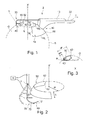
- the electroporation device 2 shown in Figure 1 is configured to catch in a pincer movement an eye O, while bearing on the limbus L.
- the device comprises a first part 10 and a second part 30, mounted in translation on the first part 10, along a direction T.
- the first part 10 comprises a proximal portion 13 intended for manipulation of the device, allowing the device to be gripped, and a cup-shaped support 14 mounted at the end of the proximal portion 13.
- the support 14 is provided with a spherical first part contact surface 60 intended to come into contact with the outside surface of the eye, to ensure an efficient and stable positioning of the device.
- the contact surface 60 preferably has a smooth surface and, more preferably, a surface without any roughness, preferably in a material that is not aggressive with respect to the surface of the eye, for example polymers of silicone, of sponge, in particular synthetic sponge, of polyester, of polyorthoester, of polymethyl methacrylate or of any other flexible medical-grade polymers.
- the support 14 is preferably rigid.
- the contact surface 60 extends along the substantially spherical envelope S, matching the outside surface of an eye O.
- the contact surface 60 may have the form of a band.
- the contact surface 60 may have two large sides 18 1 and 18 2 and two small sides 18 3 and 18 4 .
- the large sides can in particular form rounded corners with the small sides.
- the length of the small sides and/of the large sides may be greater than or equal to 5 mm, greater than or equal to 6 mm, and/or less than 20 mm, less than 18 mm, less than 15 mm, or less than 12 mm.
- the contact surface 60 may be solid or may be locally perforated (e.g. by holes). Preferably, the contact surface 60 is continuous, i.e. is not perforated.
- the contact surface 60 has a rim 12 designed to bear along the limbus L, i.e. the transition shoulder between the cornea and the sclera.
- the rim 12 allows the operator to position the first part, with remarkable precision, on the surface of the eye before any penetration of the injection needles through the outside surface thereof. The risk of error is therefore reduced or substantially eliminated.
- the rim 12 may be continuous or not.
- the arc of a circle of the rim 12 may have a radius R' of greater than 5 mm, greater than 6 mm, and/or of less than 8 mm or less than 7 mm, a radius of 6.58 mm being prefered.
- the arc of a circle of the rim 12 may extend, around its axis, on more than 40°, more than 50°, more than 60°, more than 70°, more than 80°, more than 90°, more than 100°, more than 120°, more than 140°, more than 160°. In an embodiment, it may extend on more than 180°, more than 200°, more than 220°, more than 240°, more than 260°, more than 280°, more than 300°, or even more, i.e. up to 360°.
- the rim 12 preferably has a smooth surface and, more preferably, a surface without any roughness, especially in the form of sharp tips or edges that could damage the surface of the eye.
- the rim 12 may in particular be formed by a band of flexible material with a width of greater than 1.5 mm and/or less than 5 mm. It may in particular be formed by a bead of silicone or of foam. Advantageously, the risk of injury to the limbus is thereby reduced.
- the rim 12 may be formed by or at least partially covered by a non-slip material that is able to limit the sliding movement on the outside surface of the eye.
- the second part 30 comprises an invasive first electrode 40 and a second electrode 50 having a spherical electrode contact surface 52.
- the contact surface 52 is defined by an electrically conductive material and may have one or several of the features of the contact surface 60.
- the contact surface 52 may be defined by a coating made of an electrically conductive material.
- the height h of the electrode contact surface 52 i.e. the length of its small edges, may be less than 10 mm, less than 8 mm, less than 7 mm, less than 5 mm.
- the electrode contact surface 52 may have a rim 62, intended to come into contact with the limbus L, so as to perfectly position and stabilize the device on the eye.
- the rim 62 may have one or several of the features of the rim 12.
- the electrode contact surface 52 preferably does not comprise any injection needle, i.e. the electrode 52 is preferably a surface electrode, i.e. designed so as to not penetrate into the eye.
- the second part comprises a first connector for connecting the first electrode to a first terminal of an electrical generator 6.
- the second part 30 also comprises a second connector for connecting the electrode contact surface 52, defined by an electrically conductive material, to a second terminal of the electrical generator 6.
- the device is preferably configured so that the contact surfaces 60 and 52 are concentric in a position where they bear on opposite regions of the outside surface of the eye, relative to the vision axis of the eye, as shown in Figure 1 .
- the second part 30 may comprise a second proximal portion 32, facilitating the manipulation of the second part, in particular to guide the movement along the direction T.
- the second electrode 50 may be rigidly fixed at the end of the second part which is opposite to the proximal portion 32.
- the translation movement of the second part relative to the first part along the direction T may lead the second part in a position where the first and second contact surfaces 52 and 60 may "pinch” or “clamp” the eye O, two opposite regions of the outside surface of the eye O being in close contact with the contact surfaces 52 and 60, respectively.
- a spring preferably tends to push the first part toward the second part.
- the second part also preferably comprises a first invasive electrode 70, comprising at least one needle 40, preferably a set of parallel identical and rectilinear needles 4', extending along a common general direction T, and electriclally connected to each other.
- the neddles 40 are fixed on a common stem 72, as a comb.
- the needle(s) 40 is (are) preferably injection needles.
- the external diameter of a needle 40 may be between 0.2 and 0.4 mm.
- the external diameter of a needle 40 is, for example, about 0.3 mm.
- the distal end of a needle has preferably a bevelled tip for facilitating the penetration of the needle into the eye. It may open out via one or several axial and/or radial ejection orifices.
- any needle 40 is tapered, that is to say conical along its axis, and opens out axially.
- the ejection orifice of an injection needle preferably of any injection needle, has a smaller diameter than the inside diameter of the injection needle.
- the injection needle opens out laterally.
- a needle 40 can be designed in such a way that its distal end reach the ciliary muscle or the vitreous cavity, or the subretinal space, or the retina, or the pigment epithelium of the retina, or the corneal epithelium or stroma or endothelium or transcornea, or else the peri-ocular muscles. Means are preferably provided to ensure that this distal end cannot be engaged beyond these elements during the stage of penetration.
- the length of a needle 40 can be greater than 2 mm, or greater than 3 mm, or greater than 3.3 mm and/or less than 5 mm, or less than 4 mm, or less than 3.7 mm.
- All the needles may have the same dimensions.
- the needles are configured so that, in the close position ( Fig. 1 ), with the electrode contact surface bearing on the eye and the rim 62 on the limbus, no needle may penetrate into the eye at a distance less than 4 mm, preferably less than 5 mm from the limbus.
- all the fixation points of the needles on the stem 72 are preferably more than 4 mm, preferably more than 5 mm away from the rim 62.
- the first electrode is mounted on the second part so that it may rotate or translate between a remote position where the needles 40 are not penetrating in the eye (represented with a dashed line) and a close position where the needles 40 are introduced in the eye, while allowing the rim 62 remaining in contact with the limbus of the eye (and the spherical surface 52 remaining in contact with the outside surface of the eye) during the rotation or translation between these two positions.
- the device preferably comprises desactivable means to lock the first electrode in the remote position and/or in the close position.
- the device may comprise elastic means, for instance a spring, acting so as to push the first electrode toward the close position and/or to push the second electrode onto the outside surface of the eye and/or to push the second part toward the first part.
- elastic means advantageously improve the stability of the positioning.
- the electroporation device preferably comprises a reservoir of the pharmaceutical composition that is to be injected, for instance a reservoir in the form of a syringe, in fluid communication with all the injection needle(s). An action on the piston of the syringe transfers the pharmaceutical composition out of the reservoir into the injection needle(s).
- An electroporation device may be used for the electroporation of a therapeutic nucleic acid of interest.
- the nucleic acid to be used in the instant invention can be any nucleic acid of interest exhibiting a biological property. More particularly, the nucleic acid can be any nucleic acid encoding a natural, truncated, artificial, chimeric or recombinant product [e.g., a polypeptide of interest (including a protein or a peptide), a RNA, etc.] exhibiting a biological activity.
- a natural, truncated, artificial, chimeric or recombinant product e.g., a polypeptide of interest (including a protein or a peptide), a RNA, etc.
- the nucleic acid is preferably a desoxyribonucleic acid (DNA) molecule (cDNA, gDNA, synthetic DNA, artificial DNA, recombinant DNA, etc.) or a ribonucleic acid (RNA) molecule (mRNA, tRNA, RNAi, RNAsi, catalytic RNA, antisens RNA, viral RNA, etc.).
- the nucleic acid may be single stranded or multistranded nucleic acid, preferably double-stranded nucleic acid or may be complexed.
- the nucleic acid may comprise hybrid sequences or synthetic or semi-synthetic sequences. It may be obtained by any technique known to persons skilled in the art, and especially by screening libraries, by chemical synthesis, or alternatively by mixed methods including chemical or enzymatic modification of sequences obtained by screening libraries.
- the therapeutic nucleic acid is of synthetic or biosynthetic origin, or extracted from a virus or from a unicellular or pericellular eukaryotic or prokaryotic organism.
- the therapeutic nucleic acid used in the present invention may be naked, may be complexed with any chemical, biochemical or biological agent, may be inserted in a vector, etc..
- naked DNA refers to any nucleic acid molecule which is not combined with a synthetic, biosynthetic, chemical, biochemical or biological agent improving the delivery or transfer of said DNA, or facilitating its entry into the cell.
- vector refers to a nucleic acid molecule capable of transporting another nucleic acid to which it has been linked. This term also refers in the present application to any delivery carrier, such as a composition associated to a therapeutic or prophylactic nucleic acid in order to increase its cellular delivery.
- Preferred vectors are those capable of autonomous replication and/or expression of nucleic acids to which they are linked.
- Vectors capable of directing the expression of genes to which they are operatively linked are referred to herein as "expression vectors".
- expression vectors of utility in recombinant DNA techniques are often in the form of "plasmids" which refer to circular double stranded DNA loops which, in their vector form, are not bound to the chromosome.
- the plasmid is the most commonly used form of vector.
- the plasmid is a preferred form of naked DNA according to the invention.
- Vectors may also be episomal DNA, yeast artificial chromosomes, minichromosomes or viral vectors wherein the viral vector is selected from the group consisting of a lentivirus, an adenovirus, an adeno-associated virus and a virus-like vector.
- the vector may also be a lipid vesicle such as a liposome.
- lipid based compounds which are not liposomes may further be used.
- lipofectins and cytofectins are lipid-based positive ions that bind to negatively charged nucleic acid and form a complex that can ferry the DNA across a cell membrane.
- the invention is intended to include such other forms of expression vectors which serve equivalent functions and which become known in the art subsequently hereto.
- the nucleic acid according to the invention may also contain one or more additional regions, for example regulatory elements of small or large size which are available to the skilled artisan such as a promoter region (constitutive, regulated, inducible, tissue-specific, etc.), for example sequences allowing and/or promoting expression in the targeted tissue (e.g. choroid or retina) or cells (e.g. RPE or photoreceptors), a transcription termination signal, secretion sequences, an origin of replication and/or nuclear localization signal (nls) sequences which further enhance polynucleotide transfer to the cell nucleus.
- nls sequences have been described in the prior art including the SV40 large T antigen sequence.
- nucleic acid may further comprise selectable markers useful in selecting, measuring, and monitoring nucleic acid transfer results (transfer to which tissues, duration of expression, etc.).
- selectable markers useful in selecting, measuring, and monitoring nucleic acid transfer results (transfer to which tissues, duration of expression, etc.).
- the types of expression systems and reporter genes that can be used or adapted for use are well known in the art. For example, genes coding for a luciferase activity, an alkaline phosphatase activity, or a green fluorescent protein activity are commonly used.
- the nucleic acid according to the invention may contain any nucleotide sequence of any size.
- the nucleic acid may thus vary in size from a simple oligonucleotide to a larger molecule such as a nucleotide sequence including exons and/or introns and/or regulatory elements of any sizes (small or large), a gene of any size, for example of large size, or a chromosome for instance, and may be a plasmid, an episome, a viral genome, a phage, a yeast artificial chromosome, a minichromosome, an antisense molecule, etc.
- the polynucleotide is a double-stranded, circular DNA, such as a plasmid, encoding a product with biological activity.
- the nucleic acid can be prepared and produced according to conventional recombinant DNA techniques, such as amplification, culture in prokaryotic or eukaryotic host cells, purification, etc.
- recombinant DNA techniques such as amplification, culture in prokaryotic or eukaryotic host cells, purification, etc.
- the techniques of recombinant DNA technology are known to those of ordinary skill in the art.
- the nucleic acid of interest is capable of exerting a beneficial effect on the targeted cells. It may compensate for a deficiency in or reduce an excess of an endogenous substance. Alternatively, it may confer new properties on the targeted cells. It may be for example an antisense sequence or nucleic acid encoding a polypeptide which can affect the function, morphology, activity and/or metabolism of ocular cells.
- Antisense nucleic acids of the invention are preferably nucleic acid fragments capable of specifically hybridizing with a nucleic acid encoding an endogenous ocular active substance or the corresponding messenger RNA. These antisense nucleic acids can be synthetic oligonucleotides, optionally modified to improve their stability and selectivity. They can also be DNA sequences whose expression in the cell produces RNA complementary to all or part of the mRNA encoding an endogenous ocular active substance. Antisense nucleic acids can be prepared by expression of all or part of a nucleic acid encoding an endogenous ocular active substance, in the opposite orientation.
- antisense sequence is suitable for practice of the invention so long as it is capable of down-regulating or blocking expression of the endogenous ocular active substance.
- the antisense sequence is at least 20 nucleotides in length.
- biologically active polypeptides or proteins optionally expressed by a nucleic acid as described above and suitable for practice of the invention are enzymes, blood derivatives, hormones, lymphokines, cytokines, chimiokines, antiinflammatory factors, growth factors, trophic factors, neurotrophic factors, haematopoietic factors, angiogenic factors, anti-angiogenic factors, inhibitors of metalloproteinase, regulators of apoptosis, coagulation factors, receptors thereof, in particular soluble receptors, a peptide which is an agonist or antagonist of a receptor or of an adhesion protein, antigens, antibodies, fragments or derivatives thereof and other essential constituents of the cell, proteins involved in the visual cycle within RPE cells, and structure proteins of retinal cells.
- VEGF vascular endothelial growth Factor
- Angiogenin angiopoietin-1
- DeM acidic or basic Fibroblast Growth Factors
- FGF-2 FGF-2
- Follistatin Granulocyte Colony-Stimulating factor
- G-CSF Granulocyte Colony-Stimulating factor
- HGF Hepatocyte Growth Factor
- SF Scatter Factor
- Leptin Leptin
- Midkine Placental Growth Factor
- PEF Platelet-Derived Endothelial Cell Growth Factor
- PD- ECGF Platelet-Derived Growth Factor-BB
- Pleiotrophin PDN
- RdCVF Rod-derived Cone Viability Factor
- Progranulin Proliferin
- TGF-alpha Transforming Growth Factor-beta
- TGF-alpha Transforming Growth Factor-beta
- the nucleic acid encodes a soluble fragment of the TNF[alpha] receptor, the TGF[beta]2 receptor, of VEGFR-1, VEGFR-2, VEGFR-3, CCR2 or MIP1.
- the nucleic acid may also, in another preferred embodiment, encode an antibody, a variable fragment of a single-chain antibody (ScFv) or any other antibody fragment having recognition capacities for the purposes of immunotherapy.
- the biologically active nucleic acid encodes a precursor of a therapeutic protein usable in the present invention such as those described above.
- the electroporation device of the invention is particularly suitable for performing gene replacement.
- the nucleic acid may encode for a viable protein so as to replace the defective protein which is naturally expressed in the targeted tissue.
- defective genes that may be replaced include, but are not limited to, genes that are responsible for retinal degenerative diseases such as retinitis pigmentosa (RP), Leber congenital amaurosis (LCA), recessive RP, Dominant retinitis pigmentosa, X-linked retinitis pigmentosa, Incomplete X-linked retinitis pigmentosa, dominant, Dominant Leber congenital amaurosis, Recessive ataxia, posterior column with retinitis pigmentosa, Recessive retinitis pigmentosa with para-arteriolar preservation of the RPE, Retinitis pigmentosa RP12, Usher syndrome, Dominant retinitis pigmentosa with sensorineural deafness
- the electroporation device of the invention is particularly suitable for performing exon skipping for restoring the function of mutated proteins responsible for retinal degenerative disease.
- Exon skipping involves blocking or preventing the incorporation into mature mRNA of one or more targeted exon(s) which encodes amino sequences that are responsible for a protein dysfunction. This is accomplished by exposing the pre-mRNA that includes exons encoding the protein to antisense oligonucleotides (AONs) which are complementary to sequence motifs that are required for correct splicing of the one or more targeted exons.
- AONs antisense oligonucleotides
- the AONs bind to complementary required sequences in the pre-mRNA and prevent normal splicing. Instead, the targeted exons are excised and are not included in the mature mRNA that is translated into protein, and the amino acid sequences encoded by the targeted exons are missing from the translated protein.
- a mixture of nucleic acids encoding distinct biologically active products can be used. This variant allows co-expression of different products in the ocular cells.
- composition of the invention may also comprise compatible or physiologically acceptable carrier, excipient or diluent.
- pharmaceutically refers to molecular entities and compositions that do not produce an adverse, allergic or other untoward reaction when administered to a mammal, especially a human, as appropriate.
- a pharmaceutically acceptable carrier or excipient refers to a nontoxic solid, semi-solid or liquid filler, diluent, encapsulating material or formulation auxiliary of any type.
- Pharmaceutically compatible or physiologically acceptable carrier, excipient or diluent includes diluents and fillers which are pharmaceutically acceptable for the methods of the invention, are sterile, and may be selected from neutral to slightly acidic, isotonic, buffered saline (including phosphates, chloride, etc.), aqueous or oleaginous solutions or suspensions and more preferably from sucrose, trehalose, surfactants, proteins and amino acids.
- the pharmaceutically compatible or physiologically acceptable carrier, excipient or diluent is preferably formulated using suitable dispersing, wetting, suspending, soothing, isotonic or viscosity building agents, stabilizers, preservatives and appropriate buffers to form an isotonic solution.
- the particular pharmaceutically acceptable carrier and the ratio of active compound to carrier are determined by the solubility and chemical properties of the composition, the particular mode of administration, and standard pharmaceutical practice. Those skilled in the art will understand how to formulate such vehicles by known techniques.
- stabilizers is disodium edetate or the like.
- isotonic agents are glycerin, propylene glycol, polyethylene glycol, sodium chloride, potassium chloride, sorbitol and mannitol or the like.
- buffers are citric acid, sodium hydrogenphosphate, glacial acetic acid and trometamol or the like.
- pH adjusters are hydrochloric acid, citric acid, phosphoric acid, acetic acid, sodium hydroxide, sodium carbonate and sodium hydrogencarbonate or the like.
- An example of soothing agents is benzyl alcohol or the like.
- preservatives are benzalkonium chloride, benzethonium chloride, p-hydroxybenzoate esters, sodium benzoate and chlorobutanol or the like.
- Viscosity greater than that of simple aqueous solutions may be desirable to increase ocular absorption of the active compound, to decrease variability in dispensing the formulations, to decrease physical separation of components of a suspension or emulsion of formulation and/or otherwise to improve the ophthalmic formulation.
- Such viscosity building agents include, for example, polyvinyl alcohol, polyvinyl pyrrolidone, methyl cellulose, hydroxypropyl methylcellulose, hydroxyethyl cellulose, carboxymethyl cellulose, hydroxypropyl cellulose or other agents known to those skilled in the art. Such agents are typically employed at a level of from about 0.01 to about 2 wt. %.
- Preparation forms of the pharmaceutical composition may be liquid preparations.
- the liquid preparations can be prepared, for example, by dissolving the biologically active agent in BSS (Balanced Salt Solution), a glycerin solution, a hyaluronic acid solution and the like.
- a particular composition comprises for example BBS (60%) and hyaluronic acid (40%).
- a stabilizer, an isotonic agent, a buffer, a pH adjustor, a soothing agent, a preservative, an injectable viscuous polymer, such as a polyorthoester or a polyanhydride, electrolytes, such as sodium, potassium, calcium, magnesium and/or chloride or the like may optionally be added in an adequate amount to the liquid preparations.
- the pharmaceutical composition may comprise or the biologically active agent may be combined (in a use according to the present invention) with any additional active ingredient or adjuvant.
- the adjuvant may be selected from any substance, mixture, solute or composition facilitating or increasing the biological activity of the prophylactic or therapeutic agent such as any biologic, synthetic or biosynthetic agent which improves the delivery or transfer of said agent and may be assimilated to a vector (as delivery carrier) according to the invention.
- the adjuvant may be conditioned and administered separately or sequentially from the prophylactic or therapeutic agent containing composition and/or at a distinct site of injection. Treatment with multiple agents and/or adjuvants according to the invention need not be done using a mixture of agents and/or adjuvants but may be done using separate pharmaceutical preparations.
- the preparations need not be delivered at the same exact time, but may be coordinated to be delivered to a patient during the same period of treatment, i. e., within a week or a month of each other.
- Non-limiting examples of therapeutic agents which may be administered in addition to the above biologically active (prophylactic or therapeutic) agent(s) through a method according to the present invention also include permeabilizing agents such as a virus, a lipid vesicle, hyaluronic acid, lipid-based positive ions, polycationic emulsions, cationic peptides, polyplex, etc.; Actual dosage levels of active ingredients in the compositions of the present invention may be adapted so as to obtain an amount of active ingredient that is effective to obtain a desired biological activity. It should be understood, however, that the specific dose level for any particular patient will depend upon a variety of factors including the body weight, general health, sex, diet, time, rates of absorption and excretion, combination with other drugs and the severity of the particular disease being treated.
- kits are envisioned.
- a device according to the invention and a pharmaceutical composition according to the invention, and optionally instructions for use may be supplied together in a kit.
- the components may be separately packaged or contained.
- Instructions can be in written, video, or audio form, and can be contained on paper, an electronic medium, or even as a reference to another source, such as a website or reference manual.
- the method of the invention may be used for treating an ocular disease in a subject, the pharmaceutical composition being preferably chosen among the pharmaceutical compositions which are described here above.
- an operator may proceed by the following steps:
- the operator couples a syringe filled with the pharmaceutical product, and electrically connects the first and second connectors to the two terminals of the electrical generator 6.
- the operator pulls the first and second parts apart so that the spherical first part contact surface 60 and the spherical electrode contact surface 52 be spaced from each other. He also pull the first electrode apart from the spherical electrode surface 52, reaching the "remote" position.
- the first electrode and the spherical electrode surface 52 are spaced from each other by a distance of at least 30 mm, preferably at least 40 mm, and/or less than 80 mm, or less than 60 mm.
- the operator may then position the rim 12 on the limbus L, then position the spherical first part contact surface 60 onto the eye. Then he may push the second electrode toward the eye, so that the rim 62 be in contact on the limbus L and the spherical electrode contact surface 52 bear on the eye.
- the device is then perfectly and precisely stabilized on the eye, the needles 40 not penetrating in the eye, and being preferably locked in this remote position. Spring means may improve this stability.
- the device is then in the "close” position, the eye O being pressed between the spherical contact surfaces 52 and 60, as shown in Figure 1 , the needles being inserted precisely into the eye.
- the operator may then begin the injection of the pharmaceutical product by acting on the piston of the syringe.
- the increase in the local pressure in the area of the injection points is believed to promote the introduction of the injected product into the cells, particularly in the case of transfection.
- a person skilled in the art therefore generally considers it preferable to limit the number of injection points, if possible by using only a single injection needle. Surprisingly, however, the inventors have found that multiplication of the injection points promotes the penetration of the product.
- the operator then sends a suitable electrical signal by means of the electrical generator, in such a way as to create, within the injection zone, an electrical field that promotes electroporation.
- a suitable electrical signal by means of the electrical generator, in such a way as to create, within the injection zone, an electrical field that promotes electroporation.
- the arrangement and the shapes of the first and second electrodes make it possible to create an electrical field particularly effective for electroporation.
- an electrical field constituted by one or more electrical pulse(s) is applied.
- the field intensity of which is preferably between about 1 and 600 Volts, preferably 1 and 400 Volts, even more preferably between about 1 and 200 Volts, advantageously between about 10 and 100 Volts, or 15 and 70 Volts.
- the total duration of application of the electric field may be between 0.01 millisecond and 1 second, preferably between 0.01 and 500 milliseconds, more preferably between 1 and 500 milliseconds, even more preferably greater than 1 or 10 milliseconds. In a preferred embodiment, the total duration of application of the electric field is between 10 milliseconds and 100 milliseconds and is preferably of 20 milliseconds.
- the number of electric pulses applied may be between for example 1 and 100 000.
- Their frequency may be comprised between 0.1 and 1000 hertz. It is preferably a regular frequency.
- Electric pulses may also be delivered in an irregular manner relative to each other, the function describing the intensity of the electric field as a function of the time for one pulse being preferably variable.
- Electric pulses may be unipolar or bipolar wave pulses. They may be selected for example from square wave pulses, exponentially decreasing wave pulses, oscillating unipolar wave pulses of limited duration, oscillating bipolar wave pulses of limited duration, or other wave forms. Preferentially, electric pulses comprise square wave pulses or oscillating bipolar wave pulses.
- the operator electrically disconnects the electrodes and the generator and then moves the first electrode into the remote position (dashed line), so as to withdraw the injection needles from the eye. He then moves the first and second parts away from each other and removes the device.
- an needle is not limited.
- the needle may be substantially rectilinear. It may also extend along an arc of a circle, in particular in order to facilitate its insertion by rotation of the first electrode around the axis Y.
- the needles may be parallel or not. But it is preferable that they are substantially parallel.
- the needles may have an identical length, whichever needle is considered. They may also have different length.
- the movement of the first electrode relative to the second electrode and/or the movement of the first part relative to the second part may be guided differently.
- the first electrode extends, or may be guided so as to extend, along a direction which is substantially parallel to the contact surface of the second electrode.
- the first and second parts are fixed relative to each other, i.e. no mobility is allowed between these two parts.
Landscapes
- Health & Medical Sciences (AREA)
- Life Sciences & Earth Sciences (AREA)
- Engineering & Computer Science (AREA)
- General Health & Medical Sciences (AREA)
- Biomedical Technology (AREA)
- Animal Behavior & Ethology (AREA)
- Public Health (AREA)
- Veterinary Medicine (AREA)
- Nuclear Medicine, Radiotherapy & Molecular Imaging (AREA)
- Radiology & Medical Imaging (AREA)
- Biophysics (AREA)
- Bioinformatics & Cheminformatics (AREA)
- Ophthalmology & Optometry (AREA)
- Heart & Thoracic Surgery (AREA)
- Vascular Medicine (AREA)
- Medicines That Contain Protein Lipid Enzymes And Other Medicines (AREA)
Abstract
The present invention relates to an device comprising:
- a first part (10) comprising a rim (12) having the shape of a circle or of an arc of a circle, said circle having an axis X and a radius of greater than 5 mm and of less than 8 mm, so as to substantially correspond to the radius of the limbus (L) of the eye (O),
- a second part (30) mobile relative to the first part and guided by said first part, said second part comprising an invasive first electrode (40) and/or a second electrode (50) having a spherical electrode contact surface (52) born by a virtual sphere, the radius of curvature of said electrode contact surface ranging between 15 mm and 18 mm, and being preferably about 16.5 mm, so as to substantially correspond to the radius of curvature of the outside surface of said eye,
the first and second electrodes being designed to be connected electrically to first and second terminals, respectively, of an electrical generator.
- a first part (10) comprising a rim (12) having the shape of a circle or of an arc of a circle, said circle having an axis X and a radius of greater than 5 mm and of less than 8 mm, so as to substantially correspond to the radius of the limbus (L) of the eye (O),
- a second part (30) mobile relative to the first part and guided by said first part, said second part comprising an invasive first electrode (40) and/or a second electrode (50) having a spherical electrode contact surface (52) born by a virtual sphere, the radius of curvature of said electrode contact surface ranging between 15 mm and 18 mm, and being preferably about 16.5 mm, so as to substantially correspond to the radius of curvature of the outside surface of said eye,
the first and second electrodes being designed to be connected electrically to first and second terminals, respectively, of an electrical generator.
Description
- The present invention relates to an injection device for the treatment of an ocular disease in a subject.
-
WO 2006/123248 describes a device for administering a product by electroporation. -
- There is a need for an efficient electroporation device which may be used to introduce a pharmaceutical composition into an eye with a very precise and stable positioning.
- It is an object of the invention to provide such a device.
- According to a first aspect, the invention proposes an electroporation device for injecting a product into an eye, said device comprising:
- a first part comprising a rim having the shape of a circle or of an arc of a circle, said circle having an axis X and a radius (R') of greater than 5 mm and of less than 8 mm, so as to substantially correspond to the radius of the limbus of the eye (O), (so that it can be placed in contact with said limbus to at least partially encircle said limbus),
- a second part mobile relative to the first part and guided by said first part, said second part comprising an invasive first electrode and/or a second electrode having a spherical electrode contact surface born by a virtual sphere, the radius of curvature of said electrode contact surface ranging between 15 mm and 18 mm, and being preferably about 16.5 mm, so as to substantially correspond to the radius of curvature of the outside surface of said eye (i.e. a contact surface conformed to bear on the outside surface of said eye),
the first and second electrodes being designed to be connected electrically to first and second terminals, respectively, of an electrical generator. - As will be described in more detail later in the description, the inventors have discovered that such an injection device is very efficient for electroporation in the eye, in particular in the cilary muscle, allowing a very precise distribution of the pharmaceutical composition, in particular containing a plasmid DNA.
- Preferably, an injection device according to the invention comprises one or more of the following optional characteristics:
- The first part has a spherical first part contact surface born by a virtual sphere, the radius of curvature of said spherical contact surface ranging between 15 mm and 18 mm, and being preferably about 16.5 mm, so as to substantially correspond to the radius of curvature of the outside surface of said eye,
and the area of said spherical first part contact surface is preferably greater than 30 mm2, greater than 40 mm2, greater than 50 mm2, greater than 60 mm2, greater than 80 mm2, greater than 100 mm2, greater than 150 mm2, greater than 200 mm2, and/or less than 900 mm2, less than 800 mm2, less than 700 mm2, less than 600 mm2, or less than 500 mm2, and/or
said rim preferably extends on more than 45°, preferably more than 60°, preferably more than 70°, preferably more than 80°, preferably more than 90°, preferably more than 120°,or more than 160°, more than 180°, more than 200°, more than 250°, aroung the axis X. - The second part comprises said first and second electrodes.
- The first electrode comprises one, preferably several injection needles.
- The spherical electrode contact surface is configured to come into electrical contact with the outside surface of said eye, i.e. is not electrically isolated from said outside surface of said eye.
- The second electrode comprises a rim having the shape of an arc of a circle, said circle having an axis X' and a radius of greater than 5 mm, greater than 6 mm, and/or of less than 8 mm or less than 7 mm, so as to substantially correspond to the radius of the limbus of the eye (O), (so that it can be placed in contact with said limbus to partially encircle said limbus). In the position represented in the
figure 1 , the axis X and X' are the same. - The rims of the first part and of the second electrode are coplanar (or may be coplanar if the second electrode is mobile relative to the first electrode) at least in a position where the first part and the spherical surface of the second electrode bear on a same virtual sphere, the radius of curvature of said virtual sphere ranging between 15 mm and 18 mm and being preferably about 16.5 mm, so as to substantially correspond to the radius of curvature of the outside surface of said eye. In
Fig. 1 , these rims bear on the same circle, corresponding to the limbus L. - The second part is guided, relative to the first part, in rotation, in particular like two arms of a pair of scissors, and/or in translation (along the direction T, as represented), the direction T corresponding preferably to the direction of the invasive needle(s) of the first electrode.
- The first electrode is fixed relative to the second electrode or mobile relative to the second electrode.
- The first electrode is guided between a remote position and a close position in which the first electrode is close to and remote from the second electrode, respectively.
- The first electrode is guided, relative to the second electrode, in rotation and/or in translation. The rotation is preferably around an axis Y (see
Fig. 1 ) which belongs to a plane perpendicular to the axis X and/or X', and/or which is preferably substantially tangential to a circle of axis X and/or X'. The translation is preferably along an axis which belongs to a plane perpendicular to the axis X and/or X' and/or which is preferably substantially radial to a circle of axis X and/or X'. - The electroporation device comprises
- elastic means, for instance a spring, configured to force the movement of second part toward the first part, and/or the movement of the first electrode relative to the second electrode, and/or
- a mechanism to automatically change the position of the second part relative to the first part, and/or the position of the first electrode relative to the second electrode.
- A needle of the first electrode (preferably any needle of the first electrode) is protruding or or may be guided so as to protrude inside the virtual sphere (S) corresponding to the second electrode contact surface.
- Preferably, the angle δ between a needle of the first electrode (preferably any needle of the first electrode) and a plane perpendicular to the axis X or X' (see
Fig. 2 ) is less than 20°, less than 15°, preferably less than 10°, preferably less than 5°, preferably substantially 0°, in particular when the first electrode is mobile in translation relative to the second electrode. Preferably, a needle of the first electrode (preferably any needle of the first electrode) extends, or may be guided so as to extend, substantially in a plane perpendicular to said axis X' and/or, preferably, in a plane including said axis X', i.e. said needle is substantially radial. - The first electrode is guided between a remote position (in dashed line in
Fig. 2 ) and a close position (in plain line inFig. 2 ) or is fixed relative to the second electrode,
and a needle of the first electrode (preferably any neddle of the first electrode) extends permanently (if the first electrode is fixed relative to the second electrode) or in the close position at a distance d less than 15 mm (i.e. no point of said needle is at a distance greater than 15 mm away from the rim of said second electrode), less than 10 mm, less than 8 mm, less than 7 mm, less than 6 mm, less than 5 mm, less than 4 mm, less than 3 mm, and/or greater than 0.5 mm, greater than 1 mm from said rim of said second electrode and/or at a distance d' less than 7 mm, less than 6 mm, less than 5 mm, less than 4 mm, less than 3 mm, less than 2 mm, less than 1 mm, and/or greater than 0.5 mm from said second electrode (voirFig. 3 ). Preferably, the first electrode is configured so that, permanently or in the close position, no portion of said needle of the first electrode is at a distance greater than 10 mm, greater than 8 mm, greater than 7 mm, greater than 6 mm, greater than 5 mm, greater than 4 mm, greater than 3 mm, greater than 2 mm from the electrically conducticve contact surface of the second electrode. - Permanently (if the first electrode is fixed relative to the second electrode) or in the close position, the distance d" between said rim of said second electrode and the point (P) of said virtual sphere inside which said needle of the first electrode protrudes or may protrude is less than 25 mm, preferably less than 20 mm, preferably less than 15 mm, preferably less than 10 mm and or more than 4 mm, more than 5 mm, and/or the distance d"' between said said second electrode and the point of said virtual sphere inside which said needle of the first electrode protrudes or may protrude is less than 10 mm, preferably less than 9 mm, preferably less than 8 mm, preferably less than 7 mm, preferably less than 6 mm, preferably less than 5 mm (see
Fig. 3 ). - A needle of the first electrode (or preferably any needle of the first electrode if it comprises several needles) is electrically insulated over a part of its length, preferably by means of an insulating cover, so that, permanently or in the close position, no non-insulated part of said needle extends at a distance less than 2.0 mm, less than 1.5 mm, less than 1.0 mm, less than 0.8 mm from the spherical contact surface of the second electrode.
- The device preferably comprises more than 1, more than 2, and /or less than 10, less than 5 or less than 4 injection needles, these injection needles being different or, preferably, identical. The injection needles are preferably part of the first electrode.
- The spherical contact surface of the second electrode and/or of the first part has the form of a spheroidal band, in particular extending along an envelope surface corresponding to the shape of the anterior or posterior part of the outside surface of an eye.
- The spherical contact surface of the second electrode and/or of the first part has a surface area of greater than 30 mm2, greater than 40 mm2, greater than 50 mm2, greater than 60 mm2, greater than 80 mm2, greater than 100 mm2, greater than 150 mm2, greater than 200 mm2, and/or less than 900 mm2, less than 800 mm2, less than 700 mm2, less than 600 mm2, or less than 500 mm2.
- The first electrode comprises one or a plurality of injection needles which preferably substantially extend along a common general direction. The first electrode is preferably rotationally mounted on said second part, preferably around an axis (Y) substantially perpendicular to said general direction, the axis of rotation being preferably substantially perpendicular to the general direction of the injection needle(s).
- The device is configured so that contact surface of the second electrode may be in contact with a second region of the outside surface of the eye, preferably so as to match said second region of said outside surface, the second region being opposite to a first region (relative to the axis X) on which the contact surface of the first part bears.
- Preferably, the electrical generator is designed to promote the electroporation of a composition injected into an eye by means of injection needles of the device.
- According to a second aspect, the invention provides an electroporation device, which may optionnaly have one or several characteristics of the electroporation device of the first aspect, said device comprising first and second electrodes,
wherein the first electrode is guided between a remote position and a close position or is fixed relative to the second electrode,
wherein the second electrode comprises a rim having the shape of a circle or of an arc of a circle, said circle having an axis X' and a radius of greater than 5 mm and of less than 8 mm,
wherein the second electrode has a spherical contact surface, the radius of curvature of said spherical contact surface ranging between 15 mm and 18 mm, and being preferably about 16.5 mm,
wherein the first electrode extends, or may be guided so as to extend, so that a needle of said first electrode (or preferably any needle of said first electrode) protrudes inside the virtual sphere corresponding to the second electrode contact surface ,
wherein the angle δ between said needle of the first electrode (or any needle of the first electrode) and a plane perpendicular to the axis X' is less than 20°, less than 15°, preferably less than 10°, preferably less than 5°, preferably substantially 0°. - According to a third aspect, the invention provides an electroporation device, comprising
- an invasive first electrode,
- a support having a spherical support contact surface, i.e. extending along a virtual sphere, the radius of curvature of said support contact surface ranging between 15 mm and 18 mm, and being preferably about 16.5 mm, so as to substantially correspond to the radius of curvature of the outside surface of said eye,
- Preferably, the first electrode is configured so that, permanently or in the close position, no portion of said needle of the first electrode is at a distance greater than 10 mm, greater than 8 mm, greater than 7 mm, greater than 6 mm, greater than 5 mm, greater than 4 mm, greater than 3 mm, greater than 2 mm from an electrically conductive contact surface of the second electrode.
- The first and second electrodes of this device may optionnaly have one or several characteristics of the first and second electrodes of the electroporation device according to the first aspect of the invention.
- The invention also relates to a method for injecting a composition into an eye by means of an electroporation device according to the first aspect of the invention, said method comprising the following steps:
- a) positioning the first part on the eye so that the rim of said first part bear on the limbus of the eye, preferably so that the spherical contact surface of said first part, if any, comes into contact with a first region of the outside surface of the eye,
- b) positioning the second part so that the invasive first electrode penetrates into the eye and/or the spherical electrode contact surface of the second part comes into contact with a second region of the outside surface of the eye, the second region being preferably, relative to the axis X, substantially opposite to the rim of said first part and, if any, opposite to the first region,
- c) if the first electrode and the second electrode are mobile relative to each other, moving the first electrode or the second electrode so as to reach a position where the invasive first electrode is inserted in the eye and the spherical electrode contact surface of the second part is in contact with a second region of the outside surface of the eye,
- d) independently of the preceding steps, injecting said composition through at least an injection needle, preferably through the first electrode,
- e) independently of the preceding steps, connecting the first and second electrodes to said first and second terminals, respectively,
- f) generating an electrical field between said first and second electrodes with said electrical generator, the electrical field being adapted to promote electroporation.
- Other features and advantages of the invention will become clear upon reading the following detailed description and by examining the attached drawing, in which:
-
Figure 1 shows an electroporation device according to the invention; -
Figure 2 shows a perspective view of a detail of an injection device ofFig. 1 ; -
Figure 3 shows, along a transverse plane containing the axis X and a needle of the first electrode, a partial cross section of the device shown inFigures 1 and 2 . - In the various figures, identical reference signs are used to designate identical or similar elements.
- A "spherical contact surface" means a substantially spherical contact surface, preferably so as to correspond to the shape of the anterior or posterior part of the outside surface of an eye.
- "First" and "second" are used to distinguish corresponding elements, but do not limitate the invention.
- In the present description, unless otherwise stated, "comprising a" should be understood as "comprising at least one".
- The
electroporation device 2 shown inFigure 1 is configured to catch in a pincer movement an eye O, while bearing on the limbus L. - The device comprises a
first part 10 and asecond part 30, mounted in translation on thefirst part 10, along a direction T. - The
first part 10 comprises aproximal portion 13 intended for manipulation of the device, allowing the device to be gripped, and a cup-shapedsupport 14 mounted at the end of theproximal portion 13. - The
support 14 is provided with a spherical firstpart contact surface 60 intended to come into contact with the outside surface of the eye, to ensure an efficient and stable positioning of the device. - The
contact surface 60 preferably has a smooth surface and, more preferably, a surface without any roughness, preferably in a material that is not aggressive with respect to the surface of the eye, for example polymers of silicone, of sponge, in particular synthetic sponge, of polyester, of polyorthoester, of polymethyl methacrylate or of any other flexible medical-grade polymers. - The
support 14 is preferably rigid. - In the represented embodiment, the
contact surface 60 extends along the substantially spherical envelope S, matching the outside surface of an eye O.Thecontact surface 60 may have the form of a band. - The
contact surface 60 may have twolarge sides small sides - The length of the small sides and/of the large sides may be greater than or equal to 5 mm, greater than or equal to 6 mm, and/or less than 20 mm, less than 18 mm, less than 15 mm, or less than 12 mm.
- The
contact surface 60 may be solid or may be locally perforated (e.g. by holes). Preferably, thecontact surface 60 is continuous, i.e. is not perforated. - The
contact surface 60 has a rim 12 designed to bear along the limbus L, i.e. the transition shoulder between the cornea and the sclera. The rim 12 allows the operator to position the first part, with remarkable precision, on the surface of the eye before any penetration of the injection needles through the outside surface thereof. The risk of error is therefore reduced or substantially eliminated. - The rim 12 may be continuous or not.
- The arc of a circle of the rim 12 may have a radius R' of greater than 5 mm, greater than 6 mm, and/or of less than 8 mm or less than 7 mm, a radius of 6.58 mm being prefered.
- The arc of a circle of the rim 12 may extend, around its axis, on more than 40°, more than 50°, more than 60°, more than 70°, more than 80°, more than 90°, more than 100°, more than 120°, more than 140°, more than 160°. In an embodiment, it may extend on more than 180°, more than 200°, more than 220°, more than 240°, more than 260°, more than 280°, more than 300°, or even more, i.e. up to 360°.
- The rim 12 preferably has a smooth surface and, more preferably, a surface without any roughness, especially in the form of sharp tips or edges that could damage the surface of the eye.
- The rim 12 may in particular be formed by a band of flexible material with a width of greater than 1.5 mm and/or less than 5 mm. It may in particular be formed by a bead of silicone or of foam. Advantageously, the risk of injury to the limbus is thereby reduced.
- The rim 12 may be formed by or at least partially covered by a non-slip material that is able to limit the sliding movement on the outside surface of the eye.
- The
second part 30 comprises an invasivefirst electrode 40 and asecond electrode 50 having a sphericalelectrode contact surface 52. Thecontact surface 52 is defined by an electrically conductive material and may have one or several of the features of thecontact surface 60. In particular, thecontact surface 52 may be defined by a coating made of an electrically conductive material. - The height h of the
electrode contact surface 52, i.e. the length of its small edges, may be less than 10 mm, less than 8 mm, less than 7 mm, less than 5 mm. - The
electrode contact surface 52 may have arim 62, intended to come into contact with the limbus L, so as to perfectly position and stabilize the device on the eye. Therim 62 may have one or several of the features of the rim 12. - The
electrode contact surface 52 preferably does not comprise any injection needle, i.e. theelectrode 52 is preferably a surface electrode, i.e. designed so as to not penetrate into the eye. - The second part comprises a first connector for connecting the first electrode to a first terminal of an
electrical generator 6. Thesecond part 30 also comprises a second connector for connecting theelectrode contact surface 52, defined by an electrically conductive material, to a second terminal of theelectrical generator 6. - The device is preferably configured so that the contact surfaces 60 and 52 are concentric in a position where they bear on opposite regions of the outside surface of the eye, relative to the vision axis of the eye, as shown in
Figure 1 . - The
second part 30 may comprise a secondproximal portion 32, facilitating the manipulation of the second part, in particular to guide the movement along the direction T. Thesecond electrode 50 may be rigidly fixed at the end of the second part which is opposite to theproximal portion 32. - The translation movement of the second part relative to the first part along the direction T may lead the second part in a position where the first and second contact surfaces 52 and 60 may "pinch" or "clamp" the eye O, two opposite regions of the outside surface of the eye O being in close contact with the contact surfaces 52 and 60, respectively.
- A spring preferably tends to push the first part toward the second part.
- The second part also preferably comprises a first
invasive electrode 70, comprising at least oneneedle 40, preferably a set of parallel identical and rectilinear needles 4', extending along a common general direction T, and electriclally connected to each other. Theneddles 40 are fixed on acommon stem 72, as a comb. - The needle(s) 40 is (are) preferably injection needles.
- The external diameter of a
needle 40 may be between 0.2 and 0.4 mm. - The external diameter of a
needle 40 is, for example, about 0.3 mm. - The distal end of a needle has preferably a bevelled tip for facilitating the penetration of the needle into the eye. It may open out via one or several axial and/or radial ejection orifices. In an embodiment, any
needle 40 is tapered, that is to say conical along its axis, and opens out axially. - Preferably, the ejection orifice of an injection needle, preferably of any injection needle, has a smaller diameter than the inside diameter of the injection needle. Preferably, the injection needle opens out laterally.
- A
needle 40 can be designed in such a way that its distal end reach the ciliary muscle or the vitreous cavity, or the subretinal space, or the retina, or the pigment epithelium of the retina, or the corneal epithelium or stroma or endothelium or transcornea, or else the peri-ocular muscles. Means are preferably provided to ensure that this distal end cannot be engaged beyond these elements during the stage of penetration. - The length of a
needle 40 can be greater than 2 mm, or greater than 3 mm, or greater than 3.3 mm and/or less than 5 mm, or less than 4 mm, or less than 3.7 mm. - All the needles may have the same dimensions.
- Preferably, the needles are configured so that, in the close position (
Fig. 1 ), with the electrode contact surface bearing on the eye and therim 62 on the limbus, no needle may penetrate into the eye at a distance less than 4 mm, preferably less than 5 mm from the limbus. In particular, all the fixation points of the needles on thestem 72 are preferably more than 4 mm, preferably more than 5 mm away from therim 62. - The first electrode is mounted on the second part so that it may rotate or translate between a remote position where the
needles 40 are not penetrating in the eye (represented with a dashed line) and a close position where theneedles 40 are introduced in the eye, while allowing therim 62 remaining in contact with the limbus of the eye (and thespherical surface 52 remaining in contact with the outside surface of the eye) during the rotation or translation between these two positions. - The device preferably comprises desactivable means to lock the first electrode in the remote position and/or in the close position. The device may comprise elastic means, for instance a spring, acting so as to push the first electrode toward the close position and/or to push the second electrode onto the outside surface of the eye and/or to push the second part toward the first part. Such elastic means advantageously improve the stability of the positioning.
- The electroporation device preferably comprises a reservoir of the pharmaceutical composition that is to be injected, for instance a reservoir in the form of a syringe, in fluid communication with all the injection needle(s). An action on the piston of the syringe transfers the pharmaceutical composition out of the reservoir into the injection needle(s).
- An electroporation device according to the invention may be used for the electroporation of a therapeutic nucleic acid of interest.
- The nucleic acid to be used in the instant invention can be any nucleic acid of interest exhibiting a biological property. More particularly, the nucleic acid can be any nucleic acid encoding a natural, truncated, artificial, chimeric or recombinant product [e.g., a polypeptide of interest (including a protein or a peptide), a RNA, etc.] exhibiting a biological activity.
- The nucleic acid is preferably a desoxyribonucleic acid (DNA) molecule (cDNA, gDNA, synthetic DNA, artificial DNA, recombinant DNA, etc.) or a ribonucleic acid (RNA) molecule (mRNA, tRNA, RNAi, RNAsi, catalytic RNA, antisens RNA, viral RNA, etc.). The nucleic acid may be single stranded or multistranded nucleic acid, preferably double-stranded nucleic acid or may be complexed. The nucleic acid may comprise hybrid sequences or synthetic or semi-synthetic sequences. It may be obtained by any technique known to persons skilled in the art, and especially by screening libraries, by chemical synthesis, or alternatively by mixed methods including chemical or enzymatic modification of sequences obtained by screening libraries.
- In a particular embodiment, the therapeutic nucleic acid is of synthetic or biosynthetic origin, or extracted from a virus or from a unicellular or pericellular eukaryotic or prokaryotic organism.
- The therapeutic nucleic acid used in the present invention may be naked, may be complexed with any chemical, biochemical or biological agent, may be inserted in a vector, etc..
- As used herein, the term "naked DNA" refers to any nucleic acid molecule which is not combined with a synthetic, biosynthetic, chemical, biochemical or biological agent improving the delivery or transfer of said DNA, or facilitating its entry into the cell.
- As used herein, the term "vector" refers to a nucleic acid molecule capable of transporting another nucleic acid to which it has been linked. This term also refers in the present application to any delivery carrier, such as a composition associated to a therapeutic or prophylactic nucleic acid in order to increase its cellular delivery.
- Preferred vectors are those capable of autonomous replication and/or expression of nucleic acids to which they are linked. Vectors capable of directing the expression of genes to which they are operatively linked are referred to herein as "expression vectors". In general, expression vectors of utility in recombinant DNA techniques are often in the form of "plasmids" which refer to circular double stranded DNA loops which, in their vector form, are not bound to the chromosome. In the present invention, the plasmid is the most commonly used form of vector. The plasmid is a preferred form of naked DNA according to the invention.
- Vectors may also be episomal DNA, yeast artificial chromosomes, minichromosomes or viral vectors wherein the viral vector is selected from the group consisting of a lentivirus, an adenovirus, an adeno-associated virus and a virus-like vector.
- The vector may also be a lipid vesicle such as a liposome. Lipid based compounds which are not liposomes may further be used. For example, lipofectins and cytofectins are lipid-based positive ions that bind to negatively charged nucleic acid and form a complex that can ferry the DNA across a cell membrane. The invention is intended to include such other forms of expression vectors which serve equivalent functions and which become known in the art subsequently hereto.
- In addition, the nucleic acid according to the invention may also contain one or more additional regions, for example regulatory elements of small or large size which are available to the skilled artisan such as a promoter region (constitutive, regulated, inducible, tissue-specific, etc.), for example sequences allowing and/or promoting expression in the targeted tissue (e.g. choroid or retina) or cells (e.g. RPE or photoreceptors), a transcription termination signal, secretion sequences, an origin of replication and/or nuclear localization signal (nls) sequences which further enhance polynucleotide transfer to the cell nucleus. Such nls sequences have been described in the prior art including the SV40 large T antigen sequence.
- Additionally, the nucleic acid may further comprise selectable markers useful in selecting, measuring, and monitoring nucleic acid transfer results (transfer to which tissues, duration of expression, etc.). The types of expression systems and reporter genes that can be used or adapted for use are well known in the art. For example, genes coding for a luciferase activity, an alkaline phosphatase activity, or a green fluorescent protein activity are commonly used.
- The nucleic acid according to the invention may contain any nucleotide sequence of any size. The nucleic acid may thus vary in size from a simple oligonucleotide to a larger molecule such as a nucleotide sequence including exons and/or introns and/or regulatory elements of any sizes (small or large), a gene of any size, for example of large size, or a chromosome for instance, and may be a plasmid, an episome, a viral genome, a phage, a yeast artificial chromosome, a minichromosome, an antisense molecule, etc.
- In a particularly preferred embodiment, the polynucleotide is a double-stranded, circular DNA, such as a plasmid, encoding a product with biological activity.
- The nucleic acid can be prepared and produced according to conventional recombinant DNA techniques, such as amplification, culture in prokaryotic or eukaryotic host cells, purification, etc. The techniques of recombinant DNA technology are known to those of ordinary skill in the art.
- In a particular embodiment, the nucleic acid of interest is capable of exerting a beneficial effect on the targeted cells. It may compensate for a deficiency in or reduce an excess of an endogenous substance. Alternatively, it may confer new properties on the targeted cells. It may be for example an antisense sequence or nucleic acid encoding a polypeptide which can affect the function, morphology, activity and/or metabolism of ocular cells.
- The down regulation of gene expression using antisense nucleic acids can be achieved at the translational or transcriptional level. Antisense nucleic acids of the invention are preferably nucleic acid fragments capable of specifically hybridizing with a nucleic acid encoding an endogenous ocular active substance or the corresponding messenger RNA. These antisense nucleic acids can be synthetic oligonucleotides, optionally modified to improve their stability and selectivity. They can also be DNA sequences whose expression in the cell produces RNA complementary to all or part of the mRNA encoding an endogenous ocular active substance. Antisense nucleic acids can be prepared by expression of all or part of a nucleic acid encoding an endogenous ocular active substance, in the opposite orientation. Any length of antisense sequence is suitable for practice of the invention so long as it is capable of down-regulating or blocking expression of the endogenous ocular active substance. Preferably, the antisense sequence is at least 20 nucleotides in length. The preparation and use of antisense nucleic acids, DNA encoding antisense RNAs and the use of oligo and genetic antisense is disclosed in
WO92/15680 - Among the biologically active polypeptides or proteins optionally expressed by a nucleic acid as described above and suitable for practice of the invention are enzymes, blood derivatives, hormones, lymphokines, cytokines, chimiokines, antiinflammatory factors, growth factors, trophic factors, neurotrophic factors, haematopoietic factors, angiogenic factors, anti-angiogenic factors, inhibitors of metalloproteinase, regulators of apoptosis, coagulation factors, receptors thereof, in particular soluble receptors, a peptide which is an agonist or antagonist of a receptor or of an adhesion protein, antigens, antibodies, fragments or derivatives thereof and other essential constituents of the cell, proteins involved in the visual cycle within RPE cells, and structure proteins of retinal cells.
- Various retina-derived neurotrophic factors have the potential to rescue degenerating photoreceptor cells, and may be delivered trough a method according to the present invention. Preferred biologically active agents may be selected from VEGF, Angiogenin, Angiopoietin-1, DeM, acidic or basic Fibroblast Growth Factors (aFGF and bFGF), FGF-2, Follistatin, Granulocyte Colony-Stimulating factor (G-CSF), Hepatocyte Growth Factor (HGF), Scatter Factor (SF), Leptin, Midkine, Placental Growth Factor (PGF), Platelet-Derived Endothelial Cell Growth Factor (PD- ECGF), Platelet-Derived Growth Factor-BB (PDGF-BB), Pleiotrophin (PTN), RdCVF (Rod-derived Cone Viability Factor), Progranulin, Proliferin, Transforming Growth Factor-alpha (TGF-alpha), Transforming Growth Factor-beta (TGF-beta), Tumor Necrosis Factor-alpha (TNF-alpha), Vascular Endothelial Growth Factor (VEGF), Vascular Permeability Factor (VPF), CNTF, BDNF, GDNF, PEDF, NT3, BFGF, angiopoietin, ephrin, EPO, NGF, IGF, GMF, aFGF, NT5, Gax, a growth hormone, [alpha]-1 -antitrypsin, calcitonin, leptin, an apolipoprotein, an enzyme for the biosynthesis of vitamins, hormones or neuromediators, chemokines, cytokines such as IL-1, IL-8, IL-10, IL-12, IL-13, a receptor thereof, an antibody blocking any one of said receptors, TIMP such as TIMP-1, TIMP-2, TIMP-3, TIMP-4, angioarrestin, endostatin such as endostatin XVIII and endostatin XV, ATF, angiostatin, a fusion protein of endostatin and angiostatin, the C- terminal hemopexin domain of matrix metalloproteinase-2, the kringle 5 domain of human plasminogen, a fusion protein of endostatin and the kringle 5 domain of human plasminogen, the placental ribonuclease inhibitor, the plasminogen activator inhibitor, the Platelet Factor-4 (PF4), a prolactin fragment, the Proliferin-Related Protein (PRP), the antiangiogenic antithrombin III, the Cartilage-Derived Inhibitor (CDI), a CD59 complement fragment, vasculostatin, vasostatin (calreticulin fragment), thrombospondin, fibronectin, in particular fibronectin fragment gro-beta, an heparinase, human chorionic gonadotropin (hCG), interferon alpha/beta/gamma, interferon inducible protein (IP-10), the monokine-induced by interferon-gamma (Mig), the interferon-alpha inducible protein 10 (IP10), a fusion protein of Mig and IP10, soluble Fms-Like Tyrosine kinase 1 (FLT-1) receptor, Kinase insert Domain Receptor (KDR), regulators of apoptosis such as Bcl-2, Bad, Bak, Bax, Bik, BcI-X short isoform and Gax, fragments or derivatives thereof and the like.
- In a particular embodiment, the nucleic acid encodes a soluble fragment of the TNF[alpha] receptor, the TGF[beta]2 receptor, of VEGFR-1, VEGFR-2, VEGFR-3, CCR2 or MIP1. The nucleic acid may also, in another preferred embodiment, encode an antibody, a variable fragment of a single-chain antibody (ScFv) or any other antibody fragment having recognition capacities for the purposes of immunotherapy.
- In a particular embodiment of the present invention, the biologically active nucleic acid encodes a precursor of a therapeutic protein usable in the present invention such as those described above.
- In another particular embodiment, the electroporation device of the invention is particularly suitable for performing gene replacement. Accordingly the nucleic acid may encode for a viable protein so as to replace the defective protein which is naturally expressed in the targeted tissue. Typically, defective genes that may be replaced include, but are not limited to, genes that are responsible for retinal degenerative diseases such as retinitis pigmentosa (RP), Leber congenital amaurosis (LCA), recessive RP, Dominant retinitis pigmentosa, X-linked retinitis pigmentosa, Incomplete X-linked retinitis pigmentosa, dominant, Dominant Leber congenital amaurosis, Recessive ataxia, posterior column with retinitis pigmentosa, Recessive retinitis pigmentosa with para-arteriolar preservation of the RPE, Retinitis pigmentosa RP12, Usher syndrome, Dominant retinitis pigmentosa with sensorineural deafness, Recessive retinitis punctata albescens, Recessive Alström syndrome, Recessive Bardet-Biedl syndrome, Dominant spinocerebellar ataxia w/macular dystrophy or retinal degeneration, Recessive abetalipoproteinemia, Recessive retinitis pigmentosa with macular degeneration, Recessive Refsum disease, adult form, Recessive Refsum disease, infantile form, Recessive enhanced S-cone syndrome, Retinitis pigmentosa with mental retardation, Retinitis pigmentosa with myopathy, Recessive Newfoundland rod-cone dystrophy, Retinitis pigmentosa sinpigmento, Sector retinitis pigmentosa, Regional retinitis pigmentosa, Senior-Loken syndrome, Joubert syndrome, Stargardt disease, juvenile, Stargardt disease, late onset, Dominant macular dystrophy, Stargardt type, Dominant Stargardt-like macular dystrophy, Recessive macular dystrophy, Recessive fundus flavimaculatus, Recessive cone-rod dystrophy, X-linked progressive cone-rod dystrophy, Dominant cone-rod dystrophy, Cone-rod dystrophy; de Grouchy syndrome, Dominant cone dystrophy, X-linked cone dystrophy, Recessive cone dystrophy, Recessive cone dystrophy with supernormal rod electroretinogram, X-linked atrophic macular dystrophy, X-linked retinoschisis, Dominant macular dystrophy, Dominant radial, macular drusen, Dominant macular dystrophy, bull's-eye, Dominant macular dystrophy, butterfly-shaped, Dominant adult vitelliform macular dystrophy, Dominant macular dystrophy, North Carolina type, Dominant retinal-cone dystrophy 1, Dominant macular dystrophy, cystoid, Dominant macular dystrophy, atypical vitelliform, Foveomacular atrophy, Dominant macular dystrophy, Best type, Dominant macular dystrophy, North Carolina-like with progressive, Recessive macular dystrophy, juvenile with hypotrichosis, Recessive foveal hypoplasia and anterior segment dysgenesis, Recessive delayed cone adaptation, Macular dystrophy in blue cone monochromacy, Macular pattern dystrophy with type II diabetes and deafness, Flecked Retina of Kandori, Pattern Dystrophy, Dominant Stickler syndrome, Dominant Marshall syndrome, Dominant vitreoretinal degeneration, Dominant familial exudative vitreoretinopathy, Dominant vitreoretinochoroidopathy; Dominant neovascular inflammatory vitreoretinopathy, Goldmann-Favre syndrome, Recessive achromatopsia, Dominant tritanopia, Recessive rod monochromacy, Congenital red-green deficiency, Deuteranopia, Protanopia, Deuteranomaly, Protanomaly, Recessive Oguchi disease, Dominant macular dystrophy, late onset, Recessive gyrate atrophy, Dominant atrophia greata, Dominant central areolar choroidal dystrophy, X-linked choroideremia, Choroidal atrophy, Central areolar, Central, Peripapillary, Dominant progressive bifocal chorioretinal atrophy, Progresive bifocal Choroioretinal atrophy, Dominant Doyne honeycomb retinal degeneration (Malattia Leventinese), Amelogenesis imperfecta, Recessive Bietti crystalline corneoretinal dystrophy, Dominant hereditary vascular retinopathy with Raynaud phenomenon and migraine, Dominant Wagner disease and erosive vitreoretinopathy, Recessive microphthalmos and retinal disease syndrome; Recessive nanophthalmos, Recessive retardation, spasticity and retinal degeneration, Recessive Bothnia dystrophy, Recessive pseudoxanthoma elasticum, Dominant pseudoxanthoma elasticum; Recessive Batten disease (ceroid-lipofuscinosis), juvenile, Dominant Alagille syndrome, McKusick-Kaufman syndrome, hypoprebetalipoproteinemia, acanthocytosis, palladial degeneration; Recessive Hallervorden-Spatz syndrome; Dominant Sorsby's fundus dystrophy, Oregon eye disease, Kearns-Sayre syndrome, Retinitis pigmentosa with developmental and neurological abnormalities, Basseb Korenzweig Syndrome, Hurler disease, Sanfilippo disease, Scieie disease, Melanoma associated retinopathy, Sheen retinal dystrophy, Duchenne macular dystrophy, Becker macular dystrophy, and Birdshot Retinochoroidopathy. Examples of genes include but are not limited to genes encoding for ATP-binding cassette transporter, RPE65, RdCVF, CP290...
- In another embodiment, the electroporation device of the invention is particularly suitable for performing exon skipping for restoring the function of mutated proteins responsible for retinal degenerative disease. Exon skipping involves blocking or preventing the incorporation into mature mRNA of one or more targeted exon(s) which encodes amino sequences that are responsible for a protein dysfunction. This is accomplished by exposing the pre-mRNA that includes exons encoding the protein to antisense oligonucleotides (AONs) which are complementary to sequence motifs that are required for correct splicing of the one or more targeted exons. The AONs bind to complementary required sequences in the pre-mRNA and prevent normal splicing. Instead, the targeted exons are excised and are not included in the mature mRNA that is translated into protein, and the amino acid sequences encoded by the targeted exons are missing from the translated protein.
- Furthermore, in another embodiment of the present invention, a mixture of nucleic acids encoding distinct biologically active products can be used. This variant allows co-expression of different products in the ocular cells.
- The pharmaceutical composition of the invention may also comprise compatible or physiologically acceptable carrier, excipient or diluent.
- The term "pharmaceutically" or "pharmaceutically acceptable" refers to molecular entities and compositions that do not produce an adverse, allergic or other untoward reaction when administered to a mammal, especially a human, as appropriate. A pharmaceutically acceptable carrier or excipient refers to a nontoxic solid, semi-solid or liquid filler, diluent, encapsulating material or formulation auxiliary of any type.
- Pharmaceutically compatible or physiologically acceptable carrier, excipient or diluent includes diluents and fillers which are pharmaceutically acceptable for the methods of the invention, are sterile, and may be selected from neutral to slightly acidic, isotonic, buffered saline (including phosphates, chloride, etc.), aqueous or oleaginous solutions or suspensions and more preferably from sucrose, trehalose, surfactants, proteins and amino acids. The pharmaceutically compatible or physiologically acceptable carrier, excipient or diluent is preferably formulated using suitable dispersing, wetting, suspending, soothing, isotonic or viscosity building agents, stabilizers, preservatives and appropriate buffers to form an isotonic solution. The particular pharmaceutically acceptable carrier and the ratio of active compound to carrier are determined by the solubility and chemical properties of the composition, the particular mode of administration, and standard pharmaceutical practice. Those skilled in the art will understand how to formulate such vehicles by known techniques.
- An example of stabilizers is disodium edetate or the like. Examples of isotonic agents are glycerin, propylene glycol, polyethylene glycol, sodium chloride, potassium chloride, sorbitol and mannitol or the like. Examples of buffers are citric acid, sodium hydrogenphosphate, glacial acetic acid and trometamol or the like. Examples of pH adjusters are hydrochloric acid, citric acid, phosphoric acid, acetic acid, sodium hydroxide, sodium carbonate and sodium hydrogencarbonate or the like. An example of soothing agents is benzyl alcohol or the like. Examples of preservatives are benzalkonium chloride, benzethonium chloride, p-hydroxybenzoate esters, sodium benzoate and chlorobutanol or the like.
- Viscosity greater than that of simple aqueous solutions may be desirable to increase ocular absorption of the active compound, to decrease variability in dispensing the formulations, to decrease physical separation of components of a suspension or emulsion of formulation and/or otherwise to improve the ophthalmic formulation. Such viscosity building agents include, for example, polyvinyl alcohol, polyvinyl pyrrolidone, methyl cellulose, hydroxypropyl methylcellulose, hydroxyethyl cellulose, carboxymethyl cellulose, hydroxypropyl cellulose or other agents known to those skilled in the art. Such agents are typically employed at a level of from about 0.01 to about 2 wt. %.
- Preparation forms of the pharmaceutical composition may be liquid preparations. The liquid preparations can be prepared, for example, by dissolving the biologically active agent in BSS (Balanced Salt Solution), a glycerin solution, a hyaluronic acid solution and the like. A particular composition comprises for example BBS (60%) and hyaluronic acid (40%). A stabilizer, an isotonic agent, a buffer, a pH adjustor, a soothing agent, a preservative, an injectable viscuous polymer, such as a polyorthoester or a polyanhydride, electrolytes, such as sodium, potassium, calcium, magnesium and/or chloride or the like may optionally be added in an adequate amount to the liquid preparations.
- The pharmaceutical composition may comprise or the biologically active agent may be combined (in a use according to the present invention) with any additional active ingredient or adjuvant. The adjuvant may be selected from any substance, mixture, solute or composition facilitating or increasing the biological activity of the prophylactic or therapeutic agent such as any biologic, synthetic or biosynthetic agent which improves the delivery or transfer of said agent and may be assimilated to a vector (as delivery carrier) according to the invention. The adjuvant may be conditioned and administered separately or sequentially from the prophylactic or therapeutic agent containing composition and/or at a distinct site of injection. Treatment with multiple agents and/or adjuvants according to the invention need not be done using a mixture of agents and/or adjuvants but may be done using separate pharmaceutical preparations. The preparations need not be delivered at the same exact time, but may be coordinated to be delivered to a patient during the same period of treatment, i. e., within a week or a month of each other.
- Any suitable therapeutic agents can be coordinated with the compositions of the present invention. Non-limiting examples of therapeutic agents which may be administered in addition to the above biologically active (prophylactic or therapeutic) agent(s) through a method according to the present invention also include permeabilizing agents such as a virus, a lipid vesicle, hyaluronic acid, lipid-based positive ions, polycationic emulsions, cationic peptides, polyplex, etc.; Actual dosage levels of active ingredients in the compositions of the present invention may be adapted so as to obtain an amount of active ingredient that is effective to obtain a desired biological activity. It should be understood, however, that the specific dose level for any particular patient will depend upon a variety of factors including the body weight, general health, sex, diet, time, rates of absorption and excretion, combination with other drugs and the severity of the particular disease being treated.
- In accordance with the present invention, kits are envisioned. A device according to the invention and a pharmaceutical composition according to the invention, and optionally instructions for use may be supplied together in a kit. Within the kit, the components may be separately packaged or contained.
- Instructions can be in written, video, or audio form, and can be contained on paper, an electronic medium, or even as a reference to another source, such as a website or reference manual.
- Other components such as excipients, carriers, other drugs or adjuvants, instructions for administration of the active substance or composition, and administration or injection devices can be supplied in the kit as well.
- The method of the invention may be used for treating an ocular disease in a subject, the pharmaceutical composition being preferably chosen among the pharmaceutical compositions which are described here above.
- To use the electroporation device according to the first aspect of the invention, an operator may proceed by the following steps:
- First, the operator couples a syringe filled with the pharmaceutical product, and electrically connects the first and second connectors to the two terminals of the
electrical generator 6. - To position the injection device on the eye O, the operator pulls the first and second parts apart so that the spherical first
part contact surface 60 and the sphericalelectrode contact surface 52 be spaced from each other. He also pull the first electrode apart from thespherical electrode surface 52, reaching the "remote" position. Preferably, in the remote position, the first electrode and thespherical electrode surface 52 are spaced from each other by a distance of at least 30 mm, preferably at least 40 mm, and/or less than 80 mm, or less than 60 mm. - The operator may then position the rim 12 on the limbus L, then position the spherical first
part contact surface 60 onto the eye. Then he may push the second electrode toward the eye, so that therim 62 be in contact on the limbus L and the sphericalelectrode contact surface 52 bear on the eye. The device is then perfectly and precisely stabilized on the eye, theneedles 40 not penetrating in the eye, and being preferably locked in this remote position. Spring means may improve this stability. - The operator then unlocks (if necessary) and rotates the first electrode around the axis Y, to cause the
needles 40 to penetrate through the outside surface of the eye. The needles penetrate substantially simultaneously through this surface, until thecommon stem 72 comes into contact with the outside surface of the eye. - The device is then in the "close" position, the eye O being pressed between the spherical contact surfaces 52 and 60, as shown in
Figure 1 , the needles being inserted precisely into the eye. - The operator then knows that the pharmaceutical product will be properly injected into the eye.
- The operator then immobilizes the injection device in this position. The bearing of the first and second contact surfaces 52 and 60 on the sclera and the insertion of the needles in the eye O provide good stability of the device.
- The operator may then begin the injection of the pharmaceutical product by acting on the piston of the syringe.
- The increase in the local pressure in the area of the injection points is believed to promote the introduction of the injected product into the cells, particularly in the case of transfection. A person skilled in the art therefore generally considers it preferable to limit the number of injection points, if possible by using only a single injection needle. Surprisingly, however, the inventors have found that multiplication of the injection points promotes the penetration of the product.
- The operator then sends a suitable electrical signal by means of the electrical generator, in such a way as to create, within the injection zone, an electrical field that promotes electroporation. The arrangement and the shapes of the first and second electrodes make it possible to create an electrical field particularly effective for electroporation.
- In a particular embodiment, an electrical field constituted by one or more electrical pulse(s) is applied.
- The field intensity of which is preferably between about 1 and 600 Volts, preferably 1 and 400 Volts, even more preferably between about 1 and 200 Volts, advantageously between about 10 and 100 Volts, or 15 and 70 Volts.
- The total duration of application of the electric field may be between 0.01 millisecond and 1 second, preferably between 0.01 and 500 milliseconds, more preferably between 1 and 500 milliseconds, even more preferably greater than 1 or 10 milliseconds. In a preferred embodiment, the total duration of application of the electric field is between 10 milliseconds and 100 milliseconds and is preferably of 20 milliseconds.
- The number of electric pulses applied may be between for example 1 and 100 000. Their frequency may be comprised between 0.1 and 1000 hertz. It is preferably a regular frequency.
- Electric pulses may also be delivered in an irregular manner relative to each other, the function describing the intensity of the electric field as a function of the time for one pulse being preferably variable.
- Electric pulses may be unipolar or bipolar wave pulses. They may be selected for example from square wave pulses, exponentially decreasing wave pulses, oscillating unipolar wave pulses of limited duration, oscillating bipolar wave pulses of limited duration, or other wave forms. Preferentially, electric pulses comprise square wave pulses or oscillating bipolar wave pulses.
- When the electroporation of the pharmaceutical product has been completed, the operator electrically disconnects the electrodes and the generator and then moves the first electrode into the remote position (dashed line), so as to withdraw the injection needles from the eye. He then moves the first and second parts away from each other and removes the device.
- As will now be clear, the device according to the invention permits
- precise and stable positioning of the electrodes and of the injection needle(s);
- precise guidance of the invasive electrode during its penetration into the eye;
- precise injection into the eye relative to the limbus;
- high stability of the first and second electrodes during the electroporation, in a position enabling the generation of an efficient large electrical field, exactly where the pharmaceutical product has been injected.
- Of course, the invention is not limited to the embodiments described and shown, which have been provided by way of illustration.
- In particular, the shape of an needle is not limited. The needle may be substantially rectilinear. It may also extend along an arc of a circle, in particular in order to facilitate its insertion by rotation of the first electrode around the axis Y.
- The needles may be parallel or not. But it is preferable that they are substantially parallel.
- The needles may have an identical length, whichever needle is considered. They may also have different length.
- Moreover, the movement of the first electrode relative to the second electrode and/or the movement of the first part relative to the second part may be guided differently.
- In an embodiment, the first electrode extends, or may be guided so as to extend, along a direction which is substantially parallel to the contact surface of the second electrode.
- In an embodiment, the first and second parts are fixed relative to each other, i.e. no mobility is allowed between these two parts.
wherein the first electrode is mobile relative to the support between an extreme (i.e. limited by an abutment) close position and a remote position in which a needle of the first electrode is protruding and not protruding from the support contact surface, respectively, said the first electrode being guided during the movement between the remote position and the close position and said needle of the first electrode extending, in the close position at a distance d1 from said rim and/or at a distance d1' from said support contact surface, preferably from an electrode contact surface of a second electrode born by said support.
wherein, preferably, the distance d1 is less than 15 mm (i.e. no point of said needle of the first electrode is at a distance greater than 15 mm away from the rim), less than 10 mm, less than 8 mm, less than 7 mm, less than 6 mm, less than 5 mm, less than 4 mm, less than 3 mm, and/or greater than 0.5 mm, greater than 1 mm, and/or preferably, the distance d1' is less than 7 mm, less than 6 mm, less than 5 mm, less than 4 mm, less than 3 mm, less than 2 mm, less than 1 mm, and/or greater than 0.5 mm.
Claims (14)
- An electroporation device for injecting a product into an eye, said device comprising:- a first part (10) comprising a rim (12) having the shape of a circle or of an arc of a circle, said circle having an axis X and a radius of greater than 5 mm and of less than 8 mm, so as to substantially correspond to the radius of the limbus (L) of the eye (O),- a second part (30) mobile relative to the first part and guided by said first part, said second part comprising an invasive first electrode (40) and/or a second electrode (50) having an electrically conductive spherical electrode contact surface (52) born by a virtual sphere, the radius of curvature of said electrode contact surface ranging between 15 mm and 18 mm, and being preferably about 16.5 mm, so as to substantially correspond to the radius of curvature of the outside surface of said eye,
the first and second electrodes being designed to be connected electrically to first and second terminals, respectively, of an electrical generator. - An electroporation device according to the preceding claim, wherein the first part has a spherical first part contact surface (60) born by a virtual sphere, the radius of curvature of said spherical contact surface ranging between 15 mm and 18 mm, and being preferably about 16.5 mm, so as to substantially correspond to the radius of curvature of the outside surface of said eye, wherein the area of said spherical first part contact surface is preferably greater than 30 mm2, and/or said rim (12) extends preferably on more than 90°, preferably more than 120°, aroung the axis X.
- An electroporation device according to any one of the preceding claims, wherein the second electrode comprises a rim (62) having the shape of an arc of a circle, said circle having an axis X' and a radius (R') of greater than 5 mm and of less than 8 mm, so as to substantially correspond to the radius of the limbus of the eye (O).
- An electroporation device according to the preceding claim, wherein the rims of the first part and of the second electrode are coplanar at least in a position where the first part and the second part bear on a same virtual sphere, the radius of curvature of said virtual sphere ranging between 15 mm and 18 mm.
- An electroporation device according to any one of the preceding claims, wherein the second part is guided, relative to the first part, in rotation, in particular like two arms of a pair of scissors, and/or is guided in translation.
- An electroporation device according to any one of the preceding claims, wherein the second part comprises said first and second electrodes and/or the first electrode comprises an injection needle (40).
- An electroporation device according to any one of the preceding claims, wherein the first electrode is guided, relative to the second electrode, in rotation and/or in translation.
- An electroporation device according to any one of the preceding claims, comprising- elastic means, for instance a spring, configured to force the movement of second part toward the first part, and/or the movement of the first electrode relative to the second electrode, and/or- a mechanism to automatically change the position of the second part relative to the first part, and/or the position of the first electrode relative to the second electrode.
- An electroporation device according to any one of the preceding claims, wherein the angle δ between a needle of the first electrode and a plane perpendicular to the axis X or X' is less than 15°.
- An electroporation device according to any one of the preceding claims, wherein a needle of the first electrode substantially extends in a plane including said axis X'.
- An electroporation device according to any one of the preceding claims, wherein the second electrode comprises a rim (62) having the shape of an arc of a circle, said circle having an axis X' and a radius (R') of greater than 5 mm and of less than 8 mm,
wherein the first electrode is guided between a remote position and a close position or is fixed relative to the second electrode,
wherein a needle of the first electrode extends permanently or in the close position at a distance d less than 10 mm from the rim (62) of said second electrode and/or at a distance d' less than 5 mm from said second electrode. - An electroporation device according to any one of the preceding claims,
wherein the second electrode comprises a rim (62) having the shape of an arc of a circle, said circle having an axis X' and a radius of greater than 5 mm and of less than 8 mm,
wherein the second electrode has a spherical contact surface, the radius of curvature of said spherical contact surface ranging between 15 mm and 18 mm, and being preferably about 16.5 mm,
wherein the first electrode is guided between a remote position and a close position or is fixed relative to the second electrode, a needle of the first electrode extending, or being guidable so as to extend, so as to protrude from the virtual sphere corresponding to the contact surface of the second electrode, and
wherein, permanently or in the close position, the distance d" between the rim (62) of said second electrode and the point (P) of said virtual sphere from which said needle protrudes or may protrude is less than 25 mm. - An electroporation device according to any one of the preceding claims,
wherein the first electrode is guided between a remote position and a close position or is fixed relative to the second electrode,
wherein the second electrode has a spherical electrode contact surface, the radius of curvature of said spherical contact surface ranging between 15 mm and 18 mm, and being preferably about 16.5 mm,
wherein a needle of the first electrode is electrically insulated over a part of its length, preferably by means of an insulating cover, so that, permanently or in the close position, no non-insulated part of said needle extends at a distance less than 1.0 mm from said spherical electrode contact surface. - An electroporation device according to any one of claims 1 to 6 and 7 to 13, wherein the first electrode is fixed onto the second electrode.
Priority Applications (4)
| Application Number | Priority Date | Filing Date | Title |
|---|---|---|---|
| EP13155682.1A EP2767307A1 (en) | 2013-02-18 | 2013-02-18 | Device for the treatment of an ocular disease |
| ES14707252.4T ES2676408T3 (en) | 2013-02-18 | 2014-02-18 | Device for the treatment of an eye disease |
| PCT/IB2014/059073 WO2014125463A1 (en) | 2013-02-18 | 2014-02-18 | Device for the treatment of an ocular disease |
| EP14707252.4A EP2956211B1 (en) | 2013-02-18 | 2014-02-18 | Device for the treatment of an ocular disease |
Applications Claiming Priority (1)
| Application Number | Priority Date | Filing Date | Title |
|---|---|---|---|
| EP13155682.1A EP2767307A1 (en) | 2013-02-18 | 2013-02-18 | Device for the treatment of an ocular disease |
Publications (1)
| Publication Number | Publication Date |
|---|---|
| EP2767307A1 true EP2767307A1 (en) | 2014-08-20 |
Family
ID=47722133
Family Applications (2)
| Application Number | Title | Priority Date | Filing Date |
|---|---|---|---|
| EP13155682.1A Withdrawn EP2767307A1 (en) | 2013-02-18 | 2013-02-18 | Device for the treatment of an ocular disease |
| EP14707252.4A Active EP2956211B1 (en) | 2013-02-18 | 2014-02-18 | Device for the treatment of an ocular disease |
Family Applications After (1)
| Application Number | Title | Priority Date | Filing Date |
|---|---|---|---|
| EP14707252.4A Active EP2956211B1 (en) | 2013-02-18 | 2014-02-18 | Device for the treatment of an ocular disease |
Country Status (3)
| Country | Link |
|---|---|
| EP (2) | EP2767307A1 (en) |
| ES (1) | ES2676408T3 (en) |
| WO (1) | WO2014125463A1 (en) |
Cited By (3)
| Publication number | Priority date | Publication date | Assignee | Title |
|---|---|---|---|---|
| EP3081198A1 (en) * | 2015-04-14 | 2016-10-19 | Eyevensys | Elektroporation device for the eye with a support and with a needle electrode |
| EP3730102A1 (en) * | 2019-04-26 | 2020-10-28 | Eyevensys | Needle insertion device for the electroporation of a product into an eye |
| RU2809801C2 (en) * | 2015-04-14 | 2023-12-18 | Айвенсис | Device for electroporation |
Families Citing this family (1)
| Publication number | Priority date | Publication date | Assignee | Title |
|---|---|---|---|---|
| EP3823567B1 (en) * | 2018-07-20 | 2025-06-18 | The USA, as represented by The Secretary, Department of Health and Human Services | Intraocular injection of gene therapy expression vectors |
Citations (4)
| Publication number | Priority date | Publication date | Assignee | Title |
|---|---|---|---|---|
| US20100268150A1 (en) * | 2009-04-17 | 2010-10-21 | The Regents Of The University Of California | Method and apparatus for optogenetic treatment of blindness including retinitis pigmentosa |
| US20110152749A1 (en) * | 2008-03-14 | 2011-06-23 | Institut National De La Sante Et De La Recherche Medicale | Eye injection device |
| US20120302972A1 (en) * | 2007-10-04 | 2012-11-29 | Higuchi John W | Intrascleral Drug Delivery Device and Associated Methods |
| WO2013024436A1 (en) * | 2011-08-16 | 2013-02-21 | Institut National De La Sante Et De La Recherche Medicale | Device for the treatment of an ocular disease |
Family Cites Families (6)
| Publication number | Priority date | Publication date | Assignee | Title |
|---|---|---|---|---|
| AU663702B2 (en) | 1991-03-06 | 1995-10-19 | Board Of Regents, The University Of Texas System | Methods and compositions for the selective inhibition of gene expression |
| US6309374B1 (en) | 1998-08-03 | 2001-10-30 | Insite Vision Incorporated | Injection apparatus and method of using same |
| US20060084947A1 (en) | 2004-09-14 | 2006-04-20 | Scheller Gregg D | Malleable ophthalmic surgery tubing |
| ATE513052T1 (en) | 2005-04-18 | 2011-07-15 | Inst Nat Sante Rech Med | METHOD AND DEVICE FOR DELIVERING A THERAPEUTIC PRODUCT TO THE EYEBALL OF A PATIENT |
| WO2007052730A1 (en) | 2005-10-31 | 2007-05-10 | Nagasaki University | Fixture for intravitreous injection |
| CN101939047B (en) * | 2008-01-17 | 2014-04-16 | 基因特朗尼克斯公司 | Variable current density single needle electroporation system and method |
-
2013
- 2013-02-18 EP EP13155682.1A patent/EP2767307A1/en not_active Withdrawn
-
2014
- 2014-02-18 EP EP14707252.4A patent/EP2956211B1/en active Active
- 2014-02-18 WO PCT/IB2014/059073 patent/WO2014125463A1/en not_active Ceased
- 2014-02-18 ES ES14707252.4T patent/ES2676408T3/en active Active
Patent Citations (4)
| Publication number | Priority date | Publication date | Assignee | Title |
|---|---|---|---|---|
| US20120302972A1 (en) * | 2007-10-04 | 2012-11-29 | Higuchi John W | Intrascleral Drug Delivery Device and Associated Methods |
| US20110152749A1 (en) * | 2008-03-14 | 2011-06-23 | Institut National De La Sante Et De La Recherche Medicale | Eye injection device |
| US20100268150A1 (en) * | 2009-04-17 | 2010-10-21 | The Regents Of The University Of California | Method and apparatus for optogenetic treatment of blindness including retinitis pigmentosa |
| WO2013024436A1 (en) * | 2011-08-16 | 2013-02-21 | Institut National De La Sante Et De La Recherche Medicale | Device for the treatment of an ocular disease |
Cited By (22)
| Publication number | Priority date | Publication date | Assignee | Title |
|---|---|---|---|---|
| CN110801341A (en) * | 2015-04-14 | 2020-02-18 | 艾湾色斯公司 | Electroporation device |
| US20210128911A1 (en) * | 2015-04-14 | 2021-05-06 | Eyevensys | Electroporation device |
| CN107708623A (en) * | 2015-04-14 | 2018-02-16 | 艾湾色斯公司 | Electroporation device |
| JP2018518999A (en) * | 2015-04-14 | 2018-07-19 | アイヴェンシス | Electroporation device |
| US20180289958A1 (en) * | 2015-04-14 | 2018-10-11 | Eyevensys | Electroporation device |
| CN110742723A (en) * | 2015-04-14 | 2020-02-04 | 艾湾色斯公司 | Electroporation device |
| AU2016247369B2 (en) * | 2015-04-14 | 2020-09-03 | Eyevensys | Electroporation device for the eye with a support and with a needle electrode |
| CN110742723B (en) * | 2015-04-14 | 2022-02-25 | 艾湾色斯公司 | Electroporation device |
| WO2016166172A3 (en) * | 2015-04-14 | 2016-11-24 | Eyevensys | Electroporation device for the eye with a support and with a needle electrode |
| US12485278B2 (en) * | 2015-04-14 | 2025-12-02 | Eyevensys | Electroporation device |
| EP3081198A1 (en) * | 2015-04-14 | 2016-10-19 | Eyevensys | Elektroporation device for the eye with a support and with a needle electrode |
| US10912939B2 (en) | 2015-04-14 | 2021-02-09 | Eyevensys | Electroporation device |
| RU2725295C2 (en) * | 2015-04-14 | 2020-06-30 | Айвенсис | Electroporation device |
| RU2809801C2 (en) * | 2015-04-14 | 2023-12-18 | Айвенсис | Device for electroporation |
| WO2020216915A1 (en) * | 2019-04-26 | 2020-10-29 | Eyevensys | Needle insertion device for the electroporation of a product into an eye |
| KR20220025711A (en) * | 2019-04-26 | 2022-03-03 | 아이벤시스 | Needle insertion device for electroporating a product into the eye |
| US20220202612A1 (en) * | 2019-04-26 | 2022-06-30 | Eyevensys | Needle insertion device for the electroporation of a product into an eye |
| JP2022532037A (en) * | 2019-04-26 | 2022-07-13 | アイヴェンシス | Needle insertion device for electroporation of objects in the eye |
| CN113727684A (en) * | 2019-04-26 | 2021-11-30 | 艾文系统公司 | Needle insertion device for electroporation of a product into an eye |
| EP3730102A1 (en) * | 2019-04-26 | 2020-10-28 | Eyevensys | Needle insertion device for the electroporation of a product into an eye |
| KR102911137B1 (en) | 2019-04-26 | 2026-01-13 | 아이벤시스 | Needle insertion device for electroporating the product into the eye |
| US12575967B2 (en) * | 2019-04-26 | 2026-03-17 | Eyevensys | Needle insertion device for the electroporation of a product into an eye |
Also Published As
| Publication number | Publication date |
|---|---|
| WO2014125463A1 (en) | 2014-08-21 |
| ES2676408T3 (en) | 2018-07-19 |
| EP2956211A1 (en) | 2015-12-23 |
| EP2956211B1 (en) | 2018-04-18 |
Similar Documents
| Publication | Publication Date | Title |
|---|---|---|
| US20140316326A1 (en) | Device for the treatment of an ocular disease | |
| EP2266656B1 (en) | Devices for delivering a biologically active agent to the ocular sphere of a subject | |
| US9586045B2 (en) | Methods and pharmaceutical compositions for the treatment of an ocular disease in a subject | |
| US9962287B2 (en) | Device for the treatment of an ocular disease | |
| EP3823567B1 (en) | Intraocular injection of gene therapy expression vectors | |
| EP2956211B1 (en) | Device for the treatment of an ocular disease | |
| US20230338580A1 (en) | Plasmid vectors and nanoparticles for treating ocular disorders |
Legal Events
| Date | Code | Title | Description |
|---|---|---|---|
| PUAI | Public reference made under article 153(3) epc to a published international application that has entered the european phase |
Free format text: ORIGINAL CODE: 0009012 |
|
| 17P | Request for examination filed |
Effective date: 20130218 |
|
| AK | Designated contracting states |
Kind code of ref document: A1 Designated state(s): AL AT BE BG CH CY CZ DE DK EE ES FI FR GB GR HR HU IE IS IT LI LT LU LV MC MK MT NL NO PL PT RO RS SE SI SK SM TR |
|
| AX | Request for extension of the european patent |
Extension state: BA ME |
|
| STAA | Information on the status of an ep patent application or granted ep patent |
Free format text: STATUS: THE APPLICATION IS DEEMED TO BE WITHDRAWN |
|
| 18D | Application deemed to be withdrawn |
Effective date: 20150221 |